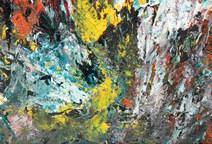
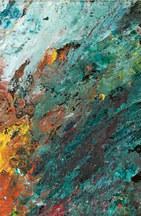
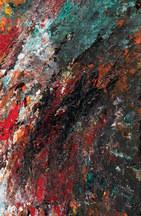
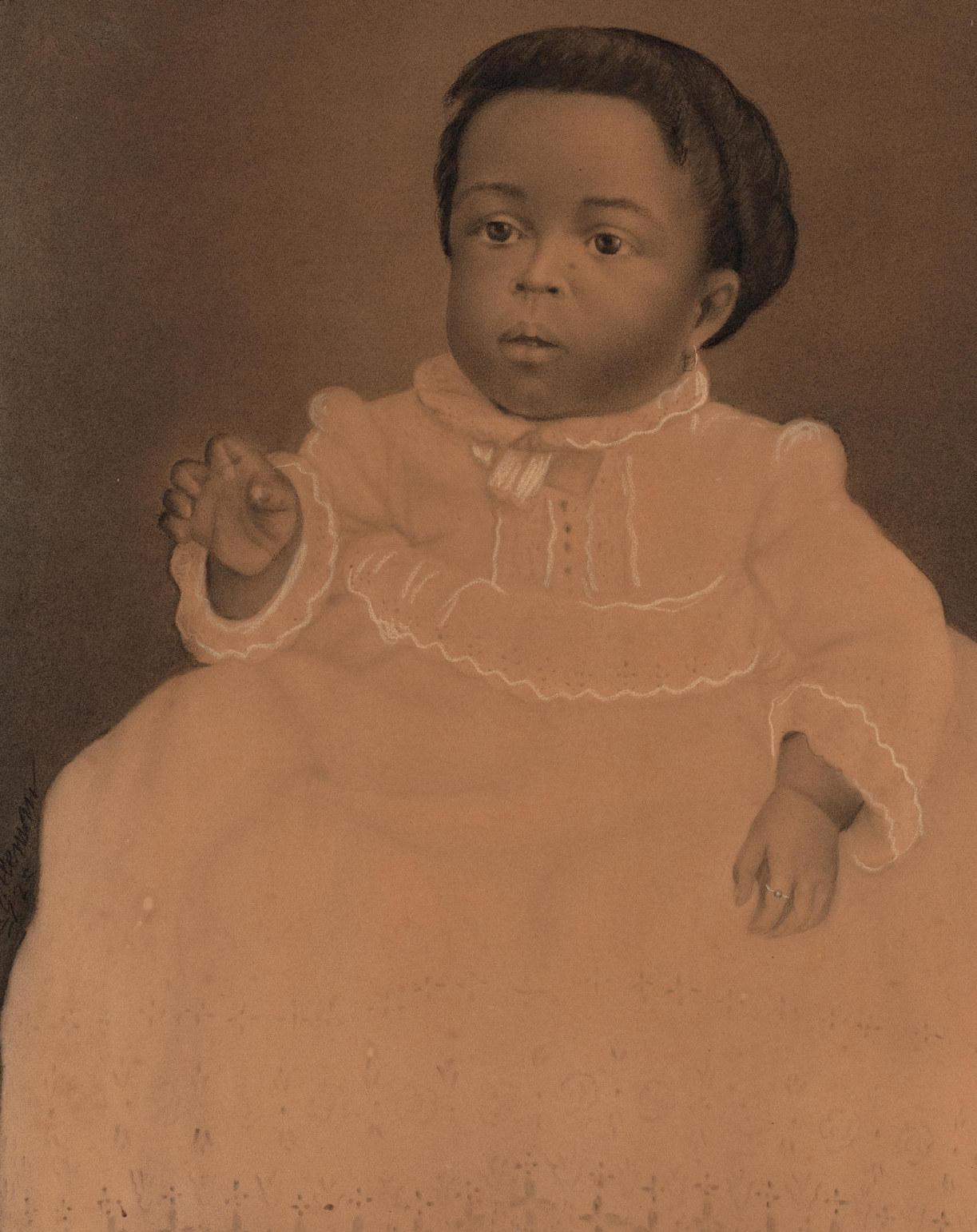
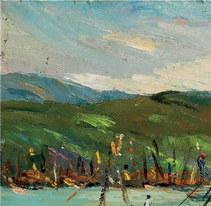
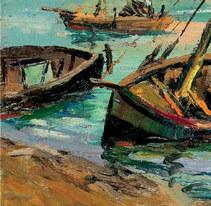
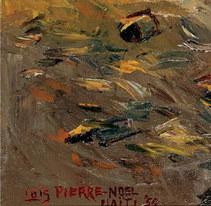
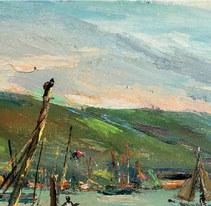
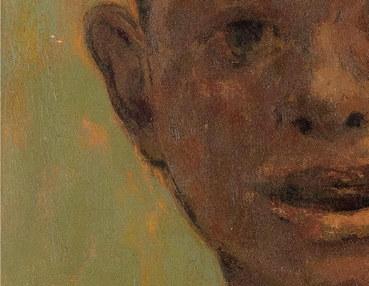
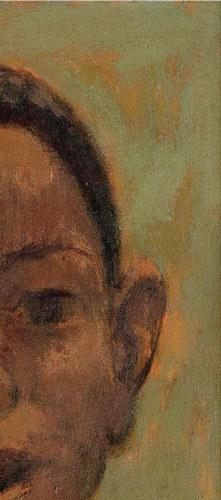
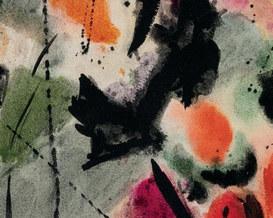
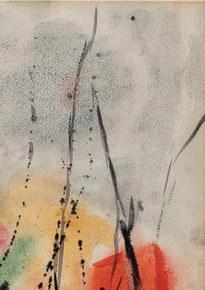
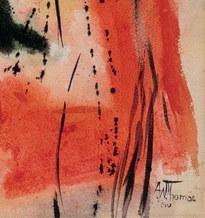
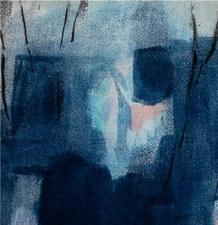
BLACK ART AUCTION has been granted the privilege of representing the sale of the art collection of Jerome Gray and Brenda Sayles on May 16, 2026. Jerome and Brenda built this impressive collection of artworks by African American artists over the course of about 50 years.
As part of our continuing series focusing on Black collectors, we hope to present an intimate picture of the collector as well as the art and artists included in the collection. The project will include this book, a website dedicated exclusively to the Gray-Sayles collection, an auction catalog, and feature videos and essays about the artists. The website will include indepth “explorations” about each of the 38 artists whose work is included in the collection. It will also present a short video containing interviews with friends and fellow collectors who knew Jerome and Brenda.
To access the website, follow the QR code below or search www.gray-saylescollection.org .
BLACK ART AUCTION would like to thank the family of Jerome Gray and Brenda Sayles, as well as Franklin Jackson, Barry Lester and Kerry Davis.
Collection photography by Wesley Law, Saint Louis, MO
Curator's Statement
The Jerome Gray and Brenda Sayles Collection was exhibited at the University of Maryland Global Campus, beginning in November of 2025 and concluding in February 2026. The exhibition was presented by Gregory W. Fowler, PhD, President of UMGC and Eric Key, Director of the Arts Program. The Arts Program was founded in 1978 and is dedicated to furthering the university’s objectives by creating a dynamic environment in which their diverse constituents, including students and the general public, can study and learn from direct exposure to the art collections, exhibitions, and educational programs. Guest curators, Franklin Jackson and Barry Lester, both very knowledgable in the area of Washington, DC, visual art, and both friends of Jerome and Brenda, wrote this statement for the catalog accompanying the exhibit.
We would like to thank the family of the late Jerome Cecil Gray and Brenda Sayles for making it possible for us to show pieces from their collection. Jerome may have been the expert behind it, but Brenda was there with him every step of the way. They worked hand in hand to create a timeless tribute to the triumph of the human spirit that so brilliantly characterizes African American art. There are all kinds of treasures that we dream of acquiring in life. Some say that the visual arts offer the most culturally rewarding treasures, while at the same time providing the potential for tremendous financial rewards. Like all treasure hunters, those who collect
art believe that it is critical to know what you are looking for and where you must go to find it. Jerome made himself into one of the most accomplished hunters of African American art treasures in the Washington, DC, metropolitan area that we have ever seen.
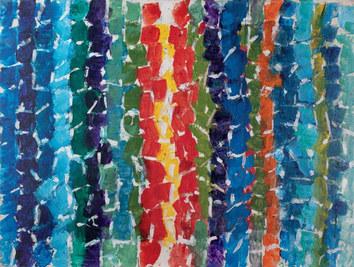
He was a lifelong civil servant and a man of modest means, which makes his art acquisitions all the more amazing. Not only did he acquire the work of some of the most prominent African American artists of his time, he also acquired work of significant historical importance. For instance, over the years, Jerome had several paintings in his collection from legendary abstractionist Alma Thomas. At one time, the collection even contained Etude in Color, a seminal painting of geometric patterns that was a prominent part of the collection of the Barnett-Aden Gallery, which was the first successful private African-American art gallery in the United States.
Alma Thomas, Étude in Color, 1971, acrylic on canvas, 16 x 24 in. Courtesy of The John and Susan Horseman Collection.
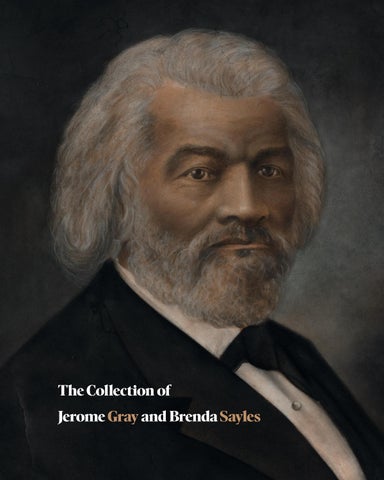
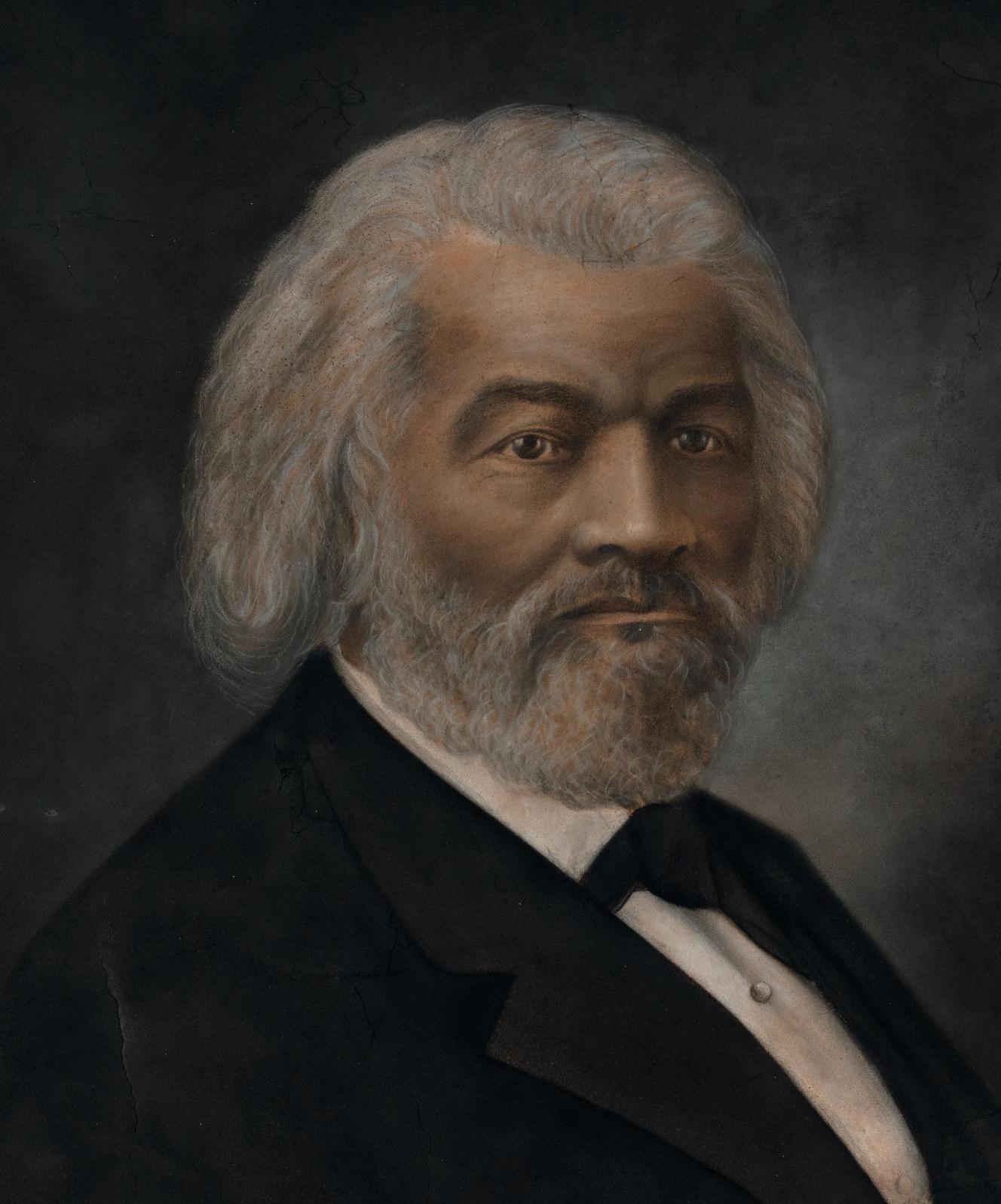
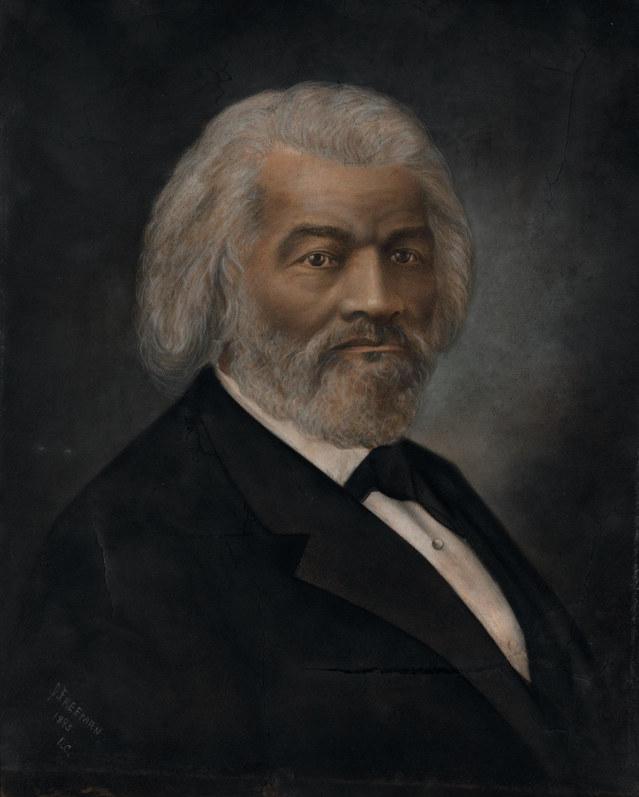
Jerome may not have acquired a more historically important painting than the portrait of Frederick Douglass created by early Washington, DC, painter and photographer Daniel Freeman. That painting was prominently displayed in a major exposition in 1895 and was also included in Smithsonian exhibitions in 1983 and 1995. In addition, Jerome acquired a rare Wilmer Jennings painting of a landscape; a Hughie Lee-Smith painting that appears to be a youthful self-portrait; a pristine Edward Bannister landscape rumored to have been previously in the collection of another prominent African American art collector; and a large painting by Alice Taylor Gafford, who was referred to as the “dean of Black artists in Los Angeles” in the 1950’s.
Jerome certainly was diligent about collecting the work of Washington, DC, artists. In addition to pieces by
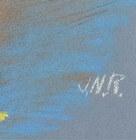
Alma Thomas and Daniel Freeman, he had multiple paintings by John N. Robinson, whose work is difficult to find. The several fine works of art by Lois Mailou Jones in the collection evince Jerome’s proclivity for the paintings of Howard University professors. Others in the collection who taught for some period at Howard include James Lesesne Wells, Lucille “Malkia” Roberts, Doris E. Hughes, Delilah Pierce, Michael Anthony Brown, and of course, James Amos Porter.
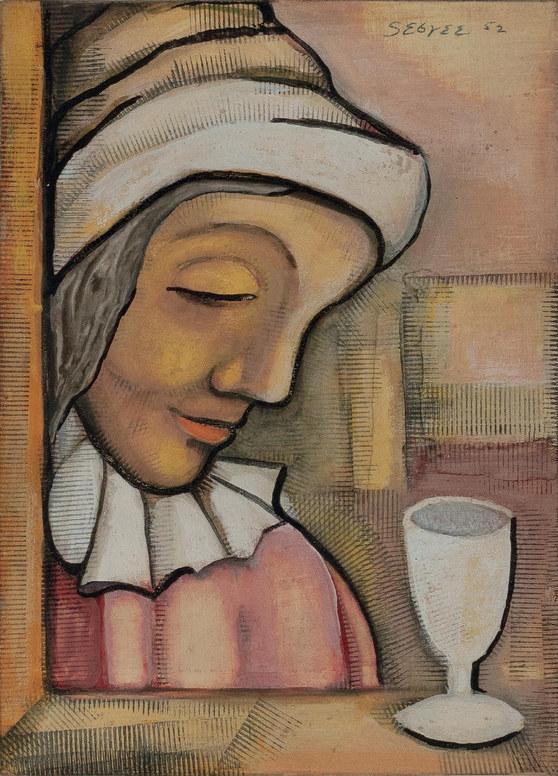
Residing in the collection are works of several other DC artists, including Charles Sebree, Richard W. Dempsey, Sam Gilliam, Simmie Knox, Herbert House, and master printmaker, Lou Stovall. Speaking of printmaking, one of the several Sebree works in the collection is a signed print, which is extremely rare from this artist.
Jerome also collected art with Black images that may not have been
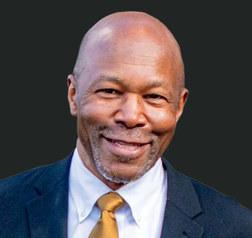
Franklin Jackson
Barry Lester
created by African American artists. Some of these works are unsigned; some have signatures of artists not widely known. In addition to artwork, Jerome collected a good deal of memorabilia. Two prominent examples included in this exhibition are a wanted poster for a person who escaped enslavement in the Anacostia section of Washington, DC, in 1857, and a signed carte de visit (visiting card) from Charles Raymond Douglass, the youngest son of Frederick Douglass. The card’s photo depicts the young Douglass, the first African American man to enlist in the Union Army in New York, seated in his Civil War uniform.
This collection was largely built before the days of internet convenience. Jerome developed his knowledge of what to buy and where to buy it before the internet put that type of information at people’s fingertips. He realized the importance of reading about artists and was so devoted to spreading what he learned to others that he started a company, Art Sensation, to disseminate the burgeoning scholarship surrounding African American art. As a bookseller dedicated to educating others about this long-neglected art genre, he sold books to collectors, museums, universities, art dealers, and many others all across the country.i
Franklin Jackson, Art Collector Barry Lester, Art Conservator
works
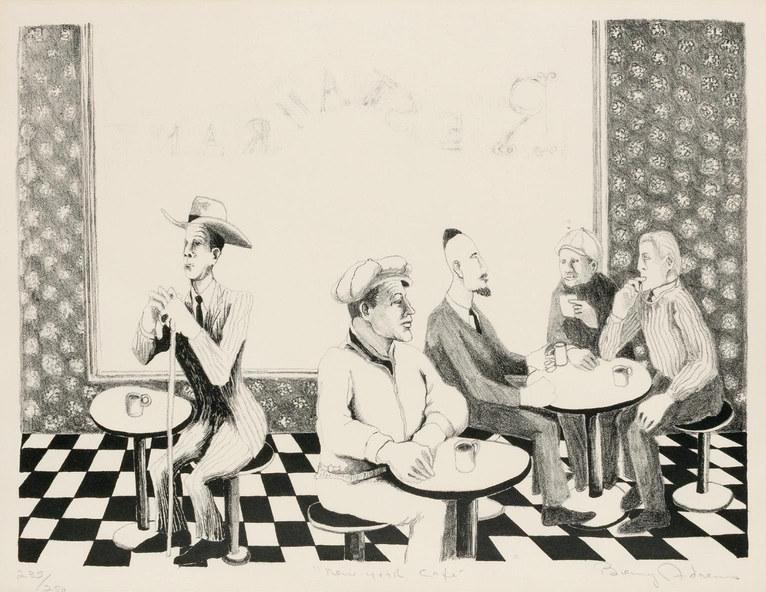
Benny Andrews (1930-2006)
New York Cafe, 1966
lithograph on paper 10-1/2 x 14-1/4 inches
signed, titled, and numbered 232/250
Associated American Artists, NY label verso
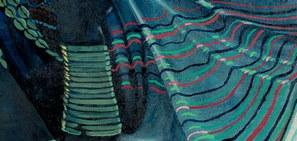
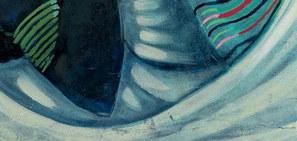
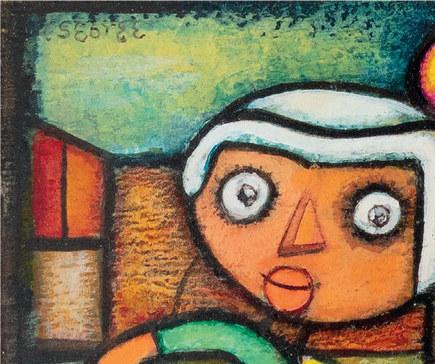
Seyoum Ayalew (b. 1970)
untitled, Figures in Interior, n.d oil on canvas 39 x 30-1/2 inches signed and dated
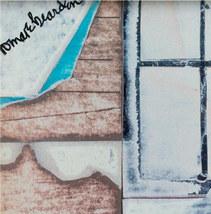
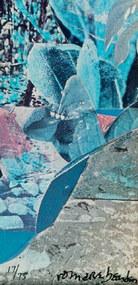
Romare Bearden (1911-1988)
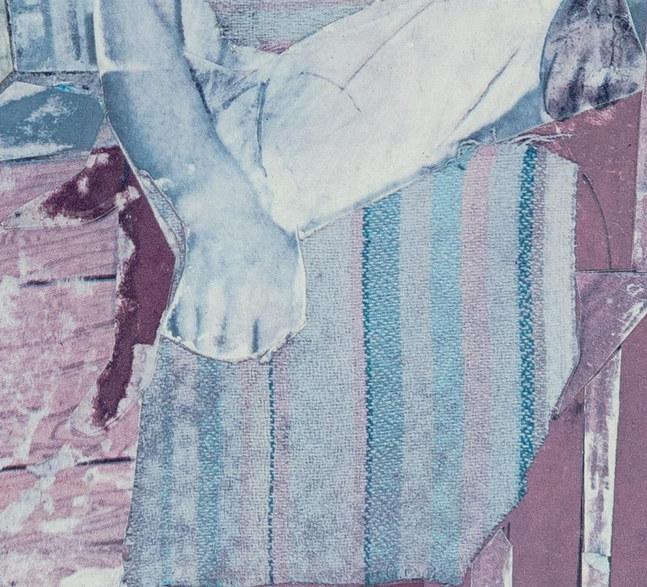
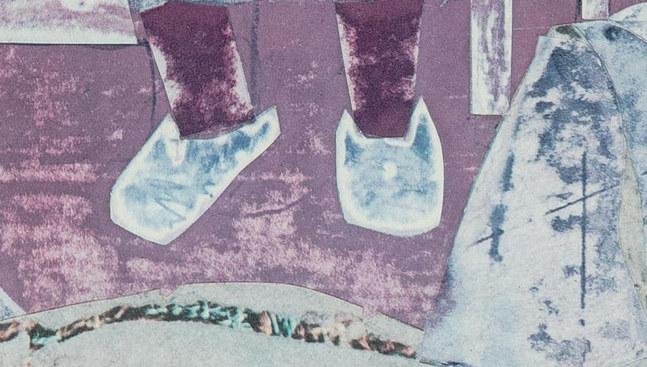
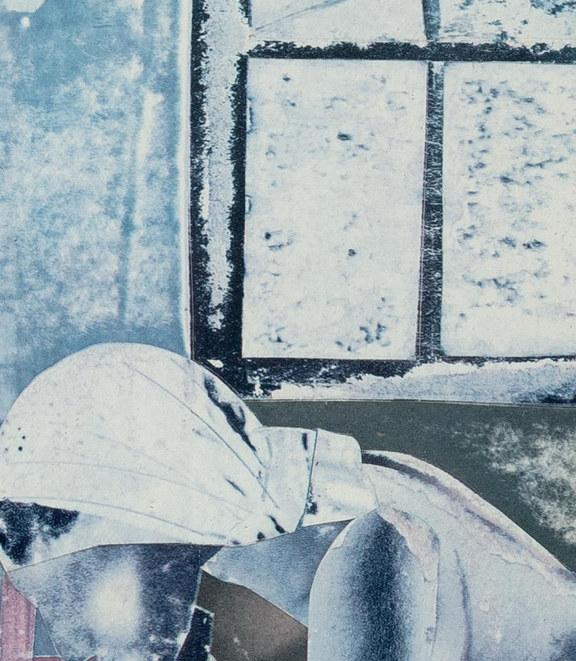
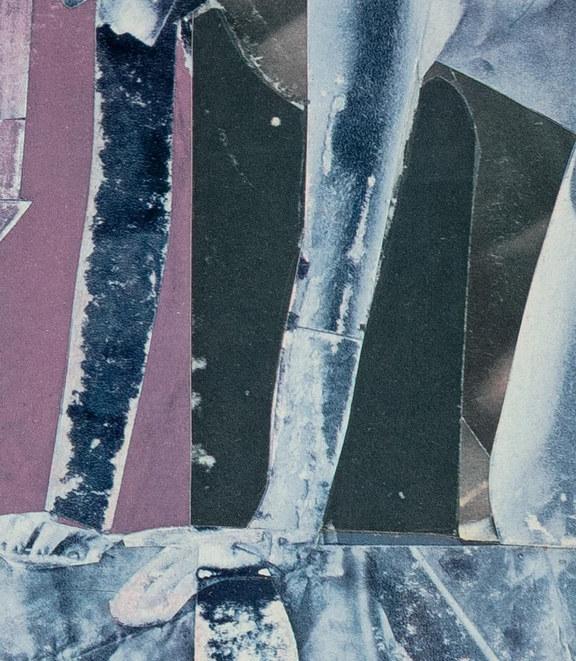
Carolina Interior (Ritual Bayou Series), 1971 paper collage made of the artist’s lithographs mounted on plywood (original)
16 x 20 inches
signed and numbered 17/75
Ritual Bayou, 1971 paper collage made of the artist’s lithographs mounted on plywood (original) 17 x 20 inches signed and numbered 17/75
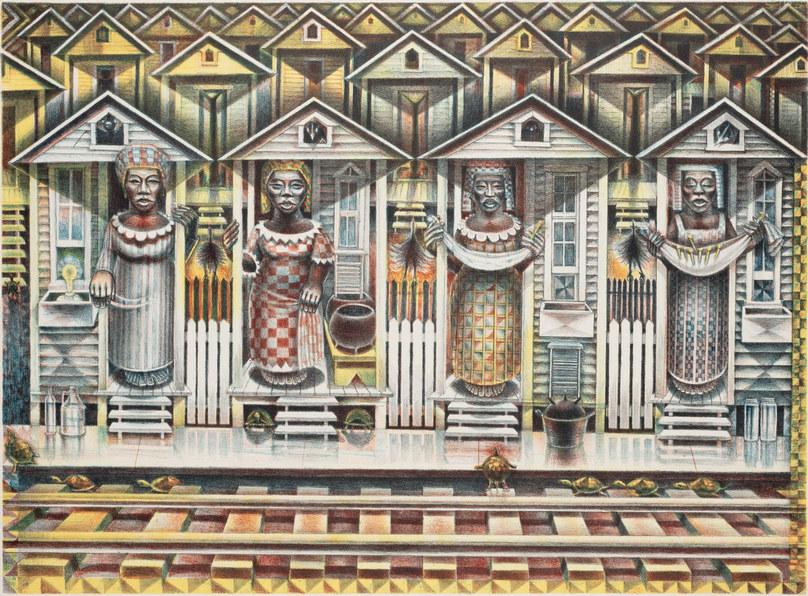
John T. Biggers (1924-2001)
Four Seasons, 1990 color lithograph 25 x 33 inches signed, titled, dated, and numbered 29/120
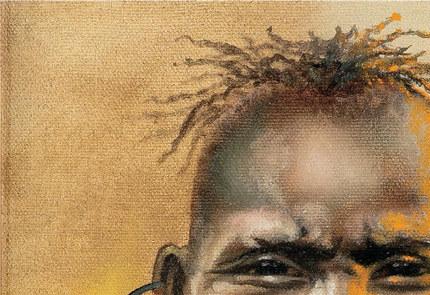
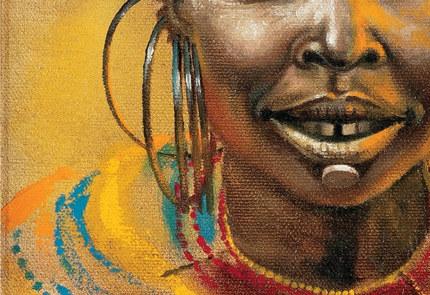
Michael Anthony Brown (b. 1970)
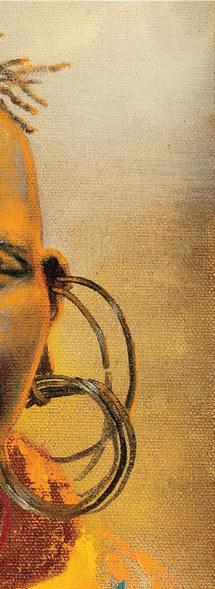
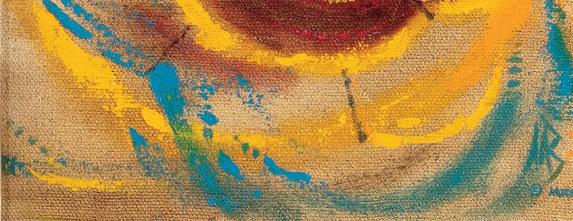
untitled, African Girl, 1991-1992 oil on canvas 10 x 8 inches signed
Samuel Joseph Brown (1907-1994)
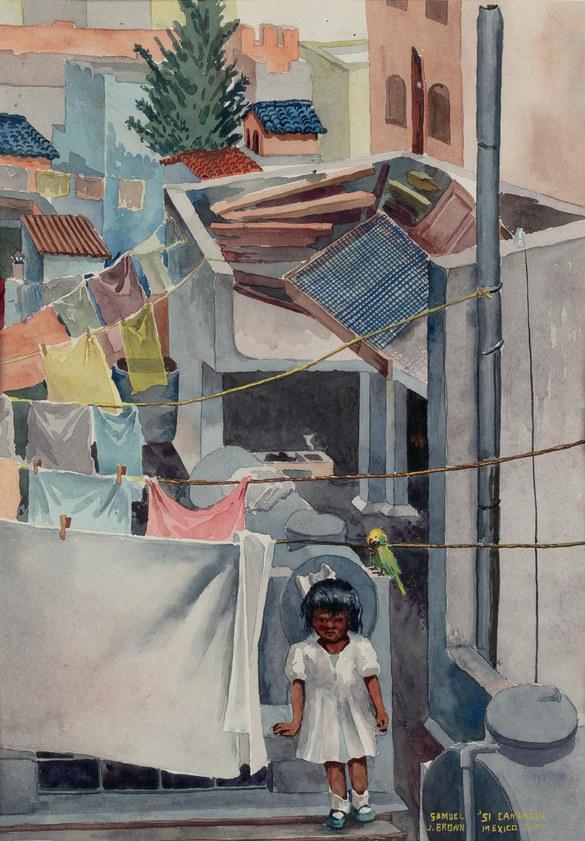
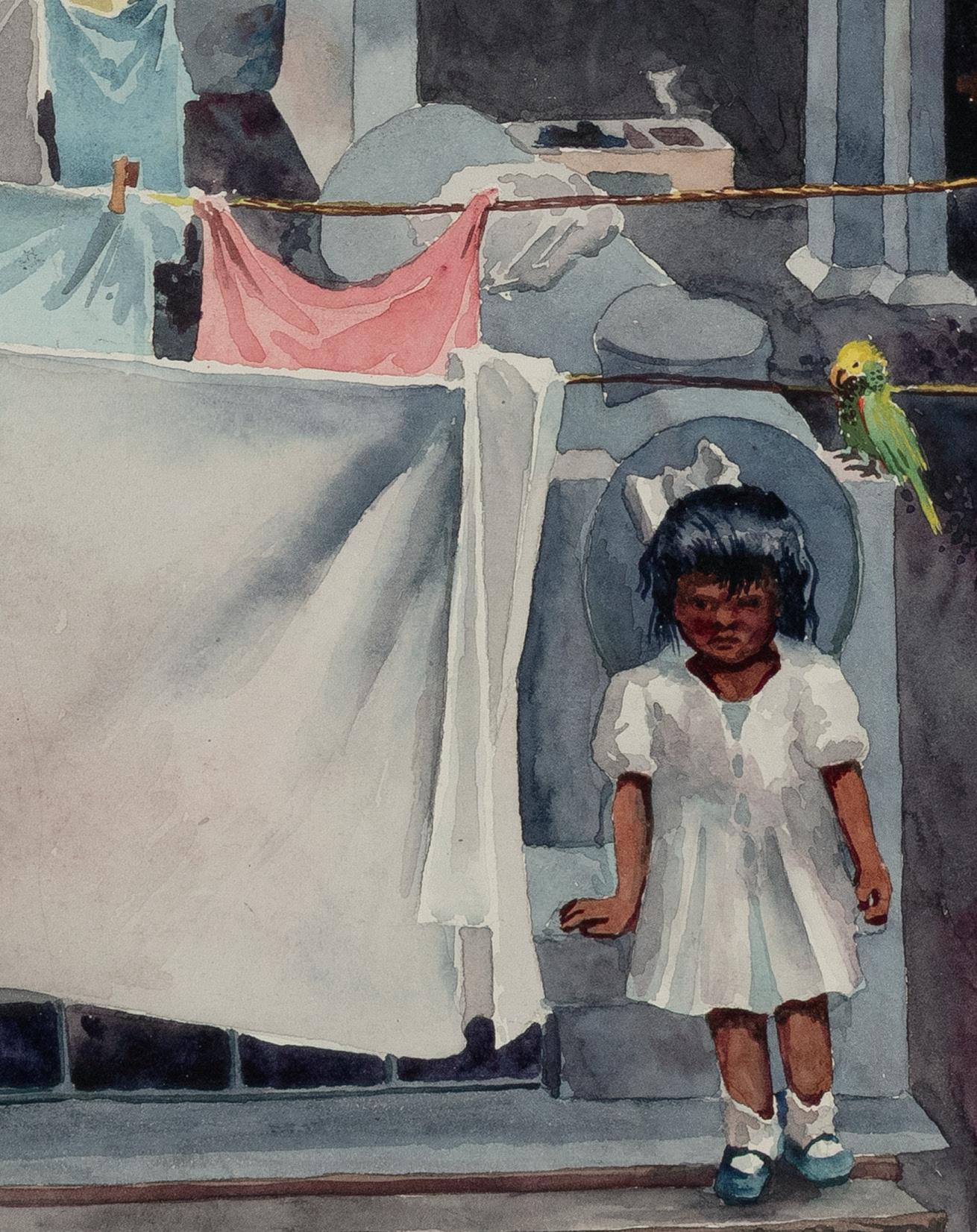
Si Campache, Mexico DF, c. 1945
watercolor on paper
13-1/2 x 9-1/2 inches
signed and titled
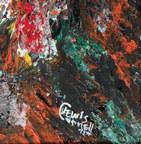
Lewis Cornell (1947-2019)
untitled, Abstract, 1975 oil and acrylic on board 30 x 40 inches signed and dated
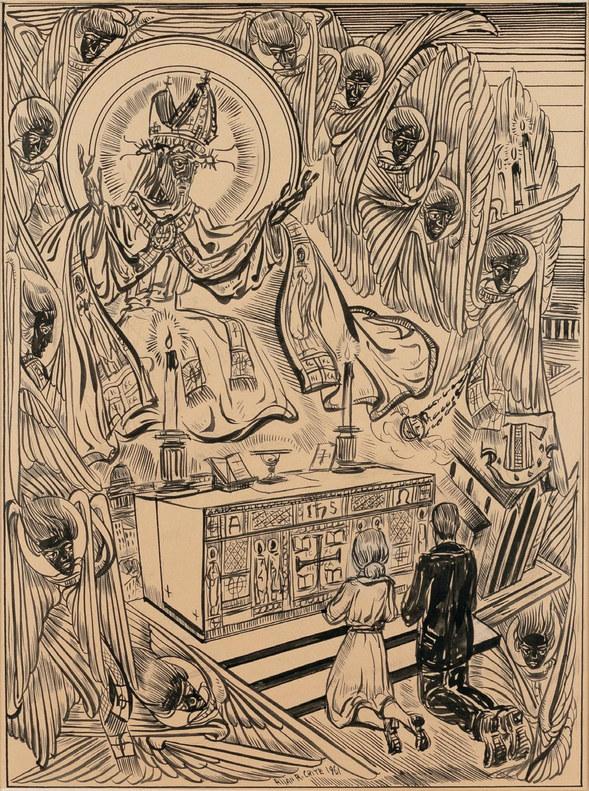
Allan Rohan Crite (1910-2007)
untitled, 1961 ink and pencil drawing on cream paper 12-1/2 x 9-1/4 inches signed and dated
Aaron Douglas (1889-1979)
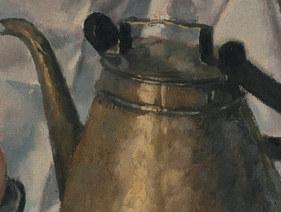
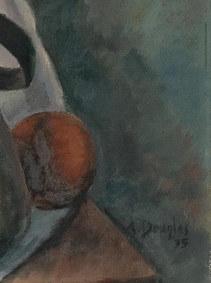
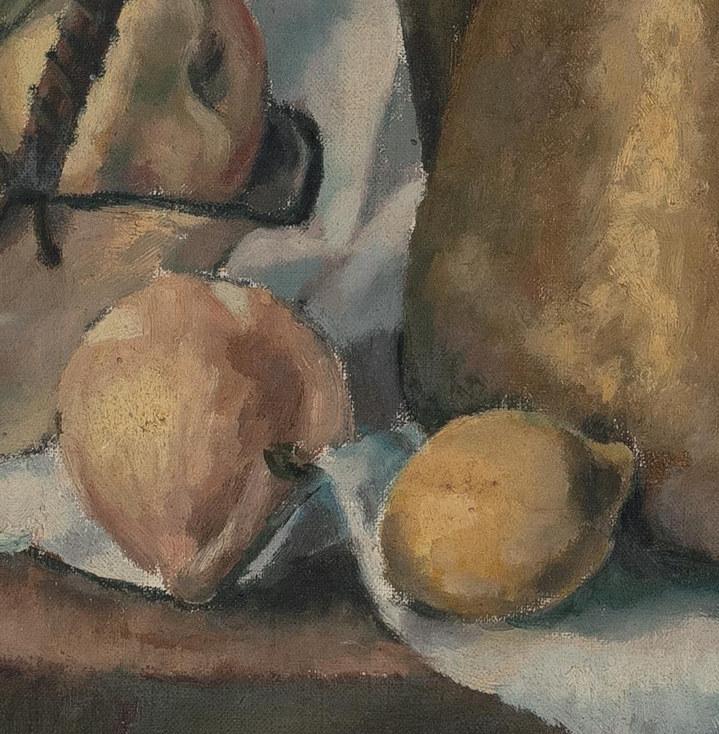
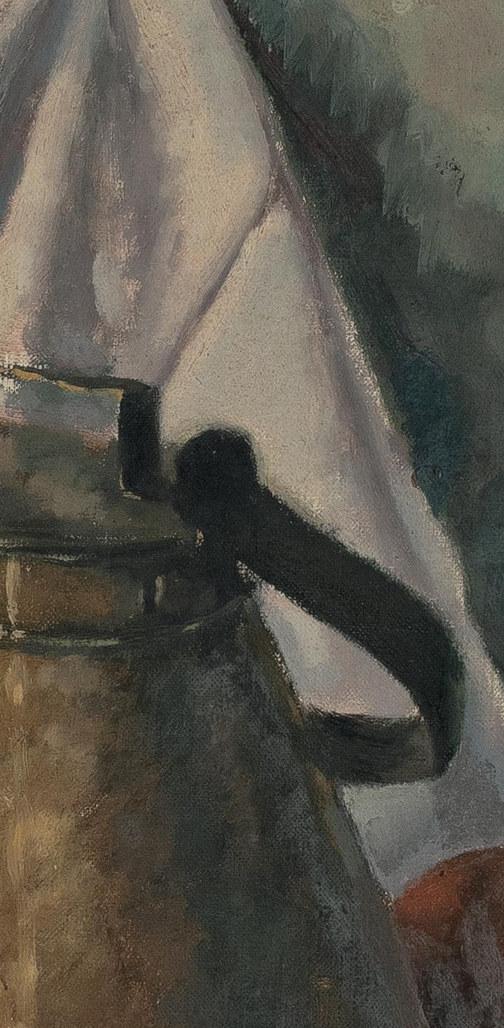
Brass Jug, 1935 oil on canvas
20 x 24 inches signed signed and titled verso
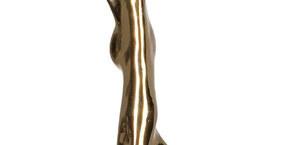
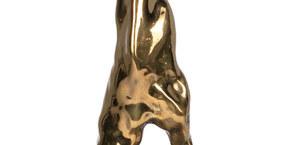
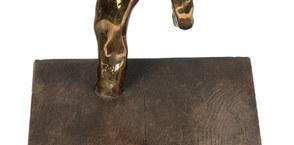
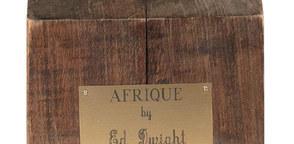
E d Dwight (b. 1933)
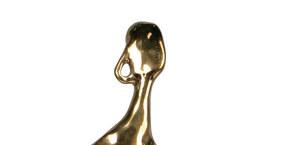
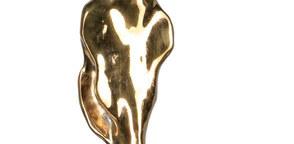
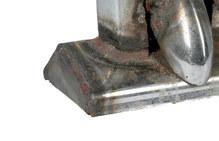
Afrique, 1979 bronze
21 x 3-1/2 x 2-1/2 inches (image) (base 10 x 5-1/2 x 7 inches)
signed, dated, and numbered 8/10
Daniel
Freeman (1868-1927)
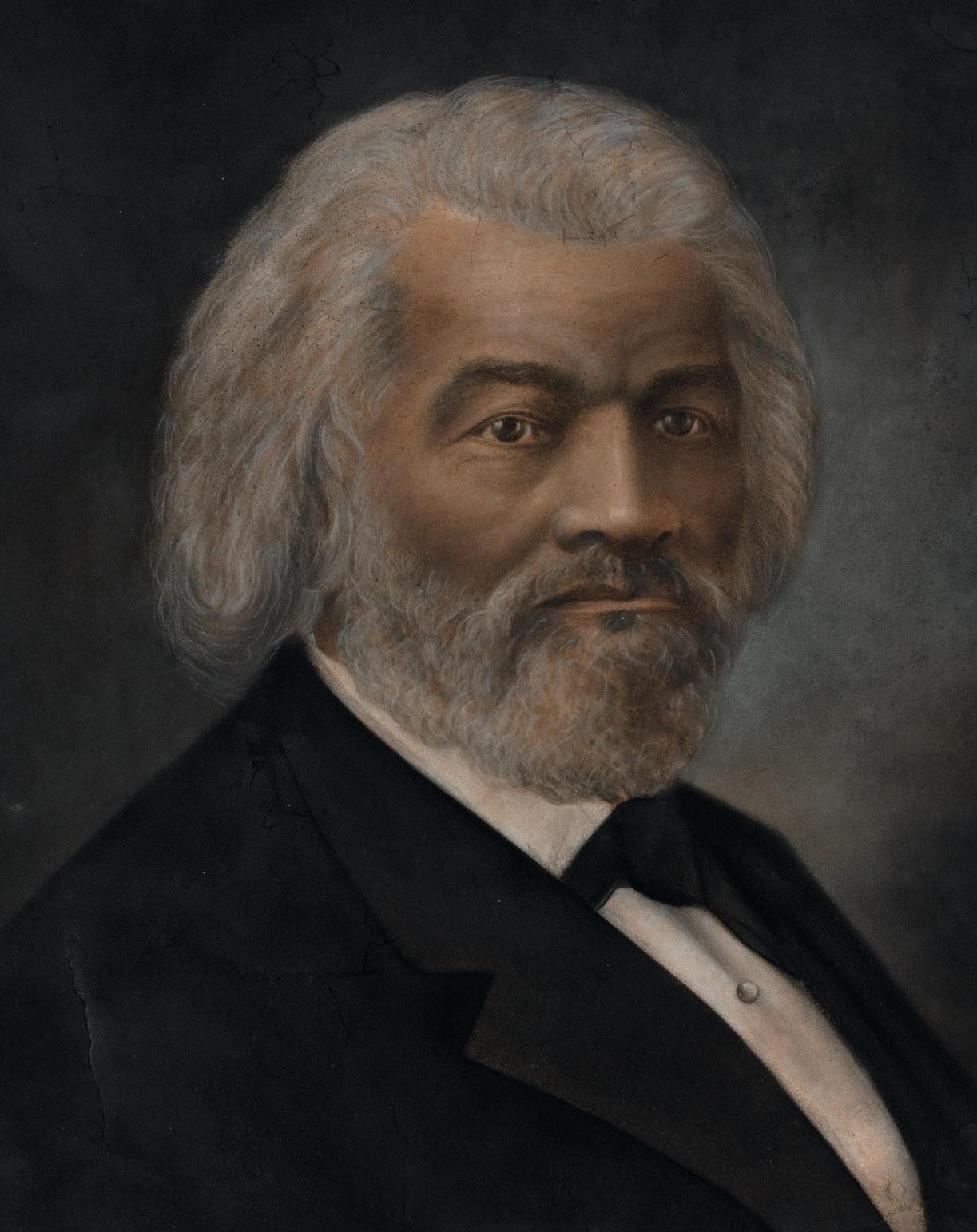
Frederick Douglass, 1893 pastel on board 27 x 22 inches signed and dated , with “D.C.”
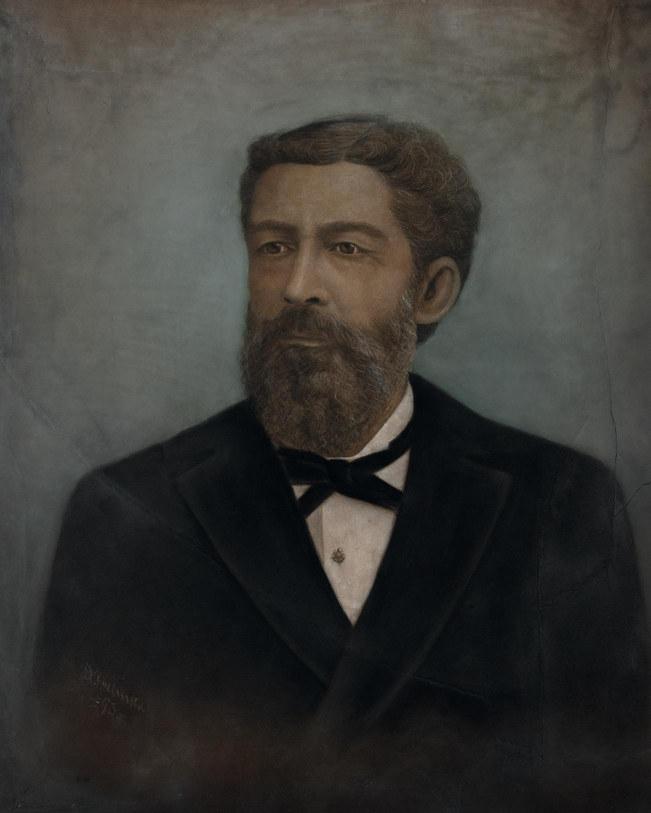
John Mercer Langston, 1893 pastel on board 29 x 24 inches signed, titled, and dated
Daniel Freeman (1868-1927)
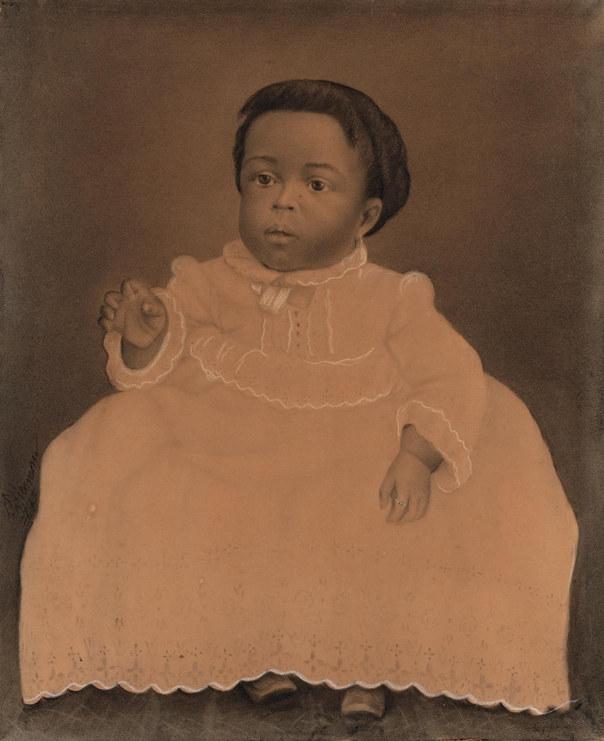
Della Bundy, 1892 pastel and graphite on paper 24 x 22-1/2 inches signed and dated
Director's Statement
Thom Pegg, Black Art Auction
Gaston Devigne, an African American photographer and antique dealer from Philadelphia, Pennsylvania, inspired me to start collecting African American literature and memorabilia in 1973. Devigne came to Washington, DC, to work for Johnson Publications as a photographer in 1945 (it should be noted he was the first African American photographer for the U.S. Marine Corps.) 1
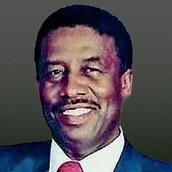
Jerome C. Gray was born in 1948 in Washington, D.C., where he was raised and educated in the public school system, graduating from Eastern High School in 1966.
He continued his studies at Bowie State University, then known as Bowie State College, where he majored in physical education. Founded in 1865, Bowie State is Maryland’s oldest historically Black university and among the oldest in the nation. During this time, Gray balanced his studies with work at The Chesapeake & Potomac Telephone Company.
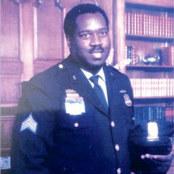
In 1969, Gray began a long career with the Metropolitan Police Department in Washington, D.C., serving in roles that included patrolman, detective, and sergeant. Over the course of twenty-five years, he built a steady and dedicated presence within the force before retiring in 1994.
Gray’s first foray into collecting was in the area of reference books, especially those pertaining to African American Art. In 1986, he started a company called Art Sensation, specializing in the sale of this type of books.
Armed with the knowledge he acquired through studying art books, he became familiar with the names of the African American artists who were considered important and who were producing quality work. He attended local auctions and antique shops hoping to add significant works to his growing collection.
Jerome developed friendly, but always competitive, relationships with other collectors of African American art, locally and beyond. The three primary figures, along with Jerome, became known as “the four P’s”. This group included a preacher, Rev. Douglas Elane Moore; a professor, Dr. James K, Hill, who taught science at Howard University; a postman, Kerry Davis; and, of course, a policeman, Jerome.
1 Holding Our Own: Selections from the Collectors Club of Washington, D.C., Inc.. October 29, 2006 - January 7, 2007. University of Maryland University College, 2006.
Rev. Moore (1928-2019) was an influential civil rights leader who organized the 1957 Royal Ice Cream Sit-in in Durham, North Carolina and later in life relocated to Washington, DC. His wife, Dr. Doris Hughes-Moore, was the first Black woman to earn a Doctor of Veterinary Medicine degree from Purdue University. She went on to serve as the director of Veterinary Services at Howard University College of Medicine. Doris was also an accomplished artist with one of her paintings included in the Gray-Sayles Collection. The Moores amassed an impressive collection of the work of Elizabeth Catlett. In 2024, The Fine Arts Museum of San Francisco (de Young) acquired Bust of Martin Luther King, Jr., an important bronze sculpture, from them.2
Dr James Kenneth Hill (1935-2020) was a professor of microbiology at Howard University; he also served several different roles within Howard’s hospital system. Hill was a supporter of the arts and programs at the Howard University Art Gallery and was a frequent lecturer at the Anacostia Community Museum (Smithsonian Institution).
His collection included works by artists such as Romare Bearden, Elizabeth Catlett, Sam Gilliam, Jacob Lawrence, Palmer Hayden, and May Howard Jackson. He also owned several photographs taken by Daniel Freeman, the artist of three important works included in the Gray-Sayles Collection.
Kerry Davis, the only “P” who lived outside of Washington, DC, in Atlanta, with his wife, C. Betty Davis, recently toured their collection through a number of museum venues. The exhibition, Memories & Inspiration, The Kerry and C. Betty Davis Collection of African American Art, was shown at the Taft Museum of Art, Cincinnati, OH; Lyman Allyn Art Museum, New London, CT; Albany Museum of Art, GA; Taubman Museum of Art, Roanoke, VA; and others.
These four made up a very important and knowledgable group of collectors, and each made it a priority to share their collection and experience in collecting with each other, and eventually, the community.
2 Valentine, Victoria L. “Acquisition: Martin Luther King Jr.. Bust by Elizabeth Catlett Is ‘majestic and Commanding Portrait’ of Civil Rights Leader.” Culture Type, 5 Jan. 2026, www.culturetype. com/2025/01/26/acquisition-martin-luther-king-jr-bust-by-elizabeth-catlett-is-majestic-and-commanding-portrait-of-civil-rights-leader/.
L to R: Rev. Douglas Moore, Dr, James K. Hill, Kerry Davis, and Jerome Gray
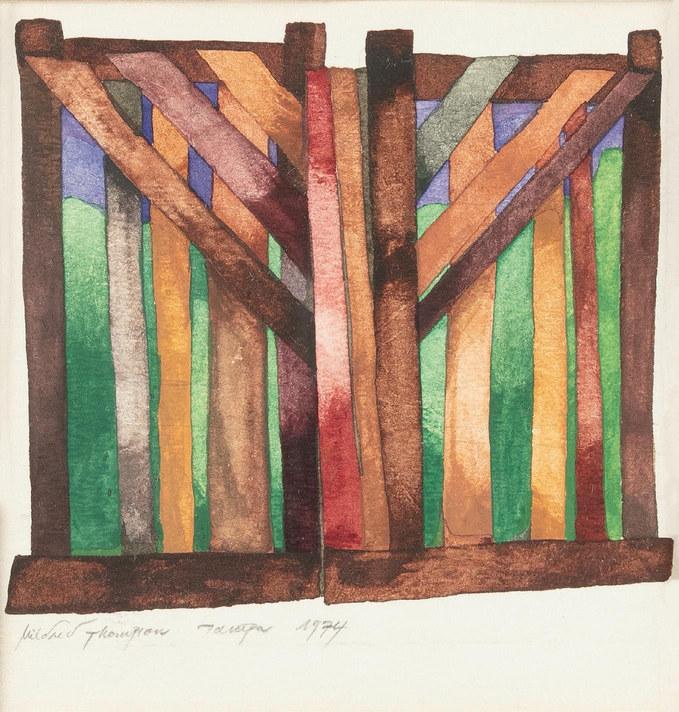
At the core of Jerome’s collection is a significant representation of historical Washington, D.C. artists. The subject matter leans slightly toward representational, although the collection includes significant paintings by wellknown abstract painters such as Alma Thomas, Sam Gilliam, Richard Dempsey, and Mildred Thompson.
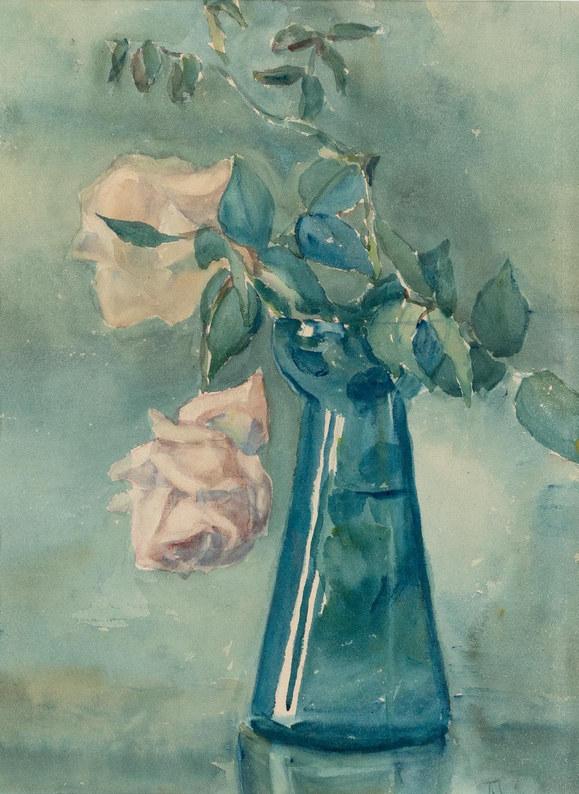
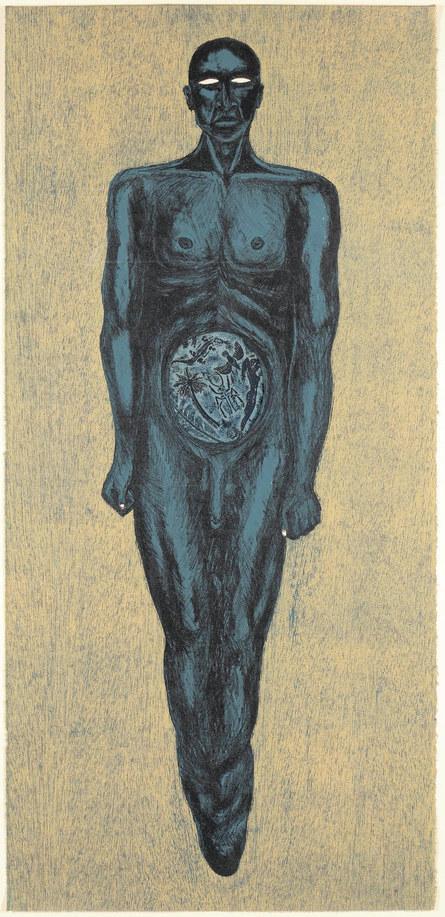
The artwork included was also executed over a significant span of time. The three works by Daniel Freeman were completed more than 100 years ago, while other images, such as Alison Saar’s mixed media print, Man/Club, was done in 1993. The works by Freeman and Saar share a representational, or narrative approach, but couldn’t be further apart in style or message. This willingness to appreciate and collect works by very diverse artists reflects a sophistication on the part of the collector. The diversity between James Porter’s, Roses in a Vase, c. 1940, and Sam Gilliam’s untitled, (abstract composition) from 1974, also speaks to that. Jerome identified quality
works of all periods and styles and understood how both the similarities and differences among the collection made a stronger statement as a whole.
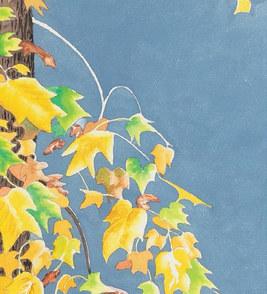
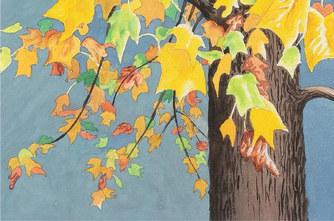
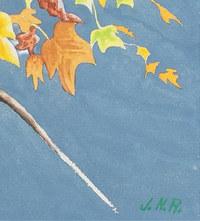
The collection includes three hard-to-find works by John N. Robinson (1912-1994). Robinson was born in Washington, DC (Georgetown) on “Holy Hill”, near Georgetown University. He went to school through junior high, but quit to help his family make ends meet. His mother died when he was 8 and his father left the children, which included John and his four siblings, to be raised by the grandparents. John’s grandfather was a retired military man and worked at the Key Bridge Garage. John helped by doing small jobs, such as sweeping the floor and cleaning cars. When he finished his work, he would paint. He had a natural talent for it and some of his work was noticed by a chauffeur who happened to have a distant connection to James V. Herring, head of the art department at Howard University. Professor Herring looked kindly on John and allowed him to study art under the guidance of Professor James A. Porter. Robinson said,
“I must say that what I learned at Howard from Professors Herring and Porter was the basis of my efforts in art.” 3
During the 1930s, Robinson took on a combination of several different day jobs, but always continued to paint.
3 Robinson, John N. The Anacostia Neighborhood Museum, Smithsonian Institution, in Cooperation with the Corcoran Gallery of Art Presents John Robinson: A Retrospective: June 18 through July 30, 1976 at the Corcoran Gallery of Art. Smithsonian Institution Press : For Sale by the Supt. of Docs., U.S. Govt. Print. Off., 1976.
Alma Thomas (1891-1978), untitled, 1960; watercolor on paper
He married Gladys Washington and the couple had seven children. By the 1940s, he was exhibiting at places such as Barnett-Aden Gallery, the Artist’s Guild of Washington, Atlanta University, the Smithsonian Institution, Corcoran Gallery and Howard University.
Adolphus Ealey, Director of the BarnettAden Gallery, had this to say of Robinson and his art:
“John Robinson gathers his strength from the day-to-day loving concern of family and friends and he repays them and us, in turn, with an art whose quality was not compromised by any relative lack of privilege.” 4
Perhaps the most historically significant works in the Gray-Sayles Collection, are the three pastel portraits by Daniel
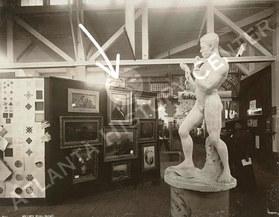
Freeman. Daniel Freeman (1868-1920*) was born in Alexandria, Virginia, and moved to Washington, D.C. in 1881, where he lived until his death (sometime shortly after 1919). He studied photography with Edgar James (E.J.) Pullman in 1885. Pullman (active 1871-1923) was a prominent early photographer and owner of a photographic supply house located at 935 Pennsylvania Avenue. Freeman opened his own commercial photography studio around 1890, and eventually taught photography at Frelinghuysen University, a private historically Black university in Washington, DC. The school was open from 1906-1960, and Freeman taught there shortly before his death. Frelinghuysen was the home of the J.M. Langston School of Law, and one of the portraits by Freeman in the collection depicts the man, John Mercer Langston (1829-1897). Freeman was also credited for organizing the District exhibition in the Negro Building at the Cotton States and International Exposition, Atlanta, 1895, and helping create the Washington Amateur Art Society.
4 ibid
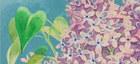
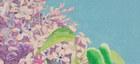
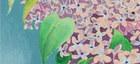
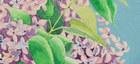
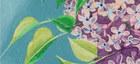
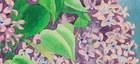
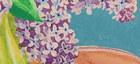
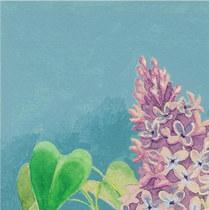
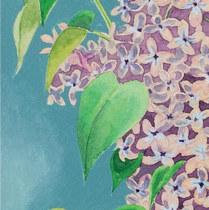
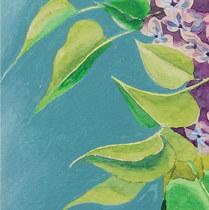
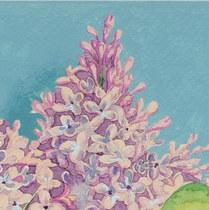
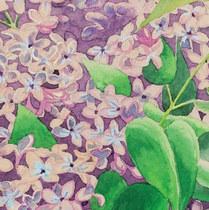
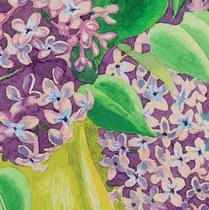
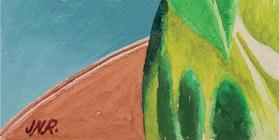
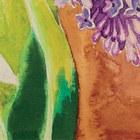
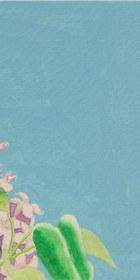
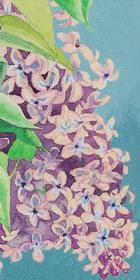
John N. Robinson, Lilacs, 1988, acrylic on paper
Cotton States and International Exposition, Atlanta, 1895
In the catalog accompanying the 1983 exhibition at the Smithsonian Institution, The Capital Image, Painters in Washington, 1800-1915, authors Andrew J. Cosentino and Henry H. Glassie praise Freeman’s work:
“The resourceful Daniel Freeman, was a photographer and, according to a description in the Union League Directory, ‘a natural born artist; his pastel and crayon work is of a high order and merit. The scenery in his studio is from his own brush.” 5
Two works by Freeman included in that 1983 exhibition were loaned by Jerome Gray. The authors continue in their commentary about Daniel Freeman’s work:
“How apt was the description is seen in the pastel portraits Frederick Douglass (1895) and Della Bundy (1892), the artist’s niece. Although both bear witness to the influence of the photograph , the sense of immediacy and subtle modeling of Frederick Douglass suggest direct access to the subject, in which case the portrait would have been among the last of the great abolitionist.”
“In contrast to Douglass, the Bundy portrait with its neatly patterned delineations, reveals the hand of the primitive. The realism of the one and the naïveté of the other are not contradictory, but rather signal the characteristic contention within the primitive of the forces of actuality and idea.” 6
Della Bundy was the daughter of the artist’s sister, Delilia Freeman Bundy and James Franklin Bundy. James F. Bundy (1862-1914) moved with his family from Virginia to Washington, DC, in 1868. He studied at Oberlin College and Howard University, where he eventually earned a law degree in 1887. James became a highly respected lawyer, and Howard University appointed him SecretaryTreasurer of the Law School in 1890. He met and married Delilia Freeman in 1884. Delilia had attended school in Alexandria, Virginia and opened a private school for girls in her home. She later started a dress-making shop which she operated until her marriage to James. She was active in the community and was one of the founders of the Phyllis Wheatley YWCA in 1905.
5 Cosentino, Andrew J., and Henry H. Glassie. The Capital Image: Painters in Washington, 18001915. Smithsonian Institution Press, 1983. 6 ibid
Della Bundy attended Washington High School and Howard University, where she received a BFA in Music in 1925. She opened a studio in the family home at 403 O. Street, NW, where she taught music to adults and to local children, through the local schools. She was later married to Joseph P. Turner, Jr., who died in 1953. She was a great supporter of the arts in Washington, DC, and attended many of the concerts in the city through most of her life. She died in 1972. 7
The third portrait, as mentioned previously, depicts James Mercer Langston (1829-1897). Langston was an abolitionist, attorney and politician. He was the founding dean of the law school at Howard University . He was the coauthor of the Civil Rights Act of 1875, the document used as a blueprint for the Civil Rights Act of 1964. He studied at Oberlin College and was admitted to the Ohio bar in 1854 (the first African American). President Ulysses S. Grant appointed Langston to a position on the Board of Health in Washington, DC, and in 1877, President Rutherford Hayes appointed him as U.S. Minister to Haiti. Langston was the first Black person elected to Congress from the state of
Virginia. He was the great uncle of the poet James Mercer Lanston Hughes, better-known as Langston Hughes.8
In the publication accompanying the exhibition, Searching for Cultural Identity, The Collection of Jerome Gray and Brenda Sayles, contributing author Halima Taha illuminates an extraordinary historical connection between James M. Langston and sculptor Edmonia Lewis (1843-c.1900).
“In 1862, while a student of Oberlin College, Lewis was accused—without evidence—of poisoning two white classmates. The accusation was fueled by racial and gender prejudice and quickly became a perilous scandal threatening her life and future. Langston, then an attorney in Ohio, undertook the legal and moral challenge of proving her innocence. His steadfast advocacy in the face of zealous detractors and a hostile environment exposed the baselessness of the accusation and forced Oberlin to reckon with its own biases. Langston’s victory led to Lewis’ acquittal.”9
7 Historical Society of Washington, D.C. (dchistory.org); Freeman/Bundy/Turner Family Papers 1884-1972.
8 ibid
9 The Collection of Jerome Gray and Brenda Sayles, www.umgc.edu/content/dam/umgc/documents/arts-and-diversity/art-catalogs/jerome-gray-collection-exhibition-catalog.pdf. Accessed 19 Apr. 2026.
"The things that keep me going are simple…being with family, casting a line in a quiet pond, an honest Sunday at church, losing myself in a good book, and the thrill when a piece of art catches your heart.”
-Jerome Gray10
Jerome Gray’s collection was featured in the 2007 exhibition, Holding Our Own, Selections from the Collector’s Club of Washington, DC, Inc. at the David C. Driskell Center at the University of Maryland. David Driskell offers a description of the group and its purpose in the introduction to the catalog:
“The Collector’s Club of Washington, D.C., Inc. is one among a growing number of organizations to be found around the nation that have become models for those who wish to share their interest in collecting African American art. Now, with nearly a decade of collecting experience behind it, the Collectors Club’s activities have evolved beyond those of its earlier days. Then, members met in each other’s homes to view members’ collections and to share information about recent acquisitions; they enhanced their knowledge by visiting artist’s studios, art galleries and museums, and shared information about local exhibitions of works by African American artists.”
“The Collectors Club also serves as a model for young collectors who are seeking information about how to go about African American art, and it offers valuable advice about quality collecting in all fine arts media.” 11
It is fitting that Jerome and his collection were included in this show, because Driskell’s description would be completely accurate in describing Jerome’s art endeavors as well as the activities and interests of “the four P’s”.
Washington, DC, is home to a vibrant art scene and several important museum collections, including the Smithsonian Institution, the Museum of African American History and Culture, Anacostia Museum, the Kreeger Museum and the Phillips Collection. The Phillips Collection in particular, has an unusual history and in some ways, the Gray-Sayles Collection shares a similar vision. Duncan Phillips founded The Phillips Collection in 1921. His willingness to deviate from the “art museum standard” in how he organized exhibitions and the art he acquired was not initially seen as culturally valuable. His penchant for taking risks, collecting work by artists who were not well known at the time, allowed him to acquire examples by Milton Avery, Georgia O’Keefe, Jacob Lawrence and Grandma Moses. Those artists were eventually seen as significant to the history of American art. Jerome Gray’s similar perspective allowed him to collect works by African American artists such as Alma Thomas, Lois Mailou Jones, Hughie Lee-Smith, Dox Thrash, and others on a modest budget. Today, the work of those artists is seen as an important part of the history of American art. i
10 ibid
11 Holding Our Own: Selections from the Collectors Club of Washington, D.C., Inc.. October 29, 2006 - January 7, 2007. University of Maryland University College, 2006.
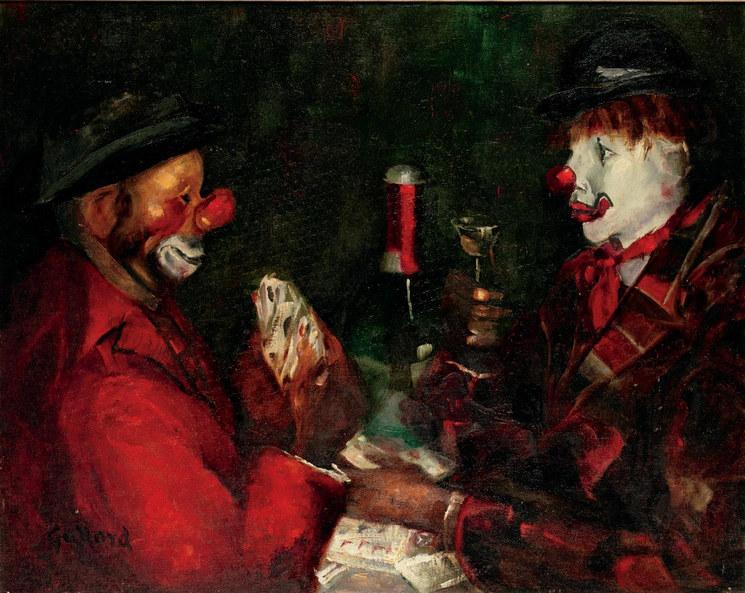
Alice Taylor Gafford (1886-1981)
Caught Cheating (Clowns), n.d. oil on canvas board
24 x 30 inches signed titled on label verso
Sam Gilliam (1933-2022)
untitled, 1974 mixed media on paper 22 x 32 inches signed and dated
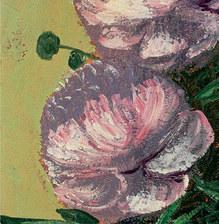
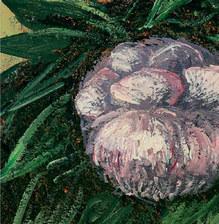
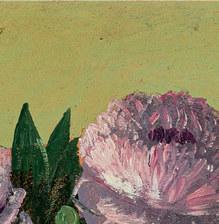
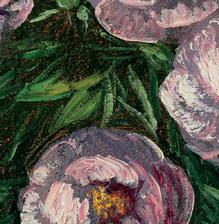
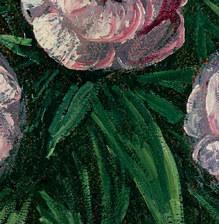
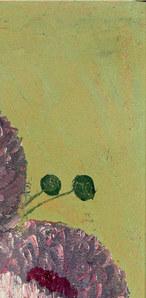
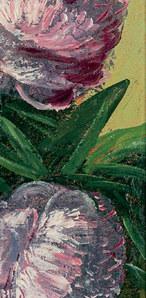
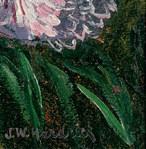
Peonies, c. 1935 oil on board 20 x 16 inches signed John
Wesley Hardrick (1891-1968)
Earl J. Hooks, Sr. (1927-2005)
untitled, Woman, c. 1960 glazed stoneware 9-1/2 x 4-1/2 x 5 inches signed
Herbert House (20th century)
untitled, Figure, 1981 welded steel
34 x 11 x 7-1/2 inches signed and inscribed
Doris E. Hughes (b. 1945)
untitled, Girl on a Bed, 1989 acrylic on canvas
30 x 36 inches signed and dated
Lois Mailou Jones (1905-1998)
Haiti, 1954 oil on board 21-1/2 x 26 inches signed, Lois Pierre-Noel dated
Vévé Voudou III, 1997 color screenprint 32 x 40 inches (full margins) signed, titled, dated, and numbered 57/150 printed by Lou Stovall at Workshop, Inc., Washington, DC
Lois Mailou Jones: Authoring Her Own Visual Narrative
Chenoa Baker, independant curator and arts writer
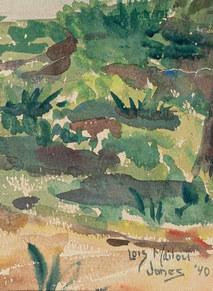
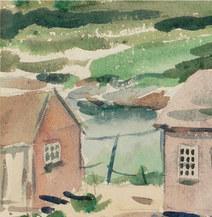
Lois Mailou Jones (1905–1998) was a prominent figure in African American art. During her career, Jones moved between a myriad of art styles shaped by three key influences. These include her upbringing in Boston where she would summer on the Vineyard, attendance at the Académie Julian in Paris in the late 1930s, and her many travels to Haiti. The Jerome Gray/Brenda Sayles Collection showcases four examples of her work during these influential moments of her career. Untitled (House) (1940), Untitled (Boat and House) (1944), Haiti (1954), and Vévé Vodou III (1997) trace the narrative arc of her development as an artist.
During her early life, she was born and raised in Boston. Before she was born, her grandmother was one of the first landowners on Martha’s Vineyard.1 This positioned Jones within the legacy of Black land ownership and leisure on the land. Therefore, she spent many summers on the Vineyard taking in the coastal landscape. There, she became acquainted with many African
Americans who summered on the island, including writer Dorothy West and renowned sculptor Meta Vaux Warrick Fuller.2 When she was of college age, she enrolled at the Museum School, part of the Museum of Fine Arts, Boston. This is now called the School of the Museum of Fine Arts (SMFA), Tufts. Originally, she set out to be a textile designer, evident in the rich color palette and patterning throughout her career.3 She worked with RISD Professor and costume designer Grace Ripley, who introduced her to African costumes and masks.4 In 1927, she was the first African American student to graduate from there, specializing in textile design.5 Later, she obtained her graduate degree in painting from the Design School of Art in Boston.6 Both degrees launched her first career in textile design. She specialized in brightlycolored Art Nouveau patterns. However, the lack of notoriety of that profession drove her into other artistic pursuits like painting.7
1 Hessel, Katy. “Rebecca VanDiver on Lois Mailou Jones.” The Great Women Artists Podcast With Katy Hessel, December 8, 2020. Podcast, website, 51:00. https://podcasts.apple.com/us/podcast/the-great-women-artists/id1480259187?i=1000501777800
2 ibid
3 ibid
4 Farrington, Lisa. “Modernism and the Harlem Renaissance,” African American Art: A Visual and Cultural History, Oxford University Press: 2016, 137.
5 Nassif, Kristen. “Places and Spaces: Loïs Mailou Jones’s Parade de Paysans (Peasants on Parade),” Deleware Art Museum, 2020. https://delart.org/places-and-spaces-lois-mailou-joness-parade-de-paysans-peasants-on-parade/#:~:text=Peasants%20would%20travel%20long%20distances,to%20Haiti%20regularly%20since%201954.
6 “Color Plates and Biographies: Loïs Mailou Jones,” David C. Driskell & Friends: Creativity, Collaboration & Friendship, Reading, PA: The Standard Group, 2022, 61.
7 Hessel, Katy. “Rebecca VanDiver on Lois Mailou Jones.” The Great Women Artists Podcast With Katy Hessel, December 8, 2020. Podcast, website, 51:00. https://podcasts.apple.com/us/podcast/the-great-women-artists/id1480259187?i=1000501777800
Later, in 1930, she was invited by James V. Herring to join Howard University’s art department.8 This marked the beginning of her pedagogical legacy. She went on to build a life in DC and teach over 2,500 students over the course of 47 years.9 That same year, she was featured in exhibitions at the Harmon Foundation alongside major figures of the Harlem Renaissance. According to art historian Lisa Farrington, in this time period, Jones had a Fauvist palette.10 She continues, “under the influence of Locke and the Harmon Foundation, Jones began focusing on African and African American subject matter, alternating these interests with her more personal interests in landscape, abstract design, and the human figure.”
After becoming a professor at Howard University, Jones took a year-long sabbatical from 1937–38. During her sabbatical, she went to study in Paris at the Académie Julian to follow in the footsteps of the late Henry Ossawa Tanner.11 At the Académie, she received instruction in Impressionism and got the opportunity to paint en plein air. In her study of Impressionism, she adopted looser brushstrokes, incorporating more pastel colors, and treating nature as the protagonist in her work. In Paris she encountered European Modernists who referenced African art through the visual language of Cubism, Fauvism, and
related styles. She also gained linguistic and cultural access to Afro-Caribbean thinkers.12 Her experience trickled down into her art. Even after she returned to the US, she formed the Paris School—a group of working artists inspired by the salons she encountered there. This kept her closely associated with the Washington Color School of color-field painting. Throughout the ‘60s, she kept her connection to Paris by bringing her students. Her experience at the Académie was captured in her work in the 1940s and ‘50s. These works bring together the sensibilities of her childhood spent at Martha’s Vineyard and her later training.
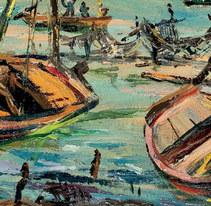
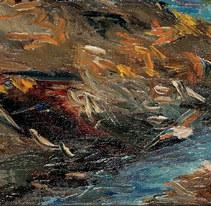
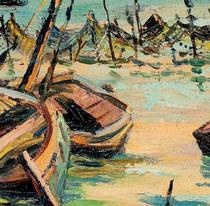
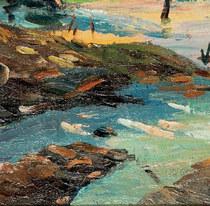
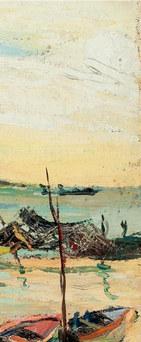
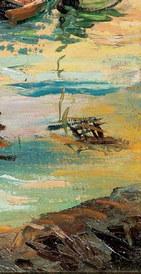
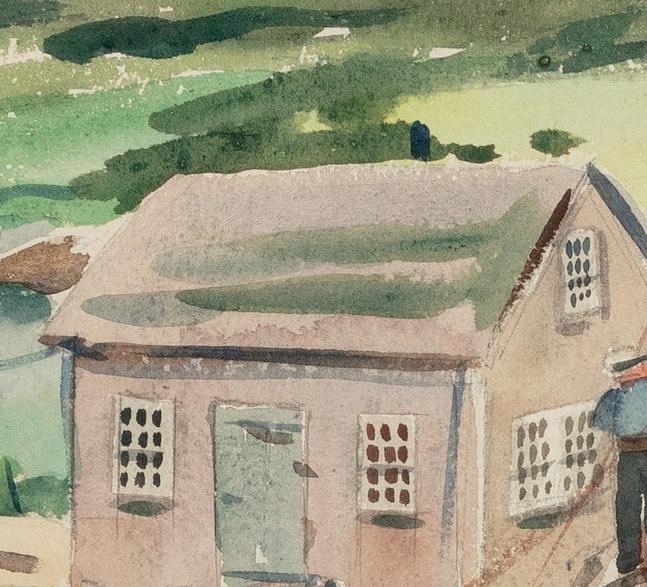
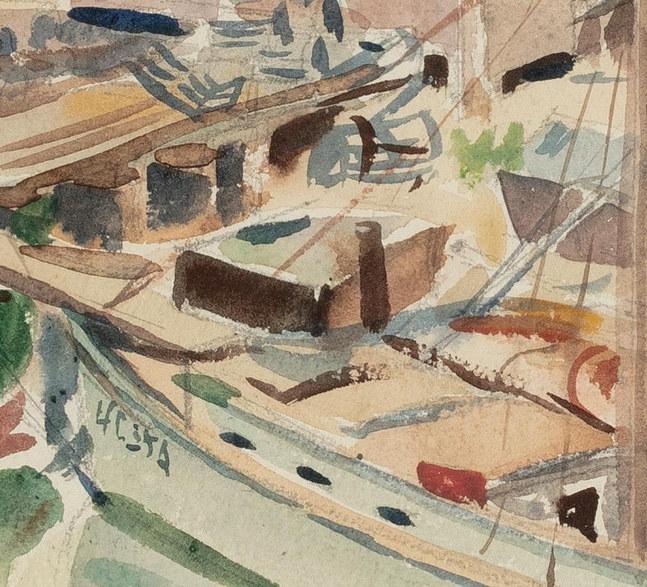
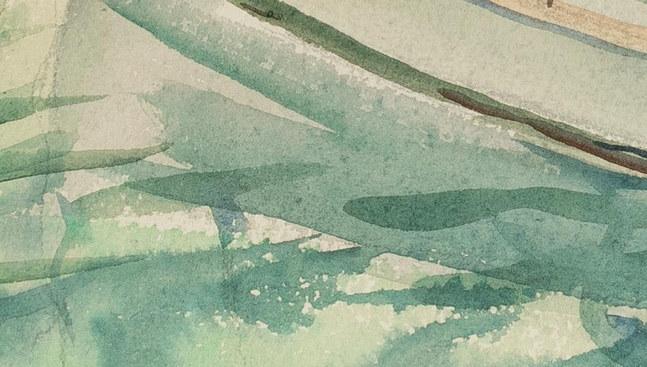
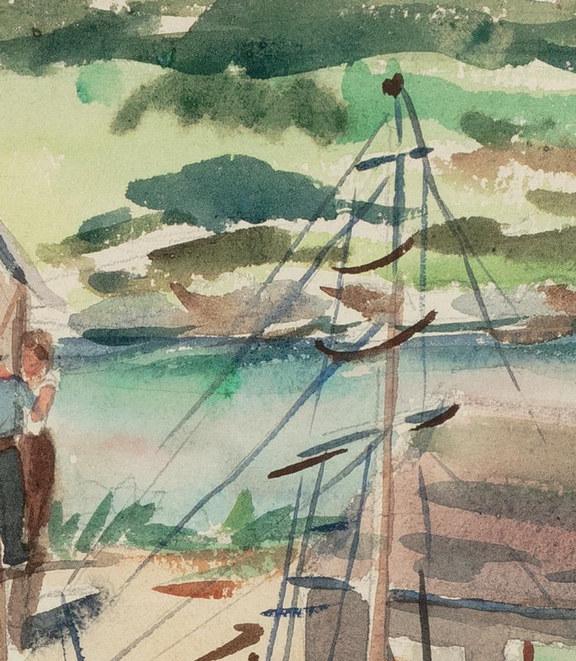
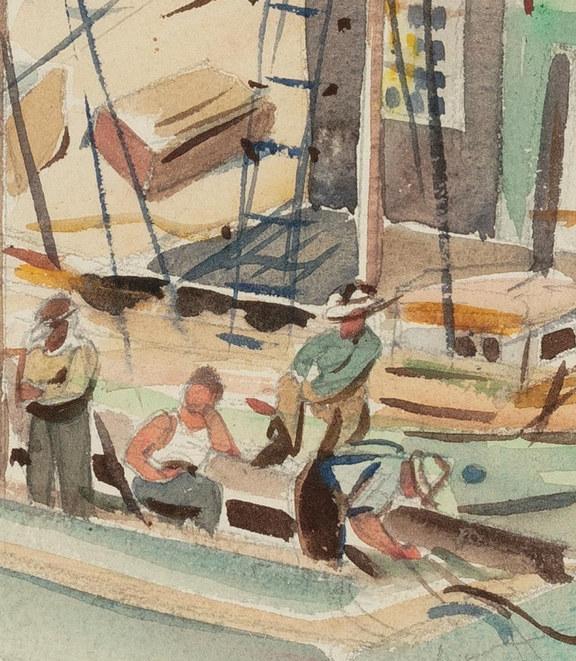
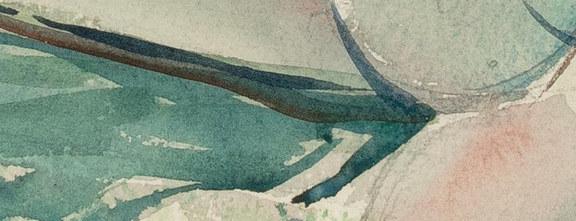
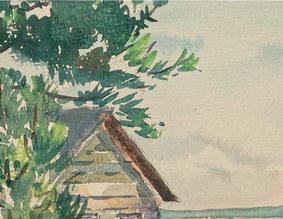
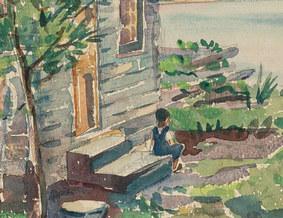
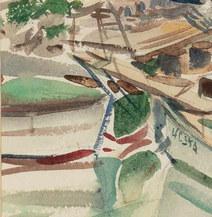
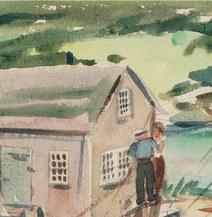
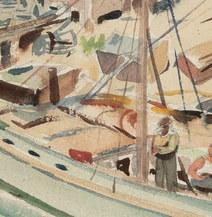
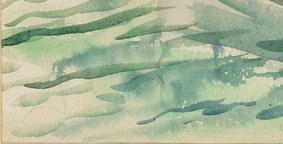
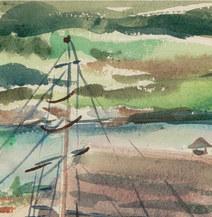
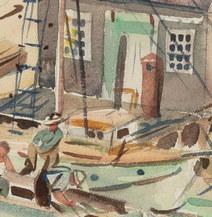
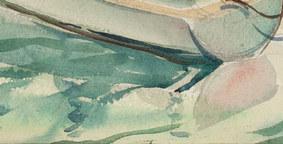
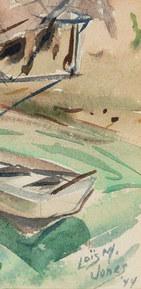
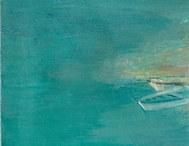
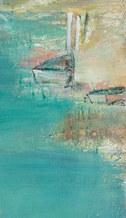
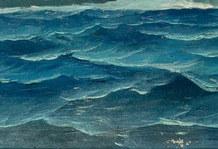
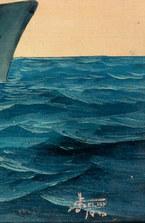
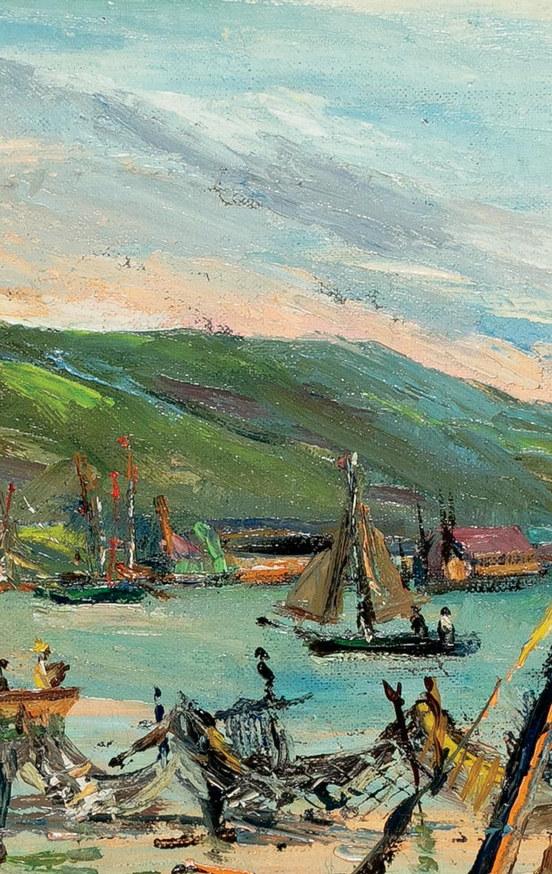
While Untitled (Boat and House) (1944) is another coastal genre watercolor, it diverges from the previous work because of its distinctively maritime iconography and sense of movement. Instead of a quiet, secluded scene, there is a dynamic feel. Movement emerges through the green, blue, and brown brushstrokes in the water. These marks can be read as ripples or current. Darker shapes hover next to the boats as their shadows. As these vessels are close to shore, this shows their depth in the scene. In contrast to Untitled (House) where the brushstrokes are short and consistent, the lines vary in length, weight, and shape. There are several figures on a sailboat with a rowboat attached, and
8 “Color Plates and Biographies: Loïs Mailou Jones,” David C. Driskell & Friends: Creativity, Collaboration & Friendship, Reading, PA: The Standard Group, 2022, 61.
9 “Color Plates and Biographies: Loïs Mailou Jones,” David C. Driskell & Friends: Creativity, Collaboration & Friendship, Reading, PA: The Standard Group, 2022, 61.
10 Farrington, Lisa. “Modernism and the Harlem Renaissance,” African American Art: A Visual and Cultural History, Oxford University Press: 2016, 137–139.
11 Hessel, Katy. “Rebecca VanDiver on Lois Mailou Jones.” The Great Women Artists Podcast With Katy Hessel, December 8, 2020. Podcast, website, 51:00. https://podcasts.apple.com/us/podcast/the-great-women-artists/id1480259187?i=1000501777800
12 VanDiver, Rebecca. “The Diasporic Connotations of Collage: Loïs Mailou Jones in Haiti, 1954–1964.” American Art 32, no. 1 (2018): 24–51. https://www.jstor.org/stable/26556818.
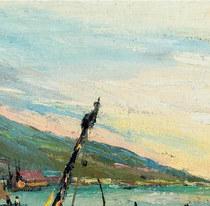
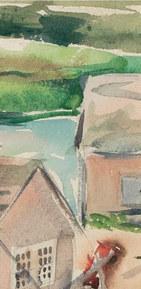
they are next to one that is docked. Two in particular are at the masthead, likely preparing the boat to set sail. However, the figures’ size and proportion are small relative to the scene, once again, indicating that the subject matter is the setting more than the individual. There are four houses staggered in the background, as well, showcasing that this is a depiction of an occurrence in a town. The sky on the horizon emulates the turbulence of the water, but even more so with the darker greens, teals, and clumped lines.
While her Vineyard scenes emphasize quiet leisure—a Black historic enclave of community—the surrounding turbulent World War era dictated the mainstream style of her contemporaries. This is captured in the dominant Social Realism of the period. Especially within the African American community, there were still the lingering ideals of what was purported in Alain Locke’s The New Negro (1925). This philosophy, supported by another prominent thinker W.E.B. Du Bois, encouraged Black American artists to perpetuate imagery of dignified portraiture and engage with African art aesthetics. Not to say that Jones did not do this, because she always has, but she also had several interludes of natural scenes that reveal a different, and still important, side of African American life. Many of these depictions fell out of vogue as Jones developed as an artist. Before she was born, previous generations subscribed to Romanticism which valued lush sweeping landscapes
and Biblical imagery. This was employed by those who came before her like Edward Mitchell Banister and Robert Duncason, for example.
While the push toward representational and politicized imagery was strong, Jones devoted her life to working in styles and subject matter that suited her. Nonetheless, a turning point occurred in her work that revealed what she had to say. While not overtly political, Jones’ visit to Haiti marked a turning point in her work. She began creating work that subtly resists the secularization of Haitian art, in part due to the governmental suppression of Vodou and colonial framing. In response, she re-incorporated elements of the faith as a child of the African diaspora. Even the African diaspora was a newer term in the twentieth century, but it became a point of active engagement for Jones.
Most notably, the shift to Haitian imagery occurred in her work when her personal life collided with her artistic pursuits. She married Haitian graphic designer Louis Pierre-Noel. Her life with him began her artistic interest in Haitian culture. At this juncture, her work transformed. During the summer of 1954, Jones visited Haiti for the first time where she created 30 works of mostly “landscapes, market scenes, and type portraits.”13 This was the first of many visits. She returned nearly every summer since ‘54. By the ‘70s, she established a studio in Port-auPrince, and lived there part-time.
13 Nassif, Kristen. “Places and Spaces: Loïs Mailou Jones’s Parade de Paysans (Peasants on Parade),” Deleware Art Museum, 2020. https://delart.org/places-and-spaces-lois-mailou-joness-parade-de-paysans-peasants-on-parade/#:~:text=Peasants%20would%20travel%20long%20distances,to%20Haiti%20regularly%20 since%201954.
Jones was enmeshed into Haitian culture compared to artists that she knew, including Eldzier Cortor, Aaron Douglas, James Porter, who also visited Haiti a few years earlier. However, other than Cortor, “the Haitian-themed artwork of Jones’s contemporaries often held Haiti at arm’s length rather than engaging directly with the island’s population or culture.”14 This occurred through total immersion because “before she became a student of Haitian culture, Jones’s early Haitian watercolors look like pseudoethnographic snapshots…and primitivist tropes…indicat[ing] Jones’s European training and her status as a tourist observer.”15 Jones was so fueled and inspired by Haitian subject matter that she went on to be an African American cultural ambassador, a commissioned artist to paint Haitian president Paul Magloire, and curated an exhibition in 1974 called Acts of Art, Caribbean and Afro-American Women Artists. 16 As Haiti influenced her mid and late career, Art Historian Dr. Kristen Nassif describes this as a significant period in her life since she writes, “For Jones, Haiti served as a bridge to Africa.”17 This is even mirrored in Jones’ words, as well, when she said in 1986, “For me Haiti is Africa. Haiti marvelously expresses the ties, links, and roots of Mother Africa. I feel that Africa, Black America, and Haiti
are one. ”18 It was not until the ‘70s, that she visited the African continent, so the Caribbean was an important window into African syncretism.19 After these trips, her work increases in size, her textiles design becomes more apparent in her patterning, and there are more stark references to African art.
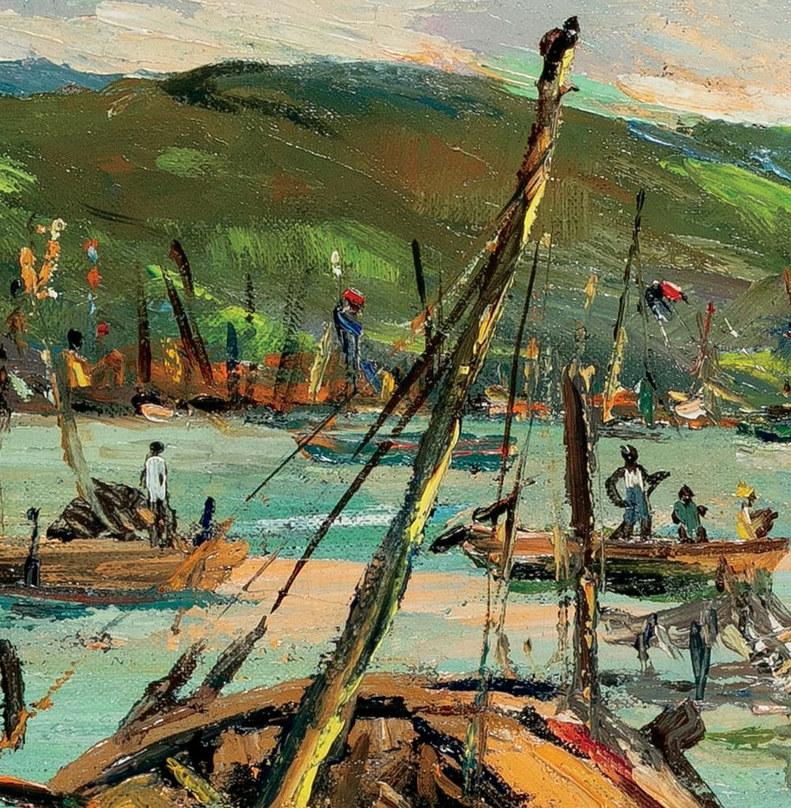
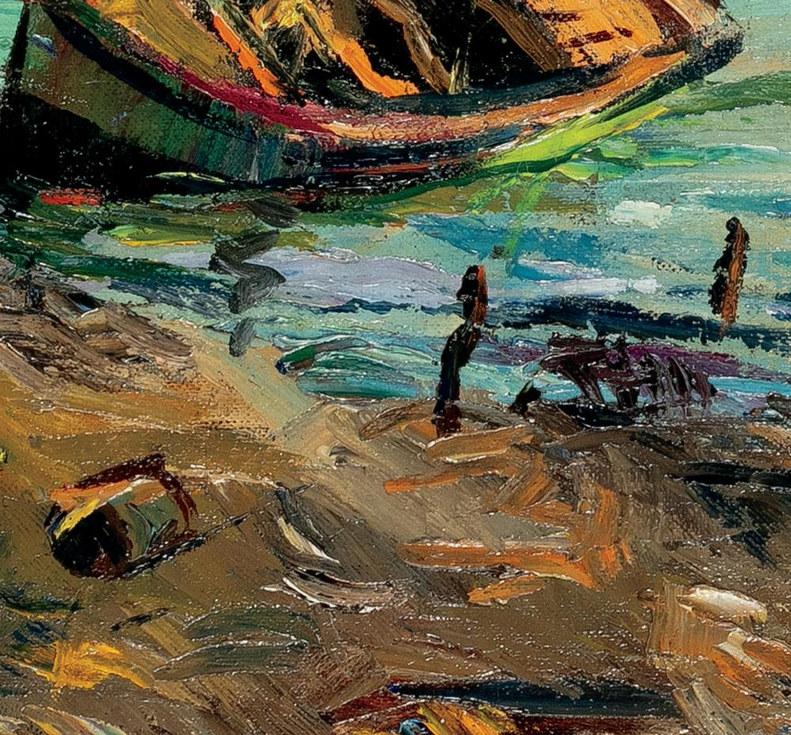
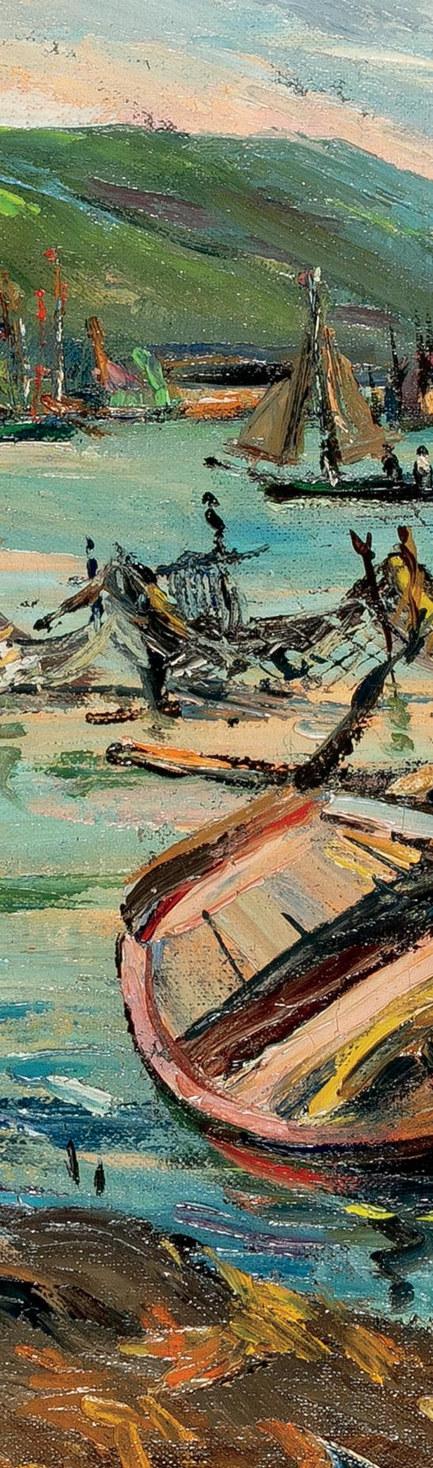
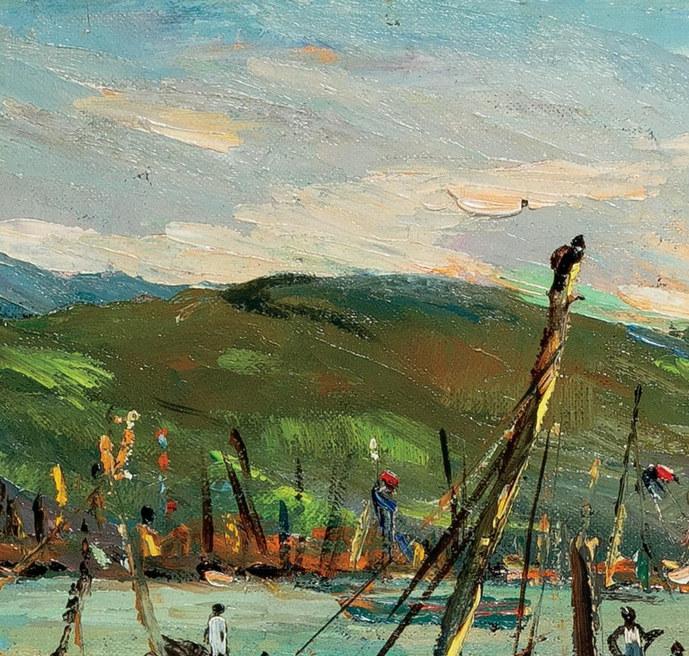
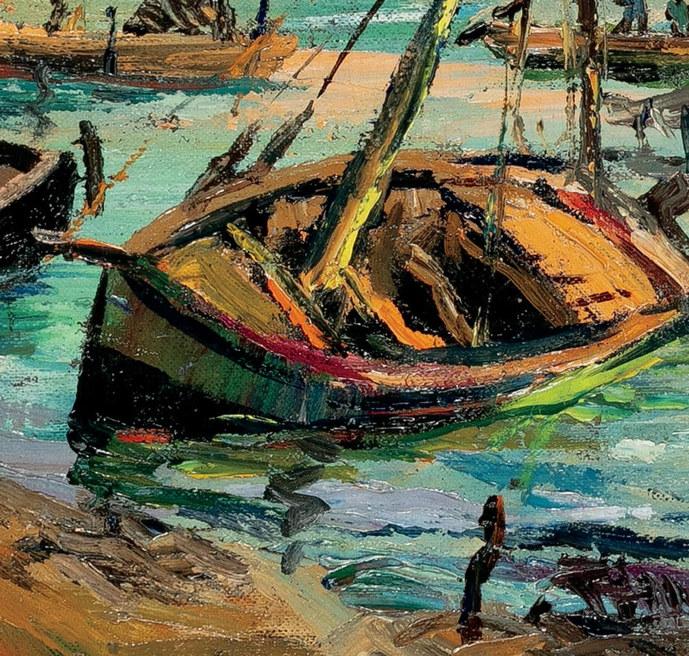
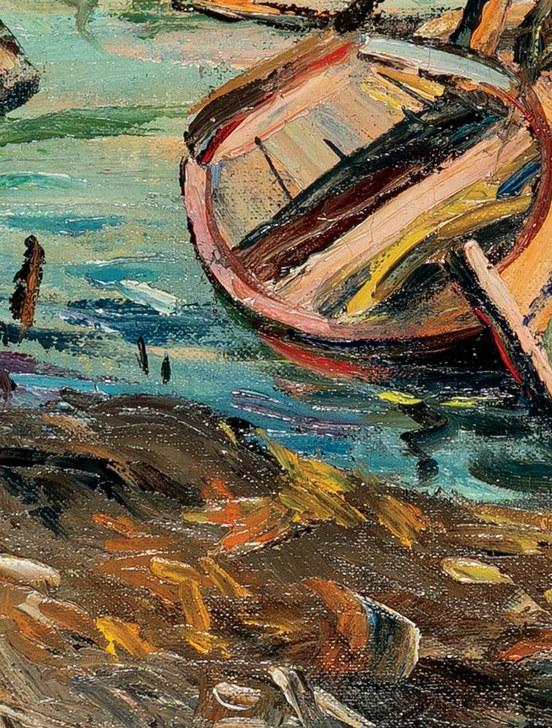
In the years that Haiti became her ideological and artistic center, her choppier Parisian-inspired Impressionist style transitioned to a smoother visual presentation. Where she previously employed pastel colors in a manner that was on the pointillist spectrum in its optical experience, it blended in harmony. A prime example of this is in her work, Haiti (1954). That evolved into her blending the colors by using oil paint and tightening her brushstrokes. In this example, the certainty of the figure is eliminated entirely by replacing it with outlines or silhouettes. But it is unclear, as the distant shapes match the color and shape of the boats and other maritime things. Instead, we see boats tipped diagonally, which denotes a rocking motion of the waves. The viewer’s perspective is at a small inlet looking onto the boats, and in the distance, they can see a mountain and lines that suggest a coastal town or city, but they are obscured. Jones maintains
14 VanDiver, Rebecca. “The Diasporic Connotations of Collage: Loïs Mailou Jones in Haiti, 1954–1964.” American Art 32, no. 1 (2018): 24–51. https://www.jstor.org/stable/26556818.
15 VanDiver, Rebecca. “The Diasporic Connotations of Collage: Loïs Mailou Jones in Haiti, 1954–1964.” American Art 32, no. 1 (2018): 24–51. https://www.jstor.org/stable/26556818.
16 Eckhaus, Phyllis. “Acts of Art: Uptown Exhibit Revisits Pioneering Downtown Gallery,” The Village View, n.d. https://villageview.nyc/2025/01/31/acts-of-art-uptown-exhibit-revisits-pioneering-downtown-gallery/
17 ibid.
18 VanDiver, Rebecca. “The Diasporic Connotations of Collage: Loïs Mailou Jones in Haiti, 1954–1964.” American Art 32, no. 1 (2018): 24–51. https://www.jstor.org/stable/26556818
19 Hessel, Katy. “Rebecca VanDiver on Lois Mailou Jones.” The Great Women Artists Podcast With Katy Hessel, December 8, 2020. Podcast, website, 51:00.
the Impressionist sensibility, but her use of outline, depth of the boats by using dark brown to black is more common.
As her work continued to mature, she adopted a symbolist visual language. The example from the Gray/Sayles Collection was created a year before she died, at 92. This work, Vévé Vodou III (1997), is part of an iterative series beginning in the ‘60s where she practices her rendering of vèvè imagery. While she was not a Vodou initiate, this was the first step of initiation for all practitioners.20 Therefore, it is significant that Jones dwelled on this practice for several decades. There are several recurring elements across works of this type. For example, she maintains her bold color palette and strong sense of pattern when approaching Haitian Vodou, closely connected to West and Central African beliefs. Rebecca VanDiver, the premiere art historian on Jones and professor at Vanderbilt University, eloquently charts this aesthetic shift in Jones’ practice. When referring to her travels to Haiti and interest in Vodou, she states:
In fact, it propelled her aesthetic move from the representational to the increasingly abstract. Haitian aesthetics also stimulated Jones to adopt a “highly-keyed palette,” while her “special study” of Vodou,
comprising figural representations of deities, ceremonial performances, three-dimensional assemblages of ritual offerings, and vèvè, ultimately led her to collage. Jones’s exploration of the artistic potential of the vèvè, which function as a visual language within Vodou, at the same moment that she began to experiment with a new artistic language in her own practice—collage—begs the question of how the two might be related. The ceremonial drawings are themselves part of Vodou rituals that layer physical elements; this, I contend, makes Jones’s choice of collage the most appropriate medium for this content. Ultimately, I theorize that Jones’s turn to collage, heretofore unexamined, is connected to a complex diasporic literacy21
Furthermore, Jones displays a sense of space and layering is apparent in Vévé Vodou III (1997) that is the most “didactic” compared to her other works within this series.22 The vévé in the middle of the composition in particular is reminiscent of the spirit of Simbi (a spirit with male, female, or nonbinary manifestations).23 This spirit is most closely linked to Kongolese cosmograms (dikenga) which further shows how Jones was on the pulse for how Haiti was her link to the African continent. For instance, VanDiver
20 VanDiver, Rebecca. “The Diasporic Connotations of Collage: Loïs Mailou Jones in Haiti, 1954–1964.” American Art 32, no. 1 (2018): 24–51. https://www.jstor.org/stable/26556818.
21 ibid.
22 ibid.
23 Dr. Kyrah Malika Daniels, Assistant Professor of African American Studies Faculty Co-Coordinator, Mellon Mays Undergraduate Fellowship Program at Emory University, What’s App messages on April 7, 2026.
continues on other elements present in the work:
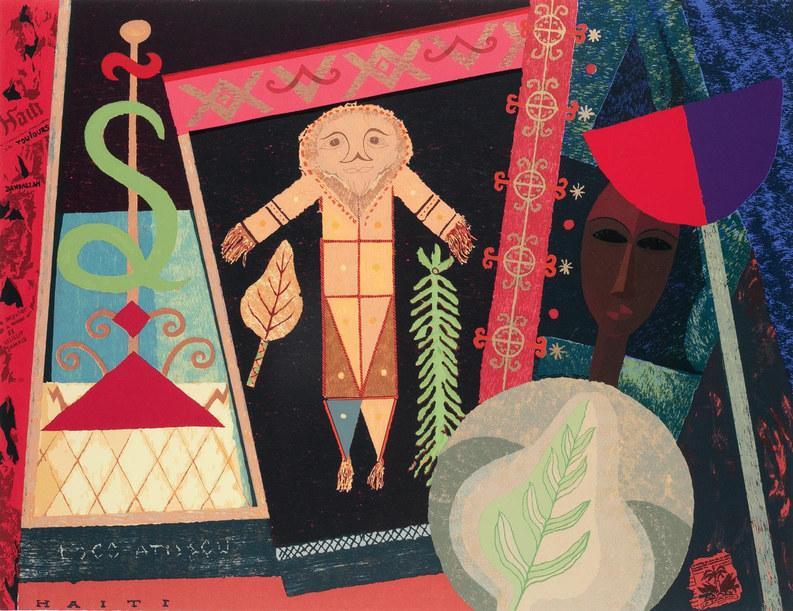
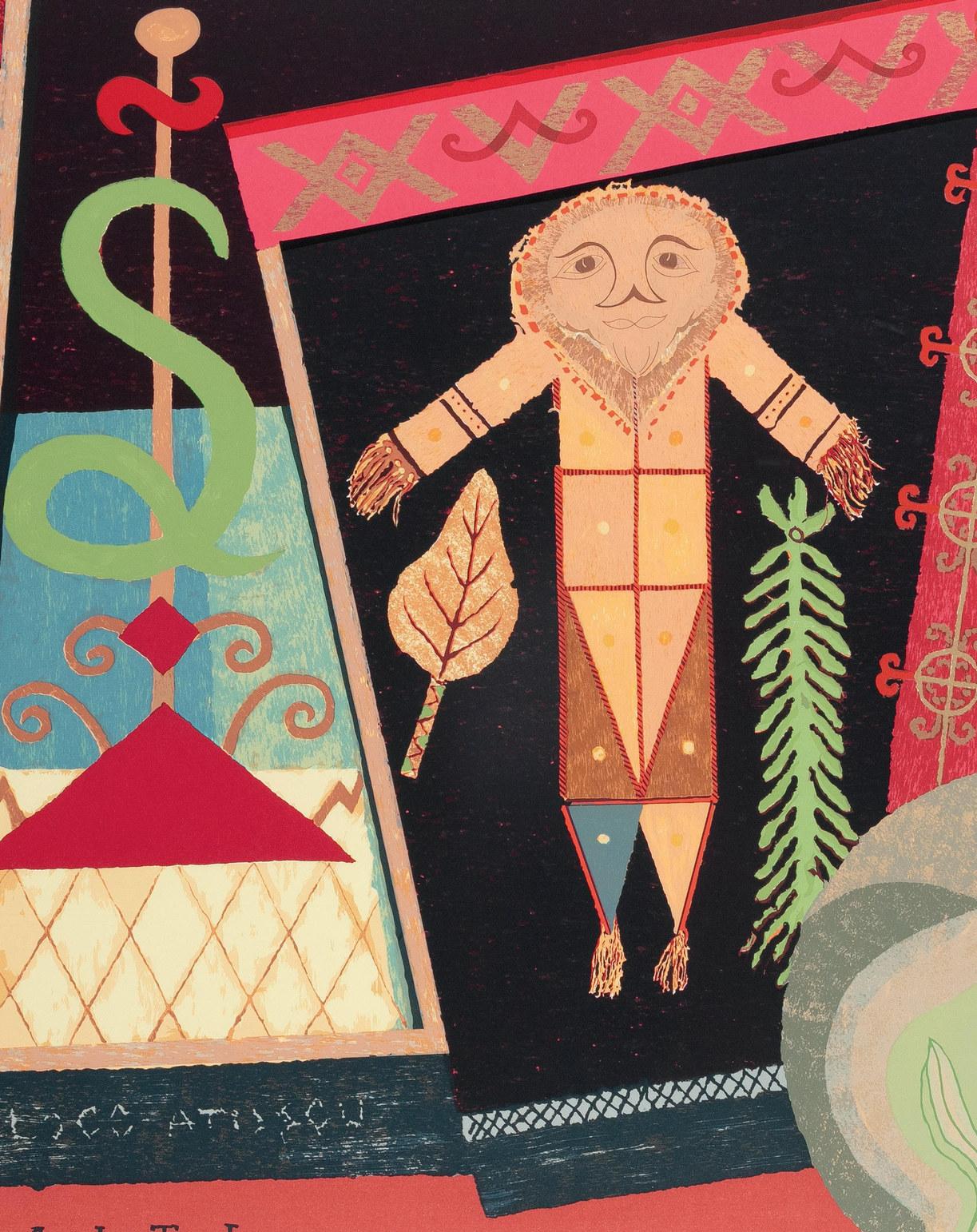
"The horizontal composition is divided into three loose vertical registers and includes a mix of painted and collaged elements. Two vèvè occupy the left and middle, while the top of an African reliquary statue 24 is visible on the right, obscured in part by an encircled gold and green leaf. Two strips of red with drawn forms bound the top and right side of Grand Bois d’Illet, or Great Tree, the god of the forest. These strips strongly resemble elements from the vèvè depicting the deity Marassa, who is associated with children. As in her Vèvè Vodou II collage from 1962, Jones filled the composition’s margins with text, here a mix of newspaper clippings and painted words."
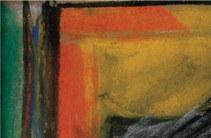
Instead of being rendered in realism, Jones depicts an abstracted geometric body and schematized face of the mask on the right. This is one of the few identifiable figurative elements besides the central figure which the diagonals enclose around. The central figure is an allusion to Damballah, the creator deity.25 However, the specific vévé on the
banner above the central figure alludes to Ayizan, the wife of Papa Loco who is also associated with healing.26 These objects combined with the vèvè are a reference to how objects activated the visual cosmograms on the ground during Vodou ceremonies. Therefore, “Jones mimics the additive nature of Vodou rituals—painting the ideograms on the composition’s base and then pasting paper forms on top, adhering to the artistic and structural conventions of collage.”27 Even further left are geometric shapes and a staff with a curlicue ‘S’ in green. This vèvè invokes the presence of Loco-Atissou, lwa of all priests. This figure is associated with healing and is often represented by a coiled snake wrapped around a staff.28 Stylistically, “Jones jettisoned the measured repetition of textile patterns in favor of a more seemingly random juxtaposition of and experimentation with shapes and colors.”29 Lastly, the border of this image repeats the word Haiti. Perhaps the border is a tie back to when she and her husband in the early ‘50s and ‘60s were separated due to visa issues where they corresponded in postcards.30 The border with the country name gives a postcard quality to it.
24 In this case, I disagree with the author. It looks more like a generic mask or composite of different types, but it does have similar features to masks by the Dan culture
25 ibid.
26 Dr. Kyrah Malika Daniels, Assistant Professor of African American Studies Faculty Co-Coordinator, Mellon Mays Undergraduate Fellowship Program at Emory University, What’s App messages on April 7, 2026.
27 ibid.
28 ibid.
29 ibid.
30 ibid.
Overall, Jones’ work fits into the cultural milieu of artists residing in DC, which is the true strength and spirit of the Gray/ Sayles Collection. Despite Jones living and visiting many geographies, such as Boston, Martha’s Vineyard, Paris, and Haiti, respectively, her work is emblematic of the inherent internationalism of DC. The collection also has examples of Jones’ contemporaries. These include figures like Alma Thomas, who was the first graduate of Howard’s fine arts department who remained in DC and became part of The Paris School alongside Jones; James Porter, whom she worked in the same department with at Howard; or Aaron Douglas, who was a little older that Jones whom she encountered in Harlem during Harmon
exhibitions. Her place in this collection further cements her position as—“queen mother” of African American artists, as David Driskell, her former student, referred to her.31 The collection also showcases a range of work that either is a snapshot of their journeys as an artist or in the case of Jones, several works created over time to chart that evolution. Their presence together offers a polyphonic experience of her work and the overarching story of African American art. What matters most about Jones’ body of work is that it is a refusal of being stylistically fixed.i
31 “Color Plates and Biographies: Loïs Mailou Jones,” David C. Driskell & Friends: Creativity, Collaboration & Friendship, Reading, PA: The Standard Group, 2022, 61.
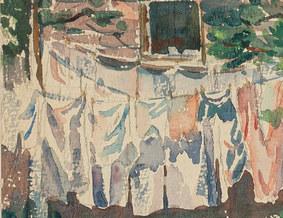
untitled, Clothes on the Line, 1940 watercolor on paper 14 x 19 inches signed Lois Mailou Jones (1905-1998)
untitled, Boats and Houses, 1944 watercolor on paper 11-1/2 x 15-1/2 inches signed and dated
Si��ie Knox (b. 1935)
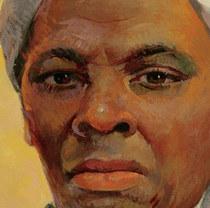
Harriet Tubman, 1980
acrylic on canvas 26 x 24 inches signed and dated
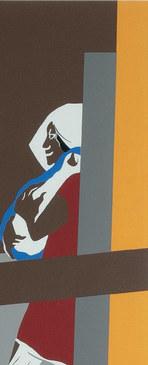
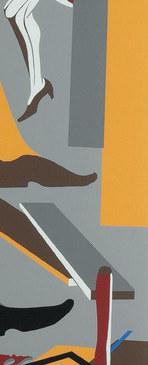
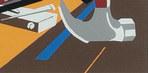
Jacob Lawrence (1917-2000)
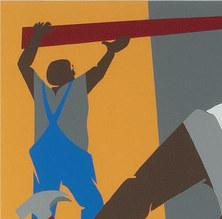
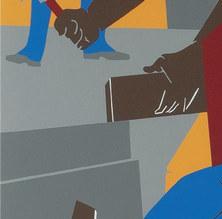
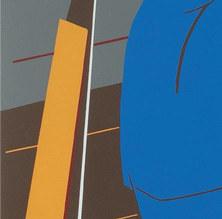
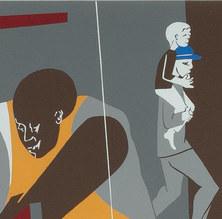
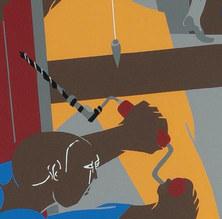
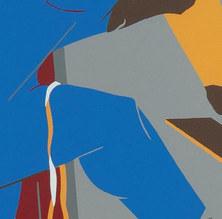
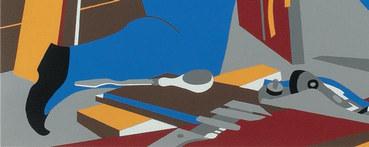
Builders No. 3, 1974 color screenprint
30 x 22-1/2 inches signed, titled, dated, and numbered 131/150
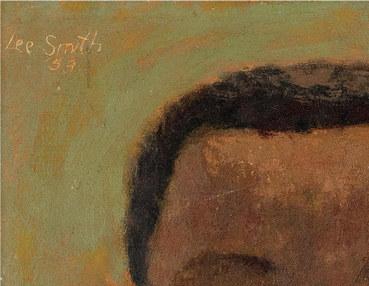
Hughie Lee-S�ith (1915-1999)
untitled, Young Boy, 1953 oil on board 10 x 8 inches signed and dated
Frank Morrison (b. 1971)
Warm Up, n.d. acrylic on canvas board 24 x 18 inches signed; titled on verso
Delilah Pierce
(1904-1992)
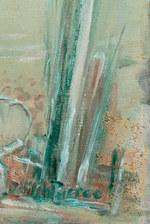
Eventide Debate, n.d.
acrylic on canvas 24 x 20 inches signed
Harborside Piles, n.d.
acrylic on linen canvas
48 x 16 inches
signed Delilah Pierce (1904-1992)
Edge of the Sea - No. 3, 1970-1980 acrylic on canvas 36 x 24 inches signed; titled verso, with Martha's Vineyard, Mass
James Amos Porter (1905-1970)
Roses in a Vase, c. 1940-1950
watercolor on paper
16 x 10 inches
signed with conjoined initials, JAP
Lucille Malkia Roberts (1917-2004)
Paris City Scene, 1962 oil on linen 22 x 13 inches signed dated and titled verso
Lucille Malkia Roberts
(1917-2004)
untitled, Women Carrying Baskets, n.d. oil on canvas
24 x 36 inches signed
John N. Robinson (1912-1994)
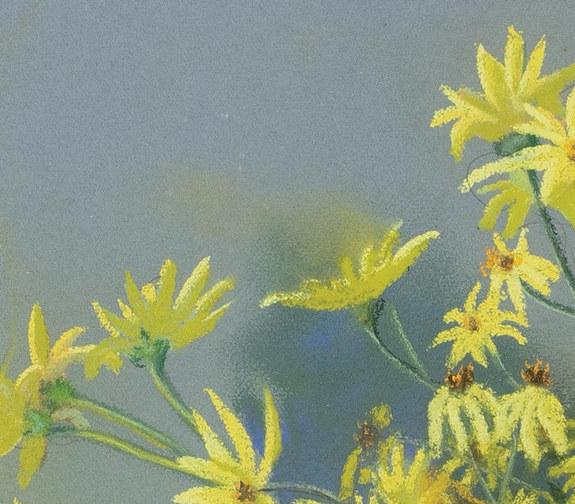
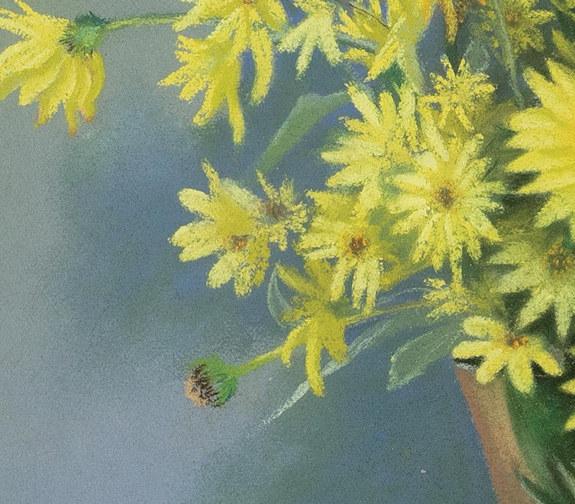
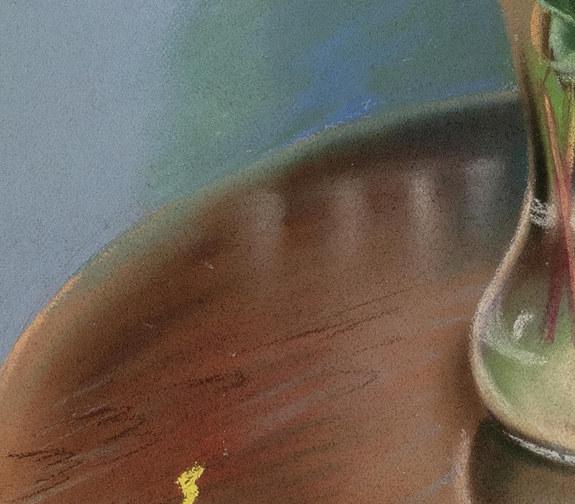
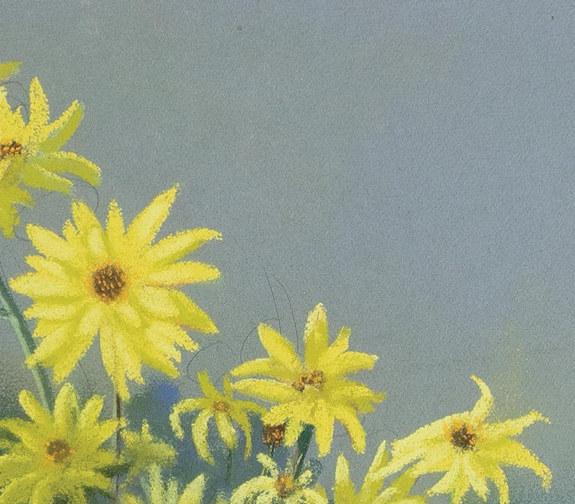
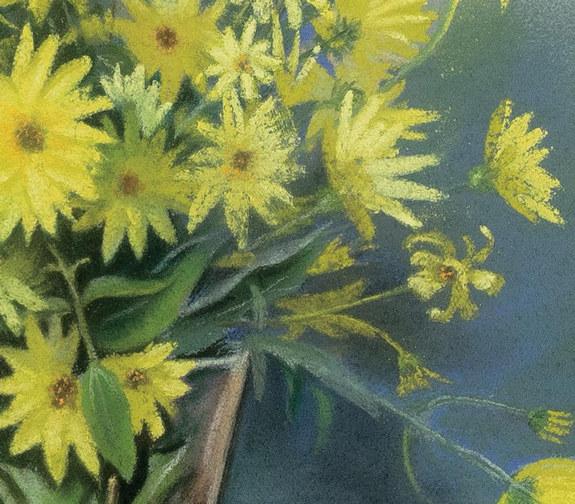
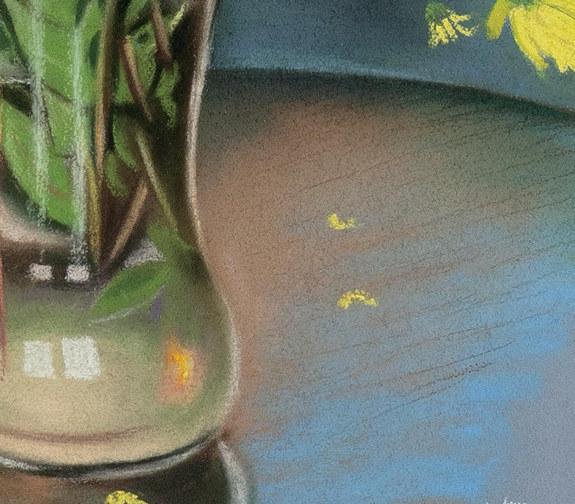
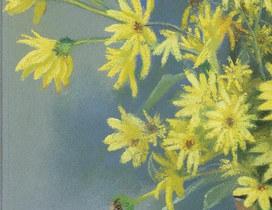
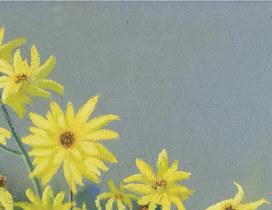
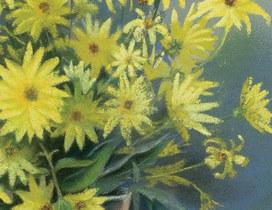
untitled, Jerusalem Artichokes in Glass Vase, n.d. pastel and acrylic on paper 22 x 18 inches signed
Lilacs, 1988
acrylic on paper 15 x 11 inches signed
John N. Robinson
(1912-1994)
untitled, n.d.
acrylic on paper 22 x 15 inches
signed
Alison
Saar (b. 1956)
Man/Club, 1993
three-dimensional lithograph, woodcut, and etching 44-5/8 x 22-5/8 inches signed and numbered 19/20
Charles Sebree (1914-1985)
Pensive Harlequin, 1952 gouache and pigment with beeswax on paper 7 x 5-1/4 inches signed and dated titled verso
Blue Harlequin, 1952 gouache and dry pigment with beeswax on paper 10 x 8 inches (oval) signed
Charles Sebree (1914-1985)
untitled, Girl With a Balloon, 1970 gouache with beeswax, and pigment on board 5-3/4 x 4-1/2 inches signed
untitled, Woman at a Bar, n.d. woodcut print 10 x 6-1/4 inches signed in brown ink UL
untitled, 1946 oil on board 14 x 24 inches signed Joe Selby (1893-1960)
Carroll Soc�well (1943-1992)
untitled, Woman, 1965 mixed media collage 18 x 16 inches signed and dated
Carroll Soc�well (1943-1992)
untitled, Abstract Still Life, 1977 mixed media on paper 22 x 30 inches signed and dated
Lou Stovall (1937-2023)
after Aaron Douglas, 1997 silkscreen print 27 x 17 inches signed, dated, and numbered, 186/225
untitled, 1960 watercolor on paper 15-1/2 x 21-3/4 inches signed and dated Alma Thomas (1891-1978)
untitled, c. 1960 watercolor on paper 19-1/2 x 23-1/2 inches
partial signature LR
Mildred Thompson (1936-2003)
Tampa, 1974
watercolor on paper
5-3/8 x 5-1/4 inches
signed, titled, and dated
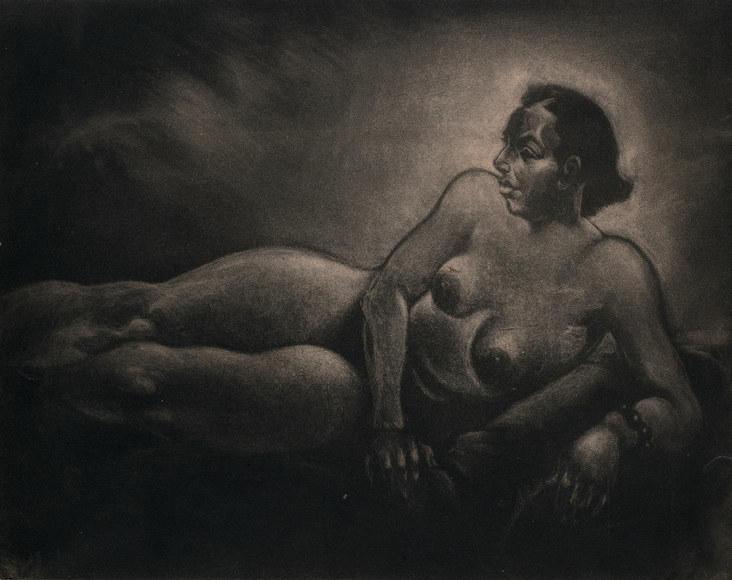
Dox Thrash (1893-1965)
Nude, n.d. carborundum mezzotint 10 x 15 inches signed
Mose Tolliver (1918-2006)
untitled, Man in Parachute, n.d. acrylic on wood pop top hanging device verso 32 x 16 inches signed
James Lesesne Wells (1902-1993)
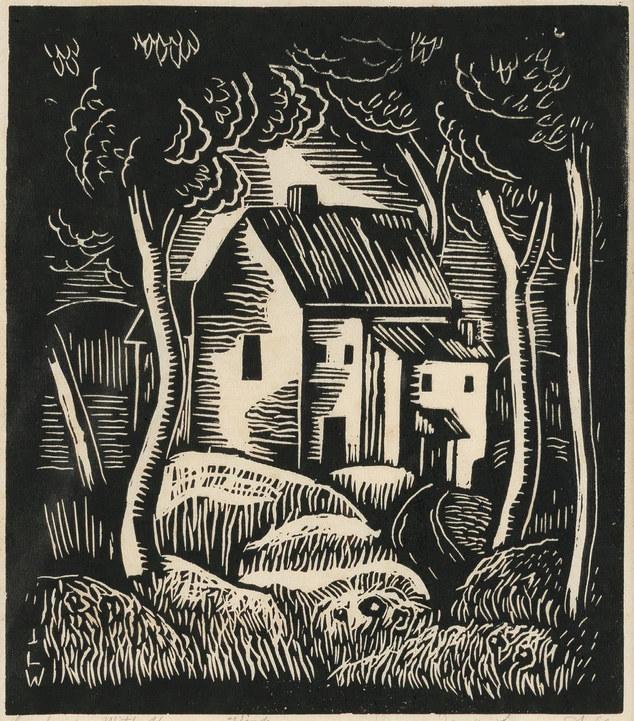
Landscape with House, 1945 linocut on cream paper 10-1/2 x 9 inches (image), full margins signed, titled, and inscribed, #1 impression in pencil
Exhibition List
Benny Andrews (1930-2006)
New York Café, 1966 lithograph on paper 10-1/2 x 14-1/4 inches
Signed, titled, numbered 232/250
Associated American Artists, NY label verso
Seyoum Ayalew (b. 1970)
Untitled, Figures in Interior, n.d. oil on canvas
39 x 30-1/2 inches
Signed and dated
Romare Bearden (1911-1988)
Carolina Interior (Ritual Bayou Series), 1971 paper collage made of the artist’s lithographs mounted on plywood (original) 16 x 20 inches
signed and numbered 17/75
Ritual Bayou, 1971 paper collage made of the artist’s lithographs mounted on plywood (original) 17 x 20 inches
signed and numbered 17/75
John T. Biggers (1924-2001)
Four Seasons, 1990 color lithograph 25 x 33 inches
Signed, dated, titled, numbered 29/120
Michael Anthony Brown (b. 1970)
untitled, African Girl, 1991-1992 oil on canvas 10 x 8 inches
signed
Samuel Joseph Brown (1907-1994)
Si Campache, Mexico DF, c. 1945 watercolor on paper 13-1/2 x 9-1/2 inches
Signed and titled
Lewis Cornell (1947-2019)
Untitled, Abstract, 1975 oil and acrylic on board 30 x 40 inches
Signed and dated
Allan Rohan Crite (1910-2007)
Untitled, n.d. ink and pencil drawing on cream paper 12-1/2 x 9-1/4 inches
Signed and dated
Aaron Douglas (1889-1979)
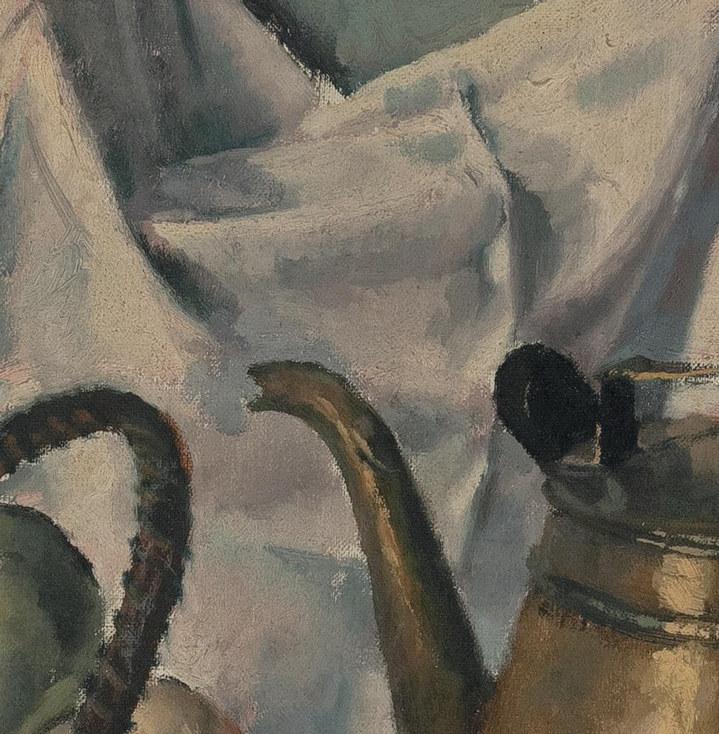
Brass Jug, 1935 Oil on canvas 20 x 24 inches
signed
signed and titled verso
Ed Dwight (b. 1933)
Afrique, 1979 Bronze 21 x 3-1/2 x 2-1/2 inches (image) (base 10 x 5-1/2 x 7 inches) signed, dated, and numbered 8/10
Daniel Freeman (1868-1927)
Frederick Douglass, 1893 pastel on board
27 x 22 inches
signed and dated , with “D.C.”
John Mercer Langston, 1893
pastel on board
29 x 24
signed, titled, and dated
Della Bundy, 1892 pastel and graphite on paper
24 x 22-1/2 inches
signed and dated
Alice Taylor Gafford (1886-1981)
Caught Cheating (Clowns), n.d. oil on canvas board
24 x 30 inches
signed titled on label verso
Sam Gilliam (1933-2022)
untitled, 1974
mixed media on paper 22 x 32 inches
signed and dated
John Wesley Hardrick (1891-1968)
Peonies, c. 1935 oil on board 20 x 16 inches
signed
Earl J. Hooks (1927-2005)
untitled, Woman, c. 1960 glazed stoneware 9-1/2 x 4-1/2 x 5 inches
signed
Herbert House (20th Century)
untitled, Figure, 1981
welded steel
34 x 11 x 7-1/2 inches
signed and inscribed
Doris E. Hughes (b. 1945)
untitled, Girl on a Bed, 1989 acrylic on canvas 30 x 36 inches
signed and dated
Lois Mailou Jones (1905-1998)
Haiti, 1954 oil on board
21-1/2 x 26 inches
signed, Lois Pierre-Noel dated
Vévé Voudou III, 1997 color screenprint
32 x 40 inches (full margins) signed, titled, dated, and numbered 57/150 printed by Lou Stovall at Workshop, Inc., Washington, DC
untitled, Clothes on the Line, 1940 watercolor on paper 14 x 19 inches
signed
untitled, Boats and Houses, 1944 watercolor on paper 11-1/2 x 15-1/2 inches
label from Smith-Mason Gallery, Washington, DC verso
Edge of the Sea - No. 3, 1970-1980
acrylic on canvas
36 x 24 inches
signed; titled verso, with Martha's Vineyard, Mass
James Amos Porter (1905-1970)
Roses in a Vase, c. 1940-1950 watercolor on paper
16 x 10 inches
signed with conjoined initials, JAP
Lucille Malkia Roberts (1917-2004)
Paris City Scene, 1962 oil on linen
22 x 13 inches
signed; dated titled verso
untitled, Women Carrying Baskets, n.d.
oil on canvas
24 x 36 inches
signed
John N. Robinson (1912-1994)
untitled, Jerusalem Artichokes in Glass Vase, n.d.
Pastel and acrylic on paper 22 x 18 inches signed
Lilacs, 1988
acrylic on paper 15 x 11 inches signed
untitled, n.d.
acrylic on paper 22 x 15 inches signed
Alison Saar (b. 1956)
Man/Club, 1993
three-dimensional lithograph, woodcut, and etching 44-5/8 x 22-5/8 inches
signed and numbered 19/20
Charles Sebree (1914-1985)
Pensive Harlequin, 1952 gouache and pigment with beeswax on paper 7 x 5-1/4 inches
signed and dated; titled verso
Blue Harlequin, 1952
gouache and dry pigment with beeswax on paper
10 x 8 inches (oval)
signed
untitled, Girl With a Balloon, 1970 gouache with beeswax, and pigment on board 5-3/4 x 4-1/2 inches
signed
untitled, Woman at a Bar, n.d.
woodcut print 10 x 6-1/4 inches
signed in brown ink UL
Joe Selby (1893-1960)
untitled, 1946 oil on board 14 x 24 inches
signed
Carroll Sockwell (1943-1992)
untitled, Woman, 1965 mixed media collage
18 x 16 inches
signed and dated
untitled, Abstract Still Life, 1977 mixed media on paper 22 x 30 inches signed and dated
Lou Stovall (1937-2023)
after Aaron Douglas, 1997 silkscreen print
27 x 17 inches signed, dated and numbered, 186/225
Alma Thomas (1891-1978)
untitled, 1960 watercolor on paper 15-1/2 x 21-3/4 inches signed and dated
untitled, c. 1960 watercolor on paper 19-1/2 x 23-1/2 inches partial signature LR
Mildred Thompson (1936-2003)
Tampa, 1974 watercolor on paper 5-3/8 x 5-1/4 inches signed, titled, and dated
Dox Thrash (1893-1965)
Nude, n.d. carborundum mezzotint 10 x 15 inches signed
Mose Tolliver (1918-2006)
untitled, Man in Parachute, n.d. acrylic on wood pop top hanging device verso 32 x 16 inches signed
James Lesesne Wells (1902-1993)
Landscape with House, 1945 linocut on cream paper 10-1/2 x 9 inches (image), full margins signed, titled, and inscribed, #1 impression in pencil
On May 16th, 2026, Black Art Auction will present an historic auction of the Collection of the Jerome Gray and Brenda Sayles. This sale, which includes more than 60 amazing works of African American art, will begin at 10AM CST.
This project is the continuation of our series of auctions featuring Black collectors.
For more information on these works, please email us at info@blackartauction.com or call us at 314-727-6249.
For a look at the entire collection and more information on the artists visit the website dedicated exclusively to this project by using the QR code below.