Hello and a very warm welcome to your 2026 Summer edition of MSA News.
We start off by welcoming two new colleagues into our MSA Nurse Specialist Team. Elspeth Wolfenden (South Central England) and Lorraine Jackson (Scotland, Northern Ireland and Republic of Ireland) joined us in May and have already got stuck into their new roles. We know they look forward to meeting with our wider MSA community in the coming weeks.
With these new appointments comes the sad news that Emma Saunders, our MSA Nurse Specialist for over eight years, has now left the Trust. She has been an incredible asset and advocate for people affected by MSA, and we wish her the very best for the future.
As always, we hope you find something of interest in this magazine. We have several articles on symptoms of MSA including preventing falls and bladder management. There are also two research articles on pages 6 and 22, as well as an article from our Social Welfare Specialists with useful travelling tips.
You may have noticed the slight update to our MSA Trust logo and we’d love to know your thoughts. If you have any particular comments please do get in touch –support@msatrust.org.uk
As ever, we hope you enjoy reading this edition of MSA News.
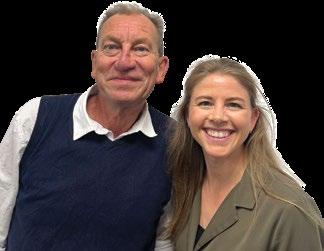
Emma and Andy
Head Online
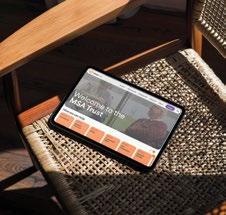
We are happy to announce that our refreshed website has now launched. We hope you like the new design which has accessibility and clearer information at its heart, with improved calendar and search functionality. If you have any feedback, or can’t find what you’re looking for, please email us at support@msatrust.org.uk. Please do head online and check it outwww.msatrust.org.uk
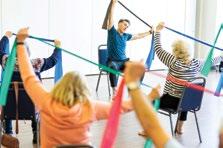
The Love to Move accessible exercise programme
The British Gymnastics Foundation, in conjunction with Parkinson’s UK, has developed an accessible exercise programme. The Love to Move exercise group is available online every Monday at 10am and in-person groups will be
running in selected areas in England. The online group is free of charge and the in-person classes are £5 per session. Each session lasts approximately one hour. If you’re interested in joining a Love to Move session or want to find out more, please contact theteam @britishgymnasticsfoundation. org.
Free Wills Scheme
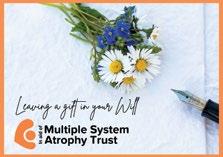
We continue to offer our Free Wills service. This lets you create or update your will with a local, qualified solicitor through our partnership with the National Free Wills Network. The Trust pays for the service and all we ask is that once you’ve looked after those close to you, you consider leaving a gift for the MSA Trust’s future work. There’s no obligation to do so, but by leaving a gift to us you can make a real difference for the MSA community and our research work - www. msamag.link/42Z4U6o
Healthcare Professionals Training Programme
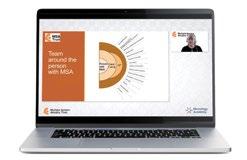
We were delighted to launch the first module in our new training programme for health and care professionals (HCP’s) in March. This course, created in conjunction with the Neurology Academy, is a free, CPD-accredited training for interested HCP’s in the UK, Ireland and internationally. This first module focuses on the core principles of MSA and gives a great overview for new or experienced professionals. You can find out more here - www.msamag. link/4ve5ARo
Summer Social
We are hosting our annual Summer Social event on Saturday 4th July at Sarah’s Wood.
Our Summer Social is a wonderful opportunity for our community to come together, support the Trust and meet others affected by MSA. It’s also a chance to view the newly ordered personalised engraved bricks added to the Path to a Cure and enjoy afternoon tea with staff, volunteers and other families affected by MSA. Sign up here - www.msamag. link/4uurBeK
Your Stories
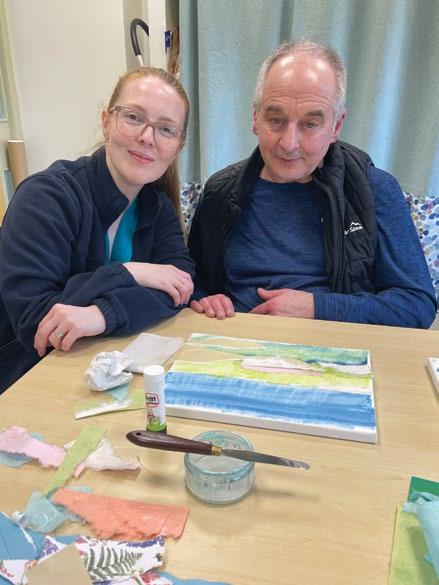
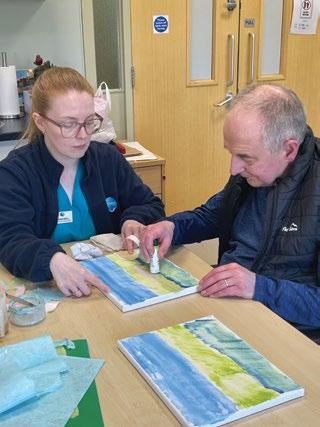
Eric has always been artistic, creating detailed landscapes with pencil and watercolours.
Living with the progressive symptoms of MSA has meant finding new ways to express his creativity and talents. For the past three years, Eric has been working with Laura, a Creative Arts Facilitator at Strathcarron Hospice.
Laura also helps Eric and his family by providing regular emotional support through the Hospice’s Live Your Life helpline.
Together they have explored how Eric can continue to create pieces of art that he can leave as a legacy to his family. He also creates artwork which he sells to fundraise for the Hospice to give something back.
Every month Eric and Laura meet in the Strathcarron Art Studio. While the main purpose of these visits is to work on Eric’s artwork, they chat about how he is feeling and how his wife (his primary carer) is doing. These conversations are just as important as any progress made on the paintings.
Eric, a local authority landscaper by trade, cultivates plants and flowers to share with his friends, and he donates plants to Strathcarron Hospice to sell on for fundraising.
Eric said:
“I’ve always enjoyed creating art as a hobby and with the support of Strathcarron I have been able to continue that. Due to my condition, some days are worse than others but I don’t give up, I just do what I can. I set myself small achievable goals. Laura has helped me greatly. She has given me self-belief. I have learned a lot and had to adapt to realise it’s okay not to use brushes. I had fixed ideas of what art should be and you had to use a brush or draw and it had to be detailed. Laura has taught me there can be freedom in art. I give it all a go now and take the attitude that it’s worth a try. You don’t need to use a pencil or a brush or worry about conforming. It gives me a sense of achievement and a sense of purpose.”
Reducing the risk of falls
We have a new factsheet that looks at reducing the risk of falls. The information you can find in the full factsheet is summarised below.
Whilst people living with MSA are at an increased risk of falling due to poor balance or a drop in blood pressure (postural hypotension), there are many other causes of falls, particularly as we age.
It is important to know that 60% of falls happen within your home environment.
The factsheet examines causes of falls, key points to consider and changes you can make around the home to keep you safer. We look at how to reduce falls with exercise, how to access support and we also consider bone health and diet.
Balance reaction times reduce as we age, as do our reflexes. This makes it harder to regain our balance, particularly when moving quickly or turning. Balance is vital in ensuring you stay upright when over-reaching for items or if you trip up. This can be improved with regular exercise. However, the progressive nature of MSA means that balance gets worse over time. Between the age of 50 years and 70 years 30% of muscle strength is lost. By regularly doing strengthening exercises whatever your age, you may begin to feel a little stronger and more stable. It is recommended that you exercise for 30 minutes five times a week, if possible. Your physiotherapist will be able to advise you on which exercises can be beneficial.
Whilst we recognise falls are a common symptom in MSA, there is specialist help available. If you are having issues with poor balance, do ask your GP to refer you to a local falls clinic. Services vary across the UK and Ireland.
Falls clinics are run by a team of professionals including physiotherapists, occupational therapists and nurses. They identify why someone is falling or is at risk of falling. They provide intervention to help maintain independence and prevent hospital admissions.
Other factors that can also influence falls include: your manner of walking (gait), freezing of gait, postural instability, involuntary erratic movements (dyskinesias) and side effects of medications. Your Parkinson’s Nurse Specialist or MSA Nurse Specialist can discuss this with you and your physiotherapist to see if any medication changes can improve the symptoms.
Alarm call systems can be helpful to alert others that you have fallen and require assistance and there is information regarding these in the factsheet.
You can find the full factsheet here: www.msamag.link/3RxUBUq
SCAN ME TO LEARN MORE
The Mystery Mutations that might trigger MSA
Dr Caoimhe Morley is a Postdoctoral Researcher in neurogenetics at University College London. Her work, funded by the MSA Trust and supervised by Professor Christos Proukakis, explores how tiny genetic changes in individual cells might help explain MSA. Here, she shares what inspired her and what her research is uncovering.
A curiosity about genetics
I’ve been fascinated by genetics since childhood. We all see it in everyday life - how we inherit our height, eye colour, or even certain health risks from our parents. What interests me most is understanding why changes in our genes sometimes lead to disease and how this knowledge could one day guide better treatments.
A new way of thinking about MSA
I first learned about MSA during my PhD. One of the most striking things about MSA is that, unlike many other brain disorders, it rarely runs in families. There’s very little evidence that the genes we inherit at birth explain why someone develops MSA.
Dr Caoimhe Morley
This led me to an important question:
“Could genetic changes that happen during life - not ones we inherit - play a part in MSA?”
What is genetic mosaicism?
In our research group, we study something called genetic mosaicism. This simply means that not all the cells in our body have exactly the same DNA. As we go through life, small genetic changes naturally appear in some cells but not others, creating a “mosaic” - a patchwork of slightly different cells inside the same person.
Most of these changes are harmless. But occasionally, a mutation might appear that affects how a cell works. These rare changes can be extremely difficult to find because they may exist in only a handful of cells - like searching for a needle in a haystack.
Looking for clues in individual cells
To find these rare mutations, we use highly specialised techniques. One of them, called FISH (fluorescence in situ hybridisation), lets us look directly at DNA inside individual cells. We use it to count how many copies of a particular gene each cell has.
We focus on a gene that helps produce alphasynuclein, a protein known to build up in the brains of people with MSA. If a cell has extra copies of this gene, it might make too much alpha-synuclein, which could interfere with normal brain function.
Over several years of work, our team has discovered that these extra gene copies appear more often in cells that show signs of alpha-synuclein build-up. They are especially common in oligodendrocytes, the brain cells most affected in MSA.
We also found that people who had higher levels of these extra gene copies tended to develop MSA symptoms earlier. This doesn’t prove that the mutations cause the disease, but it raises a crucial question:
“Do these changes happen before MSA begins, or do they develop later as part of the disease process?”
Understanding when these changes happen
To explore this, we use advanced DNA sequencing technology. This allows us to read the genetic code of individual cells and look for mutations across the entire genome. By combining different techniques, we can build a clearer picture of what changes occur, how often they appear and when they might arise in a person’s life.
Life in the lab
My work involves a mix of hands-on lab experiments and computer-based analysis. Some days I’m preparing samples and running experiments; other days I’m writing code and working through large amounts of genetic data. I enjoy this variety because it lets me investigate the same question from different angles.
Looking ahead
Working on this project has strengthened my desire to continue research. I’m passionate about using modern technologies to understand neurodegenerative diseases like MSA at the deepest possible level. One day, I hope to lead my own research group and contribute to long-term progress in understanding, diagnosing and eventually treating these conditions.
A message of thanks
This work would not have been possible without the support of the MSA Trust and its donors. Your funding has allowed me to grow as a scientist and contribute to research that I hope will make a real difference to people living with MSA and their families.
I am also deeply grateful to the Queen Square Brain Bank and especially to the individuals who generously donated their brains. Their contribution is vital to advancing knowledge and improving care for future generations.
Dr Morley’s results will be shared on the website as soon as they are published.
More details about our latest research funding round can be found on page 22.
Top Tips for Accessible Trips
As we move into the summer, many of us are planning our holidays and travel. Visiting friends and family, sightseeing and trips abroad can improve our quality of life. Holidays may take a bit more planning for people living with MSA.
In this article our Social Welfare Specialist, Louise Hardy, highlights support and information that can make for a smoother trip.
Prepare and Plan
• It is a good idea to plan ahead as much as possible. Our ‘Travelling and MSA’ factsheet details things to consider and offers tips when planning a holiday or journey, including a list of accessible holiday providers.
• Take details of your current medication, information about your condition, such as a letter from your Consultant or other Healthcare Professional and their contact details, in case they need to speak with any medical teams whilst you are away.
• Take factsheets or information about MSA from our website, such as our ‘Guide to Multiple System Atrophy’.
• Check that your travel insurance policy includes cover for a pre-existing condition. Shop around for the best insurance using the list of insurance providers in our ‘Travelling and MSA’ factsheet.
• Think about what equipment you may need to arrange in advance or take with you, such as a foldable wheelchair and incontinence products.
• Consider taking extra medications with you in case your travel gets delayed.
Travel
Depending on your mode of travel and where you plan to go, assistance and support is available:
Plane
If you are travelling by air, you can book assistance for travel through the airport via your airline or travel company. It is a good idea to re-check with them a few days before departure. Make sure they have details of any equipment you will be bringing – batteries from powered chairs often have to be removed. Any wheelchair that you bring will be stored in the hold and the airline will provide a manual chair to take you to your seat. If you need a hoist to get to your seat, let your airline know in advance. You can travel with up to two pieces of mobility equipment free of charge and they do not form part of your baggage allowance. Details of what should be provided at UK and European Union airports is herewww.bit.ly/4ucyWPh.
Sea
Many people living with MSA tell us that a cruise is a good, accessible holiday choice. You should let your cruise company or ferry line know about your level of mobility, your travel companion and any equipment you will need. Aids and equipment are often available on board. Accessible cabins may get booked up early, so do plan ahead. Also check for lift access and accessible toilet locations on the ship.
Train
If travelling by train, the Disabled Person’s Railcard provides up to a third off train tickets for you and your travel companionwww.msamag.link/49wLI3F. Discounts are available via National Rail for wheelchair users who do not have a Disabled Persons Railcard and their companion. You can request assistance at the train station or help to get on and off the train via your train company or via Passenger Assist –www.msamag.link/3QdSLrp. You can check if a station has accessible facilities herewww.nationalrail.co.uk/stations
If you are travelling in or through London, Passenger Assist is used at many overground and underground stations. Transport for London have staff to help at stations and information on step-free stations -
www.msamag.link/4nZeW15. TfL also has a “Please Offer Me A Seat” card and badge for travellers who do not need a wheelchair but have difficulty standing.
In the Republic of Ireland, you can book accessibility assistance for trains and buses via Travel for Irelandwww.msamag.link/437QPUc. They also provide details of the “Please Offer Me A Seat” card and badge. The Free Travel Scheme gives free travel on public, and some private, train, bus, and ferry companieswww.msamag.link/4e0LsLL.
If travelling to and in Europe, Eurostar offer an assistance service and discounted fareswww.msamag.link/4u3S95p
Out and About
If you have a Blue Badge, this can be used in some European countrieswww.msamag.link/3QdT0Tl
It is a good idea to check local parking and driving rules too and local Tourist Information Offices are a useful source.
Many towns in the UK have a Shop Mobility, where you can hire mobility scooters, power chairs and wheelchairs –www.shopmobilityuk.org. A list of companies which hire mobility and equipment and aids in the UK and abroad is herewww.ableize.com.
Please see our article on page 20 which has details of accessing toilet facilities when out and about, and other ways to check the accessibility of places like restaurants and shopping centres.
There is a host of travel tips and detailed information from other sources online, including companies offering accessible holiday accommodation. Good places to look are: www.disabledaccessibletravel.com www.euansguide.com
The ‘Rough Guide to Accessible Britain’, produced in collaboration with Motability can be bought or read online here: www.motability.co.uk/news-andevents/rough-guide-to-accessible-britain
The Irish Wheelchair Association for support, mobility aids and holiday information: www.iwa.ie
The MSA Trust ‘HealthUnlocked’ forum: www.msatrust.org.uk/forum and of course, our ‘Travelling and MSA’ factsheet.
SCAN ME TO LEARN MORE
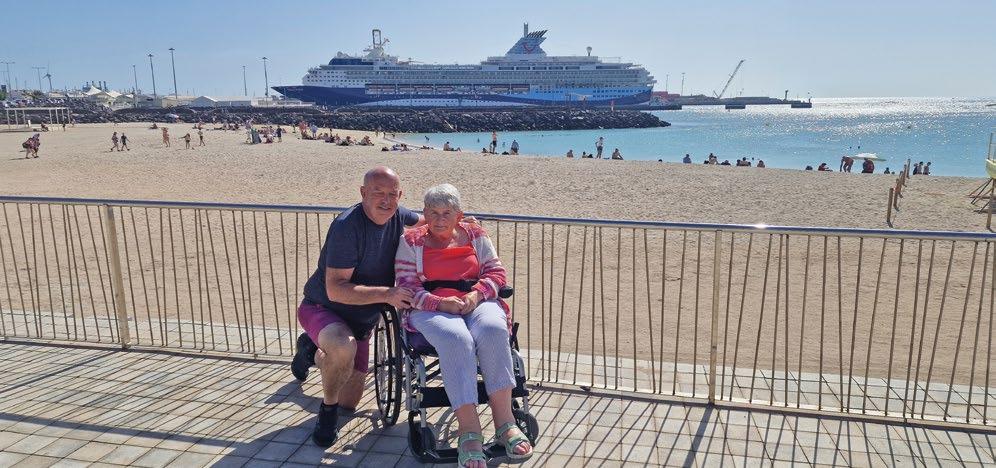
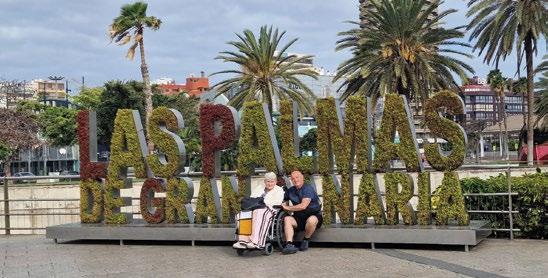
Members of our MSA community, Sue and Tom Atkinson, share their experiences of their recent holiday.
When Sue was diagnosed with MSA in December 2023, it felt like our whole world collapsed. For a while, everything was fear, shock and uncertainty. But eventually we realised we had a choice: let the diagnosis control our lives or hold onto each other and live every moment we can. We chose to live.
For 20 years we’d loved caravanning, but as Sue’s mobility declined, we had to let that part of our life go. It was heartbreaking. Then we discovered Haven’s accessible caravans — affordable, adapted, and giving us a way to keep travelling together. With prices around £130 for four nights, and with the help of ‘Discount for Carers’, it suddenly felt possible again.
Accessible places book up fast, so we didn’t hesitate — we booked four holidays, one after another: Hafan y Môr in March, Thornwick in May, Lakeland in June and Cleethorpes in July. And honestly, the experience has been wonderful. Whether we decide to enjoy the park or simply sit together and relax, it feels like we’ve got a bit of our freedom back.
We also promised ourselves that MSA wouldn’t stop us from dreaming big. So, we booked a Canary Islands cruise in April and the
Norwegian fjords in September — something special to look forward to, something just for us.
Our April cruise was fantastic and Marella Voyager was incredibly wheelchair-friendly with truly wonderful staff. However, there was a real downside for us. As we couldn’t get an accessible cabin, we chose a balcony cabin, which turned out to be very difficult — especially the large step into the bathroom. It made things much harder than we expected and confirmed that, going forward, we absolutely need an accessible room wherever we travel.
MSA changed our lives, but it didn’t take them away. We’re still here, still fighting, still making memories — together.
SCAN ME TO LEARN MORE
Remembering Our Loved Ones
SCAN ME TO LEARN MORE
Now summer is officially here, this season offers the perfect opportunity to remember your loved ones in meaningful, uplifting ways while spending time outdoors.
Create your Memory Garden:
A living memorial like a garden can bring comfort and beauty as it grows and blooms. Planting a tree, flowers, or even a small wildflower meadow in your garden or communal space is a special way to remember loved ones. If you don’t have access to a garden, a special corner filled with houseplants is a lovely alternative.
One idea is to plant Californian Poppy (Eschscholzia californica), which blooms in MSA shades of orange. This is a special way to raise awareness of multiple system atrophy. If you have a memory area in your garden or a patch of poppies, please take a picture and send it to us to share with the rest of the MSA community. You can email fundraising@msatrust.org.uk
Memorial Hike or Walk:
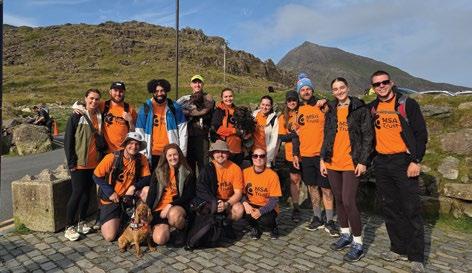
Revisit a favourite trail or take on a walking or trekking challenge to raise essential funds for the Trust. Many families find that walking in their loved one’s memory feels grounding and meaningful, whilst supporting a cause close to their hearts. Last summer our fantastic supporter, Becca Higham climbed Yr Wyddfa (Mount Snowdon) in memory of her mother, Diane. Becca later reflected:
“WE CLIMBED SNOWDON! Every step of the way was for the MSA Trust - raising awareness and funds for those affected by Multiple System Atrophy, a cause incredibly close to my heart. This month (August 2025) marked 5 years without my Mum, and whilst navigating this journey of loss, I have learned that sharing my grief helps me to carry it. So much love and thanks to an incredible bunch of friends who joined me on the hike.
Please know that we are here for you if you want help creating a special event to remember your loved one. We can support you with T-shirts, help you open a fundraising page and give plenty of practical tips – just email fundraising@msatrust. org.uk or call the office on 0333 323 4591.
Understanding Urinary Tract Infections
Our MSA Nurse Specialist, Samantha Pavey, gives an overview on the prevention of Urinary Tract Infections (UTI’s).
Getting an infection when you have MSA can make all of your symptoms suddenly much worse, usually over a few days. Due to autonomic dysfunction in MSA, the temperature regulator doesn’t work normally, so you may not have a high temperature, but still have an infection. GP’s may not be aware of this, so you may need to become the expert in managing your condition. If you or your partner notices your speech, balance or other MSA symptoms are dramatically worse over a short period of time, always think about the possibility of an infection.
Other causes of a sudden change of symptoms could include a recent change of medication that doesn’t suit you, dehydration or constipation.
work for everyone and a report carried out by Cochrane stated that you would need to take a 36mg dose via juice or tablets daily for it to be effective. There are supplements available in tablet or powder form that you can purchase from health food shops or online.
Lemon barley squash can also be helpful to make the urine more acidic and Vitamin C may be prescribed for the same reason.
Diet - foods that are rich in flavonoids help to reduce inflammation, which can boost the immune system. These include berries, citrus fruits, apples, grapes, leafy green vegetables and dark chocolate. Sugary foods like processed carbohydrates, fizzy drinks or alcohol should be avoided as they provide an environment where bacteria can thrive in the urinary tract.
If you think you may have an infection always seek help from your GP in a timely manner. Don’t leave it over a weekend or Bank Holiday thinking it might improve.
Urinary tract infections can cause pain on passing urine and discomfort around the lower back. They can make you feel unwell in yourself (nausea is common). You might develop confusion or hallucinations if there is an acute infection. It may take a few weeks before you get back to how you were prior to the UTI, so early treatment is key.
Urine is normally straw coloured but with an infection it may be darker in colour, thicker or have some sediment or blood in it. It can also have an unpleasant smell. Note: some medications such as Madopar and Sinemet make urine darker in colour.
As well as ensuring you get antibiotics from your GP whenever you have an infection, there are several things you can do to try to prevent UTI’s.
Fluid intake - try to drink 2 litres of fluid every 24 hours if you can. That’s an average of 6-8 drinks a day. Try to make half of these glasses of water. Have any caffeine intake during the morning and try to avoid fizzy drinks.
Caffeine and alcohol can cause dehydration, which can irritate the bladder, making it easier for bacteria to attach themselves. Drink these in moderation if you are getting regular UTI’s.
Cranberry juice can be helpful. Cranberries contain proanthocyanidins which stop bacteria sticking to the bladder wall. Other fruits containing these compounds include blackcurrant and elderberry. This doesn’t
D-Mannose - this is a herbal remedy that can help to prevent UTI’s by stopping E. Coli bacteria attaching to the bladder walls. It is a sugar that is found in some fruit and vegetables and is recommended by NICE (National Institute for Health and Care Excellence). D-Mannose can be taken in powder or tablet form and can be purchased from health food shops and online. It should be taken several times a day as it is excreted in the urine, so doesn’t last all day.
Hipprex (Methenamine Hippurate) – this is an antiseptic which breaks down into formaldehyde in the urine, helping to kill bacteria and preventing further infections. It is prescribed by a Doctor, so do discuss this with your GP if you are getting recurrent UTI’s. It is also recommended by NICE.
Oestrogen - Women who are postmenopausal may wish to discuss vaginal oestrogen cream or pessaries with their GP as this can help to restore healthy bacteria and reduce the risk of UTI’s.
Recurrent infections - If you are getting recurrent UTI’s, speak to your GP or specialist. Sometimes a maintenance dose of antibiotics is indicated. This is a once daily low dose of an antibiotic which can help with prevention. There is always the risk of becoming resistant to the antibiotic, so it would normally be swapped to another antibiotic every few months.
We have a professional guide on managing UTI’s written by a Urologist that we can send to your GP if requested.
Do speak to the MSA Nurse Specialist for your area if you have any questions about managing UTI’s.
Fundraising
Thank you so much to Karen for raising over £1,000 and helping to shine a light on MSA from one of the highest points in the world.
“I reached Everest Base Camp on 20th April 2026. I am fundraising for my good friend Paul who passed away last year after being diagnosed with MSA. The trek itself was the toughest challenge I’ve ever done. The scenery was breathtaking and the mountains were incredible. The Nepalese community was just amazing. I’m proudly wearing my MSA t-shirt in my photos but I’m also holding a ‘loud’ shirt that Paul wanted us all to wear for his celebration of life last year. I vowed to his wife Julie that I would take said shirt to Everest Base Camp with me. This is one adventure I’ll never forget.”
Thank you Tom and Ruth for all your support and raising awareness of MSA in your own community.
“My wife, Ruth, was diagnosed with MSA approximately six years ago and we have derived a great deal of information and support from the Trust in that time. We bought our own flat in an extra care facility just over four years ago and Ruth has had wonderful care during our time here. We decided to organise a fundraiser here at the care facility for around 44 other flats. I am pleased to say that the day went extremely well and we have raised £1,100.”
Karen
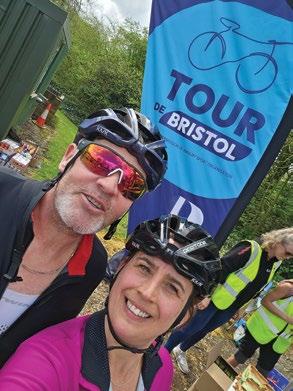
Thank you to Marilyn for taking on the Tour of Bristol Cycle Challenge and raising £366.
London Marathon
“Thank you for your encouragement - it truly was a challenge. My mum passed away this year, in January. She fought so hard. She took part in a research project to help find a cure, and you supported her with overnight stays, as doing it all in one day was too much for her. My husband was with me throughout the cycle ride to support me and keep me going.”
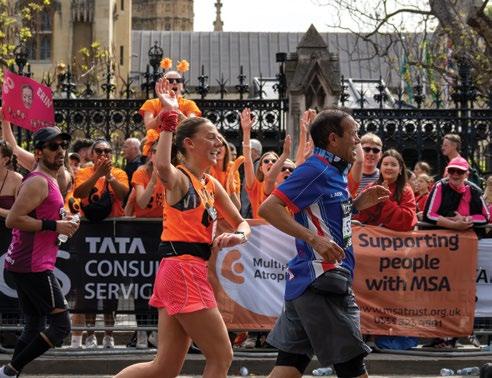
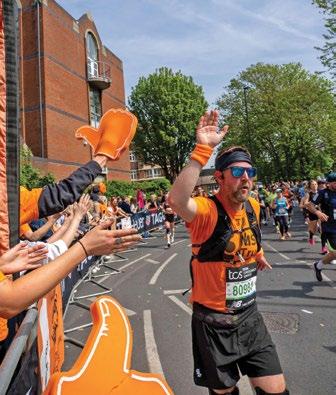
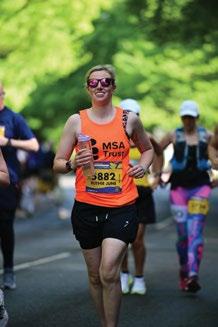
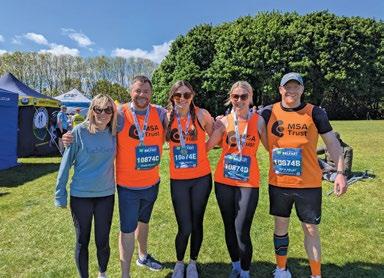
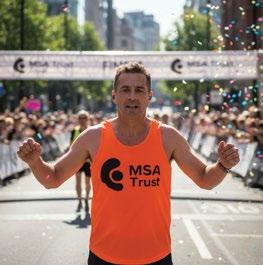
Thank you so much to this year’s 2026 London Marathon runners. John, Megan, Rob, Louise, Millie, Chloe, Amelis, Vicky, Peter, Jasmin and Brahman all smashed the London Marathon and crossed the finish line. Together, they have raised almost £26,000.
“Thank you so much for the honour of running for MSA, I had the best time and the whole journey to get to the London marathon has been awesome for my family and I.”- Vicky
“It was an incredible experience from start to finish, and I genuinely enjoyed every moment of it. The atmosphere, the support along the route and being part of something so meaningful made it truly unforgettable”.Chloe
“It was such an incredible day, and it meant so much to me to run for MSA Trust. I’m looking forward to volunteering again next year (if I fail in the ballot...).Thanks again to everyone at the charity”- Rob
Vicky
Marilyn and her husband
SCAN ME TO GET INVOLVED
John
Listening to You
At the end of 2025, we asked our community to share their views on the MSA Trust and the support we provide. More than 300 people responded and we are incredibly grateful to everyone who took part. As a communityled organisation, your feedback plays a vital role in shaping our services.
The survey highlighted the importance of trusted, MSAspecific information, with nine in ten respondents saying the MSA Trust had provided them with useful information about living with MSA. Our MSA Trust Health Care Professionals and Social Welfare Specialists were among the most highly valued services, receiving overwhelmingly positive feedback and heartfelt praise for the expert, compassionate and personalised support they provide.
Our support groups also continue to play an important role, with around twothirds of people living with MSA and carers engaging with our digital groups. Many also emphasised the value of face-to-face meetings when available.
Alongside the positive feedback, respondents shared suggestions for improvement. Key themes included the need for greater awareness of MSA among the public and healthcare professionals and making it easier for people to understand the support that’s available, particularly in the early stages after diagnosis.
The survey highlighted that not everyone is aware of the full range of services the MSA Trust offers, so improving communication about our support will be an important focus going forward. Thank you again to everyone who shared their experiences and ideas. This will all help as we look towards our next three-year Strategy.
SCAN ME TO LEARN MORE
3 The MSA Trust website reaches over 4 in 5 people with MSA...
...reinforcing our role as a key information source across the whole community.
4 5 The majority of people with MSA feel more supported after engaging with the Trust. 84% feel more supported
70% of people with MSA and Carers feel less isolated after their engagement with the MSA Trust. 70% feel less isolated
Fundraisers of
We are delighted to announce the winners of our 2025 Fundraiser of the Year Awards. So many incredible fundraisers were nominated and every single one went above and beyond to raise vital funds and awareness for the MSA Trust.
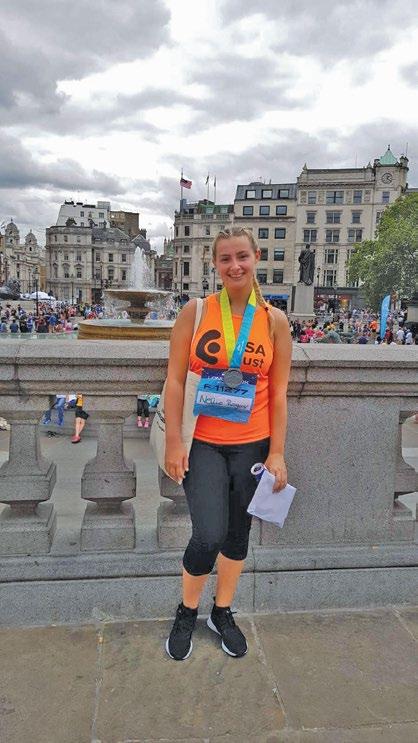
This winneryear’s is Nellie
Nellie has thrown herself into fundraising throughout 2025 while tirelessly caring for her mum, who sadly passed away this February. On top of her full time job, studies and young family, she has taken on running events, skydives and organised community activities - all to support the MSA Trust.
“The diagnosis of MSA has been a hard one to navigate. Through each deterioration, I’ve grieved the mother I had before. I feel proud to have overcome fears in raising money to support everyone suffering.” - Nellie
“I am so proud of her pushing through her fear and doing a skydive for something that’s affected our family so tragically. I am proud of the efforts she has put in to fundraising, caring for me with the condition, caring for her disabled brother, her 4 year old son while working full time doing a full-time teaching degree!” – Nellie’s mum
Nellie
the Year
This
year’s
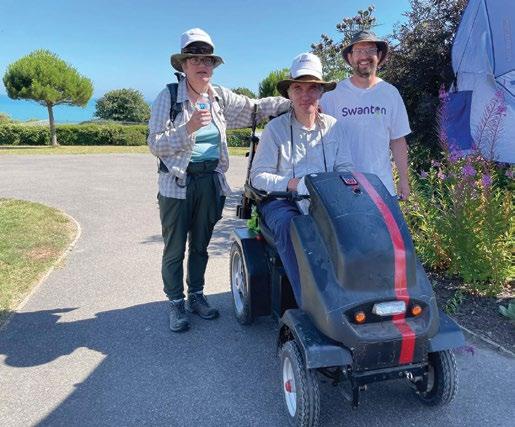
Team Awards winner is Tim’s Terrific Tramper Trip
The team, made up of Tim, Steve and Rachel, not only raised an amazing amount of money, but also helped shine a light on MSA and the importance of supporting those affected.
“It was a memorable couple of weeks for us all, and I will treasure those memories always. There were some fairly hairy moments on the Tramper - such as losing grip on a hill and sliding into the car park at Queen Elizabeth country park. I loved seeing people coming together to do something good. Truly a team effort” – Rachel “I want to do this walk because I have always wanted to do a long walk, the South Downs National Park is a beautiful place and I have many good memories of being there from when I was growing up as a young child and visiting family in the years beyond” – Tim, who is living with MSA
We also want to celebrate some of our amazing runners-up for our Fundraiser of the Year Awards.
Julie, for convincing her family and friends (most of them non-runners) to take on the Belfast Marathon as a relay team, raising an incredible £7,500.
Ruth, for hosting a tug of war wrestling competition and completing the Leeds Marathon in memory of her dad.
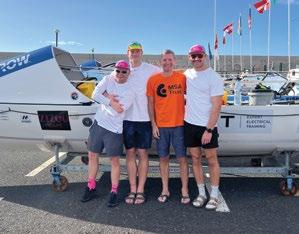
The Southsea Scullers, who rowed across the Atlantic in support of rower Sam’s uncle.
And Scott, for completing an ultramarathon in memory of his dad.
SCAN ME TO GET INVOLVED
WINNER TEAM AWARDS
Ruth
Tim and Team
Julie and Family
Supporting and Helping Each Other
Thoughts and tips from our MSA Support Groups and online communities, shared by our Support Services Coordinator, James Grogan.
Issues relating to bladder and bowel function are common for people living with MSA and bladder problems are often one of first symptoms people experience. Finding an accessible toilet shouldn’t be difficult, but we know that it sometimes is, especially when out and about.
With Summer on the horizon I wanted to pass on some tips that have been mentioned at our Support Groups, so you are able to make the most of the (hopefully) good weather and get out of the house more.
The National Key Scheme, formerly known as RADAR, provides those with accessibility needs access to thousands of locked public toilets across the UK. You can find these toilets in most public areas, often in shopping centres or in cafes. All you need to access them is a key, which you can buy from Disability Rights UKwww.msamag.link/4voa9ZA.
Another useful tool is the Bladder and Bowel Community’s ‘Just Can’t Wait Toilet Card’. This credit card sized card can be shown discreetly to gain easy access to toilets when you are away from home. The Bladder and Bowel Community provides information, advice and expertise to anyone with bladder and bowel problems. Physical and digital card versions are available for free and you can claim your card fromwww.msamag.link/4vmYFoY
One of our MSA Nurse Specialists discovered an app called ‘Snowball’ which helps you find accessible businesses near your location, anywhere in the world. It has detailed accessibility information, including parking, bathrooms and seating options. You can either search somewhere by name or use the interactive map to learn the accessibility of nearby places.
I have already used the app when searching for new Support Group venues to get an idea of how accessible spaces are. It is very easy to use. It also includes reviews from users so you can see what other people think about the accessibility of a venue. This means that the information held within the app should only get better over time as more people review where they have gone. You can download the Snowball App on IOS or Android –www.msamag.link/3PRdEbS.
Standard accessible toilets do not always meet the needs of people with MSA. You may need extra equipment such as a hoist, and more space to allow you or your loved one to use the toilet safely and comfortably. This doesn’t have to stop you from going out, you may just need to plan ahead. Changing Places Toilets are different to standard accessible toilets in that they have this extra equipment. You can use their map to see where they are located throughout the UKwww.changing-places.org
We hope this information helps make going out less stressful and worrisome. If you have any other tips for those in the MSA community please let us know by emailing support@msatrust.org.uk
SCAN ME TO LEARN MORE
Shaping our future – could you be a Trustee?
The MSA Trust is governed by our Board of Trustees. They are volunteers responsible for guiding and managing the charity.
We are recruiting new Trustees, to build a diverse team with a good range of skills. It is important that people with MSA are represented on the Board.
Could you be someone who brings your lived experience, skills and knowledge to the team?
Graham Watson, who was diagnosed with MSA in 2022, recently stepped down from his Trustee role. We asked him to share his experience:
“It is important to remember that anyone can volunteer to be a Trustee, regardless of experience and employment status. I found being a Trustee very rewarding. You have the opportunity to help support the work and strategic direction of the Trust. You are helping to provide a strong governance and fulfil the charity’s mission and you can make a real difference.
Karen Walker, CEO of the Trust was brilliant and explained the role of a Trustee in easy-to-understand terminology. After an interview, induction and a DBS check I attended my first Trustee meeting where I was formally accepted as a Trustee by the Board!
As a Trustee, you are part of a team and will have the opportunity to use your own skills, knowledge and experience while learning from others. I was incredibly lucky to work closely with a passionate team of people with very different skillsets, both professional and individual.
I found being a Trustee a great experience and I learnt and gained an enormous amount. Perhaps you have a particular skillset that would be invaluable for the Trust? Ultimately being a Trustee helps to improve the lives and experiences of others.”
We are also recruiting for Trustees with Fundraising or Safeguarding expertise. The Fundraising Trustee must have experience of charity fundraising at a senior level. The Safeguarding Trustee needs senior level safeguarding experience in the statutory or voluntary sector.
If this sounds like you, or someone you know, then get in touch.
Being a Trustee is a role that carries responsibility but is immensely rewarding.
You can read the Trustee role description on our volunteering pageswww.msamag.link/4v4cvx3. To find out more or request an application pack, email volunteer@msatrust.org.uk
SCAN ME TO GET INVOLVED
Research Update
ExPRESS Study
A major UK research study called ExPRESS (Early Assessment, Diagnosis and Treatment of Parkinsonism and Related Syndromes) is currently recruiting people with Parkinson’s Plus conditions, including MSA, PSP and CBD. The study is running at multiple hospital sites across the UK.
ExPRESS aims to improve how these conditions are diagnosed and to better understand what is happening in the body and brain. Researchers will collect information from participants including clinical assessments, brain scans and biological samples. Together, this information could help doctors diagnose MSA earlier and more accurately. In the longer term, it may also help pave the way for new treatment trials.
See our website for full details, including participating siteswww.msamag.link/4eiAIth
CYPRESS Trial Update
Theravance Biopharma have shared an update on the Phase 3 CYPRESS clinical trial looking at Neurogenic Orthostatic Hypotension (nOH).
“Thank you to the patients, families, caregivers, and investigators who participated in the Phase 3 CYPRESS trial.
While the study did not meet its primary symptom endpoint, ampreloxetine showed biological activity and was generally well tolerated. Based on these results, Theravance are beginning an orderly wind down of the programme while completing additional data analyses to assess
whether the data merits further regulatory discussion. CYPRESS participants actively in the trial should reach out to their trial site for further information.
We are deeply grateful to the nOH community for advancing research through clinical trial participation.”
MSA Trust Research News
We continue to drive progress in MSA research through scientific collaboration and targeted funding. Since 2023 we have hosted an annual research symposium, bringing together researchers from the UK and around the world, with each event focusing on a key area of MSA research.
On 18th May, in partnership with the UCL Institute of Neurology, we held the MSA Symposium 2026. Leading clinicians, researchers and healthcare professionals explored new insights into how MSA develops, advances in care and symptom management, and progress in clinical trials.
Alongside the symposium, the Trust’s research funding programme continues to grow. In May our independent Scientific Advisory Panel met to review ten shortlisted applications for the latest Research Grant Call. With over £3.3 million invested to date, the Trust funds research ranging from laboratory science to studies improving day-to-day care.
Funding decisions will be announced in June and shared in the next issue of MSA News.
SCAN ME TO LEARN MORE
IN MEMORY
Our tribute to those loved ones recently lost to MSA.
Christine Dodds
Karen Berry-Hart
Mary Gazeley
Jim Currie
Sandra Naisbett
Chris Hyatt
Veronica Reel
Paul Bates
Brenda Ohagan
Debbie Chandler
Nick Crank
Kevin Cherry
Annette Kent
John Ayre
Donna Rodgers
Rowena Hill
Peter Hawkridge
Phil Keen
Claire Collins
Yvonne Hills
Norman Cassidy
Kathleen Keavney
Sean Day
Despina Kaoura
Michael Hill
Sarah Rogers
David Betts
Josef Sweeney
Roger Prior
David Thomas
Alan Sanders
Maureen Rowe
Peter Hunter
Tracy Mobley
Eilish McGinley
Bill Fortune
Anne Kan
Sandra Roberts
David Currier
Alec Jones
Thomas Connor
Denise Kennedy
Frankie Dollery-Hutchins
Mark Soulsby
Christine Cowen
Stephen Harrap
Frank Manning
Gordon Stevenson
Sandra Bullus
Raymond Ellis
Brian Robinson
John Gidman
David Ibbotson
David Hawkins
Danielle Hughes
Graham Mitchell
Steve Birchall
Alison Nobes
Rita Rollison
Brian Barrett
Alan Fenlon
Debbie Clarke
Sheila McDermott
Steven Moss
Our NEW Online Shop
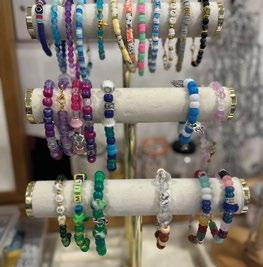
We are pleased to share our newly launched shop alongside our new website. Purchase our branded merchandise or special handmade items created by members of our community and help us support everyone affected by MSA.
There are so many ways to support the MSA Trust and our work. A wonderful way to support us is by donating your handmade crafts, goods or merchandise, which we can sell through our online shop. In the past, our generous community has contributed knitted blankets, MSA Trust branded wristbands, artwork, notebooks and diaries.
Reach out to fundraising@msatrust.org.uk and we can discuss your donated items in more detail.