Hello and a very warm welcome to your first MSA News of 2026.
We have a full and varied edition for you to start off the year. There are two articles from our MSA Health Care Specialists regarding abdominal binders and the pros and cons of lifts in the home. We also have a guest article from a dietitian about nutrition and MSA.
We’re excited to launch our new Involvement Network – details are on page 20. This is an opportunity for everyone affected by MSA to lend their voice to our work, and the work of organisations that approach us. If you are interested, please do get in touch.
Finally, you will find a Gift Aid form included in your magazine. If you are thinking of donating to the Trust, you can increase the value of your donation, or regular donations, at no extra cost through the government’s Gift Aid scheme. The Trust can claim 25p for every £1 donation. You must be a UK taxpayer and pay tax that is equal to or more than the amount we reclaim. Please call the office if you are not sure if you are eligible and we will assist you.
We really hope you enjoying reading this edition of MSA News.
Emma and Andy
New Parkinson’s UK Research – includes MSA
Parkinson’s UK, the national charity, recently published the largest study of prevalence and incidence of Parkinson’s in the UK. This study also included rarer parkinsonisms, including MSA.
Prevalence is the proportion or number of people in a population who have a specific condition at a specific time.
Incidence is a measure of new cases of a condition arising in a population over a year. It shows how the condition is changing in the population.
Their findings demonstrate that the incidence of MSA increased over the period from 2003 to 2023. This almost certainly reflects the influence of more effective diagnostic criteria, better biomarkers and greater awareness of MSA amongst clinicians. A similar increase in incidence was found for the other rarer parkinsonisms covered in the research, with a corresponding small drop in incidence of diagnosed Parkinson’s as a consequence.
It is important to note that there has been, and still is, difficulty in getting definitive information on incidence and prevalence of MSA without conclusive biomarkers or other confirmatory tests.
This research was a population based observational study using data in the Clinical Practice Research Datalink (CPRD). This is a database of anonymised data from GP surgeries and hospital admissions which is available for analysis. The CPRD data included 27.7% of the UK population aged 20 years and over and is broadly representative of the UK population. New diagnoses were identified over a 21-year period, from 2003 to 2023 inclusive.
The estimated incidence rate of MSA per 100,000 is between 0.6 and 0.8. There seem to be slightly more men than women living with MSA. Parkinson’s UK estimate the number of people living with MSA in the UK, defined by this study, is around 1,750.
We know that it is hard to get a definitive diagnosis of MSA and the study found that 8.5% of people with an initial diagnosis of MSA had their diagnosis changed to Parkinson’s. As expected, a significant number of people who were eventually diagnosed with MSA were initially diagnosed with Parkinson’s (over a quarter).
The research also looked at issues relating to age, gender, ethnicity and deprivation as well as regional splits for people with Parkinson’s. Given its rarity, it was not possible to drill down to get definitive results for people with MSA for these issues.
We thank Parkinson’s UK for their support with this research and their assistance with interpreting the results for people with MSA. We hope to continue working with their team to develop further evidence.
We are working with our Scientific Advisory Panel on what our messaging should be moving forwards on the likely prevalence and incidence of MSA in the UK and Ireland. As previously mentioned, this is still difficult to establish due to a wide range of differing research results. You can read the full research paper herehttps://msamag.link/4k2Yfj3
SCAN ME TO LEARN MORE
The Role of Diet and Nutrition in Physical and Emotional Wellbeing
Charlotte Cole is an NHS Neurological Dietitian at Sussex Community NHS Foundation Trust. In this article she explores how dietitians support people living with MSA.
Dietitians work with other health professionals to help people to eat safely and maintain nutrition and hydration, taking into consideration medical conditions and lifestyle.
Living with MSA can potentially make eating and drinking more challenging at certain times. Food is more than nutrition –it is also a source of self-identity, a means for comfort and care and may contribute to your quality of life. This article explores some practical and emotional aspects to support you in finding the right balance for your health and quality of life.
What is really important to you at this time?
What you eat and drink will always be your choice - we’re there to advise based on clinical evidence and support you with any challenges. Dietitians are not the food police!
As with any consultation with a health or social care professional, please tell them of any accessibility needs you may have. You should also let them know if there are people important to you that you wish to be involved in your care and how you would like any information to be shared with you and other health providers.
Small changes, big gains.
If you have unintentionally lost weight and your appetite is reduced, or eating takes a lot more effort, every bite or sip of what you can manage counts. “Food fortification” can help you take more energy, protein and nutrients from smaller (and maybe more frequent) portions. This may be by adding high calorie foods e.g. butter, oil, cheese, nut or sweet spreads or sauces to your meals. You can also try nutritious homemade food and drinks and shop-bought or prescribable nutritional supplements. Your Dietitian will be able to give you tailor made suggestions, written supportive advice and samples of products best suited to your preferences, budget, practical aspects and needs. If required, these can then be obtained on prescription from your GP. There are a huge range to try – fruit or milk style, ready to drink or powdered, sachets and puddings.
Eating and drinking –that’s right for you.
If you have swallowing changes (dysphagia), a Speech and Language Therapist (SALT or SLT) may recommend adjusting the texture of your food or drinks. They can provide advice on how to make this as safe as possible to reduce the risks of a chest infection or choking. They may also offer support with mouthcare. The Dietitian and SALT will work together, with you, to support you in this and respect your choices and preferences. Good oral hygiene is important for everyone, do investigate community Dentists if necessarywww.nhs.uk/nhs-services/dentists
See MSA News issue 74 for an article on mouth care.
Helping
things flow smoothly.
Constipation, urinary tract infections (UTI’s) and related issues can be common in MSA. Seek professional advice from your
Neurologist, GP, Specialist Nurse or Bladder and Bowel service about this. Some dietary changes may help. These might include increasing fibre intake (e.g. fruit, vegetables, fibre rich cereals such as oats) in suitable textures (e.g. soft / stewed / fruit drinks) and increasing your fluid intake (adjusted to your swallowing needs e.g. thickened). Small, frequent sips and foods high in water may help and also keep your mouth moist. Your healthcare team will be able to suggest the best approach for your situation.
Food and emotional wellbeing.
Food is deeply personal; it isn’t just fuel for our bodies.
The emotions around eating may be very powerful for some people - connecting them to their identities, memories, culture, upbringing, relationships and a sense of control. Even during times when eating may become more challenging, the smells, routines and rituals of food can still offer comfort, joy and a way for friends and family to show care and compassion. Do spend some time reflecting on your own relationship with food to help your decision making and choices going forward.
For others, eating may become stressful, tiring or less pleasurable. What matters is that you are supported to make your own choices and have opportunities to discuss options with your healthcare team. This may include earlier discussions around whether to consider tube feeding, if that is thought to be clinically appropriate for you when assessed by a healthcare professional. The MSA Trust has a factsheet on tube feeding available on the website.
There are nationally recognised ways to record your preferences for future care and treatment. This ensures that your care reflects your values, even during times you may be unable to communicate them. This includes an Advance Decision to Refuse Treatment (ADRT), Respect forms and “all about me” documents. Please speak with your healthcare team about these.
SCAN ME TO LEARN MORE
Charlotte Cole , NHS Neurological Dietitian at Sussex Community NHS Foundation Trust
SCAN ME TO LEARN MORE
Your Regular Support
As we approach a new financial year, here is our regular reminder that the most cost-effective way to support us is a regular donation to the MSA Trust. It keeps our administration costs to a minimum and enables us to plan ahead, confident that you have committed to supporting us in the future.
You can set up a regular donation easily and quickly through the donate page on our website, just click on the ‘Regular donation’ button.
You can state when you want donations to start, how frequently you want to give (monthly or annually), and declare if the donations qualify for the HMRC’s Gift Aid scheme. This allows the Trust to claim 25% more on your regular gifts – see your insert for more information.
Visit www.msatrust.org. uk/donate or scan the QR code to get started.
Christmas Appeal
Thank you to everyone who donated to our Christmas Appeal. We are delighted that an incredible £18,751.47 was raised.
The funds will help to cover the costs of running our education and training sessions for external health and social care professionals.
The appeal will also support the launch of a new online training module in partnership with the Neurology Academy. This module will help doctors, nurses and other professionals better understand the complexities of MSA and its impact on people.
Fundraising Code Change
The Fundraising Regulator, the independent body that regulates fundraising in the UK, has recently updated its Code of Fundraising Practice. We follow this updated Code to ensure you feel safe, supported and confident with MSA Trust fundraising. As a registered member with the Fundraising Regulator, the MSA Trust is committed to the highest standards of honesty, care, fairness and transparency.
Snowball App
The Snowball Accessibility App is a free, simple-to-use tool for finding disabilityfriendly venues.
The app has been developed to help people with disabilities locate and review venues based on their accessibility needs. It lists numerous sites including restaurants, toilets, shops,
accommodation, healthcare, schools, transport, parking and petrol stations, both within and beyond the UK. It can be downloaded via app stores by searching for ‘Snowball Community’.
Fond Farewells
In the last couple of months, we said goodbye to two of our colleagues here at the MSA Trust. Demelza Stuart, our Health and Care Professional for Ireland is moving on to new ventures. One of our MSA Nurse Specialists will be covering this area on an interim basis moving forwards and will be in touch with people affected by this change. We also said goodbye to our Head of Fundraising, Donna Quinlan who worked at the Trust for almost five years. We wish both Demelza and Donna all the best and thank them for their dedicated work.
An Online Remembrance Space
After losing a loved one, many families find solace in creating an online MSA Tribute page. This is a meaningful way to remember their loved ones while supporting a charity close to their hearts – the MSA Trust.
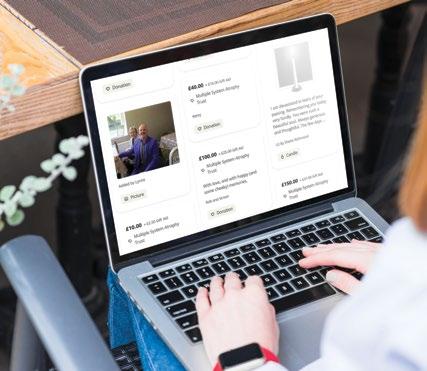
Our Tribute pages are hosted through our partner, Much Loved. Visitors can leave messages of hope and commemoration, alongside a donation for the MSA Trust, in memory of their loved one. Donations are forwarded directly to the Trust, so there is nothing extra for you to do. Each page has its own unique link that can be shared with family and friends, or included in an Order of Service, to ensure all in-memoriam donations are held and noted in one place. The page is yours, free to keep, for you to find comfort in for as long as you wish
The page is a lasting tribute and an online remembrance space that celebrates the life of your loved one. You can:
Add pictures and music that reflect your loved one’s life
Share stories or memories
Light virtual remembrance candles
Visit and add to the page to mark significant dates
A very dear member of our MSA community, Mark Pepperday, passed away in 2024, and his life was celebrated through an MSA Tribute page.
Over 40 visitors showed their respect through messages, candles and pictures, whilst raising close to £3,000 for the Trust.
Mark’s husband, James, said:
“The comfort it has brought me hearing from other people who loved Mark, and the money raised through the page, was something that helped me get through the worst of it.”
You can open a tribute page for your loved one using the link below or by scanning the QR code above: www.msatrust.muchloved.org
All donations are gratefully received. They will ensure the best possible support for those living with MSA and fund our research work. Thank you in advance if you choose to remember your loved one this way.
Making every penny (or cent) count
The cost of living remains a concern for many people and extra heating costs in winter can bring added pressure. Here, Sam Fitzgerald, one of our Social Welfare Specialists, outlines the financial support that may be available.
Maximising your income
It is important to check that you are getting all the financial support and welfare benefits you are entitled to. Online benefit calculators are a great way to do this. The benefits calculator at www.entitledto.co.uk is for people of any age. If you are of State Pension age, www.gov.uk/pension-creditcalculator can check if you’re eligible for Pension Credit, which can top up your State Pension. This may also open the door to other benefits such as the Warm Home Discount or a free TV licence. If you would prefer to speak to someone, our Social Welfare Specialists are happy to support with a benefits check and can help you to claim entitlements.
Disability benefits
It is likely that most people with MSA will qualify for some financial support based on personal care needs or difficulties with mobility. Disability benefits are not meanstested and the amount you receive will depend upon how MSA affects you individually.
• Personal Independence Payment (Adult Disability Payment in Scotland) – for those under State Pension age. Considers your daily living/personal care needs and any difficulties with mobility. Worth up to £749.80 every 4 weeks.
• Attendance Allowance (Pension Age Disability Payment in Scotland) – for those who have reached State Pension
age. Considers your personal care needs, unfortunately there is no mobility component. Worth up to £441.60 every 4 weeks.
Carer’s Allowance (Carer Support Payment in Scotland)
If the person you are caring for is receiving a disability benefit and you are providing at least 35 hours of care per week, you may be entitled to Carer’s Allowance/Carer Support Payment which is worth £83.30 per week. You can be working and still claim; however, you must be earning £196 per week or less (after tax, National Insurance and any work-related expenses).
If you are a carer and receiving a State Pension of more than £83.30 per week you will not receive Carer’s Allowance/Carer Support Payment. It may still be worth putting in a claim as you may qualify for ‘an underlying entitlement to carers’ benefits’ which can lead to other benefits and support. Independent Age has a helpful factsheet on this topic –www.msamag.link/3MbPlmX
If you are no longer able to work
You may be entitled to New Style Employment & Support Allowance (NS-ESA). NS-ESA is not means-tested. However, you must have paid sufficient National Insurance in the last 2-3 years. Initially you would receive £92.05 per week, but this can increase to £140.55 per week following an assessment. Income from an occupational or private pension can affect the amount of NS-ESA you receive.
If you are on a low income (even if you are working)
You may be eligible for Universal Credit (UC) if you (or your partner) are under State Pension age. UC can include help towards rent, as well as additional money if you are a carer. Working out whether you are entitled to UC and how much you might receive can be difficult, as it is based on your individual circumstances. It is important to seek
specialist advice before claiming UC as even an unsuccessful application may affect other benefits you receive. If you believe you may be entitled to UC, please contact our Social Welfare Specialists for more information.
Reducing your Council Tax
The Council Tax Disabled Band Reduction may reduce your council tax down by one band, making it cheaper every year. To be eligible one of the following must apply:
• Your home has a room other than a bathroom, kitchen or toilet which is used mainly for your needs; or
• Your home has an additional bathroom or kitchen which has been adapted to meet your needs; or
• You have extra space inside your home for the use of a wheelchair.
If any of the criteria above apply to you, contact the council tax team at your local authority.
Welfare benefits in the Republic of Ireland
Due to the differences in the welfare benefits system, we have a dedicated webpage for the Republic of Irelandwww.msamag.link/3LZRWQW.
If you need further information or support with benefit-related issues, please get in touch with us. Our Social Welfare Specialists will be happy to help.
Struggling to pay your energy bills?
It is essential to keep warm. If you are struggling to pay your energy bills, you should contact your energy supplier as soon as possible. Under Ofgem (the energy regulator) rules, energy suppliers must offer a payment plan you can afford. If you have a prepayment meter you can ask for ‘temporary credit’ if you cannot afford to top it up. Some energy suppliers are also offering additional financial support to their customers. Citizens Advice has a helpful list of energy providers currently
ME TO LEARN MORE
SCAN
offering grants to their customers. For more information visit www.msamag.link/4qXhDRa or contact your energy supplier directly. In the Republic of Ireland you can contact Citizens Information for information on help with your energy bills, visit www.msamag.link/4reJvA3 or call their helpline on 0818 07 4000.
It is a good idea to register with your energy supplier’s Priority Services Register, so they can offer support if your supply is interrupted for any reason. Visit www.thepsr.co.uk for more information.
Discretionary Payments
Your local authority may operate a local welfare assistance scheme. These are discretionary payments and will be meanstested.
• If you live in England, contact your local council
• In Scotland, you might be able to get help via the Scottish Welfare Fundwww.msamag.link/4qJZrud
• In Wales, you may get support from the Discretionary Assistance Fund - www.msamag.link/3NIKOsF
• In Northern Ireland, you can apply to the Finance Support Service using their online application - www.msamag.link/4qal3PB
• In Republic of Ireland, you can apply for an Additional Needs Payment online through - www.MyWelfare.ie
Grants
Many charities offer welfare grants, which do not need to be repaid. Grants may have specific eligibility criteria. Turn2Us has a search tool to help you find what is availablewww.grants-search.turn2us.org.uk
Benevolent Funds
Depending on where you work or have worked in the past, you may find additional funding (usually for specific items) through benevolent funds. Benevolent funds are typically linked to professions, trades, unions or the armed forces and there are hundreds across the UK. You can find a useful list of some of the benevolent funds available by visiting www.msamag.link/49LQ5Z4
Debt advice
If you are struggling with debt, it is always best to seek advice at the earliest opportunity. There are a number of organisations offering free help and advice:
• Citizens Advicewww.citizensadvice.org.uk
• National Debtlinewww.nationaldebtline.org
• Step Change Debt Charitywww.stepchange.org
• Advice NI (Northern Ireland)www.adviceni.net
• Money Advice & Budgeting Service (Republic of Ireland) –www.mabs.ie
Food Banks
Food banks can provide a lifeline to anyone struggling to afford essentials. For more information on your local food bank visit www.msamag.link/4a7nVqx.
If you still remain in exceptional hardship, please contact the Trust and we will endeavour to find help for you, either from ourselves or through other support.
All benefit amounts specified are for the year 2025/26. They are likely to increase at the start of the new financial year (6th April 2026).
SCAN ME TO LEARN MORE
Your Stories
My wife and I had heard from fellow birdwatchers that Hungary is a fantastic country to visit to see a variety of European birds. I was initially concerned as to how I might undertake this holiday given my mobility needs. I needn’t have worried as the pre-arranged assisted travel at Gatwick Airport was well organised and efficient. Also, the bird guide we arranged in Hungary took my mobility needs into account, and we were able to do a lot of birding from his vehicle.
We based ourselves in a lovely hotel in the beautiful town of Eger, which is the wine valley growing region, famous for its red wine ‘Bull’s Blood’. We had an accessible ground floor room with plenty of space.
Using Eger as our base, we visited the picturesque areas of the Bukk National Park, Bodrogzug and the Tizza floodplains and the Hortobagyi National Park. Hungary only has a population of 9.5 million, and most of that is in Budapest, so the areas we visited were spacious and full of wildlife and fields of wildflowers abounded. We saw an amazing variety of bird species and varied habitats. Highlights included White Storks with chicks on nests on nearly every lamp-post, telegraph pole and the roofs of every house in every village (a traditional sign of fertility). There were Red Footed Falcons in their hundreds, breeding cheek by jowl with Kestrels and Long Eared Owls. We saw the elusive huge Black Woodpecker which measures between 18 and 22 inches. There were Night Herons, majestic White Tailed Eagles (at least eight seen on our trip along with Imperial Eagles) and we were lucky enough to have a glimpse of a rare Bluethroat, which my wife quickly snapped, and we saw many, many, more birds.
It went so well we are already planning our next birding trip abroad to Serbia next Winter to see over 300 roosting Long Eared Owls!! Can’t wait. Hope you enjoy the photos.
Phil and Diane Scott
SCAN ME TO LEARN MORE
Research Update
MSA Trust Research Webinar
Our recent MSA Trust Community Research Webinar featured two leading MSA Trust funded researchers who shared how brain imaging is advancing the understanding and diagnosis of Multiple System Atrophy.
Dr. Kobylecki, consultant neurologist, Trustee and Chair of the MSA Trust’s Scientific Advisory Panel, opened by highlighting the growing importance of brain imaging in diagnosing MSA. Thanks to updated international guidelines, brain scans are now recognised as a key tool in confirming the condition. This means doctors can be more confident in their diagnoses, especially in the early stages when symptoms overlap with other diseases.
Professor Pavese (Newcastle University) shared how REM Sleep Behaviour Disorder (RBD), where people act out dreams, may signal early Parkinson’s or MSA, possibly appearing years before movement problems begin.
Using advanced imaging techniques, Prof. Pavese’s team found that people with RBD already show changes in specific brain areas, before traditional scans detect anything unusual. These changes include a loss of a pigment called neuromelanin in key brain regions, which may signal early damage. This discovery could pave the way for earlier diagnosis and eventually, earlier treatment.
Professor Hoggard (University of Sheffield) gave an overview of the wide range of imaging methods being used to study MSA in more detail:
PET scans: These show how the brain uses sugar for energy. In MSA, certain brain areas behave differently compared to other similar conditions, helping doctors tell them apart.
NODDI imaging: This technique looks at the brain’s microscopic structure, revealing subtle damage that might not be visible on regular scans.
Magnetisation Transfer Imaging: This focuses on myelin, the protective coating around nerve cells. Damage to myelin is a key feature of MSA, and this method helps track it.
Phosphorus Spectroscopy: Still in early stages, this method looks at how the brain stores and uses energy. Researchers hope it will reveal more about how MSA affects brain function.
These tools are not just for diagnosisthey could also help scientists test new treatments by showing whether a drug is slowing or stopping brain changes.
You can view a recording of the webinar here - www.msamag.link/4qHq8jk
MSA on the world stage
In September two members of the MSA Trust team attended the International Congress of Parkinson’s Disease and Movement Disorders Conference in Hawaii. The conference was attended by 3,750 researchers and clinicians and provided an opportunity to promote the work of the MSA Trust, network with international colleagues and learn about the latest developments in Movement Disorders.
Lots of MSA research was presented at the conference, in poster and talk format and there was an emphasis on future direction of research into MSA. Dr Linda Lei, MSA Research Fellow, remarked that she was very impressed with the ‘volume, breadth and extent of MSA research from across the world’ that was shown in the poster presentations.
MSA Trust Research Grant Call 2025-26
The MSA Trust is the leading UK funder of innovative, ground-breaking research into Multiple System Atrophy. Every two years, we launch the MSA Trust Grant Call, which awards funding for research aligned with our core aims:
1. Identifying the cause of MSA
2. Understanding its clinical progression
3. Building an evidence base to improve clinical care for people living with MSA
For the 2025/26 Grant Call, we were delighted to receive 21 pre-proposals from a diverse range of academic institutions. Of these, ten have been invited to submit full applications for review by our Scientific Advisory Panel. Successful projects are expected to begin in September 2026.
Did You Know?
The majority of our research is made possible thanks to gifts left in Wills. These generous legacies help us fund vital studies that bring us closer to better diagnosis, treatments and one day, a cure for MSA. If you’re considering leaving a gift in your Will, no matter the size, it could make a lasting difference for future generations affected by MSA.
https://msamag.link/3OeeQ7G
What’s happening in MSA research right now?
Alterity’s drug ATH434 – designed to slow down the progression of MSA – is moving into larger clinical trials involving more participants.
Theravance’s CYPRESS study – focussed on treating low blood pressure (orthostatic hypotension), a common symptom of MSA – is expected to share results in 2026.
Lundbeck’s MASCOT trial – another study aiming to slow disease progression – has met its target of recruiting participants and has just closed.
We will bring you updates as soon as they are available via our website and in future editions of MSA Newswww.msatrust.org.uk/cause-and-cure
Emma Rushton and Emma Saunders at the MDS Congress
Fundraising
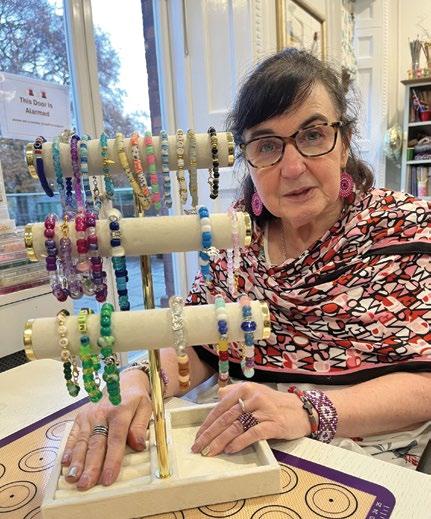
Thank you to Selina, who is living with MSA and has been busy making beautiful handmade bracelets. She has generously donated them to the Trust, for sale on our online shop. You can purchase your own bracelets atwww.msamag.link/3ZrJgWN
“Bracelet making started off as a hobby. I then started making bracelets for my carers, who have been very supportive as well, buying the bracelets for charity so I could donate to the MSA Trust — my charity, which has a special place in my heart because it’s what I have. The bracelet making has taken over my whole life. I enjoy it very much, and it is good for my motor skills and hand coordination, as well as bringing me pleasure at the same time.” - Selina
The Southsea Scullers took on the World’s Toughest Challenge, rowing 3,000 miles across the Atlantic. They rowed in shifts of 2 hours on, 2 hours off for an incredible 35 days. We are so pleased that they made safe harbour and took first place in their category. Pictures to follow in the next MSA News.
Selina
The Southsea Scullers and Bodie the dog
Thank you to everyone at Abbeychart, a coffee and vending supplier, for hosting a mini football tournament in Swindon. The company raised £685 — thank you!
The McGeorge family organised their first Ernie Roseberry Ramble to remember Ernie and to raise awareness of MSA within their local community. They finished the day with an afternoon tea.
“On September 13th we walked in memory of our dad, Ernie Roseberry McGeorge who died unexpectedly a year ago. We walked on his usual favourite woodland route. We hope to make it a yearly event as a time to bring friends and family together and remember him and raise funds for MSA also” Kate McGeorge
“On Saturday 22nd November, Abbeychart took part in a charity football day in support of the MSA Trust. We were delighted to support the charity, which has a personal significance for members of our team. The event was a fantastic opportunity to come together, raise funds and awareness, and support the vital work the Trust does. It was a great example of teamwork, community spirit, and giving back”.
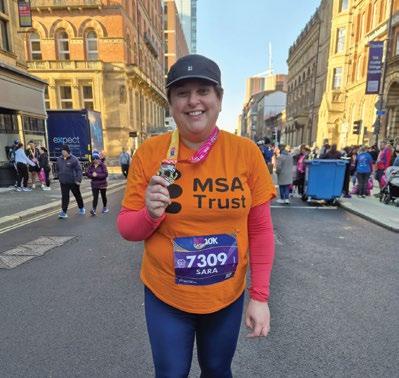
Thank you so much to Sara, who completed her first of three runs in aid of the MSA Trust and has so far raised over £500.
“I got to talk to quite a few people about MSA and the work you all do. It was extremely cold in Leeds on Sunday! I’m relaxing a bit this week, then starting half marathon training.”
Sara Abbeychart
McGeorge family
If stairs at home become a problem
As MSA progresses, changes in balance, coordination and muscle control can make moving safely difficult. Stairs are often one of the biggest challenges. You might be considering adaptations such as a lift and we look at some options below.
Installing a lift may not always be possible, practically or financially. In these cases, ground floor living should also be considered.
Why consider a lift?
As mobility deteriorates, climbing stairs can become unsafe or impossible. A lift can:
• Reduce the risk of falls
• Make essential rooms accessible
• Support safer transfers
• Allow people to remain in their own home for longer
Importantly, lifts can be installed before mobility is severely affected, allowing time to learn how to use them safely.
Types of lifts used in the home
Through-floor lifts
Through-floor lifts travel vertically between floors, through a cut-out in the ceiling and floor. Benefits include:
• Suitable for standing users, wheelchair users, or both
• Can often be installed in relatively small spaces
• Travel is slow and steady, which can be helpful if balance is poor
• Can usually be operated with simple controls, either from inside the lift by the user, or externally by a carer.
These lifts are often recommended by Occupational Therapists (OTs) when stairs become unsafe.
Vertical platform lifts
Similar in function to through-floor lifts, vertical platform lifts are often slightly larger and may be more suitable for full-time wheelchair users. They can:
• Provide good support for mobility aids
• Allow carers to travel with the person with MSA if needed
• Require more space and structural work.
Stair Climbers
Stair climbers are an attendant-operated piece of equipment designed to transport a person up and down a flight of stairs. They are not attached to the staircase and are available either with a seat onto which the user transfers, or with an attachment onto which a wheelchair can be secured.
As they rely on a carer to help, they are more useful as a short-term solution.
Hoists
Ceiling track hoists or floor hoists are sometimes confused with lifts. While hoists do not replace a lift, they can support transfers between a bed, chair and wheelchair and may be used in combination with a lift system.
Why stair lifts can be problematic
for people with MSA
Although stair lifts are widely used in other conditions, there are reasons why they could be unsuitable and unsafe for people with MSA.
1. Balance and postural instability
MSA commonly causes severe balance problems. Stair lifts require the user to sit upright on a narrow seat and maintain stability while moving. Even with a seatbelt, sudden
loss of balance can increase the risk of falls during transfers on and off the lift.
2. Difficult and unsafe transfers
Getting on and off a stair lift requires standing, turning and sitting on a staircase – often without adequate space for carers to assist. As rigidity and slowness increase, these movements can become more difficult. Also, if the person is a wheelchair user they would need two wheelchairs, one at the bottom and one at the top of the stairs.
3. Autonomic symptoms
Many people with MSA experience orthostatic hypotension (a drop in blood pressure when standing or changing position). Transfers at the top or bottom of the stairs can trigger dizziness or fainting, making stair lifts particularly risky.
4. Progression of the condition
Stair lifts are rarely a long-term solution in MSA. As mobility declines, users often become unable to transfer independently, meaning a stair lift quickly becomes unusable. This can result in wasted expense and the need for further adaptations later.
For these reasons, OTs and specialist services usually advise against stair lifts for people with MSA and instead recommend alternatives that offer greater safety and flexibility. However, you should always discuss with your healthcare professional what is right for your needs.
Thinking ahead
While lifts can feel like a big step, they often provide a safe, dignified and longlasting solution. Planning ahead can make a significant difference to safety, comfort and quality of life when living with MSA.
When considering which lift best suits your needs, an assessment with an OT is strongly recommended. Speak to them early and involve family members or carers in discussions.
In the UK, financial support for adaptations may be available through a Disabled Facilities Grant (DFG) from your local authority.
You can find free, impartial advice and information on equipment, including various types of lifts from The Disabled Living Foundation (DLF): https://livingmadeeasy.org.uk
SCAN ME TO LEARN MORE
Path to a Cure
Our Founder, Sarah Matheson, was diagnosed with MSA in 1993. In 1997 the Sarah Matheson Trust became a registered charity. Sarah died in 1999 and in 2010 the charity was renamed the Multiple System Atrophy Trust. Our work continues in her memory.
Sarah’s Wood was created in 2017 to mark 20 years of the MSA Trust. This peaceful woodland in Sherwood Forest stands as a lasting symbol of hope and remembrance for everyone affected by MSA.
In 2019, we added a special new feature to Sarah’s Wood, our Path to a Cure. This path, which leads from the gate to Sarah’s tree, is made of engraved bricks. Each brick carries the name of someone from our community, including people living with MSA, those who have sadly passed away, family members, carers, friends, staff, volunteers, Trustees and MSA researchers.
Anyone impacted by MSA can be a part of this project to build a path of hope.
By completing the form on our website, you can order an engraved brick for yourself or a loved one. We ask for a minimum donation of £60 to cover costs. You can find the form at www.msamag.link/4a9JkPT
“Sarah’s wood is a very special place. We bought a brick in the path for my husband Mark a few years ago, then it took myself and the children a while to visit. We are so glad we did and now look forward to our visit every year. It is a place where we remember him, and plant trees which we hope will grow and make this place even more beautiful. Coming here has helped us very much and become very important to our family. We are truly grateful there is somewhere so beautiful to remember Mark, and feel part of the MSA community”
Debbie Ashthorpe, pictured above with her daughter.
Your brick will be laid in time for our 2026 Summer Social, taking place on Saturday 4th July, from 1:00–3:00 PM. This annual event is a social occasion that brings together our MSA community and staff in a relaxed and supportive setting. You can get your ticket herewww.msamag.link/4rnAjtp
SCAN ME TO LEARN MORE
Managing Postural Hypotension
Postural hypotension is an autonomic symptom that occurs frequently in MSA. Our MSA Nurse Specialist, Samantha Pavey, looks at how some people living with MSA may find abdominal binders helpful to manage this.
Postural hypotension (also called neurogenic orthostatic hypotension, nOH) is a sudden drop of blood pressure when someone changes position. Usually this is from lying to sitting or sitting to standing. If the drop is severe, it can cause people to feel dizzy, nauseous, tired, have blurred vision or to faint. This puts people at risk of falling and potential injury.
We have a factsheet on postural hypotension herewww.msatrust.org.uk/factsheets.
In terms of management, there are several options, including medication if prescribed by your Consultant. Outlined below is information on a non-pharmaceutical option, abdominal binders.
An abdominal binder is an elastic wrap, worn around the midsection, to provide compression. You can discuss an abdominal binder with your Occupational Therapist or your Parkinson’s Nurse Specialist. They can refer you to orthotics to have one fitted. You can also purchase one online and they cost around £20-30. Ideally you should buy two, so one can be washed while you are wearing the other.
If you have a PEG feeding tube or a suprapubic catheter, you can purchase an adapted one with a hole - but they should not be worn directly over either a PEG or catheter.
Most people find their blood pressure drops after meals, so it is a good idea to try to wear one prior to your meal, during your meal and for an hour or so afterwards. You may not wish to wear it for long periods as it needs to be snug to be effective. You shouldn’t wear it anytime you lie down, or at night, as blood pressure rises automatically when we lie down.
You may find it more comfortable to wear a cotton t-shirt next to your skin, under the binder. Be careful to check your skin for any
broken or sore areas or any rucking up of the t-shirt fabric when wearing the binder regularly. The binder needs to be full depth to cover your abdomen (approximately 9 inches) and tight enough to exert a gentle pressure. They are sold in various sizes and most are closed with a Velcro strip, so they are easy to fit. Look for options that are adjustable for a comfortable, customized fit and made of hypoallergenic material to minimise skin irritation.
When a binder might not be appropriate
If you have any of the following please discuss with your GP/Neurologist before trying an abdominal binder:
A history of aortic aneurisms, portal hypertension or deep vein thrombosis; recent thoracic, abdominal or pelvic surgery; symptomatic abdominal or inguinal hernias; severe gastroesophageal reflux; recent fractures or fissures of ribs, thoracic or lumbar spine; medical devices implanted on the abdominal wall or abdomen that would interfere with the binder; known abdominal or pelvic tumors, cysts or enlarged spleen; intolerance to any increase in intraabdominal pressure or varicose veins.
Further information:
www.msamag.link/3ZI3uLM
www.msamag.link/4acTJtV
www.msamag.link/4qmHT6L
SCAN ME TO LEARN MORE
Join Our New Involvement Network
The MSA Trust is a small charity, but we have a wide reach. We work on a lot of projects and we are often approached by other organisations for our help. We also know that our MSA community want to use their experience and insight to make a contribution.
To bring these elements together we are launching a new Involvement Network. We are building a network of volunteers with an understanding of MSA and the MSA Trust. By volunteering you can help us have an even bigger impact.
The Involvement Network Volunteer role is home-based, flexible and varied. You might give your time for a specific project or give small amounts of time on a regular basis. There is no regular time commitment and you can give a few minutes or a few hours, whatever suits you best. The MSA Trust will contact you as and when opportunities arise.
Some of the tasks you might help with include:
Support with survey designs – usually from the MSA Trust or a pharmaceutical company.
Feedback on messaging e.g. certain wording on our website or social media platforms.
Design decisions for MSA News or other information materials.
Checking our information resources are accessible.
Being a member of a steering group for a particular project.
Feedback on research priorities. Input into projects around our services.
Volunteers need to have lived experience of MSA. You can be someone with a diagnosis of MSA, a carer or family member. You don’t need any special skills, just basic reading and writing ability and access to email.
If you’ve got a positive attitude, an email account and a willingness to give your time and opinion, then we’d love to hear from you!
Request a role description to see if it’s right for you
If accepted onto the Involvement Network, you will receive emails about opportunities to get involved
We’ll send all the information you need and you take it from there Complete a
Supporting and Helping Each Other
Thoughts and tips from our MSA Support Groups and online communities
We’re delighted to share that our online Support Group host, James, will once again be joined by staff member Nicole following her return from maternity leave.
“I’m so happy to be back and spending time with our wonderful MSA community. Connecting with people through our Support Groups is one of the highlights of my week, and I feel very lucky to be doing this again.”
Both Nicole and James will continue to host Support Groups along with our MSA Health Care Specialists and Social Welfare Specialists. As always, if you have any questions about our Support Groups or need help finding information, please visit our website www.msamag.link/49ZTJgQ or give us a call — we’re always happy to help.
or mobility are an issue. They can also be a wonderful way to connect across generations, whether playing with grandchildren, family members or friends.
“I’m so happy to be back and spending time with our wonderful MSA community. Connecting with people through our Support Groups is one of the highlights of my week, and I feel very lucky to be doing this again.”
People living with MSA can sometimes find that mainstream consoles and games are difficult to use, but there is support available. In the UK, the charity SpecialEffect works to help people with physical disabilities enjoy video games through adapted equipment and expert advice. It is worth visiting their website and getting in touch to see what support is available www.specialeffect.org.uk.
The charity AbleGamers (www.ablegamers.org) also does excellent work in this area, providing guidance and resources around accessible gaming.
Rediscovering enjoyment in familiar interests, or finding new ones, can have a real and positive impact on mental wellbeing. When MSA changes what you are able to do, adapting hobbies you love, or approaching them in a different way, can feel challenging. Letting go of how things used to be done isn’t easy, but it can open the door to new possibilities.
One member of our HealthUnlocked community recently shared that they were thinking about expanding their interests by trying a completely new hobby, a reminder that curiosity and enjoyment don’t disappear with diagnosis.
While video games may not be everyone’s cup of tea, for some people they can offer a rewarding and accessible way to have fun and spend time with others, even when fatigue
If you’re unsure where to begin, the website Can I Play That? (www.caniplaythat.com) reviews the accessibility of games and can help you decide which ones may work best for you.
For general support with technology, that is not game specific, the organisation AbilityNet are committed to making a digital world that is accessible to all. Contact them on their website at www.abilitynet.org.uk
If this is something that interests you, reaching out for help can be a great first step — and you might discover a new way to relax, connect, and enjoy time doing something just for you.
SCAN ME TO LEARN MORE
IN MEMORY
Our tribute to those loved ones recently lost to MSA.
John O’Regan
Frank Howie
Lorraine Webster
Ian Stokes
Robert Braybrook
Guy Churchill
Susan Tawn
Wayne Thomas
Eiona Roberts
David Wigley
Clive Brackley
Julie Woods
Sandra Maberly
Sharon Goodall
Shirley Harley
Terence Mailing
Carol-Ann Dickie
David Elsworth
Debra Elliott
Marilyn Lunn
Jill Bailey
Barbara Chappell
James Campbell
Roger Davis
Jim Noble
Barbara Marshall
Tracy Watson
Julia Foley
Mavis Blance
Hayley Tamplin
Phillada Pym
Samuel Brennan
Julian Gray
Ann Earl
Marina Lewycka
Michael Phillips
Gordon Anderson
Ron Peters
Andrew Johnson
Ram Gulrajani
Marco Traynor
Jerry Sullivan
Robin Miles-Holdaway
Ruth Hodge
Marie McGee
Parmjit Singh Garcha
Christopher Cleary
Stuart Chambers
Maureen Curtis
Subramanian Kanaga Sundaram
3,300 Mile Challenge
As part of MSA Awareness Month, we are launching our annual 3,300-mile challenge, walking one mile for each person estimated to be living with MSA in the UK and Ireland. We invite you all to join us in reaching our collective goal of 3,300 miles.
Register online and create your page to get started. You can connect your Strava account or add your miles manually. Then, throughout March, walk or wheel as much as you can to help us reach our total goal of 3,300 miles.
Every step you take makes a difference.
On the 1st March we are holding our first National MSA Coffee Morning. Coffee Mornings will mark the beginning of MSA Awareness Month. www.msamag.link/4asNTWE
National Coffee Morning
Everyone can get involved by organising or taking part in our National Coffee Morning. You can host one anywhere - at home, in a care home, church hall, workplace or any community space.
By coming together over a cuppa, we can raise awareness of MSA and show support for everyone affected. It’s also a great way to share time with family and friends.
We’ve included a Coffee Morning poster with this edition of MSA news. You can display it in your window or on a notice board to spread the word.