The Official Newspaper of the Cooper Yeshiva High School for Boys
Jack Kampf
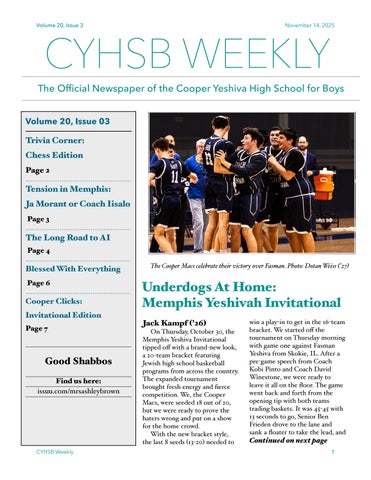
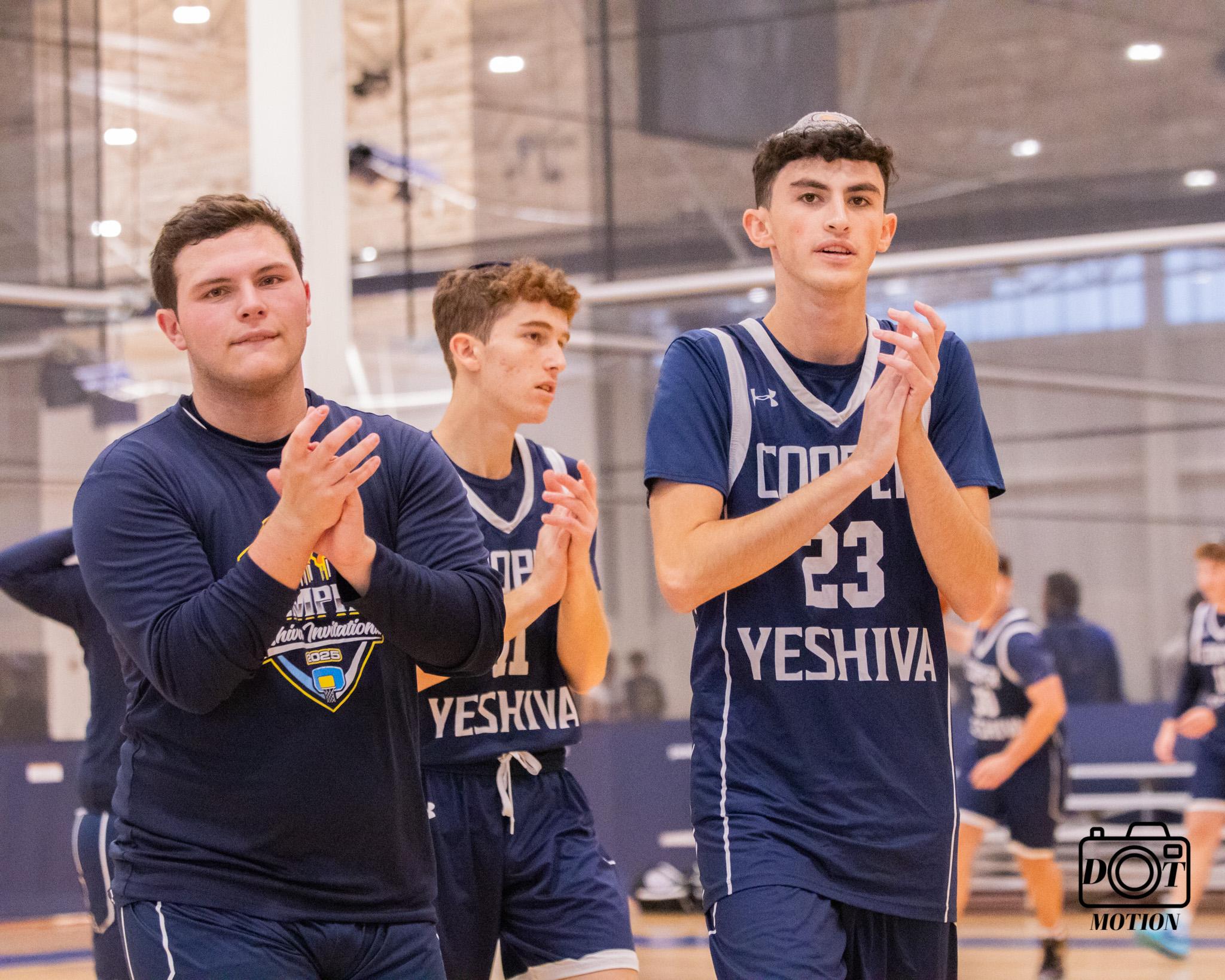
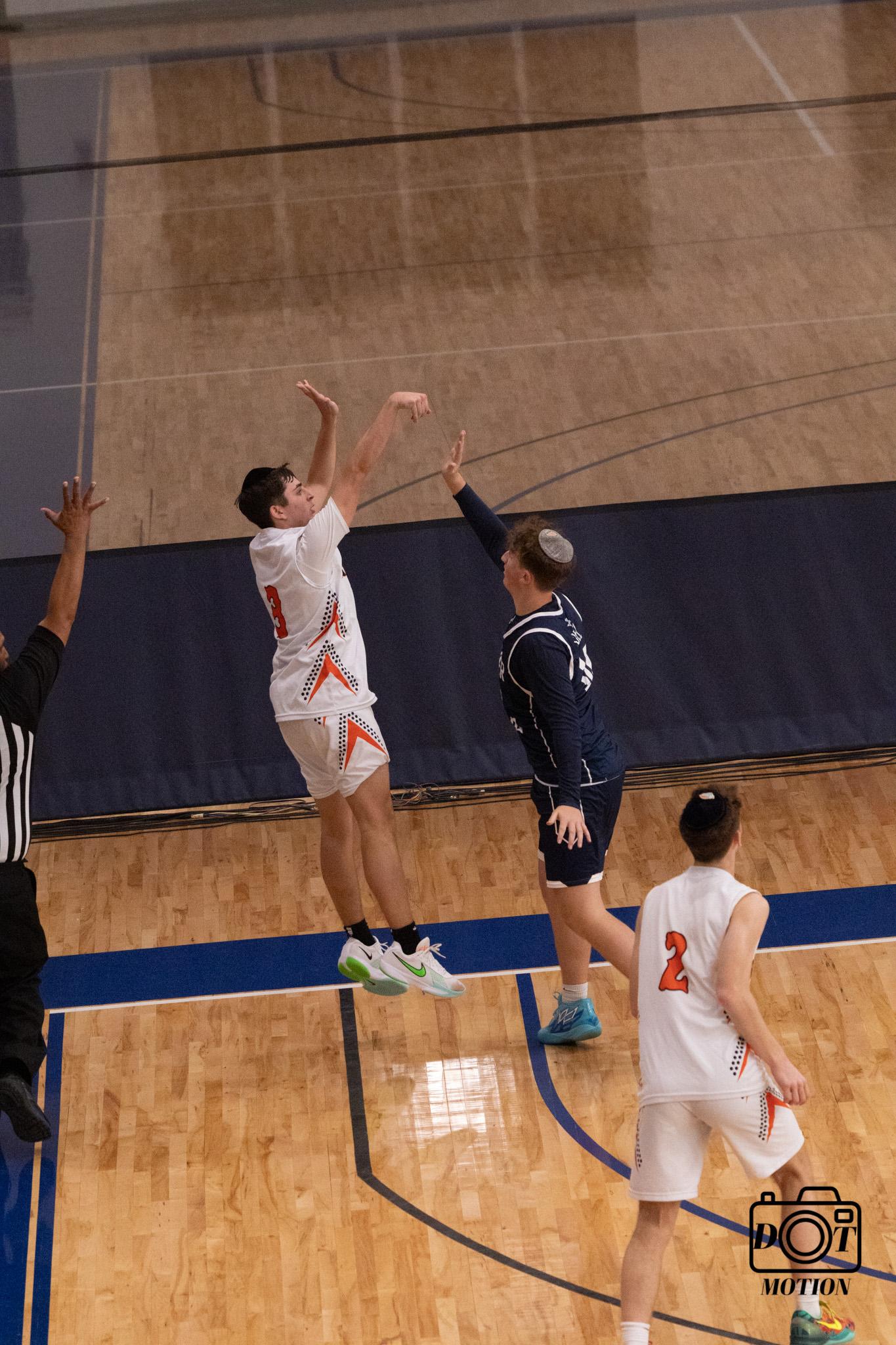
On Thursday, October 30, the Memphis Yeshiva Invitational tipped off with a brand-new look, a 20- team bracket featuring Jewish high school basketball programs from across the country. The expanded tournament brought fresh energy and fierce competition. We, the Cooper Macs, were seeded 18 out of 20, but we were ready to prove the haters wrong and put on a show for the home crowd.
With the new bracket style, the last 8 seeds (13-20) needed to
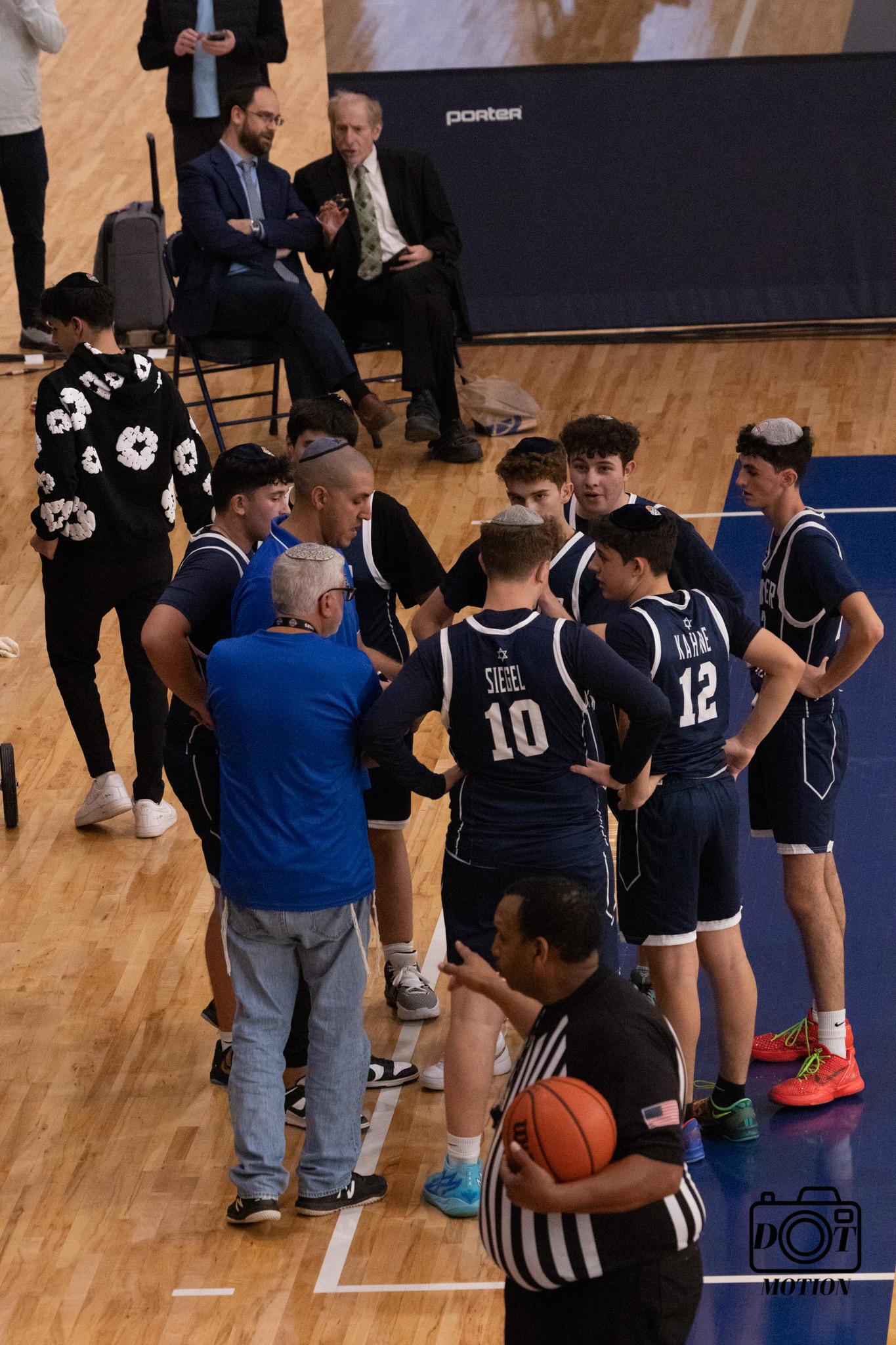
tournament on Thursday morning with game one against Fasman Yeshiva from Skokie, IL. After a pre-game speech from Coach Kobi Pinto and Coach David Winestone, we were ready to leave it all on the floor. The game went back and forth from the opening tip with both teams trading baskets. It was 45-45 with 13 seconds to go, Senior Ben Frieden drove to the lane and sank a floater to take the lead, and
on next page
Continued fom previous page the crowd erupted. In the final seconds, Fasman drove hard to the hoop, but the shot was blocked, and the Macs held on to take game one in thrilling fashion, thanks to Ben Frieden, game winner. Since the Macs won their play-in, they advanced to the 16- team bracket, where they faced the tough No. 2seeded Berman Cougars, led by senior stars Alex August and Gabriel Margulies, later that same day. The Macs carried their firstgame momentum into the opening half, making the Cougars work for every point. Berman eventually pulled away, ending the Macs’ hopes of the Tier 1 championship.
After enjoying a Thursday night banquet at Baron Hirsch with great food, fun vibes, and giveaways of jerseys and shoes, the Macs had to lock in for Friday’s games. The Macs had to face 2 hard teams on Friday. Starting off with the newly built Ohr Hatorah Thunder, led by senior guards Toby Levy and Yackov Perez. Again, the Macs fought hard in the first half, but in the second half, Ohr Hatorah chipped away and took game three away from the Macs. In the second game on Friday, we faced the Hebrew Academy of Montreal Heat, led by senior guard Simon Eloul. We started off the game strong, trading buckets with the Heat. In the end, Eloul hit too many 3’s, and game four got away from us.
Going into Shabbos with three straight losses was frustrating, but we reminded ourselves that there were still chances to win Saturday night and Sunday, so it was time to reset, enjoy Shabbos, and come back ready to compete.
Shabbos was incredible. Kabbalat Shabbat was full of energy, with Rabbi Nissan from the Memphis Kollel leading an uplifting davening. Each of us had the opportunity to invite players from other teams to join our Friday night meals, a highlight of the tournament where visiting teams get to experience the warmth of the Memphis community, reconnect with friends, and make new ones. The night continued with an Oneg featuring an amazing magician, Shlomo Levinger, who floored athletes and host families alike with jaw-dropping tricks that left everyone amazed. Shabbos day was just as incredible, with beautiful davening, a great kiddush, and an amazing lunch. One of the highlights of the tournament for me was the speech from Josh Kahane, the head of the tournament, who shared his
After Shabbos, it was game time; the Macs were playing Yeshiva of Greater Washington. The game was neck and neck; the crowd was wild, the bleachers were packed to watch the home team try to pull off their second win. After a long and tiring game, the Macs eventually pulled off the win 65-63, a thriller to the last buzzer. Sunday, the last day of the tournament, the Macs were set to play the Fasman Yeshiva again. This time was different. The Macs were tired after playing 6 games in 4 days. The Fasman Yeshiva was ready for revenge, and they did just that, taking the last game. Overall, the tournament was an unforgettable experience full of competition, camaraderie, and community that left everyone looking forward to next year. I would like to thank Josh and Elana Kahane and the whole Memphis Yeshiva Invitational Staff for all the hard work they do in order to give these athletes a tournament they will never forget.
Tension in Memphis: Ja Morant or Coach Thomas Iisalo
Daniel Kahane (’27)
Coming off a disappointing playoff performance last season, Ja Morant and the Memphis Grizzlies were determined to make a comeback. The team made several roster changes in the offseason, and fans were eager to see Ja return stronger after his injury. In the first game of the season, Ja exploded with a 35 point performance and helped lead the Grizzlies to a big win over the New Orleans Pelicans. His energy was back, the crowd was electric, and everyone thought this season Memphis would reclaim its top seed in the incredibly difficult western conference.
suspended Ja for one game for “conduct detrimental to the team.” Coach Iisalo didn’t tell the reporters a lot other than,
But just a few weeks later, the excitement started to fade as new problems began to unfold. It was between Ja and his new head coach, Tuomas Iisalo. These new problems between them came after a frustrating 117–112 loss to the Los Angeles Lakers. Ja had one of his worst games of his career, shooting just 3-for-14 from the field and 0-for-6 from the
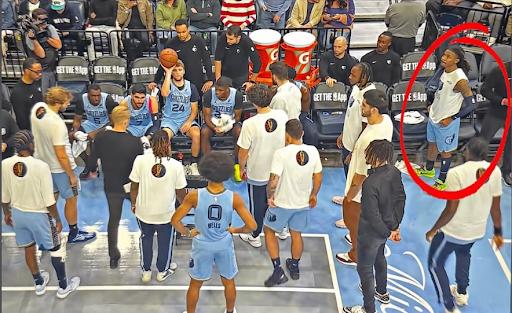
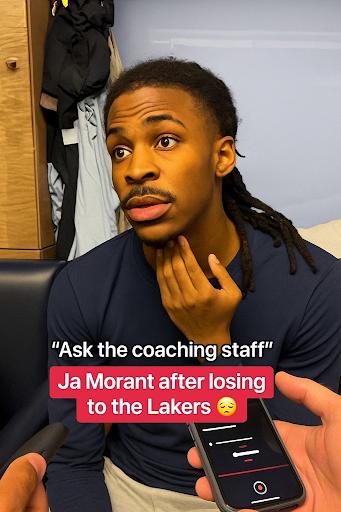
three-point line. After the game, reporters reported that Coach Iisalo confronted Morant in the locker room, challenging his effort and leadership in front of the entire team. That is when Ja became very unhappy. When reporters later questioned Ja about the game, his frustration showed heavily. Instead of taking responsibility for his bad game, he repeatedly answered, “Ask the coaching staff.” Ja felt the coaches were blaming him, and when a reporter asked him about his role on the team, Ja answered, “According to them, probably don’t play me, honestly. That’s basically what the message was after the game.”
“We had a discussion, and we’re all looking to move forward.”
The tension between Ja and Iisalo had increased majorly.
Under the new coaching system, Ja’s playing time had dropped massively and his offensive role had changed, not in a good way. For a player who’s been the face of the franchise for years and his playing time and his role just disappears just doesn't feel right.
What Ja said sped across social media heavily and the next morning, the Grizzlies
After the suspension and some bad games, rumors started coming out about trading Ja. Some inside sources claimed Memphis could consider trading him if the situation didn’t improve but the front office quickly denied that. When Ja returned, his numbers dropped noticeably. The chemistry between him and the coaching staff still did not look like his old self, and the Continued on next page
Under the new coaching system, Ja’s playing time had dropped massively. Source: ESPN
Rewiring Intelligence: Breakthroughs That Built Today’s AI
Omer Zalman (’27)
Artificial Intelligence (AI), in essence, is just a neural network designed to imitate how the brain learns and thinks. These neural networks power everything from voice assistants to language translation to automated driving. But the path to AI was not so simple; it spanned lots of holes, breakthroughs, and rediscoveries that spanned several decades.
The first discussion of a neural network came in the 1958 paper by Frank Rosenblatt titled “The Perceptron”. Source
Continued fom prev. page Grizzlies began sliding in the standings. After a blowout loss to the New York Knicks on November 12, the frustration hit Ja. As Ja was leaving the court, a Knicks fan shouted, “Come to New York!” Without even thinking, Ja smiled and said, “I’m cool.” That simple response went viral not just because it shows how much Ja is committed to the Grizzlies but also there is the old Ja still inside him. Just hearing those words by Ja, “I’m cool.”
I asked Ben Frieden (‘26) how he feels about this and he said, “I think it’s too early to blow up on the team because they’re 11 games into the season, have had a hard schedule so far, and they’re missing 4 key players. Worst
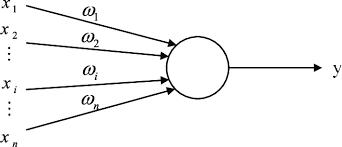
Psycnet.apa.org. In it, he discussed what a neural network was, a machine that could learn from data, and to show this, he built a very simple square classifier using hardware and software: How the model worked was that a 5x5 square would be in the center of the 20x20 image and then the image would be vectorized to a (400,1) vector, and at first the model would make a random guess if it was nothing or a square and then based on the mistake, a formula called the heaviside formula would account for the mistakes
comes to worst they have a bad season and end up with a good pick. This is the draft to have a good pick, and we have 2 first round picks. So don’t give up on the team and make any trades just yet. Coach Iisalo on the other hand needs to go. Never proved himself and it just looks like no one wants to play for him.”
Now, the question everyone’s wondering, What happens next? Will Ja Morant and Coach Iisalo fix their relationship and bring a championship to Memphis? Or will this tension lead to bigger situations like parting Coach Iisalo from the team or trading Ja Morant. I asked Jack Kampf (‘26) his opinion on firing the coach or trading Ja and he said, “If I had the choice I would fire
in the model, AKA loss, and based on the loss the model would fix its weights and biases (the values that the neural network learns), then the values that are multiplied against the pixels, and this would be done around 20 times, this can be shown in the image below where each ω was a weight.
The attention to the paper was massive, and it was the first single-layer neural network ever. However, around a decade later, in 1969, a book released by Minsky and Papert, named Perceptrons, showed that these
Iisalo.” With all of this, I agree with Jack and I say fire Coach Iisalo and bring back the 2021-2022, face of the league, Most Improved player, NBA All-Star starter, JA MORANT. Ja felt the coaches were blaming him. Source: ESPN
types of neural networks could only solve
Continued on next page
Continued from top of pg. 4 linearly separable problems, problems where you can use a line to separate the data points (either 1 or 0). The paper slowed development for around two decades, but later in 1986, a groundbreaking research paper ignited something new: Learning representations by backpropagating errors, Source: Nature.com. They created an algorithm called the backpropagation algorithm, which allowed neural networks to have multiple layers. The way that backpropagation worked was that you would initially start with random weights and biases and then the model would run on a random training example and then based on the output, you would use a "loss function" to find how much your model’s prediction differs from the actual answer. Each new layer extracted new features from the previous one: edges, then shapes, then concepts.
was able to recognize different digits for the postal system, Source: Ieeexplore.ieee.org. However, while the neural networks were promising, the training was not the time it took to train a model took days, even for a tiny one, and there was barely any data for the model to use to learn. Over time, the world caught up, and in the 2000s, new things were added: more datasets were created (taking information from the internet or also known as webscraping), GPUs (computers that calculate
Inputs go through weights to create an output Image by Omer Zalman
Three years later, the first Convolutional neural network (A neural network that uses mathematical convolution so it'seasier for the neural network to learn from images) was created by Yann LeCun, and it
equations in parallelly, great for matrix math used in training). In ILSVRC, an image classification contest, where Alex Krizhevsky’s team used a Convolutional neural network to learn about the features of each image , and it had a 15% error rate compared to every single other competitor in the contest who had rates above 26%, Source: Dl.acm.org. This led to a massive surge in neural networks, from using traditional algorithms to detect images, everyone switched to using neural networks. This
time, it wasn’t just people getting interested in neural networks; the entire industry realized that neural networks were better, and everyone switched. Companies like Google, Facebook, and Microsoft all created machine learning teams, and it was used commercially in ways like image and speech detection (Siri), selfdriving cars, and face recognition. However, for text prediction, training, and models were usually bad because most used recurrent neural networks. In 2017, a paper called Attention is all you need was published, and this rocked the world of AI. It proposed an idea called attention that connects every word in a sequence to every other word by some amount. This removes vanishing gradient or exploding gradient, and lets you parallelize computing, letting you run the model so much more efficiently, and it is better for GPUs, Source: Arxiv.org
Now, in the present, AI is everywhere, from ChatGPT, to electric Teslas. In the future, we will see the rise of artificial general intelligence, where in every domain of research or task, AI will always outperform humans. However, currently most of the models we have just memorize how data moves and how words flow, not why.
Blessed With Everything
Chaggai Yorav (’28)
In this week’s Parsha, Chayei Sarah, the Torah discusses the story of the finding of Isaac’s wife. Right before it begins, the Torah brings a verse which is seemingly unrelated. The Torah says “Now Abraham was old, well advanced in years; and the Lord had blessed Abraham in all things." What is the meaning of the “all things” that God blessed Avraham with?
The Gemara in Baba Metzia addresses this question, and gives a few answers, and each includes a different world view of what is the best blessing you can give. The first opinion says that the blessing was that he had no daughters - not because there is something wrong with having daughters, but because in those times, the family was continuing through the boys, and the girls joined the families of the people they married with. Therefore,if Avraham would have had a daughter, an essential part of his descendant would not have a container, and that is the blessing that God gave him. This opinion’s world view is that once you have a lot of money and you are connected to God, the only thing you are missing is a stable descendant that could become a nation.
Another opinion is that the Blessing was that he did have a daughter (and some even say that her name was “All Things”). This opinion suggests both a similar and different world view at once. Once you have money and closeness to God in this world, the only thing you are missing is good descendants. The thing is, that this opinion also says that since
men and women are both obligatory for the world to continue going, there is also a big property in having daughters, having all the parts of the puzzle coming from you.
Another opinion is that God gave him the knowledge of reading the future in the stars. The rumor that Avraham knows that spread all around, and kings from all over the world came to ask him what was going to happen. According to this opinion, The “everything” that Avraham was blessed with was honor and a name around the whole world.
There is also an opinion that the blessing was that Esav did not rebel and became wicked during Avraham’s lifetime. The worldview behind this is very simple. It doesn’t matter how great your life is, if your descendant does everything you hate and avoid. This feeling would have been so hard for him to hear, that God protected him by taking him earlier.
But there is still a question, why do you mention this right now?
Here is one final answer. The blessing was that Yishmael (who was wicked) repented during Avraham’s lifetime. It will probably have the same world view as the last answer, but it has some proofs. The first is that
gave up on his rstborn rights and gave Isaac honor, because he understood that he is the heir of Avraham. Another proof is that when he dies the Torah says “ףסאי וימע לא", "and he was gathered to his kin” in his death, just like with Avraham, Isaac, Jacob, Aaron, and Moshe.
Now a possible interpretation to the verse’s contexts is that since we know that Yishmael married an Egyptian woman, if he repented, he probably divorced her and married another woman. That’s what made Avraham look a wife for Isaac!
If Yishmael would not have repented, Avraham wouldn’t have sent Eliezer to Charan, and Isaac would have married a different woman, and we all would not be here today!
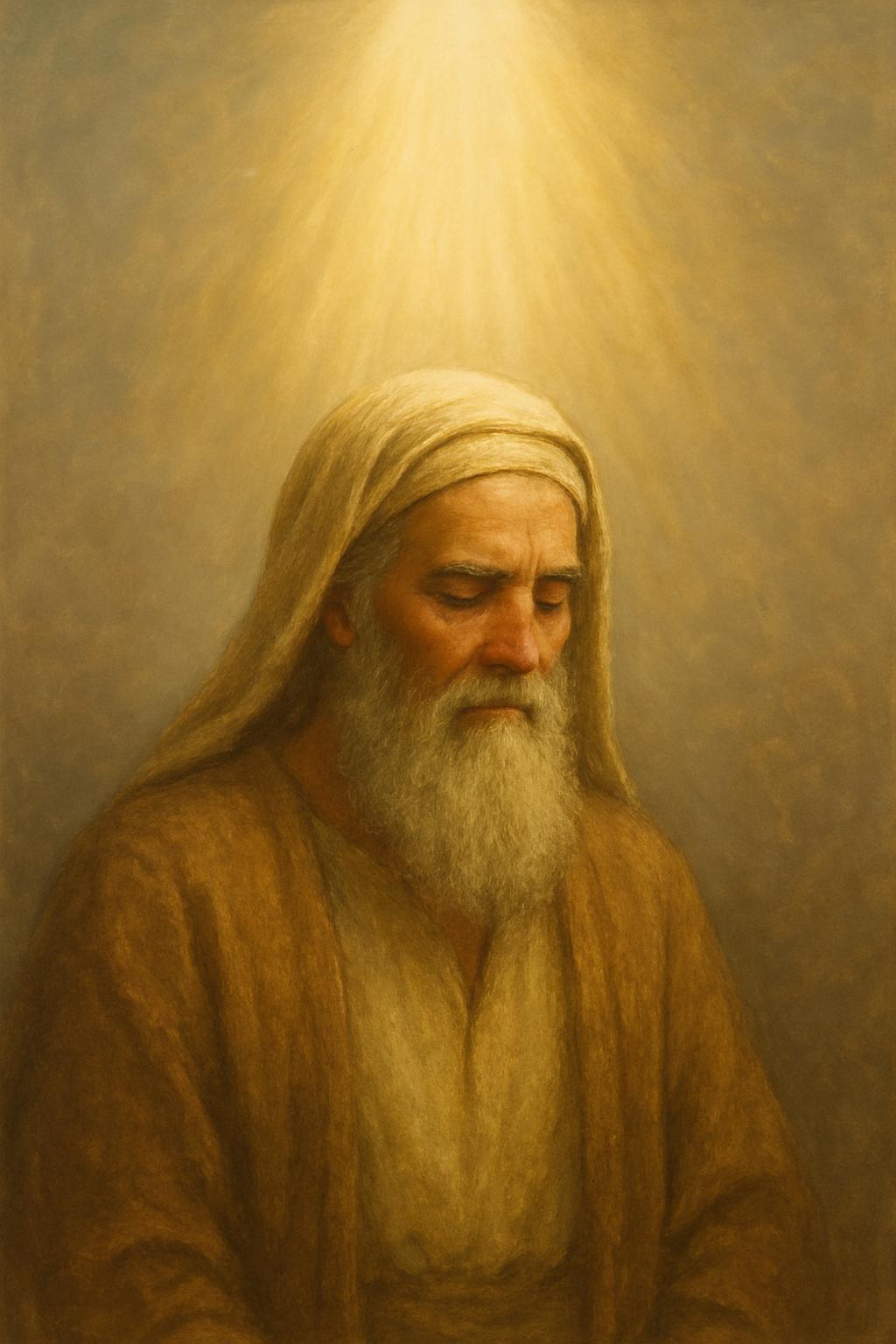
How can Avraham be blessed with everything? AI image by Chagai Yorv
Cooper Clicks
Top Lef: Benny Freiden ('26) does a Michael Jackson impression.
Bottom Lef Jack Kampf ('26) as the
Top Right: Macs clasp their hands in prayer.
Bottom Right: Jonah Siegal ('27) waves to someone of-camera.
Photos: Dotan Weiss ('27)
To sponsor an issue and lend support to the next installment of your favorite Jewish newspaper for only $20, please reach out to Akiva.Levine@mhafyos.org
This week’s issue captures the energy that swept through our building during the Invitational. From the Macs’ grit on the court to the Shabbos warmth shared with visiting teams, it was a weekend that showed the best of our school. You will also find strong coverage throughout the paper, including the latest Grizzlies story, a look at the history of AI, thoughtful Torah insights. Enjoy the issue and have a great Shabbos.