The Leading Protective Coatings Magazine April - June 2026
In this issue: UP FRONT Drones flying high in maritime and aircraft inspection
SPOTLIGHT Advances in corrosion protection for offshore wind IN FOCUS Strategic marine coating decisions investigated
PCE is proud to be a member of the European Federation of Corrosion
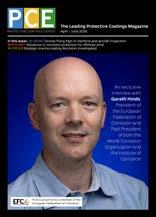
An exclusive interview with Gareth Hinds, President of the European Federation of Corrosion and Past President of both the World Corrosion Organization and the Institute of Corrosion
2 BENEATH THE SURFACE
An interview with Gareth Hinds, President of the European Federation of Corrosion
10 UP FRONT
Drones are taking off in maritime and aircraft coating inspection
22 ANALYSIS
Corroless Eastern shows its extensive experience when working with glassfused-to-steel (GFtS) tank linings, and how Teknos has been working with Finland’s leading powder coating companies
38 SPOTLIGHT
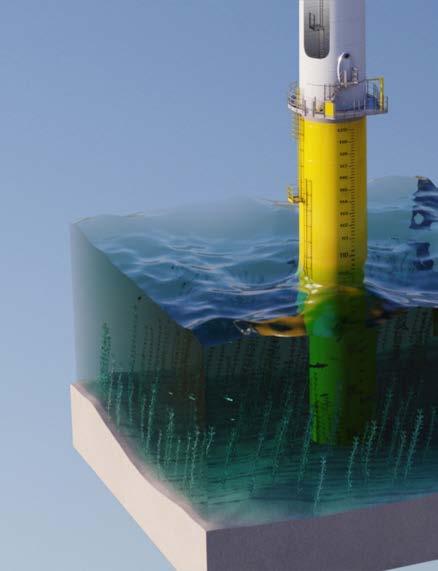
PPG and Jotun look at advances in corrosion protection and the future challenges faced in offshore wind
50 LIFTING THE LID
A call for transparency in hull performance at HullPIC, and Carboline explains why Shore D hardness doesn’t matter for intumescent coating performance
Publisher: Andrew Deere andrew.deere@mpigroup.co.uk
MPI Group
Peel House, Upper South View Farnham, Surrey GU9 7JN, England
Tel: +44 (0) 1252 732220
Email: info@mpigroup.co.uk www.mpigroup.co.uk
MPI Group, as a body, is not responsible for any opinions expressed in PCE by contributors. All rights reserved. No part of this publication may be reproduced, stored in a retrieval system, or transmitted, in any form or by any means, electronic, mechanical, photocopying, recording or otherwise, without prior permission of MPI Group.
Gareth is Senior NPL Fellow in the Electrochemistry Group at the UK’s National Physical Laboratory (NPL).
His primary expertise is in the development of novel insitu diagnostic techniques and standard test methods for assessment of corrosion and material degradation in energy applications. He is a Fellow of the Royal Academy of Engineering and holds Visiting Professorships at University College London, the University of Strathclyde, Harbin Institute of Technology and the Institute of Corrosion Science & Technology, Guangzhou. He is the author of over 200 publications and is currently President of the European Federation of Corrosion (EFC) and Past President of both the World Corrosion Organization and the Institute of Corrosion.
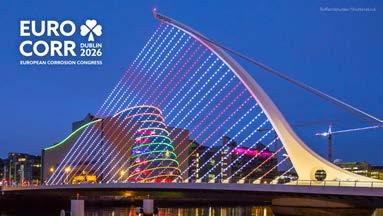
The EUROCORR conference is being held in Gareth Hind’s hometown of Dublin this year
Q. I see you’ve finished your tenure as the President of the World Corrosion Organization. Did that actually come to an end, or was that a decision you made not to be president anymore?
A. I had served my three-year term, so in 2025 I stepped down just in time to take over the EFC Presidency, which will run until the end of this year.
Q. When you took over the Presidency of the EFC, did you have any plans to move things forward in any particular direction?
A. I had three main priorities in my Presidency. The first one was to maintain EUROCORR as the flagship conference of the EFC. It’s what the EFC is most known for. It’s an annual conference that takes place in a different European city every year. It’s bid for by member societies three years in advance, and it’s going to be in Dublin – my hometown – this year.
The second priority was to increase the financial sustainability of the Federation, because we are heavily reliant on the EUROCORR conference. It’s by far the biggest source of income for the EFC.
To do that, there’s obviously two aspects of increasing financial sustainability. The first one is to explore other sources of revenue. We have a Chief Operating Officer, Pascal Collet, and we’re supporting him in opening new revenue streams, mainly in organising other conferences, like the PractiCORR conference, which took place last year and focuses on the more practical aspects of corrosion.
We are also hosting a series of webinars on hot topics. We had one on AI last year and
this year’s one, held on May 12th, was on corrosion in defence systems.
At the same time, we are reducing the costs of our administration. The EFC was established in 1955 with founder member societies from the UK, France and Germany. And it’s had three secretariats ever since, offices in London, Frankfurt and Paris. So, we’re now consolidating that into one office in Paris. The Frankfurt office ceased to exist at the end of last year and the London one will cease to exist at the end of this year.
Everything will be in Paris, which will save us quite a lot of money, simplify the administration and give the members a single point of contact. So, I think that’s all positive.
Then my third priority, and probably the most important one, is to increase the sense of community amongst the EFC. And that is really important, particularly as the EFC grows.
It’s got an increasingly global presence. And the bigger it gets, the more important it is to hold on to that ethos, which it’s had since the start. It’s a way of bringing people together, of sharing knowledge, sharing experience, supporting each other and being a greater collective voice than we can be individually. To do that, we’ve established in-person gettogethers of Member Societies and Affiliate Members at every EUROCORR conference.
As a new Affiliate Member, Protective Coatings Expert has been invited to the next meeting.
As well as the in-person meetings at EUROCORR, we have two online meetings during the year. And then we will be meeting again in-person in Dublin.
I find these meetings very beneficial because they just give a bit of a social touchpoint and an opportunity to discuss things that we don’t have time to discuss at the annual General Assembly. The General Assembly takes place in June, and it’s only two hours long. There’s a lot of things to
vote on and it’s very formal. There’s not much opportunity to have discussions about various issues or share information. So, I think these three other meetings that are more informal and discussion-based and where there’s no rigid agenda, are quite helpful and do help to build that community.
Of course, I’ve had one-to-one conversations with all the Member Society representatives to hear what their thoughts are – to see what they want from the EFC – if there’s anything more we can do. But I think it’s great having these regular, particularly in-person touchpoints where we can share experiences, learn from each other, plan different initiatives and just share information on what events are going on, and make people more aware of the benefits of being in this Federation.
So those were my three main priorities and I’m quite happy with how the progress is going on all three of them.
Q. What about the promotion of these events?
A. The EFC now has quite a large social media presence, as I’m sure you’ve noticed.
So when an individual Member Society or Affiliate Member has an event to publicise, they can apply for an EFC event number and have it promoted on EFC social media channels to boost the numbers attending the event and make people aware of it.
Q. How is EUROCORR performing?
A. The EUROCORR conference is going from strength to strength. We had a 41% increase in abstract submissions from Stavanger to Dublin and a lot of interest, particularly internationally, from people attending. We expect 200 delegates from China because we’ve been actively promoting the EFC in China and in the Middle East and in the Far East in general.
Again, this comes back to boosting the profile of the EUROCORR conference and the EFC, and reaching out more globally to beyond just Europe. So, I think we’re in a good place. And of course, there’s a whole lot of other things going on as well. The EFC is a huge animal. There are 22 Working Parties and
Newton’s apple tree stands in the grounds of NPL and is a descendant of the original apple tree under which Isaac Newton sat while developing his theory of gravity at Woolsthorpe Manor in Lincolnshire
two technical Task Forces. They’re all coming up with events, publishing green books, holding webinars and planning each annual EUROCORR parallel session.
Q. Can companies outside Europe join?
A. Yes – there is no restriction.
Q. Do you know how many Chinese companies are looking at joining?
A. I think that’s probably something that’s going to happen naturally in the next couple of years. One Chinese company has already become a gold sponsor for EUROCORR 2026 in Dublin. So, I wouldn’t be surprised if they join as an Affiliate Member once they’ve put their toe in the water and experienced EUROCORR. We have a lot of strong links with China.
Q. And what about the Middle East?
A. I think we have we have 24 delegates from Saudi Aramco alone coming to EUROCORR in Dublin. We have at least 24 abstracts submitted by Saudi Aramco employees, so it might mean even more people actually attend. Those are just the potential presenters.
We’ve been discussing various joint initiatives with different organisations in the Middle East. It’s an important area from a corrosion perspective, mainly because of the energy sector.
We have a history of collaborating with them within the EFC. Not just the EFC itself, but our member societies, particularly ICorr, which has recently set up branches in the UAE and in Oman.
Together with China and India, the Middle East is an area of focus for many corrosion societies at the moment.
Q. Can you tell us a little about your work history?
A. I’m originally from Dublin but have been living in the UK since 2002, and I’ve only
ever had one employer. I came straight from Trinity College, Dublin, where I spent 10 years as an undergrad, followed by a PhD and then postdoctoral research. I came straight to NPL, and I’ve been working there since 2002. I tend to put down roots and stay. I think there’s a lesson you can take from that – I love working at NPL.
It’s a fantastic place to work because you get that balance between doing exciting, fundamental scientific research, but also working closely with companies and seeing applied research and its impact in the real world on quite a short timescale.
Above: Bushy House, a former Royal hunting lodge, is the original NPL building and still forms part of the NPL site in Teddington Below: And the new NPL building
And it’s a lovely environment in southwest London, just on the edge of a Royal Park, close to Hampton Court Palace.
Q. What about your hobbies?
A. I think I have quite a range of hobbies, but mainly they revolve around sport. I’m a very sport-orientated person.
My main sport I played for years was hockey – that’s field hockey, not ice hockey. And football – and that’s soccer – as well as many other sports. However, now that I’m a bit older, my body won’t really let me play those sports, so I’ve developed a career in refereeing – I’m an international touch rugby referee.
That takes up a lot of my time in the summer. It’s a niche but growing sport, particularly in the UK – a sport that originated in Australia. I’ve refereed at three World Cups and five European Championships.
It’s something I’m very passionate about; not just refereeing, but in developing the next generation of referees – coaching them. During a recent month spent in China, I spent some time coaching their developing
referees because it’s an even more niche sport there.
The other sport, and where they use the word umpire rather than referee, is hockey. I’m a National League hockey umpire, which is what I do in the winter.
Other than that, I love music, so I play the piano and I play quite a few other musical instruments.
Gareth has developed a career in refereeing
Q. Do you have any other interests?
A. I’m the co-owner of a 1980s internet radio station. OK. It’s a very odd one, but when I was a teenager, with some friends, I ran an FM radio station in Dublin. It closed down in the late 1980s.
We ran a mobile disco business for maybe 10 or 15 years in Dublin. Since then, all that vinyl and CDs have just been sitting in my friend’s attic in Dublin. During the pandemic, we were all bored, so we decided to convert all the vinyl and CDs into MP3 format.
We then set up an internet radio station to play that authentic sound online. It’s called Turbo80s.com and it’s growing organically.
Q. Is there anything you would like to add?
A. One of the other great things about NPL is that it allows a fantastic work-life balance, and it gives you the time to do these other things. Like the Presidency of the EFC –
Understanding the problem to find your solution
• Protective Coatings
• Tank Linings
• Waterproofing
• Hygiene Coatings
• Bund & Sump Linings
• Polyurea
• Resin Flooring
NPL is a very generous employer to allow me the time to spend on that because they recognise the benefits to NPL of the network that it provides and the visibility. And the kind of credibility that NPL derives from having that kind of participation in an organisation like the EFC.
I would just like to end by saying that I’m also the Chair of EUROCORR this year. It’s very unusual for the Chair of EUROCORR to also at the same time be the EFC President. There are plenty of people who have done both, but I’m not sure there’s anyone that’s done it at the same time. And that’s just because of the coincidence in the timing of the bidding and me taking on the role of President.
EUROCORR has never been to Ireland before, so I’d love to welcome your readers to my hometown of Dublin and encourage them to register for the conference. I look forward to welcoming them in September. ■
FRONT
INSPECTION DRONES ARE TAKING OFF IN MARITIME
Industry ‘disruptors’ constantly tout new technologies in the hope that they have found the next big thing that will drive real, meaningful change. Drones, it seems, have fallen into the successful category when it comes to inspection technologies in the maritime sector, says Eloise McMinn Mitchell, Vertical Marketing Manager, Flyability.
Inspection drones have evolved rapidly in the past 10 years, growing from mobile camera platforms to critical data-gathering tools with a growing list of applications. These drones offer multiple types of data collection while prioritising safety and efficiency for their users. This article explores how drones are reshaping maritime inspections and how the industry is reacting.
What is a maritime inspection drone?
While the standard drone is typically used for photography, industrial inspection drones are a completely different type of unmanned aerial vehicle or system (UAV/ UAS). They’re designed to gain access to complex or unsafe environments to give inspectors more information than they can conventionally or safely get.
The maritime sector has seen a rise in inspectors using drones as remote inspection technologies for class surveys. Initially, drones could be used for close visual inspections, but new developments, including the integration of ultrasonic thickness gauges, mean drones can now be used to gather more data without needing scaffolding – cutting hours of work and days
in dry dock with faster, safer inspections. Drones are inspecting various types of vessel and their storage facilities, including ballast tanks, oil tanks and cargo holds.
Flyability leads the charge
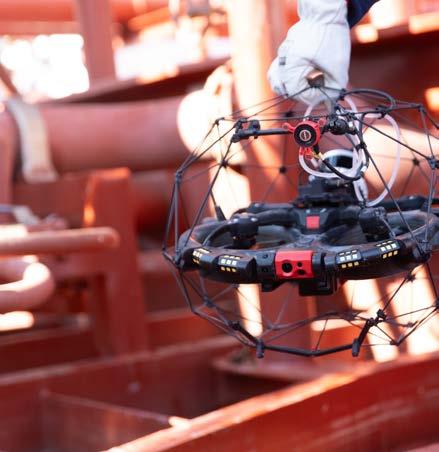
One of the biggest names in maritime inspection drones is Flyability – the Swiss scale-up behind the Elios 3 platform. Backed by over 10 years of R&D, the Elios 3 is Flyability’s third generation of a unique, collision-tolerant drone that uses biomimicry and modularity to adapt to different inspection environments.
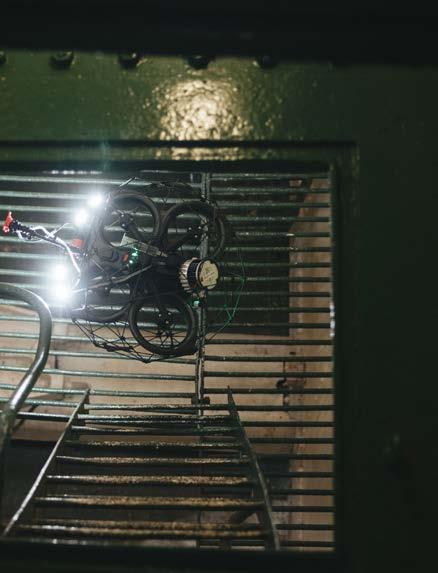
As inspection drones go, the Elios 3 offers a broad range of benefits. It starts with the drone’s design: a flexible, collision-tolerant cage and impact-recovery firmware mean the drone can be flown in confined spaces and recover from making contact with its surroundings without pilot intervention. This, combined with its ability to fly in GPSdenied environments, makes it a leader for safely gaining insights into inaccessible locations – from underground mines to inside wind turbines and now ship hulls and tanks. During a flight, pilots can navigate using the drone’s 4K camera while using the thermal overlay to spot hotspots, and in cases of extreme dust the pilot can swap to the 3D LiDAR view as the drone simultaneously scans and creates a 3D model of its environment that enables navigation when the visual feed is disrupted. The integration with the LiDAR data also enables precise localisation of defects and UT (ultrasonic thickness) measurements within a digital twin of the vessel, allowing for repeated inspections of the same defects and streamlining the generation of reports.
The Elios 3 was designed with long-term adoption in mind. For that reason, the drone features a modular payload bay to support new sensors that Flyability regularly releases, allowing early adopters of the technology to benefit from the latest developments. Now, the Elios 3 can carry
The Elios 3 is portable and light, meaning it can be easily transported
explosive gas sensors, radiation detectors and, most relevant to the maritime sector, an ultrasonic thickness payload created in partnership with UT measurement experts Cygnus Instruments. This payload is what has opened the door to this drone being a viable tool for the maritime sector, offering the ability to collect the data necessary for class surveys without scaffolding or rope access, even inside ship hulls.
Probe types and drones
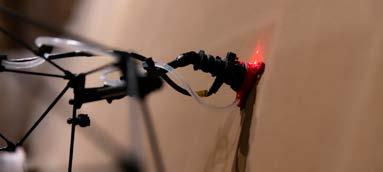
Flyability’s Elios 3 UT is one of the only drones that can be used for non-destructive testing. The UT payload comes with a cleaning module to remove light rust/dust before taking a measurement, as well as a syringe for remotely deploying couplant to ensure smooth sound transmission. The probe head uses magnets to stick to the test surface, with different probe head shapes available according to the size and position of the material.
The partnership between Flyability and Cygnus Instruments has been the key factor behind the success of this payload, as its design was tailored by Flyability’s drone expertise and Cygnus Instruments’ 40-plus years of experience in ultrasonic testing. Together, they created two probes for the drone: a single crystal and a twin crystal, including sub-categories of the twin crystal probes. The twin crystal and single crystal
probes were designed to offer a broad range of measurement capabilities according to the test material, depending on corrosion levels and the presence of coating.
Class society view
Any tool could be used for data collection for a class survey, but the results may not be accepted by the class society. For that reason, Flyability put industry acceptance at the core of its maritime strategy. The company submitted its technology to rigorous testing by multiple class societies, including the American Bureau of Shipping (ABS).
Using a probe head and magnet, the Elios 3 drone attaches to surfaces for UTM
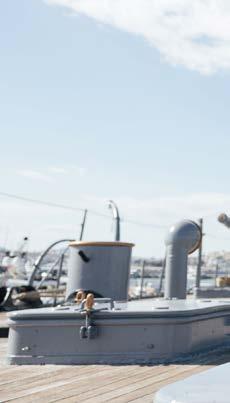
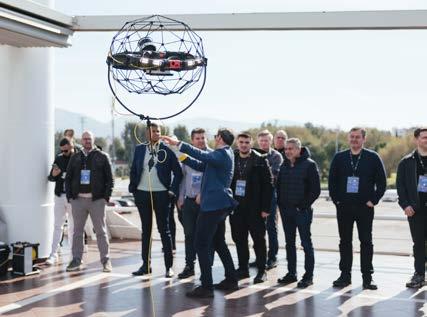
The Elios 3 aboard the Averof in Athens
ABS set the drone to work in multiple environments to test the quality of its results, including ultrasonic thickness measurements in tankers, chemical carriers and bulk carriers. During these assessments, the drone was found to “quickly, safely, and efficiently access spaces that humans can’t reach and therefore, the need for scaffolding, rope access, and rafting is eliminated.” The safety implications are huge, as all traditional means of access carry inherent risks to inspectors, alongside being costly and time-consuming.
Following extensive assessments over several years, ABS updated its Guidance Notes on the Use of Remote Inspection Techniques to include drones – a clear signal of the growing acceptance of UAVs as a method of collecting data for class surveys. In an interview with Flyability, ABS team members said they saw “strong potential for this type of technology and application to become increasingly common. The demonstrated benefits in terms of safety, accessibility, and potential cost and time savings align with the industry’s ongoing efforts to improve efficiency and safety.”
Making maritime inspection drones centre stage
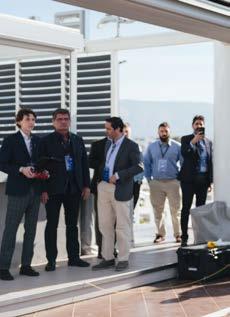
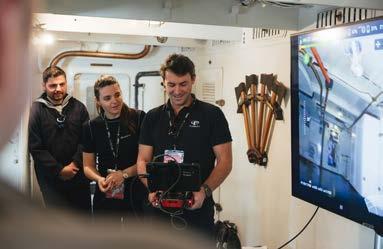
In February 2026, Flyability hosted the Maritime Drone Days in Athens, Greece to put the Elios 3 UT on stage and invite industry professionals, regardless of their familiarity with drone technology, to see what the Elios 3 UT can do and what the future holds. Over two days, more than 140 people gathered to hear from a plethora of guest speakers, including representatives from ABS, Bureau Veritas, Lloyd’s Register, IACS, Cygnus Instruments, TotalEnergies and more. On the second day, thanks to permission from the Hellenic Navy, Flyability hosted training for attendees with the Elios 3 and its UT payload aboard the iconic Georgios Averof, a 100-year-old armoured cruiser that is also a floating naval museum. With exclusive access for the day, event attendees tried their hands at piloting the drone through the space, including with the tethered power unit, which enables unlimited flight time by replacing battery units with a tethered power cable.
Remote drone access offers better safety without compromising data quality
An international event like this, including its high attendance and prestigious guest speakers, signals an industry-wide shift towards drone adoption. Despite the Elios 3’s UT payload being just two years old, it has already been approved by two class societies, and more than eight class societies accept data from inspection companies that use the Elios 3.
Continued advances
The unstoppable growth of drone technology – paired with the rising capabilities of AI and automation features – means that this technology will only get better with time. Alongside reducing safety risks to inspectors from work at height or in confined spaces, case studies show that this technology can save as much as $600,000 in cargo tank inspections. Drone manufacturers are also investing in more
automation capabilities to ensure ease of use for pilots and to reduce the skill barrier for flying drones. Flyability itself launched a Smart Return-to-Home feature that enables the drone to autonomously fly back to the pilot at the end of a mission, as well as to automatically return to the exact same point when resuming an inspection, to ensure total data coverage. More automation features are promised by Flyability, and other drone manufacturers declare the same for their products.
When the choice is between hundreds of work hours on scaffolding or the headache of organising safe rafting inside ship hulls, and a drone that can be deployed in minutes and complete the work in days instead of weeks, it’s not a question of if drones have a place in the maritime sector – but how quickly they’ll become the norm. ■
UP FRONT
PROPELLING AIRCRAFT COATING INSPECTION
AkzoNobel’s new drone inspection tool lifts aircraft paint maintenance to the next level.
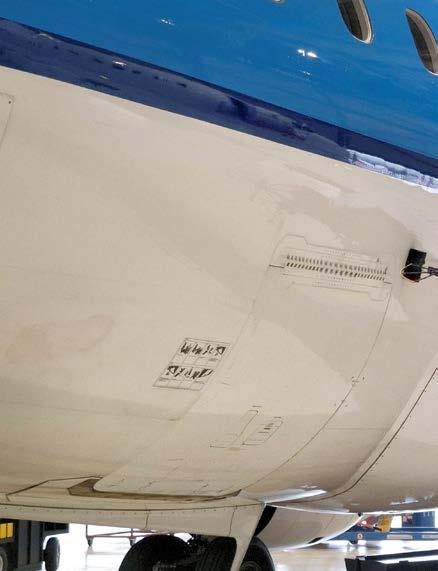
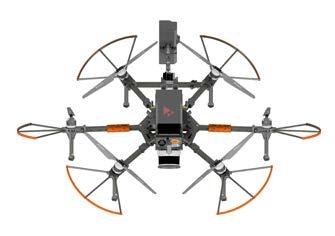
Aircraft paint maintenance has reached new levels of precision and predictability following the latest evolution of a digital management system developed by AkzoNobel’s Aerospace Coatings business. First introduced in 2023, the Aerofleet Coatings Management service uses data-rich insights to help airlines optimise coating maintenance across its fleets. It now features a second drone-based inspection tool – the Iris CMX – which is capable of directly measuring coating performance using a targeted three-in-one contact-based sensor.
Developed in partnership with drone manufacturer Donecle, it captures precise, quantitative data for dry film thickness, colour data and gloss measurements, bringing a new level of accuracy, consistency and repeatability to coating inspections. The existing Iris GVI drone flies in a set grid over a plane’s surface and provides a full-surface visual analysis by taking up to 600 high-definition photos. The coatings management software then analyses the images to flag any issues or wear of the coatings. Employing an advanced two-drone system further boosts Aerofleet’s ability to precisely determine when an aircraft needs to be repainted, rather than simply using time or flight hours.
more objective, consistent and repeatable inspections, while improving the speed and efficiency of the inspection process.”
With the addition of Iris CMX, the Aerofleet system now brings together three core data inputs to provide a comprehensive view of coating performance:
• Flight and environmental data, such as route profiles, UV exposure and humidity
• Full-surface visual analysis from the Iris GVI drone
• Targeted, high-precision measurement from the Iris CMX drone.
Simultaneous inspection
“Aerofleet Coatings Management has always been about giving airlines greater confidence in when and why they maintain or repaint their aircraft,” explains Patrick Bourguignon, Director of AkzoNobel’s Automotive and Specialty Coatings business. “The addition of the Iris CMX brings precise, consistent measurement into the process to strengthen the data that underpins our predictive models. It also allows us to support expert assessment with
The two drones can be operated simultaneously, one on each side of the aircraft, by a trained team, who can complete a full inspection of a narrowbody aircraft in approximately 30 minutes.
Ideally suited for fleets of 100 aircraft or more, the service supports airlines in reducing unnecessary repainting, lowering maintenance costs and increasing aircraft availability. Over time, this contributes to both improved operational efficiency and reduced environmental impact. ■
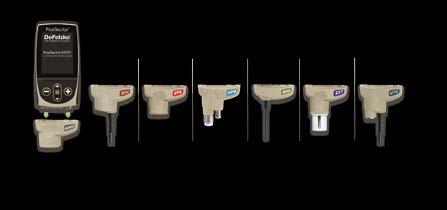
PosiTector ® Inspection
Unrivaled
Coating Thickness Probes
n Ferrous n Non-Ferrous n Combination n Ultrasonic
Surface Profile Probes
n Depth Micrometer n Replica Tape Reader
Environmental Conditions Probes
n Integral n Cabled Magnetic Probe n Anemometer Probe
n 1/2” NPT n Infrared
Hardness Probes
n Shore n Barcol
Salt Contamination Probe
n Bresle Method
Gloss
n
Ultrasonic Wall Thickness Probes
n Corrosion n Multiple Echo Thru-Paint n Precision
n Low Frequency n Xtreme
Customized Inspection Kits...
ANALYSIS
GLASS-FUSEDTO-STEEL EFFLUENT TANK LININGS
A glass-fused-to-steel effluent tank in Buckinghamshire and a pasteuriser tank in Suffolk, UK were experiencing significant leakage due to corrosion. Temporary patch repairs had been attempted previously in both cases, but the clients required a long-term industrial tank lining solution that would ensure full containment and protect the structures against further degradation.
Corroless Eastern has extensive experience working with glassfused-to-steel (GFtS) tank lining, supported by dedicated research into how these tank systems respond to coating technologies.
GFtS and bolted/sectional tanks have been used extensively in the water, wastewater and biogas industries because of their cost effectiveness and speed of erection when compared with other tanks. Most commonly, the steel panels are protected using glass enamel, epoxy or galvanizing. All these treatments have a finite lifespan, which is reached when the surface protection leads to corrosion and in aggressive environments, perforations.
In terms of preparation these tanks are very similar to steel tanks; however, there are some intricacies that must be taken to into account.
GFtS tanks are a challenging tank lining application with complexities that many others overlook, and an area that Corroless Eastern has researched extensively.
Glass fused to steel is marketed as an extremely durable solution; however whilst the finished surface offers good chemical resistance, this does not tell the full story.
As can be seen in the micrograph, the chemical-resistant enamel layer makes up only a very small percentage of the total thickness. Below the dense enamel surface is much more porous matrix.
Once the thin enamel surface layer is broken through mechanical damage, moisture and aggressive chemicals are absorbed into the inherently porous substrate. The presence of moisture against the steel creates a corrosion cell, which if accelerated by aggressive agents such as biogenic sulfuric acid, rapidly leads to perforation.
THE BUCKINGHAMSHIRE SOLUTION
Following inspection, Corroless Eastern proposed two options to the client, who selected the more durable polyurea tank lining system – SPI Corrolastic UB. This system offers exceptional durability for wastewater and effluent tank lining applications.
The first step was the removal of the polyurethane pointing applied during original tank construction. This step is essential to:
1. Expose corroded or at-risk areas where breakdown often occurs beneath the sealant;
2. Eliminate complex edges and voids that would prevent a seamless coating application.
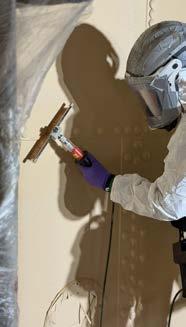
Specialist Japanese leather knives were used for this process.
Cleaning & soluble salt removal
All surfaces were steam-cleaned with an emulsifying degreaser to remove fats, greases and soluble contaminants. Effective soluble salt removal is critical, as remaining salts can lead to osmotic blistering beneath the tank lining.
“Soluble salt tests were carried out as part of our standard QA procedures,” says Oliver Hunt, Company Director, Corroless Eastern, UK.
Surface preparation
Adjacent panels not being coated were temporarily protected with rubber sheeting.
The glass enamel was sweep-blasted to expose clean, fresh surfaces, and all exposed steel was prepared to SA 2.5 abrasive blasting standards in accordance with ISO 8501-1.
Surface roughness was recorded using a profile needle gauge and all surfaces were vacuumed clean, and dust tape tests completed to confirm the effectiveness of the preparation.
Climatic conditions were monitored and recorded before and during the coating application.
Priming & profiling
The prepared surfaces were primed using Corroless Eastern’s specialist Corrolast DSP primer, designed for superior adhesion to glass enamel and steel substrates while providing enhanced anti-corrosive protection.
A quartz broadcast mechanical profile was applied into the wet primer to create an optimal bonding surface for the sprayapplied polyurea lining.
Regular thickness checks were carried out
Significant corrosion and perforations within the gas space
Soluble salt tests were carried out as part of standard QA procedures
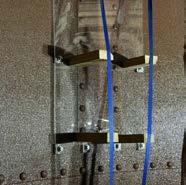
Perforated sections of the tank were bridged using galvanised steel plates bonded with a thixotropic epoxy adhesive
Perforated sections of the tank were bridged using galvanized steel plates bonded with a thixotropic epoxy adhesive.
Polyurea application
Areas not to be coated were masked using specialist cutting tapes, suitable for the rapid gel time of polyurea systems.
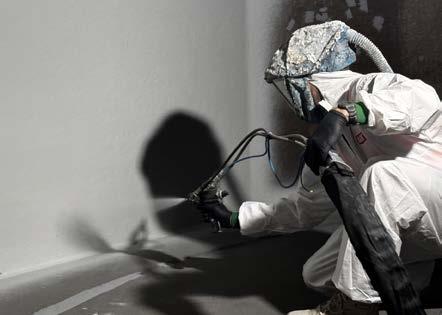
Corroless Eastern’s trailer-mounted unit was mobilised to site, and SPI Corrolastic UB was spray-applied to a nominal thickness of 2mm across all prepared surfaces.
Thickness checks were carried out, and any areas below the required build were immediately rectified – a key advantage of rapid-cure polyurea systems.
Quality assurance & final protection
The cured lining was tested using a DC holiday spark tester to identify and address any pinholes, ensuring full continuity of protection – crucial for tank corrosion repair in aggressive wastewater environments.
All termination points were then sealed using a chemical-resistant polyurethane sealant to ensure a fully encapsulated and durable finish.
SUFFOLK PASTEURISER TANK SOLUTION
This GFtS pasteuriser had been found to be leaking gas into the surrounding environment. Following drain down and internal inspection, the tank was found to be suffering from widespread corrosion, with localised erosion in specific areas caused by the action of the spray bars on the glass enamel surface.
These areas of erosion and perforation had been patched by others using stainless steel plates, but the corrosion across the wider vessel was too extensive for localised repairs to offer a long-term solution. A full industrial tank lining was required.
“Given the aggressive nature of the environment – hydrogen sulfide and biogenic sulfuric acid at elevated operating temperatures – we put forward a choice of chemical-resistant tank lining options suited to the conditions,” says Hunt. The client selected the most durable specification available, reflecting the criticality of the asset: a spray-applied elastomeric tank lining in the form of PPG Aquataflex 506, applied to a nominal thickness of 2mm.
Cleaning & soluble salt removal
Following clean-down by others, the tank internals were washed using potable water and pressure-washing equipment to remove soluble salts, which are almost invariably present in tanks of this type. This stage also revealed the true extent of the corrosion present across the vessel.
Soluble salt levels were then tested and recorded in line with best practice for industrial tank lining work. This is a critical step: residual soluble salts beneath a tank lining draw moisture through the coating, generating fluid-filled osmotic blisters that cause premature lining failure. The risk is compounded in tanks operating at elevated temperatures, where the driving force for moisture migration is significantly higher.
All termination points were sealed using a chemical-resistant polyurethane sealant
Surface preparation
Once cleaning operations met the required standard, the tank internals were prepared using abrasive blasting. Exposed steel was taken to Sa 2.5 in accordance with ISO 8501-1. Where the glass enamel remained intact, it was sweep-blasted to provide a clean, profiled surface for the new GFtS tank lining to bond to. Blast pressure was reduced during work on the glass-fused steel areas to prevent excessive shattering of the enamel.
All blasted surfaces were vacuumed clean prior to coating to ensure optimum adhesion. Temporary dehumidification and heating were installed to maintain the correct climatic conditions for coating application – temperature, dew point and relative humidity were tested and recorded throughout as part of Corroless Eastern’s standard quality assurance process on all tank lining contracts.
Application
All surfaces were primed using Corrolast DSP, a primer specifically developed and tested for adhesion to GFtS tanks. Quartz aggregate was broadcast into the wet primer to create a mechanical profile for the tank lining to key into.
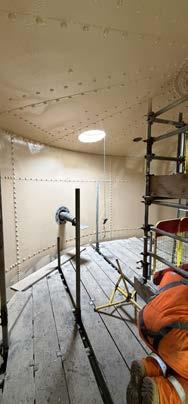
Top to bottom: Following drain down and internal inspection, the tank was found to be suffering from widespread corrosion
Epoxy adhesive fixings were bonded in position to receive stainless steel wear plates following tank lining application
In the areas where stainless steel repair plates had previously been fitted, epoxy adhesive fixings were bonded in position to receive stainless steel wear plates following tank lining application. In abrasion-prone zones such as these, additional mechanical protection was considered essential to maximise the long-term performance of the corrosion-resistant lining.
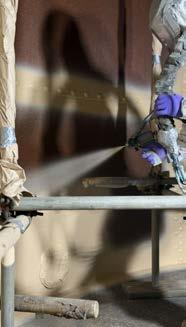
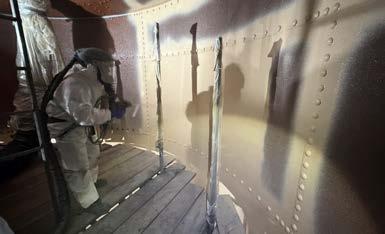
PPG Aquataflex 506 was then sprayapplied to a nominal thickness of 2mm across all areas. This is a 100% solids epoxy/polyurethane/polyurea hybrid tank lining system designed for fast cure and high chemical resistance – well suited to environments containing acids and sulfides at process temperatures.
Testing
Due to the short overcoat window of this material, DC holiday spark testing was conducted within the same shift so that any pinholes identified could be made good within the recoat window. “In chemically aggressive environments such as this, a single pinhole represents a direct path to the substrate and a point of lining failure
PPG Aquataflex 506 was then sprayed to a nominal thickness of 2mm across all areas
– making this a non-negotiable step in our tank lining quality assurance process,” explains Hunt.
The stainless steel wear plates were then fixed to the previously-bonded anchors in the spray bar zones, providing enhanced abrasion resistance in the areas of highest mechanical wear.
Finally, all termination points and edges were sealed using a chemical-resistant jointing compound to prevent any ingress at the lining perimeters. ■
Termination points and edges were sealed using a chemically resistant jointing compound
DC holiday spark testing was conducted to locate any possible pinholes
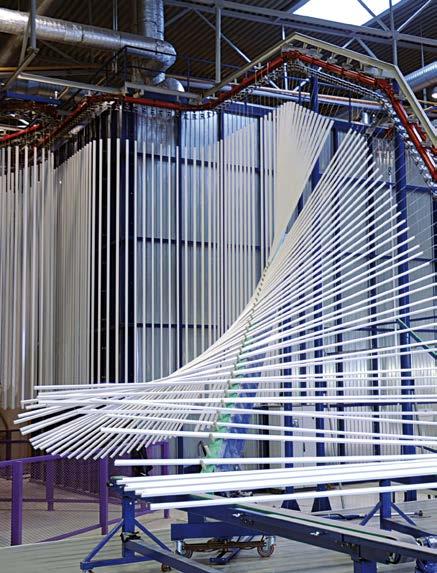
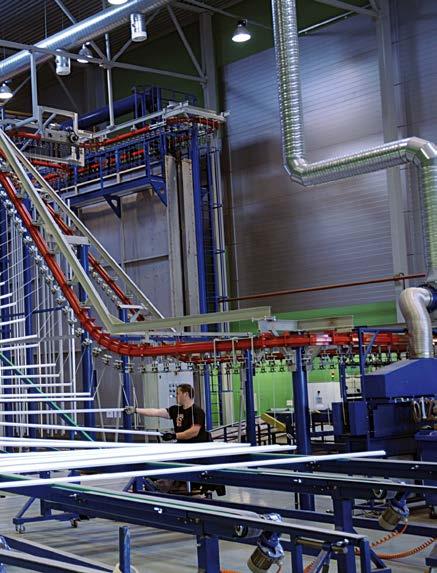
Alu’s four powder coating lines enable aluminium profiles to be painted with thousands of different colours ANALYSIS
ACHIEVING SUCCESS WITH THE INDUSTRY’S BEST
Mäkelä
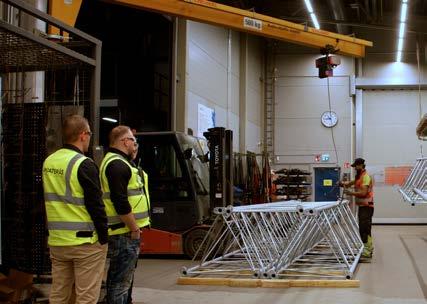
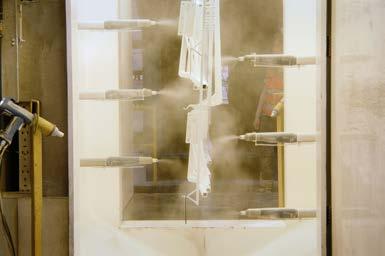
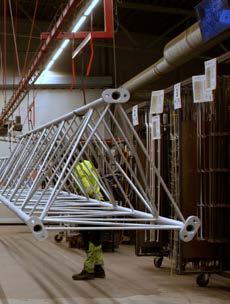
Teknos has been working with Finland’s leading powder coating companies to provide exceptional service combined with fast delivery.
Mäkelä Alu Oy is a Finnish family-owned company best known for manufacturing aluminium profiles
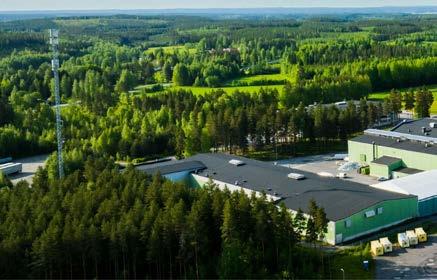
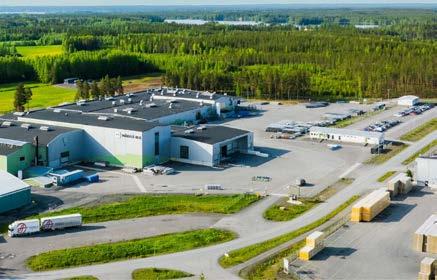
Teknos and Mäkelä Alu have been collaborating for many years. Mäkelä Alu Oy is a Finnish family-owned company best known for manufacturing the lowest-emission aluminium profiles in Europe. With a history spanning over 85 years, the company exports nearly 40% of its production, with key export markets in the Nordics, Baltics and Germany.
Mäkelä Alu’s four powder coating lines enable aluminium profiles to be painted with thousands of different colours, and the company’s state-of-the-art production process can also handle small batches costeffectively. As a sign of quality, Mäkelä Alu’s production is GSB certified.
Teknos and Mäkelä Alu have collaborated since the mid-1990s. At the time, Mäkelä Alu’s main customers were door and window manufacturers, to which the company supplied aluminium profiles.
“Back then, we had zero experience in powder coating, but due to customer demand we needed to produce aluminium profiles in various colours,” recalls Mäkelä Alu Sourcing Director Ari Kytölä. “In 1995, we acquired a Finnish powder coating company that had used Teknos’ products, so it was natural to continue with the same. Even in the very early days, we were able to offer our customers very fast deliveries directly from our warehouse.”
In addition to fast deliveries, the domestic production of coatings was important to Mäkelä Alu – as it still is today. Particularly in the early stages of collaboration, the training offered by Teknos’s experts proved to be highly valuable.
“Looking back at the history of our cooperation, I think the most important aspect of it has been Teknos’ role in enabling our entire powder coating service,” says Kytölä. “Over the years, Teknos has provided
great training services for painting and pretreatment, which was especially important for us in the beginning. Thirty years ago, it was much harder to find information than in today’s Internet-connected world.”
Volume, speed, quality
Mäkelä Alu sets itself apart from competitors not only with its high quality and low emissions, but also with unusually fast delivery times. Teknos’s role as the supplier of powder coatings is a key part of Mäkelä Alu’s own service concept, and the company paints most of its products with Teknos coatings.
“We have been able to respond to customer demand and form a competitive advantage on the market by supplying products extremely fast, also in small batches when needed,” says Mika Korkea-aho, Sales Director, Mäkelä Alu. “Teknos has been an important enabler in this. We use a huge number of different colours, up to 500 or 600 different tones every year. The fast deliveries from Teknos have
helped solve many problems, and if we do run out of a certain colour, we can immediately get more.”
The window manufacturers who Mäkelä Alu supply often work at special sites where the paint originally used is no longer available. “Teknos’ expertise is invaluable in these situations,” says Korkea-aho. “We often need completely new paint mixes, and Teknos can manufacture the correct colour based on a paint sample. Teknos’ laboratories can also identify a vast range of existing tones, which is something that we also need from time to time.”
From basics to specialties
“Mäkelä Alu’s production really is quite exceptional due to the range of special colours they use,” says Teknos Key Account Manager Tero Lahti. “We supply Mäkelä Alu with pretty much every product in our warehouse, from basic coatings to specialist products when needed.”
Thanks to its domestic production and the large warehouse in Rajamäki, Finland, Teknos can supply coatings to customers extremely fast. “Orders placed before 2 pm will be delivered the next business day in Finland, and in special situations, we can even do same-day express deliveries,” says Lahti. “Our flexible production and designated contact persons for customers make sure that the paints are always where they are needed, when they are needed.”
“To us, partnership is not just about supplying paints, but understanding our customers’ needs, future and market well enough that we can develop sustainable solutions, genuine innovations and new services with them,” adds Teknos Commercial Director Mikael Nurminen. “A close collaboration makes it possible to build solutions together to improve quality and support the customer’s long-term goals.”
Looking to the future
The long partnership between Mäkelä Alu and Teknos continues, but the collaboration is also evolving to respond to new demands.
“Production in Finland is a key differentiator for us in this collaboration,” says Korkea-aho. “We can trust that things will be done well, with a Finnish attitude to quality and responsibility. This is something that we value very much when choosing our supplier.”
“The paint industry and technologies are developing constantly, and both Teknos and Mäkelä Alu are moving forward with their own offerings,” continues Sourcing Director Kytölä. “We have full confidence that Teknos will stay abreast of the latest developments and can handle our requests and challenges equally well in the future. If I needed to summarise this partnership, the most important things for us have been the strong technical support, reliability and quality of deliveries, and the long traditions that we share. So, we look forward to continuing along the same lines.”
PRIMARY POWDER SUPPLIER
Linjateräs Oy is Finland’s leading powder coating company, boasting an efficient automated production line that serves over 300 customers both domestically and internationally. Located in Tampere, the company is also Finland’s largest freight powder coating facility, offering a comprehensive range of additional painting-related services.
Teknos has been the primary supplier of the powder coatings used by Linjateräs for several years. This long-standing partnership has enabled an exceptional service concept in the industry, allowing for round-the-clock powder coating with extremely fast delivery times.
“We have deliberately focused our procurement on Teknos, and there are several reasons for this,” says Ari Kesti, Sales Director at Linjateräs Oy. “Our customers need the best technical expertise, the fastest support, and the highest quality products. Thanks to Teknos, we can promise our customers the fastest delivery times in the industry. Together, we have been able to create an unbeatable service concept, which has been the cornerstone of our success.”
Exceptional service
Linjateräs’s operational approach is significantly different from traditional powder coating companies. The company serves its customers in three shifts, guaranteeing the delivery of finished products within three working days. The 200m-long automatic painting line can coat up to 6,000 square metres of finished surface per day. Products are packaged and post-processed according to customer preferences, and additional services such as thread opening and assembly can be provided. A spacious buffer warehouse ensures quick and smooth logistics for incoming and outgoing products in warm indoor conditions.
Linjateräs is also the only powder coating company in Finland to offer laboratory services capable of performing all measurements required by the GSB standard. The laboratory testing simulates the stress that the powder-coated surface will endure in its final application. “This allows us to provide a standard-compliant surface treatment certificate, giving customers assurance that the products are coated with quality and will certainly withstand the warranty period they provide for their products,” explains Kesti.
Express delivery
Linjateräs uses virtually all Teknos powder coating products in its painting line. All shades of the polyester powder coating colour chart are available in stock in semi-gloss, with about half of the shades also available in matt. In addition to more conventional polyester powders, epoxy
powders and other special products are also available. “Less common powders ordered on request are received weekly, so the overall service is really comprehensive,” says Kesti.
“The wide range of powder coating products offered by Teknos works extremely well with Linjateräs’s service concept,” says Teknos Key Account Manager Lahti. “We can guarantee fast deliveries to Linjateräs’s facility in Tampere, and this delivery speed is essential for such a service concept. Good, fast service deliveries are a key to Linjateräs’s operations.”
A shared way of working
The long-term collaboration between Linjateräs and Teknos has been fruitful. The advanced service concept has driven Linjateräs’s business to strong growth, enabling the company to make significant investments in the future.
TEKNOS HAS BEEN OUR MAIN SUPPLIER OF POWDER COATINGS FOR SEVERAL YEARS
“To stay a market leader and a trailblazer, partnerships are crucial,” says Tero Viitanen, CEO of Linjateräs Oy. “We have been very selective about who we choose as partners to help us grow and develop, and that’s why Teknos has been our main supplier of powder coatings for several years. The cooperation has been seamless overall.”
“We have a clear idea of what we think about service business, and our way of working aligns very well with Teknos,” continues Kesti. “Teknos has shown through their actions that they are a partner we can relate to. Everything starts with the needs of the customer, and thanks to Teknos’s technical support, flexibility, and highquality products, we can deliver quality to our customers that they can rely on for a long time into the future.” ■
Teknos has been the primary supplier of the powder coatings used by Linjateräs for several years
ADVANCES IN CORROSION PROTECTION FOR OFFSHORE WIND
As offshore wind energy continues its rapid pace of expansion, the scale and complexity of wind farms are also increasing. The Global Wind Energy Council reports that offshore wind capacity reached more than 92 GW in 2025, led by bigger turbines with taller towers and longer blades. Heavier, taller structures are increasingly being installed in deeper waters, further from shore. While these advancements are critical to scaling offshore wind power, the remote locations and harsh environments introduce new operational challenges for turbine construction and maintenance, says Kahina Ouchaou, Global Product Manager at PPG.
Protective coatings have been used to safeguard offshore assets in the oil and gas industries for decades, but offshore wind installations have several key differences from manned outposts. The costly maintenance procedures and access limitations of offshore wind farms are driving owners and developers to seek coating solutions that have an extended service life of 30 years or more, moving beyond traditional standards for offshore coatings.
In order to support the growth of renewable energy solutions, protective coatings for offshore wind need to reach higher levels of performance while also balancing environmental responsibility. Recent advancements in high-build epoxy coatings are rising to meet these challenges, delivering improved application conditions and enhanced durability to meet evolving industry standards.
Demanding offshore conditions
The trend toward larger turbines installed in isolated open waters directly affects coating specifications. For fixed monopile and jacket structures, foundations and towers constructed onshore must withstand the stresses of transport from port to a wind turbine installation vessel such as a jack-up or crane vessel. Once installed, they face continuous saltwater immersion and abrasion from sand and sediment.
In full immersion zones, coatings must resist prolonged exposure to seawater as well as cathodic protection systems. These electrochemical systems prevent rust from forming on submerged steel structures, but they create higher pH exposure conditions that can contribute to the breakdown of some coatings. Cathodic disbondment can also occur, where the coating begins to detach from the metal substrate in locations
where the coating film has been damaged or is too thin.
The splash zone, also known as the tidal zone, is exposed to the most aggressive conditions. The combination of salt spray, UV exposure and temperature variations creates a highly corrosive environment. It receives the majority of impacts from floating debris, ice and the mooring of maintenance vessels. Marine fouling also tends to attach to wind towers in this zone, and some organisms like barnacles can adhere so strongly that they penetrate the protective coating and cause breaks in its surface.
In addition to these exposures, the continuous rotating movements of wind turbines create vibrations that exert a tremendous amount of flexural stress on the tower. Coatings must have sufficient elasticity to resist cracking under these dynamic loads.
With such demanding service conditions, coating systems must demonstrate longterm performance across all of these metrics, including adhesion, abrasion and impact resistance, flexibility and resistance to cathodic disbondment, to minimise the need for urgent reactive maintenance.
Maintenance constraints
Operational and maintenance (O&M) costs are estimated to account for as much as 30% of the lifecycle costs of an offshore wind installation. Any unplanned downtime caused by maintenance requirements represents a costly loss of energy production time.
While offshore oil and gas platforms have regular inspection and maintenance routines with frequent traffic from helicopters and vessels, offshore wind turbines are unmanned and much more difficult to reach. Wind turbine maintenance requires the use of specialised vessels, trained crews and cooperative weather.
IN ADDITION TO THESE EXPOSURES, THE CONTINUOUS ROTATING MOVEMENTS OF WIND TURBINES CREATE VIBRATIONS THAT EXERT A TREMENDOUS AMOUNT OF FLEXURAL STRESS ON THE TOWER. COATINGS MUST HAVE SUFFICIENT ELASTICITY TO RESIST CRACKING UNDER THESE DYNAMIC LOADS.
As the levelized cost of electricity (LCOE) is increasingly incorporated into the evaluation of renewable energy development, extending asset service life and reducing O&M costs are top priorities for offshore wind. Developers and EPC (engineering, procurement and construction) teams are now targeting longer service lifetimes, placing greater emphasis on coating systems that can deliver long-term performance with minimal maintenance.
Epoxy’s proven track record and next phase
Epoxy resins have a decades-long proven track record of offshore and marine vessel corrosion protection applications. They offer strong adhesion, chemical resistance and mechanical strength characteristics, making them well suited for the challenges of offshore wind assets.
Glassflake reinforcement is a standard method for enhancing the abrasion resistance of high-solids epoxy coatings. The thin glass flakes are used to increase the coating’s water and oxygen barrier and its mechanical strength. Glassflakereinforced coatings are often specified for offshore wind towers due to their high impact- and abrasion resistance.
Historically, the strength of glassflake coatings came with several trade-offs. High glassflake loading increases viscosity, making
ASSET
OWNERS AND OPERATORS ARE
CAUTIOUS
ABOUT
USING
NEW TECHNOLOGIES,
GIVEN
THE HIGH
COST OF
FAILURE
AND
THE DIFFICULTY
OF CONDUCTING REPAIRS OFFSHORE. AS A RESULT, THERE IS OFTEN A PREFERENCE FOR ESTABLISHED SYSTEMS WITH LONG SERVICE HISTORIES, EVEN IF THEY ARE NOT FULLY OPTIMISED FOR THE SPECIFIC DEMANDS OF OFFSHORE WIND.
the coating more difficult to spray and more prone to clogs in spray equipment, as well as requiring the use of reactive diluents. Some coatings had a shorter pot life and lower sag resistance at high film builds.
The next generation of high-build epoxy coatings now deliver corrosion protection and abrasion resistance comparable to glassflake-reinforced coatings, while reducing application difficulties and meeting applicable NORSOK and ISO requirements. These new formulations support increased operational efficiency with strong atomisation characteristics and extended pot life.
Solvent-free glassflake coatings represent another significant step forward. With low VOCs and no thinner required, coatings such as PPG SigmaShield 950 deliver a highly durable, abrasion-resistant finish and help improve air quality and reduce chemical exposure for applicators.
Sustainability and regulatory drivers
Coating selection has become an important factor in helping manufacturers reach sustainability goals and prepare for evolving chemical regulations. The EU’s Chemicals Strategy for Sustainability, part of the European Green Deal, is driving a progressive phase-out of hazardous substances. The ‘one substance, one assessment’ framework,
which took effect this year, aims to simplify and standardise risk assessment for chemicals across industries.
For coating manufacturers and offshore wind owners, this means prioritising coatings that have a lower VOC content, reduced hazardous substances and improved application safety. It also requires consideration of the full lifecycle impact of coating systems from production and application to maintenance and eventual decommissioning.
With the latest glassflake technology designed for better flow characteristics and reduced VOCs, epoxy technologies support these goals, offering long-term corrosion protection while helping to reduce environmental and health impacts.
Legacy Systems
Although offshore wind is a comparatively younger sector of the power industry, the adoption of new coating technologies tends to be slow. Offshore wind specifications are heavily influenced by legacy practices derived from offshore oil and gas, where demonstrated performance in the field is the primary benchmark for material selection.
Asset owners and operators are cautious about using new technologies, given the high cost of failure and the difficulty of conducting repairs offshore. As a result, there is often a preference for established systems with long service histories, even if they are not fully optimised for the specific demands of offshore wind.
To bridge this gap, modern validation techniques are becoming increasingly important. Methods such as Electrochemical Impedance Spectroscopy (EIS) provide accelerated testing capabilities to enable more accurate predictions for the long-term service life expectations of 30 or more years. These tools complement traditional testing standards and help build confidence in next-generation coating systems.
Standards development
For now, standards play a critical role in guiding specification practices and coating selection. Recognised international standards provide essential performance benchmarks, but specifiers should also understand how they continue to evolve to meet the needs of offshore wind.
NORSOK M-501 is the main global standard for protective coatings in offshore environments. Originally developed in the 1990s and last updated in 2022, it defines requirements for coating selection, surface preparation, application procedures and inspection. System 7a addresses carbon and stainless steel in the splash or tidal zone and System 7b addresses submerged carbon and stainless steel, and both are commonly used for the evaluation of offshore wind foundation coatings.
Another international standard, ISO 24656, also published in 2022, addresses coatings used with cathodic protection in offshore wind structures. With five coating categories, this standard classifies epoxy coatings with more than 20% glassflake as the top-performing technology with the slowest breakdown rate. These classifications were developed around offshore oil and gas structures, which differ from offshore wind foundations in important ways, especially concerning dynamic movement and loading characteristics.
In the EU, owners and EPC contracts may require coatings that meet the vgbe/ BAW-Standard VGBE-S-021, which addresses corrosion protection for offshore wind structures. The standard’s fourth edition was released in 2023. Developed in Germany by vgbe energy e.V. and the German Federal Waterways Engineering and Research Institute (BAW; Bundesanstalt für Wasserbau), the standard identifies four corrosion stress zones and covers corrosion protection systems, coating application and cathodic corrosion protection.
More standards are currently in development. The proposal for ISO 25249 was accepted in 2024 and is currently under committee review. This standard will address comprehensive corrosion protection strategies for offshore wind structures, including paint systems, cathodic protection, corrosion environment assessments, maintenance strategies and total service life considerations. This standard is an important step in aligning performance frameworks with the operational realities of offshore wind.
Coating selection
As offshore wind farms are constructed in more remote sites, effective corrosion protection will be essential for maximising the service lives of these massive structures. Coating systems must be able to deliver sustained protection over years of operation. Advances in high-build epoxy coatings help maximise durability with better application efficiency and environmental performance.
During the specification and procurement process, owners and developers should consider suppliers who can provide:
• Advanced validation methods that support long-term performance predictions
• Coating systems optimised for offshore wind-specific conditions
• Solutions that balance durability, application efficiency and sustainability
• Expertise in navigating evolving regulatory and standards landscapes.
The end goal is to reduce total cost of ownership throughout the long service lives of offshore wind turbines by selecting the right corrosion protection system at the start. By aligning specification practices with real-world operating conditions, developers can make more informed decisions that support both asset integrity and lifecycle performance. ■
It began as a solution to one of the energy industry’s most fundamental challenges – corrosion. As the sector undergoes rapid transformation, coating technologies and protection systems developed for offshore environments are now not only a protection of the assets but serve as enablers for offshore wind sustainability ambitions.
OFFSHORE SUCCESS FOR ANOTHER CENTURY
The transfer of experience is becoming increasingly important as offshore projects move further from shore, grow in scale and complexity and place higher demands on durability, lifecycle performance and operational efficiency.
Speaking about Jotun’s heritage and its relevance for today’s energy landscape, KentOve Sylte, Global Category Director, points to a legacy that stretches all the way back to the company’s founding. “Our roots are firmly tied to corrosion protection,” he says. “That was where it all started for Jotun, and it remains the foundation of how we approach complex industrial challenges today.”
Since 1926, Jotun has developed coating solutions designed to protect assets operating in harsh and corrosive environments. Shipping, oil and gas became natural focus areas, particularly as offshore activity expanded in the North Sea from the early 1970s onwards. Being present from the industry’s early days helped build deep technical insight into long-term asset protection, maintenance strategies and lifecycle performance. The focus on R&D was at the core since the beginning.
This expertise has proved highly relevant as offshore wind developed – first nearshore, and later further out at sea.
“Whether it’s oil and gas or offshore wind, the environment is unforgiving,” Sylte observes. “Saltwater, wind, waves and limited access all place extreme demands on materials and protection systems. The fundamentals are very similar – protection has to work for decades, not just years.”
A piece of steel – and a piece of history
One striking illustration of long-term performance comes from a piece of steel originating from the Ekofisk field in the North Sea. The steel was part of an offshore jacket structure installed in the early 1980s and later removed during maintenance work after more than three decades in operation.
“When we examined the steel, we saw just how intact it still was after 35 years offshore,” says Sylte. “It’s a powerful confirmation of what well-designed coating systems can achieve in these environments.”
Extensive testing, including third-party verification by DNV, confirmed that the steel had retained its integrity despite decades of exposure. For Jotun, this kind of real-world evidence reinforces the importance of durability, lifecycle thinking and long-term protection. These are principles that are becoming increasingly critical as offshore wind assets grow in size, complexity and distance from shore.
Balancing cost, performance and sustainability
Today’s offshore energy projects face a dual challenge. On one hand, capital expenditure must be controlled through efficient construction and installation. On the other, operational expenditure needs to be kept as low as possible over the asset’s lifetime.
“Maintenance offshore is expensive, and in some cases almost impossible to do, especially as projects move further out to sea,” says Sylte. “Reducing the need for intervention has a direct impact on operating costs, but also on safety and availability.”
Sustainability adds another layer of complexity. While offshore wind delivers renewable energy, the industry still carries a carbon footprint linked to manufacturing, installation and maintenance activities.
“Everything has an impact,” Sylte adds. “Lowering the need for maintenance and extending service intervals is not just a cost issue – it also helps reduce emissions across the value chain.
“Managing the project in an effective way from project start, with the right partners and right solutions from the beginning, will ensure both economic and environmental
WE
ARE SEEING A CLEAR SHIFT TOWARDS FLOATING STRUCTURES AND MORE ADVANCED DESIGNS – THAT INCREASES TECHNICAL COMPLEXITY AND MAKES ACCESS EVEN MORE CHALLENGING. IN THOSE SCENARIOS, PROTECTION SYSTEMS MUST PERFORM RELIABLY FOR AS LONG AS POSSIBLE, BECAUSE INTERVENTION IS SIMPLY NOT SUSTAINABLE – NOT ECONOMICALLY NOR ENVIRONMENTALLY.
sustainability in both the CAPEX and OPEX phase. And we have numbers to back it up.”
Larger turbines, greater complexity
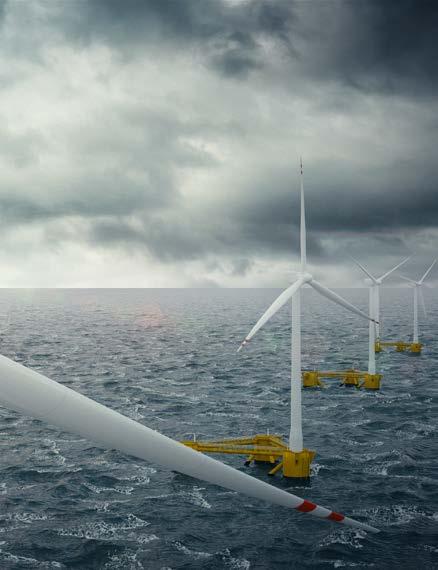
Looking ahead, several trends are shaping how protection strategies are developed, which will only emphasise the importance of margins gains even more. Offshore wind turbines are growing rapidly in scale, with larger blades, taller towers and more complex structural components. At the same time, projects are moving into deeper waters where traditional fixed foundations are no longer sufficient.
“We are seeing a clear shift towards floating structures and more advanced designs,” explains Sylte. “That increases technical complexity and makes access even more challenging. In those scenarios, protection systems must perform reliably for as long as possible, because intervention is simply not sustainable – not economically nor environmentally.”
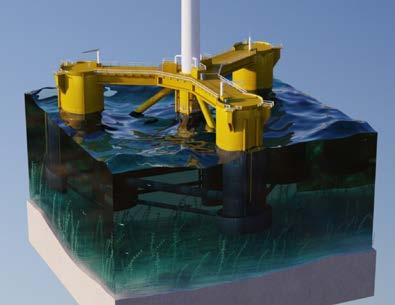
A recent example of the magnitude and complexity of such projects is the EOLMED floating offshore wind project in French Mediterranean waters – a 30 MW pilot farm with floaters designed by BW Ideol and manufactured/assembled by MP Archimed.
Jotun is the coatings partner for the project, which will produce nearly 110 million kWh annually – enough to power 50,000 homes – and the project paves the way for future large-scale offshore wind farms in Europe (see PCE March issue p60).
“The floaters are massive steel structures measuring approximately 45m x 45m x 17m, including the demanding splash zone, which sets high demands on the coating on the external part,” says Xavier Pianezzi, Sales Manager for Energy and Infrastructure at Jotun.
For Jotun, this reinforces the importance of transferring decades of offshore experience into the renewable energy sector – adapting proven principles to new designs, materials and operating conditions.
As the offshore energy landscape evolves, Jotun’s role remains consistent: protecting critical assets so they can operate safely, efficiently and sustainably over time.
“Our experience from oil and gas is highly relevant,” Sylte continues. “Enabling the future of energy doesn’t start from scratch. It builds on knowledge, technologies and lessons learned over many decades – and we see it as our responsibility to help carry that experience forward into new industries.”
From a century of corrosion protection to the future of floating offshore wind, the underlying challenge remains the same: ensuring that structures exposed to the harshest environments can stand the test of time. ■
Jotun is the coatings partner for the EOLMED floating offshore wind project
Elevate your coatings expertise with
SPECIAL OFFER SAVE£78
When you purchase both Fitz’s Atlas of coating surveys and Fitz’s Atlas of coating defects. Only £300 for both (usually £189 each)
Streamline your coating surveys with Fitz’s Atlas of coating surveys - a handy guide containing comprehensive detail and visual assessment for coatings evaluation.
Understand coating defects with Fitz’s Atlas 2, providing a detailed visual guide with a a description of the defect, probable causes, how to prevent it and how to repair it.
To order
A call for transparency in hull performance
Better data, technology and collaboration are steadily improving ship performance and biofouling management, but greater transparency between stakeholders is needed to drive sustainable outcomes across the industry, experts at HullPIC argued. The annual conference attracted a significant number of leading participants from the shipping industry.
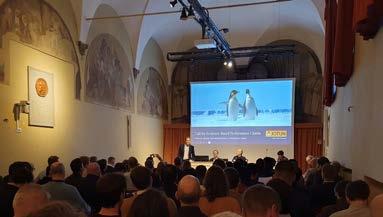
Shipping faces a period of significant uncertainty. Geopolitical instability, shifting policy timelines and delays to the IMO Net-Zero Framework have prompted many operators to look inward, redirecting attention from regulatory compliance towards operational efficiency. Against this backdrop, over 90 participants recently gathered for the 11th HullPIC conference at Certosa di Pontignano, Italy, representing shipping companies, service providers, coating suppliers and technical experts.
The event, co-founded by Jotun and VB Conferences, covered the latest developments in ship performance and biofouling management.
Call for evidence-based performance claims
“Discussing developments in ship performance, technologies and practical solutions is of great interest and value to the industry, and even more so in light of the regulatory and commercial pressures that are impacting shipping trades, fuel prices and the environment,” said Morten Sten Johansen, Jotun’s Global Category Director, Hull Performance. “There is a sense that the industry, while moving in small steps, is steadily converging on better answers to long-standing questions, and that’s thanks in the main to the commitment of the HullPIC community to openly share knowledge, challenge conventional thinking and accelerate progress together.”
Johansen also called for evidence-based performance claims in the marine coatings sector. “Speed loss credibility matters because there is a growing disconnect between reported, claimed figures that introduce operational and regulatory risk. This not only affects individual vessels but may also distort fleet-level decarbonisation strategies”, he warned, stressing the need to use a common assessment methodology such as ISO 19030 applied through independent review.
A consistent message from participants was that operational performance improvements represent some of the most accessible efficiency gains available to the industry – all dependent on reliable data foundation.
Bridging the reality gap
Conference organiser Volker Bertram identified long-term performance monitoring based on high-frequency data as the direction the industry is increasingly moving towards, with hull coatings, cleaning strategies and propulsion-improving devices all benefiting from more rigorous, continuous assessments.
Another speaker at the conference, David Pang from Swire Shipping, showcased a cost-benefit analysis of hull coatings across Swire’s fleet, arguing that decarbonisation efforts must bridge the gap between laboratory performance and operational reality. Several further presentations addressed data-driven optimisation, covering trim, data sampling and a new ISO 25817 initiative on fuel consumption evaluation.
At the same time, Hamed Vaseghnia of Jotun advocated for CFD-based digital frameworks as alternatives to purely empirical methods for vessel rating and performance assessments, while Albis Marine Performance’s Falko Fritz drew on 13 years of high-frequency monitoring data to highlight an 11-12 percentage point gap in hull overconsumption between two operators using identical monitoring systems. “The problem isn’t the tool,” said Fritz, “it’s the combination of commercial incentives, data discipline, and organisational willingness to act.” At roughly $400,000 per percentage point per year across a 25-vessel fleet, the stakes are considerable.
Energy efficiency investment drivers
A survey carried out during the conference demonstrated that fuel costs and ETS ranked first as the drivers of energy efficiency investment, with 56% of responders placing it top. Regulatory compliance came second, charter attractiveness third, and environmental responsibility last, confirming that financial and regulatory pressures remain the primary commercial motivators. On investment posture, close to 47% favoured investing soon to cut costs and 37% preferred acting immediately to stay ahead of regulation. Hull condition and fouling assessment was the most cited case for vessel performance management at 50%, followed by routing and speed optimisation at 28%.
The conference included a panel forum featuring Martin Koepke (Hapag Lloyd), Elgan Moses (TUI Cruises), Falko Fritz (Albis) and Richard Marioth (Idealship), moderated by Johansen and Bertram. Moses made a pointed case for end-user focus: “Captains and chief engineers have no interest in model sophistication or technical jargon. Output must be simple, accessible and actionable.” He proposed reframing ‘insights as a service’ as ‘useful and actionable insights as a service.’ The cruise industry, he noted, already faces data oversaturation with 80,000 data
points per vessel at five-second intervals and tools that, despite considerable investment, are not being used. The human element, the panel agreed, is consistently underestimated.
AI and ML featured
Artificial Intelligence (AI) and machine learning (ML) also featured prominently, with the panel taking a measured view: both are useful but currently overhyped, with physics remaining the necessary foundation. Marioth argued that the ML community should be held to documentation standards, requiring a minimum description of architecture, training data and safeguards so that methods can be independently evaluated. On what comes next, the panel pointed to two priorities: integrating whole-voyage logistics so that vessels are not racing to port queues, and reforming charter party contracts, which Bertram described as copy-andpasted from generations ago and ill-suited to modern performance monitoring. The panel called for standardised charter party templates that reward operational performance rather than legal representation.
“One of the biggest opportunities for further enhancing vessel performance is closing the gap between observation and impact,” said Malte Mittendorf (Mærsk Line). He added: “As an industry, we collect extensive performance data and underwater inspection reports, but they often exist in parallel. By improving data accuracy and directly linking hull condition observations to the vessel’s performance history, we can move from reactive fouling response to predictive- as well as value-based decision-making.”
Echoing the need for a predictive approach, Vivek Nair (Seaspan Ship Management) said: “The broader shipping industry has rapidly embraced condition-based maintenance and predictive models for engine rooms and onboard machinery, yet we continue to treat the hull, the single largest factor in fuel consumption, with archaic, calendar-based or highly reactive strategies. True improvement in ship performance requires us to bring the hull into the predictive era. By leveraging advanced data science to monitor micro-changes in resistance over time, we can pinpoint the exact inflection point where the cost of a proactive intervention is outweighed by the fuel penalty of degradation. It is time the industry manages hull fouling not as an inevitable consequence of time, but as a preventable anomaly managed through rigorous, predictive algorithms.”
Entering an energy awareness era
Carsten Manniche (Navigator Gas) noted that the industry has entered an awareness era. “The next step is to create the necessary energy awareness onboard and onshore just as we have done regarding safety. We are moving into an era that can be difficult to grasp as it involves human beings and behaviours, and not just energy efficiency-improving devices. And do we have the right competencies for this new step?”
Nikos Mitropapas (CMA CGM) stated: “Improving ship performance is not primarily a technical challenge but one of leadership, governance, and culture. Sustainable gains require visible commitment from top management, treating performance and decarbonisation as long-term strategic priorities.” He added: “A holistic efficiency view must link hull, propulsion, machinery, operations and emissions. Also, credible performance depends on high-quality sensors, quantified uncertainty, and transparent reporting. All that said, experimentation and failure must be accepted as essential drivers of learning and technical maturity.”
Gerry Docherty (Ardmore Shipping) commented: “Clearly, progress is being made across the industry in many aspects of hull performance optimisation. At the same time, it has to be acknowledged that there is no ‘one size fits all’ solution, and much can depend on ship type and trading patterns. Being able to collect high-speed performance data is definitely an advantage, but only when this is combined with a proactive approach to coating application, hull performance, hull cleaning and fuel optimisation can the true benefits be realised.”
Collaboration at the core
The willingness of competitors, customers and partners to share knowledge openly, and the sense that the industry is steadily moving in the right direction through better data and deeper insights, was truly demonstrated at HullPIC.
“It is clear from the presentations, case studies and discussions during HullPIC that bridging performance measurement and biofouling management is seen by many as a central challenge the industry must continue to address, and we, the HullPIC community, remain committed to that because we firmly believe the critical conversations will help drive better outcomes across the industry,” concluded Jotun’s Johansen. ■
Fire-resistant coatings in the hot seat
Shore D hardness doesn’t matter for intumescent coating performance, explains Carboline.
A common inclusion in many intumescent coating specifications causes more problems than it solves for construction projects.
Qualifying materials that meet certain Shore D hardness levels – and disqualifying those that do not – doesn’t actually solve anything. It’s a remnant of a best practice that first emerged in a different industry to evaluate a specific coating technology. It doesn’t influence the performance or fitness for service of intumescent materials. But unfortunately, most construction stakeholders don’t know this.
A
very brief history of Shore hardness
The hardness of a material can contribute to its end-use performance, so a wide range of industrial and material science disciplines need a scientifically valid way to measure it.
The American metallurgist Albert Ferdinand Shore’s contribution to the science was essential. His invention in 1915 of the Shore durometer gave us a fundamental tool still widely used today to record the hardness of polymers. It consists of an indenter that is pressed into a material and a spring connected to a gauge. The hardness of a material is based on the depth the indenter travels into the material when a standard load is applied.
Of course, different materials have different properties, so a range of measurement equipment and methods are available. Consider, for example, the hardness of an anvil versus a marshmallow. Shore durometer testing is conducted on 12 scales, with each scale featuring its own combination of indenter dimensions and spring force.
Many other hardness tests and associated equipment exist, and some are quite popular in coatings. Pencil hardness testing (ASTM D3363/ ISO 15184) is very common. Knoop, Vickers and Buchholz tests also have their uses.
The origin of Shore D hardness evaluations for coatings
Why does the hardness of a cured coating matter, you might ask.
The coatings industry uses hardness testing as an easy way to judge whether a coating has cured completely and can be put into service. A series of tests of a newly-applied coating would show progressively higher hardnesses as the coating cured. When the hardness begins to plateau, curing is judged complete.
The offshore oil & gas industry seized upon this evaluation method in the middle and latter parts of the last century as offshore exploration and resource extraction accelerated. As with every other aspect of building, installing and operating offshore infrastructure, protective coatings are selected and applied in a highly regulated, standardised environment.
But why Shore D specifically?
It’s because the Shore D durometer configuration – a 30” (760mm) cone-shaped indenter under 44.45 newtons of force – is a good fit for evaluating hard epoxies, and hard epoxies have historically been the most common protective coatings for offshore oil & gas. They offered the right balance of initial damage resistance in transit from the shop to final installation followed by corrosion protection in service.
It was at this point in history that a reading of 70 on the Shore D hardness scale became meaningful, even if the reason why is elusive. A good guess might be that ‘good’ hard epoxies of the latter 20th century typically topped out at Shore D 70 when fully cured. The repeated observation became the benchmark. And because the benchmark seemed to work, there was no reason to stop using it.
Migration into commercial intumescent specifications
It might at first seem logical why Shore D 70 was increasingly copy-and-pasted into intumescent coating specs starting in the 1990s. Whether you’re shop-applying a coating for steel for a deep-sea oil rig or for a warehouse on land, you need to be confident that it will hold up to the rigours of handling and transportation.
This much is true about construction specifications: if it’s in there, it’s in there for a reason. Doesn’t really matter why. Just go with it.
Does that mean an intumescent material with a value less than Shore D 70 is unfit for service?
Carboline’s Thermo-Lag E100 series coatings, long established in the industry, measure at around Shore
D 40 (a golf ball, at Shore D 50, is only slightly harder). That hasn’t disqualified them, as its decades of proven performance clearly demonstrate. But Shore D 70 requirements have made specifying them or their peer competitors much harder. Specifications are not easy to change.
What’s worse, innovations in intumescent technology have resulted in new materials that would appear even less qualified for service than older ones. Ductile elastomeric-type materials, such as Thermo-Sorb HB, score a 68 on the Shore A scale. That’s about the same as the soles of some shoes.
Why Shore A? Because the Shore A configuration (a 35° cone but with a blunt end instead of a pointed one, and under 8.05 newtons of force) is more appropriate for ductile materials, including elastomeric intumescent coatings.
Rigid specs requiring Shore D 70 would instantly reject Thermo-Sorb HB as unsuitable.
Clearly, we have some problems.
One concerns the validity of assessing ductile elastomeric products with the same scale and equipment that our grandparents used on hard epoxies. These are completely different technologies.
Another is that the variety of fabrication shop best practices related to the handling of coated workpieces are well documented and suitably mitigate damage risk. The hardness of a material is not its only defence against damage.
Next, though high hardness might be nice in some circumstances, it’s almost always accompanied by brittleness, especially at low temperatures. Brittle materials crack more easily, and the rigidity of a hard material means cracks can expand well beyond the immediate impact area. Conversely, a more ductile material like single-component Thermo-Sorb HB cures via solvent evaporation and tolerates severe conditions better. In the event that a ductile product is damaged, the damage is much more localised for simpler, cheaper repairs.
Finally, and most critically, hardness has no influence on an intumescent coating’s fire-resistant performance. If it had, it would be among the strict criteria any intumescent material must meet, as verified through third-party approval bodies, before manufacturers are allowed to sell it.
The bottom line is, if intumescent materials continue to be qualified or disqualified based on this magical figure of Shore D 70, construction teams close themselves off from considering other high-performing products and instead open themselves up to avoidable and costly risks.
What is the way forward?
An intumescent coating’s hardness is useful information, so we don’t think it should be eliminated from builders’ consideration. But we do think the subject needs to be better understood and contextualised.
In our view, that means three things.
One, the construction industry should understand the original reason why Shore D 70 hardness was important. It was a marker of the curing progress of hard epoxies in the offshore oil & gas sector. It is unrelated to a coating’s end-use performance.
Two, the hardnesses of competing coatings, regardless of the scale used to assess them, should never be the primary basis on which one is selected over another. Hardness is no more influential than the other metrics manufacturers publish as decision-making aids. The hardness of a coating could be used as a quality control measurement to determine when the coated
structure is ready to be overcoated, moved or transported. But this should be done using the testing configuration that is appropriate for the specific product selected.
And third, knowledge of the other hardness scales and testing configurations – most importantly Shore A – will result in specifications qualifying a wider range of materials. This gives construction teams more flexibility in selecting products certified to perform while also offering constructability perks that save time and money.
After all, savings is the animating energy in construction today. Builders have never been under more pressure to put as much money back into their customers’ pockets as they can.
Understanding the truth about intumescent coating hardness gives them another way to do it. ■
It came from offshore oil and gas coating application best practices established in the 20th century
IN FOCUS
MAKING STRATEGIC MARINE COATINGS DECISIONS
In shipping, marine coatings are still too often treated only as a maintenance issue, when they should be recognised as a ship performance priority, says Chris Birkert, Global Marine Segment Manager at International, AkzoNobel’s marine coatings brand.
It is easy to overlook seemingly small decisions such as the choice of coatings for a ship, but the reality is that they directly influence competitiveness and performance standards, especially in today’s maritime markets.
Nowhere is this clearer than for two specific ship types: bulk carriers and tankers. They are navigating an increasingly complex market, with stricter environmental regulations and tighter operating margins. In these operating conditions, any opportunities to unlock efficiency and performance gains, particularly without significant upfront cost, must be seized.
Bulker and tanker markets are a good example because existing ships are a sizeable and ageing proportion of the global shipping fleet. Both also play a vital role in the global seaborne transport of essential cargoes, with tankers carrying liquid cargoes including crude and refined oil and chemical products, and bulkers carrying loose dry cargoes such as iron ore, coal, grain, cement and more.
With their respective important roles, bulk carriers account for 42.7% of the global fleet by deadweight tonnage, while oil tankers represent 28.3%, with chemical tankers adding a further 2.2%. At the same time, average vessel age has risen sharply, with bulkers nearing 13 years on average and the tanker fleet now more than 14 years old.
These older ships can continue to earn well, but only if owners manage deterioration, efficiency loss and dry dock investment with greater planning and attention to detail. Hull fouling sits at the centre of this discussion. Even relatively light slime and fouling increases hydrodynamic drag, forcing a vessel to burn more fuel to maintain speed. That immediately raises fuel cost, a major operating expenditure (OPEX). In today’s market, it also increases exposure to costs of regulatory compliance.
Hull fouling remains the most obvious issue that coatings can help to address because it links so many of the shipping industry’s current challenges and regulations. Given the vast array of variables influencing vessel performance, data and digital tools such as our Intertrac Vision forecasting software are increasingly important in making accurate
predictions. As outlined in a recent white paper, when assessing a very large crude oil carrier (VLCC), our simulation was within one per cent of the real operational performance.
Navigating an evolving maritime market
So, what are the most influential variables?
Mechanisms such as the EU Emissions Trading System (EU ETS) and FuelEU Maritime have made fuel inefficiency more expensive. Meanwhile, regulatory measures such as the Energy Efficiency Existing
Ship Index (EEXI) and the Carbon Intensity Indicator (CII), introduced by shipping’s global regulator, the International Maritime Organization (IMO), have made poor performance harder to hide. Finally, evolving hull antifouling regulations have made clean hulls a priority.
Delving into the EU ETS, for bulkers and tankers, using a realistic EU Allowance (EUA) emissions credit price of €80-95 per t/CO2, the regulation can drive annual carbon levies in excess of $2M. While this
is influenced by fuel type, consumption levels, EU exposure and trading patterns, the direction of travel is clear. Inefficient fuel consumption translates directly into significant annual OPEX exposure.
Looking at antifouling, Australia is an obvious starting point. Bulk carriers moving in and out of Australian ports must comply with stringent invasive species controls, making hull condition an issue of compliance as well as efficiency. Similar pressures are emerging elsewhere as regulators and ports continue to focus on minimising the spread of invasive aquatic species. In this environment, a hull coating should also be judged by how effectively it supports real-world cleaning, compliance and operational continuity.
This is just the tip of the iceberg when it comes to the performance challenges facing ships and the shipping industry. With this in mind, how can shipowners ensure they are making strategic coatings decisions?
Making informed coatings decisions
This is where the conversation around coatings deserves to mature. The coatings decision is still sometimes reduced to a debate about upfront cost, or an assumption that the most premium specification is always the right one. In reality, neither position is sophisticated enough for the market that owners now face.
No two vessels trade in the same way. Route, voyage length, speed, idle time, cargo patterns, cleaning opportunities and remaining asset life all shape what ‘good performance’ actually means. A coating strategy that makes sense for a highly utilised tanker on a demanding schedule may not be the best answer for an older bulker trading less predictably. For a shipowner, the objective is not to buy the most expensive solution; it is to balance performance and total cost of ownership based on the vessel’s real operating profile.
Off-hire costs also remain a decisive factor, especially when vessels are earning strongly or operating on tight schedules. Dry dock costs are already significant before a ship even leaves the yard, and unnecessary days in dock quickly increase the bill. In that context, coating choice is about application as much as end performance. Surface preparation requirements, application efficiency and project scope should be considered, so the vessel can return to service without avoidable delay.
For these ageing bulkers and tankers, the cost variables are wider still. The hull of the vessel understandably attracts the most attention because it influences fuel burn so directly, but cargo hold, ballast tank and cargo tank condition are also increasingly important with age. By maintaining these alongside hulls, shipowners can save shipyard and application costs. At a more strategic level, meanwhile, they are maximising asset values, cargo integrity and chartering flexibility.
Performance technology
All these considerations and knock-on effects show that hull coatings belong squarely in shipping’s most important conversations, alongside other commercial and regulatory priorities. That is one reason the industry’s attention has recently turned to initiatives such as RightShip’s Zero Harm Innovation Project, which International recently joined to help sharpen focus on the role of credible performance solutions in safer, cleaner and more efficient operations.
The most useful industry discussion is not about paint as a commodity, but coatings as performance technology. Marine coatings influence fuel consumption, greenhouse gas emissions, maintenance demands, cleaning efficiency and time in dock. They also affect how confidently an owner can operate an ageing asset in a market where every inefficiency is becoming more visible and more expensive.
The European Corrosion Congress 2026 will explore all aspects of corrosion science, technology, and engineering, with a focus on sustainability and green technologies.
EUROCORR 2026 will be held on 6-10 September 2026 in Dublin, Ireland; a cosmopolitan capital with a vibrant, unique and colourful personality. This CPD accredited conference is the flagship event of the international corrosion calendar, attracting upwards of a thousand delegates.
Sponsorship and exhibition opportunities available. Email eurocorr2026@iom3.org for more details.
eurocorr2026.org
Following rehabilitation, the cathodic protection system was able to function normally again
UPDATE PIPELINE COATING REHABILITATION
A pipeline coating rehabilitation project in Mexico used Denso’s ViscoWrap HT and Viscotaq PE Outerwrap to repair aged sections of existing bitumen-and coal tar-coated line pipe. The objective was to rehabilitate difficult legacy coating systems with a solution that could be applied efficiently in the field, bond effectively to the existing coating and provide long-term performance.
Akey challenge was the required SP2 surface preparation, as successful repair over coal-tar coatings under this level of preparation can be difficult to achieve.
ViscoWrap HT was selected for its ability to conform to and integrate with existing coating systems through Van der Waals bonding. This allowed the repair material to tie into the original coating, creating a seamless, monolithic transition between the rehabilitation area and the existing line coating while achieving strong adhesion to the aged coal-tar surface.
The rehabilitation programme began in October 2011 and was carried out over a period of two years. It included 12-inch (0.3m), 16-inch (0.4m), and 24-inch (0.6m) OD product pipelines operating at 86°F to 140°F (30°C-60°C). During the initial two-
year programme, more than 1,000,000 square feet (approximately 100,000 square metres) of the Viscotaq coating system were applied across Mexico in a wide range of field conditions, environments and climates.
The coating repairs significantly improved the overall performance of the pipeline coating system, allowing the existing rectifiers and cathodic protection system to function normally again. Since the original application, the rehabilitation system has remained in service for more than 14 years and is now approaching 15 years of field performance. This long-term service record, combined with documented adhesion and seamless tie-in to the existing coal-tar coating, confirms that ViscoWrap HT and Viscotaq PE Outerwrap are effective long-term solutions for pipeline coating rehabilitation on difficult legacy coating systems. ■
ViscoWrap HT was selected for its ability to conform to and integrate with existing coating systems
The ViscoWrap HT shows strong adhesion to any existing pipeline coatings
CRAFTING PERFORMANCE BEHIND THE SCREENS
Teknos supplies the coatings to protect the facade of some of London’s historic buildings.
In the heart of London’s West End, Piccadilly Circus is one of the most photographed, walked-through and globally recognised intersections in the world. Any construction here is more than just a building project, it’s a statement under permanent public scrutiny.
So when property owner Landsec undertook the redevelopment of several key buildings behind the iconic digital screens, every design detail mattered. The brief was clear: preserve heritage character, meet modern performance standards and ensure everything would endure, in one of the UK’s most punishing urban environments.
The project consisted of 46 bespoke box sash and 36 casement windows. They needed to perform technically, last for decades and keep the iconic aesthetic of Piccadilly Circus.
Restoring character
From the start, architects and joinery specialists faced layers of complexity. To the eye, these were traditional timber windows with slim profiles and classic detailing.
But behind the appearance there were 21st-century performance demands.
First, the glazing had to match modern curtain-wall glass in tone and reflectance. Custom acoustic glass was specified to insulate interiors from the constant hum of buses and foot traffic.
Second, every window had to replicate original detailing exactly, from sash bar profiles to mouldings, even where the originals had been reversed or removed over time. On one elevation alone, there were four different glazing bar layouts across five floors. Many existing windows had been reinstalled backwards years earlier as a quick fix for failing putty. The new designs had to correct that, without losing the appearance that planners expected to see.
Third, each street frontage posed different constraints. Some windows had to align visually with their modern neighbours; others required bespoke sightlines to maintain symmetry. Salvaged timber fragments helped reverse-engineer lost features. New tooling was commissioned to replicate the exact period profiles.
Sample windows were mocked up, handfinished and submitted for client review. Multiple iterations followed before full production began.
A standing ovation
A project like this doesn’t allow for shortcuts. In a location exposed to pollution, moisture, UV light and constant public interaction, the coating system had to be flawless from day one, and last for as long as possible. That is why wooden window
AESTHETIC ALIGNMENT IS ONE THING; PERFORMANCE OVER TIME IS ANOTHER.
manufacturer Mumford & Wood chose Teknos for the project, as a global specialist in wood coatings, trusted on prestigious projects across Europe and beyond. Teknos’s factory-applied systems offer proven performance, even in extreme environments.
The coating system applied was Antistain Aqua 2901 primer with an Aquatop topcoat – a system proven to protect against weathering, UV degradation, mould and fungal attack. Aquatop also boasts enhanced dirt pick-up resistance, due to a very smooth and even surface appearance.
Proven performance
Aesthetic alignment is one thing; performance over time is another.
What reassured the architects, specifiers and team at Mumford & Wood was Teknos’s track record. Windows finished with Teknos coatings have shown outstanding durability in similar UK conditions, with 10-year inspection results still showing no signs of breakdown.
At Piccadilly Circus, where repainting or access work would be expensive and disruptive, long-term stability isn’t just desirable, it’s essential.
The coatings used not only reduce maintenance cycles – they also support sustainability goals; a key factor in the project.
Close collaboration
This project didn’t succeed just because of the products used: it worked because of how partners worked together.
Teknos is not just a coatings supplier. It is a technical partner that supports manufacturers and specifiers from early design through to delivery. In this case, the company’s advice helped optimise coating
selection and ensure that factory processes delivered exactly what was required.
The joinery was manufactured by Mumford & Wood, a long-term customer who has relied on Teknos’s finishes for more than 15 years. That kind of dependability matters when you’re producing bespoke, high-value joinery to tight timelines.
The paint company’s global footprint brings assurance to projects with international visibility. Its products have been used on some of Europe’s most demanding architectural landmarks, from timber-clad libraries to large-scale civic buildings. This global pedigree matters on a site like Piccadilly Circus, where every decision carries long-term implications.
A grandstand finish
Few cities expose building materials to more than central London. Building materials in central London must be tough. The windows installed here will not be sheltered – they face constant movement, pollution, cleaning cycles and changing light. That’s why every element, from profile to paint system, had to do its job without relying on future intervention. ■
In partnership with PCE Magazine
News from the Corrodere Academy
Corrodere Academy provides globally recognised accredited training and qualifications to the protective coatings and corrosion control industry. Their aim is to raise standards throughout the industry worldwide and help students learn, discover and succeed.
Q&A with QCA Assessor: Stuart Fitchet
Following a successful programme of QCA assessments with KAEFER UK & Ireland at Rosyth Dockyard, we spoke with independent assessor Stuart Fitchet about his experience, what stood out, and the wider value of certification across the industrial coatings industry.
The assessments saw 12 successful completions across S1 Spray Painting and A1 Abrasive Blasting, delivered over two days on-site following completion of theoretical exams.
The QCA (Qualified Coatings Applicator) programme is an independent, thirdparty certification scheme that provides
formal recognition of the skills, knowledge and competency of industrial coating applicators. Accredited by Lloyd’s Register, it sets a consistent benchmark for quality and safety across the industry.
Q: FROM YOUR PERSPECTIVE AS ASSESSOR, HOW DID THE QCA ASSESSMENTS AT ROSYTH DOCKYARD GO, AND WHAT STOOD OUT TO YOU?
“It’s great to be involved with an applicator certification programme that I feel very passionate about, especially having started out on the tools of the trade myself many years ago.
Once we got going, the assessments ran quite smoothly and, most importantly, they ran safely. The guys were acutely aware that they were going to be heavily scrutinised throughout their assessments, which naturally adds more pressure to the process. As the assessments got underway and the nerves started to subside, the guys simply knuckled down and got on with demonstrating that they could do the job they have been employed to do for many years.
There were many positive aspects that I could choose from over the two-day period, including the help and assistance I had from the KAEFER site team, but a special mention must go to Shane Davidson for his help alone.
What stood out most for me as the assessor was the level of skill, professionalism and dedication shown by each of the candidates.”
Q: HOW DID YOU FIND THE ORGANISATION AND PROFESSIONALISM OF THE ASSESSMENT PROCESS?
“As this was my first assignment as a QCA Assessor, I found the organisation and professional aspects to be well formulated and structured. Any questions I had for Ella and the team at Corrodere were always answered quickly and efficiently, which was greatly appreciated.
The practical results app is a game changer for conducting assessments in my opinion. Regardless of the type of assessment being conducted, S1, A1, etc., I found that the various stages and tasks were laid out in an easy-to-follow, chronological sequence. The tasks themselves acted as great prompts for the assessor to ask the candidates various task-specific questions in order to ascertain and gauge their understanding of the subject matter that they were being tested on.”
Q: HOW DO YOU SEE QCA CERTIFICATION BENEFITING KAEFER AND THE WIDER INDUSTRY?
“Accredited by Lloyd’s Register, the QCA certification programme provides a flexible pathway for industrial coating applicators to gain formal recognition for all of their hard work and dedication. Hats off to KAEFER for leading the way on this.
When any company takes the time to invest in the continuous professional development of their employees, it should be commended. They are sending a clear message not only to their employees, but to the entire industrial protective coatings industry that they are serious
about achieving and maintaining the highest possible standards of quality and workmanship in all that they do. This makes KAEFER a shining light for others to follow.
By having QCA certified personnel on their books, KAEFER can assure great confidence in the overall competency and safety of their employees when deployed throughout various client assets worldwide. For industrial painters, abrasive blasters and sprayers alike, QCA certification is like the icing on the cake, adding formal recognition for all their hard work.
From a client’s perspective, it should provide greater confidence that KAEFER are supplying competent personnel who have obtained formal recognition via a completely independent third-party assessor. The more exposure the wider industrial coatings industry has to the QCA certification programme and its benefits, the greater the demand will be for participation.”
A STRONG RESULT AT ROSYTH
With 12 assessments completed and a 100% pass rate, the programme at Rosyth highlights the value of independent certification in recognising workforce competency and supporting high standards across the industry.
Introducing the Corrodere App
In today’s fast-moving industries, staying organised, compliant and informed is essential. That is exactly why the Corrodere App has been created. It puts everything you need right in your pocket.
YOUR DIGITAL ID CARD, WHEREVER YOU GO
No more worrying about forgetting your ID or carrying physical cards. With the Corrodere App, your digital ID card is always with you and accessible instantly from your phone. It can also be quickly verified using a QR code scanner, making on-site checks faster, simpler and more secure.
NEVER MISS A RENEWAL AGAIN
Keeping track of expiry dates can be a challenge, especially when managing multiple certifications. The app takes that pressure off with built-in renewal reminders, so you always know when it is time to take action. No missed deadlines and no last-minute stress.
STAY INFORMED WITH INDUSTRY NEWS AND RESOURCES
The Corrodere App is not just about compliance. It also keeps you connected. You can access the latest industry news, insights and useful resources all in one place, helping you stay up to date and continue developing your knowledge.
SIMPLE ACCESS, FREE TO USE
Getting started is straightforward. The Corrodere App is free to download on Apple and Android devices, and you can log in using your existing training platform login details.
BUILT FOR YOU
The app is designed for professionals and students across Train the Painter, Inspection and Specialist programmes. Whether you are on-site, in training or on the move, the Corrodere App helps you stay organised, informed and in control.
Download the Corrodere App today and keep your digital credentials with you wherever work takes you.
Corrodere Academy News
STUDENT OF THE MONTH
Congratulations to our April student of the month: Ernest Kukulskis.
After previously completing ICorr Coating Inspection Level 1 & Level 2, he’s now achieved fantastic results on our Fireproofing Inspection Level 2 course!
“Moving into inspection felt like the right step for me. I trained through Corrodere Academy, which really suited me as I could study around work at my own pace. Even with my experience, there was still a lot to learn, and the support from the team was excellent – always quick, friendly, and helpful. After finishing the courses, I started working as a Paint Inspector on a contract basis, which was exactly what I was aiming for, and I’m keen to keep developing. I’m really glad I took the step.”
Congratulations, Ernestas!
IMPACT COATING LTD RENEW TRAIN THE PAINTER MEMBERSHIP
We’re pleased to share that Impact Coatings Ltd has renewed its Train the painter registered company membership for another year
By continuing their journey with Train the Painter, Impact Coatings is developing a highly skilled workforce and meeting the highest industry standards.
“Impact Coatings Ltd wants its staff to be one of the highest trained in the coatings industry. We can only achieve this with training partners like Corrodere Academy. Our clients demand the best - without highly trained staff we wouldn’t have our fantastic 25 year business model.”
Rob Luckman - Managing Director
DEDICATED PETROCHEMICAL MODULES ADDED TO COATING INSPECTION COURSES
We’ve enhanced our ICorr Level 1 & 2 Coating Inspection courses with dedicated petrochemical modules. These new modules bring additional industryfocused context, helping students better understand how coating inspection applies across petrochemical environments.
From vessels and linings to pipeline protection systems and inspection techniques, the modules are designed to strengthen practical knowledge in realworld conditions.
Updated Level 1 content includes petrochemical fundamentals
• Vessels and structural protection
• Coatings vs linings
• CUI and CAPS challenges
• Corrosion mitigation
Updated Level 2 content includes advanced systems and inspection
• Pipeline coating systems
• Heat shrink and cold wrap solutions
• Holiday detection methods
• Adhesion testing and QA
Find out more at corrodere.com
CORRODERE ACADEMY AT AMPP ANNUAL CONFERENCE AND EXPO IN HOUSTON
In April, Corrodere attended the AMPP Annual Conference & Exhibition in Houston, Texas, bringing together our global network from across the corrosion and coatings industry.
Lucy and Andrew travelled out for what proved to be a busy and productive week. Once the exhibition opened, the focus turned to reconnecting with contacts and having valuable conversations across the event.
A key highlight was seeing the continued international reach of our Train the painter programme, including time spent with affiliate provider Jose Padilla from Coating Consulting Services and Derek Adams from InfraMOD. It was also great to catch up with industry contacts including Al Finch at Sherwin-Williams and attend a networking event at the Astros baseball stadium.
The event provided a valuable opportunity to spend time with international training partners, as well as hold constructive discussions around future training plans and collaboration with contacts from across the globe, including Brazil.
As always, meeting with students, Train the painter companies, and wider industry professionals face-to-face remains an important part of building relationships and supporting progress across the sector.
Overall, it was a really worthwhile visit with plenty of opportunities to strengthen connections, and we look forward to continuing those conversations in the months ahead.
TECH DEC JOIN TRAIN THE PAINTER
We’re delighted to announce that Tech Dec Ltd have registered with the Train the painter programme and can now train their workforce with our world-leading applicator programme.
“Train the painter will open new doors for Tech Dec Ltd. By aligning with industryrecognised standards, it provides us with the formal accreditations and deep technical knowledge necessary to succeed and secure longer-term contracts in the industrial sector.” Neil Craggs – Director at Tech Dec Ltd
VIP VERNICIATURA INDUSTRIALE PESARESE RENEW FOR A FOURTH YEAR
We’re pleased to announce that VIP Verniciatura Industriale Pesarese has renewed their Train the painter registration for a fourth year.
This continued membership means their workforce will keep developing skills through a world-leading training standard, ensuring projects meet global specifications and industry best practice.
Specialising in industrial painting and advanced anticorrosive coatings for critical sectors like Oil & Gas and Energy, VIP continues to invest in people, quality, and long-term performance.
QCA ASSESSMENTS AT KAEFER COMPLETED
Earlier in the year, KAEFER UK & Ireland successfully delivered a programme of QCA assessments at the Rosyth dockyard.
• 12 assessments completed
• S1 Spray Painting & A1 Abrasive Blasting
• 100% pass rate
The QCA (Qualified Coatings Applicator) programme is an independent, third-party certification, accredited by Lloyd’s Register, recognising the competency of industrial coatings applicators and supporting high standards across the industry.
The assessments ran smoothly over two days, with a great level of professionalism shown throughout.
Thank you to Independent Assessor Stuart Fitchet, Shane Davidson for coordinating the assessments, and all candidates involved for making it such a success. ■
Corrodere Academy Registered Companies & Affiliate Providers
3T Training Services
A1 Powder Coatings Ltd
Abbey Protective Coatings Ltd
Access & Coating Group
ADCAM Fabrications Ltd
Advanced Industrial Coatings Ltd (AIC)
AkzoNobel
Alp Access
Altrad Prezioso (Angola)
Applewood Painting Company
Arabian Pipecoating Company Ltd (APCO)
ARS UK Ltd
Assured Coatings
Atlas Coating Ltd
AW Rail Services Ltd
Barrier Fire Protection Ltd
BDS Industrial Painting
Bell Group Ltd
Bin Quraya Company Ltd
Blast Clean and Coatings Ltd
Bradleys Metal Finishers
Brand Energy & Infrastructure Services (BEIS)
Brook Blast Ltd
Buckingham Coatings
C Jones & Sons Ltd
C&D Access
Cairnhill Structures
CAKE Commercial Services Ltd
Carpenter & Paterson Ltd
Caterpillar (NI) Ltd
Cimolai S.p.A
Cladspray Solutions Ltd
Coating Consulting Services
COFIP Solutions
Complete Coating Services
Control de Revestimientos SL
Corrosion Academy South Africa
Corrous Industrial Group
Curtiss Wright Surface Technologies
Bilfinger
BRIC
BRIC
Corrodere Academy Registered Companies & Affiliate Providers
Dalkia Facilities Ltd
Dangle Academy Ltd
Dart Industrial Services Ltd
Denholm Universal Ltd
DF Coatings Ltd
Diversified Lines Petroleum Services (DLPS)
EIS Infrastructure Services
Elite Blasting Solutions Ltd
Elite Coatings International Ltd
Elliott Environmental Drainage Ltd
Enzo Corrosion Services
Eptec
ESCS Training & Recruitment Ltd
Falcon Tower Crane Services
Ferrous Protection Ltd
FI Coatings Ltd
Firecote Ltd
FMC Technologies Ltd T/A Technip FMC
Galco Steel Ltd
Grand Bahama Shipyard Ltd
Group Industrial UK Ltd
Hankinson Whittle Ltd
Harrisons Engineering Lancashire Ltd
HAY-TEK (Madacan)
HC Technical Consulting and Contracting Services Ltd
Herrington Industrial Services Ltd
Hi-Tech Surface Treatment Ltd
Hunter Steel Ltd
Hutchinson Engineering Ltd
Impact Coatings
Industrial Blasting & Coatings Training (IBCT)
Inspection Services (Scotland) Ltd
InterGroup Ltd
IV Rail Ltd
J & D Pierce
Jack Tighe Ltd
Corrodere Academy Registered Companies & Affiliate Providers
Jaeren Overflatebehandling AS
JMK Training
K&N Finishers (Southern) Ltd
KAEFER Ltd
KGD Enterprises Ltd
L & N Labour Solutions
Lanarkshire Welding Co. Ltd
Lassarat Angola Comercial Lda
Ledwood Protective Coatings Ltd
Liebherr Container Cranes Ltd
LJF Powder Coating Ltd
MacTaggart Scott
Marval Marine Services Ltd
McGeoch Technology Ltd
Metallisation Ltd
Metspray NZ
Miller Fabrications Ltd
MONTI - Werkzeuge GmbH
Mozambique Inspection & Corrosion Services Lda
NARUS Auditoria e Consultoria
NEBC Site Services Ltd
NL Williams Group
NMDC Energy
Norco Composites Ltd
Northpoint Ltd
NSB Infrastructure
Nusteel Structures Ltd
NZ Corrosion Services Ltd
One Stop Coatings
OneAIM
Optimiza Protective & Consulting, SL
Panthera Solutions Inc
PAPYRUS, Lda
Pershore Dip Coating Limited
Powertherm Contract Services Ltd
PPG Coatings Europe B.V.
Prezicon Ltd
PSI Global Training Ltd
Ri3 Technical Services & Specialty Coatings
Corrodere Academy Registered Companies & Affiliate Providers
RLP Painting Contractors Ltd
Robert Nicholas Ltd
Rodopi Academy
S E Railway Ltd
Searay Services Ltd
Shanghai Zhenhua Heavy Industries Co Ltd
Shirley Industrial Painters & Decorators Ltd
Shutdown Maintenance Services Ltd (SMS)
SMT Ltd (Standish Metal)
Smulders Projects UK
Solent Protective Coatings Ltd
Specialist Coatings & Inspection Ltd (SCI)
Specialist Painting Group Ltd (SPG)
STM Coatech Kalite Denetim Belgelendirme Ltd
Straight Outta Surface Training LLC
Taziker Industrial Ltd
Tech Dec Ltd
Technija JSC
Technomechanica Ltd
Tema Protective Coatings
Thomson Protective Coatings
TIS (NGA) Ltd
Trade Techs Northern Ltd
Transocean Coatings Nigeria Ltd
Travers Protective Coatings Ltd
UHP Systems Ltd
ULA (BG) Ltd
Vale Protective Coatings Ltd
VolkerLaser
W G Beaumont & Son Ltd
Wardle Painters Ltd
Wescott Industrial Services Ltd
William Hare Ltd
Wilson IS Ltd
VIP Verniciatura Industriale Pesarese Srl
TESTING LINE INSTALLED
PPG has announced the installation of an advanced testing line for radiationcurable coatings at its R&D centre of excellence in Marly, France. The line can test multiple curing technologies, including infrared (IR), ultraviolet (LED, excimer and arc lamps) and electron beam (EB). This investment allows the company to accurately replicate customer production conditions, helping to accelerate development cycles and reduce the number of customer trials.
Unlike conventional thermal curing, radiation curing requires less energy because it operates at or near ambient temperature. This reduction in energy demand can lower carbon emissions by 65%, with further gains possible when powered by renewable energy sources. In addition, UV- and EB-curable systems typically use 100% solids formulations with
no solvents, reducing or eliminating volatile organic compound emissions.
Beyond sustainability advantages, UV- and EB-based technologies deliver significant productivity gains, curing in seconds and allowing parts to be handled immediately for storage, packing and shipping.
“Our deep expertise and broad capabilities in radiation curing set PPG apart and strengthen our position as a leader in energy-efficient finishing solutions,” says Mark Poland, PPG regional technical director, EMEA, Industrial Coatings. “This investment enables us to tailor finishing technologies to our customers’ specific lines, processes and curing conditions, delivering measurable gains in performance and efficiency.”
Marly is a key R&D hub within PPG’s global network, driving product innovation and technical support for customers in the automotive, general
industrial, coil, extrusion and specialty product sectors. The company also carries out research on radiationcurable technologies at its coatings innovation centre (CIC) near Pittsburgh, USA and at several regional labs across the US, Europe, Australia and China. These facilities feature stand-alone UV and EB curing units or fully integrated UV/EB lines to help customers develop, test and validate energycurable coatings to reduce energy use and improve production efficiency.
Further demonstrating a commitment to the advancement of alternative curing technologies, PPG recently installed a lasercuring pilot finishing line at its powder manufacturing and technical facility in Strongsville, Ohio, along with a laboratory-scale system for feasibility research at the CIC. This investment is intended to accelerate the large-scale commercialisation of laser curing for powder coating technologies.
PIGMENTS ACQUISITION COMPLETED
LB Group has announced the successful completion of its acquisition of the titanium dioxide (TiO2) pigment manufacturing site at Greatham, on Teesside, UK, and associated TiO2 assets from Venator Materials.
The acquisition comes after LB Group signed an Asset Purchase Agreement with Venator in October 2025. The transaction officially completed on 27 April 2026, marking Day 1 of integration. The newly-created company will operate as Tioxide.
The Greatham site manufactures Tioxide and Deltio premium chlorideprocess TiO2 pigments for coatings and plastics. The site has remained idle since last year, but LB Group aims to restart production this year. LB will work closely
with employees, customers, suppliers and local stakeholders for a smooth transition and the long-term success of the site.
“We are pleased to welcome the Tioxide teams to our organisation and look forward to building on Greatham’s strong manufacturing foundation,” says Ran Xu, Chair of LB Group. “Together, we will continue to deliver highperformance products and reliable service to our customers worldwide.”
“Today’s announcement marks an important milestone for the future of the Greatham site and the Innovation Centre at Wynyard,” adds Karen Askwith, Managing Director of Tioxide. “It reflects LB Group’s confidence in our technical expertise, operational strength, and the value we bring to the
TiO2 pigment industry, as well as the capability and commitment of Teesside’s workforce. As Tioxide, we will build on our legacy by bringing our strengths together to drive innovation and consistent high performance.”
TACKLING URBAN HEAT IN MALAYSIA
Around 2,000 residents of a large social housing complex in Malaysia are benefiting from a major project that involves applying heatreflective paint developed by AkzoNobel.
The company has partnered with the Resilient Cities Network, Malacca local council and the Malacca housing board to paint the outer walls of eight apartment blocks with Dulux Weathershield Express – which can help reduce exterior surface temperatures by up to 5°C.
Greatham site - new signage
As well as sponsoring the paint for one of the blocks, AkzoNobel is involved in a research project being conducted in collaboration with Singapore’s Nanyang Technological University.
Tests have previously shown that indoor night-time temperatures in Malacca’s Rumah Pangsa Pantai Peringgit neighbourhood remain as high as 29°C. The study will evaluate how the company’s heat-reflective paint can help address this issue and reduce the potential impact of heat on living conditions.
“By working together, we can effectively tackle the very real challenge of urban heat,” explains the Director of AkzoNobel’s Decorative Paint ASEAN business, My Lan. “It’s about demonstrating the power of paint and the positive impact that can result from making homes more comfortable.”
Dulux Weathershield Express is specially formulated to give superior all-weather protection and durability to exterior walls. Featuring KeepCool heat-reflective technology, it has already been used on Housing and Development Board apartments built in Singapore and has achieved Singapore Green Label certification. The product also offers additional sustainability and economic benefits because only two coats are needed (conventional systems use three coats), which means less paint and labour are required.
In Malacca, painting of the block sponsored by AkzoNobel was finished in mid-April, with work on the other seven blocks due to be completed by the end of June. A mural painting event has also taken place, when residents joined representatives from all the project partners to create open-air artworks with the
same paint that is being used on their homes.
In 2024, parts of Malacca’s historic city centre were repainted by AkzoNobel to help preserve the vibrant culture and identity of the UNESCO World Heritage Site. As well as developing a special shade of red to refresh the Stadthuys (city hall) and surrounding buildings in the old town square, the company’s Dulux products were also used to coat shophouse facades along the Malacca River.
NEW BIOFOULING WHITE PAPER
Swedish antifouling technology company I-Tech AB has published a new industry white paper offering shipowners, operators and technical managers a data-driven guide to understanding, assessing and mitigating the growing operational and commercial risks posed by barnacle biofouling.
As international biofouling management regulation moves steadily towards mandatory enforcement and the number and stringency of regionallyenforced mandatory rules increase, the new white paper – Managing Barnacle Biofouling Risk in a Tightening Regulatory Environment – provides the perfect tool for ship operators to act on controlling barnacle fouling below the waterline.
AkzoNobel Malaysia
Drawing on extensive independent analysis of hull condition data by the Safinah Group, alongside key findings from leading academic and industry studies, the white paper reveals how, where and why barnacle fouling develops across the global fleet and how coating choice influences risk. It also provides practical strategies to help shipowners manage risk, protect vessel efficiency and maintain compliance with evolving biofouling and decarbonisation regulations.
“Coating selection should no longer be viewed as a periodic purchasing decision based primarily on dry dock budget,” says Per Svensson, Sales Director at I-Tech. “It needs to be treated as part of mainstream efficiency management with barnacle fouling specifically in mind. The wrong coating for the wrong operating profile, or a change in a vessel’s operating profile, can lock in years of avoidable fuel loss, higher emissions and additional maintenance intervention.”
PROTECTIVE COATINGS
EXPERT
JOINS THE EFC
The General Assembly of the European Federation of Corrosion (EFC) has recently approved, on recommendation of the Board of Administrators, MPI Group - PCE International and its magazine, Protective
Coatings Expert as an Affiliate Member of the EFC.
The EFC is a federation of about 50 organisations (Member Societies and Affiliate Members) with interests in corrosion, based in 25 different countries within Europe and beyond. Taken together, its Member Societies represent a community of more than 25,000 engineers and scientists.
Founded in 1955, its aim is to advance the science of corrosion and protection
of materials by promoting cooperation in Europe and collaboration internationally.
AWARD WON
John Deere has recognised Sherwin-Williams General Industrial as a partner-level supplier for 2025 and named the company John Deere Indirect Global Supplier of the Year in the John Deere Achieving Excellence Program. The partner-level status is Deere & Company’s highest supplier rating.
John Deere selected Sherwin-Williams,
headquartered in Cleveland, Ohio, for the honour in recognition of its dedication to providing products and services of outstanding quality, as well as its commitment to continuous improvement. Company employees accepted the recognition during formal
ceremonies held on April 15 this year, in Moline, Illinois.
Sherwin-Williams is a supplier of coatings to more than 35 John Deere original equipment manufacturer locations globally.
Suppliers who participate in the Achieving Excellence Program are evaluated annually in several key performance categories, including quality, delivery, process alignment, value creation and relationship. John Deere Supply Management created the programme in 1991 to provide a supplier evaluation and feedback process that promotes continuous improvement. ■
Sur face Protection Cruise and Ferr y
Temprotech is a leading global supplier of flame retardant and IMO approved temporar y protection materials to cruise and ferr y newbuild and refurbishment programs. Our range of affordable products provide cruise lines, yards, outfitters and contractors with security and peace of mind enabling them to complete projects with minimal disruption, damage or delay
An extensive stock of products in strategic locations are ready for immediate despatch worldwide. You can rely on our experience and exper tise to supply the right protection for your next projects.
Temprotech Half Page Advert - DRYDOCK 2025
COMING UP
JULY-SEPTEMBER 2026 ISSUE
THE LEADING PROTECTIVE COATINGS MAGAZINE
SPECIAL EDITORIAL FEATURES:
• Epoxy Coatings
• Transport
• Concrete
• Offshore
FOCUS: Abrasives
EVENTS: ONS, Oslo
PCE will continue to showcase its regular features; Lifting the Lid, Upfront and Spotlight, as well as featuring the latest news and developments in marine and offshore coatings
PCE International is published quarterly by MPI Group Peel house, Upper South View, Farnham, Surrey. GU9 7JN. UK
To advertise in the magazine, on the website and /or newsletter contact Nick Carugati: nick@pce-international.com
Distance learning Diploma in Coatings for Corrosion Control
A prestigious advanced qualification for experienced coating specialists
• Join an exclusive network of coating & corrosion professionals
• Become eligible to apply for MICorr membership with ICorr