A Journal of the Faculty of Metairie Park Country Day School
Labyrinth
The Staff
Editor-in-Chief
G. Howard Hunter
Copy Editor
Erin Walker
Assistant Editor
Robin Heindselman
Layout Design
Shay Steckler
Jack-Of-All-Trades
Sean Patterson
Production Assistant
Jennifer LaCorte Marsiglia
In This Issue
Labyrinth:FindingtheSelfby G. Howard Hunter
ExercisesinStyle:LabyrinthEditionby Sam Ferguson
WutheringHeights?by Betsy Kern
The New Frontier by Pam Skehan
CheckingIntotheLabyrinthby Mike Miley
BreakingDowntheLabyrinth:DeadEndsatEveryTurnby Ross Turner and Josh Jackson
LeLabyrintheby Shay Steckler
OfWritingtheSelf by Erin Walker
Deyemon,genmon : Beyondmountains,aremountainsby Linda Reno
Mr.A'sAmazingMazePlays:AnAppreciationoftheTheatricalInventionof PlaywrightAlanAyckbournby Sean Patterson
CheeseburgerinParadiseLost:JimmyBuffett,CatholicFaith,andMe by Lucas Miller
BookReview:APieceonWarandPeaceby Mary Beth Ellis
DocumentaryReview:StoneReaderby Justin Gricus
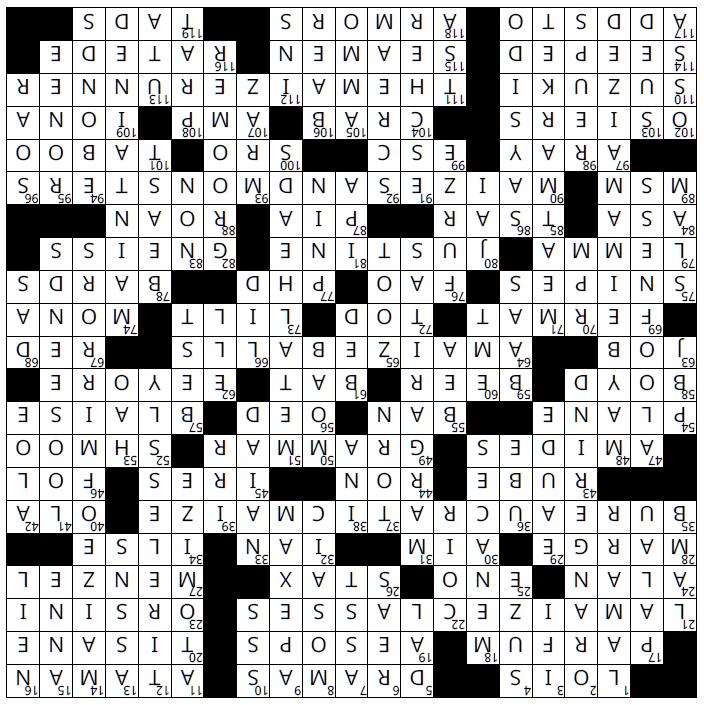
TheCrosswordPuzzleby Sean Patterson
Five years of a journal is a bit of a milestone, and it forces one to take stock. As a matter of full disclosure, I think it’s important to acknowledge that there has been a paradox at work. As we have stated, TheBoothbyReviewwas founded as an outlet to feature academic and graduate level papers heretofore unpublished. But from my standpoint there was also a philosophical purpose, an intellectual alternative to a world driven by an endless quest for efficiency. Philosophers and scientists have written about the danger of a utilitarian mindset since the 1920s and AI has made that all too real. Hence we created TheBoothbyReviewas an end in itself with the hope that it would provoke enjoyment and thought. But here is the paradox—technology made it possible for us to offer a journal with beautiful images as well as links to screen and sound. Technology has also made the layout feasible and the whole enterprise affordable. And I can only rant about technology because of technology.
In a sense, the theme for Volume 5, “Labyrinth” is the same kind of double-edged sword. The labyrinth has become a New Age metaphorical tool for self-discovery and in the Jungian world view, a way for becoming whole. In the Renaissance the labyrinth hedge was a place to find one’s true love. But in myth, story, and film, the labyrinth can be a dark place that evokes fear and confusion.
This issue of TheBoothbyReviewplays with the labyrinth challenge in myth, metaphor, theatre, and history. We also have a bit of whimsy with the Proust Questionnaire and the crossword. And please don’t skip the review of Tolstoy’s War andPeace . It may surprise.
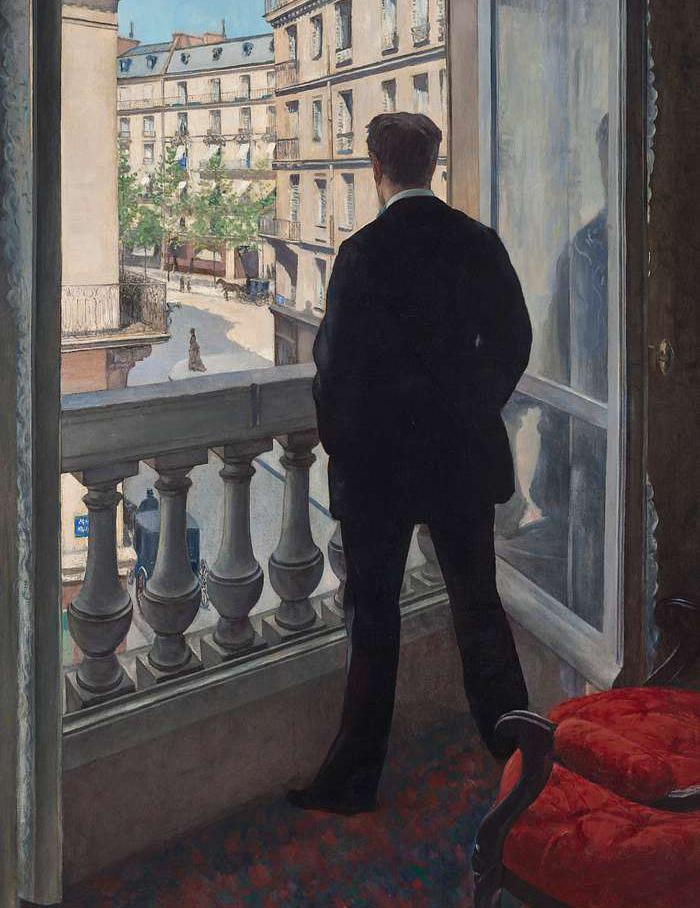
YoungManAtHisWindow Caillebotte, 1876
G. Howard Hunter, Editor-in-Chief
Labyrinth: Finding the Self
by G. Howard Hunter
There is a recurring dream. It’s in the same house, and I can’t get out. No one or thing is prohibiting movement — I simply can’t get to the airport, to work, to an exam, to a meeting with family, friends, or acquaintances. Distractions keep me from walking out the door. It is its own labyrinth of the unconscious, and unlike the Renaissance maze or the medieval/new age labyrinth, there is no love or spiritual awakening (or centering as they say) to be had, only a lingering sense of inadequacy.
Armchair psychiatrists and bartenders would say I’m stuck in the same-old same-old. Perhaps. But facile explanations are clever by half and beg the question. Better to look for signposts that can help one make sense along the way. Both giants of the unconscious, Sigmund Freud and Carl Jung, saw myth as a powerful metaphor for making sense of our dreamscapes. And since a labyrinth is the problem at hand, it’s best to go with the original story.
Minos, the ancient king of Knossos, had a problem. He was supposed to sacrifice a prize bull to the gods, but he didn’t. Poseidon, Lord of the sea, put a spell on the queen. who fell in love with the bull, and the issue of that illicit relationship was the terrifying Minotaur. Daedalus, the ultimate fixer, designed a labyrinth underneath the palace to place what was presumably the object of supreme embarrassment and shame. To satiate the bull/man, Athens had to send seven maidens and seven young men every year as human sacrifice. As a plan, this was hardly sustainable.
Theseus, the son of the Athenian king, volunteered for the mission to slay the Minotaur. Upon his arrival, Ariadne, daughter of Minos, fell in love with the young hero and gave Theseus a sword and a ball of thread to navigate his way out of the labyrinth. After Theseus made quick work of the Minotaur, he seamlessly made his way out. The story does not stop there —Theseus will desert Ariadne on the isle of Naxos and in forgetting to hoist white sails, he inadvertently convinces his father he’s dead. King Aegeus, heartbroken, hurls himself into the sea that bears his name.
So, what is the story of the labyrinth really about? Myth gives us the language to engage, but it operates on metaphor, which the modern mind, addled by analytics, finds increasingly difficult to grasp. We tend to simply attach meaning to “what things represent,” reifying the mystery with a certitude that has no place in making sense of consciousness. The best we can do is form suppositions that may give us clues for selfknowledge.
For a Freudian, it’s clear that the labyrinth is how the ancients experienced the question of the unconscious. Freud would associate the spool of thread as a guide for exploring the unconscious; a medicine man, shaman, or analyst for navigating the darkness and twists and turns. The Minotaur is the id, or the animal side of our being, with visceral lusts and unsatiated desire. Yet the Minotaur also conjures up fears and guilts that we would rather not confront. In 1936, Anna Freud, Sigmund’s daughter, completed her father’s work TheEgoandMechanismsofDefense , which raises the possibility of a labyrinth as an elaborate defense mechanism that we construct to avoid confronting unpleasant truths, our own Minotaur stuck in the recesses of our unconscious, prohibiting the development of a healthy ego.
A Jungian interpretation is more varied in its possibilities, which can also contradict one another. Like Freud, Jung would associate the Minotaur with the animal side of our being, although Jung would call it our shadow self, repressed guilt, and inappropriate feelings. Nevertheless, the shadow self also has creative instincts essential to our being, and Jung would argue that to have a healthy ego we need to confront our shadow and absorb it through recognition and self-forgiveness, not murder it or keep it hidden.
Jung would also ascribe to Theseus the conceit of archetypical hero. It’s a dragon story. If a young man is to be ready for a healthy relationship with a woman, he must slay the adolescent ego (i.e., Dragon or Minotaur), the ego that was attached to his mother. Beauty and the Beast is the female version. The medieval story of the knight-errant rescuing a damsel in distress from the dragon is straightforward. With Theseus abandoning Ariadne, the myth has a more interesting twist. But Greek myths are also cautionary tales with flawed heroes (see Achilles, Odysseus, Hercules, and the gods themselves). Theseus’s tragic failing was solipsism, a focus on the self rather than giving Ariadne and King Aegeus their due.
Moderns develop sympathy for the Minotaur — the poor creature had no control over his plight. Picasso featured the half-man half-beast in over 70 paintings and
renderings, himself a Minotaur incarnate, acknowledging his own beast within. Recognition of our visceral self, or at least the fact that we are not as reasonable as we seem, is a step toward self-knowledge.
There is also the notion set forth by the haughty Enlightenment that all problems are to be solved. Yet all the therapy and analysis in the world won’t get me to that airport so elusive in the dream world. We are the function of our respective selves, formed by neural activity over which we have little control. No doubt experience also plays a role in the unconscious — regrets (I’ve had a few), guilts (of course), and roads not taken (check). But myth as a clue for coming to terms with the self helps us find our place in a universe that often seems unforgiving.
The genius of Freud and Jung was to take the ancients seriously; myth previously had been regarded as a way for creative but ignorant people to make sense of their world. It may seem odd that men of science, Freud and his errant protégé Jung, embraced myth to engage the human condition. Yet they knew
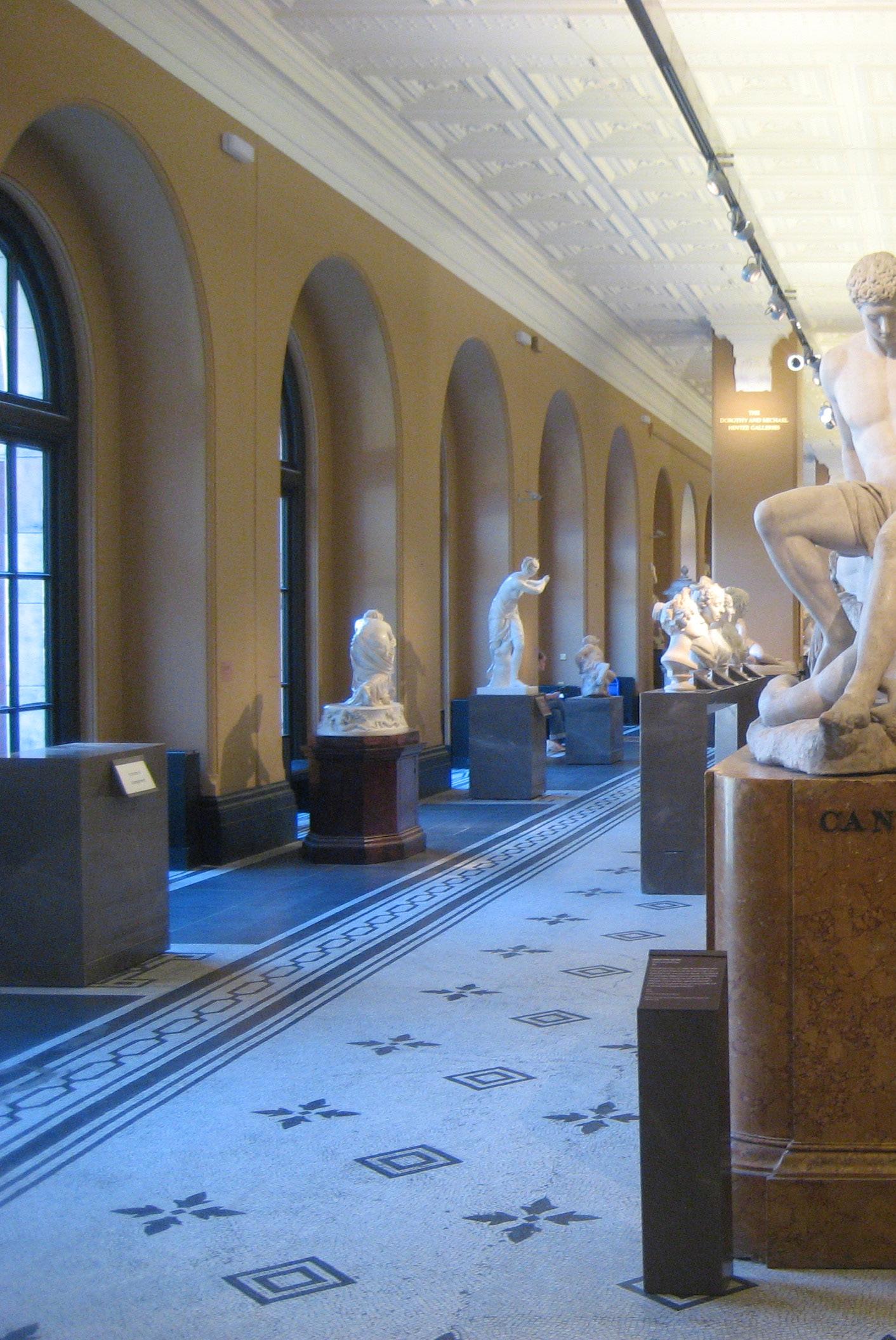
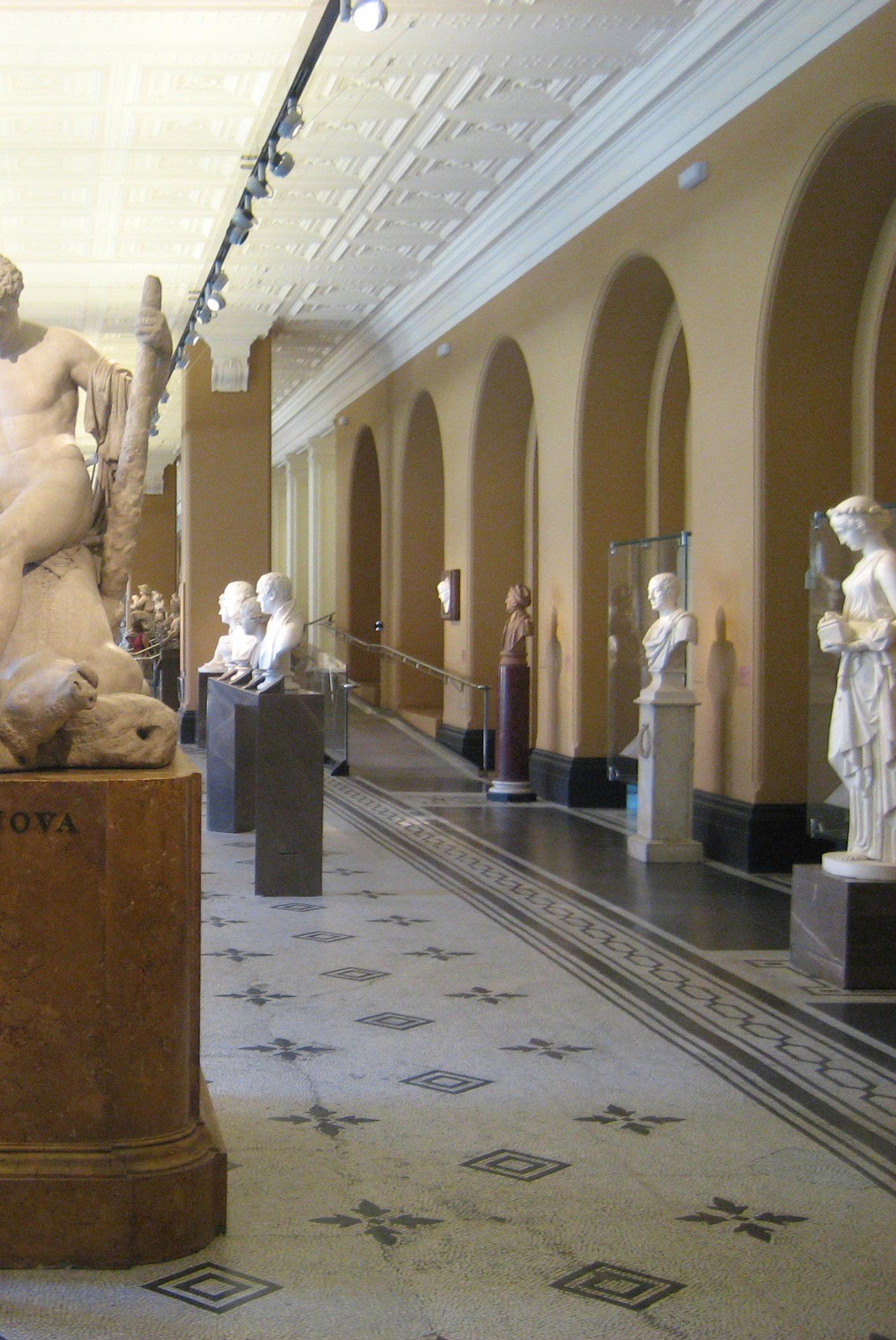
that science simply lacked the vocabulary to explain the mysteries embedded in the unconscious, and that the ineffability of our psychic origins can best be articulated (and understood) through metaphor. With the humanities currently under siege at the university level and by its utilitarian cohorts in business and finance, the disciplines, notably history and English, could save themselves by deconstructing the labyrinths they have erected with obtuse theories and ideological abstractions. Only then can the humanities unleash the power that Freud and Jung knew they had all along. TheseusandtheMinotaur Antonio Canova, 1782 Victoria and Albert Museum
Exercises in Style: Labyrinth Edition
by Sam Ferguson
In 1947, the French novelist Raymond Queneau published Exercicesdestyle , an experimental text in which he told the same anecdote ninety-nine times, altering his approach with each telling. The story itself is brief: two paragraphs in its first rendering (the bare-bones “Notation”) and rarely exceeding 300 words thereafter. Its events are pedestrian: a nameless narrator observes two men arguing on the Paris Métro; later, he spies the younger of these men standing with a friend outside the train station where the young man and his pal are discussing their overcoats. This nondescript content allows for maximum stylistic drama. With each change of register—from “Notation” to “Onomatopoeia” to “Negativities” to “Anagrams”—Queneau illustrates the power of language to color our reality, perhaps even to create it.
Yet what would happen if we applied different styles not to a boring French anecdote, but to a myth—an archetypal dream-narrative culled from the horrors and hopes of humanity? I’m so glad you asked. Let’s find out together.
Now We Are Six
So, um, Mommy? There was this prince and, um, his name was like Theseus or Perseus or something, and he went to this, um, island? Crate or Creek or something like that? And he went there to deal with this bully, this king guy, who was being all mean to the prince’s hometown. So this king dude, whose name was like Minnows or something? He made Theseus’ dad—who was also a king, but, like, kings get bullied too—he made him send people to Creek or whatever to get gobbled up by this beast in a maze. So the prince sails to Creek to say Stopit!
So Perseus—er, I mean, Theseus—gets off his boat and goes right up to Minnows and is all, I’mheretofightyourmonsterguy.And Minnows is like, MyMinnowtaur?And Theseus goes, Yeah,that’shim.And Minnows goes, Toughguy,huh? And Theseus goes, Yeah,I’mtough.Atleastmydaddysaysso.Andhe’s,um, he’s aKING!And so Minnows is like, Okay,let’sseehowyoudoinmyLABYRINTH! (That’s what he calls the big maze in his castle. The one with the Minnow-taur dude.) And Theseus is all, Letmeathim!And while he’s standing up strong to this bullyking guy just like Daddy always tells me to, the bully-king’s daughter , Ari-acne or something (why do the Greeks have suchweird names?), sees how tough and brave he is and thinks she’s gotta help him. So she gives him this sword . Then she gives him this threadhe can use in the maze to, like, find his way out once he kills the big monster.
And then he does it! He kills the Minnow-taur! He cuts his stupid head off! Splat! And he follows the thread to the start of the maze! And he’s out of there. Wham! And he takes the princess with him!
But princesses are girls and girls are, like, gross, so when he’s sailing back home to his daddy the king, Theseus—or, um, Perseus?—decides he should ditch her, and he goes to this island called Snacksos or something and leaves her there. Abandons her! ’Cause princesses are nasty.
But the gods don’t like this whole strandingthing ’cause it’s really not nice , so they make Theseus or Perseus or Prince-eus (the hero!) forget to change his sails. Black sails for badnews, white sails for goodnews. And he leaves up the blacksails, and
his daddy, the king—Aeneas or Aegeus or Anus or something—sees from the shore that the sails are all black, and he gets all sad and crazy and just jumps into the sea.
And he drowns. And like, dies .
Isn’t that sad?
Isn’t it, Mommy?
Isn’t that sad?
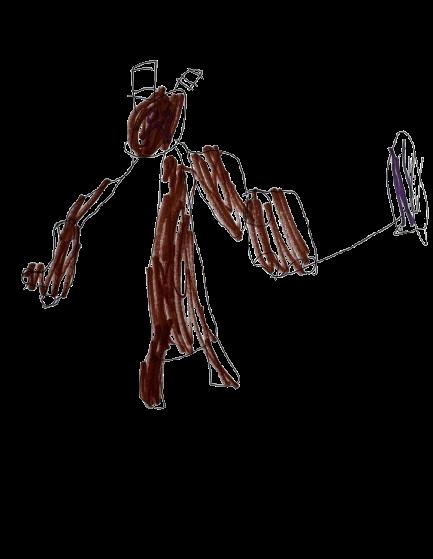
Crayola markers on paper, 2026
Minotaur Malcolm Steckler
Voice to Text
MINOS (King) > Today 11:45 AM Today 3:20 PM
Hey Minny, got some snacks coming your way. Get ready! Nice and scary! You the man!
Uh hey King Mentos it’s Larry the minotaur. I got the voice to text going because my hands are all covered in the blood of my hapless Athenian victims so please excuse any typos no offense to the crown and all that haha. I was wondering if maybe I could come out of the labyrinth sometime soon and have like a normal meal maybe a cheeseburger and some French fries or even a nice salad or something? I’m actually a pretty friendly guy and don’t exactly relish the tender flesh of the tributes you keep sending into my gore-encrusted clutches. Also my teeth aren’t really that sharp, they’re bull teeth and we usually graze on like grass and leaves and herbs and shrubs, plus I can’t really digest all this man meat. So this place is bit of a mess. If I can’t come up and hang out in the castle maybe you could at least send down some TP? It’s the little things you know. Oh and like we talked about earlier my name is Larry I don’t really like this whole mini thing it’s kind of demeaning. Not to tell you what to do or anything haha, I remain after all your humble servant.
Anyway I hear somebody coming. Nice and scary! Talk soon!
[Theseus]: Has your son or daughter been sent against your will as tribute to a ruthless foreign king whose only priorities are his own enrichment at the expense of the surrounding islands, principalities, and city-states? Have you lost your offspring to the madness and megalomania of a faraway suzerain whose lust for power is matched only by his sadistic delight in the suffering of others? Has your child been eaten alive by a bull-man in a maze? Don’t despair. Call the Beastmaster today.
I’m Prince Theseus, Beastmaster and Attorney-at-Law. Don’t settle for a lawyer who doesn’t care about you or your deceased son or daughter, their bones moldering in the rat-infested recesses of a monster’s Cretan labyrinth. Ditch those zeroes and get with a hero. The Beastmaster has your back!
But don’t just take my word for it.
[CamerapanstoatoothlessCorinthianfarmwench.]
[Farm Wench]: My husband, Otis, was gored to death by the Crommyonian sow. The Beastmaster didn’t snag me any cash, but he did kill that hog for me. And I got to keep an ear—even made me a purse out of it. Guess old Otis didn’t perish in vain! Thanks, Beastmaster!
[CamerapanstoahaggardEleusiandouble-amputee.]
[Double-Amputee]: There I was, minding my own, herding my sheep on the plain of Eleusis, when who should come sneaking up with chloroform and zip-ties but Procrustes the Stretcher himself. When I came to, I was strapped down to his bed and he was sawing off my feet. Talk about procrustean! Anywho, Prince Theseus, Beastmaster and Attorney at Law, avenged the loss of my beautiful feet and gave that Procrustes a taste of his own medicine. Or a taste of his own bed. Or whatever. You get the point. Procrustes sure did! Thanks, Beastmaster!
[Theseus]: I can’t bring your loved ones back to life, and I can’t exactly get you reimbursements for their deaths, but I can slay any and all monsters run amok in your agora. And that’s almost better. Now isn’t it?
Call the Beastmaster now. I’ve got your back!
[Voiceover]:
Dial 1-800-777-BEAST to set up your free consultation today.
Truth Social
It really is tragic and disgraceful, not to mention CRIMINAL, what Theseus did to my Minotaur, a Patriot who loved this Island and only wanted the best for our BEAUTIFUL, STRONG, BRAVE PEOPLE, the Cretans. And now the Creeps at The Athens Times and the rest of their cronies in the Fake News Media are calling Theseus a “Hero.” FALSE. He is a COWARD AND LIAR who not only killed my Handsome Patriot of a Cave-Monster (straight out of Central Casting!), but also stole and then ditched my VERY ATTRACTIVE daughter Ariadne. And all because I, King Minos of Crete, demanded tribute from his puny, failing Polis, the once-great but now BANKRUPT and totally BORING Athens. Sad!
It’s a shame, by the way, what happened to Aegeus. But it never would have happened if he had paid my Crete First Tribute, like I asked him to do (very nicely and very, very fairly) on SEVERAL OCCASIONS! I guess this is what happens when Minos Derangement Syndrome takes over. It’s really weird!!!
Thank you for your attention to this matter!
KM of CRETE
Broken Record
The Hero approaches the mouth of the labyrinth. He carries a sword and a spool of gold thread. They are gifts from the Princess. The thread, she has told him, is a lifeline. If, that is, he still has a life to—to—to—to—to—to save.
Bones snap underfoot. The Hero counts his breaths, feeding out thread as he enters the darkness—farther, ever farther, into the terror of the maze. The smell is sickening. A miasma of blood, putrefaction, and fe—fe—fe—feces descends on his senses, turning his stomach and making him and making him and making him and making him
—HICCAUGHAUGHAUGH— and making him retch.
He straightens, continues. His throat burns with bile. Many are the victims who have trod this bloodied path, scrabbling like mice toward a cornered, helpless death. But s-s-s-s-such is not the Hero’s fa—fa—fa—fa—fa—fa—fate. The gods have declared him an instrum—instrum—instrument of justice. The Minotaur will fall beneath his blade.
Along a distant wall, the light of a great fire flickers and flares. The stench of smoke and offal is intolerable. It chokes him, nearly blinds him. But he presses forward still. He treads round the bones, lest they clatter and betray him. At the corner, cloaked in shadow, he raises his sword to the light as a mirror, then surveys the smoky scene. He has found it found it found it fou—fouskzzzskzztt- - - - - -khrrrrrrrrrrrkhkhkhrrkrkl-
the final inner chamber of the Minotaur.
The reflection in his blade reveals a hunched and heaving figure. What is this sound? Is it sobbing? The Beast?
The Hero turns the c- turns the c- turns the c~~~~~~~~~~~~~~~~~~~~~~~
Wuthering Heights?
by Betsy Kern
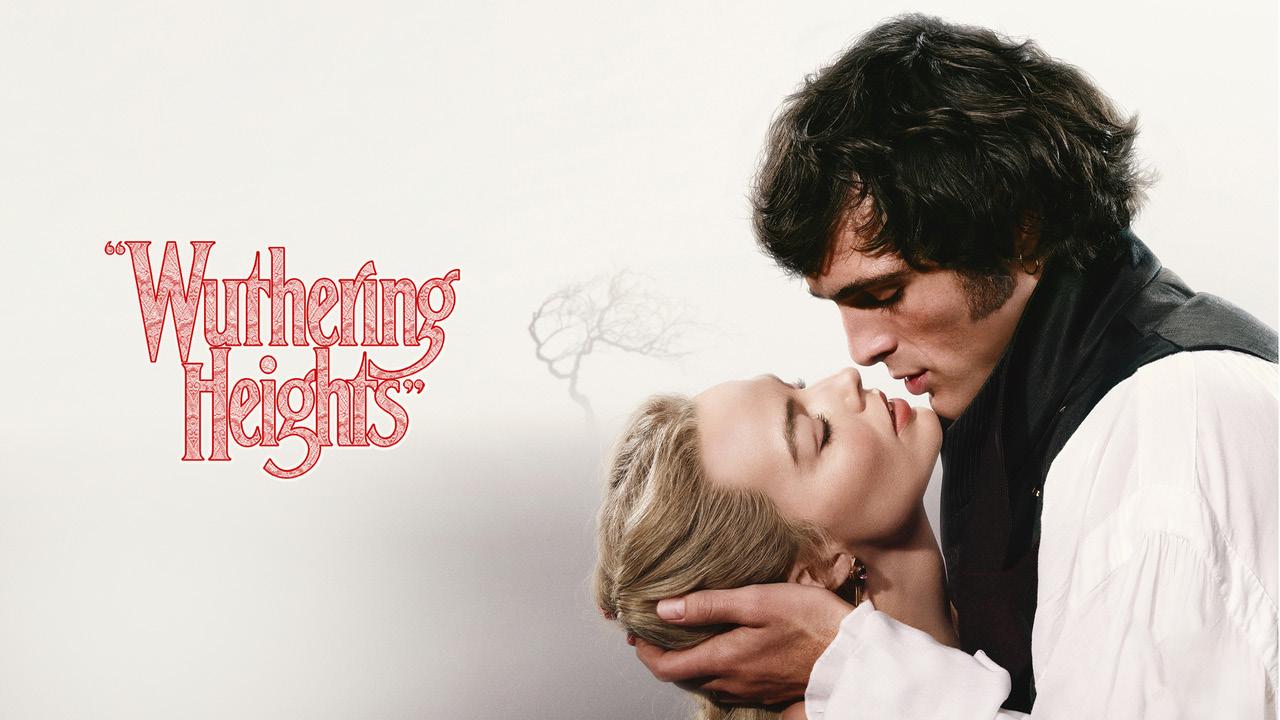
When I first saw the trailer for the newest adaptation of Emily Brontë’s WutheringHeights,I wondered if the filmmakers had read the same book that I had. Montages of the English moors cut quickly to tight shots of a shirtless Jacob Elordi as Heathcliff and a flush-cheeked Margot Robbie as Catherine Earnshaw. Rapid breathing, corset tightening, fingers raking across sweaty skin, and a cracked egg (what?).
No subtle messaging here. Those Heights were not wuthering–they were smoldering. Tagline “The Greatest Love Story Ever,” with a release date of Valentine’s Day 2026, no less!
English majors everywhere were quaking: CAN’T YOU SEE HOW WRONG THEY GOT IT. Brontë erasure!
It’s true. The film trailer heaps far too much smut on a story that is really about the psychology of the social self, told against the backdrop of the untamed natural world.
But let’s toss out the old “book versus movie” debate. Obviously, a film cloaked in bad boy romance is more accessible and exciting than a literary analysis of a 400page novel from 1847. Most importantly, the making of the film–no matter if it’s faithful or not–echoes Brontë’s central question in the novel: what happens when we tell and retell stories? How “true” do they remain as time goes on?
The novel begins with Mr. Lockwood writing in his diary about his arrival at Thrushcross Grange, a manor ensconced in the Yorkshire moors. He pays a visit to the nearby, worn-down house Wuthering Heights, where he encounters the
Photo from Pinterest
mysterious landlord Heathcliff. Lockwood learns of the dark and tortured history of the Earnshaw and Linton families first by reading old diaries. The broader story of the families unravels in his long conversations with Nelly Dean, the housemaid and notoriously unreliable narrator.
The primary story concerns Catherine Earnshaw and her father’s adoptee Healthcliff, pseudo-siblings turned lovers. While their entanglement is the centerpiece of the novel, to view it as a great love story of literature is to misread the book. The story of Catherine and Healthcliff as told by Nelly to Lockwood to readers represents the everyday task of receiving information and deciding what to do with it. The reader is several steps removed from the initial plot, which then catches up in real time at the end of the novel. We’re in a vortex of storytelling and a tableau of real-life events in the dark and musty Heights. Brontë bends time, slowing it down and speeding it up, in order to leave readers wondering which version of events is true.
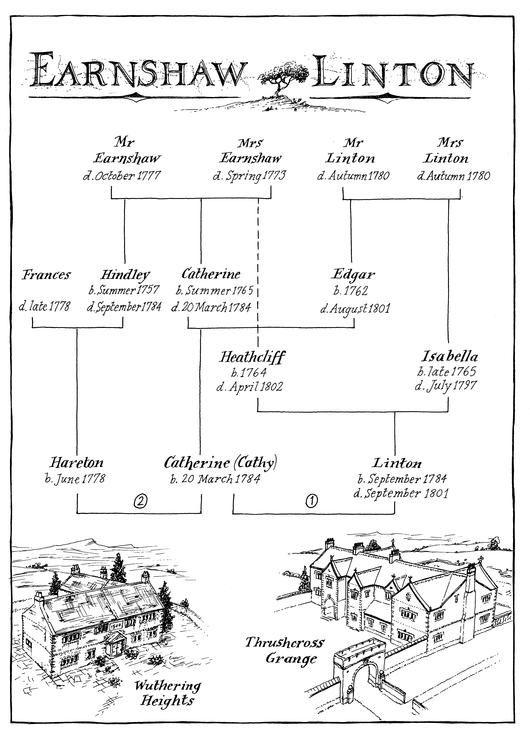
Keeping track of the marriages, houses, relationships, deaths, and ghosts in WutheringHeightsis nearly impossible. Catherine Earnshaw. Heathcliff. Hindley Earnshaw. Hareton Linton. Catherine Heathcliff. Linton Heathcliff. A reader must constantly cross-reference a family tree in order to understand who’s who across the moors. Brontë muddies the waters on purpose: the stories and their retellings are meant to be confusing, a tangled web of siblings, cousins, lovers, and children. The intentional lack of clarity sets the reader up to confuse the family pairings and even the characters themselves, thus obscuring romance as the primary focus of the novel. Brontë forces readers to untangle and sort through webs of information, trudging through the mud between the houses alongside the characters.
Brontë sets up the possibility that the central characters could maybe escape these constraints. Catherine and Heathcliff fantasize that their unlikely pairing will dissolve their flawed individual selves and set them free from the trappings of the Heights. It seems hopeful: if I could just find a person who loves me, maybe all the bad parts of me will go away. Catherine’s seminal proclamation, “Nelly, I am Heathcliff ...He’s more myself than I am” is an attempt to move outside of her contained existence and establish herself through another person. The same goes for Heathcliff when he proclaims, “I cannot live without my soul!” (Catherine’s).
Seems swoon-worthy. I’ve seen these lines standing on their own in “World’s Most Romantic Lines from Literature” articles. Maybe that’s how we got to a steamy film adaptation.
Yet Catherine’s overtures to Nelly come only after she has already accepted a marriage proposal from the more socially suitable Edgar Linton. Standing in the shadows of the living room, Heathcliff overhears Catherine professing her love for him, but then proclaiming that she could never, ever be with him. Confused, Healthcliff flees, and is put in the same position as readers: left to sift through which version of the convoluted story is true.
Eventually, Catherine dies giving birth to Edgar Linton’s daughter, Catherine “Cathy” Linton. The name lives on, the confusion lives on. Catherine’s ghost haunts Heathcliff for the rest of his life. In a sense, she was correct that their souls were inseparable, but that cannot hold as long as they’re both living. Brontë is pushing back on the Romantic period’s ideal that the individual can break free from social tyranny. By locating tyranny within the family, she offers the opportunity for conflict resolution on a small scale. But this never comes to fruition. She whips up the wind and reveals the tragedy: both Catherine and Heathcliff are wild and cruel. Together, they are unredeemable. The gothic tropes obscure and outweigh any Romantic myths, demonstrating that WutheringHeightsis not really a story about doomed lovers.
Ultimately, Brontë teaches us to think about storytelling and reading in terms of its possibilities and dangers. Brontë regards reading as an element of the supernatural, with voices from the past living on. She warns us that when we receive information, we must decide what to do with it–but that task has the inherent potential for dark and destructive outcomes.
The New Frontier
by Pam Skehan
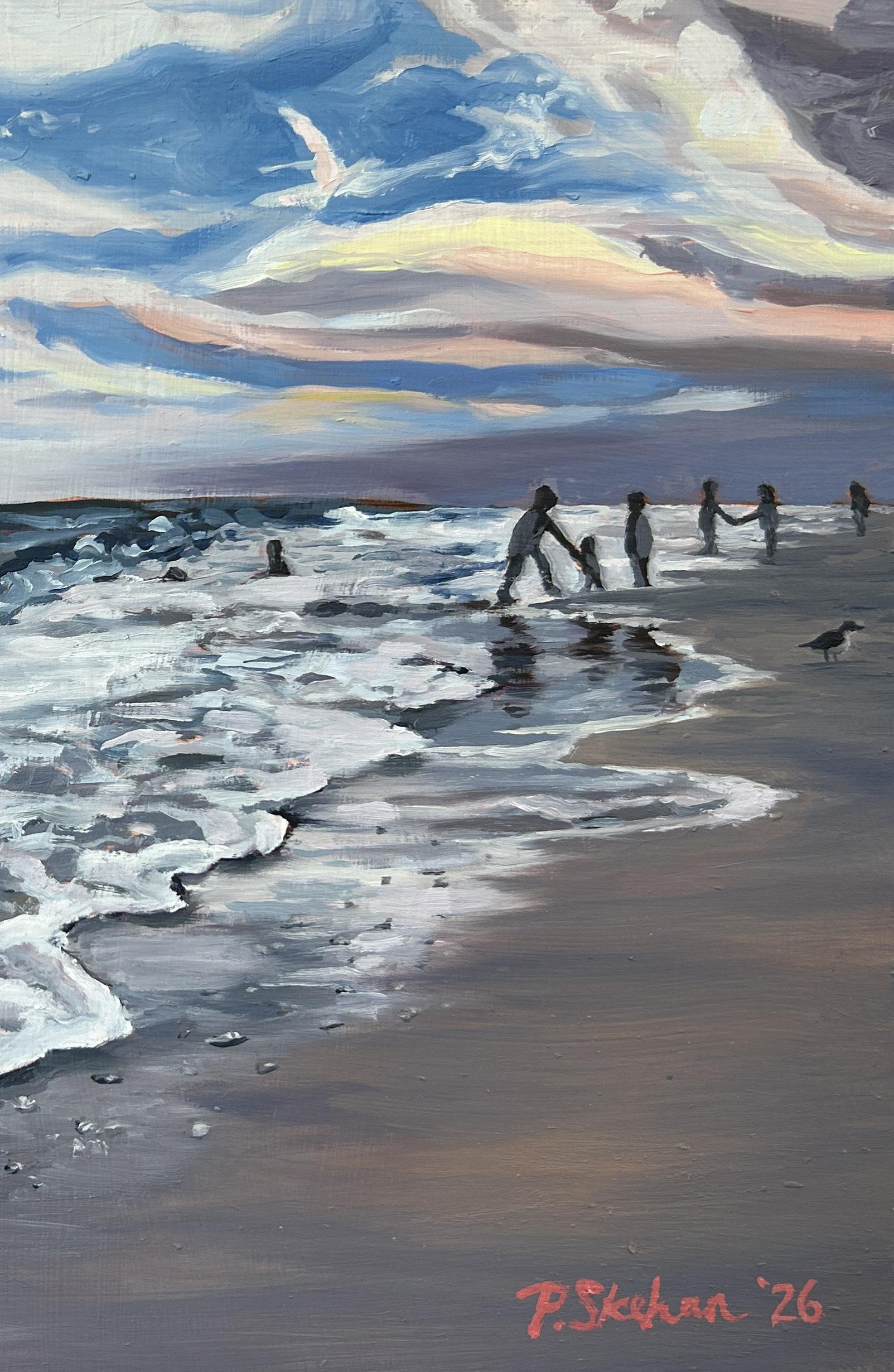
This body of work examines existential and quotidian facets of early motherhood, documenting my daughter’s transition from infant to toddler. The paintings capture fleeting intersections of light, figure, and climate, exploring growth, balance, and vulnerability that comprise a burgeoning motherdaughter relationship.
Bright colors and dynamic compositions convey the optimism and energy that accompany new life. High contrast, elongated shadows, and asymmetry cast a sinister quality of unrest, conveying the fear and exhaustion that lurk in the corners of early parenthood. Barriers cut through planes in the form of fences, thicket, and painted lines. These manmade parameters attempt to establish order in a sprawling environment: manicured lawns, arrays of trees, sculpted levees, and potted plants.
Expressive marks are used to convey chaos and conflict found in organic relationships between mother and child, people and place. The works are set at home and in local parks and playgrounds, everyday environments for a toddler rich with metaphors. Recreational spaces provide opportunities for growth: playground equipment disrupts balance and builds resilience; sports fields promote competition within guidelines; and beaches provide early encounters with risk and the unknown.
Environmental references to Louisiana reflect my anxieties around nesting in a sinking city, observing how the wet, spiky marsh creates a vulnerable protective barrier, offering guardrails while yielding to nature. The relationship between the marsh and the lake serves as a poignant metaphor for the mother-daughter relationship, a beautiful, thorny entanglement. Landscapes appear in some works as idyllic and manicured, and in others the land is eroding and ablaze, addressing concerns of raising children in a shifting climate. The child is placed in both secure and precarious settings: isolated in a bouncer, falling off a spinning stool, lying on a hot summer lawn, and nestled under the brim of a sun hat.
There are several nods to paintings of children from art history, such as Velasquez’s LasMeninasand Mary Cassatt’s many depictions of mother and child. Compositions are dominated by the child, posing dynamically or confronting the viewer with direct eye contact, showing how she is occupying what was once creative freedom in the mother’s life. The child is also painted tenderly and brightly illuminated in each piece, honoring the fresh well of light and inspiration she brings.
Title page: WomaninWaiting , acrylic on canvas, 30x40”, 2025
Opposite page: TheFall , oil on canvas, 24x36”, 2026
TippingPoint,oil on canvas, 30x40”, 2025
Brim , oil on canvas, 8x8”, 2026
Causeway,oil on canvas, 20x20, 2026
Shoreline , oil on panel, 11x14, 2026
TenderMarsh , oil on canvas, 18x24, 2025
Checking Into the Labyrinth by Mike Miley
Stanley Kubrick’s 1980 adaptation of Stephen King’s TheShiningis a film of patterns. From its doubled twins to its circular plotline to Jack Torrance’s repetitive manuscript, the film fixates on (and ultimately loses itself in) orderly and repetitive structures that lead its characters and viewers alike to depths of madness and horror previously unimaginable.
These patterns have also become central to the film’s place in popular culture. First of course is the hedge maze that looms over the grounds of the Overlook Hotel. This maze functions as a powerful narrative and thematic device in the film, especially considering that Kubrick transforms the hedges of King’s novel into a bona-fide labyrinth. Kubrick’s alteration illuminates his take on the material and its various patterns. What begins as a childlike image of playful confusion shifts into an eerie symbol of surveillance and control, only to become the key battleground of the climax as Danny’s mastery of it allows him to escape his murderous father. If what appears in the first act must become pivotal in the third, then we must think of this object as Chekov’s hedge maze.
However, while the hedge maze acts as a central pattern to the film (Saul Bass even featured it prominently in his early concept art for the film’s poster), it surprisingly has not endured as the defining pattern of the film. No, that honor goes to the carpet lining the guest room hallways of the Overlook Hotel. It can be hard to pinpoint when this pattern rose to prominence in the film’s imagery, but what is undeniable is that it has a lot to do with ToyStory . Pixar animators replicated the pattern—but not the color scheme—in Sid’s house, a joke that subtly references the movie and associates Sid’s sadism with Jack Torrance’s thirst for domestic violence. By inserting this menacing pattern into a cute-and-cuddly blockbuster, Pixar’s animators opened the floodgates that would spread as far and wide as blood cascading into a hotel lobby.
From there, a combination of inspired marketing and insipid meme-ification made the carpet pattern of TheShiningso iconic that it has become a brand signifier on par with the golden arches or the swoosh. Today, movie lovers cannot get too deep into their cinephilia without being snowed in with Instagram ads selling this pattern emblazoned on anything and everything, from T-shirts and sweaters to (naturally) rugs and stair tiles, socks, posters, bedspreads, purses, and phone cases. (I have bought two of these, but I’m not saying which.)
This pattern in question, an endless stretch of red, orange, and brown, proves an even more fitting image for Kubrick’s film than the hedge maze. The shape resembles an old-fashioned keyhole, which evokes both the lock to the sinister room 237 as well as the “key” to solving both the hotel’s hedge maze and the film’s labyrinthine plot. However, the repetition of this pattern across yards of hallway undermines any hope for a solution to the puzzle as the potential exits or keys to solving the mystery expand in an ever-dizzying array. Unlike the hedge maze, any attempt to examine this pattern only confirms there is no way out. In the same way that Jack Torrance has always been the caretaker of the Overlook Hotel, this pattern tells us that we’ve always been checked in.
This is, of course, unsettling. After all, we turn to patterns because they are intelligible, controllable. To arrange items in a pattern is to impose order, just as identifying a pattern hidden in seemingly random events allows us to exert mastery over the inexplicable. We’re hard-wired to detect and decode patterns, to find meaningful design in what we see around us, even when there’s nothing there. To identify a pattern only to have it lock us out of understanding it epitomizes discomfort.
Ever the chess player, Kubrick understands this tendency in humans. His films are well known for their intricate structure and design, to the point that his detractors will accuse him of being clinical and cold. Even though it may not be his best film, TheShiningdemonstrates Kubrick’s play with patterns best. Deliberate patterns are abundant in TheShining ; however, the most deliberate thing about them is that they are deliberately confusing, overwhelming, and indeterminate, showing us both why we are so drawn to them and why we ought to also be wary of maintaining too tight an allegiance to them.
This quality in TheShiningdid not present itself to viewers immediately. There
were too many things in the way in the first years of the film’s release, such as King’s dissatisfaction with Kubrick’s adaptation, Kubrick’s recutting of the film a few weeks into its release, and the histrionics of the performances, both Jack Nicholson’s megawatt rampage and Shelley Duvall’s unfairly maligned turn as his cowering wife Winnie. Just as Jack doesn’t go mad the moment he enters the Overlook, audiences would need more time to wander the halls of the film before it would start to go to work on them.
It would take DVD and the internet for TheShiningto truly come into its own. These new technologies ushered in new types of and theories about narrative that TheShiningretroactively benefitted from. More importantly, however, the internet and DVD meant that Kubrick fans could finally subject the design of the film to the same kind of scrutiny that Kubrick applied in making it.
The discourse around TheShiningreached full occupancy in the early 2010s with two pieces of fan criticism. The first, the dense and exhaustive “Mazes, Mirrors, Deception and Denial” by Rob Ager, went viral in 2011 when he posted a video essay version of his chapter “Around Every Corner” to YouTube. In these videos, Ager attempts to map out a working floor plan of the Overlook Hotel based on how it appears in the film. What he discovers is fascinating: the building makes no spatial sense. Rooms have windows where a previous shot demands there be a hallway, hallways appear out of thin air within a single take, while hotel rooms extend across multiple doorways—even the right angles of the interior walls are impossible when compared to the diagonal walls of the hotel’s exterior. The map fails to explain the territory. Lest anyone accuses Ager of going a little too far, he’s got official blueprints from the production that support his analysis. Given Kubrick’s reputation as a controlling director who oversaw every detail of his films, this presents a truly puzzling pattern. Just what is going on at the Overlook?
If the scholars of Room237are to be believed, pretty much everything. Rodney Ascher’s 2012 documentary devotes its attention to five different interpretations of TheShining . The interpretations on offer in the film run the gamut from completely preposterous to barely plausible, with most settling for just being perplexing. One claims that the film depicts the way slaughtered indigenous people haunt the American West, based almost entirely on the presence of Calumet baking powder in the pantry and the stock horror trope of the hotel being built on indigenous burial grounds. Another asserts that the film constitutes part of
Kubrick’s ongoing preoccupation with making a film about the Holocaust. Yet another would have us believe that Danny’s Apollo 11 sweater makes the film qualify as Kubrick’s apology for serving as the director who helped NASA fake the moon landing! Room237presents these varied interpretations with a straight face, making the film more of an examination of the obsessive and idiosyncratic nature of interpretation than a validation of any one of these arguments. Watching Ascher’s film demonstrates just how much of a labyrinth film interpretation can be when we cast aside our red thread (and perhaps our film literacy) and truly let our minds roam freely.
However, these fans are more than kooks with red-thread boards in the basement. They are participating in a kind of active viewership of a style of filmmaking with a deep theoretical lineage. Film theorists would likely classify TheShiningas an early example of a misdirection film, meaning a film that deliberately misleads its audience to wow them with a shocking twist late in the film. This type of film came to prominence in the late 90s alongside DVD and the internet. These technologies allowed viewers to watch movies repeatedly and share theories with fellow obsessives. Production companies responded by making more films that lent themselves to this type of viewership, creating an environment where misdirection films flourished and bolstered the careers of filmmakers such as Christopher Nolan, David Fincher, and M. Night Shyamalan.
Seth Friedman and other scholars divide the misdirection film into two camps: the changeover film and the master-key or puzzle film. Taking its name from a line in FightClub , a changeover film presents a piece of information at some point in the film that recontextualizes everything that has happened up to that point. The film we were watching “changes over” into a different film the same way a projectionist changes reels in a movie theater. In FightClub , this changeover is the moment when Edward Norton’s character realizes his name is Tyler Durden and that he and Brad Pitt’s character are in fact the same person. Alfred Hitchock’s classics Vertigo and Psychoare two of the earliest examples, with Psychobeing the most jarring since the person we think is the main character gets brutally murdered 35 minutes into the film.
A master-key or puzzle film, on the other hand, relies less on a single revelatory scene as it does on an object or piece of information in the closing moments that “explains” (or promises to explain) the film’s events. The twists at the end of The
UsualSuspectsand TheSixthSenseadhere closer to this model, as do the briefcase in PulpFictionand Exodus 8:2 in Magnoliasince both suggest an “answer” that will unlock the rest of the film. Even though some of these master-keys are likely nothing more than mere misdirection, such as the briefcase in PulpFiction , that hasn’t stopped people from speculating about these films online and in a dorm room’s bong-rip haze.
At first glance, TheShiningseems to fit nicely into the mold of a misdirection film. But which kind? The scene where Mr. Grady informs Jack that he’s always been the caretaker of the Overlook (a statement the last shot of the film seems to confirm) arguably situates it as a changeover film, as does the reveal of what Jack’s been “writing” the whole time; however, other elements of the film dealing with ghosts and telepathy may make the film more of a master-key narrative. The various voices heard in Room237offer many other possible master-keys for the film, all of which (they claim) explain the film’s true meaning for all with eyes to see. The film has patterns pointing in a multitude of places, any of which could lead viewers to the film’s central truth.
So is TheShininga changeover film or a master-key film?
In order for a changeover film to work, the changeover’s explanation has to make sense. TheShining’s reveal doesn’t come with much in the way of explanation to piece together how it works for Jack Torrance to have always been in the Overlook. Likewise, the potential master-keys have too many loose ends to feel definitive, leaving those who assert it’s a master-key film with any level of confidence sounding like the figures in Room237 . Perhaps TheShiningis neither a changeover nor a master-key film. Like an incomplete maze, all the clues and potential lines of inquiry in TheShiningultimately lead nowhere.
So does that mean TheShiningfails on a narrative level? It would certainly seem so; the pieces simply don’t add up. However, that conclusion assumes that making logical sense was part of the film’s agenda in the first place. People want to treat TheShiningas a kind of puzzle because they’d like to find an answer, a solution, to the events of the film. It’s beyond tempting to expect all the corners of TheShining to be plumb, level, and square. “Solving” the film would go a long way toward sanitizing it, containing its events to the confines of the traditional narrative. It’s safe that way, but it’s also inert.
All work and no play makes TheShininga dull film.
Perhaps TheShiningfunctions as a misdirection film in the purest sense by continually disorienting the viewer right when it seems they’ve got it all figured out. There is no way out of Kubrick’s maze, no solution or answer awaiting us at the maze’s center. There is no center. It onlymisdirects. In doing so, it suggests there is nowhere to go.
This is why the film is so terrifying. It’s not the gore or the jump scares or the shocking imagery (though those certainly help) that makes TheShiningsuch a horrific experience. It’s the sense of being lost, combined with the awareness that a return is impossible. We have lost all our bearings and have become completely unmoored because this Daedalus constructed a pattern offering no way in or out. We’re stuck here. And we always have been.
As a viewing experience, that’s scary. As a way of being, however, it’s invigorating, and it provides us with an important truth: not all labyrinths need to be escaped.
The incoherent labyrinth of TheShining’s plot sets the viewer free from single answer, solution-oriented viewing by making such efforts impossible. In doing so, the film creates a space which the viewer can inhabit for as long as they like. There is truly no end to the inquiry, which means that TheShininggoes on forever, never exhausting its mysteries or possibilities.
More importantly, though, this closure-shunning approach offers viewers valuable guidance on how to approach their lives in the same way, appreciating the uncertainties and ambiguities over the readily intelligible patterns and formulas. It’s when we start to demand a solution that we start to lose our way, and we lose beauty when we become focused solely on finding answers.
Would other films survive the kind of scrutiny obsessives subject TheShiningto? Probably not. Movies tend to play fast and loose with geography, beholden more to the dictates of time and budgets than they are to those of fictional time and space, so the space of many films would likely present similar conundrums to the ones Ager encounters in TheShining . While films are certainly up for all kinds of interpretations, filmmakers generally tend to make their cases with a bit more evidence than the people of Room237managed to scrounge up, especially a
filmmaker as accomplished as Kubrick.
But perhaps asking whether other films would pass this level of interpretive muster is not the right question. A more interesting question is whether any other films would invitethis kind of scrutiny?
Here the answer is quite clear: very few.
What makes TheShininga special film is not that its geography or imagery is a psychological puzzle to be solved but rather that its aesthetics compel viewers to inhabit it, to reside in the wonder of its mysteries. It’s a labyrinth people enter willingly, even enthusiastically. We don’t die when we get lost in the labyrinth. The labyrinth is where life is. In the words of Jack Torrance, I wish we could stay here forever and ever and ever.
Breaking Down the Labyrinth: Dead Ends at Every Turn
by Ross Turner and Josh Jackson
Foreword
Upon hearing the theme for this year’s TheBoothbyReview,our hearts and minds swelled with bardic inspiration. We relish the opportunity to wax poetic on a pride-drunken king’s devilish device designed to imprison those who would oppose him. The tale has it all: a monstrous creature, a sacrifice for freedom, defeat by hubris, and David Bowie in promiscuous pantaloons.
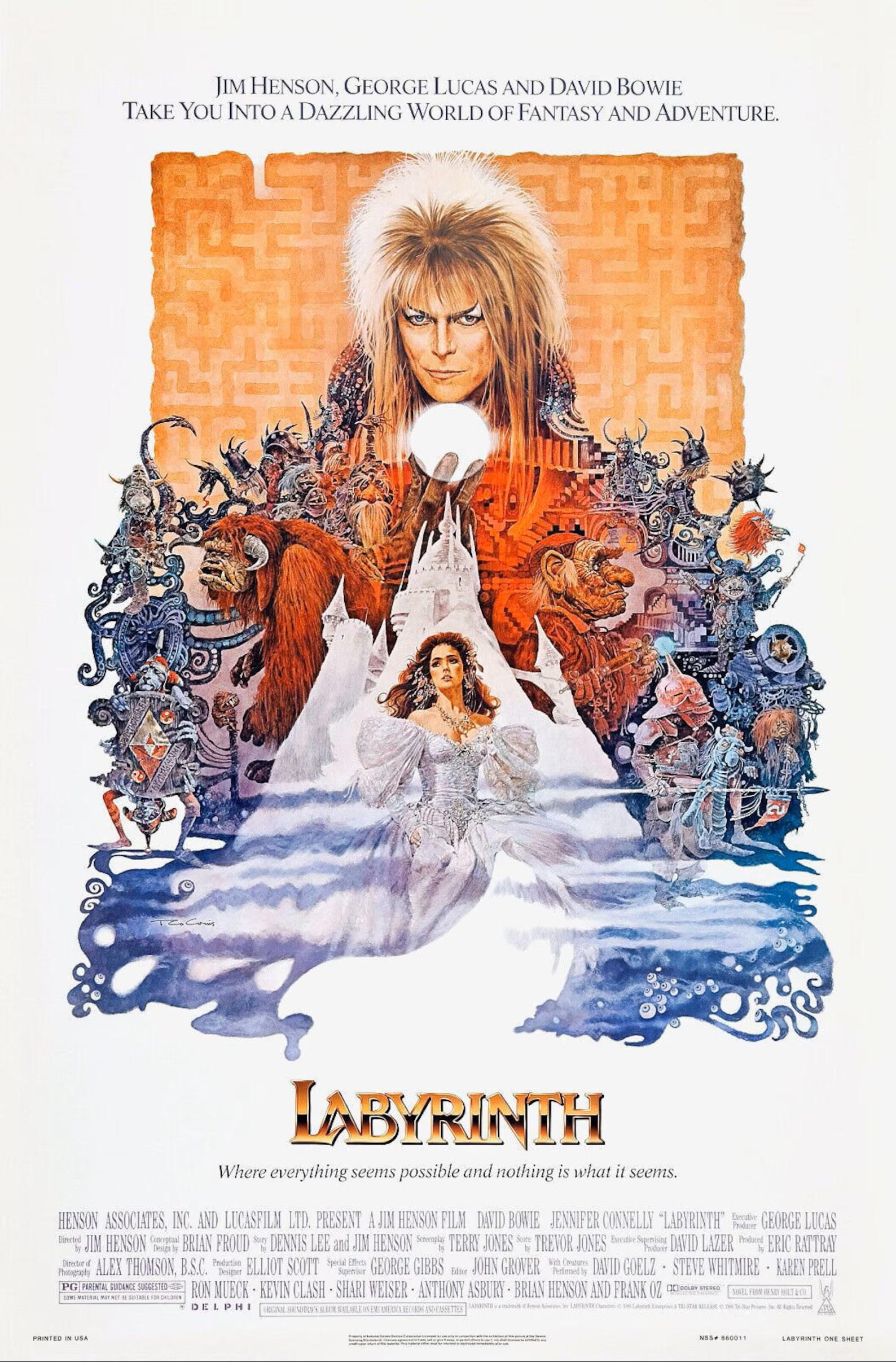
In 1986, Jim Henson and George Lucas, then considered cinematic sorcerers following the success of ReturnoftheJedi , set their sights on high fantasy. They chose David Bowie to star, write original music for the film, and interweave his glam-rock persona into the character Jareth the Goblin King. His co-star, 14-yearold Jennifer Connelly, stars as Sarah Williams, a wildly unlikable protagonist who instantly gets cold feet after wishing for goblins to kidnap her infant stepbrother; a tale as old as time.
Wait, which labyrinth were you thinking about?
Introduction
As practicing artists who have exhaustively studied Henson’s felt portfolio, prior to this in-depth examination, we would have considered this film a cornerstone of our “How Did They Make That?” Criterion Collection. We, much like protagonist Sarah, were confident that our journey to the heart of Labyrinthwould be a piece of cake. We’ve seen this movie dozens of times! However, as we watched the film from a critical perspective, looking to understand its deeper meaning and discuss the plot… we became mired in the Bog of Eternal Stench. As we peered into the Goblin King’s fushigi ball it all became frighteningly clear: the enchanting muppetry and set design are a tissue paper-thin veil atop a turd mountain.
Each time we came across an interesting alleyway through which to examine the movie, we found ourselves at a dead end, and no amount of Theseus’ thread, or in this case Sarah’s red lipstick, could help us find our way. We became a two-headed minotaur mason, our concepts became stones, and brick-by-brick, in one hour and forty-six minute increments, we sealed ourselves inside the walls of our own labyrinth. Despite our self-inflicted tragedy, the clock continued ticking (thank you, Howard, for the extension) and if we didn’t solve this puzzle quickly, this paper and our sanity would be stuck in Goblin City for eternity. We had no choice but to follow in Sarah’s footsteps: we would whine, stumble, cheat, and deus ex machina our way out of this thing or die trying.
What follows is a series of questions without answers, observations without conclusions, and frustrations without end. This is where Jareth would tell you to turn back before it’s too late. No one should read this, but should you feel compelled, at least go stream the movie. But be warned: if you continue down this path, you will find only muppets and madness.
Dead End #1: Identity Crisis
There are four different movies happening here simultaneously. From the opening, 16-year-old Sarah Williams believes she is in a tragic teen soap-opera and every line is uttered in despair. Nothing is fair, her “evil stepmother” demands too much of her, and oh no, someone has been in her room, which is the overt visualization of a
childhood frozen in time. With her world crumbling, Sarah throws herself onto her bed only to emerge as a mega-brat from the drama dimension resurrected by the cries of her infant stepbrother.
From the moment David Bowie bursts through the door, in full cosmic sparkle as Jareth the Goblin King, his music and hair are all-systems-go for a face-andheart melting, synth-heavy visual album. There are two modes of thought for this production reasoning: 1) As soon as Connelly read her first line on set, they decided to maximize Bowie’s glamour in desperate hopes of a visual distraction, or 2) No one had the courage to tell Bowie that it wasn’t one of his glam rock music videos. His contribution to the soundtrack, six songs in total, are only tangentially related to what’s happening on screen. The lyrics reference magic and babies, but never in a way that provides deeper meaning or explains the lore of this fantastical world. If Bowie didn’t seem out of place enough, Jareth’s all too human performances only push him further from his goblin kin, yet his spoken lines are as lifeless as Hoggle’s unblinking eyes.
Luckily there’s a third story (our favorite) and every single muppet is bursting at its seams to yell it from the rooftops of Goblin City. As if they studied an entirely different script than Bowie and Connelly, every other character is effortlessly producing a SesameStreetor MuppetShowspecial about the dangers of unwanted friendship, and how to topple a government through incompetence. Their manic energy and eccentric, yet familiar, mannerisms produce the liveliest and most enjoyable performances by a country mile. Over 60 original muppets were created by Jim Henson’s Creature Shop for Labyrinth , and they are prime examples of the legendary studio’s work. While the Fire Gang’s appearance in the film still perplexes us, they look incredible doing it!
The fourth and final story, left behind in one of Jareth’s dankest oubliettes, is that of a high-fantasy world that Henson and Lucas attempt to establish. On the surface it’s all there: a mystical puzzle, the prideful hero and charlatan villain, and a menagerie of imaginative creatures, yet none of it is ever interwoven. Like a tinfoil mirage cast off the reflection of Jareth’s crystalline fushigi balls, each scene invites you in, only to deteriorate the second you start to explore its lore. At times the dialogue teases an explanation, but the characters most knowledgeable about the world of Labyrinth are preoccupied with basking in their own radiance, and leave you begging for any, and we mean any, exposition.
Dead End #2: Hoggle: a Ruined…Man??
He’s certainly not the easiest to look at, but Hoggle may be the most interesting character of the whole film. Practically, Hoggle is a complex amalgamation of costuming, animatronics, and puppetry, worn by actor Shari Weiser. In the world of Labyrinthhowever, much like everything else, it isn’t that simple.
First, what is he? Is he a human? Is he a boy with the skin of a dehydrated loaf of SPAM? Is he some type of cursed Pinocchio/Walter Matthau marionette? The easy answer is to call him a boilerplate fantasy dwarf, but the film gives us no context for that. He’s only ever referenced by name, and usually it’s incorrect. Clearly from a character arc standpoint we’re meant to relate to Hoggle, but how can we when the film is under a bad case of narrative withholding? What we do know is that figuratively, Hoggle is Icarus and, to his wings, friendship is the sun.
When we’re introduced to Hoggle, he’s seemingly living his best life as an apparent groundskeeper of the Goblin King’s labyrinth. Actions truly speak louder than words, as we instantly interpret Hoggle’s non-discreet performance of relieving himself off the edge of a small pool as his radical placement on the edge of societal norms. Once his liquid protest to authority is done, he’s quickly back to his pest control work, enthusiastically putting fairies on the magical endangered species list. He’s a simple creature, undertaking a fulfilling job with minimal oversight in the great outdoors. Enter Sarah Williams.
Dead End #3: Sarah Williams: Destroyer of
Worlds
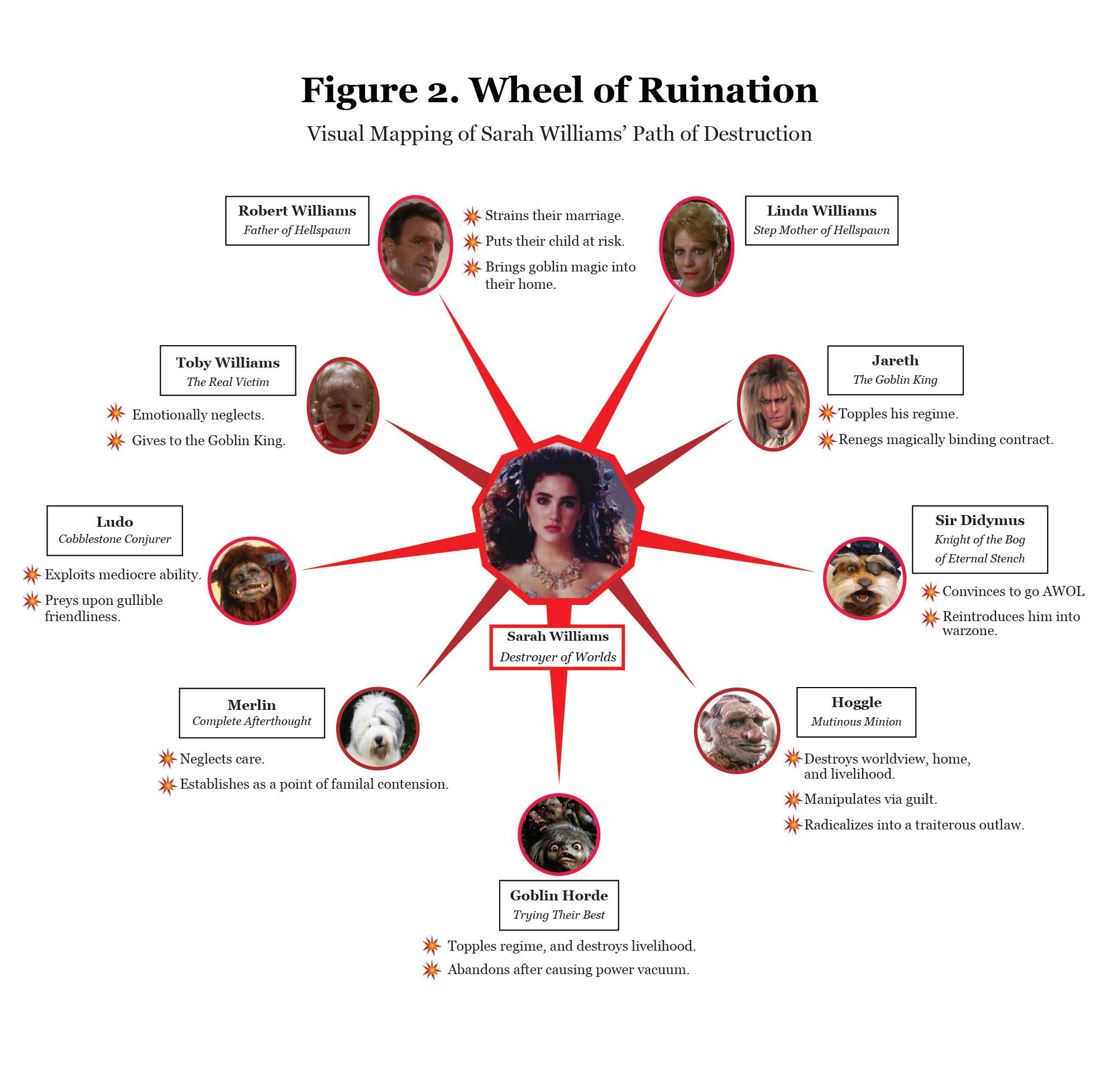
In a world of goblins, monstrous beasts, and eldritch swamps, the most vile figure in this tale is the insufferable Sarah Williams. She is a void whose hunger knows no bounds, as she singlehandedly devours any fun her co-stars bring to the table. Instead of presenting Sarah as a kid with growing pains, through her consistent overdramatization we see a child break down at the most meager sense of responsibility. Her room is filled with as many toys, books, costumes, and games that she could ever want, yet her “evil” stepmother is asking too much when expecting Sarah to babysit her infant stepbrother, Toby. The claim is clearly a projection of personal character, which is put on full display when Sarah offers Toby to Jareth the Goblin King; it's like releasing your roommate’s annoying parakeet through an open window.
The initial madness of the film is watching Sarah undergo immediate remorse for the magically binding exchange. It would almost be redeemable, a glimpse of a scoundrel’s heart, if it wasn’t absolutely driven by self-preservation. What would her parents do when they return to find their baby boy gone, and learn that the Goblin King has a strict no return policy? Further frustration arises when you consider that Sarah initiated the deal, and Jareth fulfills it as his arcane accountability demands. As far as he’s concerned it’s just another day at the office.
Instead, Sarah spits out her typical rehearsed whines and makes this Jareth’s, and the entire realm of the labyrinth’s, problem. In an honest attempt at compromise, Jareth grants Sarah access to his kingdom, and by following its version of due process (solving the labyrinth) she can reclaim Toby and avoid her parent’s justifiable wrath. How does she repay the favor? By conjuring an outrageous degree of selfishness and decimating his kingdom’s entire civil structure.
However, Jareth isn’t Sarah’s sole victim. She quickly realizes that at every turn in the labyrinth, Hoggle can be her grumpy step stool to victory. Upon her introduction to Hoggle, she’s demanding, rude, and repetitively getting his name wrong. Then, as if whispering a curse into sleeping ears, she sows a seed of guilt into the pasture of his mind, and carelessly roams the labyrinth’s alleyways in wait for her harvest.
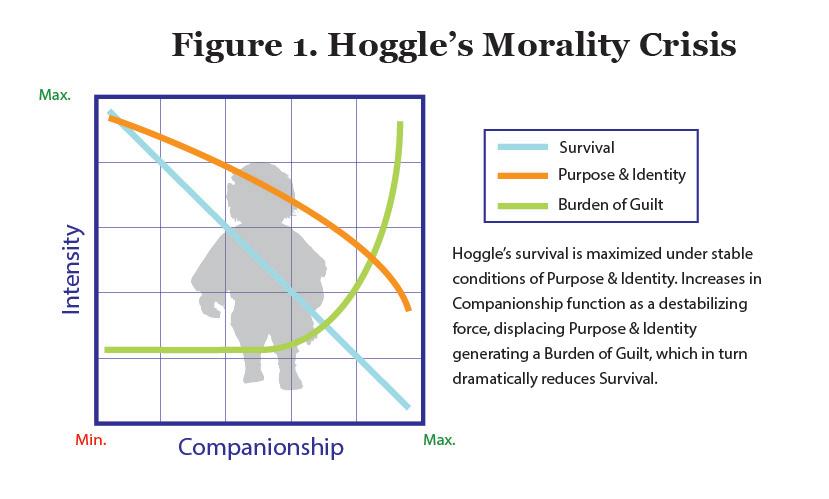
Now, we aren’t told how old Hoggle is, but it is safe to assume that the lifespan of any magical creature is much longer than that of a mortal. Based on the innumerable wrinkles on his weathered face, Hoggle has at least been around for a century or two. For him, that’s a lifetime of flying under the radar; out of sight and out of mind. He’s established himself as an independent, yet contributing member of society, who isn’t directly under his king’s thumb. We also learn that he is incredibly self-attuned. Hoggle knows who he is, what he stands for, and that in a goblin-eat-goblin royal domain, what’s most important? Survival.
Sarah, the teenage Lich Queen of "that’s not my problem,” identifies a chink in his armor almost immediately. She twists Hoggle’s respectable self-reliance into a weak desperation for companionship. After all, if he refuses to drop his duties and “help” her solve the labyrinth, a situation which she alone initiated, is he not just as cruel as the Goblin King? What she is applying in this situation is weaponized friendship in a manufactured morality crisis.
Over the next hour of the film, you’re forced to watch Sarah wield her manipulative tactic against every individual she encounters within the maze. Sure, at first it seems like a minor inconvenience, but it leads to Hoggle’s unemployment, him being radicalized as a threat to the crown, the breaking of his once ironclad free will, and the toppling of a society. In the end, Sarah has become the true puppet master.
Dead End #4: Jareth’s Whole Deal
The audience is introduced to the concept of the Goblin King as Sarah reenacts her favorite scene from a novel, coincidentally called TheLabyrinth . After she utters the correct magic words and has her baby brother kidnapped, an owl slams the balcony doors open. The bird briefly attempts to claw her eyes out before transforming into David Bowie. What??
Surely, we’ll get an intriguing monologue backlit by lightning and thunder. Perhaps a song about how Jareth inherited his throne, while muppets pop out of cabinets and from under the bed to sing the chorus. At the very least, we’ll get a few lines of dialogue as he explains that the stories in Sarah’s favorite book are true. Nah, dawg. None of that. We learn that he’s a magic-wielding monarch up to his eyeballs in
goblins and cravats, but that’s the extent of the film’s exploration into the Goblin King. We are left to guess at his motivations. So here we go:
What does he want with a baby? Sarah is told that if Toby stays in the Goblin City, he will become a goblin himself. Were all the goblins once babies? Perhaps his kingdom is experiencing negative population growth and kidnapping unwanted stepsiblings seems like a viable option. Surely it would be easier to trick disenfranchised teenagers into joining his goblin kingdom. It’s worked out pretty well for the American military.
Speaking of, why has Jareth amassed an army? Is something sinister looming just beyond the walls of the labyrinth? Securing the border? Is there a neighboring kingdom to conquer? Mineral rights? Does he plan to invade our world? Goblinfest Destiny? Maybe he just likes collecting goblins. Hard to say. Once again, we really could have used a little exposition to help us walk a mile in the Goblin King’s stretchy slacks.
Throughout the movie, we see Jareth wield powerful magic, mostly bubble-based. That dude can transform a bubble into a fushigi ball, into a snake, into a scarf, into a goblin in the blink of an eye. He turns bubbles into scrying mirrors, which he uses to spy on his entire kingdom without ever leaving the throne room, establishing a magical police state. Jareth also sings about two other forms of magic at his disposal: dance magic and jump magic.
While the song "Magic Dance" doesn’t go into detail about the nature of casting dance magic or jump magic, we do learn a little bit about the spells’ effects. The two can be combined to make someone experiencing deep sadness feel better. Isn’t that nice? The spells are activated by slapping the intended target, which seems less nice.
Jareth’s spells require no ingredients or incantations. He doesn’t use an arcane focus, and he can cast instantaneously. His seemingly infinite power can even manipulate space and time! Jareth casts spells from nearly every school of magic: abjuration, conjuration, divination, enchantment, evocation, illusion, and transmutation. Heads up, Cris Angel: The Goblin King is a certified MindFreak! So how in the world does a whiney kid destroy his whole kingdom while never actually succeeding at any of the labyrinth’s trials?? Your guess is as good as ours.
Dead End #5: Jareth’s Pants.
We don’t know what to even do with that.
Dead End #6: That’s it??
Through a series of bad decisions, mistakes, and poor writing, Sarah unbelievably finds herself standing before the gray-washed gates of the Goblin City. If ever there was a moment for Sarah and her band of misfits to come up with a strategy or plan of attack, it would be this one. Instead, they run blindly into the belly of the beast and are quickly surrounded by the goblin horde. How are they going to get out of this one? Our dear friend, Ludo, that gentle giant, is going to take care of it. Based on his hulking mass, one might assume he would clobber his way through the goblins to clear a path for his friends. No sir. Yelling from the rooftop, he calls the rocks to his aid. HE CALLS THE ROCKS! TO HIS AID! His dull, lifeless roar summons hundreds of boulders to knock the goblins off their feet. It makes a lot of sense when you think about it.
This Ludo-cris act gives them the break they need to storm the castle. On the threshold, Sarah dismisses her loyal companions, deciding she needs to face the Goblin King alone. An interesting choice from a character who has done very little for herself since entering the labyrinth. Is that character growth? Maybe, probably not. It’s about as close as we get.
David Bowie finally gets the trippy glam-rock music video he’s been waiting for as Jareth and Sarah chase each other through an M.C. Escher-style staircase. Out of nowhere, Jareth seems to profess his love for Sarah, proclaiming that he cannot live without her sunlight. The Goblin King makes one final plea for her to obey him, even offering to be her slave in return. Hold on there, J-Money! That’s a kid, dude.
Thankfully, Sarah resists his bedazzled bedevilment. It turns out all Sarah had to do was recite the words from the beginning of the movie. Namely, that the Goblin King holds no power over her, which turns Jareth back into a bird for some reason. Sarah is suddenly returned home, with Toby in tow. Now her parents won’t be mad at her, and maybe they’ll finally let her bring the wet dog inside! Her victory defrosts her
frozen heart just enough to share a teddy bear with Toby, which is almost as good as the apology he deserves.
Her adventuring party appears in her vanity mirror to give a tearful goodbye only to have Sarah profess that she needs them to stick around. This should be a meaningful moment, but her line, “I don’t know why I need you, but I do,” falls flat. But don’t worry, "Magic Dance" fires up again, and we watch the gang celebrate alongside the goblins as if nothing ever happened, and in a way, nothing really did. Roll credits.
Conclusion
If you’re still reading this, you made it out of Labyrinth . We did too, but did we learn anything? Of course we did. When you think about it, we’re all just teenage girls burdened with ever-growing responsibility. It may sound easy to just summon a bunch of goblins and their king to take your troubles away, and it is! When you are willing to force every individual that crosses your path to redirect all of their time and energy toward correcting your mistake, under the guise of friendship, anything is possible. So in the tangentially related words of David Bowie himself, “slap that baby, and set it free.”
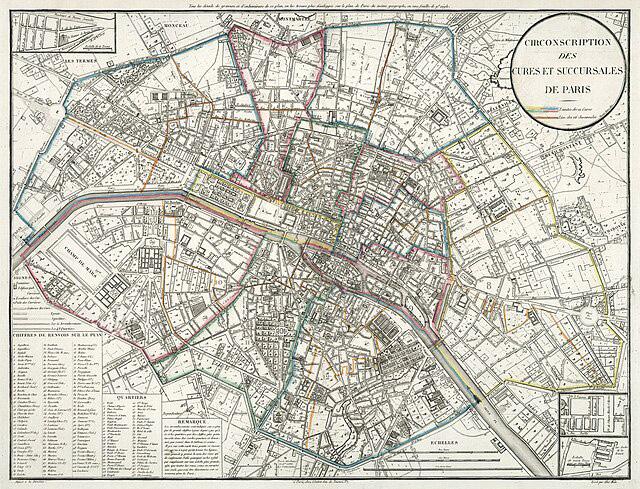
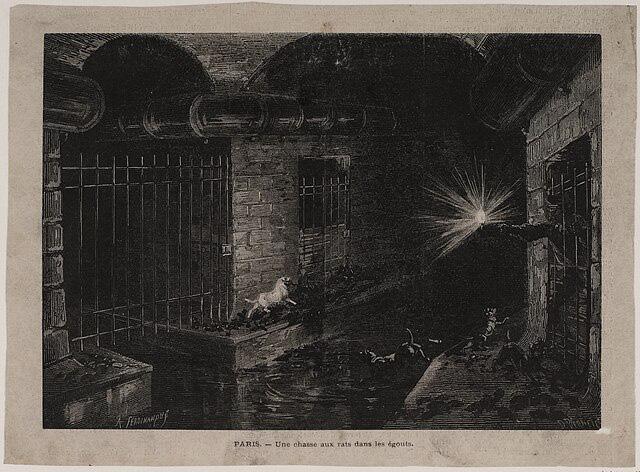
If you were to cut a slice of Paris, it is said that the portion under the streets would resemble Swiss cheese. Limestone quarries, the métro, and even the Catacombs form miles of tunnels below the city's famous boulevards, but it is the vast sewer system that dominates the underground. The sewers were renovated in the early 19th century, and novelists of the time embraced the system as a metaphor for the most marginalized of the population. They became as much a character of classic French literature as Jean Valjean himself.
In 1805, an engineer for the city of Paris, Pierre Emmanuel Bruneseau, started work on mapping out the existing sewers which were few in number, outdated, and no longer effective. With the rise of industrialism, population growth boomed, particularly in the capital city. With an ill-equipped sewer system, proper hygiene and sanitation were lacking, and the mortality rate increased. Bruneseau spent the next seven years creating a map of the system in place. In 1822, physician and hygienist Alexandre Parent-Duchâtelet published an in-depth, technical study of the sewers, HygiènePublique,ouMémoiressurlesquestionslesplusimportantes del'hygièneappliquéeauxprofessionsetauxtravauxd'utilitépublique , with the end goal of improving public health. By the 1830s, construction and renovations were underway, and by the mid-19th century, Baron Haussmann appointee Eugène Belgrand had introduced mechanisms for the sewer and water systems that are still in use today.1 The immense sewer system helped to improve public health, offered agricultural advancements, and allowed the layout of the city to flourish in the later half of the century.
The new sewer system inspired artists of the 19th century, though perhaps none more than the romantic Victor Hugo, who lengthily describes the underground labyrinth multiple times throughout LesMisérables.Early on, Hugo fictionalizes the engineer Bruneseau finding historical treasures like the shroud of Marat in the sewer. It is later in the novel, when conniving and thieving Thenardier is in the sewers looking for treasure, that he crosses paths with Valjean, who is using the maze of tunnels to get Marius away from the barricade. As Hugo describes the sewer, "All the uncleanliness of civilization, once it is out of service, falls into this pit of truth, where the immense social slippage is brought to an end. It is swallowed up, but it is displayed in it. The pell-mell is a confusion. Here, no more false appearances, no possible plastering, filth takes off its shirt, absolute nakedness, rout of illusions and mirages, nothing more but what is, wearing the sinister face of what
is ending...A sewer is a cynic. It tells all." The characters are at their most truthful when they are in the sewer because they cannot hide. Their true natures are revealed when everything else has been stripped away, and they are left in the metaphorical and literal depth.
Not only are the sewers a character in Hugo's work, they also serve as a metaphor for the most disenfranchised of the population; however, he wasn't the first to make this connection. This had become the prevalent understanding by the mid-19th century thanks in part to Parent-Duchâtelet, the hygienist behind the 1822 study of the sewer system. Parent-Duchâtelet completed another thorough investigation in 1836, DelaprostitutiondanslavilledeParis,considéréesouslerapportdel'hygiène publique,delamoraleetdel'administration.(This guy really loved a lengthy title.) Whereas the sewer study was intended to safeguard the public's physical health, the prostitution study was meant to safeguard both physical and moral health. "According to David Pike, Parent-Duchâtelet's 'infamous and influential' prostituteas-sewer metaphor 'was the conventional nineteenth-century French discourse."2 His publication was a means to aid public health by encouraging governmental control of prostitution in the same vein as the government regulation of the sewers.
Most of the data in Parent-Duchâtelet's study points to the sheer desperation of the women. This was not a profession they sought, but one that was necessary to survive and/or to help their impoverished families. Parent-Duchâtelet treated them scientifically, impersonally, and as a rightfully marginalized segment of the population. In contrast, Hugo gives them a voice. Hugo's character Fantine is forced to turn to prostitution after she exhausts all resources and is left penniless with a child. Left to live on the streets, she sends all her money to the care of Cosette, her daughter, and she eventually dies of tuberculosis. Instead of treating her coldly and impersonally in the manner of Parent-Duchâtelet, Hugo treats her with respect because she is not at fault. Lewis notes in her article that "Hugo calls for a change in society's approach to all its marginalized and outcast, from imposing regulation and control to enabling their inclusion and redemption."3 It is Fantine who gives Valjean an opportunity to show kindness and begin his path toward redemption. She also sacrifices herself entirely for the life of her child. In a way, Hugo humanizes the
2 Briana Lewis, The Sewer and the Prostitute in 'Les Misérables': From Regulation to Redemption, NineteenthCenturyFrenchStudies , Vol. 44, No. 3/4 (Spring-Summer 2016) p. 267.
3 Lewis, 267.
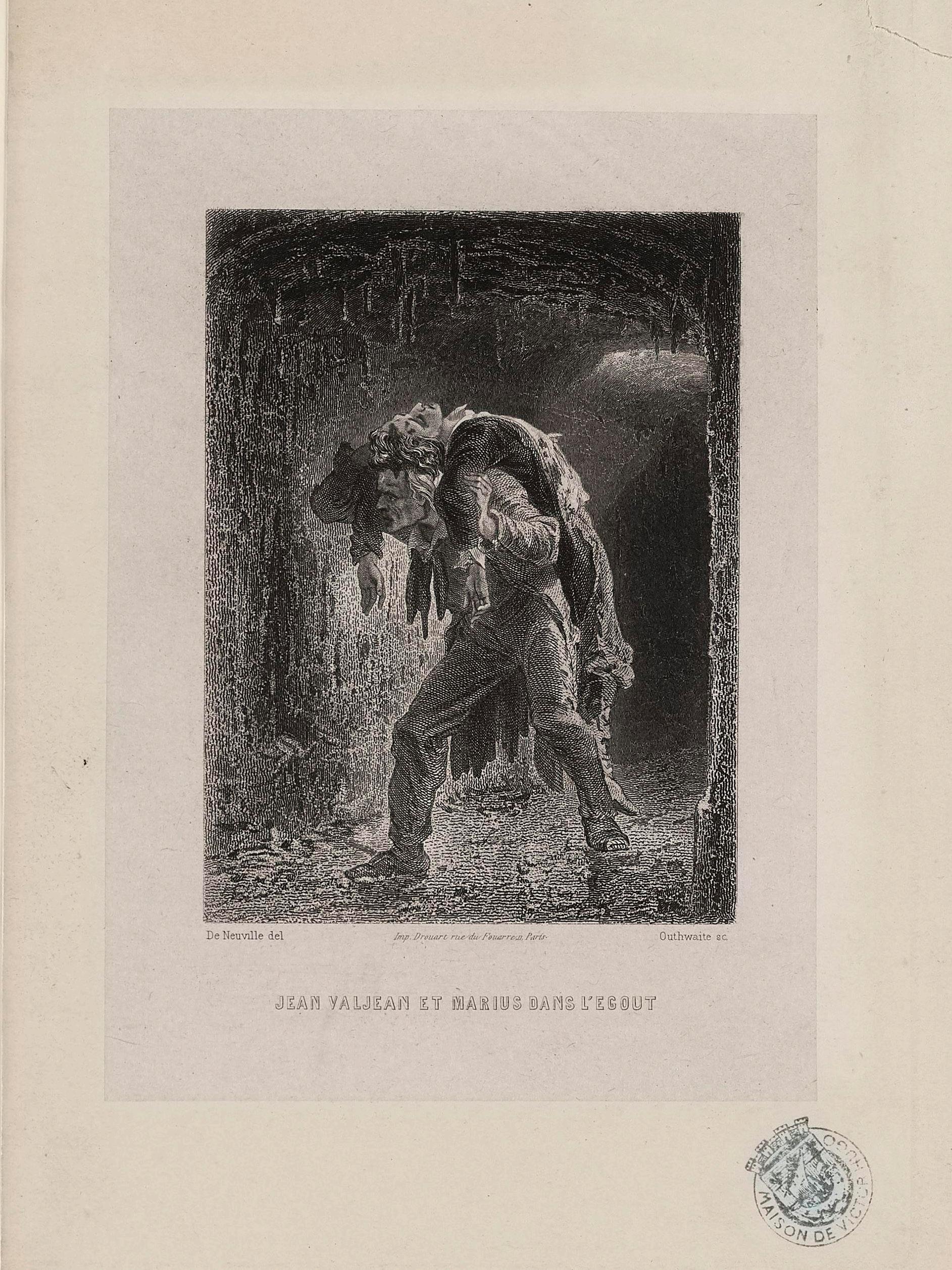
Photo: JeanValjeanetMariusdansl'égout , 1866, Maison de Victor Hugo – Hauteville House
lowest class. The metaphor of the sewer in the 19th century stripped the lower working class of their basic humanity. Hugo restored it by creating a world wherein the most marginalized of society still have a place in society. They need not be, like the sewers, hidden underground.
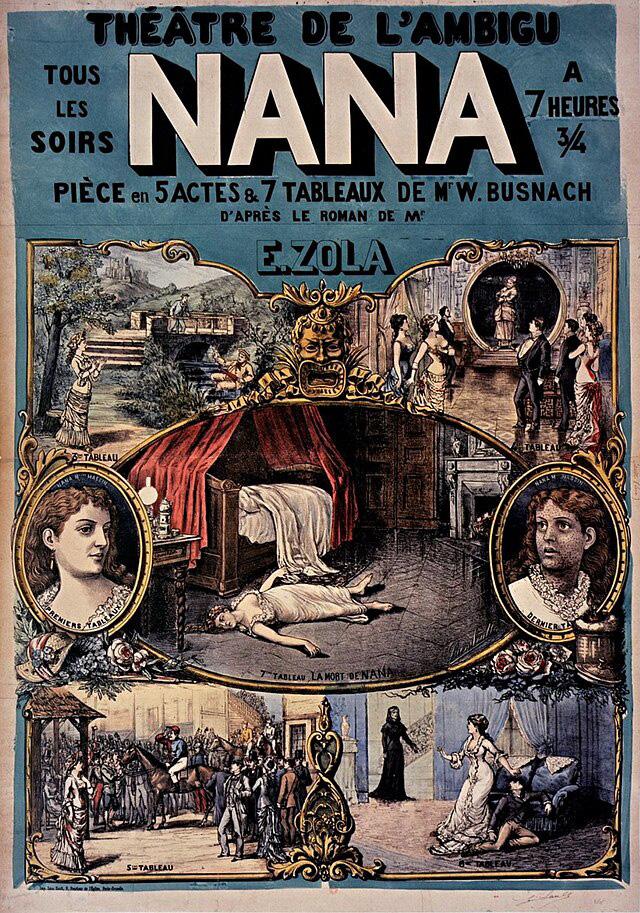
The sewer metaphor continued with the naturalist movement of the later 19th century. In 1877, Emile Zola published L'assommoir(TheDrinkingDen) as the seventh book in his series LesRougon-Macquart . It is the story of Gervaise, a lowerclass woman who finds herself pushed into poverty after her husband loses the ability to work and turns to alcohol. She and her three children end up in a tenement building in the fictionalized Goutte d'Or, a lowly neighborhood on the outskirts of Paris. "Staircase B, dirty and greasy, both steps and railing with plastering knocked off and showing the laths beneath, was permeated with the smell of cooking. From each landing ran narrow corridors, and on either side were half-open doors painted yellow and black, with finger marks about the lock and handles, and through the open window came the damp, disgusting smell of sinks and sewers mingling with the odor of onions." The open sewer and pervasive stench represent the depths to which Gervaise has fallen. She metaphorically drowns in the labyrinth of filth that is the Goutte d'Or as she dies from starvation.4 Her child, Nana, is the title character in Zola's ninth book from LesRougon-Macquartseries. While Zola used Gervaise to expose the plight of the working class, he used Nana to mock the upper class and shine a light on their excess. Nana works her way out of the miasma of the Goutte d'Or to become an actress and courtesan. Though she is beautiful, she is crude and manipulative and leads several men to ruin. In the desciption of her body upon death, Zola alludes to the filth of the sewers: "Venus was decomposing. It was as if the poison she had picked up in the gutters, from the carcasses left there by the roadside, that ferment with which she had poisoned a whole people, had risen to her face and rotted it." In desiring Nana, who was outwardly beautiful but inwardly rotten, the haute bourgeois were ripe for mocking. Zola critiqued the Second Empire for being obsessed with showcasing wealth while being so corrupt and hypocritical under the surface that there was no substance. He argued that this lack of substance led to the defeat to the Prussians in 1870 and the collapse of the entire Empire. Both Hugo and Zola used the imagery of the sewer to expose the ugly side of society, its hypocrisy, luxury, and moral decay.
While the underground network of metro tunnels was meant to connect the city, the sewer was meant to expel all waste from it. The metaphor followed suit: the rising bourgeoisie population was like the new mode of transportation, flashy and fabulous. They felt they must separate themselves from the poor working class, and comparing them to the sewer system met that need. The marginalized population was dirty and needed to be carried out like waste. Hugo wanted the working poor to be accepted and valued members of society. He shows their common humanity. Zola uses the working poor to expose the hypocrisy of the upper class of the Second Empire. All superficial on the surface, and underneath, corrupt and heading to ruin. And these are just two authors. There are more. In BouledeSuifand other stories, Guy de Maupassant did the same thing in that he wrote the lowest class characters as the ones who were most pure of heart. Leon Bloy's LaFemmepauvrehas the protagonist living in the gutters but remaining spiritually pure. Not unlike the sewer system itself, the working class plays a vital role in the success of the city and its growth. The next time you're in Paris, I recommend reading one of these 19th century novels after you visit the sewer museum, Le Musée d'Egouts, and learn more about the history of this underground labyrinth.
Recently, there have been slews of think-pieces about the death of reading’s saucy sister, writing. Most screeds about the demise of the essay focus on the rampant cheating. While I can write about the crimes against integrity that AI has unleashed until the robotic cows come home, I don’t want to. No one likes a piler-on. But I do have some thoughts on the matter, so here’s my sad addition to the impassioned elegies for writing: Writing is important because writing is how we know shit. And yes, I know what you’re thinking, “No duh! I have read facts other people wrote down about stuff like electrons and diseases and Benjamin Franklin and how Benjamin Franklin’s penchant for French prostitutes gave him some diseases.” Look at what you know because someone took the time to write it down!
But that’s not what I mean about knowing shit. What I mean is I do not know what I think about anything until I write it down. For example, this very essay I am writing right now: I had no idea what I was going to write until I sat down to write it. Sure, I had some stray thoughts now and then, many of which I’ve forgotten and will no doubt remember as soon as this issue is published, but the act of writing allowed me to figure out how I felt about this topic. Writing is a generative process, an act of discovery. Speaking can serve a similar purpose; however, the listener can bemuse, distract, or deride. Writing, at its core, is a solitary activity. It is about what YOU think, not what you and a friend concocted over beers. Also, who can remember all the fancy things you say? No one, especially if said beers are involved.
But I am not special (I am a lotlike the other girls). Humanity’s been doing this writing thing for about 6,000 years. The first examples of writing were mostly cuneiform spreadsheets, replete with receipts and IOUs. Most contemporary writing is equally banal. Writing is for random things-to-do lists, grocery lists, the names of books we mean to read and appointments we need to make. Turns out our minds
are not always beautiful, but our lists, columns, and to-dos are a record of lives lived. Writing catalogues our greatness and inanity. And I like that.
But this isn’t what I am really worried about with the whole AI debacle. I don’t particularly care if our quotidian lists are outsourced to our AI overlords. I care about writing because it is the thread of yarn that allows me to navigate the labyrinth of my often befuddled consciousness. And this isn’t my “learning style.” I needto write ideas down. It doesn't mean I can’t think thoughtfully for extended periods of time, following complex lines of reasoning and surmising meaning from signs and symbols with the best of them. I’m no dummy! But writing is how I process these thoughts. It helps me string the pearls together, making complexity coherent and simplicity nuanced. It’s what English teachers want for every student; it’s what is being eroded every time a student denies herself the pleasure of wrestling her thoughts to the mat with words (sports metaphor!). Maybe the problem is teachers are not communicating the true aims of an essay.
The etymology of the word “essay” is from the Old French essais . It means attempt, trial, or endeavor. The Old French comes from the Latin exagium , which means "a weighing, a weight," and derives from the Latin exigere , "drive out; require, exact; examine, try, test." An essay is an attempt to understand something, the weighing of ideas, the testing of knowledge. It is the literary equivalent of showing one’s work in mathematical terms.
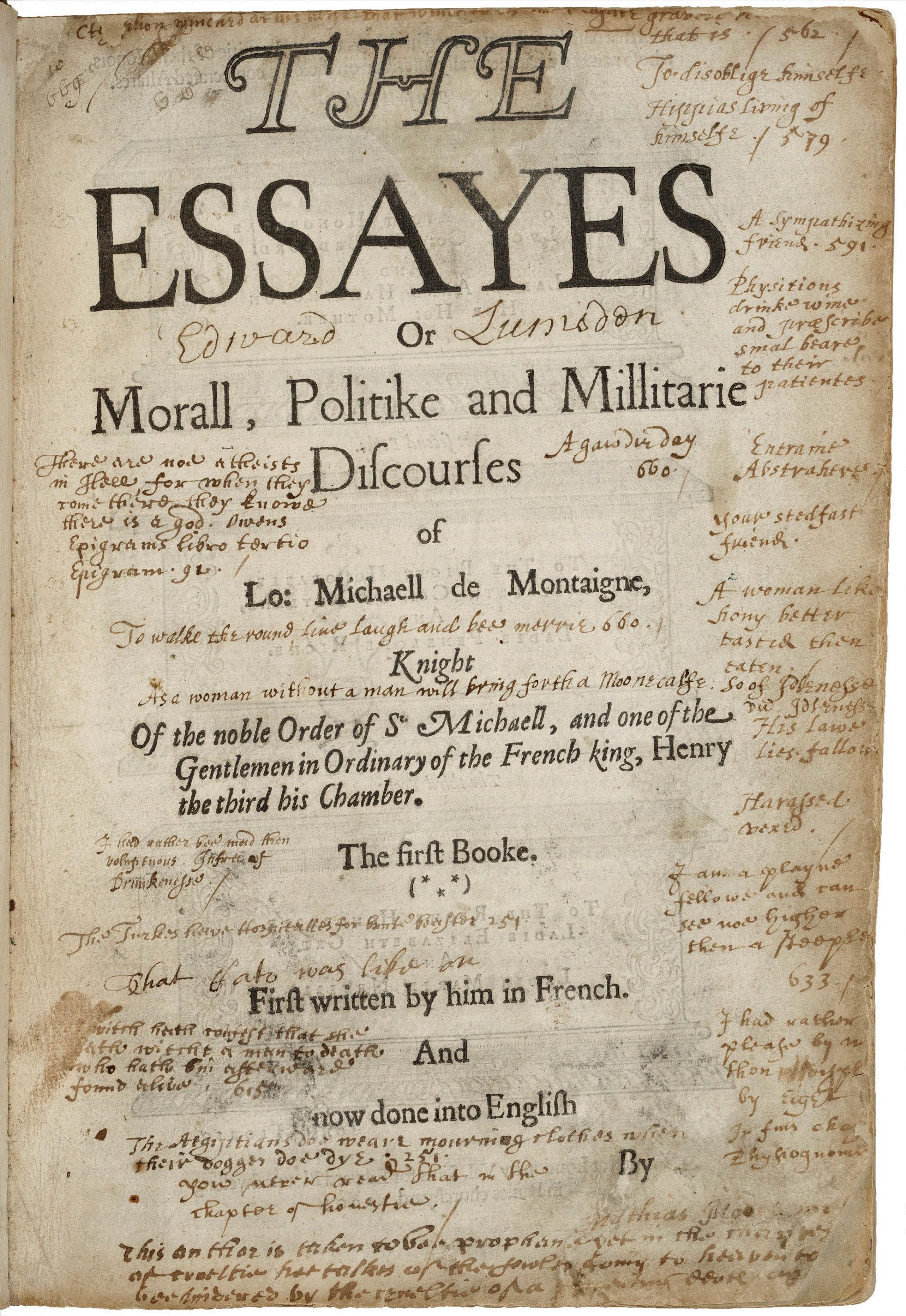
The essay, the word and the genre, is a gift from Michel de Montaigne. Before you admonish him too quickly for forcing the dreaded five-paragraph mediocrity onto students and teachers alike, note that his version of the essay is only vaguely connected to the essay of today. His essays were, to be frank, all-over-the-place. In his collection of essays, revised three times during his lifetime, he wrote on idleness, solitude, cannibals, thumbs, and moderation. Montaigne wrote with authority but not certainty. He was testing his ideas and learning about himself in the process, as seen here:
The process of making, or writing, the book made him. It is like the typical essays we assign in that we ask students to write about a topic, assert a point of view, and back it up with examples. Montaigne does this, but he also reminds readers that he may be wrong. There is an exploratory nature that our current writing instruction lacks. Perhaps if we stopped harping on the final, perfect product and focused more on writing as inquiry, we’d get more buy-in and less outsourcing.
Writing may very well go the way of other niche technologies, becoming the equivalent of listening to music on vinyl or buying a flip phone. There’s already a devoted cohort of fountain pen connaisseurs (I’m looking at you, Wes Anderson) and a wide variety of journal enthusiasts arguing over paper thickness and grids versus lines. But for the general population, Large Language Models have wreaked havoc on the writing process (emphasis on process). LLMs do the weighing and testing for you. Sure, you write the prompt to feed the machine, but it regurgitates rote, often sycophantic, globbedygook that deadens language and makes me want to pull out my hair when I read it in a student’s essay. More importantly, it doesn’t allow students to write themselves. Literally and figuratively.
But, as Montaigne would say, “What do I know?” If you give me a writing utensil and a piece of paper, I may be able to cobble something together for you.
Deyemon,genmon Beyond mountains, are mountains
by Linda Reno
L.A. Reno
Haiti: The site of the first successful revolution of the enslaved and IMF’s definition of “poorest country in the western hemisphere.” It is a landscape filled with mountains that fall right into the sea—a treacherous terrain surrounded by warm sun and long beaches. To move through Haiti is to practice a kind of “both / and” seeing, where clarity emerges not from resolution, but from holding complexity.
When I lived in Haiti from 2014-2019, I lived 26 miles as the crow flies from Portau-Prince, but with only one road connecting to the two cities, the distance grew to 90 miles and the total travel averaged 3 hours. Nothing in my experience of Haiti was ever linear—not the road to my home and not my departure. In November of 2019, I came to New Orleans for what was supposed to be a 6 months stay. The pandemic quickly closed the ports, global uncertainty led me to begin teaching and accidentally laying down roots. Then Haiti fell into the often repeated despair of political instability and gang violence. As such, I have never returned.
A part of me is still there, in a prison of nostalgia—swinging in a hammock at the base of a cliff, feeling the mountain air rush down to meet the ocean breeze, as if it were exactly where I sit now. My belongings are still there. I imagine my dishes are still in the cupboards, my guitar is stashed in a corner where the strings have surely turned to rust and the wood warped from the thick humidity, and my very awesome and very rare vintage neon bathing suit sits in a drawer almost assuredly having been eaten by the ocean air during the past 6 years. In many ways, it feels like I got out of a moving vehicle.
This work sits in that disorientation. It reflects a place that cannot be reduced to a single narrative and a departure that never resolved. This collection of images is the closest representation I can create of the images that swirl throughout my dreams, constantly trying to reconcile the punctuation mark that appeared in this chapter of my life without my own authorship. I imagine that Haiti will forever be irresolute in my life. I am not sure that I will ever be able to fully understand the story of those years. And somehow, that means that my personal experience of holding gratitude and pain for the country seems to make perfect sense in light of all that Haiti itself is.
L.A. Reno
L.A. Reno
L.A. Reno
L.A. Reno
L.A. Reno
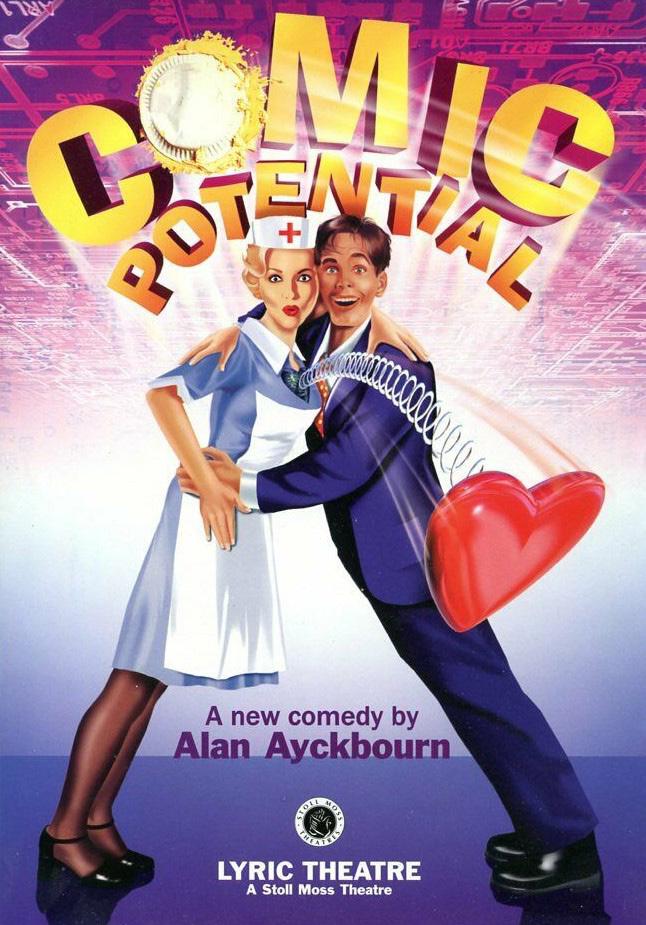
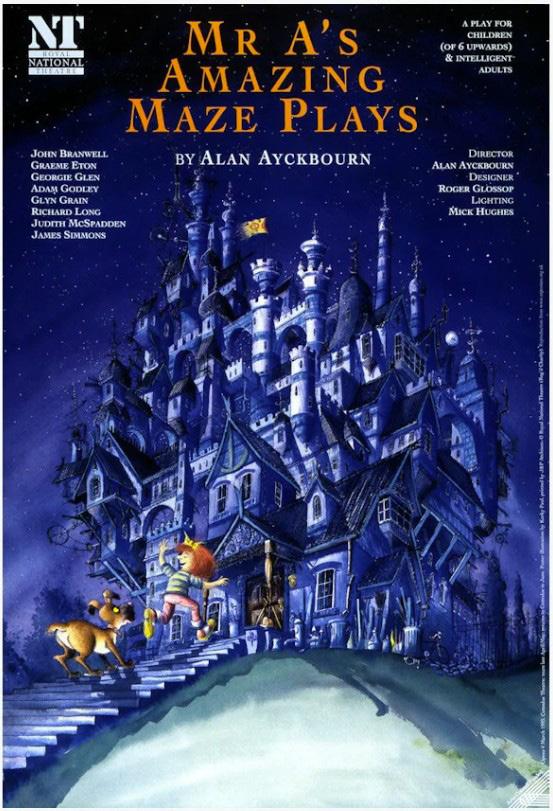
Mr. A's Amazing Maze Plays: An Appreciation of the Theatrical Invention of Playwright Alan Ayckbourn
by Sean Patterson
Alan Ayckbourn—or more accurately, SirAlan Ayckbourn—is possibly the most prolific playwright you’ve never heard of. From his first play, TheSquare Catin 1959, to his most recent, TheTrialofRomeoOscarscheduled for production in September 2026, he has written ninety-two full-length plays. If one were to factor in one-acts, revues, holiday entertainments, and the like, the total would be even higher. Nearly all of his plays have premiered in the quaint seaside town of Scarborough, North Yorkshire: his earlier plays at the tiny Library Theatre, Britain’s first theatre in the round; and his later plays at its newer, slightly larger incarnation, the Stephen Joseph Theatre.
But don’t mistake Ayckbourn for some fecund provincial dilettante. Over forty of his plays have gone on to major productions in London’s West End or at the National Theatre. Ten have even crossed the pond to find success on Broadway. Ayckbourn is also the recipient of numerous honors, including seven EveningStandardawards, a competitive Olivier Award, a lifetime achievement Olivier Award, a competitive Tony Award, a lifetime achievement Tony Award, two honorary fellowships, nine honorary doctorate degrees, and a knighthood from Queen Elizabeth II.
So, what is the reason for this success? Well, it isn’t Ayckbourn’s prolificity alone. In fact, one might argue that his prodigious output isn’t even thatimpressive. While he’s written nearly three times the number of plays of that most famous of English playwrights William Shakespeare, the count is nowhere near that of history’s most productive playwright, Spain’s Lope de Vega, who wrote a staggering fivehundred plays. (Diosmio!) Some of Ayckbourn’s staying power could also be attributed to his relatively accessible subject matter. His popularity in the 1970s earned him the not-entirely-accurate sobriquet “the British Neil Simon.” Like his American counterpart, Ayckbourn is particularly adept at scrutinizing (or skewering) middle-class people dealing with middle-class issues, such as petty squabbles, romantic entanglements, marriages both happy and un-, economic uncertainty, and generation gaps. Ayckbourn even shares Simon's knack for "writing funny," a talent for realistic, conversational dialogue that mimics the timing, rhythm, and inflection of a comedian’s delivery.
The secret to Ayckbourn’s success, though, lies not in how much he is like other playwrights (particularly Simon), but rather in how much he differs. Ayckbourn’s strength is not in repetition and convention, but rather in innovation and variation. While Simon did experiment with theatrical invention, he did so only sporadically; whereas Ayckbourn consistently pushes at the boundaries of theatre and what it can do, mining the creative tension that exists between the audience’s expectation and the playwright’s imagination. For example, in Simon's 1968 play "Plaza Suite," each of the three acts depicts a different story that unfolds in the same room of the Plaza Hotel in New York, with each set of guests being played by the same actors. Clever enough. Contrast that, though, with Ayckbourn's 1969 play "How the Other Half Loves," where we get the interactions of three couples at two separate dinner parties in two separate homes on two separate evenings that are depicted as happening simultaneously on stage. Both plays are funny; but while Simon is doing little more than running through the hotel guest register, Ayckbourn is doing a dazzling highwire act.
There’s something significant in this coupdethéâtre . The madcap theatricality of characters navigating two conversations at once, in two distinct locations depicted as a single place, on two distinct timelines presented as a single event challenges Aristotle's Unities, those foundational tenets that form the bedrock of Western drama. Derived from Aristotle’s Poetics , the Unities form a prescriptive basis for coherent theatrical storytelling, essentially dictating that a good play should have a single coherent plot (Unity of Action), happening in a single location (Unity of Place), and occurring in the course of a single linear period, usually one day (Unity of Time). This continual testing and challenging of the limits of theatre is a hallmark of Ayckbourn's writing; but his work is neither avant-garde nor esoteric. No, Ayckbourn is intentionally accessible and commercial—he wants to pack a house— and as such, his spirit of experimentation earns him a unique place within the canon of contemporary Western drama.
Playbill of the 1971 Broadway production of How the Other Half Loves, featuring Phil Silvers and Sandy Dennis
Another example of Ayckbourn’s refutation of the Unities can be found in what is possibly his best-known work: 1973’s TheNormanConquests , a trilogy of three fulllength plays that are typically performed in repertory (i.e., using the same company of actors for each play) and can be performed independently or consecutively and in any order. The plot involves a trio of siblings and their spouses who descend upon the family home to help care for their elderly mother, who’s unseen in the play. The title, while obviously a pun on William the Conqueror’s invasion of England in 1066, refers here to the character of Norman, husband of one of the siblings, who attempts somewhat ridiculously to seduce his sisters-in-law, Each play in the trilogy takes place in a different room of the house: TableMannersin the dining room, Living Togetherin the living room, and RoundandRoundtheGardenin the garden.
Playbill of the 2009 West End-to-Broadway transfer of The Norman Conquests at Circle in the Square
Individually, the plays are fairly standard romantic-comedy fare; but together they reveal an ingenious intricacy. Each play provides subtext for the other two, and the events in each influence and trigger subsequent events in the others. The full story only comes into focus when the pieces are taken as a whole. Also, while they occupy the same basic time period—Saturday afternoon through Monday morning—they proceed along distinct individual timelines, dovetailing only occasionally. While there are moments where the timing of the plays does intersect, they are not meant to fit together in a minute-by-minute correspondence. So, again in defiance of Aristotle, Ayckbourn gives us one overarching story told in three different plays, three different locations, and three distinct but overlapping timelines.
In 1999’s House&Garden , Ayckbourn takes his NormanConquestsexperiment a step further: two separate plays, Houseand Garden , written to be performed not only in repertory but simultaneously and in adjacent performing spaces. Here, the timelines of the two plays are identical; a character exits one play and enters into the next. The actors perform the two plays in real time, and the overarching action is continuous. The audience, however, unable to be in two places at once, can only see each play individually. Again, Ayckbourn has played a sleight-of-hand trick with Aristotle’s Unities. What the audience perceives as a single plot in a single place in a single timeline is actually two plays in two places with two (or perhaps four) timelines: two discontinuous timelines for the audience, who must experience the plays on two separate occasions; and two continuous timelines for the actors, who must play both plays simultaneously at each of those performances.
Ayckbourn also experiments with subject matter. While many, and arguably most, of his plays are about the middle class and their First World problems, Ayckbourn frequently wrestles with questions of technology as well, both in its influence on our present and its implications for our future. In 1987’s Henceforward , a reclusive composer engages with the outside world primarily through a video camera embedded in his front door. From the safety of his isolation, he navigates a troubled relationship with his daughter by practicing his interactions with an android facsimile of her, rehearsing real-life emotions through artificial intelligence. In Callisto5/Callisto#7(both 1999, the latter a rewrite and expansion of the former), two children stranded on a space station and bereft of their parents are cared for by an onboard computer system that simulates challenging situations for them to learn self-reliance. ComicPotential(1998) explores what happens when android actors, or “actoids,” begin to have spontaneous and authentic emotional responses; is it a
Promotional art from the 1999 West End premiere of Comic Potential
defect, or is it a step toward artificial intelligence becoming more human? It is not too much of an overstatement to label Ayckbourn as a visionary, as each of these plays presages technological advances and ethical questions that have become a part of our everyday lives.
Finally, Ayckbourn experiments with the structure and continuity of plot, opening up the narrative to chance, redirection, and unpredictability, often derived from an audience-interactive element. In SisterlyFeelings(1979), the flip of a coin in the first scene determines which way the play will unfold. IntimateExchanges(1982) is a series of interconnected short plays with a choice during the climax of each scene that changes how the remainder of the play proceeds. In the 1983 murder mystery ItCouldBeAnyOneofUs , the murderer is determined during a card game played in the first scene. Roundelay,from 2014, comprises five interrelated plays that are presented in an order determined by the audience before the performance begins, a choice which affects the flow of information and the dynamics of the relationships within the plays. TheMusicalJigsawPlay(1994) even foreshadows the recent escape-room craze as it follows a one-hit-wonder pop group trapped in a failedartist limbo they can only escape by solving puzzles with the help of the audience.
The most ambitious of these may be Ayckbourn’s first play written specifically for family audiences, 1988’s Mr.A’sAmazingMazePlays . Suzy, the young protagonist of the play, discovers that her new neighbor Mr. Accousticus is a “sound stealer”; and the plot kicks into high gear when Accousticus steals the bark of Suzy’s dog Neville. To retrieve it, Suzy and Neville must venture into Accousticus’s house, a labyrinth of over thirty rooms. Hidden within the rooms are other sounds that have been stolen, such as bird calls and the voices of other characters. With the help of the audience, Suzy and Neville must work their way through the maze trying to find the missing sounds; but once their quest is complete, they must work their way back in the exact same order, again with audience assistance, to avoid crossing paths with Mr. Accousticus. It’s a play, it’s a treasure hunt, it’s an interactive maze, and it’s different every time, due to the audience-dictated path through the labyrinth.
Ayckbourn’s canon as a whole is a funhouse maze of plays that spans nearly seventy years and mirrors middle-class society with all its foibles and fears. Ayckbourn himself is a playwright-contortionist, twisting the Aristotelian Unities here and turning them inside out there. He’s a carnival seer, gazing into his crystal ball and telling us our future with gallows humor. He’s a crowd-pleasing improv comic, taking the audience’s suggestions and seamlessly incorporating them into his act. Ultimately, he’s a crafty sideshow barker, beckoning us into his theatrical labyrinth, knowing how much fun we’ll have going into his plays and how changed we’ll find ourselves as we make our way out.
Poster art from the 1993 National Theatre UK production of Mr. A’s Amazing Maze Plays
When my wife and I got engaged, we lived over a thousand miles apart. We had begun dating during graduate school at Baylor University (Sic ‘Em, Bears) and needed time after graduation to plot the next steps in our lives, hopefully together. For her, this meant applying to PhD programs; for me, it meant trying to piece together some sort of productive life. I got a job at Starbucks that would allow me to transfer to wherever she started school. I had also quietly made the decision to give teaching high school history a try and would start a teacher training/licensure program wherever we landed. Amid the making of these plans, working multiple service industry jobs while living in my parents' basement, and surviving a longdistance relationship, the Catholic Church entered the chat. My fiancée, a cradle Catholic from San Antonio, told me that I did not have to convert to Catholicism for us to get married, but that she wanted to be married in the church, and would I be willing to look into it?
Later that year, I met with her priest on a trip to San Antonio. Straight out of central casting—with a thick Irish brogue and a long history in Central Texas—he greeted me with coffee and told me about the Rite of Catholic Initiation for Adults (RCIA). “You will not be Catholic at the end of it, but you will know whether or not you will become Catholic,” he told me as I shook his hand at the door. I was more or less sold before I even knew what I was getting into. Little did I know where my introduction to Catholicism would lead me, namely to living in New Orleans and writing about
Jimmy Buffett, 1980, Wikimedia
the music of Jimmy Buffett. So, like Father Connor, I will tell it to you straight. You may not be converted to a fan of Jimmy Buffet’s music by the end of this talk, but you will know the deep debt that his music owes to Roman Catholicism.
Born in Pascagoula, Mississippi, on December 25, 1946, James William Buffett was exposed early on to the influence of the Roman Catholic Church. He was educated by Jesuits at both St. Ignatius High School and McGill Institute and served as an altar boy. Buffett repudiated his Catholic upbringing after high school and would rarely speak of religious matters directly in his nearly seven-decade career, but when he died of complications from skin cancer in 2023, the outpouring of remembrances included numerous Catholic media publications and more than a few Parrot Heads of the cloth. These eulogies and appreciations provide much of the grist for my particular mill, that Catholic theology and culture informs much of Buffett’s music and stands as one of its more edifying and worthy legacies, but it is also kind of a stretch, right? Author Terry Mattingly explains this tendency to see connections where there aren’t any in a roundup of Catholic-tinged articles on Buffett’s passing. He writes, “there’s a thing that most Catholic media outlets do that drives me crazy, and it’s this: when a celebrity dies, or is in the news for any reason you’ll start to see stories pop up making tangential connections between that person and the Catholic faith.”1 And that is what I am here to do today.
Listenwhileyouread!
This endeavor began, for me at least, by accident. A friendly piece of advice: when you see Ross and Josh sitting in the Faculty Center, know that if you sit down, you are now part of the scheme; you are in on the plan; you are already well on your way to the Keys. I thought it would be funny to quote a papal encyclical or St. Augustine
1 Terry Mattingly, “Thinking a little bit about Jimmy Buffett, the laid-back Catholic troubadour?”, GetReligion. org, September 9, 2023, https://www.getreligion.org/getreligion/2023/9/7/thinking-just-a-little-bit-about-jimmybuffett-the-laid-back-catholic-troubadour
alongside “Cheeseburger in Paradise” or “Come Monday”—the ludicrousness of that “Margaritaville” in the sky. You will hear later today about the crass materialism of the Buffett business empire, but the funny thing is that there is more of a connection. Much like the inescapable nature of Jimmy Buffett’s music and empire, Jimmy himself could not escape his Catholic past and incorporated it, unconsciously or not, into his music. Stephen M. Metzger, the assistant Scriptor of the Vatican Apostolic Library, put it this way: “Jimmy Buffett has been able to tap into the ennui of the late twentieth- and early twenty-first-century society, in large part because of his upbringing in the distinctively Catholic culture native to the former French territories of the American Gulf Coast from New Orleans to Mobile (his Hometown).”2
My fiancée got into several PhD programs. The two best offers were from The University of Nebraska at Lincoln and Tulane. I remember calling my mother and telling her that we were going to be moving to Lincoln, Nebraska, or New Orleans, and she just laughed and said she was excited to finally go to Mardi Gras. In the fall of 2013, I began RCIA at St. Francis of Assisi on State Street in Uptown. The deck was firmly stacked in favor of the Church. RCIA was as much a guide to living in New Orleans and an explanation for how the city worked as it was an exploration of Catholic theology. I was also back in a classroom after having worked full time for a year, and I was insufferable. I did all the reading and asked for book recommendations. All the old Yats who spent their Tuesday evening helping with the class just chuckled and told me to try the king cake. By Easter in 2014, still vaguely hung over from my first Mardi Gras, I came into communion with the Church. I had not thought about Jimmy Buffett once. But the Lord, it is said, moves in mysterious ways.
2 Stephen M. Metzger, “The Catholic Imaginings of Jimmy Buffett,” Church Life Journal, The University of Notre Dame, July 27, 2018, https://churchlifejournal.nd.edu/articles/the-catholic-imaginings-of-jimmy-buffett/
Metzger makes a compelling argument for a regional and cultural connection between Jimmy Buffett and the Catholic Church, but this argument has a fundamental flaw: the rank materialism of Buffett’s music. The Key West bard’s whole thing was about seeking pleasure and avoiding work, enacting the Boomer dream of making a career out of being on vacation. What could this possibly have to do with the self-discipline, denial, and uptightness of the largest Christian church in the world? Portuguese author Fernando Pessoa opens his posthumous masterpiece
TheBookofDisquiet , “I was born in a time when the majority of young people had lost faith in God, for the same reason their elders had had it – without knowing why… most of these young people chose Humanity to replace God.” Much the same could be said of Buffett’s rejection of his Catholic upbringing in favor of a life of leisure, dominated by the pleasures of the blender and the beach. But Pessoa is distrustful of the new elevation of the flesh he witnessed in early twentieth-century Europe: “The cult of humanity…always struck me as a revival of those ancient cults in which gods were like animals or had animal heads.”3 The legion of “Parrot heads,” those particularly devoted fans of Jimmy Buffett, might resemble the pagan rites Pessoa feared Europe was valorizing in the age of modernism. But within Buffett’s celebration of taking it easy, there exists a certain tendency towards community, fellowship, and imagining a better world that pushes Buffett’s hedonism, his celebration of the “cult of humanity,” towards a higher plane.
The belief that Buffett’s music merely celebrates excess is well earned, but at times, he
3 Fernando Pessoa, TheBookofDisquiet , trans. Richard Zenith (Penguin Classics, 2002), 11. Photo: Jimmy Buffet, 2008, Wikimedia Commons
becomes critical of his own escapism. Writing in “Cowboy in the Jungle” (1978), Buffett sings, “They’re tryin’ to drink all the punches/They all may lose their lunches/ Tryin’ to cram lost years into five or six days/Seems that blind ambition erased their intuition/ Plowin’ straight ahead come what may. / I don’t want to live on that kind of Island.”4 The Parrot Heads imagine a world in which they are freed from the rigors of work and financial gain, where the party never ends, and they never have to go home from the beach. The escapism of the sun, the sand, and the alcohol forms the basis of the Buffett dream, but here we witness the limits proscribed on the pleasures of the flesh from the source itself. There is something missing from the Buffett scene that makes it worthwhile, limiting meaningful connection with others.
As Benedictine College Theologian Richard White points out, “while some of Jimmy’s tunes have hedonistic overtones, his music is almost always ordered toward the building of genuine fellowship among friends.”5 Consider this line from “Changes in Latitudes, Changes in Attitudes,” “Ran into a chum with a bottle of rum and we wound up drinkin’ all night.”6 At first glance, this seems to be mere escapism, but the bottle of rum and the drinking all night are only meaningful in light of the fellowship of the chum that the singer has run into. Pleasure itself is meaningless, Buffett tells us, unless it brings people together, unless it is shared among a beloved community.
White continues, “Our propensity for new adventures doesn’t finally fulfill our
4 Jimmy Buffett, “Cowboy in the Jungle,” Recorded 1978, track 7 on SonofaSonofaSailor , Geffen 1978.
5 Richard White, “RIP, Jimmy Buffett: Confession of a catholic ‘Parrot Head’” Benedictine College, September 4, 2023, https://media.benedictine.edu/rip-jimmy-buffett-confessions-of-a-catholic-parrot-head
6 Jimmy Buffett, “Changes in Latitudes, Changes in Attitudes,” Recorded 1976, track 1 on ChangesinLatitudes,ChangesinAttitudes, ABC, 1977.
longing for enduring happiness but just indicates that we can’t shake this desire.” Buffett’s music reminds the listener that humans are “ordered towards lasting joy,” but despite their best, and often desperate efforts, it remains stubbornly out of reach. It’s “as if I am on my way to Margaritaville but can never quite get there on my own.”7 While it is easy to dismiss Buffett as selling “the side of leisure ‘otium’ decried by St. Augustine in his CityofGodas delight in ‘lazy inactivity (inersvacatio)’,”8 he rather resembles the St. Augustine of Confessions , when he wrote “You [God] made us for yourself and our hearts find no peace until they rest in you.”9 But, like, with more margaritas, I guess.
I was surprised by how much I enjoyed RCIA and the process of returning to church after years away. Having grown up in a mishmash of evangelical churches,
...that big Margaritaville in the sky
faith seemed like a labyrinth I had to escape in order to begin my adult life. But Catholicism aimed more at intellectual engagement and reflection than emotional appeal. I started reading Thomas Merton and Dorothy Day. Francis had just become Pope. It felt like the Church was reembracing a tradition of social teaching that had been buried, in America at least, by the “compassionate conservatism” of the Bush years and the perennial electoral power of the religious right. In 2016, we moved from Uptown to Gentilly and had to say goodbye to St. Francis of Asisi. As the election began to heat up, so did the rhetoric across the parishes of the NOLA metro area. A colleague from work called me one Sunday afternoon to tell me that he could no longer attend his church in good conscience. A plan was born. Each Sunday we would attend mass at a different church and then grab breakfast (brunch really) and discuss the pros and cons. There were no margaritas, but more than a couple bloody
7 White, “RIP Jimmy Buffett.”
8 St. Augustine, CityofGodXIX c.19, trans. H. Bettenson (Penguin Books, 1984), pg. 880.
9 St. Augustine, Confessions , trans. R. S. Pine-Coffin (New York: Barnes & Noble, 1992), pg. 21.
marys and a growing insight into the diversity of religious communities across the city. I remember the 70s style conversation pit altar of Pius X, the gospel mass at Leo the Great, and the world tour of priests we encountered, from Latin America, Southeast Asia, and Western Africa. Going from neighborhood to neighborhood, church to church, revealed something about the city I had never experienced. In the end, our families started attending Transfiguration of the Lord on Elysian Fields. We found a home, a community, and I still see that chum with a bottle of rum from time to time.
If we accept the premise that the hedonism of Buffett’s music orients his fans towards fellowship and community rather than merely “lazy inactivity,” it begins to align with Catholic social teaching. As Metzger argues, “Buffett’s, at times subtle, and at times overt, criticism of the modern obsession with work and the demands of the capitalist economy betrays a formation in Catholic teaching, especially the Church’s social thought.”10 Modern Catholic social teaching has its roots in Pope Leo XIII’s 1891 encyclical RerumNovarum , rejecting both socialism and laissez-faire capitalism. Pope Leo recognized the dignity of workers and the need for employers and governments to allow time away from work for religious obligations and the development of human potential. “After all, there is more to life than money and profit. It is clear that in a deep way Buffett internalized this outlook, which found expression in his celebration of the leisurely island and beach lifestyle.”11 Jimmy Buffett’s music allows its listeners “to become enamored with the radical goodness of life,” which is itself a central tenant of the Catholic faith, “that the world is so good that Jesus Christ embraced it in his very person and by embracing it redeemed it, so that we may enjoy it as a gift and a foretaste of something more.” But the “cornucopia of small epiphanies of the glory of creation” are not to be enjoyed in isolation and to the point of exhaustion; rather, Buffett’s music and attendant lifestyle “fosters a mode of being” that opens our hearts to meaningful connections with others, recognizing our desires are meaningless unless pursued through a desire to form meaningful community in anticipation of the heavenly community which awaits us: the big Margaritaville in the sky.12
My mother-in-law died in 2017. It was sudden, and it was hard, and grief is complicated. Things that once brought us comfort became the things that weighed
10 Metzger, “The Catholic Imaginings.”
11 Metzger, “The Catholic Imaginings”
12 White, “RIP, Jimmy Buffett”
us down. We quietly, and without much discussion, stopped going to mass. Then we had our first daughter, then COVID, and two more daughters, and apart from their baptisms, I rarely set foot in a church. The moment when Catholicism was a central part of my life had passed, faded into the background.
My daughters recently started CCD, and slowly, but surely, we have returned to semi-regular attendance at Mass. Our home church is the same building but with a different name. The priest who was there when I first attended Mass before a mediocre eggs bennie and two bloody marys has passed, and a new priest from Nigeria who used to work in the college ministry at UNO is there now. He has helped to reopen the school on the church’s campus and made getting young people in the doors a priority. He talks about poverty and social justice every Sunday, he makes jokes that get lost in translation, and there are more people there than I remember. I left, but the community stayed, it changed, shrinking and growing, and when I was ready, it welcomed me back. It truly pains me to say this, but as I sit here at 10:30 pm, writing this paper instead of grading AP US History projects, it kind of feels like Jimmy Buffett’s music.
The popular Youtuber Eddy Burback released a 58-minute video in July 2023 (only two months before Jimmy Buffett himself passed away) where he and a friend spent twenty-four days traveling over 9000 miles to visit all twenty-two Margaritaville restaurants in the country. The stay included a trip to Time Square, Universal Studios Florida, multiple Margaritaville resorts, and the tropical haven of Cleveland, Ohio. The video is well edited and funny. The general premise is that over the course of the trip Burback gets drawn into the cult of Jimmy, becoming obsessed with the inane lyrics and aphorisms plastered on the walls, wearing branded aloha shirts, and not acknowledging the way in which his life is spiraling out of control as he barrels through the dumbest road trip of all time. The joke lands.
Why has the music of Jimmy Buffett attracted such a cult following and created such a massive business empire? Does this not contradict everything I have been trying to say about the deeper meaning behind the rank materialism of Buffett’s music and business ventures? Italian Marxist philosopher and political theorist Antonio Gramsci famously wrote in his PrisonNotebooks , “The old world is dying, and the new world struggles to be born: now is the time of monsters.”13 A founder of the
13 Steven Mintz, “Gramsci’s Warning,” InsideHigherEd , March 17, 2025, https://www.insidehighered.com/ opinion/columns/higher-ed-gamma/2025/03/17/old-world-dying-and-new-one-struggling-be-born.
Italian Communist Party and fierce critic of Benito Mussolini, Gramsci spent the final eleven years of his life (1926-1937) in prison, filling nearly three thousand pages of notebooks with political theory and reflections on history while he slowly died behind bars in Rome. Gramsci’s phrase speaks not only to Europe’s descent into fascism and war, but to our own time as well. Author Steven Mintz explains what Gramsci meant by an interregnum : “When older sociopolitical and economic structures are collapsing, but no new stable order has yet emerged.”14 Many of the hallmarks of these transitional periods can be seen today in the rise of authoritarian leaders, economic crises, technological disruptions, and an increasingly deepseated crisis of meaning within culture. Since the fall of the Soviet Union in 1991 and accelerating after the financial crisis of 2008, Americans have been adrift on a sea of increasing uncertainty. Populist leaders of various stripes have emerged, fads and trends have transformed into social media scams, entertainment has been reduced to franchises cashing-in on endless sequels and reboots, and the meanings that anchored many of our lives have begun to drift away. And Jimmy Buffett’s business empire has grown exponentially. We will hear later about how the business of Buffett has grown and what it hides, as well as the enduring mystery of how this guy from Pascagoula became a media mogul. But it seems to me that the cascading crises of the 21st century compels people to seek community, care, and meaning. If we lived in easier times, the escapism of Buffett’s music and legacy might seem less tawdry, but the underlying Catholic worldview might also be less discernable. I’ve not discovered a newfound love for Jimmy Buffett’s music while writing this paper that started as a joke in the faculty center, but what I thought was a bullshit premise has made me reflect deeply on my own relationship to the Catholic Church and how, in 2025, it is positioned as an increasingly needed voice for social justice, community, and an escape from the grinding work and diminishing rewards of late capitalism. I’m not sure if Jimmy Buffett would be on board, but to quote the man himself from the opening lines of “Fruitcakes,” “mea culpa, mea culpa, mea maxima culpa.”15
14 Mintz, “Gramsci’s Warning”
15 Jimmy Buffett and Amy Lee, “Fruitcakes,” Recorded 1994, track 1 on Fruitcakes,Margartiaville Records, 1994.
A Piece on War and Peace A Book Review
By Mary Beth Ellis
Being a teacher of literature, I hesitate to admit it, but I would be remiss not to share the fact (and save you hundreds of hours) that Tolstoy’s Warand Peace , which I just finished in its entirety for the first time, gives an expanded meaning to the word “ennui.” I dutifully plowed through 30 pages a day, thinking that something would happen or that some character would get developed or that some piece of wisdom would be imparted on the next page, but alas, it ended where it began with the characters seeming more like a bland AI robot answering one’s phone questions about a broken burglar alarm than complex, interesting psychological humans.
No wonder the various film versions of WarandPeaceseem more like Alain Resnais’ lifeless “Last Year at Marienbad” or Becket’s never-ending “Waiting for Godot,” where the audience waits for two hours for something to happen. In the aforesaid oeuvres, one realizes later that this was the point: nothing really happens in life. But then WarandPeacewasn’t supposed to be an existential treatise or a Theater of the Absurd novel.
If Tolstoy wanted to comment on war or describe Napoleon’s frostbitten days in Russia, he didn’t need to spend 1,000 pages doing so. Victor Hugo did it better in his brief poem “The Retreat from Russia” (men warming themselves in the bellies of their dead horses…buglers frozen solid in their saddles blowing their horns…). The novel perhaps has some redeeming value to historians, but as literature, it falls flat. Where is the poetry of language, depth of passion, and sage interludes? One feels like it is an adult version of “Jack and Jill went up the hill,” albeit with names 15 consonants long. Remember Boris Pasternak’s Russian masterpiece Dr.Zhivago , whose unforgettable characters were Yuri, Tonya and Lara? Tolstoy’s main character, Pierre, didn’t even understand or perhaps have the moral fortitude to continue with the Freemasons.
Bottom line, unless you want to read Tolstoy’s never-ending novel as one in the unintended existential genre where the characters are as taciturn and lifeless as Meursaut in Camus’ TheStrangeror maybe as an example of literary figures lacking in humanity like Kafka’s giant roach in his Metamorphosis , don’t bother. If you want to read about Napoleon’s sojourn in Russia, Google it, or delve into Will and Ariel Durant’s StoryofCivilization.The whole experience sent me straight to Netflix as a means of literary rehab. By the way, don’t miss the 2025 rendition of Alexandre Dumas’ TheCountofMonteCristoon PBS Passport!
Stone Reader A Documentary Review
By Justin Gricus
A book review from TheNewYorkTimespublished in May of 1972 called Dow Mossman’s debut novel TheStonesofSummer“a defining book of a generation.” Timescritic John Seelye wrote that the “author may remain forever awed by the force and witness of his first production,” an unintentionally ominous line that, in retrospect, hints that Mossman may never be heard from again. A sentence later, Seelye sheds doubt and assures his readers that Mossman’s novel, “a whole river of words fed by a torrential imagination,” is just the beginning of his illustrious career. “This source,” Seelye concludes, “is not likely to stop flowing.”
Nearly twenty-five years after this review was published, Mark Moskowitz, the writer, director, and narrator of the documentary StoneReader , decides to revisit this work, a novel he tried to read as a young man but struggled to finish. The aforementioned Timesreview compares the complexity and density of the novel to the prose of Faulkner and Joyce and refers to the novel’s structure as “discontinuous” and “circumambient” and the writing as sometimes “lost in space.” When Moskowitz successfully finishes reading this novel, in 1998, he wonders if this once impenetrable text of his youth might just be the modern day masterpiece that Seelye once suggested. What else has this author written? What other treasures are waiting to be uncovered? As a devoted reader, Moskowitz yearns to read more of Mossman’s novels and immerse himself in the catalogue that surely must follow.
There’s only one problem: TheStonesofSummerwas Mossman’s first and last book. Mossman was not a Harper Lee or Margaret Mitchell of the literary world, a onebook author who achieved fame but never produced another prominent work. Stoneswas not a bestseller. It sold only 7,000 copies. Within a few years, the novel went out of print, and the publishing world never heard from Mossman again.
Moskowitz begins his quixotic quest to find out what happened to this author and his book, and to answer the fundamental question that he asks the many people throughout this meandering documentary: How can one individual produce such a profound and groundbreaking piece of art, and then just fall off the face of the earth?
It soon becomes clear that StoneReaderis less about a vanished writer and more about the redemptive act of reading. Books endure because of passionate readers, and Moskowitz refuses to let this novel disappear. He visits critics, publishers, literary agents, teachers, and others who may offer insights about Mossman’s fate. His journey begins in the late 1990s in the relatively early days of the internet, and part of the charm of this documentary is that it is from a time before Google searches and tracking apps made anonymity almost impossible. Instead of clicking buttons and staring at a screen, Moskowitz jumps in his car and traverses the country searching for clues, hints, and suggestions that may help him solve this mystery.
The film is constructed as a conversation between Moskowitz and these various connections to Mossman, who all collectively fail to explain Mossman’s disappearance from the literary world. Seelye remembers writing the review and reading the book, but has no idea what happened to this author. William Cotter Murray, Mossman’s teacher at the Iowa Writers’ Workshop, likewise is ignorant of Mossman’s fate. Moskowitz talks with the literary critic Leslie Fiedler about the onebook writer, authors who only wrote one book or who are remembered for only one (J.D. Salinger and Ralph Ellison are among some of the authors discussed). Moskowitz seeks leads about Mossman from Robert Gottlieb, the editor of Catch22 , Carl Brandt (Mossman’s literary agent), and Frank Conroy (the director of the Iowa Writers’ Workshop). All are dead ends, and they get Moskowitz no closer to completing his mission.
Finally, Moskowitz’s conversations with Mossman’s Iowa connections lead him to the author in his home in Cedar Rapids. Mossman is not a tragic figure who slipped into obscurity while dealing with regret and depression and a life of wondering what could have been. On the contrary, the “climax” of this documentary is remarkable because of how unremarkable Moskowitz’s fulfillment of his quest and the real-life Dow Mossman is presented. In his late 50s now and working various jobs, including as a welder and graveyard shift newspaper delivery driver, Mossman is genuinely touched by Moskowitz’s praise of Stonesbut also appears bemused and puzzled that his book still remains on anyone’s radar.
Inevitably, the conversation between Moskowitz and Mossman turns to favorite books and authors. Much like the rest of this documentary, Mossman rambles from topic to topic, author to author (Mark Twain, Thomas Wolfe, William Shakespeare) and during these final scenes of this documentary, it becomes clear that this is not a film about Dow Mossman at all. The film’s digressive structure shifts the focus from the writer to the reader. This is less a film about what happened to a one-book author and more a meditation on the readers who keep literature alive.
In one of the final scenes of the documentary, the writer Frank Conroy reflects on the act of reading, suggesting that readers are co-creators—that reading is not passive, but rather an active engagement of the mind. Dow Mossman is not the hero or central protagonist of this film and ultimately, this is not a documentary about a lost writer or an undiscovered masterpiece. This is a celebration of the ordinary reader and the enduring power of the written word to bridge gaps and create community. A snippet from a 1992 interview with Norman Mailer appearing in the final minutes of this work has the author fearing that the novel is currently dying not because of a lack of writers or talent or good stories, but because of the growing lack of an audience. Mailer wonders where the novel will be in fifty years. The number of people who read novels for pleasure continues to decline. Twenty years after its creation, this documentary is still a celebration of reading, but it also serves as a warning. TheStonesofSummerdid not become a best seller or classic. It survived because one dedicated reader refused to let it vanish. Books will still be written. The question remains, will there be anyone alive willing to read them?
The Crossword Puzzle
Click anywhere on the crossword to print. Enjoy over a favorite beverage or dessert. Solution (should you need it) on p. 109.
A LABYRINTH...OF CORN? Sean Patterson
ACROSS
1 Lane of Metropolis
5 Comedies' counterparts
11 Cossack commander
17 Concentrated fragrance
19 ______ Fables
20 Herbal tea infusion
21 Lessons in natural corn delivery?
23 Family name of three popes
24 Playwright Ayckbourn
25 Roxy Music co-founder
26 Legendary Memphis recording studio
27 Broadway's first Elphaba
28 Mrs. Simpson
30 Intent
32 McKellen, McEwan, or McShane
34 Princess of German legend
35 Kafkaesque nightmare of red tape and yellow corn?
40 Greeting in Portugal
43 Cartoonist Goldberg
44 Spanish rum
45 Rages
46 ___-de-rol
47 Class of ammonia-derived compounds
49 Rules of language
52 "Li'l Abner" character
54 2D surface
55 Prohibition
56 UK dictionary
57 Patron saint of throats
58 Four-time Tony winner Gaines
59 Hoppy brew
61 Flying mammal
62 Pooh pal
63 Exemplar of patience
64 Slangy interjection added to 56A in 2009, but now it's corny?
67 Color of diamonds in your hand
69 Last Theorem mathematician
72 "Dracula" director Browning
73 Cheery air
74 Lisa of the Louvre
75 Shorebirds with cryptic plumage
76 Toy store ___ Schwarz
77 Advanced degree
78 Scops
79 Auxiliary theorem
80 Marquis de Sade novel
82 The kindest rock, perhaps
84 Busy-bee link
85 Bygone Russian ruler
87 Zadora of "Hairspray"
88 "Good Luck, Babe" singer
89 CNN and NPR are part of it
90 Rona Jaffe novel (and Tom Hanks TV movie) about corny adventure games?
97 "Well, you're just ____ of sunshine, aren't you?"
99 Top left key on a keyboard
100 Sign of a B'way hit
101 It's just not acceptable
102 Willows
104 Grouch
107 Band booster?
109 Isle in the Hebrides
110 Eponymous music education technique
111 Dystopian novel about a cornfield courier?
114 Oozed
115 Salts
116 Appropriate for all gamers
117 Contributes
118 Mails
119 Wee bits
DOWN
1 Hedy ______ ("It's not Hedy, it's Hedley!")
2 Certain fruit peel
3 "Don't mind ___ do"
4 Financial guru Orman
5 Lentil dish
6 Actor Stephen and singer Chris, for two
7 Helper: Abbr.
8 Tiled art
9 H.S. test for college credit
10 Sound of a short fuse, maybe
11 Mist-ify
12 How a dedicated worker might work
13 Orgs
14 Corn you can really see yourself eating?
15 Shakespeare's Hathaway
16 Diamond of soft rock
17 Island nation of Micronesia
18 Scourges
21 Little follower of Mary
22 Coconut fiber
29 With 17A, a less concentrated fragrance
31 Taco Tuesday tipples
33 Water nymph 36 Purple yam 37 Rent
38 Garten of eatin'
39 Bargain bin abbr.
41 Unfinished business
42 Succulent gel or juice
47 Detachment
48 Paul McCartney's attempt to explain his love for corn?
50 Scenic Utah city
51 Black Sabbath worshippers
53 With "ni," a Mandarin greeting
54 BLT alternative
55 Arthur or Lillie
57 Outdo
59 Sounds from 21D
60 CPR pro
61 It's often paired with breakfast
62 Building wing
65 Saxophone-playing Muppet
66 Cap
68 German article
70 Record speed
71 Place to go for cuts and chops 74 Asserted
Knock
Gorse 77 Nabokov novel 78 Beauty lover
80 I have, in Paris 81 Draft pick
82 Pet spa stylist 83 Nice negative
86 Answers the officiant
91 M.C. known for optical illusions
92 Scary movie originally titled "Scary Movie"
93 "I'm Yours" singer
94 Treasury investments discont'd in 1980
95 Blakely of "A Nightmare on Elm Street"
96 Skyrocket
98 Avoids a service interruption
102 Greek peak
103 Took to court
105 Food in a food fight
106 Boxer Max
108 Funny start to fall
111 Wanders at JFK
112 Connections
113 Acting legend Hagen
The Proust Questionnaire with Claudia Winstead
This now-legendary questionnaire was inspired by French writer Marcel Proust, and for our fifth volume of TheBoothbyReview, we sat down with Claudia Winstead. Claudia has been teaching for 25 years at Country Day and 40 years total. She loves to read and travel. Next summer she will complete her tour of all 50 states and will then move on to all seven continents!
1. What is your idea of perfect happiness? Doing something fun with people I like
2. What is your greatest fear? A slow death
3. What is the trait you most deplore in others? Insincerity and disrespect
4. What is your greatest extravagance? Experiences - Travel and amazing experiences are worth the price if you are fully engaged in the event.
5. What is your current state of mind? Content - I’m happy where life has led me
6. On what occasion do you lie? To save someone’s feelings while also no one gets hurt (MMM, that tastes good.)
7. What is the quality you most like in a man? Being trustworthy
8. What is the quality you most like in a woman? Being trustworthy
9. Which words or phrases do you most overuse? OK
10. What or who is the greatest love of your life? My family
11. Which talent would you most like to have? Being an amazing pianist
12. If you could change one thing about yourself, what would it be? I wouldn't procrastinate as much.
13. What do you consider your greatest achievement? Still being good friends with people from different times in my life (childhood friends, high school and college friends, adult friends from the last 40 years)
14. Where would you most like to live? Near friends and family
15. What is your most treasured possession? Jewelry given to me by family
16. What is your favorite occupation? For me - being a teacher
17. What is your most marked characteristic? I try to always be honest.
18. What do you most value in your friends? Loyalty, a sense of humor, and the ability to laugh at yourself
19. How would you like to die? In my sleep
20. What is your motto? Whatever you are, be the best one there is.
Contributors and Staff
Mary Beth Ellis identifies as Sisyphus, the Greek God who was condemned for eternity to roll a boulder up a hill, knowing that it wasn’t possible to reach the apex. Sisyphus represents the existential metaphor of those who search for meaning, regardless of its ephemeral quality.
Sam Ferguson identifies with Sisyphus: Monday mornings are the bottom of the hill; Friday afternoons are the triumph at the hilltop; Sunday evenings are the rolling of the stone back to the bottom. And so on and so forth. Ad infinitum.
Justin Gricus identifies with Theseus—clever, creative, capable. While he occasionally finds himself wandering into traps and mazes, unlike Theseus, he has a habit of leaving his sword and thread behind.
Like the high school teachers George Caldwell in John Updike's TheCentaurand Pierce Brosnan's character in the PercyJacksonfilms, Howard Hunter also has an alternative mythological identity in Chiron, the tutor of heroes. But when he breaks into that mode there are plumbing issues.
The wisdom of Athena, the bravery of Heracles, and the dashing good looks of Apollo; these are characteristics that Josh Jackson and Ross Turner wish they could claim. More appropriately, they find themselves among Sisyphus, Pan, Hermes, and Orthrus, the great two-headed hound. What any of this has to do with Jim Henson’s film Labyrinthfrom 1986, they still aren’t sure. They’re just really happy to be here.
Betsy Kern is the Upper School Writing Coach. She is drawn to Athena's storytelling, creativity, and ability to guide others as they grow. Like Athena, she values intellect and imagination, helping others shape ideas into meaningful stories.
A total Greek myth fan girl, Jennifer LaCorte Marsiglia ‘97 is giving Minoan and Mycenaean singer with a strong proclivity for comedy over tragedy.
Like Orpheus, Mike Miley adores music, writing, and traveling to unfamiliar places but needs to stop looking back so much.
Lucas Miller once met Icarus at a tavern. Over several flagons of wine and ale, he learned many tales of adventure and even a few of Icarus’ famous father Daedalus, designer of the original labyrinth, and the daring escape from Crete. It was a joy to find so much in common with such a noble figure, to hear tales of history and myth first hand. With more drink came hunger. “Should we get some hot wings?” asked Miller. Silence followed. The two never met again.
Sean Patterson identifies closely with Dionysus, the god of wine, fertility, festivity, insanity, spiritual ecstasy, ritualistic madness, and, of course, theatre.
Like the Greek muse Clio, known on the streets of New Orleans as CL10, Linda Reno embodies an identity that is somehow both completely wrong and uncannily accurate.
On a good day, Pam Skehan channels the maternal grace and poise of Demeter and Persephone, enriching her family with beauty and bounty. In her lower moments, she has sympathy for Medea.
Shay Steckler fancies herself a sea nymph. While some days she's more of a Thetis, the leader of the Nereids, and some more of a Psamathe, the goddess of sandy beaches, at times she more closely identifies with Circe, the witch of the sea residing alone on an island casting spells. No matter the character, she is always feeling those salty Mediterranean vibes.
In 6th grade, Erin Walker desperately wanted to play Athena in the school Pantheon. Athena is the goddess of wisdom, wears a kickass helmet and has an owl. She was told she was playing Aphrodite, the vindictive sexpot. This choice has haunted her ever since.