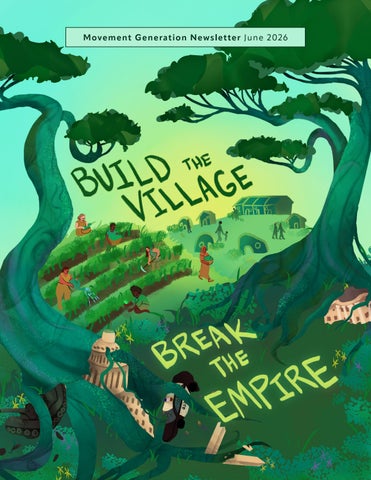
Dear MG fam,
While the US and Israel relentlessly drop bombs on Iran, Lebanon, and Palestine with our tax dollars and living costs skyrocket as a result, regenerative economies, collective healing, and liberation can feel like pipe dreams to many of our families, neighbors, and fellow workers. We are faced with the Herculean task of just surviving the constant physical and psychic attacks— let alone needing to build something that requires our wildest imaginations and all of our labor.
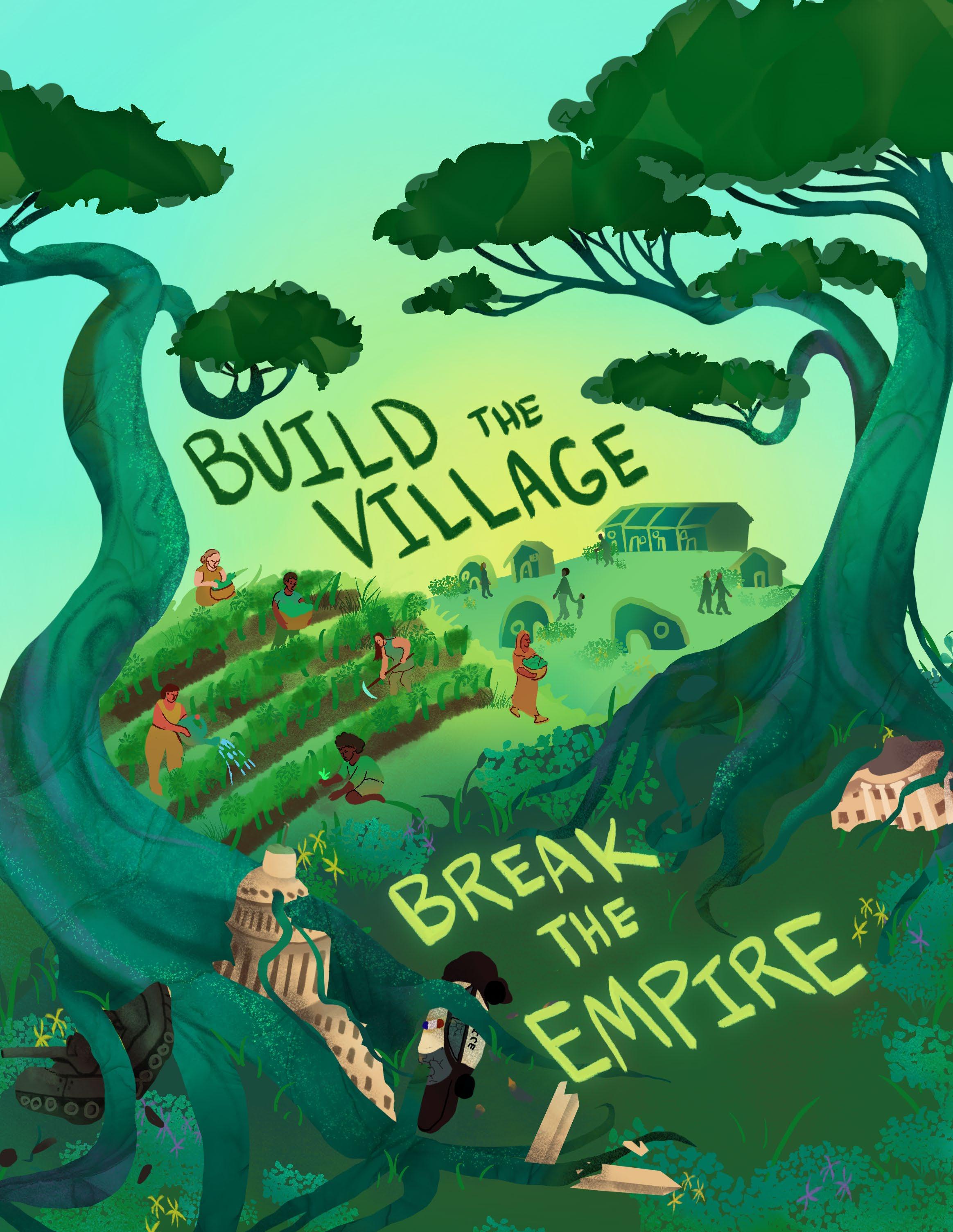
The truth is, everyday people have already been building the villages that we need to survive this crumbling empire; sometimes prompted when crisis hits their communities, but sometimes just because they see each other, understand the collective needs, and act intuitively. Neighbors do it whenever they lend tools or kitchen ingredients. Families and friends do it whenever they bring meals to a sick loved one. These informal practices could be a foundation for viable economic infrastructure—aka organized ways we care for home. In many cases people are already doing this work at a larger scale, like starting worker-owned cooperatives (see: Poder Emma), weaving healing justice networks (see: Healing Clinic Collective), or organizing neighborhood assemblies.
In this newsletter, we explore some of the ways we and our homies are building power by building the village. We are excited to bring back MG community dinners as a space to dream and create together. We’ve been quietly forming the Alliance for Land-based Mutual Aid with many of the land projects you may already know and love across our bioregion in the Bay Area counties. We dive into the Herring Protectors’ strategy of ceremony as sovereignty in Sheet’ká, Alaska. And much more.
Collapse is here. It’s been here for a long time for a lot of our peoples of the global majority. Some of us have been lucky and privileged to be insulated from the worst of it, and so we count our blessings and cling to our creature comforts. But luck runs out, and what’s left is our relationships. So what are the needs, what are the offers, and how can we weave those together in our communities to fortify us for the times ahead? Ideally, before the crisis escalates.
All empires fall. That’s just facts. When this one does, we’ll still be here creating and caring for each other.
Much love, Movement Generation

A Study in Summer
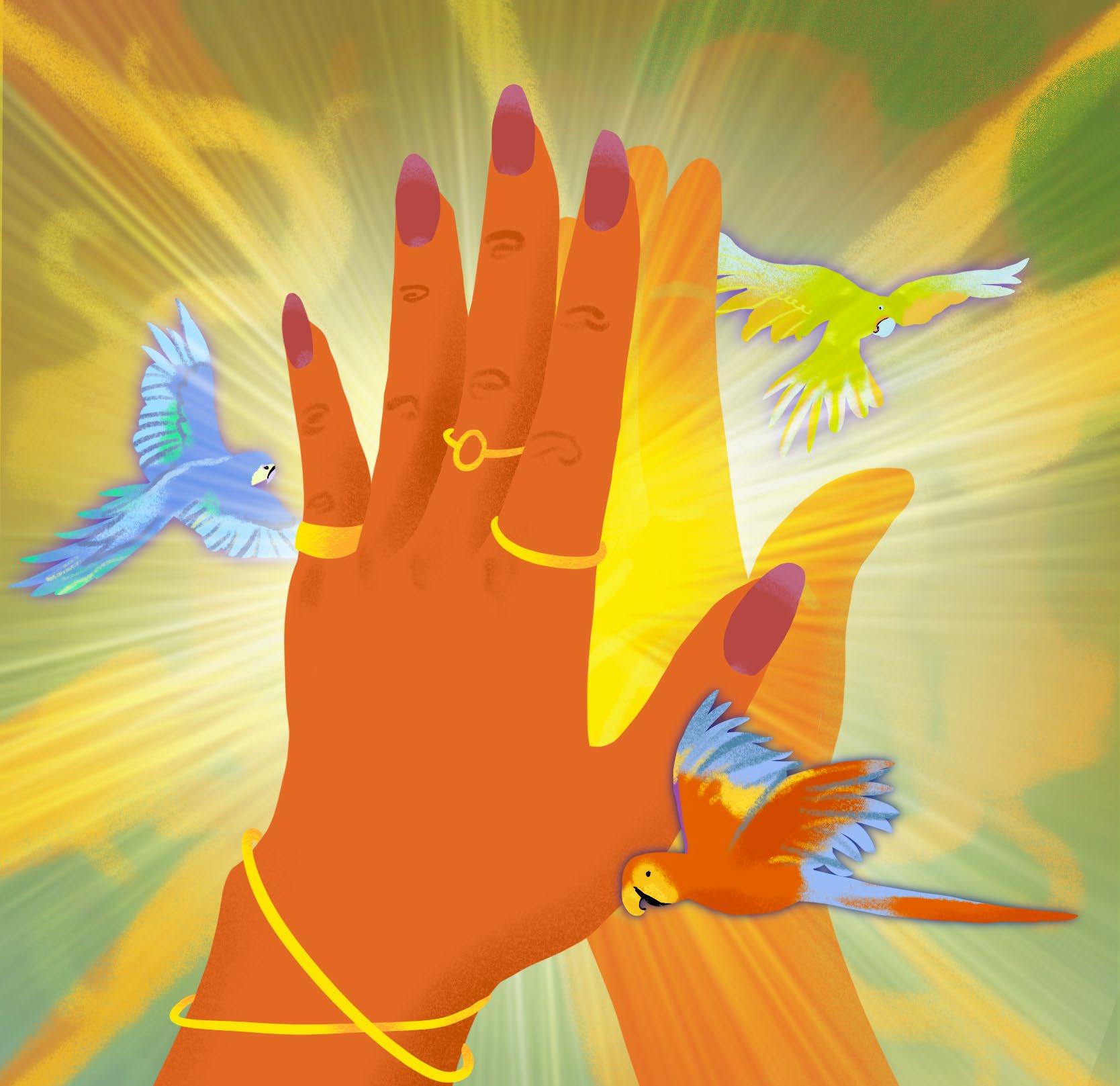
Her chest, hot cradle heartbeat, heat rising she spoke vibrations voice simmering reading bedtime stories to me The People Could Fly my eyelids fluttered imagining wings beating feathers singing generating heat
I dreamt tropical birds with fantastic hews
but my mom collected blues anchored herself. says she neglected me didn’t transfer enough of love’s energy but we shared a warm visual: my father’s face, a study in summer mouth subtleties, mythical smile— as colorful as Langston Hughes described sunset in the Caribbean:
“God having a hemorrhage blood coughed across the sky”
In Babylon, my dad’s taxi cab headlights illuminated people in winter a searchlight catching outcasts in storefronts, ghosts for breath green streetlights blurred by; he’d drive, drift, fly into dawn—radio blaring an old Wailers song that warbled like an empty stomach outside, ice-daggers dripped from the ledges they cut him open, reminded him of the faucet in his parish my mom drank from it those summer seasons the liquid danced on her lower lip
I come by way of two unruly dreamers who kissed the sky the sun scorched their eyelids like empire the heat rises but this endless summer is for study only human—dizzy with devotion—we dare and the village depends on that longing may our hearts expand to love and be loved.

Maddy Clifford is a writer, artist and organizer rooted in Oakland, CA. Her work explores Black feminism and economic disobedience in late capitalism. Recent releases include the climate-justice-focused hip-hop album downCHANTS, and co-creating the podcast What’s Pimpin’? with KQED Arts. Her writing has appeared in Prism Reports, Hammer & Hope, and Teen Vogue. She currently works as Creative Media Strategist at Debt Collective and is a CA for the Arts’ Grassroots Artist Advocacy program fellow.
Breaking Bread at the Gill Tract Community Farm
Photos by Abbas Khalid
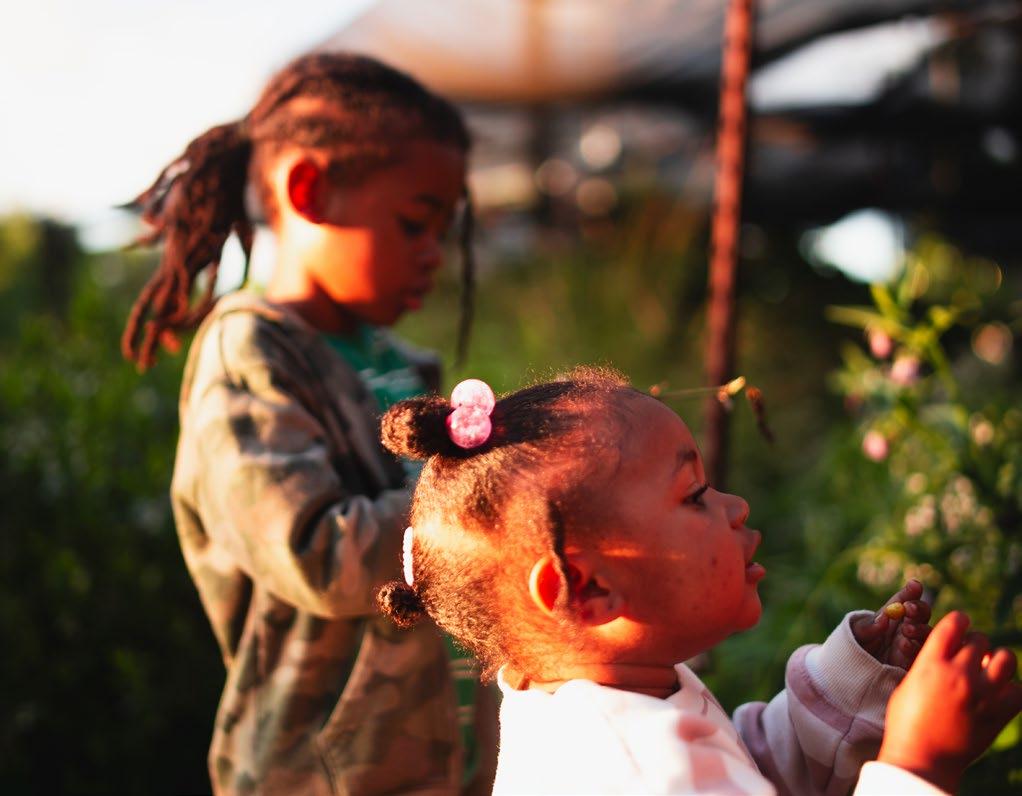
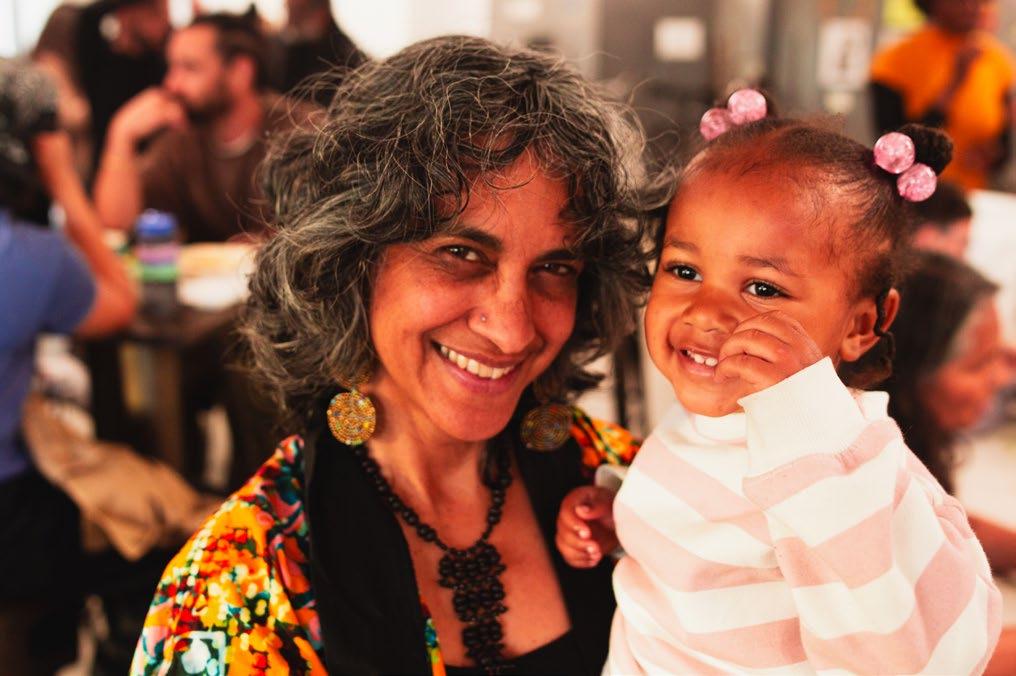
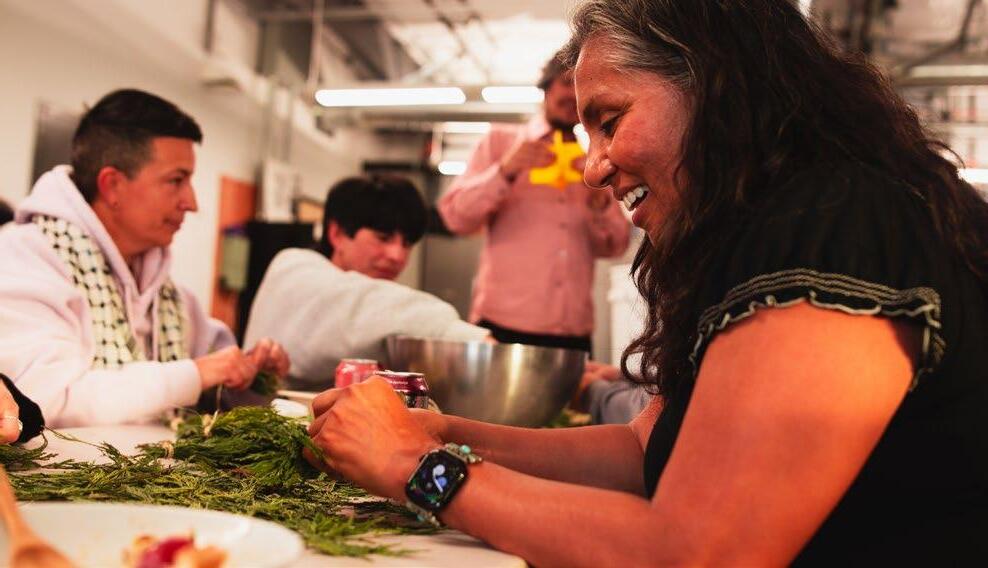
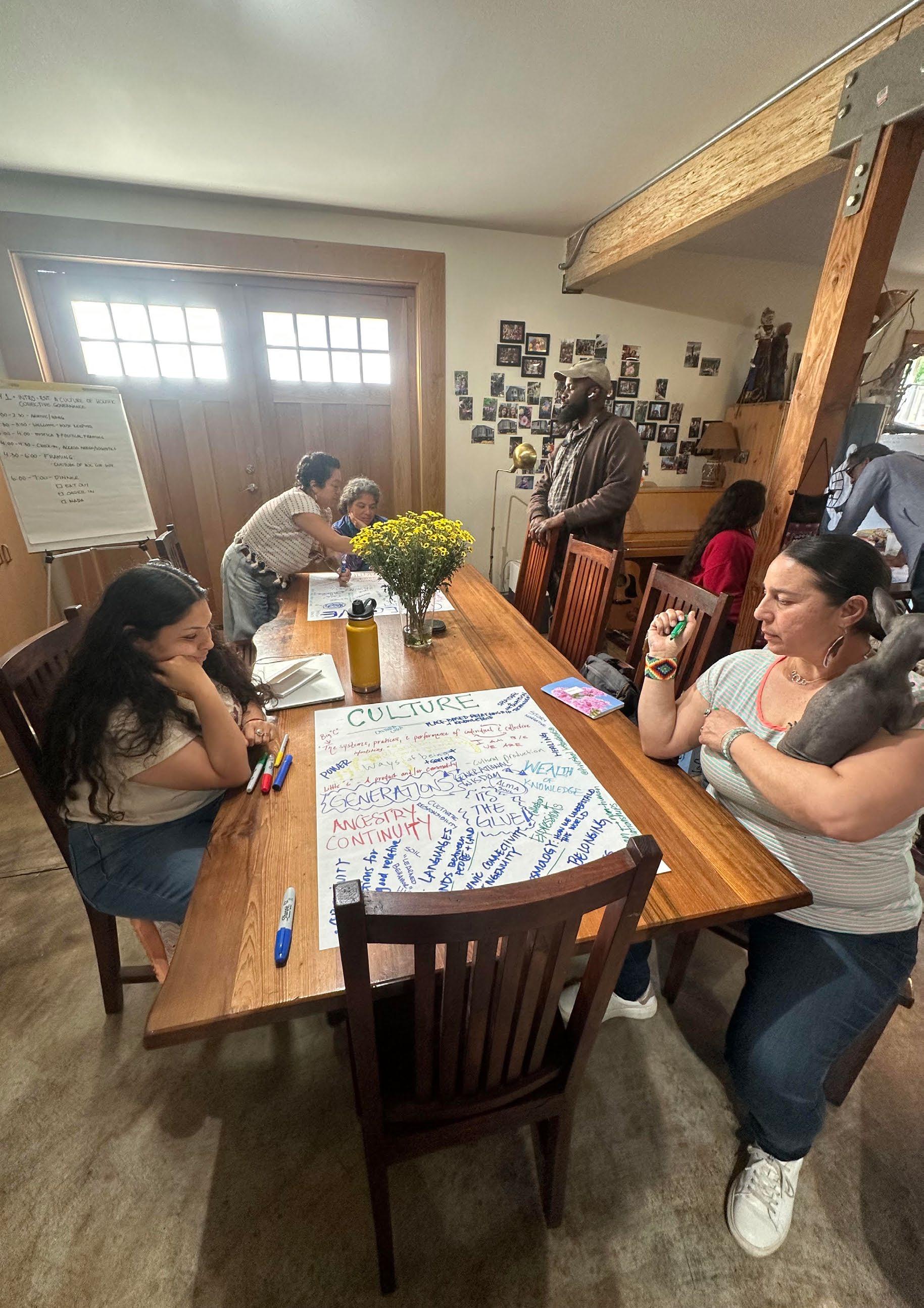
On a beautiful, balmy April evening at the Gill Tract Community Farm, a trusted circle of MG homies came together to break bread, share stories, and dream up how to best utilize our newly reinvigorated and reestablished bimonthly MG community dinners.
A plethora of pleasurable aromas graced our collective space—home cooked adobo, japchae, pozole, and salmon fritters were but a few of the many delightful potluck offerings. For the first time in years MG convened intimate kin into a dreaming and scheming potluck space. We bundled cedar together, cut and folded emergency preparedness zines, and reveled in strategic conversation—all towards getting in further formation and strengthening our shared acts of resilience, resistance, and reimagination.
The many kids present gleefully ran around the farm—in fascinating pursuit of the resident wild turkeys—while a colorful dusk embellished the horizon. It felt like a sweet homecoming on multiple fronts, as the day before our gathering was the Gill Tract Community Farm’s 14th anniversary. Born out of a community-led occupation in 2012, one in which MG participated, the GTCF is one of the many vibrant land projects in the greater Bay Area that showcases how a Just Transition is brought to life—through the daily practice of self-governance, collective care, and consensual labor.
We are very excited to continue hosting these community dinners, and hope to see you at one of them soon!
From Rapid Response to Permanently Organized
In March, Movement Generation organized an in-person community conversation called “From Rapid Response to Permanently Organized” together with our comrades from the Center for Political Education.
About 150 people came out on a Friday night to the Omni Commons to strategize together about how to build for the crises we know are coming. The dialogue built on the strong work of organizers in the room who’ve been building immigrant defense networks, organizing pods, neighborhood assemblies, and base-building organizations.
We heard powerful reflections from former MG collective member Michelle Mascarenhas, recently back from the Twin Cities, about how everyday people in Minneapolis leaned into collective care and self-governance in order to defend their neighbors against ICE abductions.
“People changed the fabric of daily life to meet the needs of the moment,” said Michelle. “Simply by putting in a fire pit, neighborhood intersections that had been vacant were turned into ICE watch hubs where neighbors shared communal care and
strategized. That is the kind of fabric we need to build so that in five to seven years, we’re in a radically different place.”
MG then offered four hypotheses, or provocations, about what it might take to move our communities from being in rapid response mode to getting more permanently organized:
1. The systems on which people depend are increasingly collapsing, making instability the new normal. No one is coming to save us.
2. Governing ourselves is the best (only) way to meet all of our needs and allows us to take bigger risks together because we know we’ll have one another’s backs.
3. We must provoke crises of jurisdiction, moving us from defense to offense.
4. We must liberate and leverage resources from left institutions to support emergent grassroots formations.
These provocations spurred lively debate and dialogue in a dozen small groups about how to not only fight back against the horrific violence of the state in this moment but to also coordinate and scale these efforts up into the transformative change we need long term.
Translocal Organizing:
How To Build a Movement of Movements
Photos by Brooke Anderson
Translocal organizing is autonomous and place-based organizing that is tied together across communities through a unifying vision, shared strategies, and common frames.
Being decentralized, we can create greater diversity, more rapid innovation, and can propagate ideas quickly. This requires some shared infrastructure, what we think of as connective tissue, in which the least amount of decision making and power should be held. Translocal organizing doesn’t necessitate super structures that direct local organizing, where the greatest amount of power should be held. Rather, translocal organizing operates with living webs of relationships through which information, interventions, and innovations can be shared. We seek to build to scale not by creating larger
and larger organizations with greater and greater power but by aggregating to scale— via uniting across places around our shared vision.
Rather than creating one big (and clumsy) bowling ball, we are amassing a weighty, yet nimble bag of marbles. This makes it harder to stop or disrupt us.
Though they may not use the language of translocal organizing, our siblings in the labor movement give us examples of how coordinated action across multiple bioregions can build power and deliver real tangible wins for our people.
In 2018 and 2024, UNITE-HERE—the union of 300,000 hospitality workers across the
U.S.—lined up the contract expiration dates of its hotel contracts so that workers across multiple cities could strike the same hotel chains at the same time, increasing their leverage by forcing their billionaire bosses to fight them in multiple cities simultaneously. In 2024, 10,000 hotel workers at 24 hotels across 12 cities struck Hilton, Hyatt, and Marriott hotels at the same time. The shared messaging was “One job should be enough”—a reference to how many house-
keepers work multiple jobs to support their families. They won wage increases, workload reductions, affordable health insurance, and protections against sexual harassment.
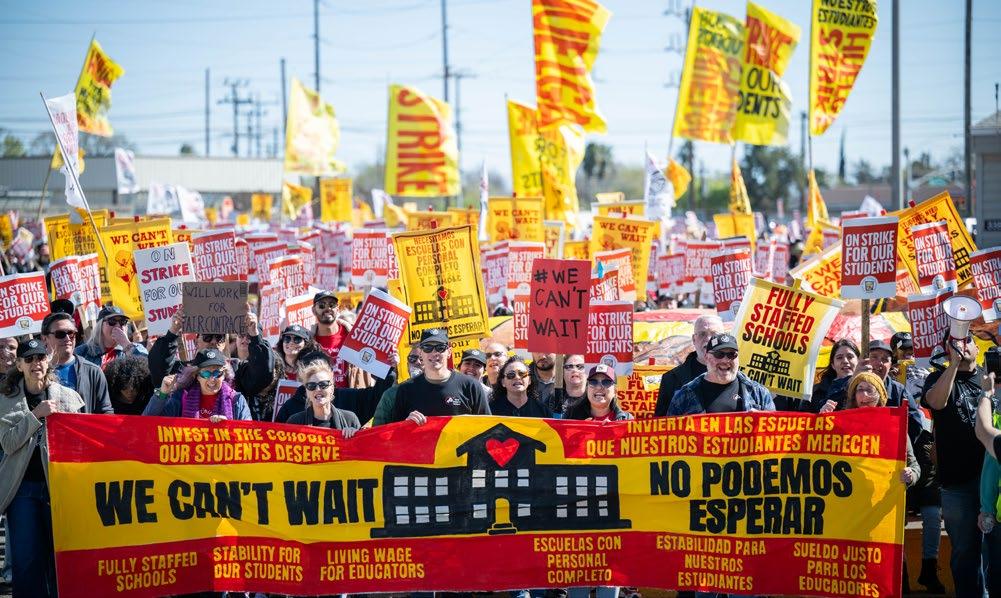
Likewise, 80,000 teachers in 32 California school districts serving 1 million students have aligned their contracts to expire this year, allowing educators to strike (or threaten to strike) in Oakland, Richmond, Los Angeles, San Diego, Sacramento, and San Francisco.
California Teachers Association affiliates have coalesced around shared bargaining
priorities under the umbrella of “We Can’t Wait”—a platform calling for smaller class sizes, more resources for the most vulnerable students, and competitive wages to keep teachers in the district.
The United Auto Workers (UAW) have used a similar strategy, negotiating master agreements against the “Big Three” automakers—Ford, General Motors, and Stellantis (formerly Chrysler). In 2023, the UAW led rolling but simultaneous “stand up strikes” against all three companies, using progress in bargaining with any one company to force concessions at the others and making it harder for the company to wait out any one local.
UAW President Shawn Fain has moved to expand this industry strategy to the larger labor movement, calling on unions to negotiate contract expiration dates of May 1, 2028 (International Workers’ Day) to enable the possibility of mass coordinated strikes across the country on May Day of that year.
By calling for this in advance, Fain and others are creating the conditions for unions to be able to legally strike together on May Day 2028 to create economic disruption to challenge rising authoritarianism. With two years to build toward this coordinated action, unions have multiple structure tests between now and then to see if the movement infrastructure we’re building can get us to scale.
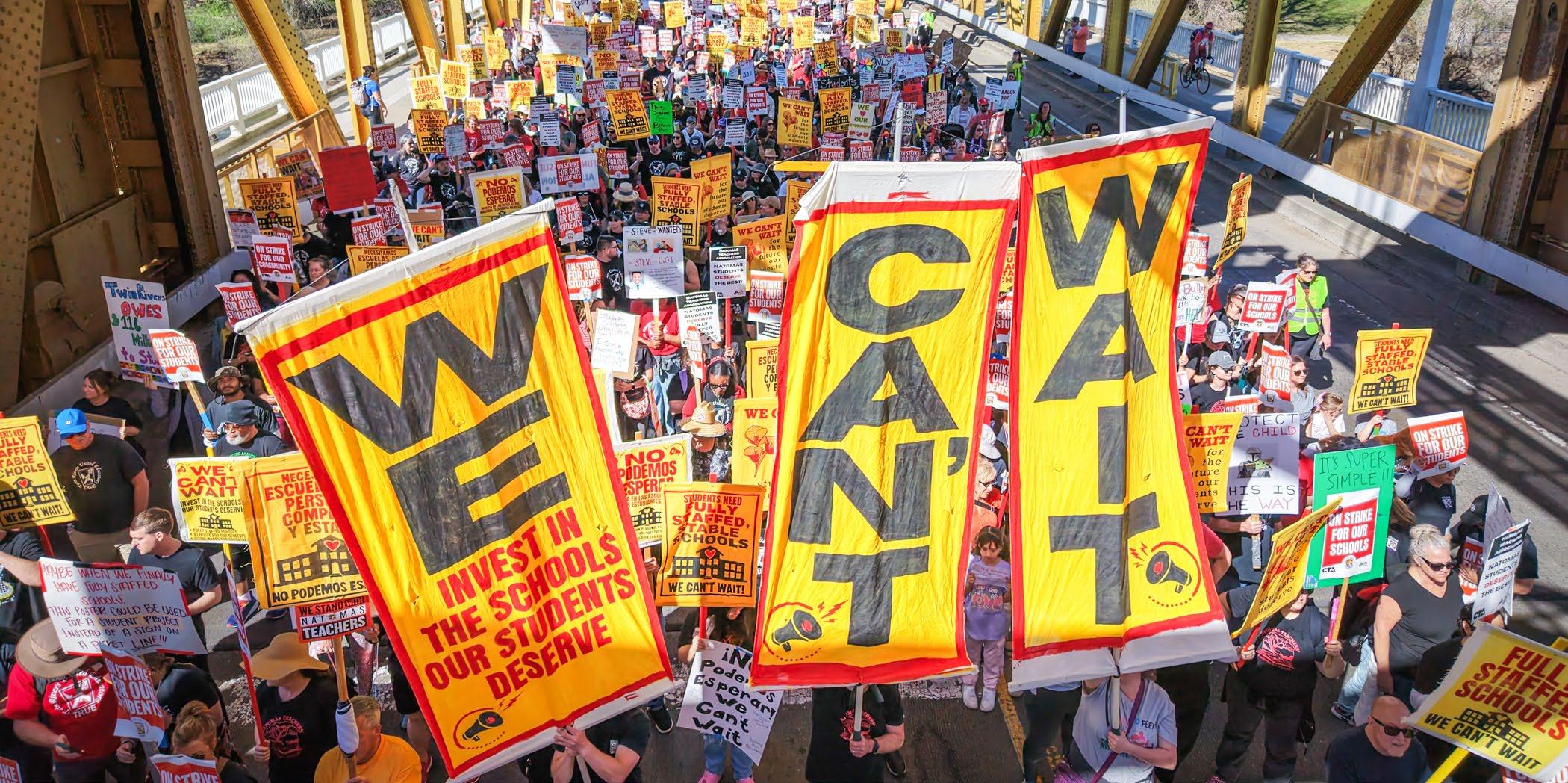
“Here was a call not to have a general strike, but to organize one,” labor historian Fred Glass writes. “Bridg[ing] the gap between the current unsatisfactory situation and the desired outcome with appropriate tactics, strategies, and inspiration—and above all, with a clear-eyed picture of and willingness to do the work needed in the time needed to do it.”
Labor and community groups tested their capacity this May Day to bring increasingly more people into escalated tactics like strikes, boycotts, and direct actions to undermine key pillars of support for the authoritarian project. Here in the Bay Area, in an action led by Sanjay Garla, the airport workers union SEIU-USWW shut down the departures level of SFO International Airport, leading to arrests of workers, labor leaders, elected officials, and faith leaders. Activists with Sunrise Movement shut down the entrances to the New York Stock Ex-
change. Teachers in Raleigh, NC held the largest teachers’ strike in that city’s history. In total, 5,000 actions took place across the country under May Day Strong’s platform banner of “No Work, No School, No Shopping” to advance demands to tax the rich, stop ICE and the wars, and protect our democracy.
As Daniel Hunter’s recent piece outlines, these actions help movements in each city build the muscle to eventually pull off even more disruptive coordinated actions—like this year’s January 23rd general strike in Minneapolis against ICE—when catalyzing events create the conditions to escalate.
By aligning our strategies, frames, and vision across communities—while retaining our place-based nimbleness, nuance, craft, and creativity—we aggregate power towards truly transformative purpose.
Crisis Of JurisdictiOn
The headlines in these tumultuous times are rife with questions about who has the authority to make which decisions.
Can the President wage war on Iran without Congressional approval?
Can the FBI seize ballots in Fulton County?
Can California ban face masks for ICE agents?
Photos by Brooke Anderson
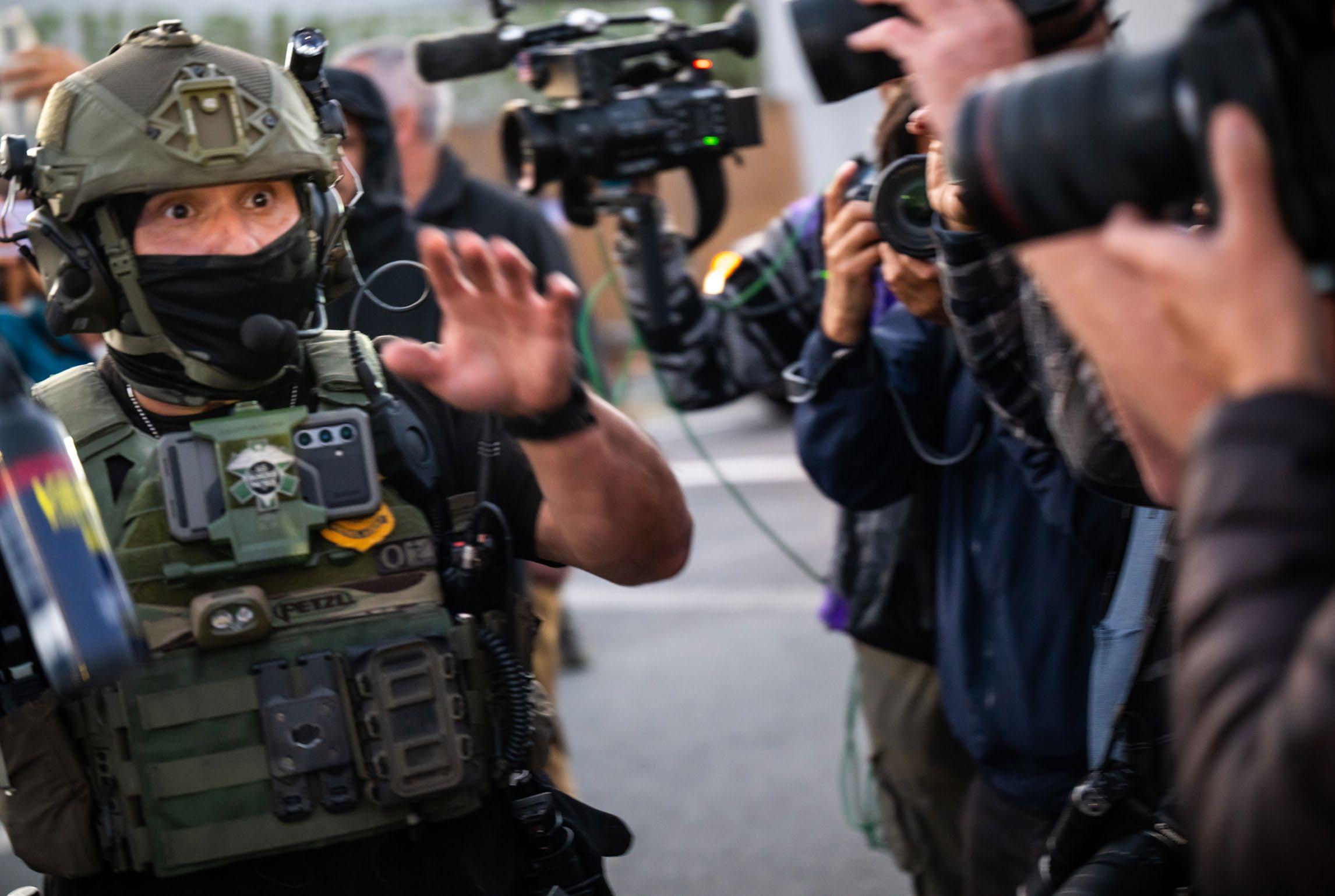
One name for these conflicts is crises of jurisdiction, and provoking these crises on our own social movement terms is a critical strategy forward. But first we need to understand what we mean by the phrase: crisis of jurisdiction.
Jurisdiction refers to a boundary or sphere of governance and who has the authority to exercise governance within that boundary. A crisis of jurisdiction then is the conflict that arises when one entity starts exercising governance beyond its boundary.
The right wing in the U.S. has historically employed this strategy more effectively than the left across many issues and geogra-
phies, often employing this strategy the way that the left should but isn’t. For instance, in 2010 during the Obama Administration, Arizona passed the blatantly unconstitutional (and thoroughly racist) SB 1070 “show me your papers” law to try to give state police the authority to enforce federal immigration policy.
The left is starting to provoke crises of jurisdiction. In Minneapolis, the Mayor signed an order banning federal immigration agents from using city-owned property for enforcement operations. And this January, the Oglala Sioux President Frank Star Comes Out banned ICE from the Pine Ridge Reservation, citing their sovereignty and tribal authority to ban non-tribal members.
The idea behind provoking a crisis of jurisdiction is to intentionally create a conflict over who has the right to govern our communities, and in the process, challenge the legitimacy of the existing governance that serves extraction, profiteering, violence, etc. It is also based on another idea, which is that rights are the basis of revolution. Rights are never taken away. They are either exercised or not.
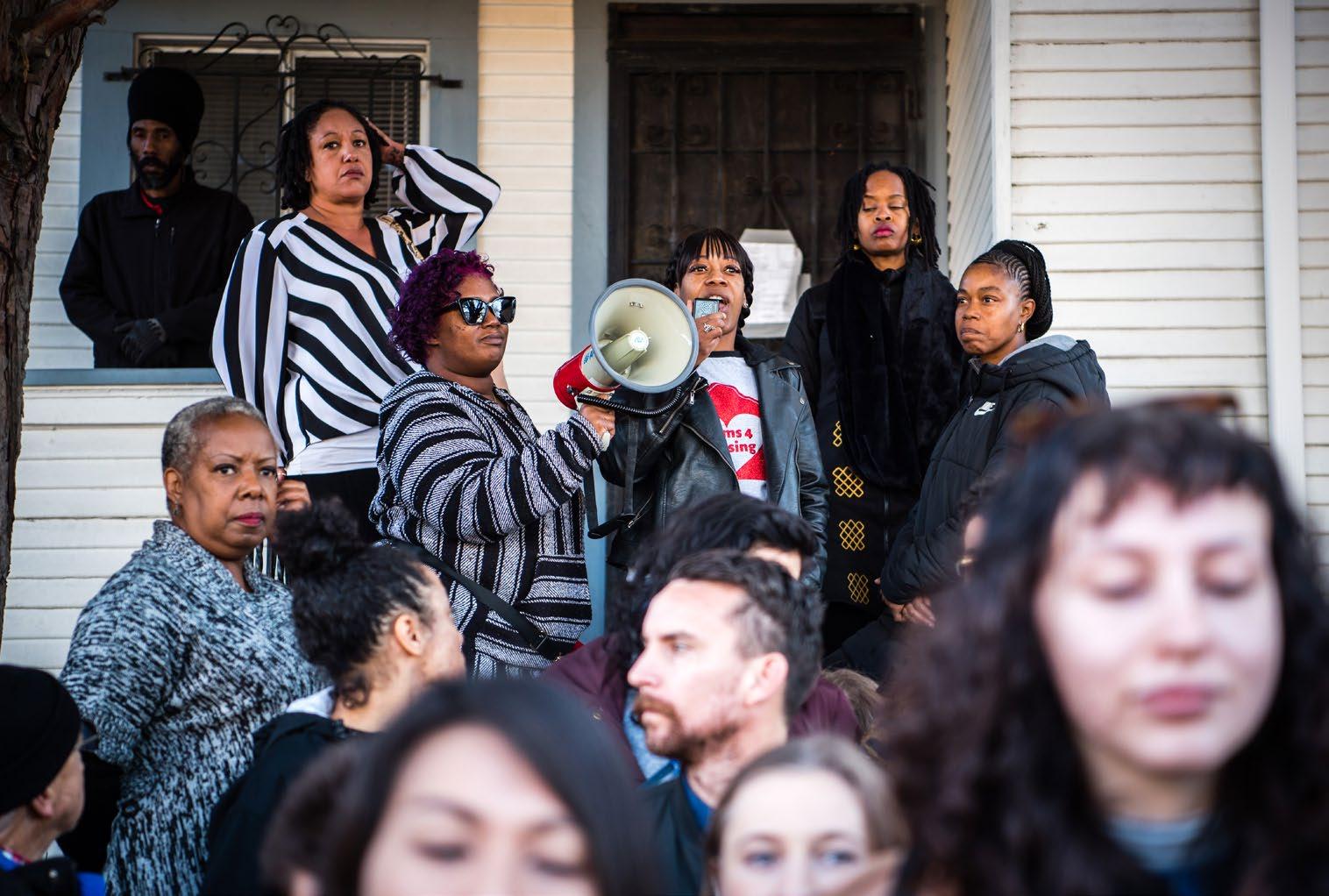
For example, if dignified housing is a right, then
taking empty housing to house our neighbors is exercising that right. It forces the state to either concede that housing is not actually a right, or grant access to the resources needed to reinforce that right. This is a different way of organizing than demanding, begging, pleading for housing. It says we will apply our collective labor to meet our needs. The state may choose to stop us, and they will have to use force to do so, making visible the violence it takes to enforce enclosures of the resources that people need to survive.
When single moms with Moms 4 Housing occupied vacant, investor-owned housing in Oakland to find shelter for their children, the County of Alameda sent an armored tank, dozens of officers in tactical gear, a battering ram, and a robot to evict them. The moms’ attempt to assert their right to housing forced an overblown military response that exposed the contradiction of having investors make money off vacant housing while families freeze in the street. The absurdity of sending in tanks to evict mothers forced elected officials, who otherwise would not have supported housing occupations, to concede support for the moms. The moms eventually brokered a deal to purchase the home through a local community land trust and create transitional housing for local moms.
Exposing these tensions needs to happen across all sets of people’s core needs, from health care to food sovereignty to education.
We’ve seen the Movimento Dos Trabalhadores (landless workers movement) in Brazil do this by squatting unused land, making it productive, and contesting for the title to that land. We saw farmers do it in Berkeley, taking some of the last arable land in the East Bay slated to be paved over, breaking through fences, planting food, and successfully forcing the University of CA to recognize the Gill Tract Farm.
To
provoke a crisis of jurisdiction, we have to first develop our collective capacity to self-govern and meet people’s basic needs
(to be able to say we can do it better than the state). Meeting our needs by working together both exposes the state’s inability to do so, and means that we can take bigger risks together because we know we have one another’s backs. This work starts with being in deep relationship with your neighbors. If you haven’t yet, seek out local neighborhood assemblies or organizing pods, or get your friends and neighbors together to start one.
MAThe Alliance For Land-Based Mutual Aid A L

AIn 2024 Movement Generation, Black Ag Tech, The Cultural Conservancy, North Bay Jobs With Justice, Occidental Arts and Ecology Center, People Organized and Demand Environmental and Economic Rights (PODER) SF, and Shelterwood Collective started cooking up the Alliance for Landbased Mutual Aid (ALMA).
Now consisting of MG, Black Ag Tech, The Cultural Conservancy, PODER SF, and Shelterwood, ALMA is a bioregional alliance of diverse community-led organizations in the greater Bay Area committed to land-based interventions towards social and ecological well-being for all. ALMA’s purpose is to support the long-term success of emerging community land-based work, and weave these efforts in the larger Just Transition movement.

Emerging Land-based Community Organizations
Land-based community organizations are part of a long lineage of mutual aid organizations and institutions around the globe. Land rights are at the heart of deep democracy and a Just Transition.
This community land access movement is flourishing. In the last five years in the greater Bay Area alone, more than a dozen land-based community organizations (LBCO) centering Black and brown communities, queer folks, disability justice, climate justice, and ecological regeneration have gained long-term access (either title or long-term leases) to substantial areas of land. These are in addition to the hundreds to thousands of acres of tribal trust lands in each county, and each LBCO has their own ways of relating to the Indigenous peoples from the lands they are on.
LBCOs are land projects that have an organizing component as part of their core work. This ensures that projects in the alliance are committed to political education and shifting analysis around land justice as it relates to intersectional movement issues including Indigenous sovereignty, Black reparations, housing justice, and more, with the intention to build solidarity across issue areas.
LBCOs can weave together into a translocal organizing network to advance Just Transition efforts that transform our economic system through the practices and power of place-based work.

The Purpose of the Alliance for Land-based Mutual Aid
For LBCOs to thrive, resilient ecological design is essential. The need for land-based design and management consultation has far outstripped the capacity of the small number of experienced practitioners in the greater Bay Area. MG and our partners launched ALMA to develop a resource hub of specialists in our bioregion that can offer the broad support to communities to succeed in starting and sustaining a land-based project.
To grow a community land practitioner network, we are developing an ALMA Training Program to prepare emerging practitioners in the skills to facilitate communities through a robust bio-cultural design process including site assessment, visioning, design, and implementation towards socially just, ecologically regenerative, and climate-resilient infrastructure and systems. The training program also emphasizes the relational work required to sustain land-based projects. Our pilot training program began with a grounding in governance (what is governance anyway?!), decision-making, and stewarding inevitable tension and conflict through the lens of healing justice.
ALMA also seeks to weave land-based Just Transition projects into a bioregional movement in which both ecological resilience and social justice are central.
As we support breathing life and structure into the Alliance, we continue being humbled by the needs of the people and the land, who we take guidance from. We are committed to this intergenerational life work to build relationships, resilience, and regenerative economies across Salmon Nation and neighboring bioregions.

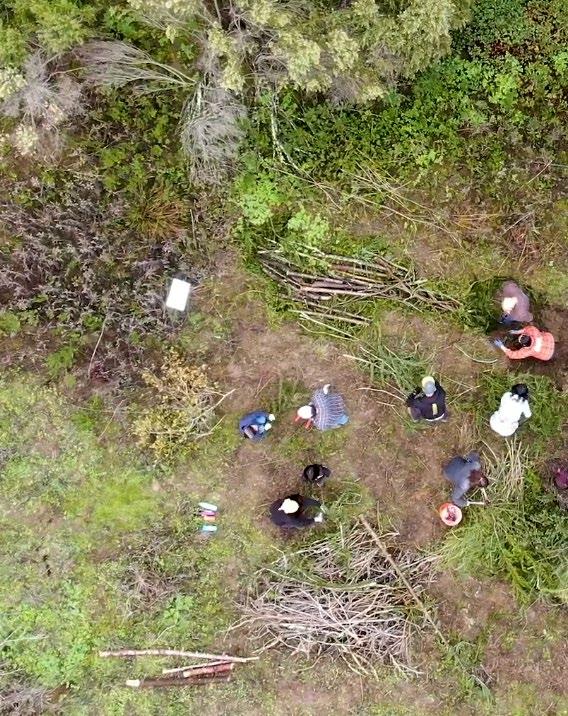
Becoming Grassroots Ecologists: Gullystuffing With Friends
In December 2022, only a few weeks after MG became official stewards of land in Bay Miwok Territory of the East Bay Hills, the atmospheric river sent a deluge of water onto the land below. The impact of the sudden rush of this precious life source onto the land was a small shock to us all: a landslide blocked off an access road. The event wasn’t surprising or unusual for hilly terrain that had been terraformed and mismanaged for decades. What it did remind us almost immediately was that we really needed to spend our first rainy season observing the way water moves—and wants to move—across the land.
Several rainy seasons and many consultations and nerdy deep dives later, we are understanding the dynamic water processes and the interplay between water cycles and the destructive patterns from colonization and settlement—including deforestation and overgrazing—that impacted these Bay Miwok hills. What we observed were incisions (called gullies) on the land created by water running across the surface rather than sinking into the soil as it would in a healthy ecosystem. The impacts of colonization depleted the soil and native plants and trees whose root stocks prevent soil erosion by supporting the water slowing, spreading, and sinking into the soil rather than hastily running off the hillsides.
Using a restoration technique called gullystuffing, we began the long road of repairing the incisions and restoring the hydrologic cycle on the land. We use biomass (tree branches and woody plants like Scotch Broom)
from our forestry fire mitigation work and methodically layer it inside the gullies. This stuffing process stacks functions, allowing us to put the beneficial biomass to work on the land rather than hauling it off to be recycled as mulch. At the same time, the stuffed gully becomes a structure that supports the slowing, spreading, and sinking of water on the land and prevents the incisions from growing deeper and wider and possibly becoming a landslide.
As diasporic people whose ancestors came to Turtle Island through kidnapping, forced migration, and imperialism, and also as people who have been detribalized from other Turtle Island territories, the MG collective has a core commitment to restore land, labor, and culture in the most honorable ways we can as guests on these lands.
While we organize folks and accompany them in making connections between the extractive economic systems imposed on us and the ecological crisis that we all find ourselves in now, we also engage in sharing earth skills in community as a way to organize ourselves towards ecological justice. It’s a long arc, and by putting our labor towards restoration and repair and doing that together, we live into the worlds we need right now.
Click here to watch MG and our crew of grassroots ecologists practicing gullystuffing.
(Video by Breaktide Productions.)
Creative Wildfire Propagation Fund
On the left, there are so many brilliant artists and cultural workers who have long been envisioning new worlds and making liberation feel possible. As traditionally under-valued and under-resourced workers, these artists are at the forefront of creating cooperative and regenerative economies. Rooted in social movements and Black, brown, disabled, queer, and working-class communities, movement artists know firsthand what their communities want and need, and they give form to it through images, music, culturally relevant gatherings, and more.
The right wing has long leveraged a strategy of relentless propaganda designed to discredit and overpower the social movement left, and divide and manipulate working people against our own interests. What if our movement directly resourced artists and cultural workers to freely create in response to moments of heightened political crises? Imagine the subversive images, songs, me-
mes, and creative interventions that could contend with right-wing narratives and make our visions irresistible.
This is what our Creative Wildfire collaborative with Art.Coop, Climate Justice Alliance, and New Economy Coalition had in mind when we launched our Propagation Fund this Spring! From the network of artists that we’ve built relationships with, we invited a select group to tap into a fund of $50,000 to create art responding to the political moment.
Nearly 20 cultural projects are in the works, some completed by the time of this publication. Some of the projects include:
• Anti-ICE abolitionist zines by kai lumumba barrow/gallery of the streets
• Short documentary film about housing justice in West Oakland by Adamu Chan in collaboration with People’s Programs
• Comedy and poetry Instagram reels by Maddy Clifford bringing levity to the issue of student debt
• Multimedia healing justice offerings from Coco Peila, Assata Goff, Angelique Axelrod, Crystal Clarity, and Cece Carpio
• Wearables by Lily Xie in collaboration with 18 Million Rising
• Abolitionist social media content, music, and prints by richie reseda, JJ’88, and fera of Question Culture
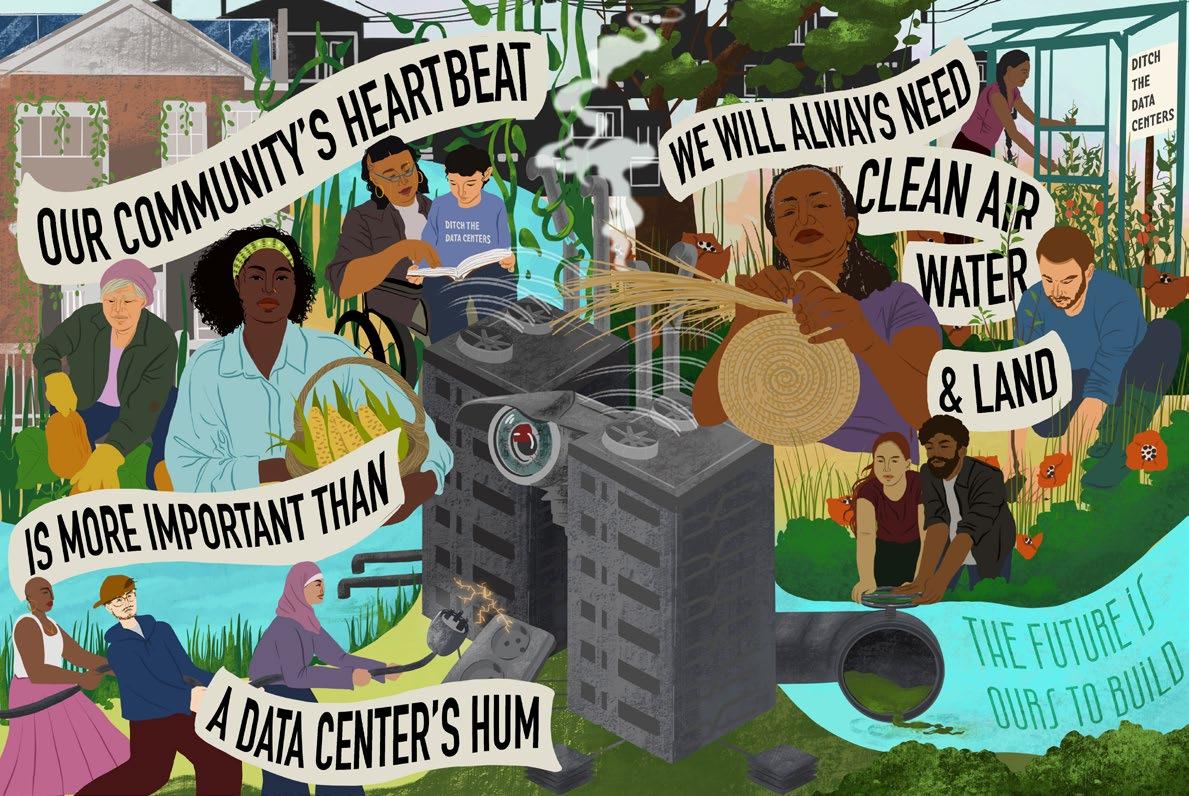
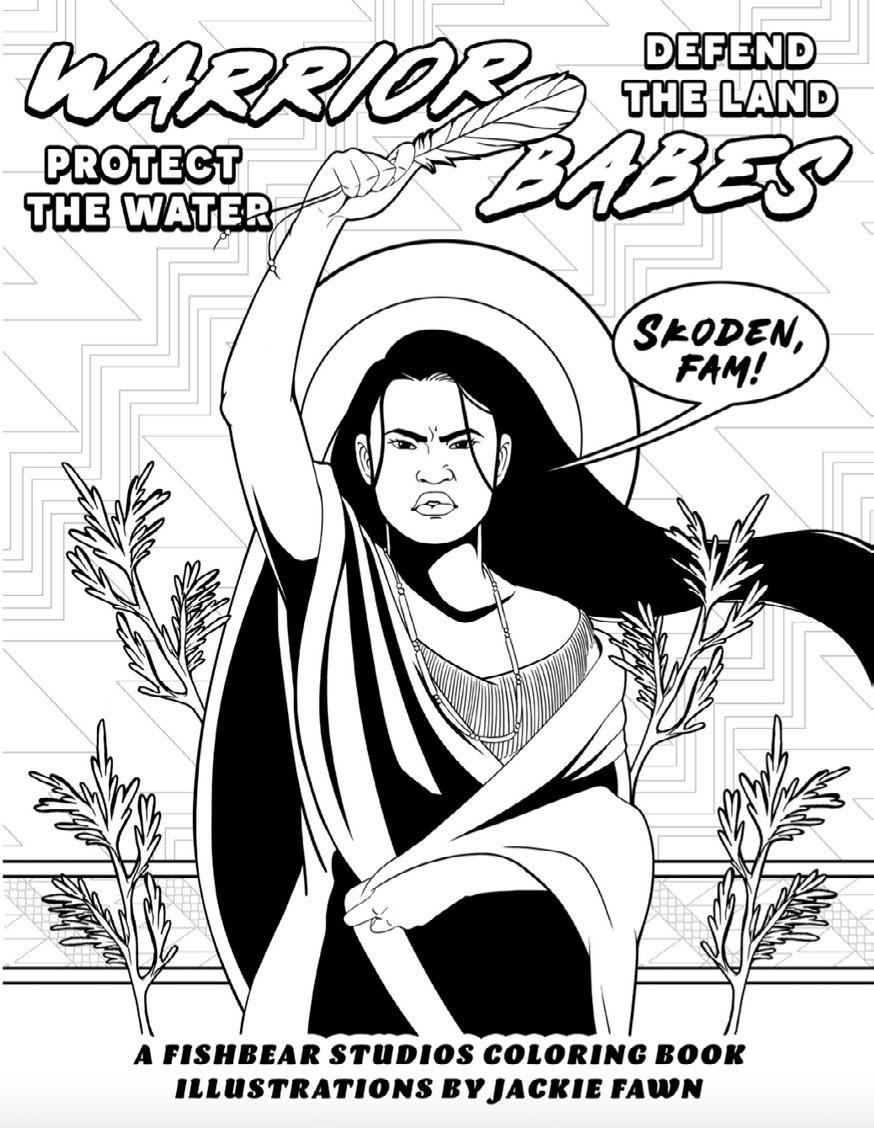
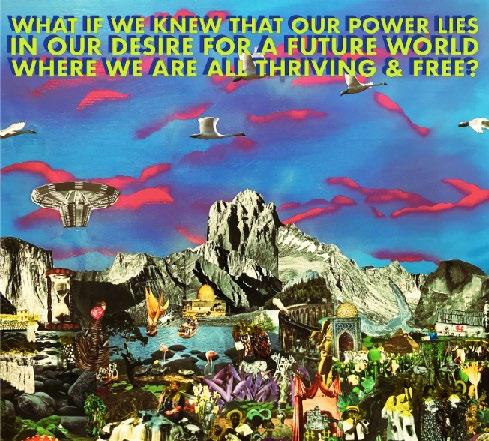
Creative Wildfire will continue to roll out these projects in the coming months. We hope to sustain this fund on an ongoing basis—because the right unquestionably invests in cultural and narrative strategy, and our own social movements need to scale up our efforts to win the culture war!
Poster Illustration by Vy Vu in collaboration with CJA
Collage by Aisha Shillingford
Coloring Book by Jackie Fawn / Fish Bear Studios
CEREMONY AS SOVEREIGNTY
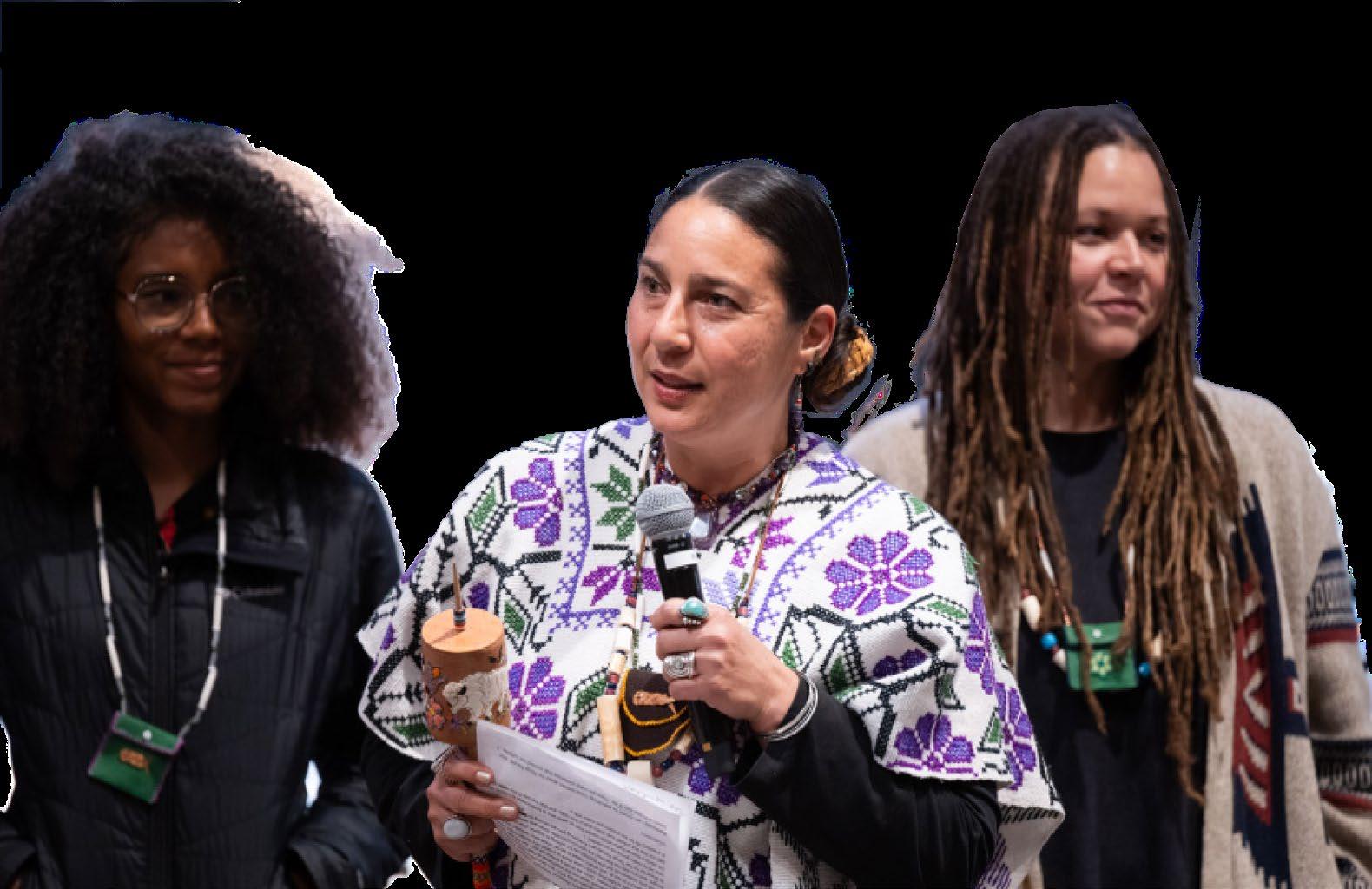
In the incredibly biodiverse ecosystem of the Lingít Aaní (the ancestral homeland of the Lingít people of Southeast Alaska), herring is both a keystone species and has been central to Lingít foodways, spirituality, and cultural life for millennia. Yet, colonization and commercial fishing have put the sacred fish and subsistence harvesters in danger.
“The extraction of the female roe as a capitalist resource parallels the genocide of our matrilineal structures and knowledge. We
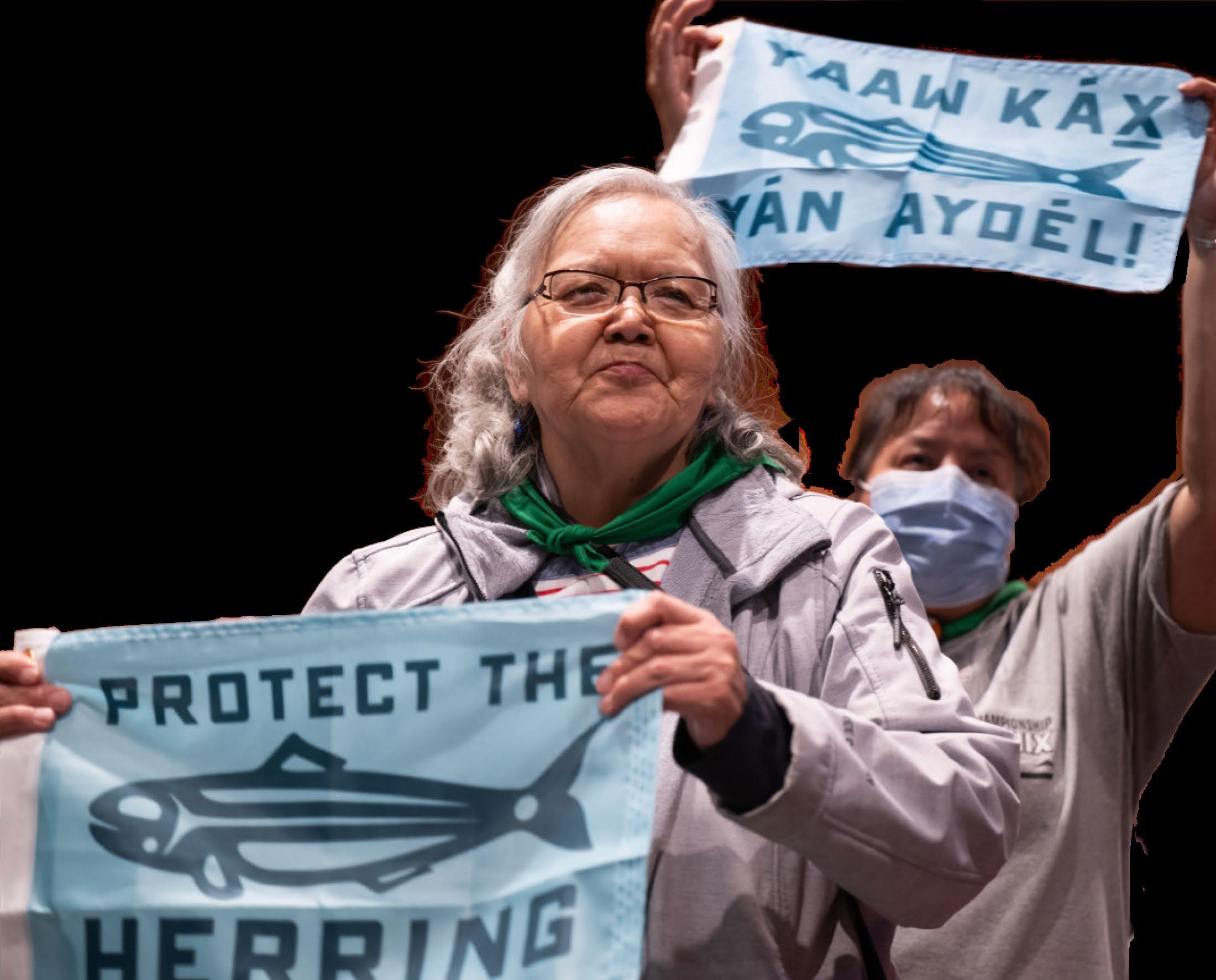
fight for the yaaw (herring) because their survival is paramount to our own fight for sovereignty,” say the Herring Protectors.
Movement Generation was grateful to be invited by the Herring Protectors to attend last year’s Yaaw Koo.éex’ ceremony honoring the herring in Sheet’ká (Sitka), Alaska. One year later, MG staff Brooke Anderson published a piece in Earth Island Journal exploring what other communities might learn from putting sacredness and reverence at
the heart of their struggles to protect that which they love. The following is an excerpt from that piece, re-printed with permission from Earth Island Journal. To read the full piece, visit bit.ly/eij-herring.
Founded in 2016 by K’ash’eechtlaa Louise Brady, a member of the Kiks.ádi clan of the Lingít people, Herring Protectors is a grassroots movement based on original Kiks.ádi teachings, such as ceremony and collective organizing to heal the community and defend herring. A central value of “the herring ladies” is the Lingít original instruction of Yáa at Wooné—respect for all things. And the model of action is “ceremony as sovereignty, or ceremony as resistance,” says Brady.
“Ceremony is how we manifest those responsibilities,” she says. “Ceremony is how we as human beings figure out how we’re related to each other and how to be in right relationship with everyone, all our relatives of the land and of the ocean.”
At the heart of this strategy is Koo.éex’, a centuries-old, multi-day gathering to honor the dead and the grieving. Literally translated to “people are invited,” the ceremony is aimed at reaffirming relationships, holding each other up
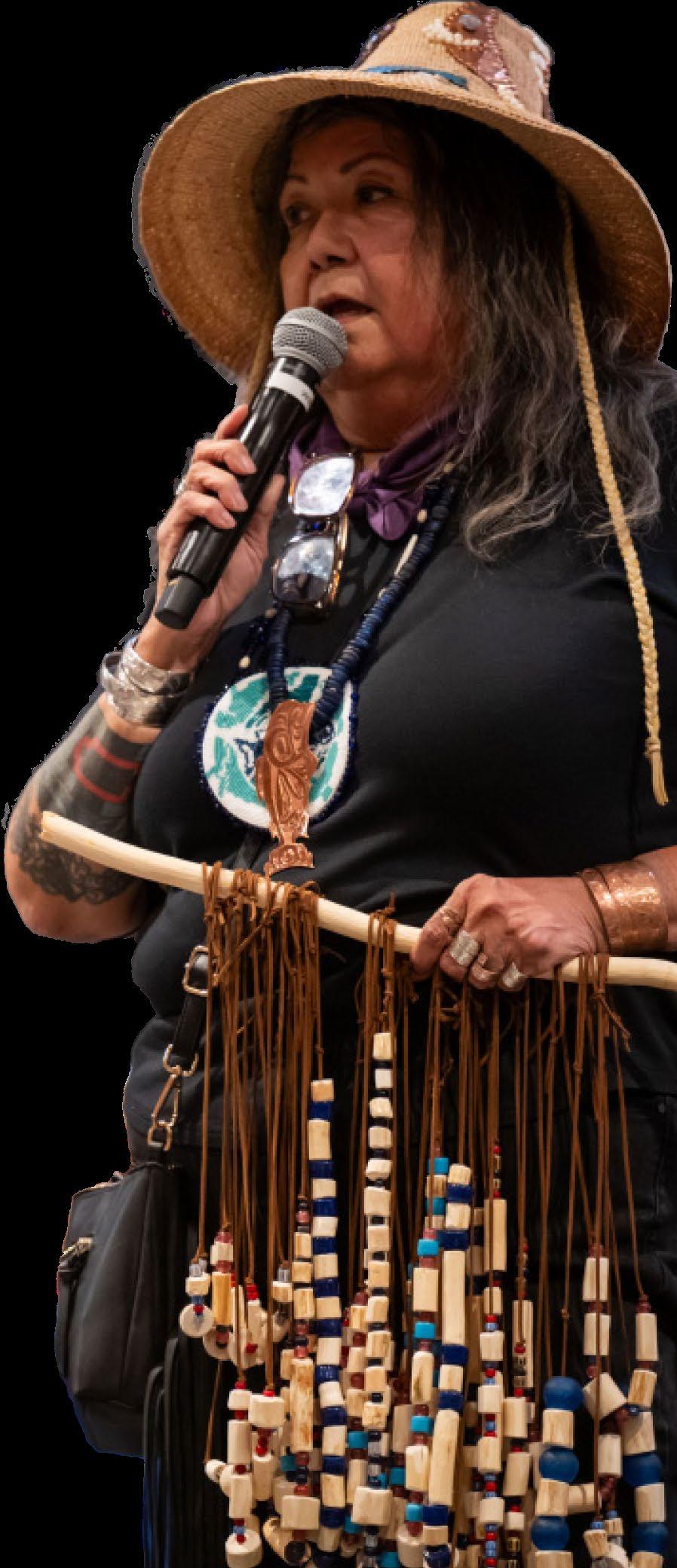
in times of need, and redistributing wealth especially between opposite clans. In Lingít matrilineal culture, everyone belongs to one of two moieties—Raven or Eagle—and members of the other clan are called opposites.
Like many Indigenous practices, in 1904, the Koo.éex’ was criminalized, but it continued in secret before being revived in contemporary times. The first Yaaw Koo.éex’ (Koo.éex’ dedicated to herring) was held in 2018 to coincide with the Alaska Department of Fish and Game’s Board of Fish meeting in Sitka. Board members were invited to attend so they could see Lingít people’s relationship to herring beyond the three-minute testimonies shared during those meetings.
The Yaaw Koo.éex’, as Brady describes it, is “a cacophony of joy of the abundance of the herring.” Everyone is dressed in their finest, with many wearing full regalia. Volunteers distribute multi-course feasts to hundreds of attendees from around Alaska and the world, who come to reaffirm their solidarity with the Kiks.ádí and the herring. Elders recount original stories and read the names of their ancestors. Dancers wear elaborate
ceremonial herring robes—which take a dozen volunteers and a few hundred hours to make—to tell the story of the herring and the threats to their survival. Speakers weep through their testimonies, encouraging the crowd to acknowledge their own grief, too.
After this outpouring, it’s time to stop grieving and start celebrating. The crowd then sings, dances, and drums in gratitude and respect for herring and for each other. Finally, volunteers gift guests everything from handmade beads, drums, and blankets to wild-harvested salmon, herbs, and, of course, bags of frozen herring eggs.
In Lingít tradition, herring eggs cannot be bought or sold, only gifted. As Lingít traditional food and medicine teacher Vivan Mork says, “If you receive herring eggs from someone, you know you’re loved.”
Real protection requires reverence. When herring are sacred, they are not a resource but relatives. When land is sacred, it is not property but home. Sacredness grounds communities in shared responsibility, and sometimes sacrifice, to steward the living systems on which we all depend. Ceremony
“We know that our interconnectedness goes beyond the material realm, and that the very vibration of our heartbeats—songs, dances, the gratitude that we emanate from our core—is as critical to our ecosystems as any legal or technological solutions we might call upon.”
Carla María Pérez, co-director at Movement Generation, said at the 2025 Yaaw Koo.éex’.
is a reminder of what is sacred and how to restore our relationship with it.
For many raised in secular environments, the idea of the sacred and of ceremony may evoke the harm that some have experienced at the hands of institutionalized religion. Colonization has further severed many from their cultural traditions and instead encouraged the commodification and extraction of resources that people once considered sacred. But the sacred need not be religious, or even spiritual. It can simply look like respect for one’s place in the web of life.
The role of land and water protectors then is to rebuild and repair that connection— by creating relevant practices that re-root people in relationship with the sacred. Organizers must ask: What is sacred to my community? What are we protecting? For those living in urban environments without access to wild lands or open waters, that answer may look different.
To continue reading the piece online, visit bit.ly/eij-herring. To support the Herring Protectors, follow them on Instagram at @HerringProtectors, or visit them online at herringprotectors.org.
If
It’s the Right Thing to Do, We Have Every Right to Do It
(Lessons from Minnesota)
By Ashley Lin
On my flight back from Minneapolis, I watched War Pony (2022), a drama feature film about two young Lakota men living on the Pine Ridge Indian Reservation in South Dakota. The title stayed with me; I’ve been wondering about what it means to be a warrior in this Year of the Fire Horse.
War horses were painted with carefully chosen symbols that told stories. For instance, a rider’s last act would be to pat their bloodied hand on their horse’s right shoulder as a “message of death.” Now in the year of 2026, messages of death are captured on our smart phones from many angles.
On May 25, 2020, George Floyd’s message of death was “I can’t breathe.” On January 7, Renee Good’s message of death was “That’s fine, dude. I’m not mad at you.” On January 24, Alex Pretti’s message of death was “Are you OK?”
On Martin Luther King Jr’s birthday, Minnesota organizers made the call for experienced individuals to support them on the ground: “At Chicago’s height they had 600 agents. We are (quite literally) staring down the barrel of 3,000. ICE is going door-to-door, setting up pop-up checkpoints, spreading across the state, arresting, shooting at & killing observers, tear gassing schools, and getting more & more violent by the minute.”
I figured months of helping set up foot patrols at Oakland day labor corners and schools would be useful (not really, Minnesotans have been hella organized). I wanted to learn what it would be like to “stare down the barrel” because I knew that Minneapolis, like Gaza, is Trump’s testing ground for using our tax dollars to fund unchecked militarized terror—and that it’s likely a matter of time before this terror lands on our doorstep.
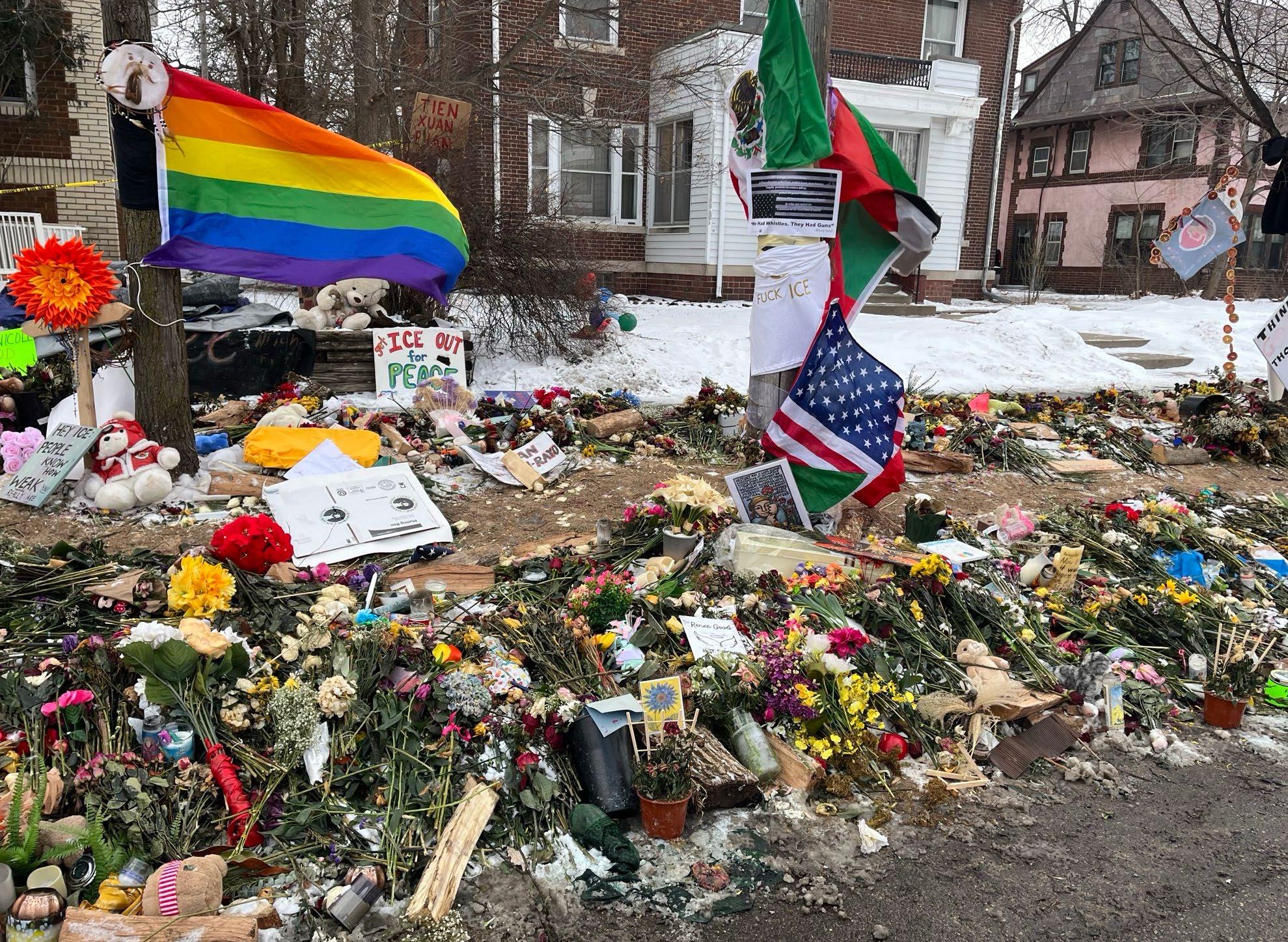
Memorial site for Renee Good, in front of a house in the snow, including flowers, toys, notes, and international and rainbow flags.
Four days later, my dear friend Michelle and I arrived at the Minneapolis-St Paul airport, from which over 2,000 Minnesotans have been deported since January 2026.
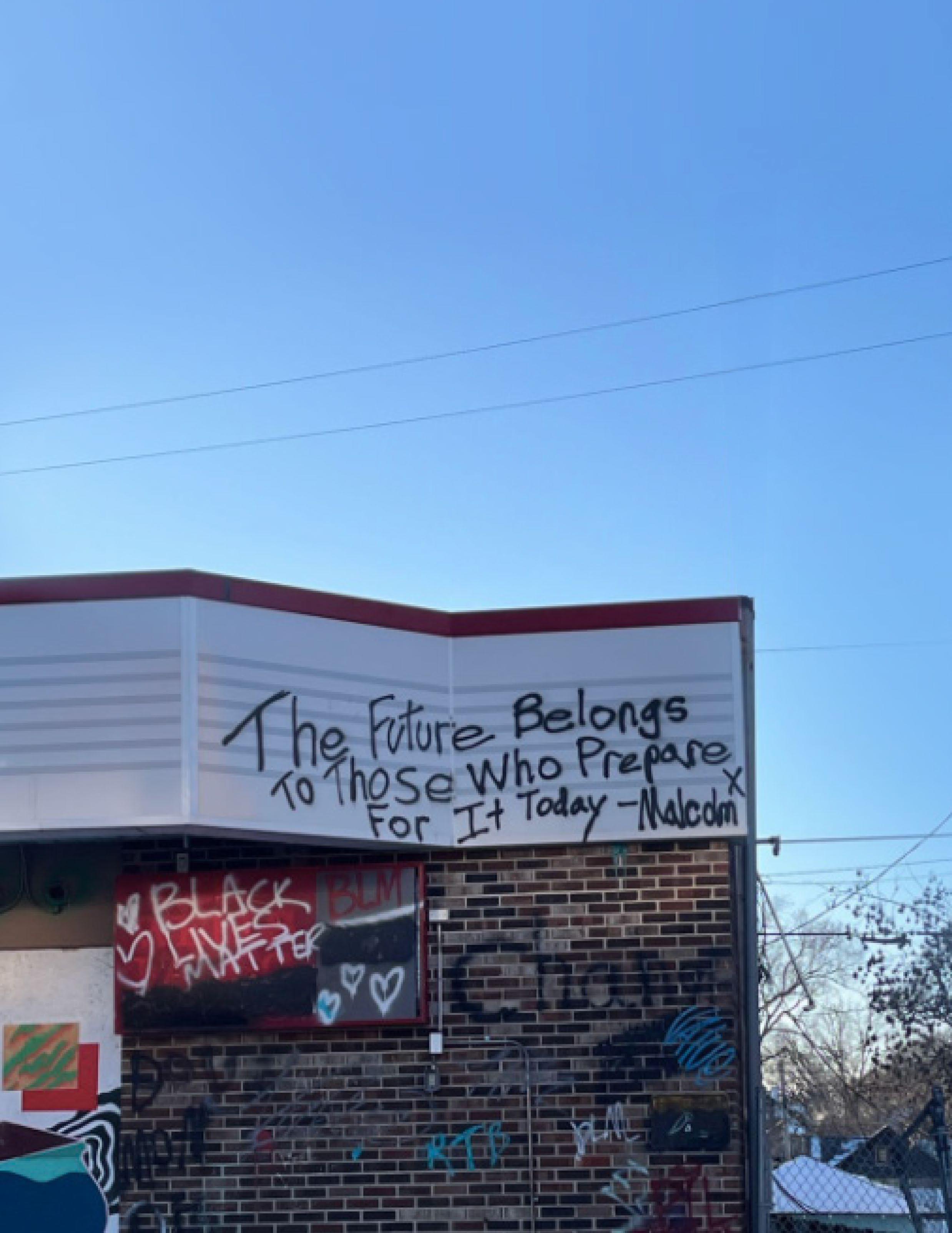
The blocks where Renee Good and Alex Pretti were killed have been transformed. Renee’s memorial block is filled with frozen and fresh flowers, toys, notes of gratitude, international and rainbow flags. A nearby house keeps firewood under a blue tarp and supplies so people can stay longer. It’s quiet and people are there to keep a fire burning and to continue keeping watch for ICE.
Alex’s memorial block is busier. Drivers look out their windows and traffic slows as people exit their cars to pay their respects. They surround the front of the New American Development Center, arriving with fresh flowers and sorrow. Local and international news camera crews are stationed to capture
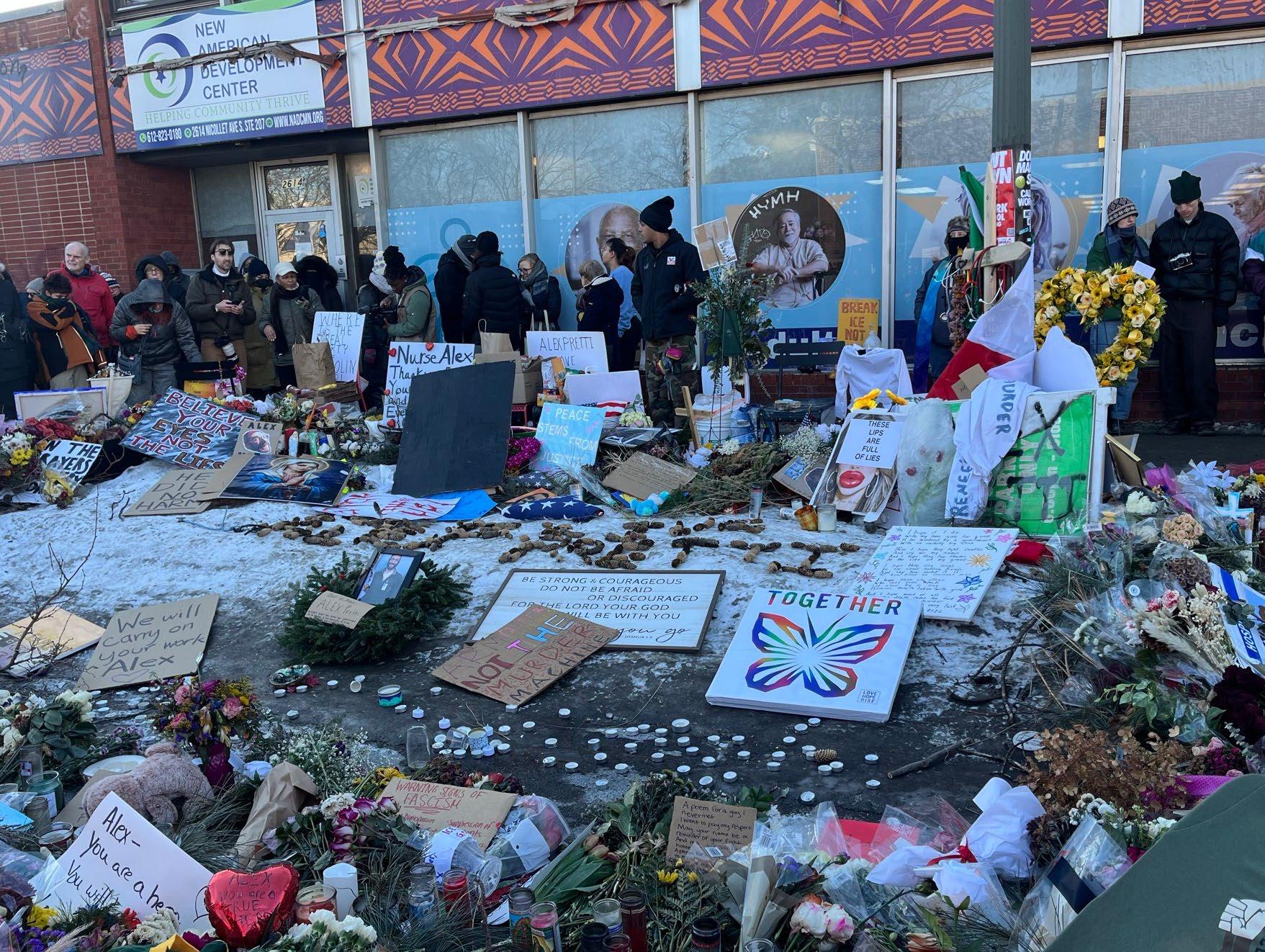
A memorial for Alex Pretti in Minnesota, surrounded by people and including flowers and art.
the collective grief. Businesses near Alex’s memorial have signs letting people know they can come inside and get warm. A neighborhood florist donates flowers so visitors can make bouquets for Alex. Native communities hold healing ceremonies at the memorial sites to honor their lives. Among the flowers, a poster reads “Pretti Good Humans.”
The day after Alex Pretti was killed by ICE, Michelle and I were invited to join a Native women ceremony circle at Fort Snelling. This sacred site is where the Mississippi and Minnesota Rivers meet, the birthplace of the Dakota people. The American Indian Movement started in Minneapolis. Each person received tobacco to hold in her hand and offer her Asemaa (prayer) before returning the tobacco to the snow-covered earth. The Elder of the circle shared that the worst feeling is helplessness. Together, the gathered women sang songs carried down generations of grief and resilience. War horses were honored for their purpose to protect the people.
Across Minneapolis, I saw ICE OUT signs everywhere: taped onto the windows of houses and apartment buildings; stapled onto telephone poles; on bed mattresses and trashbins used as blockades; spray painted on the side of brick buildings and bus stop shelters; on the front doors of restaurants, health clinics, schools, and grocery stores.
A neighbor organized his loved ones to shovel ICE OUT on a frozen Lake Nokomis (Nokomis means “my grandmother” in Ojibwe) and a thousand people gathered with Brass Solidarity to illuminate the message with candles for those in the sky.
PEOPLE WANT ICE OUT OF EVERYWHERE.
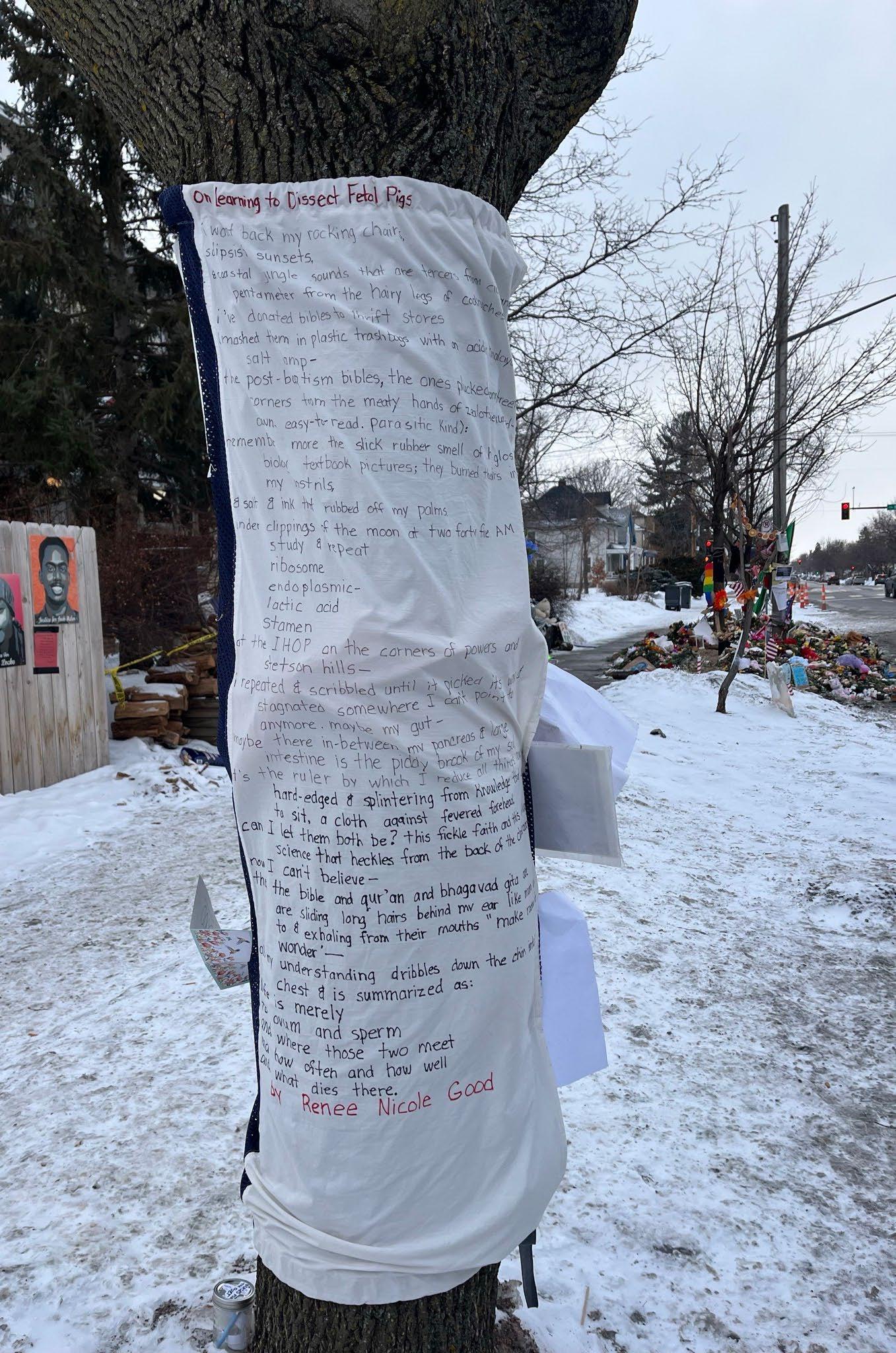
A poem by Renee Good written on a white piece of paper and posted to a tree trunk with snow in the background.
Many people wear whistles both as a symbol of solidarity and as a means of safety. Neighbors make makeshift roundabouts with chairs around firepits, to slow down traffic and push ICE vehicles onto more visible streets. After school, children in safety vests join adults as crossing guards singing songs for safe passage. Patrollers stand on the corners in the Somali neighborhood known as the West Bank. Pow Wow Grounds Cafe and All My Relations Gallery transformed into a mutual aid center, so legal observers can get free coffee, warm clothes, handwarmers, safety goggles, food, and more.
So many people have changed their lives under military occupation. People are reconnecting with neighbors years after the George Floyd uprising. This time, they are not just putting out fires by right-wing agitators. Neighbors are meeting up in person, organizing block-by-block, mapping their neighborhoods, and getting plugged into hyperlocal rapid response networks. They are weaving strong webs of mutual aid: driving workers to and from work, taking children to and from school, helping cover monthly rent, buying groceries for people sheltering in place. They are on the streets in subzero temperatures and driving around their neighborhoods to keep watch for ICE and to keep each other safe.
Everyday people are protesting outside the Whipple federal building where their neighbors are detained, even in the face of violent arrests. They are making cacophonous noise outside hotels at night so agents cannot sleep, and singing songs of compassion during the day: “It’s ok to change your mind, show us your courage, leave this behind. It’s okay to change your mind, and you can join us, join us here anytime.”
Students are walking out of school, speaking out at city council meetings, and asking their parents if other families can stay in their homes for safety. Teachers are learning how to de-escalate stressful situations with direct action. All tactics are welcome and trust is constantly growing. There is room for every emotion to be felt. There is no central leader; anyone and everyone is welcome to join in this beautiful symphony of resistance. Minnesotans show us that a more caring response is possible.
In the Movement Memos podcast episode “Burnout Is Not Inevitable: Building Movements That Can Hold Us”, Kelly Hayes talks about how witnessing somebody in their struggle with an open heart and with grace keeps us in touch with our humanity. In the mornings, I stood outside a Native day care center to keep watch for ICE. Caregivers and children would wave at me and I would wave back. Patrollers I met said that they take shifts at the center because the Native community always shows up for every community. One mother came up to me and a fellow foot patroller who sewed a patch on his jacket that reads “ICE out of Mni Sóta Makóče. No one is illegal on stolen land”; she said our presence is the reason she feels safe to bring her kids to school. I felt honored to be part of that protective presence.
I think being a warrior means to be courageous and to keep trying, to keep showing up for yourself and for each other. I think it means knowing that if it is the right thing to do, then we have every right to protect and defend each other.
Know your rights, meet your neighbors, make your emergency plan, go with a buddy, wear your whistle. Build your ongoing sense of what is happening around you at all times, make your risk assessment, and do the next best thing. When you can be prepared, you know that you can better face the unknown. When you can build a strong web of support, you know that you will never be alone. We can build safety in numbers, and we can scale it up on our blocks, in our neighborhoods, in our cities.
On my last day in Minneapolis, I went to Ricardo Levins Morales’ art studio, which is filled with decades of artwork rooted in social justice movements. There is a piece with a quote crafted by a group fighting for Aboriginal rights in Queensland, Australia in the 1970s: “If you have come to help me you are wasting your time. But if you have come because your liberation is bound up with mine, then let us work together.”
Minnesotans are building creative networks of care and not backing down until ICE is out of everywhere, out of existence. Some people are showing up for the first time, and that’s ok because everyone is learning from each other all the time. I’m scared for what’s going to happen everywhere. I learned that it’s not too late to get prepared. There is so much to fight for.
Let’s work together because a better world is not only possible, it’s happening. “I can hear her breathing” every time someone chooses to show up and practice courage. Nokomis is breathing with the Native prayer camp at the sacred site of Mni Owe Sni (Coldwater Spring).
If it is the right thing to do, we have every right to do it. We will find courage in each other.
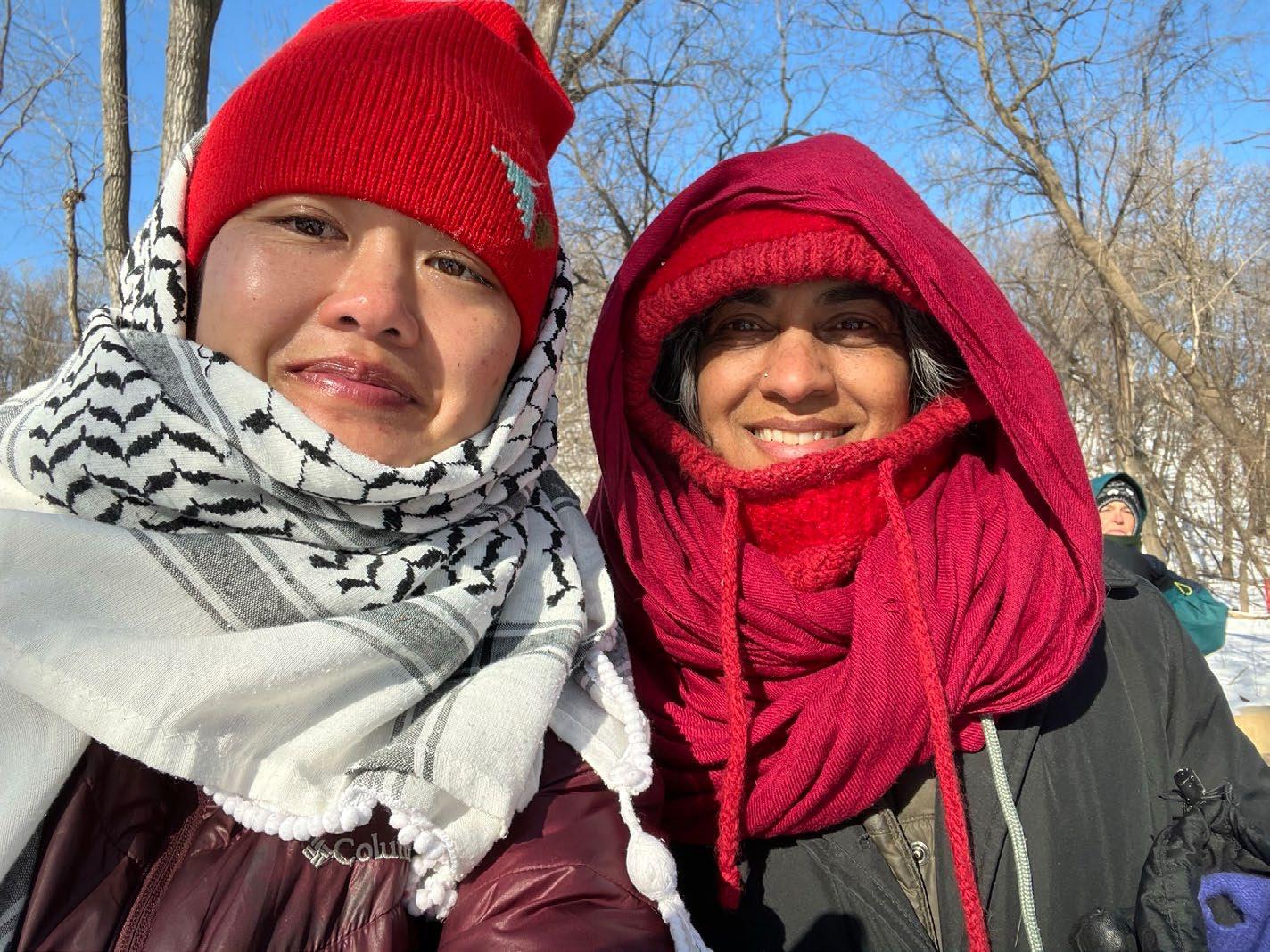
Ashley Lin (Left) is a daughter of Taiwanese immigrants. She is growing her roots in Oakland, CA and is getting ready to survive and remake the world with courageous people.





Summer
Moodboard
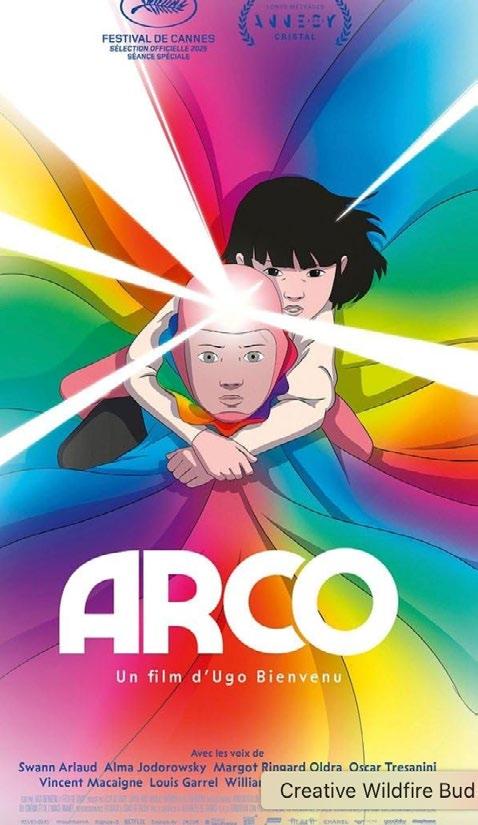
We tapped the young folks summer moodboard. From Cantrall’s dance movies, alphas have pretty cool taste. of these are their
CULTURE



Regular Show
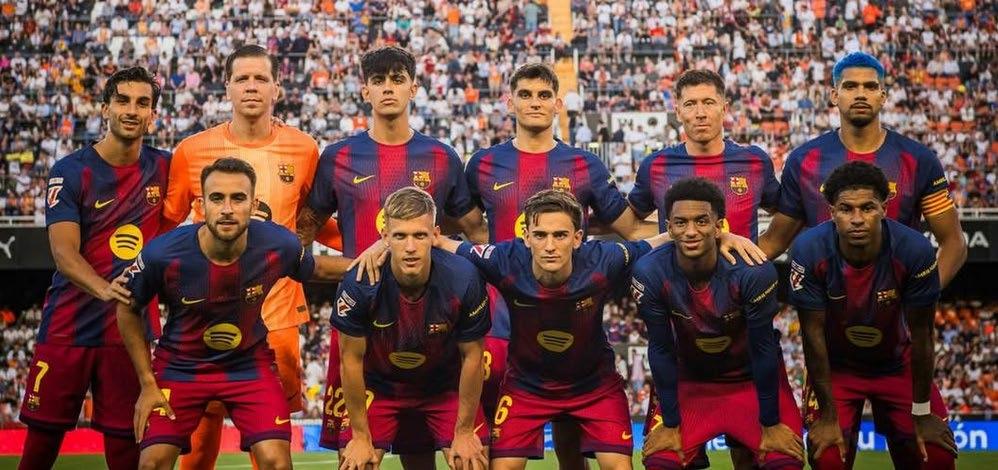
1. Futbol Club Barcelona
3. Witch Hat
Atelier
5. The Devil Wears Prada 2
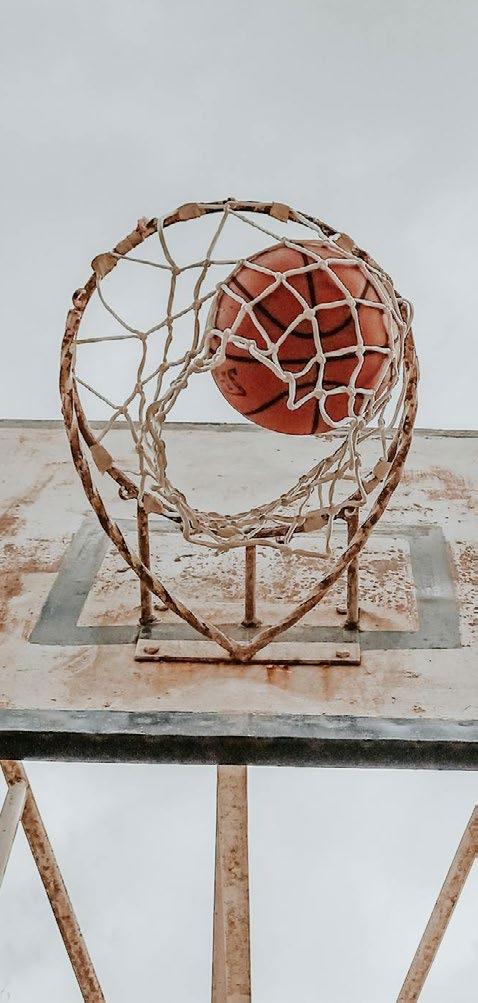
7. Basketball 9. Going “analog”
Scene

Summer
Moodboard
folks in our lives for our
From going “analog” to Kylie we think gen Zs and gen taste. Can you guess which their parent’s child?!







12. Tiny Chef
14. Alicia Keys and Lauryn Hill
13. Kylie Cantrall
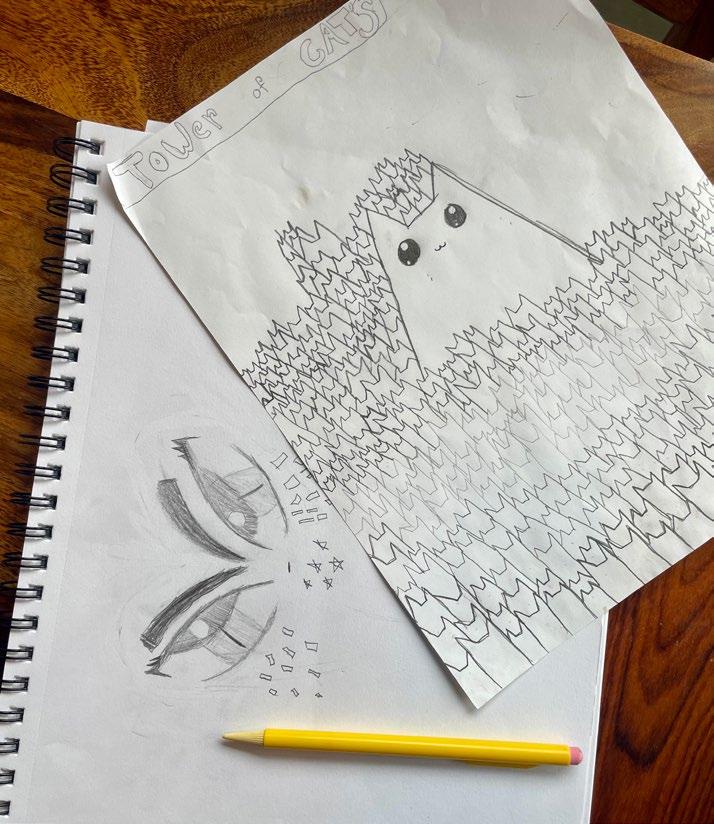
18. Drawing cats and eyes
The Marias
17. Sandu
16. Dominic Fike
15. Yotsuba
One Piece

Mini Zines by Indira Mariana Villeda
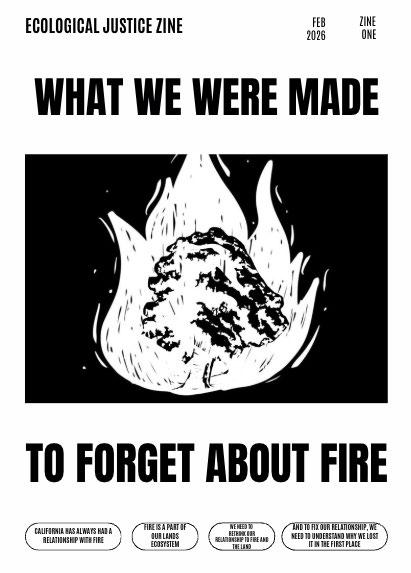

Believe it or not, it’s been 10 years since we published “From Banks and Tanks to Cooperation and Caring,” which helped popularize the Just Transition Framework! On a very regular basis, all of us at MG are inspired by the amazing work folks are doing on the ground to apply this framework in their own communities and organizations, and to advance a shared vision of ecological justice.
To meet the current political moment, we are locked in on evolving our frameworks, tools, and curriculum. We know that new, potent pathways of strategic intervention are needed now more than ever. This evolution will culminate with a gathering of key movement partners in early 2027, to further flesh out the best tools to share with our movement. And MG will release them into the broader world as quickly as possible!
Please help these strategic pathways blossom: