FALL 2026
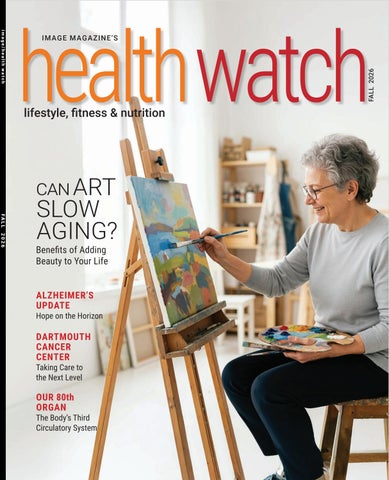
image/health watch
healthwatch I M A G E M A G A Z I N E’S
lifestyle, fitness & nutrition
can ART FA L L 2026
SLOW AGING?
Benefits of Adding Beauty to Your Life ALZHEIMER’S UPDATE
Hope on the Horizon
DARTMOUTH CANCER CENTER
Taking Care to the Next Level
OUR 80th ORGAN
The Body’s Third Circulatory System
Eyecare for Life.
Monday — Friday 8AM-5:30PM
Dr. H. Bourdeau • Dr. R. He Dr. S. Dufour
Wool and Synthetic Carpets Hardwood Flooring Waterproof flooring Ceramic & Porcelain Tile Handmade & Machine Made Area Rugs Custom made area rugs Installation for all of our products
We've rebranded, Carpet Mill USA is now
New Name • Same Faces • Better Than Ever (603) 448-3902 • www.Twinstateflooring.com • 213 Mechanic St. Lebanon, NH 03766
CONTENTS FEATURES
22 HOPE ON THE HORIZON
The latest Alzheimer’s research on detection, treatment, and prevention. by Edith Morgan
28 FOOD
WITHOUT FEAR
Helping children and families identify and treat food allergies. by Susan Nye
D E PA RT M E N TS
34 WHAT IF THERE’S
14 Word on Health
GrassRoots Functional Medicine looks at the whole picture to find the root cause. by Danica Griffin
16 Smart Choices
60 Mindful Nutrition
Focus on health and wellness. by Sam Kaas
Healthy Thanksgiving! Make good food decisions at your holiday feast. by Dana Johnson
40 LEADING
One woman’s vision: Dr. Sandra Dufour values people and place. by Isabella R. Vanasse
62 Daily Living
27 Eat Smarter
68 Smart Strategies
Simple substitutions: Quick, easy ways to improve your diet. by Dana Johnson
72 Advertisers Index
MORE TO THE STORY?
DARTMOUTH CANCER CENTER INTO THE FIGHT
World-renowned researcher and physician Dr. Roy S. Herbst. by Wren Wahrenberger
News, tips, and information for your well-being.
18 Healthy Options
50 Living Well
48 Healthy Choices
Can art keep you young? by Susan B. Apel
Throughout the Valley A guide to goods and services in the community.
40
28 34
10 i m a g e h e a l t h w a t c h • 2 0 2 6
55 What’s New The body’s third circulatory system. by Lisa Ballard
Aging in place. by E. Senteio Routine eye exams are critical. by Dr. Alla Devitskaya
health watch IMAGE MAGAZINE’S
FALL 2026
lifestyle, fitness & nutrition
Mountain View Publishing, LLC 135 Lyme Road Hanover, NH 03755 (603) 678-2793
www.greateruppervalley.com Publishers
Cheryl Frisch Ryan Frisch Publisher Emeritus
Bob Frisch (1951–2025) Executive Editor
Deborah Thompson Associate Editor
Kristy Erickson
Creative Director/Design
Ellen Klempner-Béguin Advertising Design
Marston Creative Web Design
Locable
Digital Manager
Erin Frisch Newton Advertising
Ryan Frisch Calyn Frisch
KEEP US POSTED: health watch magazine wants to hear from readers. Correspondence may be addressed to: Letters to the Editor, health watch, 135 Lyme Road, Hanover, NH 03755. Or email us at: dthompson@mountainviewpublishing. com. Advertising inquiries may be made by email to ryanfrisch@mountainviewpublishing.
com. health watch is published annually by Mountain View Publishing, LLC© 2026. All rights reserved. Reproduction in whole or part is strictly prohibited. health watch magazine accepts no responsibility for unsolicited manuscripts, artwork, or photographs.
12 i m a g e h e a l t h w a t c h • 2 0 2 6
ed ito r ’s n o t e
Healthy Living
p h oto by i an r aymon d
W
elcome to our tenth
Within our pages you’ll find exciting new discoveries
year of health watch
from scientific research, including pioneering develop-
magazine! We’re celebrating a
ments that continue to take place locally. From the new
decade of bringing you the latest
director of Dartmouth Cancer Center to breakthroughs
news on health-related topics by
regarding children’s allergies at Dartmouth Health, we’re
presenting a range of fascinat-
grateful for the outstanding physicians and other medical
ing articles again in this issue.
professionals who took time from their busy schedules to
It seems something regarding
talk to us about some of the exciting things they’ve been
health is in the news every day,
working on to make our lives better. Here’s to your health!
reminding us to eat a nutritious
Enjoy!
diet, exercise, get enough good-quality sleep, and schedule regular checkups. Besides seeing your primary care physician for an annual physical, don’t neglect getting an eye exam every year. Dr. Alla Devitskaya explains why it’s crucial to maintaining healthy vision beginning on page 68.
Deborah Thompson Executive Editor dthompson@mountainviewpublishing.com
like us www.facebook.com/greateruppervalley.com
WWW.GREATERUPPERVALLEY.COM •
13
word on health
N E W S , T I P S , A N D I N F O R M AT I O N FOR YOUR WELL-BEING
Memory Problems? Cut Back on Sodium
A Taste of Autumn
The nip in the air brings a craving for comfort foods, and it’s a perfect time to enjoy fall’s harvest. This season’s produce is hardy, delicious, and packed with nutrition. Apples arrive in early fall and remind us just how crisp and flavorful this fruit is directly off the tree. Apples are packed with fiber and antioxidants linked to heart health, cancer prevention, and cognitive health. Add apples to salads and slaws, stir into oatmeal or quinoa, pair with chicken, pork, or sausage, or bake into pies and crisps. Cranberries aren’t just a Thanksgiving treat—they can add zing to your diet year-round. They contain vitamins C, E, and K plus manganese and beneficial antioxidants not found in other produce. Try dried cranberries (unsweetened) in salads, muffins, and granola. Roast fresh cranberries along with brussels sprouts and squash and bake them into breads, pies, and cobbler. Winter squash is rich in vitamins C and A, fiber, and antioxidants that boost immunity and help prevent disease. Look for acorn, butternut, and spaghetti squash. Cut in half, scoop out the seeds, and roast. Pumpkins come in orange, white, and green and are packed with beta-carotene, potassium, and fiber. You can eat all parts of the pumpkin, including the skin and seeds. Add pureed pumpkin to soups and breads, roast the seeds, sauté chunks of pumpkin and add to rice and beans, include diced pumpkin in soups—this versatile veggie can be enjoyed in countless ways, sweet or savory! 14 i m a g e h e a l t h w a t c h • 2 0 2 6
A high sodium intake could have long-lasting effects on your memory and brain health. Researchers in Neurobiology of Aging report that diets high in sodium appear to affect episodic memory, which is used to recall personal experiences and events from your past. This effect—which could cause one to forget anything from their first day of school to where they parked the car—occurred primarily in men. “The male participants also exhibited higher blood pressure, which is influenced by sodium intake, but further investigation is definitely required into sex-specific approaches and how sodium intake could be incorporated as one modifiable lifestyle factor aimed at delaying Alzheimer’s disease onset,” says senior researcher Samantha Gardener. Furthermore, she says that sodium might contribute to inflammation in the brain, damage to the blood vessels, The American Heart Association and reduced blood flow to recommends consuming less the brain. than 2,300 mg per day of sodium, Keep your sodium level in and an optimum goal of no more check as part of an overthan 1,500 mg a day for most all heart-healthy diet that adults. More than 70 percent emphasizes a variety of fruits of the sodium Americans eat and vegetables, whole grains, comes from packaged, prepared, low-fat dairy, skinless poultry and restaurant foods—not the and fish, nuts, legumes, and saltshaker. Throughout the day, non-tropical vegetable oils. In the Average American consumes addition to cutting back on more than 3,500 mg of sodium— sodium, limit saturated fat, more than 150 percent of the trans fat, red meat, sweets, daily recommendation. and sugary drinks.
SCHEDULE A HEARING EXAM
Hearing plays a vital role in communication and social connection, and not hearing well can make it difficult to maintain relationships. In a recent study, seniors who were given hearing aids retained more friends after one year than those who were not given a hearing aid. Two-thirds of people age 70 and older suffer from hearing loss, and loneliness and hearing loss are linked to depression, heart disease, cognitive decline, and early death. “Our findings add to evidence that helping aging patients hear better can also enrich their social lives and boost their mental and physical well-being,” says audiologist and lead researcher Nicholas Reed.
GET a GOOD NIGHT’S SLEEP
DID YOU KNOW?
Over time, insufficient sleep can also negatively affect cardiovascular health. In fact, the American Heart Association added healthy sleep duration to its “Life’s Essential 8” recommendations to lower heart attack and stroke risk. Adults should strive for seven to nine hours of sleep each night, and quality counts. If you don’t
feel rested in the morning after getting at least seven hours of sleep, you might have a sleep disorder. Talk to your doctor about identifying the issue, whether it’s insomnia or frequent awakenings that you don’t notice. Wearable devices (monitors worn on the wrist or finger) measure sleep efficiency and can provide helpful data.
Poor sleep may accelerate the aging of your brain, according to research in eBioMedicine. “People with poor sleep had brains that appeared on average one year older than their actual age,” says senior investigator Abigail Dove. After evaluating brain scans for nearly 28,000 middle-aged people and seniors, researchers found that the scans showed that people’s brains aged faster as their sleep quality diminished. “Our findings provide evidence that poor sleep may contribute to accelerated brain aging and point to inflammation as one of the underlying mechanisms,” says Dove.
A Cup of Tea May Improve Performance Do you stay active outdoors year-round? You may want to warm up with a mug of green tea with ginger. A new study finds that green tea and ginger work both individually and synergistically to support endurance, fat oxidation, comfort, and recovery in a cold environment. Components in green tea (including caffeine) can enhance fat oxidation and increase energy expenditure, while ginger has anti-inflammatory properties and reduces muscle soreness and enhances comfort in cold temperatures by improving circulation.
Spend Time with Grandkids
Caring for grandkids is beneficial to the heart and soul, and new research finds that it’s also good for the aging brain, potentially serving as a buffer against cognitive decline. In the study, it didn’t matter how often grandparents cared for their grandkids or what they did—simply that they spent time together. “What stood out most to us was that being a caregiving grandparent seemed to matter more for cognitive functioning than how often grandparents provided care or what exactly they did with their grandchildren,” says lead researcher Flavia Cherches. More time spent with leisure activities and more frequent help with homework appeared to boost verbal and memory skills, while preparing meals and taking grandkids to and from school increased verbal fluency. WWW.GREATERUPPERVALLEY.COM •
15
s m a r t c h o i c es | BY SAM KAAS
FOCUS ON HEALTH AND WELLNESS HEALTHY PICKS FROM THE NORWICH BOOKSTORE
Whether you’re on a wellness journey or simply looking for motivation or reassurance that you’re not alone in dealing with some of life’s challenges, The Norwich Bookstore has your back. From exercise and quality sleep to fostering meaningful social connections, these books—and the many more you’ll find in store—offer practical, actionable advice on how to support healthy habits and feel your best. This Is About Running. This Is Not About Running by Chris Bennett From Chris Bennett, Nike Running’s Global Head Coach, comes a book about the practice of running, aimed at dedicated runners and the running-curious. Running, Bennett argues, is never really about measurable benchmarks like speed or distance— it’s about showing up, again and again. Whether you are already a runner or are just starting out, you’ll find something helpful here. Your Turn: How To Create a Midlife You Love by Allison Aubrey NPR and CBS correspondent Allison Aubrey imagines a midlife without crisis in this new book looking at mental, physical, and emotional health in the second half of your life. How do you maintain purpose, identity, and connection when transitioning out of a career or a parenting role? Drawing from interviews with subjects aged 45 to 105, Aubrey explores the many possibilities. Protocols: An Operating Manual for the Human Body by Andrew D. Huberman, PhD The long-awaited new book from Stanford neurobiologist Andrew D. Huberman (who also hosts the popular podcast Huberman Lab) is more or less what it sounds like: an instruction manual for keeping your body and mind in top running condition. From nuts-and-bolts aspects of health like nutrition, sleep, and exercise to more abstract (but no less important) concepts like personal growth and motivation, this guide has it all. 16 i m a g e h e a l t h w a t c h • 2 0 2 6
“
I think books are like people, in the sense that they’ll turn up in your life when you most need them. – Emma Thompson
”
The Vanishing Family: Love, Fate, and the Quest to End Dementia by Robert Kolker In a large family from Pleasant Hills, Pennsylvania, a grim inheritance lurks: a 50-50 chance of developing frontotemporal dementia, a rare and devastating form of dementia, which may hold the key to a breakthrough in treating more common conditions like Alzheimer’s. Robert Kolker, the acclaimed author of Hidden Valley Road, follows family members as they reckon with their shared fate—some taking the role of caretaker while others dive into research and testing—in the hope of offering insights that will help dementia patients around the world, in this moving, fascinating, and ultimately hopeful medical detective story. Micropractice: A Science-Backed Approach for Calm, Clarity, and Joy in 30 Seconds or Less by Eli Susman, PhD Sure, you’d like to improve your life through yoga, meditation, and an exercise regimen—but how do you find the time in your busy day? These practices don’t have to take much time, argues Eli Susman. From movement to breathing (and beyond), he highlights 14 essential practices that each require half a minute or less. How to Be Good at Life: Simple Systems to Achieve More and Stress Less by Ben Meer (available October 6) “Systems Guy” (and local author) Ben Meer offers advice on how to organize our complicated modern lives, building systems to reduce stress and increase happiness no matter what life throws at us. Vibe: The Secrets of Strong Connections in a Lonely World by Adam Grant (available October 13) Health experts agree that we are experiencing a “loneliness epidemic,” with people feeling increasingly disconnected from one another and unsure how to reverse this. In his new book, Adam Grant, the bestselling author of Think Again and Hidden Potential, digs into the science behind building connections between people at work, at school, and in personal relationships. The Alchemy of Sleep: The Science, Mystery & Magic of a Good Night’s Rest by Dr. Pedram Navab (Available October 27) Physical health, mental health, emotional health—sleep is an integral component of every aspect of our well-being. In The Alchemy of Sleep, a Stanford-trained neurologist incorporates science and integrative medicine into a multidisciplinary approach to better, deeper rest. WWW.GREATERUPPERVALLEY.COM •
17
hea l t h y o p t i o n s | BY ISABELLA R. VANASSE PHOTOGRAPHY BY KATA SASVARI
ONE WOMAN’S VISION DR. SANDRA DUFOUR VALUES PEOPLE AND PLACE
DR. SANDRA DUFOUR, A LOCAL OPTOMETRIST, remembers
the precise moment she first saw her ideal future. She was nine, receiving an
eye examination, then putting on her first pair of spectacles. “In a blink of my eye, I was amazed at all the detail I could see. The trees had leaves!”
A decade later, while attending SUNY Geneseo in upstate New York, she shadowed an optometrist. “The eye was so intricate and interesting to me,” she recalls. “I wanted to help people see better.” Optometry school in New York City became her next mission, followed by a residency in Connecticut. Dr. Dufour was twice lovestruck: first by her high school sweetheart Eric, and again by her eye-opening profession. During optometry school, her new husband supported the couple financially. After New York City and Connecticut, they set their sights on Vermont and New Hampshire, near family. “I wanted to give my children a place they could call home, and we had always loved the beauty of the Upper Valley,” she says. “Being outside in nature helps me relax. I enjoy walks and absorbing the sights and sounds.”
Top: Dr. Sandra Dufour. Bottom from left: White River Family Eyecare lobby. White River Family Eyecare optical.
18 i m a g e h e a l t h w a t c h • 2 0 2 6
WWW.GREATERUPPERVALLEY.COM •
19
hea lthy options
Putting Down Roots The decision was rooted in their childhoods. As Army children, both Dr. Dufour and Eric missed out on long-term community. Her father had served as an Army Airborne Ranger. Dr. Dufour recalls enjoying living in different parts of the world growing up, but it also meant having to “make new friends every two or three years.” So she and Eric chose something different for their children. Hiking, skiing, and fly-fishing became new traditions, family road trips a continuation of their childhood traveling. Their three children, now teenagers and young adults, have known only one childhood home in Windsor, Vermont. Eric works as a research technologist for Dartmouth College. 20 i m a g e h e a l t h w a t c h • 2 0 2 6
Dr. Dufour now has patients she has taken care of for more than 20 years. “I love my patients. I also love the people I work with every day. I am privileged to work with them.” A New Opportunity In April 2025, after 23 years of practicing, opportunity knocked. Dr. Dufour stepped forward to purchase the practice when Dr. Eugene Bernal retired. Today, she leads two state-of-the-art facilities equipped to diagnose and treat a wide range of vision challenges: White River Family Eyecare, across from Hartford High School in White River Junction, and Hanover Eyecare, across from the Hanover Fire Department.
Top from far left: Dr. Sandra Dufour, optometrist and owner. Dr. Ran He, optometrist. White River Family Eyecare offers a wide selection of frames. Bottom from far left: Erica Gillettfe, optometric technician; Jan Hebert, front desk; Sue Butler, office manager; and Allision Batson, front desk.
“I had great support from my husband, children, and parents. My attorney, business consultants, and accounting team were amazing, and they helped guide me through the whole process. Dr. Bernal was very helpful. I could not have done it without all of them.” Her vision extends beyond the exam room. She provides free services for infants under one year old to screen for severe vision challenges and has volunteered for years to teach her children’s classes about the biology of the eye. “There is always something new to learn every day, as an optometrist and a business owner. I want to make
this practice a career destination and a growth opportunity for professionals. I want to serve the community.” Hanover Eyecare 45 Lyme Road, Suite 201 Hanover, NH (603) 643-2140 White River Family Eyecare 587 Hartford Avenue White River Junction, VT (802) 295-4887 whiteriverfamilyeyecare.com WWW.GREATERUPPERVALLEY.COM •
21
HOPE on the HORIZON BY EDITH MORGAN
THE LATEST ALZHEIMER’S RESEARCH ON DETECTION, TREATMENT, AND PREVENTION
Cognitive and physical exercises in older adults improve memory, speed up information processing, and enhance functions like planning and focus. Regular mental and physical stimulation increases blood flow to the brain; enables the brain to grow, change, and create new pathways; and lowers the long-term risk of cognitive decline and dementia. source: nih 22 i m a g e h e a l t h w a t c h • 2 0 2 6
WWW.GREATERUPPERVALLEY.COM •
23
PHYSICAL EXERCISE
COGNITIVE EXERCISE
NUTRITION
HEALTH MONITORING
E
very summer, the Alzheimer’s Association International Conference (AAIC)—the largest international meeting dedicated to advancing dementia science and clinical practice—convenes thousands of researchers and healthcare professionals from around the globe. Last July, more than 13,000 attendees from 111 countries gathered in London and online to share the latest research and education that will lead to improvements in diagnosis, risk reduction, and treatments. In recent years, much of the news has related to the updated 2024 Lancet report that identifies 14 modifiable lifestyle factors that together (by conservative estimates) can prevent or delay nearly half of all cases of dementia. These factors start in youth with early education and preventing head injury. Midlife is a critical time to manage things like weight, blood pressure, diabetes, and LDL cholesterol as well as address hearing loss. Later in life, the key is to stave off depression, isolation, and vision loss. At every stage, alcohol, smoking, physical inactivity, and air pollution are enemies to a healthy brain. Add in quality sleep, a healthy diet of fiber-rich whole foods, and the value of stacking healthy habits over time, and some experts estimate the potential protection to be greater than 70 percent. The HOW Behind the WHAT The Lancet report showed us what to do, but not necessarily how to do it. That’s why the big takeaway from the 2025 AAIC were the results from the US POINTER study. The US POINTER (shorthand for “The Alzheimer’s Association US Study to Protect Brain Health Through Lifestyle Intervention to Reduce Risk” trial) enlisted 2,100 cognitively normal adults aged 60 to 79 across five sites in the United States who were at increased risk for cognitive decline.
24 i m a g e h e a l t h w a t c h • 2 0 2 6
Over the course of two years, these individuals were assigned to one of two groups: “structured” and “selfguided.” All participants were educated about and instructed on multiple domains of healthy lifestyle changes. The four areas of focus were: • P hysical exercise: 30 to 35 minutes of moderateto-intense aerobic activity four times a week, plus strength and flexibility exercises twice a week. • Cognitive exercise: Computer-based brain training program three times a week for 30 minutes, plus regular engagement in other intellectually challenging and social activities. • Nutrition: Adherence to the MIND diet, which emphasizes dark leafy greens, berries, nuts, whole grains, olive oil, and fish and limits sugar and unhealthy fats. • Health monitoring: Regular check-ins on blood pressure, weight, and lab results. The structured group received higher touch support, with 36 group meetings, a prescribed program, and measurable goals, while the self-guided group met six times for encouragement to adopt the lifestyle changes as it matched their lifestyle and goals. Both groups showed cognitive improvement, measured by a global cognitive composite score. The structured group, however, showed statistically greater improvement.
The Takeaway: Support Matters The results proved that lifestyle modifications do work to protect against cognitive decline, and that support is vital to optimize success. POINTER study participants are now being followed for another four years to see the long-term impact and sustainability of these interventions. Susan Antkowiak is the vice president of programs and services for the Massachusetts/New Hampshire Alzheimer’s Association. She joined a panel of experts at a kick-off event for the 2026 Upper Valley Walk to End Alzheimer’s at Dartmouth Hitchcock Medical Center and spoke about the implications of the POINTER study. “The overall message here is that we do not have to be passengers hoping that our brains will age as well as they can. We have the ability to take charge for our brain health, and we have an opportunity to model for our children and our grandchildren, because also what we’re learning through science is that lifelong habits are going to be something that’s more sustainable and ingrained.” Biomarkers for Early Detection Antkowiak also points out that the desire for people to understand their risks, talk about them openly, and address them is a huge leap from even a decade ago. This helps explain why so much of the buzz at the 2026 AAIW conference was related to advances in using biomarkers for early detection. It’s long been said that Alzheimer’s can only be diagnosed by examining brain tissue in an autopsy. Biomarkers are simply markers of the biology of a disease that can be assessed while a person is still alive. Until now, the gold standard of biomarker testing has been PET scans that can detect amyloid plaques and tau tangles, both hallmarks of Alzheimer’s disease. These tests are WWW.GREATERUPPERVALLEY.COM •
25
“When a person receives an earlier diagnosis, it opens that opportunity not only for themselves to learn more and to potentially intervene, but then for their families to be involved and to have these meaningful conversations and talk about planning.”
both expensive and invasive. Most recently there has been huge progress in testing that measures amyloid beta and tau proteins in the blood that indicate plaques and tangles in the brain. These blood-based biomarkers may detect the disease 10 years before symptoms appear, but as of now they are not recommended for people who are asymptomatic. For those people, the recommendations for lifestyle modifications would be the same regardless of the test outcomes. The blood tests are used as screening tools for people who are already experiencing symptoms of cognitive impairment. They help physicians to rule in or out the need for more extensive testing like PET scans or cerebrospinal fluid (CSF) tests. The blood tests also allow greater efficiency in screening candidates for appropriate clinical trials. As these blood tests improve, however, they could be hugely valuable tools included in routine bloodwork to facilitate early and widespread detection of increased dementia risk. That information could then be used to help individuals get treatment
26 i m a g e h e a l t h w a t c h • 2 0 2 6
that could delay or prevent memory problems. Geriatrician Nathaniel Chin, author of When Memory Fades, a memoir of his own experience with his father’s dementia, speaks from experience about the value of early diagnosis. “When a person receives an earlier diagnosis, it opens that opportunity not only for themselves to learn more and to potentially intervene, but then for their families to be involved and to have these meaningful conversations and talk about planning.” Chin notes that planning can be scary but is also empowering. “I think this earlier diagnosis leads to more fruitful and productive outcomes.” The most important message all the experts hope to convey is that we all have the opportunity to make choices that will impact our future health. Antkowiak explains the importance of starting small, and meeting people where they are because it is always the right time to start caring for your brain. “It’s not about perfection, it’s not about doing everything at the same time. It’s thinking about what speaks to you and beginning there.”
eat smar t er | BY DANA JOHNSON
SIMPLE SUBSTITUTIONS
QUICK, EASY WAYS TO IMPROVE YOUR DIET
BELIEVE IT OR NOT, CUTTING CALORIES, SUGAR, AND FATS and making meals more nutritious is easier than you think. Replacing saturated fats and added sugars protects your heart, stabilizes your energy, and lowers your risk of type 2 diabetes. Foods that add vitamins, minerals, and fiber support digestion and keep you full longer. Swapping ingredients gradually is easier to stick to long-term than a sudden, strict diet. Try some of the following grocery substitutions and make your diet healthier immediately—without much effort.
H E A LT H Y F O O D S W A P S FOOD
REASONS TO AVOID
TRY INSTEAD
BENEFITS
POTATO CHIPS
High in sodium, unhealthy fats.
AIR-POPPED POPCORN, RAW NUTS
Lower in sodium; contain fiber, healthy fats, vitamins, minerals.
REFINED WHITE FLOUR IN BREAD, PASTA; POTATOES
Contains simple carbohydrates that raise blood sugar levels quickly.
WHOLE GRAINS, SWEET POTATOES
Complex carbohydrates raise blood sugar slowly and provide longer lasting energy; fiber.
REGULAR AND DIET SODA
ICE CREAM
PROCESSED MEATS (SAUSAGE, BACON, DELI MEATS) BOTTLED SALAD DRESSING
High in sugar or artificial sweeteners.
High in sugar and fats.
High in saturated fats, sodium, unhealthy nitrates.
High in sodium, unhealthy fats.
SPARKLING WATER WITH LEMON, BERRIES, AND OTHER FRUITS
Flavorful, less sugar; fruit contains vitamins, minerals.
LOW-FAT GREEK YOGURT
Lower in sugar and calories; contains protein.
BAKED CHICKEN, TURKEY, EGG, OR CANNED TUNA
Provides protein without fats and preservatives.
OLIVE OIL AND LEMON JUICE OR BALSAMIC VINEGAR
Lower in unhealthy fats and calories; contains healthy fats.
WWW.GREATERUPPERVALLEY.COM •
27
FOOD without FEAR BY SUSAN NYE
HELPING CHILDREN AND FAMILIES IDENTIFY AND TREAT FOOD ALLERGIES
28 i m a g e h e a l t h w a t c h • 2 0 2 6
Given the odds, there’s a good chance that there’s at least one child with a food allergy in every classroom.
WWW.GREATERUPPERVALLEY.COM •
29
F
ood allergies impact roughly 5 percent of all children. Peanuts are the most common, but the list of problem foods includes milk, eggs, wheat, soy, tree nuts, fish, shellfish, and sesame. Symptoms include rashes, trouble breathing, and, in severe cases, anaphylaxis. While one in 20 may seem relatively small, the impact can be far reaching. In addition to the person who is allergic, allergies can affect the lives of their families, friends, classmates, and teammates. Given the odds, there’s a good chance that there’s at least one child with a food allergy in most neighborhoods, in every classroom, on every sports team, and at every tournament, match, meet, special event, exhibition, and recital. Long the cheap and easy lunch staple, peanut butter has been banned from some classrooms and even entire schools. Many, maybe most, schools have at least one no-peanuts table in the cafeteria. SOCIAL AND EMOTIONAL EFFECTS While no-peanuts rules and tables help keep children safe from a reaction, they don’t necessarily keep them safe from fear and anxiety. Whether at school, in a restaurant, or at a friend’s house, concern, big or small, is constantly lurking for both children with allergies and their parents. As a result, some children avoid groups and self-isolate. Some parents become overprotective, which may add to their child’s anxiety. After a reaction in public or simply due to the fear of one, children with allergies often stick out. Unfortunately, it’s not in a good or cool way, as in the kid who always hits a homerun or can sing like Taylor Swift. Instead, they may become known as the kid who can’t sit with you at lunch or, worse, the kid who was rushed to the hospital during a birthday party back in kindergarten. We may think we applaud individuality and uniqueness, but being different can put a child at higher risk of being bullied—not because they did anything wrong, but simply for being different. 30 i m a g e h e a l t h w a t c h • 2 0 2 6
Sarah Hughes MPAS, PA-C, and Marcus Shaker MD, MS, offer a range of management options for children with food allergy at the Children’s Hospital at Dartmouth.
“Children’s immune systems are adaptive,” says Dr. Shaker. With early intervention, children can adapt and outgrow an allergy.
KEEPING KIDS SAFE Thankfully, considerable progress has been made and continues to be made in properly identifying and treating food allergies in children. Dartmouth Health and the Geisel School of Medicine is a leader in the field. Marcus Shaker, MD, allergy and clinical immunology physician and professor of pediatrics at Dartmouth, and Physician Assistant Sarah W. Hughes, MPAS, PA-C, run the program and take a broad approach to the study and treatment of childhood allergies. Over the past 20 years, research has brought about significant change in understanding food allergies and their treatment. Dr. Shaker sees allergies as one of the ways your body interacts with the world. His goal is to help children
interact with food and the world safely— physically, socially, and emotionally. Family history is one indicator of allergy risk. Allergic reactions to foods often begin with a rash when eating an allergen but that can escalate to breathing difficulties and even anaphylaxis. After a reaction it is important to seek evaluation. While screening children without any prior reactions may delay timely introduction, Dr. Shaker found that delaying evaluation and treatment of allergic reactions increases the risk of more serious allergic reactions. For children with a food allergy diagnosis, his treatment philosophy involves a shared decision-making approach that includes the option for oral immunotherapy with an experienced allergist. WWW.GREATERUPPERVALLEY.COM •
31
Stan See and Rebecca Wang with Benjamin.
BENJAMIN’S FOOD ALLERGY JOURNEY Rebecca Wang and Stan See of West Lebanon were understandably alarmed when their seven-month-old son Benjamin had an allergic reaction to eggs. Neither Rebecca nor Stan had a history of allergies, personally or within their families. By the time Benjamin was nine months, they realized that he had extensive food allergies. In addition to egg, the list included milk, peanut, cashew, and sesame. “As a parent, you juggle the search for answers while making real-time adjustments,” says Rebecca. Every supermarket trip required careful label reading. Restaurants, takeout, or dinner at a friend’s became a major concern. To ensure Benjamin’s safety, they made all his food from scratch, stayed vigilant of cross contamination, and had to change his daycare. Families face seemingly endless unknowns. Each patient is different in terms of progression and response to treatment. “It was very scary at first,” says Rebecca. “Since you’re the one giving the food, it feels like it’s your fault. 32 i m a g e h e a l t h w a t c h • 2 0 2 6
Anxiety is ever-present at every meal and it’s hard to reconcile.” Today, Benjamin is turning three and is a happy, healthy boy. Rebecca and Stan credit his good health to Dr. Shaker’s oral immunotherapy program. With both parents working full time in healthcare, they were pleased to discover how easy it was to manage the protocols. “I’d heard of programs that require regular doctor’s office visits. I was worried if we’d be able handle everything or if one of us might have to cut back at work,” says Rebecca. However, the daily microdosing and monthly telehealth calls fit easily into the family’s busy schedule. Benjamin will need to stay on maintenance for the rest of his life, but as long as he continues to follow the oral immunotherapy protocols, his parents can rest assured that he is safe. “When we first discovered Benjamin’s allergies, it was definitely our top stressor,” Rebecca says. “Now, it’s not even in the top five.”
“Children’s immune systems are adaptive,” says Dr. Shaker. With early intervention, children can adapt and outgrow an allergy. He says, “It’s important to begin treatment as early as possible, but always in partnership and under the supervision of a trained and experienced allergist. We rely heavily on the patient’s family to help us deliver the right care at the right time.” Oral immunotherapy calls for daily microdoses of peanut or other problem foods. For example, a pin dot of peanut flour is mixed with applesauce. The patient eats a teaspoonful on the first day of treatment and two teaspoons the next. Initial doses take place in the doctor’s office but treatment quickly moves to the patient’s home. The dose is increased daily until the patient can safely consume an entire peanut. No one is in a hurry and the process can take six months to two years with treatment of older children generally taking longer. To avoid backsliding, the daily regimen continues. Instead of an apple, patients consume a peanut a day to keep the doctor away. HELPING FAMILIES MANAGE THE RISK What happens next can only be described in glowing terms. Children can fully participate, often for the first time, in school, sports, and other activities. “Children can engage fearlessly with their friends and classmates,” says Dr. Shaker. Fear can have a damaging and lasting impact on patients and their families. By helping them manage the allergy, Dr. Shaker and his team help them manage the risk of a dangerous reaction and the fear and anxiety that goes with it. Dr. Shaker sums it up beautifully: “Parents are risk managers and our job is to help them. We help parents understand and manage risk.” He continues, “After all, we put helmets on kids to bike and ski, train them to look both ways before crossing the street, and teach them not to run with scissors. It’s important that we identify risks, treat them with respect, and keep them in perspective.”
“Several years ago, conventional medicine almost gave up on me. That’s why I’ll never give up on you.”
34 i m a g e h e a l t h w a t c h • 2 0 2 6
Founder Dr. Seth Osgood, DNP.
BY DANICA GRIFFIN PHOTOS COURTESY OF GRASSROOTS FUNCTIONAL MEDICINE
What If There’s More to the Story? GRASSROOTS FUNCTIONAL MEDICINE LOOKS AT THE WHOLE PICTURE TO FIND THE ROOT CAUSE
M
ost people can remember a time when they felt like themselves. They had energy. They recovered quickly. They could think clearly. They enjoyed life without constantly wondering why they felt tired, inflamed, anxious, achy, or simply “off.” Then, somewhere along the way, something changed—for some gradually, for others almost overnight. The frustrating part is that many people do exactly what they’re supposed to do. They exercise. They eat reasonably well. They see their doctors. They have lab work done. Yet they still don’t feel the way they think they should. Often, they’re told everything looks normal.
WWW.GREATERUPPERVALLEY.COM •
35
But what if normal isn’t the whole story? That question sits at the heart of GrassRoots Functional Medicine in West Lebanon, New Hampshire. Founder Dr. Seth Osgood, DNP, a board-certified nurse practitioner and certified functional medicine clinician, knows that question personally. Years ago he began having neurological symptoms that made no sense, and no one could explain them. He went through the same cycle so many patients describe: test after test coming back clean, reassurance that didn’t match how he actually felt, and the growing, isolating suspicion that maybe it was in his head. It wasn’t. After a long and frustrating search, Lyme disease was identified as the cause—a diagnosis that had been sitting underneath his symptoms the entire time, waiting for someone to ask a different question: not what’s your diagnosis, but why is this happening? That experience is why the practice is built the way it is. Rather than treating only what a patient walks in with, Dr. Osgood asks why it’s there in the first place, working alongside a health and nutrition coach, and at times a fitness coach. Together, they have the time a full root-cause evaluation requires, time a single office visit rarely allows. This isn’t a replacement for your primary care team. It’s what’s possible when someone has the time and the tools to look at the whole picture, not just the one symptom in front of them. Part of that means not waiting for a crisis. Comprehensive evaluations are designed to catch what a routine physical would miss—even, especially, in people who feel completely fine. Daniel Daniel felt completely fine. He ran a business 70 hours a week, was approaching 50, and only came in because his wife thought it was time to get ahead of things before anything went wrong. Nothing about him looked like a man in trouble. His evaluation started the way every GrassRoots evaluation does: a full history and testing well beyond a standard physical. A baseline ECG turned up something no one had ever flagged and his bloodwork included a BNP, a biomarker that reflects stress on the heart, and his came back markedly elevated. Neither finding on its own was a diagnosis. But set against his family history of premature cardiovascular disease and sudden cardiac death, the two findings together were impossible to explain away as nothing. 36 i m a g e h e a l t h w a t c h • 2 0 2 6
“Conventional and functional medicine aren’t enemies. They’re incomplete without each other.” Daniel was referred to a cardiologist that same week. The workup found what the earlier tests had only hinted at: He was in heart failure, and had been for some time, with no symptom he could feel. Within weeks he had a defibrillator implanted. His cardiologists treated his heart—that credit is entirely theirs. GrassRoots’ part of the process was nutrition rebuilt specifically for cardiac recovery, targeted supplementation for the deficiencies his testing had revealed, and supportive therapies added in as his strength and capacity returned over the following months. Today, his cardiac markers have returned to normal range and he is back to full capacity—back to the business, and back to being present for his family. “If it weren’t for Seth doing those additional tests and the diligence in covering everything, I would never have picked it up,” he says. “It saved my life.”
GrassRoots accepts HSA and FSA funds for care, and superbills are available for out-of-network submission.
Bottom row from left: Some healing modalities available in the wellness center include an infrared sauna for detoxification and cardiovascular support, red-light therapy for reduced inflammation and cellular repair, Pulsed Electromagnetic Field therapy (PEMF) for pain relief and cellular repair, Hyperbaric Oxygen Therapy (HBOT) for boosted oxygen delivery and faster healing, and cold plunge for recovery and reduced inflammation.
Clare Clare arrived with years of chronic pain and fatigue behind her, and a folder to prove it: visits to gastroenterology, urology, rheumatology, nephrology, and her internist, each one looking closely at their own piece of the picture without a clear answer yet connecting all of it. Her first visit at GrassRoots was built around a full history and a battery of testing aimed not at one symptom but at the whole pattern underneath it. That evaluation turned up several things at once—low-grade autoimmune activity, significant systemic inflammation, small intestinal bacterial overgrowth in her gut, multiple nutritional deficiencies, and hormone imbalances that had never been assessed. No single result explained everything she’d been living with. Together, for the first time, they did. Her treatment plan addressed each piece as part of one system rather than five separate problems. She WWW.GREATERUPPERVALLEY.COM •
37
received targeted antimicrobial and dietary treatment for the bacterial overgrowth, correction of the specific nutrients she was missing, hormone support, and an anti-inflammatory nutrition plan built around what her testing showed. The coaching team worked with her month after month as her body responded, adjusting the plan as inflammation markers and symptoms shifted. Today she describes pain-free days and an energy she says she’d genuinely stopped believing she’d ever get back. “For the first time,” she says, “I didn’t feel like I was just another patient on the assembly line.”
Specializing in compassionate children's dentistry.
38 i m a g e h e a l t h w a t c h • 2 0 2 6
Someone You Love A mother brought her son, Sullivan, to GrassRoots because she was running out of options. He had asthma. He used his inhalers every day, and even then, he still struggled to breathe at times. Everywhere else, the focus had been on treating the attacks as they came. She wanted to know why they kept happening in the first place. That single question is what led to a different kind of workup. Dr. Osgood ordered mycotoxin panels, food sensitivity testing, and a full gut evaluation.The mycotoxin results stood out immediately: exposure to five different toxins, including an extremely high level of Ochratoxin A, a mold-related compound linked to worsened airway inflammation. Layered on top of that were sensitivities to dairy, gluten, and peanuts, plus stool testing indicating H. pylori and a parasite. None of it was treated in isolation. Sullivan’s diet changed first, cutting out what his testing showed his body couldn’t tolerate. The infections were treated next, and his gut became its own focus of care. At home, testing traced the mold exposure to specific rooms, which were then remediated. Over the following months, a structured detox protocol gave his body room to clear what it had been carrying. The results showed up everywhere at once. His inflammation markers dropped. His digestive symptoms resolved. Follow-up testing showed the mycotoxin exposure had significantly cleared. And at his next pulmonologist visit, he posted the best breathing results of his life. His inhaler dose was cut in half, and a second medication was eliminated entirely. His diagnosis hadn’t changed. What changed
was the understanding of what had been driving it. Perhaps the most meaningful milestone came later, at a finish line instead of a followup appointment. Sullivan went on to run the Spartan Kids Race in Killington, Vermont, climbing, pushing through the course, and crossing the finish line on his own strength. “We did it. We did all of it,” his mother says. “Every hard thing, every label checked, every night we wondered if we were doing enough. It was all for this, and to get him here.” Daniel almost missed years of watching his business and his family grow into what they’ve become. Clare, passed between five specialists, finally stopped waking up already dreading the day ahead. Sullivan’s mother finally got real answers instead of another medication adjustment. All three stories turned on the same question: not what’s your diagnosis, but why is this happening? Whatever you’ve quietly stopped hoping to feel again—steady energy, a clear head, a body that isn’t working against you, for you or for someone you love—it might still be there, waiting on that same question. Your story, or the story of someone you love, might not be finished the way it currently reads. Sometimes the most important discovery isn’t a new diagnosis. It’s simply learning there’s more to the story than anyone has looked for yet. GrassRoots Functional Medicine 89 South Main Street West Lebanon, NH (603) 277-2199 www.grassrootsfunctionalmedicine.com
Hours: Tue & Wed 9am–5pm Thu & Fri 10am–5pm Sat 9am–3pm
(603) 678-2621 uppervalleysaltcave.com 254 Plainfield Rd., Suite 21 West Lebanon, NH WWW.GREATERUPPERVALLEY.COM •
39
BY WREN WAHRENBERGER PHOTOS COURTESY OF DARTMOUTH CANCER CENTER
Leading Dartmouth Cancer Center into the Fight world-renowned researcher and physician dr. roy s. herbst “He was out of options,” says Roy S. Herbst,
MD, PhD, “but he seemed like a candidate for our trial. He was very energetic.” Dr. Herbst, the new director of Dartmouth Cancer Center, furrows his brow as he recalls meeting this lung cancer patient 15 years ago, whom he refers to as “Mr. C.” Mr. C came in with his wife to Dr. Herbst’s Yale clinic. The patient had tried two or three therapies for lung cancer at other locations. Dr. Herbst knew that his drug trial was nearing its end, but he called the sponsor to reserve a spot. The next day, he got a callback saying that the trial was full. A nurse broke the news to a devasted Mr. C. Dr. Herbst got on the phone with the study personnel and said, “Come on, we’ve already spoken to this man, and we promised him. Can you add an extra spot?”
40 i m a g e h e a l t h w a t c h • 2 0 2 6
“We have to bring the trials out to where the patients are. We are going to build a network throughout Vermont and New Hampshire and make this happen.”
WWW.GREATERUPPERVALLEY.COM •
41
Mr. C became the 41st patient in a trial intended to treat 40 lung cancer patients with MPDL3280A, or as it is now called, Atezolizumab, an early immunotherapy cancer drug. “His lung cancer was progressing, and believe me, he wouldn’t have lived more than six months,” says Dr. Herbst. “But he responded—and he did great! He was on the drug for a couple years, and he’s still alive 15 years later. That’s why you do this. I just had a hug with him and a picture with him a month ago. He and his wife are photographers. They go hiking, and he sends me pictures of birds every month. I buy their calendar every year.” Getting Therapies to Patients Dr. Herbst, who is known for his innovation and expediency in getting new therapies to patients, explains how rewarding it is to lead the team working with the science, to develop the drug, to build a program around the therapy, and to get it to patients. “When I first went to Yale 15 years ago, there was not much early drug development, so we built it.” They hired researchers to help, and Dr. Herbst used his knowledge 42 i m a g e h e a l t h w a t c h • 2 0 2 6
of the science to bring in a trial of MPDL3280A. They were testing to see how the drug could shrink lung tumors and were looking at before and after biopsies to see how the tumors worked mechanistically. “Someone’s alive because they went on an early trial. That’s the goal. I can’t tell you how good that makes me feel. Many others have been helped; I can give you many other examples, but that’s the essence here. Bring people in, provide them hope, provide them care, provide them with new drugs, and let them live.” Dr. Herbst has seen successes with other kinds of cancers as well. “But it’s still not everyone—I see that with my own friends and family. That’s why I keep fighting. We are going to bring this care to everyone,” he says. “We’re going to understand why tumors are sensitive or resistant. We’re really going to try to make the best difference we can.” Focusing on Patient Centeredness Dr. Herbst speaks with optimistic energy. Despite his remarkable achievements over an illustrious career, he doesn’t
Dartmouth Cancer Center, Lebanon, New Hampshire.
show a hint of wanting to sit back and rest on his laurels. “I’m very fortunate,” he says. “Over my career I’ve worked at some amazing places. I’ve been at Yale, I’ve been in New York City at New York Hospital and Rockefeller University, Memorial Sloan Kettering, and I had time up in Boston—I trained at Dana Farber Cancer Center. Before Yale, I worked at MD Anderson at the University of Texas for 13 years, which has been ranked as the number-one cancer center in the country, where I was head of Lung Cancer.” He continues, “One of the principles that we had at MD Anderson that I want to bring here—of course they are 10 times the size—is the focus on patient centeredness,” he says. He explains that from the moment the patient entered the facility, they were greeted warmly, taken to their appointments quickly, and received consultations and x-rays easily. And they had options—including access to clinical trials and a facility that had in-house researchers developing new therapies. “These are all things that I believe are the basis for a cancer center—the best patient care,” he says. Dr. Herbst developed several new drugs with the team he
built at MD Anderson that are now approved for lung cancer therapy, and he is proud that they have made a difference. He took the same principles and built a team at Yale, where he was the chief of the entire hematology/oncology group and the deputy director of the Cancer Center. “I worked mostly in immunotherapy and targeted therapy bringing new drugs and therapies to patients,” he says. Making Excellent Care Accessible Dr. Herbst says the hardest part about leaving Yale is leaving the people he has grown close to there, but he was attracted to this opportunity at Dartmouth Cancer Center for many reasons. “I drove up I-91 last October on a beautiful fall day. And I thought, how many places have such an amazing scientific base, Dartmouth College, and an amazing health system, Dartmouth Health, and then a community that has an important need for cancer therapy? This is a rural community; it’s small, but that’s even more important.” Dr. Herbst points out that the demographics here represent most of the United States. He wants to focus on getting WWW.GREATERUPPERVALLEY.COM •
43
“There’s nothing harder than getting that diagnosis. You need to know that you have the right care with the right people in a compassionate way. I want to create a theme here focused on that. “I’ve added people to my advisory board from around the country who are very patient focused,” he says. “We’re going to make our care accessible and make it easier for people to get information and to get in for care. We’re going to enhance the team that already exists here. I want my people to understand that we are fighting this enemy together.”
innovative personalized cancer care out to rural America, where people might live far from large medical centers and have a difficult time getting to appointments. “We have to bring the trials out to where the patients are,” he says. “We are going to build a network throughout Vermont and New Hampshire and make this happen.” Dr. Herbst says that the position as the director of the Dartmouth Cancer Center “seemed like a great opportunity and challenge. And I immediately felt like I was a good fit with the other institutional leadership. It seemed like a great place to be, and I thought, I’ll take a place that’s already great and make it better.” Dr. Herbst wants to add more clinical trials and more cancer screening opportunities for patients. He hopes to increase support services, including access to the special food cancer patients need. Dr. Herbst says he doesn’t need to be in the biggest place in the country. “I just want someplace that is really damn good or the best. And we’ll work on that,” he says. “I’m going to do that as a servant leader. I’m going to see patients myself and continue my research interests.” When it’s all said and done, Dr. Herbst says, they are taking care of people who are going through a difficult time in their life. “There’s nothing harder than getting that diagnosis. You need to know that you have the right care with the right people in a compassionate way. I want to create a theme here focused on that. “I’ve added people to my advisory board from around the country who are very patient focused,” he says. “We’re going to make our care accessible and make it easier for people to get information and to get in for care. We’re going to enhance the team that already exists here. I want my people to understand that we are fighting this enemy together.” Gathering the Resources “We also have to make sure that we advocate for ourselves politically and make sure that we have the resources. One of the big parts of my job is to make sure that we have funding from the National Cancer Institute and the National Institutes of Health, from industry, and from the local community—that’s The Prouty.” Dr. Herbst also plans to utilize the most innovative practices at Dartmouth Health with
44 i m a g e h e a l t h w a t c h • 2 0 2 6
new technology, including artificial intelligence, to understand how cancer cells grow and divide. “We’ve got to take that knowledge and have it available to our team and our patients in the Upper Valley,” he says. Dr. Herbst also knows that he must delegate to prevent burnout. “I’m one of many people here—a community,” he says. “It’s a chance for me to really lead a group and inspire them by my own personal work and experience.” He continues, “My role now is to lead the center.” Dr. Herbst wants to grow the faculty here and support them. “I may not be leading the trials— I will have others to do that work—but I can certainly join the meetings, and I can help put them in the right direction.” Dr. Herbst is still doing some research and plans to write a few more grants. “I still have ideas and innovation, but right now I’m trying to build a team around me to do that, and it’s already here. That’s what makes my job so exciting and fun because I can see the connections and try to pull it together,” he says. “That’s been my greatest passion in all my years of oncology and hematology research is to bring people together, to make the sum of the parts more than additive. And I think that the ability to do that exists here.” Taking Care to the Next Level Dr. Herbst reflects on the history of cancer care over his career. “When I started out as a fellow in Boston 32 years ago, if you had lung cancer, there were very few options,” he says. “Now if you have a lung cancer, we look at the characteristics of that tumor, and we have targeted therapy and immunotherapy, which is phenomenal, and then we take these drugs, and we use them in the earliest stages of the disease. “One of the most exciting things happening here is the cell therapy effort,” he says, “which are ways to further enhance the ability of the immune system—we call them T-cells—to attack tumors.” Dr. Herbst points out that immunotherapy, or using the immune system to fight cancer, was developed right here at Dartmouth. “The company that developed it was MEDAREX and the DAR is Dartmouth,” he says. “Now 25 to 30 years later, we need to take this to the next level. Many patients benefit from immune therapies, but many still do not,
so the understanding of why they are resistant and how we can develop new drugs and new therapies is something that we can do here.” Dr. Herbst says he’s already had many planning meetings regarding funding for cell therapy research and regarding recruiting people for the lab and the clinic. “It’s so exciting that we are going to be an outpost to do this very novel therapy here in one of the most northern most places in the United States,” he adds. “We are an NCI Designated Comprehensive Cancer Center, one of less than 60 in the whole country. We are the only one in New Hampshire/ Vermont, so we have a responsibility to bring these technologies forward.” Dr. Herbst points out the need to personalize therapy for patients with different cancers, offering a portfolio of trials across all cancers. “The clinical trials of today will be the therapies of tomorrow—a year from now, two years from now,” he says. “Some of them can be what we call late-phase trials, comparing drug A to B, and some of them can be the earliest trials, the first time the drugs are studied. I’d love to see both available to our patients.” Dr. Herbst notes that a facility with clinical trials reassures patients that their physicians and their team—the nurses, social workers, and caregivers—are thinking about what the best standard of care could be for them. And they will be getting access to these new therapies earlier. “We want to make sure that care—regardless of where someone lives or their socioeconomic status—remains at the highest level,” says Dr. Herbst. He’s determined to support people on Medicare and Medicaid, helping them with food insecurity and transportation to appointments. “We are a safety net here, and we have to make sure we can get the care to these patients,” he says. “Some of these clinical trials, like the Lung MAP trial that I founded and led for over a decade, provide the care for free. What good is all the work we’ve done to understand what causes a tumor to grow if a patient never gets their tumor analyzed by sequencing the DNA? The system is going to have to support these patients.” He points out that patients with cancer have common needs. “They need expertise, they need trust. If we don’t have what they need, we will refer them to places that do,” he says. Dr. Herbst hopes to work closely with other hospitals in New England, including the University of Vermont. “Let’s all work together against a common enemy,” he says. “It can hit any of us,” he says of cancer. “I lost my college roommate and best friend to pancreatic
Janette Coombs, a breast cancer survivor and longtime Prouty participant, is photographed with Dr. Herbst as one of the yellow ribbon holders during the opening ceremony at The Prouty.
JANETTE COOMBS Within weeks of her first breast cancer diagnosis, Janette Coombs turned her focus to helping others. After hearing fellow patients speak about their financial struggles during treatment, Janette and her son Nick began baking and selling homemade dog treats. They used 100 percent of the proceeds to purchase gas cards for Dartmouth Cancer Center patients, delivering each one in an envelope marked with a simple reminder: “No one fights alone.” Now a three-time survivor, Janette continues to ride in The Prouty to lift up her community. Through her efforts, she has provided thousands of dollars in direct transit support to patients, turning her own survival story into a source of strength for others.
The next annual Prouty event in Hanover, New Hampshire, will take place on July 10 and 11, 2027, following the conclusion of the most recent event on July 11, 2026. Please note that The Prouty is an annual fundraising cycling, walking, and rowing event for Dartmouth Cancer Center rather than a competitive race. WWW.GREATERUPPERVALLEY.COM •
45
“I really hope to
create an environment for New Hampshire and Vermont and the surrounding states that allows us to fight cancer as a team in a compassionate and caring way for all patients, bringing the best from the science of Dartmouth Cancer Center and Dartmouth College to the community, and I’m raring to go! ”
46 i m a g e h e a l t h w a t c h • 2 0 2 6
cancer a couple of years ago. It’s humbling, with all my knowledge and all the people I knew, he died six months after the diagnosis. My mother had breast cancer many years ago. I know about how this can strike you.” Becoming Part of the Community Dr. Herbst started at Dartmouth Cancer Center in mid-July of 2026, and he appreciates even the basic perks. “I’ve found that it’s easier to park here than New Haven,” he says with a laugh. He has also enjoyed going around and meeting people in their offices. “I’m excited about what people are doing here, and how they all work together. It’s been fabulous.” Although he’s been working long hours getting up to speed at Dartmouth Cancer Center, he says, “Every day, I’m more excited to be here!” His first big event here was attending The Prouty, a yearly local fundraiser for Dartmouth Cancer Center. “How much better does it get than that?” he asks, still in awe of witnessing the community support for the event. “One of the things that struck me is how many people I met volunteering at The Prouty. I met so many faculty and staff there.” Dr. Herbst
did the “wooded walk” and spoke with many groups of people, all walking for different reasons. “They’ve lost a friend, they’re supporting a friend, or because they want to support cancer research. It’s an amazing community here. Next year I’m going to try to participate in all the sports.” In addition to biking, rowing, walking, and playing tennis, he’s going to golf. “I guess you could say I do golf,” he says with a laugh, “although some would say that’s not the case.” Dr. Herbst had been to the Upper Valley several times before he took this position at Dartmouth Cancer Center. He looked seriously at Dartmouth as a choice for college, although he ended up at Yale for undergrad and Cornell and Rockefeller University for medical school. He did his residency and fellowship in Boston—at Dana Farber and Brigham and Women’s. Over the years he gave lectures at Dartmouth, but he was also notably here during a holiday in 1990 to visit friends who had a Vermont cabin, where he learned firsthand about the challenges of winter in the Upper Valley. A blizzard snowed them all in for two or three days, and they were running low on food. Eventually they made it out to Hanover Inn where
they purchased some biscuits and got access to a pay phone. “I needed to call Mom and Dad and let them know I was okay,” he says. Dr. Herbst speaks about needing to get the right coat for his first winter in the Upper Valley, and once he purchases the appropriate attire, he is game to try some winter sports—although not downhill skiing. “I’m a horrible skier,” he says. “Not my fondest memory.” Instead, he’s going to try snowshoeing and maybe cross-country skiing. “I love the beauty of it here. I’m sitting here looking out of my office at the mountains on a beautiful crisp, cool day. It’s very calming. I have a busy job, but I’m going to keep myself walking, hiking, and biking. “We’re having my in-laws up in a few weeks. Everyone wants to spend time in New Hampshire in the summer,” he says. “I sleep with the windows open here—I wasn’t doing that in New Haven for a number of reasons.” “Live the Best Life You Can” His advice for cancer prevention is for people to get sufficient rest, eat well, and screen for cancers, including having a colonoscopy, a mammogram, or prostate cancer screening, and routine clinical exams. He advises people to take care of their emotional health and notes that obesity, inflammation, and diabetes all can have roles in cancer. “Smoking cessation is also important,” he says. “Environmental causes need to be considered such as radon and asbestos—what’s in the soil and the air.” He advises people to “Live the best life you can. Regular physical activity is important. The community here seems to be focused on that, and Dartmouth College has amazing facilities. I’m looking forward to doing sports here and going to sports events here.” The “S” in Roy S. Herbst stands for Steven, but Dr. Herbst takes the question figuratively as well as literally. “I was thinking what else it could stand for—stability—and steady leadership. I really hope to create an environment for New Hampshire and Vermont and the surrounding states that allows us to fight cancer as a team in a compassionate and caring way for all patients, bringing the best from the science of Dartmouth Cancer Center and Dartmouth College to the community, and I’m raring to go! ‘S’ is also for sustain the momentum!”
2 Campbell St., Lebanon, NH
WWW.GREATERUPPERVALLEY.COM •
47
Healthy Choices
Stateline Sports 179 Mechanic Street West Lebanon, NH (603) 298-8090 Mon–Fri 9am–6pm Sat 9am–5pm
Mighty Yoga
Quechee Cuts
Heated Power Yoga & Relaxation Classes
6985 Woodstock Road Quechee,VT (802) 291-2648 Mon 9am–2pm Tue,Wed 9am–4pm Thu 10am–6pm, Fri 9am–4pm Sat 9am–12pm
10 Allen Street Hanover, NH www.mightyyoga.com
Healthy Habits Eyeglass Outlet 24 Hanover Street #3 On the Mall Lebanon, NH (603) 448-0030 Mon–Fri 11am–5pm Call (603) 349-8787 to schedule an eye exam with Dr. Alla Devitskaya
Sweetland Farm CSA & Farmstand Eat what you LOVE 742 Route 132 Norwich,VT (802) 649-6250 www.sweetlandfarm.com Our full diet farm store is open everyday of the year from 7am to 8pm 48 i m a g e h e a l t h w a t c h • 2 0 2 6
To be your healthy best this fall, eat a balanced diet of seasonal fruits and vegetables such as apples, pumpkins, and kale to boost your immune system. Stay active and enjoy the outdoors while the weather is pleasant, and ensure you get enough sleep to support your mental and physical well-being.
Take care of yourself.
Throughout the Valley
Anichini 802
Optometrist On Premises
Dr. Randy Schaetzke, DC, DIBAK
For Bed, Bath, Table & Home
255 Newport Road Unit E New London, NH (603) 526-6990 Tue,Thu, Fri 9am–5pm Sat 9am–12pm
Wholistic Health Services of Vermont 6985 Woodstock Road (Route 4) Quechee,VT (802) 296-6030 www.doctorrandy.com Chiropractic, Nutrition
Upper Valley Business Alliance
Upper Valley Food Co-op
Remedy Yoga Therapeutics
377 North Main Street West Lebanon, NH (603) 448-1203 uppervalleybusinessalliance.com
193 North Main Street White River Juunction,VT (802) 295-5804
4 Britton Lane Lyme, NH (802) 522-8673 Remedyyoganh@gmail.com www.remedyyoganh.com
Hill Opticians & Gallagher Eyecare
Ottauquechee Health Foundation
6931 Woodstock Road Quechee,VT (802) 698-8813 www.anichini.com/vermont Open daily Concierge Shopping & Design Consults
53 South Main Street Hanover, NH (603) 643-2400 www.hillopticians.com hillopticianshanover@gmail.com Mon–Fri 9am–5pm
Providing Health and Wellness Financial Assistance for over 25 years 30 Pleasant Street/PO Box 784 Woodstock,VT (802) 457-4188 donate online: www.ohfvt.org info@ohfvt.org
Strong House Spa Self Care IS Health Care 694 Main Street Quechee,VT (802) 295-1718 www.stronghousespa.com Gift Certificates Online WWW.GREATERUPPERVALLEY.COM •
49
l i vi n g w e l l | BY SUSAN B. APEL
CAN
ART
KEEP YOU
YOUNG?
THE BENEFITS OF ADDING BEAUTY TO YOUR LIFE
IF YOU’RE NORTH OF 50, you can’t escape the barrage of advice about how to keep aging at bay and live longer. Don’t smoke, drink only in moderation, exercise for cardio and strength, keep your vitamin D levels up, and get a good night’s sleep. Do crossword puzzles, find a purpose, maintain human relationships, get a dog. Now add one more item to the list—and this one doesn’t involve deprivation. It’s actually pleasurable: art.
50 i m a g e h e a l t h w a t c h • 2 0 2 6
WWW.GREATERUPPERVALLEY.COM •
51
living well
Engagement with the arts was associated with 4 percent slower aging rates, meaning regular participants were, on average, about a year younger biologically than nonparticipants. The magnitude of that effect matched what’s typically seen for physical activity. —Daisy Fancourt, professor of psychobiology and epidemiology and head of the Social Biobehavioural Research Group at University College London.
52 i m a g e h e a l t h w a t c h • 2 0 2 6
World-renowned researcher Daisy Fancourt and her colleagues have spent years studying the relationship between aging, well-being, and art. In May 2026, she released her most striking findings yet: Art can actually slow the physical aging process. The study drew on data from 3,556 adults in the UK Household Longitudinal Study, a large, nationally representative cohort, and examined “epigenetic clocks”— biological markers of aging found in blood samples. The headline finding: Engagement with the arts was associated with 4 percent slower aging rates, meaning regular participants were, on average, about a year younger biologically than nonparticipants. The magnitude of that effect matched what’s typically seen for physical activity. THE MORE, THE BETTER A few caveats apply. Engagement—participating in or observing performance or visual arts—had to happen regularly, meaning monthly rather than once or twice a year. Variety mattered, too. “It’s not just about doing arts regularly, but also about doing a range of different arts activities,” Daisy notes. “Each type of arts activity—reading, making music, going to cultural performances, visiting heritage sites—has different effects on us cognitively, emotionally, and physiologically.” Some critics have questioned whether arts participation is simply a proxy for economic and social class, which independently predicts better health outcomes. Daisy’s team says the study controlled for that and several other variables. Daisy’s 2026 findings made headlines because they showed a measurable change in biological markers—hard science. But the idea that art is good for you, especially as you age, is neither new nor especially controversial. Years ago, doctors in Montreal were writing prescriptions for their patients to visit local art museums. Greece recently adopted a similar “cultural prescription” scheme. Dartmouth Hitchcock Medical Center, which incidentally has seven visual art gallery spaces for the benefit of its patients and staff, integrates art into patient care with art-making and creative writing in its cancer center. The Hood Museum of Art at Dartmouth College hosts special museum tours for people with dementia and their caregivers.
ART AND HEALING Ellen Flaherty has served as vice president of the Dartmouth Health Geriatric Center of Excellence since 2022. She holds a PhD in nursing with a specialty in geriatrics. Her center conducts research and shapes policy around aging and healthcare, working to ensure that policy reflects older people’s needs and that day-to-day care follows age-appropriate best practices. The center also runs a physical space and a roster of programs for older adults. A quick look at the course list shows plenty of art-centered offerings, many that regularly fill up; in Learning to Look, a docent from Dartmouth’s Hood Museum selects a painting and leads a small-group discussion. There’s a Morning Sing and a drop-in Ukulele Jam. Art-making sessions include sip and paint, printmaking, poetry readings, memoir writing, and the mega-popular Zentangle, which includes structured drawing using geometric patterns. The day I spoke with Ellen, a group of older adults had just spent an hour in one of the center’s meeting rooms dancing to the music of Stevie Wonder on full blast. I asked Ellen what, from her perspective and observation, all of this adds to participants’ lives. She said art offers the chance to learn something new, which improves brain function. It also creates space for social interaction and, for some, a kind of meditative, calming practice. A recent exhibition, Portraits of Joy, featured older adults whose portraits were created by Dartmouth College students with an interest in photography. Each subject chose an object that held deep personal meaning to include in their portrait. The project sparked intergenerational exchange, gave older participants a chance to develop and tell their own stories, and helped them see themselves not just as art makers but also as worthy subjects of art. SOCIALIZING AND SELF-CARE Studies like Daisy Fancourt’s raise a natural question: Is it the engagement with art itself that keeps people healthy and happy, or simply the socializing that tends to come with it? Nick Gaffney, education manager at AVA Gallery and Art
Art offers the chance to learn something new, which improves brain function. It also creates space for social interaction and, for some, a kind of meditative, calming practice. —Dr. Ellen Flaherty, vice president, Dartmouth Health Geriatric Center of Excellence. WWW.GREATERUPPERVALLEY.COM •
53
living well
“There’s also an important aspect of self-care. I often hear, ‘This is my time, I’m finally doing something for me’ from our seniors.” —Sarah Maxell Crosby, Senior Art Program artist/ instructor.
www.GreaterUpperValley.com/Newsletter
Sponsored by LaValley Building Supply & Dartmouth Health Home Care
54 i m a g e h e a l t h w a t c h • 2 0 2 6
Hanover Magaz
ine
Center, recognizes the social component but emphasizes the creative aspect as more important. The gallery’s Senior Art Program gives people a space to show up and make art—typically 12 to 20 people in the studio at a time, each working on an individual project of their choosing while getting feedback from the instructor and each other. Nick sees the program’s focus as not “just sharing a cup of coffee” but as providing studio space and supplies for seniors to actually make art. Sarah Maxell Crosby is the artist/ instructor at Senior Art. She articulated another part of the experience. “There’s also an important aspect of self-care. I often hear, ‘This is my time, I’m finally doing something for me’ from our seniors. After decades of committing themselves to working and raising families, they are finally taking some time for personal development in the studio.” Longtime participant Eunie Guyre spoke to the effects of the program for her, including a new, later-in-life identity as an artist and a kind of analgesia: “It was quite an eye-opener for me at age 71 to learn it was okay to color outside the lines!” At AVA Gallery, Eunie has sampled several different media over the years—abstracts with acrylics, collages, and more recently, Zentangle. “Besides feeling like a lateblooming ‘real’ artist, this weekly gathering lifts my spirits while sharing talents with like-minded friends. There is no room for loneliness or aches and pains on Thursdays during Senior Art!”
what ’s new | BY LISA BALLARD
THE BODY’S THIRD CIRCULATORY SYSTEM Our 80th Organ
WE’VE KNOWN HOW FLUIDS MOVE AROUND OUR BODIES SINCE THE 1600s—through our cardiovascular and lymph systems—but Western science only recently recognized a third system, the interstitium, as another transportation web inside us. It’s an important breakthrough that impacts how we view and treat injuries, wounds, and diseases, including certain cancers and autoimmune conditions. According to the Cleveland Clinic, the interstitium is a body-wide network of fluid-filled spaces just beneath the skin surrounding our muscles, lungs, blood vessels, and digestive tract. It’s a shock absorber, keeps tissues in the right shape, and moves nutrients such as electrolytes and proteins and waste to and from our cells. It’s a communications avenue through which chemical signals travel when part of the body is injured or inflamed.
WWW.GREATERUPPERVALLEY.COM •
55
what’s new
HUMAN BODY SYSTEMS
“If this organ is present in every tissue the way the cardiovascular and lymphatic systems are, then we have an incomplete understanding of the entire body . . .”
56 i m a g e h e a l t h w a t c h • 2 0 2 6
Sounds important, and it is! Then why haven’t we known about it before? Actually, scientists have known of the interstitium’s existence for over a century, recognizing it as a conduit between the skin and fibrous fascia surrounding our muscles and many other body parts. But it was believed to be an unconnected patchwork, not a system. That notion changed in 2018, when Neil D. Theise, MD, a pathologist at New York University (NYU) School of Medicine, published a study in Scientific Reports that recategorized the interstitium as the human body’s 80th organ rather than simply connective tissue. Claiming to have discovered a new organ in the body was bold, indeed. It was met with much discussion among doctors and researchers before acceptance.
“To me, there’s no doubt it’s an organ,” said Dr. Theise in an interview with NYU Langone Health shortly after his landmark study was published. “The interstitium is large and present in many places: beneath the skin, in the lining of all the visceral organs, in the fascia between all muscles, and in the connective tissue around every artery and vein. Wherever you examine it, the structure is unitary and unique, which is one qualification for being an organ. Another qualification is that it serves a unique and critical function. We strongly believe it has a shock-absorber effect that protects tissue from the constant movement of organs, like peristalsis in the digestive tract. No one seems to have questioned why this dense connective tissue around the
THE INTERSTITIUM as the human body’s 80th ORGAN rather than simply connective tissue.
What is the Interstitium? Structure: A mesh of strong collagen and flexible elastin fibers creating fluid-filled compartments. Location: Found directly under the skin, lining the digestive, respiratory, and urinary systems, and surrounding arteries, veins, and fascia. Size: Estimated to hold about 20 percent of the total fluid volume in the human body.
body doesn’t wear down and tear over time. But that’s because it’s not stiff. It’s fluid-filled space that’s compressible.” This initial revelation about the interstitium had an immediate effect on the way the medical world looked at fibromyalgia, a condition that causes widespread pain, extreme fatigue, and sleep disruption. Though there are theories about its cause, nothing had been substantiated. “Maybe the reason why fibromyalgia has been opaque is because we haven’t recognized the compartment of the body that’s affected,” said Dr. Theise. “If this organ is present in every tissue the way the cardiovascular and lymphatic systems are, then we have an incomplete understanding of the entire body . . . Scientists tend to look at certain aspects of the human body as being inert. But the body is an ecosystem, not a machine. Nothing is without a biological purpose, and you can’t change one piece without everything else changing. It’s all interwoven.”
Hidden Discovery: Remained unseen for centuries because standard lab slide preparation drains the fluid and collapses the spaces, making it look like flat, solid connective tissue. Visualization: First fully mapped in living tissue using a specialized microscopic camera technique called probe-based confocal laser endomicroscopy. Function: Serves as a dynamic shock absorber that protects moving tissues from daily pressure and stress. Disease Role: Acts as a fluid highway that may facilitate the rapid spread of cancer cells, inflammatory fluids, and other disease agents throughout the body.
WWW.GREATERUPPERVALLEY.COM •
57
the right balance
what’s new
The Tattoo Ink Study In 2021, another study involving Dr. Theise helped solidify the interstitium’s status in the medical community as the body’s third circulatory system. Known as the Tattoo Ink Study, it proved that the body’s interstitial spaces are not isolated pockets but a connected network of fluid by showing how tattoo ink particles moved from the skin into underlying connective tissue and fascia, i.e., from one tissue type to another. The net result was a possible explanation about how infections and cancer cells spread throughout the body. The researchers involved in the Tattoo Ink Study compared the interstitium to chicken wire (collagen) surrounded by a spongy gel (hyaluralic acid). Collagen is a supportive protein. Hyaluralic acid absorbs water and fills the spaces around the microscopic collagen web. It allows fluids, cells, and other molecules to slowly pass through it to the cardiovascular or lymphatic systems. West Meets East Interestingly, traditional Chinese medicine, namely acupuncture, has treated ailments through the interstitium for 4,000 years. However, the Western medical establishment has been slow to accept acupuncture as viable form of treatment because its efficacy was explained by abstract concepts, like invisible energy pathways and meridians, rather than concrete anatomical parts and functions of the body. The medical acceptance of the interstitium as one of the body’s circulatory systems offers insights into how acupuncture works. Acupuncture points coincide with key flow points in the interstitium. When an acupuncture needle is inserted and turned, it tugs at the surrounding tissue. Collagen fibers wrap around the needle sending chemical signals into the bodywide interstitial system. The most recent 58 i m a g e h e a l t h w a t c h • 2 0 2 6
BODY MERIDIANS IN ACUPUNCTURE
tests involving the interstitium tracked dyes as they moved throughout the body, which also happened to match acupuncture’s meridian map. Potential Disease Pathway Now that the interstitium has become widely accepted as a body-wide system, scientists have uncovered other ways that this third circulatory system keeps us healthy, or not. For example, when a person gains weight, the interstitium around fat cells likely plays a role in fending off type 2 diabetes. It might also explain how gastrointestinal diseases start in the intestines then migrate to the liver and bile ducts, and how cancers can metastasize. We know cancers can move to other parts of the body
through the lymph system, but they might get there through the interstitial system. Breast, lung, skin, colon, and pancreatic cancers are among the cancers that are believed to use the interstitium. In other words, the interstitium plays an important role in the way the body sends internal messages, the movement of cells, and the spread of disease. It can also be a barrier or slow down drug delivery in the body, but now that we know these things, we can work to potentially use the interstitium to help us heal faster, too. It’s a frontier that holds great promise when it comes to understanding and treating some of the nastiest things that ail us. And that tiny tattoo you just got? The ink is likely elsewhere in your body, too.
WWW.GREATERUPPERVALLEY.COM •
59
m in d f u l n u t r i t i on | BY DANA JOHNSON
MAKE YOUR THANKSGIVING
FEAST HEALTHIER THIS YEAR
ROASTED TURKEY BREAST: White-meat turkey is high in lean protein (24 to 26 grams per 3-ounce serving), which boosts metabolism and keeps you full with only about 140 to 250 calories. It is rich in B vitamins (like niacin and B6) and minerals such as selenium, zinc, and phosphorus.
by cutting calories, fat, and carbohydrates. It’s easier than you think, and high-protein, fiber-rich, and low-calorie holiday
foods are better for you while still letting
you savor the meal. A few simple tips will help: Skim the fat from pan drippings before making gravy; add extra celery,
mushrooms, and onions to stuffing and reduce the amount of butter; and take
small portions of high-calorie dishes and fill most of your plate with lean turkey and nonstarchy vegetables.
GREEN BEANS (steamed or roasted): Plain green beans are a good source of fiber (3 grams) and nutrients for very few calories (about 31). They also contain vitamin K (supports bone health and blood clotting), vitamin C (acts as an antioxidant to support your immune system), and manganese (helps metabolism and heals wounds).
MAKE GOOD FOOD DECISIONS AT YOUR HOLIDAY FEAST
HEALTHY THANKSGIVING!
60 i m a g e h e a l t h w a t c h • 2 0 2 6
MASHED CAULIFLOWER: Swapping traditional potatoes made with cream and butter for blended or mashed cauliflower cuts down carbohydrates and calories while offering a creamy texture. A 1-cup portion of plain or lightly prepared mashed cauliflower contains 25 to 50 calories, 5 to 8 grams of carbohydrates, and 2 to 4 grams of both fiber and protein. It also contains high amounts of vitamin C as well as vitamin K for bone health and potassium for heart support and muscle function.
NATURALLY SWEETENED CRANBERRY SAUCE: Ditch the jellied, highsugar sauce in cans and make your own. You can control the sugar or use natural sweeteners like stevia or a dab of maple syrup while adding powerful antioxidants, fiber, and vitamin C with a fraction of the bloodsugar impact. Cooking whole berries retains valuable soluble and insoluble fibers that nourish beneficial gut bacteria.
ROASTED BRUSSELS SPROUTS: These cruciferous vegetables are packed with fiber (2 to 3 grams) and are low in calories, especially when air-fried or roasted with a light touch of olive oil (115 to 140 calories, depending on oil). Highheat roasting caramelizes natural sugars and helps activate plant compounds like sulforaphane.
WWW.GREATERUPPERVALLEY.COM •
61
d a i l y l i vi n g | BY E. SENTEIO
Aging in Place
A HOME THAT GROWS WITH YOU
T
o quote Dorothy, “There’s no place like home.” As we age, many people hope to remain in familiar surroundings, spaces that offer comfort, memories, and a sense of belonging. Aging in place means living in a home that allows you to remain independent as you age, rather than relocating to assisted living or retirement communities. Making that possible requires intention. Whether you are renovating a longtime residence or building or buying your next one, thoughtful design choices today can shape how safely, comfortably, and independently you live in the years to come.
62 i m a g e h e a l t h w a t c h • 2 0 2 6
WWW.GREATERUPPERVALLEY.COM •
63
daily living
If You Already Have a Home: Smart Renovations for Safety and Comfort Aging in place doesn’t require tearing your house apart or even a full remodel. Small adjustments can dramatically improve safety and support long-term goals. As you begin to plan, focus on creating a comfortable space that allows room for mobility and helps reduce the risk of falls. Falls are the leading cause of injury among adults 65 and older. Start with house entryways. • Add a ramp or gently sloped walkway in place of steps. • Install sturdy handrails on both sides of the stairs. • Improve lighting at entrances and along walkways to reduce fall risk. Make the bathroom a priority. Bathrooms are one of the most common sites for falls. Consider the following: • A walk-in or zero-threshold shower. If that is not possible, or even if it is, install grab bars to help you get in and out of the shower safely.
64 i m a g e h e a l t h w a t c h • 2 0 2 6
• Built-in shower seating or a stable, water-safe shower chair or bench at the proper height, so it’s easy for you to sit and stand. Install grab bars within easy reach. • Handheld showerheads with hoses long enough for easy bathing, but not so long that they tangle or create a tripping hazard. • Grab bars near toilets and sinks. • Non-slip flooring or mats. • A comfort-height toilet or raised toilet seat. Improve stair safety. • Widen stairways if possible. • Add secure railings on both sides. • Install bright stair lighting with a switch at the top and bottom. • Consider the possibility of a stairlift or chair lift if mobility becomes limited.
Widen doorways and clear pathways. • Doorways should be at least 36 inches wide if walkers or wheelchairs are ever needed. • Remove trip hazards like loose rugs. • Declutter hallways, closets, and walking areas. Get into the habit now of keeping these areas clear and well-lit. Upgrade the kitchen for ease of use. • Consider wide pantries or open shelving for easy-access storage. • Install lever-style faucets. • Keep appliances in easy-to-reach places with easy-to-read controls. • Go for pull-out shelves and drawers. • Store heavier items in lower cabinets for easier access. • L ower countertops or create varied-height work surfaces with portable tables. Technology can help. • V ideo doorbells allow you to see and hear who is at the door. • Switch to smart lighting so you don’t come home to a dark house. • Use medical alert systems. • Use thermostats with simple, easy-to-read controls. Throughout the house: • Replace round doorknobs, which may be hard to grip, with lever handles. • Raise electrical outlets so you don’t have to bend down, and they can be reached from mobility devices. • Lower light switches. Don’t forget the great outdoors. Stay active and safe, and don’t overlook your outdoor space. Sunlight increases vitamin D levels, supporting strong bones and boosting mood. Thoughtful updates can help you continue enjoying fresh air and hobbies without strain. • Keep patios level or add a small ramp if there is a step down. • Use raised garden beds to continue enjoying the satisfaction of getting your hands in the soil and growing your vegetables, flowers, and herbs. • Choose sturdy outdoor seating with appropriate coverage.
WWW.GREATERUPPERVALLEY.COM •
65
daily living
If You’re Building or House Hunting: Design for the Future When starting fresh, you have the opportunity to design intentionally for long-term living. A ranch-style layout or main-floor primary suite eliminates daily stair use. Open floor plans allow space for mobility devices. Ensure at least one entrance has no steps for easy access. Plan for 36-inch doorways and wide hallways. Planning now can reduce renovation costs in the future.
The vast majority of adults aged 50 and older (75 percent to 94 percent, depending on the specific survey) want to stay in their current homes as they age, yet only about 10 percent of US homes are considered “aging ready.” —PMC PubMed Central
Thoughtful bathroom and bedroom design. • Edgeless or lipless walk-in showers • Reinforced walls suitable for grab bars • Slip-resistant flooring with texture, smaller tiles with more grout lines also provide better traction. • Avoid glossy or polished surfaces. • Enough turning space for mobility devices
•A first-floor bedroom with an ensuite or a nearby full bath ensures convenience and comfort, especially if mobility changes.
Our Annual trend watch Issue LEARN about the LATEST TRENDS in the HOME INDUSTRY...
66 i m a g e h e a l t h w a t c h • 2 0 2 6
Lighting matters. • Skylights or large windows let the sunshine in. • Natural light supports mood and vision. The effects can always be softened with window treatments, allowing you to adjust as needed. • Layered lighting, such as ambient, task, and night lighting, reduces shadows and prevents falls. Throughout the house: • Install lever handles instead of round doorknobs, which may be hard to grip. • Install electrical outlets higher on the walls so you don’t have to bend down, and they can be reached from mobility devices. • Install light switches at a lower height so they are easily reachable. Remember the great outdoors. Retirement is often a time for slowing down and savoring simple pleasures. Plan to do that safely. • P lan level flooring for covered porches and screened-in patios. • Choose easy-care landscaping to create peaceful, accessible retreats. • Add raised garden beds to ease strain on the back and knees. • Consider sprinkler systems with timers if dragging a hose may become difficult. Think about maintenance. • L ow-maintenance siding, durable roofing, easy-clean flooring, and manageable yard size help reduce physical strain over time. Aging in place is about planning for independence. It’s also about enjoying where you live long-term. With thoughtful upgrades or intentional design, you can create a home that supports your safety, needs, and comfort for decades to come. Perhaps it should simply be called living on your own terms and relaxing in place. WWW.GREATERUPPERVALLEY.COM •
67
sm a r t s t ra t e g i es | BY DR. ALLA DEVITSKAYA
Up to 95 percent of diabetes-related vision loss can be prevented with early detection and annual exams, yet 60 percent of people with diabetes skip these sight-saving eye checks.
—American Academy of Ophthalmology
ROUTINE EYE EXAMS ARE CRITICAL YOUR EYES ARE WINDOWS TO YOUR OVERALL HEALTH
MOST OF US KNOW HOW IMPORTANT IT IS TO GET A YEARLY
PHYSICAL exam and see the dentist every six months. An annual comprehensive eye exam
is just as critical to our vision and overall health. In addition to determining whether you need a new prescription for contacts or glasses, an eye exam can identify early warning
signs of more than 270 chronic diseases, including diabetes, high blood pressure, autoimmune diseases such as rheumatoid arthritis and lupus, and even some cancers, like melanoma—often long before any obvious symptoms.
On a recent weekday in my office, none of the patients scheduled for eye exams sounded alarmed or concerned about their eye health. “I am just planning to get a pair of glasses,” said one of my patients, while others were getting their eyes checked because it had been a long time since their last eye exam. However, a few patients had eye conditions that couldn’t be fixed with glasses but could have been easily prevented with regular eye exams.
68 i m a g e h e a l t h w a t c h • 2 0 2 6
Dr. Alla is ready to receive patients. Photo by Kata Sasvari. WWW.GREATERUPPERVALLEY.COM •
69
smar t strategies
Blood Sugar and the Eyes “How often do I have to have my eyes checked? When should I come back?” a new patient asked after her exam. She said she had not had an eye exam for a long time but made the appointment because she had difficulty reading her computer screen and her phone, and her vision was getting progressively worse. Her eye examination revealed years of uncontrolled high blood sugar that resulted in the development of diabetic retinopathy. The images of her eyes showed significant vascular changes that could occur because of uncontrolled blood sugar due to diabetes. She recalled quite a few episodes when her vision fluctuations worried her, but she eventually got used to the changes, ignoring symptoms and attributing vision changes to her aging eyes. It was highly probable that the changes in her eye health were mainly the result of uncontrolled diabetes. She agreed she needed to address her newly diagnosed eye condition first. We discussed all the diabetes-related complications that deteriorated her eye health and how she could prevent vision loss. I was glad to hear that she was seriously considering reaching out to her primary care doctor to address the issue.
From top: Dr. Alla’s examination area features the latest machines and technology. Photos courtesy of Dr. Alla Devitskaya.
70 i m a g e h e a l t h w a t c h • 2 0 2 6
How Common Conditions Affect the Eyes The Dangers of High Blood Pressure The next patient entered the exam room and we started taking her history and doing diagnostic tests. The patient complained about a possible cataract in the right eye that had been blurring her vision for the last few months. A quick look at the fundus images of her eyes immediately alerted me to check if the patient was treated for high blood pressure and look at her medication list. The fundus images showed the signs of hypertensive retinopathy. According to the patient, there was a history of uncontrolled high blood pressure that she had battled for years. It definitely resulted in vascular changes in this patient’s eyes. The recommendation was for the patient to contact her primary care physician as soon as possible to address the uncontrolled blood pressure and initiate a new treatment. To the patient’s surprise, she had never thought about the connection between eye health and blood pressure and that it is necessary to have her eyes checked. In fact, she had not had an eye exam for many years and couldn’t recall the last time she had one. My next patient was accompanied by a family member, who said that the patient had recently developed significant vision problems. I looked at the patient’s information and noted that the exam had been scheduled by the patient’s children. Again, diagnostic test results were alarming because the advanced automatic machine was unable to measure the patient’s eyes to provide us with the reasonable numbers, but it suggested that the patient’s eyes had dense cataracts. After the eye examination, I explained to the patient and the family that the only option to improve this patient’s vision was to have cataract surgery. The day continued to be one of those days where there was no such thing as a “routine” eye exam. The majority of my patients had complicated eye conditions, each requiring a different medical approach. I wish I could have seen these patients sooner so their complicated eye conditions could have been addressed sooner and in some cases prevented.
Diabetic retinopathy is a complication of type 1 and type 2 diabetes that causes damage to the blood vessels in the light-sensitive tissue at the back of the eye known as the retina. Over time, too much sugar in the blood causes damage to the tiny blood vessels that nourish the retina. The walls of the blood vessels in the retina weaken, leaking fluid and blood into the retina. It is cutting off the retinal normal blood supply. Even though the eye tries to grow new blood vessels, they don’t develop correctly and can leak or bleed easily. At first, diabetic retinopathy might cause mild vision problems or no symptoms at all. But if blood sugar remains poorly managed, it can eventually lead to blindness. Changes in the eyes can also indicate evidence of high blood pressure, or hypertension. Hypertensive retinopathy is a condition in which high blood pressure disrupts normal blood flow to the retina, potentially leading to vision loss and other complications. It’s also a warning sign that a patient may have blood flow issues elsewhere in their body, such as to the heart, kidneys, and brain, resulting in increasing the risk of stroke, often associated with paralysis. People with hypertensive retinopathy have a higher risk of developing cardiovascular diseases in the future, and this condition is sometimes the first sign that uncontrolled blood pressure is starting to take its toll on the body.
diagram courtesy of webmd
Hypertensive Retinopathy
Dr. Alla Devitskaya 24 Hanover Street, Suite 3A Lebanon, NH (603) 349-8787 diagram courtesy of all about vision
WWW.GREATERUPPERVALLEY.COM •
71
ADVERTISERS INDEX Allen Pools & Spas 7
Loewen Window Center 26
Strong House Spa 49
Anichini 49
Love’s Bedding & Furniture 59
Sugar River Bank 3
Baker Orthodontics 11
Mascoma Dental Associates 47
Summercrest Senior Living Community 54
Co-op Food Stores 5
Mertens House 46
Sweetland Farm 48
Crown Point Cabinetry 1
Mighty Yoga 48
Terrace Communities 39
Crown Point Select 33
Mountainside Chiropractic 6
The Tea House Inside back cover
Delta Dental 2
New London Opticians 49
Timeless Medical Aesthetics & Wellness 53
Dr. Randy Schaetzke, DC, DIBAK 49
Ottauquechee Health Foundation 49
Twin State Flooring 9
Eyeglass Outlet 48
Quail Hollow 67
Upper Valley Business Alliance 49
Gifford Health Care 12
Quechee Cuts 48
Upper Valley Food Co-op 49
Good Neighbor Health Clinic 65
Remedy Yoga Therapeutics 49
Upper Valley Pediatric Dentistry 38
Hanover Road Dental Health 12
Richard Electric 38
Upper Valley Salt Cave & Wellness Center 39
Hill Opticians & Gallagher Eyecare 49
River Road Veterinary Clinic 65
Valley Regional Hospital Back cover
Lake Sunapee Region VNA & Hospice 54
Shaker Hill Granite 58
WISE 67
LaValley Building Supply 4
Springfield Hospital Inside front cover
White River Family Eyecare/Hanover Eyecare 8
Lebanon Paint & Decorating 47 & 58
Stateline Sports 48
Woodcrest Village 13
For more information about print and online advertising opportunities, contact Ryan Frisch at (518) 365-0030 or email ryanfrisch@mountainviewpublishing.com.
Don’t Miss Out!
IN H
ing ighbor
VOLUM
co
E 31, NO
itie mmun
cu ltu re
ge
HERE ANOV
and ne
6
ima
HA
here in
.3
N OV E R FALL 202
Keep up with local people, places, and events with our outstanding editorial content by subscribing to Here in Hanover and image. Every issue includes special features, interviews and profiles, and news on local businesses, all highlighted by beautiful imagery from the area’s top photographers.
s
ER
6
OTHY KYLE TIM ART FINE
202
ES NTUR ADVE LESS BREW IKE & E F F O RT ONT B VERM WITH
L
2026
e-BIKES
Harves Season t
Ce le brat Si m pl e in g Fa ll’s Ab un da nc e
llery New Ga n wntow
Opens Do
BANK LEDYARD ck to
Giving Ba ity un the Comm
m un ity
• lif es
ty le Fall 202 6 vol. 21 no.3
FAL
FALL
n Touring o
• co m
DUTILL DESIGNE’S JEWELRY
Passing STUDIO the to the Ne Torch xt Gener ation
SHAKE TH WITH IV INGS UP Y MIX
Award-W inning Cocktail Artist
A Perfect Gift
Share the wonder of our beautiful area and the latest news all year long with a Here in Hanover and image gift subscription. Friends and family who have moved away from the area will be especially appreciative. Be sure to order a subscription for yourself too! Send a check for $19.95 for each publication for one year (four issues) to Here in Hanover or image, 135 Lyme Road, Hanover, NH, 03755. Or click on More at the top of the home page to subscribe online at www.greateruppervalley.com. Conveniently pay online using PayPal.
72 i m a g e h e a l t h w a t c h • 2 0 2 6