Celebrating 60 years of
BOLD SPIRIT ICONIC TERRAIN CANADIAN ROOTS


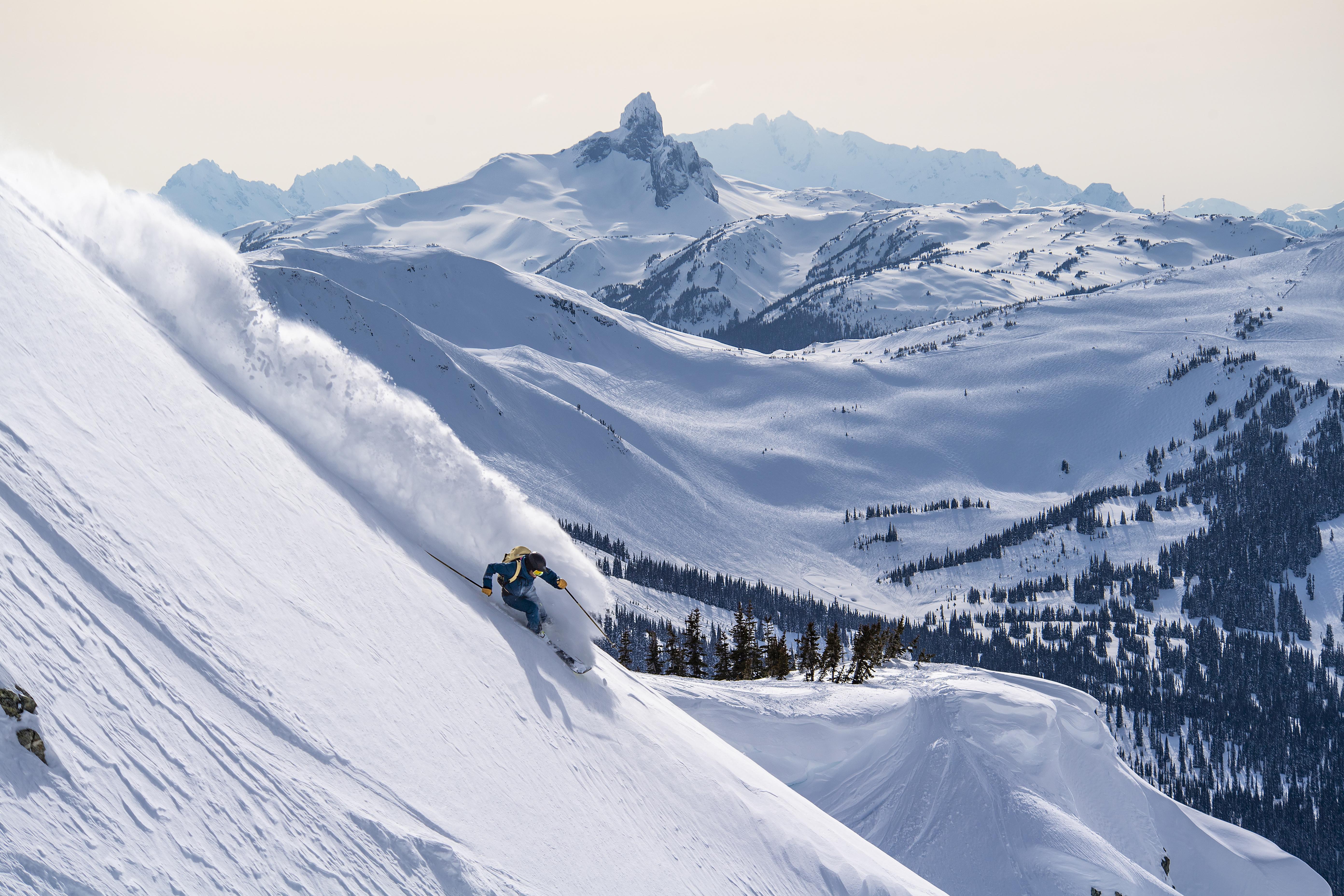






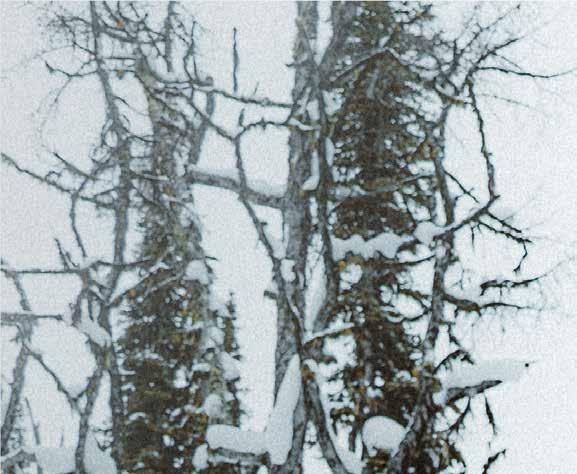


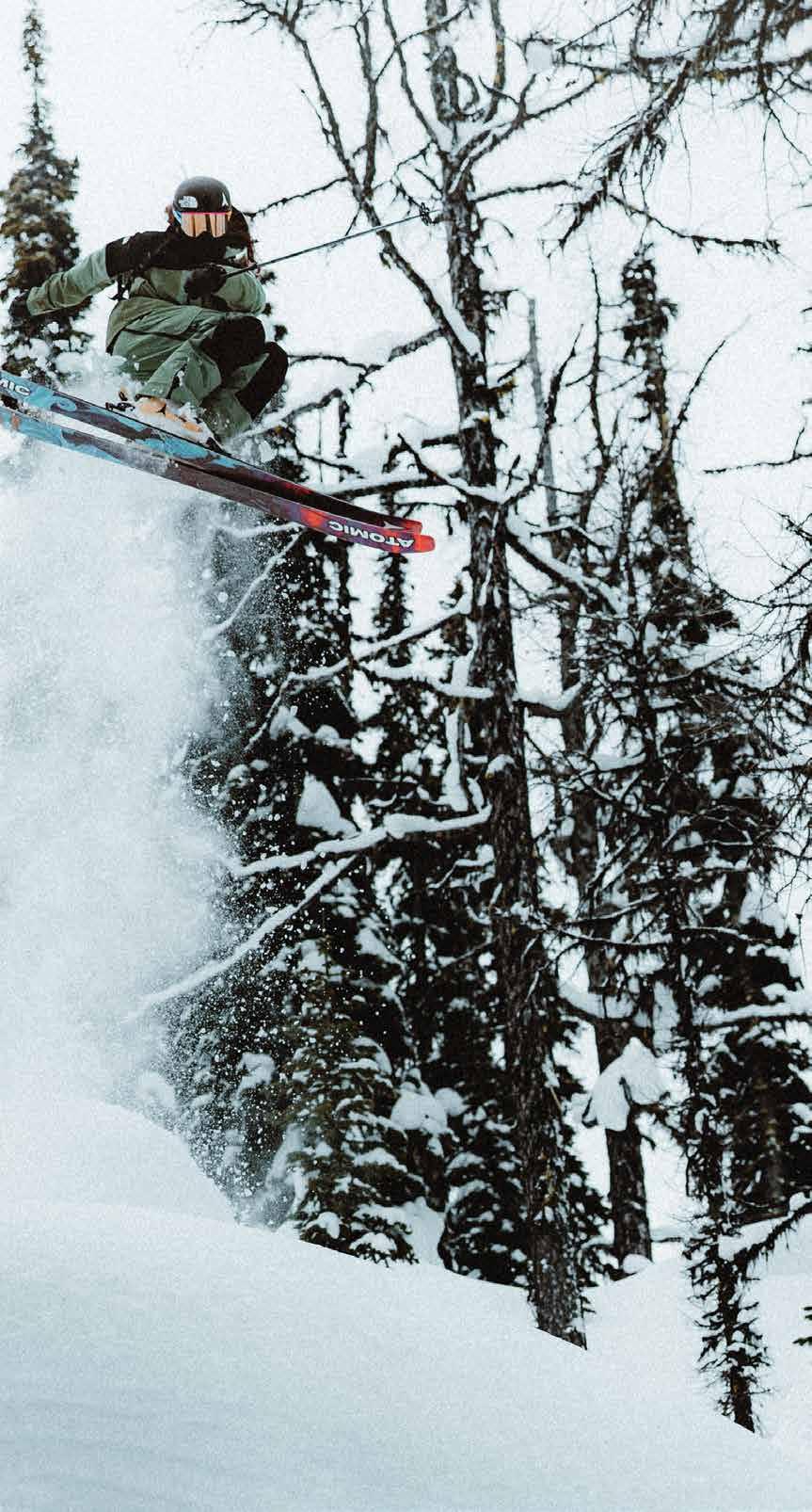











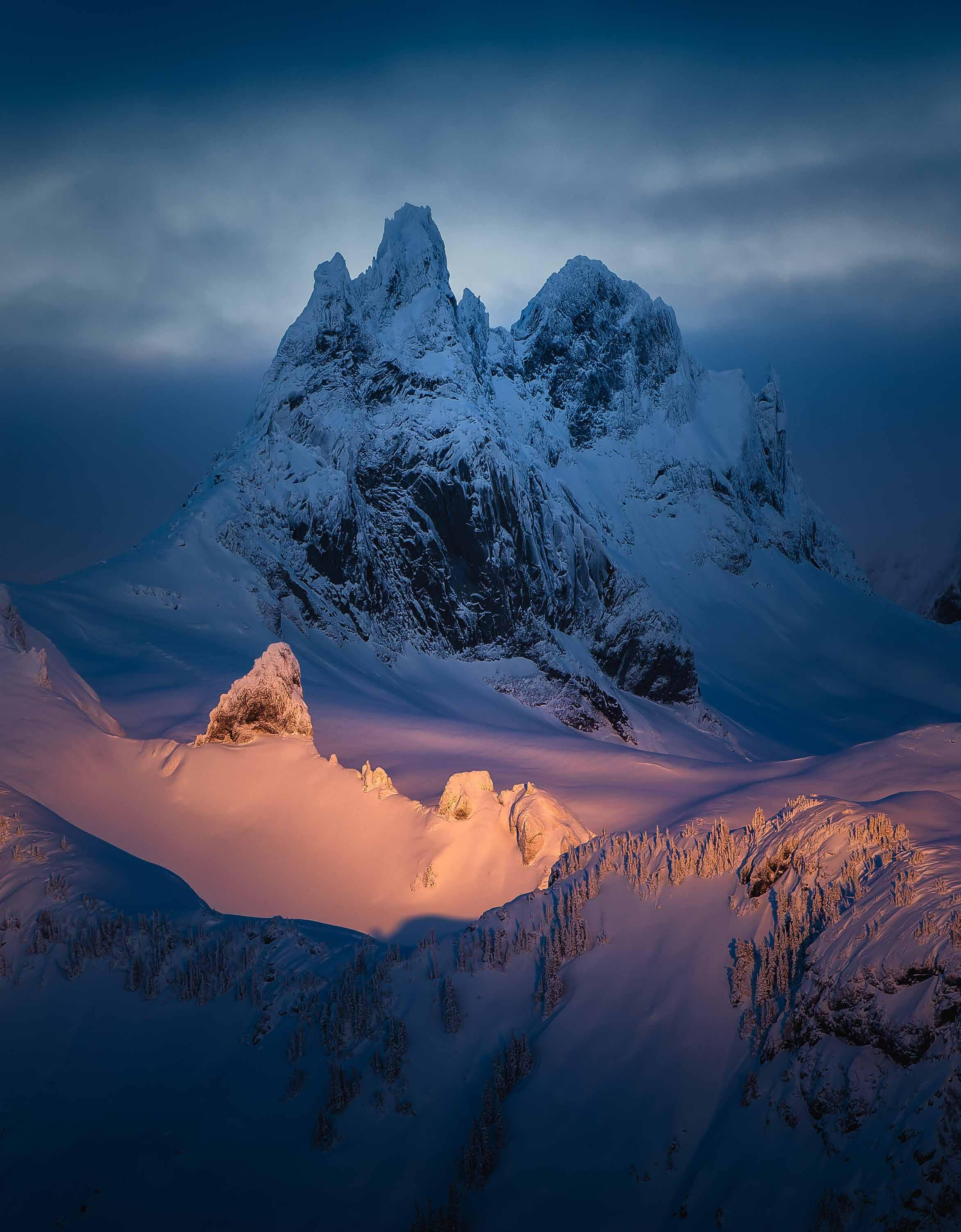
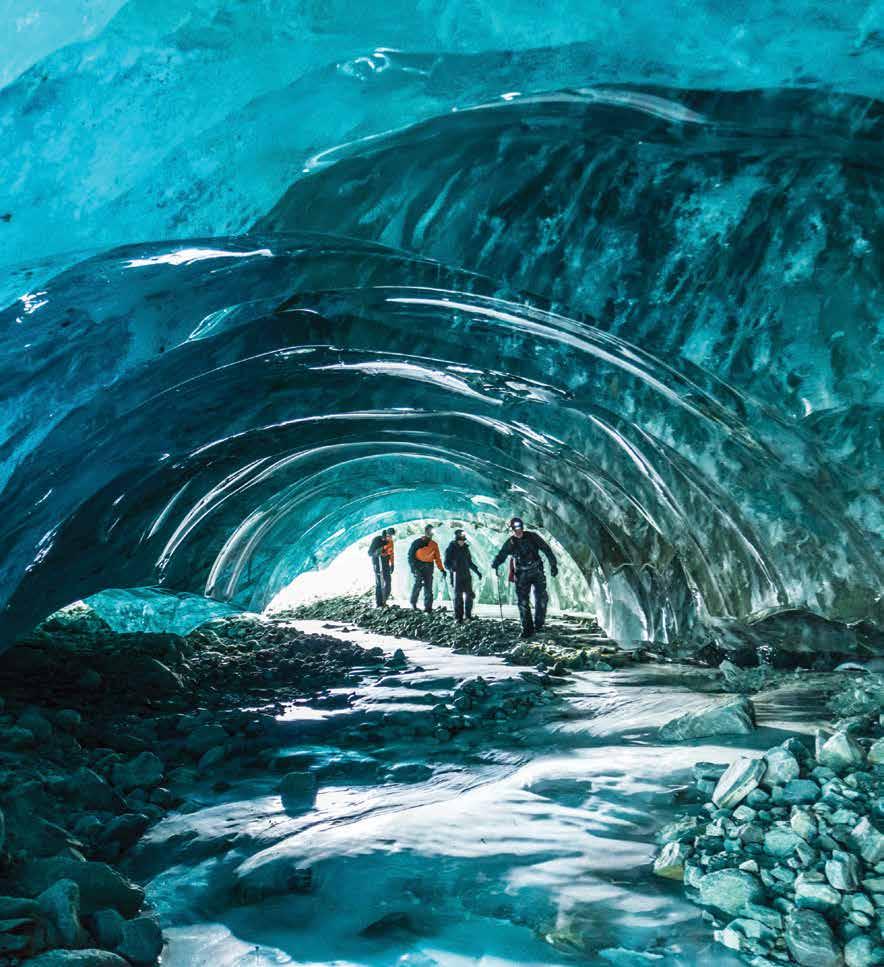
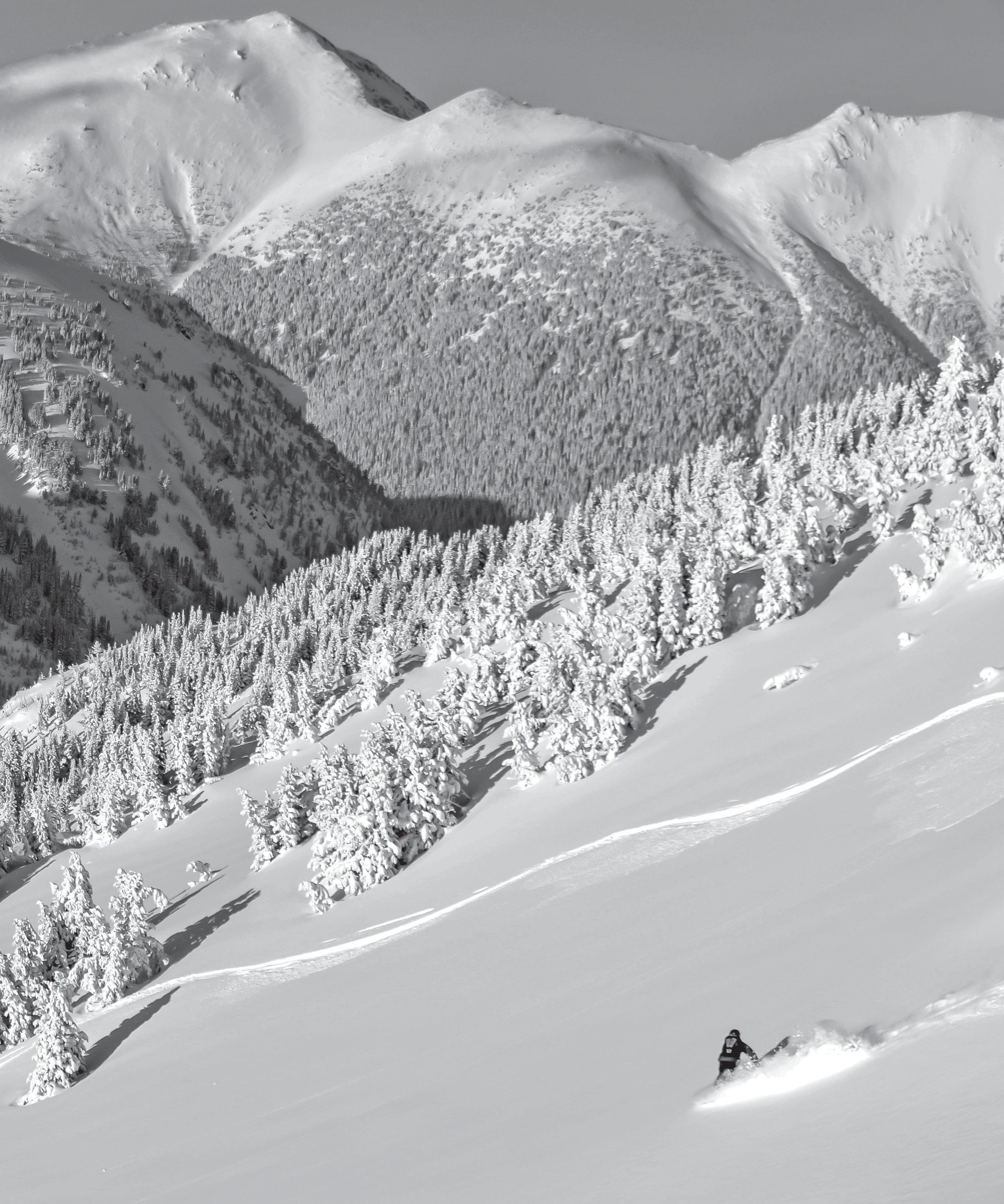
Eagle Pass, British Columbia
50.9664° N, 118.3689° W
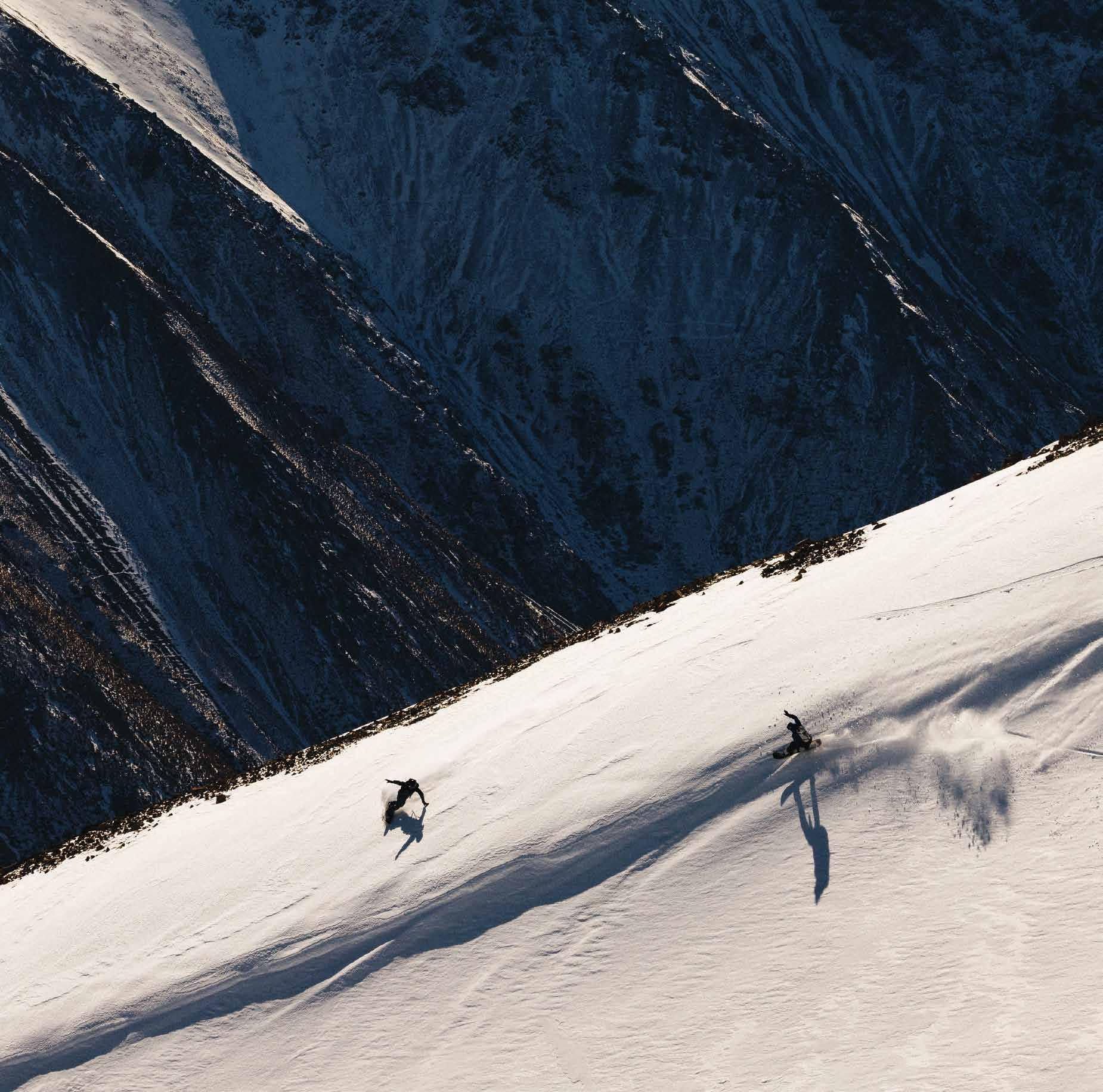
Ambassadors: Jeremy Jones and Victor Daviet
Location: South Island, New Zealand

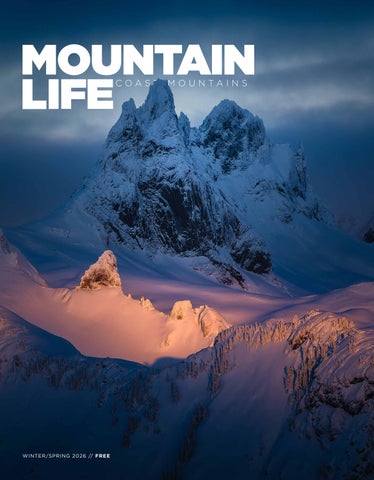
Celebrating 60 years of
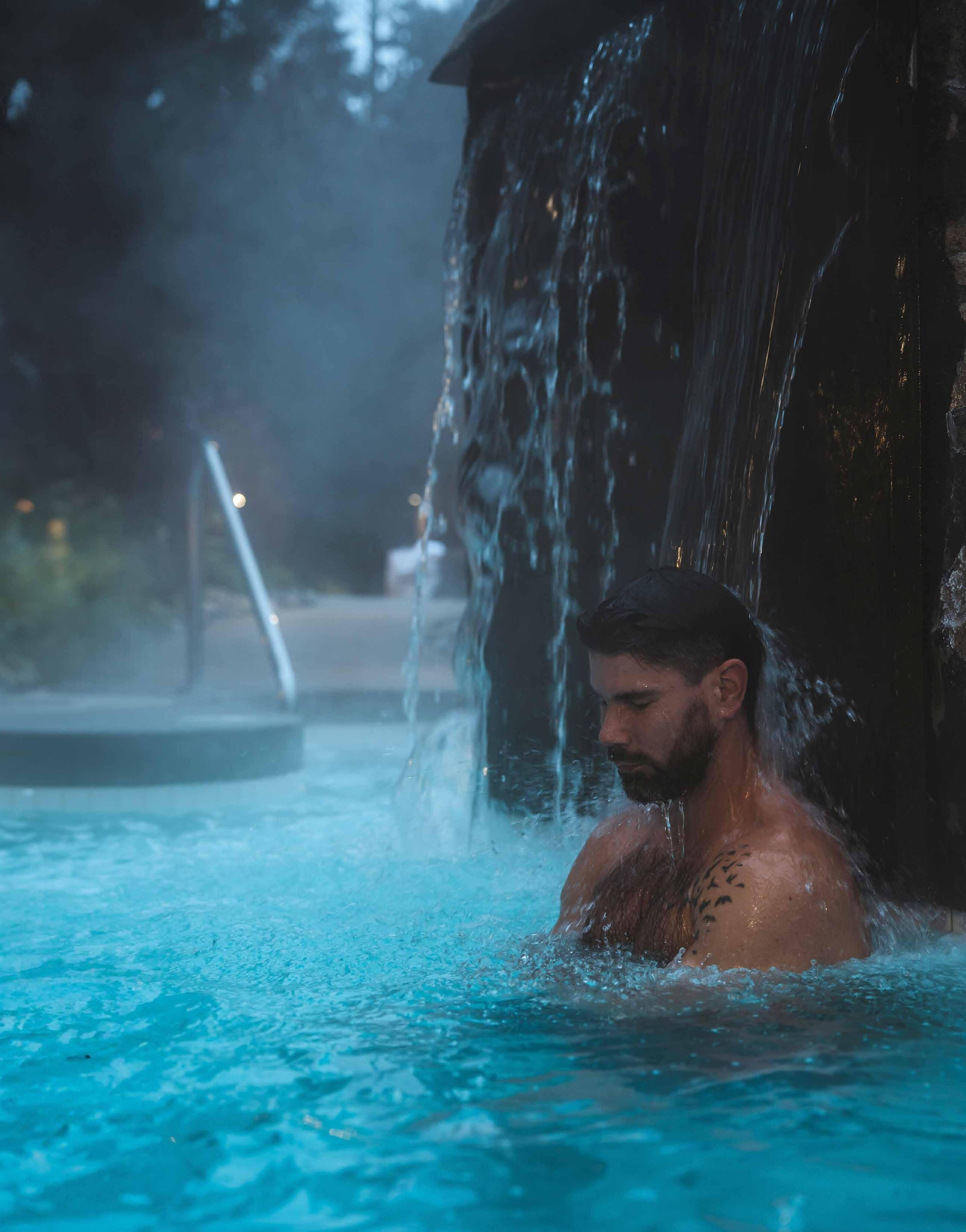



P.16 BREAKING TRAIL Sled ’n Shred Pioneers
P.25 WHERE THE WOLVES FOUND US Winter on Ellesmere Island
P.55 FAUX FUR & STOICISM Poland’s Ski Culture
P.82 GALLERY Slick Pics
P.14 FEET FIRST Resilience
P.35 MOUNTAIN LIFER Mike Douglas
P.43 HISTORY 30 Years of WSSF
P.67 BACKYARD Come Hell or High Water
P.72 BEYOND Transitions
P.75 ARTIST Walletmoth
1066 Millar Creek Road, Whistler BC www.camplifestyle.ca


Mountain Life Coast Mountains operates within and shares stories primarily set upon the unceded territories of two distinct Nations—the Sḵwx̱wú7mesh and the Lilwat7úl. We honour and celebrate their history, land, culture and language.
PUBLISHERS
Jon Burak jon@mountainlifemedia.ca
Todd Lawson todd@mountainlifemedia.ca
Glen Harris glen@mountainlifemedia.ca
EDITOR
Feet Banks feetbanks@mountainlifemedia.ca
CREATIVE & PRODUCTION DIRECTOR, DESIGNER
Amélie Légaré amelie@mountainlifemedia.ca
MANAGING EDITOR
Kristin Schnelten kristin@mountainlifemedia.ca
WEB EDITOR
Ned Morgan ned@mountainlifemedia.ca
DIRECTOR OF MARKETING, DIGITAL & SOCIAL
Noémie-Capucine Quessy noemie@mountainlifemedia.ca
FINANCIAL CONTROLLER
Krista Currie krista@mountainlifemedia.ca
CONTRIBUTORS
Leslie Anthony, Mary-Jane Castor, Mike Crane, Kurtis Croy, Chris Christie, Ollie Dickerson, Oskar Enander, Guy Fattal, Andrew Findlay, Ben Girardi, Brian Hockenstein, Lani Imre, Brock Johnston, Kari Medig, Marcus Paladino, Thomas Renborg, Bruce Rowles, Murray Siple, Howie Stern, Chili Thom, Jon Turk, Anatole Tuzlak, Kevin Valley, Joe Wakefield, Lilly Woodbury, Ray Zahab.
SALES & MARKETING
Jon Burak jon@mountainlifemedia.ca
Todd Lawson todd@mountainlifemedia.ca
Glen Harris glen@mountainlifemedia.ca
Published by Mountain Life Media, Copyright ©2026. All rights reserved. Publications Mail Agreement Number 40026703. Tel: 604 815 1900. To send feedback or for contributors guidelines email feet@mountainlifemedia.ca. Mountain Life Coast Mountains is published every February, June and November and circulated throughout Whistler and the Sea to Sky corridor from Pemberton to Vancouver. Reproduction in whole or in part is strictly prohibited. Views expressed herein are those of the author exclusively. To learn more about Mountain Life visit mountainlifemedia.ca. To distribute Mountain Life in your store please call 604 815 1900.
Mountain Life is printed on paper that is Forest Stewardship Council ® (FSC ®) certified. FSC ® is an international, membership-based, non-profit organization that supports environmentally appropriate, socially beneficial and economically viable management of the world’s forests. Mountain Life is PrintReleaf certified. It measures paper consumption over time automatically reforested at planting sites in Canada.
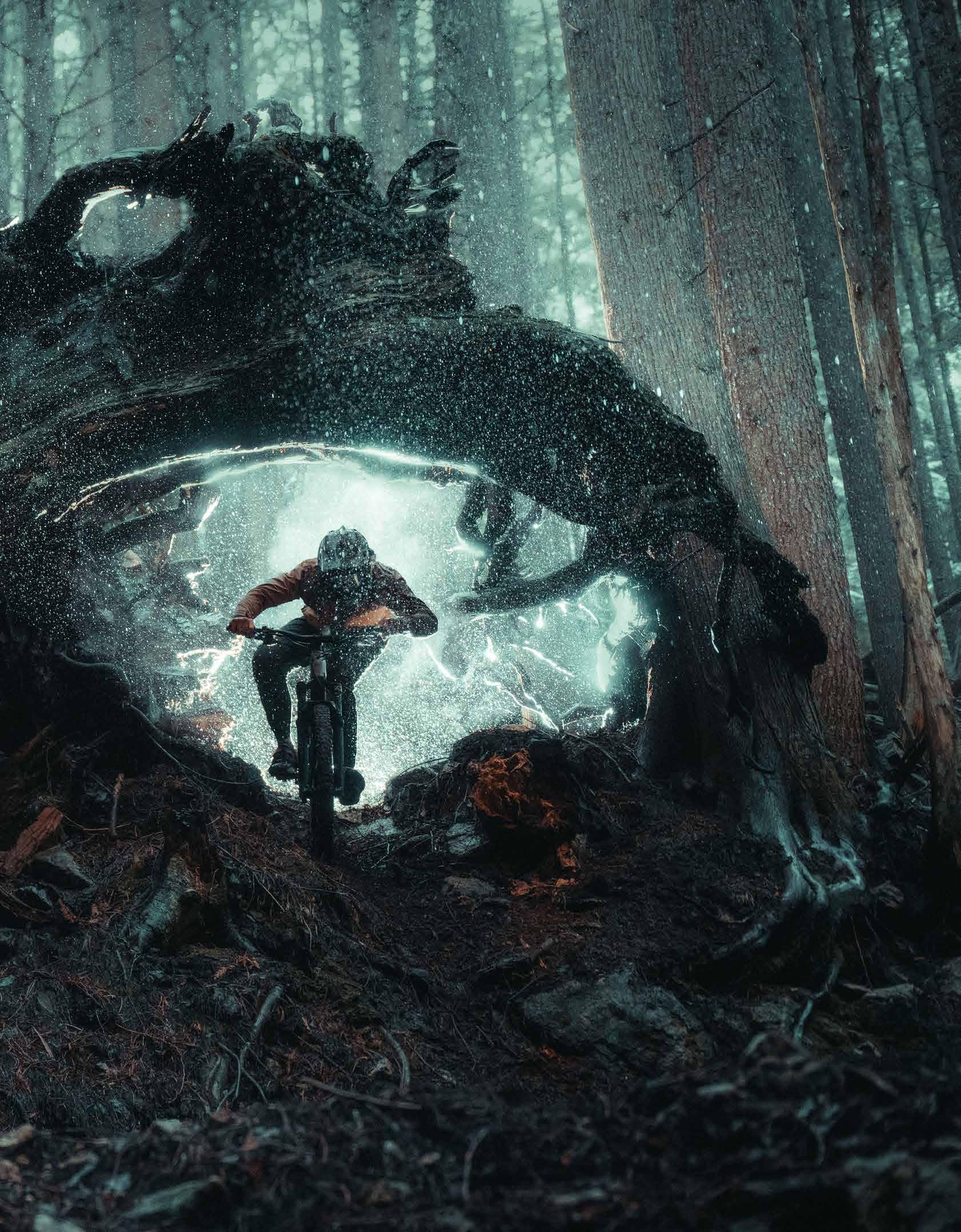
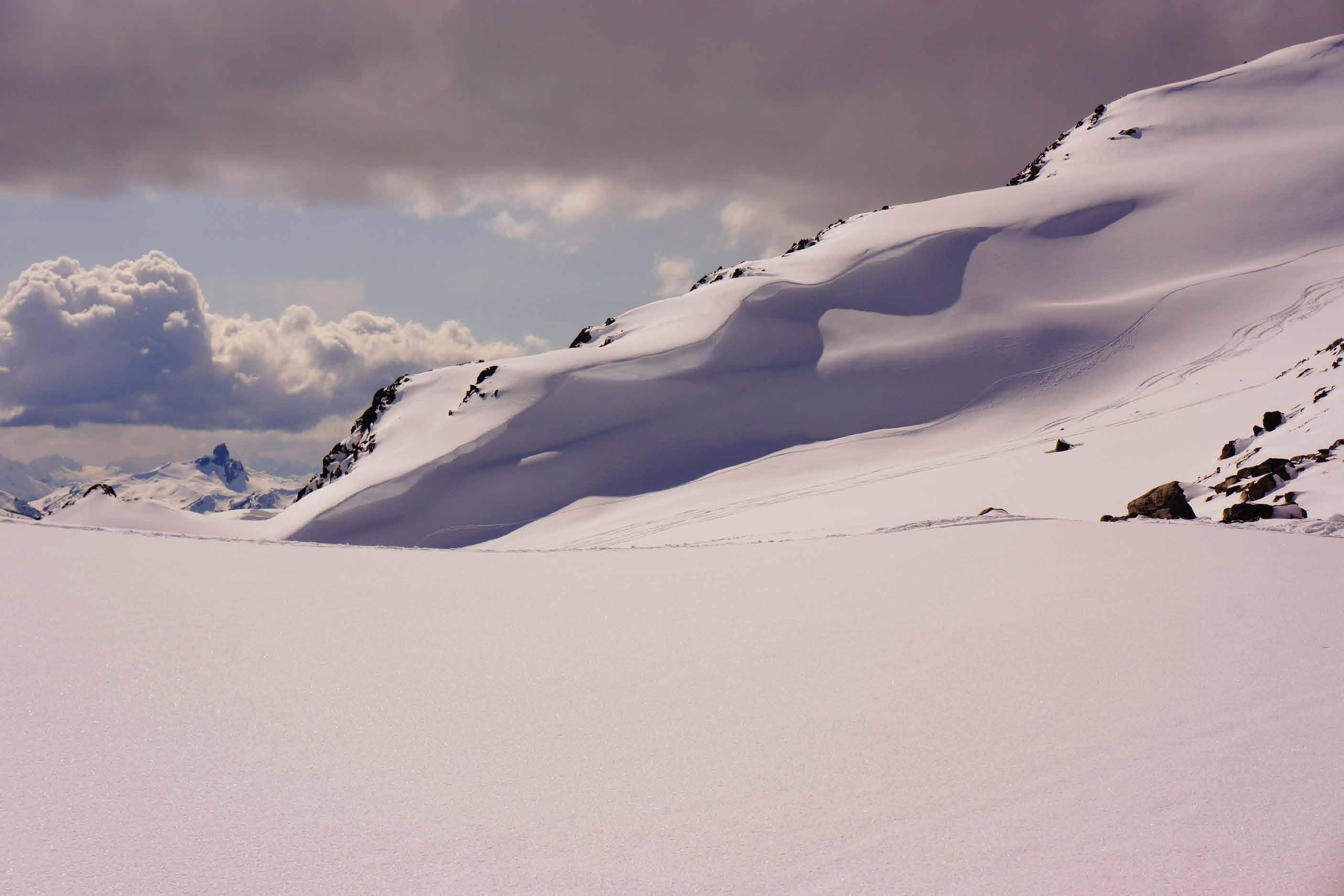
Sometimes it rains to the top.
Or the binding breaks, or the friends bail, or you can’t find that jacket—the one with your pass in it. Or there’s gonna be traffic, lift lines, sketchy roads, no parking. Or it’s too cold, or not cold enough, or you have other stuff that needs to get done anyhow.
If you’re looking for them, there will be lots of reasons not to go out into the mountains. But we’re the lucky ones to even have the option. And that’s all the more reason to get out there. To taste that open space and the fleeting moments of being both totally in control of the moment but also completely at the mercy of gravity, the landscape, the weather and the wilds.
So ditch the continuous drip of digital anxiety and global anger. Shine your headlight into the darkness and choose to get up, grab your gear and go skiing in the rain. Make the most of shredding ice, or setting a skin track through the crud. Go for just one lap or go for two weeks. Go solo or go or make a new friend. Go early, go late, just go-go-go to the mountains.
Will it solve the world’s problems? No. Will it even solve yours? Probably not, but odds are you’ll feel better when you come back. Either way, you’ll never know if you don’t go.
–Feet Banks

photography & captions :: Kurtis
Croy
words :: Feet Banks
Someone has to go first. It doesn’t matter whether you’re dropping into a line, setting a skin track or getting out of the tent to fire up the stove, in the mountains we need those willing to put themselves into the unknown for the benefit of others. All hail the trailblazers.
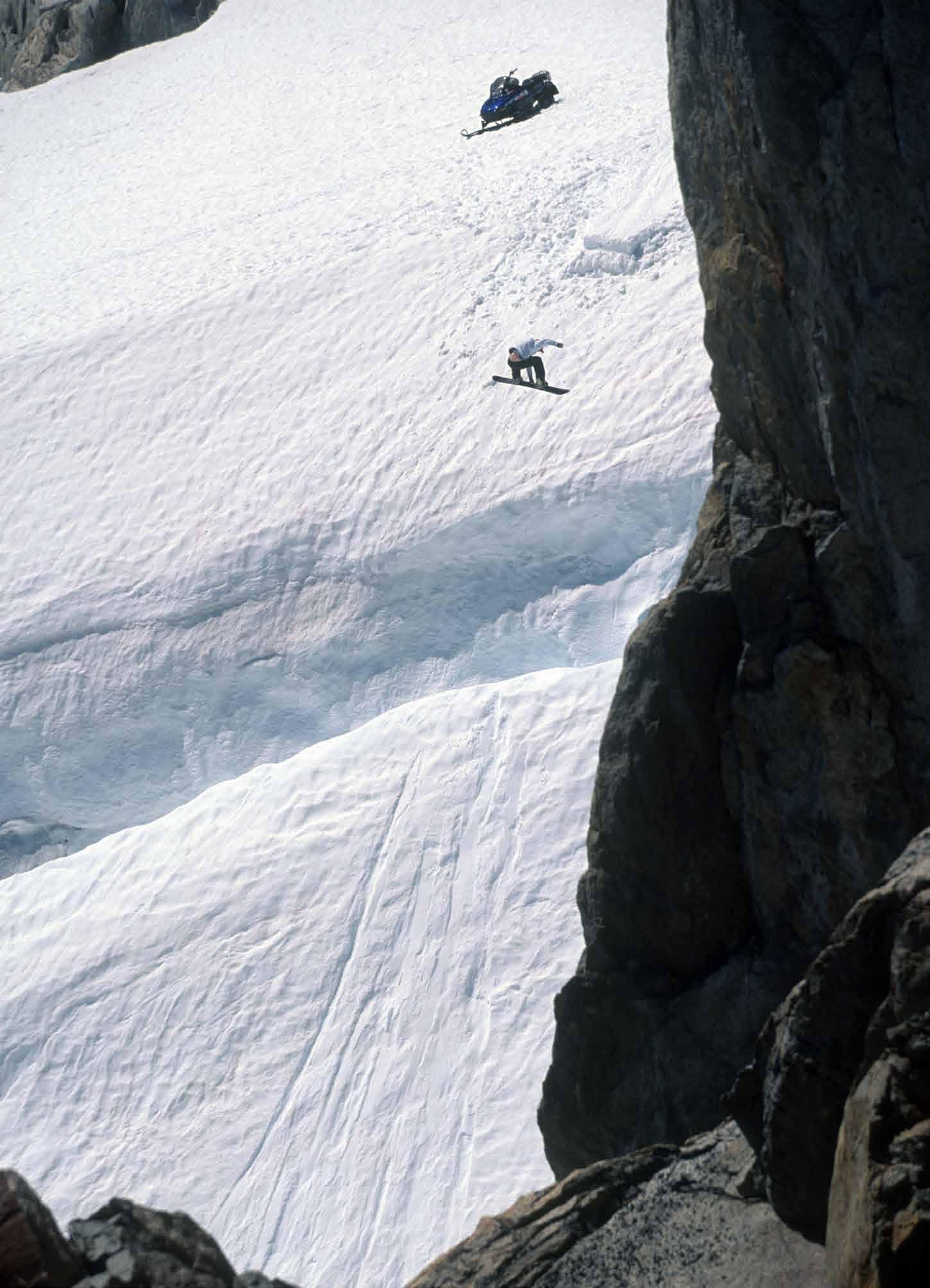
And when it comes to snowmobile-accessed shredding in the southern Coast Mountains, the pioneers were a handful of young snowboarders chasing fresher snow, new terrain and better photos and film clips.
“There was no roadmap,” says cinematographer Brad McGregor. “It was purely instinctual and we didn’t even know we were getting in over our heads. We just did it.”
In 1995, while filming for Whistler-based film company Adventurescope, Brad, photographer Kurtis Croy and a few young snowboard pros embarked on their first alpine snowmobile mission: a foray up Mount Sproatt.
“Al Crawford and Doug Washer were running a local snowmobile tour business,” Kurtis says, “and Matt Domanski talked Doug into taking a group of us out. He was a great sledder and had a Summit 670, but we were on Ski-Doo 583s with 136-inch tracks with maybe inch-and-a-half paddles. It was Brad, myself, Matt, Dave Stirling and James Kurylo, and none of us were ready for Sprout. We got stuck a million times, crashed into creeks, floundered. It was a shitshow. But I did get a photo of Kurylo published in Transworld from that day.”
And more importantly, the day gave them a taste of what was available. “Within a year we had our own 670s and were really good on them,” Kurtis says. “But it was different back then. Today’s machines can just put in fresh tracks and power through, but back then we had to take multiple runs at things. Just getting up the S chute in the morning was not easy, especially if it had snowed a foot or two.”
“Snowmobiles were like a bowling ball,” Brad says of those early machines. “If you throw a bowling ball at a hill it will follow the lines of the terrain. The snowmobiles wanted to do the same. We had to
learn to sidehill, how to use speed and momentum. We couldn’t stop or we’d get stuck, so a lot of it was pushing the sled almost as far as possible then quickly turning around and going back downhill. That way we could build a runway. We learned to read terrain in reverse, to pick our way up a line, to plan a few moves ahead.”
One of their few early mentors was ski guide Eric Smith. “He taught us to bring snowshoes,” Brad says. “In zones through the trees we would stomp a line with the snowshoes, something we knew we’d be able to hold speed on. We’d make a road in.”
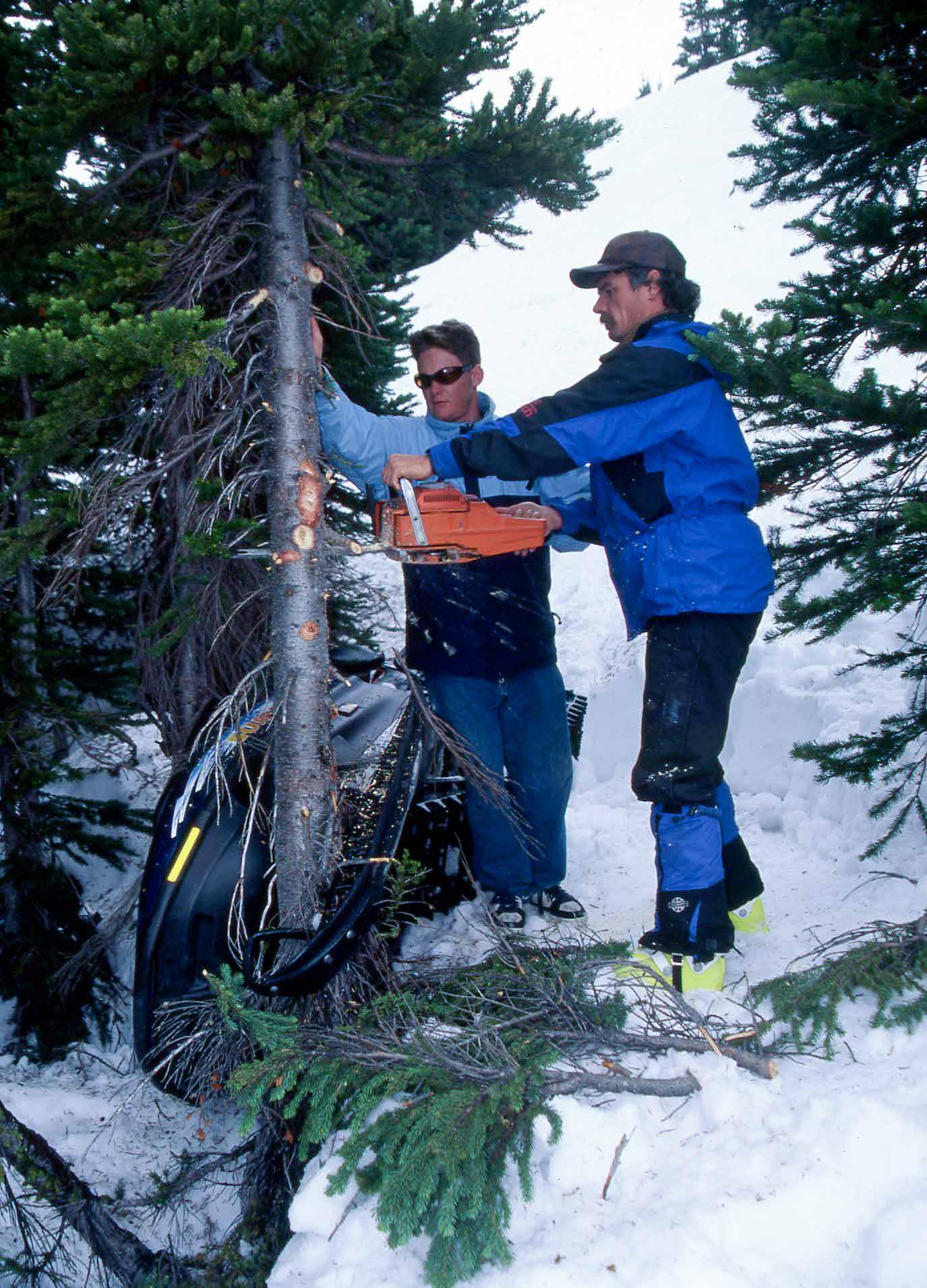
“It was a bit lawless back then and Kurt was more adventurous than I was,” Matt says. “He’d drop into places and it was like, ‘I guess we are going. I hope we can get out.’ But that was how we found a lot of spots and new zones… Of course, we sometimes had to leave a sled and come back the next day with a come-along to haul it out.”
“When we were going out there, it was really like, I wonder what’s over that ridge? I wonder if we can cut through there?” Brad says. Each venture out seemed to unlock a new playground.
“Sometimes we’d hear of old-time sledders getting into the same spots,” Kurtis says. “But for the most part we were out there alone and, in the early years, we were the only ones snowboarding.”
The sleds gave Kurtis and Brad—and their expanding crew of snowboard pros with machines—the ability to find slopes and features that had never been photographed. “Natural jumps, drops and spots where we could do tricks on big lines,” Kurtis says. “Or spots to build big booters. With that kind of stuff you have to do it more than once, so we could build stuff, practice it, move around and find the best angles, then come back the next bluebird pow day to shoot. All without spending the kind of money you need for helicopters. That was the magic of the sleds.”
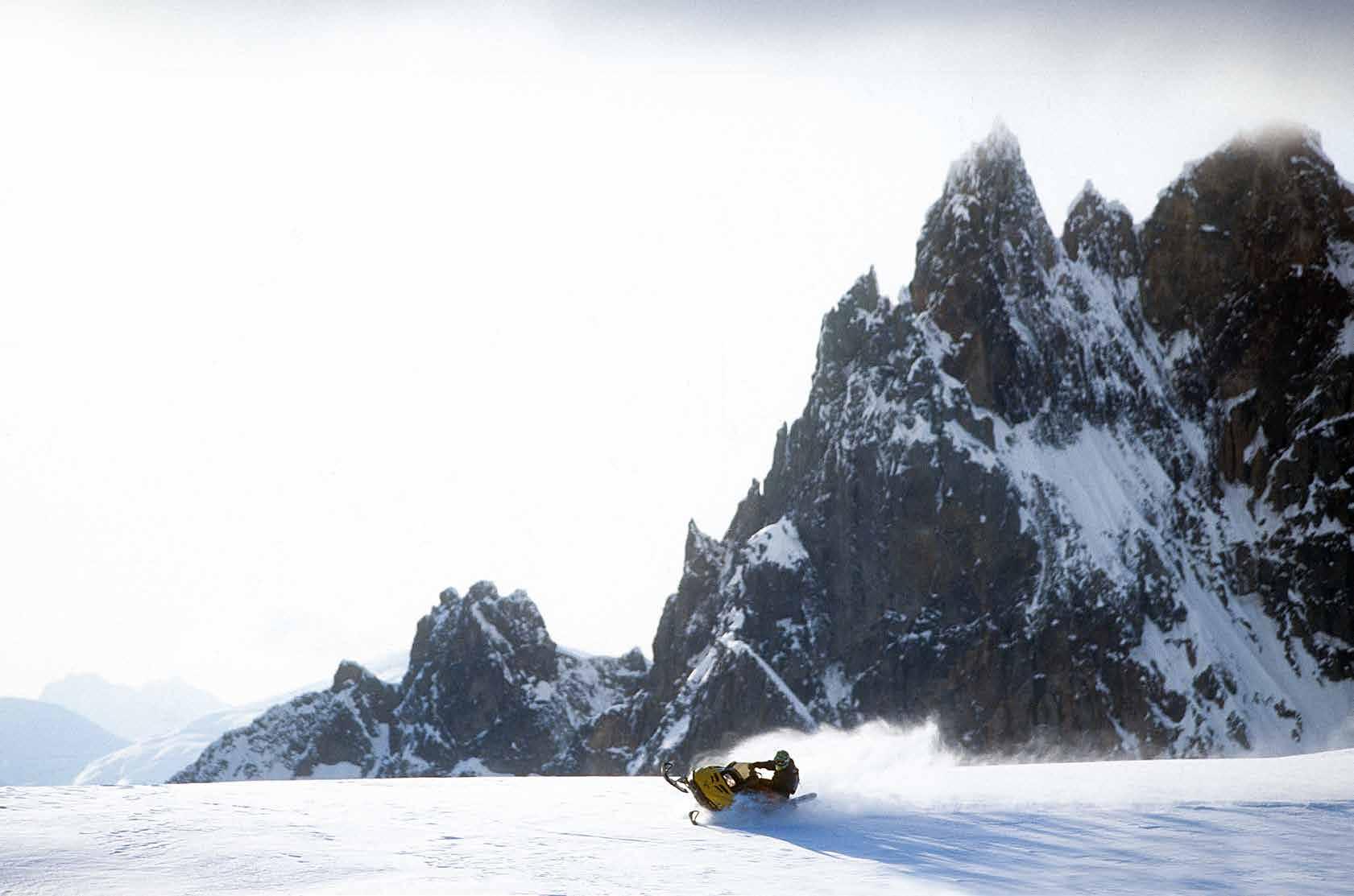



As the photos and footage from the Sea to Sky sledland reached the public, more and more snowboarders got machines of their own. By the turn of the millennium, even the skiers had joined the fun, partially due to the innovative racks snowboarder/sledder Dave Basterrechea invented to secure boards and skis to the snowmobile. “I couldn’t believe no one made them,” says Dave, whose company Cheetah Factory Racing changed the entire industry. “It was a thing of need.”
So was old-school tech like topographical maps and Forest Service Road guidebooks. There was no Google Earth, no inReach, and, early on, not even cell phones. When problems inevitably arose, all the crew had was each other.
“In snowmobiling there is strength in numbers,” Kurt says. “You need to know what you are doing back there. I like going with a big crew and learning from each other, helping each other and celebrating together. Sitting on an empty ridge watching the sun go down with your favourite people. Those are some of my best memories.”
Matt agrees. “Bluebird, fresh pow, wide open, pinning your sled as far as you can see—and you’re there with your buddies. It felt like how it felt when we were kids.”
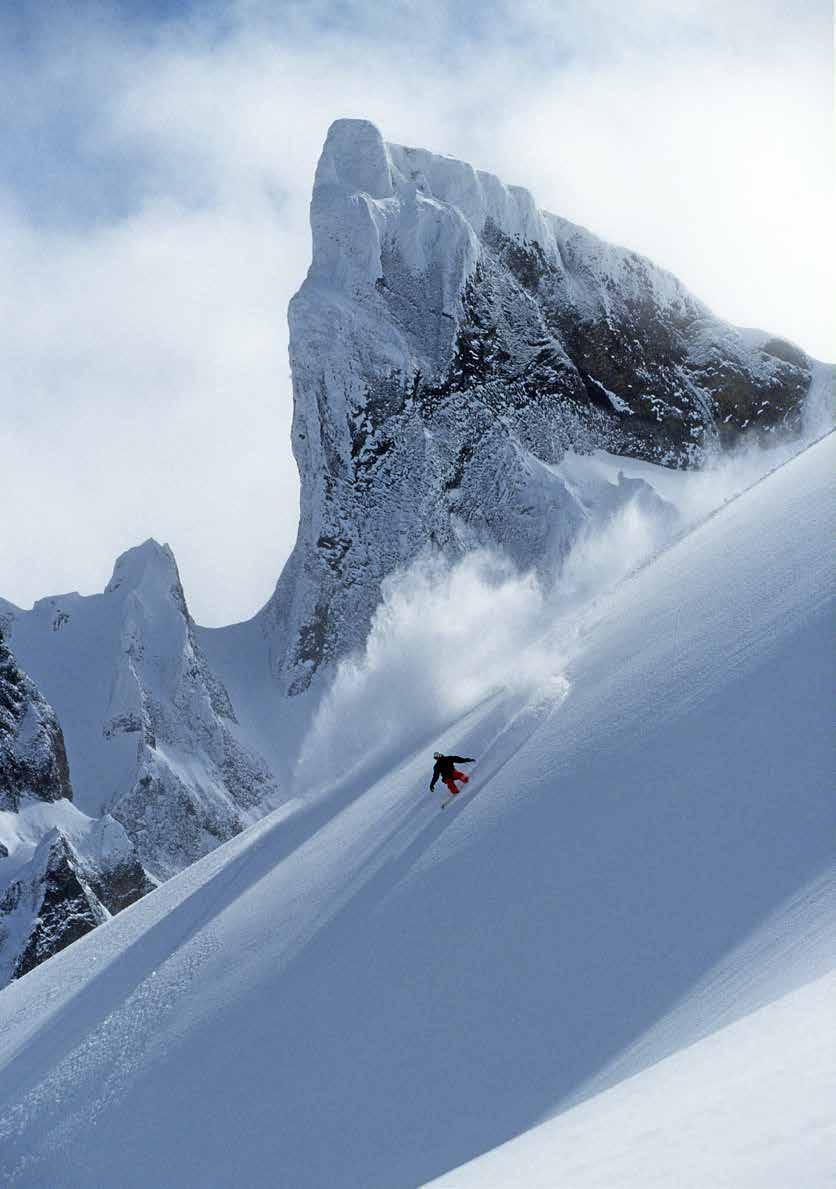
It used to be so easy and quick to get up to the Black Tusk area, just following the park boundary. Eventually they gated it. There are so many more sledders now I think it was a good move. Here’s Dave Basterrechea getting it when we could.

“Kurtiswould dropintoplacesanditwas like,‘Iguesswearegoing.Ihopewecanget
To celebrate that camaraderie, and the youthful spirit of a crew chasing light and lines into the wild, we’ve collected a few of Kurtis Croy’s favourite shots from an era of Coast Mountain history that was raw, risky and unwritten. “It’s easy to follow tracks now,” says Brad. “Back then, we were making them.”
Kurtis is working on a coffee table book of photos from these days as well as the crew’s legendary work with Treetop Films from 1998–2002. Stay tuned.
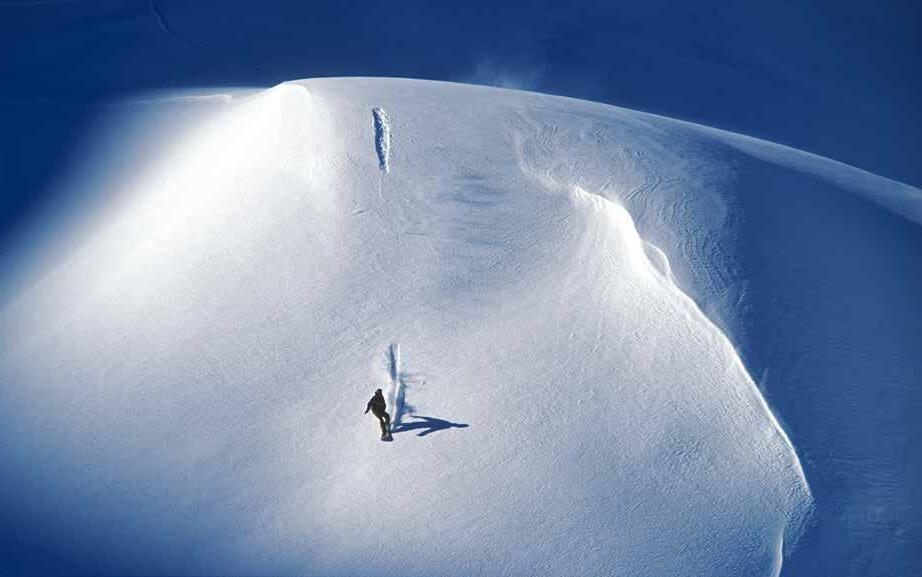

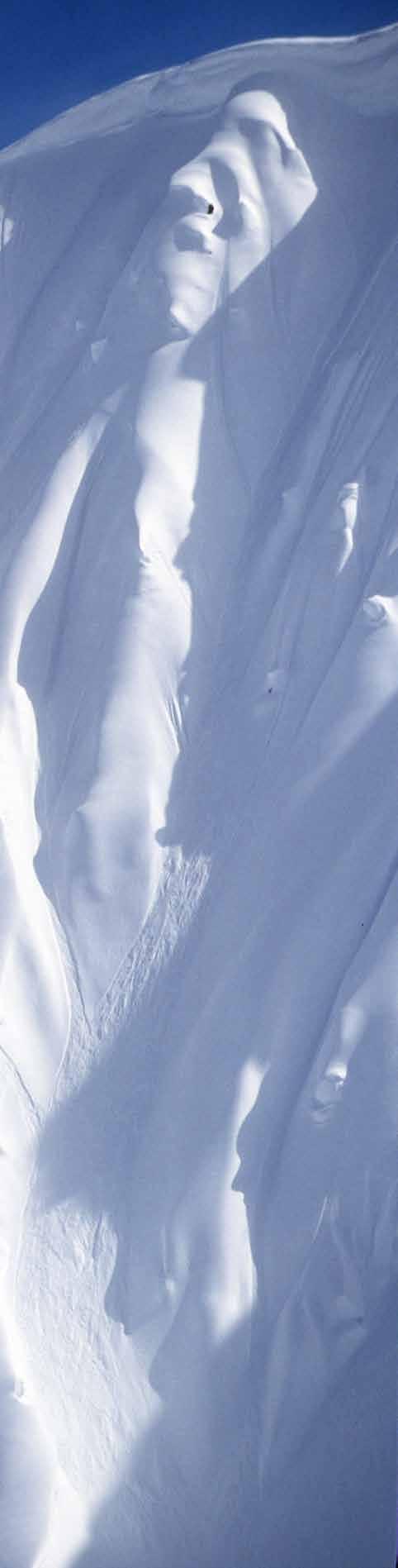
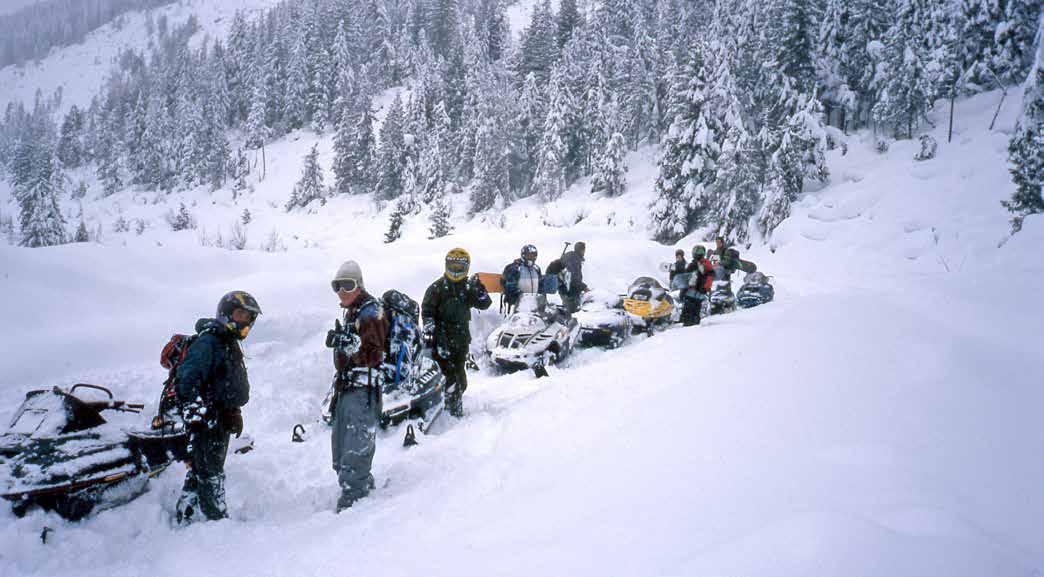
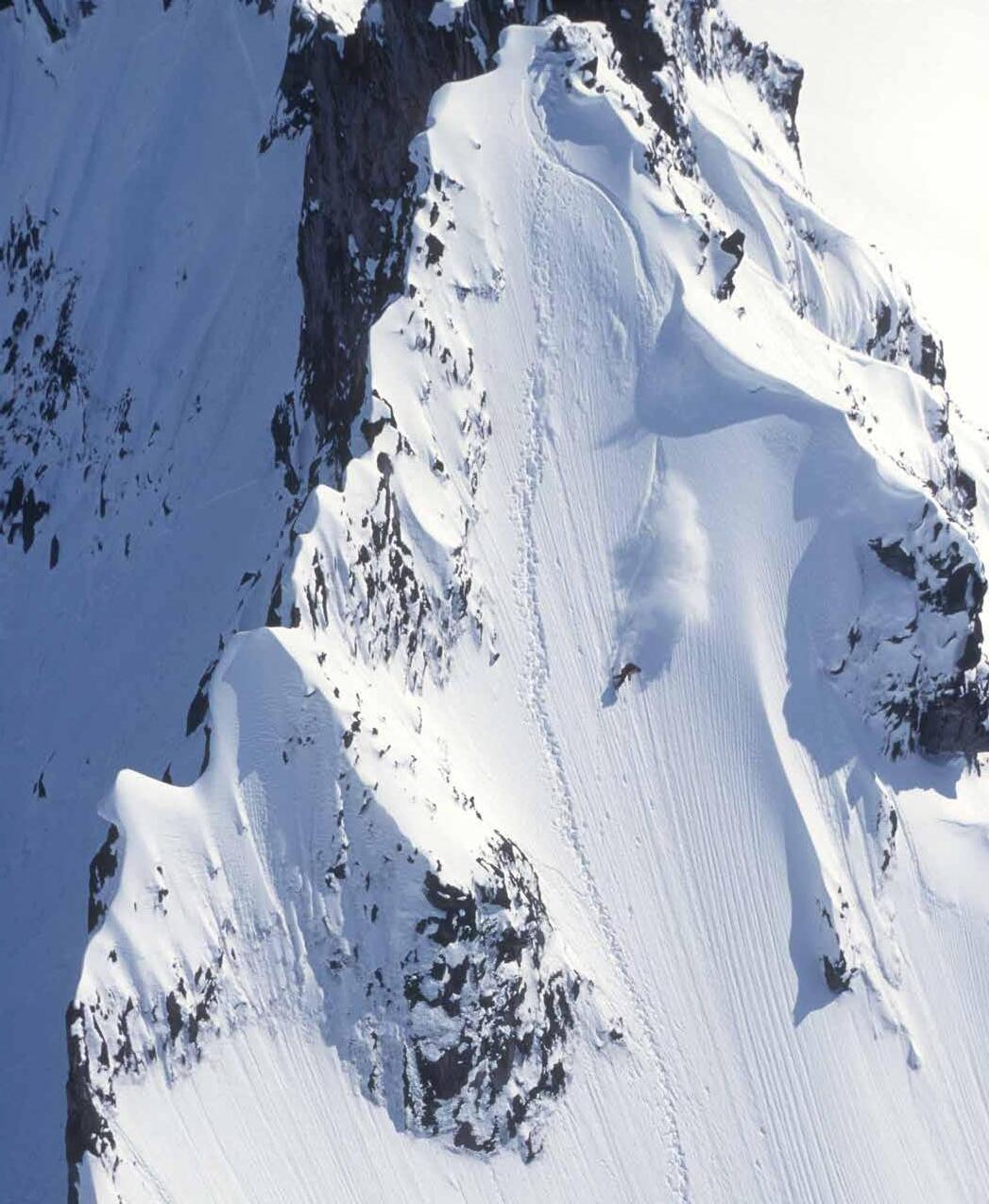
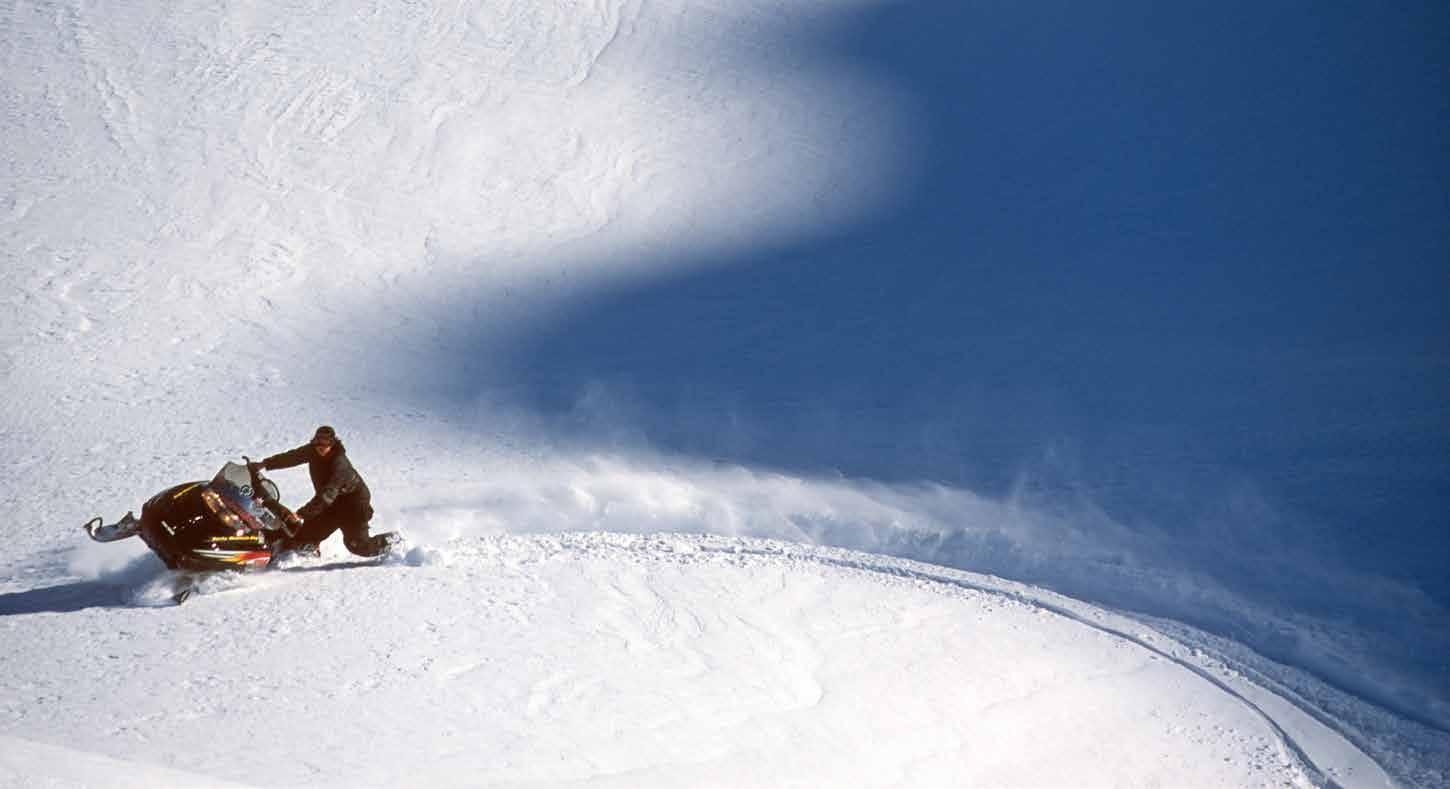
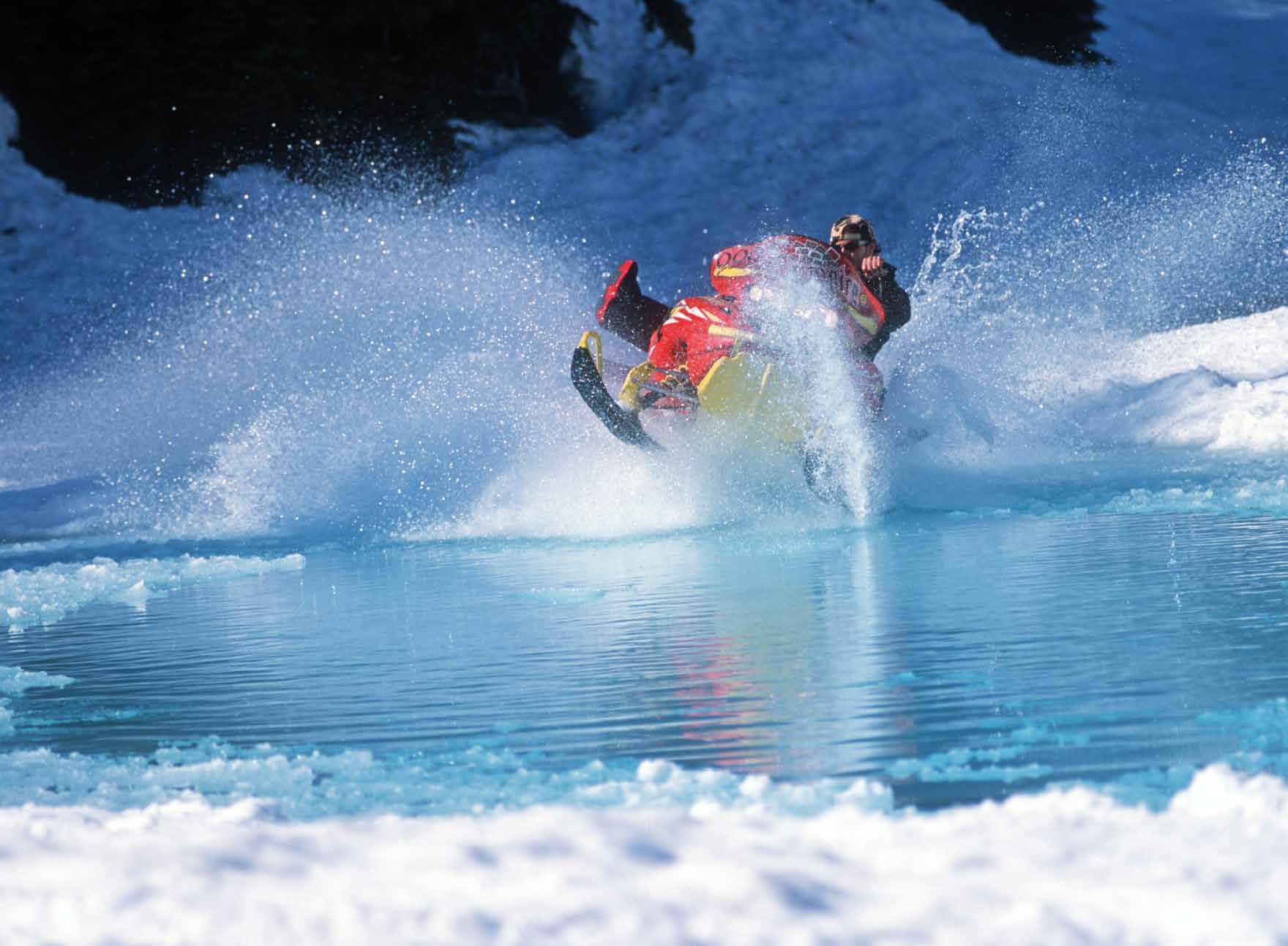
ABOVE Brad McGregor had more snowmobile experience than the rest of us. He had to teach a lot of us what was going on. He was big and strong, and he could really whip the machines around. This looks like 1998-99.
BELOW Martin Gallant was infectious—the most incredible guy, and he was really interested in what we were doing. He got a machine, trained up his own crew and all learned and grew together out there. This is crossing Rutherford Creek, some people were freaked out by water like this back then, but Marty was ready to go. He was the king of the world every day he was out there.








words :: Kevin Vallely
“Oh shit!”
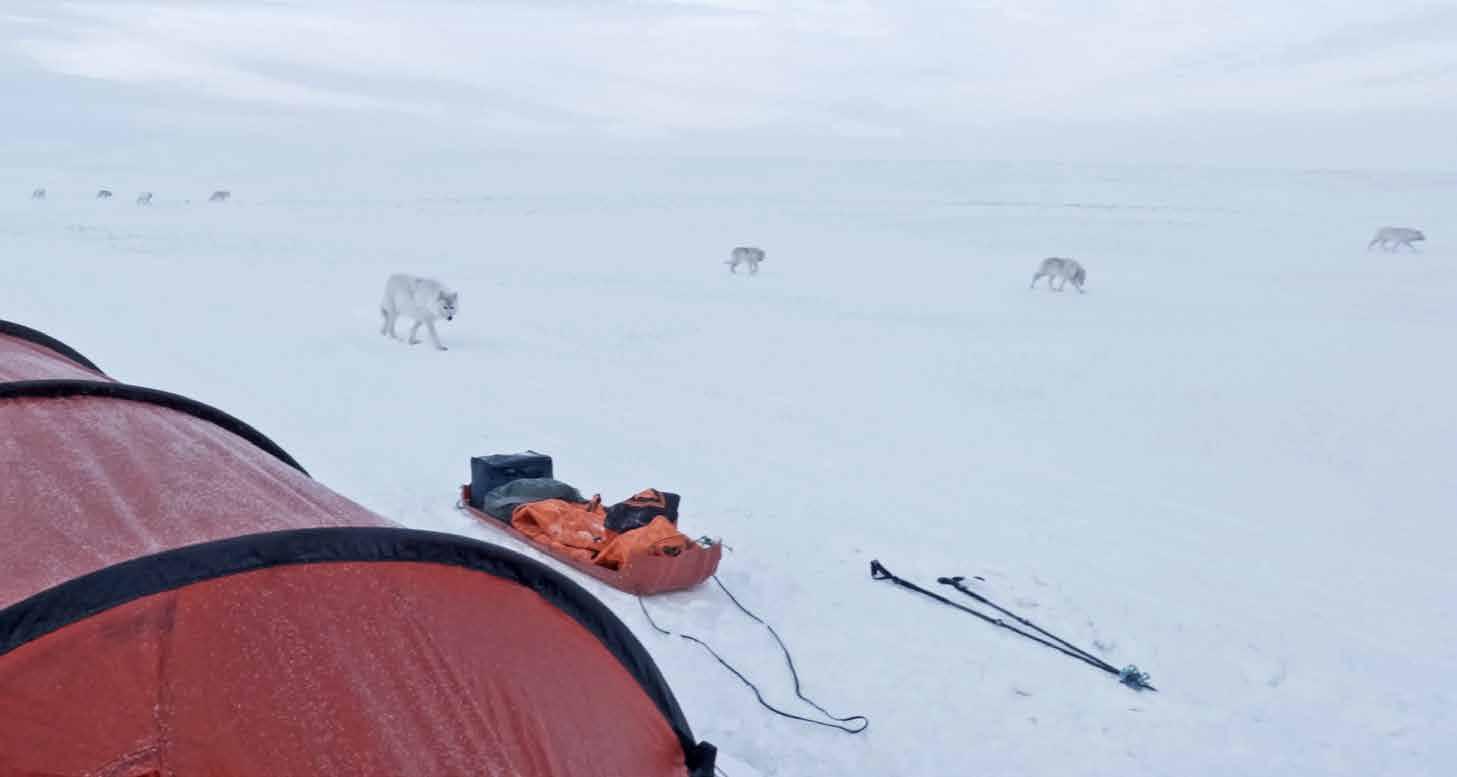
We’ve just finished setting up our first camp when the wolves appear. Ten large Arctic wolves are moving silently out of the whiteness, directly towards us.
“Do you think we need to be worried?” asks Ray.
“Don’t know,” I say, my pulse spiking. The wolves are all around us now.
“Shit, they’re huge.” Ray glances at me and asks, quietly, “Should I get my gun?”
“You could have it ready, but I think it’s fine.”
We’re both reading the same thing from their posture and pace. The wolves have spread out around us with the easy confidence of creatures who’ve never had to fear anything. One wolf stands just ten feet away. It doesn’t seem to make eye contact but rather looks through us as if focusing on something beyond. Its body language is calm, almost curious, completely in control.
“They’re clearly not scared of us,” I say.
“But we should be scared of them,” Ray laughs under his breath.
Here we are, two humans on a frozen island at the top of the world, surrounded by a pack of wolves that could dismantle us in seconds if they choose to. What’s strange isn’t the fear we feel, but the absence of it. We watch, calmly, as one by one they slowly lope out of view.
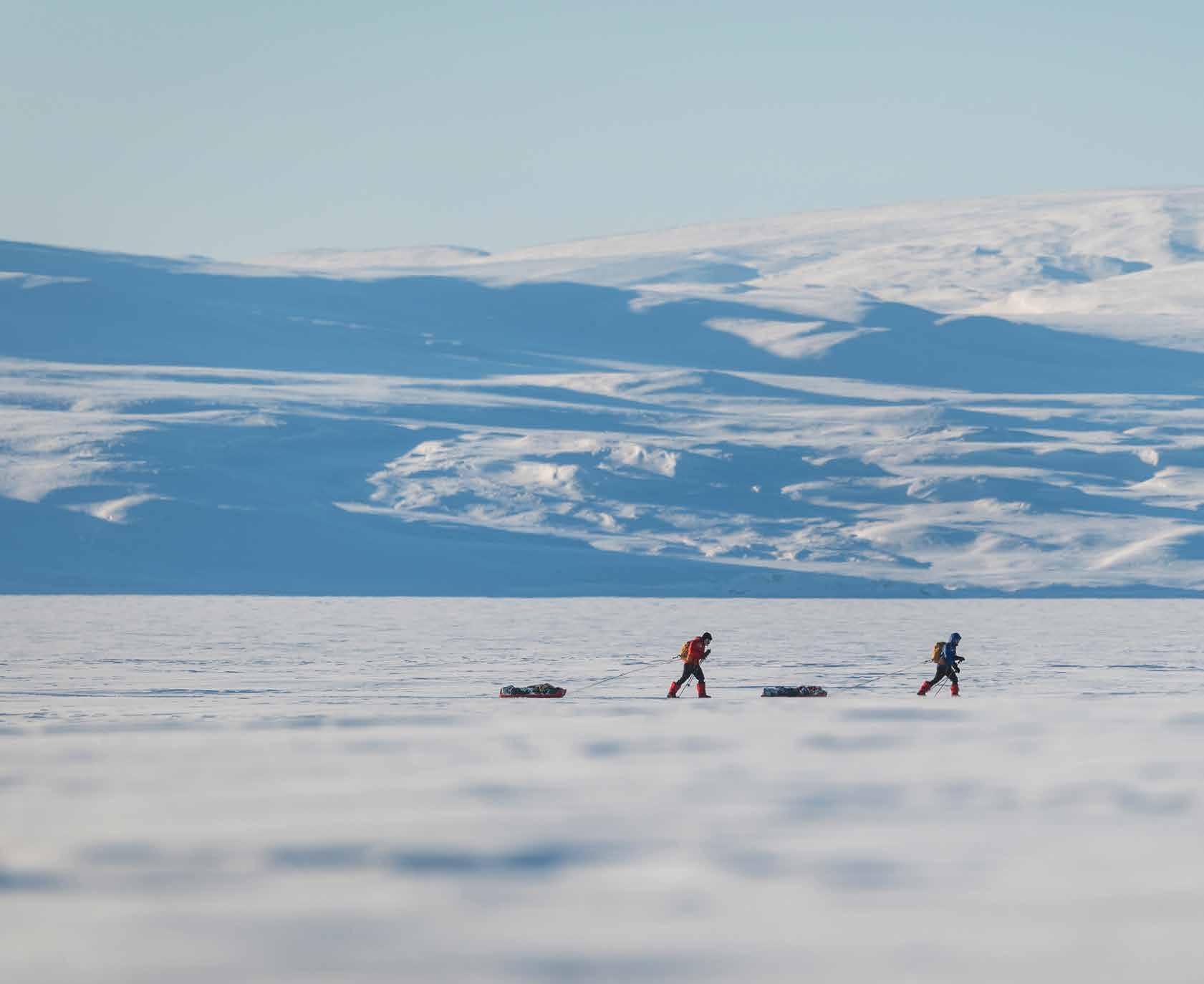
Ray Zahab and I are on Ellesmere Island in the Canadian High Arctic, a place so remote and untouched it feels closer to the moon than to mainland Canada. We left the Polar Environment Atmospheric Research Laboratory (PEARL) at the island’s Eureka research base only four hours earlier to begin our 500-kilometre ski traverse of the island. One of the northernmost inhabited places on Earth (though “inhabited” is a generous term), Eureka sits on the Fosheim Peninsula, a vast, wind-scoured wedge of land edged by frozen sea and carved by ancient glaciers. A small research team of eight rotates through the base, and when we arrived they each greeted us with their name, arrival date and the day they’d be leaving. It felt like hearing the beginning and end of a prison sentence.
But this year, Eureka is busier than usual. A film crew led by producer Sophie Lanfear is tucked into a hardy little structure on the gravel ridge above the main research buildings. Lanfear—an
award-winning wildlife filmmaker known for her work with David Attenborough on Our Planet—is here with her team to study and film the wolves. They’re betting that patience and perseverance will earn them rare footage of these Arctic ghosts in their winter environment.
“We’ve been searching for them for two weeks,” one of the crew told us before we left. “Tracks everywhere. No wolves.”
And yet within a few hours of clicking into our skis and leaving the safety of the station behind, the wolves have found us and delivered the first clear reminder of what we already knew: Out here, we’re not the ones in control. Not of the weather, not of the terrain, and certainly not of the wildlife.
Ray and I had come north at the coldest time of year to chase down a dream: a major traverse of Ellesmere Island from the weather station at Eureka to Grise Fiord, the northernmost community in Canada. For us, it was as much about curiosity as challenge. What
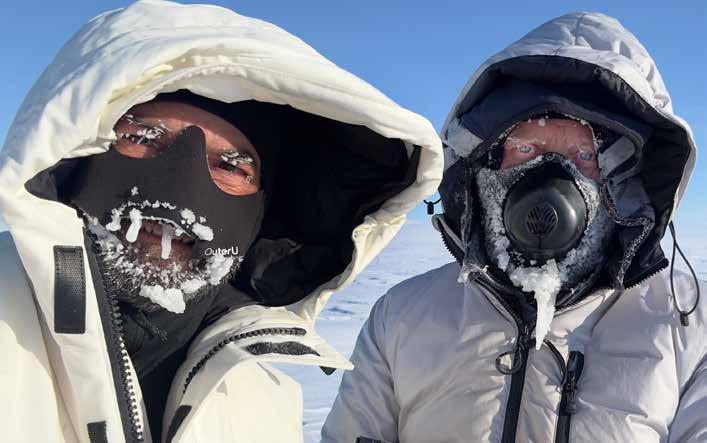
will happen to us—physically, mentally, emotionally—when we spend weeks moving through a landscape this unforgiving? What do we learn about ourselves when there’s no real option to step off the ice, no cozy retreat, no exit ramp?
THE STILL WOLF IS THE SENTRY THE ONE THE REST OF THE PACK WATCHES.
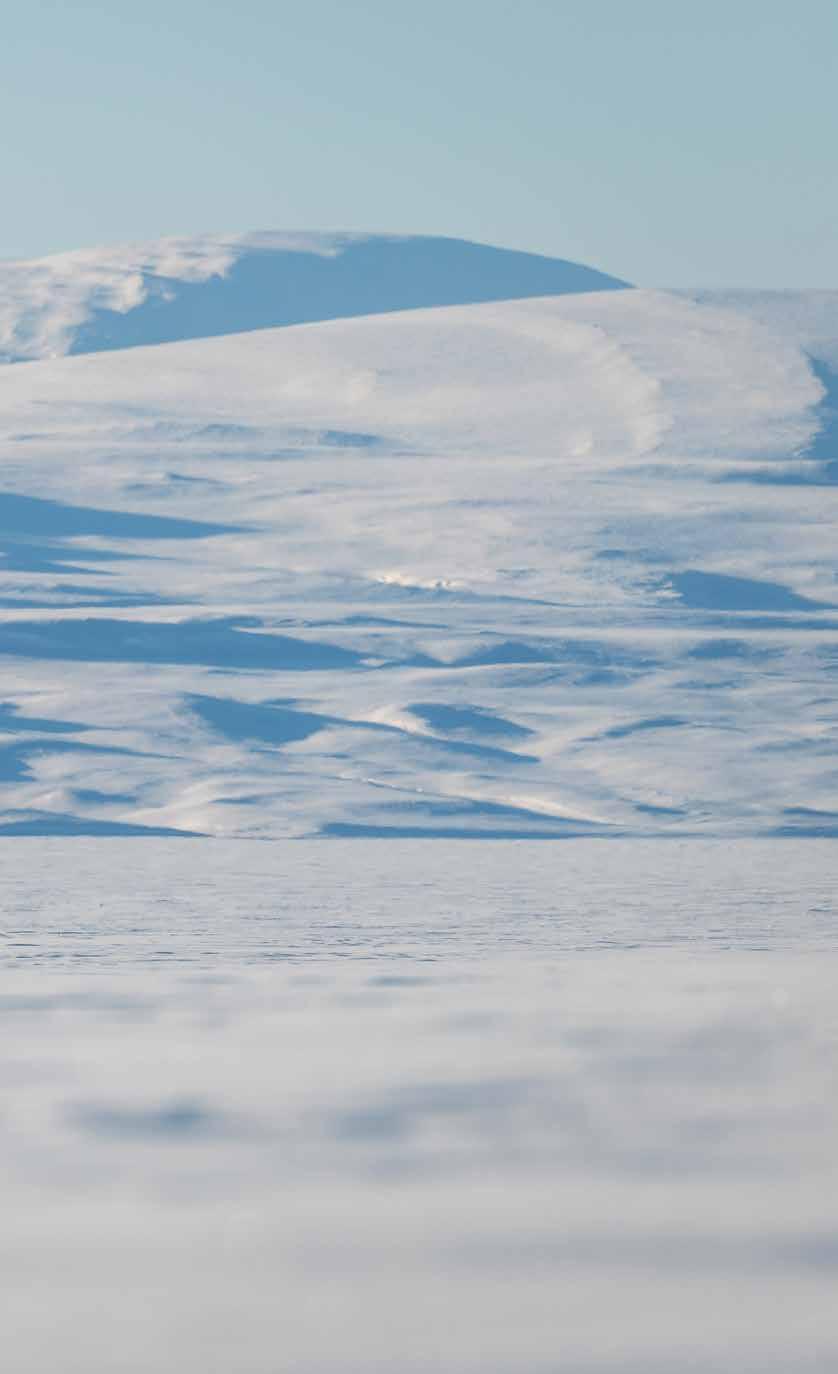
Most High Arctic expeditions begin in May and June—there’s still plenty of ice and snow, but the temperatures and conditions are far more forgiving. But moving through the Arctic when it has its guard down didn’t appeal to us; Ray and I wanted to experience it when it was at its most Arctic. The average daytime high in Eureka at this time of year is -36.6 C.
Reaching this moment—a pack of Arctic wolves greeting us then vanishing into the white—has taken three long years. In 2022, our first attempt at traversing Ellesmere ended in failure. After ten punishing days, we realized we’d misjudged both the environment and the extreme cold. Moving too slowly, we would have run out of fuel and food halfway across. Deeming the risk too high, we pulled the plug—a humbling call, but the right one. There had been a lot of media attention surrounding this attempt and the online trolling/ commentator contingent were quick to suggest we were out of our depth and declare our planned winter journey impossible. Which only fueled our tenacity as Ray and I reminded ourselves we’d learned a lot and that next year would be different.
The next year, 2023, did indeed turn out to be different as Ray was diagnosed with blood cancer. Six rounds of chemotherapy took any expeditions off the table. Everything paused and our only focus


was getting him healthy again. The idea of returning to Ellesmere never disappeared, and as Ray’s recovery progressed through the summer we told ourselves 2024 would be our year.
It wasn’t. Weeks before departure, our airline partner withdrew, leaving a $62,000 hole in the budget. Three years of trying, three years of coming up short. Walking away would have been easy, but we had never intended any of this trip to be easy.
In 2025, everything finally aligned. Healthy, supported and ready, Ray and I returned to Ellesmere—this time reversing our route plan and starting in Eureka to finish in Grise Fiord.
Getting to Eureka became an expedition of its own. With charter flights out of reach financially, we partnered with Ski-Doo/ BRP, shipped machines north by sealift, and committed to reaching our starting point by snowmobile. The seven-day journey from Grise
WALKING AWAY WOULD HAVE BEEN EASY, BUT WE HAD NEVER INTENDED ANY OF THIS TRIP TO BE EASY.
Fiord, led by local guide Terry Noah, proved to be one of the coldest snowmobile traverses ever attempted.
Once in Eureka, we swapped Ski-Doos for skis and began our long ski back, almost immediately running into those first wolves. Considering there are only an estimated 200 wolves on all of Ellesmere Island—a landmass the size of Great Britain—we were astonished by our luck. Little did we know our wolf encounters were only just beginning.
“Holy crap! Ray, we have visitors.”
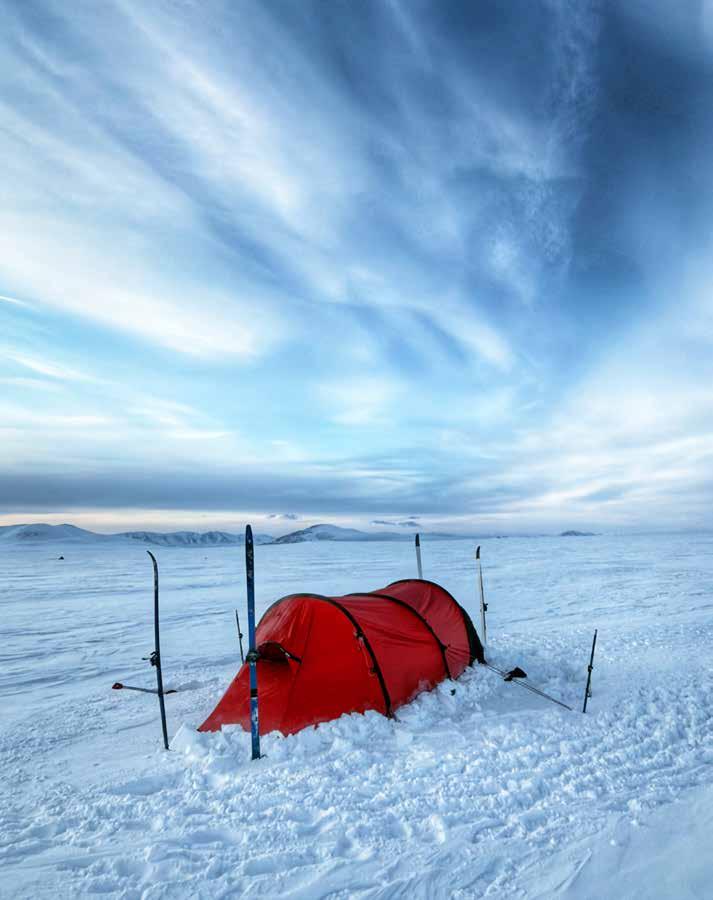
It’s day eight. After navigating the sea ice of “polar bear alley” on Eureka Sound, we’re camped on land again. Our tent sits on a small knoll in a wide valley. Ray is already in the tent firing up the stoves and I’m kneeling to tie a bungee to my sled when I look up to see four large wolves standing around me.



AFTER THREE YEARS OF SETBACKS AND RESOLVE, WE REACH OUR GOAL BY FOLLOWING THE SIMPLEST RULE IN THE ARCTIC AND THE MOST IMPORTANT ONE: KEEP MOVING FORWARD.
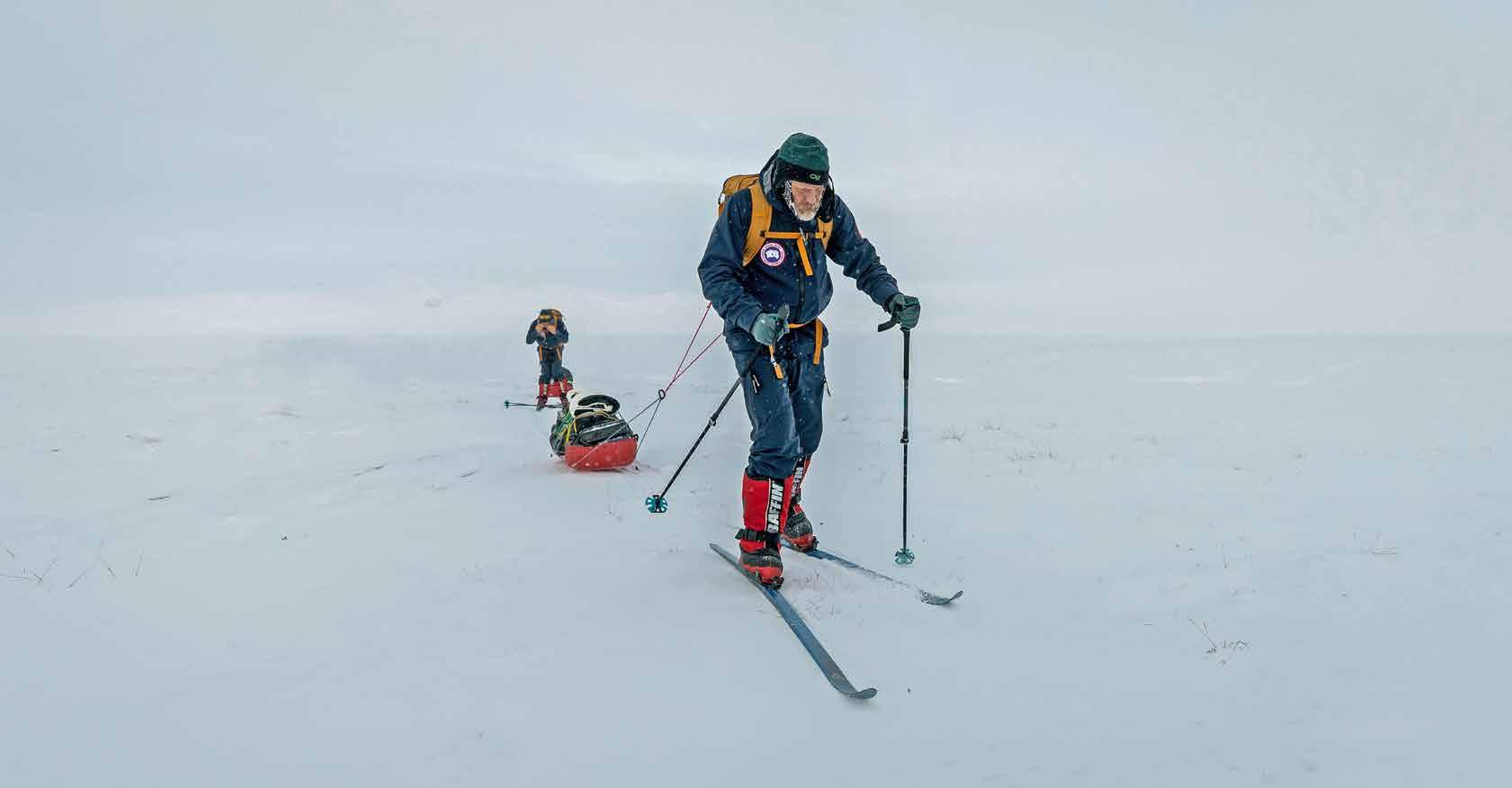
They’d arrived in complete silence and, as before, one is closer than the rest. Close enough that I can see the ice crystals clinging to its whiskers. It’s a brief visit; by the time Ray steps out of the tent, they’re already striding away. The next morning, however, another pack ambles by for a look.
Ellesmere’s Arctic wolves are one of the most isolated and leastdisturbed wolf populations on earth. They travel in small family groups and cover huge distances—40 or 50 kms a day—in search of muskoxen and Arctic hare. They also shadow polar bears, scavenging the remains of seal kills. We often saw their tracks laid neatly inside bear prints across the ice.
What sets these wolves apart is not just where they live, but how they live. Unlike their southern relatives, Ellesmere wolves have never been hunted and have had almost no exposure to people. They occupy an ecological bubble where humans pose no threat, and generations of safety have produced animals that are unusually calm around us. Scientists in the 1980s and ‘90s described this phenomenon as “prey naïveté”—an inherited absence of fear simply because fear had never been required.
Their genetics tell the same story. Cut off from southern populations by sea ice and distance, Ellesmere’s wolves have maintained a remarkably intact lineage. Their compact ears, short muzzles, thick coats and massive furred paws are perfectly adapted for a world where extreme cold and scarcity is the norm. They are endurance animals, built to survive by staying in motion across an unforgiving world of snow and ice.
Most Arctic travelers who visit Ellesmere move along the sea ice that rings the island—it’s faster, flatter and far easier than crossing overland. But Ray and I are committed to an inland route—a true transect—which means we’re traveling where the wolves live. We aren’t finding them by chance; we’re passing through their world.
On day 12, camped in a valley at the base of the Svendsen Peninsula, our motion alarm goes off shortly after I zip the tent doors for the night. I always position the alarm facing the sleds, away from the tent, hoping a curious polar bear will trigger it before discovering us. I was outside a minute earlier and had seen nothing. Assuming a glitch, I unzip the door and find myself face to face with a huge wolf. I freeze, then slowly step out as nine wolves move around us. One stands very close and motionless while the others drift past.
Later, Terry Noah will explain what we’d seen in each of our encounters: The still wolf is the sentry—the one the rest of the pack watches. “They key off his body language,” Terry says. “If he’s relaxed, they’re relaxed. If he’s aggressive, then there’s trouble.”
This wolf stares at us calmly through yellow eyes ringed with frost. “He’s not the alpha,” Terry later continues. “He’s the young up-and-comer. The alpha is the one out front setting the pace.” And, sure enough, one wolf trots ahead without looking back, maintaining tempo for the group.
By the time we near Grise Fiord, encountering the wolves is no longer a surprise. We’ve been in their land for weeks, moving as they do—steady, efficient, always forward. On Ellesmere, you don’t stop.
Twenty-eight days after leaving Eureka, Ray and I ski the final stretch into Canada’s northernmost community. There’s no sense of conquest, only calm. Two human beings crossing an unforgiving island. After three years of setbacks and resolve, we reach our goal by following the simplest rule in the Arctic—and the most important one: Keep moving forward.
Kevin and Ray will be showing photos and film from this trip at the Vancouver International Film Festival (VIMFF) Uncharted Adventures presentation on March 4, 2026 in Vancouver. vimff.org















words :: Leslie Anthony
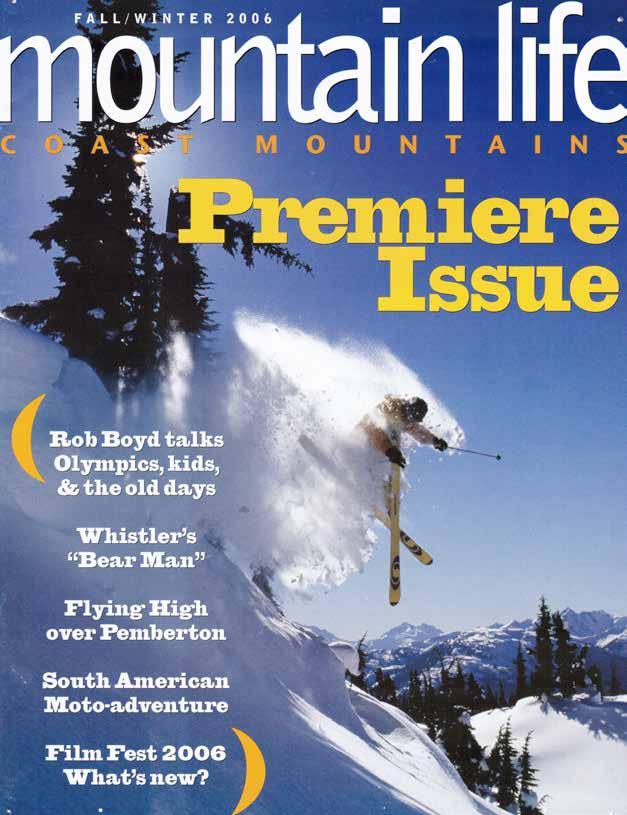
The history of skiing is a convoluted affair. Probably because the utility and sport of sliding on snow is almost comically multifaceted, comprising some 30 sub-disciplines (at least a dozen of which will be seen in the upcoming 2026 Winter Olympic Games, including, for the first time, ski mountaineering—aka “skimo”). If, as someone I know, you’ve spent 40 years reporting on such a fractious fray, you’ll have observed cycles, identified trends, tracked revolutions. And within this crucible of energetic evolution, certain individuals will have emerged as constants.
One of those people is Whistler’s Mike Douglas.
Having changed the face of skiing as we know it (we’ll get to that), Douglas was already a Canadian Ski Hall of Fame (CSHOF) shoo-in when I first met him around 2000. In the quarter century since, I watched his qualifications for that honour broaden and compound in every way imaginable. When he was finally inducted
this past fall—the first to have the category “freeski” linked to his name (women’s freeski pioneer and advocate Sarah Burke was posthumously inducted in 2023, but under the broader discipline of “freestyle”), it was not only deserved, but fitting for a kid from Campbell River who, like most, arrived in town with no plan other than to live the Whistler dream—only to become it himself.
The CSHOF adjudicators had a no-brainer on their hands; just Googling Douglas’s contributions to skiing would have kept them busy for days. Arriving in Whistler as a young ski bum in 1988 to a scene dominated by racers and mountaineers, Douglas gravitated to moguls, where he excelled and came close to qualifying for the 1994 Winter Olympic Games in Lillehammer, Norway. Transitioning to coaching and mentoring for the National Development Team, he would guide and influence numerous world-class skiers, including several Olympic gold medalists. He would also cause an earthquake in the sport.
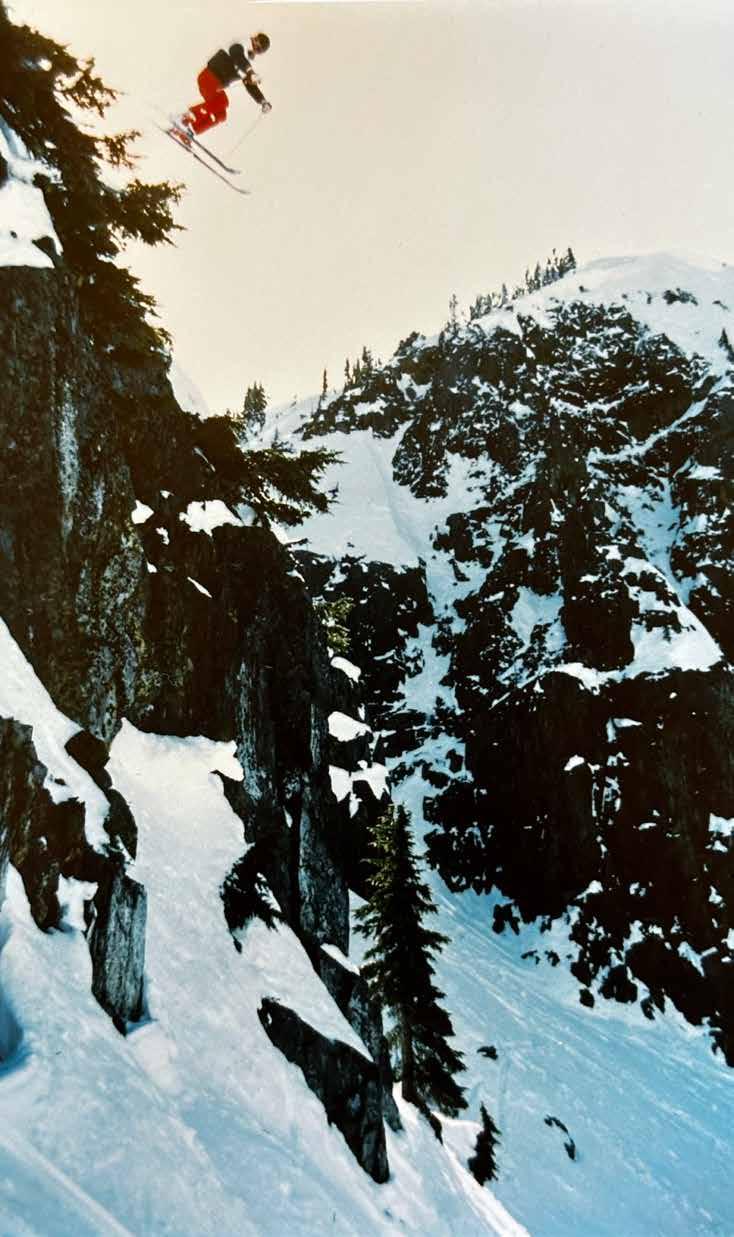
In the mid-1990s, as snowboarding exploded and dominated snow media, Douglas and some of his mogulist charges—JP Auclair, JF Cusson, Vinnie Dorion and Shane Szocs—turned their eyes to the terrain parks driving that explosion. Messing around during time away from training, they innovated ski tricks no one thought possible. But it was clear to the group that their skis—which only slid in one direction—were limiting the fun factor, leaving a “What if…” haze
As has now become legend, Douglas and fellow coach Stephen Fearing had the answer: a back-ofthe-napkin idea for a high-performance twin-tip ski.
hanging over the Blackcomb Glacier summer-camp scene. As has now become legend, Douglas and fellow coach Stephen Fearing had the answer: a back-of-the-napkin idea for a high-performance twintip ski. It was a hard sell, but eventually the Japanese arm of Salomon produced a trial run of the Teneighty in 1998. The breakthrough boards immediately revolutionized freeskiing, launched the group on a global journey as the New Canadian Air Force (NCAF), and ultimately reshaped the industry. “The first run of 6,000 pairs sold out in two weeks,” recalls Douglas of the ski that became one of the top sellers of all time. “So we knew we were on to something.”
Leading the NCAF into a period of fortune and fame previously unknown in ski circles (I once saw a billboard of their faces five stories high in downtown Tokyo), Douglas quickly earned the nickname “Godfather of New School Skiing.” Though the title would eventually undergo post hoc correction to “Godfather of Freeskiing,” it was perfectly preformulated for a career that, over 38 years, has also seen him serve as coowner of Momentum Ski Camps, a prominent ski-television personality, and long-running commentator for the Winter X Games.
Though already an elder statesman as the park-and-pipe scene he helped found blew up around him, Douglas was far from done. With the Coast Range as a backdrop, he reinvented himself as a bigmountain skier and perennial video star, banking more than 40 film appearances, 50 magazine covers and a slew of other accolades. Then, before wear-and-tear could ground him, he leapt again—to the other side of the lens with his genre-defining Salomon Freeski TV web series. Douglas’s production company, Switchback Entertainment, was soon also producing award-winning shorts, feature films and a 50th anniversary joint for Whistler Blackcomb, collectively racking up more than 30 film-festival awards.
There’s a pattern in this seemingly patternless arc: Rather than simply ride any particular wave of fame, Douglas consistently turned his mind to what was next, with a thoughtful approach that not only saw him through personal reinventions, but simultaneously opened up creative and mentorship space for others. And this is key: Whenever Douglas has an idea, everyone around him benefits—and finds themselves at the forefront of something new.





In a sport of constant transition, where alpine racers move on to ski cross, mogulists become slopestyle competitors, and everyone eventually finds god in the backcountry of exotic locales or climate activism, Douglas has been early (or first) to each crucial nexus, cheering on both peers and aspirants, making his own transitions and staying ahead of the game. To use a hackneyed Canadian analogy: He has always both seen, and skated to, where the puck was going to be.
As a result, few from any sport are more deeply respected or trusted for the focus, care and responsibility they bring to everything—including family life, as the father of two now collegeaged kids. Douglas’s dedication to community has also seen him in demand for everything from welcoming the wide-eyed fall crop of newcomers to Whistler to co-founding Protect Our Winters Canada in 2018, on whose board he still sits. Indeed, no one has been honoured with Pique Newsmagazine’s annual “Favourite Whistlerite” title more times than Douglas (the current tally is eight—including 2025), something humility would prevent him from ever mentioning.
Beyond filmmaking, Douglas keeps busy these days with ski guiding—both on-piste and off—in Whistler, Japan, Europe and South America. In 2025, he took on the role of Director of Skiing for Red Bull’s inaugural Yeti Natural Selection Ski event in the Alaskan backcountry, another success in delivering the hands-down best cinematic capture of big-mountain skiing ever. “I think it’s because the overhead racing drone made it look like a video game,” he says.
Douglas’s résumé of professionalism and leadership is the stuff of any rightful legend, but what makes him most vital is that almost three decades after rising to fame, he remains an advertisement for the opposite: newness, creativity and a sustained enthusiasm often
To use a hackneyed Canadian analogy: He has always both seen, and skated to, where the puck was going to be.
lost in people half his age. “I feel I’m only in the middle of this journey through skiing,” he says. “That really helps with my decision-making. I pick my days more carefully, I’m not pounding laps from dawn to dusk. Some days I just go for a tour by myself and make a few turns. I get a lot of enjoyment from just being out there.”
Ever humble, in his CSHOF acceptance speech Douglas pointed to all the Whistler folks who have lifted him up over the years, insisting that the award belonged to them as well. And what wisdom, in retrospect, might have been distilled from such a complex journey? As is often the case, a return to basics and simplicity. “Live life with purpose, stay true to what you believe, hang onto family and friends,” he says. “And, no matter how desperate things get—take the time to have fun.”



Experience the Tyax Difference . We are a family-owned heliskiing operation and wilderness lodge, with the hospitality to match. We offer easy ground + helicopter transfers from Vancouver, a full service spa and chalet and lodge buyout options for the ultimate private experience. Oh — and with one group per helicopter and Unlimited Vertical , at Tyax you get more skiing, for free .
We would love to see you this winter, scan the QR code to find out more.

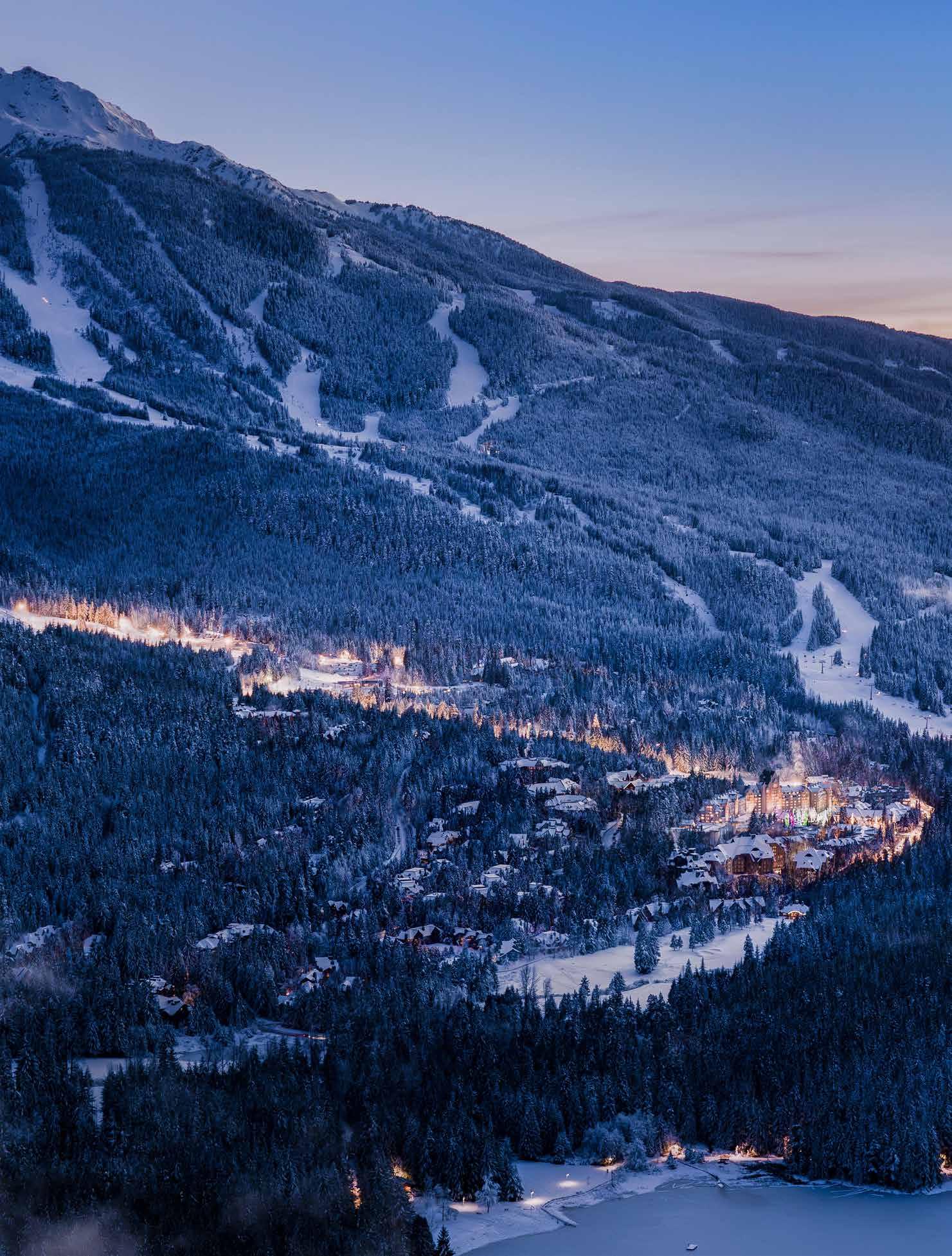
Your alpine escape starts here. Where Whistler Blackcomb’s slopes, spa serenity, and five exquisite dining venues combine for a truly special experience.


“We almost scrapped it after year two,” says World Ski & Snowboard Festival (WSSF) founder and visionary Doug Perry. “It had flatlined.” Year two would have been 1997, and to that point the festival was a collection of, you guessed it, skiing and snowboarding events like the Westbeach Snowboard Classic, the Couloir Extreme Race for steep skiing, the Whistler Cup (ski racing) and Doug’s own World Technical Ski Championships, a sort of decathlon of ski disciplines aimed to crown the world’s best all-mountain skier.
But the media attention and resort visits weren’t meeting expectations set by a great inaugural festival the year prior. Maybe the critics were right, maybe a ski and snowboard festival in the late spring was never going to work.
“We almost let it die,” Doug says. “I remember meeting with Whistler and Blackcomb—they were owned separately back then—and Tourism Whistler and I asked for a bit more time, then I went and found a music sponsor. Free music in the Village. That lit up the town.”
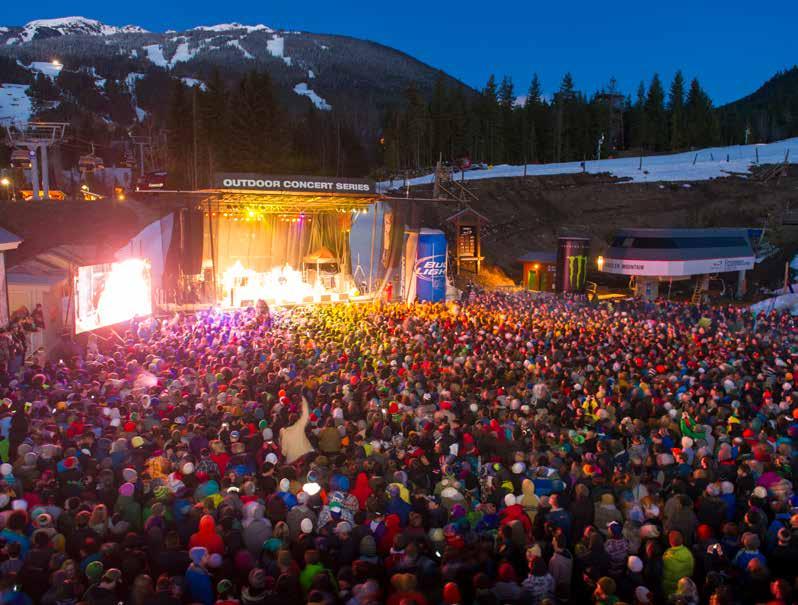
And one of the first bands to grace the first WSSF stage, built in the Village Square for the 1998 festival? Nickelback. “I think we paid them five hundred bucks and a case of beer,” Doug says.
“They weren’t a big band at the time,” recalls Whistler icon Kristen “KR” Robinson, local coordinator and emcee for the musical acts that first year. “I think one of the band members was still working at Starbucks. Coffees were $1.95 back, then so people would get a nickel back.”
Unknown, but very loud, Nickelback shared the stage with Econoline Crush, Matthew Good Band and The Pursuit of Happiness. A deluge of noise complaints meant the stage had to be relocated to the base of the ski hills for subsequent festivals, but the concept stuck. People would come to town for free music, good skiing and the kind of vibe that only a homegrown Whistler festival could deliver.
“That’s always been the secret,” says Sue Eckersley, who joined Doug’s WSSF team in 1999 and took over as executive director in 2007. “The festival was a reflection
of the community. The local businesses and residents were intricately woven into everything. Year over year we’d get more volunteers than any other event. It belonged to us all and it represented who we were.”
Which meant including arts events, biking, skateboarding, more music, raves, even an annual dog parade. “That was Doug’s brilliance,” Sue adds. “He taught us to let everything exist in an open format, don’t try to box events into a preconceived idea. Let things be what they become.”
Overall, the WSSF became one the biggest mountain-town parties on the planet (at its peak it also added an estimated $30 million to the local economy). Much has changed since the 90s—industries evolve, sports mature, sponsorship budgets ain’t what they used to be (and neither is the mid-April lower-mountain snowpack) and pandemics certainly don’t help—but stoke is high for the 2026 WSSF. (And we heard the arts events are returning to the conference centre!)
So to celebrate the past 30 years of the festival that helped show the world who Whistler was, we’re listing our top WSSF moments (the ones we can remember, anyhow). See you in April!
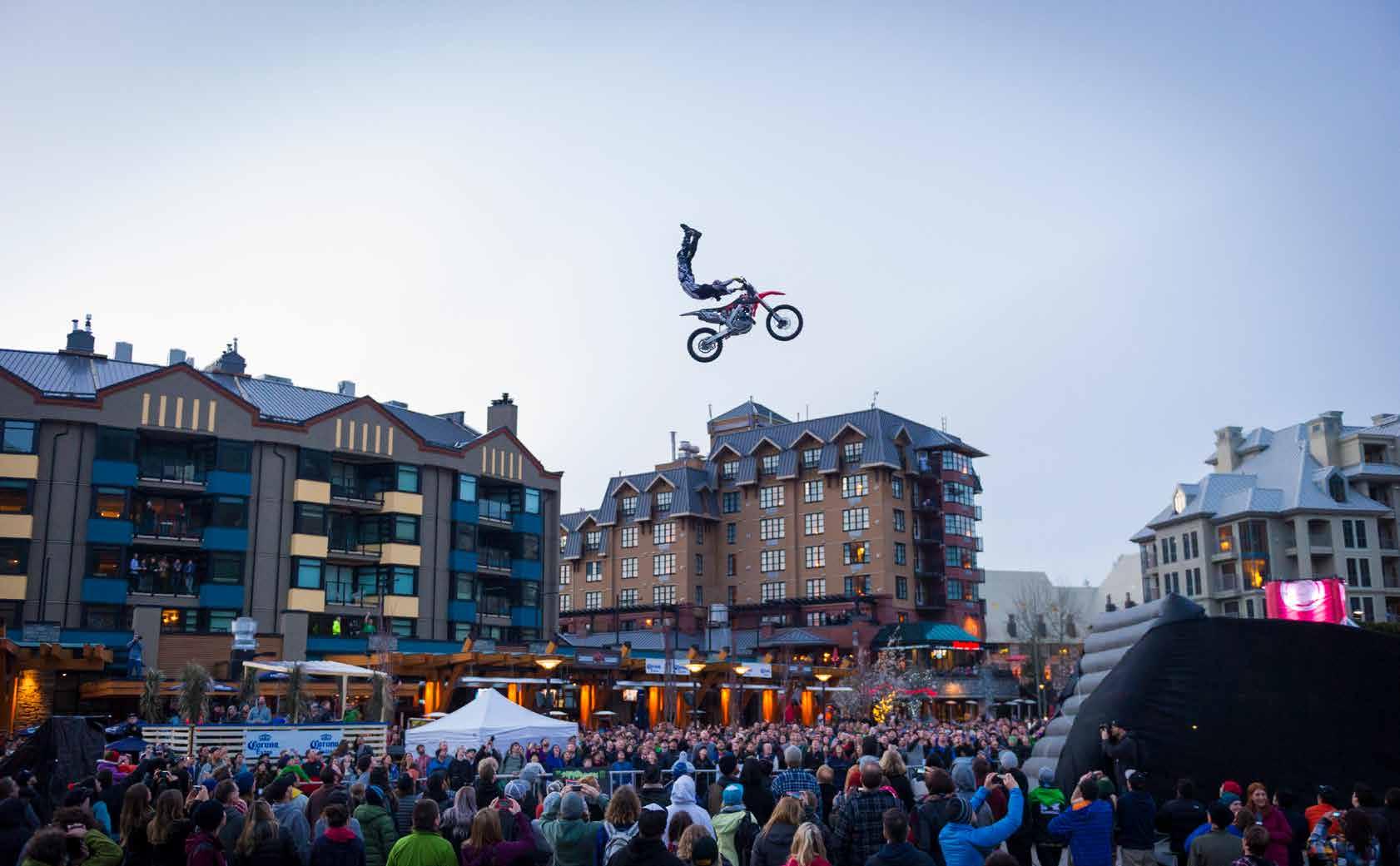

“The biggest challenge is working with the natural environment in April,” Sue Eckersley says. “Some years we have to convince the musical acts that they will not get electrocuted standing in torrential rain puddles on the stage. And other years there is no snow to do a big air.”
So, to keep the vibes high during a particularly snowless Village during the 2015 WSSF, operations manager Justina Armstrong put two huge inflatable jumps in Skiers’ Plaza and threw the first (and probably last) moto big air in Whistler Village. The photo sums up just how wild it actually was.

“What if you had a living-room slideshow with all your favourite photographers, except the living room was huge?”
That concept—conceived in 1998 by Doug Perry and Colorado ski personality Jack Turner—was built off a wildly successful solo slideshow from Whistler’s Eric Berger the year prior. The Pro Photographer Showdown has since brought most of the world’s greatest adventure, outdoor and action sport photographers (including surf photography icon Aaron Chang and skateboarder J. Grant Brittain) to Whistler to showcase their life’s work.
But the best part was that the local photographers could hang, and in 2001 a 25-year-old Blake Jorgenson walked out of a dilapidated ski/shred/bike house in Whistler Creekside carrying a couple carousels of slides and a CD of atmospheric music. He won the Pro Photographer Search, which netted him the sole wildcard slot at the main event, which he also won. (Ten years later he came back to the Showdown with all new images and won it again.)

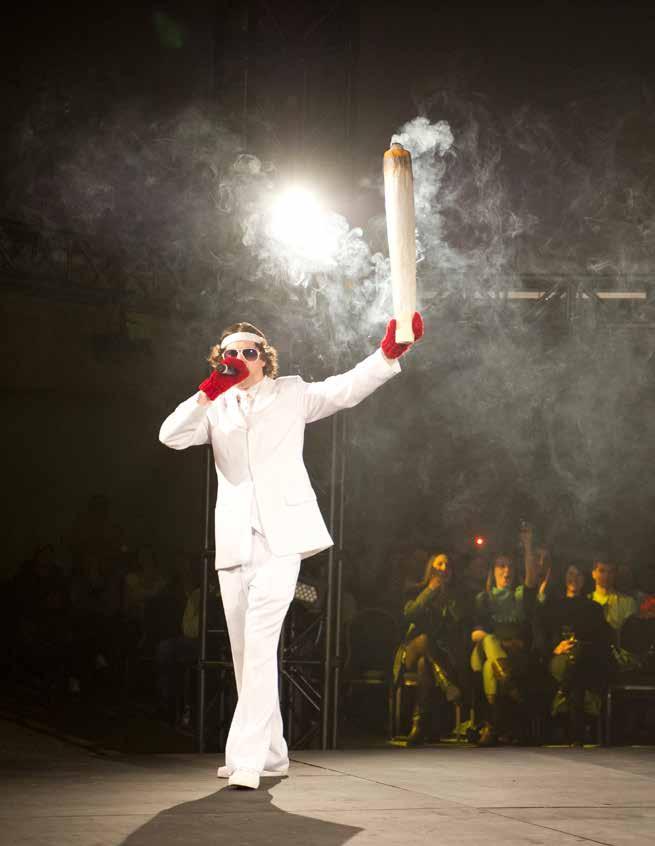
In 2010, just months after the Winter Olympic Games left down, Mountain Life editor Feet Banks slow-motion jogged into his hosting gig at the 72-Hour Filmmaker Showdown in his finest white suit and red mittens, carrying a three-foot joint rolled to look like the Olympic torch. But the real star of the Filmmaker Showdown has always been the films.
“We thought people were going to submit ski and snowboard films,” Doug Perry says of the event, which gives filmmaking teams 72 hours to shoot and edit a threeto-five-minute film. “But that is not what happened at all! Ryan Harris won the first event with a hilarious film about his last cigarette, and that changed everything.”

The shred filmmakers eventually got their own event (Intersection) but since the original showdown in 2000, sleep-deprived narrative filmmaking teams have been scrambling to hand their films in under the deadline.
And few films have been better received than Jonny Fleet’s 2011 masterpiece Poached Earth, an Attenborough-nature-documentary-style flick about a time-honoured Whistler tradition: sneaking into hot tubs you aren’t supposed to be in (with or without your clothes on). Find it on YouTube.
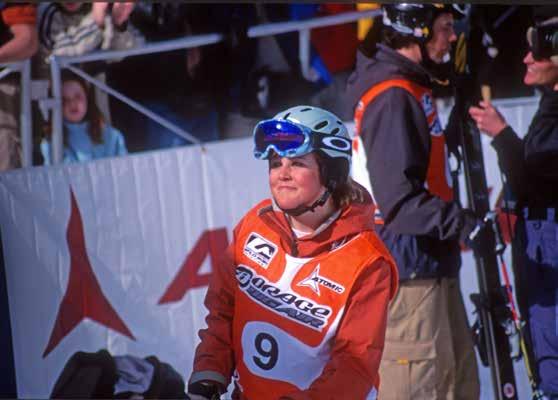

The Westbeach Invitational was the first big air held in the Village (and a precursor to WSSF as we now know it) but our fav big air event is the 2001 World Skiing Invitational Orage Big Air when Sarah Burke stepped up to compete with the dudes because there was no big air category for women. She’d hit the same jump, throw down with the same intensity, and demonstrate to the world that the ladies belonged.


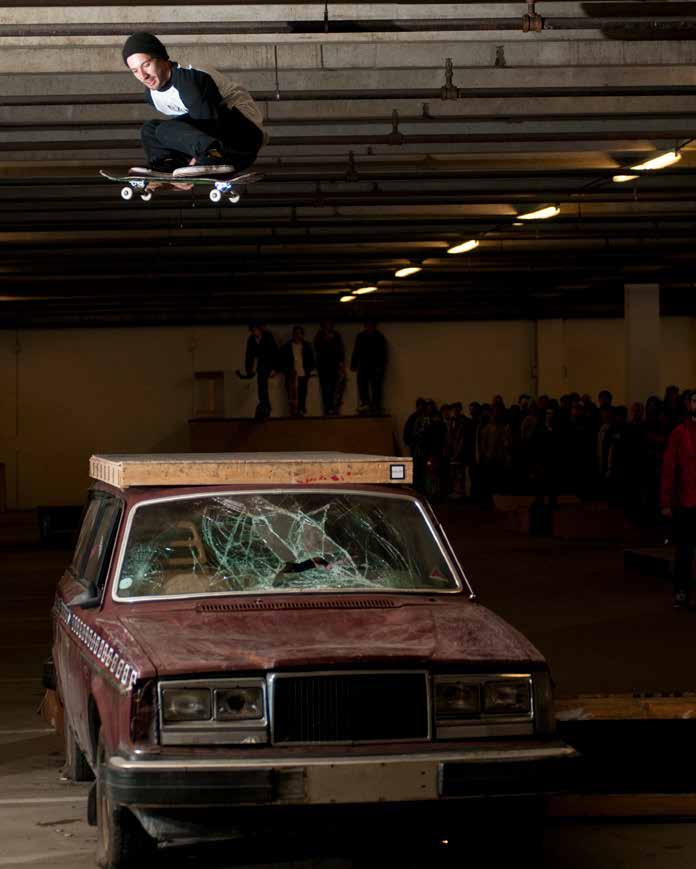
Organized with the Whistler Skateboard Association (shout out to Lenny Rubenovitch and Brian Hockenstein, plus park builder Seb Templer and Spectrum in Vancouver), Skate and Deploy saw 20-plus pro skaters come for a wallride comp, street obstacle sessions, and a big air over this dilapidated Volvo wagon.
But skating has deeper roots at WSSF. The earliest fests included a vert ramp in Mountain Square, and in 2005, alongside an unofficial premiere of the film Lords of Dogtown, some of the best skateboarders in the world rolled into town for Park ‘n’ Ride—an underground throwdown in the lower levels of the Whistler Conference Centre parkade. "Park 'n Ride sent us a cease and desist letter for the name," Sue Eckersley recalls. "So we knew it was a true skate event."

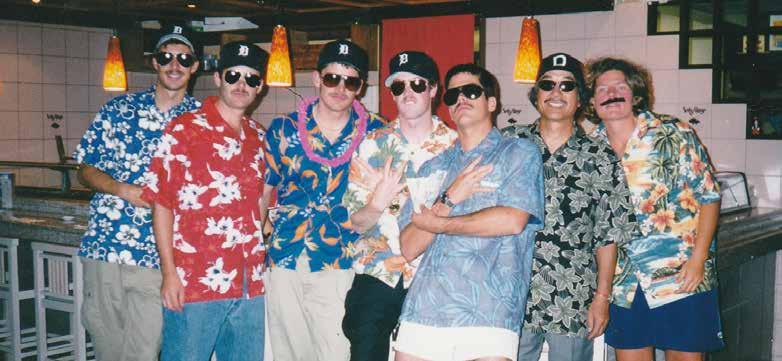
The best ideas spread like a virus and the vibe of the WSSF was so infectious, Sushi Village waiter/artist Chili Thom decided to get in on the fun. In 2001, Chili forced male Sushi Village employees to grow “cop-regulation” moustaches and hosted the first Magnum, P.I. Appreciation Night, which included awards for Greasiest ‘Stache, Most Fitting, Best Acreage and more. Over the next decade the event evolved into a general moustache competition and became one of the best parties of the festival. Tom Selleck was invited, but declined to attend.


It made the national news—a “near riot” as thousands of skiers and snowboarders hurled snowballs from the cobblestones of Skiers’ Plaza towards the stage and, even more so, the VIP tents (and hot tubs) on the GLC deck.
“We’d had a lot of snow that year,” Kristen Robinson recalls. “And there was a lull while the judges were sorting out the big air results of the Westbeach Classic. Some people had probably smuggled a few beers into the village, and yeah. Sloan was playing and I think the snowballs started on the third of fourth song. It was a bit loose, but we learned for the next year.”

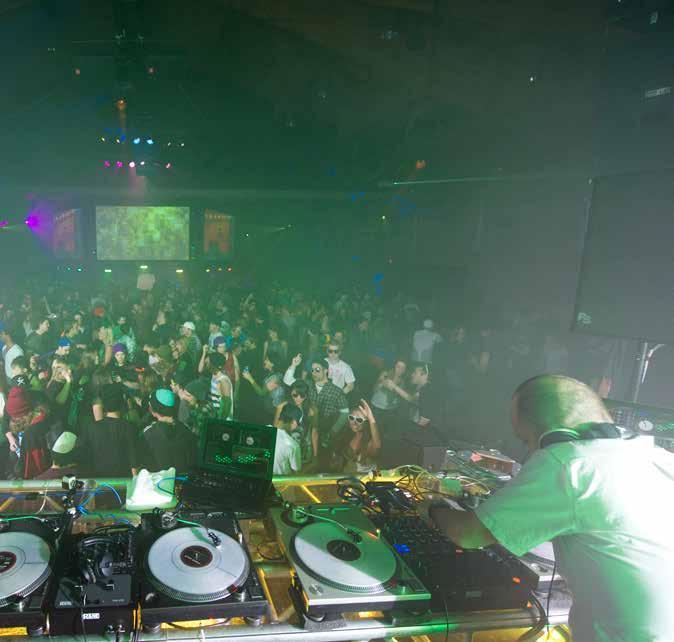
that ended at 8 a.m. doesn’t blow your hair back in disbelief, how about the fact that it was held in the bowling alley? That’s right, Whistler had a bowling alley (and arcade), and for the penultimate WSSF end-of-festival all-night rager, DJ Michael Ziff, party master Ace MacKay-Smith and their band of magic makers turned it into a bona fide (and sanctioned) rave, complete with giant teddy bears, adult-sized jolly jumpers and three separate rooms of DJs spinning real vinyl records.
“We had to make a speech and plead our case to police and politician alike,” Ace says, “but we did it.”
The WSSF raves became just another thread of the tapestry, eventually evolving into The End, a series of hugely popular DJ throwdowns in the Conference Centre (pictured left) that would close out the fest through the 2000s and 2010s.


Rob: 604-935-9172
Sherry: 604-902-7220
E: BoydTeam@evrealestate.com
W: BoydTeam.evrealestate.com
Engel & Völkers Whistler
36-4314 Main St. Whistler, BC










There’s always gonna be people who will tell you that the Black Eyed Peas/Justin Timberlake show was the largest WSSF crowd ever (and Sue Eckersley swears it was) but real G’s know there’s more to a good time than numbers (even though that show was definitely hopping). Our favourite free concert went down in 2013, when New York hip hop legend Nas took to the stage in front of a veritable sea of WSSF revelers and delivered a near-perfect set. Runners up include Toots and the Maytals at Moe Joe’s, Fort Knox Five with their live band, Ruby Waters (last year!)—and that time Emily Haines from Metric kept telling people to rush the stage except the barriers were just fences from the ski lift maze because it was a weekday and Metric were supposed to be mellow. (They were not.)

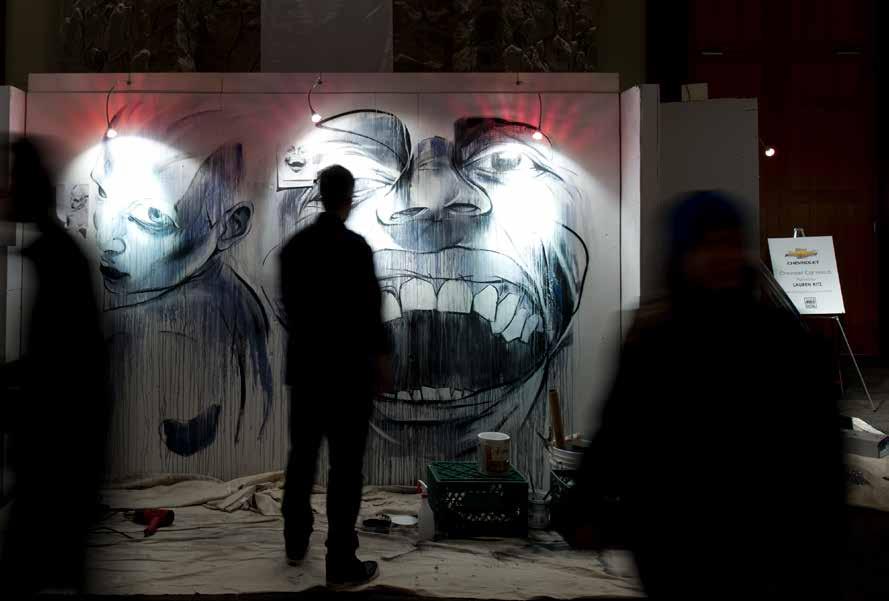
The first free art shows in the foyer of the Conference Centre were actually called BRAVEart, but the State of the Art put even more power in the hands of the 70 or so visual artists given the opportunity to display and sell their artwork over the course of the WSSF. Featuring live art demonstrations and kick-ass launch parties, almost every Sea to Sky artist of the past 25 years can credit the State of the Art show with helping them gain massive visibility (and sales) at an important time in their careers. Of the people, for the people, and free, this one might be the WSSF’s most impactful event ever.
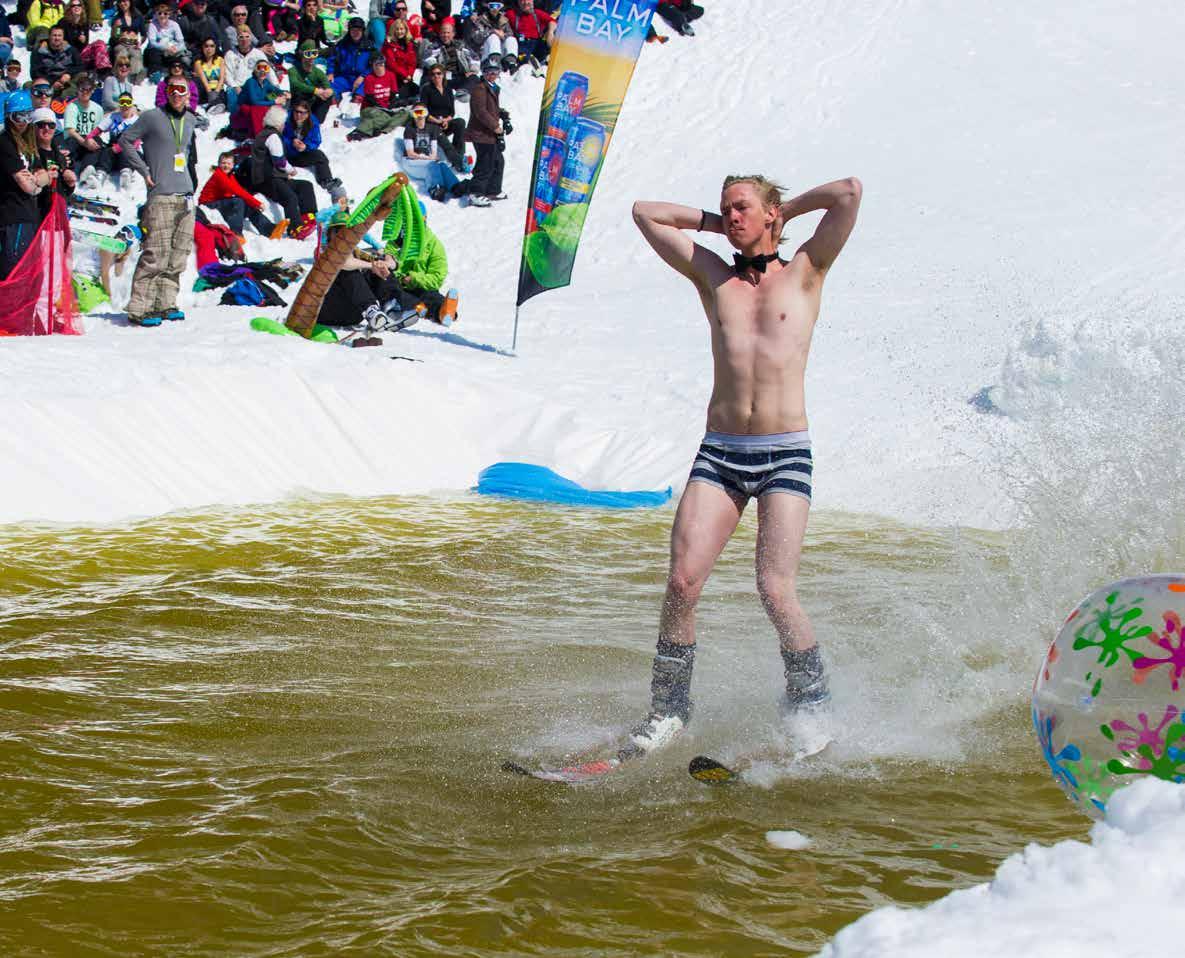

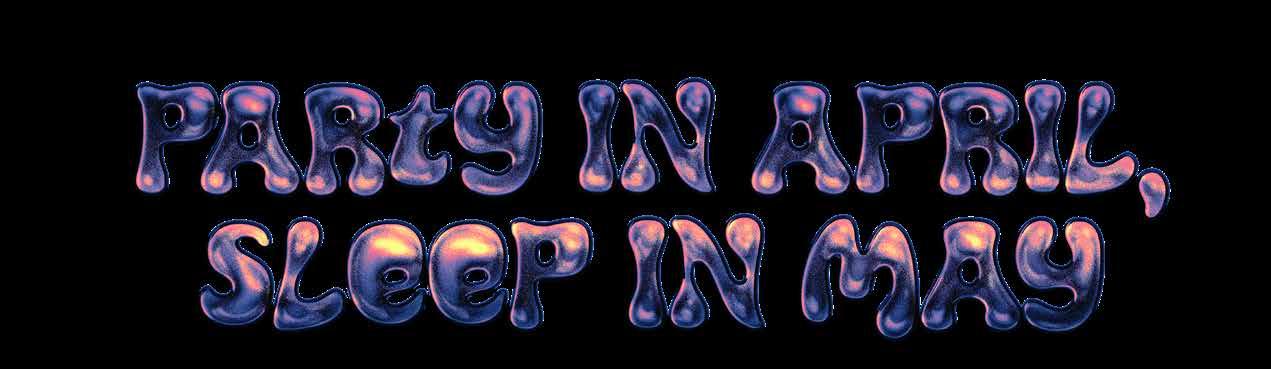
to 12. Get out there and make some memories of your own. Party in April, sleep in May, and we’ll see you at the Slush Cup! – ML Staff
wssf.com
























words :: Andrew Findlay
photography :: Kari Medig
“I don’t enjoy skiing,” says my ski guide, Jacek Zięba-Jasiński, as we rally his battered Subaru into a muddy lot.
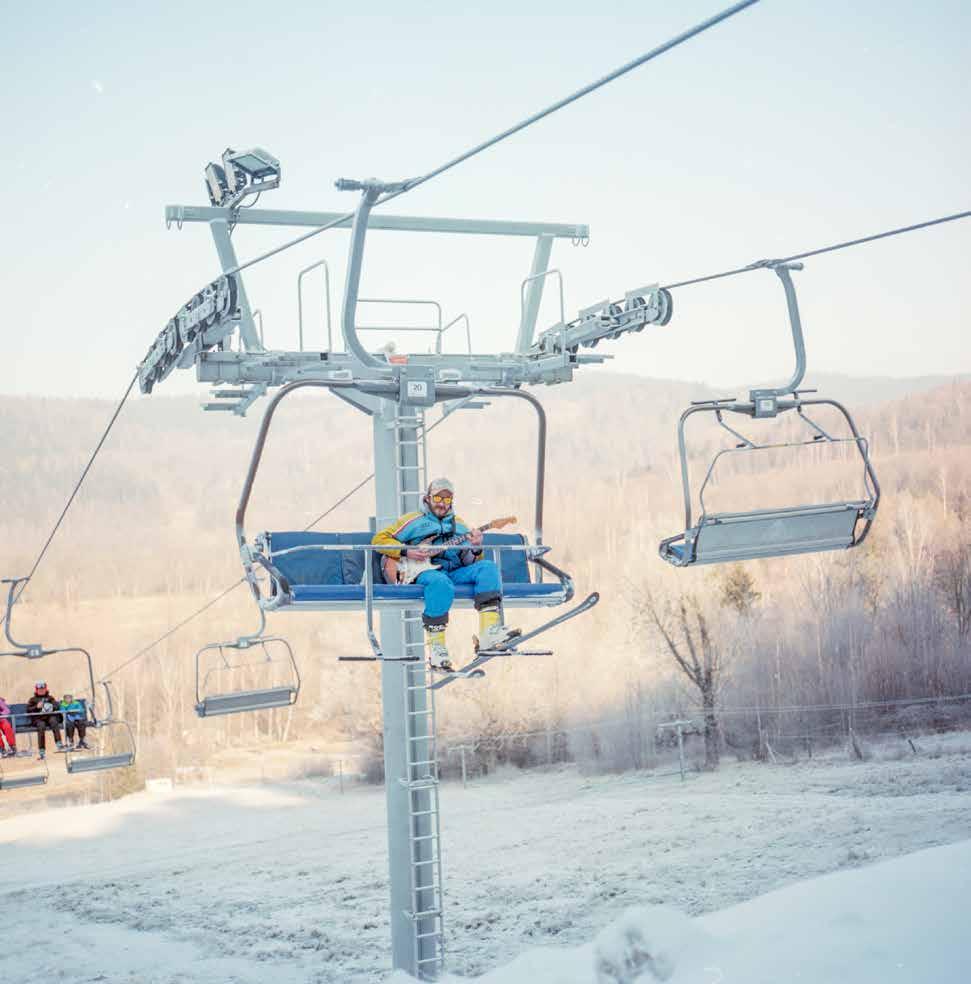
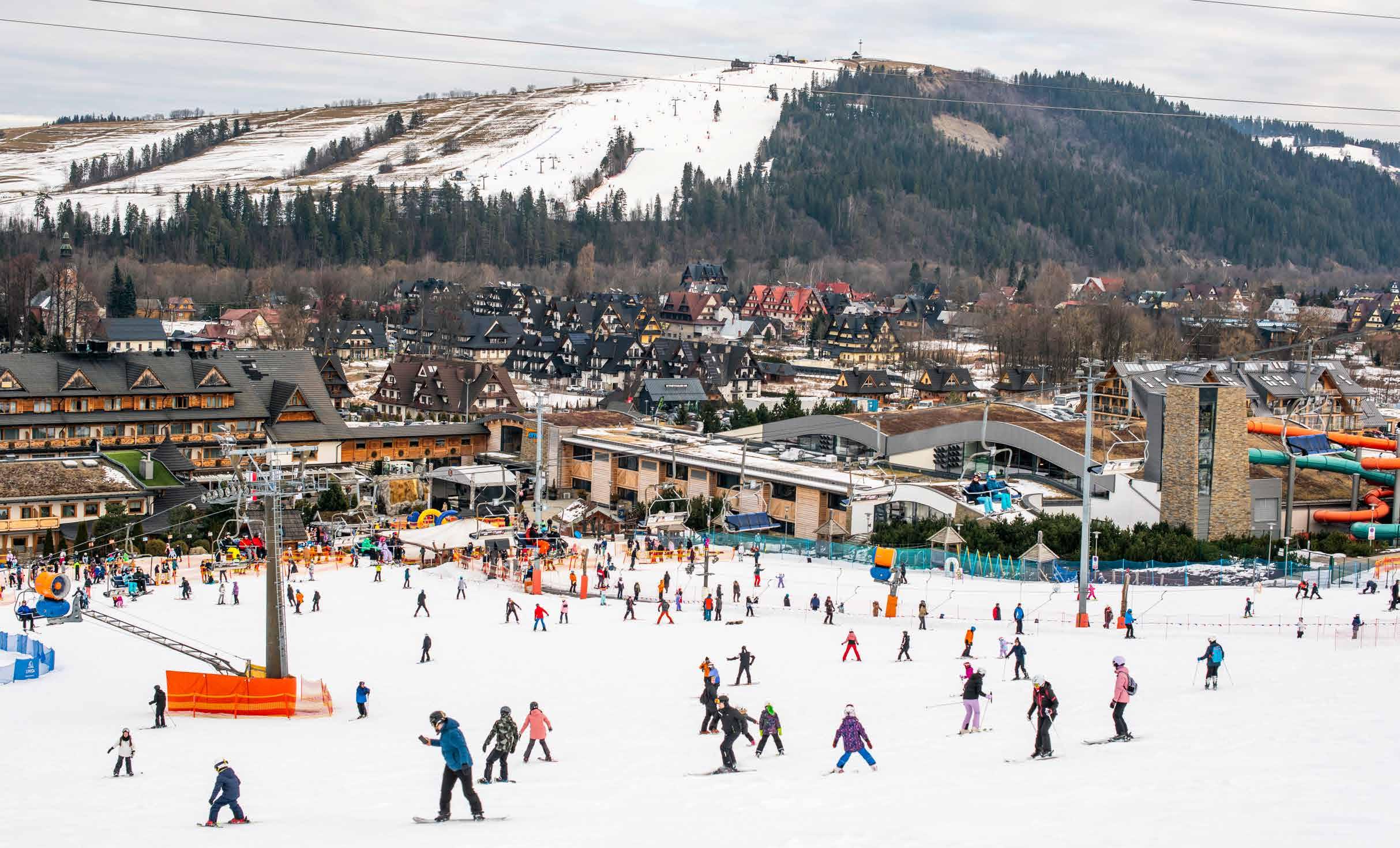
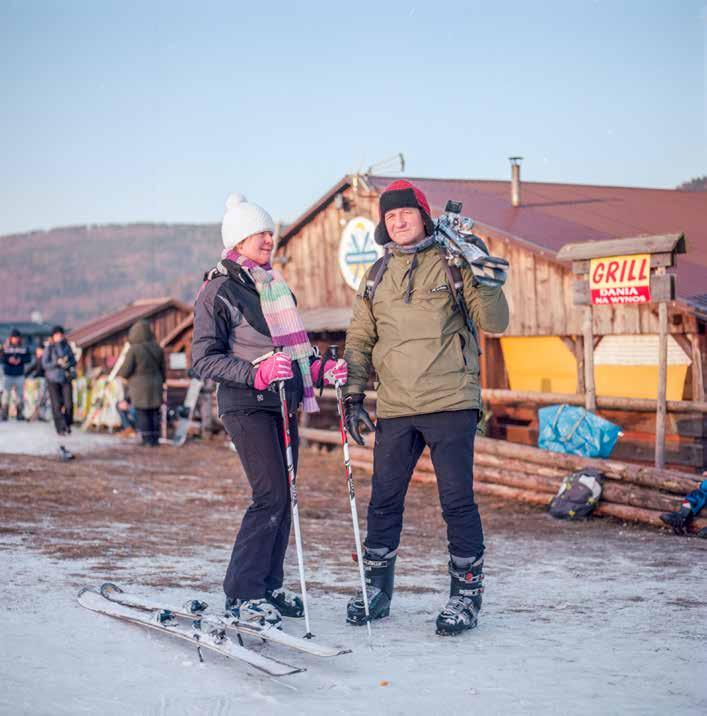
Looking up at the ski hill, I immediately understand. On a T-shirt-warm February afternoon, skiers and snowboarders jockey for space down a brown-tinged ribbon of artificial slush snaking through farm fields. ABBA’s Dancing Queen pumps loudly from lift-tower speakers while vacationers, many
in faux-fur collared jackets, crowd around slopeside restaurant tables sloshing with pints of pilsner.
Coming from a country like Canada, where people tiptoe around topics in fear of causing offense, Polish bluntness is refreshing. Earlier in the day Jacek mentioned that Poland is the grumpiest of all Slavic nations. He sounded proud. I asked why. He mused that the crusty temperament was either a reflection of perpetual grey and rainy skies, or the country’s tortured history. It’s probably both.
In the spirit of bluntness, nothing I had seen on the slopes of Poland so far would
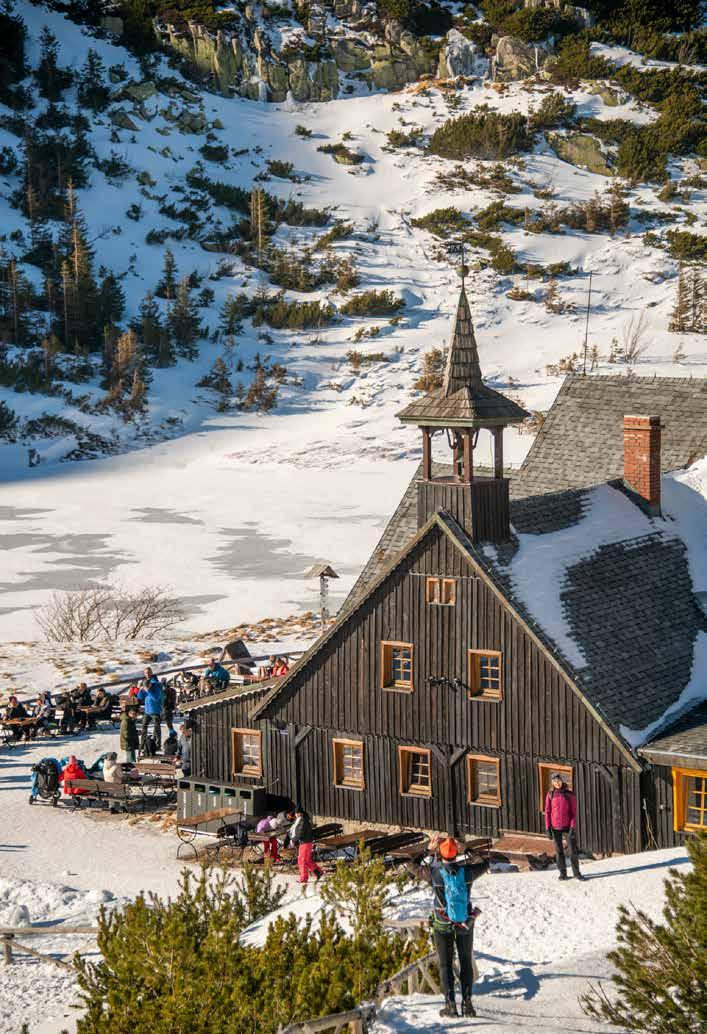
inspire anything but an impulse getaway to a Mediterranean beach resort. Yet somehow, despite having just a fringe of mountains along its southern borders with Slovakia and the Czechia, and with dozens of its resorts relying heavily on artificial snow, Poland has fostered a bad-ass mountain and ski culture.
Intrigued, I’ve journeyed to Zakopane, Poland’s self-described winter sports capital. The region sprawls between low-elevation rolling hills and the rugged peaks of the country’s beloved Tatra National Park. My first stop is Polana Szymoszkowa, a onepiste wonder on the south-facing flank of Gubałówki Hill.
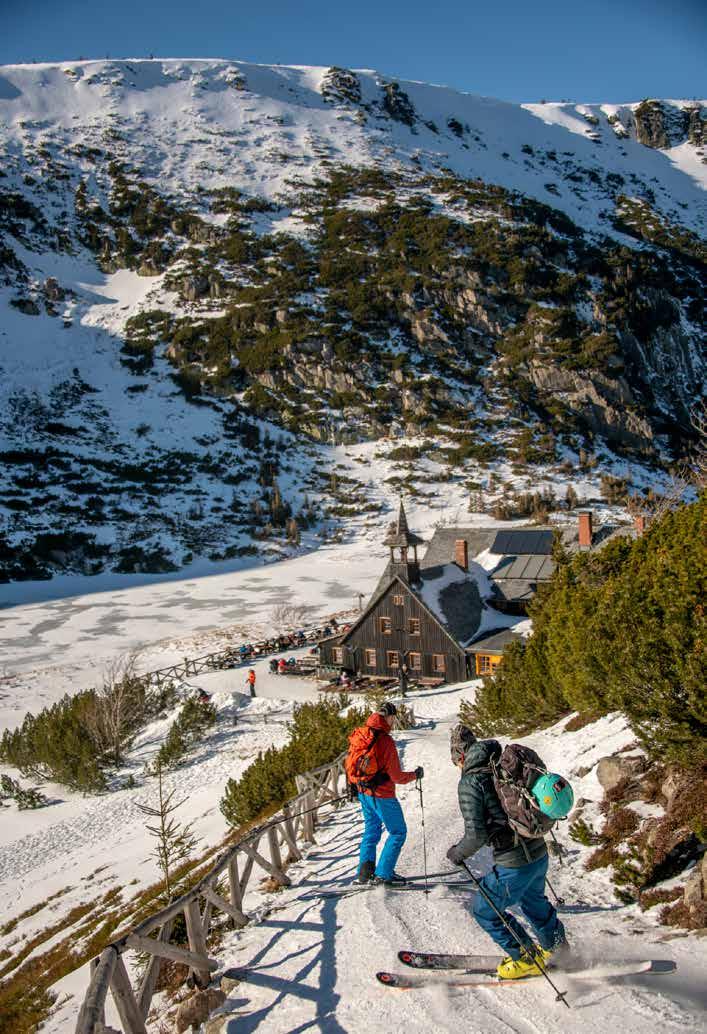
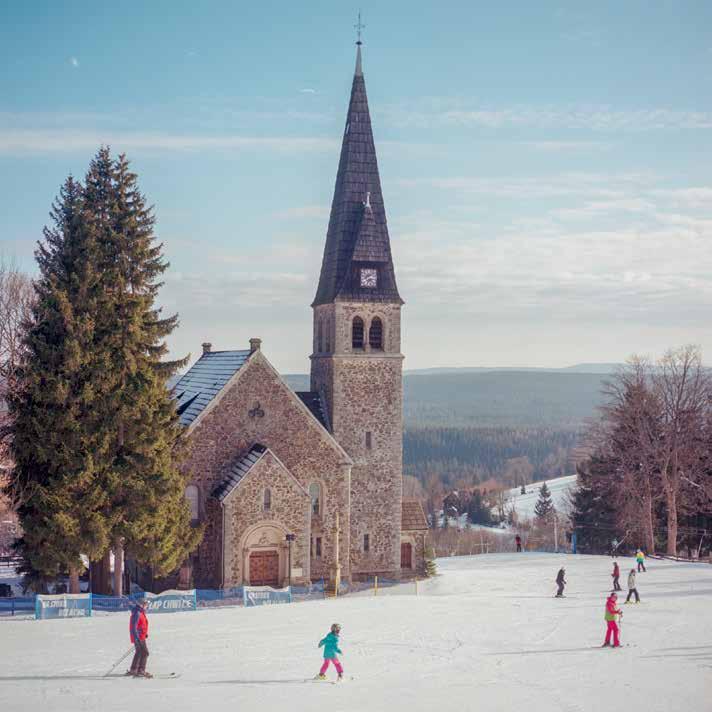
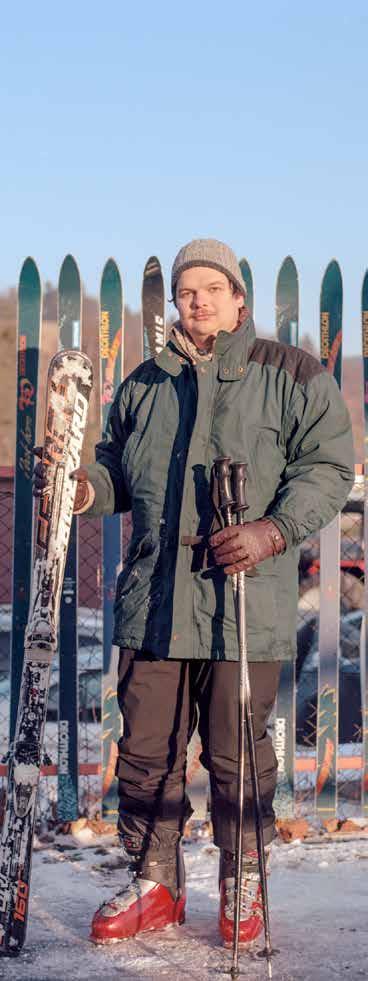
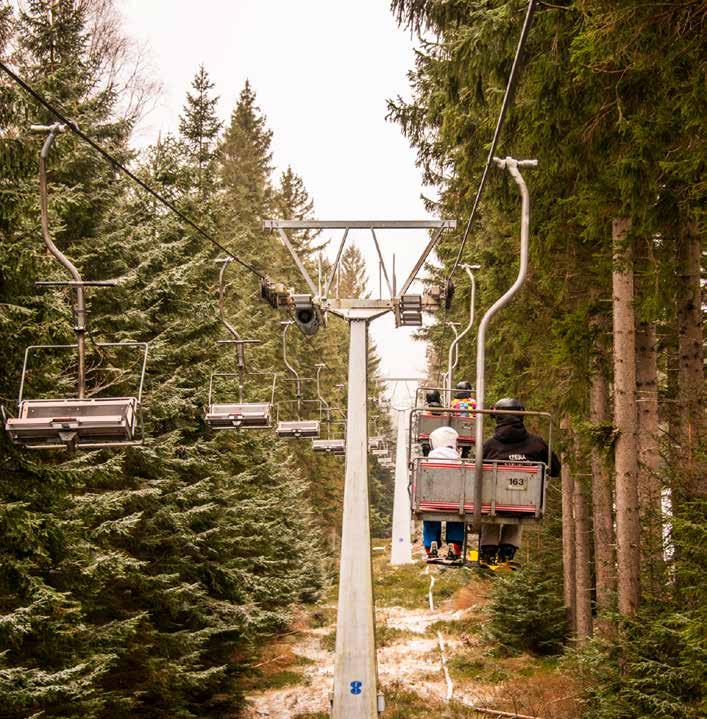
My ski guide didn’t bring his skis, but we ride the lift together—in silence. At the top, he exits right to join a throng of tourists strolling a narrow road lined with kiosks at the top of Gubałówki Hill (1,129 metres /3,704 feet). The smoky smell of grilled meat fills the air. A young woman in a colourful dress sells oscypek, a regional speciality of smoked sheep cheese, while next door a grizzled old-timer in a black leather jacket peddles stuffed animals, plastic toy machine guns and huge, menacing knives with curved blades.
I click into my bindings and head left into a current of people shredding the only open run, 200 vertical metres of slushy corn. Keeping my head on a swivel, hockey-style‚ I weave a path through the chaos.
The late Karol Jozef Wojtyła (Pope John Paul II) was a deeply conservative Catholic known to shred on skis. Fans of this sporty Polish pontiff called him “The Daredevil of the Tatras.”
People seek mountains for many reasons: to slide down them, to embrace physical and mental challenges, to ascend closer to God and to simply escape. Travel back in time through Polish history, and it’s easy to understand why mountains represent a place of refuge and solace. After only two days in the country, I’ve noticed how quickly ordinary Poles like Jacek dive into eye-glazing historical explanations, as though the act of unpacking their history for visiting foreigners facilitates better understanding it themselves.
A point of national pride, it seems, is the glorious Kingdom of Poland, which survived intermittently for 800 years until the end of 18th century. It’s been a bumpy ride ever since. For a century, Poland was more or less a vassal of the Austro-Hungarian Empire until the empire crumbled in the First World War. Polish independence was brief. The country’s swift defeat by the Germans in 1939 was a national humiliation that marked the start of the horrific Nazi occupation.
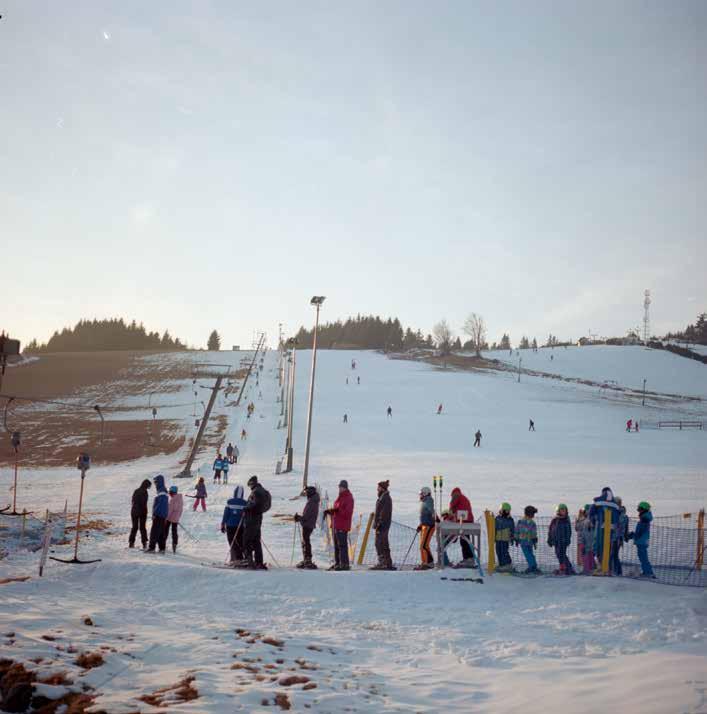
Six years later when the Nazis retreated, they scorched the earth and tried in vain to eradicate the atrocities of Auschwitz and dozens of other concentration camps that scarred the landscape and psyche of Poland. The country’s reward for enduring Nazi occupation was a 45-year sentence to authoritarian communist rule behind the Iron Curtain. Neighbour snitched on neighbour. The watchers watched. Freedoms came under attack. Tension underscored day-to-day life that could be as bland as northern Europe’s drizzly winter skies.
How enticing the light and freedom of the mountains must have been during those stultifying decades, when mountaineering literally became an escape from oppressive communism. Jerzy Kukuczka, Krzysztof Wielicki and Voytek Kurtyka were among a vanguard of Polish climbers, many so poor that they made their own gear, for whom the mountains became a ticket to freedom. The 1980s was a golden era in Polish mountaineering. As though climbing Himalayan giants was too easy in


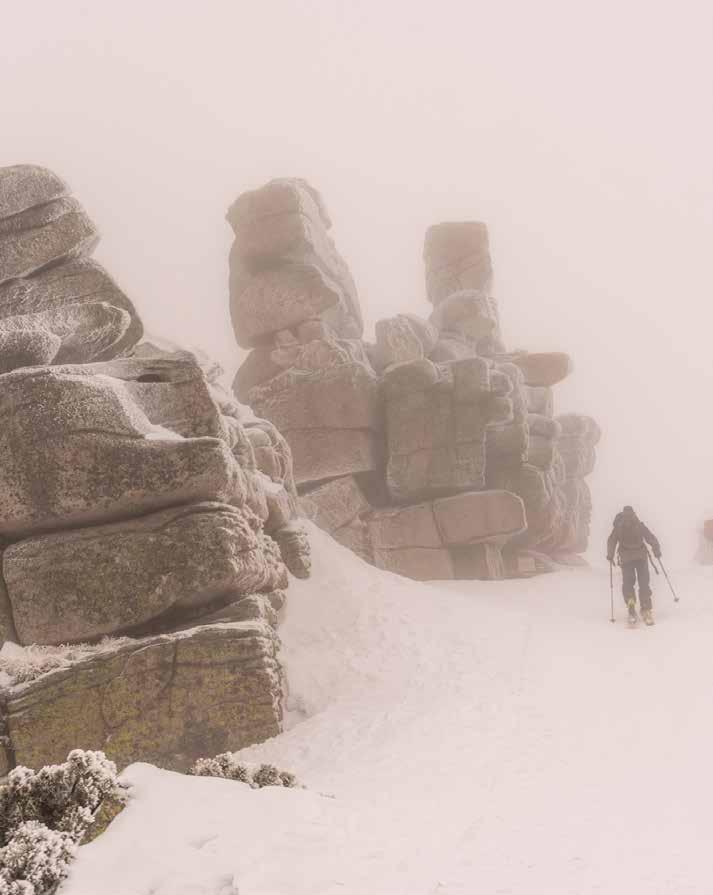
the relatively warm and stable spring season, Poles made the first winter ascents of Everest, Annapurna and other 8,000-plus metre peaks in the sort of brutally extreme conditions that only next-level tolerance for hardship and deprivation can endure.
That Polish mountain stoicism also translated onto the ski slopes. The country has produced some notable skiers. The late Karol Jozef Wojtyła (Pope John Paul II) was a deeply conservative Catholic known to shred on skis. Fans of this sporty Polish pontiff called him “The Daredevil of the Tatras.” Even after his ascent to the papacy in 1978, he would escape Vatican City incognito with bodyguards to indulge his Polish skiing passion in the Italian Dolomites.
Over the last decade, 37-year-old Polish phenom Andrzej Bargiel has become a worldleading ski mountaineer known for superhuman solo ski adventures. Last year he ticked off the first ascent and ski descent of Everest without the use of supplemental oxygen. Bargiel took two days to ski it, including 16 hours in the death zone above 8,000 metres and an unplanned overnight at altitude due to poor viz. This feat followed on his 2018 solo ascent and ski descent of the treacherously icy, steep and exposed K2.
Polana Szymoszkowa is no K2, but it comes with its own challenges. After my third trip up the highspeed quad, I look across the
valley at rugged Tatra National Park, a 211 square-km patch of protected peaks that beckons with real snow. Standing at 2,499 m (8,199 ft), the park’s highest mountain, Rysy, is also the highest in the country.
Little time passes in the mountains of Poland before the talk turns to food. Surviving my first day on a Polish ski hill calls for celebration, and that evening I meet Jacek on the Krupowki, Zakopane’s bustling pedestrian thoroughfare. Vendors hawk LED-lit propeller
“There’s a few well-known mountain climbers buried here,” Jacek says, pointing to shrines festooned with rusting pitons, hexentrics and other climbing implements.
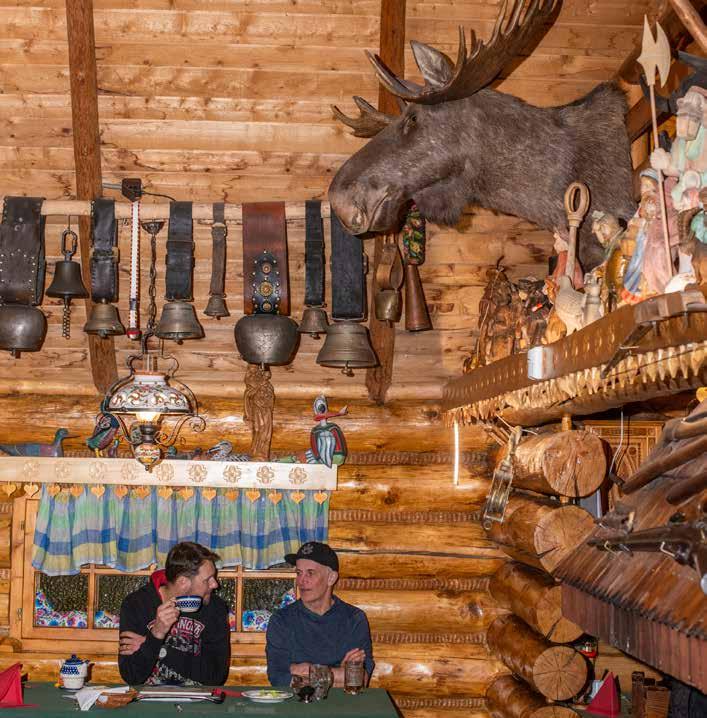
toys that drop like multicolour shooting stars from the night sky. Families stand in line at the Parrot Zoo, oddly out of place on this winter day. Techno blasts from an open door. Someone slips a flyer into my hand advertising lap dances. Jacek and I elbow through this mountaintown carnival to a corner table at Karczma Sabała, located in the same finely crafted building as the Hotel-Pension Staszeczkówka. Built in the late 19th century, the hotel welcomed artists, intellectuals and mountain enthusiasts escaping to Zakopane for the fresh air,


hot springs and relative freedom. The period was the start of big changes as the community transitioned from remote sheepherding village to bursting tourism destination. Inside the restaurant, diners shout to be heard over the folk band with two violinists, an upright bass player and a virtuoso accordionist. Music and dance have a strong tradition among Gorals, as the Slavic people of the Tatras are known. The Polish word Goral means simply “highlander.”
“Being Goral has become a profession in Zakopane,” Jaceks tells me, his lips curling into a cynical grin. These people know how to party, and the vibe is infectious to visitors to the region.
Over a mountainous meal of jagnięcina and placki ziemniaczane (lamb skewers and potato pancakes), I learn more about Jacek’s life. His curriculum vitae, it turns out, is as unconventional and convoluted as Polish history. Born and raised in Zakopane, he studied theatre at university in Krakow and performed on stage, continuing his thespian career even after returning to his hometown. He also moonlighted as a voice actor—his natural baritone landing him a gig doing a Darth Vader voice-over for a Polish version of a Star Warsthemed video game. Then the mountains called, and he became certified as a Tatra Mountain hiking guide while chipping away at a novel about time travel.
I sip a digestif of schnapps while Jacek hatches tomorrow’s plan—to visit Poland’s highest ski resort. Topping out at just under 2,000 metres, it’s the only one in the country that relies 100 per cent on real snow. But before heading to the gondola in the morning, Jacek insists we meet first at the local cemetery.
I wake early and arrive at the appointed time outside a tiny wooden Catholic church, a vestige of a century ago. We walk through a stone-arched entrance into the cemetery. I expect Gothic and gloomy, which would be a perfect pairing with Jacek’s deep-voiced and ponderous narration. But rather than sombre, the gravestones are creative and whimsical, with deeply personal tributes to the souls they commemorate.
“There’s a few well-known mountain climbers buried here,” Jacek says, pointing to shrines festooned with rusting pitons, hexentrics and other climbing implements.
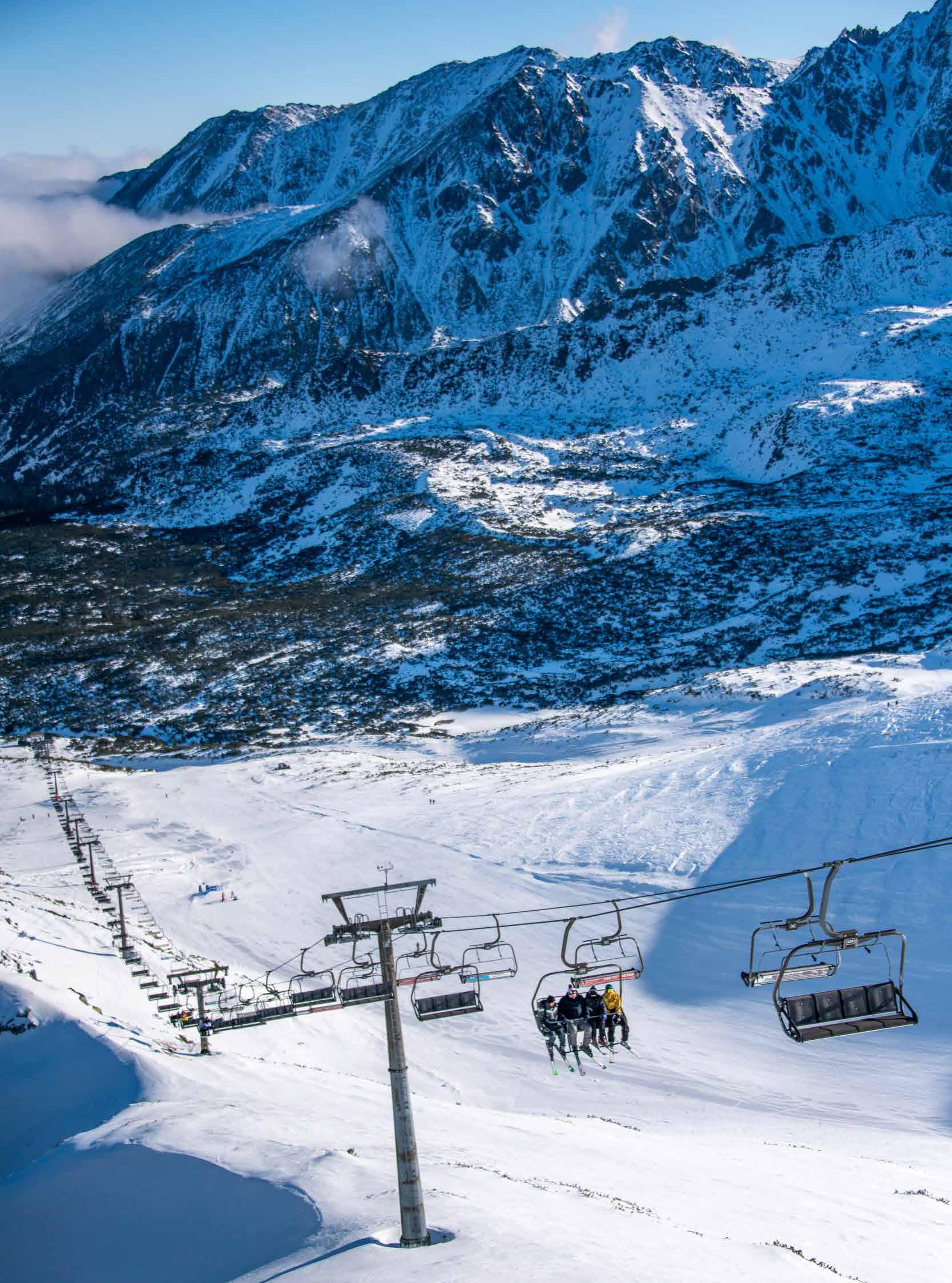
An hour later, we stuff ourselves into a packed gondola for the journey to Kasprowy Wierch. Light clouds cling to the surrounding peaks. A bracing wind gusts from the north. Lovestruck couples, young families with infants in backpacks and others who look as though they have never before set foot on snow all hike a slick and narrow ridgetop path to a high point straddling the Slovakia–Poland border.
Mountain guides scatter with groups along the rocky crest, teaching rope, ice axe and crampon skills. Jacek goes to visit an old friend who runs the Kasprowy Wierch weather station. I drop into a long ski run that’s blessedly empty. A dozen or so people carve firm, groomed snow to the bottom of a subalpine basin ringed by vertical walls and couloirs. Winter has been stingy so far this season in northern Europe, but up on Kasprowy Wierch a skiff of fresh dusts the peaks. Two young ski racers bash gates on a course at the edge of the run. A coach or parent barks encouragement from the side. The vacant slopes call for speed. On my last run I venture off-piste. It’s a mistake. Hard, bumpy snow and barely concealed rocks send me scurrying back to the groomer. Sitting on the chairlift, I watch tourists crawling along the ridgetop path to the resort’s requisite selfie spot. Two teams of ski mountaineers ascend toward steep couloirs splitting the surrounding craggy summits.
My ski guide didn’t bring his skis, but we ride the lift together—in silence.
When it comes to mountains, Poles are as unpretentious and unfussy as they are blunt. They love it all. Perilously crowded strips of artificial snow, raw and natural big mountain terrain in the Tatras, or freezing their arses on wintry Himalayan faces, they have a way of getting after it, fur collars and all. It makes sense. In a country that in many ways still recovers from decades of oppression, the freedom of the hills is much more than a cliché—it’s etched into the soul of a people.


RESIDENTIAL



Construction Management Design & Build
Construction Management Design & Build
Construction Management Design & Build

High-Performance Homes Renovations RESIDENTIAL
Construction Management Design & Build
High-Performance Homes Renovations
High-Performance Homes Renovations

info@coastessential.com coastessential.com
info@coastessential.com coastessential.com

info@coastessential.com coastessential.com
604-366-8116
High-Performance Homes Renovations
info@coastessential.com coastessential.com
info@coastessential.com coastessential.com
604-366-8116
604-366-8116
604-366-8116
604-366-8116










words :: Lilly Woodbury
photos :: Marcus Paladino
It’s the second-to-last day of 2025. A winter sun is sinking toward the horizon on North Chesterman Beach in Tofino, gilding the water in golden hues that make danger easy to miss. I pull on my wetsuit hood for a quiet sunset surf with some friends as a man runs down the beach, his obvious panic cutting through the calm air.
Between panting breaths, he tells me his wife is caught in a rip current with hypothermia and needs help. The sea has turned from paradise to peril.
Time freezes as I paddle out in search of her, adrenaline surging through my system. I scan the surface for movement, for anything that breaks the pattern of waves, and finally spot her. I pull her onto my board and begin fighting our way out of the rip current. Another surfer reaches us and helps battle the formidable pull of the water.
When we finally reach the beach, a group meets us to assist as we wait for an ambulance to whisk the woman—who had been in the
water nearly 45 minutes in just a swimsuit—away and into what ends up being a full recovery. Running the events of that rescue through my brain in the following days, I ignite a curiosity, and eventual wisdom about king tides and what a rising ocean demands of us.
King tides are the most extreme tides of the year, when the earth, moon and sun waltz into alignment during the moon’s closest approach to earth. Often occurring around a full or new moon, this alignment generates a gravitational pull that lifts ocean water higher along coastlines. While these tides are a natural phenomenon, they’re also a crystal ball, showing us how future sea level rise can turn today’s extremes into tomorrow’s norm. For those of us living near and recreating daily on the ocean, rising seas take up a lot of real estate in our minds. And when the king tides arrived on the first days of 2026, I felt like the best way to understand what’s at stake was to dive into them head-on.
Cruising the forest-lined highway near Tofino on my way to the surf, the Weather Network crackles through my speakers with a king tide report, alongside a looming reminder that climate change is making the oceans less forgiving. With our current trajectory, the National Oceanic and Atmospheric Administration positions that sea levels could increase by as much as two metres by the end of the century. This timeline feels distant until we witness—from overseas news or from the coasts some of us are lucky enough to live on— high tides flood streets, swallow homes, gobble up beaches and strain infrastructure built for calmer seas. For instance, in 2022 a severe winter storm paired with king tides in southwestern BC cost a sour $80 million in damages to roads, properties, marinas and stormwater systems.
Sea level rise is no mystery. Fossil fuel emissions warm the planet through the greenhouse effect, melting ice caps that have locked water away for millennia. According to research from the National Centers for Environmental Information (working with the world’s largest archive of atmospheric, oceanic and geophysical information), the ocean absorbs more than 90 per cent of that excess heat. As seawater warms, it expands—taking up more space and lifting sea levels.
swap my hooded wetsuit for bare skin and thick slabs of zinc sunscreen. Unsurprisingly, these places I imagine—from Fiji to French Polynesia—are dealt the roughest blow of rising seas. According to the London School of Economics, climate impacts will displace up to
I find conversations about rising seas often collapse into two extremes: We’ll be fine, or we’re doomed. Both outlooks risk the same outcome: complacency.
an estimated 1.7 million people across the Pacific Islands by 2050. Fiji, home to the legendary Cloudbreak wave, has already begun relocating coastal villages. The Pacific Island nation of Tuvalu could be largely underwater within 25 years and is planning what may become the world’s first organized relocation of an entire country. While we are all connected via a shared ocean system, its fallout is not felt equally. The cost of rising seas is already being paid, just not by the industries that caused them.
Back on land and online, I find conversations about rising seas often collapse into two extremes: We’ll be fine, or we’re doomed. Both outlooks risk the same outcome: complacency. The truth, like a storm swell, is less tidy. Seas won’t simply climb to unlivable levels or not climb at all; they’ll rise at greater or lesser levels depending on the choices we make in the years, decades and centuries to come. Everything we do to prevent every degree of warming and each centimetre of sea level rise will protect lives, communities, ecosystems and surf breaks. The wild part is that the solutions already exist, we just need the will to keep pushing them along. And we do have an effective path forward.
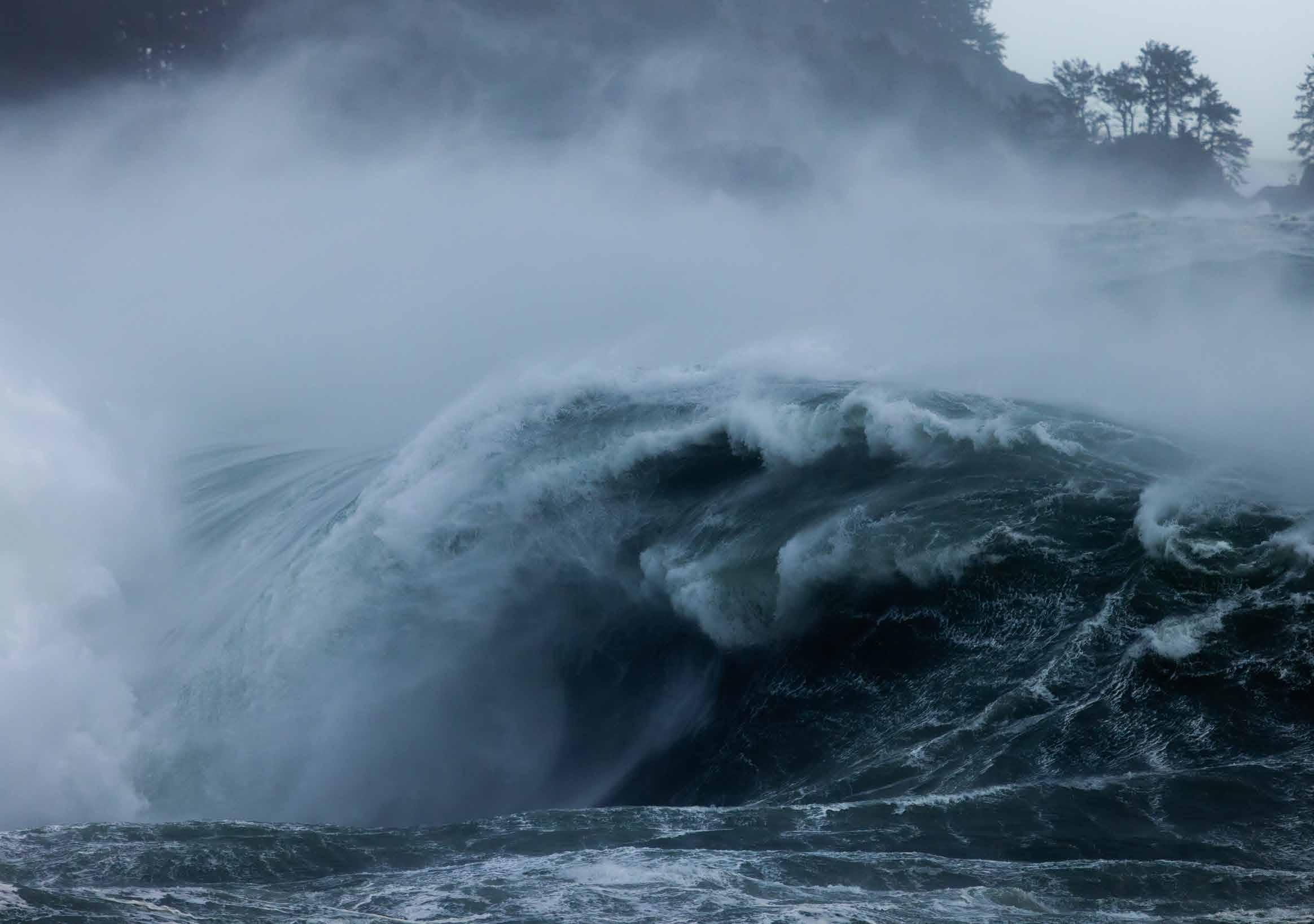
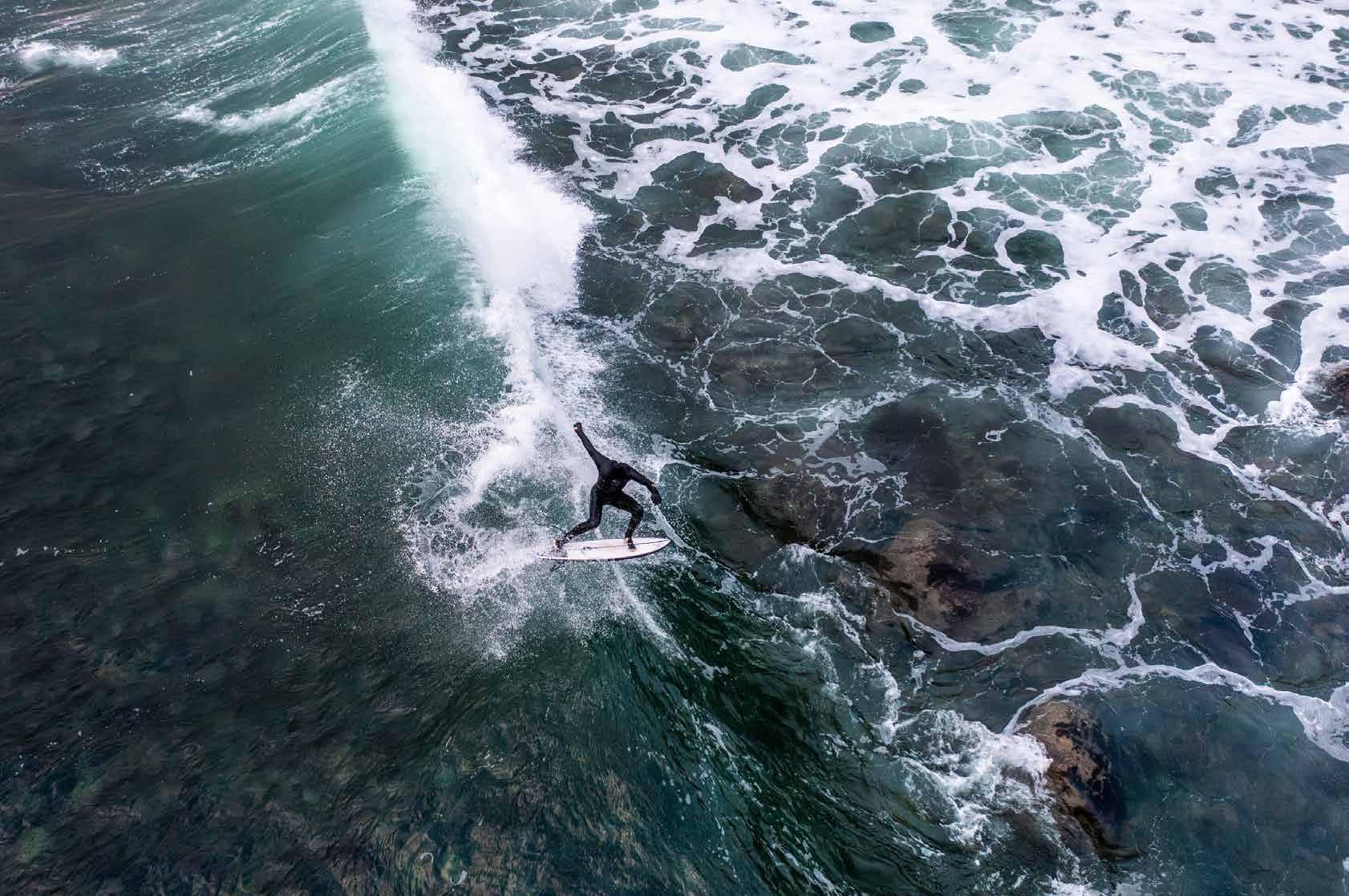
I reach Cox Bay, where the water is so swollen there’s almost no beach left. Paddling out, the water molecules I glide through come from glaciers in Greenland and Antarctica, and this excess melted ice carries consequences for the waves we chase. Higher water pushes beach breaks closer to shore, reshaping waves and shrinking their power, no small change in surf-motivated places like Vancouver Island. A single foot of sea level rise can alter or erase surf breaks, and three feet would render most breaks unsurfable.
After an hour in the cold North Pacific water, numbness settles in and I mentally drift south to tropical seas, where I can
First: Stop the leak at its source. When thawing myself out in the bath after a chilling surf, I begrudgingly turn off the tap once the tub is full. The same principle applies to closing the gate on melting ice caps: Speeding up the phaseout of oil and gas is our most crucial strategy. The faster we can decarbonize and reach net zero globally, the less water we add to the edges of every coast. The current reality, however, seems headed in the opposite direction. Canada is continuing to increase oil production, with new pipeline proposals signalling a long-term commitment to fossil fuel extraction. This is a problem we’ll be grappling with for decades, but the window to influence how bad it gets is now: through civic engagement that puts pressure on our elected representatives to support policies to phase out fossil fuels, create accountability for major polluters and invest in clean alternatives.
Second: Embrace nature-based climate solutions. Along the shorelines where I work and surf with Surfrider Foundation, communities are trading concrete for ecological design. Hard infrastructures like seawalls accelerate erosion along coastlines.






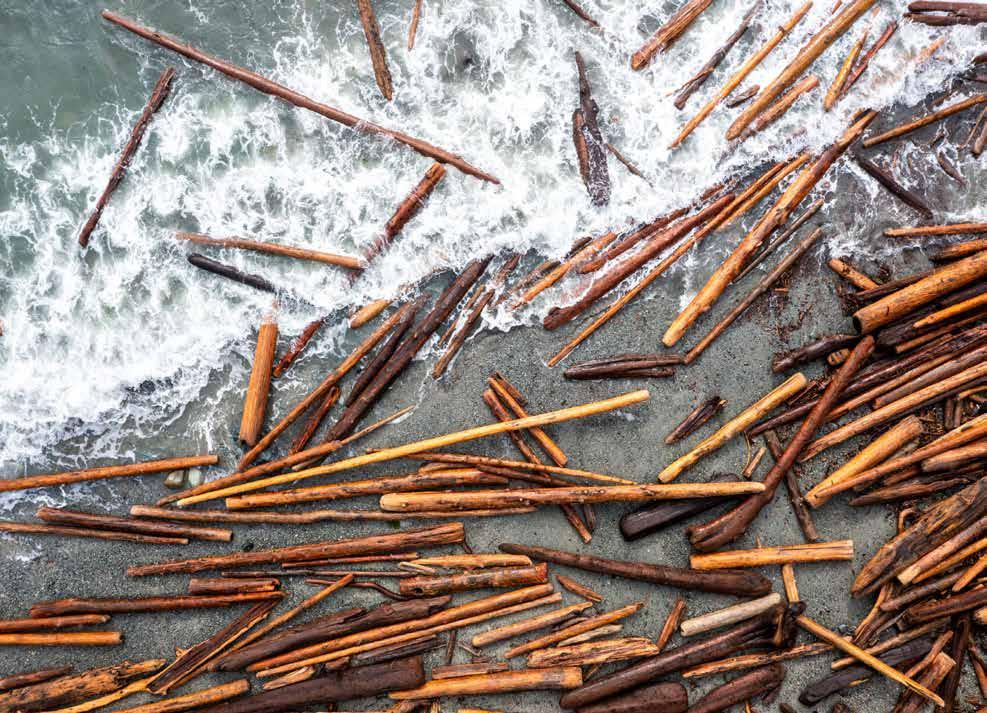
This coastal armouring disrupts natural sediment movement, washing sand away instead of letting it spread and settle along the shore. To avoid this “coastal squeeze,” we’re restoring natural barriers like dunes, coastal vegetation, wetlands and reefs—landscapes that absorb wave energy, soften floods and move with the higher tides. Blue carbon ecosystems, including eelgrass meadows, salt marshes and mangrove forests, are a one-two punch for climate mitigation and adaptation: They draw down carbon dioxide from the atmosphere and shelter coastlines from higher seas.
As seawater warms, it expands—taking up more space and lifting sea levels.
Finally: Design with waves in mind. As surfers, we know waves need space to break. Crowd them with rocks or walls, and they close out, collapse or disappear. As seas rise, coastlines need that same ability to shift and reshape. Development setbacks—keeping buildings far back from the water’s edge—is an adaptation measure that gives beaches room to migrate instead of being squeezed out of existence. Protecting these natural processes reduces damage from encroaching seas for coastal communities, and it preserves the
underwater contours and nearshore sands that waves depend on. In some places, adaptation is even creating opportunity with humanmade reefs, carefully designed underwater structures built to absorb wave energy, reduce coastal erosion, restore marine habitat and in some cases create new, rideable waves.
Without simultaneous storm surges or large swells stacking energy on top of the tide, the king tides of 2026 didn’t bring the destruction of previous years. Still, the ocean had other lessons to offer over this period. I think of the woman we aided in the water—that rescue was successful because we responded quickly, collectively and before the situation escalated. Speaking about the event after all had ended well, her husband told me: “It’s our responsibility to run towards the trouble. Denial is a quiet death.” These words stay with me, and I now see them as a philosophy for a livable world. Whether it’s a rip current or rising seas, turning away doesn’t make us safer—it only gives the problem room to expand.
This blue planet gives us tides and waves, sustenance and habitable edges. In return, it asks something of us: the courage to act together. Come hell or high water, we must keep running—and paddling—toward the trouble.
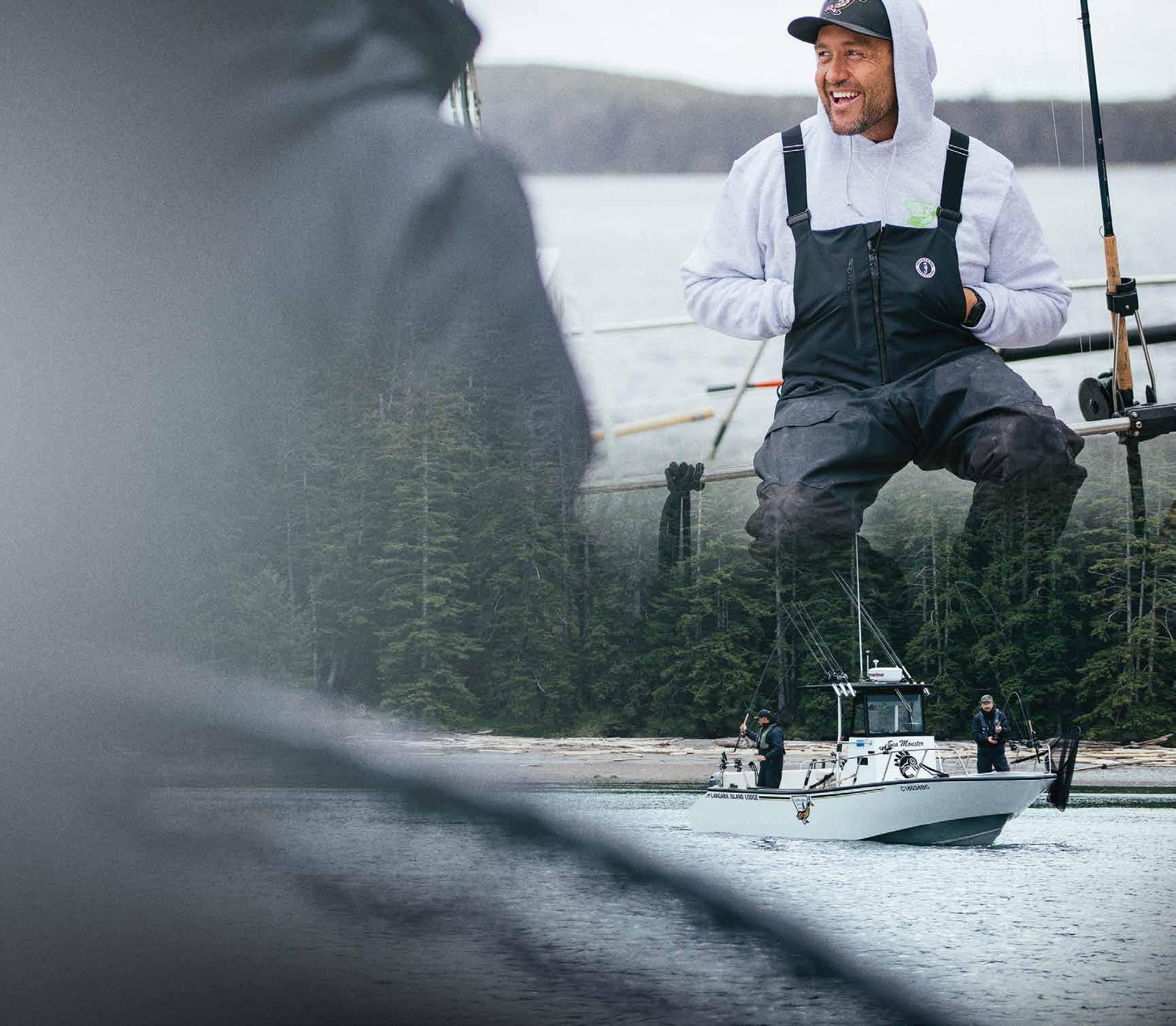
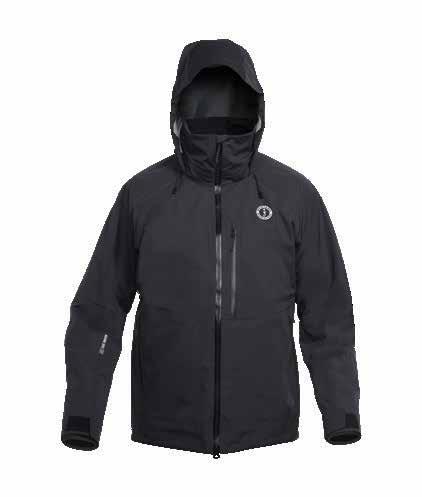

Waterproof Marine Spec SP fabric engineered to endure abrasion and salt water. Built tough for the West Coast.
#livebeyondland
words :: Jon Turk
illustration :: Lani Imre
I’m writing this in mid-December, a few weeks before I turn 80. In life and outdoor adventure, the number eight followed by one or more zeros is especially significant: 8,000 meters in alpine climbing, 80 degrees north latitude in polar expeditions, 80 years old. The Death Zone. Or, as I prefer to think about it, the glorious zone of mandatory heightened awareness.
I never climbed above 8,000 metres, but several years ago Erik Boomer and I skied, walked, crawled and paddled our kayaks from the high Arctic across the polar zone in our circumnavigation of Ellesmere Island. I felt excitement and fear as we approached 80 degrees latitude, because we did not know the condition of the sea ice ahead of us. Could we expect to travel 25 kilometres a day? Or would we encounter pressure-ridge ice that would slow our speed to a few hundred metres a day? Would we complete the expedition? Or starve? Even though I understood intellectually that nothing would change radically as we crossed 80 degrees, I stared at my GPS in
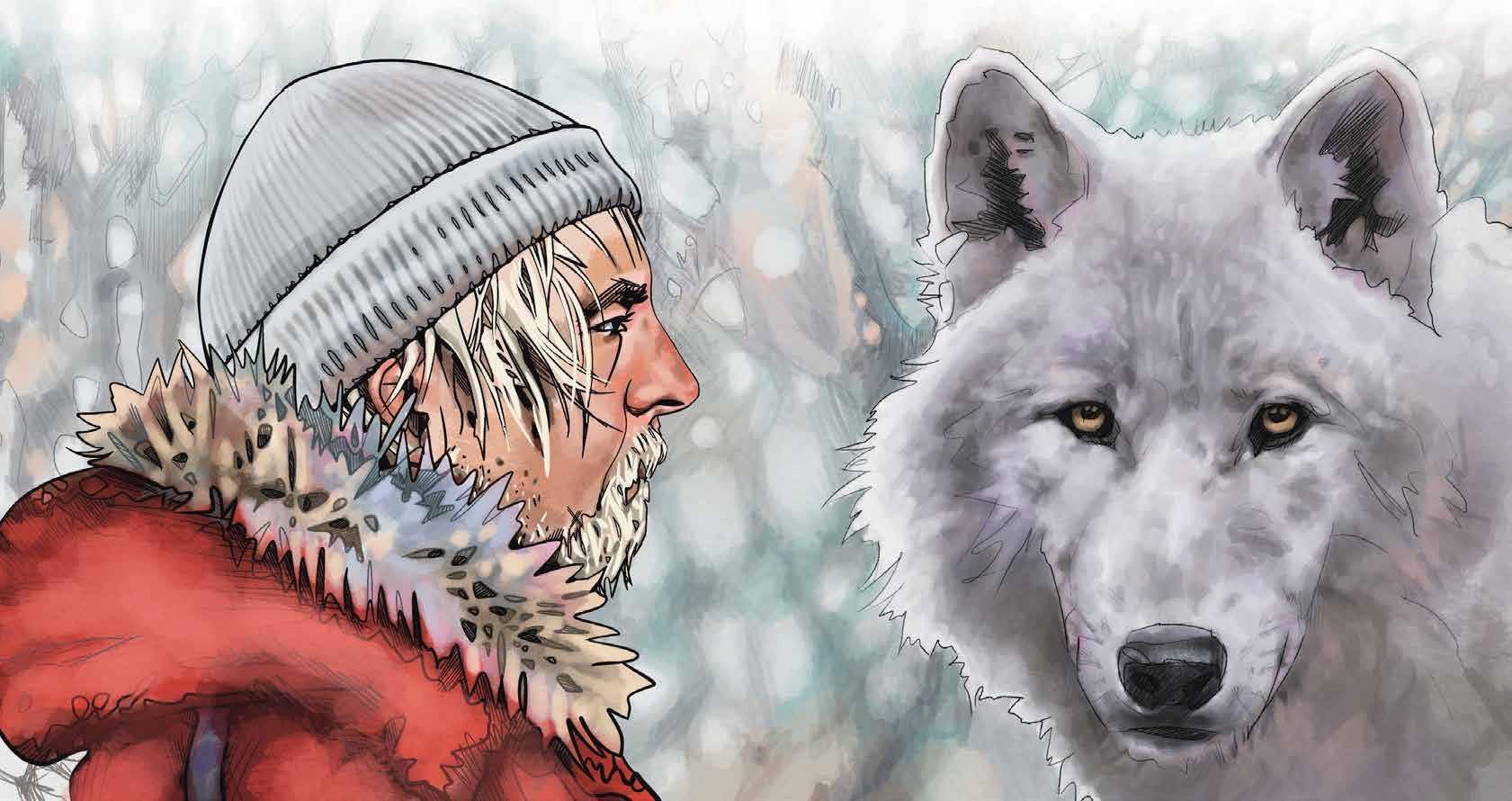
anticipation as the numbers clicked away. When the little screen showed 80.000, I stopped and looked up—directly into the eyes of a white wolf standing resolutely, as if consciously and knowingly straddling that imaginary line on a white man’s map. I stood stock-still for a few moments, then smiled and said, “Good evening, Ms. Wolf. And how are you on this fine afternoon?”
The wolf lay down on the ice as we set up our tent and cooked our dinner. After our meal, I opened the vestibule door, said good night, and fell asleep with the deep fatigue of someone on an arduous expedition where every moment of rest and every calorie conserved could be the difference between life and death down the road. In the middle of the night, I felt a gentle pressure against the tent wall, and the comforting warmth of a fellow mammal pressing against my body. In the 24-hour daylight of the polar summer, I saw the wolf snuggled up next to me. I moved closer ever so gently, as one would cuddle with one’s lover, and fell back asleep. Everything I have said above is factual. It happened. Everything that follows is Jon Turk’s interpretation of the events. I was entering the Death Zone, and I
felt that the wolf—nature—was talking to me directly. Was it the Fairy Godmother Wolf guaranteeing safe passage for us? No, I don’t believe in Fairy Godmother Wolves, or guaranteed safe passage anywhere, anytime. This was a Real Wolf telling me, in my imagination, “Welcome to the Polar Zone. You will be cold. You will be hungry. You might die out here. Welcome.”
Transitions are the passage from something—or someplace or some time— familiar to a zone that is less familiar. And with the loss of familiarity, we are well advised to approach with heightened awareness, observing events and physical features with tingling inquisitiveness and curiosity.
We pass through transitions all the time: day to night, full moon to new moon, fall to winter to spring. Civilization normalizes these transitions so we don’t require a Paleolithic hyper-awareness. We live in secure houses, with no night-hunting leopards preying on us beyond the campfire. Most of the people who read this magazine will not be threatened with starvation during the dark times. So we switch on a light, turn up the heat, grab a kiwi out of the fridge even though it’s midwinter outside and play Sudoku without thinking much about it. But we lose part of our wondrous selves when we fail to ignite that awareness. Because awareness is what keeps us alive out there.
Family Law
Cohabitation Agreements
Marriage Agreements
Our team of experienced family law lawyers is here to guide you through life’s changes with expert legal advice and personalized service.


Race & Company LLP has been proudly serving the Sea to Sky and our worldwide clientele with local knowledge and proven integrity since 1973. Our 30+ lawyers and staff are dedicated members of the community, providing volunteer time and expertise to a variety of local charities and organizations.
Separation Agreements
Divorce
Collaborative Divorce
Property Division
Spousal Support
Parenting Time & Custody
Guardianship
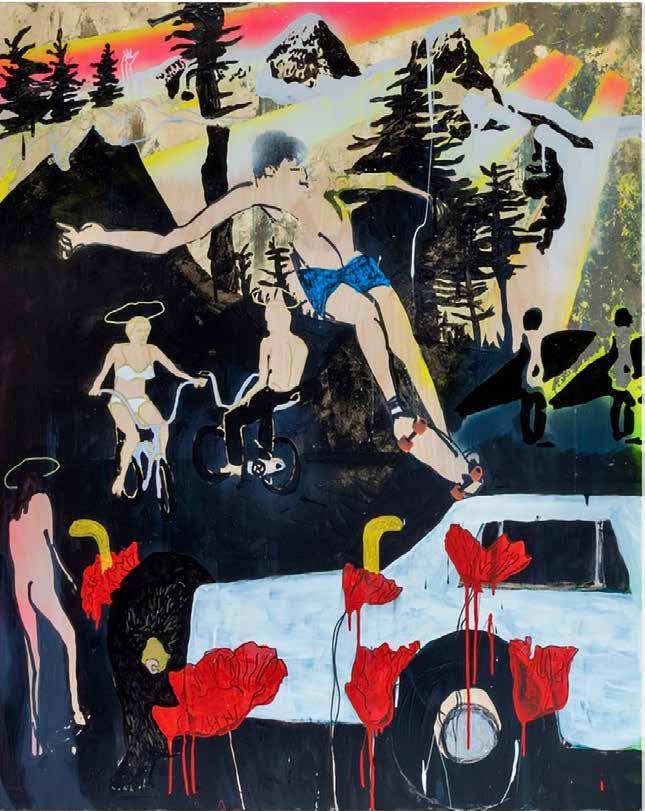
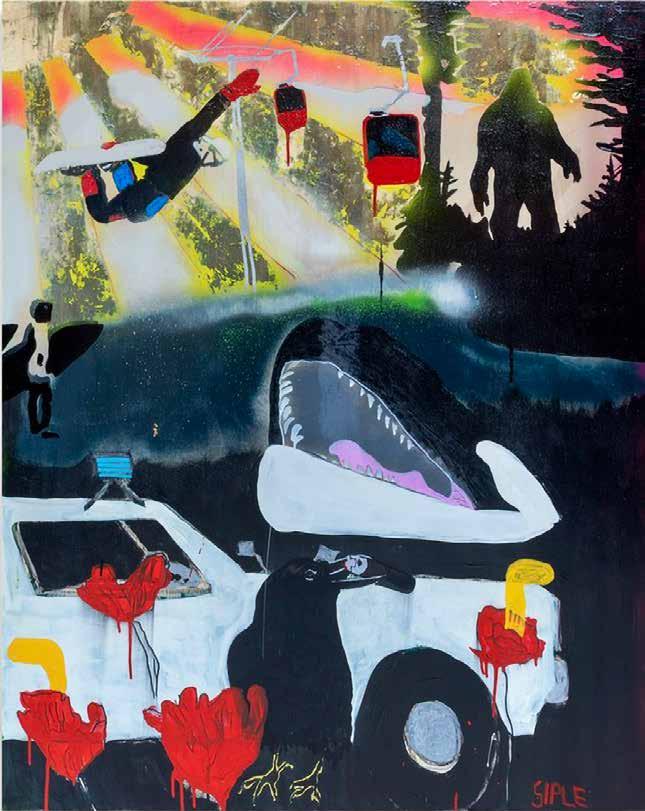
Murray Siple and the (stolen) posters of creative identity
words :: Feet Banks
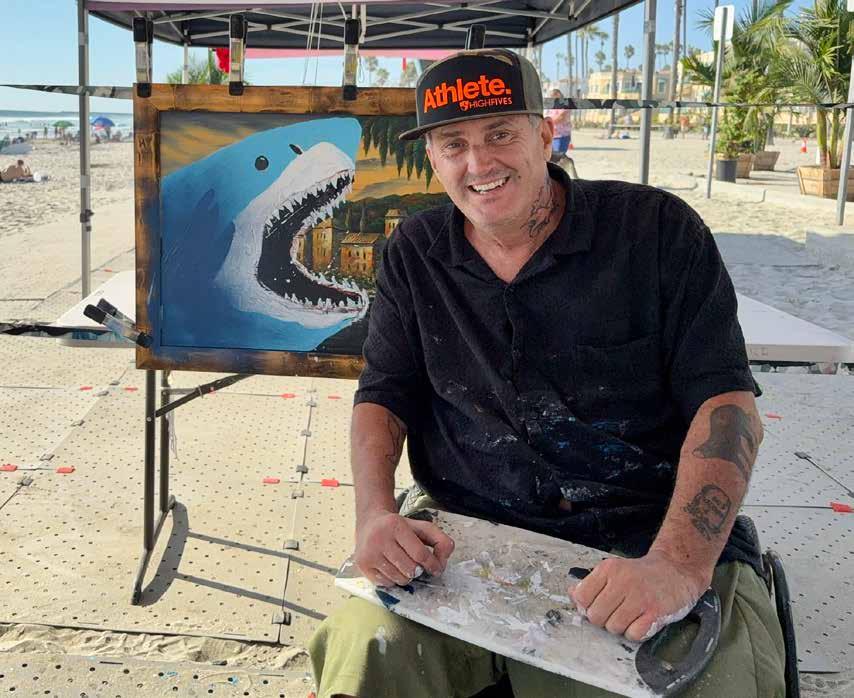
“I was partying a lot in the 2000s and I went to get a haircut,” says Murray Siple. “It was a Monday, I go to pay and I guess I had spent all my money on the weekend. There was no money; I opened my wallet and a moth flew out. The hairstylist laughed and told me that was my new name: Walletmoth. People always mispronounce my last name anyhow, so when I started painting I figured, sure— Walletmoth sounds dope.”
Let the record show: Murray’s surname is pronounced “Sipe-ul” not “Sipple.” And really he’s a filmmaker, first and foremost. Painting? It kind of happened by accident.
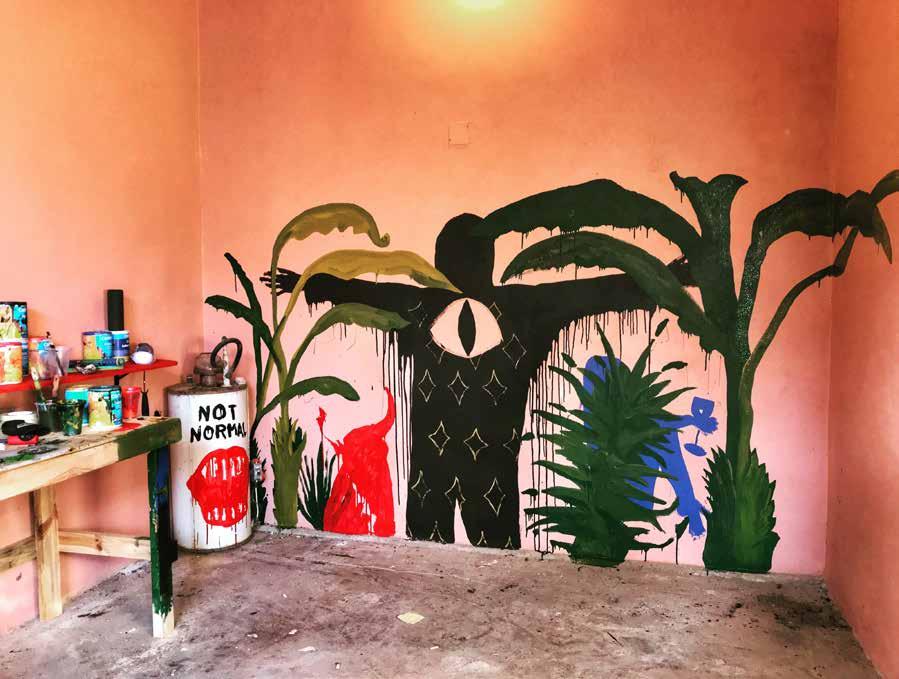
“I was in Mexico for six months,” the 56-year-old ex-skater/snowboarder says. “I couldn’t get funding for another film, so I took six months and holed up in a little beach town to try and write a book. But 90 pages in I just couldn’t sit there anymore, not with Mexico going on right outside. I had always been into drawing, so when I got bored I asked my Airbnb host if I could paint a mural on the wall of the garage.”
As a filmmaker, Murray started his career shooting skateboarding and skiing with his buddies in Kamloops, BC. He put those skills to further use after moving to Whistler in the early 1990s, directing and shooting four snowboard films (Cascadia is a classic). In October of 1996, Murray was the passenger in a car accident that left him as a C6–C7 quadriplegic. With no use of his legs and limited wrist, bicep and finger control, Mur’s snowboarding days were over. But his filmmaking days were not.
“A director sits in a chair anyhow, right?” he says. In 2008, Murray directed Carts of Darkness, a National Film Board movie about homeless men who find joy in simple living and racing their bottle-collecting shopping carts down the steep hilly streets of North Vancouver. A smash hit, the film reconnected Murray with the adrenaline and speed of his skate/snowboard days and allowed him an insider’s look into a world where few others would be welcomed.
“I’m trying to find the things that others are not paying attention to,” Murray says. “Often those can be the dark things—people will be taking a picture of a sunset and the waves and I’m wondering why this giant garbage fire is burning over here.”


Which brings us back to Mexico, painting a mural as a chance to get outside and procrastinate writing a book. A friend saw a photo of Murray’s mural on Instagram and implored him to start painting canvases so he could bring them back home to BC.
“I couldn’t buy art canvasses in a tiny town in Mexico,” Mur says. “Or proper paint. I had to just use house paint.”
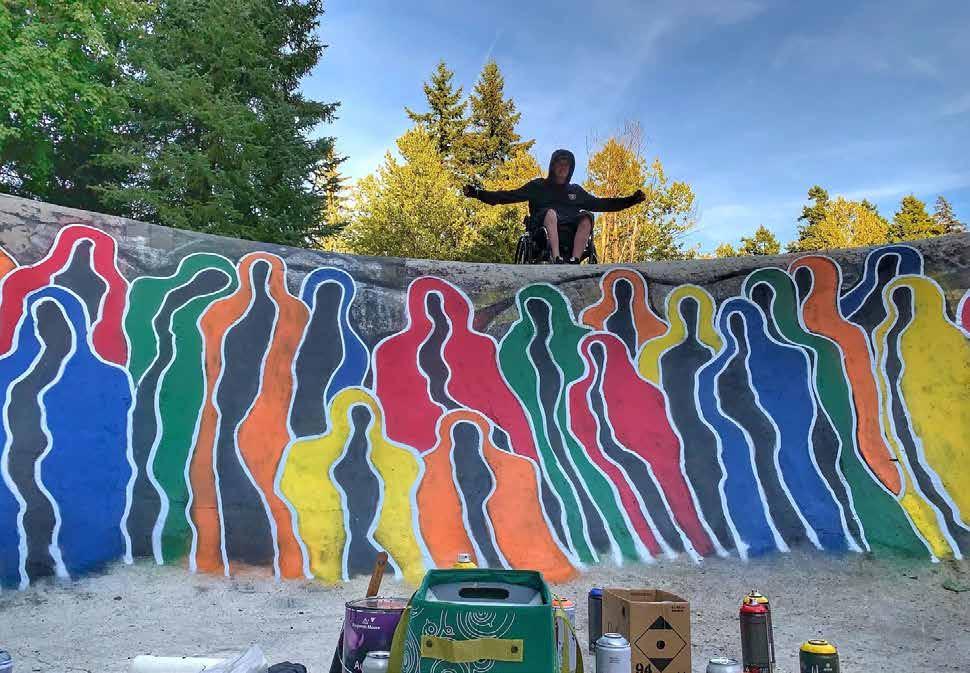
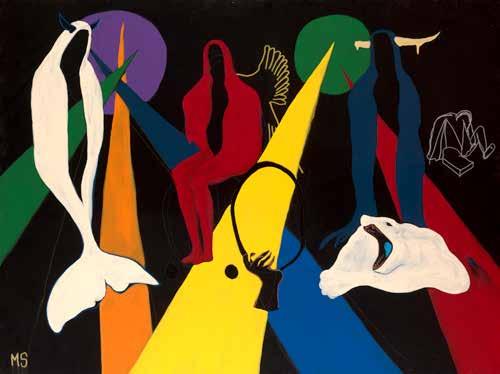
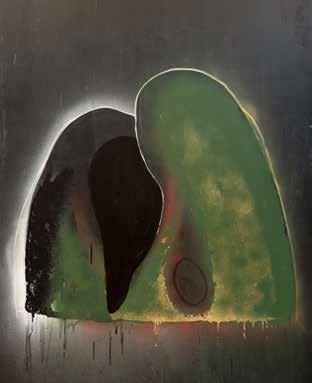
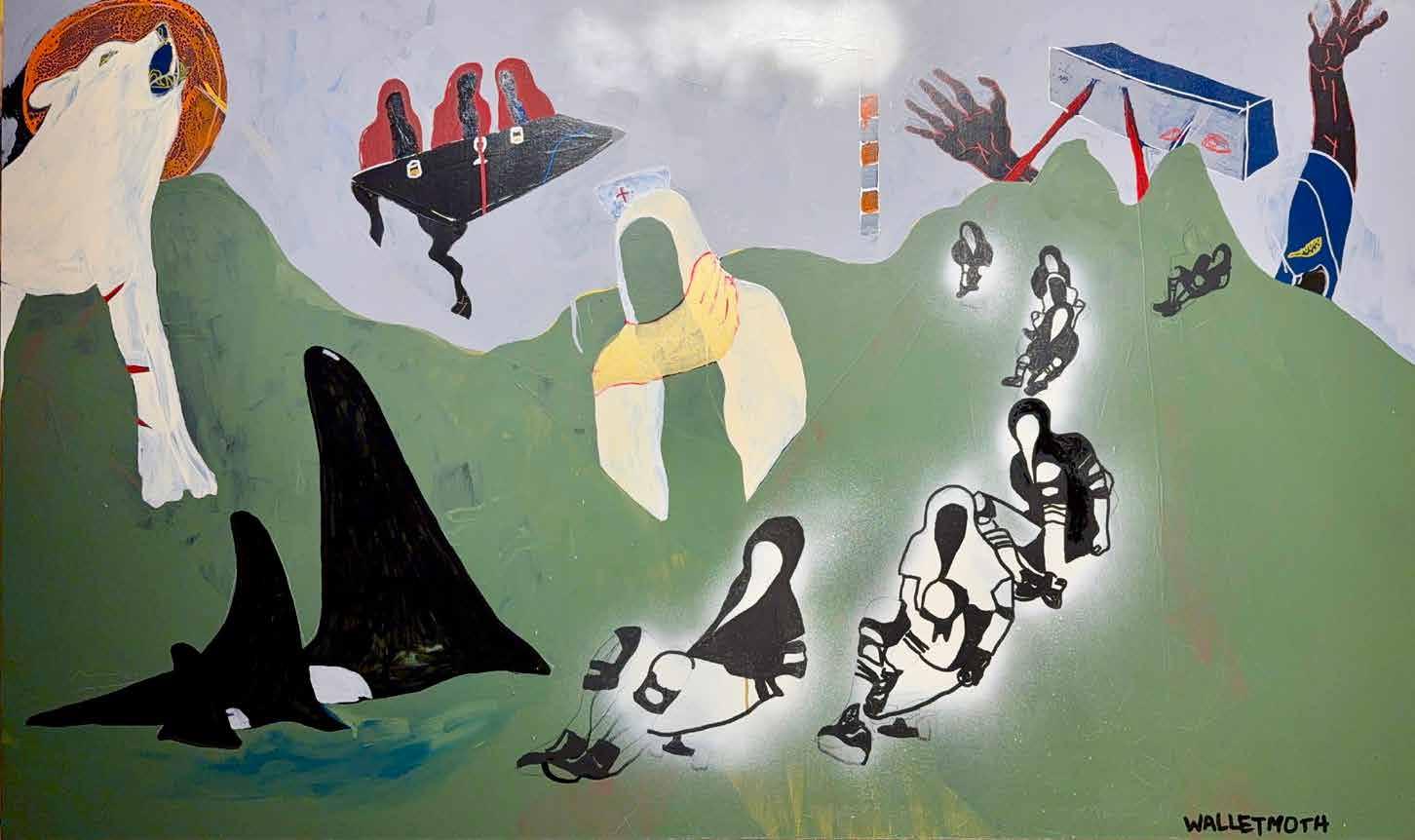
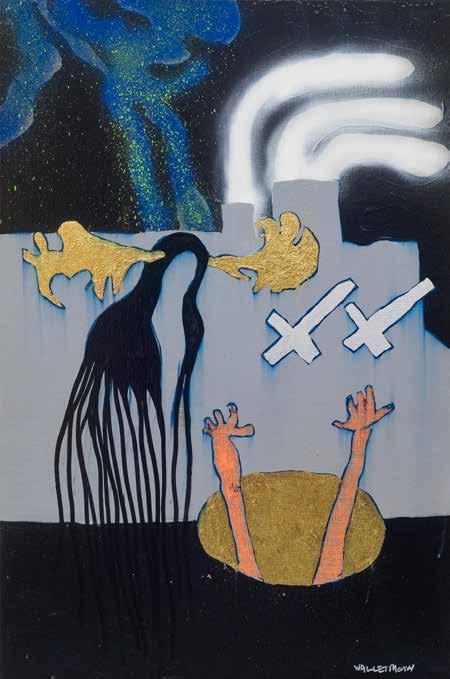
For canvasses he started collecting old election signs from walls around town. “I painted them all black to hide what they were,” he says. “And that became part of my style. I would paint things that were around me. A bull getting butchered in the street in front of a vegetarian restaurant, lots of skulls, and my first painting was of the Virgin of Guadalupe [Mexico’s Virgin Mary]. I liked that hooded shape, that cloak. It reminded me of my skater and snowboard friends wearing hoodies. I painted that figure for the next six years.”
This disability is pretty severe—quadriplegic. People think I live with a nurse and don’t do very much, so I’m fighting to do as much as I can: surf, travel, make films, make art.






“As a Nutritionist and Dental Assistant, I offer an integrative approach to oral health that recognizes the mouth-body connection. In addition to offering nutrition as a preventive dental service, I also specialize in energy support, digestive health, women’s health, mood and stress support.” Julia Lewing, CNP, ROHP Holistic Nutritionist & Dental Assistant

With Apex Mountain Resort to the west and Baldy Mountain Resort to the east, you get double the terrain, double the snow, and double the adventure, all without changing hotels. Return to Penticton to unwind in our vibrant downtown, celebrated wineries, and cozy lakeside eateries. Discover the best of both mountains at VisitPenticton.com Why choose Chief Dental?


• Advanced dental services in a modern, welcoming environment
• Expert care from a passionate team
• Personalized nutrition plans Book your consultation today at chiefdental.ca and start your journey to a healthier, brighter smile!




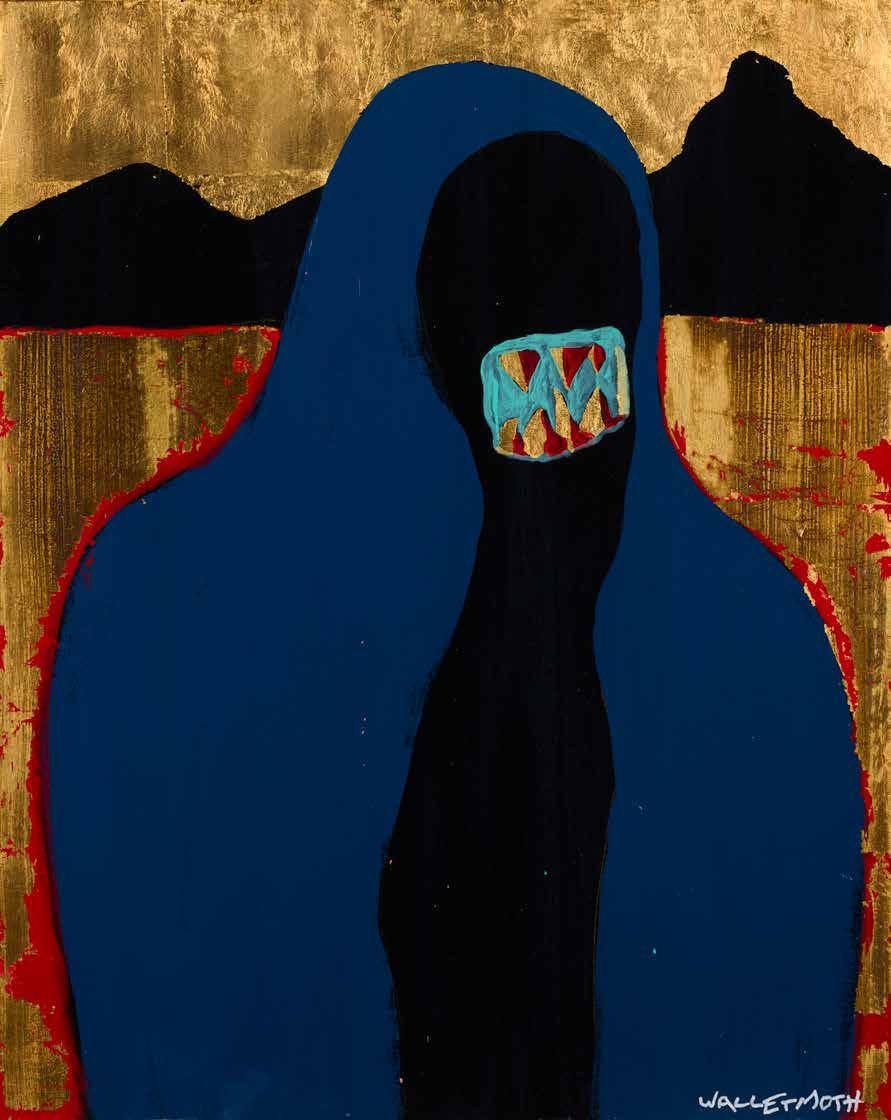
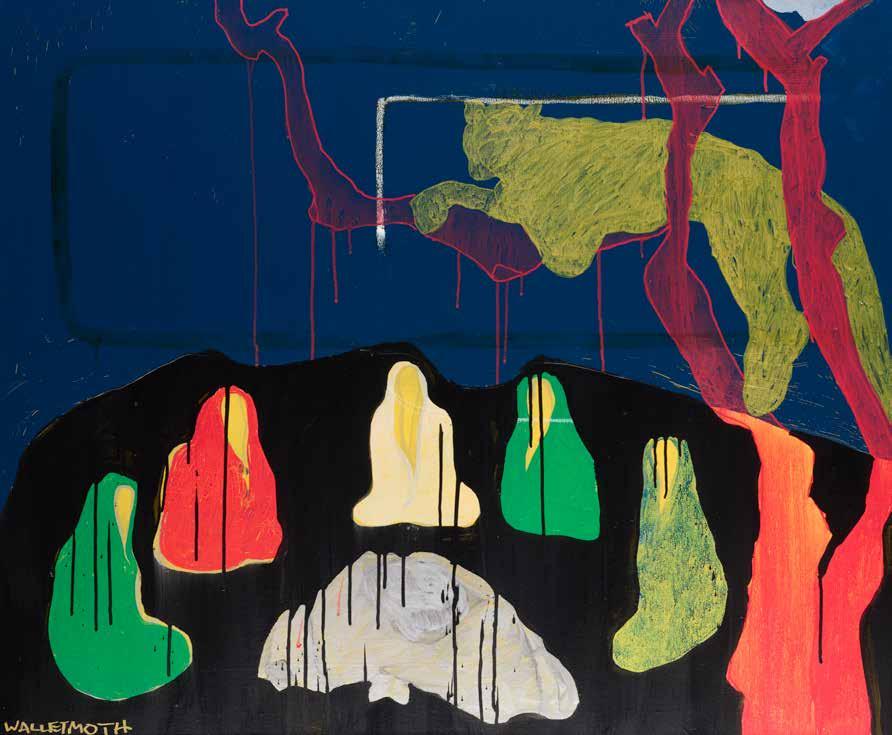
About 20 pieces into his new passion, Murray realized there’s no such thing as free canvasses. “Those elections signs, they actually had been left there to let people know which region had voted for which cartel. I had 20 huge black canvasses in my garage, the exact same size, and people walking by every day. Plus, I’d hired homeless guys to go collect signs for me. So I peaced out of there and came home.”
Back home in BC, Murray applied for grant funding as a painter. “I felt like if no one wants to make films I better keep painting to tell these stories and express myself,” he says. The grants were approved and Murray set to work. He currently has more than 100 completed canvasses and has been commissioned for large murals celebrating the 25th anniversary of the Whistler Skatepark and the recent relaunch of iconic Canadian snow/skate/surf brand Westbeach. After falling in love with adaptive surfing, Murray’s also scored live painting gigs at surf events around the globe.
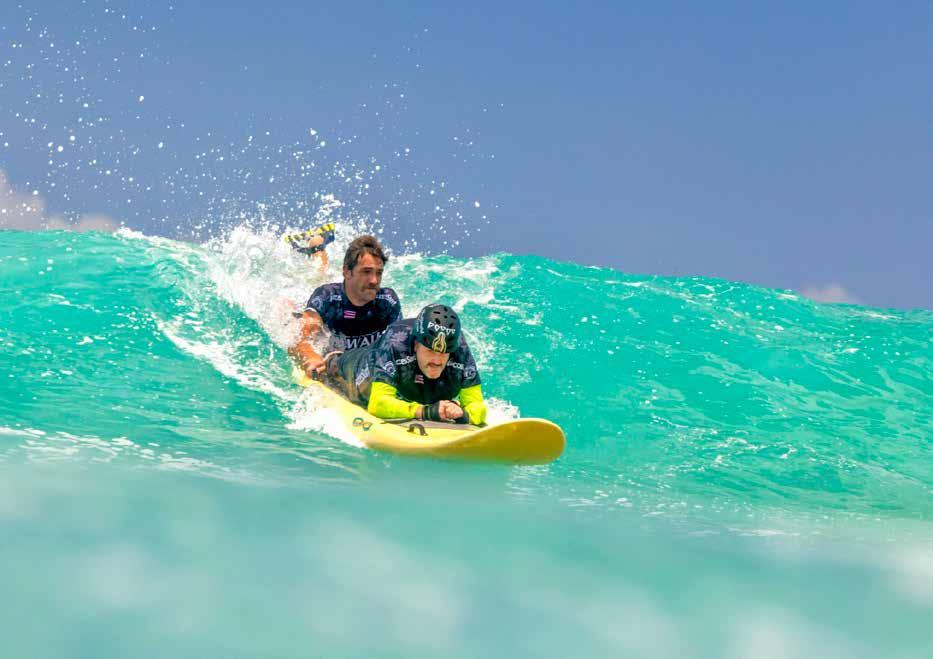
“That was my way into the sport,” he says. “It gets me access to these incredible volunteers who help me in and out of the water. I get to be there with the community and be a part of the event without competing. It reminded me of my old days heliboarding and getting to be in the mountains as the filmer.”
Murray adds that he thinks the adaptive surfing community and the sport itself has also lifted a bit of the darkness out of his art. “I’ve been trying to involve more of my physical abilities back into the paintings. I do want to show myself and other adaptive sport athletes. The primary goal is not to sell paintings, it’s to show my story. This disability is pretty severe—quadriplegic. People think I live with a nurse and don’t do very much, so I’m fighting to do as much as I can: surf, travel, make films, make art. I want to tell that story. The paintings are personal documents of me progressing through life. Maybe some people will realize that a person with a disability is not what they expected. There are stories out there that no one has done. So I’m doing it.” walletmoth.com

















































Stopbraggingabout








Made for Mountain Lifers. These aren’t trips you book — they’re journeys you join, led by our team and taken together with people who live the Mountain Life.


the Finger







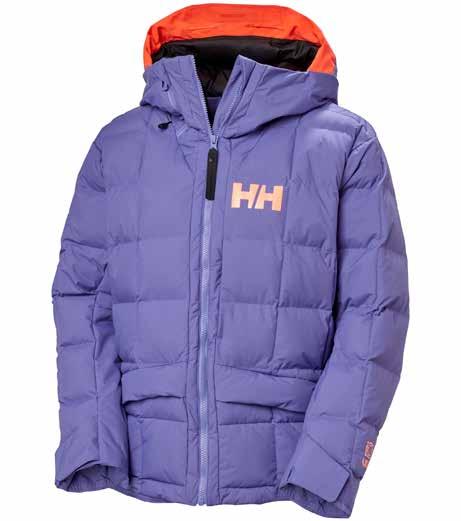
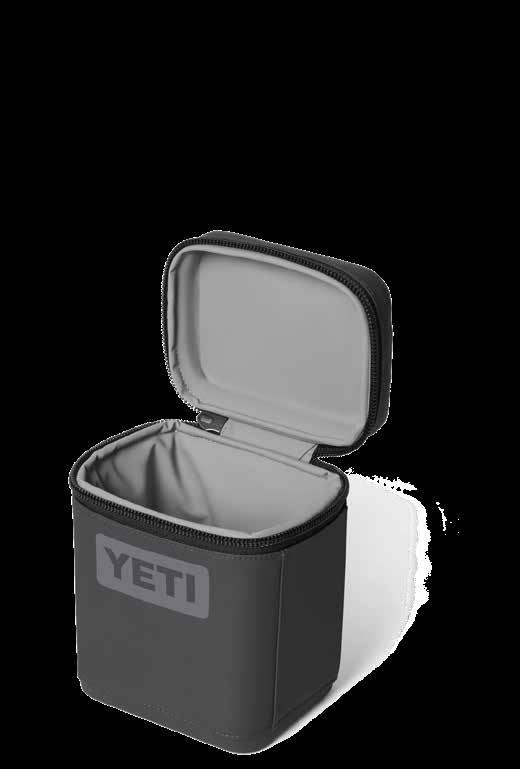
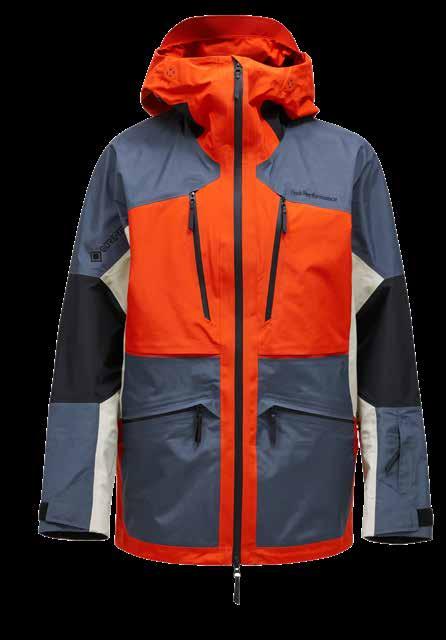
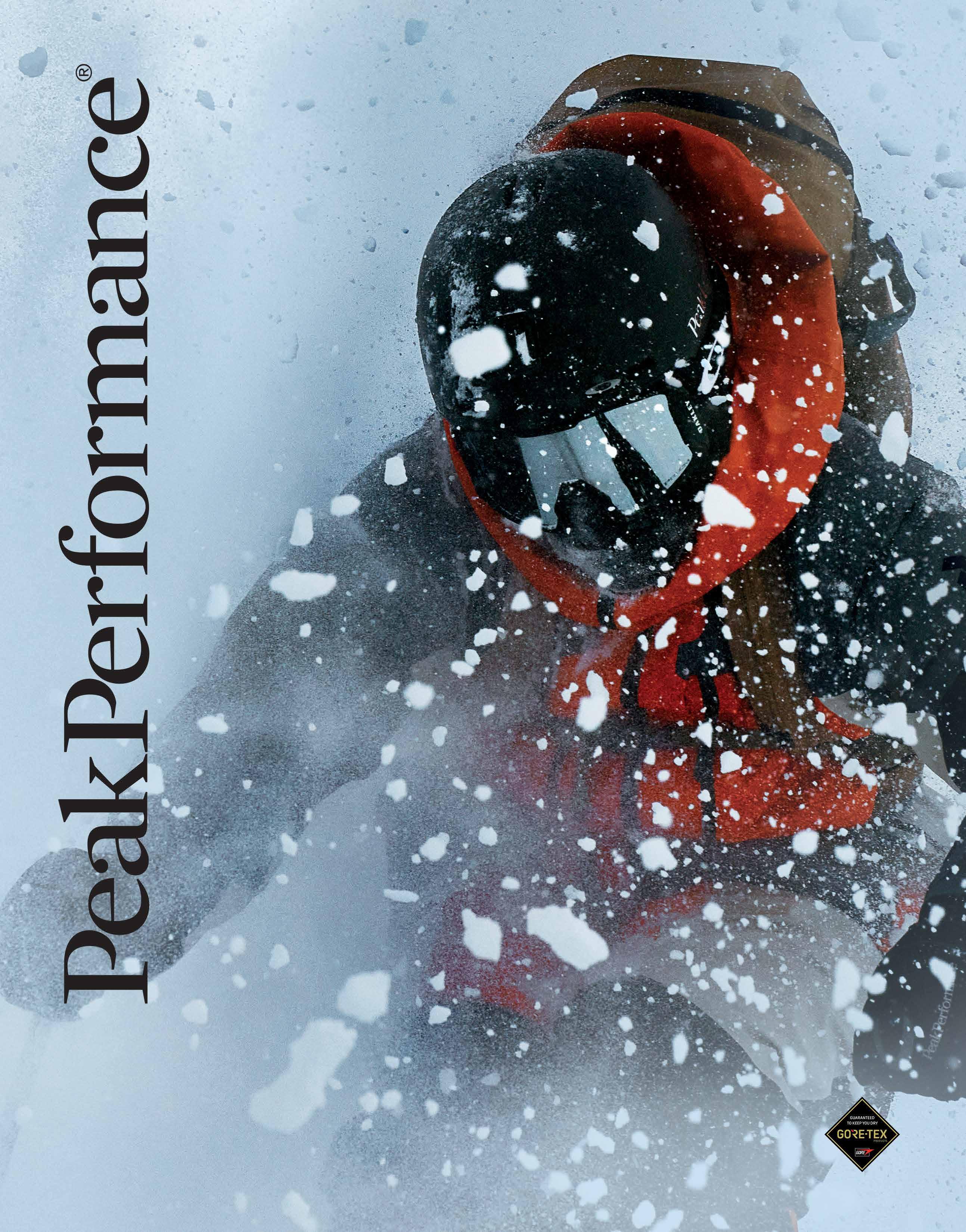
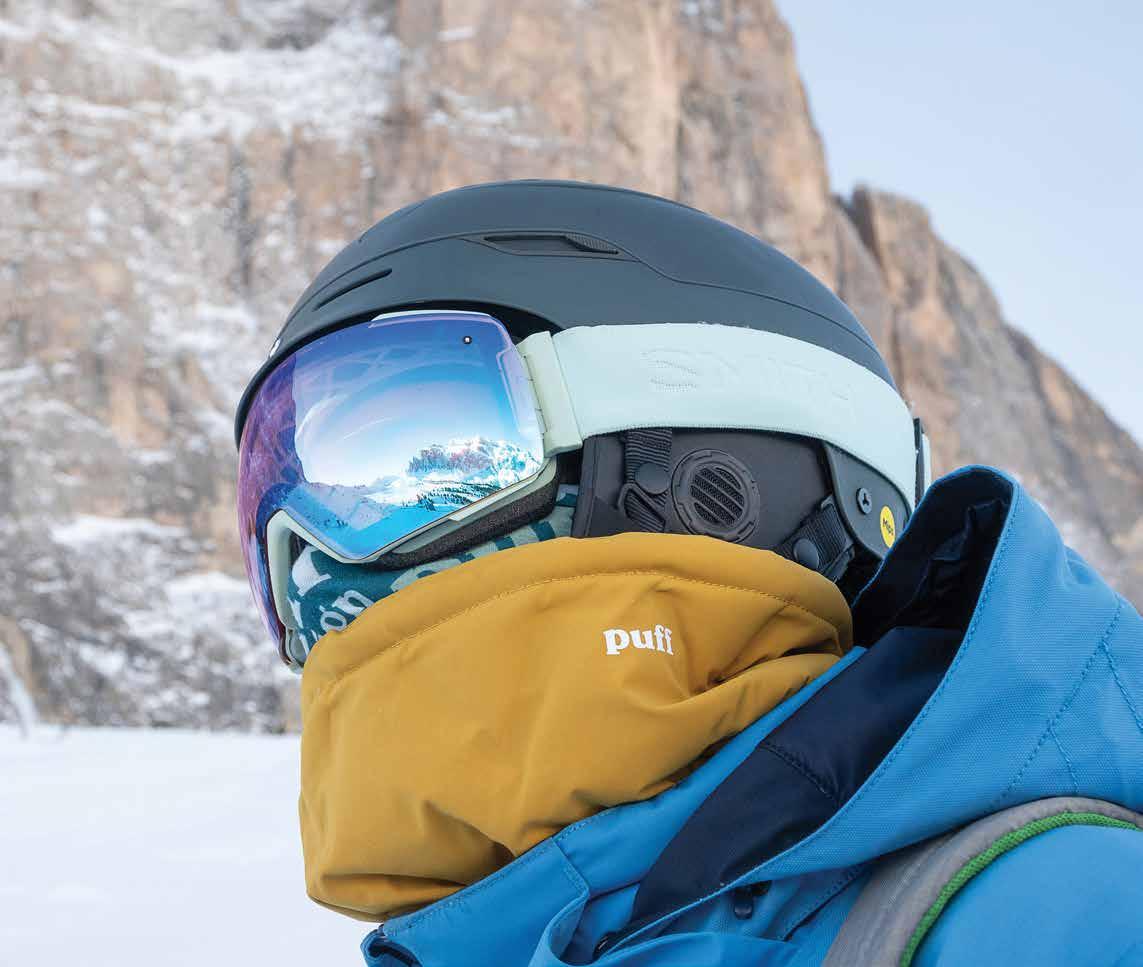
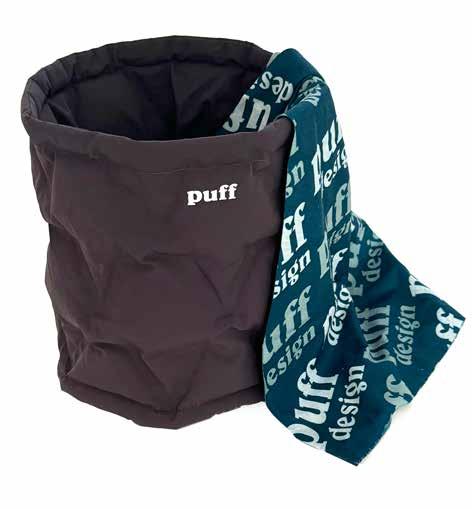
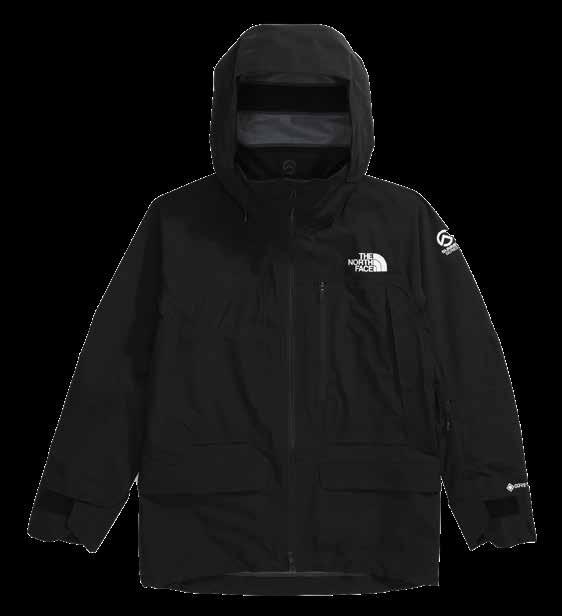
1. Both the men’s and women's HELLY HANSEN EMIKO RIDABLE PUFFY JACKET blend quilting, fit and style with practical features like a helmet-compatible hood with a fan zip on the collar to allow room for hooded mid-layers, a LIFE POCKET phone battery preserver, and a dedicated phone holder to prevent drops. Comfort and versatility make this a winter favourite for all. hellyhansen.com // 2. The YETI DAYTRIP SNACK BOX crushes cravings, not your goods. Each box features a quickgrab handle, easy-open zipper, food safe materials and Coldcell Flex Insulation, a closed-cell foam that offers superior temp-holding power to keep food fresh for hours. Each box is compatible with a YETI Ice Sheet and YETI Food Storage Container. yeti.ca // 3. The PEAK PERFORMANCE VERTICAL GORE-TEX PRO 3L SHELL JACKET is their most advanced freeride shell—pro-developed and built with ultra-durable GORE-TEX Pro for uncompromising protection and breathability in demanding mountain terrain. peakperformance.com // 4. The PUFF ORIGINAL DOWN-FILLED NECK WARMERS are a true lifesaver on the hill. Designed to keep your face dry, warm and comfortable, they block wind and chill so you can focus on what matters most—more laps, more runs and longer days enjoying the mountain. Offered in a variety of colours and sizes. One dollar from every Puff sold is donated to POW Canada. puff.design // 5. THE NORTH FACE WOMEN’S SUMMIT SERIES VERBIER GORE-TEX JACKET is built for riders who don’t sit out storms. With 100 per cent recycled waterproof GORE-TEX fabric, pit-zip ventilation and stash-ready pockets, it delivers uncompromising performance. This isn’t outerwear—it’s armour for big lines. thenorthface.com
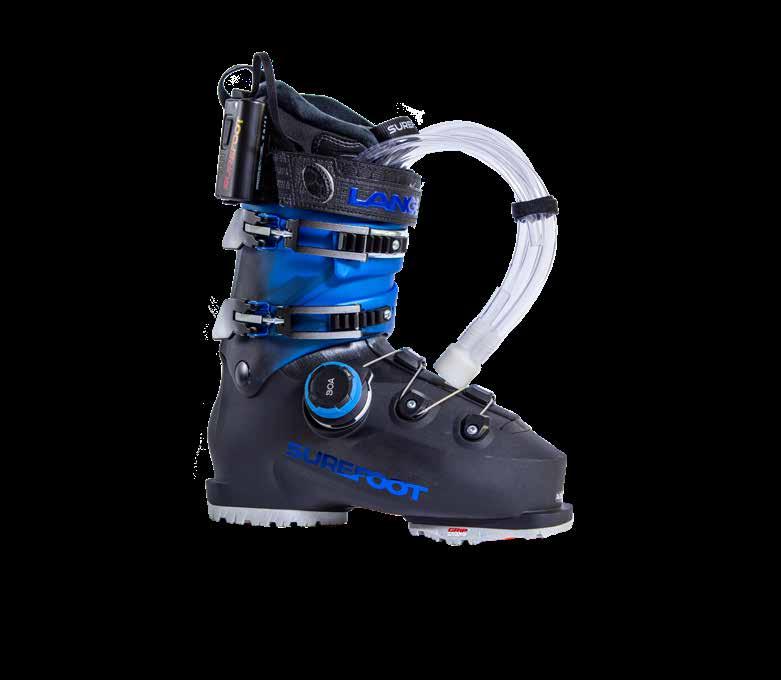
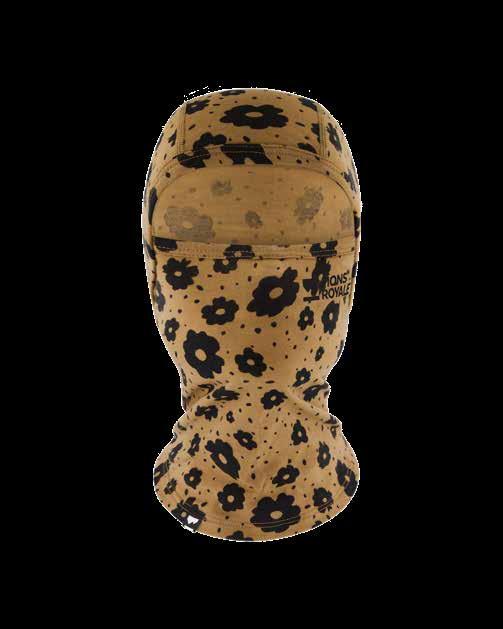
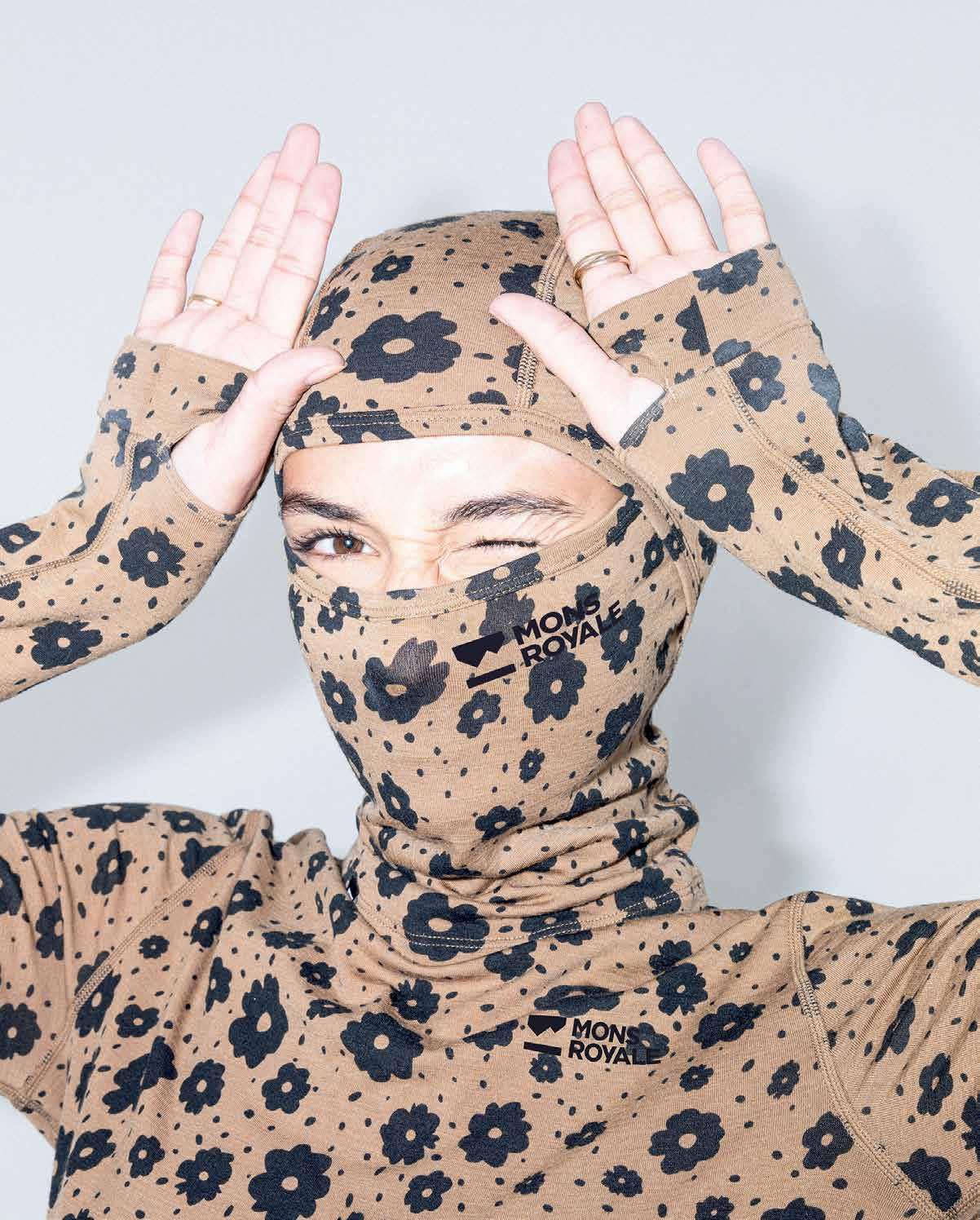
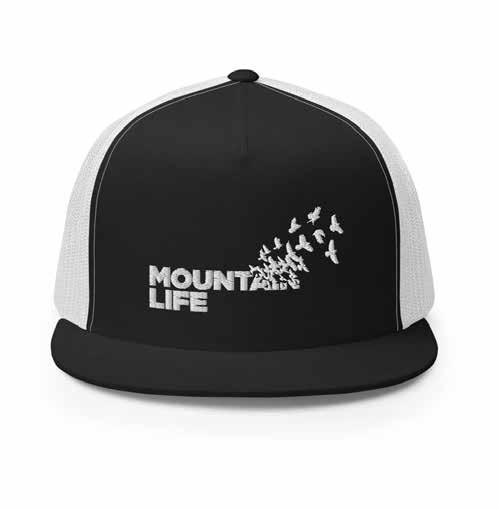
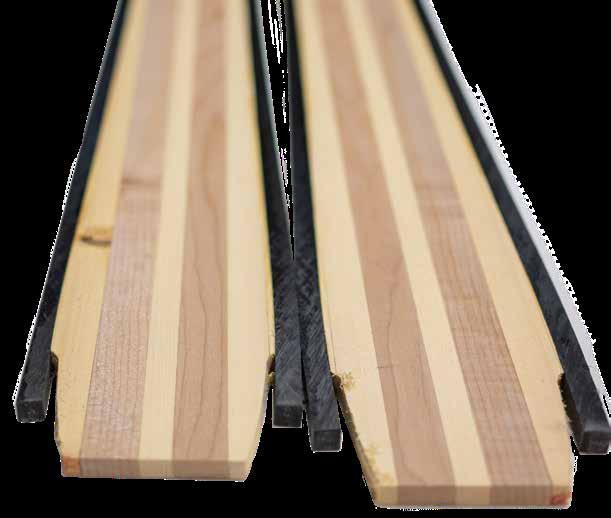
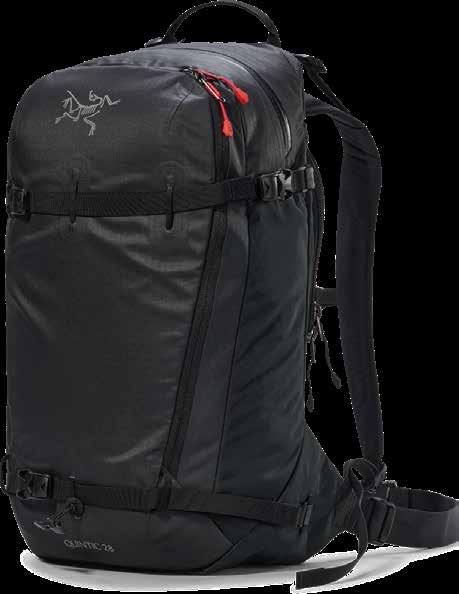
6. The SUREFOOT CUSTOM SKI BOOT is the ultimate choice for skiers of all levels. With an ability-specific shell, heaterintegrated custom liner and custom orthotic, you’re ready for the best skiing of your life—ready in just under an hour. Discover the Surefoot difference today. surefoot.com // 7. The MONS ROYALE SANTA ROSA MERINO BALACLAVA keeps you covered when the chill hits hard. Hinged for flexible wear, soft against skin and helmet-friendly, it’s built for powder days and lift-line banter alike. Made with anti-odour, breathable Merino Flex. Winter-tested, rider-approved. monsroyale.com // 8. Dreaming of building your own board(s) for the ultimate personalized shredding experience? The PRIOR SNOW BUILD CLASS is a two-day customized ski- or snowboard-building workshop at their factory in Whistler (established in 1989). The build days leave the mornings free to shred Whistler and a third buffer day is included for testing your brand-new boards (or finishing them, if road closures or weather affect the first day). Personalized perfection. priorsnow.com // 9. The awesome thing about MOUNTAIN LIFE MESH-BACK HATS is they never go out of style because being a bad mothertrucker will always be cool. Plus, the mesh lets heat escape while also keeping all but the smallest insects off your scalp. Bonus tip: You can wash them in the dishwasher if they get too kicked in. shop.mountainlifemedia.ca // 10. The ARC’TERYX QUINTIC 28 BACKPACK is freeride-specific, designed to have a shorter back length without compromising midsize capacity. It’s roomy enough for avalanche gear, extra layers, skins and the essentials you need for big days on snow but compact enough it won’t hinder a backflip. Built with a hybrid of weather-resistant fabrics and ultra-durable nylon with a light, flexible frame, this pack delivers the stability to keep your centre of gravity solid. arcteryx.com




“"Be great, or be gone." – Neil Young