





Welcome to the Endless Mountain Music Festival as we recognize and celebrate two important anniversaries. The Festival has reached its twenty-first season. This milestone has been achieved thanks to the inspiration and hard work of many people: our corporate sponsors, individual donors, staff members, volunteers, Board members, founding Artistic Director Stephen Gunzenhauser and his wife, Shelly, and you, our all-important audience members. Everyone, working together, brought us to this significant 21st birthday. We are also celebrating the 250th birthday of our nation. Maestro Gunzenhauser has programmed just the right music to recognize what is unique about America while showcasing the talents of the musicians who return every year as well as those who are joining the Festival for the first time. The full orchestra, small ensembles, a variety of musical genres and venues throughout the Twin Tiers, all come together to echo Let Freedom Ring. Music celebrates; music consoles; music brings us together. Thank you for being a part of this 21st Endless Mountain Music Festival.
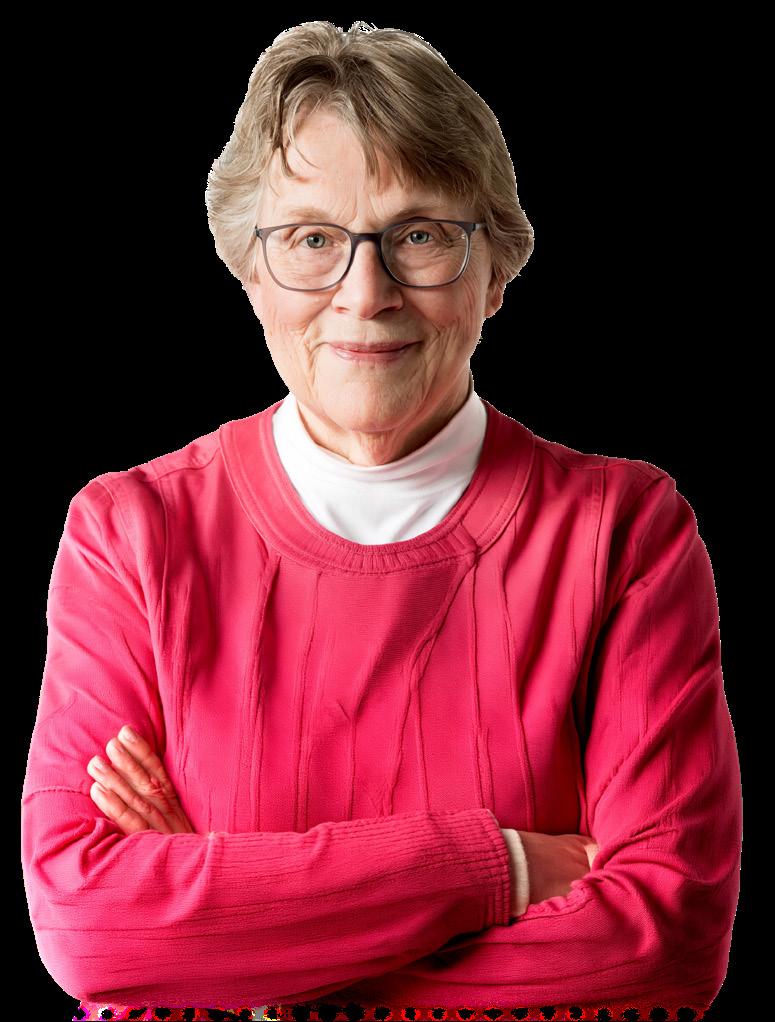
Hilma Cooper, President of the EMMF Board of Directors














Platinum Gold Plus - $20,000 plus Corning Incorporated America250PA
EMMF receives state arts funding support through grants from the Pennsylvania Council on the Arts, a state agency funded by the Commonwealth of Pennsylvania and the National Endowment for the Arts, a federal agency.
Platinum - $15,000 - $19,999 C&N
Deerfield Charitable Trust
Commonwealth of PA
Diamond - $10,000 - $14,999
Mansfield Crane Service Corporation
Lancaster County Community Foundation - The Rogers Family Charitable Fund
Mountain Home magazine
Dunham Family Foundation
Penn Wells Hotel
Visit Potter-Tioga
Gold - $5,000 - $9,999
Seneca Resources, LLC
Community Foundation of Elmira-Corning and the Finger Lakes
The ARTS Council of the Southern Finger Lakes
This project is made possible with funds from the Statewide Community Regrant program, a regrant program of the New York State Council on the Arts with support of the Office of the Governor and the New York State Legislature and administered by the ARTS Council of the Southern Finger Lakes.
Silver - $3,000 - $4,999
Guthrie Clinic
Workover Solutions
Bronze - $1,000 - $2,999
Mountain Valley Realty, Inc.
Weis Markets
First Citizens Community Bank
Workover Solutions, Inc.
Radisson Hotel Corning
First Community Partnership. PA
EXECUTIVE COMMITTEE
President – Hilma Cooper
CEO – William Hebe
Treasurer – Jim Westbrook
Secretary – Scott Clark
BOARD MEMBERS
Tricia Goodwin
Morgan Shaffer
Kiley Birgensmith
Nate McCracken
BOARD MEMBERS EMERITUS
AJ Fratarcangelo
Carol Sides
David Tews
STAFF
Artistic Director – Stephen Gunzenhauser
Executive Director – Colin Hughes
Conductor in Residence – Teresa Cheung
Business Manager – Matt DiFasi, CPA
Marketing/Web Design – Jean Cummings, Beyond Spots and Dots Digital Marketing
Orchestra Personnel Manager – Blake Schlabach
Grant Writers – AJS Consulting – Jon Hummel
The Endless Mountain Music Festival expresses sincere appreciation to those of you who have helped provide quality orchestral music to the adults and children of our region. Since ticket sales only cover a small percentage of the festival’s operating costs, donor support allows us to attract world-class artists and, at the same time, keep ticket prices accessible to the general public. It is only with the support of donors like you that the Endless Mountain Music Festival can continue.
Dvorak Circle - $20,000 - $50,000
Laura Douglas
Stephen Gunzenhauser +*
Doug Tischler
Chopin Circle - $5,000 - $19,900
Llewellyn Davis
Colin Hughes
Mary Burton
Tchaikovsky Circle - $2,000 - $4,999
Stephen Guillaume
Jack and Joan Ulrich
Hazel and James Hebe
Beethoven Circle - $1,000 - $1,999
JC Argetsinger
Ted and Janet Bown
Ronald Butler +
Barry and Rochelle Clark
Hilma Cooper
William and Shirley Hebe
John Ulrich and Lynn Pifer
Bob and Diann DeCamp
Ardell Thomas
Brahms Circle - $500 - $999
Kiley Birgensmith
Cynthia Long
Richard Perry
Marilyn Truhlar
Tom and Brenda Walrath
Gil and Harriet Sweet
Bethany Jewelers
Gershwin Circle - $300 - $499
Ellen Blais
Sam and Karen Cooke
Peggy Dettwiler
Michael W. Repasky
Roger Wagner
M. Alene York
Heather Kissinger
Pledgeling Foundation regrant
Friends of the Festival - $1 - $299
David Anderson
Cherilyn Ayres
Barbary and Larry Biddison
Lee and Darlene Borts
Carol Cacchione
Neil and Barbara Cooper
Diana and Tim Frazier
Luanne Goodwin
Peter and Suzanne Brumbacher
Julie Henry
Allen and Joan Jenkins
Andrew and Anneke Krall
Leo F. Lambert
Bev McNight
Patricia Newruck
Rennisance Charitable Foundation
Tom and Rita Rudy
Dr. and Mrs. Thomas Winters
Oliver R. Bartlett
Alan and Lynnette Eusden
Eugene Seelye +
Mr. and Mrs. Ronalda L. Miller
Jurgen Thym
+ denotes founding members
* denotes in kind donation
The Endless Mountain Music Festival is sincerely appreciative of the gracious and generous contributions made towards sustaining the memory of Irene Berson.
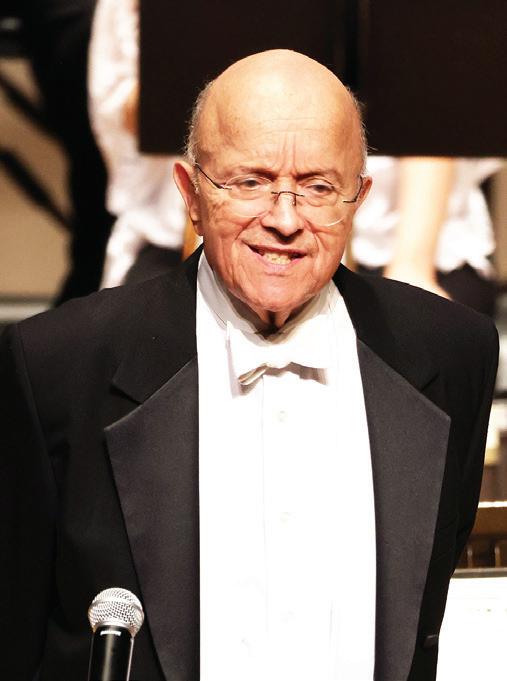
Stephen Gunzenhauser Conductor and Music Director
Stephen Gunzenhauser is the Music Director and Conductor of the Endless Mountain Music Festival now in its twenty-first season. He completed twenty-three years as the Music Director of the Delaware Symphony Orchestra in Wilmington before concentrating on the Lancaster Symphony. He retired from the Lancaster Symphony after forty years to focus on growing the Endless Mountain Music Festival. Maestro completed his best-selling book about his life, Travels with Stephen: The Most Famous Unknown Conductor, in January of 2024.
Dr. Gunzenhauser has conducted in Europe and the British Isles, South America, Canada, Korea, Hong Kong, and Israel. Personal favorites have included the National Orchestra of Argentina and the Berlin Symphony Orchestra, where he conducted the mayor’s concert on the day after Christmas for five years.
The Maestro is the fifth most recorded American conductor. His recordings have sold over two million copies; his compact disc Vivaldi: The Four Seasons has sold more than 800,000 copies. He has recorded eighty compact discs, which include works by Beethoven, Saint-Saëns, Grieg, Tchaikovsky, Brahms, Bruch, Orff, Borodin, Dvořák, Rachmaninov, Schumann, Copland, Mozart, Vivaldi, Glière, and Lachner. In August 2001, Gunzenhauser completed a recording of Benjamin Lees’ Symphonies Nos. 2, 3, and 5 with the State Philharmonic of Rheinland-Pfalz. That recording was nominated for a Grammy in 2003.
In 2008, he was conductor of a new virtuoso chamber orchestra called Pro Musicis. They recorded The Seasons of Antonio Vivaldi with Harrisburg Symphony Concertmaster Odin Rathnam, for West Branch Records. In September 2001, the Maestro was selected as the American Judge at an International Conducting Competition in Lisbon, Portugal. Dr. Gunzenhauser was an international judge and conductor at competitions in Sicily and Kazakhstan. He has conducted the Belgrade Philharmonic in Serbia and more recently he appeared with the Arpeggione Chamber Orchestra of Austria and the Israel Sinfonietta in Beer Sheba Israel. In past seasons, the Maestro conducted at the Teatro Colón (one of the five most beautiful concert halls in the world) with the Buenos Aires Philharmonic Orchestra, and with the Bogotá Philharmonic Orchestra of Colombia, South America. Other activities included a full-scale production of Puccini’s Tosca at the Wittgenstein Theater near Dresden, Germany. In August 2005, he performed at a Hungarian Music Festival sponsored by the Franz Liszt Chamber Orchestra as well as with the Danubius Orchestra at the Franz Liszt Academy of Budapest in the première of the Mazetti completion of Mahler’s Tenth Symphony.
In August 2006, Maestro Gunzenhauser presented the inaugural season of the first International Music Festival in Pennsylvania, the Endless Mountain Music Festival, which presented seven concerts in eight days. In 2007, the festival expanded to perform fifteen concerts in seventeen days. And after eighteen years the festival has grown to seventeen concerts in seventeen days. The festival continues to expand and grow in significance as the only international bi-State (Pennsylvania and New York) music festival. In addition, the Endless Mountain Music Festival performs in Corning and Elmira, New York. This past season more than 3,000 people attended the festival concerts.
Born in New York City and a graduate of the High School of Music and Art in New York City, Dr. Gunzenhauser received a bachelor of music degree from Oberlin College and a master of music degree from the New England Conservatory. He also holds an honorary doctorate degree from Widener University. He has been awarded three Fulbright grants and has an artist’s diploma from the Mozarteum, Salzburg, Austria. He was awarded Delaware’s First Cultural Ambassador designation in 1990 and is the recipient of the University of Delaware’s Medal of Distinction. He was also awarded the Order of the First State, the highest acknowledgement that a civilian may receive from the State of Delaware.
Dr. Gunzenhauser enjoys competitive tennis, golf, and gourmet cooking. He resides in Lancaster, Pennsylvania, with his wife Shelly. Both of their daughters are grown and live in Los Angeles.
Colin Hughes has remarked, “To bring joy to others, is to bring joy to yourself.” As an educator, musician, sales representative, business owner, and now Executive Director of the Endless Mountain Music Festival, Mr. Hughes has continuously been presented with opportunities to serve others and is extremely excited to join the festival in this leadership role. Originally hailing from Scranton, earning his bachelor’s degree in music education from Mansfield State College, with graduate studies at Peabody Conservatory, Hartt School of Music, West Chester State College, and SUNY Binghamton, Mr. Hughes continued his education with numerous business clinics, conferences, and his association with public speaking groups and service organizations.
Using educational experience and thirty-five years of business management and public engagement, his objective is to support, guide, and serve as a catalyst for the festival as it continues its third decade of bringing world-renowned musicians to the Twin Tiers region. Working in concert with Maestro Gunzenhauser and an incredibly supportive Board of Directors, Mr. Hughes expects to see continual expansion in community growth, educational experience, and creative musical opportunities for the outstanding musicians and audiences that are part of the festival family.
“My dream is to enhance the mission of the Endless Mountain Music Festival, providing a unique cultural experience for the audiences of the Northern Tier of Pennsylvania, the Southern Tier of New York, and the visitors who travel to experience our unique event.”





Violin 1
Hua Jin – Concert Master
Jordan Curry
Jennifer Farquhar
Ziqing Guo
Eiko Hosaka
Yun Kang
Quddus Khamooshi
Zeyu “Victor” Li
Bill Makin
Kenneth Mok
Loo Tsai
Shuo “John” Zhang
Violin 2
Lisa Scott - Principal
Jennifer Axelson
Ariana Cappon
Patrick Desrosiers
Pat Karakas
Theresa Langdon
Clara McCutcheon
David Restivo
Don Webster
Viola
Jing Peng - Principal
Jennifer Alger
Ralph Allen
Susan Chan
Sharon Gunderson
Yu-Ting Hsu
John Roxburgh
Flute
Lish Lindsey - Principal
Tamara Thweatt
Oboe
Aaron Haettenschwiller - Principal
Emma Braunberger
Sarah Walsh Weeks
Clarinet
Trina Gross - Principal
David Bellman
Asher Carlson
Bassoon
Lynn Moncilovich - Principal
Gabrielle Hsu
Cello
Perry Scott - Principal
Peter Howard
Hee Won Jeon
David Rezits
Lee Richey
Bass
Fabian Guerrero - Principal
Carion Chu
Peter McCutcheon
Jacqueline Pickett
Horn
Rebecca Dodson-Webster - Principal
Andrew Bass
Rebekah Lorenz
Joseph Lovinsky
Trumpet
Brian Strawley - Principal
Josh Carr
Daniel Golando
Trombone
Alexander Walden - Principal
Justin Bain
Blake Schlabach
Tuba
Mike Anderson - Principal
Timpani
Juanmanuel Lopez - Principal
Percussion
Jason Mathena - Principal
Roxan Jurkevich
David Wert
Harp
Heaven Fan - Principal
Piano
Stacey Edwards - Principal

Have you ever heard of a Semiquincentennial?
Well, I had not, and my spellchecker underlines it in red (as if I have typed something wrong). But we all know that centennials mark one hundred years of something’s existence and bicentennials mark two hundred years.
Chances are that some of us were around in 1976 (Gerald Ford was president) to celebrate the two hundredth birthday of our country and watched the fireworks then. (I did.) None of us, I am sure, remembers the centennial in 1876, but the music historian in me knows that a German composer named Richard Wagner was commissioned to write an overture to celebrate the hundredth anniversary of the American Revolution. (Lured by $$, but not particularly inspired, according to his wife Cosima, he composed something that faintly resembles his Overture to the opera Meistersinger, which had premiered in 1868.) Fifty years earlier in 1826 (I am moving like a crab, i.e., backwards), there was no celebration to mark the fiftieth anniversary of the nation, but two former presidents, John Adams and Thomas Jefferson, #2 and #3, died that year, and both passed (what an uncanny coincidence) on the Fourth of July!
What, then, do we make of the awkward word “Semiquincentennial”?
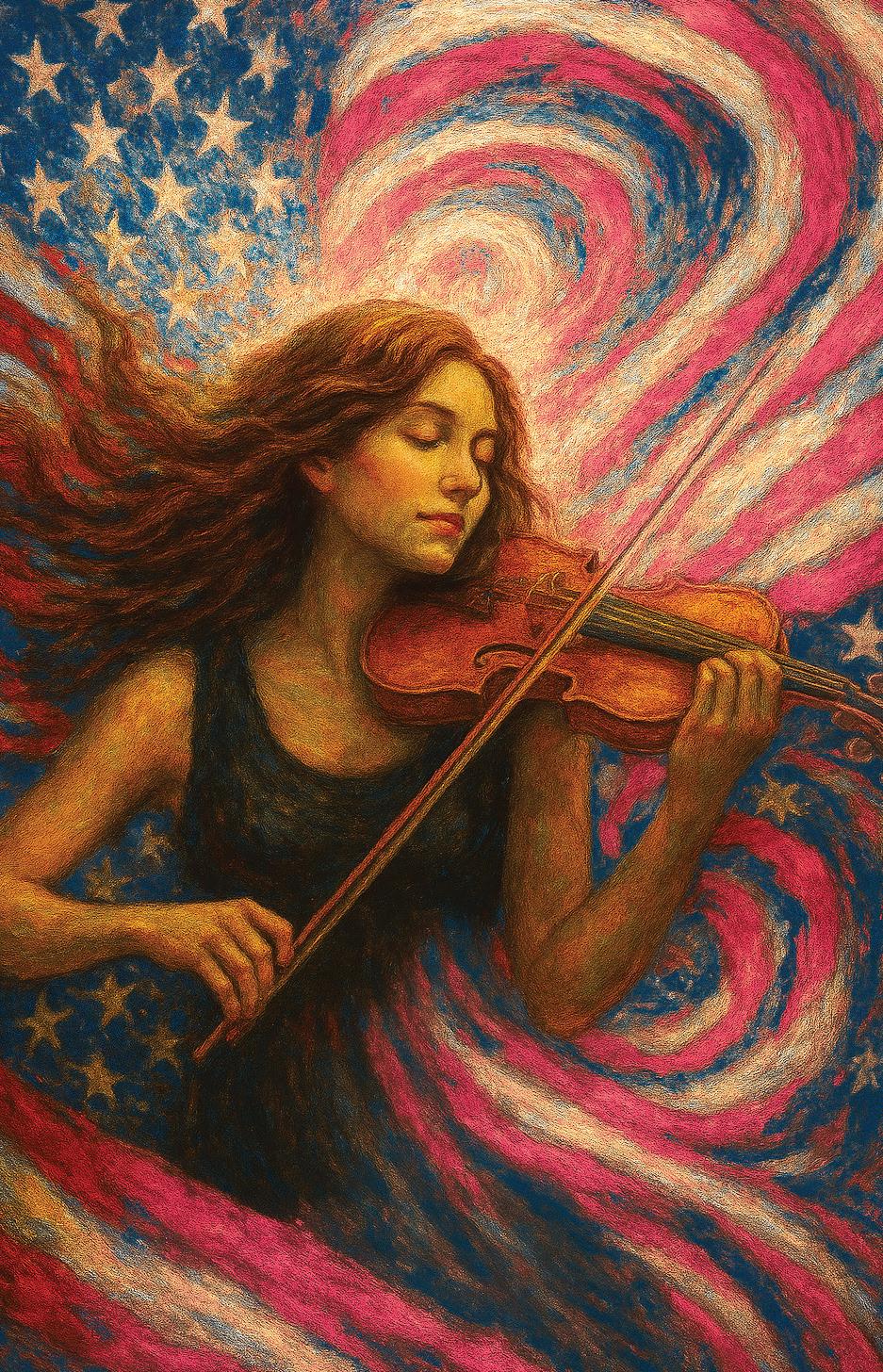
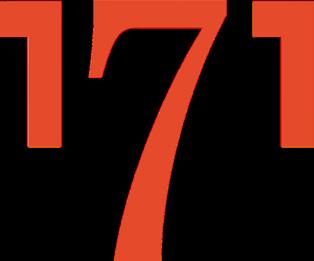
After scratching our brains a little bit, we identify the second and third segments of the term as 500 years, the prefix “semi” as half of it, and come up with the number 250. Brilliant reasoning, indeed! It is much easier, without mental gymnastics, to capture the term in the image above. (Pictures can communicate things more easily, especially to folks like us who are accustomed to visual cues—and that’s why we have pictures in this booklet.)
There is indeed something to celebrate at 250, even though several governmental commissions authorized to make proposals may not quite agree about what to do and how to do it.
Here are some items that come to mind to the current chronicler of the Endless Mountain Music Festival (a writer born in Germany but now living in this country for more than fifty years):
a country forged in a revolution against political and military odds in the eighteenth century and succeeding, in the “short” time of 150 years, in establishing itself as a world power;
a country whose constitution inspired imitations elsewhere, often leading to results lasting less than 250 years;
a country that has been a beacon to the rest of the world (the “shining city on the hill” cited in the speeches of several presidents);
a country that has attracted millions of immigrants from across the globe in “pursuit of happiness,” a quality enshrined in the Declaration of Independence; a country that coped with various crises in its history and emerged stronger and more resilient to become the world’s only remaining superpower around 2000.
Granted, challenges have arisen since then, questioning this success story from the outside and from within, and we do not yet know the outcome of the battles that lie ahead and what other conflicts may arise and how they will be resolved. But, and here I may take a bet, the United States has been a country that has often corrected its most egregious wrongs, has repeatedly strengthened its union, and has a chance to last as long, or even longer than, the Roman Empire. (And I remember President Gerald Ford, visiting the Mansfield University campus in the 1990s, saying something like this: We may not have always been perfect, but we have always gotten things right at the end.)
Not having to observe directions from any national committee on how to celebrate 250 years (the Commonwealth of Pennsylvania may have pitched in financially but did not give directives), Maestro Gunzenhauser and his team have come up with a musical program that observes the nation’s birthday in a nonpartisan fashion. Taking a bird’s-eye perspective, I can only describe the variety being offered in 2026 with words that, unjustly, have been questioned in the last few years: “diversity” and “inclusion.” E pluribus unum appears in the official seal of the United States and is proudly inscribed in some of our coins; the four words are in Latin and could be freely translated as “Unity in Diversity.” And who would quibble with that?
This summer’s musical fare, on the surface, may not look much different from earlier years. I have checked the database (of pieces performed and composers featured) gathered by Ted Wilkes, our long-serving program annotator: musical Americana has always been present in our concerts. But the Endless Mountain Music Festival this year, as a kind of birthday present celebrating the Semiquincentennial (here is that strange word again) of the United States, has given preference to the great variety of musical styles and practices that artists (composers and performers) in the United States have brought forth.
Audiences will be amazed by the many types of music that have come to flourish on this side of the Atlantic Ocean and that, in turn, have had an impact on the music of the rest of the world.
The vibrant musical culture of the United States showcased during the Endless Mountain Music Festival in 2026 will be explored in more detail in what follows. Let’s get going.
Before signing off on the program notes that follow, I need to thank several individuals who helped me in putting my part of this booklet together: Stephen Gunzenhauser and Colin Hughes, artistic and executive directors of the Endless Mountain Music Festival (both of whom quickly responded to questions about the program); Daniel Perttu and Deb Capece, who were kind enough to share with me information about their work as well as scores and audios of their compositions performed at this summer’s festival; and, last but not least, Ralph Locke, colleague at the Eastman School of Music for more than fifty years (who advised me on numerous issues).
Jürgen Thym
FRIDAY, JULY 17
“Celebrate 250 Years of American Democracy”
7:00 p.m. Commonwealth University of PA, Mansfield, Steadman Theatre
Sponsored by America250PA and C&N
Leonard Bernstein, Candide Overture
Daniel Perttu, “To the American Dream”—Piano Concerto No. 3 (World Premiere)
Jeffrey Biegel, Piano
Intermission
Peter Boyer, Ellis Island: The Dream of America
Program Notes
Overture to Candide (1957)
Leonard Bernstein (1918-90)
This is the opening night of the Endless Mountain Music Festival in 2026. And it begins, appropriately so, with fireworks—musical fireworks to be accurate. Leonard Bernstein (conductor, composer, pianist, music educator, writer on music, and political activist), son of Russian-Jewish immigrants, is arguably the most brilliant and versatile musician born on this side of the Atlantic Ocean. Most of us know him because of West Side Story, a musical adaptation of Shakespeare’s Romeo and Juliet that, since its inception in the mid-1950s, has conquered stages across the world. (One of its songs, “Maria,” is immediately recognizable by its first three pitches.) At the same time, Bernstein was working on a completely different project for the musical theatre, the operetta Candide, after a novella by Voltaire, the famous French eighteenth-century writer. The operetta may not have had quite the success of West Side Story (and Bernstein tinkered with it, revising it, until a year before his death). But the overture to Candide was an immediate hit when it was premiered in a concert performance in January 1957 in New York City with the composer conducting; by the end of the century, it was the most frequently performed concert work by Bernstein.
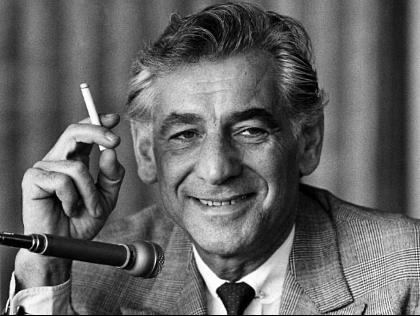
Lenny in the mid-1950s
Indeed, the Candide Overture is a brilliantly orchestrated opener of the Endless Mountain Music Festival. Its fast pace creates a challenge for both conductor and instrumentalists. (Expect lots of bows afterwards by individual orchestra musicians.) The piece lasts less than five minutes, but during those minutes the listener experiences a raucous ride through a potpourri of tunes from the operetta: “The Best of All Possible Worlds,” “Battle Music,” “Oh, Happy We,” and “Glitter and Be Gay.” The melodies are presented as a whole or in short phrases, are tossed around in snippets throughout the orchestra, and at times re-emerge in their entirety in the turbulent textures. Some of us may be old enough to remember the Dick Cavett Show on late-night TV and recognize “Glitter and Be Gay” as one of the musical signatures of the show. There is a historical video on YouTube, titled “Candide Overture: Leonard Bernstein conducting,” with Lenny conducting the Overture a few months before his death with the London Symphony Orchestra; despite old age, he seems to be dancing through the score.
“To the American Dream”—Piano Concerto No. 3 (2026) Daniel Perttu (1979-)
1. Allegro
2. Adagio
3. Allegro vivace
This is a world premiere. Nobody has heard this wonderful concerto for piano and orchestra before, and the prospect of being surprised by a brand-new piece can keep us listening, with a chance of being amazed, and then going to the next concert. Your program booklet writer has never heard it either, but he has seen the score (still to be revised before the first performance and, probably, afterwards as well), and he has a little bit of a sense of what to expect. Besides, Dan Perttu was kind enough to grant an interview to the writer, in which he gave some hints about his latest creation. (Connecting to a creative artist has been one of my most satisfying experiences as a musicologist for more than fifty years, and I have recommended such engagement to my students for much of my teaching career.) Those of us who benefitted from Music Appreciation courses in high school or college know that a concerto is usually in 3 movements (fast-slow-fast), that the first movement often follows sonata form (but with a double exposition), and that cadenzas (sections improvised by the performer, or written by the composer to sound as if improvised) appear often at the end of movements. The piano concerto you are hearing this evening is no exception. In fact, Pettru thinks that traditional structures and a traditional—in this case, neo-Romantic—musical language are not exhausted props but allow him to tell new stories and communicate with audiences. And he nicely shapes the discourse between solo instrument and orchestra to give both forces their due.
The “story” being told by Perttu (he is of Finnish extraction) is captured by the title of the piano concerto (its composition was supported by an America250PA Semiquin Grant): “To the American Dream”—a celebration of the United States from the perspective of immigrants who long for a new life in a different land, come to this country, work hard in pursuit of happiness, and succeed in fulfilling their “American Dream.” The first movement is of a celebratory nature. It begins with a “folk tune” of the fife-and-drum variety (an image of colonial America comes to mind), another theme makes its appearance, and in turn both melodies, or just snippets of them, are restated and developed by both orchestra and soloist, leading ultimately to a joyful and rousing conclusion. The slow movement has considerably darker and meditative hues: it may be thought of as representing the struggles and tensions experienced by the new arrivals. The last movement, following the second without a pause, is a fugue whose theme is stated by the soloist and then taken over by instruments in the orchestra. The fife-and-drum tune of the first movement joins the fugal subject and, displaying the virtuosity of the soloist as well as of the orchestral players, drives the music to a happy ending.
A word may be allowed on the pianist in today’s concert: Jeffrey Biegel. The audiences of the Endless Mountain Music Festival have been able to witness his artistry and impressive technical prowess many times. In 2024, he performed Gershwin’s Rhapsody in Blue and its “companion piece,” Rhapsody in Red, White, and Blue, by Peter Boyer, in celebration of the hundredth anniversary of Gershwin’s iconic piece. In 2025, he performed three piano concertos he had commissioned from American songwriters: Neil Sedaka, Jimmy Webb, and Melissa Manchester (the latter’s concerto was even a world premiere). We are glad to welcome him back with yet another piece whose composition he inspired. Daniel Perttu’s Piano Concerto No. 3 is dedicated to Jeffrey Biegel.
For those who are curious about Perttu’s “other” works (and he is a prolific composer), I recommend looking up “To Spring”—an Overture inspired by a poem by William Blake uploaded by and performed with the Moravia Orchestra in the Czech Republic or the “Phoenix” performance recorded and uploaded by the London Symphony Orchestra, both on YouTube. His views on composing, performing, and audiences are captured in an interview uploaded by the Western Piedmont Symphony, “Composer Conversation: Dan Perttu - Appalachian Vistas” introducing his Appalachian Vistas.
Last year, I provided a link to an interview conducted by Perttu with Maestro Gunzenhauser. You can find it as Episode 26 of the podcast The Muse in Music.
Ellis Island: The American Dream (1999-2002)
Peter Boyer (1970-)
Joint production with Hamilton-Gibson Productions (Thomas Putnam, Director)
1. Prologue
2. Words of Helen Cohen, emigrated from Poland in 1920, spoken by Tai Petrofsky
3. Interlude 1
4. Words of James Apanomith, emigrated from Greece in 1911, spoken by Thomas Walrath
5. Interlude 2
6. Words of Lillian Galleta, emigrated from Italy in 1928, spoken by Carin Polczynski
7. Interlude 3
8. Words of Lazarus Salamon, emigrated from Hungary in 1920, spoken by Thomas Putnam
9. Interlude 4
10. Words of Helen Rosenthal, emigrated from Belgium in 1940, spoken by Megan Gallant-Hand
11. Interlude 5
12. Words of Manny Steen, emigrated from Ireland in 1925, spoken by Noyes Lawton
13. Interlude 6
14. Words of Katherine Beychock, emigrated from Russia in 1910, spoken by Natalie Himmelberger
15. Epilogue: “The New Colossus” (Emma Lazarus, 1883)
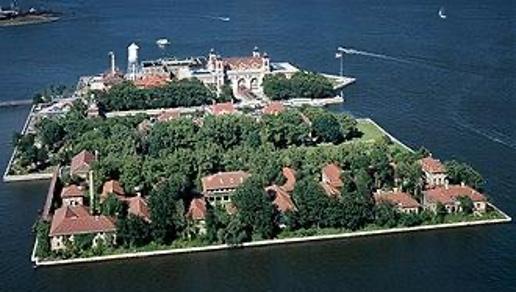
The great thing in programming Ellis Island as a piece concluding the first concert of our music festival is that it captures, on the first evening of our music festival (and on the second evening as well), an important part of American history and mythology (and myths are important, echoing the values of a people or nation!). But equally important is that two cultural institutions in Tioga County—EMMF and Hamilton-Gibson—have come together to produce a composition that requires the help of actors (or speakers) to render emotional testimonies of immigrants coming to the United States via that island in New York harbor. Thomas Putnam, founder and inspiring steward of Hamilton-Gibson, wanted me to convey the following: “I am thrilled that Hamilton-Gibson Productions has the opportunity to join with EMMF to bring this powerful, moving piece of music and history to our area.”
Peter Boyer is a composer worth getting to know. He is one of the most prolific composers in the United States nowadays, writing for the concert hall as well as for film and television. Quite
a number of his works are on American themes: Ellis Island: The Dream of America; The Dream Lives On: Portrait of the Kennedy Brothers (2010); and Balance of Power (2020-21), honoring Henry Kissinger on his ninety-fifth birthday. Lately he has written pieces that honor yet other political figures and crowned heads: Fanfare for Tomorrow for the inauguration of President Biden (2021) and Today We Ask for the coronation of Charles III of England (2023). For over thirty years he has been showered with awards and honors, including one from the Lancaster Symphony Orchestra directed by Stephen Gunzenhauser that quite early recognized him as a force to be reckoned with.
The United States of America is a nation of immigrants, and Ellis Island, located where the mighty Hudson River joins the Atlantic Ocean, was the gateway to America (with the Statue of Liberty beckoning on a neighboring island). From 1892 to 1954 (when the facilities were closed), more than 12 million immigrants arrived in this country by way of Ellis Island. It is part of American history (and mythology). Many people in today’s audience can trace their roots to ancestors who came through Ellis Island. Peter Boyer has captured a quintessential American experience in fifteen vignettes (or movements), combining music and texts gathered by the Ellis Island Oral History Project, and shaping these into a narrative that expresses the hopes, dreams, and struggles of immigrants. (The composer received a Grammy for this work in 2006; PBS featured it nationwide in its Great Performances series in 2018.)
Note: Ellis Island: The Dream of America is available in the American Classics series on the Naxos label (Peter Boyer conducting the London-based Philharmonia Orchestra with several actors and actresses speaking the texts): 8.559246. It comes with a highly informative program booklet.









SATURDAY, JULY 18
“Coming Together for America250”
7:00 p.m. Corning Museum of Glass Auditorium, Corning, NY
Sponsored by Corning Inc. and National Endowment for the Arts
Aaron Copland, Hoe-Down from Rodeo
Victor Herbert, Cello Concerto No. 2
Perry Scott, Cello
Intermission
Peter Boyer, Ellis Island: The Dream of America
The second concert of the Endless Mountain Music Festival may be considered a twin to the first. It will end, again, with Boyer’s Ellis Island: The Dream of America and thus allow us to hear this work— one that captures an all-important American experience in music and words—for a second time, but in a concert hall with different acoustics and thereby putting two exclamation marks after the important message inherent in the work. Moreover, the two works before the intermission mirror yesterday’s program: a fast-moving piece of musical fireworks and a concerto.
Hoe-Down from Rodeo (1942)
Aaron Copland (1900-90)
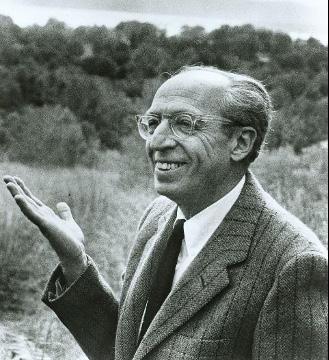
Aaron Copland
Whereas the opener of yesterday’s concert was an overture, e.g., a piece to stand at the beginning of a larger work, the “Hoe-Down” that starts today’s concert is the conclusion of a larger work, namely Aaron Copland’s Rodeo, a cowboy ballet (a musical Western, if you wish) whose story plays somewhere in the American Southwest with a cowgirl, a roper, a wrangler, and a farmer’s (in the West, they say: rancher’s) daughter as main characters. But the music—a hoedown is a kind of square dance—you will hear will sound downright familiar: traditional fiddle tunes, as you might hear them in Appalachian fiddle contests in our area. In fact, the first tune of the “Hoe-Down” is based on a unique rendition of an American folksong, “Bonyparte” or “Bonaparte’s Retreat” played by a Kentucky fiddler, recorded for the Library of Congress, transcribed and published in a book Our Singing Country of 1941. There are two additional fiddle tunes (“Miss McLeod’s Reel” and “Gilroy,” the latter of Irish origin). The tunes, tossed back and forth between various instruments, pass by at such a rapid pace, that they are gone before you can identify them. Well, there is a brief respite, close to the end, where things slow down for the kiss (the cowgirl gets the champion roper, or is it the other way around?), and then “Bonaparte’s Retreat” comes back to conclude the dance with a rousing climax.
Here are two performances to look for on YouTube (in video) that you may want to hear: “Copland Conduct Hoedown from Rodeo” (with Copland giving a brief introduction and conducting the Los Angeles Philharmonic in 1976, at one time even dancing to the music!); and a thrilling performance of an arrangement just for strings by the Philadelphia Virtuosi, conducted by Daniel Spaulding, at the Mariinsky Concert Hall in St. Petersburg, Russia, in 2014, uploaded as “Hoedown from Rodeo” by Aaron Copland. Aaron Copland is one of the greatest American composers of the twentieth century. Born as a son of Jewish-Lithuanian emigrants in Brooklyn in 1900, Copland was the first of many American composers in the 1920s who received their musical training with Nadia Boulanger in Paris. (The group is sometimes referred to as “the baker’s dozen” or “boulangerie”—as “boulanger” means “baker” in French.) Having absorbed the modernist cultural atmosphere of Paris, Copland returned to the United States as a modernist composer writing music that may have gained him the admiration of a few connoisseurs but left audiences behind. It was during the Great Depression of the 1930s (and economic exigencies clearly played a role here) that Copland simplified his musical style and wrote pieces accessible to wider audi-
ences. Moreover, he turned to specifically American themes for his compositions, often using well-known songs as material to be quoted and/or elaborated. Three ballet scores stand out: Billy the Kid (1938), Rodeo (1942), and Appalachian Spring (1944). They—and one might add Lincoln Portrait for speaker and orchestra (1942)—put Copland on the map as “dean of American composers.” More about him, later in the program, when he comes back with his American signature piece: Fanfare for the Common Man.
Our maestro recorded all three Copland ballets mentioned above plus the composer’s Fanfare for a Common Man for the Naxos label in 1990 (conducting the Slovak Radio Orchestra). The CD is highly recommended: 8.550282. And it leads us to the following Aside about the significance of women in American culture.


The Endless Mountain Music Festival is celebrating musical Americana this year, and it is incumbent that we remember also some of the women who were instrumental in shaping the artistic landscape of this country in the twentieth century (and beyond). Copland’s ballets Billy the Kid, Rodeo, and Appalachian Spring (all composed around 1940 and all on American themes) are exactly the compositions to bring up the collaborative nature in the genesis of many artworks (and the financial wherewithal to make things happen). At the same time, these ballets are an opportunity to talk about Elizabeth Sprague-Coolidge (1864-1953), a wealthy patroness of the arts, who commissioned many works that made the annals of music history in the twentieth century (including Copland’s Appalachian Spring), and about Martha Graham (1894-1991), who was arguably “one of the most important artistic forces of the twentieth century” (as I have read somewhere recently), the creator of modern dance, and the choreographer of Copland’s “Ballet for Martha” that became Appalachian Spring. And there is Agnes de Mille (1905-93), niece of the Hollywood producer Cecil B. de Mille (of Ten Commandments fame); her choreography ensured the overwhelming success of Copland’s cowboy ballet Rodeo. When Rodgers and Hammerstein saw her production, they immediately hired her to choreograph Oklahoma! (1943), and she would do the same for Carousel (1945), and Lerner and Loewe’s Brigadoon (1947).
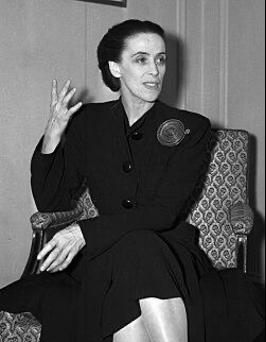
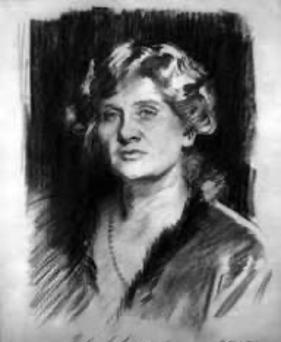
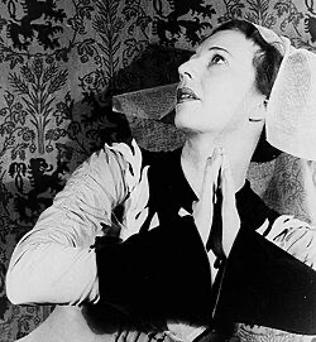

As a proud sponsor of the Endless Mountains Music Festival, Guthrie is honored to support opportunities that bring our communities together through the power of music.
Concerto for Cello and Orchestra No. 2, Op. 30 (1894)
Victor Herbert (1859-1924)
Allegro impetuoso – Andante tranquillo – Allegro
Though he was once one of the most prolific and well-known American composers, Victor Herbert needs a word of introduction nowadays. Of Irish decent and German musical training (he spent his early years in Stuttgart), he emigrated to the United States in 1886, when he and his wife, Therese Förster, were hired by the Metropolitan Opera in New York City—she as a star singer, he as principal cellist. Herbert quickly connected with the musical world in the Northeast of the United States, performing, conducting major orchestras (he was the principal conductor of the Pittsburgh Symphony for several years), directing pops concerts on Pittsburgh’s Boardwalk and elsewhere, and composing. And as a composer he covered a wide spectrum from light fare to highbrow. Taking his cue from the Viennese operetta and its British equivalent produced by Gilbert and Sullivan, he composed no fewer than forty-three operettas for Broadway (Babes in Toyland, Naughty Marietta, and Sweethearts—to name just a few). He connected with Tin Pan Alley composers, contributed music to the Ziegfeld Follies and the shows of Irving Berlin and Jerome Kern. He was, in other words, a musical jack of all trades.
Herbert’s Cello Concerto No. 2 in E minor featured in tonight’s concert is an astounding venture. Composers in the nineteenth century had problems conceiving concertos that highlighted the cello as a solo instrument. The number of instruments in a symphony orchestra had increased, especially in the woodwind and brass families, to fill the ever-larger concert halls with sound, and the lower and middle registers of the cello were considered not strong or radiant enough to be heard against orchestral textures. Well, here is a composer who knows the cello (because it is “his” instrument) and who is also a master of orchestration, keenly aware of what works to enable the cello not to be overpowered. When Herbert’s concerto was premiered in New York City in 1894, Antonín Dvořák, colleague of Herbert at the National Conservatory, was in the audience and,



inspired by what he had heard, composed his Cello Concerto in B minor, Op. 104. An American composer had shown a European colleague how to do it!
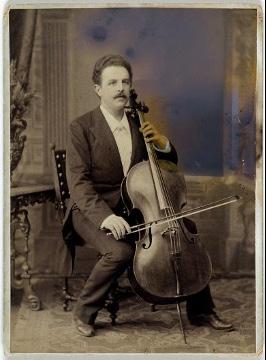
The Cello Concerto No. 2 is indeed a masterwork. On the surface, it is a three-movement work (as concertos traditionally are), but the sections (Allegro impetuoso, Andante tranquillo, Allegro) follow each other without break; the “seams” however are indicated by an oboe solo (before the slow section) and bassoon solo (before the finale). The concerto begins with dramatic gestures full of passion and energy that are gradually subdued, allowing full display of the soloist’s virtuoso skills, then lead to a lyrical intermezzo dominated by a song-like melody, and returns to the restlessness and turbulence of the “impetuoso” section but gradually transforming the energy into dance and celebration.
A resounding “Bravo” is in order for our soloist, Perry Scott, Associate Principal Cellist of the Indianapolis Symphony Orchestra, for taking on the challenge of performing Herbert’s Cello Concerto. Since his bio at the end of this booklet tells you more about his parents, siblings, children, and non-musical hobbies than about Perry Scott the musician, I urge you to Google him (avoid being misdirected to Scott Perry, a politician). Visit isomusicians.org for more musical matters.
For those of us who want to prepare for tonight’s concerto or, after having heard it, like it so much that they want to hear it again, I recommend looking up a 2017 live performance of the Israel Philharmonic Orchestra with Amanda Forsyth as soloist and Pinchas Zukerman conducting, “Victor Herbert: Cello Concerto No. 2 in E minor Op. 30,” uploaded to YouTube by Amanda Forsyth.
Ellis Island: The American Dream (1999-2002)
Peter Boyer (1970-)
Joint production with Hamilton-Gibson Productions (Thomas Putnam, Director)
1. Prologue
2. Words of Helen Cohen, emigrated from Poland in 1920, spoken by Tai Petrofsky
3. Interlude 1
4. Words of James Apanomith, emigrated from Greece in 1911, spoken by Thomas Walrath
5. Interlude 2
6. Words of Lillian Galleta, emigrated from Italy in 1928, spoken by Carin Polczynski
7. Interlude 3
8. Words of Lazarus Salamon, emigrated from Hungary in 1920, spoken by Thomas Putnam
9. Interlude 4
10. Words of Helen Rosenthal, emigrated from Belgium in 1940, spoken by Megan Gallant-Hand
11. Interlude 5
12. Words of Manny Steen, emigrated from Ireland in 1925, spoken by Noyes Lawton
13. Interlude 6
14. Words of Katherine Beychock, emigrated from Russia in 1910, spoken by Natalie Himmelberger
15. Epilogue: “The New Colossus” (Emma Lazarus, 1883)
(See program notes for concert on July 17 above.)




SUNDAY, JULY 19
“Music by the Stars”
8:00 p.m. Cherry Springs State Park, Overnight Astronomy Observation Field (by the telescope dome)
Sponsored by Galeton Foundation
EMMF Brass
Game of Thrones
“Eye of the Tiger”
Rose without a Thorn
“Mad World”
Disney Favorites
“I’m a Believer”
“March of the Resistance”
“The Final Countdown”
“Let It Go”
“Jump”
“Imagine”
“We Are the Champions”
MONDAY, JULY 20
“Happy Birthday, America, Boston Pops Style”
7:00 p.m. Wellsboro High School Auditorium, Wellsboro, PA
Sponsored by Dunham Family Foundation, Seneca Resources, and Workover Solutions Program Notes
What a cornucopia of memorable tunes is being presented this year (and, breaking with tradition, on a Monday evening)! We all like the music that we heard when we were young. We may have forgotten the titles of the songs we heard, but the tunes have stuck in our memory, and, when we hear the music again, some of the half-forgotten words come back. We remember the songs, and songs help us to remember!
I was only in my twenties when I came to this country, and one of the first melodies that struck my ear was to a text by a lyricist with the name Francis Scott Key—you may have heard of him—but it was the melody that made the poet famous (it is very demanding in range, and thus difficult to perform, and adds a surprising new melodic pitch already after a few measures). But who composed what became known as the Star-Spangled Banner? Well, the text fit a popular British song written by a gentleman in London—in other words, by the “enemy” in 1814 when Key, after having witnessed the bombardment of Fort McHenry by the British, penned his words, and the combination of both text and melody became so popular that it was accepted in 1931 by the US Congress as the American national anthem (displacing other tunes that had been considered for that honor: “America the Beautiful,” “Hail Columbia,” and “My Country, ‘Tis of Thee”—all of them easier to maneuver musically.)
Strike up the Band was the first musical George and Ira Gershwin put together in 1927; the show, as a whole, has had very few revivals, but the overture has survived and is often performed as a stand-alone piece, as its joyful and raucous character has delighted audiences. You will hear the title tune for Strike up the Band, in an arrangement by John Whitney.
You can find a performance of Strike up the Band by the Dutch amateur group Gemeentelijke Academie Grimbergen on their YouTube channel.
Duke Ellington Fantasy—I met the “Duke” with his band in Berlin in the mid-1960s, listened to his ensemble, and was enthralled. After so many years have passed, I do not remember any longer what was played, but it could have been some of the melodies on the docket in today’s concert such as “Take the A Train” and “Caravan.” Duke Ellington is one of the great composers of the twentieth century, and he is an American. And we never should forget the contributions African Americans have
made to the musical culture of our country: Louis Armstrong, Miles Davis, the Duke, Ella Fitzgerald, Michael Jackson, Scott Joplin (we will encounter him later), Alicia Keys, and the list goes on. Jazz, improvised and spontaneous, may be considered a welcome alternative, at times, to the sometimes deeply serious works of the European master composers. Duke Ellington reminds us to enjoy all kinds of good music. The Duke, whatever is being performed, is a good introduction to blur differences and cross borders.
Richard Rodgers and Oscar Hammerstein hit a gold mine with their 1959 musical The Sound of Music. (It was their last collaboration, as Hammerstein, the lyricist, died a few months after the premiere.) The musical won five Tony Awards, including for “Best Musical,” and it was nominated for a few more. Soon a movie with the same title was made with Julie Andrews as Maria (see picture: “the happiest sound in all the world”) on location in Salzburg, and that city in Austria has turned the sites where the scenes were filmed into tourist attractions (competing with those of Salzburg’s native son, Wolfgang Amadeus Mozart).
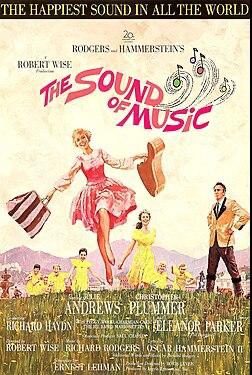
The Sound of Music is full of memorable melodies, and it was incumbent that soon audiences would hear most of them strung together in medleys. We are going to hear one such potpourri arranged by Robert Russell Bennett (1894-1981). Expect to hear some familiar tunes, and soon half-forgotten words may come to your mind: “the sound of music”—“my favorite thing”—“doe (a deer, a female deer)”—“so long, farewell, auf wiedersehn, good bye”—“sixteen going on seventeen”— “edelweiss, edelweiss”—and the rousing words “climb every mountain!” Bennett is an American composer who, in a different context, deserves a more detailed introduction; his substantial body of original compositions is overshadowed by his having been an arranger for Broadway composers such as Jerome Kern, George Gershwin, and Richard Rodgers.
After having succeeded in climbing “every mountain,” we are in for some more mundane matters. From high above, we can witness
...a bureau with office workers (formerly known as “secretaries”) clicking away on their typewriters (complete with carriage returns): See “The Typewriter” uploaded by Nigel Fowler Sutton on YouTube (a nice musical rendition, with somewhat “sexist” visuals—or are they meant “tonguein-cheek” and thereby bestow an entirely different meaning on what you are seeing?) or the version uploaded to YouTube by Akademia Filmu i Telewizji that even uses a real typewriter as a percussion instrument—enjoy! The video clip is of Polish origin, and it reverses the previous “sexist” visuals: here the musicians are all women and the “office-worker/percussionist” is male. Admire his accuracy at the carriage returns!
… a bugler’s holiday down in the valley, with considerable challenges for the trumpet players in the orchestra (but, be assured, they can handle it!), look for “Leroy Anderson : Bugler’s Holiday” uploaded on YouTube by the Haifa Symphony Orchestra.
aand a band of 76 trombones marching through our little town, uploaded on YouTube from the Robert Preston - Topic channel (with “Professor Hill” introducing the song in a sales pitch nobody can resist).
The Typewriter and Bugler’s Holiday were written by Leroy Anderson (1908-75), a master composer of “light”—sometimes called “easy-listening”—music (during the holiday season, his “Sleigh Ride” is often performed). The third piece, 76 Trombones, is by Meredith Willson (190284); it is the signature song from his 1957 musical The Music Man in which an amiable conman (“Professor Harold Hill”) comes to River City, Iowa, and convinces parents to invest in music education of their children by purchasing snazzy uniforms and lots of trombones—they brought down Jericho in Biblical times, he reminds them.
After the intermission, the pop concert turns to more serious matters by honoring the armed forces of the United States with arrangements of well-known melodies and excerpts of music from movies capturing the conflicts and heroism of American soldiers. The first piece is from a 2000 movie,
The Patriot, for which John Williams composed and conducted the music. Whereas the movie was criticized for its historical inaccuracies (it portrays the Revolutionary War in the 1770s), the musical score for The Patriot garnered praise, even being nominated for the Academy Awards (aka Oscars). “When Johnny Comes Marching Home” is a song that goes back to the Civil War and is now known as American Salute in a modern arrangement by Morton Gould (1913-96). John Williams (we will introduce him more properly in the program notes for a later concert), comes back with Hymn to the Fallen, excerpted from the soundtrack to Saving Private Ryan, a movie, gripping in its realism, about the landing of allied troops at the shores of Normandy during World War II. The Armed Forces Salute, arranged by Bob Lowden, is a medley combining songs for various branches of the American military: Army (“First to Fight for the Right”), Coast Guard (“Semper Paratus”), Marines (“From the Halls of Montezuma to the Shores of Tripoli”—well, those years-ago military adventures may need some explanation), Air Force (“Off we go into the wild blue yonder”) and Navy (“Anchors Aweigh”).
God Bless America is a patriotic song written by Irving Berlin during World War I; its most poignant lines are structured as a prayer, asking for God’s blessings and good guidance. (Irving, of Jewish origin, was the composer of America’s favorite Christmas song “White Christmas.”) And finally, we get to Stars and Stripes Forever (returning, if you wish, to the beginning of our pops concert, the “Star-Spangled Banner”), in form of a march composed and conducted by America’s most famous band master, John Philip Sousa (1854-1932). Conceived by Sousa in 1896 on an ocean liner, returning from Europe, the march was declared in 1987, by an act of congress, as the national march of the United States.
TUESDAY, JULY 21
“EMMF Brass in the Courthouse”
7:00 p.m. Tioga County Courthouse, Wellsboro, PA
Sponsored by Colin Hughes
Repeat of July 19 program
WEDNESDAY, JULY 22
“An American Sampler”
7:00 p.m. The Drake House, 171 Cedar Arts Center, Corning, NY
Sponsored by Community Foundation of Elmira-Corning and the Finger Lakes EMMF String Trio
Lisa Scott, violin
Jing Peng, viola
Perry Scott, cello
The program will be announced from the stage.
THURSDAY, JULY 23
“Expanding Our Horizons”
7:00 p.m. Patterson Trailhead Building, 32 Fellows Avenue, Wellsboro, PA
Sponsored by America250PA
Harpist: Heaven Fan
Flutist: Tarama Thweatt
The program will be announced from the stage
FRIDAY, JULY 24
“An American in Paris”
7:00 p.m. Commonwealth University of PA, Mansfield, Steadman Theatre
Sponsored by Visit Potter-Tioga
John Harbison, Remembering Gatsby–Foxtrot for Orchestra
Paul Hindemith, Concerto for Viola and Orchestra, Der Schwanendreher
Jing Peng, Viola Intermission
George Gershwin, An American in Paris
Remembering Gatsby: Foxtrot for Orchestra (1985)
John Harbison (1938-)
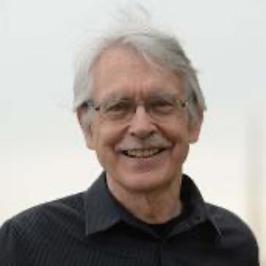
John Harbison is a most prolific American composer (with more than 300 works to his credit), winner of many awards (including the Pulitzer Prize and the Harvard Arts Medal) and a recipient of the coveted MacArthur Fellowship. He is the composer of a poignant opera (based on F. Scott Fitzgerald’s eponymous novel of 1925), The Great Gatsby, commissioned by the Metropolitan Opera and premiered there in 1999. Remembering Gatsby grew out of the sketches for that opera, completed more than ten years later. The piece begins with dark, brooding chords—hinting perhaps at some painful events or tragic happenings—that change to the jazzy sounds of party music, capturing a foxtrot, the most fashionable fast dance during the roaring twenties. The brooding chords return and so does the foxtrot, blurring distinctions between two different worlds, leaving audiences guessing as to what is real. Remembering Gatsby is a piece that crosses musical borders several times and leaves us with a sense of uncertainty.
You can find a superb rendition of the piece on the National Orchestral Institute Philharmonic - Topic YouTube channel, as well as on a Naxos CD.
Concerto for Viola and Orchestra, Der Schwanendreher (1935)
Paul Hindemith (1895-1963)
1. Langsam—Mäßig bewegt, mit Kraft (Slowly—Moderately moving, with strength)
2. Sehr ruhig—Fugato (Very calm—Fugato)
3. Mäßig schnell (Moderately fast)
In the 1930s, many European composers escaped the threats to their lives and livelihoods (caused by fascism and, later, by war) by emigrating to the United States. Arnold Schoenberg, discoverer of “twelve-tone” music, and his antipode Kurt Weill, famous for the Three Penny Opera, may have been the first arrivals, followed by Igor Stravinsky, Béla Bartók, and Paul Hindemith. By 1940, the protagonists of twentieth-century music (as viewed from a European perspective) as well as many other composers and musicians from abroad, resided on this side of the Atlantic Ocean. These new arrivals enriched musical life in the United States, in part by contributing experiences and perspectives that competed with and perhaps “derailed” or slowed down indigenous musical developments.
One composer stands out as writing for American audiences rather in a different way than he had done in Europe: Kurt Weill. He became a major force on Broadway with musicals such
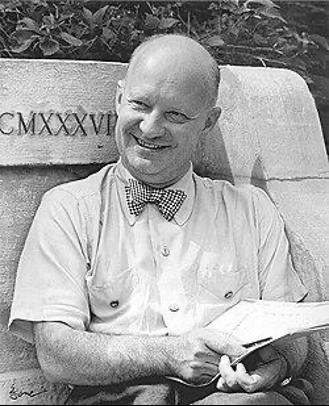
Hindemith c. 1945
as Lady in the Dark and One Touch of Venus, working with major lyricists such as Ira Gershwin, Maxwell Anderson, and Ogden Nash, as well as composing a genuinely authentic American opera: Street Scene (with lyrics by Langston Hughes). Paul Hindemith, who taught at Yale University (rather than facing the ups-and-downs of Broadway’s market place as Weill did) is a not-so-close-second, with works such as the Symphony in B-flat for Band of 1951 written for the US Army Band “Pershing’s Own,” the Pittsburgh Symphony of 1958, and, perhaps most important, his major vocal-orchestral work of 1946, commissioned by the young Robert Shaw (who later became famous as a choral conductor) and commemorating the death of Franklin Delano Roosevelt (with musical settings of poems by Walt Whitman), When Lilacs Last in the Dooryard Bloom’d: A Requiem for Those We Love—specifically listed as an American Requiem in parentheses and thereby alluding to Verdi’s (Italian) Requiem (in Latin, to be sure) and Brahms’s Ein deutsches Requiem (a German Requiem). Hindemith’s Concerto for Viola and Orchestra known as Der Schwanendreher (The Swan Turner) is not an American work, but it shows the composer as a most flexible and audience-friendly representative of musical modernism. We may even say that the viola concerto pursues a similar course as Copland did in the 1930s and 40s, by using folk and popular tunes as materials in some of his compositions (see earlier comments in this booklet). Hindemith invokes the image of a medieval minstrel as a source of inspiration for composing his viola concerto and performing the solo part (he was a fine viola player and premiered the piece): “A minstrel arrives in cheerful company and unfolds what he has brought from afar: solemn and joyful songs, and finally a dance piece. As a true musician, he expands and embellishes the melodies according to his inspiration and ability, playing preludes and improvising.”
Special kudos are due to Jing Peng, the soloist of tonight’s concert. (For details of her impressive credentials, see the bios of musicians later in the booklet.) Hindemith’s Schwanendreher is rarely heard; when it comes to viola concertos, it is easier to encounter William Walton’s or Béla Bartók’s viola concertos in today’s concert halls. For most of us, it may be the first and only time to hear this wonderful work in a live performance. Your program annotator, having attended orchestra concerts for more than sixty years, fesses up that tonight he will be hearing Hindemith’s Schwanendreher live for the first time.
An American in Paris (1928)
George Gershwin (1898-1937)
Allegretto grazioso—Subito con brio—Allegro ma non ritmo deciso—Allegro—
Moderato grazioso—Grandioso
What would be a concert of American music without Gershwin! Preferably featuring Rhapsody in Blue, a piano concerto of sorts, beginning with an iconic sound that electrifies audiences: the clarinet trill followed by an upward slide. That work was programmed in one of the concerts of the Endless Mountain Music Festival in 2024, celebrating the centennial of the premiere of that composition. But An American in Paris is a close second, and the piece tells us as much about music—and street life—in Paris in the 1920s as about being an American musically.
George Gershwin, son of Jewish-Russian emigrants, loved Paris, which was home, after World War I, to several American expatriates such as Ezra Pound, Ernest Hemingway, and F. Scott Fitzgerald. He stayed for several months, even considered studying with Maurice Ravel and Nadia Boulanger. But neither accepted him as a composition student. He was told: “Why
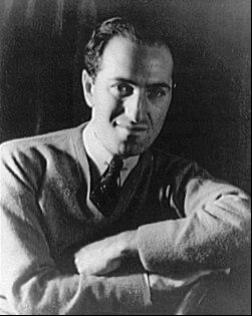
do you want to be a second-rate Ravel, when you can be a first-rate Gershwin?” Or something like it, mixing flattery with rejection. (The story is apocryphal and has never been confirmed.) But Gershwin brought back memories about that great city and a wonderful composition, named An American in Paris, and four taxi horns to be used as instruments in the orchestra to add authenticity to the piece.
An American in Paris is a tone poem in one movement but with three distinct sections. The first (Allegretto grazioso—Subito con brio) captures the hustle-and-bustle of the French capital and pays homage to Les Six, a group of French neoclassical composers on the ascent in the 1920s (here the taxi horns are sounded—let’s see which instruments replace them in tonight’s performance); the second (Allegro ma non ritmo deciso—Allegro) exhibits “American” features (it is jazz- and blues-inspired), conveying perhaps a certain homesickness and a longing for New York City; the final section (Moderato grazioso)—after the tuba solo—returns to material of the first, but overlays it in the Grandioso conclusion with the blues theme.
You can find a rendition of Gershwin’s piece by the Detroit Symphony Orchestra under Leonard Slatkin on their YouTube channel.
The American (Gershwin) in Paris invited his prospective teacher Maurice Ravel to tour the United States, and the French composer followed suit and subsequently was inspired by his American travels to incorporate jazzy features in some of his compositions. Darius Milhaud composed a work called A Frenchman in New York, commissioned for the Boston Pops Orchestra, which recorded it, but it never established itself as what it was intended to be: a counterpart to Gershwin’s masterful cityscape of Paris. It never quite amounted to a composition called a “Frenchman in New York City;” but you can hear it on the Open Reel YouTube channel.
Remembering Gatsby by John Harbison presented under license from G. Schirmer Inc. and Associated Music Publishers, copyright owners.

Take a class with us!



SATURDAY, JULY 25
“Of Cowboys, Foxtrots, and Yiddish Dances”
7:00 p.m. Corning Museum of Glass Auditorium, Corning, NY
Sponsored by the ARTS Council of the Southern Finger Lakes
John Williams, Cowboys Overture
John Harbison, Remembering Gatsby–Foxtrot for Orchestra Intermission
Noah Bendix-Balgley and Samuel Adler, Fidl Fantazye–a Klezmer Violin Concerto Hua Jin, violin
Cowboys Overture (1992)
John Williams (1932-)
John Williams
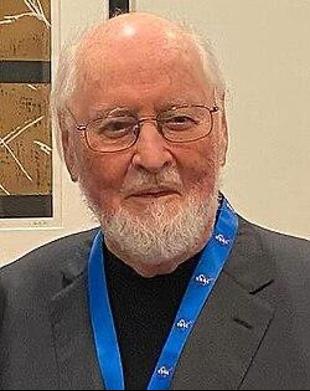
It would be a gross understatement to call John Williams merely a composer and conductor; he is a legend with a career spanning more than seventy years. Even though he has written an astonishing number of works for the concert hall (concertos for nearly every instrument, symphonic works, and chamber music), he is mostly known for his film scores, collaborating with some of the greats in Hollywood such as George Lucas and Steven Spielberg: Jaws, Star Wars, Indiana Jones, Jurassic Park, Saving Private Ryan, Superman, and Harry Potter are only a few of the movies for which Williams provided the soundtrack. Grammy, Emmy, Golden Globe, and Academy Awards (aka Oscars) have come his way almost as a matter of routine. And when it comes to being nominated for Oscars, only Walt Disney has garnered more of them than Williams.
Endless Mountain Music Festival audiences already have heard music by John Williams in the pops concert last Monday. Now we encounter one more sample of his artistry, the Cowboys Overture, the introductory music for the 1992 film The Cowboys, starring none other than John Wayne. While the music got mixed reviews at the time, the Cowboys Overture has become a staple frequently heard in the concert hall. It begins with a brilliant display of orchestral colors, celebrating the wide-open spaces of the American West, continues with a contrasting section of pensive melodies that rise to hymn-like exaltation, and concludes by returning to the fastpaced beginning: The victorious melody of the middle section is superimposed on the orchestral textures as a glorious finale.
For more information on John Williams, visit thelegacyofjohnwilliams.com/info.
Remembering Gatsby–Foxtrot for Orchestra (1985)
John Harbison (1938-)
(See yesterday’s concert for program notes)
Fidl Fantazye–a Klezmer Violin Concerto (2016/2023)
Noah Bendix Balgley (1984-) and Samuel Adler (1928-)
1 Khosidl—Doina 1—Balkan Dance—Sam’s Terkisher
2 Nigun—Doina 2—Hora (and following the second movement without pause)
3 Doina Freylekhs
The Fidl Fantazye is a showstopper, hands down. Noah Bendix-Balgley, its composer and principal performer, is an American musician, born in Asheville, North Carolina, who became a brilliant violinist, was the concertmaster of the Pittsburgh Symphony Orchestra and since 2014 has served in the same function with the Berlin Philharmonic Orchestra in Germany, lending his expertise to performing the repertory of classical music and occasionally appearing as soloist in violin concertos by Mozart, Beethoven, Brahms, Tchaikovsky—to name just a few. But great music can be found in unusual places: in his “spare” time he is inspired by music close to his Jewish heritage, the Klezmer idiom of the Pale settlements of Eastern Europe in the nineteenth and early twentieth centuries (captured by artists like Marc Chagall and the musical Fiddler on the Roof). The concerto is a medley of Yiddish songs and dances presented by the soloist and accompanied and echoed by his fellow musicians. Bendix-Balgley’s friend Samuel Adler, one of the great American composers of our time, helped with the orchestration, even added a few countermelodies to enrich the fabric, and the result has been an extraordinary concerto for violin and orchestra (it is even in three movements to follow the norm!) in the Klezmer idiom, sometimes also referred to as “Jewish jazz.”
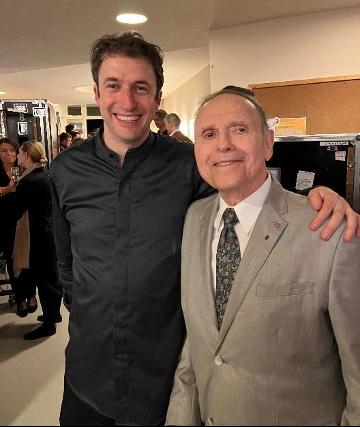
Noah Bendix-Balgley was in the United States in May of 2026 to perform his Fidl Fantazye with quite a number of orchestras, including the Toledo Symphony in Ohio, and our soloist Hua Jin used the opportunity not only to hear him play but also to seek his advice on performing Klezmer music. She is the first violinist other than Bendix-Balgley to perform the concerto. Only in the United States is it possible to hear a violinist trained in Shanghai, China, playing a concerto in a musical idiom heralding from Eastern Europe and orchestrated by an American composer born in Germany almost hundred years ago.
You can see Noah play Mozart on the Berliner Philharmoniker YouTube channel as the first episode of their Soloists of the Berliner Philharmoniker series and play Klezmer at noahbendixbalgley.com/copy-ofconcertmaster.
SUNDAY, JULY 26
“Mallet Mayhem”
7:00 p.m. United Methodist Church, 110 Alba Street, Knoxville, PA
Sponsored by Deerfield Charitable Trust
Mallet Mayhem with David Wert and Jason Mathena
Works by Phillip Glass and Steve Reich
The program will be announced from the stage.
MONDAY, JULY 27
“Flute and Oboe as Neighbors”
7:00 p.m. Gmeiner Art & Cultural Center, Wellsboro, PA
Sponsored by Guthrie Clinic
Lish Lindsey, Flute, and Aaron Haettenschwiller, Oboe.
Works by William Grant Still, Miquel del Aquila, and others
The program will be announced from the stage.



or
order on the app or at meals2GO.com for delivery, carryout or curbside pickup.


TUESDAY, JULY 28
“Woodwinds Celebrate”
7:00 p.m. Deane Center, Coolidge Theatre, Wellsboro, PA
Sponsored by Rogers Family Charitable Fund
EMMF Woodwind Ensemble
Petite Symphonie …………Gounod Consort for ten Players…….Robert Spittal Octet for Winds…………….Robert Baksa
The program will be announced from the stage.
WEDNESDAY, JULY 29
“EMMF String Quartet Chamber Concert”
7:00 p.m. The Drake House, 171 Cedar Arts Center, Corning, NY
Sponsored by Llewellyn Davis
EMMF String Quartet
Jennifer Farquhar, violin
David Restivo, violin
Theresa Langdon, viola
David Rezitz, cello
Joined by Stacey Edwards, piano
Program Notes
Musicians playing in the orchestra of the Endless Mountain Music Festival have traditionally formed smaller ensembles to perform repertory suited for the great outdoors (e.g., EMMF Brass Quintet) or indoor settings other than the concert hall. This summer we welcome Jennifer Farquhar and David Restivo (violins), Theresa Langdon (viola), and David Rezits (cello) as EMMF String Quartet. They are joined by Stacey Edwards, at the piano, to bring us an American sampler that includes ragtimes by Scott Joplin (arranged for viola and piano), a Sonata for Violin and Piano by Deb Capece, and the String Quartet no. 1 by Peter Hansen.
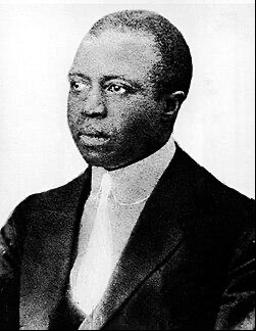
Scott Joplin (1868-1917), a native Texan, made it into the annals of music history as a composer and pianist of the “ragtime.” He wrote more than forty of them—“The Entertainer” and “Maple Leaf Rag” being the most famous (and there are good chances that we may hear them and other less well-known “rags” in this evening’s concert). Joplin traveled the American South as a pianist, even appearing at the World’s Fair in Chicago in 1893, generating a veritable
craze that earned him the title “King of Ragtime.” Ragtime nowadays is considered a precursor of jazz, but Joplin thought of it as a kind of classical music. His most ambitious works are two operas, only one of which survived: Treemonisha, for which he wrote both the libretto and the music (published in 1911). Scott Joplin was largely forgotten after his death, but the 1970s saw a revival of his music, spearheaded by composers William Bolcom and William Albright and a young musicologist Joshua Rifkin. In 1976, Scott Joplin was awarded a Pulitzer Prize, posthumously.
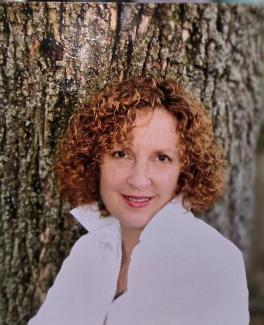
Deborah Capece is not an unknown quantity in our area. She resides in Tioga County, teaches voice and piano in her home studio, and is also a songwriter and composer. Some of her songs can be heard on Spotify and, if you are lucky, you can still acquire her albums such as Be Still and Know (1997) or The God Who Sees Me (2010) as CDs on Amazon. A few years ago (2017), one of her more ambitious creations, Paul the Musical—yes, St. Paul brought to the stage, reminiscing about his conversion and travels in founding a new religion—was performed at the Deane Center in Wellsboro, and, more recently, she made headlines in the local gazette as the new owner of the Victoria Theatre in Blossburg, PA, which she has given new life as a performing arts center.
The Sonata for Violin and Piano was composed in 1998-99 as an honors project, as Capece was completing her studies at Kutztown University. It was also a project to reinvent herself as a composer, “to take a road less traveled,” as she has put it: more complex in terms of harmony and texture than her songs, or, in other words, more challenging to the ear. The Sonata is in five sections:
The first two sections, increasing the pace from slow to moderately slow, may be considered introductory, capturing painful events through dissonant textures (the tritone is a prevailing interval) and with the violin occasionally soaring above the piano with sweeping phrases; a fast-paced stamping dance (Allegro) follows with changing meters, staccato chords, and violin and piano playfully interacting. The Adagio is the lyrical center piece of the Sonata, a respite from the frenzy of what has been going before, with a clearly recognizable tonal center. The composer could have ended her piece right there, but she felt that a fifth section, or Coda, was needed to wrap things up. It returns us to the strife and frenzy of the beginning and reminds us that “difficulties in life are often our best teachers, resulting in growth with joyful times interspersed.”
The Sonata is dedicated to Dr. Samuel Bellardo (1938-2003), Capece’s composition teacher and mentor, who died tragically in a car accident. The dedication reads: “Chi va piano, va sano e lontano.” (Who walks slowly, walks steadily and far.)
For more information about Deb Capece, go to lifewaymusicalproductions.com.
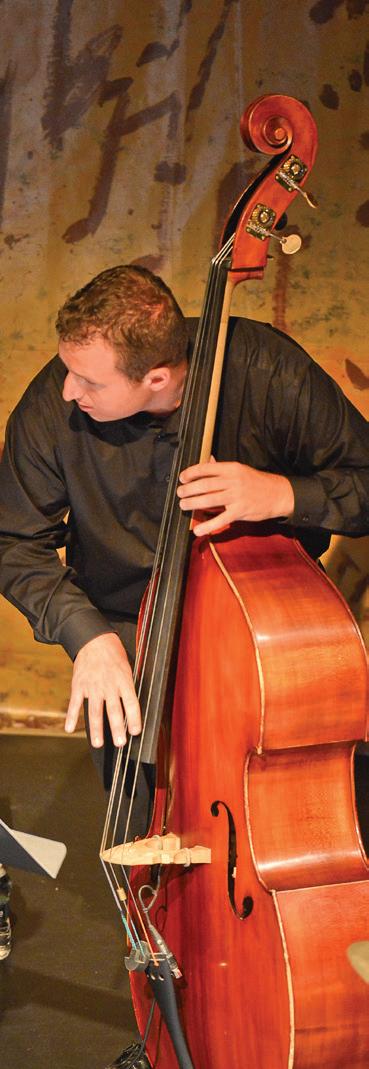
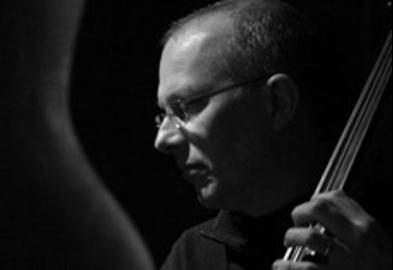
Peter Hansen was a member of the Indianapolis Symphony Orchestra, serving as the principal double-bass player for more than 40 years. He spent 22 years on the faculty of the University of Indianapolis. Outside of his orchestral and academic responsibilities, he has remained active as a jazz performer and composer, writing pieces premiered by the Ronen Chamber Ensemble, the New Century String Quartet, and the Icarus Ensemble (of which he is a founding member). The EMMF String Quartet will conclude this evening’s concert with Hansen’s String Quartet #1. Its movements are:
1. Intense, sostenuto
2. Intense; relaxed, in a groove
3. Adagio
4. Free flowing

Tuesday, July 21 • 2:30 p.m.
Southeast Steuben County Library
300 Nasser Civic Center Plaza, Suite 101, Corning, New York
Wednesday, July 22 • 6:00 p.m.
Wellsboro Green Free Library
134 Main Street, Wellsboro, Pennsylvania
Monday Jul 27 • 10:30 a.m.
Blossburg Memorial Library
307 Main Street, Blossburg, Pennsylvania
Monday Jul 27 • 1:00 p.m.
Knoxville Public Library
112 East Main Street, Knoxville, Pennsylvania
Wednesday, July 29 • 1:00 p.m.
Tioga County YMCA, Mansfield
40 Besanceney Drive, Mansfield, Pennsylvania

The composer has written the following program notes to guide audiences: “The String Quartet No. 1 in E by Peter Hansen was written in 2002 and 2003, although some of the material comes from much earlier sketches. The first movement opens with sustained, close harmonized chords, which give way to a small fugue that moves from E major to C minor and back to E and leads to the movement’s primary theme which appears a little more than 2 minutes into the work. An upper range, rhythmic cello solo follows before all join in with changing meters and a return to the opening’s harmonic progression. The coda brings back the primary theme in 5/4 instead of 3/4 time. The second movement begins with a short restatement of the first movement theme. The theme of this movement (originally composed on guitar) is in E minor and utilizes pizzicato (plucked) lines as well as bowed harmonics for a relaxed flowing effect. The middle section, marked Brilliante!, moves through several keys in a very rhythmic fashion before winding down and returning to the original music. The slow third movement segues from the second and begins with the quartet playing with mutes and the first violin stating a four note motif in C major. A romantic tune follows with a simple harmonization. A slower section follows using the simple original motif and explores the contrapuntal possibilities. After reaching a climax with unison violins, the movement ends quietly with a low open C in the cello and high harmonics in the other strings. The fourth movement, marked “free flowing” is in 5/8 time and begins in A major with arpeggiated motives. The middle section begins in C major and moves to B minor alternating between 3/4 and 5/8 time. A return to the opening material gives way to a Coda that begins menacingly but yields to a playful ending which begins pizzicato, switches to arco (played with the bow), and ends firmly in 5/8 time and E major.”
THURSDAY, JULY 30
“Salute the Big Bands”
7:00 p.m. Deane Center, Coolidge Theatre, Wellsboro, PA
Sponsored by Mary Burton
Jason Mathena, Percussion
Ragtime, “When the Saints Come Marching in,” “Begin the Beguine,” “Sing, Sing, Sing”
The program will be announced from the stage.
FRIDAY, JULY 31
“From New York City to Rochester: Bernstein meets Hanson” 7 p.m. Commonwealth University of PA, Mansfield, Steadman Theatre
Sponsored by Mansfield Crane Service Bernstein, Symphonic Dances from West Side Story
Dvořák, Serenade for Winds in D minor Intermission Hanson, Symphony #2 “Romantic”
Symphonic Dances from West Side Story (1960) Leonard Bernstein (1918-90)
1. Prologue (Tensions grow between the two gangs)
2. Somewhere (In a dream, friendship unites the two gangs)
3. Scherzo (In the dream, the gangs leave the city and find themselves in a “playful world of space, air, and sun”)
4. Mambo (Returning to the real world, the gangs participate in a competitive dance at the gym)
5. Cha Cha (Maria and Tony first meet and dance together)
6. Meeting Scene (They speak their first words to each other)
7. Cool (Riff, the leader of the Jets, encourages his gang to harness their impulsive hostility)
8. Rumble (In a gang battle, Bernardo, the leader of the Sharks, Riff, and Tony are killed)
9. Finale (The two gangs, realizing that violence is no solution, reconcile and unite, fulfilling the vision of “Somewhere”)
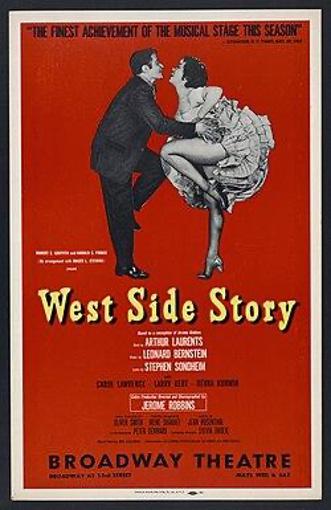
The Endless Mountain Music Festival began with Leonard Bernstein’s spirited overture to Candide, an operetta that for a long time existed in the shadow of a much more popular work that Lenny composed at the same time: the musical West Side Story. Freely based on an adaptation of Shakespeare’s Romeo and Juliet, West Side Story relocates the story from Verona, Italy, to Manhattan’s West Side, trades the rivalry of the Montagues and Capulets for two gangs (the Jets and the Sharks), and replaces Romeo and Juliet with Tony and Maria. The musical was an immediate success when it premiered on Broadway in 1957. Soon after, Bernstein gathered nine of the musical numbers in an orchestral suite, the Symphonic Dances from West Side Story. The movements are arranged in such a way that they (roughly) parallel the story of the musical (though, for example, Maria and Tony’s first meeting is delayed, for purely musical reasons, to a later moment in the sequence—see above).

Serenade for Winds in D minor, Op. 44 (1878)
Antonín Dvořák
(1841-1904)
1. Moderato, quasi marcia
2. Minuetto. Tempo di minuetto
3. Andante con moto
4. Finale. Allegro molto
1880
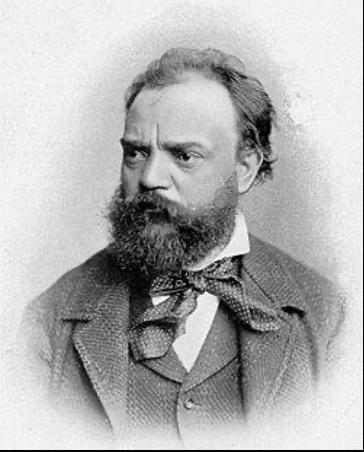
Antonín Dvořák hails from Bohemia, an area of Central Europe in what today is known as the Czech Republic, but a case could be made for him as an important and influential American composer. He taught several years at the National Conservatory in New York City in the mid-1890s, was keenly aware of the musical resources available in this country, even ventured into predictions about how a specifically American music might develop in the future and composed several works with a clearly American flavor. The most important such works are the Symphony no. 9, “From the New World” (which drew inspiration from American Indian songs, African American spirituals, and Longfellow’s The Legend of Hiawatha) and the Cello Concerto in B minor (written after Victor Herbert, his colleague at the Conservatory, had successfully ventured into that genre).
Dvořák’s “New World” Symphony was featured at the Endless Mountain Music Festival just a few years ago; this time around, Maestro Gunzenhauser selected the Serenade for Wind Instruments in D minor, a charming work of the composer before his stay in America. The Serenade is in four movements and faintly resembles, in the succession of movements, a symphony, with two fast outer movements framing a slow movement and a dance or scherzo. We may consider the work a sinfonietta or a “little” (and thus less ambitious) symphony. Although the Serenade is scored mostly for wind instruments (thus underscoring the “outdoor” character of the music), strings were added later to reinforce the sound, and it will be in this enhanced version that we will hear the work. Imagine listening to the piece after dark in a castle courtyard with the moon illuminating the scene. The old-world charm of the Serenade is particularly evident in the second movement (Minuetto), a courtly dance of the eighteenth century with a middle section that sounds like one of the “Slavonic Dances” that helped make the composer’s international fame. The beautiful third movement has a particular engaging ending: it takes many reiterations of farewell gestures to come to a conclusion.
For those of us who want to hear the piece again, I recommend a performance of the Camerata Pacifica (without string enhancements), uploaded to their YouTube channel six years ago.
Symphony No. 2 (Romantic) in D-flat major, Opus 30 (1930)
Howard Hanson (1896-1981)
1. Adagio-Allegro moderato
2. Andante con tenerezza (with tenderness)
3. Allegro con brio
“It is no exaggeration to say that during the 1920s and 1930s no one did more for the cause of American music than Howard Hanson” (Joseph Machlis, author of The Enjoyment of Music). Howard Hanson, born to Swedish immigrants in Nebraska, was in his mid-twenties when George Eastman hired him to become the director of the Eastman School of Music in Rochester, NY, a
post he held for forty years, during which he turned the institution into one of the most prestigious music schools in the world. Soon after his arrival in Rochester, he established the American Composers Orchestral Concerts, a series that soon morphed into the annual weeklong Festivals of American Music (which existed until 1971 and were broadcast over national radio networks). He founded the Eastman-Rochester Orchestra, with which he made, from 1939 to 1969, more than 100 recordings of works by American composers for RCA Victor, Mercury, and Columbia Records. More than 2000 works by 500 American composers may have been premiered with Hanson at the helm.
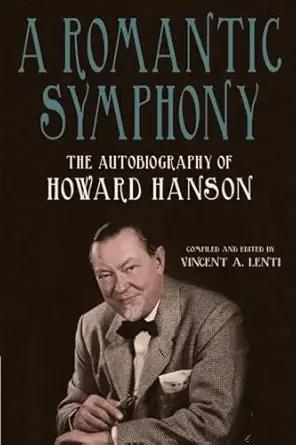
While Hanson the conductor covered a wide spectrum of musical styles, including modernist creations, as a composer he was a Romantic, writing in an idiom that we may describe as neo-Romantic and that quite a number of other composers, from John Williams to Daniel Perttu, have found ideal in communicating with audiences. Most of Hanson’s seven symphonies have characteristic names, and No. 2 is designated as “Romantic.” It was commissioned and premiered in 1930 by Serge Koussevitzky to celebrate the 50th anniversary of the Boston Symphony Orchestra; a little later, Arturo Toscanini conducted the symphony in New York City’s Carnegie Hall. It became Hanson’s most popular work, with excerpts of it even extending into pop culture. “Concerning my Second Symphony,” Hanson wrote, “as the subtitles implies, it represents for me a definite and acknowledged embracing of the Romantic phase. I recognize, of course, that Romanticism is, at the present time, the poor stepchild, without the social standing of her elder sister, Neoclassicism. Nevertheless, I embrace her all the more fervently, believing, as I do, that Romanticism will find in this country rich soil for a new, young, and vigorous growth.”
When Howard Hanson died in Rochester in 1981, he left behind materials representing his efforts to write an autobiography. More than forty years later, the materials are available in a wonderful little book, compiled and edited by my colleague Vincent A. Lenti (head of Eastman’s Community Education Division for many years, and historian of the Eastman School of Music): A Romantic Symphony: The Autobiography of Howard Hanson (Rochester, NY: Meliora Press, 2024). See illustration above.
SATURDAY, AUGUST 1
“Proudly American and Open to the Rest of the World”
7:00 p.m. Corning Museum of Glass Auditorium, Corning, NY
Sponsored by Deerfield Charitable Trust and Mountain Home magazine
Copland, Fanfare for the Common Man
Mozart, Piano Concerto in D minor, K. 466
Sheng Cai, Piano
Intermission
Rimsky-Korsakov, Scheherazade
Fanfare for the Common Man (1942)
Aaron Copland (1900-1990)
Program Notes
The Fanfare for the Common Man was composed in 1942—America was at war at the time in both the European and Pacific “theatres.” Inspired by a speech by Vice President Henry
Wallace (“The Dawning of the Common Man”), Eugene Goosens, conductor of the Cincinnati Orchestra at the time, decided that the world of classical music needed to respond to world events, and he commissioned fanfares of a patriotic nature. Aaron Copland’s response and fanfare stands out as a rallying sound signature. Hear it from the brass and percussion section of the National Symphony from the Kennedy Center in Washington, DC, uploaded to their YouTube channel nine years ago as “Copland: Fanfare for the Common Man.”
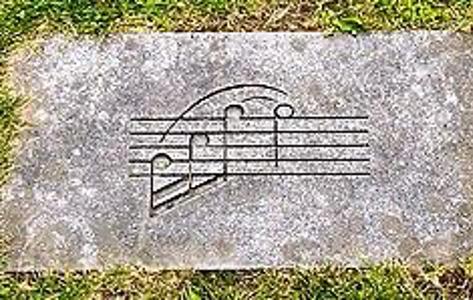
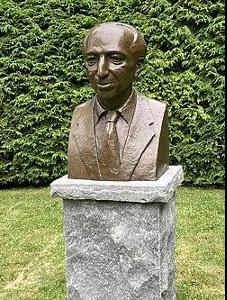
Also note the memorial garden in Tanglewood, the summer home of the Boston Symphony Orchestra in the Berkshires (in Lenox, Massachusetts): Aaron Copland is memorialized with twin sculptures: an effigy of the composer (in bronze) and the first three notes of his most popular composition (in stone).
The Fanfare to the Common Man gives me shivers, whenever I hear it. Rather than commenting on it, I would like to let “common” folks, reacting to the piece in the performance of the brass section of the National Symphony (see link above), provide the “program notes”:
Came here to experience the power of a brass section—but the percussionists blew me away! Goosebumps.
Brings tears to my eyes and makes me think of what America used to be and what it could be if we lived for God and love our fellow Americans.
An American composition written by an American composer for Americans who sacrificed during WW II but one that honors all mankind. Truly magnificent.
Walking through a cemetery today, I saw someone had the first few notes engraved on their tombstone. Very beautiful!
We honored our Dad with this masterpiece at his funeral.
I love this song. It shows that the common man is not common.
Fanfare for the Common Man!! Without them, our dreams would be mere scraps of wasted paper.
America was at war when Aaron Copland composed this great work; and it was the common people who stepped up.
Some listeners may recognize these stirring sounds from an arrangement and expansion that the rock group Emerson, Lake & Palmer made of Copland’s Fanfare in 1977, which they uploaded onto their YouTube channel nine years ago.
Piano Concerto No. 20 in D minor, K. 466 (1785)
Wolfgang Amadeus Mozart (1756-91)
1. Allegro
2. Romanze
3. Rondo. Allegro assai
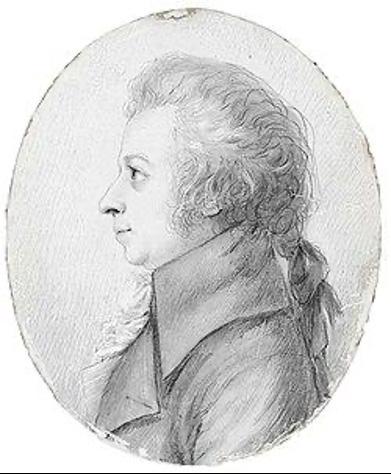
Mozart wrote more than two dozen piano concertos during his short life, but most of these were composed within a few years, from 1782 to 1786, and this has something to do with the economic and social conditions in Vienna, capital of a large multicultural and multiethnic empire at the time. After leaving the services of the archbishop of Salzburg and relocating to Vienna, Mozart became what today would be called a freelance artist, and one way to make a living was to compose music that people liked to hear, and that meant piano concertos, and perform them with an orchestra and himself as a soloist at special subscription concerts that flourished in Vienna during the mid-1780s. Here is a letter dated 19 February 1785 from Leopold Mozart (Wolfgang’s father) to his daughter Nannerl, describing the pressures on the composer and musicians in getting ready for the premiere of the Piano Concerto in D minor: “On Friday, we arrived at one o’clock… The copyist was still copying [K. 466] when we arrived, and your brother did not even have time to play through the Rondo, as he had to supervise the copying. … On the same evening, we drove to his first subscription concert, at which a great many members of the aristocracy were present. Each person pays a souverain d’or or three ducats for these six Lenten concerts. Your brother is giving them at the Mehlgrube and only pays half a souverain d’or each time for the hall. [There were more than 150 subscribers.] The concert was magnificent, and the orchestra played splendidly. In addition to the symphonies, a female singer from the Italian theatre sang two arias. Then we had Wolfgang’s new and very fine concerto.”
Neal Zaslaw, a musicologist who taught for many years at nearby Cornell University, attributes the decline of concert life in Vienna in the late 1780s to various political and military events resulting in an economic recession: “The combination of these factors led to a stifling of cultural life and a decline both of public concerts and of private patronage. Many noblemen let go of their private bands, opportunities for performances were drastically curtailed, and Mozart virtually stopped composing piano concertos.”
Mozart reserved the key of D minor for some of his most serious utterances: Sections in his opera Don Giovanni (the eerie music associated with the statue of the Commendatore), the aria of the Queen of the Night in The Magic Flute, and his Requiem come to mind, and K. 466 is no exception. The first movement is agitated and restless and lights up only when a secondary theme sounds in the relative major key. The second movement in B-flat major, called “Romanze,” is, for the most part, true to its name, flaunting several lyrical melodies that are tossed back and forth between soloist and orchestra, but before sounding one of its peaceful lyrical melodies for a last time, it erupts, suddenly and without any transition, in a stormy and passionate outburst in the key of G minor. The last movement returns to the dark key of D minor and the ominous and restless quality of the first movement, but after the cadenza (a section improvised by the soloist) the sky
brightens with a coda (or final wrap-up) in D major that we may describe as a jubilant “happy end.”
At the premiere, Mozart improvised his own cadenzas, and he never passed them on to posterity in a notated version. Later pianists who performed the D minor Concerto thus fashioned their own cadenzas: Beethoven, Hummel, Brahms, Clara Schumann, Busoni, and, in our own time, Cornell professor Malcolm Bilson. We are looking forward to learning how Sheng Cai, whose artistry the Endless Mountain Music Festival encounters for a third year in a row, will handle the improvisatory sections in the various movements: Will it be Beethoven’s, Hummel’s, Clara Schumann’s, Brahms’s, etc., or his own?
Aside: The Italian composer Luca Lombardi (1945-), a good friend of the writer of these lines since 1982, offers the following thoughts on Mozart: “There is nothing more beautiful than to overcome a bout of depression by listening to a wonderful piece of music, especially one by Mozart who is so balanced and yet full of contrasts. Joy, sadness, seriousness, fun, elegance—all these characteristics and many more are contained in his music. Mozart the antidepressant—he is so much better than modern pharmaceuticals, because the latter numb the depression but do not remove its cause; they only cover it up. But Mozart’s music is the means and the goal of removing depression, for what better occupation can there be than to devote oneself to the music of such a genius. Here I envy musicologists…since they can turn the in-depth study of great creations into their purpose of life.”
Scheherazade, Opus 35 (1888)
Nikolai Rimsky-Korsakov (1844-1908)
1. The Sea and Sinbad’s Ship
2. The Story of the Kalendar Prince
3. The Young Prince and the Young Princess
4. Festival at Baghdad. The Sea. The Ship Breaks against a Cliff surmounted by a Bronze Horseman
Audiences at the Endless Mountain Music Festival are being whisked away to an Oriental world in this last orchestra concert, more specifically to the fairytales of One Thousand and One Nights (also known as Arabian Nights). In fact, the composer himself penned an introduction to be used as program notes at the premiere of the work and as a preface for the published score:
The Sultan Schakriar, convinced that all women are false and faithless, vowed to put to death each of his wives after the first nuptial night. But the Sultana Scheherazade saved her life by entertaining her lord with fascinating tales, told one after the other, for a thousand and one nights. The Sultan, consumed by curiosity, postponed from day to day the execution of his wife, and finally repudiated his bloody vow entirely.
Well, we will disregard the misogynist premise that undergirds the story, but emphasize that Scheherazade—a clever woman she—is able to tame a bloodthirsty ruler by skillfully entertaining him, night after night, with something as modest and simple as a fairytale, or, rather, fairytales (a thousand and one of them). Rimsky-Korsakov selected several episodes from those fairytales and fleshed them out in in a symphonic suite of iridescent orchestral colors. The four movements, even though the stories on which they are based are unrelated, are unified by recurring themes, and by the title Scheherazade (giving credit to a female triumphant).
Scheherazade is Rimsky-Korsakov’s most popular work. All his symphonic compositions excel in dazzling orchestral colors (he is the author of an important treatise on orchestration), and here the composer’s skills in selecting the right instruments or the right combination of instruments shine in capturing the aura of the Middle East (if not perhaps its reality, of which the composer probably had little idea). Two examples may suffice for commenting on
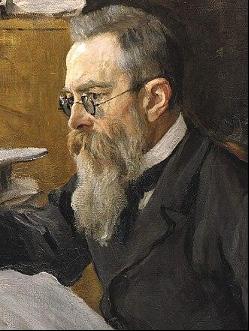
Rimsky-Korsakov’s skillful handling of musical colors: Right at the beginning of the first movement, you hear, in unison, a descending bass motive, thundered out in fortissimo and featuring triplets and a trill—obviously something sinister and threatening; it is the theme representing the Sultan. And soon after, you will hear a seductive violin solo high up in the air, if you wish, accompanied with the celestial sounds of the harp; that’s Scheherazade herself! And then these two themes, combined (and a case could be made that they are related by a descending whole-tone scale), come back in the coda of the final movement, signaling that the female storyteller has won over the heart of her man, and has done so by means of intelligence and artistry.
SUNDAY, AUGUST 2
“The Celebration of America Continues”
2:30 p.m. Corning Museum of Glass Auditorium, Corning, NY
Sponsored by Corning Inc., the ARTS Council of the Southern Finger Lakes, and Laura Douglas
The 2026 music festival concludes with a pops concert that is really in two parts. Maestro Gunzenhauser conducts some of his favorite tunes, blurring the world of classical music and popular music. Latino rhythms prevail in “Mallorca,” “El Choclo,” and the “Pavane con Salsa” and add a persuasive swing to the afternoon; the sun rises in a funky and mock-Germanic arrangement of Richard Strauss’s composition (made famous by the movie 2001: A Space Odyssey by Stanley Kubrick). And “Messages from Mount Rushmore” and the McClain Family help us celebrate the country’s 250th birthday.
“Thus Spake Zarathustra” (Tim Berens)
“Mallorca” (Jeff Tyzik)
“El Choclo” (Jeff Tyzik)
Messages from Mount Rushmore (Tim and Louise Berens)
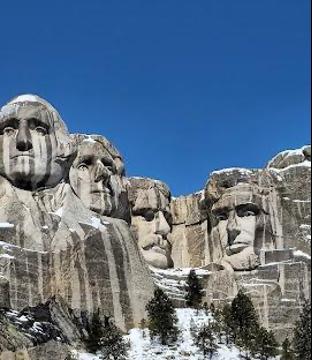
The Berens website provides the following description: “Messages from Mount Rushmore features quotes from George Washington, Thomas Jefferson, Abraham Lincoln and Theodore Roosevelt, the four presidents sculpted on Mount Rushmore. The music is rich Americana Pops in the tradition of Leroy Anderson and George Gershwin.”
A delightful video of the presidential conversation can be accessed on YouTube by searching for “The Presidents of Mount Rushmore Speak to the People: A Powerful Message for America”, uploaded by John D. Cundle.
“Pavane con Salsa” (Gabriel Fauré, “updated” by Tim Berens):
The arrangement has been described as “gorgeous melody, lush harmony, rich orchestration, and a sizzling salsa groove.”
Intermission
The McClain Family performs American Bluegrass The pieces will be announced from the stage. And, at the end, “Stars and Stripes Forever” will sound again.
Thank you to America250 for this celebration and America250PA for the generous grant to support the Endless Mountain Music Festival.
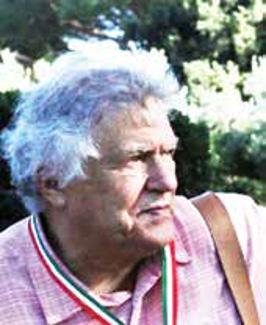
Jürgen Thym, Professor Emeritus of Musicology at the Eastman School of Music (University of Rochester), has published on the music, mostly Lieder, of Beethoven, Schubert, Schumann, Wolf, Weill, and others (co-authoring several essays with the late Ann C. Fehn). He edited the anthology 100 Years of Eichendorff Songs, co-edited several volumes in the Arnold Schonberg Collected Works Edition, and was co-translator of music theory treatises by Kirnberger (Die Kunst des reinen Satzes in der Musik) and Schenker (Kontrapunkt). More recent accomplishments include Luca Lombardi: Construction of Freedom (translation and edition of the composer’s selected writings); Of Poetry and Song: Approaches to the NineteenthCentury Lied; Mendelssohn, the Organ, and the Music of the Past: Constructing Historical Legacies; and Hector Berlioz and Ferdinand Hiller in Their Own Words: A Friendship across Borders and Time. He edited the autobiographies of the composer Samuel Adler (Building Bridges with Music) and the arts administrator Robert Freeman (Commitment). From 1982 to 2000, Thym was the chair of musicology at the Eastman School of Music. Having been released from part-time teaching during the pandemic, he misses teaching but is glad to share his insights into all kinds of music with the EMMF community (as another way of communication or teaching).


Huge variety including one of a kind Max Erlacher Custom Engraved Steuben Glass 607-248-9139
26 W. Market St, Corning, NY Always Open

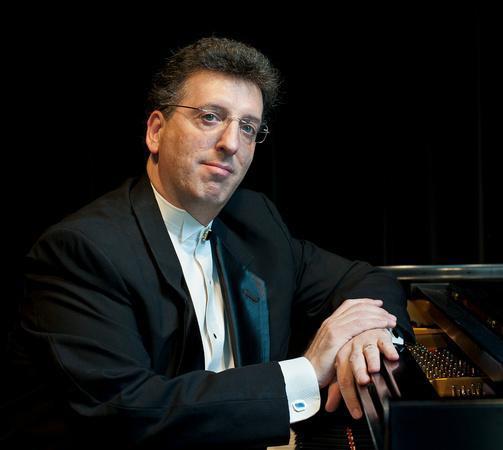
In an age when many artists’ fortunes begin with a meteoric ascent and quickly cool with the inexorable free fall, pianist Jeffrey Biegel has managed to buck that trend, fashioning a career of steady success studded with concerts at major venues with major orchestras, a Grammy-winning recording, and more than twenty-five commissioned works by living composers. His life takes its roots from age three, barely able to hear or speak, until corrected by surgery. The “reverse Beethoven” phenomenon explains his lifelong commitment to music, having heard only vibrations in his formative years. During the pandemic year of 2020, he focused on composing original “Waltzes of Hope;” “Sonatina;” and “Three Reflections: JFK, RBG, and MLK,” for solo piano; and for piano and orchestra, orchestrations by Harrison Sheckler. The next year saw the world premieres of his “Reflection of Justice: An Ode to Ruth Bader Ginsburg” with the Dallas Symphony Orchestra, and Ellen Taaffe Zwilich’s “Remembering Ruth Bader Ginsburg” for mezzo-soprano, piano, and orchestra in tribute to the late Supreme Court Justice Ruth Bader Ginsburg, featuring mezzo-soprano Denyce Graves, as well as the world premiere of Ellen Taaffe Zwilich’s “Shadows” newly arranged for piano and seven players with the Idaho State Civic Symphony. In 2022, he premiered Jim Stephenson’s Piano Concerto; Daniel Perttu’s “A Planets Odyssey” for piano and orchestra; Farhad Poupel’s “The Legend of Bijan and Manijeh” for piano, orchestra, and chorus; his own concerto, Three Reflections: Freedom (JFK), Justice (RBG), Equality (MLK); and Christopher Marshall’s “Thanksgiving Variations on ‘We Gather Together.’” For 2023, The fifty-state Rhapsody National Initiative begins, with the Utah Symphony leading a three-season effort with Peter Boyer’s Rhapsody in Red, White & Blue, with a world premiere recording of the new Rhapsody with Peter Boyer conducting the London Symphony Orchestra for a February 2024 Naxos digital release. The 2024-25 season foresaw a new work for piano and orchestra by Adolphus Hailstork with the Pacific Symphony, Carl St. Clair conducting, and Grammy winning singer/songwriter Melissa Manchester’s “AWAKE” for piano and orchestra (which premiered in July 2025).
Considered the most prolific artist of his generation, Moravian College in Bethlehem, Pennsylvania, conferred the Honorary Degree of Doctor of Humane Letters upon him in 2015, for his achievements in performance, recordings, chamber music, champion of new music, composer, arranger, and educator. In 2019, Kenneth Fuchs’s Piano Concerto: Spiritualist with the London Symphony Orchestra led by JoAnn Falletta received a Grammy Award for Best Classical Compendium, featuring Jeffrey as its soloist. In 2019, the first digital recordings were released on his Naturally Sharp label:
“Cyberecital: An Historic Recording,” “A Pianist’s Journey,” and the September 2021 release of George Gershwin’s Rhapsody in Blue 1924 version with the Adrian Symphony Orchestra, Bruce Kiesling conducting.
Jeffrey created the first largest consortium of orchestras in 1998 for Ellen Taaffe Zwilich’s “Millennium Fantasy” premiered with the Cincinnati Symphony Orchestra in 2000; followed with Charles Strouse’s Concerto America with the Boston Pops; Lowell Liebermann’s Concerto no. 3 with the Milwaukee Symphony Orchestra; William Bolcom’s “Prometheus” for piano, orchestra, and chorus with the Pacific Symphony and Pacific Chorale; Richard Danielpour’s “Mirrors” with the Pacific Symphony; Ellen Taaffe Zwilich’s “Shadows” with the Louisiana Philharmonic Orchestra; Jake Runestad’s “Dreams of the Fallen” with the Louisiana Philharmonic Orchestra and Symphony Chorus of New Orleans; Lucas Richman’s Piano Concerto: In Truth with the Knoxville Symphony Orchestra and recorded with the Pittsburgh Symphony Orchestra; and Kenneth Fuchs’s Piano Concerto: Spiritualist with the Springfield Symphony Orchestra (MA). He also premiered and recorded Giovanni Allevi’s Concerto for Piano and Orchestra and commissioned Christopher Theofanidis’s Concerto no. 2 for Piano and Orchestra with the Harrisburg Symphony Orchestra; the Peanuts Concerto by Dick Tunney, based on music by Vince Guaraldi; Jimmy Webb’s “Nocturne for Piano and Orchestra” and PDQ Bach’s Concerto for Simply Grand Piano and Orchestra by Peter Schickele with the Colorado Symphony Orchestra. Bringing new music to youth orchestras saw the world premiere of Daniel Dorff’s Piano Concerto with the Etowah Youth Orchestra, conducted by Michael Gagliardo.
He studied at the Juilliard School with Adele Marcus, herself a pupil of Josef Lhevinne and Artur Schnabel, and is currently on faculty at the Conservatory of Music at Brooklyn College.
Recently nominated for Canada’s prestigious “2025 Oskar Morawetz Award for Excellence in Music Performance,” Canadian pianist Sheng Cai has been delighting audiences and critics across four continents with his electrifying performing charisma and individual personality. Recently described as “with seeming effortlessness and performing with gusto and a loving attention to detail” by Buffalo Hives in New York and as “having the inner passion paired with Rubinstein’s nonchalance” by Thüringer Allgemeine in Germany, Sheng Cai has gained praises worldwide for his performances of major keyboard works of the past four cen-
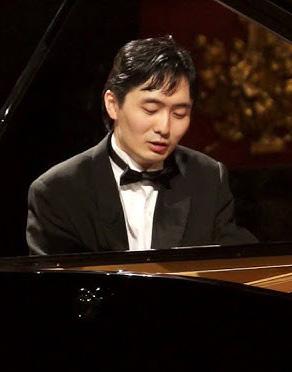
turies. With a number of prizes and awards, he continues to push the boundaries in interpreting both the established and rarities of the piano literature.
Since winning top prizes at Concours OSM (Montreal Symphony Competition/ Concours Orchestre Symphonique de Montreal) and Toronto Symphony’s competition at 15 years old, Sheng Cai has performed a broad spectrum of over 35 different piano concertos from Mozart to 21st century living composers with invitations to more than 60 orchestras worldwide as guest soloist. Recent concerto performance collaborations with orchestra includes the ORF Vienna radio Symphony, Toronto Symphony, Vancouver Symphony, Quebec Symphony, Buffalo Philharmonic, Calgary Philharmonic, Edmonton Symphony, Memphis Symphony, Windsor Symphony, Canton Symphony of Ohio, Shanghai Symphony, Shenzhen Symphony, in Germany with Nuremberg Symphoniker, Erfurt Philharmonic, Sinfonieorchester Aachen, Thüringen Philharmonie Gotha-Eisenach, Philharmonie Südwestfalen, Oldenburgisches Staatsorchester, Orchestre National de Cannes in France, Biel Solothurn Symphony of Switzerland, Armenian National Philharmonic, Krakow Philharmonic of Poland, North Bohemian Philharmonic in Czech republic, Malaga Philharmonic of Spain, among many others. He has ongoing collaborations with many esteemed conductors such as Keith Lockhart, Yoav Talmi, JoAnn Falletta, Gerhardt Zimmermann, Sascha Goetzel, Rune Bergmann, David Lockington, Robert Moody, Charles Olivieri-Munroe, Yannis Pouspourikas, Myron Michailidis, Donato Cabrera, Robert Franz, Eduard Topchjan, and Marco Parisotto.
In solo recitals, Sheng Cai has been presented at many prestigious venues in North America and Europe, such as Steinway Hall in New York, Jordan Hall in Boston, Chicago’s international Music Center, the Cleveland Play House, the Modern Art Museum in Fort Worth, the Alys Stephens Center in Birmingham, CBC’s Glenn Gould Studio in Toronto, and other distinguished venues in Stratford, Elora, Montreal, Kingston, and Winnipeg. As a chamber musician, Sheng Cai has collaborated with a number of fine artists, including the Enso String Quartet. Many of his recent performances have been broadcasted across North America and Europe such as Radio France Musique, CBC Radio Canada, WCLV Radio Ohio and WFMT Radio Chicago in US, and Czech Radio.
Sheng Cai is a passionate recording artist; his first recording was a CD of works by Mozart and Martinu for the Canadian Broadcast Company. His most recent Liszt, Grieg and Rachmaninoff discs on the ATMA Classique label gained international acclaim from the American Record Guide, ClassicsToday, MusicWeb International Review in the UK, Wholenote magazine in Canada, and Fanfare music magazine in the US.
He was a top-prize winner at many competitions throughout his teenage years, including the Montreal Symphony Orchestra Competition (Concours OSM), Toronto Symphony Piano Competition, The International Young Artists Competition of Colorado, The Bay State competition in Boston, and was the youngest finalist and special prize winner at the Bösendorfer International Piano Competition in the US. Recently he has been nominated for “2025 Oskar Morawetz Award for Excellence in Music Performance” by the Ontario Arts Council of Canada.
Sheng Cai is instrumental in advocating many neglected works that are peaks of the piano literature, works by composers such as Enescu, Kabalevsky, Kapustin,
Medtner, Mathieu, Villa-Lobos, and a number of his own works frequently shows up on his concert programs, his creative programming have made audience aware of such treasures of the piano literature deserves a wider audience.
Sheng Cai began his musical studies in Canada and US where he was a student at the Royal Conservatory of Music in Toronto and the Juilliard School’s pre-college division in New York. He received his Bachelor of Music Degree under full scholarship at The New England Conservatory in Boston. His teachers and mentors include pianists Anton Kuerti, Gary Graffman, and Russell Sherman.
Teresa Cheung is in frequent demand for symphonic, choral, operatic and balletic productions throughout the United States, Canada and Hong Kong. Following an acclaimed 13-season tenure as Music Director of Pennsylvania’s Altoona Symphony Orchestra, she was appointed Resident Conductor of the Endless Mountain Music Festival. Her 2025 season was highlighted by her debut with the Hong Kong Philharmonic Orchestra.
Teresa Cheung’s recent engagements have found her on the podia of the Amarillo, American, Bakersfield, Chappaqua, Mid-Texas, Mobile, New Amsterdam (NYC), Phoenix, Portland, Stamford, Venice and Western Michigan symphony orchestras, Evansville, Fort Wayne and Rochester philharmonic orchestras, Pennsylvania Centre Orchestra, Woodstock Chamber Orchestra, New York City Ballet, Brooklyn’s Regina Opera and the Hong Kong Sinfonietta. Additionally, she often appears as conductor for colleges and universities and with All State/All County orchestra festivals. She has also served as a conducting clinician for Lincoln Center for the Performing Arts’ “Meet the Artist” program.
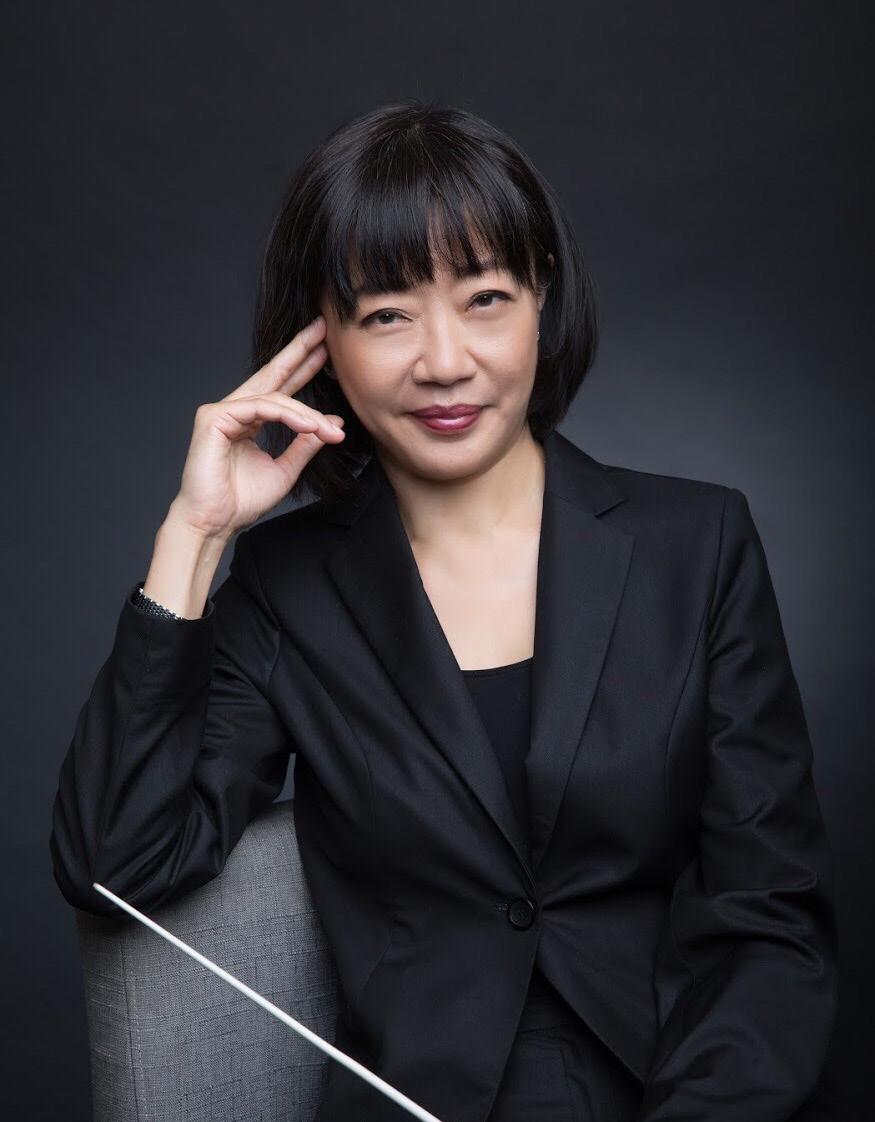
Widely known for her creative concert programming, collaborative projects and community outreach initiatives, Teresa Cheung is also a passionate advocate for music education for all ages. During her tenure in Altoona, she created numerous outreach programs that engaged area children and high school musicians and choristers, ballet companies and civic organizations. Under her leadership, the ASO also performed with university instrumental and choral ensembles from Penn State University, Indiana University of Pennsylvania and Juniata College. Her vision of extending the Altoona Symphony’s artistry and reputation beyond Central Pennsylvania led to the filming of Dvorák’s New World, an acclaimed joint-project with the Pennsylvania Council for the Arts’ Humanities on the Road program that was broadcast throughout Pennsylvania in December, 2011. Another highlight of Ms. Cheung’s novel inter-
disciplinary projects was the North American premiere of F.W. Murnau’s Nosferatu on Halloween 2017, reuniting the original symphonic score of Hans Erdmann with the silent film in Berndt Heller’s reconstruction.
Teresa Cheung began her career as Resident Conductor of the Evansville Philharmonic Orchestra, where she was also conductor of the Evansville Philharmonic Youth Orchestra and Evansville Philharmonic Chorus. Among her many artistic initiatives, she led the Evansville Philharmonic Youth Orchestra on its first international concert tour to Japan in 2002. Subsequently, she served as Resident Conductor of the American Symphony Orchestra and Assistant Conductor for the Bard Music Festival and SummerScape.
A native of Hong Kong, Teresa Cheung received her Master’s Degree in Conducting from the Eastman School of Music. She is also the recipient of the JoAnn Falletta Conducting Award for the most promising female conductors.
Direct from the hills of Kentucky, The McLain Family Band has become internationally known as one of the most spontaneous, creative and spirited groups performing contemporary Appalachian Bluegrass music.
Since 1968, they have performed in all 50 states—and 64 countries during 15 international concert tours, some as musical ambassadors of the U.S. Department of State. The McLain Family Band has appeared on prestigious stages such as the Grand Ole Opry, Carnegie Hall, Kennedy Center for the Performing Arts, the Lincoln Center, the Metropolitan Museum of Art, and the Carter Family Fold. They have been featured at thousands of festivals and concerts and performed as soloists in more than 230 appearances with orchestras.
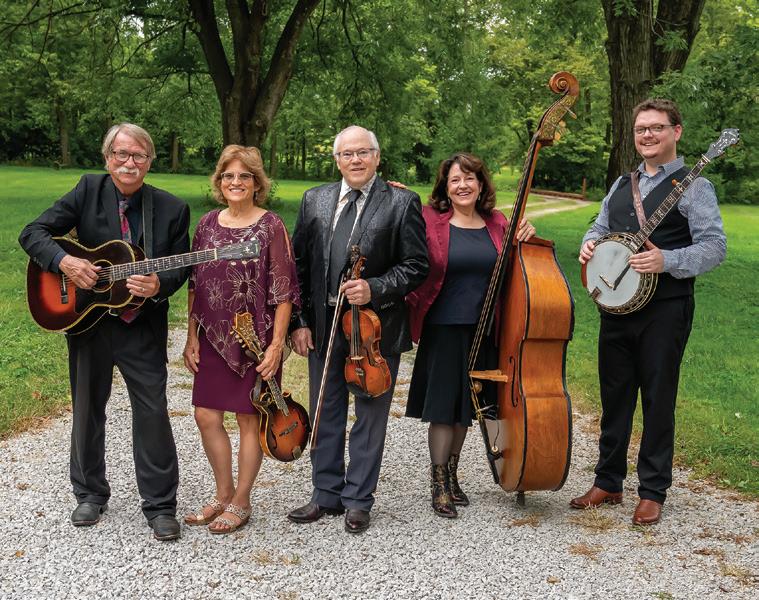
For eleven years, the McLain Family Band hosted the McLain Family Band Festival which was featured on NPR’s Folk Festival USA and produced by Kentucky Educational Television for national distribution. Other television appearances include NBC’s Today Show, the CBS Morning News, ABC’s Good Morning America, the Pearl Bailey ETV Special, the BBC, TNN’s Nashville Now, and the Johnny Cash Christmas Special.
The McLain Family Band has consisted, through the years, of various combinations of family members. The core touring band includes: Raymond McLain, Ruth McLain, Alice and Al White, and Daxson Lewis, with occasional guest appearances from NancyAnn Wartman and Michael & Jennifer McLain.
Thomas Putnam is artistic director of Hamilton-Gibson Productions, a community performing arts nonprofit in Wellsboro. Born and raised in Michigan, he spent every summer of his youth in Wellsboro, where his mother grew up. It was his grandmother Alma who persuaded him to come to Tioga County in 1974 to earn his degree in education at what was then Mansfield State College. He taught after graduation in both public and private schools. In 1991, he and some friends founded Hamilton-Gibson, named for his maternal grandmother Alma Hamilton Webster and his paternal grandmother Clara Gibson Putnam. Five years later he co-founded Hamilton-Gibson Youth Choirs with Kay Galloway and the late Katie Brennan.
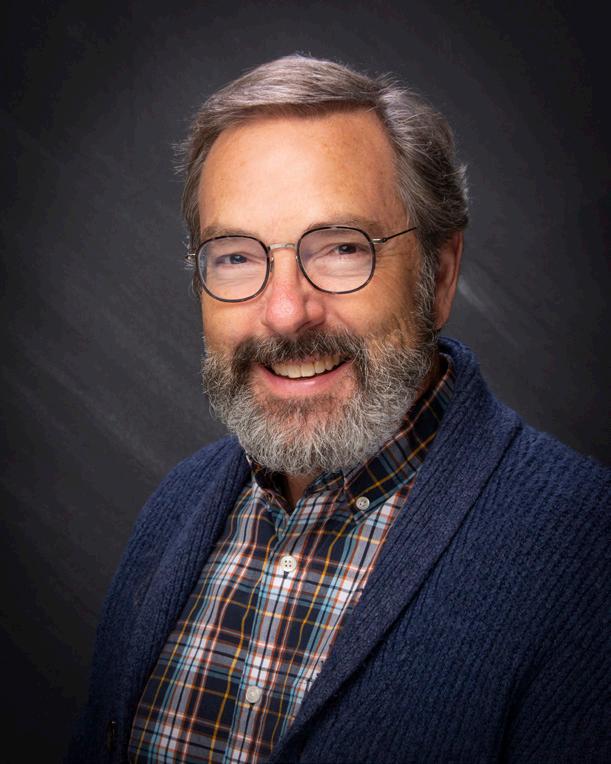
Thomas has directed hundreds of plays. His acting credits are numerous and include several one-man shows, including Every Brilliant Thing by Duncan Macmillan and Jonny Donahoe and Glen Berger’s Underneath the Lintel. He reprised the role of the Dutch librarian in September 2025—one he’d played in 2008 and 2020. Most shows were sold out.
“Stephen approached me last summer and said he’d found a work about Ellis Island and would Hamilton-Gibson be interested in providing the speakers,” he says. “When I listened to the piece—the beautiful, beautiful music—that sold me on it.”
Ron Stabinsky enjoys working in many stylistically diverse musical contexts throughout the United States and Europe with a wide variety of other musicians and ensembles. These include free-improvising saxophonist Jack Wright, lead trumpet legend Dave Stahl, bass trombone virtuoso David Taylor, NEA Jazz Master David Liebman, phenomenal drummer/composer Christian Lillinger’s Open Form for Society, and innovative trumpeter/composer Peter Evans. Festival appearances include Newport Jazz Festival (Rhode Island), Big Ears Festival (Tennessee), North Sea Jazz Festival (Netherlands), Moers Festival (Germany), Donaueschingen Music Days (Germany), JazzFest Berlin (Germany), Jazzfestival Saalfelden (Austria), Jazz Jamboree Festival (Poland), and Jazz and More Festival Sibiu (Romania). In 2016, his debut album, Free for One, received four stars in DownBeat and tied for number one debut of the year in the 2016 NPR Music Jazz Critics Poll. He is currently a regular member of numerous groups including Mostly Other People Do the Killing, Relâche, Grassy Sound, and the Meat Puppets.
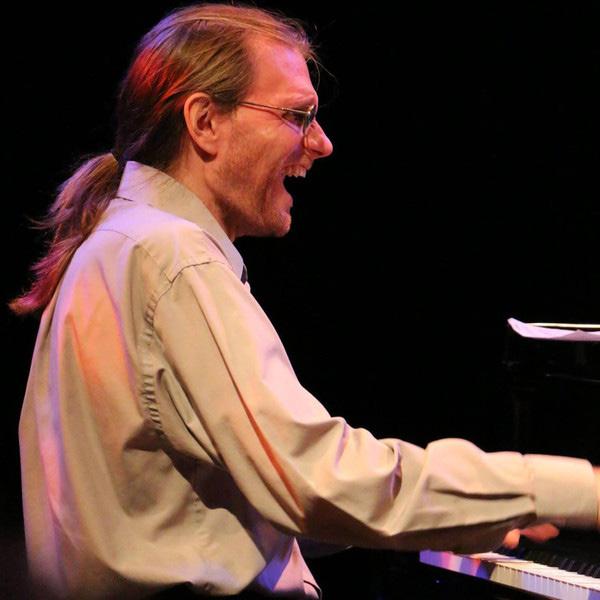



Jennifer Alger, violin
Recognized throughout South and Southeast Texas, Jennifer Alger is a versatile violist, violinist, educator, and coach with a distinguished career spanning performance and teaching. Formerly Principal Violist of the Lake Charles Symphony Orchestra in Louisiana, she currently performs with the Symphony Orchestras of Corpus Christi, Victoria, and Southeast Texas.
A respected TMEA clinician and adjudicator, Jennifer regularly leads workshops and instructional sessions for students throughout Fort Bend ISD. Her extensive performing career has also afforded her the privilege of sharing the stage with acclaimed artists including Lyle Lovett, Wynonna Judd, Wilson Phillips, Asleep at the Wheel, and Michael Bublé.
With more than twenty years of private teaching experience in Sugar Land, Texas, Jennifer has guided numerous students to success in Region Orchestras and the Texas All-State Orchestra. She studied at the University of Houston Moores School of Music under renowned teachers Rita Porfiris and Wayne Brooks and further refined her artistry through summer studies and mentorship with Karen Ritscher.
When she is not performing or teaching, Jennifer enjoys salsa dancing, hiking, and paddle boarding along the Texas coast.
Ralph Allen, viola
Ralph Allen, violinist and violist, has had a rich and varied career as a chamber musician, orchestra player, and teacher. He studied with Syoko Aki, Donald Weilerstein, and Robert Mann; he led Bach Cantatas and Passions in Holland, played contemporary music with ensembles in Amsterdam, Germany, and Portugal; performed with The Knights and Orchestra of St. Luke’s in New York; and played viola in the opera in Tel Aviv for eight years. He toured with Star Wars in concert and played with Lyle Lovett and Robert Plant and Jimmy Page of Led Zeppelin. He has taught Arab Israeli kids at a conservatory in Nazareth, Israel, and group classes in Harlem public schools. He currently teaches group lessons in Philadelphia public schools and privately through Settlement Music School and Temple Music Prep. With his wife, Iris Jortner, he is co-founder and producer of a chamber music series on Roosevelt Island in New York, where they have put on nearly 100 concerts in 18 years.
Mike Anderson, tuba—principal
A native of Elgin, Illinois, Mike Anderson is a professional musician and educator in Knoxville, Tennessee. Mike currently serves as Principal Tuba for the Knoxville Symphony Orchestra and Brass Quin-
tet, the Harrisburg Symphony Orchestra, and has appeared with the Illinois Brass Band, Lexington Brass Band, Blue Lake Festival Band, Varna International Muzika! Festival Orchestra, Chattanooga Symphony Orchestra, Oak Ridge Symphony Orchestra, Panama City Symphony, Tallahassee Symphony Orchestra, and Tallahassee Community Chorus Orchestra. Mike has also garnered success in multiple competitions, including winning the 2023 International Tuba and Euphonium Conference Mock Band Competition.
In addition to his orchestral work, Mike is an active music educator. He is currently on faculty at Tennessee Tech University as an adjunct instructor for the tuba/euphonium studio. Additionally, he teaches a private studio for high school students. His students have placed in both TMEA and PMEA music festivals. Mike also holds a bachelor’s degree in music education from the Indiana University Jacobs School of Music and a master’s in tuba performance from Florida State University. His primary teachers included Dr. Matthew Hightower, Daniel Perantoni, and Scott Tegge.
Jennifer Axelson, violin
After moving to New York City, Jennifer continued to play classical music and became an improvisor. Her orchestra pit experience includes playing at Westport Country Playhouse, DiCapo Opera, Lucille Lortel Theater, Kidz Theater, and the Actors Shakespeare Company along with many other musicals and operas in New York and New Jersey. Jennifer has played at Carnegie Hall, Symphony Space, David Geffen Hall, Webster Hall, Zinc, Shapeshifter Lab, and many other locations throughout New York City. Jennifer has also subbed for the Albany Symphony. She has played regularly with the Astoria Symphony and the Firey String Sistas, just to name a few. Chamber music experience includes playing violin in a string quartet on The Holland America Cruise Line. Jennifer has also played improvised music for The Scarab Tale, an Off-Broadway show. Jennifer made her off Broadway debut in 2022 as a violin sub for Fiddler on the Roof in Yiddish. While living in Madison, Wisconsin she played in the Madison Symphony Orchestra under John DeMain and the Dubuque Symphony under Nicholas Palmer. Jennifer holds a bachelor of music degree from the University of Wisconsin Madison and a master’s degree in jazz from NYU.
Justin Bain, trombone
Justin Bain began his performing career in 2019 by touring the US, Canada, and Japan as a member of The Glenn Miller Orchestra. He went on to win positions with the Houston Grand Opera, Austin
Symphony, Central City Opera, and Jacksonville Symphony. He began his current position at the Fort Worth Symphony in 2025, and still performs regularly with the Austin Symphony and Central City Opera. Justin holds a Master of Music from the Juilliard School and a Bachelor of Music from the University of Minnesota. In addition to his permanent positions, Justin has performed with the Philadelphia Orchestra, Atlanta Symphony, San Diego Symphony, Cincinnati Symphony, Colorado Symphony, and Naples Philharmonic.
Andrew Bass, horn
Andrew Bass is a performing artist and educator in the greater Cincinnati area. He enjoys an active performing and teaching schedule. He holds positions with the Dayton Philharmonic(Acting 4th horn), Owensboro Symphony(Assistant/Utility horn), and the Kentucky Symphony(3rd horn). An accomplished performer he has also appeared with groups such as the Cincinnati Symphony, Louisville Orchestra, Cincinnati Chamber Orchestra, Tulsa Symphony, Cincinnati Opera, Lexington Philharmonic, United States Coast Guard Band, and Rhode Island Philharmonic among many others.
Andrew enjoys performing as a chamber musician and soloist. He was a finalist of the International Horn Symposium Premiere Solo Competition and was awarded first prize with his Woodwind quintet for the Honors Chamber Competition while attending New England Conservatory. He has appeared as a soloist with Symphony New Hampshire, the Wright State University wind ensemble, as well as the Blue Ash Montgomery Symphony.
Growing up in a family of music educators, Andrew is a strong advocate in the music education sphere. He is the Professor of Horn at Wright State University. He also was a visiting professor at the Ohio State University. Andrew enjoys teaching a thriving private studio at many schools in the Cincinnati area as well.
Andrew studied horn performance at the New England Conservatory and received both his Bachelor’s (’16) and Master’s (’18) in music performance. While attending NEC he studied under the principal horn of the Boston Symphony James Sommerville as well as the fourth horn Jason Snider. Andrew has also attended the Aspen Music Festival and the National Orchestral Institute.
Outside of music, Andrew enjoys spending time outdoors whether that be hiking, kayaking, or traveling. He can also be found watching his favorite sports teams in the St. Louis Cardinals, Buffalo Bills, and Cincinnati Bengals.
David Bellman, clarinet
Clarinetist David Bellman was born in New York City. He studied at the Eastman School of Music
with D. Stanley Hasty; while at Eastman, he was a recipient of the Performers Certificate and a winner of the Concerto Competition. He also did graduate work at Northwestern University, studying with Chicago Symphony Principal Clarinetist (Ret.) Larry Combs. Bellman recently retired after playing for 39 years as Principal Clarinetist with the Indianapolis Symphony Orchestra. Before arriving in Indianapolis, Bellman was principal clarinet of the Oklahoma Symphony Orchestra and he has also played as an extra musician with the Chicago Symphony Orchestra, the Lyric Opera of Chicago and the Rochester Philharmonic. In 1984 and 1985 he was a participant at the Marlboro Festival.
David was Co-Artistic Director of the Ronen Chamber Ensemble for 39 seasons. He was an adjunct faculty Instructor of Clarinet at the University of Indianapolis and has been a soloist with the ISO numerous times. In 2009, David and wife Ingrid were both recipients of the ISO’s “Patch” Leadership Award in recognition of their service to the ISO and to the musical community. Bellman enjoys bicycling, movies and volunteering. Daughter Lilly Bellman is currently a pediatric emergency physician working in San Francisco. Upon retirement, David and wife Ingrid California relocated to Oakland, CA in order to live close to their daughter.
Emma Braunberger, oboe
Emma Braunberger is a New York City based oboist and arts administrator. She regularly performs with the New York City Orchestra Project, the Chelsea Symphony, and the Weill Cornell Music and Medicine Orchestra in addition to freelance work. She was the principal oboe of the New York Youth Symphony and the Columbia University Orchestra from 2022-2025 and 2021-2025 respectively. Emma also performed on the New York Youth Symphony’s debut album Works by Florence Price, Jessie Montgomery, Valerie Coleman which received the 2023 Grammy award for Best Orchestral Performance. Emma served as Music Director of the Columbia University Pops Orchestra where she orchestrated and conducted original arrangements of popular film scores. She has studied with Erin Gustafson, Julia DeRosa, Lisa Kozenko, and Sherry Sylar. Emma recently graduated from Barnard College [magna cum laude, PBK] with a degree in Music and Sociology, conducting original research on innovative approaches to building belonging for young classical musicians from diverse backgrounds. She is the 2023 recipient of the Japanese Cultural Heritage Initiatives Mentor/Protégé Fellowship which brought her to Tokyo, Japan to study hichiriki and gagaku music with the Ono Gagaku-kai ensemble and at the Kunitachi College of Music with Hitomi Nakamura. Emma works at the Chamber Music Society of Lincoln Center as a digital content and production assistant. She is also the personnel manager for the Columbia
University Orchestra under the direction of Maestro Jeffrey Milarsky.
Ariana Cappon, violin
Ariana Cappon is a New York-based violinist who brings lyricism and complexity to her performances as a collaborator and recitalist. A passionate chamber musician, she has been featured on series such as the Young Arts Showcase at Lincoln Center, Richardson Chamber Players at Princeton University, St. Paul’s Chapel at Columbia University, Downtown at Grace Church in White Plains, among others. She is a member of the Ondine String Quartet, a Chamber Music America grant recipient in 2024. They are currently collaborating with composers for a September concert at National Sawdust in Brooklyn. In 2019-2020, she toured in a piano quintet for Holland America’s “Lincoln Center Stage” programming at sea.
She is a member of the Albany Symphony Orchestra, the Harrisburg Symphony, the Greenwich Symphony, and a frequent guest at the North-Eastern Pennsylvania Philharmonic. She received her bachelor’s degree in violin and mathematics, and master’s degree in performance, from Indiana University Bloomington. Her primary teachers have been Mark Kaplan, Mauricio Fuks, Grigory Kalinovsky, and previously Dorothy Roffman in the Manhattan School of Music Precollege Division, where she began on her musical path. As an educator herself, she currently teaches at the Spence school, and has a private violin studio.
Asher Carlson, clarinet
Hailed as an “all-consuming talent” (Applause), Asher Carlson enjoys an active solo and chamber music career. He is Principal Clarinet of the Venice Symphony, Principal Bass Clarinet of the Tallahassee Symphony and Palm Beach Symphony Orchestras, and performs regularly with the EPCOT Candlelight Orchestra at Walt Disney World and St. Pete Opera.
Carlson appears regularly as a soloist with the Venice Symphony as well as with orchestras and wind bands across the United States. His international tours have welcomed sold-out audiences in Austria, Belgium, the Czech Republic, Germany, Italy, Ireland, and Kenya.
Carlson is a celebrated chamber musician, frequently featured in the Venice Symphony chamber music series, Classical Revolution, and ensemble NEWSRQ, a versatile new music ensemble in Sarasota, FL. During his time in North Carolina, he founded the Oraia Reed Quintet and toured the Southeastern United States with the Present-Continuous New Music Chamber Orchestra. His passion for new music is demonstrated through recent collaborations with composers Robin McLaughlin, Tyler Kline, Jamie Wind Whitmarsh, and Jonathan Russell.
Carlson serves on the clarinet faculties of the University of South Florida and State College of
Florida. His research into emotion and instrumental music performance has been featured at the International Society of Music Educators, Suncoast Music Education Research Symposium, and Artists Seeking Transcendence conferences. An active composer, arranger, and orchestrator, Carlson’s original chamber works OIL and Clown Car were commissioned and premiered by the Ambassador Trio at Clarinetfest 2023 (Boulder, CO) and 2024 (Dublin, Ireland), and his arrangements and transcriptions continue to reach audiences internationally.
Carlson is similarly at home on the theatrical stage. Some notable roles include Arthur in Camelot, Gaston in Beauty and the Beast, Captain Georg Von Trapp in The Sound of Music, Andrew Rally in I Hate Hamlet, and Count Carl-Magnus Malcolm in A Little Night Music, the last of which won him the 2024 Broadway World Tampa Award for Best Supporting Performer in a Musical. He portrayed Harold Norman, PI, in the original cast of Murder at the Jazz Club, a part that was written specifically for him to feature his talents as an actor, singer, and jazz clarinetist.
Carlson received his Bachelor of Music Education degree from the Florida State University, his Master of Music degree from the University of North Carolina at Greensboro, and his PhD in Music Education with a cognate in Clarinet Performance from the University of South Florida. He plays exclusively on Buffet Crampon clarinets and Vandoren reeds and mouthpieces.
Josh Carr, trumpet
Joshua Samuel Carr studied trumpet at the San Francisco Conservatory of Music and Towson University. While studying at Towson University, Josh won several solo competitions and department awards. He has been part of various unique projects, from touring the region’s historic theaters with the Peacherine Ragtime Orchestra accompanying the silent films of Buster Keaton and Charlie Chaplin, to opening for the band Reel Big Fish. In San Francisco, Josh performed with several orchestras including the Symphony Parnassus, the San Francisco Academy Orchestra, and the Awesöme Orchestra. In collaboration with Undercover Presents, he performed a tribute to A Tribe Called Quest’s Midnight Marauders as part of the Awesöme Orchestra Collective. He has worked with the Lancaster and Mid-Atlantic Symphony Orchestras and was a member of the Capital Wind Symphony in Washington, DC. He is currently in a two-year fellowship program performing with the Pittsburgh Symphony.
Susan Chan, violin
Violist Susan Chan, Adjunct Music Faculty at the University of Indianapolis, cofounded the New Century String Quartet and the Indianapolis Baroque
Orchestra, also performed with the Indianapolis Symphony Orchestra for over 30 years. Her chamber performances include concert series in NY, CA, Princeton (NJ), Miami (OH), and Indiana Universities; IHEM (Switzerland), Fromm (MA), MIM (CA), Tage Alter Musik (Germany), and 20th C Lyricism (Taipei) festivals. She has collaborated with Rostislav Dubinsky, Gary Hoffman, members of the Lark, Oxford, Jade (Quartets), Ronen, and Scott Chamber Players. Her grants promoted 1500s Sephardic and Islamic influences, Asian and African roots and Nazis banned compositions. Commissions include quartets by James Beckel, Chris Rutkowski, Frank Felice, Peter Hansen, and Ronald McKean. As a principal viola under Seiji Ozawa and Gunther Schuller as a fellow at Tanglewood, she studied with Walter Trampler, Abraham Skernick and the Juilliard Quartet, holds a MM from IU-Bloomington where she served as an Associate Instructor.
Carion Chu, bass
Carion Chu was born in Hong Kong. Her fascination with the sound of the double bass beckoned her to take up the instrument when she was a teenager. She immediately joined the local youth orchestra and other groups. She studied at the Royal Northern College of Music in England with Rodney Slatford, and took various courses in Italy where she studied with Franco Petracchi. She has performed in England, France, Israel, Cypress, Australia, Italy, the US, and Canada. In 1988, Carion moved to the Boston area and is known to both symphonic and chamber music audiences. She is currently principal bass with Cape Cod Symphony, and also performs with Plymouth Philharmonic, Symphony by the Sea, and South Florida Symphony. She lives in Milton, Massachusetts.
Jordan Curry, violin
Jordan Curry was raised in West Olive, Michigan and began playing violin at the age of six using the Suzuki method. He continued to play violin and study music throughout his formative years, participating in the Illinois Chamber Music Festival, Michigan All-State Orchestra, and Holland Area Youth Orchestra. Jordan received his bachelor’s degree in violin performance from Western Michigan University and his master’s degree from the University of Denver. Formerly a graduate assistant of former CSO concertmaster, Timothy Lees, as he pursues a DMA at the University of Cincinnati-College Conservatory of Music. Currently, Jordan is the Adjunct Instructor of Violin at Butler University in Indianapolis Indiana. Jordan also serves as a section violinist in the Indianapolis Chamber Orchestra and freelances in a number of area orchestras including the Indianapolis, Columbus, and Cincinnati Symphonies. In 2019 he was the recipient of a Cincinnati Symphony Orchestra (CSO) Diversity Fellowship. Through this
fellowship, Jordan performed regularly with the CSO while attending the University of Cincinnati-College Conservatory of Music.
Patrick Desrosiers, violin
Patrick Derosiers is a returning participant from a decade ago. He holds Bachelor’s and Master’s Degrees in Violin Performance from Temple University in Philadelphia. Patrick is a former member of the Delaware Symphony and Lancaster Symphony under Maestro Gunzehauser. He performed extensively in the United States, European Union, and Brazil.
Rebecca Dodson-Webster, horn—principal
Rebecca Dodson-Webster lives in Wellsboro and serves as associate professor of horn and music history at Mansfield University. A sought-after orchestral soloist and teacher, she has been Principal Horn in the Endless Mountain Music Festival since its first season. She is also a member of the Orchestra of the Southern Finger Lakes and the Williamsport Symphony Orchestra, as well as a founding member of the Orchestra of the Southern Finger Lakes Brass Quintet. Former orchestral affiliations and performances include Orchestra Nova, Westmoreland Symphony, Washington-Idaho Symphony, Spokane Symphony, and Wheeling Symphony. Her horn teachers include Douglas Hill, Soren Hermansen, Martin Smith, John Cerminaro, and Terri Winger. Rebecca’s solo CD, Music for Horn and Piano, is available on Centaur Records. Called “a true Mozart soprano” by Robert Page (WQED Pittsburgh), she has also performed as a vocal soloist and chorister in the United States and Europe, appearing with the Pittsburgh Symphony and Lorin Maazel on a recording of Wagner’s “Ring Without Words.” Locally, she performed the role of Rose in Hamilton-Gibson’s The Secret Garden. A member of the American Federation of Musicians Local 60-471, Rebecca appears frequently as a freelance horn player in the region and beyond. She has been featured as a soloist at International Horn Society conferences and workshops in many locations, including most recently Canada, Florida, Missouri, Delaware, West Virginia, Pennsylvania, Alabama, and North Carolina. Rebecca was born in Apollo, Pennsylvania, and enjoys the beauty of the Endless Mountains with her musician husband, Don Webster (also a member of EMMF), and their son, Hayne.
Stacey Edwards, piano—principal
Stacey Edwards is a versatile pianist and educator based in central Indiana. A native of Muncie, Indiana, she began her piano studies at the age of five and made her orchestral debut at twelve, performing Haydn’s Concerto in D Major with the Muncie Symphony Orchestra. Edwards holds both bachelors and masters degrees in piano performance, having studied under Susan Kindall and Robert Palmer.
Currently, Edwards serves as staff pianist at Ball State University and as a collaborative pianist with the Indianapolis Children’s Choir. In addition to these responsibilities, she maintains an active freelance career, teaching piano privately and performing regularly with university faculty, students, and guest artists across central Indiana. A highly sought-after choral accompanist, she has worked with various community and university choirs, contributing her expertise to ensembles of all levels.
Her international performance experience includes tours in Scandinavia with the Anderson University Chorale and in Italy with the Indianapolis Children’s Choir, where she played organ at St. Peter’s Basilica. Edwards’ notable collaborations include performances with Carolyn Hove, principal English horn player of the Los Angeles Philharmonic, as well as serving as a pianist for the Aria International Summer Academy and the 2024 International Double Reed Society Conference.
Her upcoming performances include performing in Dan Forrest’s Jubilate Deo with the Indianapolis Children’s Choir at Carnegie Hall in the summer 2026.
Hui-Wen (Heaven) Fan, harp—principal
Dr. Heaven Fan serves on the faculty of the University of Notre Dame and is a member of the artistic faculty at the MasterWorks Festival. A versatile and acclaimed harpist, Dr. Fan has been featured on the recordings including the prizewinning album A Ceremony of Carols with the Notre Dame Children’s Choir, Ami Maayani’s The Harp Concerto (Fons), The Best of Festival of Carols (Vol. 1), and Festival of Carols (Naxos) with the Indianapolis Symphonic Choir, Indianapolis Chamber Orchestra, soprano Maria Jette, and Grammy Award-winning soprano Sylvia McNair.
A laureate of the national Anne Adams Competition of the American Harp Society and recipient of the Creative Renewal Arts Fellowship from the Arts Council of Indianapolis and Lilly Endowment, Dr. Fan has performed as a featured soloist at music festivals across Asia, Europe, and the Americas, and as a concerto soloist performed with orchestras including the MasterWorks Festival Chamber Ensemble, Knoxville Symphony, Knoxville Chamber Orchestra, Knoxville Symphony Chamber Players, Anderson Symphony, Anderson University Symphony Orchestra, and the Qingdao Municipal Opera and Dance Drama Theater Orchestra in China.
Dr. Fan’s artistry and contributions have been highlighted in the Argentinian publication Arpas sin Fronteras (“Harps Without Frontiers”), in interviews at the Buenos Aires Harp Week and the MasterWorks Festival, and on the American Harp Society’s inaugural A&E program. She has served as a juror for numerous national and international competitions throughout Asia and the Americas, including Taiwan’s National
Harp Competition, the Young Artist’s Harp Competitions, the USA International Harp Competition Ruth Inglefield Composition Contest Preliminary Round, the Marker and Pioneer International Music Competition, and the International Harp Competition of Mexico. She currently serves on the Board of Directors of the prestigious USA International Harp Competition.
Jennifer Farquhar, violin
Jennifer Farquhar joined the Indianapolis Symphony Orchestra in 1997 as a first violinist, but since 2017 has been acting assistant principal second violin. Over the years she has performed in many chamber music concerts in Indianapolis. She also is a member of the Arizona MusicFest Orchestra. Jennifer teaches violin lessons from her home studio and for the Metropolitan Youth Orchestra. As a member of the 150, she has also coached violinists in their Sideby-Side program.
Before joining the Indianapolis Symphony Orchestra, she played in the North Carolina Symphony, the Delaware Symphony, and the Opera Company of Philadelphia. She performed and taught at Eastern Music Festival for two summers, having previously attended as a high school student. As a college student she participated in the New York String Orchestra Seminar under Alexander Schneider and in the Castleman Quartet Program. She graduated magna cum laude from the Eastman School of Music, where she studied with Charles Castleman. Other teachers included Yumi Ninomiya Scott, Helen Kwalwasser, and Helen Spencer.
Daniel Golando, trumpet
Daniel Golando is currently the second trumpet player and personnel manager with the Indianapolis Chamber Orchestra. He frequently performs in and around the central Indiana area with other orchestras and in the recording studios.
A native of Jamestown, NY, Mr. Golando attended Murray State University in Murray, KY where he received a BME degree. Upon completion of his undergraduate certificate, he traveled to Denton, TX, where he completed a MME degree in Trumpet Pedagogy and Jazz Education. Other activities that Mr. Golando shares a passion for include wine, gardening, cooking, and travel. He is also an Alumni Member of the National Ski Patrol at Perfect North Slopes in Indiana where he served on the patrol for 15 years.
Trina Gross, clarinet—principal
Trina is the second and e-flat clarinetist in the Indianapolis Symphony Orchestra’s clarinet section, a position she has held since 2002. Prior to joining the ISO, she was principal clarinetist of the Louisville and Augusta Symphony Orchestras. She has also held positions with the Indianapolis Chamber Orchestra and
the Columbus Indiana Philharmonic Orchestra. As an active chamber musician, she is a founding member of the Circle City Winds and performs frequently with other ensembles in Indianapolis.
Trina is currently an instructor of clarinet at Butler University in Indianapolis. She performed Messiaen’s Quatour Pour la Fin du Temps with the Eroica Trio during Butler’s Arts Fest in April of 2016. She has also appeared as a soloist with the Butler Wind Ensemble in Scott McAllister’s Concerto Americana for Clarinet and Saxophone in the fall of 2015. She has been an Instructor of Clarinet at the University of Indianapolis and Indiana State University and maintains a private studio in her home.
As a soloist, Trina performed the Weber Concertino with the Hochstein Alumni Orchestra Rochester, NY in January of 2016. She has also appeared as soloist with the Augusta Symphony Orchestra, the Indiana State University Wind Ensemble, and the Rochester Philharmonic Orchestra.
Trina earned her bachelor of music degree from the Eastman School of Music. She received her master of music, performance certificate, and performer diploma from Indian University Jacobs School of Music. Her principal teachers include Eli Eban, James Campbell, Alfred Prinz, Charles Neidich, and William Osseck.
Fabian Guerrero, bass—principal
Born and raised in Buenos Aires, Argentina, double bassist Fabian Guerrero enjoys a career in both the classical and world music genres. He received his degree from the López Buchardo National Conservatory in Buenos Aires, and subsequently his Master’s Degree in Double Bass Performance in the United States from Carnegie Mellon University in Pittsburgh, Pennsylvania. Prior to his current position as the Assistant Principal Bass at Teatro Argentino de La Plata, in La Plata, Argentina, Fabian has served as the Principal Bass of the Altoona Symphony Orchestra in Pennsylvania, and as a member of the bass section of the Buenos Aires Philharmonic at Teatro Colón Opera House in Buenos Aires. Aside from his symphonic activities, Fabian is the founder and a member of Tango Guerrero, a tango ensemble specializing in Argentina’s most treasured musical art. Their most recent tour includes an Asian tour to Korea and China. Fabian will be earning his degree in Orchestral Conducting studies from the National University of Arts in Buenos Aires in 2027.
Sharon Gunderson, viola
Violist Sharon Gunderson has resided and freelanced in New York City and beyond for multiple decades, performing at Lincoln Center, Carnegie Hall, and Madison Square Garden, with artists ranging from Andrea Bocelli, Bernadette Peters, Johnny Mathis, and Dianne Reeves to Hélène Grimaud, André Watts, and
Yo-Yo Ma. With her pianist best friend Mary Bopp, she co-founded and performed in Chamber16: a dynamic consortium of artists that presented classical, modern, original repertoire, and improvisation for eleven seasons. A native of Flagstaff, Arizona, Sharon played violin from age five and soloed with the Flagstaff Symphony twice as a teenager. Her debut on viola came about rather suddenly in 2013 to fulfill the demands of a specific gig (goddess bless Fauré for writing two viola parts in his Requiem)! While she still loves and plays violin, Sharon is perennially captivated by the viola’s lower, rich timbre. Finally acquiring her own instrument in 2021, she has had wonderful solo and chamber music opportunities since, and is excited to be performing her second season with EMMF. When not on stage, Sharon can be found in various natural habitats: ocean swimming (all year, skin), epic Grand Canyon backpacking, river and lake kayaking (often as marathon-swim support), and any place where she can observe the natural world. Last summer while hiking between rehearsals for EMMF, she learned that bees take shelter from rain on the undersides of thistle flowers.
Ziqing Guo joined the Indianapolis Symphony Orchestra in 2025. Prior to joining the ISO, he was pursuing a Doctor’s degree at College Conservatory of Music, University of Cincinnati.
Born in China, Ziqing made his first public appearance at the age of nine, performing Saint-Saens’s violin concerto in Shanghai Concert Hall. In summer 2025, Ziqing served as concertmaster in a performance of Berlioz’s Symphonie Fantastique under Andris Nelsons in Tanglewood Music Festival. Ziqing was invited to many competitions and has performed as chamber musician in many places such as Menuhin competition, Harbin competition and Fischoff competition, Carnegie Hall, the Chamber Music Society of Lincoln Center, Gewandhaus, Leipzig and Suntory Hall, Tokyo. He has also appeared at Tanglewood Music Center, Pacific Music Festival, Aspen Music Festival, Summit Music Festival, Shostakovich Festival, Heifetz Institute and Morningside Music Bridge. He has performed as guest violinist with Boston Symphony Orchestra at the Tanglewood Music Festival, Cincinnati Symphony Orchestra and Minnesota orchestra.
Ziqing spent his early years studying with Qing Zheng and Shisheng Zheng in the Music Middle School Affiliated to Shanghai Conservatory of Music. Ziqing Guo received his bachelor and master’s degree from Manhattan School of Music with Sylvia Rosenberg and Nicholas Mann and a doctoral’s degree from College Conservatory of Music, University of Cincinnati, where he studied with Prof. Kurt Sassmannshaus and Kristin Lee. Besides playing violin, he enjoys photography and cooking.
Aaron Haettenschwiller, oboe—principal
Oboist Aaron Haettenschwiller is a versatile orchestral musician and graduate of the Manhattan School of Music, where he earned his BM and MM under Robert Botti. His career includes appearances at the Washington National Cathedral under Marin Alsop and David Danzmayr, alongside his ongoing work with the WA Sinfonietta. A finalist for organizations like the Chicago Sinfonietta and Philadelphia Ballet, he has also held fellowships at the National Orchestral Institute and mentored for the National Seminario at Ravinia.
Eiko Hosaka, violin
Born in Japan, Eiko Hosaka began studying the violin at the age of three. She earned both her Bachelor of Music and Master of Music degrees from Tokyo College of Music, where she developed a strong artistic foundation and a deep commitment to orchestral performance.
She was awarded fellowships to attend the Mozarteum International Summer Academy and received scholarships for the Symphony Academy of the Pacific and the Asian Youth Orchestra. She was also selected to participate in master classes led by distinguished concertmasters of world-renowned orchestras, including Rainer Küchl of the Vienna Philharmonic, Roland Daugareil of the Orchestre de Paris, and Liviu Prunaru of the Royal Concertgebouw Orchestra.
For over a decade, Ms. Hosaka was a member of the Hong Kong Sinfonietta, performing in major concert halls around the world, including Carnegie Hall, Maison symphonique de Montréal, Taipei National Concert Hall, and Takemitsu Memorial Hall. She has also participated in numerous recording projects.
While a member of the Hong Kong Sinfonietta, she appeared at prominent international music festivals across Europe and Asia. In Europe, these included the Festival International de Piano La Roque d’Anthéron, Festival de Musique de Menton, Festival Pianistico Internazionale di Brescia e Bergamo, Beethoven Easter Festival, and Marvão International Music Festival, as well as engagements in Switzerland. In Asia, her appearances included La Folle Journée au Japon, Asia Orchestra Week, the Tongyeong International Music Festival, performances at the Esplanade – Theatres on the Bay in Singapore, the Shanghai International Arts Festival, the National Centre for the Performing Arts in Beijing, and the Lian Hua Shan Glades Music Festival.
Peter Howard, cello
Peter Howard received his bachelor of Music degree in cello performance from the University of Southern California and his master of cello performance from State University of New York at Stony Brook.
His cello teachers include Bernard Greenhouse,
Lynn, Harrell, Robert Gardner, and Gabor Rejto.
Peter has been a member of the Florida, Puerto Rico, and Thunder Bay symphonies. He has toured with the New York City opera national company for nine years. Music festivals Peter has participated in include the Casals, Aspen, and Siena music festivals.
Peter currently freelances with various orchestras, including the Westchester Chamber Orchestra, Baroque Orchestra of New Jersey, and the Asian Cultural Symphony. He has been a member of the Synergy String Quartet and performs regularly with the Weiss Howard Martin piano trio.
Besides playing with a variety of orchestras and chamber groups, Peter performs at special events, including weddings and corporate functions.
Hee Won Jeon, cello
Hee Won Jeon is a Korean cellist recognized for her refined artistry, commanding technique, and dynamic presence as both performer and educator. She is currently in her Doctor of Music degree candidacy at the Indiana University Jacobs School of Music, where she also earned her Master of Music. She received her Bachelor of Music from the Johannes Gutenberg University Mainz (Hochschule für Musik Mainz), graduating with distinction.
Jeon’s career reflects a vibrant blend of international performance and artistic leadership. She has appeared at distinguished festivals including the Lake George Music Festival, Eastern Music Festival, Domaine Forget de Charlevoix, Chautauqua Institution, The Next Festival of Emerging Artists, and the Beethoven Orchester Hessen.
An accomplished orchestral musician, Jeon has performed with leading ensembles including the Owensboro Symphony Orchestra, Fort Wayne Philharmonic, Indianapolis Symphony Orchestra, New World Symphony, Louisville Orchestra, and Evansville Philharmonic Orchestra. She has held principal and assistant principal positions with the Richmond Symphony Orchestra, Venice Symphony, Carmel Symphony Orchestra, and the Eastern Festival Orchestra, demonstrating both leadership and versatility across a broad repertoire.
Jeon’s work has been featured in publications such as Urban Watch Magazine (“Acclaimed Cellist Hee Won Jeon’s Global Impact on Classical Music”), Suwanee Magazine (“Global Insights from a Gifted Cellist”), and Mahoning Matters (“Internationally-renowned professional cellist”), reflecting her growing presence on the international stage.
Through her performances, collaborations, and pedagogical initiatives, Hee Won Jeon continues to contribute meaningfully to the classical music community, championing both established masterworks and emerging artistic voices with integrity and passion.
Gabrielle Hsu, bassoon
Gabrielle Hsu is a freelance bassoonist and contrabassoonist based in South Florida. She is a member of the South Florida Symphony Orchestra, Symphony of the Americas, Orchestra Miami, Opera Naples, and the Endless Mountain Music Festival. She is also a Teaching Artist for the South Florida Symphony Orchestra’s Symphony in the Schools program.
Gabrielle is a native of Seattle, Washington and holds a Bachelor of Music from Arizona State University, as well as a Master of Music and an Artist Diploma from the Frost School of Music at the University of Miami, where she performed as a fellow in the Henry Mancini Institute. Her primary teachers are Gabriel Beavers, Albie Micklich, and Francine Peterson.
Yu-Ting Hsu, viola
Yu-Ting Hsu is a Taiwanese violist based in Los Angeles whose career encompasses orchestral, chamber, theatrical, and studio recording work. She is a core member of Delirium Musicum and American Contemporary Ballet and performs regularly with Pacific Opera Project. Her work has brought her to stages across the United States in both traditional and interdisciplinary productions.
As a featured soloist with Delirium Musicum, Hsu performed Andrew Norman’s Companion Guide to Rome at Walt Disney Concert Hall, performing the work’s prominent viola solo. She has also appeared at internationally renowned venues including National Concert Hall, Tokyo Opera City Concert Hall, Saigon Opera House, and National Centre for the Performing Arts.
In Southern California, Hsu performs regularly with respected chamber music organizations including Music Guild and Salon de Musiques, through which she has collaborated with distinguished artists including Martin Chalifour and other leading performers in Southern California’s chamber music community. A passionate chamber musician, she is frequently involved in contemporary, interdisciplinary, and crossgenre collaborations.
In addition to live performance, Hsu is active as a recording artist, contributing to film scores, music videos, and a variety of commercial and cross-genre recording projects. She earned her Master of Music degree and Graduate Certificate from University of Southern California on full scholarship and holds a Bachelor of Music degree from Taipei National University of the Arts. Originally from Taiwan, Hsu maintains an active performance career and a dedicated private teaching studio.
Hua “Jenny” Jin, violin–concertmaster, soloist
Hua “Jenny” Jin, violinist, joined the Endless Mountain Music Festival in 2018. with a distinguished career in orchestral leadership and chamber music. Raised in a musical family, she began violin at age
four and was the Grand Prize winner of the Chinese National Violin Competition at fifteen. She earned her Bachelor of Music Performance from the Shanghai Conservatory of Music, and in 2009, she won the national audition for the Indianapolis Symphony Orchestra.
Since then, Ms. Jin has held prestigious leadership roles, including Concertmaster of the Endless Mountain Music Festival Orchestra and Associate Concertmaster of the Kalamazoo Symphony and Fort Wayne Philharmonic. An avid soloist and chamber musician, she is a founding member of the Gaudi Trio and Trio Paradiso. In addition to classical masterpieces like Waxman’s Carmen Fantasy, Vaughan Williams’ The Lark Ascending, Vivaldi’s Four Seasons, and Piazzolla’s Four Seasons of Buenos Aires, she also delights in performing opera and other variations, bringing a broad range of artistry to every stage.
Roxan Jurkevich has recently moved back to NYC after having been Principal Percussionist and Assistant Principal Timpanist with the Barcelona Symphony Orchestra in Spain since January 1992. A native New Yorker, she has played on various Broadway shows (West Side Story, The Little Mermaid, Beauty and the Beast, Guys and Dolls, Sweeney Todd). She’s played in multiple symphonic and contemporary music groups, both overseas (Israel Philharmonic; London Philharmonia Orchestra; Royal Flemish Philharmonic), as well as in the NY/Tri-state area (Metropolitan Opera, New Jersey Symphony, Stamford Symphony and Opera, Oratorio Society of NY, International Contemporary Ensemble, Bang On a Can, Composers Concordance, Drumfire, etc...).
Roxan is adjunct lecturer/percussion coach at the Aaron Copland School of Music at Queens College (CUNY), as well as associate professor of percussion at Mediterranean Music College in Valencia, Spain, also having taught at the Juilliard School in NYC and the PAS Convention in Paris.
Roxan is a graduate of the Juilliard School with bachelor’s and master’s degrees in percussion performance, having attended the Aaron Copland School of Music at Queens College prior to transferring to Juilliard. She also attended Juilliard’s Pre-college division while in high school.
Ms. Kang is an active violin performer and educator based in the Washington, DC, metropolitan area who also travels across state lines. She currently serves as guest concertmaster with the Avanti Orchestra, performs regularly in both chamber and orchestral settings in the area, and is a violin coach and assistant conductor with the Maryland Classic Youth Orchestras (MCYO).
Ms. Kang had dedicated herself to diverse set-
tings for young generations, including the Richardson School of Music Summer Camp, the Ravinia Festival (Chicago), and an orchestra section in Taiwan. She has also presented music theory and ear training lectures at private piano studio summer camps in Connecticut.
Her orchestral experience includes holding multiple leadership roles, including concertmaster, principal second violin, and associate concertmaster, with ensembles including the Catholic University Symphony Orchestra, the National Orchestral Institute + Festival, and Orpheus@Mannes in New York City. She has also participated in prestigious international festivals, such as the Seiji Ozawa Ongaku Juku and Saito Kinen Festival in Japan.
Pat Karakas, violin
Helen Patricia Karakas is a highly experienced violinist, violist, and educator, originally from Detroit and now residing in Houston. Her extensive opera experience includes Michigan Opera Theater, Houston Grand Opera, Texas Opera Theater, New York City Opera National Company, and Opera Saratoga. Her symphony work includes Houston Latin Philharmonic, Corpus Christi Symphony, Theater under the Stars, Victoria Symphony, New York Gilbert and Sullivan Players (touring), and Mantovani (touring) Orchestra. When not performing, Pat, a certified Suzuki teacher, is busy teaching violin to thirty elementary students in the Spring Branch School District.
Quddus Khamooshi, violin
With a career spanning over two decades, violinist Quddus Khamooshi enjoys a multi-faceted life as an orchestra musician, chamber player, and teacher.
After being selected as a prizewinner of the National Young Artist Competition in 2001, Mr. Khamooshi was featured in several solo recitals and chamber performances throughout his birth country, Iran.
Mr. Khamooshi is a graduate of the Baháí Institute for Higher Education, an institution established by the Baháʼí community after Baháʼí in Iran were denied access to higher education.
After immigrating to the United States, Mr. Khamooshi earned his Bachelor’s and Master’s degrees in Music Performance under the direction of Charles and Rachel Stegeman at the Mary Pappert School of Music at Duquesne University. He also holds a Performance Certificate from DePaul University in Chicago, where he studied with Olga Kaler.
Summer festival appearances included the Bowdoin International Music Festival in Maine, Sunflower Music Festival in Kansas, and the Summer Violin Institute at the Bienen School of Music at Northwestern University in Chicago.
This summer marks Mr. Khamooshi’s sixth season with the Endless Mountain Music Festival. He and his family cherish their sum-
mers in Tioga County, spending time outdoors while enjoying the outstanding music and community that has made the festival a beloved annual tradition.
Theresa Langdon, violin–library
Violist Theresa Langdon is a recently retired member of the Indianapolis Symphony’s viola section. Theresa performs often at Newfields (the Indianapolis Museum of Art), and with the Manchester (Indiana) Symphony, She is an active freelancer in the Indianapolis area, performing on both violin and viola. Her teaching affiliations include her home studio, the Quattro String Academy, Indianapolis Youth Orchestra, and coaching violists for Music for All. She served for many years on the faculty of the MasterWorks Festival.
Her students, mostly high school-aged, have gone on to be music majors or to continue playing as non-majors at excellent colleges and universities. She is a past president of Indianapolis Matinee Musicale. Theresa Langdon holds music performance degrees from Indiana University and Yale University.
Zeyu Victor Li was born in China in 1996. At the age of 4, he began to play the violin. At the age of 9, he was accepted to the Shanghai Conservatory of Music middle school. At the age of 13, Mr. Li won the First Prize of the 9th China National Violin Competition and the only Chinese work prize. In 2010, at age of 14, Mr. Li was accepted to the one of the best music schools, the Curtis Institute of Music with the full scholarship. He is currently an Associate Concertmaster position in the Curtis Symphony Orchestra. Mr. Li performed in Carnegie Hall as an assistant Concertmaster position with the New York String Seminar. Mr. Li also played Tchaikovsky Violin Concerto as a soloist in Kimmel Center Verizon Hall with Philadelphia Orchestra.
Over the course of his performance history, he has won the following competition awards: First prize winner of the 19th Schadt International Violin Competition, contemporary pieces prize and audience prize; third prize winner of Montreal International Violin Competition; Special Jury Prize of Japan Sendai International Violin Competition; and first prize winner of Greenfield Concerto Competition Junior division. Zeyu Victor Li has performed as a soloist with the worldwide orchestras including Philadelphia Orchestra, Hong Kong Philharmonic, Montreal Symphony, Shanghai Philharmonic, Sendai Philharmonic, Brevard Symphony, and USC Symphony Orchestra. Mr. Li has worked with many world-renowned conductors including Maxim Vengerov, Tan Dun, Michael Stern, and Jamie Laredo.
Alicia “Lish” Lindsey, flute—principal
Alicia “Lish” Lindsey (she/her) is the principal
piccoloist with the Capital Philharmonic Orchestra of NJ and Garden State Symphonic Band, principal flutist with the Eastern Wind Symphony, resident flutist with the Exit 4 Wind Quintet and the contemporary music ensemble Random Access Music, contrabass flutist with UpTown Flutes and Centre Park Flute Ensemble, and a ryūteki (dragon flute) performer with the Tokyo to New York Concert Series and performer/director of the Columbia Instrumental Gagaku Ensemble of New York. She has performed with the Endless Mountain Music Festival since 2021.
Lish also performs/has performed with the Harrisburg, Lancaster, and Reading Symphonies, Riverside Symphonia, Philadelphia Virtuosi Chamber Orchestra, Strauss Symphony of America, South Florida Symphony, Pennsylvania Philharmonic, East Brunswick Symphony Orchestra, South Brunswick Chamber Orchestra, Center City Opera Theater, Fresh Squeezed Opera, New York Opera Exchange, Penn Flute Ensemble, PA Flute Choir, and the West Point Band. She was a regular flute substitute with the Broadway musical Finding Neverland and has performed on tour with Josh Groban, Sarah Brightman, Sarah McLachlan, Evanescence, Hanson, violinist Lindsey Stirling, guitarist Warren Haynes, Il Divo, Il Volo, Celtic Thunder, and others. Venues include Carnegie, David Geffen, and Radio City Music Halls, Madison Square Garden, the Beacon Theater, Kennedy Center, Philadelphia’s Verizon Hall, and performances in Japan, China, Italy, England, Wales, and Belgium. CD/DVDs include Josh Groban’s Bridges: Live, Music for Haiti, Reawakening, Elements, Resurgence, Heard Again for the First Time, The Music of Daniel Spalding, Pearls, New Heritage: Contemporary Compositions for Gagaku Instruments, Footprints of Steel, and over twenty-six wind band literature albums.
Lish is an adjunct music professor at Columbia University and CUNY New York City College of Technology, is a member of the National Flute Association’s Global Flutes Committee and is on the board of directors for the New York Flute Club (president), Flute Society of Greater Philadelphia (secretary), and New Jersey Flute Society. Degrees include a MA (Flute Performance) from New York University, a BM (Flute Performance) from The College of New Jersey, and a BA (English, Music Minor) from Trenton State College. Influential teachers include Julius Baker, Dr. Brad Garner, David DiGiacobbe, Dr. Dent Williamson, David Ancker, Ronna Ayscue, Louise Sasaki, and Takeshi Sasamoto. LishLindsey.com Instagram: @ piccolish
Juanmanuel Lopez, timpani—principal
Juanmanuel Lopez currently acts as Principal Timpani with the South Florida Symphony Orchestra, Symphony of the Americas, Florida Grand Opera and the Endless Mountain Music Festival. He is also a member of Nu Deco Ensemble and performs regularly
with Palm Beach Symphony and Atlantic Classical Orchestra.
Mr. Lopez is a graduate of the Interlochen Arts Academy. He holds a BM in Percussion Performance from The Peabody Conservatory and a MM from Cleveland State University. Additionally, he earned a Professional Performance Certificate and a second MM from the Lynn Conservatory of Music in Boca Raton, Florida.
Rebekah Lorenz, horn
Rebekah Lorenz was awarded tenure as Principal Horn of the Tulsa Symphony Orchestra in 2024. She maintains an active freelance performing career, notably having appeared with the Boston Symphony Orchestra and Pops, the Cincinnati Symphony Orchestra and Pops, the Indianapolis Symphony, the Louisville Orchestra, the Cincinnati Ballet, the Cincinnati Opera, among many others. She has performed as Guest Principal Horn of the Dallas Chamber Symphony, the Indianapolis Chamber Orchestra, the Kentucky Symphony, and is a member of New Downbeat, a collective which features women and gender-marginalized musicians who perform works by living composers. In the summer, Rebekah performs at the Endless Mountain Music Festival, and serves as the coordinator to the Inspiration Concerts education series. She has also attended the Aspen Music Festival, Orford Musique, Domaine Forget, Festival Napa Valley, and the Soundscape Contemporary Music Festival. She earned a Master of Music from the New England Conservatory from the studio of James Sommerville, and a Bachelor of Music from the Eastman School of Music from the studio of W. Peter Kurau.
Joseph Lovinsky, horn
Joseph Lovinsky, principal horn of the Venice Symphony Orchestra under the direction of Maestro Troy Quinn. Prior to his appointment by Maestro Quinn, Lovinsky was a frequent soloist and principal horn of the Maryland Symphony Orchestra under the direction of Maestro Elizabeth Schulze. Lovinsky was appointed to that position by world renowned horn soloist Barry Tuckwell, who became a longtime friend and mentor to Joseph. Joseph takes great pride in the fact that Tuckwell always introduced Joseph as “my protegee Joe Lovinsky” Lovinsky is also principal horn of the Washington Ballet Orchestra Washington DC and was a frequent soloist and principal horn of the United States Army Band “Pershing’s Own”, the Army Orchestra, and the Army Brass Quintet in Washington DC. Joseph Lovinsky is a Yamaha Performing Artist. Joseph grew up in the Liberty City section of Miami Florida where he learned to play the horn at Edison Middle School, Miami Northwestern High School, and the South Florida Youth Symphony. Before beginning formal horn studies at the age of 17, Lovinsky made his Carnegie Hall debut as solo horn of
the McDonald’s All-American Band and received critical acclaim for performances of Mozart, Strauss, and Weber Concerti with orchestra. The Miami Herald called him “the self-taught virtuoso” Vincent Cason of the Miami Times wrote “…Joe Lovinsky is the best french horn player money can buy.”
Lovinsky studied at the Curtis Institute of Music and was appointed Horn Teaching Assistant at The Juilliard School by the legendary horn teacher James Chambers. Joseph was awarded the Irving Berlin Fellowship for Outstanding Orchestral Performance and the New York Philharmonic Music Assistance Fund Grant, before earning an Artist Diploma at Juilliard.
Subsequently, Lovinsky was appointed principal horn of the Miami City Ballet Orchestra, Israel Pops Orchestra, and National Symphony Orchestra of the Dominican Republic, where he was a frequent soloist. Joseph Lovinsky has performed in all 50 states, Europe, South America, and Asia, on many of the world’s greatest stages, from Carnegie Hall to the National Center for the Performing Arts Beijing. Lovinsky shared stages with a wide variety of artists, from Jessye Norman, Midori, Isaac Stern, Barry Tuckwell, and Yo-Yo Ma, to Dizzy Gillespie, Barry Manilow, Josh Groban, and Usher. Lovinsky also toured the United States with Leonard Slatkin and the National Symphony. Some of Lovinsky’s media appearances include performances on NBC’s Today Show, NPR’s A Prairie Home Companion with Garrison Keller, CBS’s Talk Philly Live, and Food Network’s Emeril Live and Bobby Flay shows.
A much sought-after soloist and clinician, Lovinsky was a featured soloist at the International Horn Society Workshop and numerous music education conferences, including Mid-West Clinic’s Final Grand Concert in Chicago. He has presented recitals and master classes at major music schools and festivals including: the Chamber Music National Festival in Indianapolis, Music for All’s Summer Symposium, Interlochen, Blue Lake Fine Arts Camp, University of Alaska Fairbanks, Baylor University, UCLA, Florida State University, Indiana University, North Carolina School of the Arts, Northwestern University, Puerto Rico Conservatory, and the Juilliard School, among others.
Professor Lovinsky had the honor of mentoring a cadre of exceptionally gifted horn students over the years while serving as horn professor at the National Conservatory in Santo Domingo, Dominican Republic, Miami-Dade College, Howard University Washington DC, and Shenandoah Conservatory at Shenandoah University Winchester, Virginia. Additionally, Lovinsky is a Life Member of the International Horn Society and has served on the Curtis Institute of Music Alumni Council, working on the committee that organized Curtis’ 90th Anniversary Celebration and created the Institute’s first ever “Alumni Orchestra” (a virtual Who’s Who of classical musicians) which gave
its one and only performance at the 90th Anniversary Celebration.
While presenting his “Play Without Limits” clinics throughout the country, Lovinsky continues the musical traditions received from his mentors Jerome Ashby, Myron Bloom, William Capps, James Chambers, Peter Landgren, Philip Paul, Eric Ruske, Barry Tuckwell, and Robert Watt.
Joseph Lovinsky performs exclusively on Yamaha horns.
Bill Makin, violin
Bill Makin is a violinist, educator, and freelance musician based in Westchester County, New York. He studied violin and viola at the Crane School of Music, where he earned a degree in Music Education before obtaining a Master of Education from Concordia University.
As a performer, Bill has appeared with ensembles throughout the United States and abroad, notably the American Festival Orchestra’s 2011 tour of China, The New York City Ballet, Musica Nova Orchestra, College Light Opera Company, and, locally, the Orchestra of the Southern Finger Lakes. He has served as Associate Conductor of the Scottsdale Philharmonic and has been a guest conductor at several youth music festivals. He maintains an active freelance performance career while also running a private music studio.
As an educator, he has served as a classroom teacher, clinician, and Director of Fine Arts. He founded and built a thriving orchestra program at a school in Phoenix, Arizona, and previously served as Director of Orchestras at Ithaca High School, where his students were regularly selected for New York All-State ensembles, many going on to pursue musical studies at top conservatories and universities worldwide.
Bill is delighted to join the Endless Mountain Music Festival for his first season. Born in Wellsboro, Pennsylvania, he is especially pleased to return to the region where his musical journey began. Outside of music, he is an avid home baker and was a finalist on Food Network’s Holiday Baking Championship.
Jason Mathena, percussion—principal, soloist Dr. Mathena maintains a rigorous performance schedule as a freelance artist as well as a member of various orchestras and other ensembles. Currently, he is Assistant Principal Percussion with the Mississippi Symphony and Opera Mississippi, Principal Percussion of the Endless Mountain Music Festival and Natchez/FestivalSouth Chamber Orchestra, and Section Percussion of the Gulf Coast Symphony Orchestra and Meridian Symphony Orchestra. Past orchestral positions include Principal Timpani of the Acadiana Symphony Orchestra and Section Percussion of the Baton Rouge Symphony Orchestra. From the vibraphone, Dr. Mathena
has created and lead many small combos, with unique and quirky names such as The Wild Hares, Natural Harmonix, The Vibe Doctors, The Plus1 Jazz Trio, The Foxbury3, and B-PAC. These groups all specialized in traditional and modern Jazz along with varied recent popular styles.
In addition to performing, Dr. Mathena has taught at many colleges and universities as both a professor and instructor. These included Mississippi Valley State University, Jackson State University, Millsaps College, Copiah-Lincoln Community College, and Southwest Mississippi Community College. At all these institutions he specialized in percussion, Jazz, and music theory.
Dr. Mathena’s degrees include a Doctor of Musical Arts in Percussion Performance and Pedagogy with secondary emphases in music theory and music history from the University of Southern Mississippi, a Master of Music Performance in Percussion from the University of Louisiana-Lafayette, and a Bachelor of Music Education in Instrumental K-12 from Auburn University. Elected posts include the Mississippi Symphony Orchestra Committee and past Vice President/ Treasurer of the state of Mississippi’s Percussive Arts Society Chapter. Other current professional affiliations include the Mississippi Arts Commission and the American Federation of Musicians.
In his sparse free time, he enjoys raising his son, Xander, and protecting his four green-cheeked conures, Onyx, Natu, BB, and Charlie, from themselves and each other.
Clara McCutcheon
Clara McCutcheon, a native of Indianapolis, Indiana, is a professional violinist based in the Cincinnati area. She holds degrees from St. Olaf College and the University of Cincinnati’s College-Conservatory of Music and performs as a soloist, chamber musician, and orchestral violinist. In addition to her section position at the Endless Mountain Music Festival, she recently won a section position in the Lafayette Symphony Orchestra & has been a member of the Richmond Symphony Orchestra since 2023. She frequently performs with the Dayton Philharmonic Orchestra, the Lexington Philharmonic Orchestra, and the Kentucky Symphony Orchestra, and has been a fellowship recipient at several summer festivals, including the Brevard Music Center and the Miami Music Festival where she served as concertmaster. Her principal teachers include Timothy Lees, Francesca Anderegg, Robin Scott, Natsuki Kumagai, and Lisa Scott.
Peter McCutcheon, bass
A Cincinnati native, Peter McCutcheon began playing double bass as a way to learn a musical instrument but keep a safe distance from his older brother who played the violin. Before attending college at the University of Cincinnati’s College-Conservatory of
Music (CCM), McCutcheon became interested in education when he began teaching private lessons to younger bassists. At the age of 18, he became Suzuki certified, becoming the only Suzuki-accredited double bass teacher in Cincinnati at the time.
McCutcheon received his pre-collegiate instruction from Dayton Philharmonic principal bassist Debbie Taylor. He has earned a Bachelor of Music and Master of Music degrees from CCM, studying under Rachel Calin. During his graduate studies, McCutcheon also served as a Graduate Assistant of Music Education, where he taught String Methods to undergraduate music education majors.
Currently, Mr. McCutcheon is the orchestra director at Mason Intermediate School in Mason, Ohio. He continues to teach privately, as well as perform regularly with the folk ensemble Wild Carrot.
When not thinking about bass or music, Mr. McCutcheon enjoys solving advanced Sudoku puzzles, playing video games, and collecting vinyl records.
Ken Mok, violin
Violinist Kenneth Mok is an active performer in the New England region, with extensive experience as an orchestral musician, chamber performer, and soloist. He has served as Concertmaster of Calliope and Principal Second Violin of the Unitas Ensemble, the Video Game Orchestra, and the Boston Chamber Orchestra. He also performs regularly with the New Bedford Symphony Orchestra, Cape Ann Symphony, and Plymouth Philharmonic Orchestra. As a soloist, Kenneth has appeared with the Collegium Musicum Hong Kong, the UMass Boston Chamber Orchestra, and the Hong Kong Baptist University Orchestra. His performances have taken him to venues throughout the United States and internationally, including Boston, New York, Las Vegas, Beijing, Fukuoka, and London. In addition to his performing career, Kenneth is a dedicated educator and currently serves on the faculty of the University of Massachusetts Boston.
Originally from Johnstown, PA, Lynn Moncilovich is a bassoonist, music educator, and clinician in the Mid-Atlantic area. In addition to her appointment at the Sunderman Conservatory of Music, she serves on the faculty of the Music School of Delaware and the Kolker-Moncilovich Bassoon Academy. She has previously served on the faculty at the University of Delaware and Peabody Bassoon Week.
As an active performer, Moncilovich is the contrabassoonist of the Lancaster Symphony Orchestra and second bassoonist with the Apollo Orchestra. She frequently performs with the National Philharmonic, Maryland Symphony Orchestra, Annapolis Symphony, and Maryland Lyric Opera. She has formerly served as the second bassoonist with the Mid-Atlantic Symphony and Two Rivers Chamber Orchestra.
Moncilovich holds a Bachelor of Science in Music Education from the Indiana University of Pennsylvania, Master of Music in Bassoon Performance from the University of North Texas, an Artist’s Certificate from Southern Methodist University, and a Graduate Performance Diploma from the Peabody Conservatory. While at the University of North Texas, Moncilovich was a featured soloist with the UNT Wind Symphony. Her recording of the Concerto for Bassoon by Gordon Jacob was released on the GIA Composer’s Collection: Gordon Jacob, and she can be heard on many of the North Texas Wind Symphony and Keystone Winds albums under the Klavier label. Her principal teachers include Phillip Kolker, Kathleen Reynolds, Jason Worzbyt, and Wilfred Roberts.
Jing Peng, viola—principal, soloist
Jing Peng is currently a member of the Los Angeles Opera. She holds both a BM and MM from the New England Conservatory, where she studied with Kim Kashkashian and Laurence Lesser on a full scholarship. She later completed post-graduate studies at the Colburn School under Paul Coletti and Teng Li.
Jing has performed soloist with the Boston Modern Music Project, recorded Kubik’s Symphony Concertante at Boston’s Jordan Hall, and with the Eureka Ensemble in the Music For Food concert series. She also performed with the orchestra for Mistral Music’s Hope & Harmony Benefit Concert, conducted by Sir Simon Rattle, in Jordan Hall.
An avid chamber musician, she has participated in festivals such as Marlboro, Ravinia Steans Music Institute, Four Seasons, the Perlman Music Program, and Yellow Barn’s Young artist Program, collaborating with renowned artists like Nobuko Imai, Miriam Fried, Itzhak Perlman, Peter Wiley, Marcy Rosen, Ida Kavafian, Jonathan Biss, Lydia Brown, Scott St. John, and the St. Lawrence String Quartet.
In addition to her chamber work, she has performed with numerous orchestras, including the Los Angeles Philharmonic and The Saint Paul Chamber Orchestra, New York String Orchestra Seminar, and in chamber music series such as Boston’s Mistral Music, Winsor Music, and Wellesley Chamber Players.
Jaqueline Pickett, bass
Jacqueline Pickett is Principal Bass of both the Columbus Symphony Orchestra and the LaGrange Symphony Orchestra in Georgia, where she has been a central artistic voice for more than two decades. Known for her clarity of sound, grounded presence, and deep musical intelligence, she brings a distinctive blend of precision and expressive depth to orchestral and chamber music settings.
Pickett is the Founder and President of the League of Women Bassplayers (LOW B), a global organization representing more than 150 bassists across 18 countries. Through LOW B, she has helped build
an international network dedicated to visibility, equity, and professional support for women and gender-marginalized bassists.
A dedicated educator, Pickett serves on the faculty at Spelman College, where she teaches double bass and mentors emerging artists through a holistic approach that integrates technical rigor, somatic awareness, and artistic agency. Her teaching reflects a career-long commitment to expanding access and honoring lineage within classical music.
In March 2026, Pickett will perform the world premiere of Concerto for Double Bass and Orchestra by composer Ahmed Al Abaca with the Scott Joplin Chamber Orchestra. This premiere continues her legacy of championing new works and collaborations that broaden the expressive possibilities of the instrument. Across performance, teaching, and organizational leadership, Jacqueline Pickett is recognized for her artistry, integrity, and unwavering dedication to building communities where musicians can thrive.
David Restivo, violin
David Restivo is a violinist originally from Houston, Texas. He has lived in the North East since 1999 and moved to New York in 2006 to begin his musical career freelancing in the tri-state area. He has performed with several orchestras and Musical Theater Productions in Westchester, Connecticut, New Jersey, NYC and Pennsylvania. He was the Executive Director of the Chappaqua Orchestra for 10 years and a board member of several orchestras in the area. In addition to performing, David is also a Recording Engineer and AV Design Engineer and Programmer.
David
David Rezits, a cellist with the Fort Wayne Philharmonic since 1991, previously was principal cello with the Haifa Symphony in Israel, assistant principal cello with the Florida Orchestra, and associate principal cello with the Rio de Janeiro Symphony.
Rezits has worked with conductors such as Leonard Bernstein, Kurt Masur, Seiji Ozawa, Maxim Shostakovich, and Robert Shaw. He often performs with his father, Joseph, a concert pianist. David received a bachelor of music performance degree from Indiana University, a master of music performance degree from State University of New York, and a master’s in education from Indiana University. His past teachers include Janos Starker, Bernard Greenhouse, and Eva Janzer. He has taught and performed in Israel, the Czech Republic, Ecuador, Peru, Brazil and the USA. David is the author of a celebrity classical musician’s cookbook, Culinary Harmony, which has been in print since 1997. Besides cooking, his interests include tennis, hiking, wetland restoration, animals, and traveling. David also volunteers in the community assisting in ESL classes for Burmese and Hispanic adults.
Lee Richey, cello
Born in New Haven, Connecticut, Dr. Lee Richey is primarily a native of North Carolina. He began his musical studies at the age of eight on the violin with his mother, Elaine Lee Richey. At age fourteen, he switched to the cello and studied with Luca DiCecco.
He received his bachelor of music degree from the North Carolina School of the Arts with Robert Marsh, his master of music degree from Southern Methodist University with Marion Davies, and his doctor of musical arts (DMA) degree from the University of Wisconsin-Madison with Parry Karp.
He has been the principal cellist of the Knoxville Symphony Orchestra, the Spoleto Festival, the Winnipeg Symphony Orchestra, the Green Bay Symphony, and the Fairbanks Symphony. He has also been a member of the Dallas Ballet and Milwaukee Ballet orchestras. He has served as adjunct faculty at the University of Virginia at Charlottesville and Washington and Lee University, and was on the full-time faculty for two years as a term professor at the University of Alaska Fairbanks. He is now a contract cellist with the Greensboro Symphony Orchestra, the Hilton Head Symphony Orchestra, and the Symphony of the Mountains. He is also a substitute cellist with the Winston-Salem Symphony, the Charleston Symphony Orchestra, the Knoxville Symphony Orchestra, the Roanoke Symphony Orchestra, the Symphony Orchestra Augusta, and the Valdosta Symphony Orchestra.
His minor concentration for the DMA was instrumental conducting where he studied with David E. Becker. He has also studied conducting with Hector Guzman, Markand Thacker, and Ken Keisler. He has been a guest conductor with several high school and middle school string orchestras, been a substitute conductor for university/community orchestras, and organized six benefit chamber orchestra concerts. The first two were in Las Vegas, in February of 2012 and May of 2013 for the Musicians Union of Las Vegas’s Emergency Relief Fund. The third and fourth were in Winston-Salem and Greensboro in August of 2017, and raised donations for the Syrian refugees. The fifth and sixth, in Winston-Salem and Greensboro in August of 2018 raised donations for the Young Center. From 2014 to 2016, he was the co-conductor of the Youth Camerata, a middle school string orchestra of the Greensboro Symphony Youth Orchestras. From 2016 to 2018, he was appointed co-conductor of the Youth Philharmonic of the Greensboro Symphony Youth Orchestras.
He lived in Las Vegas from December of 2004 to September of 2012 where he was the assistant-principal cellist with the Las Vegas Philharmonic, the adjunct cello teacher at the Nevada School of the Arts, the adjunct cello and music appreciation teacher at the College of Southern Nevada, and was the cellist in the
orchestra of Phantom, The Las Vegas Spectacular! Following the closure of the Phantom show in September of 2012, Lee relocated to his home state of North Carolina. He now lives in Greensboro where he freelances in the southeast, conducts, and teaches privately.
John Roxburgh, viola
Born and raised in New Zealand, violist John Roxburgh first came to the US in 2013, where he attended the Eastern Music Festival as a Faculty String Scholar. He went on to pursue a Master of Music in Viola Performance at Penn State, then earned a Doctor of Musical Arts from Shenandoah University. He moved to Portland, OR, for three years before returning to State College at the beginning of 2023. John enjoys performing in a variety of musical settings. Currently, he is principal viola with the Pennsylvania Chamber Orchestra, the Altoona Symphony Orchestra, and the Avanti Chamber Orchestra (Buffalo, NY). He often performs with the Allegria Ensemble and has participated in the Penn’s Woods Music Festival since 2015. During the day, John works remotely for a financial consulting company based in Portland. He enjoys exploring life with his girlfriend, be it traveling, cooking up something tasty together, or making music.
Blake Schlabach, trombone
Blake Schlabach has been part of the Indianapolis community since the fall of 1982. After receiving a bachelor’s degree in music performance from DePauw University, he joined the Indianapolis Symphony Orchestra’s trombone section. He performed as Second Trombone, Assistant Principal Trombone, and Acting Principal Trombone until he left the organization in 2022 to accept the role of Vice President and General Manager of the Jacksonville Symphony.
As a respected studio recording artist, he has performed on many recording sessions including movie soundtracks as well as many other genres. An avid jazz fan, he is an accomplished jazz improvisor and frequently appears with local artists as well as the University of Indianapolis Jazz Faculty in rehearsals and concerts. Schlabach was the teacher of record at UIndy from 2005 until 2022, in both classical and jazz performance.
Schlabach’s private teaching studio has been an active part of the Indianapolis music scene since the mid 1980’s, working with many talented students of all ages from North Central High School, Lawrence North and Lawrence Central High Schools, Park Tudor, Eastwood Middle School, and many others in the Central Indiana area.
A frequent guest clinician at the Jacobs School of Music at Indiana University in Bloomington, Indiana, Schlabach has also taught as the teacher of record at Indiana University as a guest lecturer in trombone performance for two full semesters.
Administratively, Schlabach served as Orchestra Personnel Manager of the Indianapolis Symphony Orchestra from 1992-2022, as well as the Vice President and General Manager of the Jacksonville Symphony in Jacksonville, Florida from 2022-2026.
Schlabach is proud to return to the Endless Mountain Music Festival in the Trombone section, as well as serving as the Orchestra’s Personnel Manager this summer.
Lisa Scott, violin—principal
Lisa Scott became a member of the second violin section of the Indianapolis Symphony Orchestra in 1983. Born in New York City, she grew up in Bloomington, Indiana. Ms. Scott earned a BM degree from Indiana University, where she studied with Tadeusz Wronski, Jacques Israelievitch, and Daniel Guilet. Her first teacher was Jane Hazelrigg. She performed in master classes at the Banff School of Fine Arts and studied with the Rowe Quartet at Garth Newel Music Center in Virginia. Ms. Scott has appeared twice as soloist with the ISO and served as a section coach for the Side by Side program. She currently teaches and volunteers for the ISO’s Metropolitan Youth Orchestra.
She is married to retired ISO cellist Perry Scott, and they are the parents of two sons. The Scotts, along with retired ISO violist Beverly Scott and his wife, Sylvia Patterson-Scott, formed the Scott Chamber Players in 1981, and were the piano quartet in residence at the Indianapolis Museum of Art for many years. Ms. Scott is a recognized caricature artist.
Perry Scott, cello—principal, soloist
Perry Scott served for 42 years as Associate Principal Cellist with the Indianapolis Symphony Orchestra and cellist of the Scott Chamber Players piano quartet. Before joining the ISO, he played in the Hamilton Philharmonic Orchestra. In the summers Perry has played at the Garth Newel Music Festival, the New Hampshire Music Festival, and the Endless Mountain Music Festival. He grew up in North Carolina and received BM and MM degrees from Indiana University, where as a freshman he won the cello concerto competition. His principal teachers were Martha Leonard, Luca DiCecco, Fritz Magg, and Janos Starker.
Perry and his wife Lisa, a violinist with the ISO and the Scott Chamber Players, have taught violin and cello lessons privately in the Lawrence Township Public Schools, the Metropolitan Youth Orchestra, and Quattro String Academy. Outside of music, Perry enjoys botanical field work, hiking, running, and canoeing.
Brian Strawley, trumpet—principal
Brian Strawley is currently principal trumpet of the Phoenix Symphony and hails from Philadelphia.
Growing up in a musical family of nine, he began studying piano at the age of six and trumpet at the age of eight. He attended Temple University in Philadelphia to study with Donald McComas, and after graduation he was appointed to the principal trumpet position with the Media Theatre of the Performing Arts Orchestra near Philadelphia. After a few years, he attended the Orchestral Performance Program at the Manhattan School of Music, during which time he worked with Vincent Penzerella, Robert Sullivan, Chris Gekker, and Per Brevig.
Brian then won a position with the Naval Academy Band before moving on to become associate principal trumpet with the Richmond Symphony (appointed two seasons as principal), and principal trumpet with the Williamsburg Symphony. In addition, he has performed as principal with the New York City Ballet Orchestra, Philadelphia Ballet Orchestra, Virginia Symphony, Roanoke Symphony, Harrisburg Symphony, Maryland Symphony, and first cornet with the Baltimore Symphony.
In the brass chamber setting, Brian has performed as first trumpet with the Baltimore Symphony Brass Quintet, the Washington Symphonic Brass, Rodney Marsalis Philadelphia Big Brass, Mir Brass Quintet, the Bayfield Brass Quintet, and the Bay Street Brass Quintet, which was the first-place winner of the 2003 NYC Brass Quintet Competition.
As soloist, Brian has appeared with the Williamsburg Symphony, Richmond Symphony, Harrisburg Symphony, and the Naval Academy Band. During his tenure with the Richmond Symphony, Brian was also active as a recitalist throughout the Mid-Atlantic region, and he served as professor of trumpet at Virginia Commonwealth University.
Tamara Thweatt, flute
Tamara Thweatt is Principal Flutist of the Indianapolis Chamber Orchestra, the Carmel Symphony Orchestra, and the Richmond (IN) Symphony Orchestra. Formerly Piccolo and Third Flute of the Los Angeles Philharmonic, she has been a guest musician with the Chicago Symphony Orchestra, National Symphony Orchestra, Minnesota Orchestra, Detroit Symphony Orchestra, and Indianapolis Symphony Orchestra. Thweatt has appeared as soloist with the Bach Sinfonia of Washington, DC, the Pontiac Oakland Symphony and the Charlotte, NC Symphony, and most recently with the Carmel Symphony Orchestra in Mozart’s Concerto for flute and harp. As a Fulbright Scholar to England, Thweatt performed in Fulbright-sponsored recitals in London and Berlin. She enjoyed serving as a musical ambassador to Jelgava, Latvia, where she performed a chamber music recital representing the city of Carmel, Indiana. She holds a Doctorate from the University of Michigan, a Master’s degree from Northwestern University and a Bachelor’s degree from Florida State University. Dr.
Thweatt was formerly Assistant Professor of Flute at the University of Iowa, and is currently Instructor of Flute at the University of Indianapolis. Tamara loves chamber music, and also plays many types of world/ folk flutes. She has a special interest in the shakuhachi (Japanese bamboo flute).
Tsai Loo, violin
Tsai Loo was born in Shanghai and raised in Hong Kong. He began his musical studies at the age of six, starting with the violin.
In 1990, Tsai was admitted to the Hong Kong Academy for Performing Arts (HKAPA) as a violin major, where he studied under Ms/Dr/Professor Alice Waten, Head of Strings. He continued his studies with Professor Michael Ma and Ms. Chao Bee Dam, and also attended masterclasses with renowned violinists such as Prof. Igor Ozim, William Preucil, Lin Yao Ji, and Christoph Poppen.
After earning his Bachelor of Fine Arts (Music) degree from HKAPA, Tsai was awarded the Ruggiero Ricci Violin Performance Merit Award and the Exxon Energy Student Foundation Scholarships. In 1996, he graduated with a Professional Diploma.
As a solo performer, Tsai has given recitals at the HKAPA and lunchtime concerts at the Hong Kong Cultural Centre. As a chamber musician, he performed a radio recital with his Trio for RTHK, playing Mendelssohn’s Piano Trio. In 1996, he also performed the Ravel String Quartet at the former Government House in Hong Kong. Today, Tsai continues to perform regularly in both chamber music settings and orchestras.
During the summers of 1992, 1994, and 1996, Tsai joined the Asian Youth Orchestra and toured Japan, Korea, Singapore, Malaysia, Mainland China, and Taiwan. In 1996, he also played with the HKAPA Symphony Orchestra and freelanced with the Hong Kong Sinfonietta. From 2007 to 2020, Tsai served as Assistant Principal Second Violin of the Hong Kong Sinfonietta. Since relocating to Toronto in 2020, he has performed with a variety of orchestras and ensembles, including Sinfonia Toronto, Kitchener-Waterloo Symphony, Windsor Symphony Orchestra, Niagara Symphony Orchestra, Mandle Philharmonic, Toronto Symphony Orchestra, and Ontario Philharmonic Orchestra.
As a teacher, Tsai has over 30 years of experience, instructing both group instrumental classes and private violin lessons. His students have achieved excellent results in violin examinations with the Royal Conservatory of Music (RCM), ABRSM, and at music festivals in Toronto and Hong Kong. Many of his students have gone on to be members of the Toronto Symphony Youth Orchestra and attend prestigious music camps such as Interlochen Arts Camp in Michigan, Tanglewood Music Festival in Boston, and various camps across Europe. Tsai also conducts string
ensembles and full orchestras. Notably, his string ensemble was invited to perform on Hong Kong’s TVB and received a positive reception.
Alexander J. Walden, trombone—principal Alexander Walden is a native of central Florida. As a soloist, Alex has won numerous competitions, including the International Trombone Association Robert Marsteller Award, American Trombone Workshop, Texas State Trombone Symposium, Jeju Korean Competition, YoungArts winner, First Place and Grand Prize of the International Women’s Brass Conference, the Interlochen Musician Award, and Emerson Scholar. Alex is the former Principal Trombone of the Sichuan Symphony Orchestra in China and Macau Symphony Orchestra. Alex graduated high school from the Interlochen Arts Academy, and holds a Bachelor’s degree from the Curtis Institute of Music, a Masters from Yale University, and a Professional Performance Certificate from Lynn University.
Sarah Walsh, oboe
Sarah Walsh is a freelance oboist and music educator in the Philadelphia/ South Jersey area. She has recently completed her M.M in Oboe Performance from Temple University, where she also received her B.M in Music Education. During her time at Temple University, she studied with Philadelphia Orchestra oboists Elizabeth Masoudnia and Jonathan Blumenfeld as well as played in masterclasses for world-class players such as Mark McEwen and Titus Underwood. Sarah is currently raising the future generation of musicians through her work as elementary music teacher in New Jersey as well as concentrating on teaching through her private studio.
Don Webster, violin
Don Webster plays violin in the Orchestra of the Southern Finger Lakes and is an orchestra teacher in Elmira (NY) school district. Prior to moving to the Northeast, Don was the orchestra director and strings instructor at Louisiana Tech University in Rustin, LA, and the founder of the string orchestra program in the Ouachita Parish School District in Monroe, LA, Immediately after graduation, he began teaching orchestra in the Des Moines City Schools, earned a master’s degree in music education from Drake University, and won a position in the Des Moines Symphony Orchestra. Don currently lives in Wellsboro, PA with his wife, Rebecca, principal horn of EMMF. Their son, Hayne, is the stage manager for EMMF.
David Wert, percussion
Dave Wert holds degrees in music education from Mansfield University and Boston University. He currently teaches instrumental music as a band director in the Northern Tioga School District where he serves students in grades 4-12. Dave has performed
previously with the Endless Mountain Music Festival Orchestra as well as the Great Lakes Wind Symphony, Southern Tier Concert Band, and recently completed a four-year tour with the Parris Island Marine Corps Band. While a member of the Marine Corps Band program he performed in countless military ceremonies as well as public parades and concerts.
Shuo “John” Zhang, violin
John Shuo Zhang, a graduate with a master’s degree from the Juilliard School was born in Guangzhou, China. He began studies on the violin at age seven and made his first public appearance in a movie about musically gifted children just six months later. Before arriving in the United States, he received his bachelor’s degree with honors from the Xinghai Conservatory of Music. His musical study in the United States includes Eric Rosenblith, Dorothy DeLay, Hyo Kang, Itzhak Perlman, Joseph Silverstein, Yoko Takebe, and Michael Gilbert. John also studied chamber music with Felix
Galimir, the Emerson String Quartet, and the Juilliard String Quartet. As a scholarship student at the Juilliard School, he has participated on a tour performance with the Juilliard Chamber Orchestra and on a US tour with the New York City Opera. He has appeared as a soloist with the Brooklyn neighborhood Orchestra and given recitals in the Lincoln Center IBM Gallery as part of the IBM Recital Series and NYC International Center. John has performed with the New York Philharmonic, the New Jersey Symphony, the Delaware Symphony, the Northeastern Pennsylvania Philharmonic, and the Symphony in C. As an advocate for contemporary music, John has premiered several new works in the US. Since 2009, he has served as the concertmaster of Guiyang symphony and currently holds an assistant concertmaster position in Hangzhou Philharmonic Orchestra.
Megan Gallant, actor
Megan has performed with Hamilton-Gibson for a number of years, notably as Henrietta Leavitt in Silent Sky. She has also performed in Into the Breeches, The Moons of Jupiter, Elephants Graveyard, and Picasso at the Lapin Agile. When not performing, she spends her time outdoors as a summer watersports camp director and children’s ski instructor.
Natalie Himmelberger, actor
Natalie is a resident of Wellsboro but has lived internationally for several years, even spending time in Russia. The acting bug bit her in elementary school, and she even met her husband on stage! Her most recent shows have been with Hamilton-Gibson in Silent Sky, Shrew: A Tale Retold, Oliver! and most recently Big Fish.
It was wonderful to be a part of this project—sharing true stories of history is inspiring and a way of keeping our country’s heritage alive.
Noyes J. Lawton, actor
Noyes grew up in Stony Fork and currently resides a few miles away in Wellsboro. He has a wonderful family. He is involved with community theatre and independent film. He has acted with Eighth House Studios and Polonia Bros. Entertainment, most recently in Pathetic Beauty and Shocktopus. He was Paul Sheldon in Misery for Elmira Little Theatre and has performed many duties with Hamilton-Gib-
son as actor, director, and tech support. He recently directed Night of the Living Dead Live and performs annually in “A Christmas Carol.”
Tai Petrofsky, actor
Tai got her start in the theatre later in life than many and had her very first role as Olive McGann in the 2025 Hamilton-Gibson production of Miss Holmes Returns. The meaning behind the Ellis Island project drew her in, and she is thrilled to be representing half of her heritage by giving a voice to Helen Lansman Cohen, who immigrated from Poland.
Carin Polczynski, actor
Carin comes to the Ellis Island piece from a love of orchestral music (a long history as a trumpet player) and a love of the USA, having been known to cry at the poignancy of the words of Emma Lazarus and their outworking in our nation. Once upon a long time ago, she played Liesl in a high school production of The Sound of Music.
Tom Walrath, actor
Tom, Juvenile Defender for Tioga County, lives in Wellsboro with wife, Brenda. He has been active onstage with Hamilton-Gibson in many roles, including 25 years as Scrooge in an annual production of “A Christmas Carol.” His great-grandparents came off the boat from Ireland long ago.