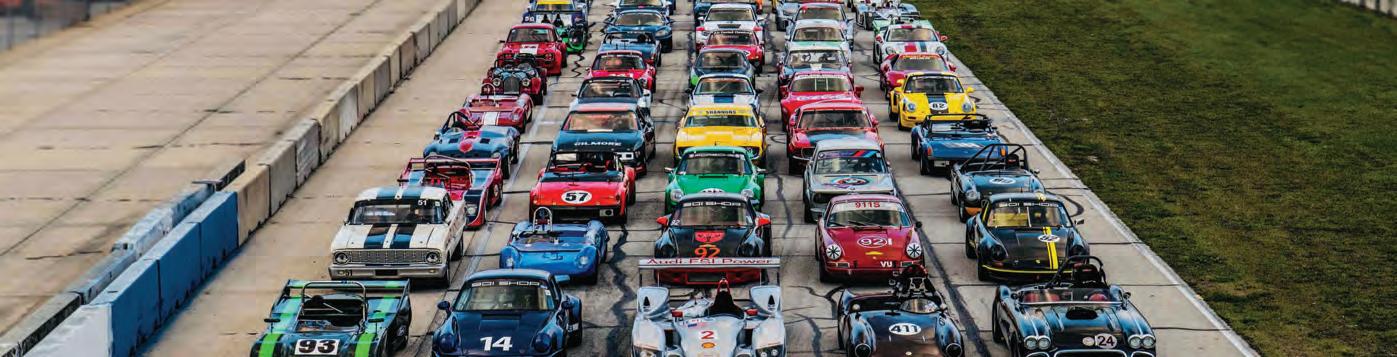
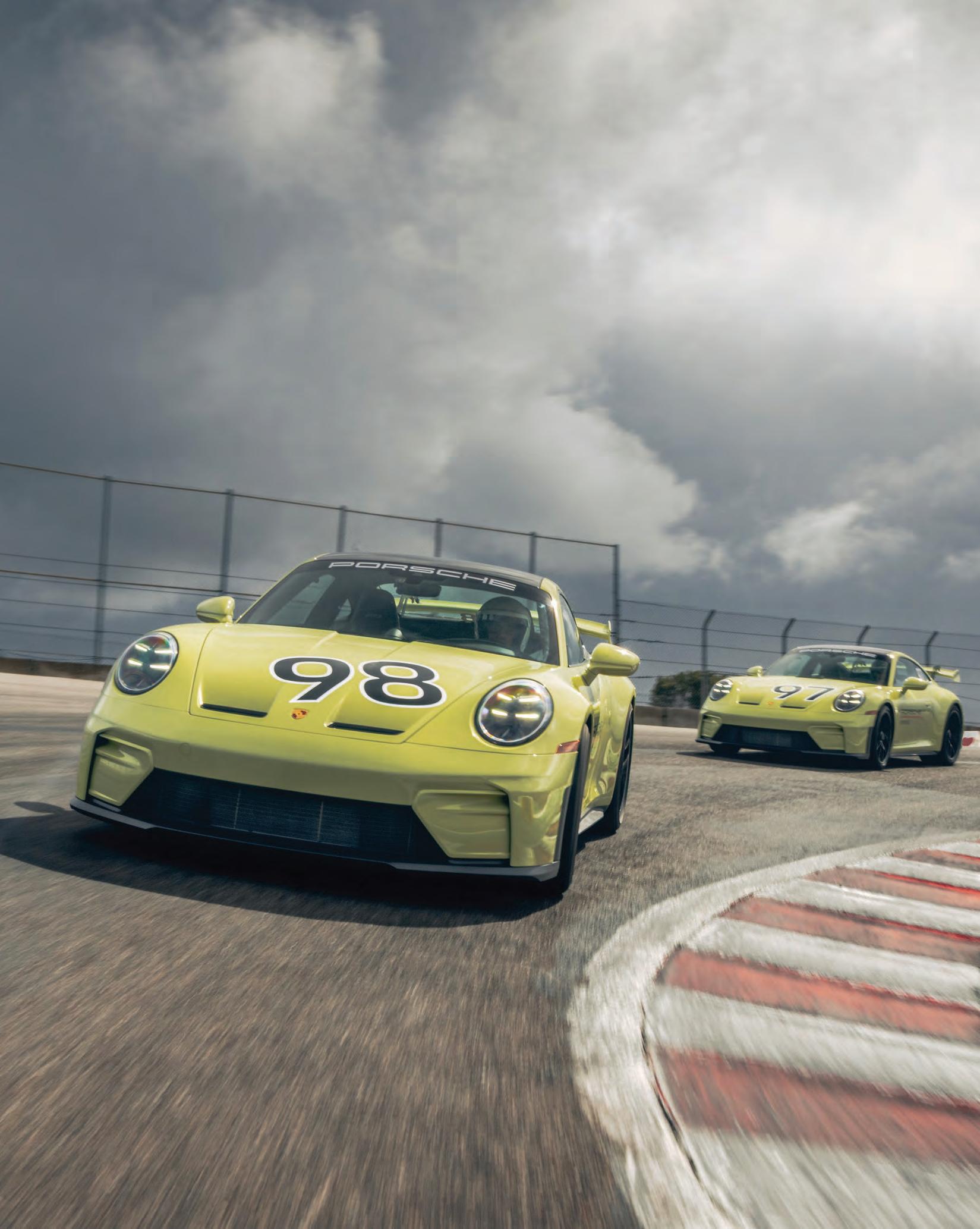
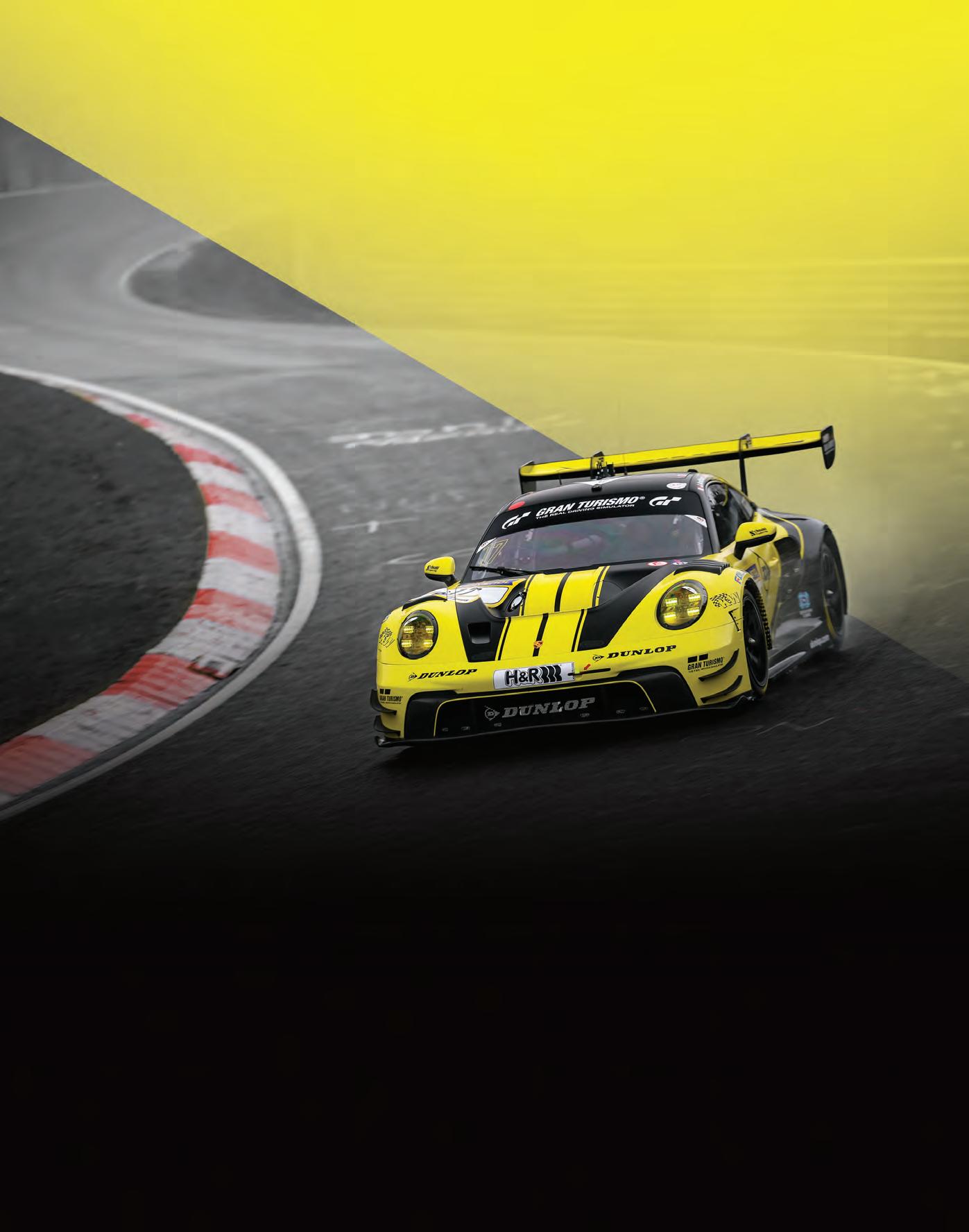
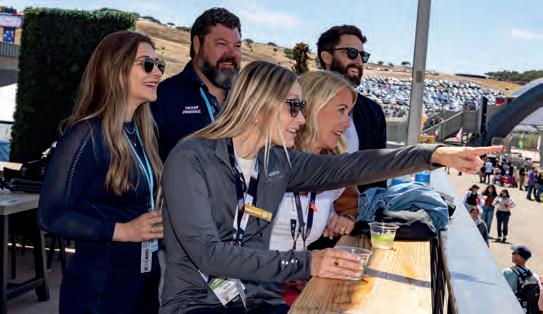
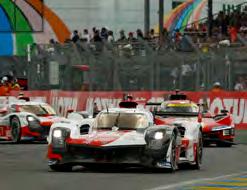
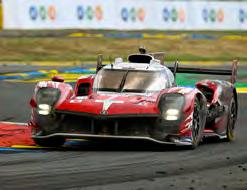
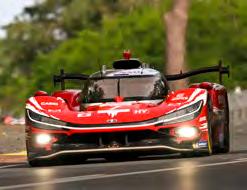
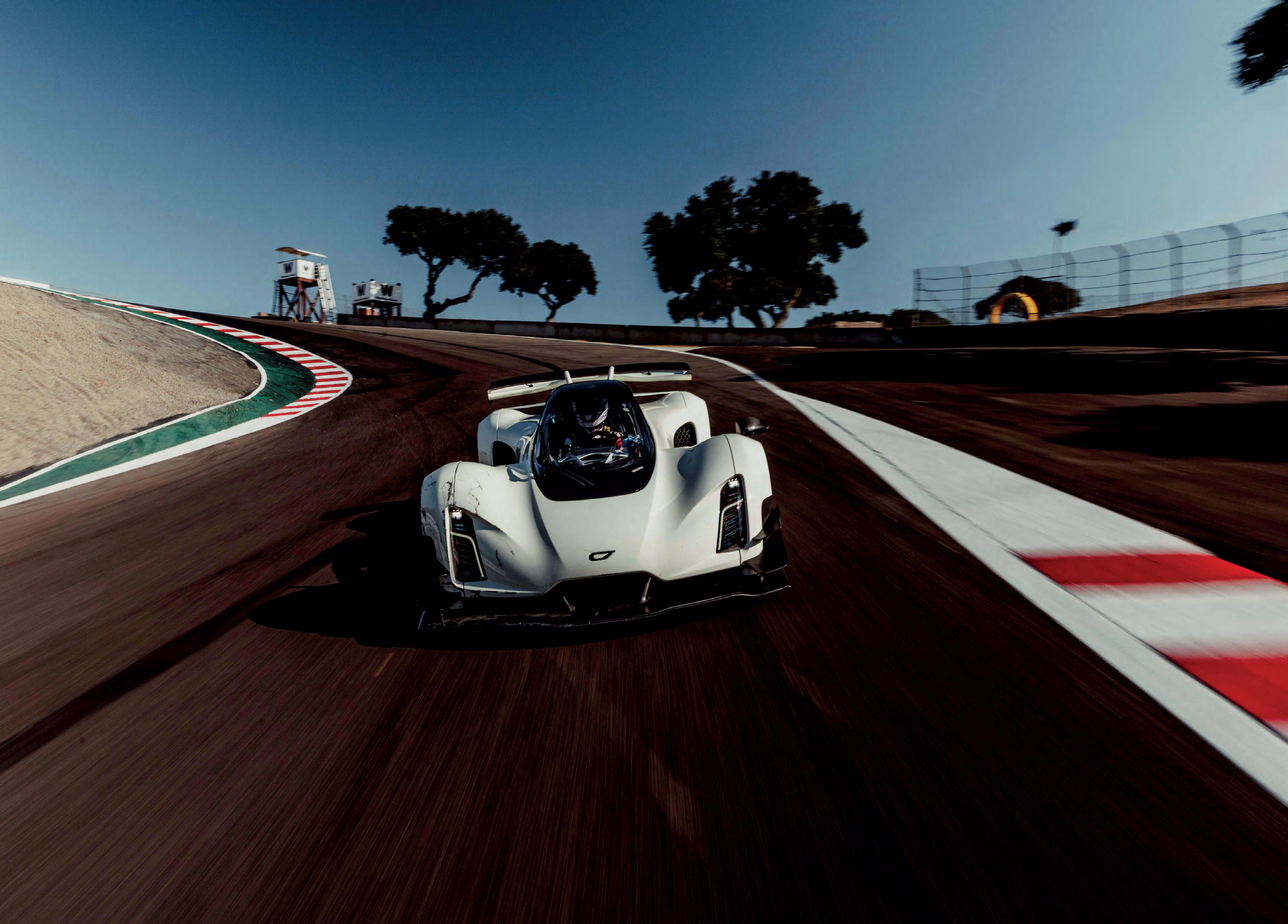
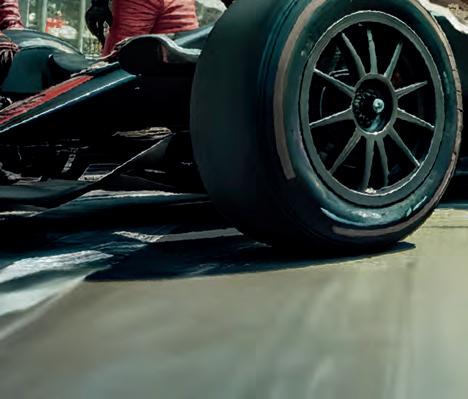
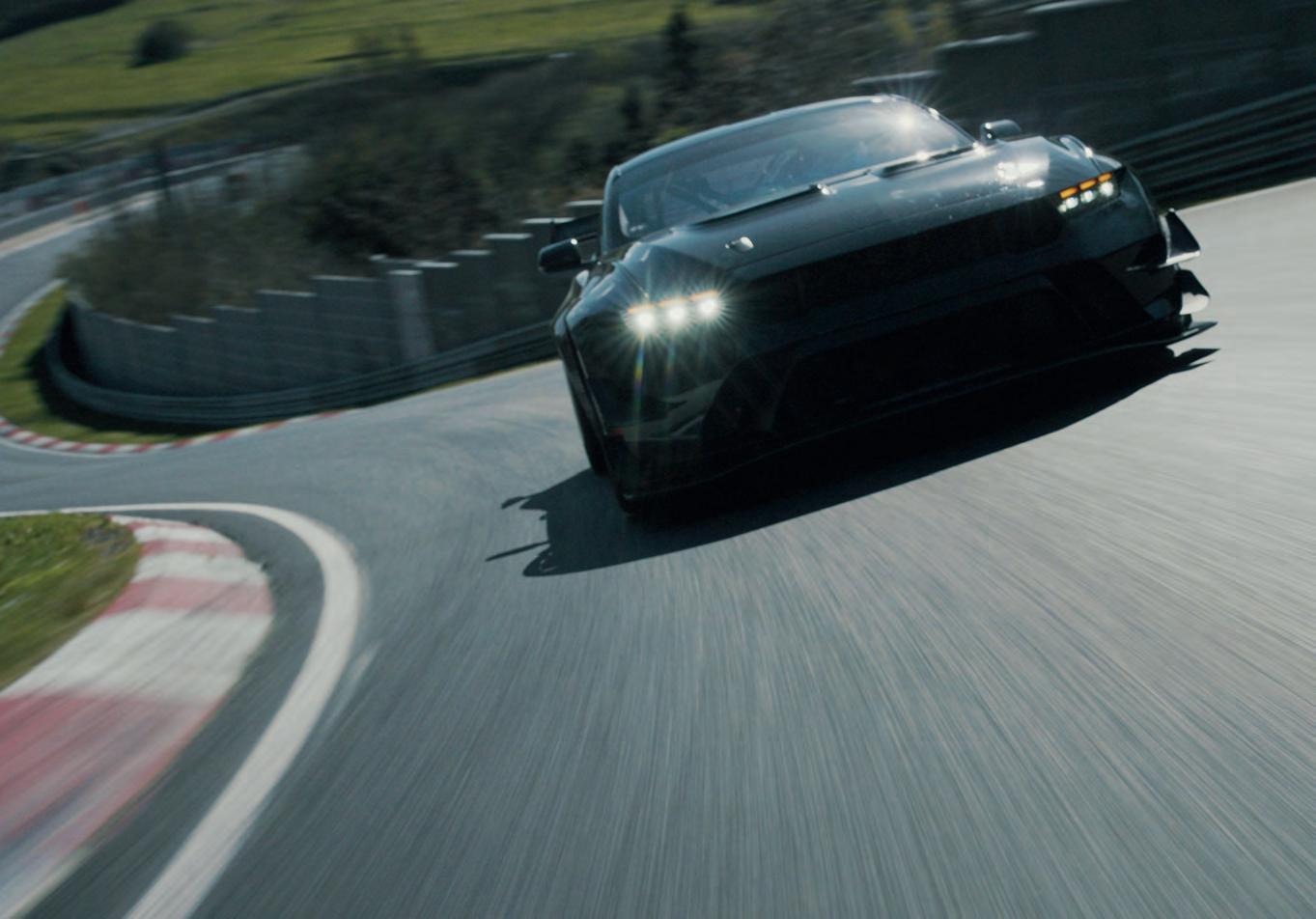
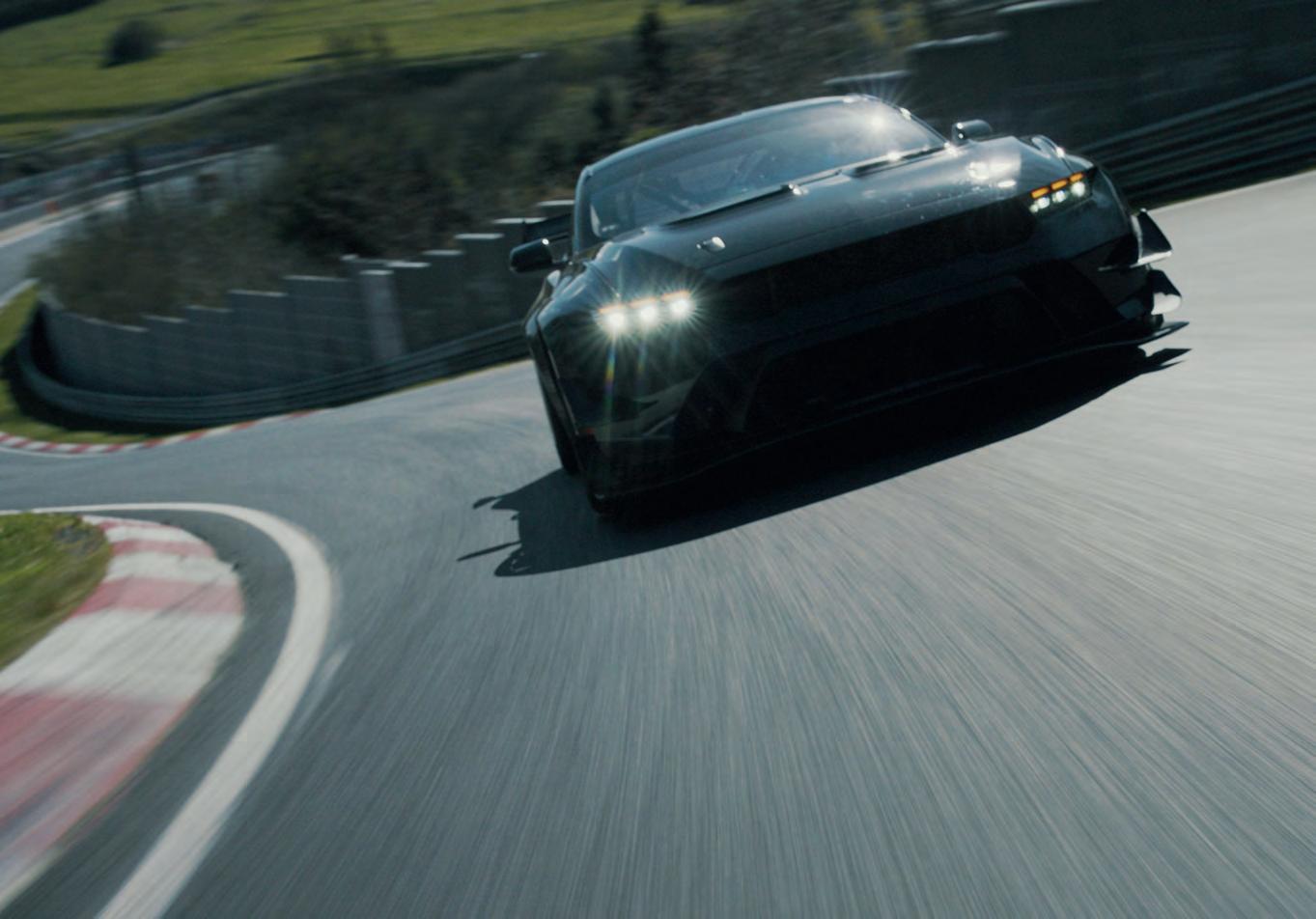
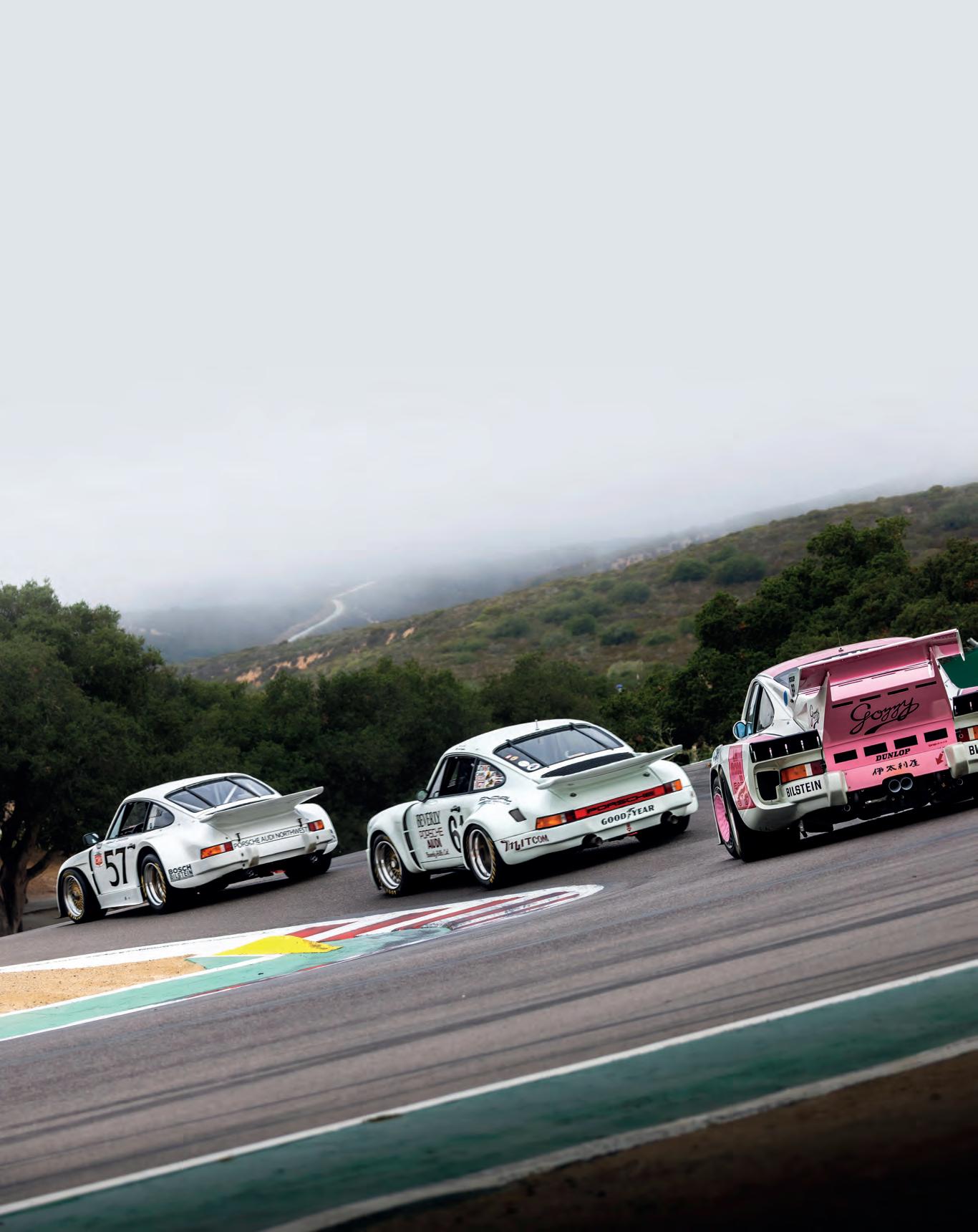
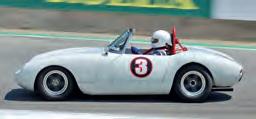
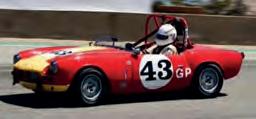
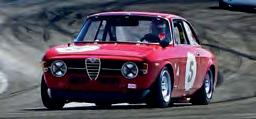
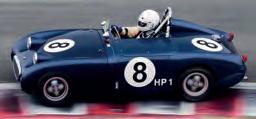
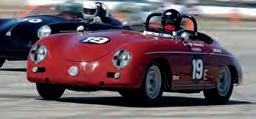
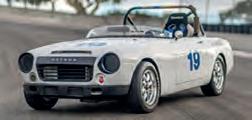
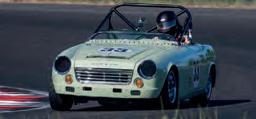
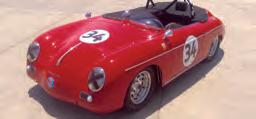
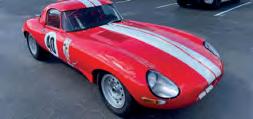
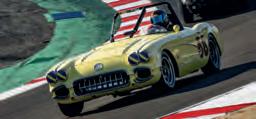
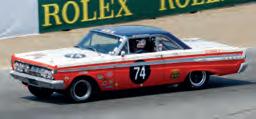
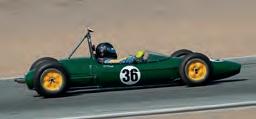
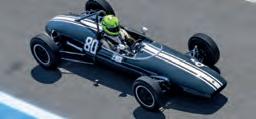
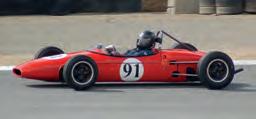
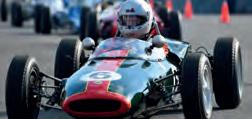
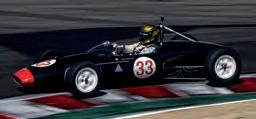
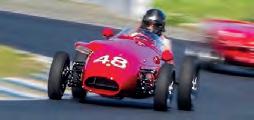
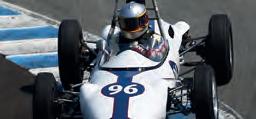
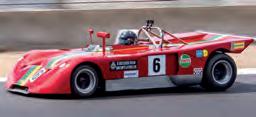
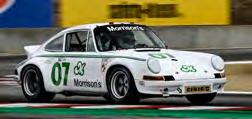
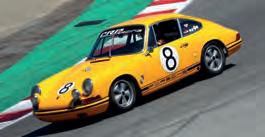
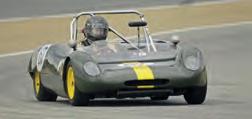
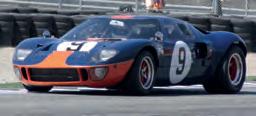
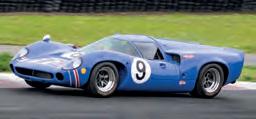
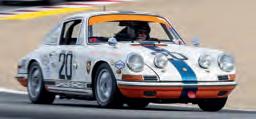
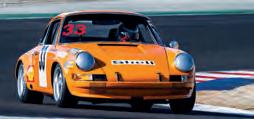
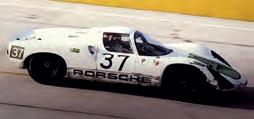
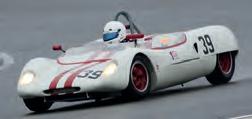
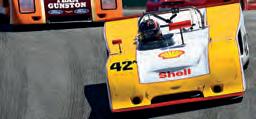
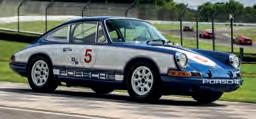
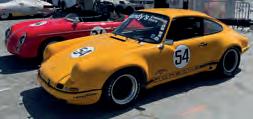
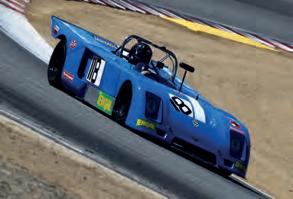
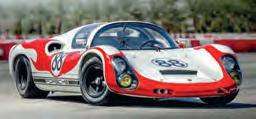
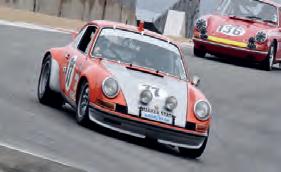
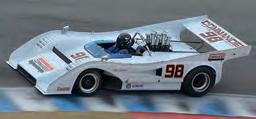
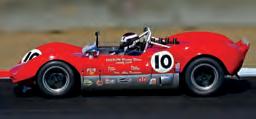
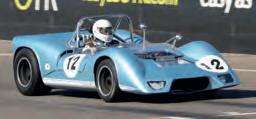
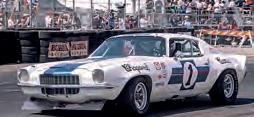
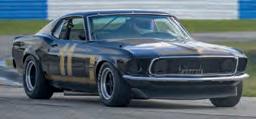
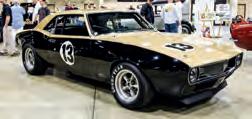
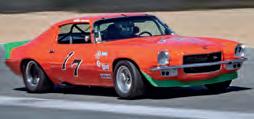
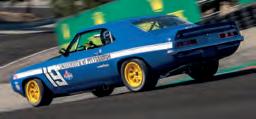
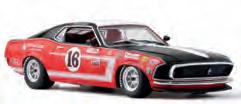
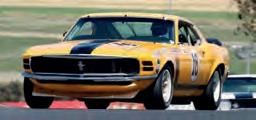
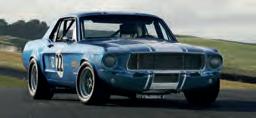
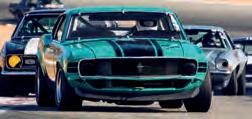
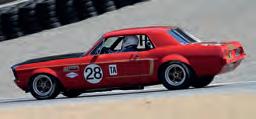
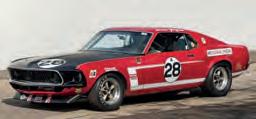
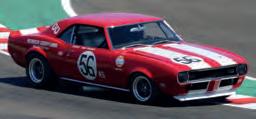
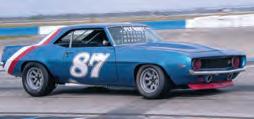
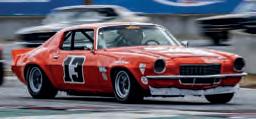
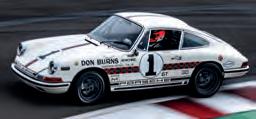
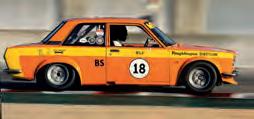
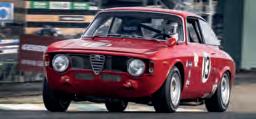
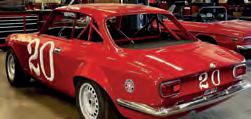
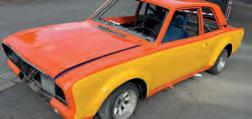
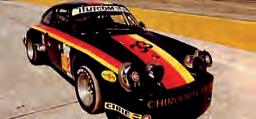
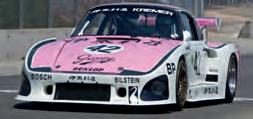
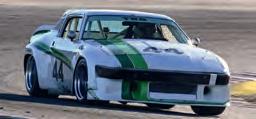
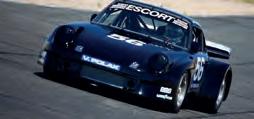
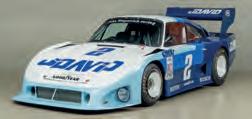
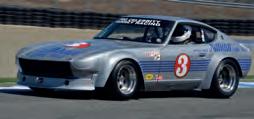
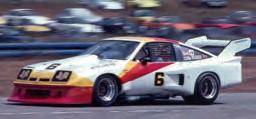
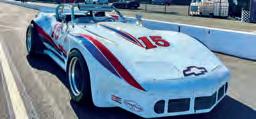
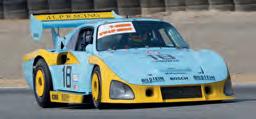
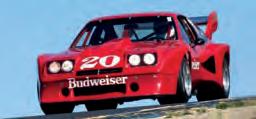
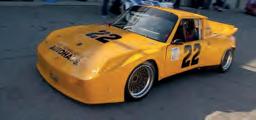
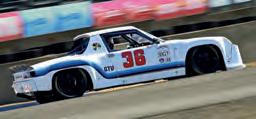
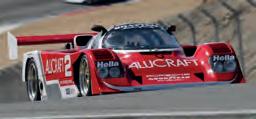
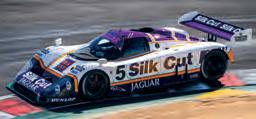
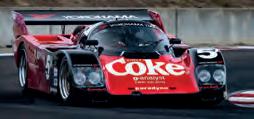
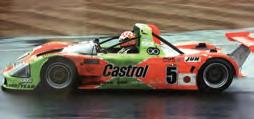
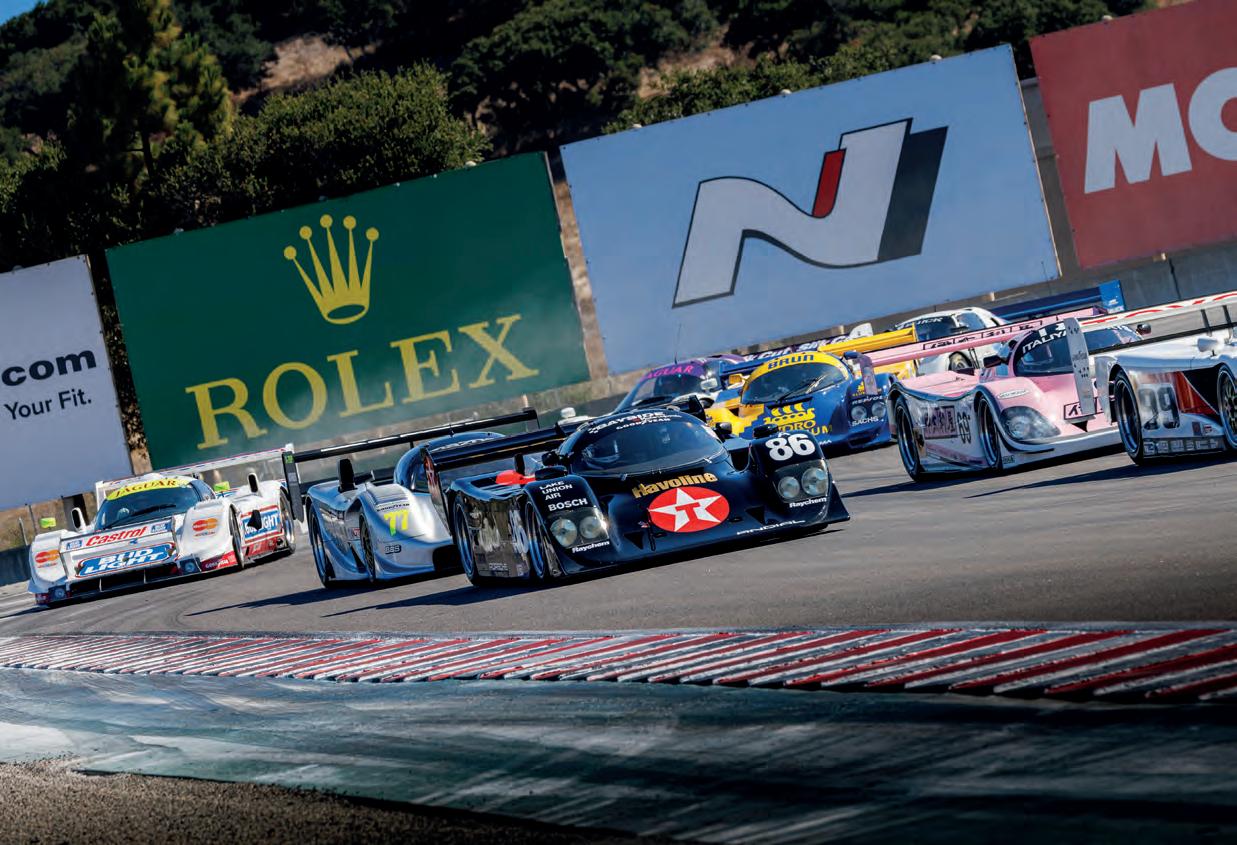
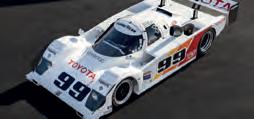
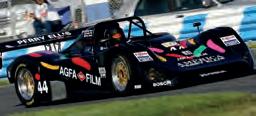
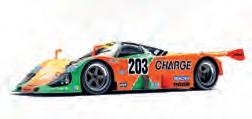
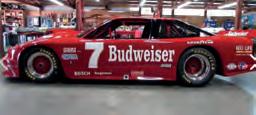
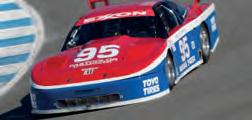
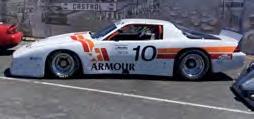
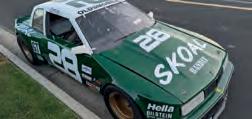
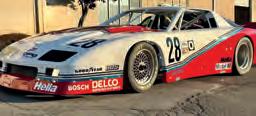
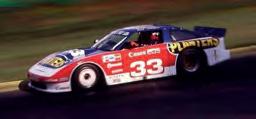
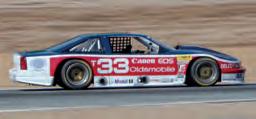
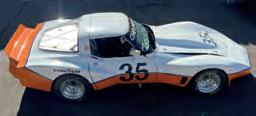
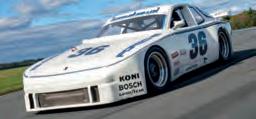
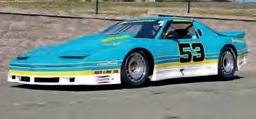
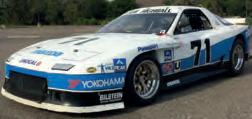
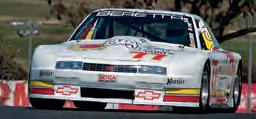
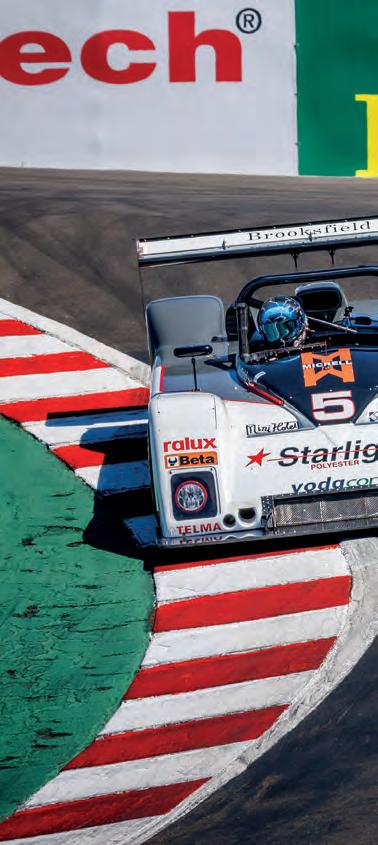
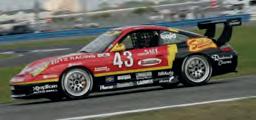
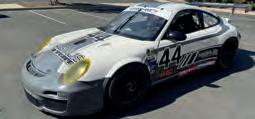
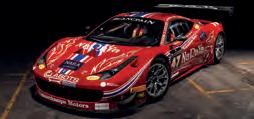
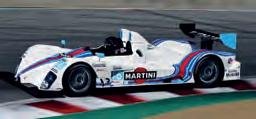
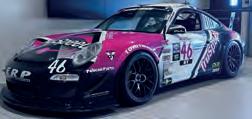
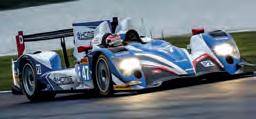
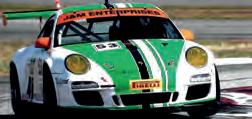
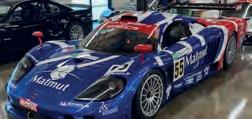
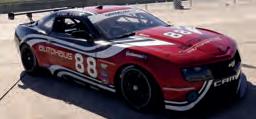
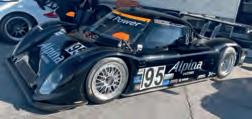
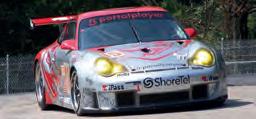
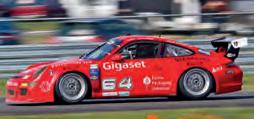
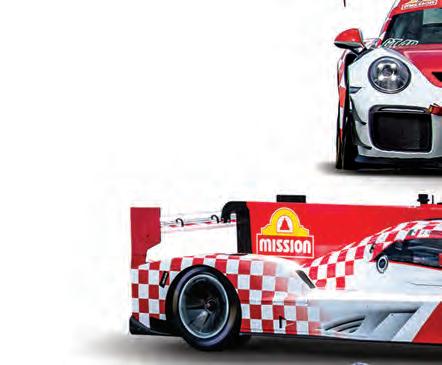
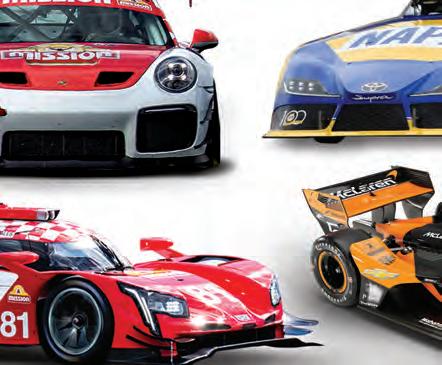
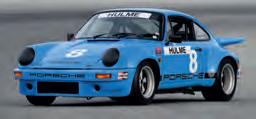
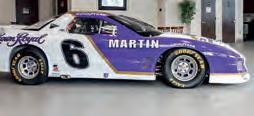
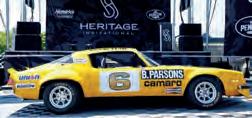
Drive the legendary Laguna Seca Circuit in the latest high-performance Porsche models with expert instruction tailored to all skill levels. Sharpen technique and elevate your driving on one of the world’s most iconic tracks.
Book your course today and take the next step in your driving journey. Limited availability for 2026.
Call 770-290-7000 or visit porschedriving.com/track-experience to register today.
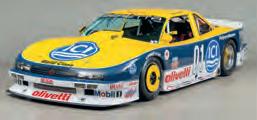
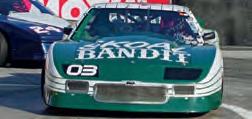
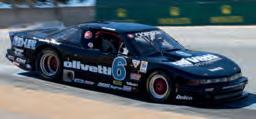
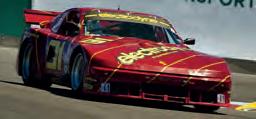
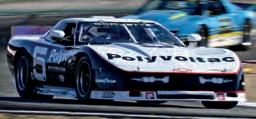
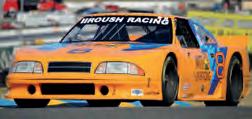
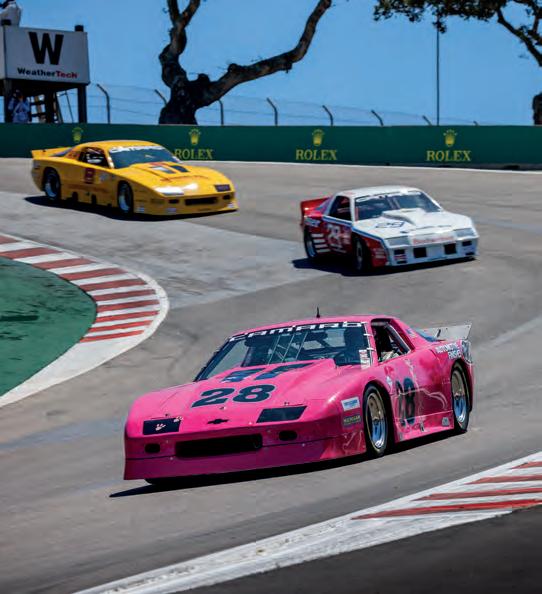
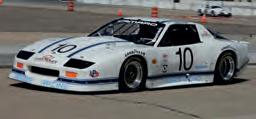
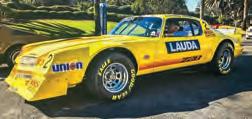
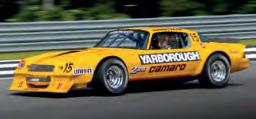
4:00 - 4:25 Group 11 Rolex Race - Tommy Kendall Trophy 1981-1991 GTO, GTU, Trans Am
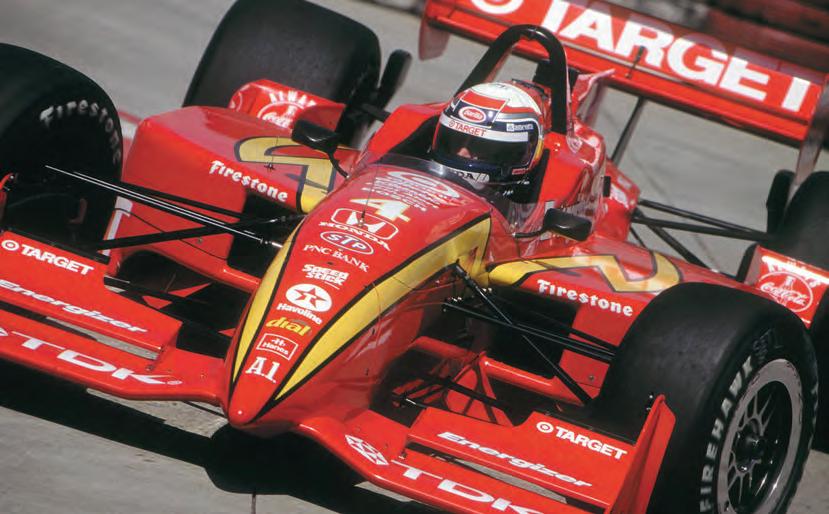
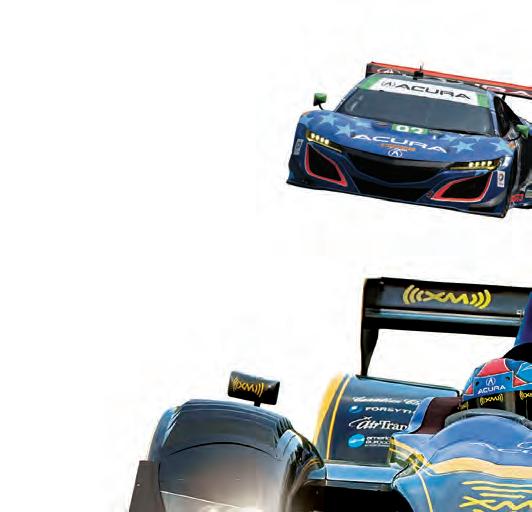
4:30 - 4:55 INDYCAR Exhibition
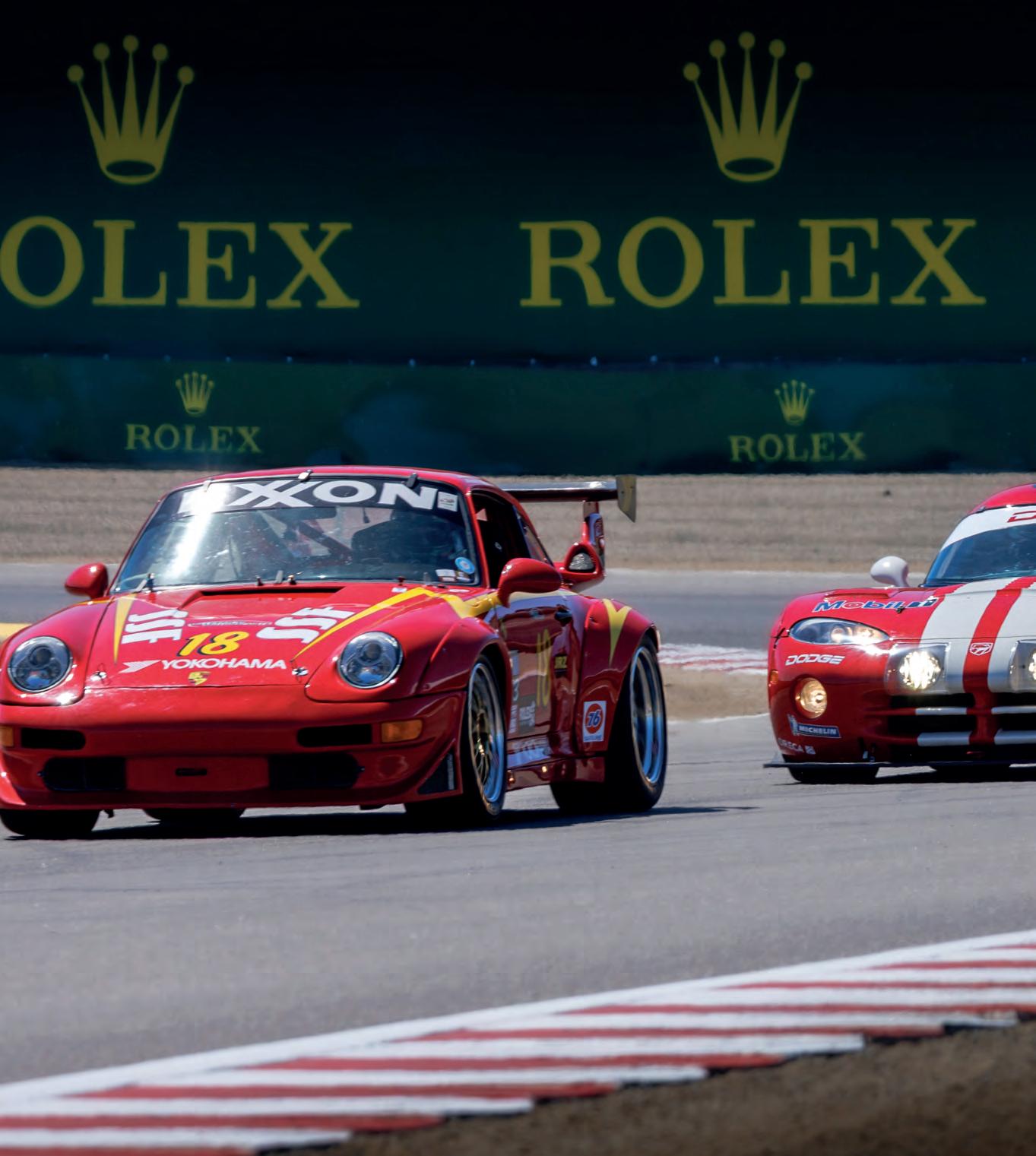
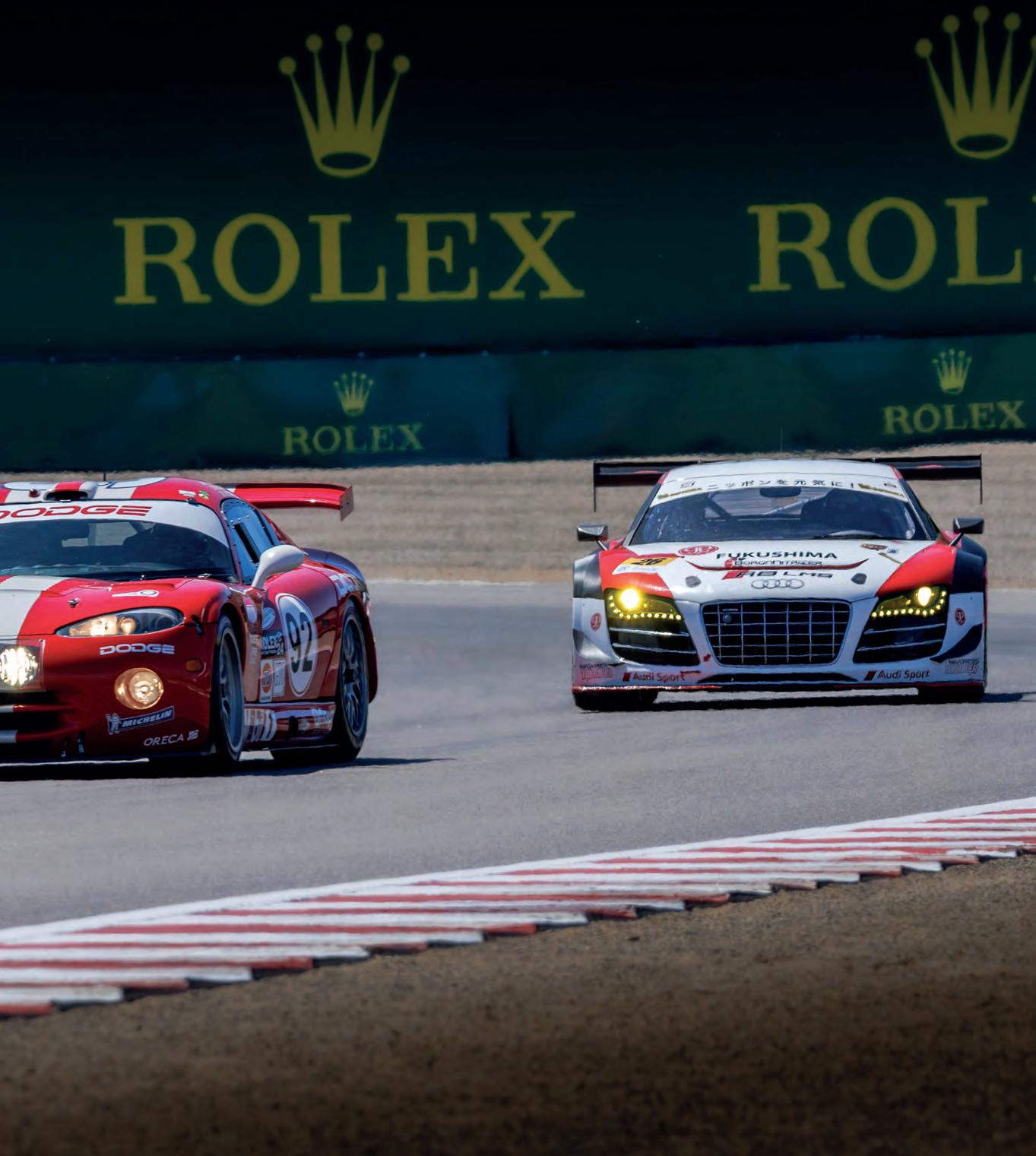
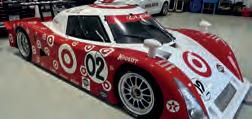
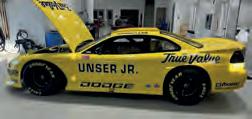
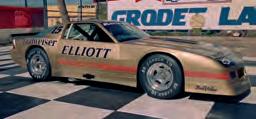
5:00 - 5:40 Group 12 Rolex RaceScott Pruett Legends of Endurance Cup 1991-2011 IMSA ALMS, Grand Am, FIA
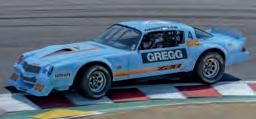
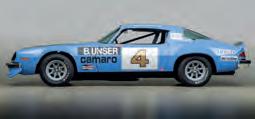
5:45 - 6:10 Group 9 Rolex Race - Peter Gregg Trophy 1973-1981 IMSA GT, GTX, AAGT, GTU, FIA
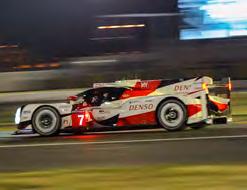
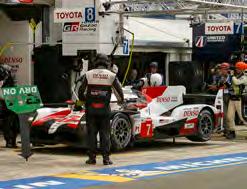
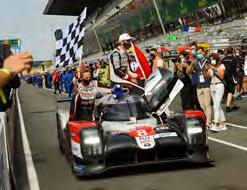
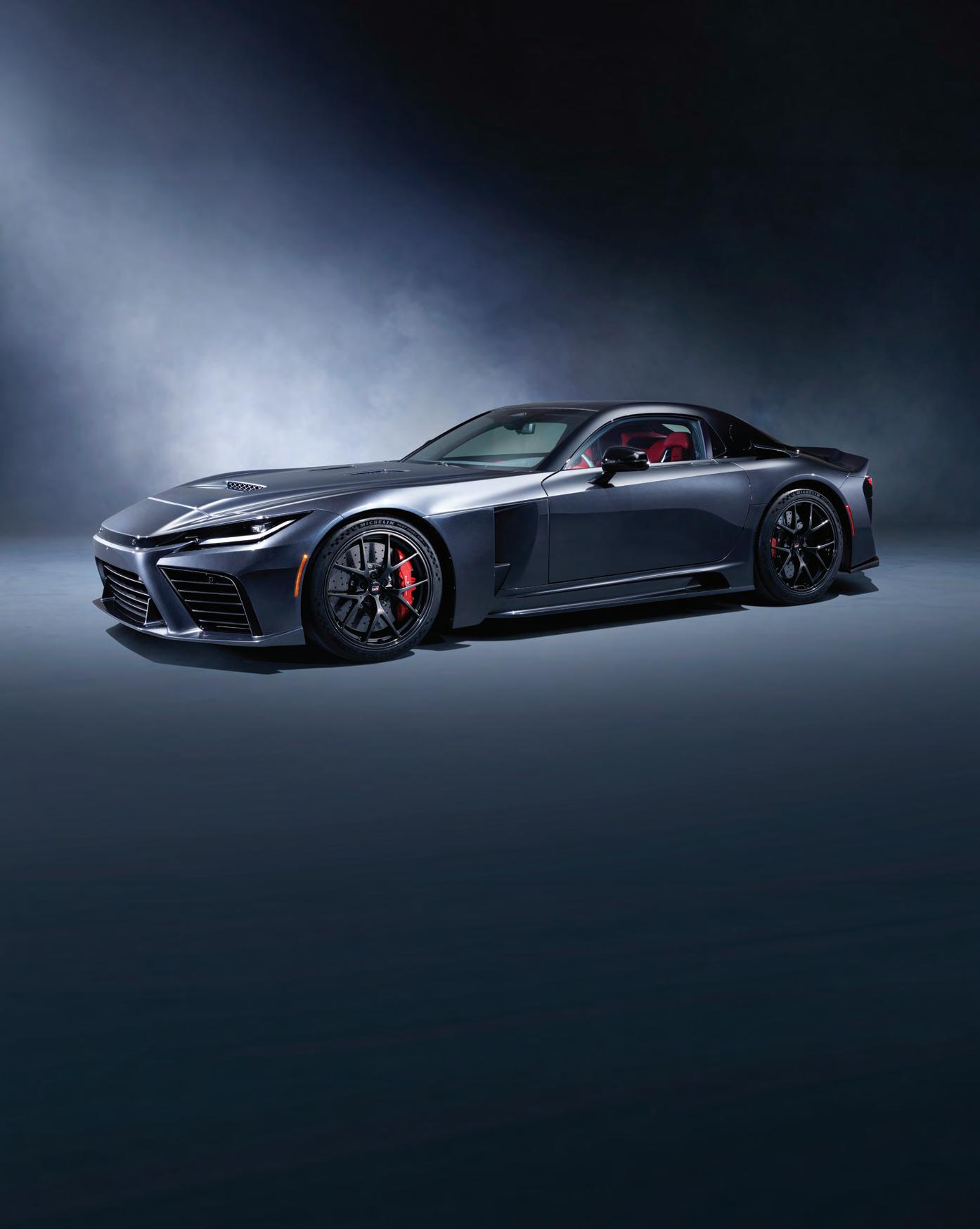
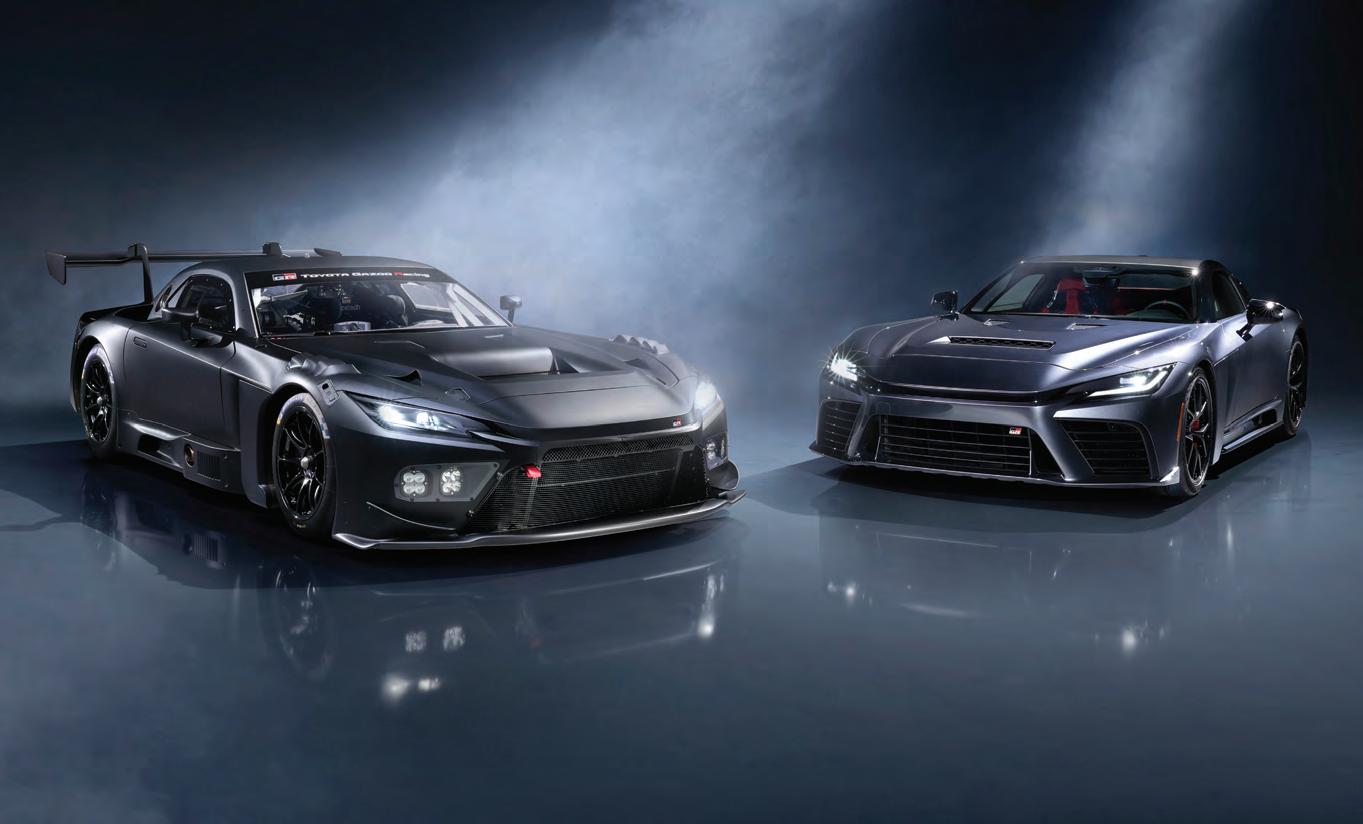
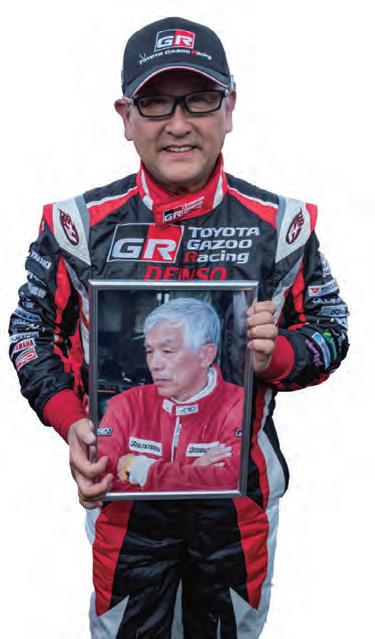
6:15 - 6:30 Gazoo Racing Exhibition
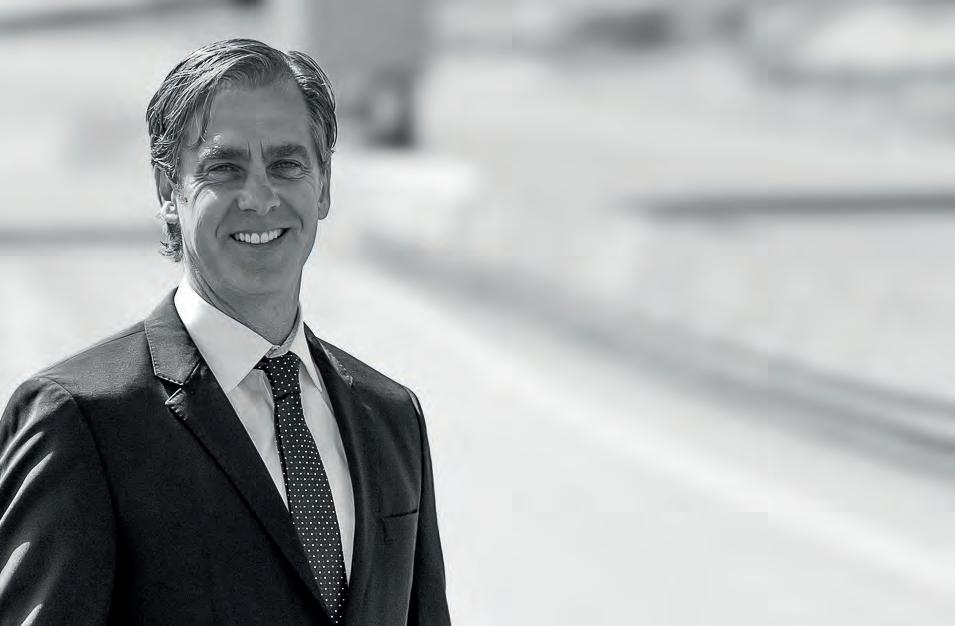
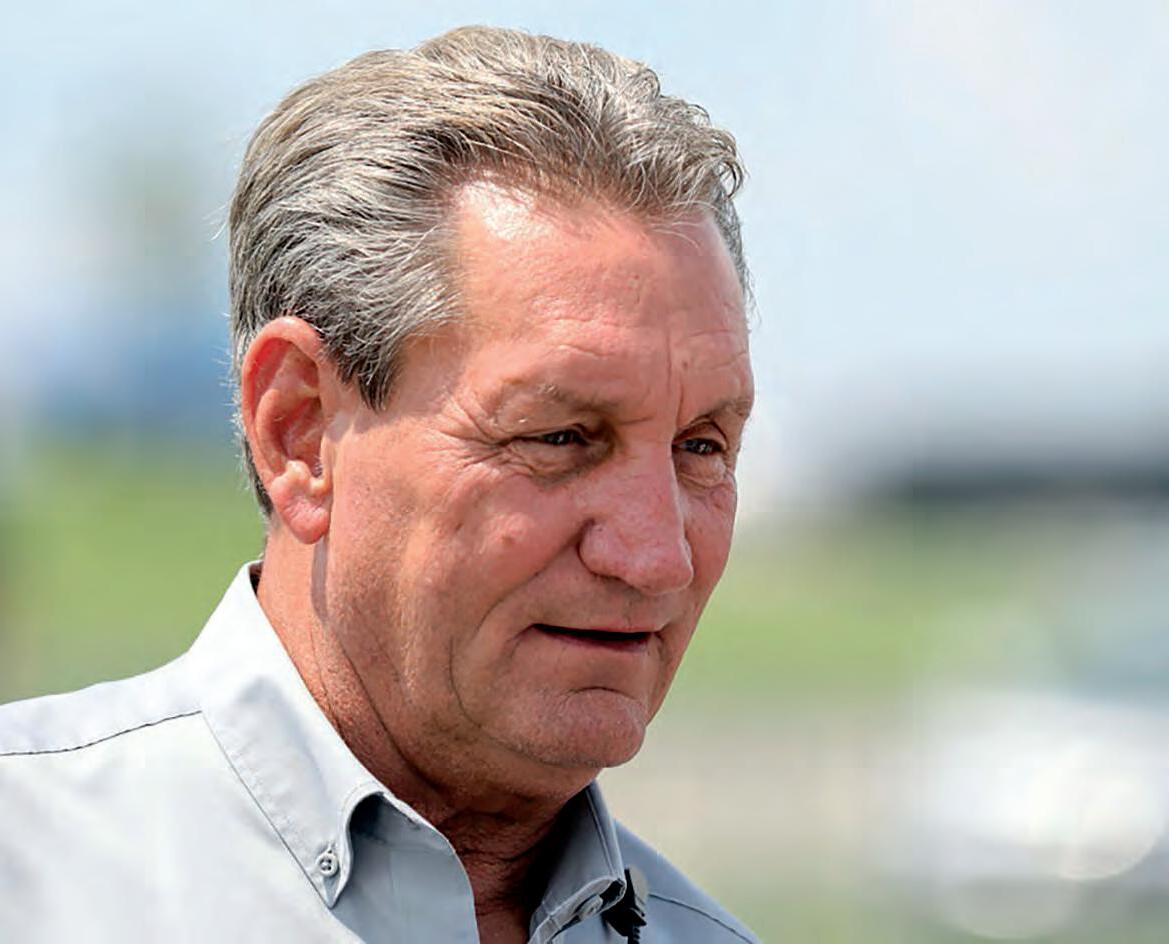
MEL HARDER
DEAR FRIENDS
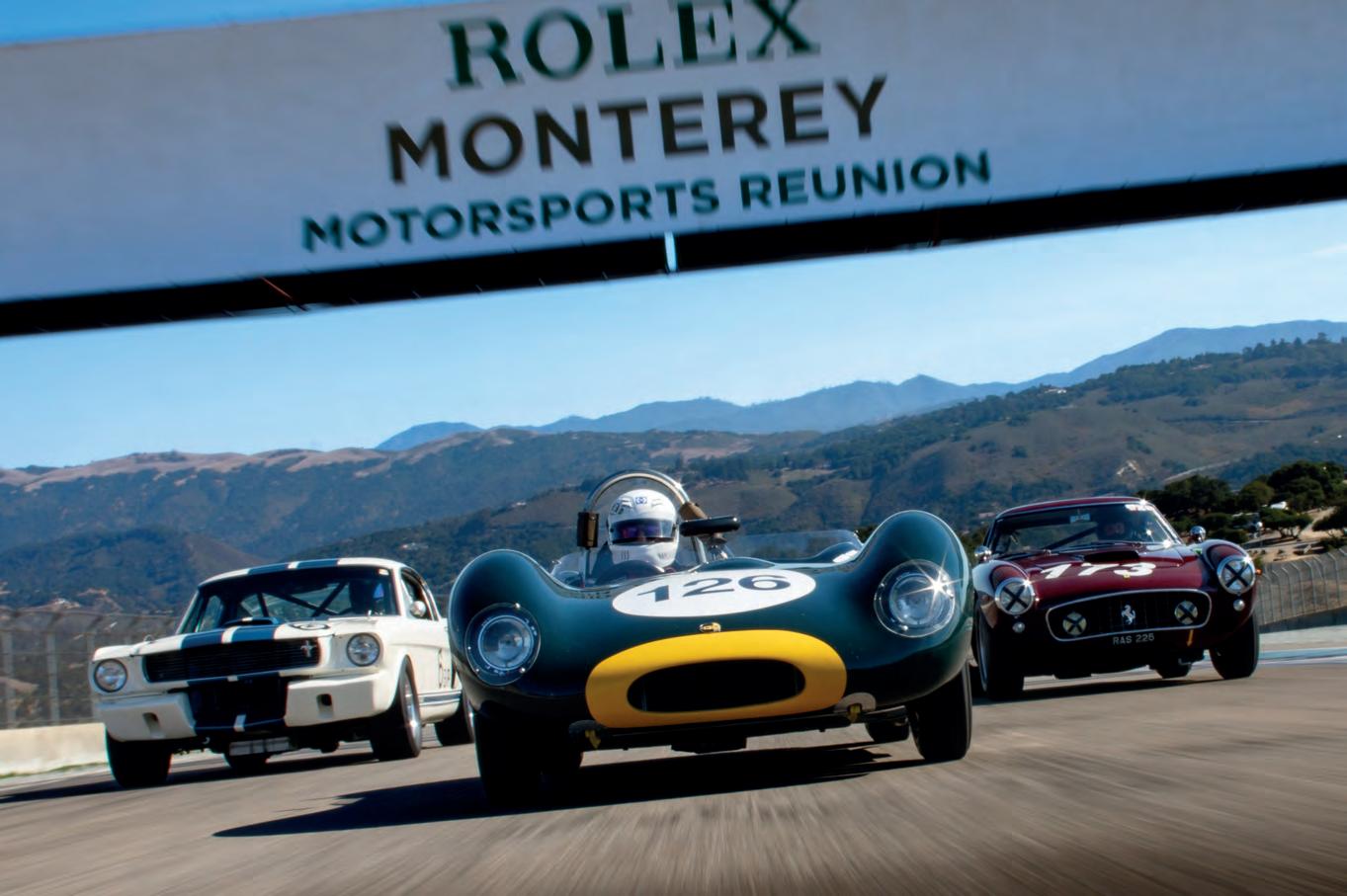
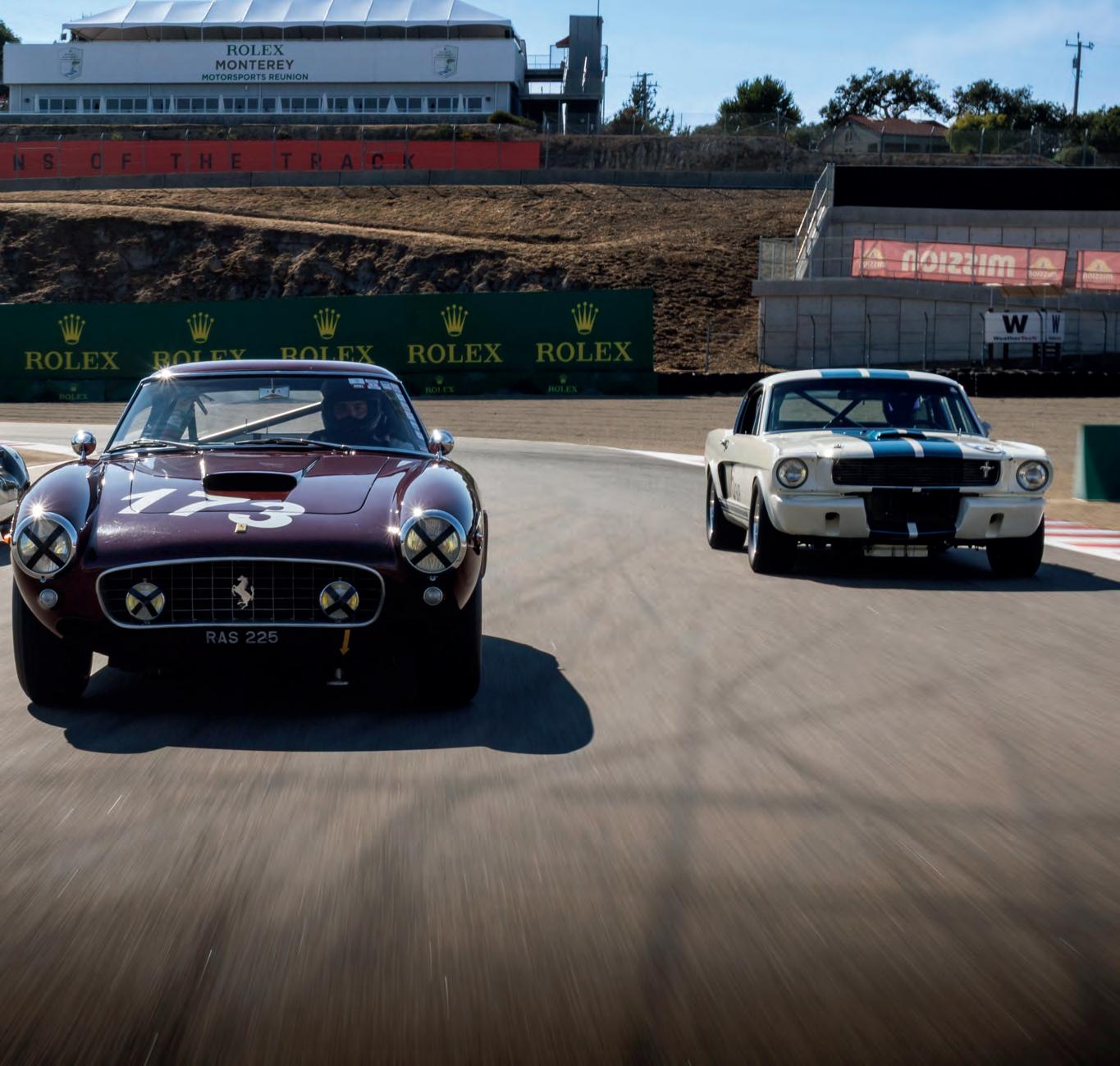
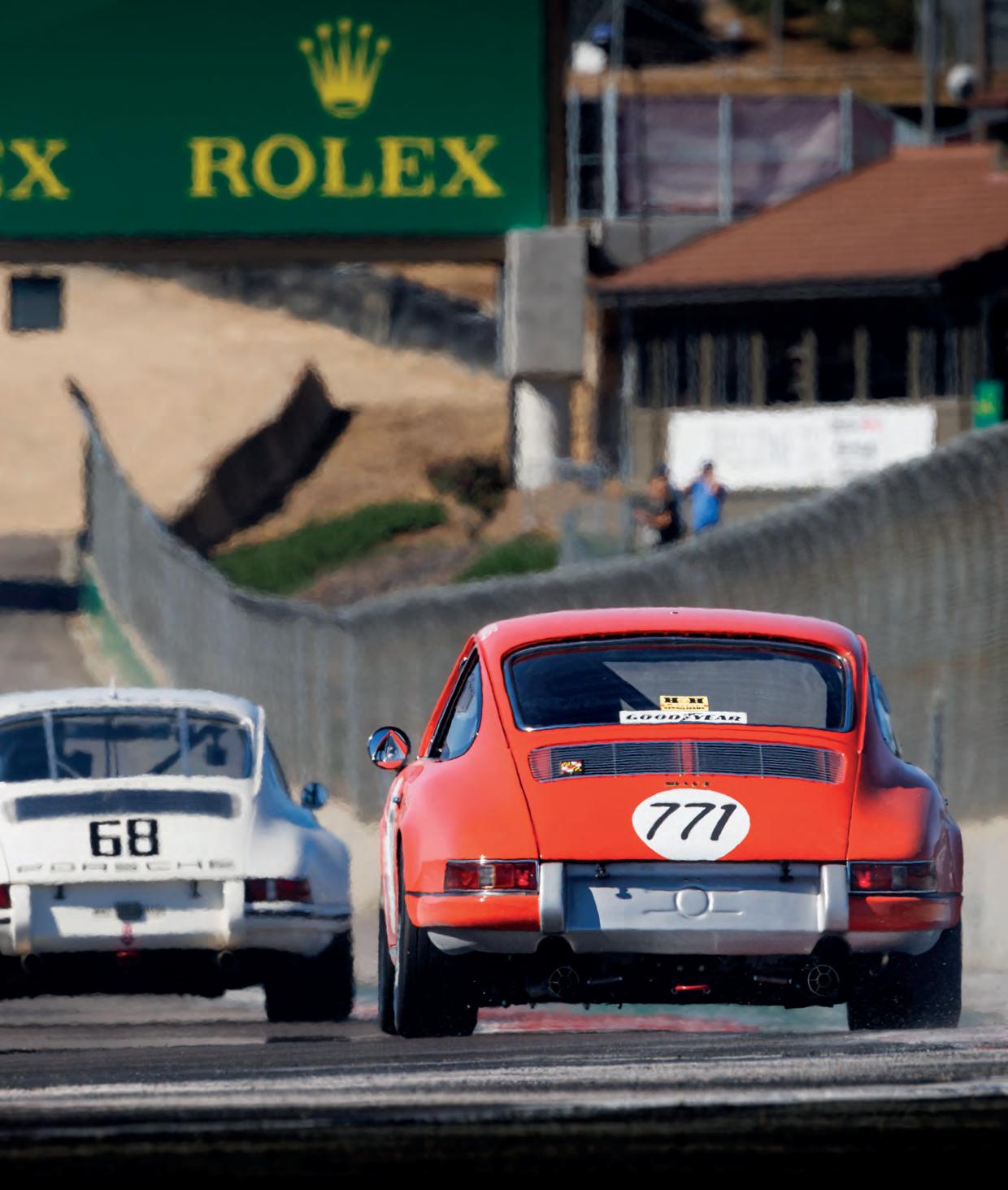
On behalf of WeatherTech Raceway Laguna Seca, welcome to the 52nd edition of historic racing on the Monterey Peninsula. The Rolex Monterey Motorsports Reunion is a special gathering where you can enjoy the full sensory experience of motorsport history coming alive — on and off track.
You are going to see more than 400 authentic and historic automobiles racing like they were built to do. The selection process is demanding, and it assures that what you see is the real deal.
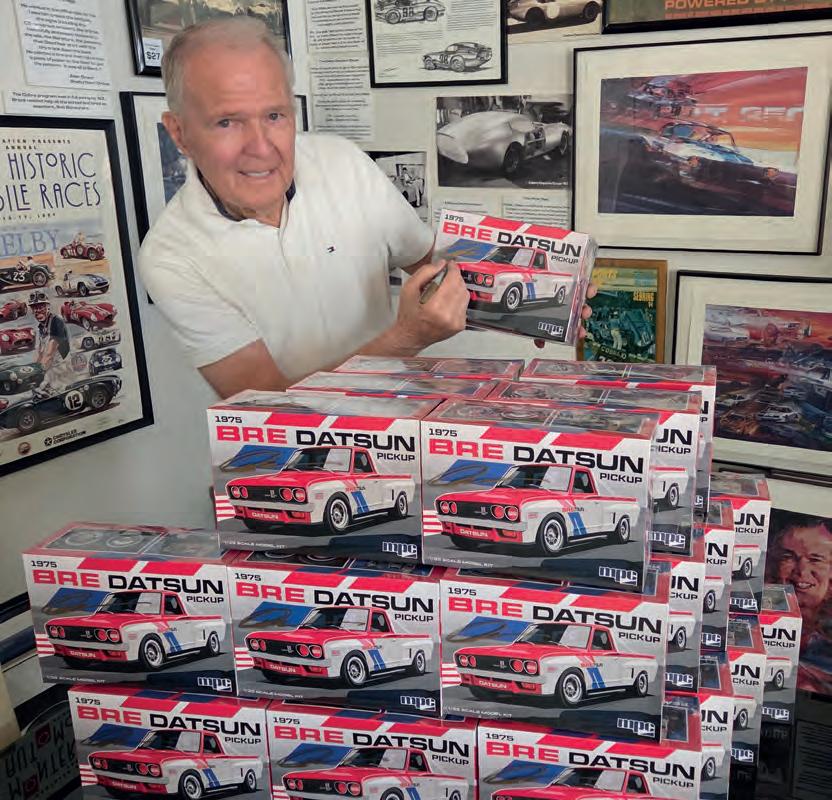
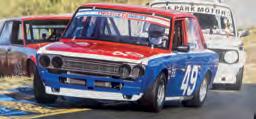
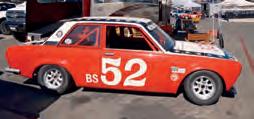
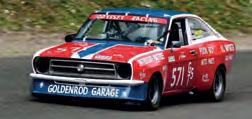
For the first time in the event’s history, we celebrate a country versus a single marque. Apart from honoring Nissan in 2018, it is the first time Japanese performance cars take center stage. It is also a privilege to welcome Peter Brock as Grand Marshal. Among his many accolades he is credited with is introducing the Datsun brand to motorsports through his BRE team, and thus to the car-buying public. Visiting the historic Japanese exhibition will provide a thorough look at the influential cars and motorcycles of their era. These come from private collections or automakers and represent the pinnacle of performance.
As you walk through the paddock, I hope you will observe the juxtaposition of motorsport history. You’ll see the groundpounding Can-Am cars and “showroom
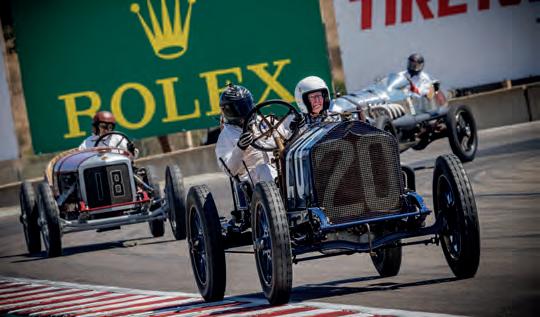
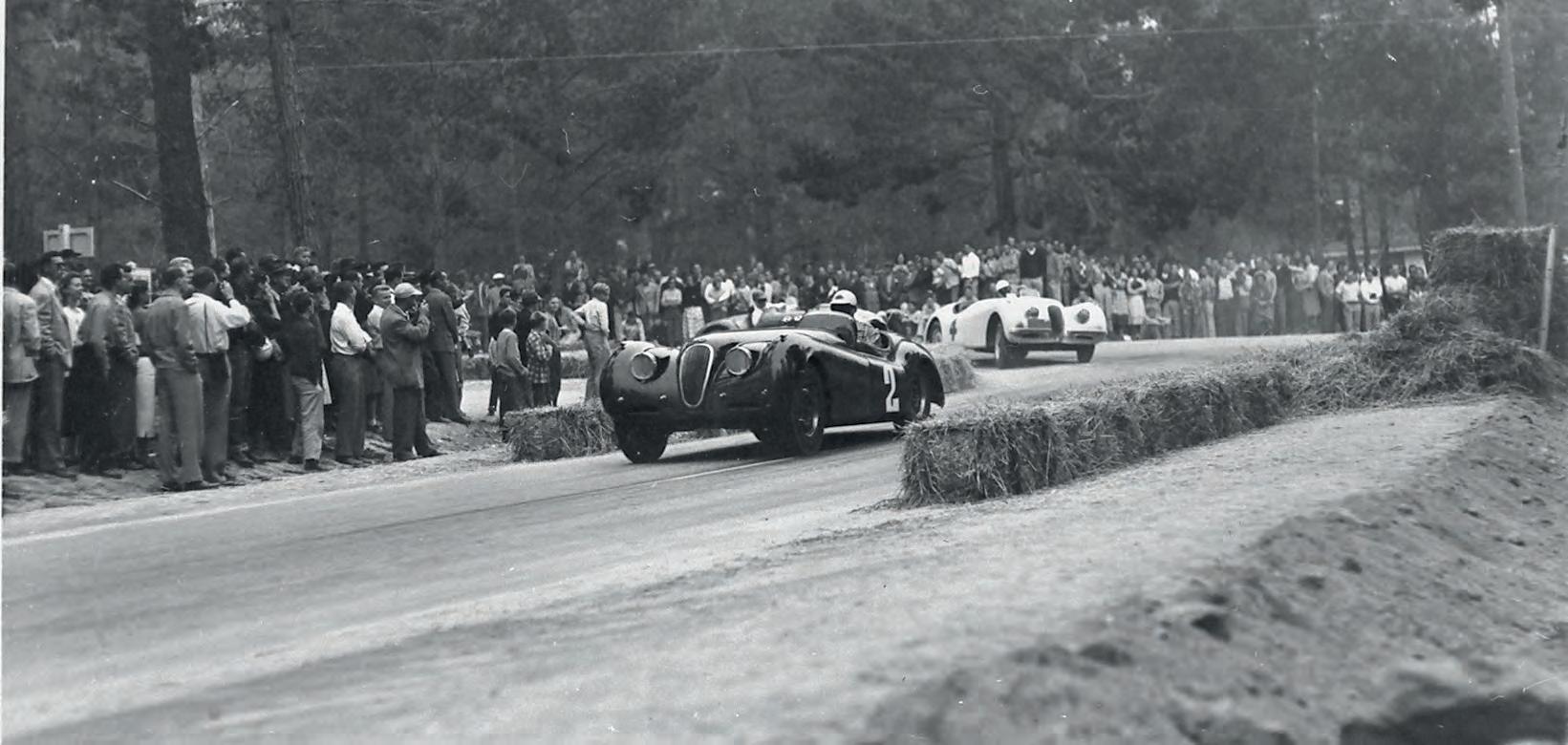
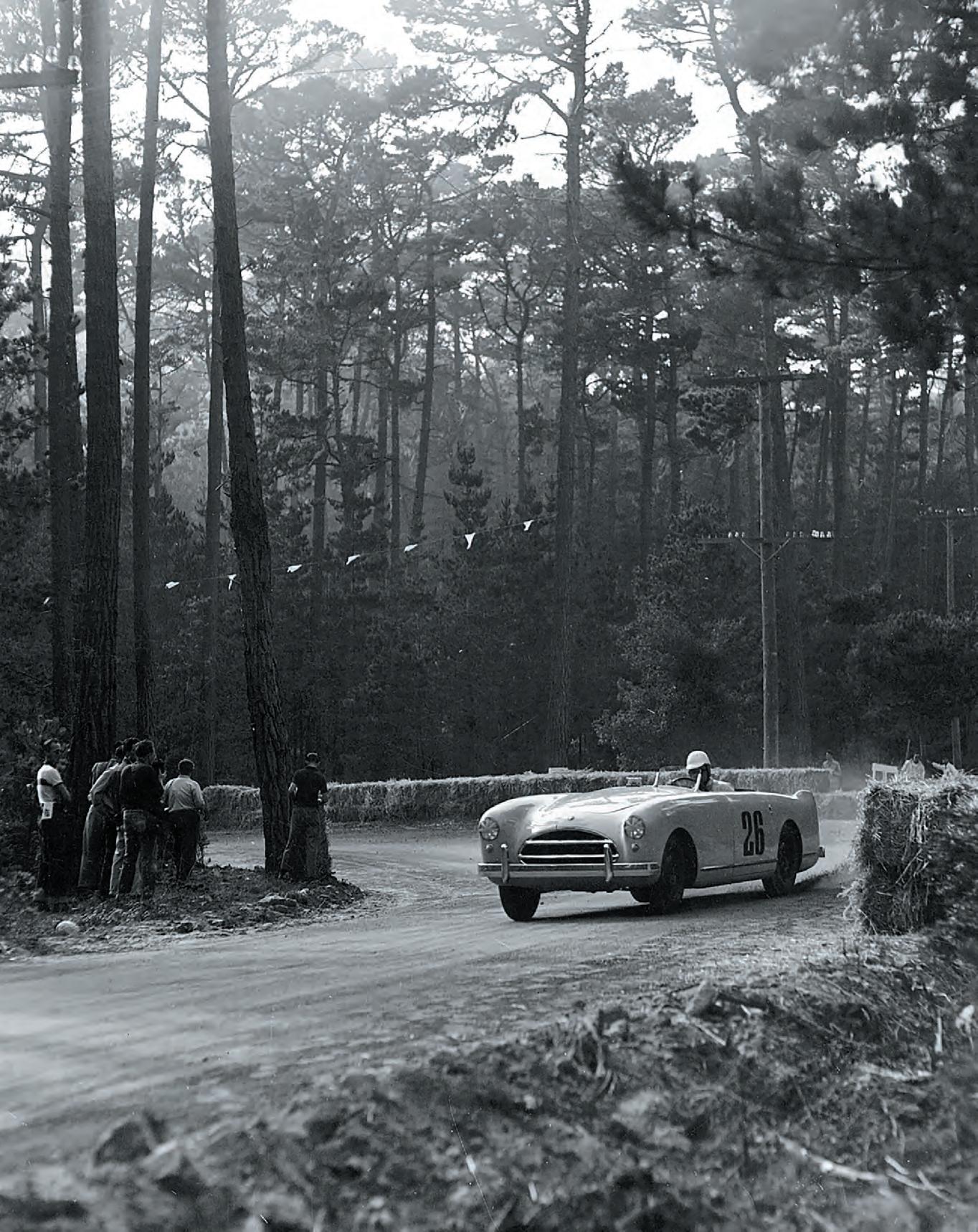
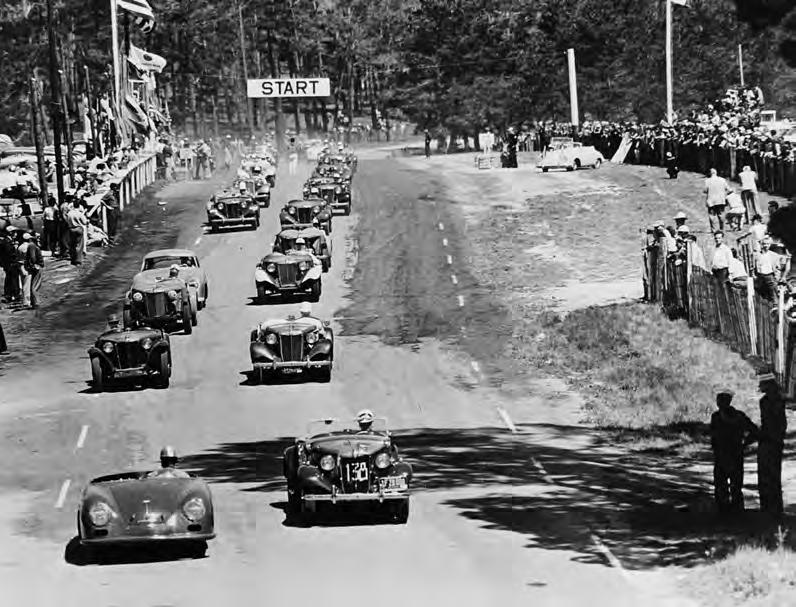
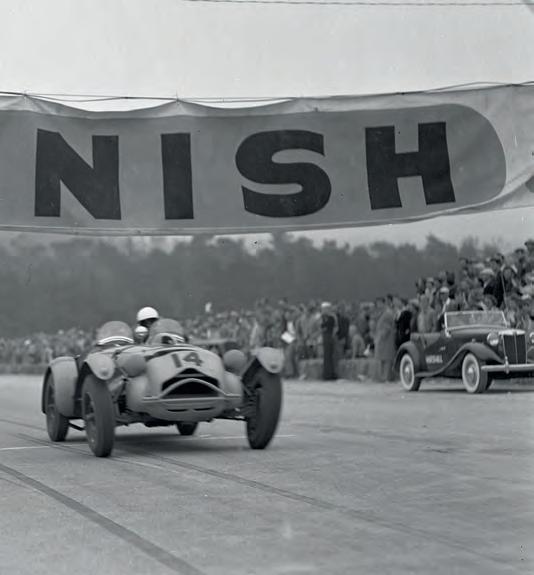
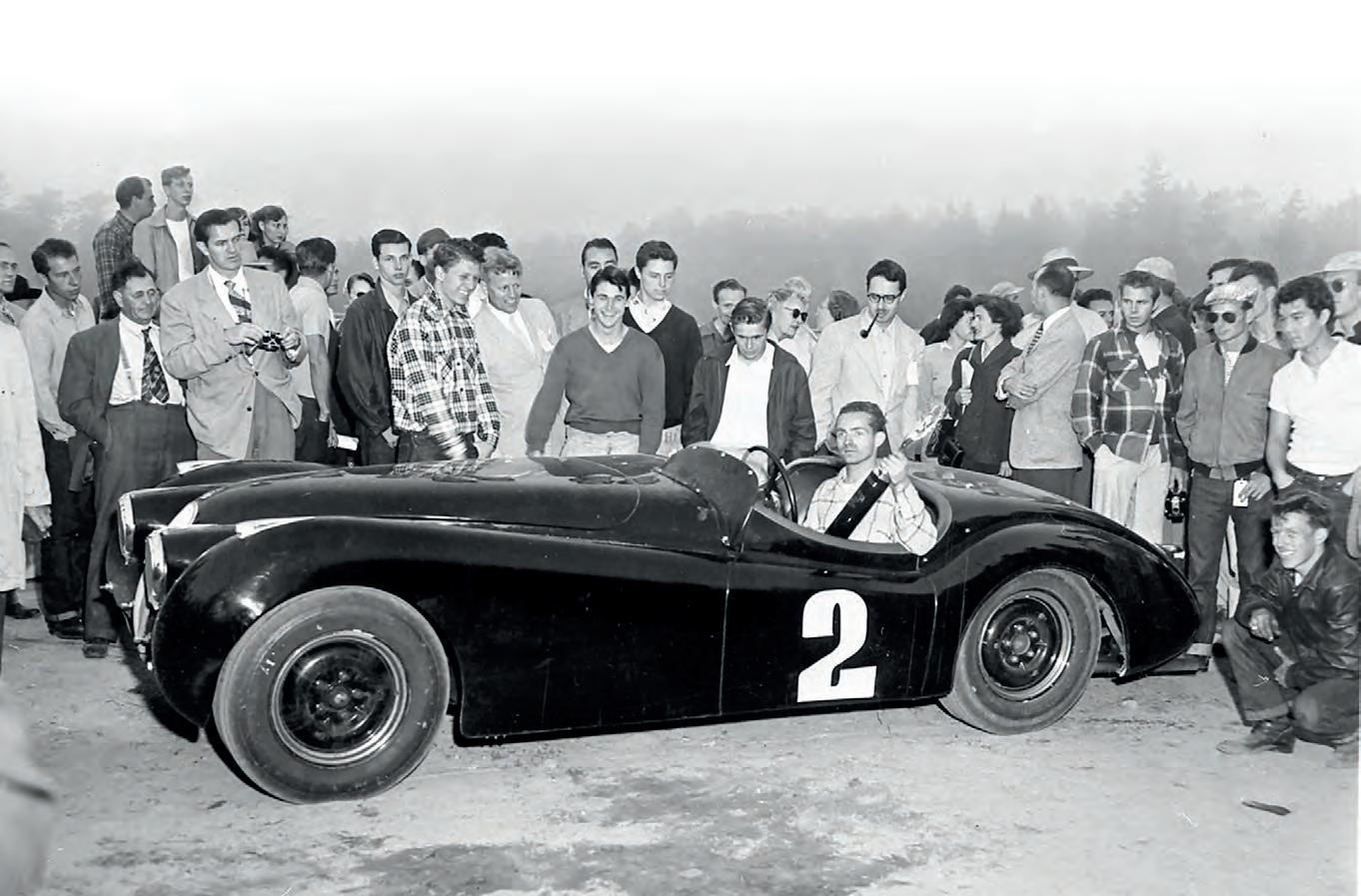
ready” Trans-Am cars that made the “Win on Sunday, Sell on Monday” phrase true in the late ’60s and early ‘70s. Talk to the owners of the original cars that competed in the Del Monte forest between 1950 and 1956 at the Pebble Beach Road Races and that exemplify the birth of sports car racing in the U.S. There is also a special exhibition of historic INDYCARs that demonstrate the evolution of America’s open-wheel series.
My sincere thanks to all the owners and drivers who annually bring us their cars to enjoy. They are the caretakers of history that we are fortunate to celebrate. A special welcome and thank you also goes to our partners Rolex, WeatherTech, Ford Raptor, Mission Foods, Tire Rack and Porsche for their ongoing support.
This week is possible because of the hundreds of volunteers and thousands of fans who annually visit Laguna Seca. Our team shares your passion, and we are here to ensure your visit to WeatherTech Raceway Laguna Seca and the beautiful Central Coast is memorable.
Kind Regards,
Mel Harder President & General Manager, WeatherTech
Raceway Laguna Seca
WELCOME TO THE ROLEX MONTEREY MOTORSPORTS REUNION
Rolex is delighted to return to one of the world’s most iconic circuits, WeatherTech Raceway Laguna Seca, to celebrate historic motorsport. Each year, the Rolex Monterey Motorsports Reunion brings together an extraordinary field of authentic, race-proven machines that reflect the evolution of competition and the enduring spirit of those who drove, prepared and preserved them.
As title sponsor of the Rolex Monterey Motorsports Reunion since 2010, we recognize both the historical value of these extraordinary automobiles as well as the owners, mechanics and drivers whose dedication ensures their legacy endures for future generations.
This year’s event pays tribute to the icons of Japanese motorsport, marking the first time the Rolex Monterey Motorsports Reunion has celebrated a genre of cars from a single country. A specially curated display of significant Japanese race cars and motorcycles will take visitors on a journey through this rich and influential chapter of racing history.
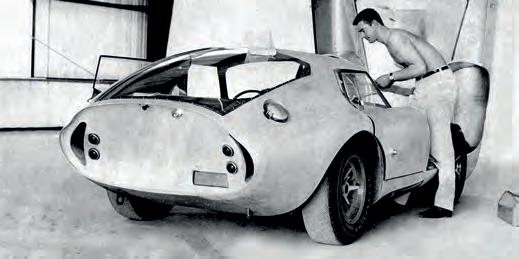
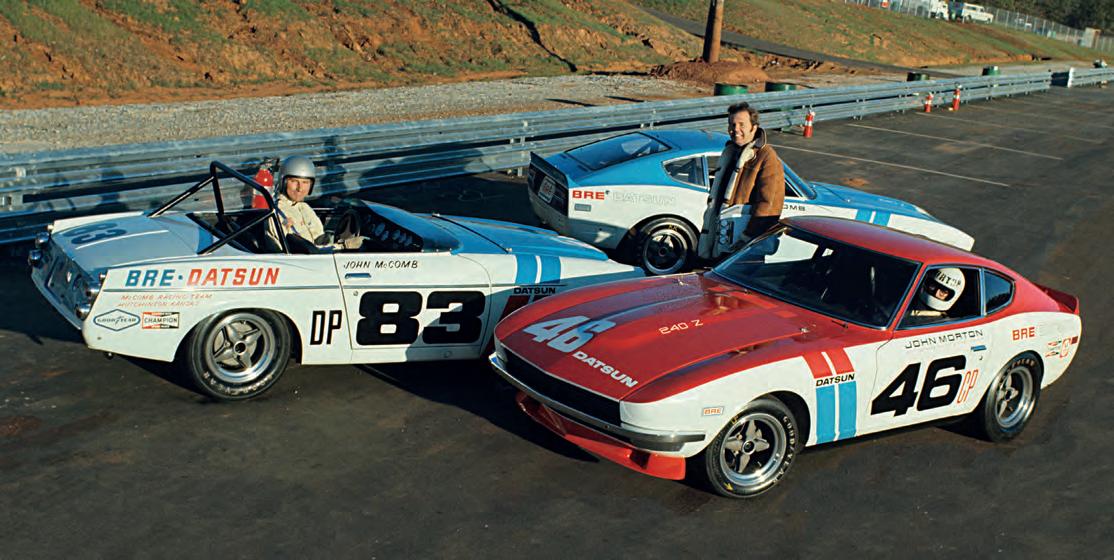
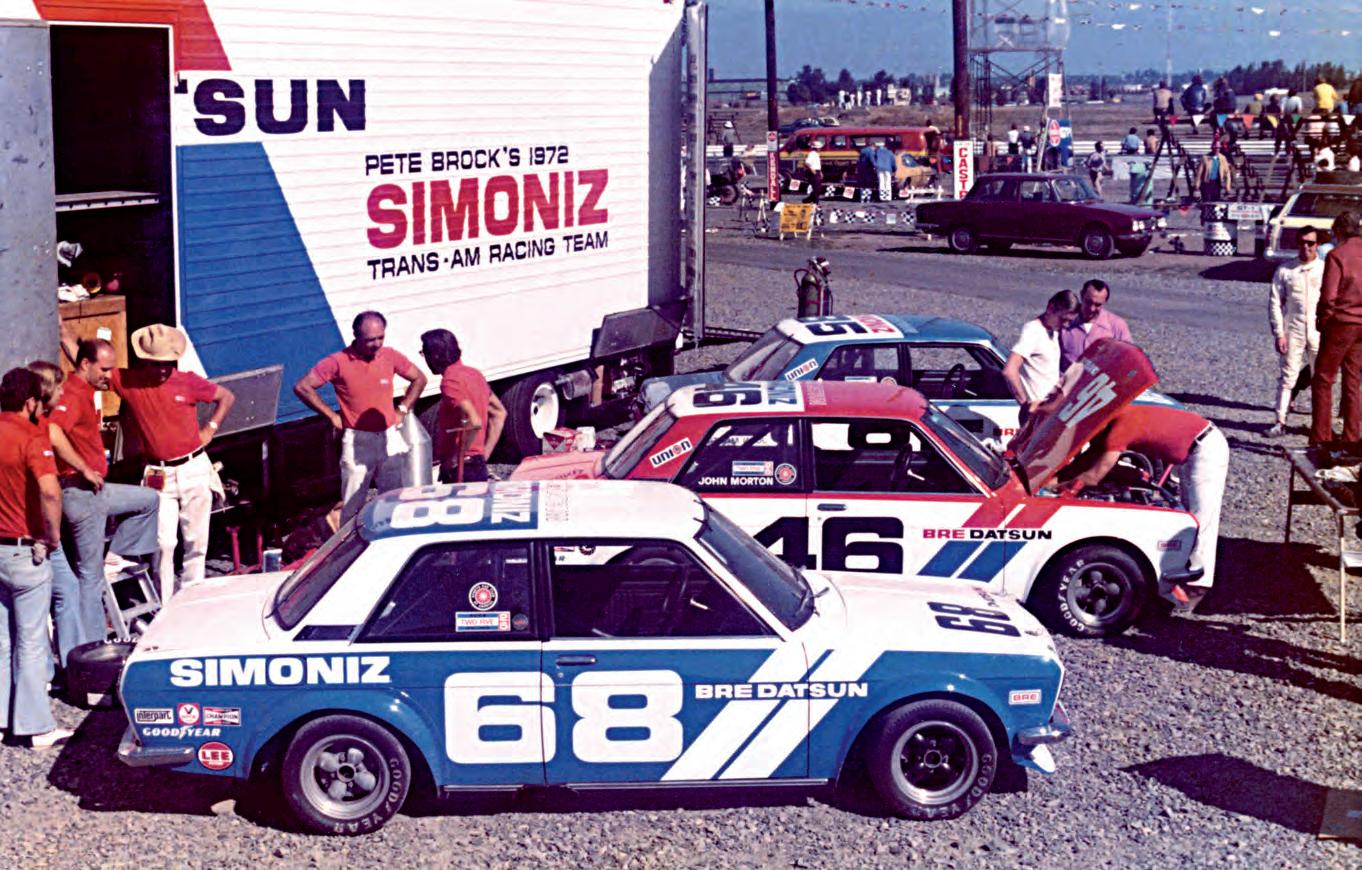
We are also honored to welcome Peter Brock as Grand Marshal. Celebrated for his design of the Corvette Sting Ray and Shelby Daytona Coupe, Brock also founded the BRE team, which helped elevate Datsun’s racing legacy in America, while capturing multiple championships in the early 1970s.
This year’s event will showcase more
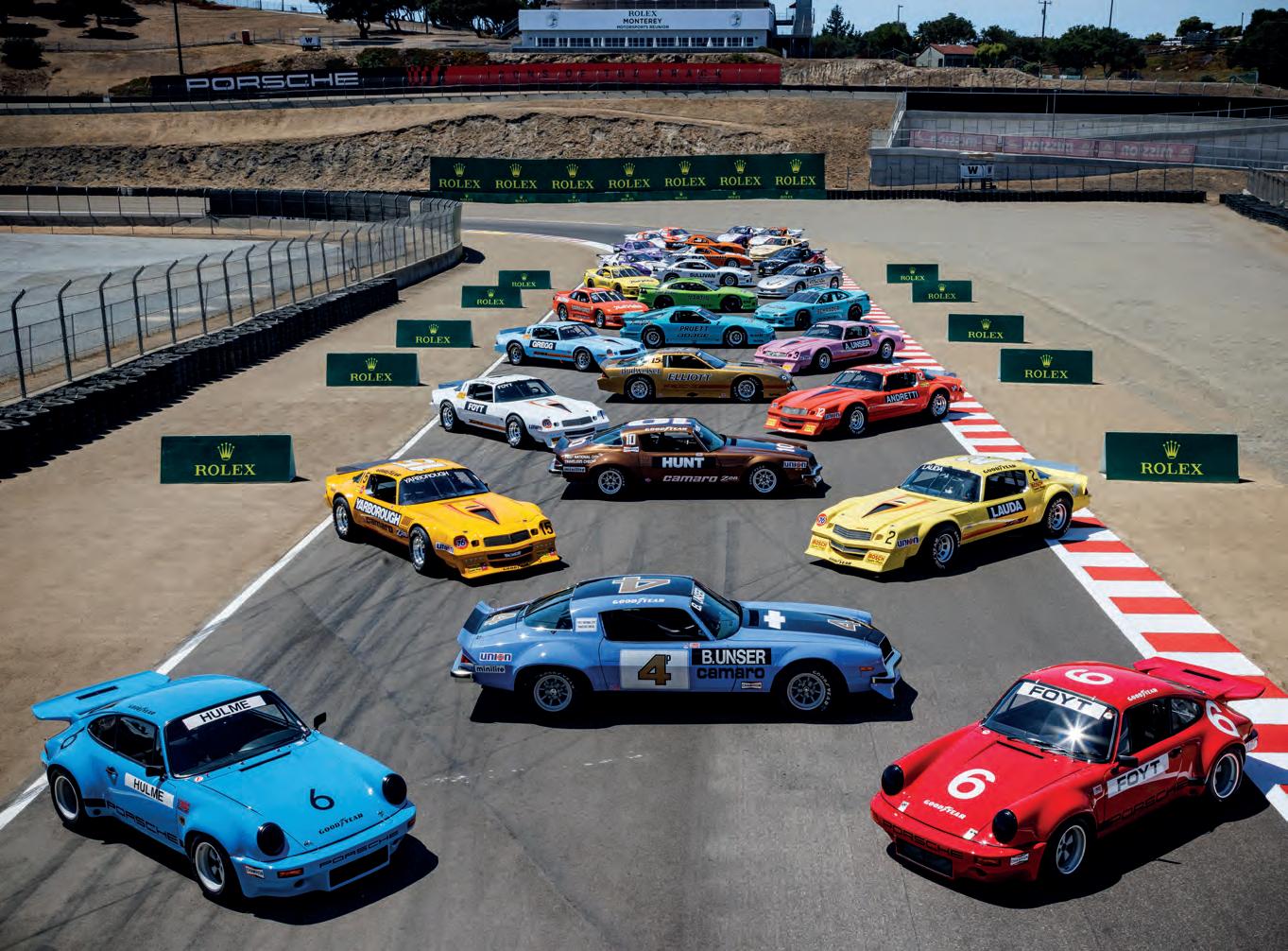
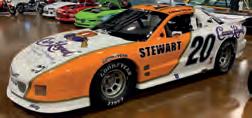
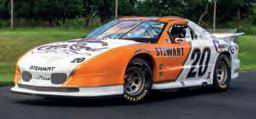
than 400 historic race cars, each selected for its authenticity, provenance and significance. Highlights include the return of the Del Monte Trophy race in recognition of the 75th anniversary of the Pebble Beach Concours d’Elegance, the return of the IROC race group for its second year and a showcase of historic IndyCars.
Rolex is proud to support the cornerstone events of Monterey Car Week, including the Rolex Monterey Motorsports Reunion, the Pebble Beach Concours d’Elegance, the Pebble Beach Tour d’Elegance presented by Rolex and The Quail, A Motorsports Gathering
Following its recognition as Motorsport Event of the Year in 2025 by the International Historic Motoring Awards, the Rolex Monterey Motorsports Reunion continues to stand as a remarkable celebration of passion, excellence and authenticity.
We are pleased to come together once again on the Monterey Peninsula to celebrate the heritage of motor racing and the people who keep its legacy in motion. Thank you for joining us and for your continued enthusiasm and support.
Yours sincerely,
Luca Bernasconi President & CEO, Rolex Watch U.S.A.
MONTEREY: CELEBRATING A MAGNIFICENT MOTORING HERITAGE
Each August, aficionados from all corners of the world gather on California’s stunning Monterey Peninsula for a series of events that celebrate an era of motoring remembered for its beauty and style
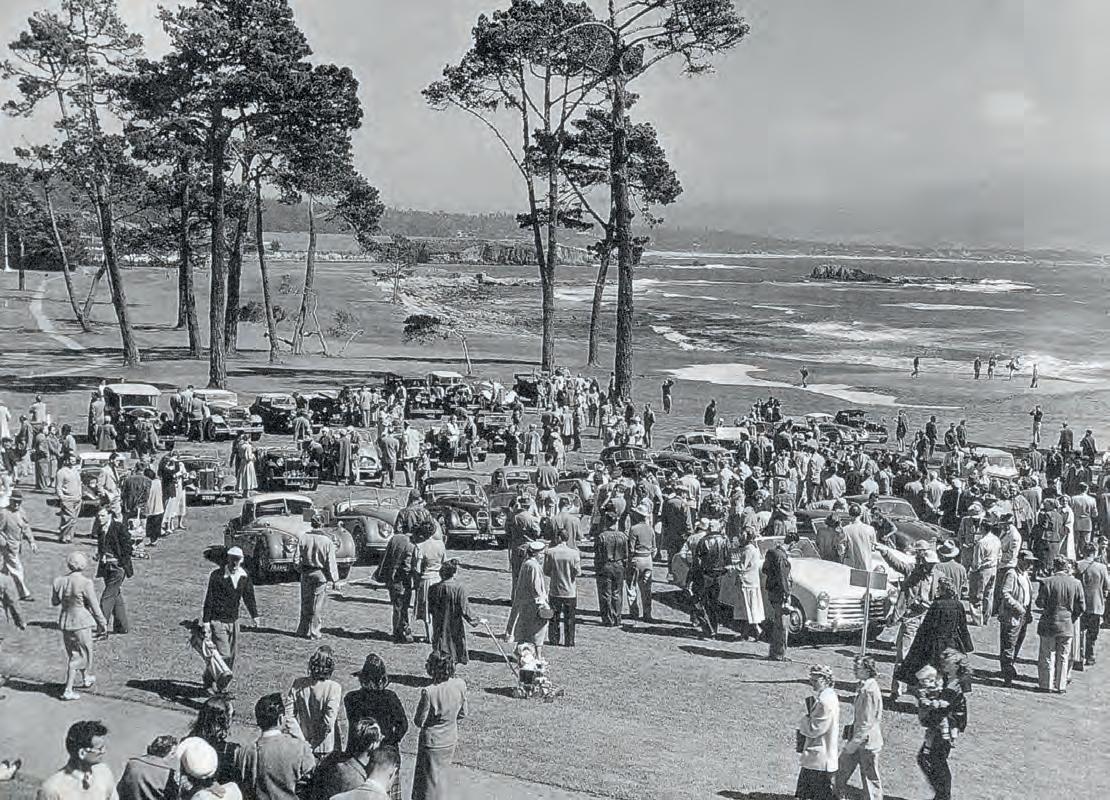
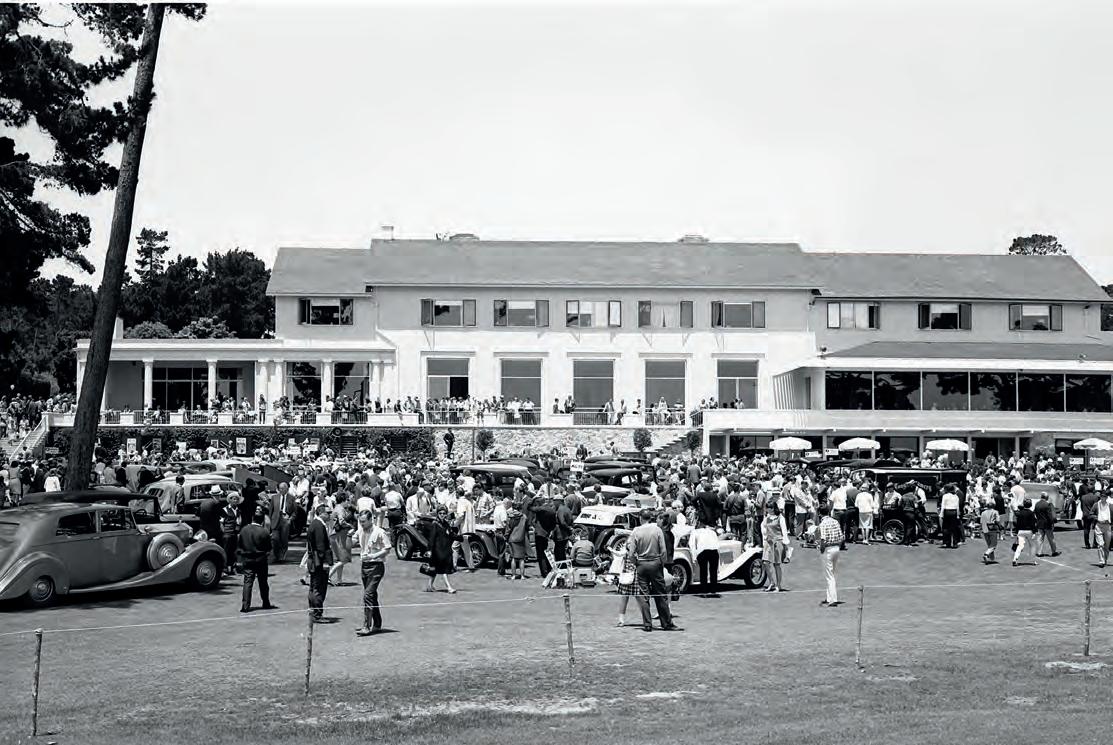
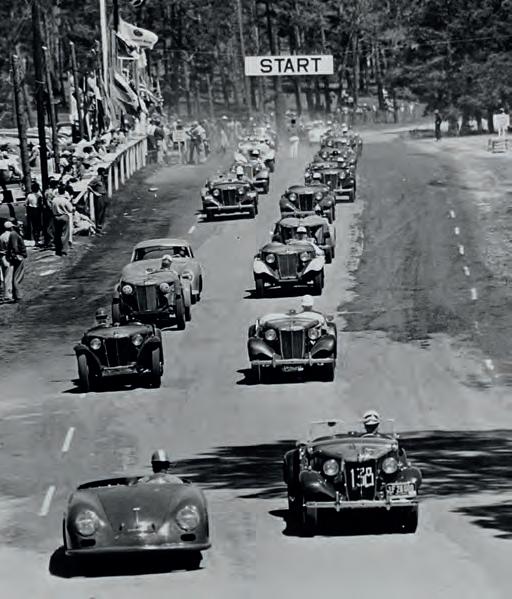
The week-long festival has its genesis in the Pebble Beach Road Races, launched in 1950. In the ensuing years, these events have become a showcase of automotive heritage, focusing on classic collector cars and inspiring similar meetings globally.
A high point of the week is the Rolex Monterey Motorsports Reunion, which, alongside the Pebble Beach Concours d’Elegance®, has shaped Monterey Car Week, comprising more than 30 events across the peninsula.
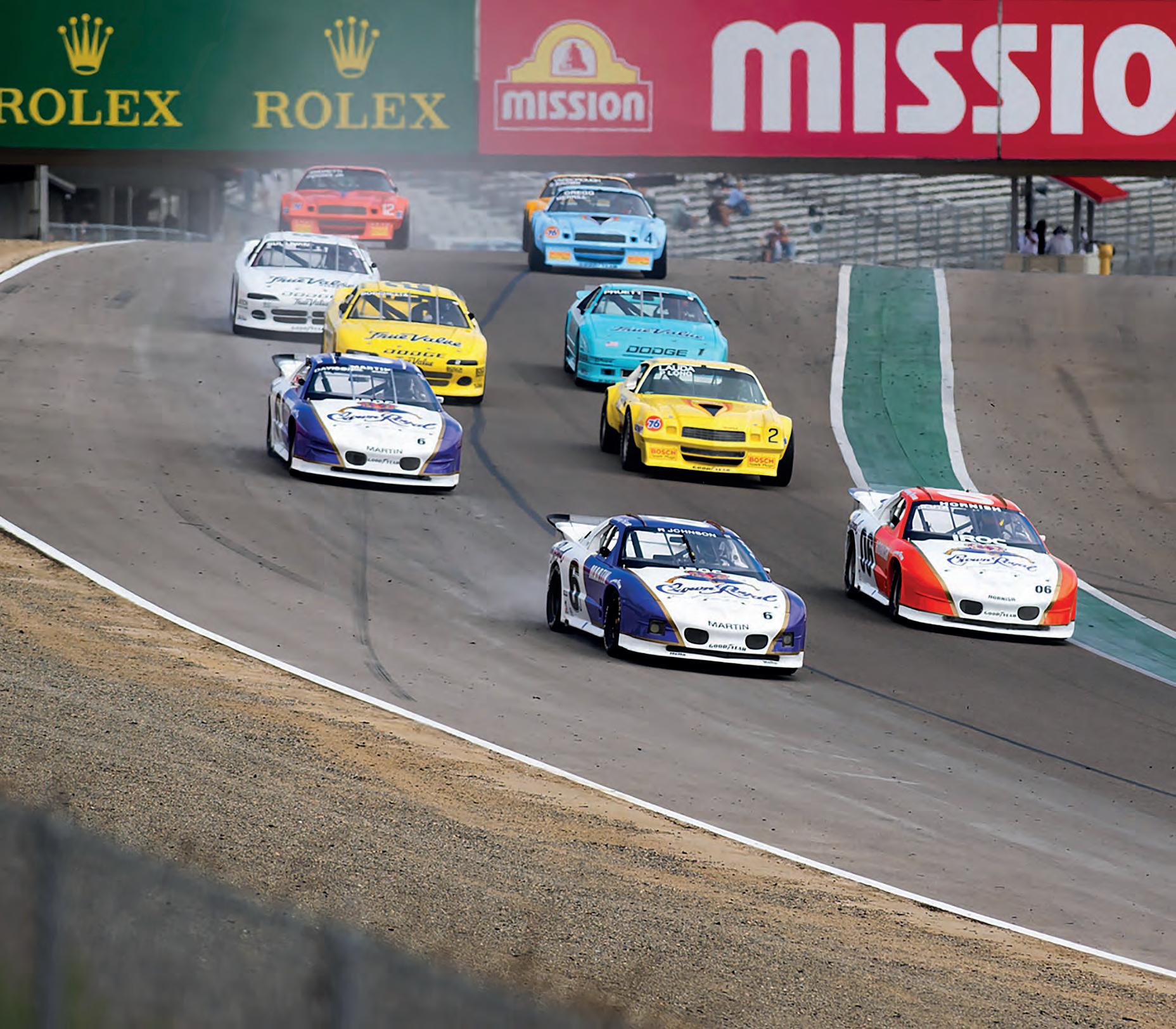
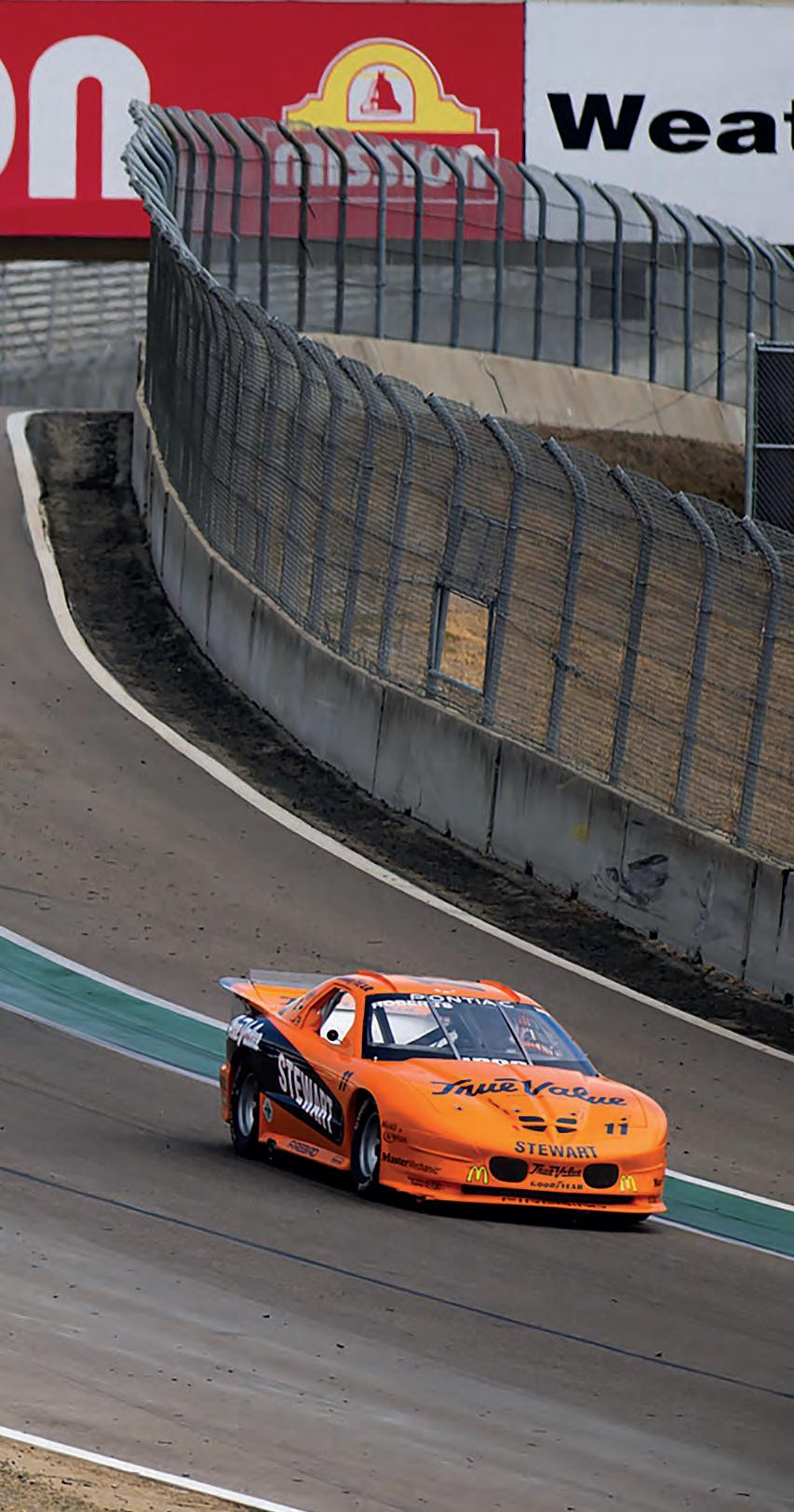
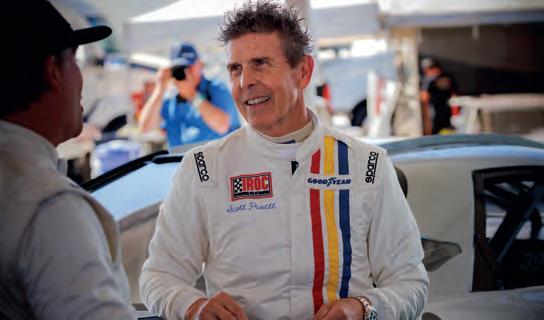
This year’s Reunion, which runs for four days from Wednesday, August 12 to Saturday, August 15, will celebrate Japanese motorsport, showcasing legendary machines from Mazda, Toyota, Yamaha, Honda, Nissan, Lexus, Acura, Infiniti, Mitsubishi and others, and honoring the decades of innovation, craftsmanship and competition they represent. Also returning this year will be the fan favorite International Race of Champions (IROC) class, featuring racing legends from a variety of disciplines, including Rolex Testimonee Scott Pruett.
The caretakers of these unique cars race hard, but always in a safe, respectful manner. At the demanding Laguna Seca circuit, they must negotiate the notorious five-and-a-half-story Corkscrew turn and challenging double apex Andretti Hairpin. No winners are declared, no prize awarded. Competitors are here for the pure enjoyment of driving at speed and to share their car’s history with visitors. Rolex has been Title Sponsor of the Rolex Monterey Motorsports Reunion since 2010.
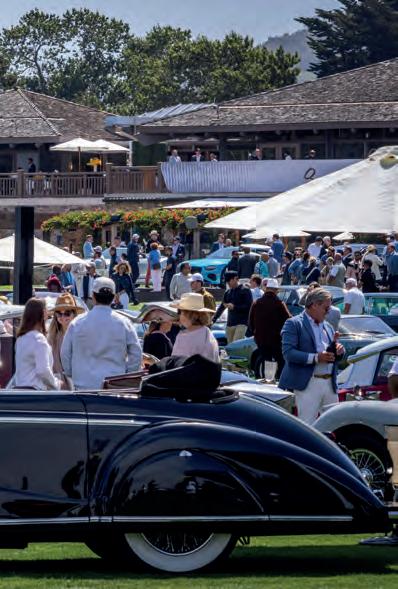
Although each is unique in its own way, the various events that comprise Monterey Car Week share a common purpose: to shine a light on beautifully crafted and exquisitely preserved classic cars that are just as impressive today as when they were built. They highlight automotive milestones, and the human and technical skill required on this journey to excellence. Participants and spectators are able to pay tribute to motor racing’s grand traditions, immersing themselves in automobile history at a unique combination of concours, tours, racing and auctions, enabling them to marvel
at the inventiveness and creativity of the designers and manufacturers of these vehicles.
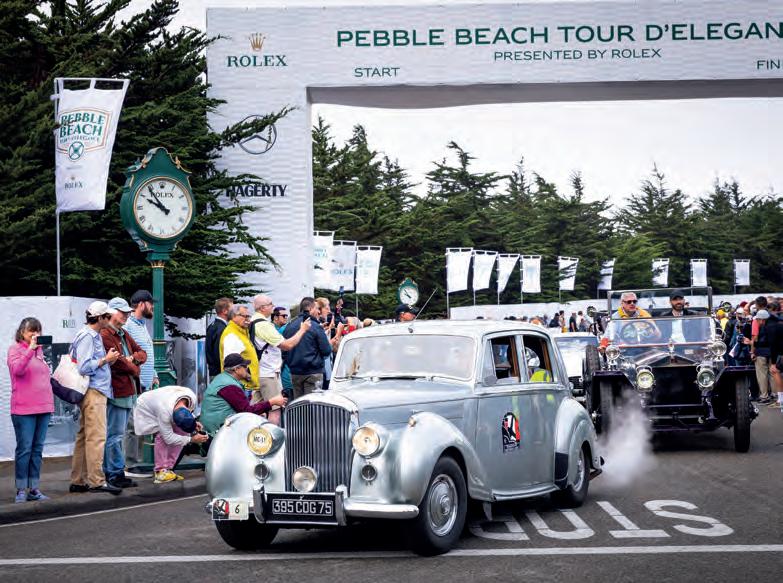
Other highlights of the week include: the Pebble Beach Tour d’Elegance® presented by Rolex, which this year will be held on Thursday, August 13; The Quail, A Motorsports Gathering on Friday, August 14; and the aforementioned Pebble Beach Concours d’Elegance® on Sunday, August 16. These prestigious occasions are also supported by Rolex.
The relationship with all these events fit naturally into an enduring support for motorsports that dates back to the 1930s, when Sir Malcolm Campbell broke the 300 mph barrier and his own World Land Speed Record at the wheel of his car Bluebird, with a Rolex watch on his wrist.
Sharing an unyielding commitment to the highest standards of performance and progress, Rolex has developed an extensive presence in the sport through its support for revered endurance races such as the 24 Hours of Le Mans and the Rolex 24 At DAYTONA, as well as events that pay tribute to the heritage of the sport, including the Goodwood Revival in England.
The Rolex family includes some of the most decorated drivers in the history of the sport. Sir Jackie Stewart, a three-time FIA Formula 1® Drivers’ World Champion, has been a Rolex Testimonee since 1968, joined in 2010 by Tom Kristensen, the record ninetime winner of the 24 Hours of Le Mans. More recently, the Swiss watchmaker has partnered with Australian Mark Webber, the multiple Formula 1® race winner and 2015 FIA World Endurance Champion; Jamie Chadwick, the pioneering women’s driver with race victories in Indy NXT and the European Le Mans Series who is now a reserve in the World Endurance Championship (WEC); and Nyck de Vries, a leading figure in the WEC and winner of this year’s 24 Hours of Le Mans.
Rolex has championed excellence and precision—in its watchmaking and sponsorship roles—throughout its history. Motorsports, blending accuracy, skill, durability and elegance, have proved a perfect partner, exemplified by the legendary Rolex Cosmograph Daytona.
PHOTOGRAPHY STEPHAN COOPER AND TOM O’NEAL / ROLEX
‘ ROLEX HAS CHAMPIONED EXCELLENCE AND PRECISION—IN ITS WATCHMAKING AND SPONSORSHIP ROLES— THROUGHOUT ITS HISTORY ’
Find EXTRAORDINARY
Discover Monterey County, one unforge able experience at a time. Cruise the iconic coastline in a classic car, play world-renowned golf courses, relax with nature-inspired spa treatments, sip award-winning wines, shop unique boutiques, and explore inspiring local art. The possibilities are as endless as the coastline.
The WeatherTech Raceway Laguna Seca Team
Friends of Laguna Seca
Ross Merrill President
Bruce Canepa Vice President
Jason Retterer Secretary/Treasurer
Kate Daniels, Jonathan Feiber, Gordon McCall, Ned Spieker Directors
Administration
Mel Harder President/General Manager
Kevin Allen Chief Financial Officer
Gayle Davies VP of Administration
Rafael Garcia Director of Facilities & HR
Michelle Young Admin. Asst, Facilities & HR
Michael Gomes Staff Accountant
Kimberly Agner-Tila Accounting Clerk
Facilities & Track services
Todd Fisher Race Director
Patrick Carter Park Manager
Brian Goslin Projects Lead
Junior Diaz, Isaiah Dutra, Wyatt Harris, Fred Lind, Sarmiento Lopez, Jason Marquez, Andre Pena, Jacob Pena, Pablo Santos, Altagracia Cesar Vasquez Facilities & Track Services
David Quiroz, Fabian Sanchez, Jose Vizcaino Maintenance Engineers
John Alonzo, Patrick Alvarado, Robert Aparis, Jayden Armendariz, Rocio Cortez, Elijah Evans, Kelven Ferolino, Shania Franklin, Latu Funaki, Abad Hughes, Abraham Maciel, Rasta Manoa, Cesar Miranda, Rolando Oseguera Contreras, Kenji Penniman, Tyler Pimentel, Hector Ruiz Salas, Raymond Serrano, Thomas Stames, Charles Stringer, James Vake, Joseph Vake Security Agents
Munoz, Greg Cupp, Carl Dunn, Abner Escalante Jr., Carlos FierrosMondragon, Ray Gullings, Kevin Jenkins, Sierra Lacey-Millard, Juan Larguna, Rene Lopez Villicana, Marilynn Loya, Andrew Luna, Esteban Martinez, Dominic Maynard, Jessica Miller, Jazlin Navarro, Kiara Nogueron-Martinez, Kevin Nuckolls, Ulises Patino Perez, Kathryn Roberts, Linda Scherer, Gordon Schmidt, Sandra Silveira, Namraja Singh, Melissa Tracy, Salvador Traverse, Jody Turner
Historic Sportscar Racing, LLC
John Doonan President
David Hinton Competition Chairman
Rick Goolsby Series Manager
Steve DeBrecht Chief Steward
Dorsey Schroeder & Mark Raffauf Competition Directors
Jack Woehrle Technical Director
Automotive Trailblazer
“Salute to Japanese Motorsport: A Tradition of Precision and Heritage” is this year’s theme and there are few individuals more befitting to be Grand Marshal than Peter Brock.
As a driver, designer, and team owner, Brock not only claimed championship victories on track but also transformed perceptions of Japanese engineering, helping shape American racing culture and fueling the growth of Japanese motorsports internationally.
A pivotal figure in American motorsports history, Brock’s career spans design, engineering, competition, and storytelling. Brock first made his mark at GM Styling as one of the youngest designers hired at the age of 19. In November of 1957 he drew the sketch that became the iconic 1963 Corvette Split Window Sting Ray.
Yet before the Sting Ray hit
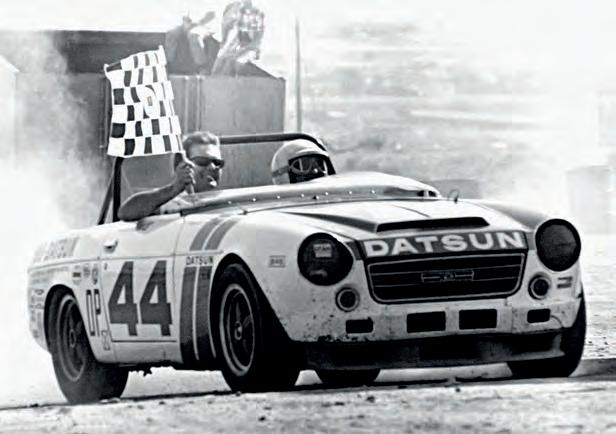
showrooms, Brock joined Carroll Shelby in Los Angeles to run his new race drivers’ school. Once there, he played a key role in shaping the Cobra program and designing the now-iconic Shelby Daytona Coupe, which won the FIA GT Championship in 1965. He then founded Brock Racing Enterprises (BRE), the team that turned compact Japanese sedans into championshipwinning race cars.
“I am honored to be the Rolex
Monterey Motorsports Reunion’s Grand Marshal, celebrating Japanese vehicles,” said Brock. “The JDM industry in the USA started with our BRE Datsuns and has never been stronger. It’s going to be an amazing event with no doubt the largest number of BRE original and tribute cars ever gathered in one location, along with hundreds of other impressive entries. How fitting to be involved with such an honor as I turn 90 this year.”
What do you consider to be your most significant achievement, to date?
Two high points: First, beating the works Ferrari 250GTOs at Le Mans in 1964 and then winning the FIA World’s GT Championship in 1965, both with the Daytona Cobra Coupe, a car I designed and built for Carroll Shelby.
With modern day comfort features, how do you retain the visceral excitement of driving?
No longer possible on the street, so development of new designs on track is still very interesting.
Who influenced you most?
Max Balchowsky, a brilliant SoCal innovator who owned Hollywood Motors and built great racing cars, his own called Ole Yellers, who taught me so much technically but also how the world really operates
If you weren’t designing automobiles, what would you be doing?
I love foot-launched ultralight aircraft. I spent years building hang gliders in that sport and still think it is one of the most exciting things an individual can do. For pure excitement flying hundreds of miles cross-country at 12,000’plus in something you built yourself is tough to beat!
What’s in your garage?
I have a self-designed production version of my Daytona Cobra Coupe that gives me great pleasure to own and drive because of its beauty and historical significance.
GRAND MARSHAL PETER BROCK
CHIEF STEWARD DORSEY SCHROEDER
Driving the pace
Entrants in the Rolex Monterey Motorsports Reunion are motivated by a passion for preserving and sharing automotive history. Racing these historic vehicles requires a careful blend of skill and safety when driving at speed. In historic racing it’s not about winning, it’s recreating and enjoying history.
This year, racing legend and Rolex Reunion Competition Director Dorsey Schroeder takes on an expanded role as Chief Steward. In this position, Schroeder works closely with volunteer group stewards who have been selected for their expertise and historical knowledge of the era of cars in their group, and to remind drivers of the vintage racing ethos of safety and courtesy.
“The most important job I have is to ensure the safety of the drivers and their cars,” Schroeder explains.
“We are grateful for the drivers who carefully prepare and bring their cars to put them through their paces like they were originally intended. But these are older cars that require tremendous skill and attention to driving etiquette to compete in Monterey.”
Schroeder confesses there are times during the weekend he has visited a driver in their pit to have a discussion on their driving session or mechanical preparation.
“We want everyone who races
to enjoy their experience,” he says. “As any professional driver will begrudgingly admit, a settling talk is sometimes helpful.”
Schroeder certainly has the credentials.
His racing resume is voluminous. Schroeder competed in 81 Trans-Am races in 11 years, where he won 17 races and finished on the podium 43 times; has 56 starts in the IMSA Camel GT series, and 42 in the IMSA Firestone Firehawk series. In all, he won 40 pro races in 242 starts on 47 circuits around the world, including NASCAR and the Grand Am Sports Car Series.
“August is circled on my calendar because I simply love coming to Laguna Seca,” Schroeder admits. “This is what it’s all about. Seeing a paddock full of stunning cars, engaging with talented drivers, and seeing so many friends and enthusiasts enjoying the spirit of motor racing.”
2026 Rolex Monterey Motorsports Reunion Group Stewards
Dorsey Schroeder Chief Steward
Rob Manson
Del Monte Trophy 1950–1956 Pebble Beach Road Race Cars
Steve Schmidt
John Morton Trophy 1955-1967 SCCA Small Displacement Prod. Cars
Dave Stone
Bob Sharp Cup 1966–1979 Historic SCCA B & C Sedan
Travis Engen
Scott Pruett Legends of Endurance Cup 1991-2011 IMSA, ALMS, Grand Am, FIA
Ken Adams
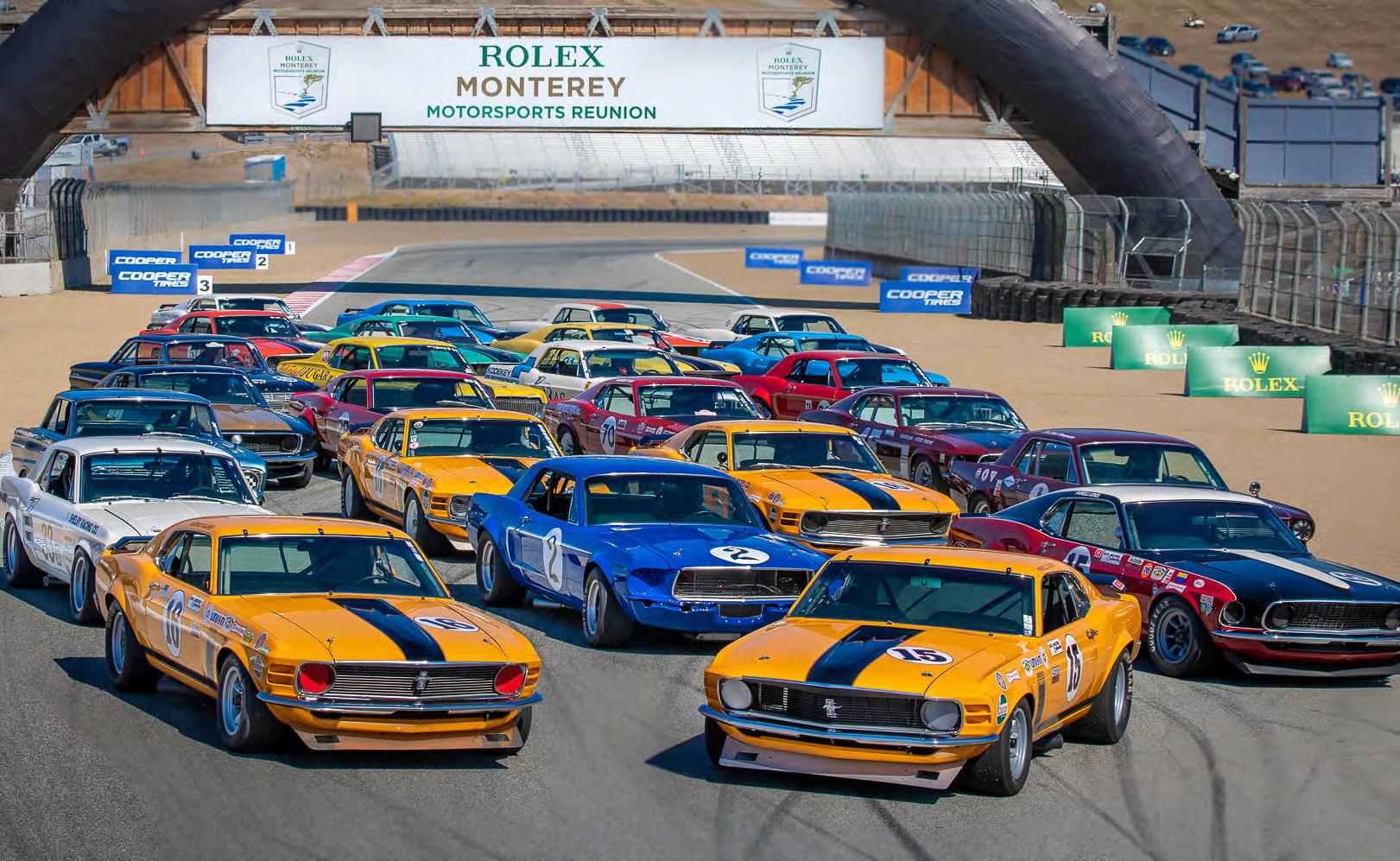
Parnelli Jones Trophy 1966-1972 Trans-Am
Dave Hagan
Pedro Rodriguez Trophy 1961-1975 FIA Manufacturers Championship
Ray Evernham
Unser Family Cup 1973-2006 IROC Series
Chris Locke
Peter Revson Trophy 1958-1963 FIA Formula Junior
Mark Leonard Hurley Haywood Trophy
1981-1991 IMSA GTP, FIA Group C
Tom Bungay
Ken Miles GT Trophy 1955-1967 SCCA Large Displacement Prod. Cars
Alan Benjamin
Peter Gregg Trophy
1973-1981 IMSA GT, GTX, AAGT, GTU, FIA
Chris Liebenberg Tommy Kendall Trophy
1981–1991 GTO, GTU, Trans Am
Chris Springer
Bruce McLaren Trophy 1963-1974 Can-Am and USRRC
Meet the Monterey Motorsports Advisory Council
Deep knowledge, inquisitiveness, perseverance and a passionate desire for preserving motor racing history are among the qualities that keep the Monterey Motorsports Advisory Council engaged year-round. By any measure, the Rolex Monterey Motorsports Reunion is among the world’s most significant historic racing events where invited cars are defined by their racing provenance and period-correctness, both mechanically and livery. The seven-person volunteer council takes their position seriously as they provide long-range vision and counsel, and profound expertise to thoughtfully review entries that are ultimately accepted. Let’s meet them:
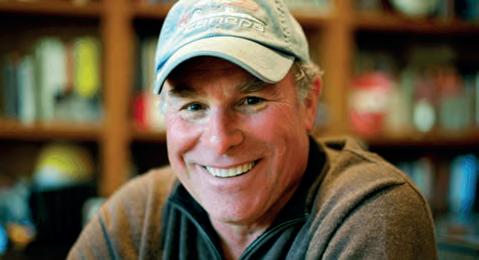
Bruce Canepa Chair
Bruce has been fascinated with automobiles, motorcycles, and trucks since his childhood. By age 12, his father had taught him how to drive almost everything; from his first car, a 1929 Model “A” Ford, to a ten-wheel diesel truck. He worked in the family dealership every spare moment, learning mechanical, fabrication, body and paint. Today he is passionately involved in all aspects of his companies, from vehicle design and development to historical/ collector car sales, restoration and racing.
Bruce grew up as the typical California kid; into hot rods, sports cars, and racing, and started racing
as soon as the rules allowed, first in Quarter Midgets and go-karts, then in Super Modifieds and Sprint Cars. In 1978 he entered sports car racing with appearances in IMSA and Trans-Am. The following year he took his own team, and his Porsche 934.5, to the 24 Hours of Daytona. Teaming up with Rick Mears and
Monte Shelton they finished 3rd overall. Porsche was so impressed with his performance they offered him a new factory 935 for the remainder of the 1979 season.
Always up for new challenges, Bruce decided to compete at the Pikes Peak International Hill Climb in 1981. He brought his customdesigned Porsche twin-turbo powered open wheeler. On his first visit, he qualified 1st, and finished 2nd overall. He returned 19 years later setting the course record for tandem axle big rigs in 2000, 2001, and in 2002 he crossed the line in 13:57.800 - a record that still stands.
Today, Bruce runs his own successful automotive companies, Canepa and Concept Transporters, and is also the vice president of Friends of Laguna Seca.
Bruce found himself co-driving with Gianpiero Moretti in the famous MOMO team Porsche 935 at Daytona, Mid-Ohio, and Riverside in 1980-81. In 1982 he was back at the 24 Hours of Daytona co-driving with Bobby Rahal and Jim Trueman in the first MARCH GTP “Ground Effects” Prototype.
Scott George
L. Scott George is the Executive Vice President of CH Motorcars and the Curator of Collections at Revs Institute® in Naples, Florida, which is home to over 100 exceptional automobiles from the Miles Collier Collections. Revs Institute is a museum and a working center for research and education. It is dedicated to the preservation, care, activation, and understanding of historically significant automobiles, with an extensive archive and library to support this mission. Scott oversees the collections and Revs’ participation in shows and historic motorsports events internationally. He presently serves on the National Advisory Board for the Automotive Restoration Program at McPherson College, the Rolex Monterey Motorsports Reunion Advisory Council, and the Collections Committee for the IMS Museum.
Patrick Long
A modern-day Porsche polymath, Patrick Long is familiar to the US aircooled scene as one of the founding fathers of the Luftgekühlt brand for lovers of air-cooled Porsches.
A Porsche Brand Ambassador and competition advisor for Porsche Motorsport, Patrick also heads up North America’s young driver development program, sharing almost 20 years of international experience as a Porsche factory driver with the sports car stars of tomorrow.
His close ties to the brand were forged at the start of the new millennium, when his precocious talent in single seaters came to the attention of Porsche’s scouts. Initially recruited as a Porsche Junior, Patrick found himself on the Works roster soon after, competing initially for The Racer’s Group in the ALMS
endurance series and the Rolex Sports Car Series in 2003. At home aboard every subsequent generation of 911 GT3 Cup, R and RSR, Patrick has claimed class wins for Porsche at the big four endurance classics, came second in class in IMSA and won the Blancpain GT World Challenge America.
A safe pair of hands, with a wellthumbed passport, he has also tasted victory in the World Endurance Championship, twice reached the top step at Le Mans and won his class at both the Bathurst 12 Hours and the Nürburgring 24 Hours.
Patrick remains active behind the wheel racing as a valued guest driver at historic events like the Rolex Monterey Motorsports Reunion, Porsche Rennsport Reunion, Goodwood Revival and the Classic 24 at Daytona.
Chris MacAllister
A grade school field trip to the Indianapolis Motor Speedway in 1965 started it. Soon followed a go cart, Honda 50, a series of motocross bikes, a successful racing career and several trips to the emergency room. Cars then replaced bikes. An Indianapolis native, Chris graduated from Ball State University. He worked at the family tractor business cutting grass, rebuilding transmissions and eventually became President in 1991. Hobbies include antiques, landscaping and racing, driving, collecting and restoring all sorts of motor vehicles. Chris has been married to Sharon for 43 years. They have two kids, both competitors: Alex in cars and Laurel on horses.
Murray Smith
Born in Ayrshire, Scotland, Murray Smith became an automotive enthusiast at a young age. He graduated from the London School of Economics, then began a career with a prominent advertising agency, eventually heading all its international operations.
He collected and drove historic racing cars and developed corporate support for automotive events. As a driver, he participated in the Acropolis Rally, Carrera Panamericana, and dozens of historic and vintage races, including Monaco, Le Mans, Silverstone, Monterey and Watkins Glen in Historic Formula 1 and Historic Group C.
Murray’s most significant
contributions to amateur motorsports have been in event promotion. He has worked with Chrysler and Rolex supporting events at various U.S. and international tracks, and has helped in the organization of the Louis Vuitton Classic at Rockefeller Center and the Lime Rock Historic Festival.
He has also served on the motorsports committee of Chrysler to develop the Viper GTSR, on the FIA Formula 1 Commission, and as Chairman of BMP, the organizer of the British Touring Car, Formula Three and Motorcycle Racing Championships.
In 2016, Murray was presented with the prestigious Bob Akin Award for his contributions to the sport.
Bill Warner
Bill Warner has been around automobiles his whole life. As a teenager he worked at the local Volkswagen dealership in the parts department and driving the delivery truck. On weekends, he was the “gopher” for the dealership racing team. Upon earning his degree in Electrical Engineering from The Citadel, he entered the family filter business and started working on the side for Sports Car Graphic magazine.
In 1971, he began his relationship with Road & Track magazine. His photographs and writing have appeared in Road & Track, Car and Driver, Autoweek, The Atlantic Monthly, Automobile, Auto Motor und Sport, Classic & Sportscar,
Andy Prill
Andy Prill is the owner and proprietor of Prill Porsche Classics, established in 1994. With over 35 years of experience in classic and collector cars and motorcycles—and more than 35 years specializing in the Porsche marque—Andy is a respected authority in the vintage automotive world.
He is actively involved in all aspects of historic Porsche and classic car activities, including racing, inspections, and consultancy. Andy also advises collectors and businesses globally
Porsche Panorama, and Forza to mention a few. His photography has won awards from The Los Angeles Art Directors, the Creative Arts Yearbook, and the Sports Car Club of America (1970 Photographer of the Year).
Warner started racing in 1978 in a Brabham BT-8 and later in the SCCA in an ex-Bob Sharp Racing Datsun B210. He finished 5th in the American Road Racing Amateur Championships at Road Atlanta in 1982 in GT-3. In 1984 he entered the International Motorsports Association Firehawk Series in a Camaro and repeatedly had podium finishes that earned him the IMSA Media Challenge (for racing journalists) in 1984, 1985 and 1986.
In 1996, he founded The Amelia
on acquisitions and sales.
Andy began his motorsport journey at the age of eight, competing in motorcycle trials—a discipline he continues to pursue today with ongoing success on a variety of historic and modern motorcycles. He has ridden at Club, British and World Championship level in the 1980s, and in 2025 he won his second local classic championship in three years riding a 1963 BSA and 1968 James 250.
Since first attending the historic races at Laguna Seca in 1998, Andy has been a regular participant each year. He has competed in a wide range of cars at events such as the Pre-Reunion, Rolex Monterey Motorsports Reunion, and Porsche Rennsport Reunions. His driving experience spans nearly every model of Porsche from 1948 to 1985, along with single-seaters and sports cars—from pre-war classics to modern machines—and Group C cars.
Andy is a multi-year invitee to prestigious events including the Goodwood Members’ Meeting, Festival of Speed, and Revival.
Island Concours d’Elegance. In the 25-year history of the show, it has raised over $3.7 million for Community Hospice of Northeast Florida, Spina Bifida of Jacksonville, The Navy-Marine Corps Relief Society, and the Shop with Cops Program of Fernandina Beach and Nassau County.
Among the many accolades bestowed on Bill are the 1998 National Volunteer of the Year, 2002 Meguiar’s Automobile Hobby Person of the Year, the 2003 inductee into the Road Racing Driver’s Club, one of the “Top 50 Players in the Classic Car World” in 2008 by Octane Magazine, and the Lee Iacocca Award for “Dedication to Excellence in Perpetuating an American Automotive Tradition.”
Board of Directors
Ross Merrill President
Bruce Canepa Vice President
Jason Retterer Secretary / Treasurer
Jonathan Feiber
Gordon McCall
Ned Spieker Directors
Kate Daniels
Monterey County Supervisor
FRIENDS OF LAGUNA SECA
Building a long-term future
When Monterey County Supervisor Mary Adams handed the ring of keys for Laguna Seca Recreation Area to Friends of Laguna Seca Founding Board member and President Ross Merrill at the Rolex Monterey Motorsports Reunion two years ago, a renewed sense of optimism spread throughout Monterey and the racing community.
Since that celebratory day in August, Friends hasn’t looked in the rearview mirror once. It’s full throttle ahead, as the group works to rebuild the facility to a much higher level. Many of the initial projects have been dedicated to health and safety, long deferred maintenance, and replacing aging infrastructure.
Improvements to essential facilities are always in progress, aimed at boosting the overall experience for guests to meet their growing needs and high expectations. These accomplishments are strengthening the park and race track’s foundation for years to come.
“There is no grass growing
under our feet,” says Ross Merrill. “Our expert operations team is working diligently on various improvements facility wide while our marketing effort has brought forward new, meaningful partnerships with leading global sponsors in all categories. The Friends business plan is exceeding our initial expectations and the public response has been extremely positive. We are hitting our marks every day and are very excited about the bright future of this place as Friends continues to rebuild, revitalize and reinvent the Laguna Seca Recreation Area for the benefit of the community it serves.”
The list of capital improvements is lengthy. Essential projects that may be invisible to the eye progressed in time for the 2026 racing season opener. Integral to protecting the race circuit, drainage upgrades were implemented around the Corkscrew to improve water flow and runoff management, helping protect the racing surface and improving track conditions caused by inclement weather.
Among the projects recently completed are:
• Complete refurbishment of the scoring trilon
• Entire drainage system was assessed, rehabilitation work began to support the foundation of the park, and improvements have been installed
• Renovation of the garages and High Speed Hospitality suites
• Restoration to the Timing & Scoring building and upgrade to its communications system
• Landscaping refreshes parkwide is underway
On the heels of major renovation of the High Speed Hospitality Suites on pit lane came significant upgrades to the 20-year-old Hospitality
Pavilion. Perched above Turn 1 with premier views of nearly the entire course, this signature building has been enhanced with exterior paint, wood trimmed walls and an open ceiling with exposed beams, an audio upgrade with speakers both inside and outside, television monitors for race viewing and conference level presentations, polished concrete floors, and improved viewing from the patio.
The past year has also seen new significant partnerships. Porsche Cars North America became the Official Car while also opening an onsite Porsche Driving Center. Porsche and Laguna Seca have a long history, with Porsche hosting four Rennsport Reunions over the
past 15 years and celebrating over 600 victories at the track.
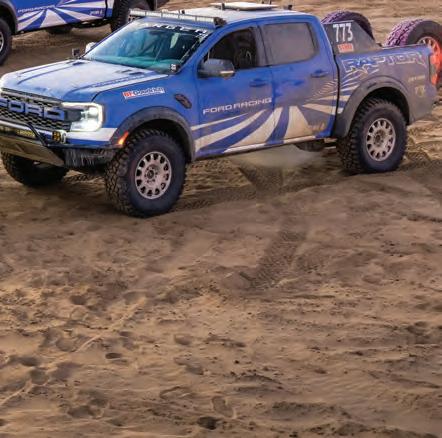
More recently, the Ford Raptor was named the Official Truck of WeatherTech Raceway Laguna Seca and Ford will be elevating the fan experience at events. The international auction house Bonhams | Cars shifted its famed Monterey motorcar auction to Laguna Seca under a multi-year agreement. Bonhams has been active partner with the Monterey Pre-Reunion and Rolex Monterey Motorsports Reunion since 2010.
Laguna Seca evolves each year, but one thing remains evergreen — enthusiasts’ passion, enjoyment, and respect for this 2.238-mile international icon known as Laguna Seca.
Become
a Friend of Laguna Seca
As a not-for-profit 501(c) (3) organization, funds raised by Friends of Laguna Seca are reinvested into achieving its core mission of restoring, revitalizing and reinventing Laguna Seca, which was founded in 1957. Its all-volunteer board of directors are passionate about WeatherTech Raceway Laguna Seca and share a desire to keep this beautiful facility thriving for generations to come.
Their vision extends
beyond motorsport events.
Laguna Seca’s location and amenities position it as an ideal community and cultural home to myriad outdoor activities, food and wine festivals, and educational events that attract diverse interests that positively benefit Monterey County residents and businesses.
To learn more about Friends of Laguna Seca and become a Friend yourself in support of Laguna Seca’s long-term future, visit FriendsofLagunaSeca.org
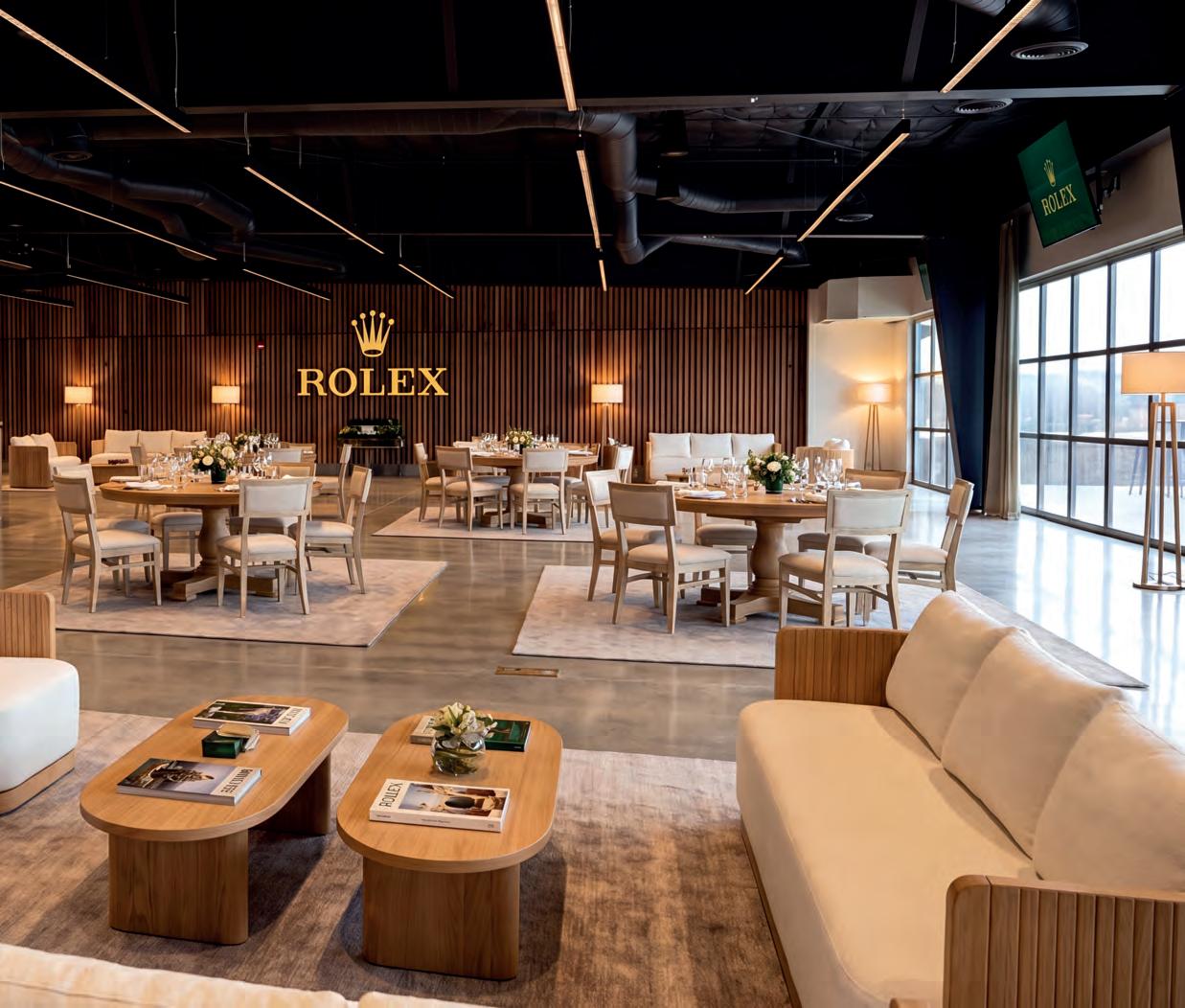
The renewed Hospitality Pavilion provides ample hosting opportunities
Volunteers drive passion
Before dirt was even moved on the U.S. Army’s Fort Ord dry lakebed in 1957, volunteers have been ever present. When the Pebble Beach Road Races ended in 1956, business leaders who saw the economic vitality of racing on the peninsula formed a volunteer committee of the Monterey Chamber of Commerce that paved the way to the development of Laguna Seca.
The racing circuit and park have certainly evolved since then, but volunteers and service organizations remain the backbone of the annual international events. According to Madison Hutchison, WeatherTech Raceway Laguna Seca’s volunteer coordinator, there are hundreds of people who
contribute their time to the overall success of each event.
“In addition to passionate individual volunteers, there are 18 service organizations that provide additional organized support,” Hutchison says. “And one organization — the Carmel Valley Rotary — has been onsite for an astounding 42 years.”
Dedicated leaders with years of experience oversee eight committees comprised of volunteers and supported by service organizations.
When you see their friendly faces, be sure to give them a wave and a thank you for making the events safe and enjoyable for all.
To learn more about becoming a volunteer, visit weathertechraceway. com/pages/volunteer
BACKBONE OF LAGUNA SECA
Volunteer Leaders
Ginger Mutoza, John Dellaqua Admissions Committee Chairs
Jim Sula Concessions Committee Chair
Monica Nathan First Aid Committee Chair
John Pfeiffer Hospitality Committee Chair
Lee Ames, Ryan Bailey, Shea Eby Paddock Committee Chairs
Joe Prospero Race Activities Committee Chair
Tammo Stubbe Recruiting Committee Chair
Dennis Farber, Kirsten Sequeria Vehicle Control Committee Chairs
2026 Service Organizations
American Legion Riders, District 28
Cal State Monterey Bay Hospitality Program
Carmel Valley Rotary
Dinuba Police Explorers ECV
Elks Lodge
Greenfield Cadets
Greenfield Cheer
Livingston Police Explorers
Monterey Bay Veterans
Monterey County
Sheriffs
California Highway Patrol
Monterey Peninsula
Musical Theatre
Seaside Police Explorers
Set Free Monterey Bay
Sigma Alpha Phi (CSUMB)
Sunstreet Centers White Stag
Marking 42 years of service at Laguna Seca
By Lewis Leader
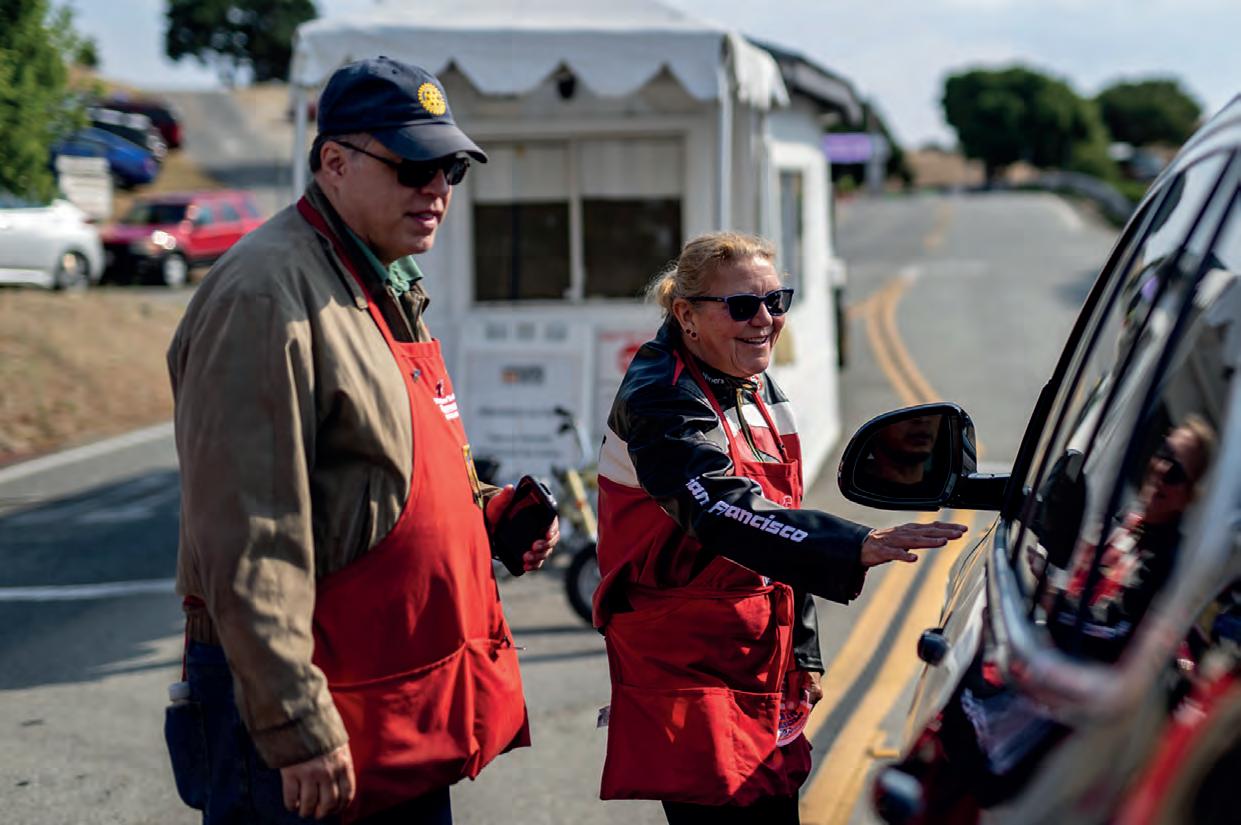
If you’ve been to the races at Laguna Seca even once within the last four-plus decades, it is likely that you have seen Ron Brenaman. He’s the guy wearing an old-fashioned U.S. Army cavalry hat – “I got it during basic training at Fort Riley, Kansas, in 1966” – and positioned at the booth at the top of the road off the main Highway 68 entrance taking tickets with a group of fellow volunteers.
Since 1984 Brenaman has captained his own troops from the Rotary Club of Carmel Valley at every race in a close relationship that has mutually benefited the club and Laguna Seca.
The Carmel Valley club is one of 45,000 in Rotary International, which was founded in Chicago in 1905 and has 1.4 million members in 200 countries and geographical areas around the globe. The motto of the organization is Service Above Self.
Laguna Seca, meanwhile, has a consistent cadre it can depend upon throughout each race day every year. The Carmel Valley Rotarians are among the longest serving organizations that work the races.
“We’ve been fortunate to be in the right place at the right time,” modestly says Brenaman, a former president of the Rotary Club of Carmel Valley and a member since 1985. “This is one of the only tracks in the country run by volunteer labor.” He estimates that Rotarians and some of their friends have put in about 25,000 hours at Laguna Seca over the past 42 years.
Brenaman, a Monterey resident and longtime local independent financial advisor, relishes the countless shifts he has worked with fellow Rotarians.
“The best thing about working the races is the camaraderie,” he says. “I’ve developed some of my best friends there.”
Rotarians work to promote peace; fight disease; provide clean water, sanitation, and hygiene; improve maternal and child health; support education; grow local economies and protect the environment.
Rotary International’s flagship program is eliminating polio, and it has been working on those efforts since 1979. It became a founding partner 38 years ago in the Global Polio Eradication Initiative, which has since then reduced polio cases by 99.9 percent worldwide. Rotary International has contributed over $2.9 billion and incalculable volunteer hours. More than 3 billion children have been protected in 122 countries.
Although you may have admired plenty of Corvettes at Laguna Seca – the iconic car is now celebrating its 73rd anniversary — one that has been at many races on the track is Brenaman’s classic vehicle. He calls his white convertible 1962 Corvette a “15-footer … because from 15 feet, it looks great.”
Carmel Vally Rotary is enthusiastic about the future at WeatherTech Raceway Laguna Seca under the Friends management and looks forward to many more years in partnership.
“ THE BEST THING ABOUT WORKING THE RACES IS THE CAMARADERIE ”
Art in motion
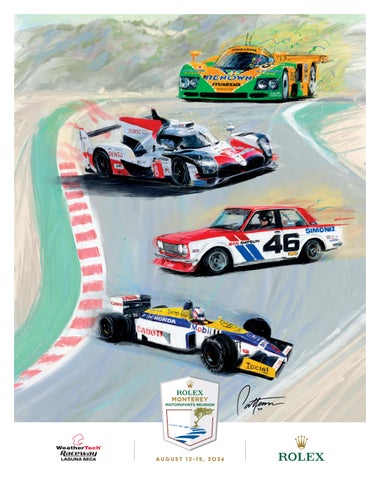
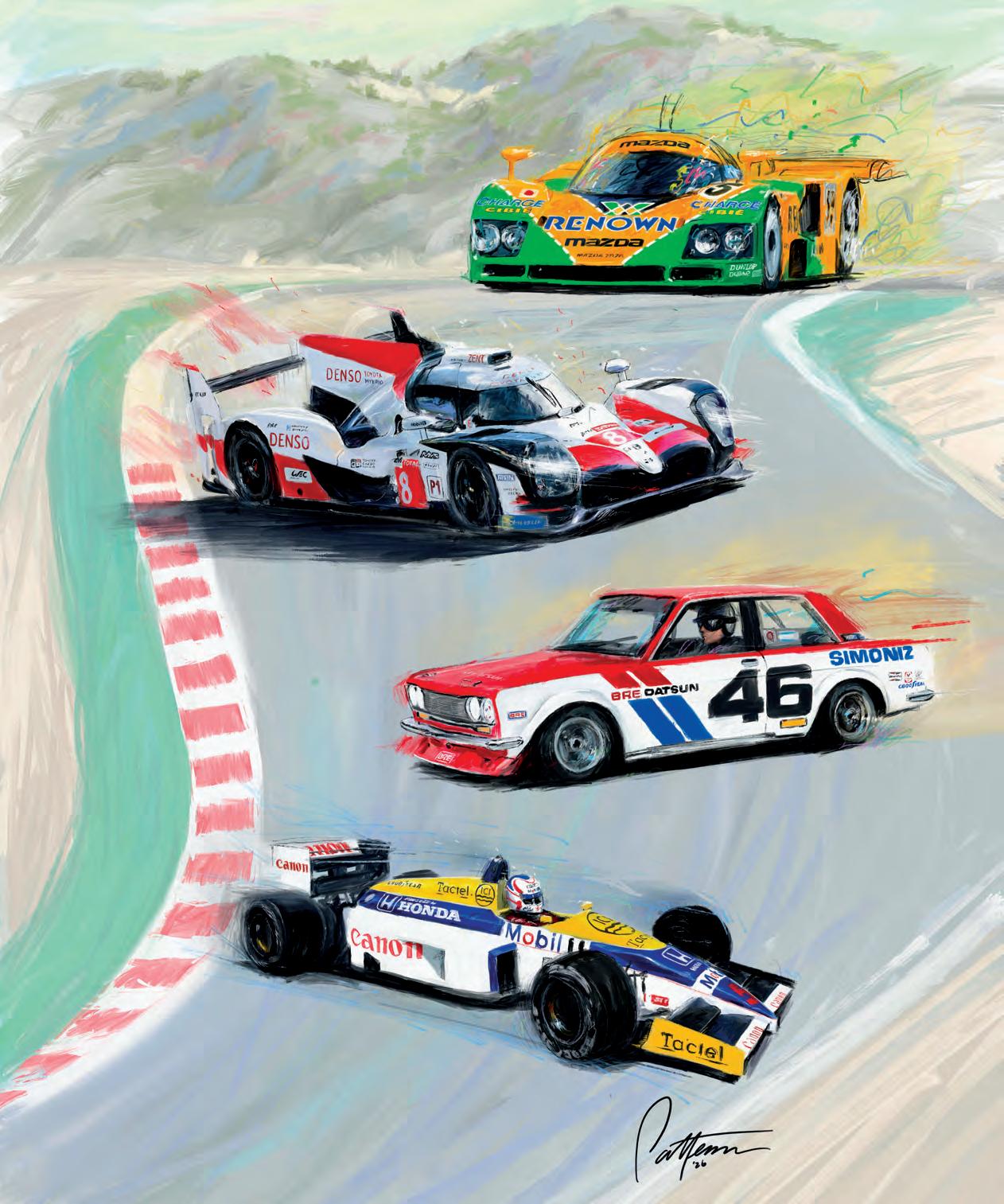
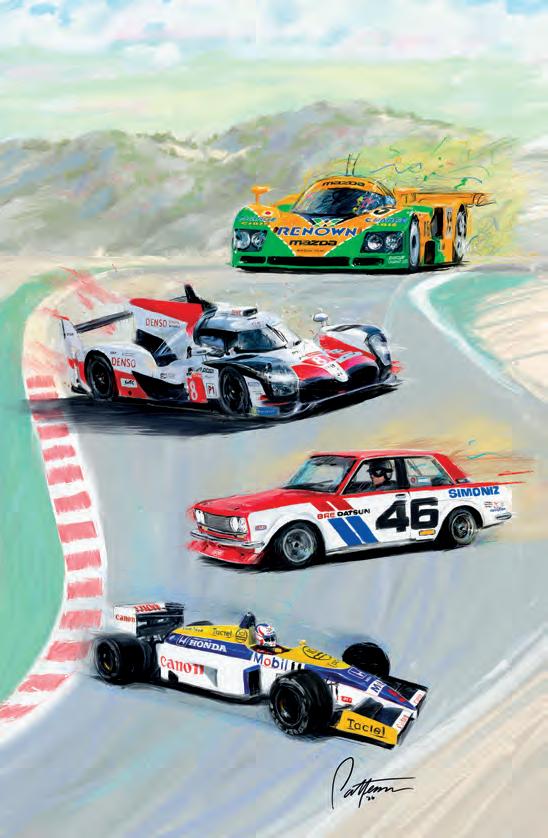
Competition is the ultimate proving ground for automobile manufacturers. With this year’s theme of Japanese Motorsports, it was challenging to select just one moment in time from so many dominant cars and a variety of aesthetics for the poster.
Accepting the artistic challenge was Bill Patterson, who has been associated with WeatherTech Raceway Laguna Seca for more than 20 years. He admits this year is both exciting and formidable to design
the official poster that is seen and collected by enthusiasts worldwide.
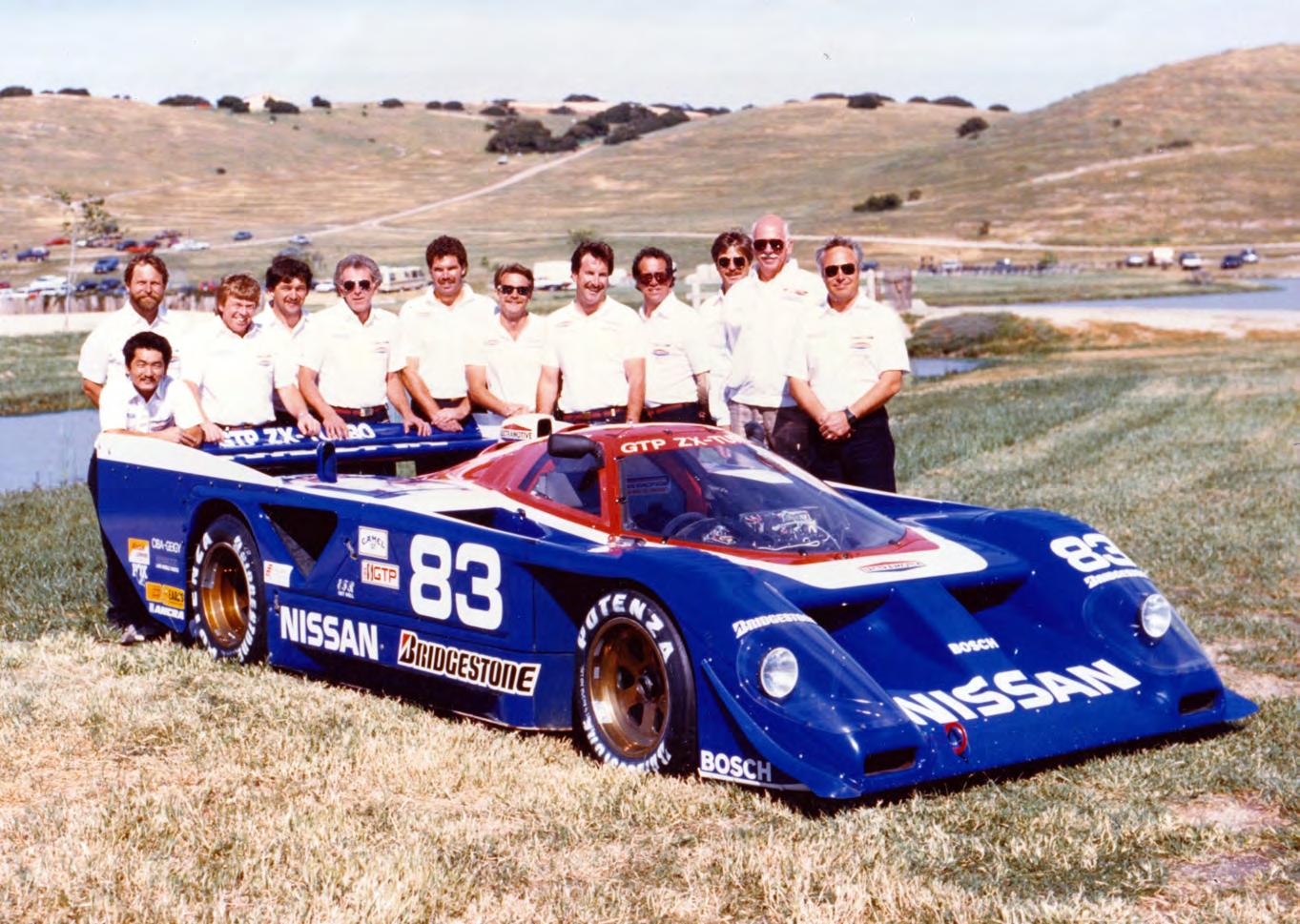
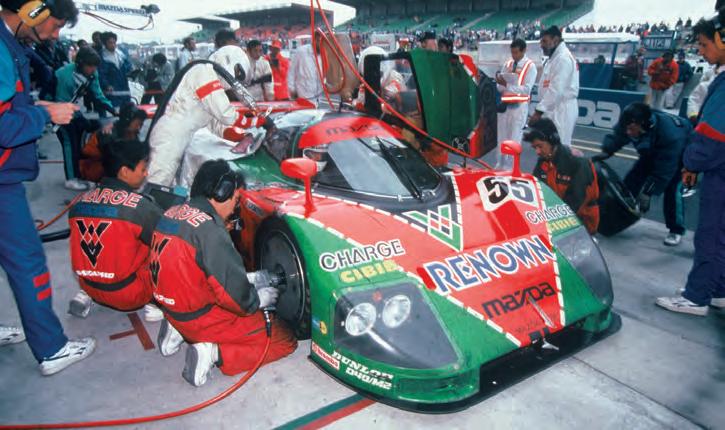
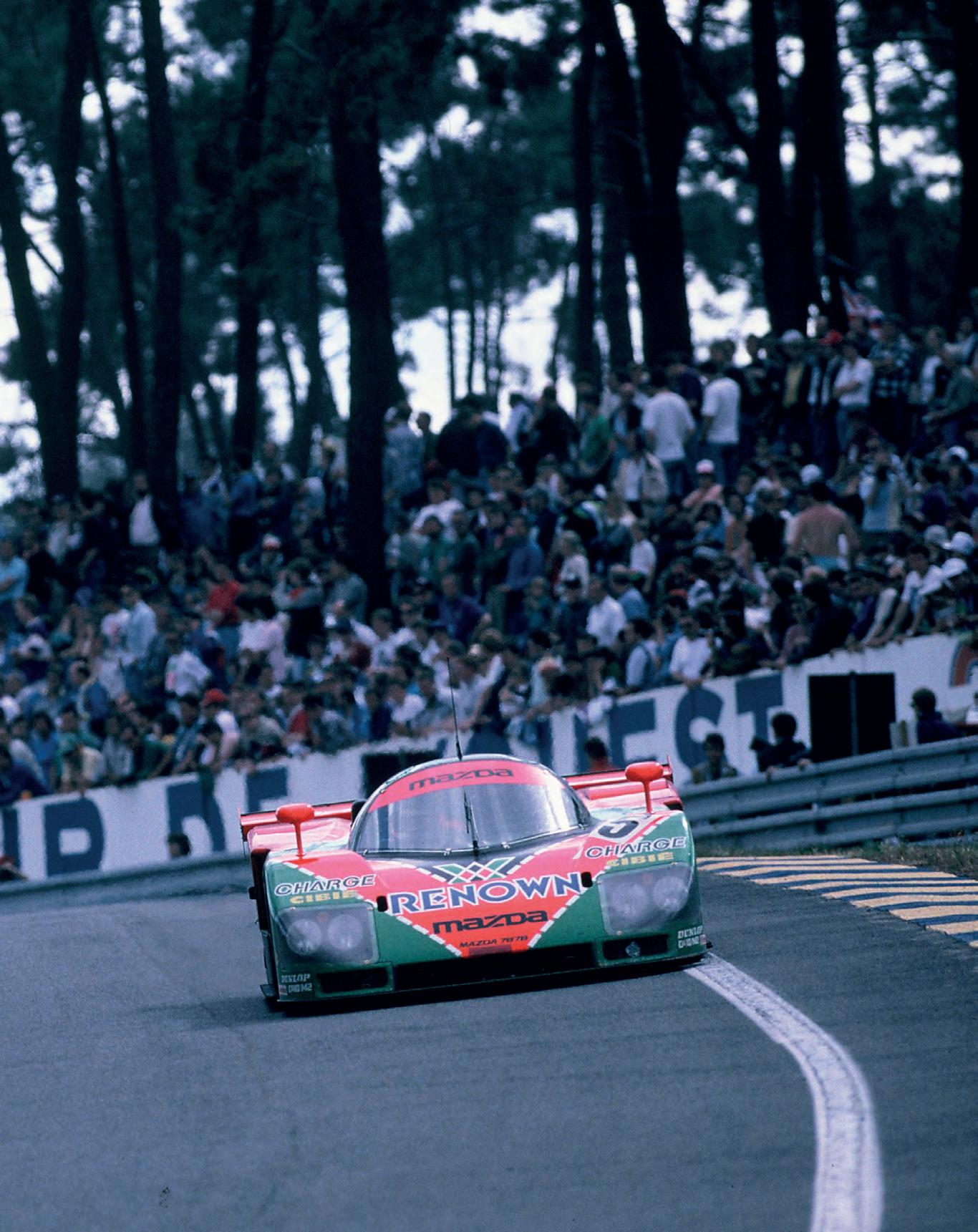
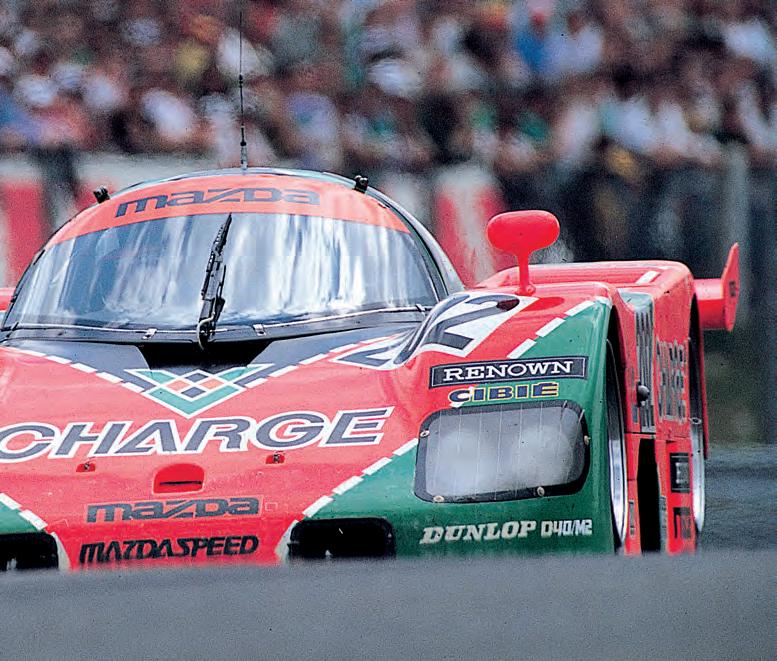
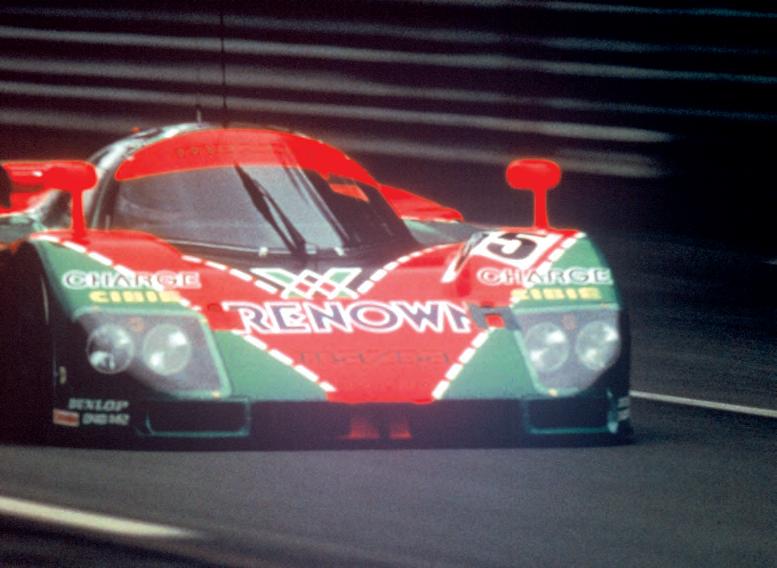
“This year’s approach is a collage of four significant cars of their era,” Patterson explains. “The dominating Toyota TS050 Hybrid, Williams FW11 Honda F1 car, BRE’s Datsun 510, and the Le Mans-winning Mazda 787B provide illustrative contrasts to the sport’s progression. Plus, they’re just cool-looking cars.”
The artwork is available in the Raceway Store as a collectible 24” x 36” poster, and Patterson will also host a paddock exhibition featuring
many of his pieces. Visitors can easily find his display, where he often creates live art throughout the day, and see him signing posters for enthusiastic kids and collectors.
In addition to commissioned fine art, Patterson has raised more than $1.25 million by painting live at many charity events, such as the Austin Hatcher Foundation, National Guard Youth Foundation, United Way, and St. Jude Children’s Research Hospital. He is also a frequent guest at races and concours events across the country.
ARTIST BILL PATTERSON
PASSION FOR INNOVATION, REIGNITED
Dunlop’s profound legacy helped define the automotive world as we know it today. With technological advancements derived from motorsports competition, Dunlop Tires North America is committed to paying tribute to the brand’s rich, distinctive history by cultivating the same passion for innovation. Moving forward, Dunlop is dedicated to continuing its legacy by taking you beyond with a new generation of premium passenger car, CUV, SUV, light truck and high-performance tires. STAY CONNECTED @drivedunlop
EX-JIM CLARK INDY CAR HIGHLIGHTS BONHAMS|CARS LAGUNA SECA AUCTION
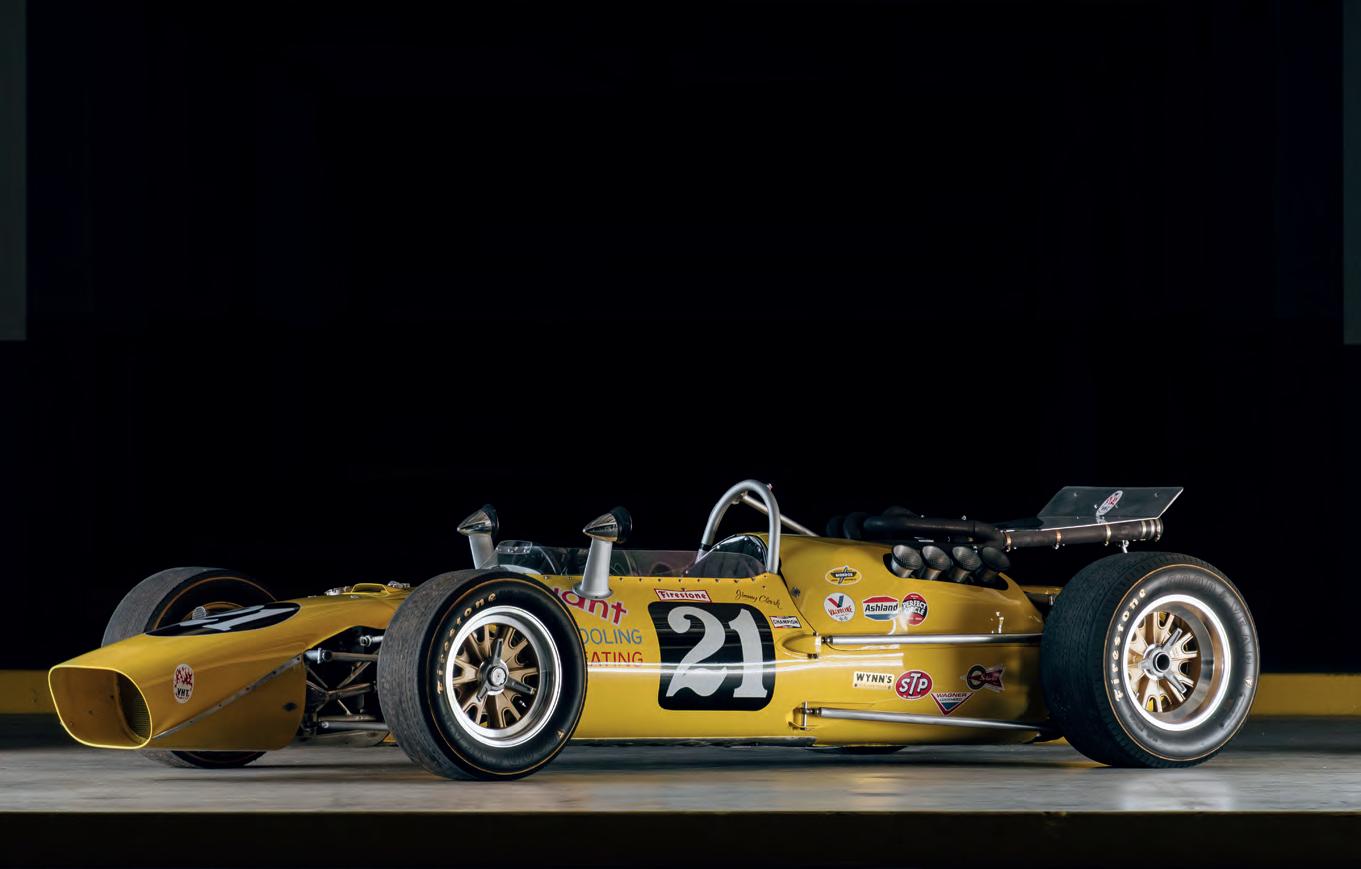
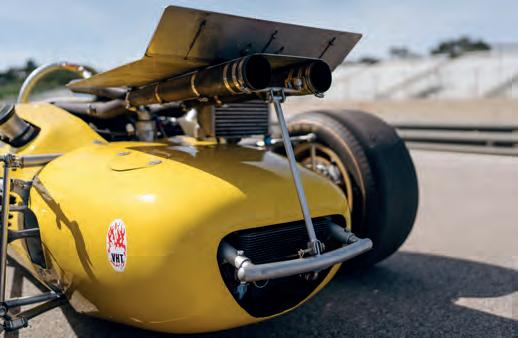
1967 Vollstedt-Ford USAC Indy Car campaigned by Jim Clark and legends
By Doug Nye
To commemorate its inaugural sale at Laguna Seca, Bonhams|Cars is offering an outstandingly original — and at least equally historic — Indy car built by one of America’s mostfaithful USAC constructors.
The Vollstedt-Ford chassis serial 67B is, not least, the actual car driven by legendary doubleFormula 1 World Champion — and 1965 Indianapolis 500 winner — Jim Clark in the 1967 Rex Mays 300 road race at Riverside, Calif. Regarded at the time (and for many enthusiasts ever since) as one of the greatest racing drivers of all time, international motor racing’s humble and gentlemanly Scottish superstar qualified this very car second fastest on the front row of the Riverside starting grid. There, he lined up alongside pole position qualifier Dan Gurney in his Eagle-Ford.
The contemporary Autosport’ magazine described how: “The moment the pace car pulled off Clark and Gurney streaked away, with the
Eagle just in front but with Clark not giving him a moment’s peace. After ten laps the rest of the field were strung out behind but still the two Grand Prix boys were hard at it.
“It was Gurney who was in front and under pressure. Eventually he made the slightest mistake and went into a corner too fast, going just wide enough to allow the ever-persistent Clark to sneak through. However, Jimmy’s joy was short-lived, for no sooner was the Vollstedt in front than its engine went rough, and he came in to retire with a broken valve.”
Very few had expected the Vollstedt to prove as competitive as it had been by its genius driver, and ever-modest Jim Clark later described it as having been “…It’s a good motor car, in fact a very good motor car.”
The Indy winner and doubleWorld Champion Driver would lose his life the following April in a minor Formula 2 race at Hockenheim, West Germany. That 1967 Rex Mays 300 at Riverside Raceway, and therefore this Vollstedt-Ford 67B he drove,
proved to be Jimmy Clark’s last USAC open-wheeler appearance of his glittering career.
But there is more relating to both this car and to Clark. At Riverside this Vollstedt carried a surface plate aerodynamic wing upon its Ford engine’s up-raked exhaust system above its tail. Rolla Vollstedt had been among the first Indy regulars to recognize the potential of such aerodynamic aids to enhance tire adhesion at exceptionally high speeds. In 1966 he had seen a true airfoil wing adopted on Jerry Eisert’s Bat Car entered at Indy by J. Frank Harrison. For this 1967 USAC entry, his plate device sought a similar effect, and it proved sufficiently effective to leave an impression upon its guest driver.
Four months later, Jim Clark was contesting the 1968 Tasman Championship race at Teretonga, New Zealand. His car was a worksentered Lotus-Cosworth 49T. During practice there he recalled the Vollstedt’s wing surface at Riverside and suggested to his mechanics
they might try a similar device. Chief mechanic Leo Wybrott and brothers Dale and Roger Porteus had aviation knowledge. They found a discarded helicopter blade in a local scrapyard, sawed off a length and mounted it experimentally on short struts above their Lotus’ tail. Leo would recall how Jimmy felt it unwise to race the device after practicing with it, because team chief Colin Chapman was back home in England. If anything went wrong, “there would be hell to pay.”
But young Ferrari engineer Gianni Marelli photographed the device. Ferrari would arrive for that year’s Belgian Grand Prix at highspeed Spa with a strutted wing on their F1 car, as did the Brabham team. Through 1968 into ’69 such strutted wings grew rapidly in size, height, effect and danger until they were banned during the year’s Monaco GP meeting. In retrospect, thanks to Jim Clark, that winged era was in part Vollstedt 67B’s legacy.
During this historic car’s threeyear, 30-race, frontline life it was also driven by two further Indianapolis
500 race winners: Gordon Johncock (victor in 1973 and 1982) and Tom Sneva (1983), among 18 drivers in all. They were:
• Cale Yarborough (Triple NASCAR Champion, 4-time Daytona 500 winner, 83 total NASCAR wins)
• Carl Williams (Six-time Indy 500 competitor)
• Jim Clark (Twice Formula 1 World Champion, 1965 Indy 500 winner, 2nd 1963 and 1966 Indy 500s)
• George Follmer (IndyCar, F1, IROC, Can-Am Champion, Trans-Am Champion)
• Arnie Knepper (USAC driver and five-time Indy 500 competitor)
• John Cannon (F5000 Champion, F1 and IndyCar driver)
• Art Pollard (Seven-time Indy 500 driver, USAC driver)
• Larry Dickson (Triple USAC Sprint Car Series Champion, 13time Indy 500 driver)
• Wally Dallenbach (Five-time IndyCar winner)
• Jim Malloy (Super modified, CAMRA, IndyCar driver)
• Chris Amon (Formula 1 and Sports car star, McLaren, Ford and Ferrari works driver, winner of Le Mans and Daytona 24-Hour races)
• Gordon Johncock (Twice Indy 500 winner)
• Jerry Grant (12 Indy 500s, twice Le Mans 24-Hours competitor, codriving with Dan Gurney)
• Tom Sneva (Indy 500 winner, Super modified and CAMRA driver)
• Ronnie Bucknum (Formula 1 and IndyCar competitor)
• Tony Adamowicz (sports and Trans-Am Champion)
• Denny Zimmerman (IndyCar driver)
• Ken Hamilton (Super modified and Sprint Car Champion)
What’s more this car qualified for three consecutive Indy 500 races (1967, ’68 and ‘69), and achieved 13 top-ten finishes, three of them in the top five. And no fewer than four Formula 1 drivers hunkered down into its form-fitting cockpit.
Post-restoration, the car has only been presented publicly in the most exclusive prestige events. It was invited to the 2017 Goodwood Festival of Speed, and then to take its place at the 2018 Pebble Beach Concours d’Elegance as one of the most significant Indy cars of the 1960s. It also was a class winner at the 2020 Amelia Island Concours.
1966 Lola-Ford T70 Mark II Can-Am
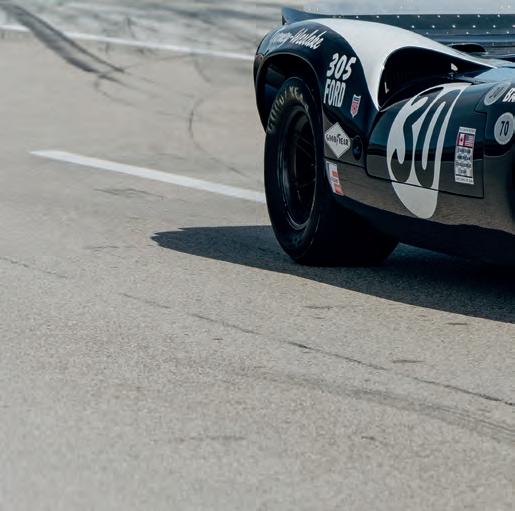
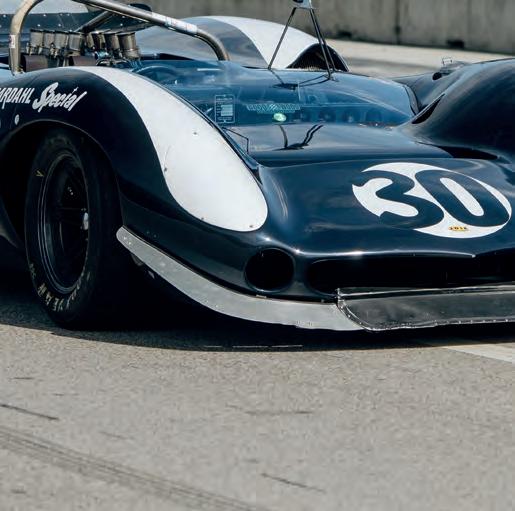
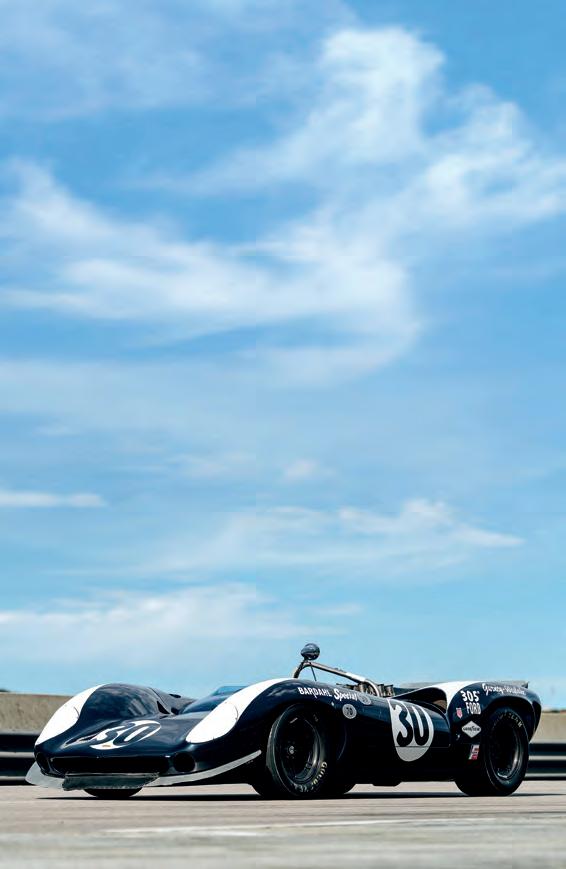
Adding horsepower to the Bonhams|Cars Auction is the unique Lola-Ford T70 Mark II Can-Am sports-racing car driven by the late, great American Formula 1, Can-Am and Indy driver, Dan Gurney.
Driving the Lola-Ford T70 Mark II, Gurney scored a one-off win in the second round of the 1967 Can-Am Championship series at Bridgehampton, Long Island — the only Ford-powered victory in the original nine-year tenure of the “anything goes” Can-Am Championship series from 1966 to 1974.
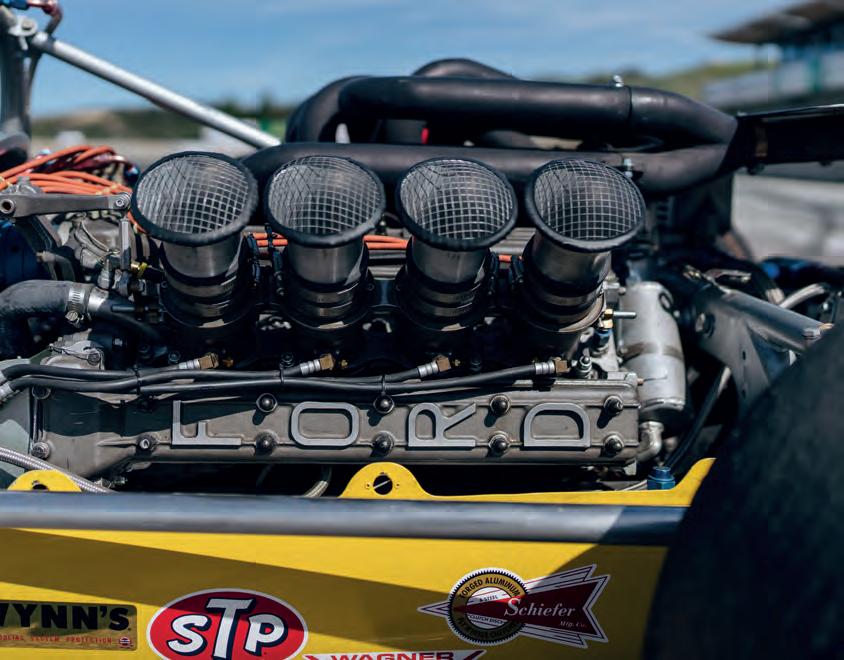
This ex-Dan Gurney All-American Racers-entered LolaFord T70 Mark II is powered by a small-block 305 cubic inch V8 and driven through a Hewland LG transaxle. Surviving original features of the car includes a modified rear cockpit bulkhead created by All-American Racers to provide the tall Dan Gurney with a comfortable driving position. Overall, the car’s historic patina has been well preserved.
INDYCAR display is a walk through time
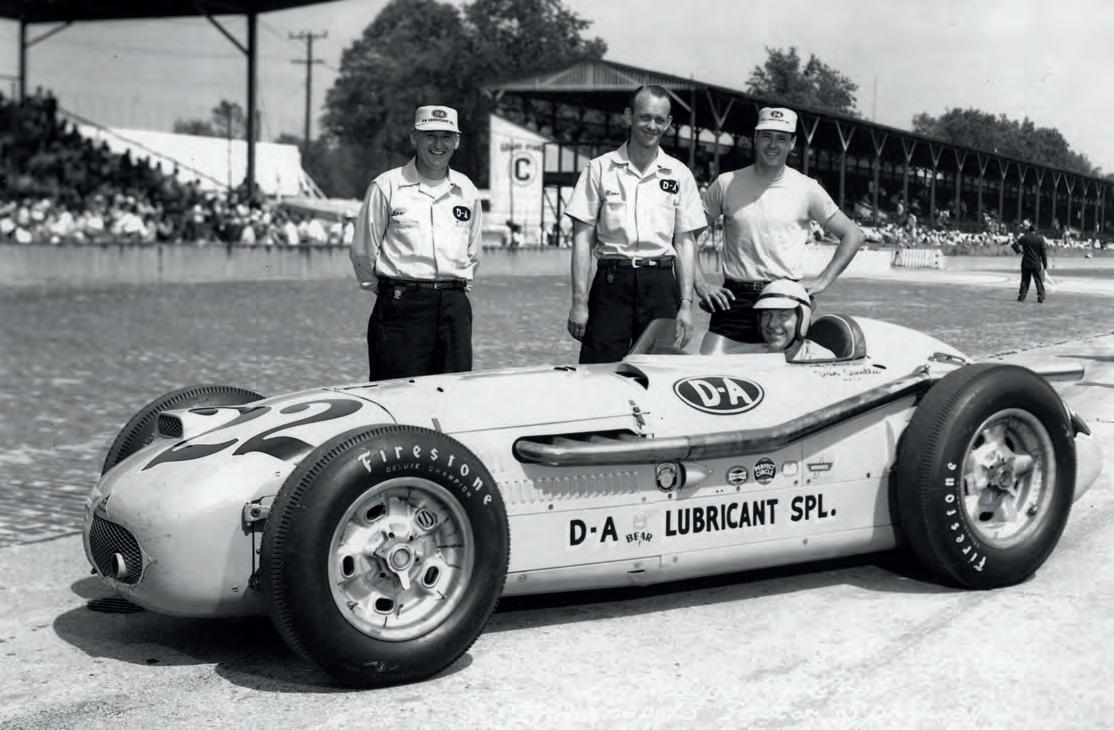
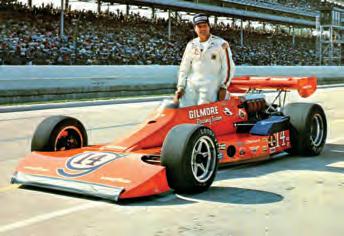
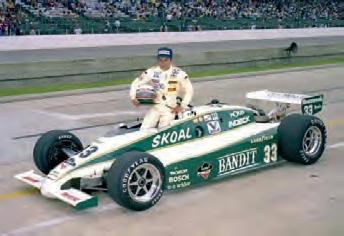
any of the automotive world’s greatest advances have come from America’s open-wheel INDYCARs. Their evolution is evident across demanding venues — from technical road courses such as Laguna Seca and Road America to unforgiving street circuits in Long Beach and St. Petersburg, to sustained high speeds at the Indianapolis Motor Speedway. To showcase this evolution and celebrate their contributions to motorsports history, the Rolex Monterey Motorsports Reunion presents a special exhibition of some of the pivotal cars of their era.
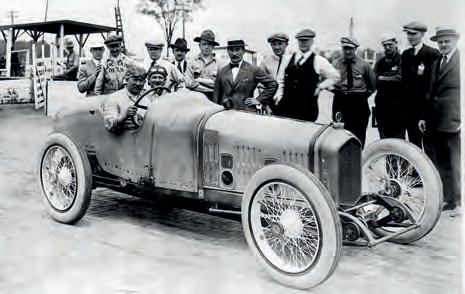
M1 1919 Ballot
René Thomas qualified his Ballot on pole for the 1919 Indianapolis 500 at approximately 104.7 mph, breaking the previous Indianapolis qualifying record. The Ballot team was among the most technically advanced entries of the year, with Albert Guyot finishing 4th and Thomas officially classified 11th.
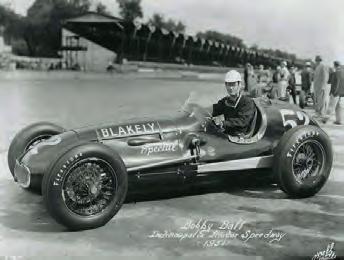
2 1951 Schroeder/Offenhauser
Chassis 002
The Blakely Oil Schroeder/Offenhauser was entered by John L. McDaniel for Bobby Ball in the 1951 Indianapolis 500. Ball started 29th and finished 5th, completing all 200 laps. The car’s later Indianapolis history appears to include McDaniel/Schroeder entries in the mid-1950s.
3 1953 Kurtis Kraft 500B
Chassis 363
Chassis 363 is identified in public records as a 1953 Kurtis Kraft 500B built for Andy Granatelli and driven by Freddie Agabashian in the 1953 Indianapolis 500. Agabashian qualified 2nd at 137.546 mph and officially finished 4th.
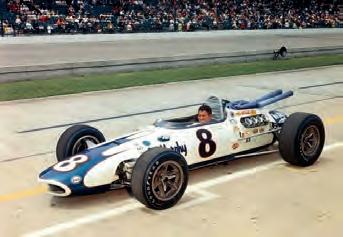
4 1966 AAR Eagle
Roger McCluskey / Lindsey Hopkins — chassis 205
One of the original 1966 Eagle Indy cars, this Lindsey Hopkins entry was driven by Roger McCluskey in the 1966 Indianapolis 500. McCluskey qualified 13th in the No. 8 G.C. Murphy Eagle.
5 1974 Coyote
A.J. Foyt — chassis 2
This Coyote belongs to the small group of Foyt-built Coyotes used during the 1974–1978 period. OldRacingCars identifies two 1974 Coyotes and four primary Foyt Coyotes from that era; the “chassis 2” description likely corresponds to the second 1974 car.
6 1983 March 83C
Teo Fabi / Forsythe Racing — chassis 1
Teo Fabi drove the Forsythe Racing March 83C during his sensational 1983 rookie season. He won the pole for the 1983 Indianapolis 500 with record speeds and won four CART races that season. He also won the first IndyCar/CART race held at Laguna Seca in 1983.
7 1986 March 86C
Bobby Rahal / Truesports — chassis 86C-13
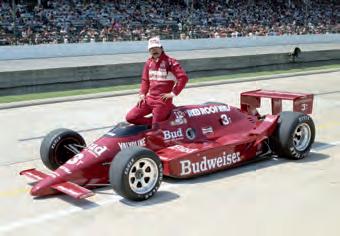
Bobby Rahal’s March 86C-13 is one of the most important Indy cars of the 1980s. Rahal won the 1986 Indianapolis 500 and also won at Laguna Seca in 1986 on his way to the CART championship. Rahal won four consecutive IndyCar/CART races at Laguna Seca from 1984 through 1987, making him one of the track’s defining Indy car drivers.
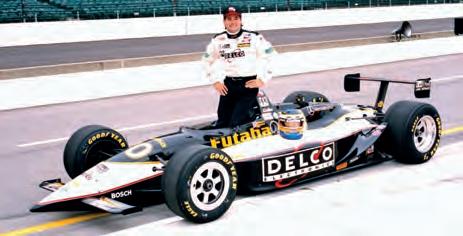
8 1996 Lola / Mercedes-Ilmor
Davy Jones / Galles Racing — chassis HU19
Davy Jones drove the No. 70 Galles Racing Lola/Mercedes-Ilmor in the 1996 Indianapolis 500, finishing 2nd and leading 46 laps.
9 2001 Reynard 01I
Gil de Ferran / Team Penske — chassis 12
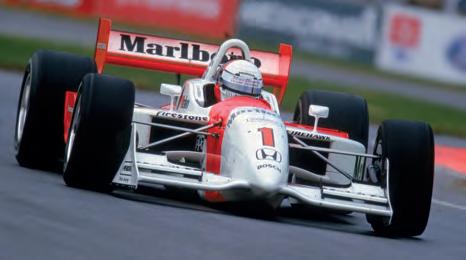
Gil de Ferran’s 2001 Team Penske ReynardHonda was part of his second consecutive CART championship season. The Reynard 01I won the 2001 drivers’ title with de Ferran and the constructors’ title with Team Penske.
10 2022/2025 Dallara
Alex Palou / Chip Ganassi Racing — chassis 029
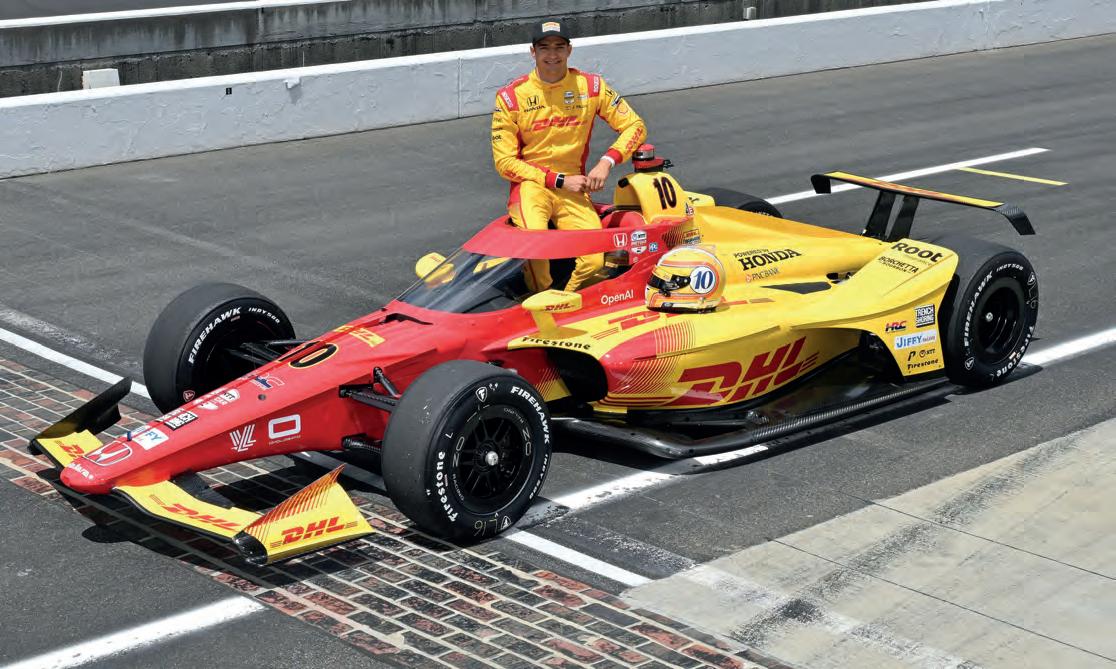
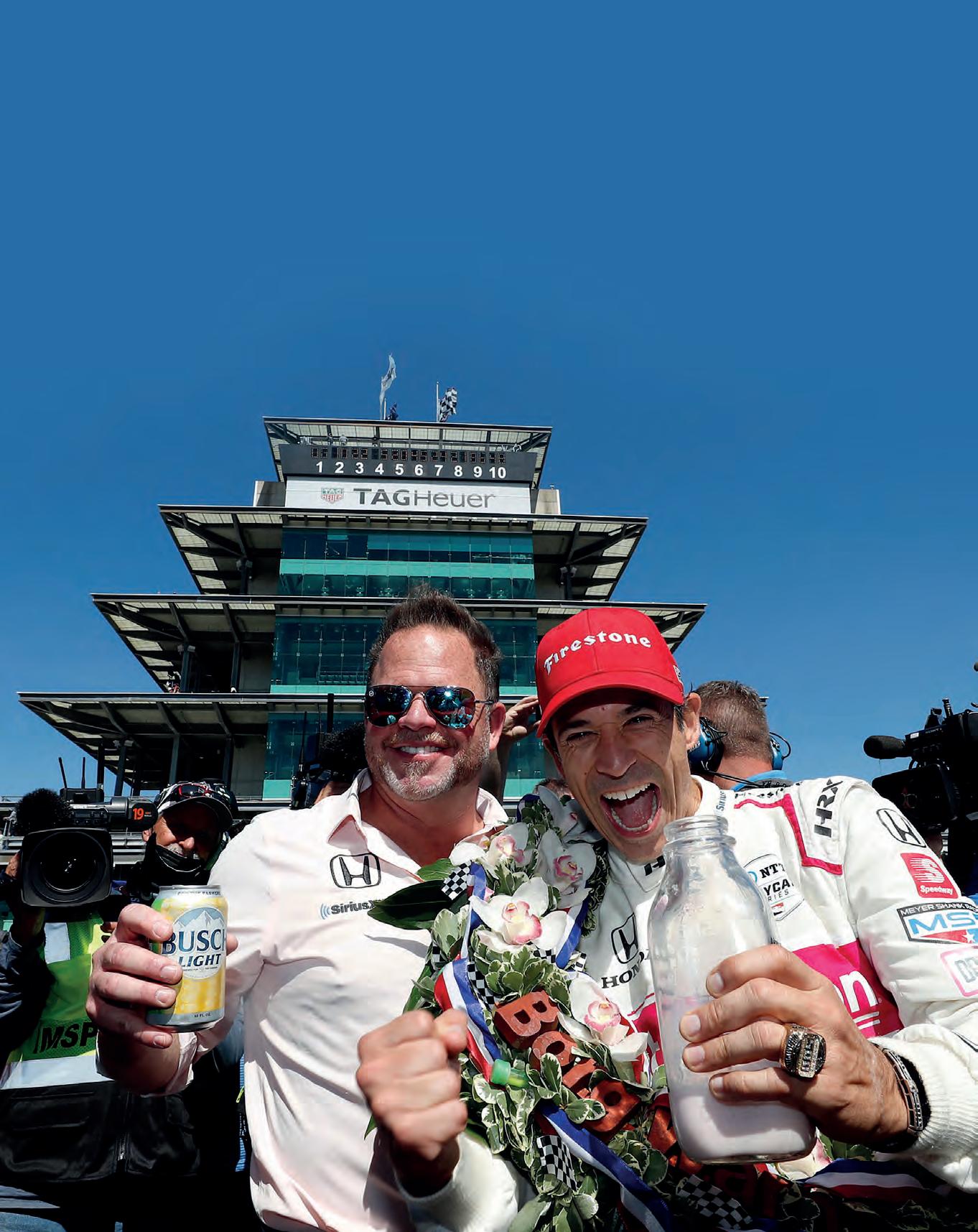
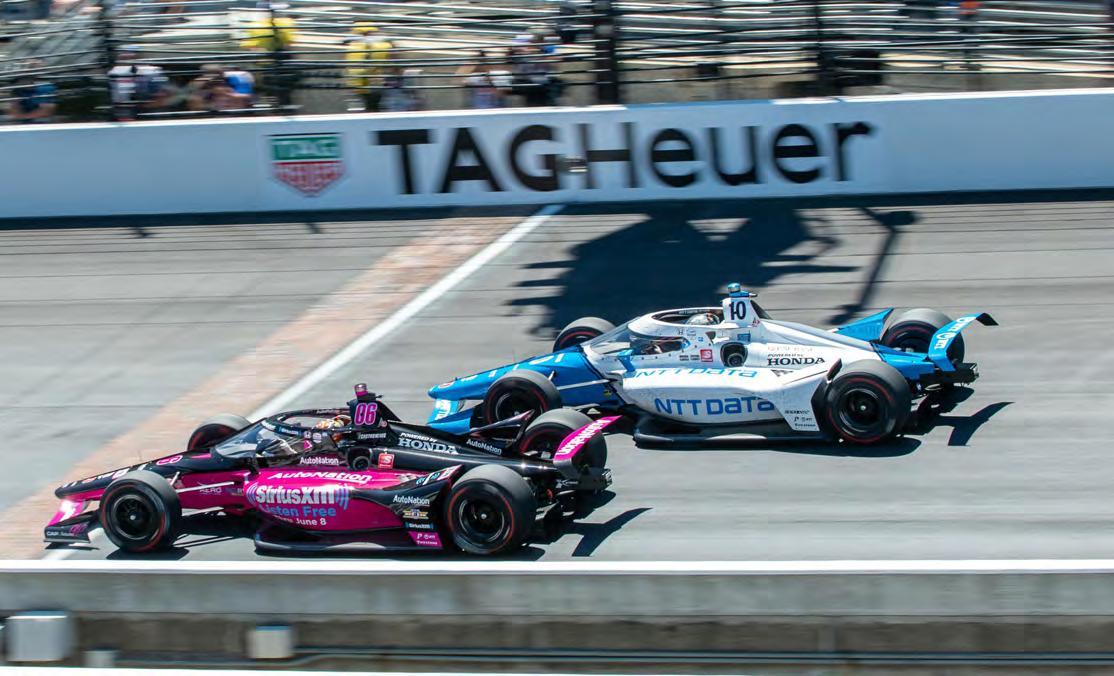
Alex Palou’s No. 10 Chip Ganassi Racing Dallara-Honda won at Laguna Seca in 2022 and again in 2025. Palou also won the 2025 Indianapolis 500.
“ NEVER FORGET THAT BEFORE I’M A DRIVER, I’M A RACE FAN. I WAS JUST VERY, VERY LUCKY IN MY LIFE TO BE ABLE TO TURN THIS INTO A PROFESSION ”
ALEX ZANARDI
REMEMBERING THE PASSION OF A RACER
ALEX ZANARDI
1966-2026
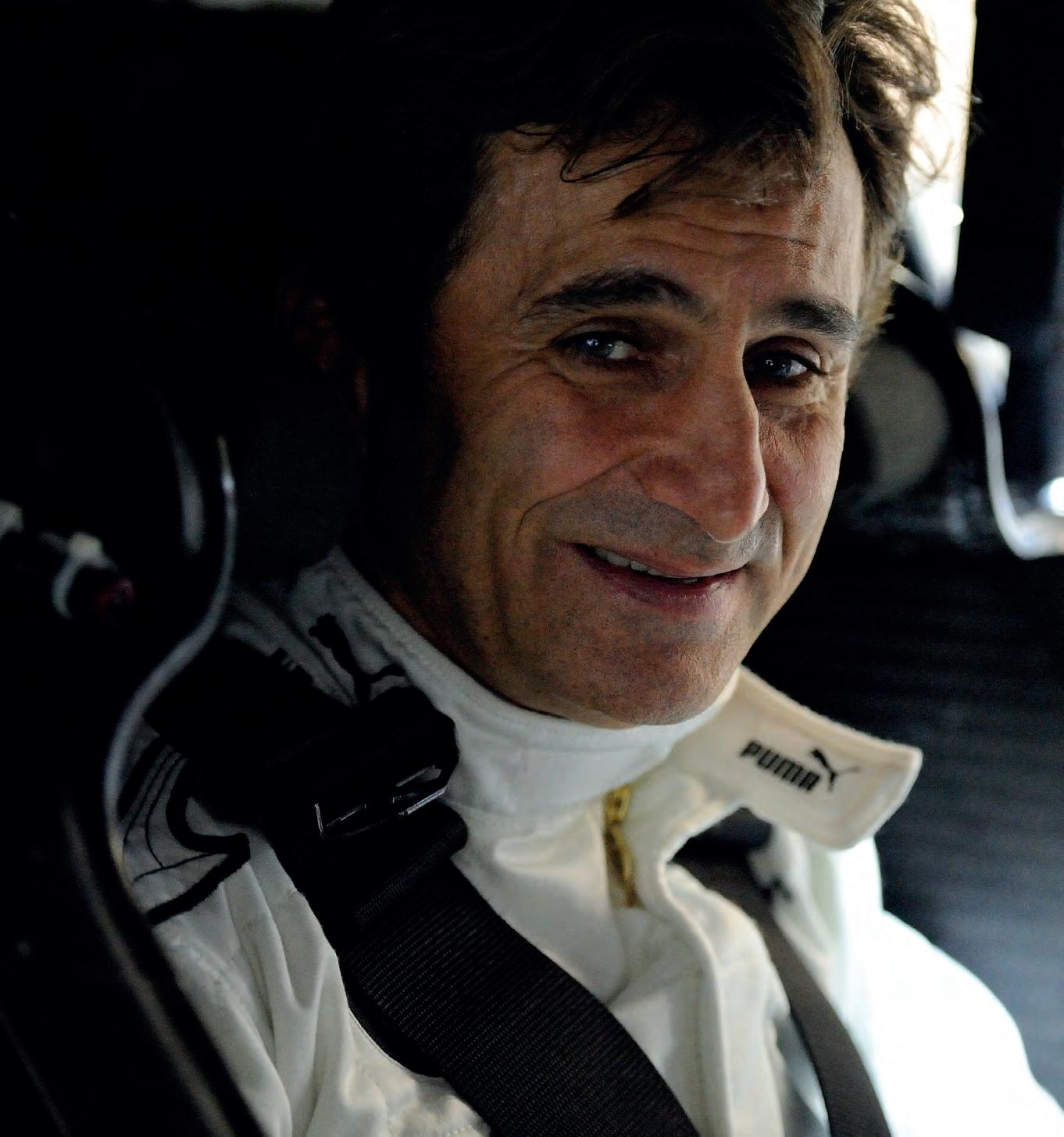
For the many who knew Alex Zanardi, both inside and outside of the racing community, his recent passing generated countless memories of a man who believed there were no limits to what he could accomplish. He never manufactured emotions or words for PR purposes, and his positive outlook on life was infectious.
Alessandro Zanardi was THE Indy Car driver in the latter part of the ‘90s. He not only thrilled fans with his fearless driving style, but off the track his charisma and friendliness lit up the scene and made him one of the favorite faces in the sport.
Alex was the real deal. He showed the promise of greatness ahead as he worked his way from karting to Formula 3 and then F3000, cycled through a mixed bag of underfunded F1 teams, and then finally finding a home and his professional peak in the CART series where he dominated. This earned him a return to F1 with Williams, but
that stint had its problems and Alex returned to CART.
While leading the CART race at the EuroSpeedway in Germany, Alex suffered a horrific accident that many thought had claimed his life. It did not – and that very narrowest of escapes perhaps can be viewed as a clue to the way Alex lived life thereafter. Despite losing both legs in the accident, Alex seemed to treat it as an inconvenience, not a life-changing trauma, and it took him only a few years before he was again twisting the wheel of a race car in competition.
Alex did and after five years as a factory BMW driver hustling around the world as part of World Touring Car Championship, he remained as always, a positive force.
Concluding a 2008 phone interview, Alex had a reminder for me. “Oh, yeah. Never forget that before I’m a driver, I’m a race fan. I was just very, very lucky in my life to be able to turn this into a profession. I love motor racing and for sure every time I switch a TV on, if there is a race, I watch it.”
Godspeed, our friend.
KERRY MORSE
Monterey memories
To celebrate the 75th anniversary of Formula 1® in 2025, an exceptional lineup of cars would be essential. And when the gates opened, visitors were treated to an awe-inspiring sensory experience of Formula 1 history unlike ever seen before.
The F1 paddock display was a journey through time with more than 50 F1 cars representing every era of racing. From the early 1947 Kurtis Kraft Midget, 1950 Talbot Lago T26C, and 1962 Porsche 804 to the aggressively styled 2009 Brawn, 2019 Red Bull Toro Rosso, and the
2024 Constructor’s World Champion
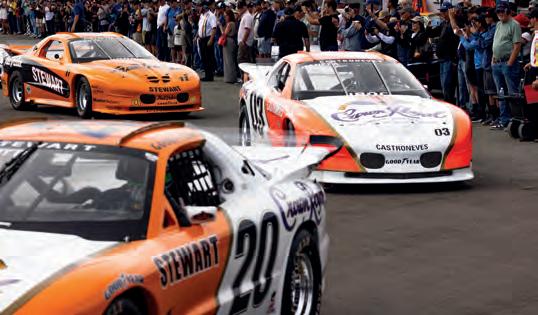
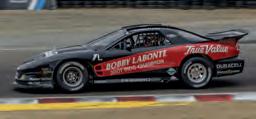
2024 McLaren MCL38, the collection was a hub of continuous activity. Making its Monterey debut to pure fan delight was the revitalized IROC series where champions became the champion. The concept was simple, pick the top drivers from NASCAR, USAC, sports cars and Formula 1 and let them race in identical cars. The IROC paddock was bustling with fans meeting drivers such as Kurt Busch, Bill Elliott, Jeff Gordon, Bobby Labonte, Mark Martin, Scott Pruett, Ken Schrader, Danny Sullivan and Al Unser Jr.
Recognizing the significance of the racing, displays, and its influence on preserving racing heritage, judges from the prestigious International Historic Motoring Awards named the 2025 Rolex Monterey Motorsports Reunion “Motorsport Event of the Year.”
2025 ROLEX REUNION REWIND
Winners and podiums
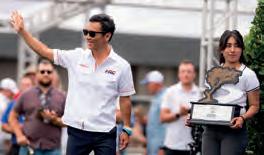
For the first time in its 51-year history, and to the delight of drivers and visitors, prizes were presented to the top three finishers in each Saturday Rolex race. The podium ceremony immediately followed each race where drivers pulled up and could proudly share their accomplishments with friends and family.
Mario Andretti Trophy
1st/ James Constable
1983 Tyrrell 011
2nd/ Cal Meeker
1979 Tyrrell 009
3rd/ Mark Smith
1982 Arrows A4
Parnelli Jones Trophy
1st/ Ken Epsman
1972 AMC Javelin
2nd/ Patrick Byrne
1969 Ford Mustang Boss 302
3rd/ Joshua Feiber
1969 Chevrolet Camaro
Dan Gurney Saloon Car Trophy
1st/ Jenson Button/Mazen Fawaz 1967 Alfa Romeo GT
2nd/ Chet Taylor
1965 Alfa Romeo Giulia Sprint GT
3rd/ Richard Stuart Milne
1968 Alfa Romeo GTA
Ken Miles Sixties GT Trophy
1st/ James Farley
1964 Shelby Cobra 289
2nd/ Mike McGovern
1964 Shelby Cobra 289
3rd/ Patrick Byrne
1963 Chevrolet Corvette
Peter Gregg Trophy
1st/ Gunnar Jeannette
1981 Porsche Andial 935L
2nd/ Patrick Byrne
1977 Greenwood Corvette
3rd/ Ken Epsman
1976 DeKon Monza
Briggs S. Cunningham Trophy
1st/ David Swig
1962 Chaparral 1
2nd/ Greg Meyer
1959 Sadler Mk 4
3rd/ Edward Nigro
1959 Lola Mk 1
Pedro Rodriguez Trophy
1st/ Cal Meeker
1973 Lola T294
2nd/ Jamie Constable
1974 Chevron B26
3rd/ John Fudge
1973 Chevron B23/26
Jim Hall USRRC Cup
1st/ Richard Griot
1967 McLaren M6A
2nd/ Greg Hoff
1966 McLaren M1B/Mk 2
3rd/ Dan Cowdrey
1966 Lola T70 Mk II
Juan Manuel Fangio Cup
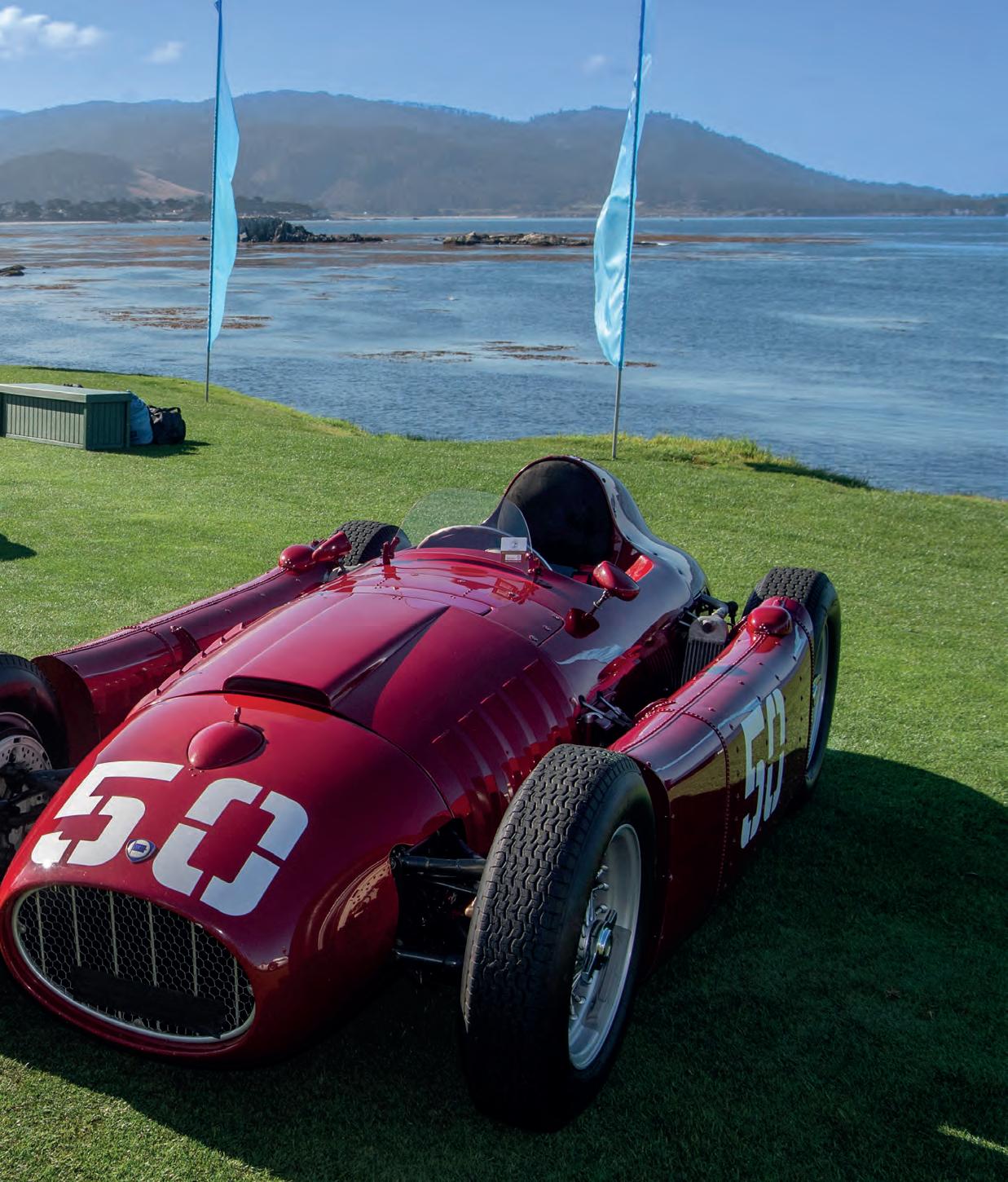
1st/ Charles Nearburg
1954 Lancia D50A
2nd/ Gunnar Jeannette
1955 Lancia D50
3rd/ Paddins Dowling
1936 ERA B
Hurley Haywood Trophy
1st/ Philip Kadoorie
1990 Porsche 962
2nd/ Gunnar Jeannette
1991 Porsche 962
3rd/ Zak Brown
1989 Jaguar XJR10
Scott Pruett Legends of Endurance
1st/ Keith Freiser
2009 Zytek LMP1
2nd/ Jim Devenport
2011 Oreca 03
3rd/ David Roberts/Mike Skeen
2012 Audi R8 LMS
John Morton Trophy
1st/ Andrew Larson
1956 Porsche 356 A Speedster
2nd/ Hiroki Nakamura
1965 Lotus Elan 26R
3rd/ Alec Hugo
1962 Porsche 356 B
Unser Family Cup
1st/ Tomy Drisi
2006 Pontiac Firebird
2nd/ Dario Franchitti
2006 Pontiac Firebird
3rd/ Kurt Busch
2003 Pontiac Firebird
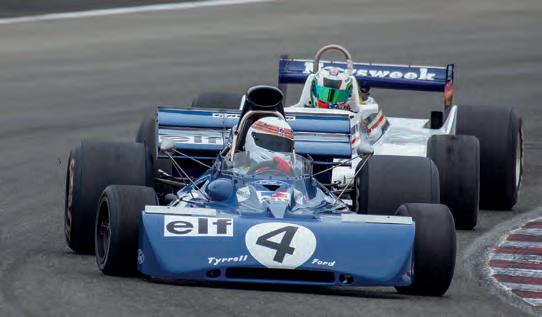
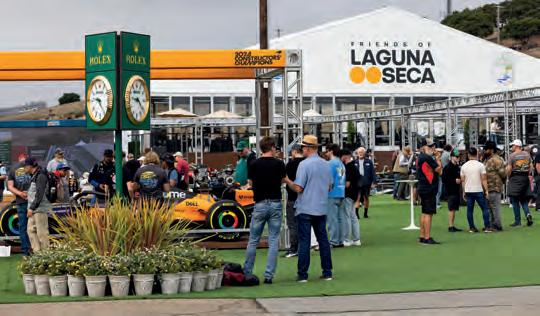
Top to bottom: John Dimmer in his 1971 Tyrrell is hotly pursued by Octavio Rincon in his 1982 March. Fans lined up to cheer on their favorite IROC drivers as they left the pre-grid. Frank Zucchi and his riding mechanic steady his 1911 National Indy car through Turn 11. Enthusiasm ran high from the Turn 3 Drivers Club
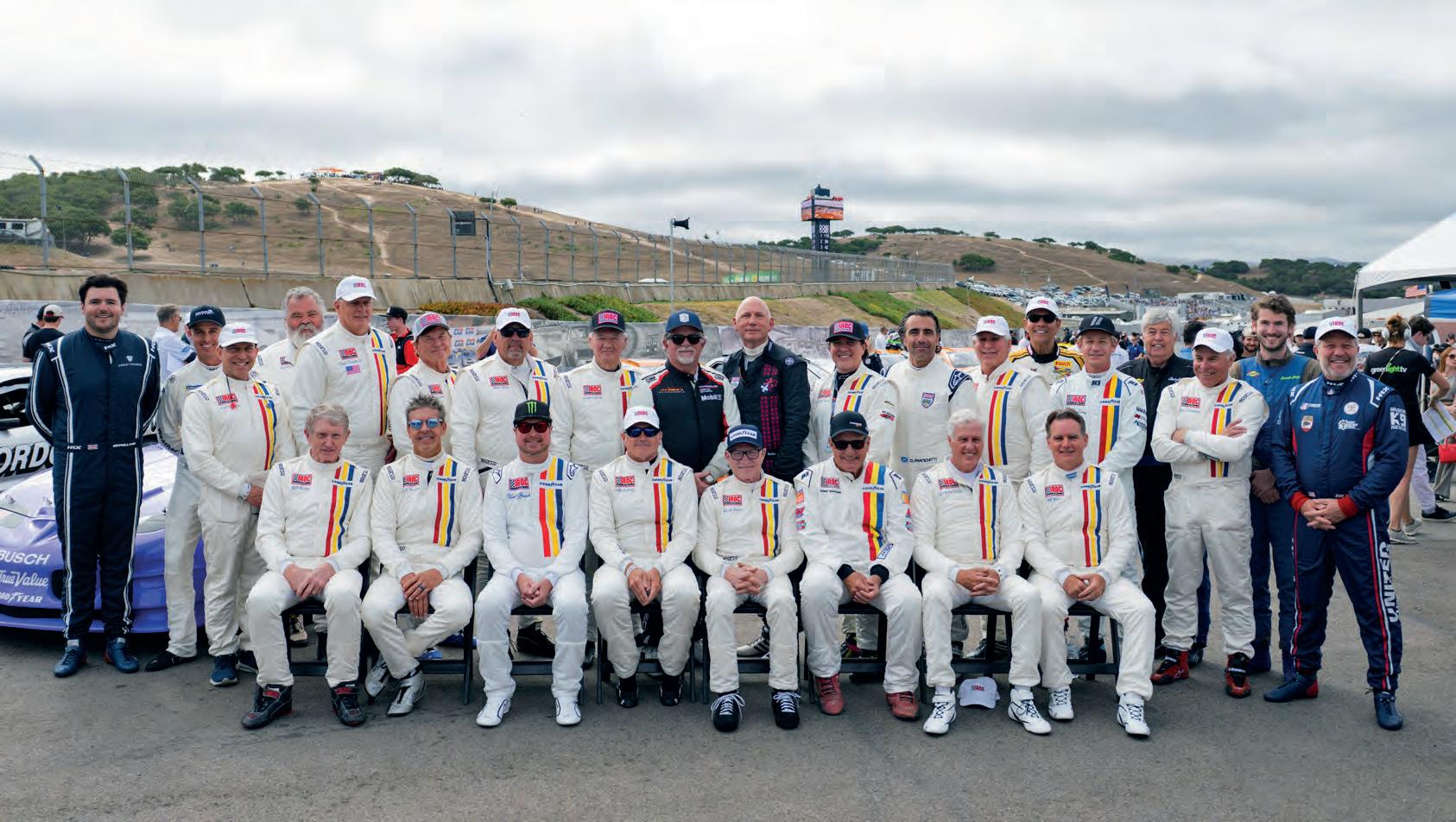
The all-star IROC guest drivers and gentleman drivers paused for a once-in-alifetime group photo before turning their focus to their cars and the race ahead
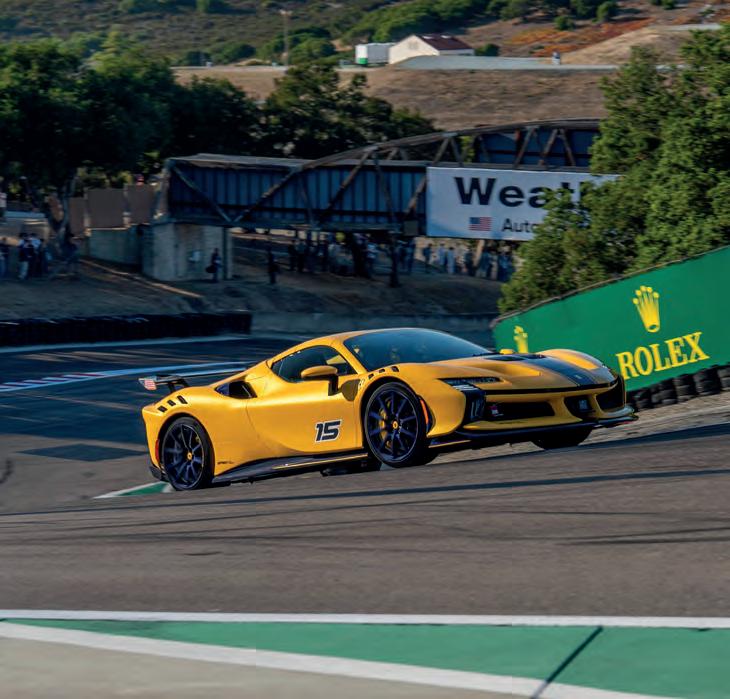
The fourth annual reverse-course competition helped kick off Monterey Car Week in a lighthearted manner. Racing against the clock from the Start/Finish line up through turns 10 and 9, drivers finished after cresting the signature Corkscrew turn.
1st/ Christine Sloss
2024 Ferrari SF90 XX Spider (29.535)
2nd/ Ned Bacon
1975 Porsche 911 RSR
3rd/ Gardner Nichols
2025 Rivian R1T
Corkscrew Hillclimb
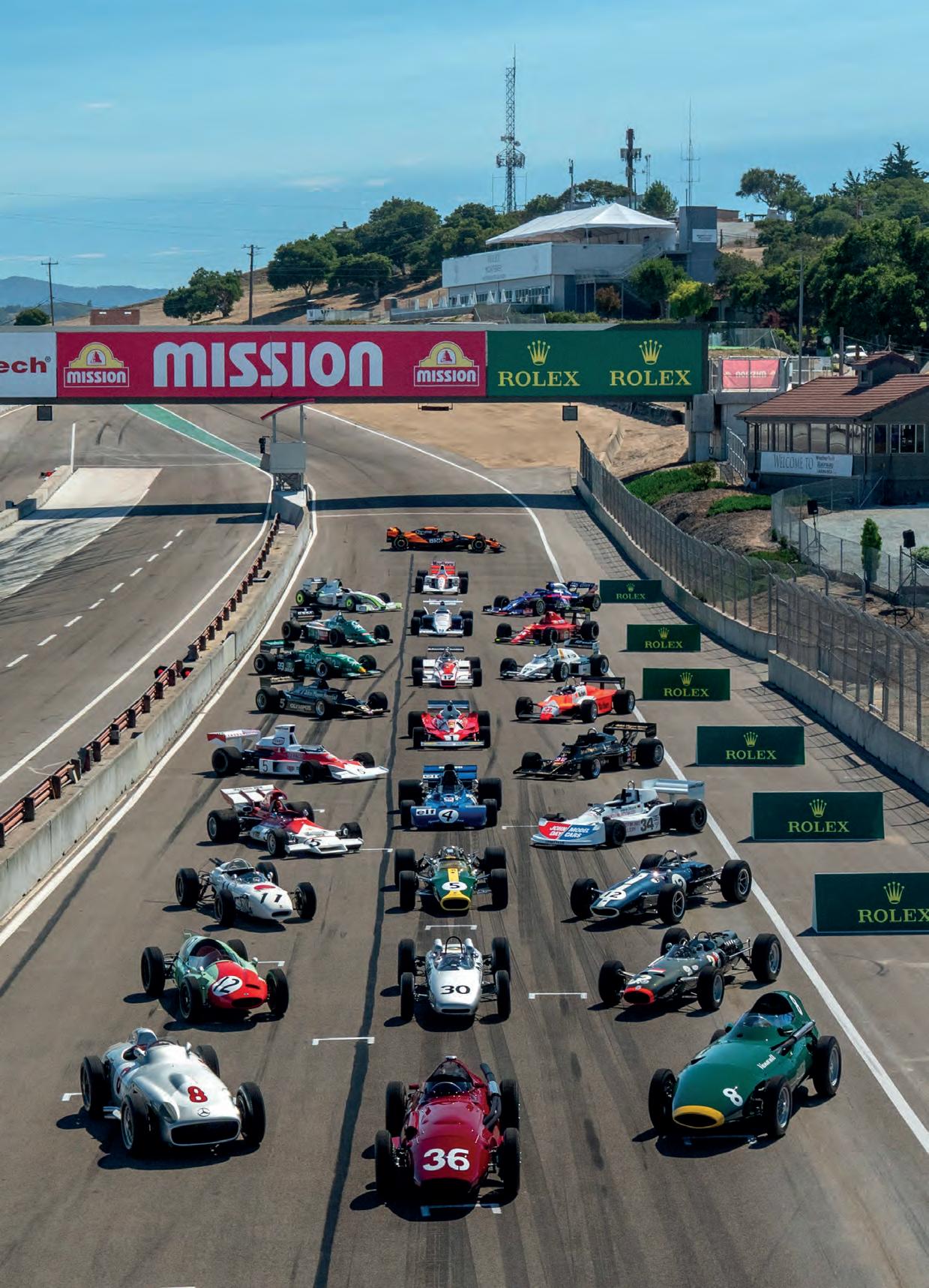
A remarkable collection of historic Formula 1 cars, each rich with history and stories, comes together for this
iconic group photo
2025 prize-giving ceremony
Laughter and good-natured ribbing filled the air in front of the paddock stage for the annual prize-giving and announcement of the 2026 feature. In keeping with tradition, recipients were selected based on how they excelled in their groups and not necessarily for winning a race.
The Spirit of Monterey
This award is presented to the driver or entrant who excels in the spirit of the weekend.
Zak Brown
John Morton Trophy Race
Robert Davis 1953 Siata 208S
Juan Manuel Fangio Cup
Dennis Bigioni
1932 Alfa Romeo 8C 2300 Monza
Ken Miles Sixties GT Trophy
Kyle Kaiser
1965 Shelby GT350
Dan Gurney Saloon Car Trophy
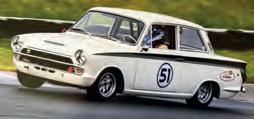
Simon Horton 1966 Lotus Cortina
Pedro Rodriguez Trophy
Kevin Buckley
1967 Porsche 911S
Unser Family Cup
Mark Martin 1995 Dodge Avenger
Mario Andretti Trophy
Paul Haggar 1980 Tyrell 010
Hurley Haywood Trophy
Keith Freiser
1984 Mercury Capri
Briggs S. Cunningham Trophy
Gary Cox
1954 Sutton Jaguar Special Roadster
Parnelli Jones Trophy
Chad Raynal
1969 Chevrolet Camaro
Peter Gregg Trophy
Rick Knoop
1974 Porsche RSR
Jim Hall USRRC Cup
Skip Cook 1965 Elva MK VIII
Scott Pruett Legends of Endurance
Bill Sweedler 2014 Ferrari 458 Italia
Ragtime Racers Exhibition
Chris Helling 1917 Ford Model T
Motor Sport Magazine Editors’ Choice
Brian Pritt
1981 Porsche 935 K4
Bonhams Award
Edward Nigro 1959 Lola MK I
John Fitch Corvette Award
Patrick Byrne
1963 Chevrolet Corvette
Ken Miles Trophy
Paddins Dowling 1936 ERA B
Phil Remington Award, presented by Ford Louie Shefchik
Henry Ford Trophy
John Dimmer
1971 Tyrell Chassis 004
The Petersen Legacy Award
Ross Meyer 1983 Ford Mustang GTP
Made in America – Coolest American Built Race Car
Ken Epsman
1976 Chevrolet DeKon Monza
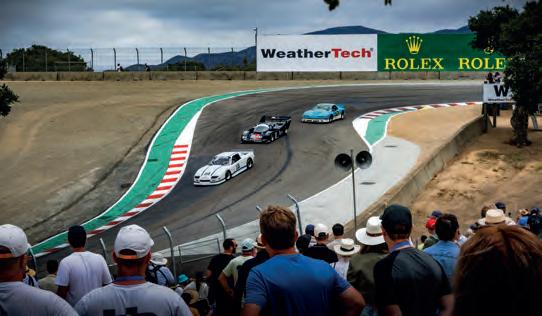
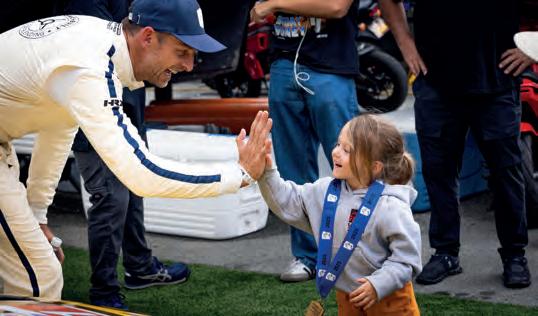
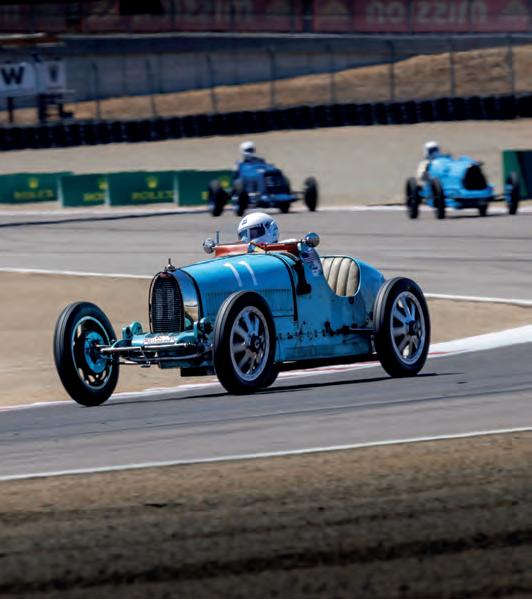
Top to bottom: The Corkscrew remains a popular location as Mike Gagan navigates his 1988 Chevrolet Camaro before attentive fans. Jenson Button enjoys a moment with a young fan. Nathanael Greene is in full race mode at the wheel of his 1925 Bugatti Type 35. The F1 paddock display was a nonstop hub of activity
We believe “good enough,” isn’t. That’s why our American-made FloorLiner is laser measured for a perfect fit to your vehicle — delivering precise protection that goes beyond what you can expect from an OEM liner. Visit WT.com and set your standards higher.
•RA C I NG•
JAPANESE
•IC O N S•
PHOTOGRAPHY JOHN BROOKS
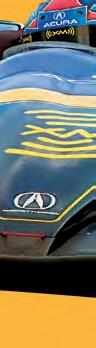
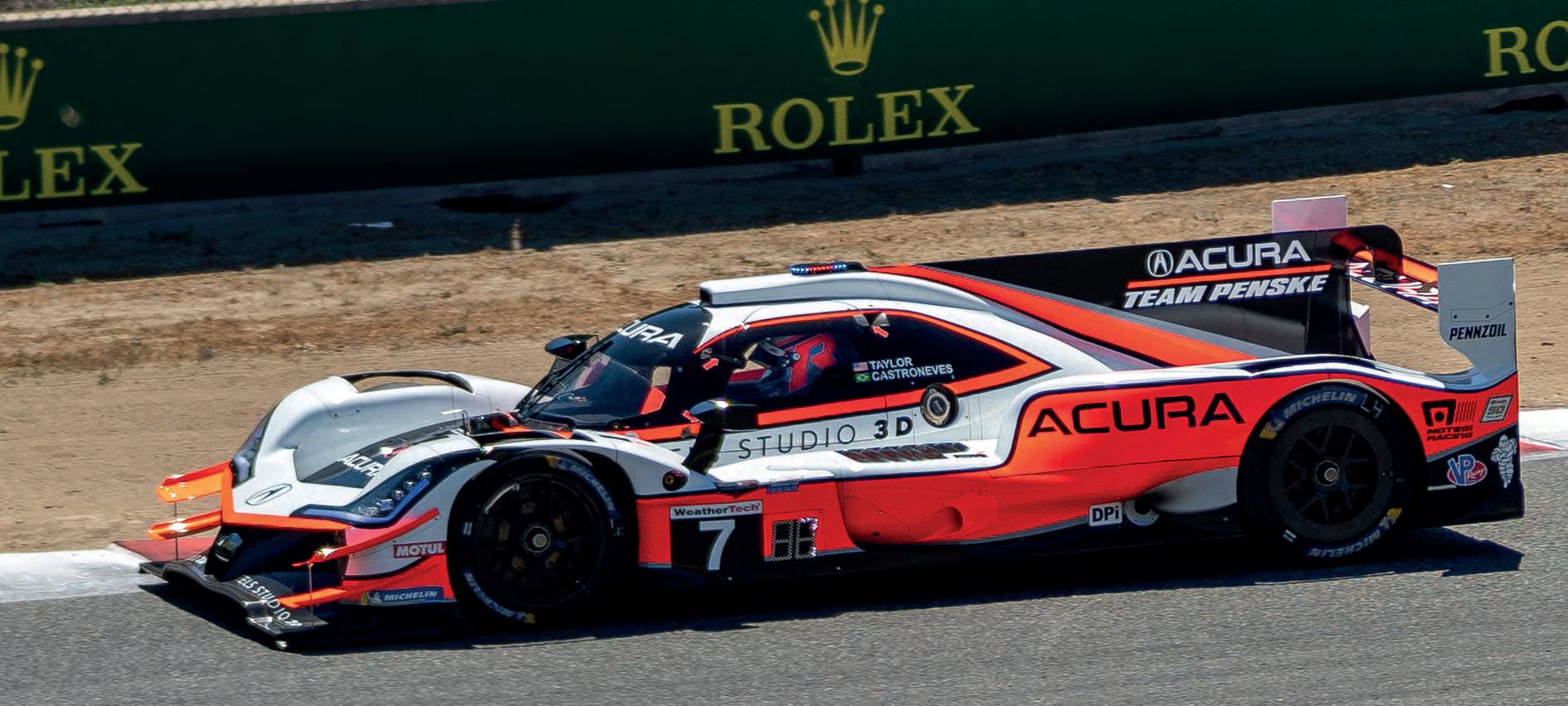
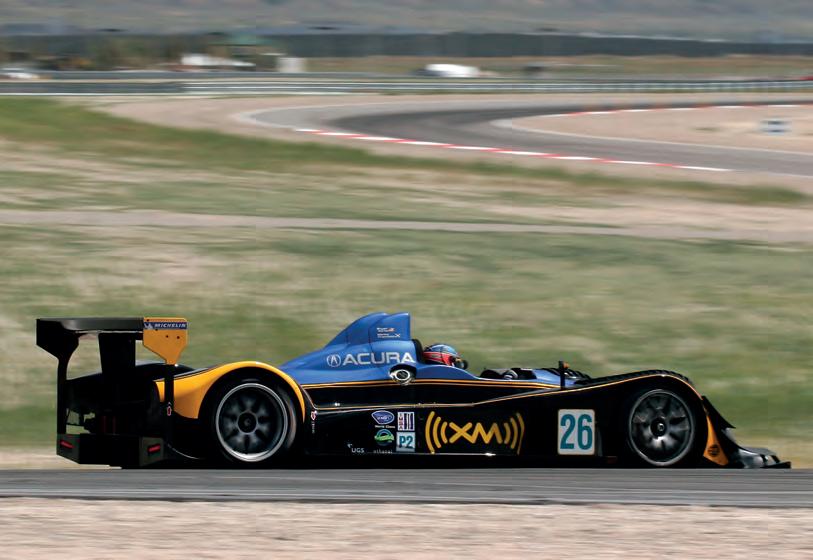
Acura’s Daytona Prototype international-era flagship, raced by
Meyer
It won major IMSA championships and the Rolex 24 At Daytona.
THE TRANSITION OF POWER
JAPANESE MOTORSPORTS EXHIBITION
“Without racing, cars will not improve.” That straightforward statement from Honda founder Soichiro Honda provided the spark for the development and 1962 opening of the Suzuka Circuit, which was Japan’s first fullscale, international-level racing course.
Yes, there was racing before Suzuka at Tamagawa Speedway, which was a threequarter-mile dirt track that opened in 1936. But with the rapid engineering progress underway, there was a need for a purposebuilt raceway to advance the sport while also serving as a proving ground for the technical developments that would find their way to road car applications.
To honor the rich history of Japanese motorsports, a special exhibition has been curated that provides a journey through time. The collection brings together more than 35 historic cars and two dozen motorcycles from private collections, museums, and automakers that helped define Japanese motorsport history.
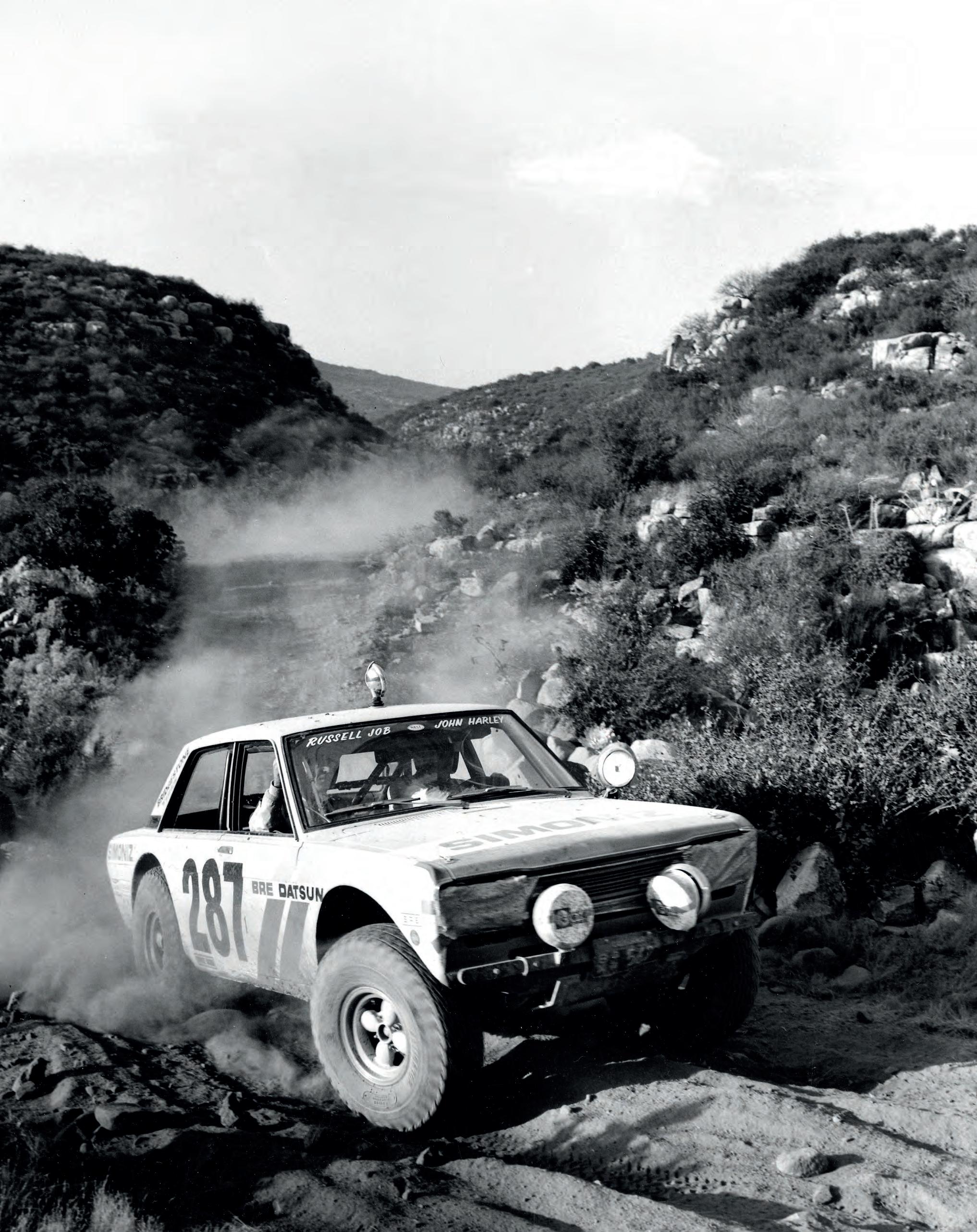
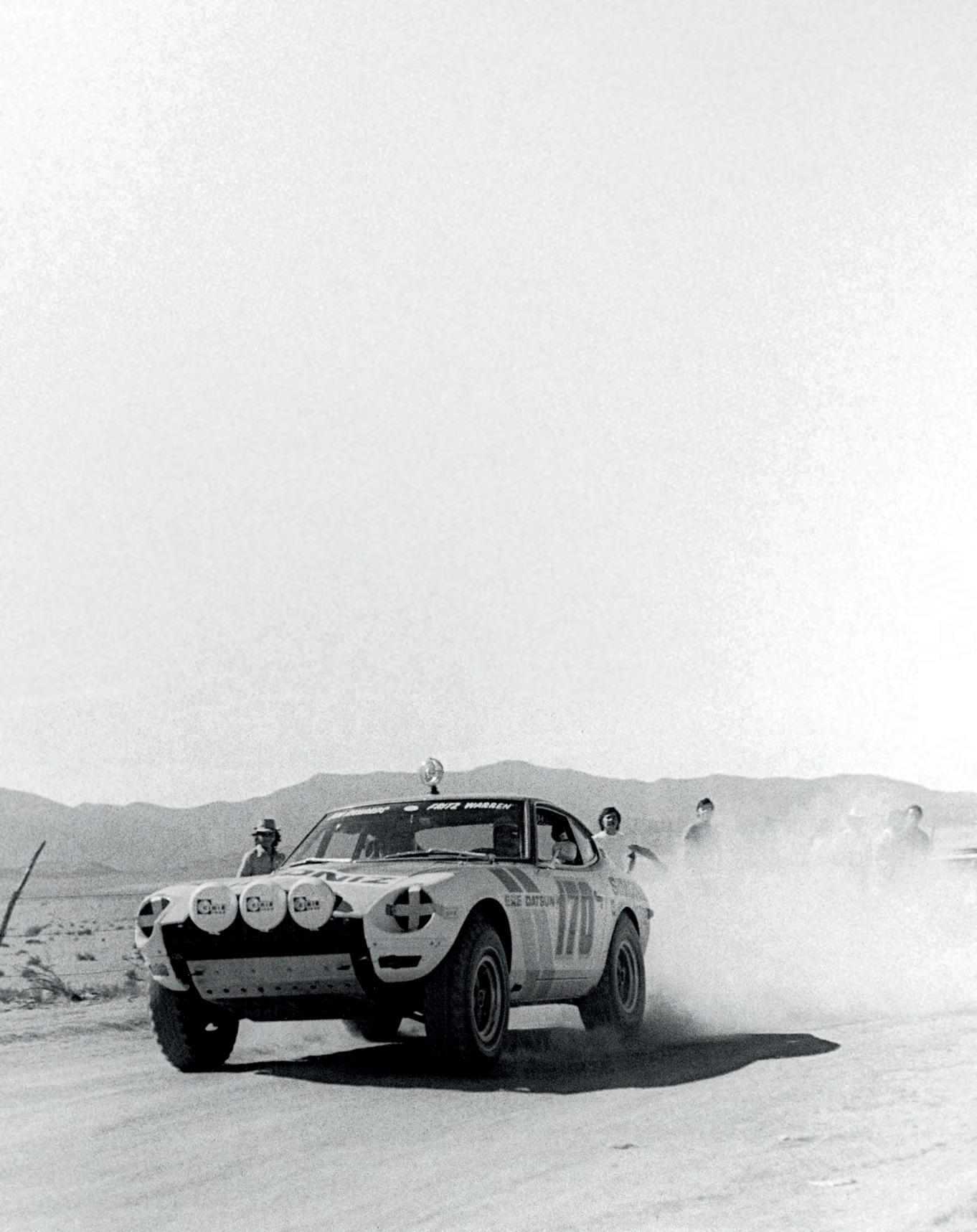
From the punishing terrain of Baja and hillside rally stages to the advanced arenas of Formula 1, IndyCar, and endurance racing at the 24 Hours of Le Mans, Japanese manufacturers have left their mark. Their success also extends to championship motorcycle racing, on both dirt and pavement, completing this broad legacy of achievement.
Enjoy the journey exploring Japanese motorsport history.
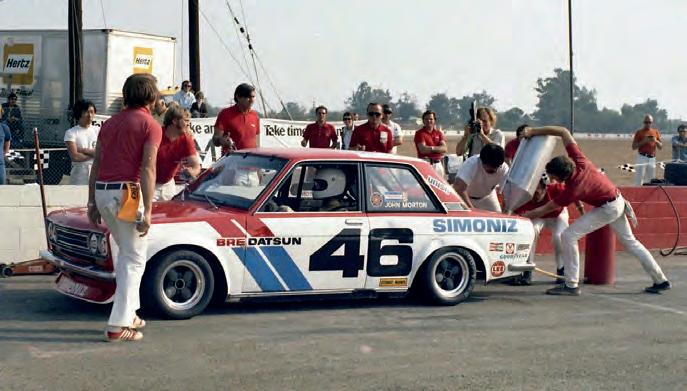
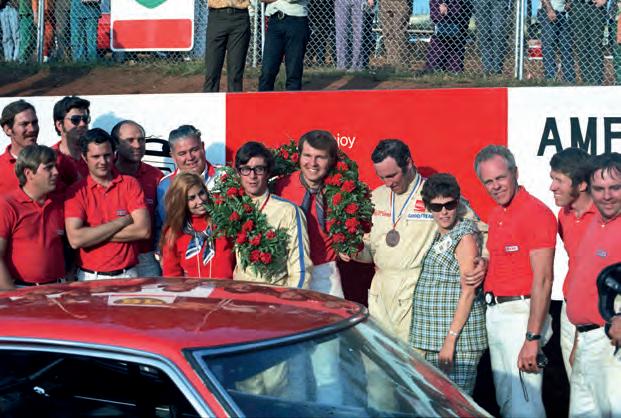
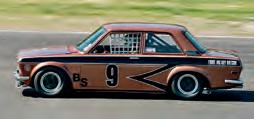
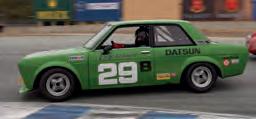
BRE team owner Peter Brock convinced Datsun’s
known as “Mr. K,” to allow BRE to run the inexpensive, boxy 510 in the new Trans-Am
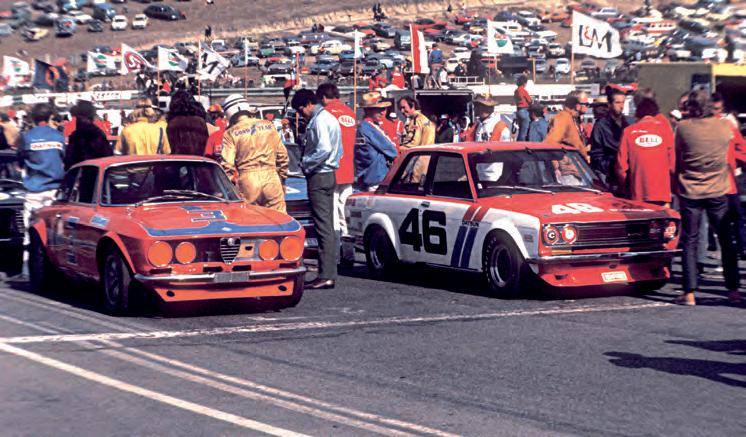
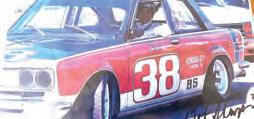
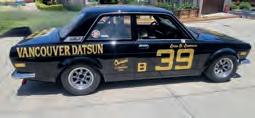
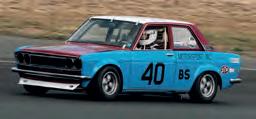
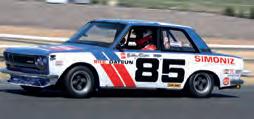
Driven by John Morton, the BRE Datsun 510 No. 46 won the 1971 SCCA Trans-Am 2.5 Championship and repeated as champion in 1972, making the 510 one of the most important and beloved Japanese sedan racers in American motorsport.
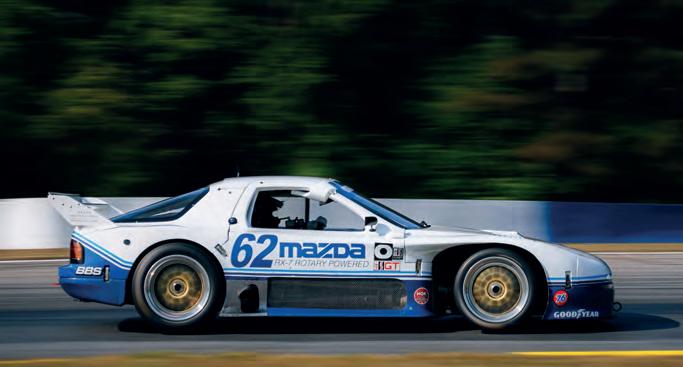
A dominant RX-7 GTO from Mazda’s 1991 IMSA season. Pete Halsmer drove the No. 62 car to five victories and the IMSA GTO drivers’ championship, while Mazda celebrated its 100th overall IMSA win for the RX-7 model line.
Team Penske, Wayne Taylor Racing, and
Shank Racing.
Below:
Yutaka Katayama,
2.5 Challenge.
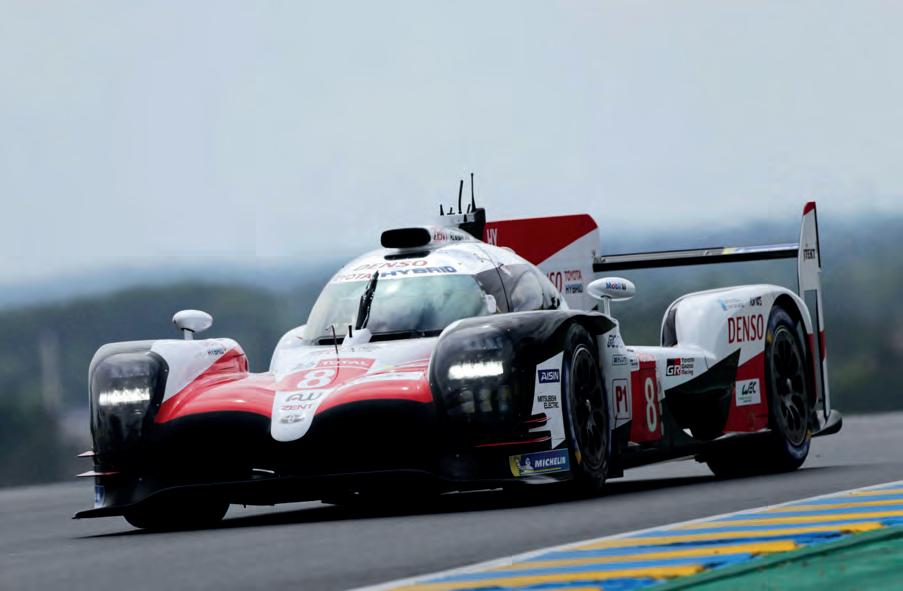
Toyota Gazoo Racing’s LMP1 hybrid prototype and the car that delivered Toyota’s first overall victory at the 24 Hours of Le Mans in 2018. The No. 8 car won with Sébastien Buemi, Kazuki Nakajima, and Fernando Alonso.
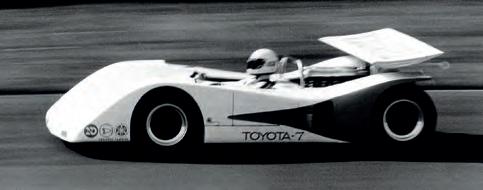
Left: Toyota’s first fullfledged prototype race car, developed with Yamaha for Japan’s Group 7-style competition. The Toyota 7 debuted in the 1968 Japan Grand Prix and represented Toyota’s first serious step into big-bore sports-prototype racing.
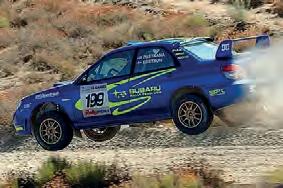
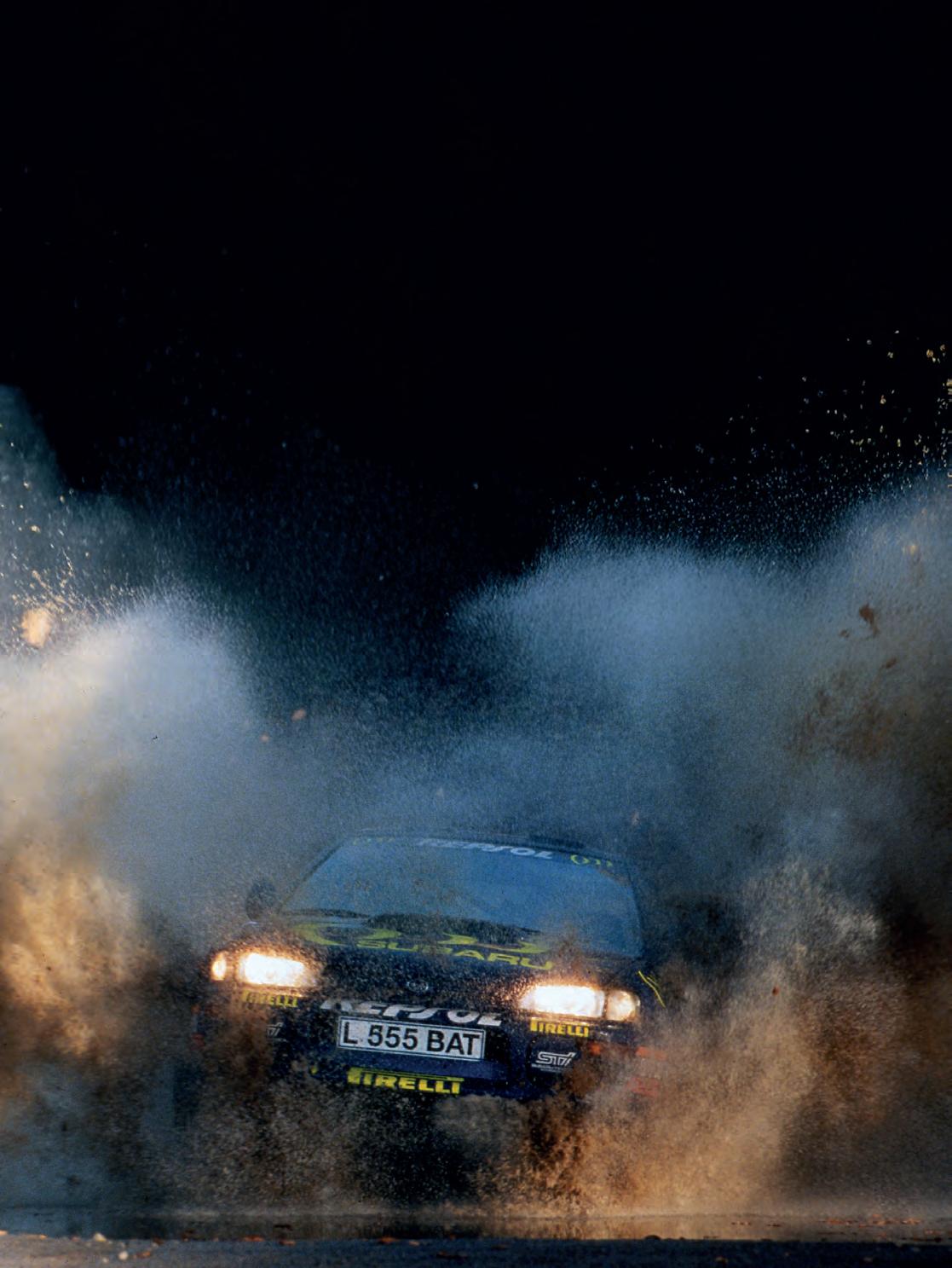
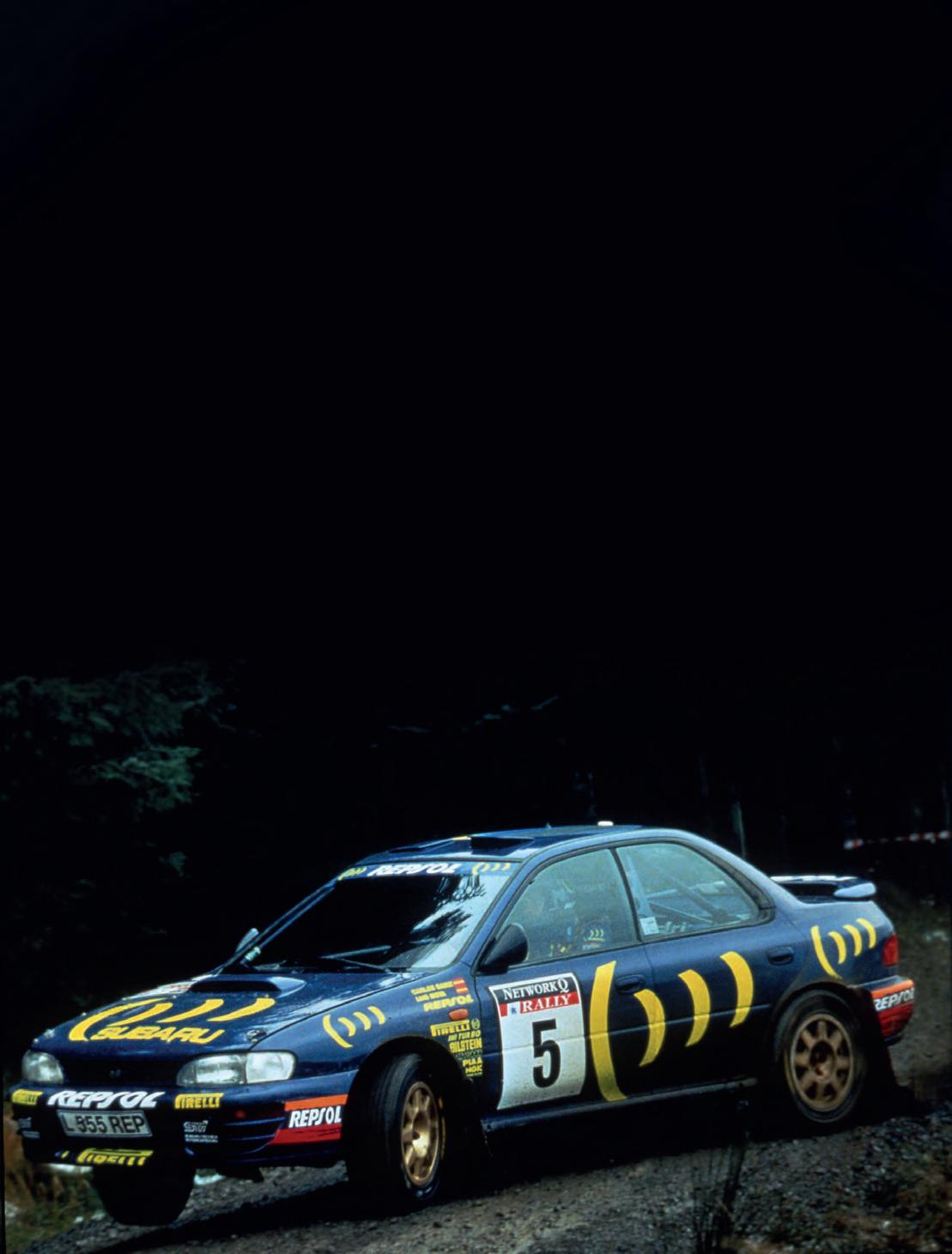
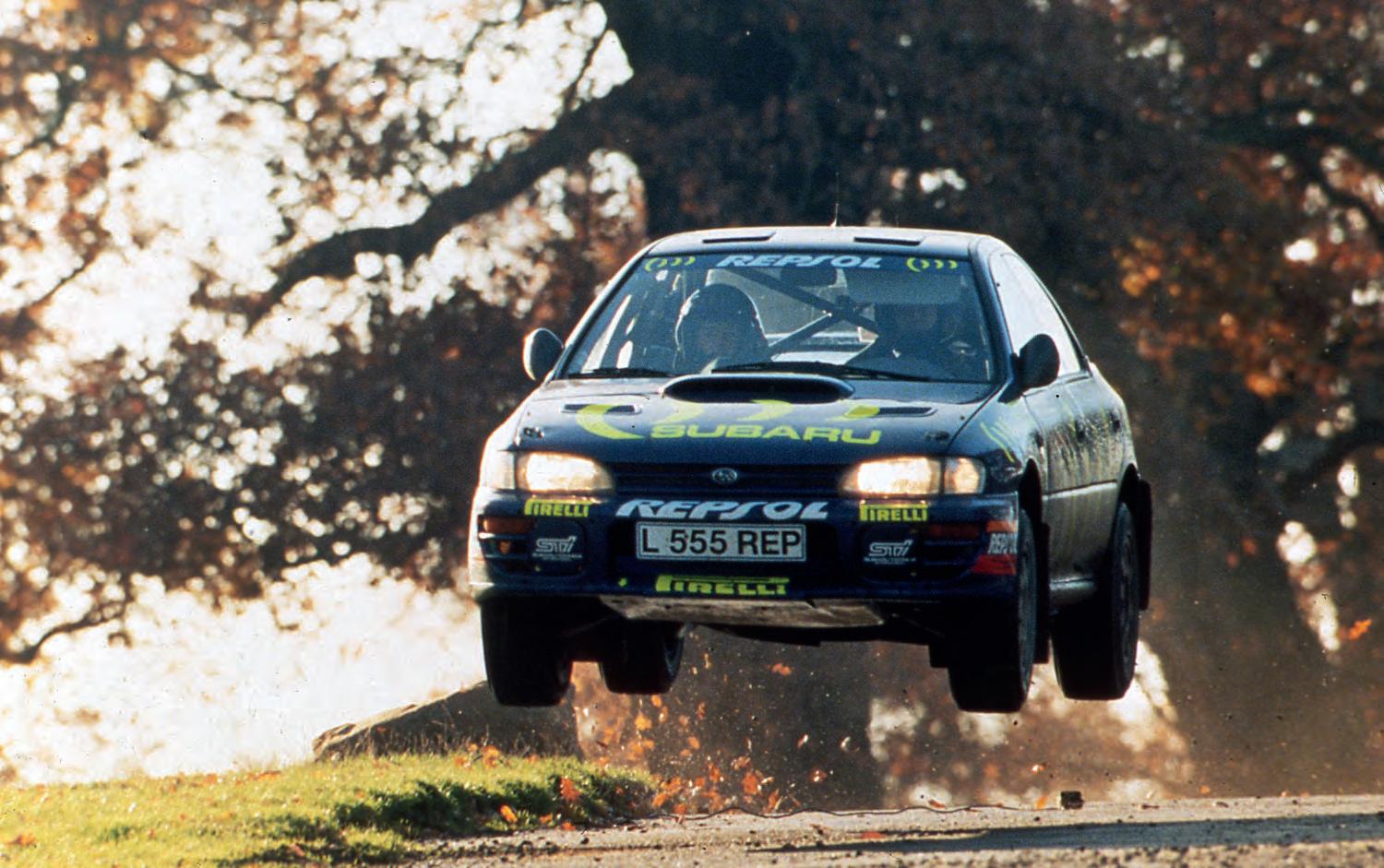
Right: Travis Pastrana’s Subaru Rally Team USA / Vermont SportsCarprepared Impreza WRX STI from the first X Games Rally competition. Pastrana won the gold medal at X Games 12 in 2006, narrowly defeating Subaru teammate Colin McRae.
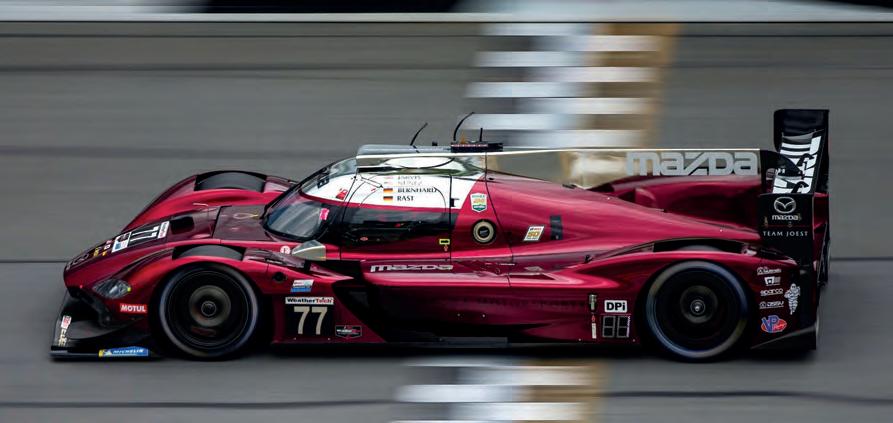
Mazda’s modern prototype racer from the DPi era, powered by a turbocharged Mazda MZ-2.0T engine. It represents Mazda’s return to top-level North American prototype racing.
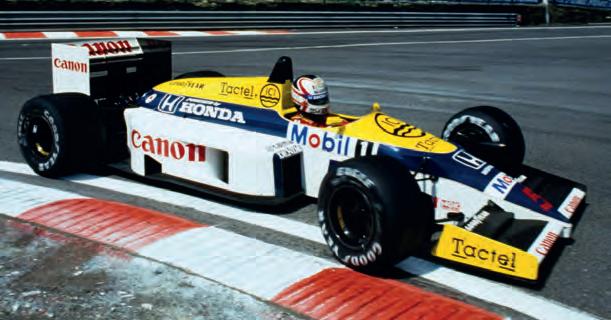
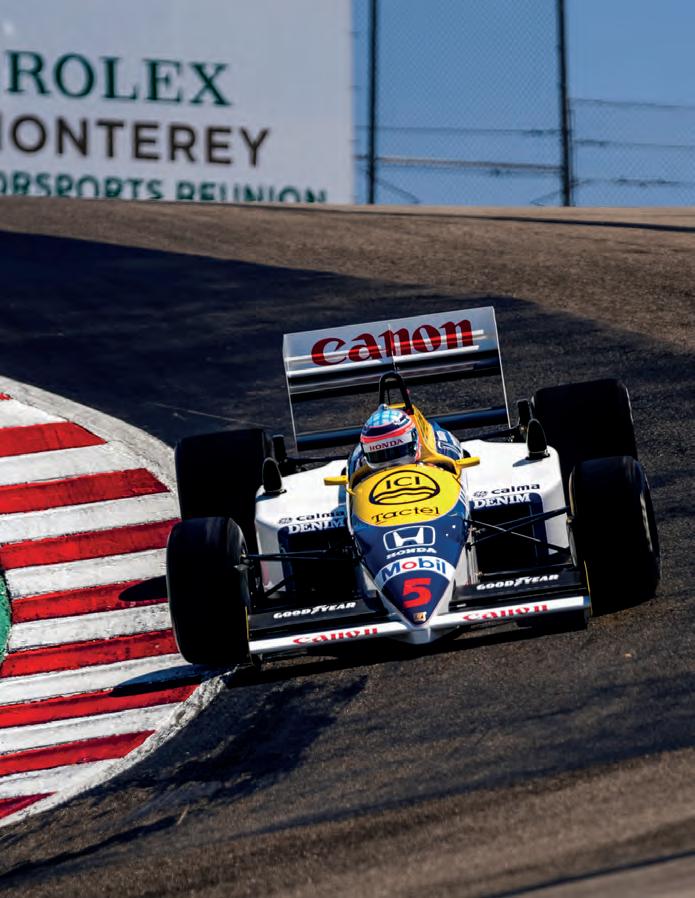
Left: A Honda-powered Formula 1 car from Williams’ dominant turbo era. Associated with Nelson Piquet and Nigel Mansell, the FW11 helped define Honda’s rise as one of Formula 1’s leading engine manufacturers in the mid-’80s.
1969 McLaren M12 Toyota 1970 Toyota 7 1985 Toyota / Dome 85C-L, chassis 001
1986 Toyota Celica IMSA GTO 1992 Toyota Eagle Mk III 1993 Toyota Celica ST185 2003 Panoz G-Force GF09 Toyota 2007 Toyota NASCAR Camry 2018 Toyota TS050 Hybrid
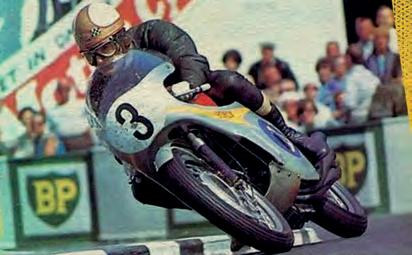
Right: One of Honda’s greatest engineering masterpieces: a 297cc six-cylinder 350cc Grand Prix machine ridden by Mike Hailwood to the 1967 350cc World Championship, with Honda also winning the constructors’ title.
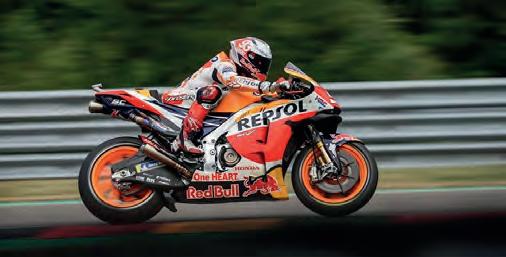
Below: Honda’s first 1000cc-era MotoGP machine, winning 12 of 18 races in 2012 and taking the constructors’ championship in its debut season.
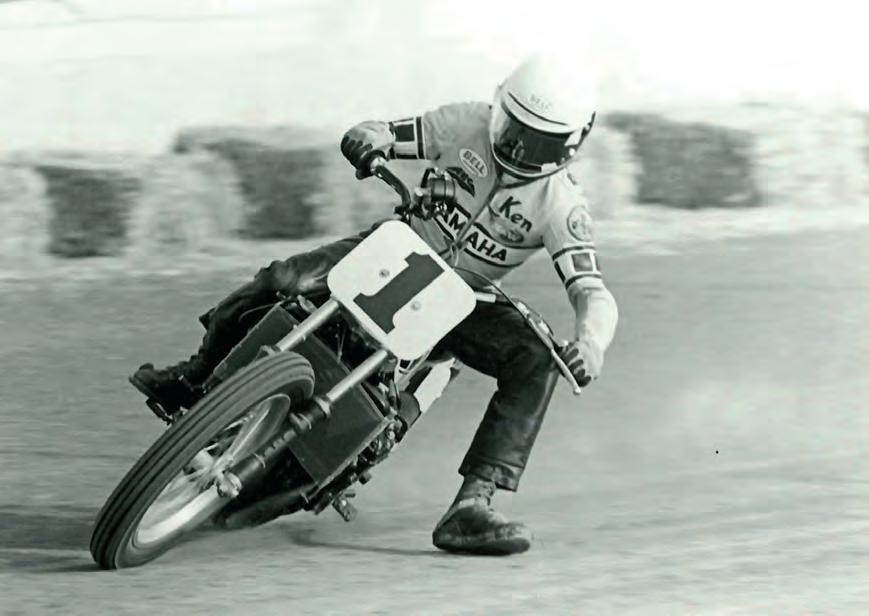
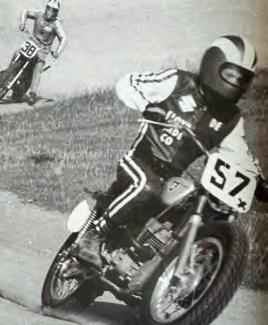
This Yamaha TZ750 Flat Tracker became legendary at the 1975 Indy Mile, where Kenny Roberts rode the twostroke, road-racingpowered machine to a dramatic last-lap victory over the dominant Harley-Davidsons. Built by Kel Carruthers around Yamaha’s brutally fast TZ750 engine, it was so powerful and difficult to control that Roberts famously said afterward, “They don’t pay me enough to ride that thing.”
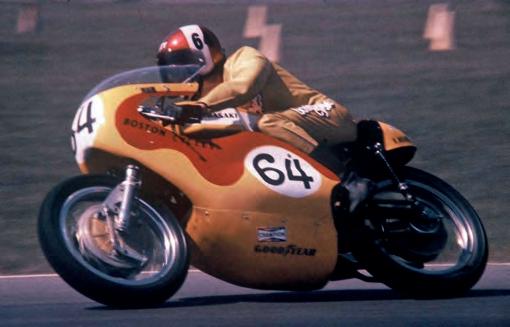
Below: A Kawasaki two-stroke production racer associated with Rusty Bradley, the 1970 U.S. Junior Champion, representing Kawasaki’s early 1970s presence in American road racing.
Featured motorcycles
Yamaha
1971 Yamaha TR2B 350
1975 Yamaha OW31 / E1-K
1976 Yamaha TZ750 Flat Tracker
1991 Yamaha YZR500 / OWD3
2015 Yamaha YZF-R1 Superbike
Honda
1962 Honda CB92R
1962 Honda CR110
1964 Honda CB72
1967 Honda RC174
1970 Honda CR750
1981 Honda NS750 No. 19
1984 Honda NSR500
1984 Honda RS600 No. 10
1984 Honda RS750 No. 3
2006 Honda RC211V
2012 Honda RC213V
2020 Honda CRF450 Rally
Kawasaki
1971 Kawasaki H1R
1978 Kawasaki KR750
Suzuki
1967 Suzuki TM/RH67
1971 Suzuki XR23 / RG700
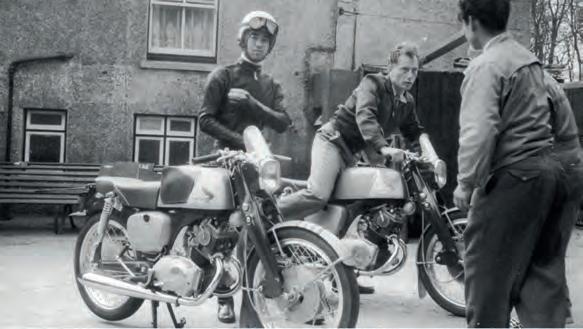
Above: A highly advanced 125cc twin-cylinder production racing motorcycle that brought Honda’s Grand Prix-derived engineering to privateer and club racing.
Right: An early purpose-built Suzuki motocross machine associated with Don Emde, representing Suzuki’s developing commitment to off-road competition and motocross engineering in the late 1960s.
Alastair Moffitt
THE WORLD ENDURANCE CHAMPIONSHIP WORDSMITH OF TOYOTA
IN CONVERSATION WITH KERRY MORSE PHOTOGRAPHY TOYOTA GAZOO RACING AND JOHN BROOKS
For those in the business of covering professional motorsport, this century has been one of rapid change. We’ve progressed from ornate press kits to DVDs and flash drives to being directed to a corporate website with password protections. Then there is the mindless march of AI, which will change the landscape in manners yet to be fully understood. Those charged with transforming that information into entertainment are under duress. The ranks of frontline journalists have been diminished as the world of printed material is a shadow of its former glorious abundance. It’s a reminder that the strength of a good story isn’t always the prose or the content but its source, and when authoritative sources become reduced to almost nothing, the originators of the raw material too are reduced in importance.
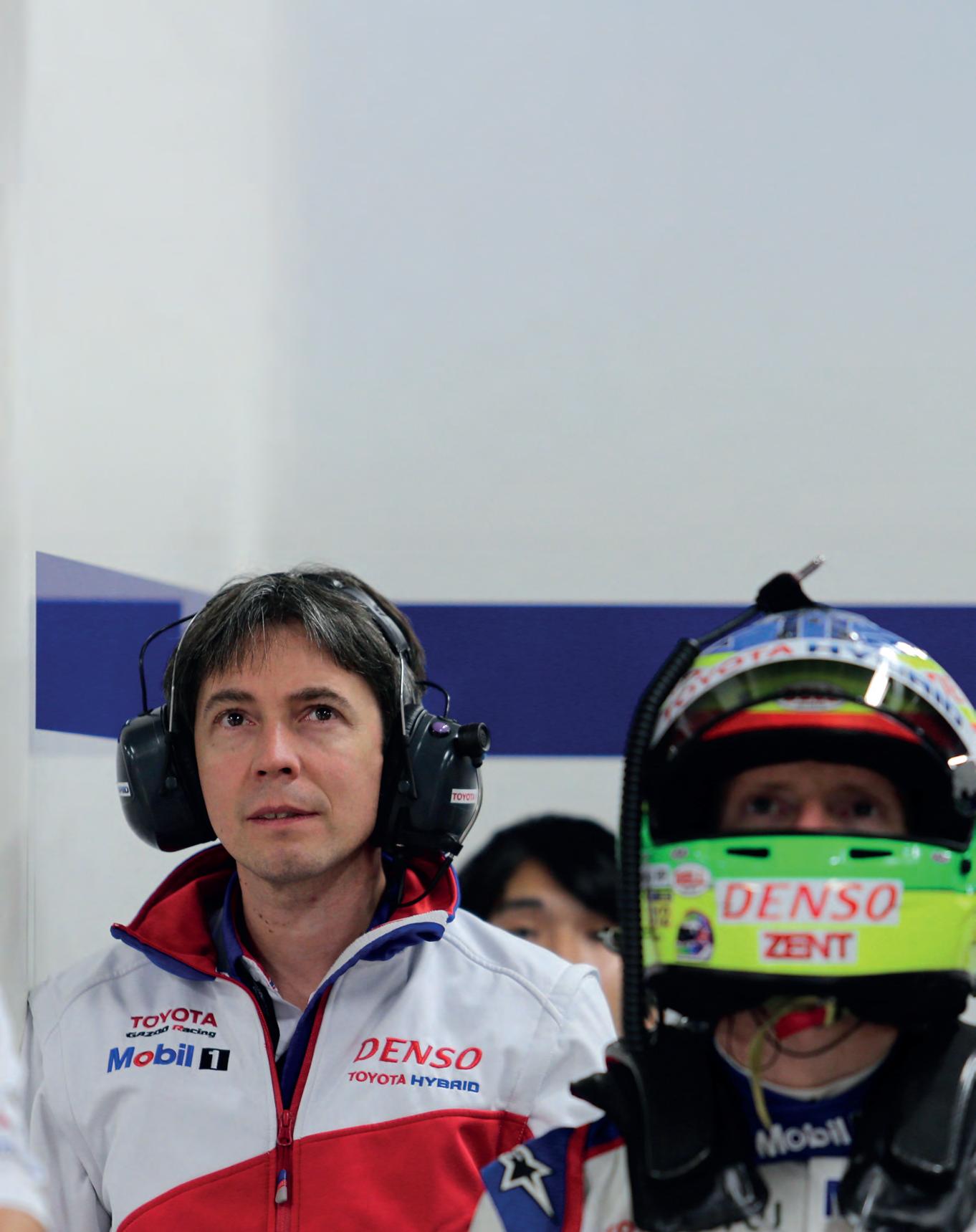
Into that maelstrom came Alastair Moffitt, the former point man of Toyota’s endurance efforts. The style and substance of his press releases existed in that rarified air of honest information with minimal corporatespeak. Few in the field can balance what is acceptable to share with the press and what has to be omitted, and he managed this while earning respect and admiration from both colleagues and the cynical breed known as the motor racing journalist.
Kerry Morse: How did you prepare for your beginnings at Toyota in 2006?
Alastair Moffitt: I trained as a journalist at the University of Sheffield and was lucky enough to start working weekend shifts on the sports desk of the Press Association, the UK’s national news agency. That developed into a traineeship and then a full-time contract. Being a motorsport fan meant I took any chance to report from national race meetings and ultimately this opened the door to becoming PA’s motorsport correspondent, mainly traveling to F1 races, which is where I built a relationship with Toyota.
Was a career in motorsport something you had always wanted?
At university, our professor always told us that it was pointless to dream of a career as a sports journalist because everyone wants to do that and there are few opportunities. So just getting my first job at PA Sport was already beyond my expectations. To be honest, even then I didn’t expect to work in motorsport, although it was a dream to do so. It required a lot of stars aligning, and a lot of luck, for that opportunity to come about. When Toyota offered me a PR job in F1, I knew it was a chance that doesn’t come twice in life, so we took the plunge and moved to Germany.
Were you involved or work in the F1 side until the announcement of pulling out at the end in 2009?
Yes, from September 2006 to the very last F1 race in Abu Dhabi in November 2009, I worked in the PR department, drafting press releases and coordinating interviews for drivers. It’s hard to imagine now, but back then we didn’t have any social media channels, and when we wanted to distribute video to the media, we had to physically hand over a tape. So it was a very different task, but one that involved more face-to-face contact with journalists. What wasn’t different was the nature of the F1 media – there’s so much more speculation and exaggeration compared to endurance, and that was a very pleasant discovery in 2012.
What was the workload for you prior to the start of the 2012 season of the FIA WEC with the TS 030?
This was an incredibly exciting but also very demanding time. Our first race was Le Mans 2012 and this was essentially two races – the race to get there, and to Le Mans itself. The preparation was extremely intense for everyone involved. We were a small team and we had a huge amount to learn about the intricacies of Le Mans and endurance racing. There were some very long days for everyone, but this process
Le Mans 2012-2026:
THE VIEW FROM THE INSIDE
2012
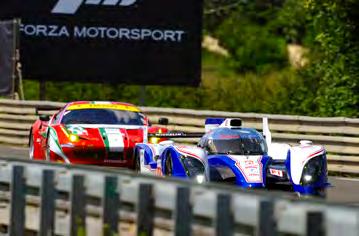
The contrast of emotions from Nico Lapierre taking the lead of our first Le Mans, to seeing Anthony Davidson’s massive shunt just a few minutes later was extreme. Although not the Ferrari in this picture, he clipped a Ferrari GT and got airborne, breaking his back on landing. The whole team was exhausted by this point after the intense preparation, so these shocking images were emotionally difficult. I knew Anthony’s wife from my previous life in F1, so I was the one to call her and explain what happened and how we would handle it. Not something on my wish list.
2013
Our first podium together, but the moment I remember most clearly was Nico spinning off in the rain and hitting the barriers. He got out of the car, which should have been race over. Luckily a marshal suggested taking the front bodywork off and continuing – that car finished fourth. We got two cars to the finish in the top four, which felt like a big achievement.
2014
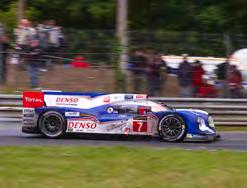
This was the first one that got away. The #7 car was on pole and winning comfortably until an electrical connector melted. But the #8’s race was effectively over in the first hours due to an accident in heavy rain. This photo sums up the mood. The car had huge chunks missing and was still the fastest one out there, so we all knew what could have been.
2015
Thankfully it was finally over. A miserable race with a car, which just wasn’t competitive any more. No one wanted to hear it, but the 2015 car had actually improved significantly on the previous year’s model in terms of lap times, but Audi and Porsche had made astonishing progress. It meant we had a lonely, and very boring, 24 hours with no chance of any reasonable result.
2016
I don‘t think anyone in the team will ever forget this moment. It was hard to believe, let alone accept. There were a lot of tears shed that evening and the following days. I vividly remember the incredibly kind and emotional immediate reaction from so many in the paddock. It’s the only time in my life where I’ve really woken up the next day and questioned if that really happened.
created a real family atmosphere, something much more personal than we had experienced in F1. We didn’t make life easy for ourselves either sometimes – we decided to change the color of our TS030 from red to blue not long before Le Mans, which added a few new tasks, and caused a bit of a surprise when we finally showed up to Le Mans.
Take us up to the intro of Hypercar?
WEC was an adventure for us in the first years, developing as a team and learning about endurance racing. Luckily, we had Oreca staff embedded in the team to contribute their knowledge of endurance racing and that was a massive help. So we hit the ground running and won three races in our first season. It was genuinely emotional to be winning races alongside my teammates – coming from the F1 program, we hadn’t experienced that and you don’t know if you ever will. Of course, the focus was ultimately on winning Le Mans and we all knew that Toyota had experienced bad luck there. We didn’t know back then just how much more bad luck could come our way. Aside from a pretty miserable 2015 season, we won WEC races and had enough performance to fight at Le Mans, but I guess everyone knows the stories and there’s not space to do them justice. The World
2017
We thought Le Mans had thrown everything at us in 2016, but this year was surreal. The #7’s race was ruined by a ‘fake marshal’. The driver Vincent Capillaire, for no obvious reason, gave a thumbs up motion to Kamui, who was waiting for the green light at the end of the pit lane. When you see the onboard, there is an orange-suited arm gesturing to move forward, so that’s what Kamui did. In the confusion that followed, the clutch broke and we lost Le Mans again.
2018
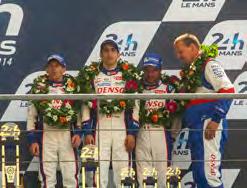
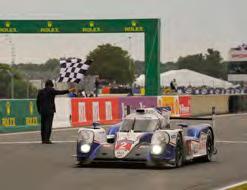
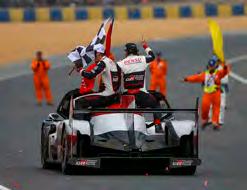
As well as Toyota’s first Le Mans win, this was the first time the winning drivers all drove together on the car down the main straight. It was an idea from Philippe Leloup, our deputy team manager. It only came up because our garage was next to the podium, so the tradition of mounting the winning car in the pit lane would not work. His quick thinking created a new Le Mans tradition and some iconic photos.
Championship in 2014 was great, but Le Mans was missing. Going into 2018, it felt like Le Mans had found new and novel ways to beat us, and I don’t think I was the only one wondering if we would ever do it. Then it all came good from 2018. I know what people say about the smaller LMP1 grid in those days, but our biggest battle was always against Le Mans itself. By then, the team had really grown up together and I had a close relationship with the top management and the drivers – we had lived through a lot together. That brought trust and honesty. The workload was always intense, and Toyota constantly pushes to achieve more, but on all levels, we were absolutely ready for what Le Mans had to throw at us in 2018, and it showed.
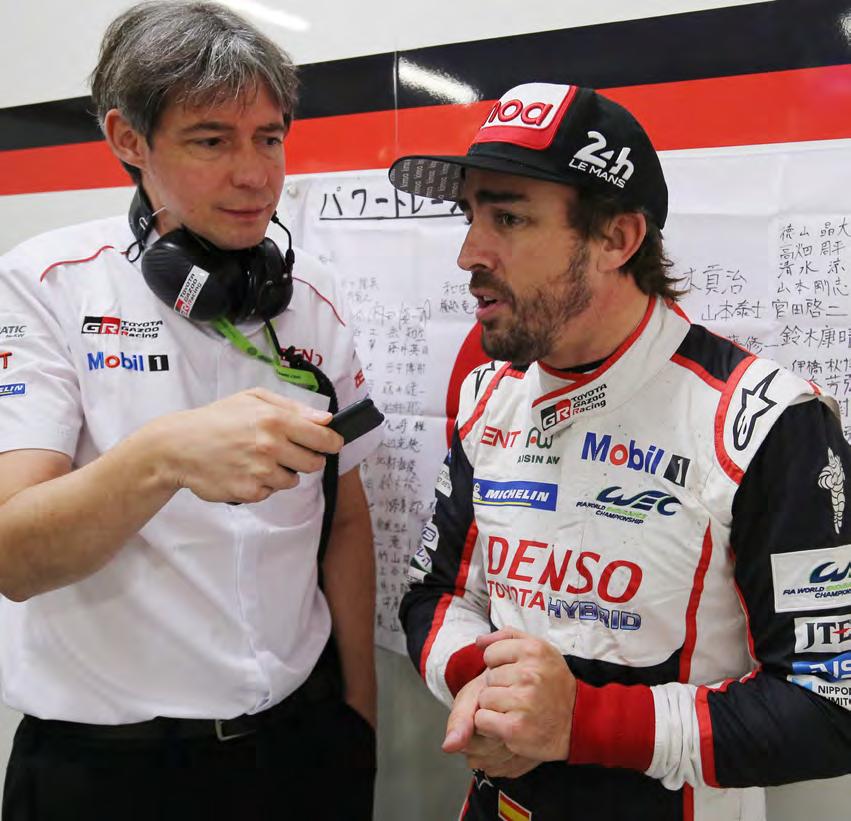
On a personal level, a very special aspect was working with Fernando Alonso in the 2018-2019 season. It’s rare to work with a genuine superstar, and from a PR perspective it brings a lot of extra demand. It pushed me to be more organized, to plan in more detail and to communicate more. I learnt a lot – I guess there are others in the team who had a similar experience. Fernando himself was a pleasure to work with. I expected a difficult time to be honest, but when he had interviews scheduled, he showed up on time and was super professional. He was no-nonsense, no fuss, and that surprised me.
2019
In my heart, this car won Le Mans that year. The sheer bad luck that denied it was beyond cruel. The car had been completely rebuilt after a practice accident and the wiring for the tire pressure sensors was accidentally done back to front. When José had a late slow puncture, we changed the tire indicated by the sensor data. We changed the wrong tire. When he left the pits, the problem became clear, their Le Mans was lost.
The world championship is a long season with considerable traveling. What were and are your favorite places for those visits? At heart I’m still a motorsport fan so I was really excited to visit Sebring for the first time, and that place really lived up to its reputation. It was a tough week with some late nights, and I must admit that I didn’t have much energy to stick around for the 12 Hours the day after our WEC race, but I’m so glad I did. It was an atmosphere and ambiance that I’ve never experienced before.
Actually, the first time to visit 6th Street in Austin on a Friday night came close. Generally speaking, it’s always a pleasure to visit Japan. The welcome we received from our Toyota colleagues was always incredible. The Fuji race was second only to Le Mans in terms of intensity of preparation and execution, but the moments we could enjoy away from the track were always special. But mainly I’m not focused so much on locations, but moments together with my
WORKING WITH FERNANDO ALONSO... IT’S RARE TO WORK WITH A GENUINE SUPERSTAR
colleagues, particularly those in the comms department who really became friends over the years. Despite the intensity of Le Mans, we always found time to share a beer on the terrace of our hotel, no matter how late it was. Chatting with engineers and top management on a dark terrace with a cooler of beers is a great memory.
Preparation for the team at Le Mans is always intensive; does that same intensity take over your PR duties?
The weeks and months leading up to Le Mans were always incredibly hectic. I was responsible not only for comms, but also for various branding aspects and these need to be fixed well in advance. So Le Mans planning began in earnest in Bahrain every year, when I would sit with my colleague Jerome and look at plans for the hospitality. It gets difficult when our timelines don’t meet those of suppliers, media, or other parts of the company. Obviously, for the race team, Le Mans is in focus from very early in the year. But a journalist, for example, might only plan their interviews a couple of weeks before. A Toyota company might only start to make requests for tickets or material a couple of weeks before. It’s understandable, because they have other priorities, but it meant the sands were constantly shifting. No amount of early
2020
The first pandemic Le Mans –delayed, with no crowd and with those infernal masks. It took all the magic and enjoyment out of the event, even the victory. One of our drivers did discover that being sprayed with champagne whilst wearing a mask was essentially the same as being water boarded, which raised a smile though.
2021
Finally the #7 car won Le Mans and it was a genuine relief and joy. After some unreal bad luck, I was genuinely emotional to see Mike, Kamui and José win. But we did it the hard way – Le Mans really tried to take this one away from us. It took a remarkable engineering and driving effort to overcome a clogging fuel pump. The drivers had to manually turn off the fuel pump under braking, and reactivate it again before accelerating, at most corners for several hours.
2022
My last Le Mans with the on-track team, so the last time I appeared in the traditional scrutineering team photo. I took the chance to experience several bucket list items at Le Mans: getting a photo tabard to watch trackside on the Mulsanne in the night, following the drivers parade, all the things my workload had previously made impossible. And I was given a really touching send-off by the team, particularly my boss Rob Leupen.
Toyota at Le Mans 1985 -1999
THOSE THAT CAME BEFORE…
It may seem like a century ago, but Toyota was a relative newcomer at the Circuit de la Sarthe compared to many other manufacturers. The ‘80s and ‘90s were the time when Japanese automakers committed the time and resources to learn what it would take to get to the top of the podium. Winning the legendary 24 hours was backed by a series of factory entries and privateers with factory support, and when the 21st century unfolded, Toyota would be prepared for the challenge. KM
1987
Toyota 87C
Further development of the previous editions produced a much faster car, but mechanical issues sidelined both entries within the first eight hours.
1990
Toyota 90C-V
The big V8 originally developed for the 89C carried one of the three factory entries to a well-deserved 6th overall
1994
Toyota 94C-V
As Group C legally morphed in the LMP category, Team SARD and Nisso Trust were the semi-official entries, and SARD led much of the race only to have a problem in the last hour. Once again, Toyota settled for the second step on the podium.
1998
Toyota TS020 (right)
Known by everyone as the GT-One, the Andre de Cortanze-penned design was as close to being automotive art on a race track that was ever conceived, ever achieved. The new three-car team quickly proved its worth with Martin Brundle qualifying 2nd. The race was to be a disappointment with only one car finishing in 9th.
1985
Tom’s Toyota 85C (above)
The first participation of a Toyota Group C was powered by a 2.1-liter four-cylinder turbo. After starting 29th on the grid, the solo entry finished a promising 12th overall.
1988
Toyota 88C
In a race dominated by the onslaught of entries from Jaguar and Porsche, a pair of Toyotas quietly finished in 12th and 24th overall.
1992
Toyota TS010
When five will get you two. The new TS010 and its new 3.5-liter V10 was part of a fivecar effort that at last earned Toyota a spot on the podium with a 2nd overall.
1995
Toyota Supra LM
Without a top-class entry to develop, Toyota upgraded a pair of Supra GTs for Team SARD for the LMP1 category. Considering the competition, a 14th overall for the #27 was considered a success.
1986
Toyota 86C
Upgrades to a pair of Toyotas entered by Tom’s and Dome failed to produce the results hoped for.
1989
Toyota 89C
With Toyota now participating in the World Endurance Championship, extra focus was given to Le Mans with three entries. The solo 88C and upgraded 89Cs all failed to finish.
1993
Toyota TS010
A mixed entry of a pair of 92C-Vs along with three TS010s saw all four finish in the top ten with a TS010 best in 4th overall.
1996
Toyota Supra LM and SARD MC-8R
A surprise pairing of Toyota entries: The slightly modified Supra LM made it to hour 19, but it was the highly modified MR2 with a twin turbo V8 stuffed in the chassis that made it to 15th overall was totally unexpected.
1999
Toyota TS020
Hoping that after a year of development, the GT-One was now ready to win, Toyota started off well with a sweep of top three qualifying positions. In a storyline that has been repeated too often, two cars were sidelined after leading at various times, and the remaining GT-One was able to salvage, once again, second place.
planning can eliminate the very intense few weeks before the race, when everything comes to a head. Actually, the most intense part is on-site, when events take over. I will never forget trying to write the race press release from the media centre at Le Mans in 2016. There were so many kind media colleagues passing by my desk to offer their support and condolences, but it made it difficult to put my emotions out of mind and get on with the job. That post-race period at Le Mans, for PR, is the most difficult and out of control. It feels like an impossible mountain of work and requests, all while extremely tired and emotionally drained.
You have witnessed a tremendous growth of interest in professional endurance racing however, we have been down this road before of ebb and flow. What do you feel it will take to keep it at such a high level? It’s only half an answer … plenty of manufacturers. The one lesson I see from the current success of Hypercar is that we need a variety of manufacturers competing. If we keep a lot of manufacturers active in endurance racing, it will be strong. I don’t think advertising and TV revenues will ever be enough to sustain top-level endurance racing –we need the manufacturers. How to keep them engaged is a different question, and I don’t
2023
My first time working on Le Mans remotely for Toyota and it was an unusual feeling, especially on race day. But without other tasks or distractions, I felt more informed and aware of the progression of the race than ever before. Possibly, I actually enjoyed the race itself more than I could in the past. We pushed very hard, but in the end, Le Mans got the fairytale Ferrari win that felt written in the stars.
have the answer to that, beyond offering a fair sporting environment which gives a genuine chance to succeed without requiring insane budgets. Easier said than done, obviously.
One point that fans have questioned is why so many name changes – TTE, TMG, TGR, TRD in the U.S. and now Toyota Racing. For most, that is a PR nightmare, thoughts? It’s a fair point; we have had a few different names. We’re probably running out of variations of Toyota and racing/motorsport by now. Personally, I never felt the specific team name was super important – to most fans and media we will always be simply Toyota. What can be challenging is the philosophy behind each name change. Usually the outside world sees just a new name, but internally there is meaning and reason for this. It can be a very internal message or explanation, and it’s difficult sometimes to explain that in relatable terms for the outside world. Anyway, I always felt that racing is about what happens on track, so that should dominate any press release or external communication.
Last of all, a favorite non-racing moment of being a member of the Toyota Motorsport family and then the opposite, your favorite racing moment.
My favorite non-racing moment was back in
2024
This was the year of the never-ending safety car. That meant I actually slept properly during the race for the first time. Our #8 was in a decent position to fight for the win late on but was knocked into a spin by a Ferrari, which ruined its race. The #7 came really close, and José, as a substitute for the injured Mike, drove out of his skin. I was willing him to win this surprise last chance in the top class, but we fell just short.
2021 in Bahrain. Due to the pandemic, we had back-to-back races there and on a quiet day between the two, our technical director, Pascal Vasselon, arranged a boat to visit a tidal island in the Gulf. By pure chance, the five of us who went were the only five to have worked at every Toyota WEC race to that point. It was a special moment to be floating in the sunshine in the middle of the Persian Gulf reminiscing about the old times. In terms of racing, there are a lot of wins, and all the Le Mans wins are special in their own way, but most come with some baggage too. For our first win in 2018, Kamui missed his pit stop not long before the end. He made it to the pits on electric mode, but that brought on some kind of PTSD from 2016 and I was a bit shaken up by that, plus we had a whole new discovery of what happens when you win Le Mans, and that was all pretty stressful. A year later, I couldn’t enjoy it because of the heart-breaking way that the #7 crew lost the race. I will never forget the faces of Mike and Kamui in the room behind the podium that day. So actually, a favorite memory is Fuji 2016. We had a painful 2015, then the Le Mans near miss earlier in 2016. To hang on to that win with an incredible last stint from Kamui, proved we could still win races. It was Kamui’s first win, and to do it at home made it particularly special.
2025
Just about the only positive memory I have of this race is the stunning livery of the #7 car, inspired by the GT-One. This race was arguably our weakest Le Mans in terms of execution. We didn’t quite have the pace, but we didn’t manage to maximize what we had. It was a pretty downcast mood after this one, but it served as motivation for what was to come.
2026
To win again, against an extremely competitive field felt like vindication. I’m writing this a day after joining the homecoming celebration at the Cologne factory and it was the most joyous of all the wins. There is a real sense of team spirit, camaraderie and focus. It was difficult, and needed something extra from drivers and engineers, but all the experience and lessons from 15 Le Mans together made the difference.
When the Nissan GTP ZX-Turbo turned the tables in American endurance racing
Sebring, Florida. March 18, 1989. A sleek blue bullet sears across the finish line at one of the nation’s most beloved endurance courses. Twelve hours of battling it out on track, and the winning car clinches not just a race victory, but an historic mark in American endurance racing. A Japanese car – the No. 83 Nissan GTP ZX-Turbo – has just won the 12 Hours of Sebring.
Piloted by Geoff Brabham, Chip Robinson and Arie Luyendyk, the No. 83 finished Sebring two laps ahead of Jaguar and beat a grid of worthy European and American competitors. With this victory, the GTP ZXTurbo put Nissan motorsports firmly on the American motorsports map – not to mention leading the brand to win the International Motorsports Association (IMSA) Constructors Championship in both 1989 and 1990.
That’s right: Nissan had ended the Porsche 962’s four-year run as the reigning IMSA GT champ.
Tirelessly refined for victory
Five years prior, Nissan greenlit a new project that would expand its global motorsports calendar into the IMSA GT series. California’s Electramotive Engineering was selected to develop the car, building on a chassis from
U.K.-based Lola Cars and powered by a modified Nissan VG30ET turbocharged V6.
Like so many brands in racing, Nissan’s entrance into the popular IMSA series had dual goals. It was about winning on track to further the company’s technology expertise, with a bonus of selling more cars. The GTP ZX-Turbo would be a rolling billboard to catch the eye of race fans at the weekend and, hopefully, steer them into a Nissan showroom the following week.
The GTP ZX-Turbo quickly came to exemplify Nissan’s commitment to engineering rigor and innovation. Race after race, the crew tirelessly worked out kinks with the car’s aerodynamics, chassis and engine electronics, tweaking and refining before putting their ideas to the test in the crucible of motorsports. As the 1988 season got underway, the sum of these tweaks began paying major dividends on race weekend.
The season that kick-started victory
The Porsche 962 had dominated IMSA GT racing for several years, but the 1988 season put the incumbents on notice. Nissan’s GTP ZX-Turbo began hounding the European cars and working its way up the IMSA score sheet, going on to an incredible eight-race win
that season. It might have been more, but the team elected to sit out the Rolex 24 and Sebring 12 Hour endurance races.
Nonetheless, the wins added up. Nissan ended the Constructor’s Championship just one point shy of Porsche. Not a bad result for passing on two of the season’s races.
IMSA Hall of Fame member Geoff Brabham – son of Formula 1 legend Sir Jack Brabham – was starting to reap the spoils of piloting the Nissan. He took his first IMSA GTP Driver’s Championship title in 1988 at the helm of the GTP ZX-Turbo. Nissan racing cars (including the GTP ZX-Turbo’s successor, the NPT-90) were clearly a good fit for Brabham: he won four consecutive IMSA championships from 1988 through 1991, and took Nissans to IMSA podiums 25 times across those four seasons.
The winning streak that puts Nissan on the podium
It was the 1989 season that cemented the Nissan GTP ZX-Turbo as more than a challenger. Nissan’s racer was fine-tuned and honed for battle against the established Porsche 962 and Jaguar XJR-9.
The first race of the season, the 24 Hours of Daytona, ended with a DNF result for the Electramotive team. But the team came back a month later, in Miami, where the GTP ZX-Turbo would beat Jaguar and Porsche to the podium.
Next up for the season: the 12 Hours of Sebring. A staple of the American road racing scene and one of the sport’s most enduring challenges, winning this race would truly show the Europeans that Nissan was here to win.
Brabham, Robinson and Luyendyk battled the No. 83 Nissan around the famed endurance course for just over 12 hours, keeping Porsche, Jaguar and myriad other challengers at bay. After half a day lapping the course, Nissan finished a commanding two laps ahead of Jaguar and 10 ahead of Porsche. This put Nissan on the map as the first Japanese manufacturer with an overall win at Sebring; a decisive signal that the GTP ZX-Turbo was a genuine competitor.
The rest of the season, the Nissan went from strength to strength. The car notched up 10 wins through the season, propelling Brabham to his second straight driver’s championship and Nissan to its first IMSA Constructor’s championship win.
Nissan – and Japanese manufacturers as a
‘ TH E GTP ZX-TURBO EARNED THE NICKNAME “ELVIS” – KING OF THE RACE TRACK’
whole – had cemented their spot in American motorsport.
A racer’s legacy
Defeating a legend like Porsche is no small feat. Nissan’s victories planted a flag for the company’s performance capabilities, lending credibility not just to other race efforts but also to the iconic Z car lineup and other onroad sports cars.
At the time, the GTP ZX-Turbo earned the nickname “Elvis” – king of the race track. Viewed in retrospect, the car was but the first chapter for Japanese automakers taking bold leaps into global race series. To name but a few, Mazda’s successes at Le Mans, Toyota’s experience in IMSA and Honda’s performances in IndyCar followed in the footsteps of Nissan’s IMSA dominance.
The winning No. 83 GTP-ZX Turbo, known as chassis number #8801, secured a place in the Nissan North American Heritage Collection, preserving it for future generations of motorsports enthusiasts. The car – as well as driver Geoff Brabham – also was inducted into the 2024 IMSA Hall of Fame, a welldeserved public recognition of its importance to American motorsports history.
Race cars are not always cossetted in their prime, and so it is no surprise chassis #8801 has required some TLC over the years. Z Car Garage in San Jose, California, has been meticulously restoring the vehicle to ensure this piece of rich racing heritage will be preserved for years to come. Already, it has received a custom-made BBS wheelset built to period specifications and design; future restoration priorities include refreshing the turbocharged engine and the braking system.
A homecoming in Monterey
Once again, Nissan celebrates its motorsports influence by showcasing the GTP ZX-Turbo at the Rolex Monterey Motorsports Reunion and the Pebble Beach Concours d’Elegance. These rare opportunities to witness the innovative machine in person help share Nissan’s rich racing heritage with today’s fans. The car’s commanding on-track victories upended expectations about Japanese manufacturers in top-tier endurance racing, laying the groundwork for other endurance racing projects that have taken Nissan to myriad races across the globe.
Like any racing car, the Nissan GTP ZXTurbo is a machine meant to be seen and experienced. Its appearance alongside legendary racing machines during Car Week at one of America’s most famed tracks is thus a homecoming of sorts: Bringing the car that helped write Japan’s chapter in American motorsport, right back to the place where that story still resonates four decades later.
ANGEL’S SCREAM
Le Mans overall-winning Mazda 787B a highlight at Laguna Seca
WORDS_ J.J. O’MALLEY
The Mazda 787B – one of the most successful cars in the history of Japanese motorsports – will be on track and on display as a highlight of the Rolex Monterey Motorsports Reunion at WeatherTech Raceway Laguna Seca.
The Mazda 787B took the overall victory in auto racing’s premier international event in the 1991 running of the 24 Hours of Le Mans, becoming the first Japanese car to win the twice-around-the-clock enduro overall.
Mazda endurance legend Yojiro Terada will drive the distinctive orange and green No. 55 Mazda 787B-002 prototype that was wheeled to victory by Volker Weidler (Germany), Johnny Herbert (UK) and Bertrand Gachot (France) in the French classic for the first – and only – overall victory at Le Mans for a rotary engine.
Mazda was not high on the list of favorites entering that 1991 event. The list of contenders included a trio of TWR Silk Cut Jaguars, Sauber-Mercedes, a new entry from Peugeot and 13 Porsche 962s.
Mazda was riding a streak of four consecutive victories in the IMSA GTP class, but that success did not transfer to Le Mans, where the three-car team struggled to a best finish of 20th overall for its new 787.
For 1991, MazdaSpeed brought the 787B, which had improved aerodynamics, suspension and fuel efficiency. Placed in Category 2 with the grandfathered FIA Group
C contenders, the 830-kilogram car was lighter than most of the competition. The car was powered by a four-rotor engine with a maximum output of 710PS, based on the production 13B engine.
Joining young F1 pilots Weidler, Herbert and Gachot in the No. 55 were David Kennedy, Stefan Johansson and Maurizio Sandro Sala in the No. 18, while Terada, Takashi Yorino and Pierre Dieudonne co-drove the No. 56.
Qualifying saw the No. 55 Mazda post the 12th fastest time. The car would start 19th, however, as FISA reserved the top-10 grid positions to the fastest Category 1 cars built to the new specifications. The No. 18 was 17th, and would start 23rd, while the No. 56 was 24th and would be gridded 30th.
After miserable rainy conditions throughout practice and qualifying, the race was run in the dry. Peugeot and then Mercedes dominated the early going, but by nightfall, the No. 55 Mazda was up to fifth. That car was up to third by the halfway point – although three laps in arrears – with the second Mazda eighth, another lap back.
As time ran down, the No. 55 worked up to second while the lead Mercedes (with a lineup including future F1 champion Michael Schumacher) began to struggle with overheating problems. Those issues proved terminal when the car retired with three hours remaining, handing the lead to Weidler – and victory to Mazda.
The legendary Mazda 787B Group C race car shocked the experts by winning the 1991 24 Hours of Le Mans. Driven by Johnny Herbert, Volker Weidler, and Bertrand Gachot, it holds the distinction of being the first and only rotary-powered car to win the race overall
Herbert drove the final two-hour stint before collapsing and being taken to the care center while the winners celebrated. The No. 55 completed 362 laps. Taking sixth, seven laps back, was the No. 18, while the No. 56 placed eighth.
MazdaSpeed did not return to defend its Le Mans title. Rotary engines were banned at Le Mans in 1992, effectively ending Mazda’s concentration on that premier event.
The Le Mans triumph was the culmination of an effort that began in the 1980s with the Mazda RX-7 scoring multiple class victories in American events, including dominant performances in the Daytona 24 Hours and 12 Hours of Sebring. Mazda’s success in IMSA Camel GT competition led Japan-based MazdaSpeed to explore opportunities at Le Mans.
MazdaSpeed’s initial effort at Le Mans was actually in 1970, with a Chevron B16 prototype powered by a 10A Wankel-rotary engine that failed to finish. Four years later, a Sigma MC74 competed with a 12A powerplant, but logged an insufficient number of laps to be classified.
The American success led to MazdaSpeed stepping up its program. Mazda scored its first Le Mans finish (14th) in 1982 with a MazdaSpeed/Tom Walkinshaw Racing RX-7 powered by a 13B rotary engine in the IMSA GTX category. One year later, Mazda scored a 1-2 finish in Group C Junior with two 717Cs powered by 13B engines. The Japanese lineup of Terada, Takashi Yorino and Yoshimi Katayama placed 12th overall to win the new category, with future IMSA star James Weaver part of the second-place lineup.
Mazda moved up to Group C2 in 1984, winning the class with a Lola T616 running on BFGoodrich radial tires and powered by
a twin-rotary 13B engine. Katayama joined John Morton and John O’Steen in placing 10th overall, while car owner Jim Busby placed 12th overall and third in class.
For 1986, Mazda moved up to IMSA GTP for Le Mans, running a Mazda 757 with a 13G triple-rotary engine. Both cars retired with driveline issues. Only one year later, the Mazda 757 triple-rotary won the GTP class, with Dieudonne and Irishmen Kennedy and Mark Galvin placing seventh overall, the best finish to date for MazdaSpeed. The 757 repeated in GTP in 1988, with Terada, Dieudonne and Kennedy.
Next came the quad-rotary 767B, which continued MazdaSpeed’s GTP streak in 1989 with Kennedy, Dieudonne and Chris Hodgetts winning the class while the new car placed seventh, ninth and 12th overall. Terada, Yorino and Katayama made it four-in-a-row in 1990, taking 20th overall in a 767B in a race dominated by C1 machinery. That set the stage for the 1991 overall victory.
Following that triumph, the car was returned to Japan and dismantled in front of media gathered at the Mazda R&D Center in Yokohama. While some of the bodywork sustained wear from the race, the engine was in such good condition that it was capable of running the 24 hour race again. After replacing a minimum number of parts, it was decided to store the vehicle permanently at Mazda in its post-race state.
The car has participated in several demonstration runs – including the 1999 Goodwood Festival and 2005 Le Mans Classic Japan – it is normally on display for visiting fans from around the world at the Mazda Museum at the Mazda head office in Hiroshima.
“The car is performing well enough to
Chevron B16 prototype
Above: 1989 Mazda 767B from the Mazda Heritage Collection.
Right: The Art Sports Mazda 787 (Chassis 001) was Mazda’s 1990 Group C development car.
Bottom: The exhaust note of the 2.6-liter, 4-rotor R26B engine that revs beyond 9,000 RPM has earned the moniker “angel’s scream” by fans and journalists.
Yojiro Terada
compete in Le Mans today,” Terada said of the car in its restored condition. “Mazda’s continuation of rotary engine development, and its success in increasing both the engine’s power and fuel efficiency, owes a lot to the victory at Le Mans. In motorsport, technologies must be developed to meet the rigorous demands of racing. Feeding this knowledge back into the development of vehicles for the market is extremely important.”
Terada is a four-time class winner for Mazda at Le Mans. He also won in GTU in the debut of the Mazda RX-7 at Daytona in 1979 –taking fifth overall – and won GTO at Daytona in 1982, fourth overall.
The 787B will be joined at the Rolex Monterey Motorsports Reunion by the Mazda RX-792-P, part of the Mazda Heritage Collection base in Daytona Beach.
The RX-792-P joined IMSA competition at the apex of Camel GTP competition for the 1992 season. While rotary engines were banned for Le Mans, IMSA continued to allow the engine. Crawford Composites prepared three cars, powered by the R26B four-rotor engine. The car showed its potential by finishing third and fourth at Lime Rock Park, and then Price Cobb scored a second-place finish at Watkins Glen.
Mazda went on to finish sixth in the Manufacturer Championship. Mazda originally planned to continue the program through 1993, but with the uncertainty of IMSA’s top class – with a planned move to open-cockpit prototypes in 1994 – Mazda joined several other manufacturers in discontinuing the program.
American Tristan Nunez will drive the RX-792P this weekend.
FANTASTIC FOUR
WORDS_ JOEY BARNES
When Helio Castroneves crossed the famous Yard of Bricks and became a four-time champion in the 105th Running of the Indianapolis 500, it was a moment that time seemingly stood still.
The Indianapolis Motor Speedway was at half capacity following the first steps toward normalcy after the coronavirus pandemic, but that didn’t prevent the deafening eruption of a crowd in awe and cheering for the popular Brazilian as he pulled off his signature fence climb before running down the frontstretch in a wave of jubilation. It remains an iconic scene for the man who was cast out of a full-time IndyCar role with Team Penske in 2017 and found himself on the mountain top of the sport’s grandest prize for the first time since 2009 in his first appearance with Meyer Shank Racing.
Castroneves also, at 46 years and 20 days old, became the fourth oldest winner behind Al Unser Sr., Bobby Unser, and Emerson Fittipaldi.
For all of the deserving attention that a fourth victory brings to Castroneves, though, it was the first-ever IndyCar Series victory for team co-owners Jim Meyer and Mike Shank. And everything about that day remains imprinted on Shank’s mind.
“We hired Helio because he’s a gunslinger there,” Shank said. “He’s really good at Indy.
“On Carb day, the last day we practiced
that year, he was just super fast. And really, you could see that he could do things. He could move up. He could pass people. He could fall back and get to the front again. I call it, ‘You can see this guy can really move.’
“He was excited and I thought, ‘Okay, well, maybe we can do something.’ Anyways, we get rolling and immediately, he gets up to like third or fourth, and then just didn’t leave.”
All of this happened while Shank was calling strategy for Harvey, with Meyer also alongside on the timing stand.
“I remember with 20 laps to go, I told my engineer for Jack, I said, ‘I’m sorry. Someone else has got to talk to him. I’m about ready to lose my mind here.’ It really looked like we had a chance to contend. I remember that specifically being very stressful.
“But the last lap, because Helio was catching traffic, got all mixed up and my mind was in a red mist phase. I couldn’t see where he was on the track relative to the lapped cars. Then we got the checkered flag and a good friend of mine named Brian Bailey said, ‘You just won the Indy 500!’ And that’s when it snapped in my head that we had done that. Man, it changed everything from that point forward.”
A cascade of shifting emotions saw Shank run out to the outside pit wall and provide an emphatic fist pump as Castroneves drove his #06 Honda down the frontstretch for the
“ WE HIRED HELIO BECAUSE HE’S A GUNSLINGER THERE, HE’S REALLY GOOD AT INDY ” MIKE SHANK
Castroneves makes the winning pass with two laps to go on a then relatively unknown Alex Palou
final time.
And one of the more unique elements lost in the fray is that Castroneves had to make the winning pass with two laps to go on a then relatively unknown Alex Palou, who was in the midst of his second season — first with Chip Ganassi Racing — and only one win under his belt. The Spaniard has since gone on to claim four of the last five IndyCar titles, along with winning the 2025 Indy 500.
“He [Palou] was very good,” Castroneves said. “He was very fast. The Ganassi guys did a great job. They were very, very strong on their own. They really were able to do some amazing laps. I think it was almost 221. I tried it myself, and I couldn’t do it. I decided just to wait for the right opportunity.
“When I saw the traffic, it was a bunch of it actually. I’m like, ‘That’s it, I’m not going to wait because I need that traffic to pull me so I can get the same speed.’ When I made the move, I said, ‘That’s it.’”
freaking love Helio. I just don’t even know how to describe it. He is so good. When he gets into a room, he sucks the oxygen out of the room. When we bring a group of 10 sponsors to a real private dinner and he just talks to him like a normal person, that has so much power in our commercial side. We decided that he’s such a good spokesman for what we do, we’re like, ‘We got to keep him involved beyond what we’re doing.’
“Now, by the way, you have to remember he’s won two Rolex 24s for Acura with us, too. In ‘22 and ‘23, we won the Rolex with him. And in ‘22, he drove the final leg and actually won the race for us. I don’t even know where to begin, but he is a valuable asset.”
When Felix Rosenqvist gave MSR its second Indy 500 victory this past May, Castroneves joined A.J. Foyt in having four wins as a driver in the event and an additional one as an owner.
“ WE’RE STILL CHASING THAT FIFTH FOR HELIO, AND THAT’S THE OTHER PART OF THE STORY ”
The victory by Castroneves also symbolized a new beginning, with Meyer and Shank bringing him on as a minority owner of MSR. He also competed — and won — the next two Rolex 24 At Daytona events, including IMSA’s first-ever GTP race in 2023, in an Acura-supported MSR effort.
“One of the things we discovered while working with Helio is just how electric of a personality he is,” Shank said. “People just
That all said, though, Shank is still pushing to give Castroneves the chance to sit alone at the top with five wins as a driver and break the fourway tie with Foyt, Al Unser Sr., and Rick Mears.
“We’re still chasing that fifth for Helio, and that’s the other part of the story,” Shank said. “We have tried feverishly to get him back to the top again. The way we race the track, as Felix proved, is changing. There’s a lot of change coming, but we would really love to get that fifth for him if we could.”
The rivalry that forged Subaru rally legacy
A 1995 showdown between Colin McRae and Carlos Sainz sparked one of motorsport’s most enduring dynasties
WORDS_ DOMINIK WILDE
When you think of Subaru you think of rally. And when you think of Subaru in rally, you think of the 1995 World Rally Championship, where Colin McRae and co-driver Derek Ringer triumphed and Subaru secured its first World Manufacturers’ Championship.
Subaru itself had finished third and second in the preceding two championships, with the 1995 season the culmination of a journey to the top of the rallying tree. McRae and teammate Carlos Sainz were tied at the top of the standings heading into the final round – the RAC Rally on McRae’s home turf in Great Britain – it was guaranteed a Drivers’ crown, too.
After a tricky start to the season with retirements in the Monte Carlo Rally and Rally Sweden, McRae took a podium finish in Portugal. He took a fifth on the Tour de Course, but he really started to find his feet in the second half of the year.
In the final four rounds he finished no lower than second. He won Rally New Zealand and followed that up with second place finishes in Australia and Spain. The latter of those two proved to be controversial and a key part of the 1995 WRC story.
McRae had been hunting down home hero Sainz and looked to be on course to overhaul the two-time championship winner, but controversial team orders led to him
ceding victory by clocking into a time control late towards the end of the event. Sainz was the winner, the two were equal on points, setting up a ‘winner takes all’ finale at the RAC Rally – and McRae had all the fuel he needed to take a home victory of his own and the title to go with it.
This time team orders were out of the question and a straight fight between McRae and Sainz was on, with Richard Burns –another Subaru driver competing at home – serving as something of a rear gunner keeping the fight for the rally victory between the title protagonists.
McRae won the first stage at the Tatton Park estate with Sainz winning the second at Chatsworth, but with Kenneth Eriksson winning the third stage at Clumber Park and Tommi Mäkinen taking the next four stages, Mitsubishi held the lead at the end of the first day.
The second day started much like the first with McRae winning in the Hamsterley Forest and Sainz winning in the Pundershaw Forest.
‘ M c RAE AND SAINZ WERE EQUAL ON POINTS, SETTING UP A ‘WINNER TAKES ALL’ FINALE AT THE RAC RALLY ’
On that first stage, Mäkinen collided with a rock, damaging his suspension and gearbox taking him out of the rally, while on the second stage, a 36.5-mile forest run, McRae hit a rock which caused a puncture and cost him nearly two minutes as he stopped to carry out makeshift repairs himself outside of the permitted service area.
Much like McRae’s season as a whole, he had to fight back in the rally to ensure he’d win. Sainz meanwhile was also battling overheating after damaging his radiator on an earlier stage at Donington Park. Nevertheless, it was the Spaniard who led after the second day.
On the third day, McRae continued to chip away at Sainz, while Eriksson crashed out, ending any chances of Mitsubishi spoiling Subaru’s party.
As they tore through the Welsh forests, McRae overtook Sainz in the event standings by winning all but one stage – that one, Brechfa, going Sainz’s way. McRae’s impressive recovery in Wales culminated in him holding the lead by 17 seconds at the end of the third day over Sainz, with Burns nearly five minutes adrift of the pair, perfectly covering the toptwo and guaranteeing the rally winner would
be the championship winner.
On the final day Sainz hadn’t given up the fight with McRae, winning the 26th stage of 28, but the Scot continued to eke out his advantage by winning all the others on that final day after a set of stunning runs.
McRae went on to win the rally by 36 seconds, giving him the title by five points over Sainz. It made him the youngest World Rally Champion and Britain’s first, too. That year – 1995 – was also the first of three consecutive Manufacturers’ titles for Subaru.
These days Subaru is a synonym for rallying, and that all began with the legendary win for McRae. It was the first of three Drivers’ championship wins for Subaru (Burns triumphing in 2001 and Petter Solberg in 2003), but McRae’s was arguably the most memorable.
The man opened the door for a whole new generation of rallying fans, with his name being lent to video games in the years that followed and 31 years on, the blue and gold Impreza rocketing through British forests with Scotland’s hero behind the wheel remains the defining rallying picture for many.
Mitsubishi Motors is the oldest Japanese car company, with vehicle production starting in 1917 with the Mitsubishi Model A, the first Japanese series-production passenger car built in the country. Since that time, and tens of millions of vehicles later, the company remains a global leader in all-wheel-drive technology with its Super-All Wheel Control system, and plug-in hybrid technology after the Outlander PHEV became the world’s first PHEV sportutility vehicle when it launched in 2013.
As with most of the iconic automotive brands, participating and winning in global motorsports has been key to success, longevity and fan support, and has today led to what the company calls “Mitsubishi Motors-ness” that is built into every new Mitsubishi vehicle.
Mitsubishi Motors’ motorsport history started humbly, as most legends do. At the 1962 Macau Grand Prix, Mitsubishi Motors entered its diminutive 500 Super DeLuxe passenger car in the Under-750cc class, and promptly swept the entire podium. The following year, the company was back again, this time with the Colt 600 model in the Under-600cc class, and again scored a clean-sweep of the podium.
The company dabbled with open-wheel
THE WORLD’S RALLY KING
Mitsubishi conquers WRC to Dakar
racing in the late 1960s in Japan, with various four-cylinder-powered small formula cars, culminating in a popular 1-2 finish in the 1971 Japan Grand Prix with a two-liter F2000 car. But from then on, the company’s racing efforts turned to rally and off-road events, where their engineers’ focus on developing vehicles that were rugged, reliable and powerful meant they quickly rose to the top, and stayed there.
Today, Mitsubishi Motors’ motorsport exploits are best known in both the World Rally Championship and competing in the Dakar Rally.
In rallying, the company focused its early efforts on the grueling East African Safari, developing the Colt Lancer 1600 specifically for the rally. In their first attempt at the event in 1974, Mitsubishi stood on the top step, quickly dispelling the myth that Japanese cars were not rugged or reliable enough to survive the event, and not competitive enough across the wilds of Africa to beat the more well-known European brands.
From that high point in 1974, Mitsubishi continued to be the brand to beat in rally
‘ MITSUBISHI MOTORS IS THE OLDEST JAPANESE CAR COMPANY, WITH VEHICLE PRODUCTION STARTING IN 1917 WITH THE MITSUBISHI MODEL A’
competition, using a combination of Lancer, Starion and Galant models, and culminating with the spectacular series of Lancer Evolutions that showcased a combination of turbocharged power and Super-All Wheel Control all-wheel drive. At the wheel of an Evo, Tommi Makinen drove to four driver’s championships from 1996 to 1999, and brought Mitsubishi its solitary manufacturer’s championship win in 1998. In all, Mitsubishi Motors won 34 WRC events.
The other area where Mitsubishi’s name is
synonymous with winning is the Dakar Rally, where any discussion of dominance cannot take place without mentioning the Mitsubishi Pajero/ Montero. Between 1984 and 2009, Mitsubishi Motors won what is generally considered to be the world’s most grueling motor race a record 12 times overall, a feat that – even though the company has not participated since 2009 – still places Mitsubishi Motors as the most successful entrant in the history of the event.
There was a period in the mid-‘90s
where a bet against Mitsubishi bringing home the winner’s trophy in Dakar was all-but guaranteed to be a losing bet – the company won the race a stunning seven-straight times from 2001-2007. In 2001, Mitsubishi driver Jutta Kleinschmidt became the first – and to this day, the only – woman to ever win the Dakar overall, and in 2002, Hiroshi Masuoka became the first Japanese driver to win the event too.
Today, Mitsubishi Motors’ main global motorsport activity is the Asia Cross-Country Rally, an FIA-certified cross-country rally that takes place on the frequently muddy and rutted roads around Southeast Asia, but that doesn’t mean the desire to win has diminished. In 2022, the team’s first effort at the event, Team Mitsubishi Ralliart stood on the top step of the podium with their Triton pickup truck, and repeated the feat in 2025. Mitsubishi Motors returns this year to defend its title.
Performance and winning is woven into every vehicle that Mitsubishi Motors sells today, and slipping behind the wheel of an Outlander SUV means tasting a small part of that history of success through the company’s legendary Super-All Wheel Control. The company likes to say there’s a piece of every Dakar sand-dune and WRC muddy road win in every vehicle it sells today, and it certainly seems like it might be true.
A BRE Datsun 510 driven by client drivers John Harley and Russell Job in the 1973 Mexican (Baja) 1000.
BRE & DATSUN TAKE ON THE GIANTS
Peter Brock introduces the Japanese brand to America by winning on the track, catapulting Datsun into showroom success
WORDS_ GAYLE BROCK
In 1968, Toyota blew off the contract they had with Peter Brock, of Brock Racing Enterprises (BRE), to run their Toyota 2000GTs when a fast-talking Texan named Carroll Shelby walked into Toyota and asked them to give the program to him instead.
Brock contacted his mentor and previous employer at Hino, relaying what had happened with the Toyota deal and how he saw potential with Datsun’s 2000 Roadsters, but couldn’t get anywhere with the US office. Brock’s friend told him to wait a few days while he met with an old college friend of his to discuss the situation.
A few days later Brock got a call from his
Hino contact; this man’s old “school friend” turned out to be the president of Nissan (parent company of Datsun North America).
Unbeknownst to Datsun North America, Brock was given two Datsun 2000 roadsters and a small racing budget directly from Nissan in Japan. The cars were secretly flown to Los Angeles for BRE and prepared in complete seclusion. When BRE’s Datsun roadsters showed up at tech for the first SCCA race of the ’69 season, everyone was surprised.
Shortly thereafter, the BRE Datsun 2000 won its first race and Yutaka Katayama (Mr. K), then president of the western half of Datsun
North America, was informed of the Datsun’s amazing race accomplishment. Mr. K was ecstatic… especially with the dismal race results the team they were currently supporting had.
Peter endearingly recalls: “Mr. K loved cars and he loved racing. He saw the connection between ‘win on Sunday, sell on Monday’. It was the beginning of a great friendship and a great relationship. I had his support to win and within Datsun he directed a comprehensive marketing campaign that connected our race wins with the production product. It was a successful combination that put Datsun on the map in the USA.”
1970 SCCA Runoffs at Road Atlanta: BRE Team Manager/Owner Peter Brock stands in between the BRE Datsun Roadster, which will run in the DP class driven by John McComb, and the CP class BRE 240Z that will be driven by John Morton (who won the race for BRE’s first National Championship).
Above: The 1972 BRE Datsun 510 team at Portland Raceway. Ray Gruss works under the hood of the #46 while Trevor Harris talks to Floyd Link behind the championship car. Leaning against the transporter in his straw hat is truck driver Laurie Leva.
Left: BRE team in the winner’s circle taking the 1970 CP National Championship. Peter Brock flanked on the left by John Morton (1st place) and on the right by John McComb (3rd place).
Bottom left: Pre-grid at the most famous race in TransAm 2.5 history took place in October 1971 at the season’s final race at Laguna Seca. The race would determine if the Alfas or the Datsuns would win the championship. The Alfa crossed the finish line first because it did not pit for fuel. The car was disqualified due to a fuel tank that was 3.1 gallons over regulation. John Morton, BRE and Datsun won the Championship.
Bottom right: 1969, the first BRE Datsun takes the Pacific Coast Championship with John Monise the driver (Peter Brock holds the checkered flag).
BRE, Peter Brock and his talented driver, John Morton, went on to dominate U.S. club racing for three years with the 2000 roadsters and 240Zs, soundly defeating five powerful teams from British Leyland (Triumph) and Porsche. The BRE 240Zs won the SCCA National Championship in ’70 (Datsun 240Zs swept the USRRC podium taking 1st, 2nd and 3rd place in its first year of production) and in ’71.
As the import market was heating up in the U.S., the SCCA and its professional TransAm series relented to pressure from a number of amateur teams who wanted to race imports professionally. A separate pro-series for smaller displacement engined vehicles resulted in what became known as the 2.5 Trans-Am series. BRE then took on all the professionals, using Datsun’s ubiquitous little, tin-top, two-door sedan called the 510.
With every detail attended to, including matching team shirts and spotless white jeans, the BRE team took on the likes of BMW and Alfa Romeo. BRE again decimated its competitors, winning two straight 2.5 Championships in ’71 and ‘72. BRE then began a brief competition program in NHRA and on the Bonneville salt flats setting national records there as well.
The best and most interesting racing however was … Baja. Opportunity for adventure doesn’t knock just once, it comes at you in mysterious ways. When something is in its infancy hardly anyone notices, so you have to be aware of what’s happening everywhere. Who’s doing what and how, and most importantly, how can you get there and be a part of it?
Prior to Bruce Meyer inventing the dune
buggy hardly anyone went into the deserts of Baja California. When Bud Ekins decided to ride a motorcycle all the way to La Paz, Meyer decided to beat his “record.” That was the beginning of what today is called off-road racing. The first Baja 1000 (then called the Mexican 1000) was first held in 1967 and Brock wasn’t going to miss the chance to be a part of it. He knew nothing about Baja but went for it and it became his favorite form of motorsport.
In that first year, BRE prepared a small Datsun truck for a well-known female motocross racer, Mary McGee, who had some experience in Baja, so the Brock team crewed to get some firsthand knowledge. They finished. Brock was hooked.
In ’69 BRE entered the Datsun truck again plus three works-built right-hand drive Datsun 510 “Safari Cars.” Brock recounts: “I learned a lot about Japanese culture that year. During testing we found the shock mounts on the car would fail. It required a simple fix that the mechanics wouldn’t perform because their manager had designed the part and he would lose face if they changed it.” When Brock explained they wouldn’t finish the race the lead engineer said no problem, they had a plan.
“ T HE PLANE WOULD LAND AND THE MECHANICS WOULD RUN OUT AND CHANGE THE FAILING PARTS”
For the race, Nissan chartered a special light plane and stocked it with shocks, mounts and two mechanics. When a mount would break the plane’s pilots would see the BRE 510 racer pull over and stop. The plane would land and the mechanics would run out and change the failing parts. It actually worked well until nightfall. By Mexican law planes are not allowed to fly after dark, as that is when drug runners use the dark to smuggle drugs!
When the front end failed after dusk and knowing no help would arrive, Brock carried on at reduced speed down the course. The righthand shock started banging against the underside of the hood. Brock and his navigator jumped out and cut a hole in the hood, which allowed the shock’s shaft to travel freely without damaging the rest of the car. They pressed on albeit slowly. When sunrise came the Nissan-hired plane took to the skies and following the course, found the hobbling BRE racer. Brock pulled the car over and the mechanics ran out of the plane and changed out the front end again. The car/plane team finished the race 4th in class!
In the following years BRE continued to race Datsuns in the Baja, including a gloriously striking BRE Datsun 240Z. The large wheels and tires and oversized night driving lights BRE installed on it made it a sensation.
Four national SCCA championships, a stylish team and striking cars that took on European cars that cost thousands more than the Datsuns, plus competing in the exotic off-road races of Mexico, created a BRE cult following of fans that still exists today.
In 1973 BRE Baja 240Z runs the Mexican (Baja) 1000. Drivers Fritz Warren and Don Richards.
1:22.30
The 21C was built to take records. At Laguna Seca, it returned with one purpose: reclaim the throne. Powered by Czinger’s in-house developed 2.88L twin-turbo V8 hybrid powertrain, the 21C took more than two seconds from the previous benchmark - the result of a fighter-jet inspired tandem cockpit, the world’s first Bio-Logic™ chassis, and a machine engineered for record-breaking performance.
ANNIVERSARIES
This year marks significant milestones for three of the featured classes, and a significant model in the Rolex Monterey Motorsports Reunion. As dissimilar as they are, they are united by one ethos … go fast and win. We celebrate the anniversaries of IMSA GTP with its then cutting-edge technologies, the Can-Am series that had unbridled power and few rules, and the thundering big bore Trans-Am cars that everyday Americans recognized and celebrated. Then there is the Ford and Shelby partnership that shook loose Ferrari’s winning grip by finishing 1-2-3 at the 1966 24 Hours of Le Mans.
IMSA GTP
The GTP (Grand Touring Prototypes) name harkens back to a previous “Golden Era” of IMSA prototype competition. Introduced in 1981, IMSA GTP featured innovative prototypes from a variety of manufacturers. This era helped to develop what then were emerging technologies.
“If you were a race fan in the 1980s and early ‘90s as I was, you probably have fond memories of those epic IMSA GTP race cars, drivers and teams,” said IMSA President John Doonan. “And to see them up close and hear their distinctive engines revving on the track once again brings back a wave of excitement.”
The former IMSA-sanctioned GTP days included high competition among makes from Nissan, Jaguar, Porsche, Chevrolet and Toyota featuring some of the sport’s all-time best drivers from Nissan’s Geoff Brabham and Chip Robinson to Davy Jones (Jaguar) and Tommy Kendall (Chevrolet). Jones and his teammate, two-time IMSA GTP champion Juan Manuel Fangio II, drove Toyotas for racing legend Dan Gurney.
The cars were sleek, captivating and fast. So fast, in fact, that several records set by GTP
cars stood for decades at tracks around the country – including Daytona’s road course.
Brian Redman was the first GTP champion in 1981, driving a Lola T600 with a Chevrolet engine. John Paul Jr. followed Redman’s championship footsteps in 1982 driving a Porsche 935 and Lola T600. Al Holbert captured the 1983 championship in a March 83G, which was powered by Chevrolet early in the season, before switching to a Porsche powerplant.
Porsche introduced its 962 in 1984, which
dominated the series from 1985 to 1987. Nissan then took control of the series in 1988 with Geoff Brabham winning four consecutive titles from 1988 to 1991 in the blue and red Nissan GTP ZX Turbo. Toyota was quickest in 1992 and 1993, at the end of the GTP era, as Dan Gurney’s All American Racers team campaigned the Eagle Mk III, a car so dominant that some say it caused the demise of the class.
These advanced prototypes are racing in the Hurley Haywood Trophy group.
Davy Jones in his Castrol Jaguar GTP charges down the Corkscrew
Derek Bell and Al Holbert shared driving duties on this iconic-liveried Löwenbräu Porsche 962
SHOCK & AWE
North America’s wildest racing series celebrates its 60th anniversary. Pete Lyons, the doyen of Can-Am reporting, chooses his favorite images and tells us why they mean so much to him
‘Space invader’ – Chaparral’s astonishing ‘winged white wonder’ speeds low over the Bridgehampton sand dunes in 1966. A truly revolutionary racing machine, Jim Hall’s 2E introduced driver-adjustable aerofoils front and rear, automatic-clutch transmissions, left-foot braking and hip-mounted radiators – concepts seen in today’s F1. It’s still ‘the quintessential Can-Am car’
Dan Gurney in his Lola-Ford T70 (No30) paces the pack on his way to winning Bridgehampton’s 1966 Can-Am — by a thrilling 0.2sec from Chris Amon’s McLaren-Chevy M1B (No4) after 200 miles. But after all six races the inaugural series champion will be John Surtees; his Lola-Chevy (No7) starts in the middle here.
WWinging over the scrub-clad dunes, it looked like a space invader executing a terrifying attack on a remote outpost. We had never even imagined such an otherworldly apparition. Yet here it was, leaping over the skyline to strafe our raceway with fire in its belly and conquest in its heart.
Not all of us fled screaming. But even at that moment I believe we all knew: upon us had come a seismic Revolution in Racing.
That happened to me in 1966. It changed my life. I had ridden my Triumph motorcycle out to the far end of New York’s Long Island to Bridgehampton, a fast, swooping hilltop road course. Here would be my first opportunity to see a breathtaking new racing series called Can-Am.
It also would be anybody’s first chance to see a startlingly innovative, ‘winged white wonder’ from Texas – the Chaparral 2E.
Riding home that night, my helmet still filled with the roar of huge V8 engines and my mind’s eye replaying jaw-dropping action between the Chaparral and three dozen Lolas, McLarens and other big, sleek, scary-fast machines, I knew that my view had been forever cemented as to what motor racing should be: step-back-in-fear awesome.
Can-Am’s official name was CanadianAmerican Challenge Cup Series. To create it, sports car organizing bodies in both nations pulled together what had been a catch-all collection of regional events across North America into a single professional drivers’ championship.
Thanks to a maker of automobile polishes, which put up eye-popping prize money and an attention-grabbing ‘Floatile’ trophy, this ‘Johnson Wax Can-Am’ is said to be the first sponsored motor sports series in history.
To further boost credibility, J-wax
“ IT WOULD BE ANYBODY’S FIRST CHANCE TO SEE A ‘WINGED WHITE WONDER’ ”
Above: Jim Hall’s Chaparral 2E became the 2G by 1968, actually being the two-year-old alloy chassis hot-rodded with a big aluminum Chevy and massive rear tires – note the wide ‘truck fenders’ added on. The Chaparral led five glorious laps of this Bridgehampton race ahead of both McLarens before fuel injector trouble
Above right: Chaparral’s makeshift Las Vegas headquarters the night before the 1967 Stardust race. Note the vertical struts carrying the rear wing’s download directly into the 2G’s rear wheel hubs. Bypassing the springs lets them
remain nice and supple over the bumps. Jim Hall at the right thinks up his next innovation; chief timer/scorer Sandy Hall catches up on her reading
Right: pace lap for Laguna Seca’s 1972 race illustrates how Can-Am’s color had suddenly gone from McLaren papaya to Porsche white/red/black. After five straight years of Kiwi domination, Stuttgart changed everything by harnessing turbochargers for road racing. Traditionally minded fans rued the intrusion of big-automaker budgets, but super-power did align with the series’ original push-the-limits spirit
His foot hard into 750-something bhp, Jackie Stewart powerslides his 8.1-litre Lola T260 out of Laguna Seca’s hairpin ahead of Denny Hulme’s similarly powered McLaren M8D. The ‘Flying Scotsman’ managed to win twice in this 10-round 1971 season, but Hulme’s team-mate, ‘Champagne’ Peter Revson, was America’s first champ
brought in retired driving maestro Stirling Moss as ‘Can-Am commissioner’. The future Sir Stirling worked hard at the job.
The new, continent-wide program attracted more attention than the earlier regional format. Increased spectator enthusiasm brought in more interest from the media and therefore from sponsors, which in turn drew in more competitors with strong, new cars.
Very strong. Not only did Can-Am catch the acquisitive eyes of North American road racers, their oval track colleagues in IndyCar came flocking for the prize money too.
Beyond that, the upstart series schedule was cleverly designed to attract overseas competitors. The six rounds of that inaugural season filled gaps around the trio of North American grands prix in Canada, the US and Mexico. European F1 stars used to thenunimpressive European pay scales, the idea of driving for dollars on their off weekends was irresistible.
It so happened that Great Britain also had developed its own breed of locally made chassis with imported American V8 horsepower, and
“
THE UPSTART SERIES SCHEDULE WAS DESIGNED TO ATTRACT OVERSEAS COMPETITORS ”
local fans more used to small engines loved these ‘big bangers’. UK constructors like Lola and McLaren eagerly took on the North American challenge too.
For race fans looking back from today, when practically everything about a competition device is designed to a rulebook, it may be hard to grasp how uniquely unregulated these cars were. Can-Am rules were both few and liberal.
As long as the vehicles could loosely be described as ‘sports cars’, with bodywork covering the wheels, cockpit doors and two seats, and providing that rudimentary safety regulations of the day were honored, builders were free to let their imaginations run completely wild.
The only limitation on engine size was a minimum. Anything smaller than 2.5 litres was not allowed. Otherwise, drop in the biggest engine you could find. More than one engine, if you pleased.
Also ungoverned were the sizes of wheels and tires; dimensions and configuration of
The heyday: in 1967, numerous small teams could bring competitive cars with off-the-shelf, sometimes even home-built chassis and hot-rodded production-car engines. That’s how John Surtees, No7 Lola, won the ’66 championship as well as this ’67-season ending race at Las Vegas – in the same year-old car. But by then it was too late to overcome what Bruce McLaren had accomplished with his newer M6A, No4
Left: The sad day... Shadow’s magnificent DN4-Chevy dominated the 1974 Can-Am, but the series was dying as rising costs and shrinking sponsorship pushed major teams out. Jackie Oliver clinched the title in only five races, whereupon Can-Am was euthanised after nine seasons. Here Oliver walks to his now-retired car at Watkins Glen, about to give US Grand Prix Formula 1 fans a nostalgic earful of the Can-Am thunder they would miss
chassis and bodywork; aerodynamic shapes and appendages; construction materials; fuel capacity; overall vehicle weight… Can-Am was practically a free formula. Any crazy innovation was welcome.
Such hot rod-style design freedom is scarcely believable today, but it seemed appropriate to the psychedelic 1960s. It was a decade rife with revolution, that time of flower children flocking to Haight-Ashbury and astronauts going for the moon. Auto racing’s 1960s opened with mid-engine cars changing the very shape of the sport and continued with ever-larger engines — and ever-bolder aerodynamics and ever-wider tires — shattering all previous concepts of performance limits.
In dizzying succession we saw Carroll Shelby’s wild and woolly Cobras, Ford Motor Company’s open, epic assault on Le Mans, and Jim Hall’s clandestine collaboration with General Motors on his enthrallingly innovative Chaparrals.
Motor sport, long regarded as an obscure pursuit of the borderline lawless, was achieving social respectability. At a period of intoxicatingly rapid growth, free-formula racing seemed
perfectly natural, and Can-Am gave full expression to that heady spirit of liberty.
My long-ago weekend at the dear old ‘Bridge’, a mere memory now, resulted in a new direction for me. I had been keen on racing, and was developing a modest side-hustle in taking pictures and writing stories about various events, but such sporadic assignments couldn’t bring in enough income to walk away from my boring but steady regular job.
Can-Am changed that equation. Suddenly, North America had something going on that interested my British client. So I packed my parachute and jumped. And landed in something so satisfying that I’ve been doing it ever since.
Time has brought enormous change to the motor sports world as I used to know it. Fans today rightfully wonder if that old Can-Am they keep hearing about was really so great.
In a word, yes. In my opinion, anyway. And it’s all because of the incredible cars we used to see. “Can-Am is boring,” was a gripe I sometimes heard, but that came from people cooped up in press rooms. All they saw were
“ THE ONLY LIMITATION ON ENGINE SIZE WAS A MINIMUM – 2.5 LITRES ”
Left: Penske’s Porsche ‘Turbo-Panzers’ roll off the grid at the 1972 Laguna Seca race. Built at enormous cost by a major maker, these ultra-powerful 12-cylinder machines outclassed everything before them; by season’s end, the twin-turbo 917/10K reportedly produced nearly 1200bhp, while big-block V8s struggled to exceed 750 reliably. Game over. The once-dominant McLarens won two rounds on reliability, not speed. Champion George Follmer (No7) leads injury-plagued team-mate Mark Donohue
Below: The ‘Fan Car’ – Texas legend Jim Hall ended his Can-Am run the way he began it... with something stunning. In 1970, Chaparral’s 2J generated downforce not with wings, but through two extractor fans – powered by a second engine! Sliding skirts around the lower perimeter sealed in the low interior pressure, making this a gigantic suction cup. It was all too much for officialdom. They banned the car. Jim Hall walked away
Chaparral’s first Can-Am car, the revolutionary 2E of 1966, remains the most seminal design of the old anything-goes series. It was fast everywhere, and once achieved a 1-2 victory. Good times!
“ CAN-AM WAS A DRIVERS’ CHAMPIONSHIP, BUT IT WAS ALL ABOUT THE CARS ”
cars whizzing by the window. Singly, most of the time.
Admittedly, the big fields tended to string out. Cars were very different in performance from each other, and drivers came in all levels of expertise and motivation. We sometimes did get stirring competition to enjoy, but honestly, it wasn’t usual.
I wished the grinches would come out and walk the circuit with me, feeling the thunder in their bones and seeing the lurid antics of those overpowered machines heeling and heaving and sliding around the turns. True, Can-Am was officially a drivers’ championship, but it was really all about the cars. Those incredibly powerful, virtually unrestricted, rapidly evolving speed machines fascinated me. And they still do. I don’t see their like today.
American author and photographer Pete Lyons covered the Can-Am series for the British weekly magazine Autosport from 1966-72. His work resulted in three later books about the series. These and over a dozen other titles, along with his archive of in-period racing photos – some of which are reproduced here – are described at his website: petelyons.com
Below: Mark Donohue, America’s great engineer/ driver who won in sports cars, endurance cars, Trans-Am cars and Indycars – all of which he personally worked on – was key in making Porsche’s ultra-complex twinturbo 12 work properly on road courses. A testing crash handicapped his 1972 Can-Am campaign with this car, seen here at Riverside, but ‘Captain Nice’ would make up for it with a nearly perfect 1973
TRANS-AM
It was serious fun is a suitable definition of Trans-Am racing, especially in its early days. There was intense factory support from Chrysler, Ford, General Motors and AMC that attracted racing stars to the series. In the shops (where “creative” rule interpretations were the norm) and on the track they had fun, but it was serious business for the automakers intent on both winning the race and selling cars.
The co-Grand Marshal of the 2021 Rolex Monterey Motorsports Reunion (along with George Follmer), Parnelli Jones explained: “Of all my racing accomplishments, I’m as proud
of winning the 1970 Trans-Am Championship for Ford and Bud Moore in a Mustang Boss 302 as any of them. The competition level was at an all-time high during that era because the auto manufacturers were making huge investments, counting on success to boost car sales, but the tire and fuel suppliers also battled it out for supremacy as well. It gives me great satisfaction to say that the Boss 302 beat them all.”
These historic cars that originally raced between 1966 and 1972 are now enjoyed in the aptly named Parnelli Jones Trophy race.
Parnelli Jones exiting the original Turn 9 onto Laguna Seca’s straightaway Below: Swede Savage in the AAR Plymouth Barracuda
FORD’S HISTORIC 1-2-3 LE MANS FINISH
Putting an end to Ferrari’s domination in the 24 Hours of Le Mans, the Ford and Shelby combination made history in 1966 with a 1-2-3 finish. Henry Ford II was determined to win and fielded 13 Fords in the race. The controversy around the arranged photo op finish will endure, but what was indisputable was the performance of the Ford GT40 Mk IIs. Dan Gurney in a third Shelby American Ford GT40 Mk II finished 17th yet he recorded the race’s fastest lap of 3:30.6 at 142.979 mph over the 8.364-mile circuit.
1st Chris Amon, Bruce McLaren Shelby American
2nd Ken Miles, Denis Hulme Shelby American
3rd Ronnie Bucknum, Dick Hutcherson Holman & Moody
Race director Jacques Loste throws the checkered flag as Bruce McLaren seems to have surged ahead after he thought they had already crossed the timing line, adding to the confusion
Henry Ford II returns to the pits after waving the French flag to start the race as Dan Gurney is already at his car (no. 3) with Ken Miles approaching his Ford GT40 Mark II (no.1)
Automobile enthusiasts gathered on the 18th fairway for the 1952 Pebble Beach Concours d’Elegance. Below: American Phil Hill racing his Jaguar XK-120 to the overall win in the first race through the Del Monte Forest in 1950.
THE RISE OF A LEGEND
The intersection of performance and elegance
WORDS_ JOHN LAMM (COURTESY OF SCHERI LAMM)
PHOTOGRAPHY_ JULIAN P. GRAHAM / PEBBLE BEACH COMPANY LAGORIO ARCHIVES
The Lodge at Pebble Beach has defined the elegance and prestige of the Concours during its many years
While the Pebble Beach Company is celebrating its 107th anniversary this year, some of what you can experience on the Monterey Peninsula predates that. Did you know the famed 17-Mile Drive was established in 1881 and has been collecting tolls since 1901? The first iteration of a lodge at Pebble was built in 1909. It burned down in 1917 and was quickly replaced.
Come 1919, Samuel F.B. Morse — from the same family as the code creator — established the Del Monte Properties Company, and the modern era on the peninsula began. That same year the Pebble Beach Golf Links opened, and even those of us who don’t know a double eagle from a duck hook are well aware of the Pebble Beach Company’s four famed courses. For one thing, all our friends who have played there can’t stop talking about it.
Golfers or not, if your friends are automotive fans, they likely know the name Pebble Beach but tend to follow it with “Concours.” This is the 75th year for the event, which began with 31 entries, many of them modern cars at the time. Such commercialism tended to headline the show until 1955. That year, Phil Hill — already established as one of the United States’ premier car drivers — proved his love of vintage cars with
the 1931 Pierce-Arrow Le Baron Town Cabriolet that won Best of Show. Only once since then has a modern automobile (a 1964 Maserati Mistral in 1968) won the top prize. And remember the name Hill; it will be back shortly.
The same year as the first concours, 1950, Pebble Beach matched it to a road race through the nearby forest. Some street names have changed and a few corners have disappeared, but the basics are still there, such as Portola Road, Sombria Lane and Drake Road are still there. The last bit of Drake was, and still is, dirt, which made for an interesting slide up and onto the pavement at Stevenson that first year, the only time they used that short portion.
Race day? November 5, 1950. Cost of a ticket? $1, with free parking. Protection for the drivers in tree-edged corners? Hay bales. And for the spectators, estimated at some 7,000 that first year? Not much. Times were different then.
In its January 1951 issue, Road & Track described the ambiance at the Pebble Beach races: “A road winding thru stately trees to ascend a wooded hill and then ‘round hay bale chicanes to drive down on an open field straightaway. Enthusiastic spectators gathered at every vantage point, some peering from behind trees on the turns, while others sit on
logs overlooking the course. The excited whine of stressed engines as be-numbered sports cars chase around the hay bales.”
Sterling Edwards gets credit for much of the organizing needed for that first Pebble Beach race event. He was also an entrant, in his famous Ford-powered Edwards Special, and won the Del Monte Trophy, one of the four races that weekend. Entry lists included other names that became an important part of racing back then, though now many are sadly forgotten: John von Neumann, who would go on to not only race successfully, but also import Ferraris, Porsches and VWs. Elliott Forbes-Robinson, a great racer in his own right whose son with the same name became a racing champion. Men such as Don Parkinson, Bill Breeze, Michael Graham and Arnold Stubbs. Racing through it all in his supercharged Crosley Hotshot was Henry Manney III, later a renowned writer for Road & Track
Their race cars? So many MGs, both TCs and TDs, one TC powered by a Ford flathead V-8 60. A Cadillac-powered Allard J2. A Frazer NashBMW. And the new Jaguar XK-120s.
Entrant Phil Hill bought his Jag while apprenticing in England. Back in California, he and his good friend Ritchie Ginther
‘ ENTHUSIASTIC SPECTATORS GATHERED AT EVERY VANTAGE POINT, SOME PEERING FROM BEHIND TREES ON THE TURN ’
and
Drivers,
spectators, put their trust in a few well-placed hay bales and enormous trees for protection in the early forest races
stripped the car and prepped it for racing. In that same January 1951 Road & Track report, Hill wrote about that weekend and his win in the main event, the Pebble Beach Cup. Here are a few excerpts:
“Richie Ginther (who was to manage the pit) and I arrived at Pebble Beach Saturday afternoon. The thought and planning that had gone into the layout, pits, turns, and other details were obvious on our first tour of the course. The ‘Jag’ was at its best and handled very well on the extremely sharp turns during a few practice laps. I worried over my chances as the XK-120 is at its best on the long straights where full power can be utilized.”
They were late getting to the circuit on Sunday, race day, and Hill had to drive in the preliminary heat for unlimited sports cars without any further tuning or preparation.
“At the drop of the green flag, I punched the Jag and went flying into the first turn ahead of the field. But whoa Nellie! The brakes had more than they could handle and I shot up the escape road while the pack roared by. In my efforts to make up the lost time a few hay bales were smacked but good. On the fourth lap, I moved into second position and limited my worries to the leader and my brakes.
“During the ninth lap, while closing on the leading Allard, I attempted a speed-shift into fourth gear with disastrous results…the lining pulled loose from the clutch plate, jamming it into the engaged position. All shifting from this point on had to be done without disengaging the clutch.”
What would that mean as they lined up for the big race of the weekend, vying for the Pebble Beach Cup?
“With no clutch for the main event, the only way the car could be started was to put it into gear, press the starter button, and take off as soon as it fired. I drew a position in the fifth row and as the flag fell, hit the starter button…only to have the engine refuse to fire. By the time the pit crew effected a push start, I was last away by 300 feet.”
Nonetheless, Hill managed to work his way through the field, eventually taking the lead, though he and Ginther proved they still had to learn how to communicate between the track and the pits.
“By this time, my brakes were all but gone and the overworked gearbox was forced to do most of the decelerating. As I went by the pits, Richie showed a blackboard with ‘Long Lead’ on it. I misread this to mean that a driver by the name of Long was leading and immediately put on more speed in an effort to close my mythical gap.
“Next lap, Richie flashed a blackboard with ‘One’ on it and I thought, thank God, only one lap to go. Actually, this was to show my position and at this time only 18 laps had been run. Each time around I looked for the finish flag and those last seven laps seemed like 50. Finally, I received the checkered flag…still not certain as to my finishing position. It was not until the Jag rolled to a stop that I knew victory was ours.”
That win was an important step for Hill, who would go on to race for the Ferrari, ATS, Cooper, Ford, Cobra, and Chaparral teams.
Clockwise from above: Most of the early competitors drove their cars to Pebble Beach to race. The parade of cars heading to the Concours lawn could be considered the original “Dawn Patrol.”
Pete Lovely captured the inaugural race win at the newly opened Laguna Seca in a Ferrari 500 Testa Rossa. Bill Pollack won in 1951 in his Cadillac-powered Allard J2.
75 years of originality
By Marcus Bicknell
The cars of the Del Monte Trophy Race Group have the closest historical and emotive links to the Rolex Monterey Motorsports Reunion. These are the same cars that originally competed on the private forest roads owned by the Del Monte Properties Company where the Pebble Beach Road Races were held between 1950 and 1956. That event featured sports cars and American Specials racing through the pine trees. Of the 40 examples seen today, many are the exact same cars, while the rest of the field are of a type which would have raced there. These cars represent the 75th edition of the Pebble Beach Road Races that is being celebrated at the Pebble Beach Concours d’Elegance and in a dedicated paddock pavilion at the Rolex Monterey Motorsports Reunion.
In the post-war period British and European manufacturers like Jaguar, MG, Ferrari and Porsche introduced the sports car to the American public. Phil Hill won the first Pebble Beach Cup feature race in a Jaguar XK120. Don Parkinson was 2nd in his similar car. There were five MGs, an Allard and one Special in the top ten of this class. The year after, Allards were in first and second position, with Bill Pollack and Jack Armstrong having Cadillac V8s crammed into the engine bays.
Pollack made it two in a row in 1952. The Anglo-American Allard was more like an American hot rod. Potential road racers saw that they could just as easily use a flathead or overhead valve V8, hot rod speed equipment and Ford running gear to build a very quick race car. Many of these one-off “junkyard dogs,” the California Road Race Specials, are competing today just as they did 75 years ago. Specials built by Barlow, Baldwin, Cannon, Kurtis, Manning, Sorrell and Tatum are survivors and
still being raced.
Tom Carstens’ HWM Stovebolt Special was flown in from the UK thanks to the American Hot Rod Foundation.
Don Parkinson, who wrapped his Jaguar XK120 around one of the Pebble Beach pine trees in 1951, built a new car out of the Jaguar engine and running gear. This white #3 Parkinson Jaguar Special represents the coming-together of the European thoroughbreds and the California Specials. This is the basis for the iconic image in the logo for the Pebble Beach Road Racers.
The Del Monte Trophy Race Group, also known as the Pebble Beach Road Racers, unites a group of passionate gentlemen owner-drivers, all of whom want to preserve and present these cars as they were seen and heard in the first days of road racing in post-war America. The original silver Del Monte Trophy is discerned each year to a car successful in the racing and most in keeping with the group’s heritage. They have raced a selection of these cars in the UK, at Lime Rock Park, Velocity Invitational, and at drag and race meetings on the West Coast. Six of the cars racing this week will be driven to Pebble Beach on Saturday afternoon to be shown at the Concours in two special classes of cars that raced through the forest 75 years ago.
Each of the cars is described on the Del Monte Trophy Race Group website at dmtrg.com or through the QR code.
Along the way were such milestones as three wins each at Sebring and the 24 Hours of Le Mans, as well as the 1961 Formula 1 World Driver’s Championship. Ginther would join him as a driver on the Ferrari team.
Hill’s relationship with Laguna Seca and Pebble Beach continued for decades by way of the historic racing and concours where he was an entrant, a judge, and a legend.
Racing at Pebble Beach, with major organizing from the San Francisco Region SCCA, went on for six more years, with Porsches, Ferraris, OSCAs, Allards and so many MGs racing past the trees that lined most of the circuit. Once, asked what it was like to power past those stout pines, Hill mused, “Well, you knew they were there.”
For 1951 the course was lengthened from 1.8 to 2.1 miles, all pavement. With an expected crowd of 20,000 or so, spectator protection was upped via the likes of wood-slat snow fencing. Now it was a two-day event, featuring many of the original cars and drivers plus the likes of actor Jackie Cooper in an XK-120 and Jim Kimberly of Kimberly-Clark paper with the first Ferrari at Pebble, a 166 Mille Miglia. Legend has it that after Kimberly rolled the Ferrari, he was okay, he got a kiss from Ginger Rogers and then his crew set up a picnic table nearby and they all lunched.
As the years progressed, the entry list of automobiles and their drivers became even more impressive. There were still plenty of Jaguars and MGs, but now added to those
‘ THE PEBBLE BEACH CONCOURS HAS HONORED A NUMBER OF THE CARS THAT RACED THROUGH THE FOREST WITH CLASSES DEDICATED TO THEM ’
were Ferraris, Porsches, Maseratis, Alfa Romeos and a growing number of a new phenomenon, California Specials. They were tagged with names like the Simca 8 Special, the Baldwin-Mercury, the Manning-Mercury, Max Balchowsky’s Ford-Buick Special. The HWM Chevrolet Stovebolt Special and Pete Lovely’s Porsche-engine Cooper “The Pooper.” In later years, the Pebble Beach Concours has honored a number of the cars that raced through the forest with classes dedicated to them.
But that would prove to be the final day for racing through the forest, due to the death of Ernie McAfee. His Ferrari 121 LM slid into a tree near the end of what was then Stevenson drive, the car almost cut in half.
Remembering McAfee’s accident, Hill once said, “I sympathize with him because I remember that if you left your braking too long, things could get hairy down there because the road was sort of undulating.”
He explained a major difference between then and now, between racing through the forest at Pebble Beach in the 1950s and through the wide-open, well-protected spaces at Laguna Seca.
“It was a no-no to talk about death and injury
because racing was such a cherished thing to us,” Hill explained. “We didn’t want to do anything that might give the authorities reason to take it away. Today it is so politically correct to stay alive beyond your years. It wasn’t politically incorrect to die back then.” Remember, in 1956 society was just a decade past the trauma of a world war.
While McAfee’s crash halted racing at Pebble Beach, it continued on the Monterey Peninsula. Enthusiasts were quickly in discussion with the military about leasing land at nearby Fort Ord to build a road racing circuit. By November 1957 the new track was ready, and the first race was held, appropriately, in conjunction with the Pebble Beach Concours d’Elegance.
Editor Note: John Lamm’s automotive career spanned nearly 50 years and was a longtime contributor to Road & Track, Car Graphic (Japan), Car and Driver, and Automobile, among others. He was a founding member of the Monterey Motorsports Reunion Advisory Council, and in his memory in 2020, the Pebble Beach Concours d’Elegance established the John Lamm Scholarships to support students in the field of automotive communications. He is survived by his wife Scheri.
A crowd of onlookers gathered
around a young Phil Hill to celebrate his inaugural win
This year, Honda Racing Corporation returns to the Rolex Monterey Motorsports Reunion with a collection of Honda and Acura racing machines that reflect decades of performance, innovation, and championship pursuit. From the ARX-01a to the NSX GT3, each machine represents a winning chapter in Honda’s racing legacy, and we’re eagerly waiting at the starting line to do what we’re built to do—chase dreams.
RACING THE DREAM
Pictured top to bottom: NSX GT3, ARX-01c, ARX-01a
IROC
THE SERIES OF LEGENDS
To be the best, you have to compete with the best. That oft-repeated phrase perfectly defines the International Race of Champions (IROC). From 1973 through 2006, it was a heavyweight battle among champions to determine who will be the champion.
The concept was simple. Pick the top drivers from each discipline of motorsports — Formula 1, NASCAR, USAC, IndyCar, sports cars — and let them race each other in identical cars. That would theoretically prove once and for all, or at least on any given day, which racing group attracted the best drivers.
Dusting off the cars of yesteryear, IROC Series principal and championship-winning NASCAR crew chief Ray Evernham has amassed a full field of the original Chevrolet Camaros, Pontiac Firebirds, Dodge Daytonas, Dodge Avengers and Porsche RSRs to return to action. The field in Monterey features a group of skilled amateur racers and an impressive lineup of legendary drivers who made the series famous.
“Seeing these original IROC cars back on track driven by passionate gentleman racers alongside the motorsport icons who helped make the series famous has been incredibly rewarding,” explains Ray Evernham. “IROC
is such an important part of motorsports history and preserving that legacy has been the driving force behind our efforts to locate and restore as many original IROC race cars as possible. Our goal is to ensure these cars continue to be enjoyed by fans and celebrated for generations to come. Drivers will share good-natured ribbing while they’re in the open paddock. It’s a one-stop location for fans to see the cars and meet their racing heroes in a relaxed setting. But when the green flag waves, it’s full throttle for the 21-car field of seasoned veterans and willing amateurs.
According to 1989 Nazareth Speedway
IROC winner, 1985 INDY 500 winner and 1988 IndyCar Champion Danny Sullivan, returning to race an authentic IROC car again was an absolute blast.
“It was so much fun and an honor to get back into the ’95 Dodge Avenger in its original spec,” Sullivan says. “It really was fun to drive around Laguna Seca, and while it did not handle like my Indy Cars, it was well balanced and a hoot to drive. The stellar group of drivers that Ray Evernham and his team put together, and the cars were second to none. I’m really looking forward to another go in this year’s Rolex Reunion weekend. Nothing like Laguna Seca.”
Competing this year
Kurt Busch
One of NASCAR’s 75 Greatest Drivers, Kurt Busch earned 34 Cup Series wins in 776 starts, capturing the 2004 NASCAR Cup Series Championship and a thrilling victory in the 2017 Daytona 500. He was a consistent contender in the NASCAR playoffs, finishing in the top 10 standings 10 times.
Bobby Labonte
With a career highlighted by 21 trips to Victory Lane and the 2000 NASCAR Winston Cup Championship, Bobby Labonte was a success in all three of NASCAR’s national series. He was the first of four drivers to win both an O’Riley Auto Parts Series and Cup Series championship. In his 2000 championship season, Labonte totaled four wins, 19 topfive finishes and an astounding 24 top-ten finishes.
Danny Sullivan
Danny Sullivan reached the pinnacle of motorsports, making 15 starts in Formula 1 and demonstrating his skill on some of the globe’s most demanding circuits. It is in INDYCAR where his name is forever etched when he had his “spin and win” in the 1985 Indianapolis 500. He had 172 starts across CART and Champ Car, and won the 1988 CART Championship. Beyond openwheel racing, Sullivan won the Rolex 24 at Daytona in 1988 and a podium finish at the 24 Hours of Le Mans in 1994. He is also an 11-time IROC competitor.
Jimmie Johnson
His seven career NASCAR Cup Series championships famously tie Jimmie Johnson with Richard Petty and Dale Earnhardt for most in series history; his five consecutive titles are a NASCAR record. He has 83 wins at 20 different race tracks, including multiple wins in every NASCAR crown jewel event: two Daytona 500s, four Brickyard 400s, four Coca-Cola 600s, two Southern 500s, and four All-Star Race wins.
Dario Franchitti
Between 2007 and 2012 Dario Franchitti established himself as IndyCar’s biggest star. During that time, he won four IndyCar championships and three Indianapolis 500s and was also part of the winning team in the 2008 Rolex 24 at DAYTONA. Franchitti retired with 31 CART and IndyCar victories from 265 starts, tying him at the time with Paul Tracy for ninth on IndyCar’s all-time winners’ list.
Scott Pruett
One of North America’s most successful and versatile drivers, Scott Pruett has multiple wins and championships in karting, Trans-Am, and Grand-Am racing, as well as victories in IMSA and CART, plus starts in NASCAR. With five Rolex 24 wins (1994, 2007, 2008, 2011, 2013), Pruett is tied with Hurley Haywood for the all-time record. In total, Pruett has earned 60 sports car wins and 11 championships.
WHERE THE PAST MEETS ITS FUTURE
AUTOMOTIVE ALLEY
The open paddock is a car lover’s dream, filled with historic race cars from nearly every era of motorsport that bring the past to life. Automotive Alley adds to the experience with companies that honor their heritage while looking toward the future. Inside the paddock garages, exhibitors celebrate not only their history, but also their present innovations and future direction.
Czinger Vehicles was founded with the aim of redefining highperformance automotive design from the ground up. There are very few cars in the world where the same company developed the engine, designed and assembled the chassis, and wrote the software. The Czinger 21C is one of them – and it was done not in Stuttgart or Maranello, but in Los Angeles.
The 21C highlights Czinger’s Bio-Logic™ Engineering approach, a design philosophy that refuses to accept the constraints that govern traditional automotive engineering. Where conventional manufacturing dictates the shape of a component, Bio-Logic™ Engineering asks what that component would look like if the only condition was solving the engineering problem as efficiently as possible. The philosophy considers how each component works with another to identify areas in which part count can be reduced and forms optimized. Unconstrained by typical manufacturing limitations, Bio-Logic™ Engineering allowed Czinger to achieve the 21C’s fighter-jet design influence and record-setting performance capability.
Specifically inspired by the SR-71 Blackbird military jet, the 21C’s cockpit features a central in-line seating arrangement, placing both the driver and passenger in the center of the vehicle. This provides the driver with a field of view and sense of connection to the road that a conventional cabin cannot replicate, while also enhancing aerodynamic efficiency and weight distribution. The tandem arrangement resulted
PRECISION CRAFTED PERFORMANCE
Czinger 21C: designed, engineered, hand assembled in LA
in a unique challenge: with a longer cabin than a conventional side-by-side layout, limited space remained aft for the engine. No available powerplant could meet Czinger’s performance requirements within that footprint – so it built one from scratch.
The 21C’s engine – a 750-horsepower twinturbocharged 2.88L flat-plane V8 – is the most power-dense homologated V8 in the world. Revving to 11,000 RPM, it is a core aspect of the 21C’s driving experience. Two electric motors supplement the gas engine with an additional 500 horsepower, resulting in a combined output of 1,250 horsepower – enough to launch the 21C from 0-60 in just 1.9 seconds and propel the wingless, low-drag VMax variant to a top speed over 250 mph.
The 21C’s performance capabilities extend well beyond straight-line speed, though: the High-Downforce (HDF) variant is equipped with an aggressive aerodynamics package that produces more than 3,300 pounds of
downforce at 150 mph. The result? Production car track records at circuits across the United States, including Laguna Seca (1:22.30) and Circuit of the Americas (2:10.70).
But the 21C is a hypercar designed to be as engaging on the road as it is on the track, and Czinger aimed to make it as usable as possible. Fully compliant with Federal Motor Vehicle Safety Standards (FMVSS) and adhering to even California’s strict emissions regulations, the 21C is fully homologated and road legal in every U.S. state.
The 21C is designed and built at Czinger’s Area 21 production facility in Los Angeles by a team with extensive experience in motorsports, aerospace, and performance automotive. Available with a deep level of personalization, each 21C is individually tailored to its owner’s exact specifications. It is, in every sense, a hypercar unlike any other – and proof that the most ambitious cars in the world are still being made in America.
The racing spirit that has led the Honda and Acura brands to the top of motorsports’ greatest podiums began long before Honda was established as a company.
The son of a blacksmith, Soichiro Honda played with scrap metal in his childhood and started working at a Tokyo automobile repair shop as a teenager. The owner of the shop, Shinichi Sakakibara, came up with a wild idea to put an airplane engine in a car chassis to make a competitive race machine. The Curtiss-biplane engine was light and powerful, but mounting it into the American Mitchell automobile proved difficult until Honda skillfully crafted metal brackets to secure the water-cooled 8.2-liter V8.
As a reward, Sakakibara chose the 17-yearold apprentice as his riding mechanic. At that time, every race car had a riding mechanic to manipulate fuel pump, adjust the carburetor and other mechanisms. Sakakibara and Honda entered the Fifth Japan Automobile Competition and brought their unique race car home for a historic first victory in November of 2024.
From that moment on, Mr. Honda believed in competition as a means to improve technology, people and products. As a result, the racing spirit that inhabited his soul became part of the corporate culture of Honda from day one.
This year, Honda celebrates that first race win and more than 100 years of motorsports DNA at the pinnacle of historic racing events — the Rolex Monterey Motorsports Reunion, showcasing many of its most iconic racing machines and seminal on track moments.
Honda has raced — and won — at the highest levels of motorsports all over the world. From the Isle of Man TT motorcycle race — competing for the first time in 1959 — to
ICONIC PADDOCK DISPLAY
Honda and Acura racing for success
Celebrating more than 100 years of motorsports DNA
countless victories and championships on two wheels and four. From MotoGP, Motocross, Supercross and Dakar, to SCCA, IMSA, Le Mans, Baja, IndyCar and Formula One — no other manufacturer can match the breadth of Honda’s success across both motorcycle and automobile racing disciplines.
Just two years after forming its automotive business, Honda became the first Japanese automaker to achieve victory in Formula One — winning the 1965 Mexico Grand Prix. The bold and seemingly reckless challenge symbolized Honda’s corporate culture of setting high goals and taking on new challenges. Over the decades, Honda F1 engines have powered four drivers to a combined eight Drivers’ Championships and another eight Constructors’ Championships.
This May, Honda extended its record for the most Indianapolis 500 wins of a major automaker, powering a 17th win at the Brickyard. Last year marked the company’s 21st Championship since entering American Open Wheel competition in 1994, an incredible period of dominance that includes five of the past six Championships.
“Racing has always been inseparable from both Honda and Acura for over a century, it’s deep in our DNA,” said David Salters, president,
Honda Racing Corporation USA (HRC US). “At Honda, competition ignites our best thinking and powers many of the imaginative ideas we bring to life — both on the race track and our customers’ driveways.”
Born with the same DNA, the Acura brand began racing soon after its founding in 1986, winning five consecutive IMSA Championships from 1988-93. Overall, Acura has won more than 15 IMSA championships and the rich legacy of Acura sports car racing continues today.
This year the hybrid-powered Acura ARX-06, the latest in a successful line of endurance prototypes, claimed victory at the iconic Acura Grand Prix of Long Beach.
2026 ROLEX MONTEREY MOTORSPORTS REUNION
The 2026 Rolex Monterey Motorsports Reunion is an incredible opportunity to celebrate the rich and diverse heritage of more than 20 historic Honda and Acura race machines tested by global motorsports competition over the last seven decades.
The incredible collection ranges from Nicky Hayden’s Laguna Seca-winning 2006 Honda RC 211 — one of most successful MotoGP bikes ever — to the Le Mans class-winning Strakka Racing
ARX-01c and the Honda-powered IndyCar that Alex Palou drove to his 2025 Indy 500 win and season championship. Many of these iconic race machines are taking to the Laguna Seca track so fans can experience them as they were meant to be seen and heard.
In celebration of the 40th anniversary of the first Honda F1 constructors’ title, the company has brought out the 1986 Williams FW11, which is making on-track demo laps throughout the weekend. The Honda turbo V6-powered racer was driven by three-time Formula One champion Nelson Piquet to the 1987 Driver’s Championship.
The IMSA championship-winning Acura ARX-05 is also out on the track. In addition to sweeping all three major IMSA prototype titles in 2019 and 2020 — the Manufacturers’, Drivers’ and Teams’ championships — the Acura ARX-05 won the Rolex 24 at Daytona in 2021 and ‘22, including a 1-2 finish at the 2022 twice-aroundthe-clock endurance classic.
The Comptech Racing Acura-Spice GTP Lights, dressed in its iconic red and white livery, is competing in the Hurley Haywood Trophy. The first Acura endurance prototype won three consecutive Championships in the IMSA Camel GTP Lights series from 1991-93.
Most importantly, Honda is honoring the late Alessandro “Alex” Zanardi with the display of his 1996 Honda-powered IndyCar, commemorating the life and legacy of the two-time CART champion on the 30th anniversary of “The Pass” — a move through Laguna Seca’s legendary Corkscrew that is still widely considered to be the greatest overtake in IndyCar history.
Fans are invited to visit the paddock display and celebrate the enduring legacy of one of motorsport’s true icons.
GTD Pacing the World
By Austin Spencer
The Rolex Monterey Motorsports Reunion links enthusiasts with decades of motorsport history to celebrate past achievements and inspire future greatness. Ford Motor Company is leveraging its presence at the 2026 event to connect a recent record-setting effort with a current production street-legal car that embodies that spirit — the Ford Mustang GTD.
Sitting in the WeatherTech Raceway Paddock is a car that is literally rewriting the record books, as demonstrated by its recent runs at Germany’s iconic Nürburgring Nordschleife.
The ’Ring is considered the gold-standard for sports car development and the Ford Mustang GTD was the first car from an American brand to complete a lap in under seven minutes.
Driven by Multimatic Motorsports driver Dirk Müller, the Mustang GTD first lapped the circuit nicknamed “The Green Hell” in an
officially certified 6:52 during April 2025. Then, the Mustang GTD shattered its own record with a new 6:40.835 lap time in April 2026.
The record times deliver on a goal laid out by Ford President and CEO Jim Farley at the Mustang GTD’s debut in Monterey during August 2023.
“The team behind Mustang GTD took what we’ve learned from decades on the track and engineered a Mustang that can compete with the world’s best supercars,” said Farley. “We’re proud to be the first American automaker with a car that can lap the Nürburgring in under seven minutes.”
MOTORSPORTS ROOTS
Mustang GTD represents the apex of Mustang performance and benefits from lessons learned by the Ford Racing and Multimatic Motorsports Mustang GT3 programs. However, Mustang GTD
isn’t subject to GT3 racing regulations, which prohibit much of the technology that allows a sub-seven-minute Nürburgring lap.
The Mustang GTD embraces leading supercar technology such as carbon-ceramic brakes, active aerodynamics, a carbonfiber body, supercharger and semi-active suspension. The Mustang GTD that completed the record-setting lap was entirely stock except for motorsports-derived safety gear mandated by the Nürburgring.
HISTORY REPEATS
After becoming the first car from an American brand to break the 7-minute barrier at the Nürburgring Nordschleife, the new Mustang GTD Competition shattered its own record in 2026. With this achievement, Ford now claims the two fastest Nürburgring lap times of any American brand, including the Ford GT Mk IV.
FORD MUSTANG GTD
“When we said, ‘Game On,’ we meant it,” stated Farley. “Mustang GTD was always meant to bridge the worlds between GT3 race cars and street-legal supercars, and the GTD Competition takes this to the next level to continue keeping Europe’s elite up at night.”
Driven once again by Ford Racing and Multimatic factory driver Dirk Müller, the
Mustang GTD Competition secured the sixth fastest time on the Nürburgring Pre-Production / Prototype Class leaderboard.
“The Nürburgring proves that our motorsport lessons don’t stay on the track
— they are engineered directly into our road cars,” said Mark Rushbrook, global director of Ford Racing. “Our racing engineers compete to make Ford vehicles better. For us, every ground is our proving ground.”
To shave more than 11 seconds off Mustang GTD’s benchmark, the team focused on:
• Modifications to push the 5.2L V8 beyond the original 815 horsepower
• Advanced Aerodynamics including rear wing modifications, secondary front dive planes, and rear carbon fiber aero discs
• Sticky new high-performance tires
• New magnesium wheels, carbon bucket seats, lighter damper system, etc., to reduce weight
THE HUMAN ELEMENT
But the stopwatch only tells half the story.
“You don’t run a 6:40 at the Nürburgring on hardware alone,” said Rushbrook. “The GTD Competition is the direct result of pouring our hardest-learned motorsport lessons into a street car, backed by a team of engineers who sacrificed their nights and holidays to squeeze out every possible millisecond.”
Roaring around the ’Ring, the Ford Mustang GTD Competition model is the pinnacle of both the Mustang GTD lineup and Mustang sports car performance. It is offered as a special edition, street legal model available in strictly limited, serialized quantities.
“The Mustang GTD Competition is more than a world-class supercar. It is the embodiment of our team using all of its experience to get every detail just right,” said Farley. “They are as good as it gets, and the 6:40.8 time proves it to the world.”
The soul lives on
The GR GT embodies Toyota’s racing heritage and its enduring pursuit of ever-better cars
Toyota’s motorsports heritage dates back to the 1957 Mobilgas Rally, where the Toyota Toyopet Crown Deluxe — unlike much of the competition — completed the grueling 10,000-mile race. The experience helped establish Toyota’s approach of using competition to facilitate innovation.
This approach was not taken lightly. In fact, Akio Toyoda, grandson of Toyota Motor Corporation founder Kiichiro Toyoda, trained as a Master Driver to help steer Toyota back toward its core mission: building great cars, not simply cars that sold well. His mentor and trainer, the late Master Driver Hiromu Naruse, taught Akio the fundamentals of driving and instilled the mantra “People don’t make cars. Roads do”.
And what better road than the Nürburgring? In 2007, Toyoda and Naruse launched GAZOO Racing and entered the Nürburgring 24 Hours — not to win, but to test and refine vehicles under extreme conditions. Racing under the alias “Morizo,” Akio led a team made up not of professional racers, but Toyota employees. The Nürburgring served as a proving ground where drivers and engineers could push the limits, learn firsthand from the car, and discover ways to make it better.
After Naruse’s passing in 2010, which occurred while traveling to a vehicle testing session just outside the Nürburgring, GAZOO Racing continued its mission of kaizen, or continuous improvement. What began as a grassroots effort at the Nürburgring evolved into Toyota’s global motorsports organization, competing in some of the world’s most demanding racing series. Through it all, Akio’s mantra, “Let’s make ever-better cars,” has remained a guiding principle.
Take the brand-new GR GT. Conceived in parallel with its sibling, the GR GT3, the GR GT arrives ready to take on any track or spirited canyon drive, embodying Toyota’s pursuit of ever-better cars. Developed under the GAZOO Racing banner, it draws on decades of motorsports experience and engineering expertise. The result is a vehicle designed to deliver both exceptional performance and a true sense of car-anddriver unity. A newly developed 4.0-liter twin-turbo V8 hybrid powertrain targets more than 641 horsepower and 627 lb-ft of torque, while a relentless focus on a low center of gravity, lightweight rigidity, and aerodynamic performance shapes every aspect of this high-performance vehicle.
TOYOTA GAZOO RACING
Akio Toyoda, racing as “Morizo,” honors mentor Hiromu Naruse, whose philosophy continues to shape GAZOO Racing
New HRC Heritage Racing Program provides access to iconic Honda and Acura race cars
For enthusiasts who have dreamed of owning a legendary Honda race car, Honda Racing Corporation (HRC) is turning that fantasy into reality. The North American racing arm of Honda and Acura has launched the HRC Heritage Racing Program, a new initiative unveiled at Monterey Car Week that will offer the restoration and sale of iconic Honda and Acura race machines and engines. These are the very cars that have been winning races and championships around the world for three decades, including at Le Mans, Sebring, Daytona and of course, Laguna Seca.
“The HRC Heritage Racing Program is all about keeping our incredible Honda and Acura race cars doing what they were born to do — race,” said David Salters, president of HRC US. “As the original builder of these race-winning machines, HRC is uniquely equipped to restore them to their original form, ensuring they can return to historic racing competition safely, authentically and ready to be enjoyed by our customers and fans.”
The HRC Heritage Racing Program grew out of the recent restoration and sale of a number of significant Honda and Acura race machines performing on track at the 2026 Rolex Monterey Motorsports Reunion at Laguna Seca.
HRC has restored three Acura ARX-05 DPi endurance racers that compete in IMSA’s Historic SportsCar Racing Series, including the 2019 Acura Team Penske championship car running demonstration laps this weekend. The Acura ARX-05 is a highly successful sports prototype racing car developed for the Daytona Prototype International (DPi) class in the IMSA WeatherTech SportsCar Championship. Competing from 2018 through 2022, the vehicle secured three teams’, drivers’, and constructors’ championships (2019, 2020, 2022) before IMSA transitioned to the GTP class.
Recently restored and tested by HRC, the 2010 Acura ARX-01c “Strakka” Le Mans LMP2 class winner also is on track, racing in the Scott Pruett Legends event with current
Acura GTP IMSA driver Nick Yelloly behind the wheel. Then, on Sunday, it will be on display at the Pebble Beach Concours in the Japanese Motorsports: The Rising Sun At Le Mans class.
The HRC Heritage Racing Program also was recently involved in the refurbishment of the 2001 Reynard 01i raced by the late Gil de Ferran for Team Penske in the 2001 CART (Championship Auto Racing Teams) championship — providing technical guidance for the Honda engine and inspecting key electronic components for the car’s current owner, Zak Brown, CEO, McLaren Racing, long-time friend of de Ferran.
Brown purchased the car from Roger Penske earlier this year and, with the help of HRC, has made it track ready. It too will be making demonstration laps throughout the weekend.
With its archives of information and
data, the HRC Heritage Racing Program ensures these incredible cars and engines are restored properly. Each HRC Heritage Racing restoration is meticulously performed by HRC engineers utilizing the race machine’s original homologation documents, plus notes and photographs from the original HRC engineers involved in the project.
The cars are completely torn down and reassembled with new and reconditioned parts and, in the interest of safety, some materials are updated. Electronics are modernized to be userfriendly for their new owners and the engines are rebuilt at HRC headquarters in Santa Clarita, California. Finally, after restoration, each race machine is thoroughly track tested and HRC is available for complete track support to assist the new owner in competition.
The first race car available for purchase and restoration from the new HRC Heritage Racing Program is the V8-powered #26 XM Satellite Radio AGR Acura ARX-01a, the first purposebuilt Acura endurance race car and the first car and engine designed and developed by HRC in America. Winner of the LMP2 class at the 2007 Sebring 12 Hours, its debut race, the Andretti Green Racing “XM” car was driven to victory at Sebring by Dario Franchitti, Bryan Herta and Tony Kanaan.
While currently focused on the restoration of historic HRC endurance racers, HRC will expand the new HRC Heritage Racing Program with future offerings to include more historic Hondapowered IndyCar and Formula 1 machines.
For more information on the HRC Heritage Racing Program visit hondaracing-us.honda.com.
2007 Acura ARX-01a
CATERHAM CARS BRING CLASSIC FUN
WORDS_ DOUG NYE
The untold story of the Caterham Seven Miami Special Edition
Do you remember when sports cars were just fun? Not glammedup, overweight ornamentation for a fevered stylist’s ego. Nor were they just grotesque, clumsy, gas-guzzling rocket ships which would take fright at the approaching sniff of a challenging corner. No way. The recipe for the most enjoyable sports cars of them all was reasonable power, most significantly very lightweight, and all stitched together by good, practical engineering.
Back in 1973, I had the pleasure of writing a Castrol Racing Drivers’ Manual with veteran Australian racer Frank Gardner. He was a former racing mechanic turned talented pro racer. He was also an extremely competent development driver and would become Champion in both British Saloon Cars and Formula 5000 open-wheelers. Frank not only knew what made great race cars tick, but also how best to wind them up and set fastest lap times. He also had an irrepressible sense of fun and a singularly Aussie way of expressing himself and imparting his lifetime experience and knowledge to others.
He would refer to the car as “your animal,” and the overriding lesson he emphatically taught me was that no self-respecting driver should ever “take your animal by surprise.” Give it a clue what’s needed next – heavy braking, throwing on steering lock, sitting it down on its driven wheels for maximum traction – and only then – after an initial, momentary warning – should you “hit it.”
A couple of years back during a circuit day at Goodwood in England, I did many laps in a Caterham Seven. The stark little sports car, direct descendant of Colin Chapman’s 1950s Lotus 7, proved a most willing and capable animal. I exercised Frank’s mantra. We survived the exhilarating experience. It worked well. So much so that, today, the 53-year-old Caterham marque has built a loyal and faithful following, effectively worldwide.
This little British company has a permanent staff of only 140 or so. They produce around 500 Sevens per year in their factory in Dartford, Kent. In the U.S., Caterham is represented by seven dealers across five states: California, Washington, Colorado, New York and Florida. In February they
“ THE CARS HAD BEEN SPECIFICALLY REQUESTED IN MIAMI COLORS, NOT F1 TEAM LIVERIES ”
partnered with the Precision Drive Club, Miami, which runs track driving days for its exclusive membership, based upon the Miami Formula 1 circuit. During that process, Trevor Steel, Caterham’s Senior Vice President Operations & CFO, explored an opportunity with John Murphy, Managing Director, F1 Miami Grand Prix, for Caterham to supply cars for this year’s F1 Drivers’ Parade there – 22 drivers from the 11 Formula 1 teams, sharing special-edition Caterham Sevens, two per car. What could go wrong?
The Miami Grand Prix was scheduled for May 3. During March, Caterham began construction of just 12 Seven Miami Special Edition cars. Where normally one fitter would be assigned to hand-build each Seven, to save build-time two each were allocated. The builders’ dash plaque in each Special Edition’s engine bay was modified to carry both builders’ names. Miami F1 confirmed that Caterham was to provide the Driver’s Parade cars, though the plan was kept confidential and not released to the public nor media.
With time so short, air-freight was required to reach Miami in time. Finding available freight space was then a problem. Flying from Paris, France, to Florida was the answer. On April 10 the first batch of three Miami Special Edition cars made the trans-Atlantic hop. The final batch of three, cars, 10, 11 and 12, followed by April 17. They were followed on the 23rd by Caterham’s attendant team of five specialists.
On April 28, Caterham Cars announced that its Miami Special Edition Seven would be unveiled at the Grand Prix weekend. Next day broadcast media shot with multiple F1 race winner David Coulthard driving one of the cars along Miami’s Ocean Drive. The Sevens were kept under wraps in a private secure car park alongside the circuit. On April 30 at 21:00, it was time for the dress rehearsal of the Drivers’ Parade on the GP circuit.
One of the cars was consigned to the F1 FanZone for visitors to be photographed in command. The reaction was amazing, with more than 1,000 fans seizing the opportunity.
The Caterham Seven Miami Special Edition scored a considerable hit where the fans were concerned. The cars had been specifically requested in Miami colors, not F1 team liveries. Each would carry its relevant team name, but not its drivers’ names – the hope was, each driver would apply his signature to their vehicle.
With guidance provided by the international governing body, the FIA, the Caterham team was requested to apply performance restrictions on the cars. They could be paraded in first gear only, maximum 4,500 rpm - around 40 kph road speed. Oh my. A first gear lock was developed and fitted to each of the 12 Parade cars built – 11 to be deployed plus an extra, prudently built as a spare.
Each Seven Miami Special Edition has a Ford Duratec 2-liter 4-cylinder engine. Its 210-horsepower punches the sparse 560 Kg (1,234 lbs.) two-seater from 0-60 mph in just 3.6 secs. Maximum speed in that street-legal form is 136 mph. Caterham declares its objective to be “…producing lightweight, responsive cars that capture the true essence of driving. Embracing our founding principles of creating lightweight, simple and fun-to-drive sports cars, the Seven brings drivers closer to the track, delivering an unrivalled raw connection to every twist and turn.” That’s right, precisely those twists and turns of which serial racing Champion Frank Gardner advised one should always “warn your animal first.”
But then, with race-day imminent, a very British shadow was cast over the scene – the weather.
One of Caterham’s guys received an unexpected phone call from the race organizers. Electrical storms were forecast for Miami and lightning could strike the track area. The McLaren Trophy and Porsche Carrera Cup supporting races were promptly cancelled. The Grand Prix would be brought forward three hours. This left no time available for the scheduled Drivers’ Parade. Abruptly, it was off.
The Caterham Seven Miami Special Edition cars were all dressed up, gearboxes locked into that first-gear-only mode, but they had nowhere to go.
The crew’s dismay after all that effort and expectation can be imagined. The human animal had received no warning – nor had any been possible. For all of their support and effort shown to Caterham, the F1 Miami GP team were in an impossible position.
But hey, now here’s the bright side. At this Laguna Seca historic race meeting, the Caterham Seven receives a second chance to parade upon a racing stage. The Seven’s spartan body form belies its phenomenal on-track capability –which works just as well on the public highway. Trust me, I know – ever since I first drove a Lotus 7 for Motor Racing magazine in the 1960s, then followed up decades later with a road test for Road & Track of an early Caterham Seven counterpart, I’ve been a convert.
Take a close look – better still, if you get the chance, squeeze down into one of those lowslung seats – and savor the hand-built sports car’s pure potential. For sheer driving joy these wellengineered Lotus-derived lightweights are truly tough to beat. The Caterham slogan expresses it perfectly: Pure, Simple, Fun’, indeed.
And lots of it.
Get up close
At this year’s Rolex Monterey Motorsports Reunion, Caterham presents its most powerful model, a Caterham Seven R with 310 hp Ford Duratec engine, which will be tackling the Corkscrew Hillclimb on Saturday, August 8 — an adrenalinegenerating sprint not to be missed.
And if you might be interested in acquiring your own strictly limited, one of twelve, Caterham Seven Miami Special Edition sports cars, just visit the exclusive Bonhams auction at the circuit to view and perhaps bid on one of these very rare and totally fun-packed British products.
“ THE SEVEN BRINGS DRIVERS CLOSER TO THE TRACK, DELIVERING AN UNRIVALLED RAW CONNECTION TO EVERY TWIST AND TURN ”
BUILT
THE SHOP.
ArrowLane keeps vintage machines ready to run, from race prep and fabrication to transport, coaching, and trackside hospitality, wherever the racing takes you.
Representing the origins of racing on the Monterey Peninsula, the group is comprised of 1950-1956 sports racing cars. These are the California road racing specials like Old Yeller II, Baldwin Specials, Hagemann Jaguar, Manning Specials, Tatum Special and Parkinson Jaguar and sports racing cars like the Jaguar XK120s, Allards, Aston-Martins, Ferraris, Kurtises, Maseratis and Mercedes who raced with them. The Del Monte Trophy was held on the twisty, leafy and very narrow town roads near the Lodge in Pebble Beach. The Pebble Beach Concours d’Elegance was established to complement the racing in 1950, which has become the most important Concours in the world.
DRIVER
DRIVER
DRIVER
DRIVER
DRIVER
DRIVER
DRIVER
JOHN MORTON TROPHY
DISPLACEMENT PRODUCTION
A time when you drive your car to work on weekdays and race it on the weekends. The SCCA provided an opportunity for aspiring selffunded drivers who wanted to race. It became a breeding ground that produced many exceptional drivers that went on to compete at the highest level at home and abroad.
John Morton’s talent and versatility caught the eye of Carroll Shelby, who teamed John with Ken Miles to drive for Shelby American Racing at Sebring. He continued racing and catapulted into prominence with Peter Brock’s BRE team. John’s proven skills took him to race in F5000, Can-Am, nine times at the 24 Hours of Le Mans where he won class honors twice, and three years in IndyCar.
DRIVER
DRIVER
DRIVER
DRIVER
DRIVER TYLER HAGAN CHASSIS 87214
1620
ROADSTER
DRIVER GREGG WALSH CHASSIS 3299
Safety-Kleen: Powering Performance with Clean Precision
With over 50 years of experience and a nationwide infrastructure, Safety-Kleen delivers the latest in parts washer technologies, industrybest products, and unmatched service.
From the pit to the shop, racing teams trust Safety-Kleen to keep their operations clean, compliant, and competitive.
Our Services Include:
• Advanced Parts Washer Solutions
• Reliable Used Oil Collection
• Comprehensive Waste Management
• Responsive Emergency Services
•Expert Compliance & Project Management
•Powerful Vacuum Truck Services
Our Products Deliver:
•High-performance Oil & Lubricants
• Eco-conscious Cleaning Products
• Durable Absorbents & Coolants
•Smart Storage & Accessories
TRUSTED BY CHAMPIONS.
DRIVEN BY INNOVATION. COMMITTED TO SUSTAINABILITY.
SCAN HERE
to learn why Safety-Kleen offers the best products and services in the industry.
KEN MILES GT TROPHY
A mechanic from Birmingham (UK) moves to the U.S. and becomes a champion racing driver who almost wins Le Mans. Ken Miles was outspoken and brash just like the cars racing in this group that pays homage to the great man. American muscle like Cobras, Corvettes and Mustangs take on Europe’s best from Jaguar, Bizzarrini and Ferrari to provide great racing echoing the battles of the past.
Ken is a 24 Hours of Daytona and 12 Hours of Sebring race winner. Along with Carroll Shelby, Ken was deeply involved in the development of the Ford GT-40 that he famously raced in the 24 Hours of Le Mans. Ken frequented Laguna Seca driving Porsches for Otto Zipper and Shelby Cobras.
DRIVER VINCENT COLONNA
DRIVER STU HANSSEN
DRIVER
PETER REVSON TROPHY
1958-1963 FORMULA JUNIOR
The stepping-stone to Formula 1, Formula Junior attracted raw talent in the day. Drivers such as Jim Clark, John Surtees, Jochen Rindt, Mike Spence, Mike Hailwood, Graf Wolfgang Von Trips, Gerhard Mitter, Lorenzo Bandini, Peter Revson, and Howden Ganley, were among the stars who formulated their careers in FJ. Races were run from Estonia to Australia, Macao to Cuba, with hundreds of cars competing regularly across the U.S. and Europe.
Scion of the Revlon cosmetics empire, Peter Revson was a sleek and well-groomed American who was initially racing in an uncompetitive squad that for the most part left him in the role of consistent also-ran close to the back of the field.
Peter built his reputation in Can-Am and other U.S. series. During the early 1970s he would become a leading light in the works McLaren IndyCar squad — securing pole for the 1971 Indianapolis 500 at a record speed of just over 176 mph.
DRIVER RICHARD BISHOP-MILLER
DRIVER
DRIVER
DRIVER
DRIVER
PEDRO RODRIGUEZ TROPHY
These are prototypes and production-based sports cars with many of them homologation specials racing for an FIA World Championship at tracks around the world. The series attracted manufacturers that wanted to prove their cars with the best drivers at the wheel.
Many of them, like Pedro Rodriguez, were also Grand Prix drivers lured to the series to drive cars such as the legendary Porsche 917 in long distance races of 6, 12 and 24 hours. Pedro was a popular Formula 1 driver between 1963 and 1971, winning the 1967 South African Grand Prix and 1970 Belgian Grand Prix. He won with his brother in the 1968 24 Hours of Le Mans. Driving for Ferrari between 1957 and 1970, Pedro was on the podium steps an impressive 40 of his 94 races.
DRIVER
DRIVER
DRIVER
DRIVER
DRIVER
DRIVER NICK COLONNA CHASSIS SL73/134
DRIVER
DRIVER CIAN DOWLING CHASSIS 23S-73
DRIVER
BRUCE M c LAREN TROPHY
Unlimited and unrestrained was the Can-Am period that began 60 years ago. These thunderous V8powered machines instantly became fan favorites. Dominated by McLaren, Lola and Porsche, they attracted top drivers to control the bruteness of these machines.
Bruce McLaren is a fitting namesake for this group. Bruce raced for the Cooper Formula 1 team, and won his first grand prix in 1959. He soon founded his own team in 1963, and took the marque into grand prix racing in 1966.
In tandem with his Formula 1 ambitions, Bruce also built and raced sports cars. In 1966, he won the 24 Hours of Le Mans in a Ford GT40 alongside Chris Amon. His distinctive, orange, ear-splittingly loud Can-Am cars dominated the popular North American series for years, earning the title for five successive seasons between 1967 and 1971.
DRIVER RICK KNOOP CHASSIS 80.08 CC 8200
cLAREN M8E/D
DRIVER GUNNAR JEANNETTE CHASSIS 917 028
4494
DRIVER GREG MEYER CHASSIS SC004
5555
DRIVER NICK GRIOT CHASSIS 70-09
5736
DRIVER JEROME JACALONE CHASSIS #MK7/1
DRIVER GRANTON PERRYMAN CHASSIS 40/12 CC 4942
DRIVER KYLE COLLINS CHASSIS SL160/6 CC 7400
DRIVER CHRIS SPRINGER CHASSIS M8F-6-72
8400
DRIVER BRIAN BLAIN CHASSIS SL163
8357
DRIVER
PARNELLI JONES TROPHY
If any race series typifies racing in the U.S., it is Trans-Am, which celebrates its 60th anniversary. Loud, raucous and unforgiving, the best drivers of their generation battled it out in deafening, fire breathing production based American cars. The major manufacturers with famous drivers battled each other on tracks all over the U.S. in cars that looked like the cars you could buy from your local dealership.
Parnelli Jones was a gritty determined driver universally respected by his fellow competitors. He became known for helping drive the IndyCar series into the national spotlight. One of his most memorable wins of his racing career came at Laguna Seca when he lapped almost the entire field in his Ford Mustang Boss 302. That was the opening race to the 1970 Trans-Am season where he went on to win the championship.
DRIVER
DRIVER
DRIVER
DRIVER JOSHUA FEIBER
DRIVER
BOB SHARP CUP
A full field of under 2-litre racers form this group dominated by Datsuns, Toyotas and Mazdas accepting challenges from Alfa Romeos, Porsches and BMWs.
Named after Bob Sharp who was the east coast driving force for Japanese entries into motorsports, while Peter Brock was Sharp’s west coast equivalent. Between 1965 and 1976, Sharp drove a variety of Datsuns and Nissans to six SCCA national championships, and posted 13 podium finishes at the SCCA Runoffs, as well as winning an IMSA GTU title.
Bob’s early drivers included Sam Posey, Bruce MacInnes and Elliott Forbes-Robinson. When the marque’s name became Nissan, Sharp continued with drivers including his son Scott, team partner Paul Newman, Jim Fitzgerald, Walter Payton and Tom Cruise.
DRIVER
DRIVER SHELLY ZIDE CHASSIS SCCA BRASS
DRIVER
DRIVER RIAL BARNETT
DRIVER MARK MULLEN CHASSIS LB110-742199
PETER GREGG TROPHY
1973-1981
IMSA GT, GTX, AAGT, GTU, FIA
A period of amazing racing and development in which Peter Gregg exploited his engineering background, his natural driving ability and determination.
Peter captured the IMSA GTU championship in 1971, and then three straight GTO titles from 1973-1975, and the 1978 and 1979 GTX crown. He also was the Trans-Am Series champion in 1973 and 1974. Peter won the 24 Hours of Daytona in 1973, ‘75, ‘76, and ‘78. He also has four IMSA GTO championships in 1974, ‘75, ‘78, and ‘79. In this race group you will see a multitude of different production GT based racing cars that stretched the rules and regulations to their limit. The racing is guaranteed to be close.
DRIVER STEVE WALKER CHASSIS LUIGI 001
DRIVER
DRIVER RANSON WEBSTER CHASSIS 930 670 0163
2966
DRIVER
HURLEY HAYWOOD TROPHY
Many regard this period of sports car racing to be the best. Freedom of regulation led to legendary, monstrously powerful but efficient racing cars decked with some of the best liveries ever to grace a race track. This group is named in honor of one of the most successful and versatile drivers to race these cars at the highest level.
Hurley Haywood is a five-time overall winner of the Rolex 24 at Daytona, three-time 24 Hours of Le Mans winner, and two-time 12 Hours of Sebring winner. He is the third driver to complete the informal Triple Crown of Endurance racing.
DRIVER
DRIVER ANTHONY McINTOSH
DRIVER CHRIS LIEBENBERG CHASSIS N/A
TOMMY KENDALL TROPHY
This group is a racer’s — and fan — favorite and is comprised of Chevrolets, Mercurys, Nissans, Datsuns, Toyotas, Mazdas, Porsches and more that dominated race tracks throughout this era.
The group is named after Tommy Kendall, who burst onto the professional sports car racing scene in a Clayton Cunningham IMSA GTU Mazda at 19 years old. He was an immediate winner. Tommy went on to be fourtime SCCA Trans-Am Series champion (1990, 1995, 1996, 1997) and won a record 11 consecutive Trans-Am races in 1997. He is the 1993 IMSA GTS champion, achieved class victories at the 1998 and 2006 Rolex 24 at Daytona, and is the 1986, 1987 and 1988 GTU champion.
MAZDA RX-7
DRIVER MEAD KORWIN CHASSIS NONE
SCOTT PRUETT LEGENDS OF ENDURANCE CUP
The most modern of the race groups, this celebrates an era of sports car racing on both sides of the Atlantic. Inspired by the Le Mans 24 Hours prototypes and GT cars, the battle for class honors was brutal. See cars such as the dominating Audi R8, ever present Porsche 911s and listen for the rumbling Panoz and Mazda with its screaming rotary engine.
Honoree Scott Pruett is a multiple Grand Am champion and is considered one of the best sports car racers of all time. Pruett broke the record for the most IMSA wins in 2016 when he won his 60th race. He has five Rolex Grand Am Championships, two IMSA GTO Championships, two IMSA GT Endurance Championships and three Trans-Am Championships.
DRIVER
DRIVER SCOTT BORCHETTA
DRIVER
DRIVER
The original International Race of Champions (IROC) series held races from 1973 to 2006 attracted the greatest drivers from all forms of motorsport (Formula 1, NASCAR, IndyCar and sports car racing) to race purpose-built, identical cars.
Many of these Porsche Carrera RSRs, Chevrolet Camaros, Dodge Daytonas, Dodge Avengers and Pontiac Firebirds will be piloted by past IROC competitors. The group is fittingly named after the Unser family, which is one of America’s most famous racing families.
DRIVER BOBBY LABONTE CHASSIS LRP 4409
IROC PONTIAC FIREBIRD
DRIVER KURT BUSCH CHASSIS LRP 5252
IROC PONTIAC FIREBIRD
DRIVER DANNY SULLIVAN CHASSIS BP 8434
IROC DODGE AVENGER
DRIVER JIMMIE JOHNSON
DRIVER SCOTT PRUETT CHASSIS BP 8514R
IROC DODGE DAYTONA
DRIVER DAVID ROBERTS CHASSIS LRP 5573
IROC PONTIAC FIREBIRD
DRIVER ROBERT KAUFFMAN
2026 ENTRY LIST BY CAR NUMBER
0 Bruce McLaren Trophy 1969 Porsche 917 PA Revs Institute Gunnar Jeannette
0 Del Monte Trophy 1956 AVIA Streamline Mark Sange Mark Sange
01 Tommy Kendall Trophy 1990 Chevrolet Beretta Pierce Marshall Jr Pierce Marshall Jr
1 Bob Sharp Cup 1968 Porsche 911 S Rally Andrew Larson Andrew Larson
1 Pedro Rodriguez Trophy 1971 Sparling Ferrari Special John Goodman John Goodman
1 Peter Gregg Trophy 1974 Porsche 911 Carrera RS 3.0 Cameron Healy Cameron Healy
1 Del Monte Trophy 1950 Allard J2 Bernard Dervieux Bernard Dervieux
1 Peter Revson Trophy 1963 Lotus 27 Michael O'Brien Michael O'Brien
36 Peter Revson Trophy 1963 Lotus 27 Danny Baker Danny Baker
37 Bob Sharp Cup 1968 Datsun 510 Glenn Chiou Glenn Chiou
37 Pedro Rodriguez Trophy 1967 Porsche 910 Dave Hagan Dave Hagan 38 John Morton Trophy 1958 Morgan Plus 4 Greg Powell
Hurley Haywood Trophy 1990 Kudzu DG-2 Bill Bowdish
45 Ken Miles Trophy 1971 Datsun 240Z Glenn Chiou Glenn Chiou
Scott Pruett Legends of Endurance Cup 2014 Ferrari 458 GT3 JR Amantea JR Amantea
Bob Sharp Cup 1968 BMW 1600-2 Steve Walker Steve Walker
Peter Gregg Trophy 1970 Porsche S/T David Alvarado David Alvarado 46 Scott Pruett Legends of Endurance Cup 2013 Oreca FLM09 Scott Drnek Scott Drnek
46A Scott Pruett Legends of Endurance Cup 2008 Porsche 911 GT3 Grand Am Michael Sullivan Michael Sullivan
47 Scott Pruett Legends of Endurance Cup 2014 Oreca LMP2 03 Charles Nearburg Charles Nearburg 48 Bruce McLaren Trophy 1970 McLaren M8D Zak Brown Zak Brown
48 John Morton Trophy 1956 Porsche 356 A Speedster Paul Christensen Paul Christensen 48 Peter Gregg Trophy 1973 Datsun 240Z Jake Tesch Gabe Tesch
48 Tommy Kendall Trophy 1979 Datsun 280ZX Turbo Cary Eisenlohr Cary Eisenlohr 48 Peter Revson Trophy 1960 Stanguellini Robert Davis Robert Davis
49 Peter Gregg Trophy 1972 Datsun 240Z Rob Fuller Rob Fuller
49 Parnelli Jones Trans Am Trophy 1964 Pontiac Tempest/ GTO John Hildebrand John Hildebrand
49 Bob Sharp Cup 1968 Datsun 510 Steve Link Steve Link
94 Peter Gregg Trophy 1973 Datsun 260Z Dave Stone Dave Stone
95 Bob Sharp Cup 1965 Alfa Romeo GTA Anthony Rimicci Anthony Rimicci
95 Tommy Kendall Trophy 1985 Nissan 300ZX Jacob Shalit Frank Honsowetz
95 Scott Pruett Legends of Endurance Cup 2001 Riley Daytona Prototype Bruce Marquand Octavio Rincon
96 Bob Sharp Cup 1965 Porsche 911 Edward Matsuishi Edward Matsuishi
96 Ken Miles Trophy 1964 Shelby Cobra 289 James Farley James Farley
96A Ken Miles Trophy 1965 Cobra AC Ross Myers Ross Myers
98 John Morton Trophy 1956 MG MGA Shawn DeLuna Shawn DeLuna
98 Bruce McLaren Trophy 1972 McLaren Mk 8 FP Mark Bailey Mark Bailey
98 Tommy Kendall Trophy 1986 Toyota Celica IMSA GTO Nick Price Nick Price
98 Pedro Rodriguez Trophy 1978 Lola T298 James Farley James Farley
98 Hurley Haywood Trophy 1991 AAR Toyota Eagle GTP Mk 111 00 Anthony McIntosh Anthony McIntosh
98t Tommy Kendall Trophy 1985 Toyota Celica Jim Froula John Murray
99 Ken Miles Trophy 1961 Jaguar E-Type Michael Doyle Michael Doyle
99 Hurley Haywood Trophy 1991 AAR Toyota Eagle Mk 111 GTP Charles Nearburg Charles Nearburg
99A Hurley Haywood Trophy 1989 AAR Toyota Eagle H89 Mk 2 Anthony McIntosh Parker Thompson
101 Bruce McLaren Trophy 1964 Genie Mk10 Alan Friedman Alan Friedman
110 Tommy Kendall Trophy 1988 Chevrolet Camaro Mike Gagen Mike Gagen
111 Peter Gregg Trophy 1979 Datsun 280ZX Jonathan Ornstein Jonathan Ornstein
113 Parnelli
WE PUT UALITY FIRST
NOW FORD IS FIRST IN UALITY
A few years ago, we set a goal: to deliver best-in-class quality. For our customers. For the businesses and first responders who count on us.
Not many believed we could do it. Conventional wisdom says an American company with a huge American assembling footprint can’t compete with the imports of the auto world on quality.
But we put our heads down. We got to work.
And now, we can say Ford is not only America’s automaker, 2,3,4 but is also the gold standard for new vehicle quality.
And we did it our way – with tens of thousands of team members in places like Michigan, Kentucky, Missouri, and Ohio – rather than import millions of vehicles like our competition.
It required a total cultural shift. Our motto became “Quality Comes First.” We had to become obsessed with problem-solving and collaboration. We brought in more deep technical experts. We empowered the workers on the plant floor. We increased torture testing.
But this is a milestone, not a finish line.
We will celebrate this moment today. But tomorrow we are back at it: chasing perfection, driving continuous improvement, and getting better every single day.
We turned 123 years old as a company last week and are “America’s Most Iconic Company” according to TIME. 5 A lot of that comes down to trust.
We want to earn that trust every day. It starts with great quality and durability.