
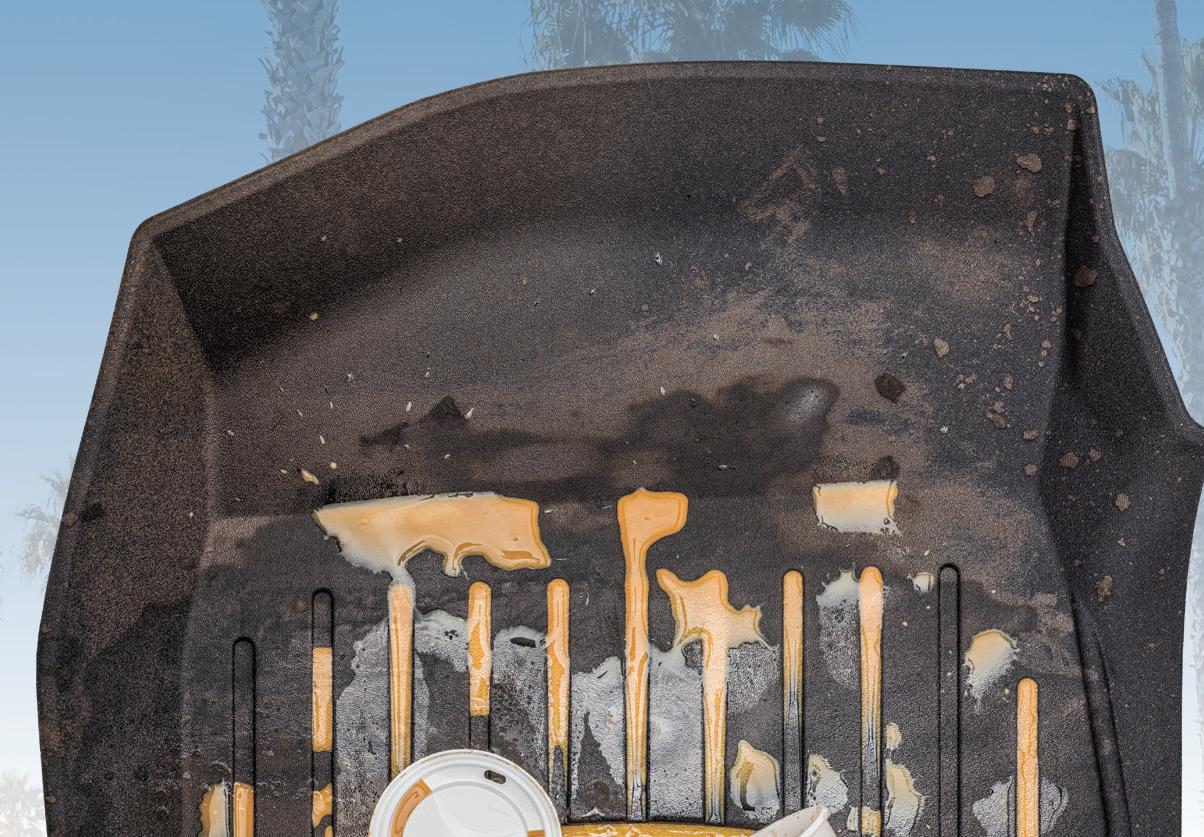
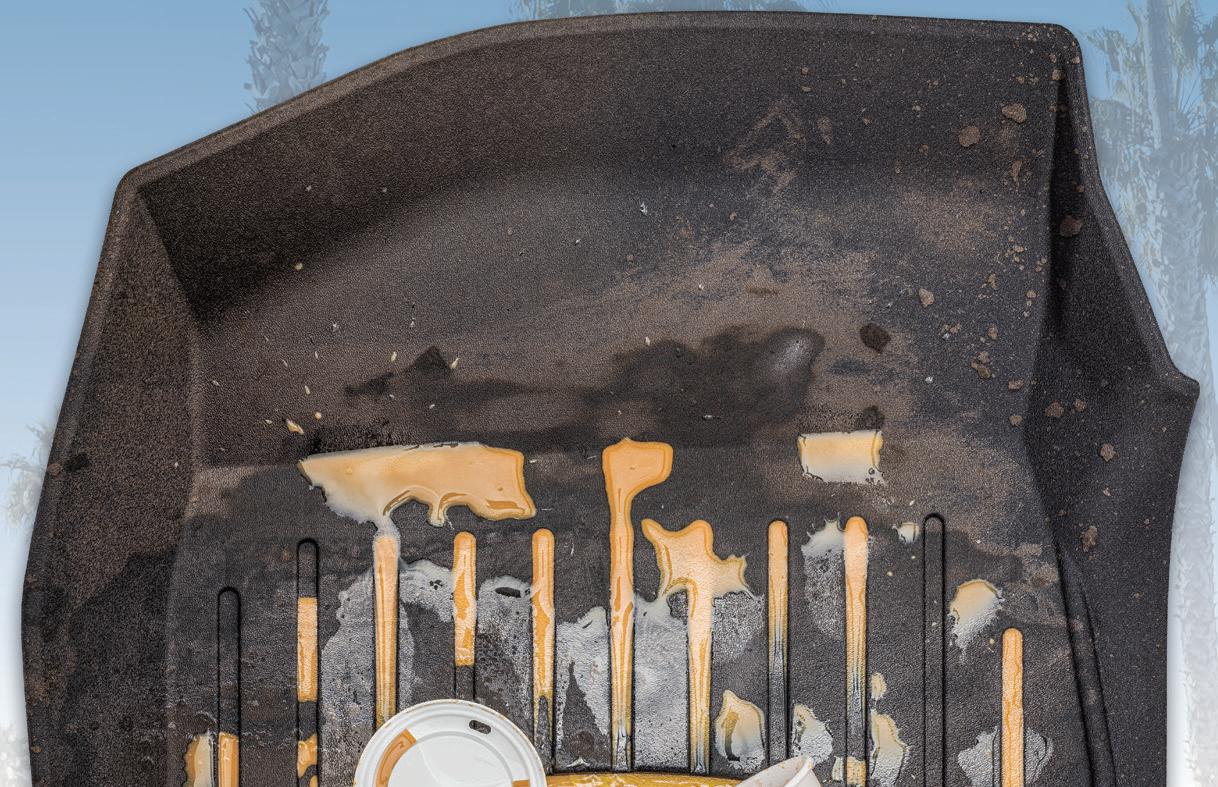


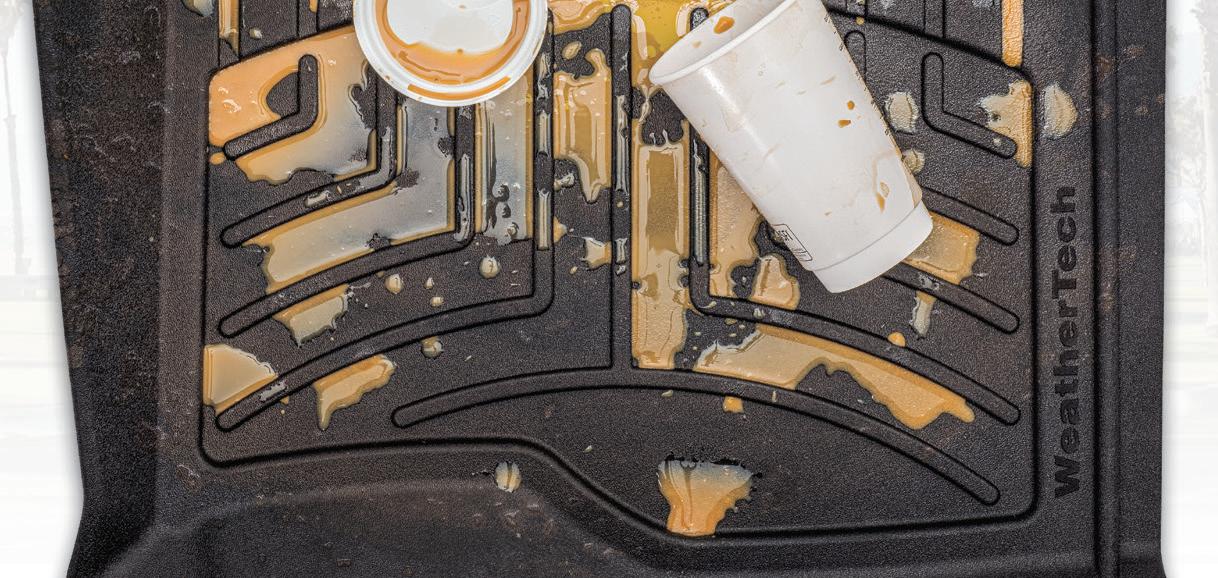


FloorLiner HP protects every curve and contour of your footwell with laser-measured precision. No matter how sharp the turn, spills never take the lead.
FLOORLINER™ HP
FloorLiner HP protects every curve and contour of your footwell with laser-measured precision. No matter how sharp the turn, spills never take the lead.
ED BENNETT & JOHN DOONAN
On behalf of the France Family, we are honored to welcome you to the IMSA Monterey SportsCar Championship at WeatherTech Raceway Laguna Seca, as we celebrate a “Throwback” themed weekend in the IMSA paddock.
We can’t wait to see the heritage and history represented by our teams on display this weekend celebrating the legends that have shaped endurance sports car racing. It will all culminate in the first two-hour, 40-minute IMSA WeatherTech SportsCar Championship race of the 2026 season on Sunday.
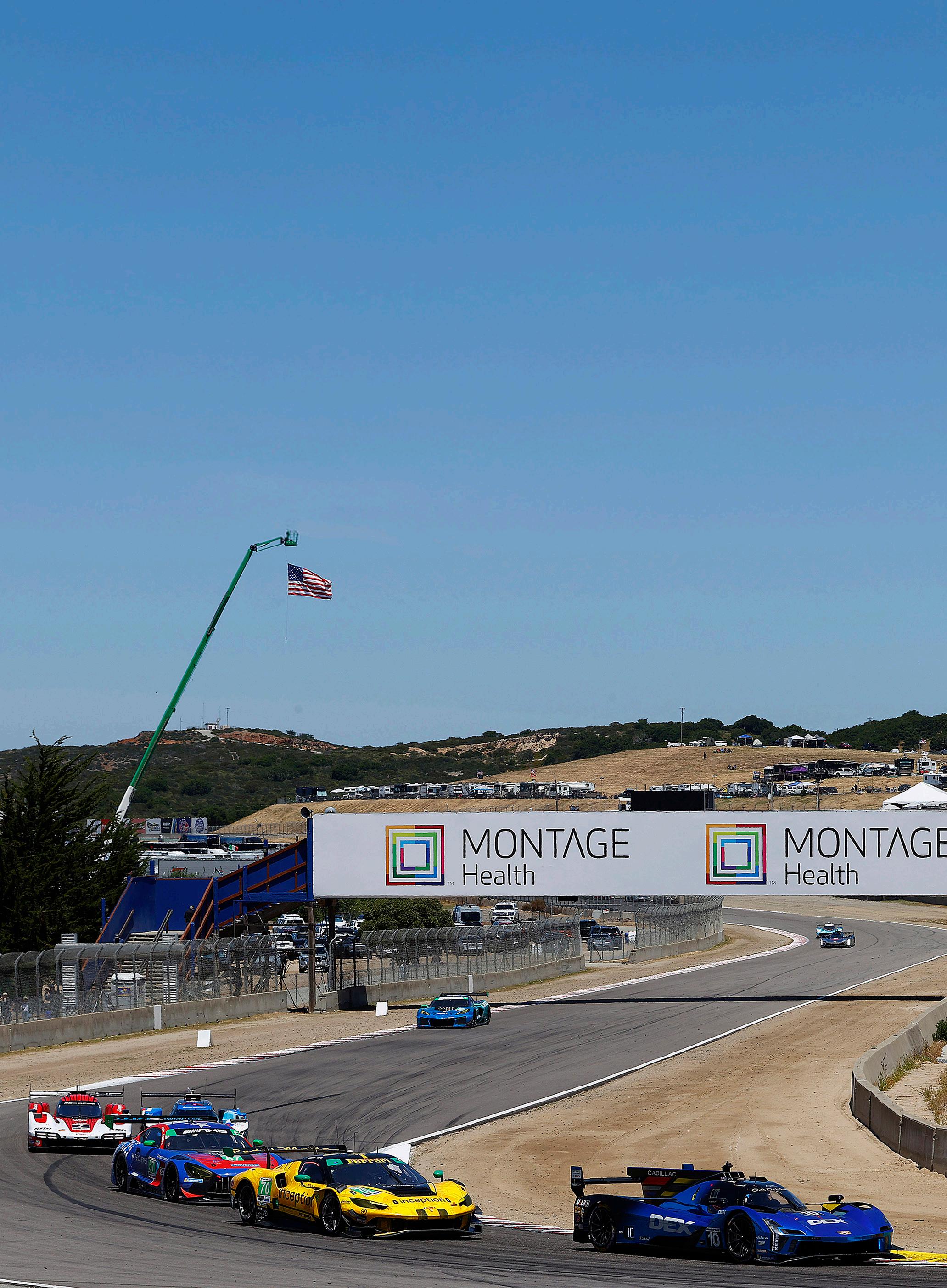
Our Grand Touring Prototype (GTP) class will again race alongside our two GT classes, Grand Touring Daytona Pro (GTD PRO) and Grand Touring Daytona (GTD). The race features a host of world-class manufacturers and teams set to tackle the iconic Corkscrew as part of the 2.238-mile road course.
Most of the leading-edge GTP prototypes expected to race have an internal combustion engine prepared by the participating global automobile manufacturers and in the case of Le Mans Daytona h (LMDh) specification cars, pairs those engines with a common high performance electrified hybrid powertrain which elevates sustainability. Aston Martin’s new Valkyrie is the first of these cars built to the Le Mans Hypercar (LMH) specification and is set to race alongside four LMDh-specification entries from Acura, BMW, Cadillac and Porsche, which speaks to the top-level convergence achieved across global sports car racing.
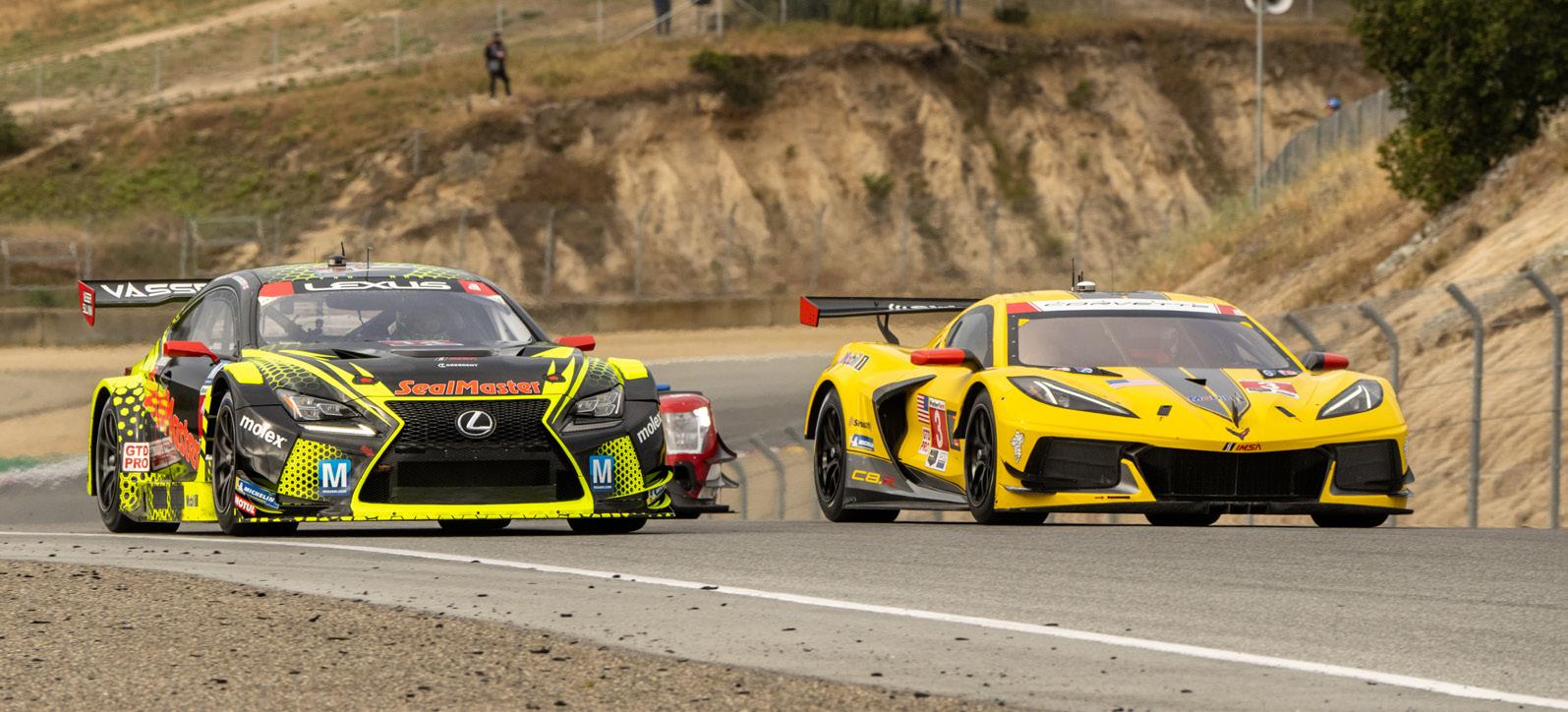
Our hugely popular GTD PRO and GTD classes, featuring cars that resemble those you see on the streets but built to specific racing regulations, will be in action alongside from 10 different manufacturers. Entries from Aston Martin, BMW, Chevrolet, Ferrari, Ford, Lamborghini, Lexus, McLaren, Mercedes-AMG and Porsche make up
the grid and will shine in front of an audience that leans heavily into the California car culture.
Additionally, keep an eye out for our two-hour IMSA Michelin Pilot Challenge race and pair of single-make series in action. The Lamborghini Super Trofeo North America runs two 50-minute races while Ford’s Mustang Challenge runs two 45-minute races.
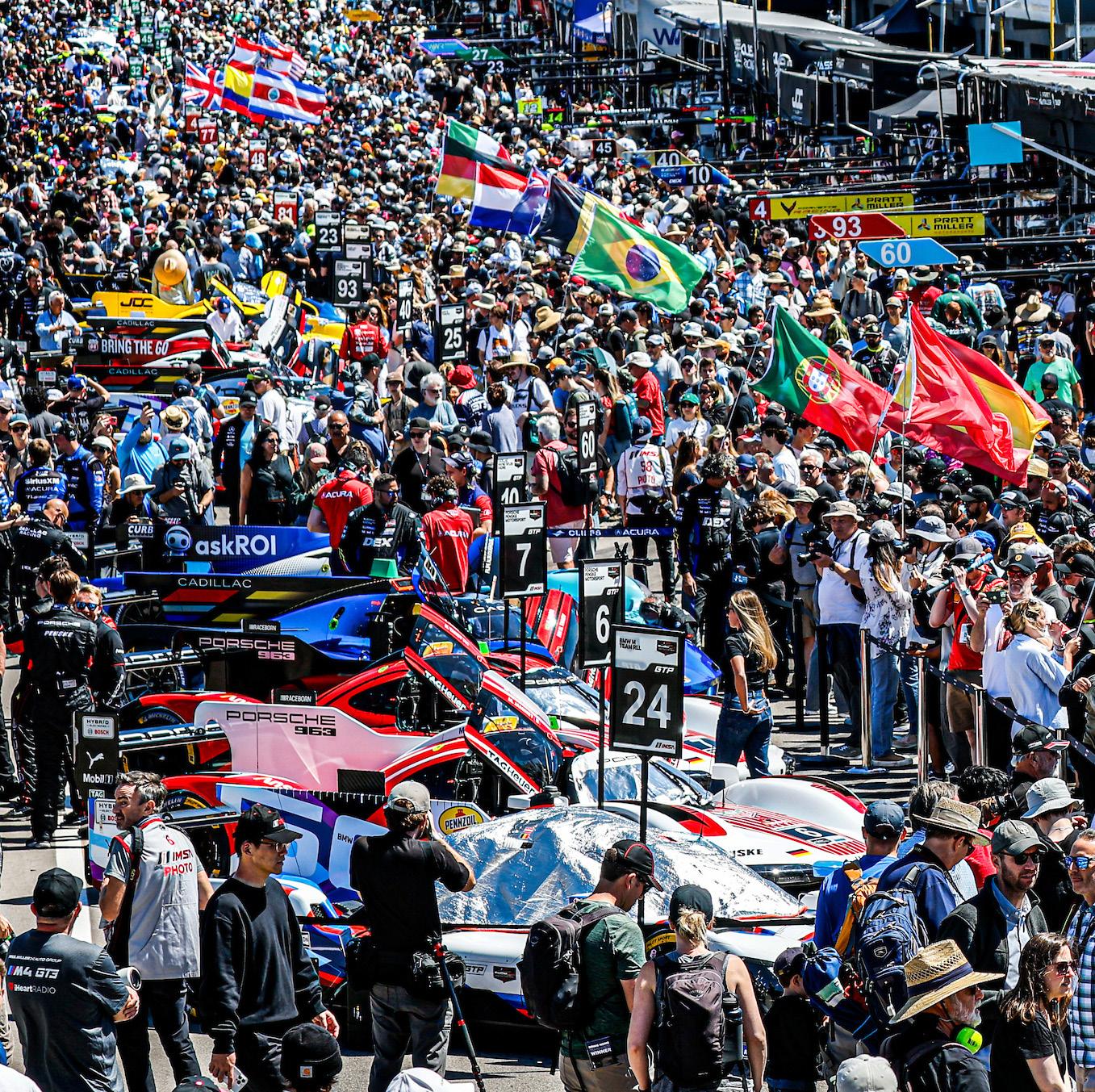
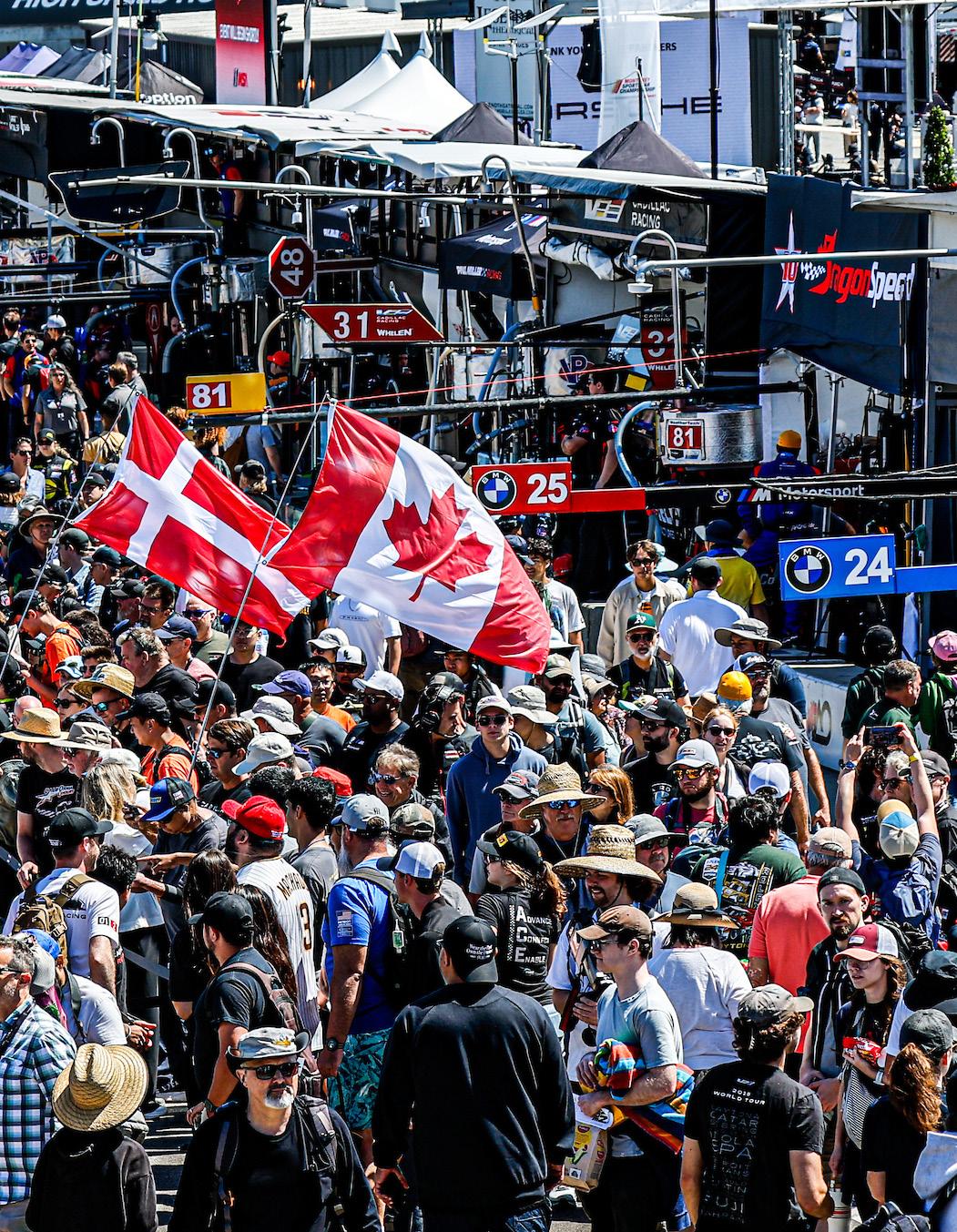
Our fan-friendly, open paddock is designed to be as accommodating as possible. Be sure to get your hands on one of our free Fan Guides located around the track, which provide a spotter’s guide of car illustrations and handy weekend tidbits.
Plan to head to the paddock in the infield to get an up close-and-personal look at our full field and meet the drivers during the WeatherTech Championship driver autograph session Sunday morning before the race.
You’ll also notice digital displays on all WeatherTech Championship race cars. These inform you where each is running in its class throughout a race. Also, be sure to download the IMSA app for live Timing & Scoring, onboard cameras and up-to-the-minute news and information.
Whenever you can’t be with us at the racetrack, be sure to tune into NBC Sports’ outstanding coverage, whether it’s via the Peacock streaming platform or NBC network coverage when available. And you can follow our official social media and YouTube channels for more original content throughout the weekend and all season long.
Whether this is your first time attending an IMSA race or you’re a regular attendee as part of your annual tradition, we are pleased to have you with us here in Monterey! Thanks again for joining us this weekend!
Best regards,
Ed Bennett / CEO John Doonan / President






DAYTONA INTERNATIONAL SPEEDWAY JANUARY 21-25, 2026
SEBRING INTERNATIONAL RACEWAY MARCH 18-21, 2026
LONG BEACH STREET CIRCUIT APRIL 17-18, 2026
WEATHERTECH RACEWAY LAGUNA SECA MAY 1-3, 2026
DETROIT STREET CIRCUIT MAY 29-30, 2026
MID-OHIO SPORTS CAR COURSE JUNE 5-7, 2026 7
WATKINS GLEN INTERNATIONAL JUNE 25-28, 2026
8
CANADIAN TIRE MOTORSPORT PARK JULY 10-12, 2026
9 ROAD AMERICA JULY 30 - AUGUST 2, 2026 10
VIRGINIA INTERNATIONAL RACEWAY AUGUST 21-23, 2026 11
INDIANAPOLIS MOTOR SPEEDWAY SEPTEMBER 18-20, 2026 12
MICHELIN RACEWAY ROAD ATLANTA
SEPTEMBER 30 - OCTOBER 3, 2026






MEL HARDER
It is a privilege to welcome you to iconic WeatherTech Raceway Laguna Seca, which has long been considered America’s home to sports car racing. This weekend you are going to experience one of motorsports’ greatest racing events with the IMSA WeatherTech SportsCar Championship.
This weekend is particularly special as we throw back to IMSA’s storied past and the legends who shaped endurance racing. We are celebrating the icons, milestones and moments that defined the sport and evolved it into today’s success.
The action on track is always thrilling and is complemented with activities for fans of all ages. Please refer to the schedule for driver autograph sessions where you can meet the drivers, take selfies and share some laughs.
The open paddock allows you to roam freely to watch the teams prepare their cars and perhaps bump into these driver athletes. You will also enjoy the popular Fan Walk on pit lane where you can enter restricted areas and literally be next to the drivers and their cars moments before they buckle up and shift their focus into full race mode.
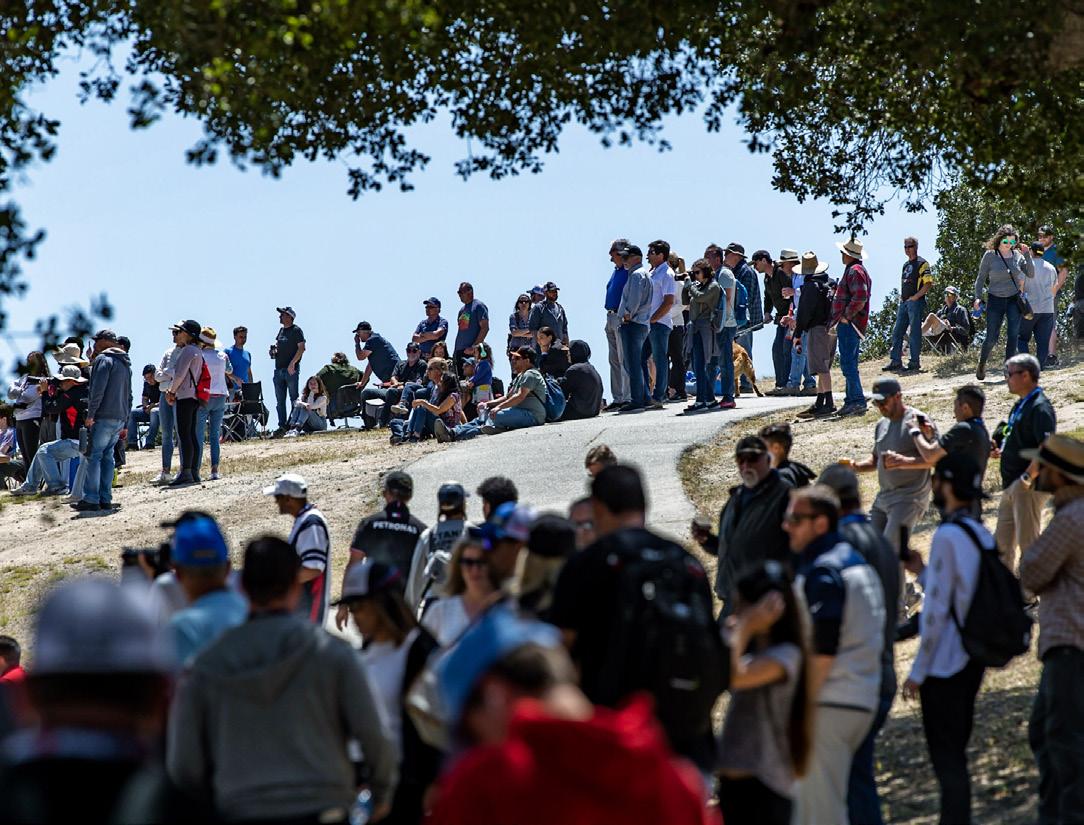
Laguna Seca is fortunate to have abundant viewing areas. From the front grandstands where
you can watch the green flag wave, to the hillside overlooking Turns 2 and 3, to the world-famous Corkscrew, there are plenty of extraordinary vantage points to enjoy throughout the day.
We are thankful to have many passionate volunteers and fans who annually visit Laguna Seca. Our team shares in your passion and are here to ensure your visit to Laguna Seca Recreation Area and the beautiful Central Coast is memorable.
A heartfelt thank you to IMSA for returning each year and bringing the talented drivers and teams competing in the IMSA WeatherTech SportsCar Championship, Michelin Pilot Challenge, Lamborghini Super Trofeo North America, and the Mustang Challenge. Each series creates its own level of excitement that will surely bring fans to their feet.
We trust that your experience at WeatherTech Raceway Laguna Seca will be enjoyable, and we look forward to welcoming you back to additional events this year.
Sincerely,
Mel Harder
President & General Manager, WeatherTech Raceway Laguna Seca










presented by













The highly popular YouTube docuseries returns for a fourth season, taking fans behindthe-scenes of the IMSA WeatherTech SportsCar Championship. All upcoming episodes and previous seasons can be viewed on the IMSA Official YouTube channel.
Season four of Win the Weekend will highlight personalities in the paddock. The eight episodes will feature drivers, team owners, mechanics, IMSA personnel and the media members who provide fans with an intimate look into the world of sports car racing. All this while capturing the twists and turns and high-speed battles as drivers, teams and manufacturers vie for the ultimate goal of being crowned champions of the IMSA WeatherTech SportsCar Championship.
FRIDAY, MAY 1
8:25 am - 8:55 am
Practice 1 Mustang Challenge
9:10 am - 10:10 am
Practice 1
Michelin Pilot Challenge
10:25 am - 11:10 am
Practice 1
Lamborghini Super Trofeo
11:10 am - 12:10 pm
Lunch
12:10 pm - 12:40 pm
Practice 2
Mustang Challenge
1:00 pm - 2:00 pm
Practice 2
Michelin Pilot Challenge
2:15 pm - 3:00 pm
Practice 2
Lamborghini Super Trofeo
2:45 pm - 3:15 pm
Autograph Session
Mustang Challenge
3:20 pm - 4:50 pm
Practice 1
WeatherTech Championship (all classes)
5:10 pm - 5:25 pm
Qualifying Mustang Challenge
5:40 pm - 5:55 pm
Qualifying Michelin Pilot Challenge TCR
6:00 pm - 6:15 pm
Qualifying Michelin Pilot Challenge GS
6:25 pm - 6:45 pm
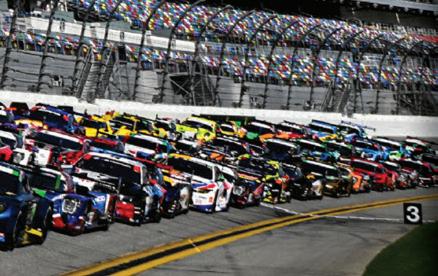
Cadillac Car Corral Laps
6:45 pm - 7:05 pm
International Car Corral Laps







7:55 am - 8:00 am
IMSA Course Clearance Lap
8:00 am - 8:15 am
Qualifying 1
Lamborghini Super Trofeo
8:20 am - 8:35 am
Qualifying 2
Lamborghini Super Trofeo
8:50 am - 9:35 am
Race 1
Mustang Challenge
9:40 am - 10:00 am
Mustang Challenge Podium
9:55 am - 11:25 am
Practice 2 - WeatherTech Championship (All Classes)
11:25 am - 12:25 pm
Lunch
11:35 am - 11:55 am
Porsche Car Corral Laps
11:45 am - 12:25 pm
Open Fan Grid Walk
12:35 pm
National Anthem
12:40 pm
Drivers Start Your Engines command
12:45 pm - 2:45 pm
Race 1
Michelin Pilot Challenge
2:50 pm - 3:10 pm
Lamborghini Car Corral Laps
2:50 pm - 3:15 pm
Michelin Pilot Challenge Podium
3:15 pm - 3:30 pm
Qualifying - WeatherTech Championship - GTD
3:35 pm - 3:50 pm
Qualifying - WeatherTech Championship - GTD Pro
3:55 pm - 4:10 pm
Qualifying - WeatherTech Championship - GTP
4:27 pm
Drivers Start Your Engines command
4:30 pm - 5:20 pm
Race 1
Lamborghini Super Trofeo
5:30 pm - 5:50 pm
Ford Racing Corral Laps
5:50 pm - 6:10 pm
BMW Car Corral Laps
6:10 pm - 6:30 pm
Hyundai Car Corral Laps
SUNDAY, MAY 3
9:00 am - 9:20 am
Corvette Car Corral Laps
9:27 am
Drivers Start Your Engines command
9:30 am - 10:15 am Race 2
Mustang Challenge
10:15 am - 10:35 am
Mustang Challenge Podium
10:30 am - 11:00 am
WeatherTech Championship
Autograph Session
10:32 am
Drivers Start Your Engines command
10:35 am - 11:25 am Race 2
Lamborghini Super Trofeo
11:25 am - 11:45 am
Lamborghini Super Trofeo Podium
12:00 pm - 12:50 pm
Open Fan Grid Walk
1:00 pm
National Anthem
1:05 pm
Drivers Start Your Engines command
1:10 pm - 3:50 pm
WEATHERTECH SPORTSCAR CHAMPIONSHIP
4:05 pm - 4:11 pm
Podium Ceremonies - GTP Class
4:11 pm - 4:17 pm
Podium CeremoniesGTD PRO Class 4:17 pm - 4:23 pm
Podium Ceremonies - GTD Class
ADMINISTRATION
Mel Harder
President/General Manager
Kevin Allen
Chief Financial Officer
Gayle Davies
VP of Business Administration
Rafael Garcia
Director of Facilities & HR
Michael Gomes
Staff Accountant
Kimberly Agner-Tila
Accounting Clerk
FACILITIES & TRACK SERVICES
Todd Fisher
Race Director
Patrick Carter
Park Manager
Brian Goslin
Projects Lead
Junior Diaz, Wyatt Harris, Fred Lind, Jason Marquez, Andre Pena, Jacob Pena, Rhys Roberts, Pablo Santos, Altagracia Sarmiento Lopez
Facilities & Track Services
David Quiroz, Fabian
Sanchez, Jose Vizcaino
Maintenance Engineers
MARKETING
Jeanie Sumners
Director, Marketing & Communications
Katie Brannan
Public Relations Manager
Dan Fearing
Digital Marketing Manager
Ricardo Nunez
Marketing Intern
OPERATIONS
April Henderson
Vice President of Events
Keon Porter
Event Operations Manager
Madison Hutchison
Volunteer & Ops. Coordinator
Cierra Verdone
Operations & Guest Services Coordinator
Sharon Topping
RMMR Driver
Relations Coordinator
Dawn Johnson, Sandra Miller
RMMR Registrars
PARTNERSHIPS
Tim Winski
Array Sports
Hayle Leontieff
Director of Partnerships
SECURITY
Michael O’Connor
Security Manager
SECURITY AGENTS
John Alonzo, Patrick
Alvarado, Robert Aparis
Jayden Armendariz, Rocio Cortez, Isaiah Dutra, Elijah Evans, Kelven Ferolino, Shania Franklin, Latu Funaki
Abad Hughes, Abraham Maciel, Rasta Manoa, Cesar Miranda, Rolando Oseguera
Contreras, Kenji Penniman
Tyler Pimentel, Hector Ruiz Salas, Raymond Serrano
Thomas Stames, Charles Stringer, James Vake, Joseph Vake
RACEWAY STORE
Kylie Cota, Julian Henderson, Jessica Rondez
Retail Assistants
TICKETING & CAMPING
Lisa Saclayan
Ticketing & Accommodations Manager
Wynette Jones, Janice Laigo
Sales Representatives
TRACK RENTALS
Benjamin Lopez, Brian Nichols, Leslie Robinson
Track Rental Supervisors
Karen Carr
Track Rental Coordinator
COURSE MARSHALS
Lance Bangloy, Osvaldo Campa-Garcia, Kerry Childers, Omar Cruz Munoz
Greg Cupp, Carl Dunn, Abner Escalante Jr., Carlos Fierros-Mondragon, Ray Gullings, Kevin Jenkins, Sierra Lacey-Millard, Juan Larguna, Rene Lopez Villicana, Marilynn Loya, Andrew Luna, Esteban Martinez, Dominic Maynard
Jessica Miller, Jazlin Navarro, Kiara NogueronMartinez, Kevin Nuckolls, Ulises Patino Perez, Kathryn Roberts, Linda Scherer, Gordon Schmidt, Sandra Silveira, Namraja Singh, Melissa Tracy, Salvador Traverse, Jody Turner


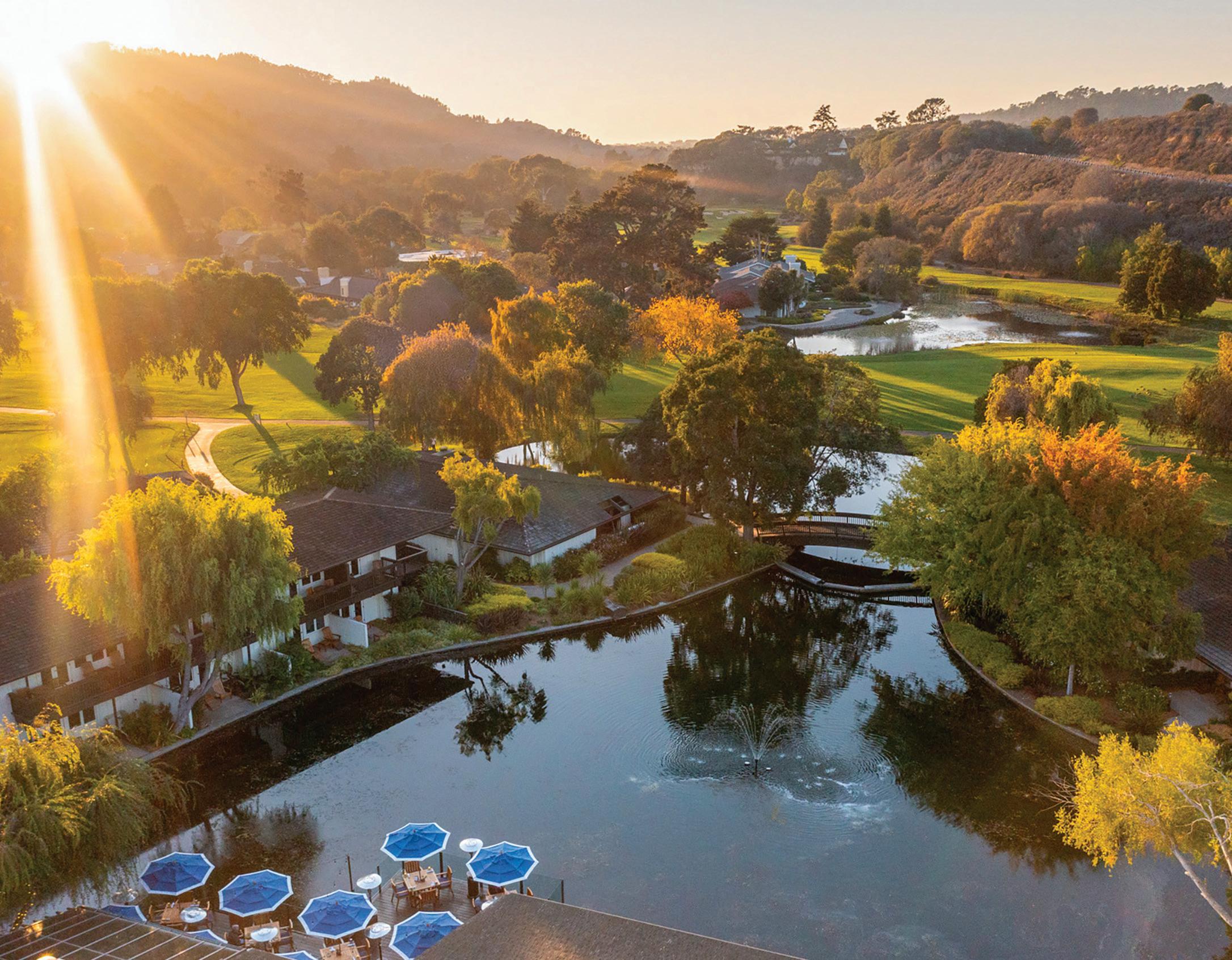
Welcome to the scenic route, from the pristine coastline to the verdant valleys and majestic redwoods, the views here are sure to stop you in your tracks. Wherever your path takes you in Monterey County, please leave no trace, and always visit responsibly. Find your way here.









Now in its second year, Friends of Laguna Seca has been actively identifying and prioritizing key projects to secure the long-term future of the Laguna Seca Recreation Area, which is home to WeatherTech Raceway Laguna Seca. Improvements to essential facilities are in progress, aimed at boosting the overall experience for guests to meet their growing needs and high expectations. These accomplishments are strengthening the park and race track’s foundation for years to come.
The list of capital improvements is
lengthy, but Friends is moving fast. Essential projects that may be invisible to the eye progressed in time for the 2026 racing season opener. Integral to protecting the race circuit, drainage upgrades were implemented around the Corkscrew to improve water flow and runoff management, helping protect the racing surface and improving track conditions caused by inclement weather.
Among the projects recently completed were:
• Asphalt runoffs created to improve drainage at turns 2, 8 and pit-in
• Tire barriers restored throughout the course and conveyor belt added
• Perimeter fence installed at turns 6-8
• The entire circuit has been painted
In long need of repair, the Timing & Scoring building has undergone improvements that include exterior and interior paint, new carpet, cabinetry, and communication advances to provide personnel with a suitable environment to conduct their important work.
On the heels of major renovation of the High Speed Hospitality Suites on pit lane
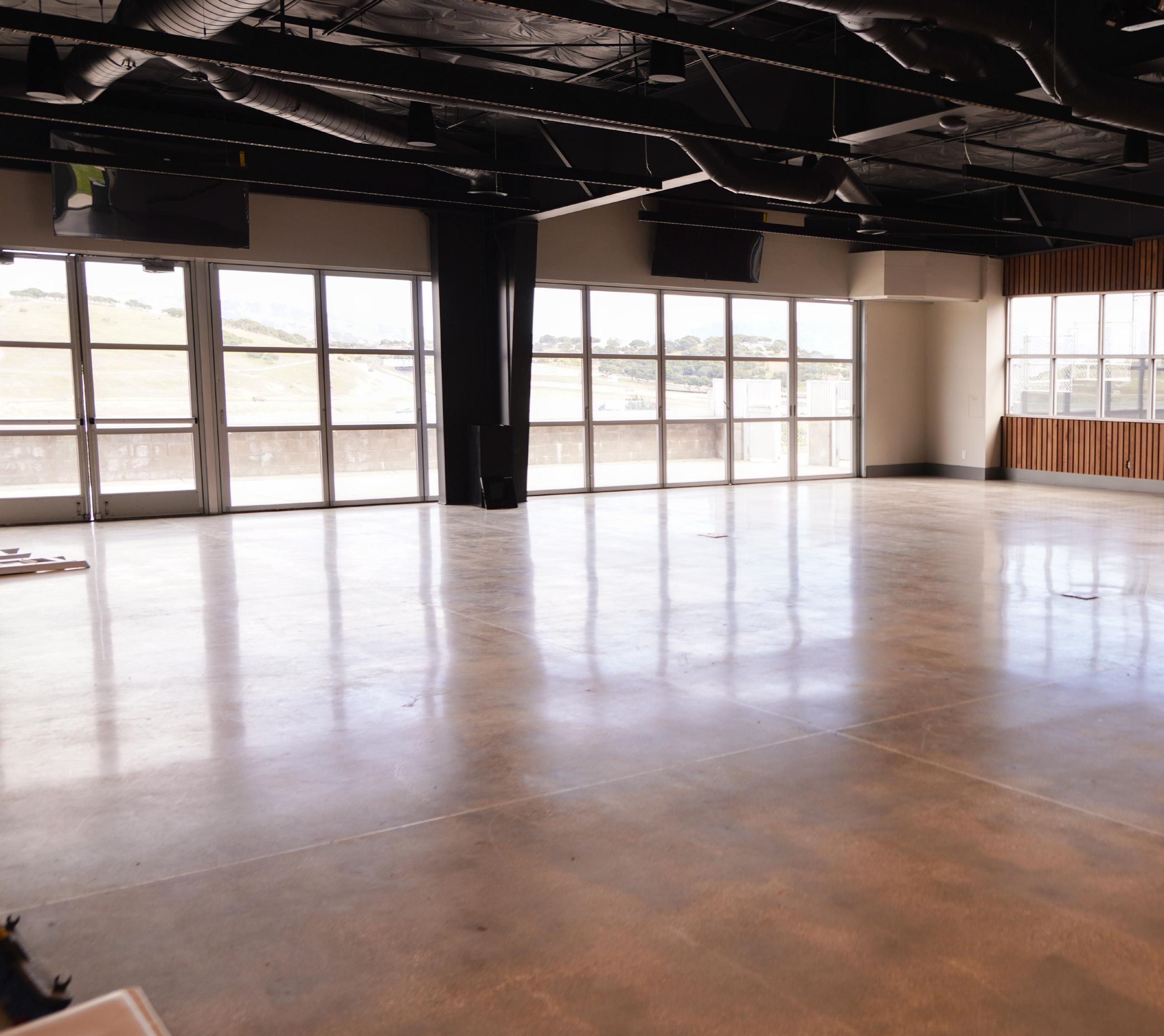
The renewed Hospitality Pavilion will welcome guests, corporate retreats and community events for years to come
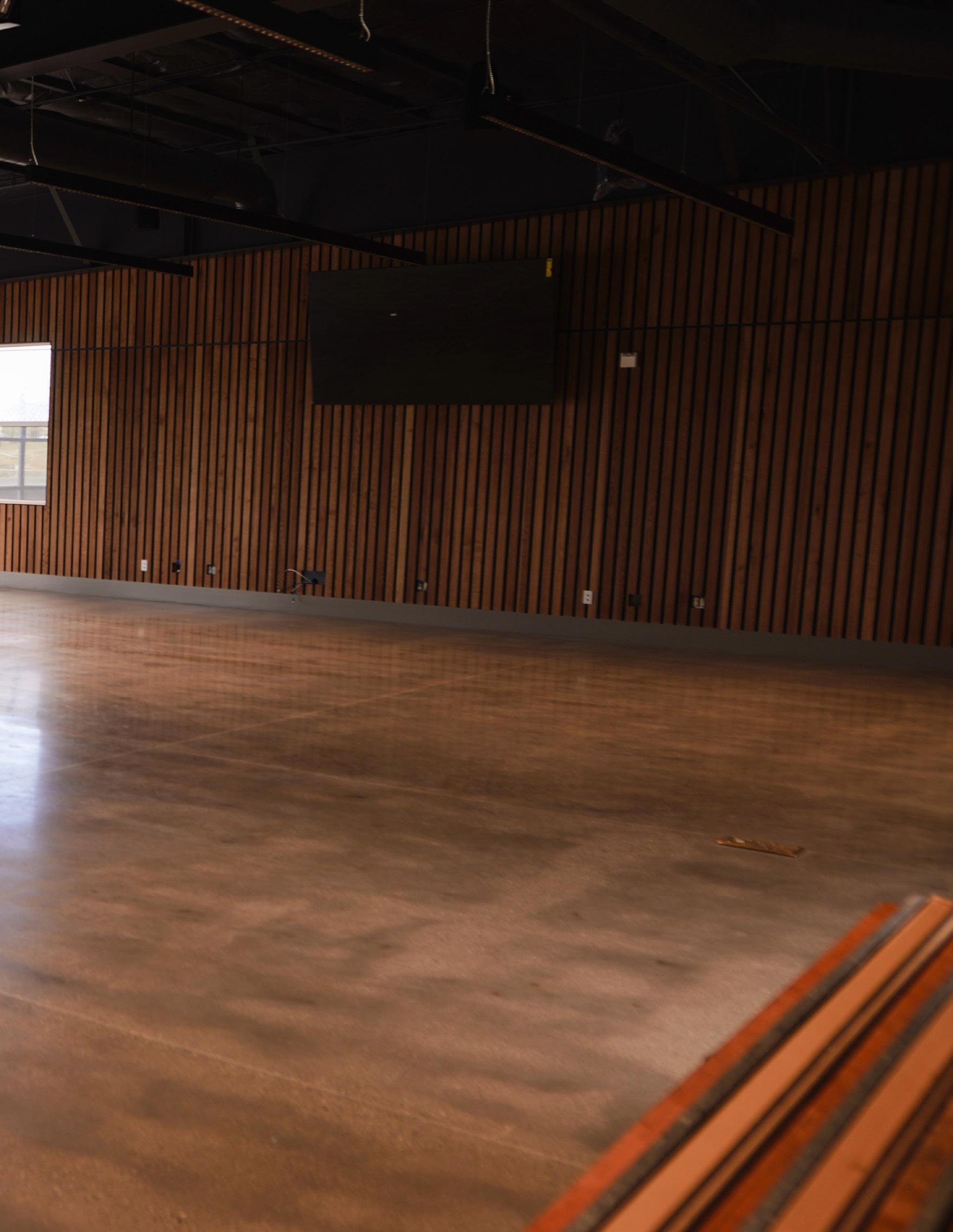
comes significant upgrades to the 20-yearold Hospitality Pavilion. Perched above Turn 1 with premier views of nearly the entire course, this signature building has been enhanced with exterior paint, wood trimmed walls and an open ceiling with exposed beams, an audio upgrade with speakers both inside and outside, television monitors for race viewing and conference level presentations, polished concrete floors, and improved viewing from the patio.
UPGRADE COMPLETE
Friends’ first major project was the 78-foot
scoring trilon. All 160 panels were replaced, and the high-definition LED video boards now span the entire structure, matching the standard of other premier race venues for delivering a quality user experience.
Laguna Seca evolves each year, but one thing remains evergreen—enthusiasts’ passion, enjoyment, and respect for this 2.238-mile international icon known as Laguna Seca.

As a not-for-profit 501(c)(3) organization, funds raised by Friends of Laguna Seca are reinvested into achieving its core mission of restoring, revitalizing and reinventing Laguna Seca, which was founded in 1957. Its all-volunteer board of directors are passionate about WeatherTech Raceway Laguna Seca and share a desire to keep this beautiful facility thriving for generations to come. Their vision extends beyond motorsport events. Laguna Seca’s location and amenities position it as an ideal community and cultural home to myriad outdoor activities, food and wine festivals, and educational events that attract diverse interests that positively benefit Monterey County residents and businesses.
To learn more about Friends of Laguna Seca and become a Friend yourself in support of Laguna Seca’s long-term future, visit FriendsofLagunaSeca.org
Ross Merrill President
Bruce Canepa Vice President
Jason Retterer Secretary / Treasurer
Kate Daniels
Jonathan Feiber
Gordon McCall
Ned Spieker Directors
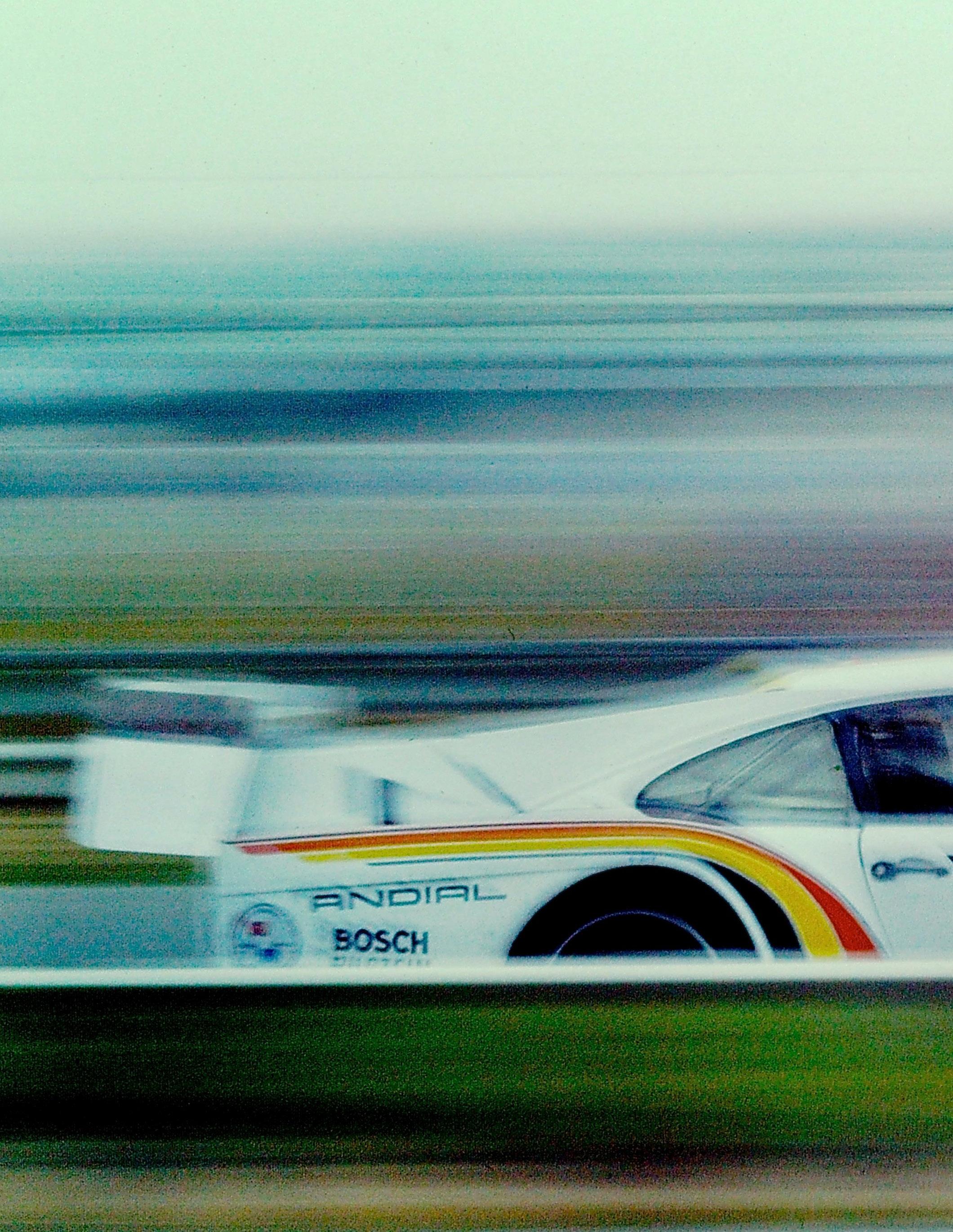
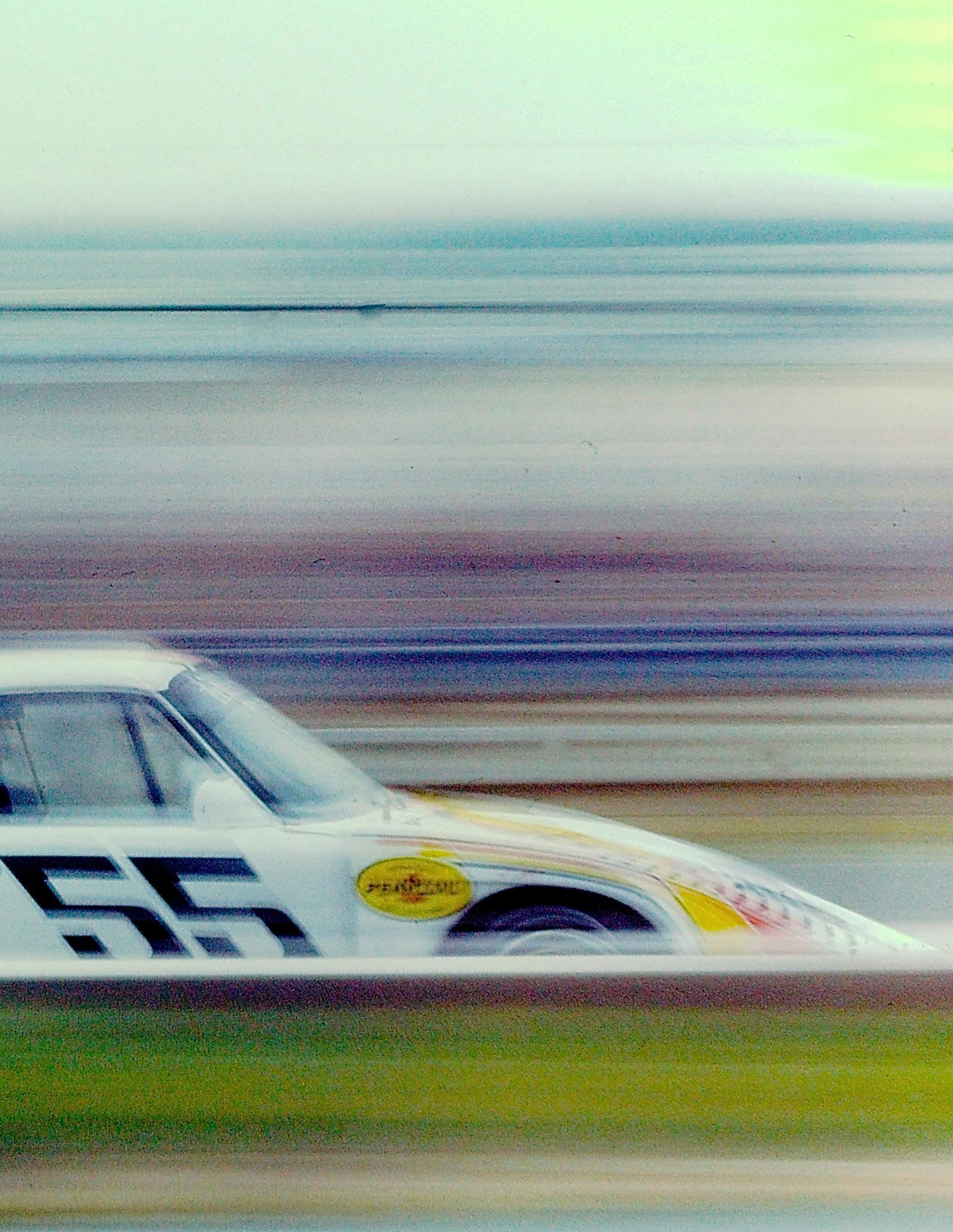
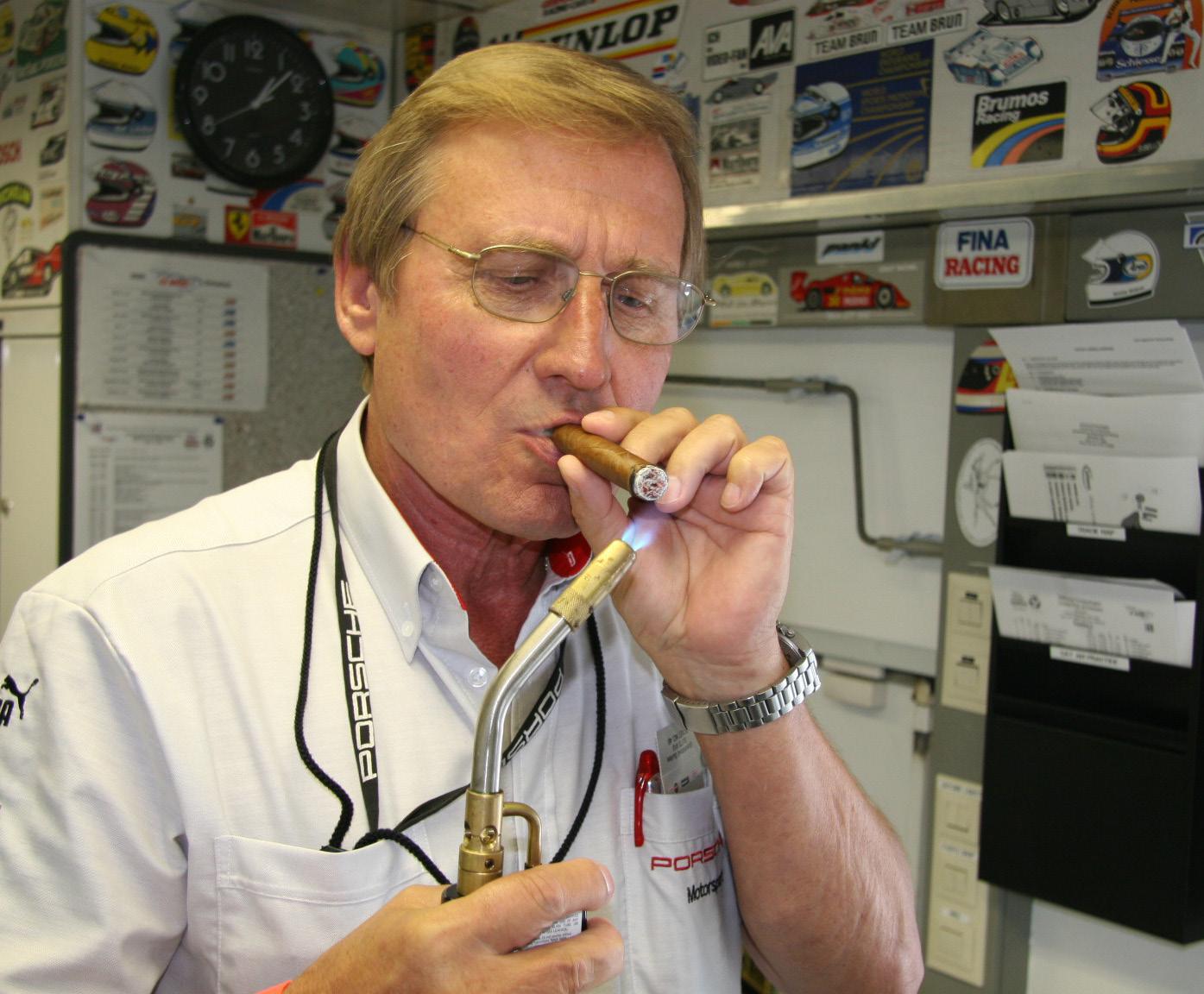
TThe former boss and then consultant of PMNA – Porsche Motorsport North America – takes a look back at his early days of racing, where and when it really all began for the German-born Springer, in a small shop that opened in Costa Mesa in May 1975 by three former employees of Vasek Polak: Arnold Wagner, Dieter Inzenhofer and Alwin Springer, forming ANDIAL Road & Racing.
Kerry Morse: Which car lit the flame for you?
Alwin Springer: The Porsche RS 61 was the first car I started with, and I’d never done any racing before so that is a very important car to me. When I came to Vasek Polak, I had a 911, a 904, and a 906 to take care of. It was mind boggling for me at the time, as they were very important cars. That’s where the SCCA comes in. We covered the western United States with Milt Minter driving the 906 coupe. It wasn’t competitive, so I converted it as a Spyder, and we finally the beat the Alfa T33 and won the national championship at the runoffs in Atlanta. That was a very big deal for me at that time. Then came the Can-Am, and for me it was a big step forward to the pro racing scene from club racing.
Vasek had Milt Minter in the original 917 PA and then future F1 World Champion Jody Scheckter in the 917/10 turbo. Thoughts?
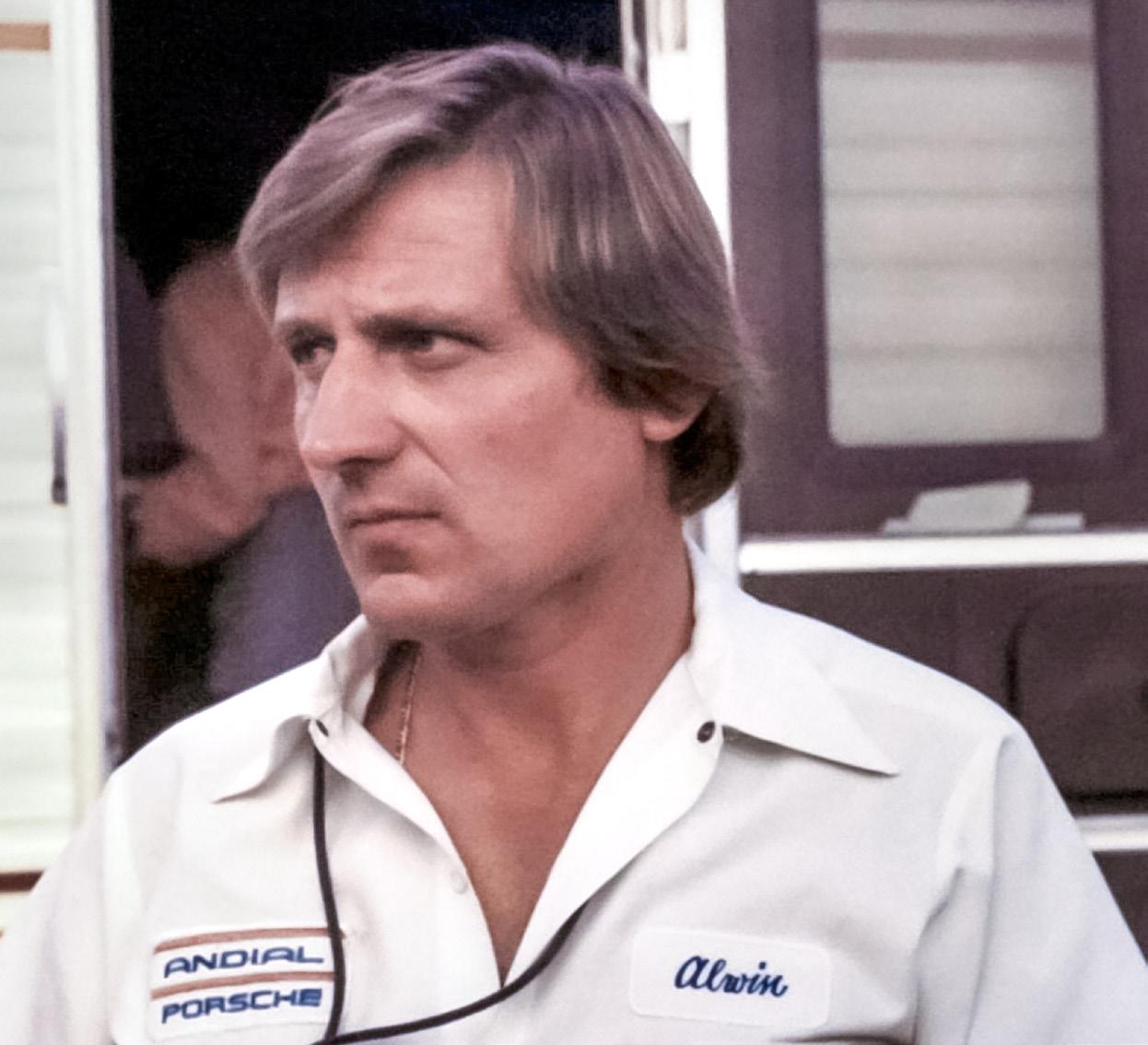
The moments with Milt were astonishing. I knew him from the 906 days, but when he stepped in the 917 it was not the best prepared. We modified a lot of stuff, and it was not the easiest car to drive. For Milt it was absolutely no problem. He got in there without a lot of complaints and just drove the hell out of it. I still admire him today, because he was not picky and didn’t have any issues. He just got on with it and did the best he could do at that time, and that was very sufficient, very impressive to me.
Jody Scheckter was another thing. He was a very, very fast guy. When Milt stepped from the normally aspirated car into the 917/10 turbo, again, no issue, no problem, never any big complaints or whatever, he just gave it his best . . . I have to repeat that again. Jody was definitely different, but Jody, you have to understand, he was already a professional. He drove a Formula One and Formula 5000 over
“ THE PORSCHE RS 61 WAS THE FIRST CAR I STARTED WITH, AND I’D NEVER DONE ANY RACING BEFORE SO THAT IS A VERY IMPORTANT CAR TO ME ”
here. Our team was too small and was not sufficient enough for the demand of Jody. He gave it his best, but the way he drove… I mean, he drove the hell out of the car and specifically the brakes. He abused the brakes actually and always complained about it, and I didn’t have any different brake pads, I didn’t have any different brake calipers or discs, so he had to live with what we had.
This is the first time I’ve heard you say this. Basically it was Jody versus Mark Donohue when you look at it in terms of raw talent versus established talent. Penske had a much bigger team. So, are you saying that had you more personnel and a bigger budget that Jody could have challenged Donohue?
I would say so, because in the first race at Mosport he passed Donohue. But then in the corner cutting into the straightaway, he would lead with his left tire, and then he blew a tire and wrecked the car. But he was close to Donohue in a 917/30. You have to understand that too; it was an animal. No way he could have challenged Donohue. If Donohue would have been in a 917/10, I would say that would have made for some interesting times. Later Polak added another 917 and we had one more guy, but we needed real mechanics, so at that time I had three 917s with four people or five people. You can’t do that.
The way that I’ve looked at it historically and realistically is you had no business doing as well as you did. You really didn’t. It came down to pure determination.
That’s what I’m saying, and that’s why I am very, very proud of the achievement of finishing second overall in the championship. We didn’t win a race; I agree, we did not. Under the circumstances, we did the best with Milt and with Jody. I learned a great deal from the Can-Am.
Now we get into the early days of ANDIAL and the first RSRs.
That was our entry when Arnold, Dieter and myself left Vasek Polak and formed ANDIAL. We started with Hal Shaw, but I believe our first customer was Jim Busby and Randolph Townsend, who was a pure gentleman driver. Busby was the most professional of the three, and with Busby we modified his RSR tremendously on the engine side. That was to be our trademark of ANDIAL, concentrating on engines and not on transmissions – and definitely not on chassis at that time. But I would say that in conjunction with Busby we did very well with the RSR and IMSA.
An often overlooked ANDIAL-prepared car was Howard Meister’s 911 Targa that he drove to a SCCA championship. That is absolutely correct. The Targa was actually built by Dennis Aase, and then we took over the car for Meister. Again, big, big modifications... and we won races with it. I have to say that Howard was an excellent driver, and we won the 1977 national championship in B Production.
I recall that you really pushed the regulations in SCCA in as far as you could, and there was a fair amount of questions as to the legality of the car. But it was always found to be legal and within the rules.
We established a reputation that we followed the rules exactly to the edge of the abyss but not go into the abyss. It was absolute. We did not go on the safe side.
It’s Turbo time with the 934 and 935. I had experience on the 917 turbo, so for us the 934 was not really something completely new. The adjustable boost control was something few people had worked with before and had to learn the limits. But we didn’t have that problem; we got in there and did exactly what we always did, got the best out of the engines.
How did you deal with the 934 C.I.S. fuelinjection problem for that first year?
As we couldn’t change from the C.I.S., the main thing is we found out how to start the car easier, because the starting of the car was always a pain. Once it was running it was okay. You are going to laugh. We would then use a welding rod through the filter, through the screen and push the plate for the C.I.S. down, and the car started every time. An easy fix, but it solved the problem. Others had issues because they didn’t know the C.I.S. at all. Fortunately, it was for one year only.
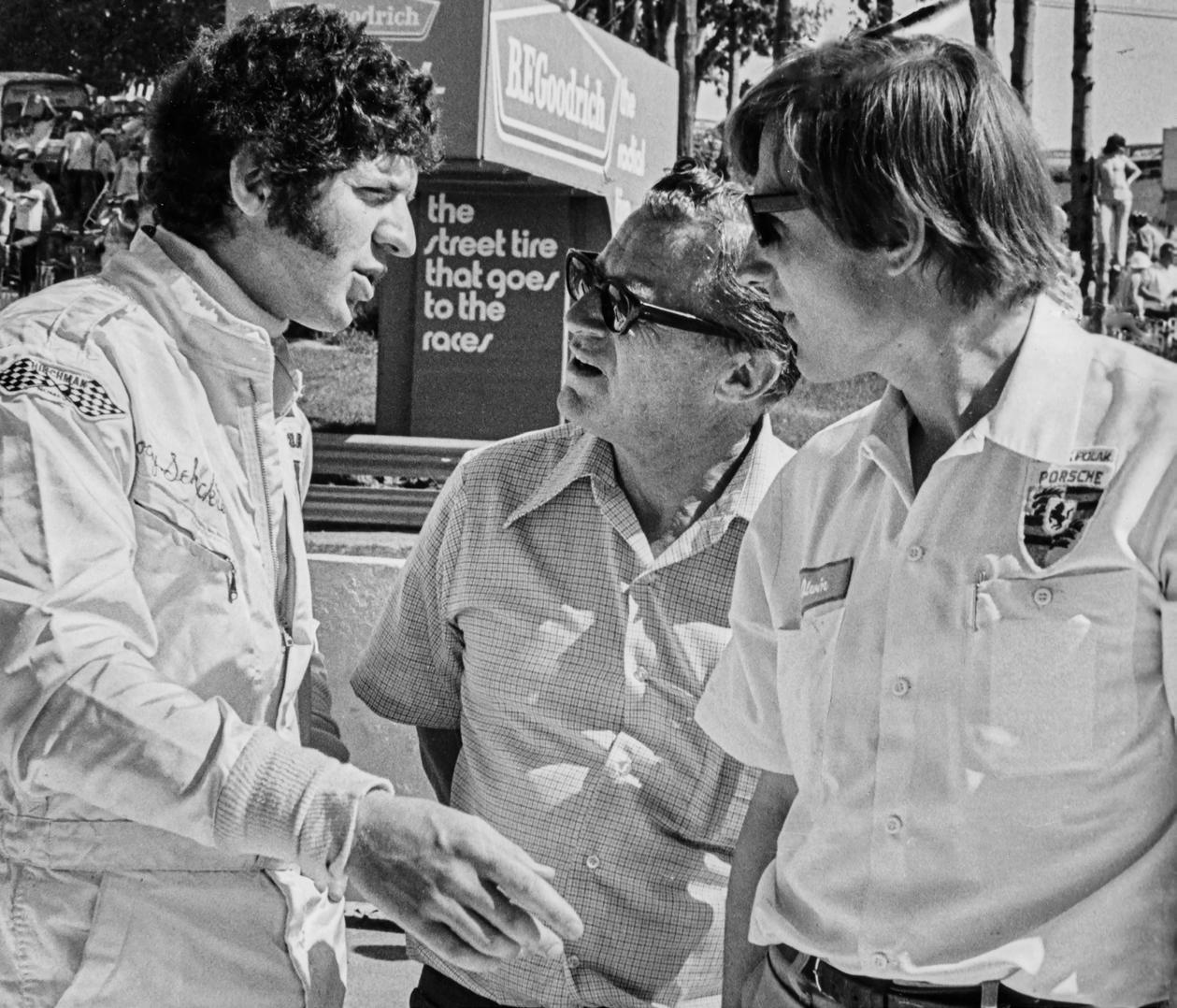
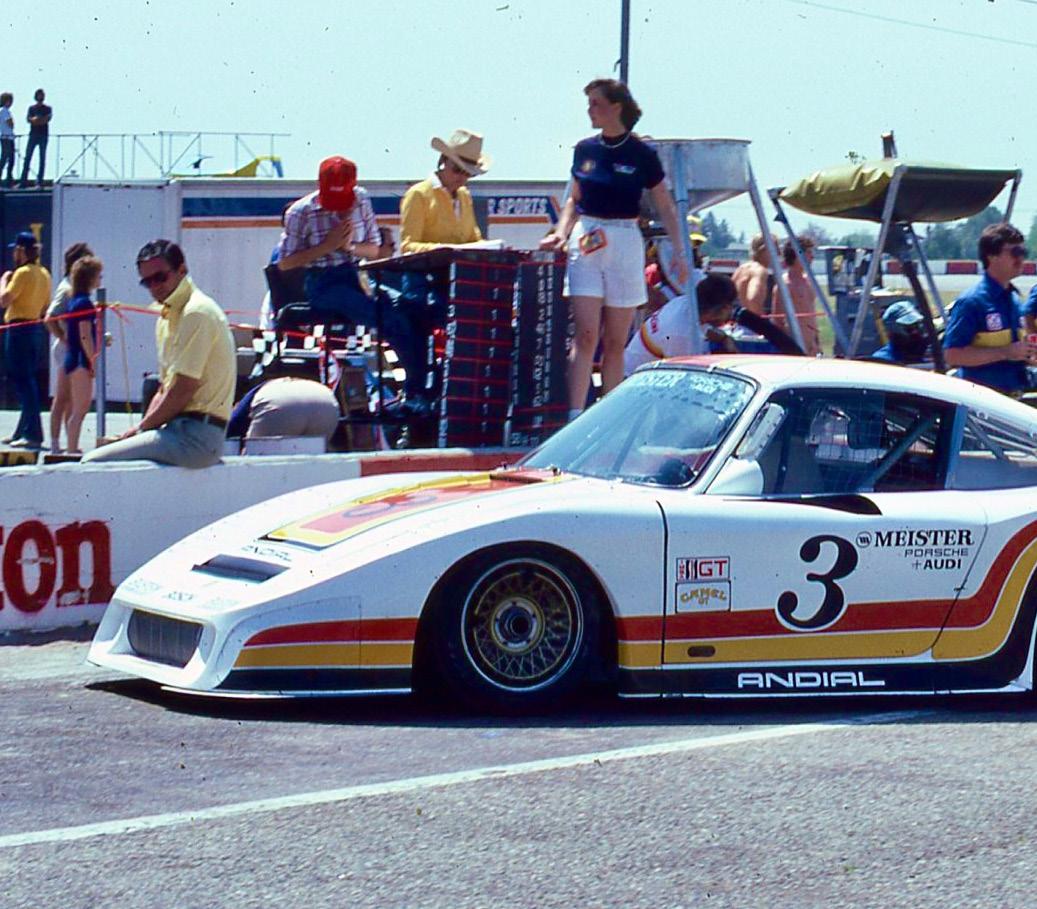
Clockwise from top left: Jody Scheckter in animated form with Vasek Polak and a doubting Alwin Springer.
The Andial in-house built 935L made its race debut and finished 2nd at the 6 Hours of Riverside in 1982 and was later sold and went on to win the Daytona 24 in 1983.
The dyno was Alwin’s laboratory for developing the engine that was to become the standard for success with the 962 in IMSA competition.
Where they’re having fun in the warm California sun – Alwin working on his tan after a successful run by Randolph Townsend in the ex-Kauhsen 917/10 chassis 015.
“ I LEARNED A GREAT DEAL FROM THE CAN-AM ”
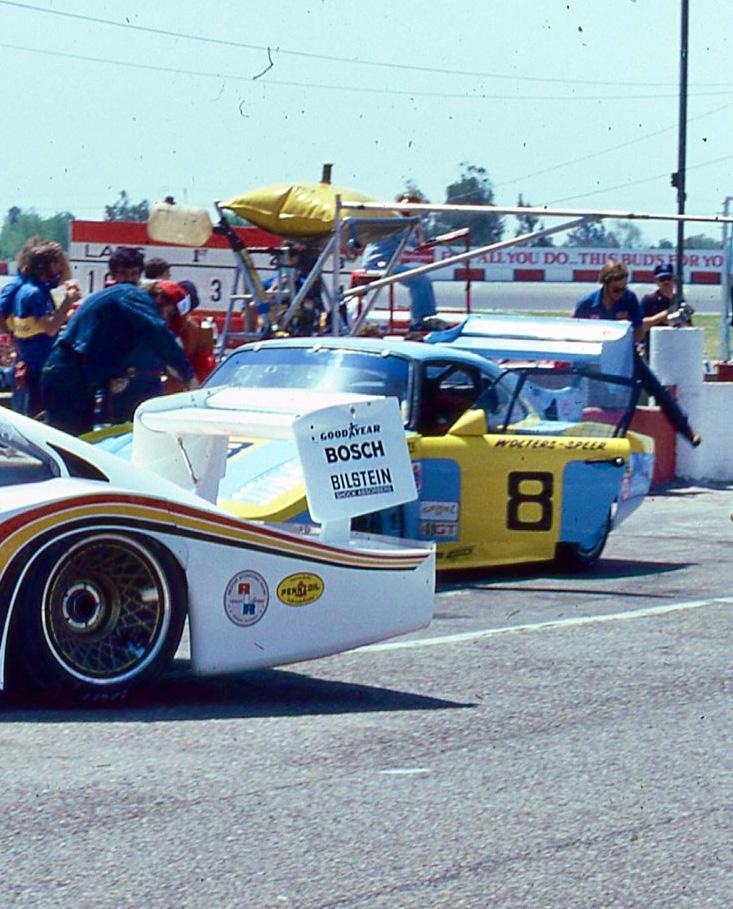
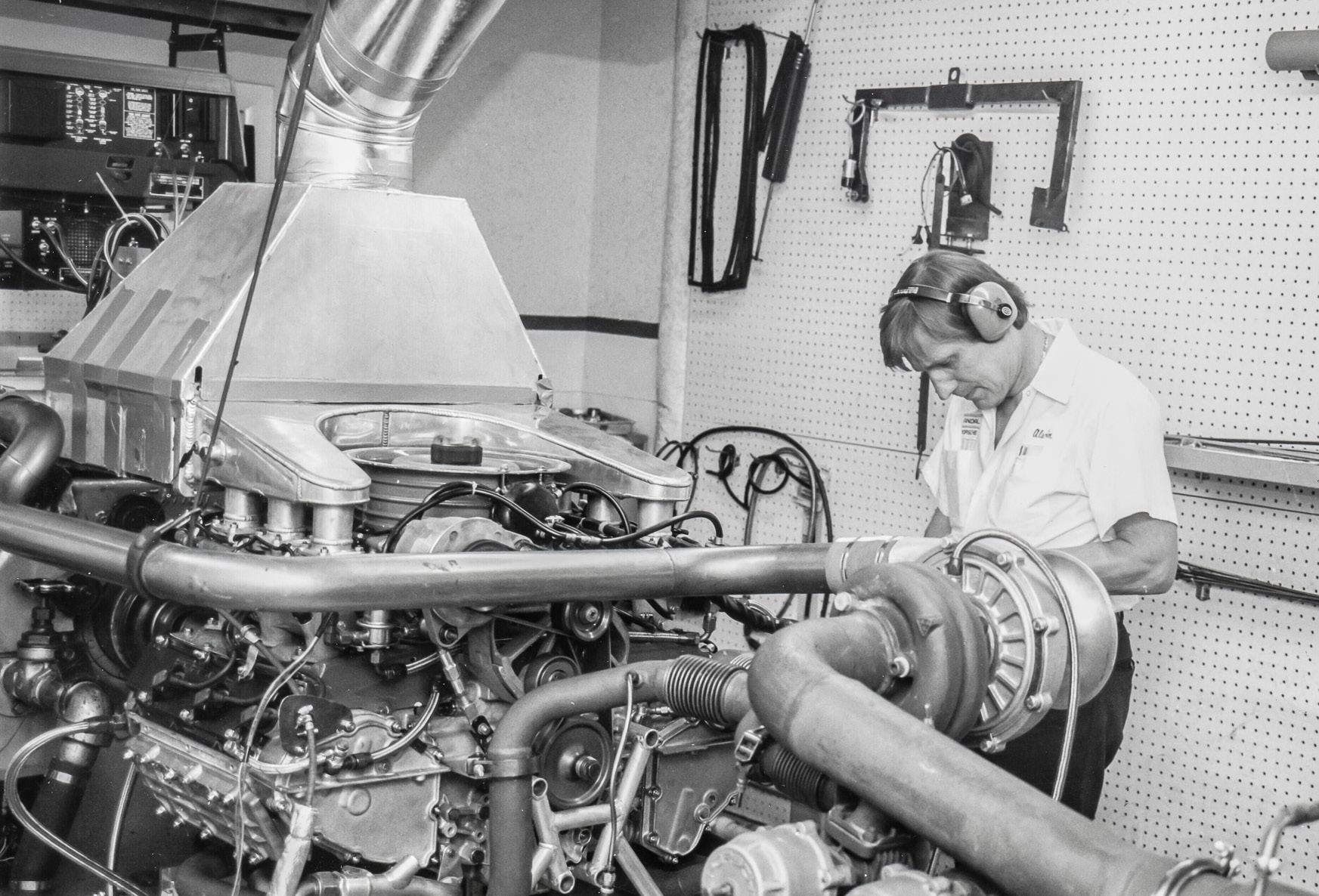
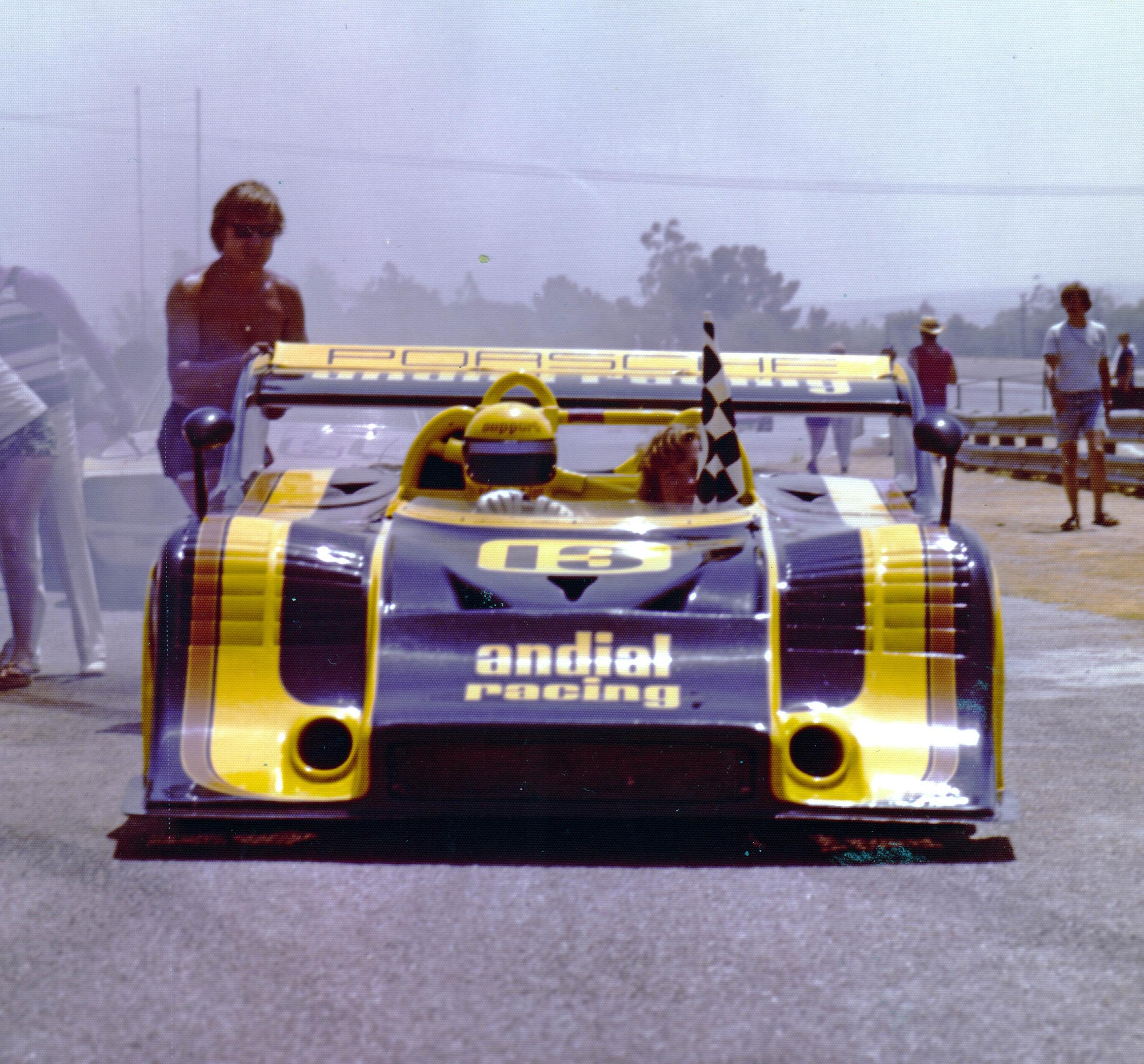
Did you have any input with Weissach or with Porsche when the ten 934.5 models were built for 1977 with Bosch mechanical injection and different bodywork?
No, we didn’t have anything to do with the building of the cars, but the relationships that were made back in the 917 turbo days with people at Porsche like Valentin Schaffer accelerated and got more advanced.
Finally, the 935 became legal to race in IMSA.
The 935 was a different story, because here we got heavily involved in the engine modifications. We started on camshafts, larger displacement, bigger pistons and cylinders. And now we had an engineer coming over with testing equipment, and they ran a new cam for the injection pump based on the modifications that we did. He came back and said that gave us a little bit of an unfair advantage, but you know at the same time we knew how to contact the right people to get the right stuff.
Can you recall a high point of a customer 935, your favorite victory from the customers such as Interscope winning Daytona?
Yes, Interscope were successful and, of course, that moved us forward. For me, something that was not a highlight but was an experience was with the Whittingtons. They blew up the turbo, because they had boost that didn’t have any limits. They decided how high the boost would run and we never knew it. They didn’t have any data recordings at that time, and they would just drive the living hell out of the engines. But they did have, unknown to just about everyone else, nitrous.
The Whittingtons were running nitrous? (Laughing) It went fast like hell for half a lap, and then it blew the cylinder heads, lifted it right off the cylinders. So that was one thing when I said it was unbelievable, and I knew now what nitrous could do. The next thing is we were in Daytona, and again they came in the pits this broken turbo. I told them, look, that’s a brand-new turbo,
because at that time we didn’t have time to run in the turbo the way we did in the later stages of the knowledge. So we said, please take it easy at least for half a lap and just run in the turbo. It took them exactly by the end of the pit lane on the left-hand corner to blow up the new turbo... that was an experience. The Whittingtons were definitely an interesting customer for us. There are so many other moments we had with the 935.
Such as the Andial Meister 935 projects. That 935 really put Andial on the map. And then with the 935L, what we did with Howard Meister was Andial’s introduction to professional motorsport for Andial. We had a solid team with myself, Drino Miller and Glenn Blakely along with Dieter and Jim Bell when he was available. Dan McLoughlin of A.I.R. created and made the bodywork. We had three, 500-mile races on three consecutive weekends, in Mosport, Elkhart Lake, and Mid-Ohio. Rolf Stommelen and my old friend Harald Grohs won the first two, and Derek Bell joined them for the third win. A hat trick of enduros.
I remember the cover of On Track that said “Andialing in the Lumbermen’s 500.” We did it with two engines, a qualifying engine and a race engine, and we did very good in qualifying and we did excellent in the race. It proved to us we got the stuff to be a winning team. We followed that up in 1982 with our own project, the 935L. The inspiration came from Norbert Singer’s 935/78 Moby Dick, and it was built by Glen Blakely in our shop without any drawings. He constructed the chrome-moly tube chassis around the original suspension pick-up points. Once again it was Dan McLoughlin who designed and made the bodywork. Our goal was to enter the new car at the Riverside 6-Hour race in April, which meant a lot of night work to get the car done. Rolf Stommelen was in town and agreed to drive for the shakedown test at Willow Springs and reported that there was too much chassis flex.
Drino Miller, who played an important part in Andial during my racing days, was a very, very smart and bright person and was an absolutely perfect right hand for my side. Drino and a fellow engineer by the name of Ted Mengele looked over the chassis carefully after the car arrived back at the shop and immediately arrived at a solution. Glen took their advice somewhat reluctantly but did the modifications and we made it to Riverside. It was a full field, and Interscope was to debut their new Lola T600 GTP. This being the first race for our 935L, we had a few issues with the fuel system during
“ WE DIDN’T HAVE ANY PROBLEM WITH CONSUMPTION; WE NEEDED MORE POWER ”
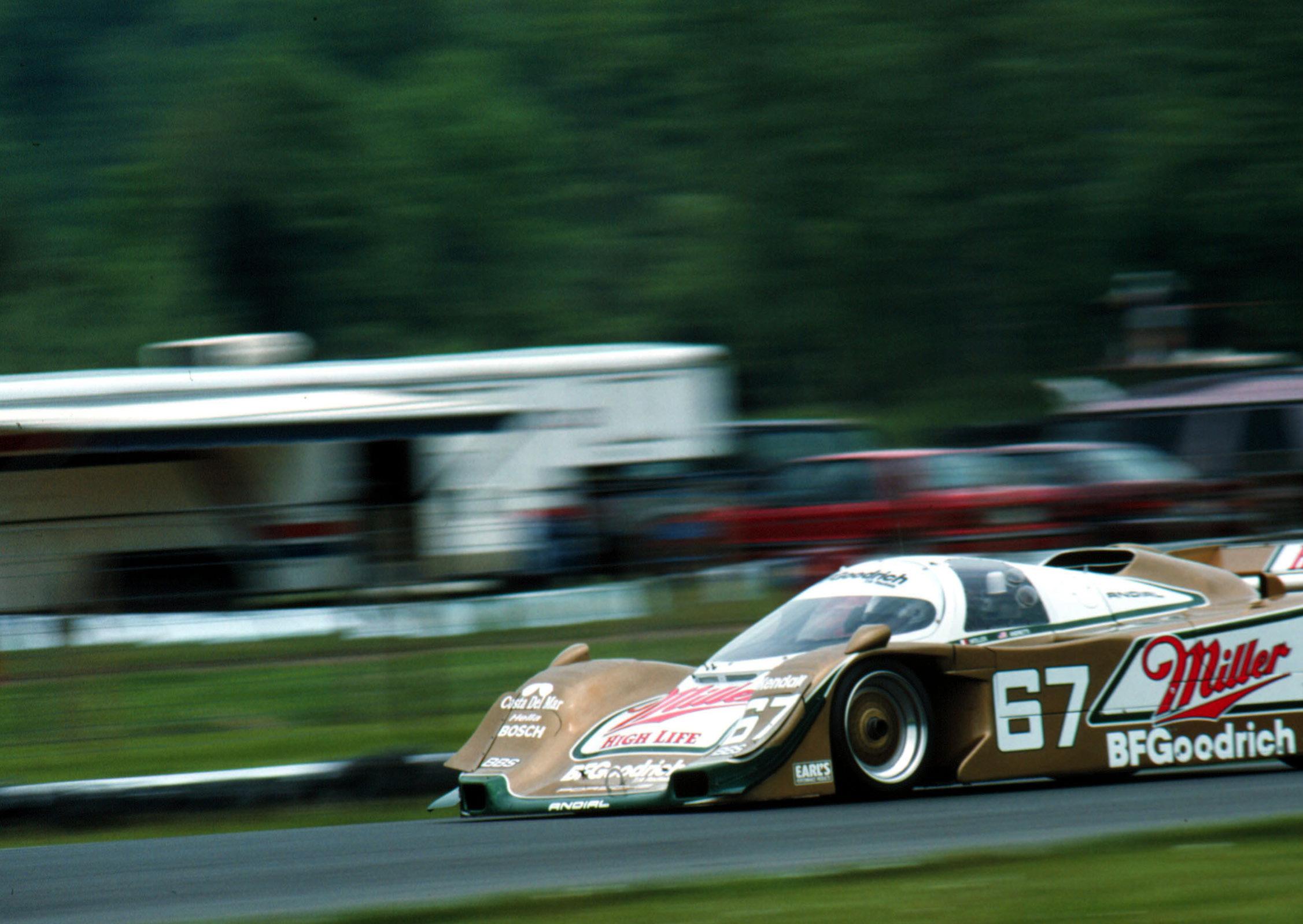
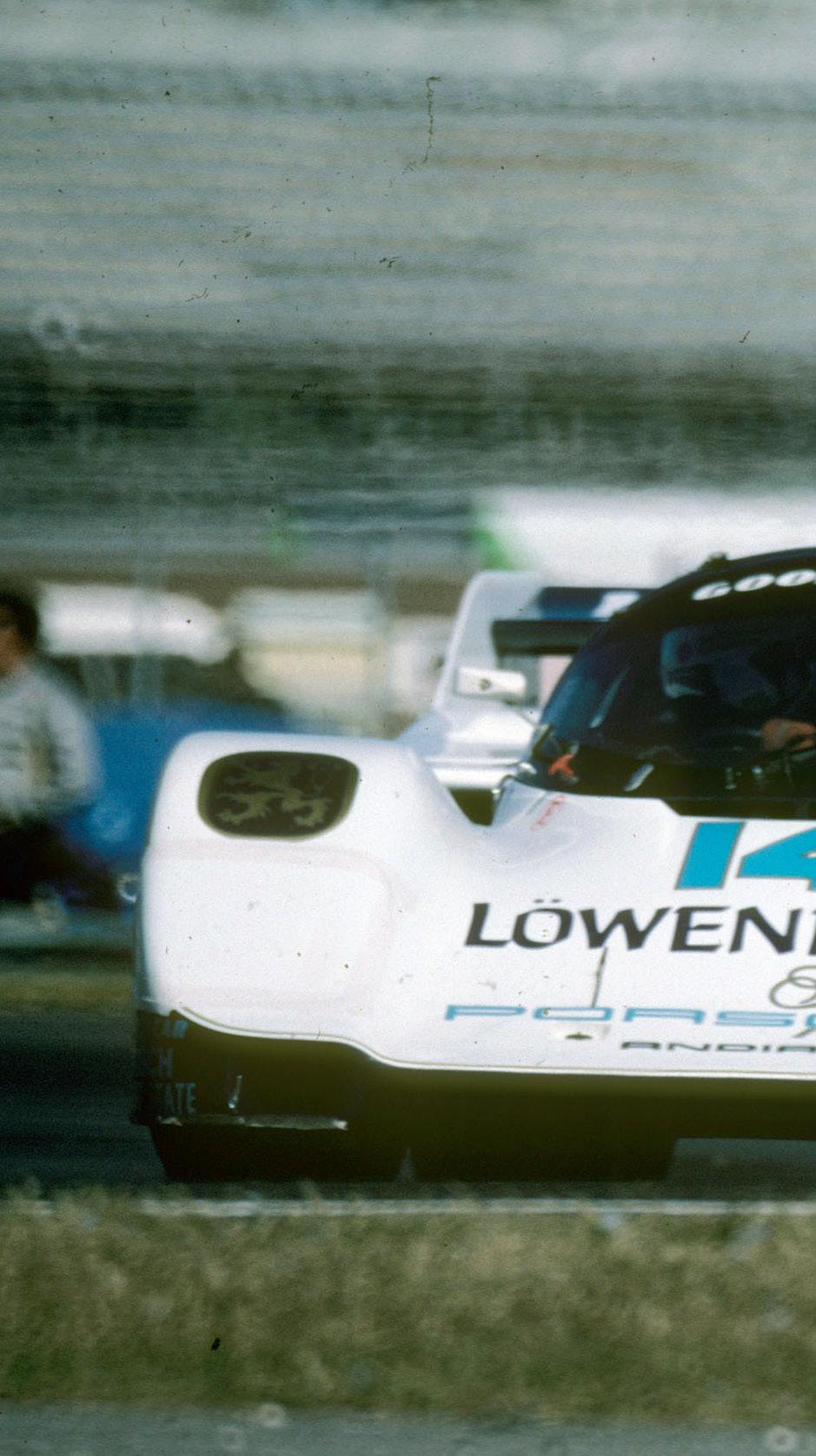
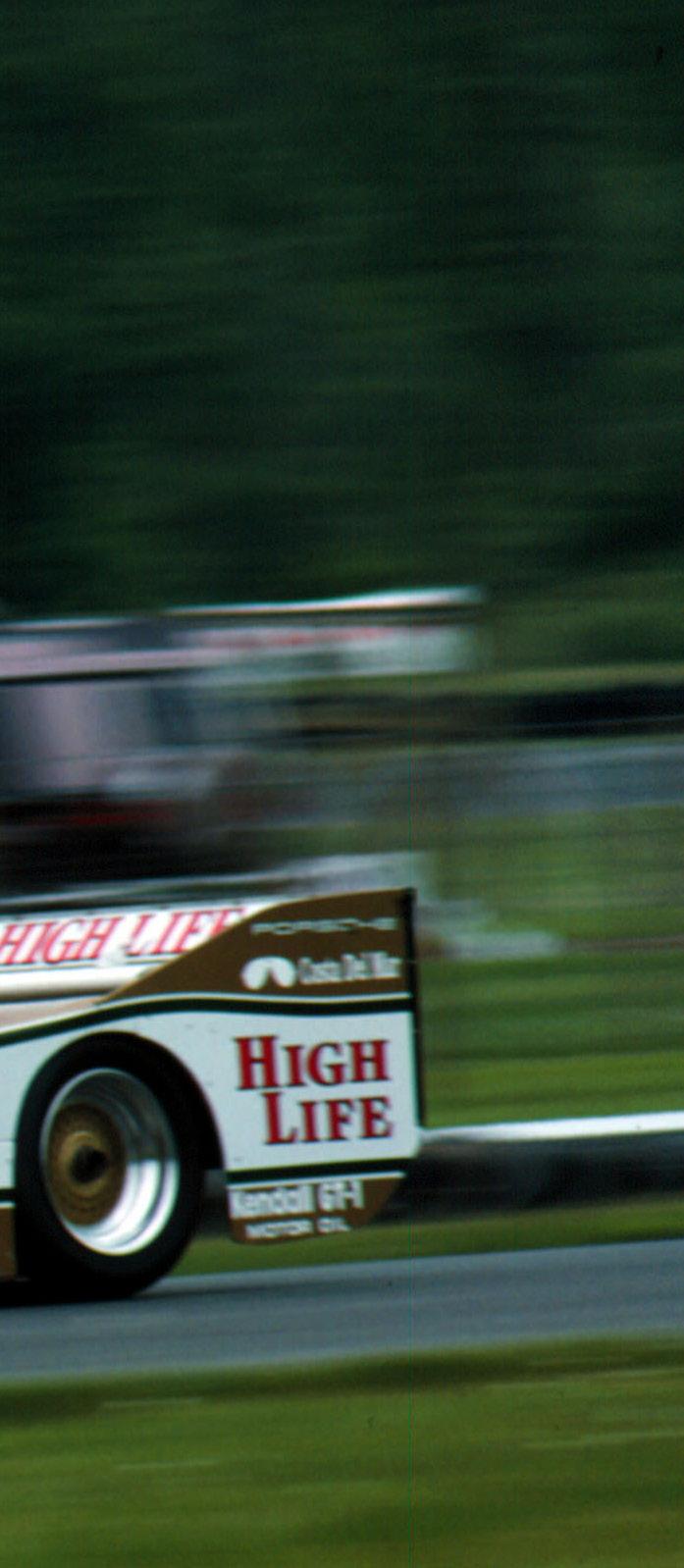
Clockwise from main: By 1989, the 962 was showing its age but experience proved there are ways to still win the big ones as the Busby team took a deserved win at the Daytona 24 to start the season.
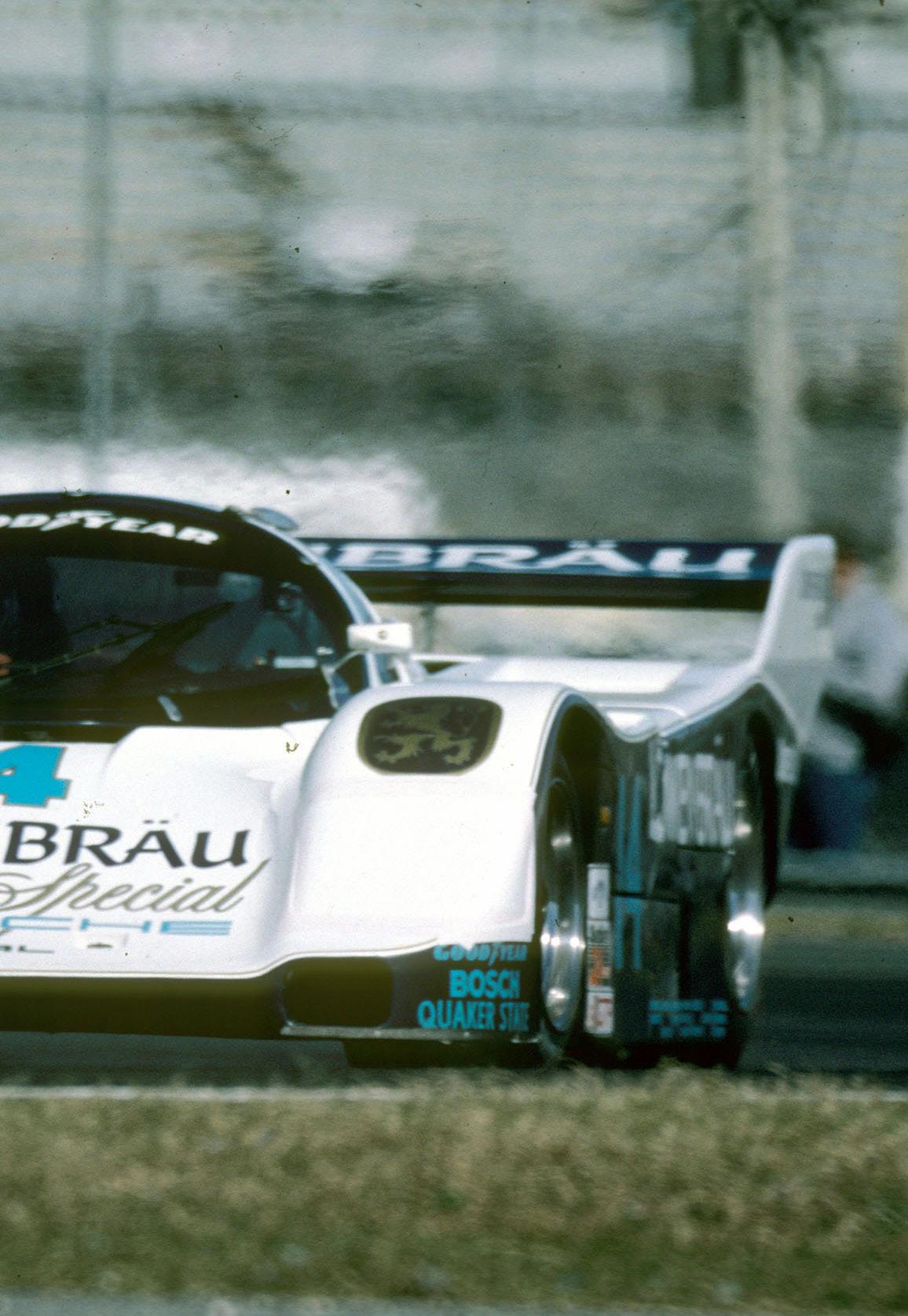
The most recognizable and successful 962 in IMSA GTP history belongs to Al Holbert as the Lowenbrau 962 chassis 103 took back-to-back Daytona 24 victories in 1986 and 1987 along with multiple race wins and championships. The engines? Andial of course.
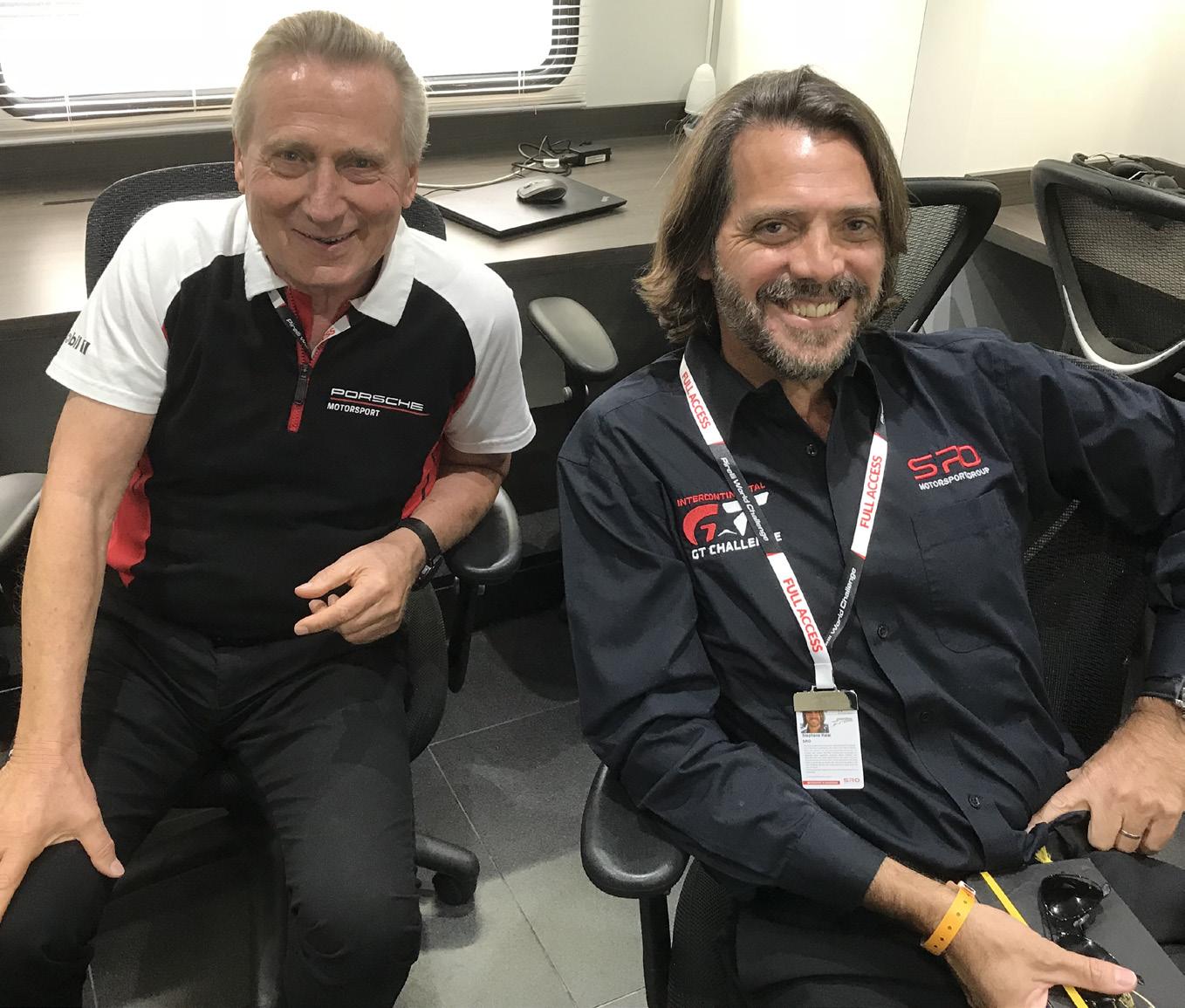
“We’re still here.” Alwin Springer and Stephane Ratel - two veterans of sports and GT racing that have seen it all and have a reason to smile.
qualifying and were on the grid in 46th. We had Al Holbert join us with Harald Grohs, and after the start they worked their way quickly through the field up to first. Unfortunately, a backmarker hit the right rear and damaged the wastegate, so we were suddenly down on boost. Interscope’s Lola went on for the win, and we settled for 2nd place. Our 935L not only proved how good the car was, but it finished with a huge lead over every other 935 including the Kremer cars. Meister wasn’t able to support the racing program after Riverside, so a deal was made with Kevin Jeannette to buy the car, and you know what happened next: winning Daytona in 1983.
Forward March, and the 962 comes to America.
The original idea to use a Porsche turbo engine in the March came from a conversation with Gianpiero Moretti of MOMO fame and his chief technician Allister McNeil, who I knew from his time with Interscope. The program accelerated after I received a call from Al Holbert that resulted in my going to March Engineering and also to meet Helmet Schmid. He was the one who handled the engine electronics in Weissach.
The March 83G was designed by Adrian Newey, yes that Adrian Newey, and Helmet and I were given the task of making the engine fit. Long story short was that Holbert went on to win the 1983 IMSA GTP championship, but, in fairness, he also used his March Chevy for three races in the beginning of the year, and then it was the March Porsche. The 83G proved itself when Holbert sold the car to Kreepy Krauly and they went on to have a successful season in 1984, starting off with winning Daytona with our new 3.16-liter engine. It was an Andial double; our 935 L finished in second.
Was there any political interference from Germany over the March since they had their 956 which they hoped to make legal?
None whatsoever. Holbert made it possible that Helmet Schmid from Weissach was available for us to work together at March. It was only a matter of time that there would be a Porsche for IMSA.
Were you already prepared to go to the 3.2 after seeing 962-001 at Daytona run with the 2.8-liter single turbo, which you knew wouldn’t be competitive on the shorter circuits?
Yes, we already had Mahle working on new pistons. We had a lot of things already in motion.
How did you know in advance that the 2.8 wasn’t going to cut it?
I saw it on the Daytona straightaways, and I could see the difference with the big-block engines and the torque coming off the corners, and I knew from experience that our race tracks here in the U.S. were made for corners, not so much straightaways, so the moment we would leave Daytona, we would be in trouble. We needed something bigger.
That’s interesting, because the 962 started on pole, a second and a half faster than the Kreepy Krauly March Porsche 83G. But I noticed the March Chevys were faster through the infield sections, anything again with corners. The 962 with the 2.8 was quickest when it was flat out.
That is my point. We don’t have enough circuits here with long straights. And the other thing is, in the FIA Group C they were restricted by fuel consumption. Over here, we didn’t have any problem with consumption; we needed more power. We changed the crankshaft, the rods, the valves and had the cylinder heads reworked from raw castings from Weissach. The injection was modified, and the KKK turbo was swapped out for a special one made for Andial by Garrett. The air-intake system was completely redone with the intercooler being moved to the top of the engine, which reduced the turbo lag.
I have to mention the fabrication that was done by Pete Wilkins on this as well as the new exhaust system done by Reid Washbon. In addition, I made my first shop hires that would only be for racing. Steve Becker came directly from high school in 1983 as an apprentice and would later excel as an engine builder. Steve suggested that Eric Bloss would be a good fit. When I left Andial for PMNA, I made sure that Steve
and Eric followed. With the contributions of these people, I tell you that, it was the basis, or foundation, for Andial success and later with PMNA.
What about the Andial 944 turbo engine development for the 1987 Trans-Am that seems to have gone largely unnoticed. That was an idea Holbert had, and he gave the job for the engine to McLaren in Detroit. They worked a little bit, here and there, but it never really materialized, and then Holbert asked me if we could do it. I discussed it with Drino, and we said okay, let’s do it. Drino found out immediately that the crankcase was not strong enough for the high boost level we had to run. So, Porsche went ahead and made new crankcases for us, but the cylinder heads as I remember were castings, and we had to machine them.
This was really Drino’s project, and once again Pete Wilkins and Reid Washbon came through with their specialty fabrication. The dyno showed the 2.5-liter was easily good for up to 750 PS. Bruce Jenner Racing took delivery of two of the Dave Klym-built tube-frame 944s. The team was managed by the capable Max Crawford and had some success with Elliot Forbes-Robinson. The team did a good job but eventually had the usual problem of underfunding and suffered a number of mechanical issues because they didn’t have the budget for testing. It was a chapter in our lives that was interesting but not the most successful.
But I would consider that to be a success. The very fact of it is you entered the Trans-Am series with a limited budget and a new team with an unproven car. There were people who had been doing it longer with more money.
Yeah, and we were running against the big, big volume engines. It was a difficult one.
But we took it and got away with it.
In the 12 rounds of the Trans-Am, the 944 had five podiums, one win, a pair of 2nd and 3rd places. You were up against Roush-prepared cars. Anyone else would be thrilled with those results. See, in that matter I am realistic. The 962 program was what really required all of our time, and as the results showed with Holbert and the private teams, success is not guaranteed but is something you work for. In 1987 Andial-powered 962s finished 1st through 6th at Daytona and won 13 of the 16 rounds of the GTP season.
That will take us to the time you were asked to head up Porsche Motorsport North America after the loss of Al Holbert.
When I took over Porsche Motorsport in 1990, there was no real racing program, and the 962s were on their final lap. We have to talk about the 911 Turbo program.
The new IMSA Supercar Championship for production-based GTs. Bob Carlson handled the racing PR and was a good friend, and we came up with the idea of entering the 911 Turbo. We got together with Brumos, I spoke with Helmut Flegl, and we got the green light. Two new Turbos were shipped to Brumos with the roll cages already installed. More good news followed: We were going to have Hans-Joachim Stuck as one of our drivers.
Would you call that the resurrection of professional GT racing in the U.S. at that time?
Absolutely. I consider the 911 Turbo from Brumos and Kelly Moss a big success and the start of the rebirth of Porsche Motorsport North America.
This is a question with answers that are always subject to change. What do you feel was your contribution during the Andial years that gave you the most satisfaction?
There are many, but cracking the EPROM code of the Bosch Motronic so it could be used on our IMSA 962 engines is near the top. I was able to work with some incredible people from Silicon Valley, and we were now able to show the full potential of our engines.
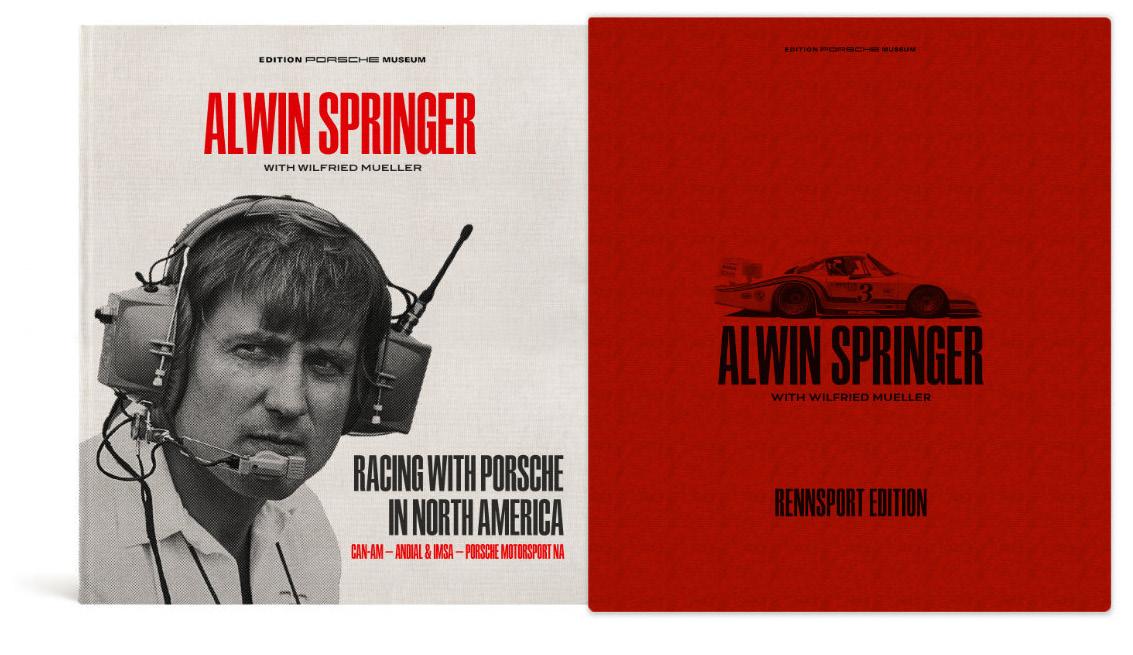
Alwin Springer – Racing with Porsche in North America – Rennsport Edition Limited to 77 copies – hand signed by Derek Bell, Thierry Boutsen, Jim Busby, Rob Dyson, Hurley Haywood, David Hobbs, Patrick Long, Ari Luyendyk, Jochen Mass, Brian Redman, Jochen Rohr, Alwin Springer and Danny Sullivan. All original signatures collected during Porsche Rennsport Reunion 2023. Available through sportfahrer.com






















WORDS KERRY MORSE
PHOTOGRAPHY JOHN BROOKS
In almost every debate about the great circuits of the world, the usual names are on repeat. Occasionally a few of the obscure tracks will make the list, usually those frequented by core enthusiasts, but rarely do street circuits make the cut except for one in a certain Principality and another near the Port of L.A.
A track that frequently gets nominated is also one that was rarely visited by European and UK scribes and photographers: Laguna Seca, a circuit that was well regarded yet few had the opportunity to work a race there or even visit. Coverage was dictated by the importance of an event, and this meant a round of an international race such as F1 or the World Endurance Championship, which ran mostly on the East Coast circuits of Watkins Glen, Sebring, and Daytona.
While F1 had done several rounds at Long Beach, FIA sports and GT cars were rarely seen in person; followers of those series had to rely on magazines and a few selected televised races.
In the decades before the Internet, those who followed the international series had to wait for their favorite automotive magazine to learn the results, and the images supporting the
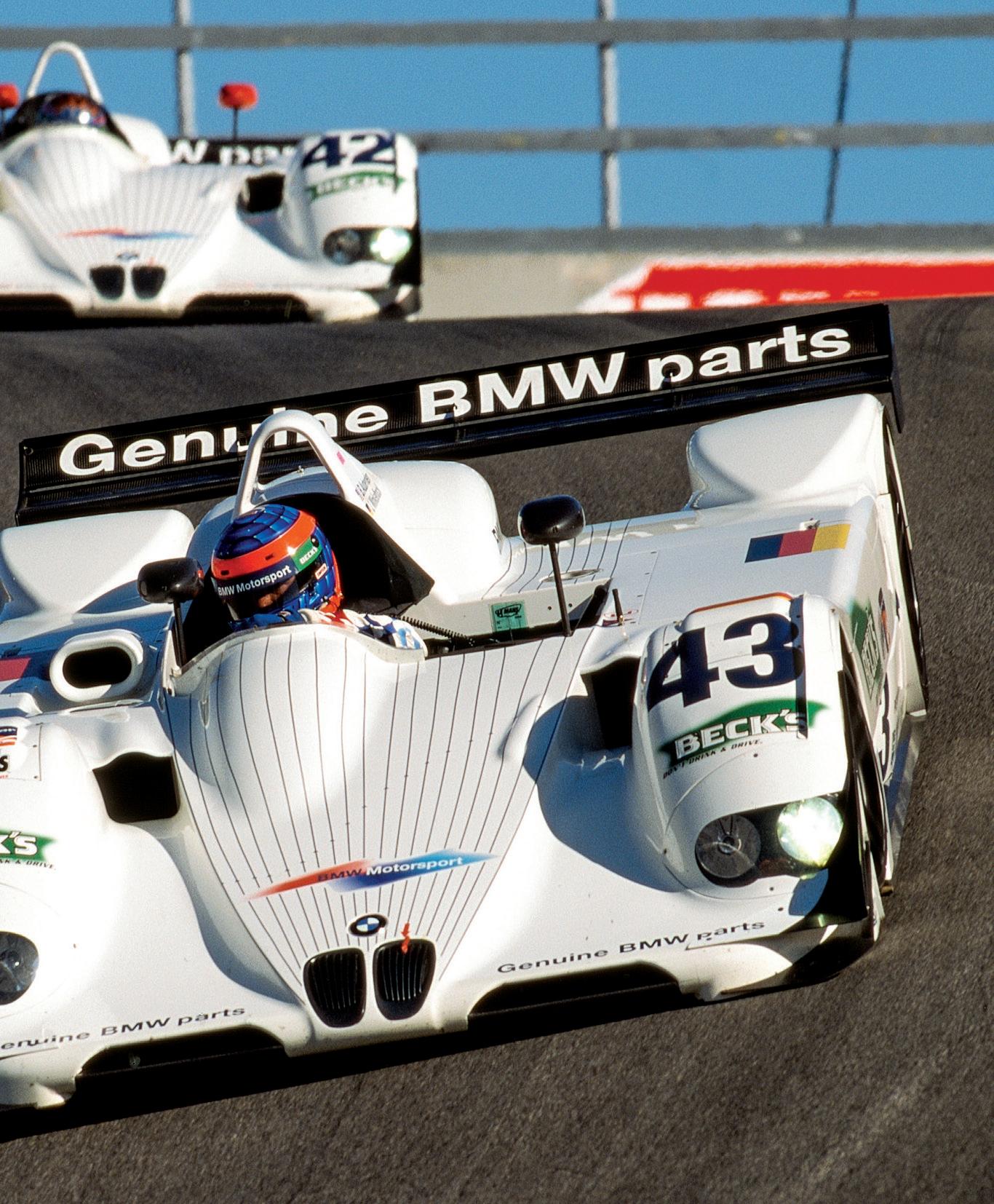
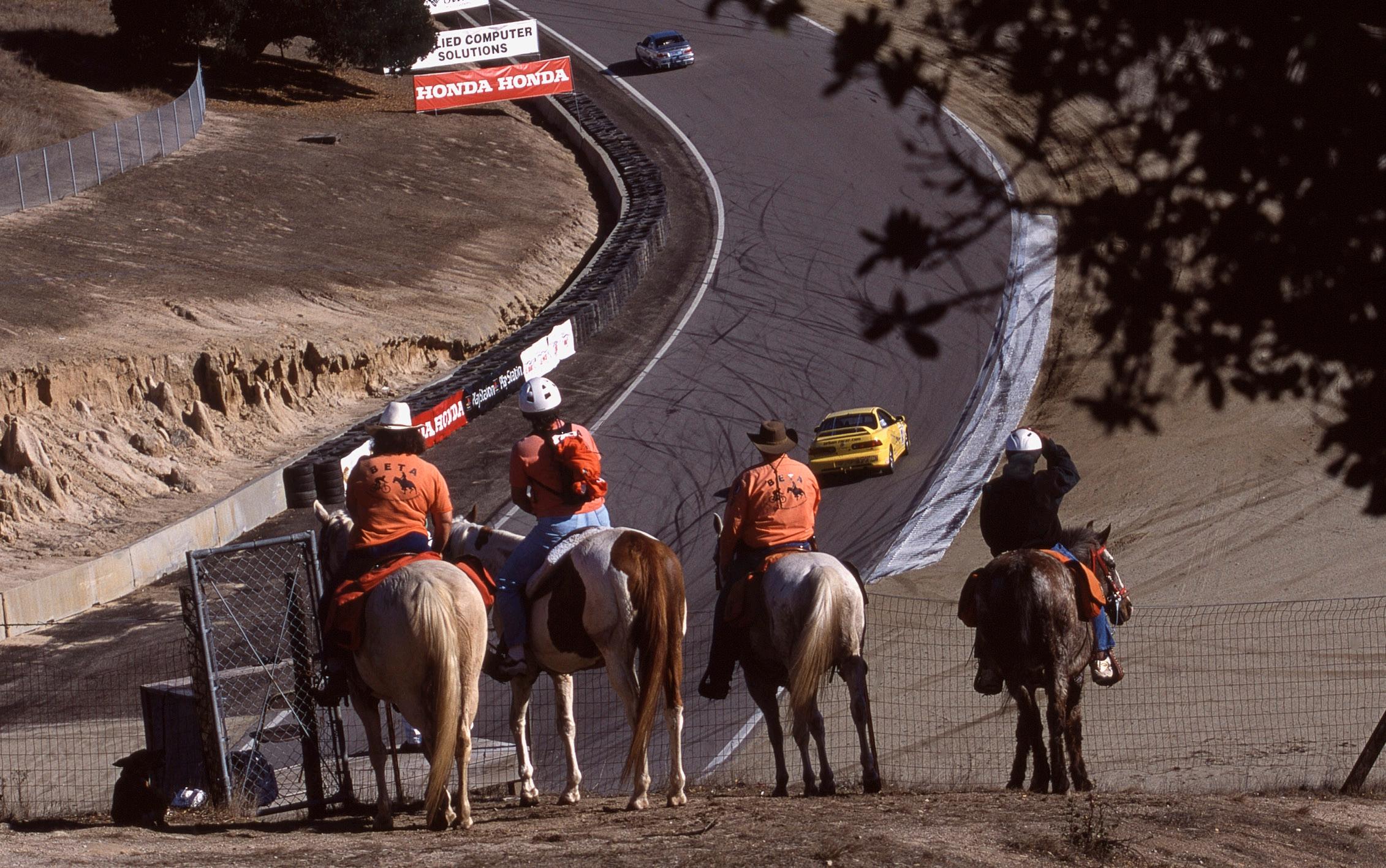
“ EVERYTHING ABOUT THE MONTEREY PENINSULA WAS THE PERFECT SETTING. WONDERFUL FOOD, FRIENDLY PEOPLE AND A TRACK THAT WAS AS IF IT HAD BEEN DESIGNED TO BE PHOTOGRAPHED ”
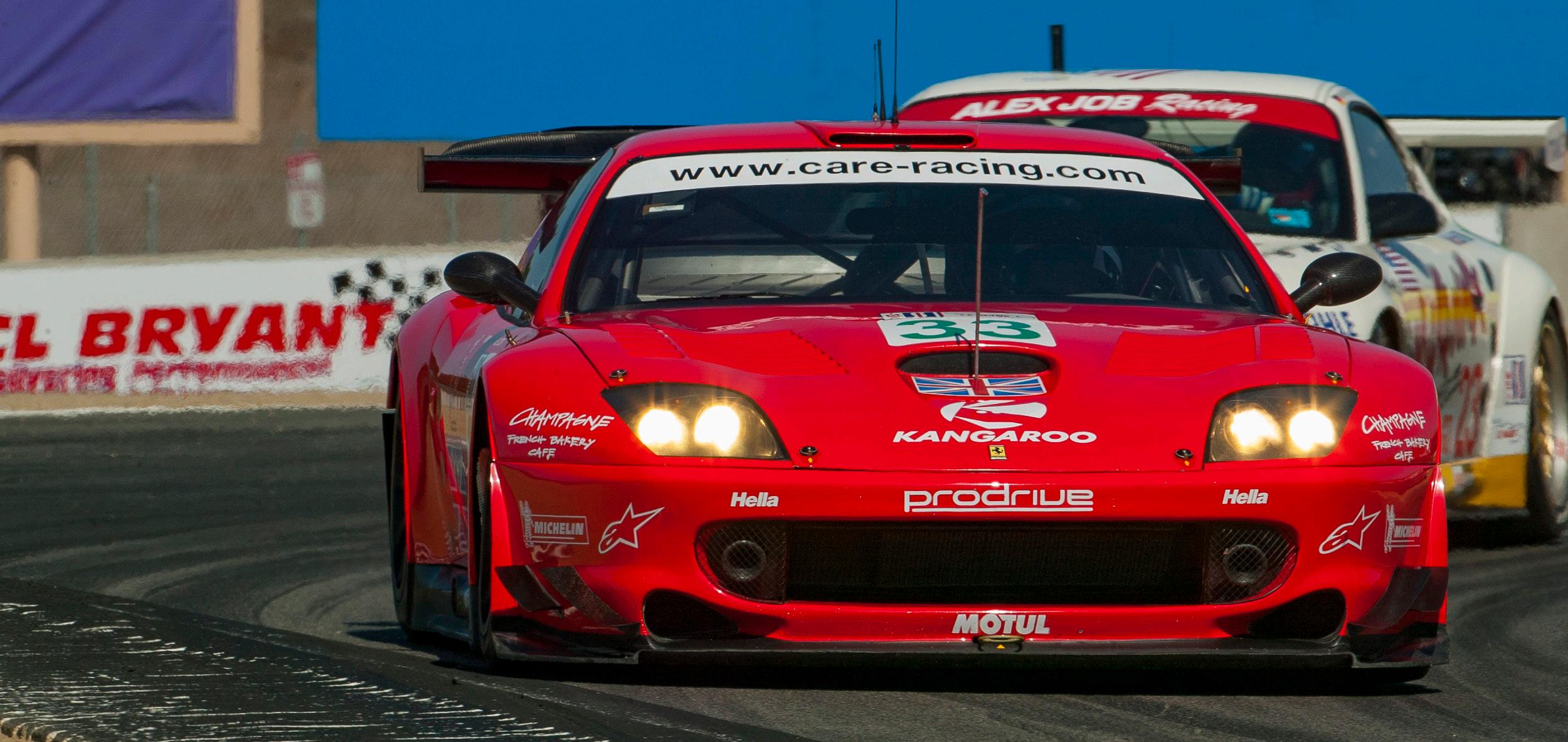

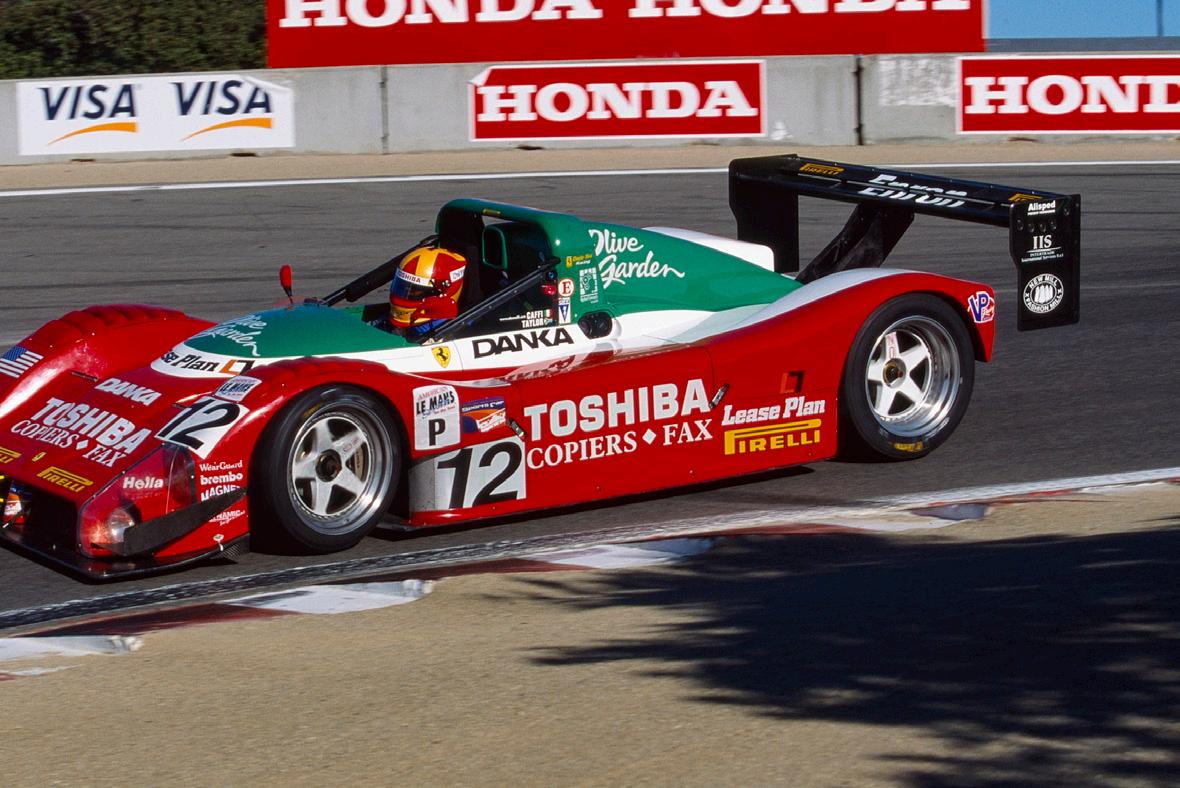
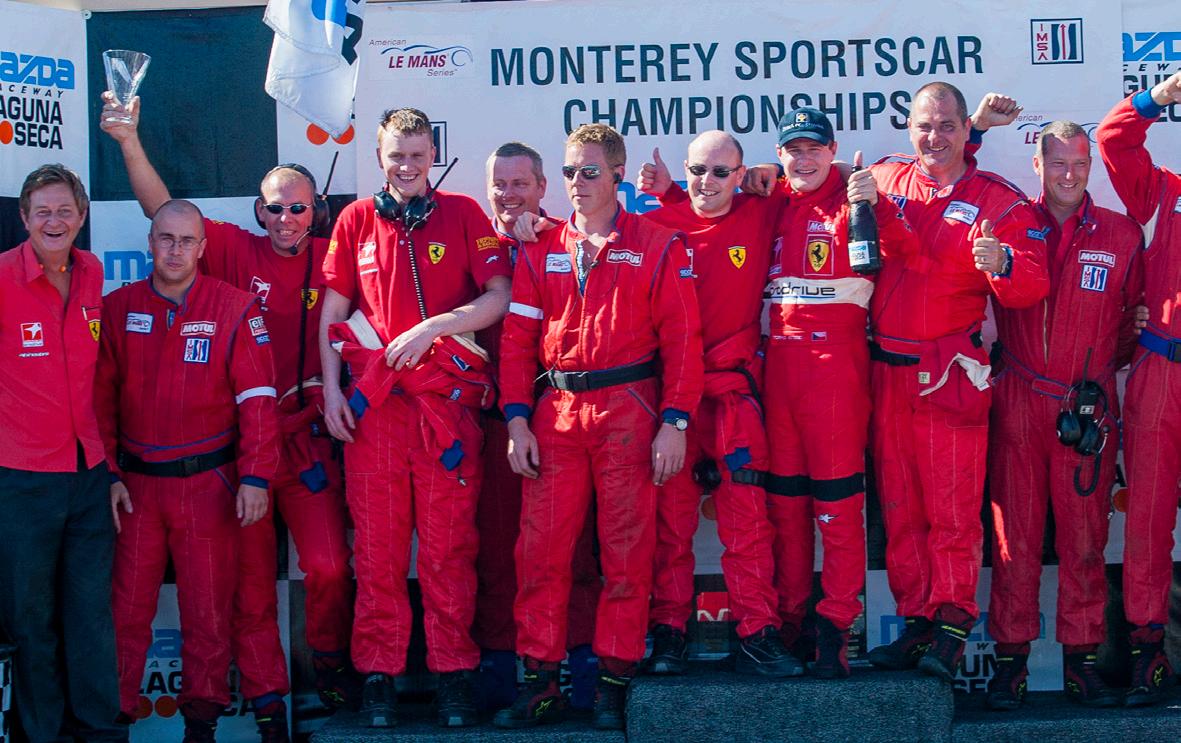
‘English built Ferrari’ became an immediate fan favorite.
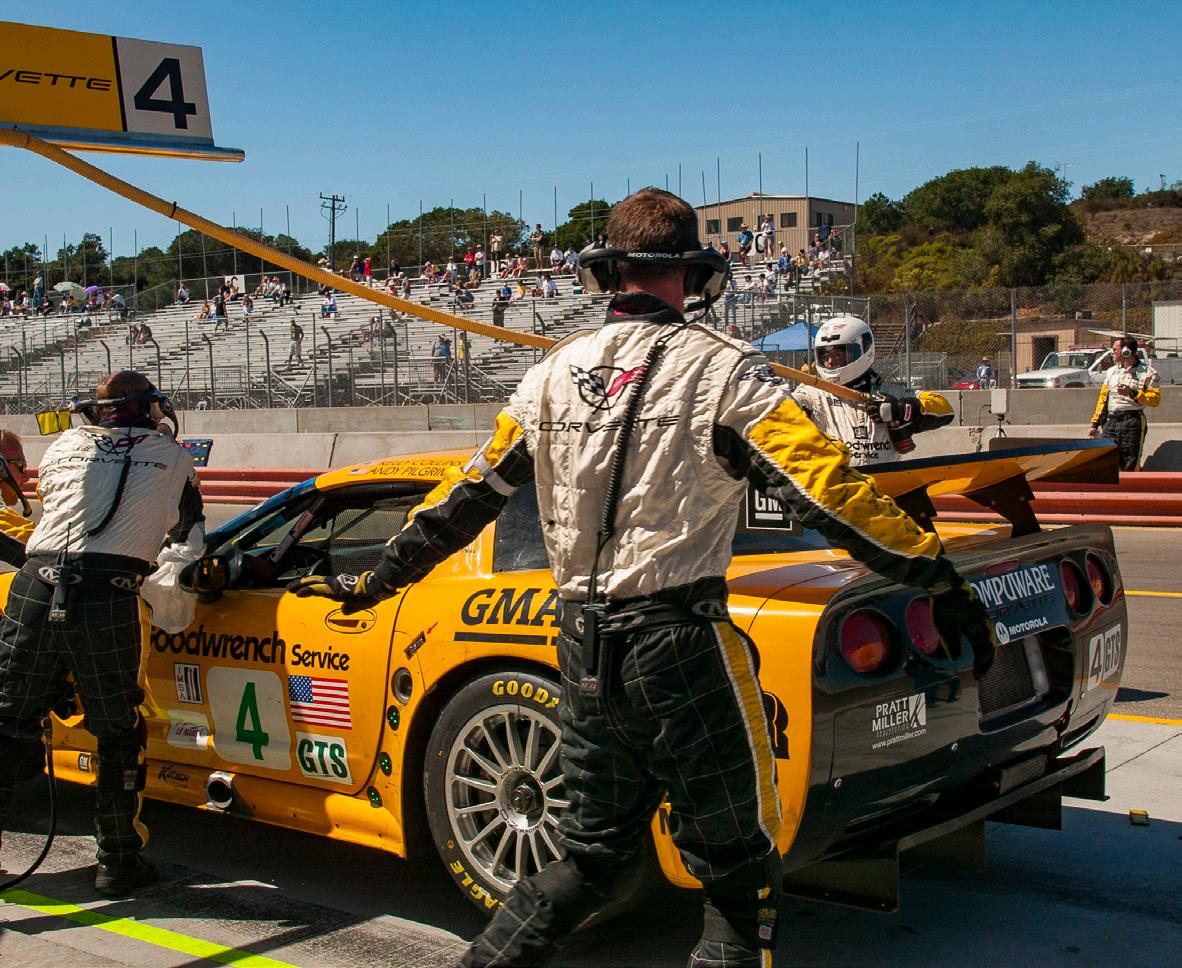
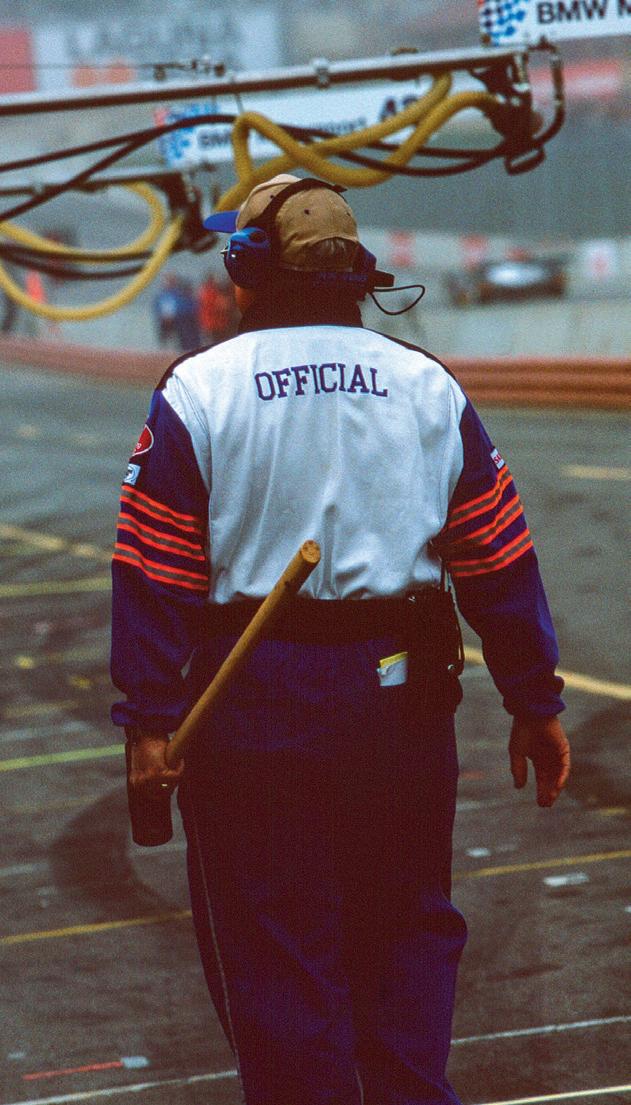
Pit Lane Supremo Dick Martin appears to be on his way to resolve a technical issue between a team and the media
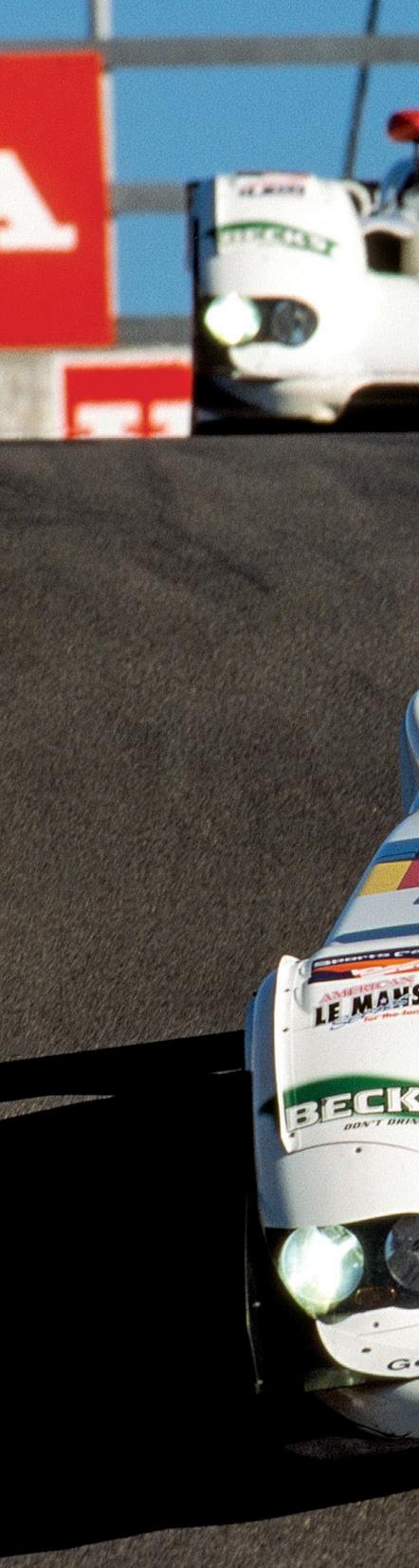
text were provided by a small and select group of snappers. Today images are available within minutes, if not sooner, of cars on track. Much of the current IMSA photography has its roots back in 1997 when the FIA brought the GT circus back to the U.S. for two rounds, Sebring and Laguna Seca. For many of the snappers that were part of the circus, this was to be their first trip to the West Coast, a circuit known by its reputation and a turn called the Corkscrew.
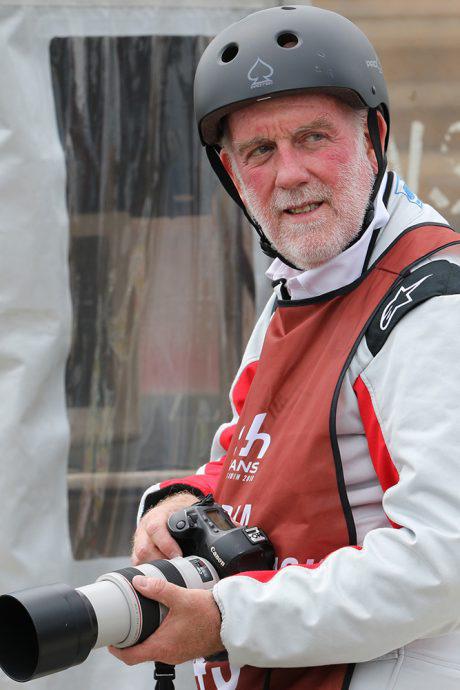
One of those making the crosscountry excursion was Englishman John Brooks. “Brooksie” is a well-established photographer in sports and GT circles and had covered the former BPR series in depth before it morphed into the FIA GT. He also has become known for his colorful personality, worthy of a Bonzo Dog Tribute Band. His years of images, many taken at Le Mans, had sharpened his skills to look for anywhere but the obvious to aim his 500 mm lens. For Brooksie and his compatriots, Laguna Seca took on a different meaning after that inaugural round in 1997.
Brooksie recalled,“Many of us knew the road as year after year of the same routine. The cheap hotels, watering holes, early hours, get your shot list, and if you were on deadline get the
film processed, meet up for dinner and either a drive or get a flight back home or, depending on the schedule, on to the next race and do it all over again. We all knew of Laguna Seca, and those that raced there raved on about the place, but when it’s your business there has to be a financially sound reason to go there, and finally we had one. To have a series final at Laguna Seca was the best thing that could have happened. Everything about the Monterey Peninsula was the perfect setting for what had been a long slog. Wonderful food, friendly people and a track that was accommodating as if it had been designed to be photographed. I knew I would be coming back and so did many others year after year.”
The game changer came courtesy of Don Panoz and the newly created American Le Mans Series, which effectively merged the existing IMSAbased Professional Sports Car Racing (PSCR) and brought increased interest from the manufacturers such as Audi, BMW, and GM. The GT category also grew with renewed interest from Aston Martin and Ferrari. Porsche continued to provide customers with a ready-to-race car in GT along with their factory-backed entries.
This level of racing created the need for a consistent supply of images,
“ I KNEW I WOULD BE COMING BACK AND SO DID MANY OTHERS YEAR AFTER YEAR ”
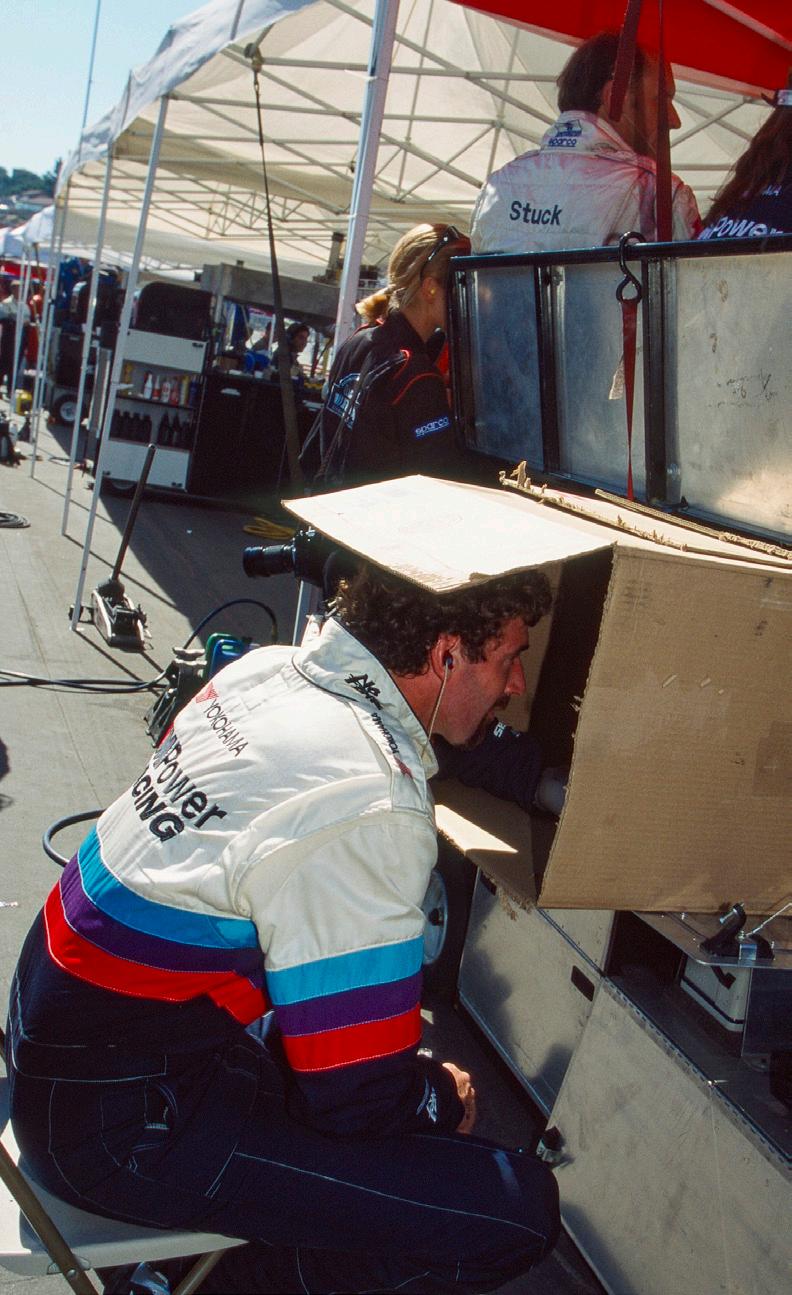
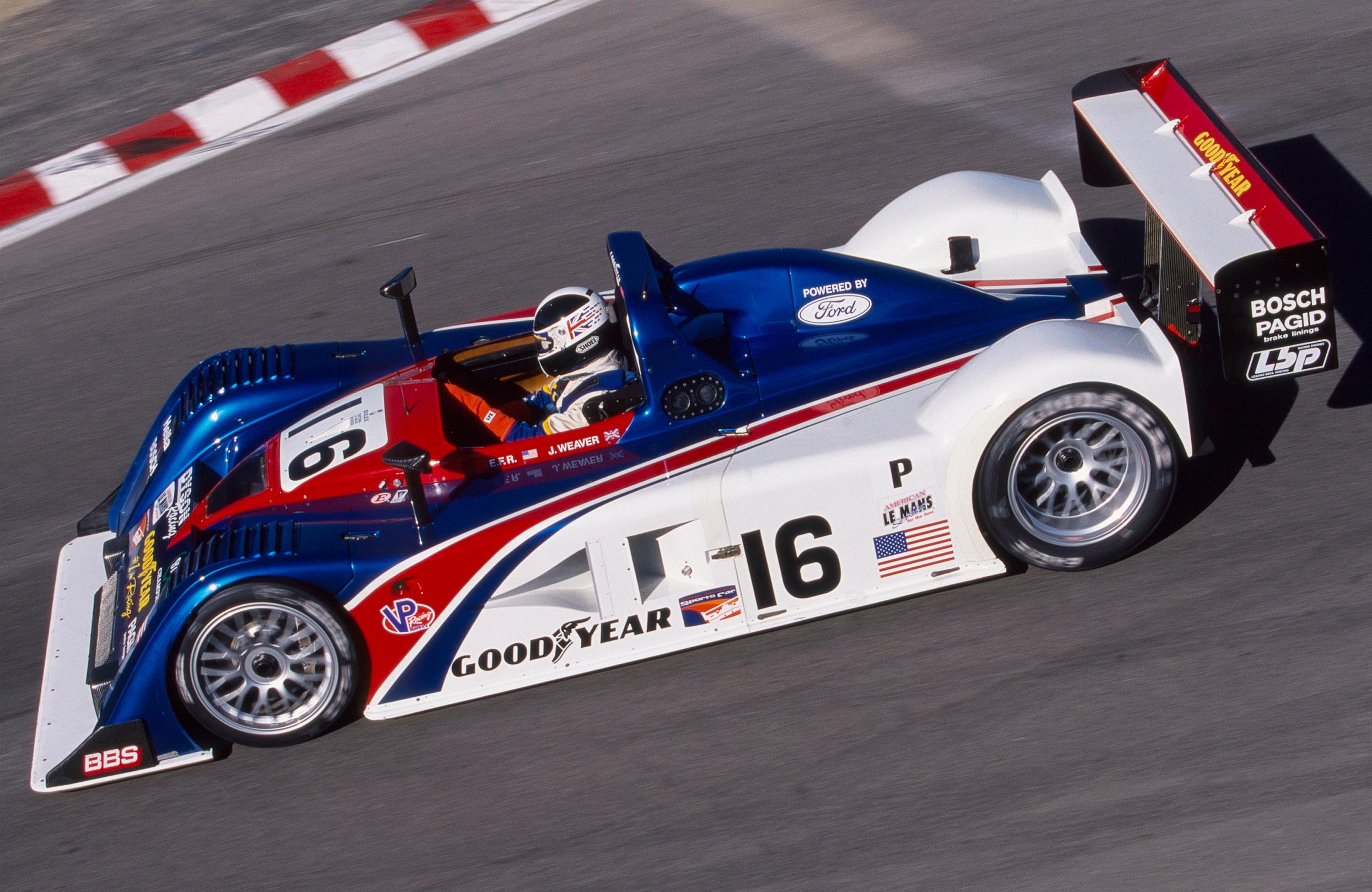
Old school in every sense, James Weaver and the Riley & Scott MkIII.
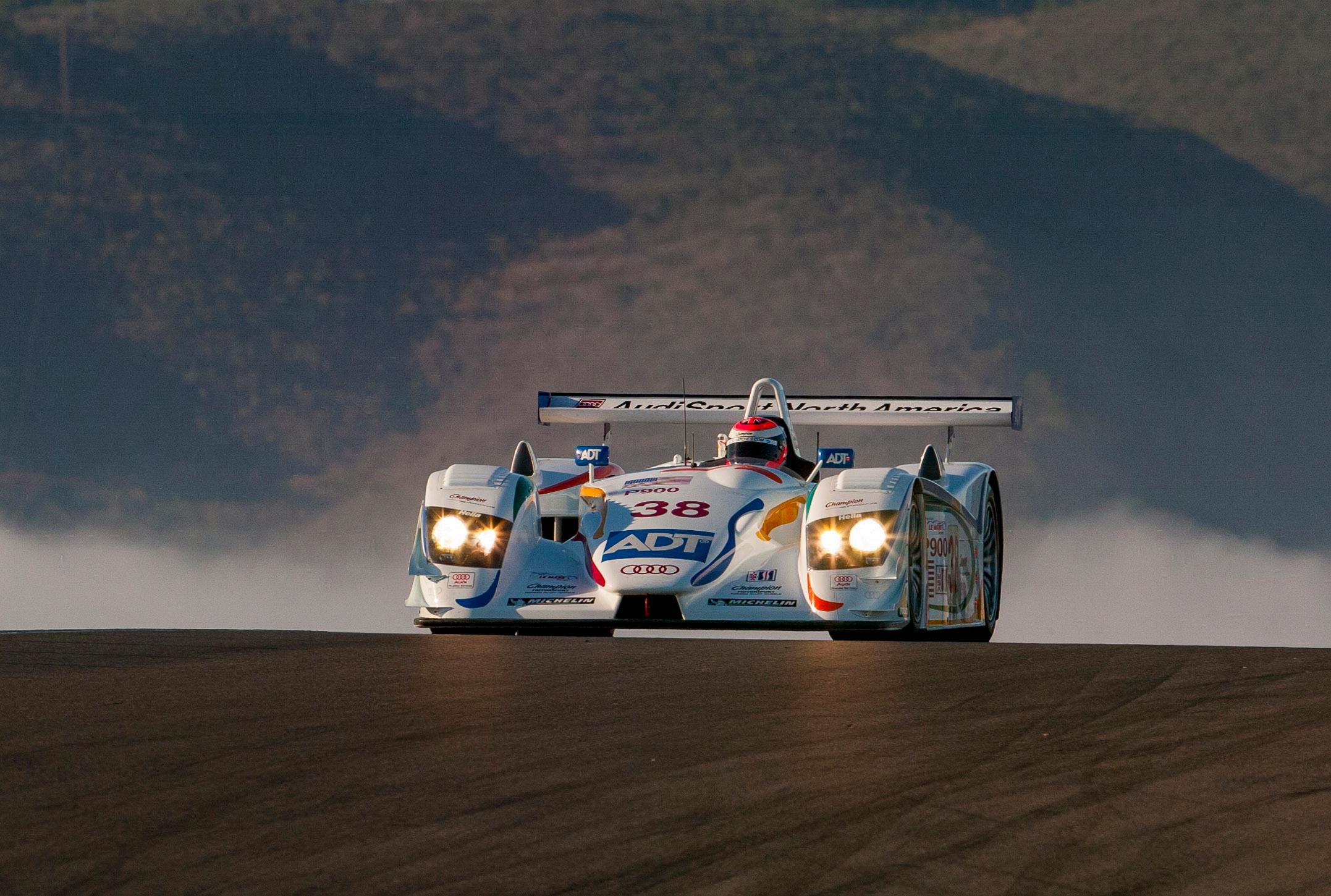
Johnny Herbert enjoys a Salinas sunrise in the Champion Audi R8. Silicon Valley is just up the highway, just ask ‘high-tech’ Boris Said.
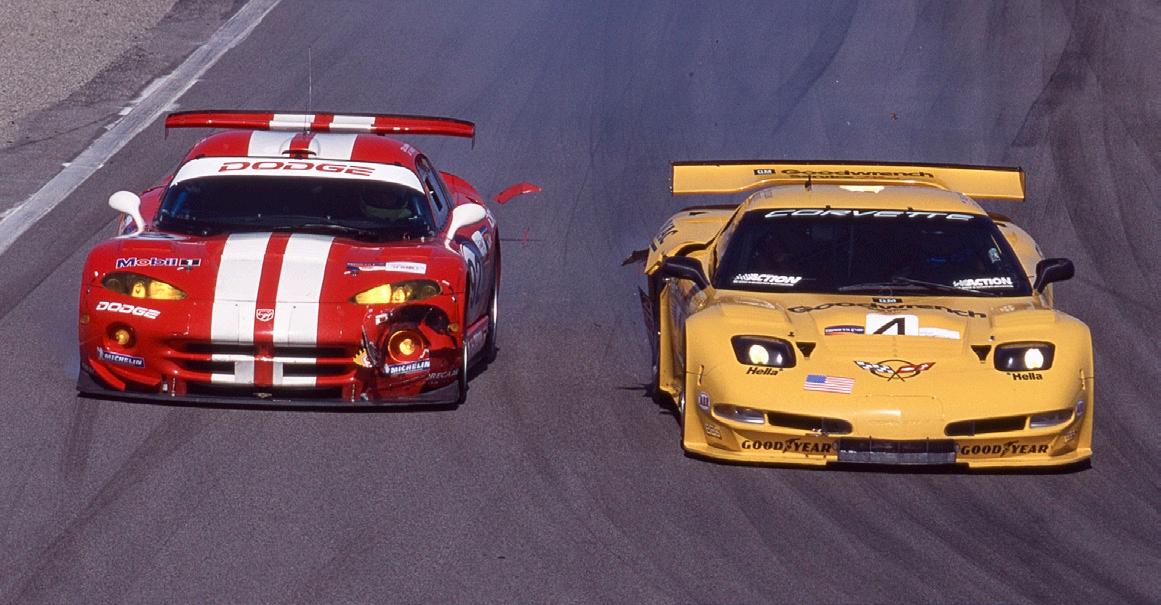
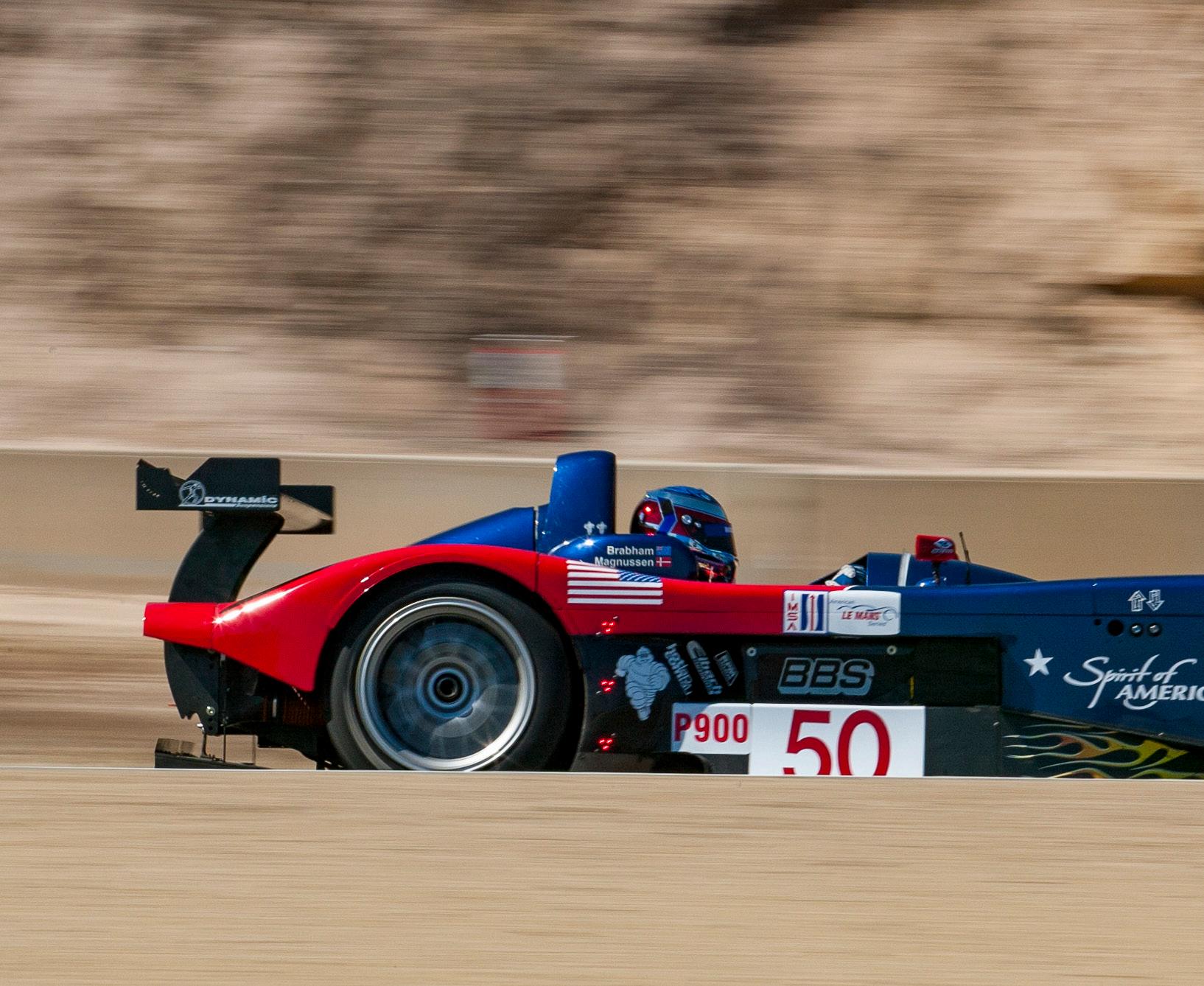
Today’s letter is “V” for Viper and Vette.

“ THERE WAS ALWAYS COMPETITION AMONG THE BRITISH AND THE U.S. SHOOTERS AS TO WHO GOT “THE SHOT,” BUT IT WAS DONE WITH HUMOR AND RESPECT ”
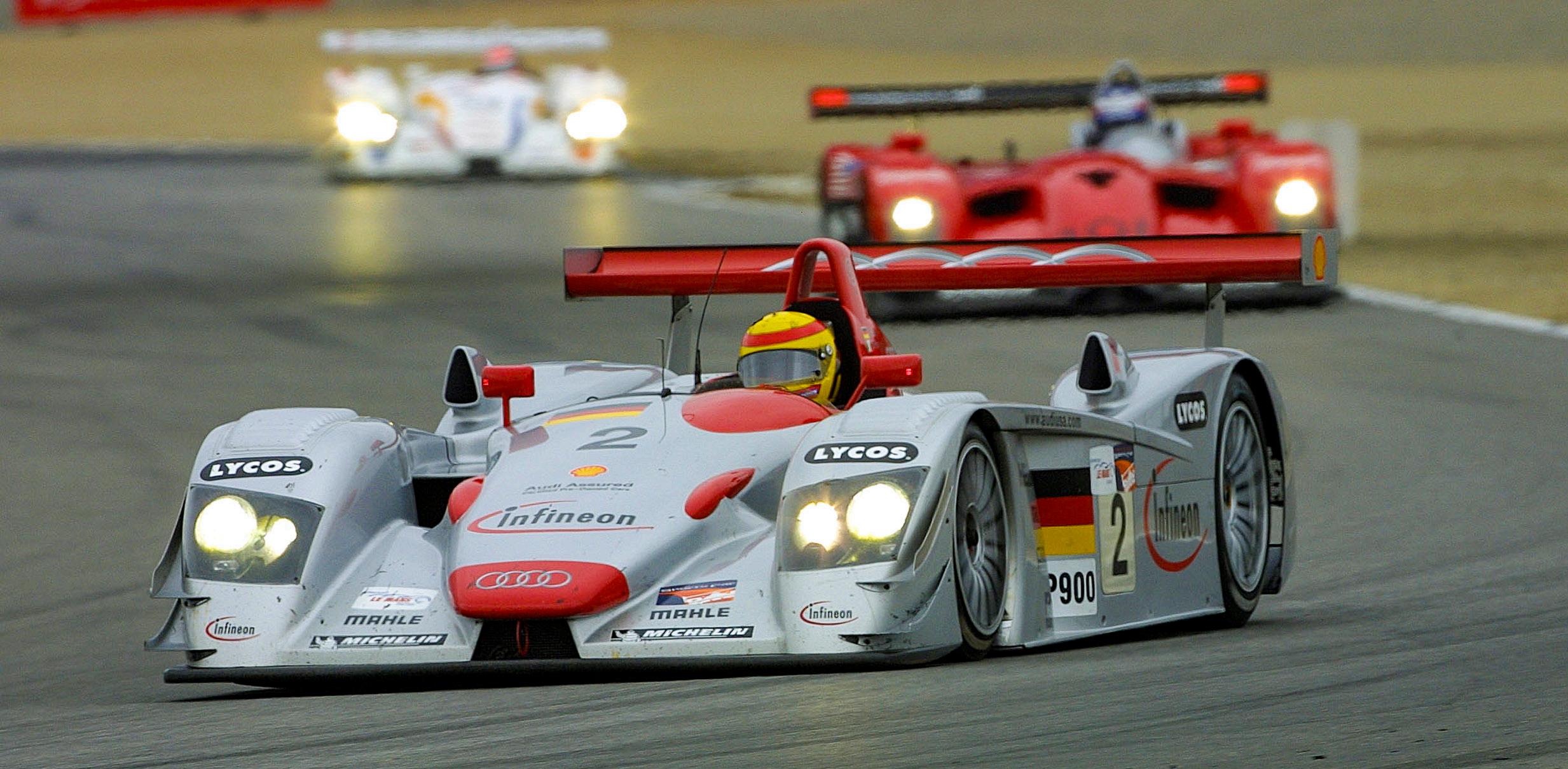
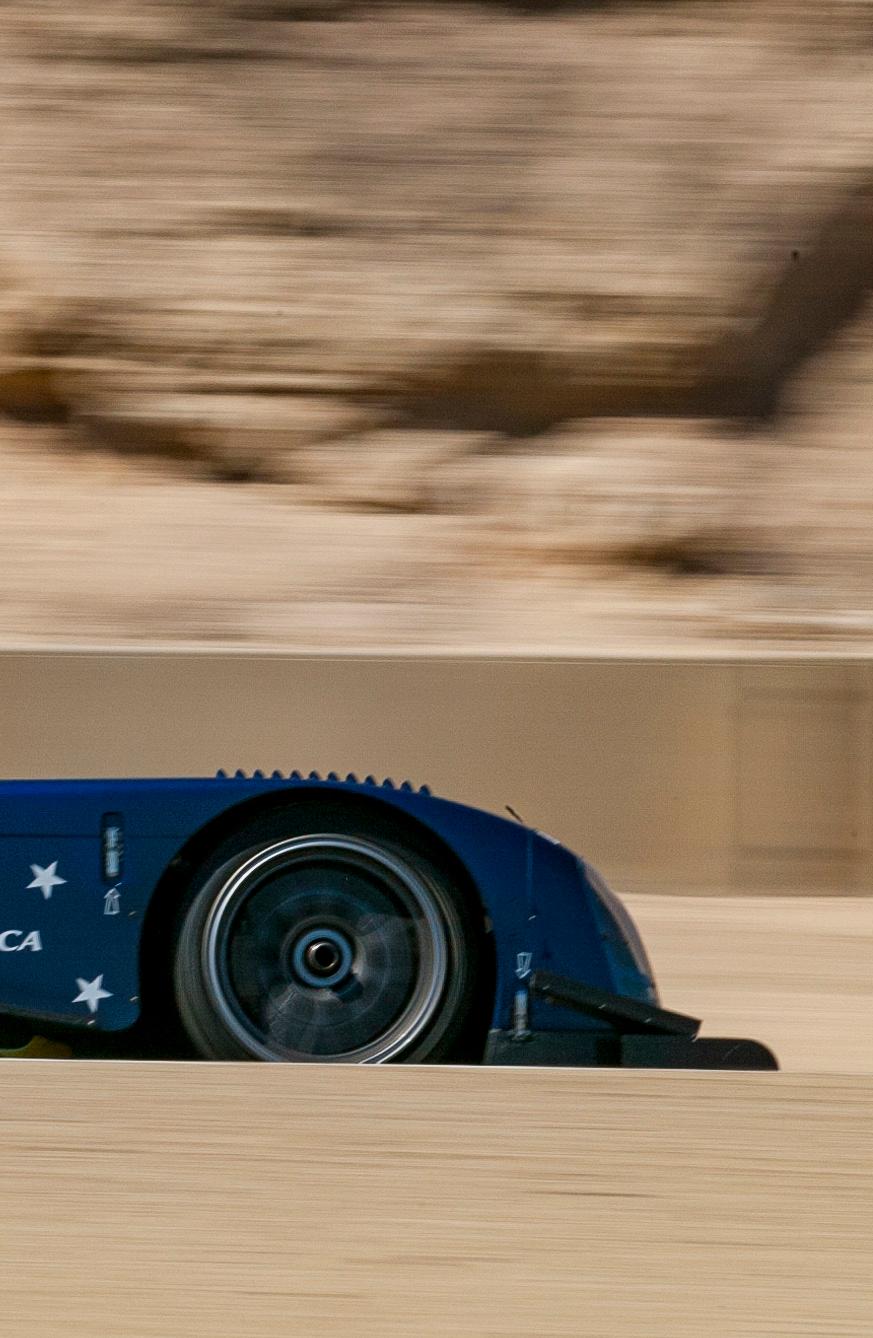
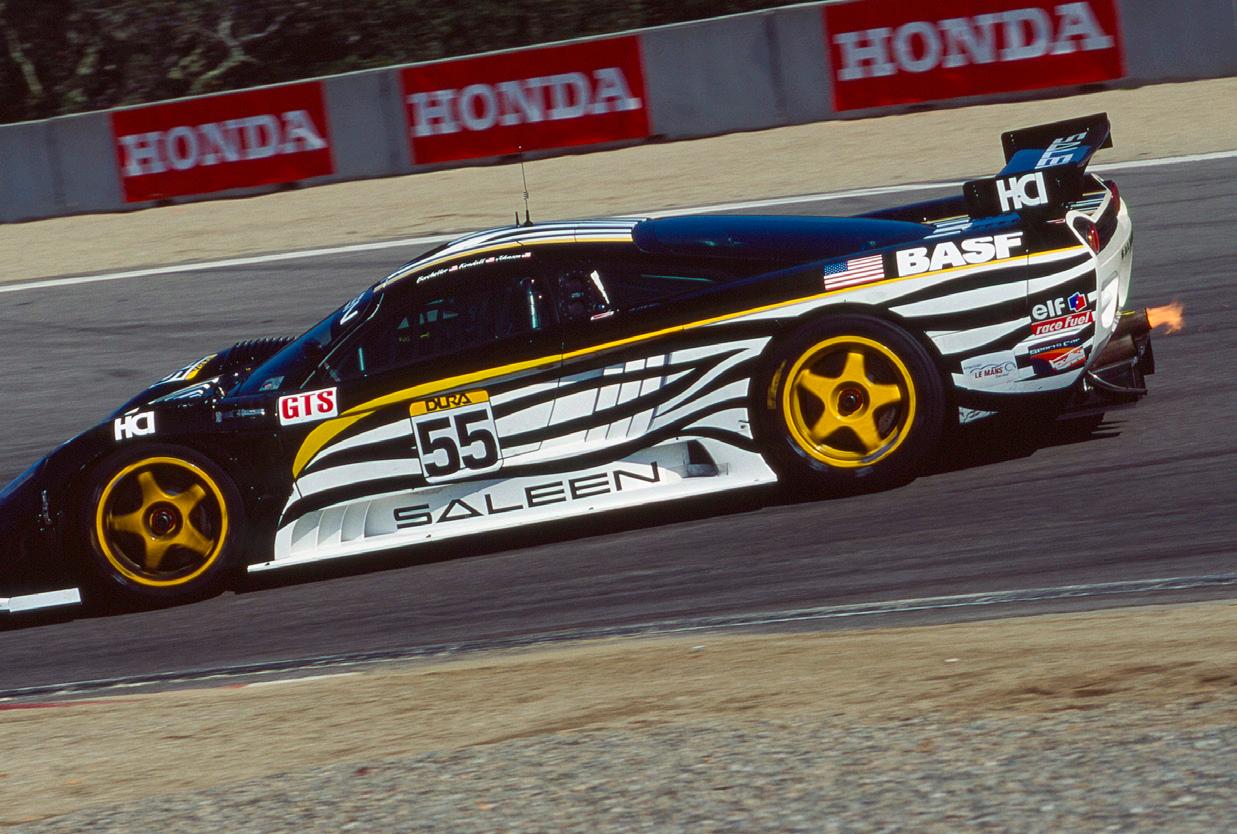
and along with that came a different breed and mindset of snappers who embraced digital photography. Media centers became a sort of United Nations. There was always competition among the British and the U.S. shooters as to who got “the shot,” but it was done with humor and respect. Many of the snappers became celebrities at the circuits and were cheered (and jeered) on by fans and spectators. Pros such as Regis Lefebure and Rick Dole along with Brit lensmen Brooks and Dave Lister who brought their images of those early years of the ALMS to thousands of enthusiasts. The new generation of photographers such as Marc Urbano have taken the lessons learned and come up with their own identifiable images.
This increased exposure of racing circuits to wider audiences forced venues to up their games and focus on keeping their customers, and participants, satisfied with the conditions and amenities. Laguna Seca is no exception to that sometimes problematic growth, but even through times good and bad, one aspect of the track that remains unchanged is that Laguna Seca was, is, and will be a prime destination for racing fans and for those who work to bring us close to the action.
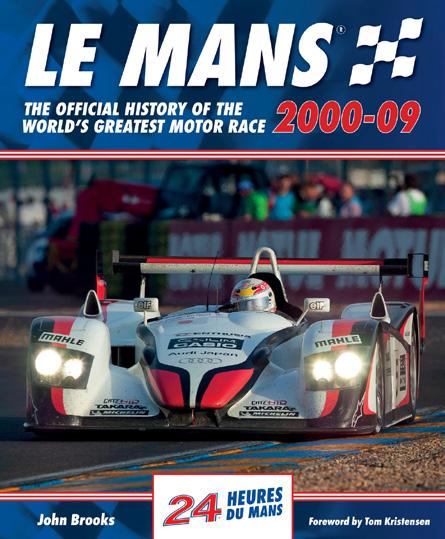
John Brooks has over 45 years of professional experience throughout the world in photographing GT and Sports Prototypes with an emphasis on coverage of Le Mans. Brooks was recently asked to take over the writing and a photographic account of the 24 hours covering 2000-2009. This being Brooks’ first release with a follow up book currently in progress. He also maintains a large archive of GT and sportscar images.


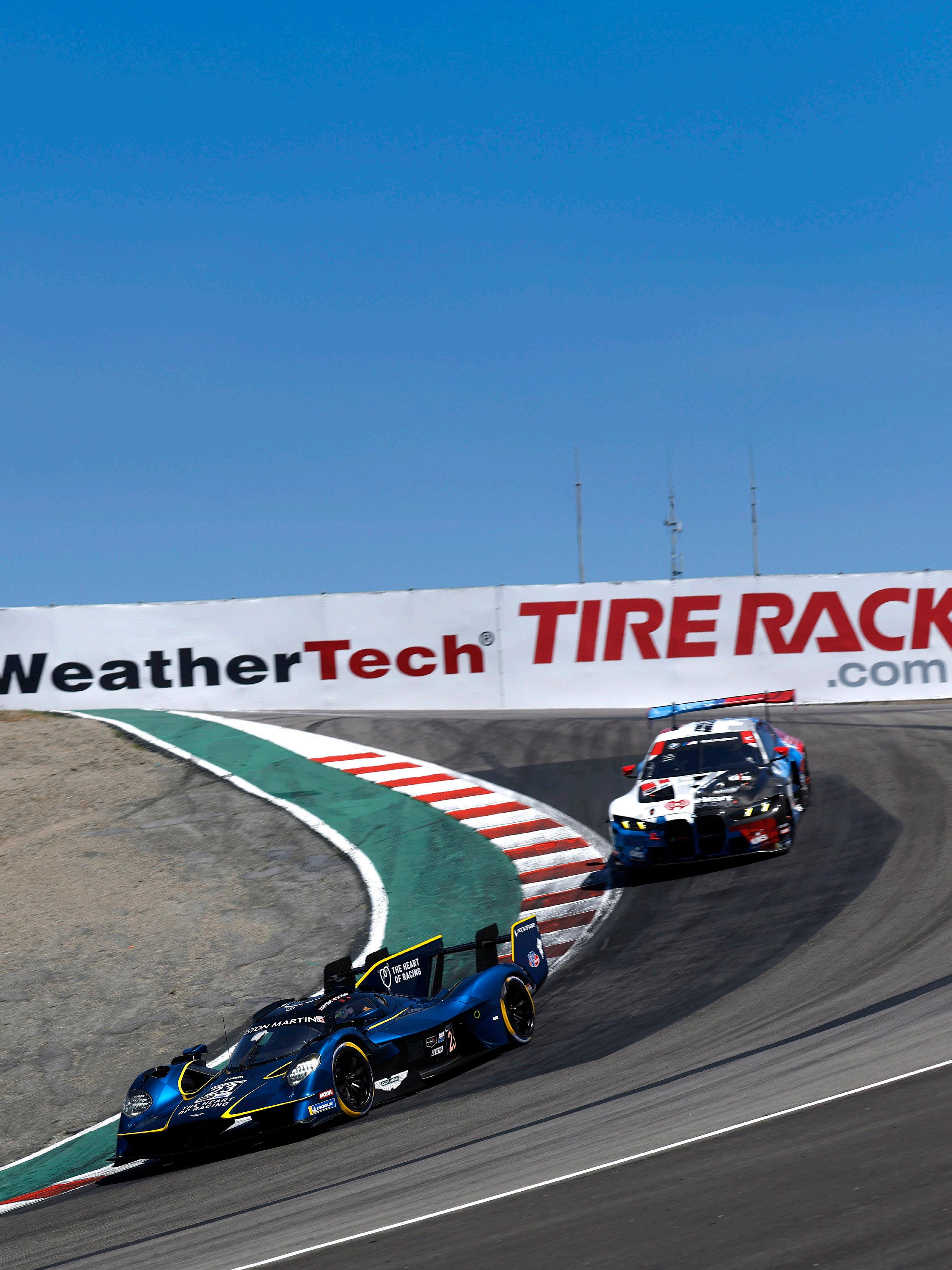
STUBHUB MONTEREY SPORTSCAR CHAMPIONSHIP
The adrenalin rush for the field of international drivers begins when the green flag waves as they settle in for nearly three hours of intense combat on their way to the checkered for the weekend’s main event
The fourth event on the IMSA WeatherTech SportsCar Championship schedule marks the series’ last visit to the West Coast this year, before moving on to the Motor City for the Chevrolet Detroit Grand Prix presented by Lear.
WeatherTech Raceway Laguna Seca
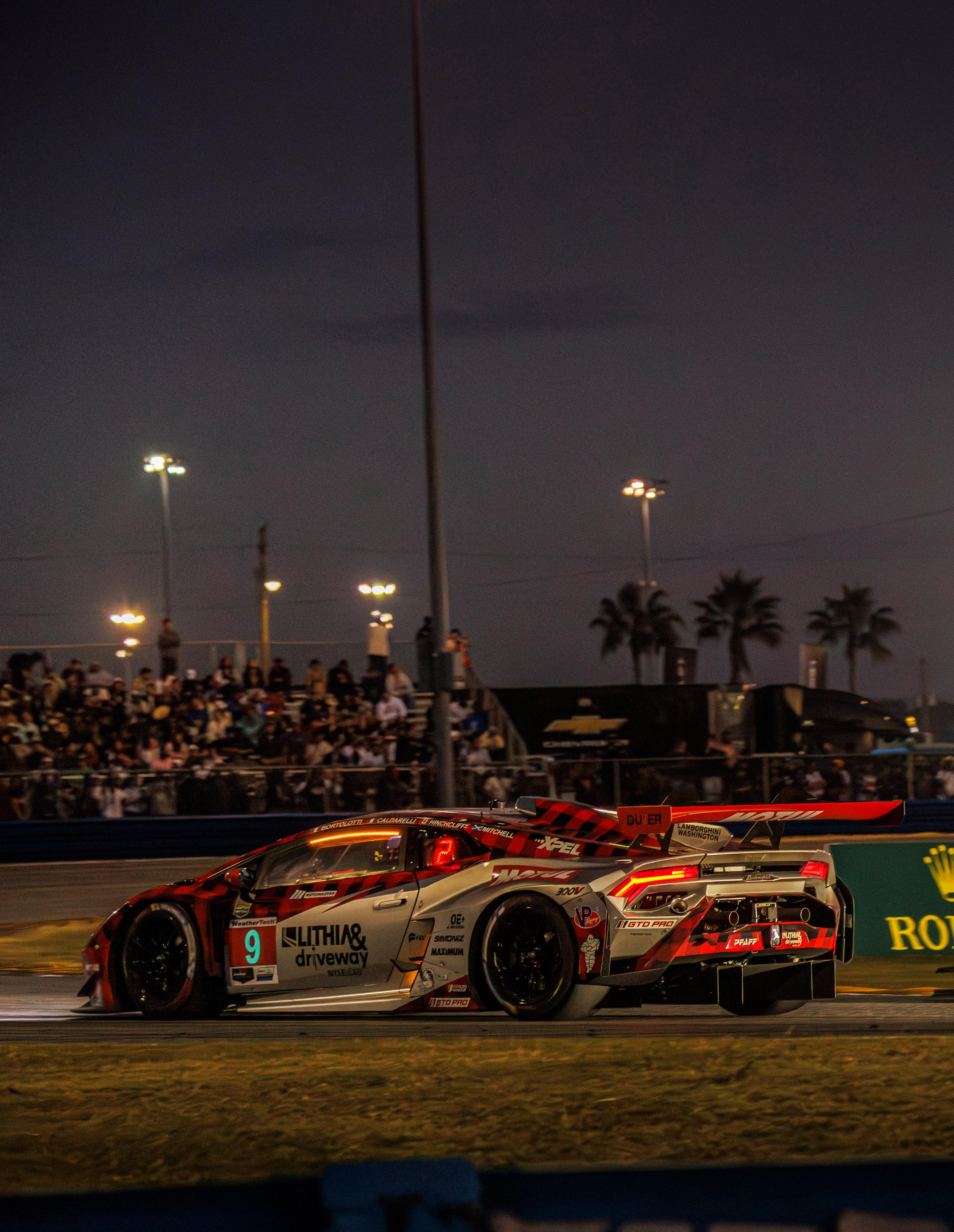
and the beautiful Central Coast have consistently been a favorite among IMSA teams. Its renowned golf courses, relaxed fine dining options, and the demanding 2.238-mile road course make Laguna Seca a highlight for teams, sponsors, and fans, guaranteeing an unforgettable weekend.
How have we arrived here? The earlier races at Daytona, Sebring, and Long Beach featured thrilling action and attracted record-breaking crowds. This weekend promises the same level of excitement in Monterey.
Now, let’s look at the 2026 IMSA season so far.
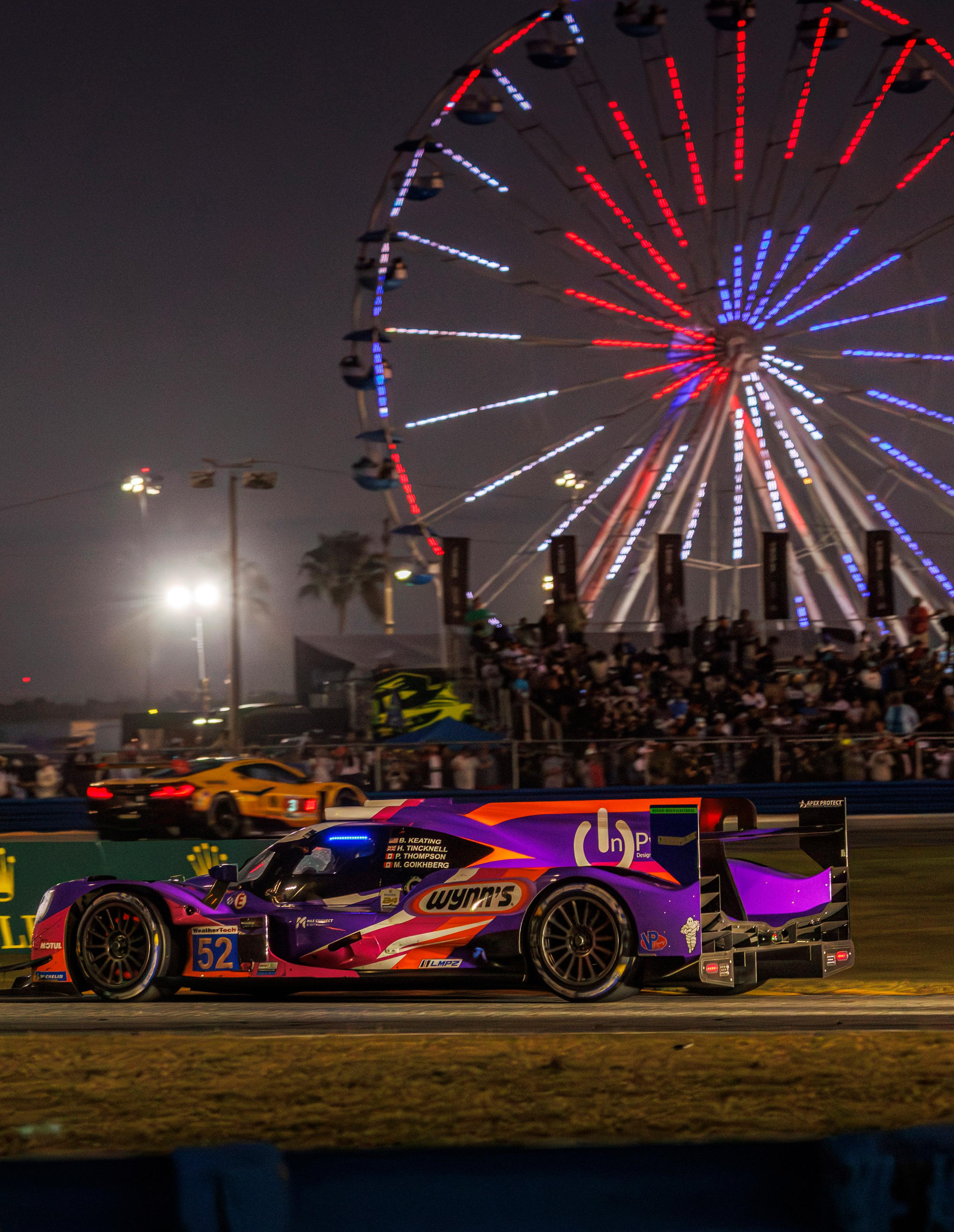
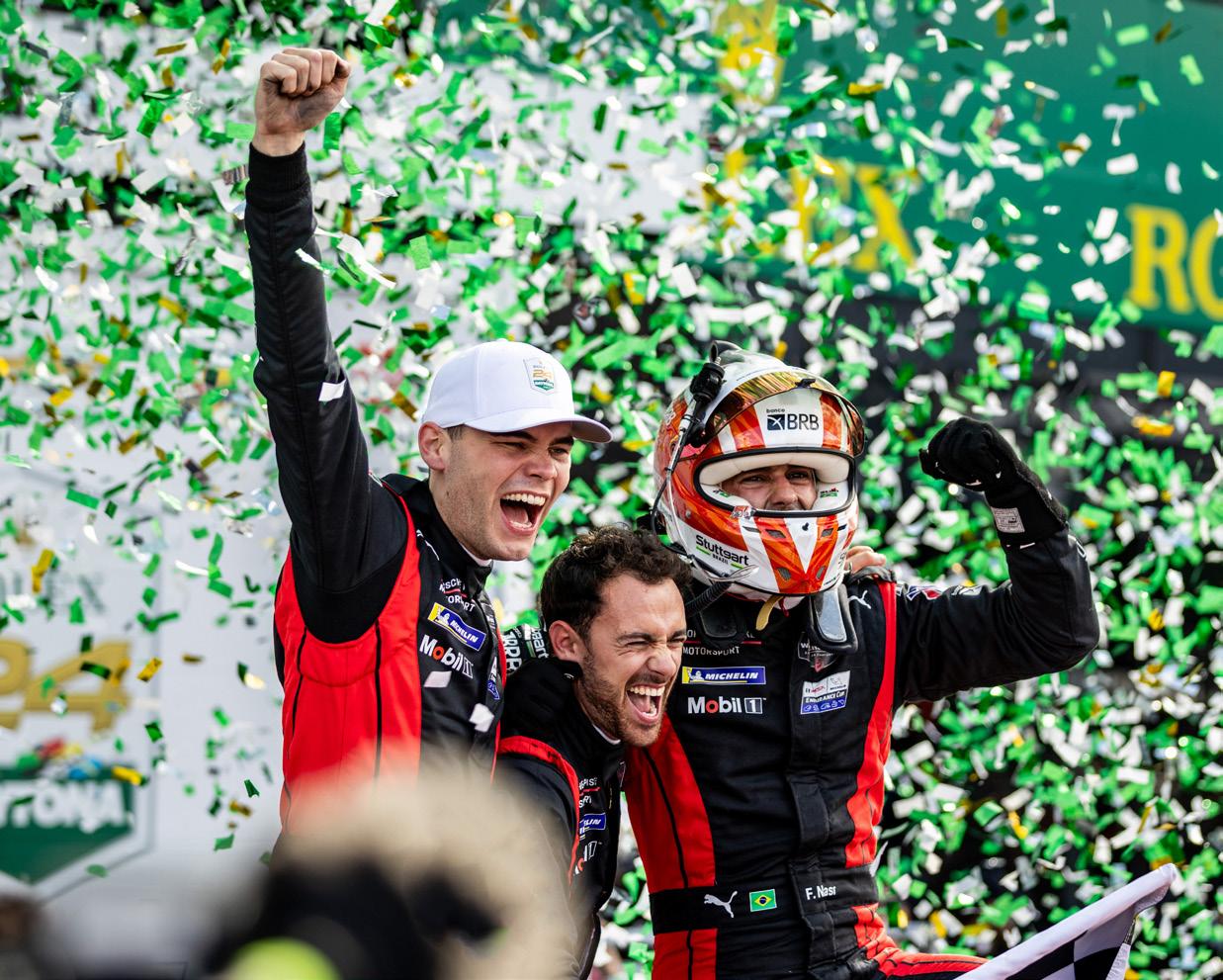
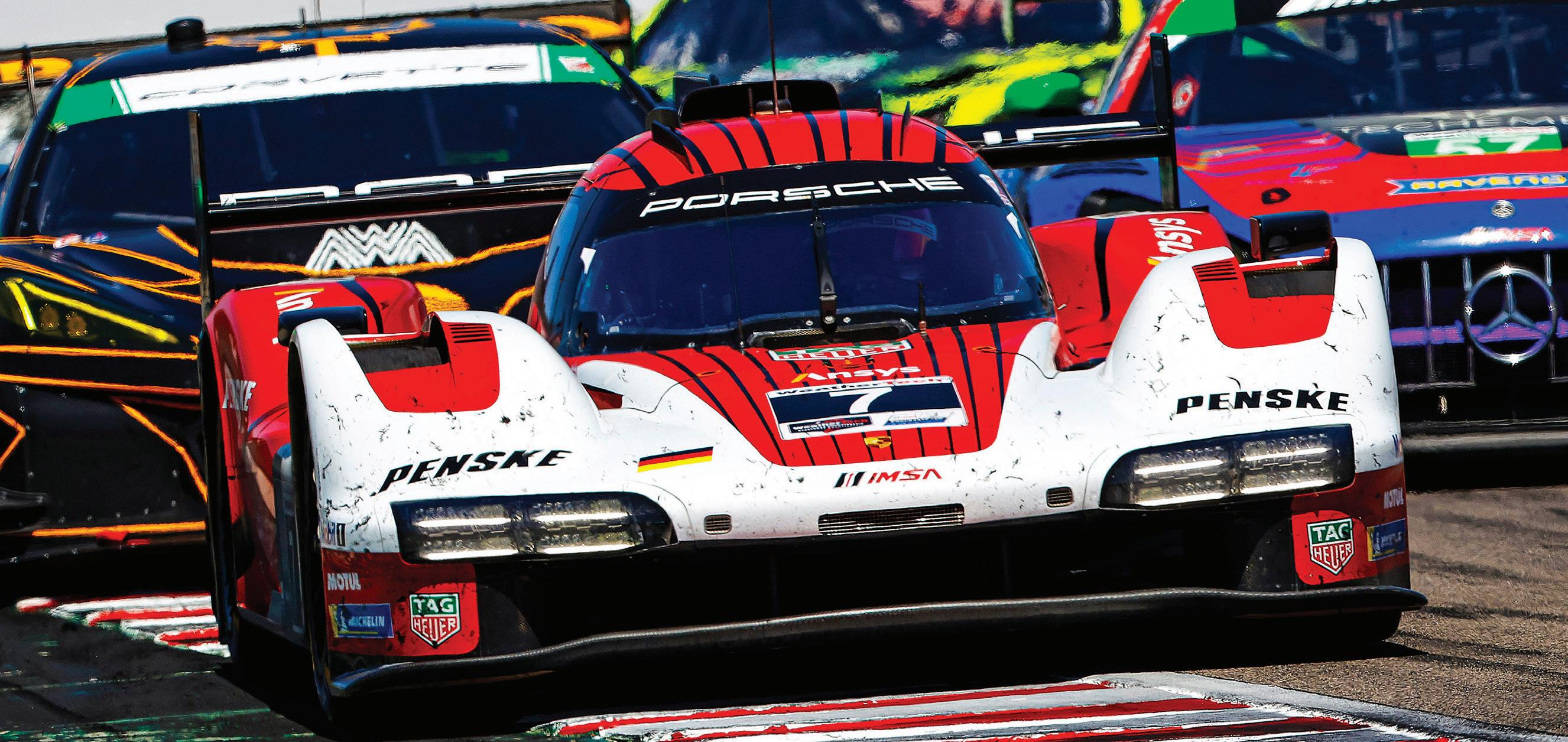
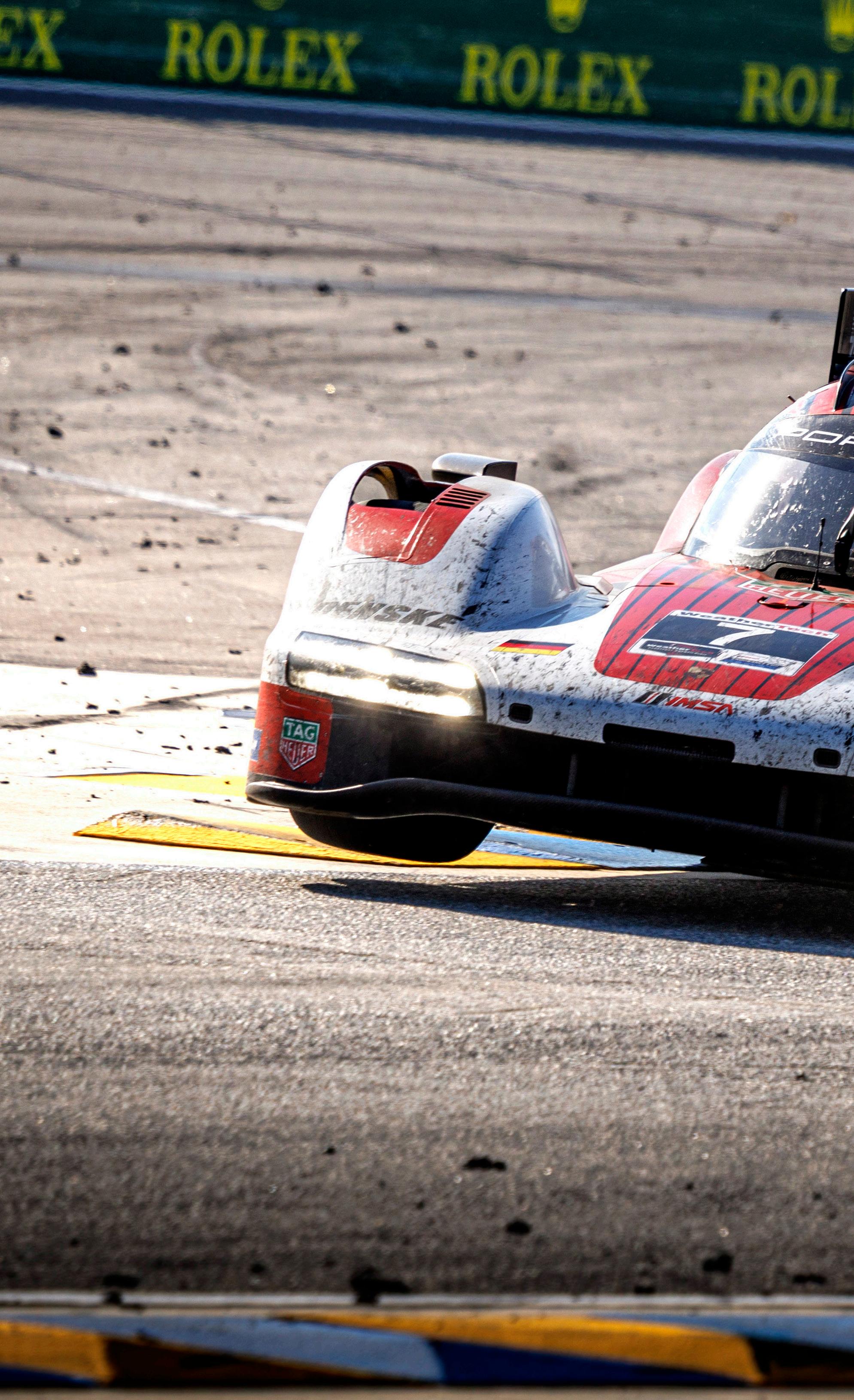
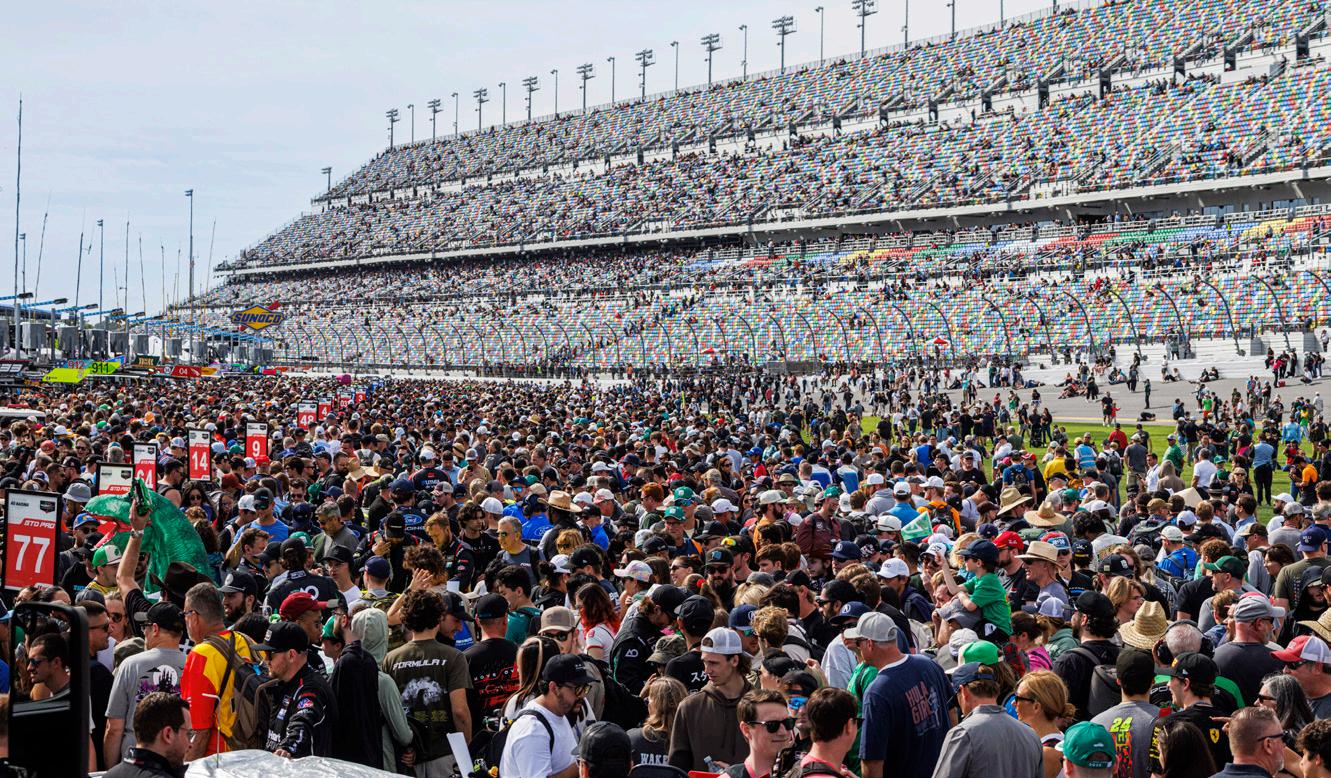
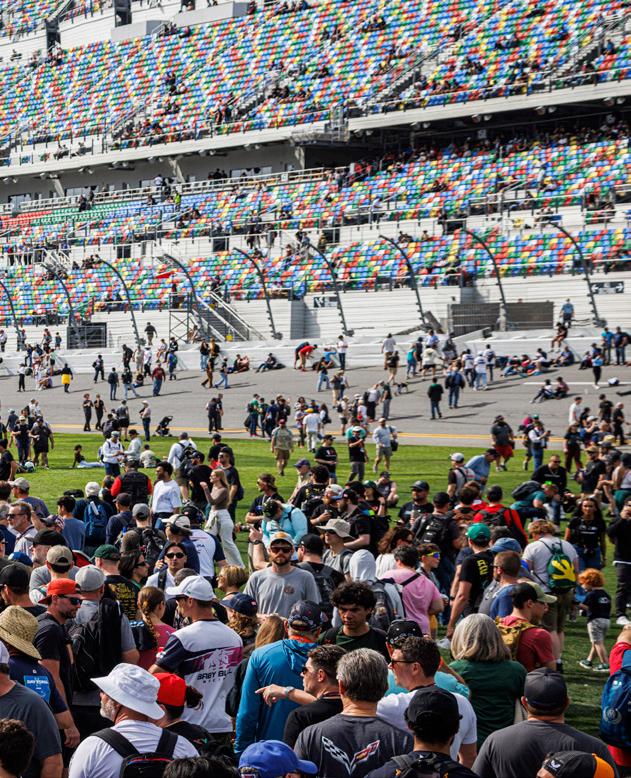
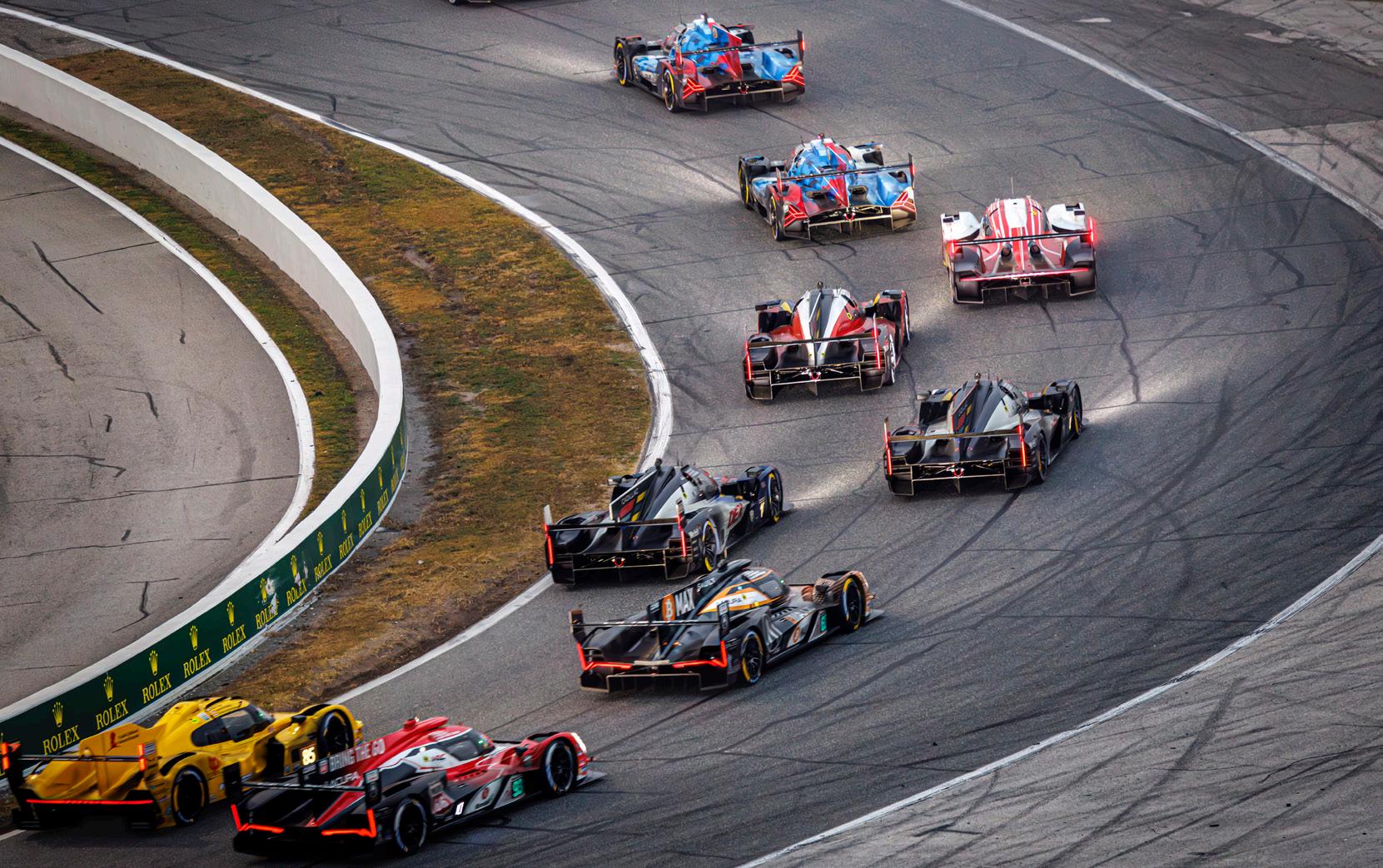
elipe Nasr capped a record-setting day at Daytona International Speedway by driving to a recordtying third consecutive Rolex 24 At Daytona overall win, leading Porsche Penske Motorsport to its third straight victory in the internationally renowned endurance sports car race that attracted record crowds.
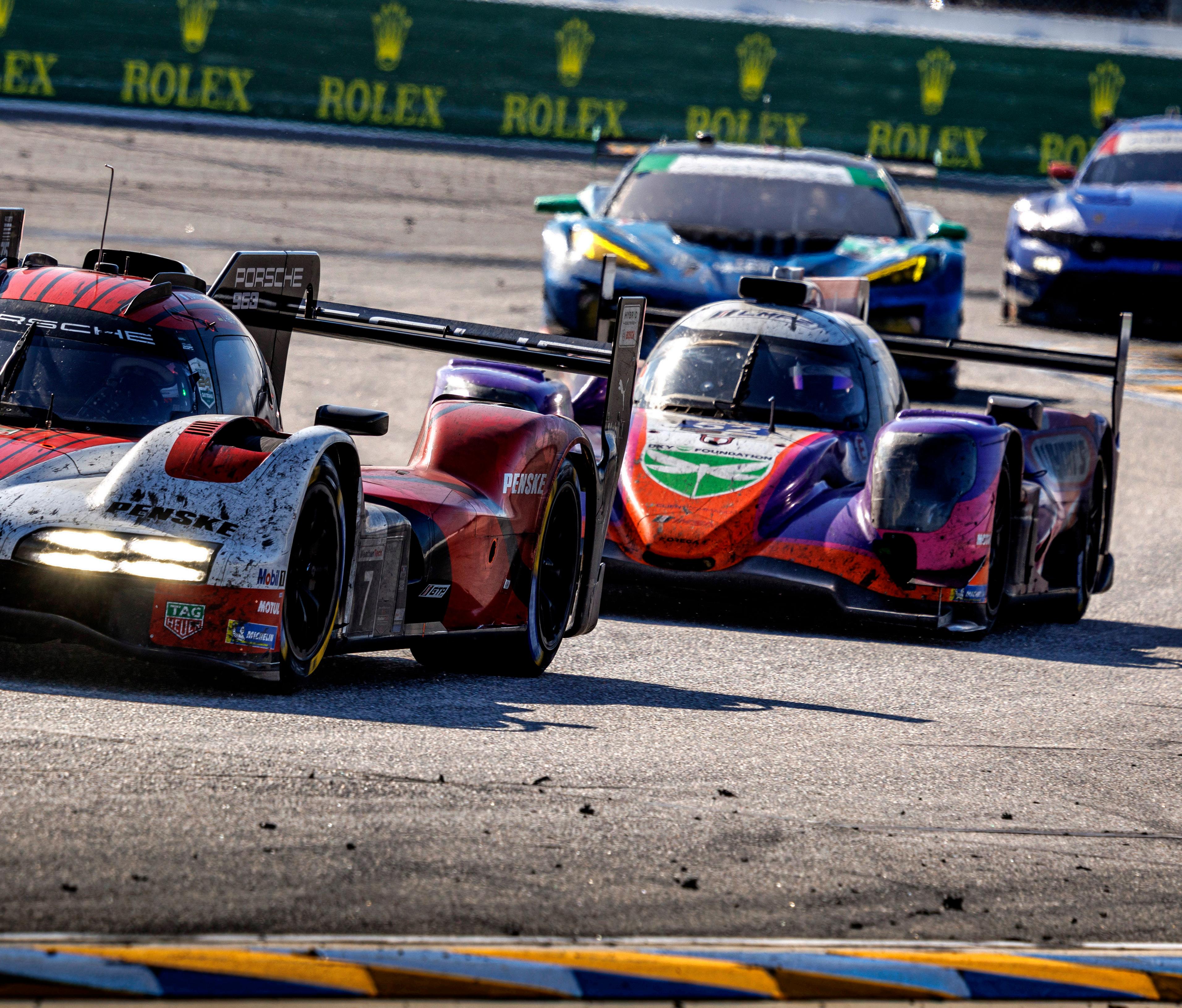
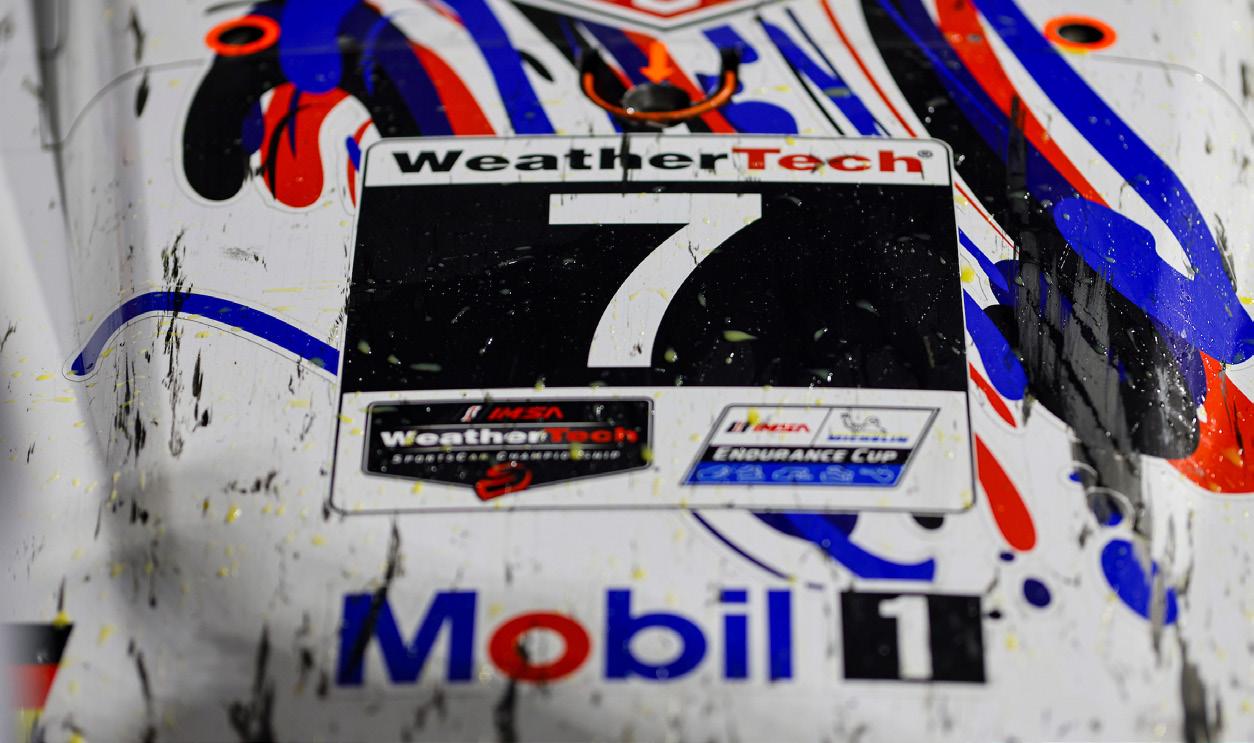
FPiloting the No. 7 Porsche Penske Motorsport Porsche 963 he shared with co-drivers Julien Andlauer and Laurin Heinrich in the Grand Touring Prototype (GTP) class, Nasr crossed the finish line 1.569 seconds ahead of Jack Aitken in the No. 31 Cadillac Whelen Cadillac V-Series.R. Nasr held off multiple charges from Aitken over a breathtaking final 20 minutes of the twice-aroundthe-clock classic.
With the win, Nasr joined Helio Castroneves (2021-23) and Peter Gregg (1973, 1975-76) as the only drivers to collect three Rolex 24 overall triumphs in a row. Porsche Penske Motorsport also tied for the most consecutive team victories, joining Chip Ganassi Racing (2006-08) and Wayne Taylor Racing (2019-21).
“Winning the 24 Hours of Daytona three consecutive times with this Porsche Penske Motorsport team is an incredible accomplishment,” said Roger Penske. “That sustained success is only achieved with great team work, focused and determined drivers, a resilient crew and a commitment to winning. Today’s victory reflects the efforts and dedication of all those committed men and women working on the Porsche Penske Motorsport program, from Mooresville to Germany.”
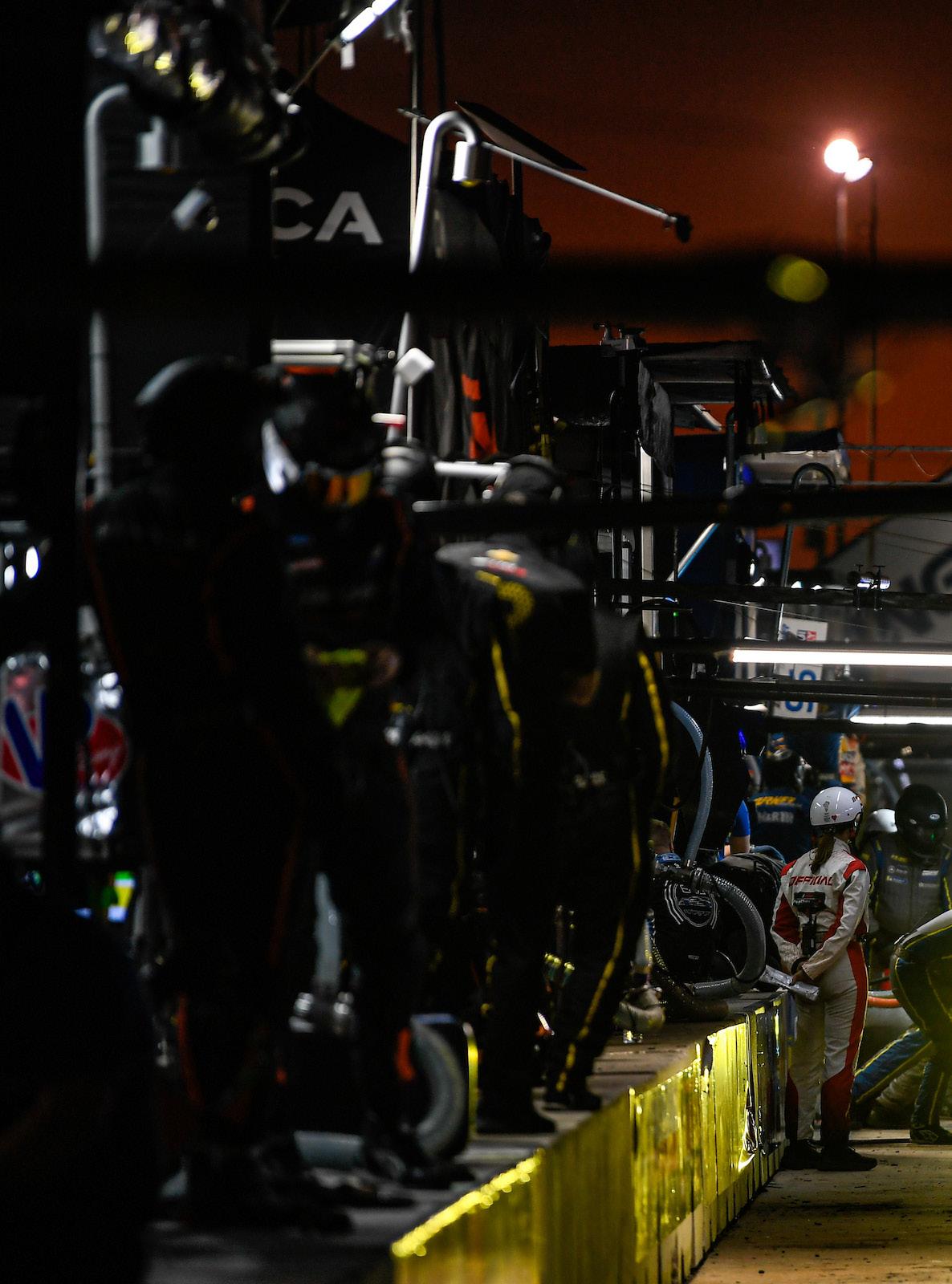
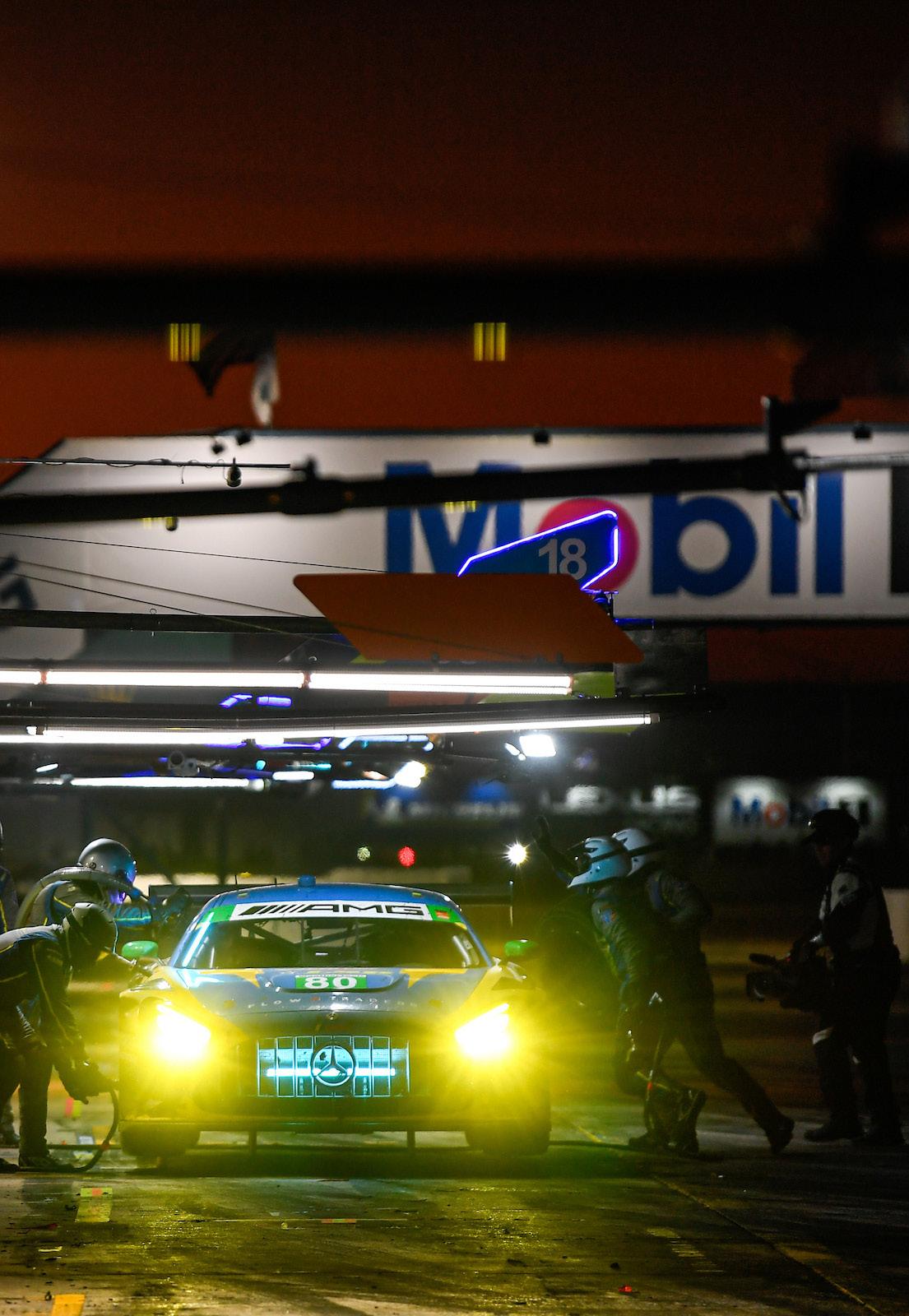
t’s certainly become an enduring refrain at IMSA Michelin Endurance Cup races for IMSA WeatherTech SportsCar Championship fans in recent seasons with the legendary make and famous Penske Grand Touring Prototype (GTP) team claiming its second consecutive Mobil 1 Twelve Hours of Sebring race victory – its third overall at the historic track (2008, 2025).
IThe only real question on this warm, sunny, Florida spring day was which of the Penske team’s two Porsche 963s would take the checkered flag first at the venerable Sebring International Raceway. And that wasn’t fully settled until the dramatic final hour of the daylong race.
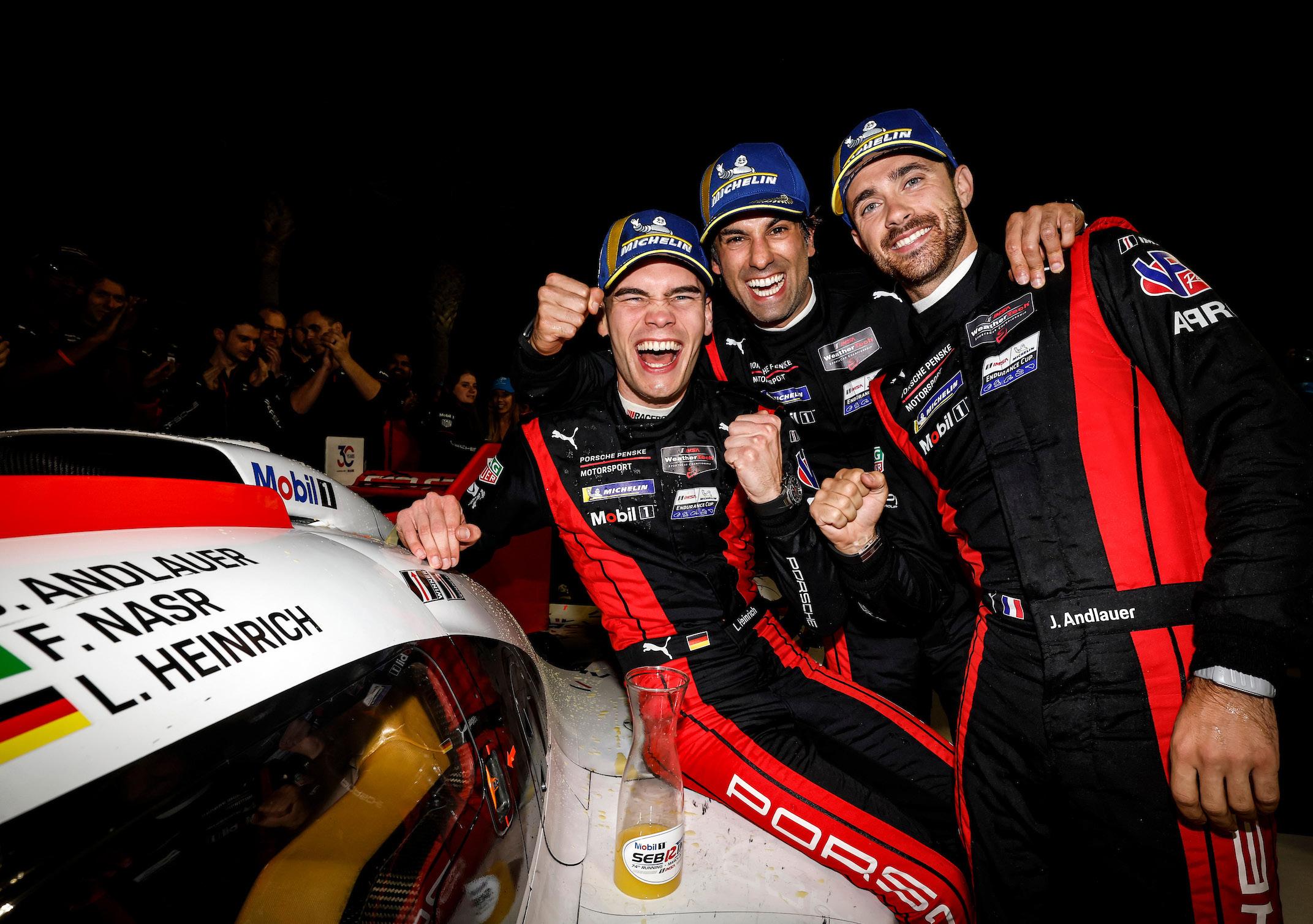
Together the two Penske team cars combined to lead for all but 60 of the 343 total laps. Felipe Nasr in the No. 7 Porsche 963 came out first following a pit stop with just over 40 minutes remaining in the 12-hour race. But he had to hold off his teammate No. 6 Porsche Penske driver Kevin Estre on a pair of late race restarts before ultimately taking the checkered flag 1.515-seconds ahead of Estre to claim the hard-fought win.
It marks the third Sebring 12-hour overall win for the Brazilian Nasr, who co-drove with Frenchman Julien Andlauer and German Laurin Heinrich, who with the team’s win in the season-opening Rolex 24 At Daytona in February is now two-for-two in his first two IMSA GTP starts.
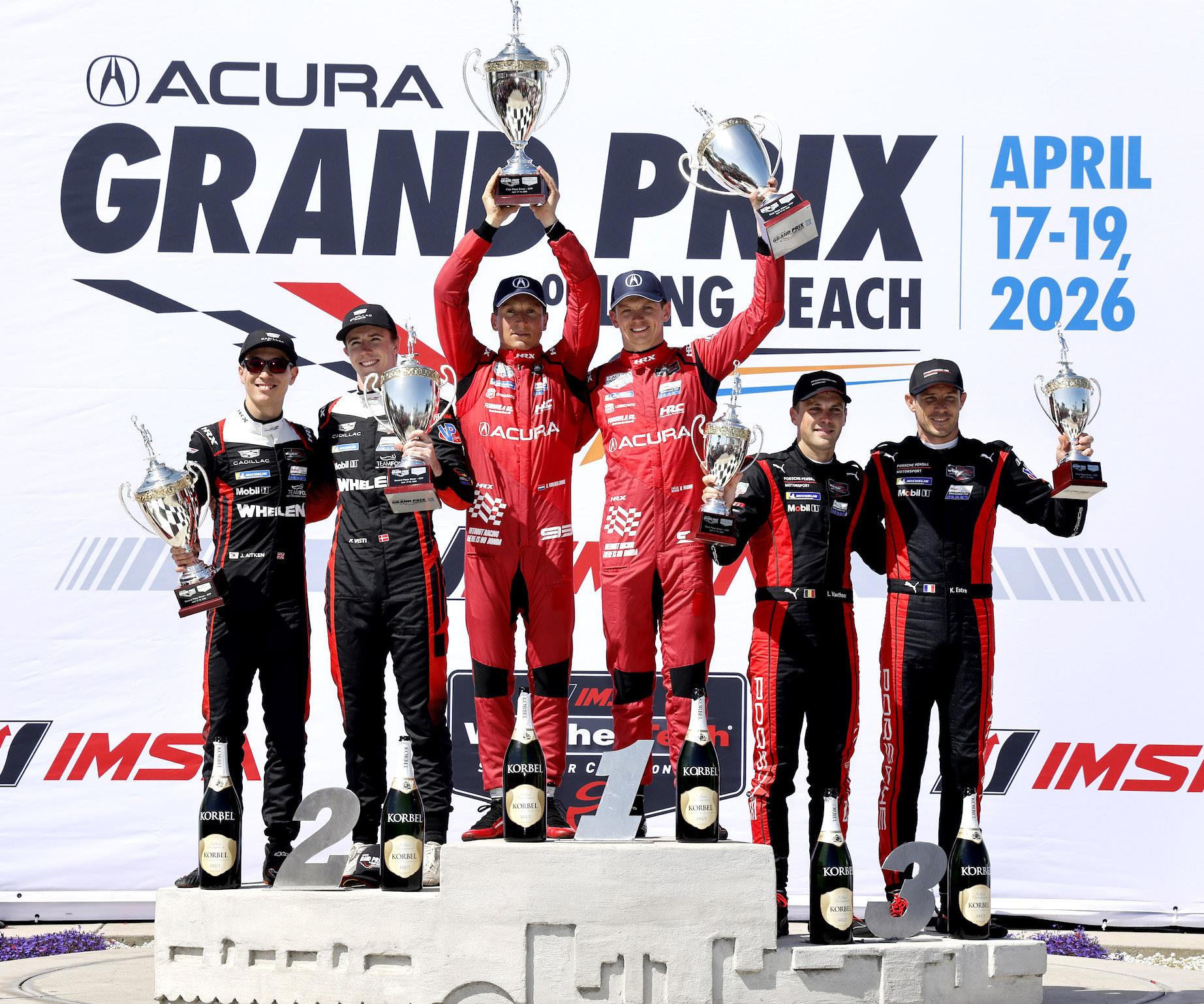
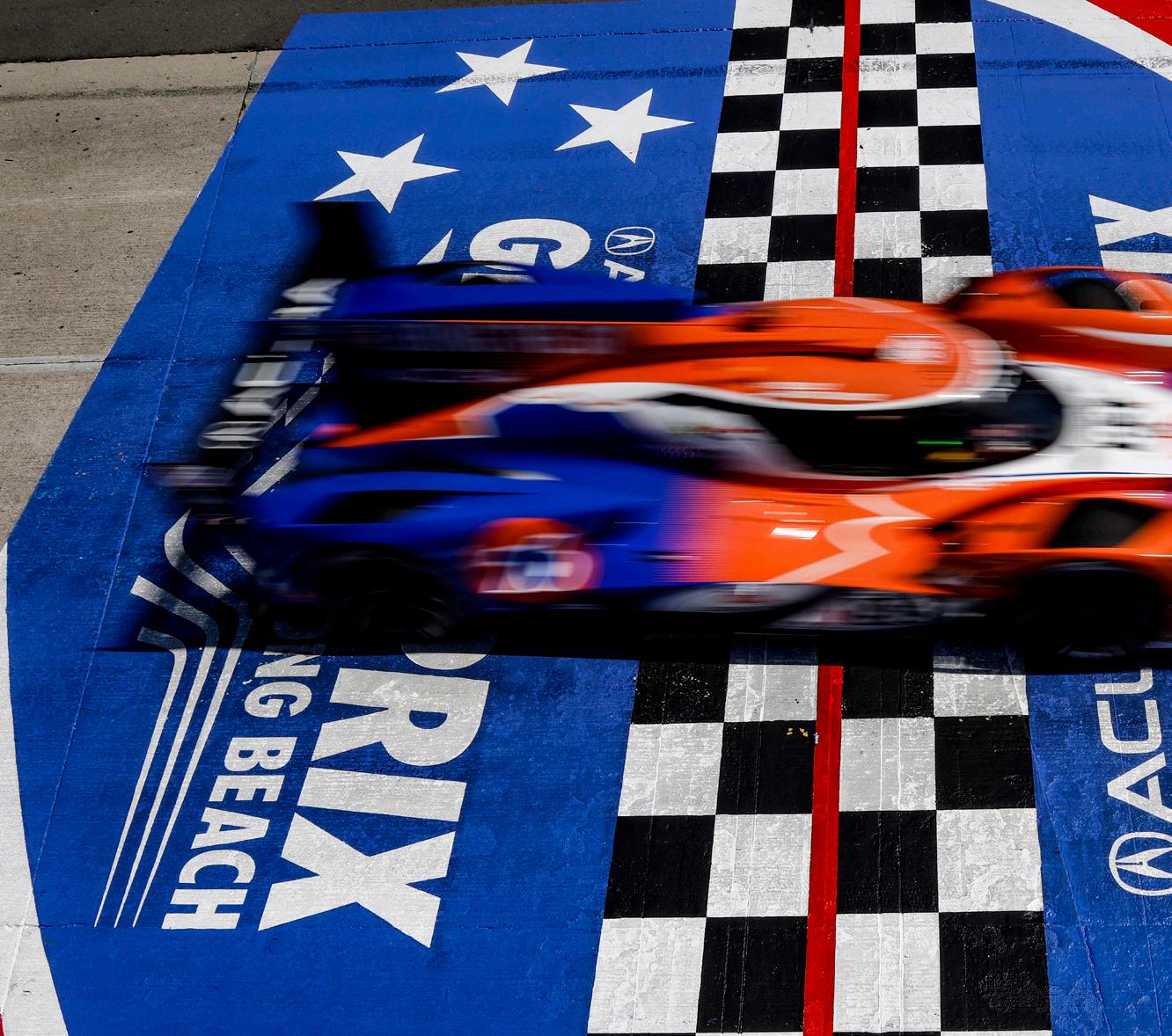
t was a long time coming, but Acura and Honda Racing Corporation USA claimed their first overall victory on the streets of Long Beach during the modern era of the IMSA WeatherTech SportsCar Championship–the first time since Acura became the title sponsor of the Acura Grand Prix of Long Beach in 2019.
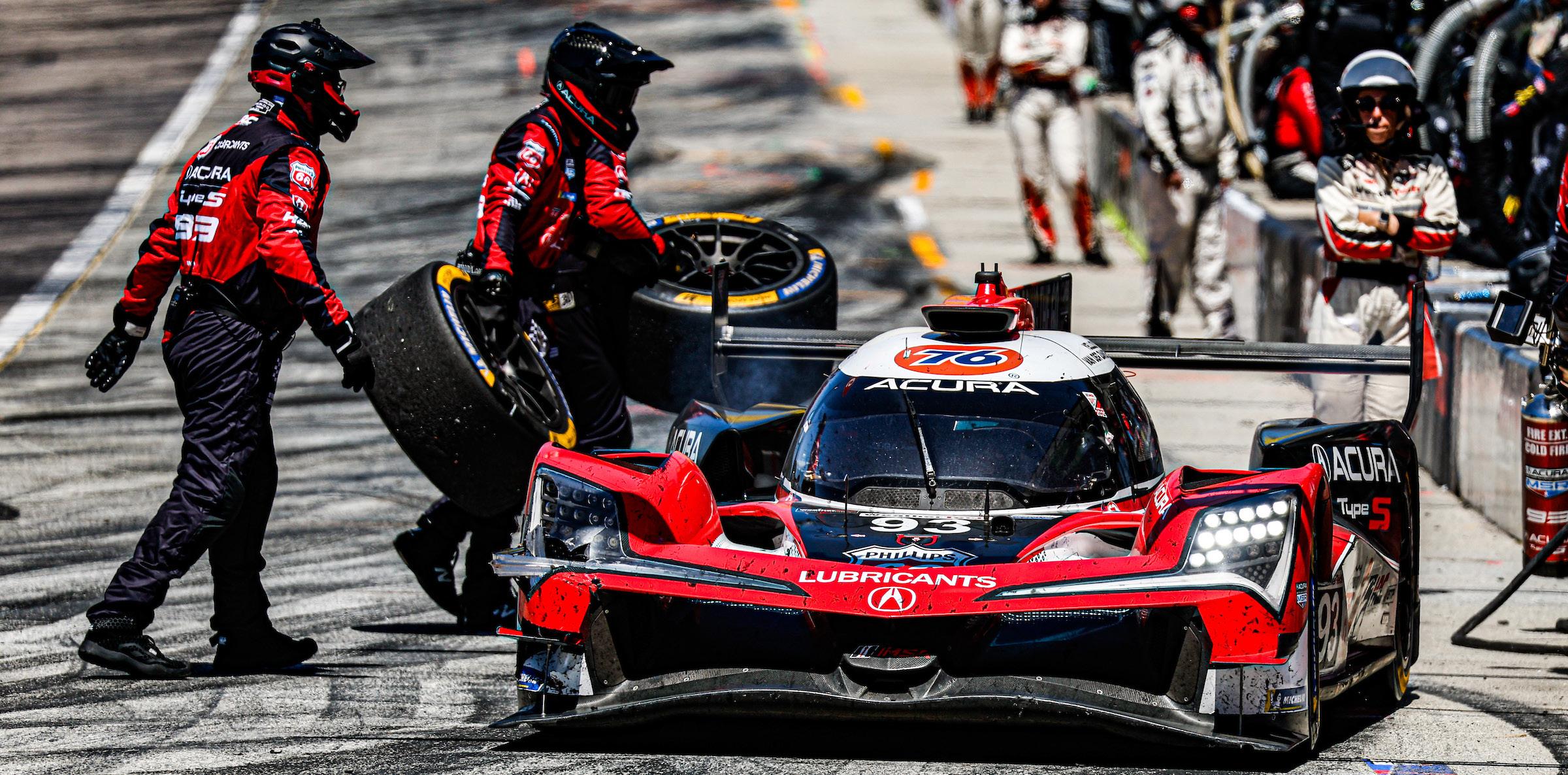
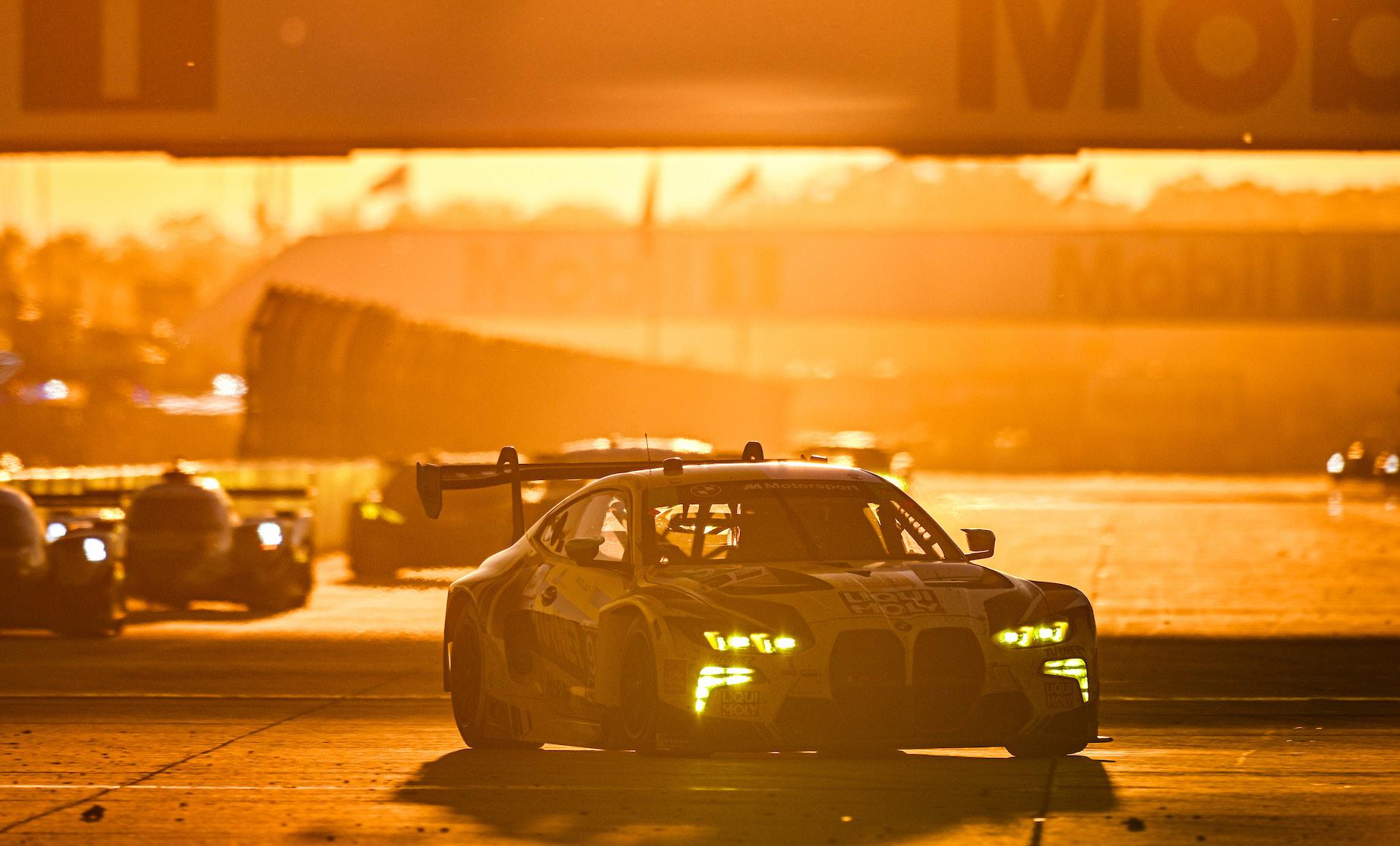
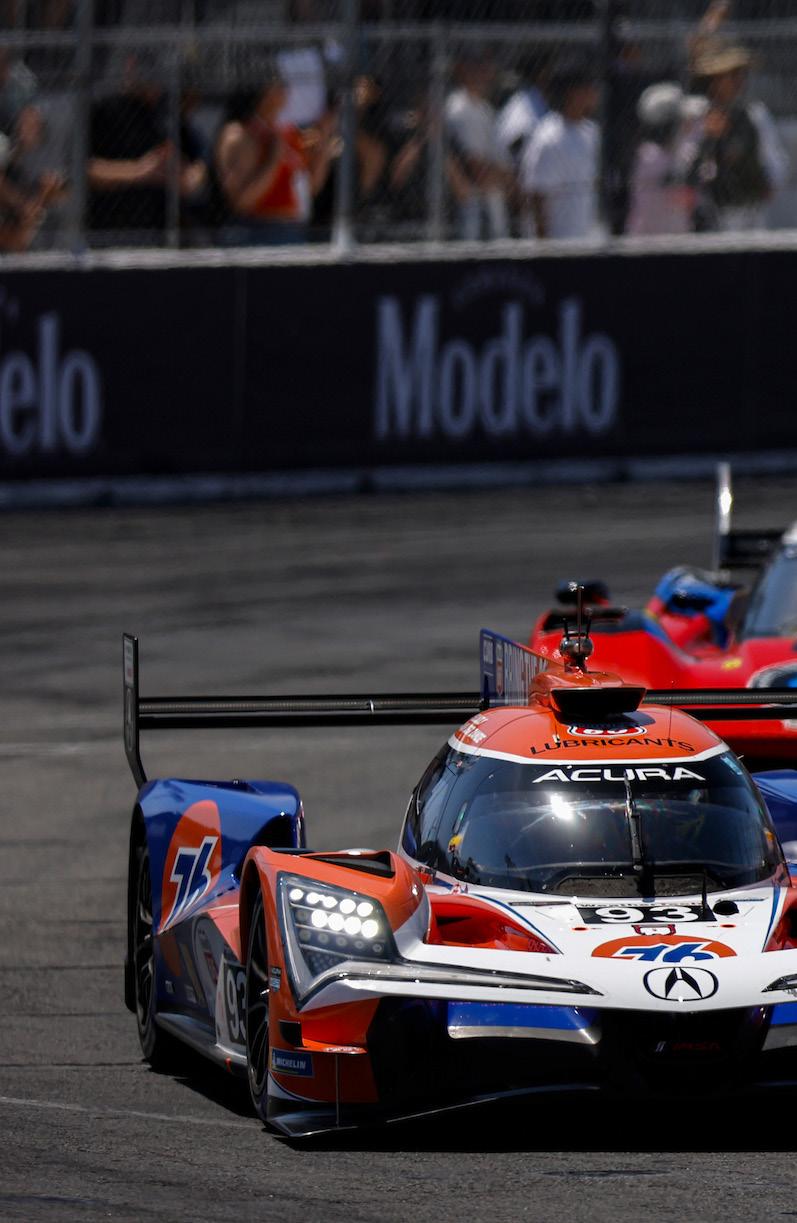
INick Yelloly sped to the Motul Pole Award on Friday, then teamed with Renger van der Zande Saturday to guide the No. 93 Acura Meyer Shank Racing w/Curb Agajanian Acura ARX-06 to the Grand Touring Prototype (GTP) first-place trophy in the Acura Grand Prix of Long Beach.
With the No. 93 Acura carrying a new 76 Gas Station livery, van der Zande crossed the finish line 0.818 seconds ahead of the No. 31 Cadillac Whelen Cadillac V-Series.R shared by Jack Aitken and Frederik Vesti, in his Long Beach debut filling in for Earl Bamber.
The Porsche Penske Motorsport Porsche 963s took third and fourth places, with the No. 6 car of Kevin Estre and Laurens Vanthoor just ahead of the No. 7 team car of Felipe Nasr and Julien Andlauer that won the first two WeatherTech Championship races of the 2026 season.
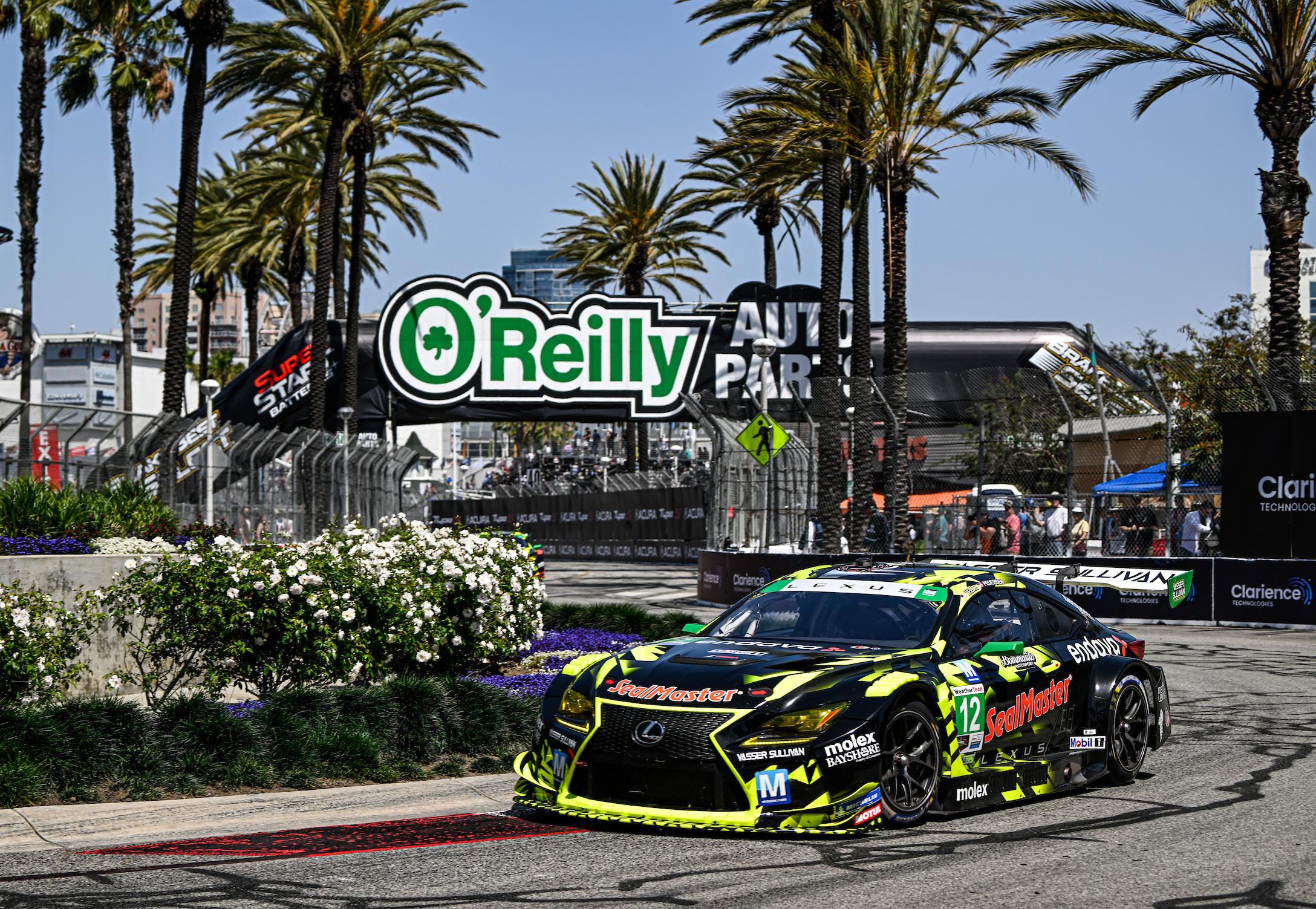
Lexus also broke a drought in the Grand Touring Daytona (GTD) with the No. 12 Lexus RC F GT3 of Aaron Telitz and Benjamin Pedersen taking the win.
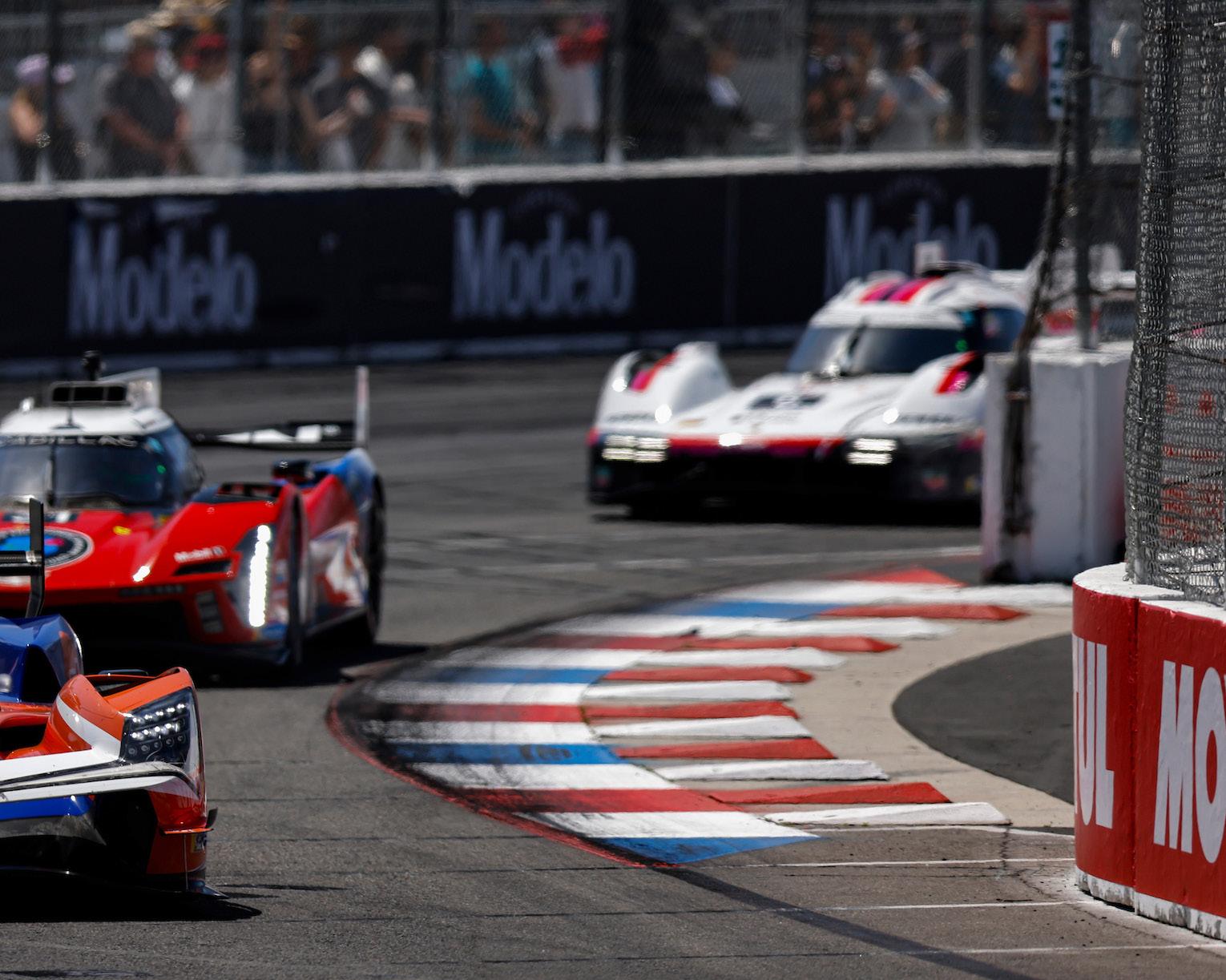
It’s one of the most exciting, daring, and action-packed forms of motor racing on the planet. The IMSA WeatherTech SportsCar Championship features multiple classes simultaneously on track fighting wheel-to-wheel for positioning and the podium’s coveted top step. For a technical circuit like WeatherTech Raceway Laguna Seca there is always continuous action and overtaking due to the speed differentials within each class.
The IMSA WeatherTech SportsCar Championship features two styles of cars: Prototype, which showcases the latest automotive technology and are uniquely designed for the race track; and GT,
which is based on road-going production models. These two styles of cars make up the series’ four classes – Grand Touring Prototype (GTP), Le Mans Prototype 2 (LMP2), GT Daytona Pro (GTD PRO) and GT Daytona (GTD).
To help fans follow the on-track action, the WeatherTech Championship uses a Leader Light System. It allows fans to easily identify the position of each car in its respective class. The position of the car is displayed on an LED panel mounted on the side of the car and the color of the LED number corresponds with the class. For instance, an illuminated LED red number 5 on a GTD PRO style car means that car is in 5th position in the GTD PRO class. UNDERSTANDING THE CLASSES
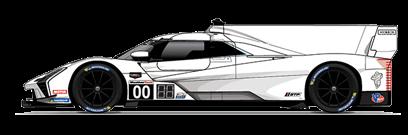
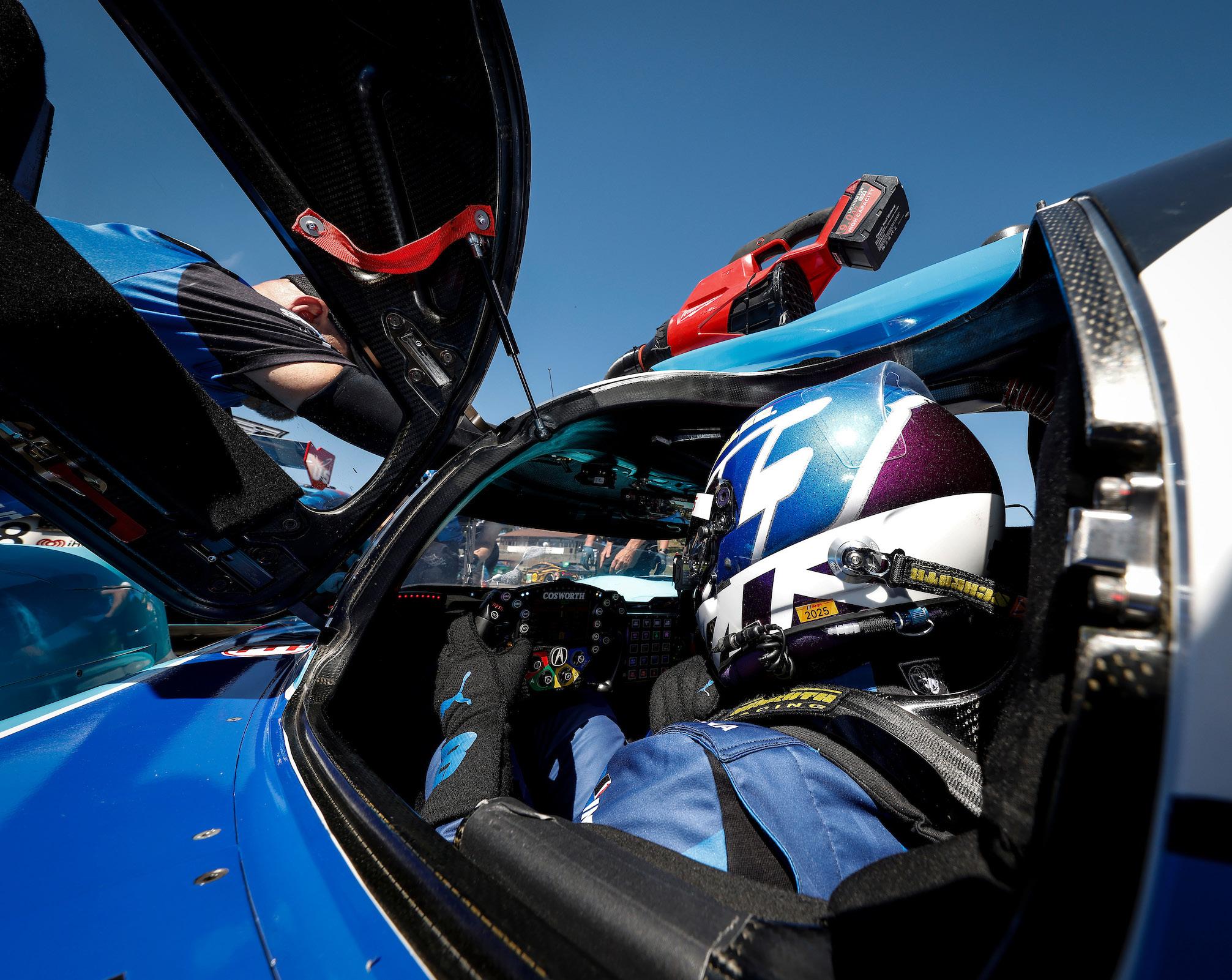
The newest and most technologically advanced Prototype race car took to the track for the first time in 2023, featuring a common hybrid powertrain for all entries that takes kinetic energy gained in braking and stores it in batteries for later use when needed. Six global automotive manufacturers— Acura, Aston Martin, BMW, Cadillac, Lamborghini and Porsche—are entered in the class. Each manufacturer developed its own unique internal combustion engine and
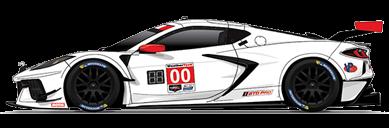
GTD PRO, which debuted in 2022, includes race cars built to FIA GT3 technical regulations and offers the opportunity for factory teams and driver lineups to compete in the class. Manufacturers competing in this class in 2026 include Aston Martin, BMW, Chevrolet, Ferrari, Ford, Lamborghini, Lexus, Mercedes-AMG and Porsche.
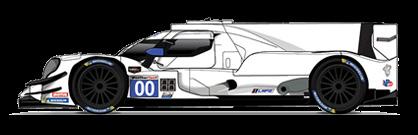
The Le Mans Prototype 2 (LMP2) is a closed-cockpit car developed by four approved constructors. In addition to the IMSA WeatherTech SportsCar Championship, LMP2 cars are eligible to compete in other global series such as the FIA World Endurance Championship, which includes the prestigious 24 Hours of Le Mans.
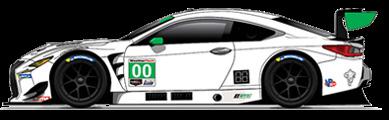
The GT Daytona cars are enhanced technology platforms and utilize the global FIA GT3 specification. The GTD class consists of cars from leading manufacturers such as Aston Martin, BMW, Chevrolet, Ferrari, Lamborghini, Lexus, Mercedes-AMG and Porsche.



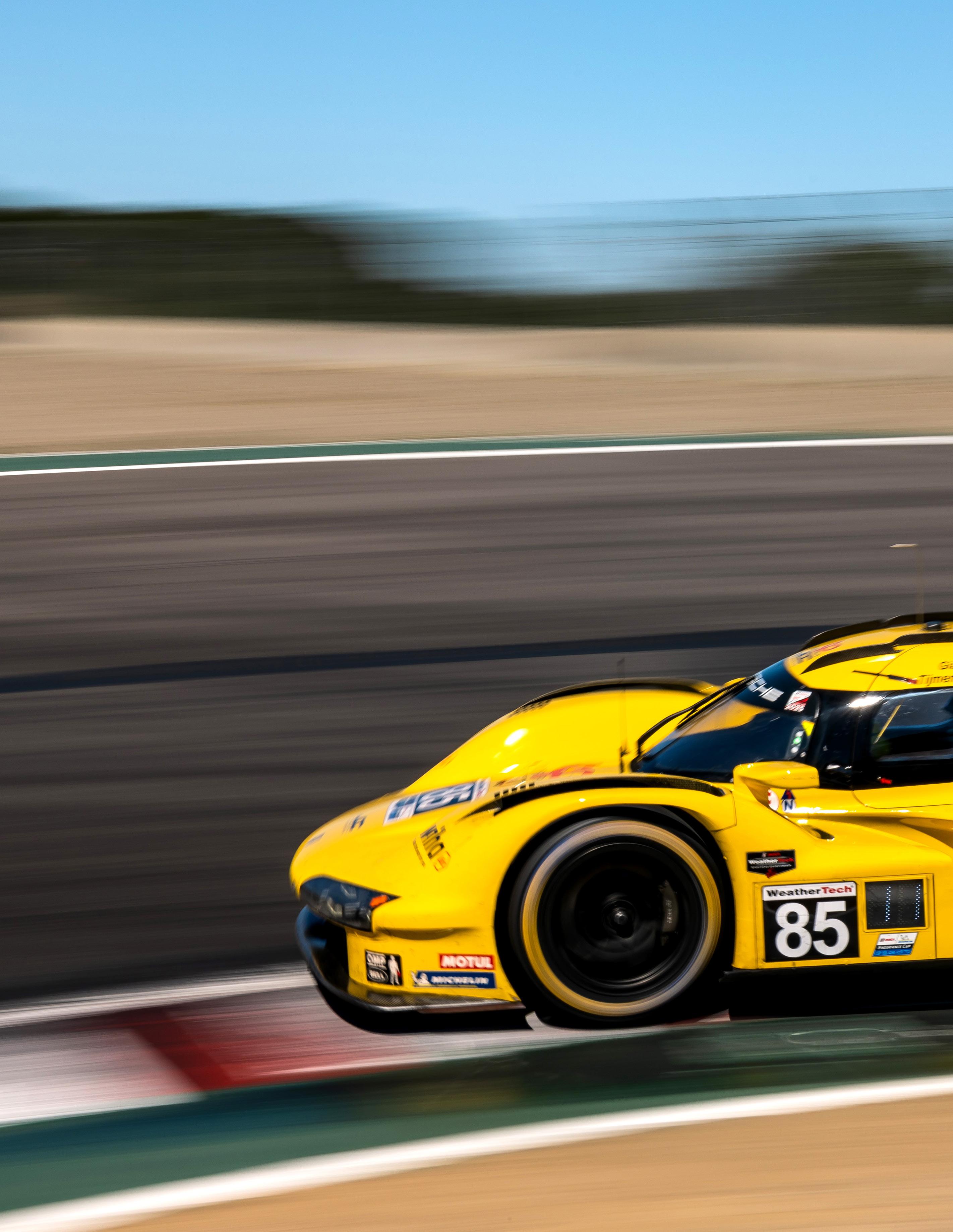
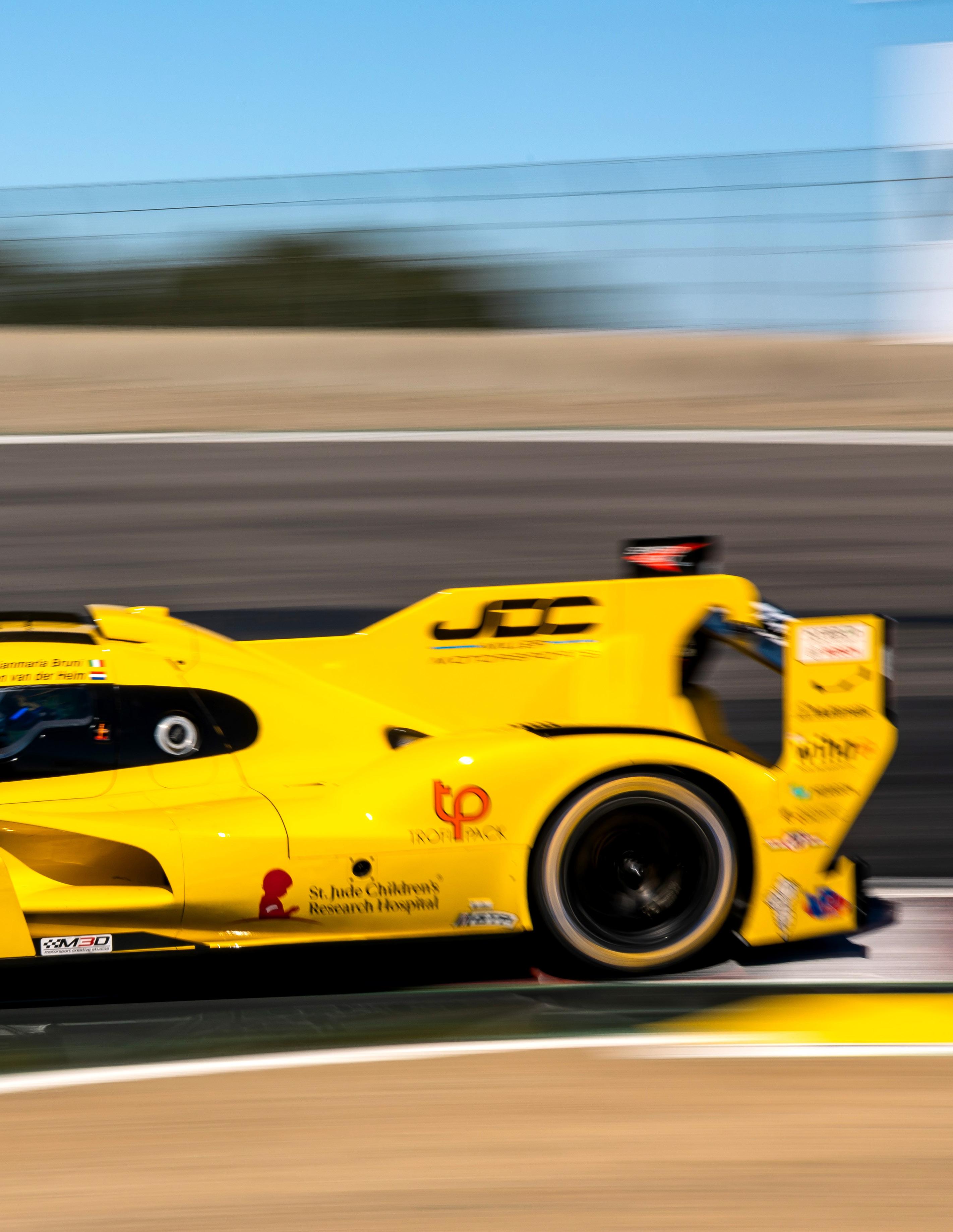
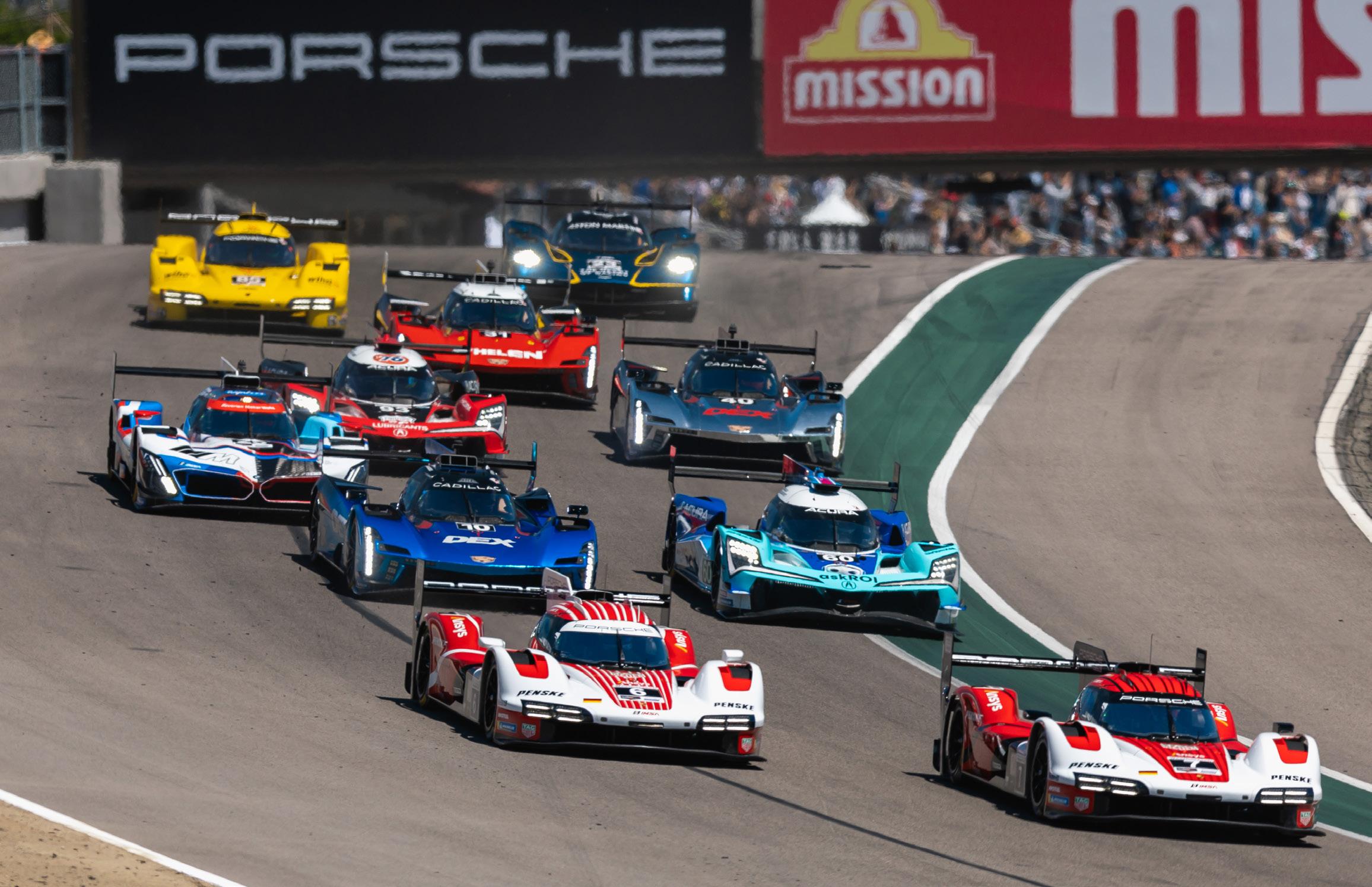
PPorsche has an extensive legacy at WeatherTech Raceway Laguna Seca. It includes 30 IMSA class and overall wins just since the turn of the century, but success on the Monterey Peninsula for Porsche predates even the 1957 opening of the track with wins in the Pebble Beach Road Races
In other words, Porsche and this place are permanently intertwined. More Rennsport Reunions have taken place here than anywhere else. Just last year, the brand captured not only its 600th, but also 601st IMSA victory here.
The signs of that success are all around the track, literally. First, Porsche is the official car of WeatherTech Raceway Laguna Seca. Second, the Porsche Track Experience driving school now offers yearround classes here to help drivers of all ability levels hone their skills and conquer
the Corkscrew. The launch this year marks a major milestone for Porsche’s North American driver development programs, expanding PTX to a second U.S. location in its 26th year of operation domestically and 52nd year internationally. The program offers participants a full suite of courses, from fundamentals to advanced performance driving.
Ultimately, the Porsche crest creates its biggest mark here in the arena of competition.
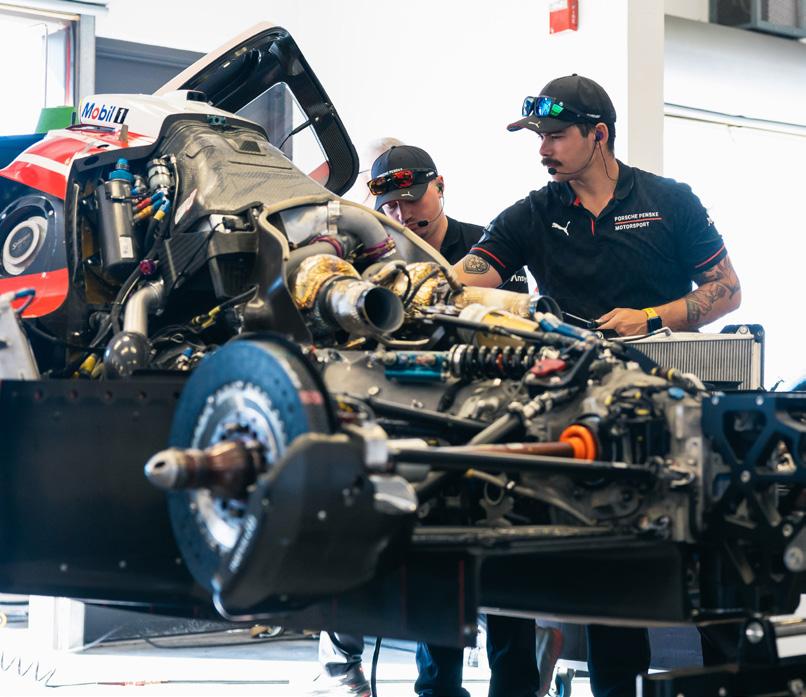
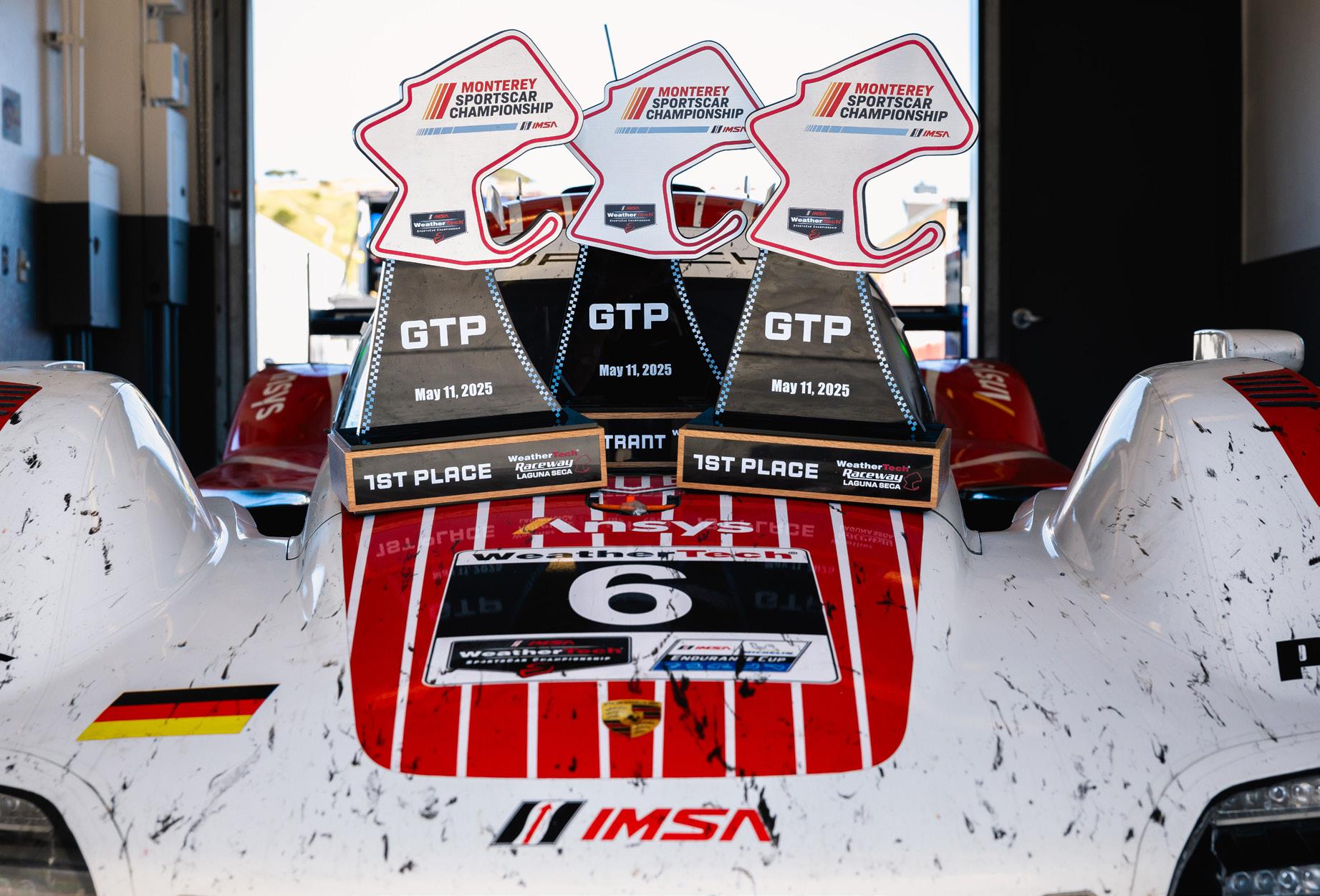
Last year’s IMSA WeatherTech race weekend was a true example of what Porsche Motorsport is about. The Porsche Penske Motorsport 963s controlled the race, with a victory for Matt Campbell and Mathieu Jaminet catapulting the duo to an eventual GTP driver championship.
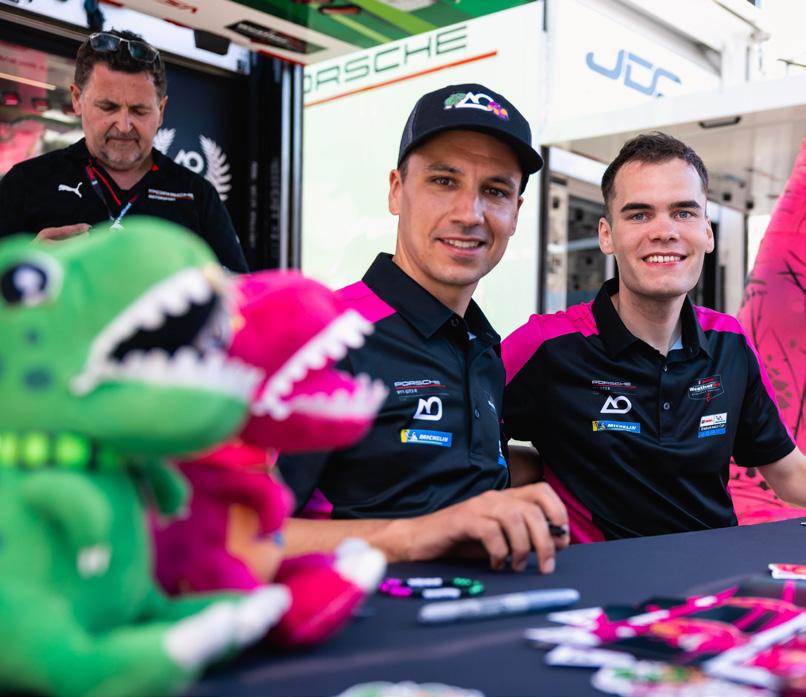
It wasn’t just the prototype class making headlines. AO Racing drivers Laurin Heinrich and Klaus Bachler secured a win in the team’s popular Porsche 911 GT3 R. Porsche even claimed a win in Michelin Pilot Challenge when RS1’s Luca Mars and

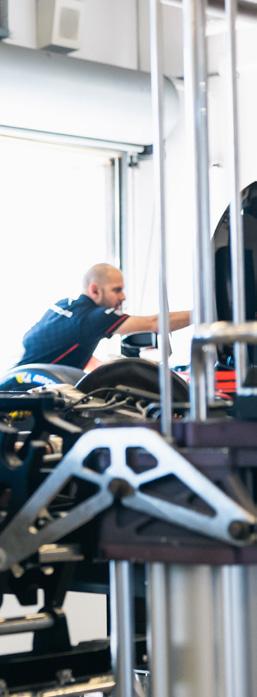
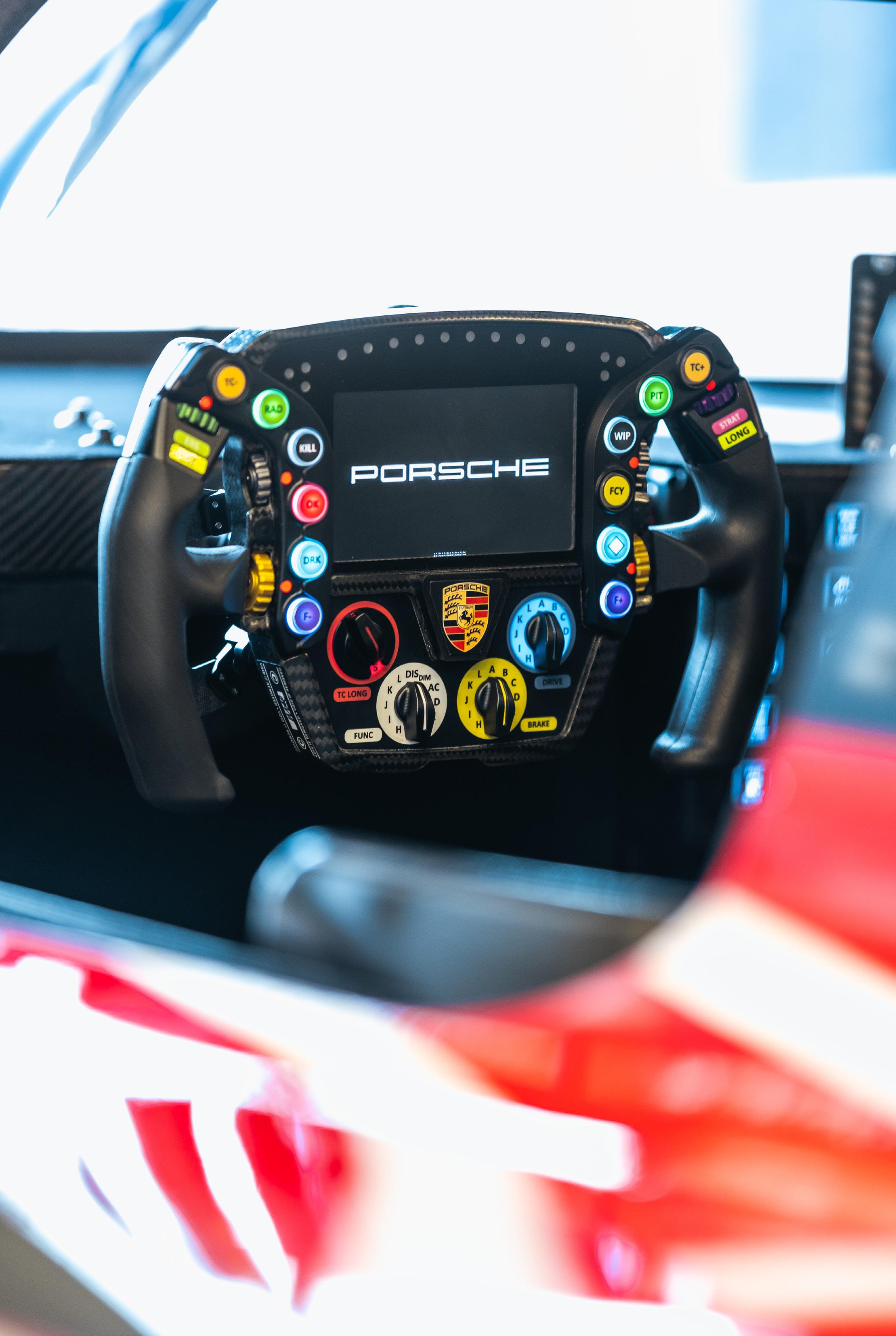
‘ THE PORSCHE TRACK EXPERIENCE DRIVING SCHOOL OFFERS CLASSES HERE TO HELP DRIVERS OF ALL ABILITY’
Jan Heylen drove the No. 28 Porsche 718 Cayman GT4 RS Clubsport to victory in the GS class, scoring another trophy for Porsche. This weekend, Porsche returns to try to match that success.
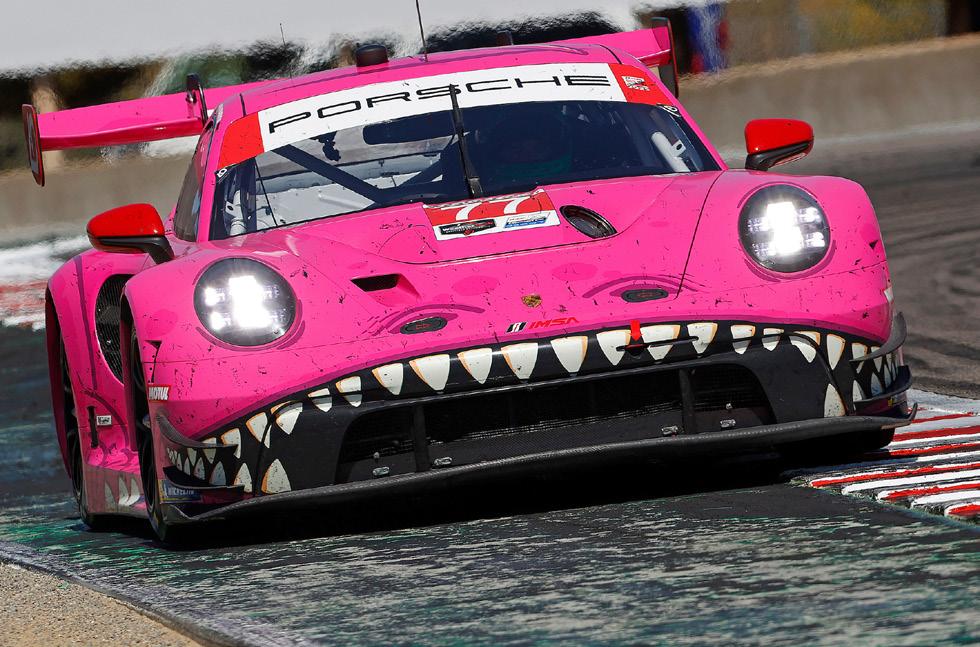
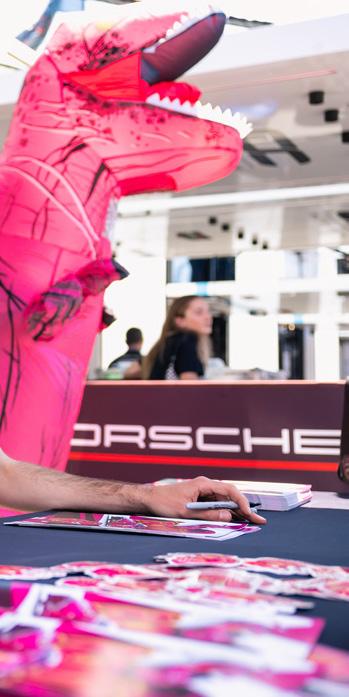
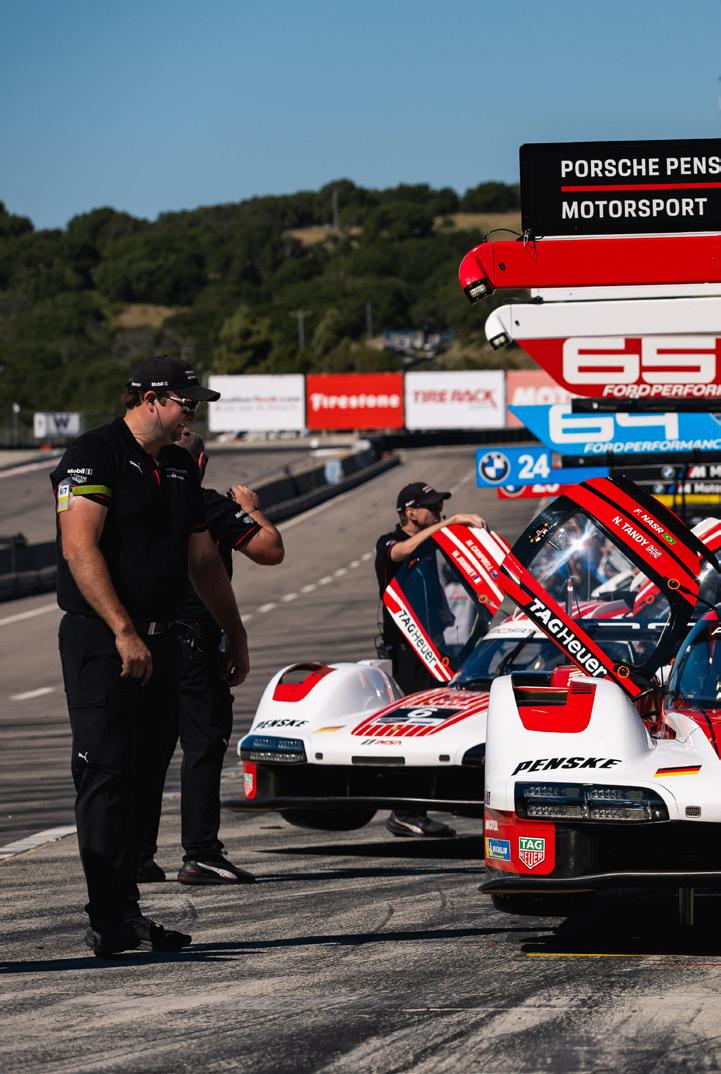
The No. 6 Porsche Penske Motorsport Porsche 963 is driven by Kévin Estre and Laurens Vanthoor, with Felipe Nasr and Julien Andlauer in the No. 7 sister car, while JDC-Miller MotorSport continues as the only privateer GTP car on the grid with the No. 5 machine. Each of them have laser-like focus on finding the top step of the podium. Likewise, the GTD Pro and GTD grids feature stout contenders. “Rexy” is back for AO Racing, driven this year by Nick Tandy and Harry King. Like AO Racing, Wright Motorsport was on the podium at Sebring in March, giving fans of that particular green Porsche 911 GT3 R some hope as they charge down the Corkscrew.
Once again, though, there’s no reason to wait until Sunday to see your favorite Porsche drivers in action. In addition to Saturday’s WeatherTech qualifying, the
Porsche 718 Cayman GT4 RS Clubsports return in the Michelin Pilot Challenge race.
If street cars are your thing, don’t miss the Porsche 718 Cayman GT4 RS leading the field as the official safety car of the race in a very special livery. To join in with the throwback theme, you may notice hot laps for VIPs during down time featuring the Porsche 911 GT3 in the ANDIAL livery, harkening back to the famous Porsches with a similar livery in the late 1970s and beyond. Formed in 1975, ANDIAL evolved into one of America’s most successful and respected authorities on Porsche performance tuning for the track and the street. ANDIALprepared cars and engines won on nearly every major racetrack in North America.
IMSA races in general, and especially those at WeatherTech Raceway Laguna Seca, are practically car shows in disguise – from on-track performance to a wide variety of models parked on the hillsides around the circuit. Pick a favorite on and off-track, and root for Porsche Motorsport as they celebrate their 75th anniversary this year.
‘ IMSA RACES IN GENERAL ARE PRACTICALLY CAR SHOWS IN DISGUISE ’
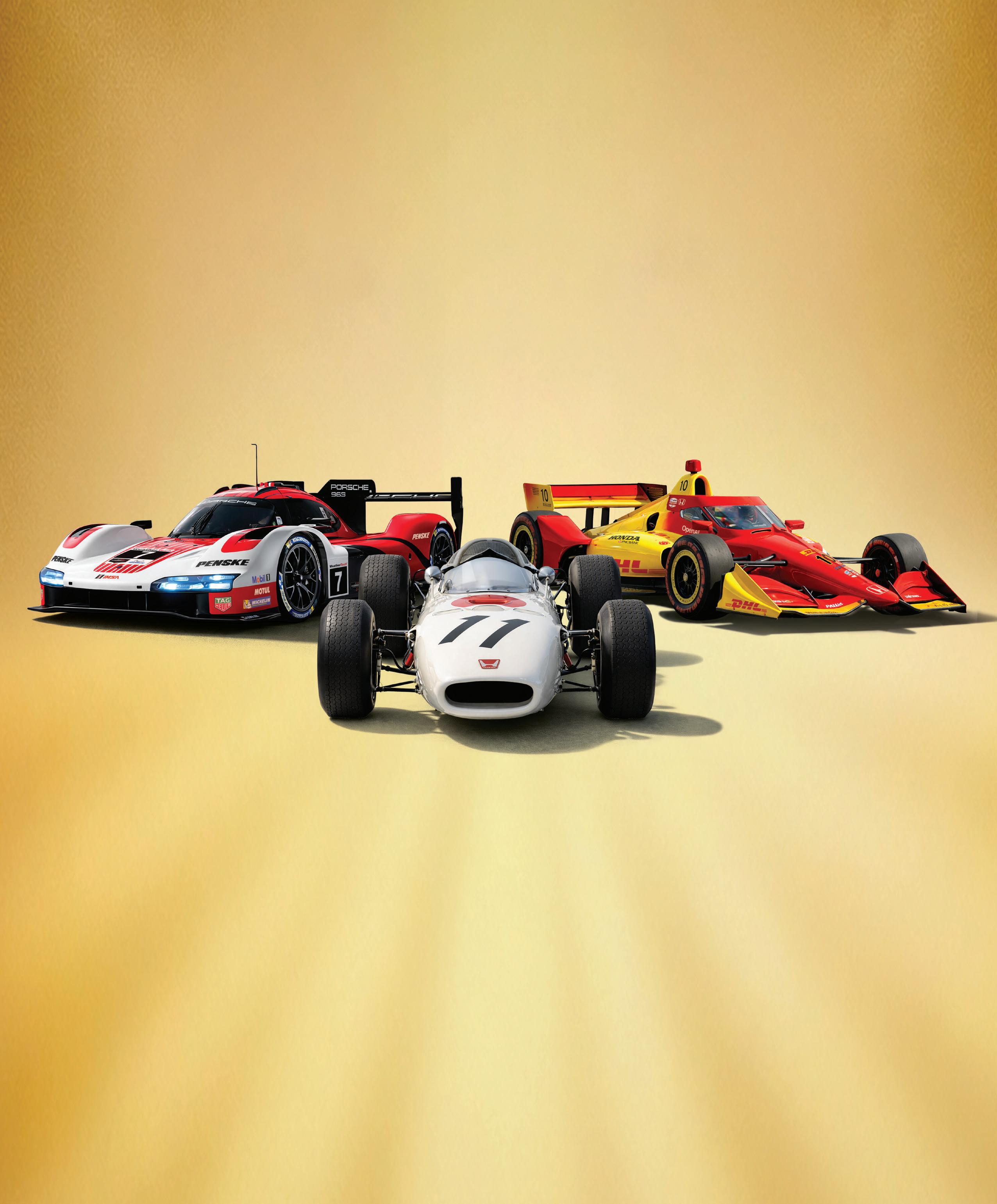
June 19-21 Ferrari Challenge
July 10-12 MotoAmerica Superbike SpeedFest at Monterey
August 8-9 Monterey Pre-Reunion and Corkscrew Hillclimb
August 12-15 Rolex Monterey Motorsports Reunion
September 4-6 INDYCAR Grand Prix of Monterey (Season Finale)
September 18-20 GRIDLIFE Laguna Festival
October 2-4 Mission Foods Racing America at Laguna Seca


Tickets at WeatherTechRaceway.com
SUPPORT RACES
The action on the track remains non-stop throughout the day as teams compete in their series to support the IMSA WeatherTech SportsCar Championship. It’s racing at its best
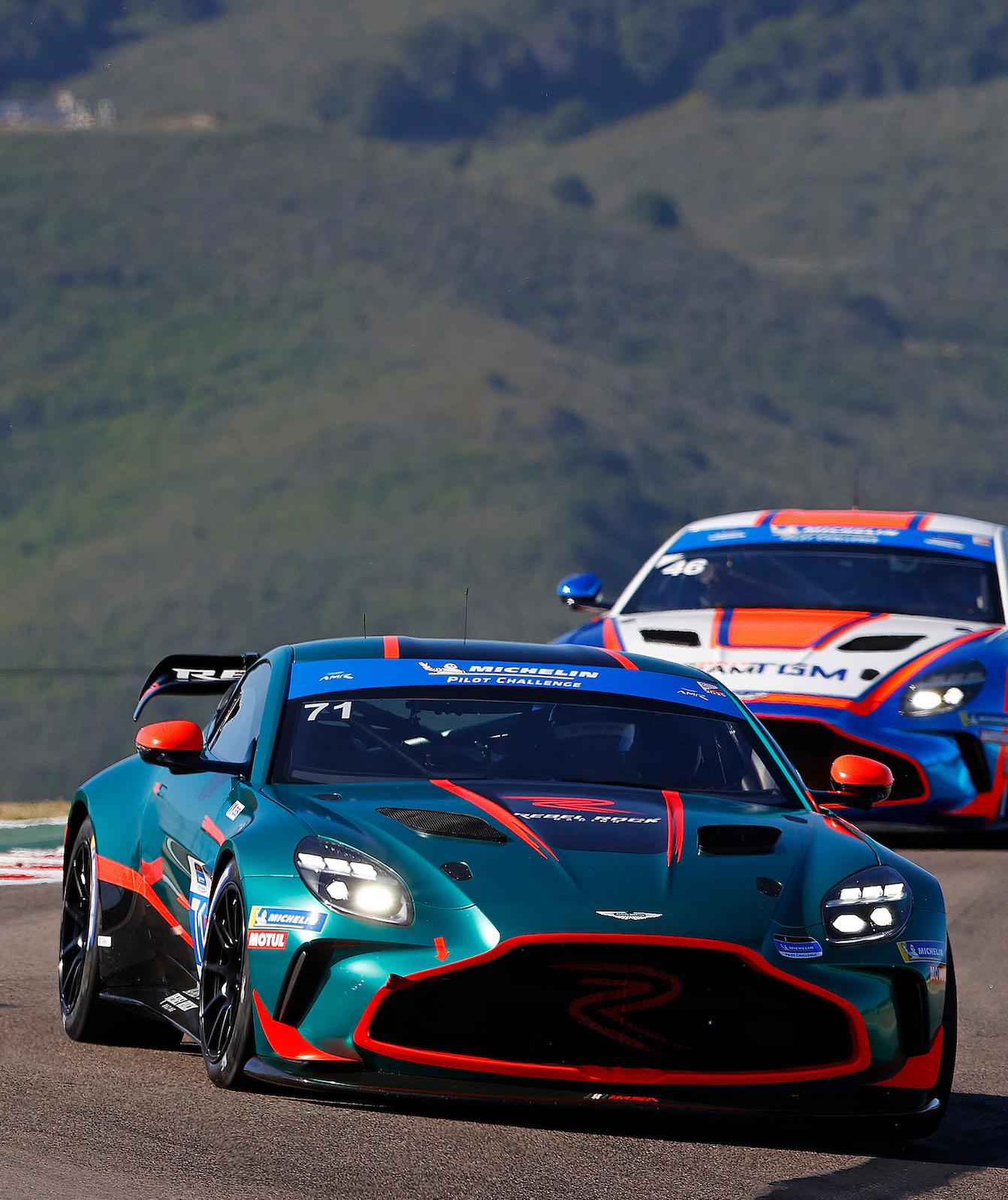
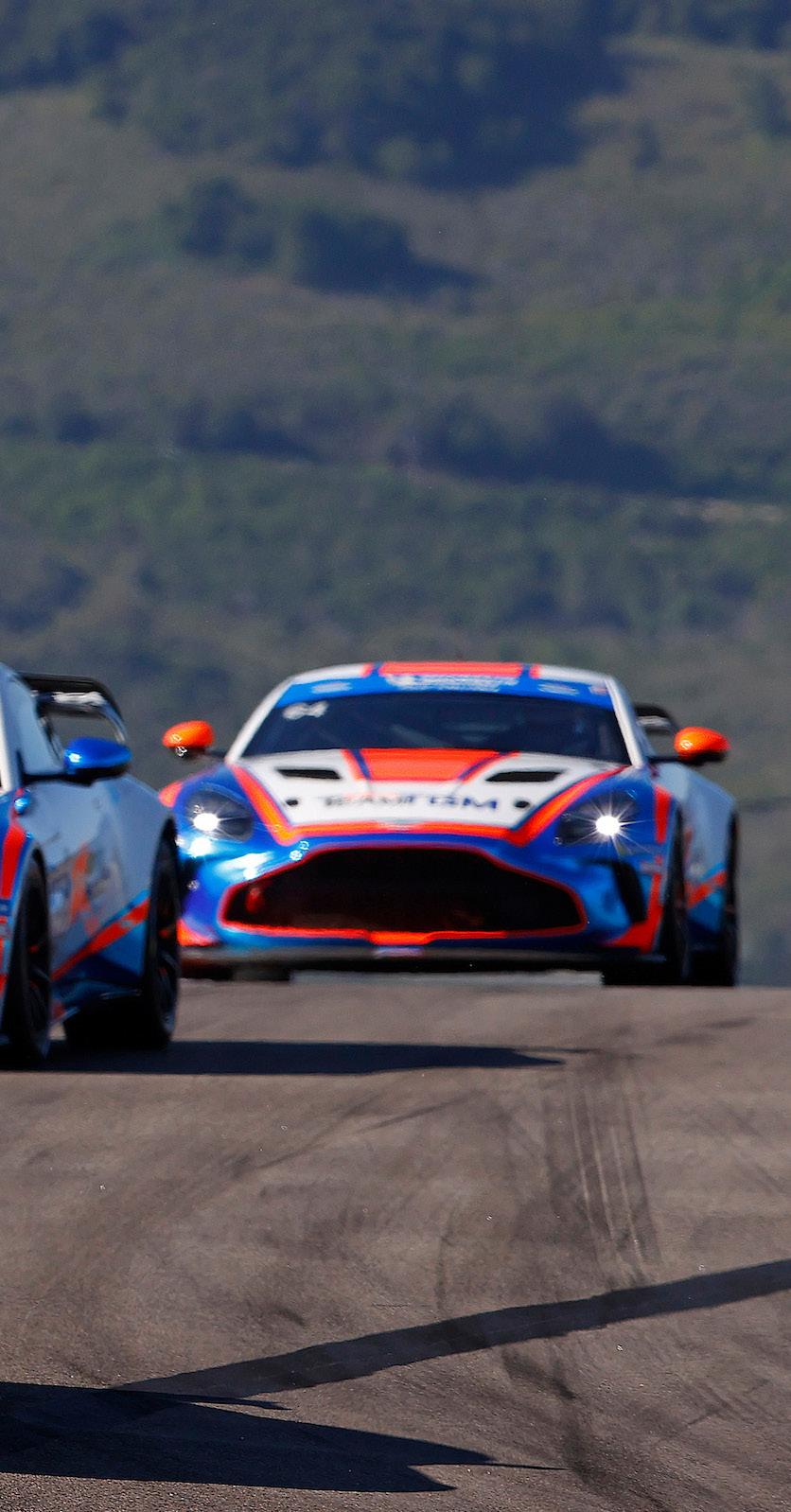
Last year’s 40-car field reminded fans of the intensity of racing in the Michelin Pilot Challenge. This year’s competition will ensure dramatic new storylines will be cemented during the series’ annual visit to Monterey.
Defending Monterey GS class winners Jan Heylen and Luca Mars piloted their RS1 Porsche 718 GT4 to victory recording a 1:29.882 fastest lap. TCR class winners Denis Dupont and Preston Brown drove their Bryan Herta with Curb Agajanian Hyundai Elantra N to a podium finish with an impressive fastest lap of 1:32.283 over the 11-turn course.
WeatherTech Raceway Laguna Seca is the fourth stop in the 11-race season and serves as an important marker for teams’ progress. Thus, drivers are eagerly looking forward to capturing important points on the technically demanding circuit. While race officials always remind competitors that it’s impossible to win a race in the first turn of the first lap, it’s very easy to lose a race, especially at Laguna Seca’s doubleapex Andretti hairpin.
Yet with the command to start engines, and the adrenaline surging throughout the formation laps, sometimes the reminders fade as the field sprints towards the first turn for the ideal line into the hairpin. As a result, race starts can be one of the most thrilling parts of the sport and potentially a turning point early in the race. Be sure to catch the opening action between turns 2 and 4 as they push the limits early.
The IMSA Michelin Pilot Challenge features sports cars from recognized manufacturers, consisting of GT4 and TCR homologated vehicles. The Michelin Pilot Challenge has two different classes, Grand Sport (GS) and Touring Car (TCR).
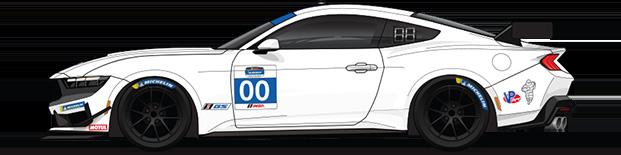
The Grand Sport class consists of SRO GT4 homologated cars with engines tuned to produce between 400 and 450 horsepower and can run speeds in excess of 160 mph. Competition is equalized by adjustments to fuel-tank capacities, ride height, power and weight. Manufacturers competing in 2026 include Aston Martin, BMW, Ford, McLaren, Mercedes-AMG, Porsche and Toyota.
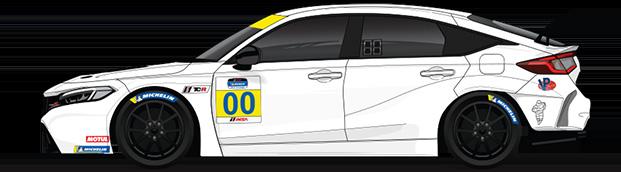
The Touring Car class consists of WSC TCR homologated cars with engines tuned to produce between 300 and 350 horsepower and can run speeds in excess of 140 mph. Competition is equalized by adjustments to fuel-tank capacities, ride height, power and weight. Manufacturers competing in 2026 include Audi, Cupra, Honda and Hyundai

Burkhard / Gordon
Stewart / Jonathan Browne
Hunter Yeany / Athan Sterling
Danny Dyszelski / Matheus Leist
Ben Sloss / Christine Sloss
Kiko Porto / Varun Choksey
Cicero / Robert Noaker
David Hampton / Thomas Merrill
Chris Miller / Mikey Taylor
Sean Quinlan / Gregory Liefooghe
Trevor Hill / Ron Tomlinson
Ford Koch / Jaxon Bell
718 GT4 RS
Mustang GT4
GR Supra GT4 EVO2 24 Aurora Straus / Kenny Murillo
GT GT4 26 Hannah Grisham / Hannah Greenemeier
27 Austin Krainz / Stevan McAleer
Vantage AMR GT4
M4 GT4 EVO 30 Scott Thomson / Clayton Williams
Mustang GT4 37 Steve Wetterau / Cameron Shields
38 Samantha Tan / Bill Auberlen
39 Sean McAlister / Jeff Westphal
TBD
Moisey Uretsky / Michael
Michaelian / Billy Johnson
Megennis / Nicky Hays
Machavern / Luca
Barletta / Robby
Filippi / Bryson
Baker / James Vance
Eddie Gou / Eduardo Gou
Dean Baker / Bruno Junqueira
Riley Pegram / Larry Pegram
Denis Dupont / Preston Brown
Celso Neto / Raphael Reis
Karl Wittmer / LP Montour
Madison Aust / Mark Wilkins
99 Tyler Gonzalez / Franco Girolami
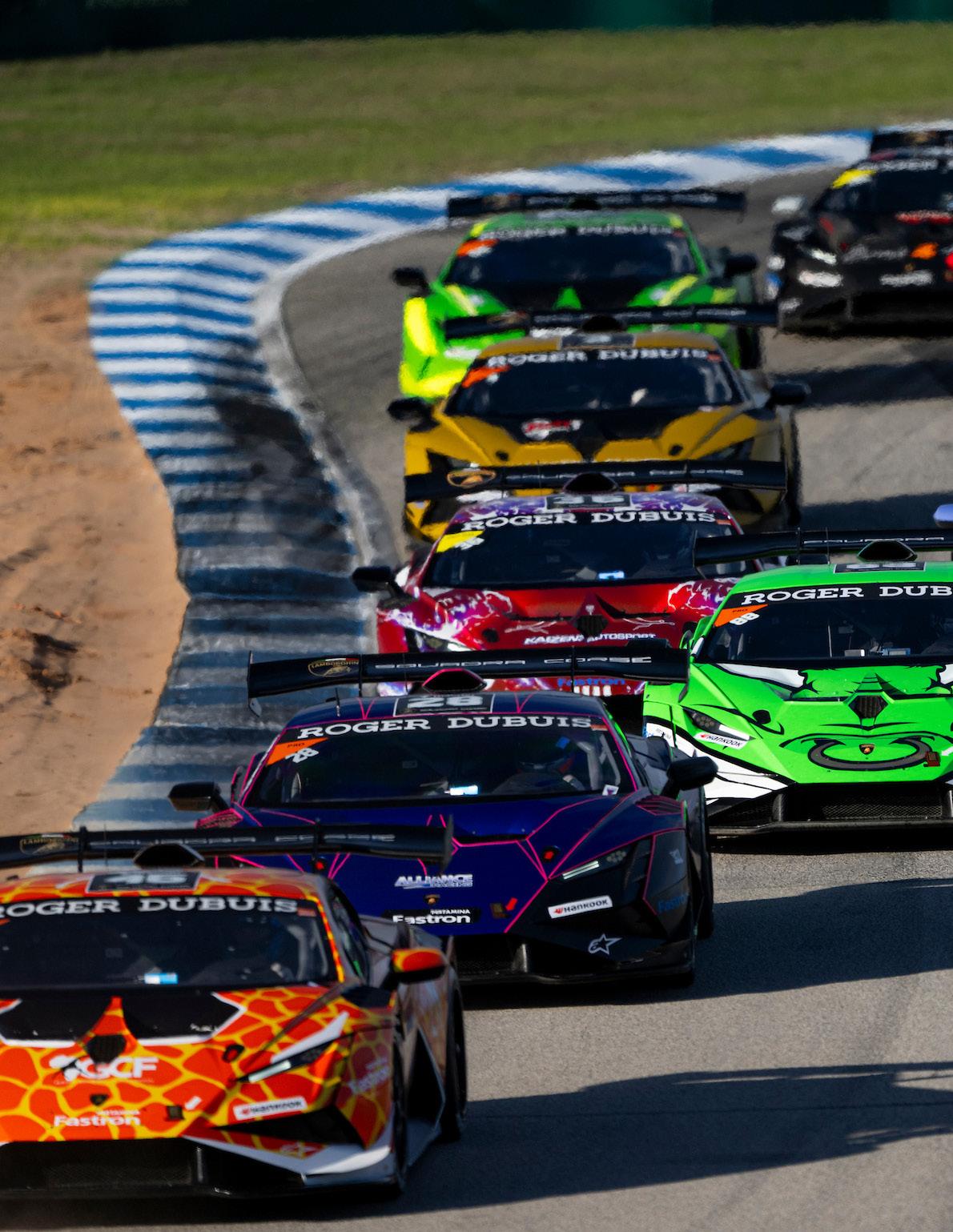
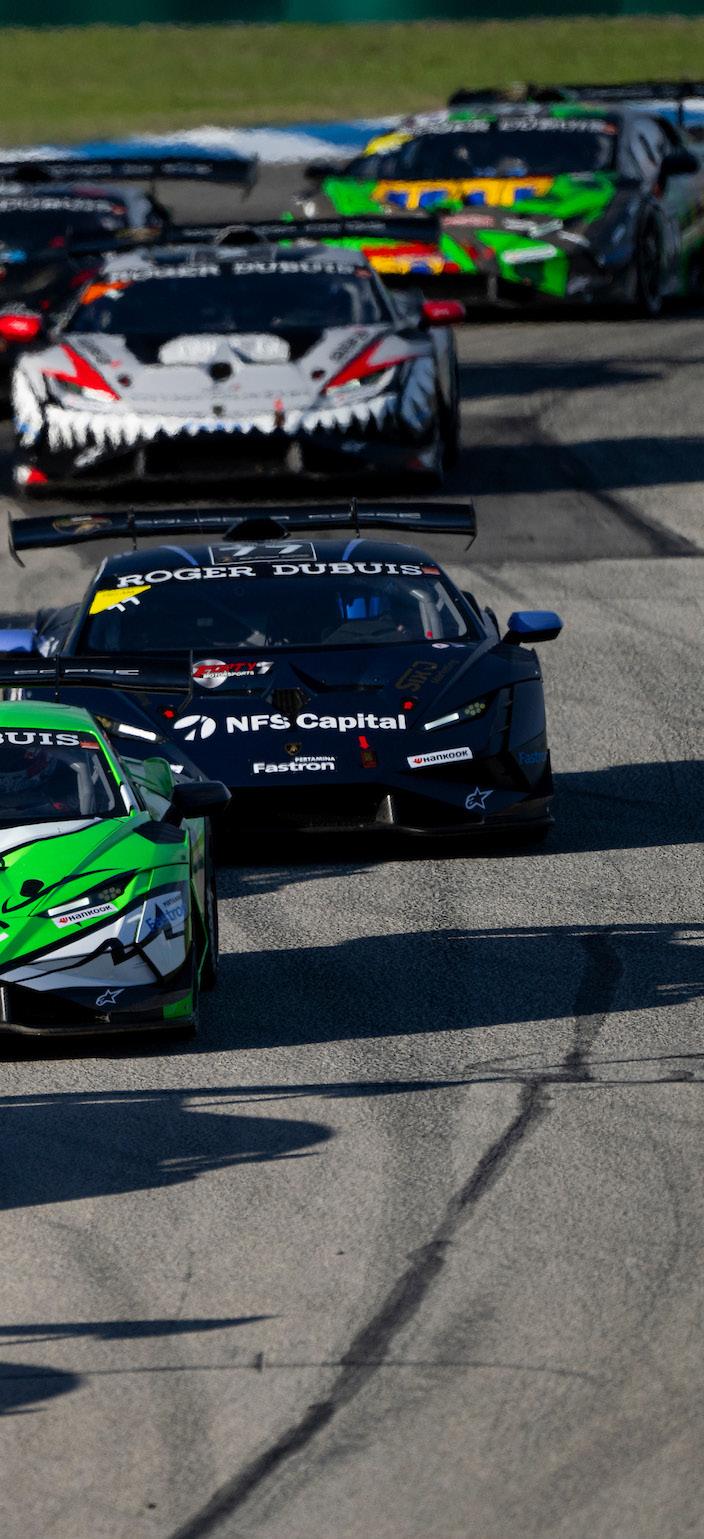
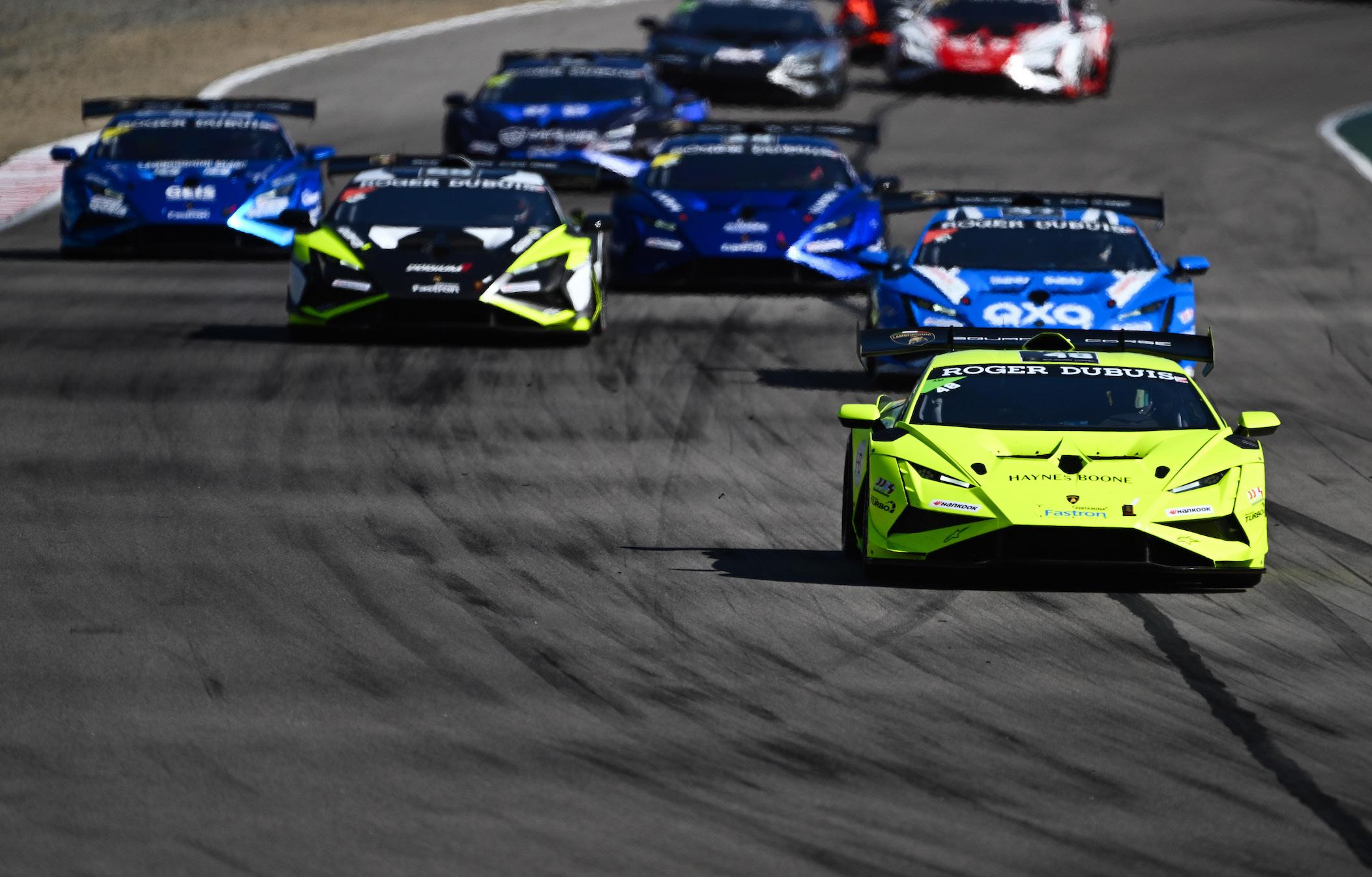
The immensely popular international one-make championship, the Lamborghini Super Trofeo North America, returns to WeatherTech Raceway Laguna Seca for two rounds of early championship points. Drivers will climb behind the wheel of the Italian-bred Lamborghini Huracán Super Trofeo EVO2 that was introduced in 2022 for the final time in Monterey. In 2027, the series shifts to the new Temerario Super Trofeo.
The 620-horsepower V-10-powered Huracán Super Trofeo EVO2 remains the most high-performance version ever designed to race in the one-make series. From the aesthetic point of view, the Huracán Super Trofeo EVO2 takes the design of the previous generations to the extreme, anticipating the styling elements that will debut on road cars in the coming years. The front end has undergone a radical change, featuring new light clusters and a pronounced “omega” lip that reinforces the stylistic link with the Huracán STO. Also new are the air curtain intakes, which optimize airflow.
The Lamborghini Super Trofeo North America, first launched in 2013, has consistently delivered thrills while showcasing the Raging Bull’s performance and reliability. Five of the six rounds are taking place with the IMSA WeatherTech SportsCar Championship, drawing increased fans to each race venue.
In total, the three regional championships reserved for Lamborghini will be contested over 36 races, covering approximately 1,800 minutes, visiting three continents and 10 different countries (USA, France, Italy, Belgium, Germany, Spain, Malaysia, China, Japan, and South Korea).
Round 1 – Sebring (March 18-20)
Round 2 – Laguna Seca (May 1-3)
Round 3 – Watkins Glen (June 25-27)
Round 4 – Road America (July 30 - August 1)
Round 5 – Indianapolis (September 18-20)
Round 6 – Monza (October 22-23)












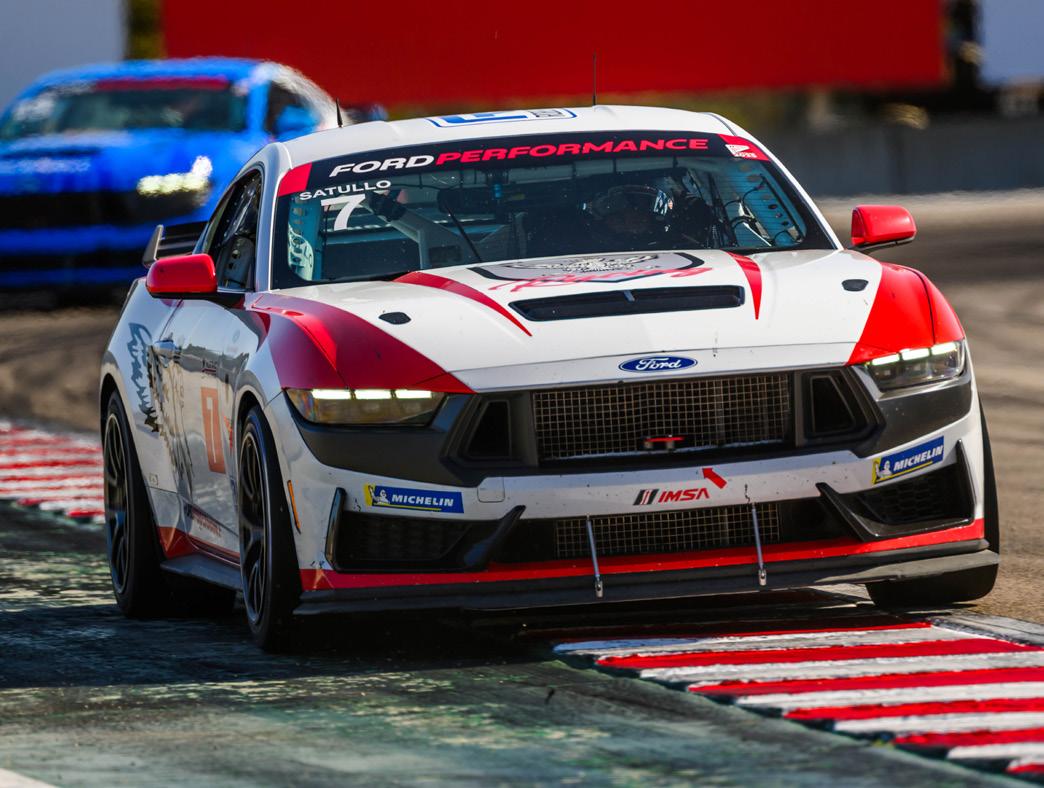
Few brands can match the racing heritage of Ford Motor Company. Whether competing in single-seaters or stock cars, the famous blue oval emblem carries a rich history of innovation and success.
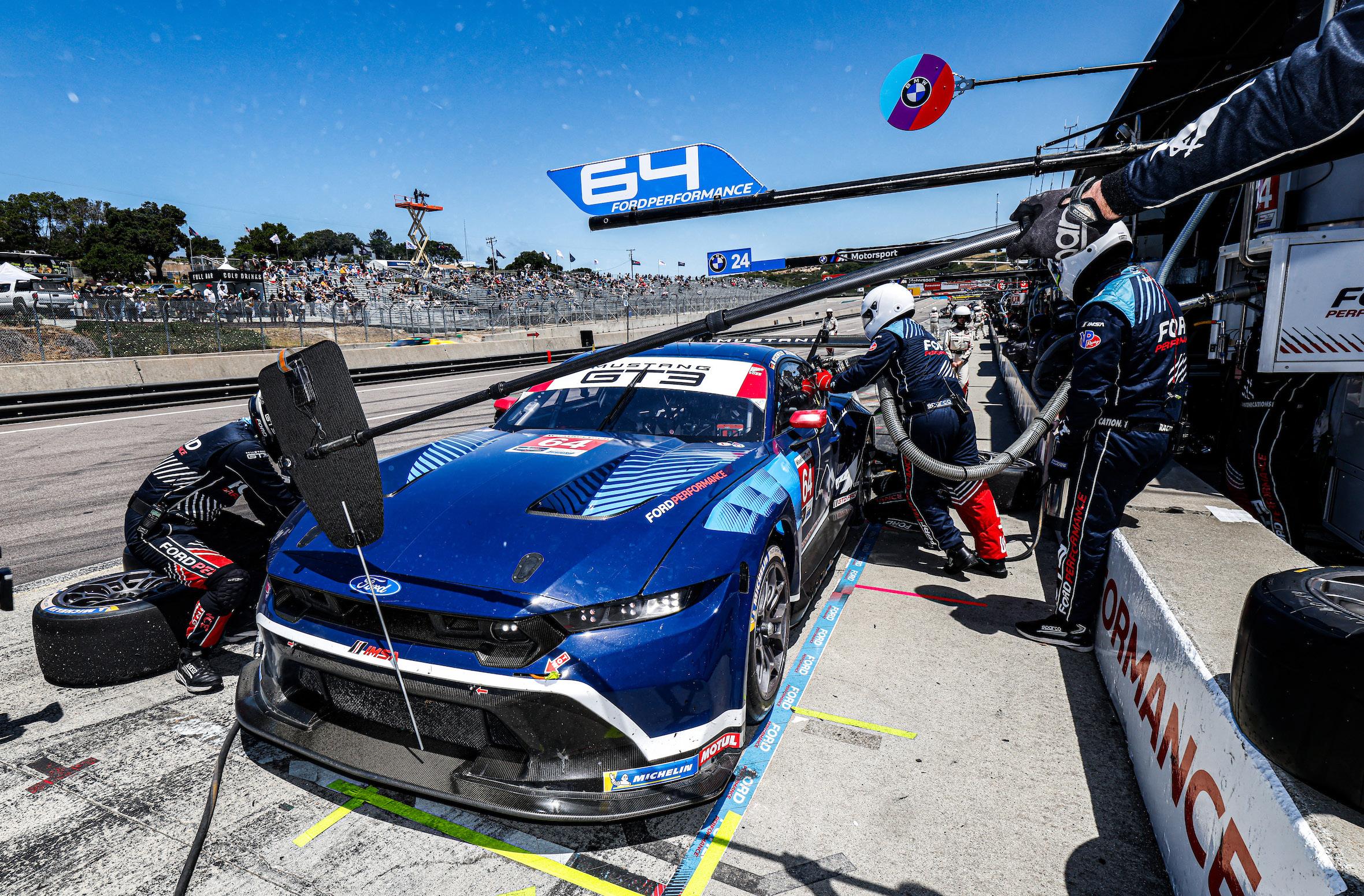
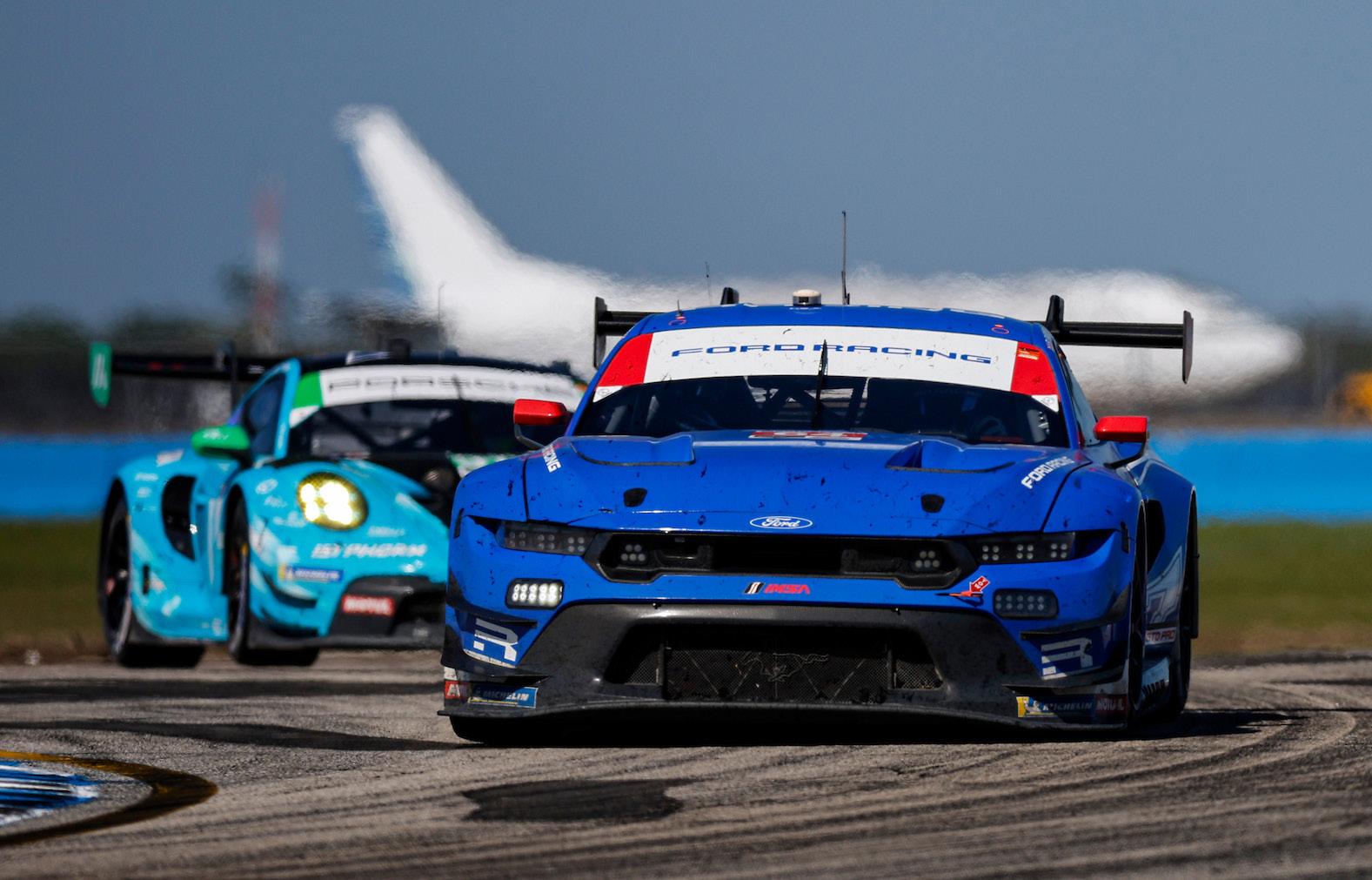
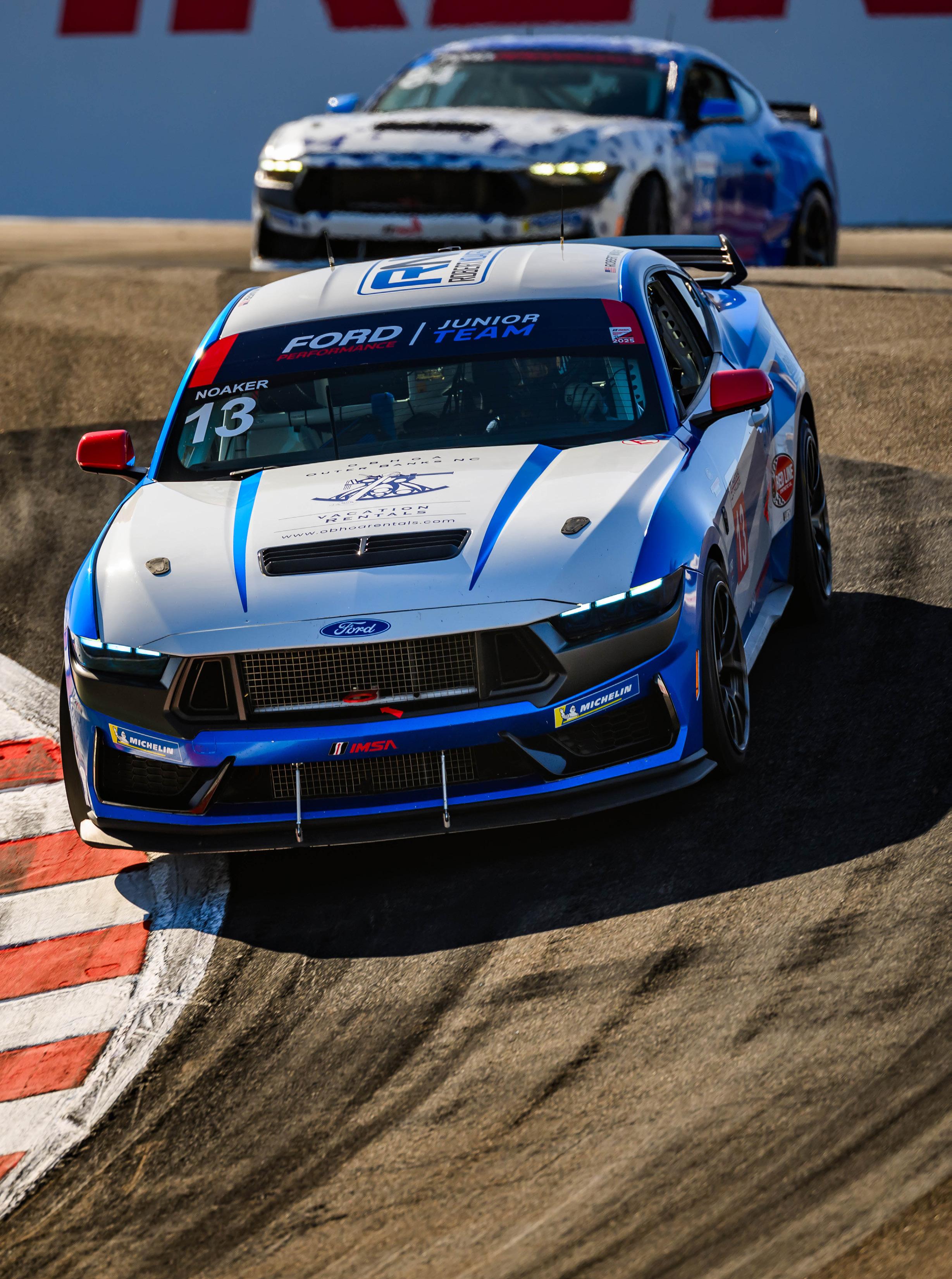
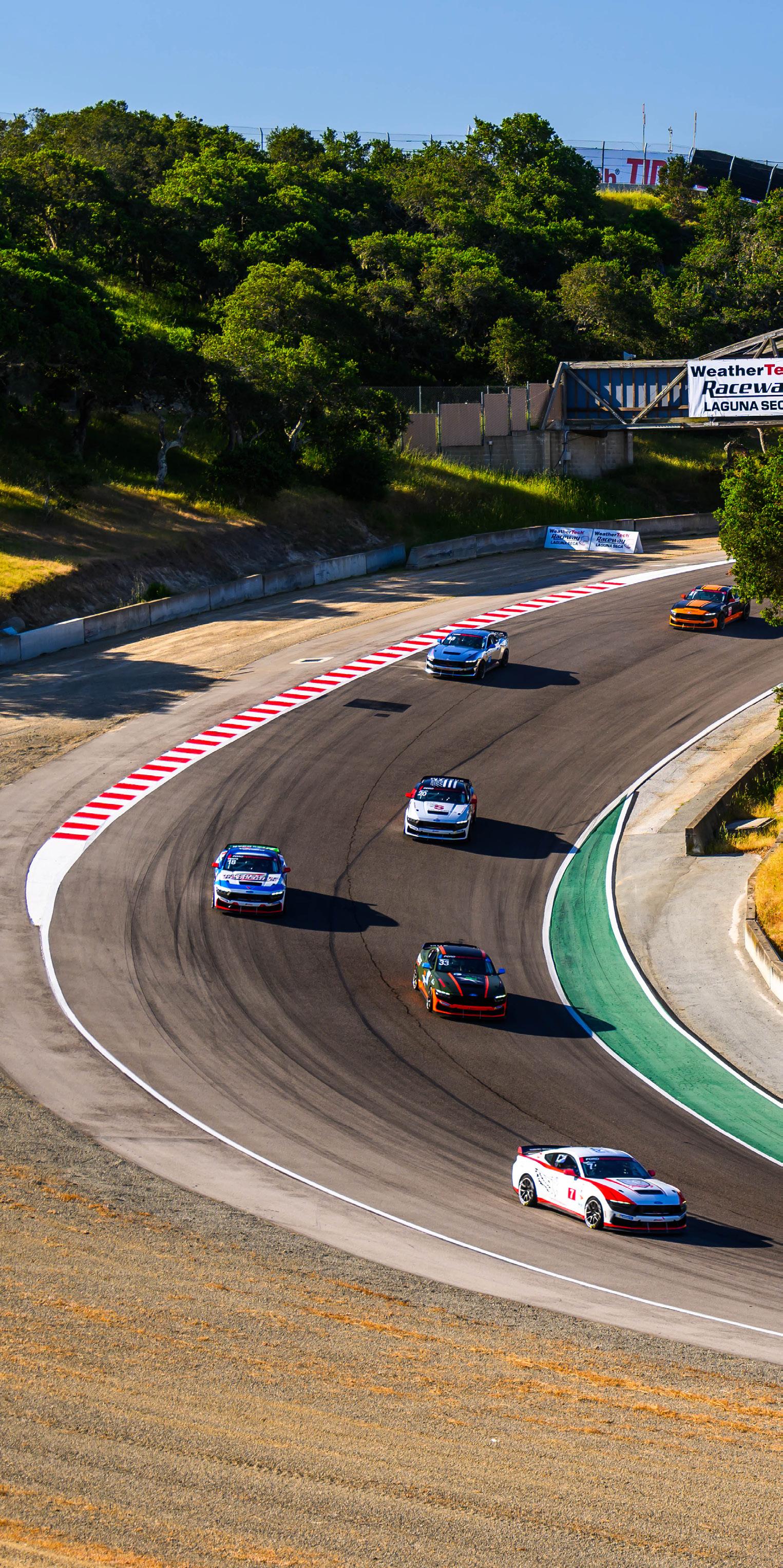
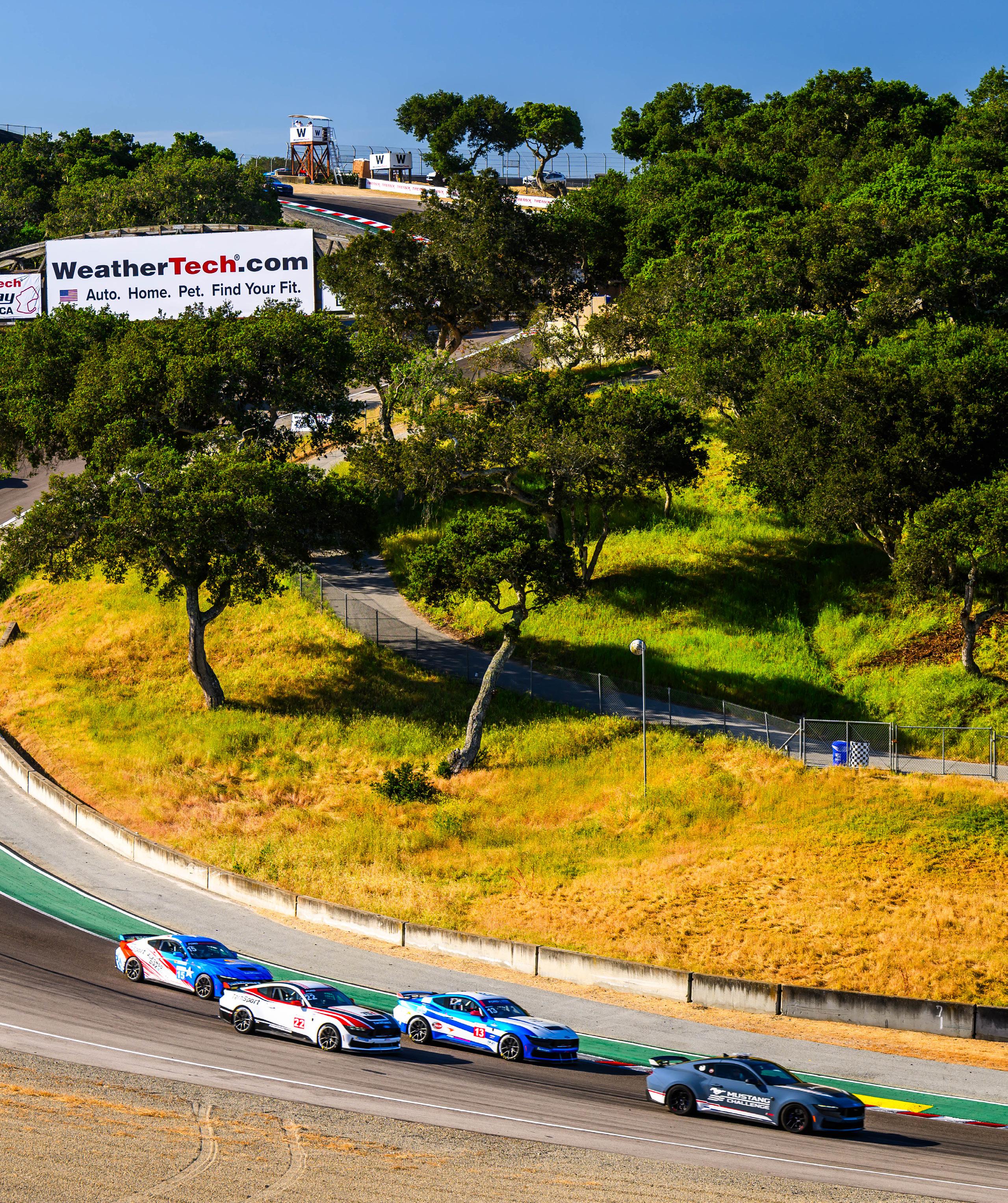
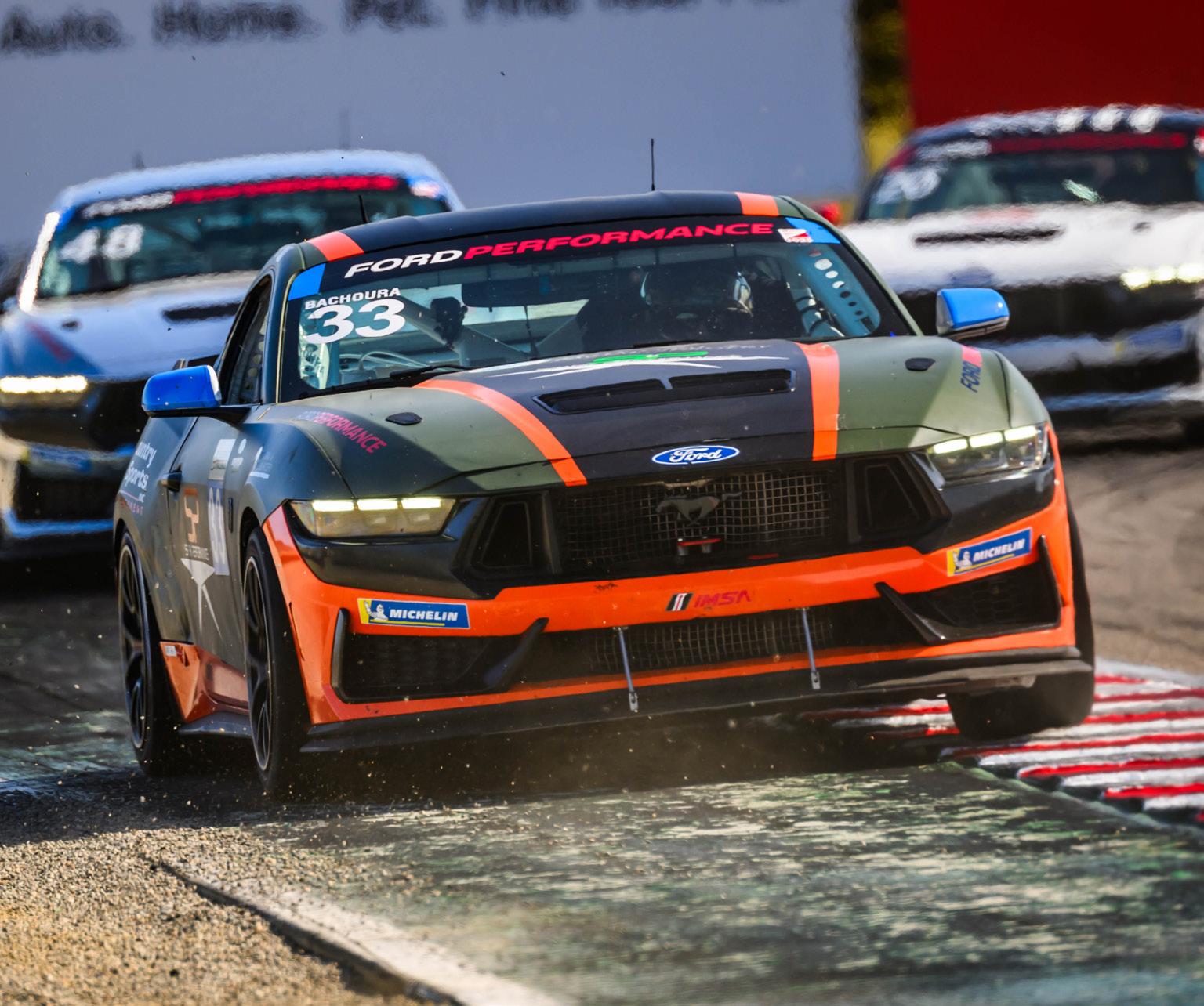
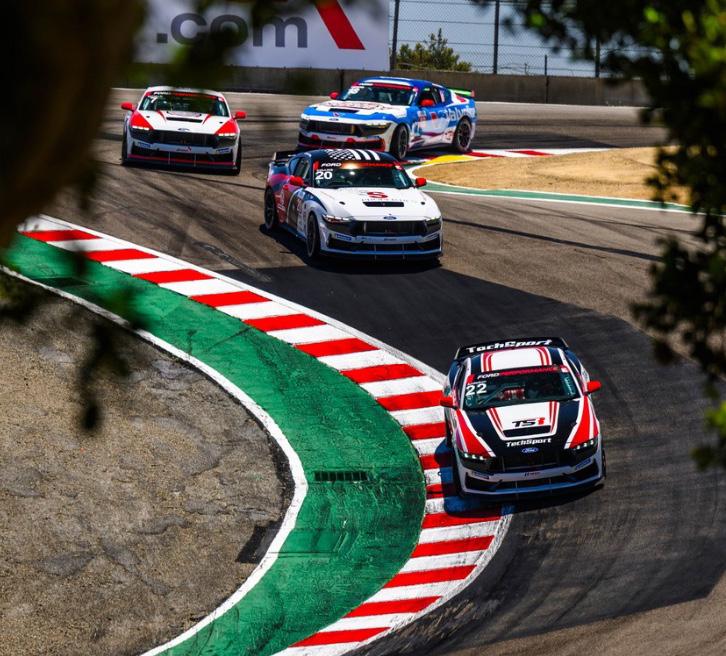
The Mustang is arguably Ford’s most iconic racing vehicle, with a long history of victories spanning decades. Today, its legacy thrives through the Mustang Dark Horse R—a race track ready car designed for discerning enthusiasts who are competing in the Mustang Challenge North America series.
To be successful as a one-make racing series, it’s about customer experience. Venues and dates set the tone, and Ford Racing has assembled the best blend of premier race facilities that appeal to racers, families, and fans.
Sanctioned by IMSA, the Mustang Challenge allows drivers up to FIA silver ratings to compete on a level playing field against other Mustang Dark Horse R cars.
Each event features two 30-minute practice sessions, one 15-minute qualifying session and two 45-minute sprint races. The field is split into two classes: Dark Horse and Dark Horse Legends, the latter being an optional classification eligible to bronzelevel drivers 40 years old and over.
• 500+ horsepower 5.0-liter Coyote V8
• Tremec® 3160 manual transmission
• Torsen limited slip differential with 3.55 final drive ratio
• Upgraded transmission cooling
• Upgraded engine cooling system
• Upgraded oil system with Ford Racing oil pan
• Upgraded differential cooling
• Borla racing exhaust system
• Upgraded radiator and revised grill
• Track width, front 1,611mm
• Track width, rear 1,621mm
• Overall width 1,914mm
• Wheelbase 2,718mm
• Brembo® race calipers – front
• Brembo® race rotors – front
• Brembo® race pads
• Apex VS-5RE Forged Enduro Wheel (18x11)




































































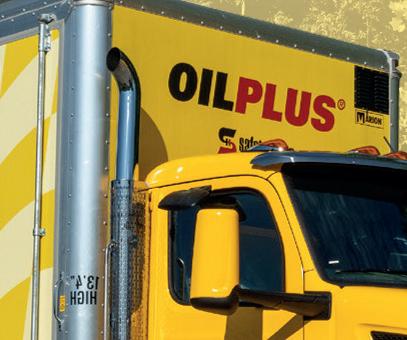
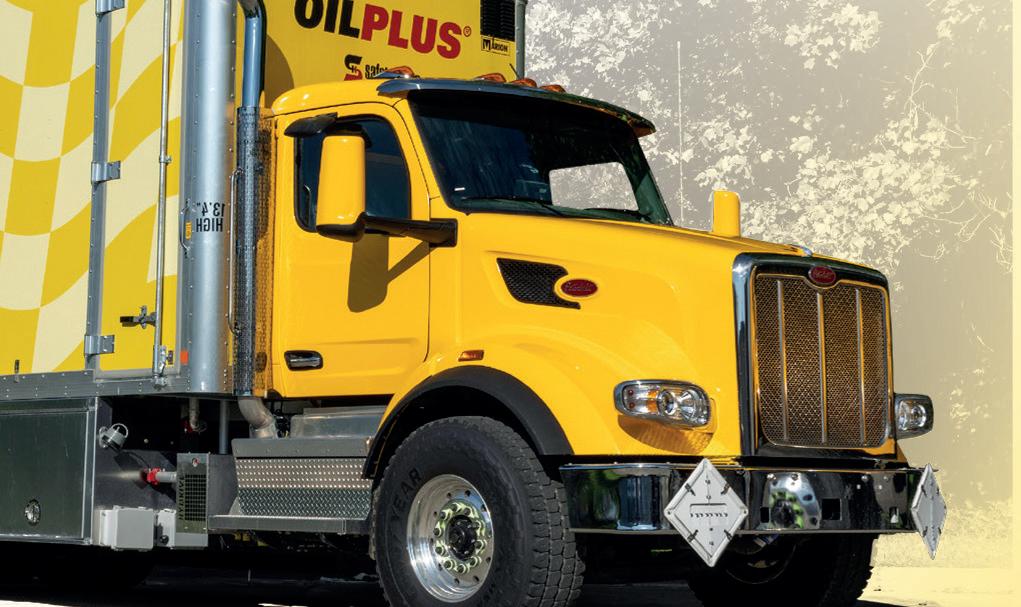
With over 50 years of experience and a nationwide infrastructure, Safety-Kleen delivers the latest in parts washer technologies, industrybest products, and unmatched service. From the pit to the shop, racing teams trust Safety-Kleen to keep their operations clean, compliant, and competitive.

























Our Services Include:
• Advanced Parts Washer Solutions
• Reliable Used Oil Collection
























• Comprehensive Waste Management
• Responsive Emergency Services


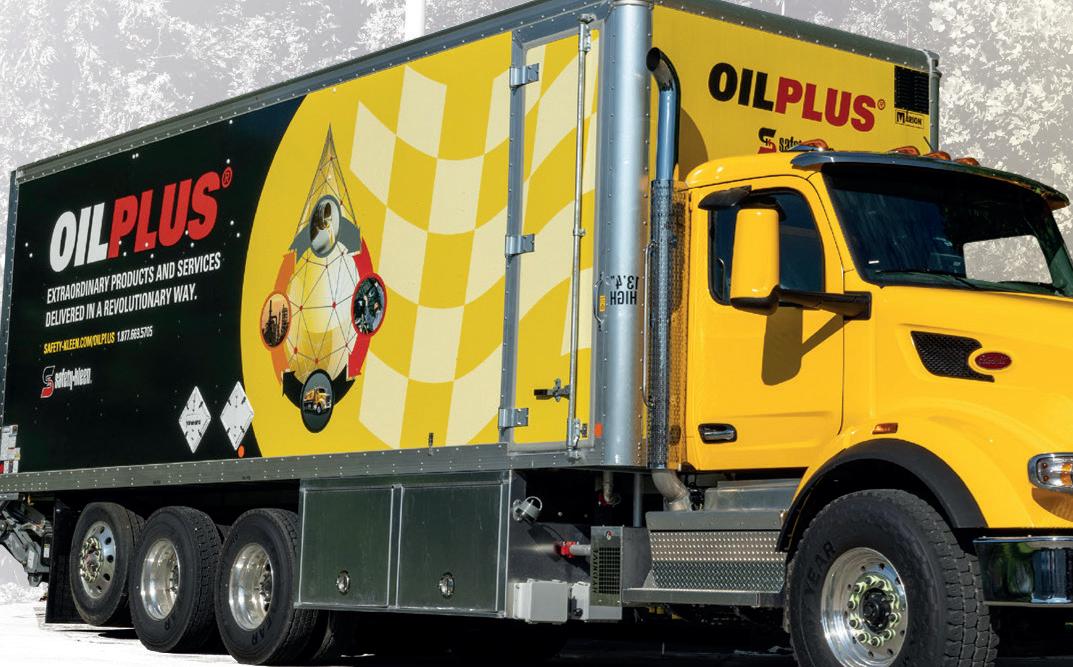














• Powerful Vacuum Truck Services

Our Products Deliver:
• High-performance Oil & Lubricants

• Eco-conscious Cleaning Products
• Durable Absorbents & Coolants

• Expert Compliance & Project Management















SCAN HERE to learn why Safety-Kleen offers the best products and services in the industry.
















• Smart Storage & Accessories DRIVEN BY INNOVATION. COMMITTED TO SUSTAINABILITY. TRUSTED BY CHAMPIONS.





























































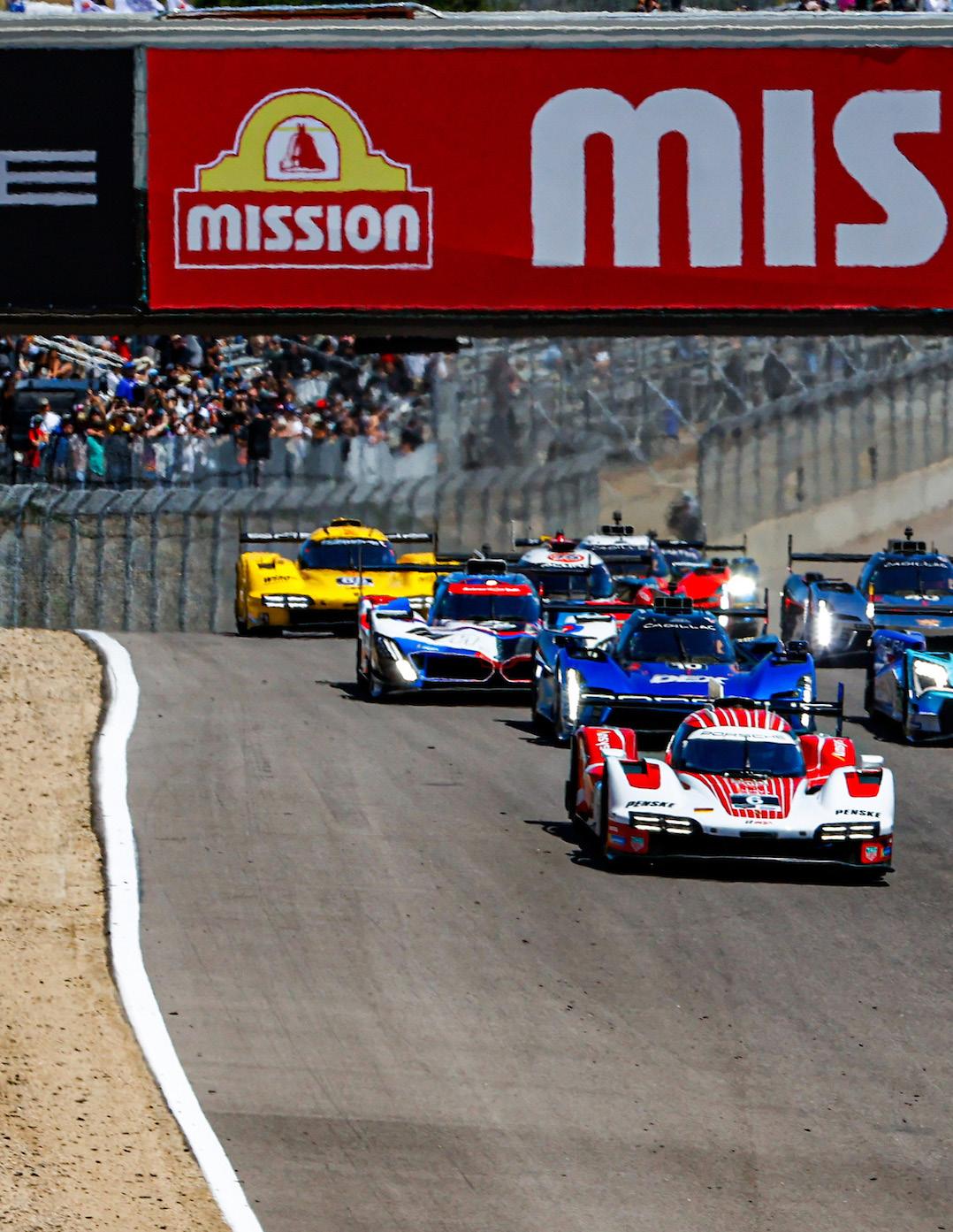
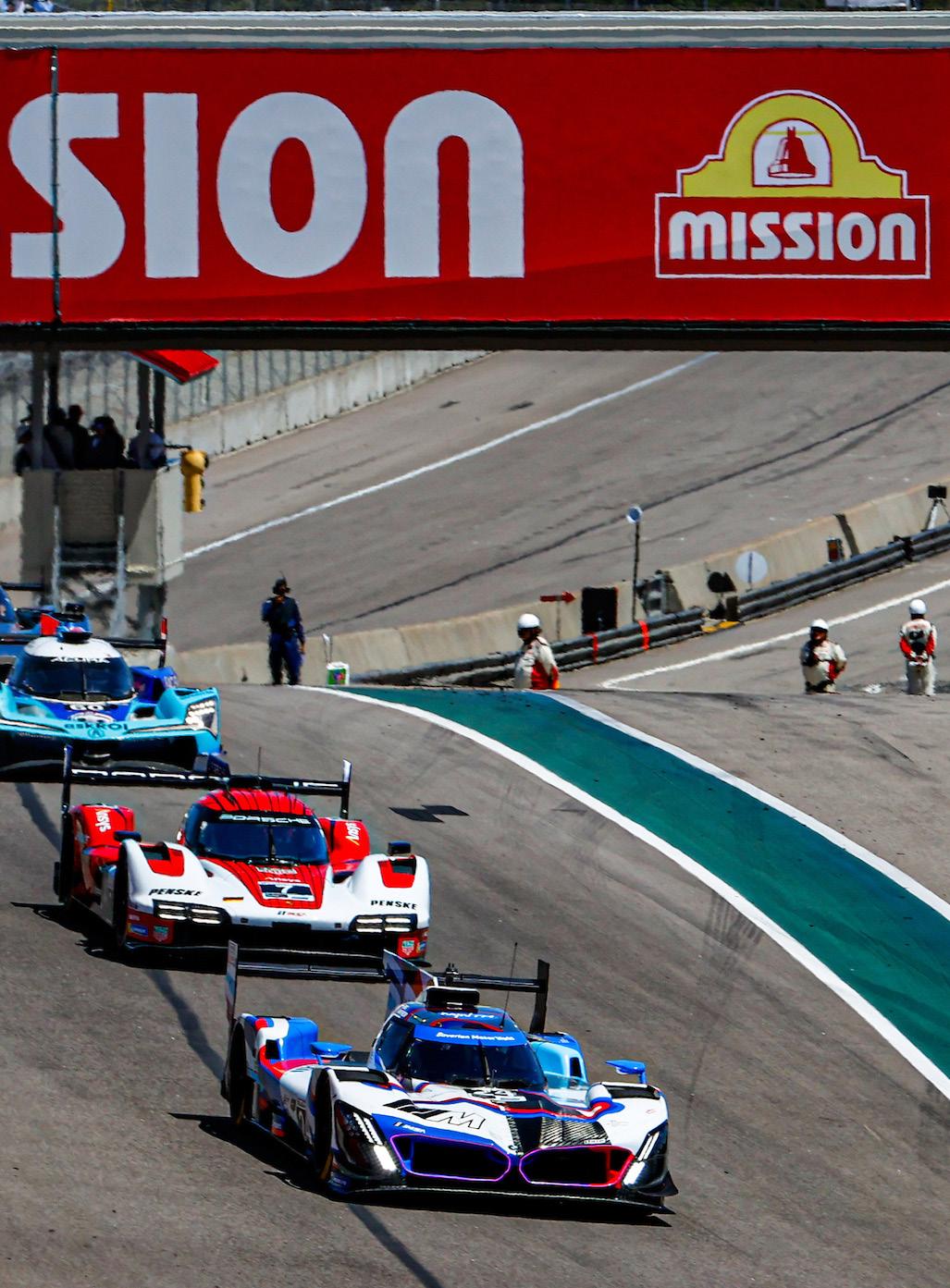
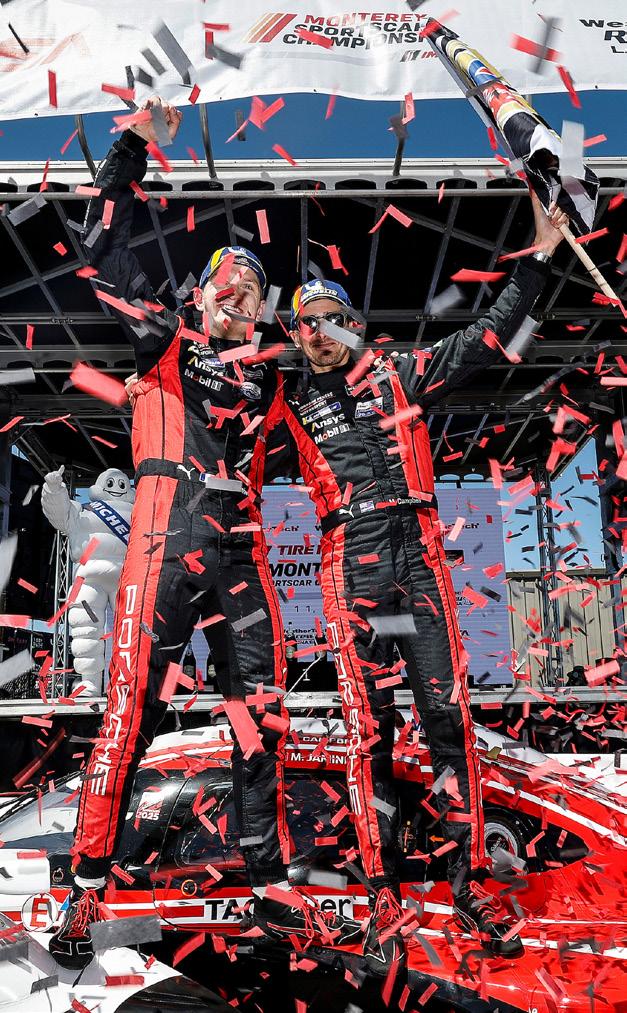
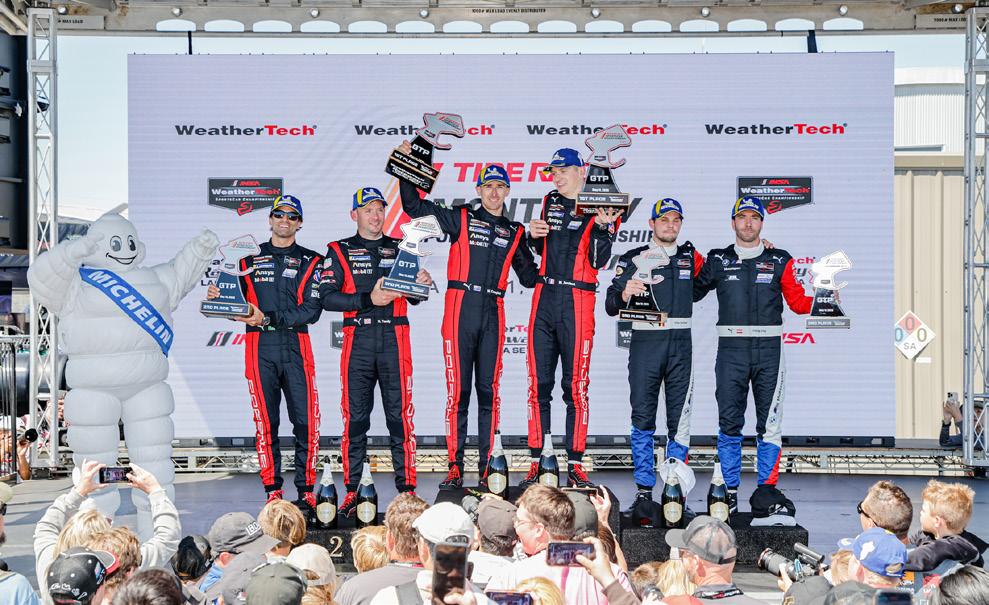
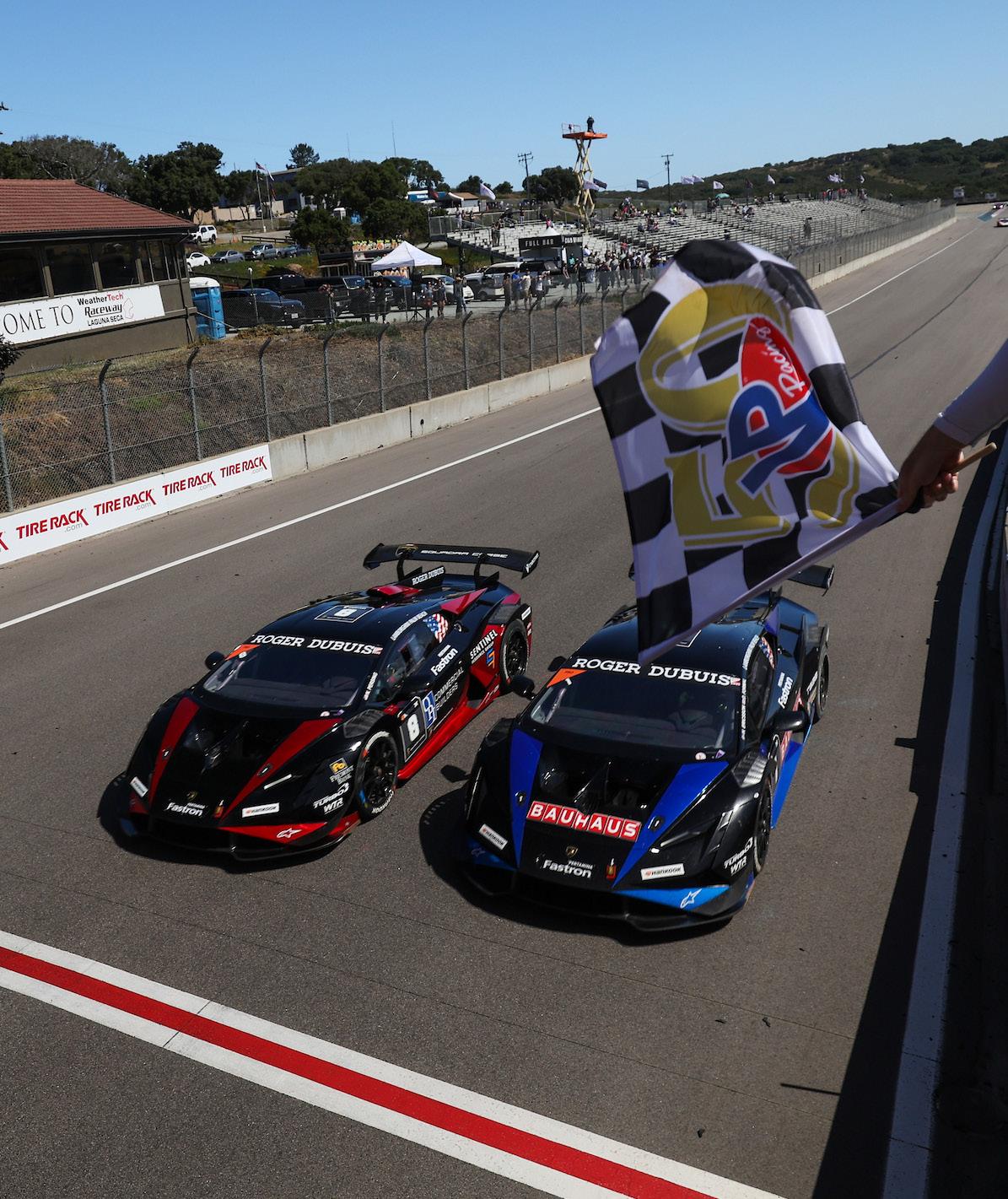
The crowds erupted showing their appreciation of GTP race winners Matt Campbell and Mathieu Jaminet from Porsche Penske Motorsport as they won the 2025 Tire Rack Monterey Sports Car Championship. The duo narrowly defeated teammates Nick Tandy and Felipe Nasr by just 1.692 seconds in a nail-biting finish.
The Monterey race weekend was the second and final leg of IMSA WeatherTech SportsCar Championship’s West Coast swing and provided fans with an immersive and thrilling weekend.
Visitors also had the opportunity to meet racing legend Bobby Rahal who served as Grand Marshal. His four consecutive INDYCAR wins from 1984-87 prompted Laguna Seca to name the stretch from Turn 6 through 8 in his honor—the Rahal Straight.
“I call it one of the crown jewels of American road racing circuits,” said Rahal. “It’s been around a long, long time and the world’s greatest drivers and motorcycle riders have raced there over the years.”
From the popular Street Fest in historic downtown Salinas to the checkered flag and podium celebration, there was plenty to see and do making it one of the largest events on the Laguna Seca calendar.