SKILL VS WILL The real secret to winning isn't what you think

SKILL VS WILL The real secret to winning isn't what you think
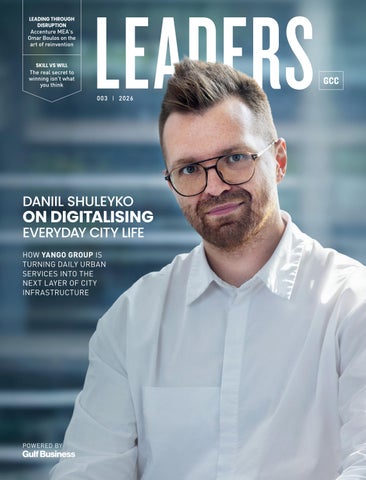
HOW YANGO GROUP IS TURNING DAILY URBAN SERVICES INTO THE NEXT LAYER OF CITY INFRASTRUCTURE
While rivals chase global scale, Yango Group CEO Daniil Shuleyko builds from the street up, one city at a time. Here, he shares the strategy driving his hyperlocal conglomerate

Governments and enterprises are moving beyond the hype to embed AI within national frameworks

As profit stops being the only measure of success, businesses are putting purpose at the centre, aligning leadership, brand and technology
Editor-in-chief Obaid Humaid Al Tayer
Managing partner and group editor Ian Fairservice
Chief commercial officer Anthony Milne anthony@motivate.ae
HEAD OFFICE: Media One Tower, Dubai Media City, PO Box 2331, Dubai, UAE, Tel: +971 4 427 3000, Fax: +971 4 428 2260, motivate@motivate.ae
DUBAI MEDIA CITY: SD 2-94, 2nd Floor, Building 2, Dubai, UAE, Tel: +971 4 390 3550, Fax: +971 4 390 4845
ABU DHABI: PO Box 43072, UAE, Tel: +971 2 657 3490, Fax: +971 2 677 0124, motivate-adh@motivate.ae
SAUDI ARABIA: Regus Offices No. 455 - 456, 4th Floor, Hamad Tower, King Fahad Road, Al Olaya, Riyadh, Saudi Arabia, Tel: +966 11 834 3595 / +966 11 834 3596, motivate@motivate.ae
LONDON: Acre House, 11/15 William Road, London NW1 3ER, UK, motivateuk@motivate.ae
Group content director Thomas Woodgate
Thomas.Woodgate@motivate.ae
Publishing director Manish Chopra manish.chopra@motivate.ae
Group editor Gareth van Zyl Gareth.Vanzyl@motivate.ae
Editor Neesha Salian neesha.salian@motivate.ae
Deputy editor Rajiv Pillai Rajiv.Pillai@motivate.ae
Reporter Nida Sohail Nida.Sohail@motivate.ae
Senior art director Freddie N Colinares freddie@motivate.ae
General manager – production S Sunil Kumar
Production manager Binu Purandaran
Assistant production manager Venita Pinto
Digital sales director Mario Saaiby mario.saaiby@motivate.ae
Sales manager Hitesh Kumar Hitesh.Kumar@motivate.ae

The habits of entrepreneurs who always “hold their nerve” when markets wobble
have watched markets crash at least four times in my career: the dot-com bubble, Dubai’s property implosion in 2008, the global financial crisis, the Covid-19 pandemic, and several smaller panics in between. Each time, the same entrepreneurs who built serious wealth did the opposite of what the headlines were urging. While news channels showed red arrows and profit warnings, they were quietly buying property, backing businesses, and positioning themselves for what came next.
They weren’t geniuses, and they weren’t lucky. They understood something most people forget: you only need to double Dhs10,000 ten times to turn it into Dhs100m. That is not motivational rhetoric. It is mathematics.
Those who build generational wealth understand that systematic compounding beats chasing quick deals every time.
Entrepreneurs who build lasting wealth operate on a different clock. They think in minimum three-year cycles because that is typically how long compounding needs to work.
When I buy a property, I have already run the numbers. With 66 per cent leverage and reasonable assumptions, the asset does not need to double in value to double my equity. A 33 per cent increase can achieve that. Meanwhile, rental income services the mortgage. Could values dip in year one? Certainly. Over longer cycles? History suggests growth. This is not blind optimism. It is understanding how long assets take to mature.
I remember Dubai’s property crash in 2008–09. Values fell 50 to 60 per cent in some areas. Half-built towers stood idle. Headlines declared the city finished. Yet the entrepreneurs who held their positions, or bought more during the turmoil, built substantial wealth over the following decade.
Holding your nerve does more than protect capital. It creates opportunity. When you acquire assets in correcting markets using prudent leverage, returns are amplified during recovery.
Purchase a business 30 per cent below peak with 66 per cent leverage, and a return to previous levels can significantly multiply equity. It is impossible to predict exact tops and bottoms. But acting with patience when others are panicking often places you close enough. And close enough, combined with leverage and time, can produce exceptional outcomes.
After three decades of building businesses, I view market corrections as part of the process. If you have never lived through one, it feels catastrophic. If you have experienced several, it feels cyclical.
Successful entrepreneurs separate emotion from mathematics. Markets trigger instinct. Falling prices Pic:

BUY A BUSINESS FOR 30% BELOW PEAK WITH 66% LEVERAGE, AND WHEN THE MARKET RECOVERS, YOU HAVEN’T JUST PRESERVED CAPITAL – YOU CAN POTENTIALLY TRIPLE OR QUADRUPLE YOUR EQUITY POSITION
prompt fear. The disciplined investor runs the numbers before committing capital and trusts those numbers when volatility arrives. Before investing, I model worst-case scenarios. What if rental yields fall 10 per cent? What if values decline 15 per cent? If the investment works under stress, I proceed. When volatility materialises, there is no panic, because it was already factored in.
Wealth builders rarely deploy all their capital in rising markets. They deliberately retain liquidity, often 20 to 30 per cent, for moments of distress.
The most attractive opportunities appear when confidence collapses. Distressed sellers in Dubai during 2009. Motivated vendors during the Covid-19 pandemic. These conditions exist precisely when sentiment is weakest and discipline matters most.
After founding or backing more than 30 companies and building portfolios across the UK, US, and UAE, I have learned that holding your nerve is not about courage. It is about understanding that wealth creation is a mathematical process sustained over time.
Three-year cycles reduce noise. Leverage multiplies measured gains. Systematic investing compounds modest wins into meaningful outcomes. Double your capital ten times over 30 years and Dhs10,000 becomes Dhs100m.
There is nothing glamorous about the above mentioned approach. It is slow, deliberate, and often unexciting. But in my experience, disciplined and systematic investing consistently outperforms reactive decision-making. L
“I’VE WATCHED DUBAI GO FROM CRISIS TO BOOM. I’VE SEEN BUSINESSES NEARLY FAIL, THEN THRIVE. I’VE EXPERIENCED THE SICK FEELING WHEN ASSET VALUES FALL – AND WATCHED THOSE SAME ASSETS DOUBLE A FEW YEARS LATER.”
The writer is the chairman of Albany Beck and author of “Double Up Money Mastery”. He splits his time between London and Dubai, where he helps others learn these techniques.

As DEI efforts face growing resistance in the workplace, this piece explores the fear driving the backlash and what leaders can do to move beyond performative action toward meaningful inclusion
Since 2020, organisations have made strides to embed DEI into their business. Many leaders have shifted from viewing DEI as an HR activity to one that focuses on impact through environmental, social and governance (ESG) priorities. Indeed, a 2023 Workday survey across 19 countries found that 97 per cent of companies have at least one DEI initiative. Yet the world of work has also seen an increase in resistance and backlash towards DEI. Positions are being axed, especially at the top, with chief diversity officer
(CDO) hires being the only C-suite position to experience hiring declines in 2022. DEI programmes have also taken a hit, with access to initiatives falling to 41 per cent according to one Glassdoor survey. The result? DEI has become more of a ‘buzzword’ and box-ticking exercise. Businesses have simplified initiatives to quotas and targets that focus on a narrow view of diversity. They have reduced them to quick-fix and performative efforts that provide superficial and short-term change, but look good on the annual report.
To truly move the needle on making diversity, equity and inclusion a reality in the workplace, leaders must gain a better understanding why DEI is creating so much contention. So, what is causing this backlash, and how can leaders overcome it to move DEI beyond compliance and box-ticking?
The backlash and resistance to DEI in our workplaces is experienced by those who are part of dominant groups as well as those who are part of marginalised groups. It can take the form of outright denial of the need for DEI, passive backlash and resistance that includes avoidance or hesitation towards engaging actively in DEI change initiatives, and more active overt backlash or resistance to DEI. To dig deeper into this issue, I conducted a body of research that focused on making sense and understanding the core reasons for this resistance to DEI in organisations. The data included a discourse analysis of global news articles over the period from 2023–4, survey data from a survey conducted in the first quarter of 2024, and qualitative interview data with 28 global DEI experts and practitioners, business leaders and psychologists in early 2024.
The results were eye-opening: people fear DEI initiatives. There is the fear of being discriminated against, of getting things wrong, of saying the wrong things or of feeling uncomfortable. There is the fear of being misunderstood or misrepresented, of being the lone voice, of being the token hire, or even the fear of not doing enough.
This fear of DEI is experienced by the wellrepresented and the underrepresented; by the privileged and those less privileged; by those who advocate for DEI and those who don’t.
These fears prevent us from acting and keep us as bystanders, limiting progress towards nurturing inclusive workplaces. So, how can we let go of our fears and hold ourselves accountable to being inclusive at work?
To let go of the fears of DEI, we need to take actions that move us away from seeing these initiatives as a threat. Leaders can do this themselves, and help their employees to do the same, by using the following five “nudges”, interventions that gently steer us towards a desired action, grounded in behavioural nudge theory:
Openness to let go of the fear of change.
Curiosity to let go of the fear of getting it wrong.
Vulnerability to let go of the fear of discomfort.
Courage to let go of the fear of taking action and its personal consequences.
Resilience to let go of the fear of a lack of positive impact
By reframing how we look at DEI initiatives through these five nudges, we shift away from seeing DEI
IN A WORKPLACE CONTEXT, THIS MEANS THAT DEI EFFORTS NEED TO ADDRESS HISTORIC, SYSTEMIC, AND CULTURAL BIAS, AND DISCRIMINATION SO THAT EMPLOYEES FROM MARGINALISED GROUPS HAVE THE SAME ACCESS TO OPPORTUNITIES AS THEIR PEERS.
initiatives as a threat and, in turn, alleviate the fears. This process begins with the need for us to be open and curious. With that, we can then be more vulnerable in engaging with the discomfort that can come with DEI topics. With this foundation, we are then able to be courageous to make change happen while being resilient to persevere in our efforts.
Ultimately, DEI efforts should empower everyone with the opportunities to succeed. In a workplace context, this means that DEI efforts need to address historic, systemic, and cultural bias and discrimination so that employees from marginalised groups have the same access to opportunities as their peers.
By understanding the underlying fears towards DEI, leaders can help themselves and those in their organisation to actively let go of these fears. In turn, leaders can drive true progress towards improving the culture and systems of the whole organisation - to make them fairer. Because when DEI is done right everyone benefits. L
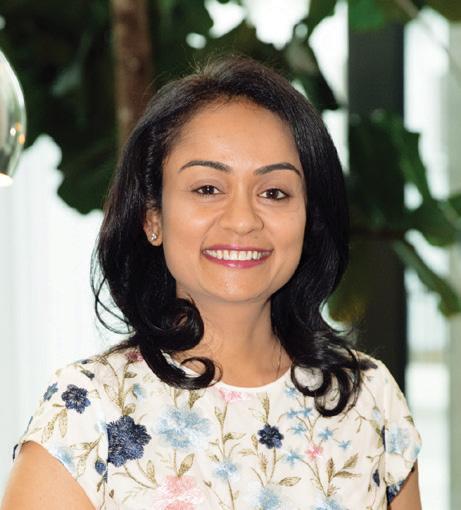
Dr Poornima Luthra is a globally recognised expert on developing inclusive workplaces, a leading academic, Fortune 500 consultant, keynote speaker and award-winning author of Can I Say That?

DR FAISAL TK HARRIS
Why execution should be treated as a human capability issue, not a motivational one

At the trackside in Silverstone in 2010, I was part of a discussion that posed a deceptively simple question. Six highly talented racing drivers were competing for a single Formula 1 seat. Their lap times were identical. The question quickly became: who wants it more? Motivation, it was assumed, would separate the good from the great. Yet when the most intensely motivated drivers were selected, their performance worsened during live races. Decision-making slowed. Errors crept in. Under pressure, judgement became less reliable. Formula 1 is not boxing. It is chess at 300km/h. And increasingly, so is executive life in the GCC.
Seasoned race engineers look for a different signal altogether: cognitive capacity. The best driver is not the one straining hardest to win, but the one who can calmly describe how the car feels at speed, articulate what each component is doing, and adapt strategy midrace. In short, the best performer is the one with spare mental bandwidth.
This insight is highly relevant to business. Across the GCC, execution failures are still routinely treated as motivational problems, “push harder,” “raise the stakes,” “increase accountability.” But this approach is not only ineffective. It can be actively damaging.
When capable people try hard and still fall short, being told they “didn’t want it enough” triggers shame, learned helplessness, and declining self-belief. Fear of appearing morally inadequate discourages them from asking for help. Defensiveness, rigidity, and burnout
follow. Research shows these psychological states impair cognition more broadly, reducing problem-solving capacity and slowing decision-making.
In a region defined by speed, ambition, and complexity, this matters. In 2025, the global execution gap, the difference between strategic intent and actual delivery, stands at roughly 53 per cent. Even marginal improvements in execution quality would save the GCC economy billions. But the solution will not be found in louder motivational messaging.
One reason motivation fails under pressure is biological. The brain processes motivation using the same neural pathways as stress. This relationship is captured in the Yerkes–Dodson Law, which shows that performance improves with arousal only up to a point, after which it declines sharply. When motivation becomes excessive, the brain interprets it as threat. Fear-based thinking dominates. Attention narrows. Avoidance behaviours appear, polishing slides, organising emails, rearranging desks, anything except the task that matters most. Panic and burnout can slow or even paralyse decision-making.
For stable execution, performance must be decoupled from motivation. Rather than pushing people harder, leaders need to nudge motivation back toward its optimal middle ground and focus on strengthening cognitive capacity. This can be achieved using well-established techniques adapted from clinical psychology, including cognitive behavioural therapy (CBT), acceptance and commitment therapy (ACT), task deconstruction, and emotion regulation. These tools are deceptively simple, yet highly effective, because they restore clarity rather than amplify pressure.
THE HIDDEN LIMITER: COGNITIVE LOAD RATIONING
The brain is energy-intensive. When demands remain high for too long, it begins conserving resources. Neuroimaging studies show that sustained, pressured decision-making can reduce activity in the prefrontal cortex, the brain’s executive centre, by over 20 per
IN 2025, THE GLOBAL EXECUTION GAP, THE DIFFERENCE BETWEEN STRATEGIC INTENT AND ACTUAL DELIVERY, STANDS AT ROUGHLY 53%. EVEN MARGINAL IMPROVEMENTS IN EXECUTION QUALITY WOULD SAVE THE GCC ECONOMY BILLIONS.
cent. The executive system acts like an invisible personal assistant, quietly assembling information, memories, and plans into coherent decisions. When it is rationed, people do not lose intelligence or expertise. They lose access to them. This is why a CFO may struggle with strategic thinking after a morning of back-to-back meetings. It is not a loss of motivation. It is executive system fatigue. The brain diverts remaining energy to faster, emotional systems, and the individual may mistakenly interpret the resulting struggle as personal failure.
This phenomenon explains a wellknown behavioural finding: judges make more favourable parole decisions after breaks involving food and rest, not because they become more lenient, but because their cognitive capacity is restored.
Once cognitive rationing is understood, execution strategies change. Highperforming organisations protect decision capital rather than exhaust it. Critical thinking is scheduled early in the day. Low-level decisions are automated or offloaded. Complex tasks are sequenced, not stacked. Active recovery is treated as a performance investment, not an indulgence. New skills are learned deliberately to stimulate neuroplasticity and accelerate recovery.
In demanding environments like the Gulf, people are understandably reluctant to admit they are struggling. But when performance work is framed as optimisation for talented individuals, not remediation for defective ones, resistance disappears. The future of execution lies not in performative motivation under duress, but in designing cognitive conditions that allow people to perform in line with their true ability.
That is not softness. It is precision. L
The writer is a medically trained performance psychiatrist and the founder of Harris Hawkins Performance (HHP).

lobal aviation is entering one of the most consequential phases in its modern history.
Passenger traffic continues to rise, long-term demand remains strong, and aviation’s role in global connectivity has never been more central. Yet beneath this momentum lies a defining structural shift: the industry is no longer constrained by demand, but by the capacity of the global aviation ecosystem to support that demand. This is not a cyclical issue; it is a strategic one, and it will determine who leads the industry over the next decades.
Aircraft shortages, delivery delays, supply chain constraints, and workforce gaps have converged to create a fundamental mismatch between aviation’s growth trajectory and the systems that sustain it. IATA’s latest analysis notes that the aircraft shortage that began before the pandemic has become one of the sector’s most significant challenges, resulting in a “missing fleet” likely to persist into the early 2030s. Meanwhile, global
passenger traffic is expected to reach nearly 9.8 billion trips in 2025, reflecting continued expansion beyond the recovery phase. The question facing aviation is no longer whether demand will return, but whether the industry is ready to support it. That requires a new conversation about capacity: what it means, why it matters, and how the industry must prepare to secure aviation’s future.
THE RACE FOR CAPACITY
Capacity today extends far beyond the number of aircraft in service. It involves the entire aviation ecosystem: manufacturing, maintenance, supply chains, and the global workforce. By 2035, the world’s commercial fleet is
projected to grow from approximately 29,000 aircraft today to nearly 38,300, a 32 per cent increase in a decade.
Meeting this growth will require a level of readiness the industry has not previously experienced. Maintenance capacity is already under strain. Aircraft engine maintenance turnaround times have increased dramatically compared with pre-pandemic norms, rising more than 35 per cent for legacy engines and over 150 per cent for new-generation engines. Airlines are now waiting two to three months, and in some cases up to six months, just to secure an MRO slot for critical repairs. Projections suggest that if current trends persists, demand for engine shop visits could exceed available capacity by approximately 17 per cent by the end of the decade, potentially forcing airlines to limit flying due to insufficient maintenance support. These pressures are not signs of decline, they underscore the scale of aviation’s opportunity, and the urgency of investing in the systems that will allow it to grow sustainably. Expanding capacity is not simply an efficiency challenge; it is central to aviation’s long-term role as an engine of economic development and global mobility.
tangible. Across the industry, new infrastructure is being built and existing facilities expanded specifically to support next-generation engine demand. Over the past year, purposebuilt engine MRO capacity has emerged across multiple regions, signalling a move from incremental fixes to deliberate scale-up. Despite current pressures, the long-term outlook for global aviation remains strongly positive. Passenger demand is projected to grow 3–4 per cent annually through 2040, driven particularly by emerging markets. Investment in airports, training, digital infrastructure, and sustainable technologies is accelerating, reflecting aviation’s enduring role in global trade, tourism, and connectivity.
One of the clearest manifestations of today’s capacity constraints is visible in the transformation of aviation’s supply chain. For decades, the industry relied on highly interdependent production models and logistics networks. While efficient under stable conditions, recent years have exposed structural vulnerabilities. Industry leaders report that lead times for critical components are now two to five times longer than before 2020, with some disruptions expected to take up to two years to resolve. To cope, manufacturers and MROs are increasingly deploying engineers deep into their supply chains, working directly with sub-tier suppliers to unlock bottlenecks, an indication of how stretched the system has become. While some view this as fragmentation, it may in fact represent the emergence of a more resilient. A multi-hub global supply chain, where capability is distributed across regions rather than concentrated in a handful of production centres, reduces single points of failure, improves agility, and enhances the industry’s ability to respond to geopolitical or demand shocks. In this context, expanding capacity is not simply about building more, but about building smarter, strengthening regional capability, diversifying sourcing, and ensuring that the world’s fastest-growing aviation markets also contribute to manufacturing, maintenance, and talent development.
That shift from resilience to readiness is now becoming
The next decade presents a generational choice. The industry can allow capacity constraints to dictate outcomes, or it can act decisively to build the infrastructure, skills, and industrial capability required to support sustained growth. Aviation’s future will not be determined by how quickly demand returns, but by how intentionally capacity is built. The race ahead is not for recovery. It is for readiness. L
By 2035, the world’s commercial fleet is projected to grow from approximately — a 32% increase in a decade
29,000 aircraft today to nearly 38,300
BY NEESHA SALIAN

NVIDIA execs share insights on how physical AI and robotics are intrinsically poised to transform the industrial sector not only in 2026, but in the decades to come
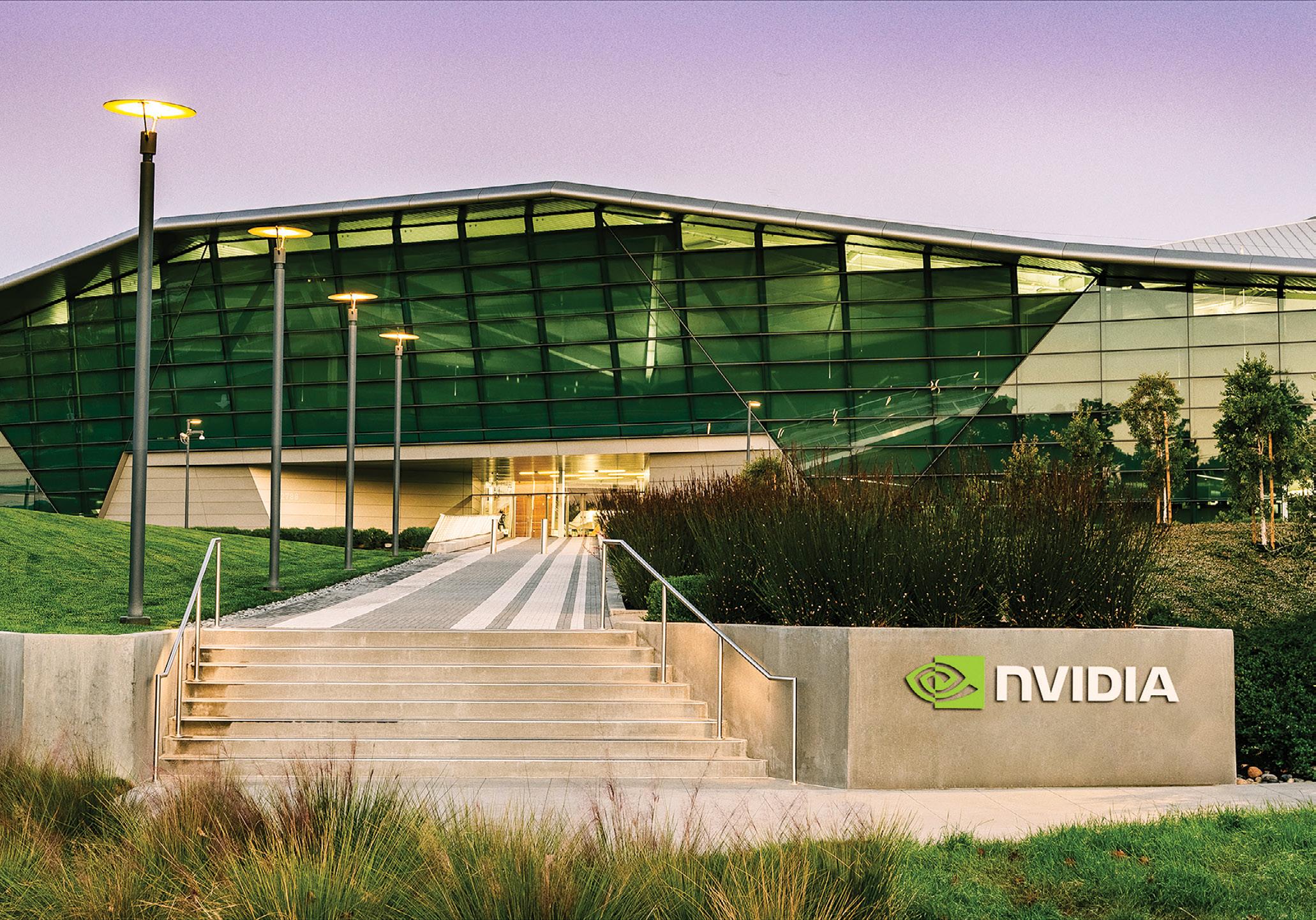
he industrial landscape in the Middle East is undergoing immense transformation. By now, nearly everyone in the world has at least heard of AI, with its adoption rate faster than the early days of the world wide web. As artificial intelligence (AI) enters a period of relative maturity, experts are unearthing new capabilities and identifying how they can accelerate almost every sector.
Recognisng this trajectory early on, Middle Eastern leaders have pivoted from traditional automation toward physical AI – a generation of autonomous models that perceive, understand, interact with and navigate the physical world.
Looking ahead, we examine how physical AI and robotics are intrinsically poised to transform the industrial sector not only in 2026, but in the decades to come.
The most significant change expected in the coming year is the adoption of a “simulation first” philosophy, which implies that nothing physical is truly ‘new’ by
the time it arrives on the factory floor. “From breakthrough products to the factories they’re built in, everything manufactured will be born in a digital world. Simulation-first design breaks through the barriers of cost, risk, and speed, letting manufacturers iterate, test, and optimise long before breaking ground or cutting steel,” says Rev Lebaredian, NVIDIA’s VP of Omniverse and Simulation Technology.
This notion is already being adopted in the Middle East’s fast-paced development culture, where engineers are increasingly using high-fidelity digital twins to perfect every movement in a virtual environment, long before execution. By the time a robotic arm is installed in Abu Dhabi, its job has been practiced millions of times in a virtual replica, ensuring that the moment power is switched on, a facility operates with peak efficiency, saving billions in
potential downtime and redesigning costs. “This digital approach lays the foundation for intelligent automation, as robots and AI-powered industrial facilities can be trained, validated and continually improved through simulated environments before deployment,” Rev adds.
Thanks to new physical AI reasoning models, autonomous machines possess a foundation of core skills that adapt to the real world. Previously, a robot was only as good as its specific code.
However, present models enable a machine trained in a simulated warehouse to be deployed in a public facility, such as a hospital, and quickly learn how to navigate safely around people and obstacles.
It’s a versatility that enables robotics to scale into domains previously impractical. They’re now reasoning agents capable of identifying empty pallets, misplaced items, or hazardous spills, while autonomously deciding how to fix the problem without human intervention.
LANGUAGE MODELS OPERATING AS THE CONTROL TOWER FOR
Deepu Talla, VP of Robotics and Edge AI at NVIDIA, says vision language models (VLMS) will manage fleets of robots from 2026. “VLMs, AI that can perceive and reason against physical objects and behaviours, will operate as the control tower for outside-in robotics, enabling robots to collaborate and communicate with their environments. Fixed overhead cameras will provide safety and operations co-pilots that help direct people and machines, while adapting in real-time to keep operations on schedule.”
Operators no longer need complex coding skills; they can simply type or sketch commands to instantly deploy an entire fleet, ensuring daily workflows run smoothly
BY THE TIME A ROBOTIC ARM IS INSTALLED IN ABU DHABI, ITS JOB HAS BEEN PRACTICED MILLIONS OF TIMES IN A VIRTUAL REPLICA , ENSURING THAT THE MOMENT POWER IS SWITCHED ON, A FACILITY OPERATES WITH PEAK EFFICIENCY
and solutions are quickly identified for any challenges or mishaps. “This shift is already happening,” Deepu explains. “Ceiling-mounted cameras can now spot empty pallets, misplaced items, or spills, and send robots to fix them. Most teams run these systems onsite for privacy and speed, linking them to existing floor software and cameras.”
The payoff is clear: fewer incidents, faster changeovers and consistent performance across sites, making autonomy a dependable part of daily operations. L
“FROM BREAKTHROUGH PRODUCTS TO THE FACTORIES THEY’RE BUILT IN, EVERYTHING MANUFACTURED WILL BE BORN IN A DIGITAL WORLD. SIMULATION-FIRST DESIGN BREAKS THROUGH THE BARRIERS OF COST, RISK, AND SPEED, LETTING MANUFACTURERS ITERATE, TEST, AND OPTIMISE LONG BEFORE BREAKING GROUND OR CUTTING STEEL,”
Rev Lebaredian, NVIDIA’s VP of Omniverse and Simulation Technology.
Governments and enterprises are moving beyond hype to embed AI within national frameworks, balancing innovation, compliance, and strategic control
The start of every new year is typically awash with predictions about the ‘next big thing’ in technology. Over the years, these have ranged from automation and cloud computing to blockchain. Yet in the current decade, that annual exercise has centred on one key theme: artificial intelligence. And while AI will undoubtedly remain the defining buzzword of 2026, its centre of gravity is shifting.
Early adoption was driven by competitive pressure and fear of missing out. Organisations experimented fast, often without a clear understanding of risk, governance, or long-term value. Recent open-source, self-hosted AI experiments have shown how quickly tools can move beyond their original intent, creating unintended security and trust risks. Much of this comes down to usage rather than autonomy, yet adoption is outpacing institutional oversight.
Sovereign AI does not aim to stop adoption but to reduce systemic risk by setting clear boundaries on how AI can be deployed at scale, particularly within regulated environments and critical systems. With national security and economic resilience in play, AI is no longer just a commercial priority; it’s increasingly a governmentbacked agenda.
Geopolitics has accelerated this shift. Rising tensions, data sovereignty concerns, and distrust of offshore technology dependence have pushed governments to treat AI as strategic infrastructure. In the Middle East, AI is being positioned as a cornerstone of national development rather than a bolt-on innovation.
Throughout 2025, governments began setting clearer rules around data residency, model training, inference, and ownership. In the Gulf, these policies were matched with capital: the UAE and Saudi Arabia committed billions to AI-ready data centres, high-performance compute, and national AI strategies to ensure that data, models, and value creation remain within borders. This combination of regulation and investment lays the foundation for 2026: the rise of sovereign AI.
Sovereign AI reflects a deliberate choice to control how AI systems are trained, governed, and deployed
nationally. Models reflect local languages, values, legal frameworks, and economic priorities, operating on infrastructure subject to domestic law. For governments, it offers strategic autonomy. For enterprises, it promises clarity and stability in a fragmented regulatory environment. Organisations will generally operate hybrid AI environments, combining global platforms, regional infrastructure, and locally governed data. Success depends on designing flexible architectures and operating models that navigate multiple ecosystems without compromising compliance.
A decade ago, enterprises were wary of cloud computing for reasons similar to today’s AI concerns: data control, compliance, and security. Sovereign and regional clouds addressed these fears, enabling organisations to modernise while meeting regulatory requirements. Sovereign AI follows the same logic, allowing enterprises to adopt AI at scale without exposing themselves to unacceptable risk.
One consequence is model fragmentation. Country- or region-specific models governed by different standards will emerge. While this may slow global convergence, it could accelerate innovation in local contexts, particularly for sector-specific needs such as healthcare, finance, or public services. For governments with well-capitalised sovereign wealth funds, sovereign AI offers competitive advantage. The
FOR GOVERNMENTS, IT OFFERS STRATEGIC AUTONOMY. FOR ENTERPRISES, THE RISE OF SOVEREIGN AI PROMISES CLARITY AND STABILITY IN AN INCREASINGLY FRAGMENTED REGULATORY ENVIRONMENT.

UAE’s Falcon LLM demonstrates national-scale deployment, while Saudi Arabia’s HUMAIN initiative, including the ALLAM 34B Arabic large language model, localises AI to strategic priorities. Bahrain’s partnership with SandboxAQ to apply large quantitative models to biopharmaceutical research shows how sovereign AI can accelerate IP creation and move nations up the value chain. Early leadership in this space could prove defining for decades. Sovereign AI strategies favour scale, security credentials, and long-term viability, encouraging partnerships with established players such as OpenAI, Anthropic, or major hyperscalers. While this brings stability, it risks squeezing out smaller innovators. Governments must balance trusted partnerships with mechanisms that sustain startup ecosystems through procurement frameworks, sandboxes, or incentives. Without this, sovereign
AI could unintentionally stifle the innovation it seeks to protect. As AI becomes embedded into national infrastructure, sovereignty will no longer be a fringe concern. In 2026, the question for governments and enterprises will not be whether to embrace sovereign AI, but how to do so while balancing autonomy, innovation, and global collaboration. Those that get it right will not just adopt AI faster; they will shape the rules by which it evolves.
The writer is the head of MENA at Endava.

As profit stops being the sole measure of success, businesses are being challenged to build with purpose at their core, aligning leadership, brand, and technology to create lasting impact and deeper trust
As I reflect on the evolving landscape of today’s business, I find myself filled with hope. Hope that we can all discover purpose in the work we do, regardless of our industry. The new-age business model isn’t just about profits; it’s about giving back and creating a positive impact on society. In this article, I wish to share my insights on what people are truly looking for in brands, advertising, and technology; while
exploring how we might be able to set up businesses that prioritise purpose alongside success.
Back in the day, leadership often meant making decisions based solely on the bottom line. However, today’s leaders recognise that a better future hinges on our ability to integrate purpose into our business strategies. This shift is not merely a trend; it’s a fundamental change in how we view our roles as leaders.
For me, purpose-driven leadership means creating an environment where every team member feels and knows their work contributes to something larger. I’ve seen firsthand how teams that engage in meaningful work experience are highly motivated and think creatively. When people understand the ‘why’ behind their tasks, their engagement and productivity soar.
Consumers want brands that align with their values and show genuine commitment to social responsibility. My observation is that consumers, particularly younger generations, are more likely to support brands that are transparent about their practices and engage in meaningful conversations. This insight has transformed how I approach marketing and advertising. It’s not enough to push products; we must tell stories that resonate with our audience. When we showcase the impact of our business - whether it’s through community engagement or a creative business model - we build a connection that goes beyond the transactional.
Establishing a business model that gives back should have a few key components as musthaves:
My journey began by identifying core values that resonate with people like me within the advertising industry. This alignment ensured that every business decision would reflect our
BACK IN THE DAY, LEADERSHIP OFTEN MEANT MAKING DECISIONS BASED SOLELY ON THE BOTTOM LINE. HOWEVER, TODAY’S LEADERS RECOGNISE THAT A BETTER FUTURE HINGES ON OUR ABILITY TO INTEGRATE PURPOSE INTO OUR BUSINESS STRATEGIES.
commitment to community building and nurturing talented women across the globe. Be one with the community: Giving back to the community cannot be a marketing gimmick; it should be at the heart of everything we do. With genuine effort to contribute to each other’s well-being, we believe in walking the talk and do not wish to commercialise the charities we engage in. The focus should be in enriching one’s company culture through constant support for one another. And who wouldn’t feel committed and proud to work for a business that cares?
UNLEARN AND REINVENT: Embracing innovation to create news ways of working is crucial. I’ve seen businesses thrive by developing products and services that address and solve social issues.
Technology plays an important role in implementing these new-age models. Digital platforms enable businesses to engage with customers meaningfully. Using social media effectively not only enhances our brand presence but allows us to communicate what we do clearly. Through the work we create for our brands, we can showcase how our business is making a difference, both externally and internally. Moreover, data analytics help us measure every impact. By tracking the work we do within our community and for our clients, we can refine our strategies and share our success stories. This transparency helps build trust and loyalty in the long run.
Of course, implementing a purpose-driven model comes with its challenges. One major hurdle is balancing profit with purpose. There’s often a misconception that being socially responsible means sacrificing financial success. However, I’ve learned that when purpose is at the core, profitability often follows. Consumers increasingly prefer to support businesses that align with their values, leading to greater customer loyalty and repeat business. Another challenge is
BY VIDYA MANMOHAN
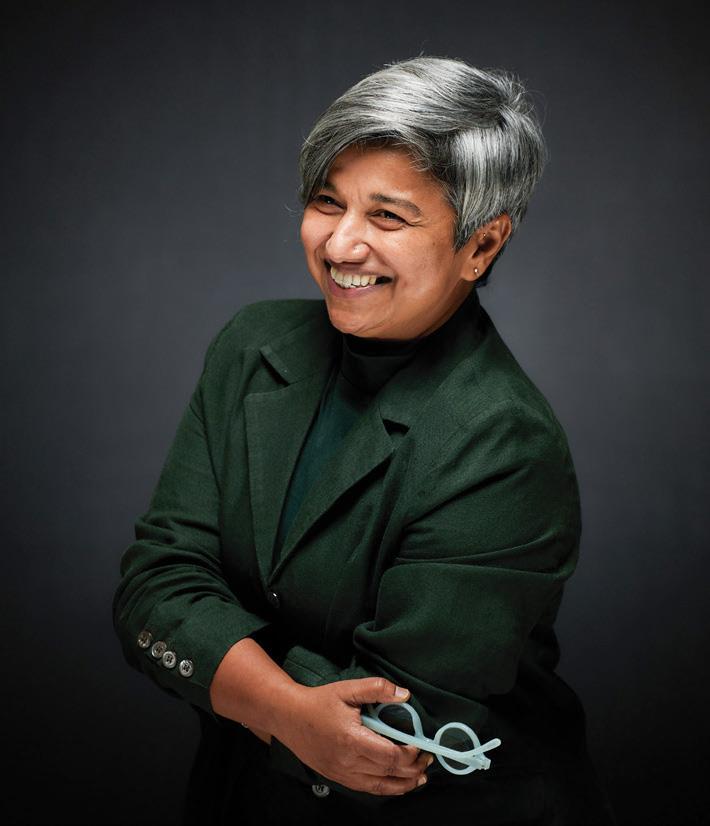
ensuring the entire organisation embraces this mindset. Change can be met with resistance, but through open communication and education, we’ve managed to foster a culture that values purpose as much as profit.
As I reflect on my journey, I am filled with optimism for the future of our industry and the way we operate. The new-age business model is not just a concept; it’s a movement towards creating a better world. I urge my fellow leaders to embrace this shift and focus on purpose. Let’s create businesses that thrive financially while uplifting our communities and contributing to a more positive future.
In conclusion, finding purpose in our work is not just possible; it’s essential. By adopting a purposedriven approach, we can build businesses that inspire hope and create change. Together, we can redefine what success looks like and pave the way for a better tomorrow. L
The writer is the founder and chief creative officer of V4GOOD. She is a prominent figure on most of the international jury panels like Cannes Lions, D&AD, One Show, New York Festivals, Clio, Adfest, Lisbon Advertising Awards, Loeries and Communication Arts.
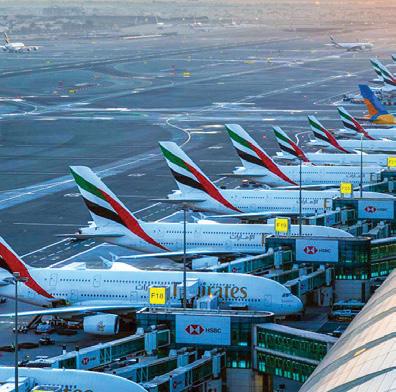
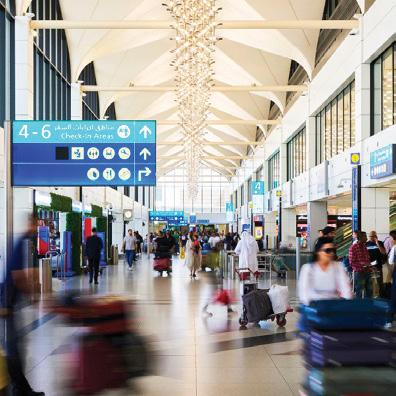
In 2025, Dubai International Airport (DXB) witnessed the busiest year in its history, with the highest annual international traffic ever recorded by any airport


UP 3.1 PER CENT YEAR ON YEAR

BUSIEST YEAR IN DXB HISTORY
RECORDS ACROSS THE BOARD
Busiest year: 2025
Busiest quarter: Q4 2025
Busiest month: December 2025
Busiest day: Achieved in 2025
Q4 2025 25.1 MILLION PASSENGERS UP 5.9 PER CENT YEAR ON YEAR DECEMBER 2025
8.7 MILLION PASSENGERS UP 6.1 PER CENT YEAR ON YEAR
FLIGHT MOVEMENTS
Q4 movements: 118,000
Full year movements: 454,800
Average passengers per movement: 214
Load factor: 77.6 per cent

annual international passenger traffic ever recorded by any airport

2026FORECAST GUESTSPROJECTED99.5million






DEPARTURE PASSPORT CONTROL 99.35 PER CENT WAITED LESS THAN 10 MINUTES

291 110 108 destinations countries international airlines
million
BAG S HANDLED

PASSPORT CONTROL 98.8 PER CENT WAITED LESS THAN 15 MINUTES
“Airports are often defined by moments of intensity, but long-term performance is defined by how well those moments are sustained. In 2025, DXB showed that record traffic is no longer an exception, but part of its operating reality. That consistency at scale reflects the maturity of the system and the strength of collaboration across our oneDXB airport community to deliver excellence under growing demand. We expect traffic to approach 99.5 million in 2026, supported by close coordination across the sector and the oneDXB community.”
— Paul Griffiths, CEO of Dubai Airports
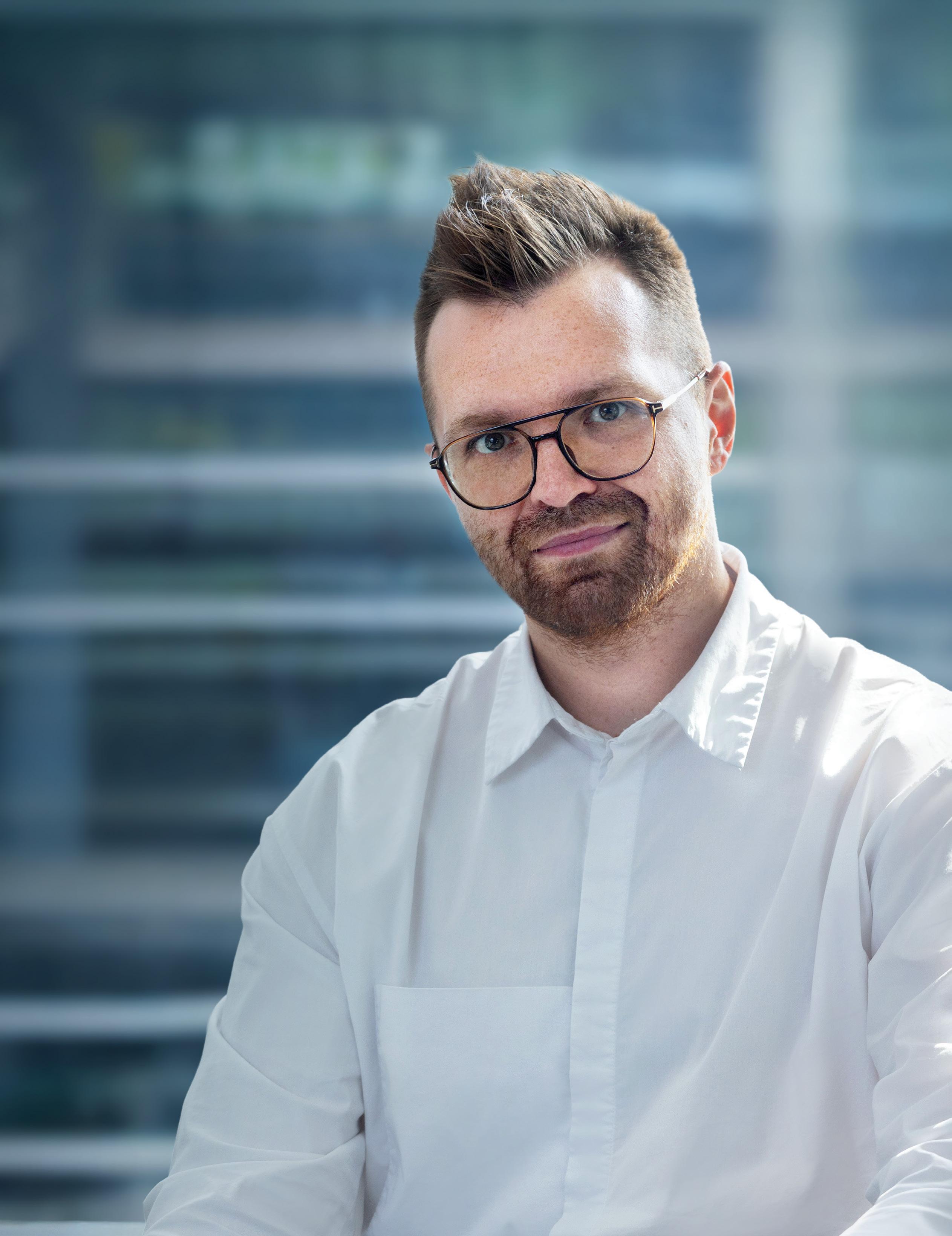
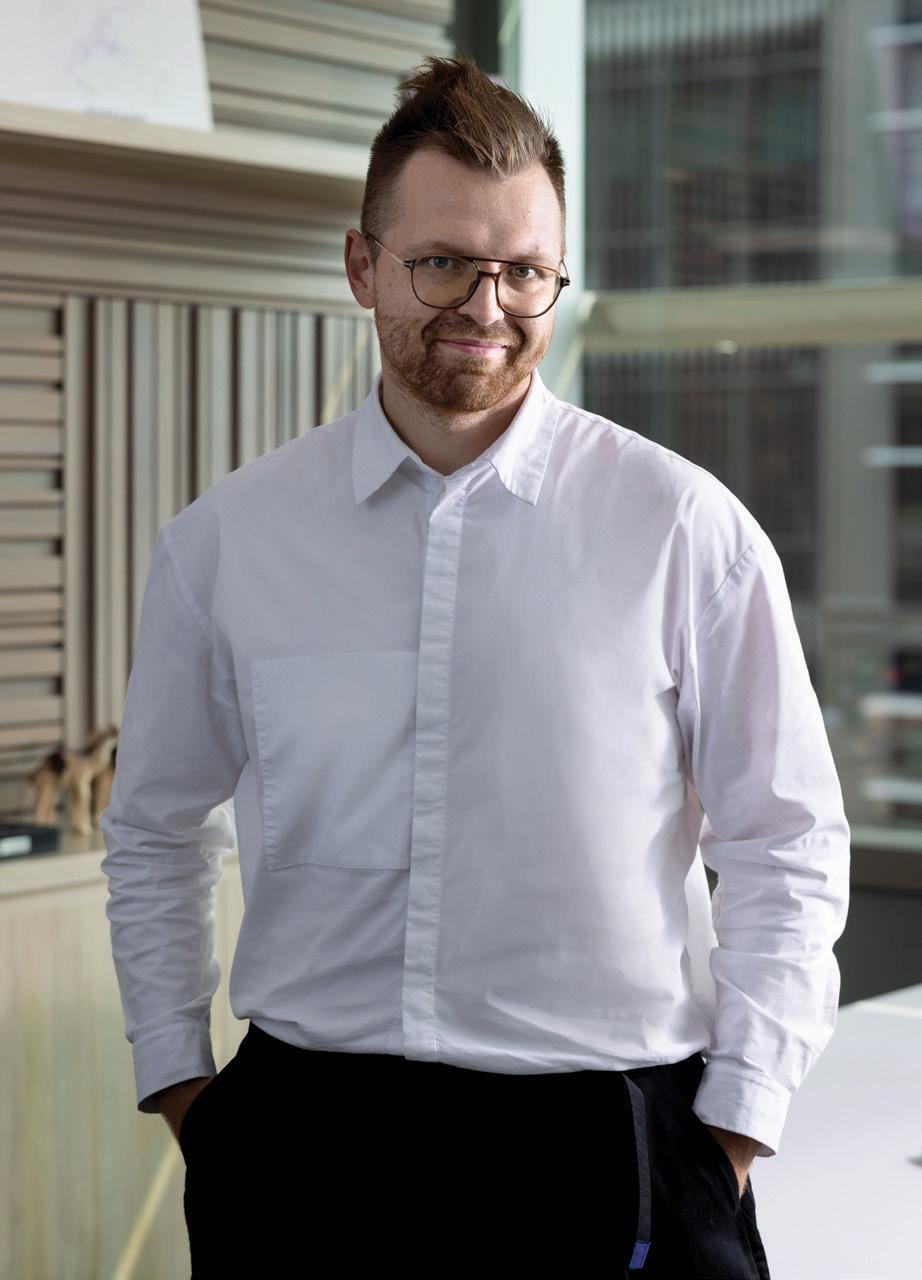
WHILE RIVALS CHASE GLOBAL SCALE WITH COOKIE-CUTTER SOLUTIONS, DANIIL SHULEYKO, CEO OF YANGO GROUP, BUILDS DIFFERENTLY: ONE CITY AT A TIME, FROM THE STREET UP, IN RESPONSE TO WHAT PEOPLE ACTUALLY NEED. THE RESULT IS NOT JUST A COMPANY BUT A DIGITAL FOUNDATION FOR URBAN LIFE — SPANNING 36 COUNTRIES, 20 BUSINESS LINES, TWO BILLION ORDERS, AND A $20M VENTURE FUND TO BACK THE NEXT GENERATION OF LOCAL FOUNDERS
WORDS: NEESHA SALIAN | PHOTOS: JOHN MELENCION
For the past decade, “smart city” has been one of the most overhyped phrases in technology, and one of the most disappointing. From Toronto to Singapore, top-down projects have crashed against the same wall: cities are not blank slates. They are alive, chaotic, resistant to master plans.
But there is another way. It starts not with a master plan, but with everyday life, with the routines people repeat without thinking. You build services that slip into those routines, removing friction and adding a little more convenience each time. One service at a time, one problem at a time, each new layer sitting on the foundation of the last. You’re not imposing a smart concept on a city. You’re earning a place inside it, gradually, as people start relying on you.
This is what the Yango Group does. It comes with ride-hailing, something people need right now. From there, it earns trust, listens, and lets the city tell it what to build next. Over time, that collection of services starts to look less like an app and more like a
foundation, a layer of digital infrastructure that runs underneath daily life. An operating system for the city.
Daniil Shuleyko, the 37-year-old CEO of Yango Group, thinks about cities from the street up. “You can’t design a city in a boardroom,” he says. “You have to go where people actually live.”
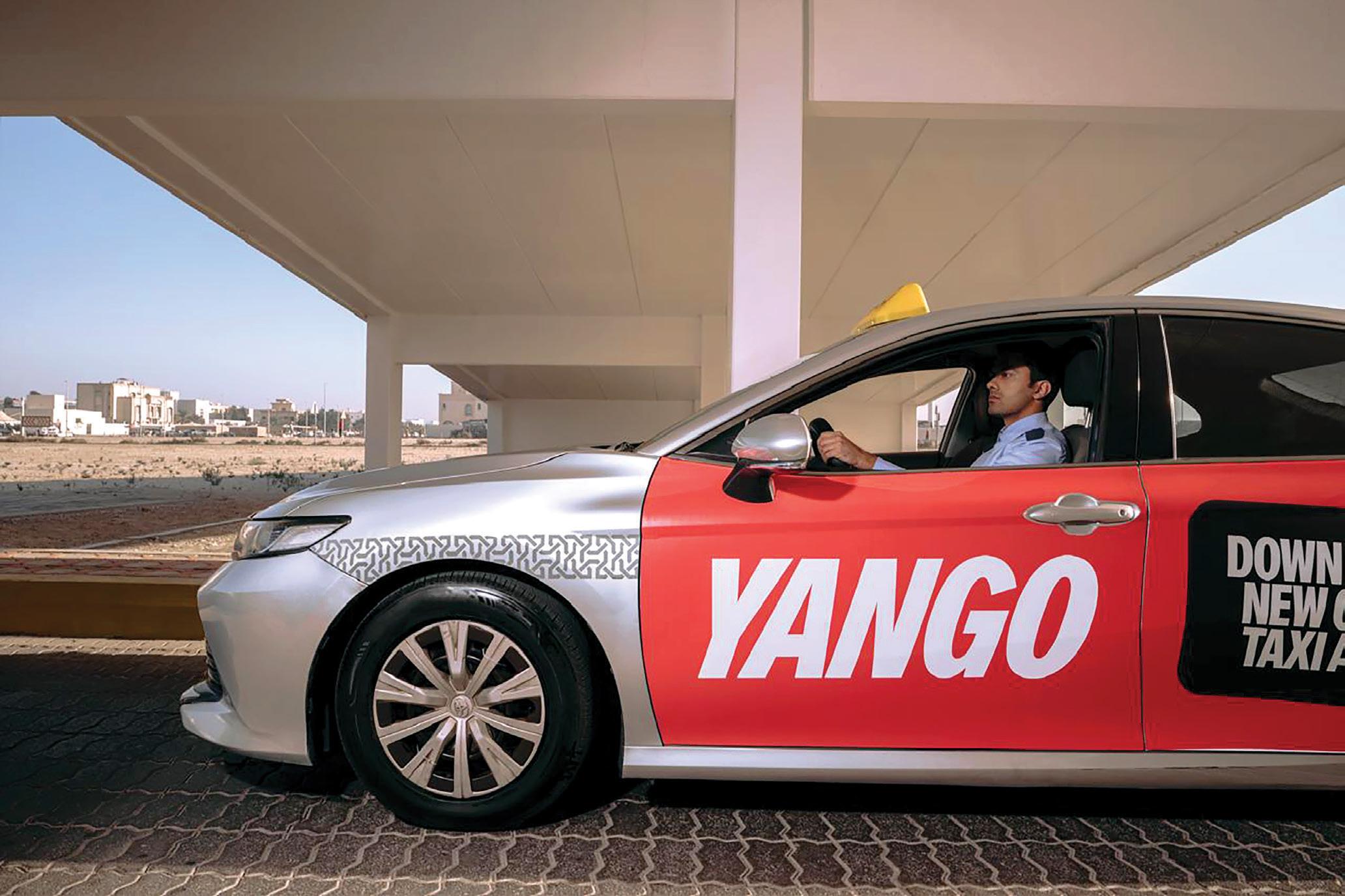
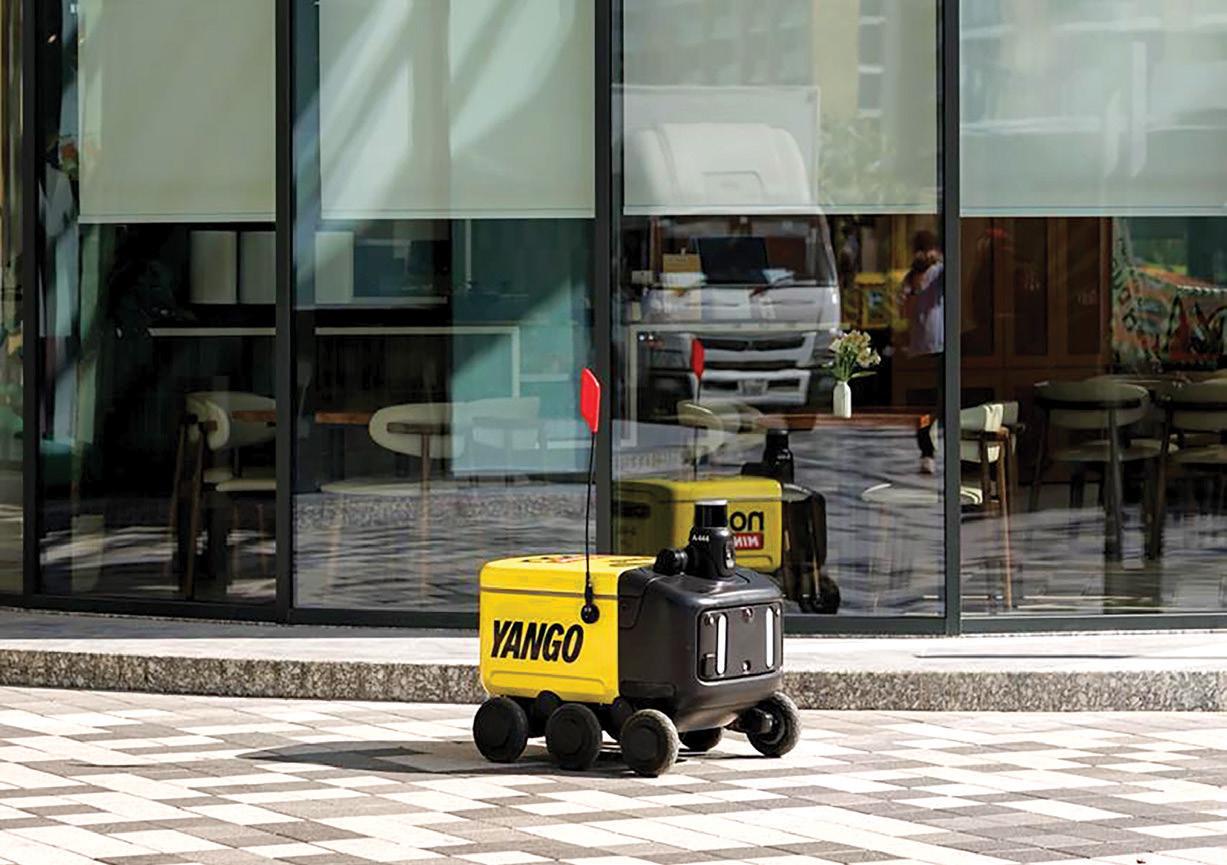
The first thing you notice about Shuleyko is how present he is. No handlers, no carefully managed persona. Walking through Yango Group’s headquarters earlier, I’d passed an open floor buzzing with energy, a young team, Yango’s delivery robots ready to go, Yasmina smart speaker boxes stacked for distribution. Later, sitting across from me, he mentions he still gives his personal phone number to taxi drivers in the Yango network. “If you don’t talk to them, you don’t understand the city,” he says.
It’s a small thing, but it tells you everything about how he builds.
Shuleyko grew up in a village so small its name translates as “Big Stone.” He studied engineering,
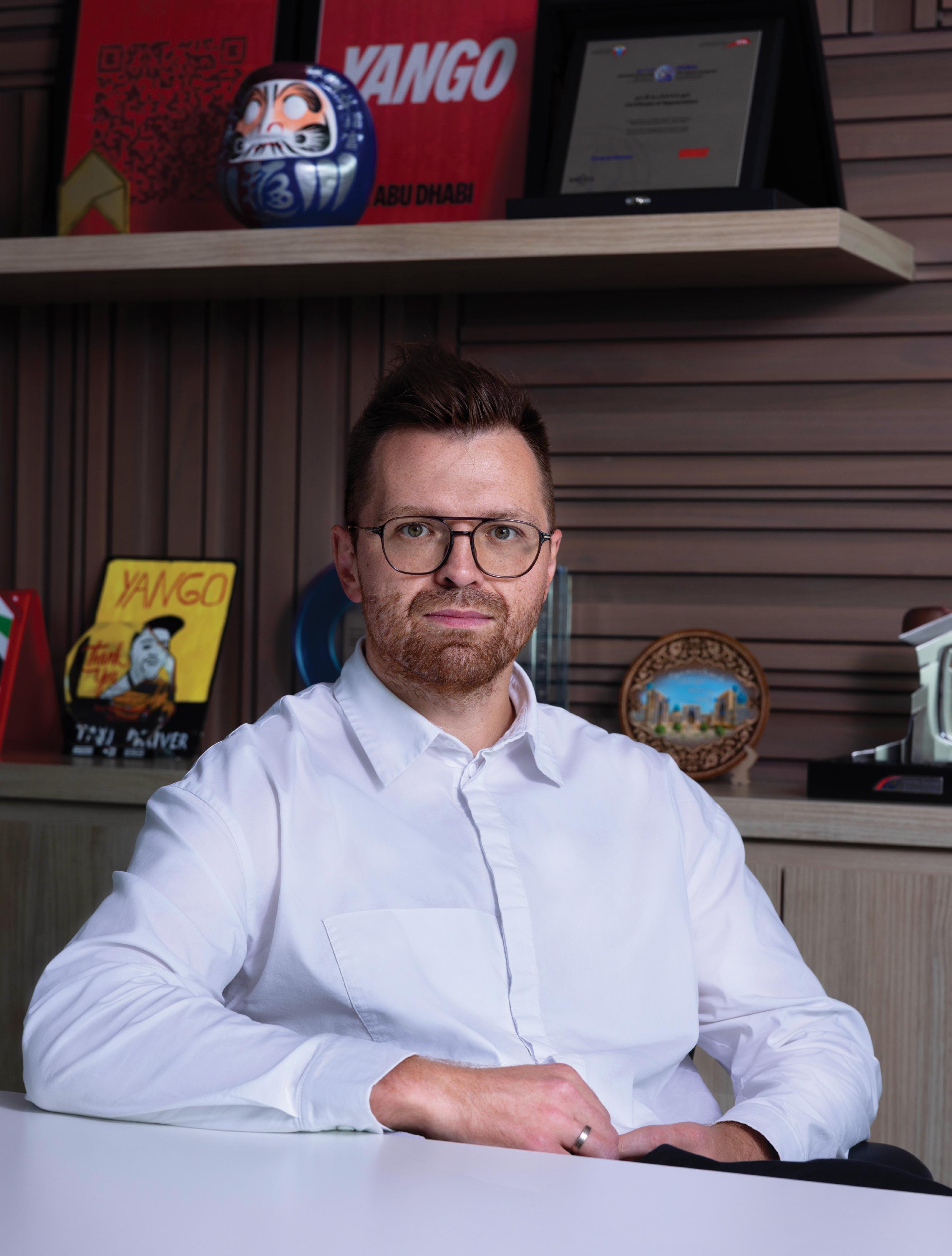
and that training still shapes him. “Engineers think in systems,” he explains. “You don’t start with the roof. You start with the foundation, then you layer.” That logic, foundation first, then ecosystem, became Yango’s strategy.
“The most mind-changing moment was the birth of my first daughter,” he says, voice softening. “When you hold your child, you want to give them the whole world. Not just to build a company, to build infrastructure that actually changes how people live.”
Yango began as a ride-hailing company. Not because mobility was glamorous, but because it was necessary. “Ride-hailing is always the icebreaker,” Shuleyko explains. “Mobility is something people need daily. It builds a large user base quickly. That becomes the foundation.”
But a ride gives you something else too: data about real movement, not theoretical models. A network of drivers and couriers already on the streets. And most importantly, trust.
“When a passenger trusts you with their journey, and a driver trusts you with their livelihood, you have something to build on.”
The evolution wasn’t planned in a boardroom; it emerged from listening.
“Passengers kept asking us: Can you add delivery? Can you improve the maps?” Shuleyko recalls with a laugh. “And the
drivers asked for the same: can you add the possibility to deliver packages, not only people? We started to deliver their requests one after another.”
As those requests accumulated, a pattern became clear. Yango wasn’t simply adding features, it was responding to the same underlying need: better, more connected everyday services.
“Over time, we realised we weren’t just launching new products. We were gradually digitising the essential urban services people use every day.”
“Daily is the keyword. We’re not interested in something you use once every five years. But if it’s part of your everyday city life — transport, delivery, navigation — that’s where we can make a real difference.”
Once that foundation is running well, expansion becomes logical rather than accidental. Delivery, commerce, entertainment, loyalty, autonomous delivery — each new service reaches an audience
that is already there and already trusts the platform. You’re not starting from zero with every vertical. By the second week after entry, more than half of new users already engage with at least two services — and this share continues to grow, reflecting increasing ecosystem stickiness and deeper cross-service usage over time. That’s what makes the ecosystem model fundamentally different from launching standalone apps.
This is the opposite of the “smart city” approach, which often begins with a grand plan and works down. “That works when you have a blank slate and unlimited resources,” Shuleyko acknowledges. “But most cities aren’t blank slates. They’re alive. They’re messy. An operating system doesn’t try to redesign them — it learns to read them. It grows into their patterns.”
“We have a slogan,” Shuleyko explains. ‘Go Global, Go Local’. And local is much more important than global.”
This isn’t empty talk. Yango treats each city as its own puzzle, assembling what Shuleyko calls “building blocks” from a shared technological base — maps, routing, dispatch systems, demand forecasting — to address local needs. The technology layer remains consistent across markets, but the way it’s assembled and applied varies from place to place.
Pic: Supplied
FOR US, A MARKET IS NOT A COUNTRY, IT’S A CITY, CÔTE D ’IVOIRE AS A COUNTRY WASN’T AN OBVIOUS PRIORITY WHEN WE WERE LOOKING AT THE MAP. BUT ABIDJAN, THE POPULATION DENSITY, INTERNET PENETRATION, YOUNG DEMOGRAPHICS, GROWING ECONOMIC ACTIVITY, STOOD OUT IMMEDIATELY.”
The system only works because of the people operating it in each city. Yango builds strong, independent local teams and gives them real power to adapt products, partnerships and strategy. “This distributed structure is more resilient than a centralised one,” Shuleyko says. “When decisions are made close to the ground, the system adapts faster.”
“For us, a market is not a country, it’s a city,” he says. “Côte d’Ivoire as a country wasn’t an obvious priority when we were looking at the map. But Abidjan, the population density, internet penetration, young demographics and growing economic activity, stood out immediately.”
The results across regions bear this out. In Latin America, Yango’s newest major commitment, Colombia more than doubled across all key metrics in 2025 — growth built city by city, from Bogotá to Medellín. In Central Asia, the company has built what Shuleyko calls “probably our deepest ecosystem anywhere” — multiple services, strong cross-usage, continuous expansion across the region’s urban centres. In Africa, one of the company’s oldest markets, Yango has become a leader in several countries; in Ethiopia, rides grew several-fold year on year.
But the most telling example of how an operating system layers onto daily life might be in MENA. Here, the company launched Yango Play, an entertainment service built on top of the mobility foundation. Yasmina, its Arabic-speaking AI assistant, now records an average of 22 interactions per user per day, with peak days reaching 44. That’s not a user opening an app once a week. That’s a service woven into the rhythm of daily life.
That kind of depth doesn’t happen by accident. It happens when local teams truly understand their city — and when they build with the people who already run it.
For these local teams, the first question when entering a new city is never “how do we replace what exists?” It’s “who’s already here, and how do we work with them?”
Yango operates a marketplace connecting local supply — drivers, restaurants, small businesses — with digital demand. “We invest in the digital layer so they don’t have to,” Shuleyko explains. “A restaurant owner should focus on their food, not on building an app.”
By bringing demand together and coordinating it at the city level, the platform creates scale. A small restaurant gets customers it couldn’t reach. A taxi cooperative gets dispatch tools without inventing software. “They plug in, they grow. And when they grow, we grow with them.”
The Oman story shows how this works. Yango Group partnered with Otaxi, a local taxi player, and ITCHA Group, an investment company focused on developing the country’s tech sector. Together, they expanded the market, introducing new technologies, launching additional services and building a more integrated model on top of what was already there. “Otaxi knew their drivers, their streets, their regulations,” Shuleyko says. “We brought the digital infrastructure. The combination made both of us stronger.”
In Bogotá, the logic was the same. Yango partnered with Taxis Libres, the city’s largest taxi company. For Yango, it opened access to more than 25 thousand traditional drivers through a network they already trusted. For Taxis Libres, it meant dispatch tools and data capabilities integrated into daily operations without building them from scratch.
“Everyone is talking about AI,” Shuleyko says. “But people don’t care about technology. They care whether a product works better than before. What matters is a good product.”
At Yango Group, AI sits inside the operational core, routing, dispatch, pricing and demand forecasting. Small improvements compound: a better route means shorter wait times, a more accurate demand model means fewer idle drivers.
“You can’t just add AI somewhere,” he explains. “You have to rethink the process from the beginning.”
In some markets, Yango uses field scouts to recruit drivers. The company began analysing those conversations with AI to understand what worked. The system became a continuous loop: AI analysed, humans tested, successful patterns fed back. “We turned it into a game: who is better, AI or human? If a human improves the algorithm, they get paid. Because that algorithm will work forever.”
Yet for all the automation, Shuleyko insists the company cannot afford to lose sight of the people behind the data. He tells me about a moment several years ago when the company realised it was pushing out driver app changes without fully considering how they hit people’s earnings.
“We were deploying updates quite unprofessionally,” he admits. “So we hired a chief driver and courier happiness officer to review every driver-facing release.”
“It’s not about numbers on a dashboard,” he says. “It’s about people. A bad update can cost someone half a day’s earnings. Thousands lose money they were counting on. Maybe it’s someone’s daughter’s birthday, and they needed that extra for a present. In those moments, we failed them.”
As Yango Group expands its digital infrastructure across markets, the company has increasingly turned its attention to the people who make that infrastructure meaningful.
“Technology alone doesn’t create a digital economy,” Shuleyko says. “People do.” Digital systems only matter if people know
PEOPLE DON’T CARE ABOUT TECHNOLOGY. THEY CARE WHETHER A PRODUCT WORKS BETTER THAN BEFORE. WHAT MATTERS IS A GOOD PRODUCT.”
how to use them — and if some of them know how to build on top of them. Drivers need to feel comfortable with digital tools. Young engineers need pathways into tech. Founders need access to capital and networks. Without that layer, infrastructure remains just infrastructure.
In March 2025, Yango launched Yango Ventures, a $20m fund backing early-stage startups across Sub-Saharan Africa, Latin America, and MENAP. “We don’t need to build everything ourselves,” Shuleyko explains. “If someone understands a local problem better than we do, it makes more sense to support them.”
The investments have already begun: BuuPass, a Kenyan mobility startup; Zanifu, a Kenyan lending platform; Trukkr, a Pakistani logistics fintech. Each represents Yango’s bet on local entrepreneurs solving local problems with global technology.
Alongside the fund, Yango runs education initiatives like the Yango Fellowship, supporting young technical specialists and expanding digital literacy across its markets.
As our conversation winds down, I ask Shuleyko about 2026 and beyond. “Every year I make the same mistake,” he says. “I overestimate what we can do in one year, and underestimate what we can do in three or four. Somehow, the longer horizon always wins.”
Still, he has some ideas. The company’s next chapter, he suggests, won’t be defined by a single product launch, but by how its digital layer continues to expand. Maps and navigation are about to change fast as AI opens up possibilities that weren’t there three years ago. New ways to get around are coming — not just self-driving
IN MARCH 2025, YANGO LAUNCHED YANGO VENTURES, A $20M FUND BACKING EARLY-STAGE STARTUPS ACROSS SUB-SAHARAN AFRICA, LATIN AMERICA, AND MENAP
cars, but intercity options and shared services built for specific places. Content and streaming, too, are being reshaped through local partnerships.
Yango’s advantage lies in the infrastructure it already operates. “These technologies don’t live in isolation,” Shuleyko says. “They need data, maps and real traffic flows. If you don’t operate that layer, it’s very hard to scale anything new.” In Kazakhstan, they’re testing autonomous taxis. In Dubai, robot delivery already runs with noon.
But as that digital layer thickens, a question emerges. “When you become part of the daily fabric of a city — when people rely on you to move, to eat, to find their way — at what point do you stop being a business and become critical urban infrastructure?
Like electricity. Like water.” There’s no easy answer. “Infrastructure isn’t something you impose,” he says. “It’s something you earn the right to become.”
The ambition is one billion users within a decade. But Shuleyko frames that as an outcome, not a strategy. Outside the windows of One Central, Dubai’s skyline keeps rising, cranes moving in slow arcs against the afternoon light. It is a city that refuses to stand still. “Dubai implanted part of its DNA in us,” Shuleyko reflects. “What you made yesterday is already not enough. Tomorrow it will be outdated. You need to run faster than everyone.” But speed, for him, is not chaos. It is repetition. Iteration. Discipline.
“You compete only with yourself,” he says. “With your yesterday, your previous week, your previous month. If you optimise every single aspect of the business, if you take tiny steps forward every day, one day you will become great.”
There is no grand manifesto. No dramatic prediction. Just a system built city by city, service by service, improvement by improvement. And if that philosophy holds, the next billion users will not come from chasing scale for its own sake, but from doing one thing better tomorrow than it was done today. L

“YOU COMPETE ONLY WITH YOURSELF. With your yesterday, your previous week, your previous month. If you improve even a little every day, over time you become great. That’s the only competition that really matters.”
“YOU NEED TO RUN FAST. But speed without responsibility is dangerous. Behind every percentage point on a dashboard there are real people. If we make a mistake, someone might lose a day of income. You have to remember that.”
“IT’S NOT ABOUT NUMBERS ON A DASHBOARD, it’s about people. When you realise that, your decisions change.”
“GO GLOBAL, GO LOCAL. Global strategy is important, but local reality is everything. There is no such thing as one continent as a single market. There are cities, cultures, citizens. You have to build for them, not for a presentation.”
“YOU SHOULD GIVE LOCAL TEAMS THE POWER to adapt products, partnerships and strategy. Headquarters cannot fully understand how people live in every city.”
“A LEADER MUST LIVE ON TWO LEVELS. You need the helicopter view, but you also need to go deep into operations, marketing, technology, and talk to partners. If you only look at presentations, you forget the real world.”
“PEOPLE HAVE A SUPERPOWER. They can ask. But the harder skill is to listen. Real progress starts when you do both.”
“IF SOMETHING FAILS, REBUILD IT PROPERLY. Don’t just ‘add AI’ or add a feature because it sounds good. Start from scratch if needed, combine human expertise with technology, and create a loop that improves itself.”
“WHEN SOMETHING BAD HAPPENS , do something positive immediately. Shift your state. And when you succeed, don’t reward yourself too much. Success is already the reward.”
“DREAM BIG, BUT STAY ROOTED. Ambition and grounding must live together. That balance is what keeps you moving forward.”
BY NEESHA SALIAN
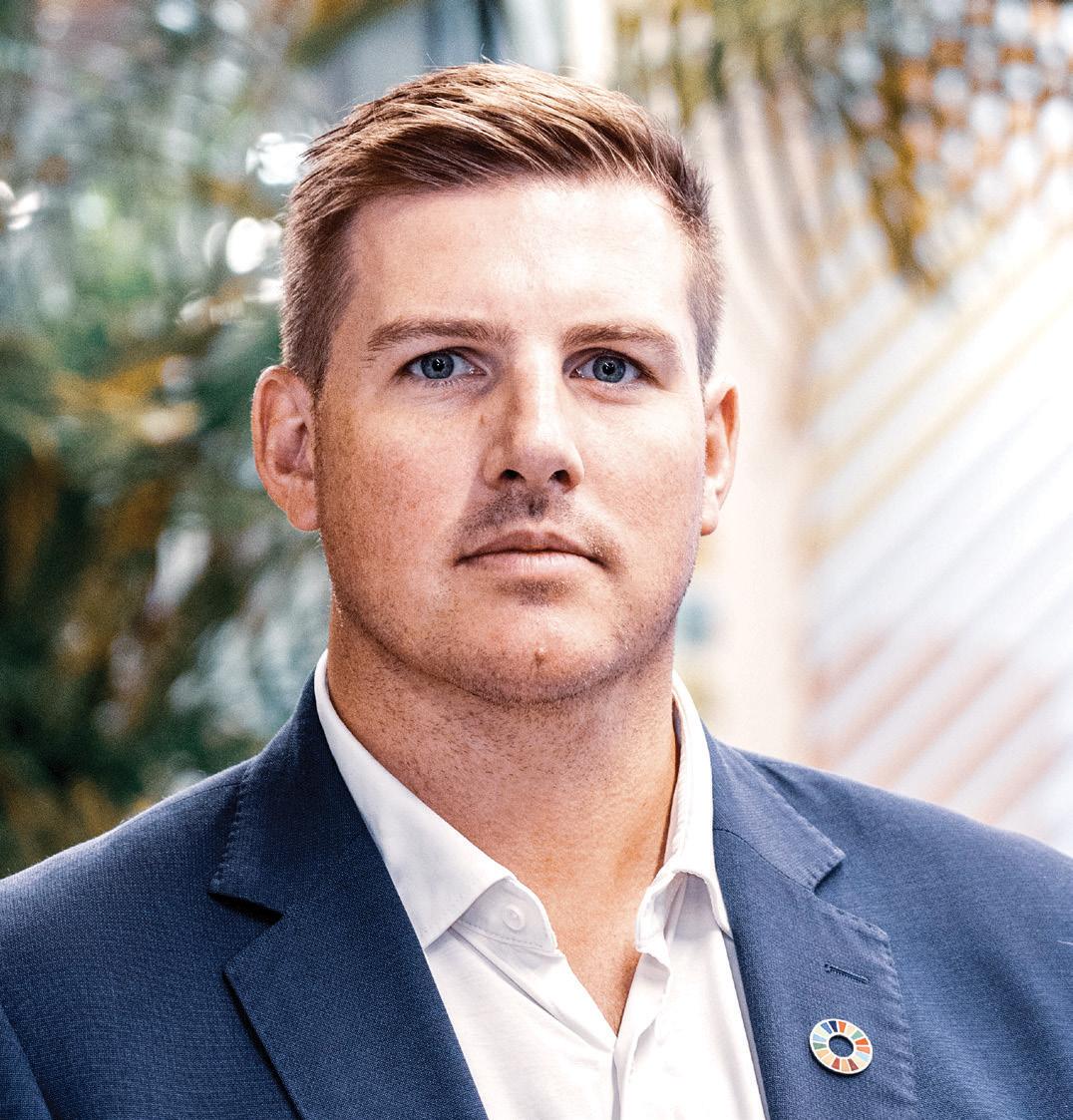
s sustainability shifts from a reporting requirement to a boardroom priority, companies in the Gulf rethinking how climate, technology, and long-term value creation intersect. In this interview, Daniel Gribbin, director of Sustainability at Deloitte Middle East, discusses how C-suite leaders across the region are embedding sustainability into core strategy, why investment and AI adoption are accelerating, and where execution gaps still remain.
How is the role of sustainability evolving at the C-suite level beyond compliance and reporting?
Sustainability is rapidly moving beyond a compliance checklist to become a core strategic priority for C-suite leaders across the Gulf. In fact, 53 per cent of executives in the Middle East now rank climate change and sustainability among their top business priorities and higher than the global average.
Many organisations are embedding sustainability throughout their operations, with some integrating it without altering their core business models, while others, around 37 per cent, are transforming their business models entirely to address sustainability challenges.
This evolution reflects a clear understanding that sustainability is critical not only for risk management but also for driving growth, enhancing resilience, and maintaining competitiveness in a fast-evolving market. Boards and executive teams are increasingly engaged in governance and capacity building to ensure sustainability is embedded at the heart of business strategy.
What are the most significant sustainability trends shaping executive decision-making across the region right now?
Several key trends are shaping how GCC leaders approach sustainability. Climate change remains a top concern, with 45 per cent of executives citing it as one of their three biggest challenges. Investment in sustainability is accelerating, with 86 per cent of organisations increasing their budgets over the past year. Technology adoption, particularly artificial intelligence, is a major enabler with around 82 per cent of companies are leveraging AI to advance sustainability goals. There is also a heightened focus on data and measurement, with 57 per cent prioritising tracking and analysing environmental metrics, well above the global average. Additionally, political advocacy is gaining prominence, with nearly half of organisations engaging in lobbying or donations
Innovation is also key, with 48 per cent developing new sustainable products and services to meet evolving customer demands
to support environmental initiatives. These trends demonstrate a maturing sustainability agenda that balances innovation, regulatory compliance, and stakeholder engagement.
How are leading organisations in the Middle East embedding sustainability into core business strategy while still driving growth and competitiveness? Leading companies in the region are making sustainability integral to their business models. They align their ESG frameworks with international standards and link sustainability directly to financial outcomes. 29 per cent of executives identify financial benefit as the primary driver behind sustainability decisions. Technology is central to this effort, with over half of organisations implementing solutions to improve sustainability reporting and operational efficiency. Innovation is also key, with 48 per cent developing new sustainable products and services to meet evolving customer demands. Governance is improving, though there remains room for growth: only 36 per cent of organisations currently tie senior leadership compensation to sustainability performance. By embedding sustainability into strategy, operations, and governance, these organisations are not only managing risks but unlocking new opportunities and strengthening their competitive positioning.
What common challenges or disconnects do executives face when translating sustainability ambitions into real operational change?
Despite strong ambitions, many executives face challenges in turning sustainability goals into operational reality. Measuring environmental impact remains a significant hurdle,
with 21 per cent citing difficulties in accurate measurement and reporting. There is also concern about alienating customers or employees by taking a strong sustainability stance with 28 per cent of leaders flagged this, notably higher than the global average.
Navigating shifting regulatory and reporting requirements adds complexity, noted by 20 per cent of respondents. Balancing short-term financial pressures with the need for sustained sustainability investment remains a delicate challenge. Furthermore, accountability gaps persist; only 36 per cent of organisations link executive pay to sustainability outcomes, down from 43 per cent last year. These challenges highlight the complexity of operationalizing sustainability in dynamic business environments.
Based on your work with regional leaders, what practical strategies are proving most effective in aligning sustainability with long-term value creation?
The most effective strategies focus on embedding sustainability into the core business rather than treating it as a separate function. Leaders are developing clear, actionable roadmaps with defined milestones and governance frameworks to maintain momentum. Technology is a game-changer with 82 per cent of organizations use AI to optimse sustainability efforts, driving efficiency and transparency.
Engaging boards and leadership teams to foster accountability, including linking executive incentives to sustainability outcomes, strengthens commitment. Building organisational capacity ensures sustainability is a continuous journey that delivers measurable longterm value. These practical steps help organisations
move from ambition to impact and position them for sustainable growth.
Deloitte’s latest Middle East C-Suite Sustainability Report highlights growing investment and use of AI in sustainability initiatives. What do these shifts signal about leadership mindsets in the region?
The widespread adoption of AI signals a fundamental shift in leadership mindsets, and of course a transformation in the workforce. Technology is no longer optional; it’s essential for achieving sustainability goals. Leaders are embracing data-driven decision-making and real-time optimisation to reduce emissions and improve operational efficiency. The fact that 86 per cent of organizations have increased sustainability investments reflects growing confidence that sustainability is a source of long-term value, not just a cost. This shift reflects a more proactive, innovative approach where sustainability is integrated into broader business transformation agendas, moving beyond compliance to become a strategic growth enabler.
What should C-suite leaders prioritise now to stay resilient and relevant in the 2026 sustainability landscape? To remain resilient and relevant, C-suite leaders must embed sustainability deeply into their core business models, aligning it with financial and operational objectives. Investing in technology and data capabilities is critical with over half of organisations already focus on tech for sustainability reporting and operational efficiency.
Strengthening governance and accountability is vital, especially linking executive pay to sustainability outcomes, an area needing renewed focus given recent declines. Leaders should engage stakeholders openly and transparently to build trust and credibility.
Finally, developing flexible strategies that can adapt to evolving regulations, market dynamics, and climate risks will be key to navigating the rapidly changing sustainability landscape successfully. L
BY NEESHA SALIAN

BOULOS SHARES HOW COMPANIES IN THE MIDDLE EAST ARE NAVIGATING REINVENTION, TALENT PRESSURES, AND THE CHALLENGE OF TURNING TECHNOLOGY INVESTMENT INTO REAL VALUE
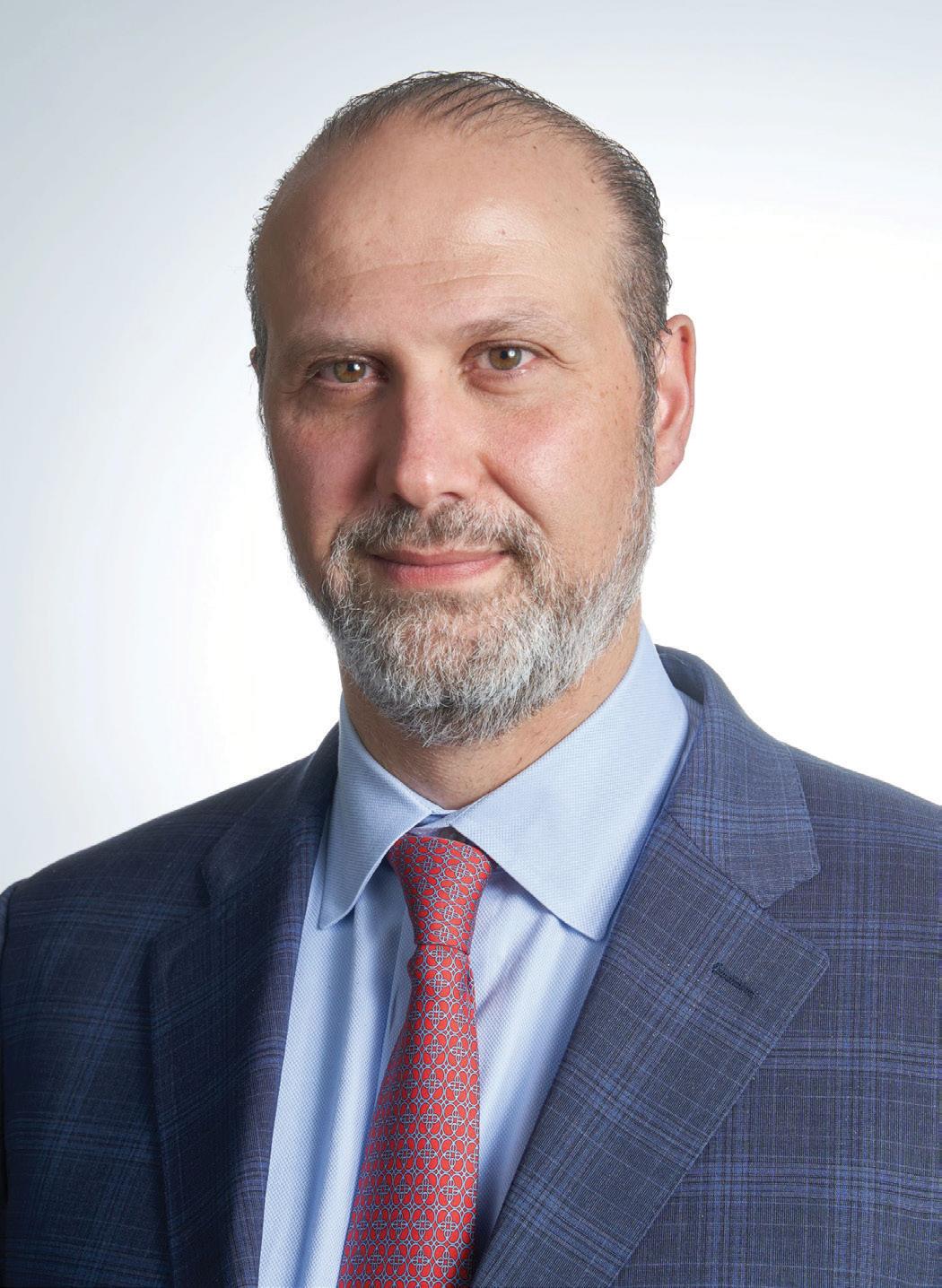
With the World Economic Forum 2026 now concluded, one message from Davos stands out: disruption is no longer a phase; it is the operating environment. On the sidelines of the forum, Omar Boulos, CEO for Middle East and Africa at Accenture, shared insights with Gulf Business on what business confidence really looks like in 2026, where leadership optimism diverges from workforce reality, and why AI is rapidly moving from hype to hard capability. Drawing on Accenture’s latest Pulse of Change data and regional insights, Boulos shares how companies in the Middle East are navigating reinvention, talent pressures, and the challenge of turning technology investment into real value.
Your Pulse of Change data tracks how leaders feel about their business trajectory going into 2026. What’s the honest read — are leaders genuinely confident, or are they learning to operate in a constant state of disruption rather than expecting stability to return? While leaders are confident about growth, as highlighted in Accenture’s latest Pulse of Change report, the confidence is increasingly about learning to perform in a constant state of disruption. In fact, 82 per cent of C-suite leaders expect an even higher level of change in 2026 than in 2025. Looking at the 2026 trajectory, what stands out is a maturing ability to lead through continual disruption.
In the Middle East, this sentiment is even more pronounced. Our regional research shows that 82 per cent of organisations have actually accelerated their reinvention efforts over the past year, a rate higher than many markets. C-suite leaders are optimistic, but that optimism is now grounded in the reality that disruption is the operating environment. While 55 per cent of global leaders feel prepared for technological disruption (up from 49 per cent last year), only 44 per cent feel the same about geopolitical shifts, a critical nuance for our region.
Many CEOs say they are “ready for change”. Based on your findings, where is the biggest gap between perceived readiness and actual capability — technology, talent, operating models, or decision speed?
There is a disconnect between perceived readiness and actual capability. The gap is widening. While 82 per cent of leaders expect more change, there is a 24-percentage point gap between their optimism and employee readiness.
When it comes to talent, employees feel significantly less prepared than leaders. At Davos, we emphasised that the future is “Human in the Lead,” not just “Human in the Loop”.
The bottleneck is no longer the tech stack; it is the fact that fewer than one in 10 organisations are fundamentally redesigning job roles to support AI adoption. In the Middle East, where ambition is high, only 9 per cent of
companies are currently progressing at scale, proving that the “readiness” often lacks the structural “reinvention” needed to win.
If the AI hype cycle cools or capital tightens, how many companies are truly committed to AI as a long-term capability rather than a short-term experiment? What does your data suggest would be cut first: pilots, infrastructure, or talent?
In our 2026 data, 46 per cent of leaders say they would actually increase AI investments even in the event of a market correction. AI has moved from ‘experiment’ to ‘enduring capability.’ Crucially, 78 per cent of leaders now see AI as more beneficial to revenue growth than cost reduction, up from 65 per cent in 2024. The strategic imperative for CEOs is clear: if you must trim, start
WHILE 86 PER CENT OF LEADERS SAY THEY ARE PREPARING THEIR WORKFORCE FOR AI AGENTS, ONLY 24 PER CENT OF ORGANISATIONS HAVE ACTUALLY EMBEDDED CONTINUOUS LEARNING.”
by rationalising fragmented pilots, not by hollowing out your data foundations.
In the Middle East, digital transformation spend is projected to hit $72bn this year, and pulling back on the “Digital Core” now would mean losing a seat at the table during the next 12 months of rapid scaling.
Pulse of Change looks at AI investment intentions, but value creation often lags spend. What separates companies seeing real returns from those still stuck in proof-of-concept mode?
Pulse of Change tells us intent is no longer the issue – nine in 10 leaders plan to increase AI investment – but the shift in 2026 is toward “Agentic AI”, AI that doesn’t just generate content but takes action.
What separates value-creators? They move from “Proof of Concept” to “Proof of Value”. They also fix foundations early. As we discussed at Davos, leaderled learning is the only way to ensure the enterprise understands how to move from task automation to end-to-end process redesign.
In the Middle East, “Reinventors” who do this are seeing a 15-percentage point premium on revenue growth compared to their peers.
Accenture’s research mirrors leadership views with employee sentiment. Where are leaders misreading the workforce, particularly on reskilling versus external hiring, and what risks does this create heading into 2026?
Leaders are overestimating how ready their people feel. While 86 per cent of leaders say they are preparing their workforce for AI agents, only 24 per cent of organisations have actually embedded continuous learning.
Heading into 2026, the risk is a “resilience illusion.” AI is not the enemy of the workforce; the challenge is companies choosing to restructure without reskilling. In the Middle East, talent is cited as the #1 way the landscape has shifted, yet the “readiness gap” persists. Winners will be those who treat reskilling with the same capital rigour as a cloud migration.
Looking across sentiment, investment, and talent plans, what is the single strategic mistake companies are most likely to make over the next year, and what should leaders be doing differently right now?
A common strategic oversight would be investing in AI while ignoring the “Human in the Lead” philosophy. Leaders risk mistaking a “tech-heavy” roadmap for a “future-ready” one. Leaders need to match their AI investment with investment in people and organisational design. Right now, they should be doing three things: First, move beyond pilots to scale “agentic AI” in core domains; second, close the 24-percentage point gap in leader-employee perception through radical transparency; and third, treat the “Digital Core”— data and cloud — as a sovereign asset for regional competitiveness. L
WHAT SEPARATES VALUE-CREATORS? THEY MOVE FROM “PROOF OF CONCEPT” TO “PROOF OF VALUE”. THEY ALSO FIX FOUNDATIONS EARLY. AS WE DISCUSSED AT DAVOS, LEADER-LED LEARNING IS THE ONLY WAY TO ENSURE THE ENTERPRISE UNDERSTANDS HOW TO MOVE FROM TASK AUTOMATION TO END-TO-END PROCESS REDESIGN. IN THE MIDDLE EAST, “REINVENTORS” WHO DO THIS ARE SEEING A 15-PERCENTAGE POINT PREMIUM ON REVENUE GROWTH COMPARED TO THEIR PEERS.
BY NEESHA SALIAN

WHAT DIFFERENTIATES DEC IS THAT IT OPERATES WITHIN A PURPOSE-BUILT ECOSYSTEM WHERE CONNECTIVITY, PUBLIC REALM PLANNING, HOSPITALITY AND UTILITIES ARE ALIGNED AROUND REDUCING ENVIRONMENTAL IMPACT, SAYS THE EVP
As Dubai strengthens its position as a global hub for business tourism, the spotlight has shifted to the next phase of its exhibition infrastructure strategy. The recent hosting of Gulfood and World Health Expo at Dubai Exhibition Centre (DEC) emphasised the scale of demand for large, sectordefining events, with healthcare leaders, exhibitors and policymakers converging at the venue.
At the centre of this expansion drive is the phased growth of DEC, led by Dubai World Trade Centre (DWTC), which plans to increase capacity to 140,000 square metres (sqm) by Q1 2026 and to 180,000 square metres by 2031. The expansion aligns with Dubai’s broader economic agenda and its ambition to double the number of events hosted annually by 2033.
Here, Mahir Julfar, EVP at DWTC, discusses the rationale behind the phased rollout, the operational lessons from co-hosting major events such as Gulfood and World Health Expo across multiple venues, and how DEC is being positioned as a large-scale, purpose-built platform for the next generation of global exhibitions.
Phase 1 of the DEC Expansion delivers 140,000 sqm by Q1 2026, with full buildout to 180,000 sqm by 2031. What’s driving the phased approach, and what early wins or demand signals are you seeing that validate the scale and ambition of this expansion?
Dubai’s sustained economic momentum and its continued rise as a global convening hub are closely aligned with the strong structural growth of the international MICE industry. The global market is forecast to grow to$1.30tn by 2030, underpinned by increasing demand for high-impact, purposedriven events that deliver measurable business outcomes.
The three-phase expansion of the DEC has been intentionally designed as a market-led and strategically phased programme that balances immediate capacity requirements with long-term growth ambitions, while safeguarding operational resilience. This approach reflects our responsibility to anticipate the future needs of the global MICE industry while responding decisively to clear and present demand.
The delivery of Phase 1, which will bring total capacity to 140,000 sqm by Q1 2026, is grounded in strong and observable demand from global exhibitions and large-scale international events. The MICE sector continues to demonstrate sustained growth, and Dubai’s role as a convening hub for priority industries under the Dubai Economic Agenda (D33) is accelerating at pace.
The full expansion to 180,000 square metres by 2031 ensures that we retain the flexibility required to support the next phase of growth in mega exhibitions, the development of new intellectual property events and greater sector diversification.
Early performance indicators already validate both the scale and timing of this expansion. At the start of this year, Gulfood was successfully cohosted across both Dubai International
Convention and Exhibition Centre and DEC for the first time, demonstrating our ability to scale a flagship global event across multiple venues while maintaining operational continuity and a seamless visitor experience. This milestone provided tangible, real-world validation of our phased expansion strategy. Building on this momentum, World Health Expo (WHX), including WHX Labs, was also co-located across venues in early February.
These demand signals are further reinforced by the continued expansion of existing DWTC events in terms of scale, duration and international participation, alongside rising demand for the simultaneous hosting of multiple events. This reflects both increasing sector diversification and our ambition to double the number of events hosted annually by 2033.
Importantly, the expansion of DEC is closely aligned with the city’s long-term growth drivers, including the evolution of Expo City Dubai as a global economic hub, the Dubai 2040 Urban Master Plan and the expansion of Al Maktoum International Airport, all of which underpin sustained growth in business tourism and reinforce Dubai’s global competitiveness in the MICE sector.
You’re positioning DEC as the region’s largest purposebuilt indoor venue by 2031. With Dubai’s track record of delivering iconic infrastructure and Expo City’s ready ecosystem, what structural advantages do you have that competitors in Riyadh, Singapore, and Abu Dhabi will find hard to replicate?
At the core of this differentiation is Dubai’s demonstrated ability to deliver complex, globally significant projects with consistency and certainty. Dubai World Trade Centre brings more than four decades of operational and development expertise, underpinned by the successful
delivery of large-scale, mixed-use assets and globally recognised venues. For international organisers and associations, this translates into reduced execution risk, operational maturity and confidence in long-term partnership. In an industry where reliability, repeatability and delivery certainty are paramount, this track record is a decisive factor.
Equally important is the fact that DEC operates within a fully activated economic ecosystem rather than as a standalone venue. Located at the heart of Expo City Dubai, DEC benefits from an integrated, live environment that already combines transport infrastructure, hospitality, commercial space, residential communities and public realm assets.
From an operational perspective, the venue’s design is aligned with global best practices and future event requirements. By 2031, DEC will offer more than 180,000 square metres of flexible, single-level exhibition space, enabling the hosting of a single global mega-event or multiple concurrent international exhibitions.
Beyond physical infrastructure, Dubai’s regulatory and business environment acts as a powerful force multiplier. Visa facilitation, a mature free-zone ecosystem, ease of doing business and an open, globally connected economy extend the value of every event beyond its duration. Exhibitors and delegates can establish companies, sign deals and expand regionally within the same ecosystem, transforming events from episodic gatherings into longterm economic anchors.
Ultimately, the scale of DEC is driven by a clearly articulated economic mandate to support Dubai’s ambition to double the number of annual events and triple economic impact by 2033. This ensures that growth remains demand-led, globally relevant and fully integrated into the city’s long-term economic agenda, reinforcing Dubai’s position as a leading global hub for business tourism and the MICE industry.
Hosting Gulfood Global and World Health Expo across two venues in Q1 2026 is operationally ambitious. What innovations in mobility, visitor experience, or event technology are you implementing that could set new global benchmarks for how mega-events are managed at scale? Running events concurrently across DWTC and DEC requires citywide coordination. We have worked to develop deep and strong citywide partnerships, including with RTA and Dubai Police, from which we can build integrated transport, mobility and security frameworks.
The Dubai Metro Red Line connects directly to DEC via Expo 2020 Station – Dubai’s largest metro station – with increased frequency during peak periods. We’ve established 30 dedicated shuttle buses between DWTC and DEC, plus Park & Ride facilities at key metro stations to manage citywide visitor flow.
Within DEC, 80 shuttle services run continuously between the parking and the arrival plaza. The temporary pavilions connect directly to the main halls and the central plaza, with outdoor F&B areas enhancing the
visitor experience. What makes this different is the level of coordination between venue operations and citywide transport infrastructure. This requires a coordinated city-scale approach that ensures efficiency from arrival to departure. We believe this could set a new standard for how cities handle mega-events.
This approach was applied during Gulfood’s first edition, which operated across both DICEC and DEC, ensuring seamless movement and a consistent experience for exhibitors and visitors across both locations.
With 26 interconnected halls capable of hosting more than 20 simultaneous events by 2031, you’re creating unprecedented density and co-location opportunities. What types of synergies or cross-pollination between events do you expect, and how could this model attract new event formats or exhibitor behaviours that weren’t possible before?
The 26 interconnected halls create something fundamentally different – an ecosystem where events can run independently or work together.
We see two main types of synergy. First, vertical integration within industries: concurrent events spanning an entire value chain. Healthcare is a good example –medical technology, pharmaceuticals, digital health and hospital infrastructure all in one location at WHX. A similar model was evident during Gulfood, where scale and adjacency across venues enabled broader discovery across the food and beverage ecosystem without fragmenting the visitor journey.
Second, horizontal connections: complementary sectors like food technology next to packaging innovation, or sustainability conferences alongside cleantech exhibitions. This enables new formats. Multitrack conferences can expand across halls. Startups at one event can meet investors from neighbouring conferences. Buyers can discover related solutions without leaving the venue.
For exhibitors, the business case changes. They can be present at multiple events, reach different audiences and maintain year-round visibility in one location – efficiency that traditional models can’t match. By 2031, we expect event formats designed specifically around these co-location opportunities – industry weeks and innovation festivals that use the venue’s capacity to host multiple audiences simultaneously.
How is sustainability becoming a commercial differentiator in winning international event bids, and what feedback are you getting from organisers about Dubai’s green credentials?
At DWTC, sustainability is not viewed as an operational add-on, but as a core pillar of our longterm competitiveness and value creation within the global MICE industry. As client expectations, regulatory frameworks and investor scrutiny continue to evolve, our focus has been on embedding sustainability across the entire DWTC ecosystem in a way that is measurable,
scalable and commercially relevant. This includes how we design and operate our venues, how we partner with organisers and suppliers, and how we align with Dubai’s wider sustainability and net-zero ambitions. The objective is clear: to ensure that growth in scale and economic impact is matched by responsible delivery and long-term resilience. Within this framework, DEC plays a pivotal role. DEC has been conceived and developed as a future-ready venue, incorporating LEED-certified design principles, advanced energy and water efficiency systems, and direct integration into Expo City Dubai’s sustainable urban infrastructure.
What differentiates DEC is not a single sustainability feature, but the fact that it operates within a purposebuilt ecosystem where transport connectivity, public realm planning, hospitality and utilities are aligned around reducing environmental impact. This enables the delivery of large-scale, international events with lower carbon intensity, without compromising on capacity, experience or operational efficiency, an increasingly critical requirement for mega-events and global exhibitions.
Expo City Dubai offers direct metro access, 5G connectivity, diverse F&B, and a festival-style outdoor environment during cooler months. How are you leveraging this destination appeal to create experiences that go beyond traditional exhibition halls?
Dubai Exhibition Centre reimagines the exhibition experience by placing it within a vibrant urban destination. Traditional centres isolate attendees in convention halls. DEC places them within Expo City’s walkable districts, restaurants and cultural spaces.
Placemaking is central to our approach. The venue has an open-air plaza with over 50 food trucks, a smart mini market and various F&B options from casual dining to premium lounges. During cooler months, outdoor spaces become festival-style environments where business meets lifestyle and culture. This extends dwell time, encourages networking beyond sessions and creates experiences that differentiate DEC.
THE
DELIVERY OF
PHASE 1, WHICH WILL BRING DEC’S CAPACITY TO
140,000 SQUARE METRES BY Q1 2026, IS GROUNDED IN STRONG AND OBSERVABLE DEMAND FROM GLOBAL EXHIBITION
Expo City’s infrastructure supports this. Direct metro access eliminates transport issues. 6G-ready connectivity supports business operations. The surrounding cafes, restaurants and entertainment options create an environment where attendees naturally stay longer. Long-term, we see DEC as a destination where events are starting points, rather than endpoints or add-ons. Attendees come for an exhibition and then stay to explore Expo City’s innovation districts and cultural offerings. Organisers benefit because their exhibitors reach audiences beyond exhibition hours. This transforms how the industry thinks about venues, from square metreage to complete destination experience. We’re providing an environment where business outcomes improve because the surrounding context enhances every part of the attendee journey. L
BY NEESHA SALIAN

AS THE DUBAI WORLD CUP APPROACHES ITS 30TH EDITION, CEO ALI AL ALI IS STEERING THE CLUB TO BLEND EMIRATI HERITAGE, CUTTING-EDGE TECHNOLOGY, AND WORLD-CLASS EXPERIENCES, TO POSITION DUBAI AT THE FOREFRONT OF INTERNATIONAL HORSERACING
As Dubai Racing Club celebrates another milestone in its journey at the forefront of global horseracing, Ali Al Ali, CEO and board member, is steering the club through a period of innovation, expansion, and cultural celebration. With the Dubai World Cup approaching its 30th edition this year, Al Ali is focused on enhancing the fan experience, embracing cutting-edge technology, and strengthening Dubai’s position as a premier racing hub. From immersive digital broadcasts to world-class hospitality, the Club is redefining what it means to experience elite racing in a city where sport, culture, and heritage intersect.
In this interview, Al Ali shares insights on how Dubai Racing Club is marrying tradition with innovation, attracting top international competitors, and ensuring the Dubai Racing Carnival continues to set the global standard.
Dubai Racing Club has been investing in new broadcast and analytics tools this season. How do data and technology change the way racing is presented to fans at Meydan and to global audiences?
Our ambition is to bring racing to life for every fan,
whether they’re at Meydan or watching across the world. Advanced data tracking, POV jockey cameras, and drone coverage allow us to present racing in a way that is immersive, dynamic and insightful.
Technology doesn’t just enhance the viewing experience, it transforms how people understand the sport, making the strategy, skill, and athleticism of horse and rider instantly visible. As digital consumption evolves, we are also engaging a younger, tech-savvy audience, laying the foundation for the next generation of racing fans.
Looking ahead, we see opportunities to integrate AI-driven analytics and augmented reality features that will make the fan experience even more personalised and interactive.
With the Dubai World Cup entering its 30th edition in 2026, what are your main priorities for keeping the event relevant, competitive, and globally compelling?
Our vision is to ensure the Dubai World Cup remains the world’s most spectacular day of racing. Each year we raise the bar, from the on-course experience to hospitality and digital engagement, creating a truly memorable moment for fans and participants alike. This year, we announced our partnership with Zuma, delivering an elevated culinary experience that complements the racing spectacle, along with many other well known restaurant brands. In addition to our renowned Closing Ceremony, we will host a post-race concert with an internationally acclaimed artist, bringing live entertainment to fans and enhancing the celebratory atmosphere. At the same time, we maintain a strong focus on the welfare of both horses and jockeys, and we continue to attract the very best international competitors. By combining world-class racing, hospitality, fashion, culture, and entertainment, we are creating an experience that is uniquely Dubai, one that resonates globally and sets the benchmark for elite racing events.
International participation in the Dubai Racing Carnival continues to
grow. What does this say about Dubai’s standing in global horseracing, and how do you maintain those relationships year after year?
Dubai’s reputation as a premier racing hub is built on trust, expertise, and consistency. Each summer, we engage with trainers and owners worldwide, and this year we welcomed more than 120 international horses for the carnival. Our participants know that Meydan Racecourse and our facilities provide an unmatched environment for training, competing, and showcasing talent. These long-term relationships, combined with an unwavering commitment to excellence, reinforce Dubai’s position at the centre of international racing.
Major race meetings are increasingly tied to tourism and the wider economy. How does Dubai Racing Club measure and maximise the broader impact of the Carnival and World Cup on the city?
The economic and cultural impact extends well beyond the track. Visitors engage with Dubai’s hospitality, entertainment, and business sectors, creating measurable value for the city.
Our role is to amplify this effect, positioning Dubai not just as a racing destination but as a global hub where sport, culture, and lifestyle converge. With every event, we enhance the city’s reputation and encourage return
THE ECONOMIC AND CULTURAL IMPACT EXTENDS WELL BEYOND THE TRACK. VISITORS ENGAGE WITH DUBAI’S HOSPITALITY, ENTERTAINMENT, AND BUSINESS SECTORS, CREATING MEASURABLE VALUE FOR THE CITY.”
visits, helping to shape Dubai’s longterm tourism and business strategy.
The club has placed greater emphasis on culture and heritage alongside elite sport. Why is it important to integrate Emirati identity into an event with such a global audience?
Horses are at the heart of Emirati culture, and our ambition is to showcase that heritage on the world stage. Integrating Emirati identity into global events is not just about celebration, it is about storytelling.
We demonstrate that the UAE is a nation of horse lovers, capable of producing world-class trainers and riders across all equestrian disciplines. This narrative resonates globally, reinforcing our reputation as a nation that honours tradition while excelling in elite sport.
Competition between global racing hubs is intensifying. How is Dubai positioning its calendar, prize money, and race programme to remain attractive worldwide?
Our race programme is evolving continuously. Since 2023, the Dubai Racing Carnival has featured 16 meetings with no race worth less than Dhs165,000. This allows international horses to base themselves in Dubai from October, maximising participation and exposure.
We have also enhanced our feature programme, including two Group 1 races on Fashion Friday in January, to attract top-level competition earlier in the season. The strategy has delivered results, exemplified by Romantic Warrior, the world’s highest-earning racehorse, winning the G1 Jebel Hatta in 2025.
Looking forward, we will continue refining prize structures, digital engagement, and calendar planning to stay ahead of global competition, ensuring Dubai remains the benchmark for racing excellence.
Racing is evolving globally, and Dubai is evolving with it. By combining heritage, technology, sustainability, and fan-first experiences, we aim not just to host world-class races, but to set the standard for how sport can inspire, connect, and lead on a global stage. L

TECHNOGYM FOUNDER AND CEO NERIO ALESSANDRI TALKS ABOUT THE BRAND’S NEW RIYADH FLAGSHIP, ITS ROLE IN LINKING ELITE PERFORMANCE WITH COMMUNITY FITNESS, AND HOW AI AND INCLUSIVE DESIGN ARE SHAPING THE FUTURE OF TRAINING
Technogym has just opened a flagship in Riyadh at a time when Saudi Arabia is investing heavily in sport, wellness, and active lifestyles. What does this market represent for you strategically, and how has the region’s fitness consumer evolved compared to five or even three years ago?
Saudi Arabia today represents one of the most dynamic frontiers for wellness. The country is not only investing in sport; it is redefining the role of wellness in society. For Technogym, this means a strategic opportunity to contribute to a national transformation where health, performance, and lifestyle converge. This new location embodies Technogym’s vision of wellness as a social opportunity, benefitting governments, businesses, and citizens alike. Across Saudi Arabia and the Middle East, there is a strong commitment to building healthier, more active communities, and we are fully aligned
with this ambition. Establishing a flagship presence in Riyadh allows us to contribute directly to a broader cultural shift toward prevention, wellbeing, and quality of life. Our goal is to support national health strategies, help organisations integrate wellness into their environments, and inspire individuals to embrace active living every day.
Saudi Arabia is hosting and bidding for major global sporting events while also pushing mass participation through Vision 2030. How do you see Technogym’s role in bridging elite sport performance and everyday fitness in markets like Saudi Arabia? Technogym has always operated at the intersection of elite sport and everyday wellness. In Saudi Arabia, this duality is perfectly aligned. On one side, the country is attracting the world’s top athletes and events; on the other, it is encouraging millions of citizens to embrace active lifestyles. Our role is to bring the same science, technology, and training intelligence used by Olympic champions to the broader population. Whether you are a professional preparing for competition or a beginner starting your wellness journey, the Technogym ecosystem adapts to your goals, your abilities, and your motivation. This is how we help create a culture where performance and wellbeing reinforce each other.
Being appointed Official Supplier of the Olympic and Paralympic Games for the 10th time is a rare distinction. What does this long-standing relationship say about Technogym’s positioning in elite sport, and how do lessons from Olympic-level performance feed back into products used by everyday consumers?
Being selected for the 10th time is a testament to our commitment to innovation, reliability, and scientific training. The Olympic and Paralympic Games are the ultimate testing ground. If our equipment can meet the demands of the world’s best athletes under the most intense conditions, it can serve anyone, anywhere. We observe how athletes train, how coaches analyse data, how recovery protocols evolve.
These insights directly influence the products and digital solutions we bring to homes, health clubs, and corporate wellness programs. Technology that begins on the Olympic stage becomes the everyday training experience for millions of people.
Paralympic sport has increasingly shaped conversations around inclusive design and adaptive training. How has working closely with Paralympic athletes influenced Technogym’s approach to equipment design, data, and training intelligence? Paralympic athletes have been invaluable partners in pushing us to think beyond traditional design paradigms. Their feedback has helped us refine ergonomics, accessibility, and the adaptability of our equipment. But it goes deeper than hardware. We have integrated inclusive metrics and training pathways into our digital ecosystem, ensuring that performance data is meaningful for athletes with different abilities and movement patterns. This collaboration has reinforced a core belief at Technogym: true innovation must be inclusive.
AI-powered training is becoming central to Technogym’s ecosystem, from elite athletes to home users. How is AI changing the way coaches, trainers, and athletes make
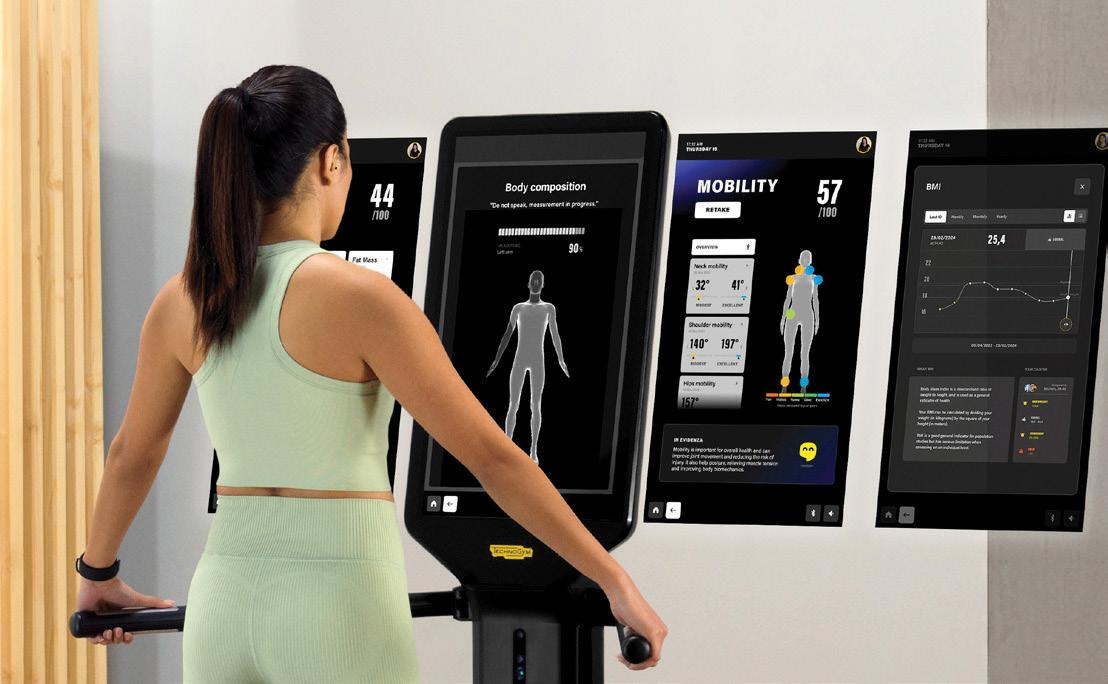

BY NEESHA SALIAN
decisions, and where do you draw the line between human intuition and machine-led optimisation? Today, AI enables us to analyse thousands of variables in real time, movement quality, workload, recovery trends, metabolic responses and turn them into clear, actionable insights. Technogym Checkup plays a central role in this process, providing scientific assessments of body composition, mobility, posture, and performance so that every training journey starts from objective data, not guesswork. From there, AI adapts the program as the user progresses, ensuring personalised guidance, better results, and reduced injury risk. But despite these advances, the human element remains essential. Our AI is designed to support trainers, not replace them: by taking care of analysis and personalisation, it frees professionals to focus on what truly matters: the human side of coaching, encouraging and following each person with greater attention and care. We design AI to enhance human decision‑making, not replace it. The goal is a perfect synergy: data‑driven precision combined with human understanding.
Data now sits at the heart of sport, from injury prevention to performance peaks. How does Technogym manage the balance between collecting meaningful performance data and keeping training simple, intuitive, and motivating for users?
We believe that data should empower people. This is why our approach is built around the Technogymecosystem, a fully connected environment where equipment, software, and content work seamlessly together. The ecosystem collects high‑quality performance data— movement patterns, workload, heart rate, recovery trends—and transforms it into insights that feel natural and effortless for the user. Thanks to data, we can truly offer people what they are looking for: a training journey that is intuitive, easy to follow, and fully guided, so that every user feels supported and motivated at every step. Whether you are an Olympic champion or someone training for the very first time, the system adapts to your needs. The same scientific principles that guide elite athletes are translated into intuitive, personalised training experiences for everyday users.
Looking ahead, how do you see the relationship between professional sport, community fitness, and digital wellness evolving, and where does Technogym want to lead rather than follow?
Our goal is to lead across all clusters by offering innovative equipment and seamless AI‑based digital solutions. Starting from an ecosystem‑driven approach, our strategy focuses on delivering personalised experiences for every type of user. We address the needs of those who train for fitness and enjoy socialising, individuals seeking wellness and a balanced lifestyle, amateurs and professional athletes aiming to enhance their performance, and people who require access to targeted exercise protocols for prevention and rehabilitation. L
BY NEESHA SALIAN
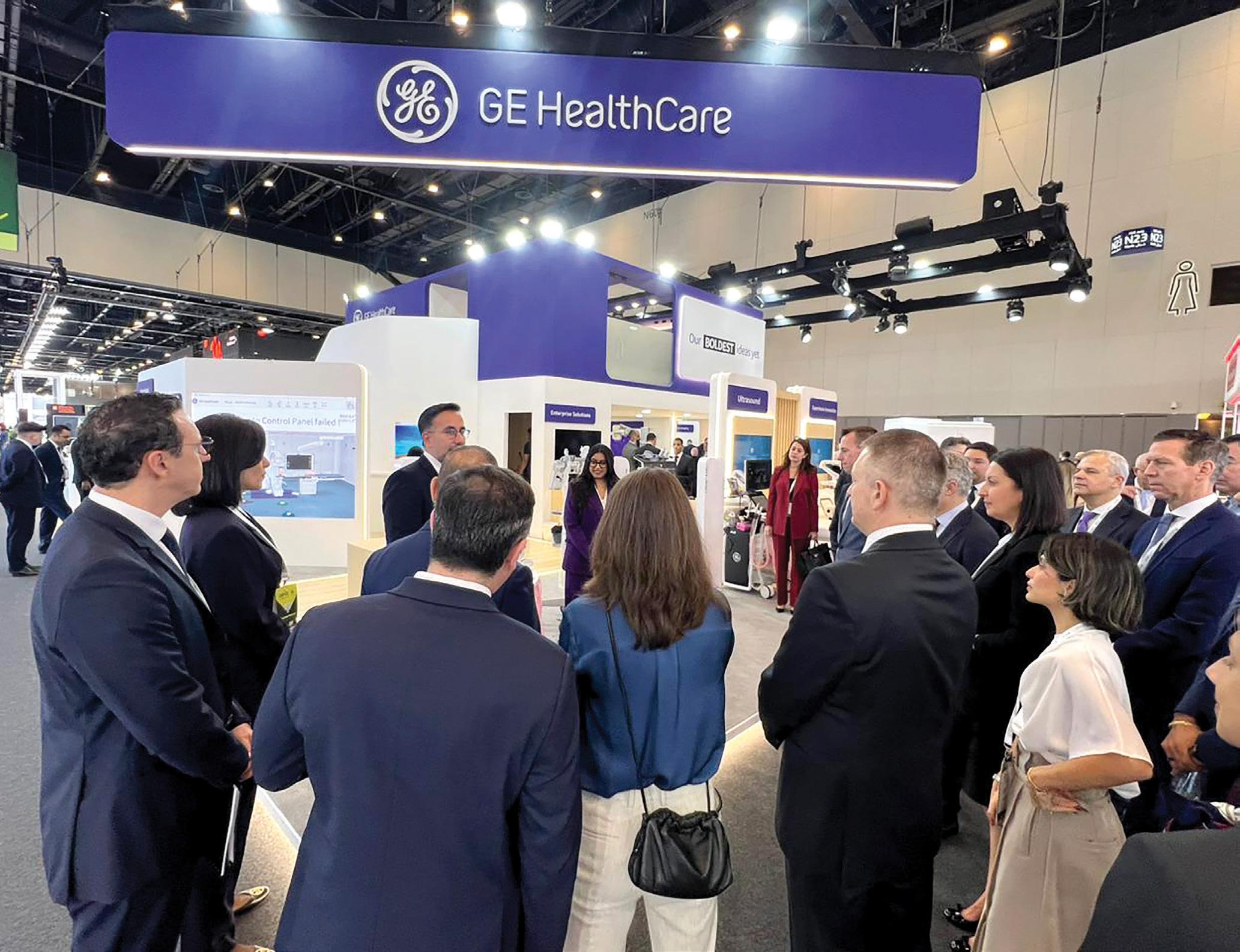
t WHX 2026 in Dubai, Elie Chaillot, president and CEO – international at GE HealthCare, offered a global perspective on how healthcare systems are evolving from hospital-centric models to connected, patient-centric ecosystems. Overseeing operations across more than 150 countries, Chaillot sits at the intersection of mature and emerging markets at a time when cost pressures, demographic shifts and digital acceleration are reshaping care delivery. In conversation, he spoke about the economics of prevention versus cure, the growing role of AI in imaging and diagnostics, and why regions such as the Middle East are uniquely positioned to leapfrog legacy models.
As President and CEO International at GE HealthCare, you oversee healthcare systems across 150 countries. What common structural shifts are you seeing as systems move from hospital-centric models to connected patient-centric ecosystems?
If you look at what’s happening over the last two decades or more, the cost of healthcare is going up every year. It is much more costly. But I think what governments and all stakeholders in
healthcare are not seeing clearly is whether the cost is going in line with outcomes.
The one thing everybody is looking at – whether in mature markets or emerging markets – is how can I drive better outcomes without necessarily driving costs up? It is a game of efficiency, a game of productivity. It is also about becoming much more patient-centric, not even customer-centric, but patient-centric.
The biggest move is around data. Healthcare today generates about 30per cent of the world’s data. How much of this data is useful? How much can we process? What is the data telling us? Can we use the data to treat, or even to prevent?
When you think about driving precision care and better patient outcomes, prevention becomes cheaper than curing. Across all countries, whether richer or more modest, everyone is looking at patient-centricity, outcomes, efficiency and productivity.
Regions like the Middle East, Asia and Africa are often described as leapfrogging legacy healthcare models. From your vantage point, what are these markets doing differently and better than more mature systems when it comes to digital and distributed care?
I remember when mobile phones were launched. You had more mobile phones in emerging markets than in mature markets because in Europe you had phone cabins everywhere. In many emerging markets, they did not have that network, so cell phones were adopted much faster.
Equally, in these emerging economies, they do not have old legacy systems that need to be digitised. They are thinking natively digital. If you are building something from scratch, it is always easier. The Gulf countries, with the UAE and Saudi Arabia leading the wave, are thinking cloud, digital and data sharing. They are also thinking about new ways of structuring deals. There are many more public-private partnerships. They have looked at the rule of law and procurement and adapted it to allow this to happen.
I would not be surprised if, with this evolution, these countries lead the way in the future. We move from leapfrogging because they did not have a choice to leapfrogging because they have the choice.
Looking ahead five years, what will distinguish healthcare systems that successfully transition beyond hospital walls from those that struggle, and what role should global technology partners play?
Success should be measured by whether we are able to save more lives from cancer or other non-communicable diseases because we diagnose earlier. If we do that, we also create productivity for society, because people will live longer, healthier and more active lives and produce value. That is the ultimate goal.
There is no single actor who can achieve this alone. As manufacturers, we have a role to play in hardware and,
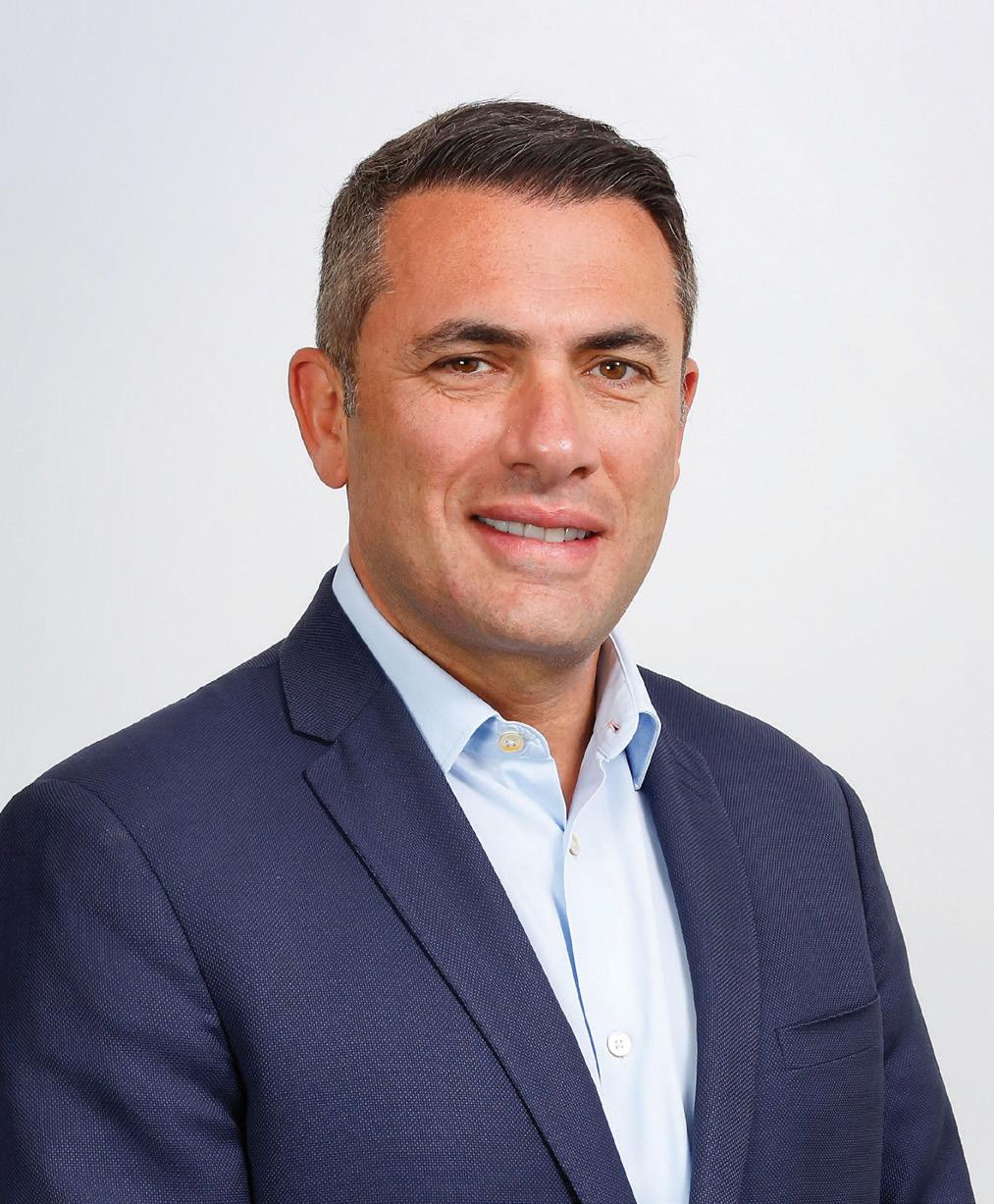
THE GULF COUNTRIES, WITH THE UAE AND SAUDI ARABIA LEADING THE WAVE, ARE THINKING CLOUD, DIGITAL AND DATA SHARING. THEY ARE ALSO THINKING ABOUT NEW WAYS OF STRUCTURING DEALS.”
most importantly, in software. Our partners in crime will be academia and key opinion leaders in science, medicine and data. They will create proof of concept for what we develop.
The third partner will be governments and regulators, who must adapt laws and frameworks to enable this innovation to serve patients.
With that collaboration, we can deliver much more precise and outcome-driven healthcare at a lower cost. L
LEADERS SPEAK
EMPATHY IS ONE OF THOSE LEADERSHIP TRAITS THAT GETS TALKED ABOUT A LOT, BUT SOME OF THE MOST SUCCESSFUL EXECUTIVES TREAT IT AS A PRACTICAL ADVANTAGE AND NOT JUST A FEEL-GOOD NOTION. THESE LEADERS SEE EMPATHY AS ESSENTIAL FOR UNDERSTANDING CUSTOMERS, BUILDING TEAMS AND ADAPTING IN RAPIDLY CHANGING MARKETS
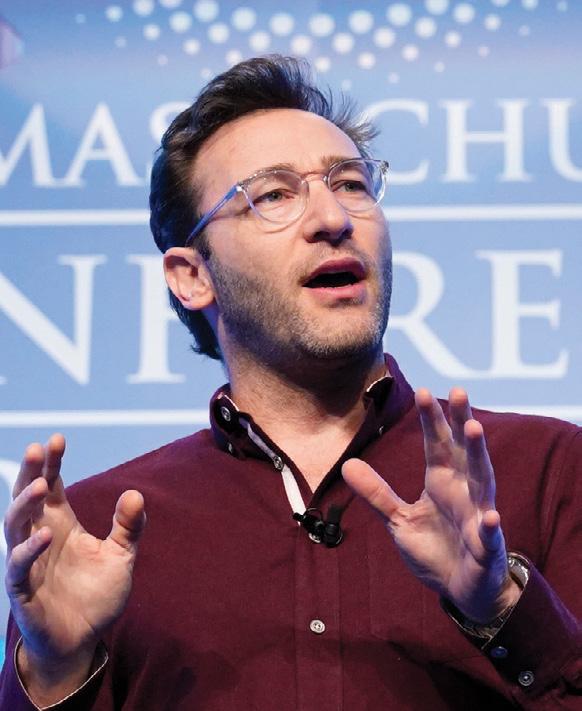
EMPATHY IS BEING CONCERNED ABOUT THE HUMAN BEING, NOT JUST THEIR OUTPUT.”
SIMON SINEK, AUTHOR AND LEADERSHIP EXPERT

“LEADERSHIP IS ABOUT MAKING OTHERS BETTER AS A RESULT OF YOUR PRESENCE.”
SHERYL SANDBERG, FORMER COO OF META PLATFORMS AND FOUNDER OF LEANIN.ORG
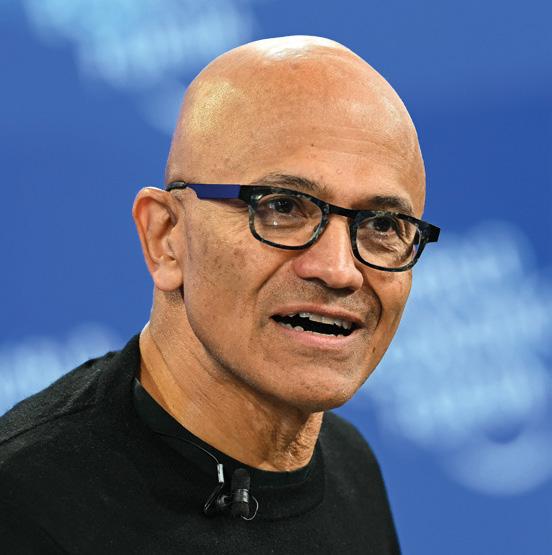
“EMPATHY IS THE STARTING POINT FOR ALL OF THE WORK THAT I DO.”
SATYA NADELLA, CHAIRMAN AND CEO OF MICROSOFT
“WHATEVER ANYBODY SAYS OR DOES, ASSUME POSITIVE INTENT. YOU WILL BE AMAZED AT HOW YOUR WHOLE APPROACH TO A PERSON OR PROBLEM BECOMES VERY DIFFERENT. WHEN YOU ASSUME NEGATIVE INTENT, YOU’RE ANGRY. IF YOU TAKE AWAY THAT ANGER AND ASSUME POSITIVE INTENT, YOU WILL BE AMAZED.”
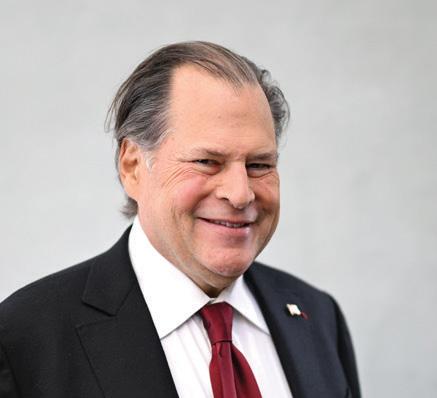
“WE’VE BEEN REMINDED WHAT IS TRULY IMPORTANT — LOVE, COMPASSION, EMPATHY, AND TAKING CARE OF ONE ANOTHER.”
MARC BENIOFF, CEO AND COFOUNDER OF SALESFORCE
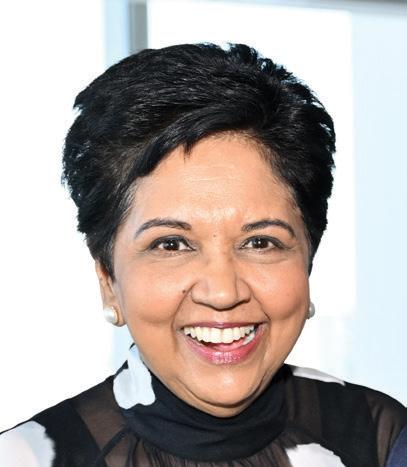
“EMPATHY IN LEADERSHIP IS ABOUT MAKING DECISIONS THAT CONSIDER THE WELL BEING AND PERSPECTIVES OF YOUR EMPLOYEES, CUSTOMERS, AND COMMUNITY.”
ARIANNA HUFFINGTON, FOUNDER OF THRIVE GLOBAL AND AUTHOR
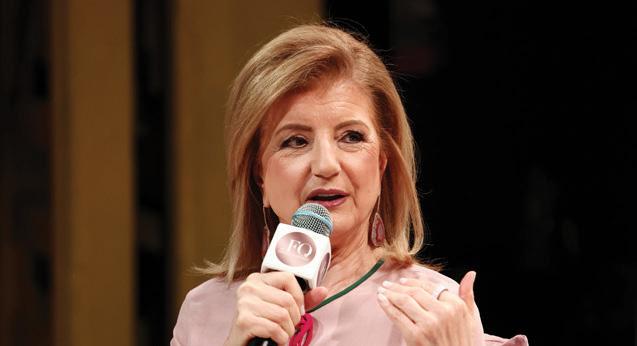



APRIL 2026
GULF BUSINESS REAL ESTATE SUMMIT & AWARDS



SEPTEMBER 2026
GULF BUSINESS AWARDS
OCTOBER 2026
GULF BUSINESS SAUDI INVESTMENT SUMMIT



NOVEMBER 2026
GULF BUSINESS UAE – INDIA BUSINESS SUMMIT & AWARDS

gulfbusiness.com/events FOR EVENT SPONSORSHIP AND MORE DETAILS, CONTACT manish.chopra@motivate.ae | mario.saaiby@motivate.ae | hitesh.kumar@motivate.ae UPCOMING EVENTS GULF






























CELEBRATE THIS HOLY MONTH WITH SOME