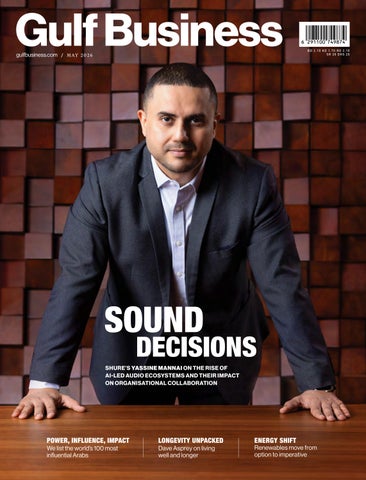
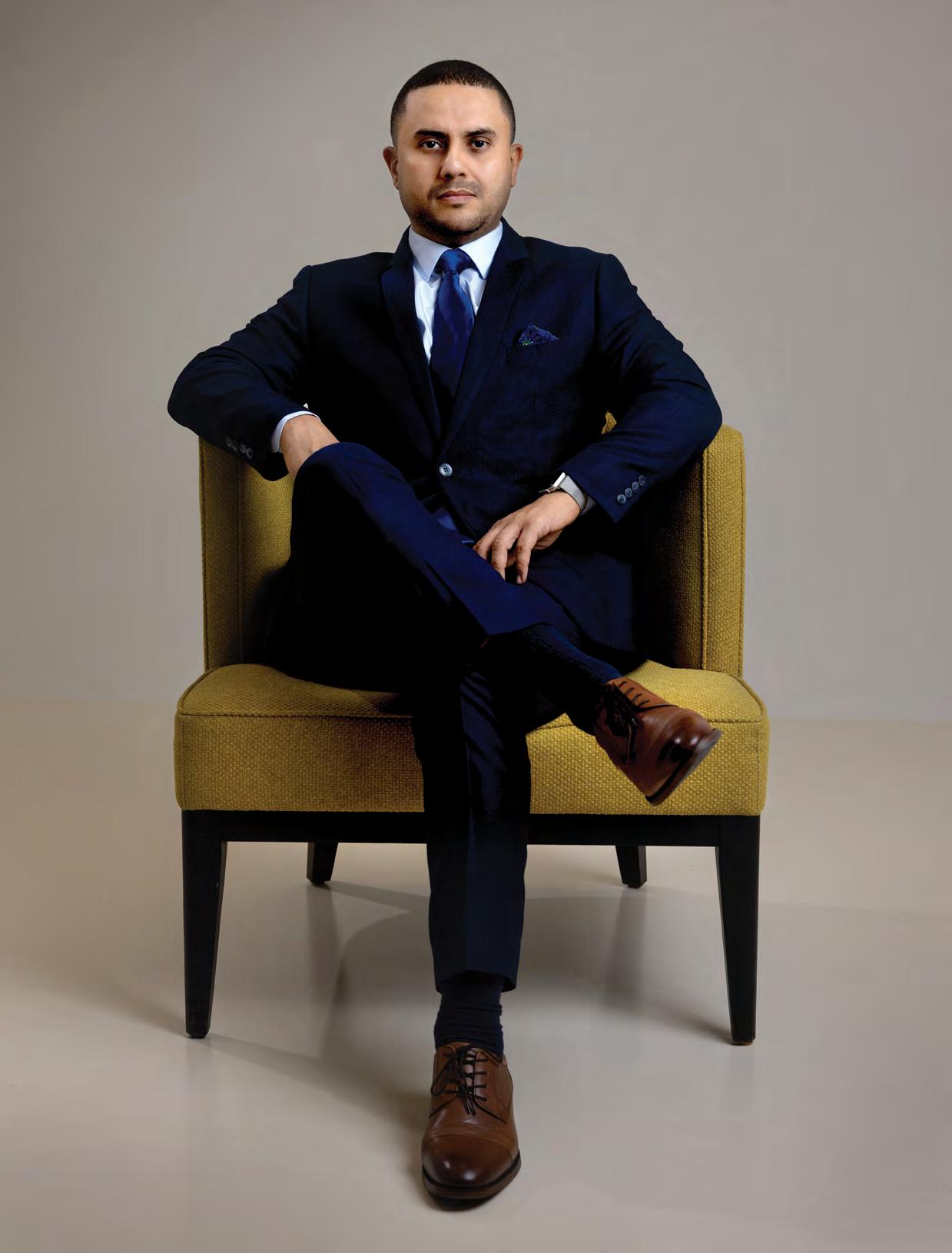
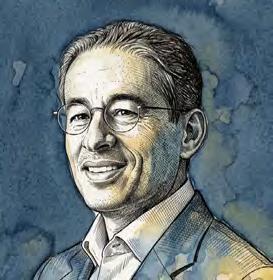
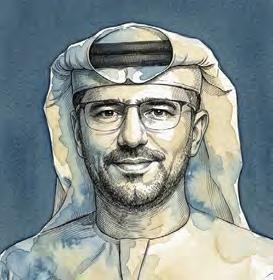
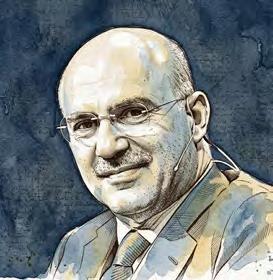
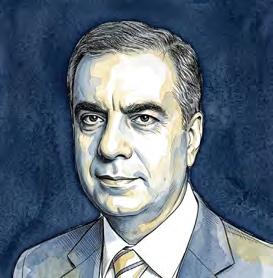
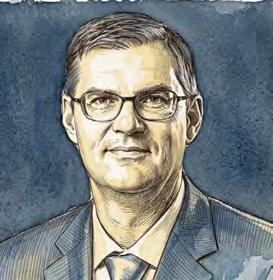
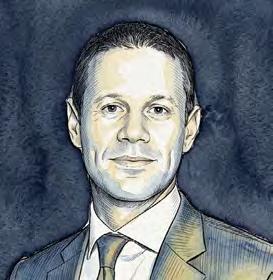
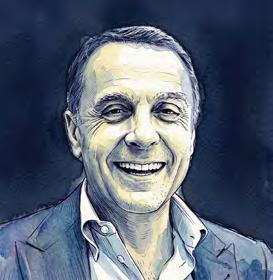
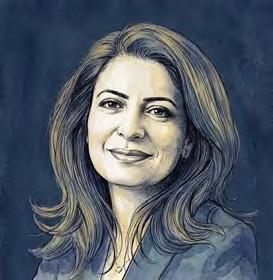
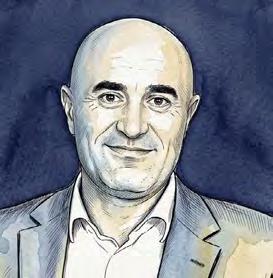
SHURE’S YASSINE MANNAI ON THE RISE OF AI-LED AUDIO ECOSYSTEMS AND THEIR IMPACT ON ORGANISATIONAL COLLABORATION
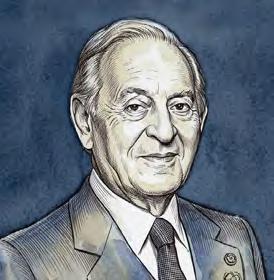
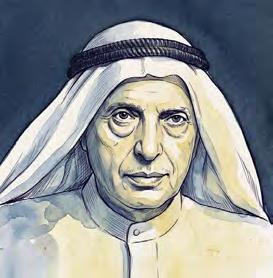
POWER, INFLUENCE, IMPACT
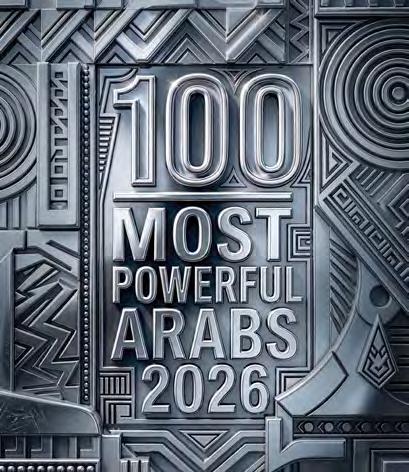
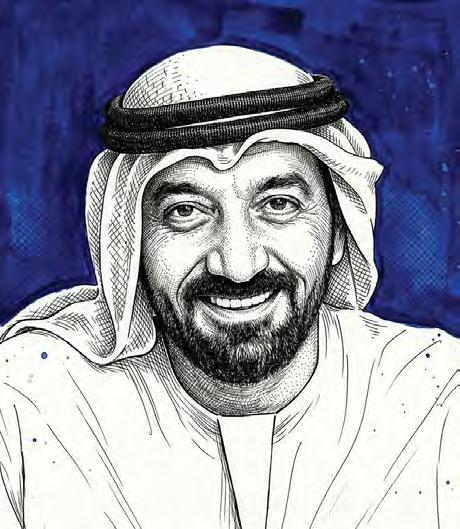
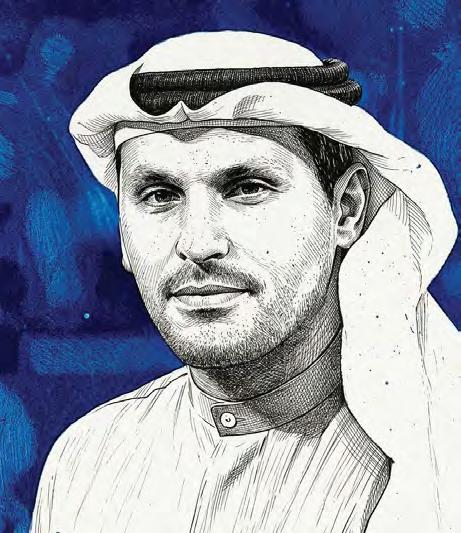
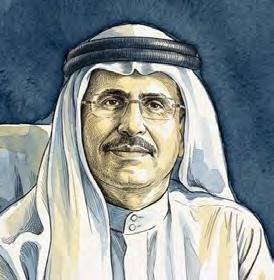
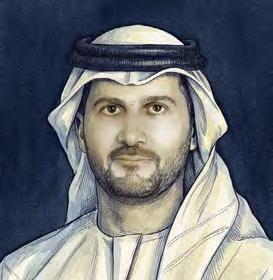
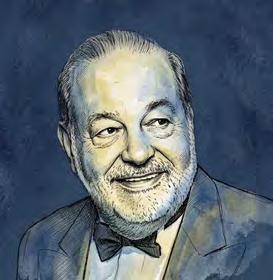
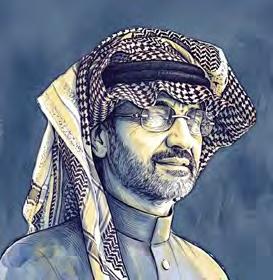
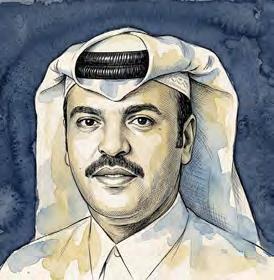
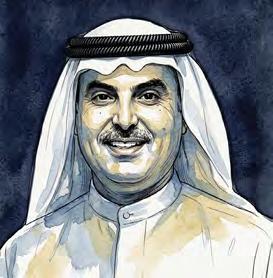
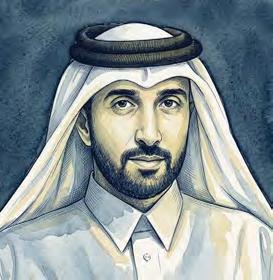
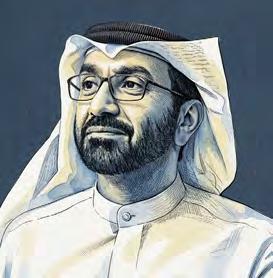
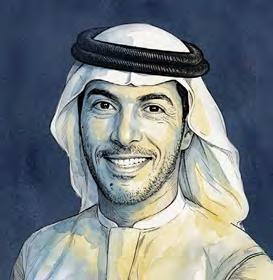
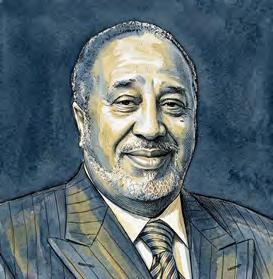
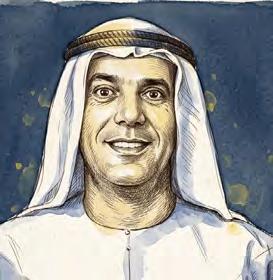
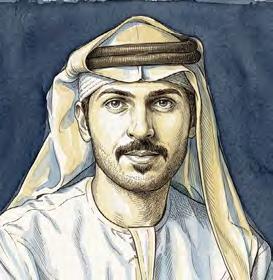
We list the world’s 100 most influential Arabs
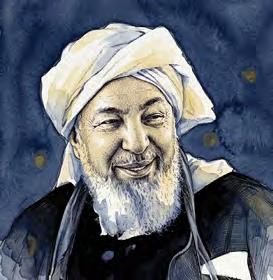
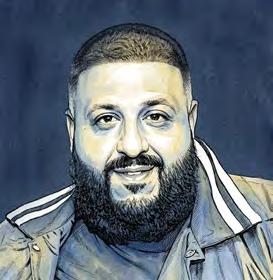
LONGEVITY UNPACKED Dave Asprey on living well and longer
ENERGY SHIFT
Renewables move from option to imperative
CONTENTS
/ MAY 2026
10
The brief
An insight into the news and trends shaping the region with perceptive commentary and analysis
14
Sound strategy
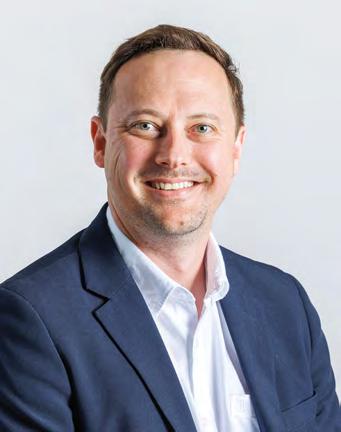
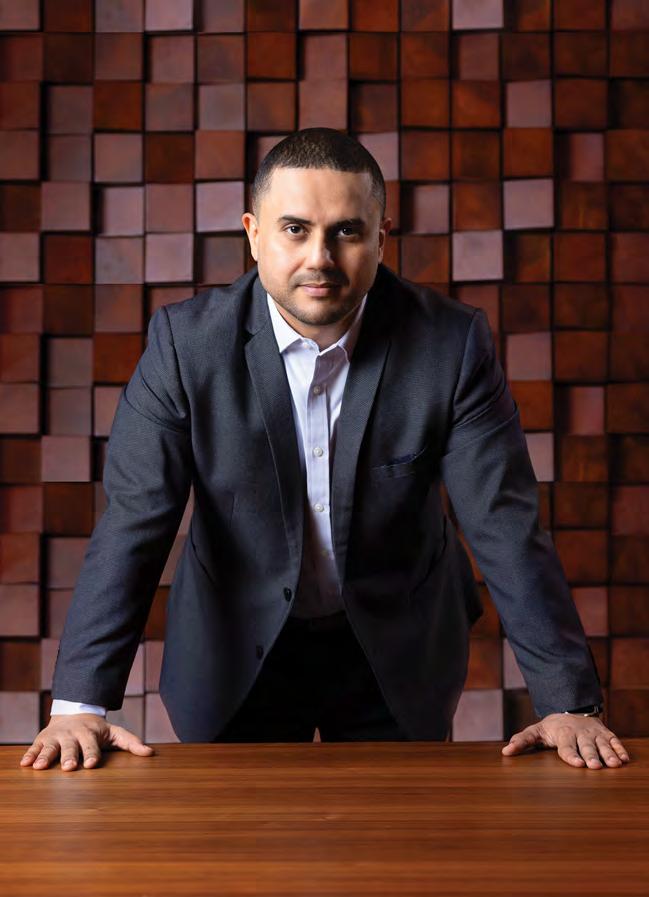
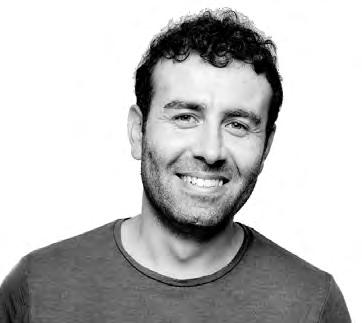
In the age of AI, the shift from product-led AV to intelligent audio ecosystems is transforming how organisations collaborate, analyse and act, explains Shure's Yassine Mannai
23
2026 Global Arab power list
Our flagship listing of the 100 most influential Arabs returns with new entrants, record female representation, and a roster that stretches from sovereign wealth to Olympic podiums — proof that Arab influence has never travelled further
Photo:
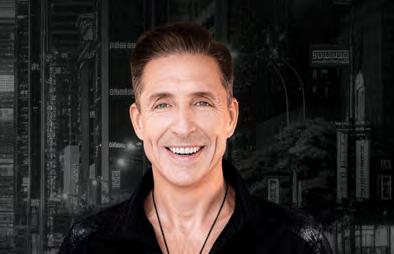
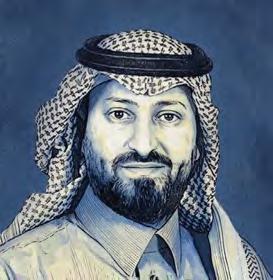
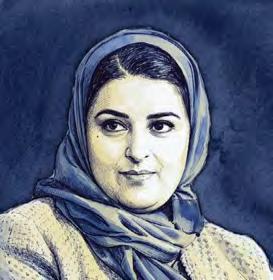
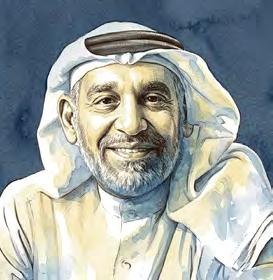
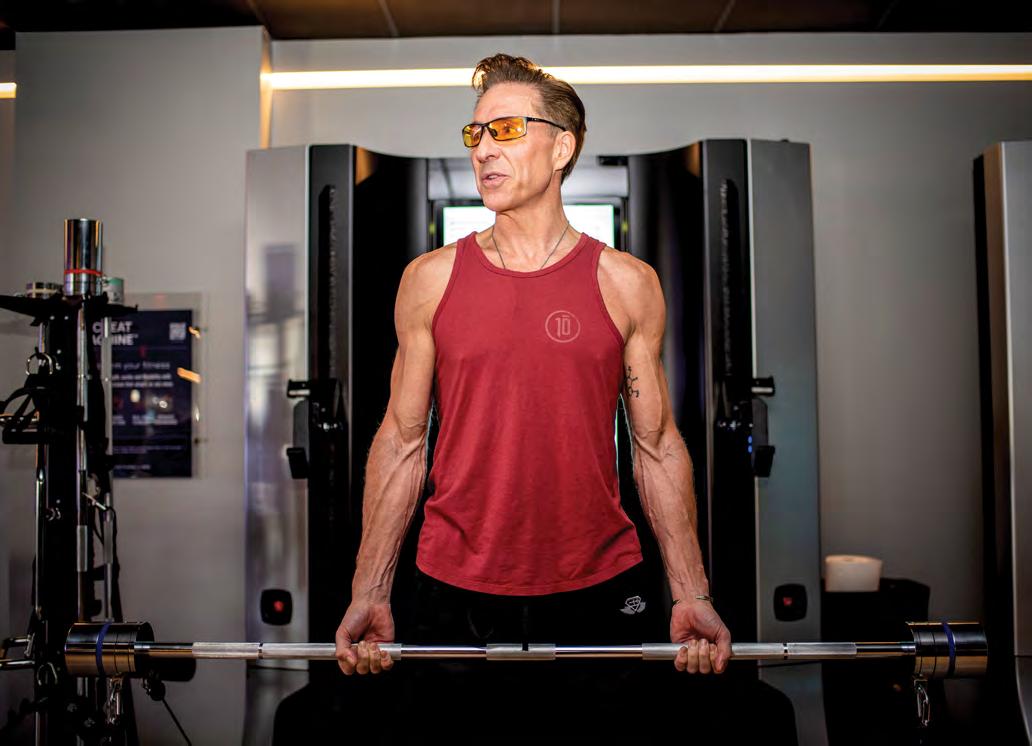
Big on biohacking: Dave Asprey has spent 25 years telling people how to live longer. Now he wants to do it in the UAE. We find out more about his plans p.55
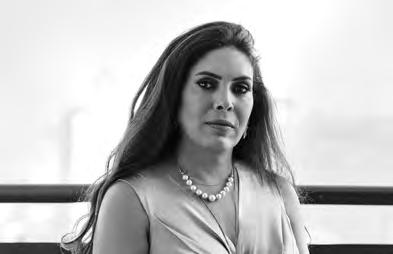
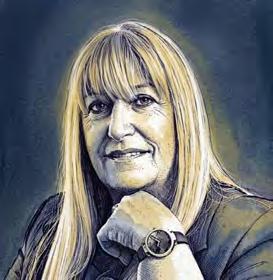
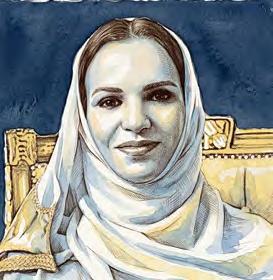
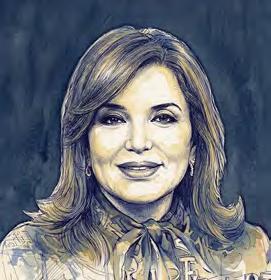
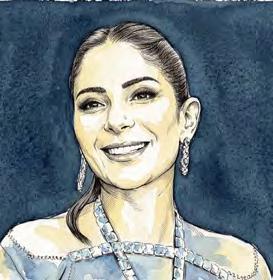
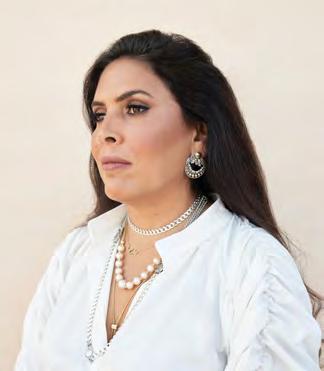
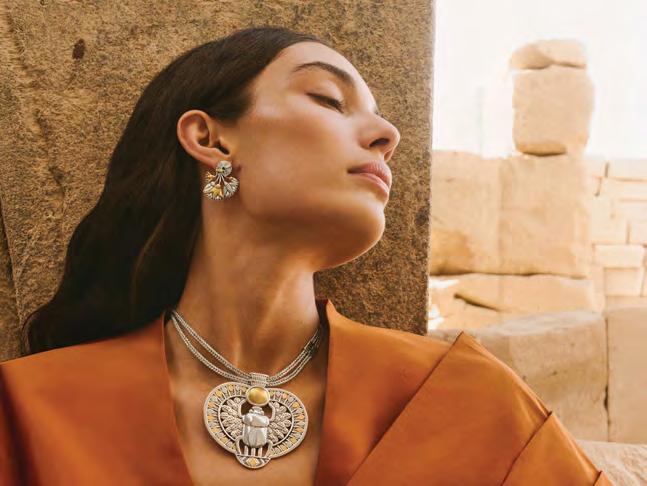
From Cairo to the world, one handcrafted piece at a time: As CEO of Azza FahmyJewellery, Fatma Ghaly is now steering where it goes next p.58
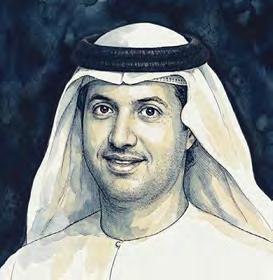
“We are keen to ensure that Dubai remains a leading global model in designing future cities and a pioneering platform for testing and implementing the latest technologies advancing mobility solutions.”
Sheikh Hamdan bin Mohammed bin Rashid Al Maktoum, Crown Prince of Dubai, UAE Deputy Prime Minister and Minister of Defence, and Chairman of the Executive Council of Dubai
Editor-in-chief Obaid Humaid Al Tayer
Managing partner and group editor Ian Fairservice
Chief commercial officer Anthony Milne Anthony@motivate.ae
Group content director Thomas Woodgate Thomas.Woodgate@motivate.ae
Publishing director Manish Chopra Manish.Chopra@motivate.ae
Group editor Gareth van Zyl Gareth.Vanzyl@motivate.ae
HEAD OFFICE: Media One Tower, Dubai Media City, PO Box 2331, Dubai, UAE, Tel: +971 4 427 3000, Fax: +971 4 428 2260, motivate@motivate.ae DUBAI MEDIA CITY: SD 2-94, 2nd Floor, Building 2, Dubai, UAE, Tel: +971 4 390 3550, Fax: +971 4 390 4845 ABU DHABI: PO Box 43072, UAE, Tel: +971 2 657 3490, Fax: +971 2 677 0124, motivate-adh@motivate.ae SAUDI ARABIA: Regus Offices No. 455 - 456, 4th Floor, Hamad Tower, King Fahad Road, Al Olaya, Riyadh, KSA, Tel: +966 11 834 3595 / +966 11 834 3596, motivate@motivate.ae LONDON: Acre House, 11/15 William Road, London NW1 3ER, UK, motivateuk@motivate.ae
Cover: Freddie N Colinares
REFLECTING A DIVERSIFIED ECONOMY
Gareth van Zyl, Group Editor
GCC ECONOMY IN FOCUS: UAE OPEC EXIT, SAUDI LOGISTICS EXPANSION AND REGIONAL COORDINATION
While geopolitical tensions continued, governments focused on advancing economic diversification, digital transformation and regional integration, reinforcing the bloc’s position as a global economic hub
COMPILED
BY
NIDA SOHAIL
The month opened on April 1 with Dubai setting the tone for regional economic ambition, as Sheikh Hamdan bin Mohammed bin Rashid Al Maktoum, Crown Prince of Dubai, Deputy Prime Minister and Minister of Defence of the UAE, and Chairman of The Executive Council of Dubai approved a sweeping package of initiatives aimed at strengthening trade, investment flows and workforce protection. The approvals included Dhs1bn in economic incentives, an updated GDP measurement framework, and new strategies for empowerment and occupational safety, reflecting a coordinated push to reinforce long-term competitiveness.
On April 6, the country entered the world’s top 10 exporters for the first time, climbing to ninth place as total foreign trade surged to Dhs6tn.
On April 21, authorities dismantled a terrorist network accused of planning
sabotage activities within the country, reflecting heightened internal security vigilance. This marks advancing UAE digital finance transformation improving efficiency across business systems overall.
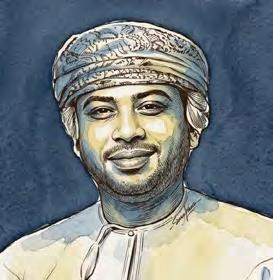
In a major development, on April 28, the UAE announced it was leaving OPEC and OPEC+, a move that could significantly weaken the oil-producing alliance led by Saudi Arabia during a period of global energy instability linked to the Iran conflict. The decision may disrupt OPEC unity amid existing disagreements over production and geopolitics. UAE Energy Minister Suhail Mohamed al-Mazrouei said it followed a strategic review and was not discussed with other countries. He added that market impact should be limited due to ongoing disruptions in the Strait of Hormuz, a key global oil route affected by regional tensions and threats to shipping.
SAUDI ARABIA ADVANCES LOGISTICS
INTEGRATION AND ECONOMIC REFORM
Saudi Arabia maintained steady reform momentum throughout April, beginning on April 10 with the launch of five new logistics corridors by Saudi Arabia Railways. These routes connect Gulf ports with key industrial zones, enhancing multimodal transport efficiency and supporting the kingdom’s broader ambition to become a global logistics hub.
Reform efforts intensified further on April 17, when Saudi Arabia introduced stricter anti-money laundering regulations, including enhanced penalties and travel restrictions, reinforcing financial system integrity and regulatory enforcement.
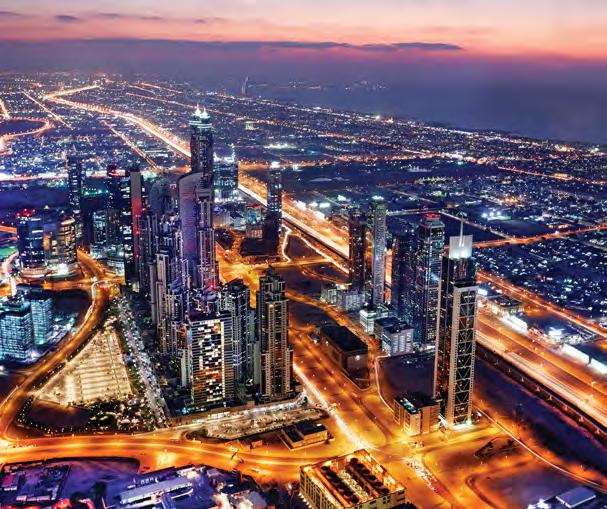
UAE
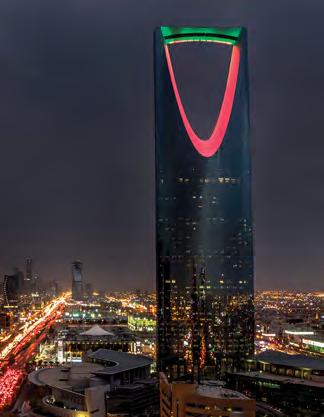
SAUDI ARABIA
QATAR EXPANDS GLOBAL ENERGY REACH AND STRENGTHENS DIGITAL SYSTEMS
In Qatar, April 12 marked the full return of maritime navigation, restoring normal shipping operations and supporting trade flows after earlier regional disruptions. Aviation connectivity expanded on April 16, when Qatar Airways announced network growth to more than 150 destinations, reinforcing Doha’s position as a global aviation hub.
Energy leadership was further reinforced on April 23, when QatarEnergy announced its first LNG export cargo from the Golden Pass project in Texas, marking a significant milestone in its global production and export strategy.
APRIL AT A GLANCE
UAE: Entered top 10 exporters (Dhs6tn trade). Launched Dhs1bn industrial fund and e-invoicing.
Saudi Arabia: Opened new logistics corridors. Tightened antimoney laundering rules.
Qatar: Expanded flight network. Shipped first LNG cargo from Golden Pass.
Kuwait: Secured supply chains. Resumed flights to 17 destinations.
Bahrain and Oman: Restored operations. Advanced coordination and energy investments.
KUWAIT FOCUSES ON STABILITY, PAYMENTS REFORM AND AVIATION RECOVERY
Kuwait’s policy focus in April centred on stabilisation and modernisation. On April 21, authorities introduced measures to secure supply chains and ensure the continued flow of essential goods amid regional uncertainty.
By April 23, Kuwait Airways resumed flights to 17 destinations following the reopening of airspace, signalling a phased recovery in aviation operations.
BAHRAIN AND OMAN STRENGTHEN REGIONAL COORDINATION AND INFRASTRUCTURE GROWTH
On April 10, Bahrain joined GCC partners in submitting a UN letter addressing regional security concerns, reaffirming collective positions on sovereignty and stability amid escalating tensions. By late April, Bahrain had restored full airspace operations and resumed government services, reflecting a return to institutional normalcy following earlier precautionary disruptions. In Oman, momentum continued with major energy and digital investments. On April 23, a $500m digital energy infrastructure platform was announced, followed on April 26 by significant battery storage investments aimed at strengthening grid stability and integrating renewable energy sources. Meanwhile, the UAE–Oman railway project reached 40 per cent completion, underscoring deepening cross-border connectivity. Across April, the GCC demonstrated
a clear dual trajectory: accelerating economic diversification while managing regional security risks. From record trade performance in the UAE on April 6, to logistics expansion in Saudi Arabia on April 10, energy milestones in Qatar on April 23, and financial reforms in Kuwait later in the month, the region continued to reinforce its position as a globally integrated economic bloc navigating both opportunity and uncertainty.
Of risks and resilience
How prolonged Hormuz disruptions test the resilience of the downstream sector
The effective closure of the Strait of Hormuz is already proving disruptive to downstream industries. The war in the Middle East has curtailed shipping activity through the strait since late February, directly affecting global oil and gas flows. Given that around 20 per cent of global crude and liquefied natural gas (LNG) volumes transit this route daily, the impact is being felt well beyond the region, with knock-on effects across fertilizers, petrochemicals, sulfur, and other refined products (particularly naphtha).
The strait remains a critical global trade artery for multiple commodities, including petrochemicals and fertilisers. As disruptions persist, the duration and severity of constraints on this route will be the key determinants of how global energy and chemical markets evolve; shaping flows, pricing dynamics, and the extent of operational and financial pressure on downstream producers.
The conflict also exposes assets to risk of physical damage, either along the supply chains or directly on the manufacturing facilities.
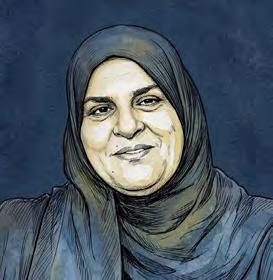
Rawan Oueidat is the CFA, director at S&P Global Rating
RISING COSTS AND CONSTRAINED FLOWS
We expect that continued disruption could drive energy prices higher, raising feedstock costs across several regions, particularly for importers of nitrogen-based fertilisers and base chemicals. At the same time, constrained shipping capacity, port congestion, and higher insurance costs are likely to weigh on export volumes from the Gulf.
The result is a tightening of global supply, which may support prices but also introduces volatility and uncertainty across markets.
UNEVEN IMPACT ACROSS DOWNSTREAM SECTORS
WHILE SOME COUNTRIES, SUCH AS SAUDI ARABIA AND THE UAE, BENEFIT FROM ALTERNATIVE EXPORT ROUTES AND GREATER LOGISTICAL FLEXIBILITY, OTHERS REMAIN MORE EXPOSED. COMPANIES
HEAVILY
RELIANT ON THE STRAIT ARE THEREFORE LIKELY TO EXPERIENCE
MORE ACUTE OPERATIONAL CHALLENGES, INCLUDING SHIPPING DELAYS, REROUTING COSTS, AND HIGHER FREIGHT RATES.
For downstream producers, the effects are unlikely to be uniform. Fertiliser and petrochemical supply chains are already under strain, and prolonged disruption could lead to a meaningful decline in export volumes from the region. While higher selling prices may partially offset these pressures in the near term, they are unlikely to fully compensate for reduced flows and inventory drawdowns, particularly for export-oriented players.
More broadly, sustained disruption risks could create imbalances in global supply and demand. As prices rise, affordability constraints could dampen demand, particularly in price-sensitive markets, potentially leading to demand destruction over time. This dynamic is especially relevant for fertilisers, where higher input costs can feed through to agricultural markets globally.
PRODUCTION PRESSURES AND RISING STORAGE CONSTRAINTS
The duration of disruption will also be critical in determining production trajectories. As storage capacity tightens, producers may increasingly be forced into shut-ins, particularly where export routes are constrained. We estimate that GCC countries reliant on the Strait usually have around two to four weeks of storage capacity, on average, before production curtailments become necessary, underscoring the system’s sensitivity to prolonged disruption.
While some countries, such as Saudi Arabia and the UAE, benefit from alternative export routes and greater logistical flexibility, others remain more exposed. Companies heavily reliant on the Strait
are therefore likely to experience more acute operational challenges, including shipping delays, rerouting costs, and higher freight rates. That said, facilities have already started reducing production or announcing shutdowns. As limited accessibility to the Strait endures, it could lead to additional announcements of shutins, either as storage capacity fills up or for security reasons.
MIDDLE EAST CHEMICAL PRODUCERS: RESILIENCE WITH LIMITS
Despite these pressures, rated GCC-based chemical companies generally benefit from structural strengths, including access to competitively priced feedstock (predominantly gas-based), long term contracts from the national oil companies of highly rated sovereigns, and, in some cases, geographic diversification. These factors should provide a degree of resilience in the near term. However, if disruptions persist or intensify, we expect margins to come under pressure and leverage to rise, potentially narrowing rating headroom. The effect on rated chemical players in the Middle East will depend on the war’s duration and how long the Strait of Hormuz remains disrupted. The increase in selling prices could partially mitigate volume loss in the short term, but duration will dictate the overall effect.
WHAT COMES NEXT
Ultimately, the outlook for downstream sectors will hinge on how long disruptions in the Strait of Hormuz continue and how the conflict evolves. We think this could also drive the regional producers to find longer-term solutions for minimising supply chain disruptions, including increasing domestic reliance on domestic manufacturing or raw material inputs, for example. Even as markets adjust, the risk of further volatility remains elevated, with second-order effects likely to extend across global supply chains, pricing structures, and investment decisions.
ULTIMATELY, THE OUTLOOK FOR DOWNSTREAM SECTORS WILL HINGE ON HOW LONG DISRUPTIONS IN THE STRAIT OF HORMUZ CONTINUE AND HOW THE CONFLICT EVOLVES.
From chokepoints to choices
Here’s why recent energy disruptions make renewables a strategic imperative
Energy markets rarely change direction overnight. But periods of geopolitical volatility have a way of compressing timelines, turning long-term vulnerabilities into immediate priorities.
The current conflict in the Middle East - unfolding amid heightened risks to critical maritime corridors such as the Strait of Hormuz - has once again drawn attention to how dependent the global energy system remains on a handful of geographic chokepoints. Price volatility, shipping uncertainty, and supply-chain disruptions are not theoretical risks anymore; they are active variables shaping policy and investment decisions in real time.
What makes this moment different, however, is not the disruption itself, but how countries are responding
to it. Rather than prompting a retrenchment into familiar hydrocarbons, today’s uncertainty is accelerating a structural shift already underway: the strategic rise of renewable energy across the Middle East and beyond.
GEOPOLITICAL UNCERTAINTY AS THE CATALYST
In the current environment, energy security is being redefined. It is no longer just about access to fuel, but about exposure to instability - price shocks, transport risks, and geopolitical escalation.
For energy-importing nations, the recent period of volatility has reinforced a clear lesson: diversifying suppliers is no longer sufficient. Reducing dependence on imported fuels altogether has become a strategic imperative. This is why renewables, electrification, storage, and green hydrogen are increasingly treated not only as climate solutions, but as tools of national resilience. As renewable capacity expands, importers gain insulation from volatile prices and disrupted
shipping routes. Over time, this results in structurally slower growth in crude oil imports - a trend that recent events have only sharpened.
WHAT THIS MEANS FOR MIDDLE EASTERN EXPORTERS NOW
For Middle Eastern producers, this shift does not signal an imminent collapse in demand. It however introduces greater uncertainty around the resilience, stability, and long-term predictability of oil markets.
Crucially, most regional players are not starting from zero in responding to this reality. Well before the current conflict, major producers had begun repositioning hydrocarbons within broader industrial and economic strategies - an approach that is proving especially relevant today.
Rather than maximising volumes exported, the emphasis is increasingly on maximising value per barrel.
FROM BARRELS TO VALUE CHAINS
One of the most visible expressions of this shift has been the acceleration of oil-to-chemicals and gasto-chemicals strategies. As transport fuel demand faces growing pressure from electrification, chemical demand remains far more resilient - underpinning construction, agriculture, healthcare, and consumer industries across the Global South.
This helps explain why, even amid today’s uncertainty, countries such as Saudi Arabia and the UAE continue investing in world-scale petrochemical assets, specialty materials, and downstream platforms. National champions like Saudi Aramco and ADNOC have steadily expanded their global downstream footprint, not to export more oil, but to extract greater economic value from it.
WHY RENEWABLES SIT AT THE CENTRE OF THIS STRATEGY
Renewable energy plays a critical - often underestimated - role in making this model viable under
Pics: Supplied
Abhay Bhargava is the MD and regional leader – Middle East and Africa, Frost & Sullivan and Neeraj Mense is the principal consultant, Energy and Environment Growth Advisory, Frost & Sullivan
current conditions. Ultra-low-cost solar and wind power enable the electrification of industrial processes, reduce the carbon intensity of chemical production, and protect exports against emerging carbon border measures. Importantly, renewables also free up oil and gas that would otherwise be consumed domestically, preserving them for higher-value or strategic uses.
In this context, hydrocarbons are no longer the final product. They become inputs into a diversified, lower-carbon industrial economy - one that is more resilient to external shocks.
RENEWABLE ENERGY ADOPTION IS EXPECTED TO ACCELERATE ACROSS THE MIDDLE EAST
SHORT TERM: STABILITY IN AN UNCERTAIN MARKET
In the near term, renewable projects already under procurement or construction are largely unaffected. Governments continue to view clean energy as a stabilising force in an unpredictable energy environment.
MEDIUM TERM: INDUSTRIAL INTEGRATION
Over the next decade, renewables will increasingly be developed as part of integrated industrial ecosystems, co-located with hydrogen, petrochemicals, metals, and export-oriented manufacturing. Localisation, domestic value creation, and non-oil GDP contribution will become central project criteria.
LONG TERM: A MORE RESILIENT ENERGY SYSTEM
Over time, electricity, desalination, cooling, and transport will become increasingly electrified, while oil and gas are concentrated in high-value applications. Energy security will shift from fuel access to system resilience - grids, storage, flexibility, and interconnection.
The current Middle East geopolitical complexities do not derail the region’s energy transition. It clarifies its direction.
AS TRANSPORT FUEL DEMAND FACES GROWING PRESSURE FROM ELECTRIFICATION, CHEMICAL DEMAND REMAINS FAR MORE RESILIENT - UNDERPINNING CONSTRUCTION, AGRICULTURE, HEALTHCARE, AND CONSUMER INDUSTRIES ACROSS THE GLOBAL SOUTH.
For importers, renewables reduce exposure to geopolitical risk. For exporters, they protect hydrocarbon value and enable diversification. For the region, they offer a pathway from vulnerability to resilience.
The Middle East’s energy transition is no longer just a climate story. It is a story about sovereignty, economic durability, and strategic relevance, shaped by the realities of today’s geopolitical landscape.
In that sense, the region’s energy future is no longer constrained by chokepoints, but increasingly shaped by choices.
INTELLIGENCE
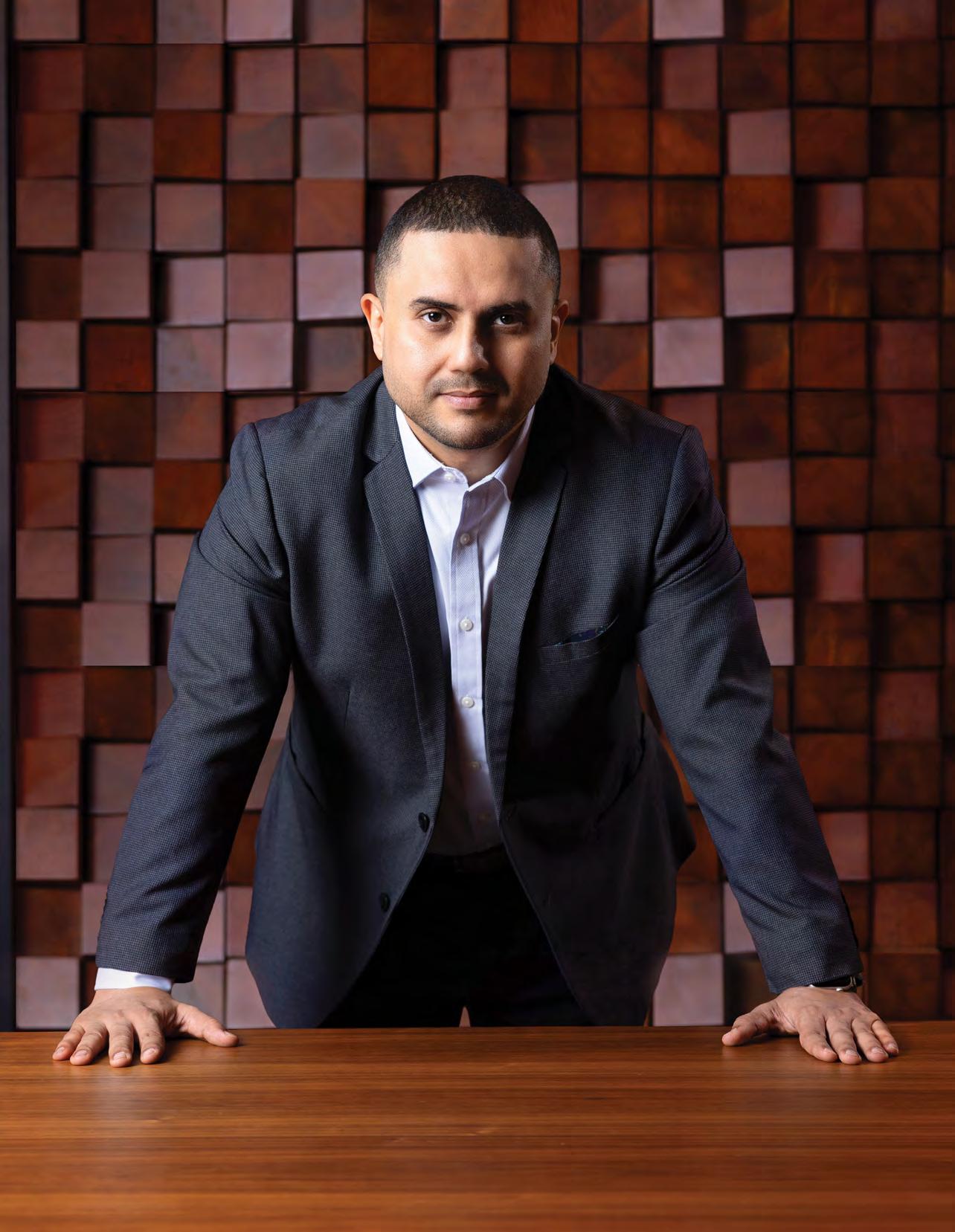
IN THE AGE OF AI, THE SHIFT FROM PRODUCT-LED AV TO INTELLIGENT AUDIO ECOSYSTEMS IS TRANSFORMING HOW ORGANISATIONS COLLABORATE, ANALYSE, AND ACT, REVEALS YASSINE MANNAI AT SHURE
WORDS RAJIV PILLAI PHOTOGRAPHS JOHN MELENCION
The Middle East’s AV and professional audio market is undergoing a fundamental shift: one that goes far beyond incremental technology upgrades. As artificial intelligence (AI), unified communications, and hybrid work models converge, the role of audio is being redefined from a supporting function to a mission-critical layer of enterprise decision-making.
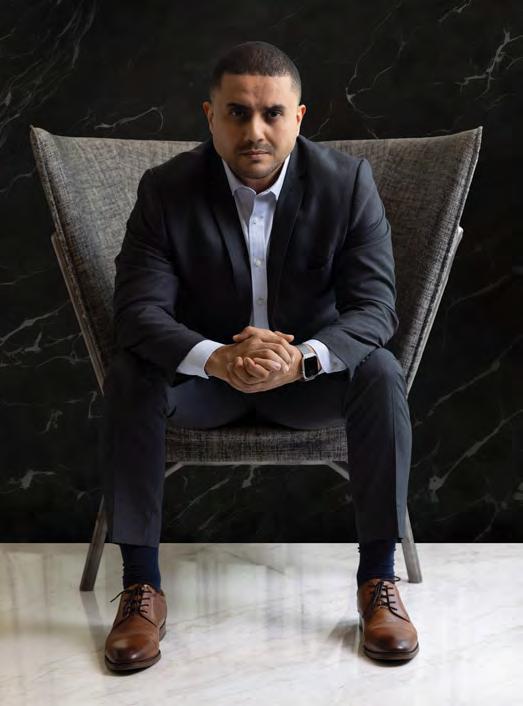
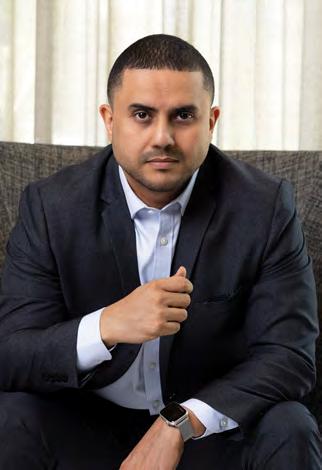
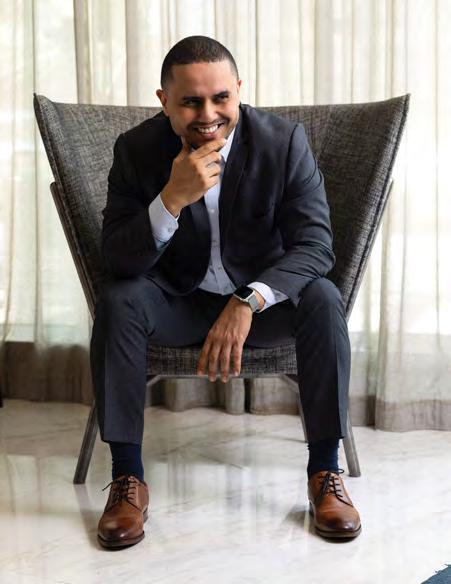
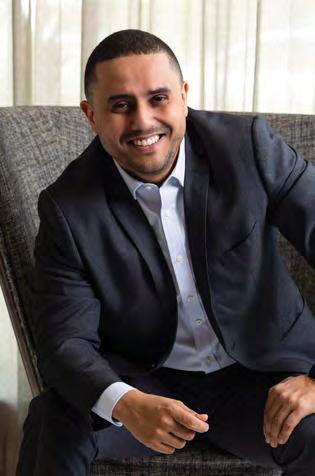
For Yassine Mannai, associate director – sales and marketing for MEA, Turkey and CIS at Shure, this transformation reflects a broader evolution in how organisations operate, collaborate, and scale across increasingly complex environments.
Having built his career across technical and commercial roles, Mannai has witnessed firsthand how the AV industry has moved from isolated systems to integrated ecosystems—an evolution now being accelerated by AI.
“My journey started in IT. I studied and worked across software development, websites, systems, and programming languages, so my foundation was always technical,” he says. “I first came to the UAE on vacation, but I was immediately drawn to the country’s energy, pace, and opportunity. What was meant to be a short stay slowly became a longer journey.”
That journey began in the life safety solutions industry, initially focused on CRM and systems development, before evolving into export and business development roles. “Over time, I moved into export and business development, and that was a turning point for me. I realised I enjoyed being close to the market, meeting people, understanding mega projects, and building business strategies across different regions,” he explains.
This transition ultimately led him into the AV industry, where he spent several years deepening both his technical expertise and market understanding. “That experience helped me deepen my technical knowledge and understand the importance of mastering what you sell. For me, trust starts with knowledge.
“You need to understand the solution deeply before you can speak about it with confidence and earn the customer’s trust.”
FROM PRODUCT-LED TO SOLUTION-DRIVEN
One of the most defining shifts in the AV industry — and for Shure specifically — has been the move from product-led offerings to fully integrated solutions.
Mannai points to the period around 2016 as a key inflection point. “One of the most important milestones for Shure in this region has been the shift from being perceived as a product-led company to becoming a complete solutions provider,” he says. “Around 2016, when we began expanding with solutions like Microflex Advance, it marked a clear transition.”
This shift was not just about expanding product lines, but about fundamentally changing how value is delivered to customers. “We were no longer focused only on individual audio products, but on delivering integrated systems that support meeting spaces, collaboration, and enterprise environments,” he explains. The Covid-19 pandemic further accelerated this transformation. As organisations
HIGH-QUALITY AUDIO HAS BECOME ESSENTIAL AS AI TAKES A MORE ACTIVE ROLE IN HOW TEAMS COLLABORATE AND MAKE DECISIONS. IN MOST ORGANIZATIONS TODAY, IMPORTANT DISCUSSIONS HAPPEN IN MEETINGS, OFTEN
THROUGH UNIFIED COMMUNICATIONS
PLATFORMS LIKE MICROSOFT TEAMS ROOMS, AND AI TOOLS
ARE INCREASINGLY USED TO SUMMARISE CONVERSATIONS, CAPTURE ACTION ITEMS, AND PROVIDE INSIGHTS.”
rapidly adopted hybrid work models, the need for seamless communication across physical and digital environments became critical. “While many industries experienced a slowdown, for Shure, it accelerated the need for reliable hybrid environments. Organisations needed solutions that could support both in-person and remote communication seamlessly, and that drove strong adoption across corporate and education sectors.”
This period also coincided with a broader wave of digital transformation, particularly in unified communications and collaboration technologies. “Expectations moved towards integrated solutions, seamless connectivity, and simplified deployment,” Mannai notes.
Today, the next phase of this evolution is being driven by AI. “The integration of AI, cloud, and intelligent tools is reshaping how workspaces and communication environments operate, moving beyond traditional IT managed environments into intelligent, adaptive, and user centric experiences.”
AUDIO AS THE FOUNDATION OF AI-DRIVEN DECISIONS
As AI becomes increasingly embedded in enterprise workflows — from automated meeting summaries to real-time insights — the quality of input data is becoming a critical determinant of output accuracy. In this context, audio is no longer just about clarity; it is about enabling reliable decision-making.
“High-quality audio has become essential as AI takes a more active role in how teams collaborate and make decisions,” Mannai says. “In most organisations today, important discussions happen in meetings, often through unified communications platforms like Microsoft Teams Rooms, and AI tools are increasingly used to summarise conversations, capture action items, and provide insights.” However, the effectiveness of these tools depends entirely on the quality of the data they receive. “For these tools to deliver value, they need accurate input from the very start. AI is only as effective as what it hears. When audio clarity is
High-quality audio has become essential as AI takes a more active role in how teams collaborate and make decisions
compromised, even something as simple as a misheard figure or statement can change the outcome of a discussion or decision.”
This has significant implications for businesses, particularly as AI becomes more integrated into operational and strategic processes. “As AI becomes more involved in meeting intelligence, the margin for error becomes much smaller,” he adds.
Beyond real-time communication, audio quality also plays a role in system deployment and optimisation. “AI also plays a growing role during the deployment of modern collaboration environments, helping optimise room performance and user experience from the outset,” Mannai explains. “Clear, intelligible audio allows these systems to be set up correctly, ensuring that AI driven features work reliably in dayto-day use.”
Over time, this consistency builds trust in AI-generated outputs. “This consistency is what builds confidence and trust in AI generated summaries, insights, and recommendations,” he says.
At a technical level, this requires controlling the quality of audio at the source. “At Shure, our priority is ensuring that people are not just heard but understood. By leveraging technologies such as AI denoiser, virtual acoustic boundary, and AI deverb, we control what the system captures and reduce unwanted noise and room effects at the source.”
WE SEE THE CURRENT SITUATION AS A TEMPORARY ADJUSTMENT RATHER THAN A LONG-TERM SHIFT. THE REGION CONTINUES TO BE A KEY DESTINATION FOR GLOBAL EVENTS, CONFERENCES, AND EXHIBITIONS, SUPPORTED BY STRONG INFRASTRUCTURE AND LONG -TERM PLANNING.”
A MARKET DRIVEN BY SCALE, INVESTMENT, AND MATURITY
The Middle East continues to offer one of the most dynamic growth environments for AV and professional audio solutions globally. Driven by large-scale infrastructure projects, global events, and sustained investment across sectors, demand remains strong and diversified. “The Middle East continues to be a very dynamic and opportunity-driven market,” Mannai says. “Across the region, we are seeing sustained investment in infrastructure, large-scale projects, and global events.”
Unlike more mature markets where growth may be concentrated in specific segments, the Middle East’s expansion is broad-based. “Growth is not concentrated in one area. It is happening across the board,” he explains. “The region has positioned itself as a destination for business, tourism, healthcare, education and innovation, and that creates a strong foundation for continued expansion.”
However, this growth is accompanied by increasing competition and market maturity. “The market is becoming more competitive, which is a sign of maturity,” Mannai notes. “Customers are more informed, expectations are higher, and there is a stronger focus on performance, flexibility, and long-term value.”
For companies operating in this space, the challenge lies in meeting these evolving expectations while maintaining scalability and reliability. “We see this as an opportunity… delivering solutions that are easy to deploy, scalable across different environments, and capable of adapting to evolving needs, without compromising on audio quality.”
LEADERSHIP, AGILITY, AND REGIONAL COMPLEXITY
Managing a region that spans the Middle East, Africa, Turkey, and CIS requires a combination of strategic clarity and operational agility. For Mannai, much of this mindset is rooted in his background as a professional handball player.
“Handball has shaped a significant part of how I approach leadership today,” he says. “In such a high-speed, high-contact sport, success depends on strategic agility — the ability to process complex situations and pivot tactics in a split second.”
This ability to anticipate change rather than react to it is critical in business. “Whether managing an internal team or a partner ecosystem, the objective is to stay ahead of the curve, ensuring that we are never just reacting to the market, but actively driving the game.”
At the same time, leadership is increasingly about alignment and empowerment. “Leadership is about ‘creating space’ and empowering a team to move with synchronized confidence, even when the play changes unexpectedly,” he explains.
His role today reflects this dual focus on performance and people. “Today, my role is about growing the business while growing the people behind it,” Mannai says. “Leading such a diverse region demands strong alignment, mutual trust, and the agility to adapt quickly to very different market realities.”
This long-term approach extends to planning and execution. “We operate with a long-term mindset. Our plans are not limited to a single financial year, they are multi-year roadmaps that are continuously adjusted based on market shifts, challenges, and opportunities,” he adds.
OUTLOOK: RESILIENCE AND LONGTERM OPPORTUNITY
Despite periods of regional uncertainty, particularly affecting sectors such as events and MICE, the underlying fundamentals of the market remain strong.
“We see the current situation as a temporary adjustment rather than a longterm shift,” Mannai says. “The region continues to be a key destination for global events, conferences, and exhibitions, supported by strong infrastructure and longterm planning.”
Demand across key sectors—including education, corporate environments, and live experiences—remains steady. “We are confident that as conditions stabilise, the sector will regain momentum. The fundamentals are in place, and the region has shown its ability to adapt and move forward with resilience.”
The UAE, in particular, continues to play a strategic role in enabling this growth. “The UAE has evolved into much more than a hub for business and events. It has become a global destination for growth, whether that is career development, education, healthcare, or entrepreneurship,” Mannai notes.
Its position as a regional connector also enhances its importance. “It allows us to support not only the Middle East but also extend into Africa and other neighbouring markets.”
Looking ahead, Mannai expects AI, cloud, and collaboration technologies to continue reshaping the industry. For Shure, the focus remains on staying aligned with these shifts.
Looking ahead, Mannai expects AI, cloud, and collaboration technologies to continue reshaping the industry
“Our focus remains on evolving alongside that change, continuing to bring solutions that are relevant, reliable, and aligned with how people work and communicate today,” he says. In an era where decisions are increasingly driven by data—and data is increasingly captured through conversations—the role of audio has never been more critical. As Mannai’s insights suggest, in the age of AI, being heard is no longer enough. Being understood is what truly drives outcomes.
ROUNDTABLE
RESILIENCE IN MOTION RESILIENCE IN MOTION
LEADERSHIP ROUNDTABLE SERIES
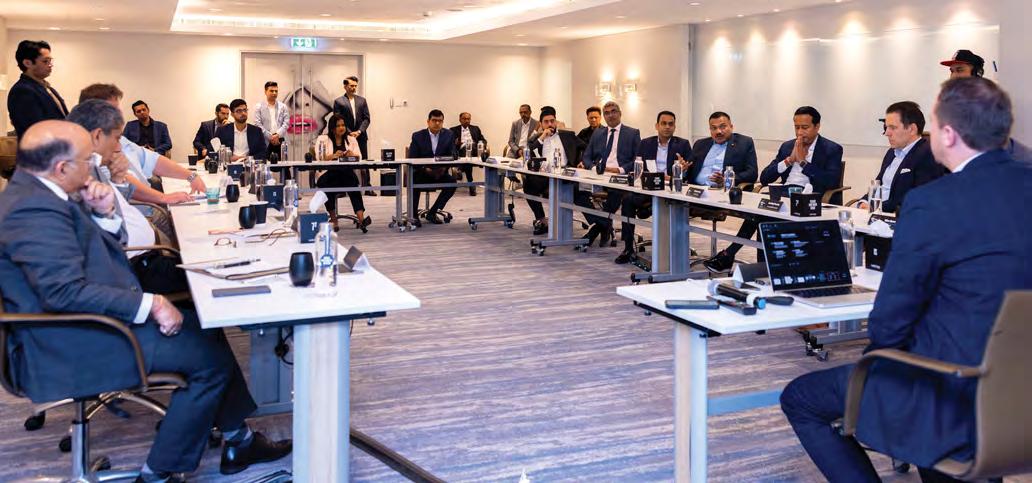
ON APRIL 15, GULF BUSINESS CONVENED A CLOSED ROUNDTABLE AT THE MEDIA ONE HOTEL IN DUBAI, BRINGING TOGETHER 14 SENIOR BUSINESS FIGURES TO DISCUSS RESILIENCE, STRATEGY AND THE WAY FORWARD DURING THE ONGOING REGIONAL CRISIS. HERE’S WHAT THEY DISCUSSED
BY NEESHA SALIAN
orty-three days into a regional crisis that has reshaped trade flows, diluted investor sentiment and put acute pressure on sectors from tourism to real estate, Gulf Business gathered 14 senior leaders at the Media One Hotel in Dubai on April 15 to have a frank conversation about what is actually happening on the ground, and what comes next. The participants, Abhay Bhargava, MD and regional leader – Middle East and Africa; Rahul Singh, MD of A.A. Almoosa Enterprises (Dollar and Thrifty); Alex Mather, co-founder of Same Day Suits; Mohammed Amir Siddique, founder and CEO of Main Realty; Ansh Kataria, relationship manager at Elevate Wealth; Reena Roy, head of Human Resources Middle East at Cognizant Technology Solutions; Amit Jhunjhunwala, director and CIO at Nisus Finance; Mahmoud Ahmed Ismail, head of Sales at Meraki Developers; Sheldon Serrao, founder of Talion Search; Navneet Mandhani, founder and CEO of Karma Developers; Captain Pradeep Singh, founder and chairman of Aethon Group and Karma Developers; Shailesh Dash, founder of Dash Venture Labs and Ascent Partners; Aurélien Paradis, CEO of AU Group Middle East and Africa; and Elias Qarut, managing partner and CEO of Eyeconyx, represented a crosssection of sectors from real estate and finance to technology, insurance and events. Before opening the floor, VanZyl framed the conversation with four data points. The UAE’s GDP growth over four decades is, by any global standard, exceptional, a trajectory that has absorbed the 1990 Gulf War, the 2003 Iraq war, the 2008 financial crisis and the Covid-19 pandemic without losing direction. GDP per capita stands at $51,000, placing the UAE alongside Canada. The debt-to-GDP ratio remains low, providing meaningful fiscal headroom. A fresh report from the Institute of Chartered
Accountants of England and Wales projected a GCC GDP contraction of approximately 0.5 per cent in 2026, followed by acceleration of more than 8 per cent in 2027.
“There’s not a structural crisis that we’re living through right now,” VanZyl said. “It’s a situational crisis. And once the situation passes, the UAE will be in a very good position to take off once again.”
THEME 1: THE REALITY CHECK — WHAT HAS CHANGED?
None of the participants were inclined to minimise what had happened to their businesses. Singh described the collapse in tourism with precision.
Hotel occupancies at properties operated by A.A Almoosa Enterprises had fallen to single digits, 5 to 7 per cent. Mall footfalls were down 50 to 60 per cent. Across a fleet of approximately
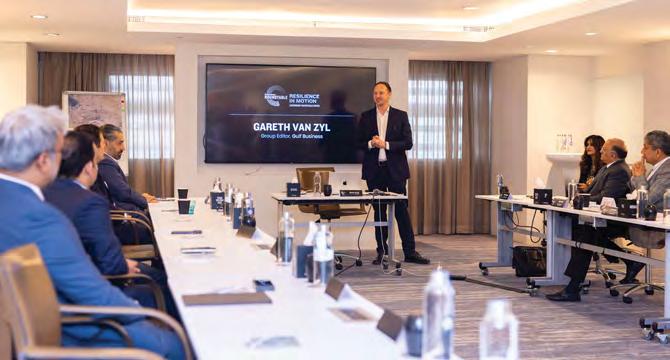
Far right: Group editor Gareth van Zyl moderating the session, which consisted of 15 top speakers
50,000 vehicles, the short-term rental business had been severely hit, with relief packages from airports and major malls yet to materialise. “It’s the tourist impact,” he said. In real estate, Siddique and Mandhani both described a market that had shifted sharply from seller to buyer territory.
“I would say that for the real estate industry, whether it’s a developer or a real estate broker, it’s becoming more of a buyer’s market now than ever. The shift for many that have been used to seeing launches happening on a regular basis, now it’s more keeping a hold on projects and basically having the holding power to be able to sustain the change in climate and return of investors. Dubai always rebounds, and those with the holding power to sustain will see a benefit in the near future, like 2027 or 2028,” Mandhani said.
For Paradis, whose firm specialises in credit insurance, the current period was technically good for business, uncertainty drives demand for protection, but the wider picture was more sobering. His clients insure trades. If the Strait of Hormuz remains closed, there is no trade to insure. “The world cannot forget us,” Paradis said. Twenty per cent of global energy flows through the strait. Ten per cent of aluminium consumed in Europe and the US originates in this region. “If Hormuz stays closed, you cannot build wheels, make cars, make planes. It’s impossible that it stays closed. That’s what helps me sleep.”
Several of the most experienced voices drew on previous cycles. Dash, who has operated across the Gulf for 26 years, had
witnessed the IPO boom that followed the Iraq war in Kuwait between 2003 and 2007. “The architecture of the UAE today is far better than it was in Kuwait at that point in time,” he said. Captain Singh reinforced the infrastructure argument: the Fujairah pipeline and a second pipeline due in 2027 would together cover approximately 3.3 million of the UAE’s 3.5-million-barrel daily export capacity. DP World was already expanding operations at Khor Fakkan. “Hormuz is extremely important for the region as a whole. But it doesn’t kill us today,” he said.Serrao flagged a notable shift in inbound talent appetite. The image of Dubai as a safe haven, highly effective since Covid-19, had been complicated. Interest from candidates in India, Jordan, Eastern Europe and Southeast Asia had softened. “There is a lot of uncertainty and apprehension now,” he said.
Roy noted that the crisis was producing two distinct shifts inside her organisation. Locally embedded businesses were strengthening their technology infrastructure and cybersecurity in response to the uncertainty, but the talent picture was more complicated. “We may struggle to bring really skilled people in, and we are also seeing some people wanting to head out into other markets,” she said. “We have close to 700 people here in the Middle East and Pakistan. Employees are asking for more, related to their physical safety, related to what’s next for them. We have to respond faster, because they want to see that the company has a vision for the short term and the long term.” Bhargava offered the most calibrated medium-term read.
I WOULD SAY THAT FOR THE REAL ESTATE INDUSTRY, WHETHER IT’S A DEVELOPER OR A REAL ESTATE BROKER, IT’S BECOMING MORE OF A BUYER’S MARKET NOW THAN EVER.”
“Take a step back and look at what UAE, Saudi and Oman have been doing in the last seven years,” he said. “They’ve been building national visions centred on diversification. The part where I see a scale back is foreign direct investment into manufacturing. Companies sitting in another part of the world considering putting $10m or $100m into the Gulf, they are pausing. That could have a cascading effect on the inflow of people, and in turn on everything those people consume: food, automotive, luxury goods, real estate.” He expected FDI to soften for eight to twelve months, but argued the disruption would accelerate something more consequential, the shift from foreign capital dependency to local manufacturing capacity. “What would have happened in two and a half to three years will probably happen in the next three to six months,” he said.
Mather argued that the UAE’s emergence as the world’s first commercially operational 10-gigabit network society, with coverage reaching 80 per cent of the country by 2028, represented a structural advantage the room was underselling. “AI companies need to move large amounts of data faster than any other country can compete,” he said. “Commercially, we are years ahead of everybody else. Our data security means we are actually a lot stronger than we give ourselves credit for.”
THEME 2: WHAT ARE YOU DOING DIFFERENTLY?
The second theme drew out what participants had changed in their operations in the weeks since the crisis began. The responses were candid and
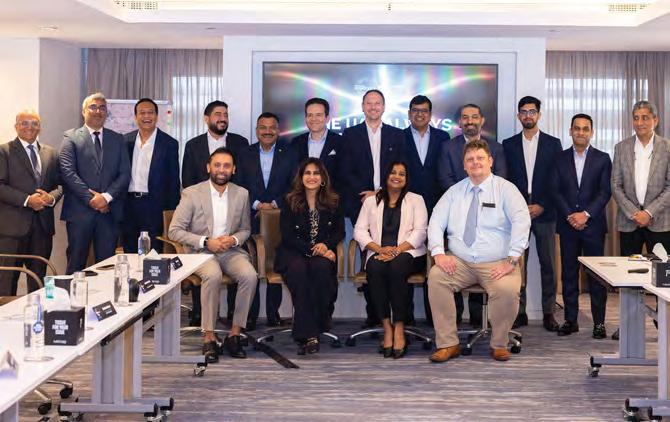
Top (L–R): Abhay Bhargava; Sheldon W. Serrao; Shailesh Dash; Mahmoud Ahmed Ismail; Capt. Pradeep Singh; Aurélien Paradis; van Zyl; Amit Jhunjhunwala; Elias Qarut; Ansh Kataria; Navneet Mandhani; Rahul Singh. Bottom (L–R): Mohammed Aamir Siddiq; Neesha Salian, editor of Gulf Business; Reena Roy; Alex Mather
practical. Ismail described a deliberate shift in focus, away from sales activity and toward building the systems and team capability that had been deprioritised during the boom.”
Roy described a two-stage response: first, accounting for the physical safety of the team; then managing mental wellbeing and flexibility demands. Annual leave had been brought forward. Remote working options had been extended wherever compliance constraints permitted. “Physical safety and mental wellbeing have been the immediate response,” she said. Paradis drew a sharp distinction between the options available to large multinationals and those available to SMEs. For a company like LVMH, the Middle East represents a fraction of global revenue, the losses are manageable. For an SME whose business is entirely within the GCC, the statement of cash flow has become the only financial document that matters. “You need to manage your cash very carefully. And when you restart, you have clients coming to you saying, I would like to work with you, but you need to offer me 60, 100, 120 days. How do you know if those businesses managed the storm properly?” That, he said, is precisely where credit insurance becomes a tool for recovery, not just protection.
Dash, who operates both as an investor through Dash Venture Labs and as a financial advisor through Ascent Partners, said the crisis had sharpened his focus on both fronts simultaneously. “As an investor, you have to be very close to your portfolio companies, be with the team much more than you used to, because things were going great on their own. As an advisor, all your clients today need working capital, one way or the other. If they don’t need it today, in three months they will. You can see that changing in real estate very fast. Everybody was planning for a bond issue, a bond listing. Those who have done it are sitting on cash. Those who were planning are going to have an issue. CFOs are calling. CEOs want to meet you. The key story is, you must be very close to your team and very close to your client. They need help today.” Jhunjhunwala described a pivot to selective value investing, deploying capital only where fundamentals were intact and downside was demonstrably protected.
THEME 3: LEADERSHIP UNDER PRESSURE
The third theme generated some of the most direct exchanges of the morning, as participants grappled with the human dimension of managing through a crisis. Singh was frank about the pressure on people. Businesses that have seen their top line effectively disappear cannot simply hold the line indefinitely. His approach was to exhaust every alternative before touching headcount, advancing annual leave, eliminating overtime, cutting the operational fat that had accumulated during years of rapid growth. Qarut distilled effective crisis leadership to three principles: empathy, creativity and flexibility. He was direct about the asymmetry between large corporations and SMEs. “Multinationals can skim off fat. An SME can only skim so much. After that, it’s either paying out of pocket or going out of business.” His prescription for managing the current period was to reduce the operational burn rate deliberately.
Captain Singh described the first days of the crisis as a war-room exercise: stress-testing cash flow, supply chain assumptions and default scenarios. “Are we okay for the next six months? Are we okay if supply stops, if construction doesn’t happen, if 20 per cent of people default?” The discipline, he argued, was to create buoyancy, finding new investors, new customers, new conversations, while keeping the existing team stable and purposeful. “You cannot become resilient just by deciding you want to be resilient from today. You learn from experience.” Ismail framed leadership in a crisis
around the obligation to project certainty.
“Leaders must make the hard decisions as fast as possible. Don’t delay. Making the tough decisions faster is better than delaying the inevitable.”
THEME 4: THE WAY FORWARD
The final theme was the one that generated the most energy. Bhargava anticipated a significant structural shift in how GCC capital is deployed. With FDI inflows softening, family businesses and sovereign entities would increasingly look outward, acquiring assets and revenue streams beyond the Gulf as a form of resilience. The localisation push that both UAE and Saudi governments had been building toward would accelerate.
Captain Singh reframed the question away from whether capital would leave and toward how new capital was being attracted. “The government is the enabler. The moment this is over, they will come out with so many new programmes. There will be new capital coming in. The question is not whether money goes out, we need to ask how we bring new money in.” Qarut was the most direct. “The moment this war is over, you’re going to see concerts like you’ve never seen before. Tourism will come back. Hotels will be filled. Real estate for seasoned developers who haven’t crumbled under the pressure, they will reap the rewards of it. That I am one hundred per cent certain about.”
Van Zyl closed the session by noting that public and private sector collaboration would be the natural subject of a future full-day summit. Several around the table agreed it was a conversation the room was already more than ready to have.
GB’s van Zyl addresses the attendees
100 NAMES. ONE COMMUNITY. GLOBAL IMPACT.
The Arab Power List returns for 2026 with eight new entrants, record female representation, and a roster that stretches from sovereign wealth to Olympic podiums — proof that Arab influence has never travelled further
Gulf Business’ flagship annual Arab Power List has always been more than a ranking. It is a statement — about where influence in the Arab world sits, how it moves, and what it increasingly means on the global stage. This year’s edition, the 100 Most Powerful Arabs 2026, makes that case more compellingly than ever. Eight new entrants join the list this year, a cohort that reflects the full breadth of what Arab influence looks like in 2026. The list spans the full range of sectors driving Arab influence globally: energy, finance, aviation, real estate, telecoms, logistics, culture, sport, fashion, entertainment, and technology among them, with women accounting for 22 of the 100 entries, the strongest female representation the list has ever seen. The UAE accounts for the largest share of residences at 50, with Saudi Arabia second at 16, underscoring the two countries’ consolidated position at the centre of regional power.
Rated on financial capital, human capital, expansion plans, and personal fame, the 2026 list captures a region whose leaders are no longer simply managing wealth — they are actively reshaping global industries, redirecting capital at historic scale, and ensuring that the Arab world’s voice carries further than it ever has.
100 MOST POWERFUL ARABS 2026
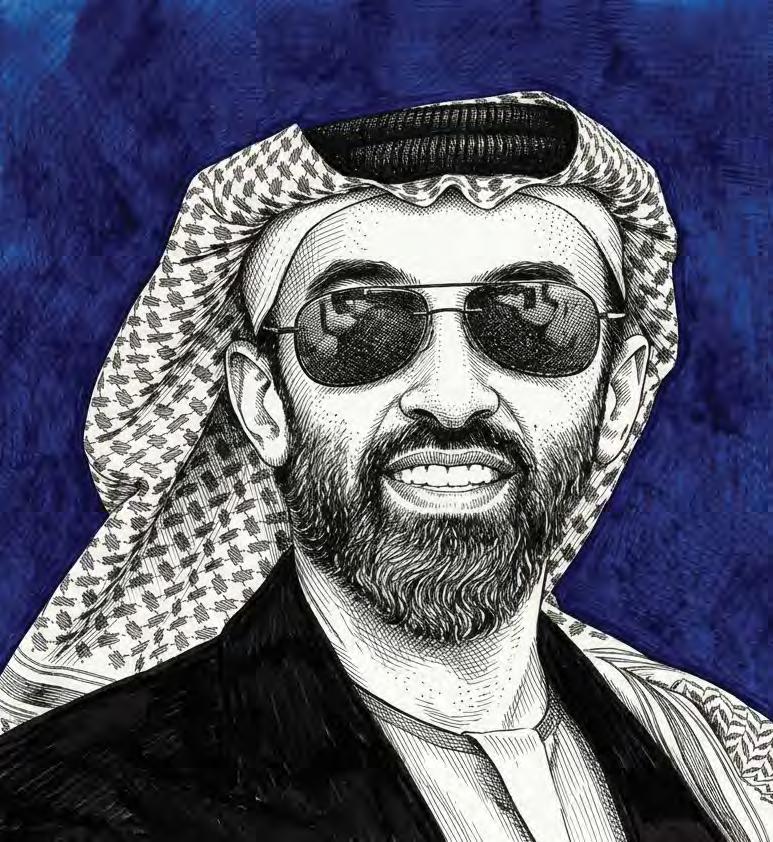
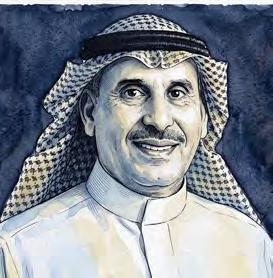
Sheikh Tahnoon bin Zayed Al Nahyan, Deputy Ruler of Abu Dhabi and the UAE’s National Security Advisor since 2016, has cemented his position as the most influential figure in Arab business and geopolitics. At the intersection of sovereign finance, artificial intelligence, and international diplomacy, Sheikh Tahnoon commands a portfolio that few individuals in the world can rival. He chairs or oversees assets estimated at $1.3–1.5tn.
His chairmanship spans Abu Dhabi Investment Authority (ADIA), one of the world’s largest sovereign wealth funds with approximately $1tn in assets under management; MGX, the AI-focused investment vehicle targeting more than $100bn in assets under management; G42, Abu Dhabi’s flagship artificial intelligence and cloud computing company; Abu Dhabi Developmental Holding Company (ADQ); International Holding Company (IHC); and the Royal Group, his private investment entity.
In 2025, Time magazine named him among its 100 Most Influential People in AI, recognising his unique role in shaping the global technology landscape from the Gulf region. The defining moment of 2025 came in March, when Sheikh Tahnoon led a high-level UAE delegation to Washington DC and met US President Donald Trump in the Oval Office.
The visit resulted in the announcement of a historic $1.4tn, 10-year UAE investment framework in the US, described by the White House as one of the largest foreign direct investment commitments in American history.
01
HH Sheikh Tahnoon Bin Zayed Al Nahyan
Deputy Ruler of Abu Dhabi, UAE National Security Advisor, and Chairman, ADIA, MGX, G42, IHC, ADQ and Royal Group
ORIGIN: UAE RESIDENCE: UAE
SECTOR: FINANCE / INVESTMENT / AI AND TECHNOLOGY
2025 RANK: 01
The framework targets AI infrastructure, semiconductors, energy, and manufacturing. Within the AI investment space, MGX continued its aggressive global strategy throughout 2025, with a portfolio spanning Stargate UAE (being built by G42’s Khazna Data Centers, in which MGX took a minority stake in April 2025), partnerships with OpenAI, xAI, and Databricks, and the build-out of what is set to become Europe’s largest AI campus near Paris — expected to ramp to 1.4 gigawatts of capacity.
In the US, Vantage Data Centers is working with OpenAI and Oracle to develop AI-focused data centre campuses under the Stargate initiative, including a nearly one-gigawatt facility in Wisconsin.
In February, MGX co-led Anthropic’s $30bn Series G funding round, alongside global investors including GIC and Coatue, at a $380bn post-money valuation, underscoring its growing role in global AI investment.
At G42, where Sheikh Tahnoon serves as chairman, the company continues to advance an AI-driven strategy underpinned by a $1.5bn investment from Microsoft in 2024 and active partnerships with OpenAI.
In the digital assets space, MGX made a landmark $2bn equity investment in Binance, the world’s largest cryptocurrency exchange, reflecting the UAE’s growing influence in the Web3 economy.
Sheikh Tahnoon’s portfolio continues to grow across biotech, infrastructure, and financial services through the IHC-linked Lunate and the Royal Group.
02 03
DR SULTAN AL JABER
Managing Director and Group Chief Executive Officer, ADNOC; Executive Chairman, XRG; Chairman, Masdar; and Executive Chairman, XRG
ORIGIN: UAE RESIDENCE: UAE
SECTOR: ENERGY / INDUSTRY / CLEAN TECHNOLOGY 2025 RANK: 02
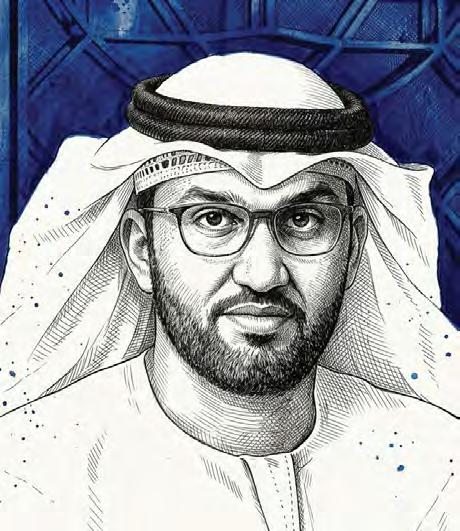
Dr Sultan Al Jaber is the MD and group CEO of ADNOC, executive chairman of XRG, and chairman of Masdar, giving him unmatched influence over the UAE’s energy, industrial, and cleantechnology agenda. As the architect of ADNOC’s transformation since 2016, he has presided over the company’s evolution from a conventional oil producer into an internationally diversified, AI-enabled energy enterprise. In 2025, ADNOC’s six listed companies delivered record revenues of Dhs190.1bn, EBITDA of Dhs61.3bn, and net profit of Dhs35.8bn. Furthermore, demonstrating the UAE’s long-term commitment to global energy security, ADNOC, XRG, and Masdar have invested more than $85bn in US energy assets.
Dr Al Jaber was named ‘ICIS CEO of the Year’ for 2025, recognised for transformational downstream expansion through XRG — ADNOC’s international investment arm. In December 2025, ADNOC secured an $11bn structured financing facility for the Hail and Ghasha offshore gas development, one of the world’s most ambitious gas projects. In March, he received the Middle East Institute’s Distinguished Global Leadership Award in Washington DC in recognition of his contributions to energy security.
YASIR AL RUMAYYAN
Governor, Public Investment Fund; and Chairman, Saudi Aramco
ORIGIN: SAUDI ARABIA RESIDENCE: SAUDI ARABIA
SECTOR: FINANCE / INVESTMENT / ENERGY 2025 RANK: 03
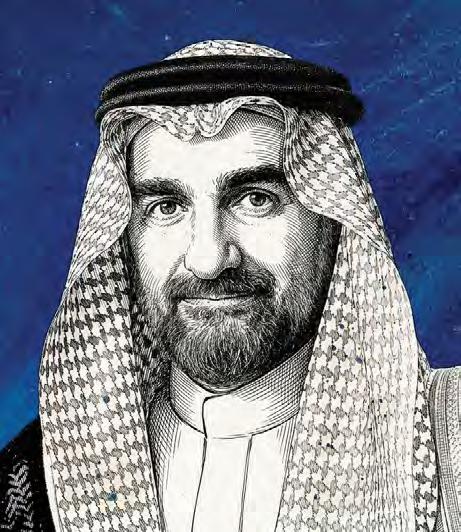
Yasir Al Rumayyan is the governor of Saudi Arabia’s Public Investment Fund (PIF) and chairman of Saudi Aramco, making him one of the most influential financiers in the world. Under his stewardship, PIF’s assets under management grew nearly six-fold since 2015, surpassing SAR3.4tn ($907bn) by end-2025, putting the fund on track to breach the long-targeted $1tn mark. In April, PIF’s board — chaired by Saudi Arabia’s Crown Prince Mohammed bin Salman — formally approved the fund’s 2026–2030 strategy, which Al Rumayyan described as a “natural next step” focused on sustainable value creation rather than pure expansion. Between 2021 and 2025, PIF invested approximately SAR750bn domestically, representing about 70 per cent of total spending, while attracting over SAR75bn in foreign capital into Saudi Arabia through partnerships with global asset managers.
Al Rumayyan’s influence is further amplified by his chairmanship of Saudi Aramco. The company’s net profit after minority interest is expected to rise by 13.8 per cent year-on-year and 56.7 per cent quarter-on-quarter, according to a report by AlJazira Capital.
Al Rumayyan also chairs Riyadh Air, Newcastle United Football Club, and LIV Golf.
04 05
HH SHEIKH AHMED BIN SAEED AL MAKTOUM
Chairman and Chief Executive Officer, Emirates Group; Chairman, Emirates NBD; Chairman, Dubai Airports; and Chairman, Dubai Holding
HH Sheikh Ahmed bin Saeed Al Maktoum has led Emirates Group since its founding in 1985, when it began operations with two leased aircraft, overseeing its evolution into one of the world’s leading international aviation groups.
In FY 2024–25, the group reported record results, including Dhs22.7bn in pre-tax profit, Dhs145.4bn in revenue, and cash reserves of Dhs53.4bn, carrying approximately 53.7 million passengers.
Momentum continued into FY 2025–26, with Emirates Group posting a strong half-year performance supported by sustained demand and improved yields.
Sheikh Ahmed also chairs Dubai Airports, flydubai, Dubai Civil Aviation Authority, and Emirates NBD, and plays a central role in Dubai’s economic governance through the Executive Council.
A key infrastructure priority remains the expansion of Al Maktoum International Airport at Dubai World Central, which will significantly increase capacity over the coming years. Emirates continues its long-term fleet modernisation programme, including Airbus A350s, Boeing 777-9 aircraft, and a major cabin retrofit initiative.
KHALDOON KHALIFA AL MUBARAK
Managing Director and Group Chief Executive Officer, Mubadala Investment Company; and Chairman, Manchester City FC
ORIGIN: UAE RESIDENCE: UAE
SECTOR: FINANCE / INVESTMENT / SPORT 2025 RANK: 05
Khaldoon Khalifa Al Mubarak oversaw Mubadala’s most successful year to date in 2025. The sovereign wealth fund’s assets under management jumped 17 per cent to $385bn (Dhs1.4tn), driven by double-digit returns across the UAE portfolio and strong global deal flow. The fund deployed a record $39bn in capital during 2025, while generating $38bn in proceeds, up 27 per cent year-onyear. Five- and 10-year annualised returns exceeded 10 per cent, placing Mubadala among the world’s top-performing sovereign investors. Key 2025 investments included Whoop, Property Finder and Waymo.
Mubadala’s US investment remains its largest market, particularly in technology, and the fund is expected to remain active there throughout 2026. Al Mubarak made headlines in January 2025 when he announced that Mubadala’s investment committee would include an AI-enabled advisory system from its first 2025 meeting. He also received the Abu Dhabi Award from UAE President HH Sheikh Mohamed bin Zayed in 2025 for two decades of leadership and service to Abu Dhabi’s development. As chairman of Manchester City Football Club, he continues to oversee one of global football’s most successful clubs by revenue.
SAAD SHERIDA AL-KAABI, President and Chief Executive Officer, QatarEnergy; and Chairman, Industries Qatar
Saad Sherida Al-Kaabi continues to lead Qatar’s long-term energy strategy at a time of heightened scrutiny over global LNG flows and geopolitical risks affecting key shipping routes. QatarEnergy’s international portfolio, including its joint venture Golden Pass LNG project in the US with ExxonMobil, remains a key pillar of its global expansion strategy. Qatar is also progressing its North Field expansion project, which will significantly increase LNG production capacity in phased stages. He chairs Industries Qatar, which continues to deliver a strong financial performance in the petrochem sector. He is also the Minister of State for Energy Affairs.
MOHAMMED AL ABBAR, Founder, Emaar Properties; Founder, Noon.com; Chairman, Eagle Hills; and Chairman, Zand Bank
Mohammed Al Abbar’s Emaar Properties delivered the company’s best-ever financial performance in 2025: property sales hit a record Dhs80.4bn, revenue reached Dhs49.6 bn, and net profit before tax was Dhs25.7bn. Dubai Mall crossed 111 million visitors. The revenue backlog stood at Dhs155bn as of 31 December 2025. Emaar’s first two months of 2026 saw UAE property sales of Dhs17.2bn — a 118 per cent year-on-year surge, underscoring continued investor confidence. Shareholders approved a 100 per cent dividend of Dhs8.8bn at the 2025 AGM. Al Abbar’s e-commerce platform noon continues to expand. He also chairs digital bank, Zand.
A07
ORIGIN: UAE
RESIDENCE: UAE
SECTOR: REAL ESTATE / E-COMMERCE 2025 RANK: 07
ORIGIN: QATAR RESIDENCE: QATAR
SECTOR: ENERGY / PETROCHEMICALS 2025 RANK: 06
min H Nasser delivered strong full-year 2025 results for Saudi Aramco despite oil price volatility: operating cash flow of $136.2bn, capital investment of $52.2bn, and total shareholder distributions of $85.5bn — including a base dividend up 3.5 per cent. Nasser announced a $3bn share buyback programme over 18 months. At the World Economic Forum 2026, he revealed that AI adoption had generated $6bn in value for Aramco in 2023–24, with a further $3–5bn expected from 2025 deployments. The Jafurah gas project commenced production, and the Tanajib Gas Plant became operational.
SAEED MOHAMMED AL TAYER, Vice Chairman, MD and Chief Executive Officer, Dubai Electricity and Water Authority (DEWA)
Saeed Mohammed Al Tayer has led DEWA since 1992, transforming it into a globally recognised, AI-enabled and sustainable utility. He plays a key role in Dubai’s Clean Energy Strategy 2050, targeting 100 per cent clean energy by mid-century. In 2025, DEWA reported record revenue of Dhs32.84bn and net profit of Dhs9.09bn, up 25.66 per cent yearon-year. Clean energy capacity expanded by 1,000MW at the Mohammed bin Rashid Al Maktoum Solar Park, bringing it to 3,860MW. DEWA’s green hydrogen project, the first in the MENA region powered by solar energy, has produced over 100 tonnes of hydrogen. Al Tayer has also founded WETEX and advanced DEWA’s global efficiency leadership.
ORIGIN: UAE
RESIDENCE: UAE
SECTOR: ENERGY/ UTILITIES / CLEAN ENERGY / WATER
08
ORIGIN: SAUDI ARABIA
RESIDENCE: SAUDI ARABIA
SECTOR: ENERGY / OIL AND GAS 2025 RANK: 08
AMIN H NASSER, President and Chief Executive Officer, Saudi Aramco
MOHAMED AL HAMMADI, Managing Director and Group Chief Executive Officer, ENEC, and Chairman, WAN0-Atlantic Center
Mohamed Al Hammadi has led ENEC since 2008, delivering the Arab world’s first nuclear energy plant — the Barakah Nuclear Energy Plant in Abu Dhabi — which now operates all four units and produces approximately 40 TWh of electricity per annum. In December 2025, Al Hammadi became the first Arab and Asian leader to chair the WANO-Atlanta Centre, a key global nuclear safety body. He held the chairmanship of the World Nuclear Association (WNA) (2024–2026). Al Hammadi is now the vice-chairman at WNA. He is also a board member of SMR developer TerraPower. 10
ORIGIN: UAE
RESIDENCE: UAE
SECTOR: ENERGY 2025 RANK: 09
HH PRINCE ALWALEED BIN TALAL AL SAUD, Founder and Chairman, Kingdom Holding Company
Prince Alwaleed bin Talal, often called the “Warren Buffett of Arabia”, is chairman of Kingdom Holding Company (KHC), the diversified investment firm he founded in 1980. KHC’s portfolio spans technology, real estate, hospitality (Four Seasons, Fairmont), media, and finance, including stakes in Apple and Citigroup.
In April 2026, in a landmark deal, Kingdom Holding agreed to acquire a 70 per cent stake in Al Hilal Football Club from PIF at a valuation of SAR1.4bn ($373m), marking one of Saudi Arabia’s most significant sports privatisation transactions.
arlos Helú, the son of a Lebanese immigrant, is Mexico’s wealthiest individual and one of the world’s richest people. As of 2025, he ranks among the top 20 globally with an estimated net worth of around $90–102 bn, according to global wealth trackers. He is honorary chairman of América Móvil, Latin America’s largest teleco. His broader empire through Grupo Carso spans education, healthcare, construction, retail, mining, energy, and real estate across Mexico and Latin America. Helú also continues to channel capital through Fundación Carlos Slim, which funds long-running initiatives in healthcare access and education, among other areas.
ABDULLA MUBARAK AL KHALIFA, Group Chief Executive Officer, Qatar National Bank
Abdulla Mubarak Al Khalifa has led QNB Group to sustained growth as CEO since November 2018. In FY 2025, QNB Group reported a net profit of QAR17bn supported by total assets of QAR1.39tn and strong growth across loans and deposits. The bank maintained sector-leading efficiency with a cost-to-income ratio of 23.3 per cent and a capital adequacy ratio of 19.3 per cent. The bank issued $1.1bn in sustainable bonds and played a lead coordination role in Qatar’s first sovereign $2.5bn green bond issuance. Al Khalifa has outlined the bank’s strategy of embracing AI, cloud computing, and blockchain.
13
ORIGIN: QATAR
RESIDENCE: QATAR
SECTOR: BANKING / FINANCE 2025 RANK: 13
12
ORIGIN: LEBANON
RESIDENCE: MEXICO
SECTOR: TELECOMS / DIVERSIFIED 2025 RANK: 12
CARLOS SLIM HELÚ, Honorary Chairman, América Móvil, and Founder, Grupo Carso
ABDUL AZIZ AL GHURAIR, Chairman, Mashreq Bank, Chairman, UAE Banks Federation (UBF), and Chairman, Abdulla Al Ghurair Foundation
Abdul Aziz Al Ghurair oversaw Mashreq’s strongest-ever annual performance in 2025. Operating income reached Dhs12.6bn, while net profit before tax totalled Dhs8.3bn. Mashreq was designated a domestic systemically important bank (D-SIB) by the UAE Central Bank, recognising its systemic importance. Al Ghurair also received the William “Bill” Seidman Lifetime Leadership Achievement Award in November 2025 from TAB Global for his contributions to the UAE banking sector. He also chairs the UAE Banks Federation (UBF). He further chairs the Abdulla Al Ghurair Foundation (AGF), which has committed over Dhs4bn to various causes.
AL ROSTAMANI, Group Chief Executive Officer, First Abu Dhabi Bank (FAB)
Hana Al Rostamani, the first female CEO in FAB’s history, led the UAE’s largest bank to a landmark year in 2025. Net profit attributable to shareholders rose 24 per cent to Dhs21.1bn, while group revenue grew 16 per cent to Dhs36.68bn. Total assets reported for Q1 2026 jumped to Dhs1.49tn, a 14 per cent year-on-year increase. FAB has embedded AI across the bank’s operations, doubling processing capacity and cutting turnaround times by up to 50 per cent. It has also expanded internationally in Europe, Turkey, Nigeria, and India. Under her leadership, FAB continues to invest in people, platforms and products, leveraging data, AI and innovation.
15
ORIGIN: UAE
RESIDENCE: UAE
SECTOR: BANKING / FINANCE
2025 RANK: 15
14
ORIGIN: UAE
RESIDENCE: UAE
SECTOR: BANKING / FINANCE
2025 RANK: 14
MOHAMMED SAIF AL SOWAIDI, Chief Executive Officer, Qatar Investment Authority (QIA), and Chairman, Katara Hospitality
Mohammed Saif Al Sowaidi was appointed CEO of QIA in November 2024. He previously served as QIA’s chief investment officer for the Americas, overseeing the fund’s US strategic expansion. In May 2025, he addressed the Qatar Economic Forum affirming QIA’s longterm commitment to building fund net value for future generations. A key 2026 milestone: QIA committed to investing $500bn in the US over the next decade. Its Fund of Funds programme was expanded to $3bn, with five new funds spanning AI, fintech, blockchain, infrastructure, and special situations. He also chairs Katara Hospitality.
MOHAMMED IBRAHIM AL SHAIBANI, Managing Director, Investment Corporation of Dubai (ICD), and Chairman, Dubai Islamic Bank
Mohammed Ibrahim Al Shaibani is managing director of the Investment Corporation of Dubai (ICD), the emirate’s sovereign investment arm with a diversified portfolio spanning aviation, banking, logistics, and real estate.
He also serves as director general of the Dubai Ruler’s Court, vice chairman of Dubai’s Supreme Fiscal Committee, and a member of the Dubai Executive Council.
He is also the chairman of Dubai Islamic Bank, the UAE’s largest Islamic bank by assets.
17
ORIGIN: UAE
RESIDENCE: UAE
SECTOR: INVESTMENT / DIVERSIFIED 2025 RANK: 17
16
ORIGIN: QATAR RESIDENCE: QATAR
SECTOR: FINANCE / INVESTMENT
2025 RANK: 16
HANA
SALEM HUMAID AL MARRI, Director General, Mohammed Bin Rashid Space Centre (MBRSC)
Salem Humaid Al Marri heads MBRSC, the engine of the UAE’s national space programme. In November 2025, MBRSC announced the completion of Rashid Rover 2 and dispatched it to the US for pre-launch preparations with Firefly Aerospace. The Etihad-SAT radar imaging satellite, developed in partnership with South Korea’s Satrec Initiative, was launched in March 2025. Al Marri was a key driver of the UAE Astronaut Programme and was involved in establishing EIAST in 2006. He is also overseeing the UAE’s partnership with NASA to contribute the Emirates Airlock module to the Gateway Lunar Space Station.
LUBNA SULIMAN OLAYAN, Chair, Saudi Awwal Bank (SAB); and Former Chief Executive Officer and Chairman, Olayan Financing Company
Lubna Olayan is the first woman to chair SAB, a Saudi publicly listed bank. On December 29, 2025, she was reappointed chair for the term running January 2026 to December 2028, reflecting continued institutional confidence. For the nine months ended September 30 2025, SAB posted a net profit of SAR6.4bn, an 8 per cent year-on-year increase. In November 2025, TAB Global awarded her the William “Bill” Seidman Lifetime Leadership Achievement Award for contributions to Saudi banking and corporate governance. As the former CEO of Olayan Financing Company, she built one of the kingdom’s most respected private conglomerates.
EORIGIN: SAUDI ARABIA
RESIDENCE: SAUDI ARABIA
SECTOR: BANKING / DIVERSIFIED 2025 RANK: 20
ORIGIN: UAE
RESIDENCE: UAE
SECTOR: SPACE / TECHNOLOGY
2025 RANK: 19
ssa Kazim has served as governor of the Dubai International Financial Centre (DIFC) since January 2014, overseeing a hub that now hosts around 8,800 companies spanning banking, fintech, asset management, insurance, and professional services. DIFC registered 1,924 new companies in 2025. In Q1 2026, the centre registered 775 new companies, further cementing its position as the fastest-growing onshore financial centre in the MENA and South Asia region. He sits on the board of Nasdaq Dubai and is the chairman of Borse Dubai. In February, Kazim was appointed chairman of DP World’s Board of Directors — one of the world’s largest port operators.
MOHAMMED KHALIFA AL MUBARAK, Chairman, Aldar Properties; Chairman, DCT Abu Dhabi; and Chairman, Miral
Mohammed Khalifa Al Mubarak influences Abu Dhabi’s real estate, cultural, tourism and entertainment sectors from positions of institutional authority. As chairman of Aldar Properties — Abu Dhabi’s largest developer, he has guided the company through a period of aggressive growth. As head of DCT Abu Dhabi, he shapes the emirate’s global cultural positioning. Perhaps his most significant 2025–26 announcement came in his capacity as chairman of Miral: the unveiling of the Disney Resort Abu Dhabi and the confirmed construction of Sphere Abu Dhabi. He also chairs Image Nation and Aldar Education.
21
ORIGIN: UAE
RESIDENCE: UAE
SECTOR: REAL ESTATE / CULTURE AND TOURISM / ENTERTAINMENT 2025 RANK: 22
20
ORIGIN: UAE
RESIDENCE: UAE
SECTOR: FINANCE / PORTS AND LOGISTICS / CAPITAL MARKETS 2025 RANK: 21
ESSA KAZIM, Governor, DIFC; and Chairman, DP World
FAHD HAMIDADDIN, Chief Executive Officer, Saudi Tourism Authority
Fahd Hamidaddin has transformed Saudi Arabia’s tourism sector from a restricted niche into one of the world’s fastest-growing destination markets. Saudi Arabia is targeting 150 million tourists by 2030 as part of Vision 2030, and 2025 saw continued record arrivals. The kingdom recorded 37.2 million domestic and inbound tourists in Q1 2026. Hamidaddin has overseen major visa liberalisation, global marketing campaigns and the development of tourism infrastructure. Saudi Arabia has also become a regular entrant in global tourism competitiveness rankings, with the World Economic Forum increasingly recognising the kingdom’s rapid ascent.
HH PRINCE NAIF BIN SULTAN BIN MOHAMMED BIN SAUD AL KABEER,
Chairman, Almarai; Chairman, Zain Saudi Arabia; and Chairman, Sultan Holding Company
Prince Naif chairs Almarai, the world’s largest vertically integrated dairy company and one of Saudi Arabia’s leading food brands. The group operates across the GCC and remains central to the kingdom’s food security strategy. Almarai’s Q1 results showed a 9 per cent increase in net profit to SAR526m. He also chairs Zain Saudi Arabia, a key telecom and digital services provider in the kngdom.
In 2025, Zain KSA delivered record revenue of around SAR11bn and net profit of approximately SAR604m, supported by growth in 5G adoption, enterprise solutions, and digital platforms. 23
ORIGIN: SAUDI ARABIA
RESIDENCE: SAUDI ARABIA
SECTOR: FOOD AND BEVERAGE / AGRICULTURE 2025 RANK: 24
ORIGIN: SAUDI ARABIA
RESIDENCE: SAUDI ARABIA
SECTOR: TOURISM / HOSPITALITY 2025 RANK: 23
SAEED MOHAMMED AL GHAMDI, Chairman, Saudi National Bank (SNB)
Saeed Mohammed Al Ghamdi helms the kingdom’s largest bank by assets, formed through the 2021 merger of NCB and Samba Financial Group. He was appointed chairman in March 2023 having previously served as the bank’s MD and group CEO from 2013 — the role in which he spearheaded the landmark NCB–Samba merger. In Q1 2026, the bank reported a net profit of SAR6.42bn with total assets hitting SAR1.19tn. The bank continues to be a cornerstone of Vision 2030 financing. Al Ghamdi also serves as a board member of the Mohammed bin Salman Foundation and previously chaired Jabal Omar Development Company.
SARAH AL SUHAIMI, Chairperson, Saudi Tadawul Group
Sarah Al Suhaimi remains a central figure in Saudi Arabia’s capital markets as chairperson of Saudi Tadawul Group. The group, which includes the Saudi Exchange, Muqassa, Edaa and Wamid, anchors the region’s financial infrastructure, with the exchange accounting for around 72 per cent of GCC market value. After a strong 2024, performance moderated in 2025, with operating revenues at SAR1.26bn and net profit after zakat at SAR395.6m. In Q1 2026, the group reported a net profit of SAR55.6m on operating revenues of SAR 294.6m In 2025, the group expanded its stake in the Gulf Mercantile Exchange.
25
ORIGIN: SAUDI ARABIA
RESIDENCE: SAUDI ARABIA
SECTOR: FINANCE
2025 RANK: 26
24
ORIGIN: SAUDI ARABIA
RESIDENCE: SAUDI ARABIA
SECTOR: BANKING / FINANCE
2025 RANK: 25
DR RAJA AL GURG, Chairperson and Managing Director, Easa Saleh Al Gurg Group; Deputy Chairperson, National Bank of Fujairah
Dr Raja Al Gurg leads one of the UAE’s most prominent family conglomerates as chairperson and managing director of Easa Saleh Al Gurg Group, overseeing more than 25 companies across retail, construction and real estate. The group has expanded into sectors including logistics and communications, strengthening its regional footprint. She also serves as deputy chairperson of the National Bank of Fujairah, which reported record operating income of Dhs2.7bn in 2025. A longstanding advocate for women in business, she founded the Dubai Business Women Council and has received France’s Legion of Honour Chevalier.
MOHAMED SALAH, Professional footballer
Mohamed Salah remains one of world football’s most influential players and is currently in his final season at Liverpool FC, with the Egyptian forward set to depart the club at the end of the 2025–26 campaign. Since joining in 2017, he has become one of Liverpool’s greatest-ever scorers, surpassing 240 goals in all competitions. In the 2024–2025 season, he remained central to the club’s campaign, adding to his Premier League tally of over 180 goals and more than 80 assists. Salah continues to define his status as one of the era’s most complete forwards.
27
ORIGIN: EGYPT
RESIDENCE: UK
SECTOR: SPORT 2025 RANK: 28
ORIGIN: UAE
RESIDENCE: UAE
SECTOR: DIVERSIFIED 2025 RANK: 27
HELAL SAEED AL MARRI, Director General, Dubai Department of Economy and Tourism; and Director General, Dubai World Trade Centre Authority
Helal Saeed Al Marri oversees Dubai’s tourism and economic agenda as director general of the Dubai Department of Economy and Tourism. The emirate welcomed a record 19.59 million international visitors in 2025, up 5 per cent year-on-year, extending three consecutive years of growth. He has played a central role in aligning tourism expansion with the D33 economic agenda, driving investment and SME growth. Al Marri also leads the Dubai World Trade Centre Authority, overseeing exhibitions, real estate and hospitality, further strengthening Dubai’s position as a leading global hub for business events and MICE activity.
Ayman Al-Sayari plays a central role in Saudi Arabia’s financial system as governor of the Saudi Central Bank. A long-time SAMA official since 1999, he has helped shape monetary policy, financial stability and the kingdom’s sovereign debt framework. Under his leadership, SAMA maintained strong balance sheet positions into 2025, with reserve assets remaining among the largest globally, supporting macroeconomic resilience. He also oversaw the introduction of the Saudi riyal symbol to strengthen the currency’s global identity. Al-Sayari continues to contribute to broader economic policy through his roles across key national financial and development institutions.
29
ORIGIN: SAUDI ARABIA
RESIDENCE: SAUDI ARABIA
SECTOR: FINANCE 2025 RANK: 29
28
ORIGIN: UAE RESIDENCE: UAE
SECTOR: TOURISM 2025 RANK: 30
AYMAN AL-SAYARI, Governor, Saudi Central Bank (SAMA)
HH SHEIKHA AL MAYASSA BINT HAMAD BIN KHALIFA AL THANI, Chairperson, Qatar Museums; and Chairperson, Doha Film Institute
Sheikha Al Mayassa continues to shape Qatar’s cultural strategy as chairperson of Qatar Museums, overseeing one of the world’s most ambitious arts investment programmes. In 2025, the organisation advanced major global partnerships, exhibitions and museum developments, reinforcing Doha’s position as a cultural hub. She also chairs the Doha Film Institute, supporting regional storytelling and talent development through initiatives including the Ajyal Film Festival. Her leadership further spans education and philanthropy through roles at Qatar Leadership Centre and Reach Out to Asia, driving cultural diplomacy on a global stage.
REEM AL HASHIMY, Chief Executive Officer, Expo City Dubai Authority
Reem Al Hashimy remains a central figure in the UAE’s diplomacy and sustainability agenda, serving as Minister of State for International Cooperation and CEO of Expo City Dubai Authority. Following her leadership role in delivering COP28, she has continued to position the UAE at the forefront of global climate dialogue. During the recent regional crisis, Al Hashimy emerged as a prominent international voice, appearing on major global television networks to articulate the UAE’s position. She also continues to lead initiatives spanning humanitarian aid, youth empowerment and sustainable development on the global stage.
30
ORIGIN: QATAR
RESIDENCE: QATAR
SECTOR: CULTURE
2025 RANK: 31
31
ORIGIN: UAE
RESIDENCE: UAE
SECTOR: DIPLOMACY, SUSTAINABILITY 2025 RANK: 33
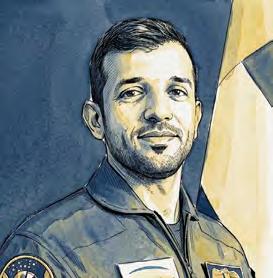
SULTAN AL NEYADI, Astronaut
Sultan Al Neyadi made history as the first Arab astronaut to perform a spacewalk during NASA SpaceX Crew-6 mission, spending six months aboard the International Space Station and contributing to scientific research in collaboration with global space agencies. Following his return, he was appointed UAE Minister of State for Youth Affairs, taking on a key role in shaping youth policy and leadership development. In 2025, he continued training with NASA, including advanced simulations linked to the Artemis programme, reinforcing his role in future space missions while inspiring the next generation of Emirati and Arab youth.
ABDULRAHMAN AL-FAGEEH, Former Chief Executive Officer, SABIC
Al-Fageeh is credited with leading SABIC through one of the toughest cycles in the global petrochemicals sector, focusing on restructuring and long-term resilience. In 2025, the company reported revenues of around SAR116.5bn and a net loss of SAR25.8bn, largely driven by one-off impairment charges, while underlying profitability remained positive on an adjusted basis. During his time at SABIC, Al-Fageeh prioritised capital discipline and strategic investments, while advancing its international footprint through projects such as the Fujian Petrochemical Complex in China. Al-Fageeh retired on April 1, 2026. Dr Faisal Al-Faqeer replaced Al-Fageeh as the CEO of SABIC.
33
ORIGIN: SAUDI ARABIA
RESIDENCE: SAUDI ARABIA
SECTOR: INDUSTRY
2025 RANK: 34
32
ORIGIN: UAE
RESIDENCE: UAE
SECTOR: SPACE
2025 RANK: 32
ELIE HABIB AND EDDY MAROUN. Maroun is Co-Founder at Anghami and Habib is Co-Founder and CEO at Anghami, and CEO of OSN+
Founded in 2012, Anghami has evolved into one of MENA’s leading digital entertainment platforms under Elie Habib and Eddy Maroun. Following its 2024 merger with OSN+, the combined group now reaches over 120 million registered users and around 3.5 million paying subscribers, with rapid growth driven by video integration and premium content partnerships. In 2025, paid subscriptions nearly doubled year-onyear, reflecting strong momentum post-merger. Backed by OSN Group as majority shareholder, Anghami continues to expand beyond music into an audio-visual ecosystem, positioning itself as a streaming powerhouse.
Mohammed Abdul Latif Jameel KBE is chairman of Abdul Latif Jameel, an over 80-year-old network of internationally diversified businesses shaping the future of mobility, energy & water, finance, investments and health. It operates in over 35 countries with more than 11,000 employees. In 2025, Abdul Latif Jameel Motors in Saudi Arabia celebrated 70 years of achievements with Toyota. Through distribution agreements with prominent automakers, Jameel Motors, established by the family to expand its international mobility business, entered seven new markets in 2025.
OORIGIN: SAUDI ARABIA
RESIDENCE: SAUDI ARABIA
SECTOR: DIVERSIFIED
ORIGIN: LEBANON
RESIDENCE: UAE
SECTOR: TECHNOLOGY/ CULTURE
RANK: 35
layan Mohammed Alwetaid continues to lead stc Group’s transformation into a regional digital powerhouse. In 2024, the company reported net profit of SAR13.3bn and revenues of SAR75.9bn, supported by strong subsidiary performance and operational efficiency. In 2025, stc advanced its international strategy, increasing its stake in Telefónica to 9.97 per cent and securing board representation. The group also progressed the partial sale of TAWAL to the Public Investment Fund and expanded digital services, including fintech and cloud, reinforcing its position as the Middle East’s most valuable telecom brand.
SULAIMAN BIN ABDULAZIZ AL RAJHI, Co-Founder, Al Rajhi Bank
At 97, Sheikh Sulaiman bin Abdulaziz Al Rajhi remains the pioneering co-founder behind Al Rajhi Bank, the world’s largest Islamic lender. While no longer involved in day-to-day operations, his legacy continues to shape the bank’s growth and governance. In 2025, Al Rajhi Bank sustained strong performance, building on 2024 results that saw net profit reach SAR19.7bn and assets approach SAR1tn, supported by expansion in financing and retail banking. Renowned for his philanthropy, Al Rajhi donated a significant portion of his wealth, including a major stake in the bank, to a charitable endowment bearing his name. 37
ORIGIN: SAUDI ARABIA
RESIDENCE: SAUDI ARABIA
SECTOR: BANKING / PHILANTHROPY 2025 RANK: 38
36
ORIGIN: SAUDI ARABIA
RESIDENCE: SAUDI ARABIA
SECTOR: TELECOMMUNICATIONS 2025 RANK: 37
MOHAMMED ABDUL LATIF JAMEEL KBE, Chairman, Abdul Latif Jameel
OLAYAN MOHAMMED ALWETAID, Group Chief Executive Officer, stc Group
BADER
AL-KHARAFI, Vice-Chairman and Group Chief Executive Officer, Zain Group
Bader Al-Kharafi continues to lead Zain Group’s regional telecoms push as vice-chairman and group CEO. In 2025, Zain delivered strong growth, reporting revenue of about $7.44bn, EBITDA of $2.54bn and net income of $777m, reflecting momentum across its Middle East and Africa footprint.
Beyond telecoms, Al-Kharafi has broadened his profile as an investor, including a recent stake in luxury yacht maker Ferretti through BNK Holding. His influence now spans digital infrastructure, listed markets and premium international assets.
MOHAMED ALI AL SHORAFA, Chairman, Department of Municipalities and Transport; and Chairman, Etihad Aviation Group
Mohamed Ali Al Shorafa remains one of Abu Dhabi’s key economic and infrastructure policymakers, serving as chairman of the Department of Municipalities and Transport and chairman of Etihad Aviation Group. In 2025, DMT completed a major two-year transformation programme aimed at improving efficiency, accessibility and innovation across municipal and transport services. He also continues to shape Abu Dhabi’s urban planning, mobility and aviation agenda, giving him influence across some of the emirate’s most strategically important sectors.
KORIGIN: UAE
RESIDENCE: UAE
SECTOR: GOVERNMENT / TRANSPORT / AVIATION
40
38
ORIGIN: KUWAIT RESIDENCE: KUWAIT
SECTOR: TELECOMMUNICATIONS / INVESTMENTS
RANK: 39
halaf Al Habtoor remains one of Dubai’s best-known business figures, leading a diversified group spanning hospitality, automotive, education and real estate. In 2025, Al Habtoor Group said sales at Al Habtoor Tower had surpassed 90 per cent, while Khalaf Al Habtoor’s charitable donations exceeded Dhs2bn, reinforcing both the commercial and philanthropic dimensions of his profile. He also stayed highly visible in regional debates, including taking a public stance on investment risk in Lebanon.
MASOOD M SHARIF MAHMOOD, Group Chief Executive Officer, e&
Masood M. Sharif Mahmood took over as group CEO of e& on April 1, 2026, after previously leading e& UAE. He assumes the role as the telecoms and technology group enters a position of strength. Looking back at last year, e& reported record revenue of about Dhs72.9bn and net profit of Dhs14.4bn. This is all while its subscriber base rose to 244.7 million across multiple regions, making it one of the biggest telecom groups on the planet. His elevation marks a major leadership transition at one of the Middle East’s most valuable digital groups. 41
ORIGIN: UAE
RESIDENCE: UAE
SECTOR: TELECOMMUNICATIONS / TECHNOLOGY
40
KHALAF AL HABTOOR, Chairman, Al Habtoor Group
FAISAL AL BANNAI, Chief Executive Officer and Managing Director, EDGE
Faisal Al Bannai continues to lead EDGE as one of the UAE’s most prominent technology and defence executives. By early 2025, the group said annual revenue had reached about $5bn, with more than 20 per cent generated from exports, highlighting the growing international relevance of its portfolio.
Al Bannai’s influence extends beyond defence manufacturing into the UAE’s broader advanced technology agenda, where EDGE has become a flagship for local capability-building, innovation and export-led industrial expansion.
MOHAMMED ALSHAYA, Executive Chairman, Alshaya Group
Mohammed Alshaya continues to oversee one of the region’s largest retail operators as executive chairman of Alshaya Group. The company says it works across 16 markets, with around 50 brands, 3,500 stores and 50,000 employees. In 2026, it expanded further by acquiring the Starbucks franchise in Greece and Cyprus, adding to a portfolio that already includes some of the world’s best-known consumer names.
Alshaya remains one of the Arab world’s most influential figures in large-scale franchised retail.
43
ORIGIN: KUWAIT
RESIDENCE: KUWAIT
SECTOR: RETAIL / CONSUMER 2025 RANK: 44
42
ORIGIN: UAE
RESIDENCE: UAE
SECTOR: DEFENCE / ADVANCED TECHNOLOGY
2025 RANK: 43
MOHAMED MANSOUR, Chairman, Mansour Group
Sir Mohamed Mansour remains one of the Arab world’s most globally connected businessmen, chairing the diversified Mansour Group across automotive, capital markets, consumer, industrial equipment, technology and logistics. In 2025, he served as co-chair of the B20 Digital Transformation Task Force, adding to a profile that now spans business, public policy and philanthropy. The group has also continued expanding its investment footprint through Man Capital, while Mansour’s global stature was reinforced by his recent UK knighthood.
MOHAMED AL SHAMISI, Managing Director and Group Chief Executive Officer, AD Ports Group
Captain Mohamed Juma Al Shamisi continues to build AD Ports Group into a major trade and logistics platform. In 2025, the company reported record revenue of Dhs20.8bn, up 20 per cent, and net profit of Dhs2.1bn, up 17 per cent, as it deepened its corridor-led strategy. The group also expanded its Middle Corridor footprint through Central Asia and the Black Sea, reinforcing Abu Dhabi’s growing role in global trade connectivity. Al Shamisi remains one of the UAE’s most consequential infrastructure executives. With continued expansion, the group is positioning itself as a key enabler of global supply chains.
45
ORIGIN: UAE
RESIDENCE: UAE
SECTOR: PORTS / LOGISTICS / INFRASTRUCTURE
2025 RANK: 46
44
ORIGIN: EGYPT RESIDENCE: UNITED KINGDOM
SECTOR: CONGLOMERATE / INVESTMENTS
2025 RANK: 45
NAYLA HAYEK, Chairwoman, Swatch Group
Nayla Hayek continues to chair Swatch Group, one of the world’s biggest watchmakers, through a difficult market cycle. In 2025, the company reported sales of about CHF6.28bn, down 5.9 per cent, while net income fell sharply to around CHF25m, hurt by weak demand in Greater China.
Even so, the group has signalled a stronger 2026 outlook, citing improving momentum in markets including North America and India. Hayek remains a high-profile figure in global luxury manufacturing and family-controlled corporate leadership.
KARIM AWAD, Group Chief Executive Officer, EFG Holding
Karim Awad continues to lead EFG Holding as one of the region’s most prominent financial executives. In 2025, the group reported revenue of about EGP26bn, up 7 per cent year on year, underscoring the resilience of its diversified platform across investment banking, brokerage, non-bank financial services and commercial banking.
The year also featured a key milestone with Valu’s listing and Amazon’s decision to take a direct stake, reinforcing EFG’s position at the centre of Egypt’s evolving financial and fintech landscape.
Nassef Sawiris remains one of the Arab world’s most internationally significant businessmen, though OCI is now in the middle of a major strategic reshaping. After more than $11.6bn in asset sales, the group moved in late 2025 to combine with Orascom Construction in a deal aimed at creating an integrated infrastructure and investment platform with a future Abu Dhabi listing.
The shift marks a decisive turn away from OCI’s old chemicals-heavy profile and towards a broader capital allocation and infrastructure strategy under Sawiris.
MOHAMMED ALARDHI, Executive Chairman, Investcorp
Mohammed Alardhi continues to shape Investcorp’s global alternatives strategy as executive chairman. The firm says assets under management have grown from $10bn to $60bn over the past decade under his leadership, alongside expansion across private equity, real assets and credit. In early 2026, Investcorp also announced a strategic partnership with SNB Capital to pursue opportunities in Saudi Arabia, while continuing to broaden its regional digital distribution. Alardhi remains one of the Gulf’s most internationally engaged investment leaders.
49
ORIGIN: OMAN
RESIDENCE: BAHRAIN
SECTOR: INVESTMENTS / ALTERNATIVE ASSETS/ FINANCE
2025 RANK: 50
48
ORIGIN: EGYPT
RESIDENCE: UAE
SECTOR: INDUSTRY / CHEMICALS / INVESTMENTS
2025 RANK: 49
KHALID AL RUMAIHI, Chairman, Aluminium Bahrain
Khalid Al Rumaihi chairs Aluminium Bahrain (Alba), one of the world’s largest aluminium smelters, and serves as executive chairman of Amriya Group. Under his chairmanship, Alba delivered strong financial results, reporting net profit of BD184.5m (approximately $490.8m), up 56.4 per cent year-on-year, while total comprehensive income rose 71.9 per cent to BD183.4m. The performance underscores Alba’s operational resilience and cost discipline, reinforcing its position as a cornerstone of Bahrain’s industrial sector and a key driver of non-oil economic growth amid evolving global metals market dynamics. 50
NAGUIB SAWIRIS, Chairman, Orascom
Naguib Sawiris remains one of the Arab world’s most influential investors, overseeing a diversified portfolio through Orascom Investment Holding, which focuses on high-growth sectors across Egypt and Africa. With an estimated net worth of around $5bn, he has continued to expand his investments across emerging markets. Sawiris has strengthened his presence in mining through La Mancha, a major gold investment platform, and in real estate through Ora Developers. His longstanding role in building telecom infrastructure across the Middle East, Africa, and Asia continues to underpin his influence across sectors.
AZIZ
A51
ORIGIN: EGYPT
RESIDENCE: EGYPT
SECTOR: INVESTMENTS
2025 RANK: 53
ORIGIN: BAHRAIN
RESIDENCE: BAHRAIN
SECTOR: INDUSTRY
2024 RANK: 51
ziz Aluthman Fakhroo is leading Ooredoo’s transition towards a digital infrastructure-focused model, with increased investment in subsea cables and fibre connectivity. The company has committed over $500m to international cable projects to strengthen global data routes and reduce reliance on traditional chokepoints. Ooredoo has also launched a dedicated infrastructure entity to scale its subsea and fibre assets, targeting growth in international connectivity as demand rises from AI, cloud, and hyperscale services. The group’s footprint across the Middle East, North Africa, and Southeast Asia further supports its role in global data infrastructure.
Adel Abdulla Ali continues to lead Air Arabia’s expansion as the region’s largest low-cost carrier, supported by strong operational performance and sustained demand for value-driven travel. In 2025, the airline reported record pre-tax profit of Dhs1.8bn, with revenue rising 15 per cent to Dhs7.78bn and passenger numbers increasing 16 per cent to 21.8 million. The carrier added 30 new routes across its hubs in the UAE, Morocco, Egypt, and Pakistan, while expanding its fleet to 90 Airbus aircraft. Continued network growth, fleet expansion, and high load factors highlight the airline’s ability to scale efficiently in a competitive aviation market.
ADEL ABDULLA ALI, Chief Executive Officer, Air Arabia
ISSAM KAZIM, Chief Executive Officer, Dubai Corporation for Tourism and Commerce Marketing
Issam Kazim leads international tourism promotion through the Dubai Corporation for Tourism and Commerce Marketing, supporting the emirate’s global positioning as a leading travel and business destination. Dubai welcomed 18.72 million international overnight visitors in 2024, marking a 9 per cent year-on-year increase and a new record. The growth was driven by global partnerships, targeted campaigns, and a diversified tourism strategy led by the Dubai Department of Economy and Tourism. The emirate has continued to strengthen its position through sustained demand across leisure and business travel segments.
Ala’a Eraiqat continues to lead Abu Dhabi Commercial Bank (ADCB) through a phase of strong financial growth and digital transformation. The bank reported record 2025 results, with net profit rising 22 per cent to Dhs11.45bn and total assets increasing 19 per cent to Dhs774bn, supported by broad-based growth in loans and deposits. Eraiqat attributed performance to disciplined execution of ADCB’s five-year strategy and sustained efficiency gains driven by digital and AI-powered transformation. The bank has also focused on enhancing customer experience through technology-led initiatives and innovation across its service offerings.
M55
ORIGIN: JORDAN
RESIDENCE: UAE
SECTOR: BANKING/ FINANCE
2025 RANK: 56
54
ORIGIN: UAE
RESIDENCE: UAE
SECTOR: TOURISM
2025 RANK: 55
ohammad A Baker leads GMG, a diversified retail and distribution group operating across sports, health, food, and consumer goods, with a portfolio of international and homegrown brands. Under his leadership, the company has expanded across the Middle East, North Africa, and Southeast Asia, supported by acquisitions and new market entry strategies. GMG has also strengthened partnerships with global brands, including Sports Direct, while continuing to scale its own retail concepts. The group is investing in omnichannel capabilities, including a 2025 partnership with Amazon to enhance e-commerce, logistics, and customer experience across the region.
Mohammad Ali Rashed Lootah serves as president and CEO of Dubai Chambers, which plays a central role in supporting trade, investment, and business growth in the emirate. The organisation continues to expand its global footprint, including the launch of a new international office in Manila in 2026 to strengthen bilateral trade and investment ties. Dubai Chambers also works closely with the private sector to enhance competitiveness and support business growth through targeted initiatives and partnerships. Under Lootah’s leadership, the organisation has advanced international cooperation and market access for companies.
57
ORIGIN: UAE
RESIDENCE: UAE
SECTOR: TRADE 2025 RANK: 58
56
ORIGIN: UAE
RESIDENCE: UAE
SECTOR: RETAIL
2025 RANK: 57
ALA’A ERAIQAT, Chief Executive Officer, ADCB
MOHAMMAD A BAKER, Chief Executive Officer, GMG Group
MOHAMMAD LOOTAH, President and Chief Executive Officer, Dubai Chambers
GHAITH AL GHAITH, Chief Executive Officer, flydubai
Ghaith Al Ghaith continues to lead flydubai’s expansion, with the airline growing its network to more than 140 destinations across over 50 countries. The carrier has opened more than 100 routes that were previously underserved or lacked direct connectivity to Dubai, supporting increased access to emerging markets. Under his leadership, flydubai has expanded its fleet to more than 90 aircraft and continues to invest in nextgeneration aircraft, including a landmark agreement for 150 Airbus A321neo jets. Its partnership with Emirates has also strengthened network integration, with over million passengers travelling across the network in the past year.
ABDULLA JASSEM KALBAN, Managing Director, EGA
Abdulla Jassem Kalban is managing director of Emirates Global Aluminium (EGA), one of the world’s largest aluminium producers and a key contributor to the UAE’s industrial base, with exports reaching customers in more than 50 countries. The company delivered strong financial performance in 2025, driven by record sales, higher aluminium prices, and continued focus on cost efficiency. EGA is advancing its long-term growth strategy through investment in next-generation smelting technology and plans for new production capacity, including a proposed aluminium smelter in the US.
58
ORIGIN: UAE
RESIDENCE: UAE
SECTOR: AVIATION 2025 RANK: 59
59
ORIGIN: UAE
RESIDENCE: UAE
SECTOR: INDUSTRY 2025 RANK: 60
ZAID S AL KHAYYAT, Managing Director, Al Khayyat Investments
Zaid S Al Khayyat is managing director of Al Khayyat Investments (AKI), leading the Dubai-headquartered family business through a phase of growth and innovation. AKI operates across nine industries and markets, supported by over 12,000 employees. In 2025, the company launched a 1 million sq ft Fulfilment & Innovation Centre, expanding logistics capacity while prioritising sustainability. AKI also introduced AKI Logistics, offering end-to-end third-party logistics services. The group expanded regionally into Saudi Arabia, while advancing local manufacturing through AKI Creates in line with national industrial development initiatives.
HUSSAIN SAJWANI, Chairman, DAMAC Group
Hussain Sajwani leads DAMAC Group, a Dubai-based developer with a global portfolio spanning luxury real estate and emerging digital infrastructure. The company has delivered more than 45,000 units, with a similar number in development, reflecting sustained demand in key markets. In recent years, Sajwani has accelerated diversification through DAMAC’s Edgnex platform, including a $20bn commitment to data centre investments in the US and a $2.3bn AI-focused facility in Southeast Asia, with expansion targeting over 300MW capacity by 2026. The group continues to advance new projects and global partnerships.
61
ORIGIN: UAE
RESIDENCE: UAE
SECTOR: REAL ESTATE/ TECHNOLOGY 2025 RANK: 61
60
ORIGIN: UAE RESIDENCE: UAE
SECTOR: DIVERSIFIED 2025 RANK: 88
KUTAYBA ALGHANIM, Chairman, Alghanim Industries
Kutayba Alghanim leads Alghanim Industries, one of the largest privately owned companies in the Middle East, with a diversified portfolio spanning automotive, retail, industrial, and services sectors. The group represents global brands while operating its own businesses across multiple markets. In recent years, the company has expanded into new growth areas, including the launch of Barq, an electric vehicle charging platform focused on sustainable mobility. It has also partnered with SpaceX’s Starlink through its technology venture Sama X to deliver satellite internet services across the region.
Wadha Al-Khateeb is CEO of Kuwait National Petroleum Company (KNPC), a central player in the country’s downstream oil sector. She also serves as acting CEO of Kuwait Integrated Petroleum Industries Company (KIPIC), as part of a broader restructuring of Kuwait’s oil sector aimed at enhancing efficiency and integration. Under her leadership, KNPC has advanced key infrastructure projects, including the North Oil Pier development at the Mina Al-Ahmadi refinery. The ongoing merger of KNPC and KIPIC reflects a wider strategy to strengthen Kuwait’s refining and petrochemical capabilities.
H63
ORIGIN: KUWAIT
RESIDENCE: KUWAIT
SECTOR: ENERGY
2025 RANK: 63
62
ORIGIN: KUWAIT
RESIDENCE: KUWAIT
SECTOR: DIVERSIFIED
2025 RANK: 62
amad Ali Al-Khater was appointed GCEO of Qatar Airways in December 2025, succeeding Badr Mohammed Al-Meer after a two-year tenure. Prior to this role, he served as chief operating officer at Hamad International Airport and held senior positions at QatarEnergy, bringing experience across aviation infrastructure and the energy sector. His appointment marks a leadership transition at one of the world’s leading airlines, which operates a global network through its Doha hub and continues to play a central role in international longhaul travel.
Tarek Sultan is chairman of Agility, a UAE-based ADX-listed company and diversified owner-operator; it is also a long-term investor with operations across six continents and a workforce of approximately 68,000 employees. He has led the company’s global expansion over three decades, including more than 40 acquisitions that transformed it from a regional logistics provider into a multi-business platform. Agility’s portfolio includes Menzies Aviation, a global aviation services company, Tristar, a global energy logistics business, and Agility Logistics Parks. The group continues to focus on infrastructure, trade, and supply chain investments. 65
ORIGIN: KUWAIT
RESIDENCE: KUWAIT
SECTOR: LOGISTICS/ AVIATION 2025 RANK: 65
64
ORIGIN: QATAR
RESIDENCE: QATAR
SECTOR: AVIATION
WADHA AL-KHATEEB, Chief Executive Officer, Kuwait National Petroleum Company
HAMAD AL-KHATER, Group Chief Executive Officer, Qatar Airways
TAREK SULTAN, Chairman, Agility
MONA ATAYA, Founder and Chief Executive Officer, Mumzworld
Mona Ataya is the founder and CEO of Mumzworld, a Dubaibased e-commerce platform focused on mother, baby, and child products across the Middle East. The company serves more than 2 million mothers, offering over 250,000 products and delivery to more than 20 countries. Under her leadership, Mumzworld has established itself as a leading platform in its niche, supported by partnerships with more than 4,500 global brands and suppliers. The business is built around a customerfocused model combining competitive pricing, detailed product information, and a strong online community, positioning it as a key player in the region.
KHALED BALAMA, Governor, Central Bank of the UAE
Khaled Mohamed Balama is governor of the Central Bank of the UAE, overseeing monetary policy, financial stability, and regulation of the banking sector. The UAE’s banking system remains robust, with total assets exceeding Dhs5.4tn, strong capital buffers, and high liquidity levels, while continuing to operate without disruption despite regional volatility in 2026. Under his leadership, the central bank has advanced digital transformation initiatives, including the launch of the Digital Dirham pilot, marking a significant step in the development of the country’s financial infrastructure.
H67
ORIGIN: UAE
RESIDENCE: UAE
SECTOR: FINANCE 2025 RANK: 68
66
ORIGIN: LEBANON
RESIDENCE: UAE
SECTOR: E-COMMERCE/ RETAIL 2025 RANK: 66
esham Al Qassim is CEO of Wasl Group, one of Dubai’s largest real estate development and management companies, overseeing a portfolio spanning residential, commercial, and hospitality assets. The group manages more than 25,000 units and continues to expand through large-scale developments aligned with Dubai’s long-term urban strategy. In 2025, Wasl launched a major expansion of Jumeirah Golf Estates, adding more than 12,000 units within a 4.68 million sqm masterplan designed to accommodate over 50,000 residents. The development reflects the company’s focus on large-scale community projects across Dubai.
Sheikh Abdullah bin Bayyah is chairman of the UAE Council for Fatwa, the government body responsible for overseeing official religious rulings and institutionalising fatwa frameworks in the country. In 2026, he chaired the council’s first meeting of the year, emphasising the importance of strengthening fatwa systems to address evolving societal needs and support social stability. Beyond the UAE, he serves as president of the Forum for Promoting Peace in Muslim Societies and is a member of several international Islamic scholarly bodies, reflecting his role in global religious engagement
69
ORIGIN: MAURITANIA
RESIDENCE: UAE
SECTOR: RELIGIOUS HEAD
2025 RANK: 69
68
ORIGIN: UAE RESIDENCE: UAE
SECTOR: REAL ESTATE 2025 RANK: 67
HESHAM AL QASSIM, Chief Executive Officer, Wasl Group
SHEIKH ABDULLAH BIN BAYYAH, Chairman, UAE Fatwa Council
Badr Jafar is CEO of Crescent Enterprises, a UAE-based diversified business group operating across sectors including energy, ports, logistics, and investments, with activities spanning multiple international markets. Under his leadership, the company has continued to expand its global footprint across a range of industries, reflecting a long-term investment and diversification strategy. He also serves as the UAE’s Special Envoy for Business and Philanthropy, a role that focuses on strengthening collaboration between the private sector, governments, and philanthropic organisations to address global development priorities.
Mishal Kanoo is chairman of The Kanoo Group, one of the Gulf’s oldest family-owned conglomerates, founded in 1890 and operating across sectors including shipping, logistics, travel, energy, and industrial services. The group maintains a broad regional footprint across the UAE, Saudi Arabia, Bahrain, Oman, and Qatar, alongside international operations. In recent years, it has continued to expand its portfolio through initiatives in logistics, energy solutions, and industrial services, including strategic partnerships and participation in regional infrastructure and supply chain development.
A71
ORIGIN: BAHRAIN RESIDENCE: UAE
SECTOR: DIVERSIFIED 2025 RANK: 71
70
ORIGIN: UAE RESIDENCE: UAE
SECTOR: INVESTMENTS/ DIVERSIFIED 2025 RANK: 70
mal Suhail Bahwan is vice chairperson of Suhail Bahwan Group, one of Oman’s largest privately owned conglomerates, with a diversified portfolio spanning engineering, healthcare, automotive, industrial, and services sectors. She joined the group in 1998 and assumed her current leadership role in 2016, having previously served as managing director. In recent years, the group has expanded its international footprint, including the acquisition of a significant equity stake in UK-based Monument Bank in 2024. Bahwan also holds board-level positions across key institutions, including serving as chairperson of the National Bank of Oman.
Elie Saab is one of the Arab world’s most globally recognised fashion designers, with a couture house that has become a fixture on international red carpets and fashion weeks. His brand has evolved into a broader luxury lifestyle platform spanning haute couture, ready-towear, accessories, and home collections. In recent years, Saab has expanded into real estate and hospitality through branded residential developments across multiple markets, including the UAE, where the brand launched its first project on Yas Island, and new ventures in India. This expansion reflects a strategy to extend the brand into luxury living.
73
ORIGIN: LEBANON
RESIDENCE: LEBANON
SECTOR: FASHION/ RETAIL/ REAL ESTATE 2025 RANK: 73
72
ORIGIN: OMAN RESIDENCE: OMAN SECTOR: DIVERSIFIED 2025 RANK: 72
MISHAL KANOO, Chairman, Kanoo Group
AMAL BAHWAN, Vice Chairperson, Bahwan Group
ELIE SAAB, Fashion Designer
FADI GHANDOUR, Founder, Aramex; and Executive Chairman, Wamda
Fadi Ghandour is the founder of Aramex and executive chairman of Wamda, a platform focused on building and investing in entrepreneurship ecosystems across the Middle East and North Africa. He played a central role in establishing Aramex as a global logistics company operating across more than 70 countries. In recent years, his focus has shifted to venture capital and startup development through Wamda Capital, which has backed high-growth companies including Souq.com. Ghandour has also supported entrepreneurs across the region through funding, mentorship, and ecosystem-building initiatives.
MAZIN LAMKI, Chief Executive Officer, Energy Development Oman
Mazin Al Lamki is CEO of Energy Development Oman (EDO), the state-owned entity responsible for managing the country’s upstream oil and gas assets. Under his leadership, the company has strengthened its financial position through major funding transactions, including a $1bn term loan in 2025, with a focus on cost efficiency and investor diversification. EDO has also expanded its strategic scope through initiatives such as the establishment of Hydrogen Oman (Hydrom). In 2025, the company partnered with Sumitomo Corporation to develop Oman’s first integrated energy supply chain platform.
75
ORIGIN: OMAN
RESIDENCE: OMAN
SECTOR: ENERGY 2025 RANK: 75
74
ORIGIN: JORDAN
RESIDENCE: UAE
SECTOR: LOGISTICS 2025 RANK: 74
SHAIKHA AL BAHAR, Deputy Group Chief Executive Officer, National Bank of Kuwait
Shaikha Al Bahar is the deputy group CEO of National Bank of Kuwait, and one of the leading banks in the Arab world. She previously served as CEO of NBK Kuwait from 2010. Throughout her distinguished career at NBK, Al Bahar has played a pivotal role in transforming the bank into a prominent regional institution, overseeing growth to approximately $89bn in assets and expanding its international presence across 15 countries. Her leadership also extends to key board positions, including chairperson of National Bank of Kuwait (Lebanon), chairperson of NBK Capital, and board member of National Bank of Kuwait (International).
MOHAMMAD ABU GHAZALEH, Chairman and Chief Executive Officer, Fresh Del Monte Produce
Mohammad Abu-Ghazaleh has served as chairman and CEO of Fresh Del Monte Produce since 1996, leading a major turnaround that strengthened the company’s position as a global leader in fresh and prepared fruits and vegetables. Under his leadership, the company went public on the New York Stock Exchange in 1997 under the ticker FDP. In March 2026, he marked a defining milestone with the acquisition of select assets of Del Monte Foods, uniting the Del Monte brand under a single global organisation for the first time in nearly four decades. Abu Ghazaleh credits this achievement to the dedication and discipline of teams worldwide.
77
ORIGIN: PALESTINE
RESIDENCE: MIDDLE EAST
SECTOR: FOOD AND BEVERAGES 2025 RANK: 78
76
ORIGIN: KUWAIT
RESIDENCE: KUWAIT
SECTOR: BANKING
2025 RANK: 77
MONA KATTAN, Founder and Chief Executive Officer, Kayali Fragrances
Mona Kattan is a beauty entrepreneur and fragrance founder best known for launching Kayali in 2018, a perfume brand inspired by her Middle Eastern heritage and the cultural importance of fragrance in Dubai. The brand is sold globally through Sephora and other prestige retailers, with headquarters in Dubai London and New York. She is committed to inclusivity in beauty and empowering future generations. she started a PR consultancy in 2009, co-founded a beauty salon in 2012, and helped build Huda Beauty with her sisters Huda and Alya. Mona mentors and speaks through YPO, Founders Forum, and The Fragrance Foundation.
Founder and Co-Chief Executive Officer, Huda Beauty
Huda Kattan is the founder and co-CEO of Huda Beauty, one of the world’s fastest-growing beauty brands. A celebrated entrepreneur, celebrity makeup artist, and influential beauty authority, she has been passionate about beauty throughout her life. In 2010, she launched her beauty blog, which quickly became one of the top beauty blogs globally. A trained Hollywood makeup artist with over 15 years of experience, Huda is known for creating viral makeup techniques. In 2017, Huda Beauty sold a minority stake to TSG Consumer Partners, but in 2025 Kattan regained full ownership, buying back equity and restoring the brand’s independence. 79
ORIGIN: US RESIDENCE: UAE
SECTOR: BEAUTY/ RETAIL 2025 RANK: 78
ORIGIN: US RESIDENCE: UAE
SECTOR: FRAGRANCE/ RETAIL 2025 RANK: 78
DR AMINA ROSTAMANI, Chief Operating Officer, AW Rostamani Group
Dr Amina Rostamani is an executive board member, director, and COO of AW Rostamani Group (AWR Group), a leading UAE-based multi-sector family business with a seven-decade legacy. In her role, she oversees shared corporate services and group-wide functions, ensuring efficient operations across the organisation’s diverse portfolio. She is also the CEO of AWR Properties, where she leads real estate operations. Dr Rostamani plays a central role in strengthening the group’s operational excellence and long-term direction. AWR continues to expand its automotive presence in the UAE, including introducing the all-electric smart #5 SUV.
OTHMAN BENJELLOUN, Chairman and Chief Executive Officer, Bank of Africa Group
Othman Benjelloun is a Moroccan businessman and banker, serving as chairman and CEO of Bank of Africa Group. He also chairs O Capital Group Holdings, Royale Marocaine d’Assurance, and Medi Telecom Orange. Since 1995, he has led the Professional Association of Moroccan Banks (GPBM) and previously chaired the Union of North African Banks from 2007 to 2009. He served as chancellor of Al Akhawayn University of Ifrane between 1998 and 2004. He has received numerous international decorations, including high honours from Morocco, Sweden, Spain, France, Senegal and Djibouti.
DJ Khaled is an American DJ, record producer, and media personality known for hit collaborations and a motivational public persona. In 2016, he earned his first Billboard 200 No. 1 album with Major Key, featuring artists like Drake, Jay-Z, and Nicki Minaj, selling about 95,000 equivalent units in its debut week. He has since achieved major commercial success, with over 20 million singles sold, 6 million albums, and more than 4 billion streams. In 2022, he received a star on the Hollywood Walk of Fame in the Recording category. In 2025, he announced his 14th studio album Aalam of God and released new singles after a three-year gap.
RONALDO MOUCHAWAR, Chief Executive Officer, souq.com; and VP Amazon Middle East, Africa and Turkey
Ronaldo Mouchawar is VP at Amazon for the Middle East, Africa, and Turkey, where he oversees one of the company’s most diverse and fast-evolving regions. He drives growth across markets ranging from the Gulf’s advanced infrastructure to Africa’s emerging digital economies, focusing on customer obsession and innovation at scale. Mouchawar’s leadership has introduced initiatives like Amazon Now, accelerating ultrafast delivery while addressing regional complexities such as non-traditional addresses and widespread cash payments. He has also recently highlighted how generative AI is transforming logistics and shopping experiences.
J83
ORIGIN: SYRIA
RESIDENCE: UAE
SECTOR: LOGISTICS, E-COMMERCE, RETAIL
2025 RANK: 83
ORIGIN: US RESIDENCE: US SECTOR: MUSIC INDUSTRY
2025 RANK: 79
uma Al Majid is the founder of the Juma Al Majid Holding Group, established over 70 years ago in the UAE. His guiding principles of putting customers first, maintaining integrity, and embracing social responsibility have shaped the group’s long-standing success. Over the decades, he has become widely recognised for his contributions to business, culture, education, and philanthropy across the Arab world and internationally. He has received many honors, including the Sultan Bin Ali Al Owais Award, the Gibran Khalil Gibran Award, recognition from the Arab American Institute, and awards from Turkmenistan, the GCC, and the UAE. 84 MOHAMMED HUSSEIN AL AMOUDI, Entrepreneur and Philanthropist
Mohammed Hussein Al Amoudi is a successful entrepreneur, businessman, and philanthropist with major investments across Africa, the Middle East, and Europe. He is a leading investor in Ethiopia through MIDROC Ethiopia and holds private assets in Sweden, including energy giant Preem Petroleum. He chairs Corral Group and companies such as SAMIR and NAFT Services Company, with interests spanning oil and gas, mining, agriculture, construction, real estate, healthcare, hospitality, and finance. His philanthropy focuses on education, training, and healthcare in Ethiopia and Saudi Arabia.
85
ORIGIN: ETHIOPIA
RESIDENCE: SAUDI ARABIA
SECTOR: INVESTMENT/ DIVERSIFIED 2025 RANK: 85
ORIGIN: UAE RESIDENCE: UAE
SECTOR: DIVERSIFIED 2025 RANK: 84
JUMA AL MAJID, Founder and Chairman, Juma Al Majid Holding Group
OMAR AL FUTTAIM, Vice Chairman and Chief Executive Officer, Al Futtaim Group
Omar Al Futtaim is the vice chairman and CEO of Al Futtaim Group, a Dubai-based diversified conglomerate. Since 2001, he has led the company’s growth, transformation, and global expansion across automotive, financial services, real estate, retail, and health, with operations across 20 markets and 42,000 employees. With over three decades of experience, he previously worked at Morgan Stanley in New York and UK and spent 12 years in roles across family’s portfolio. Known for his entrepreneurial vision, he serves on boards including Commercial Bank of Dubai, Orient Insurance, Emirates Investment Bank, and Dubai Chamber of Commerce.
MARIAM ALMHEIRI, Vice Chair and Managing Director, 2PointZero
Mariam Almheiri is vice chair and MD of 2PointZero, leading strategic engagement, investment strategy, and global positioning. She served as its first CEO at the 2024 launch, guiding its transition into a publicly listed group focused on energy, consumer platforms, and AI integration. Previously, she was UAE Minister of Climate Change and Environment and Minister of State for Food and Water Security. She also heads the International Affairs Office at the UAE Presidential Court, leading science diplomacy and partnerships such as the Emirates Polar Program and UAE–Gates agricultural initiative.
Muhammad BinGhatti is the chairman of Binghatti Holding, one of Dubai’s fastest-growing real estate developers. He leads a company renowned for its architecturally distinctive developments, with a gross development value of Dhs100bn across numerous prime projects. Under his direction, Binghatti became the first developer globally to partner with luxury brands such as Bugatti, Mercedes-Benz, and Jacob & Co. for branded residences. Despite geopolitical tensions, he has maintained strong sales momentum, low cancellation rates below 1 per cent, and consistent project performance.
DR SULAIMAN HABIB, Chairman, Dr Sulaiman Al Habib Medical Group
Dr Sulaiman bin Abdulaziz Al Habib is a Saudi physician and entrepreneur and the founder and chairman of Dr Sulaiman Al Habib Medical Group (HMG). He established the group in 1995, originally starting with the Al Olaya Medical Complex in Riyadh, and grew it into one of the leading private healthcare providers in the Middle East. HMG now operates hospitals and medical centres across Saudi Arabia, the UAE, and Bahrain. Before founding HMG, Dr Al Habib held several senior medical roles, including Head of Pediatrics at the Security Forces Hospital in Riyadh, chief medical officer at King Khalid University Hospital, and consultant roles.
89
ORIGIN: SAUDI ARABIA
RESIDENCE: SAUDI ARABIA
SECTOR: HEALTHCARE/ SCIENCE
88 NEW
ORIGIN: UAE
RESIDENCE: DUBAI, UAE
SECTOR: REAL ESTATE/ INVESTMENT
AMR DIAB, Singer
Amr Diab (Amr Abd-Albaset Abd-Alaziz Diab), born October 11, 1961 in Port Said, Egypt, is an Egyptian singer known as the “Father of Mediterranean Music.” He pioneered a fusion of Western and Egyptian rhythms, shaping a distinctive global Arabic pop style. He debuted with Ya Tareea (1983) followed by albums including GhannyMenAlbak, Mayyal, and Matkhafesh. His breakthrough Amarain (1999) featured international duets with Cheb Khaled and Angela Dimitriou. Diab has achieved 50 weeks at #1 on Billboard Arabia Artist 100, with 42 songs on Hot 100, remains most-streamed Arab artist. Orange reached 400M views in 48 hours. 90
YOUSUF ALMOAYYED, Managing Director, YK Almoayyed & Sons
Mona Almoayyed heads the conglomerate representing over 300 international brands in automotive, electronics, heavy equipment, medical technology, and construction. She joined the company in 1974 as executive director of Automobile Division and became MD in 2000. She is the first woman elected to Bahrain Chamber of Commerce and Industry board, where she chaired its Businesswomen’s Committee. Almoayyed led Bahrain Businesswomen’s Society from 2006–2012 and chairs Ebdaa Bank and Migrant Workers Protection Society, while serving on Arab International Women’s Forum executive committee and Bahrain’s Shura Council.
ezha Hayat is a Moroccan financial leader with extensive experience in banking and capital markets. She began her career in 1985 at Banco Atlántico in Madrid. She later worked at BNP in Tangier before joining Société Générale Marocaine de Banques in 1995. In 2006, she became the first woman appointed to the Executive Board of a Moroccan bank. In 2016, she was named president of the Moroccan Capital Market Authority (AMMC) by King Mohammed VI, leading its transformation into an independent regulator and advancing key market reforms. She also served on IOSCO’s Board as Chair of the Africa and Middle East Regional Committee.
Nadir Sami Al-Koraya heads one of Saudi Arabia’s largest financial institutions and the third-largest bank in the kingdom by assets, with total assets exceeding $130bn. He brings over 30 years of experience in domestic and international financial markets, specialising in treasury, investment, and capital markets. In 2014, Al-Koraya joined Riyad Bank as chief treasury and investment officer and later advanced to senior leadership roles overseeing funding, capital, asset-liability management, and investment development. Under his leadership, Riyad Bank reported a Q1 2026 net profit of SAR2.6bn, reflecting strong growth in income and financial performance.
93
ORIGIN: SAUDI ARABIA
RESIDENCE: RIYADH, SAUDI ARABIA
SECTOR: BANKING/ FINANCE
2025 RANK: 94
92
ORIGIN: MOROCCO
RESIDENCE: MOROCCO
SECTOR: FINANCE
2025 RANK: 93
MONA
NEZHA HAYAT, Chief Executive Officer, Mohammed VI Investment Fund
NADIR AL KORAYA, President and Chief Executive Officer, Riyad Bank
RAED BARQAWI, Executive Editor-in-Chief, Al Khaleej
Raed Barqawi is a prominent Jordanian journalist based in the UAE and the executive editor-in-chief of Al Khaleej, the country’s pioneering Arabic daily newspaper launched in 1970 in Sharjah. With a distinguished career spanning more than 35 years, he progressed from business editor in 1994 to managing editor in 2004, before assuming his current leadership role around 2014. Barqawi has closely followed the UAE’s development. He is also the author of Dare to Dream, a book offering insights into the vision and decisions of Sheikh Mohammed bin Rashid Al Maktoum, Vice President and Prime Minister of the UAE, and Ruler of Dubai.
AMER, Stand-up Comedian, Actor and Director
Mo Amer is an award-winning Palestinian American writer and stand-up comedian who has performed in more than 27 countries across five continents. He is best known for Mo, his semi-autobiographical Netflix series about a Palestinian refugee navigating life in Texas, which earned a Peabody Award and was named among the best shows of 2022 by The New York Times and New York Magazine. Through humor and personal storytelling, Amer explores immigration, identity, and belonging. He also released multiple Netflix specials, including The Vagabond, Mohammed in Texas, and Wild World
I95
ORIGIN: PALESTINE
RESIDENCE: US
SECTOR: ENTERTAINMENT/ CULTURE
2025 RANK: 97
94
ORIGIN: JORDAN
RESIDENCE: UAE
SECTOR: MEDIA/ CULTURE
2025 RANK: 96
mane Khelif is an Algerian boxer who became Olympic champion at the Paris 2024 Olympics winning the women’s 66kg title against Yang Liu. Born in Algeria, she made history as her country’s first female Olympic boxer at the Tokyo 2020 Olympics. Despite early setbacks, including losses in initial bouts and a quarter-final exit to Kellie Harrington, Khelif steadily improved. She captured gold at the 2022 Mediterranean Games and 2023 Arab Games, and also won the African Championships. Her perseverance and dedication over eight years culminated in a dominant 5-0 Olympic final victory.
Mona Zaki is a prominent Egyptian actress widely regarded as one of the leading stars of Egyptian film and television. She participated in the Hollywood Arab Film Festival’s fifth edition in Los Angeles (April 17–20), where she marked her debut as a producer with the short film Alone, which premiered in the short film competition. Her notable works include Days of El Sadat, Africano, Mafia, Sleepless Nights, Halim, Taymour and Shafika, Scheherazade, Tell Me a Story, Newton’s Cradle, and Perfect Strangers. She has received awards, including the Faten Hamama Award for Excellence, Murex d’Or Best Actress, and multiple regional acting honours.
ORIGIN: EGYPT
RESIDENCE: CAIRO, EGYPT
SECTOR: FILMS/ ENTERTAINMENT/ CULTURE
96 NEW
ORIGIN: ALGERIA
RESIDENCE: ALGERIA
SECTOR: SPORTS
MO
IMANE KHELIF, Boxer
MONA ZAKI, Actress
AMNA AL QUBAISI, Emirati Racing Driver
Amna Al Qubaisi is an Emirati racing driver who will make history in 2026 as the first woman to compete in the Pro category of the Porsche Carrera Cup Asia. She will race a Porsche 911 GT3 Cup (992.2) car for Team Jebsen, with the season beginning at the Shanghai International Circuit.Al Qubaisi previously became the first Arab woman to win a race in the Formula 4 UAE Championship in 2019 at Yas Marina Circuit. She has also competed in the F1 Academy and taken part in a Formula E test programme in Saudi Arabia. She has been appointed global ambassador for Wardah, supporting its “Own Your Finish” women’s empowerment campaign.
Nadine Labaki is a Lebanese filmmaker, actress, and activist known for storytelling that confronts social and political realities. Her debut film Caramel (2007) premiered at Cannes. She followed with Where Do We Go Now? (2010), blending humor and drama to explore sectarian tensions. In 2018, Capernaum earned her an Academy Award nomination, making her the first female Arab director recognised in that category. Beyond filmmaking, Labaki uses her work for advocacy, organising screenings for officials, courts, and organisations including the UN and UNICEF. Her accolades include a Cannes premiere and Chevalier of the Order of Arts and Letters.
ONS JABEUR, Tennis Player
O99
ORIGIN: LEBANON
RESIDENCE: LEBANON
SECTOR: ENTERTAINMENT/ CULTURE
2025 RANK: 99
98 NEW
ORIGIN: UAE RESIDENCE: ABU DHABI, UAE SECTOR: SPORTS/RACING
ns Jabeur is the first Arab woman to reach a Grand Slam final. Born in 1994, she climbed to a career-high WTA No. 2 ranking, inspiring fans across the MENA region with her creative style and resilience through injuries. She reached the Wimbledon finals in 2022 and 2023 and the US Open final in 2022, finishing runner-up each time. Jabeur won her first WTA title in Birmingham in 2021 and captured the Madrid Open, elevating tennis across Africa and the Arab world. Injuries disrupted her 2024 and 2025 seasons, leading to setbacks and early exits. Jabeur welcomed her first baby recently and is aiming to make a comeback.
100
ORIGIN: TUNISIA RESIDENCE: TUNISIA
SECTOR: SPORTS 2025 RANK: 90
METHODOLOGY Gulf Business looked at the events of 2025-26 and rated the listees on the basis of four criteria: financial capital, human capital, expansion plans and level of personal fame. In general, Gulf Business has excluded politicians and royalty, unless the contenders have a strong leaning towards business activity. We have included Arabs from across the world.
NADINE LABAKI, Filmmaker and Actress
GULF BUSINESS ARAB POWER LIST 2026
2026 RANKING | NAME (COMPANY) | 2025 RANKING | NEW
01. HH Sheikh Tahnoon Bin Zayed Al Nahyan, ADIA, MGX, G42, IHC, ADQ, Royal Group 01
02. Dr Sultan Al Jaber, ADNOC, Masdar, XRG 02
03. Yasir Al Rumayyan, PIF, Saudi Aramco 03
04. HH Sheikh Ahmed Bin Saeed Al Maktoum, Emirates Group, Emirates NBD, Dubai Airports, Dubai Holding 04
05. Khaldoon Khalifa Al Mubarak, Mubadala Investment Company, Manchester City FC 05
06. Saad Sherida Al-Kaabi, QatarEnergy 06
07. Mohammed Al Abbar, Emaar Properties, noon.com, Eagle Hills, Zand Bank 07
08. Amin H Nasser, Saudi Aramco 08
09. Saeed Mohammed Al Tayer, Dubai Electricity and Water Authority (DEWA) NEW
10. Mohamed Al Hammadi, ENEC, WAN0-Atlantic Center 09
11. HH Prince Alwaleed Bin Talal Al Saud, Kingdom Holding Company 10
12. Carlos Slim Helú, América Móvil, Founder, Grupo Carso 12
13. Abdulla Mubarak Al Khalifa, Qatar National Bank (QNB) 13
14. Abdul Aziz Al Ghurair, Mashreq Bank, UAE Banks Federation (UBF), Abdulla Al Ghurair Foundation for Education 14
15. Hana Al Rostamani, First Abu Dhabi Bank (FAB) 15
16. Mohammed Saif Al Sowaidi, Qatar Investment Authority (QIA), Katara Hospitality 16
17. Mohammed Ibrahim Al Shaibani, Investment Corporation of Dubai (ICD), Dubai Ruler’s Court, Dubai Islamic Bank 17
18. Salem Humaid Al Marri, Mohammed Bin Rashid Space Centre (MBRSC) 19
19. Lubna Suliman Olayan, Saudi Awwal Bank (SAB), Olayan Financing Company 20
21. Mohammed Khalifa Al Mubarak, Aldar Properties, DCT Abu Dhabi, Miral, Member, Abu Dhabi Executive Council 22
22. Fahd Hamidaddin, Saudi Tourism Authority 23
23. HH Prince Naif bin Sultan bin Mohammed bin Saud Al Kabeer, Almarai, Zain Saudi Arabia, Sultan Holding Company 24
24. Saeed Mohammed Al Ghamdi, Saudi
National Bank (SNB) 25
25. Sarah Al Suhaimi, Saudi Tadawul Group 26
26. Dr Raja Al Gurg, Easa Saleh Al Gurg Group, National Bank of Fujairah 27
27. Mohamed Salah, Professional footballer 28
28. Helal Saeed Al Marri, Dubai Department of Economy and Tourism, Dubai World Trade Centre Authority 30
29. Ayman Al-Sayari, Saudi Central Bank 29
30. Sheikha Al Mayassa bint Hamad bin Khalifa Al Thani, Qatar Museums, Doha Film Institute 31
31. Reem Al Hashimy, Expo City Dubai 33
32. Sultan Al Neyadi, astronaut 32
33. Abdulrahman Al-Fageeh, (formerly) SABIC 34
34. Elie Habib and Eddy Maroun, Habib, Maroun, Anghami 35
35. Mohammed Abdul Latif Jameel, Abdul Latif Jameel 36
36. Olayan Mohammed Alwetaid, stc Group 37
37. Sulaiman bin Abdulaziz Al Rajhi Al Rajhi Bank 38
38. Bader Al-Kharafi, Zain Group 39
39. Mohamed Ali Al Shorafa, Department of Municipalities and Transport, Etihad Aviation Group 40
40. Khalaf Al Habtoor, Al Habtoor Group 42
41. Masood M Sharif Mahmood, e& NEW
42. Faisal Al Bannai, EDGE 43
43. Mohammed Alshaya, Alshaya Group 44
44. Mohamed Mansour, Mansour Group 45
45. Mohamed Al Shamisi, AD Ports Group 46
46. Nayla Hayek, Swatch Group 47
47. Karim Awad, EFG Holding 48
48. Nassef Sawiris, OCI 49
49. Mohammed Alardhi, Investcorp 50
50. Khalid Al Rumaihi, Aluminium Bahrain 51
51. Naguib Sawiris, Orascom 53
52. Aziz Fakhroo, Ooredoo 52
53. Adel Abdulla Ali, Air Arabia 54
54. Issam Kazim, Dubai Corporation for Tourism and Commerce Marketing 55
55. Ala’a Eraiqat, ADCB 56
56. Mohammad A Baker, GMG 57
57. Mohammad Lootah, Dubai Chambers 58
58. Ghaith Al Ghaith, flydubai 59
59. Abdulla Jassem Kalban, EGA 60
60. Zaid S Al Khayyat, Al Khayyat Investments 88
61. Hussain Sajwani, Damac 61
62. Kutayba Alghanim, Alghanim Industries 62
63. Wadha Al-Khateeb, KNPC 63
64. Hamad Al-Khater, Qatar Airways NEW
65. Tarek Sultan, Agility 65
66. Mona Ataya, Mumzworld 66
67. Khaled Balama, Central Bank of the UAE 68
68. Hesham Al Qassim, Wasl Group 67
69. Sheikh Abdullah Bin Bayyah, UAE Fatwa Council 69
70. Badr Jafar, Crescent Enterprises 70
71. Mishal Kanoo, Kanoo Group 71
72. Amal Bahwan, Bahwan Group 72
73. Elie Saab, Fashion Designer 73
74. Fadi Ghandour, Aramex 74
75. Mazin Lamki, Energy Development Oman 75
76. Shaikha Al Bahar, National Bank of Kuwait 77
77. Mohammad Abu Ghazaleh, Fresh Del Monte Produce 78
78. Mona Kattan, Kayali Fragrances 78
79. Huda Kattan, Huda Beauty 78
80. Dr Amina Rostamani, AW Rostamani Group 80
81. Othman Benjelloun, Bank of Africa Group 81
82. DJ Khaled, DJ, record producer 79
83. Ronaldo Mouchawar, souq.com, Amazon Middle East, Africa and Turkey 83
84. Juma Al Majid, Juma Al Majid Holding Group 84
85. Mohammed Hussein Al Amoudi, entrepreneur and philanthropist 85
86. Omar Al Futtaim, Al Futtaim Group 86
87. Mariam Almheiri, 2PointZero 87
88. Muhammad BinGhatti, Binghatti Holding Ltd NEW
89. Dr Sulaiman Habib, Dr Sulaiman Al Habib Medical Group NEW
90. Amr Diab, singer 91
91. Mona Yousuf Almoayyed, Almoayyed & Sons 92
92. Nezha Hayat, Mohammed VI Investment Fund 93
93. Nadir Al Koraya, Riyad Bank 94
94. Raed Barqawi, AlKhaleej 96
95. Mo Amer, stand-up comedian, actor and director 97
96. Imane Khelif, boxer NEW
97. Mona Zaki, actress NEW
98. Amna Al Qubaisi, Emirati racing driver NEW
99. Nadine Labaki, filmmaker and actress 99
100. Ons Jabeur, tennis player 90
AT A GLANCE
OUR LIST FEATURES THE ARAB WORLD’S MOST INFLUENTIAL INDIVIDUALS. HERE, WE LOOK AT WHERE THEY RESIDE, THE GENDER BALANCE, AND SECTORS THEY OPERATE IN GENDER
Join us for a morning of knowledge sharing like no other at the Campaign Breakfast Brie ng: Retail & Commerce Media. Industry leaders will move discussions far beyond impressions, cost+clicks and data monetisation to unpack the real truth of how teams can collaborate to win lasting customer retention, allowing your team to become a true growth engine.
TICKETS ON SALE & COMMERCE MEDIA
FIND OUT MORE BOOK TICKETS
The Westin Dubai Mina Seyahi
BIOHACKED, BULLETPROOFED AND COMING TO DUBAI
DAVE ASPREY HAS SPENT 25 YEARS TELLING PEOPLE HOW TO LIVE LONGER. NOW HE WANTS TO DO IT IN THE UAE
BY NEESHA SALIAN
It is still morning where Dave Asprey is sitting, somewhere in the US, and he looks, and there is no other word for it, preternaturally well. The video screen resolves into a man who is, by his own account, 52 years old and intends to reach 180. He looks, frankly, younger than his Wikipedia page would suggest. This is either the most compelling advertisement for his work, or the most expensive.
I tell him early in our conversation — held via Zoom in February — that it is good to finally meet the father of biohacking and ask whether that is what he prefers to be
called. “I’m good with whatever,” he says, without missing a beat. “And yeah, I created the biohacking movement. So, it’s fair to call me the father of biohacking.” The claim is broadly defensible: he coined the term, hosted the first conferences, and built the commercial infrastructure before anyone else had a name for it. Whether he created the impulse — humans have been optimising their biology since long before Silicon Valley had wi-fi — is a different question, and one he would probably find beside the point. “It’s got to work for 18-year-olds and it’s got to work for 80-year-olds,” he says. “It’s this idea that I’m in charge. No one else is in charge.”
THE MAN BEFORE THE MOVEMENT
The backstory is less glamorous than the industry he catalysed. In his 20s, Asprey was
Pics: Getty Images
Dave Asprey
overweight and exhausted, a technology executive moving through the early corridors of Silicon Valley while privately struggling with what he now recognises as a condition resembling long Covid: debilitating brain fog, chronic fatigue, a body that declined every effort to fix it. He worked out for 90 minutes a day for 18 months. He did not lose a kilo. “Maybe it’s a moral failing,” he says, “or maybe I just had bad advice.”
He chose the latter, which turned out to be the more productive explanation. Biohacking, in part, is the corrective — permission, backed by data, to say that what failed you was not your character but your information. “If you believe something works, try it. But track it and be honest with yourself.”
He spent years running a longevity nonprofit in Palo Alto, which he describes as the first of its kind there. He travelled to Tibet, where butter tea in the mountains gave him the idea he would later commercialise as Bulletproof Coffee; to Oman, which he recalls with particular warmth (“incredibly ancient knowledge, and there’s so much beauty”); to religious traditions explored not as a spiritual seeker but as an empiricist curious about what fasting and prayer do to brainwaves and cellular biology. He mentions Ramadan, with genuine respect, as one source that informed his thinking on intermittent fasting — the first major Western book on which he wrote, and which he says sold millions of copies. Finding the sacred, he argues — in hunger, in struggle, in a business that isn’t going the way you planned — is one of the easiest ways to live longer and feel better.
The commercial expression of all this was Bulletproof Coffee: high-quality coffee, grass-fed butter, MCT oil, polarising depending entirely on whether you asked a nutritionist or a venture capitalist. It made him famous. He has since published six books, four of which reached the New York Times bestseller list, and his podcast, The Human Upgrade, has now passed 1,000 episodes and won a Webby. He also founded Danger Coffee, a mineralised coffee brand that followed Bulletproof. By his own count he has done roughly $750m in revenue across his businesses and currently has nine companies in his portfolio.
THE FRONTIER IS THE MIND
His latest book, Heavily Meditated, is the one
“Longevity without a working brain is a challenge, and a working brain without longevity is a waste. So they have to go together.”
that surprises people. Asprey says it became the bestselling philosophy book in the US, which surprises him not at all — though, he concedes, it surprises everyone else, given that it is really a book about meditation. The category tells you something about how his audience reads him: not as a wellness influencer, but as a thinker. The book is his sixth, based on the programme at ‘40 Years of Zen’, his executive neuroscience retreat, which historically operated near Seattle and now also runs from a lodge in the Texas Hill Country outside Austin. Clients spend five days with electrodes on their scalps, neuroscientists in attendance, and, when Asprey is in residence, a Michelin-starred chef. “It’s not like a Buddhist thing,” he says. “It’s just a chill thing.”
“Longevity without a working brain is challenging,” Asprey says. “And a working brain without longevity is a waste. So they have to go together.”
Asked what a single, accessible intervention might look like, he offers a two-step framework. Step one: energy. “If you’re eating properly and sleeping properly, if you have more electrical capacity, then your ability to think your way out of a reaction is higher.” It is when you are hypoglycaemic, jet-lagged, slightly hungover, and someone says the wrong thing in a board meeting that a response becomes expensive. “That’s when you yell at people,” he says. “We’ve all done that. Including me.” Step two is where the conventional approach — feel
the feelings, then behave yourself — tends to break down. “Problem is, it takes a lot of energy to feel feelings and then behave yourself. Wouldn’t it be better if we could go in and change the settings, so it just didn’t make you angry in the first place?” The ‘Reset Process’, which he says he is giving away freely, is designed to do exactly that: reroute the brain’s response to triggers before the conscious mind has time to intervene. The neurofeedback work at ‘40 Years of Zen’ has, he says, measurably changed how more than 1,400 clients process stress.
HOW HE HANDLES CRITICISM
On criticism — and there is criticism, from physicians, from nutritionists, from corners of the internet that have made an industry of it — Asprey is unhurried. “I think I deal with criticism better than the average physician does,” he says. “And part of that is because I’ve done neurofeedback on myself, so I have a very well-regulated nervous system.” He lectures to doctors regularly. He does not get angry when told he is wrong. “I get curious.”
The problem, in his view, is that his critics rarely extend him the same courtesy. “If a person is angry at me because they disagree, they’ve already lost the argument. It’s no longer about science or rationality. It’s about their emotions, and they’re claiming it’s about science.” His usual response, delivered without apparent malice: How’s that working for you? “That’s the
overweight physician with dark circles under their eyes who’s not actually showing up the way they want.” When pressed, he says, they will sometimes admit they don’t follow their own advice. “Yeah,” he replies. “That’s because your advice cannot be followed.” He says it the way someone states a calibration error.
He has had practice at receiving harder blows than internet criticism. He mentions, almost in passing, “some very ugly shenanigans” with the largest business he ever started — by his telling, he was removed from his own board and watched a financial transaction proceed that was not in his interests, “or even theirs.” A divorce five years ago, he says, was friendlier, partly because he was able to apply the same selfregulation tools he now teaches. Then he returns, as he always does, to the numbers. “Show me the numbers. That’s all I say. You can say it doesn’t work. You can also say that the sky is pink and purple. It doesn’t mean it’s true.”
THE MISTAKE HE MADE
What he finds genuinely problematic, and raises unprompted, is veganism. “The biggest mistake I’ve made in pursuing longevity was being a vegan.” He practised it for 18 months. Recovery took several years. The error, he argues, is a human one: if something is good, more of it must be better; if something is bad, have none of it. “But that’s not how life works. Too much water, you’ll drown.” “If someone does it in their 50s or 60s,” he says, “it may not be recoverable. You may take 10 years off your life.” It is a striking claim, and one most registered dietitians would dispute on the magnitude — large cohort studies generally find well-planned plantbased diets either neutral or favourable on longevity, with the genuine concern being nutrient deficiency in poorly designed regimens rather than a one-decade mortality penalty. He is clearly at peace with holding the minority position. His own supplementation regime — around $3,000 per month, by his estimate 100 to 150 pills a day — is the product of years of personalised testing and, he is careful to note, should not be replicated. “Don’t copy me. You and I have pretty different biology.” What he will recommend universally: vitamin D alongside A, K, and E; broadspectrum minerals; a sleep-tracking device; and a handful of days each week in which
breakfast is skipped or dinner arrives early enough to allow the digestive system a 12to 16-hour rest. “It’s cheaper to not eat than to eat. So fasting doesn’t cost anything.” He sleeps four to five hours a night, which sits in some tension with his otherwise rigorous approach to recovery, and he does not volunteer this as a recommendation.
SHOW ME THE NUMBERS
At the higher end of his offering sits Unlimited.Life, a year-long concierge programme combining laboratory testing, physician review, genetic analysis, and fully custom protocols, run alongside a longevity doctor with 30 years of experience. The premise runs through everything he does: most people have no idea how they are doing versus how they think they are doing, and the gap is where years are lost. The programme has, he says, surfaced undiagnosed cancer in roughly 10 per cent of members and significant cardiovasculardisease genetic risk in another 20 per cent — claims difficult to verify externally but, if accurate, the kind of thing that turns a luxury subscription into a medical event.
“What always works is getting the numbers,” he says. “And then doing the things that probably should work. And then three, six months later, did it work? And if it didn’t, it doesn’t mean you failed. It means you learned what works and what doesn’t. So then you change it.”
In Heavily Meditated, he introduces a concept called BICEP — Brief, Intentional, Conscious Exposure to Pain — a practice designed to recalibrate the brain’s dopamine receptors so that willpower costs less to deploy. Monks achieved the same result through considerably less convenient means. Asprey’s version involves jalapeños and, where available, cold water.
WHY DUBAI, AND WHY NOW
Then comes Dubai. Upgrade Labs, his AI-driven biohacking and recovery franchise — is opening in the UAE. Asprey says he plans to visit at least four times this year. He is weighing whether to bring ‘40 Years of Zen’ to the region, a more complex proposition involving neuroscientists, specialist equipment, and a private chef. Dubai, he says, understands this market: its residents treat health optimisation as an investment rather than an indulgence. “Come on in,” he says of Upgrade Labs. “We
give you advice that’s for you. Not the same advice for your wife or your friend. Personalisation is what was missing.”
Whether Dubai is early adoption or peak hype is a reasonable question — the Emirates has seen wellness concepts arrive with fanfare and exit quietly. But the market is sophisticated enough to distinguish performance claims from performance delivery, and what Upgrade Labs has in its favour is a franchise model built around measurable, data-driven output that sits well with a clientele accustomed to dashboards. The customer here is not someone looking to feel better. It is someone who wants to know, precisely, by how much.
THE ELDER HE WANTS TO BECOME
Asked who he looks to for guidance, given that the world more or less looks to him, Asprey pauses before answering. “I look to my elders. I learned longevity from people in their 70s and 80s when I was in my 20s. I’d like to restore the idea of the village elder.” The people best qualified to advise, he argues, are the ones who have already lived. The problem is that most of them are exhausted, cognitively diminished, or simply not listened to.
The irony is not lost. Here is a man who built much of his career on the premise that conventional wisdom about health was wrong, now advocating for the wisdom of elders. But perhaps that is the point. The elders he wants to restore are not the ones who told you to eat less and exercise more. They are the ones who lived long enough to know that advice was insufficient, and had the data to prove it.
The biohacking industry he helped catalyse has been valued, depending on the analyst, at anywhere from roughly $20bn to $37bn for 2025, with most credible estimates clustering in the high twenties. He did not, on his own, build that. But he did, more than almost anyone else, give it a name. That, in the end, is what Asprey is selling: not youth, exactly, and not immortality, though he will take both if offered. He is selling the uncomfortable idea that the gap between how long you live and how well you live it is not fate. It is information. And he has spent 25 years making the case that most of us are working with the wrong numbers. Dubai, it turns out, is exactly the kind of place that finds that argument compelling.
FROM CAIRO TO THE WORLD, ONE HANDCRAFTED PIECE AT A TIME
FATMA GHALY HAS SPENT HER LIFE INSIDE ONE OF THE ARAB WORLD’S MOST EXTRAORDINARY CREATIVE LEGACIES. AS CEO OF AZZA FAHMYJEWELLERY, SHE IS NOW STEERING WHERE IT GOES NEXT
BY NEESHA SALIAN
It began, as the best origin stories do, with a single moment of recognition.
In 1969, a young Egyptian woman named Azza Fahmy came across a German art book at the Cairo Book Fair, filled with illustrations of Medieval European jewellery. She had found, in an instant, her life’s work. What followed was an apprenticeship under a master craftsman in Khan el-Khalili, Cairo’s ancient bazaar, a British Council fellowship that took her to London’s City Polytechnic in 1977, and then
decades of quiet, determined building, of a workshop, a workshop culture, and eventually a house.
Today, Azza Fahmy Jewellery employs more than 320 artisans, operates boutiques from Cairo to London, Dubai, Amman, Riyadh and Doha, and has become, by any serious measure, one of the leading luxury jewellery houses in the Arab world. The brand’s pieces have been worn by Naomi Campbell, Rihanna, and Vanessa Williams, among other celebrities.
The Eye of Horus Bustier, created in collaboration with Balmain’s Olivier Rousteing, was part of the Making Egypt exhibition at the Young V&A in London. Bespoke collections have been commissioned by the British Museum, twice, for exhibitions on Hajj and on Egypt’s faith traditions after the Pharaohs. In 2024, the house launched its debut high jewellery collection, with stones sourced personally from Jaipur by head designer Amina Ghaly, the younger of Fahmy’s two daughters, marking another quiet, confident step in a very long journey.
Running the business behind all of this is CEO Fatma Ghaly, Azza Fahmy’s elder daughter and the person most responsible for taking a beloved Cairo brand and turning it into an international house without losing an atom of what made it matter in
the first place. She also co-founded the Egyptian Fashion and Design Council, and launched the Design Studio Azza Fahmy, a training initiative now expanding into Riyadh, dedicated to preserving artisanal techniques for the next generation.
In this conversation with Gulf Business, Ghaly speaks about legacy, loyalty, and what it means to carry a mother’s vision forward on your own terms. Here are excerpts from the chat.
What has been the defining factor behind the sustained popularity of Azza Fahmy Jewellery across generations of customers?
I believe it comes down to authenticity and consistency. From the very beginning, the brand has been rooted in storytelling, craftsmanship, and cultural identity. My mother built something very honest, and we’ve stayed true to that. At the same time, the designs evolve with each generation, so while the foundation remains the same, the pieces continue to feel relevant and personal. That balance is what allows the brand to resonate across different age groups.
Which collections have resonated most strongly in international markets, and why do you think they connected beyond the Middle East?
Collections that carry strong storytelling and clear visual identity tend to travel the
most. Pieces inspired by ancient Egypt or those featuring Arabic calligraphy, like El Nur, resonate strongly because they offer something distinctive and meaningful. Even when clients don’t fully understand the language or symbolism, they connect to the emotion behind it.
What role does craftsmanship play in differentiating your pieces in a global luxury market?
Craftsmanship is at the core of everything we do. Every piece is handcrafted in our workshop in Cairo by skilled artisans, using techniques that have been passed down through generations. In a market that is becoming more industrialised, this level
of handcraft gives our work a depth and authenticity that’s difficult to replicate. It’s not just about how a piece looks, but how it’s made and the human touch behind it.
What has surprised you most about customer preferences as the brand expanded into new markets?
What surprised us is how open clients are to discovering new cultures through jewellery. We initially thought there might be a barrier with language or symbolism, but instead, people were very curious and engaged. There’s also been a shift globally towards more intentional buying and clients are choosing pieces for their meaning and story, not just for their material value.
Why do you think culturally rooted jewellery is finding a wider global audience today?
There is a growing appreciation for authenticity and meaning. People are looking for pieces that carry a story, that feel personal and connected to something deeper. In a world that is very fast and digital, craftsmanship and heritage offer a sense of grounding. Culturally rooted jewellery gives that, it carries history, identity, and emotion in a way that feels timeless.
How do collaborations or special collections influence brand visibility and desirability?
Collaborations are an important way for us to expand the creative universe of the house while staying true to our identity. Over the years, Azza Fahmy Jewellery has partnered with a range of creative names across fashion, design, and craftsmanship, from Balmain, to Bokja, to heritage makers such as Kahhal Looms, among others. Each collaboration opens the door to a creative dialogue between disciplines while remaining rooted in our heritage and craftsmanship. Our collaboration with Balmain brought Egyptian symbolism into the language of haute couture, while our work with Bokja explored the intersection of jewellery, textile art, and storytelling.
Partnering with Kahhal Looms, known for their mastery of traditional weaving, allowed us to celebrate shared values of craftsmanship, heritage, and the preservation of artisanal techniques. We have also collaborated with the British Museum over two consecutive years, creating bespoke collections for the
Fatma Ghaly
exhibitions Egypt: Faith after the Pharaohs and Hajj: Journey to the Heart of Islam, translating rich historical narratives into contemporary design. We are always open to meaningful partnerships that align with our values and creative vision.
What does brand loyalty look like for you, and how have you nurtured a community around the label rather than just a customer base?
For us, loyalty is very emotional. We have clients who have been with the brand for decades, and who pass pieces down through generations. That sense of continuity is very special. We’ve nurtured this by staying consistent in our values and by building real relationships with our clients, through genuine connections, experiences, and
meaningful interactions. It’s never just about selling a piece, it’s about what that piece represents to the person wearing it.
How do you see the brand evolving over the next five years while staying true to its identity?
The focus will be on continuing to grow regionally and internationally while staying grounded in who we are. That means expanding into the right markets, strengthening our retail and digital presence, and continuing to invest in craftsmanship and education. At the same time, we want to keep evolving creatively, exploring new stories and inspirations. The goal is to grow in a way that feels natural, scaling the brand without losing its soul.
Azza Fahmy Jewellery is available at azzafahmy.com and at boutiques in Cairo, London, Dubai (at Mall of the Emirates and Bloomingdale’s) and Amman.
The SME Story
A DEDICATED HUB FOR THE REGIONAL STARTUP AND SME ECOSYSTEM
26
From idea to impact: Meet the startups reshaping their industries
Four MBRIF-backed startups, four different solutions and the fact that technology alone is never enough
BY NEESHA SALIAN
What inspired you to start this business?
I come from a technology and operations background, with more than 15 years of experience across software, network systems, blockchain, fraud prevention, and financial technologies. Over the years, I worked closely with complex, highvolume financial environments and saw the same issue repeated: compliance teams were expected to manage rising risk with fragmented tools, manual processes, and increasing regulatory pressure. In digital assets, that gap became even more visible. The sector was moving fast, but compliance operations were still slow, reactive, and resource-heavy. That was the starting point for Defy. I founded the company with a clear belief — this field didn’t need just another compliance tool, but a more intelligent operating model. Our vision has been to lead the AI transformation of compliance and make this function faster,
more scalable, and far more effective for financial institutions.
Take us through your business model.
Defy is a B2B SaaS company serving banks, fintechs and crypto asset service providers through annual enterprise subscriptions, recurring platform fees and tailored integrations. What makes our model unique is that we are not simply selling a monitoring tool, we are building an intelligent compliance layer for modern financial institutions. Our platform brings together AML, KYT, investigation and travel rule capabilities in one modular environment, helping teams reduce tool fragmentation and operate with greater speed and clarity. But our real differentiation is strategic: we believe compliance is entering an artificial intelligence (AI)-led era, and Defy aims to lead that transition. Instead of forcing institutions to add more headcount to manage more alerts, we help them work smarter, interpret risk better, and turn compliance into a more efficient, decision-ready function to keep pace with innovation.
Shed some light on the tech stack behind your product.
Our technology combines blockchain intelligence, transaction monitoring, behavioral risk scoring, case management, and AI-assisted investigation workflows within a modular architecture designed for regulated institutions. At the centre of this is Vera, our AI compliance officer, which helps teams move from raw alerts to clearer decisions faster. Vera is built to support analysts by interpreting signals, surfacing
context, and reducing the manual burden that typically slows compliance operations. This is where we stand apart. Many platforms generate data; far fewer help institutions operationalise it effectively. We see AI not as a feature, but as the foundation of the next generation of compliance infrastructure. That vision has shaped Defy from day one. Our ambition is to lead the market in transforming compliance from a reactive, labour-intensive process into a highly efficient operating capability.
Tell us about your growth plans.
Our growth strategy is focused on scaling from strong foundations in Turkey into the GCC and selected European markets, where regulatory expectations are rising and financial institutions are actively seeking more capable compliance infrastructure. We see a major opportunity as banks, fintechs, and digital asset firms move beyond basic monitoring and begin looking for AI-enabled operational efficiency. That shift aligns directly with Defy’s long-term vision. We are expanding our product capabilities, deepening integrations, and making deployment faster and more enterpriseready. On the commercial side, we are growing through direct sales, ecosystem partnerships, and strategic collaborations (Mastercard EMEA Sandbox). We also completed a recent funding round that is supporting product advancement, market expansion, and go-to-market execution. On the ecosystem side, being accepted into the Mohammed Bin Rashid Innovation Fund (MBRIF) accelerator has been a strategic milestone for our regional expansion and positioning.
Suat Ozkan, co-founder and CEO, Defy
What inspired you to start this business?
Our journey into building Smartail started with a simple observation inside classrooms — teachers spend an enormous amount of time grading. Whether in schools or universities, educators often take stacks of answer sheets home, spending late evenings evaluating them. It’s an essential part of education, but also one of the most time-consuming. Coming from a technology and product background, we kept asking ourselves why this process, which is so critical to learning, remained largely manual while many other aspects of education were becoming digital. That curiosity led to the idea behind Deepgrade, our AI-powered assessment platform. We wanted to build technology that supports teachers rather than replaces them. The goal was to reduce the burden of grading while helping educators gain deeper insights into how students are learning, where they struggle, and how teaching can improve.
Tell us about your business model. Smartail operates on a B2B SaaS model, working with schools, universities, and education groups that conduct frequent assessments throughout the academic year. Institutions subscribe to Deepgrade based on the number of students and assessments, allowing them to integrate AI-assisted grading into their existing evaluation process. What is important here is that
we are not trying to change how teachers assess students — we are simply making that process faster, more consistent, and more insightful. What makes Deepgrade different is our focus on descriptive and handwritten answers. Across many education systems, including in the Middle East and Asia, assessments are still largely written and open-ended. Most assessment platforms focus on digital tests or multiplechoice questions. Our technology focuses on the harder problem, understanding how students explain their answers, show steps in mathematics, or articulate concepts in science and humanities.
Tell us about the tech driving your product.
At its core, Deepgrade combines computer vision, handwriting recognition, and AI-driven grading models designed specifically for education. The platform first digitises answer sheets and interprets handwritten responses using AI models trained on a wide range of writing styles. From there, the system evaluates responses using structured answer keys and grading rubrics, allowing it to assess not just the final answer but also the steps or reasoning behind it. One of the biggest challenges in this space is variability, every student writes differently, and answers are often structured in different ways. To handle this, we built subject-level intelligence layers that help the system understand responses within
“TODAY, DEEPGRADE SUPPORTS OVER 100 EDUCATIONAL INSTITUTIONS AND MORE THAN 40,000 STUDENTS THROUGH DAILY ASSESSMENTS ACROSS SCHOOLS AND HIGHER EDUCATION INSTITUTIONS.”
the context of the subject being assessed. The outcome is not just automated grading, but clear insights for teachers, helping them identify learning gaps across classrooms and cohorts.
Tell us about your expansion plans. Today, Deepgrade supports over 100 educational institutions and more than 40,000 students through daily assessments across schools and higher education institutions. Our next phase of growth is focused on international markets, particularly the Middle East, the UK, and Southeast Asia, where education systems are increasingly exploring AI-enabled learning and assessment. The UAE, in particular, is a very exciting market because of its forwardlooking education policies and openness to innovation. From a funding perspective, Smartail has raised over $2m through angel investors and strategic supporters, with additional capital through convertible instruments. These investments are helping us scale our AI capabilities and expand our presence in global education markets.
What are some key milestones that have shaped your journey so far?
Over the years, we have conducted more than 200 pilots across schools and universities, allowing us to refine Deepgrade alongside teachers who were willing to experiment with new ways of managing assessments.
Today, the platform is used to evaluate handwritten descriptive answer scripts across multiple subjects, including mathematics, science, and even in higher education streams. We have also been fortunate to receive recognition from global education and technology communities. Smartail has been a QS Reimagine Education Gold Winner, recognised and being part IndiaAI global accelerator program, and received a special mention in UNESCO’s AI in Education report for India. Being part of global ecosystems such as the HEC Paris Incubateur, Creative Destruction Lab (CDL Paris), UK’s GEP Program and the Mohammed Bin Rashid Innovation Fund (MBRIF) has also played an important role in helping us expand internationally.
Aslam Sherieff, chief growth officer, Smartail
What makes your business model unique?
ReflowX is a dedicated online marketplace and service platform that allows owners of surplus materials and equipment from the energy and power sectors to list, sell, and redeploy their assets globally. What truly sets us apart is our radical commitment to transparency. Historically, the brokerage market for industrial equipment has been quite opaque, with hidden margins and complex middleman structures. We’ve disrupted this by listing all products at the seller’s intended price and charging a clear, flat percentage fee for our services on top. This ensures full transparency for both the buyer and the seller throughout the process. Beyond the digital platform, we provide a complete “turnkey” solution. We aren’t just a listing site; we handle the highfriction aspects of the transaction if the buyer wishes. This includes professional dismantling, packing, site inspections, and managing the complex international freight and logistics. By removing these logistical barriers, we make the process of buying surplus assets as reliable and straightforward as buying new.
Tell us about the technology behind ReflowX.
The core innovation behind ReflowX is our
custom-built, industry-specific platform designed to centralise the global inventory of energy assets. In the past, finding a specific turbine or transformer meant navigating a fragmented web of local brokers and outdated spreadsheets.
Our technology provides a unified ecosystem where buyers and sellers can view technical specifications, documentation, and high-resolution imagery in one place. This digital centralisation is a significant differentiator because it brings modern e-commerce efficiency to a traditionally “offline” sector.
Our tech stack is designed to handle the massive data requirements of heavy machinery, allowing for precise searching and matching of equipment to project needs. By digitising the asset lifecycle, we’ve significantly reduced the timeto-market for surplus equipment. This speed is critical in the energy sector, where project delays can cost millions. Our platform doesn’t just list equipment; it provides the data and visibility needed to make fast, confident procurement decisions on a global scale.
Tell us more about your growth plans. We are currently focusing our expansion efforts on the power generation sector, where we see an unprecedented global demand. As AI data centres proliferate and national grids expand to meet modern energy needs, the lead times for new equipment are becoming unmanageable. ReflowX is filling that gap with immediate, high-quality surplus solutions.
Looking ahead, a major strategic goal for the next two years is the launch of a “Verified by ReflowX” section. In this tier, all equipment will undergo a rigorous preinspection by our technical team. This will allow us to offer integrated insurance
products at the point of purchase. This is a game-changer for the industry because it addresses the primary concern of large organisations: liability. By providing verified status and insurance, we can open the procurement departments of the world’s largest companies to the surplus market.
Geographically, we are solidifying our presence across the GCC and plan to establish physical office locations in Saudi Arabia and Europe to better support our expanding international client base.
What are some major milestones in your journey so far?
A defining milestone for ReflowX was being accepted into the MBRIF accelerator programme. This government-backed initiative has been instrumental in our scale-up journey, providing us with access to a network of large-scale organisations and industry veterans.
The mentoring we received through MBRIF allowed us to stress-test our business model and brought several expansion ideas to the table that we hadn’t originally considered.
Another breakthrough has been our successful collaboration with major energy firms that have recognised the value of our platform. Their reinforcement of our model, moving from traditional disposal to strategic redeployment, validated our mission.
Furthermore, our recent pivot to prioritise power generation has been a significant turning point. Aligning our business with the global surge in energy demand, particularly for rapid-deployment assets, has accelerated our growth and proved that our platform is a vital tool for modern infrastructure development.
“BY PROVIDING VERIFIED STATUS AND INSURANCE, WE CAN OPEN THE PROCUREMENT DEPARTMENTS OF THE WORLD’S LARGEST COMPANIES TO THE SURPLUS MARKET.”
Jamie Poole, CEO, ReflowX
Tell us about your background and what inspired you to start this business.
My background is in military, defence and intelligence. I spent years in cybersecurity helping find needles in haystacks. The last company I founded, OryxLabs, built systems that processed over 10 billion events a day to detect threats across critical infrastructure. It was acquired by EDGE Group. When we looked at how enterprises make talent decisions, we saw the same problem with worse tools. In cybersecurity, you’d never make a critical decision based on a keyword match or a simple excel document. But that’s exactly how most organizations assess, retain, develop, and move their people. The shape of the problem was identical: fragmented data, high-stakes decisions, and organisations relying on gut feel where they should have had intelligence. That’s the gap we started Professional.me to close.
Talk us through your business model and what makes it unique.
The cost of getting talent decisions wrong is enormous, and most enterprises are making those decisions with broken data. Your star performer is about to leave, and you find out when the resignation letter lands on your desk. Now you’re paying a recruitment agency a premium to fill the role urgently. But that’s the smallest cost. You’ve lost
institutional knowledge. The team’s morale takes a hit. Productivity drops. Client relationships that person carried start to erode. A critical role sits empty because no one knows there’s already someone internal who’s ready for it. Meanwhile, the workforce is shifting underneath you. Roles are being automated, teams need to be right-sized, and the people making those calls are working from spreadsheets and gut instinct. These aren’t people problems or process problems. They’re data problems. The inputs are broken, and most of the industry
is using AI to process those same broken inputs faster. We set out to replace the inputs entirely. We built a talent intelligence layer that sits across an organisation’s existing HR systems and connects data that was previously siloed. The system ingests the full evidence trail: performance reviews, succession plans, psychometric assessments, compensation records, 360 feedback, training completions. It builds a unified, weighted picture of the workforce that no single system can provide on its own. That means detecting flight risk months before a resignation, surfacing internal successors in days instead of quarters, and giving leadership the evidence they need to restructure, invest, or intervene with confidence. We don’t replace your existing systems. Your HRIS, yourATS, your LMS, your performance management tools. They all hold a piece of the picture. We connect those pieces, learn from your organisation’s actual outcomes, and deliver intelligence back into the tools your teams already use. The system gets smarter over time because it closes the loop: every decision it supports, every outcome it observes, feeds back into the models.
Tell us about the tech stack behind your product. How has it helped differentiate you in the market?
Our system ingests over 50 types of HR artifacts. Not just resumes. Performance reviews, 360 feedback, psychometric assessments, compensation records, succession plans, exit interviews, government gazettes. Most platforms in this space stop at the resume. We process the full evidence trail of someone’s career: what their manager actually wrote, what their peers said, what skills they demonstrated on a real project, not just what they listed on a CV. Underneath all of that sits a custom skill and task taxonomy we built from the ground up, trained on hundreds of millions of data points across education, credentials, social proof, and career outcomes. And critically, that data is international. Most HR tech companies train on US labor market data and try to stretch it globally. Our models were built on international talent data from day one, which matters when
Ryan Adams, CEO and founder, Professional.me
you’re operating across the GCC, MENA, or any market where the talent landscape looks nothing like Silicon Valley.
Then we do something no one else does. Every piece of evidence gets weighted. Who said it, how would they know, and how recent is it. A government-verified credential counts for more than a selfreported skill. A performance review from six months ago outweighs one from three years back. So when the system tells you someone is ready for a role, or that someone is at risk of leaving, you can trace exactly why it believes that and how much confidence to place in it. That matters for three reasons. It gives you explainability, so you can defend every decision to a board or a regulator. It gives you privacy by design, which is essential for UAE compliance. And it gives you speed. We’ve seen 87 per cent faster time-to-slate and a $15,000 reduction in cost-per-hire because the system surfaces the right candidates, internal or external, the moment a role opens. At a 2,000-person company, the platform pays for itself if it prevents just 12 mid-level departures a year. The honest challenge for us has been that our roots are in building deeply technical products for technical users. Professional.me is just as complex under the hood, but the end users are CHROs, not engineers. That’s pushed us to make sophisticated intelligence feel effortless, and that’s become our strongest differentiator.
Tell us about your market expansion plans and recent funding rounds.
We closed a $3.1m seed round led by Raha Beach Ventures, bringing total funding to $4.6m. We’re part of Hub71 x Techstars Cohort 17, selected from over 2,000 applicants.
We partnered with Microsoft to deliver talent intelligence within their enterprise ecosystem, which means organisations can access our capabilities through the tools they already use every day. We’re also building integrations with Oracle and SAP, so we can meet enterprise buyers inside the systems they already run on. That partnership ecosystem significantly expands our reach across the region. The immediate focus is
THE
COMPANY
BUILT A DATABASE
OF 525,000+ CANDIDATE PROFILES, INCLUDING 110,000 VERIFIED EMIRATI PROFESSIONALS
the UAE and MENA, where enterprises are navigating Emiratisation mandates and Vision 2030 workforce planning at scale. We’re in active conversations with several of the region’s largest employers across real estate, telecom, and defence. These aren’t just hiring challenges. Organisations need to build nationalsation pipelines with real capability data, plan succession across multi-entity structures, and prove measurable outcomes to governance bodies. Our system can track nationalisation progress across a multi-entity group in real time, with the evidence chain that governance bodies require. From there, we’re deepening enterprise integrations and expanding across EMEA, with the UAE as home base.
What are some key milestones or breakthroughs that have shaped your journey so far?
On the product side, we built a database of over 525,000 candidate profiles, including 110,000 verified Emirati professionals, which is critical for organisations navigating nationalisation mandates. One enterprise client received 3,300 applications for a single role. The platform narrowed it to a shortlist and saved them over 10 days of manual review. We also hired three of our own team members using the platform. When your hiring intelligence is good enough for your own most critical hires at the stage where every hire counts, that tells you something.
On the enterprise validation side, we secured partnerships with Microsoft,
Oracle, and SAP at seed stage. We’re also completing ISO 27001, SOC 2 Type II, and GDPR accreditation, which removes the procurement blockers that stop enterprise deals from closing.
We were also selected for the Mohammed MBRIF Innovation Accelerator, Cohort 11. MBRIF is a UAE Ministry of Finance initiative that has supported nearly 200 companies and facilitated over Dhs1bn in external funding.
Being part of that ecosystem connects us directly to the public and private sector stakeholders driving the UAE’s economic diversification goals.
Then there’s the market recognition. We won the GITEX Europe Award at the AI Everything Supernova Pitch Competition, the only MENA startup to win any category. The Bronze Stevie Award for Best NewAI Product recognised us alongside Red Hat and eBay. And our LinkedIn audience grew from 9,000 to 249,000 in a single year, organically, with zero paid spend. That kind of pull tells us the problem we’re solving resonates far beyond our direct sales pipeline.
What advice would you give to aspiring founders navigating the startup ecosystem today?
Question the inputs, not just the process. Everyone in our space was building better tools to process the same broken data. We asked whether the inputs themselves were the problem. That single reframe unlocked everything for us. Build for how enterprises actually work. The companies with real budgets already have complex systems they’ve invested millions in. If your solution requires them to tear that up, you’ve lost before you’ve started. Be the layer that makes what they already have smarter. If you’re choosing where to build, the UAE ecosystem right now is remarkable. Hub71 x Techstars gives you venture acceleration. Government-backed initiatives like MBRIF give you institutional infrastructure and access. The decision-makers you need to reach are here, they’re accessible, and they’re genuinely ambitious about what this region can become. We’re proud to be building here.