Media One Tower, Dubai Media City, PO Box 2331, Dubai, UAE, Tel: (+971) 4 4273000, Fax: (+971) 4 4282261, E-mail: motivate@motivate.ae
DUBAI MEDIA CITY SD 2-94, 2nd Floor, Building 2, Dubai, UAE, Tel: (+971) 4 390 3550, Fax: (+971) 4 390 4845
ABU DHABI PO Box 43072, UAE, Tel: (+971) 2 677 2005, Fax: (+971) 2 677 0124, E-mail: motivate-adh@motivate.ae
SAUDI ARABIA Regus Offices No. 455 - 456, 4th Floor, Hamad Tower, King Fahad Road, Al Olaya, Riyadh, Kingdom of Saudi Arabia, Tel: (+966) 11 834 3595 / (+966) 11 834 3596, E-mail: motivate@motivate.ae
LONDON Acre House, 11/15 William Road, London NW1 3ER, UK, E-mail: motivateuk@motivate.ae
EDITOR’S LETTER
Innovative – but make it iconic
When we first conceived the theme for this issue, Icons and Innovators, the connection wasn’t immediately obvious to everyone. But beyond a shared appreciation for alliteration, bringing these two ideas together felt inevitable. After all, the path to iconic status has always run through the world of innovation. So it has been wonderful to fold into this magazine features that touch on both subjects and see where the nexus appeared in the flow. For me that intersection seemed to pop up quite a few times. In The Art of Inclusive AI (page 26) we interview Sevda Albers, who is using her institutional knowledge as a fashion photographer to create pure AI shoots that look instantly iconic. Then in Desert Power (page 68) the 27-year-old biochemist Zara Ossman shares how she plans to use date detritus to create biofuels that will build a more sustainable future. And in our round-up of the best timepieces that debuted at last month’s Watches & Wonders event, Time Stands Still (page 78), it's easy to see how the latest novelties will be pieces that will be passed down for generations.
The magazine also underlines that there is no time limit when it comes to attaining GOAT status. From a feature on what it takes to get there from a fashion perspective, The Anatomy of an Icon (page 42) to Futureproofing a Nation (page 62) which examines how the UAE is deliberately and diligently working to attain –some might say maintain – that moniker. Even our article on becoming a trailblazer later in life, The 40-Year-Old Entrepreneur (page 58) proves that it’s never too late to leave your mark on the world.
So here’s to that – to discovering how we each choose to make our presence felt, and having the conviction to see it through.
Enjoy the issue,
jessica.michault@motivate.ae
THAT’S ALL
The Devil Wears Prada 2, the sequel to the infamous 2006 feature arrived at a glacial pace. All I can say is the entire Emirates Woman team is going to be headed to the cinema together to bask in the glow of Miranda Priestly’s icy dressing-downs, Emily and Andrea’s fashion choices and Nigel’s bon mots.
LATE TO THE PARTY
I just discovered the heartwarming rom-com series ColinfromAccounts. If you are in need of a mood booster right now, each episode will fix you right up. I can't tell you how delighted I was to discover that the leads are married in real life… and a third season is currently in production.
ALONG FOR THE RIDE
The dry wit of David Sedaris is something to be savoured. His latest collection of stories and anecdotes drops this month.
In TheLandandItsPeople Sedaris delivers more of what we have come to love, sardonic musings and laugh-out-loud insights about the “fish out of water” world he seems to always find himself inhabiting.
A curated guide of Instagram accounts to #follow
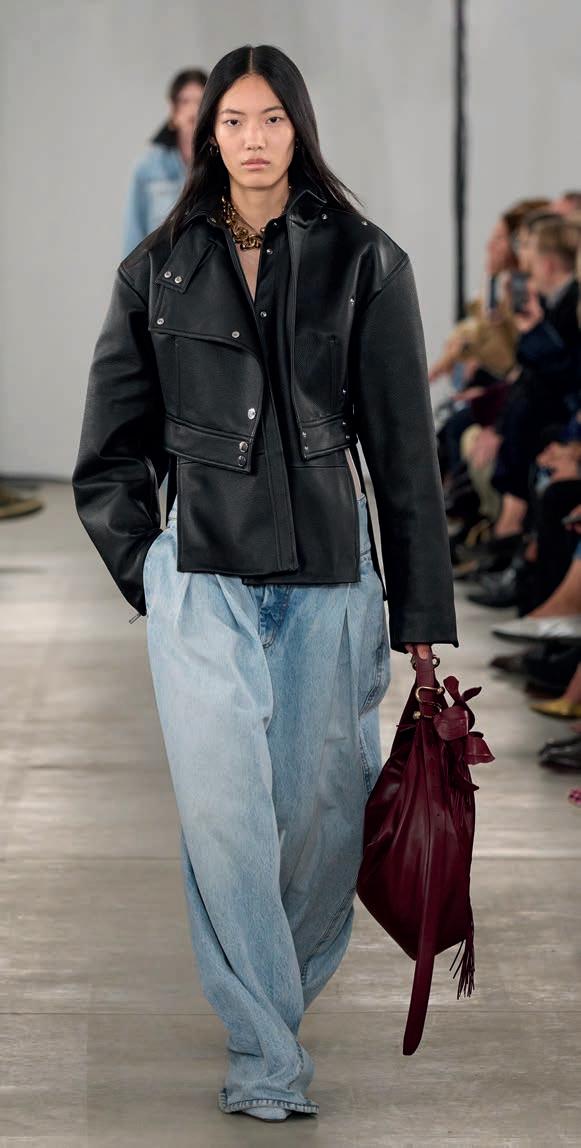
16 Icons, Updated Classic capsule wardrobe staples get a modern refresh
18 Tactile Spins
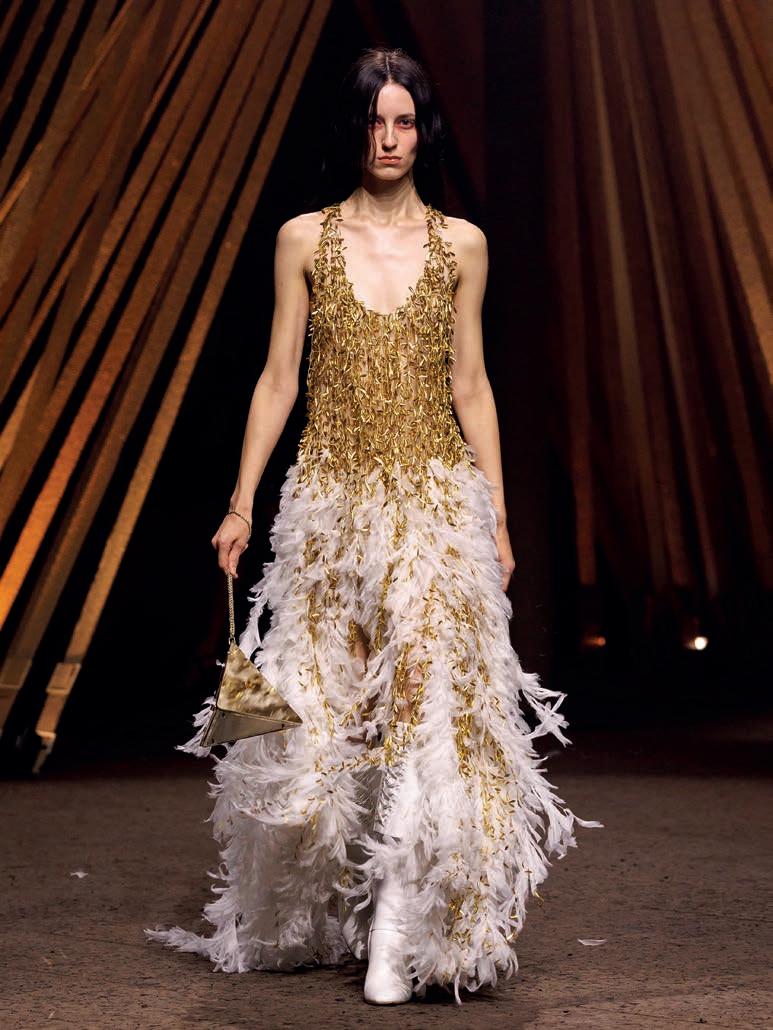
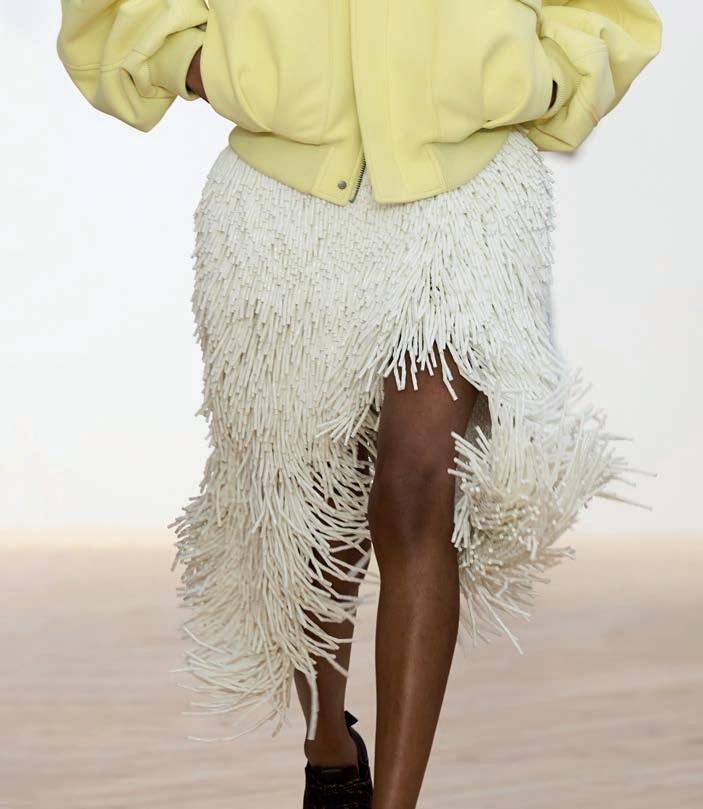
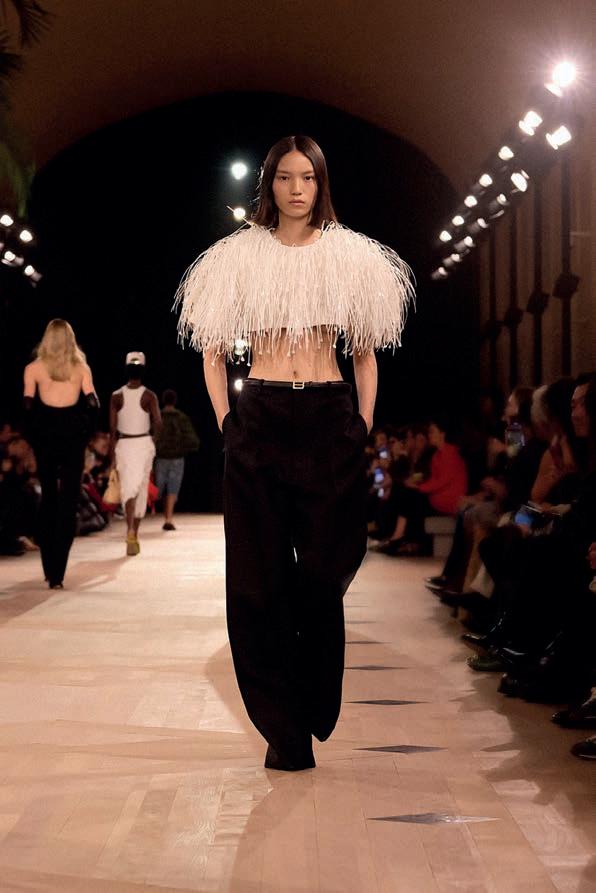
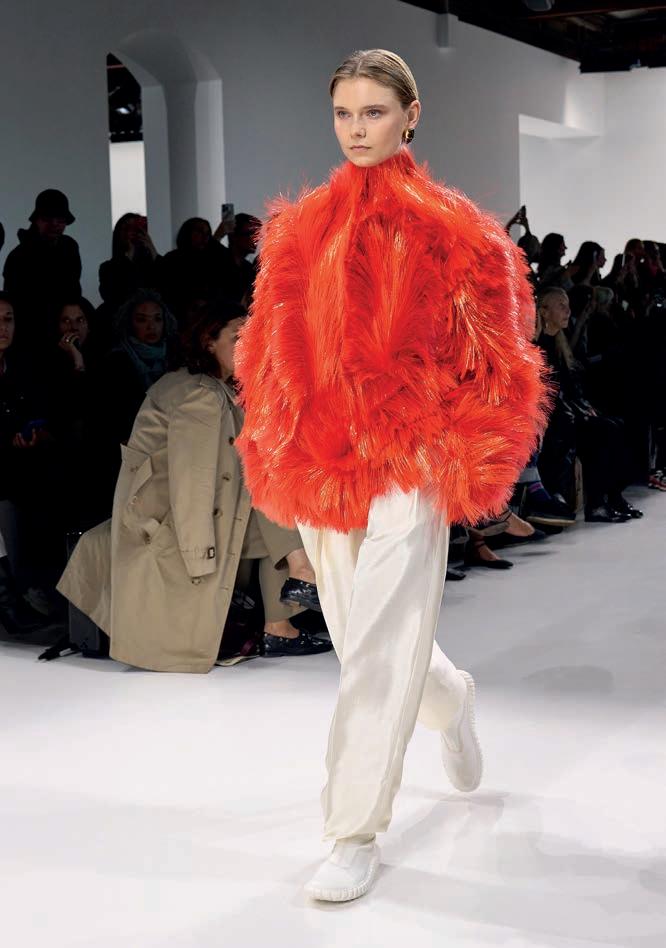
Textured touches executed with craft precision and clever innovation that celebrate the art of craftsmanship in every stitch
20 “It” Bag Revival
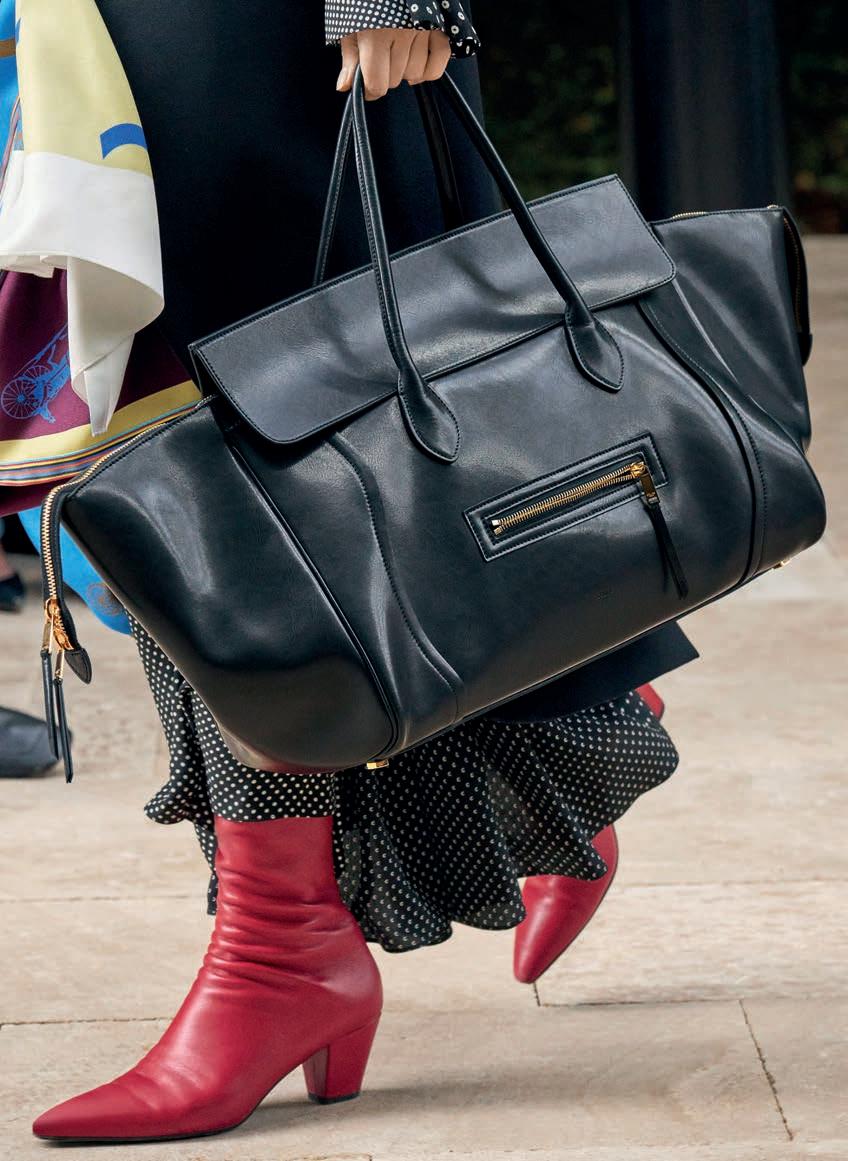
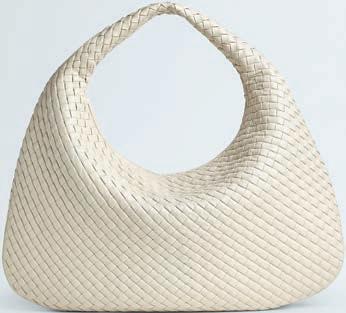
From Celine to Bottega Veneta and more, heritage styles are revisited and updated, making what was once familiar look cool again
22 Her Own Rhythm
Noura Alqemzi, founder of Emirati label Aimée Moreau, on building a leather goods brand without a design degree, trusting instinct over outside noise, and what luxury really means when you are playing the long game
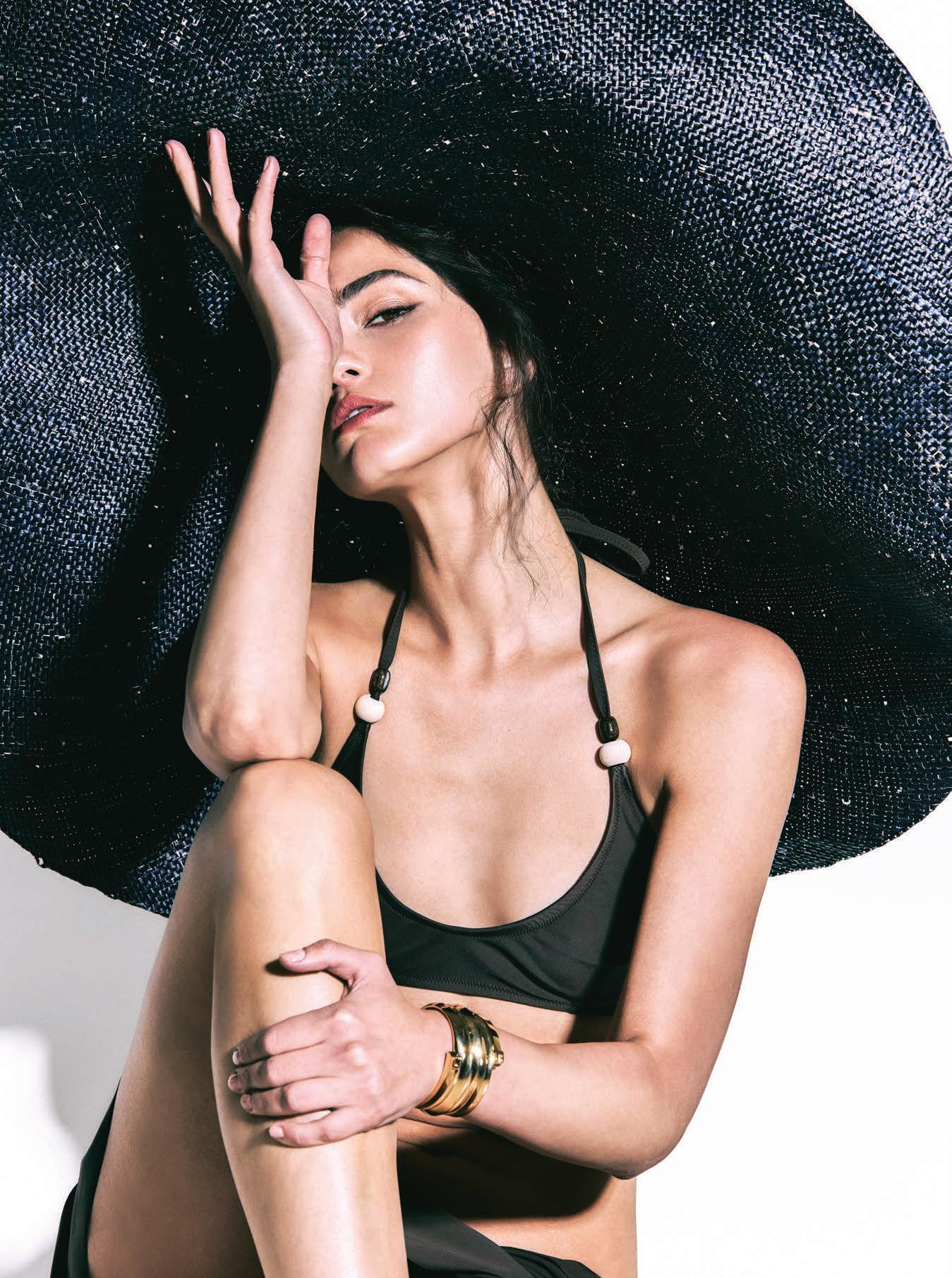
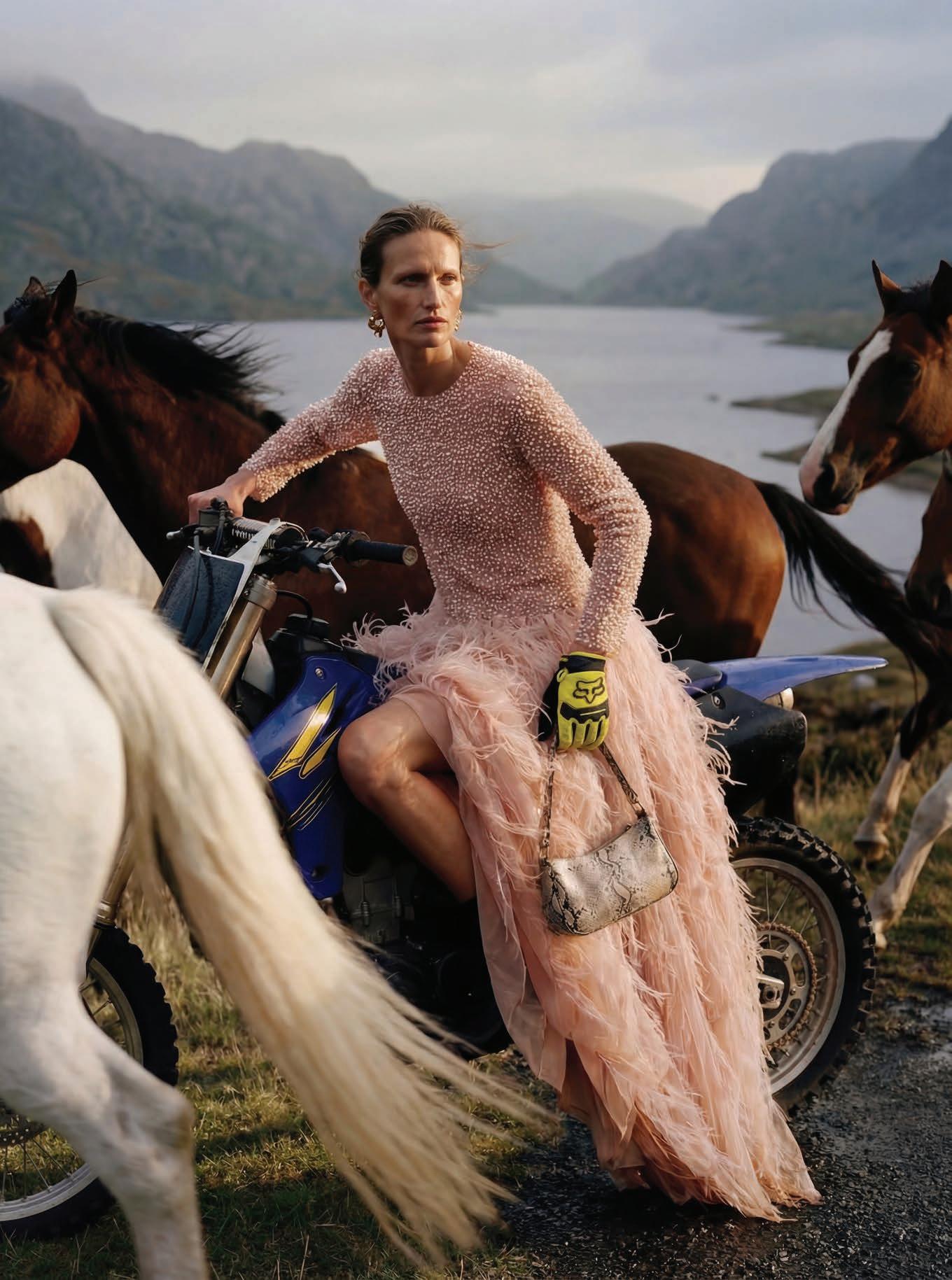
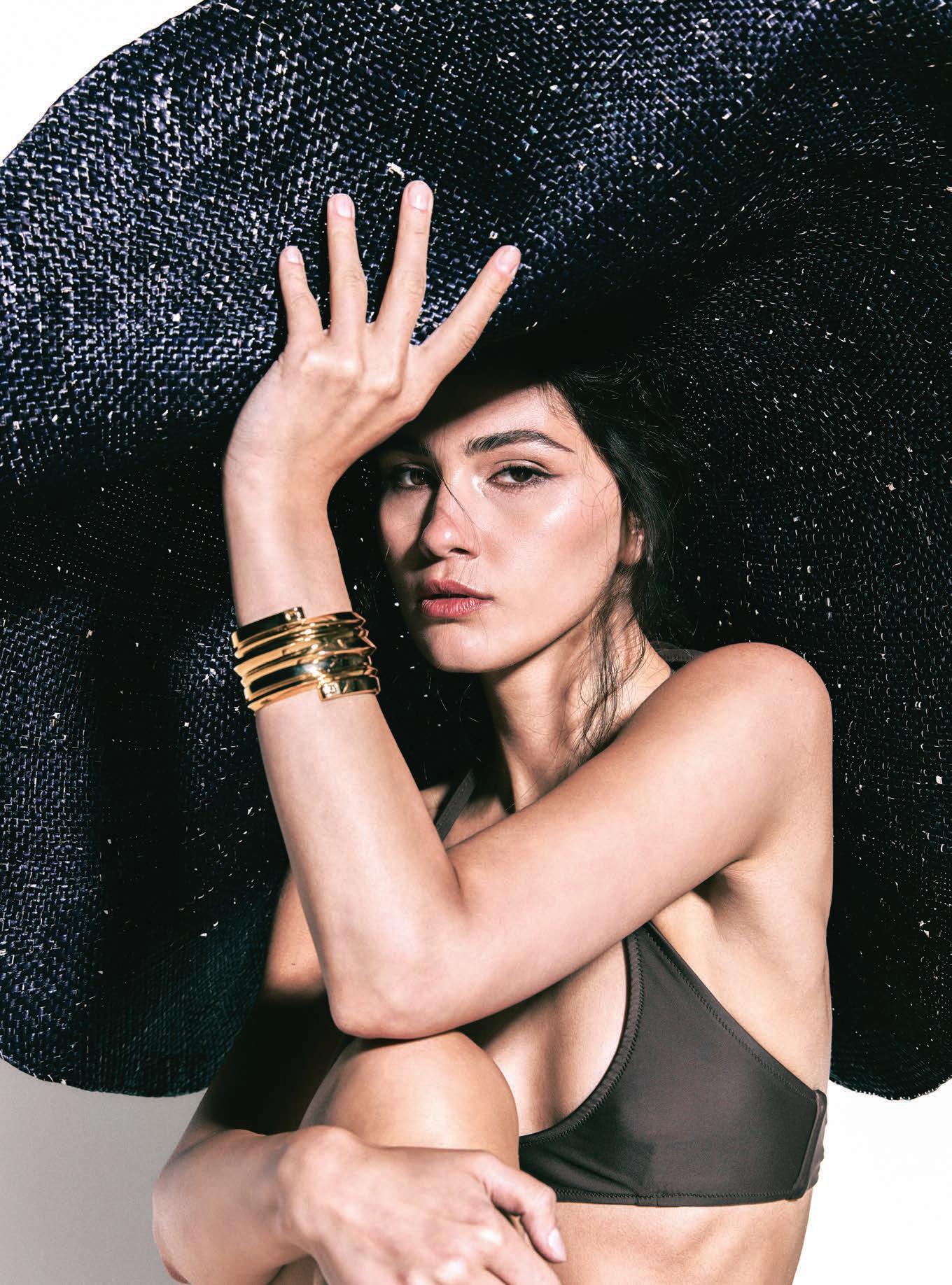
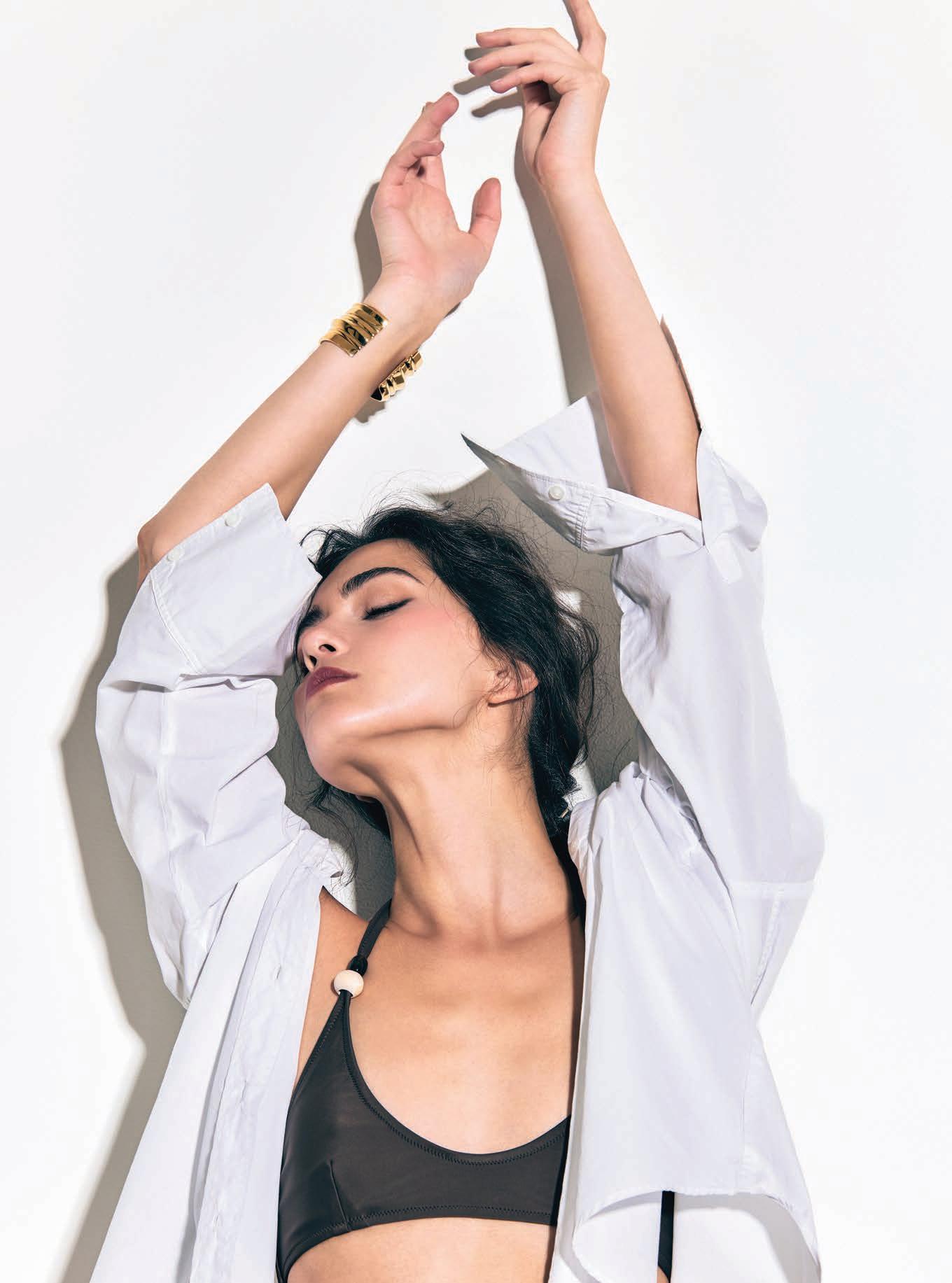
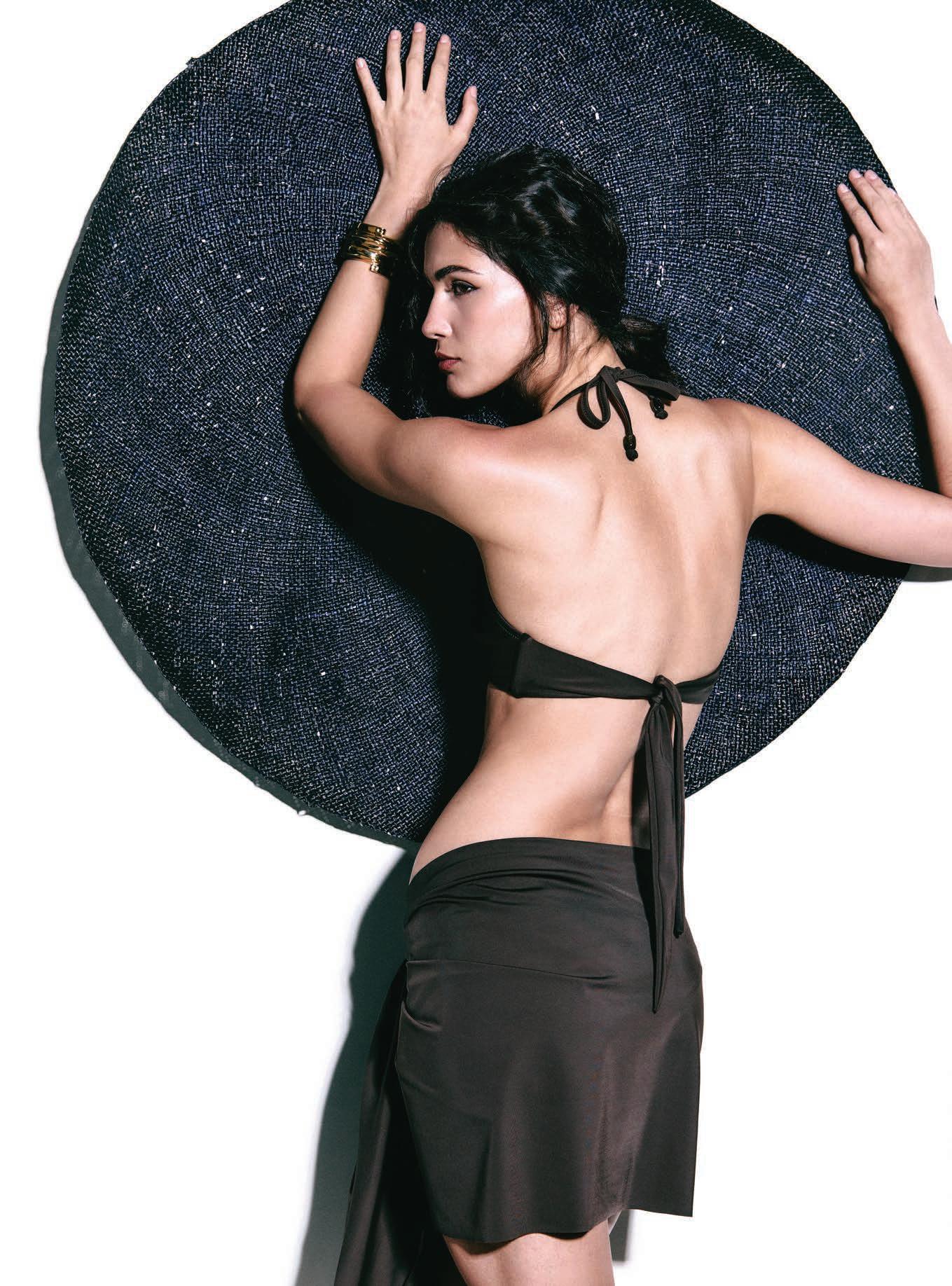
Outfit: Cacao Beaded Top, Cacao Pareo, both Maiswim. Accessories: Cuff Bracelet, Elisabetta Franchi; Hat, Kalo Artisanal
Photograph by Yousef Al Harmoodi
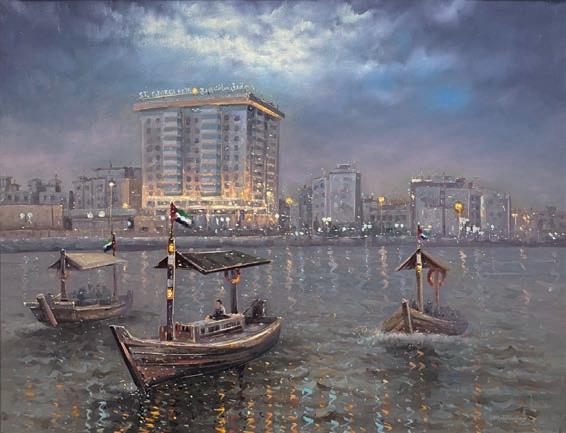
Painting by Faisal Abdul Qader
VISION
58 The 40-Year-Old Entrepreneur
MODE
26 The Art of Inclusive AI
Sevda Albers, a fashion photographer with a background in technology, is using AI imagery to bridge the diversity gap and challenge the industry’s status quo
32 Bare Essentials
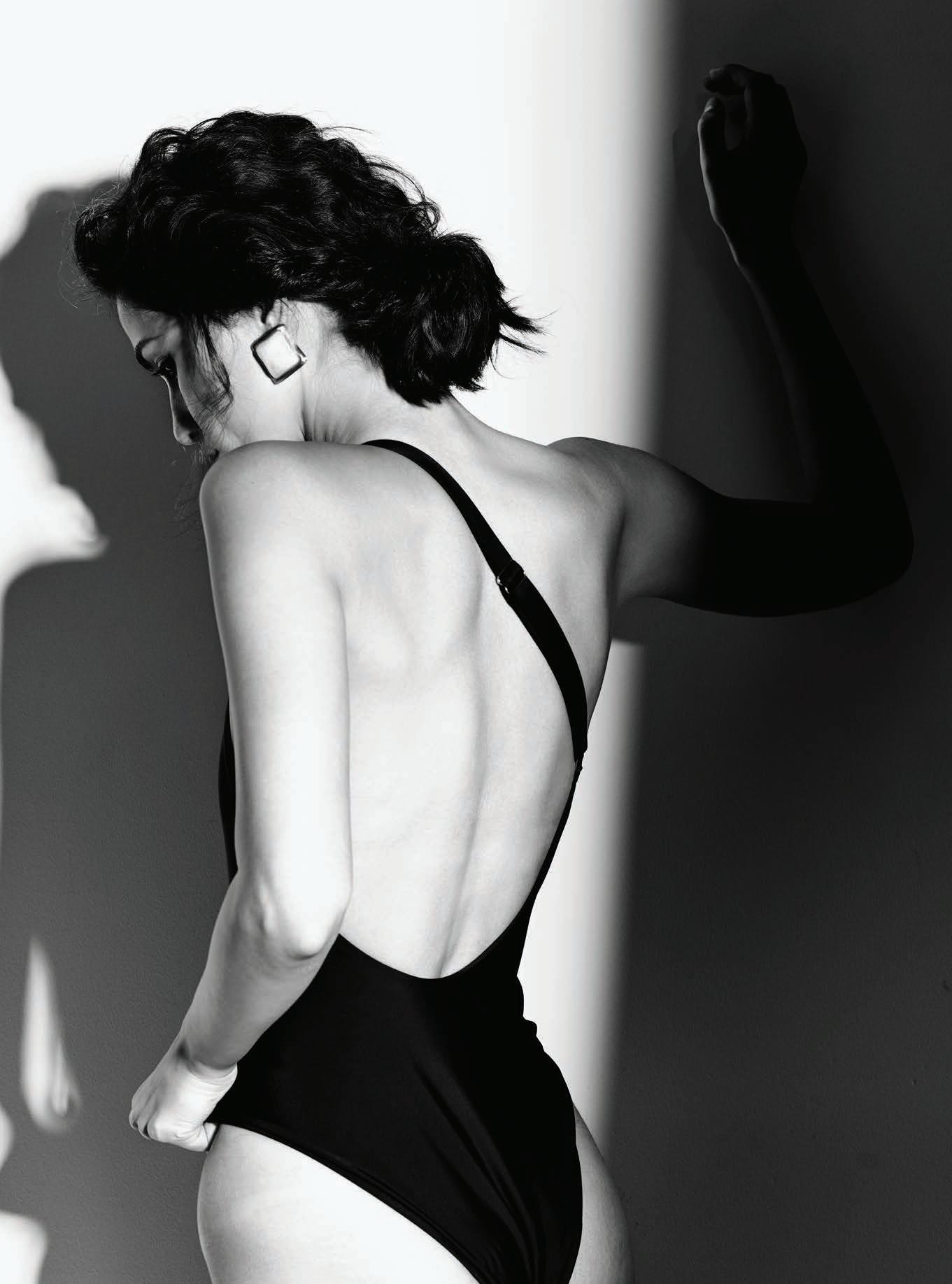
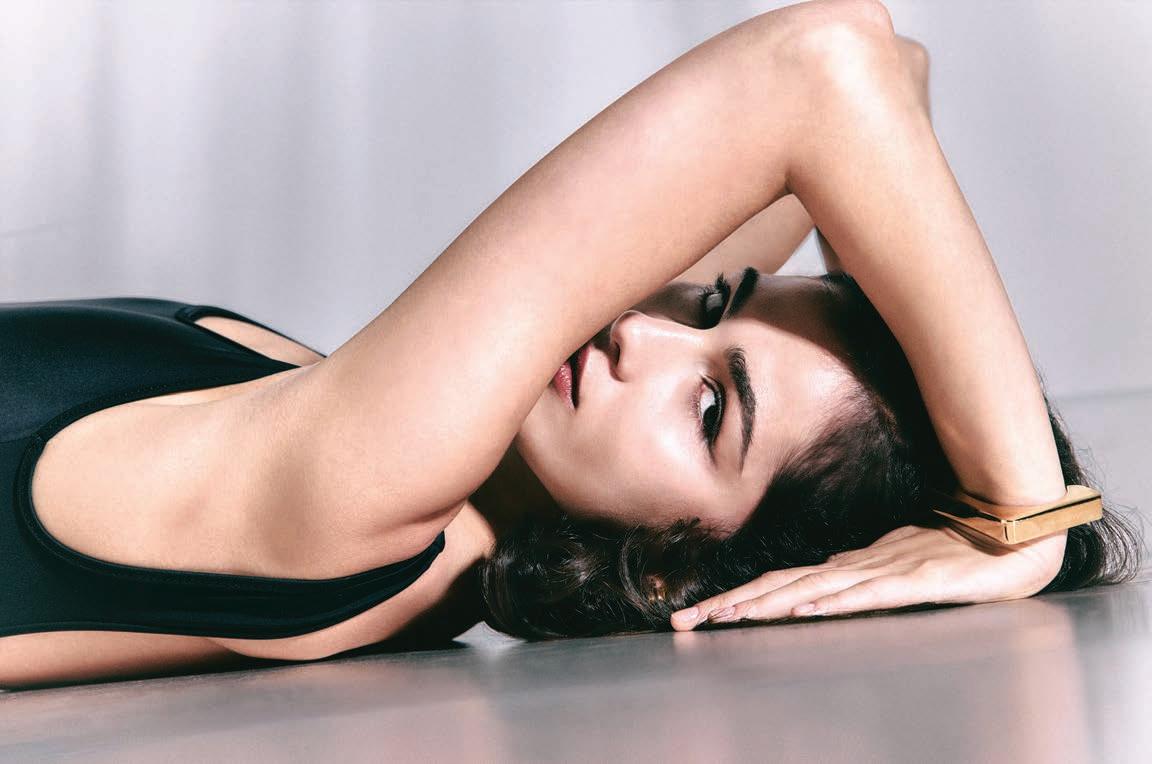
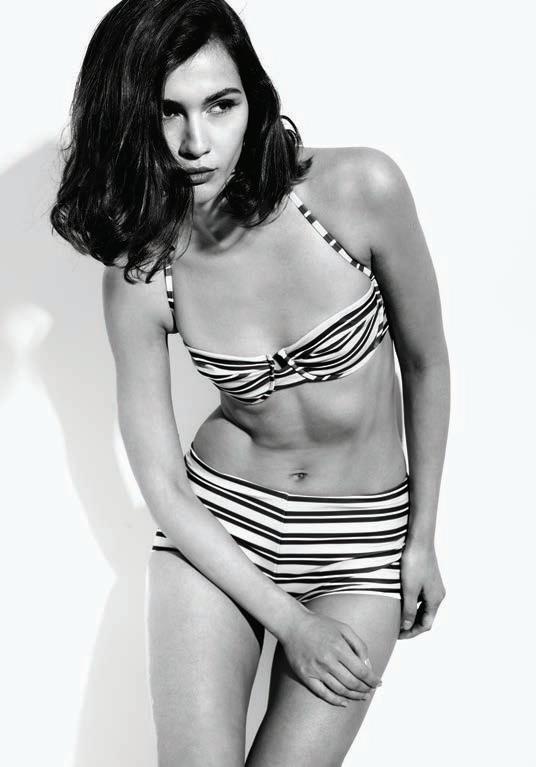
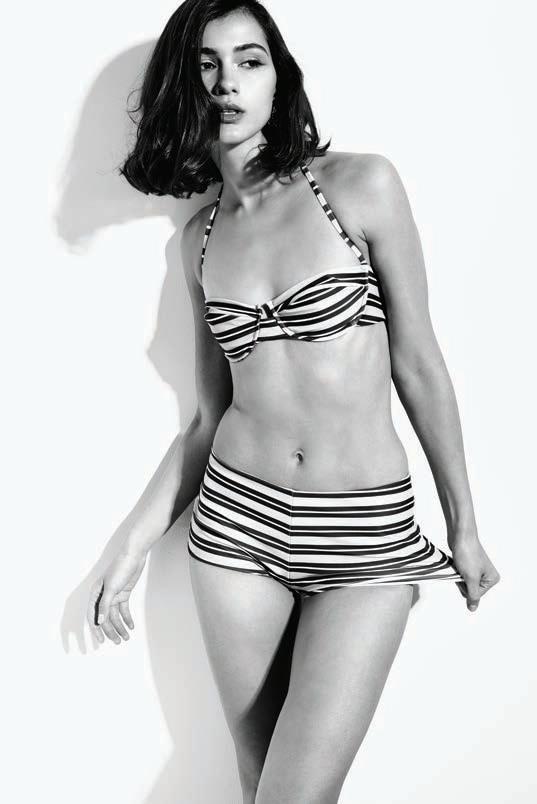
As the weather warms up, Maiswim is making women feel calm, cool and collected
42 The Anatomy of an Icon
What makes a piece of clothing or accessory truly timeless?
46 The Sky’s the Limit
When you let vibrant colours and bold patterns lead the way, the result is always out of this world
Think your prime has passed? Think again
60 Using Her Voice
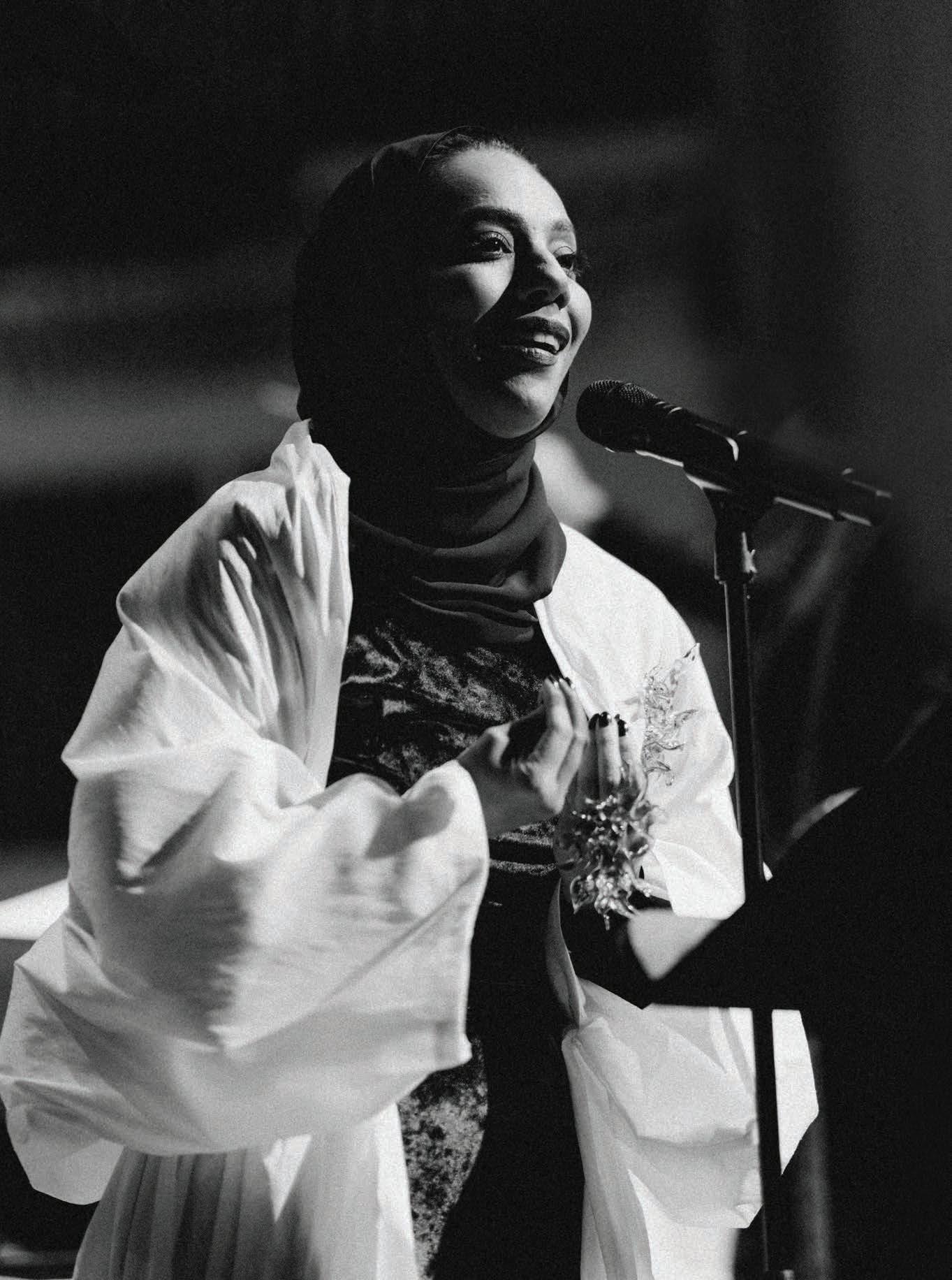
When the Emirati mezzo-soprano Fatima Alhashmi reflects on her musical journey and cultural identity, she proves, decisively, that Timothée Chalamet has it all wrong about opera
62 Futureproofing a Nation
Emirates Woman highlights the work being done now by forward-thinking pioneers to ensure the UAE’s success today, tomorrow, forever…
66 The Women’s Health Revolution Starts Here
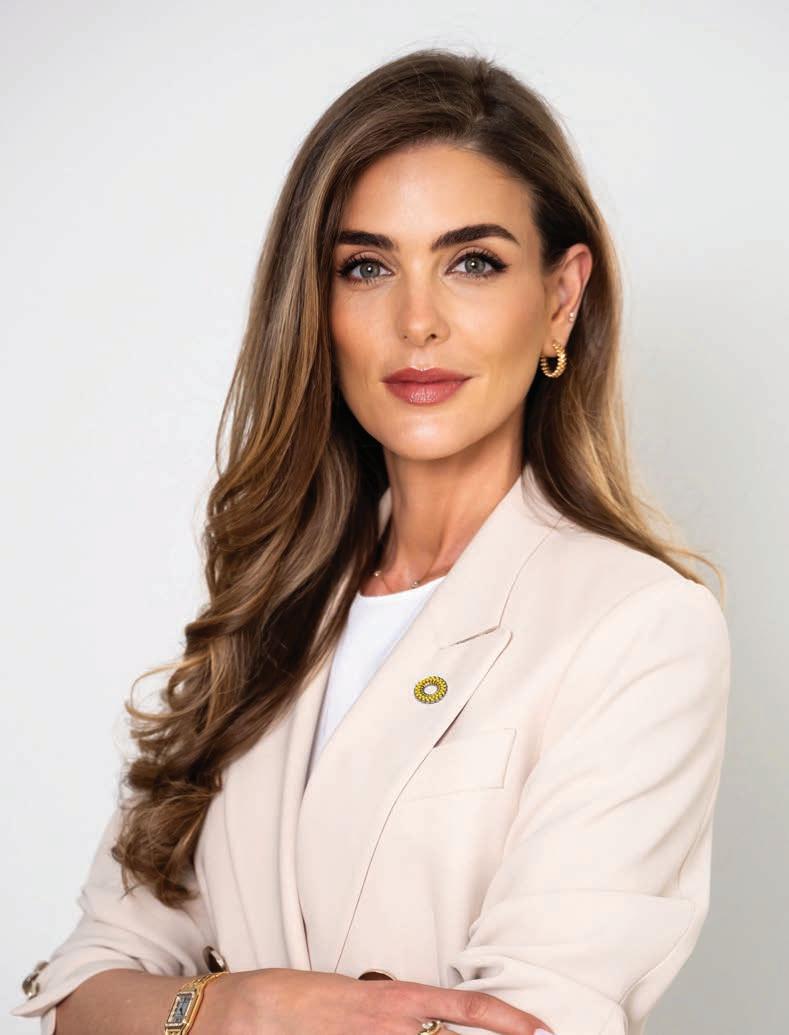
Maha Gorton, the Head of Women’s Pavilion at Expo City Dubai, discusses the launch of the FemTech Hub, and the relevance of innovation in advancing women’s health
68 Desert Power
At 27, biochemist Zara Ossman is turning the UAE's date detritus into biofuels, biodegradable plastics, and a bold new vision for what science can look like when it grows from the soil of home
72 Designing Wonder
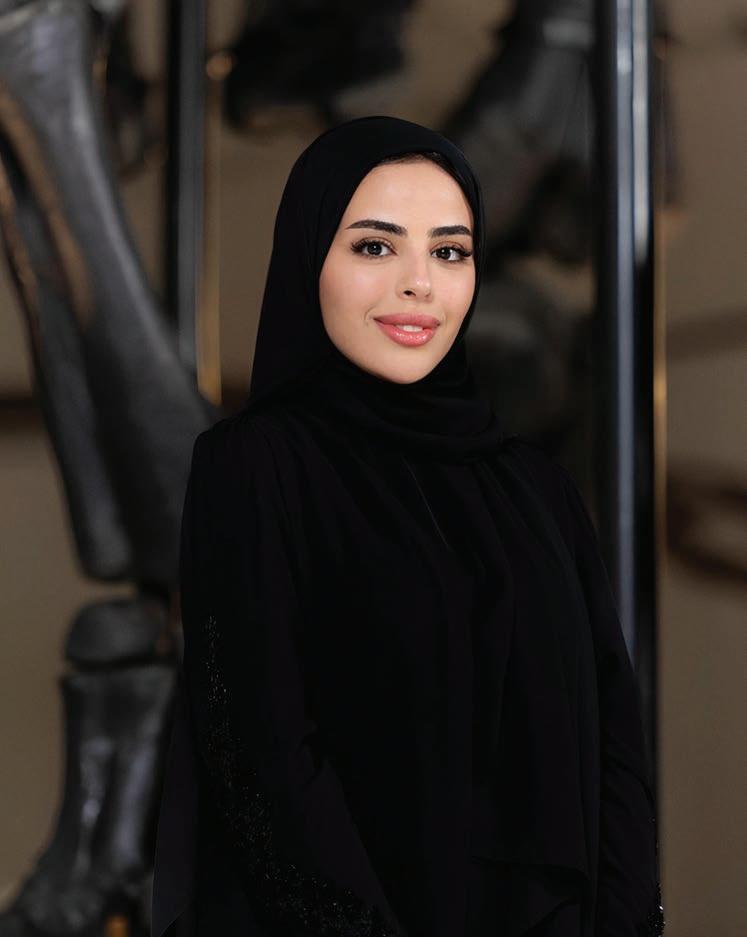
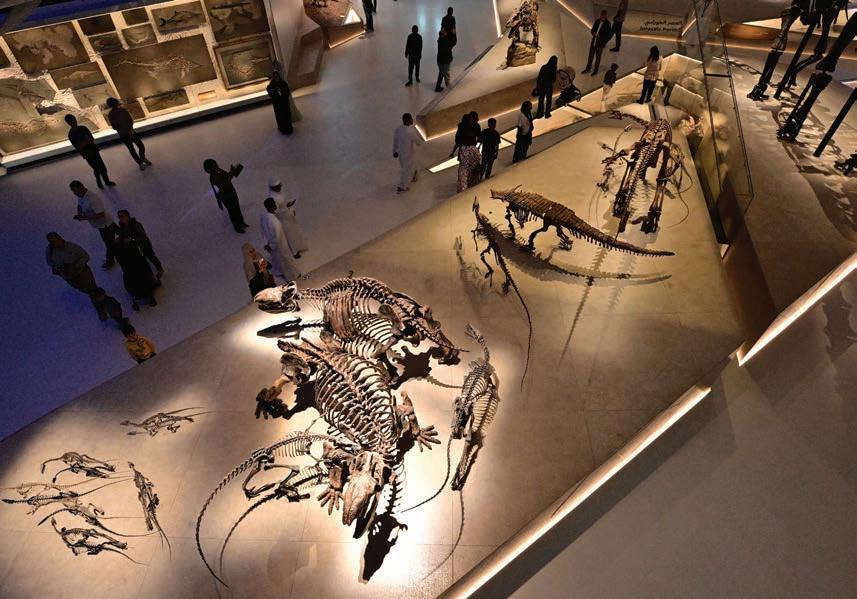
Exhibition Designer Alya Naser Albreiki on growing up sketching weddings in Abu Dhabi, bringing the Wildlife Photographer of the Year to Natural History Museum Abu Dhabi, and why accessibility is the future of cultural spaces
74 Icons Before Us
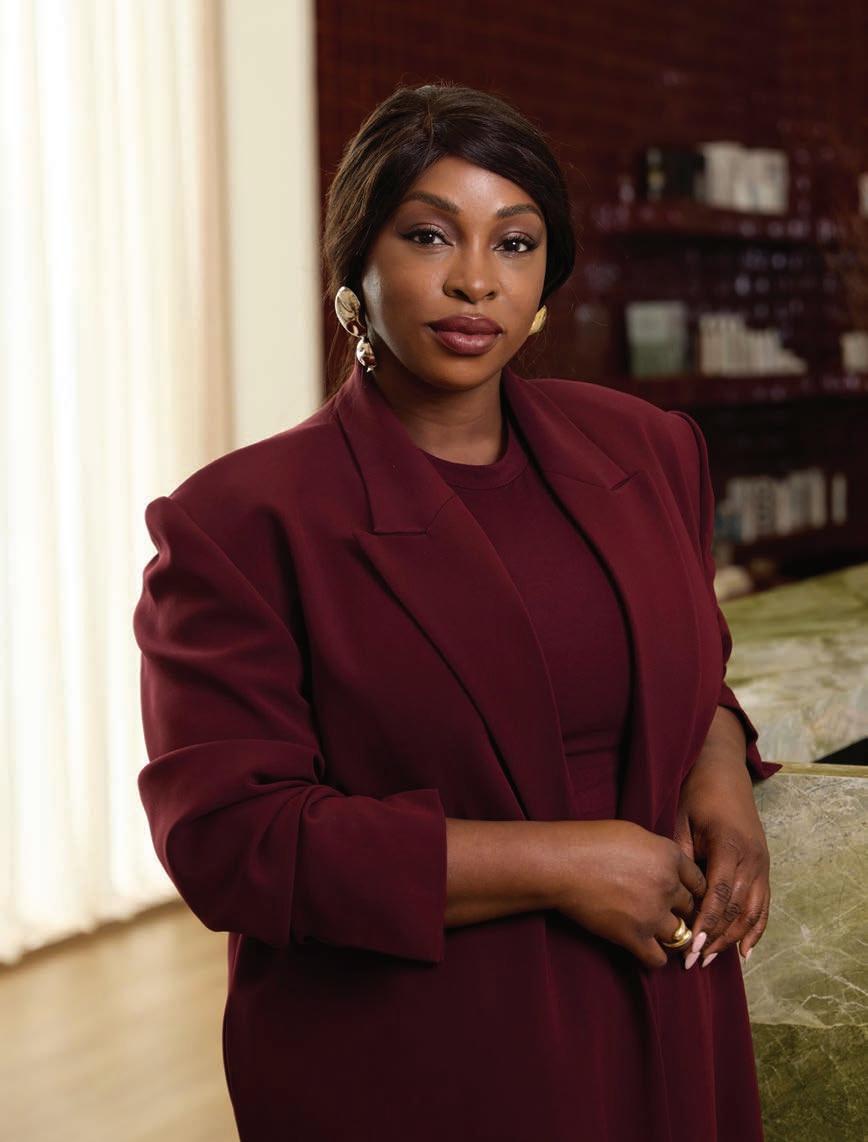
Morin Oluwole, an international luxury business leader who serves on the boards of Breitling, Rituals, and Biologique Recherche and the former Global Luxury Director at Meta, discusses the women who shape how we lead today
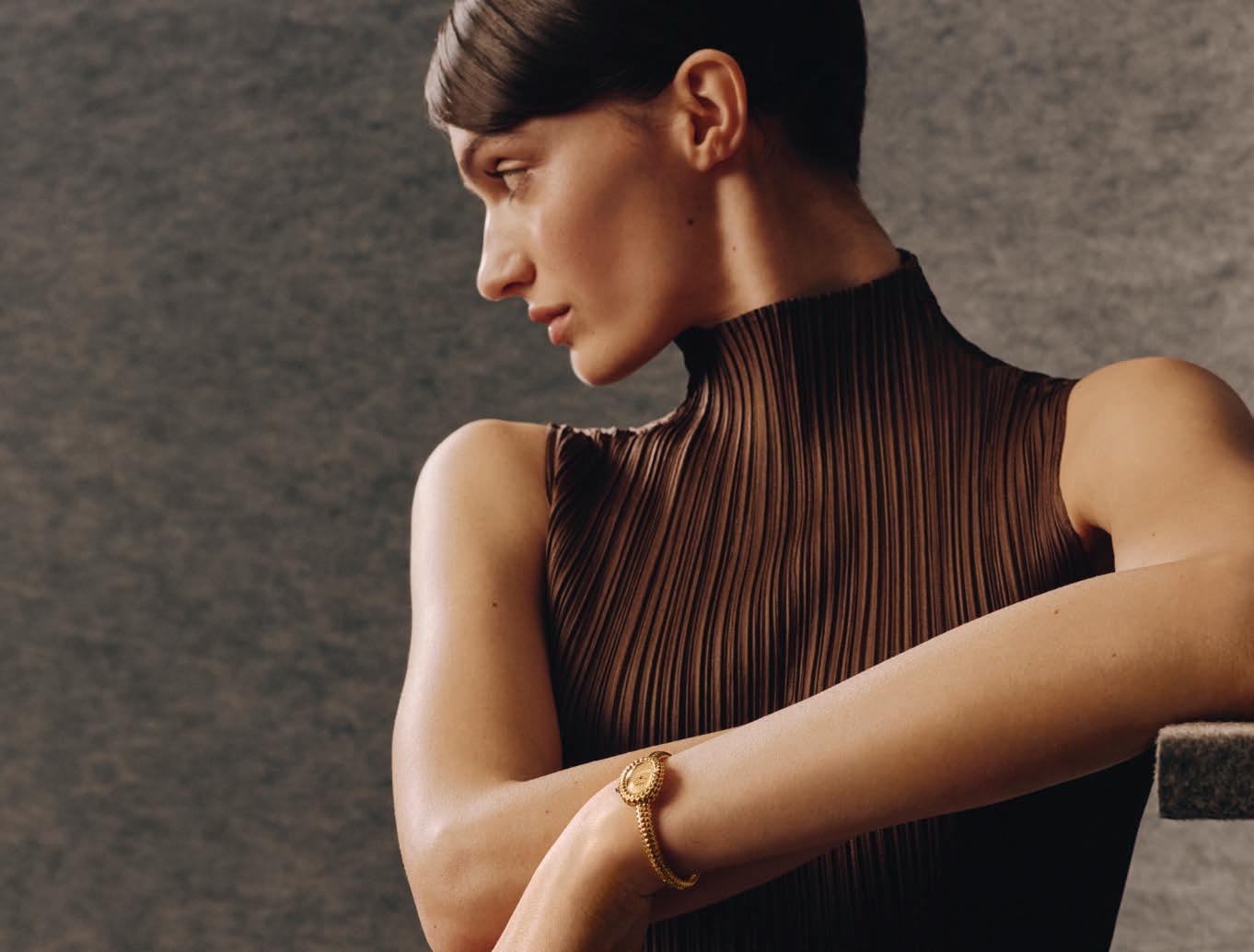
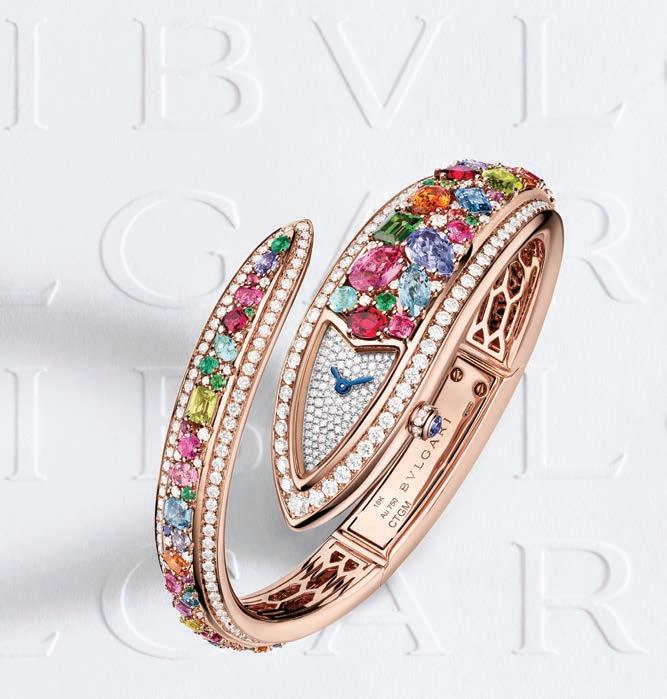
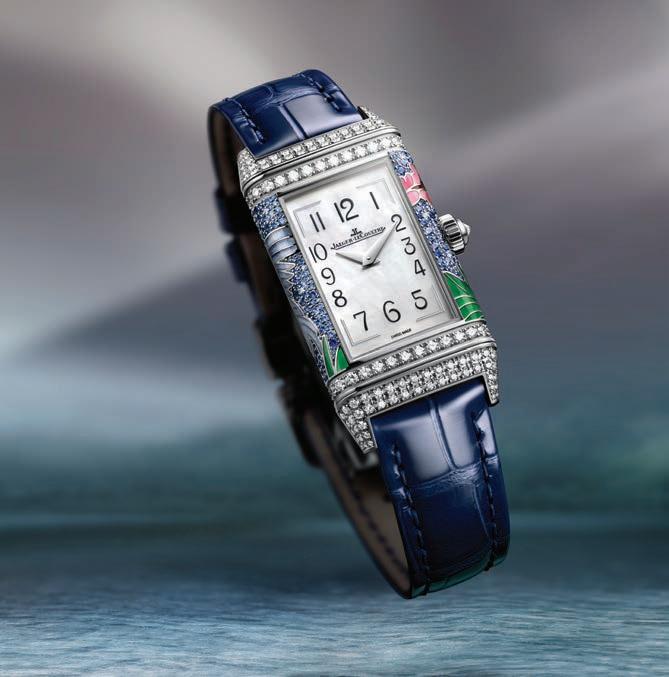
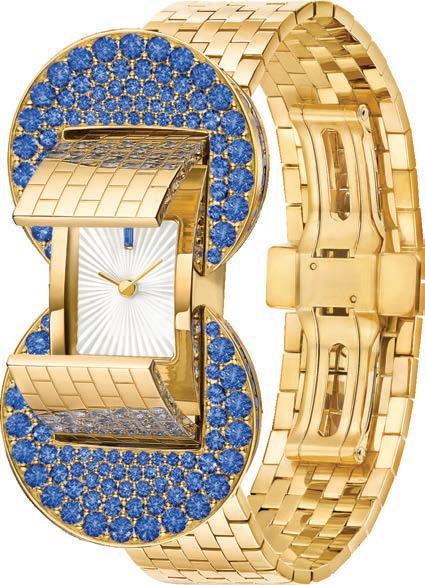
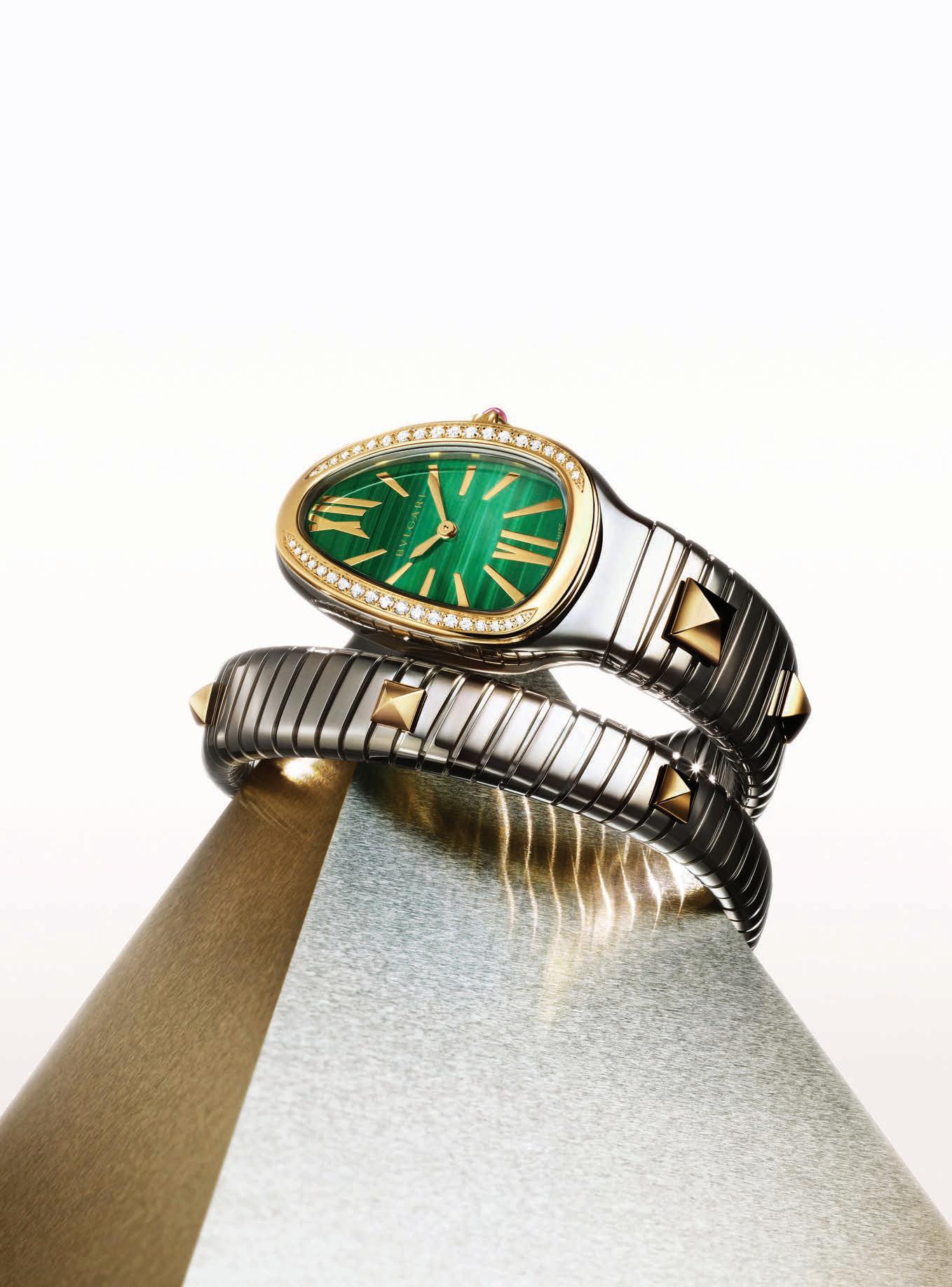
The most compelling women’s timepieces from Watches & Wonders 2026
78 Time Stands Still
At this year’s Watches & Wonders event in Switzerland, these were the timepieces that stopped us in our tracks
GLOW
88 Hot New Buys
A round-up of the best new things in beauty that deserve a spot in your vanity shelf – from cool new enriched formulas to products with potential cult status
90 Beauty Redefined
Radiant hues, sun-kissed shades, and a striking scent set the tone for summer
100 The Stem Cell Story
Dr Stéphane Smarrito, FMH Specialist in Plastic, Reconstructive and Aesthetic Surgery at Clinique La Prairie, discusses how regenerative medicine is shaping the future of longevity
102 The Beauty Shelf
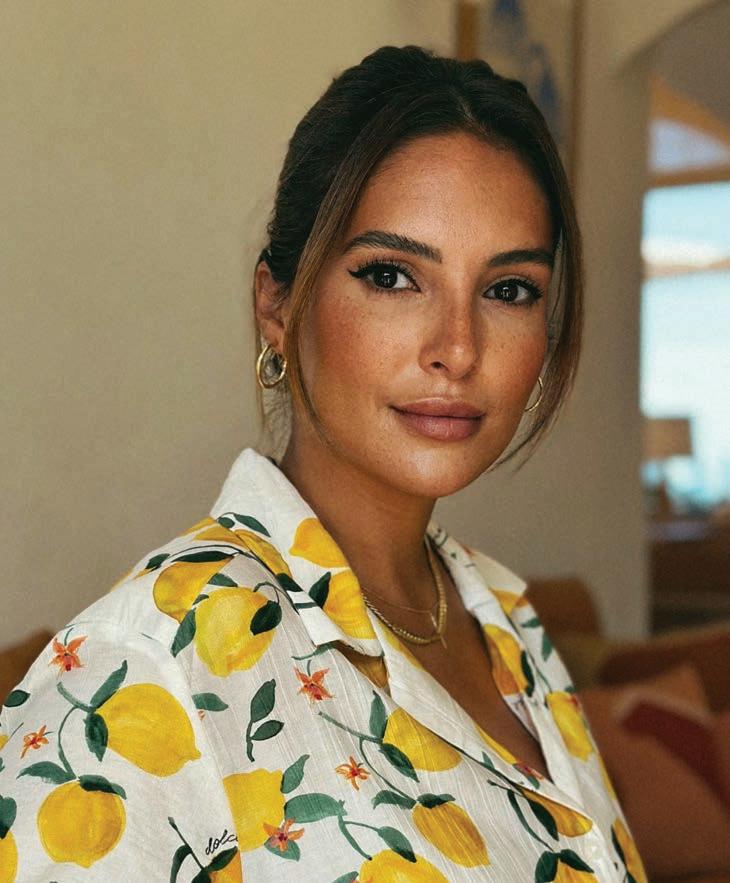
Photographer and content creator Layal Sibai takes us through her musthave beauty staples
103 Scents, By Her
A new wave of fragrances imagined by women are redefining perfumes through female sensibilities
104 Smellbound
Find a fragrance that’s purely you, with intriguingly unique niche notes catering to women who know exactly what – or who – or where – they want to smell like
108 AM/PM Beauty
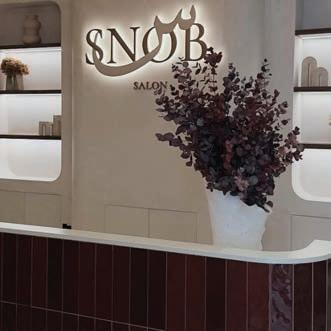
Entrepreneur and Founder of SNOB Salon Haneen Odeh shares her morning to evening beauty routine
On the cover:
Outfit: Cacao Beaded Top, Cacao Pareo, both Maiswim; Accessories: Cuff Bracelet, Elisabetta Franchi; Hat, Kalo Artisanal
Senior Editor: Jessica Michault
Photographer: Mox Santos
Fashion Editor: Camille Macawili
Makeup: Jean Kairouz
Hair: Steve Wahab
Videographer: Mark Mathew
Model: Viktoriia Nikolskaia
Photographer’s Assistant: Louis Azurin
Fashion Assistant: Radwa Askar
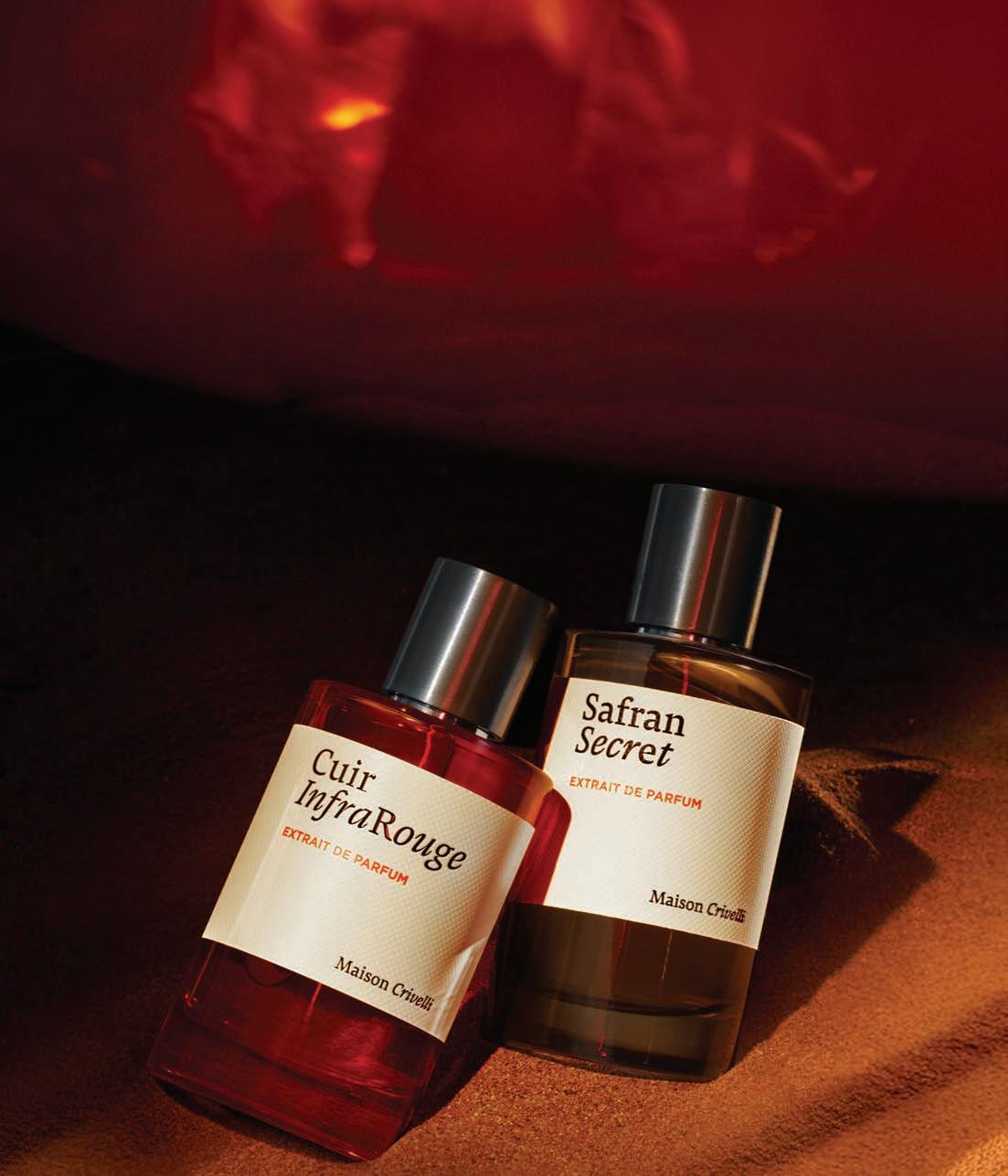
110 The Scent of Revolution
How Thibaud Crivelli and his sevenyear-old perfume house are taking on the fragrance giants – and winning
ABODE
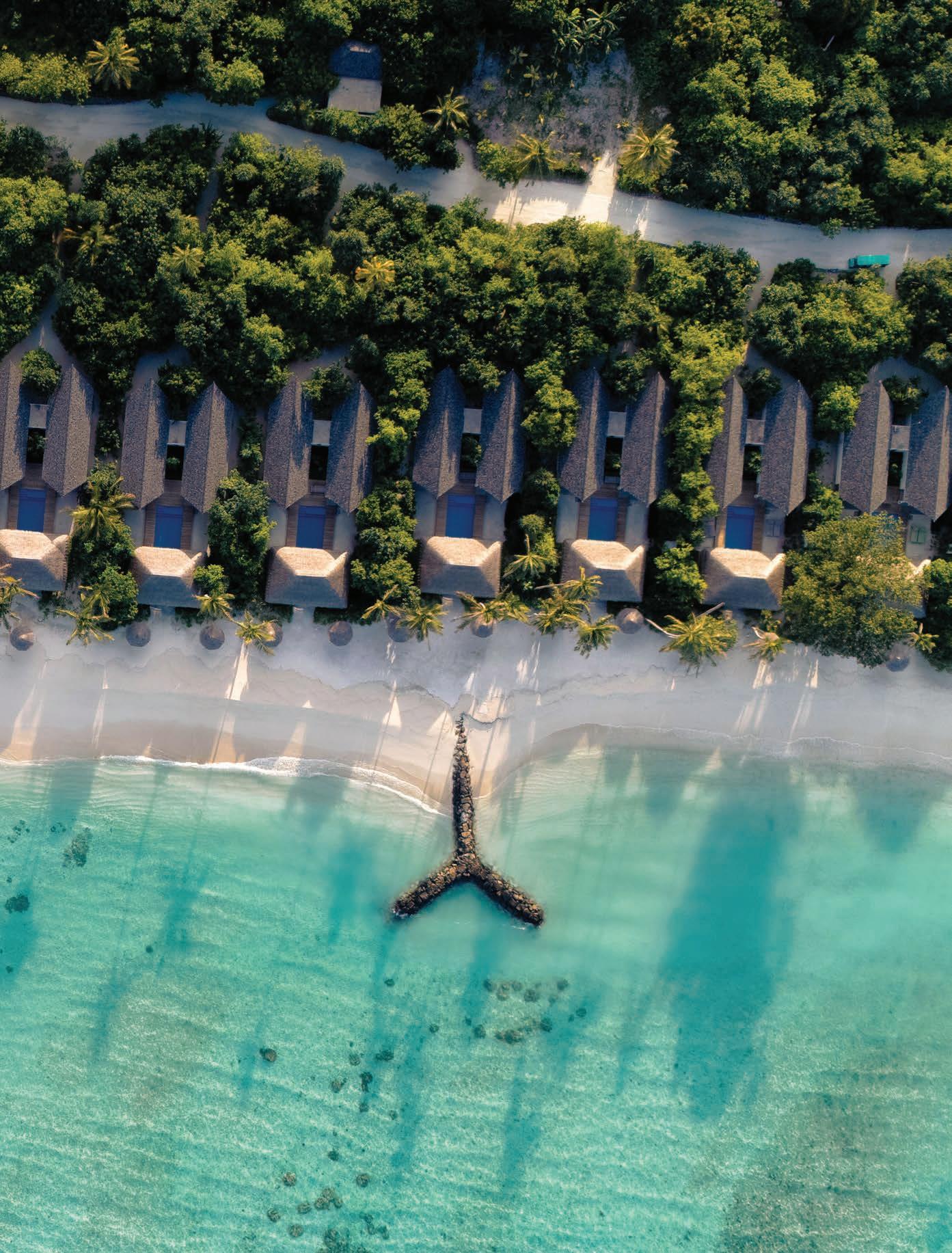
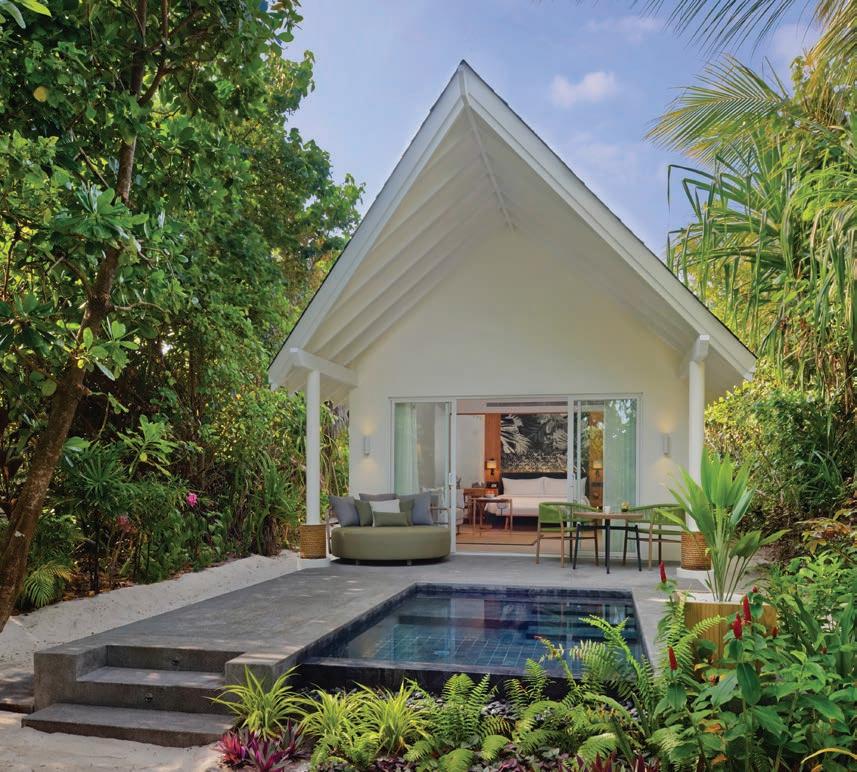
114 Castaway Chic
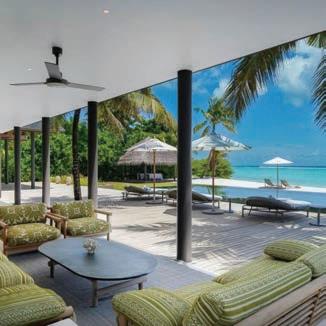
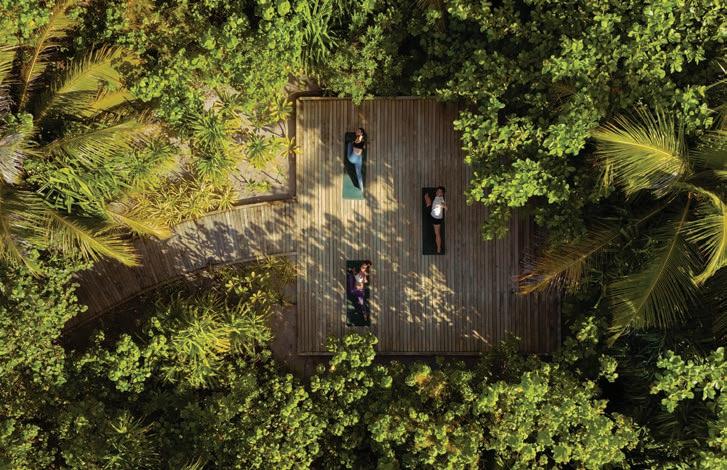
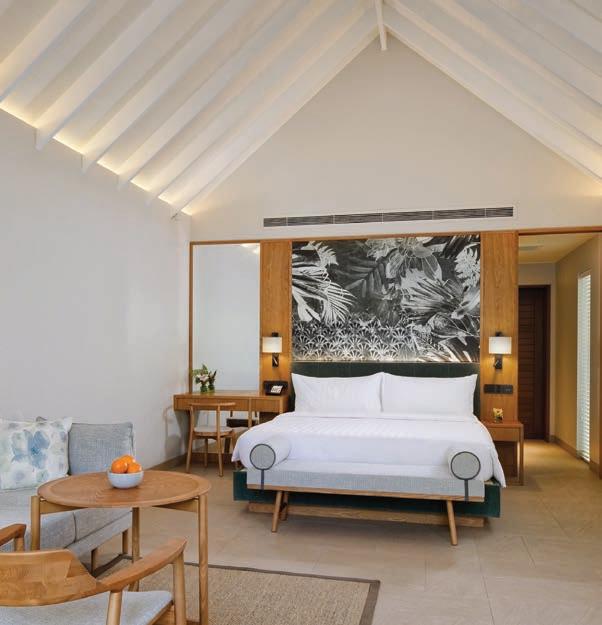
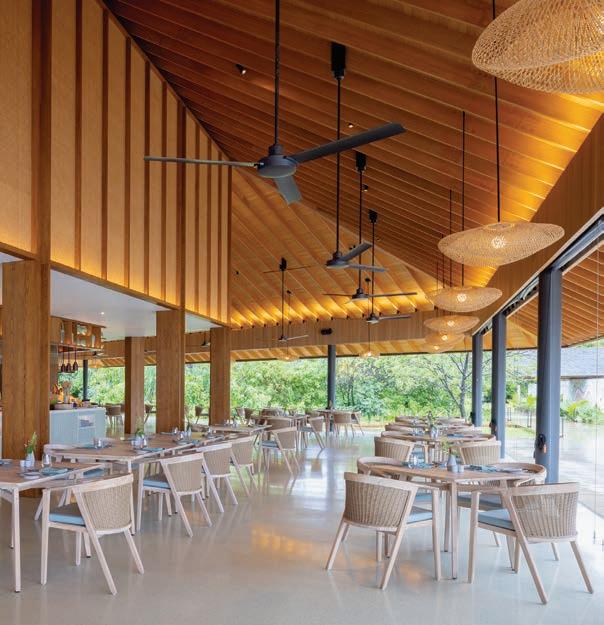
Set in the Raa Atoll in the Maldives, Raaya by Atmosphere is a hotel that pairs thriving reef ecosystems with design-led villas and a contemporary all-inclusive concept for an elusive under-the-radar island escape
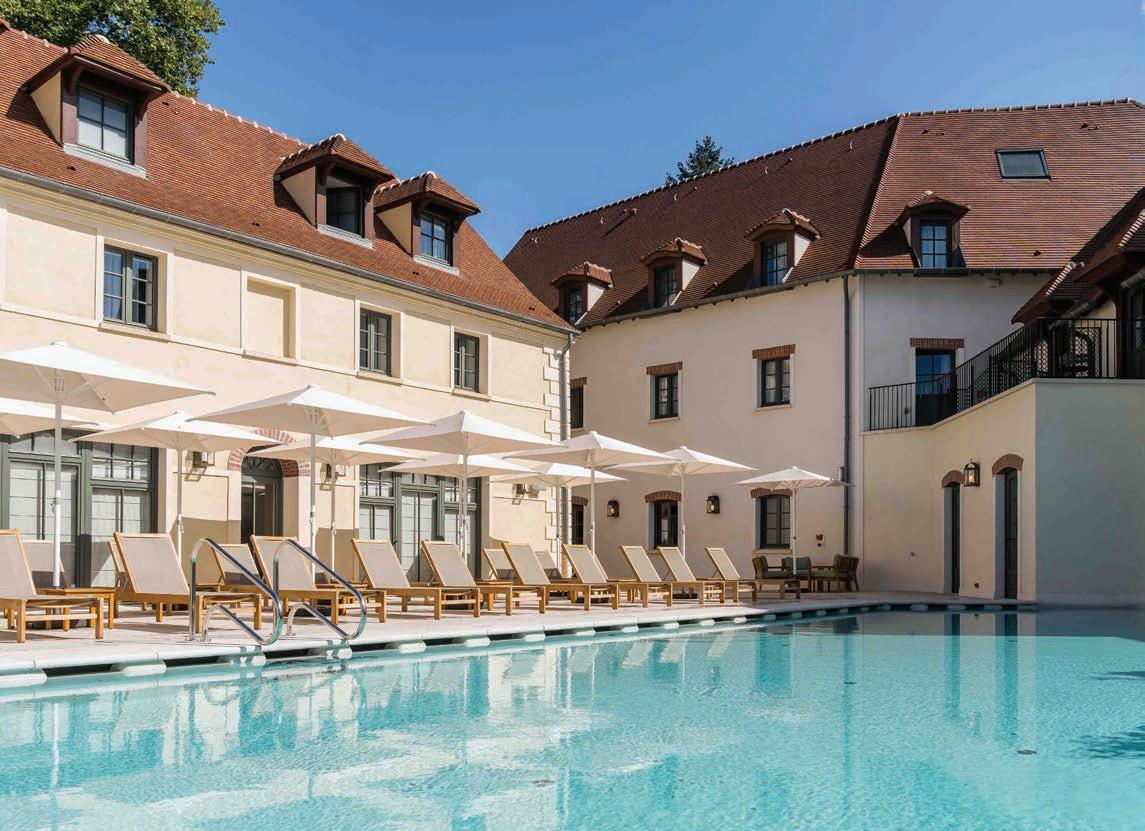
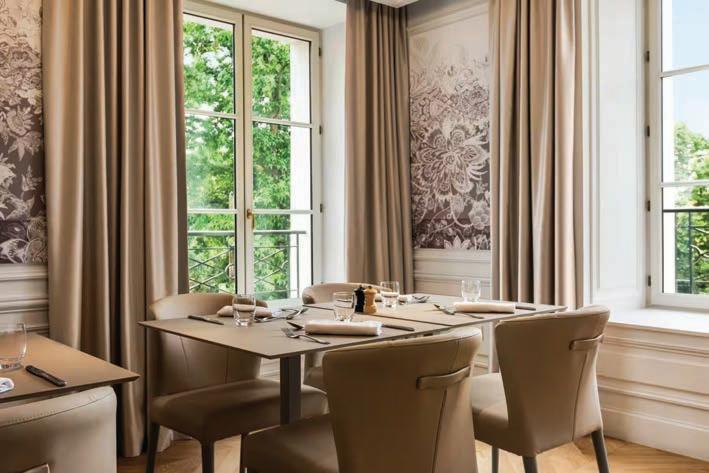
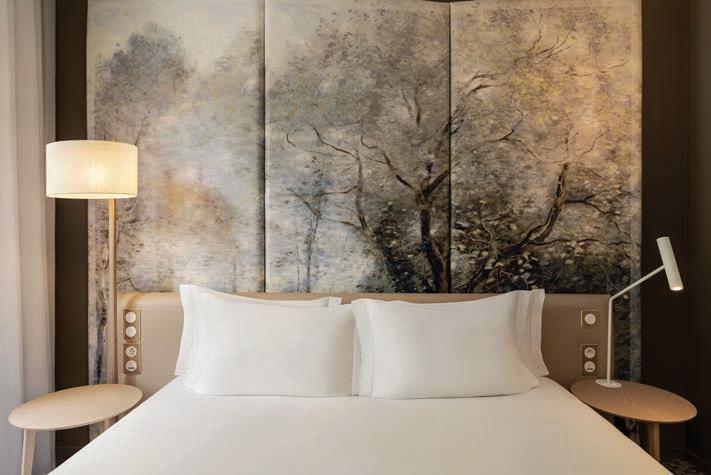
118 A New View on Versailles
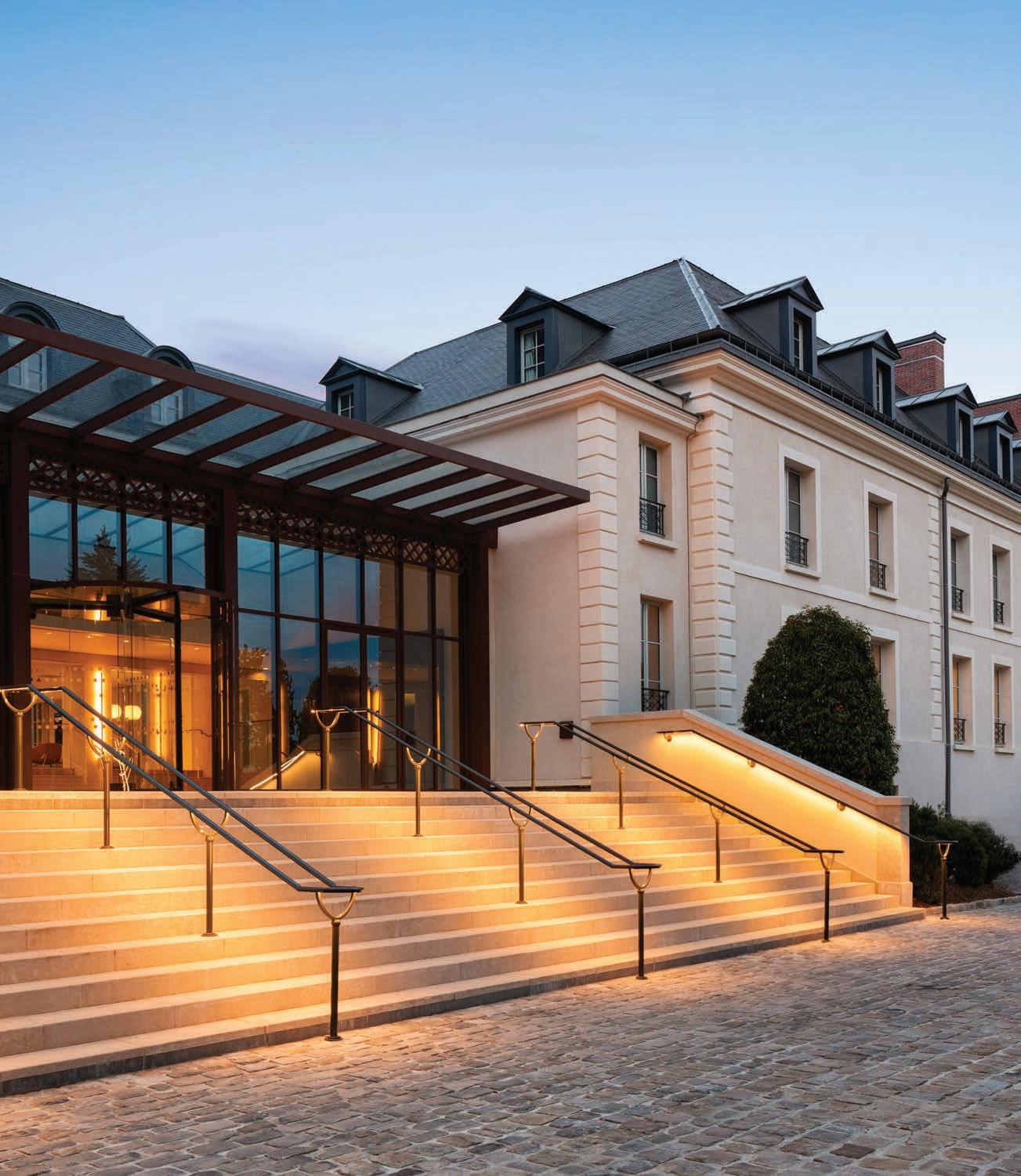
For those who think they’ve “done” Paris, this historic estate on the city’s south-western edge offers a Bridgerton-worthy escape with a thoroughly modern conscience
MOST WANTED
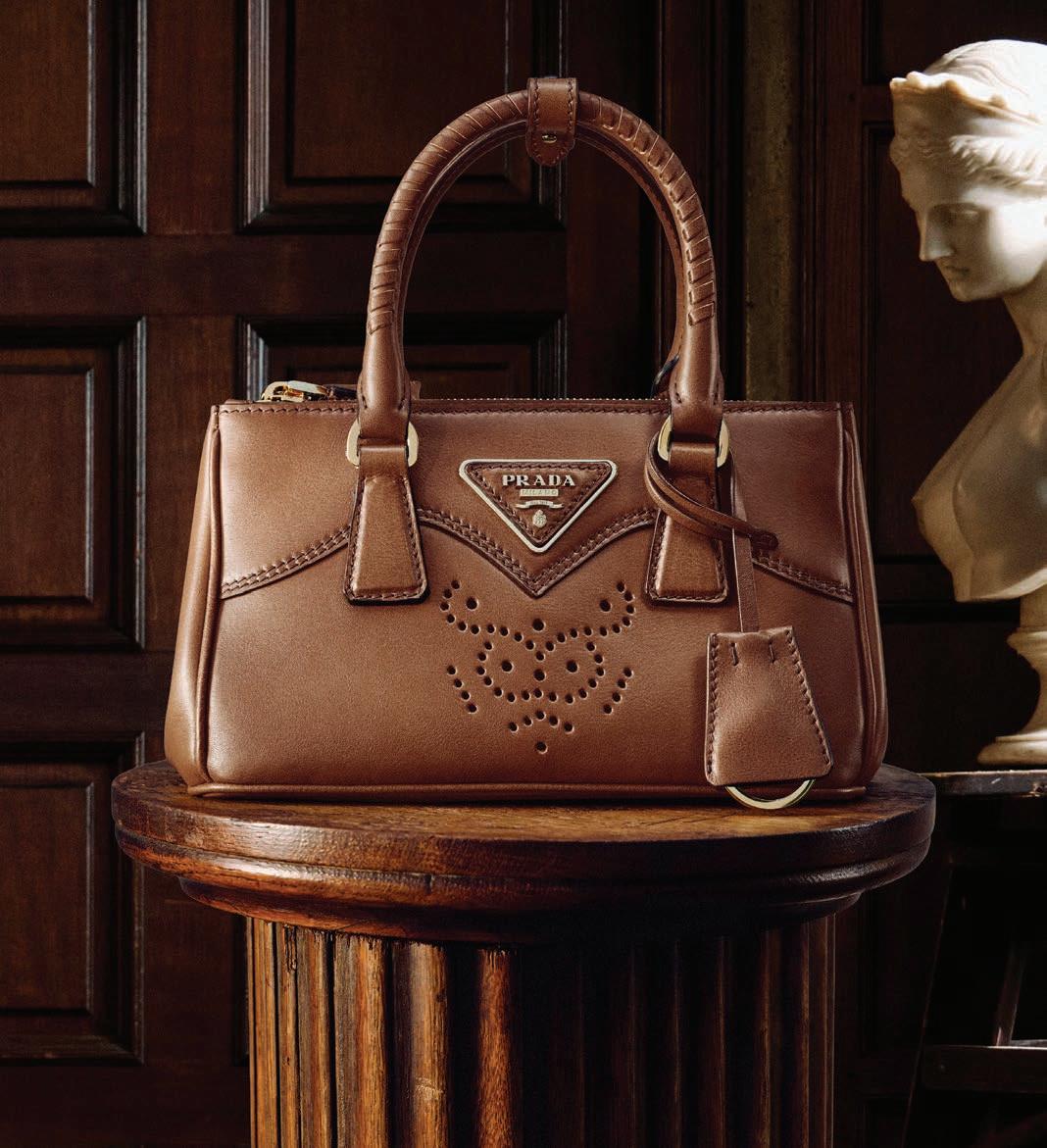
122 Then. Now. Always.
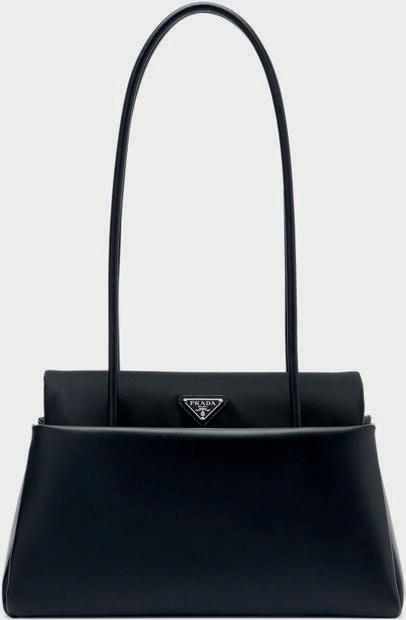
The Prada Galleria bag, an icon since 2007, returns with a glow-up this season
A MOVING MANIFESTO
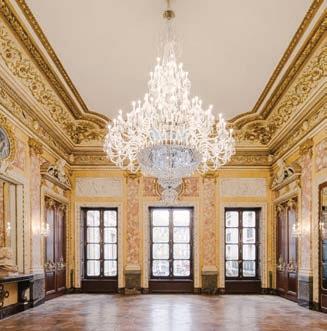
Opening just in time for the start of the Venice Biennale this month, the Fondazione Dries Van Noten is the latest artistic addition to the Floating City. Inside the storied walls of the majestic Palazzo Pisani Moretta, the famous Belgian fashion designer has created a venue that is a homage to the artistic past of the city, actively participating in its continuous unfolding. Through residencies, collaborations and a genuine commitment to nurturing emerging voices, the Fondazione positions Venice as a city still capable of surprise. For those who have long believed that fashion’s most meaningful conversations happen at the intersection of hand, material, and time, Van Noten has created a new home where they will feel warmly welcomed.
CURATE
Why don’t you…
– Try out some new sartorial angles
– Get crafting with your clothing
– Rediscover old loves
– Remember that success only comes with perseverance
Iconic Influence
A celebration of the creative genius of the past and present brands, fuelled with an innovative spirit that knows no bounds
WORDS: CAMILLE MACAWILI
NEW-SEASON SHIFTS
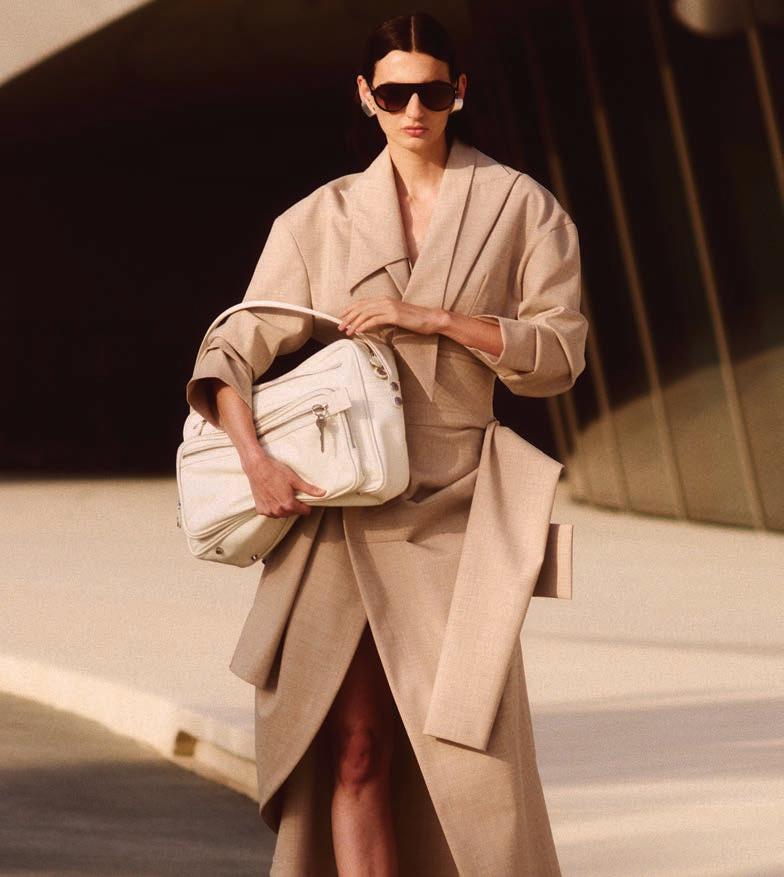
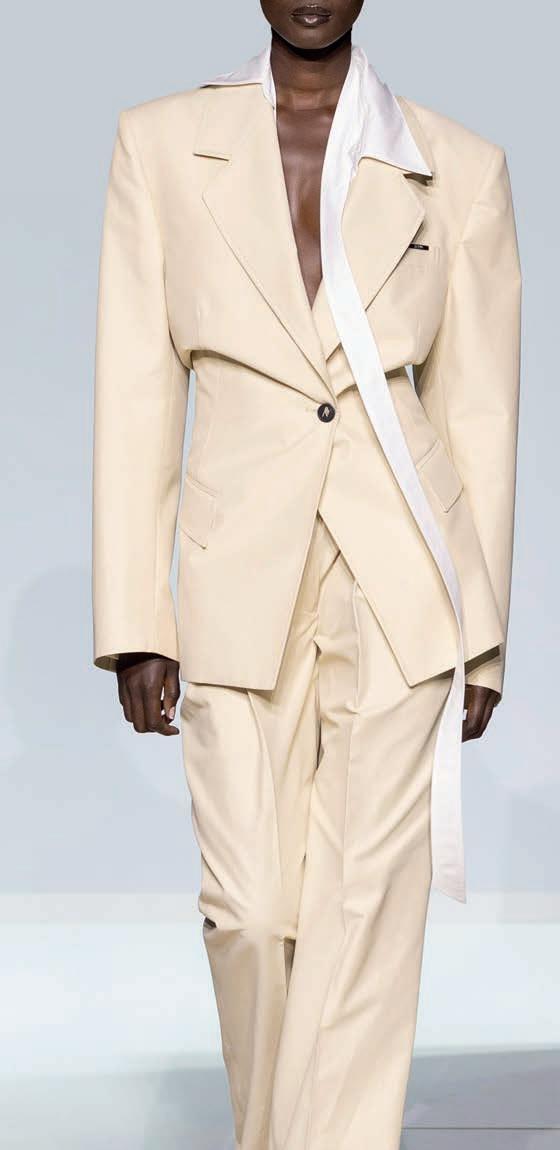
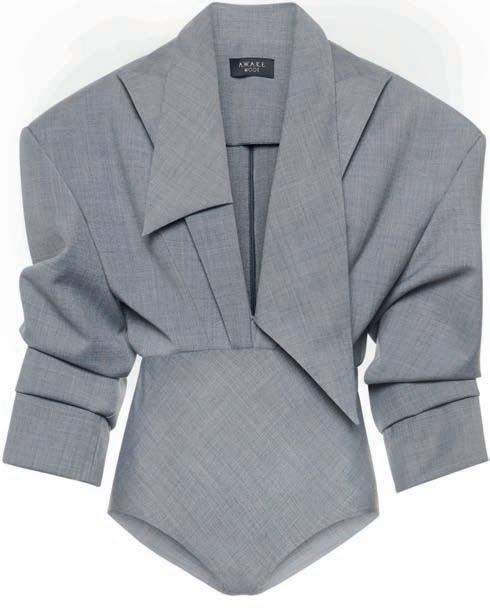
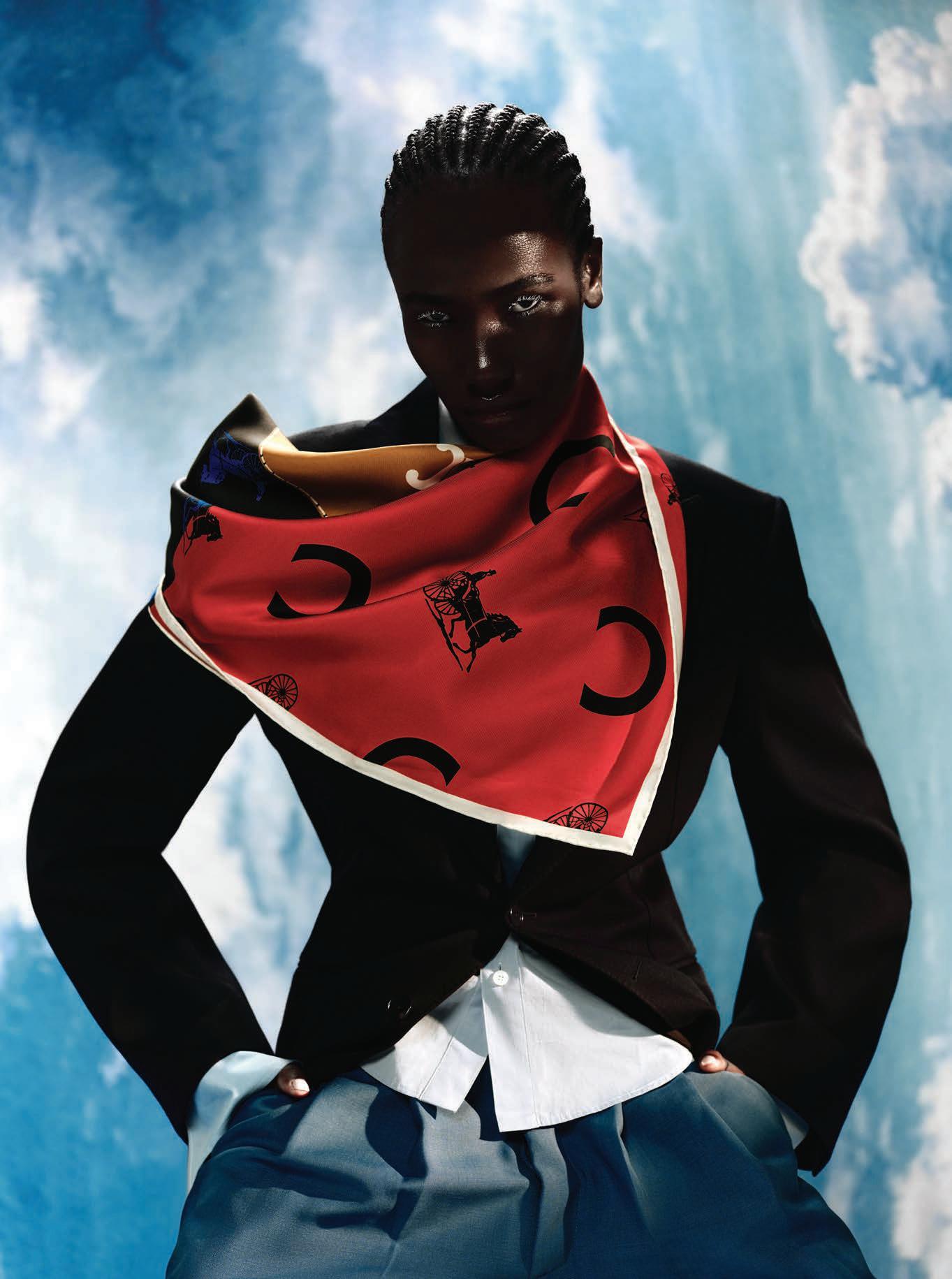
Set against an innovative architectural wonder that is the BEEAH Headquarters in Sharjah, Harvey Nichols – Dubai’s SS26 campaign features sculptural pieces from A.W.A.K.E. Mode that push the silhouette with asymmetric cuts and defined shape
THE HERO BUYS
Angel Dust Eau de Parfum Dhs450 Fugazzi
Iconica Rose Gold Slim Ring Dhs20,000 Pomellato
Le Rouge Celine Matte Lip Balm 02 Ariane Dhs320 Celine
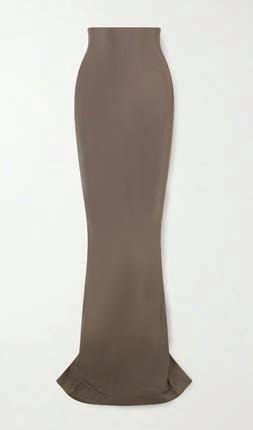
Dirt Coda Maxi Skirt Dhs2,105 Rick Owens
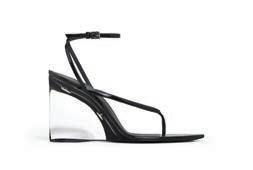
Invisible Thong Sandals Dhs6,150 Alaïa
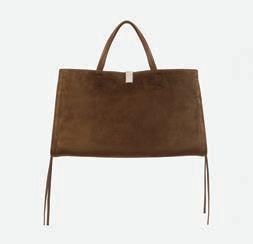
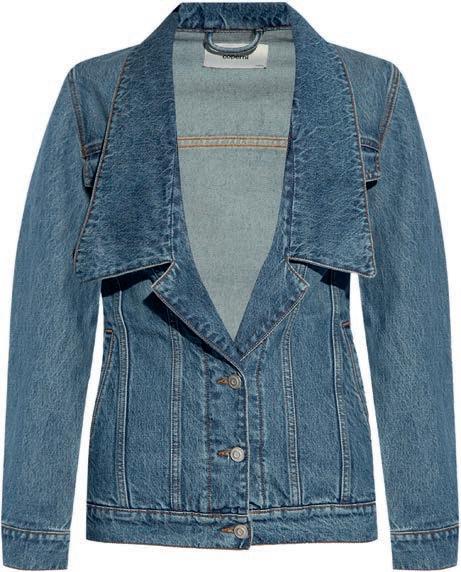
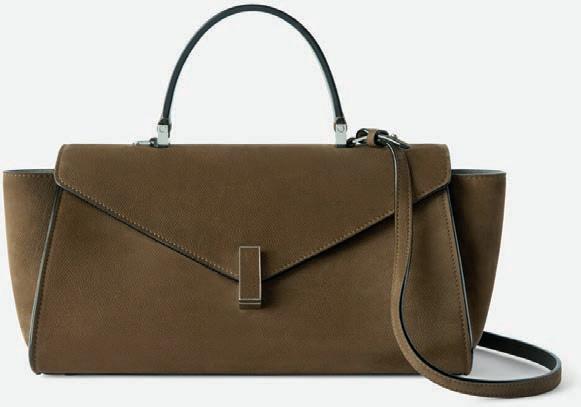
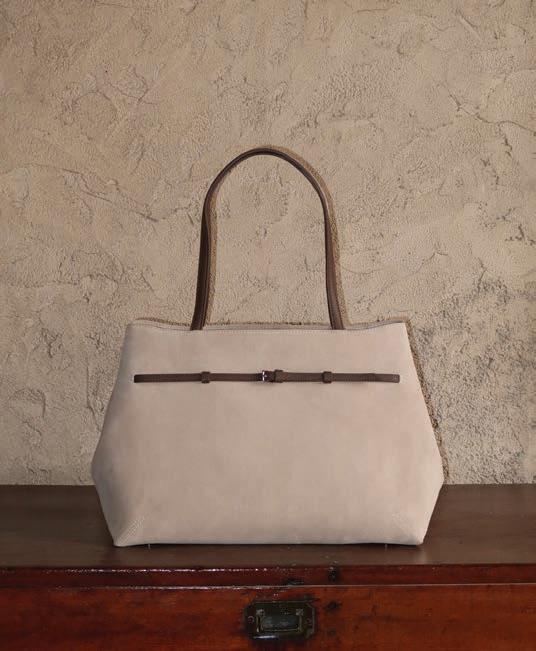
Medium Kit Cabas Suede Tote Dhs19,344 Phoebe Philo available at Mytheresa
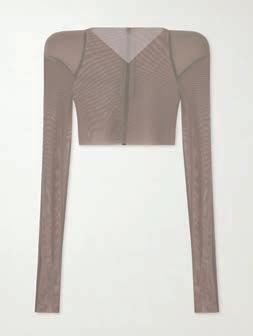
Helm Mesh Blouse
Dhs1,545 Rick Owens
@snob.ae
The one-stop solution to all your beauty needs in Dubai.
@raayamaldives
Set in the Raa Atoll, the property pairs reef ecosystems with design-led villas.
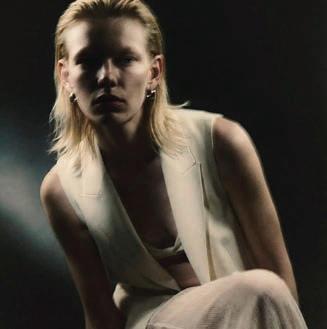
@sevdaalbers
AI artist and coach creating artworks defined by futuristic technology.
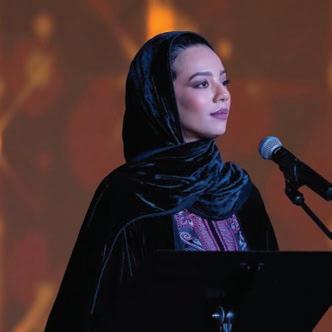
@fatialhashmi
Prominent Emirati mezzo-soprano and one of the UAE’s first professional opera singers.
@ataimeemoreau
An Emirati bag label founded by Noura Alqemzi marrying tradition and innovation.
@maisoncrivelli
Founded by Thibaud Crivelli, the brand thrives on innovation and authenticity.
@nhm_abudhabi
Narrating the earth’s story through remarkable exhibits and discoveries.
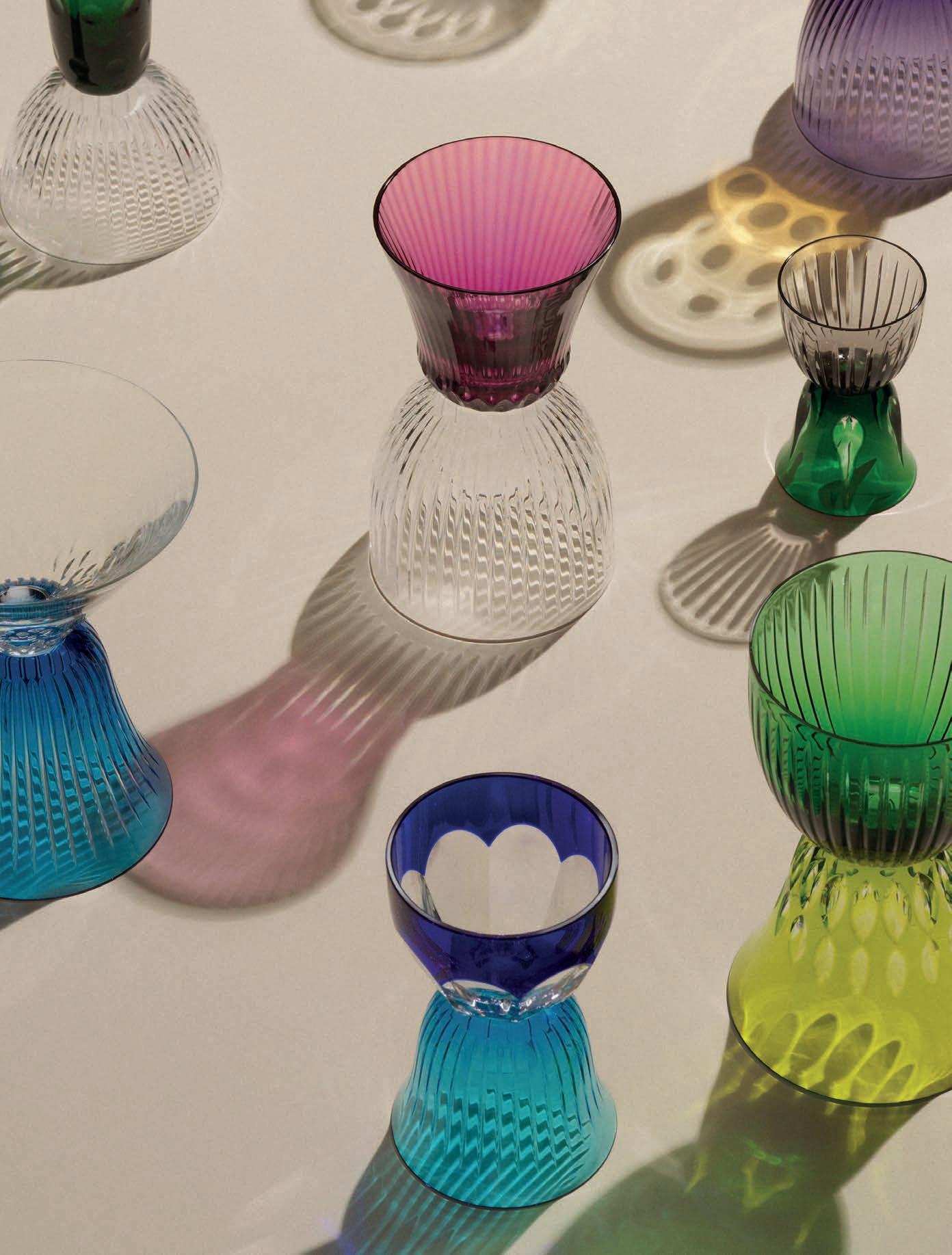
@saintlouiscrystal
The oldest glass manufacturer in France, embodying a centuries-old instinct.
@layalsibai_
Content creator and photographer for your moodboard inspiration.
Social Listings
A curated guide of iconic Instagram accounts to follow
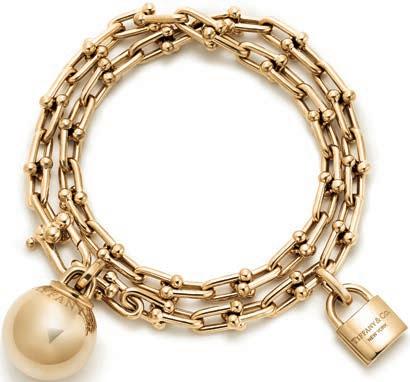
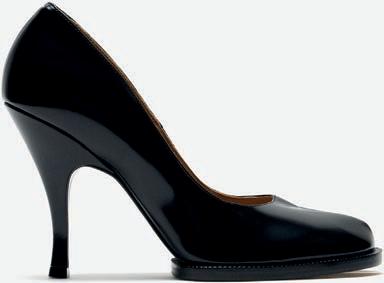
Bracelet Dhs60,000 Tiffany & Co.; 11. Tabi City Evening Pumps Dhs5,300 Maison Margiela
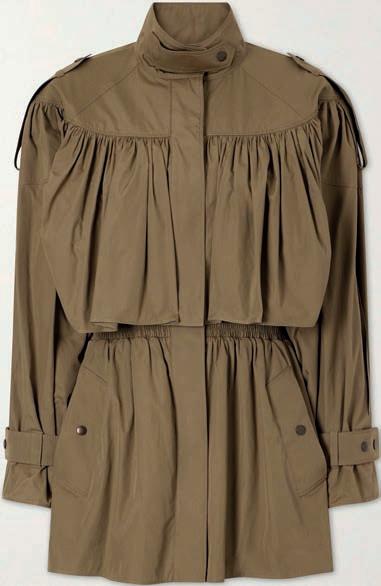
8. Passage Shoulder Bag Dhs14,688 Prada; 9. Funnel Neck Coat Dhs12,120 Chloé; 10. Tiffany HardWear Small Wrap
COMPILED BY: CAMILLE MACAWILI
TACTILE SPINS
Textured touches executed with craft precision and clever innovation that celebrate the art of craftsmanship in every stitch
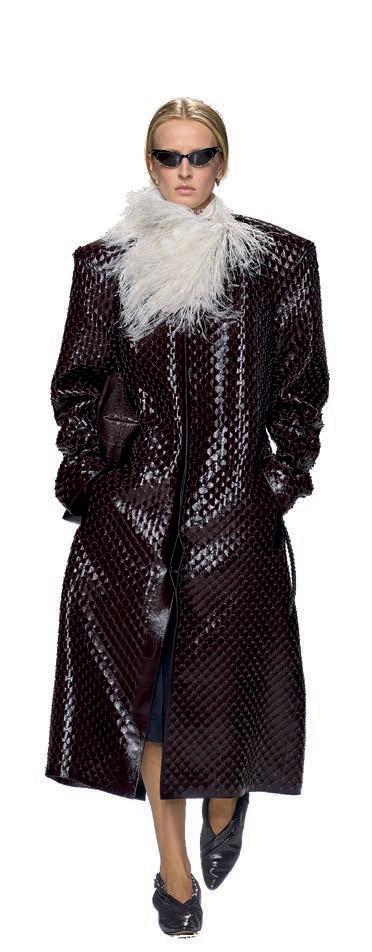
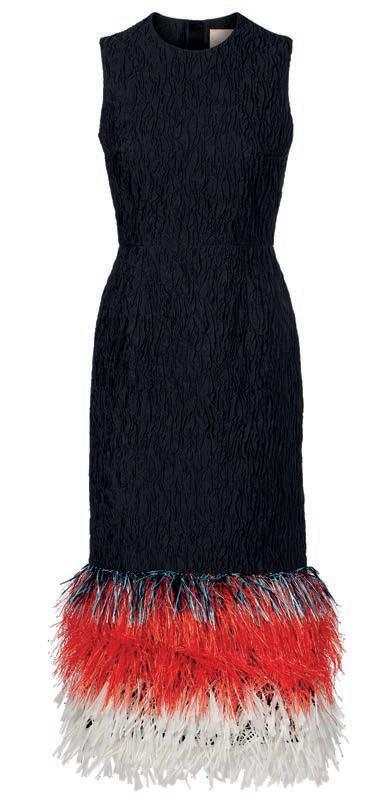
CLOCKWISE FROM TOP LEFT: MCQUEEN; BALENCIAGA; BOTTEGA VENETA; LOEWE
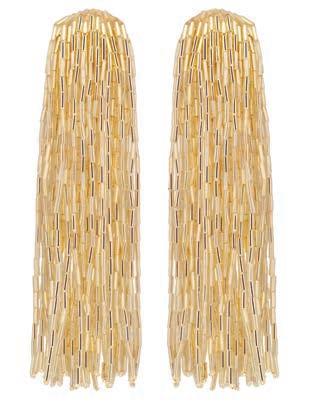
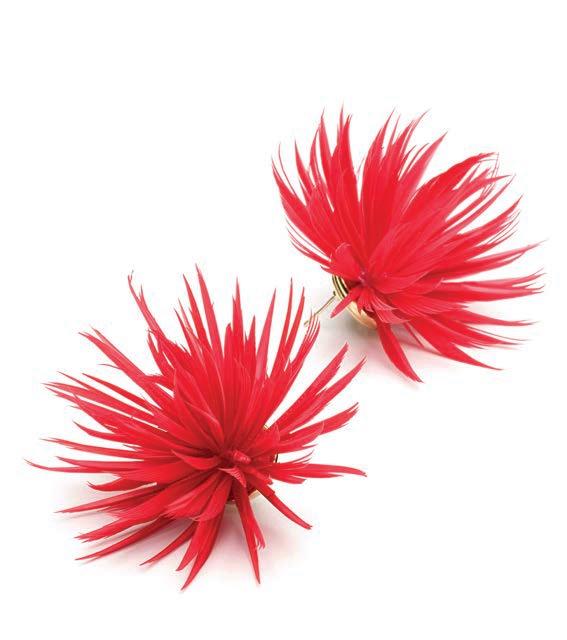
Tassel Drop Earrings
Dhs2,345 Oscar de la Renta
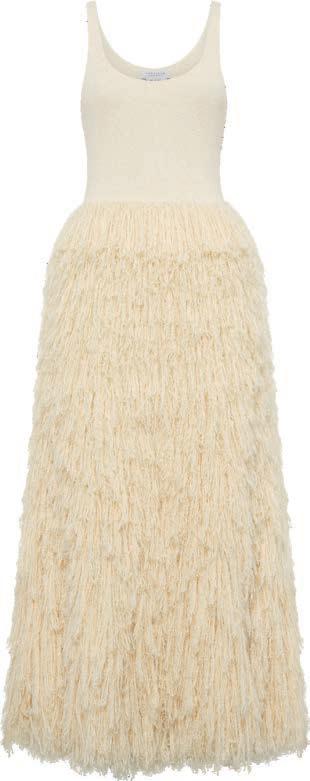
Dhs28,095
Gabriela Hearst
Feather & Metal Earrings POA Chanel
Dhs3,270
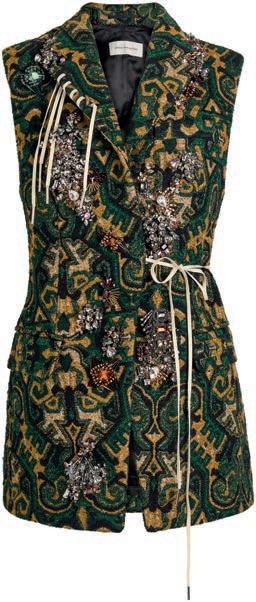
Embellished Sleeveless Blazer
Dhs13,915 Dries Van Noten
Dhs26,445
Bottega Veneta
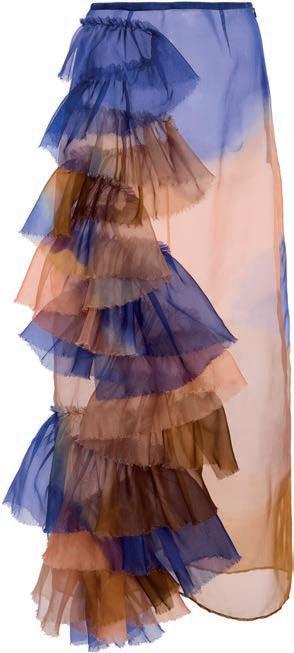
Dhs8,443 Roksanda
Yelena Organza
Printed Midi Skirt
Ulla Johnson
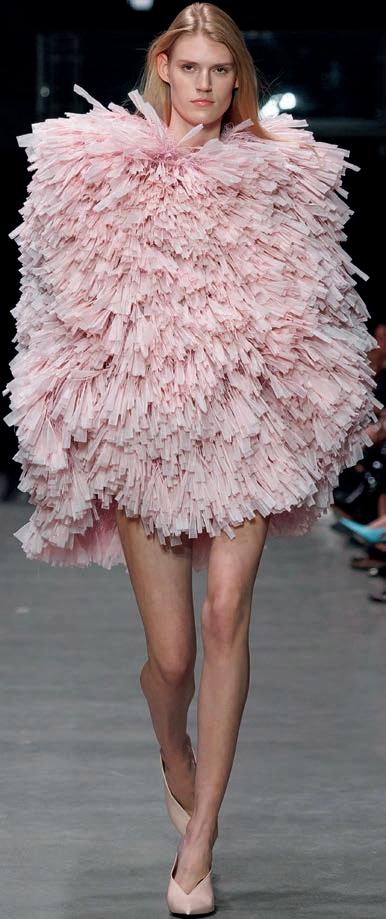
Eleanor Fringed Maxi Dress
Zua Feather Midi Dress
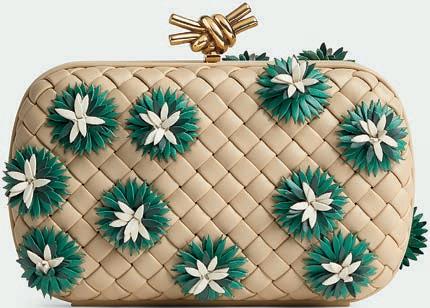
Knot Clutch
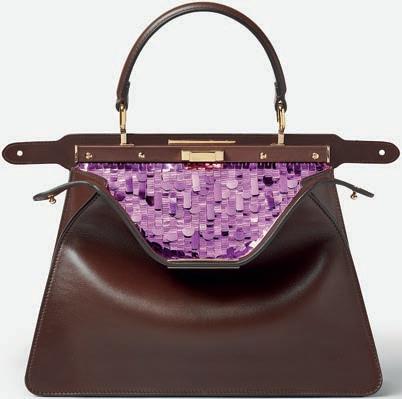
Peekaboo ISeeU Medium
Dhs33,500 Fendi
BOTTEGA VENETA
STELLA MCCARTNEY
“IT” BAG REVIVAL
SS26’s finishing touches reflect a stratification of the house’s histories. From Celine to Bottega Veneta and more, heritage styles are revisited and updated, making what was once familiar look cool again
COMPILED BY: CAMILLE MACAWILI
Bottega Veneta
Givenchy
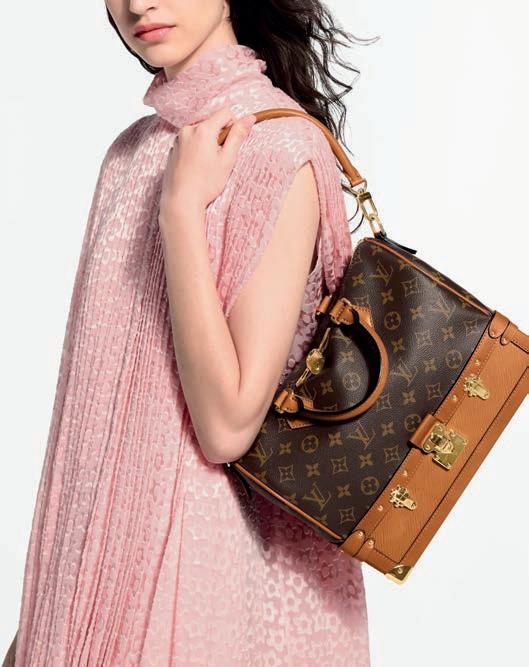
Speedy
Dhs24,600
Louis Vuitton
Maxi Veneta Shoulder Bag Dhs33,650
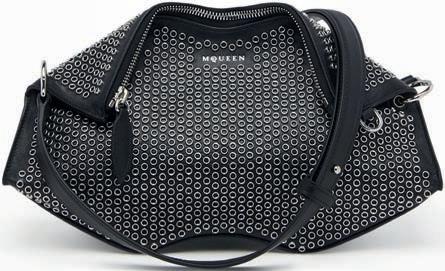
Manta Embellished Clutch Dhs7,049 McQueen available at Mytheresa
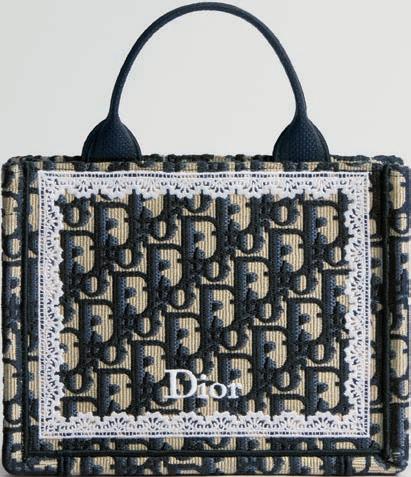
Mini Dior Book Tote Dhs11,000 Dior
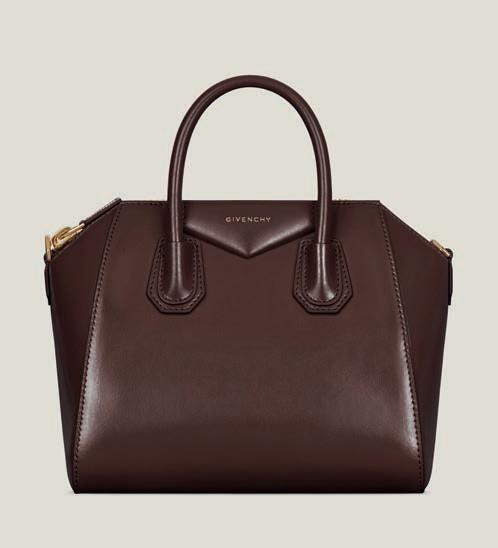
Small Antigona Bag Dhs9,200
30 Bag
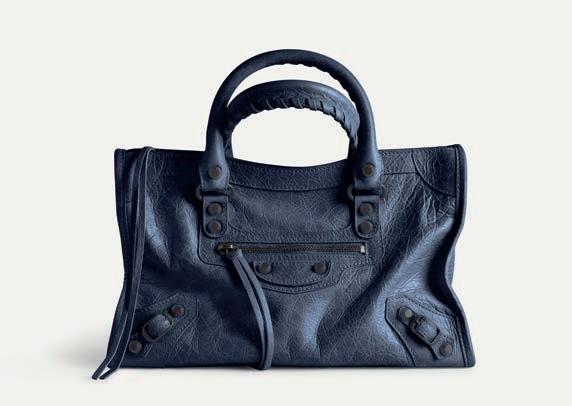
Small Le City Bag Dhs8,990 Balenciaga
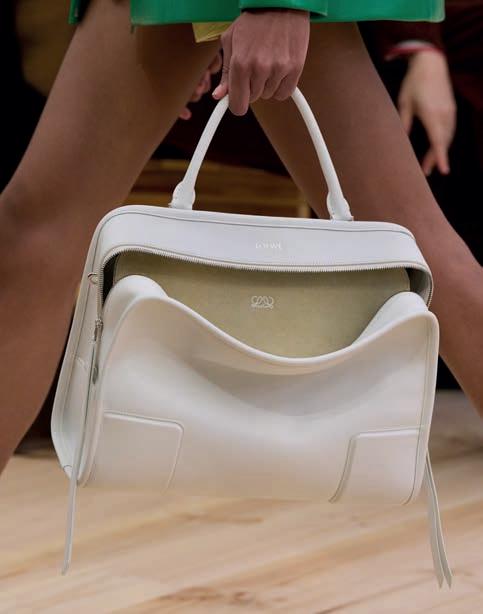
Large Amazona 180 Dhs19,850 Loewe
THE VANGUARD
Her Own Rhythm
Noura Alqemzi, founder of Emirati label Aimée Moreau, on building a leather goods brand without a design degree, trusting instinct over outside noise, and what luxury really means when you are playing the long game
WORDS: AMINATH IFASA
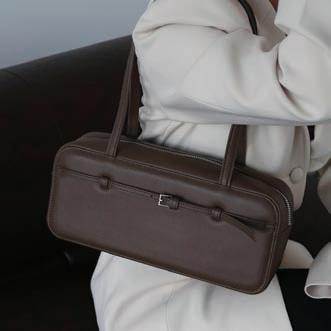
On the Aimée Moreau website, a structured shoulder bag sits centred within each frame, its rectangular silhouette held in place by rounded corners and a belt detail that stops decisively at the front instead of wrapping around. There are no monograms competing for recognition and no oversized logos stamped across the leather. What remains is form, material, and the unmistakable signature of someone with a pared-back-to-the-bone vision of timeless style. That someone is Noura Alqemzi, the Emirati founder and creative director of the minimalist accessory brand. Alqemzi does not hold a fashion degree and hasn’t trained on design software. Her approach is much more organic, sketching bag designs by hand in her living room, and following her inner creative instincts – a pure autodidact if ever there was one. She admits with the kind of self-awareness that comes from years of trial and error, that her sketches look peculiar enough that the people she hires to create the final technical drawings have a genuinely difficult time translating them. “I have no idea how to use the design software,” she confesses. “So, I would sketch it, and then I would send it to a designer that would turn it into something that can be seen and can be turned into a bag.”
Before Aimée Moreau, Alqemzi explored other creative outlets including a loungewear line, an activewear collection, and a canvas tote bag project. Each of them reached the sampling phase and even generated sales, but none of them ever fully resonated with the founder. “It just didn’t feel right,” Alqemzi shares. When she finally turned her attention to leather goods, those previous hesitations dissolved. She identified a gap in the market – the fact that she could not find any Emirati bag labels that had successfully expanded from local to global – and filling that void became her mission. “I felt that it could be a challenge for me to take on and see if I’ll be able to accomplish that dream of taking our brand global.”
The name Aimée Moreau emerged after what she calls one of the most agonising parts of launching her brand. She searched for weeks and researched trademarks while testing different combinations until she landed on something that blended the Parisian fashion heritage she had admired since childhood with a contemporary sensibility that felt entirely her own. The debut collection of Aimée Moreau – called Forme 01 – revolves around a single struc-
tured shoulder bag with a rectangular shape and the rounded corners. This shape was never part of her original vision, but because Alqemzi sketches by hand, her drawing lacked the precision she had hoped for. In a happy accident, the technical designer misinterpreted the lines, and the bag returned looking decidedly different than the founder had imagined. Instead of discarding the prototype, she recognised its unique appeal. The rounded corners had a personality, and the way the top settled into place worked perfectly. A miscommunication became a signature. “My sketch wasn’t that good,” she admits with a laugh that suggests she has long since made peace with the auspicious miscommunication. Growing up in the UAE, Alqemzi absorbed an understanding of value that had little connection to price tags. She remembers when she was young, she and her sister would use the walls of their bedroom like her own personal mood board. “We would cut out the models and stick them on our walls,” she recalls of joyfully pulling apart fashion magazines. That early exposure to the luxury space
“I AVOID EXCESS AND FOCUS ON BALANCE, ON MAKING SOMETHING THAT FITS INTO EVERYDAY LIFE”
planted a seed, but the deeper influence arrived from somewhere more subtle. She describes Emirati culture as one that prizes peace, stability and harmony, and those principles, she believes, naturally steer her design decisions. “I avoid excess and focus on balance, on making something that fits into everyday life rather than something that tries to stand out.” But she refuses to force her heritage onto her nascent brand through obvious symbols or motifs. That approach would feel inorganic to her design ethos and would narrow the audience for her work. Instead, she pulls in her background through her brand storytelling and Aimée Moreau’s visual campaigns. At a recent heritage-inspired photoshoot she was able to reflect her culture without altering a single stitch on the bag. “I want the bag to be able to be worn by women all over the world,” she says. “I didn’t want to put any elements that would make it look tacky or cheesy or that don’t fit the perception of most women around the world.”
Luxury, to Alqemzi, has nothing to do with logos or inflated price points. She defines it as precision and consistency, as mate-
rials deployed correctly and products that are designed to endure through years of use, and the ebb and flow of passing trends. “Luxury also comes from building trust with an audience over time, through clear storytelling and consistency,” she explains. This is why she maintains two separate Instagram pages. The main page stays “on brand” with a serious and product-driven approach that acts like a polished gallery of the label’s visual identity, while the community page exists for a different kind of connection. “There are some things that you can upload on the main page that you can’t upload there, and there are other things that you can upload into a community page but not on the main page,” she says of the reasoning behind the two feeds.
With Aimée Moreau nearly every function of the business is outsourced. The financial team, the PR team, and the designers all work remotely or on contract, while Alqemzi remains the onewoman driving force. This structure, she says, made the most financial sense given where the brand currently stands, even though she knows she will need a permanent in-house designer eventually. For now, she collaborates with freelancers based everywhere from the United Kingdom to Madrid and China, working through what she calls a joint ideation process.
The manufacturing takes place in Guangzhou, and the leather arrives from Italy. A sample requires 10 to 15 days to produce before it is shipped to her for review. She measures every dimension and tests how the handle rests against the shoulder before sending notes back to the manufacturer to produce another sample. Usually by the second or third round, she approves the design. “We don’t want to be storing a lot of products all at once,” she notes, explaining that the brand operates on a pre-order model to avoid warehousing costs and reduce environmental waste.
One of the most valuable lessons Alqemzi has learned since launching the brand is to trust her instincts earlier. There were moments when she relied too heavily on external input and assumed that professionals knew better than she did, until she abandoned that approach entirely. “If something doesn’t feel right, it usually isn’t,” she says. “Even if you ask someone else, a professional, and they say it’s good, but deep inside you know that it doesn’t feel right. It usually isn’t.” That instinct guided her through an ethical sourcing dilemma as well. For example, her original manufacturer had a contract that prevented them from disclosing where their materials originated. She told them she had a responsibility to her customers and to retailers to know if the leather was ethically sourced. When they could not provide an answer, she switched suppliers without hesitation. Alqemzi is building without venture capital, without an in-house team, without any of the advantages that other founders might take for granted. She relies on handdrawn sketches, outsourced manufacturers, and a community page that she hopes will one day brim with women sharing images of their bags. She progresses with the patience of someone who understands that objects worth keeping demand time.
As an Emirati brand she is determined to build her company as a reflection of her values system of restraint, balance, and harmony. These values permeate every bag she designs, even when they resist immediate recognition. They reveal themselves only when the bag is caressed for the first time, or when it settles perfectly into place against the hip. And that has been the entire point of Aimée Moreau from the beginning, to be a lifelong faithful ally for every hard-working woman.
INCOGNITO ATTITUDE
Nothing can transform a look faster than the perfect pair of shades. They can hide a myriad of sins… and emotions. Slide them down the nose, bite the end of a stem, or whip them off with a flourish to see their potent power in action. Oh, and they can also act as a chic impromptu headband when needed. Dolce & Gabbana Eyewear, which just extended its partnership with EssilorLuxottica through 2050, understands very well the impact its sunglasses can carry, and it knows just what it takes to create sunnies that are serving.
MODE
Enjoy a bit of…
IN CLU SI VE AI
WORDS: CAMILLE MACAWILI
Sevda Albers, a fashion photographer with a background in technology, is using AI imagery to bridge the diversity gap and challenge the industry’s status quo. From navigating initial industry scepticism to advocating for female leadership in tech, the imagemaker-turned-innovator is proving that the most essential tool in the age of AI remains a distinct perspective and the human eye
While the fashion world was busy debating whether AI would destroy creativity, Sevda Albers was already using it to build an inclusive fashion narrative. As a veteran photographer and creative director who spent 25 years behind the lens and a coder before that, she doesn’t treat technology as a shortcut. Instead, her deeprooted technical background provided the foundation for a pivot that was accelerated by the Covid pandemic lockdowns and the logistical shifts of Brexit.
Adding to the shift was a specific frustration, an industry problem that couldn’t or wouldn’t be fixed. Throughout her career, she struggled to find Turkish fashion models in Germany, where she currently resides. “I never had the opportunity to work with a Turkish fashion model, a topic close to my heart due to my own Turkish roots,” she notes. “So, I thought: if not now with AI, then when?”
This is the substance that sets her work apart. It isn’t about generating a “cool” image; it is about representation. When she first started, Midjourney wasn’t diversely trained. She spent weeks deepdiving to force the machine to see what she saw. It was a technical hurdle that required a photographer’s eye and a coder’s persistence. After years of training AI, her work caught the eye of early adopters in the Middle East before it gained traction elsewhere. “My first job requests were all from the UAE,” she recalls, highlighting a regional appetite for innovation.
“AI-GENERATED ART IS ONLY AS GOOD AS THE ARTIST GUIDING IT”
In the luxury sector, where value is tied to “spent time,” Albers creates an artisanal quality by being the arbitrator of taste. With anything AI-generated, there is a common assumption that the output is effortless. Albers is quick to dispel this “one-click wonder” myth. “Since I am working for commercial clients quite a lot, and I set up my own tech environment, I can do pictures in five minutes, to be honest,” she says. “But I spend a lot of my time preparing my setup, so it really listens to my aesthetic, to my kind of way of thinking, and to my workflow.”
Her creative process begins with conceptualising lighting, environment, and clothing before she even touches the software. It is a digital version of a traditional shoot. “What kind of lighting do I want? What kind of environment, what kind of model do I want, what kind of clothes? So, it is really comparable to a regular shooting.” These technical rigours allow her to transition from experimental “hallucinations” to the highly realistic work required for commercial luxury. Yet, she insists that the machine is only as good
as the input of real-world experience. Her inspiration doesn’t come from scrolling through social media, but from the physical, offline world. “In the summer months, I live in Copenhagen, and in winter in Bali, which are both quite stylish areas,” she explains. “I do get inspired by the museums, by the people, by the interior of these two cities, and yeah, I get inspiration from mostly what I see.”
For Albers, true innovation requires moving beyond the generic. “I think nowadays we should take more time and do creative ideas. Because a beautiful woman walking down a beautiful environment by the beach? It’s not a creative idea.” She intentionally avoids the clean, fantasy look common in early AI. “I like it when it feels raw and not perfect, because humans don’t like perfection,” she explains. She compares it to a Picasso – you are drawn to it because it doesn’t look perfect. As we move toward 2028, the year, according to a fashion forecasting report by McKinsey & Company, when the normalisation of AI will be critical and fully integrated within the space, Albers predicts that static images will become ordinary.
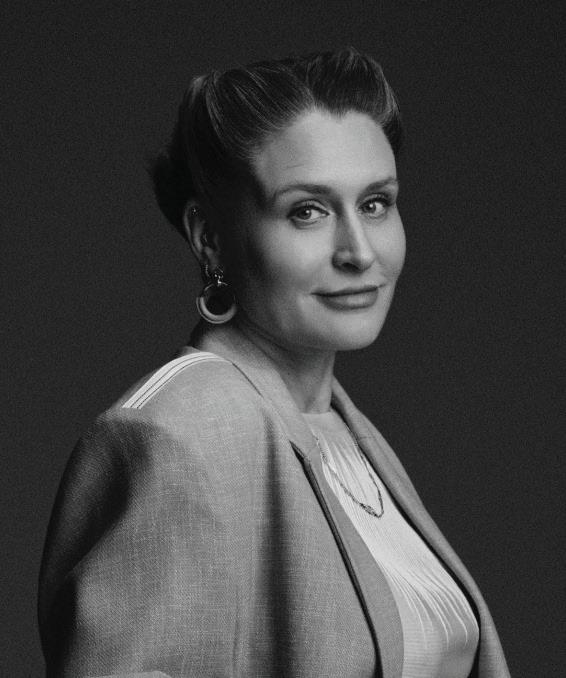
Sevda Albers
Right now, we are in the “hype” and “backlash” phase, where seeing an AI-generated ad still feels like a novelty or a provocation. By 2028, consumers will likely stop asking if an image was made by AI and start focusing purely on the aesthetic. Now, Albers is ahead of the curve and exploring the next frontier of generative video – creating immersive environments that counter digital fatigue. But even as the tools evolve, the human touch remains the filter. “AI-generated art is only as good as the artist guiding it,” Albers says. She also highlights the stark gender imbalance in the tech-creative space. She often finds herself the only woman speaking at AI events and frequently receives online hate from those who judge women engag-
ing with “computer stuff.” “I would love to encourage every woman, because whenever I’m on stage or at an event, it’s mostly men.”
She views this as a critical hurdle. If AI is trained on data from the past, it risks replicating the same biases that have always existed in fashion. By advocating for a female vision and teaching workshops that focus on technical hurdles, she is ensuring that the future of fashion photography isn’t just about the machine. When asked if the use of the camera is eventually going to disappear entirely, she compares the current shift in photography to the decline of physical records. We didn’t stop listening to music – we just changed how we produced it.
SENIOR EDITOR: JESSICA MICHAULT
PHOTOGRAPHER: MOX SANTOS
BARE ESSENTIALS
As the weather warms up, Maiswim is making women feel calm, cool and collected
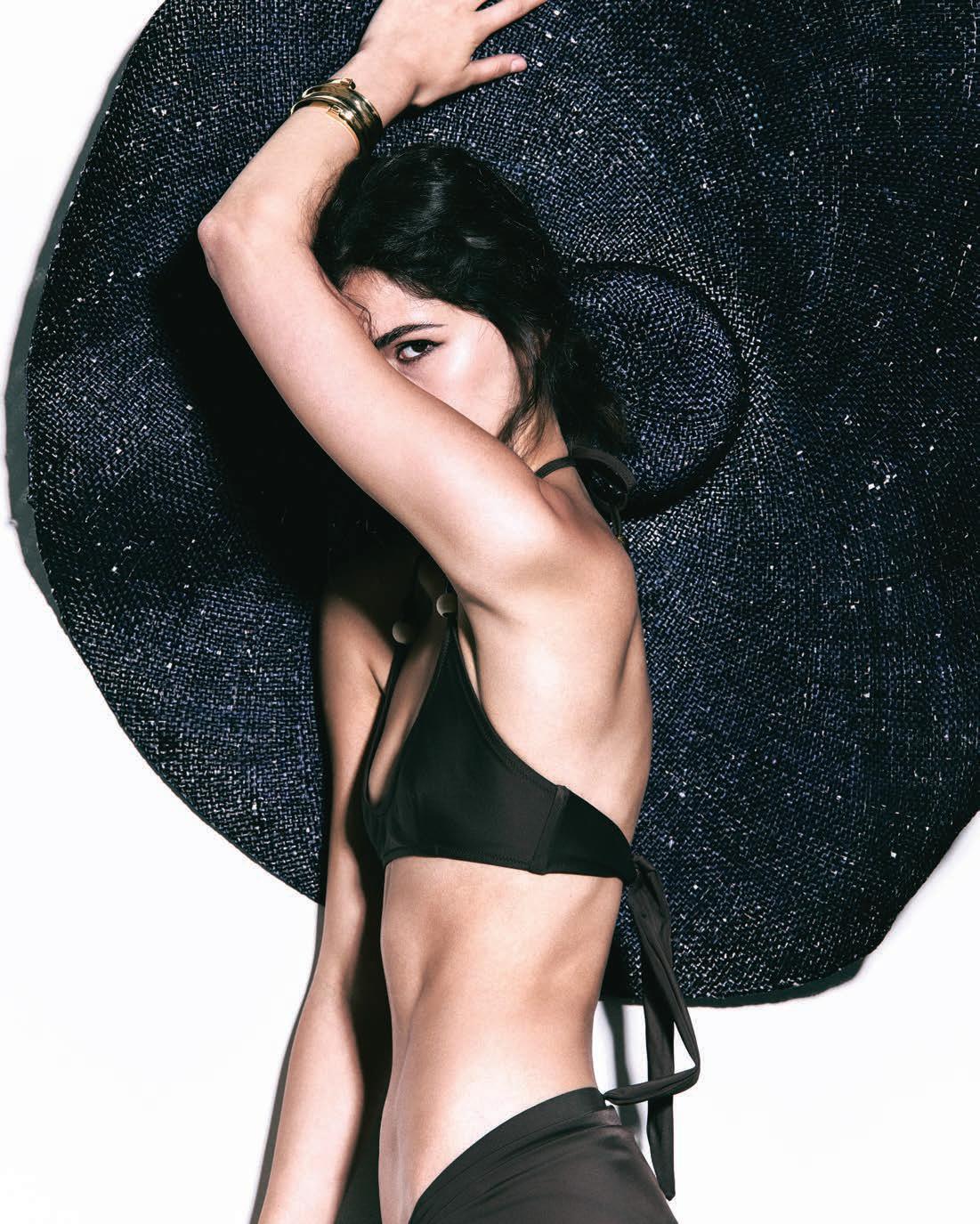
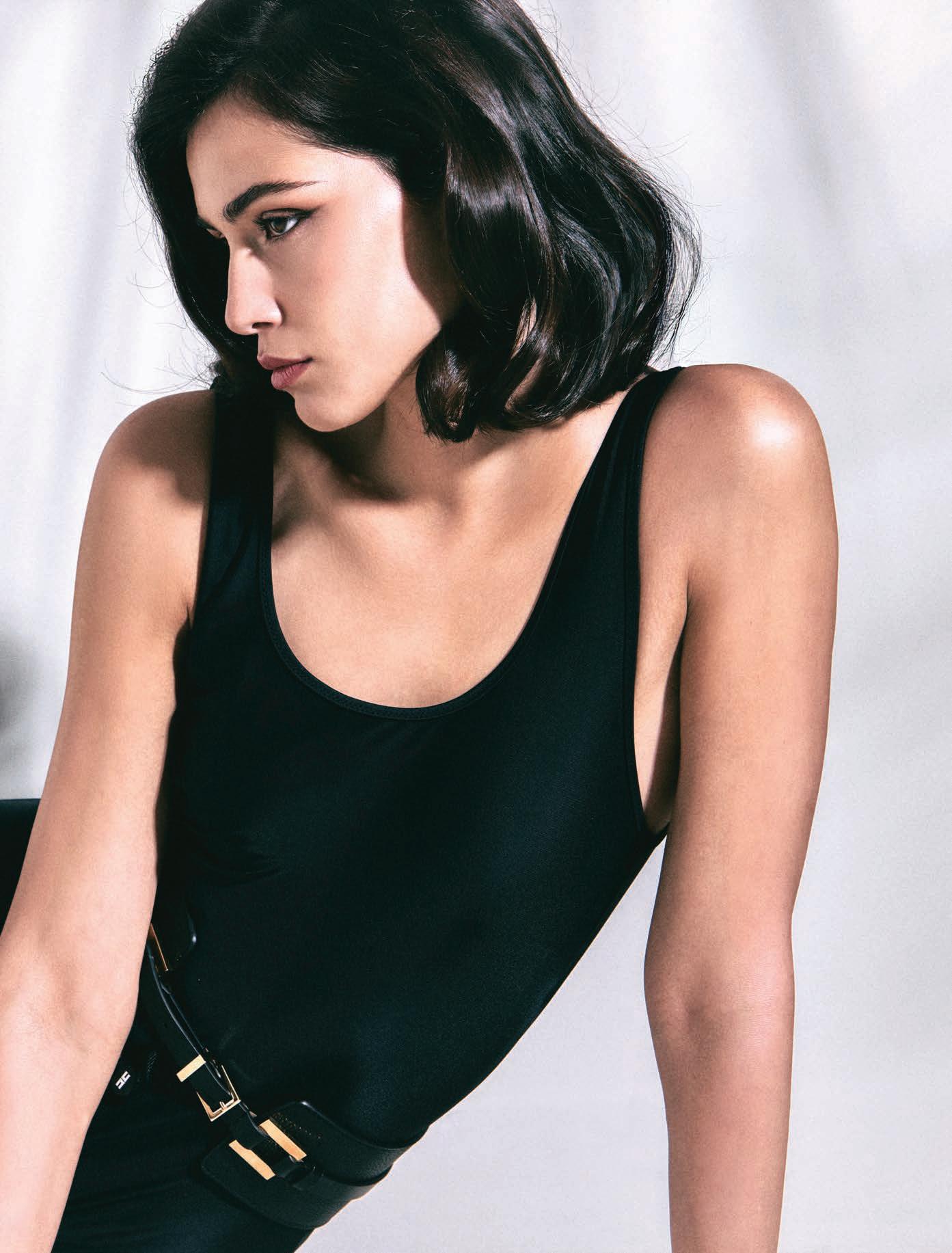
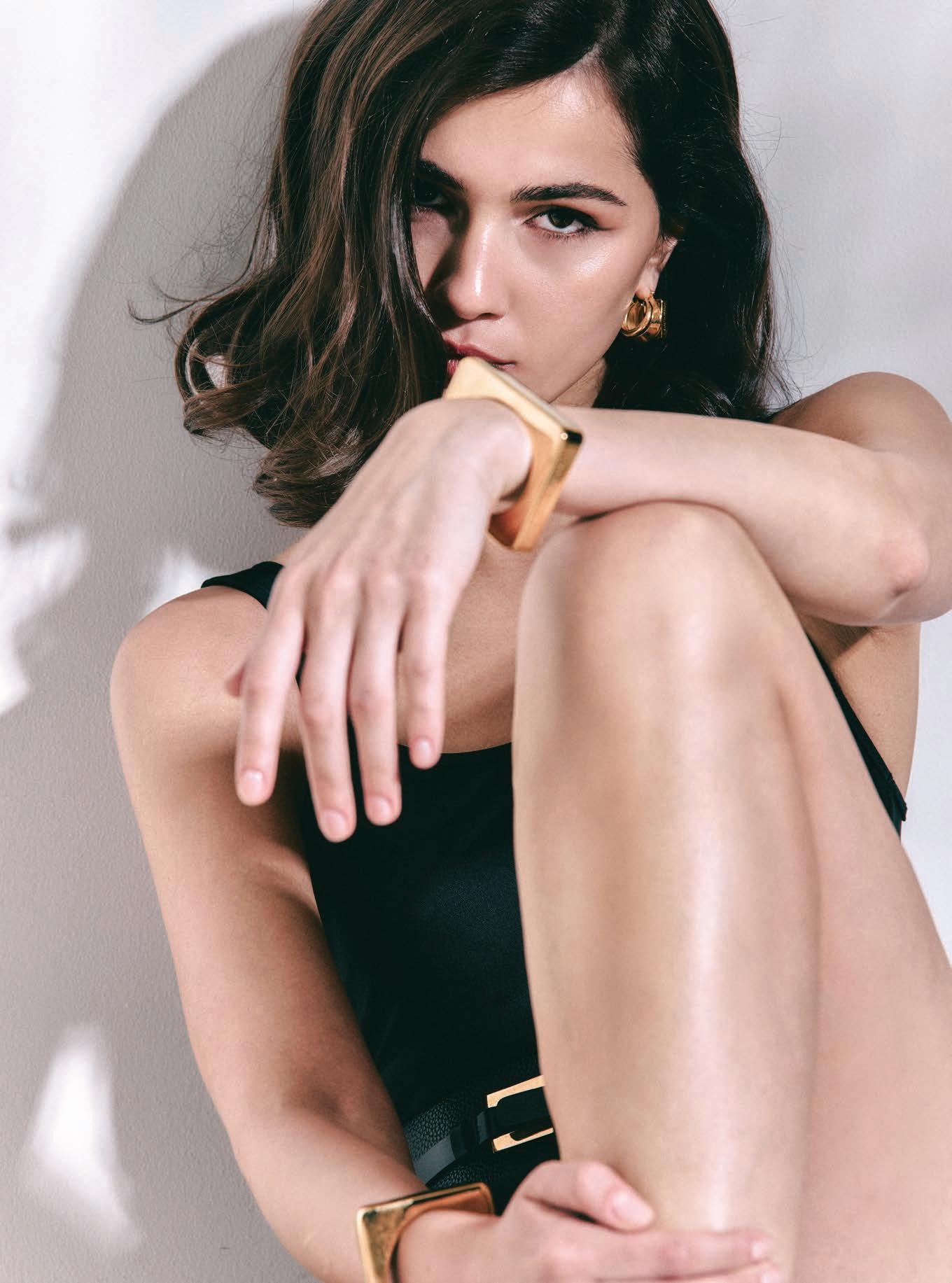
This page: Outfit: Cacao Beaded Top, Cacao Pareo, both Maiswim. Accessories: Cuff Bracelet, Elisabetta Franchi; Hat, Kalo Artisanal; Right page: Outfit: PowerNap Jumpsuit, Maiswim. Accessories: Belt, Cuff Bracelet, Earrings, all Elisabetta Franchi
THE ANATOMY OF AN
WHAT MAKES A PIECE OF CLOTHING OR ACCESSORY TRULY TIMELESS?
WORDS: JESSICA MICHAULT
The recent success of Love Story: John F. Kennedy Jr. & Carolyn Bessette – which is touted to be FX’s mostwatched limited series ever on Hulu and Disney+ – is due, in no small part, to the tragic real world romance at its centre. But the series, a time capsule of the pre-smartphone and social media era of 1990s New York, also owes a lot of its lasting appeal to the style of the woman at its heart – Carolyn Bessette. She became the embodiment of ‘90s minimalist chic, and in so doing, helped items like the camel coat or the slip dress, which she famously wore for her wedding, reach the sartorial status of iconic.
But how does a garment move from functional, to fashionable and finally gain the title of iconic? It turns out that there is not one single straight line to reaching the pantheon of timelessness. And often the most potent origin story for an iconic
fashion piece is also the most human one: the right woman wearing the right thing at the right moment.
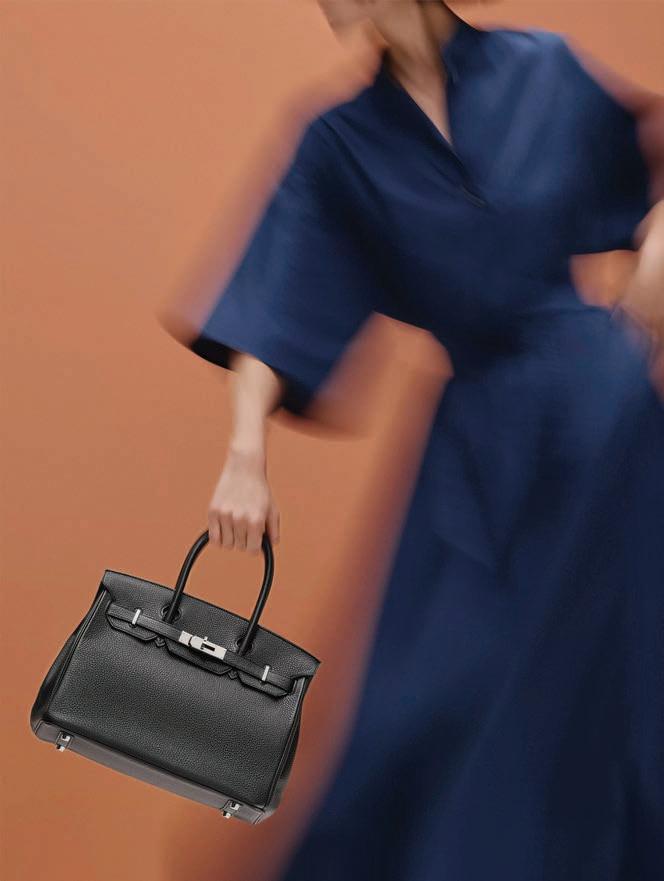
Consider the Hermès Birkin. In 1983, actress and singer Jane Birkin found herself seated by chance next to Hermès CEO Jean-Louis Dumas on a flight from Paris to London. She complained that she couldn’t find a leather bag large enough for her needs. He took out a paper bag and sketched the solution then and there. The bag was named after her, made to her specifications, and she wore it constantly –stuffed, scuffed, and personalised. The result was an object that felt simultaneously aspirational and lived-in.
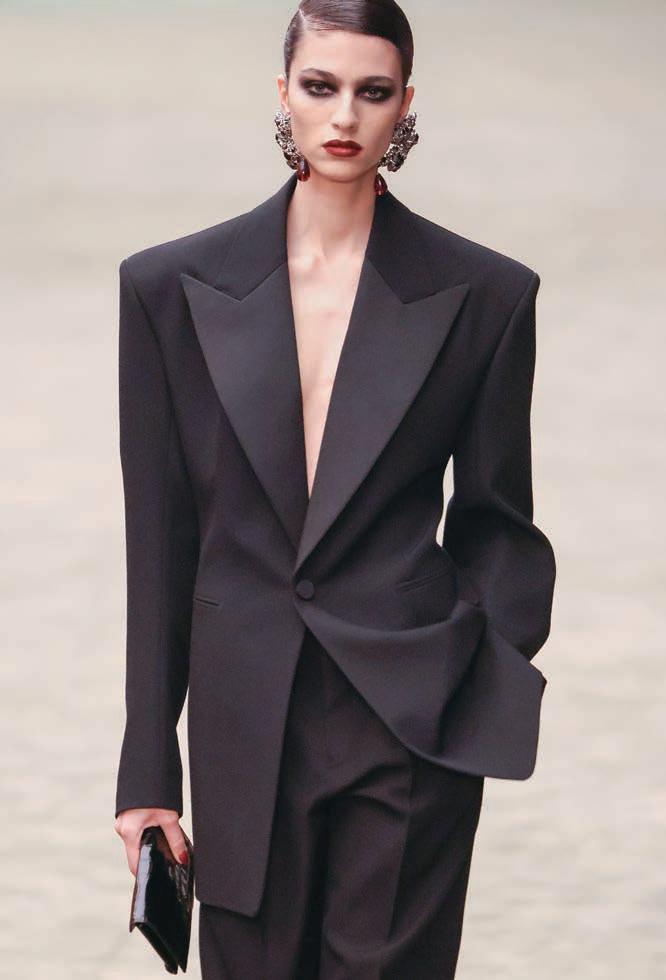
Catherine Deneuve did something similar for Le Smoking. Yves Saint Laurent introduced the women’s tuxedo suit in 1966 – a radical proposition in an era when trousers on women were still unwelcome in many Parisian restaurants. But it was
Helmut Newton’s legendary 1975 photographs, shot for Vogue Paris, that truly crystallised the garment’s power. His images of women in immaculate black tuxedos – poised, dangerous, utterly in control – transformed a piece of tailoring into a statement of female authority. Deneuve adopted the look as her own and wore it with the kind of ownership that only a French actress can. Saint Laurent himself was clear about his intentions: “I have always believed that fashion was not only to make women more beautiful, but also to reassure them, give them confidence.”
Bessette-Kennedy’s impact was also thanks to her close association with two leading designers of her age. Calvin Klein, who she worked with for eight years, and Narciso Rodriguez, who designed her paradigm-shifting wedding dress. She leaned into the minimalistic movement of the ‘90s – the silk slip dress, the impeccably cut camel coat, the barely-there Manolo Blahnik heel – with such quiet conviction that she defined an entire aesthetic for a generation. Her column-like Calvin Klein dresses, impossibly crisp white shirts, and unadorned pumps ushered in a quiet revolution of understatement, a pioneering vision of what we now call Quiet Luxury. What these women share is not celebrity alone –it is certainty. They wore their chosen pieces as though no alternative had ever occurred to them, and that personal vestimentary conviction became part of the DNA of the garments, transforming them into something more than the sum of their parts.
Sometimes, however, it is not a person but a photograph that does the work. A single image can crystallise something that years of runway shows cannot. Think of the photographs that have turned garments into legends: Marilyn Monroe in her halter dress above a subway grate; Audrey Hepburn window shopping at Tiffany’s in a black Givenchy gown; Princess Diana in her offthe-shoulder black Christina Stambolian “revenge dress.” In each case, the garment became inseparable from the moment, and the moment became immortal. But not all iconic items arrive wrapped in celebrity. Some earn their status through sheer, stubborn universality and accessibility. The little black dress is the supreme example of this. In 1926, Vogue published a drawing of Chanel’s simple black dress in crêpe de chine, with long narrow sleeves and a string of pearls. Vogue dubbed it ‘Chanel’s Ford’ –
Birkin 30 3 in 1, Hermès
simple and accessible to women of all classes – and called it “the uniform for women of good taste.” A century later, it remains the piece that women reach for when they are uncertain what else to wear, which is precisely what Chanel intended. She believed fashion should be, she reportedly said, “at once fashionable and unfashionable.” The LBD embodies that paradox.
Levi’s 501 jeans tell a parallel story from the other direction – not luxury democratised, but workwear elevated. Originally designed in 1873 for California miners who needed durable trousers, the 501 was adopted by cowboys, then by Hollywood stars, then by the youth counterculture of the 1950s and ‘60s. James Dean wore them. Marlon Brando wore them. The denim jacket followed the same trajectory, from Gold Rush utility to rock and roll uniform. Their genius lies in their indifference to class – a pair of well-worn Levi’s looks as at home on a film set as it does on a ranch, in a gallery as in a bar. The most lasting garments are usually classic and clean. Even the fashion world’s most iconic designer, Yves Saint Laurent, recognised the power of this workhorse garment, famously saying, “I wish I had invented blue jeans. They have expression, modesty, sex appeal, simplicity – all I hope for in my clothes.”
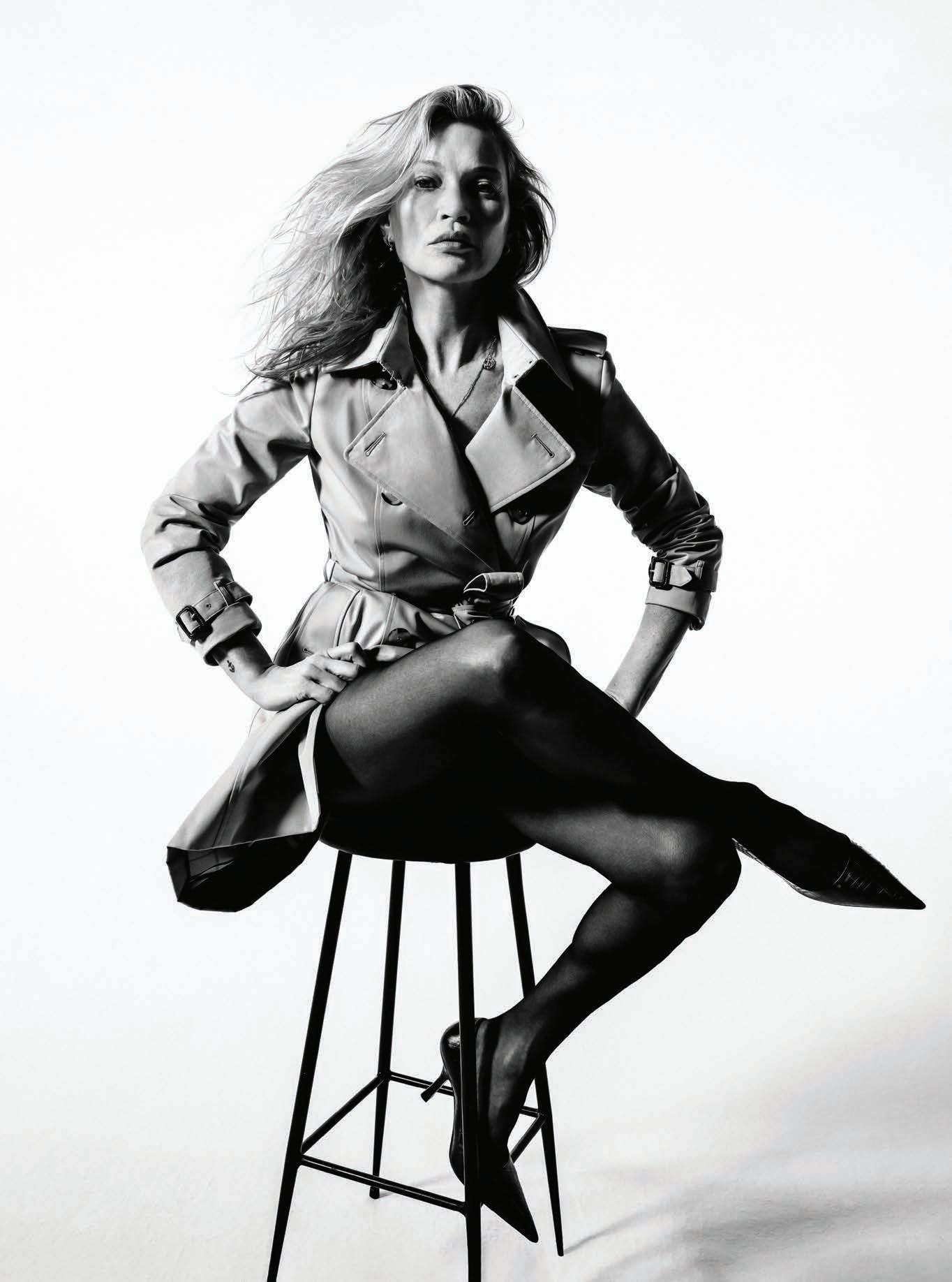
The trench coat performs a similar trick. Invented by Thomas Burberry for British officers during the First World War, it was then commandeered by Hollywood detectives, French intellectuals, and –eventually – every fashion editor who has ever stood in the rain at a show in Paris. Its military origins gave it authority; its belted silhouette gives it versatility; its association with Humphrey Bogart, Audrey Hepburn, and countless other icons gives it mythology. It is one of the few garments that works on almost every body, in almost every context, in almost every decade.
So is there a formula for a garment to garner the title of iconic? Not exactly. But
being linked to a specific generation, a subculture, or a dominant archetype in society definitely helps. For example the Converse All Stars were originally conceived for basketball but made iconic by the punk movement. While Ray-Ban Aviators were originally designed as medical equipment for U.S. Army Air Corps pilots. But became
“I WISH I HAD INVENTED BLUE JEANS. THEY HAVE EXPRESSION, MODESTY, SEX APPEAL, SIMPLICITY – ALL I HOPE FOR IN MY CLOTHES”
synonymous with rock stars when real rock and rollers began wearing them. Even the wrap dress – Diane von Fürstenberg’s jersey masterpiece of the 1970s – was arguably a physical manifestation of the women’s rights movement of that era. In fact the designer created the dress because she wanted women to be able to dress themselves – without needing anyone’s help.
Ultimately a garment becomes iconic not when a designer decides it, but when the culture demands it. When a woman picks it up and makes it hers. When it proves, season after season, that it has something to say to every era that comes after the one that made it. These are the pieces that accommodate us as we change, because their design is evergreen enough to hold the meaning we bring to them.
Above: The iconic tuxedo is making a comeback at Saint Laurent FW26; Previous spread: Kate Moss for Burberry’s 2026 The Trench: Portraits of an Icon campaign, celebrating 170 years of the brand
THE THE SKY’S
SENIOR EDITOR: JESSICA MICHAULT
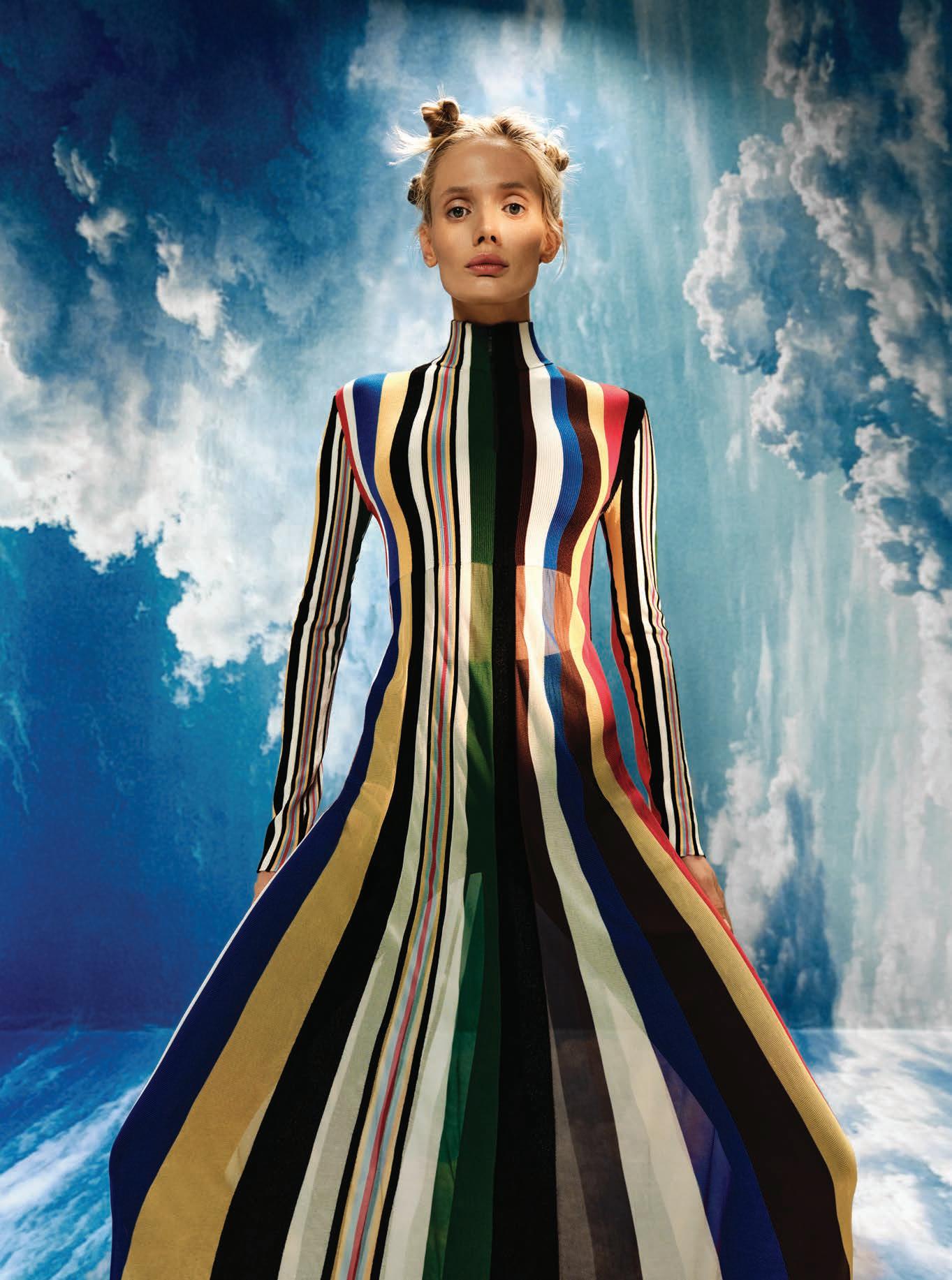
LIMIT
PHOTOGRAPHER: MARIA KORDZADZE
WHEN YOU LET VIBRANT COLOURS AND BOLD PATTERNS LEAD THE WAY, THE RESULT IS ALWAYS OUT OF THIS WORLD
Previous page:
Outfit: Celine; Left page: Outfit: Dress, Celine; Jewellery: Rings, Pomellato; This page: Outfit: Loewe
Left page: Outfit: Top and skirts, Chloé; Shoes, Ferragamo; Jewellery: Rings, Bil Arabi; Earrings, Givenchy; This page: Outfit: Miu Miu
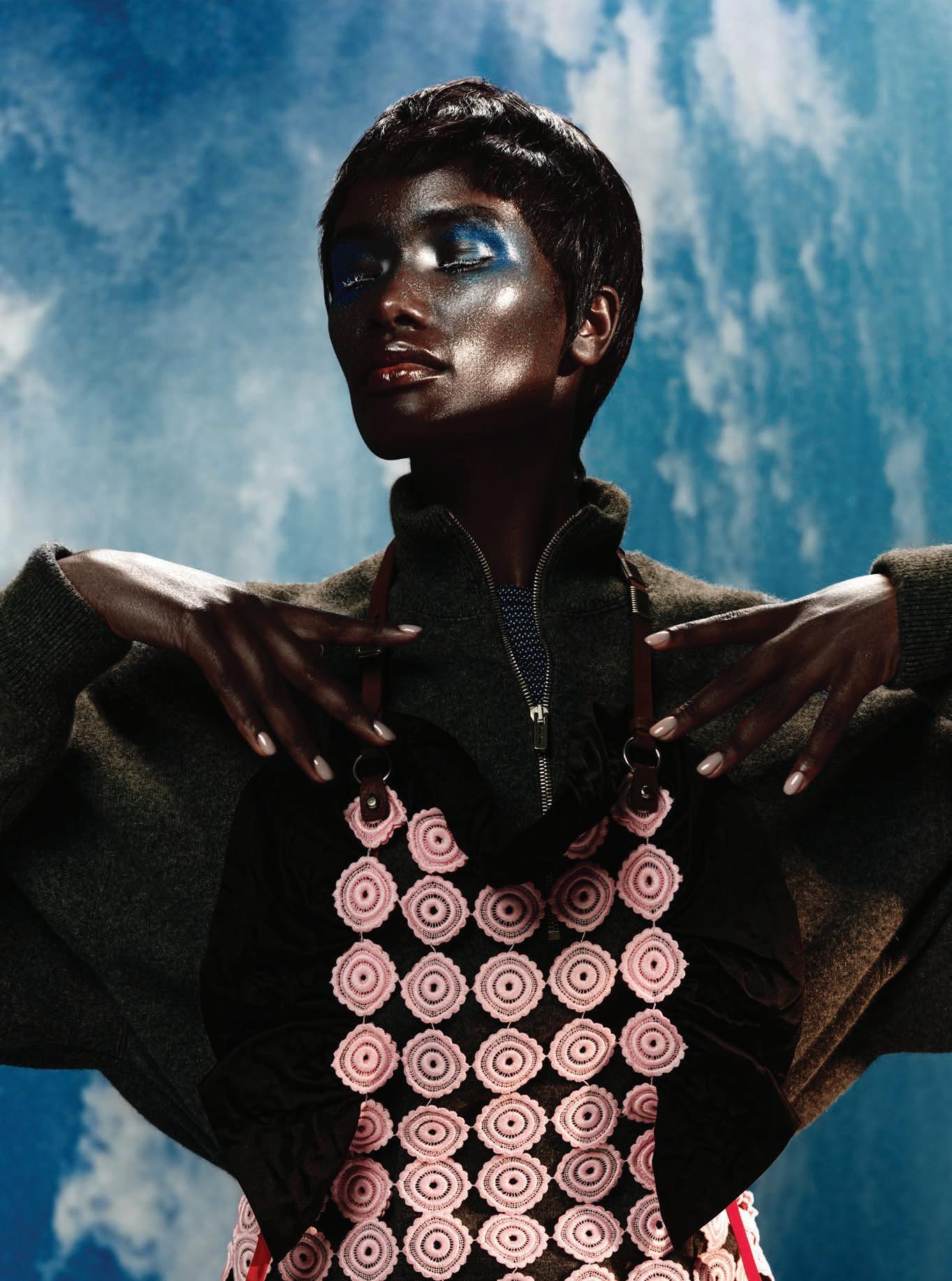
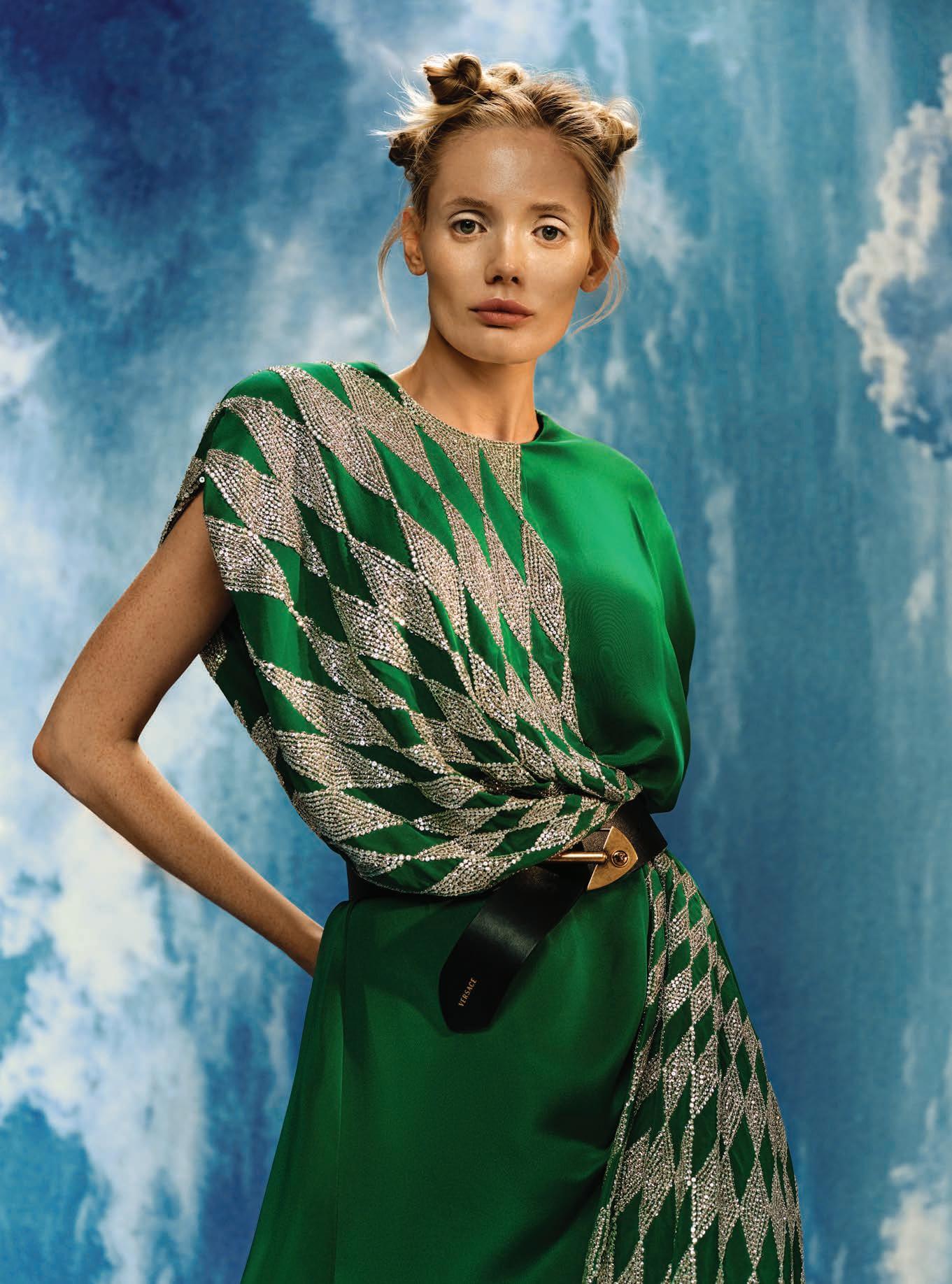
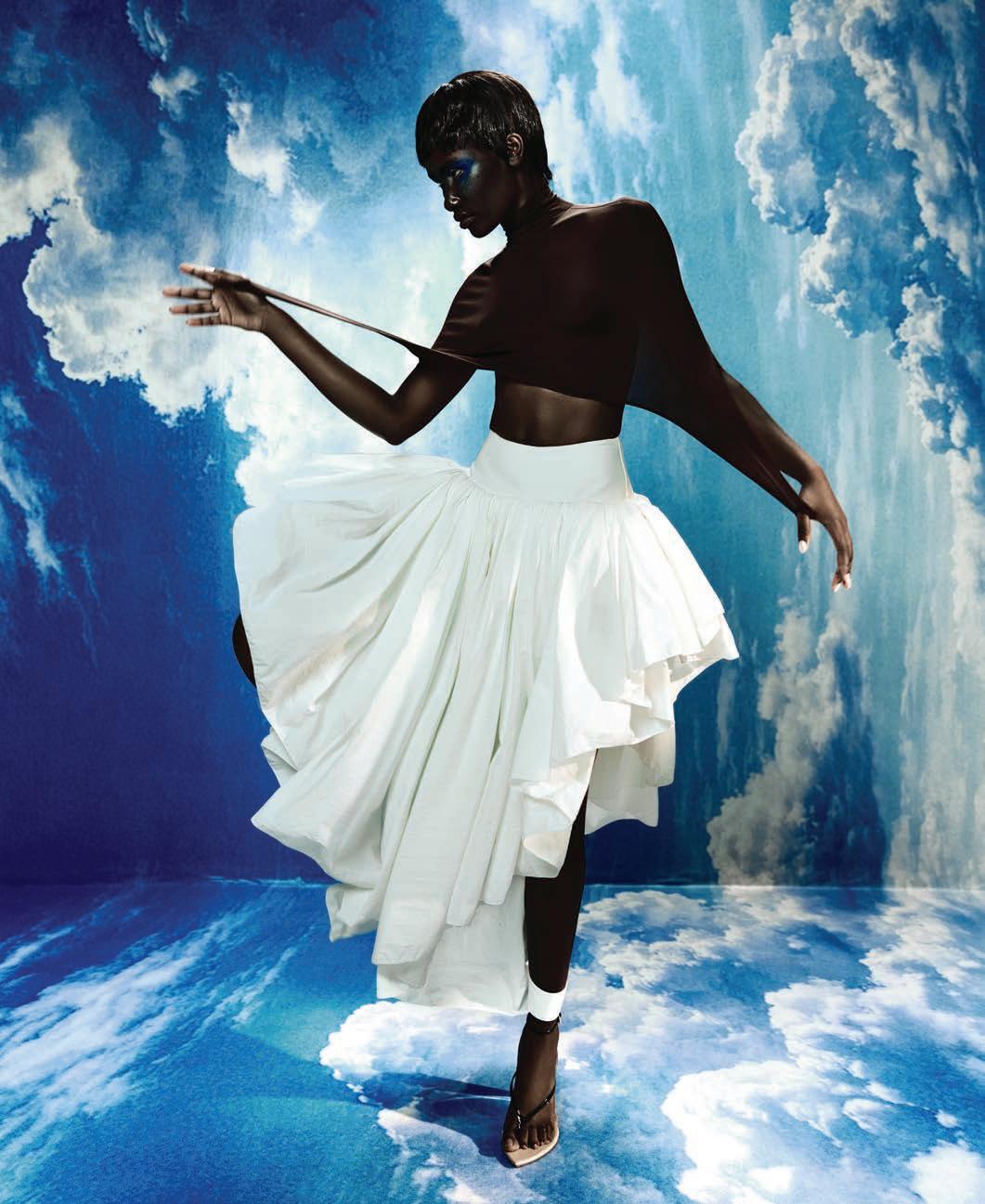
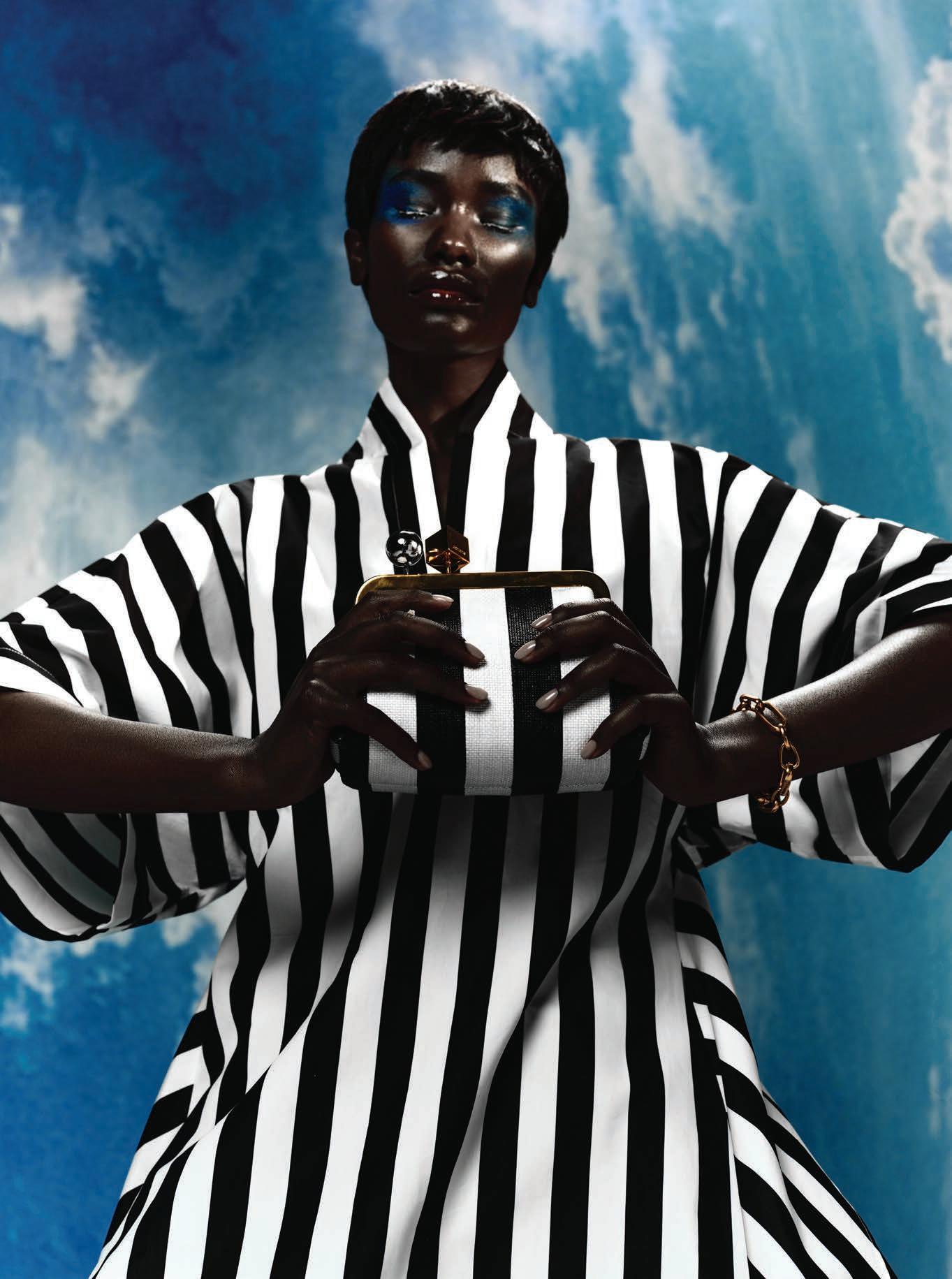
This page: Outfit: Versace; Right page: Outfit: Alaïa
Creative direction and styling: Polina Shabelnikova
Makeup: Jean Kairouz
Hair: Omid Shirali
Models: Kira and Annie
Photographer Assistant: Maxim Dianov
Location: BickiBoss
This page: Outfit: Dress, Jacquemus; Bag, Jacquemus; Jewellery: Bracelet, Pomellato; Right page: Outfit: Loewe
THE ART OF THE MATTER
For two decades, Art Dubai has helped shape the Middle East’s perspective on creative expression. This month, a special edition of the fair focuses on the resilience of the UAE’s cultural scene while celebrating voices and ideas that have enriched the region’s cultural landscape for generations. This intimately curated event forgoes scale in favour of soul and counts 45 gallery presentations spanning contemporary, modern and digital practices as well, as a Global Art Forum titled Before and After Everything. The event will take place from 15–17 May at Madinat Jumeirah and is shaping up to be its most meaningful iteration yet.
VISION
It’s never too late to…
– Start something all your own
– Find your voice
– Bet on a bright future
– Take your health into your own hands
– Think outside the box
– Learn from history
– Find a mentor
– Have your heart skip a beat
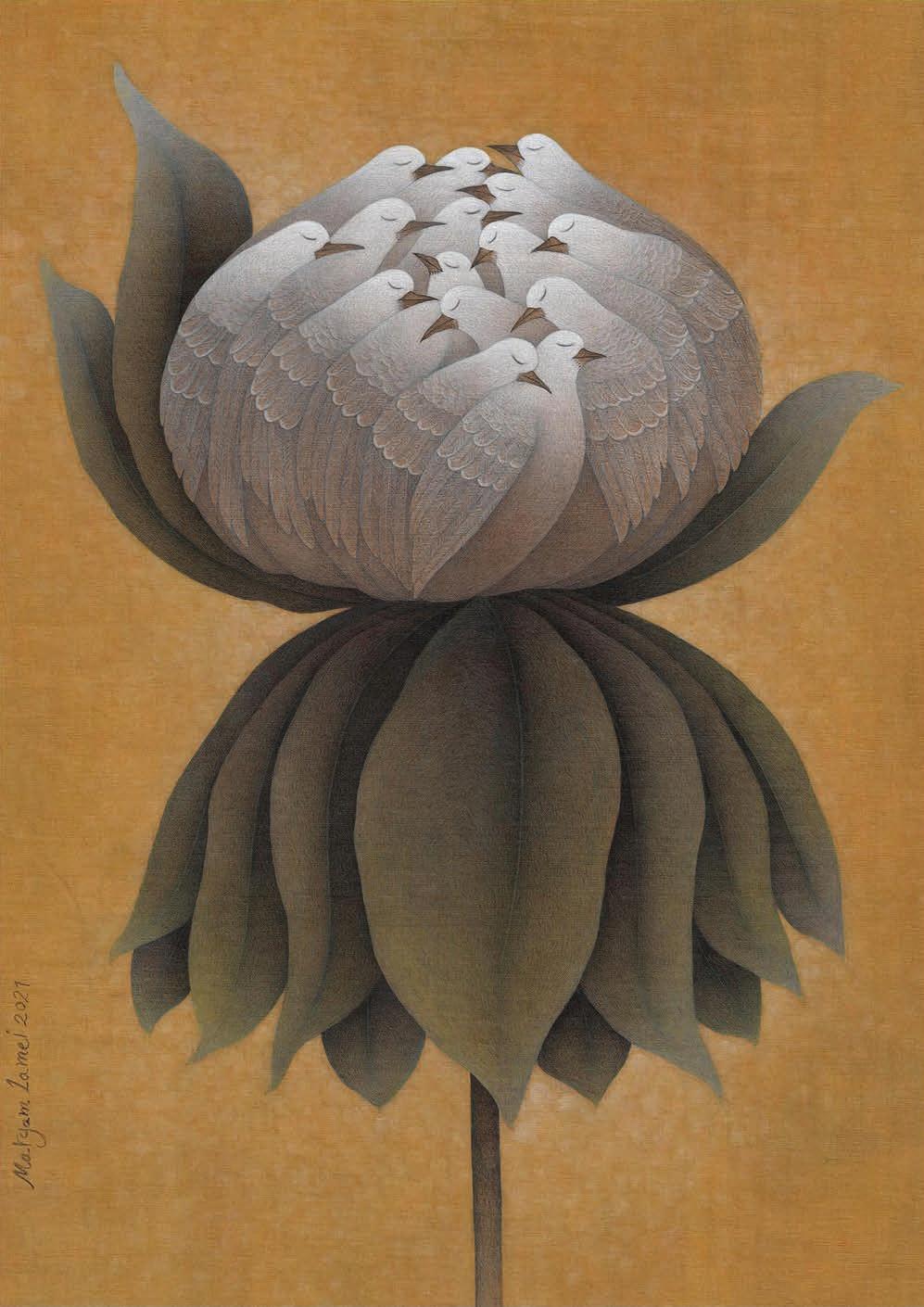
Leila Heller, Maryam Lamei, Birds are Gathered in God, 2021
THE 40-YEAR-OLD ENTREPRENEUR
Think your prime has passed? Think again
WORDS:ALICE HOLTHAM-PARGIN
Forty-two. That is the average age of a successful entrepreneur, according to a Harvard Business Review analysis of 2.7 million business founders. When the lens narrows to the fastest-growing, most transformative startups, that number rises to 45. A separate HSBC UK report surveying 320 midlife female entrepreneurs found that 85 per cent launched their businesses after the age of 40. And yet, the global narrative that entrepreneurship belongs to the young continues. The idea
that, if you haven’t disrupted an industry, raised a seed round, and made your exit before 30, you’ve somehow missed the window.
The data, it turns out, disagrees.
What if we reframed the conversation entirely? What if age in business wasn’t a disadvantage to overcome, but a competitive edge to leverage? One built from hard-won experience, refined judgment, purposeful clarity, and a network that younger founders simply don’t have.
Experience is your edge
The most valuable asset a midlife entrepre neur brings to the table isn’t just capital or contacts – it’s context. You’ve made mis takes. You’ve worked under leaders whose styles shaped your own. You’ve seen what works and, just as critically, what doesn’t.
Angela McKillop knows this better than most. She rebuilt her career and her confidence after a business collapse at 36, with a three-year-old at home, and went on to build and sell another seven-figure business. Today, she is an entrepreneur and online sales and marketing special ist helping other founders build profitable businesses around the lives they actually want. “I was very, very naive building it the first time round,” she reflects. “I believed everything that people told me. I just had no experience or knowledge. I said exactly what I meant, and I was honest and au thentic… and so I believed that everyone in the world was like that. So, I learned the hard way.” That hard learning is another dimension that can be reframed as an advantage. Failure, when you’ve survived it and come out the other side, stops being a source of shame and becomes a source of data. Midlife founders tend to carry a thicker skin toward external opinion, a more balanced relationship with risk, and a quiet, unshakeable confidence that says: I’ve handled worse. I can handle this. McKillop is candid about how her approach to risk has evolved: “I’m still a risk-taker, but I take more calculated risks. Let’s look at the numbers. Let’s look at the past history. Whereas in my 20s, I would just have been feet first.”
Dr Lamees Hamdan, an integrative medical doctor, longevity expert, founder of TIMEBEAM Beauty, and co-founder of haircare brand Ouai (sold to Procter & Gamble in 2021), echoes this with characteristic directness: “We’re more dependable. I hate to say it, but we are. We’re not going anywhere. When the going gets tough, the tough get going… and that toughness comes from having just done it before, having seen things like that before.”
Your most authentic self
There is another gift that comes with time, one that no degree can fast-track: self-knowledge. By midlife, most women have a far clearer understanding of who they are, what they value, and what they are no longer willing to compromise on. That clarity is quietly revolutionary in business.
McKillop recalls performing an early version of professionalism that felt nothing like herself: “I actually thought that you had to have a certain type of personality to be successful, very professional at all times. A lot of people in my 20s said to me, ‘You’re a very difficult person to get to know,’ because I wasn’t being myself.” Her advice to women building businesses today is unequivocal: “Be absolutely 100 per cent authentically you. Follow your passion. Block out the noise.” When you stop performing and start simply being, something shifts. Clients and collaborators who resonate with that authenticity find their way to you. The brand you build stops being a carefully curated persona and starts being a genuine reflection of your values.
Dr Hamdan brings this into her leadership philosophy, where emotional intelligence isn’t soft, it’s strategic. “I think apology is underrated,” she says. “We’re always afraid to apologise, especially if a lot of time has gone by. But it might be awkward and still be the right thing. If you feel that there’s an apology due and you haven’t apologised, pick up the phone. That’s where strength comes in. That is real strength.” Clarity of purpose, too, tends to arrive later than we expect. Dr Hamdan only found the defining mission of her career in her forties: “It took me some time to realise what it is I wanted to do, and it’s only when I was 40 that I had that clarity. My clarity is that I’m here to help people get healthier. That is what I love to do.”
Your network is your net worth
Perhaps the most underestimated advantage of the midlife entrepreneur is the one hiding in plain sight: the network. In your twenties, your world is largely defined by school and university connections. By your forties, you’ve accumulated something far richer: parent networks, long-term friendships, business associates, mentors, and collaborators across every industry.
“The biggest benefit of having those circles of people in your 40s,” says McKillop, “is that there’s a lot more encouragement, a lot more understanding. You’re surrounded by people on a very similar journey. You don’t get access to that in your 20s.”
That network is more than emotional support, it’s operational fuel. It means warm introductions to lawyers, accountants, and investors. It means early customers who trust you personally before they trust your product. It means moving faster and spending less.
Dr Hamdan has experienced this firsthand: “Now if I’m going to start a company, I can do it in almost one quarter of the time, and more cost-efficiently, because I know who to call. I know who is good for X, Y and Z, because I’ve worked with them before.”
This is the compounding return of a career well-lived: the relationships you’ve invested in over decades become the infrastructure of everything you build next.
Left: Dr Lamees Hamdan; Right: Angela McKillop
USING HER
When the Emirati mezzo-soprano Fatima Alhashmi reflects on her musical journey and cultural identity, she proves, decisively, that Timothée Chalamet has it all wrong about opera
WORDS: KAREENA ADLAKHA
Acase can be made that Timothée Chalamet’s comments, that “no one cares about” opera and ballet anymore, arguably cost him a best actor Oscar this year. In fact, all anyone has to do is look at the vibrancy of the current opera scene to know that the 30-year-old actor still has a lot to learn. Because as much as opera may be rooted in centuries of European tradition, it is artists like Fatima Alhashmi who are proving that the genre continues to evolve through diverse cultural perspectives. As one of the UAE's emerging opera talents, the Emirati mezzosoprano has been steadily carving a path that bridges classical technique with a deep connection to her roots and heritage.
ECIOVGrowing up, art was never far away from Alhashmi. Her father is an Arabic calligrapher, and music filled the family home – relatives who sang, others who played instruments. It was an environment that shaped her ear and her instincts long before she ever set foot on a stage. “At first, it was mainly Arabic music that shaped my musical environment,” she recalls. Later, through school and the study of piano, Alhashmi began performing in competitions and concerts. Opera, however, was never part of the plan. “Singing was always something I loved, but I never imagined that one day I would become an opera singer.”
What drew her in was the totality of the form. In opera, she found something that other disciplines couldn’t offer – the ability to combine music, drama and expression in a unique and immersive experience. “A single phrase can carry an entire universe of feeling,” she says. “It allows performers to fully inhabit a character
and tell stories that touch the audience emotionally.” For an Emirati artist working within a traditionally European art form, the question of identity is one she has thought about deeply. Rather than seeing the two worlds as separate, Alhashmi views her cultural background as something that enriches her performances. “Being Emirati is at the core of my identity, my voice and the stories I’m drawn to,” she explains. “When I perform, I bring my own experiences with me, and I think that adds a unique layer to the performance.” Opera, she is quick to point out, is a living art form – one that evolves with every artist who steps into it.
That belief has taken her far. Having performed internationally through initiatives supported by the Abu Dhabi Music & Arts Foundation (ADMAF), Alhashmi has been part of a growing movement bringing Emirati musical talent onto the world stage. A performance at Kensington Palace in London, as part of the Abu Dhabi Festival Abroad programme, stands out as a particular milestone – not only personally, but as a moment of cultural diplomacy. “It was not only a personal milestone but also an opportunity to represent the UAE's artistic voice on a global stage.” In the fall she will return to the stage closer to home. As part of the next Abu Dhabi Festival, Alhashmi will present a special recital alongside pianist Ina Chareli – a programme that blends classical works with elements inspired by Arabic musical traditions. “I think audiences will experience a range of emotions throughout the performance,” she says.
Backstage, the calm she projects is hardwon. A self-confessed perfectionist, Alhashmi admits the nerves never fully go away before a performance. But she has come to see that as a feature rather than a flaw. “I think that nervous energy is healthy – it pushes you to be more dedicated and focused.” Once she begins to sing, something shifts. The connection with the music, and with the audience, takes over. It is a journey she hopes will inspire others. Having performed since 2009, she has watched interest in classical music and opera grow steadily among young people in the region. Her advice is straightforward: follow your curiosity, but do so with patience and discipline. “Pursuing classical music or opera in our region might seem unconventional, but every artistic field begins with pioneers who believe in it.” Training, she stresses, is everything. At the root of it all is her father – the first person she names when asked about inspiration. His passion for art, and his patience, set the course. She recalls him telling her, “Work on your hobby and your passion, because one day it will become your career.” Those words, it turns out, were right, and the world is better for it.
FUTUREPROOFING
WORDS: GEMMA WHITE
A
city-builder, a scientist, a nurse who became a CEO, an ac celerator that matches innovators with in vestors, and a government entity looking 50 years into the future –in a nation packed with forwardthinking pioneer s, Emirates Woman highlights the work being done now to ensure the UAE’s success today, tomorrow, forever…
“Most
governments struggle to plan past a four-year cycle.
We plan across fifty”
The main thing about the future is that like the universe, it is infinitely vast and largely unknowable. Sure, you can take an educated guess or an algorithm-based assumption at what might be heading your way, but then – pow! – times change, trends shift, technology evolves, and the future can turn from clear to opaque in the blink of an eye. Luckily then, there are those for whom when it comes to the future a crystal ball and crossed fingers won’t cut it. Those who look seer-like across the known and unknowable landscape 10, 50, 100 years ahead and create strategies that are not only built to improve lives, but to adapt and evolve with the fickle future’s vagaries.
The UAE government has long made investing in the future a core component of its national, regional and global strategy with a focus on developing economic diversification, technology and AI, renewable energy, infrastructure, and sustainability. Major initiatives like the We the UAE 2031 vision, Net Zero 2050, UAE Centennial 2071, Abu Dhabi-based accelerator and entrepreneurship hub StartAD, and the Dubai Future Foundation, were all designed to bring public and private sectors together to actively contribute to building the future of the nation through the country’s most valuable resource: its people.
“Most governments struggle to plan past a four-year cycle. We plan across fifty,” says Saeed Al Falasi, executive director, Dubai Centre for Artificial Intelligence, Dubai Future Foundation. “That is what built-in foresight looks like. Not a crystal ball. A standing instruction, an institution, and a budget.” For DFF, key initiatives such as the Museum of the Future, Dubai Future Labs, Dubai 10X, One Million Arab Coders and Dubai Future Accelerators “need input from across the future of society: youth, experts, and experienced leaders”, and Al Falasi is committed to bringing together minds and mindsets irrespective of the letter that defines their generation.
“Younger people bring digital-native thinking and new expectations around participation and purpose,” he says. “Experienced leaders bring context, institutional memory, and pattern recognition. The goal is not inclusion as a checkbox. It is building together.” He adds: “Innovation begins with
understanding future opportunities and challenges. That is the diagnostic part. The harder part, and the part most governments get wrong, is turning ideas into real-world solutions. The data is stark. McKinsey research shows 70 per cent of transformation efforts fail, and the reason is almost never the idea, it is execution. It is the gap between pilot and scale. We connect foresight to policy, funding, and delivery. Innovation here is a journey, from research to prototype to test to scale, not pilots that die in a sandbox.”
Fortune, as the saying goes, favours the bold. But even the bold can need a nudge in the right direction at times, and across the UAE “scalability” has become a byword for emboldening innovators to think bigger.
“When we think about innovation, we think about these visionary founders, these mavericks who have brilliant ideas about changing the world,” says Nihal Shaikh, associate director of StartAD, the Tamkeen-supported global accelerator based at NYU Abu Dhabi. “But for that to happen, you need a whole village to be involved and when you look at the UAE, innovation is in their DNA. While start-ups are a core part of that innovation, that whole building of that network and helping everyone in that system take the next step in innovation maturity is what StartAD does. At the heart of it is scalability. Creating systems that can be scaled and repeated.”
Bringing together public and private sector, local corporations, start-ups, mentors and investors, as a grassroots model, StartAD was designed to “position the UAE among the world’s leading innovation nations”, as well as give those with a vision a more solid foundation upon which to build their idea. “The future is not a point in time, but the state of your nation’s productivity and innovation readiness,” says Director of StartAD, Ashwin Joshi. “It’s rooted in national needs, institutional readiness and the size of the gap between ambition and execution. It’s really about building a diversified knowledge-based economy that strengthens future skills and harnesses technology in service of people.”
In a global economy, possessing talent and skill might put you on the ladder to success, but climbing it requires more
than just capital. Advice, encouragement and mentorship must all be accessible at the ideas level if world-changing discoveries are to move beyond the lab.
For Emirati scientist Dr Sara Ishaq Alkhoori, whose pioneering work in transforming renewable resources into ecofriendly biofuels saw her recognised as a 2024 StartAD Emirati Women Achiever, capitalising on the mentorship the accelerator offered helped her see how her ideas could take shape on a wider scale. “They support start-ups and SMEs, but even though my work was not yet at that stage they enlightened me about entrepreneurship,” she says. “I come from an academic background where everything is at a laboratory scale, and they showed me how when you’re working on research and producing or publishing papers, that you may someday have an idea that could be a start-up. And if you do then how you would develop your idea into one that can be commercialised.”
Crediting StartAD with instilling a “shift in mindset” that encouraged her to see herself not just as an academic but also as an entrepreneur has highlighted for Dr Alkhoori the importance of organisations that match innovators with investors and makers with mentors. “Before it was about being in the lab, publishing papers and having patents. But where would this work go if I don’t scale up? It was knowledge building for the future,” she explains.
There’s a visionary selflessness that comes from building the future. In the ability to put one’s personal preferences aside in service of those who will come after us and picture ourselves in the shoes of those who will continue to walk the path we have so far travelled. “From my perspective, we are designing cities for the future, for our kids for the next generation. We need to think what they need and how we make it better for them,” says Arch. Abdulla Al Abdouli, Group CEO of Marjan. “The ideas we are creating today are not for us. They are for the next generation.” He adds: “We can see that the priorities of the next generation are AI, sustainability, flexibility, technology, mobility options… All of these elements are evolving and the way to achieve them is through engagement; you need to listen, you need to hear and to ensure that your projects remain viable for today’s life while respecting the need for the future.”
As far as journeys go, not just career-wise but also in personal growth and development, Dr Aysha Al Mahri RN sees hers as moving in tandem with that of the UAE itself. Having spent 12 years as a nurse working at the very forefront of healthcare, she rose to become CEO of private healthcare provider Burjeel Al Ain.
“The UAE has always pioneered, innovated and built the nation, and so at my personal level this is what I wanted to happen,” she says. “Starting my career as a nurse, I really wanted to explore opportunities to shift the traditional thought processes about how a nurse’s career progresses. It shaped me very well, helping me gain depth and understanding.”
In her work developing AI-driven solutions in healthcare, Dr Al Mahri RN also worked to raise the glass ceiling not just for women, but also for Emiratis, becoming the first female Emirati from the Middle East to be awarded the prestigious HIMSS Change Maker Leadership Agent Award, and becoming the first international member of the American Healthcare Data Management College. A beneficiary of StartAD’s forward-thinking approach, she too credits the accelerator with connecting her to women across an array of fields and disciplines. “It is a wonderful initiative,” she says. “They were looking for women in different career and leadership positions to create a community that provides mentorship and coaching of women across different sectors. It helped a lot when I shifted my career suddenly to a very senior executive role.”
And what did she learn? “How to be firm, how to be vigilant, and how to make sure that your decisions are being executed. It was very supportive to me, and I found that I could help and support other young women who are starting their careers.”
Dr Al Mahri RN, like Dr Alkhoori, Al Falasi, Joshi and Shaikh, does not speak about the future-proofing of the UAE without highlighting the influence and inspiration of the nation’s leadership when it comes to shaping and guiding the future of the UAE. “I think we are blessed in the UAE with the leadership,” says Al Abdouli. “They have a strategic vision for the country and the future. They see something we don’t see, they oversee the future, they are strategic and driven by initiative. And the beauty of that is that you can translate your dream into reality.”
“The future is not a point in time, but the state of your nation’s productivity and innovation readiness”
HEALTH REVOLUTION THE WOMEN ’S STARTS HERE
Maha
Gorton, the Head
of
Women’s Pavilion
at Expo City Dubai, discusses the launch of the FemTech Hub, and the relevance of innovation in advancing women’s health
WORDS: KAREENA ADLAKHA
Women’s health presents a huge economic and social opportunity in global healthcare, yet significant gaps remain in research, investment and access. In the region, initiatives like the FemTech Hub are beginning to reshape the conversation, giving space to inclusivity and forward-thinking solutions. At the helm of this movement is Maha Gorton, Head of Women’s Pavilion at Expo City Dubai. Through partnerships with organisations including Meem Foundation, American Hospital Dubai and PeriCare, the newly launched FemTech Hub brings together science, technology and lived experience to build a stronger ecosystem for women’s health.
Building on the success of the FemTech Hackathon, where students are invited to develop solutions to real issues in women’s health, the initiative also introduces platforms such as the Her Health Summit, Her Health Majlis and an Innovators Network, all designed to foster collaboration and long-term impact. Here, Gorton shares insights on bridging gaps in women’s healthcare and why cultural context remains central to meaningful innovation.
The FemTech Hub marks a significant step forward for women’s health in the region. What gap did you feel most urgently needed to be addressed when conceptualising this initiative? How
fragmented women’s health still is. It’s often treated in silos, but women experience it as a connected reality. At the same time, there’s a significant underinvestment in this space – only around five per cent of global research and development funding goes into women’s health, which is a striking gap when you consider that women make up half the population. The FemTech Hub was designed to provide a year-round ecosystem rather than a single programme, bringing together science, innovation and lived experience to create a more connected and responsive approach.
The Hub builds on the momentum of the FemTech Hackathon. What surprised you most about the ideas or perspectives young people brought to the table? What really stood out was the quality and depth of the ideas. This came from both male and female high school students, which highlighted the power of young minds when they’re given the space, tools and support to engage with these topics meaningfully. It showed that when you open up these conversations early, young people don’t shy away from them. The Innovators Network is particularly interesting from an entrepreneurial perspective. What opportunities do you see for startups within the FemTech space in the region? Through the Innovators Network, we’re creating a space where startups can access the ecosystem they need to grow. That includes connections with clinicians, partners, investors and pathways to validation. It all comes back to the role of the Hub as an ecosystem, connecting ideas to real impact.
For young women in the UAE interested in STEM or healthcare innovation, what pathways or mindset shifts do you think are most important right now? I think the biggest shift is moving from participation into ownership. The most impactful work in women’s health often sits across disciplines – not just science and technology, but also design, behaviour and social context. Young women in the UAE are already highly engaged in STEM, and we see that reflected in the number of
female graduates in these fields. The next step is for them to see themselves as founders, creators and decision-makers shaping these industries.
FemTech globally is gaining momentum, but every region has its own cultural context. How do you ensure that the solutions emerging from the Hub are both innovative and culturally relevant? For us, cultural relevance is foundational. It’s embedded into how the FemTech Hub was built – through the partners we work with, the conversations we prioritise and the formats we use.
For example, the Her Health Majlis is designed as a culturally familiar space, bringing together expert insight and open conversation in a way that feels both accessible and respectful. For that to happen, it needs to resonate with women’s real lives, experiences and cultural context. Looking ahead to the next edition of the FemTech Hackathon, how do you hope the conversation will evolve, and on a personal level, what has working on this initiative meant to you? The first edition has opened the conversation, and now we have an opportunity to go deeper. The focus is on how ideas can move beyond concepts into solutions that can be tested, validated and potentially implemented. I would also like to see the conversation expand into areas that are still under-discussed, such as menopause, ageing and long-term health outcomes.
On a personal level, the experience has been incredibly grounding and quite meaningful. Like many women, I’ve had moments where something didn’t feel right and was dismissed as normal, only to later realise that it wasn’t. That’s something we hear again and again.
“FOR US, CULTURAL RELEVANCE IS FOUNDATIONAL. IT’S EMBEDDED INTO HOW THE FEMTECH HUB WAS BUILT”
POWER DESERT
WORDS: JESSICA MICHAULT
At 27, biochemist Zara Ossman is turning the UAE’s date detritus into biofuels, biodegradable plastics, and a bold new vision for what science can look like when it grows from the soil of home
For Zara Ossman, the name of the company she cofounded says it all – Safa Bioworks. Launched in 2025 with her business partner Nima Vakili, the moniker they chose underlines the essence of their core philosophy. Safa – draws its name from the Islamic story of Hajar running between the two hills of Safa and Marwa, and ultimately finding the Zamzam spring of water where the desert offered nothing – means, essentially, discovering nourishment where none was expected. “The whole point of the company is to find sustenance where you think that there is none,” Ossman says, her voice carrying the particular quiet certainty of someone who has thought about this for a very long time. “For Hajar it was water. For us it’s fuel, it’s bioplastics, it’s biodegradable.”
The raw material at the heart of Safa Bioworks is both achingly obvious and, until now, almost entirely overlooked: dates. The UAE produces millions of tons of date waste annually – the fronds, the trunks, the seeds, the pits, and the bruised or fallen fruits that don’t survive quality control. All of it, traditionally, is treated as a problem. Ossman sees it as a feedstock. Rich in sugar, date waste is, in biochemical terms, a remarkable precursor for a dizzying range of bio-based products – from polylactic acid (PLA) bioplastics, which are compostable and derived from renewable sources rather than fossil fuels, to lactic acid for bio-manufacturing partners, to what Ossman calls her personal obsession: sustainable aviation fuel.
“I find that so interesting,” she says of the aviation fuel stream. “A plane being powered by a date is incredible. When you look at the Wright Brothers and what they were doing with that first flight,
they never could have thought that one day we could grow something in the ground and with it power what they flew that day.”
The science underpinning this vision is formidable. Converting agricultural by-products into sustainable fuels involves complex fermentation and chemical engineering processes – the same industrial biochemistry that has, in the broader palm oil world, already demonstrated a pathway for turning biological matter into biodiesel through transesterification, binding plant-based oils with alcohol to produce cleaner-burning fuel. Biodegradable plastics, meanwhile, have been pioneered using the fibrous by-products of oil palms – materials that, like date waste, would otherwise go to landfill. Ossman is applying these principles to the UAE’s own agricultural heritage, closing a loop that stretches from orchard to atmosphere.
The company’s emergence from the UAE is, for Ossman, not incidental but essential – a point of pride she returns to again and again with the kind of warmth that makes it clear this is not a talking point but a deeply held belief. She arrived in Dubai from Scotland at 15, when her father, enchanted by a holiday stopover, made the life-altering decision to relocate the family to the country. Ossman has never looked back. “Our vision is to take a million pounds of date palm waste in the Middle East and transform it into useful bio-based products through a groundbreaking bio-refinery,” she explains. “The UAE is home. I can’t imagine anywhere else.”
What makes Safa Bioworks particularly compelling is its insistence on circularity. Rather than competing with existing bio-manufacturers, Ossman and Vakili have positioned themselves
“OUR VISION IS TO TAKE A MILLION POUNDS OF DATE PALM WASTE IN THE MIDDLE EAST AND TRANSFORM IT INTO USEFUL BIO-BASED PRODUCTS THROUGH A GROUNDBREAKING BIO-REFINERY”
upstream – supplying the lactic acid and other bio-inputs that companies like Dubai-based Emirates Biotech, currently building one of the largest bio-manufacturing plants in the Middle East, need to produce their own bioplastics. The logic is elegant: locally produced inputs eliminate the emissions generated by importing feedstocks, and locally grown date palms sequester carbon in the process of simply existing. The entire chain becomes demonstrably greener. “If lactic acid was locally produced, not only are you not getting half your feedstock from somewhere else, but from the ground, from the planting of the date itself to the actual use of the fuel – the whole process becomes more sustainable,” Ossman explains with passion in her voice. “You’re saving carbon from not using the imported stuff, but also not using a fossil-based product in the first place.”
And yet, for all the molecular precision of her thinking, Ossman herself arrived at biochemical engineering almost entirely by accident. Born with the kind of scientific mind that announces itself early – she was telling people she wanted to be an astrophysicist at four – she studied at UCL, one of the world’s top universities for the field, ranked alongside MIT. Originally she had enrolled in chemical engineering after ruling out mechanical (the ratio of women to men was, she notes drily, “something like nine to ten per cent”) and biomedical engineering (too many graphic images of the human heart in the first week – she is, she admits with a laugh, extremely squeamish). But in a “sliding doors” sort of moment, she found herself curious about the field of biochemistry and approached the department on a bit of a whim. “I had never done biology in my life. I didn’t even take it in high school,” she recalls. Then out of the blue she got a call from a female professor from the department, inquiring about her grades and then simply told her “you can start on Monday.” It rerouted her entirely. “I went there to ask them for a brochure and I ended up joining. It was a complete accident,” Ossman says with a smile.
That the biochemical engineering department had a 40 per cent female student body and was led by women who were, in Ossman’s words, “world-renowned” – one leading research in biofields from algae, another a global authority in process economics – was not lost on her. “You naturally look up to them and want to follow in their footsteps,” she reflects. “You don’t have any ceilings around you. You’re not undermined by the people beside you.”
Another kismet moment in Ossman’s life happened when she was first introduced to her Safa Bioworks co-founder. Being
neighbourly, her mother invited Vakili – an American entrepreneur who previously worked at Chemplax, one of the largest plastic compounders in the United States – to a Ramadan dinner at her home, seeing as he lived just down the road. That auspicious night he asked Ossman what she did. She told him she was a biochemical engineer. “He said: ‘You won’t believe an idea I have,’” she recalls. “And that was it. From that day we’ve been tied at the hip.”
Just over a year old and still in its fundraising stage – navigating conversations with private equity investors while pitching to UAE government stakeholders, whose buy-in feels, to Ossman, both natural and necessary – Safa Bioworks is the embodiment of a particular kind of Middle Eastern ambition: not borrowed from elsewhere, but grown here, from the land and the people. It aligns, deliberately, with the UAE’s own sustainability targets – a 2030 clean energy goal and a commitment to sustainable aviation fuel (SAF) to achieve net-zero emissions by 2050 – and it speaks to a region whose agricultural traditions have, until now, rarely been framed as the raw material for scientific revolution.
“While we may not be the largest date producer, we’re the largest skilled-people producer,” Ossman says about the unique position the UAE holds in the future of sustainability in the region. “The innovation, the skilled minds – it’s in the UAE. And that’s even more important than having the dates themselves, because the dates will do nothing by themselves. You have to have the right people. People who have a drive to want to build something and enjoy coming up with creative solutions to problems. You need to have patience with research and development and it takes a special type of mindset.”
In her spare time, Ossman builds robots for fun. She is currently on an astrophysics reading kick, inspired by the novel behind the film Project Hail Mary. She thinks, deeply and sincerely, about the smallness of human problems against the scale of the Milky Way. She is, in all the ways that matter, exactly the kind of person you’d want founding a company with a name that means water springing from the desert sand. “I really don’t want to feel that I haven’t made a difference at the end of my life,” she says, simply. “My sense of satisfaction comes from being creative, from doing something to help. And we may not be solving the entire problem. But it’s still doing your part.”
In the UAE – a country that has spent 50 years building its identity on the transformation of desert into possibility – that sounds less like a mission statement and more like a homecoming.
DESIGNING WONDER
Exhibition Designer Alya Naser Albreiki on growing up sketching weddings in Abu Dhabi, bringing the Wildlife Photographer of the Year to Natural History Museum Abu Dhabi, and why accessibility is the future of cultural spaces
WORDS: AMINATH IFASA
Long before Alya Naser Albreiki ever set foot in a museum as a professional, she was already thinking like one. Growing up in Abu Dhabi, her first lessons in spatial storytelling came from an unexpected source: weddings. When asked about this, she smiles, almost as if she is confessing something slightly embarrassing. She would find herself studying the way a ballroom would transform overnight.
How colour, texture and material conspire to create something temporary but unforgettable – an exhibition designed to last a single night and linger much longer. “I enjoyed growing up and seeing how weddings were designed,” she recalls and would end up sketching those spaces in her notebooks long before she understood she was practicing the art of exhibition design.
That instinct never left her. Today, as an exhibition designer at Natural History
Museum Abu Dhabi, Alya is part of the team bringing the story of life on Earth to millions of visitors, and she still approaches each project the way she once did those weddings, as a puzzle of atmosphere, emotion and human behaviour. The process is deeply collaborative, pulling in curators, logistics teams, facility managers, consultants and designers, all of them working toward a single question. “We think of the experience, the visitor experience, how we bring out the information we want that visitor to leave with,” she explains. The question of where to place an object is inseparable from how someone should feel while moving through the space, and what they should carry out the door that they did not have when they walked in.
Innovation, for Alya, means expanding who gets to feel that sense of discovery. She works with 3D development, material exploration, and sustainable approaches, with a strong focus on accessibility. “My main focus in future exhibition designing will be making sure it’s accessible for people of determination,” she says with a certainty that leaves no room for doubt. She wants tactile stations for each exhibit and hopes that a visitor in a wheelchair will encounter the same moments of wonder as a child standing on their own two feet. She is determined to create design that erases the distance between different bodies and different ways of experiencing the world.
As an Emirati woman working at an institution of this scale, Alya is aware that her presence carries meaning beyond her individual contributions. “It reflects how Emirati women today are playing an important and active role shaping our cultural institutions and how global stories are shaped in the UAE,” she says. But for her, the most meaningful feedback comes from the young visitors who move through the galleries with unrestrained curiosity.
During the museum’s Youth Day event, held ahead of the public opening, she watched children running from one display to the next, pointing, asking questions, their faces lit up with something she recognized. Her voice softens when she recalls it. “When I saw kids running around, their curiosity sparked, asking questions, getting inspired, that was exactly what I wanted,” she says. “I knew that I was in the right place.” She pauses before adding, almost quietly, that she would have wished for places like this when she was younger,
and that absence now fuels her dedication to the generations coming after her.
The museum currently hosts the Wildlife Photographer of the Year exhibition, a travelling showcase now in its 61st year that features over one hundred images selected from an international competition. “Our role was behind the scenes,” Alya shares. “Coordinating with international partners, reviewing layout and mounting requirements, preparing the space for the exhibits, ensuring every photograph is installed with precision so the storytelling and visual impact remain intact.” The exhibition was designed in-house and runs at the Natural History Museum Abu Dhabi until 6 June.
Before the Natural History Museum Abu Dhabi, Alya’s career wound through some of the most significant cultural institutions in the country. Zayed National Museum, where she contributed to the development of interactive exhibits and collaborated closely with curators. Warehouse421, where she honed her understanding of visitor engagement. The UAE Pavilion at the Venice Biennale, where she worked on public-facing programmes in an international context. Manar Abu Dhabi, where she contributed to a large-scale light installation on Al Samaliyah Island alongside teamLab. Each of these experiences taught her something different about the relationship between space and impactful narratives.
“Storytelling in cultural spaces is not only about information,” she says. “It’s about creating an emotional connection.” And which experience shaped her the most? For Alya it’s an impossible choice, like asking a parent to name a favourite child. The Venice Biennale showed her how national narratives could travel across borders. Warehouse421 taught her the intimacy of smaller, more experimental spaces. All of it converges now in her work at the museum, where she is constantly asking how a fossil or a photograph or a specimen can do more than just sit behind glass.
When she begins designing a new exhibition, Alya does something that sounds simple but is actually quite radical. She disappears. “I imagine myself as a kid, or as an elder, as someone who’s in a wheelchair,” she explains. “When you design, it’s not about you. It’s everyone, the millions of people who will journey with this exhibition.” That practice of empathetic displacement keeps her from designing for her own taste or her own assumptions. It
pushes her toward tactile stations and accessible layouts and experiences that work for a grandmother and a toddler and a teenager scrolling on their phone, all in the same afternoon.
Ask her what exhibition she would design if there were no limits, and she does not hesitate. She wants to tell the stories behind the science. “I would love to design an exhibition that focuses on the people and journeys behind scientific discoveries at the museum,” she says. “Often in museums, we see the final discoveries like fossils, specimens or photographs, but not always the human stories behind them. Highlighting those journeys would add a powerful human dimension to natural history.” She imagines visitors learning not just about the dinosaur but about the researcher who spent decades looking for it, not just about the photograph but about the photographer who waited weeks in the cold to capture it. That human thread, she believes, transforms a museum visit from an educational exercise into something closer to a conversation across time.
For the visitor walking into Natural History Museum Abu Dhabi for the first time, perhaps carrying assumptions shaped by headlines or brief visits to other cities, Alya hopes for a specific kind of encounter. She wants the first five minutes inside the museum to feel welcoming and inspiring, and
she wants them to stop short. “I hope they feel a sense of wonder, the kind that makes them pause and realise how extraordinary our planet is,” she says. “Those first moments should invite visitors to slow down, explore and feel connected to the stories of life on Earth.” It is a quiet ambition, almost understated, and it is also the entire point of what she does. She is not trying to overwhelm anyone. She is trying to make them stop, just for a moment, and really look.
The temporary exhibition strategy at the museum reflects this same philosophy. Alya explains that the team intentionally curates a rotating schedule of shows designed to attract different audiences, including people who might never have considered walking through the doors. “Through temporary exhibitions, we intend to bring different people with different interests,” she says. “Not just natural history enthusiasts. People interested in photography. People who never thought they would visit a natural history museum.” She grins when she says this, clearly delighted by the subversion of expectations. Someone arrives for the Wildlife Photographer of the Year because they love cameras, and they leave having learned something about the fragility of an ecosystem. That transformation is what she is working toward, the quiet shift that happens when good design meets genuine curiosity.
ICONS BEFORE US
Morin Oluwole, an international luxury business leader who serves on the boards of Breitling, Rituals, and Biologique Recherche, and the former Global Luxury Director at Meta, discusses the women who shape how we lead today
When we talk about innovation, we tend to focus on what is new: new ideas, new technologies, new ways of leading. But innovation rarely starts from nothing. It is shaped, often quietly, by the women who came before us. The ones who expand what feels possible, sometimes without ever naming it.
For me, that begins with my mother.
She was a lawyer, on a clear professional path, when she made a decision that changed everything: she left her career, moved to the United States, and chose to build a bigger life for herself and her daughters. It wasn’t framed as a bold move at the time. It was simply what needed to be done. It redefined my understanding of leadership. Not as status or progression, but as the ability to make difficult, often invisible decisions that expand possibility for others.
Then there is Carolyn Everson. The former VP Global Marketing Solutions at Meta, and my direct boss.
Early in my career, she didn’t just support my growth, she accelerated it. She challenged me to think beyond the role I was in, to step into rooms I hadn’t yet claimed, and ultimately to build a life and a luxury business in Paris from scratch – something that once felt distant, even improbable. What stayed with me was not
just her belief, but her expectation. She didn’t just open doors. She assumed I would walk through them and held me to that standard.
These two women shaped how I think about leadership. Not as something you inherit. But as something you choose, often before you feel ready.
We over-index on visibility. We under-index on impact
Leadership today is often mistaken for presence. Being seen. Being heard. Being constant. But the women who truly shape outcomes operate differently. They are not focused on occupying space –they are focused on shaping it.
They ask the question that reframes the discussion. They bring clarity when others bring noise. They move things forward.
And yet, these contributions are often less visible than performative confidence. The risk is that we are training a generation to be noticed, instead of teaching them how to be effective.
We confuse speed with progress
There is an urgency in today’s professional culture. Move fast. Grow fast. Be visible early. But speed, on its own, is not strategy. The most effective leaders I’ve observed take a different approach.
They invest time in understanding context before acting. They observe how decisions are made, where influence sits, what is rewarded – and what is not. They don’t rush to prove themselves in every moment. They choose the moments that matter. Because influence is not built through constant action. It is built through intentional action.
We misunderstand confidence
Confidence is often perceived as certainty. As having the answer. As speaking first and often. But the women who have shaped me most did not wait for certainty. They acted with incomplete information, with imperfect clarity – but with strong judgment.
They trusted their ability to navigate, not their ability to predict. This is a quieter form of confidence. It is less about performance, and more about conviction. Less about appearing ready, and more about being willing to step forward anyway.
And perhaps most importantly –we underestimate the role we play in shaping others
Leadership is often framed as personal trajectory: what you build, what you achieve, how far you go. However, the more I reflect, the more I believe that this is only part of the story. My mother didn’t just change her own path. She changed mine.
Carolyn didn’t just lead teams. She built leaders.
That is the multiplier effect of leadership. The decisions you make, the standards you set, the way you show up – these extend far beyond your immediate role. They shape how others think, how they act, and what they believe is possible for themselves.
Innovation,
redefined
We often associate innovation with disruption – with breaking from the past, creating something entirely new. Yet, some of the most powerful innovation is quieter.
It is the decision to leave behind a stable path to create a better future. It is the choice to invest in someone before they fully see their own potential. It is the discipline to build something meaningful, rather than something visible. The women who came before us have already done much of this work. They have shifted expectations, often without recognition, and expanded the definition of what leadership can look like. The question now is not whether we can lead. It is whether we are willing to do so with the same level of intention.
The future of leadership will not be defined by those who move the fastest or speak the loudest. It will be defined by those who understand the weight of their decisions and choose to use them to expand what is possible for others.
Because in the end, leadership is not what you build. It’s what continues, because you were there. @morin | morinoluwole.com
FORM AND FINESSE
The most compelling women’s timepieces from Watches & Wonders 2026
WORDS: VAARUNYA BHALLA
From technical triumphs to design revelations, Watches & Wonders 2026 proves innovation is alive in Geneva. At this year’s fair, some of the most compelling women’s timepieces balance artistry and technical mastery in equal measure. While many of the standout creations lean into the codes of high jewellery – where goldsmithing, gem-setting and design take precedence – there is strong evidence of serious horological intent beneath this expressive (and impressive) surface. Here are the pieces that made the hearts of the Emirates Woman team skip a beat.
CARTIER BAIGNOIRE BANGLE WITH CLOU DE PARIS
Light lingers on each sculpted pyramid as Cartier reinterprets its icon – the Baignoire bangle. Architectural and playful, tactile yet refined, the Clou de Paris motif has been part of the maison’s repertoire since the 1920s and embodies Cartier’s technical mastery and savoirfaire. From the bracelet, to the case, and even the dial, the Cartier Baignoire is now entirely adorned with this emblematic expression.
BVLGARI SERPENTI AETERNA
Bvlgari presents its metamorphosis of the Serpenti, its most magnetic icon. The Bvlgari Serpenti Aeterna showcases the Roman jeweller’s mastery of goldsmithing and audacious control over colours. It’s a sinuous curve in rose gold, studded with 493 brilliant-cut diamonds and a kaleidoscope of 122 coloured gemstones in varied cuts.
HERMÈS ARCEAU SAMARCANDE
The Hermès Arceau, designed by Henri d’Origny, returns in 2026 as a poetic, chiming tribute to the maison’s equestrian spirit. A SaintLouis crystal dial, openworked into a horse’s head, reveals the new H1927 self-winding movement with a minute repeater complication; an elegant convergence of jewellery savoir-faire and haute horlogerie.
ROLEX OYSTER PERPETUAL 28
Rolex is celebrating 100 years of the iconic Oyster case and as expected, the brand has unveiled a suite of offerings around this theme. The one we’ve got our eyes on is the Oyster Perpetual 28, rendered in 18ct yellow gold and paired with its rich green dial honouring the history of the Oyster with subtlety and delicate refinement. Careful observers will notice an interesting detail: the applied hour markers at 3, 6 and 9 o’clock are crafted from natural stone, which is a first for Rolex.
Cartier Baignoire bangle with Clou de Paris
VAN CLEEF & ARPELS LUDO SECRET
Van Cleef & Arpels revisits a 1949 icon with its Ludo Secret watch. Its supple yellow gold briquette bracelet (hand-assembled to mimic woven fabric) glimmers in contrast to two sapphire-studded crescents. A gentle press on the jewelled clasp reveals a white guilloché mother-of-pearl dial, crowned by a single baguette-cut sapphire at twelve o’clock.
CHOPARD HAPPY SPORT HAPPY HEARTS
In a collection defined by joy, glamour and free-spirited design, this latest interpretation doesn’t disappoint. A steel case and denim strap frame the mother-of-pearl dial animated by dancing hearts and floating diamonds. Two hearts playfully move beneath sapphire crystal: one in white mother-of-pearl, the other in a pink-
purple gradient, bringing movement and lightness to the timepiece. Beneath this surface lies the technically advanced 09.01-C calibre, developed entirely in-house.
AUDEMARS PIGUET ATELIER
DES ÉTABLISSEURS – LES GALETS
In revisiting the établissage tradition of early Swiss watchmaking, the maison announced its debut ‘Les Galets’ edition, one of three creations announced at the fair. The practice has its origins in the early history of Swiss watchmaking as a decentralised system. Les Galets embraces a jewellery-first expression, with pebble-like gold forms, turquoise and tiger’s eye links, and a stone dial that moves with fluidity. It also houses the Calibre 3098, which is hand-finished, case-shaped, and assembled by a single watchmaker.
JAEGER-LECOULTRE REVERSO ONE ‘SAKURA’
Born in 1931 as a functional design, the Jaeger-LeCoultre Reverso has now evolved into a timeless canvas for expression and a widely recognisable icon in its own right. Within the La Vallée des Merveilles capsule revealed at the fair, three Reverso One limited editions celebrate nature, each one exquisitely realised. The ‘Sakura’ stands out, with its red-crowned crane emerging through Grand Feu enamel and diamond-set surfaces. The culmination of 145 hours of craftsmanship, it comprises 664 precious stones and captures perfectly the fleeting beauty of sakura with playful whimsy.
CHANEL J12 IN MATTE BLUE
The Chanel J12 evolves once more at Watches & Wonders 2026, exploring new case sizes and expressions. Yet it’s the moody, dark blue matte edition that lingers in the imagination. Taking five years to perfect, its deep hue nods to Gabrielle Chanel’s affinity for the darker, more nuanced shades of blue. It now joins the permanent collection alongside established classics in black and white ceramic.
Jaeger-LeCoultre Reverso One ‘Sakura’
Bvlgari Serpenti Aeterna
Van Cleef & Arpels
Ludo Secret
TIME STANDS STILL
At this year’s Watches & Wonders event in Switzerland, these were the timepieces that stopped us in our tracks
WORDS: JESSICA MICHAULT
Tell me about it, stud
Bvlgari has always understood that a watch can be a weapon of desire, and this new limited-edition capsule – four variations of the iconic Serpenti Tubogas reimagined with gold studs – is no exception. The addition of pyramidfaceted studs punctuating the sinuous, spring-wound bracelet feels at once architectural and primal, like something excavated from an ancient Roman treasure chest and rebuilt for a woman who dresses with intent. Offered in yellow gold and steel, with hardstone dials in malachite and mother-of-pearl and diamond accents, this is jewellery that happens to tell time – and does so with the particular, unapologetic glamour that is uniquely Bvlgari.
BVLGARI – SERPENTI TUBOGAS STUDS CAPSULE
A Talisman to Time
The Myst de Cartier watch arrives like a conjuring trick made precious – a sculptural bracelet-watch whose beaded, pillar-like links slip onto the wrist without fastening, as though it coils onto the wrist by sheer force of beauty. Diamonds are bead-set across its articulated form, requiring 30 hours of a jeweller’s undivided attention, while a lacquer artist hand-paints each obsidian line individually. In its fully diamond-covered version, the whole thing shimmers in and out of visibility depending on how the light catches it. Which, honestly, feels exactly right for something called Myst.
CARTIER – MYST DE CARTIER
PIAGET – SIXTIE CUFF WATCH
It’s Cuffing Season
Once again, Piaget has mined its own archives for another retro cool cuff – inspired by its 1970s DNA – to create a gloriously asymmetric trapezoid cuff silhouette that pretty much demands a moment on a red carpet – or two. Crafted in 18ct rose gold, the cuff comes ribbed with rows of diamonds and framed by a unique hand-engraved Décor Palace finish. The watch finds its off-centre heart in the form of a vibrant black opal. This fiery feature of the quartz movement timepiece acts as a striking counterbalance to the overall ripple effect design of this unforgettable cuff. So, who’s ready to cuff up?
Wild at Heart
Hermès has decided to give collectors the option to put a lion in their pocket. With its new limited-edition pocket watch, only six of which will be created (three in cypress green, three in sapphire blue) this timepiece is not so much a watch as it is a small, perfectly contained act of artistic license. The cover art is a roaring lion assembled from 10 species of wood, each sliver chosen for its natural colour and pieced together like the world’s most obsessive jigsaw puzzle. Between its sharp teeth can be perceived the bold Grand Feu enamel dial underneath. Fired at over 800 degrees until the colour reaches a vibrant hue that has its own visceral power. It’s a combination that will make watch aficionados purr with pleasure.
HERMÈS – SLIM D’HERMÈS POCKET ROAAAAAR!
Diamond Time
There is just something so chic about sparkling white diamonds framed by pitch black surroundings. Chopard beautifully proves this point with its new L’Heure du Diamant timepiece. The cushionshaped case, crafted in ethically sourced white gold, has a bezel filled with 4.40 carats of diamonds held in V-shaped prongs that essentially dare the light to do its worst. The brand tops it off with a deep black onyx dial – and then, because why not, it covers the watch hands in diamonds too. The timepiece, which runs on a fully in-house movement, is vintage in its soul but completely contemporary in its confidence. Talk about a night full of stars.
CHANEL – NOEUD DE CAMÉLIA
Time to Smell the Flowers
Only Chanel would attempt to bring sartorial and horological worlds together in such an unexpected, yet elegant way. Crafting a leather strap to look like grosgrain ribbon tied neatly in a bow and adorning it with jet-black beadwork –hand-embroidered by the legendary Maison Lesage. But then Chanel takes the concept further by adding a diamondencrusted white gold camellia in the middle, and turning it into a secret watch with a tiny lacquered dial tucked inside it. 20 women in the world will have the chance to own this piece, and all twenty of them will spend most of their days not actually checking the time but rather fielding questions about what, exactly, is sitting on their wrist. The answer, of course, is pure Chanel – which is to say, an artistic creation that speaks to the senses and the soul.
VAN CLEEF & ARPELS – LADY RENCONTRE CÉLESTE
Star-Crossed Romance
Van Cleef & Arpels has always understood that the best jewellery tells a story, but the Lady Rencontre Céleste takes that instinct somewhere genuinely extraordinary. Drawn from the Asian folklore of Vega and Altair – two celestial lovers separated by the Milky Way, reunited only once a year – the dial is a feat of technical ambition: champlevé enamel, gem-set plique-à-jour enamel, and delicate engraving are all working in concert, the last of those techniques an exclusive Maison patent. Flip the timepiece over and the Summer Triangle constellation waits on the caseback, quiet and perfect. A love letter written in light, fired in enamel, and worn on the wrist.
VACHERON CONSTANTIN –ÉGÉRIE MOON PHASE
In Full Bloom
Vacheron Constantin leans even further into its feminine side with the latest iteration of its beloved Égérie line. Yes, there’s a mother-ofpearl dial in the Maison’s signature pleated pattern – a nod to haute couture that never gets old. Yes, a gold moon rises and sets behind hand-crafted clouds, and the crown is set with a moonstone, because this is a house that knows how to create ripples of design touchstones. But the real revelation of this 100-piece limited-edition Égérie is the strap. It comes handpainted with spring blossoms in miniature, making it the first time in Vacheron’s entire history this technique has migrated off the dial entirely. Combined with the natural variation of each mother-of-pearl dial, no two timepieces are alike. Making this Égérie a watch that is, in every sense, a one-off.
AN OLFACTORY UNPACKING
The OG “outside the box” brand Maison Margiela once again challenges norms with its latest fragrance proposition. Turning perfume into philosophy, the Scentsorium Collection is a scent collective of six genderless parfums born from the Artisanal Atelier. These striking aromas bypass the classic question of what someone might want to smell like and go deeper – to ponder what they might want to feel like. Each fragrance is a meditation on a different shade of human feeling – hope, rage, rapture, despair – marking the house’s first foray into haute parfumerie. And just like the singular precision the house applies to its couture, these evocative scents offer an exploration of emotions, both fleeting and foundational.
GLOW
Take a moment to…
– Discover ways to amplify allure
– Be drawn in by the beauty of Dior
– Learn the benefits of stem cells
– Find the perfect photo finish
– Explore female fragrances
– Take a new approach to aromas
– Travel using only your senses
Hot New Buys
WORDS: CAMILLE MACAWILI
A round-up of the best new things in beauty that deserve a spot in your vanity – from cool new enriched formulas to products with potential cult status
Blend, Blur, Go
Housed in a mini-version of the brand’s iconic triangle logo, Prada’s lightweight balm blush blends like a dream, delivering a blurred finish, perfect for on-the-go touch-ups that feel effortless yet polished.
Serge Lutens’ new fragrance collection, Royaume des Lumières, showcases exceptional scents crafted from the most prestigious ingredients in perfumery. It is the pinnacle of olfactory opulence in every sense. Cracheuse de Flammes Eau de Parfum 100ml Dhs1,910 Serge Lutens
CHISELLED CHEEKS
Saie’s Supersuede Bronzer enhances facial depth and dimension and delivers natural, softly diffused bronze with a velvety texture that melts seamlessly into the skin, for a sculpted, sunwarmed finish. Supersuede Radiant Baked Bronzer Dhs118 Saie
Signature Scent
Bright and uplifting, Parfums de Marly’s Athénaïs is a vibrant and floral ambery scent balancing luminous citrus notes with an enveloping warmth, all enrobed in a mood-boosting bottle. Athénaïs Eau de Parfum, 75ml Dhs1,490 Parfums de Marly
Skin Quencher
Caudalie’s Premier Cru The Rich Cream is an ultra-nourishing cream formulated with lipid-replenishing bioceramides that reactivate natural youth mechanisms, it’s the ultimate comfort that takes the skin from parched to peachy. Premier Cru The Rich Cream, 50ml Dhs456 Caudalie
RADIANT GAZE
Guerlain’s new ultra-smoothing eye cream repairs the eye’s most fragile zones from micro damage. Its cutting-edge blend of hyaluronic acids and potent bee-derived actives delivers a plumping and smoothing effect, leaving the eye contour brighter, firmer, and refreshed.
Abeille Royale Youth Repair Eye Care, 15ml Dhs420 Guerlain
PEP TALK
Powered by a next-gen complex of advanced peptides, Dr. Sturm’s The Peptide Serum encourages collagen and elastin synthesis in the deeper layers of skin to support renewal and resilience. The Peptide Serum, 30ml Dhs800 Dr. Barbara Sturm
LASTING IMPRESSION
A sophisticated cherry fragrance blended with bamboo, violet and soft musk, an effortlessly chic scent that captures modern elegance with a subtle, lingering allure. Room Service Eau de Parfum, 100ml Dhs1,070 Vilhelm Parfumerie
Beauty Redefined
RADIANT HUES, SUN-KISSED SHADES, AND A STRIKING SCENT SET THE TONE FOR SUMMER
SENIOR EDITOR: JESSICA MICHAULT MAKEUP : JEAN KAIROUZ FOR DIOR BEAUTY
This page: Gris Dior; Right page: Dior Prestige La Micro-Brume de Rose, Dior Vernis – 110 Sunset, Dior Addict Lip Maximizer – 053 Golden Hour; Outfit: Blazer, Jewellery, all Dior Ready-to-Wear Spring-Summer 2026
This page: Dior Forever Nude Bronze Glow – 031 Coral Bronze, Diorshow 5 Couleurs – 162 Summer Azur, Dior Vernis – 110 Sunset, and Dior Addict Lip Maximizer – 054 Aurora; Bag: Dior Ready-to-Wear Spring-Summer 2026; Right page: Dior Addict Glass Lipstick – 906 Talk My Dior; Outfit: Hat, Top, both Dior Ready-to-Wear Spring-Summer 2026
Fashion Editor: Camille Macawili
Makeup: Jean Kairouz
Hair: Dani Hiswani
Videographer: Katerina Shirshova
Model: Sveta Buldakova
Fashion Assistant: Radwa Askar
Photographer’s Assistant: Louis Azurin
Flowers: Banche Flowers
THE STEM CELL STORY
Dr Stéphane Smarrito, FMH Specialist in Plastic, Reconstructive and Aesthetic Surgery at Clinique La Prairie, discusses how regenerative medicine is shaping the future of longevity
WORDS: LINDSAY JUDGE
Today, regenerative medicine is transforming the way we approach health and long-term wellness, and within that, stem cells and stem cell treatments are emerging as one of the most transformative frontiers in medicine. Once considered experimental, stem cell therapies are now moving into the mainstream, offering new possibilities for tissue regeneration, preventative ageing and personalised medicine. At the forefront of this shift is Clinique La Prairie, one of the world’s most advanced institutions in longevity and regenerative health, where stem cell treatments and stem cell banking are redefining how the upper echelons approach ageing and long-term wellbeing. Earlier this year, Dr Stéphane Smarrito, FMH Specialist in Plastic, Reconstructive and Aesthetic Surgery at Clinique La Prairie, visited Dubai’s Longevity Hub by Clinique La Prairie to offer consultations and introduce stem cell treatments and banking programmes to patients in the region. His work focuses on adipose-derived stem cells, harvested from a patient’s own fat, and used for regenerative and aesthetic treatments ranging from skin rejuvenation to hair restoration and tissue repair. “Stem cells are the body’s master builders,” Dr Smarrito explains. “They have the unique ability to regenerate, repair and renew tissues. Every organ and tissue in the body relies on stem cells to maintain itself. This is why they are at the heart of regenerative medicine.” Unlike traditional aesthetic treatments that focus on surface improvements, stem cells work at a biological level, targeting the underlying causes of ageing. According to Dr Smarrito, the science behind this approach is rapidly evolving. “There are around 25,000 publications about stem cells. This is not a trend. This is serious science, and it is opening a completely new way of thinking about medicine.”
One of the most significant aspects of stem cell therapy is its connection to ageing. As we grow older, the body’s regenerative capacity naturally declines, largely due to a reduction in stem cells. “We probably lose around one per cent of our stem cells every year,” Dr Smarrito notes. “By the time you are 50, you may have lost half your stock. Stem cells create tissue, so when you lose them, you lose elasticity, skin quality and structure. Ageing is likely linked to this decline.”
This understanding has led to growing interest in stem cell banking, a process that preserves a patient’s stem cells at their most potent stage for future use. Clinique La Prairie offers cryopreservation of adipose-derived stem cells, which can be stored for up to 30 years in certified Swiss laboratories. To put it in perspective, stem cell banking can be likened to freezing eggs, a process that involves extracting cells when they are in their prime so they can be used later, when required by the patient. Dr Smarrito explains that “it is better to store them when you are younger, because younger cells are stronger. With science evolving so quickly, these stored cells may be used for treatments that do not even exist yet.”
The process itself is minimally invasive. A small amount of fat is harvested, processed and purified to isolate stem cells, which can then be used immediately for regenerative treatments or stored for future use. “It is not liposuction,” he clarifies. “We take a very small amount of fat. It is simple, safe and uses your own cells. This is what we call autologous treatment, meaning it is completely personalised.” Stem cells are already being used for a wide range of treatments, particularly within aesthetic medicine. Dr Smarrito highlights their effectiveness in improving skin quality, hair growth and tissue regeneration. “For ageing skin, stem cells
are one of the most powerful treatments we can use. More than fillers, more than Botox, more than lasers. These treatments have their place, but stem cells work deeper, at a biological level. They are not even comparable in that sense.”
Beyond aesthetics, the future potential of stem cells is even more significant. Researchers are currently exploring their use in tissue engineering, cartilage regeneration and even organ repair. “Stem cells open a new door for surgeons,” Dr Smarrito explains. “In the future, we may not need organ transplants. Instead, we may be able to regenerate tissue using stem cells. This is a completely new way of thinking about medicine.” Clinique La Prairie’s approach extends beyond individual treatments to a broader philosophy of longevity and preventative health. With over 90 years of expertise in cellular therapy and preventative medicine, the Swiss institution combines advanced medical science with personalised wellness programmes. “Longevity is not just about living longer, but living better,” Dr Smarrito says. “Some scientists believe humans may live to 130 years. The challenge is maintaining quality of life. Stem cells are one of the tools that may help us achieve that.”
The clinic’s programmes often integrate stem cell treatments with comprehensive health assessments, nutrition planning and lifestyle guidance. This holistic approach reflects a growing shift in medicine, where prevention and regeneration take priority over reactive care. While the science continues to evolve, Dr Smarrito believes stem cells are already changing the landscape of medicine and aesthetics. “We are entering the world of regenerative medicine. Instead of correcting ageing, we are working to prevent it. Instead of replacing tissue, we are helping the body rebuild itself.” From preserving youthful vitality to supporting future medical breakthroughs, the regenerative potential of stem cells marks a new era in medicine.
The Beauty Shelf
Photographer and content creator Layal Sibai takes us through her must-have beauty staples
Solar Tint Blush Duo Dhs190
Simihaze Beauty
It works as blush, highlight, or mixed into foundation. It gives that healthy, radiant finish that makes skin look alive.
Pillow Talk Original Beauty Light
Wand Dhs185 Charlotte Tilbury
This is the definition of glow from within. It melts into the skin and looks like water on the high points of the face.
The only powder that truly erases my under-eye bags. It brightens and sets without looking heavy. Honestly, give this to anyone you love, and they’ll love you for it.
Glow2OH Exfoliating Dark Spot
Toner with Glycolic & Lactic Acid
Dhs150 Ole Henriksen
This is my go-to acid toner whenever I feel a breakout coming. Since moving to Dubai, my skin needs a little extra care, and this keeps it clear and smooth. It’s also amazing for improving texture.
Intense Colour Long-lasting
Eyeliner – 13 Pearly Violet Dhs45
KIKO Milano
This eyeliner is my secret for brown eyes. I use it on the waterline to instantly brighten and bring life to the eyes. It’s subtle but makes such a difference.
Bal d’Afrique Eau de Parfum
Dhs1,150 Byredo
This perfume always reminds me of Sweden – it’s just minimal, if one can even say that about a scent. It feels truly niche: fresh and bright, yet sophisticated enough to wear even at night. For me, it’s the perfect all-season fragrance.
COMPILED
BY: AMINATH IFASA
Black Saffron Hair Perfume
Dhs315 Byredo
I love layering Black Saffron in my hair with Bal d’Afrique on
my skin. The mix is incredible. The warm and slightly spicy notes add depth while still feeling light and elegant.
Advanced Snail 96 Mucin Power
Essence Dhs79 COSRX
Believe it or not, I use this on both my skin and my hair. It deeply hydrates and leaves everything feeling nourished and plump.
Oxygen Glow Mask Dhs411 FILORGA
I’ve used this mask for years and I always come back to it. My skin feels fresh, smooth, and instantly revived after every use. The whole Oxygen line is great, but the mask is the one I truly swear by.
Radiant Creamy Concealer
Dhs149 NARS
This concealer feels like skin, not makeup. I think no one understands olive undertones quite like NARS.
Scents, By Her
A new wave of fragrances imagined by women are redefining perfumes through female sensibilities
WORDS: KAREENA ADLAKHA
There is a quiet authority in creation when it is guided by lived experience rather than observation. The female gaze, long discussed in art and cinema, finds a particularly intimate expression in perfumery. These fragrances, conceived by women, are layered, not just to be admired, but to be inhabited.
Rather than adhering to traditional fragrance hierarchies, these compositions move instinctively. Florals are no longer simply delicate; they are textured, sometimes dark, sometimes sensual. Woods soften into skin, musks blur into memory, and gourmand notes are rendered with restraint. The result is a palette that feels decidedly personal and lived.
Wearing fragrance, in this context, becomes an act of authorship. It is less about a finishing touch for an outfit and more about setting a tone for the day. These perfumes are meant for the wearer first, and the world second. To guide you to your notes for the month of May, Emirates Woman has curated a selection of fragrances for women, by women.
1. For Her Pure Musc Blanc Eau de Parfum Intense 100ml Dhs685 Narciso Rodriguez; 2. Sacred Sands created with Gabriela Chelariu 30ml Dhs265 AllSaints; 3. Black Karak created by Veronique Nyberg & Maxime Exler 50ml Dhs1,120 BORNTOSTANDOUT; 4. Main Character EDP 30ml Dhs292 Alia Senses; 5. Power of You Eau de Parfum 50ml Dhs385 Emporio Armani; 6. Vénus de Nina Ricci Eau de Parfum Intense created by Alexandra Monet 50ml Dhs522 Nina Ricci; 7. Chakra Champaka created by Caroline Dumur 50ml Dhs1,078 Ataratma; 8. Miel created with Mathilde Bijaoui 100ml Dhs1,115 Jil Sander
WORDS: MICHAELA SOMERVILLE
SMELLBOUND
Find a fragrance that’s purely you, with intriguingly unique niche notes catering to women who know exactly what – or who – or where – they want to smell like
Would you want to smell like kitten fur or a bowl of Caprese salad? How about a burnt-out lightbulb wrapped with electrical tape? You’d be joining a growing movement of fragrance fans who are spritzing some very specific scents in acts of self-expression. According to the Reddit forum r/PerfumesThatFeelLike and its related social media tags, women are increasingly less likely to seek out the more familiar fragrance compositions that recreate a floral bouquet, or honeyed oud. Instead, the group’s 120,000 weekly visitors ask each other how they can smell like a freshly-opened can of tennis balls, a musky barnyard, or Prada’s FW 1998 campaign. Requests start from a relatively benign matcha bubble tea (Maison Margiela’s Replica Matcha Meditation delivers with a mossy green tea) slowly ramping up to perfumes that match the energy of Botticelli’s Primavera, or a ‘depressed nepo baby’ illustrated by a photo gallery of The OC’s petulant Marissa Cooper. Each treated with equal earnestness, there’s seemingly no restriction on inspiration as thoughtful suggestions flow in for women who want to recall ‘a public library in the 90s’, an en pointe ballerina wearing a state-issued ankle
monitor, the plump green kakapo parrot indigenous to New Zealand, and the aesthetic radiated by the burglar character in the long-running PC game, The Sims (Marc Jacobs’s long discontinued Mod Noir’s the almost unanimous top contender).
The one thing these increasing unhinged scent profiles have in common? They are all completely self-serving. There’s no discussion of wanting to exude lilies because it’s their husband’s favourite flower, or sweet vanilla for a first date. Instead, posters err on the side of man-repelling, with seaweed notes inspired by the Ancient Greeks’ vengeful sea witch Circe dousing herself in ambergris-tinged saltiness. Running the gauntlet from off-beat to deliberately difficult, these fragrances are for a woman’s own enjoyment.
Kara Davis, VP Global Marketing for Mona Kattan’s Kayali fragrance house, and a perfume buff in her own right with a personal collection of upwards of 400 bottles, compares her scent choices to acts of selfcare, deliberate gestures of pleasure that trigger emotion. “When I spray my perfume, there needs to be a visceral reaction, I need my eyes to pop,” she explains. “I only wear fragrances for me, so I put so much intention into the fragrances I wear. If someone were to tell me how to wear my perfume, I think that would break my heart into a million pieces.”
Her collection runs from BORNTOSTANDOUT’s Angel Powder with notes of nail polish, and Andrea Maack’s Indigo Extrait exploration of denim, to ‘neo-gourmands’ like L’Artisan Parfumer’s musky beetroot, and Hilde Soliani’s startling celebrations of fresh-shucked oysters, spaghetti bolognaise, and a one note composition of simply ‘snow’. “I gravitate towards things that make me feel grounded,” muses Davis. “This is very specific, but one of my favourite memories is Johnny Cash’s home in Montego Bay. It’s said to be haunted, and it smells like colonial cherrywood furniture that’s been battered by winds from the ocean, Caribbean weather and saltiness.” She’s found a match in Ink from Perfumer H to recreate that moment in time.
For those looking to forge their own experimental path, Davis suggests first narrowing down what you want from your fragrance, to better navigate a saturated market. “When you look at something like Fragrantica (an online perfume resource) that has over 120,000 perfumes on its database, I think it can be really hard to find things that stand out to your nose,” she explains. She suggests experimenting with niche perfumery to sample a broader spectrum. Distinguished as fragrance houses which specialise in perfumery, niche growth
is on track to outpace mainstream perfumery. Perfume retailer Scento’s February futures insights reports that global sales of niche perfume are at 9.1 per cent growth rate for the 2026 to 2032 projection, compared to 2.69 per cent growth for mass-market fragrances, despite their wider availability.
Niche perfumery icon and creative advisor Christopher Chong, says that developing around emotional responses has been the basis for his most celebrated works inhouse for Amouage and Thameen. Having devised some of Amouage’s most compelling storylines through cultural imagery – a lick of crimson violin varnish in his gothic
Opus X lacquers a rose accord to recreate the angst of The Red Violin, for Honor Woman a sharp rhubarb represents the blood spilt in Madame Butterfly – Chong takes scent beyond merely pleasant.
“I believe I was one of the very first to start using storytelling to design a perfume,” he says. “I begin everything with a story, then I come up with the perfumers, accords and ingredients to fit the narrative and the emotions.” Chong says that while there has always been a consumer interest in creative and challenging scents, brands have not been as eager to take a chance. When it comes to exploring the niche side,
he advises looking beyond the branding, opining that some so-called niche brands are more concerned with only appearing to be experimental while their scents still colour within the lines.
“I don’t like to categorise that women have to be or smell a certain way. I hate creating for the stereotypical woman that society wants to pigeonhole,” he adds. And for the woman who may want to smell like, say, a pigeon? Like Davis, she’s empowered and unbothered that her fragrance isn’t to everyone’s taste. “If any man is repelled by the way that I smell,” says Davis, “you’re not for me, it’s not going to work out.”
A TRAIL WORTH FOLLOWING
Hot Cakes EDP, Snif Breakfast in a bottle, this sweet gourmand layers fresh buttermilk pancakes topped with whipped butter and maple syrup.
The Ghost in the Shell EDP, État Libre d’Orange
What perfume would an android who longs to feel wear? An otherworldly combination of polished metal and warm milk poured on skin, answers the French perfumery.
Oud Candy Extrait Extreme, BORNTOSTANDOUT
A return to your childhood majlis, wrapping you in its familiar oud as candied nuts and condensed milk caramels smuggled to you from an auntie’s handbag dissolve in your mouth.
Musc Amarante EDP, L’Artisan Parfumeur Perfumer Quentin Bisch recreates the experience of harvesting homegrown beetroot, with damp soil top notes mellowing to an earthy beet sweetened with musk.
AM TO PM BEAUTY
Entrepreneur and Founder of SNOB Salon Haneen Odeh shares her morning to evening beauty routine
Talk us through your morning routine. I start every morning with a big glass of water, that’s a non-negotiable. My skincare is intentionally simple, I have dry-leaning skin, so I actually just rinse with water, give myself a little lymphatic drainage massage, then go straight into vitamin C, a moisturiser, eye cream and SPF. While that’s all absorbing, I make my coffee and take a slow moment to go over my schedule for the day – checking in on both SNOB locations in Jumeirah and Arjan, what the teams have on, and where I need to be. Then comes makeup, which depending on my mood and the occasion can look very different. It’s one of my favourite parts of the morning, deciding who I’ll be for the day.
How does your evening routine differ?
My evenings are where I do the real skincare work. I always double cleanse with a balm or oil followed by a gel or mousse. I then rotate my actives nightly. Some evenings it’s an acid toner, others it’s either Azelaic acid or Tretinoin. I tend to use Tretinoin more in the winter, and switch to Azelaic in the summer to avoid skin sensitivity. I then seal everything in with a heavier more occlusive moisturiser. I also do the full hair and body ritual: body lotion, scalp serum, a scented hand cream, Lanolips on my lips and the Olaplex lash serum every single night. By that point it’s usually the first proper moment to switch off after the day, especially after moving between the two
salons and a full schedule of meetings so I like to light a candle and step away from screens to properly wind down.
What are your go-to skincare products?
The Biologique Recherche P50W lotion is non-negotiable, it’s transformed my skin, and I keep buying it over and over. I also rely on Sunday Riley Good Genes, the Elemis cleansing balm, the Augustinus Bader Rich Cream and the Charlotte Tilbury Magic Eye Rescue cream daily. How would you describe your approach to makeup? It’s expressive. I use makeup as a way to communicate my mood, some days it’s barely-there skin and a clean brow, other days I want something more. The season, the occasion, how I’m feeling,
Clockwise from top left:
Pro-Collagen Cleansing Balm Dhs280 Elemis; Lotion P50W 250ml Dhs695 Biologique Recherche; The Rich Cream 100ml Dhs2,180 Augustinus Bader; Magic Eye Rescue Dhs280 Charlotte Tilbury; Cicaplast Balm B5+ 100ml Dhs150 La Roche-Posay; Blue Talisman Eau de Parfum 100ml Dhs1,340 Ex Nihilo
it all feeds into it. I tend to favour longlasting products, as the climate here tends to impact the performance of certain products and their longevity.
What can always be found in your makeup bag? The Anastasia Beverly Hills brow gel to lock my brows in place all day. The MAKE UP FOR EVER Aqua Resist shadow stick for a quick one-and-done eye look that lasts. The Charlotte Tilbury Exagger-Eyes mascara. NARS Radiant Creamy Concealer because it’s one of the most consistent formulas I’ve found. The Hourglass Ambient Lighting palette for a natural, radiant finish, it works on eyes, cheeks and face so it earns its bag space. Makeup by Mario Soft Sculpt Skin Enhancer for a subtle glow that
looks healthy and sun-kissed. The Kosas Cloud Set setting and smoothing powder for a skin-like finish. And of course a Summer Fridays lip balm, one in every bag. Which fragrances are your current favourites? I’m addicted to Phlur Cherry Stem, Kayali Bougie Marshmallow, and Guerlain Mandarin Basilico. They’re all perfect summer fragrances, gourmand, light and bright without being overwhelming. For evenings I reach for Ex Nihilo Blue Talisman; it’s deeper and more decadent, exactly what you want for a nighttime indulgent scent.
Talk us through your hair routine. Once a week I do a proper wash with the Olaplex Clarifying Shampoo and pair it with
a deep moisturising mask like the Gaudia hair mask. That’s my deep reset wash. On the other days I use the Olaplex Fine Hair shampoo and the weightless mask to make sure my hair isn’t weighed down. In between wash days, the K18 dry shampoo is excellent, it doesn’t leave any residue or a chalky feeling to the hair.
What is the most unusual item in your makeup bag? The Weleda Skin Food. It’s not glamorous but it does everything: dry patches, cuticles, a quick lip fix, mixing into foundation for a dewy finish or even slicking down a few hairs to get the perfect sleek bun. A true multitasker, I think I’ve gone through more than a dozen tubes over the years.
A Shift in Scents
WORDS: JESSICA MICHAULT
How Thibaud Crivelli and his seven-year-old perfume house are taking on the fragrance giants –and winning
The numbers, frankly, should not add up. A brand barely seven years old, born without the backing of a luxury conglomerate, built on the memories of a man who once trekked alone on the Chinese Silk Road – and yet Maison Crivelli is sitting in the top five at iconic UK department stores, and being courted weekly by hedge funds and private investors. Thibaud Crivelli, founder and the restless creative behind the coveted fragrance house, is not entirely surprised. He always believed this was coming.
He is, in many ways, the perfect embodiment of the seismic shift currently reshaping the global fragrance industry. For decades, the perfume market was dominated by the great luxury houses – LVMH, Kering, L’Oréal – their blockbuster scents distributed across department stores the world over, their marketing budgets dwarfing the entire annual turnover of independent maisons. But something has changed. According to Scento, the niche fragrance segment is now projected to grow at a 9.1 per cent compound annual growth rate, more than three times the mass market’s 2.69 per
cent. Business Research Insights has reported that niche and indie houses have already increased their market share by 10 percentage points, while traditional brands have declined. “David”, it seems, has finally found his sling.
Crivelli, 41, is a man built from contradictions and continents. His Italian surname traces back to a family that fled to France in the 1400s. His grandfather was born in Melbourne. His mother's side journeyed from France to Vietnam, then to Lebanon, then to Morocco. He grew up between a pharmacist father in La RochePosay, surrounded by nature and muddy forest walks, and the lore of ancestors who crossed oceans before communication even existed. “I think my childhood was really nurtured by that family culture, a call from the Middle East and Asia and the Pacific region, cosmetics, entrepreneurship,” he says. Add to that a decade working in marketing and sales across Asia, backpacking alone through the Chinese desert for three weeks at a stretch, and an almost freakish facility for languages – Mandarin, Portuguese, Italian, Spanish, Farsi, and counting – and you begin to understand the raw material from which Maison Crivelli was made.
The brand is rooted in Crivelli’s synesthesia abilities – he has an instinctive blending of the senses, where a market in Hanoi becomes a smell, where ruby gemstones have a sweetness, where a starry night yields a scent. “I discover perfume the way I live,” he
age groups,” says the CEO. “What has happened with the word of mouth has been spectacular,” he adds – and he is not wrong.
This kind of cross-cultural, cross-generational magnetism is precisely what the numbers are beginning to reflect across the niche sector. Scento has reported that around 60 per cent of fragrance buyers now value brand narratives over traditional factors like celebrity endorsement or advertising reach. According to Business Research Insights, over 60 per cent of new niche launches are now gender-neutral compositions that prioritise mood and emotional resonance over conventional gender labels. Maison Crivelli has been ahead of both curves from the beginning, its sleek, clean, intentionally unshowy packaging polarising distributors when it first launched – “the bottle is not good for the region,” some early advisors told Crivelli – and now it functions as one of its strongest selling points in the very same markets. “Taste will change,” he told them back in the beginning and Crivelli was right.
The brand’s success at Harrods is perhaps the most telling proof point, as it regularly ranks as one of the store’s top sellers. A Paris boutique is imminent. Selfridges, Galeries Lafayette, Bloomingdale’s – the brand’s retail footprint is expanding at a pace that would be remarkable for any house, let alone one that, four years ago, employed exactly four people. Today the headcount is approaching 100. And yet Crivelli remains definitely independent. He
“PERFUME IS SO EMOTIONAL, SO PERSONAL –YOU CAN’T FAKE IT”
says. “Our most memorable experiences are moments infused with both sensory elements and surprise. Those two elements together create a lasting mark.”
It is a philosophy that runs through every bottle in the collection, each one anchored not in a destination but in a lived moment: myrrh encountered while trekking through Namibia, hibiscus tasted in a jewellery market, tuberose perceived while stargazing with his father. “I always say, we never tell you where we are – it’s more about how we live and what we perceive.” The perfumer receives a mood board of memories; the formula follows. What the wearer does with it after that is entirely their own.
The results have been extraordinary. The launch of Hibiscus Mahajad – an extract built around the warmth of an afternoon, Damask rose and hibiscus lifted with blackcurrant and mint, deepened with vanilla and leather – multiplied the brand’s total Paris sales tenfold within a single month. “After two weeks, people were coming back saying, I’ve never had so many compliments in my life,” recounts the founder. It now accounts for 40 per cent of total brand sales. In South Africa and Nigeria, Crivelli is known simply as Mr Hibiscus and Afrobeat artists are DMing him about collaborating. And everyone from fifteen-year-olds who saved up their pocket money to buy his fragrances – after discovering the brand on TikTok – to perfume connoisseurs in their 50s are turning up at Crivelli events, because the scents speak to them on a profound level. “I love that today the perfumes are used by customers from so many different cultural backgrounds, religions, and
owns approximately 80 per cent of the company. Investment enquiries arrive weekly from hedge funds and private investors; he rarely takes the calls. “I hope I can keep the governance, the control – not just in terms of shares, but also in terms of project management,” he says. It is a position that would make most founders nervous. Crivelli does not seem nervous. He seems, if anything, curious.
According to Grand View Research, the global luxury niche perfume market is projected to more than double in value, from $3.8 billion in 2024 to $7.6 billion by 2032, growing at a compound annual growth rate of 9.1 per cent – a trajectory that tells its own story about where the fragrance industry’s future lies. The drivers are not mysterious: consumers, particularly younger ones, are done with the idea of a single mass-produced signature scent. They want stories, ingredients with provenance, founders they can find on TikTok explaining the moment a perfume was born.
“More and more people are engaged with the brands and the stories and also the founders,” Crivelli observes. “Perfume is so emotional, so personal – you can’t fake it.” He would know. Everything about Maison Crivelli is, for better or worse, real – pulled from forests and markets and starlit memories, bottled and offered to strangers in the hope that it might unlock something in them too. “Perhaps you will remember your grandmother, your childhood, a summer house,” says the CEO. “And it’s actually this that matters.” As the giants in the perfume industry slowly cede ground and the independents are clearly on the march, it is exactly Crivelli’s heartfelt sincerity that will surely turn out to be the most powerful ingredient of all.
ENDLESS POSSIBILITIES
Fifteen years after its debut, Saint-Louis – France’s oldest crystal manufacturer – is expanding its beloved Endiablés collection with three new designs, born from the imagination of the multidisciplinary artist José Lévy. Rendered in clear, masscoloured, and layered crystal across nine shades of the Saint-Louis palette, each piece is hand-cut by master craftsmen whose ancestral skills stretch back to 1586. Now, 440 years later, these whimsical, topsy-turvy glasses resist easy definition –part sculpture, part vessel, part collector's obsession – they make space for endless creativity and are tangible proof of what this company is: an icon of the ages.
ABODE
Step off the beaten path and…
– Learn first-hand what
“island time” is all about
– Discover a new facet of France
Castaway Chic
SET IN THE RAA ATOLL IN THE MALDIVES, RAAYA BY ATMOSPHERE IS A HOTEL THAT PAIRS THRIVING REEF ECOSYSTEMS WITH DESIGN-LED VILLAS AND A CONTEMPORARY ALL-INCLUSIVE CONCEPT FOR AN ELUSIVE UNDER THE RADAR ISLAND ESCAPE
WORDS: VAMA KOTHARI
Opened in July 2024, RAAYA by Atmosphere marks Atmosphere Core’s most design-forward Maldivian property to date. The resort appeals to younger couples, social travellers and multigenerational groups who want the Maldives without any stuffy formality. The resort operates on a comprehensive allinclusive plan covering dining, select excursions and non-motorised water sports, making it a seamless choice for travellers seeking clarity and ease.
THE ARRIVAL
The new Terminal 2 feels airy and bright, and as always with the Maldives the first thing that takes your breath away is the colour of the water. The crystal-clear shade of aquamarine blue instantly softens any fatigue of travel. The airport sits right in the sea, which feels strange, no matter how many times life has led you to this Indian Ocean paradise. But even before being able to fully embrace the new surrounds, a representative from the hotel appears, happy to lead the way to the seaplane terminal.
This page (from top): RAAYA by Atmosphere, beach villa with pool deck; Yoga pavilion
Bags disappear, directions are given, and soon it’s time for a bit of people watching alongside other travellers who wait quietly, all of you headed somewhere different.
When the seaplane lifts off the atolls reveal themselves as careful rings of sand and reef scattered across shifting blue tides. The repetition of water and sky slowly begins to calm the mind before the plane finally lands directly onto the open sea. Smoothly gliding toward a waiting jetty where a small team stands ready with easy smiles. A bamboo star necklace is a welcome gift to guests and the few check in formalities are completed almost effortlessly. The island’s rhythm is already having its effect, life slows down as visitors can bask in just living in the moment.
THE ROOMS
At RAAYA by Atmosphere, accommodation spans 167 villas across seven categories, offering both overwater and beach options. Interiors lean into textured woods, neutral linens and open-plan layouts that maximise light, with sliding glass panels that dissolve seamlessly into private decks. Bathrooms are generously scaled, many featuring outdoor elements that heighten the island immersion. Water villas provide direct lagoon access and uninterrupted sunset views, while beach villas sit discreetly within foliage, offering greater privacy and soft-sand frontage. The standout RAAYA Residence elevates the experience entirely. Designed for up to six adults, this ocean-facing estate includes a private infinity pool, a 41-square-metre pantry, dining pavilion, bar, spa pavilion and a dedicated stretch of beach. It functions less as a villa and more as a private island address – ideal for extended family stays or high-profile groups seeking discretion.
THE DINING
Dining at RAAYA is structured to prevent the repetition often associated with island stays. There are seven distinct venues across the island, each with its own rhythm. MIZAJ – aptly named after the Arabic word for “mood,” begins as a relaxed poolside bar before turning into an atmospheric
Middle Eastern dining room after sunset, where mezze, grilled meats and generous halal-friendly options are served under open skies. The Village leans into Italian comfort, all whitewashed walls and turquoise accents, with fresh pasta, gnocchi and risotto that feel reassuring after a long swim. Seb’s Farm offers the most quietly charming experience: a farm-to-table concept where guests choose their vegetables and seafood in the afternoon, returning later to find them transformed into dinner. It’s unpretentious and deeply satisfying.
RAAYA Life anchors the day with all-day dining, while The Sports Bar and SOAQ keep things easy and sociable. Then there is Ampers&nd – the rooftop bar and restaurant that gathers everyone just before the night settles in. The crowd is dressed well but unbothered. The resident DJ’s house set spills onto the sand, blending with the sound of the tide since Ampers&nd opens straight to the beach. Music and the ocean move together. Above, the terrace gives way to a sky thick with stars, sharp and endless, turning the night into its own kind of playground.
THE ACTIVITIES
Snorkelling in the aquamarine shallows is the natural starting point, with reef fish, coral gardens and occasional sightings of
eagle rays, nurse sharks or even manta rays rewarding those who venture further out. The staff treats every manta encounter as a small celebration. The resort’s instructors bring an infectious ease to the water, patiently guiding hesitant swimmers until confidence replaces caution and ensuring guests leave not only reassured, but with photographs to remember it by.
For the more intrepid, dedicated nurse shark or manta excursions go beyond the house reef. Groups can book day trips to nearby local islands or sandbanks, creating the illusion of standing at the centre of an endless horizon. On land, there’s mini golf, tennis and daily yoga, alongside mangrove tours, sunset cruises, skateboarding and fishing. The highlight is a complimentary wooden Dhoni-building workshop at the Artists’ Zone, where guests can craft a traditional Maldivian boat from raw wood to painted mast – a thoughtful keepsake to take home.
THE SPA
The spa at RAAYA by Atmosphere forms part of the much-loved ELENA Spa portfolio across Asia, yet here it feels especially attuned to its island setting, more languid and softer in energy. A consistent highlight is the 60-minute Balinese full-body massage, firm, steady and genuinely effective
at easing built-up tension. For something more distinctive, the 45-minute sound healing session offers a different kind of reset. Using Tibetan and crystal quartz singing bowls, gongs, tuning forks and chimes, the therapist works methodically around the body, creating light vibrations and subtle tingling sensations in different areas. The effect is immersive, quietly powerful and deeply calming.
THE TAKEAWAY
The Maldives is not a place for rigid itineraries. The instinct to fill every hour quickly feels misplaced when faced with showstopping horizons and soothing tides. The staff is relaxed, friendly and highly attentive, with no request feeling too outlandish and they are particularly good at remembering individual meal and beverage preferences. The resort is ideal for couples, families and celebratory groups who want the ease of an all-inclusive structure without sacrificing personality.
This page (from left): RAAYA by Atmosphere, beach villa bedroom; RAAYA Life, all-day dining
A NEW VIEW ON VERSAILLES
For those who think they’ve “done” Paris, this historic estate on the city’s south-western edge offers a Bridgerton-worthy escape with a thoroughly modern conscience
WORDS: GEMMA GREENWOOD
There’s something about arriving at Dolce by Wyndham Versailles – Domaine du Montcel that makes guests instinctively sit up straighter. Pass through its imposing gates and suddenly the world opens up into 14 hectares of manicured parkland. The driveway sweeps ahead, flanked by sculpted lawns and centuries-old trees, and just when it couldn’t get more cinematic, a golf buggy appears to ferry guests to reception.
It’s the kind of arrival that feels less hotel check-in and more country-house weekend –sprawling, majestic, deliciously removed from the everyday. The neo-classical château rises ahead, symmetrical and serene, its façade shaped in the late 18th century when Madame Oberkampf transformed the estate into an elegant residence of proportion and poise. This is a place steeped in history: founded in the 1760s by textile magnate Christophe-Philippe Oberkampf, later a private residence, then even headquarters of the German Air Force, before evolving into a contemporary art hub. Guests feel those layers the moment they step onto the grounds. And yet, for all its heritage, this is no dusty relic. The lobby is bright and contemporary, with interiors by Sébastien Flamant
weaving in subtle nods to Toile de Jouy – the iconic pastoral prints born in this very region –alongside Impressionist influences. It’s refined, yes, but warm. Grand, but not intimidating. Think Bridgerton meets modern Parisian polish.
As the buggy whisks past two monumental sculptures – César’s towering Tribute to Eiffel, forged from reclaimed fragments of the Eiffel Tower, and Arman’s provocative Long-Term Parking, a concrete column of entombed cars –it’s striking how perfect this place captures the now. History is preserved, but never static. Art, architecture and nature co-exist in conversation. That balance defines the entire stay.
Our rooms were in Building Three, conveniently home to the spa and fitness centre. We had connecting rooms, which are ideal for families, though there are also spacious suites and apartments for larger groups. Inside, the aesthetic is contemporary with a French flourish: Toile de Jouy accents, soft colour palettes, plush bedding and soundproofed serenity. Balconies overlooked the heated outdoor pool, each with table and chairs for morning coffee, room service decadence, or an evening glass of Bordeaux.
We visited in February, when the air was brisk and the trees skeletal against winter skies.
But indoors it was all warmth and cocooning comfort, with fluffy robes, slippers, generous walk-in showers and soft lighting. But it’s easy to imagine it in high summer, with the gardens in full bloom and the terrace alive with late sunsets. This is a hotel that shifts effortlessly with the seasons.
Located in Jouy-en-Josas, just 22km from Paris Orly Airport, the hotel is surprisingly accessible. A five-minute walk takes guests to the train station; from there, with one simple change, visitors can find themselves a stone’s throw from the entrance of Notre Dame, a door-to-door trip in under an hour. No battling central Paris traffic, no city centre hotel price tags, just the freedom to dip in and out as you please. And that’s the beauty of it.
For travellers who’ve ticked off the Champs-Élysées, Eiffel Tower and Louvre, this is Paris done differently. A country retreat with city access. One day, guests can wander through the Marais to the Picasso Museum, meander the quieter streets north of Notre Dame and discover corners never explored before. The next, they can drive to the Palace of Versailles – around 25 minutes away –stand in the Hall of Mirrors and imagine Marie-Antoinette sweeping through in silk and diamonds and of course, eating cake! Versailles itself is charming beyond the palace gates and expansive gardens: independent boutiques, coffee shops and antique stores that make for a leisurely afternoon. It feels local, unhurried, authentic. Back at the hotel, the pace softens. Breakfast at La Manufacture unfolds
in a soaring space with high ceilings and generous proportions. There’s a plentiful buffet of French pastries, fruit and seasonal produce, with eggs prepared to order if you prefer, and an open kitchen that adds a touch of theatre. It feels grand, but never fussy.
For dinner, lean into classic French gastronomy at La Toile, where Chef Benoist Rambaud revisits traditional dishes with a contemporary edge – think beautifully executed seasonal plates paired with exceptional libations. Or opt for Le Cèdre, a more relaxed setting with deep armchairs and, in warmer months, a terrace overlooking the estate’s magnificent 200-year-old cedar tree. Here, the menu turns international – poke bowls, burgers, salads and small plates that feel fresh and unfussy rather than heavy.
But what also stands out most at this hotel is despite the opulence of the setting, there’s no sense of wasteful indulgence. This refuge has robust sustainability initiatives in place, from responsible sourcing to energy efficiency. Ingredients are seasonal and often organic, and the estate itself is maintained with genuine respect for its environment. It’s luxury without excess; elegance that understands the moment we’re living in.
From dining to wellbeing, and the Spa du Montcel Sothys is a leisure destination in its own right. There’s an indoor pool, heated outdoor pool, sauna, hammam, and even a snow cave for an invigorating contrast therapy. Treatment rooms host an extensive menu of face and body rituals, from organic skincare therapies to
Previous spread: The modern reception area blends with original architecture; Left page: A country retreat for all seasons, with an outdoor heated pool part of the wellness experience; This page: Restaurant La Manufacture, located in the historic wing of the château; The room aesthetic is contemporary with a French flourish
seasonal facials, available solo or as experiences for two. There are beauty treatments, tailored options and thoughtfully curated wellness packages too; think yoga followed by brunch, or restorative weekend stays that combine spa time with accommodation. There is an effortless flow of it all. Guests can simply move from the fitness centre to the sensory showers, then unwind in the relaxation lounge without ever feeling rushed. It’s immersive, but entirely at your own pace.
For those who like to stay active even on holiday, bikes are available to hire and there are several celebrated golf courses nearby. The estate’s grounds are ideal for a morning jog or a long, contemplative walk beneath centuries-old trees. This is a place suited just as well to couples on a romantic escape as it is to families, groups of friends or even corporate retreats.
With 18 event spaces, it’s also become a sought-after venue for weddings, business gatherings and incentive groups in a setting that really does half the work for you. For companies looking to take their team somewhere inspiring (and a little different from the usual city hotel), there’s even a signature Le Montcel adventure game designed exclusively for the estate, adding a playful, collaborative edge to any off-site. And when the working day winds down, the transition back into relaxation mode feels entirely effortless.
When we visited, a high-end BMW event had taken over part of the estate; sleek electric cars lined up against that neo-classical backdrop, guests drifting between meetings and social moments. And yet, remarkably, it never once felt crowded or compromised. The scale of the grounds allows everything to breathe; corporate energy on one side, tranquil retreat on the other. Perhaps because it only opened last year, the hotel still carries that delicious sense of discovery. A hidden gem. The kind of place you’re almost reluctant to talk about – but absolutely will.
For those flying in from the UAE, it makes perfect sense. Land at Orly, hire a car (secure parking is available on-site) and within half an hour you’re behind those gates, breathing in countryside air instead of city smog. Spend a few days immersed in gardens and
spa rituals, then hop on the train for a culture fix. Mix Michelinstarred dining in Paris with relaxed brasserie lunches in Versailles. It’s the ultimate mix-and-match itinerary.
Most importantly, it reframes what a Parisian escape can look like. We’re so used to equating Paris with hustle: boutique hotels in the 1st arrondissement, taxis weaving through traffic, queues for landmarks. Dolce Versailles offers the antithesis. Space. Silence. Grandeur without chaos. It taps into the current appetite for historical drama – that romanticised, pre-revolution aesthetic that’s on trend – while firmly planting itself in the present with contemporary art, sustainable practices and modern comforts.
Standing on our balcony on the final morning, overlooking the still waters of the pool and the sweep of winter gardens beyond, I realised this wasn’t simply a base for visiting Paris. It was the destination. Paris, yes, but with breathing room. With history you can touch. With a sense of theatre that begins the moment the gates open. If you thought you’d exhausted the French capital, consider this your invitation to see it anew. www.dolcehotelversailles.com
THEN. NOW. ALWAYS.
The Prada Galleria bag, an icon since 2007, returns with a glow-up this season. Named after Mario Prada’s original 1913 Milan boutique, this new edition honours the past while feeling entirely fresh. Crafted from 83 individual components in signature Saffiano leather, the bag is hand-painted, polished and endlessly perfected. Ceaselessly reimagined to reflect the moment while remaining a timeless archetype.
MAZAJ SUNDAY BRUNCH
Sundays, the Lebanese way
Sundays, the Lebanese way
Ease into your Sunday at Mazaj with a relaxed Lebanese brunch by the water, featuring a vibrant sharing menu, live entertainment, and the added indulgence of complimentary pool and beach access.