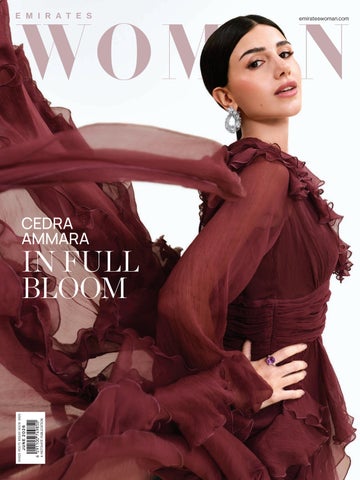

CEDRA AMMARA IN FULL BLOOM
EDITOR-IN-CHIEF
Obaid Humaid Al Tayer
MANAGING PARTNER AND GROUP EDITOR Ian Fairservice
CHIEF COMMERCIAL OFFICER Anthony Milne
GROUP CONTENT DIRECTOR Thomas Woodgate
SENIOR EDITOR Jessica Michault jessica.michault@motivate.ae
SENIOR ART DIRECTOR Olga Petroff
SENIOR REPORTER Aminath Ifasa
FASHION EDITOR Camille Macawili DESIGNER Vibha Monteiro
EDITORIAL ASSISTANT Londresa Flores
GENERAL MANAGER PRODUCTION Sunil Kumar PRODUCTION MANAGER Binu Purandaran ASSISTANT PRODUCTION MANAGER Venita Pinto
GROUP SALES MANAGER
Chaitali Khimji chaitali.khimji@motivate.ae SALES MANAGER
Sarah Farhat sarah.farhat@motivate.ae
WEB DEVELOPER Firoz Kaladi
CONTRIBUTORS
Alice Holtham-Pargin, Ekaterina Shirshova, Kareena Adlakha, Manaal Fatimah, Mark Mathew, Maryanne Peacock, Megan Tomos, Michaela Somerville, Morin Oluwole, Radwa Askar, Vaarunya Bhalla, Yi-Hwa Hanna
HEAD OFFICE
Media One Tower, Dubai Media City, PO Box 2331, Dubai, UAE, Tel: (+971) 4 4273000, Fax: (+971) 4 4282261, E-mail: motivate@motivate.ae
DUBAI MEDIA CITY SD 2-94, 2nd Floor, Building 2, Dubai, UAE, Tel: (+971) 4 390 3550, Fax: (+971) 4 390 4845
ABU DHABI PO Box 43072, UAE, Tel: (+971) 2 677 2005, Fax: (+971) 2 677 0124, E-mail: motivate-adh@motivate.ae
SAUDI ARABIA Regus Offices No. 455 - 456, 4th Floor, Hamad Tower, King Fahad Road, Al Olaya, Riyadh, Kingdom of Saudi Arabia, Tel: (+966) 11 834 3595 / (+966) 11 834 3596, E-mail: motivate@motivate.ae
LONDON Acre House, 11/15 William Road, London NW1 3ER, UK, E-mail: motivateuk@motivate.ae
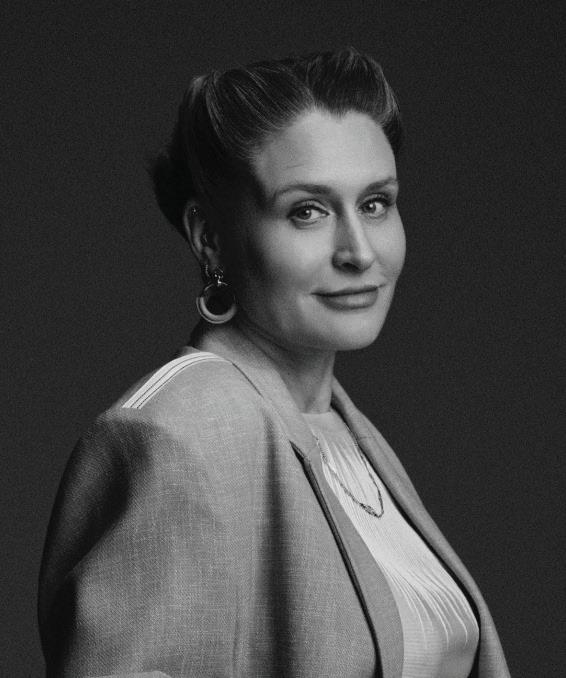
EDITOR’S LETTER
What A Trip
Iwas recently reminiscing with my daughters about great times we had shared as a family. More often than not, it was our trips, not our everyday lives, that were seared into their memories. Horseback riding in Canada, a safari in Tanzania, swimming with turtles in the Maldives. And as we talked, I found myself wondering why these moments and not the day-to-day interludes that made up the fabric of our lives together. The answer, it turns out, is written into the very architecture of how our brains work. We are wired for newness. Neverbefore-seen environments, experiences, and people give us the rare opportunity to form rich, emotionally-charged memories, while our daily lives tend to simply fade out of sight – and mind. For this, our Odyssey issue, we wanted to explore different sorts of sojourns that are guaranteed to leave a lasting mark on the soul. Our cover star Cedra Ammara is certainly about to embark on the adventure of a lifetime. In A New Horizon (page 30) she reflects on what it truly means to step into a thrilling new chapter, as she celebrates her engagement and upcoming wedding to fellow content creator Ramy Hamdan. We also dive deep into the transformative power of a great book and how
our imagination makes it gloriously possible to travel from the comfort of home. Novel Escapes (page 70) proves that the greatest tomes can even inspire real-world pilgrimages to places first discovered within their pages.
As for more traditional holiday getaways, this issue is bursting with inspiration, suggestions, and hard-won guidance. Home Away from Home (page 64) uncovers a travel agent offering access to the most exclusive private retreats, while Departure Notes (page 42) rounds up the essential gear of six wonderfully well-travelled women. And A World Apart (page 118) makes a compelling case that the most transporting escape can sometimes be found closer to home than you ever imagined.
Happy trails!

jessica.michault@motivate.ae

GIRL POWER
James Gunn’s reboot of DC Studios continues this month with a fresh take on Supergirl. In the hands of actress Milly Alcock, the beloved comic book character feels somehow relatable. She is raw, edgy, and doesn’t suffer fools. This space western revenge ride of a flick looks to be a reality check on what it truly takes to be heroic.

ENTER THE DRAGON
Two queens. One throne. Season 3 of House of the Dragon drops this month and I am ready for Emma D’Arcy and Olivia Cooke to give us the most savage, searing female power struggle on television. This isn’t just a war for supremacy – it’s women showing how they take ownership of their destiny.

LOVE IS LOVE
Olivia Rodrigo’s third album, YouSeemPrettySadfora Girl So in Love debuts 12 June and the title alone deserves a standing ovation. Love, she argues, doesn’t cure you – it just gives your jealousy, your longing, your quiet sadness a more beautiful address. This music is her most honest, most devastating work yet.
June 2026
CURATE
14 Monitor News
Use the power of bold prints, and embellished accessories to add a vivacity to vacation living
15 Social Listings
A curated guide of the summer-coded Instagram accounts to #follow
16 Chic in the City
From easy-going silhouettes to lightweight fabrications for sweltering, on-the-go city days
18 La Isla Bonita
Discover the hero buys to inspire wanderlust for sun-soaked escapes
20 Travel Mode
Globetrotting styles to deliver elevated cool while on-the-go
22 Around-the-Clock Elegance
Five watches designed to effortlessly adapt to multiple occasions
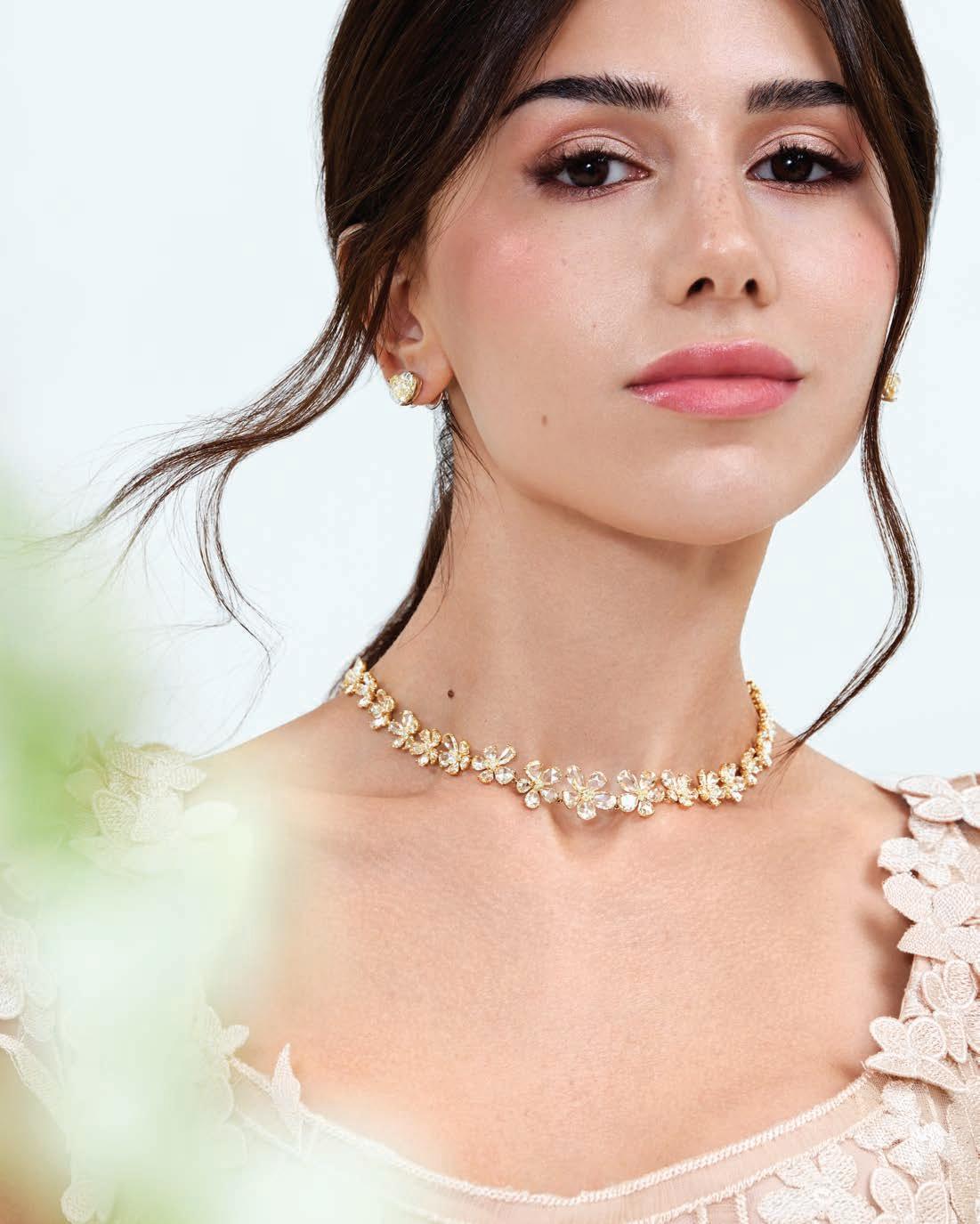
Outfit: Gemy Maalouf; Jewellery: Parure Atelier
UNDER UNPRECEDENTED ATTACKS, THE UAE STOOD READY. THIS IS THE STORY OF THE FIRST 31 DAYS
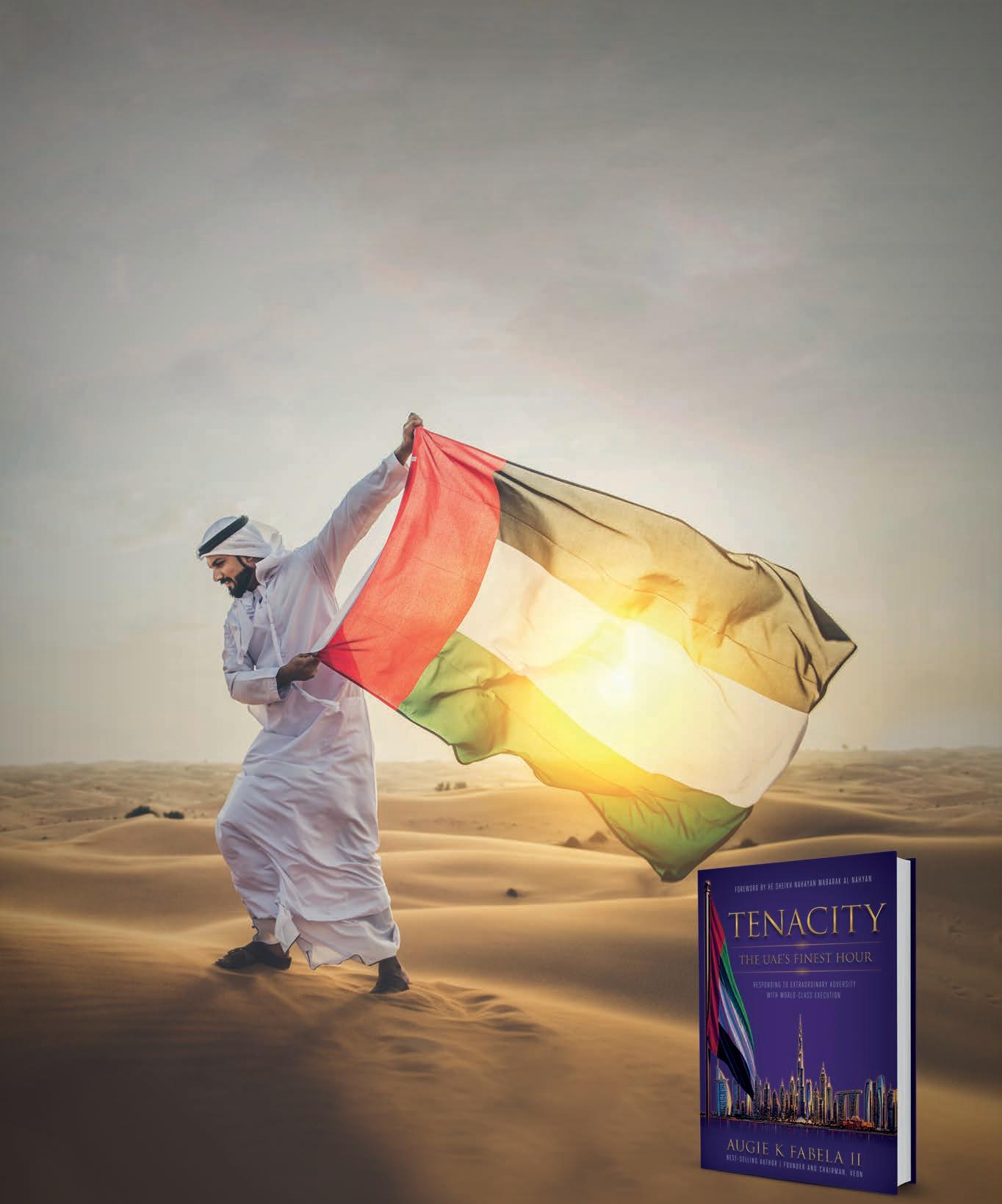
“Augie Fabela writes not as a distant commentator, but as a firsthand participant—one who chose to stay and stand in solidarity with the UAE. His unique perspective, as an eyewitness to a defining moment, captures our nation’s strength, vision, and tenacity.”
HIS EXCELLENCY SHEIKH NAHAYAN MABARAK AL NAHYAN
MINISTER
OF TOLERANCE AND
COEXISTENCE,
UNITED ARAB EMIRATES
46 Mixed Messages
MODE
26 Raise Your Vibration
J.J. Martin, founder of La DoubleJ on why she travels to places that raise her frequency
30 A New Horizon
At 23, beauty influencer Cedra Ammara stands at the threshold of the next phase of her life – newly engaged and with a personal fashion brand in the works, the world holds endless possibilities
42 Departure Notes
Six tastemakers of culture and couture reveal the odyssey they are game to take on
Prints, patterns and personality – the perfect mélange for an unforgettable holiday wardrobe
56 Totes Wanted
How the humble tote bag became a new ‘it bag’ and lifestyle status symbol
VISION
64 Home Away From Home
How Rosella Beaugié built The Thinking Traveller on love, place and the power of belonging
68 A Passage Elsewhere
Ahlam Bolooki, the CEO of Emirates Literature Foundation, reflects on literature as a journey of escape, selfdiscovery and emotional connection
70 Novel Escapes
A new breed of literary-leaning escapes is proving that a room with a view can be even better with a good book
76 Better Together
The entrepreneur and serial solo traveller Nabila Ismail has a built a community… on the road
78 Kingdom Calling
Want to fall in love with Saudi Arabia?
Just talk to Reema Al-Mokhtar
82 A Journey into the Unknown
Morin Oluwole, an international luxury business leader, explores what it’s like to stoke the embers of a new vision
84 The Finest Kind
Emirates Woman’s favourite high jewellery releases from 2026
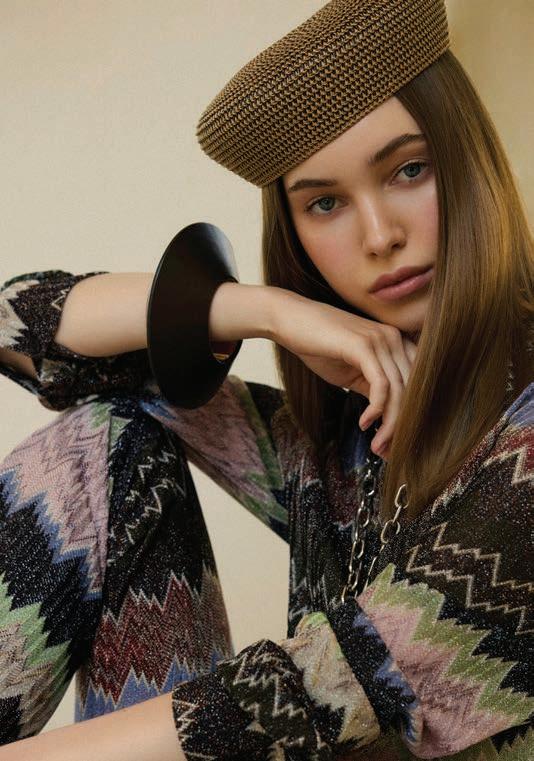
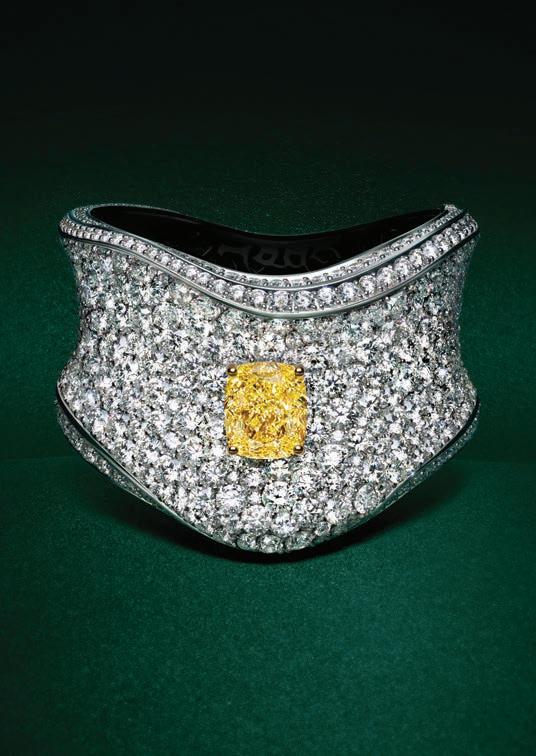
Top left: Outfit: Top, Missoni; Trousers, Missoni; Hat, Céline; Jewellery: Cuff, Ferragamo; Top right: High jewellery cuff, 18-carat cushion-cut fancy intense yellow diamond suspended over a diamond surface, Graff


CONTENTS
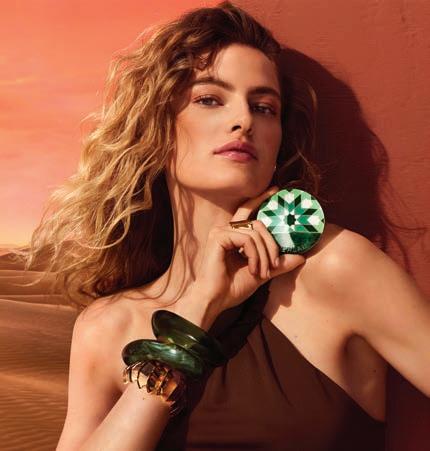
GLOW
94 Hot New Buys
Eight travel beauty essentials for the modern jet-setter
96 Paradise Lost… And Found
Francis Kurkdjian on how he found inspiration in a very unexpected place for Dior’s latest creation
98 The Beauty Shelf
Content creator Hêlîn Doski takes us through her must have beauty staples
99 Message in a Bottle
A new wave of summer scents that instantly teleport us to a far-flung holiday destinations
100 Self-Made Beauties
These talented makeup artists are representing their Arab roots globally
104 AM to PM Beauty
Saudi Arabian content creator and creative director Dana Mahmood shares her morning to evening beauty routine
106 A Streamlined Solution
Ece Baltacı Mallak, founder of SADE, is determined to give women products that multitask like them
ABODE
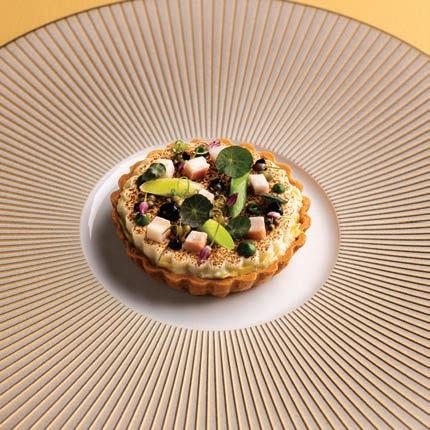
110 Savouring London
The best venues topping London’s restaurant scene
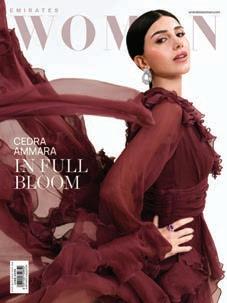
On the cover:
Outfit: Antonio Riva; Jewellery: Parure Atelier
Talent: Cedra Ammara
Senior Editor: Jessica Michault
Photographer: Amer Mohamad
Creative direction and
styling: Daniel Negron
Makeup: Jean Kairouz
Hair: Rafi Fazaa
Videographer: John Melencion
Photographer’s Assistant: Yasir Ali Shah
Stylist Assistant: Anna Kandrashova
Editorial Assistant: Rawda Askar
Makeup Assistant: Serenne Lichani
Lighting Assistant: Isaac Badda
Equipment: Studio Society Flowers: Udora
114 South Bound
The ultimate insider guide to where Gulf royalty, celebrities and the fashion set summer on the Côte d’Azur
118 A World Apart
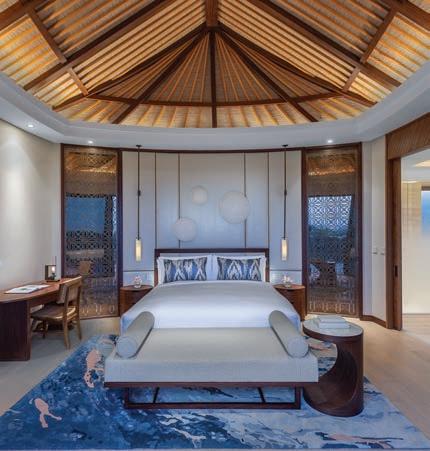
Anantara Ras Al Khaimah Resort is quietly reshaping the idea of a UAE staycation
MOST WANTED
122 Green with Envy
Want to take your passion for matcha on the road? Designers Pharrell Williams and Nigö have teamed up to give you the tools to do so with their new Malle Cérémonie Matcha trunk for Louis Vuitton
MAKING WAVES
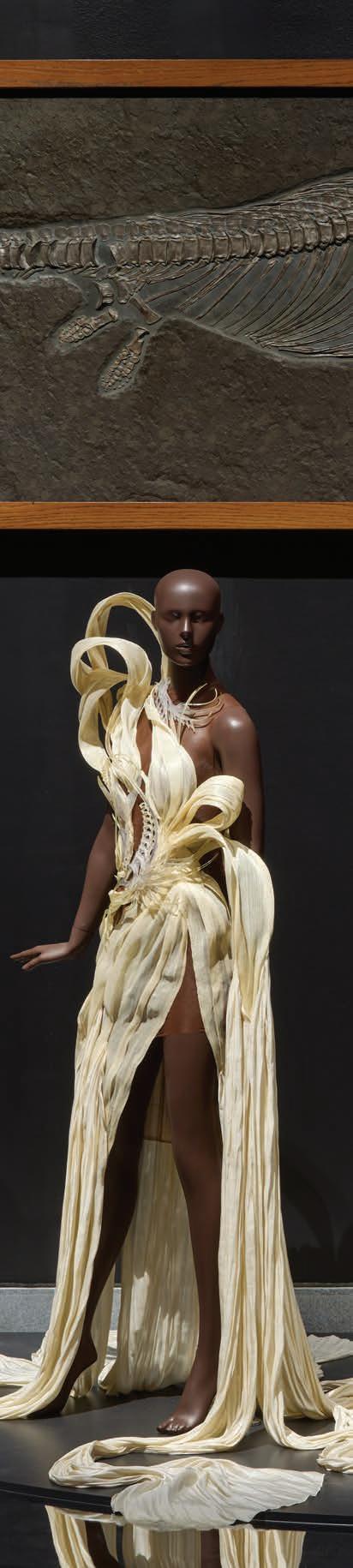
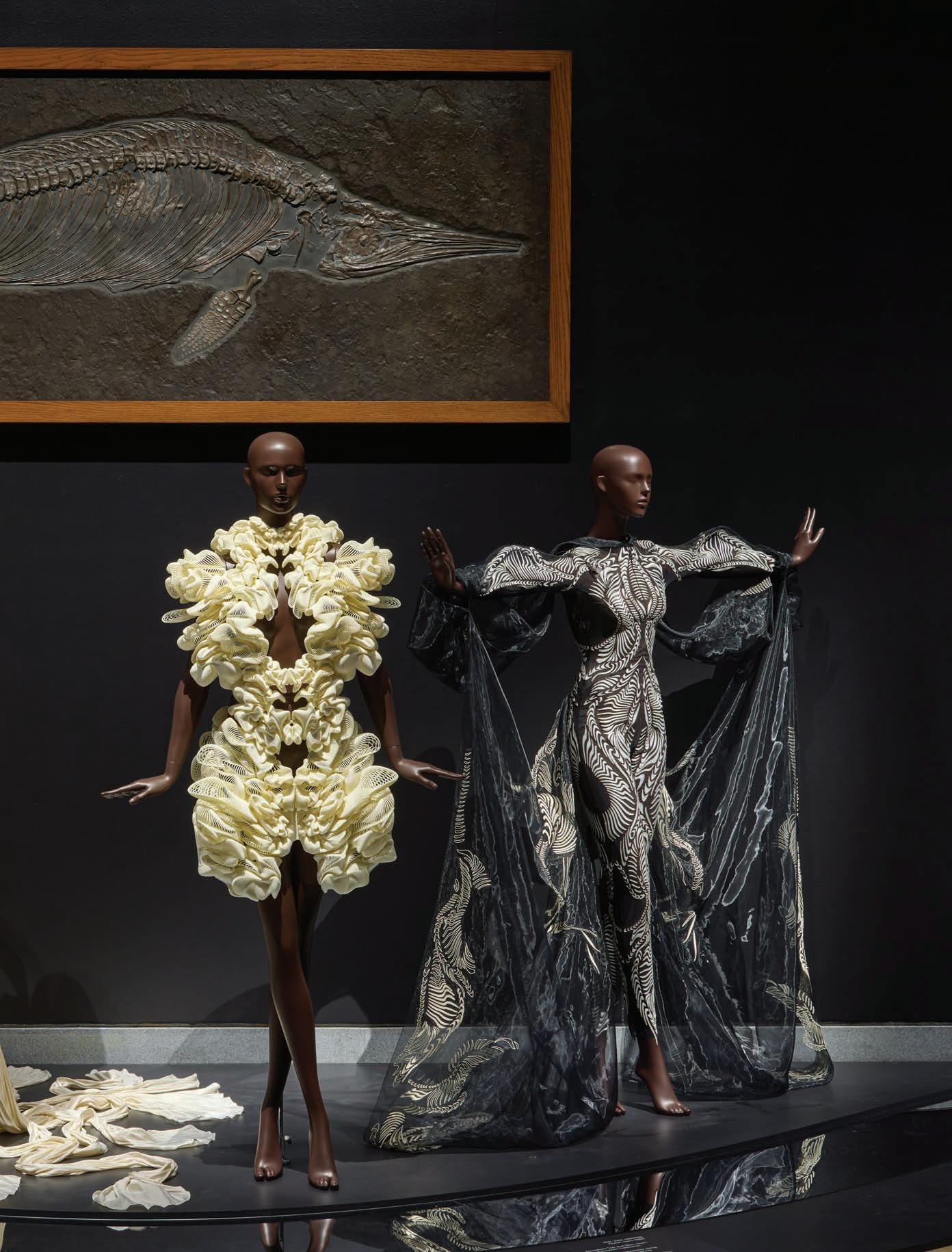
There is something so singularly beautiful about the work of Dutch designer Iris van Herpen. Her pieces are a creative confluence of inspirations from high-tech and sci-fi to Mother Nature and mythology. SculptingtheSenses, her first major New York exhibition – now making its debut at the Brooklyn Museum – is less a retrospective than an immersion. It features over 140 avant-garde designs drawn from mathematics, marine biology, astronomy, and neuroscience, each one asking the same quietly radical question about what fashion is actually capable of. Working in water-like gowns and air-like fabrics that defy any reasonable explanation, van Herpen has built an entire language at the intersection of couture craft and scientific imagination.
CURATE
It is time to…
– Treat yourself to lazy days at the beach
– Stay cool in the city
– Try out some sienna shades
– Travel in style
– Get a watch evolution
Chasing the Sun
Use the power of bold prints, and embellished accessories to add a vivacity to vacation living
WORDS: RADWA ASKAR
SERPENTINE ESCAPE
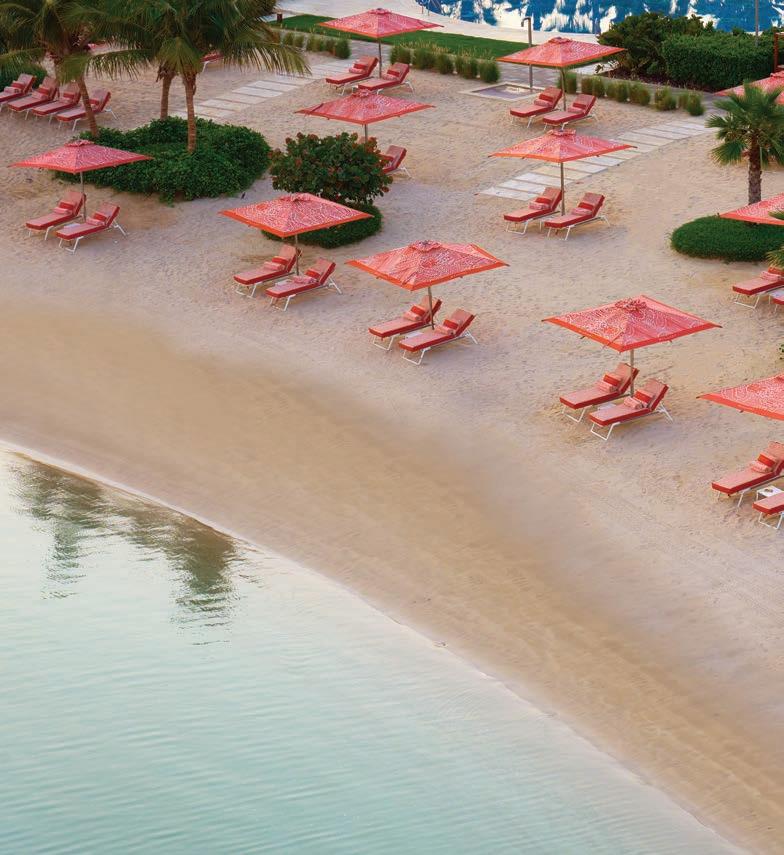
This summer, Bvlgari Resort Dubai introduces its Serpenti Beach Club. Reimagining the Maison’s iconic symbol through an immersive beachfront experience to create a chic and striking environment for guests. Defined by elegance, relaxed sophistication and broad Arabian Gulf views, the destination captures the essence of a summer escape – right here at home

THREE TO OWN


THE HERO BUYS
Soleil Sunkissed Blush Dhs165 Tom Ford
Licorice Brown and Khaki sunglasses Dhs1,815 Saint Laurent
Sun Perfect AIR Invisible Face Mist SPF 50 Dhs180 Lancaster
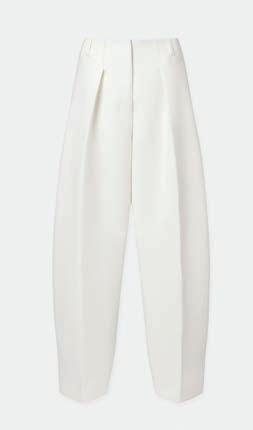
Ovalo Wide-Leg Pants Dhs3,398 Jacquemus
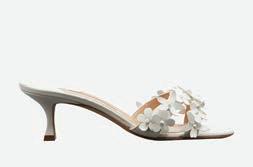
Anistarona Floral-Appliqué Leather Mules Dhs5,248 Manolo Blahnik
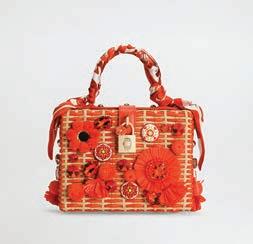
Dolce Box Handbag In Raffia Dhs32,100 Dolce&Gabbana
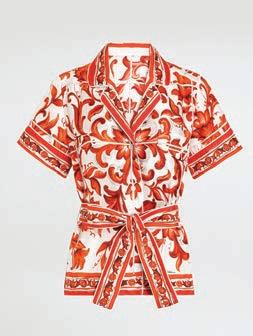
Majolica-Print Vanity Silk Shirt Dhs8,900 Dolce&Gabbana
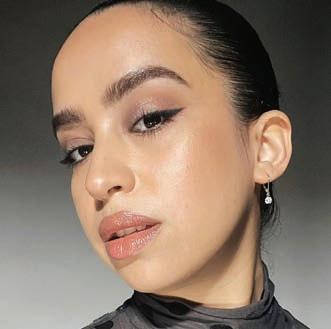
@ayatariqmua
@legado_ldn
@helinndoski
@dana.vibes
Saudi Arabia based creative director and founder of Stories Agency.
New York based Arab celebrity makeup artist best known for her editorial creativity. A
A
A restaurant in London with a menu that is rooted in heritage.
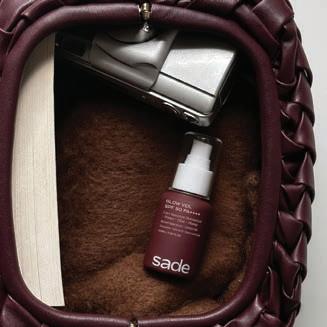
@sadeskin.co
A clean, vegan and cruelty-free skincare brand.
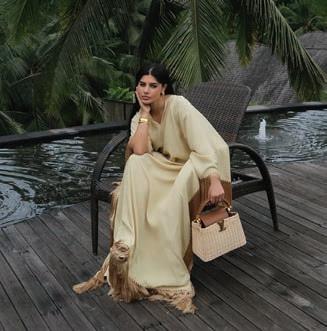
@nilofaryaqoubi
Dubai-based fashion creative and stylist with a focus on travel-fashion.
A young and stylish fashion and lifestyle content creator.
@ladoublej
Italian fashion and homeware label placing vibrant colours and prints at the heart of it.
Artistic & creative fragrance director
@anantararasalkhaimah
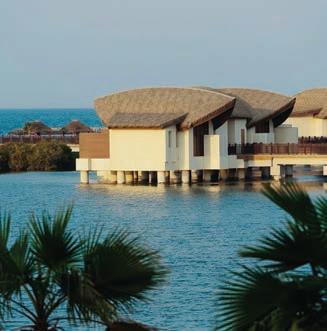
Maldives-inspired waterfront featuring the first overwater villas in RAK.
@franciskurkdjian
at Dior.
CHIC IN THE CITY
COMPILED BY: CAMILLE
From easy-going silhouettes to lightweight fabrications for sweltering, on-the-go city days
MACAWILI
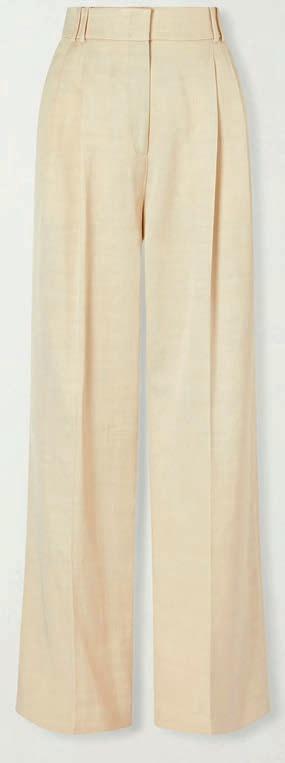
Pleated Wide Leg Pants
Dhs3,570 Another Tomorrow
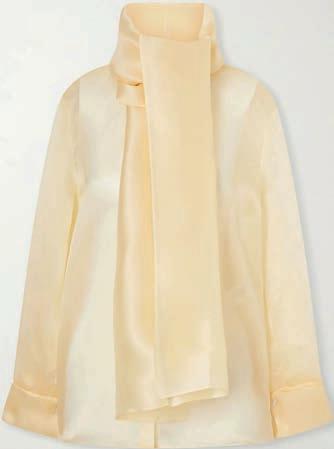
Bow-Embellished Organza Blouse
Dhs4,770 Another Tomorrow
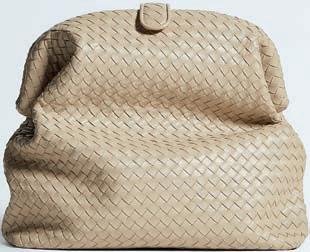
Lauren 1980 Alto Bag
Dhs23,000 Bottega Veneta

Dhs4,000 Gucci
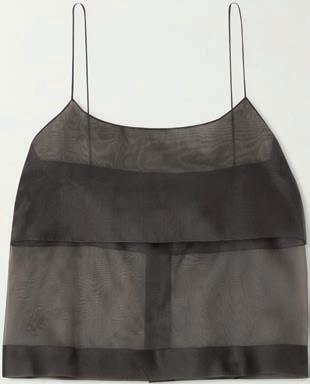
Carmen Layered Silk Organza Top Dhs2,565
Calvin Klein Collection
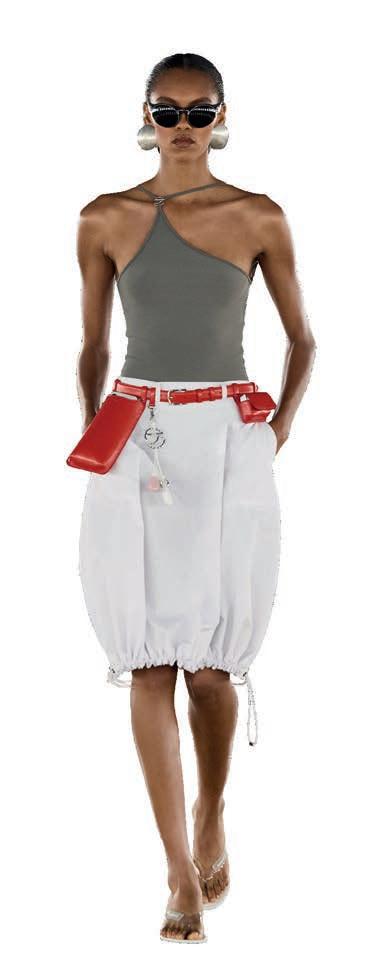
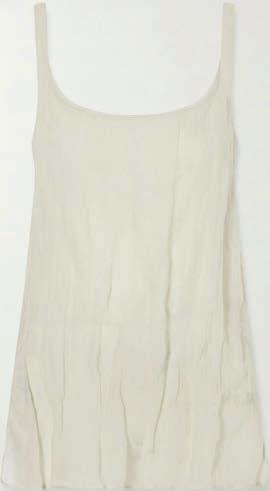
Tank Top Dhs1,370 RÓHE
Dhs3,370
Dhs2,345 St. Agni
Vittoria Leather Sandals
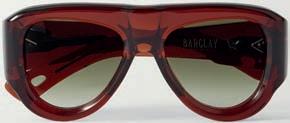
Barclay Aviator Sunglasses
Jacques Magie Mage
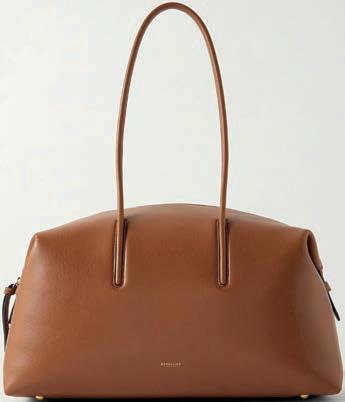
The Stockholm Tote Dhs2,720 DeMellier
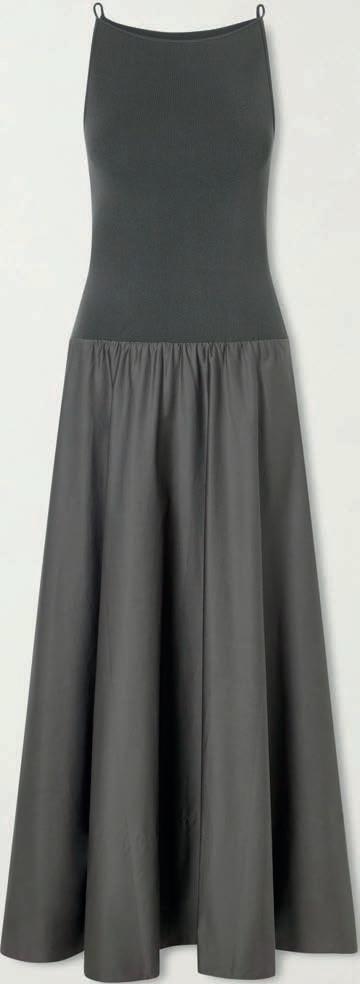
Ribbed Maxi Dress
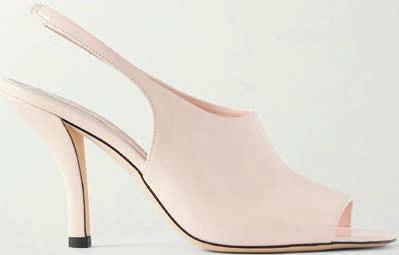
Glossed Leather Slingback
Pumps Dhs2,600 Toteme
SPORTMAX
COPERNI
Craving a tropical getaway?
Discover the hero buys to inspire wanderlust for sun-soaked escapes
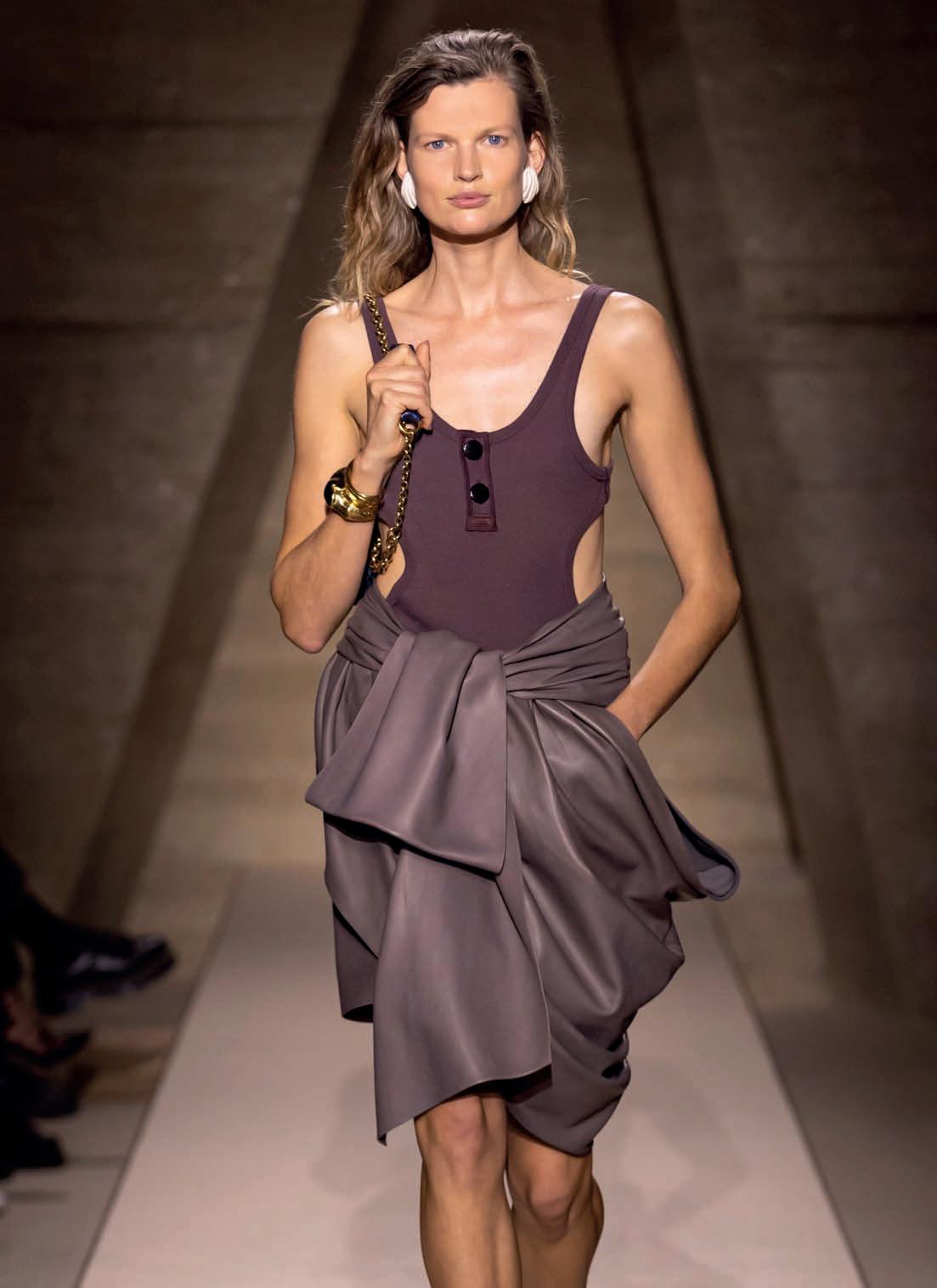
COMPILED BY: CAMILLE MACAWILI
LA ISLA BONITA
CHLOÉ; IMAGES: SUPPLIED
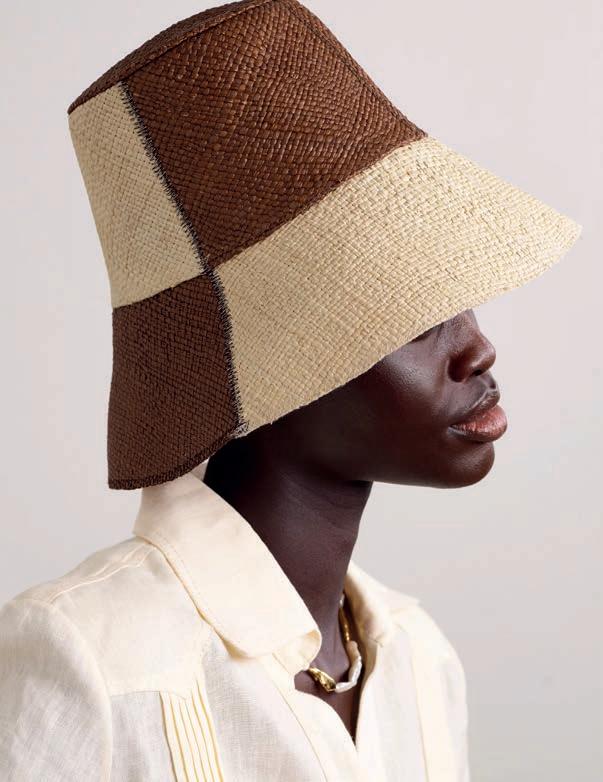
Checked
Straw Bucket
Hat Dhs1,945
Johanna Ortiz x Artesano Heaven and Earth
Vertigo
Vix x RHW
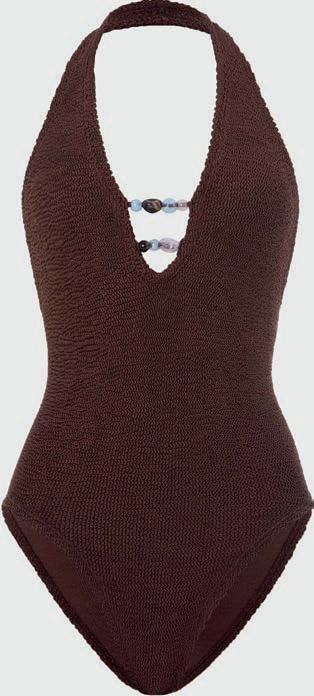
Adriana Beaded Swim Dhs1,100 Hunza G
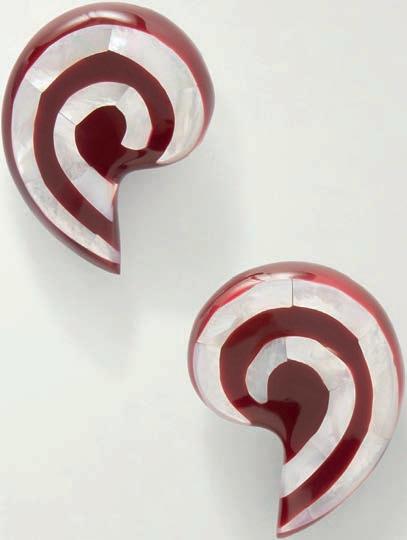
Spira Earrings Dhs1,095 Julietta
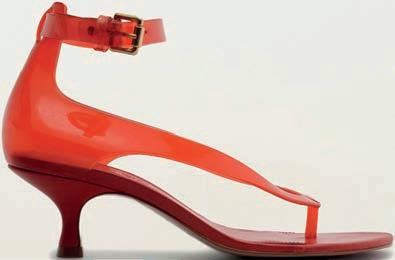
Jelly Sandals Dhs846 Farm Rio
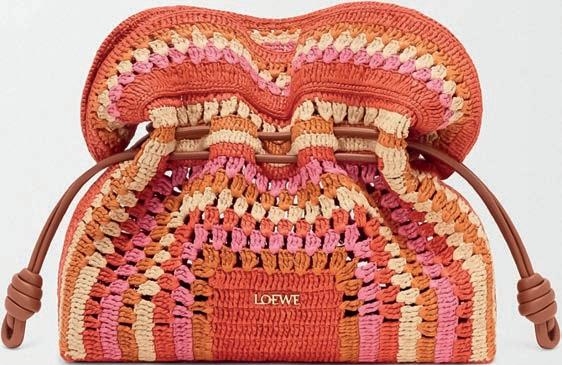
Medium Flamenco Clutch Dhs10,150 Loewe
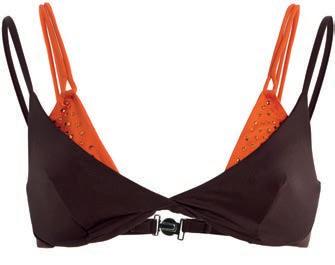
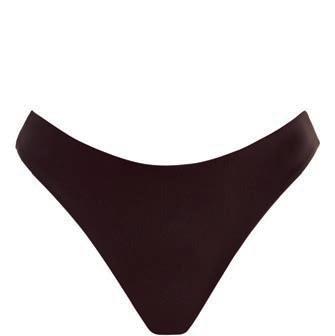
La Isla Double Bikini Dhs1,670 Des_Phemmes
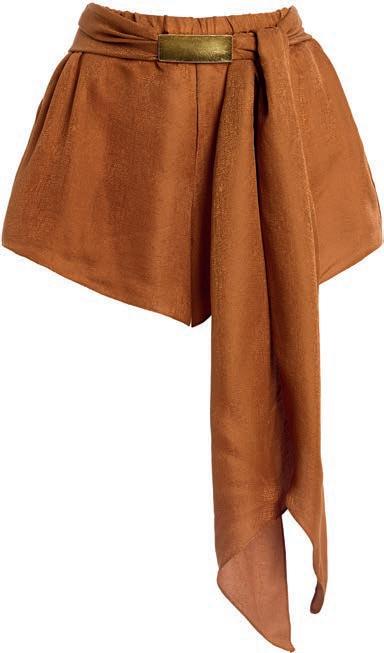
Rosie Crepe Shorts Dhs1,100
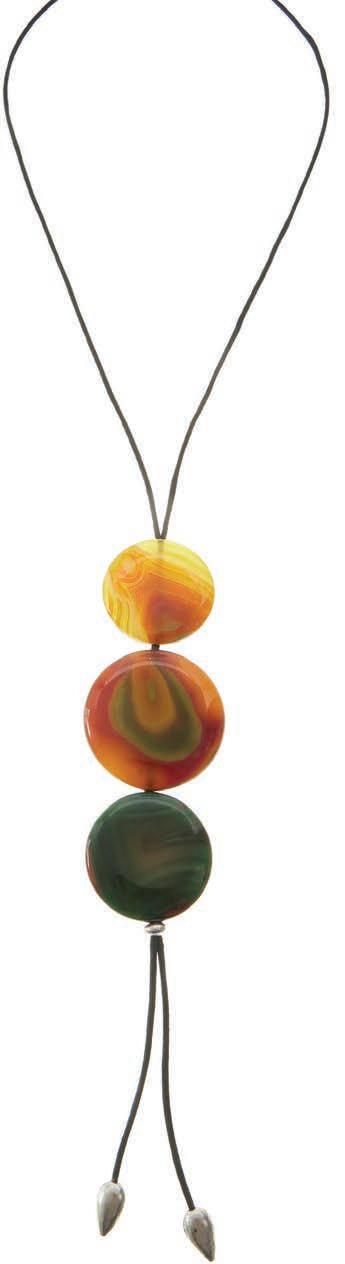
La Isla Bolo
Tie Necklace Dhs2,205
TRAVEL MODE
Globetrotting styles to deliver elevated cool while on-the-go
COMPILED BY:
CAMILLE MACAWILI
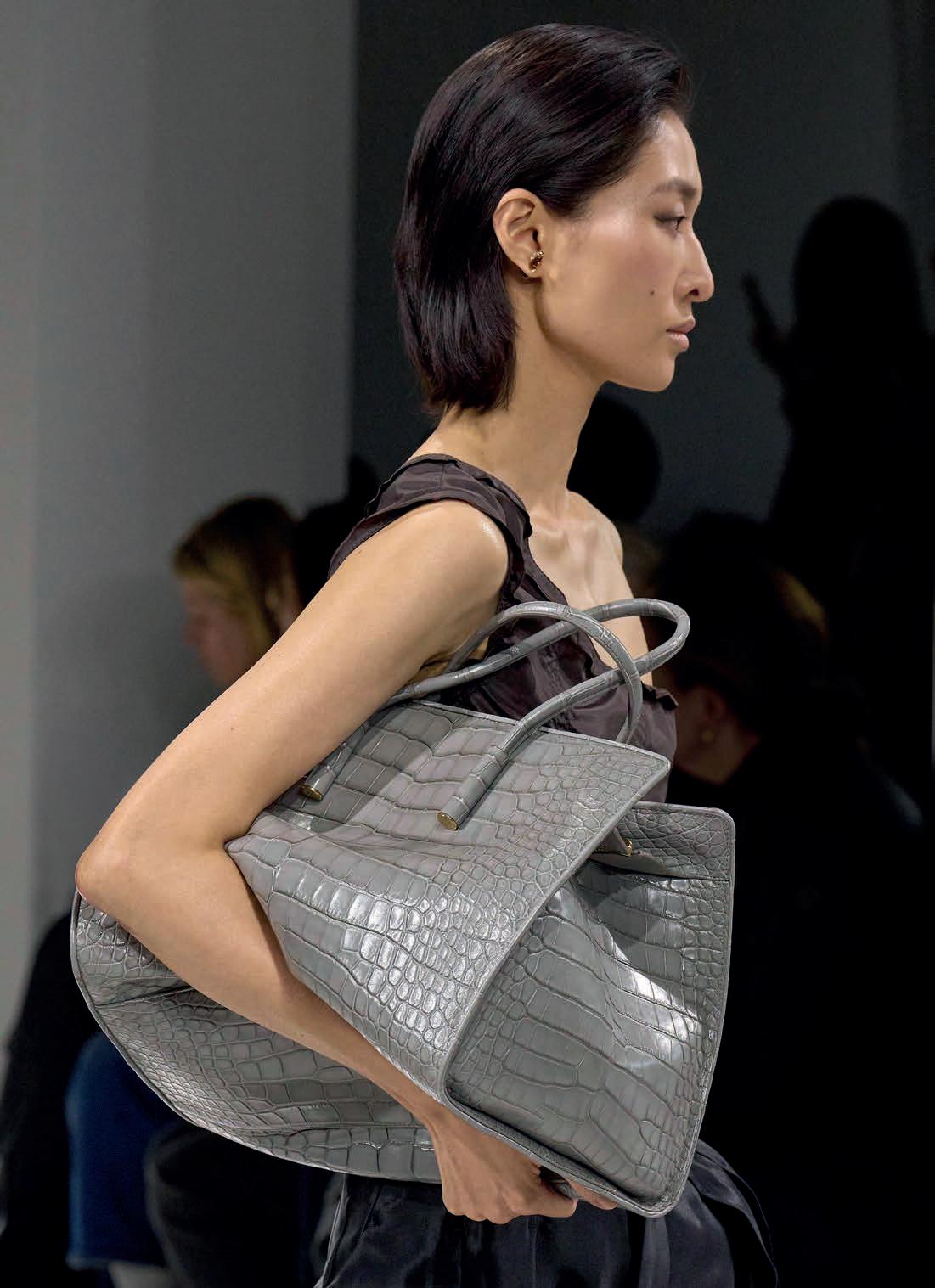
Large Croc Barbara Tote
POA Bottega Veneta
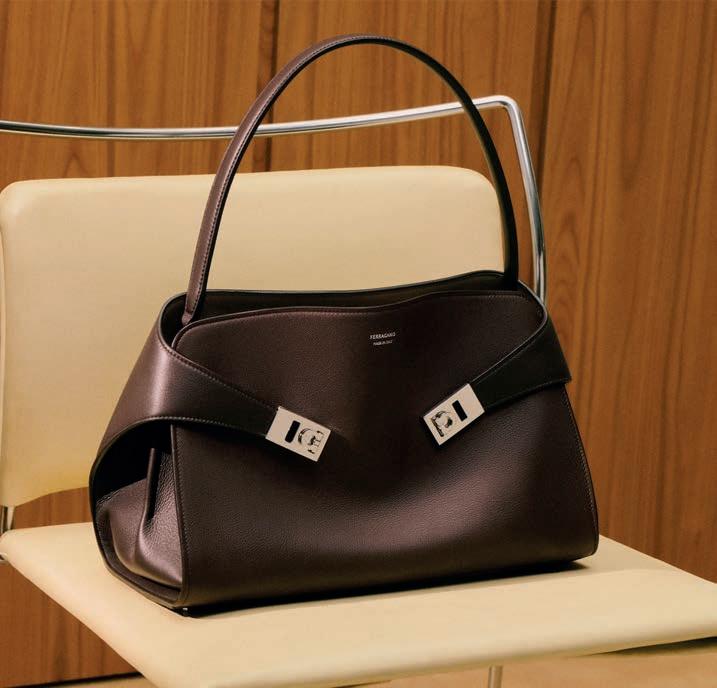
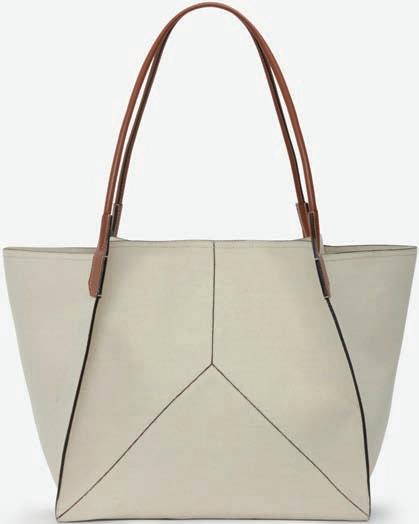
Hug Soft XS Bag Dhs10,467 Ferragamo
Victoria Tote Large
Dhs5,050 Victoria Beckham
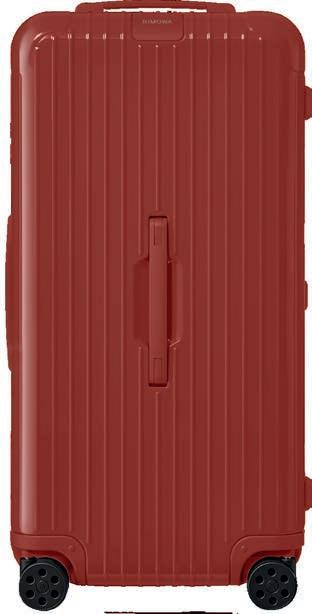
Trunk Plus Luggage
Dhs5,400 Rimowa
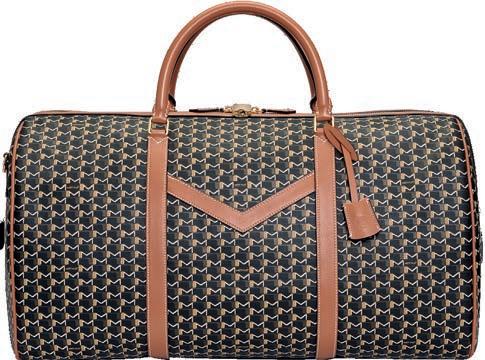
48H Maxi M Tote POA Moynat
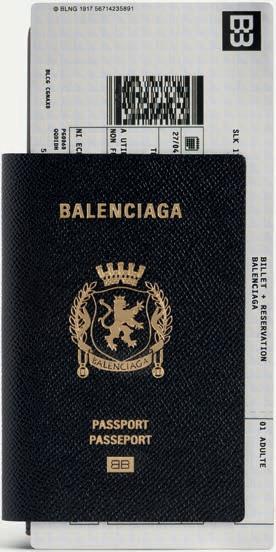
Passport Long Wallet 1 Ticket
Dhs2,950 Balenciaga
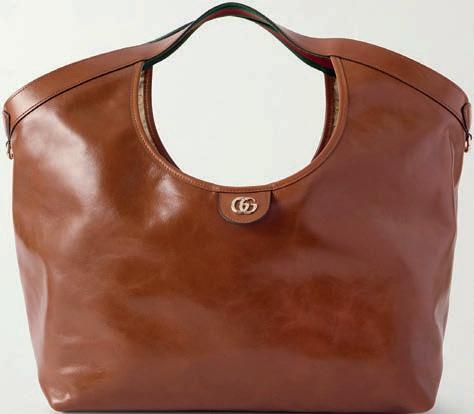
Giglio Large Leather Tote Dhs13,600 Gucci
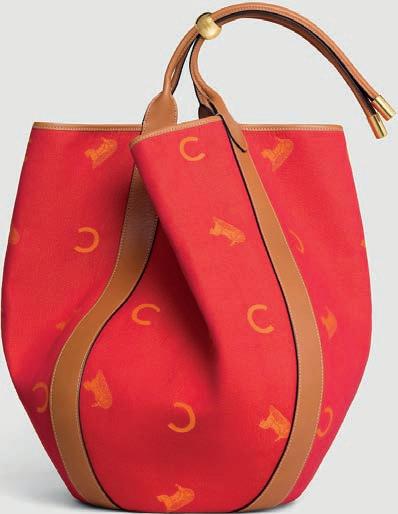
Large Drop Bucket Bag Dhs13,500 Celine
AROUND-THE-CLOCK ELEGANCE
Five watches designed to effortlessly adapt to multiple occasions

WORDS: VAARUNYA BHALLA
In the UAE, style has a way of feeling unforced. It moves easily between worlds without ever seeming to try too hard; formal and informal, traditional and contemporary. The women setting the tone here dress with instinctive ease, whether the occasion is a candlelit dinner, an afternoon on the greens, a gallery opening, or a late drink in the city. Their choices feel clear, considered, and quietly self-assured. With that perspective, we’ve selected five timepieces designed to move seamlessly between the moments in a woman’s busy day, adding depth, character, and quiet authority to any ensemble.
THE FORMAL BUSINESS DINNER Make a Statement
When you’re attending a high-stakes work dinner, your accessories need to project both confidence and refinement. You want to stand out, but in a way that reflects your professionalism and taste. You’ll need a watch that’s more than just a timepiece. It’s a statement of power. Reflection de Cartier is what you need for such a situation. It captivates with its bold, architectural design. The dramatic open cuff, crafted in solid gold and interspersed with negative space, is daring yet sophisticated. Its dial, reflected subtly in a mirrored surface opposite, adds a touch of mystery and elegance, making it the ultimate power accessory.
THE CASUAL OUTDOOR DATE
Effortlessly Cool Under the Stars
Start prepping now for the return of great weather in the Emirates by turning to Jaeger-LeCoultre for a watch that works just as well for an Al Qudra trip in a 4x4 or a starry night to remember at Al Quaa. For this, you want to exude casual elegance. Nothing too flashy here; just a watch that’s laidback yet stylish, and tough enough to hold its own. There isn’t a watch more suited to this than the Reverso One. The reversible case adds a playful touch while remaining understated.
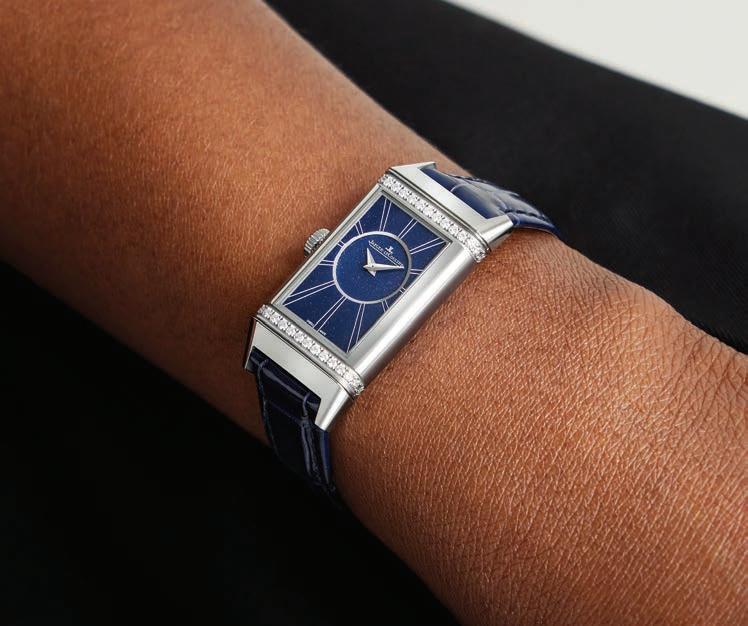
THE FINE DINING EXPERIENCE Romance in the Air
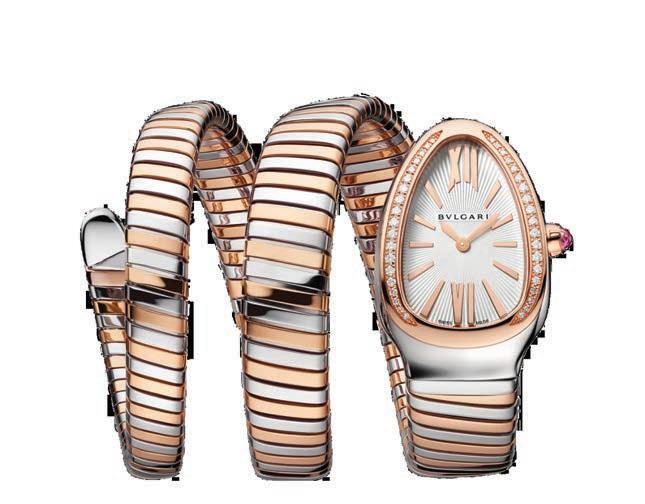
For a night of candlelit dining, opt for a watch that reflects the elegance of your evening wear. Refined and dripping with sophistication, this is where a true classic shines. You simply can’t go wrong with the Bvlgari Serpenti Tubogas. Its iconic design complements any look and captivates with its sleek, wraparound silhouette.
THE AFTER-WORK HANGOUT
Unwind in Style
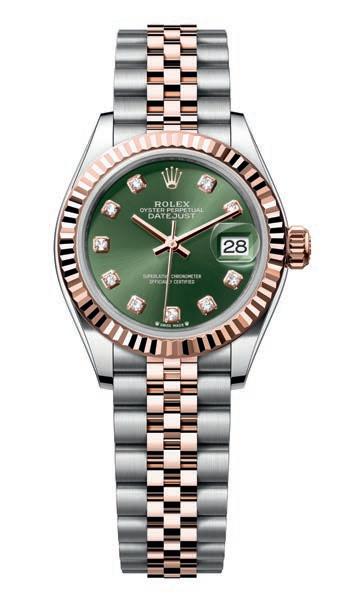
Heading to an after-work spot with your friends or colleagues? This is the moment where office polish gives way to something more relaxed. A watch that holds its own without trying too hard. If you’re transitioning from office-appropriate to cool and confident, consider the Rolex Two-Tone LadyDatejust. Its combination of steel and rose gold blends professionalism with a hint of glamour, making it perfect to transition from the office to a night out on the town.
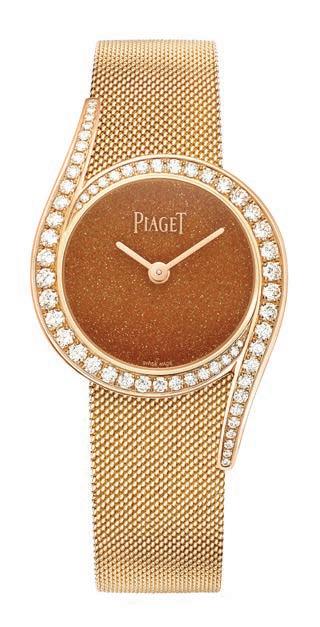
THE GLAMOROUS EVENING EVENT
All Eyes on You
For those black-tie dinners or gala invitations, nothing says opulence like a bold, eyecatching timepiece. Think something with sparkle –statement-making yet tasteful. The Piaget Limelight Gala, with its curved lines and diamond setting, makes it a head-turner and an evergreen choice for any woman looking to be the star of the night.
DOLCE FAR NIENTE
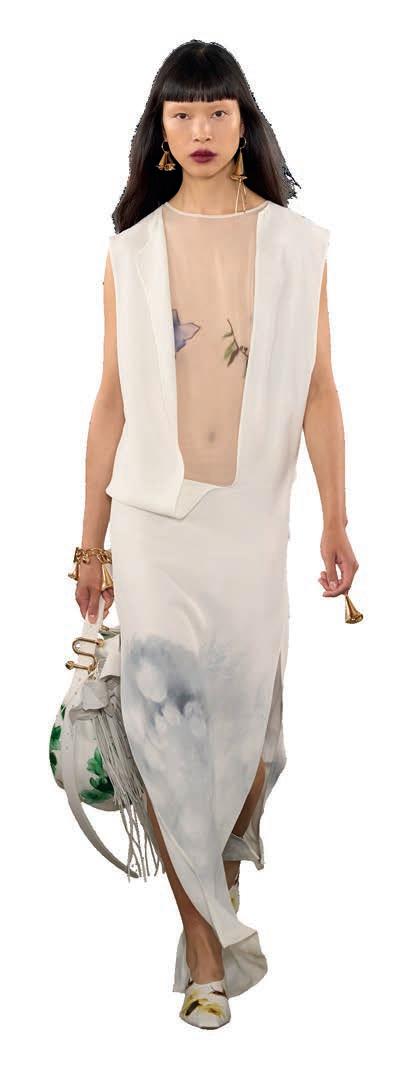
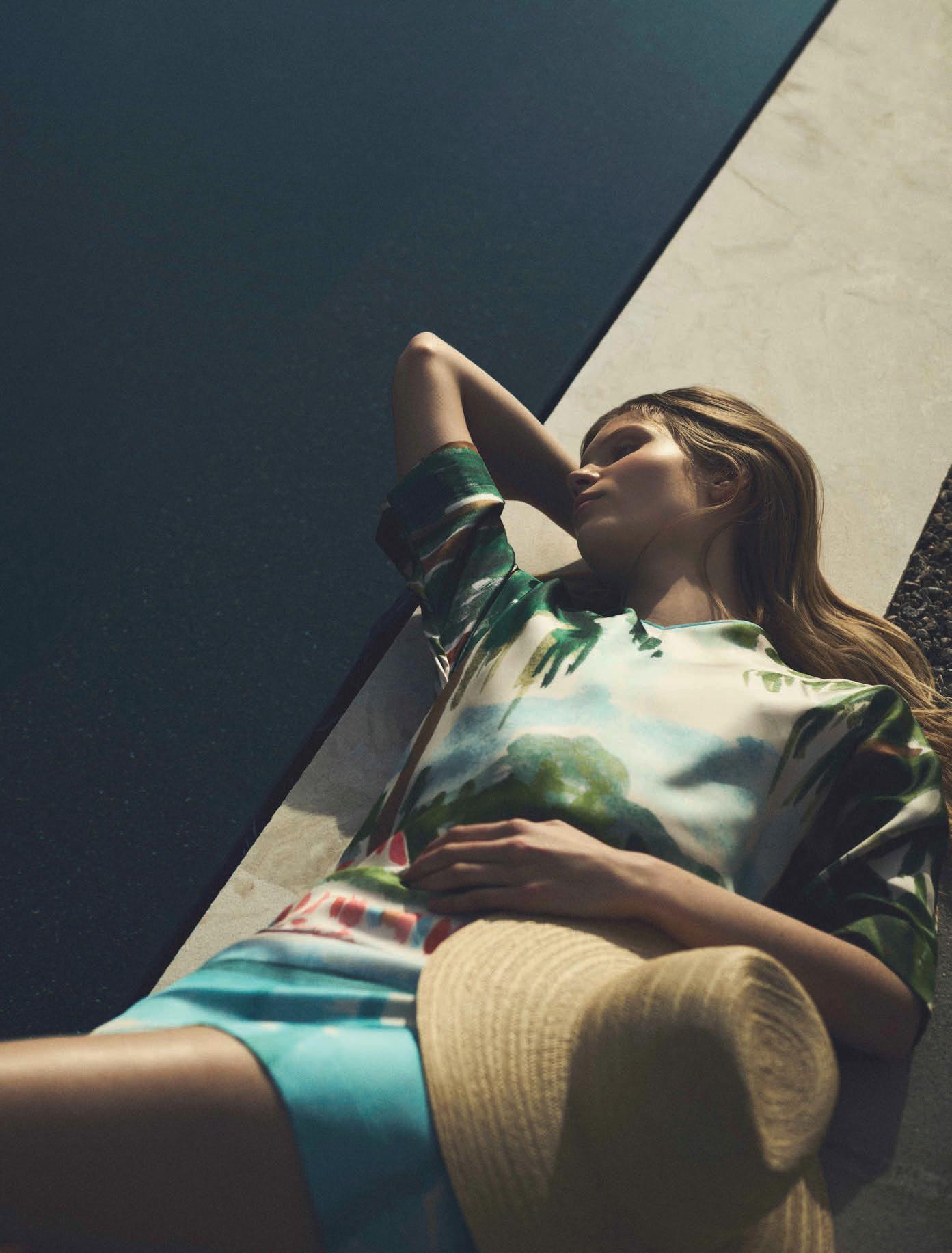
Loro Piana has always understood something that most houses only gesture towards: that true luxury is not about being seen, but about how you feel when no one is watching. With its latest Resort collection the brand asks nothing dramatic of its wearer – just that she slows down and enjoys the long summer days that stretch out before her. This collection, filled with cool linens and soothing silks, is perfectly calibrated for days that drift between city terraces and Mediterranean coastlines. The fashion embodiment of a holiday afternoon – unhurried, golden, and already missed before it ends.
Sojourn in style with…
Mood-boosting designs
Romance in your heart
Tips from those who do it best
A bold sartorial perspective
Trusty totes to count on

RAISE YOUR VIBRATION
WORDS: AMINATH IFASA
J.J. Martin, the founder of the dynamic fashion brand La DoubleJ, talks about colour as medicine, the sacred sites that inspire her collections, and why she travels only to places that raise her frequency
How often does a fashion brand admit that its mission has nothing to do with looking good? J.J. Martin, the founder of La DoubleJ, shares that thought as she casually strolls down the street just outside her house in Milan and chats with me via video call. Wearing a olive cape she designed over easy jeans, she reflects that the real purpose of her independent label has always been to give people a reason to feel good. “I didn’t have words for it until halfway through the company, when I started calling our mission Raise Your Vibration,” she shares. “But that’s really what we’ve been doing since 2015: just give people an opportunity to feel good.” La DoubleJ started by accident. Martin was living in Milan, working as a journalist, and selling vintage clothing on the side. She sold her pieces not by listing them on a website but by putting them on creative women around the city and photographing them in their homes, telling stories about how they
dressed and decorated. It was a magazine approach to ecommerce before anyone had a name for it. In a rather organic evolution, when her supply of vintage ran dry, she decided to start making new pieces, but still with a connection to the past.
A friend connected her to a silk archive in Lake Como called Mantero, which had been producing fabric for Louis Vuitton, Dior, Gucci, and Yves Saint Laurent for over a century but had never been mentioned publicly by any of them. “I said, I want to go into your archive, pick eight vintage prints, and tell the world they’re coming from your archive,” says Martin, who proudly recalls how she put the epic story of her supplier on the hang tag of her creations. “We were the very first client that ever mentioned them publicly in all their history.” That was the beginning.
But what truly makes La DoubleJ different is not the prints –though the prints are unmistakable – it’s the absence of anxiety. “Most of what happens in fashion is coming from a place of lack or scarcity or fear or competition,” Martin says. “There’s not a lot about
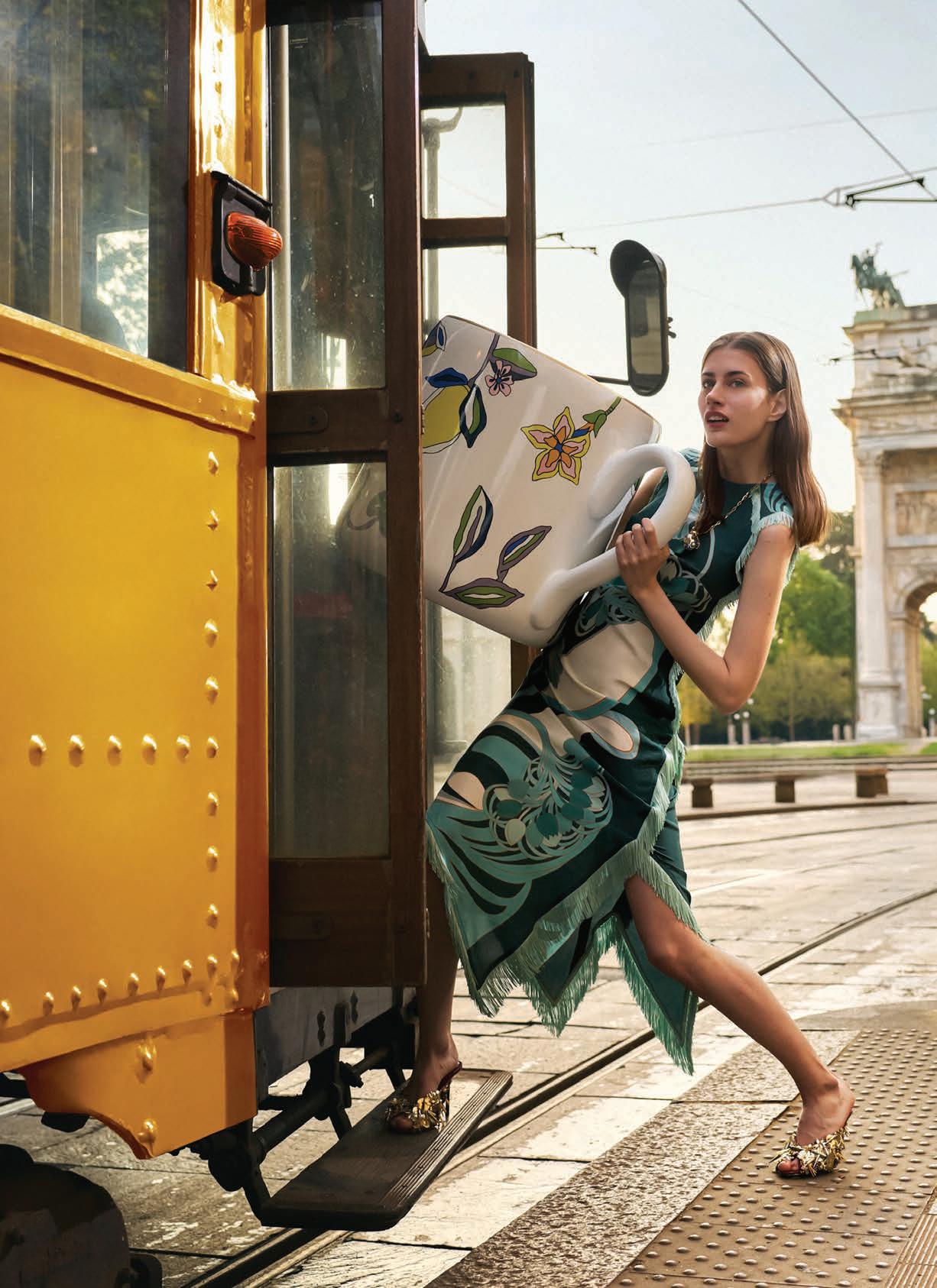
making you feel good. It’s really about looking good, and sometimes you’re looking good at the expense of feeling good.” Her clothes are the opposite of that. They are bold, colourful, and unapologetically effervescent. Martin’s background in journalism shapes everything she does with her brand. “I’m always thinking of magazine stories and the way we tell and narrate and communicate,” she shares. “I love being super creative, but I also love being very clear to people and being able to touch them.” Case in point: When she launched her outdoor home collection, she created super-sized versions of her key pieces and photographed them around Milan – coming out of the subway, in front of the Duomo, on top of her Fiat 500. The result was her very own colourful take on an art installation which she cleverly called Size Matters.
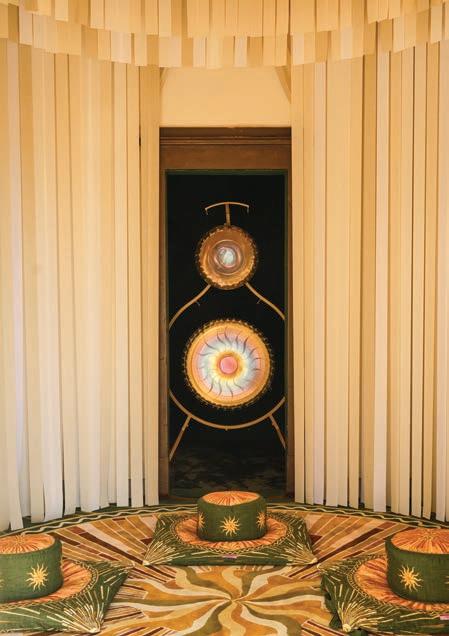
As for her La DoubleJ stores, they are a more concrete extension of her unique design philosophy. Martin calls them Raise Your Vibration stations, and each one has a different concept. The Milan store is a Divine Mother cave, Palm Beach location is a chakra station, Dallas is meant to embody an eclipse, and the new Capri store is a manifestation of a mandala. “It’s just a way in which we can transmit the energy frequency,” explains Martin. “I really like the idea that each of our stores is a little bit different, and it just invites some playfulness and discovery for our customers.” Interestingly, at La DoubleJ items don’t go on sale in her stores. Martin follows the philosophy that the price of something at the beginning of the season reflects its true value. “I’m not jacking up the prices and trying to make huge margins and then crashing and putting everything on sale,” she says. “The price comes out at one time. It’s the right price.” It’s a choice that is grounded in the idea of both respecting the craftsmen who create her collections, and hopefully an acknowledgement from her clientele that making the decision to buy a new piece of clothing or homeware item should always be done with intention and consideration. In its own way, this move is an act of sustainability – and it’s not the only one.
Sustainability, for Martin, is defined in multiple ways. Keeping all production in Italy means fabrics travel 50 kilometers instead of 5,000. Ensuring that every worker across every factory is well paid and well rested matters more to her than any certification. “What I’m trying to do is still be a very responsible company in the ways that I can,” she says. The Sisterhood, a free community she built around the brand, offers hundreds of workshops and access to healers and practices from around the world. “This is kind of how I can give back and be a sustainable brand,” she says. In line with the vision of her brand, Martin has crisscrossed the world for design inspiration – but only through the prism of transcendental travel.
Going to places where she can connect with sacred land and ancient traditions. “I’ve spent a lot of time in Bali, but not on the beaches. I’ve been in the water temples with high priests,” she says. “I’ve been to Egypt five times, and four of those times I was co-hosting spiritual retreats. Sardinia, I went in December and January to archaeological sites, retracing sacred spaces and doing ritual work.” The patterns in her collections are born from these odysseys. In particular during her trips through Italy, “I’m getting a lot specifically from the Renaissance and the Baroque periods,” she says. When asked what her trips to the Middle East gave her, Martin recalls a memory from the Doha airport. “I went into the prayer room in the lounge because I was really into my meditation practice,” she recalls. “I started doing some of my toning and language and moving my hands. When I finished, I opened my eyes and found two women who were completely blown away. They said, 'That was so powerful. Thank you.’ It was so beautiful to see that it doesn’t matter what religion you’re doing. We’re so connected.” She has visited the UAE three times and has organised sound healing sessions and meditative events each time. “We’ve had quite a few events like that,” she says. “We did a trunk show at a Lebanese woman’s house in Dubai, and we were doing a channeling in the next room with all her friends. That’s just DoubleJ’s vibe.”
But it’s when she opens up about the fire that destroyed her childhood home and her first American store in Pacific Palisades, that Martin’s tone shifts to one of both reflection and heartache. “The fire burned down all of my ancestral homeland,” she says. “My childhood home from zero to eighteen, my grandmother’s house, my aunt’s house, my school, my church, everything burned, including our store that was going to open the next month.” She is now looking for a new space in Los Angeles and also in Miami. America is her biggest market, larger than Europe. “We’ll bounce back,” she says. “We’ll find a happy home.”
For Martin, La DoubleJ is a brand that defies demographics. The connection she sees in the people who collect her pieces all comes down to a matter of attitude rather than age. “We’re so conditioned to think of customers based on age,” she says. “But really, what about attitude?” Young girls wear the capes with jeans. Older women wear them with evening dresses. And soon she will have even more to offer her devoted global tribe. A jewellery collection with semi-precious stones and a 24-karat gold plate is in the works and she is expanding into scarves. But the mission for Martin remains the same, to keep doing what she has been doing since 2015 – lighting up people’s lives with the world she has created where good vibes are always welcome.
The Energy Chapel, Villa San Michele, A Belmond Hotel, Florence
A NEW HORIZON
At 23, beauty influencer Cedra Ammara stands at the threshold of the next phase of her life – newly engaged and with a personal fashion brand in the works, the world holds endless possibilities
WORDS: JESSICA MICHAULT
PHOTOGRAPHER: AMER MOHAMAD
CREATIVE DIRECTION AND STYLING: DANIEL NEGRON
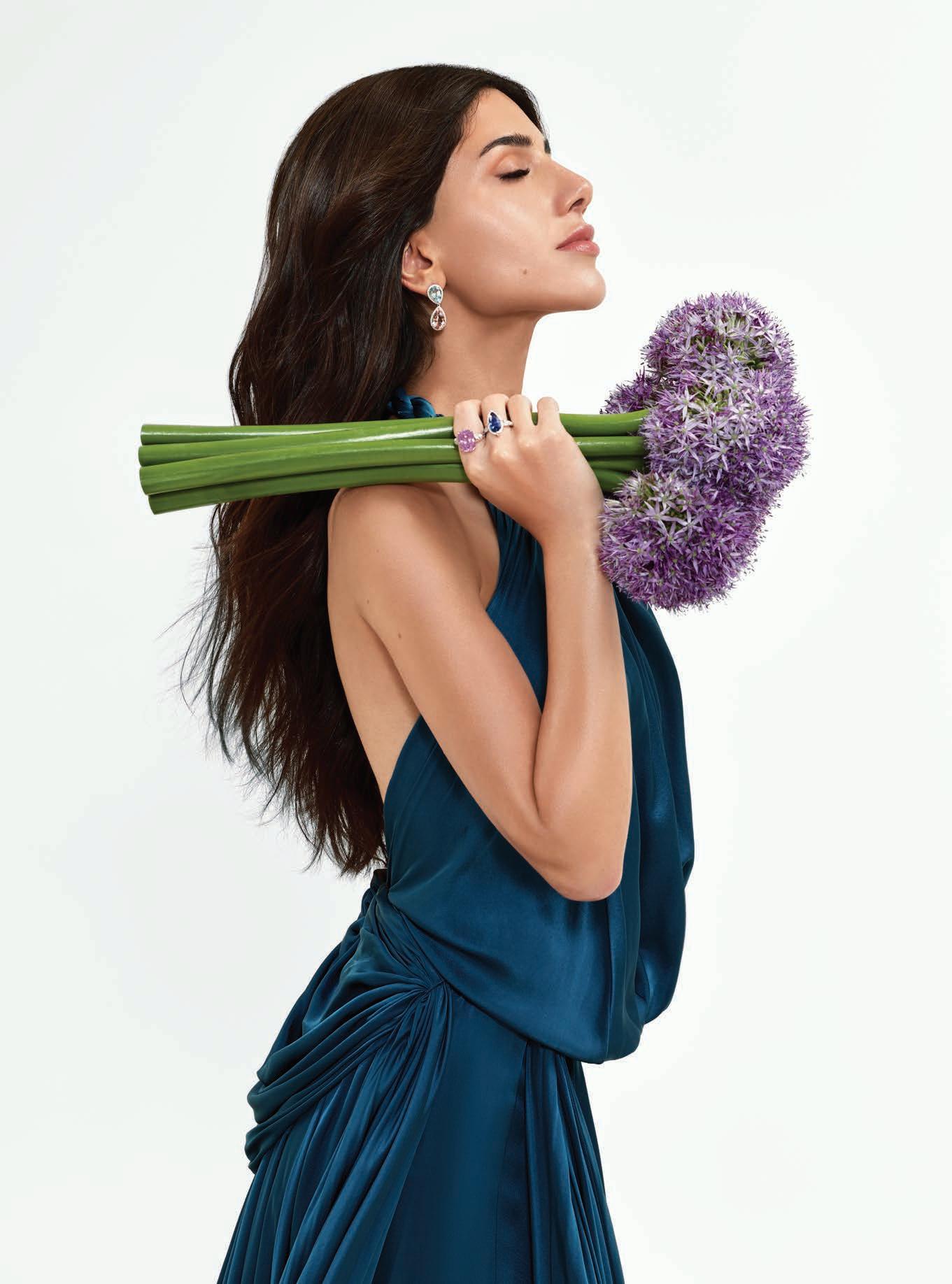
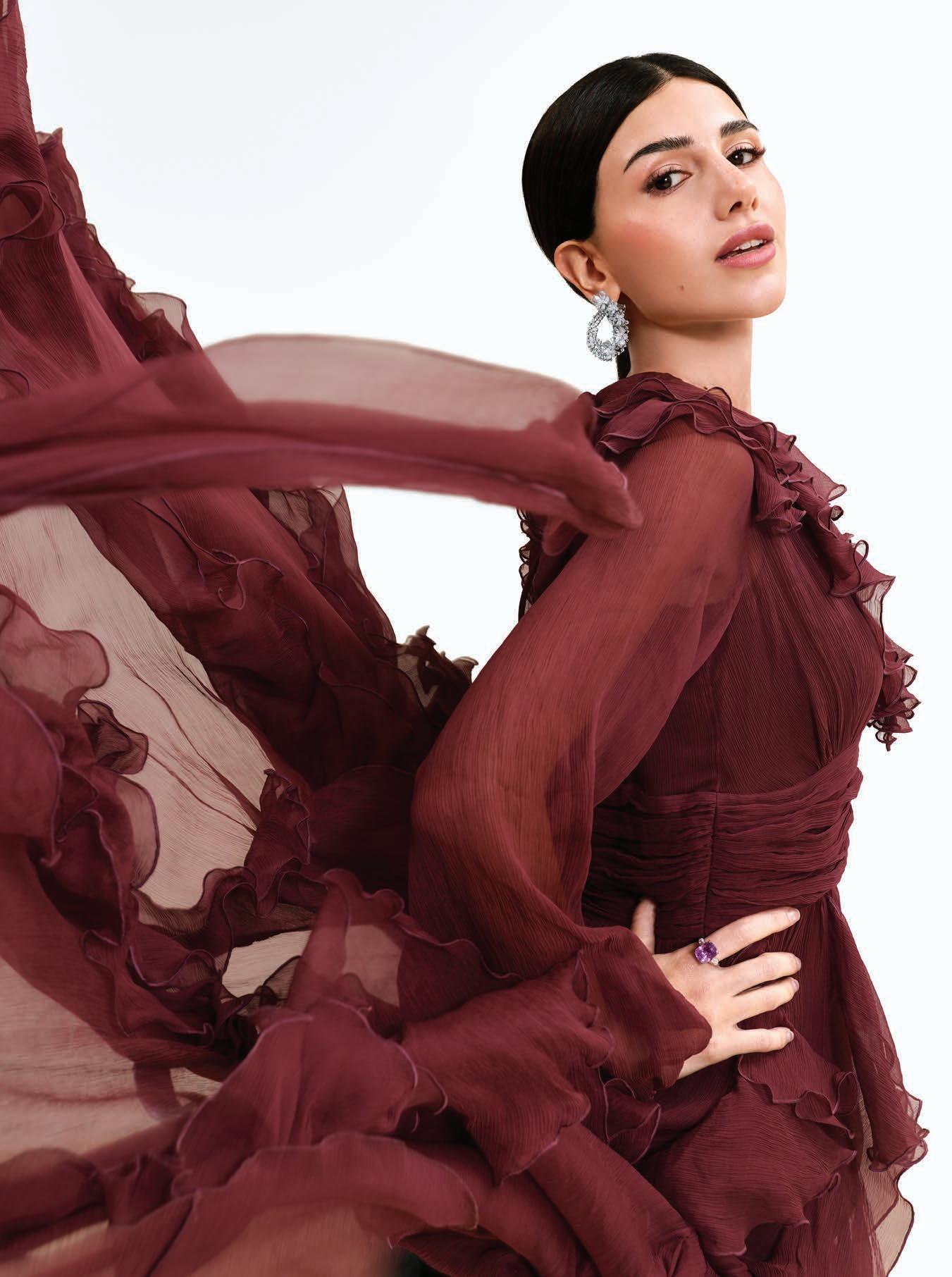
Outfit: Zimmerman; Jewellery: Parure Atelier
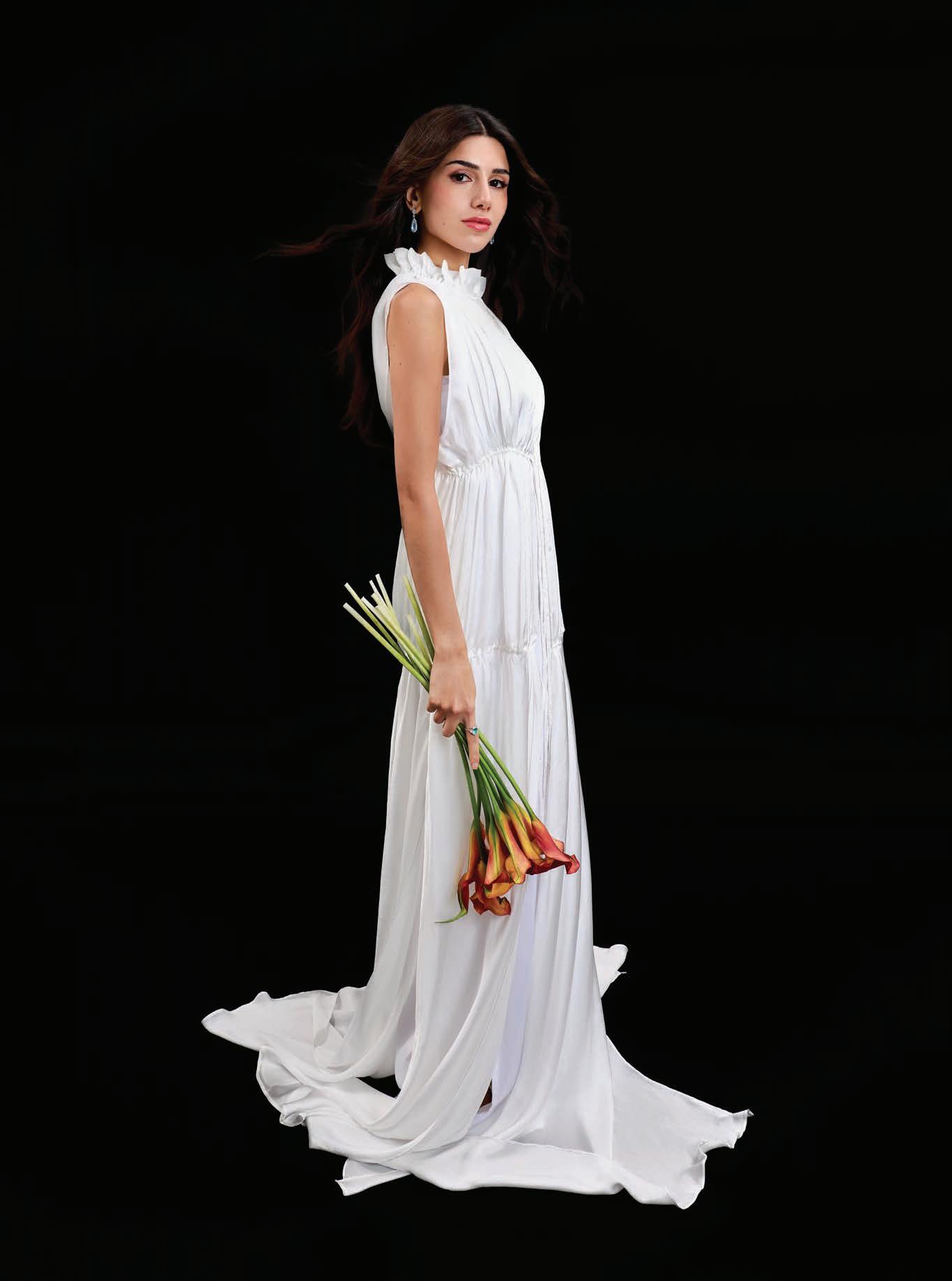
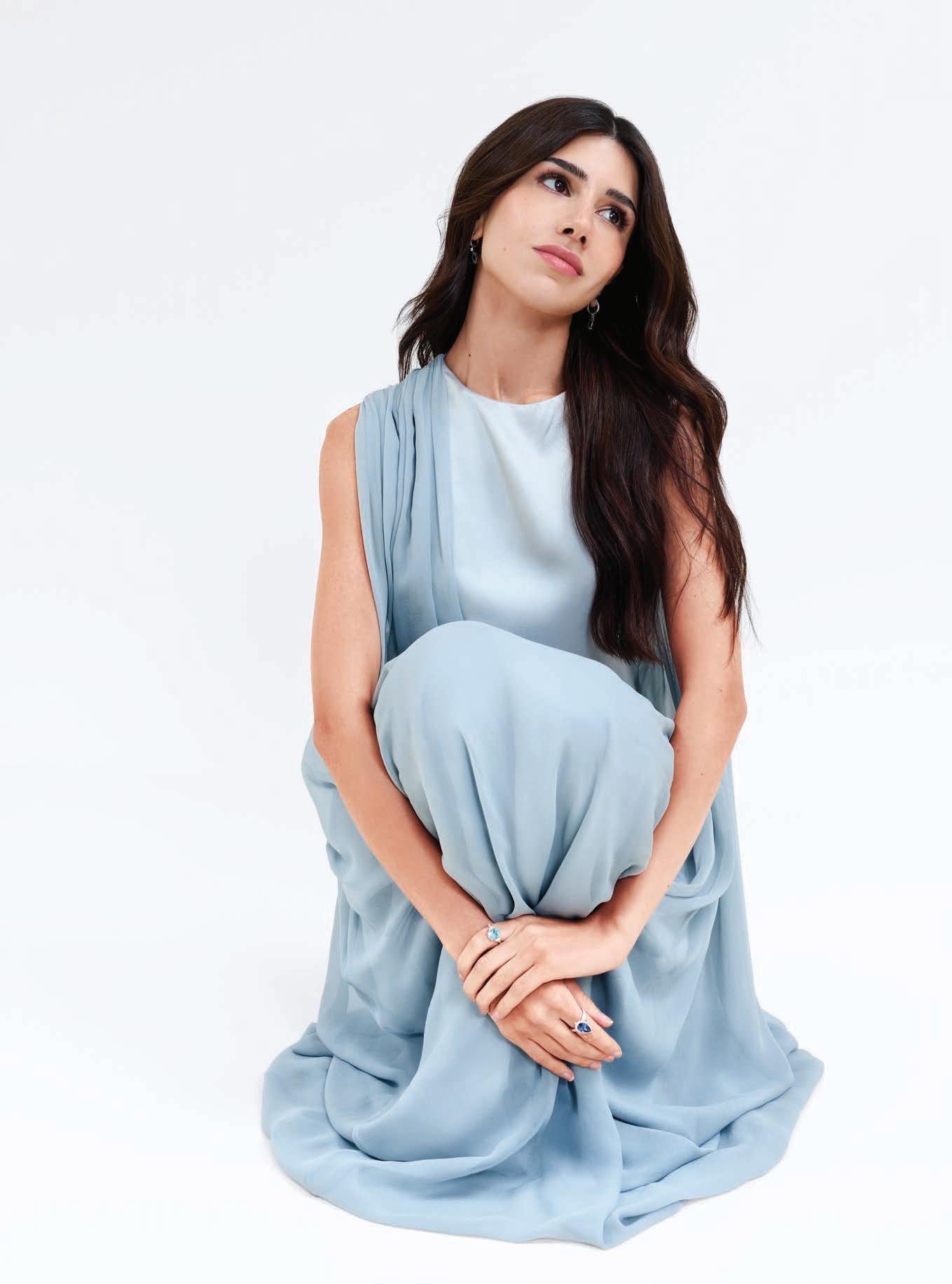
Left page: Outfit: IYMAA; Jewellery: Parure Atelier; This page: Outfit: Abadia; Jewellery: Parure Atelier
Every great odyssey begins with a single, electric moment of transformation – the instant when everything familiar gives way to everything possible. For the sweet-natured Cedra Ammara, one of Dubai’s top beauty influencers – with a devoted 10 million-strong following across her social media platforms – that moment is now. Our cover star is standing at the edge of her most dynamic chapter yet: engaged to fellow influencer Ramy Hamdan, she is building a brand of her own and carrying with her the extraordinary bond of sisterhood that has been her compass from the very beginning.
THE JOURNEY BEGINS
Ammara was eleven years old when the map of her life was first redrawn. Moving from Syria to Sweden with her two sisters – the eldest Narin, the youngest Sherin – Ammara arrived in a place that was cold and foreign and entirely unknown. There she faced the challenges of a different language, different school, different culture – a different everything. But the one thing the trio had was each other. And, as it turned out, that was more than enough. “We were linked since we were very young, way before we moved to Sweden,” she says, her voice warm with the certainty of someone who has never had to question where her foundation lies. “But I would say we became even closer when we moved there – because that’s when we started our YouTube channel, because we had literally nothing to do and didn’t know anyone. It was a way for us to also deal with culture shock, to find a way to just have fun, create some videos and connect with people online.”
Those videos sparked something none of the sisters could have anticipated. Their channels exploded. The comments flooded in. Views soared. Today their combined total reach connects them to over 72 million followers. The three girls from Syria who had started filming “just for fun” were suddenly navigating a new kind of odyssey entirely – the dazzling, and also daunting world of digital fame. “We were so confused,” Ammara recalls with a laugh. “We were like, why are we getting so many comments, so many views – what’s happening?”
A TALE OF THREE SISTERS
To understand Ammara, you must first understand what she is made of – and she is made, in no small part, of her sisters. The three of them are so alike in appearance that strangers routinely mistake them for triplets, a case of mistaken identity that the beauty influencers delight in taking advantage of when the mood strikes them. “Sometimes we prank people,” Ammara admits with barely suppressed delight. “It can just be easier, as it happens so often, that we don’t correct people and just go with it, because it’s so funny that people think that.”
But the three of them are, in truth, wonderfully distinct. Ammara, who is the middle sister, describes their personalities with the affectionate precision of someone who has spent a lifetime in gloriously close quarters. “I’m the calmest one in the family,” she declares with perfect composure. “If the world around me is going crazy, I just let it wash over me, I don’t let it get to me.” Her younger sister Sherin, she says, is the creative one – “she gives mummy vibes so much, but at the same time she’s funny.” And Narin? “Narin is the funniest one in the family. She is always joking.” What the trio have built together is rare: a creative universe rooted in genuine love and affection. While Narin has launched her beauty line and Sherin focuses her
energy on the skincare space, Ammara is charting her own course into the world of fashion. “Being the middle sister, I’ve learned that each one of us has a unique personality,” she reflects, “and I’ve learned how to deal with the different characteristics.”
A KISMET MOMENT
The start of Ammara’s love story with her fiancé is the kind that screenwriters dream up and almost nobody believes could happen in real life. And yet their iconic meet-cute was – as is almost natural for two influencers of the digital age – caught on camera.
They first collided (literally) while filming a YouTube video organised by Sherin’s now-husband – Osama Marwah (often known as Ossy Marwah). A creator in his own right with 12 million subscribers on his YouTube channel alone. He had asked twenty top-tier influencers to come together for an on camera game of musical chairs. Hamdan, who counts over 5 million followers on Instagram, lost in the first round. Because, as the slender and petite Ammara tells it, he sat down on top of her.
“We didn’t know each other at all, and when the music stopped he was so determined to get one of the chairs that he ended up sitting on me,” she recounts. A mortified Hamdan was very apologetic about finding himself in the lap of this slip of a girl – on camera. “He was like – ‘I’m so sorry! And I told him not to worry, that I was ok, and from there we just started talking,” she shares. And now somewhere in the archive of a YouTube channel, that exact moment is preserved forever, the first chapter in a love story that the world has been able to watch evolve from the very beginning. What followed was, by any measure, a courtship of remarkable honesty. The proposal, when it came, was achingly tender in its simplicity. Hamdan chose the beach – the same beach where they had their very first date. And as soon as he popped the question and she said yes, their families appeared tumbling onto the sand behind them, all joy and celebration. And again, the moment was captured for posterity and posted online, racking up more than 55 million views in less than 24 hours of it going live.
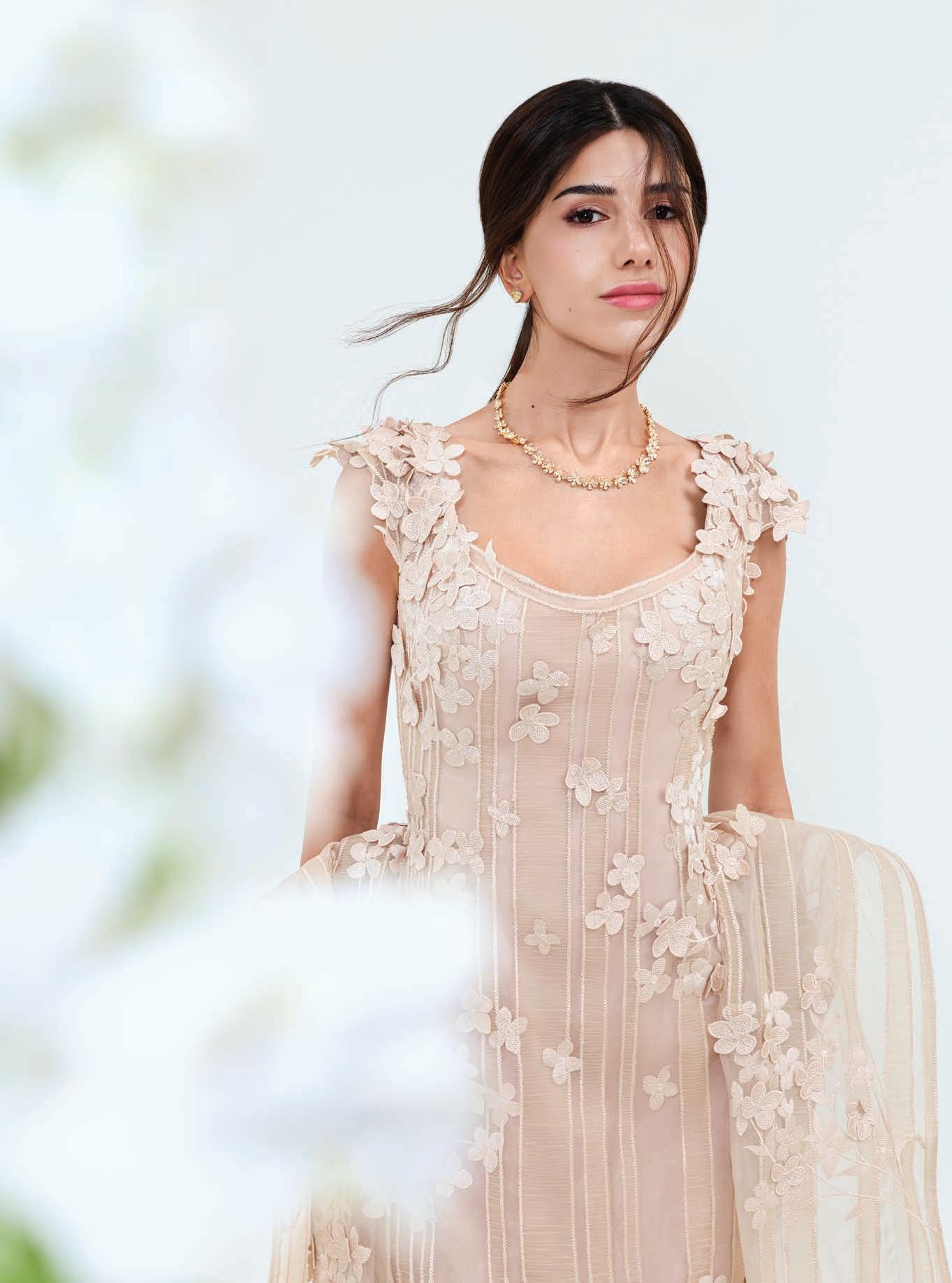
Outfit: Gemy Maalouf; Jewellery: Parure Atelier
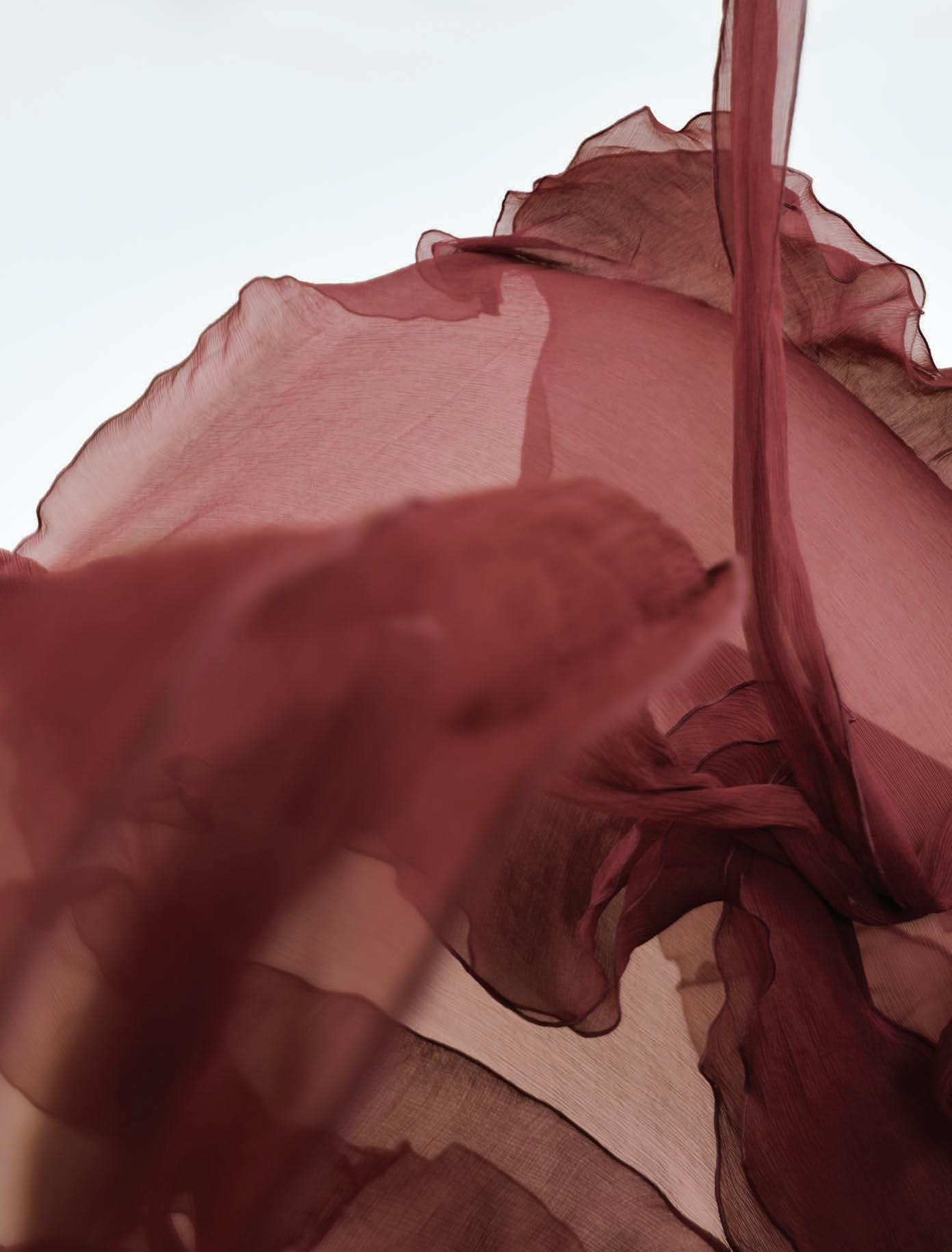
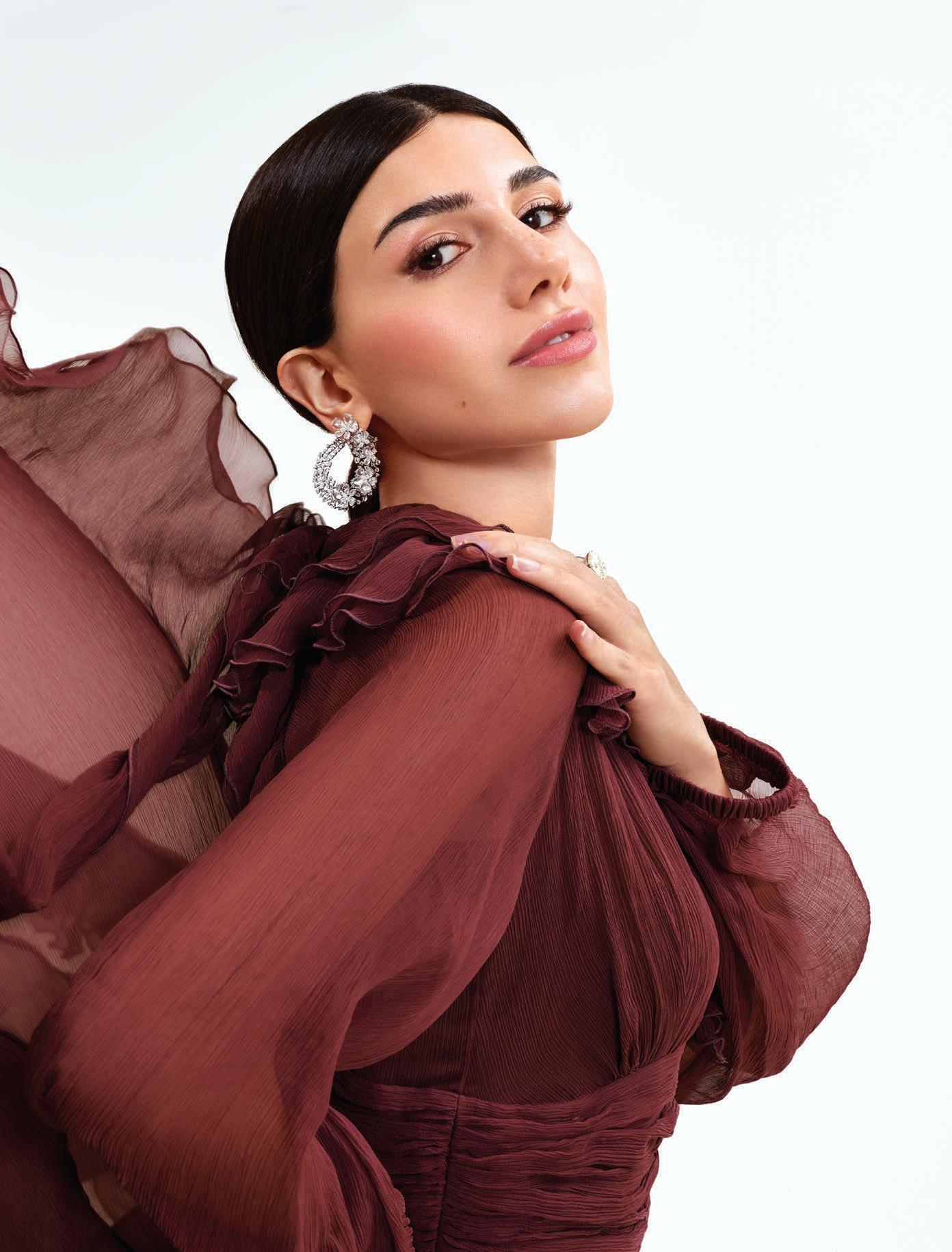
Outfit: Antonio Riva; Jewellery: Parure Atelier
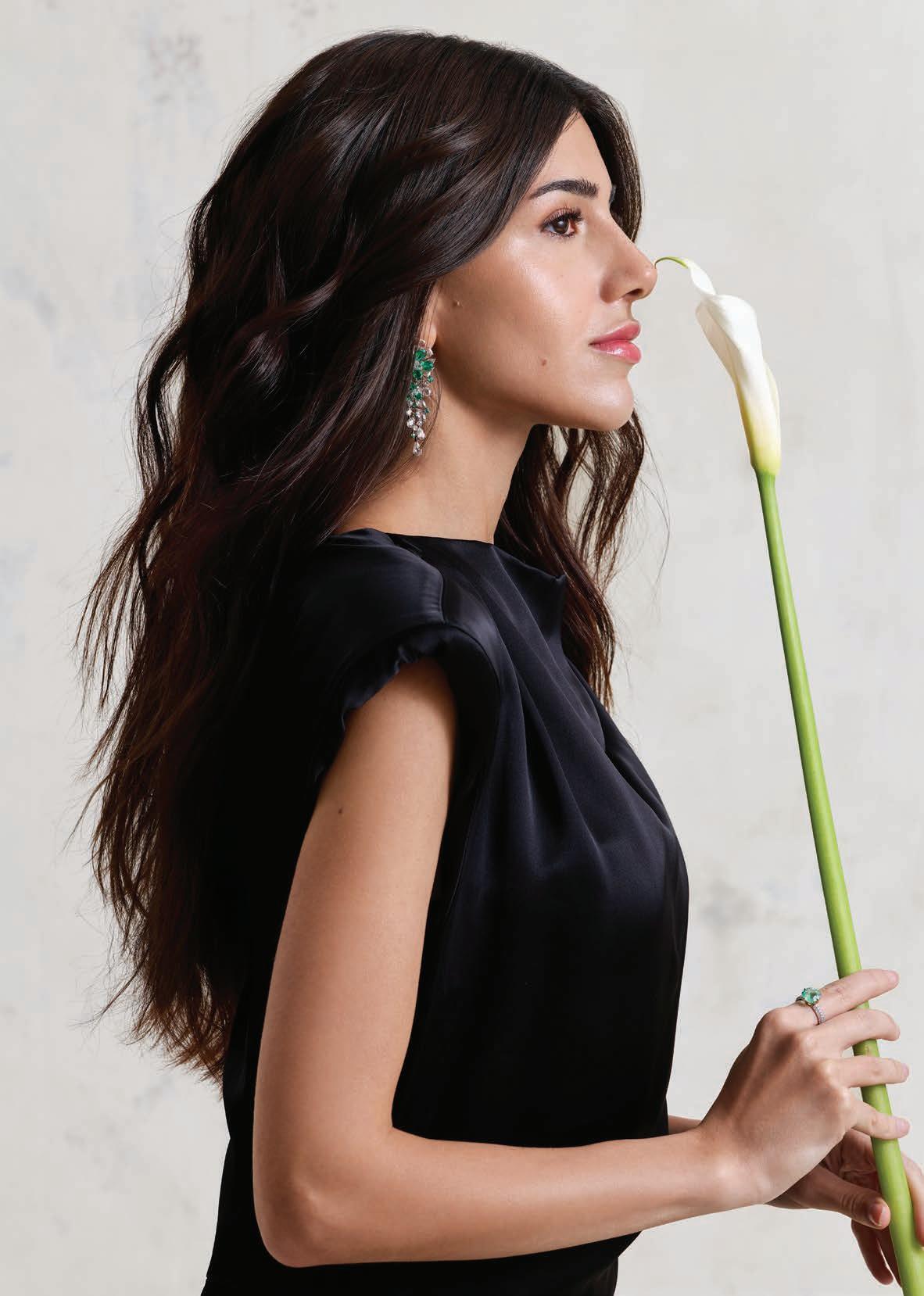
Outfit: Ilai Sarai; Jewellery: Parure Atelier
“MY FOLLOWERS TRUST ME A LOT AND I DON’T TAKE THAT LIGHTLY. TRUE INFLUENCE HAPPENS ONLY WHEN YOU ARE GENUINE”
THE WEDDING OF WORLDS
The celebrations that stretch ahead of Ammara will soon be coming hard and fast. After the engagement party that is scheduled to take place in Dubai this month, there will be the obligatory bachelorette party. Then, the pre-wedding henna party. And finally the wedding itself, which she hopes will take place in Lebanon at the start of 2027. For her engagement dress, Ammara has already decided on a Lebanese designer Hassidriss and she thinks she will also go with a Lebanese designer for her wedding dress as well, “because they’re the best at making wedding dresses”. And she speaks about her big day with the reverent certainty of a woman who has been imagining it for a lifetime. “It’s been my dream since I was a little girl to wear my wedding dress and to start a family,” she says simply. “I love babies – I’m going to have babies as soon as I get married,” She pauses, laughs softly and adds “I want a big family.”
There is something touching about the young love this duo share, and there is a clear understanding that any successful union needs to have lots of give and take. This is already personified in their wedding plans. The engagement will be held in Dubai, because that is where Ammara wants it. While the wedding will hopefully take place in Lebanon, because that is where Hamdan is from. “I love being fair,” she says. Even now, at the very beginning, it’s this sort of smart relationship architecture that will build the foundation for a lasting partnership.
TEN MILLION REASONS
While Ammara’s relationship with Hamdan is only a few years old, the one she has with her followers has been going on for close to a decade. And she takes it just as seriously. In an era where follower counts have become a kind of currency that inflates and detaches, Ammara’s relationship with her 10 million followers – clustered primarily across Saudi Arabia, Syria, Lebanon and Jordan – is something genuine and intimate. Snapchat, she admits, is her favourite platform for this precise reason. “Snapchat gives me the vibe that I’m actually talking to my fans. I love making real connections with them. So every time I miss them, I just go to Snap, film some stories, and talk directly to them.” She pauses, and what she says next is disarmingly sincere: “I feel they’re like my friends. They’re like my family. That’s why I love talking to them.”
As she says this it doesn’t sound performative like it often does with more traditional celebrities. Her genuine desire to connect on a personal level with her followers is, in fact, the secret to their extraordinary loyalty – a mutual trust has been built over years of radical authenticity. For example Ammara does not recommend products she has not personally tested. She will never place a brand deal above her audience’s faith in her. “I will not talk about a product that I don’t like myself,” she says flatly. “My followers trust me a lot and I don’t take that lightly. True influence happens only when you are genuine.” But she has also, over the years, developed the armour of someone who has learned to hold the attention of millions without being diminished by it. Yes the hate comments exist; she does not pretend otherwise. “I stopped caring a long time about those posts,” she says evenly. “I know that with seven million followers that not all of them are there to support me. But at the end of the day you’re not successful if you don’t have haters. I just decided to focus my energy on the people that love me.”
ON THE HORIZON
Ask Ammara to describe her style in three words and she answers the way a woman does when she has stopped performing and simply knows who she is deep down inside: “Confident, simple and effortless.” She is, of the three sisters, the most fashion-forward – she will tell you this herself. Her weakness is heels: Christian Louboutin, Valentino, and YSL are brands she covets. And later this year the plan is to launch her own brand – moving into fashion in a manner that feels authentic to who she is and has always been. She is not yet ready to share every detail about what part of the fashion space she wants to carve out for herself, but the direction is clear and the vision will be 100 per cent hers.
Near the end of our conversation, I ask Ammara what she most wants people to understand about her – the real her, beneath the filters and the follower counts and the gorgeous content. Her answer is as earnest and genuine as she is. “I want them to understand that what I’m creating is for them, and how my intention is to always be real and honest with them,” she says. “I want my followers to know that I love what I’m doing and I have so many dreams. I have so many goals I want to reach – and I hope they will come along with me on this journey.”
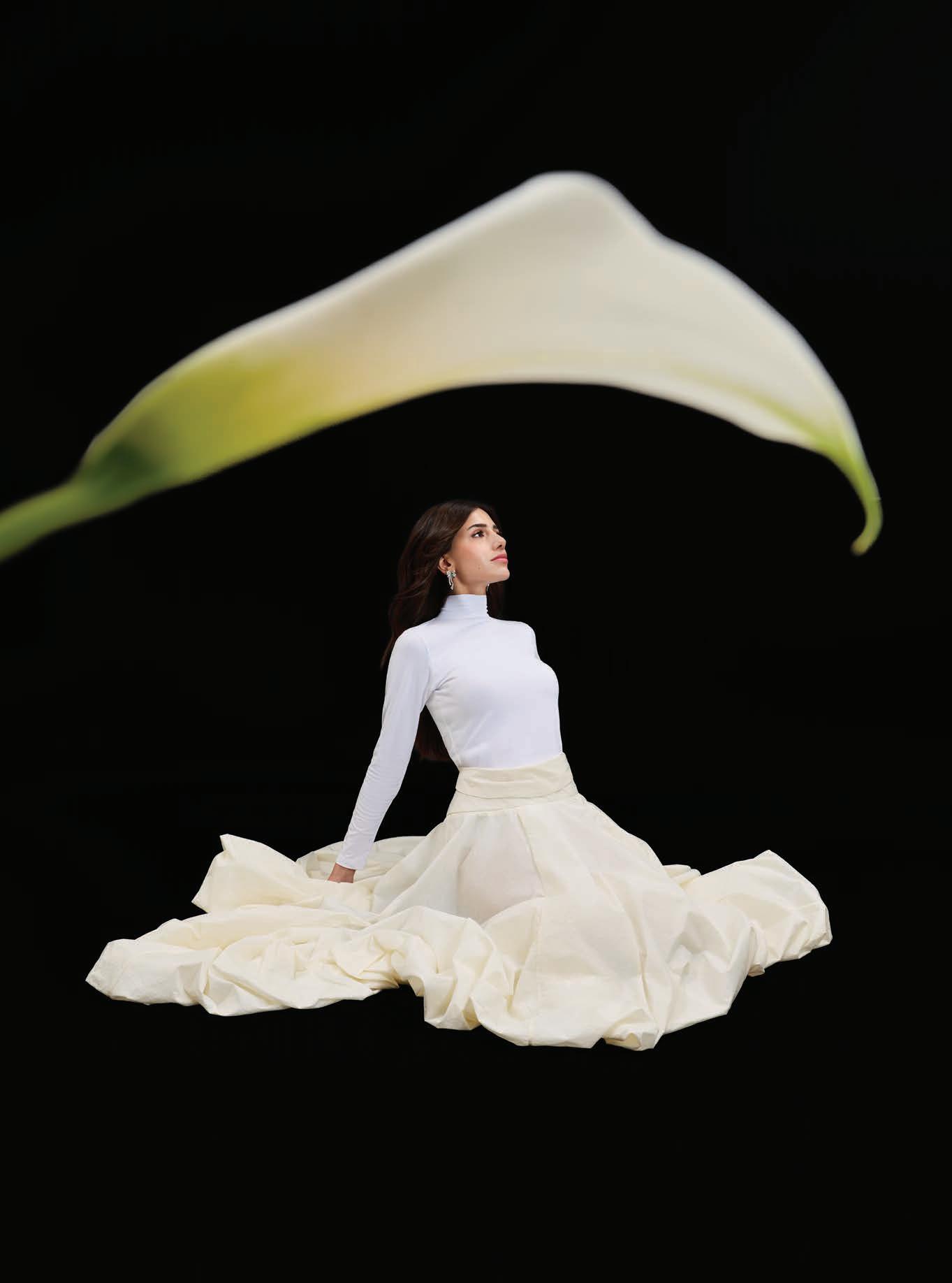
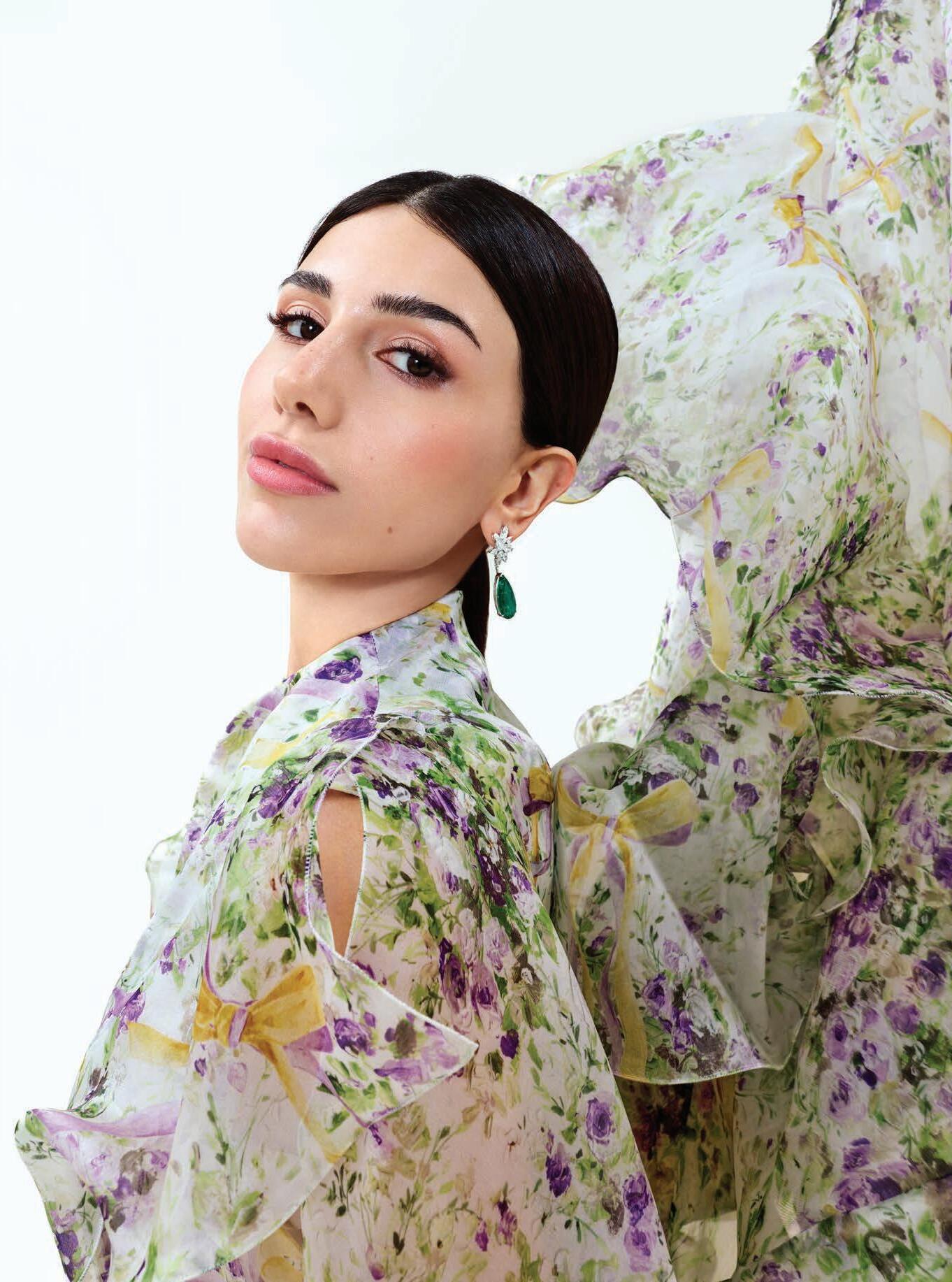
Makeup: Jean Kairouz; Hair: Rafi Fazaa; Videographer: John Melencion; Photographer’s Assistant: Yasir Ali Shah; Stylist Assistant: Anna Kandrashova;
Editorial Assistant: Rawda Askar; Makeup Assistant: Serenne Lichani; Lighting Assistant: Isaac Badda; Equipment: Studio Society; Flowers: Udora
Left page: Outfit: Magda Butrym; Jewellery: Parure Atelier; This page: Outfit: Antonio Riva; Jewellery: Parure Atelier
DEPARTURE NOTES
Six tastemakers of culture and couture reveal where they’re travelling this summer, what they’re packing – and the odyssey they are game to take on
COMPILED BY: AMINATH IFASA
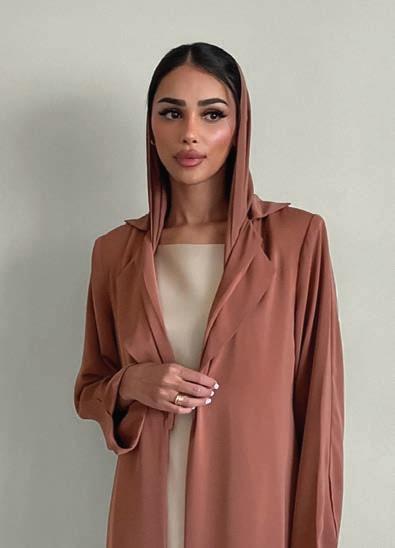
Mahra Almuhairi
FASHION AND LIFESTYLE CONTENT CREATOR
Where are you travelling to this summer? The Maldives. What’s the one thing you love about exploring new places? The culture and the people. I love experiencing how different places feel, from the energy to the little everyday details. This is The Odyssey Issue. What’s your dream odyssey? My dream odyssey would be a journey where I can explore multiple destinations that feel completely different from each other. Starting somewhere peaceful like island escapes, then moving into cities rich in culture, history, and hidden gems. I love the idea of slow travel, really living the moment, meeting people, and creating memories that stay with me forever. I absolutely love the Maldives for its calm and beauty, but I’ve always adored Paris! It’s my forever destination.

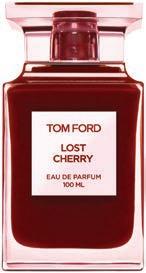
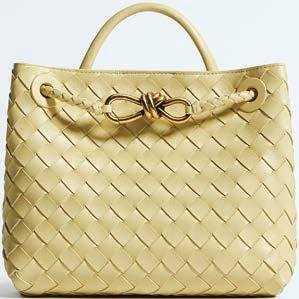
What will you be packing?
Cat Eye Sunglasses Dhs3,150 Chanel; Small Andiamo Dhs18,600 Bottega Veneta; Lost Cherry Eau de Parfum Dhs1,490 Tom Ford
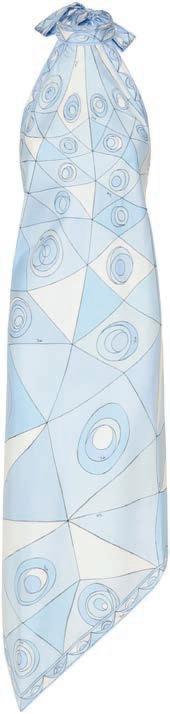
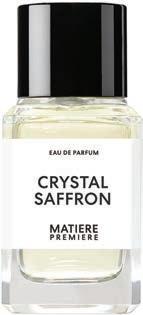
What will you be packing?
Occhi Print Silk Dress
Dhs6,800 PUCCI; Crystal Saffron Dhs1,162 Matière Première; PowerShot G7 X Mark II Camera Dhs3,599 Canon

Nadia Sultan
BEAUTY AND TRAVEL CONTENT CREATOR
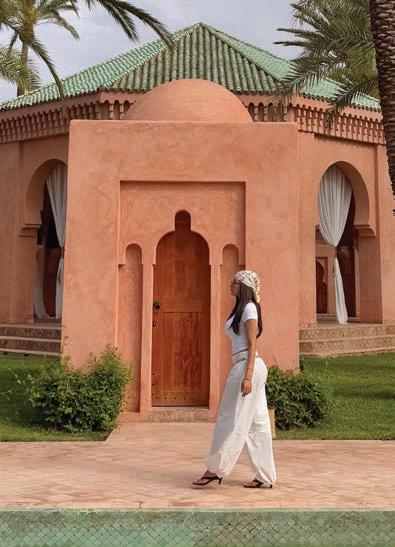
Where are you travelling to this summer? This summer I’ll be travelling to Morocco, Japan, Shanghai, and Kyrgyzstan. What’s the one thing you love about exploring new places? My love for travel comes from the little details that make every place feel unique. From the way people dress to the food, architecture, and everyday rituals they observe. I think travelling gives you a completely new perspective and inspires you creatively in ways nothing else can. This is The Odyssey Issue. What’s your dream odyssey? My dream odyssey would be spending a few months in some of the world’s most beautiful destinations. Starting in Japan during cherry blossom season, making my way through Thailand, Bali, Vietnam and then escaping to the coastlines of Italy and Greece. I’m drawn to places that feel cinematic and deeply rooted in culture.
Nila Yaqoubi
FASHION CREATIVE & STYLIST
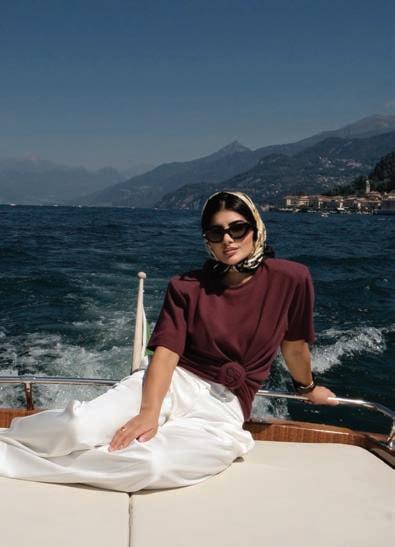
Where are you travelling to this summer? I will visit my family in the Netherlands and maybe visit the South of France or Italy.
What’s the one thing you love about exploring new places? I love hidden gems, the places you wouldn’t see on social media. Coming across local shops and boutiques, renting a scooter or car, and just exploring in my own way, discovering beautiful sceneries along the way. That’s when you really feel a place and connect with the culture.
This is The Odyssey Issue. What’s your dream odyssey? I would love to visit Antarctica one day. It is not just a trip, but a true once-in-a-lifetime experience. The fact that it’s so remote and exclusive makes it feel like visiting another world. For a more accessible trip, I’d also love to do a South America tour.
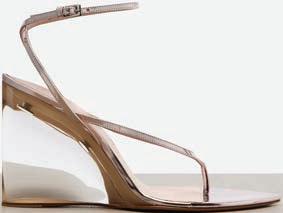
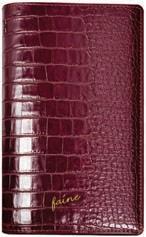
What will you be packing?
Invisible Leather Wedge
Thong Sandals Dhs6,150
Alaïa; Croc Agenda Dhs190
Faine; Chloe Sunglasses Dhs1,193 Tom Ford


Seher Khan
FASHION STYLIST AND CURATOR


What will you be packing?
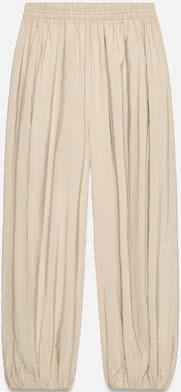
Sarouel Trousers With Elastic Waist
Dhs189 Zara; Mirabel Straw Sunhat
Dhs2,000 Eugenia Kim; The Flip-Flop Heel Sandals Dhs1,950 Toteme
Where are you travelling to this summer? Bali, Portugal and Greece.
What’s the one thing you love about exploring new places? The culture! I love experiencing the place like a local. Go to local food joints, shop local designers and try to mix with local people as much as I can to get an understanding of the pulse of the city. I don’t care much about tourist spots. Lastly, of course all the content I film serves as a visual archive that lasts me forever.
This is The Odyssey Issue. What’s your dream odyssey?
My dream odyssey would be a few weeks exploring a few cities in South America. Shop from stunning local designers in Cartagena, Colombia, dance on the streets during the Carnival of Rio de Janeiro, experience the Brazilian Riviera at Ipanema, forget time exists and get the Brazilian tan at these beaches. I’d also want to live at the Janeiro hotel in Leblon – it’s very quiet luxury, chic with ocean views and a beach front. I also love Copacabana Palace in Rio – it’s more classic and grand with a vintage Hollywood charm.
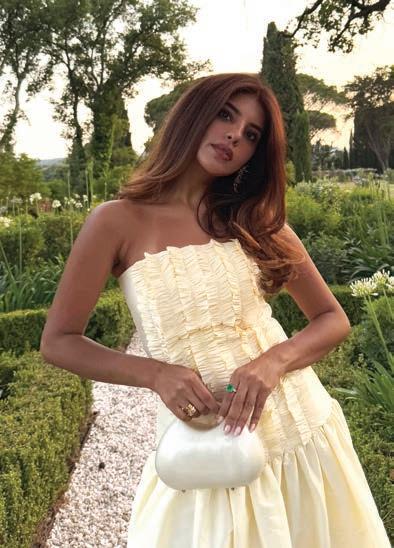
Nisa Tiwana
ENTREPRENEUR AND FOUNDER OF NISA
Where are you travelling to this summer? I’ll be travelling to Florence for a wedding, then St. Tropez for a birthday, and London/Paris with my family.
What’s the one thing you love about exploring new places? I love finding hidden spots – the small cafés, the best low-key food places, the shops you wouldn’t come across on your own. Traveling like a local, with a local, just makes everything feel more real. It’s the energy of a place that sticks with me, not the checklist of sights. This is The Odyssey Issue. What’s your dream odyssey? Think slow beach days with no rush – just switching off, enjoying the sun, and being present. I like a mix of relaxing and a little bit of party – not too hectic, but not too quiet either. I’d want to meet new people along the way, try things I wouldn’t normally do at home, and just stay open to whatever comes.
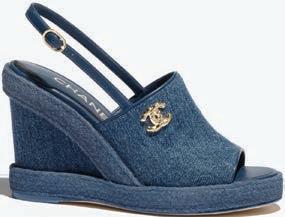
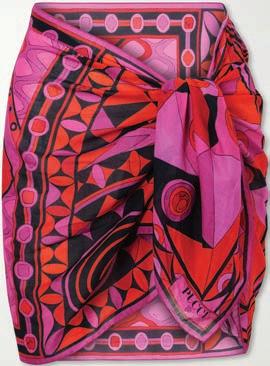
What will you be packing?
Printed Self-Tie Cotton Pareo Dhs1,075 PUCCI; Sandals Washed Out Denim Blue Dhs6,780 Chanel
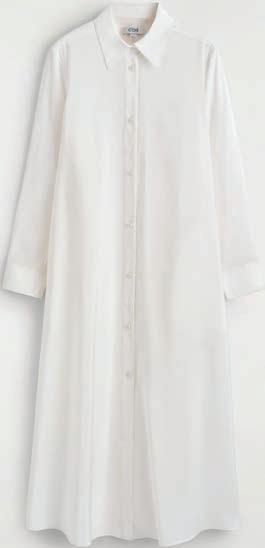
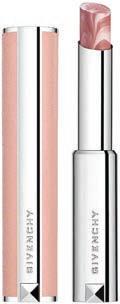
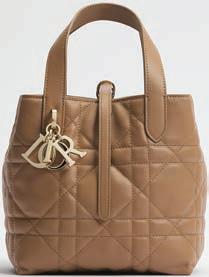
What will you be packing?
Fluid Midi Shirt Dress Dhs510 COS; Rose Perfecto in Milky Nude Dhs196 Givenchy; Small Toujours Vertical Tote Bag Dhs13,500 Dior
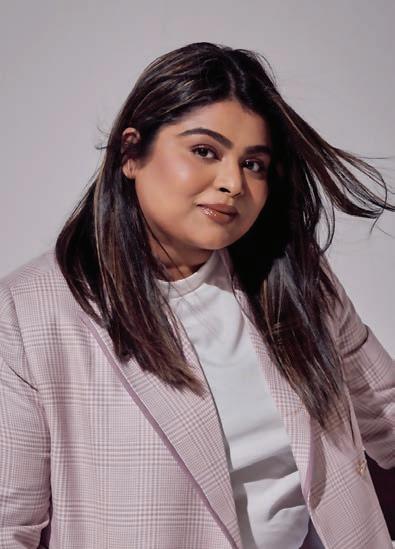
Shireen Shahana
FASHION DESIGNER & FOUNDER OF IZAKI
Where are you travelling to this summer? This summer, I will be travelling to Japan, a journey I have always imagined as a blend of inspiration, culture, and quiet discovery. What’s the one thing you love about exploring new places? One thing I truly love exploring in every place is its people and culture. I find beauty in understanding how differently people live, dress, celebrate, and express themselves, while still sharing the same human emotions. This is The Odyssey Issue. What’s your dream odyssey? As a designer and creative person, my dream odyssey is one that would inspire me into collecting memories, stories, colours, textures, and human connections from around the world, and turning them into art and fashion that carry meaning beyond trends.
med
ix
MESSAGES
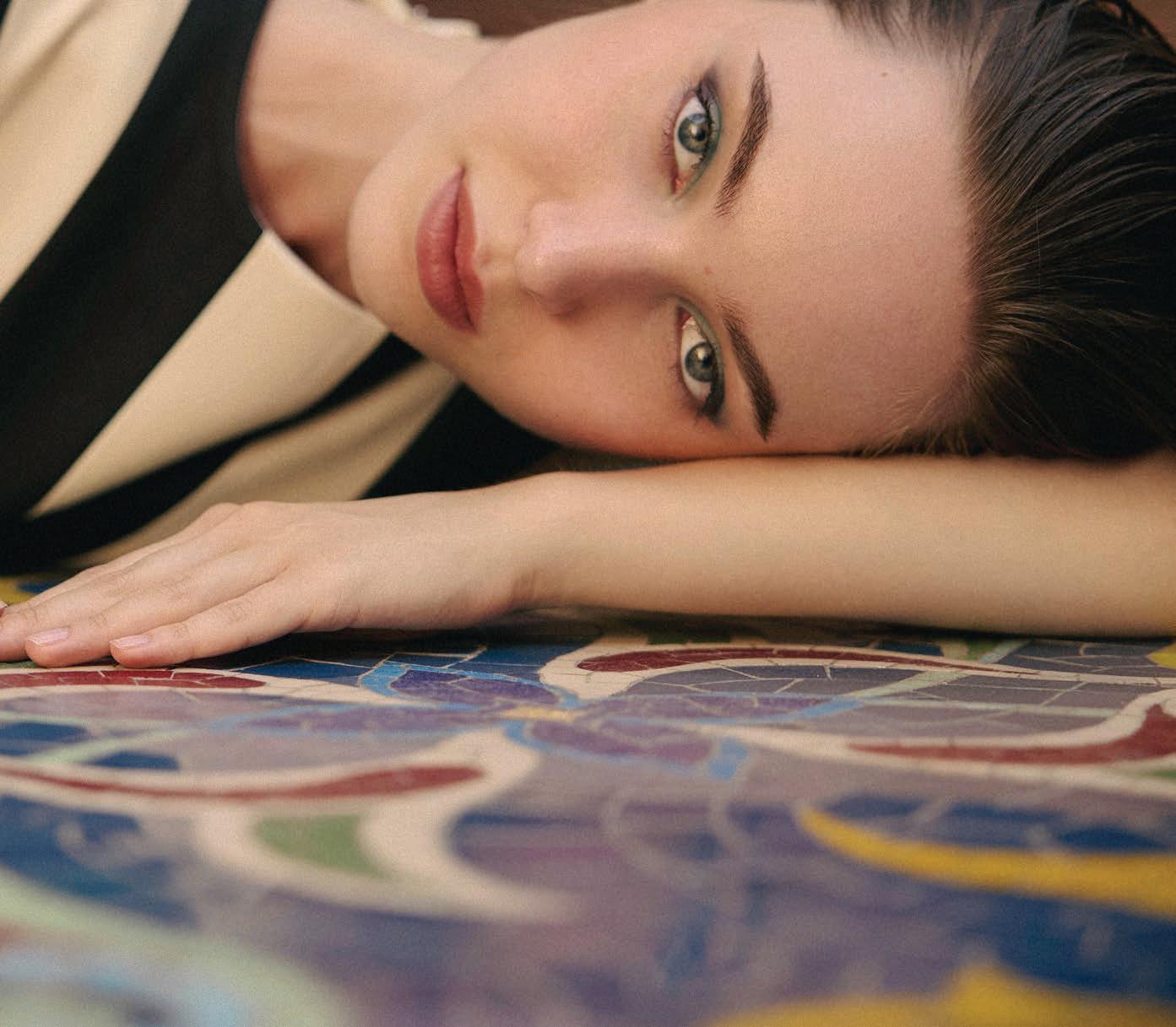
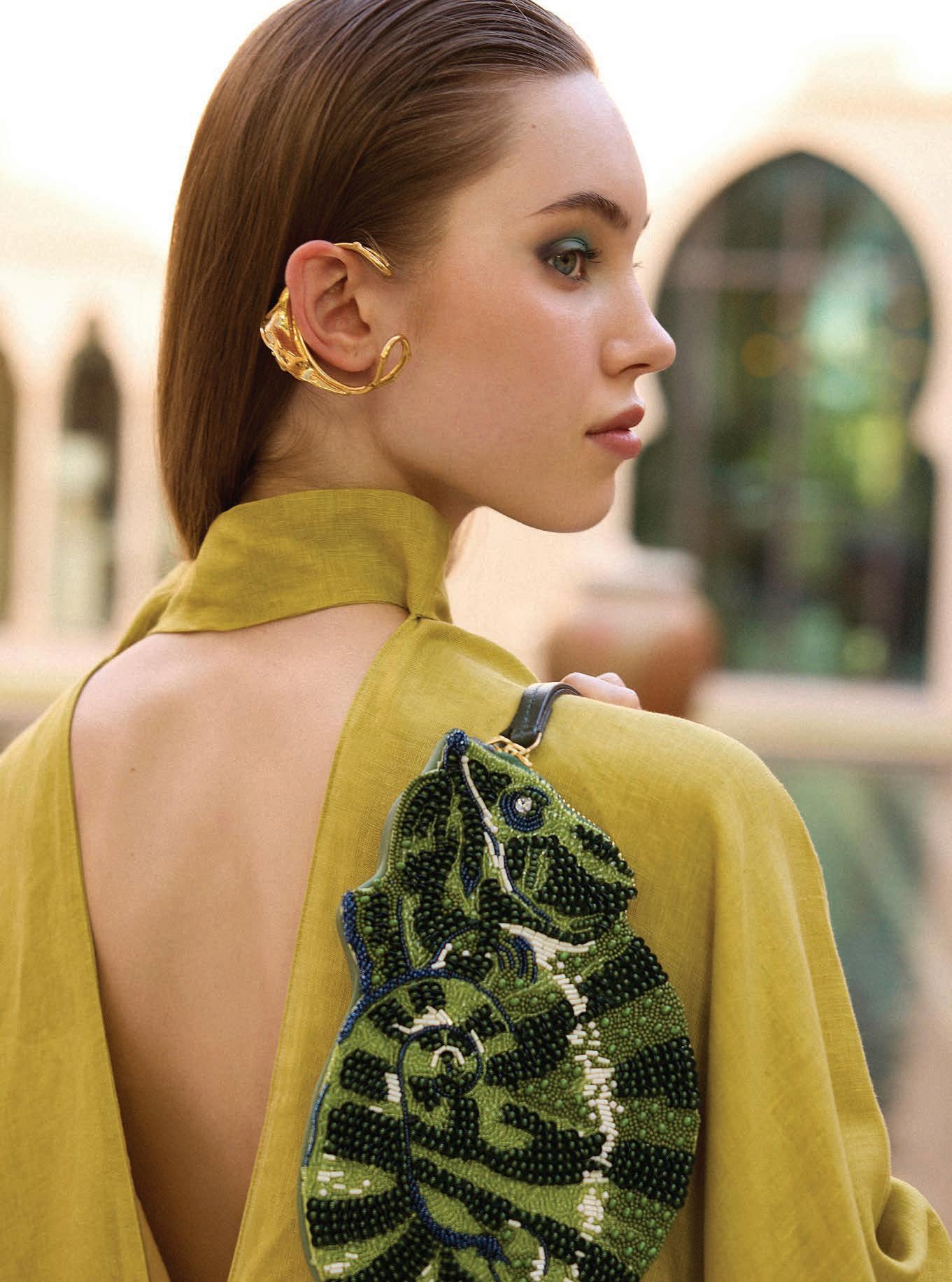
Prints, patterns and personality – the perfect mélange for an unforgettable holiday wardrobe
SENIOR EDITOR: JESSICA MICHAULT PHOTOGRAPHER: NEGIN SADEGHI
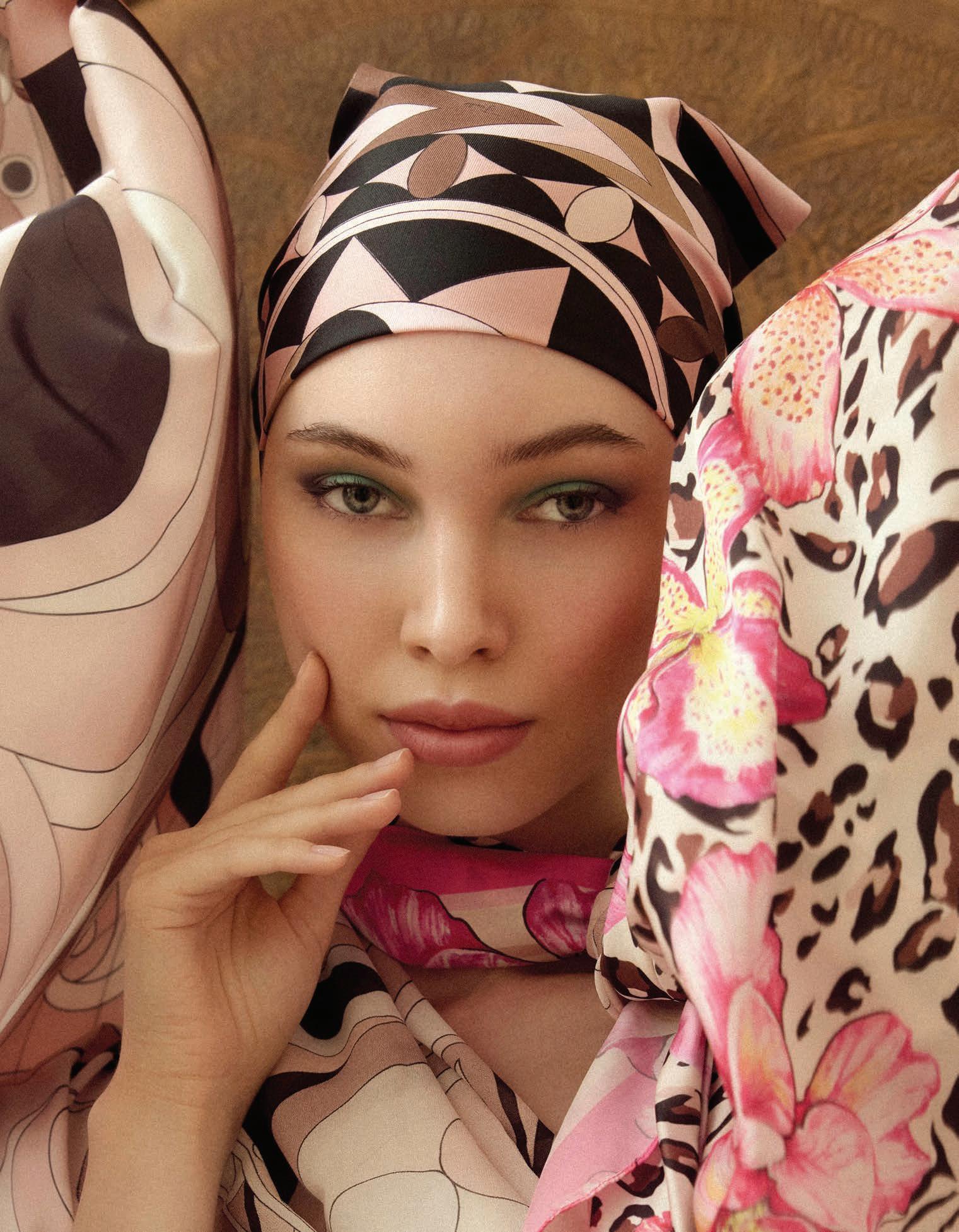
Outfit: Headscarf, Pucci; Scarfs, Cin Cin, Pucci
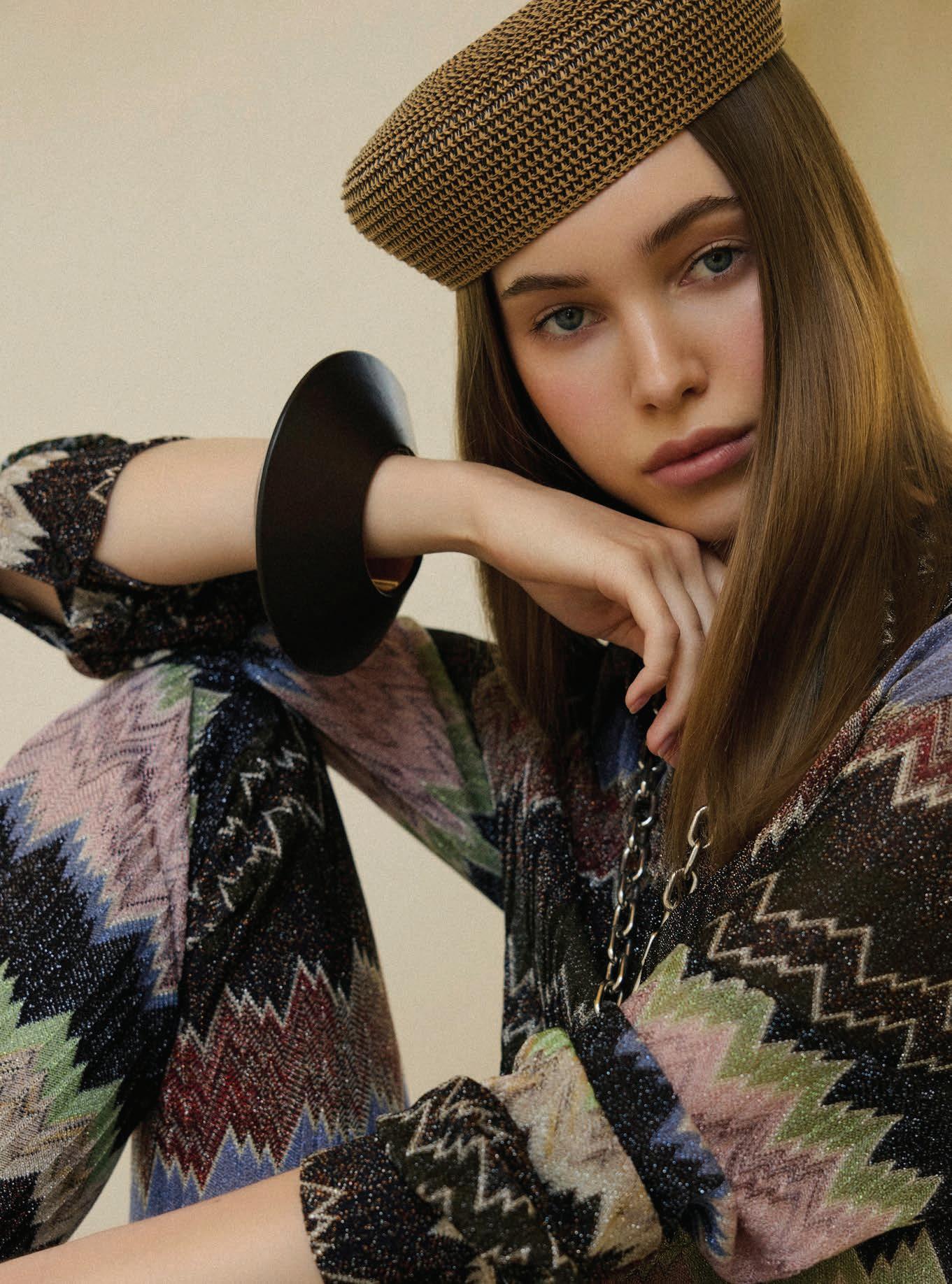
This page: Outfit: Top, Missoni; Trousers, Missoni; Hat, Céline; Jewellery: Cuff, Ferragamo; Right page: Outfit: Tube, MaxMara; Leggings, Pucci; Gloves, Norma Kamali; Jewellery: Earings, Rabanne
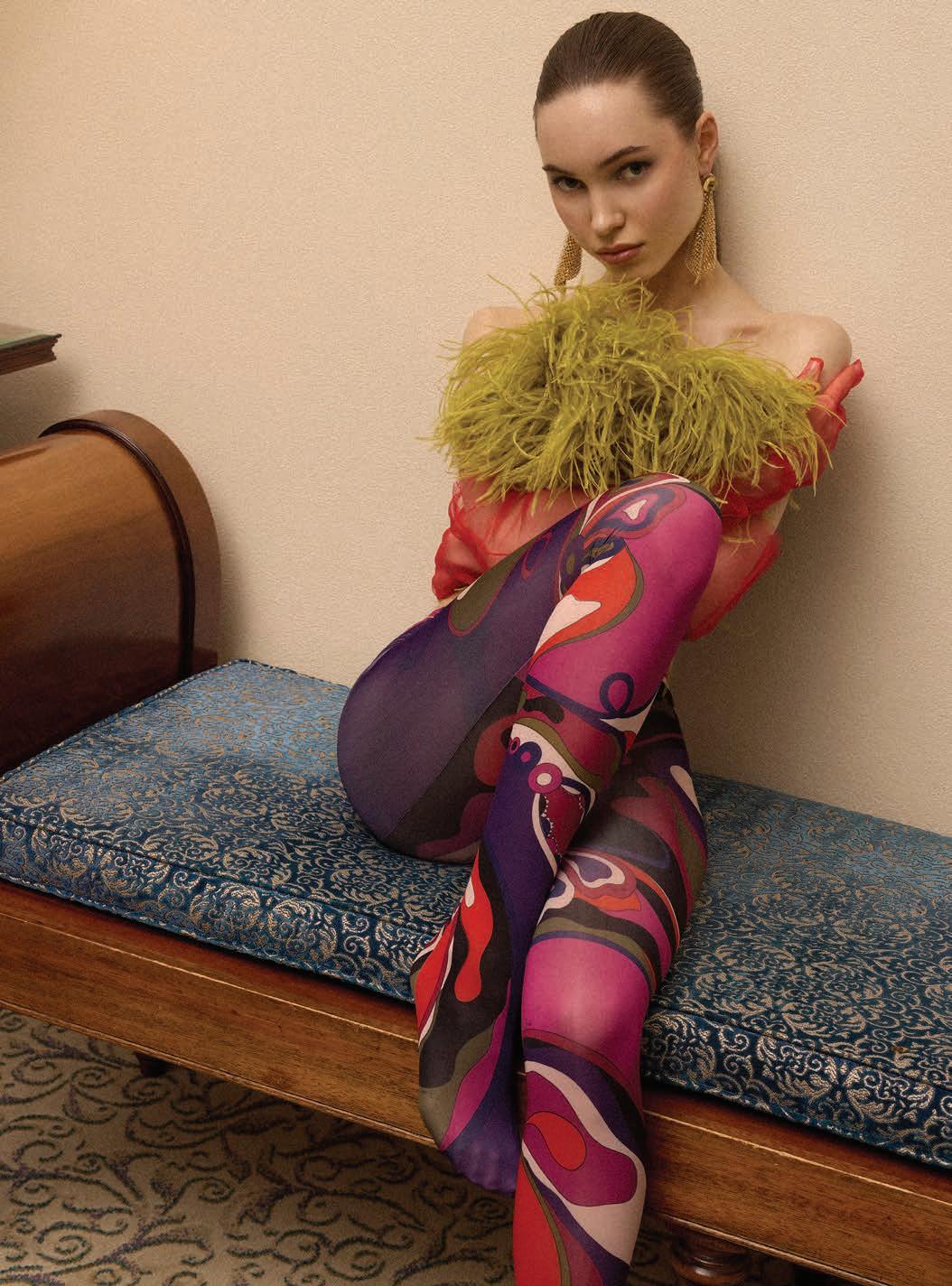
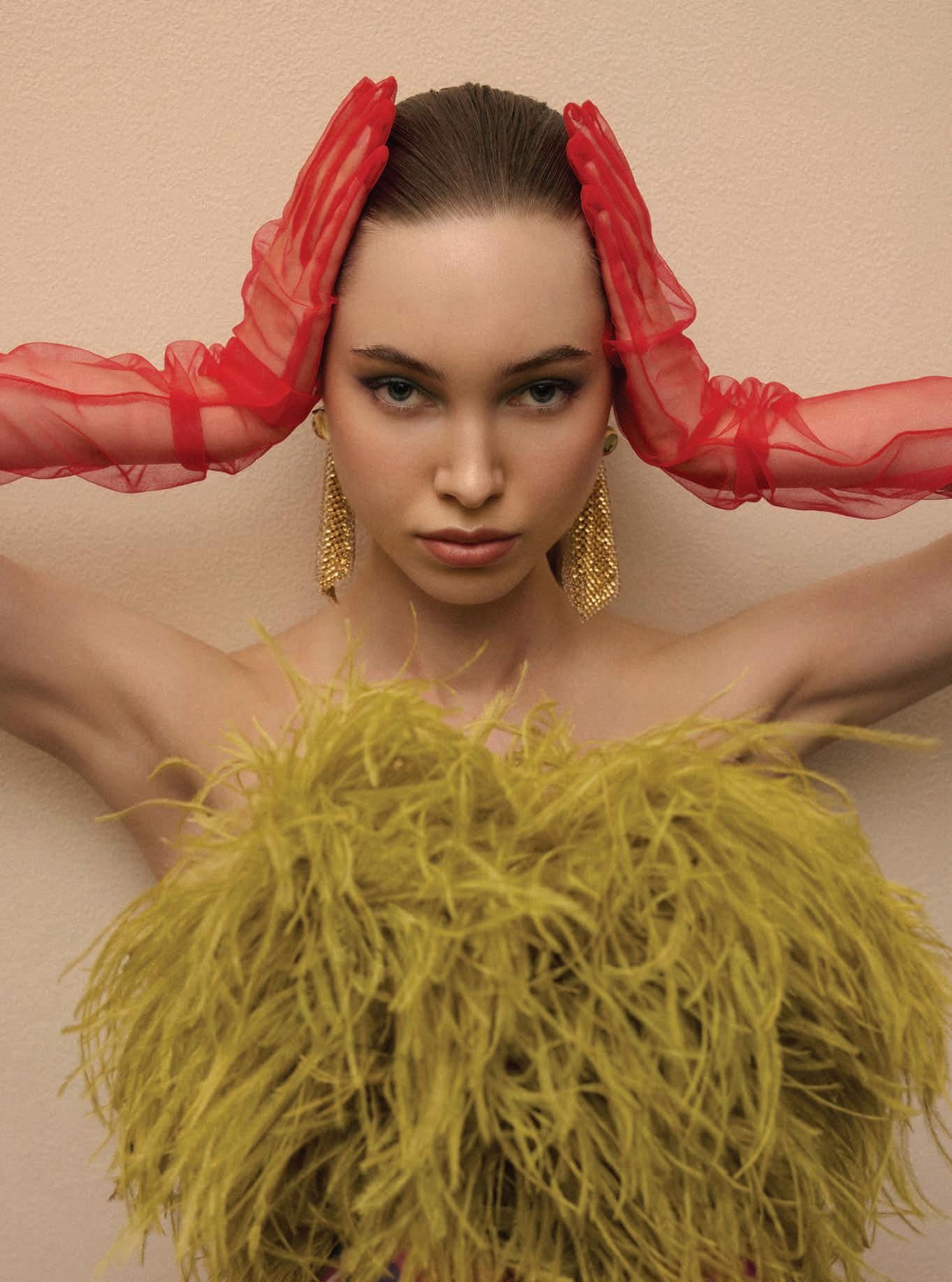
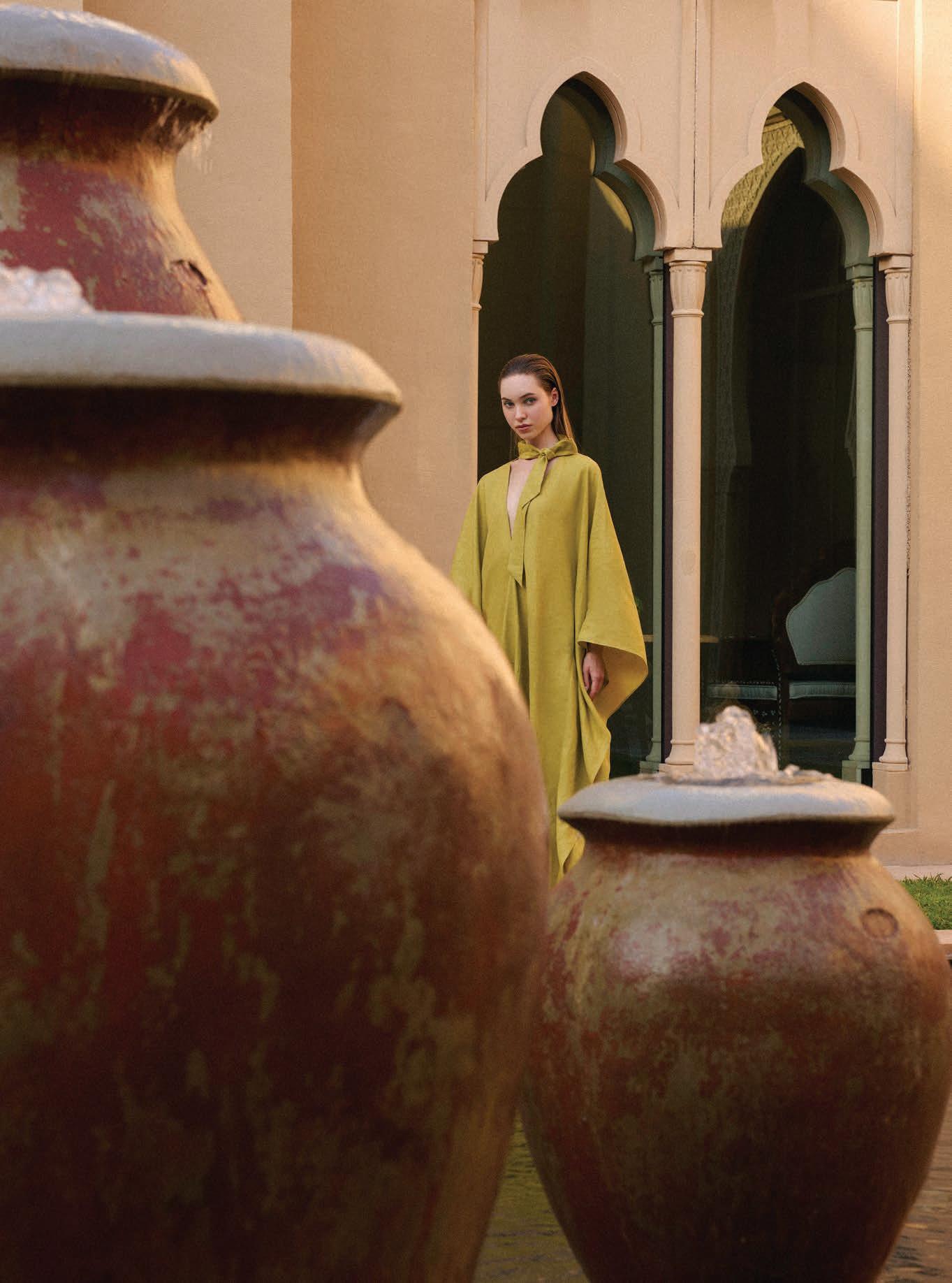
Left page: Outfit: Tube, MaxMara; Gloves, Norma Kamali; Jewellery: Earings, Rabanne; This page: Outfit: Dress, Taller Marmo
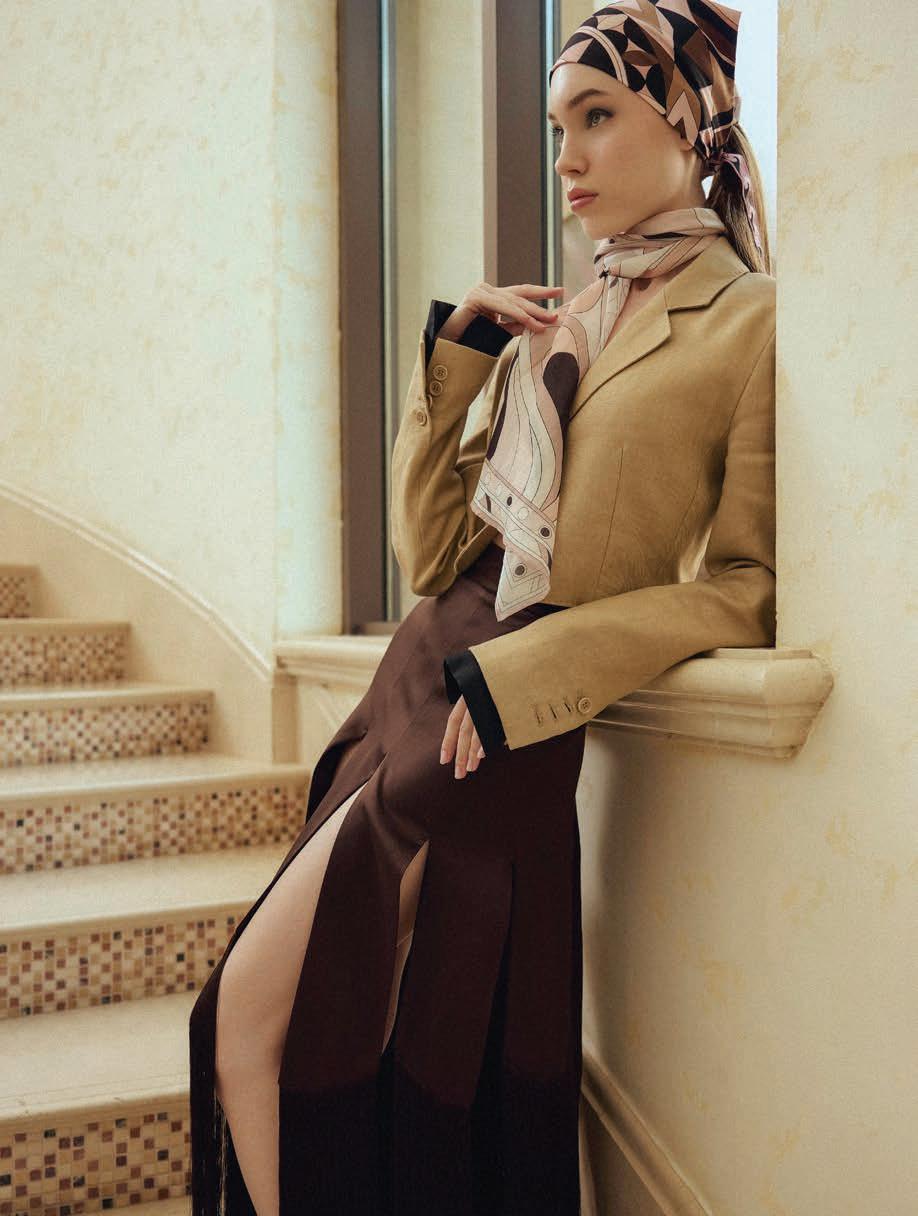
This page: Outfit: Headscarf, Pucci; Scarf, Cin Cin; Blazer, MaxMara; Skirt, Ferragamo; Right page: Outfit: Dress, Sportmax
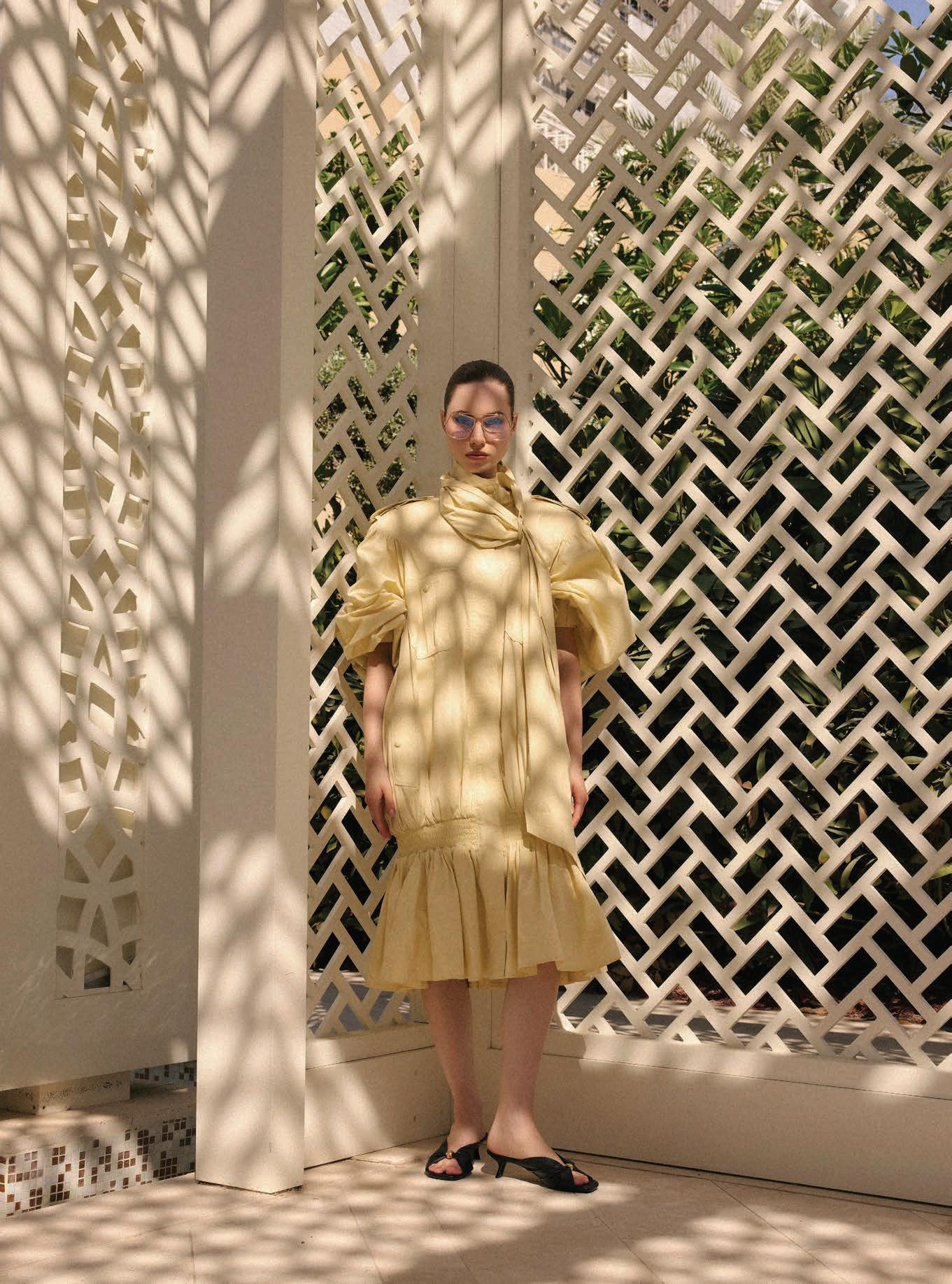
This page: Outfit: Trench coat, Chloé; Sandals, Loewe x Paula’s Ibiza; Right page: Outfit: Dress, Taller Marmo; Clutch, Alemais; Jewellery: Cuff, Chloé
Art direction and styling: Negin Sadeghi
Production: Storyonbords Production
Make up and Hair: Hamta Babaei Model: Anna Krivosheeva
Styling assistant: Edrian Pizarra
Gaffer/Lighting assistant: Isaac Baada @thestudiosociety
Location: One&Only Royal Mirage
WORDS: YI-HWA HANNA
TOTES WANTED HOW THE HUMBLE TOTE BAG BECAME
A NEW ‘IT BAG’ AND LIFESTYLE
STATUS SYMBOL
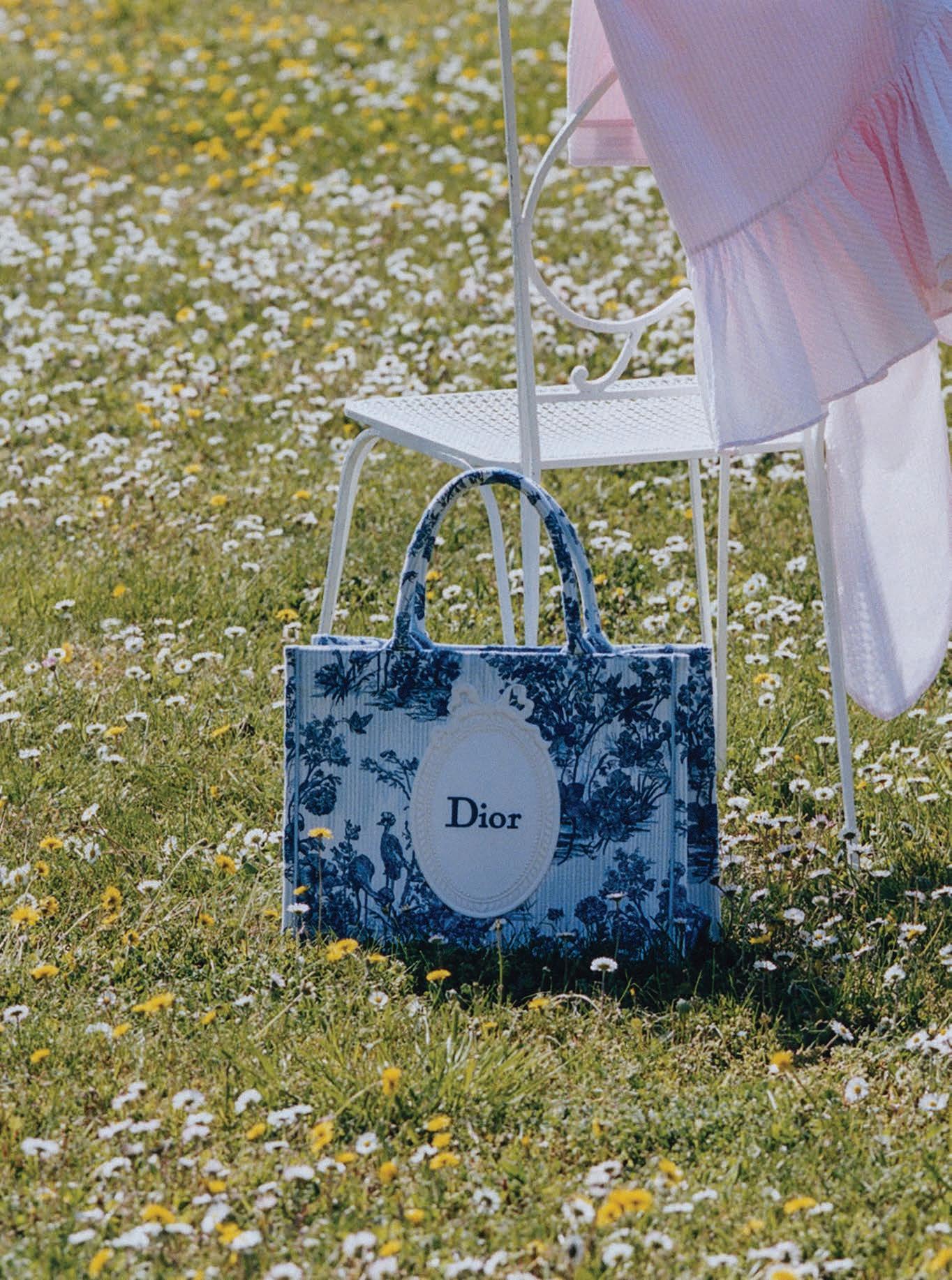
Blue Toile de Jouy Floral Garden “Dior Book Tote” Bag
From the aisles of American grocery chains to the literary corners of London, the humble canvas bag is being reimagined as the ultimate cultural shorthand. We explore the rise of this “anti-luxury”, “high-intellect” status symbol and why some of the world’s most stylish people are trading designer leather for screen-printed cotton
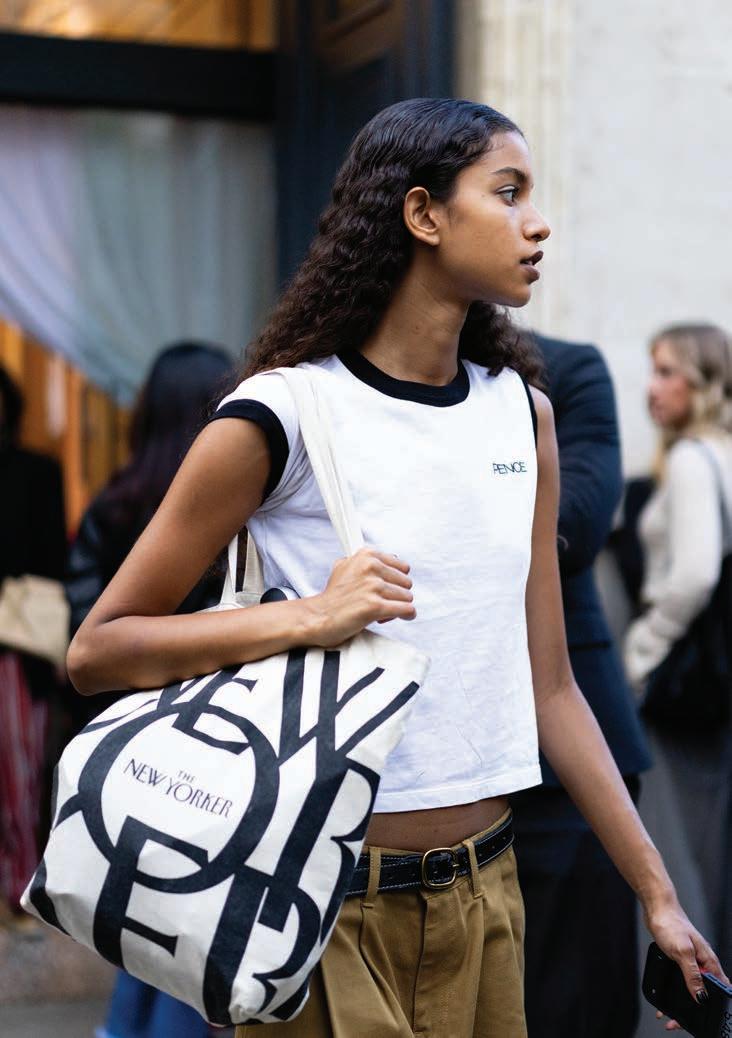
As the man takes his seat in the café, he doesn’t just set his bag down beside him – he carefully adjusts it so that its design is facing outwards, like a proud announcement of not just where he’s been, but what it says about him. It’s a fabric tote bag from Daunt Books – a popular chain of independent bookshops in London founded 36 years ago, that has recently found a newly reinforced global fandom through the power of social media. I recognise it instantly, not just because I’m familiar with the store, but because I’ve seen a few of these exact same bags flaunted at the Emirates Airline Festival of Literature during the past couple of years. Online, I’ve seen it casually slung over the shoulder of celebrities such as Emily Ratajkowski, Benedict Cumberbatch, and Elizabeth Olsen. And I’ve also seen a well-loved version worn by my friend Tamreez Inam, a Dubai-based author who is one of the most well-read people I know.
In all instances, seeing these bags instantly tells me one thing: that the person carrying it is a member of the literati – a cultured, intellectual person that champions the small business over the multinational conglomerate; that this person is studious but in the sexiest way – because they value the quality of the analog over mindless digital ‘brain rot’ – and that they move in well-travelled circles, because they could only have gotten this either by travelling to one of these shops in the UK, or being gifted one. I got all this from a glance at humble tote bag – and it’s just one of many simple canvas carry-alls that are becoming a lifestyle status symbol.
To understand how a simple sack became a cultural shorthand for identity, we first have to examine its journey from utility to icon. The name “tote” itself is likely a remnant of the 17th century. The word is a verb that means “to carry,” and it’s a term that’s still used today. The “tote bag” as we recognise it today,
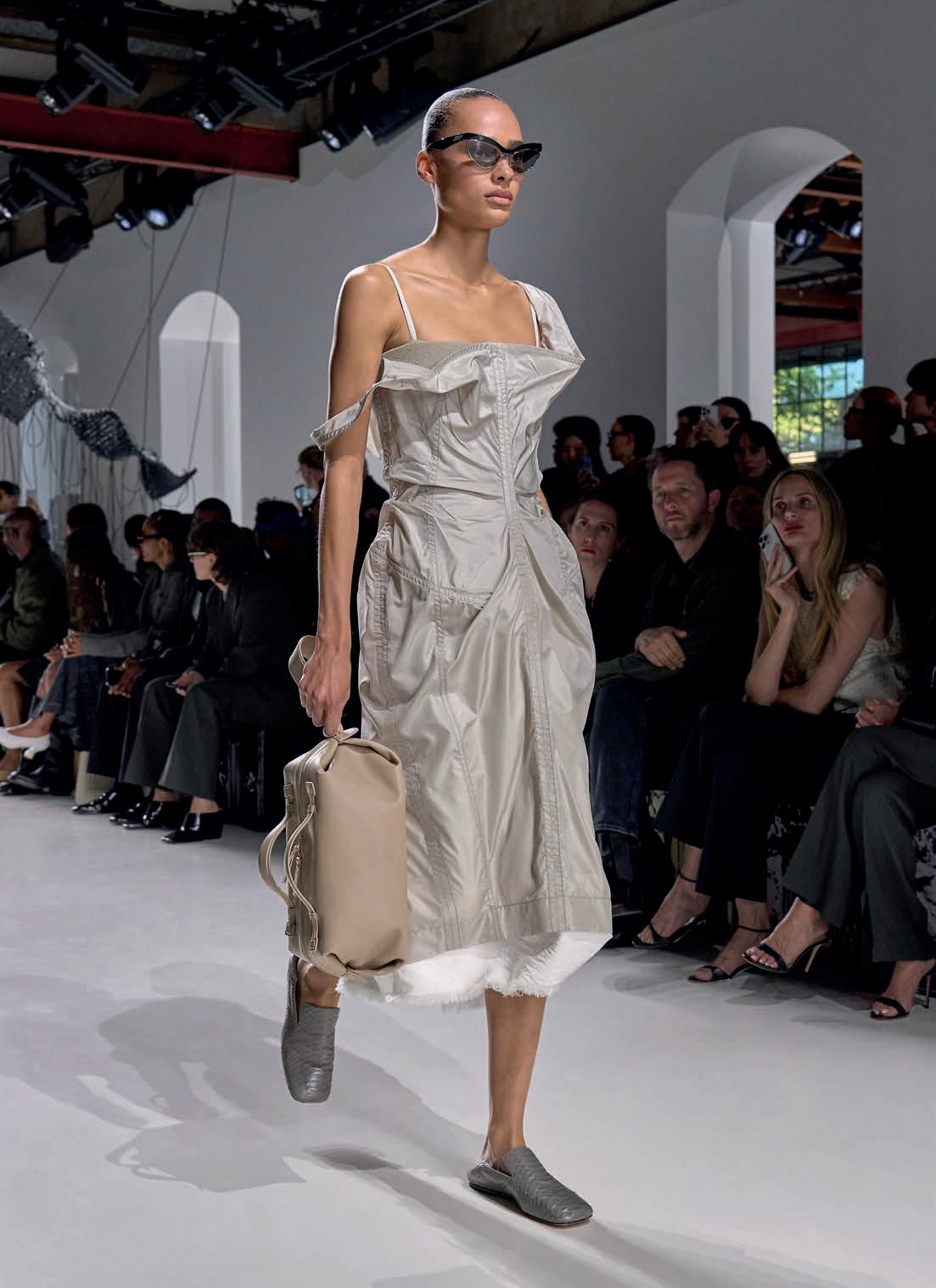
Milan Fashion Week SS26
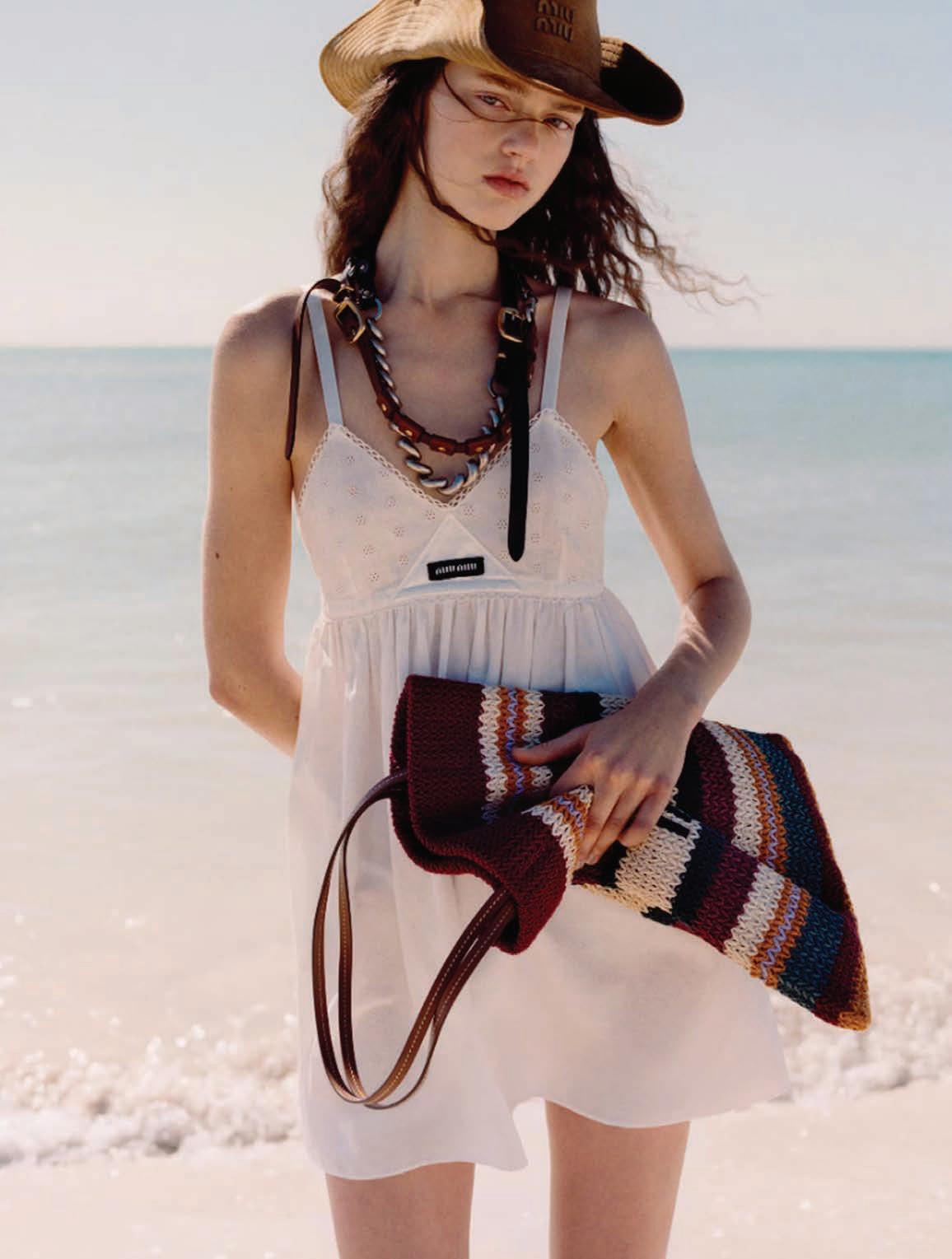
however, only took its modern form in the mid-20th century. Its origin story is one of rugged pragmatism: in 1944, American outdoor brand L.L. Bean introduced an innovative new creation called the “Ice Carrier” or “Boat Bag.” Made of heavy-duty canvas that could lug up to 500 pounds of stuff, it was designed for a singular, gruelling task: helping households transport blocks of ice from cars to freezers. By the 1950s, the bag had migrated from the docks of the state of Maine to America’s suburbs, becoming a family staple for grocery shopping, beach outings, daily chores, and beyond. But the real shift began in the 1960s, when the bag first transformed from an item of pure utility into a bona-fide fashion-adjacent accessory. Innovators like Bonnie Cashin – the legendary designer who helped shape the aesthetic of Coach – introduced the “Cashin Carry” tote. Cashin used leather and refined metal hardware to make the opentop silhouette both elegant and practical, challenging the idea that something so useful couldn’t also be chic.
In the 1980s, bookstores, museums, and small boutiques began selling sturdy canvas totes as merchandise – and once they realised these bags could also be used as a walking advertisement, some would even occasionally give them away to customers as a free gift-with-purchase, provided they were spending enough there to negate the cost anyway. Carrying a simple tote bag from the Strand Book Store told society that you were a bibliophile – and depending on which version of each limited-edition design you had, it also showed how long you’d been part of this intellectual club.
The Strand has been making their tote bags since the 1980s, and in
2013, equally iconic New York institution The New Yorker created its own tote bag. In 2014, they realised that by giving them away to subscribers for free, they could entice readers to embrace them as a sign of cultural aptitude: like the Strand tote, to have one wasn’t just to receive a useful free gift; it was a badge of membership in a global, well-read community. They followed a similarly clever model by partnering with the illustrators they’d hire for the magazine to create limited-edition runs, turning this hallmark of sophistication into a timestamp that proved just how long you have had taste, too.
Meanwhile, in the decades since, amidst the ebb and flow of the luxury fashion industry’s trends, a desire for rebellion against the rigid rules and four-figure price tags of classic luxury has also found its footing – and the high fashion has managed to subvert this “anti-luxury” sentiment by embracing it, rather than ignoring it.
Take the Dior Book Tote, for instance. Introduced by Maria Grazia Chiuri for the brand’s SS18 collection, this now-iconic style – inspired by a 1967 drawing by Marc Bohan – honours and reveres the idea of blending practicality with high-fashion luxury. The “haul-all” bag can handle a heavy load (not just of books, but of modern women’s needs, from laptops to water bottles and more), but its construction is a celebration of savoir-faire: each bag requires over 37 hours of work and more than 1.5 million stitches of intricate embroidery. The Dior Book Tote silhouette has since gone so viral that it has spawned hundreds of literal copycats from high-street retailers, as well as inspiring respectful homages by other designers globally. Even in the local market, we’ve seen this
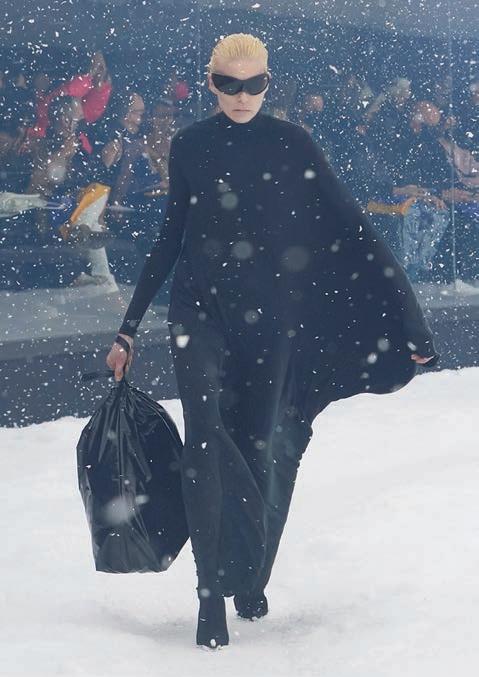
Balenciaga, FW22
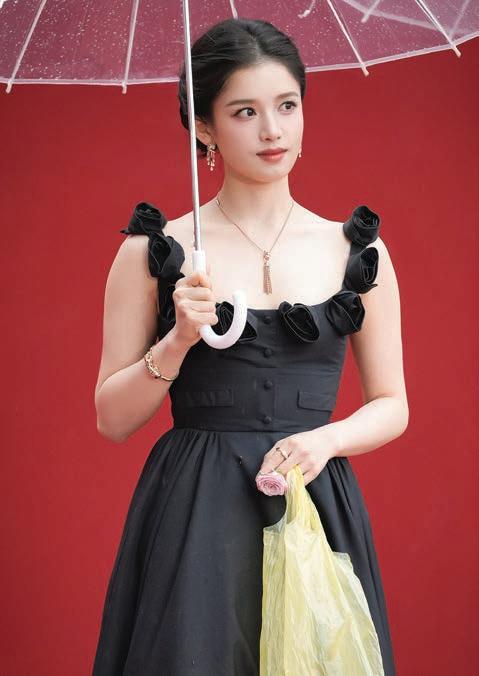
Zhang Jingyi
While the world of high-fashion accessories has historically defined the “it-bag” through famous labels bearing buttery leathers and intricate craftsmanship, today’s most coveted pieces are an expression of personal identity
come to life through creative, fun collaborations like the Nuaimi x Waitrose Special Edition UAE Shopping Bag. This series of limited-edition collections, created by UAE-based designer Huda Nuaimi for Waitrose grocery stores in the country, elevate the routine supermarket run into a design-led experience, and turn a functional shopping tool into a collector’s item laced with regional pride.
On the opposite end of the spectrum, Balenciaga’s “Trash Pouch” takes a totally different approach to interpreting a utilitarian everyday item. First showcased at their AW22 show, this bag looked, for all intents and purposes, like a literal plastic drawstring disposable garbage bag – despite being made of premium calfskin with a glossy coating to mimic plastic – and was sold for US$1,790 apiece. Then-Balenciaga Creative Director Demna Gvasalia – who has since gone by the mononym Demna, and moved to Gucci in 2025 – reportedly had aimed to create a disruptive and sociallycharged fashion item with it, and it seems he succeeded. The bag’s controversy – a high-fashion “dare” that flipped the sentiment of the humble everyday item on its head – has carried through to the current day: when Chinese actress Zhang Jingyi walked the red carpet of the Beijing International Film Festival holding a nondescript yellow plastic bag, people across the world questioned if it was a new Balenciaga drop. It wasn’t – it was actually just a standard, actual grocery store bag – but Demna’s provocation had done its job. While options like the Daunt Books canvas tote suggest a rejection of conspicuous consumption in favour of substance, Balenciaga’s Trash Pouch is luxury masquerading as the mundane. Some see it as an insult, while others see it as a cynical commentary on what we define as “covetable” in an era of ironic luxury.
Sitting somewhere between the US$20 bookstore find, the US$1,790 designer trash bag, and the US$2,450 to US$4,300+ luxury book tote, is the Marc Jacobs “The Tote Bag.” Introduced in 2019, it has since become a global phenomenon by leaning into its own identity. By boldly labelling the bag with its own function, Jacobs created a meta-icon that is unapologetically practical yet elevated – a luxury item that doesn’t demand you be precious with it.
This obsession with the “ordinary made extraordinary” reached a fever pitch in early 2024 with the Trader Joe’s mini-tote frenzy. Originally retailing for a mere US$2.99 at the American supermarket chain, these small canvas bags – available in simple, vibrant colours – became an overnight viral sensation through TikTok. Within days, stores were cleared out, and the secondary
market for it exploded. On resale platforms like eBay and Depop, these humble grocery bags were listed for hundreds, and in some extreme international listings, as much as US$50,000. While it’s still a coveted item in the US, where it’s from, it’s overseas that the real demand is driven. In 2025, one Reddit user on the r/JapanLife subreddit proclaimed: “Seriously, what’s up with the Trader Joe’s bag’s [sic] here?” – indeed, the bag has been particularly popular in Tokyo, as well as London and Seoul. It figures, then, that people in its country of origin don’t always get it – as a Facebook user from a group in Southern California (the state with the most Trader Joe’s stores in the US) said last month, “If I see another Trader Joe’s tote post, I’m going to lose it. It’s a bag.” Part of its appeal is the scarcity bias, and the clout of a souvenir proving you could travel to the US to get it. Part of it is the amount of popular celebrities that have been spotted using it.
This absurdity highlights a major shift in how we now define what is iconic. A limited edition status has always been able to turn a simple item into a high-stakes cultural asset, but social media’s viral narratives are now taking it to a whole new level. Whether it’s a bookstore souvenir or a viral grocery bag, anything can become an overnight legend – especially if it’s a stamp of “I was there” or “I know this” at a specific cultural moment. But beyond the hype and the resale value, there is a deeper, more personal reason why the tote bag has endured. While the world of high-fashion accessories has historically defined the “it-bag” through famous labels bearing buttery leathers and intricate craftsmanship, today’s most coveted pieces are an expression of personal identity. While the market may assign a high price to a rare material or colourway, to the individual, the true worth of a bag is being increasingly decoupled from its cost.
When a bag becomes a repository for a specific memory – a summer spent exploring a new city, a hard-won professional milestone, or a gift from someone significant – it becomes an item that transcends the trend cycle entirely. A well-worn tote doesn’t just hold our belongings; it carries our stories. It represents a shift towards a more democratic, deeply personal form of luxury where what an item represents to society is one thing, but what it represents to the individual is more priceless. The evolution of the appeal of the tote bag is a story reminding us that the most iconic thing we can carry isn’t a label; it’s a piece of our own journey: a meaningful status symbol that may not necessarily cost the most, but that may hold the most powerful memories – or at least have the best narrative.
RAY OF LIGHT
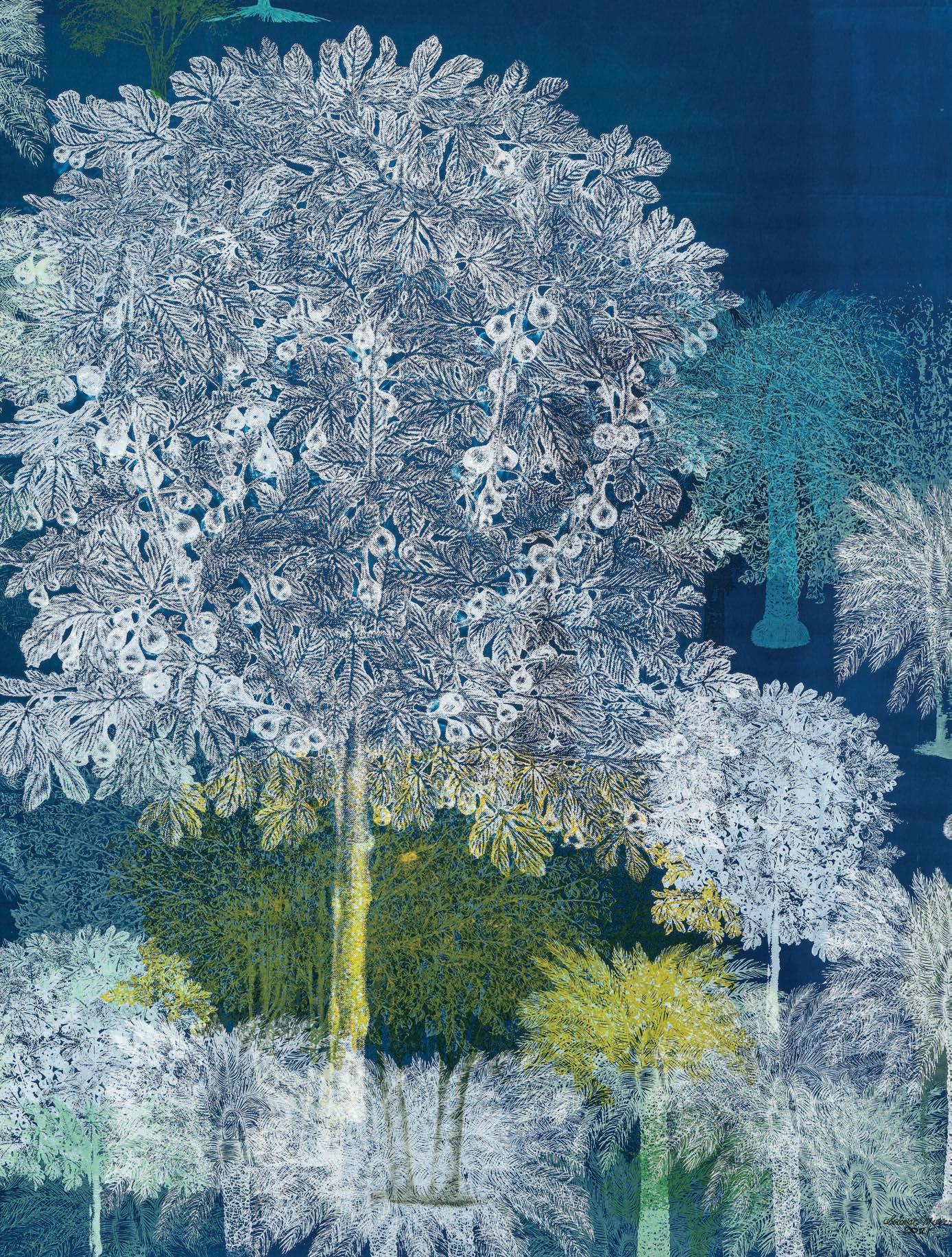
Artist Solimar Miller does not paint landscapes so much as she paints the impact of time. In AContinuumofLight, her new solo exhibition on display this month at Foundry in Downtown Dubai, the UAE becomes something almost unrecognisable – not the fixed postcard of desert and coastline, but a terrain that breathes, shifts, and dissolves depending on the hour. Working on cotton and silk velvet, Miller lets her surfaces do much of the talking: each fabric catches light differently, so the works themselves change as you move around them. Trees appear, recede, return. It is quiet work, and quietly radical.
VISION
Pick up and go…
– Beyond the private gates – On an odyssey of the mind
– Travel the world through the pages of a book
– Where you never dared to go alone
– Discover uncharted destinations
– Try life outside your comfort zone
– Imagine a life full of riches

WORDS: ALICE HOLTHAM-PARGIN
HOME HOME AWAY FROM
How
Rossella Beaugié built The Thinking Traveller on love, place and the power of belonging
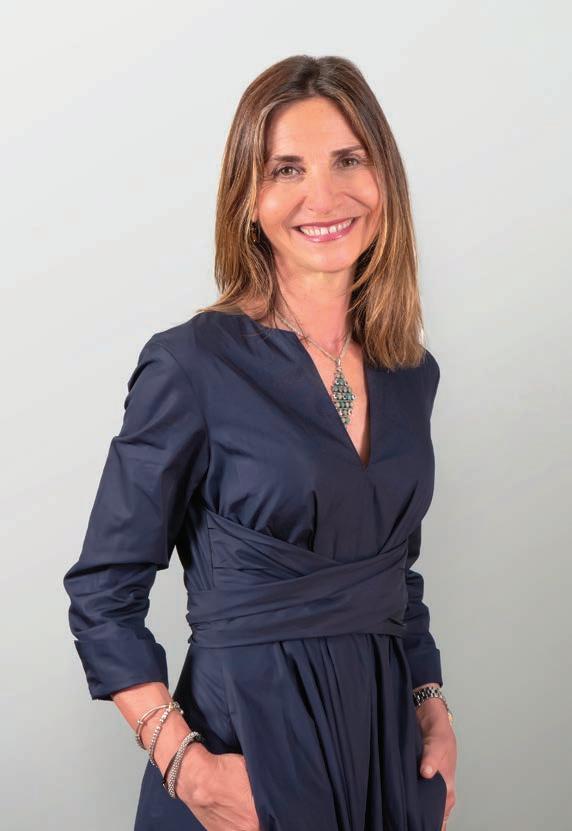
Great travel stories are rarely linear. For Rossella Beaugié, co-founder of The Thinking Traveller, her journey from academic research labs in Paris to curating some of the Mediterranean’s most covetable private villas is, as she puts it, “a bit of a life and love story.” When we speak, Beaugié is warm, thoughtful and quietly passionate. Nearly 25 years into building The Thinking Traveller, she still lights up when talking about Sicily, about clients who have become almost like family, and about the transformative magic of shared experiences in beautiful places.
But before villas and Mediterranean sunsets entered the picture, Beaugié’s life looked very different. She and her husband, Huw (also her business partner), were living in Paris, pursuing demanding, high-achieving careers. “I was doing my PhD in biology, and my husband was doing an MBA,” she recalls. “We had our careers, our paths, everything laid out.”
Then life intervened. “We lost Huw’s brother quite suddenly,” she says gently. “And that really makes you realise: ‘what do you want to do with your life?’” Soon after their wedding, the couple travelled back to Sicily – Beaugié’s homeland – for a holiday. It was a defining moment of realisation. “We suddenly saw there were different ways of living our lives.”
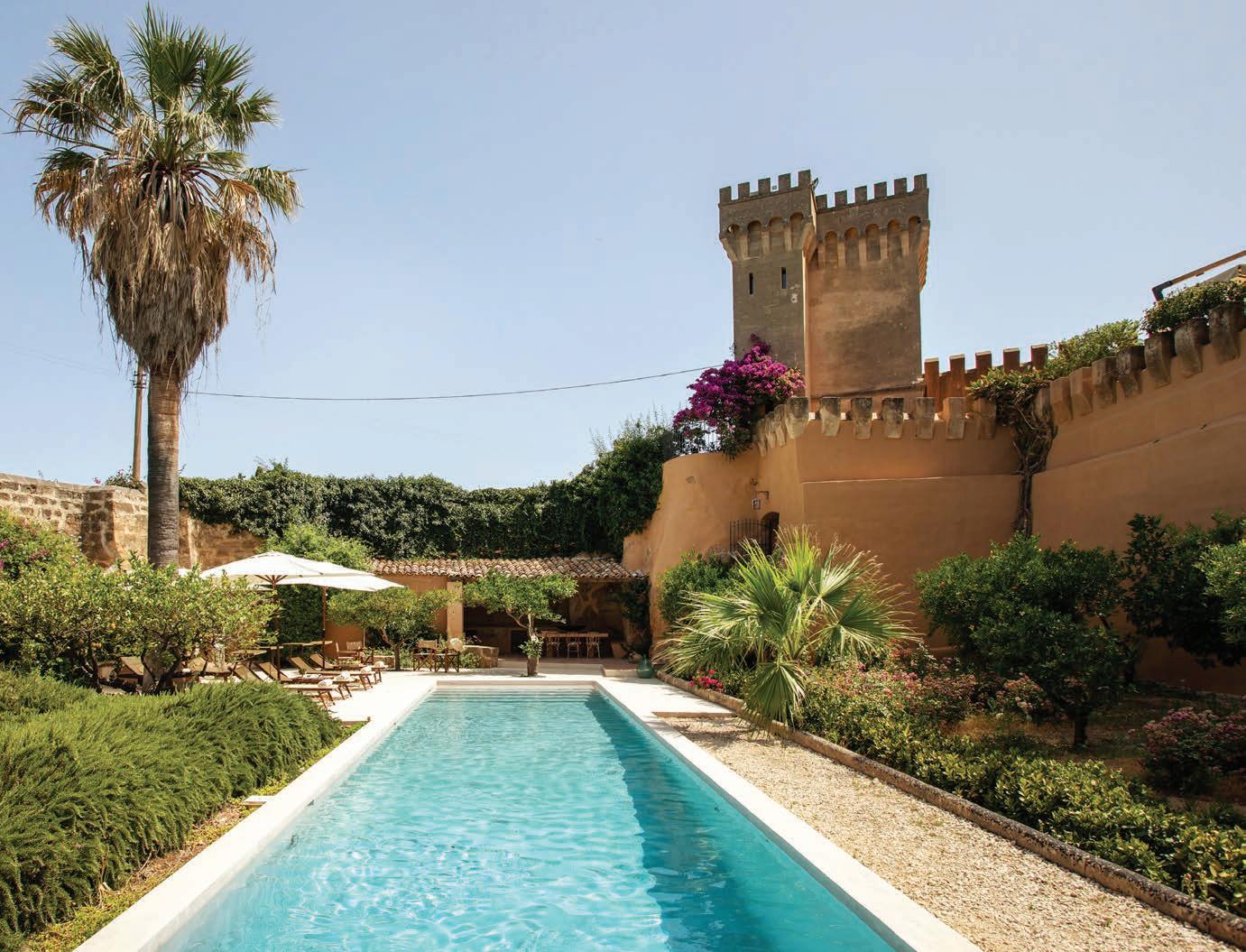
At the time, Sicily wasn’t as well known as the couple felt it deserved to be. “[People didn’t know] how amazing Sicily is, how rich it is culturally and naturally,” she explains. Her husband had the initial business idea: a more thoughtful, curated way to introduce discerning travellers to the Sicily Beaugié knew and loved. “It was his idea, and then I joined,” she says. And The Thinking Traveller was born. From the outset, exclusivity was a founding principle. Every property in the portfolio is exclusively available through them.
Rossella Beaugié
“WE SAY WE TAKE ONLY PROPERTIES WITH SOUL. IT SOUNDS
A BIT FLUFFY, BUT IT’S REAL”
“It’s always been that way,” Beaugié says. “Exclusivity is the only way we can really invest in every single property. Not just in terms of marketing, but literally lending money to owners to build the pool, redo the bathrooms, and improve the space. We work in real partnership with the owners.” That model allows a level of control and care that’s rare in villa rental. “Because we manage all the bookings, we know every single client: who goes before, who goes after,” she explains. “We’re there holding hands with the owners, with the clients and with the staff along the way.”
One of The Thinking Traveller’s most remarkable achievements is its 40 per cent repeat client rate, an impressive figure in a market saturated with choice. “Our portfolio is quite varied in size,” Rossella says. “We have everything from four- to fivebedroom villas – our core – up to amazing properties that work almost like private hotels, with 15 bedrooms and a resident chef.” That diversity reflects an equally varied client base.
“We have a lot of multi-generational groups,” she explains. “Big families from the Middle East, for example. Privacy is paramount to them, and they love those large estates in Sicily and Puglia where they have total privacy. The properties are almost micro-destinations: tennis courts, spas, huge grounds where you can jog inside your own estate.”
There are also romantics: couples on honeymoons, or guests planning to propose in one of the smaller, more intimate villas. “Our team and our owners love it when someone says, ‘I’m going to propose to my fiancée at this property,’” she says. “We organise the whole setting – it’s very special.”
What unites these guests is not a demographic band, but a mindset. “People who come to us usually have tried other villa companies,” Beaugié notes. “But they say, ‘I haven’t had a better experience. I really feel much better being with you.’ That’s where the loyalty comes from. From trust.” For a company with such a strong reputation, The Thinking Traveller has expanded with remarkable restraint. In 25 years, they have moved slowly outward from Sicily, spreading intentionally across select parts of the Mediterranean rather than racing across the globe. Crucially, The Thinking Traveller never goes into a destination blind. “We explore, we see whether we can find the right small collection of villas to start with, and the right people on the ground,” she says.
“For us, the team on the ground is essential. We’re entrusting them with our very special, very precious returning clients.”
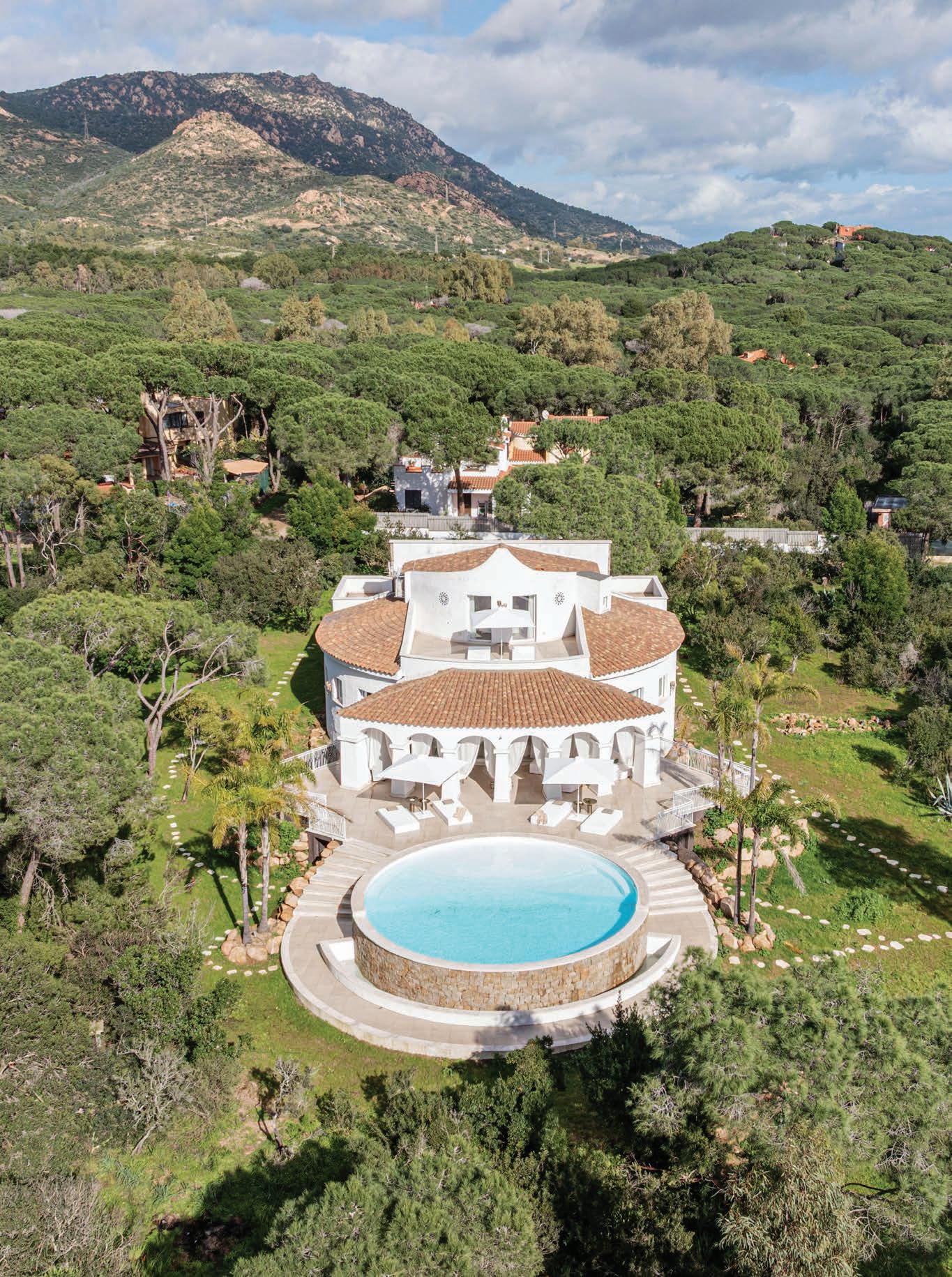
Every new region must meet a series of criteria: it must be the right destination within the Mediterranean; the initial collection must offer variety and value for money; the owners must be engaged, responsive and aligned with The Thinking Traveller’s standards; and there must be a kind of indescribable ‘soul’. “We say we take only properties with soul,” Beaugié explains. “It sounds a bit fluffy, but it’s real. Quality is the starting point, but there has to be something else. And if a property is amazing, yet I don’t get the right feeling with the owners, then it’s not going to work. We’re not developing hotels; we’re working in partnership with these owners.” This year, The Thinking Traveller expands into Sardinia for the first time, something that’s been 15 years in the making. “There were incredible locations. But the mix of quality and amenities our clients expect just wasn’t there,” Beaugié reflects. “Many of the houses were used for the summer by politicians, by families from the Middle East or Russia. They’d send their staff ahead with their own curtains and their own things. That’s not what we do.” For guests, only a completely perfect property is good enough. So, only once they found Sardinian properties that could deliver that experience did they decide the time was right. “Now we’ve found villas that are absolutely perfect for what our clients need,” she says. “We feel very confident and excited.”

What makes The Thinking Traveller so different? Beaugié consistently returns to two things: deep, local knowledge and a commitment to tailored experiences. “Because our portfolio is small and exclusive, we can invest in our people,” she explains. “Our villa specialists – the team who talk to clients – go regularly to the destinations. They walk down the same streets, they stay in the villas, they meet the owners.” There is a curated menu of tried-
“OUR TEAM AND OUR OWNERS LOVE IT
WHEN SOMEONE SAYS, ‘I’M GOING TO PROPOSE TO MY FIANCÉE AT THIS PROPERTY’”
and-tested experiences: think wine tastings, in-villa cooking and cultural tours. But the team is just as comfortable playing travel fairy godmother. “Sometimes people say, ‘We’re coming for my parents’ 50th wedding anniversary, and their dream is to have a soprano sing Vincenzo Bellini’s Norma by the piano in Catania,’” she says. “Then we go behind our core of experiences and build something completely bespoke.”
For someone whose professional life revolves around other people’s holidays, Beaugié’s most treasured travel memories are strikingly simple. “For me, it’s really the quality time with our kids
in a different setting,” she says. “We go to a new place, and we all appear in that new place at the same time. We share experiences from a clean page.” Her three children are now grown – 22, 20 and 18 – and increasingly live their own lives. But travel, she says, has a way of drawing everyone back into the same orbit. “Last summer, we stayed in one of our Greek retreats,” she recalls. “Usually, they have their own agendas, but having breakfast together, knowing we had a chef coming in the morning, really set the tone for the day. We’d share that meal and then go on to share whatever the day brought. Experiencing things together, that’s very powerful.”
A PASSAGE ELSEWHERE
WWORDS:
KAREENA ADLAKHA
Ahlam Bolooki, the CEO of Emirates Literature Foundation, reflects on literature as a journey of escape, self-discovery and emotional connection
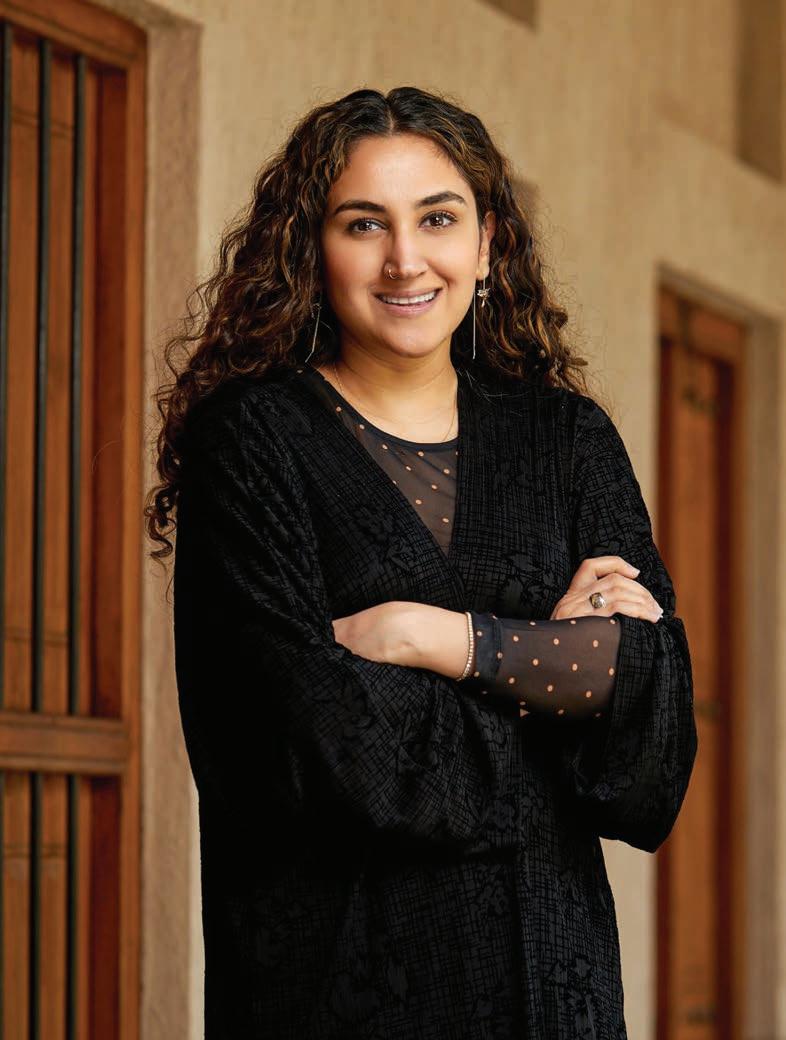
ith everything in modern life seeming to move at an unrelenting pace, literature remains one of the few spaces where time disappears and perspective deepens. Books offer more than just stories, as they allow us to step into alternative lives and other worlds, only to return in the blink of an eye, the moment the cover falls shut, to our own with greater clarity. This magical ability of books is what drives Ahlam Bolooki, the CEO of Emirates Literature Foundation. Her work with the foundation and the Emirates Airline Festival of Literature continues to shape new generations of readers, thinkers and storytellers. Through community-driven initiatives and global conversations, she has been instrumental in making literature more accessible, relevant and engaging to a wider audience.
Here Bolooki reflects on reading as a form of travel that transcends borders, time and lived experience, offering those brave enough to crack open a tome the opportunity to not just escape the everyday, but to also discover a deeper understanding of the self.
The theme of this issue of EmiratesWomanis Odyssey – a journey in every sense of the word. How do you interpret the idea of an “odyssey” through the lens of literature? Literature offers us the opportu-
nity to deeply experience lives and perspectives far beyond our own. While other art forms allow glimpses into different worlds, books allow you to immerse yourself into the mind, the emotions and the inner dialogue of others. To step into a novel written centuries ago and still find yourself relating to its emotions, or to experience something completely foreign yet deeply understood, is the true gift of literature.
In an increasingly fast-paced, hyper-digital world, do you see books as a form of escape, or as a way of returning more deeply to ourselves? Reading is both as it offers the ability to escape, but also a return to clarity and to ourselves. In many ways, it’s similar to how we felt drawn to nature, to quiet, and to human connection after periods of disruption. These are essential to our humanity. A book allows you to slow down and process the world more deeply. Unlike quick, surface-level information, reading invites you into nuance, into emotion, into reflection. It affirms the idea that the journey matters. You can summarise information quickly, but you cannot replace the experience of engaging with it deeply.
With the rise of short-form content and digital consumption, how do we sustain deeper engagement with books, particularly among younger audiences? Young people are at the heart of everything we do at the Foundation. More than half of our initiatives are designed
for children, because fostering a love for literature early on is key. It’s not about positioning reading as a chore or competing with digital platforms – it’s about complementing them and showing young people the value that books can bring to their lives. When children meet authors, hear them speak, and connect with them, something shifts. They begin to see storytelling as something aspirational and exciting. We also engage them through multiple formats – writing competitions, digital storytelling, poetry, and creative projects –because every child connects differently. The goal is to make literature immersive, accessible and deeply engaging.
What role do initiatives like the Emirates Literature Foundation play in shaping not just readers, but thinkers and storytellers of the future? The Foundation plays a deeply active role within the community. Whether through the Festival, educational programmes, publishing initiatives or outreach projects, everything we do is centred around impact. Literature has the ability to connect, to comfort and to inspire. When we nurture that connection early, we’re not just building readers – we’re shaping individuals who think more deeply, feel more empathetically, and engage more meaningfully with the world. Are there particular books or authors that have made you feel as though you’ve travelled – across places, time or emotional landscapes? Authors like Han Kang offer a powerful glimpse into cultural perspectives, particularly in how everyday life is observed and expressed. Reading her work felt like experiencing a completely different way of thinking. I also recently read works by Orhan Pamuk and Milan Kundera, whose writing explores identity, memory and the human condition in deeply layered ways. Books like Whereabouts by Jhumpa Lahiri capture the quiet, often overlooked moments of everyday life with remarkable clarity.
How do you personally experience reading as a form of travel, especially across cultures and perspectives? In moments of difficulty, I often find that the answers I’m searching for are in books. Whether it’s understanding a historical moment, processing personal experiences, or simply seeking perspective, literature becomes a space where everything is accessible – if you’re willing to look for it. Through books, you can travel across cultures, across time, and across emotional landscapes. You gain insight into how people think, how societies function, and how history continues to shape the present.
“LITERATURE HAS THE ABILITY TO CONNECT, TO COMFORT AND TO INSPIRE”
In recent years, the appeal of the “set-jetting” holiday – travelling to the locations where our favourite films and TV shows were shot – has grown from strength to strength. In tandem, the “page-to-screen” pipeline is on the rise, with research showing that 70 per cent of today’s top-grossing films are literary adaptations. It’s a significant flip from the mid-1980s, when the same proportion of box-office hits consisted of original screenplays. Every story has to take place somewhere, and depending on where it’s set, a successful novel can act as a high-end brochure for the soul of a place, putting a destination on the map almost overnight. And now, it may be time for the original source material of these adaptations to reclaim its crown: in the past year, literature-inspired travel has also started to become a major trend. In the past, travel reading was often a utilitarian choice – a cheap paperback, perhaps picked up at the airport, meant to provide a temporary distraction during a long flight or a quiet hour by the pool. These books were often treated as disposable afterthoughts, easily left behind once the trip ended. But recently, the relationship between our suitcases and our bookshelves has been undergoing a fundamental rewrite. Today, a growing number of travellers are going beyond packing reading material for their trips by planning their entire trip around a book. This shift towards “literary tourism” is, in part, a sophisticated rebellion against the relentless pace of digital life. In a world where our attention is often the most sought-after commodity, choosing to spend days submerged in a narrative can be more than just the chance to indulge in a hobby – it’s a power move for your mental health (not to mention your nervous system). The age-old pleasure of reading is still the ultimate analogue luxury, evidenced by a 265 per cent surge in Pinterest searches for “book club retreat ideas” and recent Skyscanner data revealing that nearly a third of
Forget the endless scroll: From bespoke “Book Butlers” to mystery dates in the library, a new breed of literary-leaning escapes is proving that a room with a view can be even better with a very good book
WORDS: YI-HWA HANNA
ESCAPES NOVEL
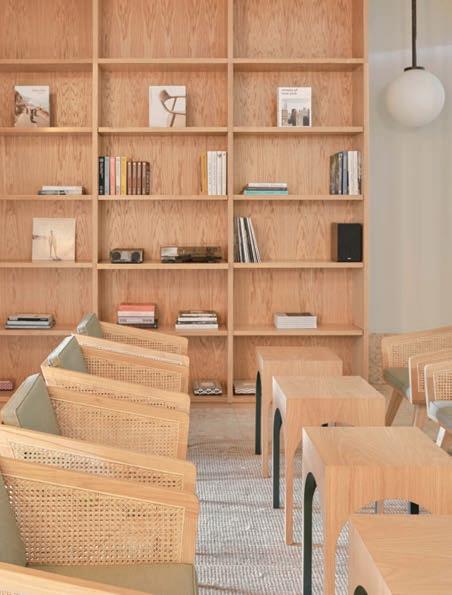
travellers now choose their destination based on a specific literary name-check. Fuelled further by the growth of sub-communities like #BookTok, reading has officially reclaimed its status as “cool” and is now celebrated as a social and aesthetic asset that showcases emotional depth. For the discerning woman, a well-curated personal library is a new modern status symbol, denoting intelligence. And according to Skyscanner’s “Bookbound” trend report, 78 per cent of travellers are interested in book-inspired journeys, while global searches for hotels with libraries have jumped by 70 per cent over the last year.
THE ROMANCE OF THE WRITTEN WORD
Reading and travel have always shared a certain DNA – both invite us into new cultures and perspectives, creating a sense of wanderlust that translates into real-world journeys. And much like a physical book, a perfectly curated trip can offer us a satisfying form of closed-loop experience – one with a beginning, a middle, and an end that requires nothing more than our presence.
We’ve seen this book-bound phenomenon before: the Pacific Crest Trail saw its fastest increase in hiking traffic in decades
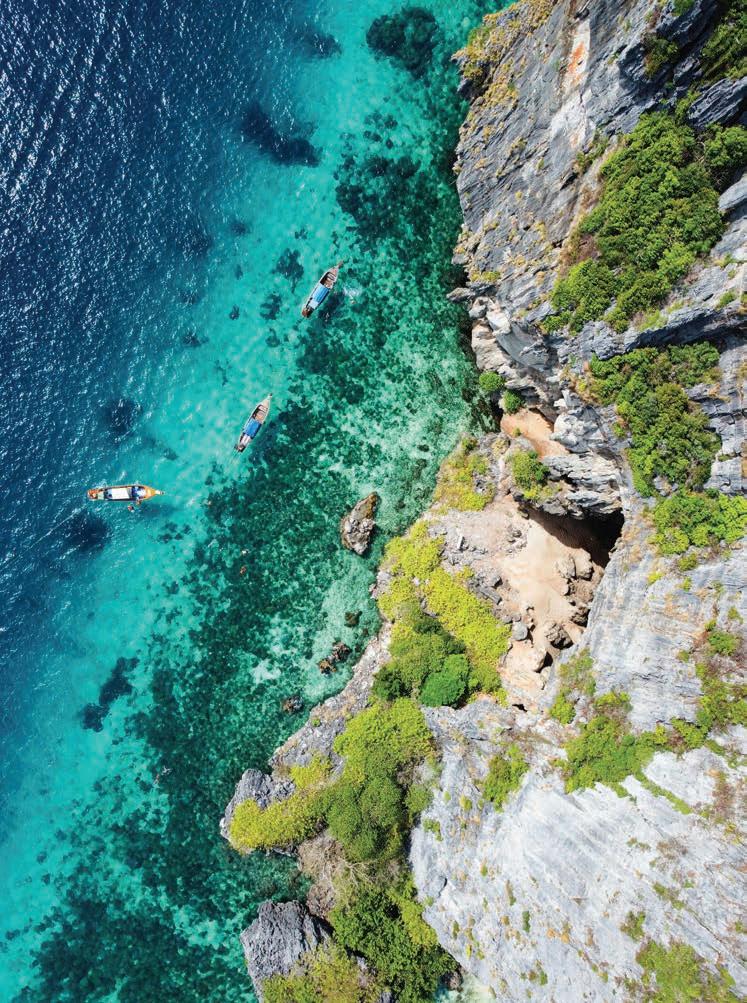
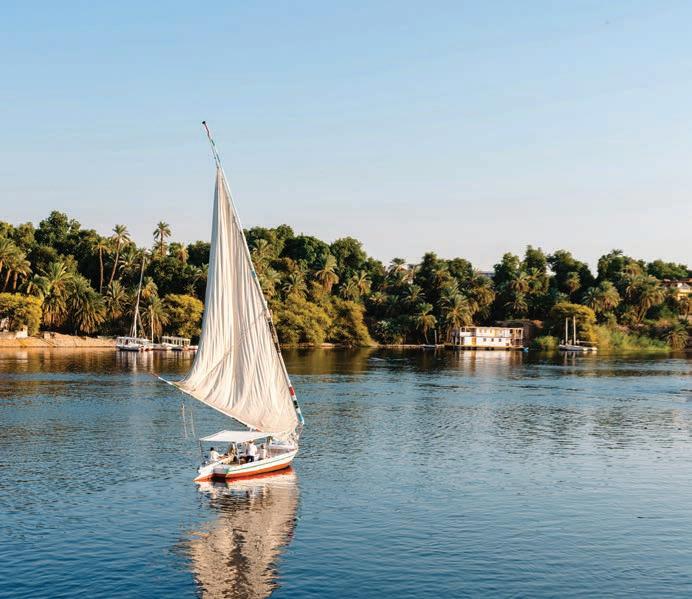
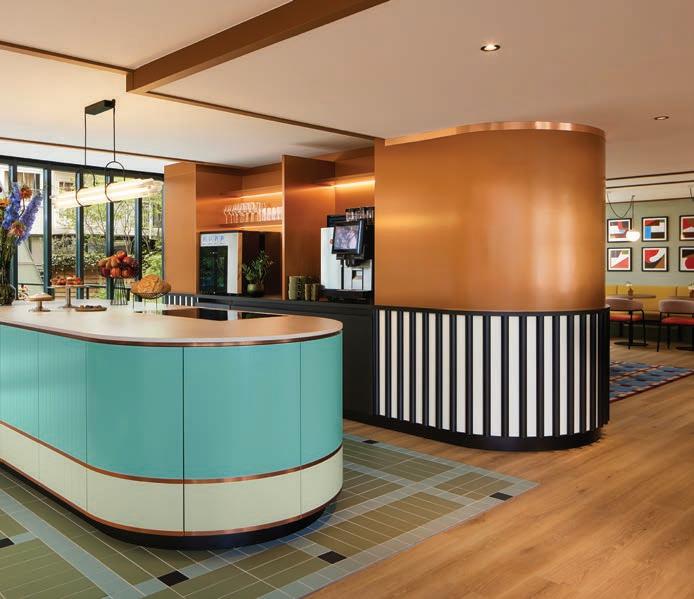
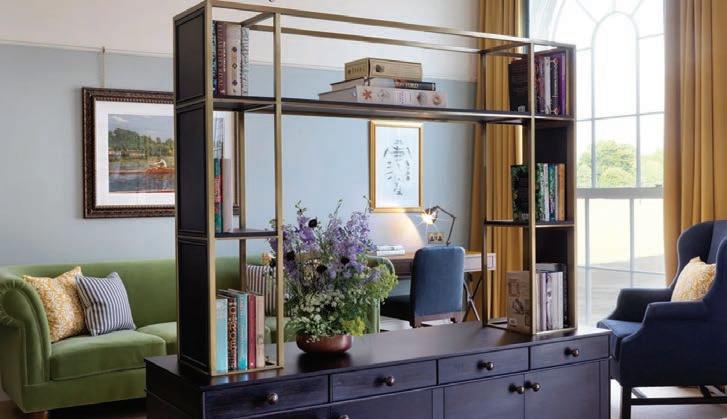
Left: Phi Phi Islands, Thailand; Right page (from top): The Calile Hotel, Avani Museum Quarter Amsterdam; University Arms Hotel
following the publication of Cheryl Strayed’s Wild, and travellers have long sought to replicate the soul-searching journeys found in the pages of Eat, Pray, Love. From when Strayed’s book was first published in 2012, to when its film adaptation came out in 2014, the Pacific Crest Trail that its titular character also walked experienced the fastest increase in hiking traffic since its original completion date in 1993.
When Alex Garland’s The Beach was released in 1996, its popularity inspired a film adaptation directed by Danny Boyle and starring Leonardo DiCaprio – which, upon its release in 2000, inspired so many more travellers to visit the once-a-hidden-gem-but-now-iconic Phi Phi Islands in Thailand, Phuket that the area was closed for four years from June 2018, due to the damaging effects of extreme overtourism.
THE PLOT THICKENS
“Romantasy” is currently one of the most popular genres, especially among women on #BookTok. Its immersive worlds and guaranteed happy endings provide a much-needed escape from modern-day conflicts. While fans can’t physically visit fictional realms like Sarah J. Maas’s Prythian (A Court of Thorns and Roses) or Rebecca Yarros’s Navarre (Fourth Wing), they can explore the real-world locations that inspired them. Destinations like Bavaria, Transylvania, and the castle-rich regions of Wales, France, Scotland, Spain, Italy, the Czech Republic, and Slovenia offer a similarly fairytale-worthy experience.
For a growing number of fans, simply reading the story is no longer enough; they want to live it, too. This has given rise to a surge in immersive fantasy events – extravagant, high-production balls, masquerades, and conventions, created for adults, that promise guests an enchanting escape, wherein the magic comes from being able to dress up and pretend you’re living in a fairytale world. Attendees often spend thousands on elaborate costumes to step into these worlds, and for many, these events offer a rare sense of community and a chance to inhabit a different identity, even if just for a night. Experience levels for these events range from immersive roleplay, where guests follow a scripted storyline as a fictional persona, to more casual gatherings focused on costumed socialising with character performers.
However, as the book event’s financial footprint expands – with the romantasy genre generating nearly US$480 million in sales last year – the desire for immersion into these worlds has birthed a lucrative but risky secondary industry. For every success story like London’s “Starlit Soirée,” which sold out premium tickets at £235
THIS SHIFT TOWARDS
“LITERARY TOURISM” IS, IN PART, A SOPHISTICATED REBELLION AGAINST THE RELENTLESS
PACE OF DIGITAL LIFE
within minutes, there is a cautionary tale lurking in the shadows of BookTok. The most infamous example is 2025’s “A Million Lives Book Festival” in Baltimore, which has been widely condemned as the “Fyre Festival” of the book world. What was marketed as an opulent, candle-lit ball for up to 1,000 attendees ended in an expensive disaster: guests who paid US$250 arrived to find a barren convention hall illuminated by harsh fluorescent lighting, decorated only with a few loose synthetic petals. Instead of the promised live entertainment and curated atmosphere, the evening’s “soundtrack” was provided by a single Bluetooth speaker on a chair. This incident serves as a stark reminder that as literature becomes a lifestyle brand, the line between an enchanting escape and a costly scam can become dangerously thin. While the modern bibliophile may be ready to step into their favourite stories, it’s essential to ensure the organisers are capable of writing the ending they promised.
A NEW CHAPTER IN HOSPITALITY
Thankfully, for those who are after a slightly less immersive but no less spectacular way to travel into a literary escape, various trusted hospitality brands have been quick to pick up on the trend. In recent years, a growing number of hotels worldwide have evolved from providing a simple night’s sleep to offering a fully curated escape catering to a unique need, from improved sleep to physical well-being and longevity, quality time with the family, romance, and now, the bookishly and intellectually inclined. In the UAE, the literary scene has been finding a new home in luxury hotels. As of February 2026, the “Author’s Lounge” lobby café at the voco Bonnington Hotel in Dubai now offers a “Blind Date with a Book” experience. Guests are presented with a mystery-wrapped title – removing the “choice paralysis” of
READING AND TRAVEL HAVE ALWAYS SHARED A
CERTAIN DNA – BOTH INVITE US INTO NEW CULTURES AND PERSPECTIVES, CREATING A SENSE OF WANDERLUST THAT TRANSLATES INTO
REAL-WORLD JOURNEYS
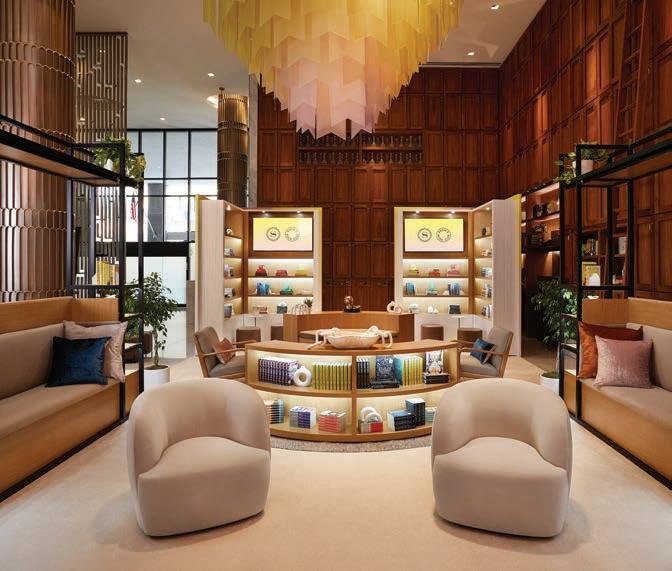
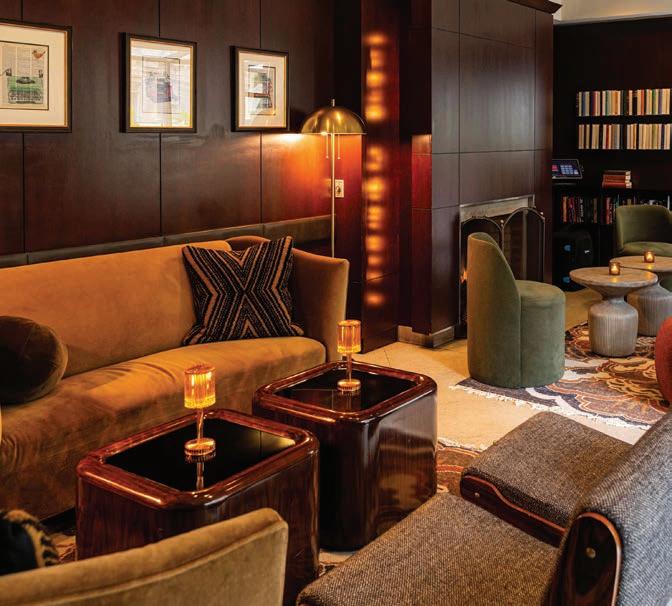
Left (from top): Lobby Library by Sheraton Hotels & Resorts and Reese’s Book Club; Library Hotel New York; Right page: Nile River, Egypt
the modern era – paired with coffee and a treat. It’s an open invitation to spend an afternoon in a sanctuary that boasts soothing book-lined shelves, where one can switch off from their screens and rediscover the joy of the unknown.
That same month, Minor Hotels introduced the Avani Book Club, debuting its new Avani Book Corner on a global scale. These permanent book-sharing nooks allow guests to trade titles from a curated shelf – a “bring a book, take a book” initiative designed to foster a sense of community among globetrotting bibliophiles. Following an inaugural book swap event at the Avani Museum Quarter Amsterdam Hotel held in March, the initiative expanded to the brand’s Middle East properties this April. Guests can also scan a QR code to explore the Avani Global Destination Reading List, reinforcing the idea that travel and storytelling are natural partners. Meanwhile, Sheraton Hotels & Resorts has leaned into the power of the female narrative by partnering with Reese’s Book Club, offering a curated “Lobby Library” at a large number of its properties around the world – including the Sheraton Grand Hotel, Dubai – that ensures the most talked-about stories are always within reach of a sun lounger.
THE IMMERSIVE NARRATIVE
For those seeking a less dramatic form of immersion than a Book Ball, the concept of the “Book Butler” could be the most sophisticated way to experience this trend. At the University Arms Hotel in Cambridg in the UK, guests can opt for a “Stay for the Story” retreat, where they hand over their phones to a butler and delve into a library curated by Mayfair’s legendary Heywood Hill bookshop. For those who take their reading very seriously, the level of service has scaled up to match. In West Palm Beach, Florida, The Ben, Autograph Collection allows guests to order specific titles directly to their room via a local bookstore, while at Starcroft Farm Cabins, in a deeply historic part of the UK, a reading retreat comes with a “bespoke prescription” of words from
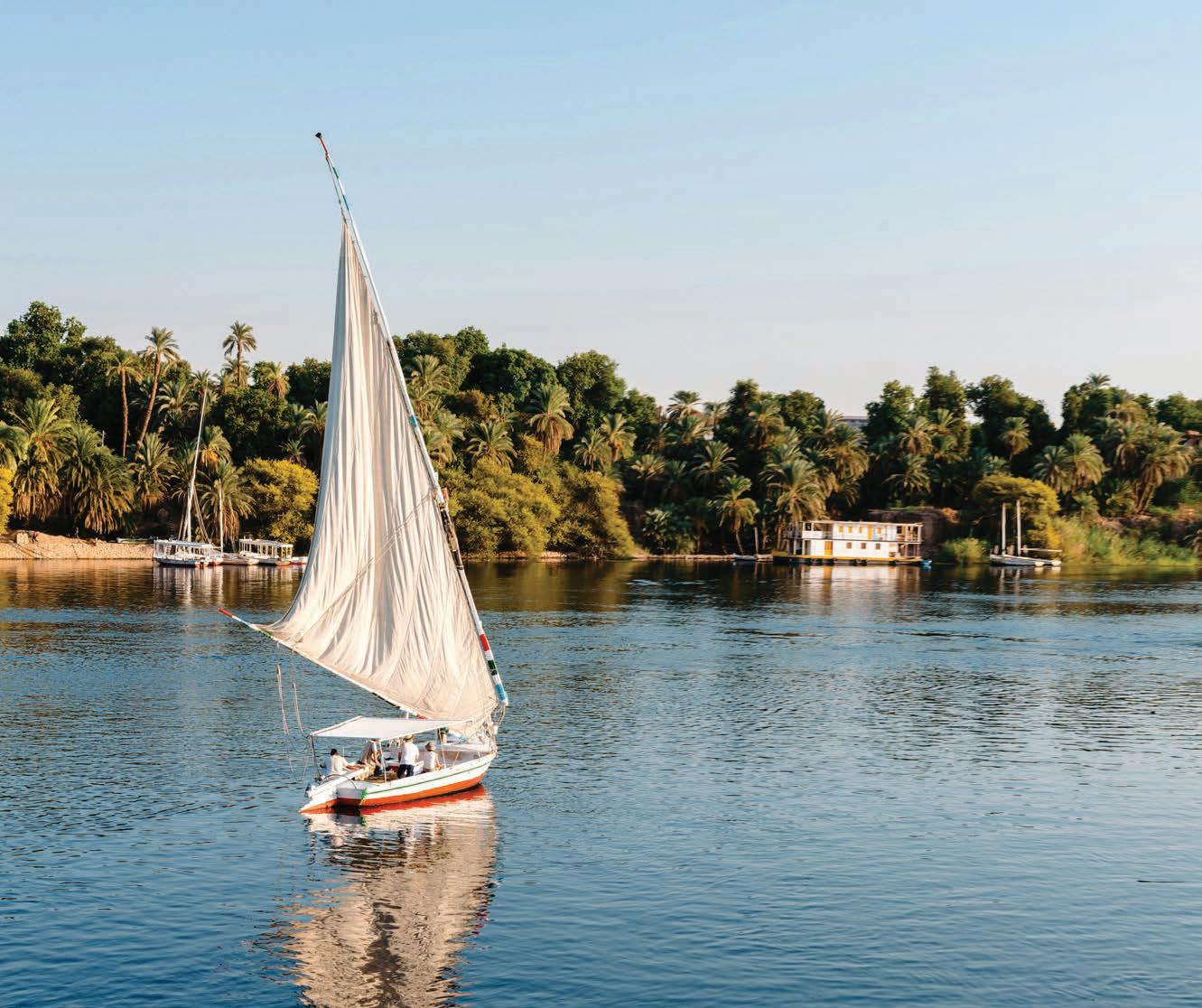
The Poetry Pharmacy, with pills of prose created to soothe the soul alongside locally-made treats and the time and space to get stuck in. If you prefer your literature with a side of community, the options are expanding. The Calile Hotel in Brisbane, Australia, hosts book club events featuring vino and cheese, while the UKfounded Ladies Who Lit has cornered the market on high-end escapes in beautiful country manor houses everywhere from Great Britain to Morocco, specifically for women who want to discuss prose in stunning, often pastoral settings. For the most adventurous spirits, retreat company Books In Places curates getaways in the exact locations where a novel is set: like reading Agatha Christie’s Death on the Nile while actually on the river in Egypt, or delving into Jane Austen’s Persuasion amidst the historic back-
drop of the Bath Christmas Market. It is the ultimate way to bridge the gap between fiction and reality, allowing fans to trace the steps of their favourite characters with forensic detail. For those who’d like to quite literally wake to a bookish dream, Gladstone’s Library in Wales remains the only residential library in the UK where you can actually sleep among the collection, while the Library Hotel in New York organises its entire floor plan by the Dewey Decimal System, turning every floor into a different category of knowledge.
From short literary weekends to author-inspired journeys, the chance to trade in your daily stress for a deeper experience could be an invaluable new way to travel. And by allowing yourself to slow down and immerse yourself in a story, you might just open a new, restorative chapter for yourself.
BETTER TOGETHER

The entrepreneur and serial solo traveller Nabila Ismail has built a community… on the road
WORDS:MANAAL FATIMAH
It all started as a lark. For Nabila Ismail it began as a single year’s reprieve from the corporate world – a sabbatical, deliberate and finite in its ambition. But her future soon unfurled into something altogether more expansive: a life redesigned around community, through a business born from wanderlust and sheer nerve. Today Ismail presides over the Dose of Travel Club –a richly curated South Asian collective bringing together men and women who share an appetite for discovering the world in the company of like-minded adventurers. The club’s portfolio reads less like a travel agency’s brochure and more like a love letter to the curious and the courageous: Carnival in Barbados, an Afrobeats festival in Ghana, the ancient rhythms of Iraq, the textile-rich streets of Pakistan. Each departure is an invitation; each itinerary, a quiet act of revolution. Before she found her calling with her club Ismail
moved through worlds – pharmacy, technology – with the restless intelligence of someone who suspects that the best version of her story hasn’t been written yet. Four years ago, almost despite herself, she became an accidental entrepreneur. The detour became the destination. “It was my lifelong dream,” recalls Ismail of her deep desire to travel. “I thought I want to do it for one year before the pressure of getting married, getting tired and older and not having the same interests. The whole plan was to go back into tech.”
THE BRIDGE BETWEEN
To understand the full weight of what Ismail has done – and continues to do – it’s important to understand the world she stepped out of. A second-generation American of Pakistani heritage, she grew up navigating the exquisite tension of two cultures: one that
celebrated ambition within prescribed parameters, and another that demanded she venture beyond them entirely. Solo travel, for many women of South Asian descent, is not merely unconventional – it is subversive. It disrupts a carefully maintained social order, a quietly inherited script in which a woman’s movements are understood to be communal, sanctioned, chaperoned. Ismail did not tear up this script so much as she began, incrementally and with great deliberateness, to write her own.
Her first act of quiet defiance was a university education lived on campus, hours from home – a seemingly ordinary rite of passage that, within the context of her family, was nothing short of seismic. “I was the first one in my entire family, girl or guy, to go live on campus, four or five hours away, and once I realised I could do that and that was already bashing a stereotype.”
From there, Dose of Travel began as something far more intimate – a personal platform, a digital diary of solo wanderings that attracted, with remarkable swiftness, a niche audience of women who recognised themselves in her story. The virality, when it came, arrived through TikTok and a particular cultural moment. “I started travelling as a desi girl over 10 years ago, and no one else like me was travelling as often back then, and so I garnered this desi audience from the very beginning. It was my personal page, the name, and it actually went viral from the TikTok trend during peak Covid times. It was called Travel Boyfriend, and I was looking to just use it to find a travel friend that was also desi. I tested it out with my first trip to Bali and it sold out within a day.”
eager to explore on their own terms – and she calibrates accordingly: the landmark institutions alongside the more off the beaten path excursions –the celebrated alongside the overlooked.
“We also have destinations that are just not for everyone,” explains Ismail. “We did an Iraq trip and usually people who come on an Iraq trip are well-traveled. They want something different, but don’t want to go alone. We did Ghana for an Afrobeats music festival. We have a Pakistan trip coming up. We did a Barbados trip for Carnival – a lot of Soca music, dance hall, and wearing a full costume that not everyone’s going to want to do. So we have different niche trips and it’s for different kinds of travellers.”
THE ARCHITECTURE OF COURAGE
There is a question that hovers over every woman who has walked a similar path: how does she shed the accumulated weight of expectation? How can she begin, when beginning itself has been rendered so thoroughly difficult? Ismail’s answer is disarmingly philosophical, and perhaps all the more powerful for it.
“For me, it was realising that this is my life and reminding myself that I have to be the one to live with the decisions, not anyone else,” shares Ismail. “Also reminding myself that it’s everyone’s first time living on this planet, and so my parents are only going off of what they know, which is inherently so different because they didn’t even grow up in this country. They’ve never seen this before, and it comes from a place of fear and they just want the best for me, but they don’t know what the best is because nobody can know.”
UP NEXT WITH DOSE OF TRAVEL
To travel with the Dose of Travel Club is to submit, willingly, to a form of curation that is both expert and deeply personal. Ismail understands that her community skews toward first-timers – women stepping into their independence with borrowed confidence, men
THE FIRST STEP
For the woman standing on the precipice of her first solo departure, Ismail prescribes a dose of pragmatism alongside the romanticism: choose a city where a language they know is spoken; take a weekend trip close to home; acclimatise to one’s own company before surrendering to the uniquely exquisite fun of the unfamiliar. “Try eating out alone,” says Ismail. “Try spending a whole day with your thoughts. I started off in Europe, in Spain, because I was learning Spanish at the time. Anywhere in Europe, I feel like it would be really good, and it’s also really well travelled, very common for solo travellers. As for my favourite experiences, my top ones are Lebanon, South Africa, and Pakistan.” And for those who wish to take that first step in the company of kindred spirits, there is always the club itself – a sanctuary, Ismail insists, entirely free of judgement. “Definitely come in learning about yourself. Because we’re all desi, we generally know what it’s like. It might be your first time travelling. Maybe it’s your first time going into the ocean. Maybe it’s your first time doing a lot of these things because you didn’t grow up with that. So the whole judgment thing is out the window.” @doseoftravelclub
“FOR ME, IT WAS REALISING THAT THIS IS MY LIFE AND REMINDING MYSELF THAT I HAVE TO BE THE ONE TO LIVE WITH THE DECISIONS, NOT ANYONE ELSE”
Nabila Ismail
Kingdom Calling
Want to fall in love with Saudi Arabia? Just talk to Reema Al-Mokhtar
WORDS: JESSICA MICHAULT
National pride in the Middle East is deeply felt – no matter the country – but not five minutes into a conversation with Reema Al-Mokhtar, senior director of tourism communications and industry partnerships at Red Sea Global, and it’s hard to imagine someone more excited about the possibility of the wider world getting to know her homeland. The woman is a force – warm, precise, and possessed of the kind of passionate conviction about her subject that simply cannot be manufactured. When she talks about Saudi Arabia, about its mountains, its coastlines, its food, and its people, listeners don’t feel as if they are being sold something. Rather that they are being let in on a secret that she has been guarding, until the world was ready to hear it.
Al-Mokhtar’s origin story is, appropriately enough, a story about language and communication. Growing up in Saudi, she was pushed – as so many women of her generation were – toward a “serious career”. So she enrolled to study management information systems. “I have no idea why,” she laughs. “It was more of a pressure from the parents.” But language kept pulling her back. She volunteered as an interpreter at college events. She had a clarity of voice and a precise melodic accent that her professors noticed. They told her to do something with it. She transferred, studied English literature at King Abdulaziz University and started
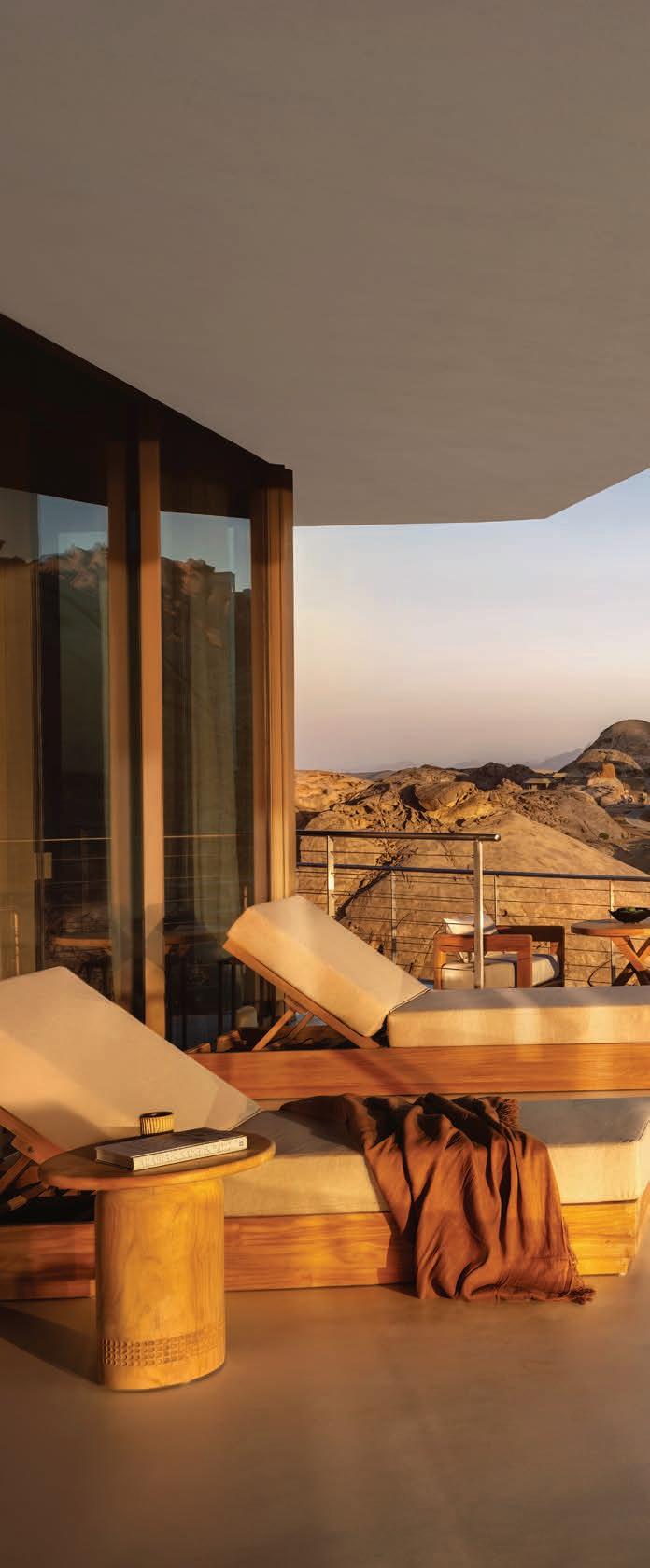
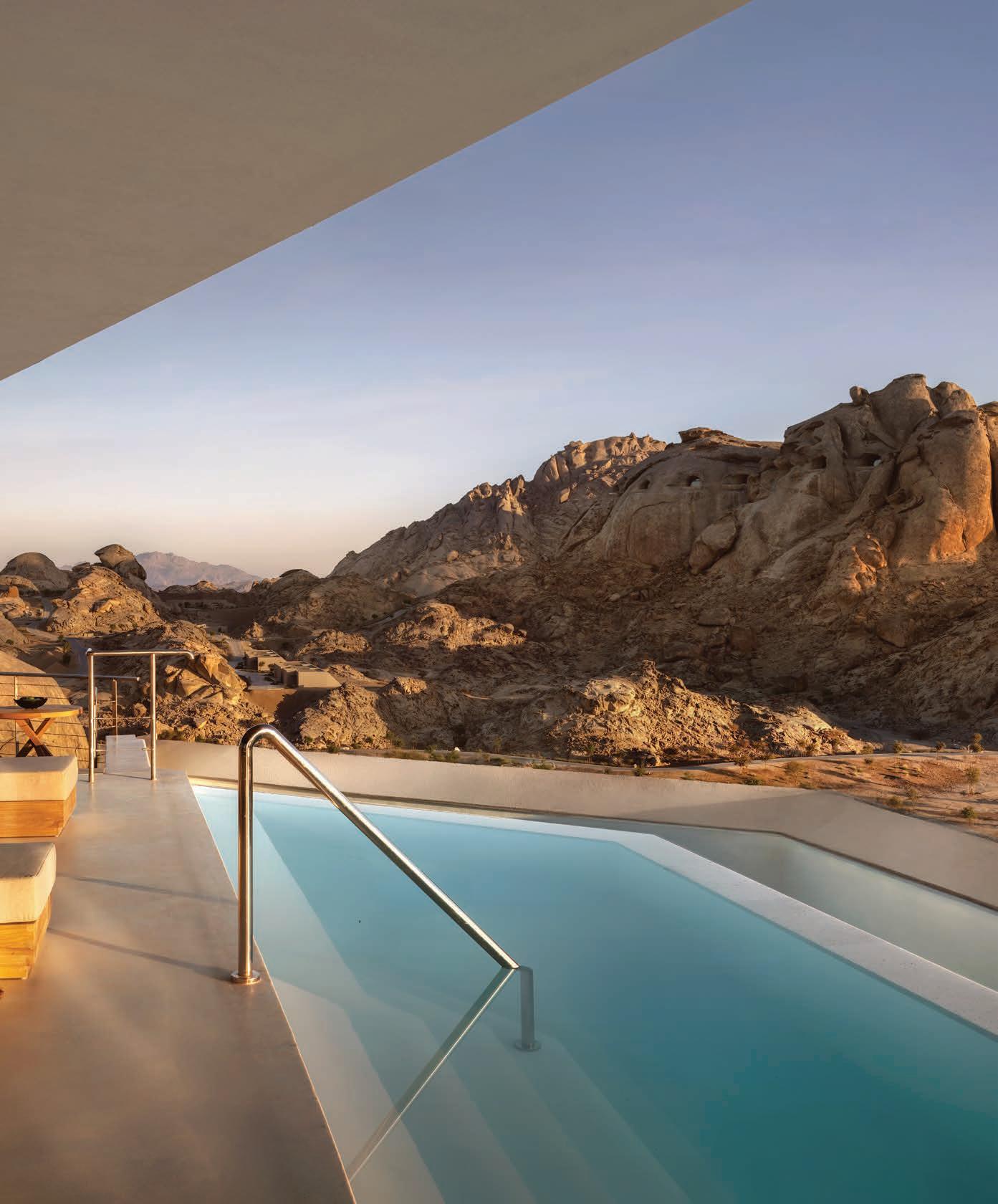
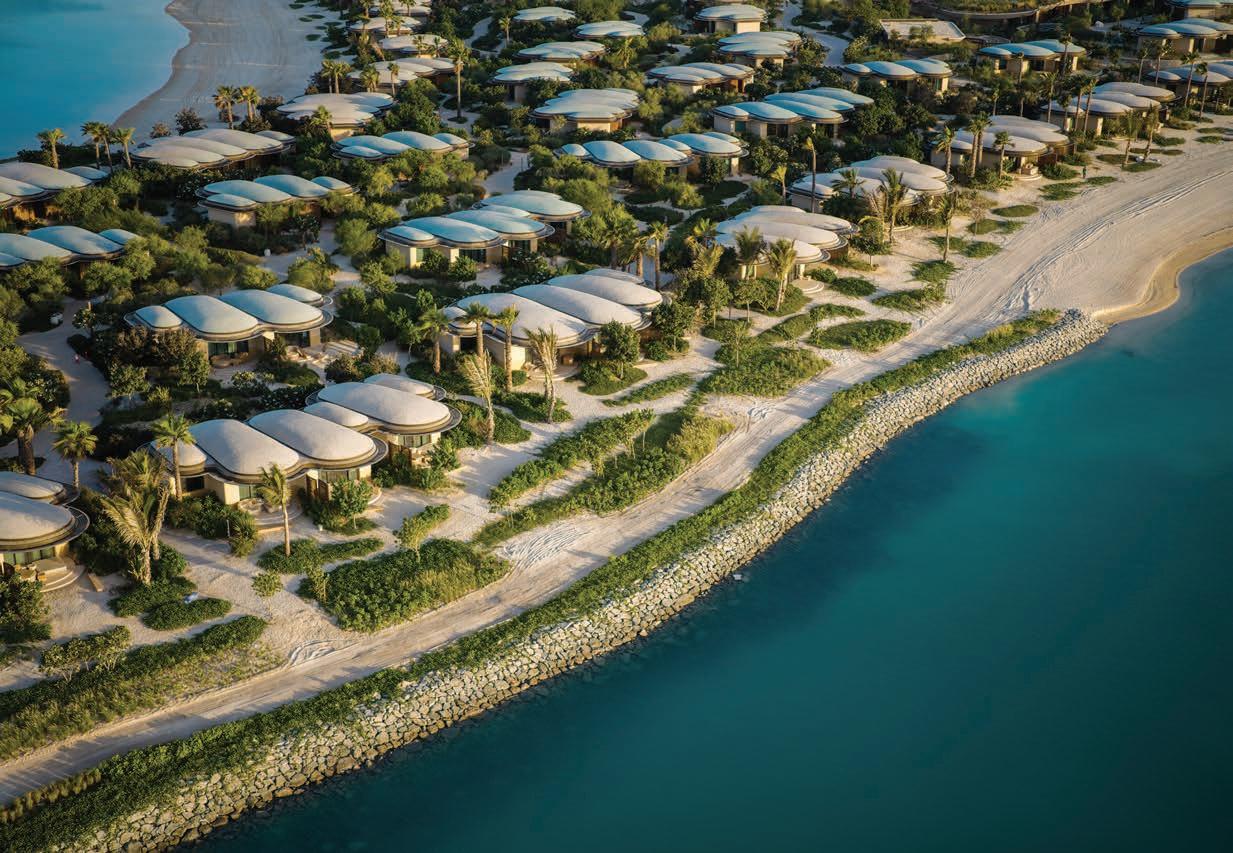
a blog – one day a journalist from Arab News read something she had written about life on campus and called her in.
That first meeting led to her spending nine years at Arab News, and what she built there is a great indicator of who Al-Mokhtar is and what she is drawn to. She created the Lifestyle Edition, a section focused on a topic the paper had never covered: the young, the artistic, the Saudi dreamers at a time when building a life from creative pursuits was not considered to be a serious career choice.
“You never heard of a Saudi chef or a Saudi DJ or a tour operator that is Saudi,” she says. “So I used to shine the light on those kinds of people.” Some of the people she interviewed back then are now leading entire government commissions. She watched it happen. She documented the beginning of something enormous before anyone else quite understood what they were looking at.
But journalism, Al-Mokhtar found, had its own sort of limitations – and they were personal ones. “Sky News, BBC News, they were on speed dial,” she remembers. “They used to call me for every single women’s issue happening in Saudi and ask me about it.” She found herself spending more time defending the kingdom than describing it. “It felt hurtful,” she says simply. “And every time I would say, ‘you should come and see it and you will understand,’ it felt very emotional to me. It felt very personal.”
Previous spread: Desert Rock Resort; Above: InterContinental The Red Sea Resort; Below: AMAALA Yacht Club; SLS The Red Sea
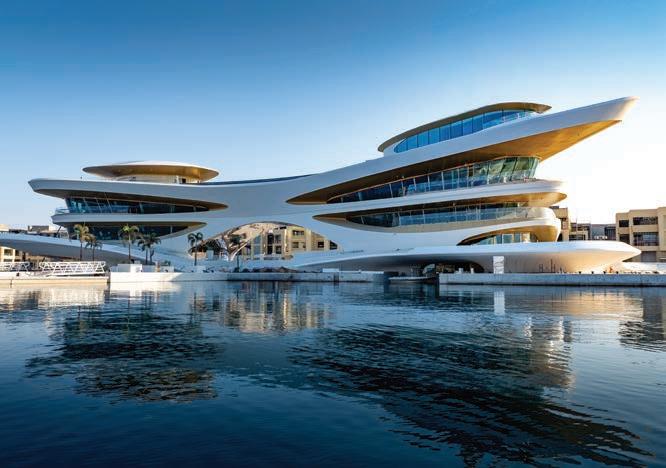
When Al-Mokhtar finally moved into the corporate world and into tourism – a world that had always been in her blood, literally, her grandfather having owned a travel company – she found the space to do what journalism hadn’t quite allowed. “I felt that now it’s an opportunity to actually challenge these people, challenge the media, challenge the public and tell them: Saudi is beautiful. And trust me, you want to be part of that story.” Today, as the spokesperson for Red Sea Global’s destinations and the architect of their international media strategy, she gets to make a case for her country all across the globe.
The canvas she is working with is extraordinary. Red Sea Global is the developer behind two of the most ambitious luxury tourism projects on earth: The Red Sea and AMAALA – regenerative destinations designed not merely to attract visitors but to set entirely new standards for what sustainable, high-end travel can be. While the brands that have signed onto the new Saudi vision of the future – Four Seasons, Faena, Clinique La Prairie, Miraval – are marquee names that carry their own global weight, their own implicit promise of quality. Al-Mokhtar understands exactly what that means strategically. “These partnerships are very important for us – and we nurture them. Because when people see that their favourite brands are in Saudi they know they can trust that.” She notes that luxury hotel brands function as a kind of cultural ambassador, doing some of the storytelling work in an organic way for her nation.
What Al-Mokhtar is most proud of, though, has less to do with brand rosters and more to do with the wide range of people who are testing the hospitality waters of Saudi. She fondly remembers 50 women – a college reunion group from Germany – that arrived together in January, having left their families behind to go on an adventure to discover the kingdom. But there are also the adventure seekers that spend their time diving in the fourth largest coral reef system in the world. Or the luxury experientialists who explore prestige pampering in both Saudi’s mountain resorts and its island properties, trailing their favourite hotel brands across a landscape that keeps confounding expectations.
“People always think that The Red Sea is similar to the Maldives,” reflects Al-Mokhtar, “but it’s not – because of the
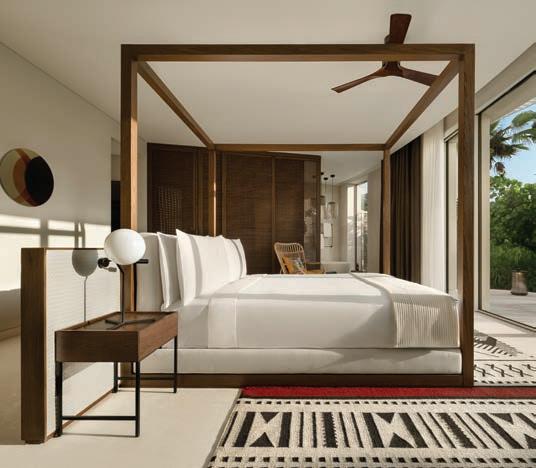
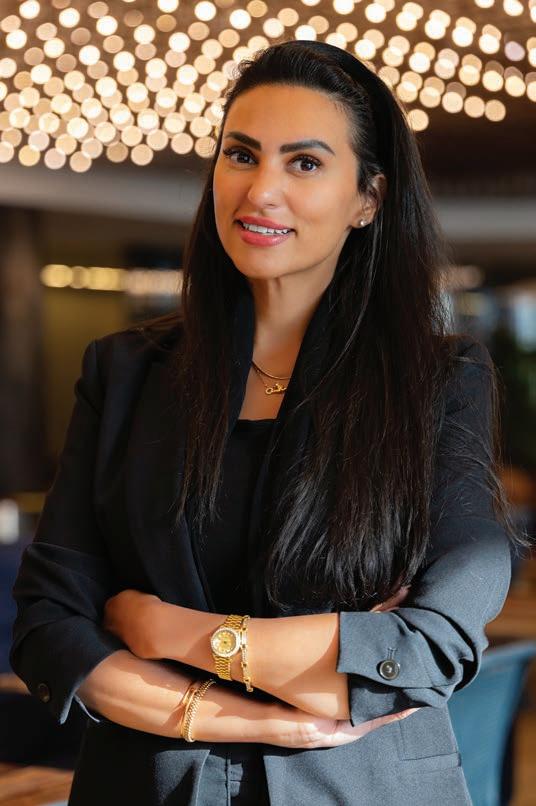
geographical diversity. We have mountain resorts, we have desert resorts, and then island resorts.” Lewis Hamilton, she mentions in passing, called three days before a Formula One event to say he had seen an Instagram post about Shebara Resort and requested to see it in person. “This sort of thing never happened before,” she confesses. “But now we are very privileged that people, even if they don’t visit us, they see us through the lenses of media, influencers, social media – and then decision makers come to the kingdom as well.”
The conversation about the kingdom has shifted entirely in her lifetime, and she knows it. “It’s a brave new Saudi. There is a complete change in perspective, in how people are perceiving tourism here.” The people she works with today at Red Sea Global – 60-plus nationalities under one roof – are not just visiting. They are moving in. Sending their children to school. Planting roots. “Today, it’s like: if you’re not coming to Saudi, you’re missing a lot. You have to be part of it.”
What Al-Mokhtar wants, ultimately, is not just for the world to come to Saudi. She wants Saudi to go to the world – its fashion, its food, its culture – and for that exchange to run in both directions. “I want the world to see us,” she says with feeling. “Even if they don’t come for tourism, they come for different reasons. And if they don’t come, they don’t come – but at least they will finally be able to enjoy and understand what Saudi Arabia really is.” This is her real hope, that the world realises that there is always a place at the table for anyone who wants to come discover her cherished home.
Reema Al-Mokhtar
A JOURNEY
Morin Oluwole, an international luxury business leader who serves on the boards of Breitling, Rituals, and Biologique
Recherche and the former Global Luxury Director at Meta, explores what it’s like to stoke the embers of a new vision
We often imagine an odyssey as something grand. A decisive departure. A clearly defined journey toward a known destination. In reality, the most defining odysseys rarely announce themselves so clearly. They begin quietly, in a decision that feels both obvious and uncertain at the same time. I think back to my move to Paris in 2015, when I was asked to help build what would become the luxury division within Meta. On paper, it looked like an opportunity. In reality, it was something far less structured. There was no clear blueprint, no established model for what luxury would look like in a rapidly evolving digital ecosystem. There was only a conviction that something meaningful could be built, and the responsibility to figure out how. That is often the nature of a professional odyssey. You are not stepping into something fully formed. You are stepping into something that does not yet exist.
Arriving in Paris, I found myself navigating a space defined by tension. On one side, the heritage and precision of global luxury maisons. On the other, the speed, scale, and experimentation of technology. Bridging those worlds required more than strategy. It required translation and trust. And, above all, it required the ability to hold a vision before others could fully see it.
That translation was not only strategic, it was deeply personal.
Having lived across Nigeria, the United States, and London, I was familiar with international environments. But Paris asked for something different. It required me to operate, lead, and build in a language that was not my own (literally!). Not just to navigate daily life, but to lead conversations, influence decisions, and manage a multi-million-dollar business – in French.
There is a particular vulnerability in knowing what you want to say, but not yet having the most precise words to express it. In leading rooms where nuance matters, where language is not just a tool, but a signal of credibility. And yet, that experience forced clarity and intention. It taught me that leadership is not about perfection of expression, but precision of thought.
What I learned during that time is that legitimacy does not precede action. It follows it. You do not wait to be recognised as credible before you begin building. You build, and through consistency, clarity, and results, credibility forms around you.
But the most defining aspects of that journey were not the ones that were visible externally. The moments of doubt. The constant recalibration. The discipline of learning to operate in new environments, with different expectations, different rhythms, different definitions of success.
We often underestimate the emotional and intellectual work required to evolve. To enter new rooms and not immediately feel fluent. To hold your perspective while still remaining open enough to learn. To balance confidence with curiosity. This is the invisible architecture of transformation. And it is rarely acknowledged.
INTO THE
At the same time, there is another dimension of the odyssey that is often overlooked: the personal one. For me, this journey has not only been about building within organisations or across industries. It has also been about building a life. About creating a family with my partner, in parallel with the evolution of my career. And what becomes clear, over time, is that these two paths are not separate. They inform each other constantly.
We are often told to wait until things are clear. Until the timing is right. Until we feel ready. But readiness is rarely something you arrive at. It is something you construct through movement.
Some of the most defining decisions I have made – professionally and personally – were made in moments where the full picture was not yet visible. Where certainty was partial. Where the outcome could not be fully controlled. And yet, those decisions created the conditions for everything that followed.

This is what an odyssey actually demands. Not perfection. Not complete clarity. But courage to begin, discipline to continue, and discernment to adjust as the path unfolds. There is a particular strength in women’s ambition that often goes unspoken. It is not only about achievement. It is about expression. About building something that reflects both who we are and what we see as possible. And when that ambition is paired with intention, it creates a form of leadership that is both grounded and expansive.
Looking back, I don’t think the most important decision was moving to Paris, or stepping into a new role, or even building
something that did not yet exist. The most important decision was choosing to move forward without waiting for certainty to catch up.
Because the truth is, the future rarely reveals itself in advance. It responds to those who are willing to engage with it, to shape it, to take responsibility for what it could become.
The most powerful journeys are not always the most visible ones. They are the ones defined by quiet conviction. By consistency. By the willingness to continue, even when the path is still unfolding. And perhaps that is the most honest definition of an odyssey today. Not a journey where everything is known, but one where you decide to begin anyway. @morin | morinoluwole.com
UNKNOWN
BVLGARI – ECLETTICA
In Living Colour
As is customary, Bvlgari once again tells its story through vibrant and vivid gemstones. This new Serpenti high jewellery necklace makes that case with particular conviction – 60.60 carats of mandarin garnets move alongside pink tourmalines, juicy rubellites, and are anchored beautifully by emerald beads and delicate turquoise inlays that give a cool counter point to its pink gold framework. But what distinguishes this piece is not the carat count. It is the rhythm. Colour here functions as architecture – each stone a note in something that reads less like jewellery and more like a score. Worn, it follows the body with the kind of fluid, continuous movement that makes you forget, briefly, that it is not alive.
THE FINEST KIND
This year the high jewellery collections from the world’s leading houses underlined just how imaginative, innovative and avant garde their artisans can be. Here are a few pieces that stood out for Emirates Woman
WORDS: JESSICA MICHAULT
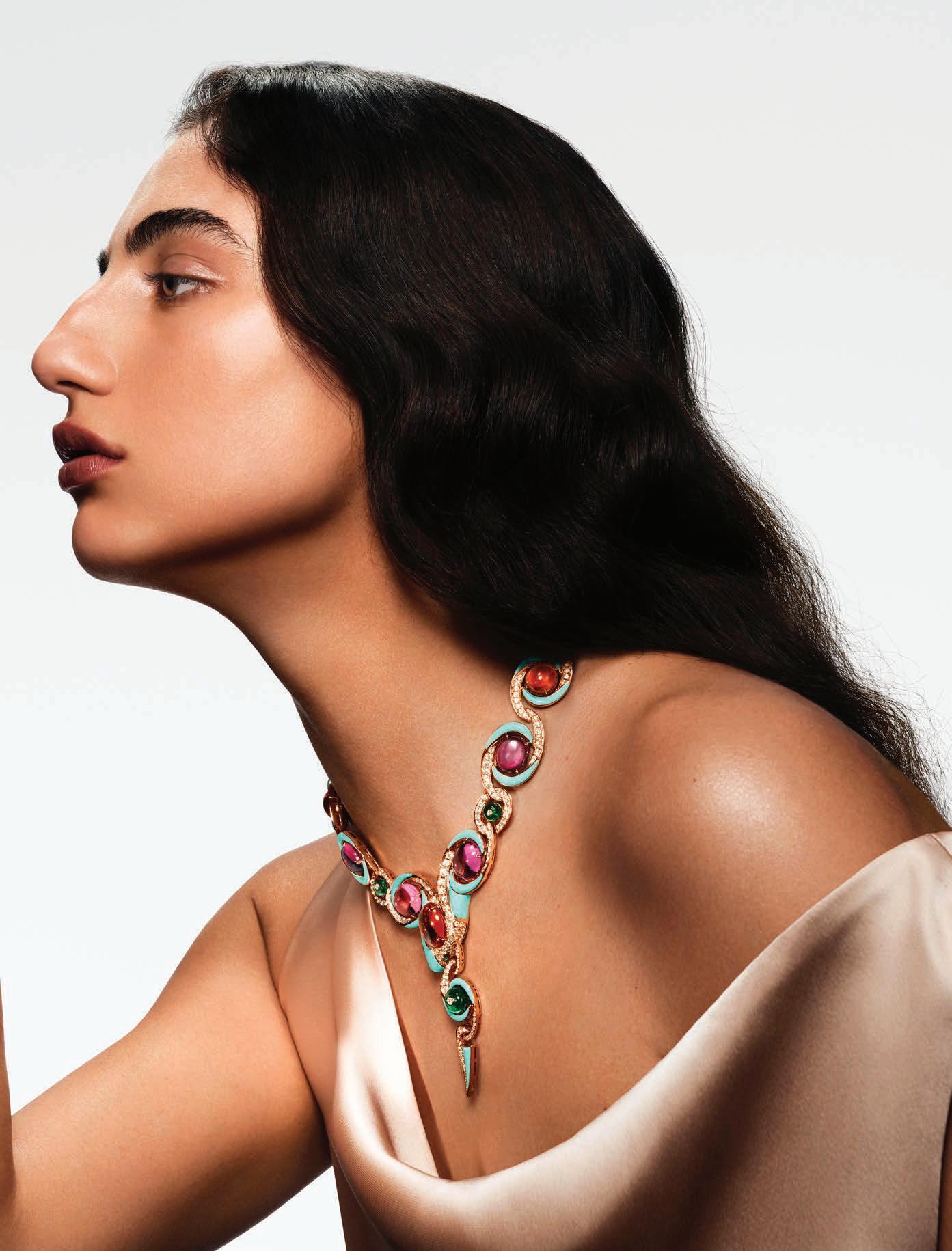
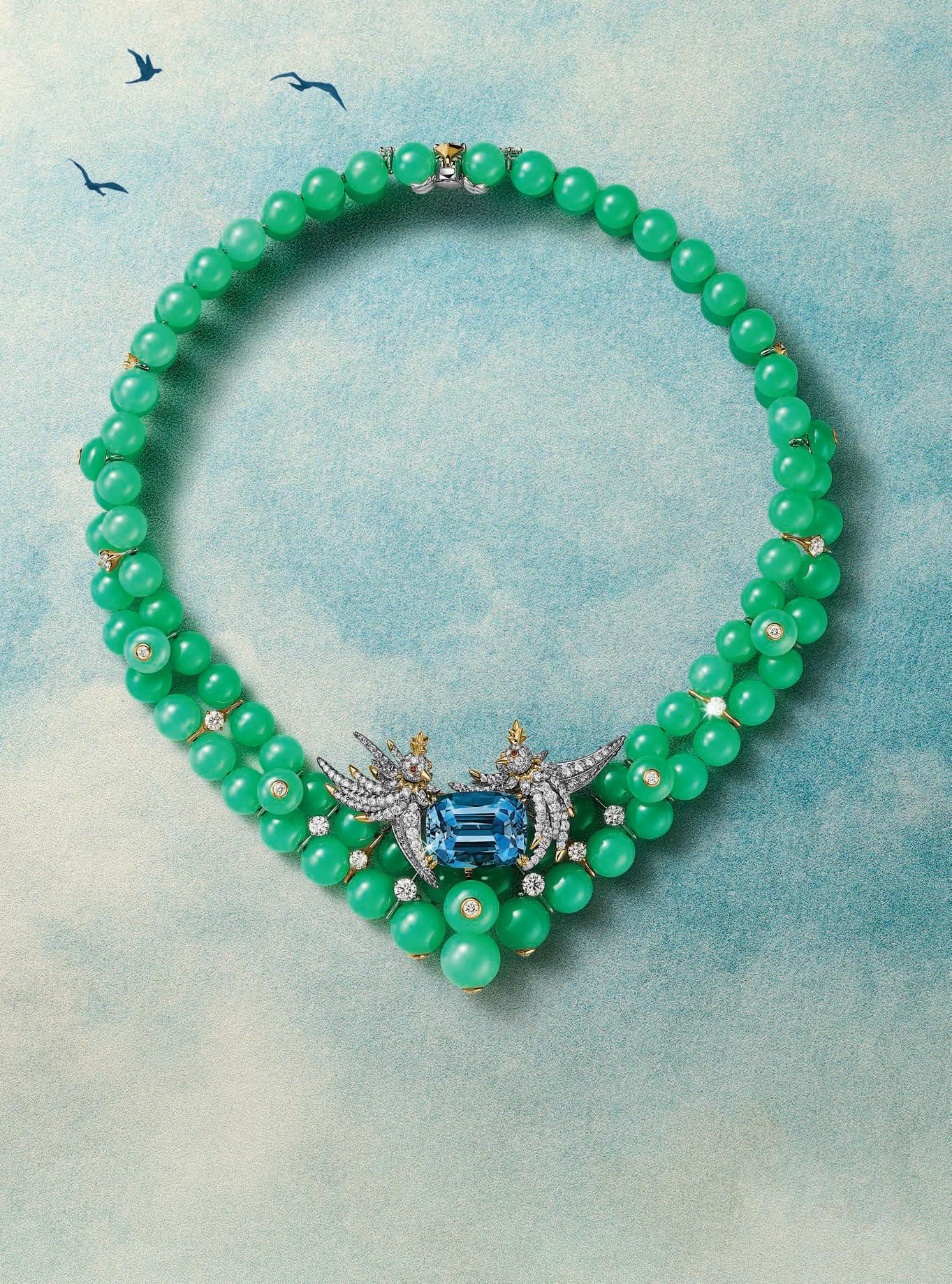
TIFFANY & CO. – HIDDEN GARDEN Deep Roots
Tiffany & Co.’s Hidden Garden collection is both a meditation on the work of famed designer Jean Schlumberger and a love letter to the power of transformation. This Bird on a Rock necklace, in particular, is one of the house’s most viscerally joyful arguments to embracing the Schlumberger style, and its playful point of view. Anchoring the design is a cushion-cut Santa Maria aquamarine from Brazil weighing 22.60 carats. It has pride of place on the necklace and sits there with the cool, unhurried confidence of something that knows exactly what it is. Around the stone, custom-cut chrysoprase beads pool in vivid green; while round rubies and diamonds animate the composition like light catching water. That the aquamarine converts into a brooch feels almost beside the point. Almost.
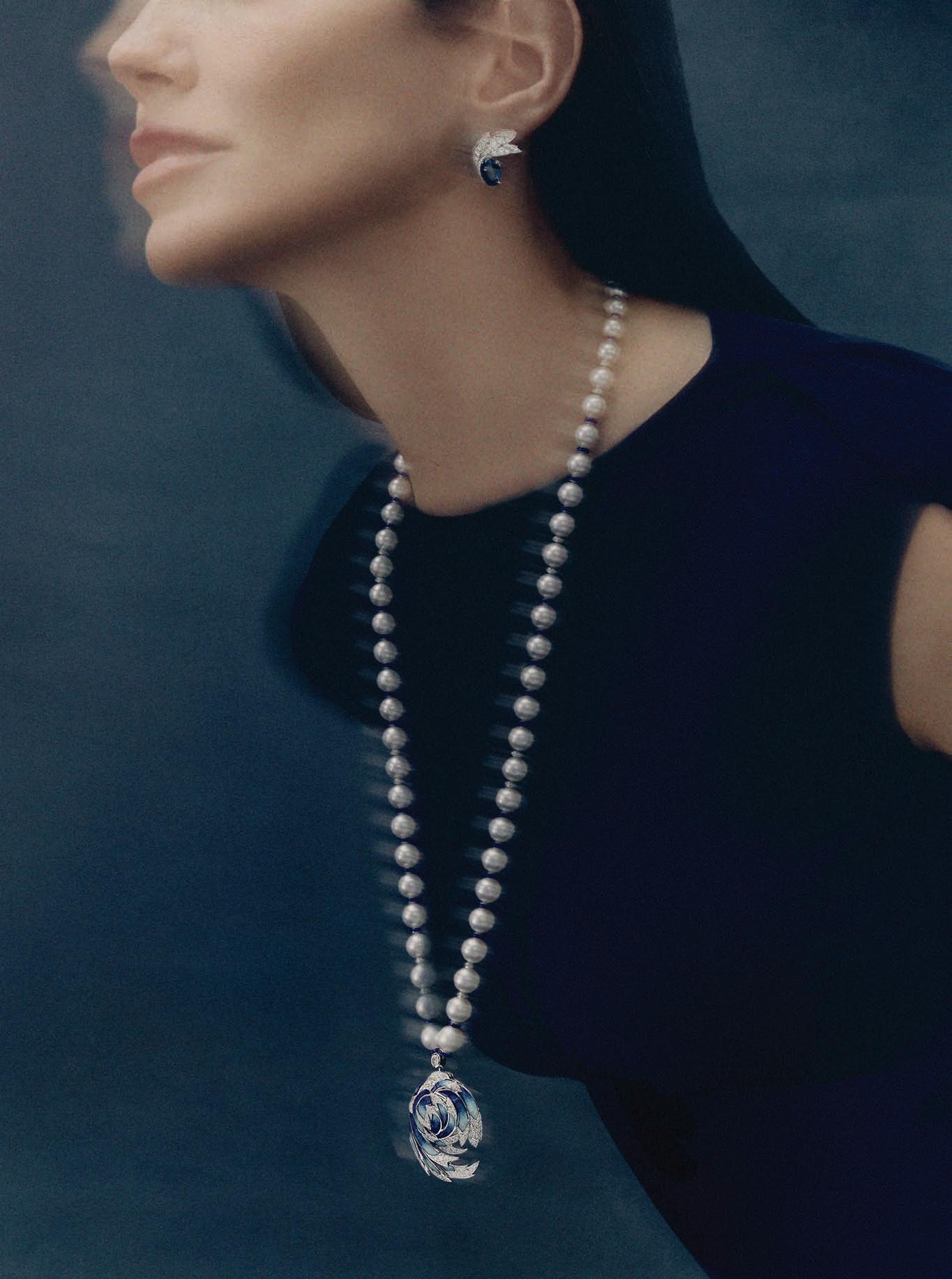
CHAUMET – ENVOL
Spread Your Wings
Wings and the act of taking flight were the leaping off points for Chaumet’s Envol high jewellery collection. In a line up of striking pieces it’s the pendant suspended from a sapphire-and-pearl sautoir that stands out. Because, as much as it looks as if it is about to soar away, it’s the secret it hides behind its grand feu blue dégradé enamel and diamond wings that is designed to pique interest. Slide its centre open to reveal a sodalite watch face within. A jewel that tells time only to those it trusts. Chaumet’s 250 years of ornithological obsession is beautifully distilled into a single, swivelling, secret-keeping gesture. It’s a design that will send quite a few hearts aflutter.
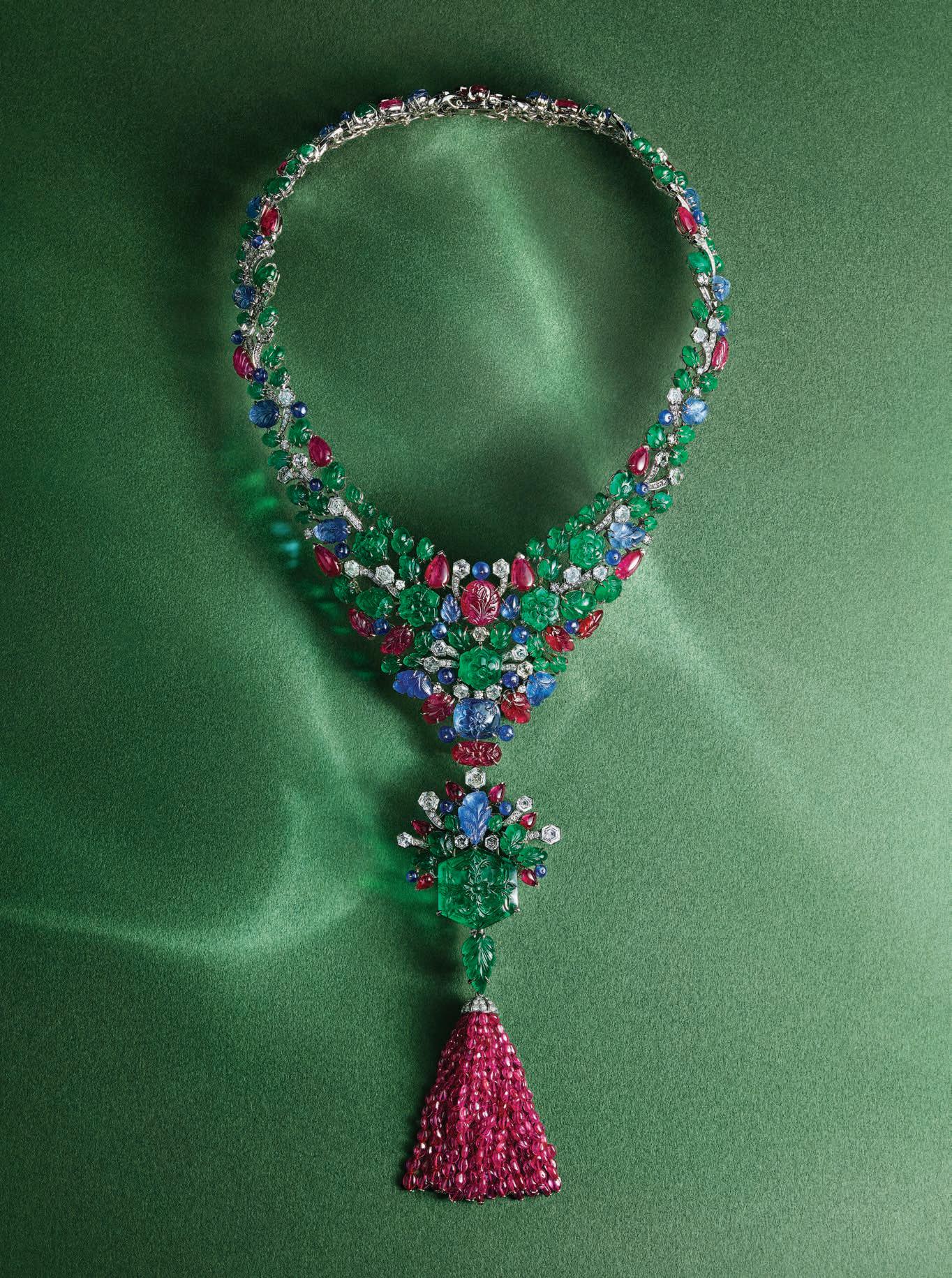
CARTIER – LE CHŒUR DES PIERRES
Craft in Abundance
It’s been over a hundred years since Jacques Cartier returned from India with an entirely different understanding of what colour could do to elevate high jewellery. The Maison revisits that inheritance with its new Le Chœur des Pierres collection. One of the highlights of which is the new Tutti Kanya necklace which features a 30.33-carat engraved Zambian emerald. It anchors a necklace dense with carved rubies, sapphires and emeralds arranged into flowers, leaves and berries; a ruby tassel at the nape providing structural counterpoint to the abundant front composition. What made Tutti Frutti radical in the 1920s was never the excess of the design, but rather the discipline underneath it. That tension, between opulence and order, between Mughal abundance and Cartier precision, remains entirely intact in this extraordinary masterpiece.
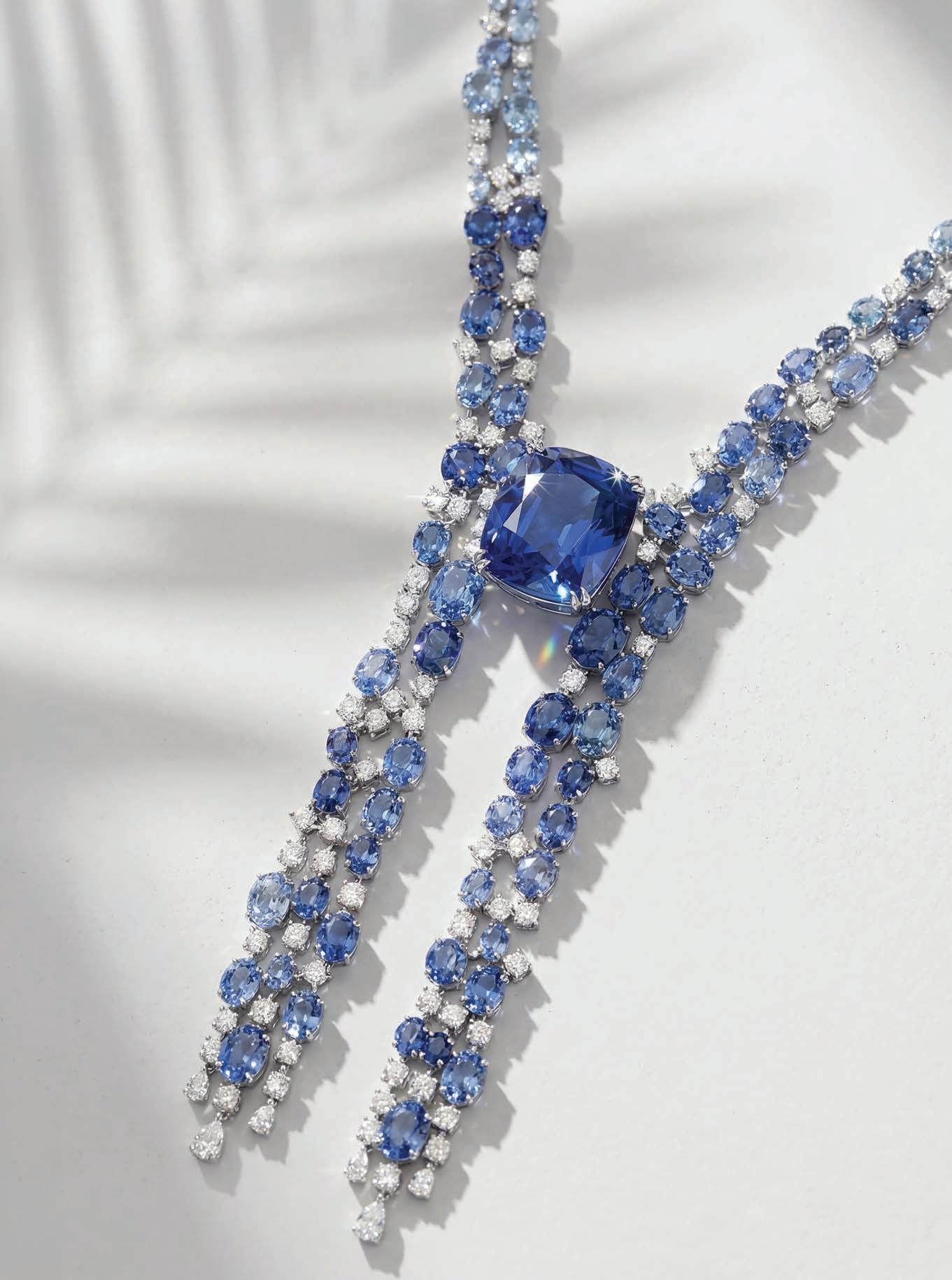
A River Runs Through It
There are certain things that high jewellery lovers can always set their watches by. One of them is that Chopard will unveil a new high jewellery collection just in time for the Cannes Film Festival, which it has been wedded to since 1998. This year the house had quite a few showstopping designs appear on the red carpeted steps of the croisette, of particular note is its Invitation to Wonder necklace that features an 88.37 carat royal blue sapphire at its centre. 506 hours in the making, the necklace, with its framing oval aquamarines and diamonds that look like rivulets of rushing water, is a celebration of artisanal craftsmanship at its finest.
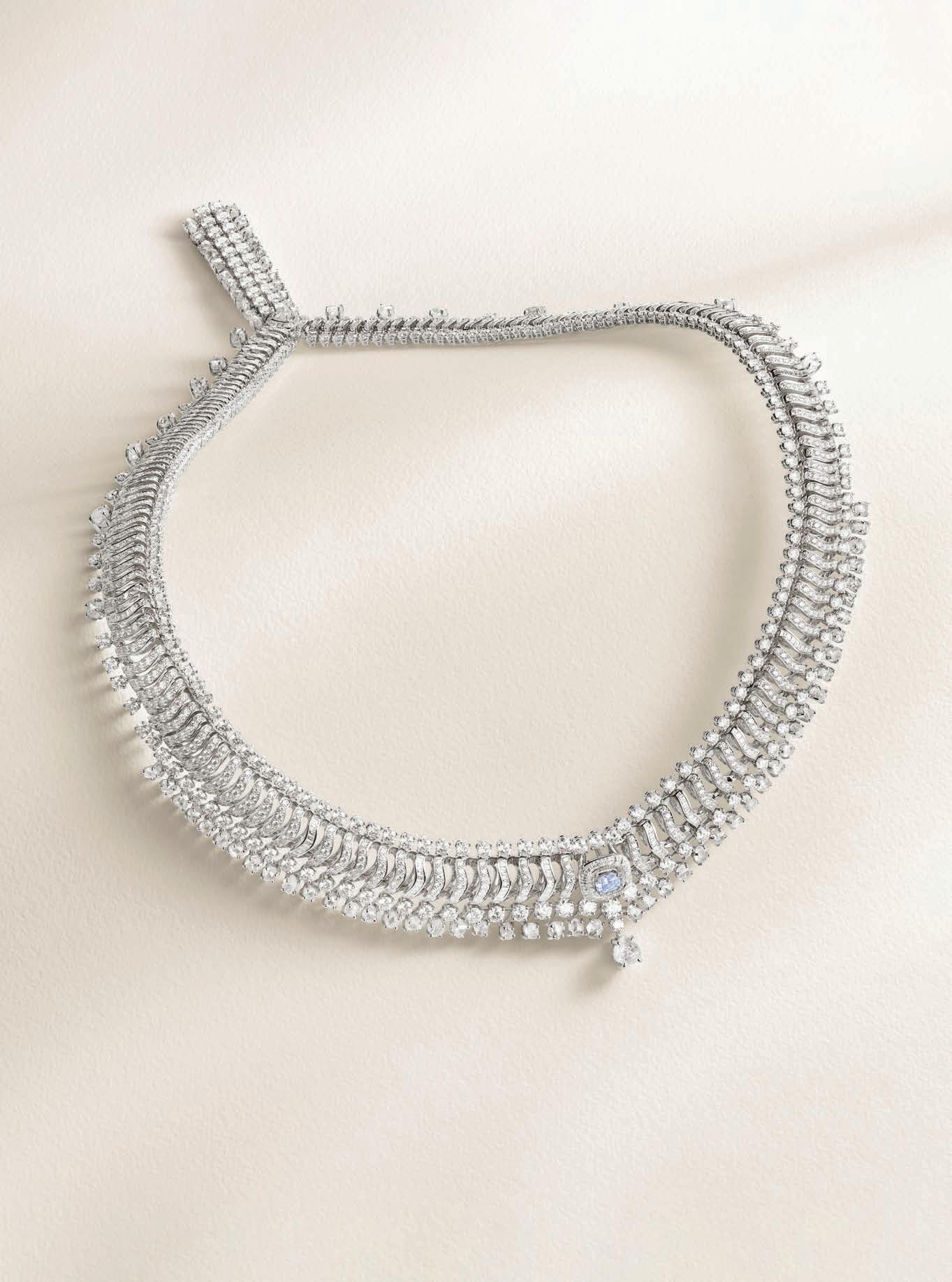
DEBEERS LONDON – VIBRATIONS
A Higher Frequency
De Beers London doesn’t really do things quietly. Case in point: the Echo Necklace – centrepiece of the new Vibrations High Jewellery collection. It is home to a 1.12-carat Fancy Intense Blue diamond sourced from Namibia, a stone so rare it practically has its own atmosphere. Around it, over 193 carats of round and custom baguette-cut white diamonds, each shaped using the taille sur œuvre technique that means the forms of the stones are created directly on the gold framework. Then comes the engineering coup: this single necklace transforms into six distinct jewels – including a tiara, bracelet, and earrings. The piece, which was inspired by the rippling waters of Southern Namibia’s Fish River Canyon, has been executed with the kind of audacity that is a tangible reminder of why high jewellery still matters.
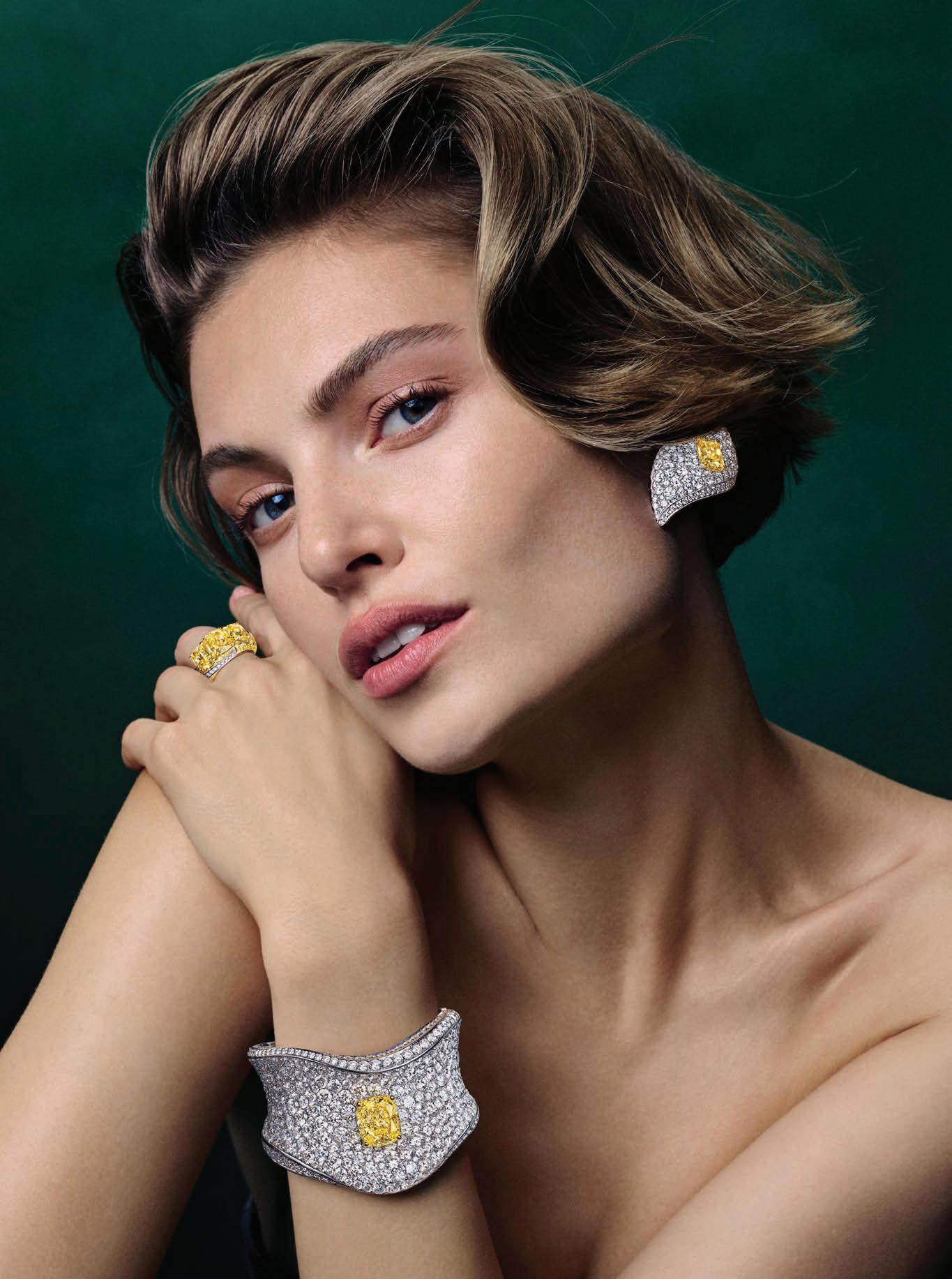
GRAFF – EXCEPTIONAL PIECES
Put Up Your Cuffs
Graff has always understood that restraint and excess are not diametric opposites – they are negotiating partners. The proof in its latest offering is a high jewellery cuff anchored by a rare 18-carat cushion-cut fancy intense yellow diamond that looks as if it is hovering above a landscape of 835 snow-set pavé stones totalling 126 carats. The surface reads as pure, almost impossible levitation – each diamond appearing to float freely, no armature in sight. No surprise here that hundreds of hours went into concealing the armature beneath every stone. This was done via an intricate framework engineered to make the extraordinary look effortless. This is Graff doing what it does so well, making statement jewellery that gets all the right sort of attention.
SUN-PROOF… AND THEN SOME
Augustinus Bader built its reputation on one idea: that skin, given the right environment, knows how to heal itself. With its new Solar Shield SPF 50 the company is bringing that same logic to suncare. Anchored by the brand’s proprietary TFC8® complex, it delivers broad-spectrum protection while quietly getting on with improving tone, texture, and radiance underneath. The formula is light, sinks in fast, and leaves nothing behind but skin that looks – over time, genuinely – better than before thanks to ingredients like Wild Rosella Extract, Osmanthus Flower, and Raspberry Seed Oil. Healthy sunbathing – we are here for it.
GLOW
Take beauty to another level…
– By not sacrificing on necessities
– With a new fragrance rooted in history
– Through scents that teleport
– Via artists that understand you
– Thanks to creative ingenuity
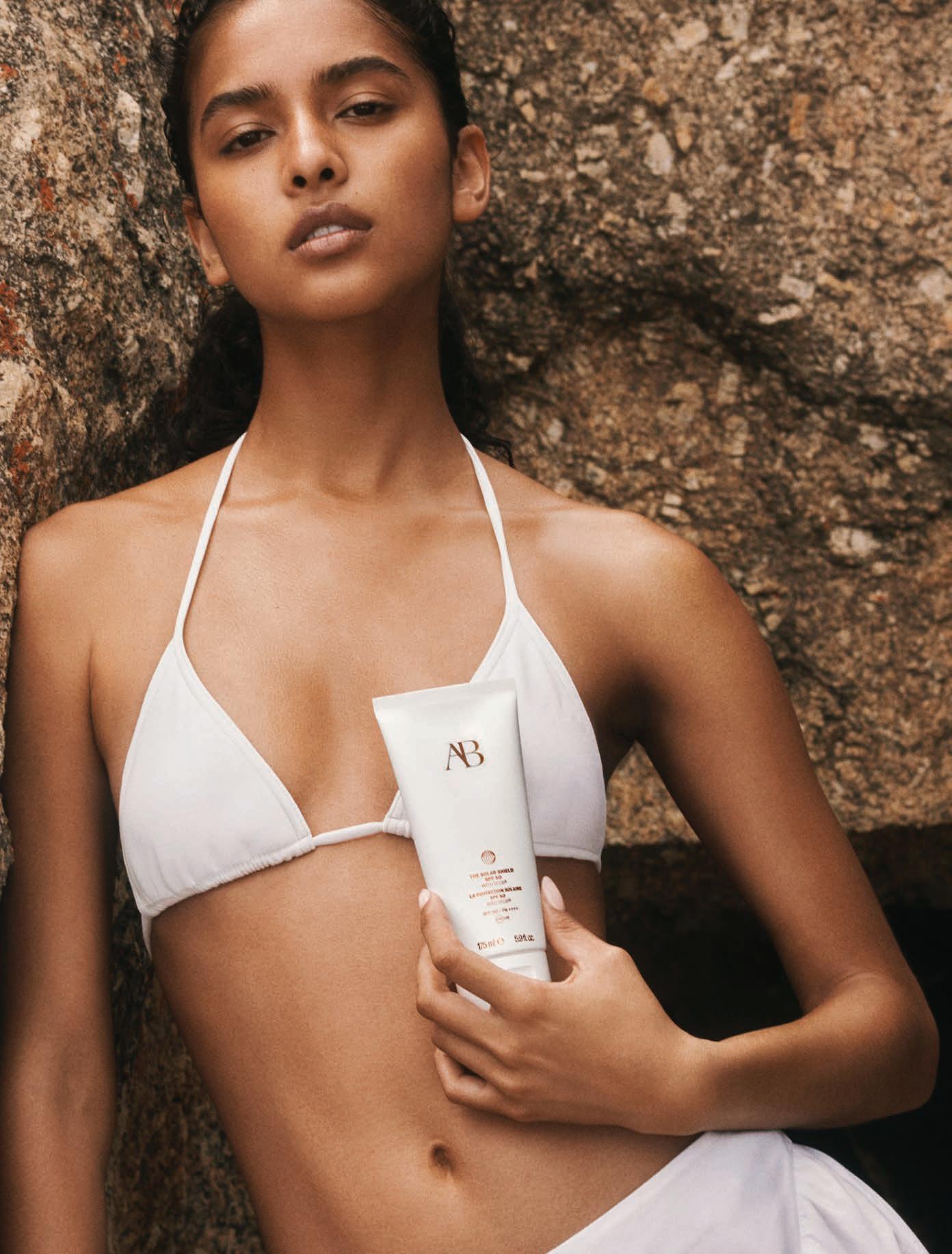
Hot New Buys
WORDS: RADWA ASKAR
Eight travel beauty essentials for the modern jet-setter
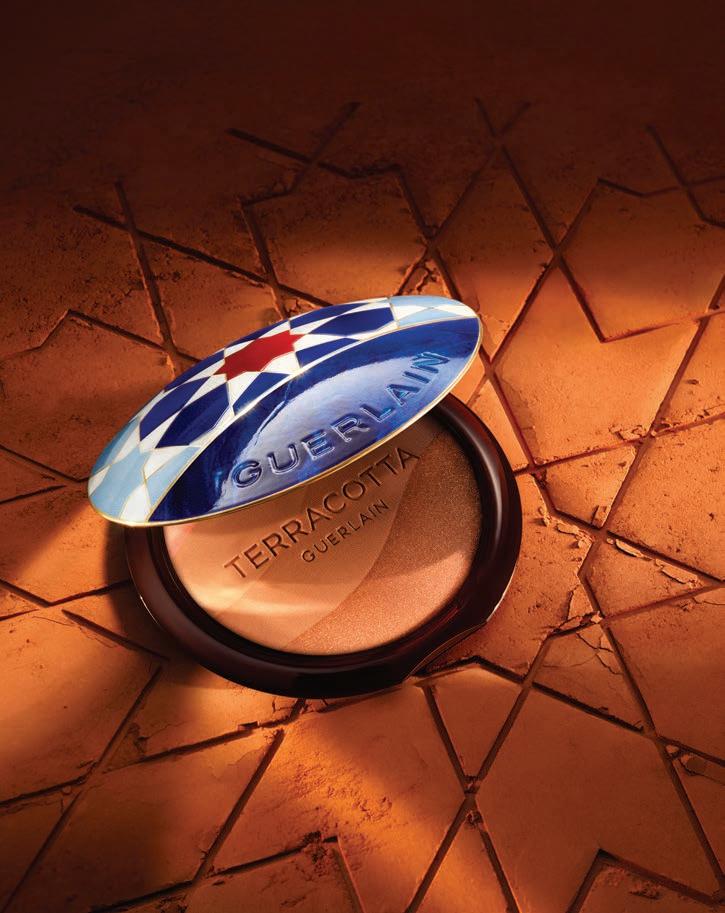
Moroccan Desert Escape
Sun-drenched skin, bottled. Guerlain’s iconic bronzer captures the warmth of desert light with a seamless, buildable formula designed to enhance rather than mask.
SKIN BUT BLURRED
The new complexion code. This 16hour moisturiser delivers hydration with a soft-focus, velvety finish –think polished, perfected skin with a barely-there feel. Tinted Moisturiser Blurred Matte Dhs230 Laura Mercier available at Sephora
A PIECE OF CAKE
A playful twist on practicality. Touchland’s Confetti Cake Power Mist blends warm vanilla with airy sweetness, elevating an everyday essential into something altogether more indulgent – without compromising on hydration. Confetti Cake Power Mist Dhs60 Touchland
Terracotta Golden Dunes Dhs276 Guerlain
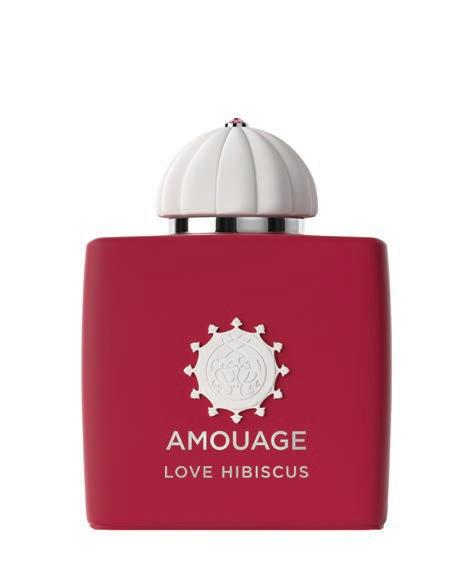
Hibiscus Reimagined
A fragrance that lingers with intent. Floral gourmand notes meet a soft sensuality, evolving throughout the day from radiant brightness to a more enveloping, evening-ready warmth. Love Hibiscus 100ml Dhs1,550 Amouage


The Youthful Gaze
A targeted approach to brighter, smoother eyes. Infused with red ginseng, hyaluronic acid, and biopolymers, this treatment reawakens the under-eye area with hydration and subtle lift. Super Anti-Aging Eye Cream Dhs770 Dr Barbara Sturm
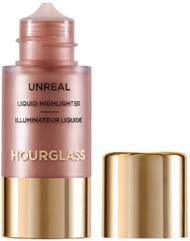
UNREAL SPARKLE
Skin-first luminosity with a modern edge. This serum-infused liquid highlighter melts seamlessly into the complexion, delivering a sheer, buildable glow that feels as effortless as it looks. Unreal Liquid Highlighter Dhs150 Hourglass

THE RADIANCE REVOLUTION
Consider this your shortcut to luminous skin. Powered by viniferine, this brightening serum targets all forms of pigmentation – from sun exposure to post-acne marks – for a clearer, more even-toned complexion. Vinoperfect Dhs243 Caudalie available at Sephora
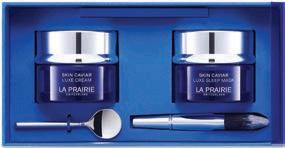
THE ULTIMATE LIFT DUO
Precision skincare at its most elevated. La Prairie’s Caviar PDRN duo works to visibly firm, lift, and refine –bringing a new level of definition to the complexion. Caviar Day & Night Firming Duo Dhs2,406 La Prairie
PARADISE LOST… AND FOUND
WORDS: AMINATH IFASA
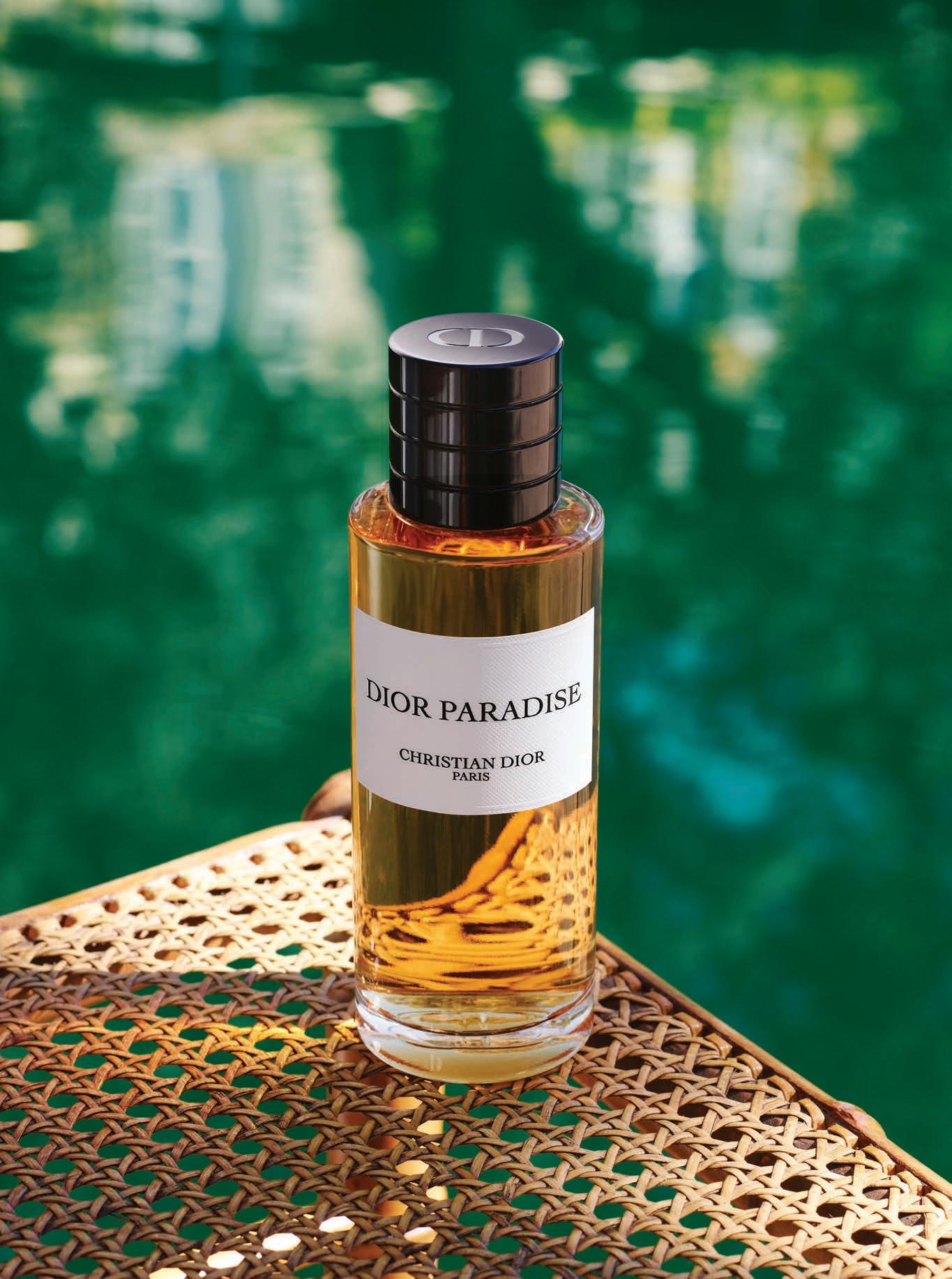
Francis Kurkdjian has spent decades translating emotion into scent. But for his latest creation for Dior, he found inspiration in a very unexpected place. One that the brand’s founder would no doubt appreciate
Naturally the expectation when meeting Francis Kurkdjian – the perfume creation director at Dior and someone who has formulated many of the most iconic fragrances of the last three decades –would be that he is media-trained to perfection. But Kurkdjian surprised me. During our conversation he spoke as if he had forgotten he was being recorded, answering questions with a directness that was instantly disarming. Nothing was performative, just a man talking about his work with the kind of honesty that most people reserve for close friends. This sort of openness is rare in any industry, but in luxury, where every word is usually weighed against quarterly earnings and brand equity, it felt almost radical.
We are meeting to discuss his latest creation, Dior Paradise, which is part of the brand’s La Collection Privée line. Its backstory has quite a poetic beginning and is rooted in some beloved trees. “The almond tree is the first tree that blossoms at the end of winter,” Kurkdjian says. “Monsieur Dior wanted to be able to see its flowers from his château.” After Dior’s death in 1957, the almond orchard at his Château de La Colle Noire home in the South of France was chopped down because maintaining it was intensive work for little reward. But the memory of those trees remained in the Maison’s archives. When Kurkdjian began searching for a story to anchor his next perfume, he asked the Dior historians to dig through the collection of 20,000 digitised patrimonial documents to help him find a starting point for the scent. “We knew because we have the garden map from back then, and we have testimonies from the gardener himself about how Monsieur Dior was in love with those trees,” the perfumer explains. What emerged from that research was the understanding that the trees represented something profound for the founder. They were part of his attempt to recreate the childhood home he lost when his family went bankrupt in the 1930s.
But the almond connection at the heart of this fragrance is not just about the orchard trees. Kurkdjian discovered something else in the archives; Dior’s cocktail recipes. “He was in love with almond syrup,” he says. “There is a drink called orgeat, an almond syrup that you use in cocktails. We have recipes of Christian Dior with this specific almond syrup.” That discovery shifted the entire project, because almond is not only a scent but also a taste and a flavour that Dior loved as a daily pleasure. And from there, a parallel to the Middle East also emerged, because Kurkdjian found his own connection to it when he realised that almond syrup reminded him of Jallab, the date and rose drink he used to enjoy in Lebanon.
your cheek.” When asked what makes this fragrance distinctive, Kurkdjian is characteristically direct. “It smells like nothing else on the market,” he says. “The uniqueness comes from the story. It’s an untold story so far. If you are true as a perfumer, you are always true to the story, because the story comes first.” That commitment to storytelling requires creative freedom, and Kurkdjian is remarkably clear about how he navigates that within a house as large as Dior. “I am free in my mind, and even in real life I feel free,” he says. “The worst thing you can lose in life is your freedom. There
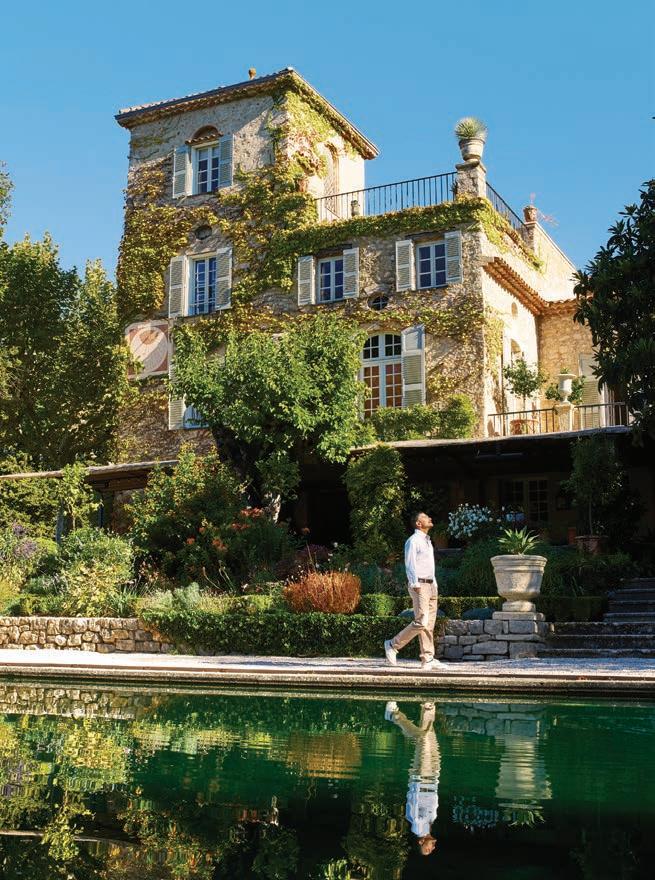
is nothing more precious than freedom of speech, freedom of being who you want to be, freedom of acting and freedom of thinking.”
Taking all of these touchpoints into consideration, the new Paradise fragrance is a creative mélange that pairs bitter almond with a cocktail of citrus notes like mandarin, orange, and lime to create something luminous and bright, with a biscuity roasted tonka bean to prolong the almond sweetness. “I wanted to give it a sensual feel with a fresh woody accord evoking the scents and warmth of Provence,” Kurkdjian explains. “Dior Paradise is as comforting as the first ray of sun emerging at the end of winter to caress
Before our time together ends, the topic of staying grounded in a world of constant urgency comes up, especially for someone as busy as Kurkdjian. For him it all comes down to being intentional about trying to maintain a normal life. He still takes the metro and the bus, does his own food shopping, cooks for his family, and spends time with old friends who are not in the fashion or perfume business. And in a full circle moment that feels somehow connected back to those almond trees at the foundation of his new fragrance, Kurkdjian says, “A tree needs to nurture its roots to grow. There is no reason why human beings should be any different.”
The Beauty Shelf
Content creator Hêlîn Doski takes us through her must-have beauty staples
HoliRoots™ Hair Oil 100ml
Dhs225 Fable & Mane
After experiencing hair loss, my haircare became very intentional. I use this weekly as a scalp ritual – it keeps my roots healthy and has genuinely helped my hair feel both stronger and fuller over time.
Perfect Hair Day (PhD) HighShine Gloss Dhs165 Living Proof
My go-to for a glossy, healthylooking finish. Used once a week, it instantly boosts shine and leaves my hair looking polished without weighing it down.
Elixir Ultime L’Huile Original Hair
Oil Dhs124 Kérastase
Lightweight and deeply nourishing, it smooths frizz and adds shine without ever feeling heavy. It’s one of those products I always come back to.
Duet Blowdry Hair Dryer Brush In Black Dhs2,099 GHD
Gives me a salon-level blowdry at home with minimal effort. It’s so easy to use and feels much less damaging than traditional heat tools – a non-negotiable for my frizz-prone hair.
LED Red Light Therapy
Face Mask: Series 2 Dhs2,550
CurrentBody
I use this daily for 10 minutes and have seen a real difference in my skin. It’s improved the texture of my skin – leaving it smoother, firmer and more refined. In a space full of trends, this feels genuinely sciencebacked and results-driven.
Resveratrol-Lift Firming Eye Gel
Cream Dhs203 Caudalie
Perfect for tackling dryness and puffiness around my eyes. I always look more awake and youthful when this is part of my skincare routine.
COMPILED BY: AMINATH IFASA

Charlotte’s Magic Water Cream
Dhs450 Charlotte Tilbury
I’ve used this consistently since launch, which says everything. It works seamlessly under makeup, creating the perfect

base while staying lightweight and non-pore clogging.
Forever Skin Glow Foundation Dhs265 Dior
From the first use, it became a staple. It covers acne scarring
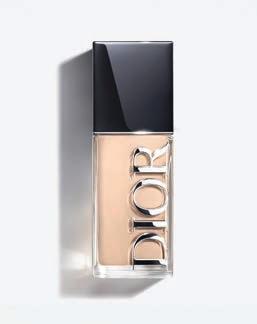
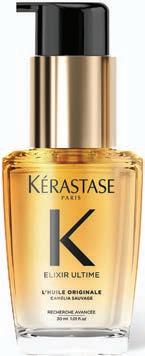
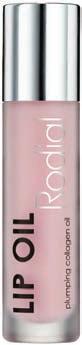

effortlessly while still delivering a natural, radiant finish without feeling cakey.
Easy Bake Loose Baking & Setting Powder Dhs185 Huda
Beauty
A staple in my routine for a reason. I am yet to find another setting powder that gives the same smooth, soft-focus finish as well as providing a shade range that is accessible across skin tones.
Lip Oil With Collagen
Dhs139 Rodial
There is an art to a good lip oil, and this is one that gets it right – it’s non-sticky, gives the perfect natural tint and the added collagen keeps my lips soft, hydrated, and subtly fuller.
Message in a Bottle
A new wave of summer scents is reclaiming the art of aromas that instantly teleport us to far-flung holiday destinations
WORDS: RADWA ASKAR
As summer heats up and the travel season begins, fragrance becomes more than a finishing touch – it is part of the journey itself. Emirates Woman has curated a selection of scents designed for warm-weather escapes, where ease, freshness, and subtle sophistication take priority. Think scents that slip easily in your carry-on, linger on your sun-kissed skin and evolve beautifully throughout the long summer days. And for those still stuck in the office –at the very least – these scents make it possible for their imaginations to travel for them. The selection leans into the idea of ‘light luxury’ picks that feel breathable yet refined. With a spotlight on citrusled notes, soft florals, and clean musks, these are scents that don’t overwhelm on hot days and create a delicate trail for a subtle summer statement. Ultimately, this curated fragrance wardrobe comes down to versatility and mood. Whether drifting through coastal cities, exploring sunlit streets, or stepping back into a cool hotel lobby after a long day outside, these scents are chosen to complement every aspect of your globetrotting travels – both real and aspirational – this summer.
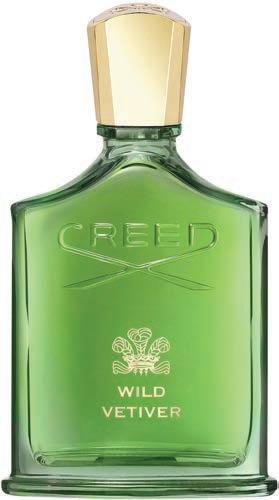

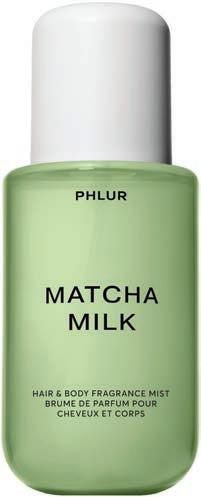
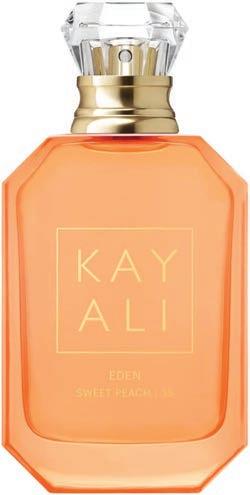
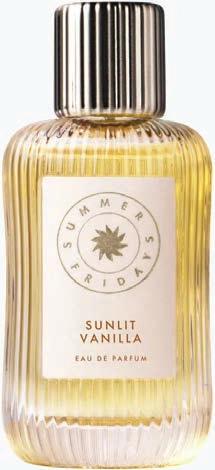
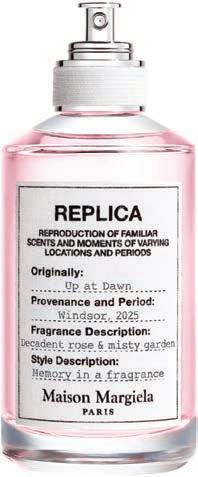
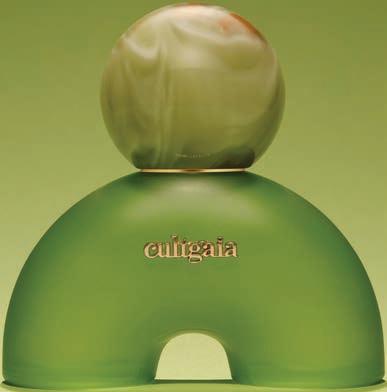
1. Wild Vetiver Eau de Parfum 100ml Dhs1,620 Creed; 2. Sunlit Vanilla Eau de Parfum 50ml Dhs380 Summer Fridays; 3. Matcha Milk Fragrance Mist 240ml Dhs155 PHLUR; 4. Refresco Paraíso Perfume Mist 90ml Dhs115 Sol de Janeiro; 5. Replica Up at Dawn Eau de Toilette 100ml Dhs745 Maison Margiela; 6. Mast Eau de Parfum 50ml Dhs865 Cult Gaia; 7. Eden Sweet Peach 35 Eau de Parfum 100ml Dhs559 Kayali; 8. Easy Bake Eau de Parfum Intense Dhs340 Huda Beauty

Self-MadeBeauties
Determined, entrepreneurial, and passionate about their craft, these talented makeup artists are representing their Arab roots globally
WORDS: MICHAELA SOMERVILLE
Aya Tariq
AYA TARIQ, New York’s best-kept secret
After years working behind the scenes and backstage at upwards of 80 fashion shows, Saudi-Moroccan makeup artist Aya Tariq is making her mark in New York. As a child in Yanbu, Saudi Arabia, Tariq recreated dramatic music video looks seen on Nancy Ajram, Elissa, and Britney Spears. A few decades later, Tariq’s clients now include stars like her Met Gala client Imman Hammam, Lily Allen, Summer Walker, and Aweng Chuol. Citing working backstage with McQueen as one of her career highlights, Tariq has also led teams, heading her first New York Fashion Week show last season for Jasper Studios. But it was her viral work with artist Rama Duwaji for New York’s election night and the inauguration of her husband, Mayor Zohran Mamdani, that took Tariq’s career from backstage visionary to the main feed.
“I love working with Rama, I love her art and her vision,” gushes Tariq. “I wanted the look to be rooted in our culture; we love to emphasise the eyes back home! When she saw herself in the mirror, she looked at me and said, ‘you slayed this makeup’.” The first lady of New York’s elegant yet nostalgic kohl liner and glowing skin was representative of not just Tariq’s flattering artistry, but the philosophy that drives her. “It’s always been my calling to try to bring attention to Arab representation. I think it’s important to not only represent, but to also invest in these talents. I want to show the world that Arab women aren’t just the stereotype they have in mind, [that] we have talent and taste.”
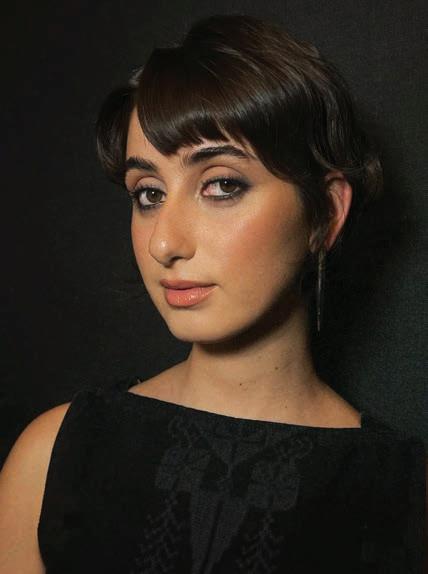
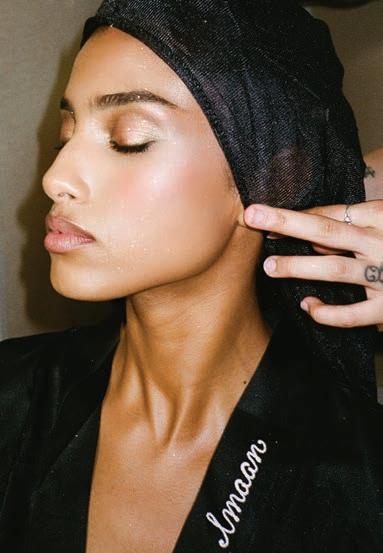
Working in the US during a tumultuous period isn’t lost on Tariq, who points out the inequality in how Arab women are portrayed. “It’s easy to point to Arab woman and say she has no rights because the news in the West only airs the worst of the worst,” she notes. “Many people in the industry want to hear a sad story about how I came here and escaped a horrible situation, but it’s far from the truth. I remember telling someone I’m from Saudi and they responded with ‘congratulations on being here!’. I was like ‘you mean on-set?’, and they said, ‘in America’. I chuckled.”
Despite her international achievements, Tariq envisions an eventual homecoming as the major marker of her success. Following a visit to Jeddah to collaborate with MAC for Makram, she hopes to
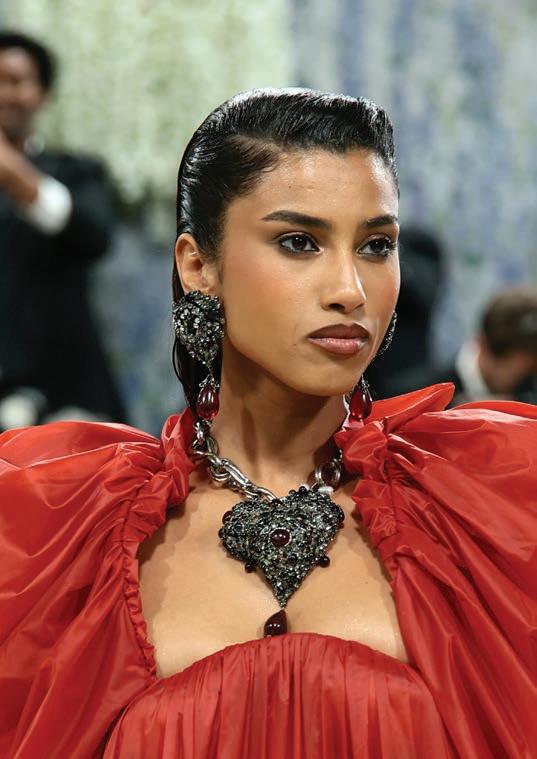
book designers like Ashi Studio and Eman AlAjlan. “I miss home so much,” she muses. “I’d go back to Saudi in a heartbeat if the industry had the same opportunities I get here. I’d love for fashion houses to hire me when they shoot in the Middle East. If they’re targeting Arab markets, I think Arabs should be part of the creation.”
Rama Duwaji
Imman Hammam at Met Gala 2026
Imman Hammam
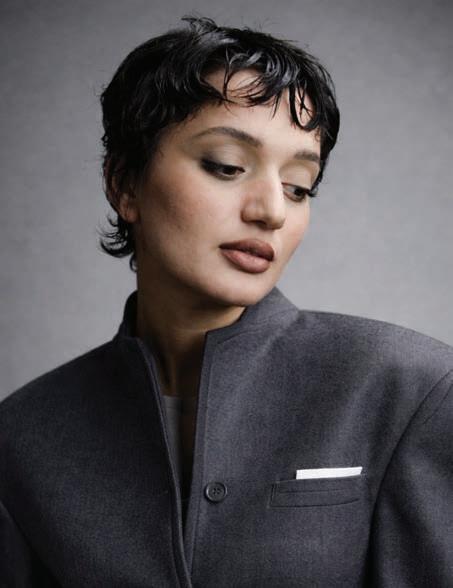
ZEINA MECHAALANY, from student to master
Aspur-of-the-moment move to Dubai was the catalyst for Zeina Mechaalany, who relocated from Lebanon after what was meant to be a quick visit. “I saw a version of my future there, along with opportunities that felt much bigger,” she reminisces. Once landed in the UAE, she took a chance and reached out to iconic makeup artist and brand owner Mohammad Hindash. Taken under his wing as his assistant, Mechaalany developed her skills with A-listers and princesses. “Beyond working with clients, collaborating alongside Hindash felt like attending a masterclass every day,” she says with a smile.
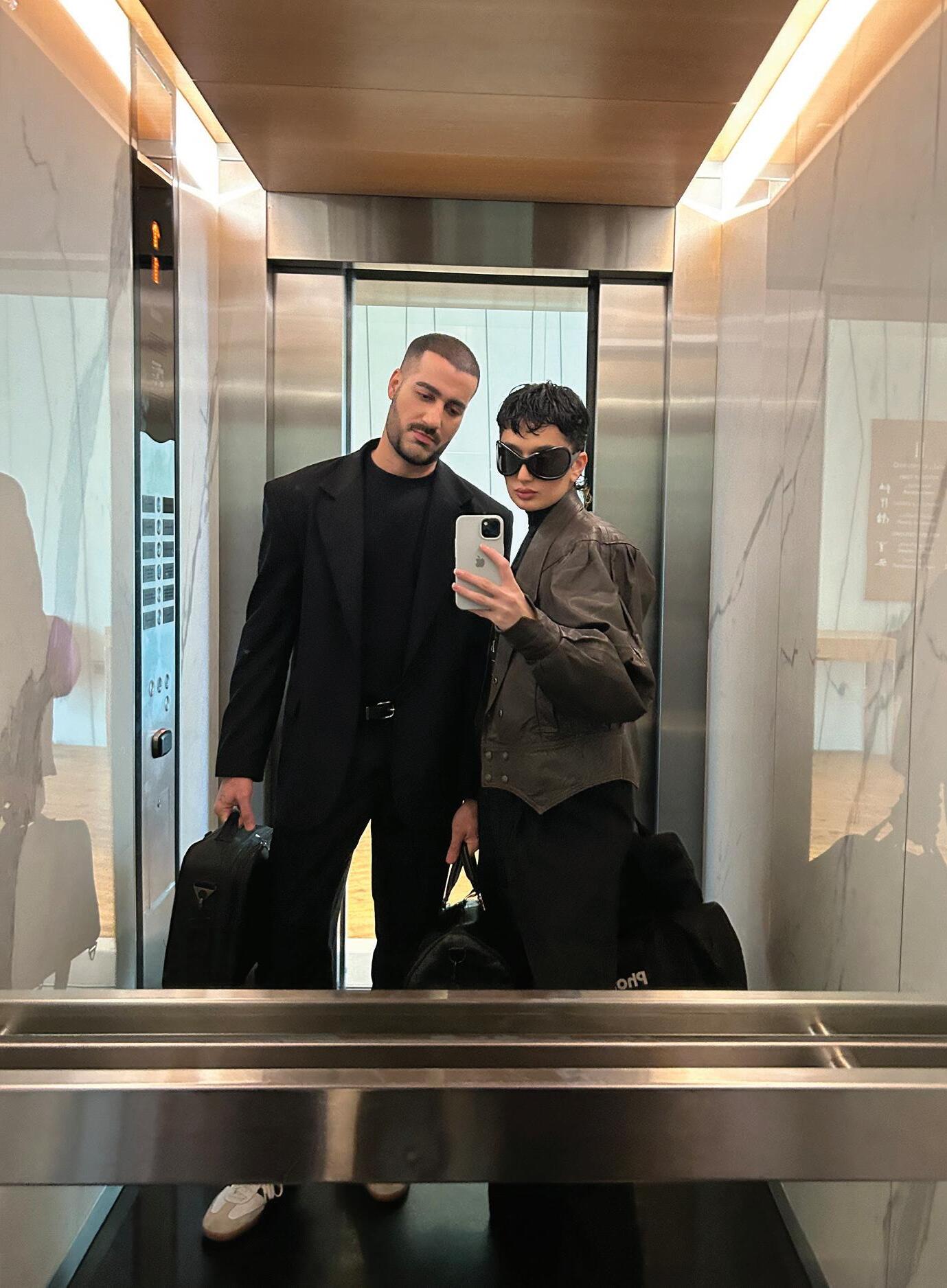
“Zeina was my first assistant, the best assistant I could ask for... she’s become my little sister,” shares Hindash. “What I love about Zeina is that she has a fresh perspective on things, creating a beautiful dynamic that always felt collaborative and where we were both not afraid to critique.” Mechaalany now works with some of the region’s best-known faces, including Zeina Makki, Mona Zaki, Elyanna, and Karen Wazen, and dabbles in the future frontiers of digital makeup, creating ultra-creative looks that go beyond earthly limits. Her style leans to the darkly editorial, with lashings of smoked-out eyes, bleached brows, and latex lips, and motifs that recall iconic Lebanese looks with a futuristic sheen.
“I’m drawn to editorial, artistic looks that feel expressive and intentional, and love working with sharp, precise lines and blending colours in a way that creates movement and dimension across the eye,” she shares.
“I love building characters and translating emotion or narrative into a visual identity.”
Now back in Beirut, Mechaalany is championing local projects in a time where Lebanese creatives need more support than ever. With some releases postponed during her country’s time of distress, she’s pushing herself to persevere. “Even in moments where I feel proud of my work, there’s always an inner voice pushing me to go further, to dig deeper,” she emphasises. “What I am truly proud of is the journey itself, the resilience it has built in me, the self-awareness it has forced me to develop, and the person I’m continuously becoming through it.”
Mohammad Hindash and Zeina Mechaalany
Zeina Mechaalany

YASMIN ISTANBOULI, the It girl go-to
Yasmin Istanbouli’s makeup career has come full circle, with the Jeddah-raised 28-year-old dedicating herself to beauty following a three-day course with Rihanna’s artist, Priscilla Ono. With a touch of serendipity, she would go on to assist Ono on-stage months later for that same course. After spending the majority of 2025 on tour with brat-era Charli XCX, the Palestinian-Korean is living her LA dreams. “My first ever Met Gala with Charli in 2025 was one of the biggest achievements of my career; I broke down crying once she walked the carpet,” she shares. Istanbouli’s client list now reads like the Billboard charts, working



with Katseye, Camila Cabello, Gracie Abrams, Madison Beer, Maria Zardoya, Hilary Duff, and Justine Skye, and recently getting Olivia Rodrigo stage-ready for her viral Coachella set. She’s also glammed Amelia Grey, Nara Smith, Amelia Dimoldenberg, and Simi and Haze Khadra, with her looks spanning ontour drama to red carpet glow.
Istanbouli cites Bella Hadid as her dream client. “Whenever I have a chance to work with an Arab client or colleague, it feels special. I always mention where I’m from because I want people to know,” she explains. Noticing Arab women are still typecast, she’s made it her mission to set them straight. “When people in the US meet me and find out I’m from Saudi, they’re always so shocked, because of how I look, and dress, and my tattoos,” she laughs. “I definitely don’t fit the stereotype of an Arab girl, but that’s what I feel like I’m proving to them; that their stereotypes are stereotypes. It’s important to make ourselves seen and known, to speak for ourselves and make space in these environments that people in the West may typically not see us in.”
Amelia Grey
Yasmin Istanbouli
Charli XCX
Camila Cabello
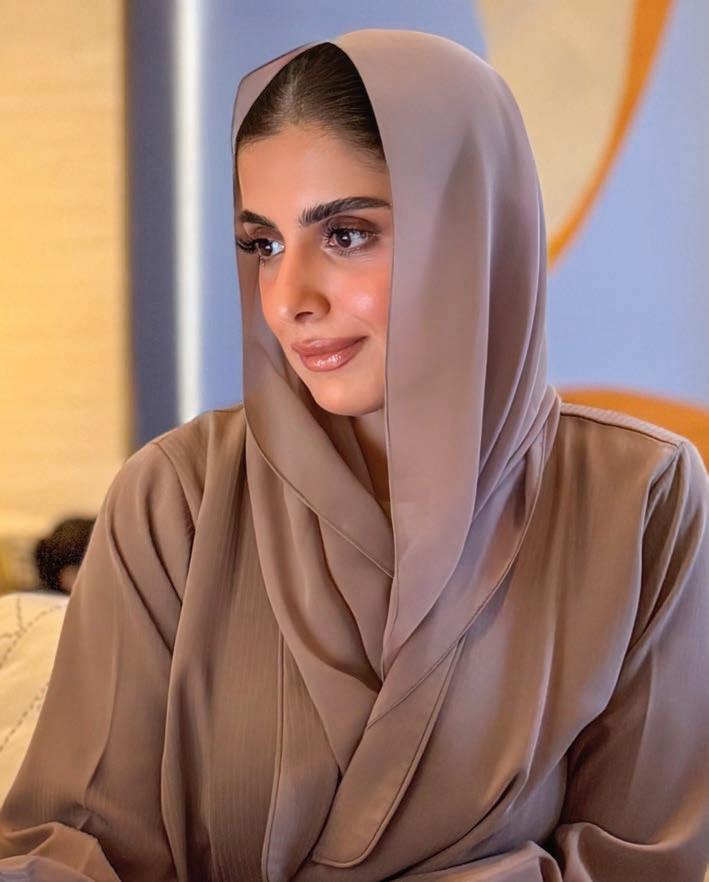
AM TO PM BEAUTY
Saudi Arabian Content Creator & Creative Director
Dana
Mahmood shares her morning to evening beauty routine
Talk us through your morning routine. I usually start my mornings with coffee; it’s the one thing I don’t skip. I like to keep the first 30 minutes just for that, sitting in a calm mood before checking emails or getting into anything work-related. It really sets the tone for my day. I try to stay hydrated as well, so water is always part of my morning. My skincare is quite simple and depends on how much time I have, but I like to keep it consistent. I usually go in with vitamin C and a moisturiser, something light and easy, and then I start my day. How does your evening routine differ? I don’t really have a fixed evening routine, mainly because my days are never the
same. Sometimes I’m still on set shooting and directing, other days I might have dinner with a friend or be out at an event. It really depends on the flow of the week. That said, I always try to have a balance. I try not to let work take over my entire day. And before sleep, I like to give myself about an hour to fully unwind and clear my mind, it helps me reset and have a better night. What are your go-to skincare products? I like to keep my skincare as simple as possible, with minimal steps. I focus on the essentials that I know work for me. My main go-to products are a cleanser, moisturiser, SPF in the morning, and vitamin C. These are the ones I try not to skip. Living in
Riyadh, hydration is key, so I always lean towards products that keep my skin feeling fresh and hydrated.
Are you a fan of masks? I love masks, it’s honestly one of my favourite things to do. I usually do a face mask once a week, just to give my skin a bit of extra care. But what I really enjoy more are eye patches, I use them more than once a week. It’s a small step, but it makes such a difference and feels like a quick reset.
How would you describe your approach to makeup? I really love glowy makeup. That fresh, dewy look is always what I go for. I like keeping it simple and natural, just enhancing my features rather than

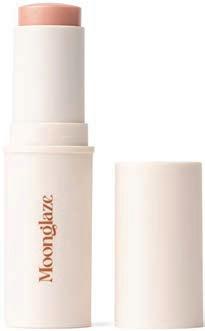
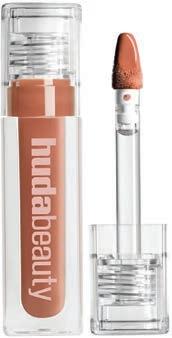
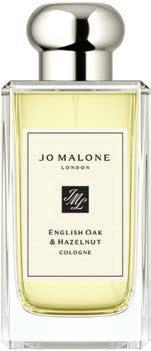
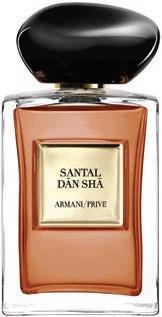
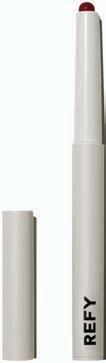
Clockwise from top left: Glazing Milk Dhs117 Rhode; Sheers! Highlighter Stick Dhs142 Moonglaze; Santal Dan Sha Dhs1,055
ARMANI/PRIVÉ; Blur Liner Dhs110 REFY; English Oak & Hazelnut Cologne Dhs580 Jo Malone London; Faux Filler Extra Shine Lip Gloss Dhs115 Huda Beauty
changing them. It starts with good hydration, because that’s what gives the glow and makes everything sit better on the skin. I’m not into heavy makeup; I prefer something light that feels effortless and looks clean. And even though I enjoy makeup, I don’t wear it every day. I prefer to keep it for when I need it or when I’m in the mood, rather than making it part of my everyday routine. What can always be found in your makeup bag? I like to keep my makeup bag quite minimal. I usually carry a few essentials like lip glosses from Huda Beauty, the Moonglaze highlighter, blushes from Rhode, the lip blur liner from REFY, and lip balms from Aesop. I focus more on
products that I can easily reapply throughout the day, especially anything for the lips. It’s less about having everything with me and more about keeping a few go-to pieces that keep me looking fresh.
Which fragrances are your current favourites? I’m really into warm, slightly rich scents. Right now, a few of my favourites are Jo Malone London English Oak & Hazelnut, Maison Francis Kurkdjian Baccarat Rouge 540, and Epic from Amouage. I like scents that feel a bit deep but still wearable, something that leaves a soft but noticeable impression. Talk us through your hair routine. My hair routine is quite simple, it’s more
about maintaining what I have. At home, I make sure to use a hair mask regularly, almost with every shower, just to keep it hydrated. Every 10 days or so, I like to go to a spa for a proper treatment. It helps refresh my hair and keeps it looking healthy. I also use leave-in products and a bit of oil, especially on the ends, to keep everything smooth.
What is the most unusual item in your makeup bag? Most of my handbags are quite small, so I keep everything in one pouch where I put my makeup and the rest of my essentials. The most unusual thing in it is probably a mini Tabasco. It sounds random, but I always have it with me.
A Streamlined SOLUTION
Ece Baltacı Mallak, the founder of the new skincare brand SADE, is determined to give women products that multitask just like them
WORDS:JESSICA MICHAULT
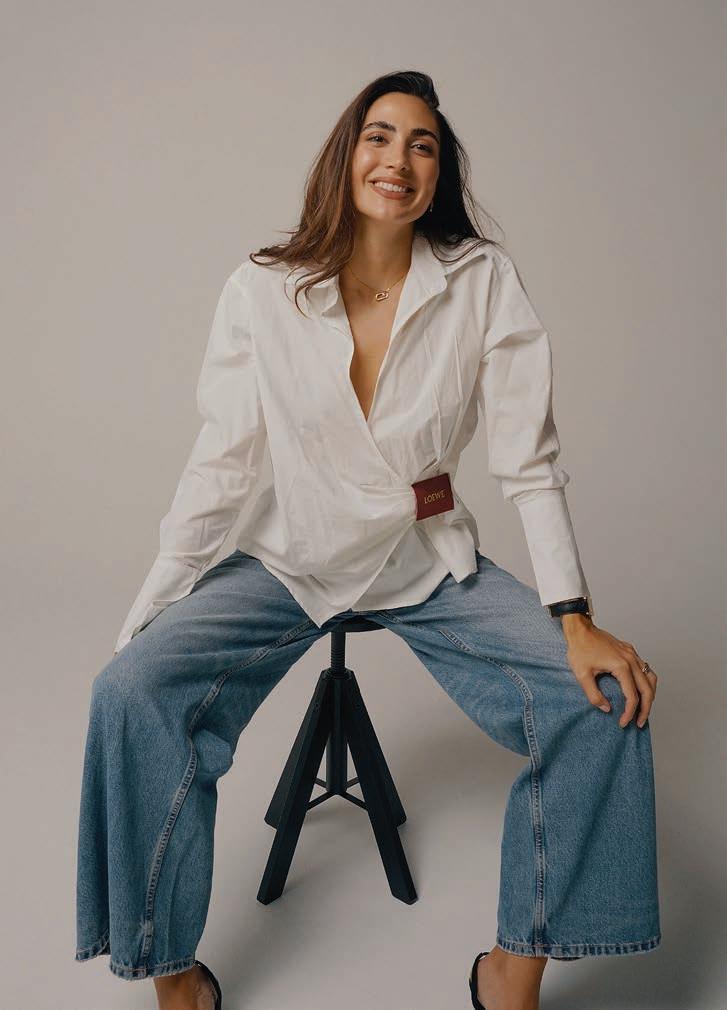
It was the first word I thought of,” says Ece Baltacı Mallak, the founder of SADE, about how she chose the name of her new Dubai-born clean skincare brand. “I am such an overthinker. I brainstormed for about a month and came up with several names. But it just kept sticking.” In Turkish, sade means simple, plain, pure – like coffee without sugar, or design stripped of ornament. In Arabic and Urdu, sada or sadeh describes something without additions. And in classical Arabic, translates to “echo” – a quiet reverberation that stays with you long after the moment has passed. “It is a word that travels across cultures,” shares Baltacı Mallak. “When you hear it, you don’t really think it’s Arabic, you don’t really think it’s Turkish. It feels international. That’s the feeling I wanted.”
International. It is a word that also suits the founder herself rather well. Born in Turkey, holding a degree in Industrial Engineering from Sabancı University in Istanbul, and a double master’s in International Management that sounds, on paper, like an itinerary rather than an education, from Northeastern University in Boston and Università Cattolica in Milan – Baltacı Mallak eventually landed in Dubai a little over four years ago. Before she launched SADE, she was leading brand and global growth at Kitopi, overseeing brand positioning and go-to-market strategy. And before that she held leadership roles at Kolektif House and was focused on international expansion work at Insider, as the company began to pick up steam. Suffice it to say, the woman knows how to build things. And yet. Strip all of that away – the MBA, the startup
credentials, the corporate architecture – and that is where the real genesis of SADE can be found. It is, like the best sorts of origin story, almost embarrassingly human.
“It came from a frustration more than anything super romantic,” recounts Baltacı Mallak, with a frankness that is immediately disarming. She was travelling constantly for work, jumping between climates, between flights, between time zones. And her skin was paying the price. But the real culprit, she realised, wasn’t the travel. “The real problem was all of this accumulated product on my shelf. Every morning, before I had even started my day, I was trying to figure out the regimen – what am I going to start with, what am I going to do next, how do I layer, which goes first, which goes last?” The endless options and pairings of products made having a practical on-the-go skincare routine frustratingly complex.
Baltacı Mallak found herself returning, again and again, to the image of her grandmother. A woman who kept her own daily beauty regimen to two or three products. A cleanser, a good SPF, a good moisturiser. “She was using only these three products,” the founder recalls. “So I kept coming back to it – why am I not doing this?” That memory was the starting point of an idea, but one that needed to be updated to the demands of modern-day living. Something the founder understood implicitly. “I want to be very clear. I am not romanticising that time, because I know women’s lives look very different now. My life is very different. I am the customer. The woman dealing with forty-five degrees heat, harsh air conditioning, long-haul flights.” So she decided to onboard that fundamental philosophy of “less is more” and strip it of nostalgia to rebuild the concept for the reality of 2026.
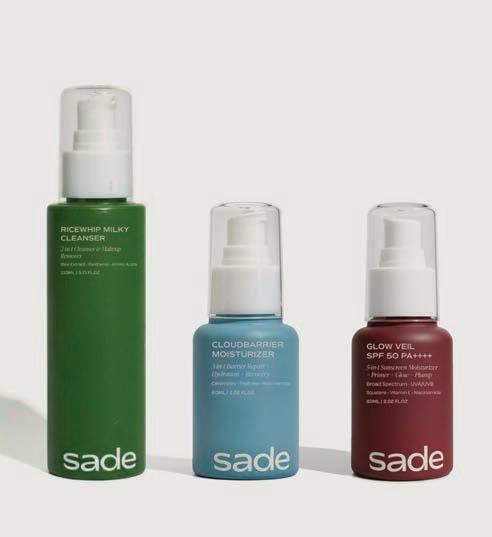
together. “I was using a primer, a hydrator, a good moisturiser, an SPF, and then a serum or something. That’s already five products in my hands before I had even started.” The multifunctionality, in other words, is not about doing less. It is about doing more in fewer steps. The hero product – the one that has Baltacı Mallak genuinely animated, is the one she describes as unlike anything else on the market – is a 5-in-1 SPF 50 PA++++ that delivers sun protection while functioning as a primer, a glow serum, a screen against blue light, and a daily moisturiser. “It gives this glow and this primer effect but it’s also SPF 50,” she explains. “I got into the concentration of environmental stress, blue screen, all of that, which is why we added the PA++++ effect. I am super proud of it.”
“I AM THE CUSTOMER. THE WOMAN DEALING WITH FORTY-FIVE DEGREES HEAT, HARSH AIR CONDITIONING, LONG-HAUL FLIGHTS”
That philosophy is where SADE gets genuinely interesting. Because what Baltacı Mallak has done is not simply propose to women fewer products. She has engineered each one to do the work of several – and that distinction, she is at pains to make clear, matters enormously.
“I want to be careful when you say three-in-one,” she says, leaning forward slightly. “Because you think – oh, like a men’s product, not good quality. No, it’s not that.” The three-in-one moisturiser, for instance, covers barrier repair, moisturising, and nourishing. It is not a shortcut. It is a formula – developed in close collaboration with partner laboratories in Turkey and Korea – that has been engineered to do what five products were previously failing to do
In the end, the gap she identified in the market, was never purely a skincare gap. “It was a life gap,” she says. “We needed a brand that understands this market, that thinks of this market, that thinks of what our skin actually needs. Because you’re not going to understand how harsh it can be in Dubai, when you move from forty-five degrees temperatures outside into an eighteen-degree air-conditioned office, if you haven’t lived it” SADE exists for that woman – the one navigating extreme climates, packed schedules, and the particular indignity of being handed yet another twelve-step beauty routine when what she actually needs is three products that genuinely work. “I am building SADE for that woman,” Baltacı Mallak says with conviction. The proof is already in the numbers, though she mentions them with the same understated confidence she brings to everything else. A 43 per cent repeat purchase rate in just her six months in business. A customer acquisition rate of around two per cent – meaning, people are telling other people, in real life, without being asked.
“I see an order for tonnes of the same product,” she says with a smile. “People come back for their friends, their moms, their sisters and I see a lot of follow-up orders.”
It is the specificity of what SADE aims to do that has garnered it such a strong traction right out of the gate. It has been designed for a specific woman, with a specific lifestyle, looking for a streamlined option for her skincare routine that will work as hard as they do. “I want a woman to find SADE and feel understood,” reflects the founder. “I want her to feel that someone finally built something with her actual life in mind – not a romanticised life, not the life she’s supposed to have, but the one she’s actually living.”
ALL ABOARD
Director Baz Luhrmann and his wife, the Oscar-winning costume designer Catherine Martin, have never really distinguished between a film set and a room you can inhabit. With Celia, their new private dining carriage aboard the British Pullman, that notion is abundantly clear. Named for a fictional West End actress gifted her own Pullman car in 1932 after playing Titania, the carriage unfolds like acts of a play: velvet curtains drawing back to reveal parquet floors, tri-coloured marquetry, pansies pressed into every surface, and a jewel-box ceiling that makes the English countryside rushing past the windows feel almost incidental. Theatrical, certainly. But then again – what’s the point of a journey without a little drama?
ABODE
Hit the road and…
– Try out London’s tastiest new haunts
– Head down to the Côte d’Azur
– Travel far while staying close to home
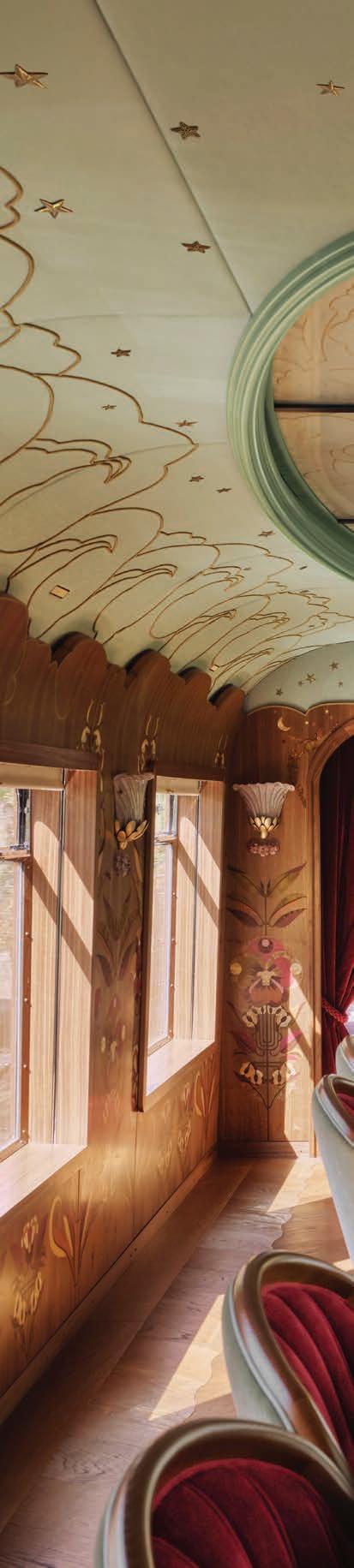
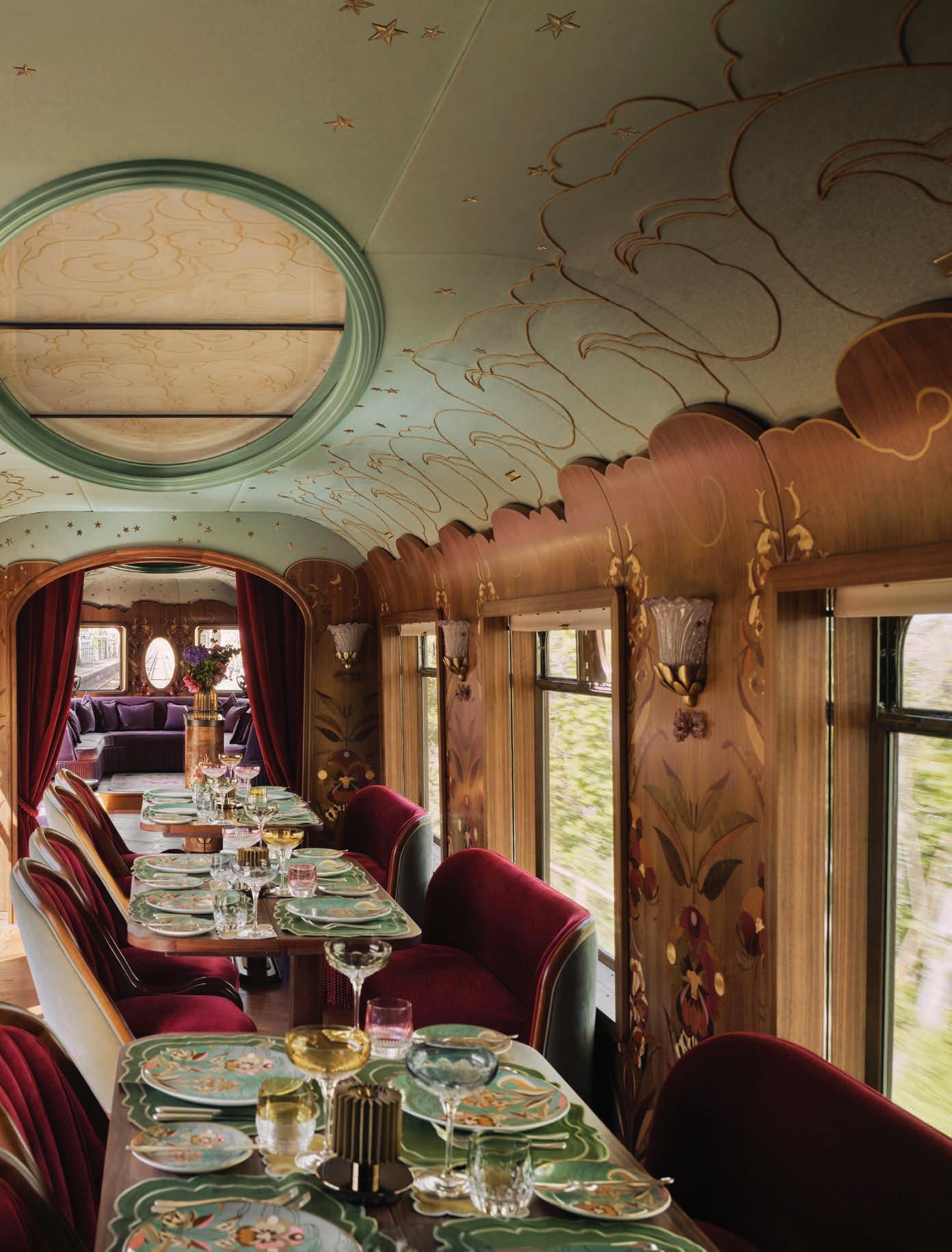
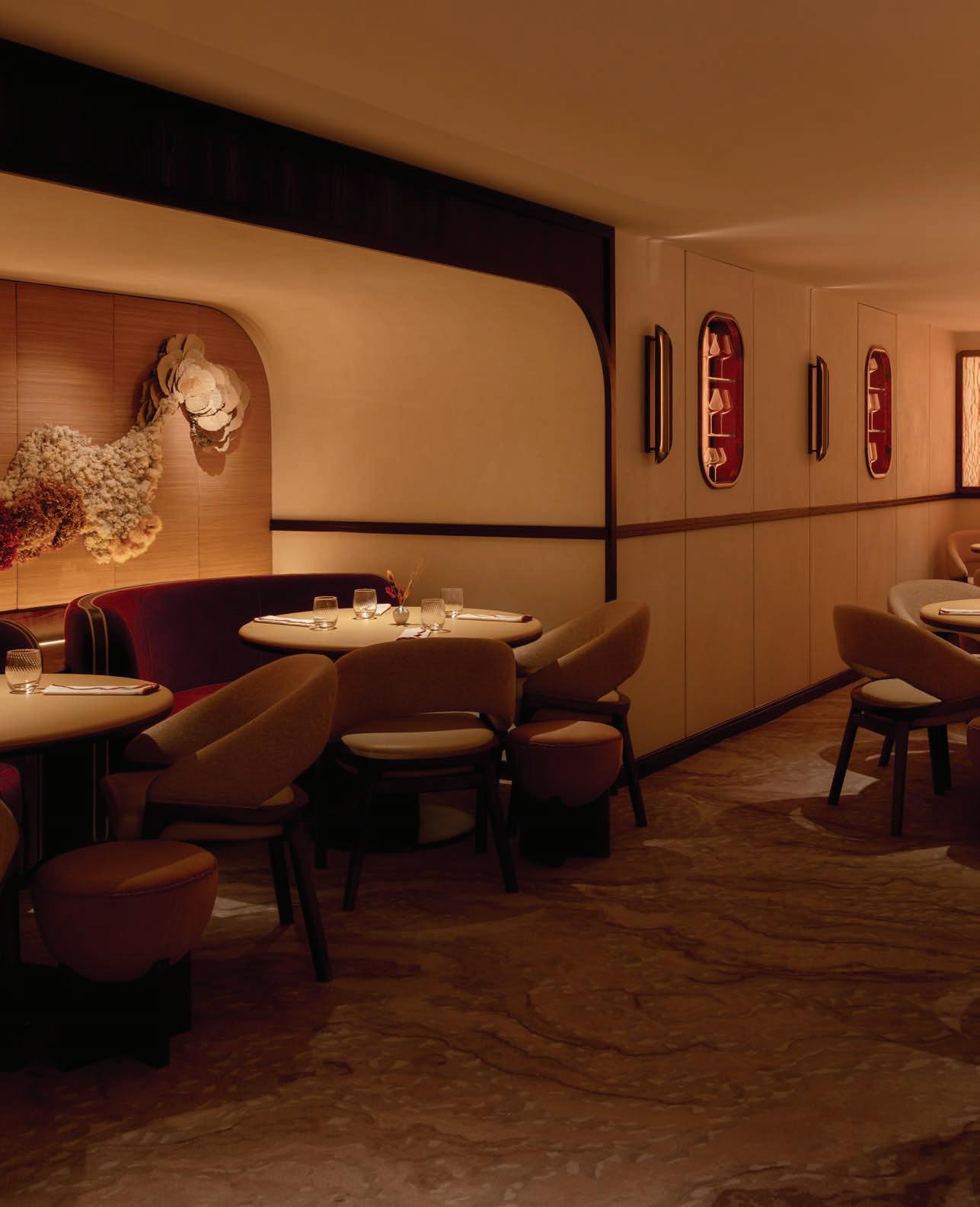
SAVOURING LONDON
Bonheur London
WORDS: MARYANNE PEACOCK
London’s restaurant scene has always moved quickly, but right now it feels like it’s having a real moment again, the kind where there’s genuine excitement around new openings rather than just another predictable launch with good lighting and a long PR list
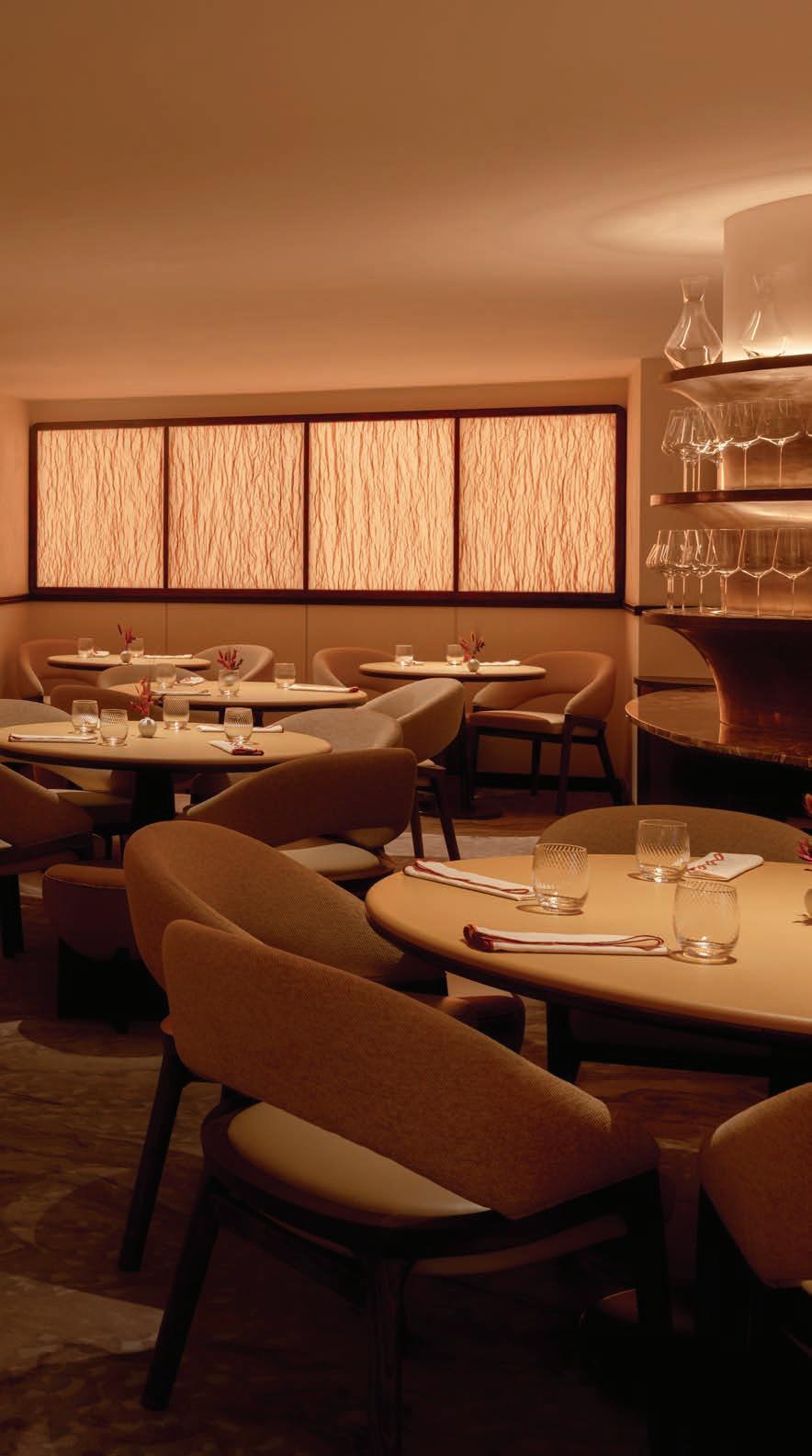
What’s interesting about the current London dining scene is that this new wave isn’t defined by one particular trend. Instead, it’s a mix of confident, personality-led concepts, chefs whipping up what they actually want to cook, and spaces that feel like they’ve been thought through properly, from menu to mood. If you’re in the British capital over the coming weeks (or planning a trip), these are the tables worth knowing about – and ideally booking ahead of everyone else.
MARTINOS
There’s something very appealing about restaurants that feel like they already have a point of view, and Martinos falls firmly into that category. It leans into that nostalgic, slightly retro Italian energy without feeling gimmicky, and the result is somewhere that feels both familiar and quietly cool. Expect proper comfort food, done well, in a space that works just as well for a long lunch as it does for a late, slightly chaotic dinner. martinoslondon.com
THE DOVER
Dover Street continues to cement itself as one of the most interesting pockets of London dining, and this latest opening only adds to that. This New York Italian style bar and restaurant is polished without being stiff, which is harder to achieve than it sounds, and there’s a confidence to both the menu and the room that makes it feel like it’s been part of the scene for years rather than weeks. thedoverrestaurant.com
FAT BADGER
Fat Badger is exactly the kind of opening London does so well – a little bit irreverent, slightly tongue-in-cheek, but ultimately backed up by very solid food. It doesn’t take itself too seriously, which is part of the appeal, but there’s enough substance here to ensure it’s not just a novelty. The kind of place you go to expecting a fun night and end up staying far longer than planned.
fatbadgerlondon.com
LEGADO
Legado brings a slightly different flavour to the current London landscape, with a menu that is rooted in heritage but presented in a way that feels very now. There’s a warmth to
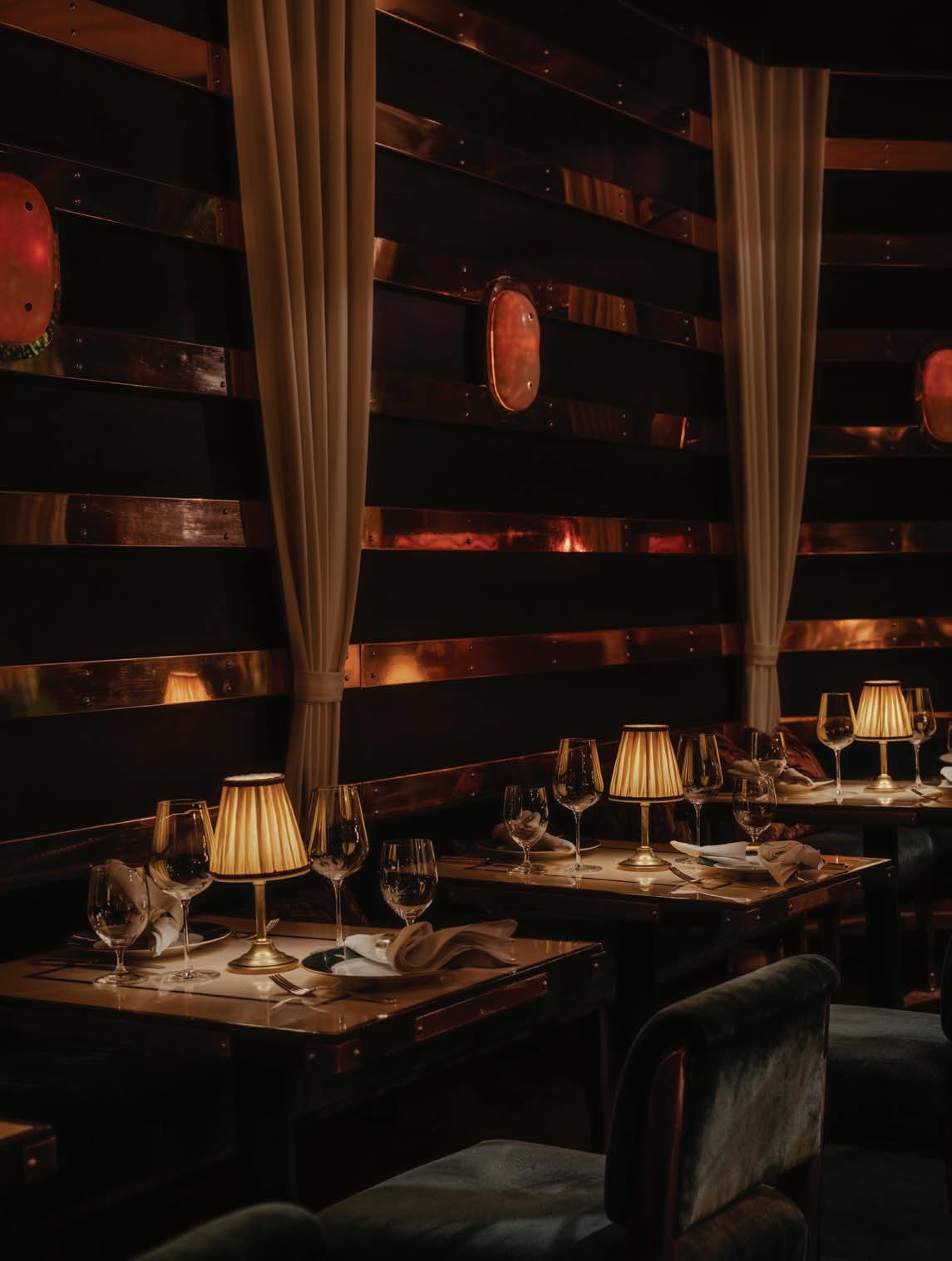
Cece’s
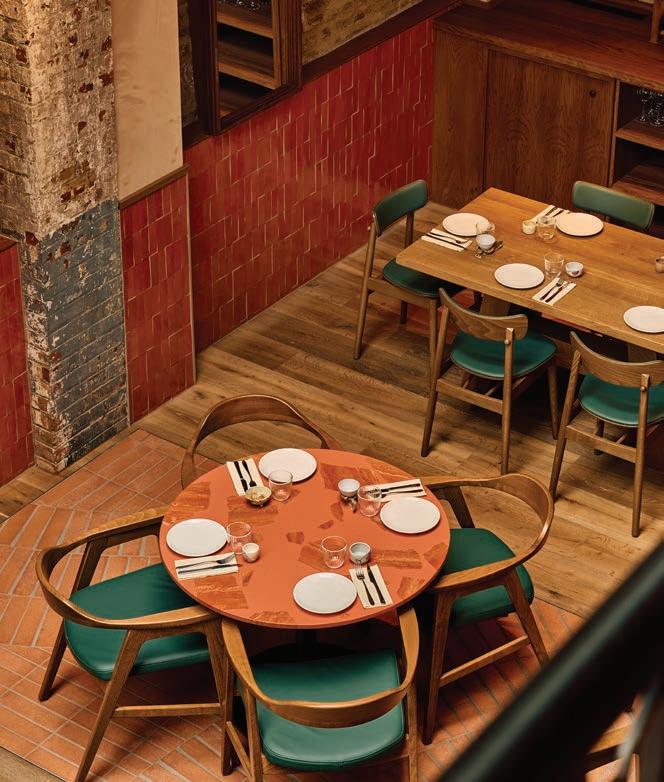
it, both in the cooking and the overall atmosphere, that makes it somewhere you want to return to, rather than just tick off a list. legadolondon.com
TEAL
The newly opened Teal is already generating the kind of quiet buzz that usually signals something worth paying attention to. It’s a refined, design-led space with a menu to match. One to have firmly on your radar, particularly if you like to be ahead of the curve. teallondon.com
BOTTARGA
Bottarga leans into a more Mediterranean sensibility, and it does so with confidence. There’s an ease to the menu that makes it feel effortless, even though it’s clearly anything but behind the scenes. It’s the kind of place that works equally well for a quick midweek dinner or a more indulgent, drawn-out evening. bottargalondon.com
MOTORINO
Pizza in London is a crowded space, but Motorino manages to cut through the noise by doing the basics exceptionally well. There’s no overcomplicating here, just
very good ingredients, well executed, and a menu that doesn’t try to reinvent the wheel. It’s the sort of place that quickly becomes a regular rather than a one-off visit. motorinopizza.com
CECE’S
Cece’s feels like it’s been designed with real intention, from the interiors through to the menu. It sits comfortably in that sweet spot between neighbourhood restaurant and destination dining, which is increasingly where London’s most interesting openings are landing. It’s stylish without being intimidating, and the food matches that energy perfectly. ceceslondon.com
BONHEUR
Bonheur brings a lighter, more playful energy to the current crop of openings. It’s chic without being overly polished, and there’s a sense that it doesn’t take itself too seriously – always a good sign. The menu follows suit, offering dishes that feel considered but still fun. bonheurlondon.com
LILIBET’S
Lilibet’s feels like a future favourite. It has that elusive quality of being both cosy and cool at the same time, which London diners are increasingly drawn to. It’s the sort of place that will quietly build a loyal following, rather than relying on initial hype. lilibetslondon.com
BURRO
And then there’s Burro, which has recently put out its shingle but already feels like one of the most exciting additions to the scene. It’s confident, it’s vibrant, and most importantly, the food is genuinely excellent. There’s an energy to the space that you can’t manufacture, and it’s exactly what makes people want to come back – and bring everyone they know with them. burrolondon.com
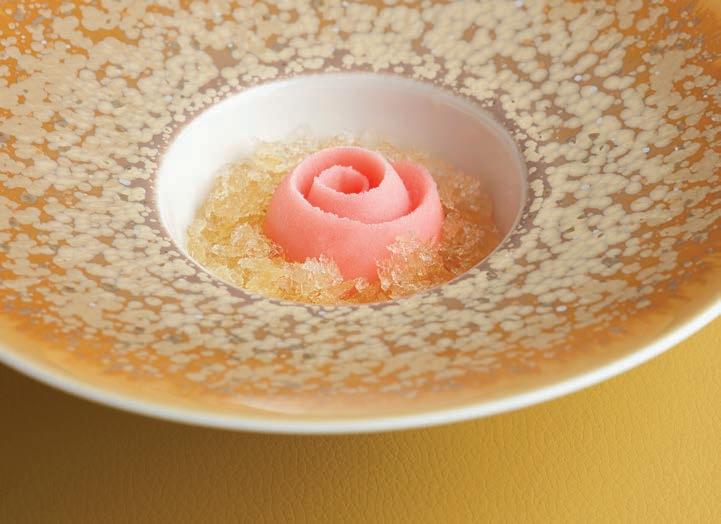
Bonheur London
Legado London
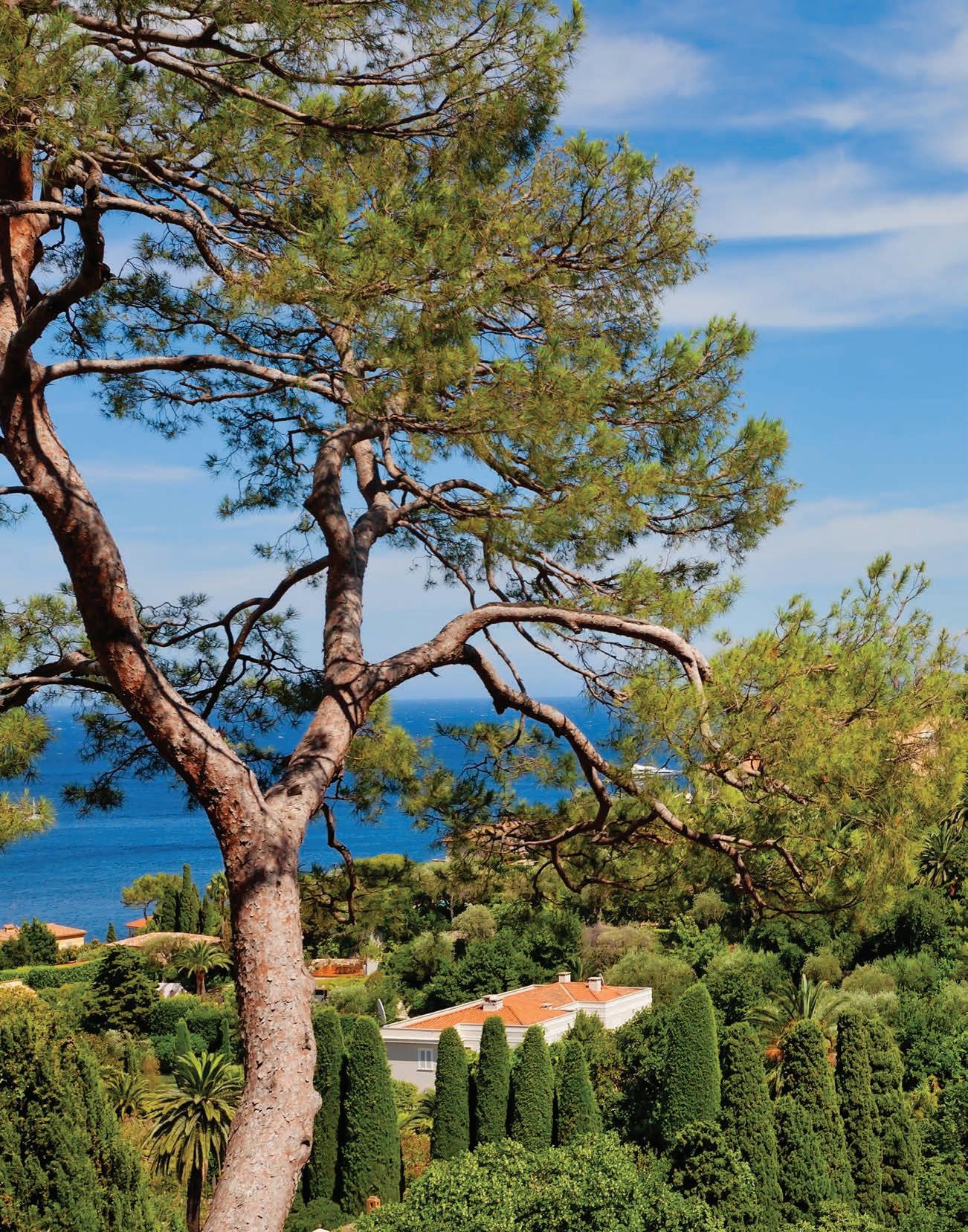
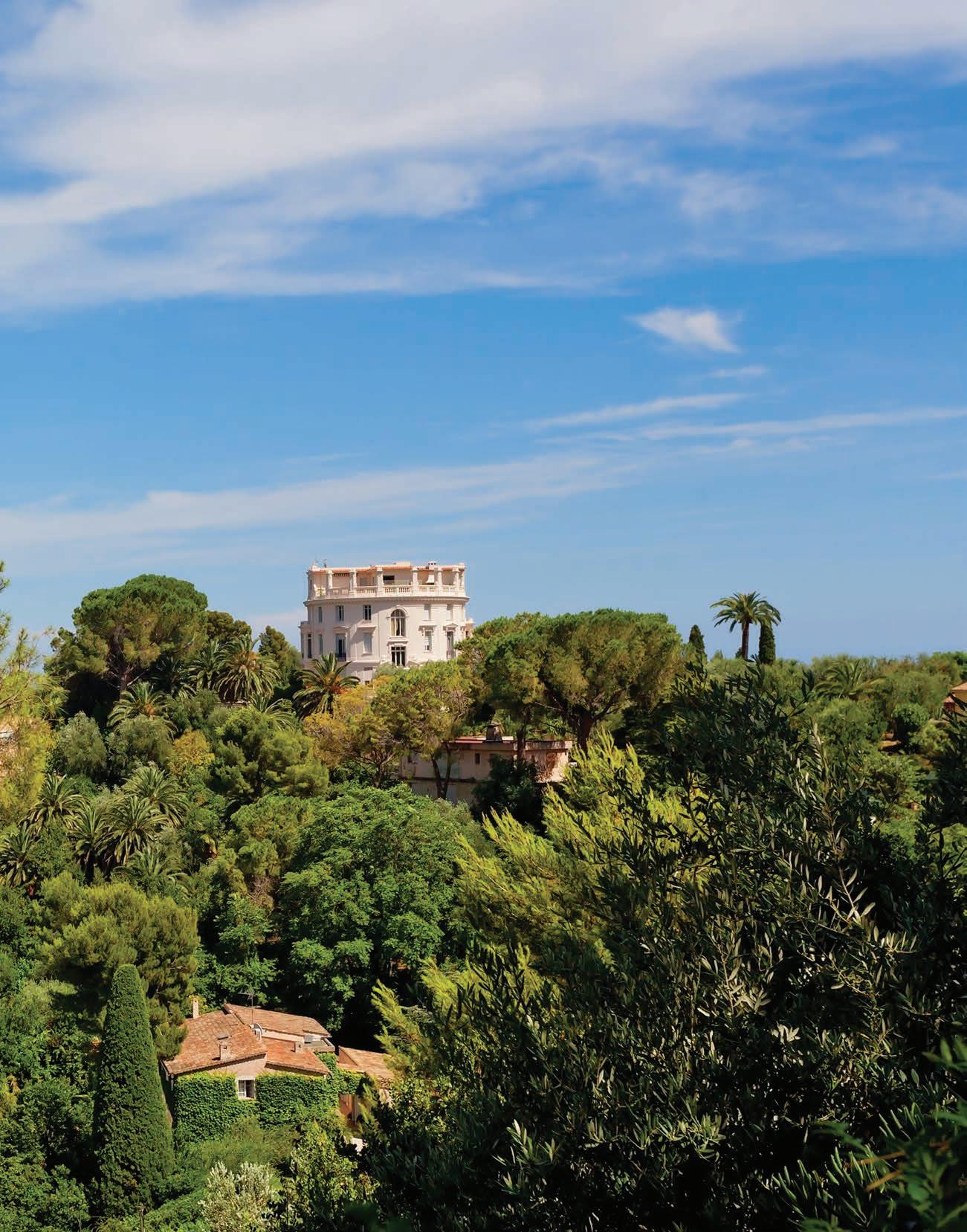
WORDS: MEGAN TOMOS
SOUTH BOUND
The ultimate insider guide to where Gulf royalty, celebrities and the fashion set summer on the Côte d’Azur
The South of France has long existed as a playground for the global elite, but increasingly, the French Riviera feels like an extension of Gulf luxury culture itself. Every summer, the likes of Monaco, Cannes, Saint-Tropez and Cap Ferrat transform into seasonal social capitals for the Gulf set, where regional royalty, founders, fashion insiders, athletes, and celebrities now shape its social rhythm as much as European aristocracy once did. From billionaires anchoring superyachts off Saint-Tropez to Arab stars dominating the red carpets of the Cannes Film Festival, the modern Riviera has become deeply intertwined with Middle Eastern luxury. Of course, the real art of the South of France lies in knowing where to go – the right beach club, the right dinner reservation, the places where celebrities disappear after Cannes premieres and Formula 1 drivers eat in Monaco. Here is your guide to doing the Côte d’Azur the Gulf way.
STAY
The Riviera’s grand hotels remain its true social infrastructure. Hôtel du Cap-Eden-Roc still reigns as the starriest address, where
the old glamour of the Côte d’Azur persists beneath parasol pines and white cabanas. During summer months, the hotel becomes a floating micro-city of actors, A-list wedding parties, royals, and discreet high-society. Yet beyond the star power, what keeps the Gulf set returning here is the rare combination of spectacle and privacy, a difficult balance the Riviera often struggles to master.
Meanwhile, Monaco continues to attract a younger Gulf crowd increasingly interested in contemporary glamour over Riviera nostalgia. Hôtel de Paris MonteCarlo remains central to that orbit, particularly during Formula 1 season, where fashion, motorsport, jewellery culture, and high society intersect in the hotel lobby. Still, insiders often retreat slightly beyond Monaco itself to the coveted Maybourne Riviera. Perched high above the coastline, the hotel feels suspended between sea and sky, with cinematic views stretching across the Mediterranean. The property has become one of the Riviera’s buzziest stays among Gulf travellers seeking ultra-private luxury away from the density of Monaco below.
In Saint-Tropez, the hotel scene has evolved into its own modern luxury spectacle. Cheval Blanc St-Tropez continues to
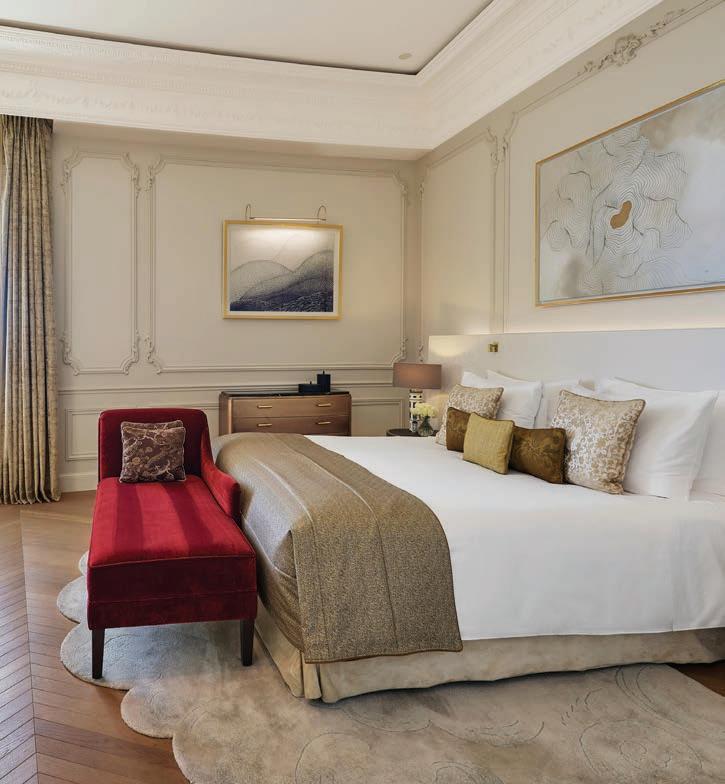
attract those seeking understated beachfront elegance and the kind of discreet service money cannot usually buy, while Château de la Messardière has become something of a White Lotus fantasy since it emerged that the next season of the hit show would be filmed at the sprawling palace hotel. Perched above the coastline, expect sweeping gardens, cinematic pools, vintage convertibles waiting at the entrance, expansive spa rituals, and a constant flow of impeccably dressed guests drifting toward golden-hour aperitifs. For travellers seeking old Riviera glamour in Cannes, Hôtel Barrière Le Majestic remains the definitive address synonymous with the Cannes Film Festival. During festival season, the hotel lobby transforms into a rotating tableau of couture gowns, Arab actors and fashion personalities now firmly woven into the fabric of Cannes culture. Along the Croisette, its legendary counterparts – Carlton Cannes and Hôtel Martinez – are also popular spots to experience the Riviera’s enduring oldHollywood glamour. Though, for something more intimate, many Gulf travellers are increasingly opting for private villas in nearby villages Èze, Cap Ferrat, and Mougins, where summer life unfolds behind private gates and among the olive trees and infinity pools rather than within starry hotel lobbies.
EAT
The rapid rise of Lebanese dining across the South of France is evident in the immense popularity of Em Sherif Monte-Carlo, which has become one of Monaco’s defining reservations. Crystal chandeliers and white ta-
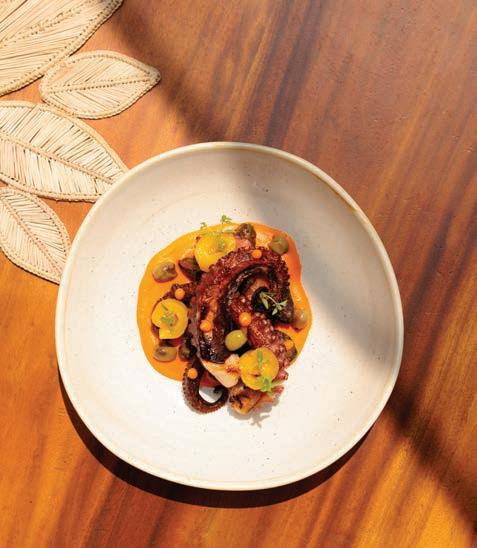
Hôtel de Paris Monte-Carlo
Nikki Beach
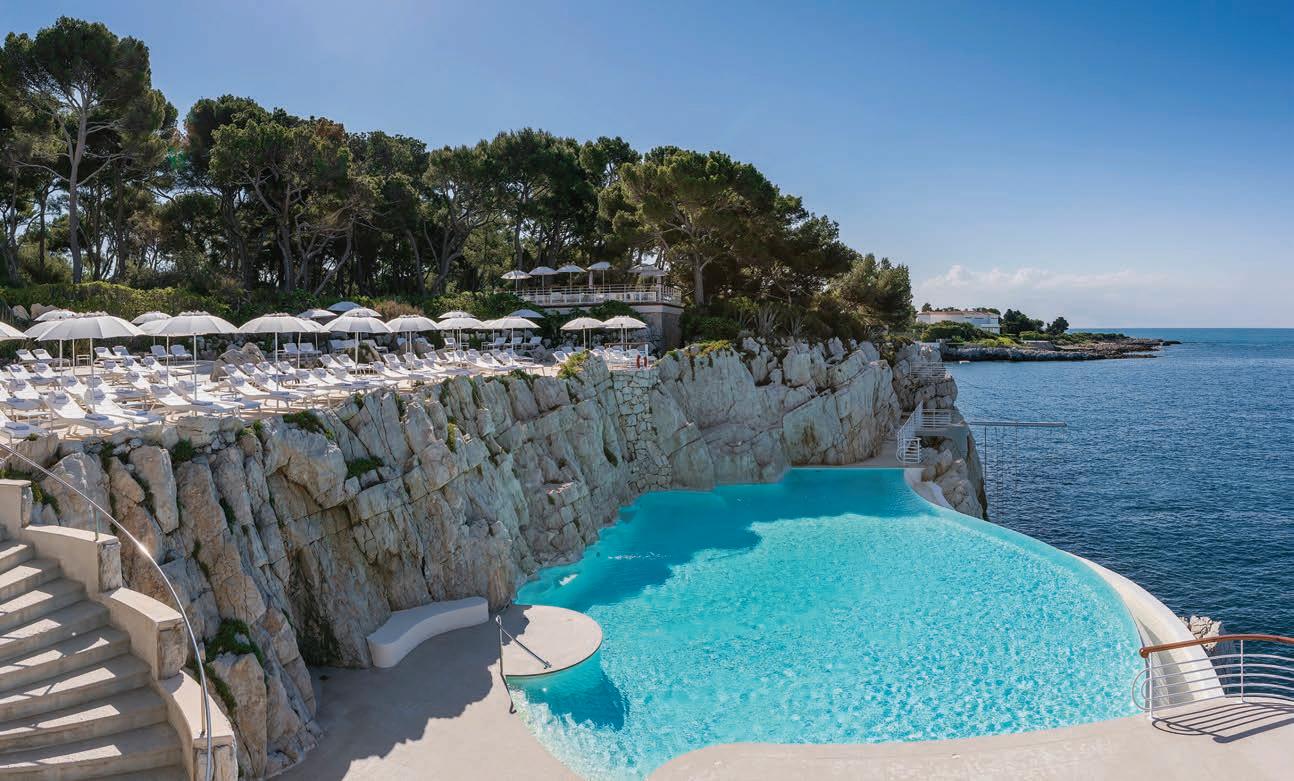
blecloths remain, but the atmosphere is alive with conversation spilling between tables, shared mezze arriving endlessly, and music swelling late into the evening. During summer, it feels like a Gulf social club temporarily relocated onto the Riviera. Elsewhere in Monaco, you can expect to rub shoulders with F1 drivers, tennis stars and Middle Eastern royalty at the usual fine dining circuit spanning Nobu, Amazonico and Coya.
For a spot of casual dining, the UAE’s homegrown coffee institution Saddle Café has become a genuine social phenomenon thanks to its outposts in Cannes and SaintTropez. On weekends, queues form outside as Gulf travellers, influencers, and Riviera regulars gather for iced Spanish lattes and matcha beneath the South of France sun. Thanks to social media, too, beachside institutions such as La Guérite continue to dominate lunching itineraries. Accessible only by boat, the restaurant remains one of the Riviera’s great daytime rituals gradually escalating into Dubai beach club-adjacent dancing by late afternoon.
In Saint-Tropez, Bagatelle remains one of the definitive see-and-be-seen spots, whilst, nearby, Shellona has become es-
pecially popular among fashion crowds and younger luxury travellers thanks to its bohemian aesthetic and Mykonos-meetsRiviera atmosphere. Though, for ultraexclusive beachside glamour, Nikki Beach Saint-Tropez continues to attract celebrities and influencers alike throughout the summer season, while Byblos Beach Ramatuelle channels the old-school glamour associated with the legendary Hôtel Byblos itself, long favoured by everyone from Brigitte Bardot to Leonardo DiCaprio. Back in Cannes, head to La Palme d’Or at Hôtel Martinez, Zuma Cannes or Rüya at Carlton Cannes for fine dining with a side of celeb spotting.
PLAY
To truly appreciate the modern Gulf Riviera, you have to understand that leisure here functions on its own rhythm. Days rarely begin before noon, lunch stretches for hours, and plans change constantly depending on yacht invitations, beach club tables, and who happens to be in town that week. Monaco and Cannes continue to operate as the Riviera’s preferred stage for luxury shopping. Appointments at the infa-
mous Carré d’Or unfold between high jewellery maisons and couture salons now deeply accustomed to Gulf clientele. Meanwhile, along Cannes’ iconic Croisette, designer boutiques and global luxury flagships spill out opposite beachfront hotels.
Yachting culture, too, remains central. Chartering a boat for the day, whether around Cap Ferrat, the Lerins Islands, or Saint-Tropez, has become about mobility, privacy, and escaping the Riviera crowds entirely. Many Gulf families now structure entire holidays around life at sea, moving between beach clubs, hidden coves, and waterfront restaurants by tender. For wellnessfocused travellers, spa treatments at the Guerlain Spa at Hôtel Barrière Le Majestic Cannes, Thermes Marins Monte-Carlo and Four Seasons Cap-Ferrat Spa have become summer hotspots. And of course, nightlife still matters. After dark in Saint-Tropez, evenings often begin with sunset dinners at Loulou Ramatuelle or Casa Amor before moving toward the legendary Les Caves du Roy at Hôtel Byblos. Over in Cannes, Bâoli Cannes remains the Riviera’s defining latenight institution, drawing actors, fashion executives and Arab stars in equal doses.
Hôtel du Cap-Eden-Roc
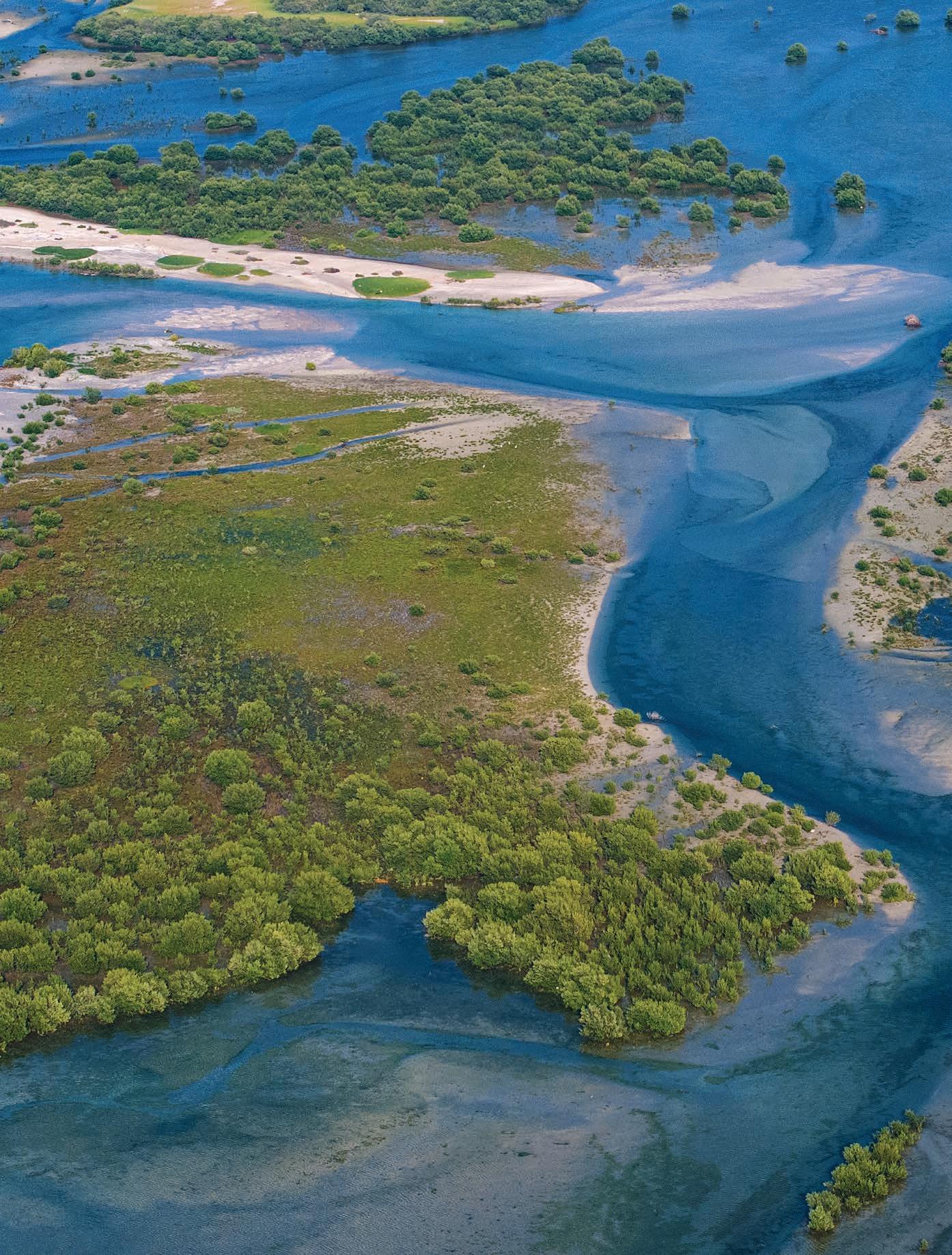
A World Apart
Overwater villas, mangrove-lined coastlines, and a slower pace of living – Anantara Mina Ras Al Khaimah Resort is quietly reshaping the idea of a UAE staycation and making a strong case for relaxing closer to home
WORDS: CAMILLE MACAWILI
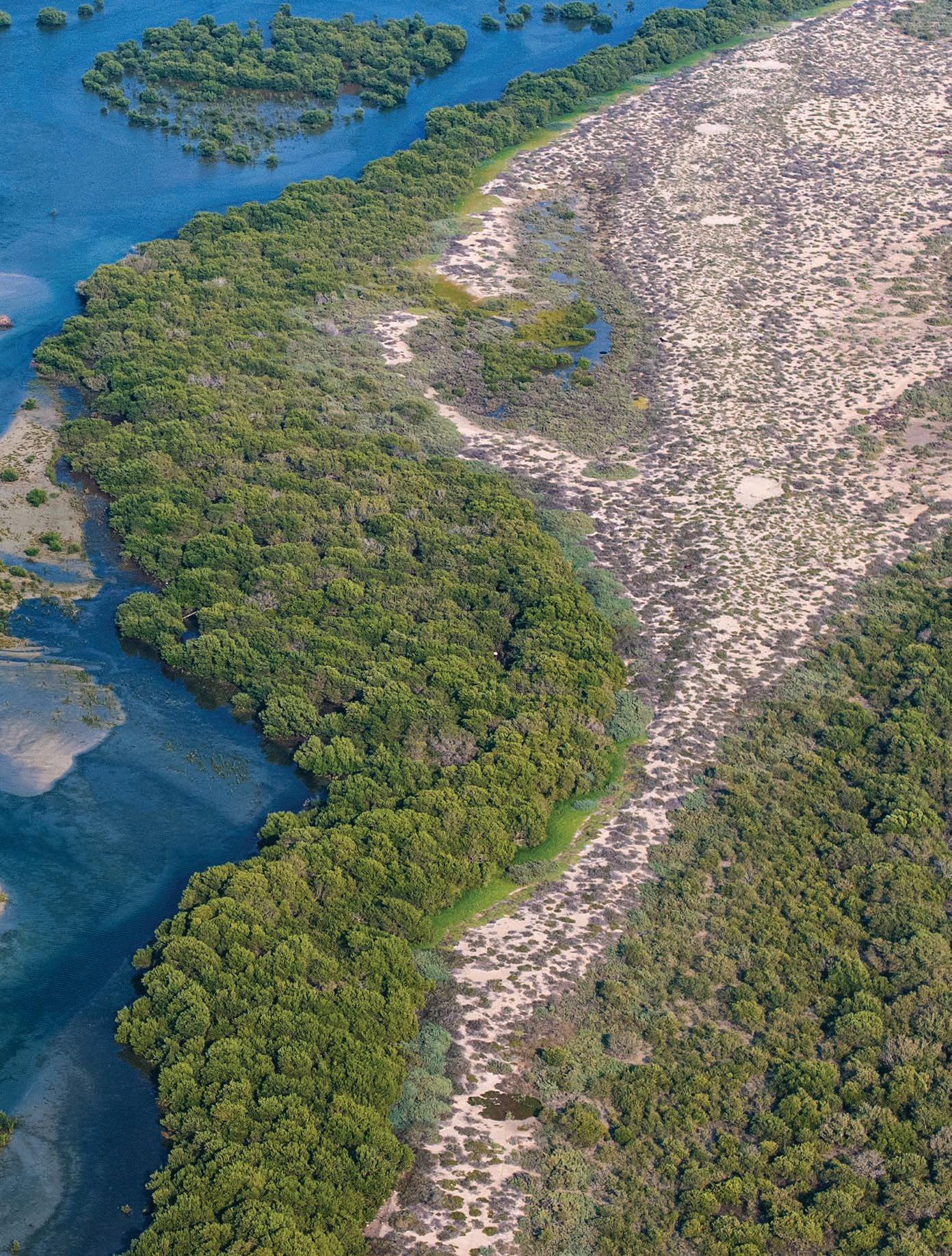
Under the current circumstances, the prospect of long-haul travel felt more exhausting than restorative. When the assignment came to review a property within the Emirates, my first reaction was hesitation: “How could another staycation truly feel different from all the ones I’ve experienced when the formula is often the same?” Still, there was a growing need to step away where my mental space longed for a change in rhythm, without the logistical fatigue of dealing with airport queues, transfers, and the load that now seems to come with international travel.
The ability to leave Dubai at lunchtime and feel entirely removed from its intensity by mid-afternoon feels quietly luxurious in a way that resonates deeply at the moment – close enough to reach in under two hours yet far enough to feel unavailable and switched off. Ras Al Khaimah has increasingly become that escape for residents seeking distance without inconvenience.
Just over an hour from Dubai, Anantara Mina Ras Al Khaimah Resort delivers this kind of emotional lightness as soon as you enter the lobby. The resort unfolds quietly against the coastline, framed by protected mangroves teeming with migratory flamingos and herons and open water. The architecture is softened by earthy neutrals, natural textures, and filtered light.
Located on a private peninsula, the luxury property has gained attention for introducing the UAE’s first overwater villas, a local interpretation of the Maldivian resort model, where you can watch sea turtles gliding below your private deck or enjoy an outdoor shower in privacy. Yet what stays with you is not only the novelty but also the atmosphere. From the breathtaking scenery to that signature Anantara hospitality, the appeal also rests on the nuanced details. Even during a near-full occupancy weekend, there was a sense of ease and a retained feeling of spaciousness that feels exclusive, which other hotels struggle to maintain.
The rooms lean into the same measured design language Anantara does so well. Nestled amidst nature, the interior offers a blend of warm woods, linen tones, woven textures, and wide terraces that create spaces that feel calming rather than overtly decorative. Elsewhere, the idyllic haven reveals itself slowly over the course of a weekend stay. Breakfast stretches naturally into
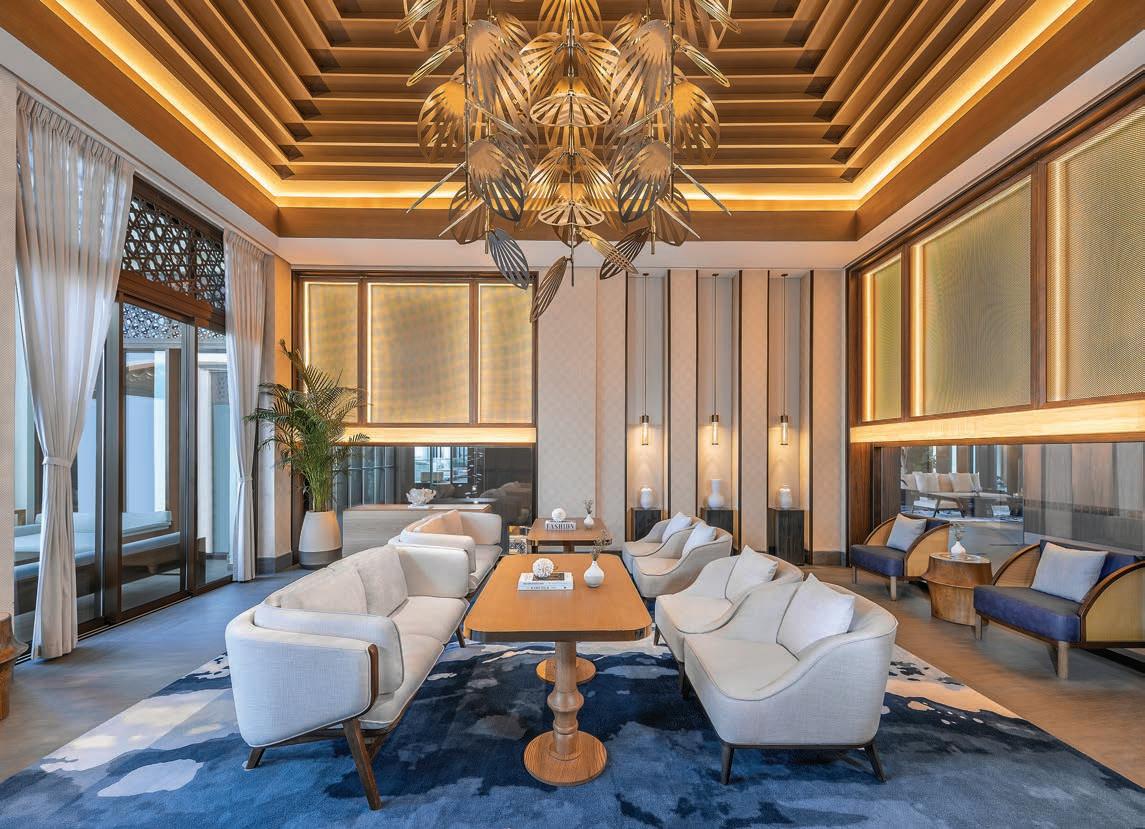
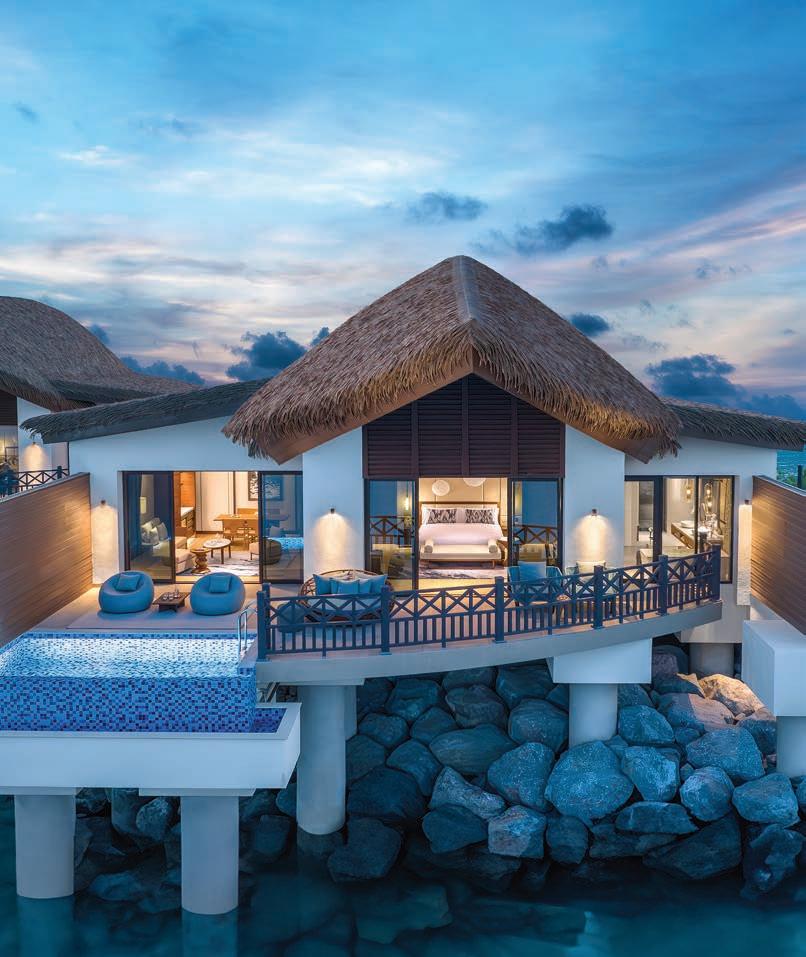
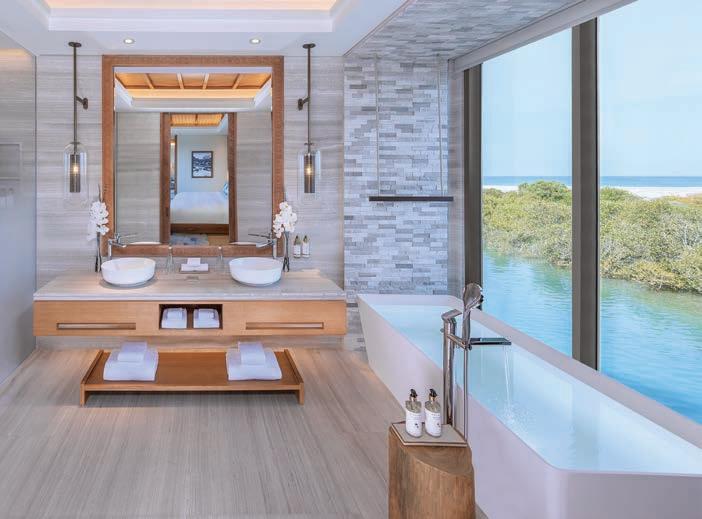
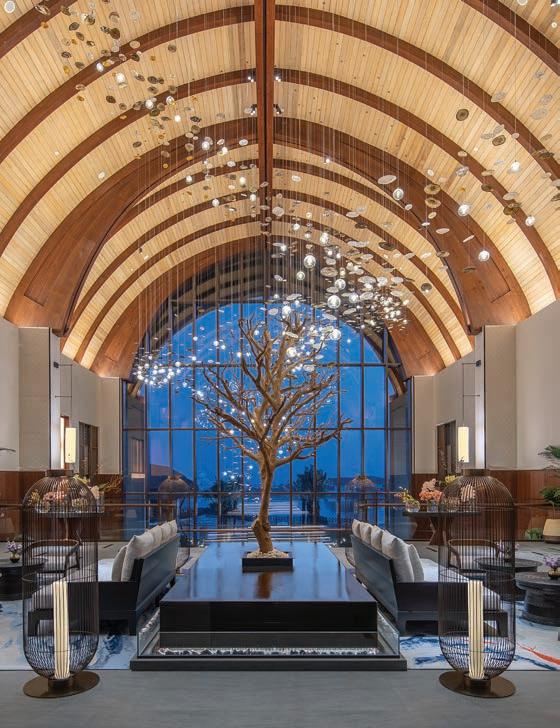
late mornings overlooking the water, particularly if you opt for the floating in-villa breakfast, as I did. Afternoons move a little slower between spa treatments and wellness sessions that leave you recalibrated, leisurely lounging by the pool, and long walks along the coastline boasting uninterrupted sunset views. Evenings unfold at Beach House, a Mediterraneaninspired oceanfront dining, which draws in guests craving grilled seafood, meats, and live entertainment beneath the moonlight, or at Mekong, which leans into comforting Asian cuisine such as Thai, Vietnamese, and Chinese classics, served in a more intimate setting that’s not overly formal.
Beyond the resort, Ras Al Khaimah continues to make a case as the emirate’s most nature-driven destination. Guests can also book separate experiences that lean into nature and heritage – kayaking through lush mangroves, traditional pearl diving, or tackling the rugged peaks that end with gourmet picnics high above Jebel Jais. What Anantara understands especially well is the value of atmosphere. The service is attentive without becoming intrusive, and perhaps that is the property’s greatest success. Ultimately, the draw here isn’t just the novelty of the Maldivian-style architecture – a stay at Anantara Mina Ras Al Khaimah Resort is a masterclass in quietude, offering a rare brand of hospitality that doesn’t just host you, but restores you and creates enough space for you to properly switch off. If the goal is to find a staycation that feels like a true departure, this is it.
Previous spread: Anantara Mina Al Arab Ras Al Khaimah Resort, mangrove aerial view; Left page: Restaurant lobby and lounge; Above (from top): Guest room Peninsula sea view pool villa exterior and bathroom; Top right: Lobby
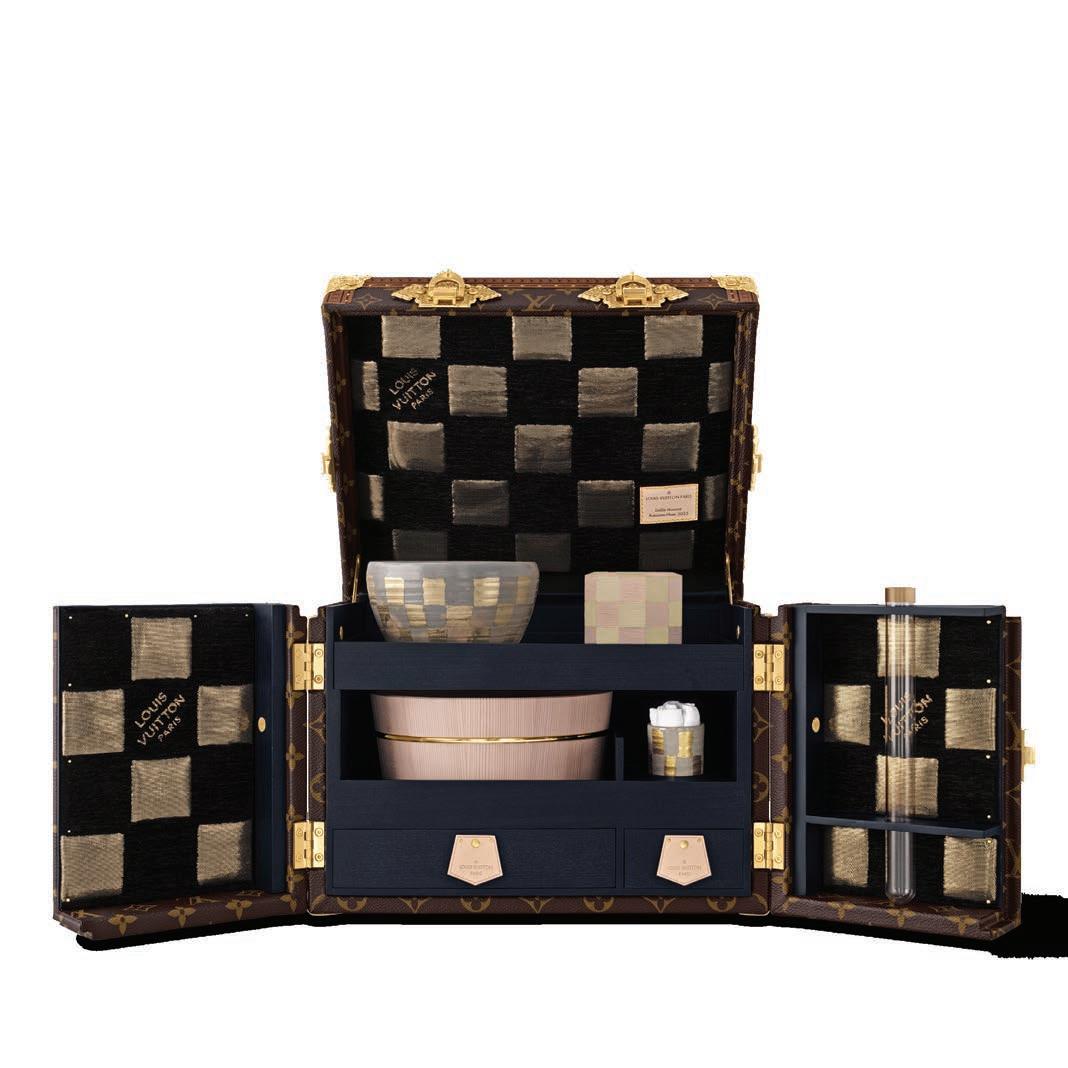
GREEN WITH ENVY
Want to take your passion for matcha on the road? Designers Pharrell Williams and Nigö have teamed up to give you the tools to do so with their new Malle Cérémonie Matcha trunk for Louis Vuitton. Kitted out with everything from the tea bowl, kensui, tea caddy, and chasen, to the chashaku, chakin, chakin holder, and fukusa, the trunk is a testament to making time for the things we cherish.
In Design With

Inspiring conversations with the creators shaping the future. A podcast by identity

KIDS GO FREE
This summer, little ones stay, play and dine on us.
Your Experience Includes

•Yas Theme park access
(Ferrari World Yas Island, Abu Dhabi, Yas Waterworld Yas Island, Abu Dhabi, Warner Bros. World™ Yas Island, Abu Dhabi and SeaWorld® Yas Island, Abu Dhabi) up to four tickets per room, per night
•Complimentary upgrade to lunch or dinner
•Complimentary breakfast
•Complimentary dining for kids under 12 years old
• 25% off on dining
• 20% off on spa