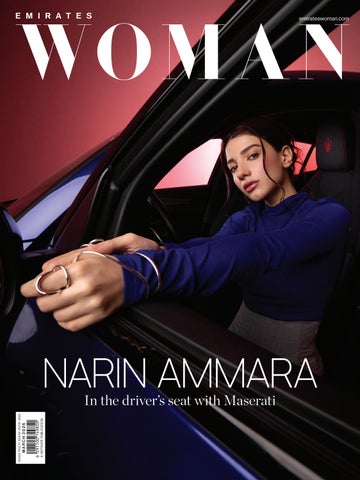
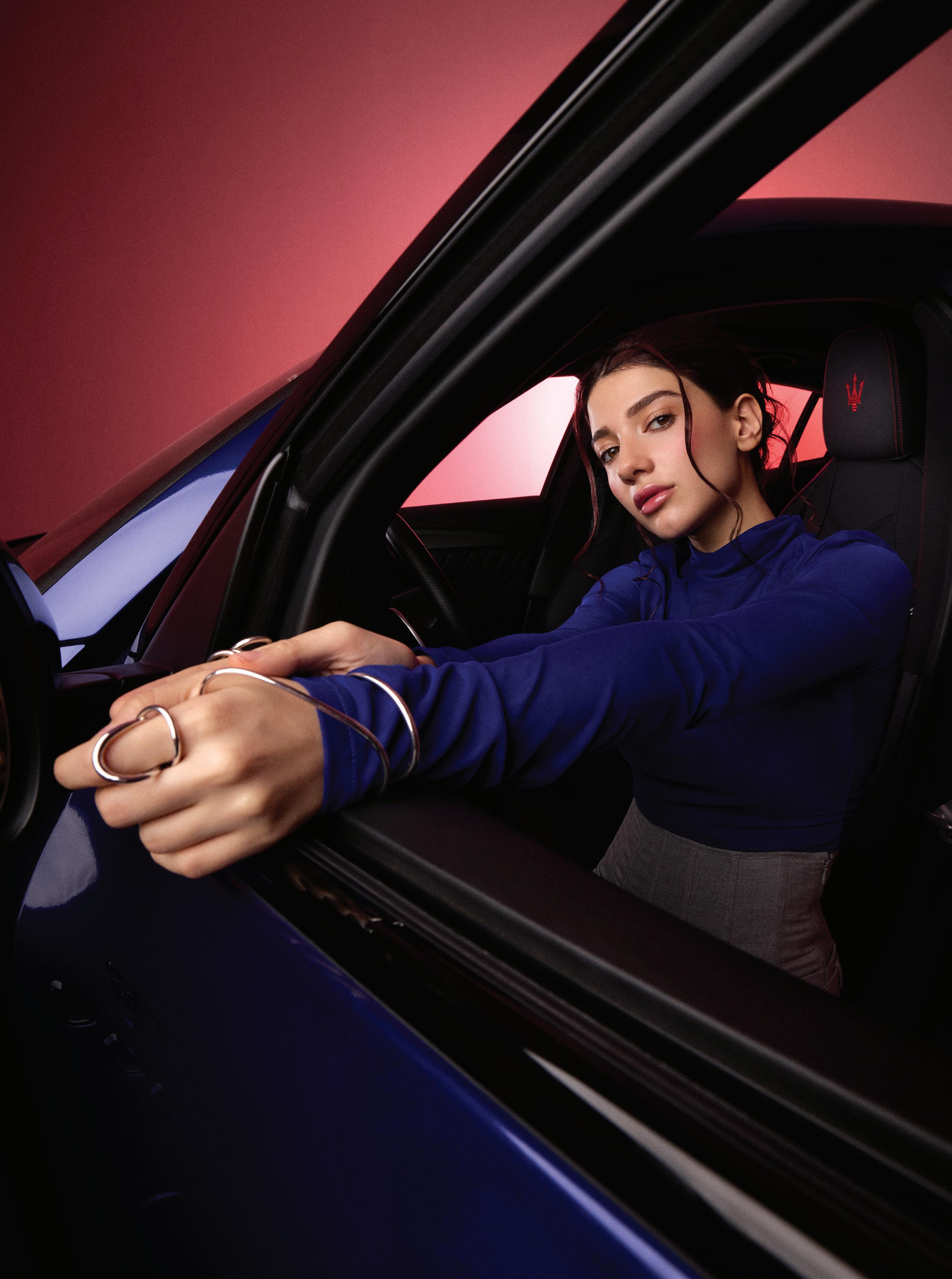
NARIN AMMARA
In the driver’s seat with Maserati


EDITOR-IN-CHIEF
Obaid Humaid Al Tayer
MANAGING PARTNER AND GROUP EDITOR Ian Fairservice
CHIEF COMMERCIAL OFFICER Anthony Milne
GROUP CONTENT DIRECTOR Thomas Woodgate
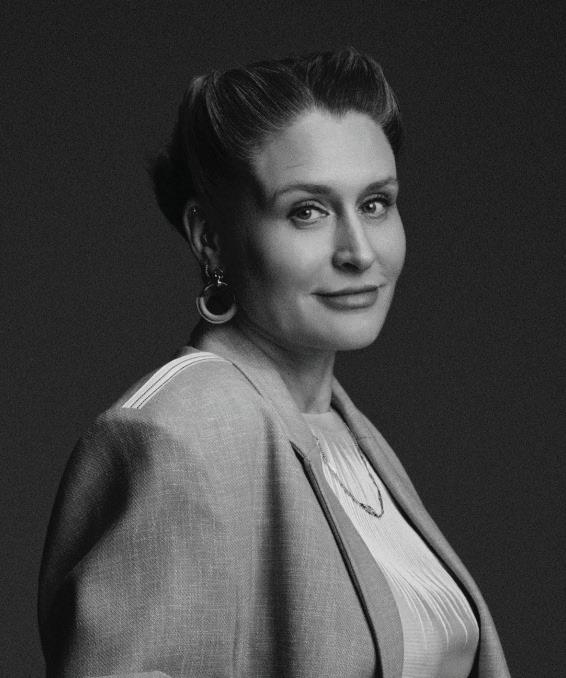
SENIOR EDITOR Jessica Michault jessica.michault@motivate.ae
SENIOR ART DIRECTOR Olga Petroff
SENIOR REPORTER Aminath Ifasa
FASHION EDITOR Camille Macawili DESIGNER Vibha Monteiro
EDITORIAL ASSISTANT Londresa Flores
GENERAL MANAGER PRODUCTION Sunil Kumar PRODUCTION MANAGER Binu Purandaran ASSISTANT PRODUCTION MANAGER Venita Pinto
GROUP SALES MANAGER
Chaitali Khimji chaitali.khimji@motivate.ae SALES MANAGER
Sarah Farhat sarah.farhat@motivate.ae
WEB DEVELOPER Firoz Kaladi
CONTRIBUTORS
Alice Holtham-Pargin, Anshika Yadav, Ekaterina Shirshova, Lindsay Judge, Mark Mathew, Morin Oluwole, Naomi Chadderton
HEAD OFFICE
Media One Tower, Dubai Media City, PO Box 2331, Dubai, UAE, Tel: (+971) 4 4273000, Fax: (+971) 4 4282261, E-mail: motivate@motivate.ae
DUBAI MEDIA CITY SD 2-94, 2nd Floor, Building 2, Dubai, UAE, Tel: (+971) 4 390 3550, Fax: (+971) 4 390 4845
ABU DHABI PO Box 43072, UAE, Tel: (+971) 2 677 2005, Fax: (+971) 2 677 0124, E-mail: motivate-adh@motivate.ae
SAUDI ARABIA Regus Offices No. 455 - 456, 4th Floor, Hamad Tower, King Fahad Road, Al Olaya, Riyadh, Kingdom of Saudi Arabia, Tel: (+966) 11 834 3595 / (+966) 11 834 3596, E-mail: motivate@motivate.ae
LONDON Acre House, 11/15 William Road, London NW1 3ER, UK, E-mail: motivateuk@motivate.ae
EDITOR’S LETTER
The Next Wave
Igotta say – I love this issue. I had no clue that when I came up with the idea of creating a Youthquake issue that I would be so energised, so hopeful and feeling generally incredibly positive about the future by the time I finished putting the issue to bed. Quite frankly, I was bowled over by all of the incredibly young women that are profiled in this issue, who have accomplished so much in so little time.
Look no further than our impressive cover star Narin Ammara, better known by her online handle Narins Beauty, who has amassed a following of 50 million people across all her social media platforms. At just 25 years old, she is entering an important new chapter in her life, putting a career in content creation in her rear view mirror as she becomes a budding mogul with the recent launch of her highly successful signature beauty brand. In her cover story, Full Throttle (page 34) she talks about dealing with fear, impostor syndrome and how the support of her community, her family and her new husband, have helped her realise her dreams. For this issue I wanted to look at the idea of Youthquake from a number of differing perspectives. In Paying It Forward (page 78), we
asked a selection of female leaders in the UAE to nominate young women they feel deserved their flowers. The responses were both heartwarming and inspiring. Writer Alice Holtham-Pargin came up with an impressive round up of women taking charge in male dominated spaces (some of whom are still in their teens) for her stirring feature Rewriting the Rules (page 86). And in the fashion shoot Nouvelle Vague (page 48) we shine a spotlight on looks from the debut collections of a number of designers taking up residency in new houses.
The women featured in this magazine are shaping how the world will operate for decades to come. They are unapologetically ambitious, unabashedly authentic and undeniably original. They are our sister, our daughters, and our friends – and thanks to them the future has never looked brighter.
Enjoy the issue!
jessica.michault@motivate.ae

LIFE SAVER
If I am being totally honest, I’ll go to any movie that stars Ryan Gosling. But a film where he is sent on a solo mission to save the world and ends up with a rock shaped side-kick… it might be called Project Hail Mary…but to me, the success of this project is a sure thing.
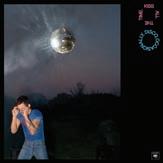
THE LAST DAYS OF DISCO
After three years Harry Styles launches his fourth album this month, titled Kiss All The Time. Disco,Occasionally the record looks to be going with an “if it ain't broke don’t fix it” approach as it’s being executive produced by Kid Harpoon, Styles’ long-time collaborator. If anyone can bring disco back to the top of the charts, it’s Styles.

DOCTOR’S ORDERS
Patricia Cornwell’s Kay Scarpetta series counts 29 books that have been published in over 120 countries and sold over 100 million copies. And, as of March 11, Oscar winner Nicole Kidman will embody the famed fictional forensic pathologist in a new series on Prime Video. I will be glued to my screen trying to solve the mystery before Scarpetta.
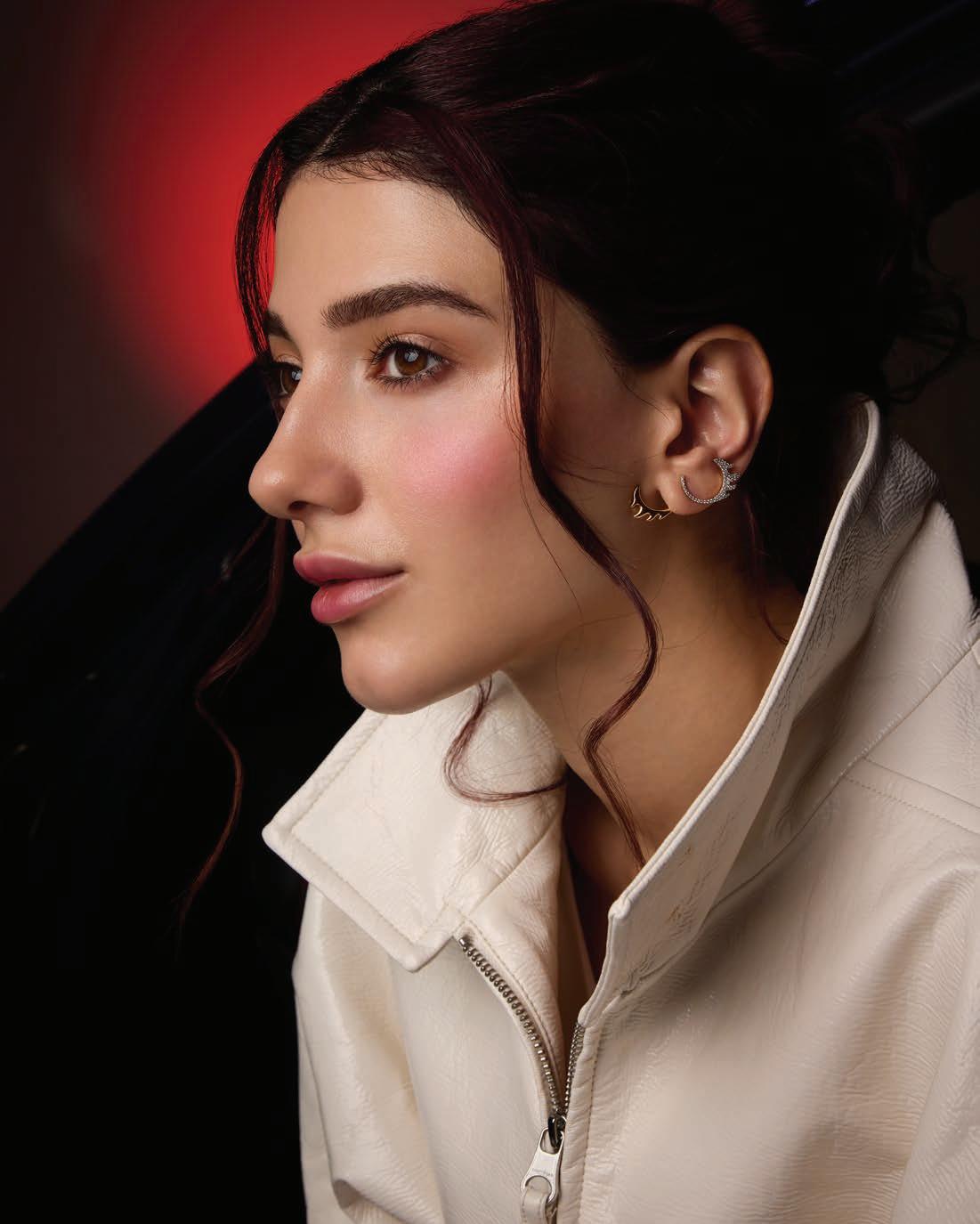
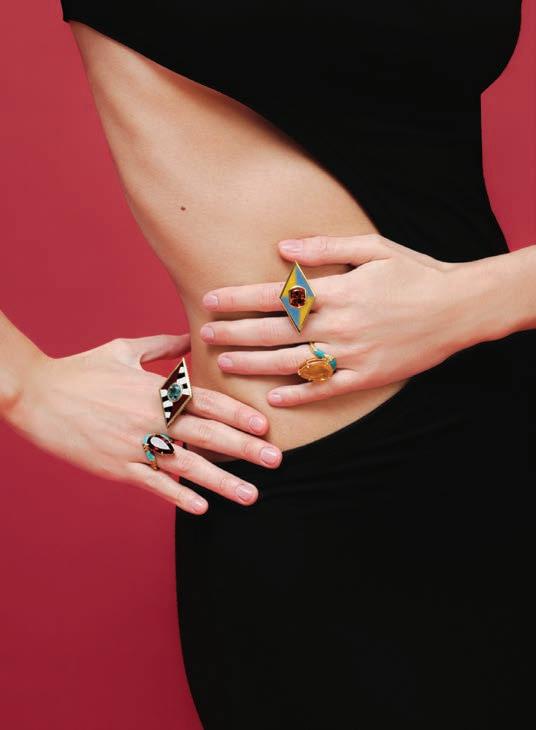
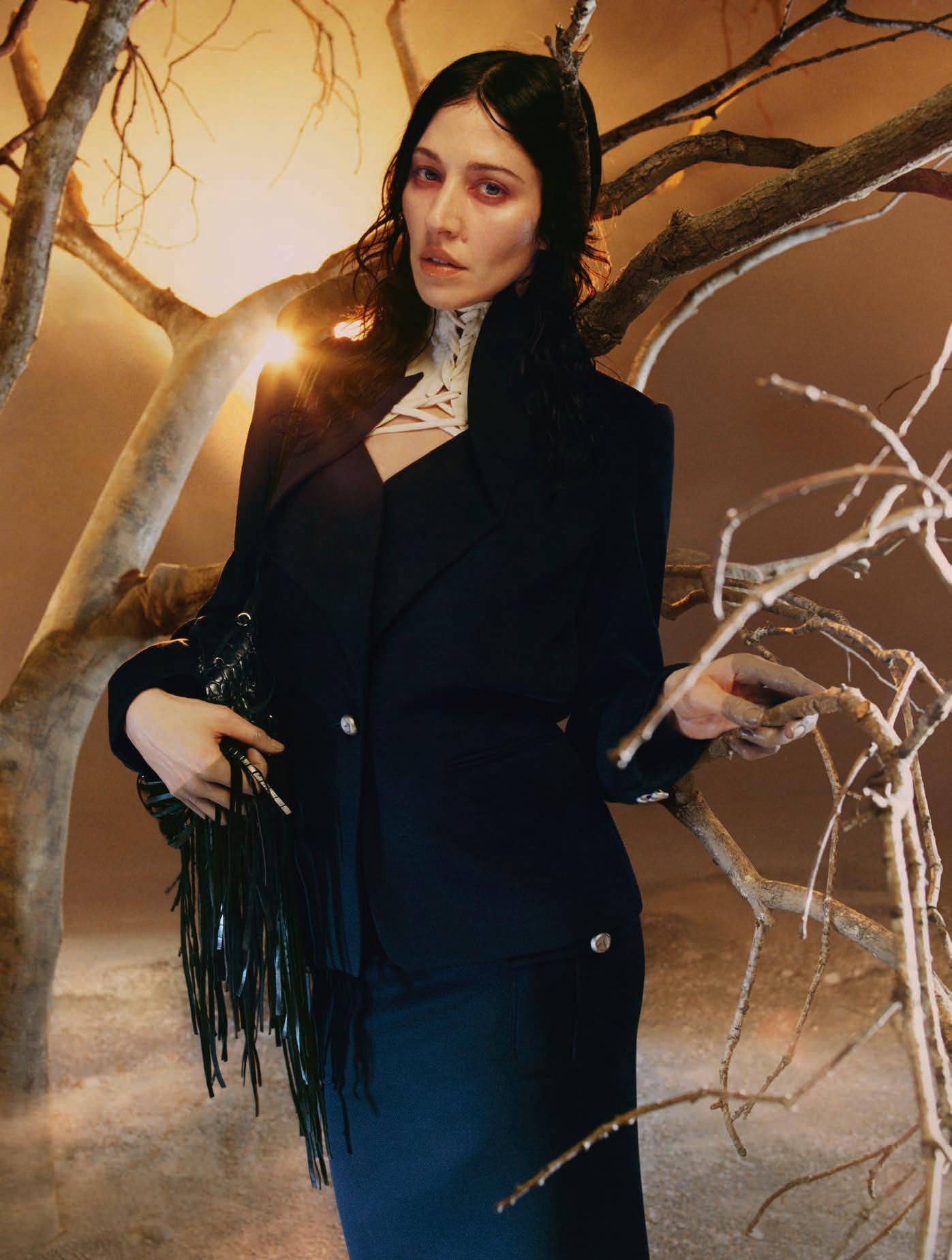
Previous page: Courrèges jacket and skirt available at Bloomingdale’s Middle East; Top left: Total Look Céline; Top right: House Janolo The Arrow-Head Rings
MODE
30 A New Wave of Expression
British designer Jonathan Saunders discusses his new chapter as chief creative officer at & Other Stories
34 Full Throttle
Narin Ammara, the founder of Narins Beauty, is in the pole position to dominate the next era of the beauty industry – backed by her 50 million follower fan base
48 Nouvelle Vague
With debut collections from a slew of designers, the Spring/Summer 2026 season is a sartorial seismic shift for the industry. Which means new visions for old houses, but also tried and true brands proving why they deserve to stay on top
60
The Eid Edit
In a region where the abaya is both uniform and expression, these labels understand the assignment to honour heritage while making room for the unexpected
64
A Considered Choice
With a wide open future and an empty horizon, anything and everything is still possible
VISION
78
Paying It Forward
Female leaders, across a myriad of industries, shine a light on the talented young women they feel our readers should keep their eye on
84
A State of Flow
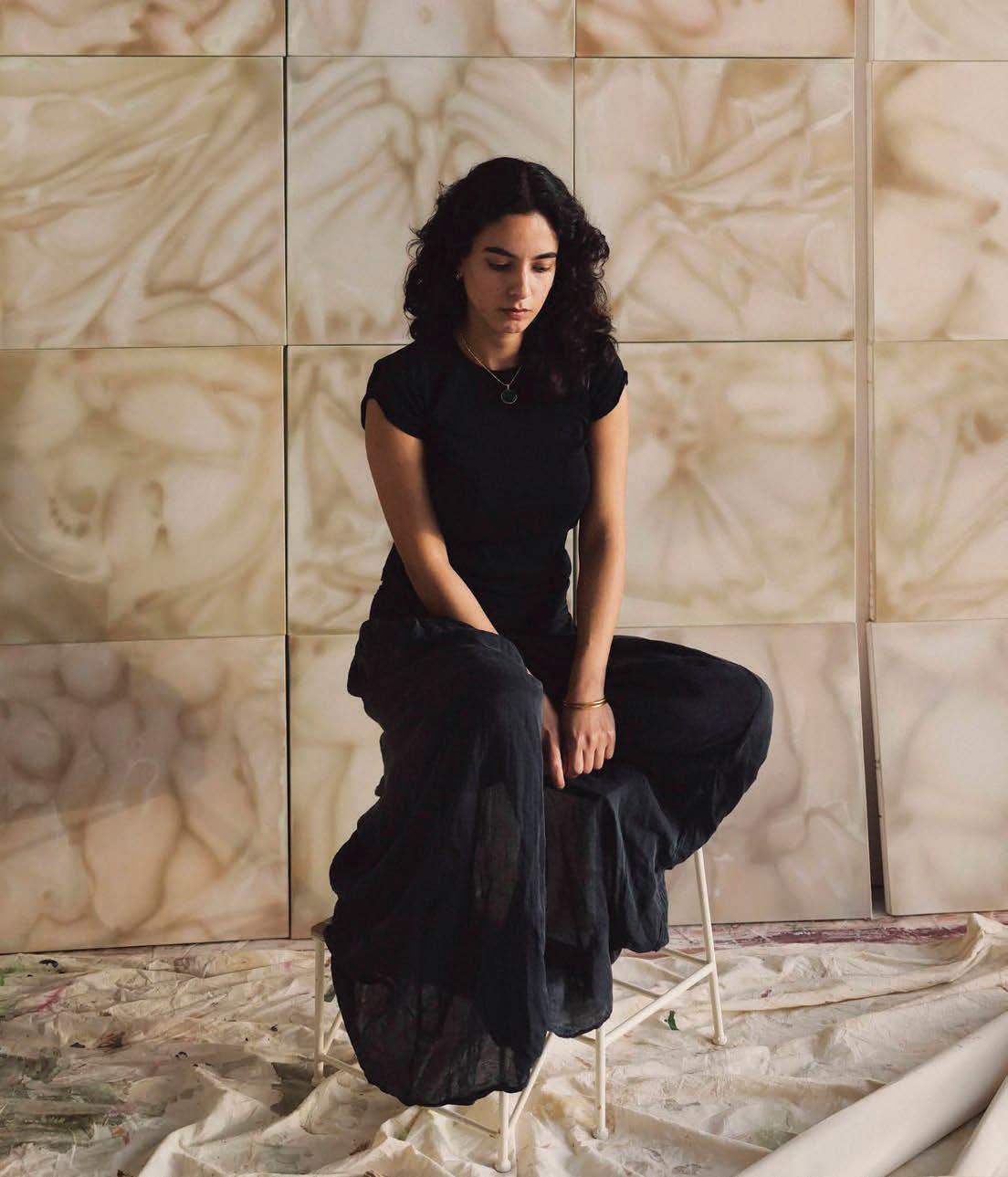
Self-taught and quietly assured, 28-year-old Miramar Al Nayyar is emerging as one of the region’s most exciting young artistic voices
86 Rewriting the Rules
From the lab to the racetrack, a new generation of young Arab women is reshaping what ambition looks like in the region. Bold, boundary-breaking and unapologetically ambitious, meet the faces of a fearless future
92
Shake It Up
Morin Oluwole, an International Luxury Business Leader who serves on the boards of Breitling, Rituals, and Biologique Recherche and the former Global Luxury Director at Meta, discusses what it really takes to stand out at the start of a career
94 Flight of Fancy
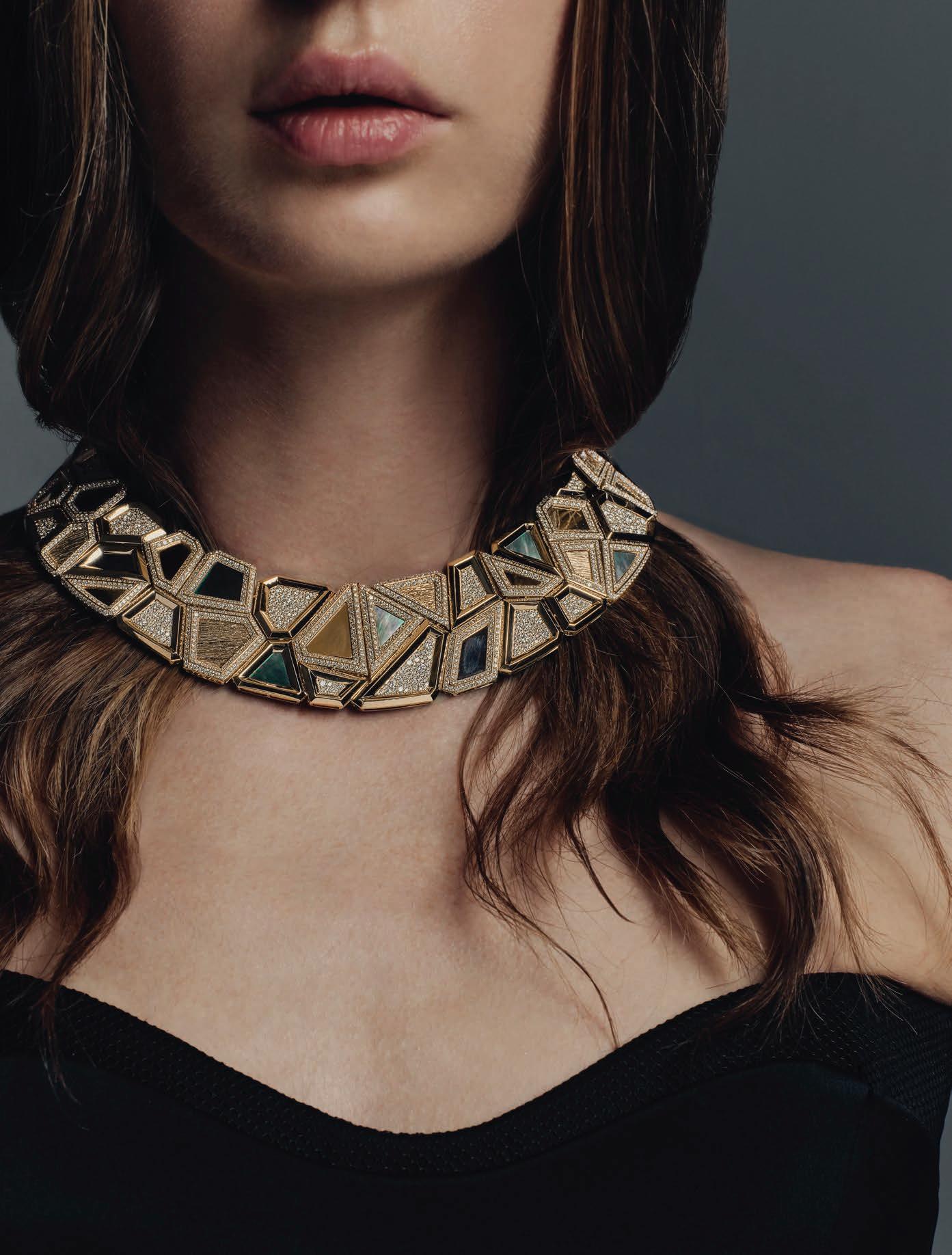
With Tiffany & Co.’s latest capsule collection of one-of-a-kind Bird on a Pearl high jewellery designs – and its charming limited edition Love Birds paired jewellery pieces –Victoria Reynolds, the house’s chief gemologist, explains why the brand’s creativity continues to soar





CONTENTS
March 2026
On the covers (from top):
1. Rotate top available at Harvey Nichols Dubai, Aleksandre Akhalkatsishvili trousers available at Fabric of Society, Charlotte Chesnais jewellery available at Comptoir 102
2. Staud dress available at Bloomingdale’s Middle East, Magda Butrym pumps, and Kismet by Milka earring
98 Sister Act
Sisters Oloof and Dujanah Jarrar have spent their lives side by side, studying, travelling and shaping a shared creative vision. Now that collaboration has taken form in House Janolo, a fresh voice in fine jewellery, all before their mid-twenties
GLOW
104 Hot New Buys
Noteworthy beauty launches defined by quiet confidence and personal expression
106 Running on Empty
We’ve normalised exhaustion as the price of modern womanhood, but what if your constant fatigue isn’t burnout – it’s a silent nutrient deficiency hiding in plain sight?
108 Confidence in Colour
After three decades backstage, veteran makeup artist Vimi Joshi launches the first South Asian beauty brand at Ulta Middle East – a history-making debut that puts darker undertones centre stage
111 Beauty Shelf
Content creator Jasemin Mayer talks us through her must-have beauty staples
113 The #PerfumeTok Treatment
From whipped-milk gourmands to dewy florals, these viral fragrances are dominating our social feeds
114 Make A Move
A full circle moment for founder Dina ElShurafa, the new Reform Athletica branch in Riyadh fuses the transformative power of movement with light-filled spaces, curated art, and a community-driven ethos
118 AM/PM Beauty
Emirati entrepreneur and content creator Hind Almarri shares her morning to evening beauty routine


ABODE
122 Une Perle Rare
On an island where freshwater springs from the seabed and old merchants still keep their bundles of pearls tied with silk, the Jumeirah Gulf of Bahrain has created a new retreat that offers a quiet equilibrium
126 Go for the Glow
From the high-tech clinics of Seoul to the legendary pharmacies of Paris, a new breed of "Glowmads" is turning self-care into the ultimate travel itinerary
MOST WANTED
130 Touchy-Feely Luxury
Since its founding a decade ago, Polène has built a quiet cult following by marrying Parisian design sensibility with the savoir-faire of artisans in Ubrique, Spain
Talent: Narin Ammara
Photographer: Vaughan Treyvellan
Senior Editor: Jessica Michault
Fashion Editor: Camille Macawili
Makeup: Jean Kairouz
Hair: Kalina Kocemba
Videographer: Katerina Shirshova
SURREAL APPEAL
When the Victoria and Albert Museum opens Schiaparelli:FashionBecomesArt this month, it will be more than a simple retrospective. It will stand as a vivid reminder of fashion’s power to provoke. Over 200 objects, from iconic gowns to artworks by her celebrated collaborators, lay bare a designer who refused to see clothing as mere adornment. Instead, she treated it as manifesto. “In difficult times fashion is always outrageous,” she famously said. That throughline spans this exhibit from the rebellious glamour of the 1920s to the sculptural audacity of the designs created by the brand current creative director Daniel Roseberry. The show traces Elsa Schiaparelli’s singular sartorial vision, a heady mélange of couture, Surrealism and performance.
CURATE
– Experiential luxury – A paradigm shifting era in fashion – The inclusive vision of an activewear brand

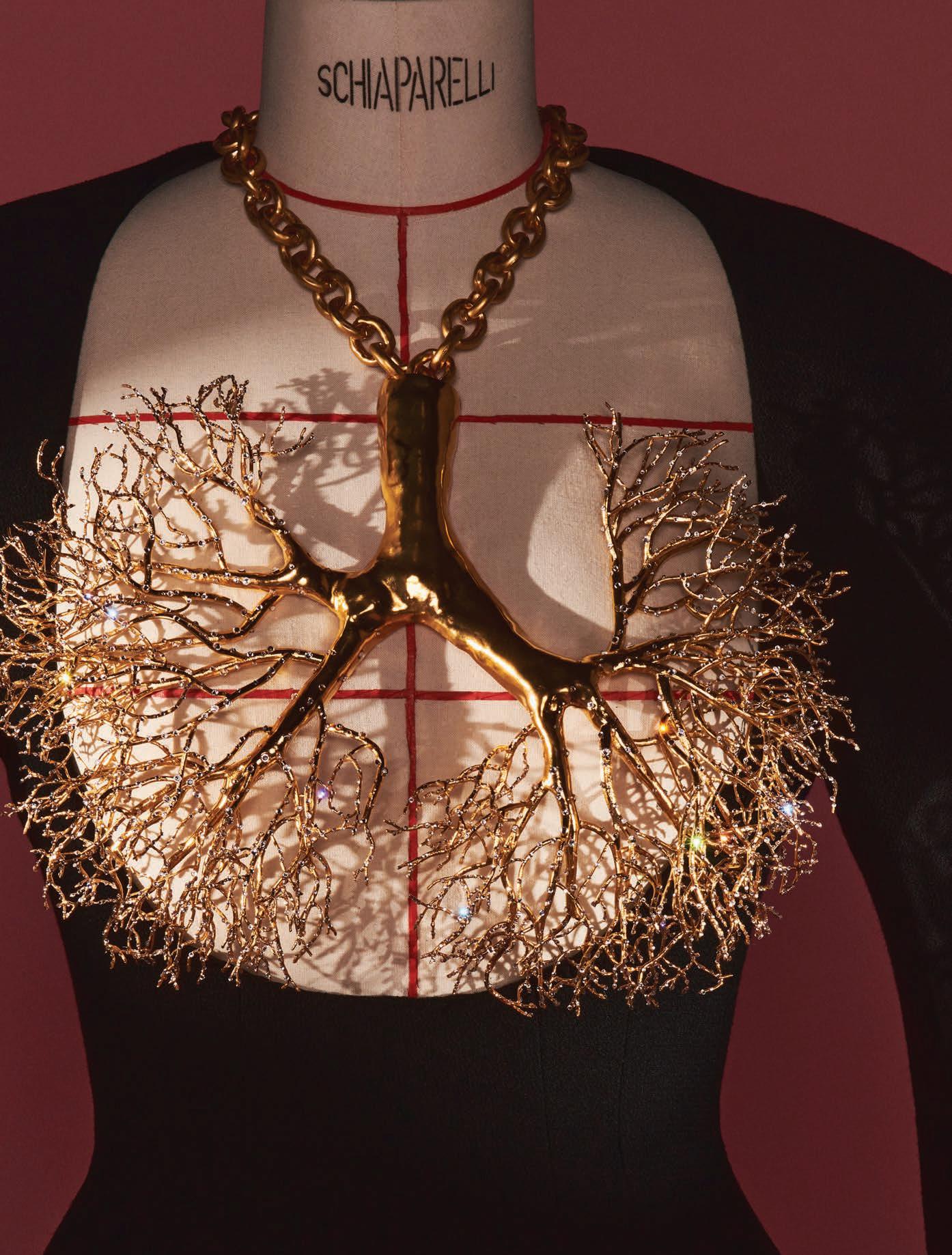
Schiaparelli by Daniel Roseberry. Long sheath gown, Matador Couture collection Haute Couture fall-winter 2021–2022 wool crepe. Gilded brass necklace adorned with rhinestones in the shape of lungs. Patrimoine Schiaparelli, Paris
The New Guard
The spaces, style codes and standout buys defining the next generation this March
WORDS:
ANSHIKA YADAV
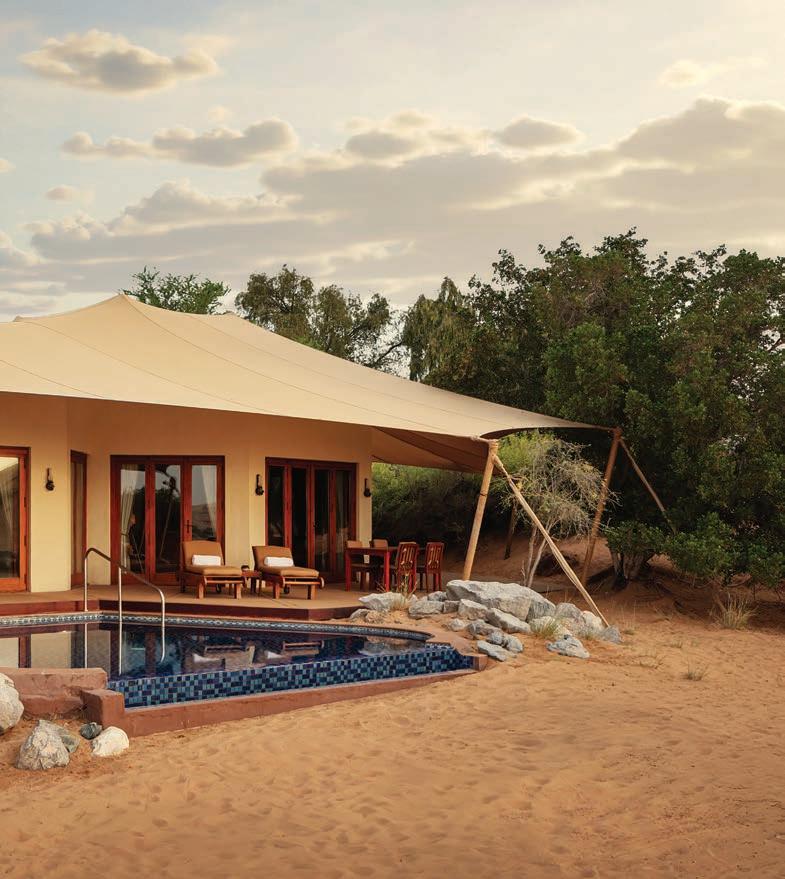
A NEW LANDSCAPE
A secluded desert sanctuary, Al Maha, captures the Youthquake generation’s shift towards experience-led, mindful luxury. Set within the Dubai Desert Conservation Reserve it offers private pool villas, heritage-inspired adventures like falconry and desert walks, and restorative spa rituals that prioritise presence, stillness and reconnection with nature. A destination that proves slowing down can be the ultimate form of modern indulgence.
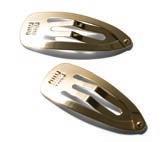

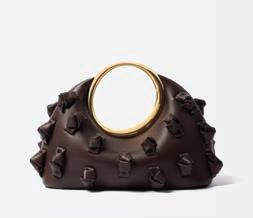
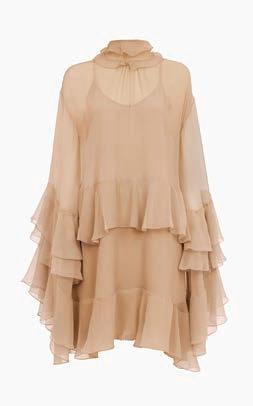
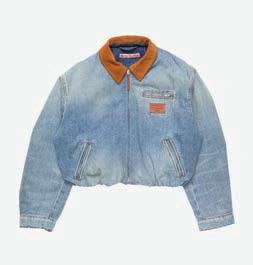
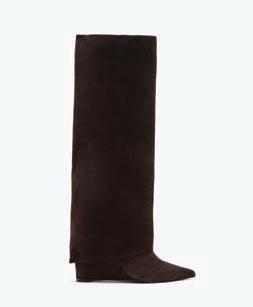
Metal hair Clips Dhs1,420 Miu Miu
Monster
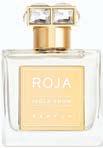
Isola Snow Parfum Dhs1,840 Roja
Bomber Blouson Jacket in Denim Dhs4,100 Acne Studios
Gillda Pantlog Boots Dhs2,500 The Lline
The Small Calino with Knots Dhs5,370 Jacquemus
Mini Ruffles Dress in Silk Mousseline Dhs15,420 Chloé
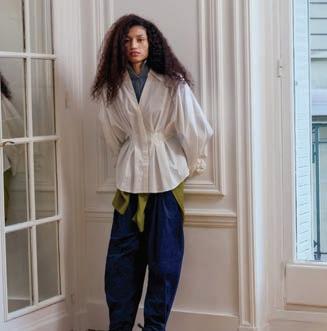
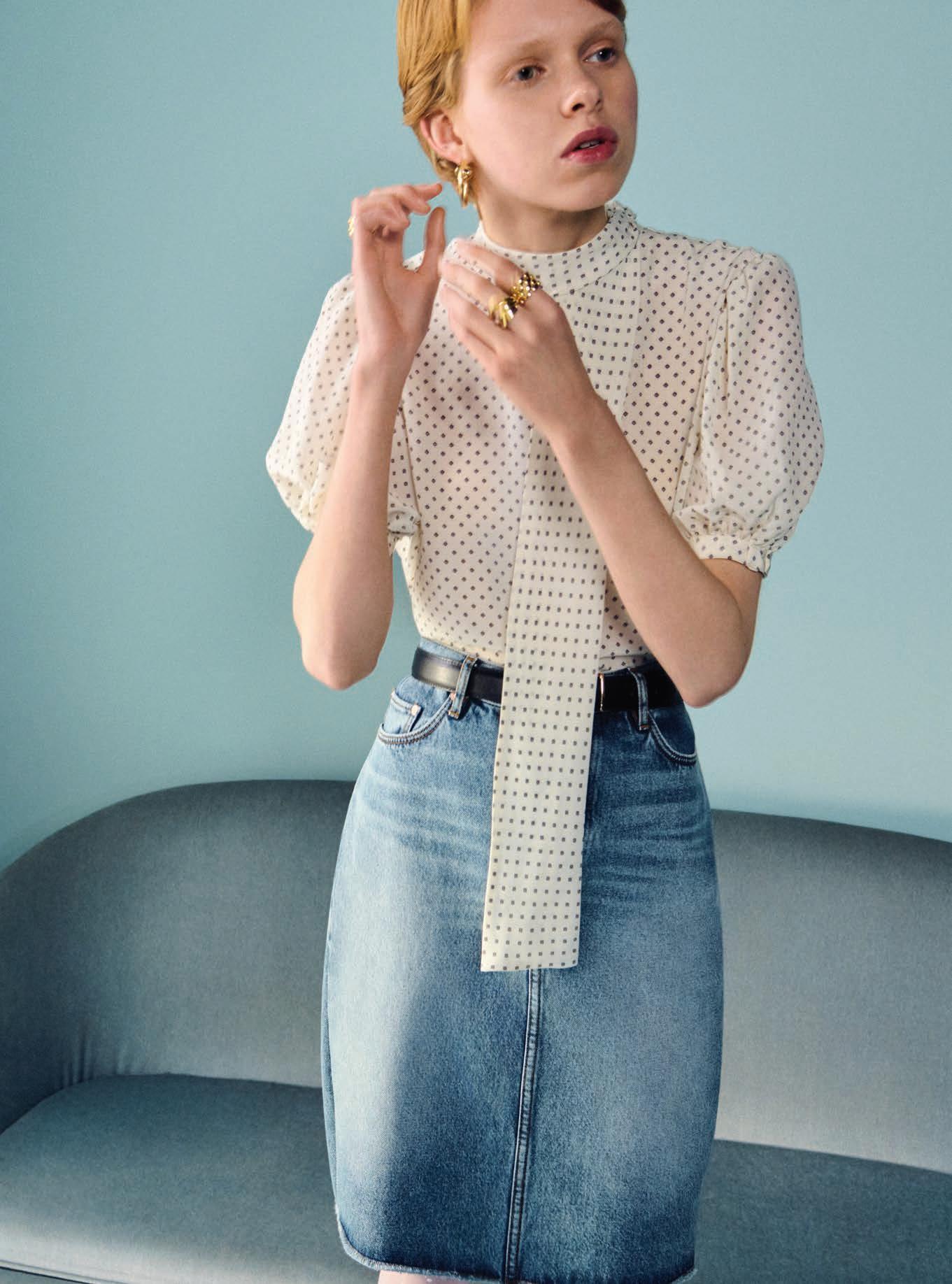
@andotherstories
Fashion label known for its youthful energy, love of bold colours and textures.
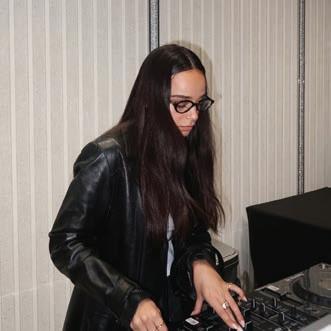
@parvbar
Creative consultant and DJ known for her eclectic, culture-blending style.
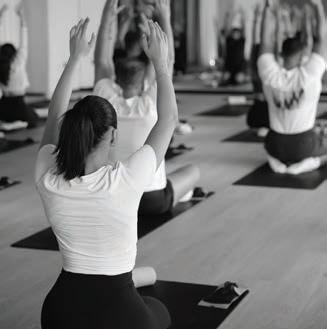
@maryamalfarsi1
The Emirati sprinter who competed in the 2024 Paris Olympics.
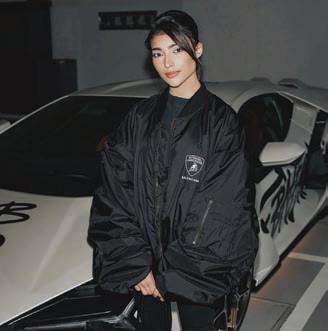
@amnalqubaisi_official
The first ever Emirati female racing driver.
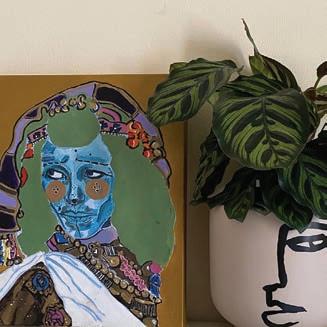
@zeinasaleh
Egyptian journalist and storyteller covering fashion, culture, and the creative scene.
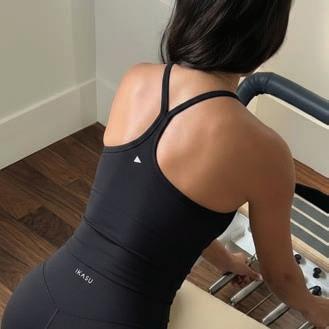
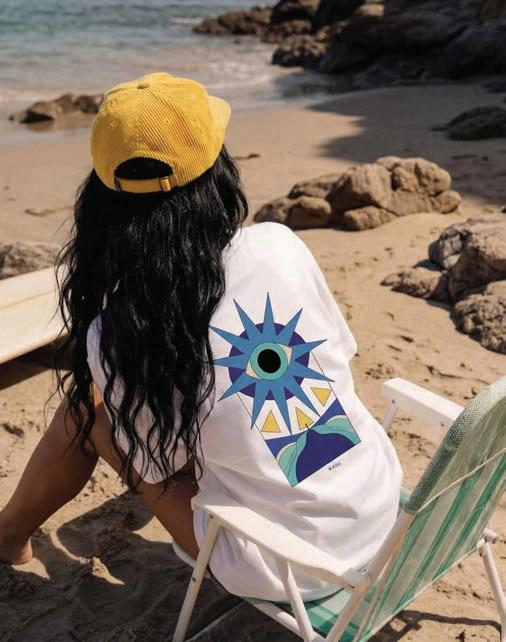
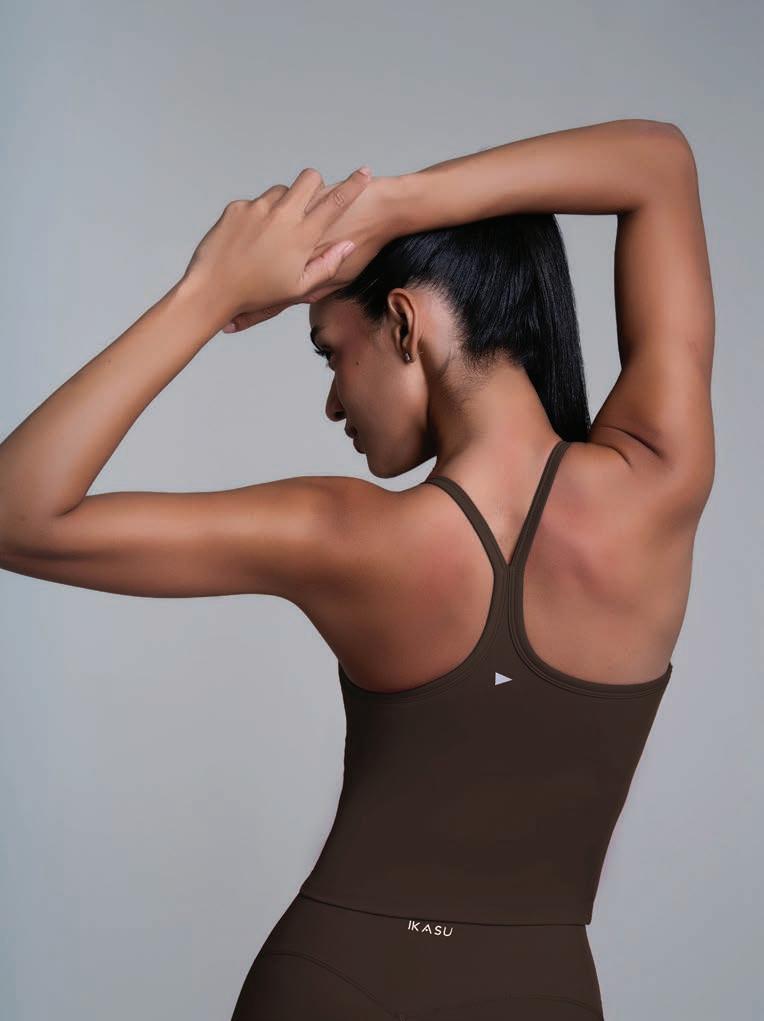
@ikasuofficial
Athleisure wear crafted for movement and confidence.
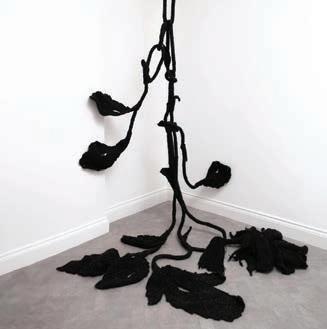
@raayya
Multidisciplinary artist exploring body, materiality, and space.
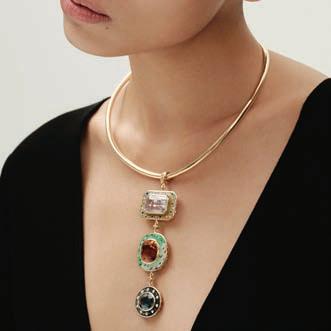
@housejanolo
A refined new voice in contemporary fine jewellery.
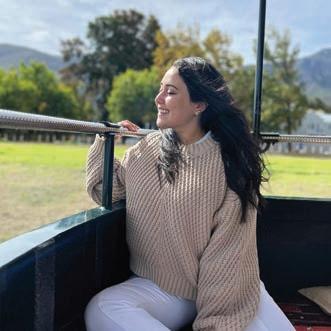
@sofiasayah
Founder of SOSAÏ Events known for creating bold, creative experiences.
Listings
A curated guide of youth-centric Instagram accounts to #follow Social
COMPILED BY: ANSHIKA YADAV
THE NEXT FASHION ERA
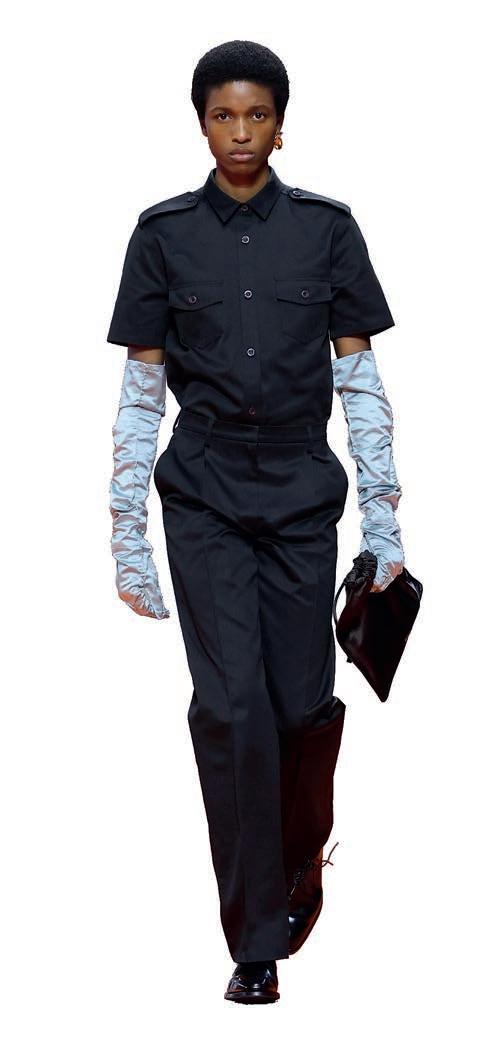
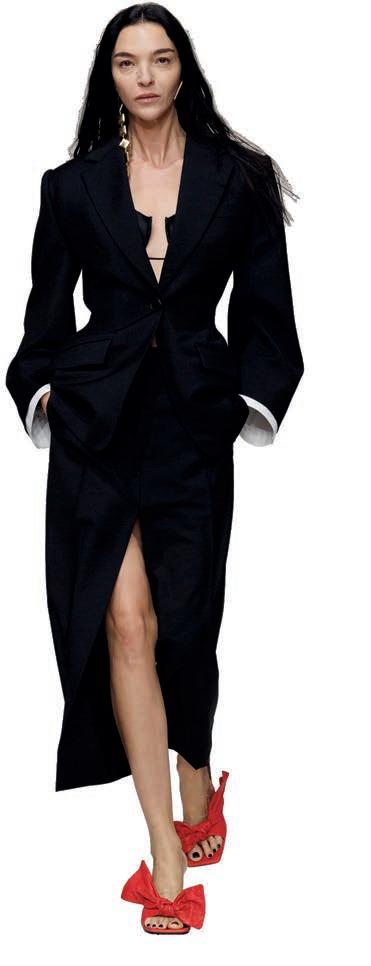
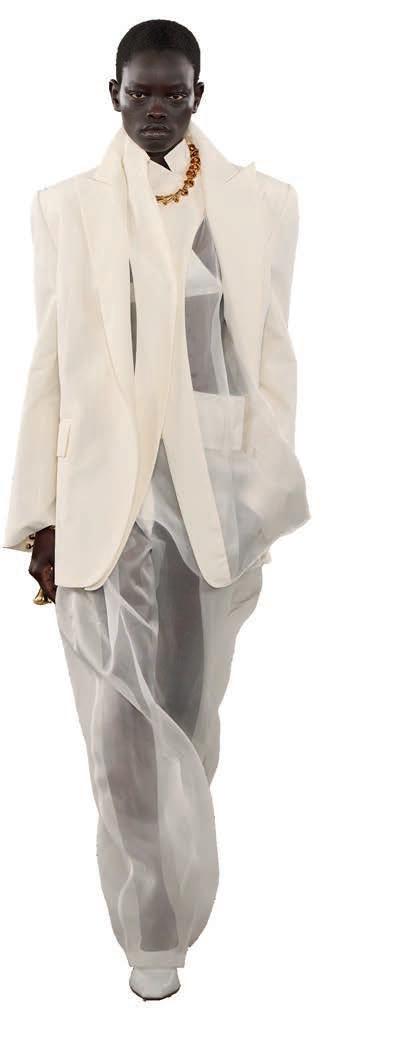
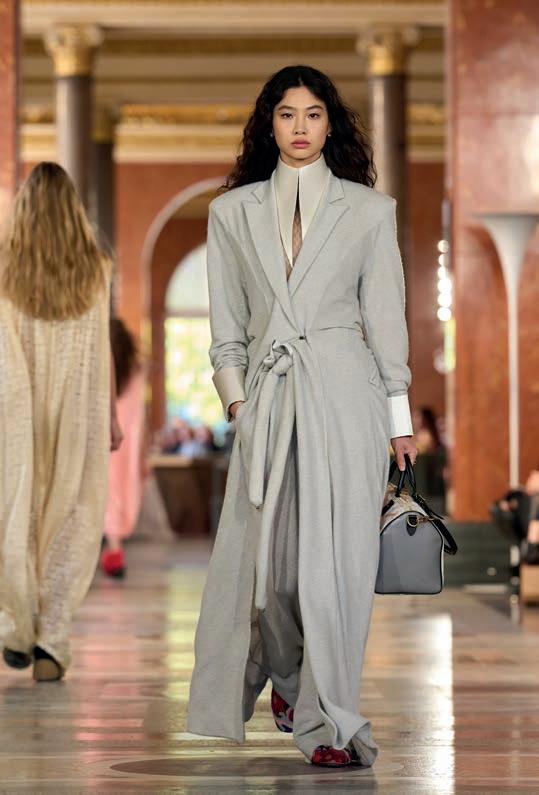
With new creative directors at a number of major fashion houses, the mood for Spring/Summer 2026 feels charged with curiosity and experimentation. Here, Emirates Woman dives into how that design shift played out on the runway.
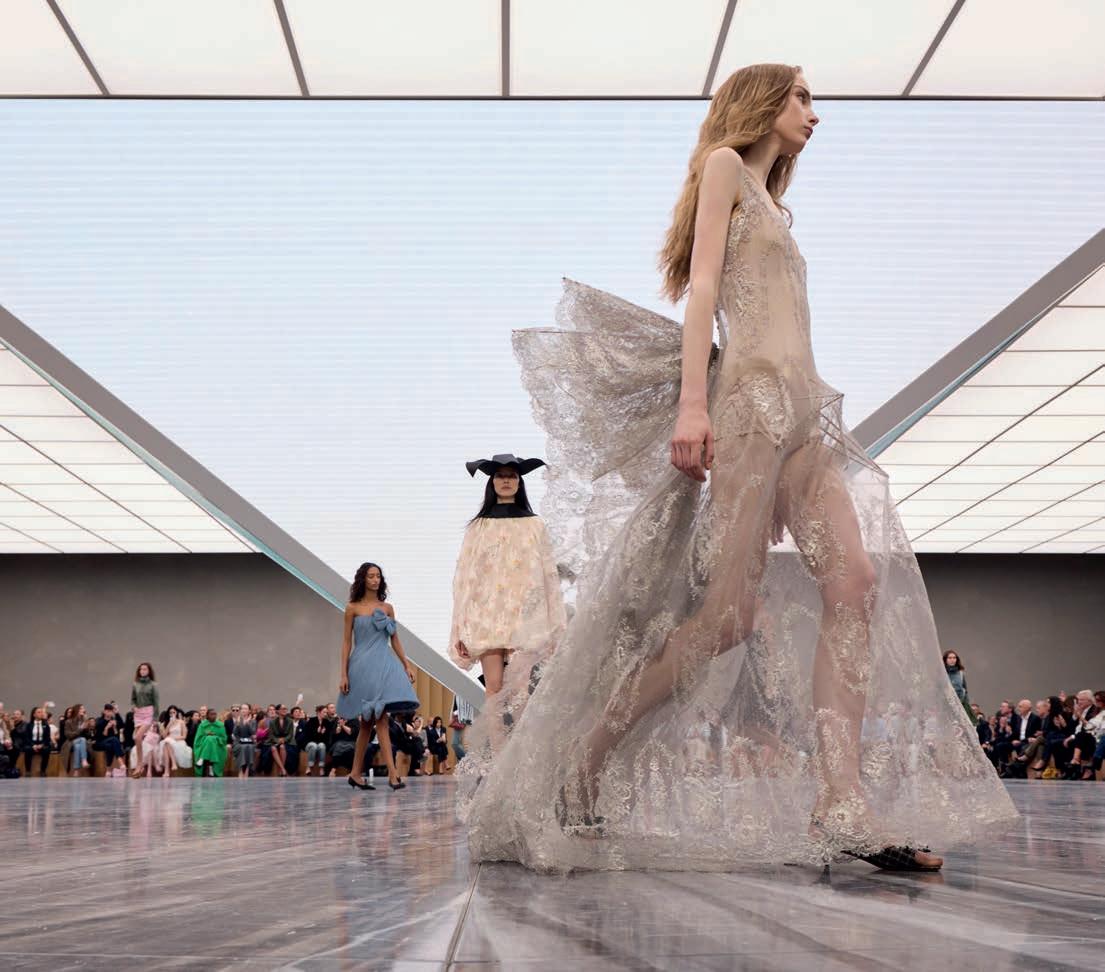
DIOR BY JONATHAN ANDERSON
At Dior, Jonathan Anderson unboxed and mastered the archives of the fashion house so he could play with notions of dress-up –creating a playful tension between a fantasy and fashion-forward utility. Case in point: the iconic Dior Bar jacket has been refreshed by Anderson in a speckled tweed with shrunken proportions. The designer borrowed from the historic cantilevered hip silhouette, which was resurfaced in an accessory that you can carry daily: the Cigale bag. The skirt hemlines are shorter, referencing the 1948 couture line paired with tuxedo tops and chambray shirts, and finsihed off with tricorn hats by the House milliner, Stephen Jones.
Fashion Report
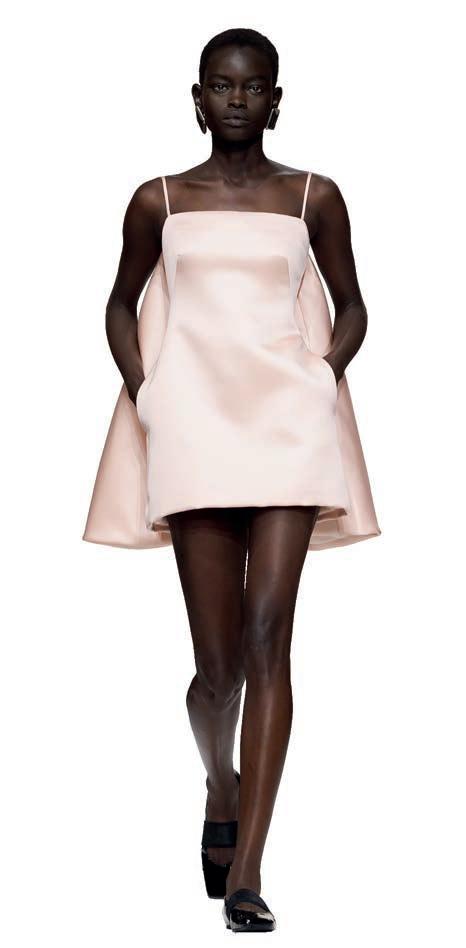
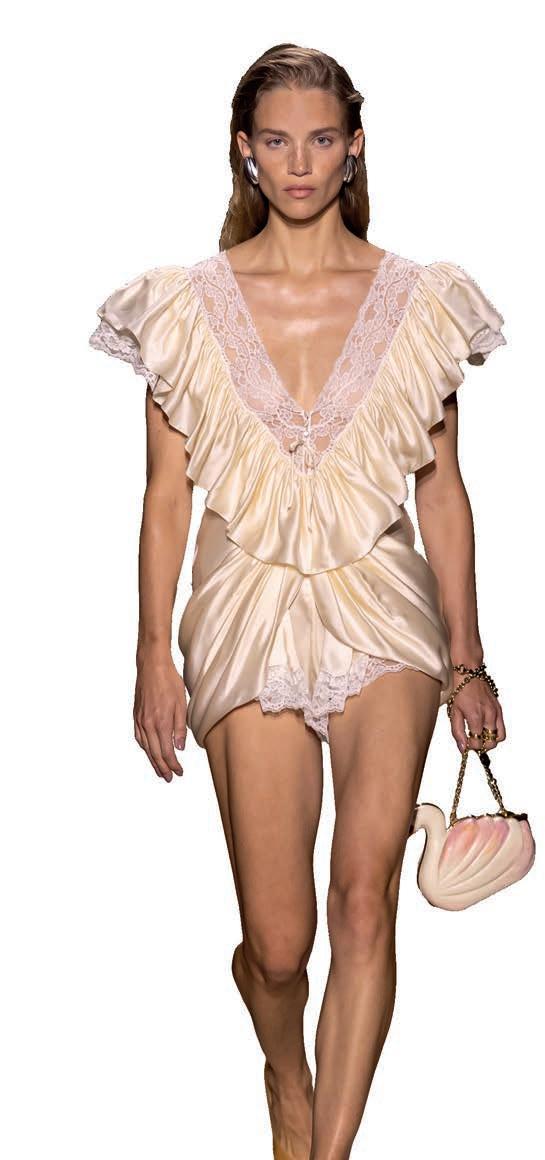
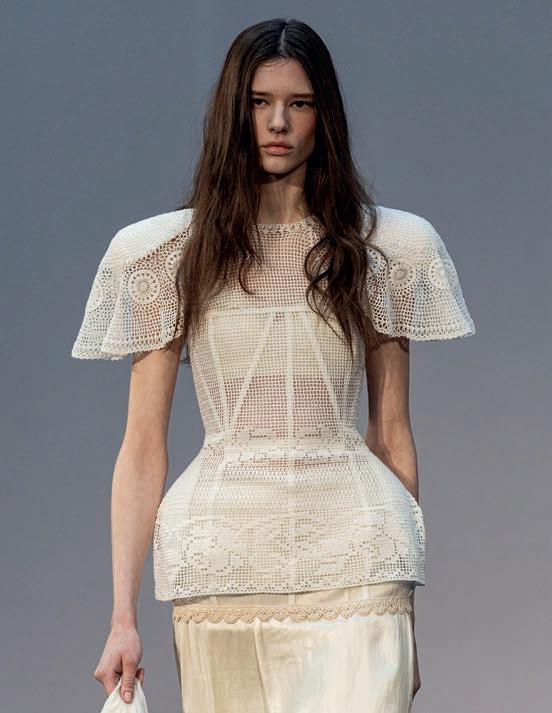
For Spring/Summer 2026, designers lean into the corsetry and hourglass cues without overly defining and restricting it – as seen at Alexander McQueen, Khaite, Schiaparelli, Givenchy, and more.
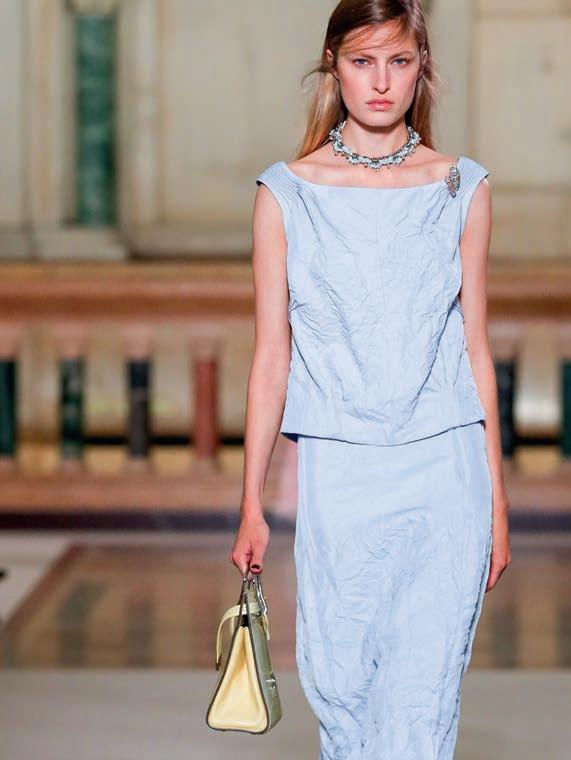
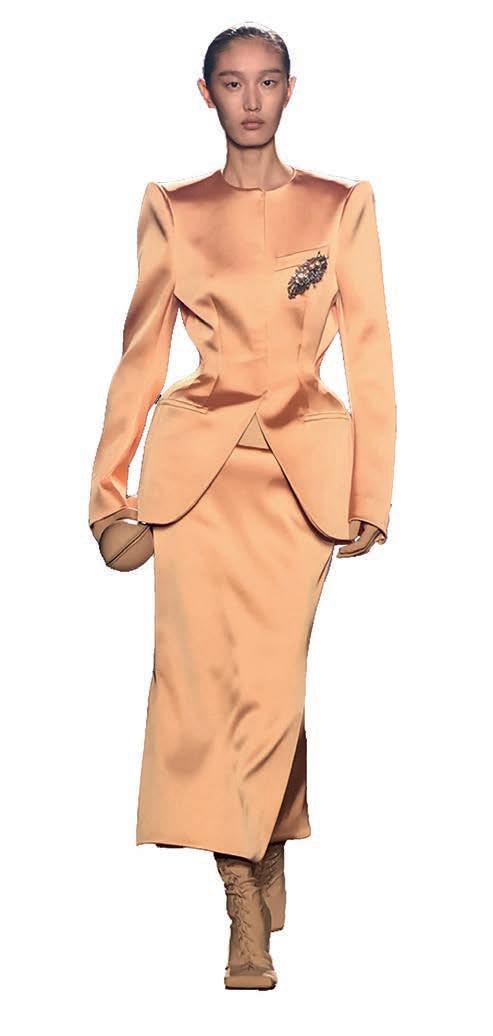
FEMININE FORMS
MUGLER
MAGDA BUTRYM
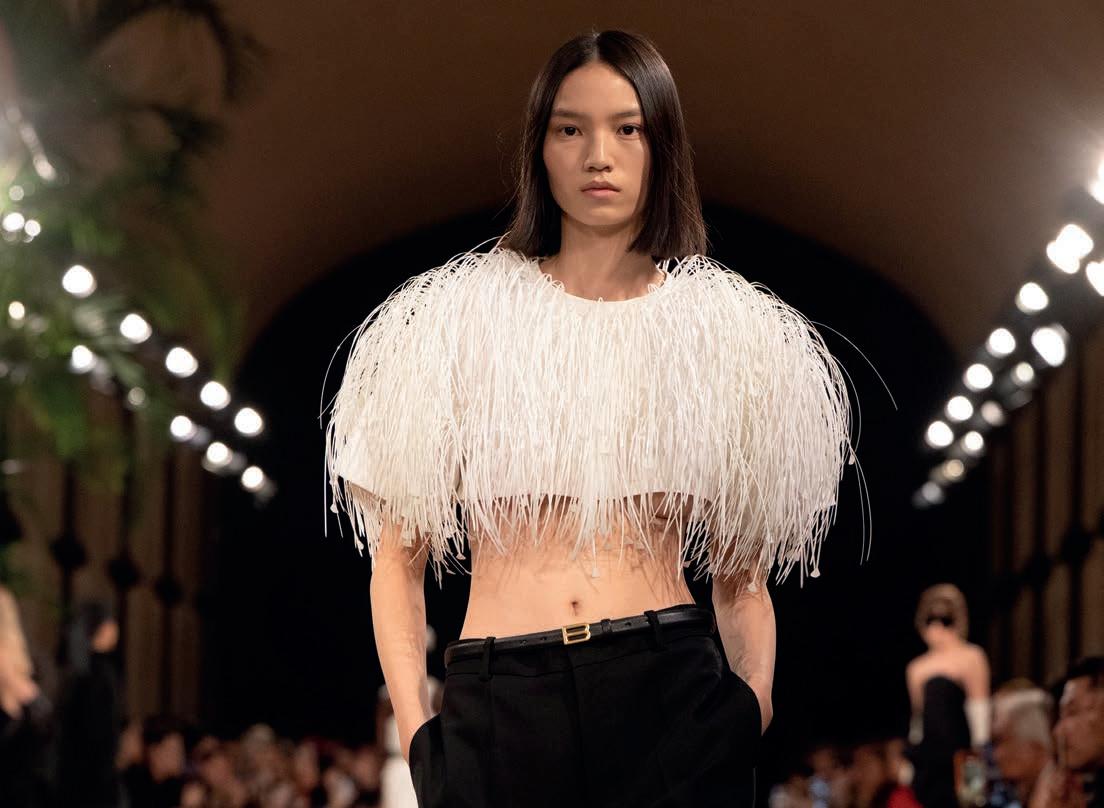
BALENCIAGA BY PIERPAOLO PICCIOLI
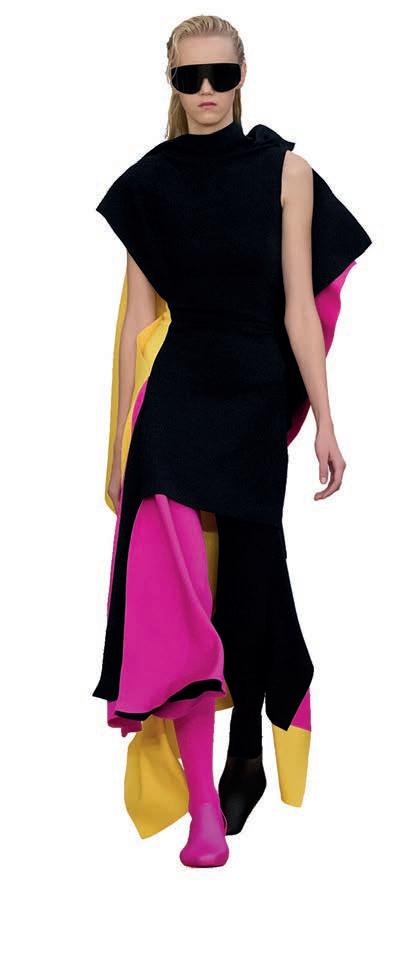
Balenciaga shifts tone under Pierpaolo Piccioli, who recalibrates the house toward a restrained form of drama. Black and white anchors the collection, punctuated by saturated yellow, purple, red, and pink tones. Cocoon silhouettes reference Cristóbal Balenciaga’s sculptural experiments, especially in neogazar gowns that hold volume without heaviness, injecting elegance while retaining the street-couture radicality of its predecessor designer.
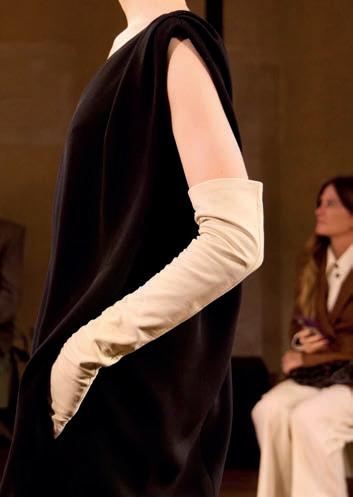
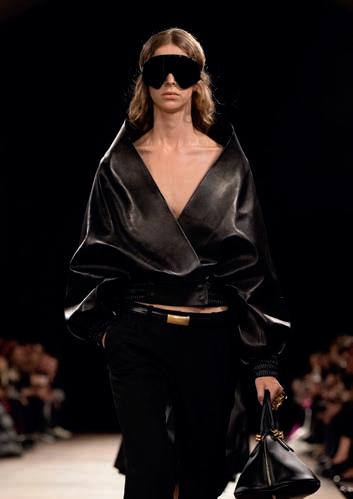
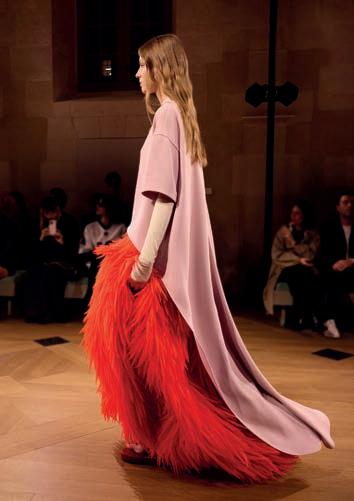
This season, tailoring takes on volume and attitude with Chloé, Balenciaga, and Dior leading the force with puffball skirts, razorsharp pleating, precise sculpting, and peplum hems, pushing into a voluminous territory that still reads polished.
Fashion Report
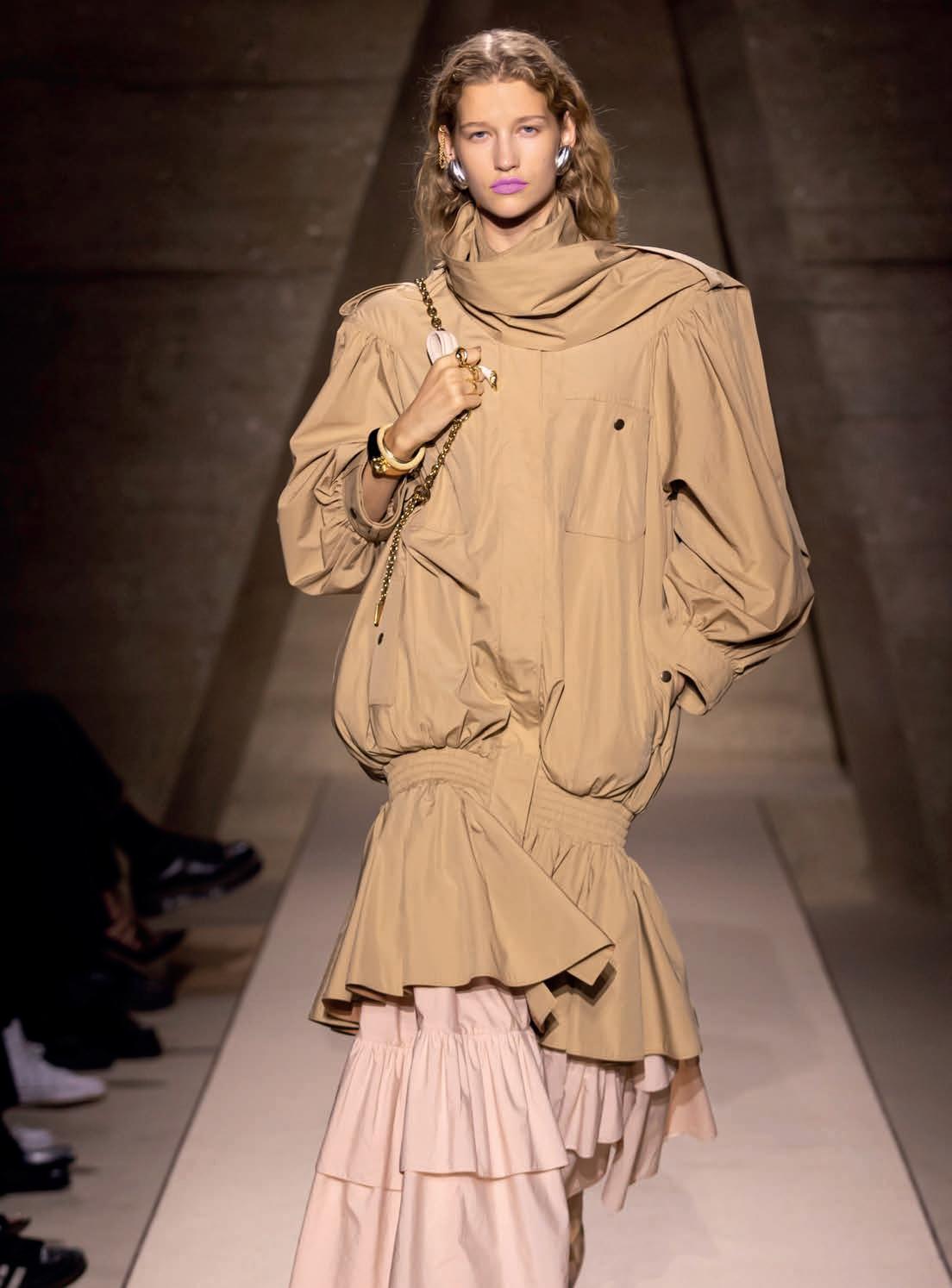
SHAPE SHIFTER
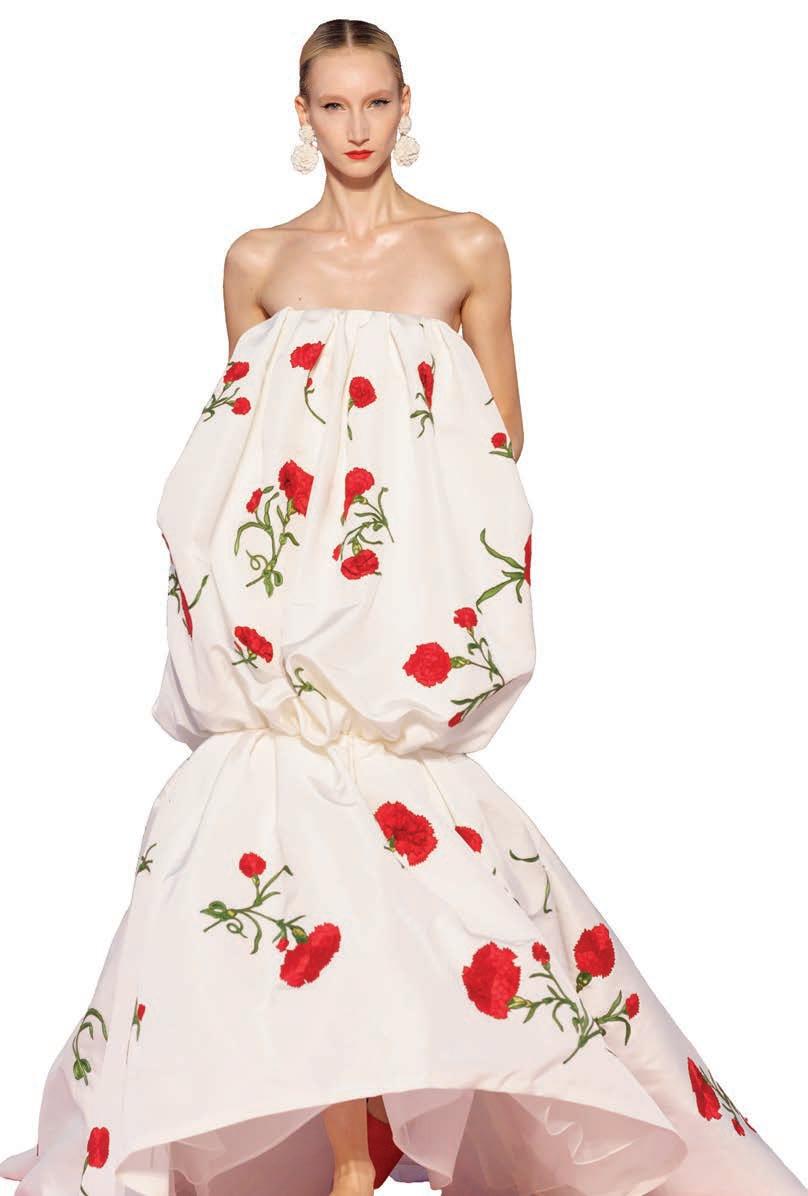
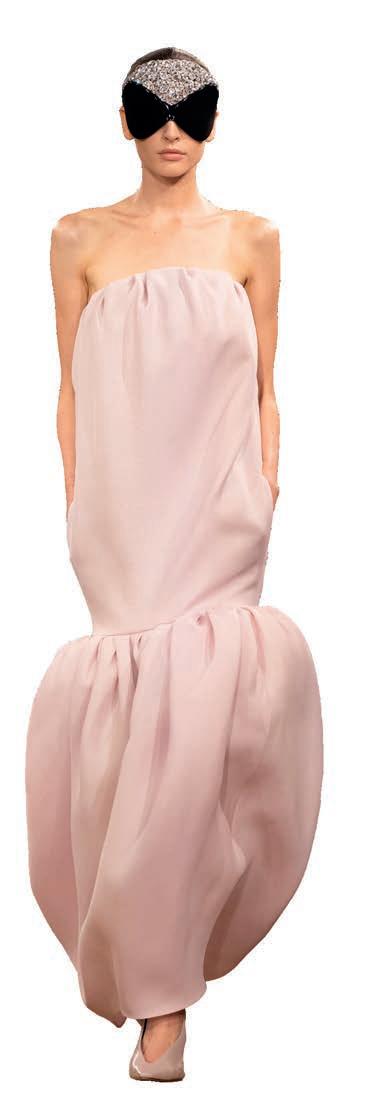
CAROLINA HERRERA BALENCIAGA
CHLOÉ
Fashion Report
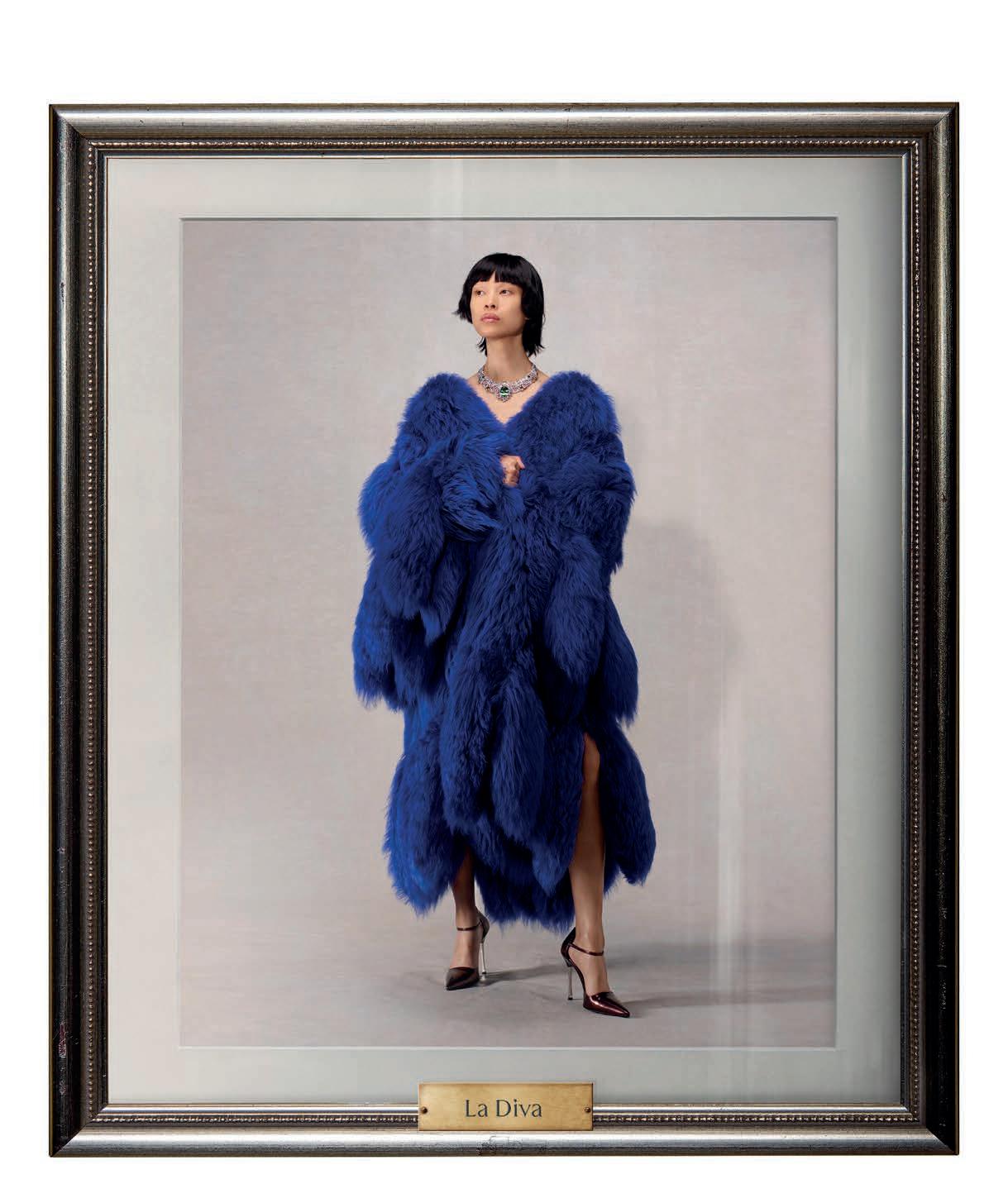
GUCCI BY DEMNA
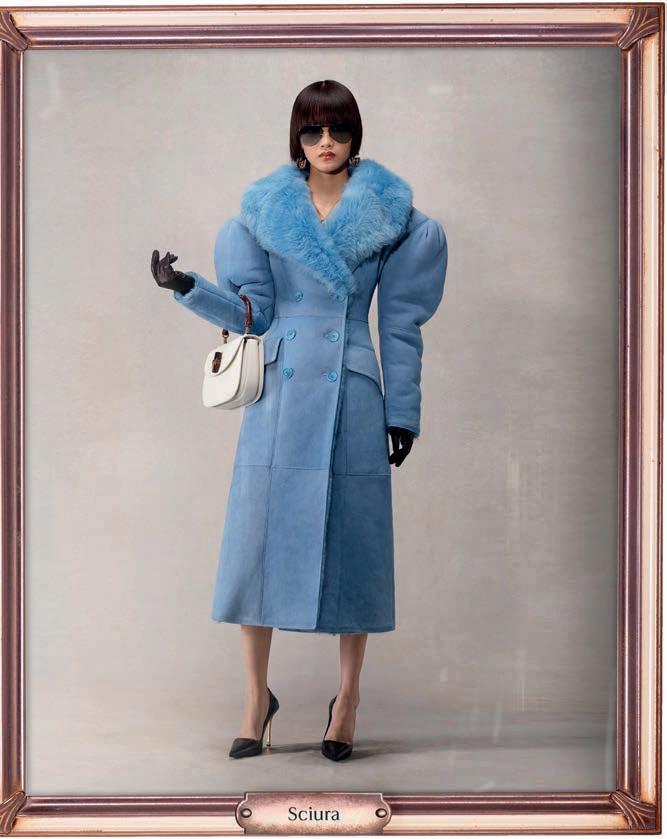
At Gucci, Demna’s highly anticipated debut collection looks like a theatre cast. Each look from the “La Famiglia” lookbook captures an archetypal persona you might recognise, or a character you want to try on for a night. Demna’s ironic humour stays intact, but this time, the styling feels more grounded and refined for the Italian fashion house, marking a sophisticated, but quirky, new chapter.
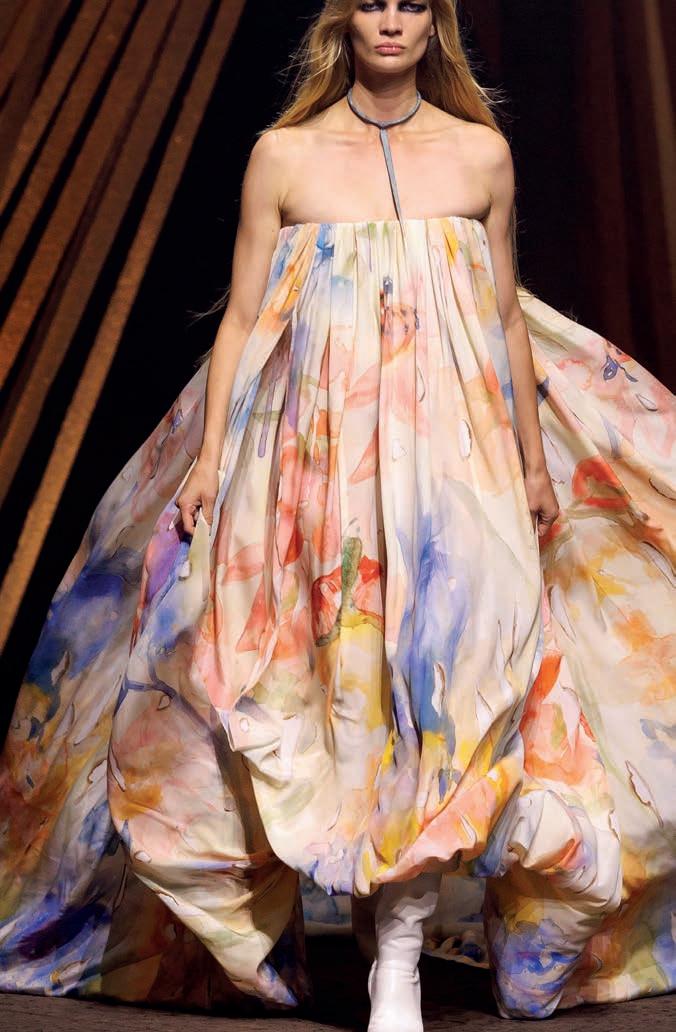
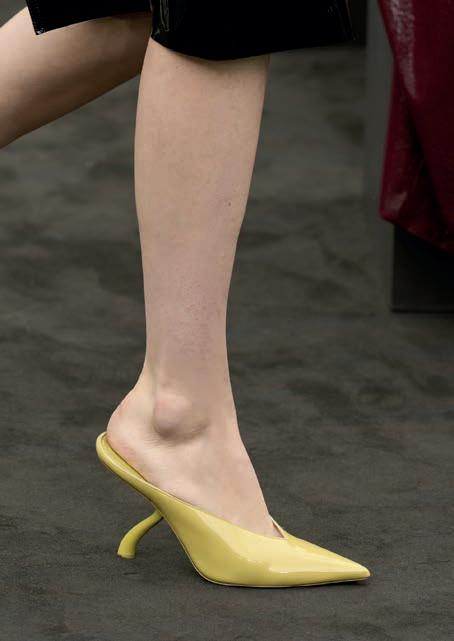
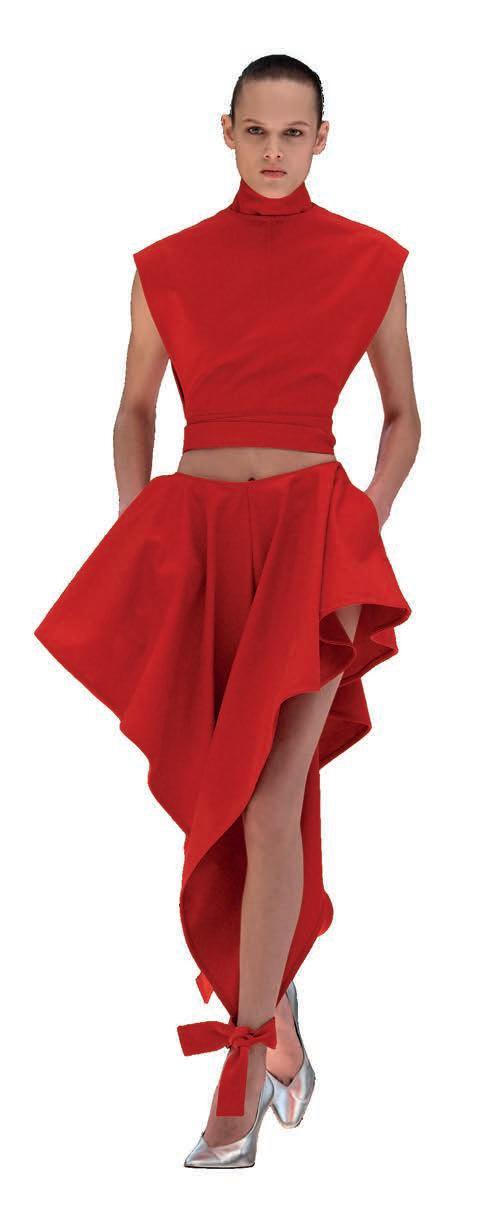
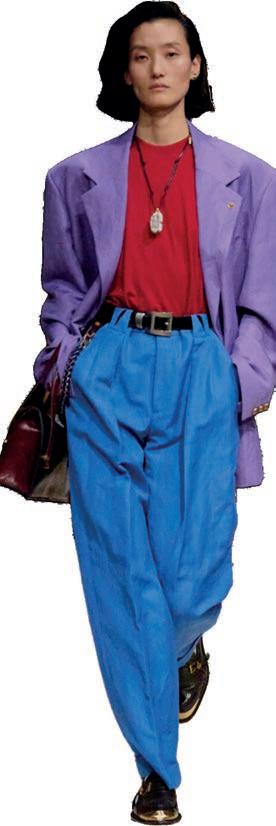
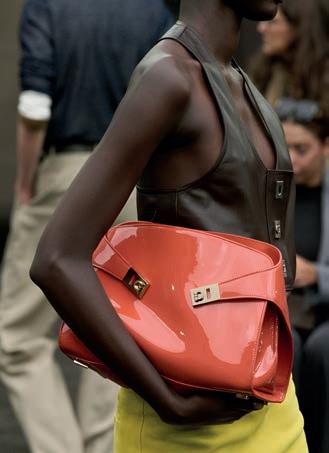
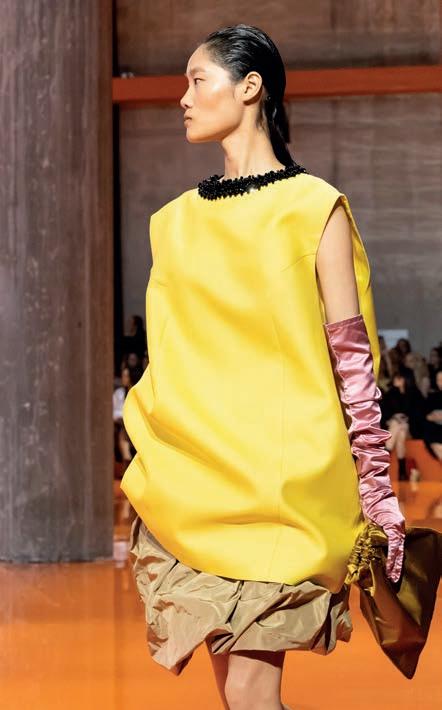
Forget quiet luxury – over-the-top looks step forward for the new season. From exuberant prints to bold colour palettes, the runways delivered highimpact fashion that spark joy. Gucci and Valentino lead the way with a collection that reads like a character study. Elsewhere, the likes of Prada and Loewe by Jack McCollough and Lazaro Hernandez brought a sense of optimism with a crayon box of primary hues.
FERRAGAMO
BOTTEGA VENETA BY LOUISE TROTTER Fashion Report
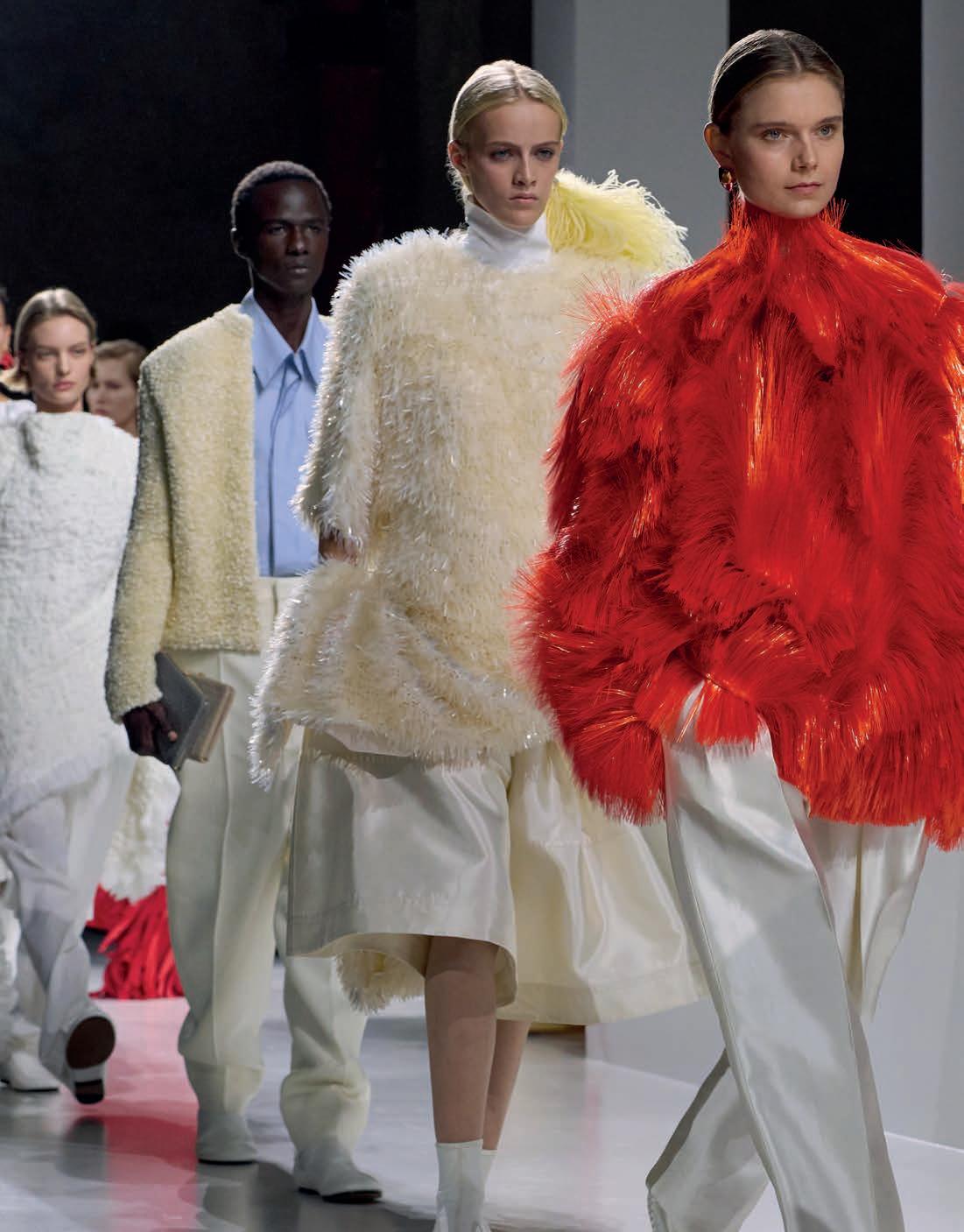
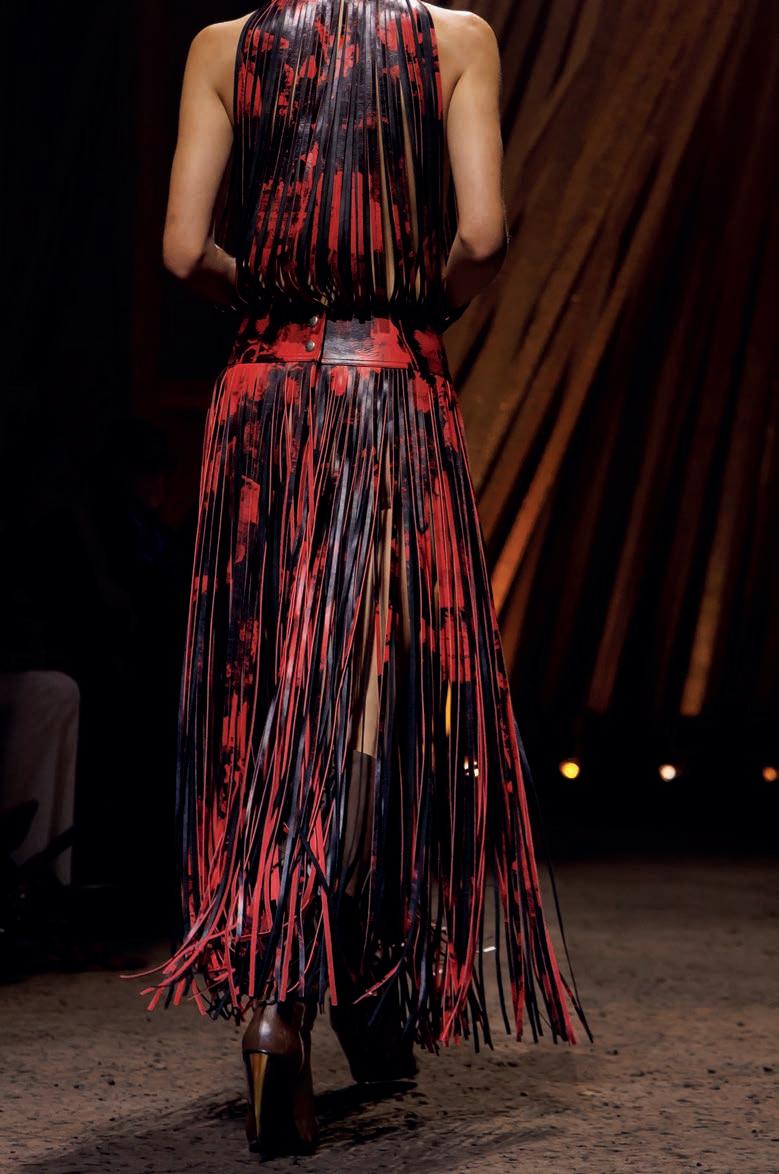
At Bottega Veneta, designer Louise Trotter built her debut collection from the house’s language of weave and luxe utility. Trotter takes artisanal craftsmanship to another level with meticulous attention to detail to keep eyes engaged, while tailoring the pieces for repeat wear. A prime example from the runway? Fringed skirts made from iridescent recycled fibreglass that took hours to make.
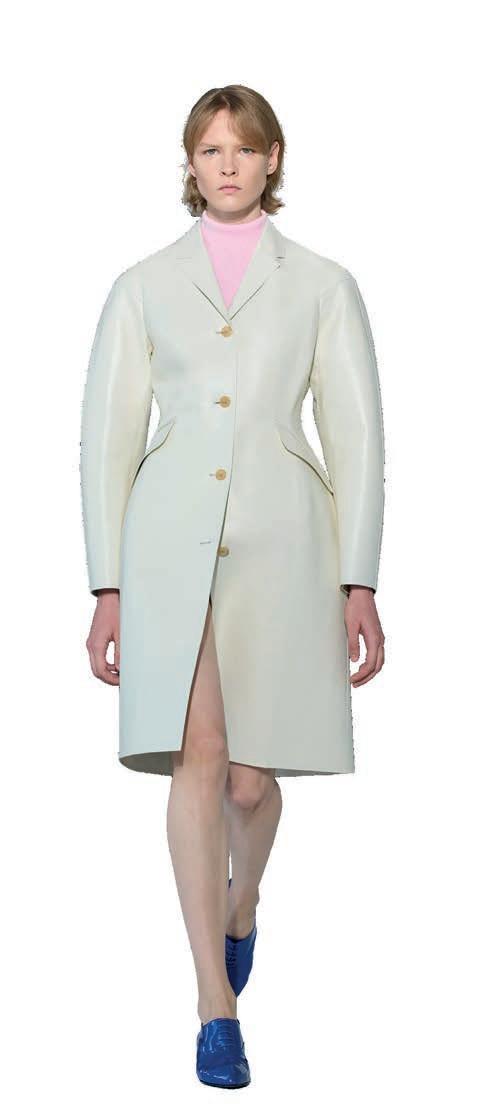
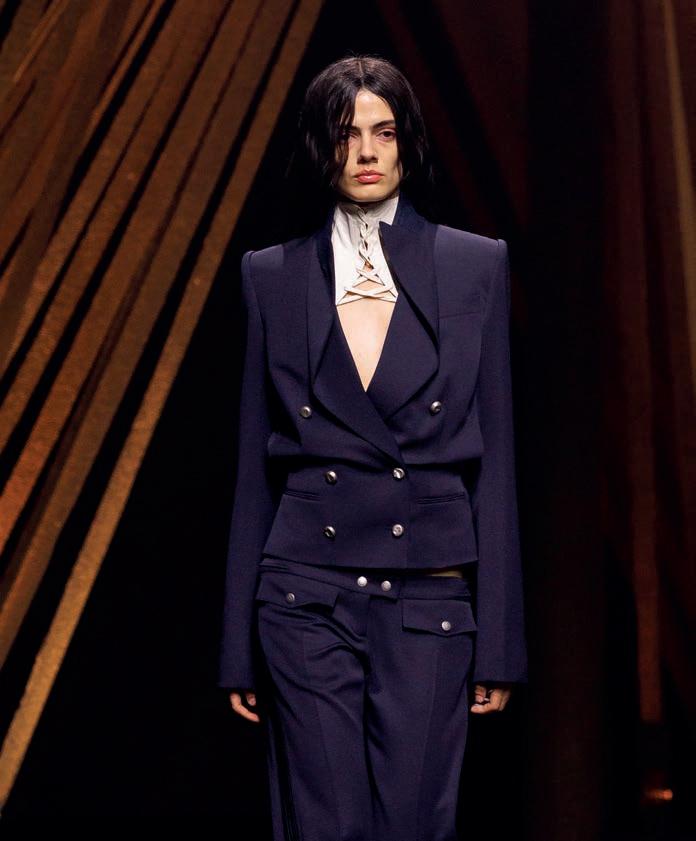
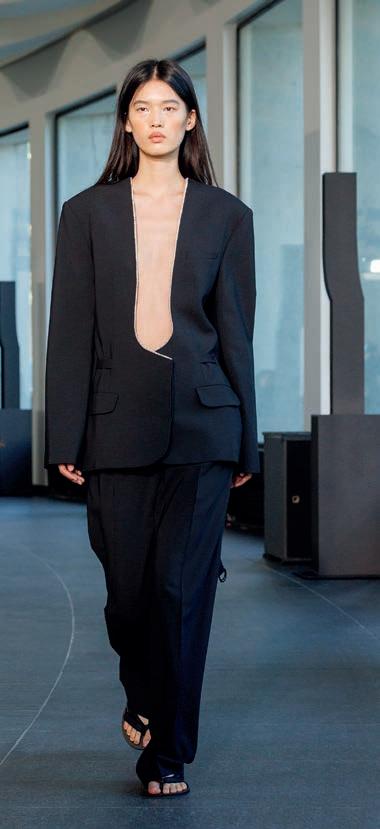
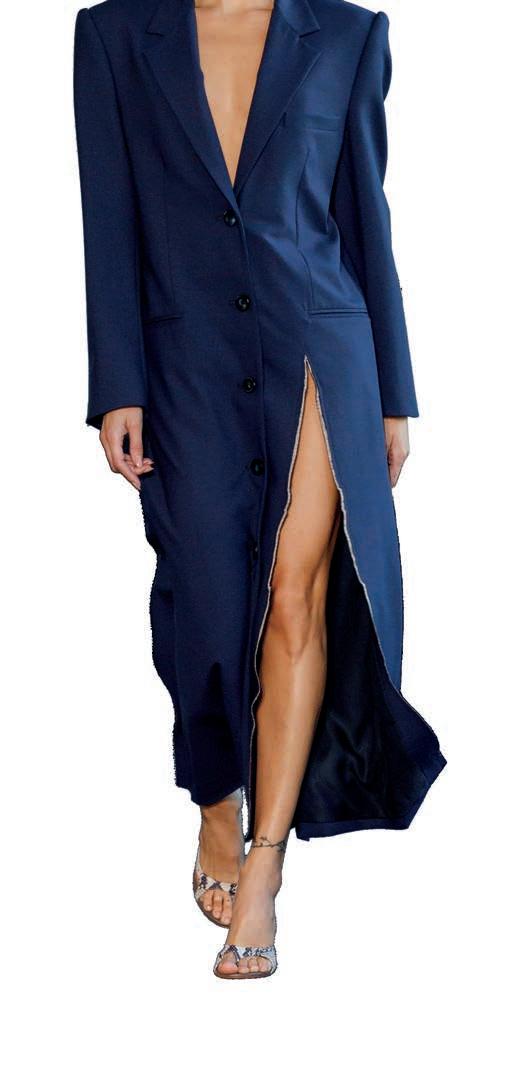
From Givenchy to Schiaparelli, brands doubled down on tailoring – giving it a modern, feminine twist for Spring/Summer 2026. There was technical and structural experimentation, making it a conversation starter for the new season.
LOUIS VUITTON
PRADA
SPORTMAX
CHRISTOPHER ESBER
CHRISTOPHER ESBER
GIVENCHY
MCQUEEN
CHANEL
BY MATTHIEU
BLAZY
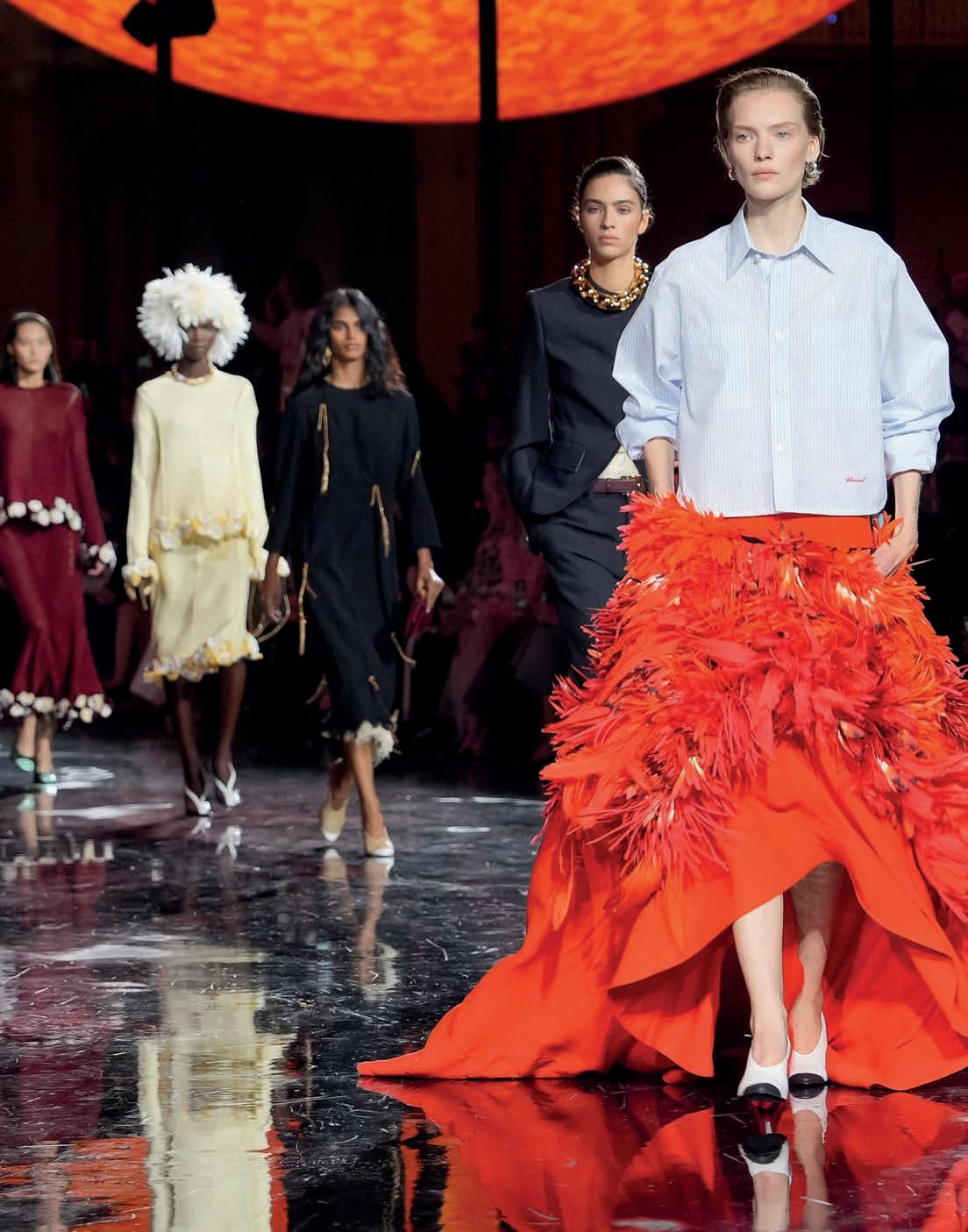
In a stellar debut at Paris Fashion Week, designer Matthieu Blazy launched his new era for Chanel. The collection offered a fresh, GenZ-infused perspective on the house’s signature codes, blending classic tweeds with dynamic new silhouettes. The accessories universe exploded with funky charms, abstract shapes, and playful clutches, signalling a vibrant new age. High craft paired with contemporary ease.
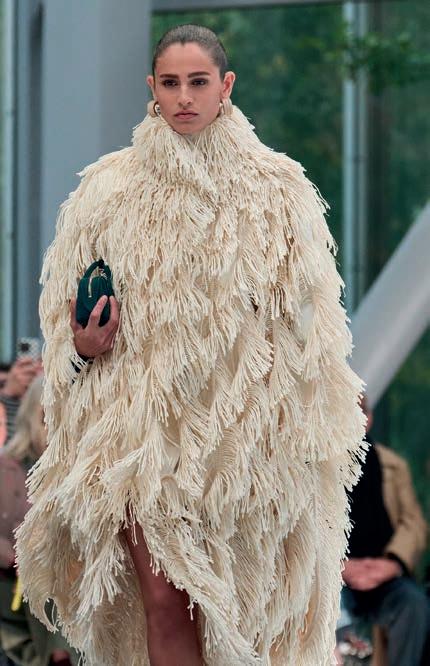
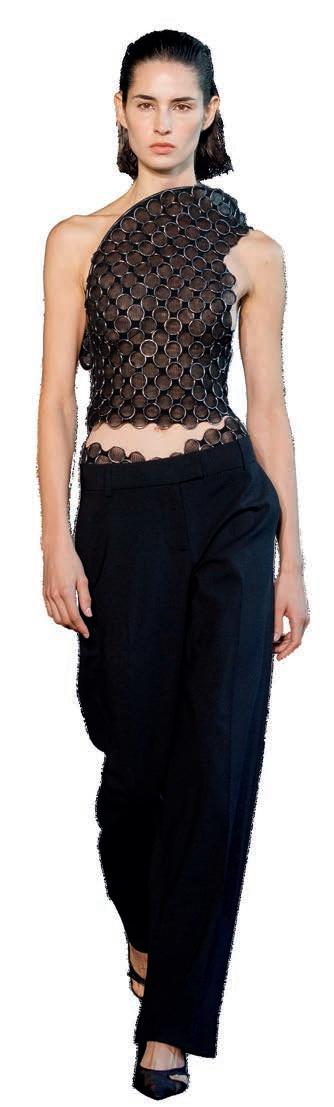
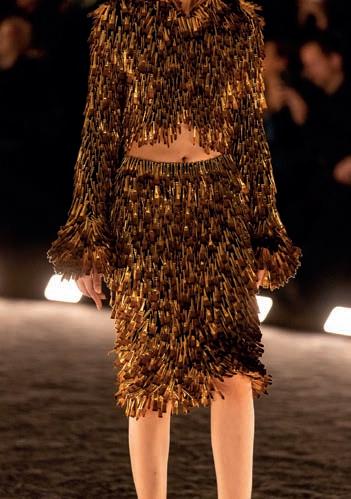
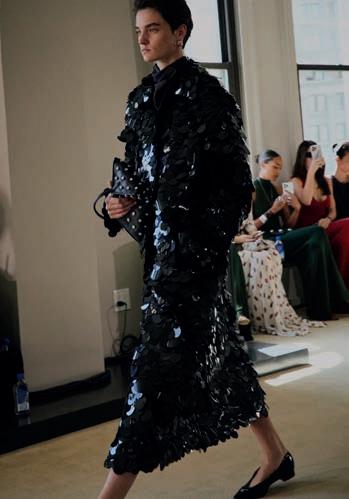
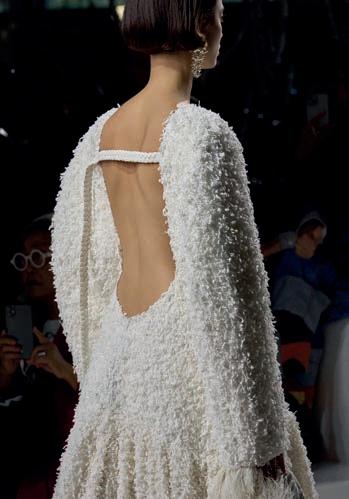
Surface becomes a conversation for Spring/Summer 2026. An aesthetic austerity of tassels, embellishments, feathers, floral appliqués, and fringe ripple and bustle across multiple runways as seen at Bottega Veneta, Chanel, McQueen, to name a few, inviting movement and a desire to touch, even in a screen-heavy era.
CRAFT WORK
ALAÏA
MCQUEEN
CHRISTOPHER ESBER
ALTUZARRA
BOTTEGA VENETA SCHIAPARELLI
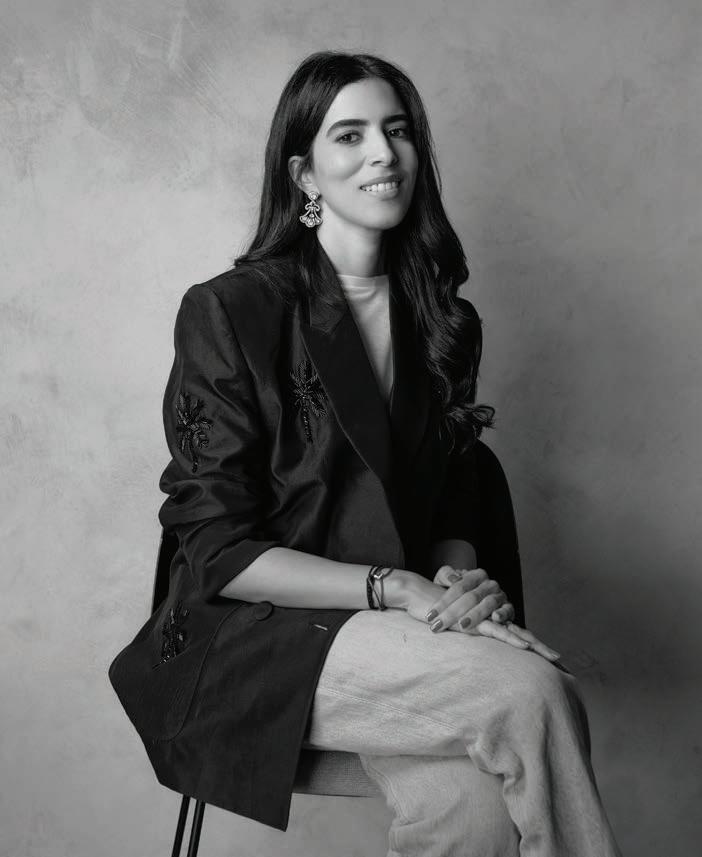
Karima Karmouzi, founder of Ikasu
WORDS: AMINATH IFASA
There’s a particular kind of relief that comes from finally being seen. For Karima Karmouzi, the Moroccan founder of the Dubai-based athleisure brand Ikasu, that realisation arrived not in a boardroom or a boutique, but in the quiet space between a corporate burnout and a calling she could no longer ignore. Before Ikasu, there was corporate Karima – moving to Dubai eight years ago, climbing the ladder at luxury PR agencies and tech giants, handling communications across the Middle East and Africa. She was good at her job. But she was also, in her own words, extremely overwhelmed. The positive shift came when she worked out, and eventually, she wanted to build something around that feeling. Active wear became her medium.
It was during the Covid years that the idea of launching her own brand crystallised. The world was living in leggings, everyone was questioning their life choices, and suddenly wellness became a global conversation. Karmouzi
FIT FOR
Karima Karmouzi, founder of Dubai-based athleisure brand Ikasu, on burnouts, breakthroughs, and designing for the body that global brands forgot
didn’t conduct a market study – she just felt a call. With 5,000 dirhams, she started contacting suppliers, drawing on her father’s contacts in the garments industry while also searching online, receiving samples until she found the right fit. She built the brand while still working her corporate job, always answering yes when the annual questionnaire asked if she was involved in any outside business. When her day job became too demanding to juggle both, she made a choice – and chose Ikasu.
Her first sale remains a vivid memory. An Emirati influencer posted, and her Shopify lit up. In that moment, she knew she had a business. But Ikasu was never just another athleisure label in a city saturated with them. It was born from a very specific frustration, one that anyone with curves in this part of the world might recognise. As someone who works out five times a week, Karmouzi was buying from international brands and found them expensive, but more than that, she noticed they were made for non-Arab figures. They weren’t flattering her curves as an Arab woman. The colour palette was always the same: black, navy, more black. In a region that celebrates colour, the active wear aisle felt like an oversight.
PURPOSE
She wanted to create something happy. She noticed the Arab girl, the brown girl in general, wasn’t very well presented in that space. So, she started with what she needed herself: leggings that were truly high-waisted, without the stitching that creates unflattering lines, padded tops that could function as both bra and top, and coverage for those who don’t want to bare their midriffs in mixed-gym settings. The brand grew organically from there.
Today, the Ikasu customer spans from Dubai to the US, France to Nigeria, all through organic reach and targeted ads primarily in the UAE, with Saudi emerging as the next big market and India following closely. The team is now five strong, with logistics and accounting outsourced, allowing Karmouzi time to focus on what matters: the product and the people who wear it. Collaborations have included women like Muna and Kika, not because of follower counts but because they already believe in the brand and spread a positive mes-
sage around wellness. These partnerships go beyond visibility into genuine co-creation, bringing fresh perspectives on colours and designs that respond to different needs. Listening to customers has shaped the product line in unexpected ways. When women mentioned feeling bloated during their periods and wanting oversized t-shirts, Karmouzi added them to the Ikasu lineup. When customers spoke about riding with drivers and wanting more coverage, the brand adapted. Every t-shirt now carries a positive message, whether it’s “Keep Moving” or the mudras of knowledge, the awakening of the inner eye, always a visual reminder to look inside. The best-sellers remain leggings, t-shirts, and jumpsuits, with the jumpsuit in particular drawing messages from women who hadn’t felt confident after pregnancy until they wore something that finally hugged their body the right way. Business is business, but for Karmouzi its those messages that stand out as reminders of the mission.
Building a brand from the ground up has taught Karmouzi things no corporate job could. She learned that she was capable of doing that much, that some things are difficult for a woman entrepreneur in ways she hadn’t anticipated. She learned that problems always have solutions before they even exist, and that her role as founder is simply to find them. The first time something went wrong, she panicked. Now she just starts thinking about the solution first. To succeed, she believes, you need to be obsessed, because anyone can launch a brand, but the ones who stay are the ones who keep building even when the numbers aren’t showing.
Wellness, for Karmouzi, extends far beyond the physical. It’s about being aligned with yourself, mentally and spiritually. It’s not about being a size extra small, but about feeling good in your own skin, having a strong body so you can carry your children or play with them. Karmouzi says she works out to keep her sanity, not for a six-pack. Success, too, is broader than the usual definitions. It’s being successful in different areas of your life, being close to your family, being aligned spiritually whatever your faith, and financially yes, but if you have no bonds with your family, no love around you, then what’s the point? Karmouzi doesn’t claim to have balance, but with Ikasu she has found harmony.
For Karmouzi vision has always been about representation. About designing for the woman who walks into a gym, catches her reflection, and finally feels a sense of contentment. Its all about creating clothes that work for every activity, every body, every mood. About reminding women that wellness is a daily practice of showing up for yourself. It’s also about showing up for the Arab girl who was never the blueprint, but absolutely should have been.
ONCE MORE WITH FEELING
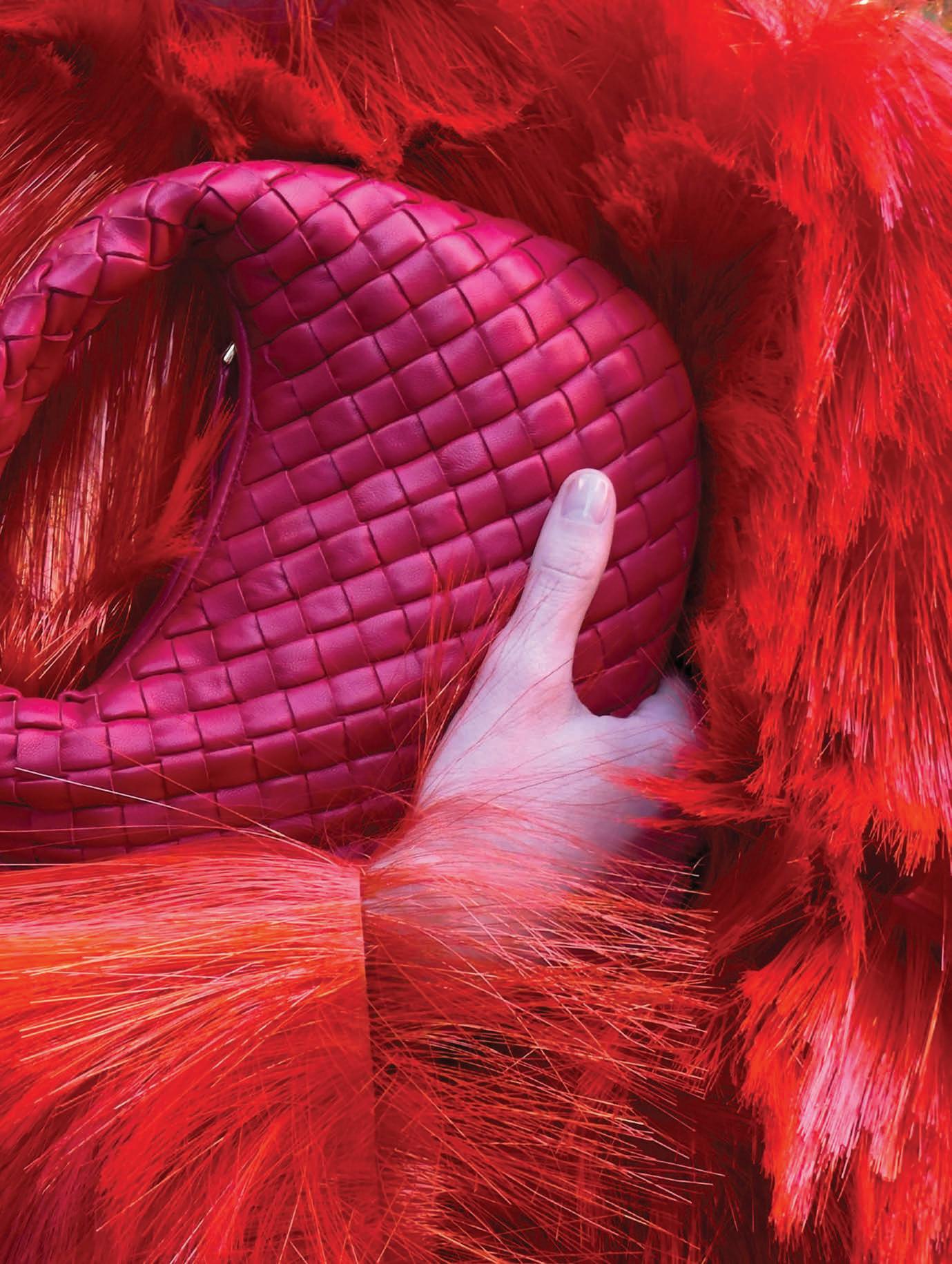
Few accessories carry the quiet authority of the Veneta. With her first evolution of the house icon, Bottega Veneta’s Louise Trotter approaches the silhouette not as something to disrupt, but to deepen. The result is a bag that feels fundamentally (and comfortingly) familiar yet newly dimensional. Its woven leather is now softly padded, giving the intrecciato technique a richer, almost pillowy presence. Still supple, still designed to rest naturally against the body, the new Veneta continues to champion Bottega Veneta’s philosophy of discretion. This is, after all, a luxury house defined by touch, not logos. Trotter introduces a considered range of proportions, from compact to generously XXL in scale, alongside a palette that moves from earthy neutrals to saturated statement hues. It is less a reinvention than a recalibration: a reminder that true icons evolve through nuance, craft and confidence.
MODE
Be bold and…
– Take a page out of designer Jonathan Saunders’ book when it comes to thinking outside the box
– Put the pedal to the metal and follow your dreams like Narin Ammara
– Dive into the new directions of iconic fashion houses
– Invest in regional brands for your Eid ensembles
– Take up space in the big wide world

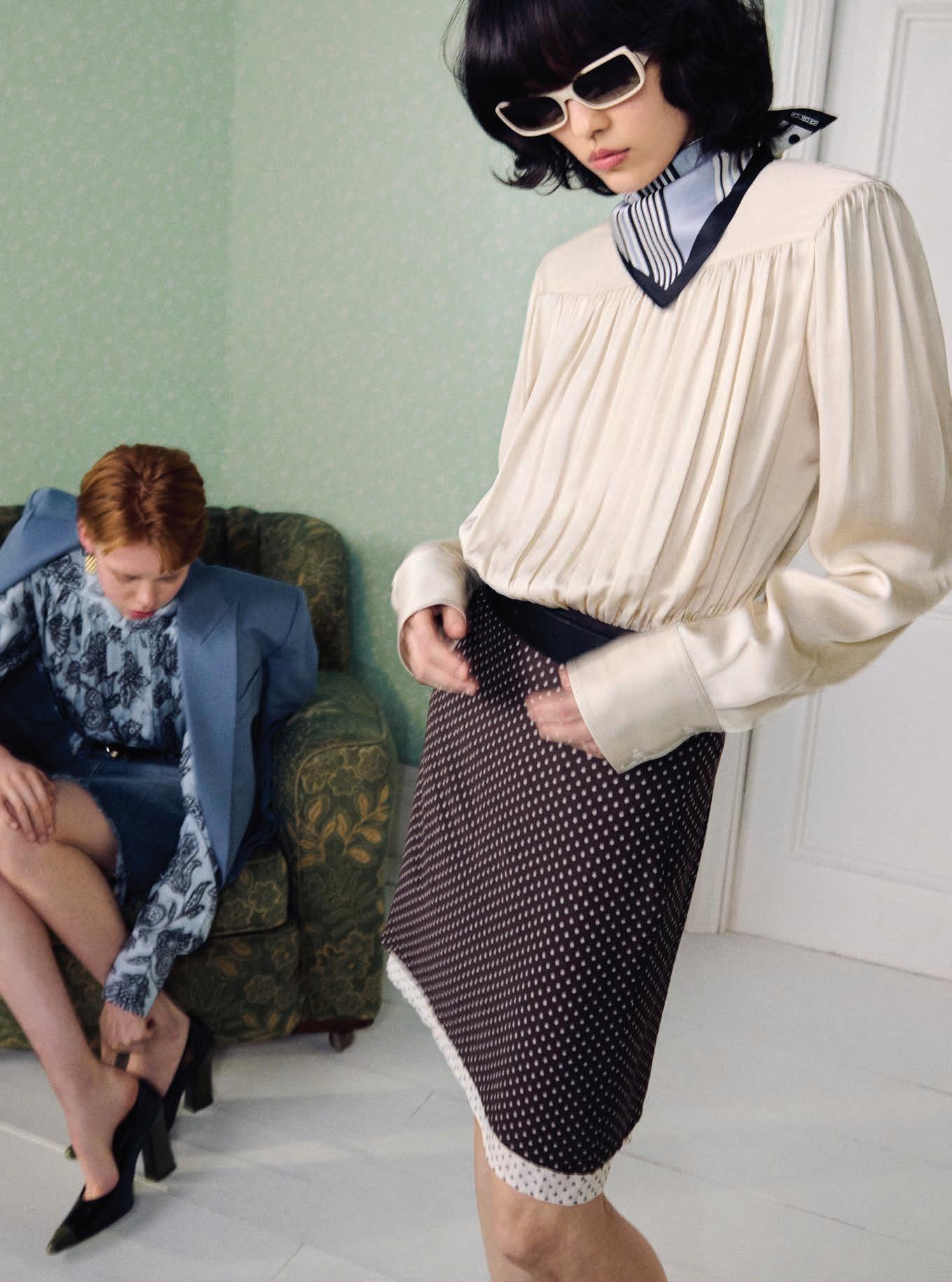
British designer Jonathan Saunders discusses his new chapter as chief creative officer at & Other Stories
WORDS: LINDSAY JUDGE
“Youthfulness is a state of curiosity and experimentation, and that spirit of selfexpression is what drives my creative process”
For more than three decades, Jonathan Saunders has been one of the most recognised names in British fashion. A creative genius celebrated for his instinctive use of colour, print and modern craftsmanship, Saunders built a reputation through his eponymous label, which became a regular at London Fashion Week, and his brand’s success saw him become a goto amongst celebrities and VIPs, dressing figures such as Michelle Obama, Madonna and Kylie Minogue. His work even earned him the prestigious Designer of the Year title at the British Fashion Awards in 2008, cementing his place among the most influential creative voices of his generation. After closing his namesake brand in 2015, Saunders has continued to move between the upper echelons of luxury fashion, holding senior creative roles, including Chief Creative Officer at Diane von Furstenberg, while consulting for some of the industry’s most recognised houses. His appointment as Chief Creative Officer at & Other Stories, announced just a few months ago, signifies a notable shift for the designer into a brand with a more accessible price point, but it also marks an organic evolution of his career.
“I’m a working-class person from Scotland, and that sense of accessibility matters – it mattered to the people I grew up with and still matters now,” he tells Emirates Woman. “When you work in luxury for a long time, it’s easy to become detached from the person you’re designing for. One of the reasons I took this role was because I genuinely believe the world needs a brand at this positioning – one that values expression, quality and craft without alienation.” & Other Stories has quietly cultivated a loyal global following since its launch in 2013. Recognised for its modern tailoring, considered design language and accessible positioning, the Scandinavian house sits between aspirational and accessible, delivering thoughtfully crafted, design-led collections at a more attainable price point. With his debut collection for Spring 2026 set to mark the beginning of a renewed creative direction, Saunders brings a perspective shaped by decades of working in luxury, now translated into a more obtainable offering. “Whenever I take on a project like this, it’s essential that it feels believable,” he explains. “From the very beginning, & Other Stories captured something real: a desire for fashion that feels expressive and individual – pieces with personality that
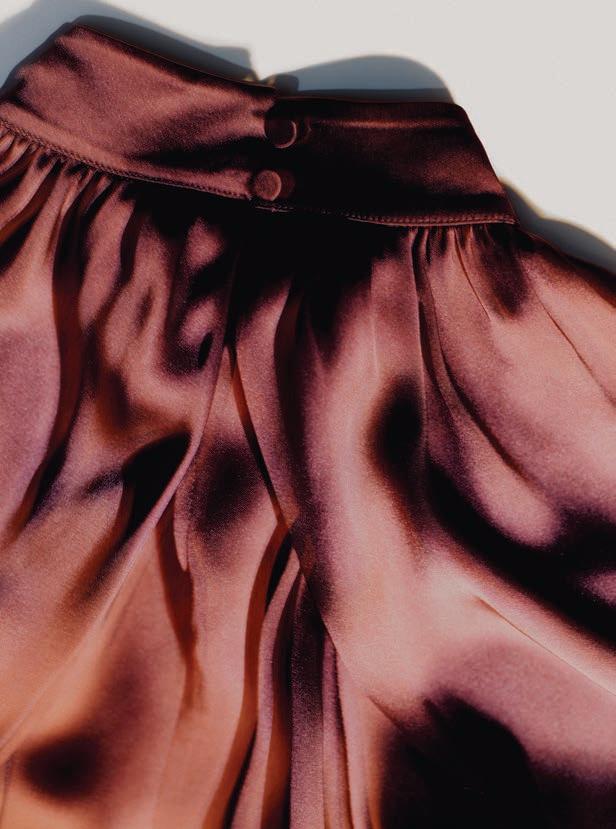
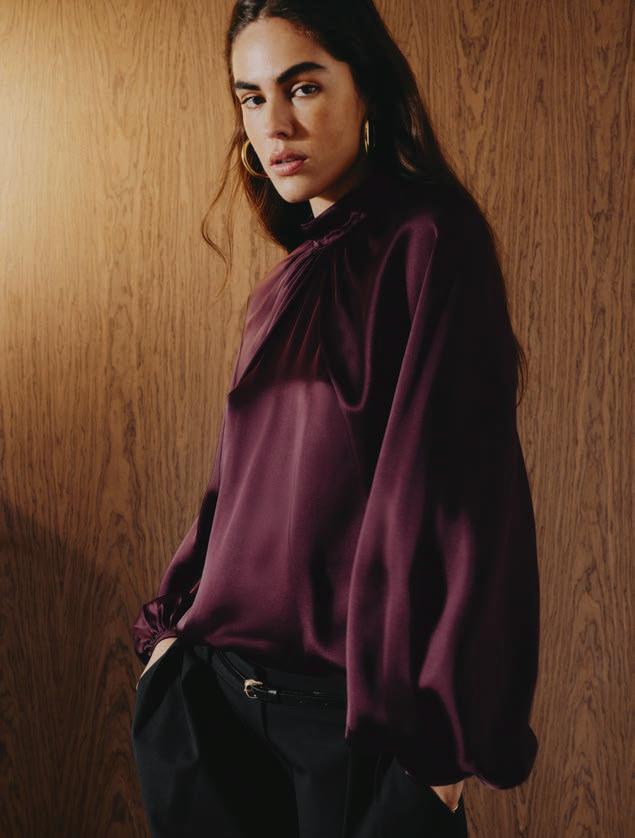
still fit into everyday life.” This ethos is the basis of the Spring 2026 collection, described by the brand as, “a new wave of everyday dressing shaped by individuality and ease.” Drawing on London’s creative energy, the collection reimagines familiar wardrobe pieces through clean tailoring, fluid silhouettes and subtle contrasts in proportion and texture. “There’s a strong influence from London – the 80s and 90s, new wave, youth culture – a sense of dressing with intention, but also with rebellion,” Saunders notes. “Sharp tailoring mixed with denim, polish mixed with ease. Colour was vital. Those vivid shades bring optimism and energy, balanced against neutrals to keep things wearable.”
This is a wardrobe defined by expressive dressing that remains adaptable to daily life. Foundational pieces range from exaggerated-shoulder trench coats to bias-cut silk dresses reworked with tie motifs, cocoon silhouettes paired with barrel-leg trousers and cashmere twinsets layered with ease. “I love that space in between binaries,” he says. “Tailoring with softness. Graphic silhouettes combined with fluid fabrics. Expressive clothing should still feel effortless. That’s how you empower people to wear it, to live in it.”
His thought process is reflected in the fine materials used to create the collection, where tailoring is rendered in fine Italian wool, knitwear is constructed from merino and cashmere, and pure silk is used to emphasise fluid, feminine shapes. “I think one of the biggest misconceptions at present is that & Other Stories is simply another high-street brand – it isn’t,” he says. “We provide carefully considered accessible premium fashion, applying the same principles you’d expect from luxury design: sourcing the best fabrics possible, refining the cut, obsessing over construction.” Saunders’ recent visit to the Middle East offered further insight into how the brand’s renewed direction may resonate with women in the region. “Visiting the Middle East in my new role was incredibly inspiring,” he says. “It had been a long time since I was last there, and what struck me immediately, again, was the confidence and in-
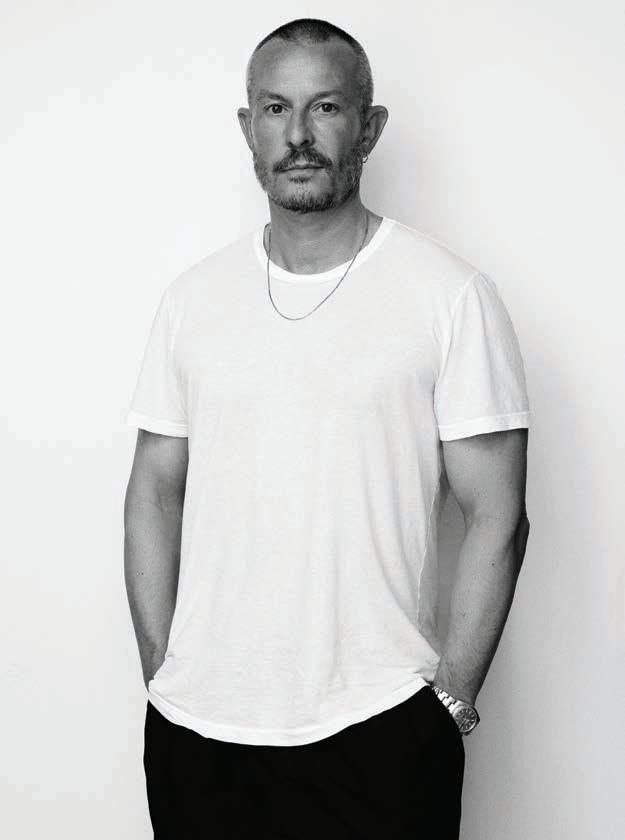
Jonathan Saunders, & Other Stories chief creative officer
dividuality in how people dress – there is a real appreciation for style as self-expression, mixing heritage with modernity, playing with silhouette and colour in a way that feels both intentional yet effortless.” With & Other Stories continuing to expand its presence across key markets, including the UAE, this seems like an important moment for the brand in the region. “The people I met were warm, curious and genuinely engaged with creativity, and there’s a deep understanding and appreciation of quality in the region that aligns so closely with what we’re doing at & Other Stories,” he adds.
Reflecting the Youthquake theme of this issue, Saunders’ creative approach is particularly aimed at capturing moments in time for women across generations, rather than tailoring products to the generations themselves. “Youthquake is a great explanation that taps into something I’ve always responded to: those moments when young people reshaped culture through self-expression,” he says. Growing up in the late 80s and 90s, he was drawn to London’s creative scenes, where fashion became a means of reinvention. “I was fascinated with scenes like London’s Blitz Club – spaces where individuality was everything – everyone was inventing themselves in real time, no constraints.”
Rather than referencing these influences literally, the collection translates that spirit into contemporary form. “I took
inspiration from the contrasts of Bowie’s Thin White Duke era – the tailoring, the tension between precision and fluidity – but never in a literal, nostalgic way. Instead, I wanted to transform it to become an attitude. Staying connected to youth culture today isn’t necessarily about chasing an age group – it’s about staying connected to a mindset,” he explains. “Youthfulness is a state of curiosity and experimentation, and that spirit of self-expression is what drives my creative process.”
Storytelling continues to play a central role in this vision, shaping not only the garments themselves but the broader narrative of the brand. “The brand was founded on that idea, and I believe deeply in creating collections that tell stories – stories that empower customers to express themselves in their own way,” he says. “That means not only designing the clothes, but also offering inspiration around how to wear them, how to style them, how to make them personal.”
Jonathan Saunders’ debut collection undoubtedly marks the beginning of a new chapter for both the designer and the brand. Defined by a considered approach to growth and a renewed emphasis on designled dressing, it is bridging the gap between aspiration and accessibility. As Saunders explains, expressive design need not come at the expense of wearability. “It’s about feeling dressed, but not constrained,” he says simply. “Clothing as a kind of empowerment – expressive, protective, but still effortless.”
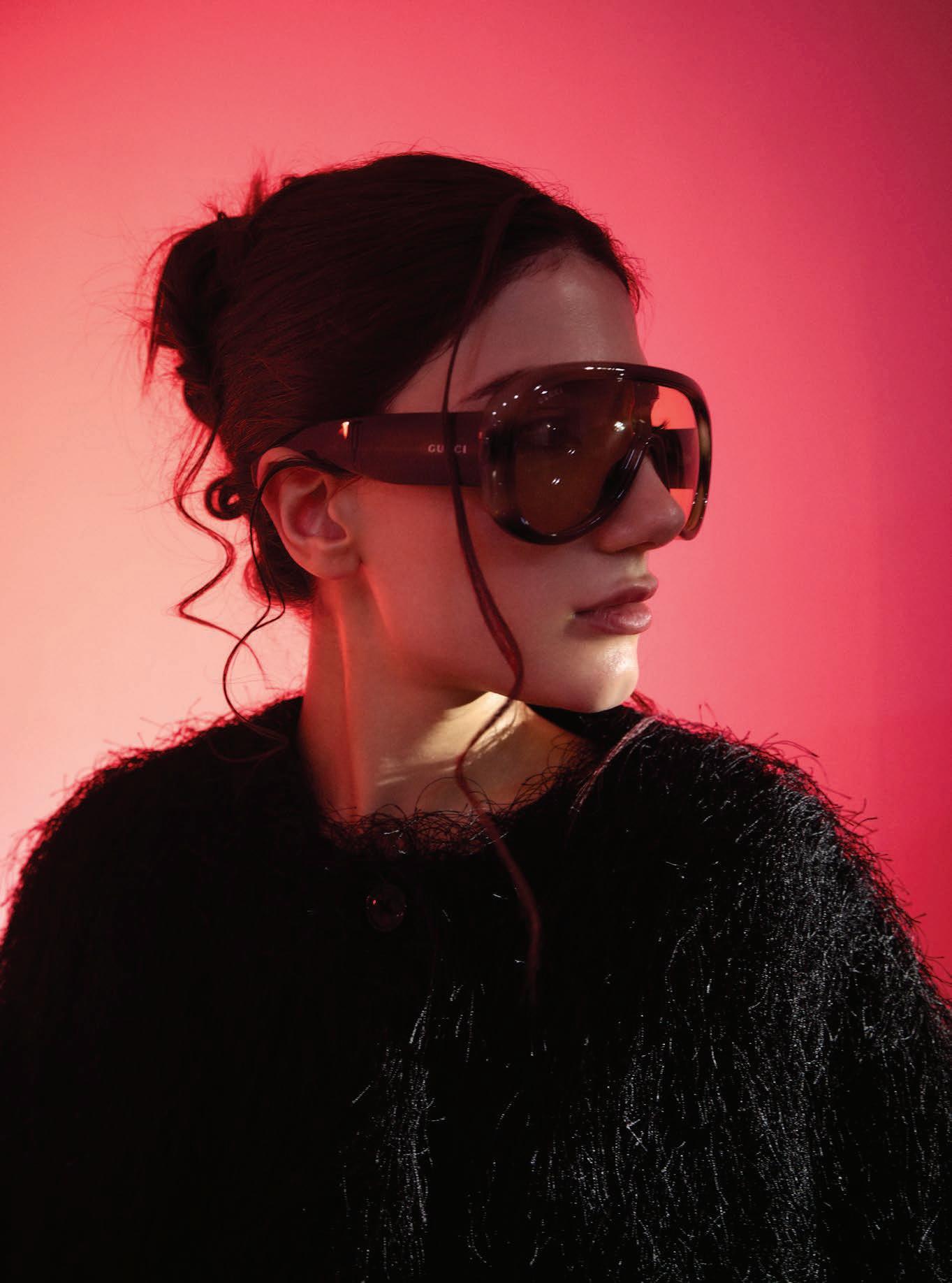
FULL THROTTLE
Narin Ammara, the founder of Narins Beauty, is in pole position to dominate the next era of the beauty industry –backed by her 50 million follower fan base
This page: Outfit: Loulou de Saison jacket available at Bloomingdale’s Middle East and Gucci Eyewear sunglasses
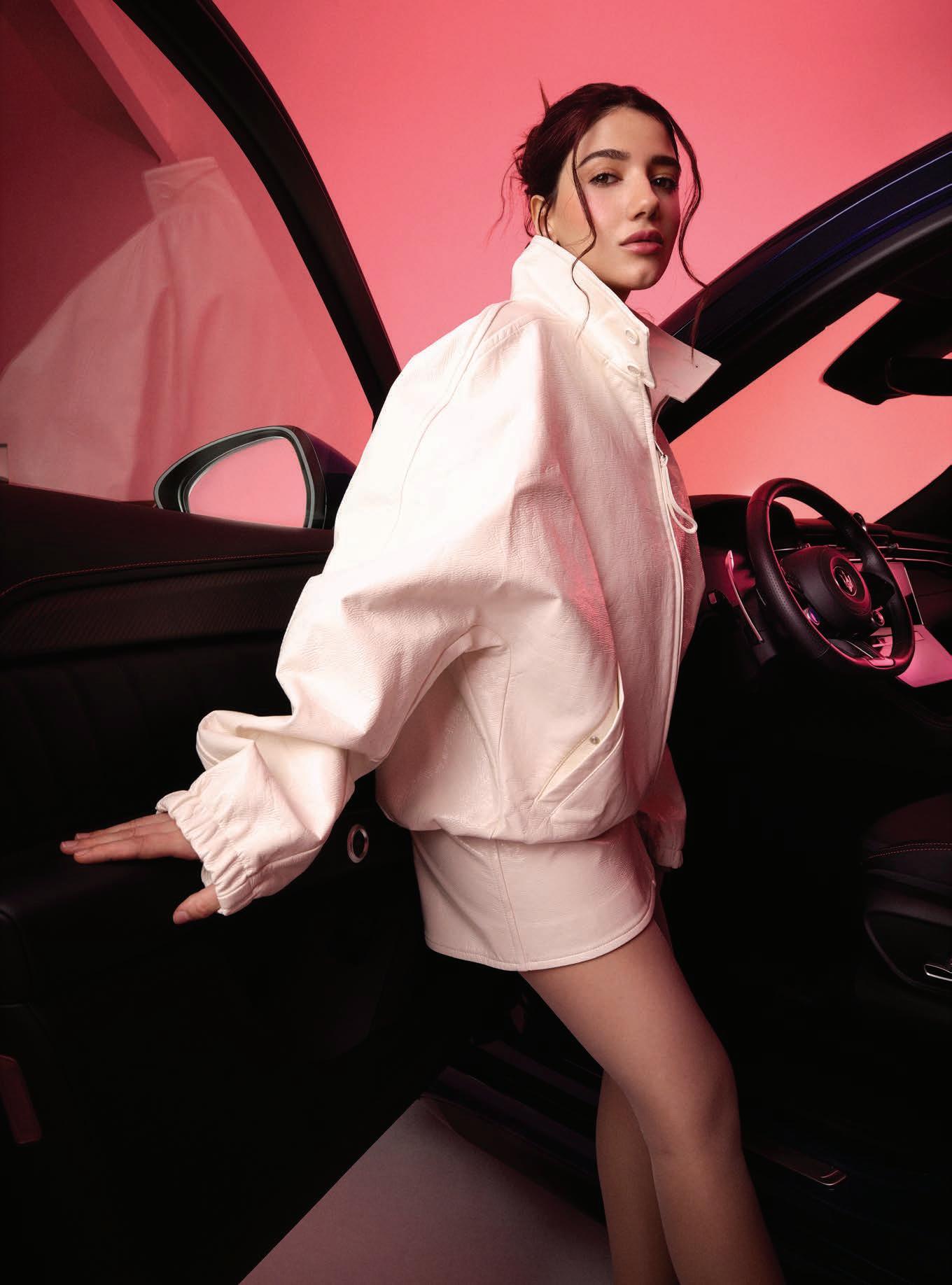
Right page: Outfit: Courrèges jacket and skirt available at Bloomingdale’s Middle East
PHOTOGRAPHER: VAUGHAN TREYVELLAN
WORDS: JESSICA MICHAULT
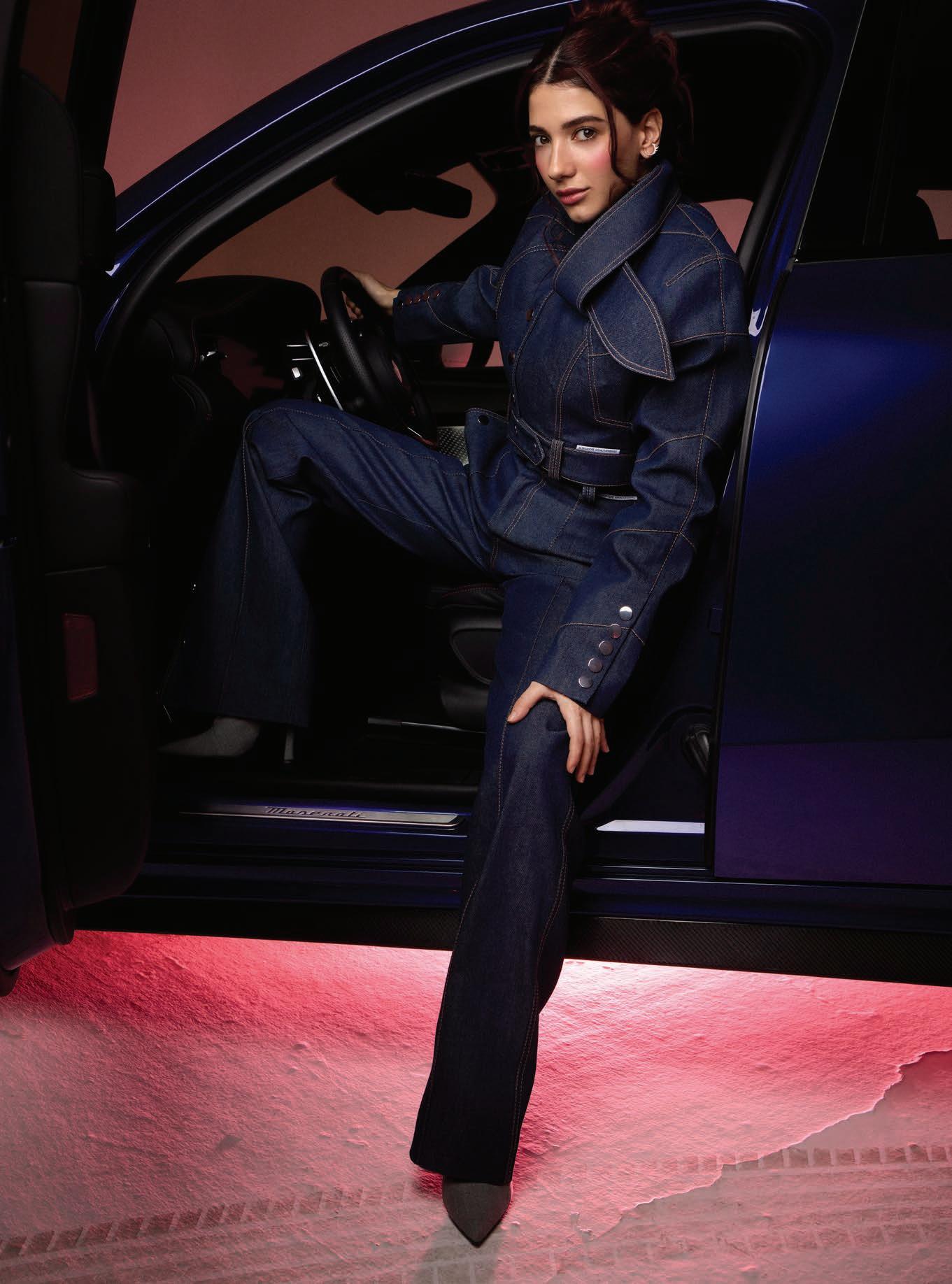
Right page: Outfit: Aleksandre Akhalkatsishvili available at Fabric of Society, Magda Butrym pumps, and Kismet by Milka earring
Ithink I definitely manifested it because at the start of the year, I told my friend ‘I want to do something with a car.’ It’s something I’ve never done before. So when we got the call, we were like ‘oh my god it worked!’” recalls Narin Ammara about teaming up with Maserati to shoot this month’s cover.
The match feels fitting for the Youthquake issue as Ammara is clearly pushing the pedal to the metal in terms of her career. Having recently launched her own beauty line – Narins Beauty, named after her massively successful personal brand. And already her direct to consumer business model has become quite the disrupter in the beauty space.
With more than 50 million devoted followers across the spectrum of social media platforms, the Swedish-Syrian entrepreneur has diligently been building a global community since she began, at the tender age of 15, uploading makeup and hair tutorials to YouTube. A move that started as something of a lark in 2014. Spurred on by her younger sister Sherin, who recognised Ammara’s innate gifts and a skill set already well formed, thanks to the many other supportive women in her family.
“My mom’s family is huge and when I was growing up I would spend maybe six months a year with my aunties in Syria. [They] had a hair salon so I would convince my mom to take me there and I would beg her to let me style someone’s hair. I would spend hours there doing hair and makeup. It was actually my dream growing up to one day open my own hair salon,” recounts Ammara about how she first was drawn to the beauty space.
But initially when she launched Narins Beauty on YouTube, Ammara was really looking for a way to feel less isolated. She had just moved from Syria to Sweden, because of the war in her home country, and she was feeling isolated in an unfamiliar land – looking for a way to connect with people. “I didn’t really speak the language. It was just something completely new,” shares the budding beauty mogul. “And we were basically five kids with my mom but we were just feeling super lonely because we had no friends or family and the only thing we had was our iPad and Internet. That’s what helped us connect with the world.” It is perhaps this reason that Ammara feels so personally invested in supporting her community. She is often sending DMs, responding in the comments section on posts and generally continues to try and be as hands on as she can, while she is simultaneously building her beauty empire. She admits that when she was starting out she didn’t fully realise the impact she was having on her growing community. She just interacted with them from a place of authenticity and transparency – becoming a confidante to millions.
Ammara remembers turning to her mom when girls would reach out to her asking for advice about how to deal with hate comments, or bullying, in between requests for specific make-up tutorials. “It was definitely scary for me to put myself out there in the beginning because I was like, it’s just weird to post a video teaching girls how to do her makeup or hair,” she says about those early days as a content creator. “But if it could help one girl, then it’s worth it.”
Truth be told, Ammara feels she has learnt just as much from her community as she has mentoring them over the years. “They taught me a lot of things,” she says softly. “How to accept people for who they are. They taught me how to love people.” And they also help hone the direction of, first her content, and now her business. Communicating directly with her about the things they loved most, what they wanted to see more of, and also more simply, what they felt they were missing when it came to the beauty products they were using. Ammara sees her brand as one that caters specifically to the needs of her generation. After all, this is a woman who, even though she is just 25, has already spent a decade trying and promoting the products of hundreds of beauty brands. Having collaborated with everyone from L’Oréal Paris and NYX to Maybelline and The Balm during “
“THE ROAD WASN’T EASY. BUT I FELT LIKE DUBAI WAS THE RIGHT PLACE FOR ME, BECAUSE THE OPPORTUNITIES HERE ARE SO BIG”
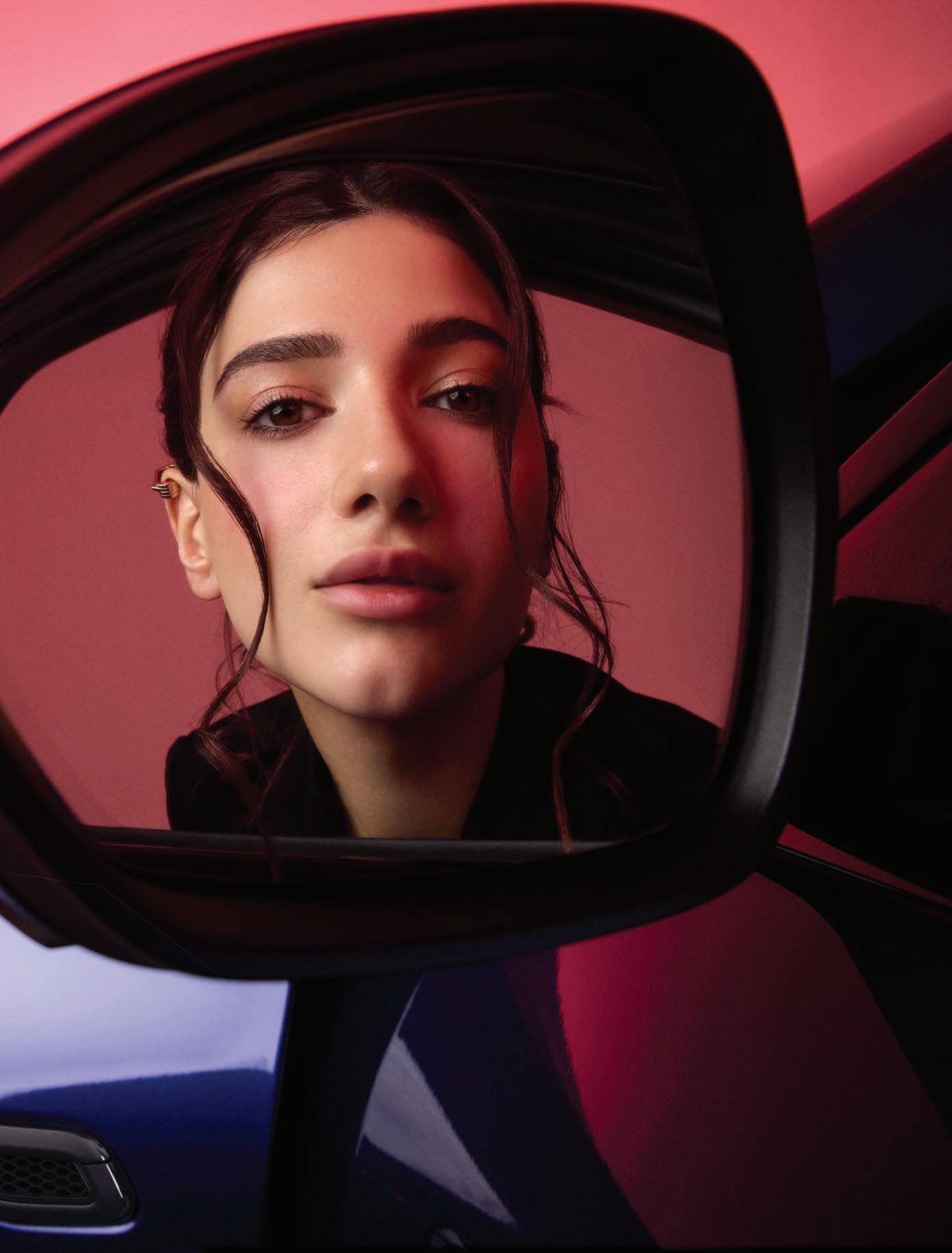
Jewellery: Repossi ear cuff


“I DECIDED THAT NO MATTER HOW SCARED I WAS ABOUT SOMETHING...
I WAS NOT GOING TO LET MY FEAR GET IN THE WAY OF ME TRYING NEW THINGS, AND GROWING AS A PERSON”

Above: Outfit: Rotate top available at Harvey Nichols Dubai and Charlotte Chesnais jewellery available at Comptoir 102;
Right page: Outfit: Loulou de Saison jacket available at Bloomingdale’s Middle East and Gucci Eyewear sunglasses
her career. And all that time she was absorbing what she liked and didn’t like about each new product she was trying. Learning about formulas, the importance of textures and the different properties each ingredient added to any mix.
“I kept saying ‘if only I could create something that was super practical and at the same time nourishing for the skin, that would still look good on your face,” remembers Ammara of those early years of product ideation. She wanted to build a brand that reflected the unique beauty priorities of her peers. Those looking for uncomplicated beauty products that could have multiple uses and were fundamentally skincare based formulas –but that had cute packaging to boot. "Because we care about packaging,” Ammara admits with a laugh. “We want everything that’s in our hands to look cute and be photogenic, because we care about content a lot too.” It’s telling that when Ammara is asked about when she feels most beautiful, her answer is disarmingly simple: “When I’m healthy, when I’m confident,” she says. “For me that’s beauty… sometimes you can wear a full glam and not feel beautiful. Beauty is about confidence and it’s about energy.”
Energy. The word comes up again and again in our conversation. It informs how she creates, how she leads, and how she is building her namesake brand. For Gen Z, she believes beauty should be intuitive. “I wanted to create products that are just easy to use. Not complicated, because I believe beauty is not complicated,” she asserts. So far this has translated to a collection of four key makeup products: Six Bun Bun lip jelly tints, the Aura cooling lip gloss and – launching this month – the XOXO lip kit, which features a new duo of three lipsticks and 3 lip liners. “I’ve always believed in building a full lip wardrobe – something for every mood, every moment,” Ammara says. “The XOXO lip kit is our take on the iconic matte lip – high-impact color, but softer, more wearable, and infused with skincare so it feels as good as it looks.”
Ammara’s voice lights up about already bumping into people in public – less than a year after the launch of her brand – who will just pull her aside and show her one of the Bun Bun lip jelly tints they always have in their bag. She admits that more than once she has asked her husband, the investment banker Rami Elias Samo, to pinch her because it’s hard for her to fathom that her dream of starting a beauty company is finally a reality, and people are embracing it. “I can’t believe a human being is holding a product that has my name on it and they actually like it,” she says. “I was honestly really afraid to put something out there, because I had a lot of self-doubt…a lot of ‘what ifs,’”she confesses. So how did she overcome that fear – that lurking impostersyndrome?
“I didn’t,” admits Ammara. “ But I made a promise to myself to not let my fear get the better of me and keep me from evolving. So I decided that no matter how scared I was about something I was not going to let my fear get in the way of me trying new things, and growing as a person,” she adds. Noting that having the right people by her side has also made a huge difference when it comes to battling her fear. That always being supported by her husband, her family, and her team gives her the sense that, even when something might not turn out as planned, that everything will be ok in the end.
Fear, for example, didn’t stop her, in 2019, from leaving her family in Sweden to put down roots in Dubai. She was among the first creators to move from Europe to the UAE at a pivotal moment for the region’s influencer economy. “The road wasn’t easy,” she remembers. “ But I felt like Dubai was the right place for me, because the opportunities here are so big.” Still, she admits that it took time for her to be taken seriously by the beauty industry.
That legitimacy was earned through dedicated effort, consistency and time. “Just because something looks easy doesn’t mean it’s easy,” she says about the misconceptions some still have about the work that she has done as a content creator and now as a brand founder. “But you should never compare your journey with someone else’s, and never let fear stop you from doing what you’re passionate about.”
Interestingly when it comes to the careers of people Ammara admires the name that comes first to her lips isn’t another leader in the beauty space, or even another woman. Its…drum roll please… Tom Cruise. “I just love how brave he is,” confesses Ammara. “I love how, when he puts his mind to something, he just gets it done. He doesn’t let anyone do anything he wouldn’t do. He is just fearless.”
After talking about her admiration of Cruise on her channels, the actor’s team reached out to Ammara directly and invited her to meet him at the premiere of his latest Mission Impossible movie. “It was a dream come true,” she says wistfully.
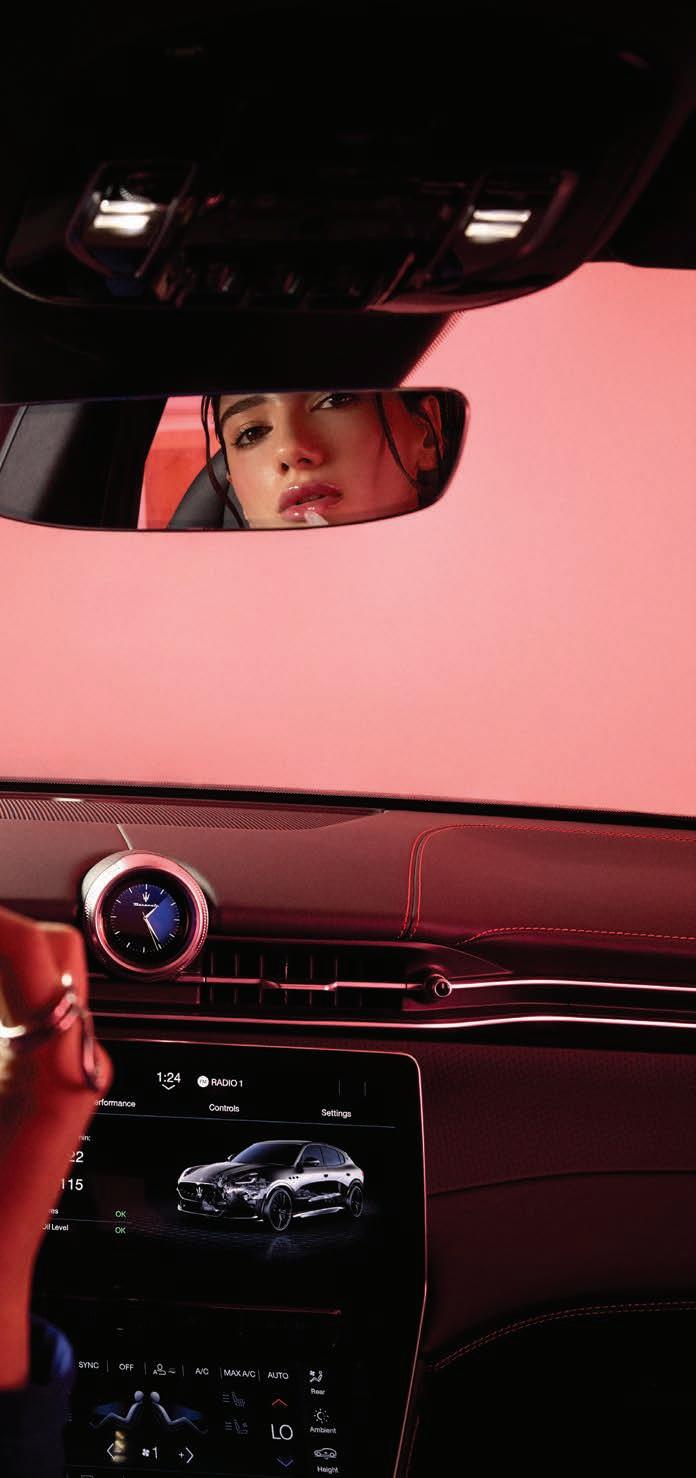
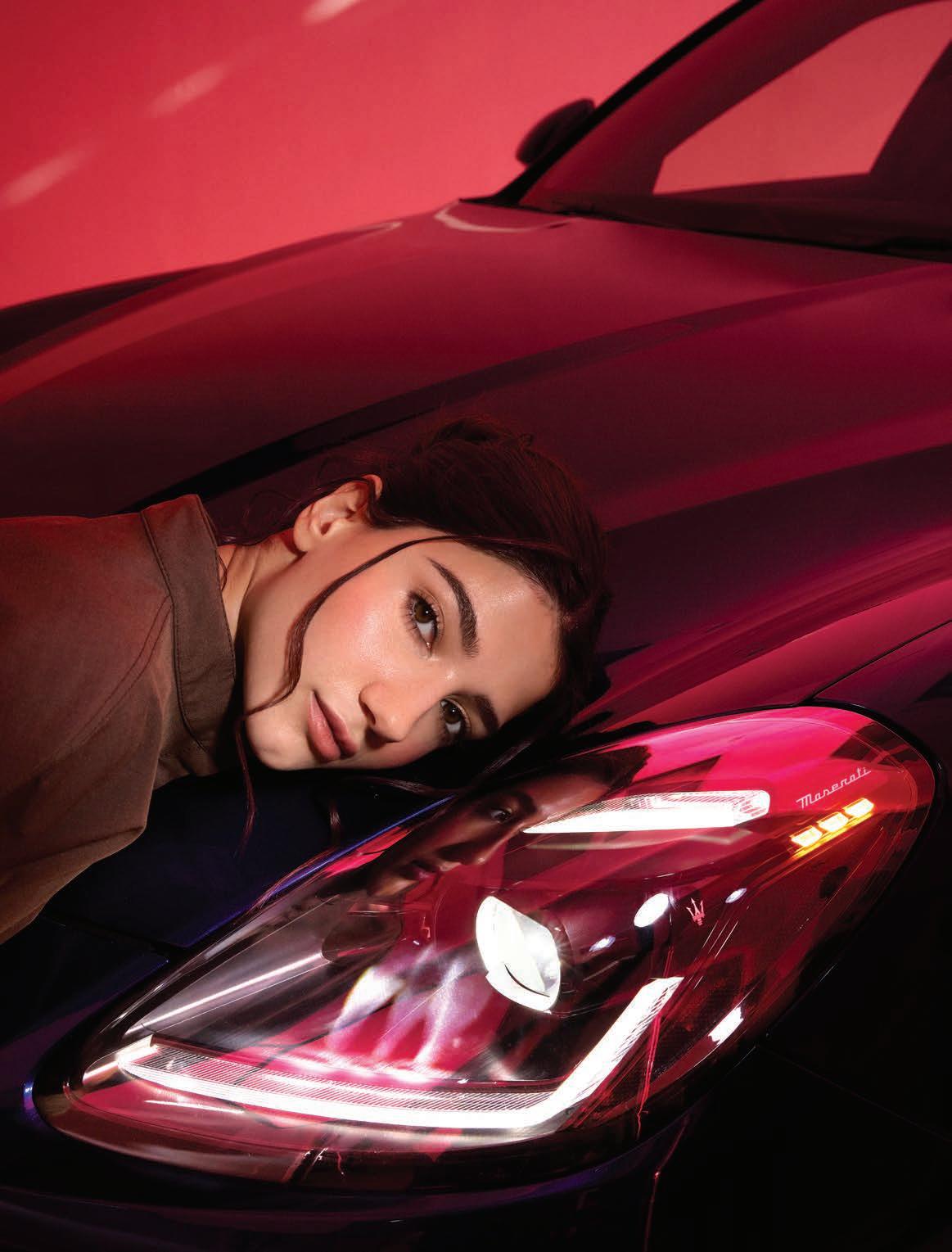
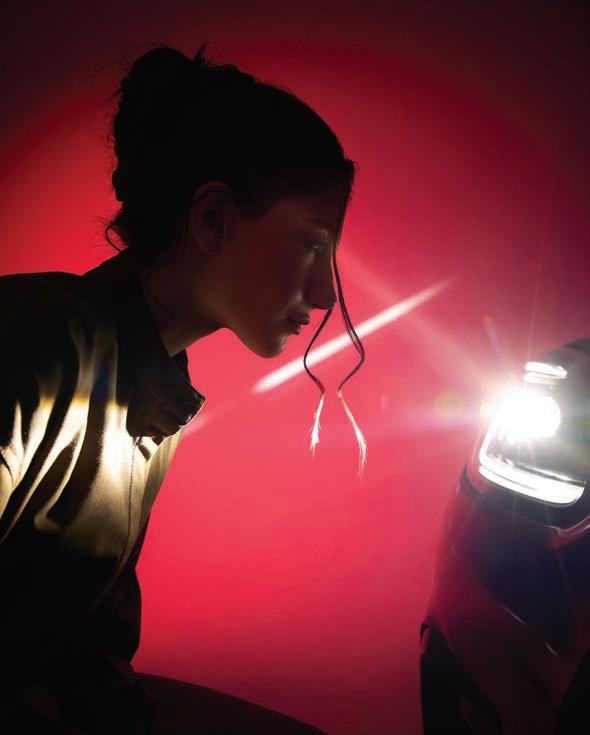
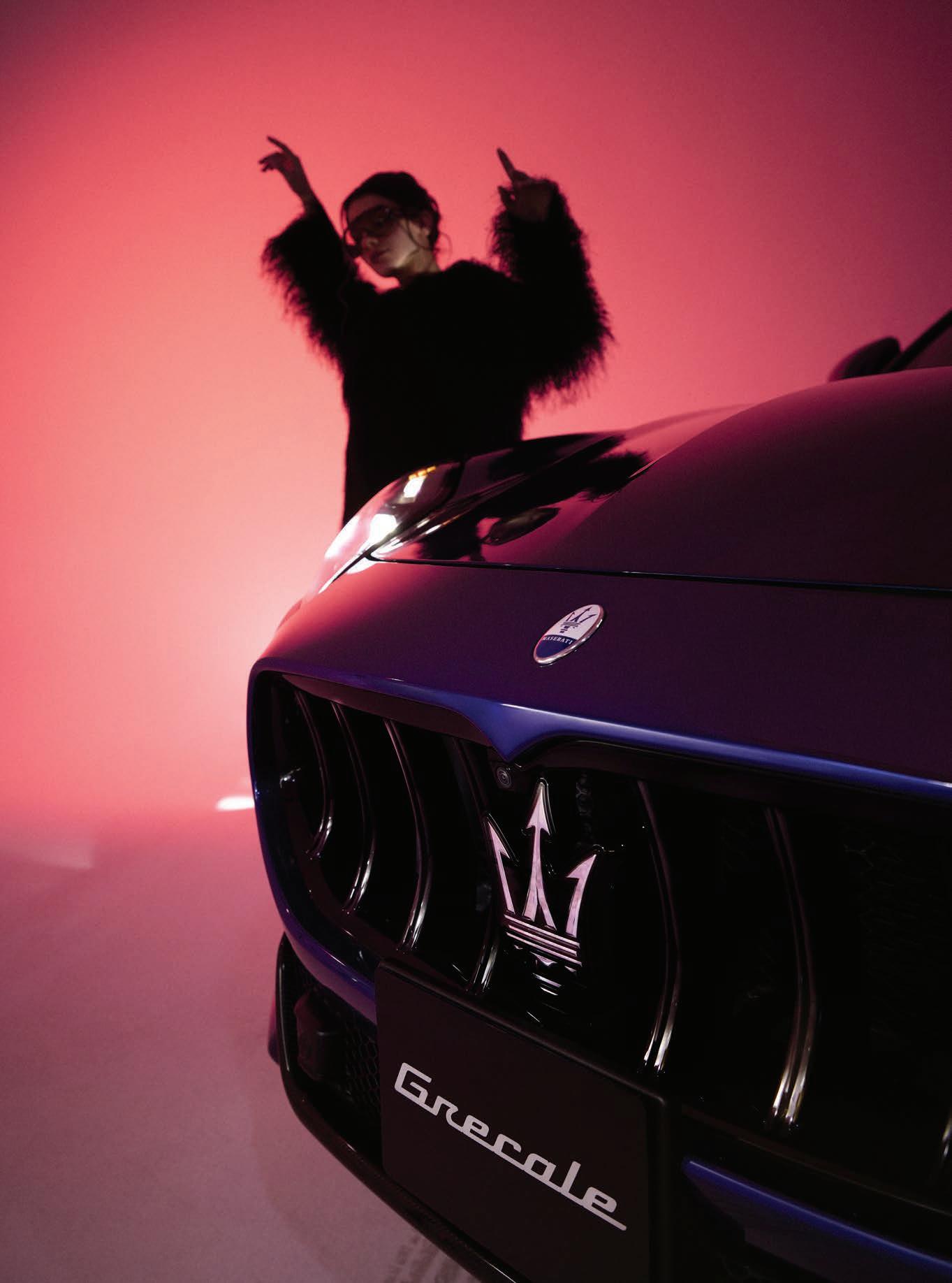
That “Tom Cruise” fearlessness could definitely be felt on the set of this issue’s cover shoot. Ammara found herself experimenting with all sorts of new posing positions as she explored every angel of the bright blue Maserati. She was in a bit of uncharted territory and couldn’t rely on all of the classic beauty poses that she knows like the back of her hand – except, perhaps, when she used the rearview mirror of the Maserati to apply a bit of her Aura lip gloss.
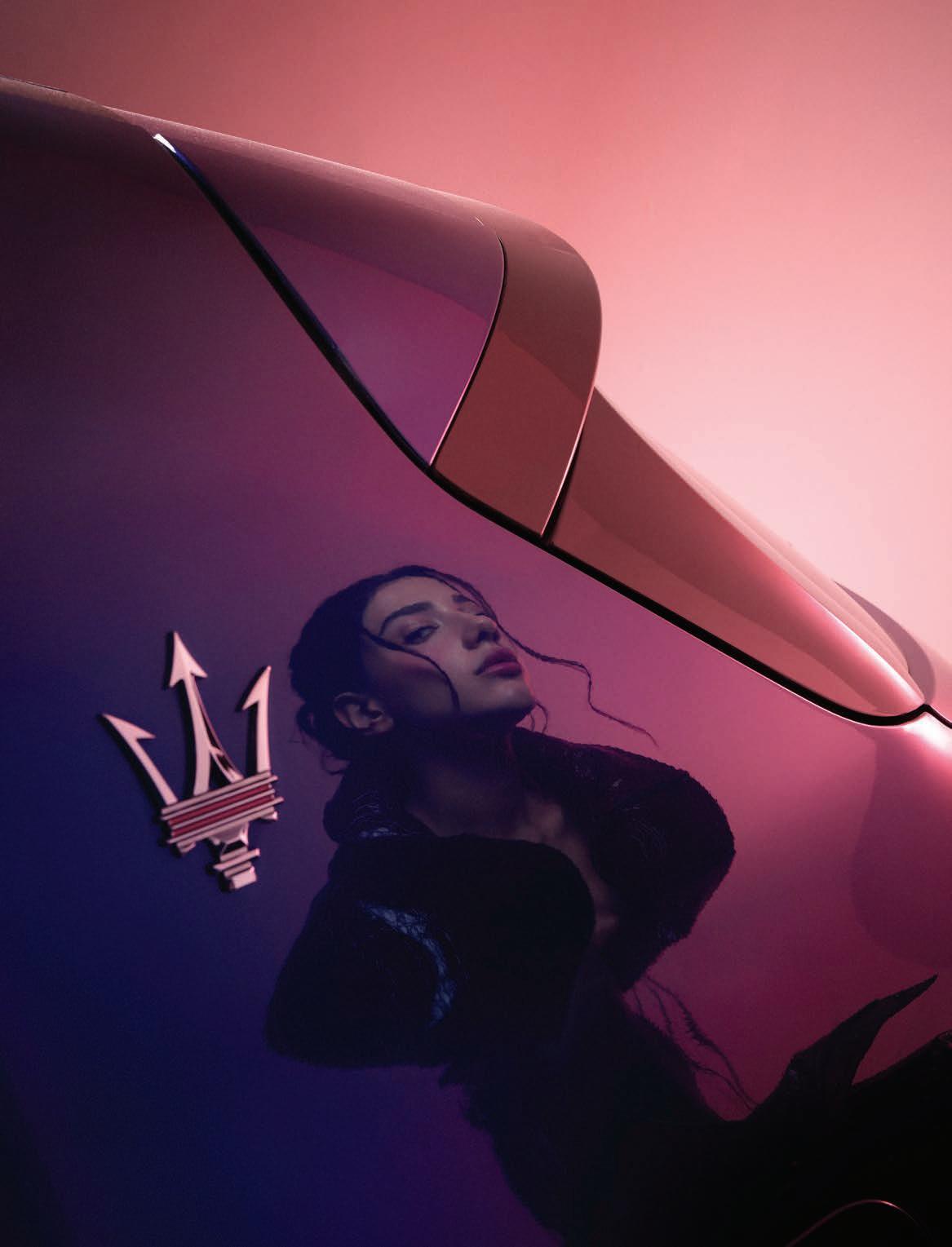
But she was game to try anything. She stared into the bright white headlines to get the perfect shot, laid across the bonnet at just the right angle so her profile lined up with the logo, and she endlessly opened and shut the trunk, for a bit of clever behind-thescenes footage. A consummate professional, even when she was outside her comfort zone.
Ammara, who launched her beauty brand and got married at the end of last year, is clearly at the starting line of a major new chapter in her life. But for this pint-sized power house it all comes down to one simple thing. “As long as you do something you love, no matter what it is, you will end up in a good place.”
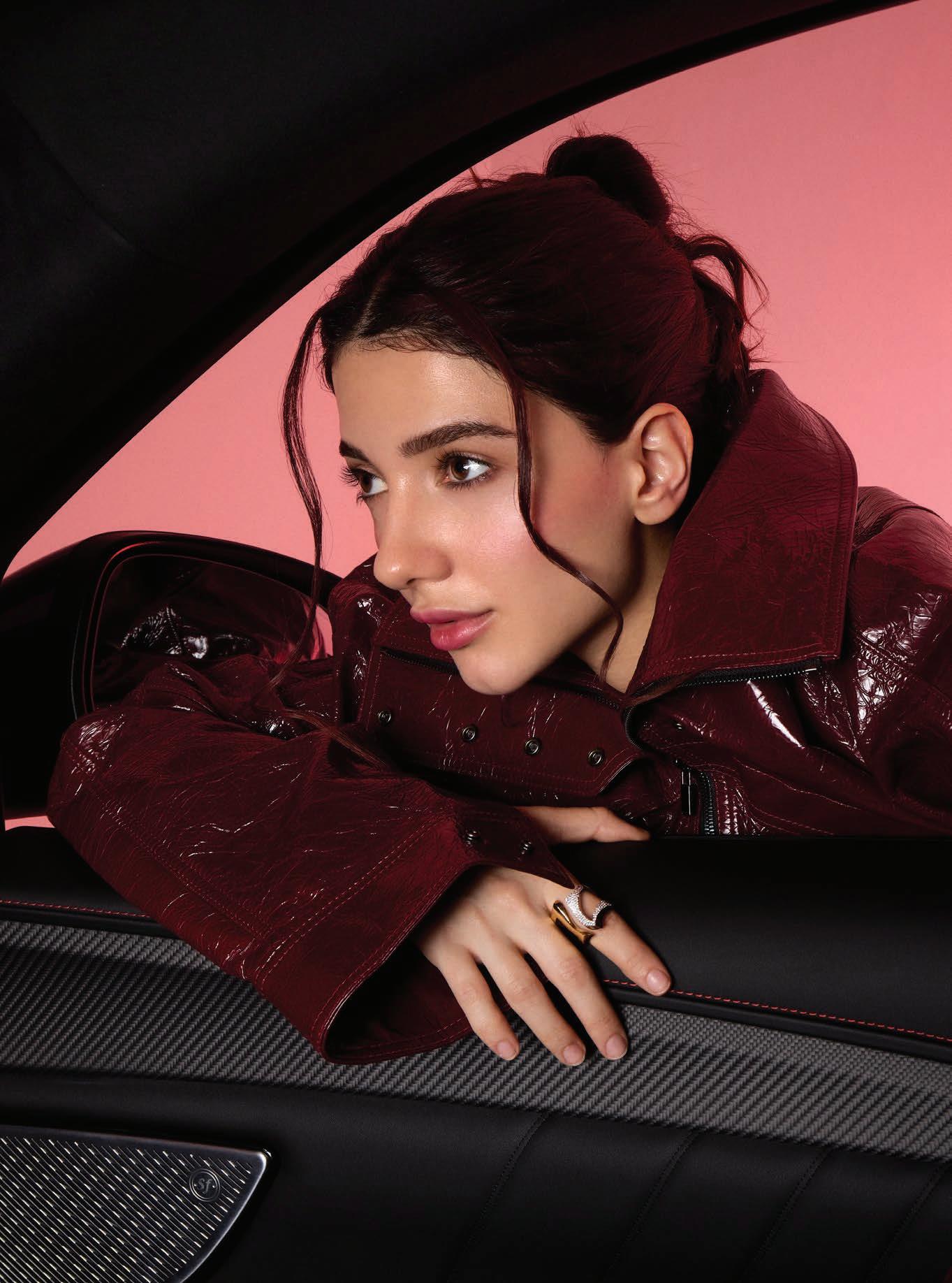
Talent: Narin Ammara
Fashion Editor: Camille Macawili
Makeup: Jean Kairouz
Hair: Kalina Kocemba
Videographer: Katerina Shirshova
Outfit: Magda
Butrym jacket and Kismet by Milka ring
N O U V E L L E
V A G U E
SENIOR EDITOR: JESSICA MICHAULTPHOTOGRAPHER: ARTHUR DELLOYE
With debut collections from a slew of designers, the Spring/Summer 2026 season is a sartorial seismic shift for the industry. Which means new visions for old houses, but also tried and true brands proving why they deserve to stay on top
Right page: Sunglasses: Bottega Veneta; Shirt: Tangtsungchien
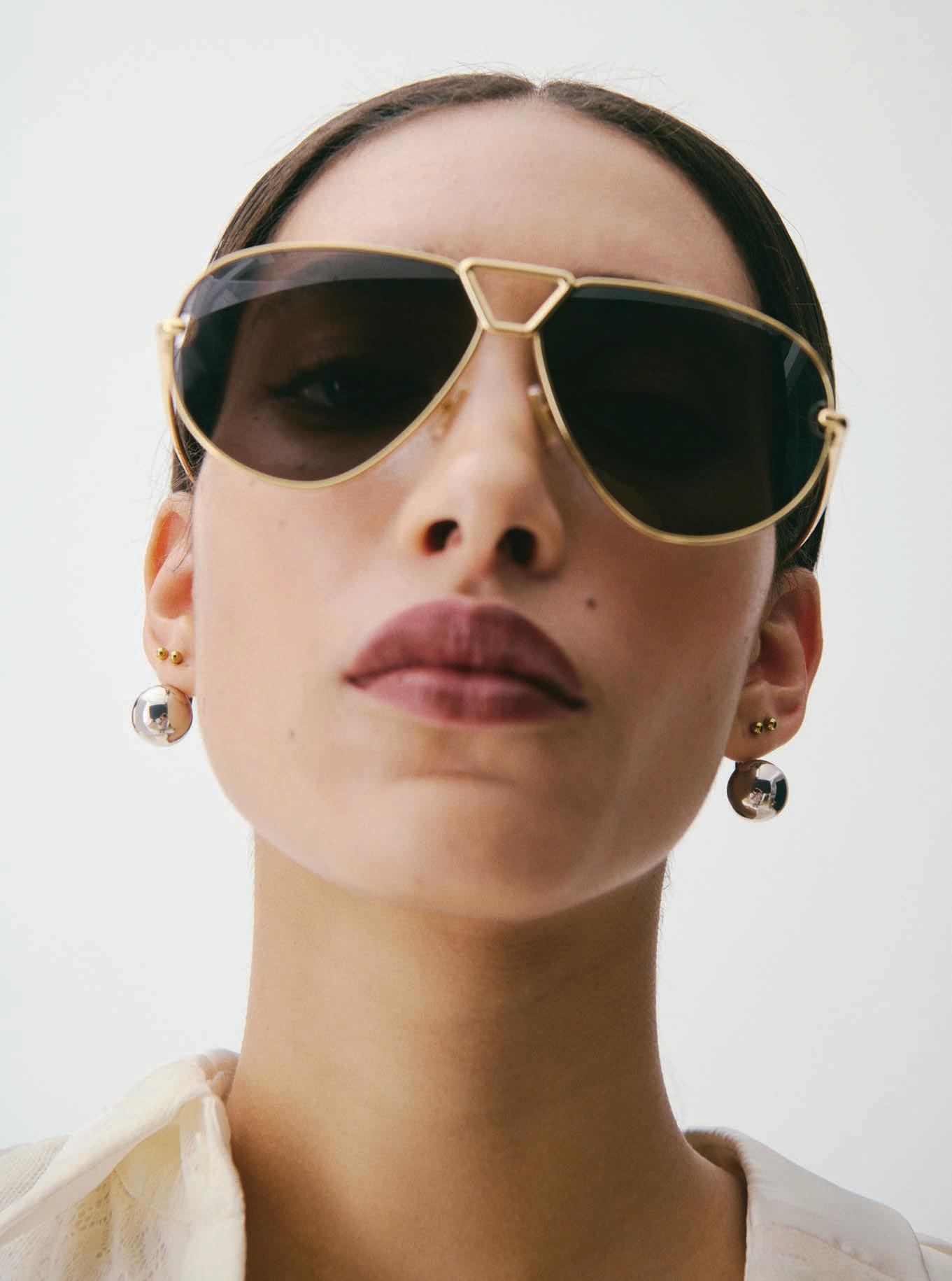
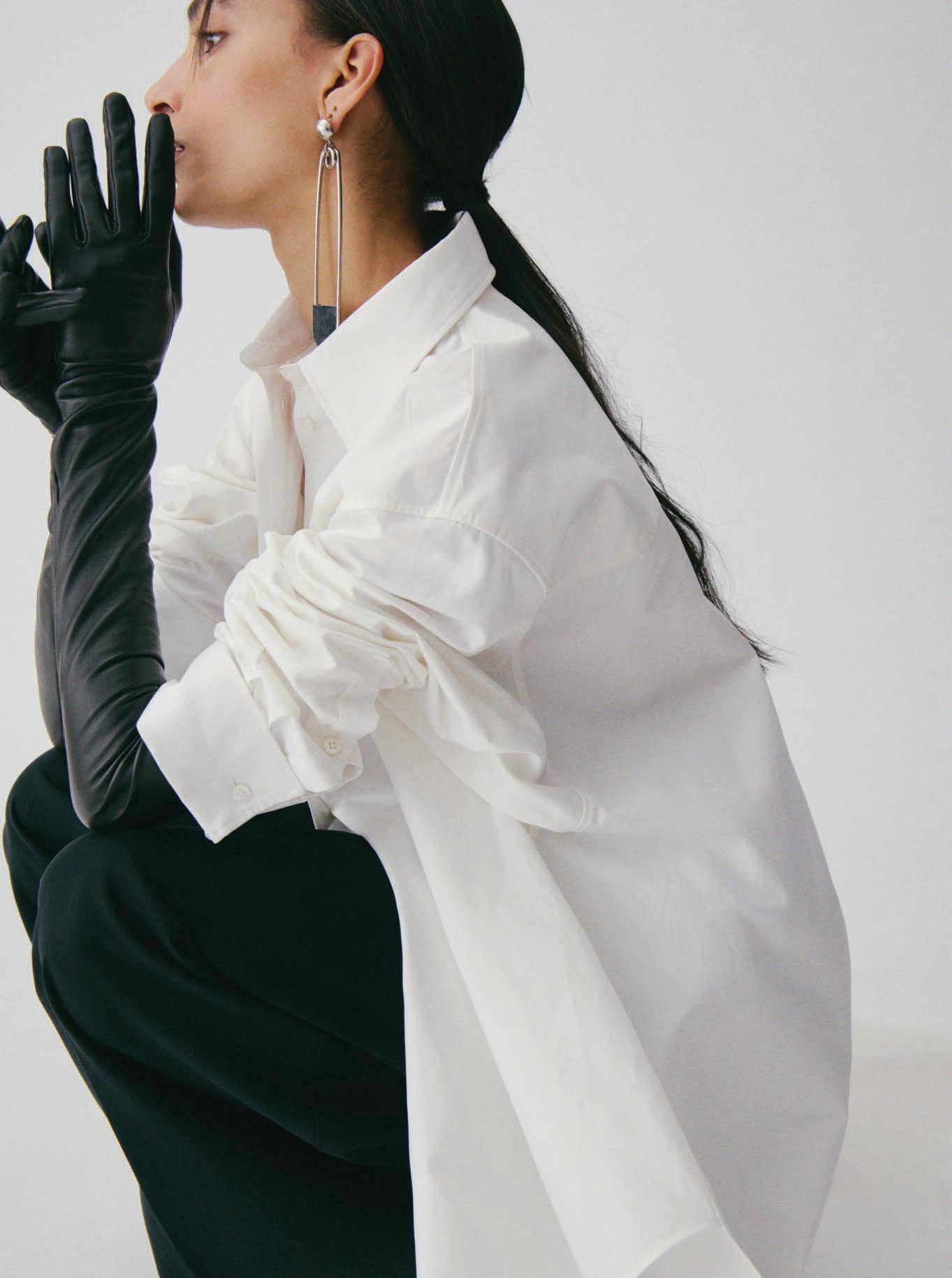
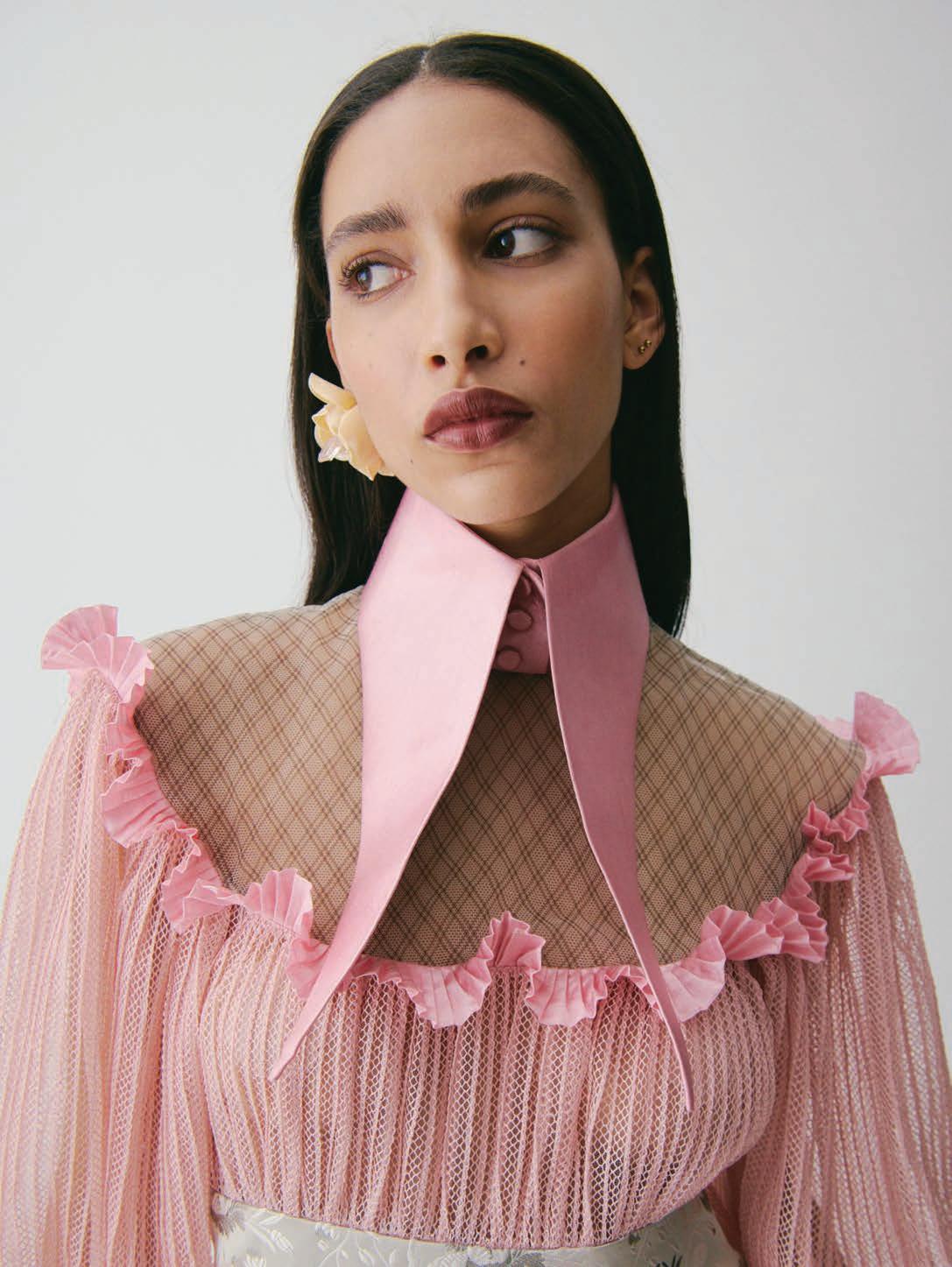
Left page: Outfit: Balenciaga; Earring: Laruicci; This page: Outfit: Louis Vuitton; Earring: Tetier Bijoux
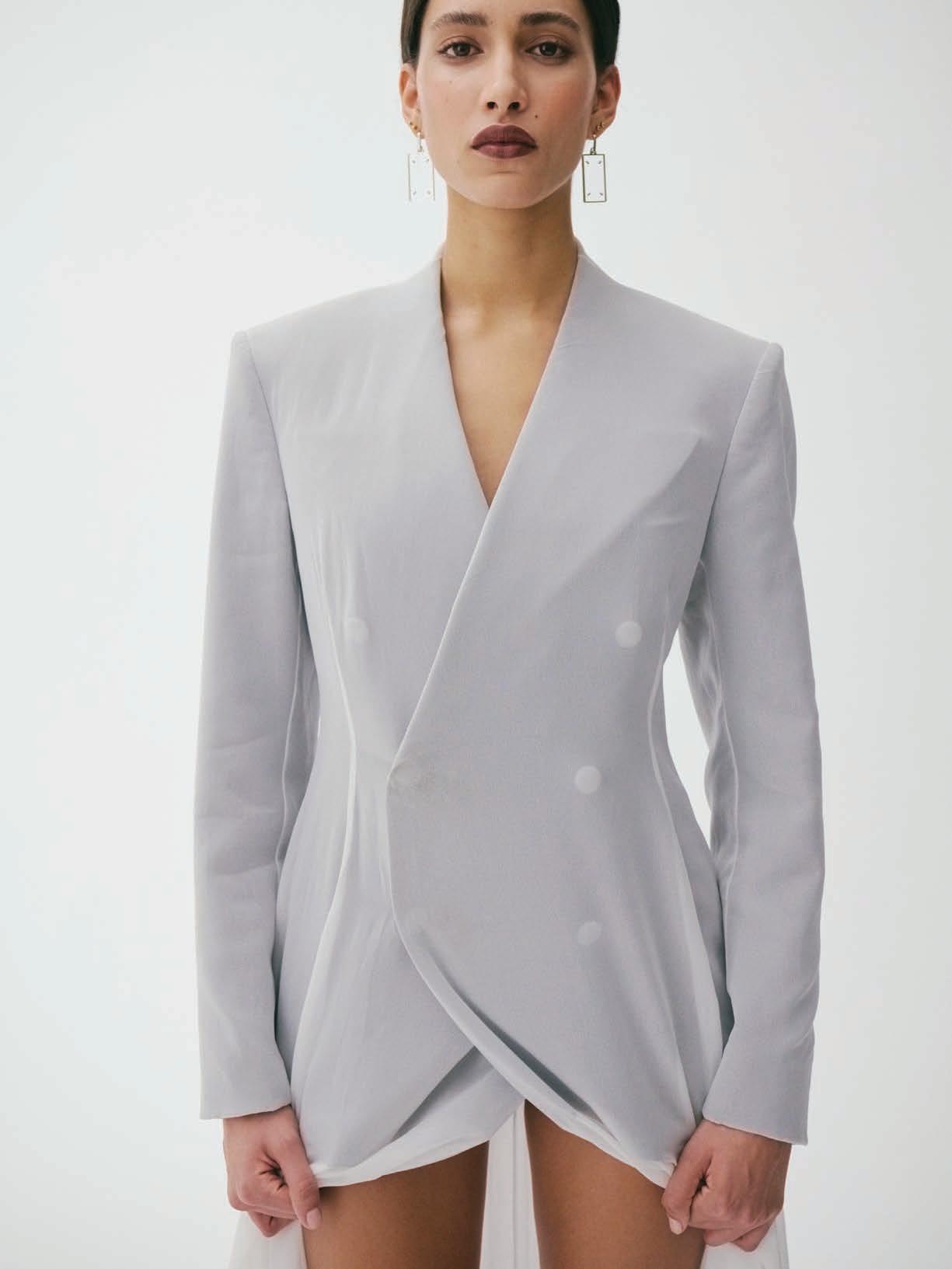
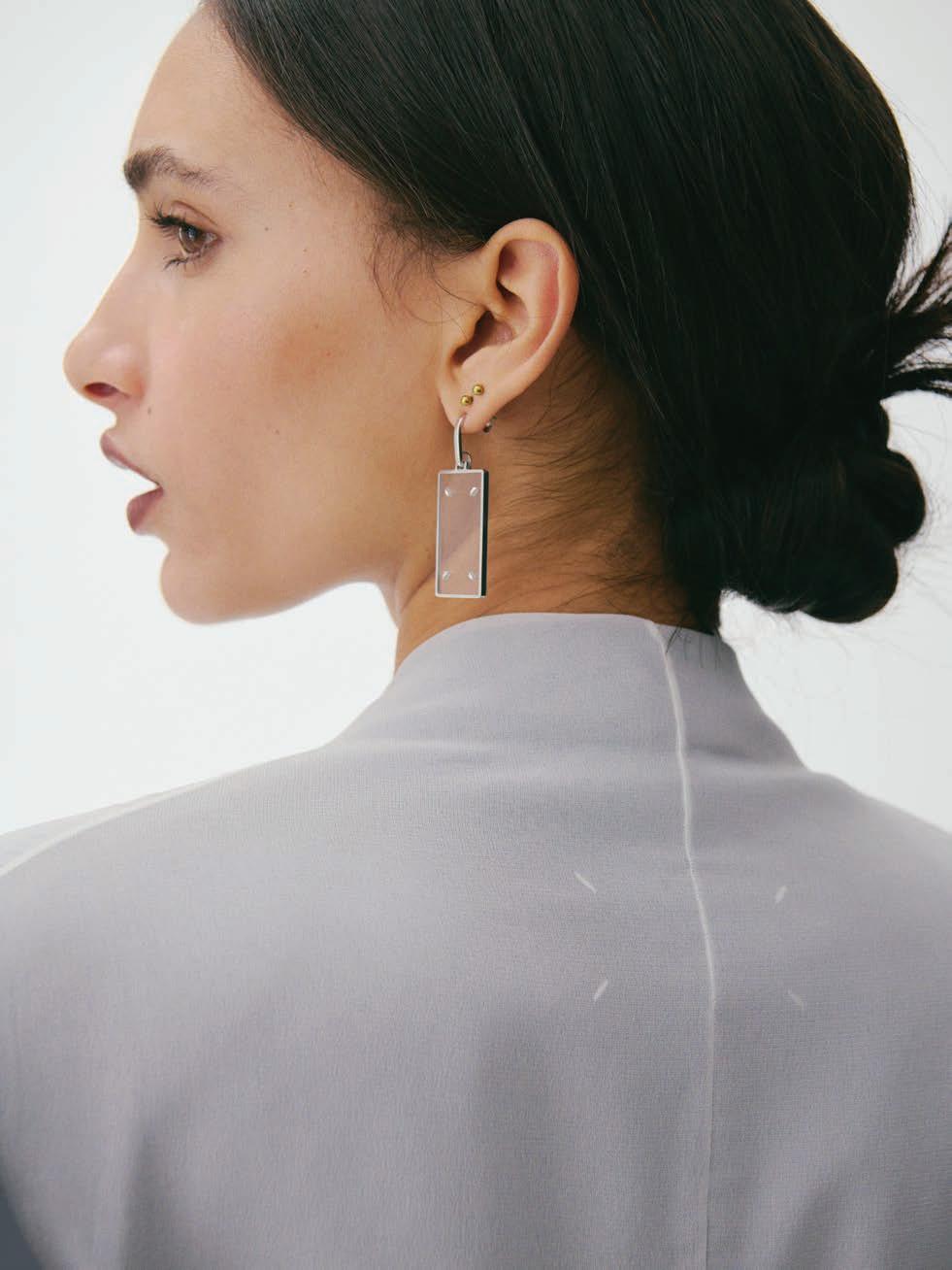
Both pages: Outfit and earrings: Maison Margiela
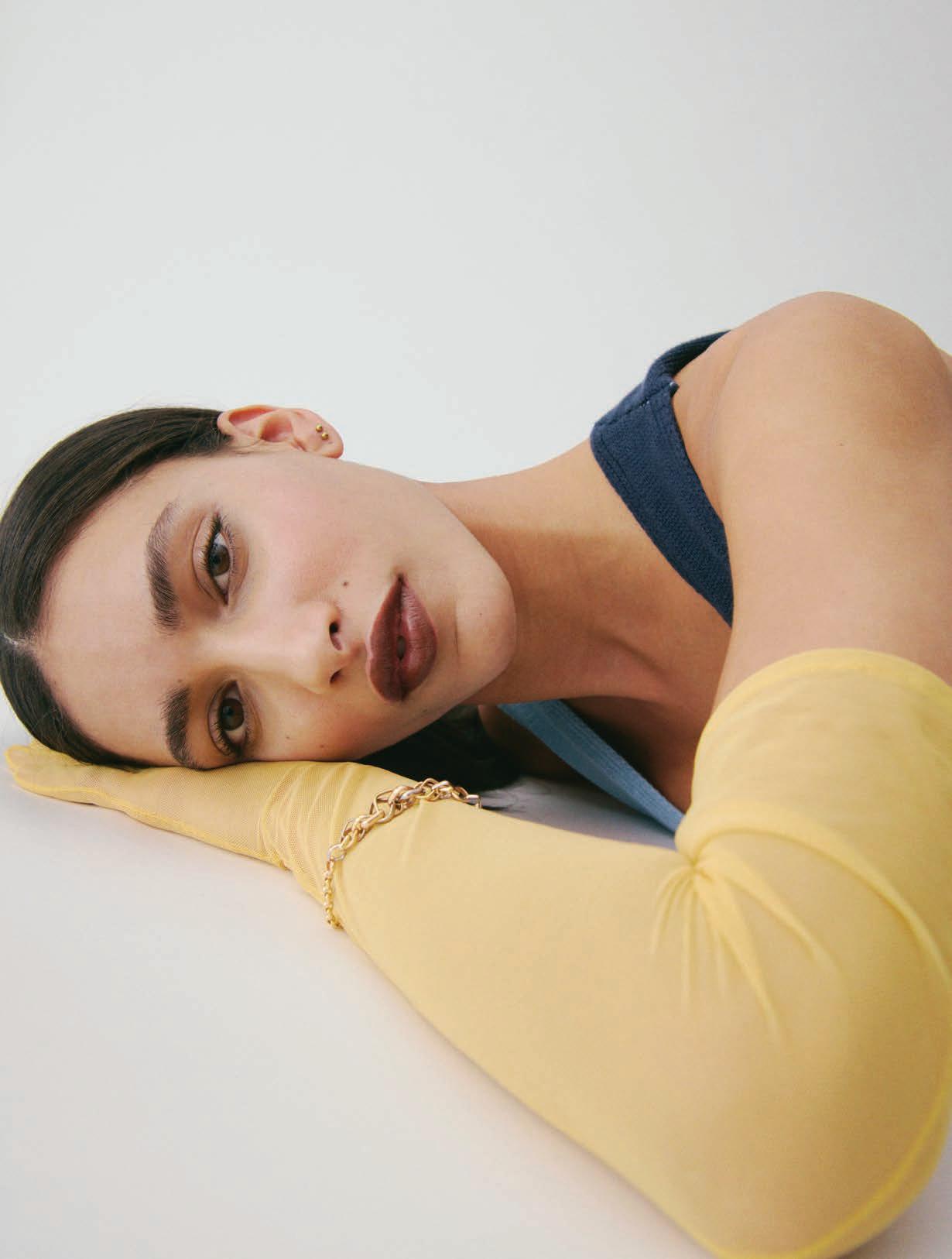
This page: Suit: Kenzo; Glove: Squillace 1923; Trinity bracelet in yellow gold, pink gold and white gold, Cartier; Right page: Outfit: Prada
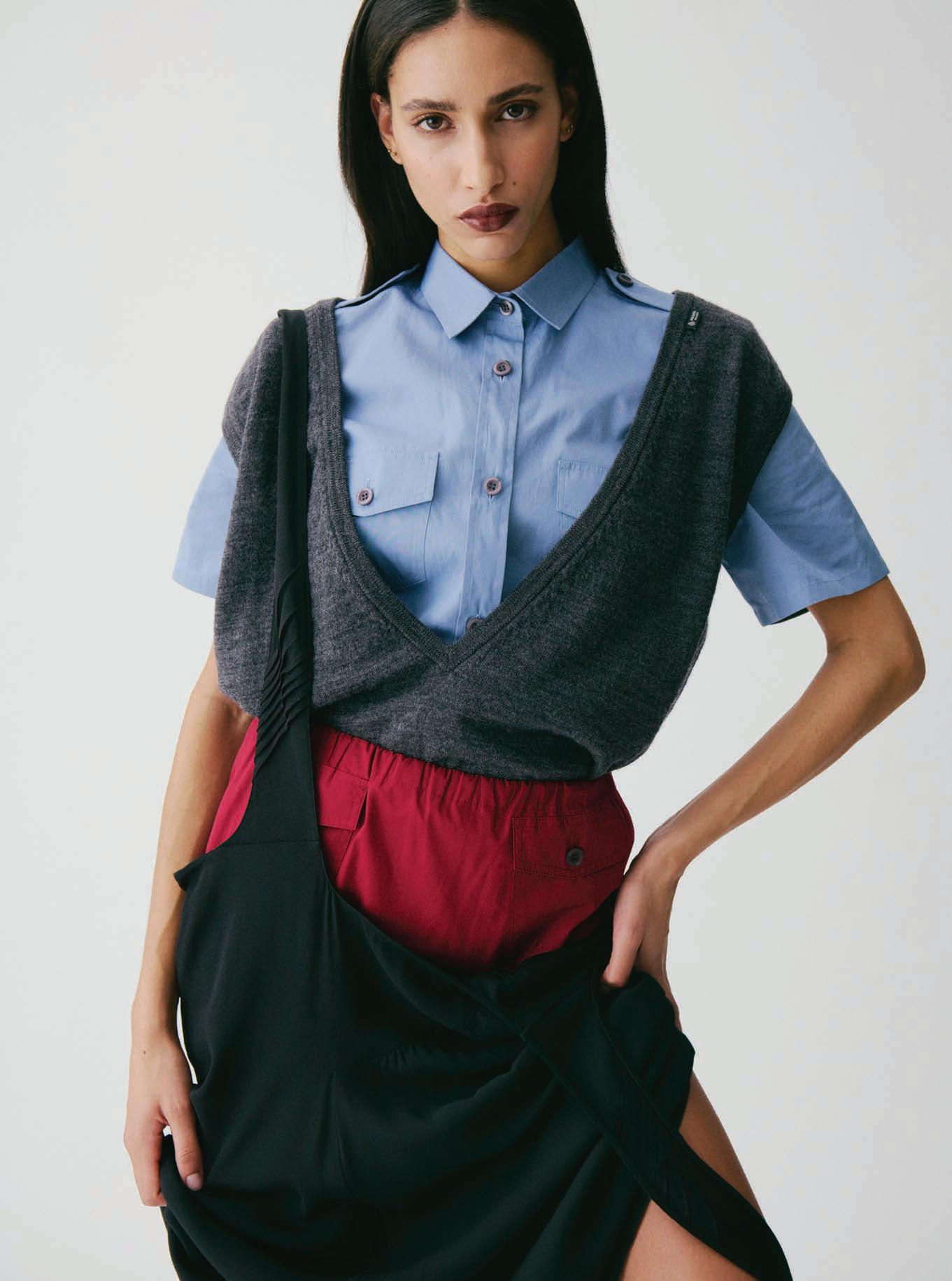
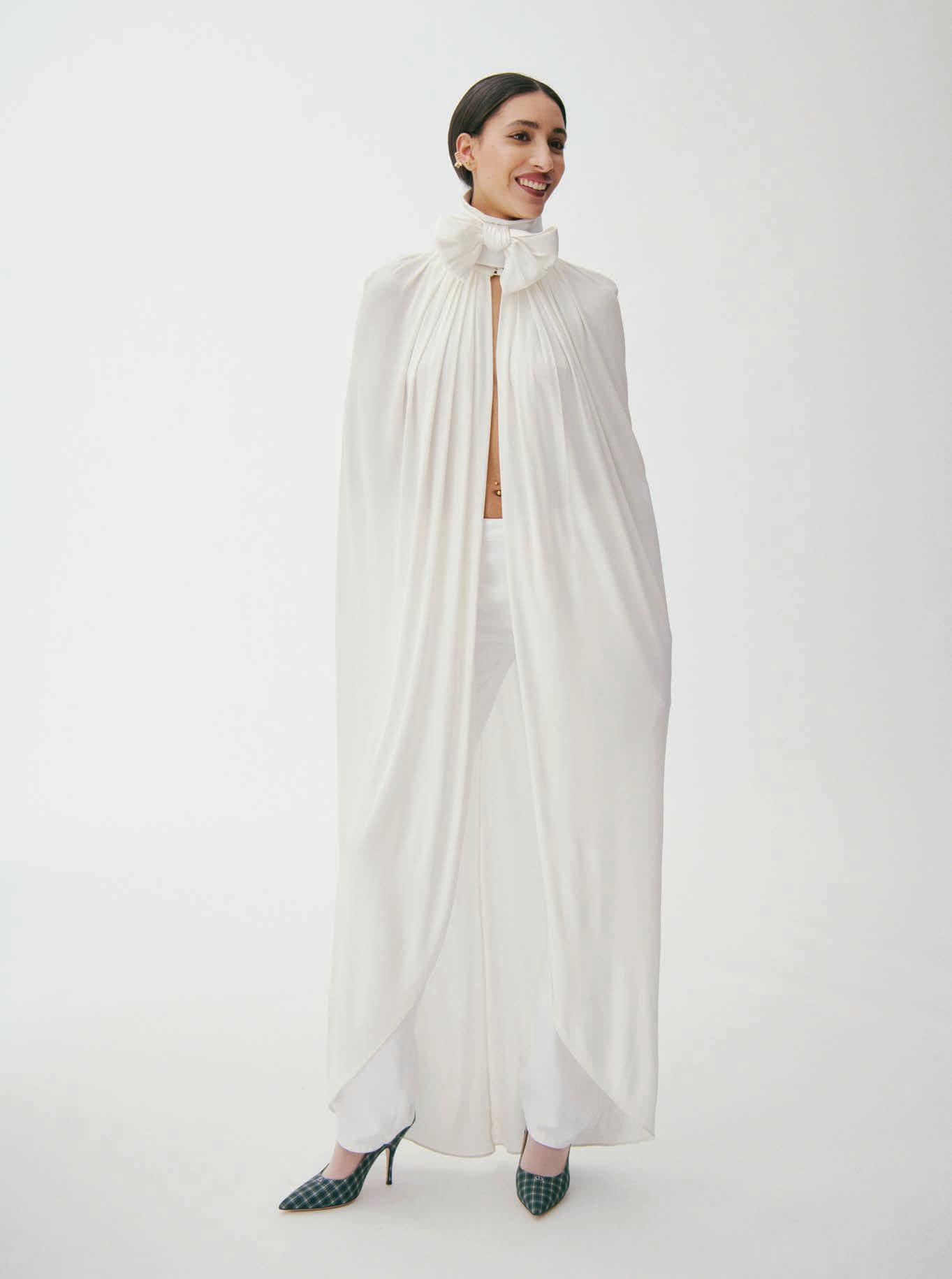
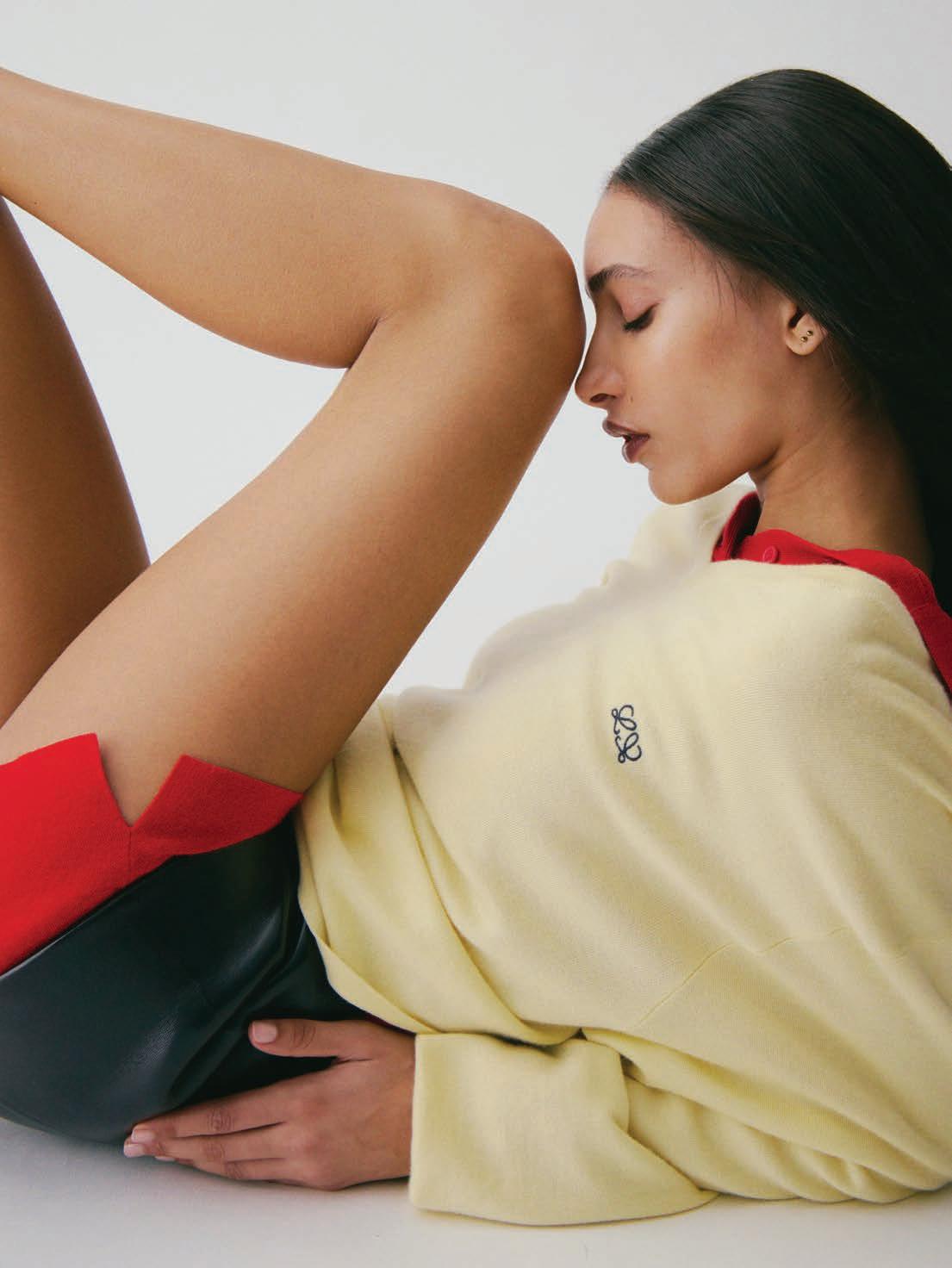
Left page: Outfit: Dior; Earrings Charms in yellow gold, white and ornamental stones, Dior; This page: Outfit: Loewe
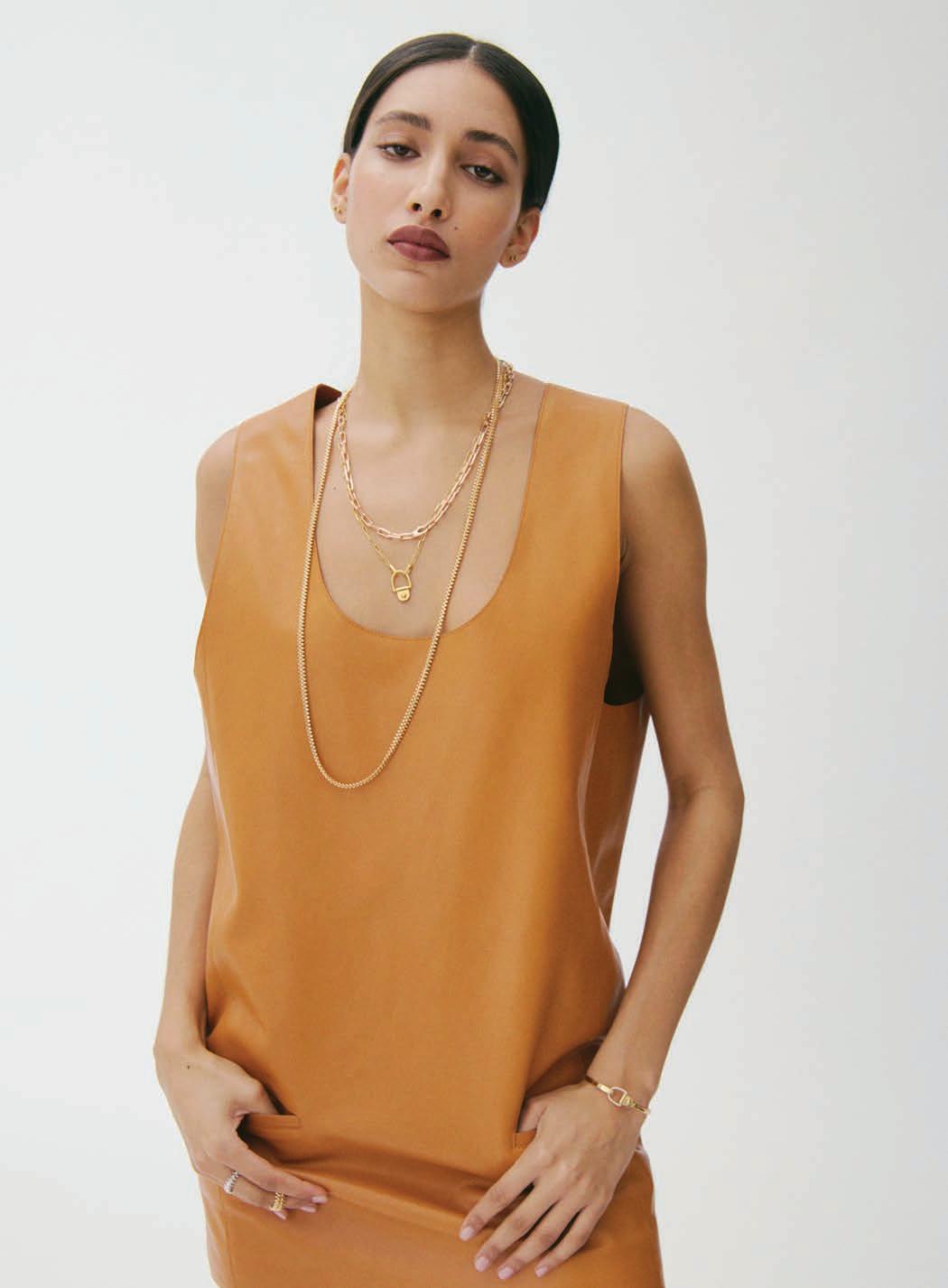
This page: Outfit: Tod’s; Santos de Cartier necklace in yellow gold; Clash de Cartier necklace in yellow gold; Clash de Cartier ring in white gold; Clash de Cartier ring Double row in white gold, ALL CARTIER; Collier Rivet in yellow gold and diamonds; Bracelet Rivet in yellow gold and diamonds; ALL STATEMENT; Right page: Outfit and accessories: Céline
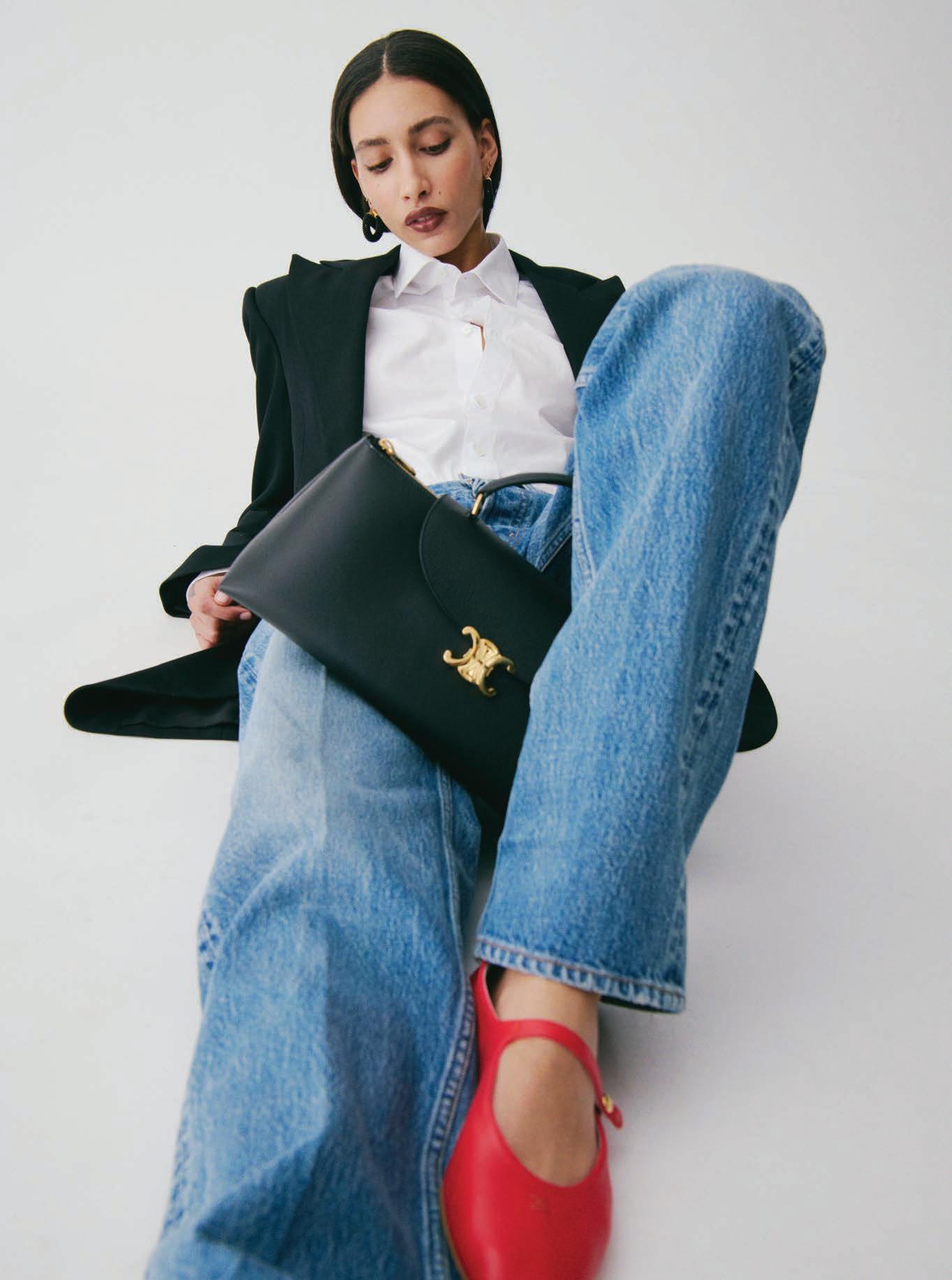
Styling and Production: Christine Lerche
Model: Titia Le Roux
@Mademoisellle Agency
Hair: Kazuko Kitaoka
Makeup: Jeddi Saloi Light: Igor Knevez
Videographer: Laura De Lucia
WORDS: AMINATH IFASA
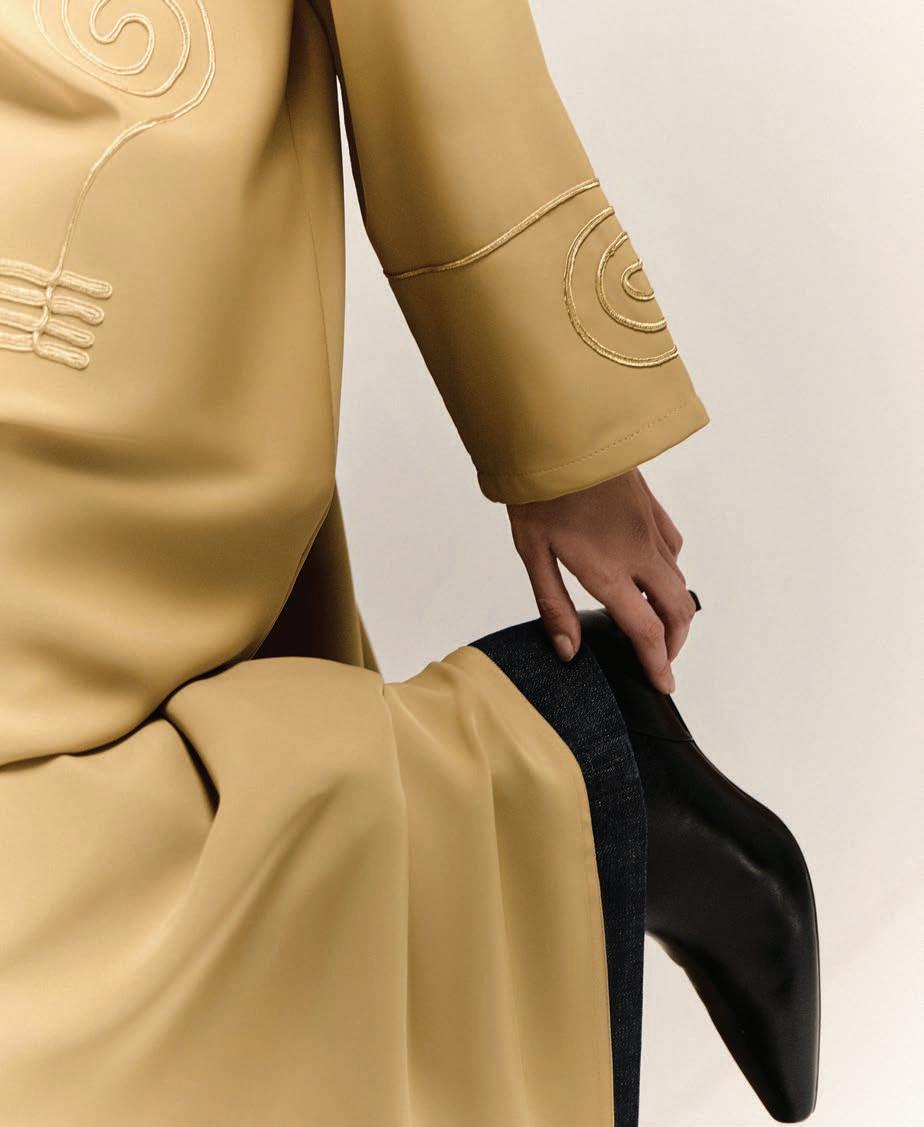
EDIT THE EID
IN A REGION WHERE THE ABAYA IS BOTH UNIFORM AND EXPRESSION, THESE LABELS UNDERSTAND THE ASSIGNMENT TO HONOUR HERITAGE WHILE MAKING ROOM FOR THE UNEXPECTED
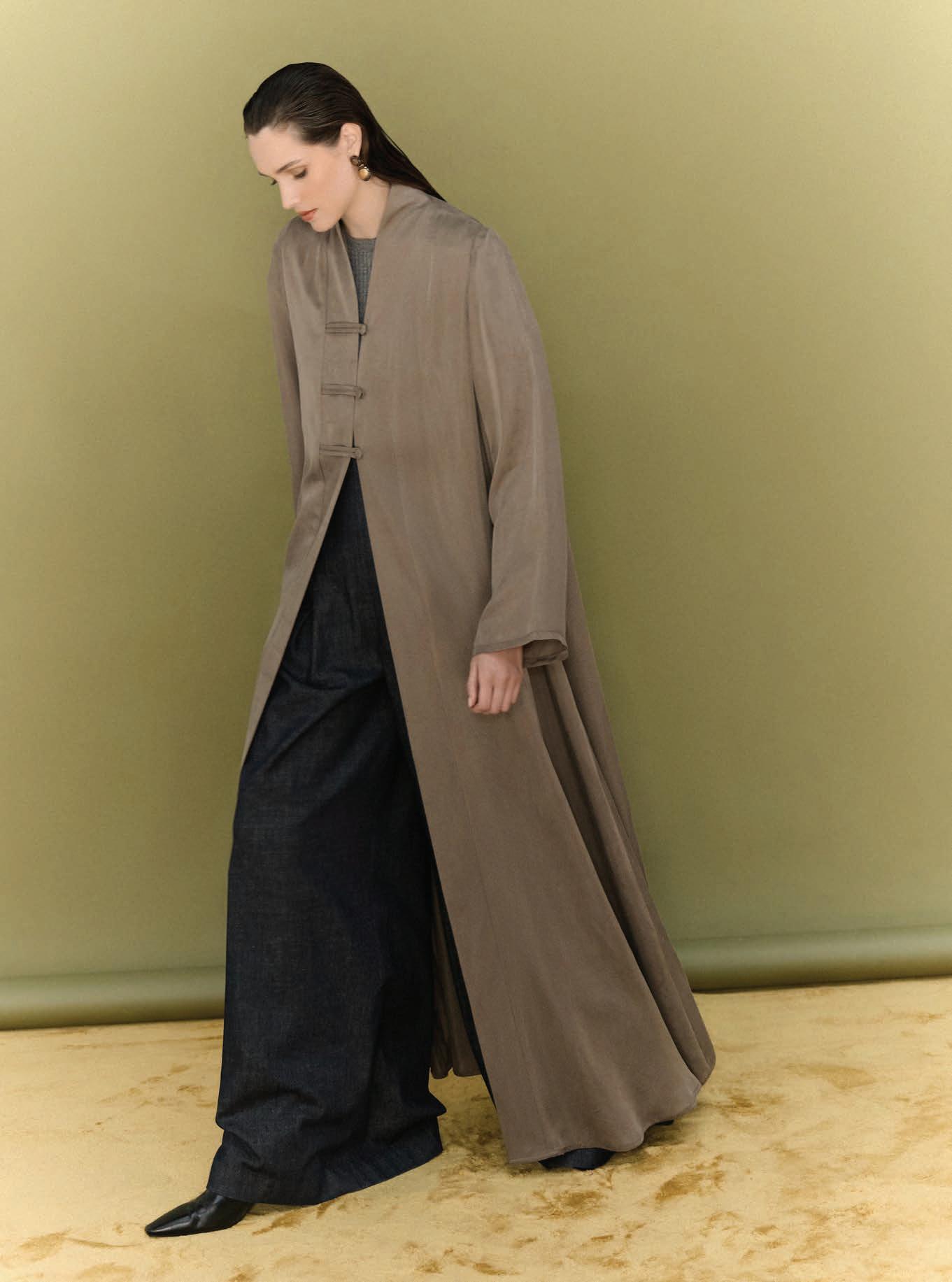
Ramadan brings with it a particular kind of pleasure when it comes to getting dressed. There is something about the month – the gatherings, the late nights, the quiet moments before iftar – that makes what you wear feel more considered, more personal than at any other time of the year. And as the days count down toward Eid, that pleasure sharpens into something else – the search for the perfect abaya.
The one that will carry you through that first morning, through the embraces and the photographs and the cups of tea poured for visiting relatives. It is a search that women in the UAE take seriously, which is why the homegrown labels featured here have built such devoted followings. Emirati-founded and proudly local, they are redefining what an abaya can be, whether through unexpected colour, sculptural tailoring or the kind of embellishment that stops conversations. These are the brands making their mark, and they deserve a place in your Eid rotation.
MUSE
A purveyor of quiet luxury, Muse is for the woman who believes that elegance lies in the details. Their aesthetic is defined by fluid silhouettes and a sophisticated neutral palette, allowing the impeccable drape and quality of their fabrics to take center stage. For Eid, look to their signature candied tone abayas or printed linen sets, which are designed to transition seamlessly from morning prayers to intimate family gatherings, offering a canvas of understated refinement that speaks volumes.
BY HIND ALMARRI
Helmed by the visionary Emirati designer, By Hind Almarri is a celebration of heritage reimagined through a contemporary lens. The brand is synonymous with ornate craftsmanship, where traditional embellishments and intricate design are given a modern, luxurious update. Their signature pieces often feature regal capelets and exquisitely detailed sleeves, making them the perfect choice for the woman who wants her Eid look to be a masterpiece of cultural storytelling and high-fashion flair.
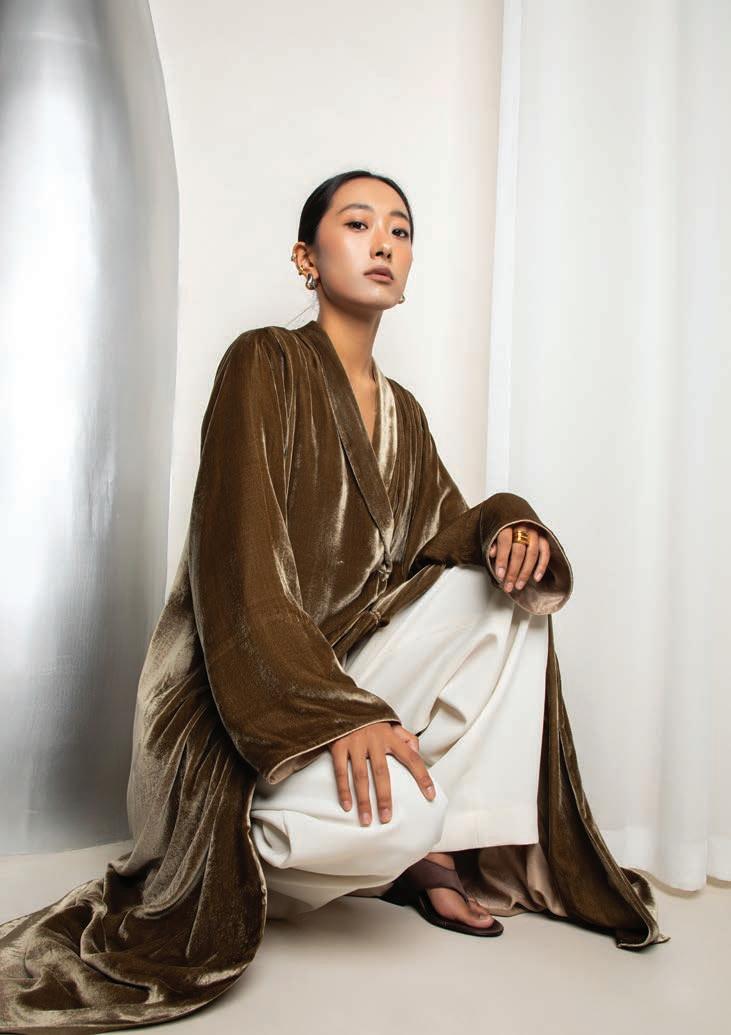
FEEYA
FEEYA has rapidly become the unofficial uniform of Dubai’s "it" girls, and for good reason. Founded on the ethos of "girlhood," this brand is a veritable love letter to colour and playfulness. Breaking away from the monochrome mold, FEEYA is renowned for its dreamy ombré abayas and signature pastel shades like Buttercup and Matcha. For Eid, their collections promise to inject a dose of whimsical, hyper-feminine joy into a wardrobe, proving that modesty and vibrant self-expression are the perfect pairing.
MAYSWEAR
Mayswear caters to the modern trendsetter who seeks a fusion of contemporary street style with the grace of modest fashion.
The brand is known for its innovative cuts and the use of dynamic fabrics that create movement and structure in equal measure. Mayswear offers distinctive separates and abaya silhouettes for Eid that are both fashion-forward and rooted in comfort, ensuring a look that feels effortlessly cool throughout the festivities.
THE PURPLE TAG
The Purple Tag offers a distinctive aesthetic for the discerning minimalist. The brand’s philosophy revolves around creating timeless, architectural pieces that make a striking impact through form rather than ornamentation. Expect clean lines, innovative draping, and a focus on structural integrity. Their signature look is an abaya that feels more like a couture piece of outerwear, offering a sleek and polished option for the woman who wants her Eid style to be defined by sophisticated, modern geometry.
TASH
First on the radar for those in the know are the decidedly cool designs of Tash. This is a fashion-forward label that embodies unapologetic creativity, unafraid to take up space with its bold designs. From striking leopard prints to sculptural 3D flowers, Tash uses the abaya as a dynamic canvas for selfexpression. For the woman who wants her Eid look to be a conversation starter, these pieces are the perfect way to upgrade a simplistic outfit to a distinct tier of artistic flair.
GABI
Founded by Emirati sisters Waad and Sheyma Al Hammadi, GABI has rapidly become a go-to for those who appreciate a design philosophy rooted in "less is more." Infused with strong Emirati traditions, the brand champions clean lines and impeccable, structured tailoring. With a versatile one-size-fits-all mantra, GABI’s pieces are designed to make a powerful yet effortless statement. This Eid, their collection give a masterclass in contemporary elegance, where every cut and seam is a testament to refined, modern Emirati design.
OUI DUBAI
All about colour, this Emirati-owned brand, founded by Alreem Almarzooqi, is a celebration of vibrant hues and traditional craftsmanship. OUI Dubai offers a spectrum of shades, from deep, dramatic tones to light, airy pastels, each meticulously chosen to complement all skin tones. With a philosophy rooted in saying ‘yes’ to elegance and intention, their limited seasonal drops are handcrafted in Dubai, making each piece an exclusive and personal testament to quiet confidence.
TIMA ABAYA
For the minimalist who appreciates a dash of the unexpected, Tima Abaya is the destination. The brand focuses on high-quality pieces in subdued colours and luxurious fabrics, using each classic silhouette as a canvas before adding a singular, creative twist. Whether it’s delicate “bow buttons” or unique “fire” stitching, this single trait or flair transforms a classy foundation into a work of art, offering an abaya that is both evergreen and intriguingly modern.
SALFA
Where the free-flowing grace of modest wear meets the sharp sophistication of office attire, you will find Salfa. This Dubaibased label is a gate-kept favourite for good reason. Salfa masterfully fuses the ease of the traditional garment with structured, contemporary forms, creating pieces that are both streamlined and distinct. For the chic yet bold woman, Salfa offers outerwear designed to embrace individuality and explore endless stylistic possibilities.
JEH
Stuntin’ in streetwear, Jeh is the label for the edgy, defiant It-girl who seeks to reimagine the abaya in its entirety. Following its own bold philosophy, the brand deconstructs traditional forms with contrasting
stitches, asymmetrical cuts, and unexpected collared finishes. For the unapologetic trendsetter, Jeh offers abayas that are less a garment and more a declaration of individuality. Perfect for making a powerful, modern statement during Eid festivities.
BEIGE
True to its name, Beige is a sanctuary for lovers of neutrals and timeless design. The brand focuses on creating light-as-air pieces in minimalist silhouettes, all rendered in a calming palette of earthy tones and simple shades. These are the everlasting abayas that work effortlessly in any closet, offering chic, muted elegance that transcends seasonal trends. For Eid, Beige provides the perfect foundation for a look of serene, understated sophistication.
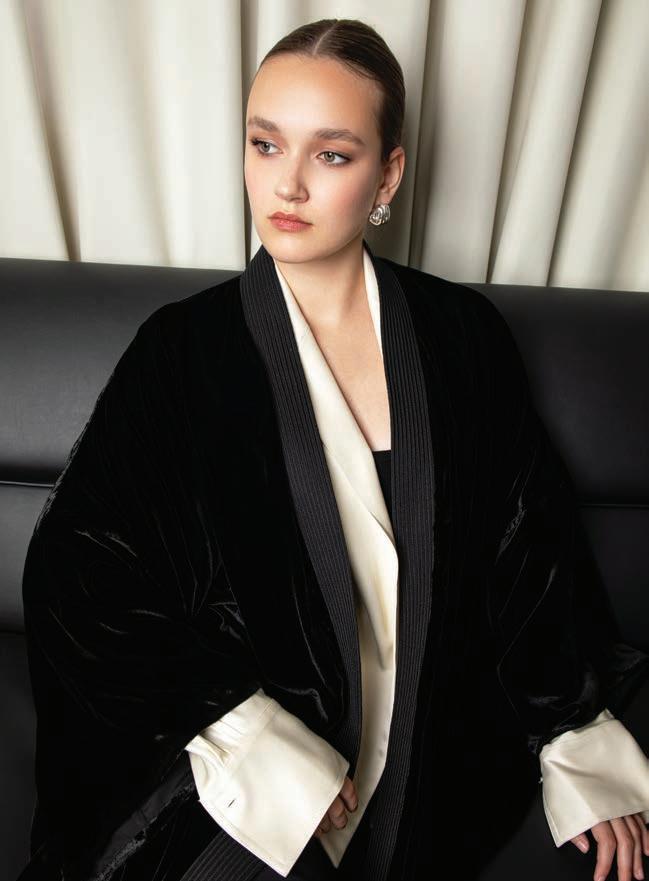
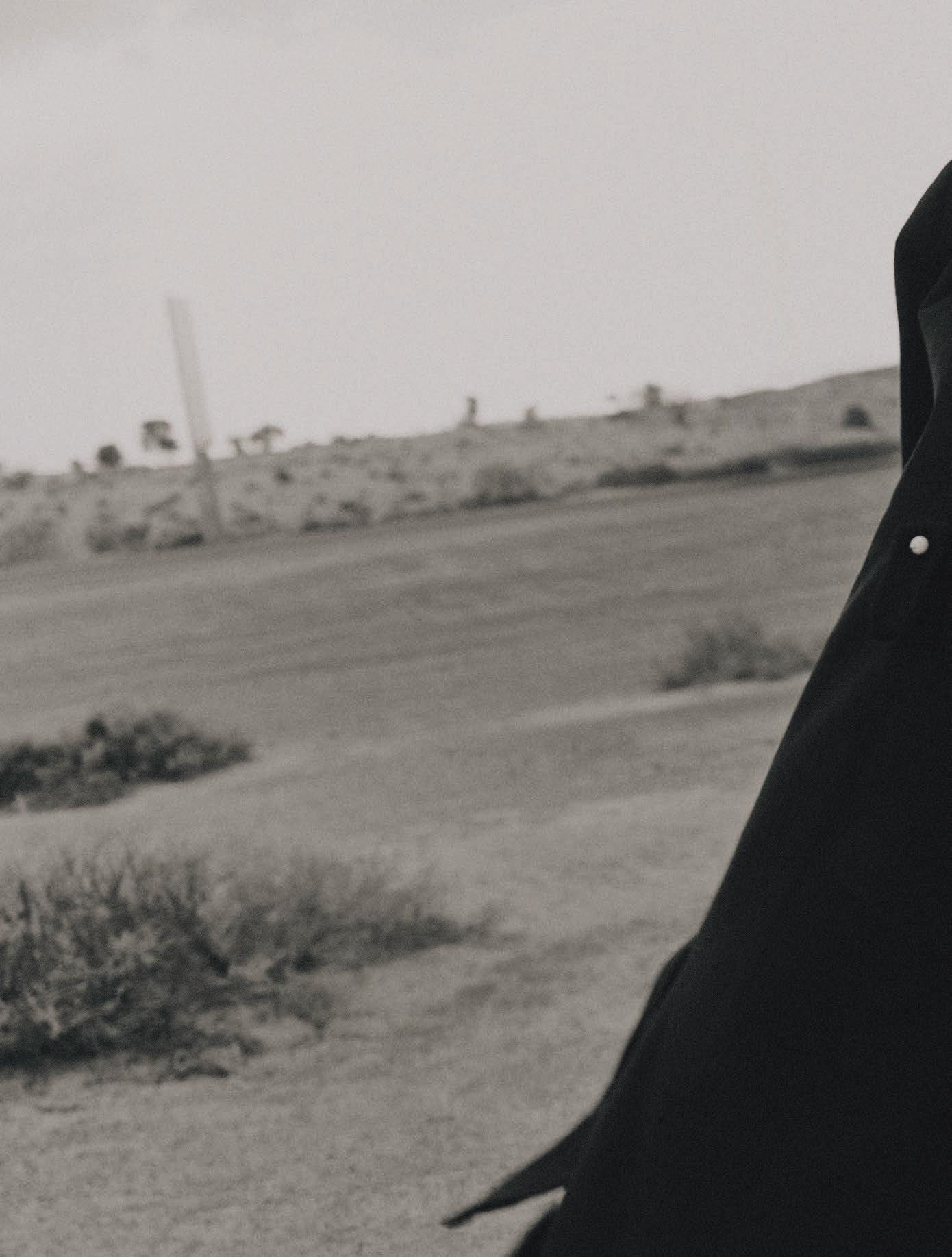
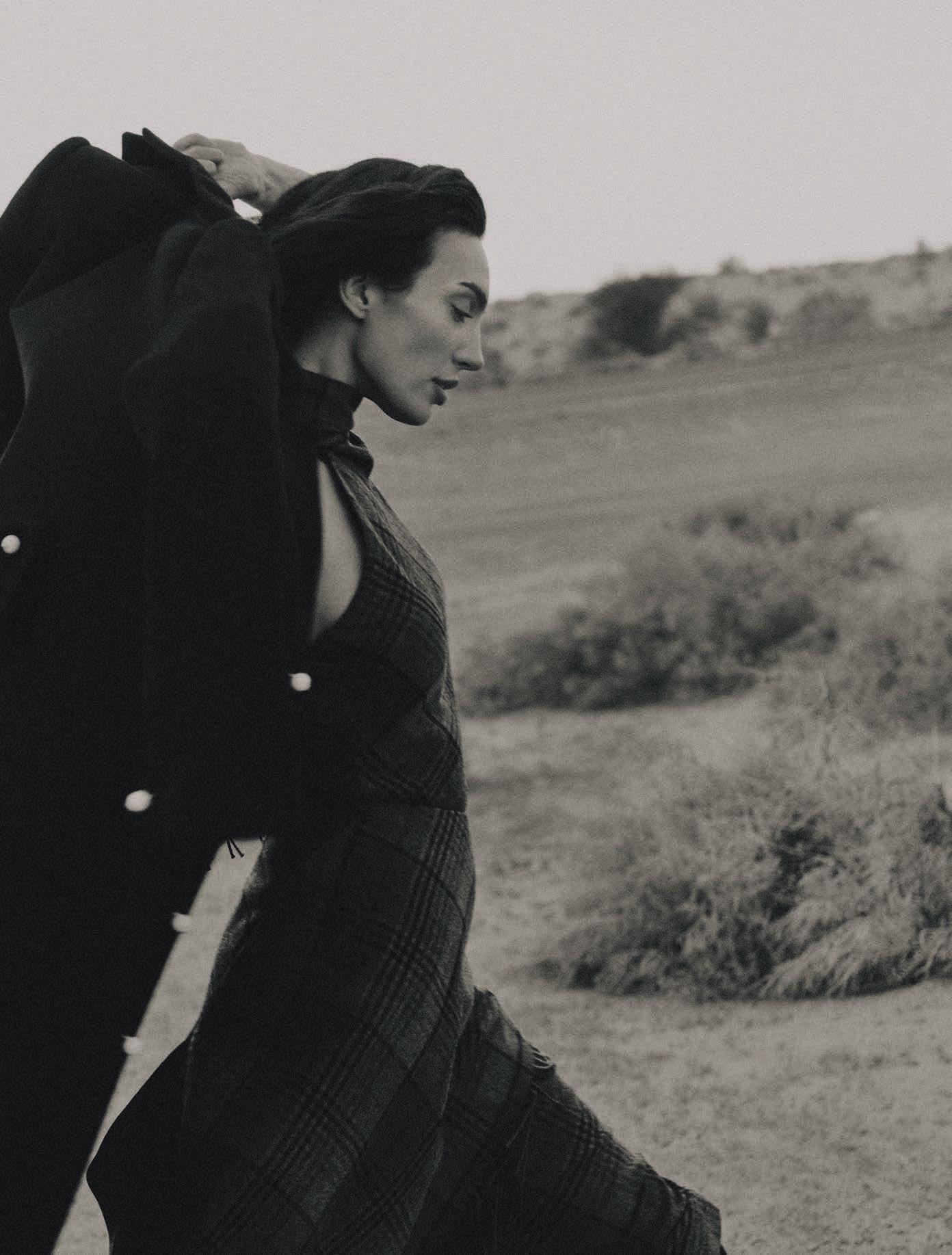
WITH A WIDE OPEN FUTURE AND AN EMPTY HORIZON, ANYTHING AND EVERYTHING IS POSSIBLE
SENIOR
A CONSIDERED
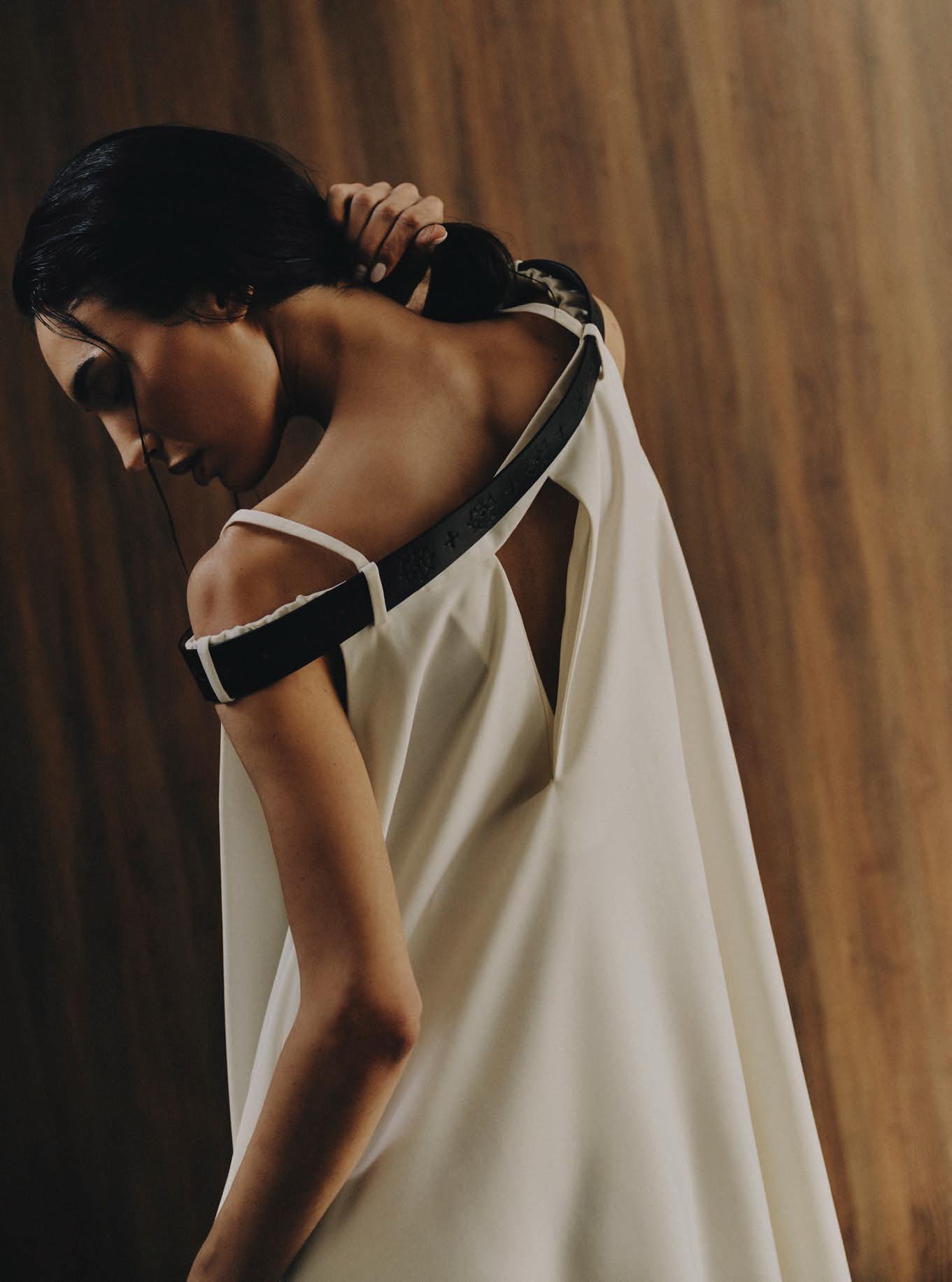
Outfit: Top, Skirt, Ralph Lauren; Coat, Celine
EDITOR: JESSICA MICHAULT PHO TOGRAPHER: GREG ADAMSKI
CHOICE
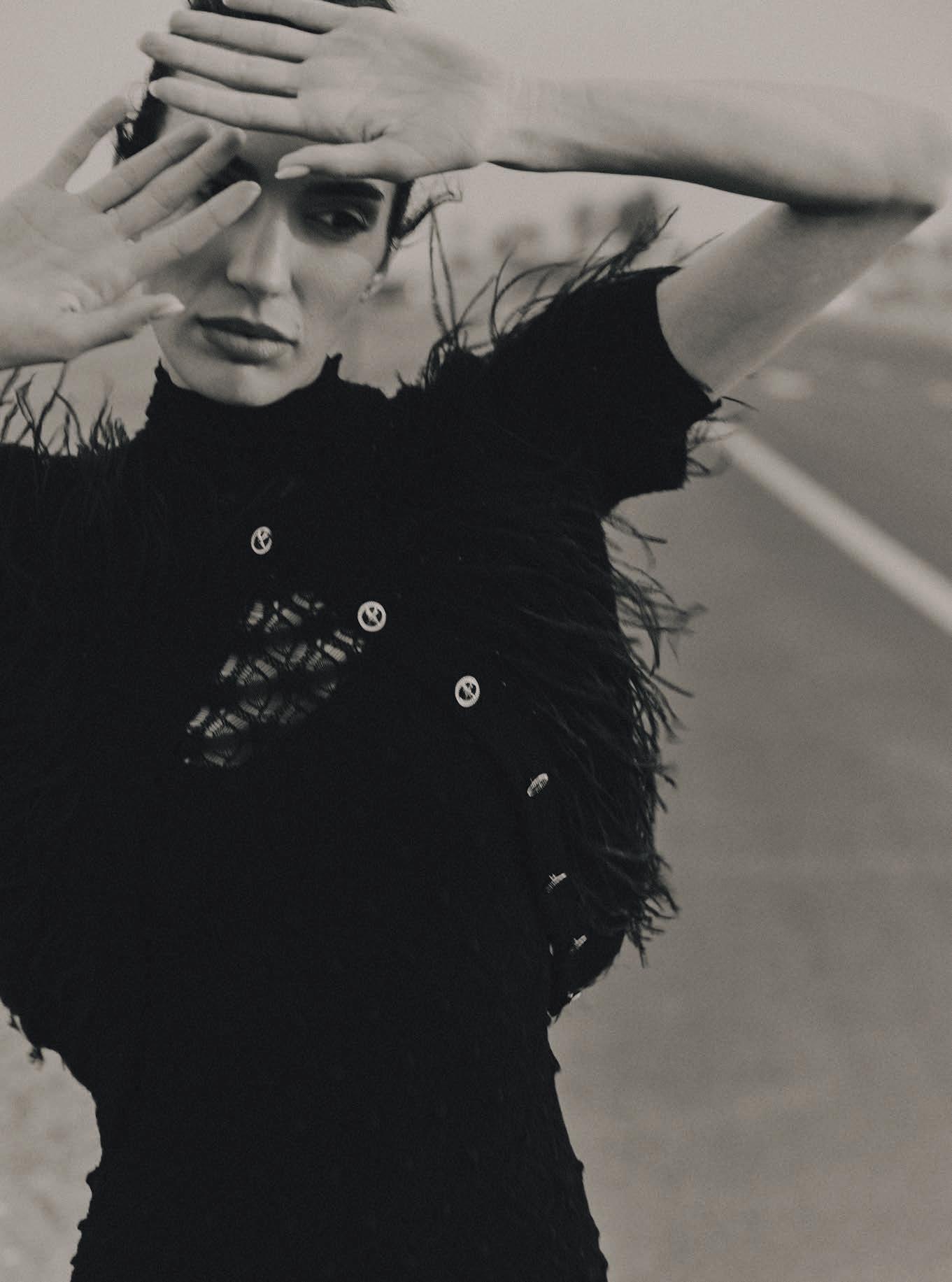
This page: Outfit: Cardigan, Model’s Own; Dress, Alaïa; Right page: Outfit: Dress, Celine
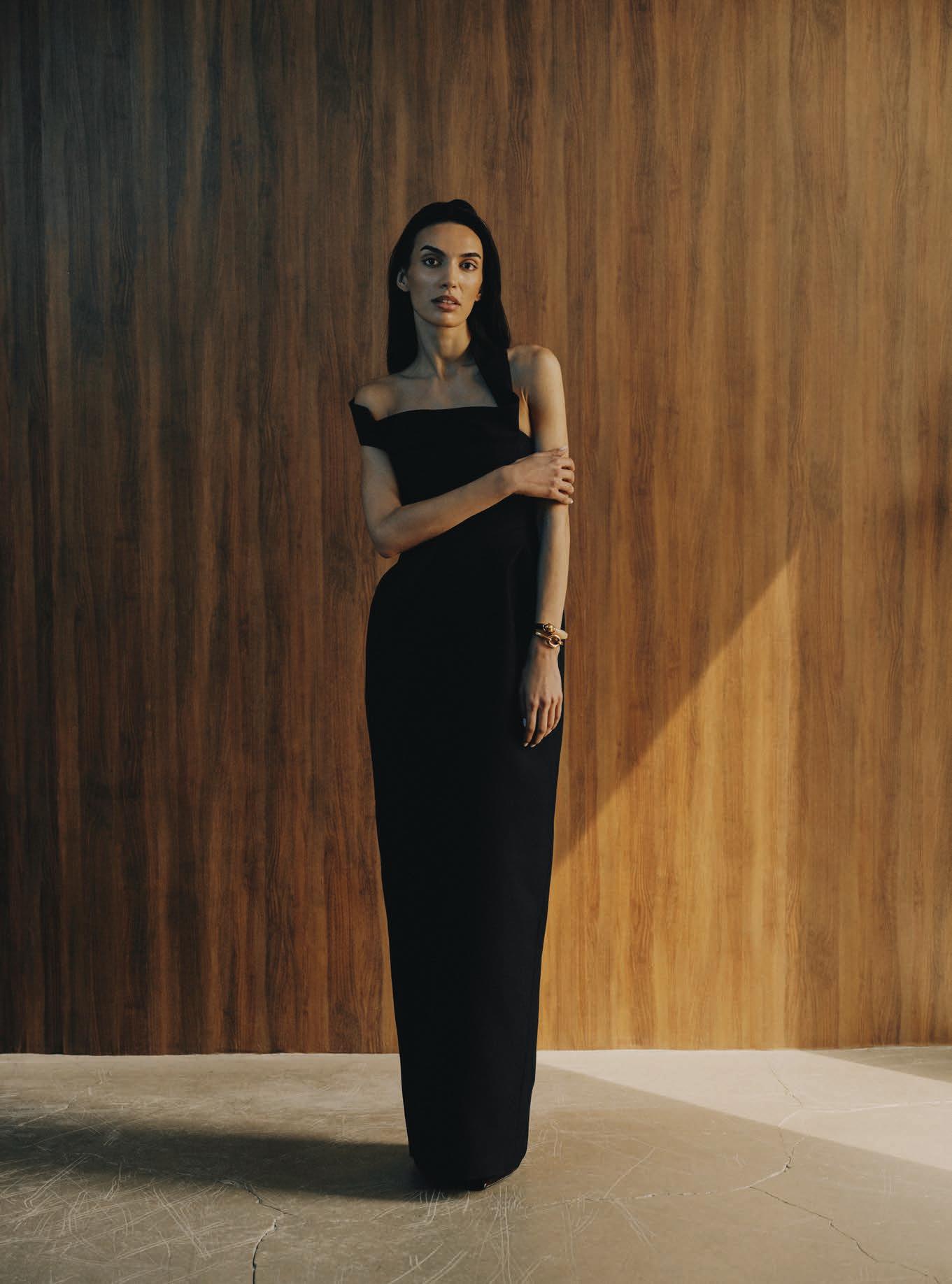
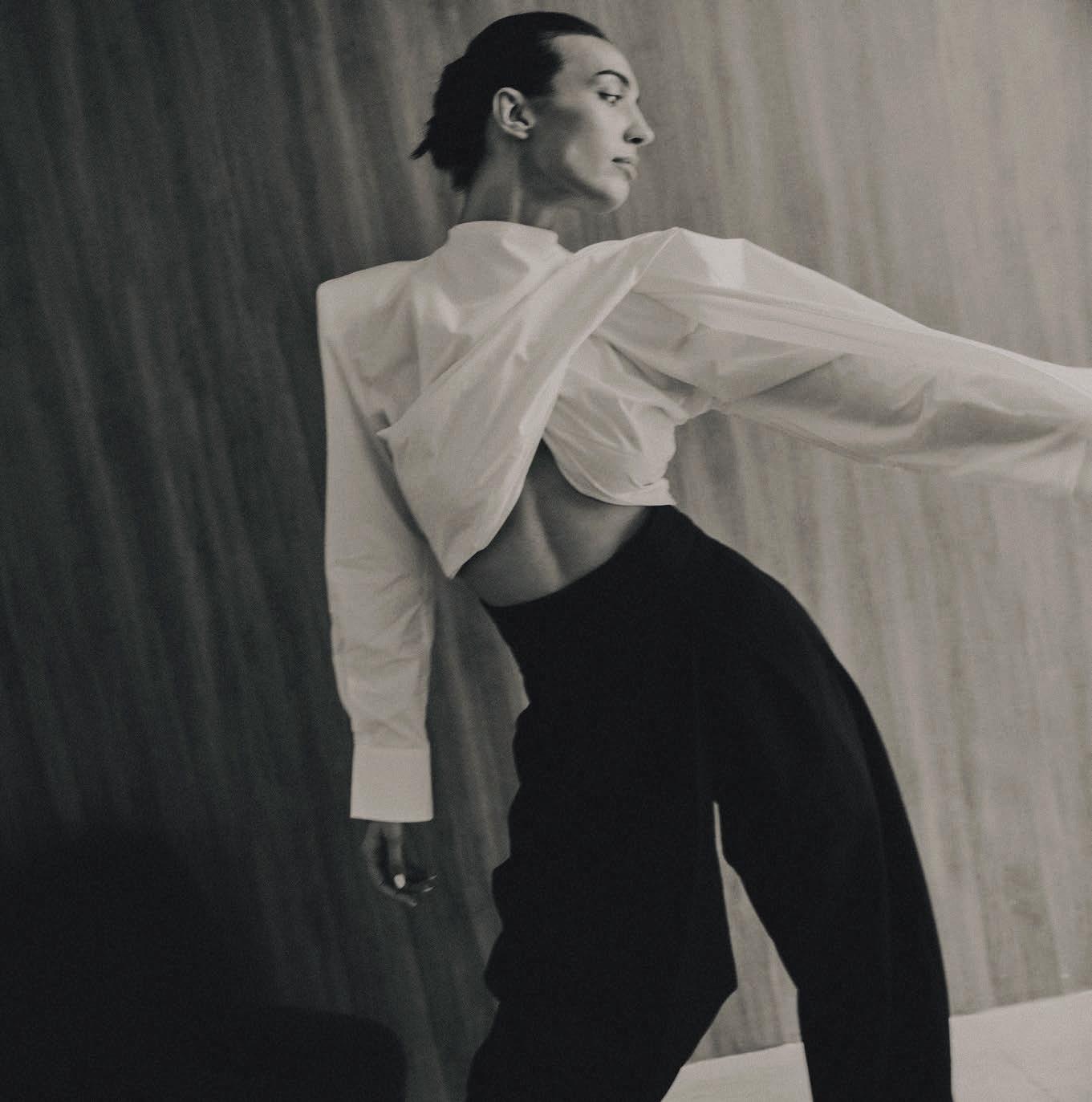
Outfit: Top, Ilai Sarai; Trousers, Alaïa
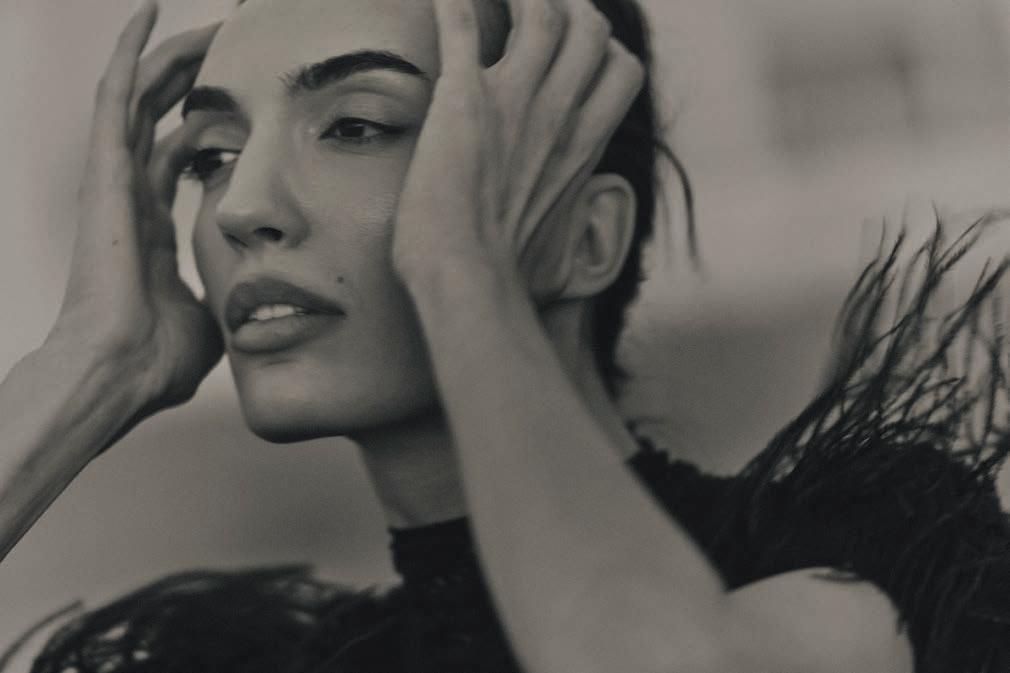
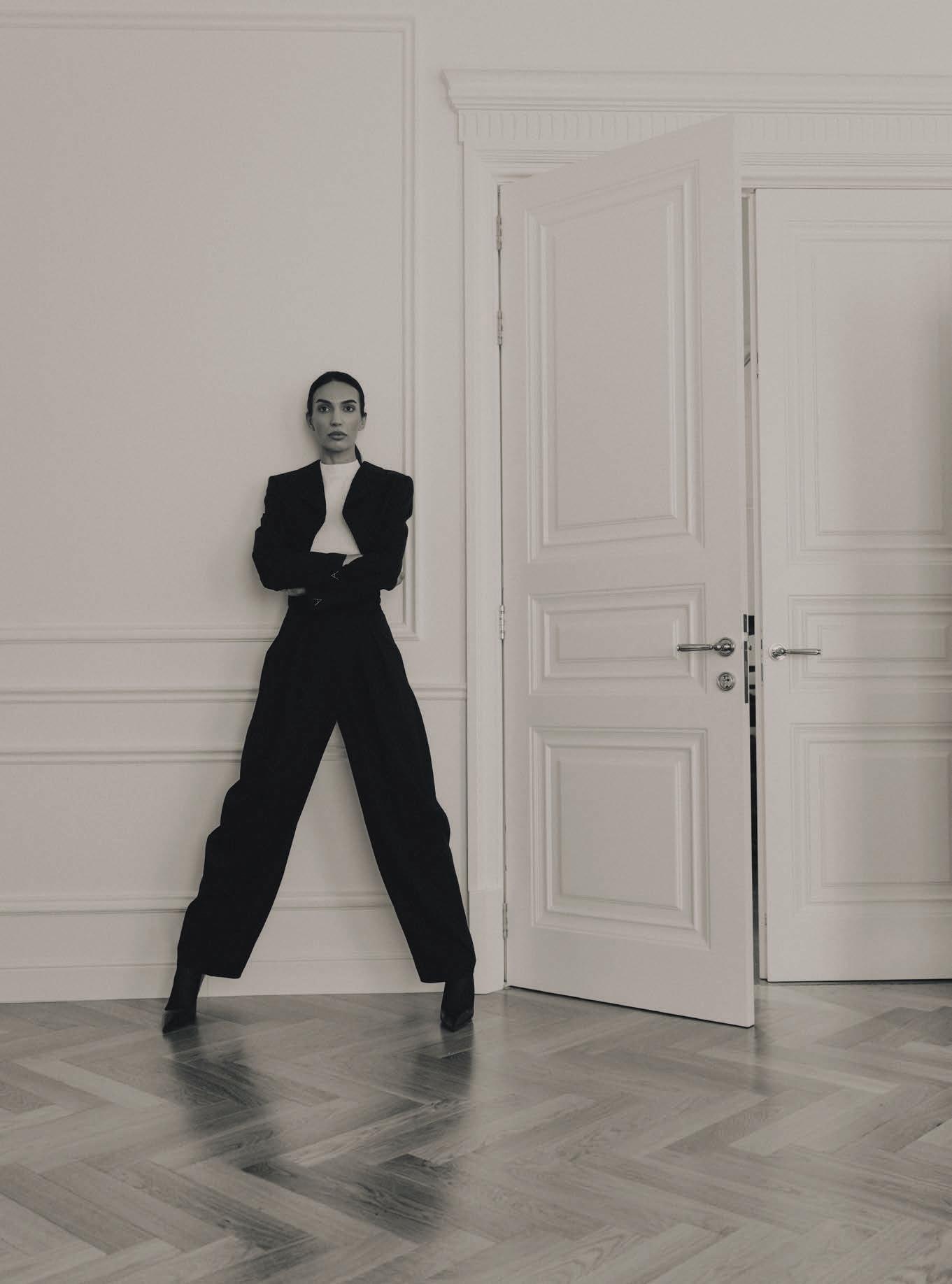
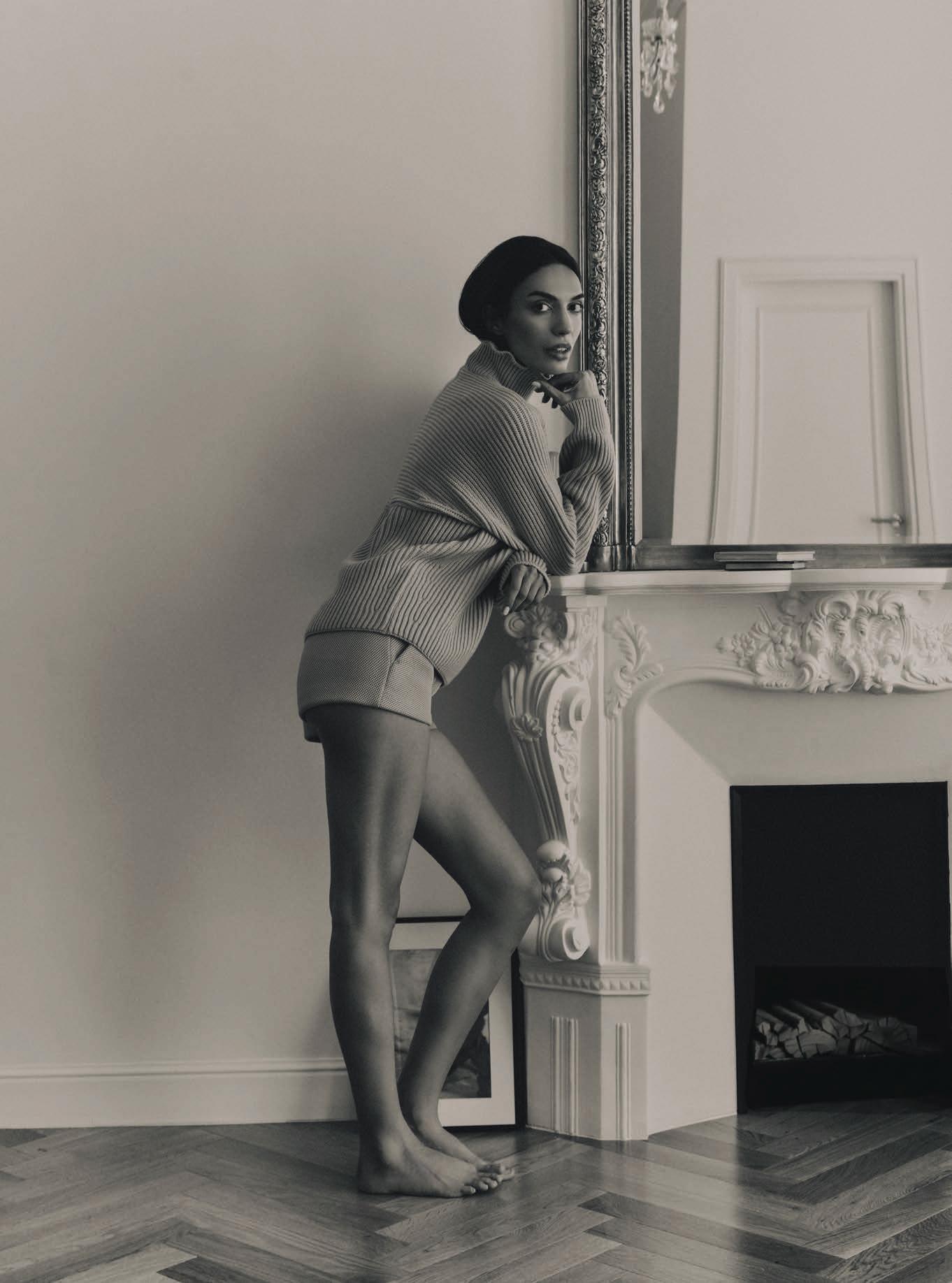
This page: Outfit: Full look, Alaïa; Right page: Outfit: Top, Skirt, Chloé
Above: Outfit: Suit, Dior; Below: Outfit: Cardigan, Brunello Cucinelli; Skirt, Magda Butrym
Outfit: Top, Ilai Sarai
Stylist: Sarah Ruxton
Hair & Makeup: Kalina Kocemba at MMG Artists
Model: Sarah El Hidraoui at MMG Models
Left page: Outfit: Dress, Ilai Sarai; This page: Outfit: Top, Shorts, MaxMara
THE BOLD AND THE BEAUTIFUL
This Ramadan, Shamsa Alabbar, the founder of Fine Arts Jewellery, is transforming her store in the Dubai Mall into a space to spotlight a fellow homegrown talent, Emirati jewellery designer Shamma Al Hallami. The special in-store takeover was created in collaboration with master jeweller Salem Al Shueibi. The capsule weaves heritage codes with a contemporary sensibility, balancing cultural symbolism with sculptural precision. Al Hallami’s refined aesthetic meets Al Shueibi’s craftsmanship in pieces that feel both architectural and visceral – a dialogue between past and present. Timed for the Holy Month, the collection leans into reflection and meaning, inviting clients to experience jewellery not simply as adornment, but as storytelling. It is a thoughtful reminder that some of the region’s most compelling luxury narratives are being shaped from within.
VISION
Look to the future and…
– Discover how female leaders are paying it forward
– Learn about how movement is defining the work of a budding artist
– Encounter five young women stepping into male dominated spaces
– Understand what it takes to stand out, when starting out
– See how Victoria Reynolds still surprises at Tiffany & Co
– Uncover a cool new jewellery brand launched by globetrotting sisters

PAYING IT
For our Youthquake issue Emirates Woman reached out to several inspiring female leaders, across a myriad of industries, and asked them to each pick a young woman they felt our readers should keep their eye on. Here they give flowers to women whose talent, drive and creativity caught their eye and stayed on their minds
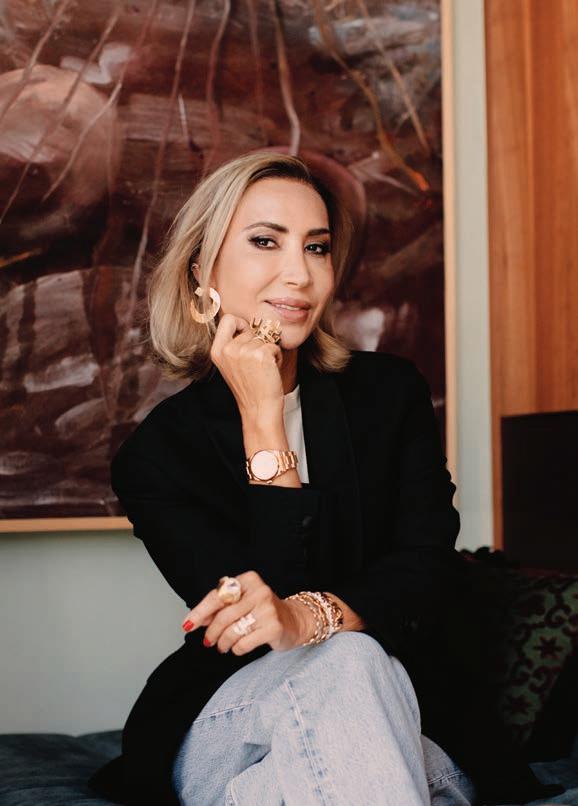
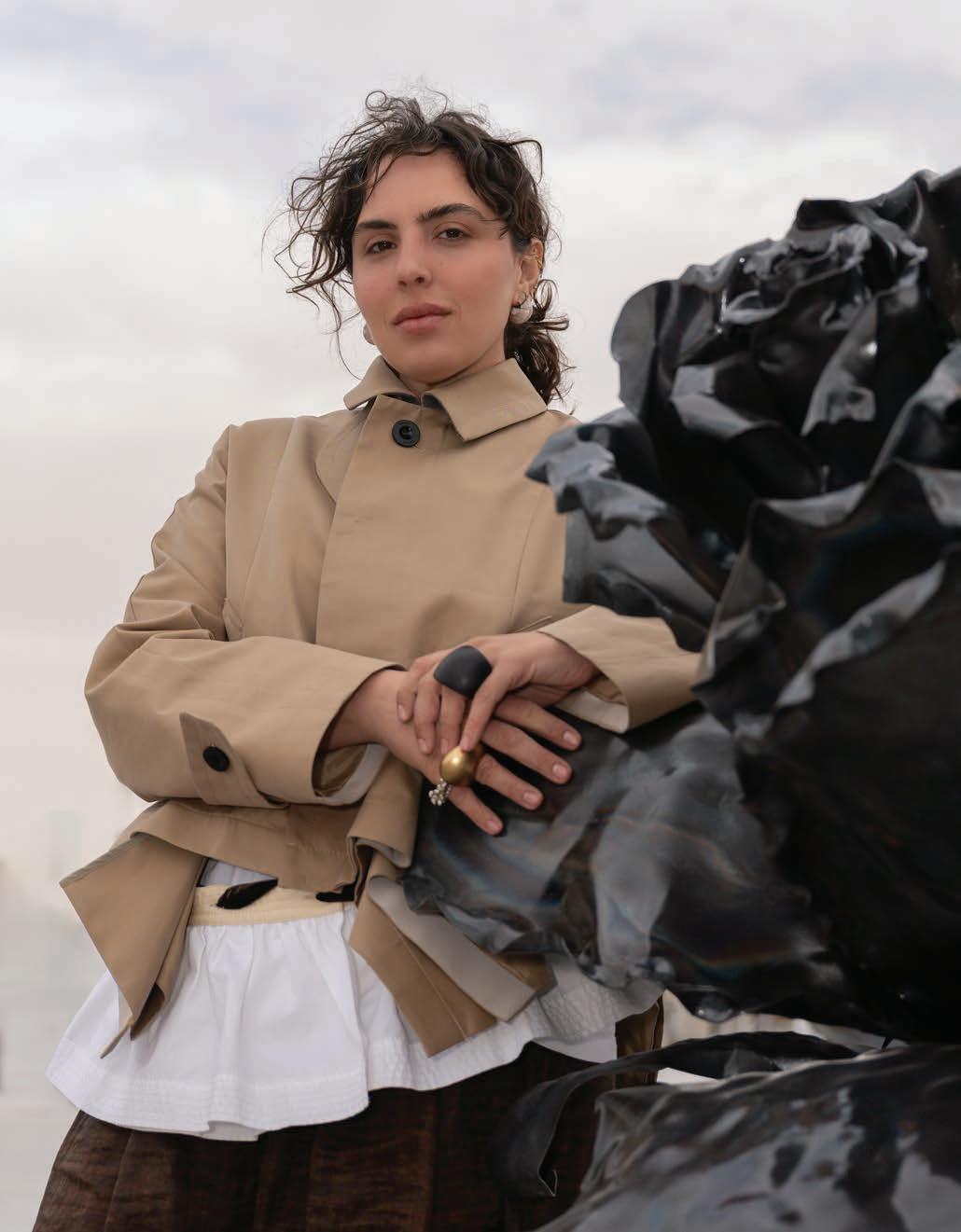
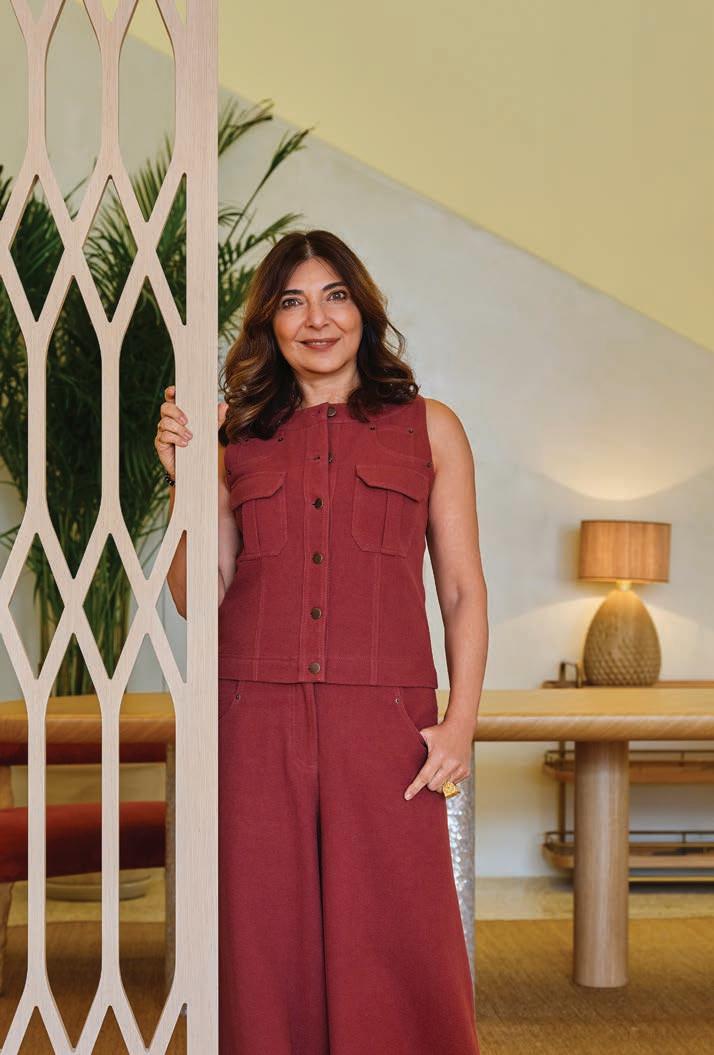
FOUNDER OF BIL ARABI, NADINE KANSO CHOSE RAYA KASSISIEH, A MULTIDISCIPLINARY ARTIST
How did you first encounter her and what initially caught your attention? I first met Raya at an event in Dubai. What immediately struck me was her presence. There was a quiet confidence in the way she carried herself and presented her ideas. She speaks with clarity and inten-
tion, and that naturally draws you in. What qualities does she possess that feel distinctive or rare to you right now? Her work is bold and deeply expressive. She’s unafraid to communicate strong ideas, and there’s an honesty in her creative voice. She doesn’t dilute her perspective to make it
more comfortable, and that takes courage. Can you recall a specific moment when you realised she was someone to watch? Yes, during the Islamic Biennale in Jeddah in 2025. Seeing her in that context, and how her work held its own within such an important platform, made it very clear that she’s a talent to watch.
In what ways does she challenge or expand your understanding of leadership, creativity, or success? She reminds me that leadership in creativity today is about being articulate and unapologetic. She’s thoughtful, direct, and confident in her message. There’s something refreshing about how clearly she communicates her ideas. It feels grounded and fearless at the same time. How does she navigate obstacles or uncertainty, and what do you admire about her approach? What I admire is her directness. Even when facing challenges, she doesn’t overcomplicate her message. There’s a steadiness in the way she stands by her work and her thought process.
If she were not in the room, what would you want others to understand about why she matters? I would say she’s a genuine talent, someone whose work and voice deserve attention. She represents a new wave of creatives who are not waiting for permission to take space.
Is there something about her generation, through her, that gives you hope or curiosity about the future? Absolutely. They say what feels obvious to them without hesitation, and that clarity gives them confidence. It makes me curious and optimistic about where they will take things next. What piece of advice would you give her? Continue being yourself. That authenticity is her strength.
Nadine Kanso
FORWARD
Raya Kassisieh

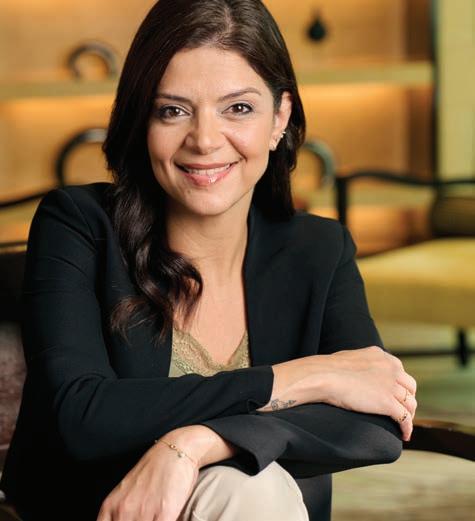
INTERNATIONAL LUXURY BUSINESS LEADER MORIN
OLUWOLE CHOSE ZEINA
SALEH, THE CHIEF OF STAFF TO THE CEO OF KEMPINSKI
How did you first encounter her and what initially caught your attention? I first encountered Zeina thanks to my role as a member of the Product Innovation Council at Kempinski over the past year. What struck me immediately was her ability to anticipate rather than simply respond. She brings a quiet mastery to her role, always one step ahead, creating clarity and calm around the Kempinski CEO, Barbara Muckermann. Having been a Chief of Staff myself at Meta for a number of years, I instantly recognised how rare that level of intuition and judgment truly is. What qualities does she possess that feel distinctive or rare to you right now? Zeina has a distinct blend of intelligence, discretion, and emotional intelligence. She is thoughtful without being hesitant,
confident without ego, and influential without needing to be seen. She stands out for her depth and precision.
Can you recall a specific moment when you realised she was someone to watch? During a pivotal Kempinski event that brought together board members, investors, and council members, while multiple operational threads were unfolding in parallel, Zeina demonstrated an exceptional ability to prioritise what truly mattered, support her CEO with precision and foresight, and give clear direction without ever micromanaging, ensuring a seamless and successful experience for everyone involved. In what ways does she challenge or expand your understanding of leadership, creativity, or success? She embodies a modern form of leadership, one rooted in trust, consistency, and discernment. Zeina reminds us that success isn’t always about being the loudest voice in the room, but about creating the conditions for others to succeed. She already does this by leading a community of Women General Managers in her role at Kempinski, She Suite is a powerful space for connection, mentorship and collective strength.
How does she navigate obstacles or uncertainty, and what do you admire about
her approach? She meets challenges with composure and clarity. There’s a steadiness to her presence that reassures teams and allows decisions to be made thoughtfully,even under pressure. If she were not in the room, what would you want others to understand about why she matters? I would want her to know that much of the alignment and progress around her is shaped by her behind-thescenes work. Zeina has a way of elevating everyone without needing the spotlight. Is there something about her generation, through her, that gives you hope or curiosity about the future? Very much so. Zeina represents a generation that values substance over status and integrity over optics. Her approach feels grounded, intentional, and deeply human – qualities that give me great optimism for the future of leadership. What piece of advice would you give her? To keep trusting her instincts and stepping into
greater visibility, in her own way and on her own terms. Her voice matters – and it deserves to be heard, clearly and often. She has the fortune of working with senior leaders at Kempinski where 50% of the C-Suite are women, she is already surrounded by role models to motivate her leadership growth. Anything else we should know? Zeina is the kind of woman whose impact lingers long after the meeting ends. She may work quietly, but her influence is lasting – and unmistakable.
Morin Oluwole
Zeina Saleh
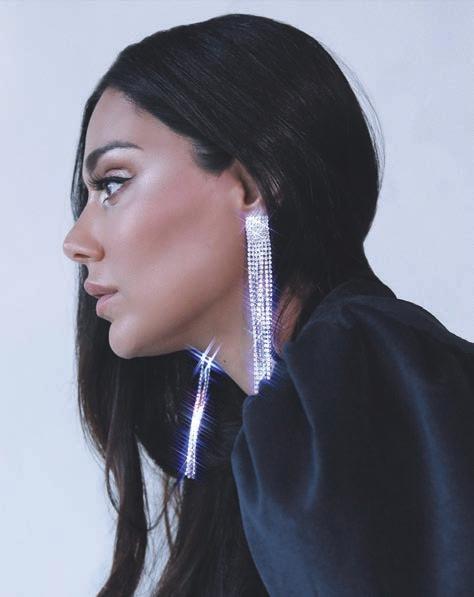
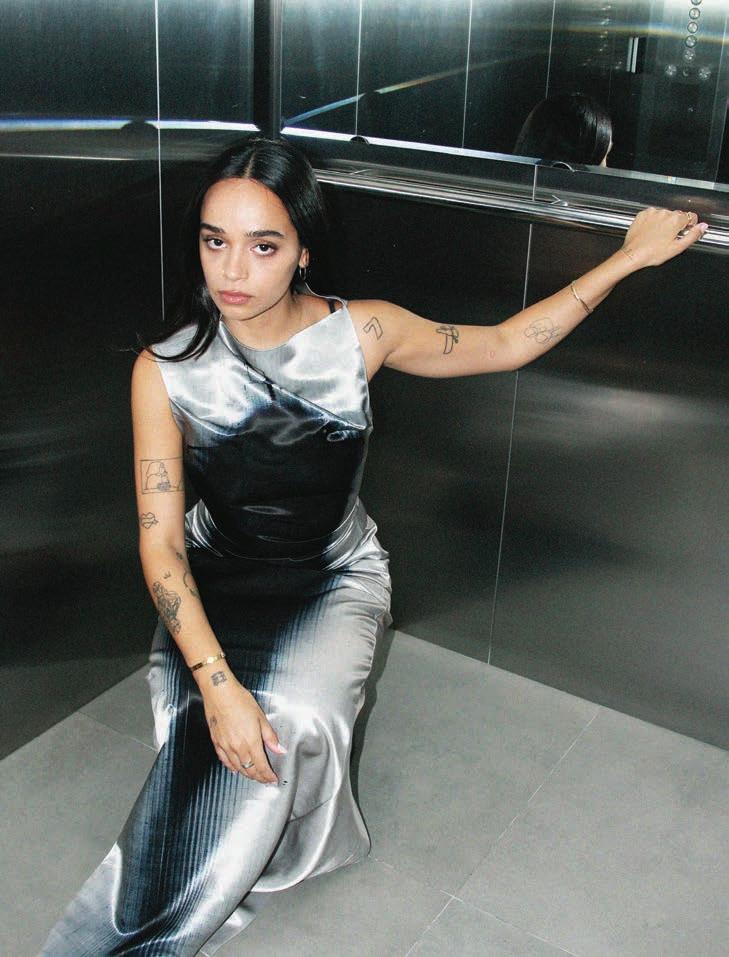
SINGER, ENTREPRENEUR AND BUSINESS
WOMAN LAYLA KARDAN
CHOSE DJ & CREATIVE CONSULTANT, PARVANE BARRETT
How did you first encounter her and what initially caught your attention? I first noticed Parvane through campaigns and brand work. Even though she was only 15 or 16 at the time, you could already see that star quality shining through. I was also drawn to her name - Parvane means “butterfly” in Farsi, and it felt fitting. She had this beautiful, creative presence that I knew would go on to make a real impact on the community.
What qualities does she possess that feel distinctive or rare to you right now? She’s one of the realest people in the industry. She doesn’t bend her personality to fit in or to win jobs. There’s a genuine authenticity in how she presents herself – through her fashion, her music taste, and the way she carries herself. That kind of honesty is rare. Can you recall a specific moment when you realised she was someone to watch?
The Paco Rabanne and Calvin Klein campaigns she did really stood out to me. I remember thinking then that she was going to grow into a powerhouse young woman. In what ways does she challenge or expand your understanding of leadership, creativity, or success? I can’t speak on her behalf, but it’s clear she honours her Iranian and French heritage. Being exposed to and immersed in different cultures naturally makes her unique. She has refined, elevated taste and a fresh eye, which is inspiring for the industry. Through the music she shares at events and clubs, and through her distinctive approach to fashion and beauty, she’s influencing art and culture in ways that are different from the norm – and people really appreciate that. How does she navigate obstacles or uncertainty, and what do you admire about her approach? I see her constantly evolv-
ing and finding new ways to connect with her audience. That readiness to grow and experiment is important to stay relevant and on top of the game.
If she were not in the room, what would you want others to understand about why she matters? She feels like an analogue girl in a digital world – an old soul. It feels like pop culture has dulled Gen Z’s ability to truly feel and connect, and she brings that depth back. She reminds people to be real, to feel, and I love seeing that.
Is there something about her generation, through her, that gives you hope or curiosity about the future? Through her, I see a generation that is reclaiming individuality and emotional depth. She represents young people who are curious, culturally aware, and unafraid to express themselves in ways that feel meaningful rather than performative. That gives me hope. What piece of advice would you give her?
To keep trusting her instincts and protecting her authenticity. That’s her greatest strength, and it’s what will carry her far beyond trends or moments.
Layla Kardan
Parvane Barrett
INTERIOR DESIGNER
NADA
DEBS CHOSE SOFIA
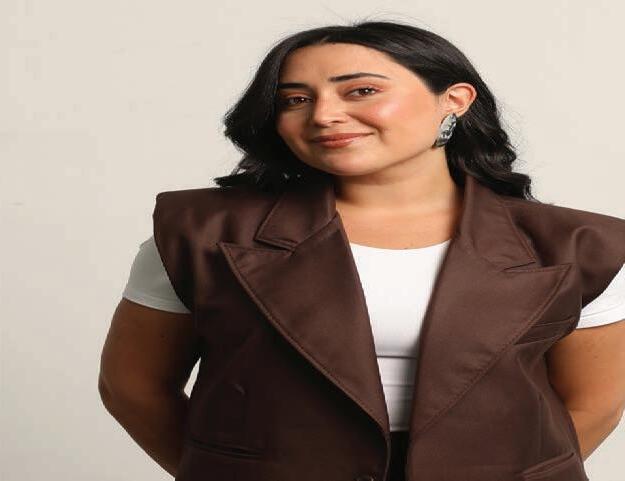
SAYAH, FOUNDER AND CREATIVE DIRECTOR OF SOSAÏ EVENTS
How did you first encounter her and what initially caught your attention? She’s my niece, so I’ve known her since she was very young. Watching her grow over the years, I’ve always been attentive to how naturally driven and observant she is. What qualities does she possess that feel distinctive or rare to you right now? She has a strong sense of determination paired with genuine curiosity and a real openness to constant improvement. What stands out most is her integrity. She deeply cares about what she does and how she does it. Can you recall a specific moment when you realised she was someone to watch? When Covid hit and work came to a standstill, she didn’t freeze. Instead, she adapted quickly, creating small, intimate events like date nights. It was impressive to see how she reframed a difficult situation and applied her skills in a new, relevant way.
In what ways does she challenge or expand your understanding of leadership,
creativity, or success? In just a few years, she’s grown into a leader, now managing a team of ten. Despite that, she remains humble and deeply attentive to detail. That balance, to me, is a very strong indicator of long-term success.
How does she navigate obstacles or uncertainty, and what do you admire about her approach? Whenever a crisis arises, especially in the unpredictable events industry, she remains calm, measured, and thoughtful. That level of composure and clarity is essential in effective crisis management, and it’s something I truly admire.
If she were not in the room, what would you want others to understand about why she matters? Her ambition is quiet but powerful. It’s not about rushing or shortcuts
– it’s a deep, steady determination to succeed, step by step.
Is there something about her generation, through her, that gives you hope or curiosity about the future? I see a strong emphasis on teamwork in her generation. There’s an openness to collaboration and collective growth, which I find very encouraging. What piece of advice would you give her? Stay grounded, and never lose sight of why you do what you do.
Anything else we should know? Sofia has lived in several countries and eventually found her place in Dubai. She arrived without knowing anyone and, in a short time, built a life and a sense of belonging for herself. That independence and resilience are incredibly admirable.
Nada Debs
Sofia Sayah
CO-FOUNDER OF PRIVÉ7 LUXURY
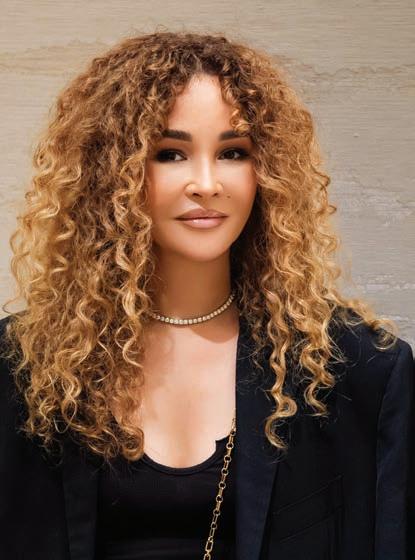
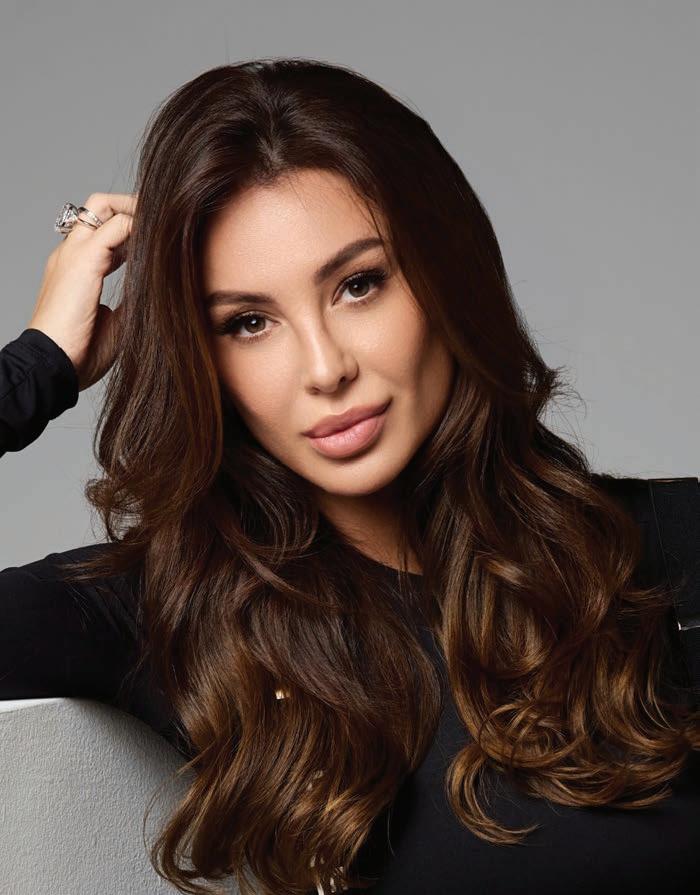
SALON AND CO-FOUNDER OF RUSSIAN SOCIAL CLUB GUZAL ERGASHEVA CHOSE JEWELLERY DESIGNER AND ENTREPRENEUR, SUZANNE VOIT
How did you first encounter her and what initially caught your attention? I first encountered Suzanne when Prive7 was organizing a franchise owners’ retreat at Lake Baikal. What immediately stood out was her genuine attention to every partner and her generosity of spirit. Despite her young age at the time, she already carried herself with confidence, vision, and a very strong sense of responsibility toward the people she works with. What qualities does she possess that feel distinctive or rare to you right now? Breadth of vision, precision in decisions, deep attention to detail, and a healthy perfectionism. What makes this combination rare is that she balances high standards with warmth and humanity.
Can you recall a specific moment when you realised she was someone to watch? Even before I personally knew her, around 10 years ago, I remember feeling a strong desire to buy into the franchise she was building. That feeling alone says a lot, you could already sense the scale of what she was creating. In what ways does she challenge or expand your understanding of leadership, creativity, or success? She builds businesses not
just structurally, but culturally – through people, energy, and long-term vision. She shows that leadership today is not about control, but about building ecosystems where people grow.
How does she navigate obstacles or uncertainty, and what do you admire about her approach? She is bold and strong, but also strategic. Suzanne thinks in scale and doesn’t waste energy on small limitations. I admire her courage to make big decisions and move forward even without perfect certainty.
If she were not in the room, what would you want others to understand about why she matters? Suzanne represents a model of a founder – someone who builds fast-growing businesses while keeping strong values
and real human connection. People trust her, and that is a very powerful currency in business today.
Is there something about her generation, through her, that gives you hope or curiosity about the future? Looking at her, I see that it is possible to build an international businesses, have a family, be a present mother, partner, and still create impact. It gives hope that her generation of leaders will be more multidimensional and conscious. What piece of advice would you give her?
Honestly, I wouldn’t give any advice to such an experienced woman at this point. She seems to be in a very aligned phase of her life – in harmony with herself, while already achieving so much at a young age.
Suzanne Voit
Guzal Ergasheva
A STATE OF FLOW
Self-taught and quietly assured, 28-year-old Miramar Al Nayyar is emerging as one of the region’s most exciting young artistic voices
practical terms, this means working intuitively, allowing her hand to guide the process rather than starting with a fixed plan. What’s more, when asked about her use of symbol-like forms and layered surfaces, she traces them back to this same idea. “Whether it’s a hand moving according to that flow and producing those protoscripts and symbols or the body dancing and producing all of those terrains and formations,” the starting point is always movement.
WORDS: NAOMI CHADDERTON
The Middle Eastern art scene has quietly been building momentum for decades, shaped by a growing network of institutions, collectors and artists across the region that are as diverse as they are culturally rooted. That said, with the recent launch of Art Basel Qatar, the continued expansion of Art Dubai and the growing international attention around the AlUla Arts Festival, to name a few, it’s safe to say that this long-established foundation is entering a new phase of visibility on a global scale. What’s perhaps most exciting, however, is not just the scale of events, but the new generation of artists emerging alongside them – voices shaped by movement, nature and lived experience rather than noise and spectacle.
Among them is Miramar Al Nayyar, a 28-year-old Iraqi artist whose practice feels quietly assured beyond her years. Selftaught and based between Amman and Abu Dhabi, Al Nayyar works across paintings, installations and material experimentations that, rather than focusing on recognisable imagery, centre around the concept of movement. As such, her paintings are often made up of flowing lines, layered marks and shifting forms that resemble symbols, writing or maps that don’t tell a story in a literal sense, but instead are formed gradually through repeated movements and layers. For Al Nayyar, this approach is inseparable from how she grew up. Moving between countries from a young age, she became familiar early on with transition and new experiences that quietly shaped the way she sees the world. “I’ve always lived in a state of suspension due to being away from home,” she explains. “I remember having many questions, like any curious child, living with a family, constantly hoping to return and settle down.”
More recently, the desert has become a key point of reference in Al Nayyar’s practice – both as a physical landscape and as a mental state, it offers a sense of openness and clarity that she believes contrasts sharply with urban life. “The desert is a place that allows not only your mind to dream, but your body as well,” she says. “It remembers the dream, and this is where things start to unfold.” For Al Nayyar, the desert is not empty or silent – it is deeply communicative. “The depths begin speaking, without stuttering or becoming blocked.” That relationship was at the heart of her most recent exhibition, Hujra, presented at Tabari Art Space’s new space at Dubai’s Alserkal Avenue towards the end of 2025. Translating to “chamber” and sharing its linguistic root with hajar, meaning stone, it explored how feeling, memory and material can come together, examining how light can take on form and how surfaces can quietly hold traces of lived experience over time. Structured as a dialogue between artist and curator, the show brought together Al Nayyar’s inner world with the physical landscape that inspired it. “At the time I was producing that body of work, I wanted to feel as if I were in the desert – dreaming, peaceful, and pure,” Al Nayyar recalls. “I worked nonstop to create that feeling for myself, because I had been away from that place for a long time.” What stayed with her most was the response from viewers. “I was very happy to see people resonating from the same place. It’s a work that comes from the heart to the heart.”
“I’ve always lived in a state of suspension due to being away from home”
Those early questions never really went away, however, so instead of trying to answer them directly, Al Nayyar gradually found herself turning to art as a way to process them. “This state fuelled my questioning even more, and later became a habit, pushing me to penetrate deeper until it turned into a question of the self and of life itself,” she shares. As such, creating work came from a very real internal need. “Having questions as the key foundation led me to contemplation and heightened emotions, therefore creating a need to express, in order to find some sort of balance. It was purely out of need.” Despite the recognisable visual language that has developed in her work, Al Nayyar resists the idea of having a fixed style. What matters more to her is where the work comes from, rather than how it looks. “I don’t know if I can call it a ‘style’,” she says. “I know that it is nature working through me.” The importance of movement, however, is always present and, in
Alongside solo exhibitions in Dubai and Amman, Al Nayyar’s work has received significant recognition. Case in point? She is a recipient of the Prince Claus Seed Award, which supports emerging creatives engaging with social and cultural issues in their local contexts. “This award meant a lot to me,” she enthuses. “At that age I was very young and fighting for something I only believed in. Receiving it gave me a massive push and a sense of being seen –which is a very human thing we all need.” She has also taken part in the Salama bint Hamdan Emerging Artists Fellowship, a programme supporting UAE-based artists through mentorship and development. For a largely self-taught artist, these experiences provided structure without restricting intuition – space to grow without losing her way of working.
Now, Al Nayyar is focused on what comes next, without rushing it, and is currently developing a new body of work that brings together the past several years of exploration. “It will be the culmination of the past three or four years of my journey – the harvest,” she teases. What she hopes for moving forward, however, is simple and telling: “More creative freedom and a courageous heart.” In a moment defined by visibility and growth, that may be exactly what makes her one to watch.
REWRITING RULES THE
From the lab to the racetrack, a new generation of young Arab women is reshaping what ambition looks like in the region. Bold, boundary-breaking and unapologetically ambitious, meet the faces of a fearless future
WORDS: ALICE HOLTHAM-PARGIN
There was a time when young Arab girls were told to dream within limits. Today, they are advancing science, dominating esports tournaments, speeding past expectations and carving their own paths down snow-capped peaks. Across science, sport and digital culture, a powerful shift is underway. Young women are no longer waiting for permission to lead. They are claiming their space, competing globally and turning passion into profession. Here, we meet the changemakers who embody a generation raised to believe ambition has no limits.
AMNA AL QUBAISI
25, Racing Driver
“I wasn’t interested in the sport,” Amna Al Qubaisi confesses when Emirates Woman meets her over Zoom to discuss her meteoric rise in the world of motorsport. “I
wanted to bond with my dad, and motorsport was his favourite hobby. So, I said, ‘I want to do karting, can you coach me?’ and that’s when I fell in love with the sport.”
Despite her father’s initial surprise, he gladly took her to the racetrack for the first time when she was just 14. “I was scared at first,” Al Qubaisi reflects honestly. “I jumped in the kart and I didn’t know the whole concept of racing. But bit-by-bit as my dad started to teach me, I got better.” A passion for competition spurred her on, and the opportunity to beat her father –Khaled Al Qubaisi, the first Emirati racing driver to compete at the 24 Hours of Le Mans race in France – encouraged Al Qubaisi to practice regularly, and she often found herself going to Abu Dhabi’s Al Forsan track solo to hone her craft.
But it came with challenges. “I was a bit lonely in karting. I think there were just two other girls and my sister.” Amna’s younger sister, Hamda Al Qubaisi, followed in her footsteps to the racetrack. “Then, when I progressed into single-seaters, it got worse, because I was the only girl there. It was a
very tough field.” Reflecting on being in an entirely male team during those formative years, Al Qubaisi says it was isolating. “[Back in 2018] there wasn’t a single woman. So I couldn’t find anyone to relate to or talk to.” But positive change has been made. Women are now in an increasing number of roles in motorsport, from engineers to mechanics, something Al Qubaisi describes as ‘great to see.’
After stints in the Italian Formula 4 Championship, Al Qubaisi progressed into the Formula 3 Asian Championship in 2021, joining the newly formed all-female F1 Academy Championship in 2023 with MP Motorsport. After ending the season sixth with two wins, she re-signed with MP for 2024 and joined the Red Bull Academy Programme to represent the RB Formula One Team.
While Amna has undoubtedly become a poster girl for young Arab women in motorsport, her immediate influence began at home. Soon after she began karting, her sister, two years her junior, joined the sport. “I think she wanted to be with me, to tap into my world,” Al Qubaisi says fondly

of her now 23-year-old sister. “She wasn’t a motorsport girl at all. She was calm, girly. When she got into racing, she was actually one of the slowest drivers at first. And then towards the end of the season, she won a race. So, it was amazing to see her progress and see how it shaped and changed her as a person.” Being able to help influence the career not just of her sister, but of aspiring young women from the region, is something Al Qubaisi feels particularly proud of. “When I receive messages from young girls telling me, ‘because of you and your father, my father supports me and what I do,’ I think that’s so beautiful. I think that holds
more value than any trophy I’ve got. And it inspires me to want to keep progressing in the sport so I can open doors and show that women from the Middle East are capable of being on the top step of the podium.”
After spending 2025 competing in the Ligier European Series as part of Team Virage, alongside her sister, what’s next for Al Qubaisi? “There are a lot of things going on,” she says with a coy smile. “We’ve had a really great offer from a certain car manufacturing company. I’m not allowed to say anything yet, but I’ve signed with them. It feels like the hard work is paying off when someone sees my talent and believes in
me.” And how about 10 years from now? “I would love to run for FIA President,” her confidence infectious. “I want to make it easier for women to get into motorsports.”
As our conversation concludes, we talk about the best advice she could give aspiring young motorsports enthusiasts. “You’ve got to do it for yourself,” she says, almost instantly. “You shouldn’t compare your path to anyone else’s. Just focus on your own journey, go at your own pace, and enjoy the moment.”
ALIA AL MANSOORI
23, Scientist
When Alia Al Mansoori connects with Emirates Woman, it’s mid-morning for her in New York, where she’s currently based as she completes her PhD at Cornell University. Midway through the conversation, she begins guiding us through thoughtful trinkets on her desk. “I think growing up, I always thought that being in science meant you couldn’t be feminine or cutesy. But actually, I’ve learned that’s not true,” she says proudly. “I’m a girl in science, I want to embrace it.” We rewind to her childhood. “I don’t think I even knew what a scientist was when I was a kid,” she says. “But I was curious about the world, I was always asking questions. I loved to question things, seek different answers, and really research things. That’s what it means to be a scientist. And that’s what I loved doing.” She opens up about a poignant moment when she picked up a textbook belonging to a brother, then a physiology student at university. “I probably didn’t understand most of what it said, but it really sparked my curiosity about this non-traditional field of combining biology with space. I thought there wasn’t a field for that, but I later learned that there’s something called astrobiology and that, you know, I’m not the only one who thought of combining the two,” she laughs.
Did she ever consider that astrobiology might not be something she could pursue as a young female Emirati? “Never,” Al
Amna Al Qubaisi
Mansoori smiles. “I was raised in an environment where we saw our country grow so much in such a short amount of time, so we know nothing is impossible. I think that really shaped the way that I saw my own achievements, my own failures.” It’s hard to believe at 23, Al Mansoori would have experienced failure, but she’s quick to highlight the challenges she’s faced with the mature consideration of someone far beyond her years. “I wasn’t a straight-A student. I wasn’t always best in class. I made mistakes, but I quickly learned not to be so hard on myself for that, because this is just the beginning, and I’m still learning.”
When she was just 15, Alia Al Mansoori won the Genes in Space UAE competition in 2017, while she was still studying at Al Mawakeb school. The win took her to the US to work with a team at Harvard, then to Florida’s Kennedy Space Center, where in August 2017 she witnessed a SpaceX Falcon 9 rocket carry her experiment into orbit. A history-making moment followed, when NASA astronaut Peggy Whitson conducted her experiment – the first ever from the UAE, aboard the International Space Station (ISS).
The achievements that have followed are nothing short of outstanding. In 2019, a 17-year-old Al Mansoori became the youngest person ever to be appointed a research fellow at NYU Abu Dhabi. Then in 2021, while studying at the University of Edinburgh, she was chosen as part of the UAE’s 'Futureneers' initiative, a group of young Emiratis tasked with developing ideas to prepare the country for the next 50 years. “I love inspiring people in any way, shape or form, just how people inspired me,” she asserts. “If there’s something that you feel really passionate about, even if there’s no space for it, you need to create your own space for it.”
At the start of her journey into astrobiology, Al Mansoori says it wasn’t really a field that had a strong presence in the UAE. “Even though I was only 16, I was determined to create that. And to this day, I’m working hard to get more people interested in this field.” As she progressed to grad school, she quickly found that there weren’t many young women alongside her. “In engineering specifically, I’d be one of the only girls in class.” But as developments continue, so does the space for women to excel in traditionally male-dominated areas. “I feel like a lot of women are entering the field and feeling encouraged to continue. I have my own undergrad that I train, which is great.”
Alongside inspiring the next generation, what’s next for Alia Al Mansoori? “Right now, I’m focusing on completing my PhD, but I’m also looking into starting a company with my co-worker, which is more in the space of environmental biology,” she says, with the kind of business acumen typically served by someone decades her senior. “I want to develop the startup culture in the UAE.” Passion radiates from her voice. “It really brews curiosity and innovation within different communities and different
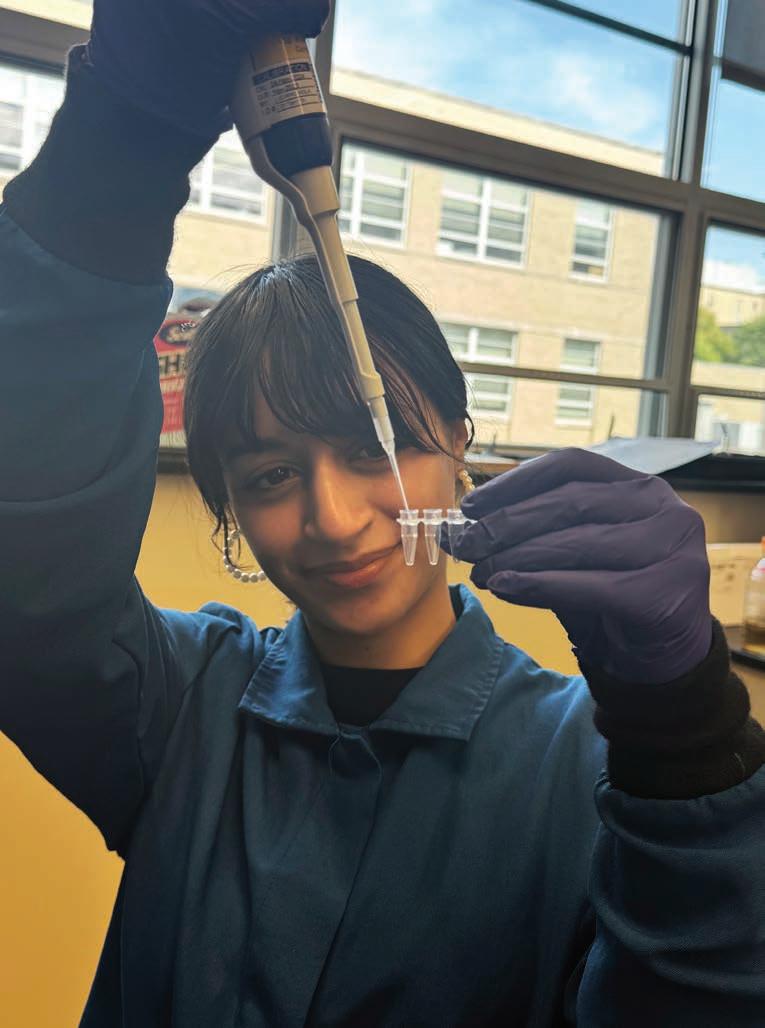
“I loved to question things, seek different answers, and really research things. That’s what it means to be a scientist. And that’s what I loved doing” – Alia Al Mansoori
disciplines. I know there are a lot of those in the UAE already, and I want to be an addition to that, and also help other interested folks who want to do the same.”
At the end of our call, we discuss whether it’s still her dream to go to space. “Yes, my dream is still to go to space,” she replies instantly. “Maybe the moon, maybe Mars… I would still love to go to space. But I’d also like to develop a technology that is custom designed for space, something to help us sustain life in space, something that’s made in the UAE. I guess that’s my new dream.”
Alia Al Mansoori
MARYAM MAHER
19, Gamer
Listening to Maryam Maher, it’s hard to believe the Bahrani-born gamer – who made history as the first Arab female gamer to join an international team in 2022 – is only 19. “I was always mature for my age,” she reflects thoughtfully. “When I was 12, 13, I never felt my age. When I’d be talking to 20-something-year-olds, they would always be surprised [by how young I was.]”
Some of that maturity can be credited to her family. She’s an eldest child, and speaks fondly about her mother, who she describes as ‘very mature’ at a young age. But her impressive wisdom is also down to what a full life Maher has already lived. What began as casual gaming at her grandmother’s house with her cousins catapulted a 12-year-old Maryam Maher into the evolving world of esports. “I always had a feeling deep down that I was different, even when I was a kid,” she says confidently. “When I was playing normal sports, I felt that competition in me. Then I started playing Fortnite, and I realised I was gifted.”
Gifted feels like an understatement. Known in the esports world as Mary Gaming, Maher rose to prominence after a video of her eliminating 24 opponents in one go on a game of Fortnite garnered more than 85,000 views. She went on to join G2 Gozen, the all-female team of esports organisation G2 Esports, becoming the first GCC-based female to join an international team. But finding role models in the gaming world proved challenging. “I don’t recall having a female role model back then,” she says. “So, I wanted to be the one who paved the way for women to be out there and enter the esports industry. Not just esports but gaming in general, posting gaming content – there were no women doing it.”
So, to now be considered an influential figure for aspiring young female gamers feels like a ‘dream come true’ for Maher. “The other day at an event in Riyadh, I saw this little girl, and she reminded me of my younger self, and I was like, man, I wish when I was her age there was some sort of role model that [I could have] looked up to,” she recollects passionately. “So, I went up to her and said, ‘Whatever you set your mind to, it can happen.’ And honestly, that’s what I like to do, to inspire young women who love to play video games. And show them that it can be an actual career path.”
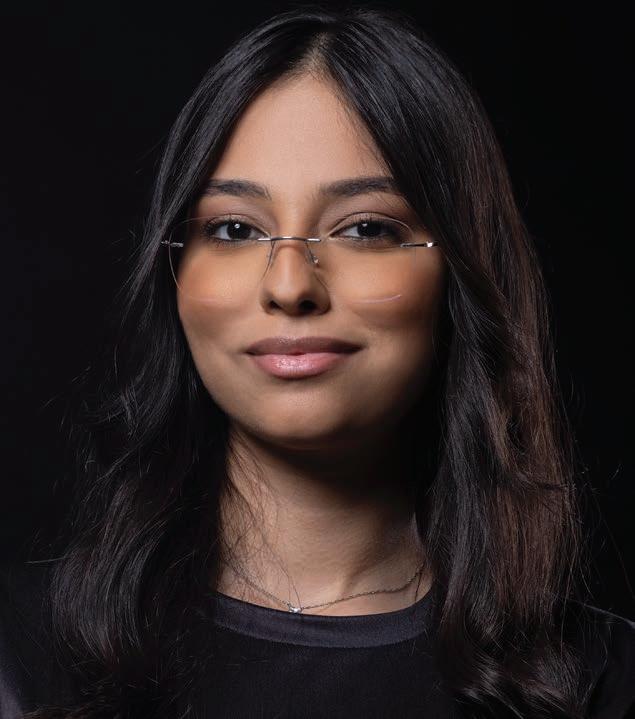
Maher is clearly in high demand. Our interview falls at the tail end of back-toback engagements that have seen her attend events in Dubai, Riyadh and Bahrain all within the last week. But she’s quick to share that it doesn’t come without compromise. “People think that you just sit on a computer and play for hours, but no, it takes a team. It takes leadership. It takes lots and lots of sacrifice.”
That sacrifice – and the discipline required to make it big in the world of esports, is something Maher says is ‘not being highlighted.’ “I went through lots of mental ups and downs,” she explains honestly. “I wish someone could have told me that you might feel isolated, or you might feel that you’re not on the same level as your friends, especially for those starting at a very young age.” The emotional intelligence beyond her years is impossible to miss. “But I’m happy, and I’m proud of myself for overcoming that. And I hope to inspire and help other women through my experience.”
Beyond gaming, Maher talks zealously about a love of cars, something she credits to her father, and an interest in watches.
Big collections of both are part of her longterm vision. “First and foremost, I’d like to be in good health and surrounded by family and friends,” she says as we talk about her goals. “Then other things can come, such as owning my own business, being a billionaire – I mean, you’ve got to dream big,” she laughs. “And then, just travelling the world and making other people smile, inspiring them. That’s pretty much it.”
AMENAH ALMUHAIRI
17, Freestyle Snowboarder
Amenah AlMuhairi, the UAE’s 17-yearold snowboarding prodigy, is due to fly to Canada to represent the UAE in the FIS Snowboarding Junior World Championship a few hours after her Emirates Woman interview. If she’s feeling nervous, you wouldn’t know it.
“I started skiing when I was five at Ski Dubai,” Amenah, fondly known as Moon, says. “It was in preparation for a family trip [to Bosnia]. Then, when we went on the trip, one of my mom’s friends asked if any of us wanted to try snowboarding. I’d never heard of it before, but my brother and I both
Maryam Maher
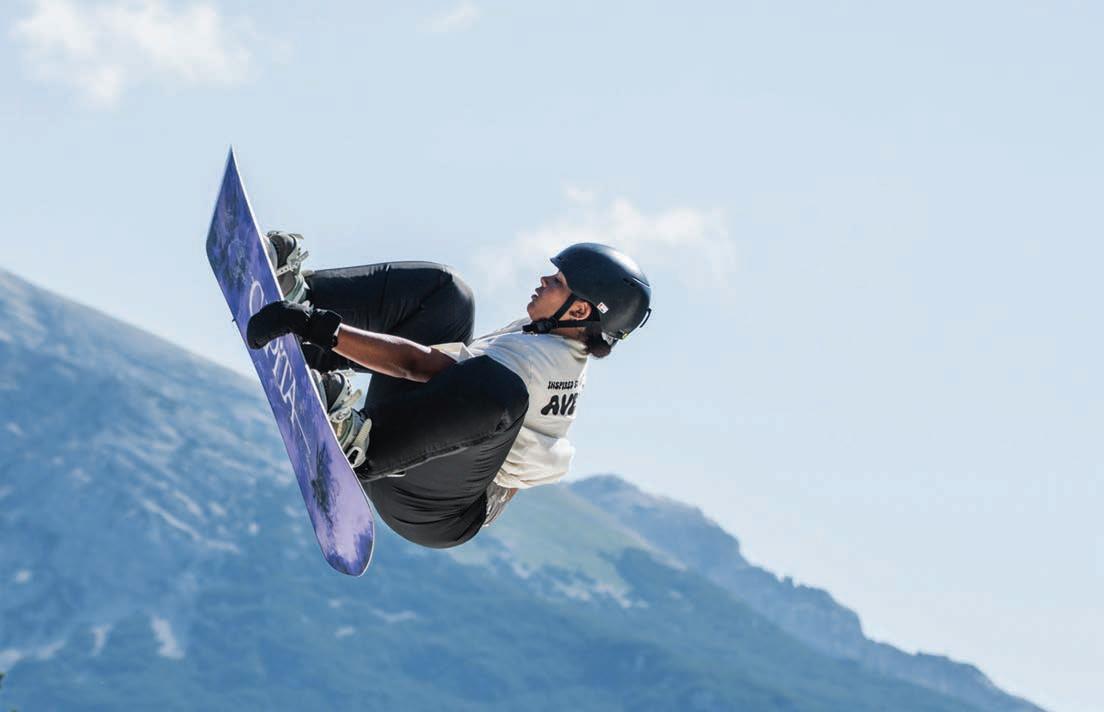
“Even if you have a bad day riding here, you’ll still feel good. It’s just a place where you feel happy.” – Amenah AlMuhairi
said ‘yes!’” It was an instant hit. “I loved every second, I didn’t touch the skis for the rest of the trip,” she laughs. “I was seven, so I’ve been doing it for 10 years now.”
Did sibling rivalry play a part in her initial drive to succeed? “We’re very competitive,” she affirms. “It was always about who could pick things up the fastest, who could turn the most, who could be the best – everything was a competition, I feel like that pushed me further, faster. Since my brother was older and he picked up sports relatively easily, I had to pick it up even faster.”
But how easy could it be to pick up a snow sport, living in the desert? “Obviously, we have Ski Dubai, and access to that facility 365 days a year is a big positive. Of course, it’s an unconventional place to do an unconventional sport, but I am very lucky that we are close to a lot of countries that I can travel to in close proximity.” She
talks animatedly about trips to Austria, Switzerland and Italy – referencing Laax (often referred to the snowboarding freestyle capital of Europe) as her favourite place to train. “Even if you have a bad day riding here, you’ll still feel good. It’s just a place where you feel happy.”
It quickly becomes clear that Amenah’s family have played a starring role in getting her to where she is now – competing on a global level, with the next winter Olympics firmly in her sights. “My mom’s family background is Alpine skiing; she has a background in snow sports, which is why she originally wanted us all to ski.” What did she think when AlMuhairi switched to snowboarding? “She was actually the one who asked if I wanted to do it competitively. We went to my first competition, and I enjoyed it so much, so after that I said, ‘Mom, I want to do this,’ and she totally
supported it. She is the biggest support in my life.” That support also extended into a time when Amenah considered giving up snowboarding. “She’s never going to force me to do anything I didn’t want to do,” she affirms. While snowboarding may be her main priority, how easy is it to balance that with being a regular 17-year-old? “I still do enjoy everything that most teenagers do, but I have learned to differentiate my snowboarding, my athletic life, and my everyday life. I also surround myself with people who are as dedicated and determined to a sport as I am, and that greatly helps.” And while it’s evident she’s now found balance, she says that being the only female snowboarder of her age in Dubai at the time was originally ‘very lonely.’ “As a kid, I was quite introverted. That didn’t help. But now I’ve grown up, there’s a big community over here of people who like to ski and snowboard, and we’re all the age where we can just hang out. That’s really cool.”
After her upcoming Junior World Championship, what’s the plan for AlMuhairi? “I’m graduating high school, and then hopefully continuing training in the country I go to university in.” For now, she’s not made any decisions, but is considering
Amenah AlMuhairi
Maryam Al Farsi
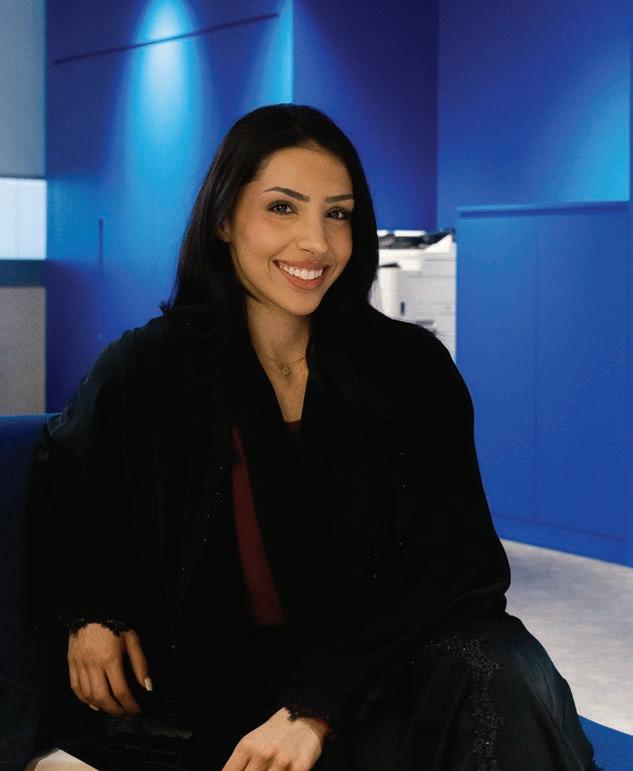
studying in Canada. “I didn’t want to be that far away from my mom,” she confesses. “But she’s the one who actually pushed me to apply. Apparently, she’s going to be coming to visit every three months,” she says with a laugh. Beyond education, AlMuhairi has big dreams for the next decade, with a gold medal at the top of her agenda. “By the time the next Winter Olympics comes along, I’ll only be 20, so hopefully I’ve got two Olympics in me, I’ll have graduated from university, and I plan to continue to develop the sport in the UAE.” Her final sentiment is both profound and powerful. “My biggest passion currently is trying to enforce the fact that just because we come from a desert country, it doesn’t mean you can’t pursue an unconventional sport, or any dream that you have.”
MARYAM AL FARSI
18, Athlete
“I’m so blessed that I get to be a role model for younger girls”
– Maryam Al Farsi
It’s hard to believe that Mayram Al Farsi, who represented the UAE at the 2024 Paris Olympics in the prestigious 100m sprint, wasn’t a natural. “Was I a good runner at the start? No, I was not,” she confesses with a laugh. “I was not blessed with the genes to run fast. But I fell in love with the sport. I fell in love with the environment, and I just put my head down and started training, and I loved it.” Describing her road to representing her country on a global stage as ‘definitely not linear, but the best decision I ever made,’ she credits determination –and her mother’s support – for getting her to where she is today. “For the competitions I would join, there was no female Emirati team. And so, my mom went and was like, ‘How are you promoting women’s sports?’ And we fought for it for months and months – and then it happened, which is so great, because now a group of women are running in the UAE,” she reflects proudly.
That training and support led to a 16-year-old Al Farsi being selected to repre-
sent the UAE as one of only 14 athletes at the 2024 Paris Olympics. “I think they told me a month, or a month-and-a-half before,” she says on finding out about her selection. “And to be honest, I was just in denial. I felt like at 16, I couldn’t possibly be at the top level.” She details finding it ‘so daunting,’ particularly going alone. "I don’t even remember the full race,” Al Farsi explains. “I just remember being at the start and then being at the finish line.” She came away from the Olympics considering hanging up her running shoes. “I didn’t think I wanted to run after Paris,” she reflects honestly. “I was like, ‘That was hard, that was difficult’. But then I was like ‘No, now that I know what to expect, I want to be there for LA.’” When she says LA, she’s referencing the 2028 Summer Olympics in LA, which Al Farsi has now firmly got her sights set on. “I cannot wait to represent my country and to represent women. I hope to have a team around me this time.”
Before then, there’s plenty off-track to keep her busy. “I just got my driver’s license and I’m going to graduate [this year].” After completing A-Levels in business economics and maths, she’s already been accepted to study business at a university in Dubai. Looking beyond the Olympics, the future feels exciting for this inspiring young athlete. “I want to be able to provide for my family, for my mom,” she replies heartfeltly when we talk about her goals. “Because she sacrificed her entire life for me. “I want to be able to start something real for women here. I want to be a businesswoman.” Her ambition is palpable. “I hope to create a bigger community around me of women and to make sport more accessible, not just for people my age, but for everyone.” That passion to inspire stands out throughout our conversation. “I’m so blessed that I get to be a role model for younger girls,” Al Farsi affirms. “If I can get one girl to look at the TV or the news and say, ‘She looks just like me, I want to run too,’ then I’ve done what I want to do.”
So, what’s the one piece of advice she’d pass on to any aspiring young female athletes? “I think loving something so much and putting your heart into it is so beautiful. Taking that step out of your comfort zone and being able to do what you want to do, whether society tells you yes or no, know that you can do it,” she responds thoughtfully. “And know that there’s a whole community behind you. I think anything is possible if you really love [something] and you really want it.”
SHAKE IT UP
Morin Oluwole, an International Luxury Business Leader who serves on the boards of Breitling, Rituals and Biologique Recherche, and the former Global Luxury Director at Meta, discusses what it really takes to stand out at the start of a career
“
Youthquake” is often described as disruption – a surge of new voices reshaping systems, industries, and power structures. In professional life, especially for young women, this moment can feel charged with urgency: speak early, stand out fast, make an impression before someone else does. Yet, having spent years working closely with senior executives, boards, and global leadership teams, I’ve observed something counterintuitive. The women who build lasting influence rarely do so by being the loudest or the quickest. They do it by understanding how authority is actually earned, often long before they are given a title.
INFLUENCE COMES BEFORE AUTHORITY
Early in my career, I believed leadership would come with time, that it would arrive naturally once experience and titles accumulated. What I learned instead is that leadership starts much earlier, often before you realise it, in the way people feel when they work with you.
In my first strategic roles, long before I was considered “senior,” I began to notice what truly stayed with decisionmakers. It wasn’t how confidently I spoke, but how clearly I helped them see a situation. They remembered who brought structure to complexity, who asked thoughtful questions, who helped move conversations forward. Over time, I understood that authority is rarely something you are given all at once. It grows quietly, through judgment, consistency, and the trust you build by showing up with intention and care.
FIRST IMPRESSIONS ARE ABOUT SUBSTANCE, NOT PERFORMANCE
There is a misconception that early-career success requires constant visibility. In reality, senior leaders are remarkably attuned to substance. I’ve sat in countless executive discussions where, afterward, leaders referenced a junior team member – not because she spoke the most, but because she asked the one question that reframed the issue. The impression that lasts is not about confidence theatre. It’s about understanding context, arriving prepared, and demonstrating judgment beyond your role.
THE POWER OF SAYING LESS –BUT MEANING MORE
In environments where young professionals feel pressure to prove themselves, silence can feel risky. But restraint is often a strength. Speaking selectively, when you have something considered to add, builds credibility far faster than constant contribution. This doesn’t mean shrinking or self-editing. It means choosing moments intentionally. Leaders remember clarity, not volume. A single insightful observation can define how you are seen long after a meeting ends.
CURIOSITY IS AN UNDERRATED LEADERSHIP SKILL
One of the most effective ways to build influence early is through curiosity. Not curiosity as politeness, but as genuine intellectual engagement. Asking the right question can redi-
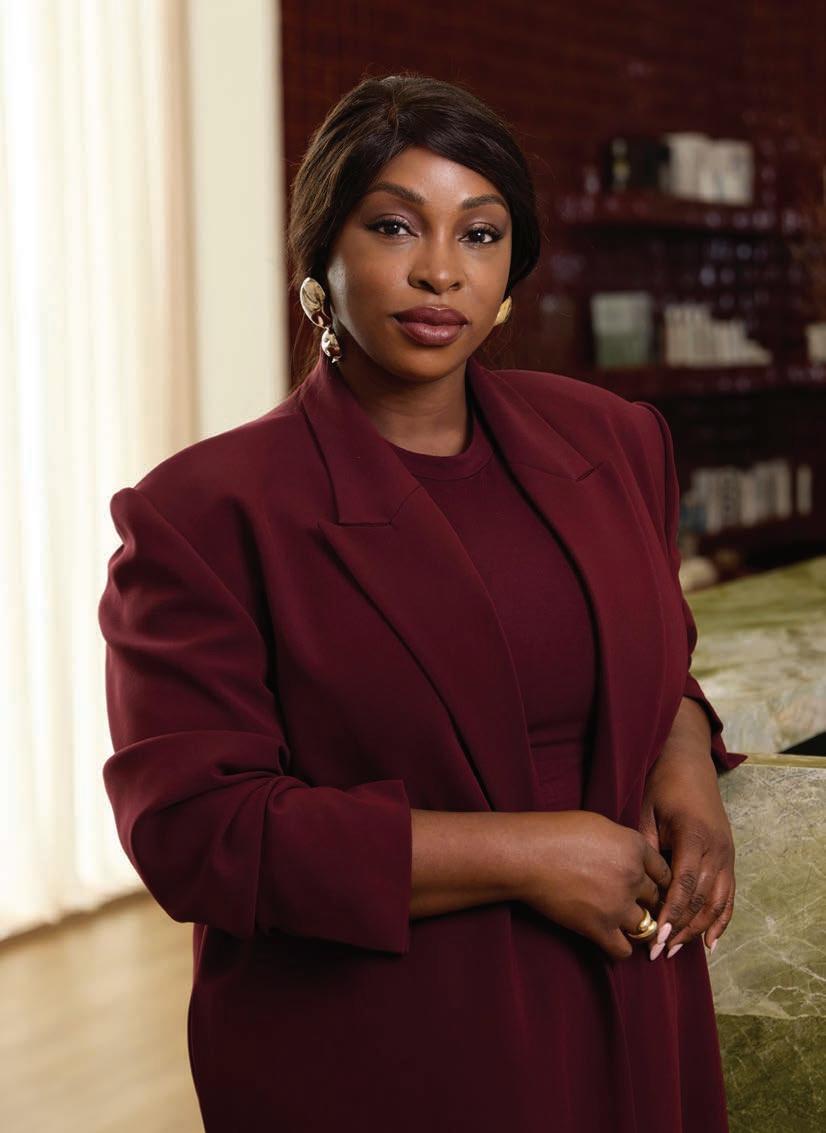
rect a conversation, surface blind spots, or unlock better decisions. It signals that you are thinking beyond your own role and engaging with the bigger picture. Young women often feel pressure to arrive with answers. In reality, demonstrating how you think – through questions, connections, and perspective – is often more impactful than having immediate solutions.
UNDERSTAND THE ROOM BEFORE TRYING TO CHANGE IT
Youthquake energy can sometimes push young professionals to want to disrupt immediately. But influence is built by understanding systems before challenging them. Observe how decisions are made. Notice who influences outcomes and how. Pay attention to what is rewarded – and what is qui-
etly discouraged. This awareness allows you to navigate with intelligence rather than friction. Impact doesn’t come from opposing the system outright. It comes from knowing where and how to intervene meaningfully.
CONSISTENCY BUILDS TRUST FASTER THAN BRILLIANCE
I’ve seen exceptionally talented individuals stall because they chased standout moments instead of reliability. In contrast, those who consistently delivered, who followed through, stayed steady under pressure, and handled ambiguity well – were trusted with greater responsibility over time. Trust compounds quietly. It often matters more than brilliance, especially early on.
RESIST THE RUSH
Today’s professional culture rewards speed: fast growth, fast recognition, fast visibility. But leadership is not accelerated by urgency alone. Some of the most respected leaders I work with took time to build discernment – learning when to push, when to listen, and when to wait. Learning discernment, judgment, and self-awareness takes time. So does developing a point of view that isn’t borrowed from trends or titles. Young women who allow themselves to grow deliberately, without rushing visibility or validation, often emerge with something far more powerful: credibility that lasts.
THE REAL IMPACT OF STARTING WELL
Making an impact early doesn’t mean having all the answers. It means building trust, presence, and clarity before you have formal power. Youthquake is not about urgency for its own sake. It is about intention. The most enduring impact is made by women who understand that authority is built through judgment, consistency, and presence – not performance. Start by mastering how you think, how you listen, and how you show up when it matters. Titles will follow. Influence always comes first. @morin | morinoluwole.com
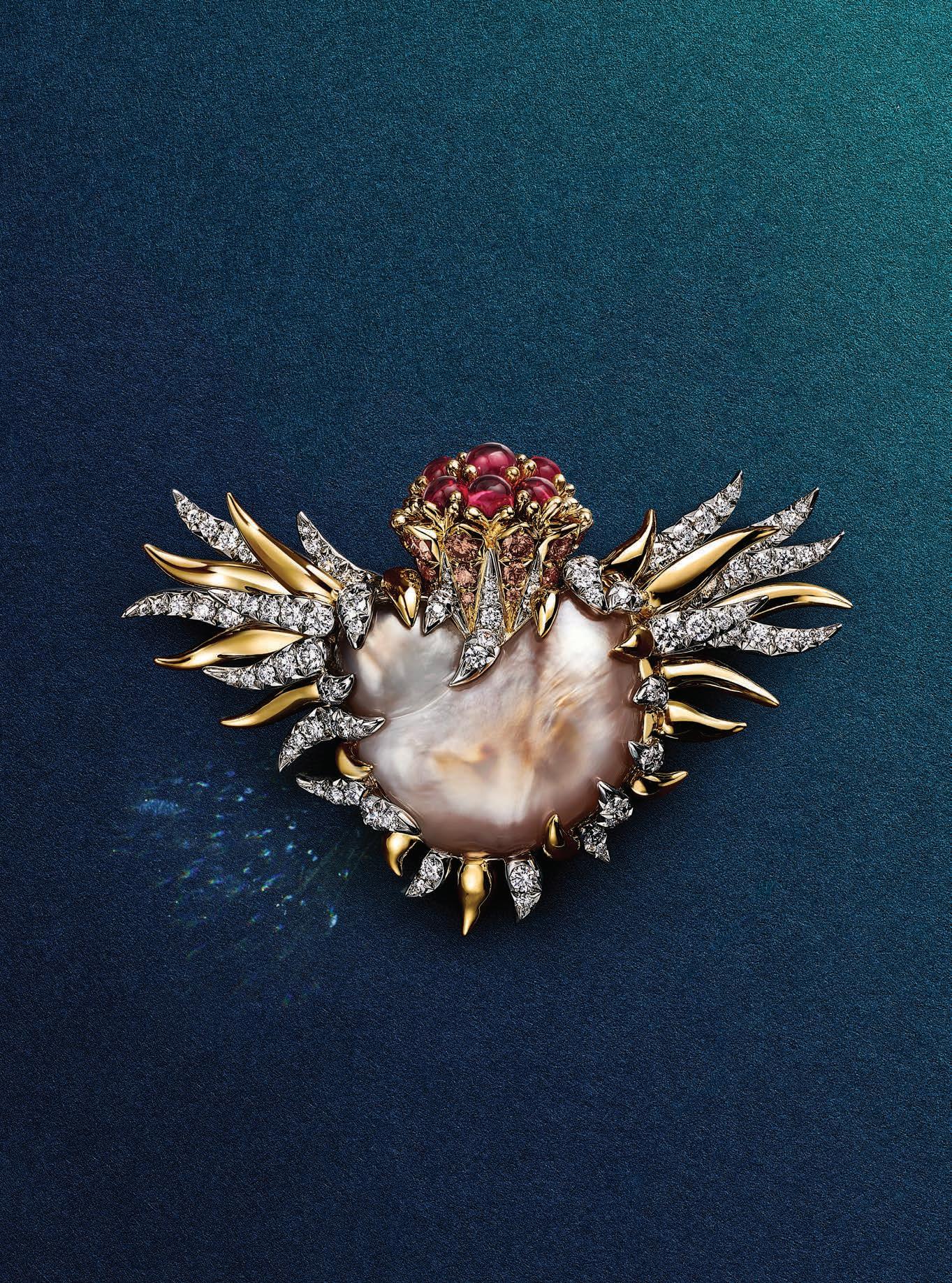
FLIGHT OF FANCY
With Tiffany & Co.’s latest capsule collection of one-of-a-kind Bird on a Pearl high jewellery designs – and its charming limited edition Love Birds paired jewellery pieces – Victoria Reynolds, the house’s chief gemologist, explains why the brand’s creativity continues to soar
WORDS: JESSICA MICHAULT
Inside a private chalet in the snow-swept luxury enclave of Gstaad, Switzerland, Tiffany & Co has taken up residency to present its latest one-of-a-kind high jewellery capsule collections. On hand is Victoria Reynolds, the house’s chief gemologist –who next year will celebrate 40 years with the company. But even after all that time, and all the endless presentations she has been a part of, Reynolds is still wowed by what the brand has been able to bring to life – this time in this tiny mountain village. “Isn’t this extraordinary?” she says gesturing around her to a series of traditional cuckoo clocks mounted on the walls. Tiffany & Co refurbished them as charming abodes for the brand’s latest series of unique Bird on a Pearl creations. Pearching each bejewelled bird in the centre of an individual clock, instantly telegraphing a message of whimsical sophistication.
The mise-en-scene could not have been more picturesque. With the Swiss Alps as a backdrop, and a
freshly fallen snow turning the entire town a pristine white, the environs became the perfect counterpoint to the luminescent pearls, large vibrant gemstones and shimmering diamond embellishments on display. “For my 39 years with Tiffany – I started when I was twenty-three years old – I have been completely blown away by the craftsmanship and innovation that Jean Schlumberger had,” Reynolds says, of the man who created the first Bird on a Rock in 1965.
Originally inspired by a yellow cockatoo, the brand’s chief artistic officer Nathalie Verdeille has given the iconic bejewelled winged creatures a modern reinterpretation across a series of new iterations. This includes a new round of Bird on a Pearl designs – after the original offering found international success when it first debuted in 2023. Pearls, the gemologist explains, are unlike any other gem on the planet. “The pearl is a reflection of the ecosystem that it’s formed in. And that’s what I find so fascinating,” Reynolds shares. “They’re one of the most nu-
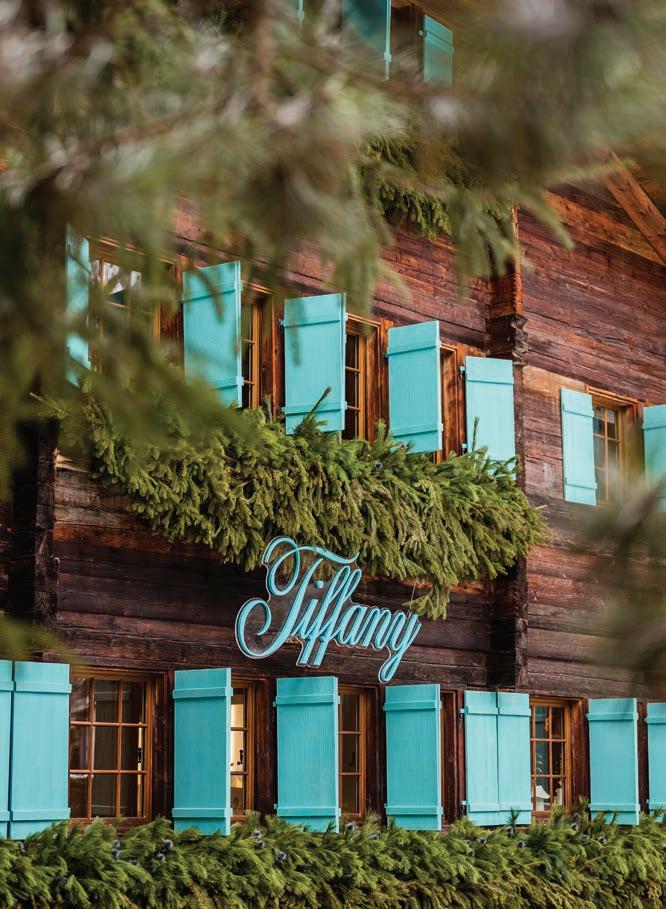
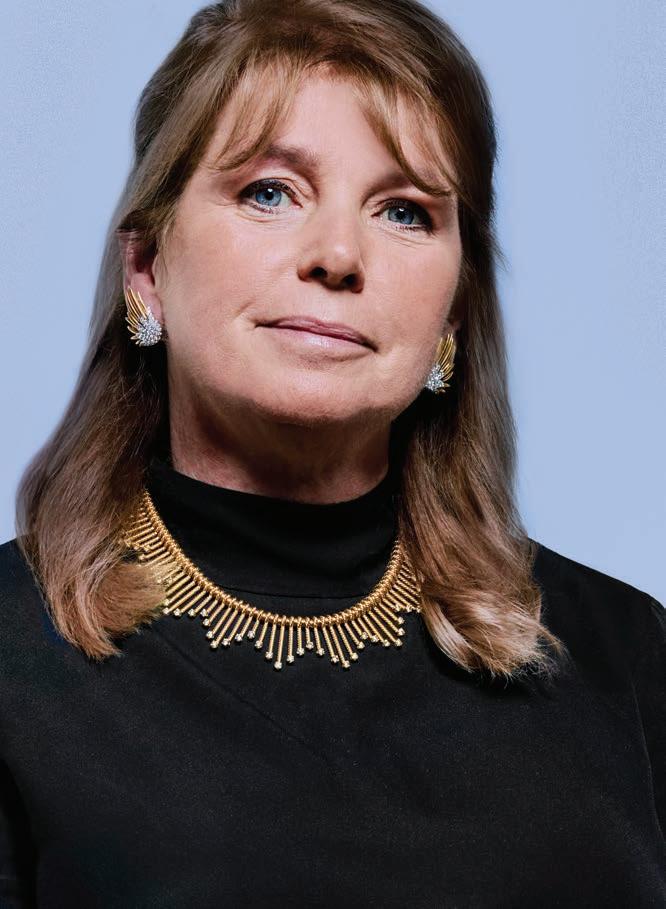
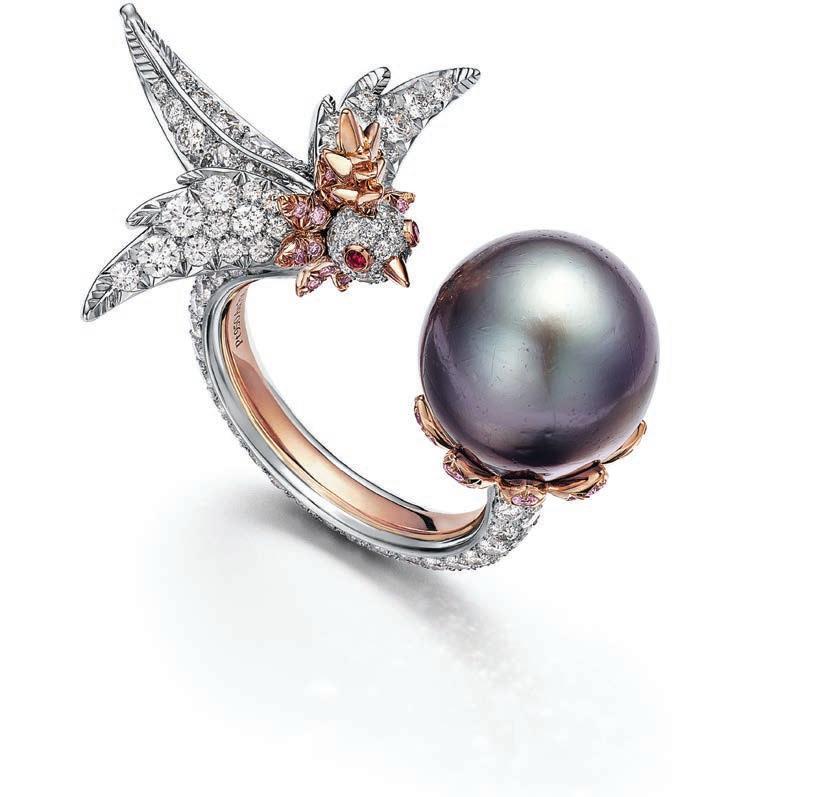
anced, interesting gemstones to work with because of their unique colour – you have platinum pearls, you have aubergine pearls, you have pistachio colored pearls.” The latest Bird on a Pearl collection once again places Jean Schlumberger’s iconic motif in conversation with some of the rarest natural saltwater pearls in existence – drawn exclusively from the private collection of Hussein Al Fardan. Making this the fourth time the house has collaborated with the Qatari businessman and premier expert in natural Gulf pearls. His long family history of working in the pearl industry means that Al Fardan has what is considered to be the world’s most extensive private collection of natural pearls.
For Reynolds, the connection feels almost preordained as she recounts the story of when she discovered that Mr. Al Fardan had in his private collection a first edition copy of The Book of the Pearl: The History, Art, Science, and Industry of the Queen of Gems, written by Tiffany & Co’s first chief gemologist Dr. George Frederick Kunz in 1908, which is considered to be the definitive book on the topic of pearls. “I literally got shivers when I saw him pull out that book,” recalls Reynolds. In the new capsule, those nuances in each of the pearls became the foundation of the visual narrative. The rich chocolate brown hue of one pearl is accented
Victoria Reynolds, Tiffany & Co.’s chief gemologist
“The pearl is a reflection of the ecosystem that it’s formed in. And that’s what I find so fascinating”
by feathers on the bird poised above it, crafted out of cognac diamonds. Or another clever new design in the collection sees the head of a number of different birds carved out of different coloured star sapphires. Once again chosen to be perfectly in tune with the pearl it has been paired with.
And no description of this new collection would be complete without paying homage to one showstopping high jewellery brooch set with a glossy orangy brown and white baroque natural saltwater pearl, clocking in at 36.79 carats and designed to look like a heart bursting forth with diamond festooned wings of love. It sold almost instantaneously and has all the hallmarks of becoming one of those designs that is referenced for generations. Every piece on display is an elegant balancing act of bold imagination and technical precision. But for Reynolds, it is not perfection that captivates, it is individuality. “In their imperfection is their perfection. It makes them perfect. That makes them unique. No two are the same,” she says of the pearls. “The luster, the skin, the shape, the primary colour, the secondary colour.” Her relationship with Mr. Al Fardan has transformed her understanding of these treasures. Visiting his collection, she says, “it’s a little bit of a religious experience because you’re working with somebody who loves these things as much as you do”
The reverence is palpable, and so is the rarity. “These things do not exist anymore. They’re rare because the world doesn’t produce them anymore,” Reynolds explains, who feels that helping to “lift up the rarity and the beauty” of natural Gulf pearls feels both urgent and necessary for a house that is now historically connected to them.
But the impressive Bird on a Pearl pieces were not the only highly imaginative offering Tiffany & Co. had on hand to surprise its clientele who had been flying into Gstaad all week for private viewings. Reynolds also introduced Love Birds – a high jewellery concept born from gemstone pairings discovered years in advance. “For all of our global collections, we’re working three years out,” Reynolds explains as she points out that with this collection the house made the rather daring decision to only sell the pieces as pairs – as love birds. Each unique duo has been designed to bring distinctive gemstones, crafted in different cuts, together. Their deep connection found through the expert eyes of Verdeille and Reynold. The women would travel to endless gem shows together and the idea of creating love birds grew organically as they would be sorting through some of the world's most vibrant gemstones, from opals and moonstones to rubellites and aquamarines. “We ended up having just enough to do twelve,” says Reynolds.
Each pairing was intentional, each bird positioned in deliberate dialogue. “If you just allowed people to pick singles and put them together, they sort of lose the symbolic nature of what Nathalie’s intention was,” Reynolds notes. “I haven’t had a single person that said ‘I don’t like the pairings,’” she adds. Going on to tell the story of one couple who liked the idea so much they bought two pairs of Love Birds on the spot, and began to call them their ‘winter birds’ and ‘summer birds’. Tiffany is also in luck that the brooch – once considered traditional – has found new relevance, both in the high jewellery arena and also in fashion circles. “They’re having a moment because they are a way for men to also wear jewellery,” Reynolds says, adding, “It’s the bird that gives them permission because then it’s not too serious.” Serious jewellery, whimsical spirit, it’s a delicate equilibrium that Reynolds and Tiffany & Co have once again mastered with flying colours.
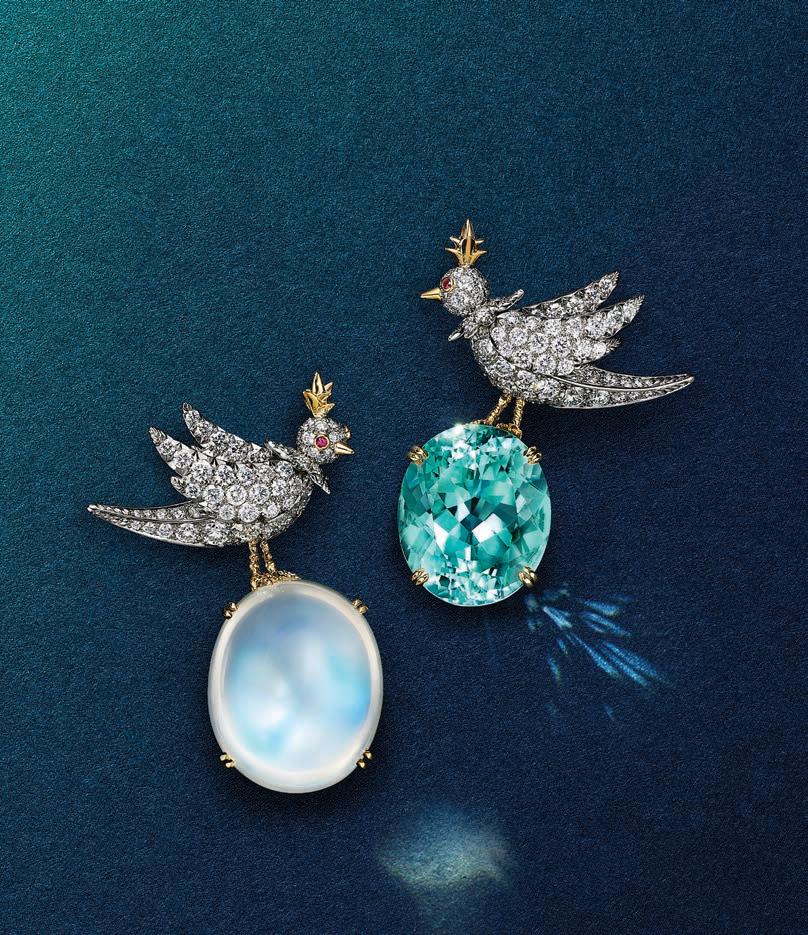
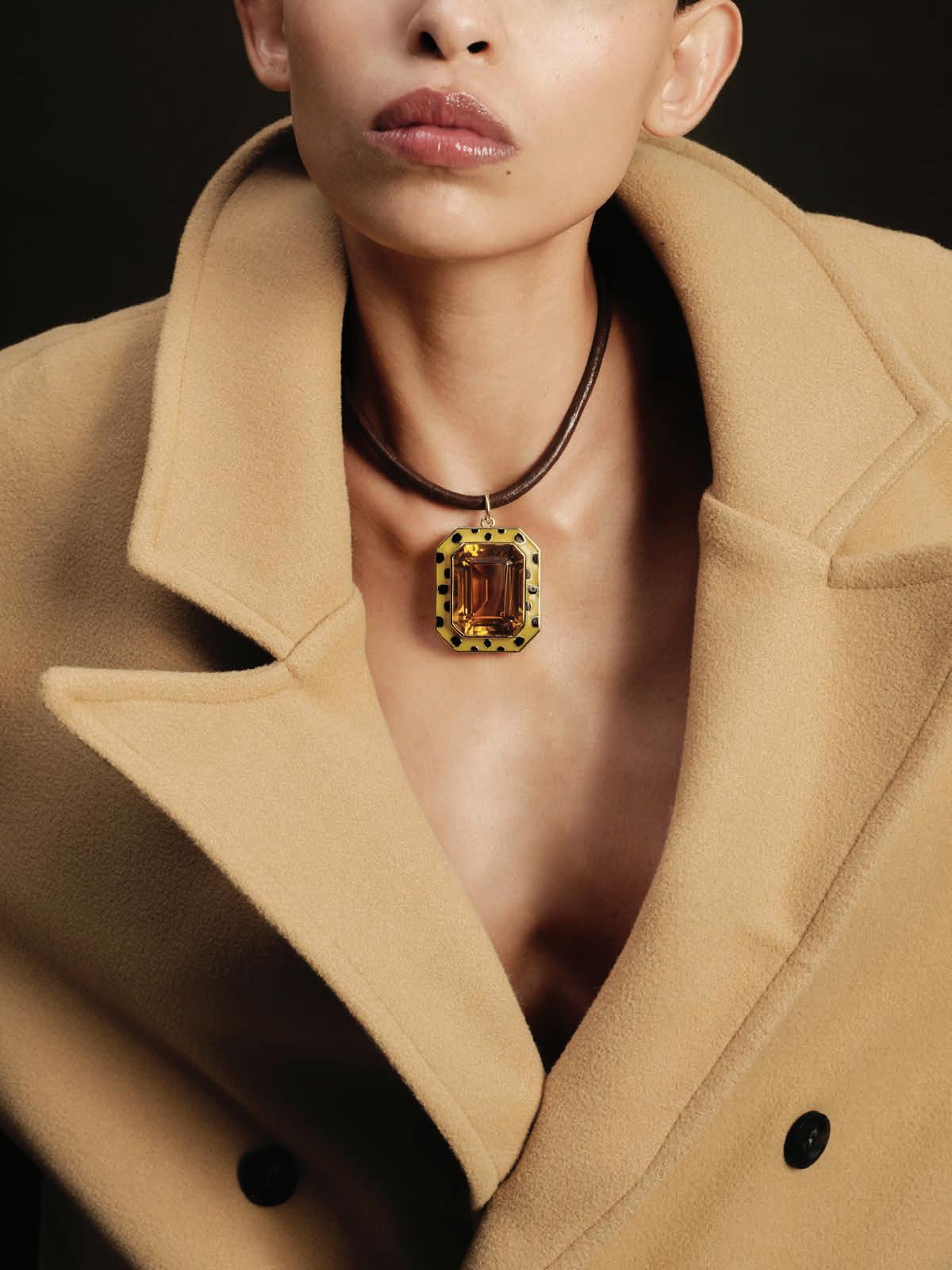
SISTER ACT
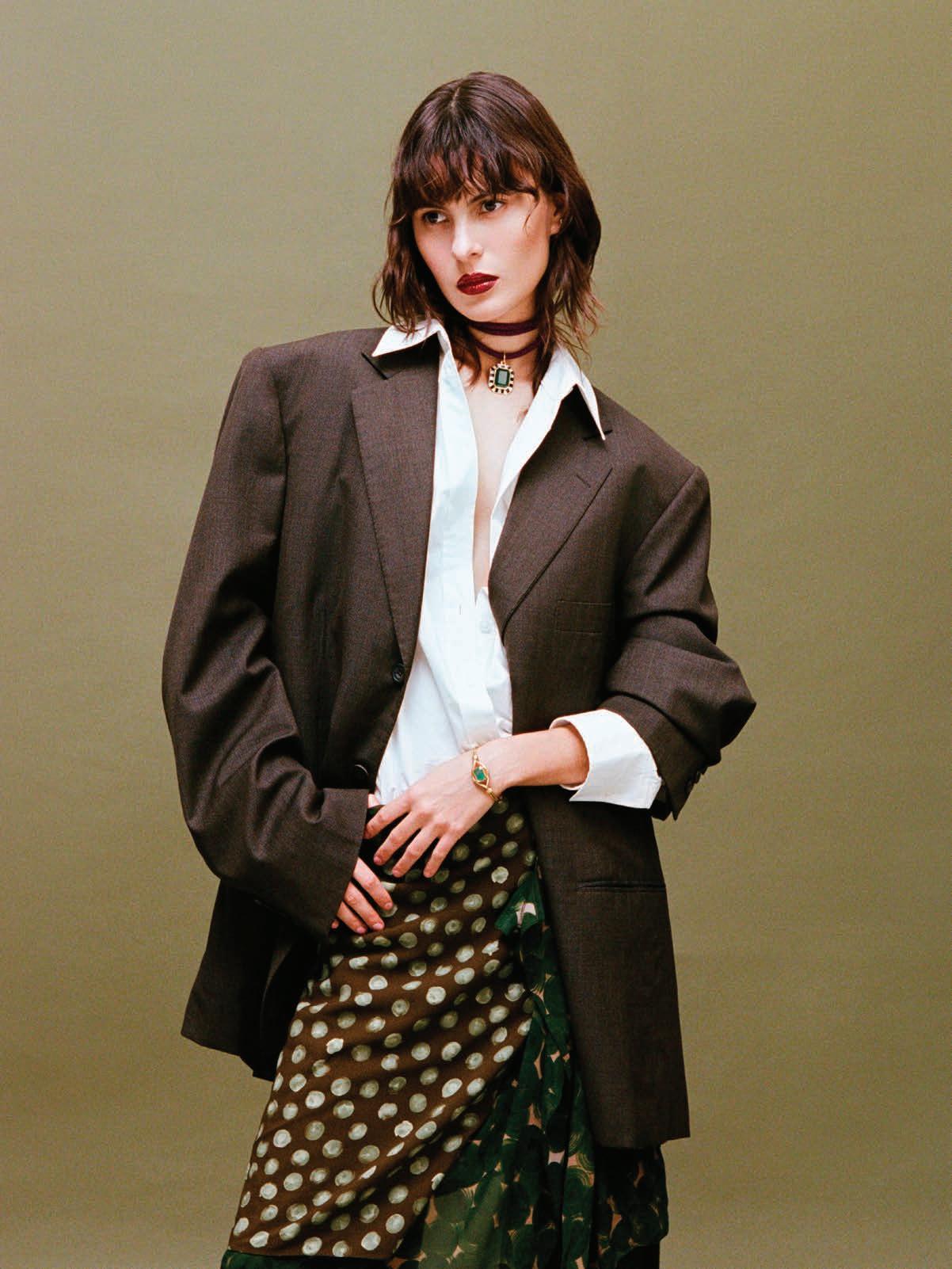
Sisters Oloof and Dujanah Jarrar have spent their lives side by side, studying, travelling and shaping a shared creative vision. Now that collaboration has taken form in House Janolo, a fresh voice in fine jewellery, all before their mid-twenties
WORDS: NAOMI CHADDERTON
For Oloof and Dujanah Jarrar, working together has always felt natural. Growing up in the UAE, the sisters spent much of their childhood together before going on to follow strikingly similar academic paths – the same undergraduate degree at New York’s Parsons School of Design, the same master’s programme at Columbia University and, eventually, the same instinct to build something together. So, when they decided to channel their partnership into creating a new fine jewellery brand, it felt less like a career pivot and more like an inevitable next step. Having launched this February, House Janolo is an exciting entry into the region’s fine jewellery landscape complete with strong regional roots, global perspective and a commitment to individuality – all achieved at the freshfaced ages of just 23 and 25. Informed by the sisters’ lives split between Abu Dhabi and New York, it reflects two perspectives shaped by different environments but shared experience, offering a fresh, considered approach to design. “It’s funny – we grew up side-by-side, both moved to New York,
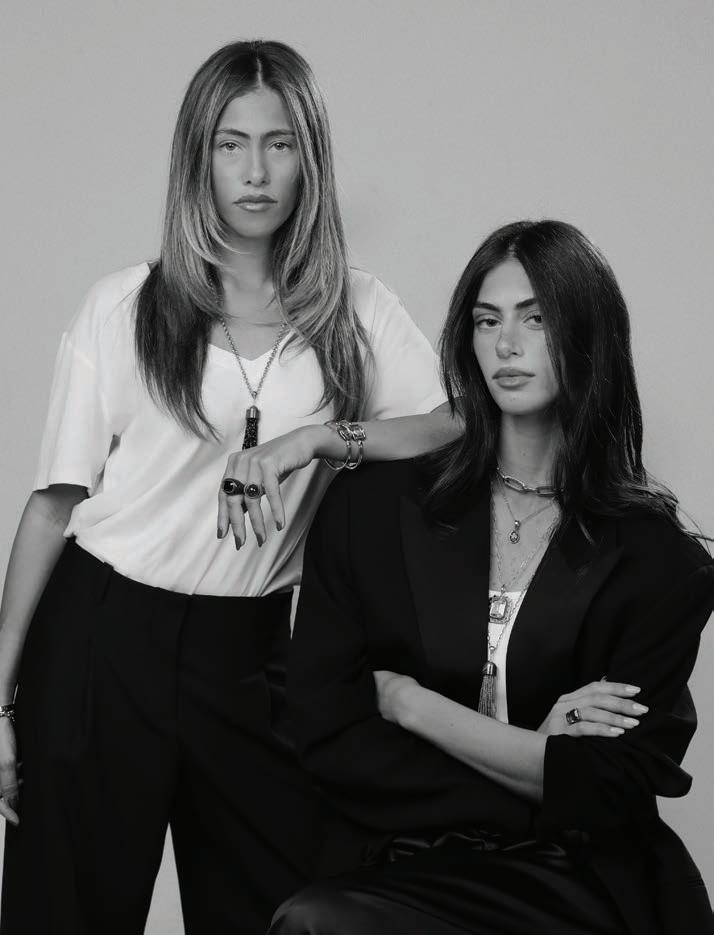
and studied the same degrees. But none of that was ever planned, it just happened naturally,” Dujanah explains. “I think that says a lot about how aligned we are at our core.”
Despite their shared background, Oloof and Dujanah don’t think or work in the same way, instead describing their working styles as fundamentally different – something they see as a strength rather than a challenge. “Despite the amount of time we’ve spent together, we approach things from opposite angles,” says Dujanah. “We challenge each other constantly and often arrive at decisions in completely different ways.” Those differences, they believe, were defined during their years they spent living between different countries, where contrasting paces and expectations shaped how they now approach decisionmaking. “Abu Dhabi taught us patience, grounding and how to build something with intention,” she adds. “New York pushed us to move faster, take risks and trust our instincts. Exposure in those two environments taught us how to hold multiple perspectives at once – when to slow down, when to push forward, and when to let the other lead. That balance deeply shaped how we collaborate.”
Oloof and Dujanah Jarrar, founders of House Janolo
That same clarity carries through to how they think about jewellery. For the sisters, pieces are designed with the idea that they should communicate something about the wearer without requiring explanation. As such, colour, form and material are treated as deliberate choices rather than decoration. “Instead of thinking, ‘oh here’s another brand entering the space’, we were much more interested in what the brand would stand for and what it would communicate from first glance,” shares Dujanah. “When someone wears House Janolo, we hope they feel comfortable in their own skin. Maybe even a bit like a badass, in a quiet, self-assured way. But just as important is what they don’t feel the need to say. There’s confidence in not explaining yourself.”
That intention also informs how the jewellery is made, with House Janolo working exclusively in 18k gold, and each piece handmade using a combination of traditional techniques and contemporary craftsmanship. Production is kept small by design, allowing the sisters to remain closely involved in every stage of the process and to prioritise quality over volume. As for their choice of gemstones, they are all natural and responsibly sourced, with the majority coming from Sri Lanka, India and Thailand, and each one personally selected by Oloof and Dujanah themselves.
Individuality in stones matters as much as appearance, with variations in tone, inclusions and irregularities understood not as flaws, but as the details that give each piece its character. “Weight matters to us – not just for how a piece feels when you wear it, but for how it holds its form over time,” explains Dujanah. “Our gemstones are all natural, hand-selected, responsibly sourced and hand-cut. We’re drawn to stones that are often overlooked but carry rich histories and a wide range of tones and personalities.”
In practice, this means resisting the polished uniformity that defines much of fine jewellery today, with Oloof explaining they are very intentional about using the word inclusions, not imperfections. “Everything today is filtered, edited and polished to look perfect, and after a while
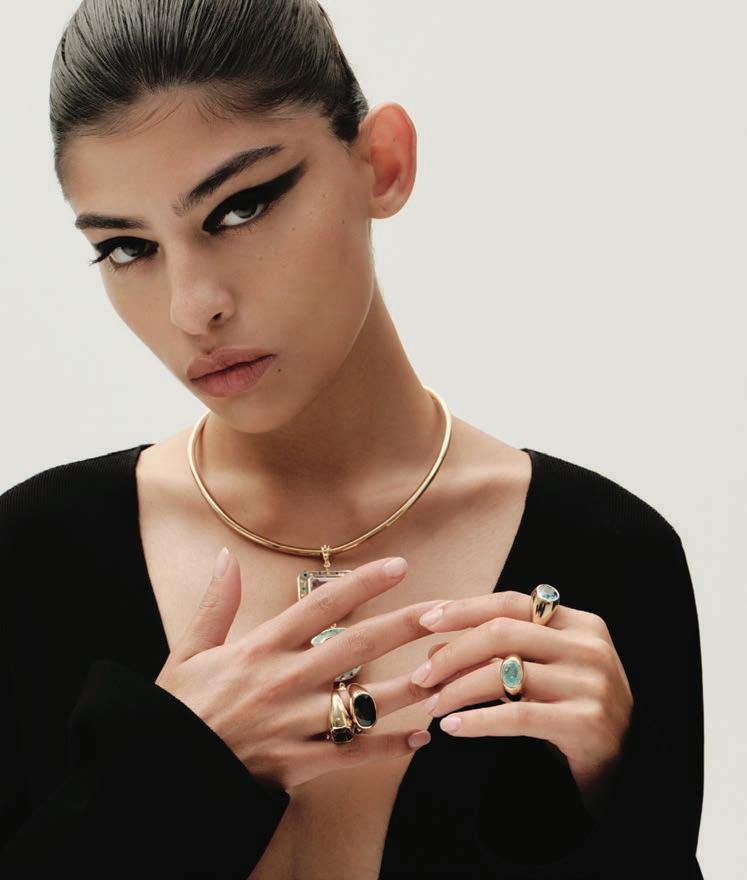
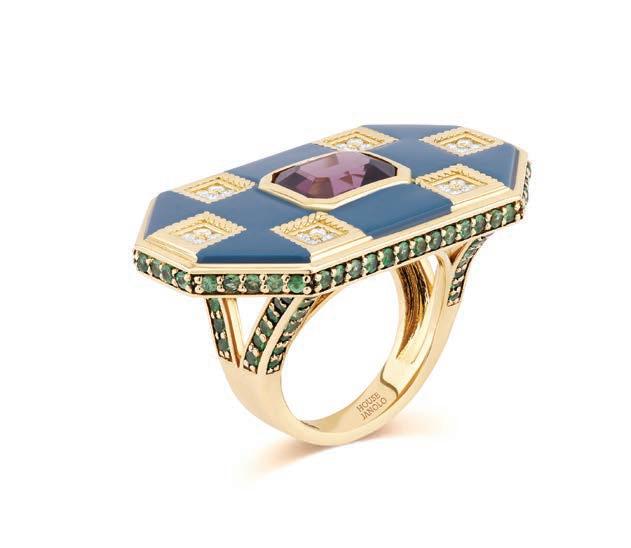
just of the stone itself, but of where it came from and the hands that brought it out of the ground,” she adds.
The brand’s debut collection, Wild Beginnings, takes its cues from the natural world, with pendants, bracelets, rings, and brooches designed to be worn every day, and intended to be layered, stacked and styled intuitively rather than saved for specific occasions. “In simple terms, Wild Beginnings is rooted in the belief that what we wear can function as armour,” says Dujanah. “Like wild beings, our exterior is our first and strongest line of expression and protection.” Highlights include the Citrine Orchid Pendant, an emerald-shaped pendant set with a 96.37-carat citrine in a bezel setting, and the Euphoria ring – an octagonal statement piece centred with an emerald-cut spinel and accented with diamonds, tsavorite and enamel detailing. Alongside the debut collection, House Janolo has intro-
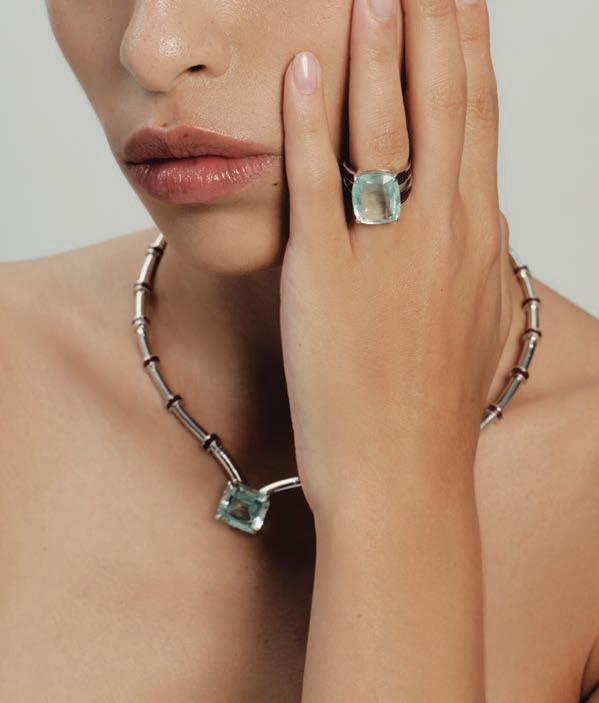
duced its House Signatures, a permanent selection of designs created to become part of daily life. Familiar forms are subtly reworked through details such as floating stones, hand-cast gold, enamel accents and asymmetry, resulting in pieces designed to be worn repeatedly rather than rotated in and out. “We think modern women don’t always take full advantage of the freedom they have to define what their own ‘uniform’ looks like,” says Oloof. “For us, uniform isn’t about sameness. It’s about choosing what makes you feel like yourself and showing up in that every day.”
As the brand looks ahead, the focus remains on building something that lasts, both in terms of design and the relationship with its audience, while staying true to the values that inspired its creation. “We want to continue surprising people, introducing ideas that feel unexpected while staying connected to the community that’s grown with us from the beginning,” says Dujanah. Longevity, she adds, matters as much to the wearer as it does to the brand, with the woman they imagine wearing House Janolo in years to come someone confident in her choices, comfortable dressing for herself rather than approval, and interested in collecting pieces over time. “That’s the future we’re building toward: a house that grows with its wearer, evolving while staying true to its character.”
“We’re drawn to stones that are often overlooked but carry rich histories and a wide range of tones and personalities”
PEARLS OF WISDOM
Guerlain’s Eid tribute perfume bottle is dressed to impress. This year the maison has entrusted its iconic Bee Bottle to the famed Vermont embroidery workshops, which has been collaborating with the top couture houses of the world since 1956, to craft a unique home for the brand’s iconic fragrance, L’Heure Dorée. From the collaborations, two editions have emerged. The majestic one-litre Exceptional Art Piece, limited to fifty numbered pieces worldwide, evokes a night sky scattered with light – like the first glimpse of the crescent moon announcing Eid. And its intimate counterpart, the 125ml Exceptional Rendezvous, offers the same handiwork in a lacquered format. Both are adorned with a waterfall of pearls, paying homage to the region where the pearl has long symbolised protection and wisdom.
GLOW
It’s time to indulge with…
– Beauty products that focus on personal expression
– #PerfumeTok’s latest yummy scents
– A new makeup line designed for rich skin tones
– A selection of go-to treatments that will help from head-to-toe
– The pursuit of wellness through self-awareness
– Exercise that powers from the core
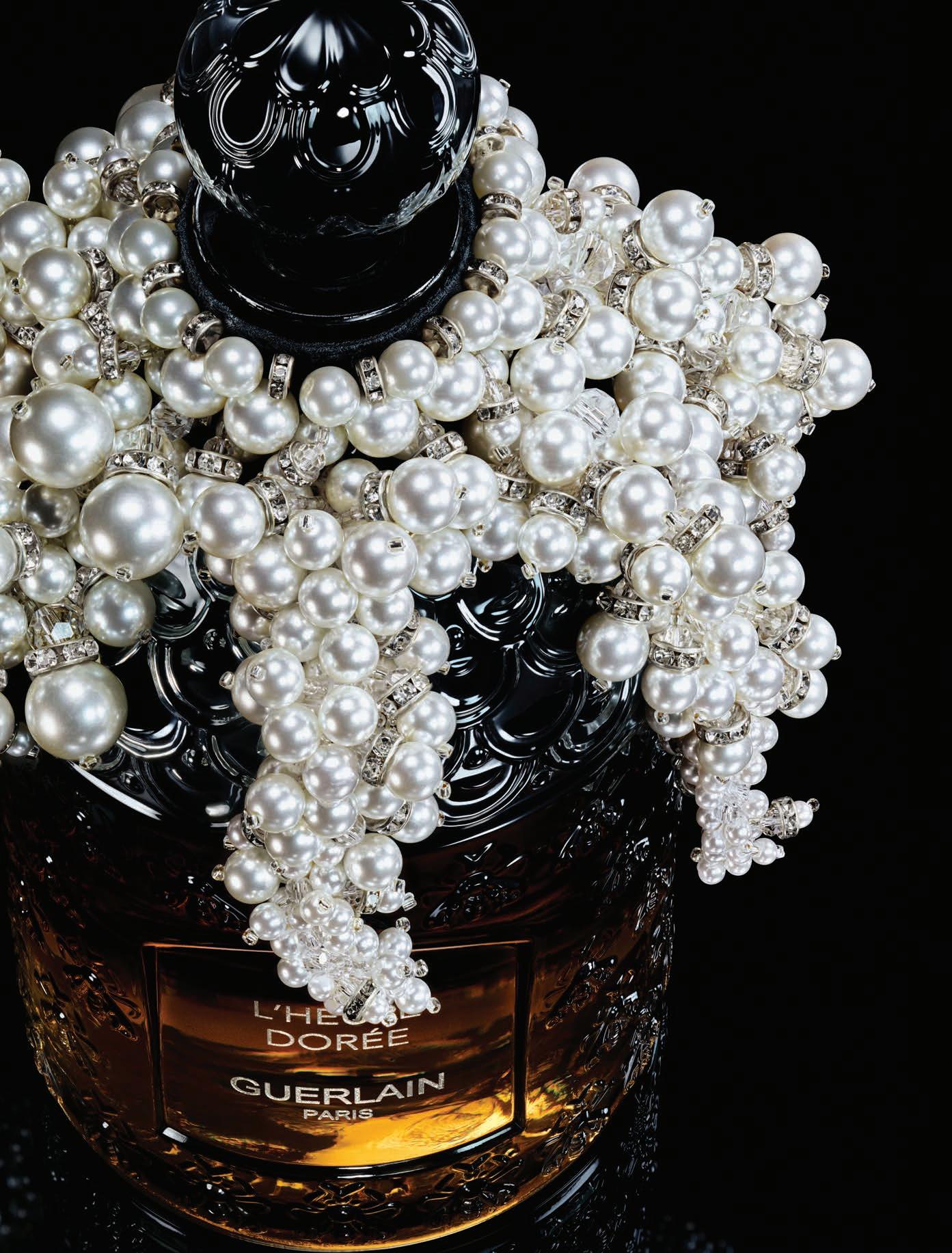
Hot New Buys
WORDS: CAMILLE MACAWILI
Noteworthy beauty launches defined by quiet confidence and personal expression
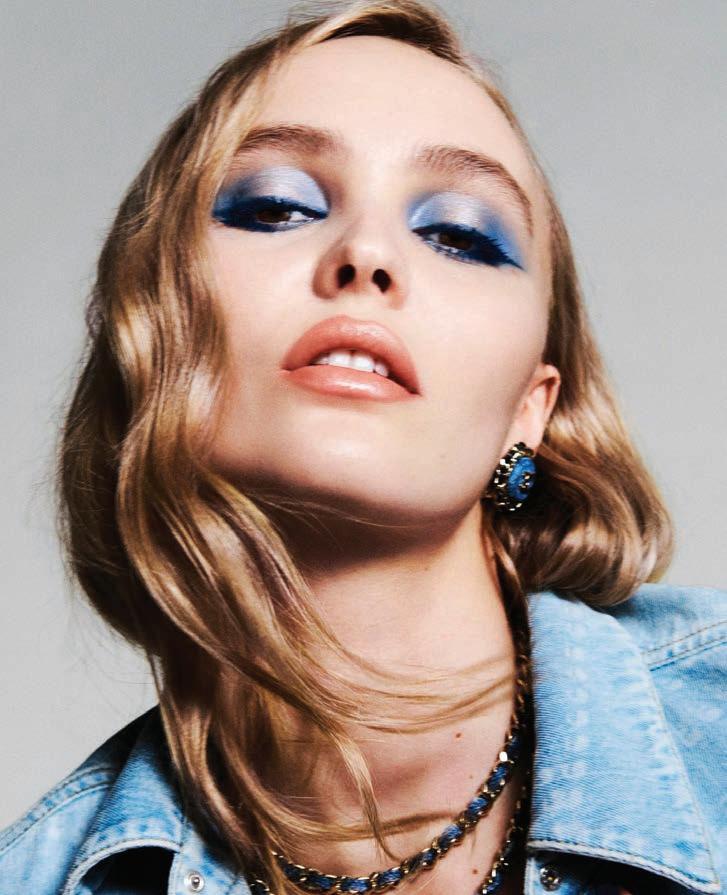
Blue Jean Baby
Denim Dream from Chanel’s Denim makeup collection makes switching up a look as easy as slipping on a pair of jeans. The eyeshadow palette includes shades like a satiny baby blue, a shimmery anthracite, matte dusty pink, and a pearly platinum that delivers a balance of creativity for when the mood strikes and everyday wearability.
Les 4 Ombres Eyeshadow Palette in Denim Dream Dhs331 Chanel
EYE DRAMA
Asteri’s Eyedeology 3-in-1 eyeliner pencil shapes, defines, and smudges into shadow with intuitive control. The innovative formulation helps manage oil and grip pigment in heat, a subtle but useful detail for long days. Eyedeology 3-in-1 Shadow Liner in Grape Dhs107 Asteri
ROSY OUTLOOK
The new Black Rose Concentrate Radiant Youth Serum from Sisley Paris reads like a reset button for tired skin, especially on days when the complexion looks flat. This lightweight serum, formulated with a black rose complex, helps maintain that glow and hydrated look on the skin, no matter what you layer on top. Black Rose Concentrate Radiant Youth Serum Dhs1,175 Sisley
Second Skin
Hermès Beauty takes a pared-back approach with Plein Air. Designed by Gregoris Pyrpylis. The formula feels closer to skin than traditional buildable foundations. It leans sheer, but refines redness, and the buttery texture lends an easy finger application means you spend less time layering and more time wearing. Hermès Plein Air Foundation Dhs591 Hermès
Performance Level
The Balancing Cream Cleanser from Dua by AB transitions from a gentle cream to a soft foam that lifts makeup and daily buildup without over-stripping, which means the finish still feels calm on the skin. Built around a patented skincare technology with a less costly price, it competes with more expensive cleansers that make similar claims. Balancing Cream Cleanser 125ml Dhs165 Dua

LIP LOVE
The XOXO Lip Kit elevates matte lips with a formula that prioritises comfort. The liner blurs, while the colour layer contains emollients that reduce chalky finishes and offer hold that stays without excessive flaking. XOXO Lip Kit Dhs129 Narins Beauty
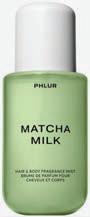
WANT TO GRAB MATCHA?
Take your matcha obsession to the next level. This scent balances the sweetness with macadamia milk and vanilla at the forefront and is counterweighted with matcha, black tea, and citrus top notes for a refreshing lift. Matcha Hair & Body Fragrance Mist Dhs143 Phlur
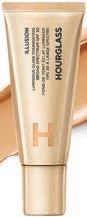
CATCH THE LIGHT
This foundation pairs skincare benefits with makeup performance, which results in skin that looks even and hydrated with shimmer that grips. Illusion Luminous Glow Foundation SPF 30 Dhs230 Hourglass
RUNNING ON EMPTY
We’ve normalised exhaustion as the price of modern womanhood, but what if your constant fatigue isn’t burnout –it’s a silent nutrient deficiency hiding in plain sight?
WORDS: NAOMI CHADDERTON
There is a particular kind of exhaustion that has become so synonymous with womanhood that we rarely question it. That bone-deep tiredness smoothed over with concealer and caffeine; the creeping brain fog laughed off as “having a moment”; the hum of anxiety blamed on work, children and hormones. We’ve become surprisingly skilled at treating our exhaustion as a given. Rarely do we ask a more fundamental question: what if this isn’t simply the result of modern female life? What if these symptoms are common indicators of a condition that affects roughly one in four women of reproductive age in the UAE – and one that can be identified through a simple blood test and treated relatively quickly? Because you’re probably not just tired –you’re most likely iron deficient.
“While most people associate iron with haemoglobin and oxygen transport, its role extends far beyond preventing anaemia,” says Dr Manar Jabbar Hussein, a specialist in obstetrics and gynaecology at Medcare. “It supports energy levels, immunity, brain function and healthy pregnancy and, without it, metabolism slows and resilience drops.” Symptoms of iron deficiency include persistent fatigue that doesn’t improve with rest, hair thinning, brittle nails, cold intolerance, brain fog and shortness of breath. With Dr Karima Arroud, functional medicine practitioner at Dubai-based holistic medical centre Wellth, adds that, “most women describe afternoon crashes, reduced exercise tolerance or feeling less resilient under stress.”
THE GENDER DIVIDE
In the so-called battle of the sexes, you could argue that women are navigating an uneven battlefield. Sure, we’re expected to live longer –in 2024, global life expectancy at birth was around 76 years for women compared to 71 for men – but longevity doesn’t necessarily mean an easier ride. Between hormonal shifts, reproductive milestones and the invisible mental load so many of us carry, our health concerns are often more complex than they first appear, and too easily dismissed
as “just part of being a woman.” Iron deficiency is a perfect example, and it’s far more common than many of us realise. In fact, according to a Global Burden of Disease study led by the Institute for Health Metrics and Evaluation at the University of Washington, iron deficiency anaemia ranks among the top five causes of disability in women of reproductive age worldwide while, in South Asia, it remains one of the region’s most persistent health and equity challenges, affecting nearly half of all adolescent girls and women.
But why are women so disproportionately affected? “The answer is largely biological,” explains Dr Karima. “Women experience regular blood loss through menstruation, and blood contains iron. Even cycles considered normal can gradually deplete iron stores over time. Pregnancy significantly increases iron demand due to blood volume expansion and fetal development, while breastfeeding continues this demand.” And that’s only part of the story, with conditions such as endometriosis and fibroids, which often cause heavy bleeding, further increasing the risk. Even during perimenopause, cycles frequently become heavier before they become irregular, paradoxically raising iron requirements during that transition. “Men simply do not face these recurring physiological demands,” Dr Karima adds.
THE HIDDEN DEFICIT
The tricky thing about iron deficiency is that it exists on a spectrum, quietly depleting stores long before it tips over into fullblown anaemia. Standard blood work may come back ‘normal’, yet still fall short of what your body actually needs to function well, which helps explain why so many women continue to feel exhausted despite being told everything looks fine.
“From a functional medicine perspective, a ferritin level below 30 ng/mL indicates depleted stores, but many women begin experiencing symptoms when ferritin drops below 50 ng/mL, even if hemoglobin remains normal,” explains Dr Karima. In other words, by the time anaemia is officially diagnosed, iron depletion has often been simmering in the background for months, sometimes years. “Optimal levels vary individually, but thriving is very different from merely being within range,” she adds. The good news? Once diagnosed, the treatment is usually straightforward, whether through targeted supplementation, dietary adjustments or addressing underlying causes such as heavy bleeding.

REBUILDING YOUR RESERVES
So, what if you discover your iron levels are low? Unlike some nutrients, iron isn’t something the body can manufacture on its own – we’re entirely dependent on what we eat and, crucially, what we actually absorb, to keep our stores where they need to be. Women, unsurprisingly, require more than men too – on average we need to absorb at least three to four milligrams of dietary iron per day, compared to roughly one to two for men.
If you experience heavy periods, that can climb to five or six milligrams, while pregnancy raises the bar significantly, with 10 to 12 milligrams considered optimal. It’s a substantial ask, and one that can be even more challenging for women following vegetarian or vegan diets, where iron intake is often lower and found in a form that’s harder for the body to use. “Dietary iron exists in two forms: heme iron, found in animal sources such as red meat and liver; and non-heme iron, found in plant foods like lentils, spinach and legumes,” advises Dr Fatima. “Heme iron is significantly more bioavailable, which makes adequate high-quality protein intake particularly important for menstruating women.”
Then, of course, there are iron supplements, which can be highly effective when appropriately prescribed and properly absorbed. “Forms such as iron bisglycinate tend to be better tolerated than traditional ferrous sulfate, which may cause digestive discomfort,” advises Dr Manar. But supplementation is not always as simple as swallowing a tablet given the fact many women are navigating compromised gut health thanks to chronic stress, low stomach acid, coeliac disease, IBS or repeated courses of antibiotics that disrupt
the microbiome. When the integrity of the gut lining is affected, the body may struggle to absorb iron and other key micronutrients such as B vitamins efficiently. In these cases, intravenous iron can be transformative – delivered directly into the bloodstream, it bypasses the digestive tract entirely and can replenish depleted stores far more rapidly. However, as the experts stress, it’s not a shortcut. “IV therapy should not replace investigation. It is important to understand why iron became depleted in the first place and address the underlying cause,” affirms Dr Fatima.
REFUSING TO RUN ON EMPTY
If you suspect your exhaustion runs deeper than a busy schedule, testing is the logical next step. This is particularly important if you are planning a pregnancy, currently pregnant or navigating the postpartum period, when iron demands are at their highest. “From a preventive perspective, I often recommend annual ferritin testing for menstruating women,” advises Dr Fatima. “Early testing allows us to intervene before energy, cognition and hormonal balance are significantly affected. Iron deficiency is not simply a laboratory value – it is often a reflection of how well a woman’s body is meeting the energetic demands of her life stage.”
Perhaps the most empowering takeaway is this: relentless fatigue is not a personality trait, nor is it an inevitable side effect of modern womanhood. Sometimes it is simply your body asking for support – and that is something we can test, treat and, crucially, refuse to normalise.
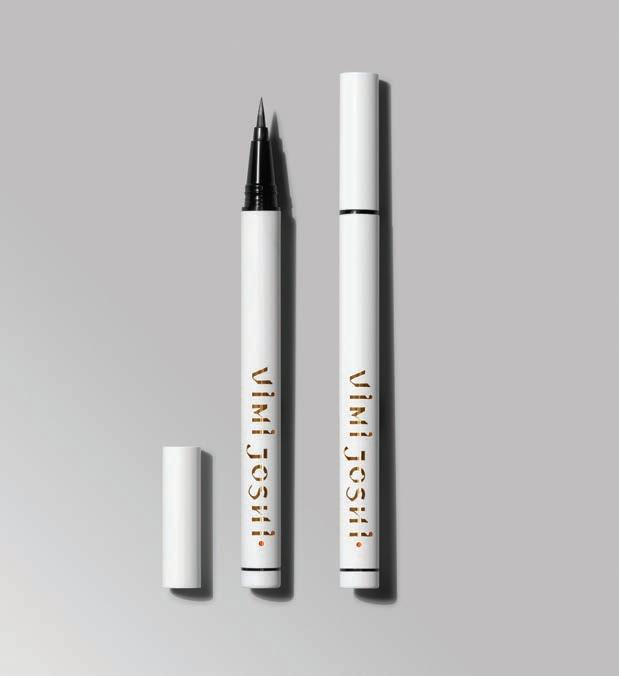
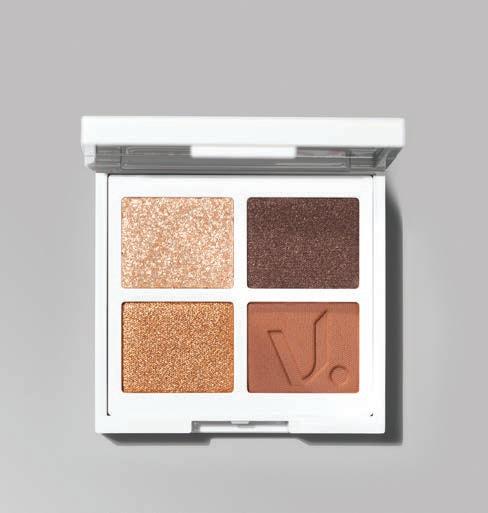
WORDS: AMINATH IFASA
CONFIDENCE IN COLOUR
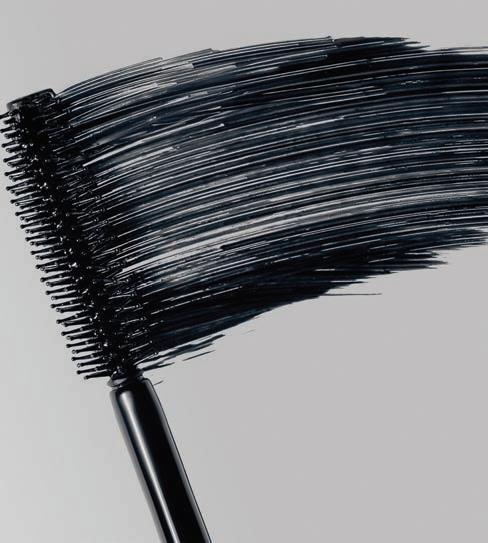
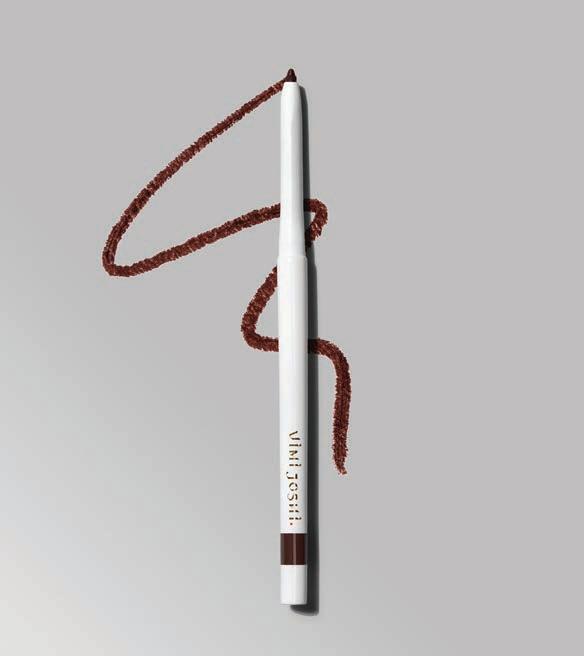
After three decades backstage, veteran makeup artist Vimi Joshi launches the first South Asian beauty brand at Ulta Middle East – a history-making debut that puts darker undertones centre stage
Vimi Joshi has spent thirty years in makeup chairs everywhere from Paris Fashion Week to the royal palaces of Kuwait. Earlier this year, she launched her own brand at Ulta Beauty in Dubai, becoming the first South Asian line to land on its shelves. To this day she remembers the moment she knew the industry wasn’t looking at her, and why she decided it was down to her to to change that.
Truth be told, the realisation did not arrive as a sudden epiphany. It came as a profound understand that crystalised over decades, in small moments that stacked up until they became impossible to ignore. Joshi would be working backstage at fashion week in Milan or Paris, watching as fair-skinned models cycled through with ease, their foundations matching perfectly straight from the tube. Then a model with warmer undertones would sit in her chair –Mediterranean, Latino, Middle Eastern, South Asian – and the rhythm would falter. Shades needed mixing. Colours turned ashy. The industry’s one-size-fits-all approach revealed its limits. And more often than not, Joshi was the only South Asian face in the room.
“After decades in the industry, I still didn’t see us represented,” she recalls. “Our skin, our undertones, our culture deserve to be seen on a global stage.” Earlier this year, she decided to do something about it. Enter Vimi Joshi Beauty, her namesake label that she launched exclusively at Ulta Beauty in the UAE. It was a full-circle moment for the British-Indian artist who first arrived in Kuwait in 1997, fresh from London’s Clarins Rossi academy, to open the very first MAC store in the region. Twenty-six years later, she returned to the same partners at Alshaya Group, this time with her own name above the door.
The brand’s debut collection focuses on the eyes, a deliberate choice. “Middle Eastern and South Asian beauty has always been about the eyes,” Joshi explains. The palettes carry names like ‘Diva Nanny’, a nod to the grandmothers who raised generations, and are rendered in colours that carry cultural weight: white, red and gold, the hues of weddings and celebration. The black alcohol pencil, that essential tool for dramatic winged liner, she named ‘Kali’. The word carries history. Growing up in Leicester as a Ugandan Asian refugee, Joshi learned early that her skin tone was considered a problem. In her community, she recalls, the moment a child was born, two questions
followed: is it a girl or a boy, and is it fair? She was darker than her sister, and the word used for her, every single day, was ‘Kali’. A paste of milk skin and besan was mixed to lighten her. She was made to feel that something was wrong with who she was.
It took moving to London and being asked by fair-skinned friends how they could achieve a tan like hers that she begin seeing herself differently. The Western world wanted what she had been trying to erase. Now she has reclaimed the word entirely, turning an old wound into a product name that forces a conversation. “Let us call it what it is and change the conversation,” she asserts.
The brand’s origin story, however, is not purely political. It is rooted in a specific moment of revelation that has stayed with her for decades. She was working as a backup dancer on music videos in the mid-nineties, having temporarily abandoned her dream of becoming a makeup artist after her parents refused to support it. She sat in a makeup chair next to British superstar Lulu and watched as a transformation unfolded. “I saw a woman become louder, more confident, more herself through the power of eyeshadow and lipstick,” she recalls. “I knew in that moment that I wanted to give people that feeling.”
The road from that moment to this one was circuitous. Joshi became a medical rep to appease her parents while dancing in videos on weekends. A random phone call led her to Kuwait, where she worked for the royal family and learned what “natural” meant in a Gulf context (full coverage, winged liner, neon pigments). She joined MAC in 1999, opening stores across the region, and eventually became a global senior artist, shuttling between London, New York and Paris. Along the way, she developed the Studio Fix shades NC 41, 43.5 and 44.5 specifically for Middle Eastern and South Asian skin, shades that remain the top sellers across both regions.
For the women who have spent years mixing shades and hoping for a better match, the arrival of a brand built by someone who has sat in their chair, who understands the particular disappointment of a lipstick that looks nothing like it did in the tube, feels like something rare. But Joshi is deliberately focused on building her brand slowly and with intention. The next chapter arrives in September with a range of nude lip shades, once again, developed specifically for South Asian skin, something Joshi notes still does not exist in the mainstream market. Brows will follow, and by 2027, a full complexion range.
For years the beauty industry has been happy to court South Asian consumers, but rarely designed products with them in mind. The nuances of warmer undertones, the way colours translate differently on deeper skin, the cultural specificities of how makeup is worn, these details – until now – were consistently overlooked. “I created this brand because even after decades in the industry, I still did not see us represented,” she says. “This is my love letter to them all.”
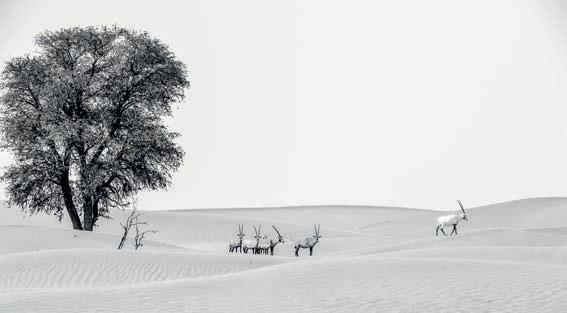

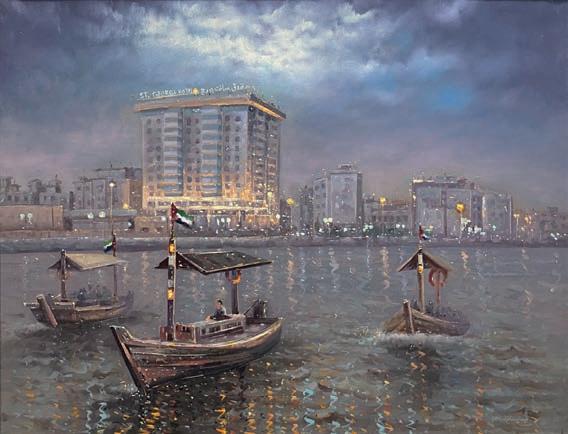

Photograph by Yousef Al Harmoodi
The Beauty Shelf
Content creator Jasemin Mayer talks us through her must-have beauty staples
Prime Renewing Pack
Dhs1,247 Valmont
Whenever my skin needs a total reset, this is the mask I reach for – it instantly smooths and brightens everything, leaving my complexion looking so fresh and refined.
Daily Routine Shampoo
Dhs113 Newsha
This shampoo is my secret weapon against Dubai’s humidity; it keeps my hair feeling soft and looking clean all day long.
Les 4 Ombres Eyeshadow (Tissé Vendôme) Dhs285 Chanel
I’m completely drawn to the soft Parisian elegance of this palette. The shades are so timeless and blend like a dream.
Maracuja Juicy Lip Plump Dhs115
Tarte Cosmetics
For that perfect, everyday glossy lip that actually feels hydrating and has a gentle plump, this is the one I always have in my bag.
Ithaque Eau de Parfum 75ml for Dhs1,230 Memo Paris
This scent instantly transports me. It’s warm and sophisticated, exactly like capturing a golden Dubai sunset in a bottle.
No.7 Bonding Oil 30ml for Dhs150 Olaplex
My hair has never been shinier or felt stronger; this bonding oil smooths everything out and adds the most incredible glossy finish.
The Rich Cream 50ml for Dhs1,215 Augustinus Bader
I use this rich cream every single morning and night because it leaves my skin feeling deeply nourished, impossibly plump, and perfectly hydrated.
Soft Pinch Liquid Blush Dhs140
Rare Beauty
You only need the tiniest dot to get the most natural, youthful
COMPILED BY: AMINATH IFASA
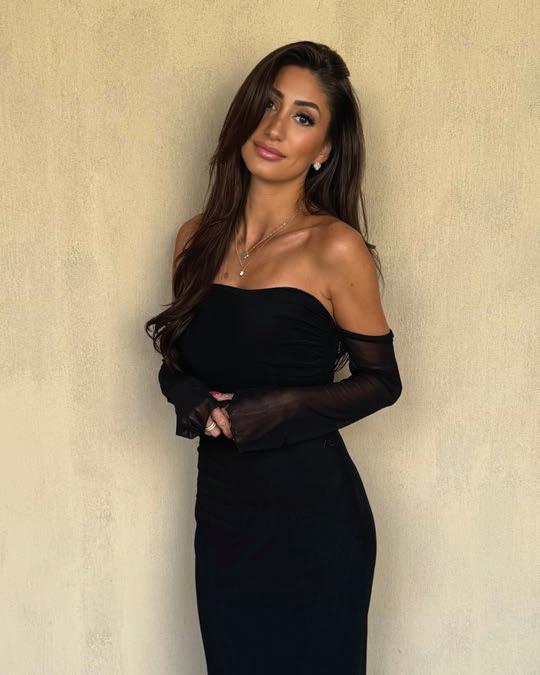
flush. It melts into my skin like it’s coming from within.
The Lip Balm Dhs380 La Mer
Nothing else compares to the smoothing, hydrating comfort
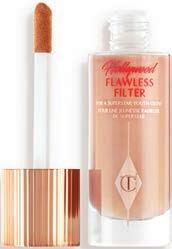
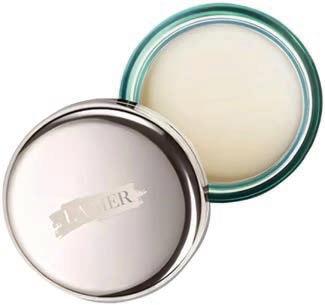
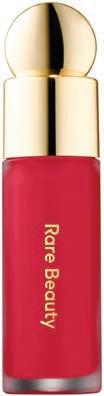
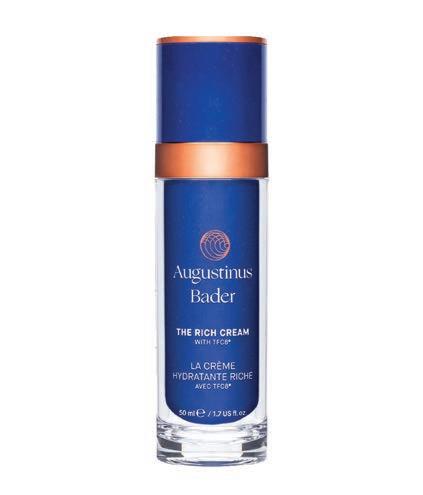
of this balm. It’s pure luxury for my lips.
Baume Essentiel Multi-Use Glow Stick (Sculpting) Dhs200 Chanel
The way this highlighter catch-
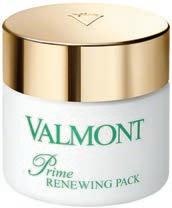
es the light is unreal. It gives me that editorial-style, glossy, glass-skin finish in seconds.
Small Pouch (Natural) Dhs280
Soleil Studio
My everyday beauty essential pouch. Minimal, chic and handcrafted. It holds my makeup staples perfectly and adds a touch of soft luxury to any handbag or flat-lay.
4 Medium Hollywood Flawless Filter 30ml for Dhs240
Charlotte Tilbury
This is my ultimate glow booster; I sweep it on before foundation and suddenly my whole complexion has this lit-fromwithin radiance.
The #PerfumeTok Treatment
From whipped-milk gourmands to dewy florals, these viral fragrances are dominating our social feeds
WORDS: ANSHIKA YADAV
In the ever-evolving world of fragrance trends, one thing is certain: sweetness is having a moment. Just scroll through your social media feeds to spot multiple creators chasing creamy vanilla clouds, sticky dessert accords, and gentle, milky flowers that are both comforting and addictive.
This new wave of viral scents is less about making a statement and more about pleasuredriven perfumery, fragrances chosen for how they make you feel rather than who you’re wearing them for. And there’s an undeniable sense of escapism at play, where perfume serves as a small, everyday luxury. A sensory treat that mirrors the cosy rituals we turn to for comfort, whether that’s sliding on some silk pyjamas, journaling at night, or lighting a candle at dusk. These scents appeal to a universal longing for warmth, softness, and indulgence, with delectable gourmands that smell good enough to eat and sheer, dewy florals that melt into the skin like a cherished memory.
Here’s a handpicked list of the top scents currently dominating our feeds right now.
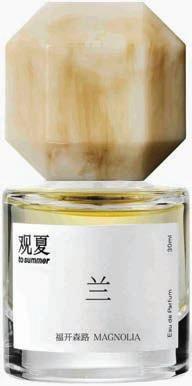
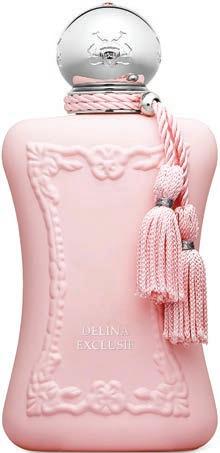
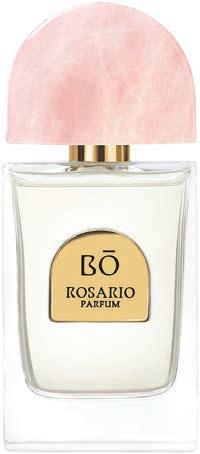
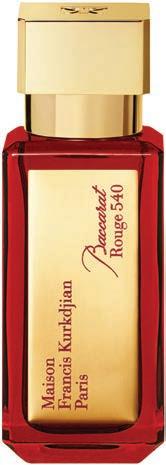
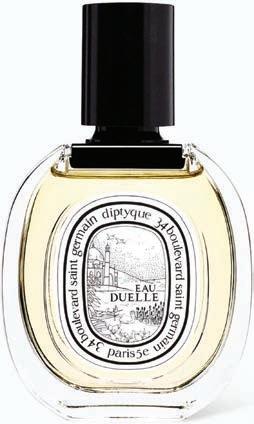
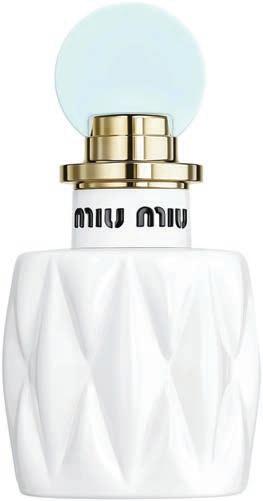
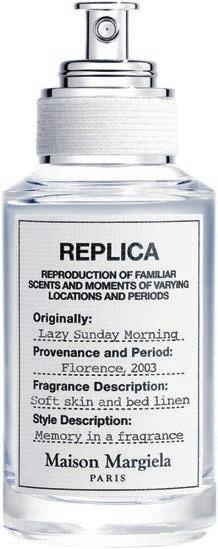
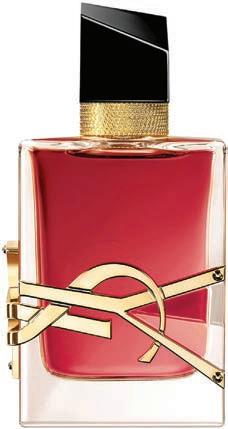
1. Magnolia Perfume Dhs515 To Summer; 2. Eau Duelle Eau de Toilette Dhs538 Diptyque; 3. Fleur De Lait Eau De Parfum 100ml Dhs670 Miu Miu; 4. Delina Exclusif Parfum 75ml Dhs1,615 Parfums De Marly; 5. Rosario Eau De Parfum 75ml Dhs1,361 House of Bo; 6. Lazy Sunday Morning Dhs390 Maison Margiela; 7. Baccarat Rouge 540 Extrait de Parfum 200ml Dhs3,495 Maison Francis Kurkdjian; 8. Libre Berry Crush 50ml Dhs525 YSL
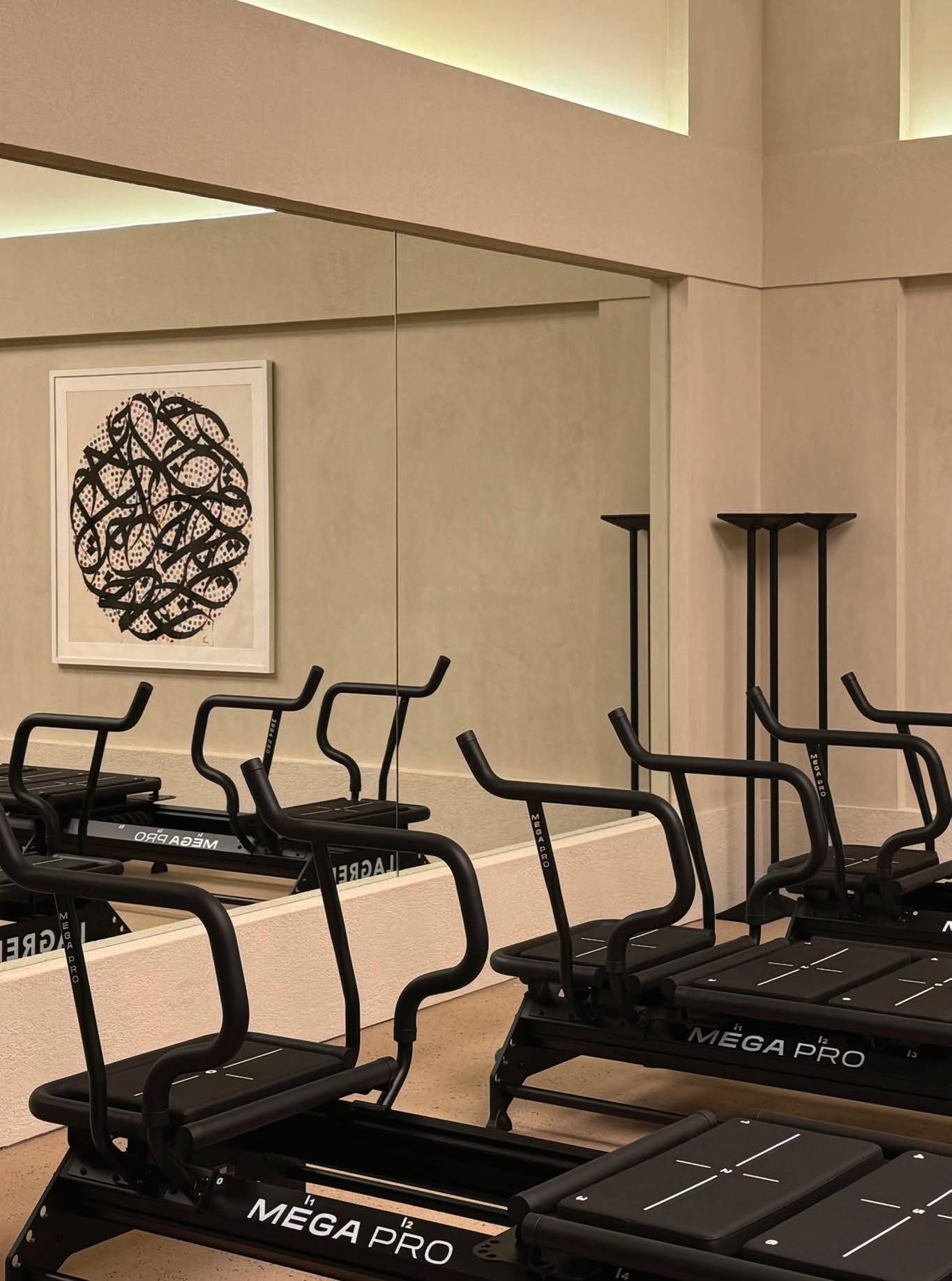
MAKE A MOVE
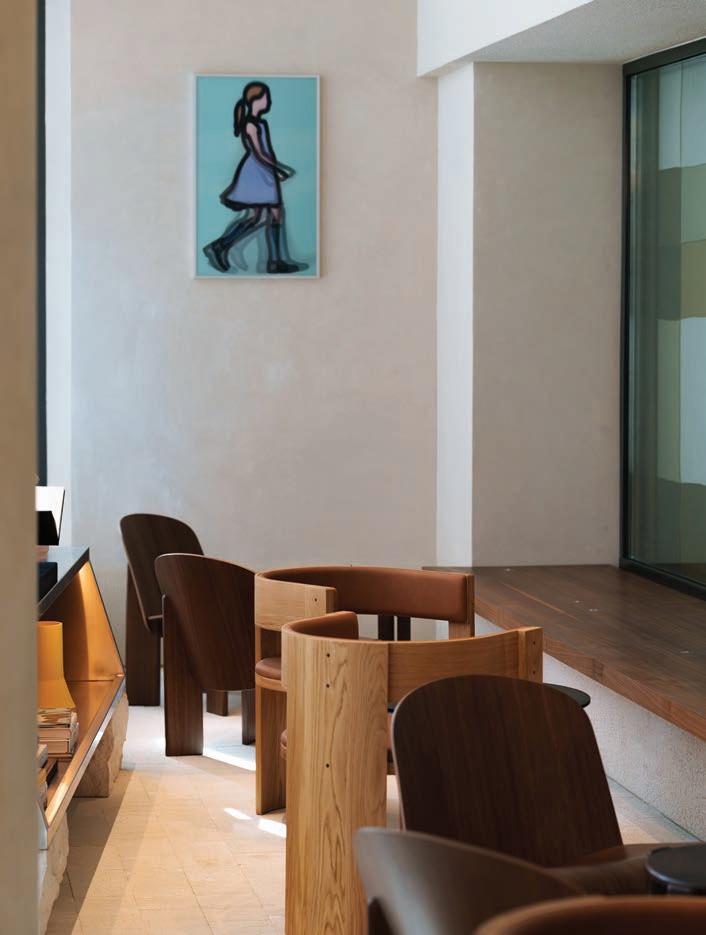
A full circle moment for founder Dina ElShurafa, the new Reform Athletica branch in Riyadh fuses the transformative power of movement with light-filled spaces, curated art, and a community-driven ethos
WORDS: AMINATH IFASA
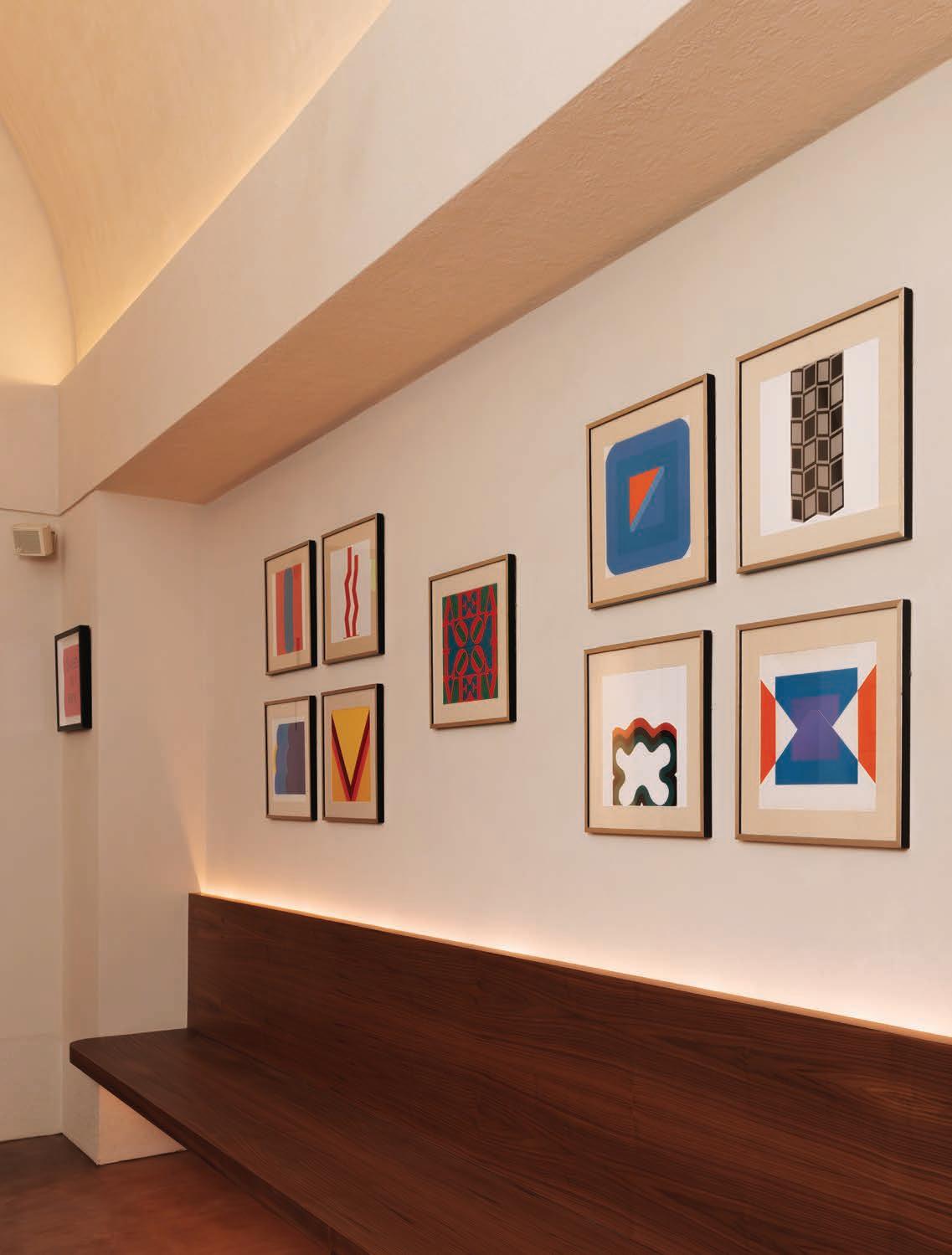
Dubai’s cult-favourite Pilates and fitness destination, Reform Athletica, has officially opened its doors in the Kingdom, launching a serene new studio in the heart of Riyadh’s Diplomatic Quarter. The expansion marks a significant milestone for the brand, which continues to redefine the regional wellness scene by proving that a workout space can be just as visually inspiring as it is physically transformative.
This third location stays true to the brand’s founding mission of delivering personalised and unparalleled quality workouts with a highly qualified team of trainers. For its Riyadh location, Reform Athletica once again partnered with London-based architecture and interior studio TR Studio. The result is a calm, lightfilled sanctuary where state-of-the-art Megaformers and modern equipment meet thoughtful architectural details. The space is designed to encourage focus and mindfulness, offering a retreat from the bustle of the city.
“Our vision is our North Star – and from inception, we have set ourselves the aim of redefining the wellness experience by fusing elevated training with the transformative power of art and design,” says Reform Athletica co-founder, Dina ElShurafa. “As with all our spaces, we took our time meticulously designing this location with our friends at TR Studio. The Riyadh art collection, is very special. It really elevates the space, creating an environment where movement and artistic curiosity coexist.”
This 360-degree experience extends far beyond the workout mat. The studio’s curated art collection, gathered over several years, is central to the brand’s identity, enhancing the workout experience by uniting movement and creativity. Sustainability is also at the heart of the brand, reflected in the studio’s conscious design choices, long-lasting materials, and commitment to mindful, responsible wellness. Amenities at the new Saudi location have been designed with community and comfort in mind. Members will find all the amenities they need, a dedicated Megaformer room, a multi-purpose studio for classes including Microform, RA Strength, and Yoga, not to mention three private personal training rooms. After a session, guests can refuel at the RA Fresh Café, which serves smoothies, coffees, and light bites.
For ElShurafa, the launch in Riyadh is deeply personal. “Saudi Arabia has a special place in my heart. I was born and bred in Riyadh and have been lucky enough to call Saudi home, so to bring back a business that I’ve built back here is so special – it’s a full circle moment for me.” On a strategic level, the move aligns with the Kingdom’s rapid transformation under Vision 2030. “Other than the personal, there was the business decision,” ElShurafa explains. “Riyadh and Saudi Arabia in general are going through a period of exciting transformation and we know the government is investing heavily in the social and wellness infrastructure of the country. What you see when you come to Riyadh is an amazing display of development, tourism, business opportunity, and optimism. Vision 2030 is such a bold ambition and an important achievement for the country, and we want to be part of it.”
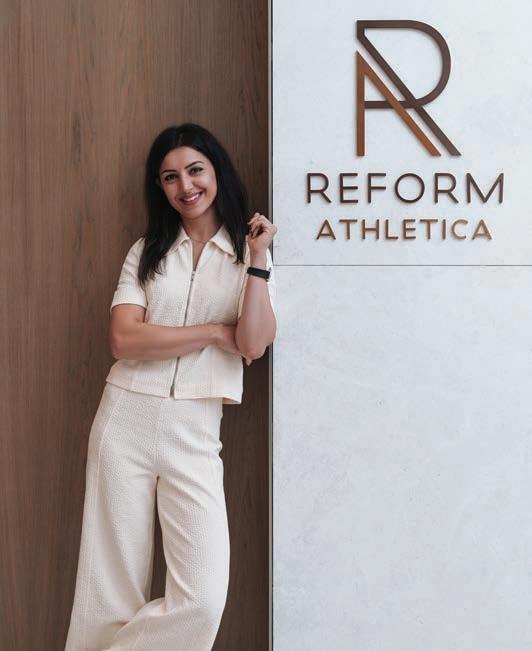
“Riyadh is an incredibly dynamic city right now – there’s a real spirit of entrepreneurship and innovation. So, for us, Riyadh was a natural next step. It’s a market that values quality, innovation, and authenticity – the same principles that guide us as a brand,” she adds. “There is growing demand for wellness and fitness services, and this will only go up. We want to be part of this, and we want to cater for this rising demand.” With its launch in the Diplomatic Quarter, Reform Athletica is setting a new standard for boutique fitness in the Kingdom’s capital, offering a holistic experience where wellness meets world-class design.
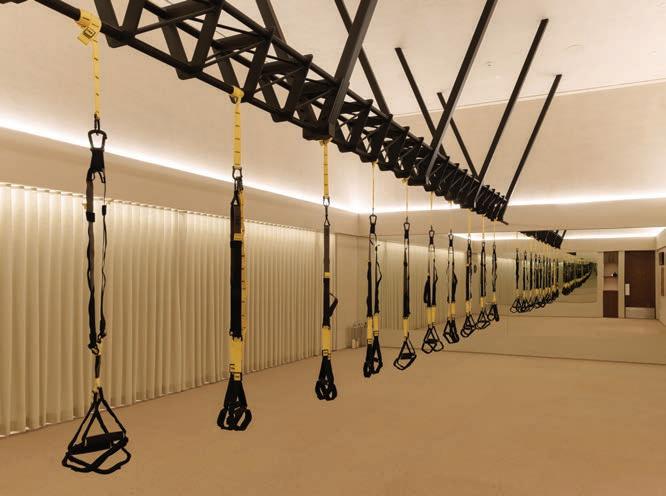
Dina ElShurafa, founder Reform Athletica
WORDS:
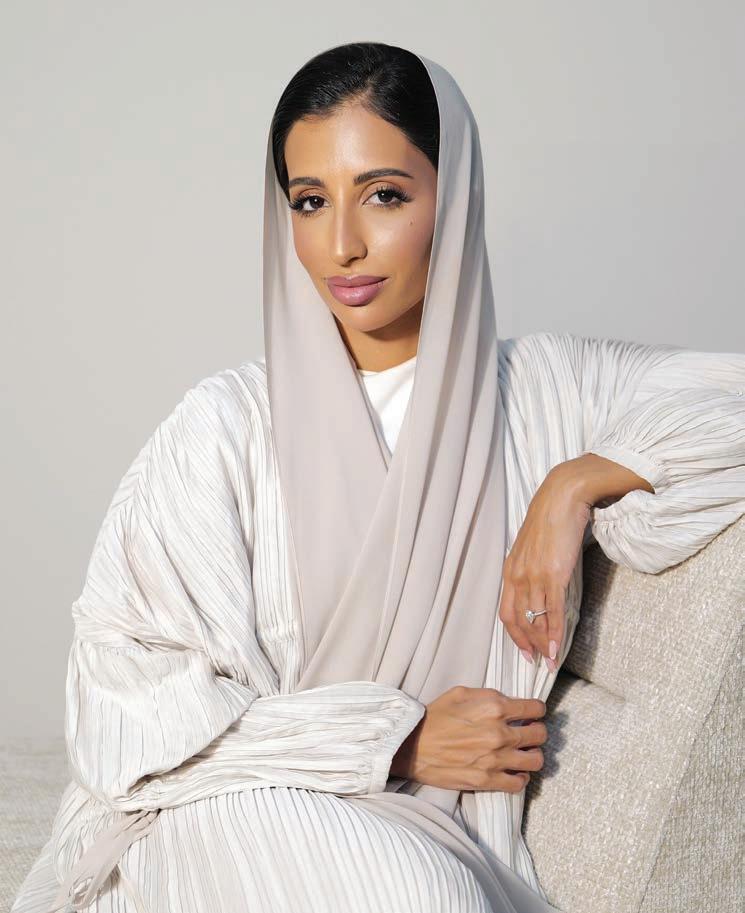
AM TO PM BEAUTY
Emirati entrepreneur and content creator Hind Almarri shares her morning to evening beauty routine
Talk us through your morning routine. My mornings are calm and intentional. I start with hydration, skincare, and a few quiet moments before anything digital. It helps me feel grounded and sets the tone for the day. For skincare, I rely on Clinique Moisture Surge 100Hour for deep hydration and Clarins UV Plus SPF 50 for daily protection.
How does your evening routine differ? Evenings are all about unwinding. I make sure to remove my makeup properly using Clinique All About Clean Liquid Facial Soap, followed by vitamin-rich skincare to restore my skin and reset for the night.
What are your go-to skincare products? I gravitate towards products that focus on hydration, barrier
repair, and glow. A gentle cleanser, a hydrating serum, and a rich moisturiser are non-negotiable for me.
Are you a fan of masks? Very much so. Masks are my pause moment whether it’s hydration before an event or a calming ritual at home. I especially love the La Mer Intensive Revitalizing Mask.
How would you describe your approach to makeup? Effortless and refined. I believe makeup should enhance rather than transform luminous skin, softly defined eyes, and a natural lip feel timeless to me. That said, I do enjoy playing with colour, glitters, shimmer, and highlights on occasion, especially when the moment calls for it. What can always be found in your makeup bag? My essentials are pieces that keep me polished without
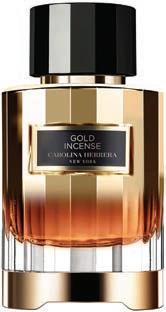
Clockwise from top left: Gold Incense Eau de Parfum Dhs1,090 Carolina Herrera; The Intensive Revitalizing Mask Dhs815 La Mer; Dior Addict Lip Glow, Shade 006 Dhs180 Dior Addict Lip Glow; Light Reflecting™ Makeup Setting Mist Dhs190 NARS; Mild Liquid Facial Soap Dhs125 Clinique; Major Headlines Double-Take Crème & Powder Blush Duo Dhs150 Patrick Ta
effort – Dior Forever Hydra Nude Foundation, Dior Addict Lip Glow in Berry, NARS Radiant Creamy Concealer, NARS Reflecting Makeup Setting Mist, a Makeup by Mario Eyeshadow Palette, Laura Mercier
IMAGES: SUPPLIED
Setting Powder, a reliable mascara from Sephora, and for sure a Patrick Ta blusher and bronzer. Which fragrances are your current favourites? I’m drawn to warm, elegant scents – oud softened with florals, subtle leather notes, and anything intimate rather than overpowering. I’m obsessed with Carolina Herrera, and one of my current favourites is Gold Incense. I also love Diptyque Benjoin Bohème for its depth and warmth. Talk us through your hair routine. I keep my hair routine simple and low-maintenance, with healthy hair
always as the priority. I focus on nourishing treatments, minimal heat styling, and letting my hair look natural rather than overly styled. I love and highly recommend anything from Kérastase. What is the most unusual item in your makeup bag? Ajmal’s Eternal musk oil feels like a personal signature. What does your ‘you’ time look like during Ramadan, and how do you prepare yourself for Eid? Ramadan is a deeply reflective time for me. My ‘me’ time is quieter – more intentional moments, skincare rituals, and evenings that feel calm and meaningful. As Eid approaches, preparation becomes a celebration – elevating my beauty rituals, choosing fragrances and pieces that feel special, and embracing the joy that comes with the season.
ROOM WITH A POINT OF VIEW
In the industrial heart of Alserkal Avenue, The A/P Room has just opened a new permanent gallery. It’s a space that feels less like a showroom and more like a considered conversation. Founded by Christelle Bassila and operating under Atelio, the venue positions collectible design as both cultural bridge and critical lens, uniting historic masters with contemporary voices within one curatorial framework. Its inaugural exhibition, AtFirstSight (11 February – 29 March, 2026), invites viewers to slow down and soak up their surroundings. Sculptural furniture and material-led works unfold gradually, rewarding proximity and patience. Stand out pieces include a coffee table and dining table built from American walnut and bronze by Rogan Gregory and the dynamic energy of Vincent Dubourg’s Insideer cabinet gives the space an energetic visual jolt.
ABODE
Choose a different path by…
– Getting immersed in centuries of island history
– Using the pursuit of beauty as a benchmark
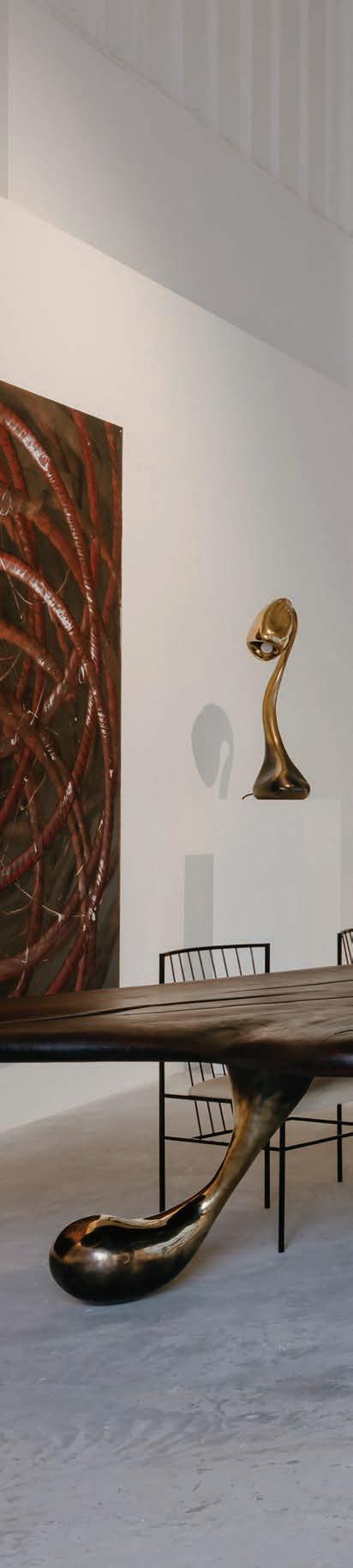
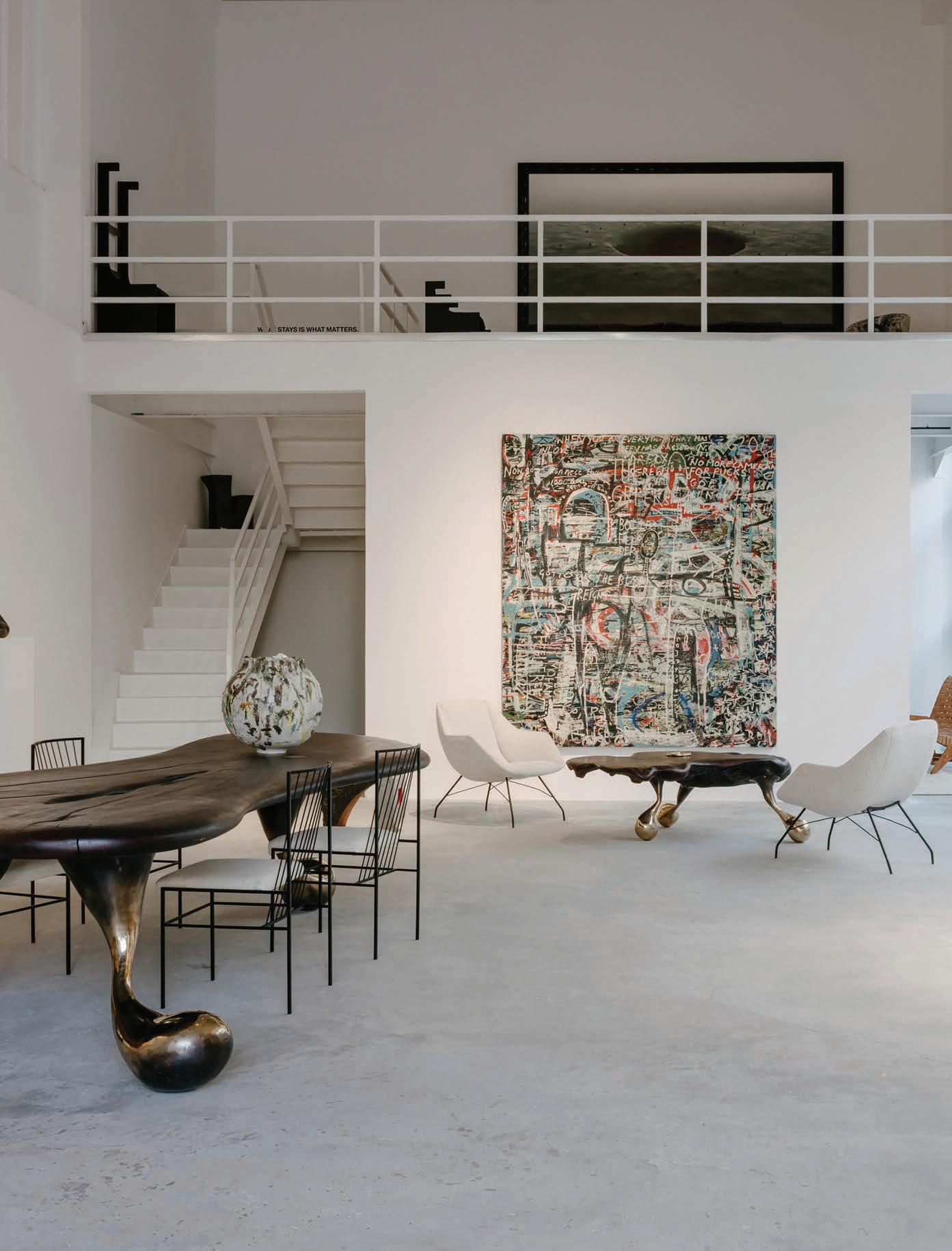
WORDS: AMINATH IFASA
UNE PERLE RARE
On an island where freshwater springs from the seabed and old merchants still keep bundles of pearls tied with silk, Jumeirah Gulf of Bahrain has created a new retreat that offers a quiet equilibrium
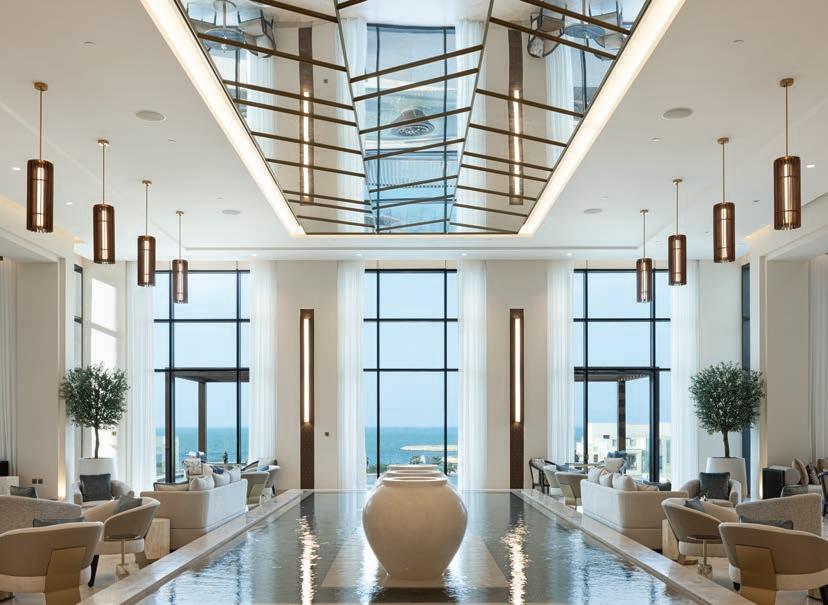
When the invite came through for a trip to Bahrain with Jumeirah Hotels, to stay at their Jumeirah Gulf of Bahrain Resort, the question that immediately came to mind was how different could it be from Dubai? My maiden voyage to the island country ended up being an eye-opening discovery that instantly melted away every outdated presumption I had.
Like Dubai, Bahrain has a level of grandeur, but with its own kind of majesty. The country reveals itself to be a place with a soul so old it remembers things the other nations of the GCC have perhaps forgotten. Its very name speaks to the idea of finding bal-
ance in life. Bahrain stems from the Arabic for “two seas” – bahr, meaning sea; and ain, meaning fresh water. A reference to the phenomenon of sweet water springs that bubble up from the seabed, especially along the northern shoreline where the oyster beds have always been richest. For centuries, divers have known that they could descend through the saltwater surrounding Bahrain and reach places where it turns fresh beneath them, a quirk of geography that exists almost nowhere else on earth. And it is this convergence, marine biologists believe, that gives Bahrain’s famous pearls their renowned unique lustre, the saltier waters creating conditions for the oysters to produce nacre of exceptional quality and brilliance. The Kingdom has been fishing these pearls from its waters
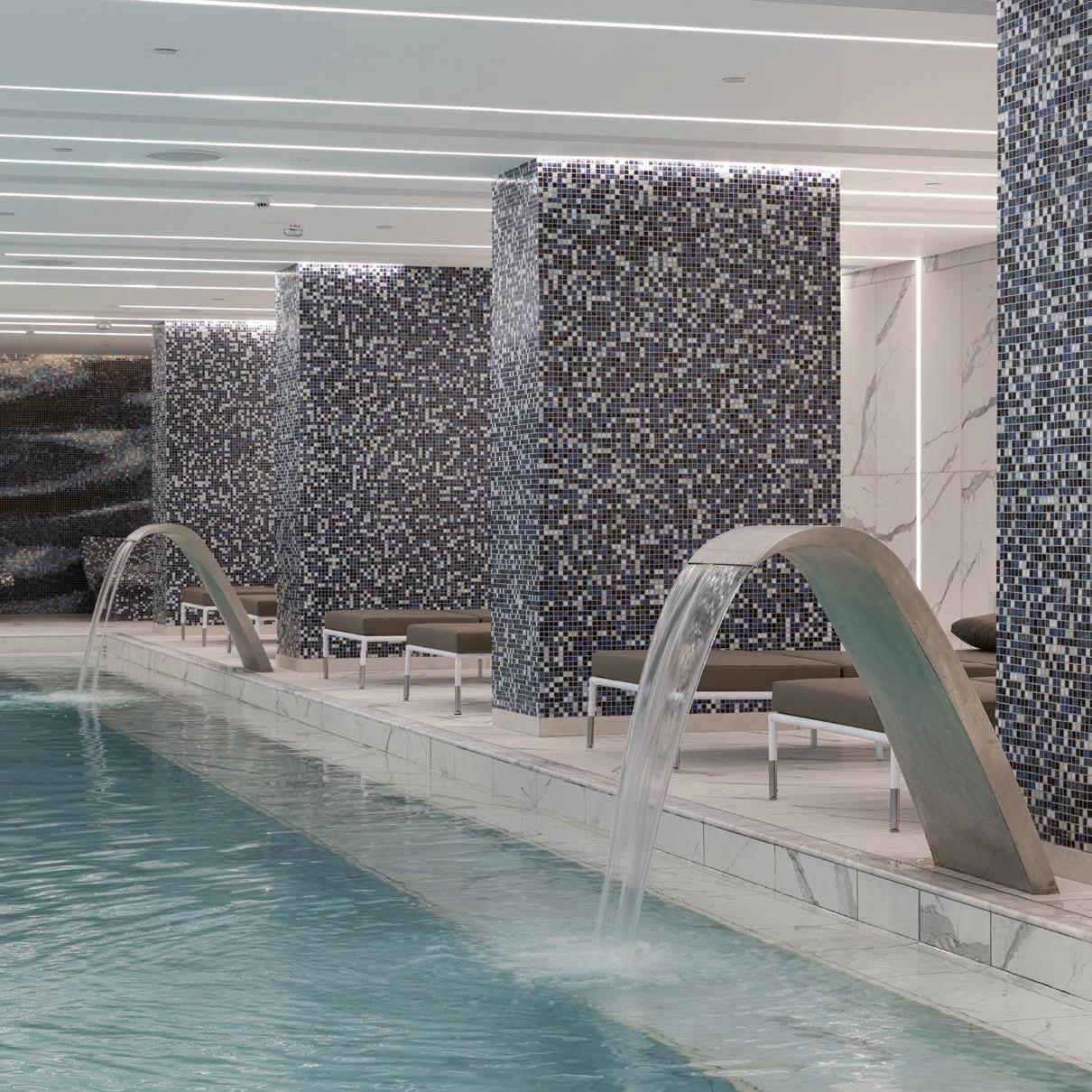
for four thousand years. Assyrian texts dating back to 2000 BCE mention “fish eyes” from Dilmun, the ancient name for this island. For millennia, this tiny stretch of land was the centre of the pearl trade, its oysters sought after by merchants from Bombay to New York. By 1904, an estimated ninety-seven per cent of the Gulf’s pearl turnover passed through Bahrain. I knew none of this when I arrived. But on the first full morning, standing in the lobby of the Jumeirah Gulf of Bahrain, I met the man who would change that. His name was Bader AlSaad, and from the moment he greeted us I could tell that storytelling was not a job for him but something he did out of passion. He was someone whose love for his country was worn as casually and as impeccably as the pearl-encrusted wallet
I would later notice him pulling from his pocket. The hotel had arranged for AlSaad to take us across to Muharraq Island to discover the Pearling Path, part of a curated experience they offer to guests who want to go beyond the usual sightseeing. It was the first of many moments that would reveal how deeply the resort is woven into the fabric of the place it calls home. Perched on the pristine beaches of the Kingdom’s west coast, forty-five minutes from the airport, the Jumeirah Gulf of Bahrain opened in November 2022, taking architectural inspiration from the gentle movements of the sea. But what becomes clear very quickly is that this is not a property that exists in isolation. The resort positions itself as a gateway, a place from which to venture out and, just as importantly, a place
to which you return carrying the memories formed from exploring the rich history and unique nature of the island.
Case in point: The Pearling Path. A 3.5-kilometre trail that UNESCO inscribed as a World Heritage Site in 2012, winding between seventeen buildings from the time of the thriving pearl industry – shops and storehouses, a mosque, the homes of wealthy merchants, all constructed from coral stone that has somehow survived when so much else has crumbled. Walking between them with AlSaad pointing out details we would have missed, it’s easy to feel transported into a bygone era, when the entire island held its breath waiting for the dhows to return. The bigger the pearl merchant, the more elaborate the decor of his house, and AlSaad led us through majlises where coloured glass still fractures afternoon light onto hand-carved ceilings. There we learned that women had their own part in this culture, hosting gatherings while the men were away at sea collecting oysters for four months at a time, building networks that held entire communities together through the long seasons of waiting.
Halfway through the walk, we stopped at a tiny cafe called Bread and Paper for freshly baked focaccia and date iced coffee. One of the founders, Sara Abdulla, greeted us looking as stylish as the space itself with her designer shades and an unhurried aura that made you want to linger awhile.
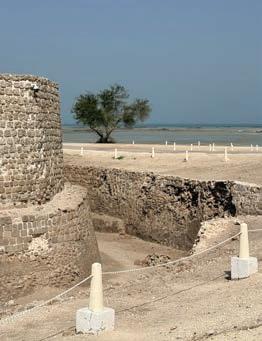
Bahrain’s natural pearls fetched, and the industry collapsed. By 1972, Bahrain was the only country in the Gulf to continue the ban, establishing a pearl-testing laboratory to ensure no cultured specimens entered the market. The divers went to work in the newly discovered oil fields, but the ban remained – a testament to how deeply the reverence for natural pearls is woven into the island’s identity. All of this knowledge came together on the afternoon when the resort arranged a pearl chucking experience. We gathered around a table set with seventy or eighty oysters, each handed a small knife, and spent the better part of an hour working through them. From the entire lot only six pearls emerged. One oyster contained a cluster of fifteen to twenty tiny pearls, only two of which passed the three-to-five-millimetre quota. There was something almost foolish about the joy of it, the sense of having stumbled upon a small miracle. AlSaad told us how his family would buy a bucket of oysters for anywhere around a hundred to a thousand dirhams and sit together and chuck them at least two or three times a week. He described it as almost meditative, a communal rhythm his family would fall into.
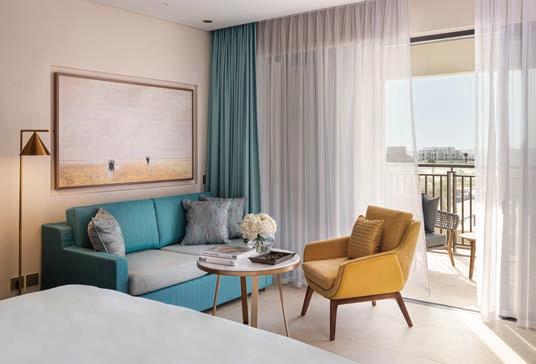
Then there was Faten Ebrahim Mattar, a sixthgeneration natural pearl merchant from Mattar Jewelers, carrying on a hundred-andseventy-year family legacy. We took a tour around her humble office as she walked us through her treasured collection. There are twelve colours of natural pearls, she told us – not just white and cream, but rose and gold, silver and black. A single two-strand necklace of round pearls can take ten to twenty years to complete, because the rarity of finding a pearl between three and five millimetres is one in ten thousand. As a finale, she brought out her 4.2-kilogram hoard of pearls bundled in the Mattar Jewel’s signature red cloth and secured with a silk thread. It hard to conceptualise how many generations of Mattars sat exactly where we were and felt the weight of this same red bundle in their hands.
Bahrain is the only country in the world where cultured pearl farming is banned, a public notice first issued in 1928 and still enforced today. The Japanese perfected cultured pearls in the 1930s, flooding the market with gems that cost a fraction of what
On a separate afternoon we made our way to the Bahrain Fort, driving west from Manama until the structure came into view, standing like a sentinel on its ancient mound overlooking the sea. What is perceived first is the Portuguese fort, built in the early sixteenth century, but that is merely the most recent chapter in a story that stretches back five thousand years. Beneath it lies a tell, an artificial mound created by layer upon layer of human occupation, containing seven distinct strata from civilisations that came and went. The site was first settled around 2300 BCE by the Dilmun civilisation, the Bronze Age paradise described in the Epic of Gilgamesh. Later came the Kassites, then the Greeks in 323 BCE, and in the excavated ruins it’s easy to see how Greek architectural elements began to appear alongside the older Dilmun styles. The Islamic civilisation took over in the seventh century, adding its own layers, until the Portuguese came and built their fort on top of everything that had come before. Standing there, it’s possible to see it all at once, history stacked like the layers of nacre in a pearl.
Returning to the resort following afternoons like this, the design choices by the establishment begin to make a different kind of sense. Believed to be the former heart of the Dilmun Empire,
Bahrain is a historically layered destination, and the resort embodies this sensibility without ever feeling like a history lesson. The cluster of villas and elegantly designed rooms, along with the award-winning Talise Spa, offer a sanctuary for travellers, but it is a sanctuary that knows what surrounds it.
The resort’s decor draws from flowing waters and the ripples of the Arabian Gulf. Guests are welcomed with blue hues and a prismatic mother-of-pearl lighting installation suspended from the ceiling. The sandy shades of the landscape are incorporated into floors, panels and furniture. Intricate stone carvings in arched hallways and doorways resemble the architectural styles of Bahrain’s streets and forts. The design also pays homage to the country’s fishermen and their boats, which can often be spotted sailing past in the distance. There are 196 rooms and suites spread across the property, from Deluxe Rooms to the 200-square-metre Royal Suite, each with contemporary designs incorporating accents of blue and local textiles. The Gulf Summer House Arabian Suite with Private Pool spans 170 square metres of indoor-outdoor living. Beautiful abodes, but what lingers is something harder to name. It’s the way the resort effortlessly carries the memory of what this coastline has always been that quietly acknowledges that refinement – at its best – is simply paying attention to where you come from.
The dining venues also reflect this sensibility. Due Mari serves homemade pastas on a terrace overlooking the Gulf, its interiors incorporating the famous Bahraini weaving technique. Zahrat Al Fayrouz offers Levantine mezze in a space where fisherman’s net patterns highlight the country’s heritage. While Ousoul sits directly on the private beach. And the signature bar, 25|50, uses local textiles to frame Gulf views alongside an impressive selection of libations.
Previous spread: Majlis Al Fajiri; Talise Spa
Left page: Pearls from the collection of Mattar Jewelers; The Bahrain Fort; Jumeirah Gulf of Bahrain Deluxe Room; This page: Due Mari restaurant
Temple, a Hindu temple established in 1817, stands quietly amidst the bustle – one of the oldest in the Gulf. The streets merge into the spice market, where locals buy their condiments, the air thick with cumin and cardamom. AlSaad tells us how his grandmother would send him here every week to buy a secret mix for their family stews. The next morning, we returned for an authentic Bahraini breakfast at Al Sana Restaurant & Café. On the weekends the place fills with families enjoying their Friday morning as they dip into the mehyawa, a tangy sauce made from fermented fish that travelled from Persia generations ago, spread on flatbread with cream cheese.
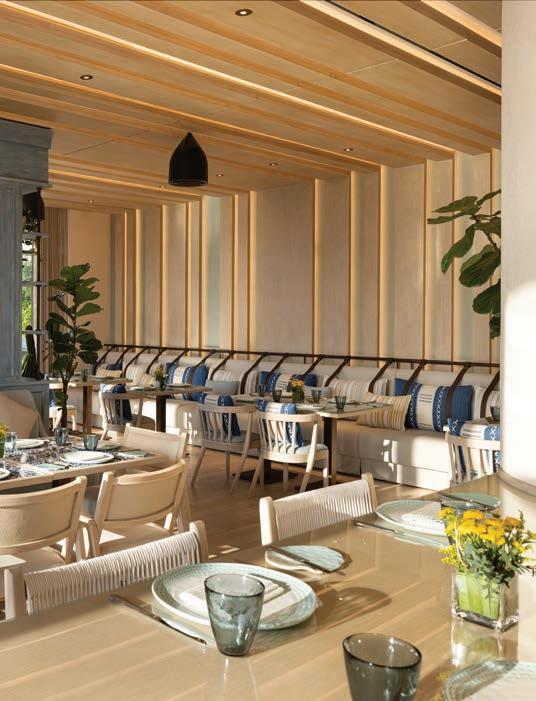
The Talise Spa features thirteen treatment rooms, a ladies’ hammam, and separate gyms. Five pools dot the property – an adult-only pool, an executive pool, a family pool, a kids’ pool, and a ladies-only indoor lap pool. There’s a 36-seater cinema, a kids’ club, tennis courts, and an abra cruise around the resort’s canal. Amenities that could read excessive elsewhere, here feel like extensions of the landscape, built to offer genuine immersion.
From this base of quiet comfort we continued to explore. We walked the alleyways of the gold souq and watched the different cultures of the city come together harmoniously. The Shrinathji
On the last evening, I sat on my balcony and watched the sun drop into the Gulf. The same water the divers had plunged into for four thousand years. I thought about the pearl divers who spent months at sea, about the women who hosted each other in their absence, about the merchants who built their coral-stone houses and filled them with coloured glass. I thought about Faten Mattar untying her red cloth bundle, about AlSaad pulling out his pearl-encrusted wallet, about Sara Abdulla greeting us at her cafe like old friends.
A pearl is born from an irritation, a grain of sand that finds its way inside an oyster’s shell. The oyster does the only thing it can: it begins coating it with nacre, layer upon layer, until the irritation becomes something beautiful. It takes years and patience, and in Bahrain this process is aided by something that exists almost nowhere else – the freshwater springs beneath the saltwater sea, the two waters mingling in ways that create conditions for something extraordinary to emerge.
Bahrain is like that. A small island in a big Gulf, carrying something that has taken millennia to form, patient in the knowledge that what it has cannot be manufactured or rushed. And a stay at the Jumeirah Gulf of Bahrain, proves that the best hospitality is not about escaping the past but about being invited into it. About finding yourself wrapped in layers of history like nacre around a grain of sand, transformed into something a little more beautiful than when you arrived
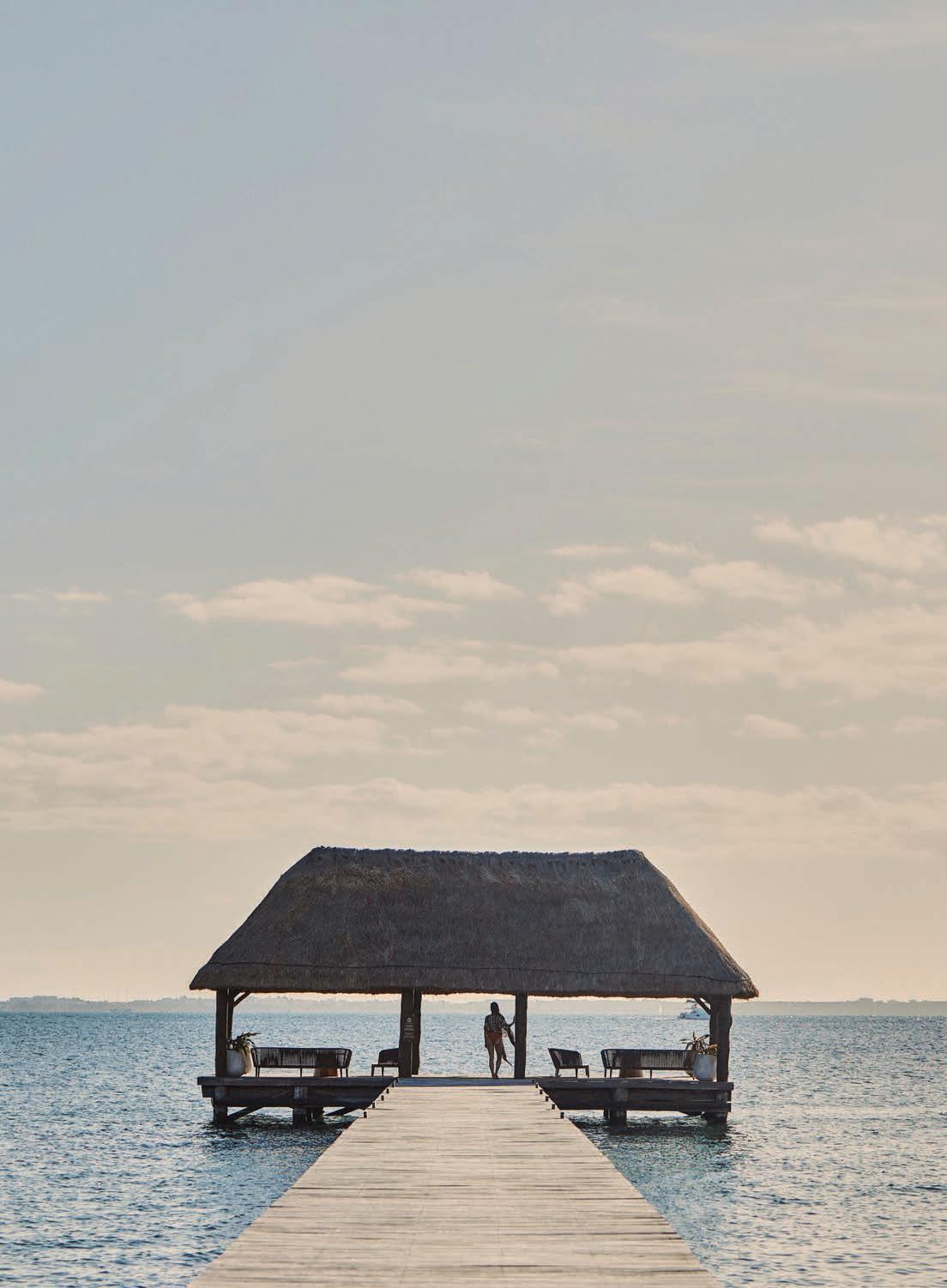
GO FOR THE GLOW
From the high-tech clinics of Seoul to the legendary pharmacies of Paris, a new breed of “Glowmads” is turning self-care into the ultimate travel itinerary
WORDS:
YI-HWA BAYAR HANNA
SHA Wellness Clinic Mexico
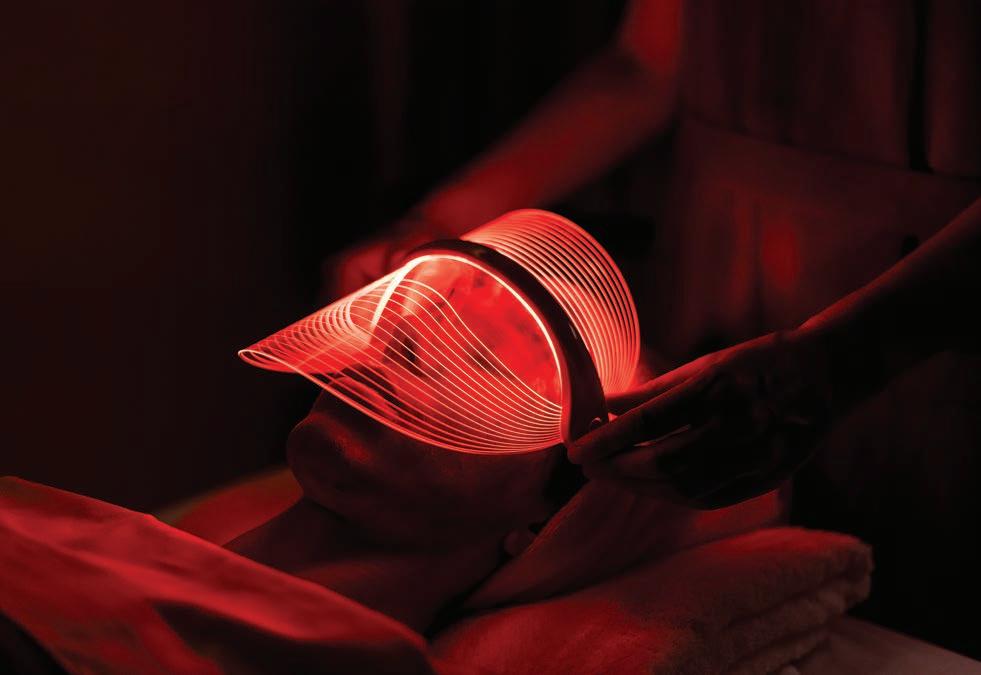
In the past, the post-holiday glow was typically thought of as a metaphorical byproduct of ten days spent doing absolutely nothing on a beach in a stunning location like the Maldives – a temporary reprieve for the soul that usually faded by the time you hit the baggage carousel at home. But in 2026, the discerning traveller is looking for something more quantifiable than a rested spirit: they also want a lifted jawline, a glass-skin finish, and a skincare cabinet newly-stocked with the world’s most potent, regional-exclusive serums.
Enter the “glow-cation” – a new era of aesthetically-focused travel where you won’t just return home feeling rested and relaxed, you’ll also come back physically rejuvenated, with a serious (and sometimes literal) glow-up by the time you land back home.
In recent years, the wellness travel sector has undergone a radical facelift. While the traditional spa retreat is far from dead, selfcare-obsessed globetrotters have given rise to a new niche: a trip that is centered around chasing the most sought-after aesthetic treatments across the world, prioritising visible science-backed results over mere inner beauty. In the age of the “glowmad” – a traveller who intentionally plans entire trips around wellness, skincare, and self-care experiences – clinics and spas are the core of the journey, rather than an afterthought to sightseeing.
The glow-cation isn’t your standard resort massage with a side of cucumber water. These trips are focused on targeted skincare treatments, cutting-edge technology, and visible skin transformation. It’s a form of results-driven tourism where the itinerary is built around the bookings you can get, whether that’s laser toning, non-invasive lifting, medical-grade cosmetic procedures, or AI-driven skin diagnostics. It is unapologetically aesthetic,
prioritising skin longevity and precise, personalised results. The glowmad doesn’t just want a facial; they want a transformation.
In Booking.com’s 2026 Travel Predictions report, nearly 80% of respondents said they were open to booking a dedicated glowcation centered on multiple skin-specific treatments tailored to their personal needs. Meanwhile, Skyscanner’s Travel Trends 2026 report revealed that 33% of travellers now admit that experiencing local beauty culture is a core driver for their trips, with 20% sharing that TikTok and social media trends have been a key influence in this desire. It’s little surprise that modern technology is elevating this trend to new heights, with Millennials and Gen Z driving the charge: According to a recent Global Travel Trends Report from American Express Travel, 70% of younger travellers prioritise wellness activities when making travel plans, with the goal of improving their mental, physical, and emotional health. Of these youthful self-optimisation enthusiasts, 60% of them said they would go out of their way to book hotels that offer spa and wellness services, while Skyscanner’s report cited that 40% of Gen Z seek out beauty treatments or specific skincare stores while abroad.
Beauty without borders
Seoul remains the undisputed stronghold of this movement. The South Korean capital has turned “glass skin” into a national export, offering advanced laser technology and innovative skincare at a level of efficiency – and affordability – that makes a weekend hop from somewhere like the UAE entirely justifiable. In 2026, the gold standard for the glowmad is the Korean clinic that offers everything from oxygen facials to LED light therapy, often at a fraction of Western costs. The sheer scale of the industry is breathtaking: South Korea’s
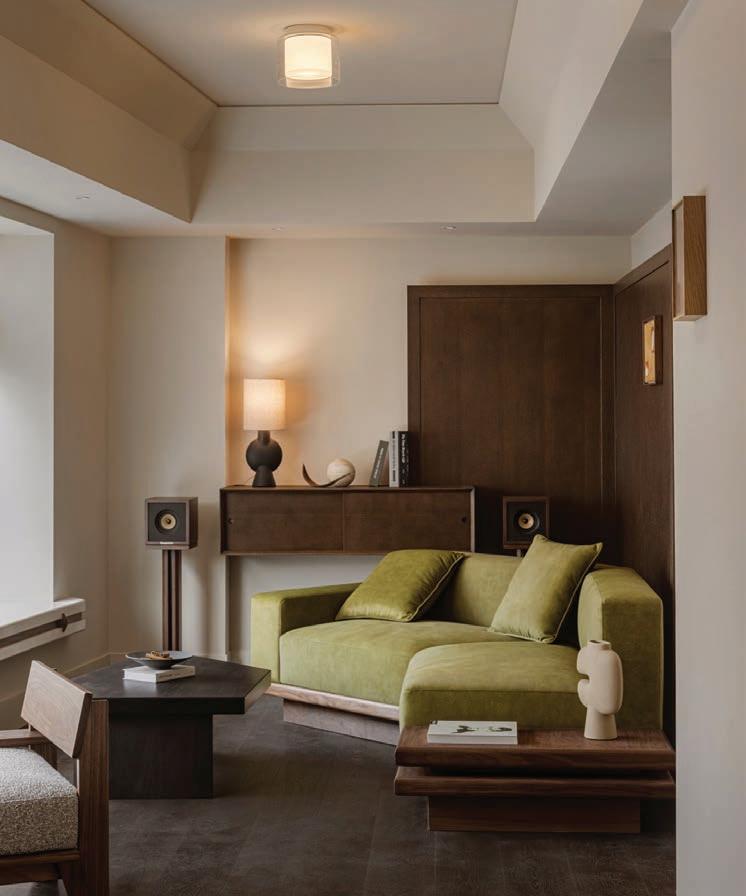
cosmetics exports reached a record US$11.43bn in 2025, proving that the world isn’t just watching K-beauty on its K-pop and K-dramaloving screens – it’s also flying in to try and buy it.
In France, the humble pharmacy has become a go-to destination for the modern glowmad. The products available at these prevalent shops in the city often promise an effortlessly simple yet scientifically-backed aesthetic benefit instantly recognisable to fans of the “French Girl” glow, for whom they have been part of the local beauty lexicon for decades. These rows of dermo-cosmetics weren’t created for tourists – they were already part of the local healthcare rhythm, used by Parisians to treat everything from hardwater dryness to city-smog dullness. For the skincare buff, however, it’s a chance to grab cult favourites from brands like La RochePosay, Avène, Bioderma, Caudalie, Nuxe, Biologique Recherce, and Embryolisse at the source, written off as not just a souvenir, but a piece of cultural heritage that’s often available for almost 40% cheaper than you’d find it overseas. To own a tube of A313 Vitamin A Pommade, picked up on your last trip to Paris, is a status symbol for the well-travelled and savvy woman, who is cool enough to be familiar with these long-standing beauty secrets.
Türkiye remains a titan when it comes to procedures like body contouring and hair transplants (for men and women alike), welcoming over 1.2 million medical tourists annually – while other destinations like Marrakech and Kerala are catering to the more
holistic side of aesthetics. In Morocco, the traditional hammam is being repackaged as a high-end argan oil ritual for deep detoxification, while Kerala remains the premier destination for authentic Ayurvedic rejuvenation.
The mineral-rich waters of the thermal springs found everywhere from Italy to Taiwan are experiencing a renaissance of spa – and beauty-minded travellers, while the natural resources of certain locations around the world have become a unique draw, from the therapeutic crude oil baths in Nafatalan in western Azerbaijan, to the mud baths along Bulgaria’s black sea coast, and Switzerland’s promises of pure, clean, mountain air that supports your recovery from medical-grade skincare treatments. Thailand has become a popular destination for medical tourism, attracting millions with the significant cost savings it can offer for procedures such as rhinoplasty, facelifts, breast augmentation, tweakments such as Botox and fillers, and more. In recent years, Czechia has promoted its appeal as a premier destination for medical tourism in Europe, with everything from high-quality dentistry and LASIK to blepharoplasties, abdominoplasties, and more, often available at costs 40-60% lower than those in Western Europe. In the UAE, around 30% of cosmetic surgery patients are now international arrivals – a figure only surpassed by Tunisia at 45%.
For all of its purported benefits and cost-savings, beauty and cosmetic tourism can also come with signicant risks. From Brazil to the United Kingdom and everywhere in between, travellers heading abroad for medical tourism and cosmetic procedures are advised to be extremely thorough in their research, performing stringent research into the standards upheld at their destination of choice. From hygiene and safety standards to aftercare and follow-up services, ease of communication, credentials, legal recourse (if necessary), and travel risks around flying before or after a procedure.
By the numbers
The statistics backing this surge are staggering. The global cosmetic tourism market reached a valuation of US$84.9 billion in 2024, with approximately 38 million cosmetic procedures performed worldwide last year.
The glomad lifestyle isn’t just about the procedures, either. It’s about a total lifestyle integration. High-end hotels are now getting in on the action, offering in-room skincare fridges, circadian lighting to support skin-repairing sleep, and plant-based room service
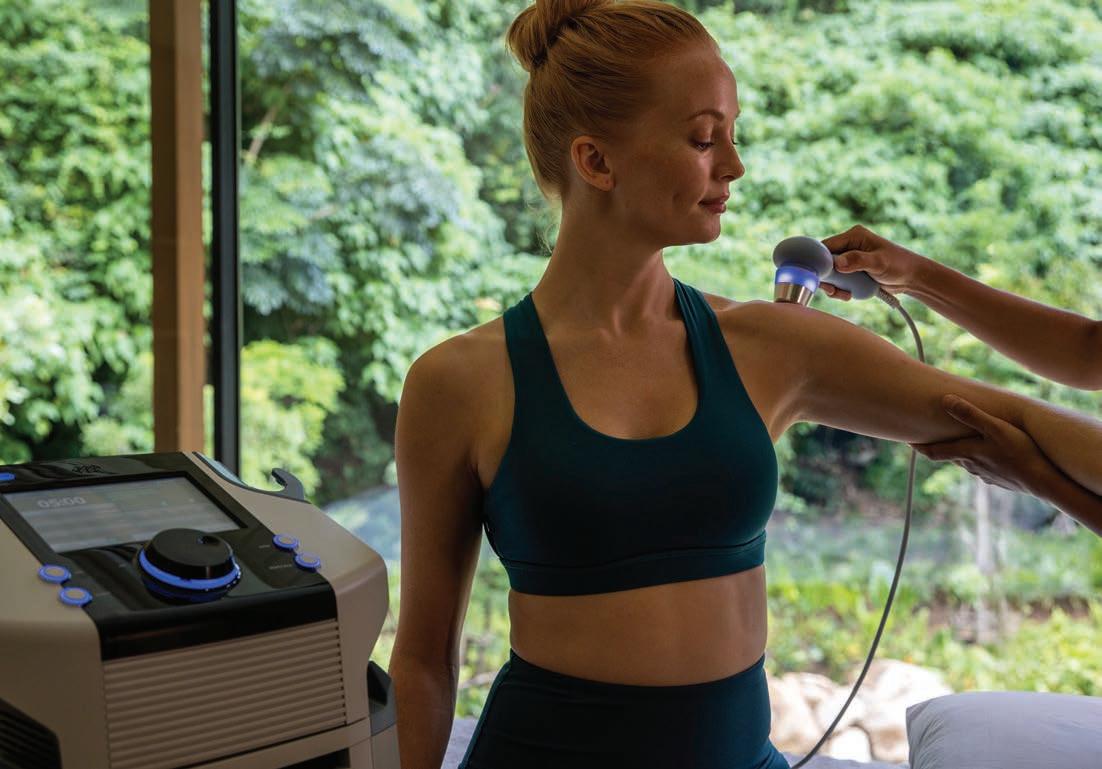
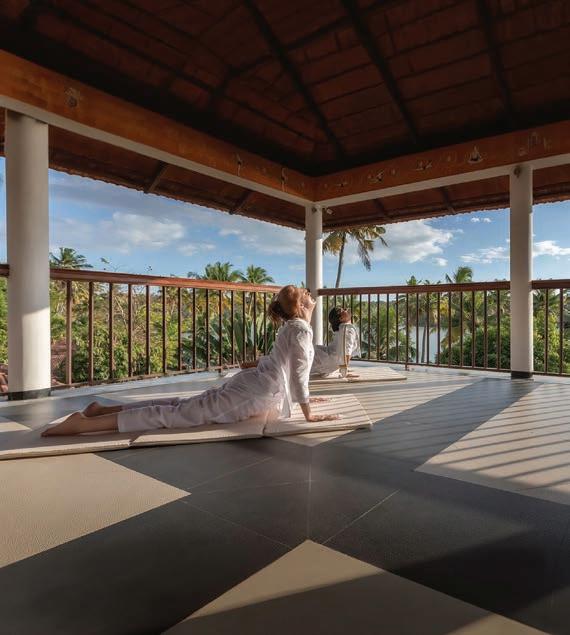
menus designed to keep inflammation low. Even airports are transitioning into places where you can begin your beauty tourism mission before you’ve even hit the tarmac at your destinations: Zayed International (AUH), Incheon (ICN), and Heathrow (LHR) are now major retail players in the cosmetics and skincare-related retail scene, offering exclusive “first-to-market” beauty products in a travel retail sector valued at US$25.2 billion. Skyscanner’s report revealed that 53% of Gen Z travellers enjoy shopping the duty-free for make-up, fragrances, and skincare – products that have long led the charge as the most-commonly purchased airport retail hauls – and that 48% of these young, beauty-loving explorers also routinely visit local cult beauty stores during their travels.
As more people across the world jump on the flight path to aesthetic perfection by visiting their favourite skin-tellectual, beautifying hubs, finding your dream glow-cation could be as easy as Googling a specific treatment and a city name. Yet as more of us chase the transformative power of these retreats, it is perhaps wise to remember that the most enduring glow isn’t one that can be packaged in a bottle of serum. Whether you’re jetting overseas or uncovering a refreshed version of yourself closer to home, the ultimate discovery remains the same: that no matter how much we may optimise the exterior, the radiance of a woman who acts with true autonomy and self-assurance is a beauty that simply cannot be bought. The real luxury of a glow-cation, then, isn’t just the chance to look your best – it’s the freedom to decide exactly what that might look like for yourself.
Left page: Hoan Clinic, Seoul; This page: (from top) Physiotherapy at Anantara Layan Phuket Resort; Kalari Rasayana, A Centre for Healing by CGH Earth
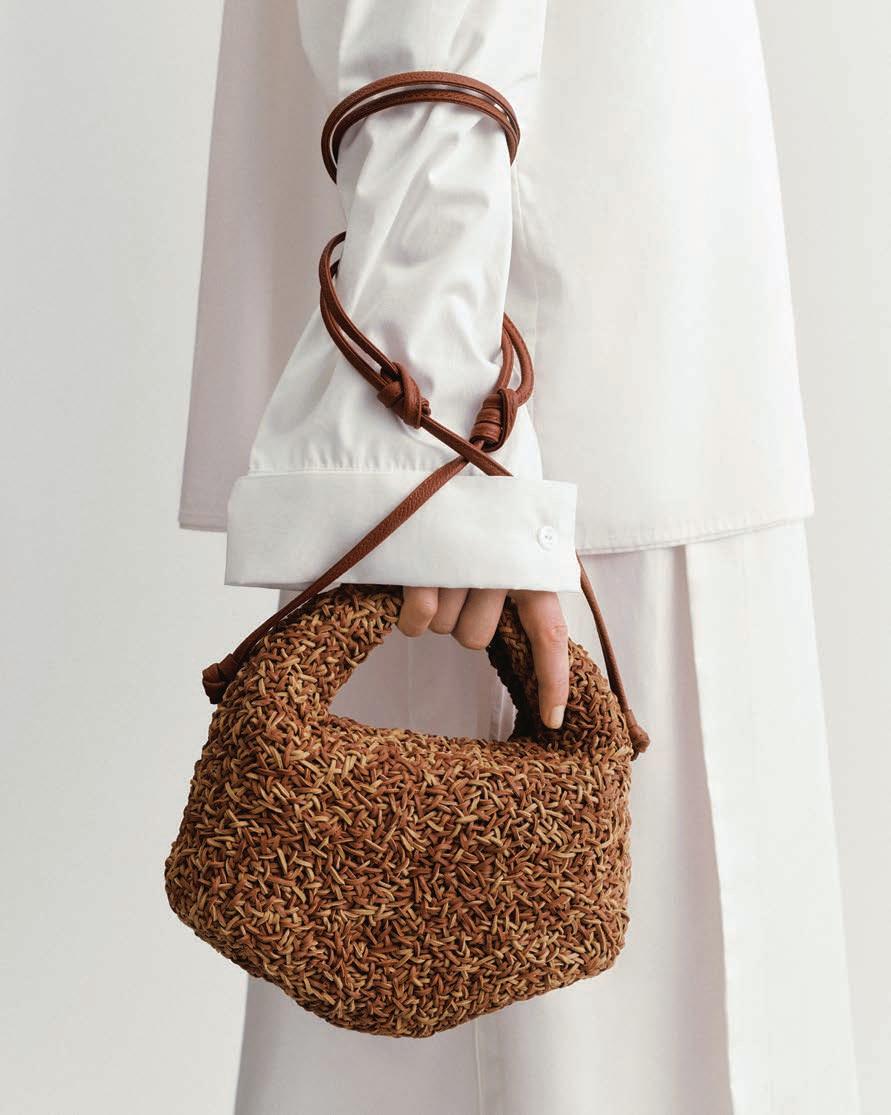
TOUCHY-FEELY LUXURY
Since its founding a decade ago, Polène has built a quiet cult following by marrying Parisian design sensibility with the savoir-faire of artisans in Ubrique, Spain. This is one of those “if you know, you know” stealth-wealth luxury brands. But now it’s decided to make something of a statement with a new special edition Béri bag. Crafted with intricately interlaced leather strips formed from reclaimed offcuts, the bag is transformed through a painstaking, hand-finished process. The result is a richly textured, almost organic profile that is just begging to be caressed.