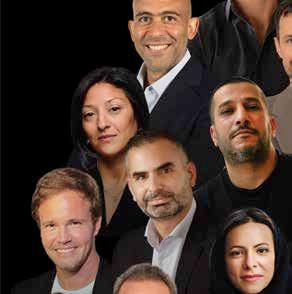
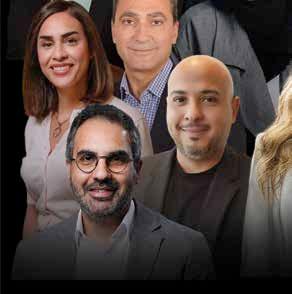
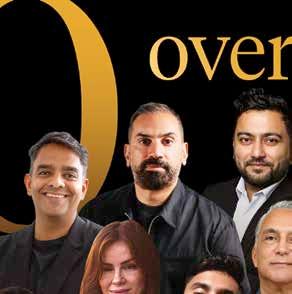
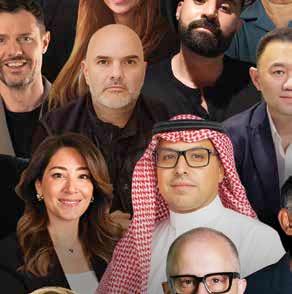
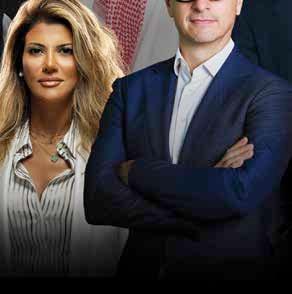
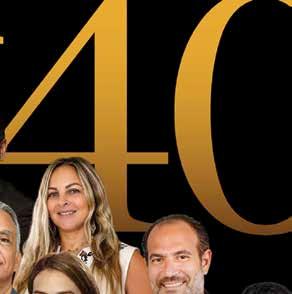
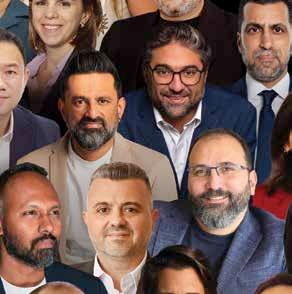
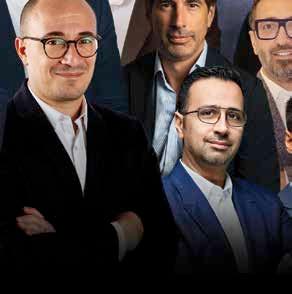
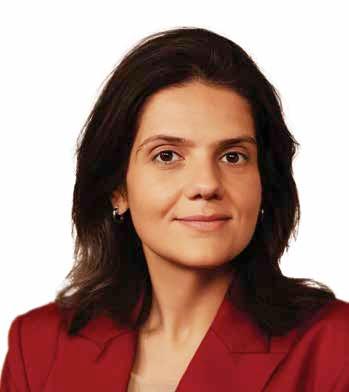
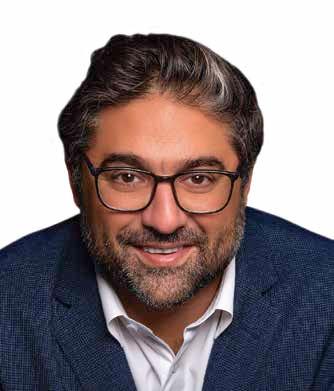
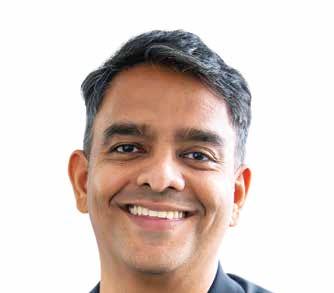
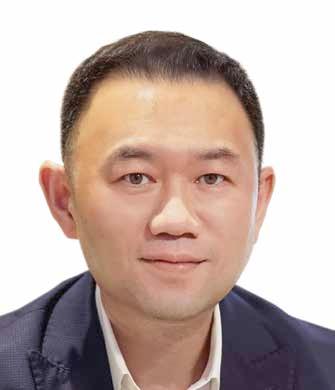
Shining a spotlight on brand builders, caretakers of client trust and custodians of culture in daring and disruptive agencies.
W14 SHARE
SOUL, NOT ONLY THE SKYLINE
Motivate Media Group
Head Office: 34th Floor, Media One Tower, Dubai Media City, Dubai, UAE. Tel: +971 4 427 3000, Fax: +971 4 428 2266. Email: motivate@motivate.ae Dubai Media City: SD 2-94, 2nd Floor, Building 2, Dubai, UAE. Tel: +971 4 390 3550, Fax: +971 4 390 4845 Abu Dhabi: Motivate Advertising, Marketing & Publishing, PO Box 43072, Abu Dhabi, UAE. Tel: +971 2 677 2005, Fax: +97126573401, Email: motivate-adh@motivate.ae Saudi Arabia: Regus Offices No. 455 - 456, 4th Floor, Hamad Tower, King Fahad Road, Al Olaya, Riyadh, KSA. Tel: +966 11 834 3595 / +966 11 834 3596. Email: motivate@motivate.ae London: Motivate Publishing Ltd, Acre House, 11/15 William Road, London NW1 3ER. Email: motivateuk@motivate.ae www.motivatemedia.com
EDITORIAL: Motivate Media Group Editor-in-Chief Obaid Humaid Al Tayer | Managing Partner and Group Editor Ian Fairservice Group Content Director Thomas Woodgate | Campaign Middle East Editor Anup Oommen | Senior Reporter Ishwari Khatu Reporter Shantelle Nagarajan | Junior Reporter Hiba Faisal
DESIGN: Senior Designer Thokchom Remy
ADVERTISING ENQUIRIES: Chief Commercial Officer Anthony Milne | Publishing Director Nadeem Quraishi (nadeem@motivate.ae) | Sales Manager Tarun Gangwani (tarun.gangwani@motivate.ae) | Senior Sales Executive Saif Hemdan (saifeldin.hemdan@motivate.ae)
PRODUCTION: General Manager S. Sunil Kumar | Production Manager Binu Purandaran | Assistant Production Manager Venita Pinto
HAYMARKET MEDIA GROUP: Chairman Kevin Costello | Managing Director Jane Macken
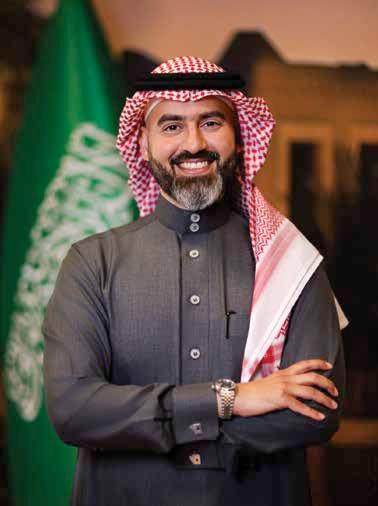
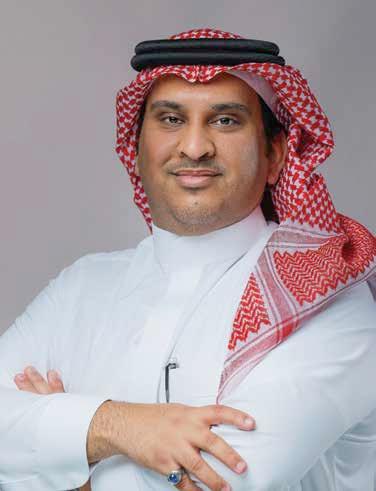
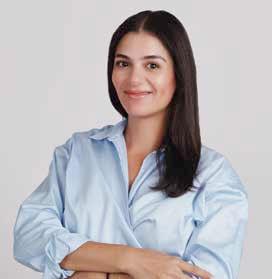
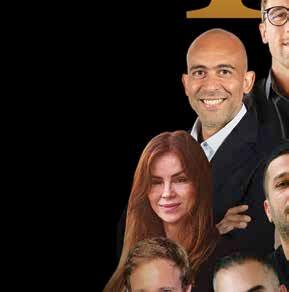
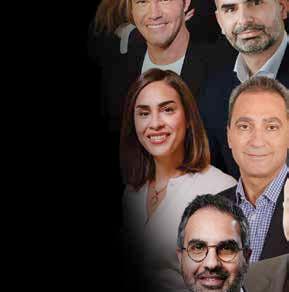
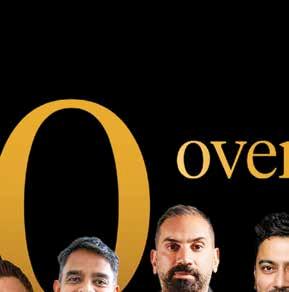
elcome to Campaign Middle East’s inaugural 40 over 40 edition – an annual initiative meant to spotlight senior industry leaders aged 40 and older, who have already dedicated 15 years or more of their lives to building the region’s brand, marketing, advertising, creative, media, digital, communications and experiential landscape.
“WE RECOGNISE UNSUNG HEROES WHO HAVE STAYED THE COURSE.’’
We recognise unsung heroes who have stayed the course. They have seen markets rise, reset and reinvent themselves. They have helped clients navigate changing consumer behaviour, platform and channel shifts, economic pressure, advancing technologies and digital transformation. They have challenged briefs, delivered client outcomes, established long-lasting relationships and met the demand for disruptive and differentiated work.
While this edition recognises stellar, marketmoving leadership and excellent long-term contributions to the industry, it also responds to a greater call for recognition, transparency and inclusivity in the brand and marketing industry. It offers the opportunity for a larger number of brand builders, guardians of client trust, culture carriers and quiet operators of well-oiled marketing machines to be praised out in the open.
But what makes this initiative different? Leaders have spoken, and we have listened. In a largely pay-to-play regional media landscape, Campaign Middle East has chosen a different route.
From 2026 onwards, The MENA Power List – to be revealed in the October magazine – and the newly announced 40 over 40 annual list will be editorially led rather than commercially driven.
The MENA Power List – true to its name – will bring together the most powerful C-suite leaders at huge holding companies, influential network groups, and standalone independent agencies who have more than 20 years of experience in the industry and have been recommended by a panel of their peers and competitors.
Meanwhile, the 40 over 40 initiative opens the door for client-recommended agency leaders who have shaped the industry consistently for more than a decade and a half.
These lists are not rankings; all the names have been arranged alphabetically by last name. They are not meant to be definitive either, making room for different leaders to be featured in these pages when the list returns next year.
is used under licence. The views and opinions expressed within this magazine are not necessarily those of Haymarket Magazines Limited or those of its contributors.
This first edition is a starting point. It will grow. It will evolve. For now, we ask you to recognise these leaders. Look beyond the titles. Look at the lessons learned through pressure, patience and practice. Congratulate them and wish them well. And when you’re done poring through the 40 over 40 list, have a look at our coverage of destination marketing, as well as our annual Audio Guide 2026. Happy reading!
United Arab Emirates announces social media ban for children under the age of 15
The UAE has announced a ban on the use of social media by children, setting the minimum age of use at 15 years old.
The UAE cabinet, chaired by His Highness Sheikh Mohammed bin Rashid Al Maktoum, Vice President and Prime Minister of the UAE and Ruler of Dubai, revealed the ban as a part of a resolution that regulates children’s access to social media.
Instagram debuts multi-caption carousels
Instagram has recently rolled out several major algorithm and feature updates. Key changes include the ability to include captions on individual slides within a carousel post. The platform has also introduced a ‘Reorder Grid’ feature, which allows users to rearrange content on their profile grid even after it has been published.
Alongside the grid update, Instagram has announced new features for its video editing app, Edits. The latest additions provide deeper audience insights, including follower demographics, peak engagement times, and the ability to export data as a PDF.
Creators can also compare the performance of a reel against their previous three posts. Creators now have greater control over audio, allowing them to import and save their own audio files.
The resolution decrees that children below 15 years old will be prohibited from creating, using or operating personal accounts on social media platforms. They will also be prohibited from accessing the features of these platforms, including social interactions, publishing, commenting and sharing. They will not be allowed to join public groups, open channels, or any large-scale interactive spaces.
The measures will include ageappropriate content classification and restriction, disabling high-risk features such as interaction with unknown users, regulation of usage time and duration, and the provision of parental control tools. The resolution applies to all social media platforms whose services are available in the UAE and that enable users to create accounts or personal profiles,
engage in social interaction, publish or share content, or that rely on algorithmic systems to display, rank, or recommend content, whether free or paid. With the new resolution in place, social media platforms are now required to make changes to enforce the prohibition and will have a transitional period of 12 months to implement all necessary technical and administrative measures and bring their operations into compliance with the new regulations.
Targeting children with personalised advertising based on tracking or behavioural profiling, and exploiting or processing their personal data for commercial purposes that depend on monitoring or tracking their digital activities has also been banned as part of this regulation.
Compliance with new regulations set out in the resolution will be monitored by the National Media Authority and the Telecommunications and Digital Government Regulatory Authority. In the event of noncompliance, the authorities will take measures that range from issuing a warning to partial or full blocking of platforms or the imposition of penalties.
The resolution reflects the UAE’s commitment to establishing an advanced model for child protection in the digital space.
Image credit: Pexels
MENA region shows up strong at Campaign Agency of The Year Global ’25
More than 200 guests from around the world attended the Campaign Agency of The Year Global awards ceremony on 18 June at the Jumeirah Carlton Tower hotel in London.
This year, the awards programme received entries from 85 companies across 16 countries, ranging from independent shops to global networks and demonstrating commitment to recognising excellence, regardless of scale.
The Middle East had a strong presence with nine big wins across six categories in Gold, Silver and Bronze. In the People and Teams category, IMPACT BBDO’s Dani Richa won the Agency Leader – Creative / Advertising award.
At the Network level, IMPACT BBDO took home the Gold for Best Network: Middle East & Africa, while Omnicom Media MENA bagged the Silver for Best Network: Middle East and Africa.
In the Agency PR categories, The Romans (a UK-led entry at the global level, which included representation from the UAE) bagged double Golds for Independent PR Agency and PR Agency. Middle East-based Gambit Communications won the Bronze for Independent PR Agency.
TBWA\RAAD took home a Silver for Integrated Marketing Agency. The agency also won Silver for Best Place To Work in the Staff Engagement & Initiatives category.
WATCH IT launches Mini-Dramas feature
WATCH IT has launched its latest feature: Mini-Dramas, a new short-form viewing experience designed for today’s fast-scrolling audiences. Launching with two original productions, Ebn El Sherka and Alb Maftouh, the platform introduces a fresh storytelling format built around fast-paced, bite-sized episodes, each under two minutes, delivering seamless entertainment tailored to modern viewing habits.
Positioning itself as the first streaming platform in the MENA region to produce both long- and short-form originals, WATCH IT continues to redefine digital entertainment through innovative, mobile-inspired storytelling. With titles unfolding across nearly 60 micro-episodes and a vertical-screen viewing experience optimised for TVs and all devices, the platform delivers a seamless cross-device journey tailored to today’s fast-paced viewing habits shaped by platforms such as Instagram Reels and YouTube Shorts.
Included within existing subscription packages at no additional cost, the launch reflects WATCH IT’s broader strategy to evolve alongside changing audience behaviours and shorter attention spans, while offering entertainment that fits naturally into everyday moments.
Use
ADIDAS BACKYARD LEGENDS
This campaign, released in a teaser video and hero film on Al Haboob’s social platforms, follows the team’s brand ambassador Paul Pogba lead a camel named Fariz to a line-up of country-branded water buckets to choose a predicted winner for this year’s tournament. The kitschy spot aims to combine Al Haboob’s world of horse racing with football’s biggest moment in a way that is authentically true to the team: A psychic camel backed by a World Cup winner. The campaign went viral on social media, racking up 1.3 million views within the first week of its launch on Instagram. The campaign also aligns with the team’s mission to lay the foundations for the world’s first professional Camel Racing League.
This Saudi Arabia edition of adidas’ viral Backyard Legends campaign celebrates the neighbourhood pitches, football icons and communities inspiring the next generation of the game across the Kingdom. Centred around Saudi football star Saud Abdulhamid, the brand’s film follows a group of young football fans across Riyadh as they passionately debate who would make the ultimate Saudi Arabia team. Blending football fandom, gaming culture and grassroots passion, the campaign also celebrates the wider football ecosystem shaping the future of the sport in Saudi Arabia, from rising young players and women’s football to the communities driving the game forward every day.
BETC Riyadh Production house Crafters Space
AL HABOOB THE WORLD CUP WINNER
Agency
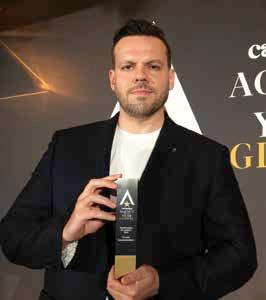
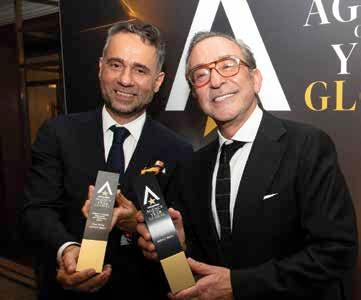
Left: Gambit Communications’ Jamal Al Mawed lifts the Independent PR Agency award; right: IMPACT BBDO’s Ali Rez and Dani Richa pose with the Best Network: Middle East & Africa and the Agency Leader – Creative / Advertising trophies.
Stephen Worsley to lead Golin Ketchum MENA as MD following global merger
Golin Ketchum has officially launched as the combined agency formed through the merger of Golin and Ketchum.
In the MENA region, Stephen Worsley, the Managing Director of Golin MENA, will now head up the merged agency as Managing Director of Golin Ketchum MENA. For existing clients,
day-to-day teams and relationships remain intact, preserving the partnership approach and collaborative culture – while immediately gaining access to expanded talent, expertise, and technology across the combined agency.
Speaking exclusively to Campaign Middle East, Worsley said, “Two of the world’s most storied PR
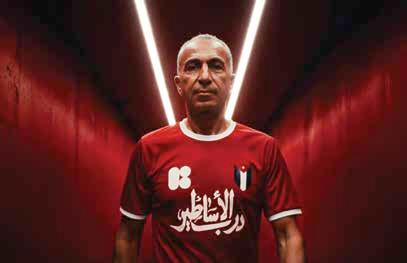
Launched ahead of Jordan’s first appearance at the FIFA World Cup, Jordanian telecom brand Umniah by Beyon unveiled ‘Darb El Asateer’ – The Journey of Legends – a largescale musical production bringing together legendary and emerging Jordanian voices in what the brand describes as a tribute to the country’s underdog spirit. The campaign was rolled out across TV, outdoor and social media, including through influencer collaborations. The song incorporates the energy of modern football chants and traditional Jordanian musical influences, while using artificial intelligence to revive the voice of the late Miteb Al-Saggar, one of Jordan’s most celebrated folkloric singers.
agencies becoming one is a landmark moment for our industry. Golin Ketchum brings together exceptional talent across every discipline, from brand and consumer to corporate affairs, health and technology, creating a creative and strategic force greater than the sum of its parts.”
Golin Ketchum will provide communications services across brand and consumer marketing, corporate affairs, health, technology, and food, agriculture and nutrition, supported by a global network of offices and speciality practices.
Worsley said, “We are proud to have represented Golin in the Middle East and North Africa, and prouder still to now carry the Golin Ketchum name.”
“That global firepower is anchored here by something equally powerful: the depth of local understanding of our parent company Horizon Holdings, which celebrates its 50th anniversary this year,” he added. “The timing couldn’t be more fitting – Horizon’s 50th year is exactly the moment to signal what the next chapter looks like.”
Golin Ketchum intends to be grounded in the fundamental beliefs of creating with bravery, leading with curiosity, and collaborating as a superpower.
The new agency’s purpose reflects a shared foundation: “Together, we’ll do the best work of our lives and create change that matters,” said Worsley.
The agency also introduced a new visual identity to reflect its ambition.
The signature colour palette – anchored by ‘flare’, a vibrant red-orange – signals the energy and vision driving the combination of these two agencies.
The brand identity also features a distinctive mark, which is an abstraction of its initials, designed to work seamlessly across practices, industry sectors, and geographies.
Matt Neale will serve as Global CEO of the new agency, with Tamara Norman as President.
Golin Ketchum will continue to operate through local market teams supported by specialised practices and sector expertise.
To kickstart the countdown to the FIFA World Cup 2026, Lay’s brought the global tournament closer to fans in Saudi Arabia, honouring the match-day traditions and shared moments that unite supporters during one of the world’s biggest football events. The campaign gives fans in Saudi Arabia the opportunity to connect with the tournament and with one another with the inaugural Lay’s Fan of the Match programme, a promotion which has been amplified through a social campaign featuring local Saudi football players and icons in a WhatsApp group chat to plan their match viewing. One lucky fan could also stand the chance to win tickets to a game, pitch-side access and more.
UMNIAH BY BEYON THE JOURNEY OF LEGENDS
The tools have never been smarter. The customer has never felt less seen. Eighty-two per cent of UAE marketers say artificial intelligence (AI) now powers their personalisation strategies, yet only 31 per cent of their customers feel that personalised touch.
This gap is not a technology problem; it is a strategic one – and closing it is the most urgent challenge in marketing today.
THE MODEL WORKED. THE MARKET MOVED.
For the past decade, the industry poured investment into personalisation engines, customer data platforms (CDPs), first-party data stacks and segmentation models. The promise was relevance at scale. What we delivered, in most cases, was relevance in the rear-view mirror.
Personalisation, as we have practised it, is reactive and rule-based. It responds to what the customer did yesterday, last week or last month. It describes the past and calls it the present. The customer has moved on. We are still catching up.
The evidence is unforgiving. Ninety-one per cent of UAE consumers will abandon a brand after a single poor experience, and in a market where 92 per cent expect brands to understand their individual needs, reactive marketing is actively damaging brands. The urgent shift that marketing needs is a move from personalisation to prediction.
FROM RULES TO INTENT
Predictive marketing marks a fundamentally different operating model. Where personalisation asks, “What did this customer do?” prediction asks, “What will this customer need next – and when?”
The shift is from rule-based responses to intent orchestration. Across large regional groups, the real work is moving from building dashboards that report the past to building systems that anticipate intent.
In the real estate market, the high-consideration buyer arrives already informed and half-decided. The brand that wins is the one that was useful before the conversation started.
The commercial case is already clear. Marketers who scale predictive and personalised offers generate three times the returns of mass offers.
The first AI wave helped marketers create faster. The next will help brands act faster. Chatbots talk. Agents act. The future of marketing is fewer campaigns and more intelligent systems.
THE UAE WILL DECIDE THIS FIRST No market is better positioned to lead this transition. The Microsoft AI Economy Institute ranks the UAE the world’s number one adopter of AI: 70.1 per cent of the working-age population now use AI tools, the first economy on
FROM PERSONALISATION TO PREDICTION
Brands that move from reacting to what the customer just did to anticipating what they will need next will win the next decade, says Dubai Holding Real Estate’s Brett Stephenson.
“PERSONALISATION DESCRIBES THE CUSTOMER’S PAST. PREDICTION SERVES THEIR FUTURE.”
earth to cross the 70 per cent threshold. The UAE National AI Strategy 2031 cites estimates that AI could contribute up to AED335bn (approximately $91bn) to the UAE’s GDP by 2030, roughly 14 per cent of its GDP.
Dubai’s D33 agenda adds a further signal of intent, targeting AED100bn ($27.22bn) in annual economic value from digital transformation. This is not a market experimenting at the margins. It is a market building the infrastructure, policy ambition and adoption curve for AI-native commerce. Consumer expectations have moved to match. Fifty-four per cent of UAE shoppers are now willing to let AI agents shop on their behalf. That is a structural shift in who the marketer is communicating with.
Buyers are increasingly asking AI agents which brand to start with and which to trust. If your brand is not structured to be selected inside those answers, you are absent from the moment of intent.
For the first time in modern marketing, brands need to persuade machines before they persuade people. When AI agents sit between the customer and commerce, discoverability, trust and utility matter more than interruption alone. Search engine optimisation (SEO) was about ranking in search results. Generative engine optimisation (GEO) is about being chosen by an AI agent, and it requires content that is evidence-rich, machine-readable and useful.
The brands that win the next decade will treat that with the same seriousness they once gave search and the same conviction they once gave brand-building.
THE PART THAT STILL REQUIRES A HUMAN
This is where the conversation usually goes wrong.
AI can predict the next click. Only a human decides what your brand stands for, which signals matter, what story to tell and when silence is more powerful than a message.
Organisations that integrate AI with human marketers are three times more likely to achieve measurable return on investment (ROI) than those that deploy AI without strategic human direction.
Kantar’s analysis of AI-generated advertising concluded that what mattered most was not the production method but the fundamentals: insight, bold creative and brand-centricity. Here is the counterintuitive truth most AI commentary misses: as machines curate more of the choice, brand becomes more important, not less. When a customer tells an AI agent
to start with a name they trust, then that brand has already won.
Brand memory is the shortcut through AI complexity, the most efficient route through an algorithmic world.
Seventy-one per cent of customers say it is important for a human to validate what AI produces. The prediction model that wins here will be built on transparency, with a human deciding what the intelligence means for the brand.
THREE MOVES MATTER MOST
First, audit what your brand is teaching machines. Search is no longer the only discovery layer. If customers are asking AI agents who to trust, your content needs to be structured, current, evidence-rich and useful enough to be selected.
Second, move from reporting to forecasting. About 60 per cent of brands still hold ‘dark data’ they cannot activate in real time, so stop asking only what customers did last month and start identifying the signals that show what they will need next.
Third, redesign decision-making, not just workflows. AI is not a productivity layer. It changes how fast a business can sense, decide and act without losing human judgement. A subscription is not a strategy. A chatbot licence is not transformation.
The brands that win this decade will not be the ones with the biggest AI budgets. They will be the ones with the clearest brand, the cleanest signals and the courage to move before the market tells them it is safe.
The choice before every marketer is straightforward: manage the AI, work alongside it or be replaced by it. AI is the engine. The marketer who knows what the brand stands for is the driver.
By Brett Stephenson, Executive Director Marketing, Dubai Holding Real Estate
INDUSTRY FORUM:
Is the rise of video podcasting diluting what made audio powerful in the first place?
Kassandra Panagiotopoulos
Head Of Strategy, The Romans
NO
Video may be a great storefront for podcasts and a great discovery tool, but once people are in, audio consistently outperforms. Its real strength is its simplicity. When all you have is voices, the conversation becomes the experience, no visuals, no distractions, just ideas, stories and personality. That creates a level of engagement few formats can match. It’s still one of the most powerful storytelling mediums we have, and the continued growth of podcasting shows people haven’t lost their appetite for it. Long may it continue.
Ajit Ramaswami
Chief Communications Officer, VFS GLOBAL
NO
Video podcasting isn’t dimming the shine of audio. Poor content is. Audio remains one of the few formats that fits around everyday life. We listen while driving, working out, cooking, commuting or doing chores. Moments when our eyes are busy but our minds are open. We do ourselves a disservice by treating audio as a mere delivery channel rather than an entertainment medium. Great audio doesn’t just communicate; it meets the audience where they are, it stirs up emotions and rewards them for listening. Nobody opens a film, concert or halftime show with something forgettable. Audio deserves the same creative ambition. When it gets it, audiences still show up.
Eid Abu Musaed Head of Production, SOCIALEYEZ
NO
Audio isn’t powerful because it lacks pictures. It’s powerful because it creates intimacy. Video podcasts don’t take that away; they simply give audiences another way to engage.
The best podcast conversations still work when you close your eyes and listen.
Video has expanded discovery, particularly among younger audiences who often encounter podcasts through short clips and social platforms before becoming loyal listeners. It has also opened up new creative and commercial opportunities for creators.
The challenge isn’t the video itself. It’s remembering that the conversation remains the product. If the audio experience is strong, adding a camera doesn’t dilute it. It simply expands its reach.
Podcasts have been around since the first iPod. People often forget their original purpose: content you could download and listen to while running, exercising, painting, or commuting. Today, video podcasts give almost anyone the chance to have their own “Joe Rogan” moment. Many hosts aren’t experts; they’re simply creating content because it looks good on social media. With anyone able to rent a studio and appear professional, credibility is often confused with production quality. In my opinion, podcasts should aim for the standard of Diary of a CEO – delivering meaningful conversations, genuine insights, and real value to the listener.
Rayan Ahmed Director of Action Studios and Social Media, Action Global Communications
NO
Video podcasting is not diluting what made audio powerful, in fact, it is expanding its reach. The core strength of podcasts has always been authentic storytelling and meaningful conversations that engage audiences in a personal and immersive way. Video simply provides another way to consume the same content.
What matters is not whether a podcast is audio-only or video-first, but whether the content is compelling enough to hold attention.
In today’s media landscape, audiences consume content across multiple platforms and formats. Video podcasting allows brands and creators to increase discoverability, engagement, and extend content across channels while preserving the authenticity and depth that made podcasting successful.
Malek Sleem
Performance Manager, Equation Media
YES
It doesn’t. If anything, it made the audio more powerful. Every podcast now works in two layers, the visual and the audio, and the audio actually gets sharper because of the camera.When people know they’re being recorded, they pay attention to how they speak: their pronunciation, pacing, and confidence. That carries straight into the sound.
On top of that, it lives in more places at once, like YouTube and short clips on social. So, nothing got diluted. It got amplified and picked up by the dominating social layer, which is video.
Aurelien Fonteneau Managing Director, We Are Social
NO
It’s not diluting, it’s diversifying: video meets people in different moments. I listen in the car, switch to video while cooking because it feels like company in the room, and grab a social clip when I’ve got 90 seconds to spare. Same content, three formats, three moods.
What made audio powerful was the intimacy of the content and the host, not the absence of a picture - that doesn’t disappear with video. Data backs it up: 66.2 per cent of UAE users and 62.4 per cent in KSA tune into podcasts weekly, both well above the 52.5 per cent global average, putting the UAE in the top five worldwide.
Podcast formats and genres have constantly been evolving. However, the core concept of a podcast hasn’t changed. Screen or no screen, podcasts still seem to cast the same spell on its audience. Of course, the risk of creators optimizing video podcasts for clips, reactions or set design rather than conversation or storytelling is always there, but the fact that it has expanded to a wider audience cannot be discounted. The magic of audio will never fade. The best podcasts still work when you listen to them with your eyes closed.
Khaled Ben Ahmed Creative Content Producer, Netizency
YES
Before I explain why, ask yourself this: would you rather listen to this answer, or watch it as a video? For most people today, the answer is probably video. If these same thoughts were delivered with a strong hook and visuals, you would likely stay engaged for longer. And when I say “podcast,” chances are you're already picturing a YouTube video, a TikTok clip, or someone speaking directly to camera on Instagram. That alone shows how much the format has evolved. Social media has reshaped what we consider a podcast, and today, video is often the preferred way audiences discover and consume content.
Martino O’Brien Creative Director and Managing Partner, YouExperience
NOIf video podcasting is diluting audio, then TV must have ruined books. People don’t tune into podcasts because they’re audio. They tune in because they’re interesting. The format is just the delivery mechanism. The truth is, most video podcasts are proving something uncomfortable: if your podcast only works because no one can see it, you may not have had much of a podcast to begin with. Yes, video changes the experience. Suddenly, there are facial expressions, awkward silences and hosts dressed as if they’ve just wandered in from Pilates. But none of that matters if the conversation is forgettable. Audio’s superpower was never the absence of pictures. It was the presence of substance. Video hasn’t changed the rules. It’s just removed the camouflage.
Lemya Soltani Co-Founder and Chief Commercial Officer, Next Audio
NO
Video podcasting and audio podcasting share a name, not a behaviour. A viewer watching a podcast on YouTube has a fundamentally different experience than someone listening through earbuds on a commute and the advertising signals that follow are completely different. What made audio powerful is still present: opt-in attention, eyes-free consumption, and host trust built over hundreds of hours of listening. Those mechanics aren’t weakened because a camera is now there. If anything, video’s rise has expanded the podcast ecosystem and brought new audiences in. The question for brands isn’t audio vs. video, it’s whether you understand what you’re actually buying. Audio delivers a measurable attention signal that no other format replicates. Video podcasting hasn’t changed that.
Santesh Row
Husam Haris, Co-Founder and Chief Operating Officer, The Hanging House
NO
Video podcasting isn't diluting the power of audio; it's expanding the ways people connect with ideas. The strength of audio has never been the absence of visuals. It's the intimacy. A voice creates a different kind of relationship with an audience because it leaves space for imagination, interpretation, and reflection.
What we're seeing now is not the replacement of audio, but the evolution of storytelling. Different audiences consume content differently. Some want the depth and companionship of audio on a commute, while others engage more deeply when facial expressions, body language, and visual context are added.
The core challenge remains the same: creating conversations worth listening to. Whether it's audio-only or video-first, the format is not what makes content powerful. The quality of the thinking, authenticity of the voice, and value of the conversation are what ultimately matter.
Executive Creative Director, Liwa Content Driven
NO
What we’re calling video podcasting isn’t a dilution of audio. It’s a reframing of how attention gets allocated ... not a reinvention of what the medium is. Audio was never just a file format. It was always a condition. Low-friction, high-trust, highattention in motion. A space where presence is imagined, not shown. That core hasn’t shifted.
Video doesn’t replace that condition. It competes for discovery, not devotion. It operates upstream in the attention economy, where visibility is earned through faces, framing, and feed-native storytelling. But once attention is captured, the consumption habit often reverts to audio’s original strength. Which is, companionship in the background of real life.
So the shift is infrastructural, never philosophical. Audio didn’t lose primacy. It lost monopoly on entry. The mistake is treating this as a format war. Audio versus video is not moot. It’s different layers of the same attention curve. Video creates the hook. Audio sustains the relationship. So, the future belongs to podcasts that stop thinking in formats and start thinking in states of attention. What gets you discovered. What gets you to stay. And what keeps you returning without effort.
THE NEXT ERA OF OOH WILL BE ENGINEERED, NOT BOUGHT
Hills Advertising’s Hiba Momani shares why the future leaders of OOH will look less like traditional media sellers and more like infrastructure operators.
There is a common misconception in outdoor advertising that the industry’s digital transformation is primarily about screens.
In reality, the conversation is increasingly moving beyond screens themselves and toward the systems, infrastructure and operational capabilities required to support them.
The real transformation happening in OOH is operational.
As networks become more digital, connected and measurable, operators are no longer simply managing advertising placements. They are managing live infrastructure systems operating within complex urban environments.
For years, outdoor advertising was largely evaluated through visibility and scale. The focus was naturally on locations, traffic volumes and premium placements. Those things still matter. But digital OOH introduces a different layer of responsibility behind the scenes, one that is far more operational, technical and infrastructure-led than many people outside the industry realise.
Deploying digital infrastructure across active city corridors is not comparable to adding media inventory.
“SCREENS CAN BE REPLACED, BUT WHAT CANNOT BE REPLICATED QUICKLY IS THE OPERATIONAL ECOSYSTEM BEHIND EACH OF THEM.”
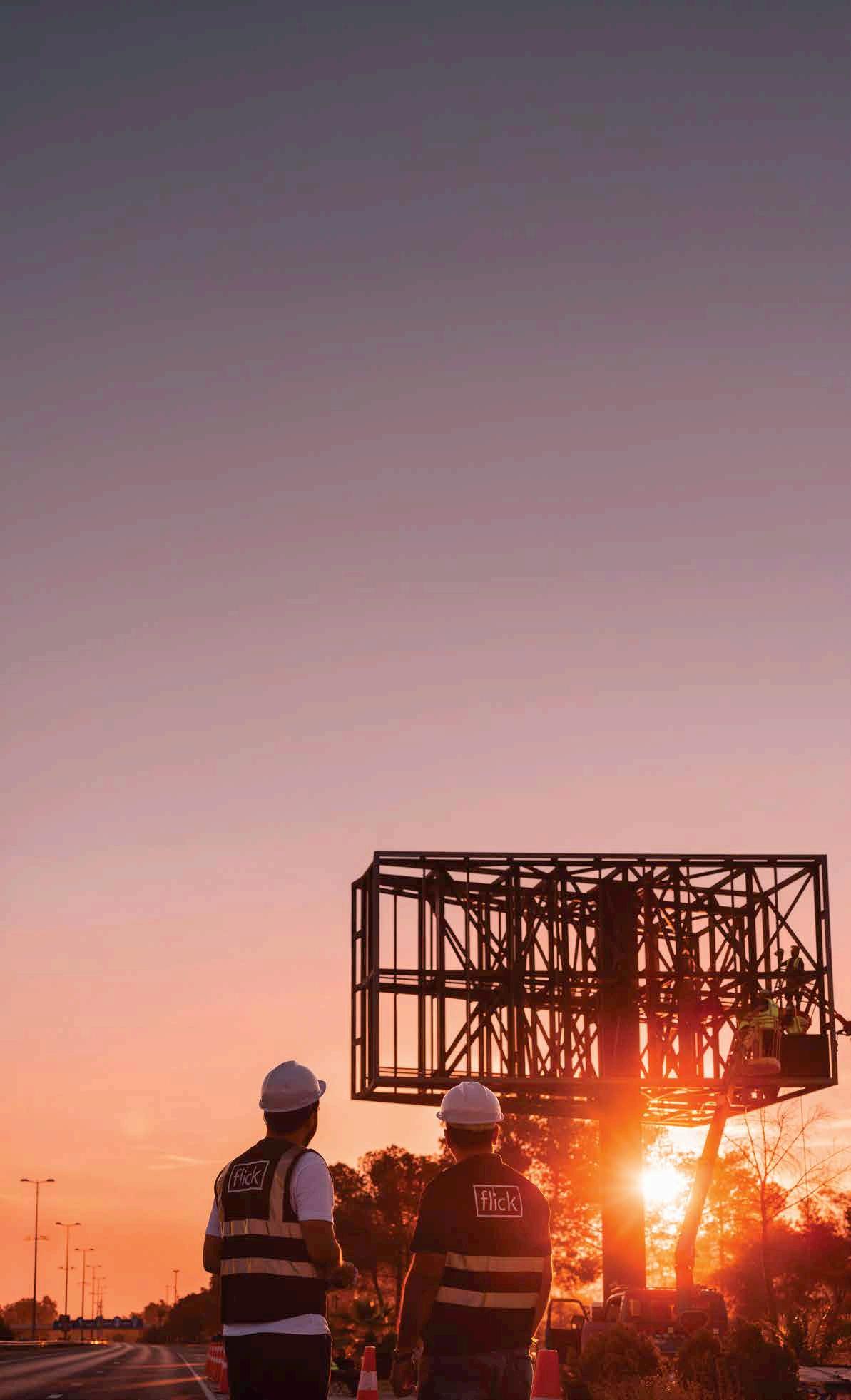
In Dubai, for example, bridge digitisation involves operating within live highway systems that cannot simply be paused or disrupted. Every installation requires coordination across multiple stakeholders, regulatory approvals, engineering assessments, operational planning, safety considerations, and long-term maintenance structures.
The challenge is not only in building the network, but in sustaining it consistently over time.
That is why the future leaders of OOH are likely to look less like traditional media sellers and more like infrastructure operators.
Once networks become connected systems rather than isolated placements, the focus naturally shifts from individual assets to how the network performs as a whole. Reliability, operational discipline and consistency become increasingly important.
A digital bridge network operating across one of the busiest cities in the region cannot function through short-term thinking alone.
It requires long-term planning horizons, institutional coordination and the ability to execute consistently inside environments where expectations are exceptionally high.
Technology is naturally part of that equation, but technology alone does not create long-term market positions.
Screens can be replaced.
But what cannot be replicated quickly is the operational ecosystem behind each of them: relationships with authorities, understanding of city infrastructure, engineering expertise, maintenance capability and the trust required to operate at scale.
These advantages are built over years.
That is particularly true in cities like Dubai, where infrastructure standards are high and urban development moves at remarkable speed. As OOH becomes more integrated into broader smart-city environments, the gap between operators who simply own inventory and those who understand infrastructure systems will become increasingly visible.
At the same time, expectations from brands are changing. Increasingly, brands are looking for networks that can perform more intelligently across audience movement, frequency, flexibility, and measurable outcomes. The expectation today is not simply visibility, but greater accountability and a clearer understanding of how networks contribute to campaign performance.
Across the industry, there is growing recognition that the future of OOH will be shaped as much by infrastructure and operational capability as by media itself.
That shift changes the role of the operator.
Building for that future requires more than media sales capability. It requires infrastructure thinking from the beginning.
The operators most likely to succeed in this next phase will not necessarily be those with the most inventory, but those with the experience, operational discipline and long-term relationships needed to build and manage networks effectively over time.
Today, as the industry moves toward more connected, measurable and accountable OOH systems, those foundations matter more than ever.
The next era of outdoor advertising will not simply be defined by digitisation alone. It will be defined by the operators capable of building and managing infrastructure systems at city scale.
And that requires a very different way of thinking about what OOH actually is.
By Hiba Momani, Managing Director, Hills Advertising
There was a time when gaming was easy to categorise. It was classified under entertainment and often spoken about in the same breath as leisure, youth culture and screen time.
That definition no longer reflects what is happening across the GCC region. Today, gaming is not only something audiences consume; it is where they socialise, create, compete, follow personalities, build communities and, increasingly, shape culture in real time.
This shift matters because the regional conversation around gaming has matured. We are witnessing the emergence of a creative and cultural ecosystem that sits at the intersection of content, community, technology and brand growth.
GAMING IS SO MUCH MORE THAN JUST A CATEGORY
Across the GCC, gaming has become embedded in how people communicate, create and build communities online. Its influence is now visible in everyday digital behaviour and how audiences engage across platforms.
Across Saudi Arabia and the UAE in particular, gaming is being treated with far more strategic intent. Saudi Arabia’s National Gaming and Esports Strategy places the sector within the Kingdom’s broader diversification agenda, with ambitions linked to GDP contribution, job creation and talent development. Dubai’s gaming programme is also focused on building an ecosystem around talent, content and technology, with the aim of positioning the emirate as one of the world’s leading gaming hubs.
This reflects a broader shift in how culture is formed. What once sat at the edge of entertainment now operates as part of a participatory ecosystem where interaction itself is the medium.
HOW THE GCC IS FUELLING THIS SHIFT
The GCC is not following global gaming trends; it is catalysing them. Three key drivers are accelerating gaming trends in the region:
Demographics: a young and highly digital-native population where gaming is embedded early in everyday life.
Infrastructure: strong connectivity, mobile penetration and widespread access to devices that enable seamless participation across platforms.
Strategy: both Saudi Arabia and the UAE have integrated gaming and esports into broader national visions focused on cultural and economic diversification.
Saudi Arabia’s Vision 2030 positions gaming within long-term creative
BRAND FOCUS
GAMING IS MORE THAN PLAY
Sony MEA’s Murat Gebeceli shares why the real opportunity for the industry lies in understanding how gaming communities are forming, what they value and how they are shaping culture in real time.
economy development, while the UAE continues to build digital ecosystems that support media, innovation and content creation.
Together, these forces are making gaming a central part of the region’s cultural evolution. The opportunity is no longer limited to building a larger gaming market. It is about creating an ecosystem where players, creators, communities, publishers, platforms and brands all contribute to a wider creative economy.
FROM CONSUMPTION TO PARTICIPATION
Players are no longer passive audiences. A single gaming session can become a livestream, a short-form clip, a community discussion, a meme, a tutorial or a competitive moment watched by thousands.
reactions, commentary, humour, skill and shared context.
SHIFTING THE BRAND APPROACH
For marketers and communicators, this requires a more considered approach. Gaming cannot be treated as just another media channel; nor can it be approached only through sponsorships, logo placement or one-off activations. Gaming communities are highly aware of intent. They can quickly recognise when a brand is trying to enter a space without understanding its language, behaviour or values.
For technology brands, visibility in gaming must come from being useful to the experience, not simply present around it. In competitive environments, products are judged by how they support focus, communication and performance. This means brand growth in gaming can come from being part of the player experience in a credible way, while also giving audiences a clearer understanding of how technology supports competitive play.
Relevance in gaming is built through participation, consistency and trust. The brands that succeed in this space will be the ones that understand how communities gather, what they value and how influence is earned over time.
The fine line between player, creator and viewer has blurred. Someone may start as a fan, become a content creator, then grow into a community voice with influence far beyond the game itself. This is why gaming is often one of the first entry points into content creation. It feels immediate, social and participatory. A player does not need to wait for a production brief or a studio setup to create something. The content is already happening in the moment, shaped by
“WHAT MAKES GAMING POWERFUL IS HOW IT IS USED TO CREATE STORIES, BUILD COMMUNITIES, HOST COMPETITIONS, EXPRESS IDENTITY AND DEVELOP NEW FORMS OF INFLUENCE.”
BUILDING AND EMPOWERING THE COMMUNITY
What makes gaming powerful is how it is used to create stories, build communities, host competitions, express identity and develop new forms of influence. In the GCC, this is especially compelling because gaming is developing alongside broader investments in media, entertainment, digital content and youthled creativity.
The next phase of gaming in the region will not be defined by growth alone; growth within gaming is already visible. The more interesting question is how deeply gaming becomes embedded in the GCC’s creative and cultural economy.
If current momentum continues, gaming will sit alongside film, music, sport and digital media as one of the region’s key cultural spaces. It will produce new creators, new communities, new careers and new ways for audiences to participate in culture rather than simply watching it.
The real opportunity for the industry lies in understanding how gaming communities are forming, what they value and how they are shaping culture in real time. Across the GCC, gaming is becoming one of the spaces where creativity, influence and community are being built with intent.
By Murat Gebeceli, Marketing Director, Sony Middle East and Africa
Somewhere in the gap between what brands say and what communities actually feel, the future of sports marketing in this region is being decided. The brands paying attention to people know that the old model is no longer enough.
The traditional playbook made sense at a time when brands just needed to secure the sponsorship, attach the logo and amplify the reach. Visibility was currency and proximity to sport was a reliable way to earn it. But there is a ceiling to that logic, and we have reached it. The reason is not that people in the region care less about sport; it is that they care about it in a fundamentally different way.
According to the 2024 Edelman Trust Barometer, 84 per cent of people say that they need to resonate with the values of a brand before they use it. That number does not soften when we move to younger audiences. In fact, it sharpens. Generation Z increasingly perceives brand affiliation as a direct reflection of personal identity and values, prioritising trust, ethical alignment and authenticity in its consumer relationships. They know when a brand belongs in their world and when it is merely passing through. That shift in perception and pressure has become one of the most valuable things to happen to sports marketing in years. It is pushing brands to be more thoughtful, creative and genuinely connected to their audiences.
WHY CULTURE OUTLASTS SPONSORSHIP
Successful sports marketing initiatives in the region are shifting from sponsorship to stakeholder engagement. The distinction matters enormously. A sponsor may ask what a platform can do for a brand, but a stakeholder asks what a brand can do for a community. One is transactional, while the other is more generational.
The reason this shift is accelerating in the Middle East specifically is that sport has become inseparable from identity. Across the region, creativity is becoming attuned to national identity, shared values and cultural nuance. Young audiences are no longer passive fans watching from the sidelines; they are active participants in a broader conversation about who they are, what their cities are becoming and how they want to be seen. This is where football intersects with streetwear, running is rooted in community, and sport becomes a lifestyle entry point rather than simply a category.
WHAT SPORTS MARKETING LOOKS LIKE IN PRACTICE
Tapping into culture is not a marketing decision; it is a decision to listen. That means brands must show up before they have anything to sell.
When we first encountered LFG Dubai, a homegrown fitness and social club built around weekly runs at Kite Beach and boot camps in Al Quoz, the instinct might have been to brief them, shape their story and fit it into ours. We did the opposite. LFG had already built something real by uniting a diverse mix of students, professionals and creatives through fitness, culture and shared growth. That community existed entirely on its own terms, long before any brand entered the picture. Our job was simply to understand it well enough to add something genuine to it, not to redirect it.
That distinction is where brand relevance is built – not through visibility but through value. The communities that matter most in this region are not looking for brands to lead them. They are looking for partners who understand what they have already built and are willing to contribute to it honestly. When a brand earns that position, it does not need to announce it. The community does that work instead.
The broader implication is this: relevance in the region is not assigned by budget or reach. It is granted by people who decide – often quietly and without ceremony – that a brand belongs in their world. Getting there requires patience, genuine curiosity about culture and the discipline to resist the urge to make everything about the product.
THE STANDARD HAS CHANGED
Audiences increasingly seek authenticity, and brands today are judged not only by what they say, but by how they act and connect with people’s real values and aspirations.
The brands that will matter over the next decade are the ones building genuine relationships with local creatives, athletes and communities right now –not as vehicles for messaging but as collaborators in a shared story.
Sport gives us an extraordinary platform. What we choose to say through it and, far more importantly, why we say it is where the real work begins.
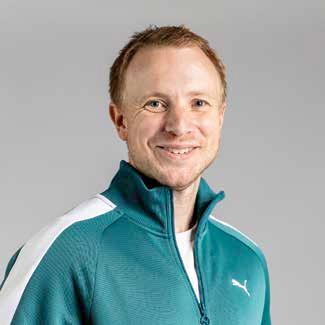
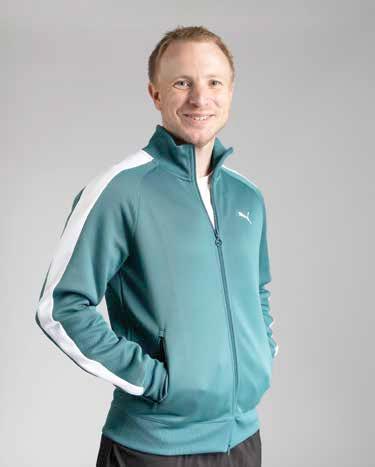
By Jonathan Bannister, Head of Marketing, PUMA Middle East
BRAND FOCUS
CULTURE-LED SPORTS MARKETING
PUMA’s Jonathan Bannister explains the need for brands to build genuine relationships with local creatives, athletes and communities – not as vehicles for messaging, but as collaborators in a shared story.
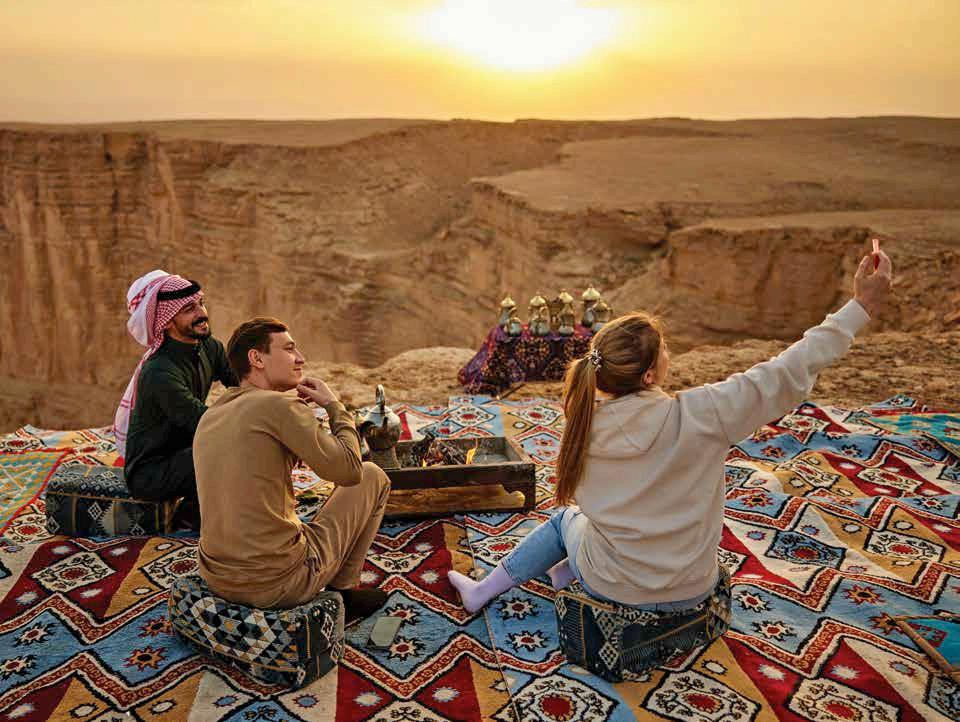
SHARE THE SOUL, NOT ONLY THE SKYLINE
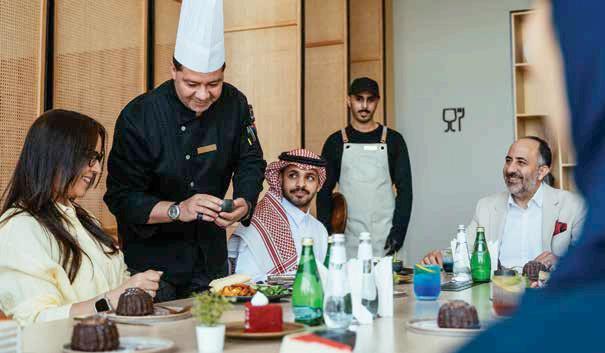
Destination marketers and agency leaders call for the industry to shift from surface to substance, from attention to affection, from promises to on-ground proof, and from an obsession with footfall to consumer loyalty and advocacy that stand the test of time.
By Anup Oommen
For years, destination marketers in the Middle East built a relatively clear brief: break stereotypical tropes about the region; highlight the beauty of each place and people group; make each holiday destination instantly recognisable; and increase each getaway’s global share of voice by recommending unexplored experiences in a world of crowded tourist traps.
This meant narrating the stories of unmapped sanctuaries, correcting centuries-old assumptions, explaining unfamiliar propositions and ensuring that the end experiences matched the promises made.
Fast-forward to the present. Awareness and credibility have been achieved. The world is watching – and paying close attention. But is that enough?
The region’s destination marketing challenge is not a lack of stories, but what happens after the ad reaches its crescendo. Does the message leave its mark and guide
people down a path to a beautiful experience and an unforgettable memory? Or does it merely join the chorus of destinations, districts and developments claiming history, heritage and hospitality – without anything to tell them apart?
Much like wallpaper in an old home, what was once vivacious now feels vanilla, and what was once distinctive now feels dreary.
The harder task now is not simply to be seen, but to be understood, chosen, trusted, revisited and recommended.
The region already has excellent events and experiences, exclusivity and ease, as well as creative communities, culinary delights and unique cultural offerings.
What it often lacks is orchestration: knowing which story belongs to which audience, which voice should carry it, which moments matter most at what point of the year, and which measure of success truly reflects outcomes achieved for brands, businesses and society.
Campaign Middle East speaks to marketers and agency leaders – all of whom agree that the next era will favour destinations that behave less like advertisers and more like hosts, editors, experience designers and long-term custodians.
The marketing campaign may light the spark, but the visit, each service moment, the memories made and the organic recommendations received will keep the fire burning.
Contributing to this conversation are:
- Khaled AlShehhi, Executive Director of the Marketing and Communication Sector at the UAE Government Media Office;
- Saleh AlBreiki, Director of the Corporate Communication and Marketing Department at the Dubai Culture and Arts Authority;
- Naif Awlia, Senior Director for Tourism and Engagement at Diriyah Company;
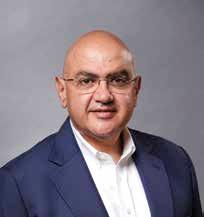
- Sholto Douglas-Home, Chief MarComms and Sales Officer at Expo City Dubai;
- Donna Glasper, EVP – Brand, Marketing and Customer Experience at Shamal Holding;
- Lizelle Fitoussi, Marketing Director at Merex Investment;
- Lara Arbid, Chief Executive Officer at Initiative MENAT and Magna MENA;
- Deepak Mankani, Head of Strategy at Merkle MENA;
- Yasser Kaskas, Strategy Director for KSA at WPP Media MENA; and
- Palak Mehta, Communications Director at HAVAS Red Middle East
THE PROOF IS IN THE PUDDING
The region’s destination brands often begin with the same broad ingredients: heritage, hospitality, luxury, safety, convenience, culture and experiences. All of these elements are individually rich in flavour and make for delectable marketing recipes.
The problem lies in the fact that these are commonly available. When everyone starts sharing the same menu, differentiation lies in the perfected preparation, the plating and the personalisation to the palate.
That proof is rarely found in slogans. It is found in the specific, tangible details that make one place impossible to confuse with another. In a market full of polished claims, credibility blooms from on-the-ground evidence.
Saleh AlBreiki, Director of the Corporate Communication and Marketing Department at the Dubai Culture and Arts Authority, says, “When every destination in the region claims heritage, luxury and hospitality, audiences stop hearing the difference. What sets a place apart is the truth that sits underneath: a restored historic quarter where coral-stone walls still hold the shape of the original wind-tower houses; a museum built around the actual room where a federation was signed; working studios where visitors meet the artists mid-practice; or public art
destinations building something genuinely distinct have moved past category descriptors and started thinking about identity.”
emerging from tunnel walls already woven into daily routes. Positioning becomes credible when the evidence is already in place.”
Lara Arbid, Chief Executive Officer at Initiative MENAT and Magna MENA, adds, “When every destination claims the same credentials, competitive advantage is no longer found in what you possess, but in how you define it. Multiple destinations can claim premium hospitality, yet its meaning might be fundamentally different depending on where you stand. One expresses it as intimate, personalised access; another as seamless anticipatory service; a third as cultural warmth and generational storytelling.”
She adds, “There’s a real difference between saying, ‘we offer heritage’ and ‘we preserve heritage as a living practice’. One is an attribute, the other is an identity. The differentiation isn’t what you own, it’s what you stand for and how it is delivered in practice to the audiences experiencing it.”
If the old work of destination marketing was to broadcast a position, the new work is to design the experience that makes that position believable. A tagline can raise an eyebrow, but an identity constructed on organic recommendations and positive experiences gets bags packed and feet moving.
Deepak Mankani, Head of Strategy at Merkle MENA, says, “The shift we are seeing among more progressive destination clients is from broadcast positioning to experience-led identity, where data, personalisation and journey design do the strategic heavy lifting that a tagline never could. Real differentiation now lives in the customer experience layer: how a destination makes a visitor feel at every touchpoint, right from the first search query.”
Every destination needs to understand its own centre of gravity and its place in the larger ecosystem before it can communicate with confidence. That applies across UNESCO World Heritage Sites, must-see national hotspots, everyday city infrastructure and individual event venues. Each complements the other.
In the absence of that understanding, destinations risk sounding like neighbouring shopkeepers shouting the same invitation across the street.
Sholto Douglas-Home, Chief MarComms and Sales Officer at Expo City Dubai, says, “Destination marketing covers a broad spectrum, from entire nations and cities to individual venues and attractions. As many of these brands compete in the same markets, it’s inevitable that the landscape becomes diluted with similar messaging and imagery. Take the GCC for example. While many of the nations share similar pillars such as cultural heritage and family holiday appeal, each has unique attributes. From rugged coastlines to impressive skylines, the key to a differentiated strategic positioning lies in going beneath the surface, identifying a deep sense of what each nation represents, and then conveying that as its North Star.”
In mature tourism ecosystems, places can strengthen each other by giving visitors more reasons to extend a journey.
The competitive question becomes less about who has greater heritage or offers better hospitality, and becomes more about how visitors encounter each place – and whether that compounds their curiosity to explore and experience the region further.
what kind of life it makes possible. The
Taking this notion a step further, Palak Mehta, Communications Director at HAVAS Red Middle East, adds, “The problem is not that destinations share the same pillars; the problem is that nobody is asking the harder question underneath them. Luxury, safety and world-class experiences tell you what a place has, but they do not tell you who it is for or what kind of life it makes possible. The
Naif Awlia, Senior Director for Tourism and Engagement at Diriyah Company, says, “Tourism growth across Saudi Arabia and the wider region is creating a richer and more diverse proposition for visitors. Rather than competing, destinations are becoming complementary, offering distinct experiences that encourage visitors to explore multiple locations. Differentiation is no longer achieved through heritage or luxury alone, but through authenticity and curating how people move through and experience spaces.”
Ghassan Kassabji, CEO, IMPACT BBDO Dubai and Chief Growth Officer MENA, IMPACT BBDO Group, adds, “The work is not to invent more difference but to connect the roles that already exist, because travellers build multi-stop journeys and a region that coordinates keeps them longer. The same holds inside a city, whether a waterfront, a
Khaled AlShehhi
Saleh AlBreiki
Yasser Kaskas
cultural quarter or an island. Each should own one role and refuse the rest. Decide what you are, stay with it long enough to mean it, and deliver it every time. In the end, positioning is what people say after they leave.”
CULTURE WORKS BEST WHEN IT IS NOT STAGED FOR EXPORT
Cultural storytelling remains one of the region’s strongest advantages, but it is also one that must be treated with utmost care. The line between invitation and performance can be thin.
Global audiences – particularly experienced travellers – can sense when culture has been curated for them rather than shared with them. Visitors who are looking to invest, reside in and build a family in a new nation have developed a keen sense of when they are being entertained under the guise of culture as part of a commercial transaction, and when they are genuinely being invited to live within culture and be a part of it.
This is where local voices matter. Writers, artists, craftspeople, residents, chefs, guides and other creators and artisans are not decorative additions to a campaign. They are often the story’s most credible carriers.
AlBreiki says, “The strongest cultural narratives come from inside the culture itself. That means commissioning local writers and artists to shape the story, building programmes around living practitioners, and letting language, food and ritual speak for themselves. International audiences increasingly recognise the difference between a destination performing its culture for export and one inviting visitors into something genuine.”
Awlia makes a similar point from his time at Diriyah. For him, the most effective destination stories do not begin in a boardroom. They begin in the place and with the people who keep a memory alive. He says, “Authenticity is the foundation of any successful destination story. Destinations must build cultural identities that are true to their roots and reflect what makes them unique.”
Awlia adds, “While there is much to learn from others, the most compelling stories emerge naturally from a destination’s own history, culture and people. Community participation is essential, ensuring culture remains a living part of the destination rather than something created solely for visitors.”
The challenge is not only to tell a true story that reveals the heart of a homeland, but to translate it intelligently for different audiences without flattening it.
Visitors from India, the GCC, Europe or East Asia may respond to different emotional cues. The underlying truth should stay intact, but the doorway into it may change.
Arbid says, “International audiences don’t want a generic invitation to experience a culture; they want to know what is singular about a place and authentic to its people. What works is owning a specific, consistent expression of your cultural pillars.”
This is not just a notion that reads well on paper; leading destinations are already beginning to put it into practice. Jordan Tourism positions culture and modernity in deliberate conversation – neither ancient nor contemporary, but both simultaneously. Miral Destinations also builds audience-specific campaigns around what genuinely moves Indian visitors versus GCC or international audiences.
These aren’t manufactured narratives; they reflect the lived reality of a place and connect that truth to what moves each audience emotionally.
Arbid adds, “When that alignment lands, something shifts. Visitors become advocates. A heritage enthusiast, an adventure seeker and a luxury traveller all value the same pillars, but destinations that speak to each through the right lens win loyalty, not just footfall.”
However, this requires more than a campaign idea. It requires an operating model that lets community insight, audience understanding and content planning work together. In other words, authenticity is not a tone applied at the end; it is a discipline built into the process.
“WHILE THERE IS MUCH TO LEARN FROM OTHERS, THE MOST COMPELLING STORIES EMERGE FROM A DESTINATION’S OWN HISTORY, CULTURE AND PEOPLE.”
Mankani explains, “The strongest destination narratives we see are built from the inside out, rooted in genuine community voices and lived experiences before being translated for global audiences. Three pillars stand out: co-creation with local storytellers rather than importing a creative framework from outside; audience segmentation sophisticated enough to deliver culturally resonant versions of the same story to different markets; and a willingness to accept complexity rather than flatten it.”
Kassabji adds, “Communities are not an audience to win over. They contribute to the nation brand, more than any campaign can, because they are the ones living it every day. Think about what happened recently: when the region grew tense, many expats in the UAE did not wait to be asked; they stood up and defended the country on their own. That loyalty was earned, and it came from years of how the place had treated them.”
Saudi Arabia also offers a useful example of this duality: a country moving quickly while trying to protect what gives it depth. The most
resonant stories are not only those of large developments, but also of people, practices and places that connect change to continuity.
Yasser Kaskas, Strategy Director for KSA at WPP Media MENA, says, “Saudi Arabia’s extraordinary societal transformation presents a unique narrative opportunity. While citizens embrace the exciting changes taking place across the Kingdom, they are equally passionate about preserving their rich heritage. The most resonant Saudi stories, therefore, extend beyond giga-projects. They are found in the stories narrated by a grandmother in Al Ahsa who practises traditional crafts, the young chef reviving forgotten recipes, and the coffee farmers of Jazan who have cultivated the land for generations.”
Kaskas adds, “Authentic destination branding must celebrate both realities, the boldly new and the authentically rooted. This duality is what creates a compelling, unique identity.”
THE LOCAL VOICE IS NOT AN ADD-ON
Sure, the official destination brand film still matters. So does the campaign, the launch, the media plan and the carefully built brand platform.
But none of these exists in isolation any more. A traveller sees the campaign, then a TikTok posted by a resident, then a hotel review, then a creator’s itinerary, and then listens to a friend’s voice note. Each of these touchpoints influences the final decision to arrive at a destination.
This means that marketers must let go of the assumption that they control the entire end-to-end narrative, and they must stop attributing conversion and footfall to the final click-to-purchase. Energy is better spent trying to create conditions in which the story people tell naturally supports the story the destination hopes to build.
Khaled AlShehhi, Executive Director of the Marketing and Communication Sector, UAE Government Media Office, says, “The viewpoints of local communities are no longer
foundation. The audience now consumes the official narrative and the resident’s experience and the visitor’s review and the creator’s content as one feed. A destination cannot control the conversation, but it can shape the conditions that produce it. The destinations that try to over-control the narrative lose credibility. The destinations that abandon the narrative lose coherence. The serious work is in the middle.”
For cultural destinations, the strongest advocacy often comes from people who are not speaking from a script. Residents, artists and
Naif Awlia
Sholto Douglas-Home
returning visitors can carry the brand with far more texture than a campaign line, provided marketers trust the organic feedback to contribute to the destination’s growth.
AlBreiki says, “Local voices are what give a destination brand its credibility. A campaign can shape perception for a short while, but the way residents speak about where they live and the way visitors describe what they actually found is what stays with audiences for years.”
The resident’s role is especially important in the Middle East, where so many cities are shaped by people who arrived, stayed, built businesses, raised families and created a life. Their choice to remain is a powerful signal in itself.
Mehta says, “The most underused voice in destination communications is the person who chose to stay. Not the tourist passing through, but the resident who had options and picked here anyway, who built a life here, who recommends it without being prompted. That person represents something no communications budget can manufacture.”
Kassabji adds, “The controlled narrative is finished. You no longer own the story; visitors and creators tell it now, and they are believed more than you are. So, instead of scripting them, deliver the experience and let them talk. The story people tell is the return on a promise kept.”
WHERE DOES THE PROMISE FALL SHORT?
A destination brand is not judged only by its campaign; nor is it judged by the excellence of experiences and services at the destination alone.
It is often judged by every single touchpoint from the moment a flight lands at the destination airport: from the queue at immigration to getting a local eSIM, booking a taxi ride, being courteously welcomed at the hotel, having a seamless check-in experience, having the family’s needs attended to, experiencing a clean and hygienic walkthrough – from the lifts to the public toilets – and having a positive restaurant interaction. Every step matters. A brand promise can be made in a film, but it is kept or broken in operations. In a mature destination ecosystem, that alignment cannot be left to chance. It needs concerted coordination between national bodies, city authorities, operators, developers, hotels, cultural institutions and frontline teams. Everyone is playing a part in the same orchestra, and it’s time to learn the score.
Douglas-Home says, “The biggest gap lies in operational consistency, and resolving this requires strong alignment between a
destination’s national vision and those tasked with executing it. In Dubai, the Department of Economy and Tourism (DET) works closely with its stakeholders through various channels. DET’s twiceyearly City Briefing acts as a critical forum to communicate the city’s vision and positioning with hotels, operators and retail leaders – as well as destinations like Expo City – ensuring everyone’s contribution supports the growth of Dubai’s brand.”
This is where many destination brands are also most vulnerable internally. Marketing can create desire, but if marketers work in silos and are not aligned with product, finance, sales, support and operational teams and systems, the brand promise falls short.
AlShehhi explains, “The biggest gap is often between the ambition of the communication and the operational consistency on the ground. The communication only works if the entire operating system behind it delivers. Bridging the gap requires destinations to treat brand work and operational excellence as one continuous discipline. The message and the experience must be designed together, not handed off between separate departments.”
Donna Glasper, EVP – Brand, Marketing and Customer Experience, Shamal Holding, points to the same issue during the transition from expectation to experience. The campaign may bring people in, but the practical moments determine whether the brand feels true.
wayfinding, the person who greets you, those moments either confirm the brand or quietly contradict it.”
She adds, “At Shamal Holding, my remit deliberately spans marketing and customer experience because you cannot separate them. Building places such as Dubai Harbour, means every physical decision – from how accessible the marina is to how retail sits alongside residential – is a brand decision.”
The same logic applies to the connection between the digital and physical journey.
If the inspiration is beautiful but the digital booking is clumsy; if the visit is warm but the follow-up is absent; or if the campaign builds excitement by promising a path to discovery but the experience falls flat, the brand begins to leak value.
Mankani says, “The real gap sits between the aspirational creative and the actual
customer journey. Destination brands invest heavily in top-of-funnel storytelling but far less in the connected experience architecture that should follow.”
He adds, “When a visitor moves from a beautifully produced campaign into a fragmented booking process, inconsistent on-ground service and post-visit silence, the brand promise collapses.”
And for every broken promise, there are serious brand consequences.
Awlia says, “Today’s travellers are highly informed, and expectations are higher than ever. If there is a disconnect between what people see online and what they experience on the ground, it quickly becomes apparent through reviews, social media and word of mouth. Bridging that gap requires alignment between the destination brand and the visitor experience.”
someone actually arrives. The parking, the
Glasper says, “The gap isn’t in the content; it’s in the handover. Destinations invest heavily in building desire through social media and polished campaigns, then underinvest in what happens when someone actually arrives. The parking, the
There is also a more basic discipline here: do not claim what the place cannot yet deliver. Overpromising may create short-term interest, but it can damage trust once visitors arrive.
AlBreiki says, “The gap tends to sit between what destination brands promise in tone and what visitors find in substance. Campaigns tend to lean heavily on words such as authentic, immersive and rooted, while the visitor often arrives to find a polished, retail-heavy version of the same idea.”
He adds, “Bridging this requires marketing teams to stop reaching for language the destination cannot fully deliver on, and instead build campaigns from what is genuinely available.”
Donna Glasper
Palak Mehta
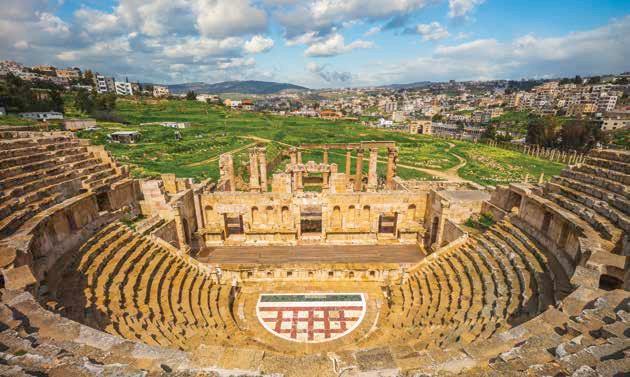
Jordan Tourism positions culture and modernity in deliberate conversation – neither ancient nor contemporary, but both simultaneously.
MEASURING WHAT LASTS, NOT ONLY WHAT SPIKES
Destination marketing has become very good at measuring what’s visible: footfall, occupancy, reach, engagement, video views and event attendance. While these numbers matter, they are often the easiest part of the story to measure and not the most important part of the customer journey that needs to be understood.
The bigger questions are these: Is the brand compounding? Are visitors staying longer? Are they returning? Are they spending beyond the obvious districts? Are they recommending the place without being asked? Are investors, talent, institutions and communities changing how they perceive and unintentionally promote a destination in their daily lives?
AlShehhi says, “The honest answer is that our discipline has been measuring activity rather than outcome. Footfall, occupancy and engagement count what happened during a window. The real measures of success that matter are different. We need to focus on repeat-visit rate, average length of stay growing year-on-year, and spend per visitor and dispersion beyond the capital. We must look at talent choosing to relocate to the destination. We must understand investor sentiment held under stress. We must track movement on global perception indices that institutional capital reads and acts on.”
Glasper adds, “The metrics most marketers reach for only tell you whether people showed up. They don’t tell you whether you changed how someone feels about a place, or whether they’ll advocate for it, invest in it, choose to live near it. The metrics I care about are advocacy and affinity: what percentage of visitors recommend without being asked, and how perception shifts over a 12- to 18-month period.”
AlBreiki takes an even longer view. The real test of cultural positioning, he says, may only be visible after the campaign has moved on and the market begins to treat the destination differently.
“REAL MEASUREMENT TRACKS PERCEPTION: HOW DO PEOPLE DEFINE THIS DESTINATION? WOULD THEY RETURN? ARE THEY ADVOCATING FOR IT?”
He says, “The most telling signs of a job well done only tend to become visible years after the work has been put in. It might be that foreign capital begins flowing into cultural and creative sectors rather than only into real estate. International institutions may start programming exhibitions and residencies in partnership with local ones, treating the destination as a peer rather than a venue for hire.”
Mehta adds, “The measurement frameworks most destinations use were built for campaigns, not brand-building, and the two operate on completely different timescales. A campaign can be measured in weeks. A brand takes years. The industry has been slow to push back on this, which means genuinely important work gets judged by the wrong tools.”
This means marketers must now pause and reflect. They need to make a stronger case to their chief financial officers and chief commercial officers that trust, reputation and consideration are slow assets.
These assets do not always move neatly within quarterly financial cycles, but they influence whether a destination becomes a one-time curiosity or a place people revisit, invest in, work from or advocate for.
Douglas-Home also points to the importance of deeper tracking and independent validation. A destination cannot rely only on what it says about itself; it must also look at how others are beginning to recognise it.
He says, “To get a true success measure of nation branding, short-term metrics must be supplemented by sophisticated tracking tools and on-the-ground feedback, including in-depth visitor satisfaction indexes and rigorous exit surveys – offering a stronger indicator of long-term trends. Earned, third-party recognition and endorsement are also significant indicators of success.”
This also means that commercial results and emotional connection should not be treated as separate worlds. Visitors who return, recommend, spend, invest or choose to live nearby are not just conversions; they are evidence that the destination has entered memory.
Awlia adds, “Destination marketing and nation branding are long-term investments in perception, reputation and trust, and their impact often takes years to fully materialise. Beyond visitor numbers and social media metrics, success should be measured by perception shifts over time. Are more people considering the destination, returning more frequently, recommending it to others, and even choosing to invest, do business or live and work there?”
There is also a strategic danger in celebrating volume without understanding motivation. A destination can grow quickly while weakening the reasons people choose it.
Arbid explains, “Footfall and occupancy tell you what happened last quarter; they don’t tell you what will happen next year, or what needs to change to sustain demand five years from now. Growth today can mask future erosion if you’re not measuring the right things. Real measurement tracks perception: how do people define this destination? Are they choosing it for the reasons you intended? Would they return? Are they advocating to others?”
Lizelle Fitoussi, Marketing Director, Merex Investment, wraps up this section of the conversation by saying, “The true measure of destination marketing lies in building long-term perception, preference and advocacy. Traditional metrics capture immediate performance but rarely reflect the full impact of brand-building, which takes years to influence behaviour. The destinations that succeed will measure not only how many people visit, but how people feel about destinations such as The Beach JBR, City Walk and J1 Beach: how often they return, how likely they are to recommend, and whether they attract future investment from new brands.”
If the last decade was about visibility, the next phase will be about authorship, depth, delivery and return. The region has earned attention. Now it must decide what that attention must become. from or advocate for.
LOOKING AHEAD: FROM BEING SEEN TO BEING CHOSEN
Deepak Mankani
Awlia says, “In the Kingdom, the focus is increasingly on delivery, visitor experience and bringing ambitious plans to life.”
Some leaders frame the next stage as control over meaning – not control in the outdated sense of silencing other voices, but control in the sense of consistently maintaining the discipline it takes to define a destination clearly enough that others do not malign it.
AlShehhi says, “The next phase is narrative sovereignty. The last decade was about being seen. The next decade is about owning how the destination is described, not only in traditional media, but in AI systems, in international policy conversations and in the rooms the destination is not in. The destinations that win the next five years will be the ones that understand that their narrative is now a strategic asset, treated with the same seriousness as their infrastructure investments.”
AlBreiki adds, “The next phase is less about getting noticed and more about giving people a reason to come back. The region has done the hard work of putting itself on the map. What comes next is making sure that a visitor who came once for an exhibition or a Formula 1 weekend finds enough waiting for them to plan a second trip, and a third.”
Here’s the lesson for destination developers: the next move is not an attempt to simply attract or acquire new customers; it is to focus so thoroughly on customer experience and retention, and on building a sense of belonging, that those who have not visited yet will feel like they are missing out without the destination having to prove its point.
Places need to become more than backdrops for visits. They need to create communities that organically communicate their core offerings through lived experiences shared with the world.
Fitoussi explains, “The next era of destination marketing in the Middle East is not only about getting people to visit; it’s about getting them to belong. Dubai has already won the awareness game. The challenge now is building emotional connection, loyalty and advocacy. The strongest destinations will act less like attractions and more like communities, measured not just by footfall, but by repeat visits and participation.”
Glasper connects this directly to long-term urban and national ambition. The destination cannot be designed only around movement and transaction; it must make room for life.
She says, “The shift we need is from destinations that attract to destinations where people choose to stay, return and root themselves. That happens when a place is designed around life, not logistics; when culture, community, movement and
experience feel seamlessly connected rather than assembled.”
To make this a reality, Kassabji shares the need for destination marketing to implement two distinct approaches simultaneously: one for the immediate moment and one for the future. In the short term, brands should focus on the travellers who are still active and maintain relationships until demand improves. In the longer term, success will depend on whether the destination has real depth behind its marketing, especially as AI begins to influence travel choices.
Kassabji explains, “The near term is about reaching the people who are still listening. The long term is about being worth reaching. The near term is tactical. When global demand turns cautious, you stop broadcasting to everyone and focus on the audiences still moving: the domestic and resident market, and the source markets where demand holds. You keep those relationships warm and stay ready for the rebound, because it always comes.”
He adds, “The longer term is structural and driven by AI. People no longer browse; they ask a machine where to go, and it surfaces what is real and buries what is thin. Spectacle still works, but only when there is real substance beneath it. You can optimise to get recommended. You cannot optimise the experience once they arrive.”
Similarly, in Saudi Arabia, the next chapter is increasingly about making ambitious plans tangible. The promise has been introduced. The next question is whether visitors can feel it consistently on the ground.
Awlia says, “In the Kingdom, the focus is increasingly on delivery, visitor experience and bringing ambitious plans to life. For Diriyah, this includes the opening of our planned assets over the coming years, from hotels to museums, cultural venues, retail,
major test, an opportunity to create lasting impressions on visitors that will serve as a proving ground for Expo 2030 and the FIFA World Cup 2034.”
Mehta sums up the conversation well, bringing the focus back to emotional substance. She explains how a place can win awareness with spectacle, but it builds reputation through what lies beneath.
She concludes, “The region has earned its visibility; now it needs to earn something harder. When marketing consistently leads with the surface, it attracts people who come for the surface, and some leave having never found anything underneath. The cities and destinations here have far more depth and genuine community than their marketing tends to suggest. The places that figure out how to communicate their soul, not just their skyline, will build the kind of reputation that actually lasts.”
The parting messages from the marketers are clear: the next chapter of destination marketing in the Middle East will not be won by the loudest campaign, the most polished film or the biggest launch moment. The region has already earned visibility; what matters now is whether that visibility becomes trust, whether trust becomes return visits, and whether return visits become advocacy, investment and belonging.
A destination brand is no longer built only in the marketing department; it is built at immigration counters, hotel desks, cultural districts, restaurants, public spaces, booking platforms and in the stories people tell when they return home.
offices and residential offerings. The opportunity is also to embrace emerging trends such as slow travel, encouraging visitors to stay longer, explore on foot and engage more deeply with culture and heritage.”
Kaskas agrees that Saudi Arabia’s future destination story will be judged by experience, not ambition. Major events will not simply be global showcases; they will be tests of whether the country can convert attention into memory and return.
Kaskas says, “For years, the message was that the kingdom is open, ambitious and ready to be discovered. That message has landed. The next chapter is about delivering on that promise, consistently and at scale. The upcoming 2027 AFC Asian Cup is the first
The strongest destinations will be those that know themselves clearly and deliver that identity consistently. Heritage, hospitality, luxury and safety must be translated into lived experiences that feel specific, credible and emotionally true.
Local communities, residents, creators and visitors are not supporting characters in this story; they are the focal points that give the destination its voice. If the official narrative and the lived experience do not meet, the brand promise breaks.
The opportunity ahead is enormous, but it demands patience and discipline. The region must now move from surface to substance, from attention to affection and from first visits to long-term relationships. The campaign may open the door, but the soul of the place is what makes people return and speak about it with conviction. The skyline may attract the eye, but it is the human experience that builds the reputation that lasts.
Lizelle Fitoussi
Ghassan Kassabji
Lara Arbid
ALULA’S ADVOCACY-LED GUIDEBOOK FOR DESTINATION DEVELOPMENT
The Royal Commission for AlUla’s Phillip Jones unveils an integrated, forwardlooking marketing strategy that enriches AlUla’s natural and human assets.
Few have the privilege of building a destination ecosystem from scratch, particularly one as historically and ecologically rich as AlUla. Three decades of leading tourism from Dallas to Louisiana have polished my understanding of market dynamics. However, in AlUla, the rules of engagement differ.
Here, growth is governed by the guardrails of responsible tourism, where value – not volume – determines success. It is a place where more than 200,000 years of human heritage and natural legacy dictate how we build and promote our destination.
In an era of unprecedented information overload and an authenticity deficit aggravated by clickbait headlines and artificial intelligence (AI), attention and trust are increasingly scarce resources. This is particularly true for travel and tourism. Despite international arrivals to the Kingdom approaching pre-pandemic averages, indicating strong demand, the Instagram-versus-reality gap makes for many a wary traveller.
For a destination such as AlUla, nascent in the global tourism arena, the traditional playbook for destination marketing requires revision. To navigate uncharted territories, advocacy is taking the wheel.
The story of AlUla is neither difficult to tell nor sell. It is carved into its rocks and valleys. Hegra, an ancient Nabataean city and Saudi Arabia’s first UNESCO World Heritage Site, houses more than 110 well-preserved burial tombs. The labyrinthine streets of the AlUla Old Town, the ancient city of Dadan and the open-air library of Jabal Ikmah are monuments to human endeavour. As one of the largest archaeological digs in the world today, this story continues to write itself.
Our strategic imperative is to ensure its resonance. Advocacy is the most potent tool to build long-term destination awareness, credibility and trust. Our strategy unfolds along two interconnected pathways: creating an unparalleled on-ground experience that turns visitors into advocates and broadcasting the narrative internationally to convert awareness into intrigue.
Our destination research with 26,000 global respondents underscores that 71
per cent of consumers seek culturally immersive experiences when selecting travel destinations.
This is supported by Booking.com findings that nearly a third of Gen Zs and millennials actively seek experiences that involve interacting with local people or cultures. These insights reinforce the strategic value of communityled engagement and investing in partnerships and platforms that amplify AlUla’s abundant cultural offering.
Involving the people of AlUla to help craft, tell and uphold the story of this destination is central to our approach. This ranges from training residents to lead heritage tours as Rawis, or storytellers, to revitalising indigenous arts and craftsmanship through Madrasat Addeera, a dedicated creative institute. Visitors can buy artisan-made products at shops and hotels across the destination and participate in workshops throughout the year.
We’re also driving the integrated conservation of local ecosystems to fuel economic and tourism growth. AlUla’s natural oasis and dramatic sandstone landscapes are part of its appeal, as are the wildlife safaris, hikes and desert adventures curated to leverage this compelling natural asset. We’re also leveraging our certified dark skies to unlock emerging opportunities in astrotourism – now and into the future.
“ADVOCACY IS THE MOST POTENT TOOL TO BUILD LONG-TERM DESTINATION AWARENESS, CREDIBILITY AND TRUST.”
Having designated more than half of local land as nature reserves, we’re working towards an ambitious, long-term environmental regeneration, habitat restoration and rewilding effort that includes the reintroduction of critically endangered desert species – an effort bannered by the Arabian leopard.
Our future-focused tourism development strategy prioritises environmental regeneration as a core product to enhance visitor experiences and safeguard AlUla’s intrinsic qualities for generations. If the experiences on
the ground capture what makes AlUla captivating and distinct, visitors can become our most credible ambassadors. Regardless of how marketing evolves, little outperforms a trusted opinion.
This draws me to the second pathway: leveraging advocacy to establish destination credibility and authenticity beyond borders.
Establishing an international profile requires long-term partnership and relationship building. Soft diplomacy is, in many ways, the future of tourism resilience.
For AlUla, that has manifested through partnerships with UNESCO, the Smithsonian Institution, Centre Pompidou, Pompeii Archaeological Park and international museums across the globe – from China to Italy, France and the United States.
These institutions have provided us with reputable platforms to promote the conservation and regeneration work being done in AlUla across archaeology, culture and ecology. We curate exhibitions and seminars to contribute to global academic exchange and advancement across these three areas.
Cheetah Conservation Fund (CCF), which
We even partnered with global conservation organisations, such as Panthera, an NGO protecting big cats from extinction, and the Cheetah Conservation Fund (CCF), which share the vision of the Royal Commission for AlUla (RCU) for conservation.
These institutional collaborations elevate international advocacy and destination credibility, underscoring why partnerships are vital tourism differentiators. Through these efforts, we’re creating an integrated, forward-looking marketing strategy that also enriches AlUla’s natural and human assets and supports long-term economic growth. This advocacy-led approach is less about self-promotion and more about cultivating a deep connection between destination and visitor. It’s about creating resilient, resonant reputations. If there’s one takeaway, it’s that long-term success is earned. Ultimately, we’re not selling a single holiday. We’re inviting the world to participate in a story of regeneration – a narrative so compelling that it
These institutional collaborations elevate conservation standards, capability-building, international advocacy and destination credibility, underscoring why partnerships are vital tourism differentiators.
Through these efforts, we’re creating an integrated, forward-looking marketing strategy that also enriches AlUla’s natural and human assets and supports long-term economic growth. This advocacy-led approach is less about self-promotion and more about cultivating a deep connection between destination and visitor. It’s about creating resilient, resonant reputations. If there’s one takeaway, it’s that long-term success is earned. Ultimately, we’re not selling a single holiday. We’re inviting the world to participate in a story of regeneration – a narrative so compelling that it speaks for itself.
By Phillip Jones, Chief Tourism Officer, The Royal Commission for AlUla
FROM A REGIONAL DRAW TO THE GLOBAL STAGE
Miral Destinations’ Badr Bourji explains what it really takes to market an entertainment destination.
There are moments in marketing that redefine how brands think of growth, when the conventional approach for how a destination builds its name simply cannot keep pace with what the destination is actually becoming.
When I joined the Yas Island team, audience expectations were shifting rapidly, and the destination itself was evolving just as quickly.
Rather than follow the traditional path, we challenged ourselves to rethink what an entertainment destination marketing could look like, not just in terms of footfall or visibility, but by creating a brand reputation that could hold its own on a global stage.
That thinking shaped one of our earliest defining campaigns, ‘Stayin’ On Yas’. While initially focused on driving local and regional engagement, it represented something much bigger: a shift towards building emotional relevance rather than simply promoting products or offers.
The campaign helped reinforce what Yas Island stood for, deepened connections with audiences closest to us and laid the groundwork for many of the campaigns and partnerships that would go on to resonate across the region and around the world.
Building on that foundation, the GCC remains our heartland and continues to be our most important audience, not simply because of proximity, but because of the long-term opportunity it represents in terms of regional demand.
Building demand in nearby markets is not only about short-term visitation. It is about creating familiarity and habits that bring people back, and that make Yas Island the natural first answer when someone in the region is planning their next holiday.
Our work with Miami Band reflects that thinking. Its cultural relevance and nostalgia across the GCC gave us an opportunity to create stronger emotional associations with Yas Island and build connections that extend beyond a single campaign cycle.
Because ultimately, destination brands are built through repetition, familiarity and consistency. Once you build strength at home, you earn the right to also expand outward.
That shift shaped how we approached larger markets and global audiences.
One of the biggest changes in our thinking was viewing celebrity partnerships differently. They were never endorsements. They were cultural distribution.
The Chief Island Officer series marked a major turning point in how the world perceived Yas Island. The campaign featuring Kevin Hart, Jason Momoa and Ryan Reynolds was built around relevance and timing as much as reach. Jason Momoa came on board as excitement around Aquaman was dominating entertainment conversations globally. Ryan Reynolds joined just as anticipation around Deadpool was building worldwide.
These were not celebrity endorsements. They were calculated entries into conversations already happening, with Yas Island positioned confidently at the centre. The objective was straightforward:
“PEOPLE RARELY REMEMBER MARKETING MESSAGES WORD FOR WORD. BUT THEY REMEMBER HOW A BRAND MADE THEM FEEL.”
do not interrupt culture; insert yourself into it.That same philosophy shaped our work in India.
India has always been one of our most important growth markets, but it is also one that demands cultural understanding. Audiences there respond emotionally to storytelling, nostalgia and cultural nuance in remarkable ways.
The ‘Yas Hai Khaas’ campaign was our first major step in speaking to India in its own language, culturally and creatively. ‘Zindagi Ko Yas Bol’ took it further.
Bringing back the iconic trio from Bollywood film Zindagi Na Milegi Dobara was not simply a casting decision. It tapped into nostalgia an entire generation already carried with them and reimagined it through a destination built around friendship, adventure and spontaneity.
People rarely remember marketing messages word for word. But they remember how a brand made them feel. Fandom became another important part of that journey.
Our work around the Stranger Things Experience and Millie Bobby Brown was not simply about licensing a global franchise. It was about becoming the physical home of one of the world’s most engaged fan communities at the exact moment their attention peaked.
When fandom works, audiences do more than consume experiences. Fans do not simply attend; they document, share, discuss and amplify organically in ways traditional advertising cannot replicate. Running alongside all of this is another area destinations consistently underestimate: entertainment integration in film and television.
A destination embedded into globally distributed entertainment creates a level of recall traditional advertising struggles to match.
That is the journey Yas Island brand has been on, from building local relevance, to establishing regional strength and ultimately earning global recognition. Because destinations no longer compete only on attractions. They compete on attention, conversation and cultural relevance.
By Badr Bourji, Senior Vice President – Marketing, Miral Destinations
THE CASE FOR DOMESTIC TOURISM MARKETING
Ras Al Khaimah Tourism Development Authority’s Serdar Senay explains why domestic tourism marketing has become a destination branding imperative.
For many years, the role of a destination management organisation (DMO) was centred on international promotion to attract global visitors, while domestic tourism marketing was treated as a secondary tactical exercise, mostly used to fill hotel rooms during shoulder seasons or to stimulate weekend demand. This approach has now been challenged, especially whenever international travel is disrupted.
The tourism industry has learned in recent years that global tourism patterns can shift rapidly due to economic uncertainty, geopolitical events or travel disruptions. Destinations with strong domestic tourism brands and established local audience engagement are often far better positioned to maintain occupancy levels, sustain tourism businesses and preserve industry confidence during periods of international instability.
In today’s travel landscape, domestic and regional tourism is no longer a supplementary market. It has become one of the most important long-term brand-building and resilience strategies for destinations – especially in the UAE, where staycation culture continues to gain relevance. Destinations that recognise this shift are better positioned to navigate market volatility, sustain tourism revenues and build destination loyalty with highly responsive domestic audiences.
Across the region, audiences are increasingly engaging with destinations within driving distance. Their motivations, triggers and booking behaviours are vastly different from those of international tourists. Their travel decisions are more immediate and often more emotional. They are not waiting for long annual holidays; they are more spontaneous, booking getaways around lifestyle moments, occasions and experiences that fit naturally into their lives. They book stays on a whim around extended weekends, family gatherings, anniversaries, birthdays, events or simply to try a new experience.
Convenience, value and emotional connection to a place influence their choices. Winning them as visitors requires a different marketing approach. Unlike international travellers, domestic audiences are already familiar with the destinations close to them. They do not need broad awareness campaigns explaining where a destination is or what it offers. Instead, they are looking for new reasons to visit. The challenge this poses for destination marketers is not only visibility but also maintaining cultural relevance, emotional resonance and top-of-mind recall through strong destination positioning.
This is where destinations still have untapped potential. There remains an overreliance on demographic segmentation in tourism marketing, even though the more valuable insights often lie in understanding behaviour, intent and emotional drivers. Two travellers living in the same city and in
“DOMESTIC VISITORS ARE NOT ONE-TIME CONSUMERS; THEY ARE ADVOCATES AND BRAND AMBASSADORS.”
the same age bracket may engage with a destination for entirely different reasons. One may seek adventure and nature, while another may be interested in wellness, relaxation or reconnection with family. The most effective domestic tourism campaigns recognise these nuances and build messaging around lifestyle moments rather than demographics or audience segments.
Domestic tourism campaigns are most successful when they move beyond promotion and become integrated into people’s lives. Audiences increasingly discover places through creators, communities, peer recommendations and social storytelling. They trust lived experiences over polished advertising and authenticity over aspiration. To influence them, destinations must think less like advertisers and more like cultural participants who understand how people spend their time, celebrate milestones and make memories.
Importantly, domestic visitors are not one-time consumers; they are repeat guests, advocates and long-term brand ambassadors. Their relationship with a destination develops over multiple visits and occasions. A weekend getaway can become an annual tradition – a first-of-its-kind family staycation can evolve into a lasting emotional connection with a place. This gives destinations a valuable opportunity
to strengthen long-term brand equity. This was one of the strategic considerations behind Ras Al Khaimah’s ‘RAK Moments’ domestic campaign. The campaign was developed around a simple but increasingly important insight: travel decisions today are often shaped by occasions and moments rather than by fixed holiday-planning cycles. The campaign is aimed at people who are not necessarily searching for a holiday destination, but are interested in a wellness weekend, an outdoor adventure, a beach day with family or a celebration in a special setting.
The campaign was designed to align the destination more closely with those emotional and behavioural triggers. It focused on familiarity, convenience and lifestyle moments, encouraging audiences to repeatedly engage with Ras Al Khaimah for different reasons. Rather than positioning the emirate as a destination to visit once, the strategy focused on creating multiple entry points into the brand experience.
The results demonstrated the growing importance of domestic tourism. During a period of international travel disruption, the campaign helped sustain tourism performance, protect the operational continuity of industry stakeholders and significantly strengthen domestic visitation. As a result, Ras Al Khaimah doubled its domestic visitor numbers in March, April and May, reinforcing the role that local and regional audiences can play in driving tourism resilience. Ras Al Khaimah was already positioned as a well-loved staycation destination in the UAE, with previous domestic campaigns highlighting a tourism product that has all the makings of a short-break destination – an unhurried rhythm, diverse natural landscapes in close proximity and attractive resort-led accommodation options.
The broader lesson for the industry is clear: domestic tourism marketing can no longer sit at the margins of destination strategy; it must be integrated into the core architecture of how destinations build relevance, loyalty and long-term resilience. Nation branding is often discussed through the lens of international perception, global competitiveness and the attraction of overseas audiences. Yet the strength of a destination brand increasingly depends on how deeply it resonates with audiences closest to it.
Destinations that successfully build habitual engagement with domestic audiences are not simply generating short-term demand when it’s needed; they are building communities of advocates, repeat visitors and emotionally connected audiences who support tourism ecosystems over time. In an uncertain global travel environment, domestic tourism marketing may become one of the most valuable tools a destination can have.
By Serdar Senay,
We are entering an era in which travellers have more choices than ever before. From established global capitals to emerging tourism destinations, the world is competing for attention in an increasingly crowded marketplace. Yet, despite this abundance of choice, there are still undiscovered places that excite the adventurous, the early adopters and individuals seeking something fresh and extraordinary.
That is certainly what we have in Saudi Arabia. Many places that were once largely unknown to international audiences are now being discovered as the Kingdom opens its doors to the world and invests heavily in tourism, culture and hospitality.
The challenge, however, is not simply attracting attention. It is creating lasting appeal in a highly competitive global market. So how does a destination such as ours at Diriyah – the 300-year-old birthplace of Saudi Arabia and home to the UNESCO World Heritage Site of At-Turaif – as well as others in the Kingdom inspire travellers of today and tomorrow?
I believe there are five fundamental pillars of success. Marketers must be credible, authentic, bold and innovative, surprising, aware of how to blend destination and nation branding, and realistic in the goals and targets that they set.
BE CREDIBLE
Every successful destination begins with a credible story.
In an industry often tempted by grand promises and exaggerated claims, credibility remains one of the most valuable assets a destination can possess. Travellers today are highly informed. They research extensively, compare experiences and increasingly rely on trusted third-party voices when making decisions.
Destinations should resist the temptation to overstate what they offer. Instead, they should have the confidence to tell their story honestly and focus on the experiences that genuinely set them apart.
It also helps to play on the curiosity factor. Many travellers are drawn to places that feel undiscovered, enjoying the sense of exploration that comes with being among the first to experience something new.
Credibility is further strengthened when others help tell your story. Trusted media, travel experts and visitors themselves often provide the most powerful endorsements.
BE AUTHENTIC, BOLD AND INNOVATIVE
We know that in today’s digital world, the modern traveller can at times be cynical in what they say online when comparing their latest destination with others they have visited.
This means that we, as marketers, need to tick the right boxes.
One essential factor will be the authenticity of what you are offering. Destinations must be bold in how they
In Saudi Arabia’s case, many international visitors arrive with perceptions shaped by outdated narratives. Their experiences often reveal a far more diverse, dynamic and welcoming destination than they expected.
When travellers return home with stories that surprise and inspire their friends and families, they become some of the most effective ambassadors a destination can have. Seeing is truly believing.
BE AWARE
In a new market such as Saudi Arabia, it is imperative to understand that perceptions at the national level will impact your ability to market an individual destination.
Forge very close partnerships with national tourism bodies and authorities, and work together to find smart and innovative ways to tell a powerful and consistent story to travellers and the
UNDISCOVERED PLACES
Diriyah Company’s Abdulrahman AlJefri on how brands can inspire the traveller of today and tomorrow.
“MEANINGFUL REPUTATION, BRAND AWARENESS AND VISITOR LOYALTY ARE BUILT OVER YEARS, NOT MONTHS.”
present themselves and innovative in how they engage audiences. Find your own distinctive voice to help you stand out, be confident in what you have to offer visitors, and be bold when celebrating the differences and authentic aspects of your destination.
BE SURPRISING
Whenever we go on holiday, it is human nature to enjoy being surprised by what we find and discover. That can often mean uncovering new ways to tell your story.
broader tourism sector – especially travel agents and operators.
This includes collectively identifying key target markets at local, regional and international levels, and working together at key industry events such as Tourise, Arabian Travel Market and World Travel Market in London or ITB in Berlin.
BE REALISTIC
No matter how much destinations and their partners invest in promotion, it is important to remember that lasting success takes time. Meaningful reputation, brand awareness and visitor loyalty are built over years, not months. As the saying goes, Rome wasn’t built in a day.
Destinations must continuously assess their marketing strategies, understand which messages are resonating and identify where opportunities for improvement exist. Data, research and visitor feedback should guide decisionmaking at every stage.
Equally important is understanding what drives repeat visitation. First-time visitors create awareness; returning visitors create sustainable growth.
The most successful destinations are those that remain patient, focused and committed to long-term value creation rather than short-term gains.
I am confident that if you get these five pillars right and have the talent and passion to deliver and succeed, then your days of being an undiscovered destination will be a thing of the past.
By Abdulrahman AlJefri, Acting Chief Marketing Officer, Diriyah Company
diversify your economy, you want to work on all sectors, including tourism. If you want to have tourism, you need to develop your culture, entertainment and sports sectors.”
THE INVISIBLE LAYER
Yet, no amount of construction can manufacture the most critical component: the visitor experience. The invisible, digital layer will ultimately define the success of Saudi Arabia’s tourism story. Nation branding is not just what a country builds; it is what a visitor experiences. For the modern traveller, accustomed to the frictionless intelligence of platforms such as Spotify and Uber, the expectation for a personalised, predictive journey is absolute. For brands, this is an opportunity to integrate into the digital infrastructure that will form the soul of the Kingdom’s physical investments.
Minister of Tourism Ahmed Al-Khateeb has articulated this with clarity: “Elevating the visitor experience is at the heart of the
CONNECTING STEEL AND SOUL
WPP Media’s Fahad Almaghrabi discusses the role of telecommunications in Saudi Arabia’s new tourism landscape.
Imagine standing at Hegra, Saudi Arabia’s first UNESCO World Heritage Site. Your phone buzzes, delivering an AI-curated audio tour in your native language. As you explore the 2,000-year-old Nabataean tombs, your next stop at Diriyah’s At-Turaif is booked, your transport is routed and a dinner reservation is made – all based on preferences seamlessly captured since your arrival. This is the destination Saudi Arabia is building, not just in steel and sand, but in data and code.
The scale of Saudi Arabia’s ambition for the tourism and experience sector is staggering. The Kingdom, which welcomed 116 million domestic and international tourists in 2024, is targeting 150 million annual visitors by 2030. To achieve this, audacious gigaprojects such as Qiddiya City and Diriyah, and events such as the AFC Asian Cup 2027, Expo 2030 and FIFA World Cup 2034, are transforming the nation into a global tourism powerhouse.
As HRH Crown Prince Mohammed bin Salman framed it, “When you want to
“THE BRANDS THAT WILL WIN ARE THOSE THAT USE THE DIGITAL LAYER TO EXPRESS THE KINGDOM’S UNIQUE CULTURAL SOUL.”
tourism sector’s future. Through harnessing digital innovation and streamlining the traveller journey, Saudi Arabia is welcoming more and more visitors from all corners of the globe.”
The Ministry’s Digital Tourism Strategy is guided by an elegant principle: “We digitalise the unnecessary, humanise the necessary.” AI is the engine of this transformation, enabling the hyperpersonalisation that converts first-time
visitors into loyalists. Riyadh Air, the Kingdom’s new digital-native airline, offers a preview of this integrated future, where every touchpoint is an opportunity to deepen the relationship between the visitor and the Kingdom.
AN OPPORTUNITY FOR TELCOS
In this ecosystem, the telecommunications operator is no longer a mere utility provider; it is the architect of the visitor experience. For telco brands aiming to outpace competitors, the strategy is clear: Invest in proactive infrastructure: True market leadership means deploying advanced 5G and future-generation networks at every key gigaproject, heritage site and transport hub before they reach peak capacity. The goal is an infrastructure so robust it becomes the undisputed platform for the entire digital tourism ecosystem.
Build the operating system for tourism: The ultimate opportunity is not just to provide data, but to own the platform that manages the experience. Telcos should develop proprietary systems for visitor flow, data analytics and experience management that can be licensed to tourism vendors, positioning themselves as indispensable strategic partners in the Kingdom’s vision.
Forge deep partnerships: Move beyond transactional relationships. Embed teams directly with the developers of NEOM, the Red Sea Project and Diriyah. Co-create the digital roadmaps and become the go-to partner for any brand wanting to integrate into the destination’s digital fabric.
FROM CARRIER TO CURATOR
Connectivity alone does not create a compelling experience. The brands that will win are those that use the digital layer to express the Kingdom’s unique cultural soul. For a telco, this means transcending the role of a simple carrier to become a content enabler. The strategic imperative is to partner with marketers, cultural institutions and content creators to build a portfolio of exclusive digital experiences. Imagine augmented reality (AR) guides that don’t just label artefacts but tell their stories with emotional resonance. By facilitating these experiences, a telco inextricably links itself to the cultural heart of the nation.
BRANDS THAT BUILD FEELING WILL WIN
The lesson from Saudi Arabia is clear: invest in both the physical infrastructure that gives a destination its form and the digital infrastructure that gives it its feeling. For brands and telcos, the opportunity is to build that feeling. The visitor of 2030 will remember how the Kingdom made them feel known, guided and connected. The brand that provides that connection will not just be a market leader; it will be an author of the new Saudi story. The digital layer is the soul of the experience and the next competitive battleground.
By Fahad Almaghrabi, Vice President – Client Team, KSA at WPP Media
There is a moment every traveller knows. You are sitting somewhere new, in a café in a city you almost did not visit, or by a coastline you only found because someone told you about it, and you think: how did I end up here?
The answer, more often than not, is destination marketing. Not the brochure kind, but the kind that made you feel something before you ever booked a ticket.
IT SELLS A FEELING, NOT A PLACE
Destination marketing sits at the intersection of storytelling, psychology and economics. At its core, it is the practice of promoting a place, whether a city, region or country, to attract visitors, investors or even new residents. But if you reduce it to that definition, you miss what makes it work.
The best destination campaigns do not simply show landmarks. They show you who you could become when you get there. New Zealand did not just market beautiful scenery. It sold the idea of adventure, freedom and clean air. Japan did not just market temples. It captured the quiet joy of finding something ancient within something modern.
These campaigns work because they tap into something many travellers are chasing: a version of themselves they want to meet.
Living in Saudi Arabia, I have watched this shift happen in real time. A country that was largely invisible on the tourism map just a few years ago is now being discovered for both what it has and how it is being presented. AlUla alone changed the conversation. When international media started showing images of rose-red rock formations beneath a desert sky, the reaction was not simply “that looks beautiful”; it was “wait, is that in Saudi Arabia?”
That moment of surprise and impactful reframing of long-held perceptions is destination marketing working at its highest level.
THE STAKES ARE ENORMOUS
This is not a soft industry. Destination marketing is serious economic strategy. The World Travel and Tourism Council estimates that the travel and tourism sector contributes more than 10 per cent of global GDP. For countries diversifying away from oil, cities rebuilding after conflict, or small island nations with limited exports, tourism can be essential to growth and resilience. Getting the story right matters. A destination can have every ingredient – history, food, nature and infrastructure, and still fail to attract visitors because the narrative is unclear, outdated or simply has not been told well. Meanwhile, a place with fewer natural advantages but a compelling story and a smart marketing team can outperform it year after year.
WHAT HAS CHANGED
The biggest shift in the past decade is that authenticity has replaced aspiration
WHY DESTINATION MARKETING IS MORE HUMAN THAN YOU THINK takes
dentsu KSA’s Karim Halabi the conversation beyond the destination marketing story to discuss who needs to hear it, and how to make them feel before they pack a bag.
as the dominant currency. Travellers are deeply sceptical of curated perfection. They have seen the Instagram versions of too many places and arrived to find something different.
What they want now is the real texture of a destination: the energy, the imperfections, the kindness of strangers and the food that may not photograph well but tastes unforgettable.
The most effective destination marketing today leans into this. It does not hide complexity. It celebrates it.
User-generated content has become as powerful as any official campaign. A single video from a solo traveller can influence visitor interest more than a major media investment. This has democratised the field in interesting ways, but it has also made the job of destination marketers harder. They are no longer the only ones telling the story. The place now tells its own story through every visitor who posts, shares and reviews.
THE HUMAN THREAD
What I find most compelling about destination marketing is that, at its best, it is about connection. It closes the gap between people who have never met and
places they have never imagined. It is about someone in Seoul opening their phone and seeing something that makes them think, “I want to go there.” It is about turning the unknown into the deeply desired.
That is not just economics. It speaks to something more elemental: the human pull toward elsewhere, toward discovering that the world is larger, stranger and more generous than we assumed.
Every destination has a story worth telling. The question destination marketers wrestle with, and what makes this field endlessly interesting, is figuring out not just what the story is, but who needs to hear it, and how to make them feel before they have even packed a bag.
By
Karim Halabi, Associate Media Director, dentsu KSA
Marketing has captured the world’s attention and made people more curious about Saudi Arabia than perhaps ever before, but what story remains when the campaign is over? When I speak to Saudi clients today – whether their priority is attracting investment, increasing tourism, promoting culture or drawing talent – a concern they all share is not about visibility, but about differentiation and buy-in.
Despite the investment that has gone into marketing, even the most sophisticated global stakeholders, they tell me, still struggle to articulate what Riyadh offers that is distinct from Dubai, Doha or other regional hubs. When they do show awareness of Saudi, their knowledge is largely limited to a familiar handful of adjectives and images: oil, megaprojects, capital and ambition. This is barely scratching the surface.
What Saudi Arabia needs now is a slow, deliberate communications approach that focuses less on whether people have heard of Saudi Arabia and more on whether they understand it. How can Saudi Arabia demonstrate its value in the perception marketplace? How can it translate impressive proof points and progress into a narrative that sticks, inspires trust and converts attention into investment, tourism, partnerships, talent attraction and long-term credibility?
Understanding produces reputational gains and soft power capital that can be drawn upon when the Kingdom needs it most. But this process doesn’t happen overnight – it requires patience, repetition and the grit of sustained engagement.
The mood in Saudi today is clear: buckle down, focus on impact and delivery and get rid of the fluff. That same discipline now needs to shape the communications front. While the first phase of Vision 2030 was necessarily a big-bang moment –announcing a strategic shift, pulling out all the marketing and creative stops, building domestic excitement, sparking international curiosity and putting the country on the map – we are now in a different phase.
With global commitments such as Expo 2030 and the FIFA World Cup 2034 coming up, these moments should be treated not only as events to host, but as deadlines for narrative discipline and coherence.
In practice, this calls for a whole-of-government strategic communications and public diplomacy effort in which each ministry, city, gigaproject, cultural body, tourism platform and private-sector champion comes together to tell a piece of one coherent story, in its own words.
While a marketing campaign can generate excitement and awareness, public diplomacy builds understanding. It works through repeated contact with the audiences who later become third-party
validators – investors, journalists, entrepreneurs, cultural figures and city leaders. During this process, the goal is to listen and get a sense of the baseline of where audiences stand – what they believe, where they remain sceptical and what evidence they need before they can trust.
Messages need to be tailored. Investors want to understand regulatory reform, market access and predictability; tourists care about safety, hospitality and distinctive, memorable experiences; and expats and global talent care about daily life: schools, healthcare, culture and a sense of place and belonging. And, of course, the message will need to be tailored by market.
The good news is that Saudi Arabia has no shortage of stories to tell. Diriyah, for example, plays a fascinating role as a steward of heritage, cultural preservation and national memory and is often one of the first windows into Saudi for foreigners visiting Riyadh.
The Royal Commission for Riyadh City tells another story through the several formidable tasks expected from it, including attracting leading international institutions to the city to enhance the quality of learning; encouraging residents to adopt healthy lifestyles and wellbeing through initiatives such as the Sports Boulevard project; and delivering the Green Riyadh urban afforestation programme, which aims to enhance air quality, reduce temperatures and increase green spaces across the city.
As soon as you step into the King Abdullah Financial District (KAFD), the story shifts again and you feel the bustling energy, speed and ambition of the transformation that the country is undergoing and the professional culture that is required to shepherd it. Each of these pieces reflects a different dimension of the transformation underway. But they should not be rattled off as items in a brochure. They need to be threaded into a unified narrative, continuously amplified through the right channels, credible spokespeople and carefully chosen platforms.
Other countries offer useful lessons in how patient investment in strategic communication and public diplomacy can become a lever of statecraft. Singapore’s rise as a global commercial hub was not built through a single campaign, but through a disciplined and consistent value proposition to businesses, investors and talent. India and Ireland have shown how diaspora communities – an underutilised resource in Saudi Arabia’s arsenal –can become informal ambassadors, amplifying stories in boardrooms, universities and cultural institutions abroad. This approach may be particularly compelling at a time when budgets are being scrutinised. Sometimes, meeting a young
“THE GOAL IS TO LISTEN AND GET A SENSE OF THE BASELINE OF WHERE AUDIENCES SIT – WHAT THEY BELIEVE, WHERE THEY REMAIN SCEPTICAL AND WHAT EVIDENCE THEY NEED BEFORE THEY CAN TRUST.”
Saudi start-up founder or a female Saudi chief executive officer does more to shift perception than state efforts alone. Turkey and South Korea offer another lesson about the power of cultural exports – whether Turkish soap operas, Korean film or Saudi fashion – to forge emotional familiarity and empathy. In many ways, the current recalibration underway in Saudi Arabia is a blessing. It’s a chance to pause, lower the volume and decide where attention should be invested. The next phase of telling the Kingdom’s story will not be won by a better advertisement or a louder campaign, but by the old school approach: the slow accumulation of trust, one conversation, one visit and one encounter at a time.
By Sarah Alaoui, Managing Director, DGA – Albright Stonebridge Group
THE CASE FOR PATIENCE IN COMMUNICATIONS
DGA’s Sarah Alaoui says that the industry has been offered an opportunity to pause, lower the volume and decide where attention should be invested.
EXPERIENCE IS THE MESSAGE: How MCH Global shapes culture through the places it works in
From landmark cultural commissions and prestige art fairs to creator-led brand events, MCH Global creates experiences that earn their place in the destinations they inhabit. Here is a look at three ways that plays out in practice.
The most effective destination marketing does not announce itself. It creates a moment so connected to a place that the place becomes inseparable from the memory. Qatar used Art Basel to tell a global audience something about who it is. Dubai used a creator platform to put itself at the centre of a conversation reaching millions. Sharjah used light and public programming to give people a reason to visit, stay, and return. Three destinations. Three different tools. One idea: that experience, done well, is the most powerful channel in destination marketing.
ART BASEL QATAR 2026: CULTURE AS A DESTINATION SIGNAL
When Art Basel came to Qatar in 2026, it was a statement about where Qatar sits on the global cultural map, and an invitation to the world’s most influential collectors, curators, and cultural figures to see it for themselves.
MCH Global delivered SONG (2026), a Special Projects commission featuring large-scale bilingual poetry projections across the Museum of Islamic Art’s façade and inner courtyard, synchronised with a choreographed drone performance. Delivering within a heritage landmark required projection mapping on stone geometry, strict site protection, controlled lighting transitions, and precise drone cueing. The result brought contemporary art, Islamic architecture and live technology together in a single high-impact public moment. Doha was not simply hosting the art world. It was ready for it.
capture, multi-screen production and the full awards show. Every element was designed with shareability in mind, because each creator in attendance carried the experience back to their audience, turning a single-night event into extended destination storytelling across the region. When the night ended, Dubai was still trending.
PUBLIC REALM: PROGRAMMING AS A REASON TO VISIT
Public programming is one of the most underused tools in destination marketing. When it works, it gives people a reason to visit, residents a reason to take pride, and the destination a story worth telling beyond its own borders. In 2025, MCH Global
“When done well, experience does not just market a destination. It becomes part of what the destination is remembered for.”
TIKTOK LIVE FEST DUBAI 2026: THE DESTINATION AS CONTENT
Dubai has long understood that destination marketing works best when it meets its audience on their own terms. TikTok LIVE Fest Dubai 2026 placed the city at the centre of one of the most influential creator communities in the MENA region. More than 290 invited creators and guests from the UAE, KSA and Turkey gathered for a night that was, in effect, a live broadcast of Dubai’s creative energy to millions of followers watching in real time.
MCH Global delivered end-to-end creative and operational execution: interactive content zones, mirror booths, glambot
contributed to large-scale light activations across Sharjah, including floating sculptures, a first-of-its-kind whale installation, an AR experience, and a shell-form sculpture built from 90 per cent recycled materials. The Light Village at University City, Sharjah, returned for a second year in 2026, combining F&B, retail, and live programming into a space that turned a single visit into a habit.
THE WORK SPEAKS FOR ITSELF
Destination marketing works best when it shows rather than tells. Each of these examples demonstrates the same thing: when an experience is genuinely rooted in a place and made with real craft, it does the work no campaign can. It makes people want to be there. When done well, experience does not just market a destination. It becomes part of what the destination is remembered for.
By Hatem Fakih, Head of Media, 5th Element
SAUDI FOCUS
The narrative work is largely done. AlUla earned its place in the global luxury imagination. Diriyah turned heritage into one of the country’s most visited districts. Qiddiya opened on New Year’s Eve with one of the world’s most ambitious theme park complexes. Visit Saudi put the Kingdom on every traveller’s shortlist. What marketing leaders should now notice is that, in parallel, a sophisticated commercial layer has quietly stood up. Ninety-nine per cent internet penetration. Thirty-six million connected users. Digital ad spend at $4.68bn in 2026, climbing toward $8bn by 2029. Programmatic, retail media and e-commerce are all operating at scale. If the first decade of Vision 2030 was about opening the Kingdom to the world, the second will be defined by how intelligently the Kingdom learns from it – and the operating layer of that intelligence is artificial intelligence (AI).
The Kingdom’s new marketing stack
5th Element’s Hatem Fakih on how Saudi Arabia is building a smarter tourism economy.
Ten years ago this spring, Vision 2030 was announced. A decade on, the ambition is no longer aspirational. The Kingdom crossed its original target of 100 million annual visitors six years ahead of deadline. It went on to close 2025 at 123 million visitors and has reset the horizon to 150 million visitors by 2030. The headline number is impressive, but the deeper story is bigger. Across the same 10 years, the marketing ecosystem behind that growth has matured at the same pace as the destinations themselves.
AI is not a future capability in Saudi marketing; it is already the spine. The flagship example is SARA, the Saudi Tourism Authority’s AI-powered digital travel companion, launched at World Travel Market (WTM) London. Every conversation with SARA is intent data. Every preference she captures is a planning input. Around her sits a fast-maturing AI stack: predictive audience modelling, dynamic creative optimisation, generative Arabic-first creative produced at the speed of culture, and real-time decision-making that turns yesterday’s reports into today’s media buys.
and by destination. That is what a mature tourism economy looks like.
Second, creative is becoming measurable. Saudi audiences reward Arabic-first storytelling tuned to Ramadan, National Day, Riyadh Season and regional dialects. AI is making that hyper-local fluency operationally feasible at scale, with dozens of culturally tuned variants tested against real conversion data rather than one hero film versioned for every market.
Third, attribution is catching up to ambition. At nearly $5bn in digital ad spend, full-funnel measurement is becoming the standard – from search to stay and from arrival to repeat visit. The same rigour retail media brought to e-commerce is now arriving in destination marketing. The tourism boards, hotel groups and giga-project teams that adopt it first will set the benchmark for the rest of the region.
This is why we at 5th Element built our practice on one belief: performance is no longer a channel; it is a posture.
Every signal counts: the watch session, the search query, the cultural moment, the contextual cue and the behavioural shift. Teams must read them in hours, not weeks, and act on them at the speed at which Saudi audiences move. That speed comes from people, not platforms. Market specialists, performance strategists and signal analysts must know the Kingdom’s audience the way a local knows a neighbourhood. They must sense when a signal is shifting, and they must move with it. They must recalibrate creative, targeting and budget in real time. In a market this fast, instinct is the edge.
Ten years ago, Vision 2030 set an ambition. Ten years on, the Kingdom has the destinations, the audience and now the marketing intelligence to convert that ambition into the next 25 million visitors. The first decade told the world Saudi Arabia is open. The second will show the world how smart its tourism economy can be.
The Kingdom’s distinctive advantage is that this adoption is happening alongside commercial scale-up, not after it. Saudi Arabia skipped the legacy stack and wired intelligence into the marketing system from day one.
THREE SIGNALS TELL THE STORY OF AN ECOSYSTEM MATURING IN REAL TIME
First, first-party data is becoming an asset class. Every Visit Saudi search, every e-visa application, every SARA interaction and every booking is being treated as a marketing input. Destination marketers are building addressable audiences by season, by source market
‘‘Market specialists, performance strategists and signal analysts must know the Kingdom’s audience the way a local knows a neighbourhood.”
The air conditioning was running at full blast, turning the boardroom into the kind of sterile bubble global agencies thrive in. Outside the glass windows, Riyadh was humming with the bustle of progress – the kind you can walk through and experience, like the massive, rooted reality taking shape at King Salman Park, rather than some phantom, unbuilt render. Inside the room, I sat across the table from a suit who had just dropped a pitch deck heavy enough to dent the mahogany veneer.
He thumbed the clicker and began his presentation – a sweeping, predictable script with all the elements: the emotional crescendo driven by a stock orchestral track, faintly laced with a synthesised oud just to remind us what time zone we were in. He leaned forward, delivering a narrative concept for a high-stakes Saudi milestone project with a rehearsed earnestness. It was smooth, flawlessly glossy and utterly hollow.
You could practically smell the London or Paris creative brainstorm room it was drafted in. It had been shipped to a regional hub, given a superficial coat of local paint and dropped on to my desk in Riyadh. This wasn’t cultural storytelling; it was an assembly-line product masquerading as one. And sitting there, listening to the generic music cues fade out, I knew with absolute certainty that our market has completely outgrown their factory floor.
For years, multinational megaagencies held a monopoly on the regional creative scene using this ‘hub-and-spoke’ model. They treated Riyadh as a destination for localisation rather than creation. But you cannot capture the lightning-fast transformation of modern Saudi Arabia through a template.
Let’s talk about that ‘local paint’. Usually, it means taking a sterile, ultra-modern concept designed for a European metropolis, parachuting it into a generic computer-generated imagery (CGI) desert landscape, and assuming that geographical contrast somehow passes for culture. It is a lazy structural bandage. It completely misses the heartbeat of what is actually happening on the ground.
Right now, the Kingdom is pioneering a distinct retro-innovation. This is a deliberate, architectural marriage between cutting-edge, forward-looking technology and our deep, traditional heritage.
There is a profound tension in how our history and our future coexist right now. It requires a nuanced understanding of the culture before one can get it right on camera. That nuance cannot be grasped, let alone captured and communicated, if your creative director is reviewing proxies from a desk in Soho and your approval chain requires a committee of people who have never driven down King Abdullah Road heading east at rush hour.
The mass-agency model is failing on a purely technical level because it values standardisation over nuance. When you
are documenting history in the making, bureaucracy stifles the narrative.
Take any recent brief for a heritage mega-project. A global creative director sits on a Teams call in London, looks at the mood board, and immediately pitches ‘desert mystique’, slow-motion falcons, sweeping dunes and a predictable, orientalist soundtrack. They think they are selling a tourism brochure for a bygone era.
But what is the boots-on-the-ground reality of conceptualising? It is a brutal creative argument across a screen. It is your local conceptualiser having to explain that people in Saudi Arabia are not building a museum; we are building a high-tech economic engine rooted in our history. It is the realisation that the tension between a thousand-year-old mudbrick façade and cutting-edge electric vehicle (EV) infrastructure isn’t just a background detail – it is the entire narrative.
How do you capture that strategic weight when your global agency lead is actively fighting against the modern reality of the Kingdom? You can’t. If your creative leadership is disconnected from the aggressive, forward-looking ambition of our market, you miss the authentic friction that makes people feel something. You strip the teeth out of the concept, leaving behind a generic, orientalist montage instead of a piece of national legacy.
The Kingdom doesn’t need massproduction lines anymore. We need specialised, high-production-value creative communication houses. Let’s get one thing straight: a boutique approach doesn’t mean small; it means hyperfocused, agile and surgically precise. It means stripping away the bloated account management layers and putting the budget directly into the vision and the lens.
SAUDI FOCUS
Why I’m done with copy-andpaste global agencies
Fuse Integrated’s
Abdulelah Al Nahari says that the days of accepting hand-me-down creative strategies from 5,000 miles away are over in Saudi Arabia.
By Abdulelah Al Nahari, Business Director, Fuse Integrated
It calls for the conceptualisers building the strategy and the creative directors shaping the story to be living the reality on the ground in Riyadh. We are talking about true creative communication houses – not massive digital platforms or legacy agencies pivoting for a quick cash grab.
Documenting this era requires investing heavily in this calibre of local creative leadership. It demands state-of-the-art cinematic equipment, advanced lighting design and meticulous post-production workflows driven by people who actually understand the assignment, ensuring every single frame is treated as a piece of national legacy. When Saudi Arabia hosts the world, the media documentation cannot look like a generic corporate recap. It has to mirror the elite, world-class calibre of the event itself.
We are at a critical inflection point. Capturing this new Saudi narrative requires an uncompromising commitment to premium, hyper-local storytelling. It’s time to stop paying for global agency overheads – which involves funding their extravagant overseas office spaces and bloated corporate hierarchies – and start investing in elite local execution.
The days of accepting hand-me-down creative strategies are over. Our stories are too big, our ambitions too heavy, and our history is moving way too fast to be left in the hands of people who are merely observing our transformation through a viewfinder from 5,000 miles away. We need to own the lens, own the narrative and execute with the uncompromising standard this era demands.
MAXIMISING AGENTIC AI, CLOSED-LOOP
A detailed wrap-up of the Campaign Breakfast Briefing: Retail and Commerce Media 2026
The Campaign Breakfast Briefing: Retail and Commerce Media 2026 brought together close to 200 attendees, including client-side marketers, agency leaders, retail media specialists, commerce platforms, brand custodians and creators at The Westin Dubai Mina Seyahi on Friday, 22 May 2026.
The event explored how AI-assisted shopping, agentic commerce, retail media networks, platform agents, and creator-commerce convergence are reshaping the consumer journey from search and discovery to consideration, demand, stickiness, conversion and long-term loyalty.
The consensus is that retail media is no longer a lower-funnel line item; it has moved closer to the centre of growth.
Retail media has grown quickly, but the market is now crowded with networks, formats, dashboards, metrics and differing definitions of success.
Speakers called for more common frameworks, better collaboration, cleaner measurement, shared language and a move beyond last-click attribution. The point was simple: brands cannot build the future of commerce if every platform speaks a different dialect.
The event began with a welcome address by Nadeem Quraishi, Publishing Director, Campaign Middle East, who opened on a human note. Retail and commerce media may be powered by data, platforms, AI and measurement, but the industry still runs on people showing up, listening and learning together.
Following him, Campaign Middle East Editor Anup Oommen took the stage to deliver the Chair’s opening remarks and addressed the core question of the day: how AI assistants, agentic commerce,
platform agents and brand-owned agents are changing the face of shopping.
PANEL 1: WHEN AI BECOMES THE SHOPPER: WINNING VISIBILITY IN AGENTIC COMMERCE
The first panel explored how AI-led discovery is reshaping visibility, preference and influence.
The discussion brought together:
Katib Belkhodja, Marketing Director – Toyota & Lexus, Al-Futtaim Motors, Mohamed Mordi, Experience Enrichment & Retail Media Manager, Arla Foods, Yesu Yarlagadda, Head of Omnichannel Commerce, Lulu Retail, and Zoya Shahid, Director of Customer Experience, Viola Communications
Leaders on the panel made one thing clear: brands are no longer only trying to persuade people; they must also be understood by machines.
Yarlagadda said the shift towards agentic commerce and AI-assisted shopping is already real. Consumers are making shopping more AI-assisted, but an AI agent is only recommending products that it understands well.
Belkhodja brought in the automotive perspective, explaining how AI can help reduce the field and create a shortlist, but cars will always remain an emotional, aspirational and experience-led, deeply human purchase.
Mordi delved into the impact of agentic AI on SEO, e-commerce, organic social and PR, explaining how these facets are now being pulled closer together.
Shahid focused on adoption, governance and the fear of replacement. She argued that agentic AI cannot replace the knowledge of product managers
or brand managers. The panel ended with a practical warning: AI-led efficiency upstream can create higher expectations and friction downstream. The shopper may arrive faster, smarter and more demanding. Brands must be ready for that reality.
KEYNOTE: GEARING UP FOR AGENTIC COMMERCE
The keynote by Haneen Aburrubb, Head of Commerce MENA at WPP Media MENA, gave attendees a structured view of agentic commerce and what it means for brands.
Aburrubb began with a definition: Agentic commerce is any shopping experience mediated by AI. Her main takeaways were that AI adoption varies by category, requiring brands to optimise content, partnerships and experiences.
Brands must have a checklist prepared to establish authority on LLMs, agentic strategies with key retail parnets and engaging generative experiences to win this trend.
PANEL 2: FROM FRAGMENTATION TO ORCHESTRATION: CAN BRANDS BUY RETAIL MEDIA AT SCALE?
The second panel tackled one of retail media’s biggest questions: can brands buy at scale in a market crowded with networks, formats, dashboards and definitions of success?
The panel featured:
Charlotte Davis, Vice President – Retail Media, Chirag Galundia, Senior Director – Media Solutions, talabat, Mahmoud Maghraby, Media Director – Middle East & Africa, Mars, and Mazen Mroueh, Head of Retail Media & Partnerships, Publicis Media
Mahmoud Maghraby
Nadeem Quraishi Chirag Galundia
Zoya Shahid
From left: Yogesh Shroff; Dima Mousseli
Anup Oommen Sofiane Haddadi Yesu Yarlagadda
Katib Belkhodja
Mazen Mroueh
OUTCOMES & CREATOR-LED COMMERCE
event held at the Westin Dubai Mina Seyahi on 22 May 2026.
Davis began the discussion explaining how consumer behaviour is changing. The challenge is to capture demand, build return journeys and create larger baskets without disrupting the experience.
Maghraby framed orchestration as an end state, not a starting point. Before brands orchestrate, they must connect functions, align systems and unify key performance indicators (KPIs).
Galundia brought the platform view into the discussion. Having moved from the agency side to talabat, his main takeaway is that the future will require interoperability.
The closing message was that retail media can scale, but only if the industry collaborates, standardises and measures what matters.
PANEL 3: FROM SWIPE TO SALE: THE COMMERCECREATOR CONVERGENCE
The final panel explored how creators are moving from awareness drivers to commerce partners. Moderated by Ramy Mouganie, Client Leadership Director at Fusion5, the session featured: Yogesh Shroff, E-commerce Director – Middle East and Africa, Beiersdorf Middle East, Sofiane Haddadi, VP Marketing, Activations
and Operations, ADNOC Distribution, Noor Abwah, Head of Marketing – GCC, TCL Electronics, and Dima Mousseli, content creator.
Mouganie set up the conversation by asking how a swipe becomes a sale. The panel explored the full chain: discovery, trust, education, reassurance, measurement and conversion.
Shroff explained the role creators play within skincare and e-commerce. Creators help translate trust into modern, platform-native storytelling.
Haddadi broadened the definition of influence. He said brands often think first of professional influencers, but the most important influencers may be customers and frontline staff.
He explained how brand-creator collaborations can be effective if a good balance is reached between maintaining brand safety and achieving authenticity, by bringing a creator into the conversation at the early stages of a campaign.
Mousseli then explained what makes creator partnerships work. She said that the biggest red flags are seen when a collaboration feels strange to the creator’s audience. A healthy collaboration is a seamless one, where creators can integrate the
product within the story rather than having it as an interruption to it.
The panel also discussed measurement. Mousseli said affiliate links and promo codes do not define a creator’s worth, but they demonstrate trust and influence.
Abwah shared her viewpoint from the vantage of consumer electronics, a high-consideration category.
TCL does not expect someone to buy a television the next day because a creator posted about it; the journey is longer, she explained.
Tech creators can help at a point of the consumer journey that is closer to decisionmaking by explaining specifications, performance and use cases.
The final message was one of alignment. Commerce-first influencer work will continue to depend on the element of trust, long-term partnerships, clearer measurement and respect for the creator’s understanding of their own audience.
After the keynotes and panels at the Campaign Breakfast Briefing: Retail and Commerce Media 2026, attendees stayed back for a time of networking, engaging with ideas and brainstorming.
Panel 3: From swipe to sale: The commerce-creator convergence
Panel 1: When AI becomes the shopper: winning visibility in agentic commerce
A full house at the Westin Dubai Mina Seyahi.
Charlotte Davis
Panel 2: From fragmentation to orchestration: can brands buy retail media at scale? Haneen Aburrubb Post-event networking session.
Ramy Mouganie
Here is Campaign Middle East’s inaugural 40 over 40 list. This new annual initiative bears a simple purpose: to recognise leaders who have shaped the regional brand and marketing industry over the past 15 years and more, often silently and steadily without applause.
This is not a ranking. It is not a hierarchy. It is not a definitive roll call of every accomplished leader in the region. It is the first edition of an annual platform created to spotlight senior industry figures aged 40 and older, representing different disciplines and different leadership styles, but who are all builders of brands and businesses. These leaders have become caretakers of client trust and custodians of culture. Their influence is seen most evidently in closed rooms and felt most tangibly in the careers of the people they have mentored.
The 40 over 40 list celebrates the people who have moved the needle – not for a season or for a single campaign cycle, but for several years.
They have helped shape agencies, advise brands, grow teams, win new business, protect existing relationships and raise industry standards. They have carried institutional memory while adapting to new rules. They have proven that leadership is not only about visibility; it is also about responsibility.
These are leaders who have shown that the market is not only shaped only by moments of disruption, but also through the right advise at the right time from people who show up – constantly and consistently – and keep the candle burning long after the spotlight fades.
Campaign Middle East recognises and honours each of these leaders.
NADINE Head of Strategy and Insights, Publicis Middle East
MOUSTAPHA
Director, FP7 McCANN Doha
REHAM Managing Director, Horizon FCB MENA
NADAL, CARLOS Managing Director, HAVAS Creative UAE
POLI, PIERO
Chief Executive Officer, Viola Communications
ROY, SANTADIP
Regional Managing Director, Magna Global MENA
SAAD, MATHILDA
Acting Deputy MD, MENA Private Sector, APCO
ABDALLAH Senior VP, UAE and Lower Gulf, Mindshare
AASIM
Director, LPS
NATALIE Managing Partner, Serviceplan Middle East
STANKE, ULI
Managing Director, MCH Global
TALWALKER, RISHI
Head of Communications - Corporate/Consumer and Strategy, HAVAS Red Middle East
TAYARA, MAYA
Managing Director, iProspect
WANG, JUNWEN
Group Director - Omnichannel, Cheil MEA
ALI
Executive Creative Director, Saatchi & Saatchi Middle East
SALEH AGHA
Managing Director, OMD UAE
NUMBER OF YEARS IN THE INDUSTRY: 21
NUMBER OF YEARS IN THE REGION: 21
ASAAD ABU TOUQ
Managing Director, Memac Ogilvy
NUMBER OF YEARS IN THE INDUSTRY: 18 NUMBER OF YEARS IN THE REGION: 18
Abu Touq is a communications leader with more than 18 years of experience shaping how brands are seen, heard, and trusted across the MENA region. His work goes beyond campaigns – building lasting reputations and developing strategies that truly move audiences. Having spent more than 15 years at Ogilvy across Jordan, Saudi Arabia and the UAE, Abu Touq brings a deep understanding of regional markets, and the proven strength of smart, well-executed communications. He leads the operations, drives sustainable growth and shapes strategies that deliver real impact. He also co-leads the firm’s wider UAE operations, bringing cross-functional teams together to deliver benchmark-setting work. His leadership approach is rooted in empowering people – building the conditions for talent to grow, teams to collaborate and exceptional work to follow naturally.
Abu Touq also serves as a Strategy Board Member of MEPRA, and is a sought-after speaker at various industry platforms. He has been featured in PR Week’s Middle East Power Book for two consecutive years (2024 and 2025) as one of the region’s Most Influential PR Professionals, and named by PR Week in 2025 among the Top Communications Agency Leaders in the Middle East.
TOP ACHIEVEMENTS OVER THE PAST 12 MONTHS
Under his leadership, the Ogilvy UAE PR team set a landmark year, achieving the highest revenue since its inception, underpinned by more than 29 per cent year-on-year growth, 13 new client wins and several partnerships renewed on the back of earned trust. Twenty new hires over the last 12 months took the team to its largest size to date, and an 8.5/10 client satisfaction score. He also led the growth of a strong Influence practice and embedded creative in PR.
s an OMD veteran, Saleh Agha has built his career from the ground up, beginning as a junior planner at OMD UAE in 2005 and rising through the ranks to MD. With two decades of experience, his journey reflects a deep understanding of the communications landscape, shaped by both regional expertise and international exposure.
Over the course of his career, Agha has led a portfolio of some of the region’s most prominent brands, including Emirates, Daimler, Pizza Hut, Kia, du, Expo 2020, Apple, Nissan and Department of Economy and Tourism to name a few. In 2013, he expanded his global perspective by relocating to Toronto to join OMD Canada, where he managed accounts such as Visa, Hilton Hotels & Resorts, Mercedes-Benz and McDonald’s Canada.
Today, Agha leads the OMD UAE team, driving growth and spearheading a more connected, data-driven approach to communications. He champions integration across disciplines, ensuring that strategy, media and innovation work seamlessly to deliver measurable impact for clients.
TOP ACHIEVEMENTS OVER THE PAST 12 MONTHS
Client relationship scores improved consistently quarter-onquarter, with an overall increase of 28.4 per cent from Jan 2025 to Jan 2026.
Achieving #1 media agency for new business across GCC in 2025. Increased employee engagement scores year-on-year.
I have worked with Saleh three times. du. Expo 2020 Dubai. And Expo City Dubai. You do not invite someone back by accident. He reads the brief behind the brief. He builds teams that hold under pressure. He owns the hard calls. Saleh does not chase recognition. He earns it. This list is overdue.
CLIENT RECOMMENDATION
Ahmed Soudodi
Vice President, Kia Middle East & Africa
He has been an invaluable partner in Kia’s transformation journey across the Middle East. He has helped elevate Kia from a challenger brand to one of the region’s most admired and culturally relevant automotive brands. His ability to combine creativity with business outcomes has delivered measurable impact on brand perception, customer engagement and commercial performance.
HESSA AL SUDAIRY
Executive Creative Director, Publicis Communications KSA
NUMBER OF YEARS IN THE INDUSTRY: 18 NUMBER OF YEARS IN THE REGION: 18
ATARIQ AL SHARABI
Executive Advisor, Cicero & Bernay
NUMBER OF YEARS IN THE INDUSTRY: 25 NUMBER OF YEARS IN THE REGION: 50
Al Sharabi has spent more than two decades in the Middle East’s communication industry; long enough to have seen it transform completely, and sharp enough to have stayed ahead of it. As Executive Advisor at Cicero & Bernay (C&B), he’s the steady hand behind the agency’s growth and client relationships. Measured, precise and deeply trusted by clients and peers alike, his value goes beyond delivery. Under his watch, C&B has grown into one of the region’s most trusted agencies.
TOP ACHIEVEMENTS OVER THE PAST 12 MONTHS
Named Head of Agency, PR at Campaign’s Agency of the Year Middle East Awards 2025 and recognised in the PR Week Middle East Power Book since 2020, reflecting his leadership, industry standing and contribution to the region’s communication sector. He played a central role in the agency’s transformation alongside the senior management team, strengthening its operating model, performance and market position.
passionate storyteller on different platforms. A graduate of Psychology and holding an MA in International Development Management. Al Sudairy started her copywriting journey in 2007 in Fullstop, followed by Leo Burnett then JWT Riyadh, Y&R Dubai and R/GA London, then back to Leo Burnett and Publicis Groupe. She has worked on several local and international brands which cater to MENA and KSA, such as Apple, stc, Almarai, Alrajhi Bank, Al Rajhi Bank, SABB, Weyay Bank, Redbull, Volkswagen, Arabian Oud, Nescafe and McDonald’s. She has served on juries at Dubai Lynx, The Clio Awards and The One Show. She has also been honoured with several awards and shortlists at Dubai Lynx, Loeries, Effies, WARC, D&AD and Cannes Lions.
TOP ACHIEVEMENTS OVER THE PAST 12 MONTHS
Al Sudairy has driven high-impact campaigns and earned significant industry recognition. Partnering with Arabian Oud, she launched a targeted Gen Z female campaign that successfully shifted the brand’s perception from legacy to ‘fresh and top-of-mind’ –resulting in a surge in online conversions and offline revenue. She spearheaded a successful, social-first sponsorship for Nescafe Ready-to-Drink with Al-Hilal, Saudi Arabia’s top football club, vastly increasing market relevance. Beyond driving brand growth, she was also invited to serve as a jury member for The One Show.
CLIENT RECOMMENDATION
Omar Mallisho
Group CMO Arabian Oud, Arabian Oud
Working with Hessa has been a masterclass in modern creativity. Hessa has the rare ability to craft and execute ideas that are deeply rooted in local culture while delivering the highest impact on a global stage across different backgrounds. Her strategic thinking, creative excellence, and relentless pursuit of breakthrough work consistently elevate both brands and teams.
CLIENT RECOMMENDATION
Shaima Rashed Al Suwaidi
CEO of Arts, Design & Literature, Dubai Culture & Arts Authority
Tariq Al Sharabi is one of those rare communication professionals who combines deep regional knowledge with genuine strategic instinct. Over the years, our work with Tariq and the Cicero & Bernay team has been defined by trust, consistency and an approach that is always grounded in what truly serves the organisation’s mission.
What sets Tariq apart is his ability to translate complex institutional priorities into strategies that resonate with media, with communities, and with the public. He never overclaims, never overcomplicates and always brings clarity to even the most nuanced briefs. His understanding of the communication landscape is exceptional, and it shows in the quality of counsel he delivers across every brief.
Beyond the professional, Tariq leads with integrity and invests in relationships for the long term. Over time, he has become more than a trusted advisor; he is a trusted friend.
BANDAR AL TUWAIRQI
Co-Founder and Chief Creative Officer, Habbar
NUMBER OF YEARS IN THE INDUSTRY: 23
NUMBER OF YEARS IN THE REGION: 22
An award-winning creative with an experience that spans more than two decades. Al Tuwairqi has developed a keen understanding of how to create advertising that is meaningful and impactful. He has worked in several multinational and local agencies. Al Tuwairqi is passionate about developing capabilities and building environments that foster creativity.
As the creative lead in Habbar, Al Tuwairqi has been instrumental in making Habbar one of the leading creative agencies in Saudi Arabia.
TOP ACHIEVEMENTS OVER THE PAST 12 MONTHS
Effie Awards’ Most Effective Advertising Agency of The Year.
2 Gold Effies and 1 Silver Effie MENA.
1 Grand Prix, 6 Gold, 1 Silver, 2 Bronze Effies KSA. Media award for Tourism Development Fund’s ‘What do you know about Saudi?’.
4 Creative Awards at Athar festival for PIF, Floward, Barq and stc.
IBRAHIM AL-MUTAWA
Co-Founder and Managing Partner, Jummar PR
NUMBER OF YEARS IN THE INDUSTRY: 20 NUMBER OF YEARS IN THE REGION: 20
Ibrahim Al-Mutawa is cofounder and managing partner of Riyadh-based consultancy agency Jummar PR. Working in the heart of the journalism and public relations industries for more than two decades, Al-Mutawa has led Jummar since 2021 and has supervised the expansion of the company’s portfolio to include prominent clients across aviation, finance, real estate, media, technology and education. Before founding Jummar, Al-Mutawa served a three-year stint with BCW, leading the agency’s Saudi operations as vice president. He also holds a background in journalism, having worked with several leading business news titles. He was a treasury correspondent for Reuters’ Riyadh bureau and a KSA correspondent for Forbes Arabia
Working with three of the top 100 companies in the Saudi stock market. Rixos Obhur Jeddah opening. Winning the Al Rajhi contract. TOP ACHIEVEMENTS OVER THE PAST 12 MONTHS
CLIENT RECOMMENDATION
Waleed Al-Ahmed
General Manager of Corporate Communications and Flynas Official Spokesperson, Flynas
This is our fourth year with Jummar PR team. I trust our partnership and consider ourselves as one team.
MUHAMMAD ALI
Executive Creative Director, LEO UAE
NUMBER OF YEARS IN THE INDUSTRY: 18 NUMBER OF YEARS IN THE REGION: 18
Muhammad Ali (Mali for short) is on a quest to pop up first when you Google his name – he’s about 72,346,787 hits away. His creative philosophy is simple: Real, great work works real great. Ali’s 18 years have seen him make Kevin Hart the world’s first Chief Island Officer, launch multiple summer hits for Yas Island, create a time-travelling rally for Porsche, send the UAE flag to space for Hilal Bank, turn Lebanon’s bulletridden walls into musical notes for 7-Up, give traumatised toys a series that broke YouTube records for Yas Theme Parks, and create Carlsberg’s most successful ad ever.
TOP ACHIEVEMENTS OVER THE PAST 12 MONTHS
Being ranked #1 ECD MEA, a Top 30 Global ECD at One Show and a Top 25 Global ECD at D&AD have been honours. But one of the sweetest moments in 2025 was going up on stage to receive a Grand Clio for NBA and shouting out the one and only Kobe Bryant in a room full of the world’s best sports agencies and brands.
TAREK ALI AHMAD
Managing Director, FP7 McCANN UAE
NUMBER OF YEARS IN THE INDUSTRY: 26 NUMBER OF YEARS IN THE REGION: 26
Ali Ahmad is an accomplished integrated marketing and communications leader with 26 years of experience in the Gulf advertising industry. A strategic, commercially driven leader, he has built his career with three agency networks, beginning at JWT Dubai, followed by BBDO Dubai, and is currently at FP7 McCANN UAE, where he spent 15 years and serves as Managing Director, leading the UAE office operations.
TOP ACHIEVEMENTS OVER THE PAST 12 MONTHS
Over the past 12 months, Ali Ahmad has led FP7 McCANN UAE through a period of exceptional business and creative momentum, driving growth across key client portfolios while elevating the agency’s strategic and creative output. Under his leadership, FP7 McCANN UAE was recognised as Effies MENA UAE Agency of the Year and was named the most awarded agency in the UAE at Cannes Lions. He also played a key role in securing significant new business wins, strengthening client partnerships and enhancing operational excellence.
CLIENT RECOMMENDATION
Badr Bourji
Senior Vice President, Marketing, Yas Island
Abu Dhabi
Mali is, by far, one of the sharpest minds and creative thinkers I’ve encountered. He has this incredible ability to operate across worlds that rarely coexist. He’ll obsess over the smallest detail one minute and completely reshape the thinking the next. He has a strong instinct for ideas and insights, no patience for average work, and a habit of pushing ideas far beyond where others stop. He’s a natural challenger: he challenges briefs, clients, and conventional thinking. Pair that with his presence and storytelling, and you’ll see why people gravitate towards him in a pitch, on stage, or around a table. He creates work that wins attention, wins awards, and wins people.
CLIENT RECOMMENDATION
Mahitab Hamed MENA Marketing VP, ARLA FOODS
Tarek has consistently demonstrated exceptional leadership and client partnership throughout our 12-year collaboration. The remarkable journey of building the Puck brand together stands as a testament to his dedication, passion, and unwavering commitment to delivering outstanding results. Over the years, Puck, Arla Foods’ flagship brand in the MENA region, has more than doubled its revenue and has been recognised as a star brand for three consecutive years. The brand’s success has also been reflected in its creative achievement. Winning four Cannes Lions awards in recent years is a powerful testament to the strategic vision, creative excellence and effectiveness that Tarek and his team have consistently delivered. Beyond the results, Tarek has been a trusted partner who combines strong business acumen with a deep understanding of brands and consumers. It has been a true pleasure working with him, and I look forward to achieving even greater successes together in the years ahead.
ANTONIO BOULOS
President MENA, Frontline BPN
NUMBER OF YEARS IN THE INDUSTRY: 30
NUMBER OF YEARS IN THE REGION: 30
MSOUHEIL ARABI
CEO, BPG Kuwait
NUMBER OF YEARS IN THE INDUSTRY: 25
NUMBER OF YEARS IN THE REGION: 25
Souheil Arabi’s career trajectory in advertising started with a sketchbook. Freshly graduated from the Higher School of Graphic Arts and Industries in France, Arabi joined BPG Kuwait in 2001 as a designer. Twenty five years later, he leads the agency as CEO. Yet his creative instinct, honed over a decade as Creative Director, has never left him and it remains central to how BPG Kuwait operates today. His unique combination of creative skills and business acumen has helped transform BPG Kuwait into the nation’s leading marcom agency, working with Kuwait’s largest enterprises, including Alshaya Group, NBK, Weyay Bank, the Central Bank of Kuwait, Ooredoo Telecom, Behbehani Motors and many more.
Over almost a decade at the helm of BPG Kuwait, Arabi has shaped the agency’s culture, building a unique clients-solutions-focused team while mentoring and nurturing the next generation of leaders from within.
TOP ACHIEVEMENTS OVER THE PAST 12 MONTHS
Over the past year, Kuwait has been rocked by political and economic challenges, yet BPG has grown stronger despite it all. Our resilience is founded on the 25 years, as we have been tested by wars, financial crises and the Covid pandemic. Our culture sets us apart; a people-centred philosophy that champions diversity and grows leaders from within, with a ethos that embraces local culture and fosters local talent. By putting clients first, taking ownership and committing to quality, we have built trusting and enduring relationships.
y career started in 1995, and I was fortunate to be exposed to communications across the board – creative, media, financial PR – before the disciplines siloed off. I settled into media planning and investment management in 2009, but that early cross-exposure stuck with me: I keep the big picture in mind no matter the discipline. When digital went mainstream and became the dominant channel by 2015, it rebooted my passion in media. Now AI is doing it again. What strikes me is that both transformations were media-led before reshaping everything else. I’m glad I bet on media – it put me at the forefront of both. Never a dull moment.
I joined MCN KSA as account executive in 1995, became country manager after seven years, and departed in Q1 2009. I then served as MENA CEO at Dentsu (Aegis Media) until the end of 2010 before joining Horizon Group as President MENA at Frontline BPN in January 2011.
TOP ACHIEVEMENTS OVER THE PAST 12 MONTHS
The first nine months were business as usual, with our agency delivering another record year commercially – a result we owe to our clients and an exceptional team. The final three months demanded a different approach, as we worked to address the impact of recent political events on our clients’ businesses. Each sector was affected differently, so we developed customised solutions tailored to individual challenges. This called for
composure and fresh thinking as we built a new approach together. The process was genuinely collaborative, and most clients embraced new tactics willingly. All things considered, the outcome was mutually rewarding. We also completed the roll out of a multi-phase artificial intelligence (AI) adoption roadmap, transforming our agency into an AI-native organisation and integrating AI across all functions.
CLIENT RECOMMENDATION
Joe El-Ghazal EVP – Head of Group Marcom, National Bank of Kuwait
Throughout NBK’s 11-year relationship with BPG, Souheil has consistently demonstrated what true client partnership looks like. In an industry where responsiveness and reliability are often promised, he has genuinely delivered both under demanding conditions. Souheil has built a culture of ownership that shapes how BPG operates: proactive, solutions-oriented, invested in client success, and open to innovation, including embracing new technologies and artificial intelligence (AI).
DAVID DO ROSARIO
SVP Digital, HAVAS Media Middle East
NUMBER OF YEARS IN THE INDUSTRY: 20 NUMBER OF YEARS IN THE REGION: 10
DNAVEEN CHACKO MATHEWS
Managing Director, HAVAS Media Middle East
NUMBER OF YEARS IN THE INDUSTRY: 21 NUMBER OF YEARS IN THE REGION: 18
Chacko Mathews is a globally accomplished media and strategic marketing executive with more than two decades of experience driving business transformation, integrated communications, and marketing effectiveness across regional and international markets. With a rare blend of agency and client-side leadership experience, he brings a truly 360-degree perspective to modern marketing – combining strategic vision, commercial acumen, operational depth and specialist expertise across media, creative, PR, data and digital ecosystems.
As the general manager at Havas Media Group, based in Dubai, Mathews leads regional growth, strategic transformation and integrated marketing solutions for some of the world’s most influential brands.
TOP ACHIEVEMENTS OVER THE PAST 12 MONTHS
Mathews led a 14 per cent growth in overall regional business performance over the past 12 months, driven through a combination of strategic new business acquisition, expanded service integration and strengthened partnerships across existing clients, while consistently maintaining client satisfaction scores above the 8+ benchmark. One of his achievements has been the role he played in successfully re-securing Emirates for Havas, helping reestablish one of the industry’s most significant strategic partnerships.
o Rosario leads digital transformation, data, technology and performance strategies for some of the region’s most influential brands. With more than 20 years of experience across Europe and the Middle East, he specialises in connecting media investment to measurable business outcomes, helping organisations move beyond traditional performance metrics towards customer value, brand growth and commercial impact. Do Rosario has played a key role in advancing digital capabilities for leading tourism and travel brands, including large-scale initiatives across Emirates and Saudi tourism. A recognised industry voice, he regularly contributes thought leadership on AI, marketing effectiveness, automation and the evolving media landscape. Outside of work, he is an avid Star Wars LEGO enthusiast.
TOP ACHIEVEMENTS OVER THE PAST 12 MONTHS
Do Rosario has helped move the industry conversation beyond impressions, clicks and platform metrics. He focused on ensuring that media investment is evaluated through its contribution to business outcomes, whether that is customer acquisition, demand generation or long-term brand growth. Through new measurement approaches, the integration of AI into planning and optimisation and the development of digital capabilities, he has helped clients make better decisions and teams create greater impact.
Edwina Machalani
Global Media Executive Director, Saudi Tourism Authority
Having worked with David as a client for the past two years, what stands out is his leadership. In challenging moments and high-pressure situations, he brings a sense of calm, clarity, and perspective that helps everyone focus on solutions rather than problems. He consistently finds creative solutions to complex challenges and has built an exceptional team that we trust as a true extension of our own at STA.
Namitha Utham
Head of Media, Emirates Group
In an industry often shaped by hype, Naveen brings a level of critical thinking that is both rare and much needed in our line of work. He has a strong ability to distinguish meaningful trends from passing fads, and genuine substance from surface-level noise. As a leader, he takes an inherently people-first approach, creating the conditions for those around him to thrive. This matters because there is nothing more valuable than working with people who are passionate, knowledgeable and genuinely happy.
CLIENT RECOMMENDATION
CLIENT RECOMMENDATION
JAD EL RABAHI
Managing Director, Impact BBDO Dubai
NUMBER OF YEARS IN THE INDUSTRY: 19
NUMBER OF YEARS IN THE REGION: 15
J
KAREN DOUMET
Regional Managing Director, PHD MENA
NUMBER OF YEARS IN THE INDUSTRY: 19
NUMBER OF YEARS IN THE REGION: 20
Karen Doumet is the regional managing director at PHD MENA, leading the agency’s operations across disciplines and driving business growth, client success and operational excellence across the region. With nearly 20 years of media and marketing experience, she has built a reputation as a trusted business partner, combining strategic thinking with a strong commercial mindset to deliver measurable outcomes for clients.
Doumet began her career in 2006 and has worked across a diverse portfolio of brands spanning automotive, banking, hospitality, tourism, FMCG, retail and government sectors. A planner at heart, her expertise spans communications strategy, data-driven marketing, customer growth and business transformation. She is particularly passionate about behavioural economics and understanding the factors that influence consumer decisionmaking, helping brands create more meaningful connections with audiences and drive lasting business impact.
Throughout her career, Doumet has progressed through a range of leadership roles to become one of the region’s most respected agency leaders
TOP ACHIEVEMENTS OVER THE PAST 12 MONTHS
Doumet was instrumental in delivering double-digit growth while maintaining exceptional client retention across major accounts, including Al-Futtaim. She successfully guided teams through a period of transformation, aligning strategy, operations and client objectives to deliver consistent results.
ad El Rabahi has been part of the BBDO network since 2009, holding senior roles across Lebanon, Saudi Arabia, and the UAE before becoming managing director of Impact BBDO Dubai in 2023. Over a career spanning more than 15 years, he has built teams across strategy, creative, account management, technology and social, overseeing portfolios across investment, technology, FMCG, retail and government.
El Rabahi believes big ideas build brands and that culture drives growth. He champions creativity as a force for change and has consistently reframed the client relationship as a true partnership rather than a service transaction. During his tenure, Impact BBDO has continued to set the regional benchmark for creative excellence, being named MENA Network of the Year at Cannes Lions 2025 and Agency of the Year at Dubai Lynx 2025. El Rabahi holds a BSc in Marketing from the Lebanese American University and is based in the UAE.
TOP ACHIEVEMENTS OVER THE PAST 12 MONTHS
As managing director for Impact BBDO Dubai, El Rabahi has driven growth across the units he leads over the past year, expanding existing client relationships and consolidating new business while keeping creative quality central. He rebuilt how those units run day-to-day, restructuring teams, tightening delivery and turning transactional briefs into genuine strategic partnerships. When regional instability threatened operations, he kept the agency running seamlessly, protecting clients, teams and revenue.
CLIENT RECOMMENDATION
Khaled AlShehhi
Executive
Director
of Marketing and Communications, UAE Government Media Office
When we created Bring Your Impossible together, what mattered most was not the brief or the deliverable, but the trust we built in the pursuit of something ambitious. We launched it globally, and at every step, Jad was the leader I turned to, the one who held the vision, marshalled his teams, and made certain the partnership delivered. He listens, challenges and brings clarity, honest and real discipline to complexity, protecting the work and the relationship in equal measure.
CLIENT RECOMMENDATION
Roxanne Magbanua
Marketing and CX Director, Al Futtaim
Karen is a natural leader who brings clarity, focus and momentum to complex challenges. She aligns diverse stakeholders, cuts through ambiguity and turns strategy into action. She balances long-term vision with a relentless focus on execution and results. She is someone I trust and recommend without hesitation.
TAREK ESPER
Managing Director/ Head of Agency, SOCIALEYEZ NUMBER OF YEARS IN THE INDUSTRY: 17 NUMBER OF YEARS IN THE REGION: 41
ELAYAL EL SAYED
Business Director, C2 Comms
NUMBER OF YEARS IN THE INDUSTRY: 17 NUMBER OF YEARS IN THE REGION: 15
El Sayed is a communications and business leader with more than 17 years of experience driving brand and commercial growth across the Middle East. She began her career in Lebanon before building her leadership journey in Dubai, spending nine years at FP7 McCann, where she rose from account manager to senior account director and contributed to work recognised by Cannes Lions, Effie Awards, WARC and Dubai Lynx. Since joining C2 Comms in 2022 as business director and head of account management, she has led integrated client partnerships across automotive, FMCG, retail and corporate sectors, while driving commercial growth, stronger agency operations and team development.
TOP ACHIEVEMENTS OVER THE PAST 12 MONTHS
El Sayed has helped drive C2 Comms’ commercial and strategic growth by expanding organic business across existing accounts, contributing to successful new business pitches and securing two key client wins. She led commercial restructuring initiatives that strengthened scope management, profitability and operational discipline, while elevating the agency’s role from executional partner to strategic advisor. Her impact has helped build a more agile, commercially focused agency, better positioned for sustainable growth in a competitive regional market.
sper has spent more than 15 years shaping one of the region’s most established agencies into a fully integrated strategic and creative partner. His leadership goes beyond output, focusing on building a business defined by long-term client relationships, cultural relevance and consistent performance. Known for his hands-on approach, Esper plays an active role across clients, teams and major business moments, ensuring both strategic clarity and delivery excellence. He has fostered a culture rooted in trust, empowerment and accountability, where teams are given ownership and the space to grow into leadership roles. Today, he is recognised as a leading voice in the region, shaping how agencies evolve to meet a more complex and demanding market.
TOP ACHIEVEMENTS OVER THE PAST 12 MONTHS
Tarek Esper’s leadership in 2025–2026 reflects a shift from managing growth to innovating it at scale. He has evolved SOCIALEYEZ into a more disciplined and strategically led business, strengthening its role as a long-term partner while driving consistent client growth and new business momentum. His focus has been on building a more agile operating model, and empowering teams with greater ownership and accountability. This has enabled faster decision-making, stronger output and a more resilient organisation overall.
CLIENT RECOMMENDATION
Ibrahim Al Mayahi
Head of Commercial Brand and Marketing Communications, du Tarek has consistently demonstrated a rare blend of strategic clarity, creative rigour and professionalism. In every engagement with du, he has shown an instinctive understanding of our brand’s ambitions and the evolving communications landscape, translating both into work that is impactful, relevant and future-focused. Tarek is not only a trusted partner but a partner of momentum.
CLIENT RECOMMENDATION
Rania Nazmy
Head – Retail Marketing & Communications, ENOC Layal is one of those rare agency leaders who just gets it. From day one, she earned our trust through her honesty, warmth, and genuine commitment to building a strong client partnership. She brings a powerful balance of calm judgment, commercial understanding, and fresh creative thinking to every conversation. One of her greatest strengths is understanding the business behind the work, helping connect marketing decisions to clear commercial priorities. She makes complex challenges feel easier, smarter, and more focused, while still bringing energy and originality to the process.
MARC GHOSN
President, Client Solutions MENA & Head of WPP Amazon Opendoor MENAT, Wavemaker NUMBER OF YEARS IN THE INDUSTRY: 22 NUMBER OF YEARS IN THE REGION: 22
With a distinguished 20-year career in media and marketing, Ghosn has a proven track record of digital transformation, AI integration, and groundbreaking experiential media. He has been instrumental in driving sustainable growth for an enviable roster of the region’s most influential brands, including Amazon, Colgate, L’Oréal, Huawei, Netflix, Nestlé, Dubai Islamic Bank, Mercedes, Ford and Tiffany & Co.
Ghosn has helped deliver a series of market-firsts that redefine how brands connect content, commerce, and technology at scale. These include the first commercial ad on the Burj Khalifa, the first AI-powered consumer experience for Perfetti, the first live e-commerce activation on Amazon for L’Oréal, and the region’s first ad-funded digital reality show for KitKat.
Under his stewardship, Wavemaker MENA has earned widespread recognition for excellence, culminating in being named Campaign Media Agency of the Year Middle East 2024
TOP ACHIEVEMENTS OVER THE PAST 12 MONTHS
In the past 12 months, Ghosn has been focusing on total onboarding of Amazon across KSA, UAE, Egypt and Turkey while fully transforming the business by fulling integrating the brand’s activities in WPP Open. Moreover, Ghosn has continued to create an operational masterclass for the Wavemaker brand, achieving consistent double-digit growth across billings and revenue year-on-year.
MAJDI GHRAIZI
Co-Founder and General Manager, Bold Influence
NUMBER OF YEARS IN THE INDUSTRY: 15 NUMBER OF YEARS IN THE REGION: 22
Throughout his career, Ghraizi has led communications and brand-building initiatives for regional and global organisations including Google, LG, Nissan Middle East, IKEA, Flynas, Saudi Payments, Snapchat and Majid Al Futtaim. His experience spans strategic communications, executive positioning, reputation management and integrated marketing campaigns.
In 2024, Ghraizi established Bold Influence with a vision of delivering strategic communications combining business insight, modern storytelling and reputation-led advisory services. Under his leadership, the agency has built a diverse client portfolio and strengthened its presence within Saudi Arabia’s communications landscape.
TOP ACHIEVEMENTS OVER THE PAST 12 MONTHS
Successfully launched and established Bold Influence as a new communications consultancy, building its market presence, service offering, and operating model from the ground up. Introduced the ‘Fresh Narratives’ approach as the agency’s core methodology, helping differentiate the business through strategic thinking, modern communications and reputation-focused advisory services. Led business development efforts, secured key client relationships, expanded industry networks and supported the delivery of high-impact campaigns across multiple sectors.
Mariam Chahrour
Marcom Director, 4Directions
I had the pleasure of working with Majdi and the Bold Influence team during Cityscape 2025. Majdi is a talented communications professional who combines creativity, strategic thinking, and strong media relationships to deliver impactful results. His enthusiasm, professionalism, and ability to identify opportunities that elevate brands make him a standout talent in the industry. I am delighted to see his achievements recognised by Campaign Middle East. CLIENT RECOMMENDATION
Olfa Messaoudi
Chief Digital & Marketing Officer, L’Oréal Marc has been instrumental to our partnership since day one, consistently demonstrating an exceptional ability to put our business needs first while driving innovation and meaningful transformation. He has played a key role in shaping the right organisation to support our ambitions, always with a strong spirit of collaboration and partnership. What truly distinguishes Marc is his leadership style, a rare combination of vision, strategic thinking, humility and genuine care for people.
LOMA JABER
Co-Founder and Managing Director, Hewar Group
NUMBER OF YEARS IN THE INDUSTRY: 20
NUMBER OF YEARS IN THE REGION: 20
Loma Jaber is a seasoned communications strategist with more than 20 years of experience in the Saudi market. Collaborating with leading governmental and private sector organisations, she has crafted and implemented integrated communication strategies and plans. She has led large-scale projects delivering outstanding results alongside major success partners. Equal parts strategist and industry voice, Jaber has led the establishment of marcomms departments across various entities, working with CEOs and leadership teams to build structures, define processes and oversee knowledge and operational transfer frameworks. She is one of the few female leaders who helped reshape perceptions of PR and introduced integrated marketing communications within organisations in the Kingdom.
TOP ACHIEVEMENTS OVER THE PAST 12 MONTHS
On the business model level, Jaber has led Hewar’s evolution into a forwardthinking agency through the rollout of ThinkMate, Hewar’s digital transformation and AI strategy, in step with the Saudi Year of AI, reinforcing Hewar’s investment in creating value through innovation and future-ready communication. Across Saudi Arabia’s public and private sectors, she has guided high-impact communication strategies and recognised work for clients, including ZATCA, KARNR and KFSHRC, in addition to developing the communication strategies and launch campaigns for several PIF companies.
RAZMIK KALAIDJIAN
Regional Managing Director, Boopin
NUMBER OF YEARS IN THE INDUSTRY: 25 NUMBER OF YEARS IN THE REGION: 25
Razmik Kalaidjian’s more than 20- year-long career was built around building lasting client relationships across multiple geographies from Beirut to the UAE, Kuwait, Qatar and KSA. A diversity of sectoral experience from multinational FMCGs to telecommunications to e-commerce exposed him to a broader understanding of business and marketing and communications.
In 2017, he moved to KSA which further expanded his knowledge and understanding of the marketing and communications spectrum and the insights that drive clients’ business as well as the agency’s.
Between 2011 and 2017, he managed MediaCom in UAE and Lower Gulf markets, where the objective was to establish a new unified culture. He then moved to manage Mindshare KSA, growing the top line business to reach 4.5x growth and winning large-scale, global and local assignments.
In 2023, Kalaidjian joined Boopin as regional managing director to set up Boopin KSA from the ground up, with the core responsibility of expanding the portfolio of the local business.
TOP ACHIEVEMENTS OVER THE PAST 12 MONTHS
Multiple client and project wins
Expanded services in KSA office
Supported our client’s business growth
Developed young Saudi and expat talent
CLIENT RECOMMENDATION
Youssef Alabdan
Chief Executive Officer, King Fahd Causeway Authority At King Fahd Causeway Authority, where multiple entities and diverse teams must move with one sense of purpose, Loma has helped bring greater clarity to a naturally complex environment. Her guidance has supported a coherent approach to institutional alignment, public engagement, and confidence in the Causeway’s role. By reflecting our institutional priorities through human-centric, integrated marcomms operations, Loma ensures diverse efforts contribute to a consistent and meaningful representation of KFCA.
Mohammed Alghamdi
Chief Executive Officer, Baja Foods
I have had the pleasure of working with Razmik Kalaidjian over many years. Razmik combines business acumen with creativity, enabling him to build impactful marketing strategies that drive measurable results. His ability to navigate complex markets, inspire high-performing teams and foster strong client relationships sets him apart as a leader in the industry.
Razmik has a forward-thinking approach and commitment to innovation. He is always exploring new opportunities, embracing emerging technologies and challenging conventional thinking to deliver exceptional outcomes. CLIENT RECOMMENDATION
JOE LAHHAM
Managing Director, TBWA\RAAD
NUMBER OF YEARS IN THE INDUSTRY: 20 NUMBER OF YEARS IN THE REGION: 50
Born and raised in Dubai, Lahham is an advertising and marketing leader with more than 20 years of experience across the MENA region. Fuelled by passion and curiosity, he proposed joining his dream agency as an unpaid intern when no vacancies existed – earning his first role three months later. After honing his craft at Leo Burnett and Wieden+Kennedy, he joined TBWA\RAAD, delivering award-winning work for du, KFC, Nissan and Louvre Abu Dhabi.
CLIENT RECOMMENDATION
Ahmed Arafa CMO, KFC
Working with Joe has been an inspiring journey. He combines creative brilliance with a deep understanding of business objectives, which ensures every campaign is both impactful and relevant. His collaborative approach has been vital to elevating KFC’s brand presence, as he seamlessly unites cross-functional teams and encourages open dialogue. Joe consistently challenges norms, pushing us to be bolder and more innovative, contributing to the brand’s consistent growth throughout the years.
LEA KOYESS
General Manager, UM Dubai
NUMBER OF YEARS IN THE INDUSTRY: 17 NUMBER OF YEARS IN THE REGION: 17
Koyess is a media and marketing leader with more than 17 years of experience driving business growth, operational excellence and client transformation. She started her career in Lebanon and joined UM in 2012. After relocating to Dubai in 2013, Koyess progressed through a number of leadership roles, managing some of the industry’s most recognised brands. Today, as the general manager at UM, She oversees a diverse client portfolio across retail, hospitality, FMCG and other sectors.
CLIENT RECOMMENDATION
Maxine Minty
Director of Marketing & Performance, Alshaya Group Lea is an exceptional partner and a genuinely strong leader. She brings a strategic lens to every conversation, with the ability to cut through complexity and focus on what will truly drive impact. She is highly accountable, proactive and solutions-oriented, consistently ensuring her team delivers high-quality work at pace. What sets Lea apart is how she builds trust – she feels like a true extension of our team, not just an agency partner.
TOP ACHIEVEMENTS OVER THE PAST 12 MONTHS
Achieved an eight consecutive year of double-digit growth, driven by new business wins and disciplined client retention.
Grew revenue by several millions through strategic upselling and cross-selling of TBWA products such as NEXT, AI, social and digital, and innovative production partnerships.
Maintained an 80 per cent new business conversion rate while securing renewal of three major contracts, reflecting an average client relationship of eight years.
Led TBWA\RAAD to Agency of the Year and Network of the Year at Dubai Lynx.
Named one of the region’s Most Innovative Companies for four consecutive years and TikTok MEA Agency of the Year 2026.
Ranked #1 Head of Client Servicing (2018) and #1 General Manager (2019, 2022) in the Black & White Report
Cultivated long-term client partnerships. Delivered fivefold growth for KFC MENA and 22 per cent growth for du, resulting in expanded scopes and renewed contracts.
Led the commercial debuts of du, STC Kuwait/Bahrain and Ooredoo’s rebrand.
Helped propel du’s brand value beyond $3bn and sustain Ooredoo’s top 50 global telecom ranking.
TOP ACHIEVEMENTS OVER THE PAST 12 MONTHS
Over the past 12 months, she was promoted to General Manager at UM, expanding her leadership responsibilities across a diverse client portfolio and broader agency operations. In the first part of the year, Koyess continued to lead strategy, planning and execution on the Emirates airline business across more than 60 global markets, managing a team of more than 30 specialists and driving operational excellence on one of the region’s most complex accounts. Following her promotion, she broadened her focus to overseeing a wider portfolio of clients and agency operations, while supporting teams across multiple disciplines.
Alongside her expanded leadership role, she led agency pitches and business development initiatives, helping drive growth and strengthen client relationships. Koyess also supported clients through a period of regional uncertainty, providing strategic guidance and helping them adapt to rapidly changing circumstances. Throughout the year, she focused on developing talent, building high-performing teams and delivering strong results for both clients and the agency.
ALEX LOPES
Media Director, Interesting Times
NUMBER OF YEARS IN THE INDUSTRY: 15 NUMBER OF YEARS IN THE REGION: 9
Born in Brazil, Lopes found his way into marketing through a genuine curiosity about how people make decisions. That took him to Dublin, where years at Google and Omnicom, gave him a grounding in search engine marketing and analytics that most people in media still lacked at the time.
He moved to Dubai in 2017 and has not stopped since. Across Choueiri Group, MCN, We Are Social and now Interesting Times, he has worked at the intersection of media, data and technology, consistently in roles where the job was to figure things out rather than follow a playbook. New data infrastructures, new video and performance products, strategies that moved numbers. Each step built on the last.
His work has earned international recognition across multiple award shows, with seven SMARTIES MMA wins in the Middle East last year alone.
TOP ACHIEVEMENTS OVER THE PAST 12 MONTHS
Helping launch Balady+ in Saudi Arabia and watching it hit the top three on app stores already made it a great year. Then the Red Bull Mobile KSA campaign brought us seven SMARTIES MMA Awards across MENA and KSA in the same year, picking up Gold at both. Not just a recognition of the results, but of how hard we pushed the work to get there. Saudi Arabia has always been a great market to prove what is possible when you refuse to only play safe.
KINLOCH MAGOWAN
Managing Partner, Assembly
NUMBER OF YEARS IN THE INDUSTRY: 21 NUMBER OF YEARS IN THE REGION: 13
Magowan is one of the Middle East’s most experienced digital marketing leaders, with more than two decades of experience helping agencies and brands navigate periods of growth and transformation. Today, he is a managing partner at Assembly Global, where he has played an instrumental role in the agency’s regional expansion, helping scale the business from 40 employees to more than 400 experts across the region. Beyond helping secure major regional client wins and driving Assembly’s continued growth, Magowan is equally recognised for his people-first leadership style. Known for being inclusive and approachable, he has helped build high-performing teams across the region, mentoring colleagues at every stage of their careers while fostering a culture that encourages curiosity, accountability and continuous learning. He has helped guide the agency through major industry shifts, including the adoption of AI-driven technologies.
TOP ACHIEVEMENTS OVER THE PAST 12 MONTHS
Magowan has played a pivotal role in guiding Assembly MENA through a major leadership transition while maintaining strong commercial momentum. During this period, he contributed to securing more than $2m in new business revenue, including key regional wins such as RAKBANK, GEMS Education and Humain, while maintaining client retention above 98 per cent. He also strengthened the agency’s capabilities through key hires across performance media, SEO and strategy.
Kiran
Head
of
Borkar
Digital Performance and Trading, Virgin Mobile UAE I have worked closely with Kinloch for several years. He has been an invaluable strategic partner to Virgin Mobile. His deep expertise in performance marketing and strong commercial leadership have been instrumental in scaling our customer acquisition efforts in a highly competitive market. Kinloch doesn’t just lead the team; he takes the time to understand our business, our challenges and our ambitions, consistently bringing fresh thinking and innovative ways to drive growth.
Majed AlShehri Director of Marketing, Balady+
Alex has been an exceptional partner throughout our journey, particularly in media strategy and digital media buying. His ability to combine strategic thinking with flawless execution helped us achieve remarkable results and significantly strengthen the visibility and performance of Balady+. What sets Alex apart is his proactive approach, deep understanding of performance marketing and commitment to delivering outcomes.
NADINE MATAR
Head of Strategy and Insights, Publicis Middle East
NUMBER OF YEARS IN THE INDUSTRY: 20 NUMBER OF YEARS IN THE REGION: 16
With more than 20 years of experience working with some of the world’s leading brands, Matar has led strategic initiatives across a multitude of industries from automotive to banking, leisure and entertainment, FMCG and QSR. Having lived across three continents and armed with an insatiable curiosity to travel and learn the cultures of the world, Matar approaches every challenge with discovery and insight, formulating strategies that uniquely position brands within culture and also entrenches them within consumer behaviours. Today, Matar brings her deep and diverse strategic skill set to a portfolio of global brands, leading her team with the same discovery and insight across names such as Nestlé, Pizza Hut, Saudia and FAB.
Outside of the office, she is a passionate sports enthusiast with a naturally competitive drive, always striving for excellence, always pushing the boundaries and never resting on conventions.
TOP ACHIEVEMENTS OVER THE PAST 12 MONTHS
Over the past year, our focus has been on driving sustainable growth by elevating our intellectual economy to meet business expectations and deliver greater results for our clients and agency portfolio. This involved expanding our high-performing strategy team, investing in talent development and creating a mentorship culture where ideas are cultivated and refined into high impact solutions for our clients. This translated into commercial success, growing the agency’s portfolio and deepening client partnerships.
MOUSTAPHA MIKATY
Managing Director, FP7 McCANN Doha NUMBER OF YEARS IN THE INDUSTRY: 20
NUMBER OF YEARS IN THE REGION: 13
M
ikaty is a bilingual marketing and communications leader with more than 20 years of experience driving business growth, brand transformation, and integrated marketing strategies across the Middle East and North America. Currently, he leads a team of nearly 100 professionals and has built a reputation for delivering award-winning work, fostering high-performance cultures and achieving exceptional business result.
CLIENT RECOMMENDATION
Rafay M. Abbasi
Director, Marketing - QF Marketing, Qatar Foundation
He is a seasoned communications and brand leader with a sharp eye for what drives results and the skills to bring the right people and ideas together. He brings strong strategic thinking, creative depth and a collaborative spirit that elevates the team he works with. He consistently inspires those around him to deliver work of the highest standard. His thoughtful approach, sound judgement and ability to build trusted relationships across all levels have made him a valued advisor and a dependable partner.
Won and renewed some of Qatar’s most strategic accounts, including securing the full Ooredoo Qatar mandate, renewing Qatar Foundation for four additional years, and strengthening partnerships across major national institutions.
Built and led a high-performing team of nearly 100 professionals, fostering a culture of accountability, collaboration, innovation and continuous development.
Launched McCANN Content Studios Doha, creating a specialised content and social media capability that enhanced the agency’s integrated offering and client value.
Achieved an exceptional new-business performance, delivering one of the strongest pitch success rates in the market and significantly contributing to agency revenue growth.
CLIENT RECOMMENDATION
Tom Warden SVP & Head of Brand, First Abu Dhabi Bank
A defining strength of Nadine’s leadership is her ability to unite and influence diverse stakeholders. By bringing clarity to complex challenges and quickly identifying what matters most, she builds trust instantly and turns ambition into measurable action.
While many generate bold ideas, Nadine creates momentum through decisive action, consistently turning vision into results.
Nadine exemplifies the best of modern leadership: commercially astute, strategically rigorous and deeply human.
REHAM MUFLEH
Managing Director, Horizon FCB MENA NUMBER OF YEARS IN THE INDUSTRY: 22 NUMBER OF YEARS IN THE REGION: 43
RRAMY MOUGANIE
Client Leadership Director, Fusion5 NUMBER OF YEARS IN THE INDUSTRY: 20 NUMBER OF YEARS IN THE REGION: 20
Mouganie is a client leadership director at Fusion5, with 20 years of experience spanning agency and client-side roles across the marketing industry. A graduate of the American University of Beirut, Mouganie’s career has taken him through leading network agencies including OMD and UM, as well as a tenure at Samsung Middle East as media lead within the corporate marketing department, an experience that gave him rare insight into how businesses think, plan and grow beyond the marketing function.
Throughout his career, Mouganie has worked with some of the world’s most recognised brands, including Coca-Cola, Spotify, LVMH, Visa, Nivea and Nissan, developing a strategic instinct that goes beyond media and into the commercial realities that drive business decisions.
TOP ACHIEVEMENTS OVER THE PAST 12 MONTHS
Mouganie has been the key contributor behind Fusion5’s evolution, from delivering marketing solutions to becoming true client business partners. His focus on strategic and commercial upskilling empowered the team to drive measurable business outcomes, earning Fusion5 recognition as Campaign Middle East’s Performance Marketing Agency of the Year 2025. The same vision powered back-to-back wins as the Independent Media Agency of the Year. Mouganie’s leadership also proved instrumental in securing key new clients such as TCL, SEHA and DMCC.
eham Mufleh is the managing director of Horizon FCB UAE, bringing more than 22 years of experience across the global communications industry. With Palestinian roots, Jordanian and Canadian citizenships and a multicultural upbringing spanning nearly three decades in Saudi Arabia before establishing her career in Dubai, she brings a uniquely regional yet globally informed perspective to leadership. Throughout her career, Mufleh has built a reputation for driving commercial growth, operational excellence and long-term client partnerships while cultivating high-performing teams and strong agency cultures.
As the first female head of a global agency in the UAE, Mufleh has played a defining role in shaping Horizon FCB UAE’s trajectory. Under her leadership, the agency achieved its first-ever Cannes Lions recognition, marking a significant milestone in its creative evolution. Today, she oversees the agency’s overall performance, business operations and future growth strategy, ensuring a balance between business impact, creative excellence and measurable client outcomes. Focused on sustainable growth and talent development, Mufleh continues to strengthen the agency’s position in the local market while contributing to the broader success of the wider network.
TOP ACHIEVEMENTS OVER THE PAST 12 MONTHS
Reham Mufleh has led the agency to sustain double-digit year-on-year growth while deepening partnerships with both existing and new clients, helping them unlock business growth and deliver against ambitious objectives.
Noor Abwah
Head of Marketing GCC, TCL
What sets Ramy apart is his approach to client relationships. He operates as a strategic partner, taking the time to understand the wider business goals behind our marketing efforts and actively aligning standard media execution with our long-term objectives. Ramy is highly collaborative, genuinely invested in our success and always willing to navigate complex business challenges alongside us. His commercial mindset and commitment to delivering value have made him a highly trusted contributor to our collaboration.
PIERO POLI
Chief Executive Officer, Viola Communications NUMBER OF YEARS IN THE INDUSTRY: 20 NUMBER OF YEARS IN THE REGION: 5
Poli leads Viola Communications as CEO and brings more than 20 years of experience across media, AI, digital transformation, strategy and marketing. He has worked closely with government entities, multinational organisations and regional brands, helping them grow and stay relevant in fast-changing markets.
At Viola, he focuses on building a futureready business at the intersection of creativity, technology and AI.
CLIENT RECOMMENDATION
Ahmed Alkhazraji
Executive Director - Healthy Living Abu Dhabi, Department of Health, Abu Dhabi
Having worked closely with Piero, I have seen first-hand his ability to lead with clarity, integrity and strategic vision. He builds teams that consistently deliver work combining creativity with meaningful impact and builds strong collaboration and trust among stakeholders. Under his leadership, Viola has driven our growing organisational agenda for real behavioural change and lasting health outcomes through strategic communications.
CARLOS NADAL
Managing Director, HAVAS Creative UAE
NUMBER OF YEARS IN THE INDUSTRY: 17 NUMBER OF YEARS IN THE REGION: 17
With more than 16 years of experience in communications, marketing and business leadership in the Middle East, Nadal has built a career at the intersection of creativity, commercial growth and organisational transformation. Before becoming Managing Director, Nadal served as Senior Vice President of Growth and Integration at Havas Middle East, leading new business efforts across the Village and helping drive some of the network’s most significant regional wins.
CLIENT RECOMMENDATION
Michael Grieve
Chief Brand Officer, Jumeirah Group
Carlos is a true believer in the power of bringing the right people together. He has a natural ability to understand how organisations work, what is holding them back and where the opportunities for growth lie. He combines strategic thinking, commercial discipline and creative ambition to help businesses evolve, introduce new capabilities and develop solutions that deliver real business impact. What sets Carlos apart is the trust he builds with clients and stakeholders.
TOP ACHIEVEMENTS OVER THE PAST 12 MONTHS
Over the past 12 months, under Piero Poli’s leadership, Viola has undergone a significant organisational turnaround and restructure across all service lines, strengthening its foundation for sustained growth. This transformation delivered 40 per cent top-line growth, reflecting stronger market positioning and increased client confidence. Viola was also recognised as a Great Place to Work (Asia) and won seven industry awards, reinforcing its culture and creative excellence under his leadership. Operational efficiency improved through the adoption of AI, delivering 12 per cent productivity gains, while four strategic MOUs were signed to support future expansion. Collectively, these achievements reflect a more agile and highperforming organisation.
TOP ACHIEVEMENTS OVER THE PAST 12 MONTHS
I have always believed that the most meaningful achievements are built over years, not measured in months. This year, I had the opportunity to step into the role of Managing Director during a pivotal chapter for the agency. Beyond the commercial objectives, my priority was to help guide the business through a period of transition, creating stability, maintaining trust and giving people confidence in the direction ahead. What I am most proud of is not a specific pitch win or business result, but the relationships we have strengthened along the way, with clients who continue to trust us as partners and with teams who have embraced change while continuing to deliver at the highest level. Leadership transitions test culture. They reveal whether people believe in the organisation and in each other. Seeing our teams come together, adapt and emerge stronger through that journey is the achievement I value most.
MATHILDA SAAD
Acting Deputy MD, MENA Private Sector, APCO NUMBER OF YEARS IN THE INDUSTRY: 19 NUMBER OF YEARS IN THE REGION: 23
M
SANTADIP ROY
Regional Managing Director, Magna Global MENA NUMBER OF YEARS IN THE INDUSTRY: 20 NUMBER OF YEARS IN THE REGION: 8
With more than 20 years of experience across the UK and Middle East, Santadip Roy is the regional managing director of Magna MENA, having spent the past eight years helping shape the growth and evolution of both Magna and Initiative across the region. Beginning his MENA journey as regional head of digital, data and technology, he played a pivotal role in securing major client assignments representing more than $200m in annual billings.
Roy has continued Magna’s growth trajectory following the onboarding of the landmark Dubai Holding business. Under his remit, Magna was named Performance Marketing Agency of the Year in 2024 and Campaign Middle East’s Media Agency of the Year 2025
TOP ACHIEVEMENTS OVER THE PAST 12 MONTHS
Leading Magna MENA through a blockbuster year in 2025 and beyond. We delivered exceptional results: 15+ new business wins, expansion into Kuwait, the launch of four AI and data-driven products, and more than 700 hours of work automated every month, freeing our teams to focus on higher-value activities. Magna delivered strong double-digit growth while strengthening its culture as a Great Place to Work for the third consecutive year. We capped off the year by being named Campaign Middle East’s Media Agency of the Year 2025, helping create one of the agency’s strongest years to date.
athilda Saad is a senior corporate affairs leader with more than 19 years’ experience advising governments and multinational organisations, known for leading highstakes, multi-market mandates in the UAE and wider MENA region. She is acting deputy managing director, MENA Private Sector at APCO, based in Dubai.
Her work focuses on integrated communications at the intersection of reputation, stakeholder engagement and business strategy in complex, multi-stakeholder environments, ensuring alignment between communications and broader business outcomes.
TOP ACHIEVEMENTS OVER THE PAST 12 MONTHS
Saad strengthened private sector business by driving client growth, expanding market presence and stepping into regional leadership. She led strategic relationships for flagship accounts including Lockheed Martin, Accenture and Injaz, expanding mandates and deepening long-term partnerships across multi-market portfolios. She works closely with different leads to secure new business in priority sectors, broadening APCO’s footprint in the MENA region. Her responsibility also encompasses APCO’s MENA marketing mandate, sharpening the firm’s positioning and visibility.
CLIENT RECOMMENDATION
Johan Janssen Head of Communications
- Middle East & Africa,
Lockheed Martin
Mathilda is an outstanding strategic advisor with a solid understanding of the defence sector and the complex operating environment across the Middle East and beyond. She combines geopolitical insight, stakeholder awareness, and communications expertise to help navigate some of the most challenging issues facing our business, from regional security developments and government engagement to reputation management and strategic positioning. Her counsel is thoughtful, pragmatic, and always grounded in a clear understanding of the broader context.
Shweta Bhatia
Head of Brand and Marketing, Dubai Holding Santadip is a highly respected partner, bringing deep expertise in media strategy and planning across a multistakeholder ecosystem within the group and business units.
He combines strong media specialisation with commercial acumen to deliver strategic recommendations that align seamlessly with business and brand objectives while driving measurable impact. His forward-looking data-driven approach, consistently elevating media effectiveness and enabling the right team capabilities to support, is instrumental in shaping a more integrated, performanceled media agenda for Dubai Holding.
AASIM SHAIKH
Managing Director, LPS
NUMBER OF YEARS IN THE INDUSTRY: 17
NUMBER OF YEARS IN THE REGION: 15
Shaikh is the Founder and Managing Director of LPS Brands, a new-age independent agency ecosystem built for culture, platforms and measurable impact. His story began far from boardrooms – in formative years shaped by Libya, rationed essentials, home-schooling and communityled storytelling. An electronics engineer turned creative agency entrepreneur, Shaikh has spent nearly two decades building marketing ecosystems across the GCC.
CLIENT RECOMMENDATION
Anup Kondakundi
Vice President - Marketing Strategy & Brand Transformation, Ajmal Perfumes
For Ajmal, Aasim and Team LPS have combined creative instinct, strategic clarity and a sharp understanding of culture, content and creative solutions. What he uniquely brings is entrepreneurial energy to the agency partnership during these exciting times of growth and transformation for brand Ajmal. His ability to translate ambition into reality makes him more than an agency leader – he is a growth partner for us.
ABDALLAH SAFIEDDINE
Senior VP, UAE and Lower Gulf, Mindshare NUMBER OF YEARS IN THE INDUSTRY: 21 NUMBER OF YEARS IN THE REGION: 22
Abdallah Safieddine has spent two decades doing something most agency leaders avoid: making the complicated simple and the simple matter. As Managing Director at Mindshare, he sits at the intersection of data, innovation and smart resource allocation, including AI, turning that mix into media strategy that actually moves businesses forward.
He leads with one conviction: that people do their best work when they feel trusted, challenged and heard. That belief isn’t a management style. It’s how he shows up every day.
The results follow. His markets have grown. His clients stay. But the thing he’s most proud of is the people who’ve worked under him and gone on to lead themselves.
In an industry that often mistakes busyness for impact, Safieddine is the kind of leader who slows down.
TOP ACHIEVEMENTS OVER THE PAST 12 MONTHS
Safieddine led Mindshare UAE and Qatar to 35 per cent billing growth, landing major new partnerships with Americana Group, Aldar, ADCB, Mastercard and Jaguar Land Rover, contributing to WPP Media ranking #1 on new business across MENA. He navigated a period of regional conflict with steadiness. No layoffs. Current business protected. Team spirit intact. When it mattered most, his people didn’t just survive the turbulence, they grew through it. Attrition dropped to its lowest in five years, and operating profit rose 20 per cent.
TOP ACHIEVEMENTS OVER THE
PAST 12 MONTHS
The past 12 months have been a quest to prove that LPS is right placed to go beyond the blurring creative agency box. LPS grew 30 per cent and delivered its highestever profit percentage in 2025. We onboarded 50 per cent more net new clients than in 2024. Through the turbulent February-April period, we retained 100 per cent of clients and expanded our team by 25 per cent. We turned market learning into communication playbooks for retail and luxury brand partners. A first for a creative agency, we launched a TikTok Live entertainment business line in February. This is on its way to operational breakeven by the end of June, surpassing our business targets. Creating an enterprise solutions practice with Microsoft and Tencent, we built Pearity, our proprietary service-led content intelligence platform, and introduced a services-plus-API pricing model across KSA and UAE.
Ibrahim AlMayahi
Vice President Brand and Marketing Comms, du Abdallah’s leadership is defined by steady guidance, thoughtful partnership and an instinct for elevating teams. Abdallah is a true partner at heart, collaborative, solutions-driven and always willing to roll up his sleeves to move things forward. His ability to lead the du business, nurture talent and champion bold ideas makes him a team player in the truest sense. Working with him has meant having a steady, strategic and genuinely supportive ally every step of the way and we are proud of our partnership with him.
CLIENT RECOMMENDATION
ULI STANKE
Managing Director, MCH Global NUMBER OF YEARS IN THE INDUSTRY: 15 NUMBER OF YEARS IN THE REGION: 13
U
NATALIE SHARDAN
Managing Partner, Serviceplan Middle East NUMBER OF YEARS IN THE INDUSTRY: 22 NUMBER OF YEARS IN THE REGION: 22
Shardan believes that great agencies are built on great people. Her leadership approach combines commercial acumen with a deep commitment to fostering a culture where creativity, collaboration and talent can thrive. Since joining Serviceplan in 2018, she has helped shape the agency’s growth trajectory, partnering with brands such as BMW Group, Danone, ADNOC, Modon and the Department of Culture and Tourism – Abu Dhabi. Her efforts have contributed to the agency’s first Cannes Lions win and multiple Dubai Lynx accolades. She began her advertising career in Dubai in 2006 and has led communications for some of the world’s most recognised brands, including Emirates Airline, PepsiCo, Johnson & Johnson, Mondelez, HSBC, Unilever, Pizza Hut and Bloomingdale’s. She is also a respected industry juror, having served on Cannes Lions, Gerety Awards and Shots Awards EMEA.
TOP ACHIEVEMENTS OVER THE PAST 12 MONTHS
Shardan led Serviceplan Middle East to 20 per cent business growth while maintaining high levels of colleague engagement and client satisfaction. A key achievement was successfully defending the Department of Culture and Tourism – Abu Dhabi account in a highly competitive global multi-agency pitch. She also drove organic growth across the clients portfolio and continued strengthening long-term client relationships. Shardan’s leadership contributed to sustained business momentum, a strong agency culture and industry recognition.
li Stanke is the managing director of MCH Global, a leading experiential marketing agency operating across EMEA. A strategic business leader and passionate advocate for the power of live experience, Stanke has spent more than 15 years building impactful brand experiences across Europe and the Middle East. He joined MCH Global in April 2021 as head of growth and has led the agnecy as the managing director since April 2024
Prior to MCH Global, Stanke held key roles at Geometry MENA, VMLY&R Commerce and Arab Media Group, shaping brand experience strategy at a high level across the region. A founding member of the World Experience Organisation (WXO), Stanke has championed experiential marketing as a measurable, strategic business driver rather than a tactical add-on. Originally from Ireland, he holds a BA degree with First Class Honours and is based in Dubai with his wife and two children.
TOP ACHIEVEMENTS OVER THE PAST 12 MONTHS
Stanke has led MCH Global through a strong period of growth, driving year-on-year increases in revenue and headcount. Strengthening operational processes and internal infrastructure delivered stronger margins alongside that growth. Stanke also led MCH Global’s entry into Saudi, opening a base in Riyadh for the first time. Throughout, flagship partnerships were not just retained but deepened, with Icons of Porsche and TikTok LIVE Fest standing as proof of continued client confidence in MCH Global across 2025 and 2026.
Working with Uli and the MCH Global team has been one of the most rewarding partnerships we’ve had. Uli leads with conviction, and that comes through in the work. MCH Global came in with a clear understanding, delivered to a high standard and made the process easy. We brought them back for 2026 without hesitation. The quality of what they produce speaks for itself.
Dr. Hamid Haqparwar
Managing Director, AGMC
I have had the pleasure of working with Natalie for the past eight years and consider her far more than an agency leader. She is a trusted business partner. Through her strategic vision, commitment and leadership, we have delivered impactful campaigns, earned industry recognition and successfully navigated challenging periods, including the Covid era. She consistently brings fresh thinking, commercial acumen and genuine care for our business. Her curiosity and willingness to explore new ideas and opportunities make her an invaluable partner.
MAYA TAYARA
Managing Director, iProspect NUMBER OF YEARS IN THE INDUSTRY: 20 NUMBER OF YEARS IN THE REGION: 45
M
RISHI TALWALKER
Head of Communications - Corporate/Consumer & Strategy, HAVAS Red Middle East NUMBER OF YEARS IN THE INDUSTRY: 21 NUMBER OF YEARS IN THE REGION: 18
Talwalker is a marketing and communications professional with a love for learning, adapting and rebuilding. Having managed complex relationships in agency and inhouse roles since 2005, he stays passionate about communications by constantly embracing new perspectives. His experience includes creative communications, crisis management, influencer and marketing collaborations with impact across industries such as corporate, healthcare, retail, real estate, travel, aviation, food & beverage and hospitality. He loves learning from colleagues, clients and peers – through embedding himself in collaborative projects. He is a firm believer in learning through participating in impassioned conversations, reflecting on experiences, reading articles and essays, listening intently when his sons are having conversations and through making observations.
TOP ACHIEVEMENTS OVER THE PAST 12
MONTHS
In 2025, Talwalker assumed leadership of the Corporate/Consumer practice, overseeing multiple sectors and driving diversification through account wins including Disney+ MENA, Spotify, MSD and Cinfa. He delivered revenue growth exceeding 40 per cent against targets and helped achieve a client satisfaction score above 80 per cent. He also supported talent development across the agency, actively mentoring HAVAS Red’s first winner of the MEPRA Young Communicator of the Year. Talwalker also served as a juror for MENA Effies, PR Week Global and MEPRA awards.
aya Tayara is managing director of iProspect MENA, a dentsu company, where she oversees the agency’s operations, client relationships and strategic development across the region.With more than 20 years of experience in media and marketing, Tayara has held a number of leadership roles across the Middle East, working with some of the world’s most recognised brands, including Procter & Gamble, Mondelez, Microsoft, Standard Chartered, Philips, Kering, Carlsberg and Al Ghanim. Prior to her current role, she served as head of growth at dentsu MENA, leading cross-market initiatives and supporting the network’s business development efforts.
Tayara’s career has spanned media planning, client leadership, business development and agency management, giving her a broad perspective on the evolving media landscape and the challenges facing brands today.
TOP ACHIEVEMENTS OVER THE PAST 12 MONTHS
Tayara has led iProspect MENA through a period of exceptional growth, doubling the agency’s size and client portfolio while securing major wins including Netflix, Ahmed Seddiqi & Sons, Ethara and Gargash Group. She has focused on strengthening the agency’s capabilities, leadership team and culture, ensuring the business is well positioned for sustainable long-term growth. Her ability to combine strategic vision with operational excellence has helped accelerate iProspect’s momentum.
Dorothea Drews
Head of Marketing MEA, Carlsberg Group
I have had the pleasure of working with Maya and her team on a number of initiatives across our Carlsberg portfolio. Maya is a strong and respected leader who fosters a culture of collaboration, accountability and excellence within her team. She combines strategic vision with a deep understanding of client needs and has built a team that consistently delivers high quality work and strong partnership. Her leadership, professionalism and commitment to driving results make her highly deserving of this.
Leanne Hamilton
Senior Director – Marketing and CX, Aldar Retail
I have had the pleasure of working with Rishi for more than 12 years across a number of organisations where I have led marketing and communications. What sets Rishi apart is his ability to build genuine, trusted relationships with his clients, enabling him to challenge thinking, provide valuable guidance and consistently steer teams towards the most effective solutions. He combines strategic insight with commercial acumen, delivering meaningful business results while helping clients grow and learn along the way.
ALI ZEIN
Executive Creative Director, Saatchi & Saatchi Middle East NUMBER OF YEARS IN THE INDUSTRY: 26 NUMBER OF YEARS IN THE REGION: 13
ZJUNWEN WANG
Group Director - Omnichannel, Cheil MEA
NUMBER OF YEARS IN THE INDUSTRY: 20 NUMBER OF YEARS IN THE REGION: 20
Wang is an award-winning senior leader and innovative strategist with more than 20 years of experience across spatial design, retail environments and integrated brand experiences. With a civil engineering background, Wang has led complex design, interior and construction initiatives, combining technical excellence with strategic thinking across both physical and digital touchpoints. He oversaw the development of immersive retail and experiential environments, working closely with clients and consultants to translate business needs into effective, scalable solutions. Building on this foundation, Wang expanded the remit of the Space Solutions function into a fully integrated omnichannel capability – aligning space, UX, O2O strategy and digital experiences to deliver seamless brand journeys.
TOP ACHIEVEMENTS OVER THE PAST 12 MONTHS
Wang and his team have taken full ownership of numerous regional initiatives over the past 12 months. Despite massive project scales and aggressively tight deadlines, two stand out as their defining achievements. For the 360-degree DEEPAL G318 launch, Wang managed cross-functional teams to spearhead a multi-channel strategy and direct full-scale TVC production. Activating 16 regional influencers, they successfully generated more than 53 million views. His team also directed end-to-end operations for the 2025 Samsung flagship media launch.
ein started his career with Impact BBDO in 1995 as an Arabic copywriter and later moved into television production, working as a TV Producer across various programmes. Throughout his career, he has worked on major telecom accounts, automotive brands, real estate projects, retail businesses and government campaigns across the Middle East. Most recently, he has played a key leadership role in e&’s brand evolution from ‘Together Matters’ to ‘Go for More’, overseeing major campaigns including Roam Like Home and Your Rules, Your Choice, as well as a series of purpose-driven initiatives focused on social impact and community engagement.
He has served as a jury member for university graduation projects and regional award shows and has received multiple international accolades, including recognition from Cannes Lions, Clio Awards, One Show, Epica Awards, Effie Awards and Dubai Lynx.
TOP ACHIEVEMENTS OVER THE PAST 12 MONTHS
Zein tackled significant strategic and creative challenges following e&’s positioning shift from ‘Together Matters’ to ‘Go for More’. The postpaid category faced growth challenges, requiring impactful communication solutions. Zein led two major corporate campaigns: ‘Roam Like Home’, promoting a strategic roaming package, and ‘Your Rules, Your Choice’, supporting the Freedom package. Both campaigns delivered strong results and helped improve business performance.
CLIENT RECOMMENDATION
Mahmoud Farwiz VP of Brand Management, e& UAE
I have had the privilege of working closely with Ali Zein for the past nine years as the dedicated Head of Creative on our account. With extensive telecommunications experience across multiple regional markets, Ali has consistently demonstrated exceptional leadership, strategic thinking and creative excellence. He successfully led the launch of Etisalat’s 2018 brand positioning campaign, ‘Together Matters’, and later spearheaded e&’s 2022 repositioning under ‘Go For More’.
CLIENT RECOMMENDATION
Jolin Yang
Brand Manager, Changan Automobile
What makes Wang truly exceptional is his ability to turn profound trust into tangible brand growth. His leadership at Cheil has transformed our regional presence. He and his highly capable team consistently deliver excellence. By flawlessly executing our MEA annual social media operations, Wang showcased his unparalleled digital marketing mastery. Moreover, his strategic brilliance was vital during the high-stakes Nov’25 regional launch of our flagship G318 model. Wang doesn’t just deliver service; he architects success.
Claudia Schmidt
BEYOND THE MANIFESTO
THE BAR FOR ‘DOING GOOD’ “Uncertainty has definitely changed the relationship people have with brands. Consumers today are paying much closer attention to what brands actually do, not just what they say,” says Jonathan Bannister, Head of Marketing – GCC, PUMA Middle East
Times of crisis have fundamentally recalibrated what consumers in MENA now expect from brands, with the focus moving away from visibility or a statement of solidarity and more towards meaningful behaviour.
Compounding this shift is the fact that audiences across the region have become increasingly sophisticated and culturally attuned to sincerity. Leaders agree that consumers can quickly distinguish between brands that show up because they have something meaningful to contribute and those that participate simply because silence feels commercially risky. As a result, the bar for ‘doing good’ and what constitutes responsible brand behaviour has risen.
“In periods of uncertainty, audiences are not just evaluating what brands communicate, but how appropriately they respond to context, sentiment and timing. This requires brands to move beyond reactive communication and into a deeper understanding of audience emotion, needs, cultural sensitivity and situational awareness,” says Hagar Mahmoud, Head of Social, SOCIALEYEZ
longer judging brands by participation alone. Instead, they are scrutinising whether a brand’s actions align with its stated values, looking for evidence of intent, consistency and credibility. The challenge for brands is not defining their values, but consistently translating them into action.
VALUES UNDER PRESSURE
Periods of uncertainty do not create brand values. They reveal them.
“The expectation is no longer simply that a brand shows up with a campaign or a statement of solidarity. People want to see whether the decisions a brand makes during difficult moments are consistent with the values it claims the rest of the time. That gap between stated values and actual conduct is where trust is either built or permanently eroded,” says Claudia Schmidt, Senior Director of Brand MENA, talabat
Leaders agree that the gap is becoming harder to ignore. Consumers are no longer impressed by brands that appear during moments of cultural relevance only to disappear once attention shifts elsewhere. Instead, they are looking for evidence that commitments and values are upheld beyond the campaign cycle. And when the evidence is lacking, the gap becomes the story.
Leaders from PUMA, talabat, SOCIALEYEZ and House of Comms examine the shift from purpose-led messaging to operational responsibility.
By Hiba Faisal
What happens when consumers stop listening to what brands say and start watching what they do? How many brands will meet expectations and how many will be exposed for being performative?
As audiences across MENA become increasingly attentive to how brands behave during moments of uncertainty, the conversation is shifting beyond purposeled messaging towards something more behaviour-driven. A campaign is no longer evidence of meaningful responsibility. As trust becomes harder to earn and easier to lose, marketers are facing a new reality. In this evolving landscape, what does meaningful responsibility now look like for brands? Is ‘doing good’ evolving from a messaging exercise into a broader expectation around conduct, responsibility and accountability?
Increasingly, consumers and the media are asking harder questions: How does this brand treat its partners? How does it respond when it makes a mistake? Does the leadership speak in a way that reflects the brand’s stated values?
According to Mark Anthony Haddad, Regional Head of Brand Strategy, House of Comms, “Consumers across MENA are more sophisticated than ever; they’ve watched too many brands retrofit purpose on to existing campaigns, release a statement on a cultural moment and then disappear, or build an entire platform around a position they can’t actually stand behind under pressure.”
The real shift is in what brands are willing to say publicly. From silence to courage, that’s a real movement.
He adds, “Brands that used to hedge everything, that would release carefully worded statements designed to offend no one and stand for nothing, are finding that neutrality is increasingly indistinguishable from complicity. Audiences want to know where you actually stand, and they’re willing to reward or punish brands accordingly.”
Leaders agree that it is no longer enough to launch a corporate social responsibility (CSR) programme, publish a sustainability report, align creative work to a cultural moment, or stand in neutrality. Audiences are increasingly adept at identifying performative behaviour, messaging and commitments that lack long-term follow-through. As expectations evolve, consumers are no
“Performative purpose tends to be episodic; it appears during key cultural or social moments, whereas genuine trust is built through sustained action, internal alignment, and accountability,” says Mahmoud.
Adding to her point, Bannister says, “More than ever, consumers expect brands to show up with purpose, but also with sincerity. People can tell the difference between a brand that genuinely cares about an issue and one that’s simply responding to a trend. For me, trust comes down to consistency. Are you still talking about and supporting that cause six months later? Does it influence how you operate as a business? The brands that build lasting trust are the ones whose actions match their words, even when nobody is watching.”
Puma has long invested in communitybuilding, from supporting local running clubs to partnering with homegrown brands and cultural initiatives. Campaigns such as ‘Play The City’ to celebrate the unsung heroes of street cricket, and its collaboration with social club LFG, reflect a sustained commitment to local culture rather than one-off participation. These initiatives made its recent ‘Proud of UAE’ campaign feel less like a reactive response to the recent conflict and more like a continuation of an established ethos. Puma’s approach also reveals another layer. Consistency alone does not guarantee cultural relevance and sincerity. For brands to express their values meaningfully, they need cultural awareness and emotional intelligence to understand when, how and why they should show up.
THE ROLE OF EMOTIONAL INTELLIGENCE AS INFRASTRUCTURE
According to leaders, emotional intelligence has always mattered in brand-building, but it used to be something marketers could layer on top of strategy. Now, it is foundational.
“Emotional intelligence is about knowing when to speak, when to listen and when action matters more than communication.
In a region as diverse as MENA, emotional intelligence also means understanding local culture, language, social context and the different expectations that exist across markets,” says Schmidt.
As a result, marketers need to understand these nuances and the varying expectations across different markets.
Consumers want to see how brand values and commitments are translated into daily decisions, products, partnerships, policies and customer experiences in ways that feel credible, authentic and deeply resonant.
Schmidt notes that responsibility requires greater cultural intelligence.
“MENA is not one single audience, and brands need to respect the differences between markets while staying true to a clear regional identity.”
She adds, “Our role remains deeply connected to people’s daily lives. That requires us to communicate with care, relevance, and humility. They are the ones that understand the room, act responsibly, and build trust through consistency.”
This philosophy is central to talabat and its brand across eight countries.
When the brand launched its initiative to offer 100 rent-free cloud kitchen spaces to homegrown UAE restaurant brands, the decision was rooted in a straightforward observation: margins across the industry are under pressure, and the businesses that define the character of this country’s food scene needed practical support, not a campaign.
“The most effective brands are those that can interpret the emotional climate in real time and respond with authenticity, restraint when needed, and clarity when it matters most. It is no longer about speaking louder; it is about speaking more appropriately,” says Mahmoud.
Ultimately, moments of uncertainty act as a litmus test. They expose the gap between what a brand says and what it does. The strongest brands are not necessarily the loudest, but the ones that can consistently align their values, behaviour and communications with genuine cultural understanding and emotional intelligence.
And when all these factors do not align, the gap becomes visible, and the inconsistencies revealed will no longer be considered a blind spot, but a signal of performatism to audiences.
ACCOUNTABILITY, TRANSPARENCY AND INTERNAL MECHANICS
If emotional intelligence and values are not extended to internal operations – i.e. what consumers do not have visibility on – brands risk performative behaviour.
“MORE THAN EVER, CONSUMERS EXPECT BRANDS TO SHOW UP WITH PURPOSE, BUT ALSO WITH SINCERITY.”
Responsibility has moved into the operating model; into how decisions are made, how systems function and how organisations behave when no campaign is running.
Leaders suggest this is where the distinction between performative and meaningful responsibility becomes most visible.
According to Haddad, in the MENA context specifically, behaviour matters because consumers and audiences are culturally attuned to authenticity in a way that’s particularly unforgiving of performative gestures. Brands that are genuinely embedded in the community through employment, local partnership, and long-term presence carry a credibility that campaign-led purpose simply cannot buy.
Echoing his sentiment, Bannister adds, “Having strong values is still important, but consumers increasingly want to see those values in action. They’re looking at how brands treat their employees, the partnerships they choose, and how they respond when challenges arise. In many ways, responsibility has become less about what sits on a brand manifesto and
more about the behaviours people experience every day. That shift is pushing all of us to be more accountable and more transparent.”
For talabat, this means improving its platform experiences to support local businesses, empowering trusted partners and strengthening the wider ecosystem around customers, partners and riders.
Schmidt says, “Our brand is closely tied to utility and everyday relevance. That means our responsibility must show up in practical ways. It could be through how we support restaurant partners, how we design more seamless customer experiences, how we create opportunities for communities to contribute to causes, or how we continue to enhance care and support across the wider delivery ecosystem. Behaviour is where brand meaning becomes real.”
Leaders agree that as responsibility shifts into the operating model, it becomes embedded in how decisions are made, how employees are treated, and how businesses respond in moments of pressure.
“What’s emerging is a shift from corporate social responsibility to operational responsibility. If it doesn’t influence procurement, hiring, supply chains, and product decisions, it is not purposeful. The uncomfortable truth for brands is this: responsibility cannot be announced any more. It has to be proven in the mechanics of the business. Anything less will be treated as optics,” says Mahmoud.
The brands that will lead on responsibility in this region over the next decade will be those that no longer treat CSR as separate from business operations, but embed it across product development, customer experience and organisational culture – shifting it from a communications strategy into a founding principle.
MOVING TOWARDS MEANINGFUL RESPONSIBILITY
The dominant model of the last decade was value-led positioning: define what you stand for, build campaigns around it, and let messaging carry the weight. According to leaders, that model is
Mark Anthony Haddad
exhausted and what is replacing traditional responsibility is something more architectural.
Haddad explains that in a market where culture moves faster, AI accelerates sameness, and attention is increasingly fragmented, advantage no longer sits with the loudest brands, but with the most purpose-forward ones. They’re the ones with genuine conviction. The ones willing to take a position and hold it even when it’s uncomfortable.
“In the age of uncertainty, the most differentiated thing a brand can be is honest,” says Haddad.
He adds, “One of the most important shifts in brand strategy right now is the move from silence to courage. In a world of intense scrutiny and fast-moving cultural conversation, the temptation is to say less, hedge more, and offend no one. But that posture creates brands that stand for nothing, and audiences increasingly see through it.”
The shift is already visible across regional brands such as Puma, talabat, Careem and Huda Beauty, where more unfiltered communication has been met positively by audiences. Rather than avoiding controversy or political context, these brands are increasingly willing to show up with a clear point of view, turning honesty from a stated value into a lived behaviour.
For Bannister, meaningful responsibility is about proof over positioning.
He says, “For me, meaningful responsibility is about being willing to back up your commitments with action. Consumers are less interested in hearing what brands aspire to do and more interested in seeing tangible progress. That means being transparent about successes, honest about challenges and committed to continuous improvement. Brands don’t need to be perfect, but they do need to be genuine. People respect organisations that are making a sincere effort and showing real accountability along the way.”
Looking ahead, leaders agree that responsibility will no longer be something brands ‘claim’. It will be something they continuously have to justify through accountability, courage, proof and honesty.
THE ROAD AHEAD
For Schmidt, the kind of intervention –structural, operational, directly tied to what partners actually need – is what the responsibility conversation is moving toward.
She says, “These are not communications questions in the traditional sense. They are organisational and behavioural questions that communications professionals now have to navigate, which makes the role considerably more complex and considerably more important.”
Leaders agree that what is emerging is a clearer expectation set that sits at the intersection of culture, behaviour and operations. Consistency, emotional intelligence, accountability, transparency and courage are no longer communication
principles; they are operating conditions from which brands can achieve meaningful responsibility.
Schmidt suggests that while standalone initiatives will continue to play a role, particularly when addressing specific needs or moments, they are no longer sufficient on their own. “The stronger opportunity is to embed responsibility into the way brands operate every day, so it becomes part of decision-making rather than a separate workstream.”
In that context, consistency is no longer about repetition, but alignment – between what brands say, what they do and how they operate. Consistency will determine whether values survive beyond campaign cycles, reflected across every touchpoint rather than selectively during moments of visibility.
Accountability and transparency then define how that alignment is made visible. This will mean owning outcomes publicly, taking a stance, and showing how those learnings shape future decisions. A shift from storytelling to evidence showing how decisions are made, not just what results they produce. Integration will define whether responsibility is embedded into the operating model itself or simply layered onto it. It shows responsibility in the product, operations, culture and leadership –and not just in the marketing.
“Brands will need to show their results through data, behaviour and transparent reporting. The brands that will define responsibility in this region and globally are the ones building systems, not just campaigns,” says Haddad.
Together, they reflect a move from narrative to proof and leaders suggest this will become increasingly critical as audiences expect clarity not just on outcomes, but on process and intent.
And courage will separate those who participate in cultural moments from those who are willing to take a position and hold it. In an environment of scrutiny and constant visibility, neutrality increasingly reads as performative and absence.
Taken together, these shifts point to a single direction of travel: responsibility is moving from expression to infrastructure. From something communicated to something structurally built into how a brand operates. The brands that stand out will be those that accept this shift early and embed responsibility into how they operate, not how they describe themselves.
“The implication for how we build brand strategy is significant. We’re increasingly being asked not just to define a positioning, but to help clients build platforms and territories that can stretch across culture, content and commerce. Ones that are defined more by behaviour than by broadcast,” says Haddad.
Jonathan Bannister
“MEANINGFUL RESPONSIBILITY IS ABOUT BEING WILLING TO BACK UP YOUR COMMITMENTS WITH ACTION.”
Leaders agree that the tools to measure long-term brand health already exist, but are often underused because incentive structures still prioritise short-term performance. The issue is not measurement, but prioritisation.
To shift this, brand metrics like equity, sentiment and loyalty need to be embedded into the start of campaign planning and decision-making, not reviewed retrospectively. Ultimately, it requires a broader commercial and cultural shift in how clients and agencies measure and reward long-term brand building.
“If we’re serious about building brands for the long term, we need to look beyond short-term performance and understand how people actually feel about us over time. Trust, loyalty, advocacy and cultural relevance are much harder to measure, but they’re often the indicators that matter most. Those are the metrics that show whether a brand is truly earning its place in people’s lives,” says Bannister.
The uncomfortable truth for brands is this: responsibility cannot be announced anymore. It has to be proven in the mechanics of the business. Anything less will be treated as optics.
A U D I O A N D R A D I O G U I D E 2 0 2 6
Abu Dhabi FM
Frequency: 98.4 FM
Launched: 1969
Parent company: Abu Dhabi Media Company
Office: Abu Dhabi
Flagship programmes: Studio 1
Language/format: Arabic
Media rep: ADMC commercial team
adtv.ae
800 2366 commercial@admn.ae
AL ARABIYA 99
Launched: 2001
Parent company: ARN
Office: Dubai, UAE
Listeners demographics: Arab Expats
Flagship programmes: Extra Vibes with Heba & Khalid
Location of mast: Al Mas Tower, Dubai
Broadcast license lessor: Dubai
Reach: UAE
99fm.ae
04 455 5888
joshua.busteed@arn.ae
The UAE’s Number 1 Arabic Radio Station
AL KHALEEJIYA 100.9
Launched: 2003
Parent company: ARN
Office: Dubai, UAE
Listeners demographics: UAE Nationals and GCC residents
Flagship programmes: Oxygen with Auhood
Location of mast: Al Mas Tower, Dubai
Broadcast license lessor: Dubai
Reach: UAE
1009.ae
04 455 5888
joshua.busteed@arn.ae
The UAE’s Number 1 Emirati Radio Station
Al Oula Radio
Frequency: 107.4
Launched: 2014
Parent company: Hamdan Bin Mohammed Heritage Center
Location of mast: UAE
Reach: UAE (Can be heard worldwide via the mobile app and live web streaming)
Language/format: Emirati
Media rep: MEMS aloularadio.ae
THINK GLOBAL,
SOUND LOCAL
Amp’s Reiner Erlings examines the growing role of sonic localisation and how brands are adapting audio assets to reflect regional culture without losing their global identity.
The global marketplace is a vibrant mosaic of cultures, and nowhere is this more evident than in the rich auditory landscapes of the Middle East. Whether you are standing in the bustling heart of Tahlia Street in Riyadh or strolling through Dubai’s historic Al Fahidi district, sound inextricably defines culture. For brands operating in this high-growth region, visual localisation is merely the price of entry. It also has its inherent limits, as a brand’s visual identity can only be adapted to a certain degree, if at all. The true differentiator, and a majorly underutilised tool at that, therefore lies in sonic localisation. Here is how smart brands are tuning their frequencies exclusively to the distinct rhythms of the Middle East.
If there is a masterclass in sonic elasticity, it is arguably held by McDonald’s. The fast-food giant has proven that a rigid corporate melody, the ubiquitous five-note ‘Ba-da-ba-ba-ba’, can possess a radically fluid texture. In the Gulf Cooperation Council (GCC), particularly during culturally poignant moments like Ramadan, the brand strips away the synthesiser-heavy pop gloss that dominates Western airwaves. In its place, listeners are treated to a re-orchestration featuring the soulful strumming of the Oud, or subtle, organic percussive elements. This auditory shift aligns the brand with the contemplative, community-focused atmosphere of the region. It signals respect rather than a disruptive commercial intrusion, all while still creating vital brand recall by using globally owned assets. The genius lies in the nuance: the foundational notes never
actually change, but the feeling absolutely does. By carefully adapting the timbre to the local ear, making it warm, resonant, and invitingly acoustic, McDonald’s successfully maintains global recall while proving genuine local relevance.
Another brilliant example of auditory adaptation is Hyundai’s localised sonic strategy. The automaker recognised that a standardised corporate chime might feel alien in a market defined by its rich musical heritage. Therefore, it adapted its global sonic logo specifically for the diverse GCC markets, entirely replacing the standard digital synth with regional, traditional instruments. The brand kept the same recognisable melody but placed it within a highly localised context. This pivot transforms a simple commercial into a culturally resonant message for the Gulf consumer. This is the undeniable beauty of sound.
THE OUTBOUND STRATEGY
For years, the corporate conversation around localisation focused on Western giants adapting to the East. However, a fascinating shift is occurring: Middle Eastern powerhouses are now confidently exporting their own culture to the world. The strategic challenge here is the exact inverse. How do you take a brand that is deeply rooted in local Saudi heritage and ensure it resonates seamlessly with listeners in Spain or Greece?
Saudia Airlines offers a highly compelling answer. In a sonic transformation designed to perfectly align with the Kingdom’s Vision 2030, the airline positioned itself as the cultural ambassador of Saudi Arabia, exporting the warmth of Saudi hospitality around the globe through sound. Rather than
diluting its authentic identity to blend in, it chose to amplify its roots, but with a strategic, cinematic twist designed for international ears.
This approach can be described as a sonic ‘bridging’ strategy. For campaigns targeting European markets, Saudia didn’t abandon its sonic identity, which is firmly rooted in traditional Saudi musical traditions. Instead, it used the same core melodies but commissioned unique adaptations featuring distinct Spanish, Greek and French musical stylings. To a listener relaxing in Madrid or Athens, the resulting sound feels instantly familiar, yet it still successfully builds strong brand recall for Saudia. This meticulous orchestration completely avoids the potential auditory dissonance that strict traditional Arabic microtones might occasionally cause for Western ears, while miraculously retaining the beating soul of the Kingdom. The final result is a breathtaking sonic identity that feels like a premium, global invitation, validating the brand’s origin story while ensuring the sonic landscape remains universally relatable.
MULTISENSORIAL FUTURE
In the Middle East, the ear is an undeniable gateway to the heart. A brand insisting on speaking a monolingual musical language will inevitably be tuned out. By embracing what makes the region sound beautifully unique, brands can successfully build an enduring identity that travels globally but resonates deeply locally. The future of branding is multisensorial: it is not just about being seen anymore; it is about being heard, understood and truly felt.
By Reiner Erlings, Managing Director, Middle East and APAC, amp
Frequency: 97.8
Location of mast: Umm Al Quwain
Ownership: Fun Asia Network
Language: English
Format: Commercial house music
Location of mast: Umm Al Quwain
Broadcast licence lessor: UBN
Language: English Beat978.com
104.8 CHANNEL 4
Frequency: 104.8
Launched: 1997
Parent company: Ajman Independent Studio LLC
Office: Channel 4, DAMAC Business Towers, Business Bay, Dubai
Location of mast: Ajman
Reach: UAE
Broadcast license lessor: Ajman Government
Flagship programmes: Channel 4 Mornings with Shona & Abdo; Channel 4 Daytimes, Channel 4 Afternoons with Alana, The UAE’s Biggest Drive Show with Eve
Language/format: English; CHR (Contemporary Hit Radio)
Media rep: Mohammed Jundi, Network Sales Director channel4fm.com 04 567 0444
Listeners demographics: Indian, Pakistani, Bangladeshi and Nepalese nationals
Flagship programmes: Breakfast No. 1 with Aishwarya, Varun & Mariyam
Broadcast license lessor: Dubai
Location of mast: Al Mas Tower, Dubai Reach: UAE
city1016.ae
04 455 5888
joshua.busteed@arn.ae
The UAE’s number 1 Bollywood music radio station
Club FM 99.6
Frequency: 99.6
Launched: 2016
Language: Malyalam
Format: Entertainment, information, news, songs and creative campaigns
Parent company: Mathrubhumi Printing and Publishing Company clubfm.ae
DUBAI 92
Launched: 1971
Parent company: ARN
Office: Dubai, UAE
Listeners demographics: A multicultural audience of families
Flagship programmes: The Big Breakfast with Nats
Location of mast: Al Mas Tower, Dubai
Broadcast license lessor: Dubai
Reach: UAE
dubai92.com
04 455 5888
joshua.busteed@arn.ae
The UAE’s Longest Running Radio Station
Dubai Radio
Frequency: 93.0 in UAE
Launched: 2014
Parent company: DMI
Location of mast: UAE
Reach: UAE
Language/format: Arabic
Media rep: MEMS dmi.ae/dubai fm/
DUBAI EYE 103.8
Launched: 2004
Parent company: ARN Office: Dubai, UAE
Listeners demographics: A multicultural audience of high net worth listeners
Flagship programmes: The Business Breakfast with Brandy Scott and Tom Urquhart
Broadcast license lessor: Dubai
Location of mast: Al Mas Tower, Dubai
Reach: UAE
dubaieye1038.com
04 455 5888
joshua.busteed@arn.ae
The UAE’s Number 1 Talk Radio Station
MENA’S PODCAST MOMENT
Next Audio’s Lemya Soltani shares how surging advertiser demand signals the growth of podcast advertising from the early adoption stage into a more permanent, high-performing channel in the region.
Advertiser demand across the Next Audio network grew 67 per cent from 2024 to 2025. Digging into the composition of this growth, the signals of a media channel moving from early adoption into a permanent position are clear: brands are deepening their commitment, extending campaigns, and increasing budgets. Average campaign spend increased 30 per cent year-on-year.
The reason advertisers are seeing such success in the channel comes down to the scale and engagement of the audience itself. In Saudi Arabia, 67 per cent of the population listens to podcasts every week and in the UAE, 57 per cent do. The Middle East and Africa recorded 21.2 per cent year-on-year growth in monthly listeners in 2025 – the fastest rate of any region globally. The UAE market alone is projected to grow at 34.3 per cent CAGR through 2030. This is one of the most engaged, fastest-growing media audiences on the planet.
“PODCAST LISTENING IS AN ACTIVE, CHOSEN BEHAVIOUR, AND THAT SAME ATTENTION CARRIES THROUGH TO THE ADS RUNNING WITHIN IT.”
What are they listening to? Five years of listenership data collected across the Next Audio network shows the top five genres as society and culture, education, news, business and sports. Ads delivered within that content recorded completion rates above 98 per cent in 2025 – ad completion, not episode completion. Society and
culture alone records a 99.49 per cent ad listen-through rate.
Podcast listening is an active, chosen behaviour, and that same attention carries through to the ads running within it. That is what is producing the campaign results driving brands to return and increase their spend.
A PATTERN ALREADY DOCUMENTED ELSEWHERE
Within the MENA podcast market, finance, travel, banking and real estate are the leading advertiser categories. What is interesting about this specific group is that these are the exact same categories that led podcast advertising maturity in the United States. And that tells us something worth paying attention to.
In Q4 2025, financial services was the largest spending category in US podcast advertising, putting $109.6m into the channel in a single quarter, up 31 per cent year-onyear. Travel ran the same trajectory. The US reaching spend maturity in emerging media channels before other markets is a pattern documented across programmatic, social and CTV, and other markets follow, typically two to three years later, with the same leading verticals.
In MENA, it is the same industries finding the same success. A financial services brand running host-read campaigns in Saudi Arabia recorded a 28 per cent lift in brand consideration and 97 per cent ad completion. Real estate developers running campaigns across the UAE and KSA in 2025 (independently, across four separate brands) recorded completion rates of 97-98 per cent.
The reinvestment visible in the network data reflects what happens when rigorous categories run the numbers and like what they see.
So what’s next? In the US, the categories that followed finance and travel into podcast advertising were retail, technology, and consumer goods. In MENA, that wave is forming right now. If you are in one of those categories, consider this your sign.
THE CASE FOR STAYING IN
Podcast advertising in MENA now has the depth to support genuine always-on presence. Arabic and English content, local shows with deeply loyal regional audiences sitting alongside internationally recognised titles – the breadth of what is available to advertisers in this market reflects a channel that has matured.
Edison Research and Nielsen found that reallocating just 5 per cent of a media plan into podcasts can increase reach among adults 18 to 54 by 41 per cent. The same budget. 41 per cent more reach. For any planner looking at how to get more from what they already have, that is a difficult number to ignore.
The data from five years of campaigns in this market points in one direction. The audience is here, growing fast and deeply engaged, the advertiser results are proven across the most demanding categories in the region, and as the US has already shown us, we know exactly where this goes. MENA is well on that journey.
Frequency: 95.8 FM in Abu Dhabi, 94.9 FM in Al Ain, and 97.1 FM in Dubai and Sharjah.
Launched: 1995
Parent company: Abu Dhabi Media Company Office: Abu Dhabi
Reach: the Middle East and GCC Flagship programmes: Ahlaa Sabah, Podcast, and Wyn Rayhyn.
Language/format: Arabic
Media rep: ADMC commercial team adtv.ae 800 2366 commercial@admn.ae
Fujairah FM
Frequency: 92.6
Language: Arabic
Habaeib FM
Frequency: 93.7 FM
Launched: 2018
Parent company: Habaeib FM
Reach: Qatar
Language/format: Arabic
Media rep: Elan Media elanmedia@elan.qa
Habaieb Radio is a 24/7 entertainment station targeting families, young Qataris, and Arab expatriates, offering engaging content, music and programs for a diverse audience.
Hala FM
Frequency: 102.7
Launched: 2007
Parent company: Entertainment Network LLC
Reach: Oman
Language/format: Arabic
Media rep: Arabian Media Company – Oman and Dubai halafm.om
Gilli FM
Frequency: 106.5
Language: Tamil radiogilli.com
Hawa Dijlah FM
Frequency: 104.1 FM across Iraq but 100.5 FM in Basra
Parent company: Dijlah TV
Launched: 2010
101.3 GOLD FM
Frequency: 101.3
Launched: 2010
Parent company: Ajman Independent Studio LLC
Office: Channel 4, DAMAC Business Towers, Business Bay, Dubai
Location of mast: Ajman
Reach: UAE
Broadcast license lessor: Ajman Government
Listeners demographics: 18 – 40 age group; M/ F
Flagship programmes: Morning Drive with Samira & Vysakh; What’s up UAE with Deepa, Sunset Drive with Meera Nandan & Rijin
Language/format: Malayalam; malayalam music and entertainment
Media rep: Mohammed Jundi, network sales director gold1013fm.com 04 567 0444
mjundi@ch4.ae
HIT 96.7
Launched: 2004
Parent company: ARN
Office: Dubai, UAE
Listeners demographics: Malayali community
Flagship programmes: The Big Breakfast Club with Nyla, Arfaz & Jean
Location of mast: Al Mas Tower, Dubai
Broadcast license lessor: Dubai
Reach: UAE hit967.ae
04 455 5888 joshua.busteed@arn.ae
The UAE’s number 1 Malayalam radio station
Luv 107.1
Frequency: 107.1
Parent company: Fun Asia Network. Launched: 2020
Location of mast: Umm Al Quwain
Language: English
Format: 80’s, 90’s and Noughties
Broadcast licence lessor: UBN luv1071.com
Hi FM
Frequency: 95.9
Launched: 2008
Parent company: Entertainment Network LLC
Location of mast: Muscat, Oman Reach: Oman
Language/format: English
Media rep: Arabian Media Company – Oman and Dubai hifmradio.com +96822009004 AMC@choueirigroup.com
KADAK FM
Frequency: 97.3 FM in Abu Dhabi, 95.6 FM in Al Ain and 88.8 FM in Dubai.
Launched: 2020
Parent company: Abu Dhabi Media Company Office: Abu Dhabi
Flagship programmes: Kadak Mornings, Mid Day Mohabbat, Total Filmy, Bumper 2 Bumper, Purane Gaane
Language/format: Hindi
Media rep: ADMC commercial team commercial@admn.ae
Mazaji FM
Frequency: 94.6 FM
Launched: 2018
Parent company: Mazaji FM
Reach: Qatar
Language/format: Arabic
Media rep: Elan Media elanmedia@elan.qa
Mazaji Radio is a popular Qatari youth radio station offering modern, interactive entertainment and meaningful content while promoting Qatar’s culture and identity.
Light FM Lebanon
Frequency: 90.5 FM
Launched: 1989
Parent company: Light FM S.A.L.
Location of mast: Beirut
Reach: FM only in Lebanon, stream available across the globe
Language/format: International music info@radiolightfm.com
One of the leading radio stations in Lebanon, broadcasting on 90.5 FM, with an online radio stream accessible through the website, the app, or any radio aggregator.
Flagship programmes: Sabahkom Saudi, Helw El Kalam, Min Al Riyadh, Nohadithkom, Dawrina, Ihna w Elnas, Ba3d El Montasaf Media rep: MBC Media Solutions, hello@mms.net
Address: Riyadh, Dubai and Egypt mbcmood.com
Mirchi 102.4 FM
Parent company: Dolphin Recording Studio LLC
Launched: 2011
Language: Hindi
Format: CHR format
Location of mast: Ras Al Khaimah
Reach: United Arab Emirates
Broadcast license lessor: Government of Ras Al Khaimah
Mix FM is a youth focused entertainment radio station, caters programs and music by understanding the real taste of its audience.
Noor Dubai FM
Frequency: 93.9 in Dubai, Abu Dhabi and Northern Emirates; 102.9 in Al Ain
Launched: 2009
Parent company: DMI
Location of mast: UAE
Reach: UAE
Language/format: Arabic dmi.ae/noordubai/
Pulse 95 Radio
Frequency: 95.00 FM
Launched: 2018
Location of mast: Sharjah
Parent company: Sharjah Broadcasting Authority
Reach: UAE
Language/format: English pulse95radio.net
English language, light talk-radio station with acoustic music covers
Pearl Radio
Frequency: 102
Language: English
Format: Shows for parents and children pearlfm.ae
Quran Kareem
Frequency: 98.1 FM in Abu Dhabi, 88.6 FM in Al Ain, and 88.2 FM in Dubai.
Launched: 1979
Parent company: Abu Dhabi Media Company Office: Abu Dhabi
Reach: The Middle East and GCC
Flagship programmes: Sabah Al Noor, Yastaftoonek, Al Bait Al Saeed
Language/format: Arabic commercial@admn.ae
Nearly three years ago, we started a podcast from scratch. Coming from a media background, we understood audiences, content and distribution. Yet, podcasting taught us something quickly: creating great conversations is only a small part of the equation. Getting those conversations discovered, consumed and remembered is an entirely different challenge.
Today, podcasting is more accessible than ever. New creators emerge daily, platforms continue to multiply, and listeners have an endless supply of content competing for their attention. While that’s exciting for the industry, it also creates a difficult question for creators and brands alike: How do you stand out when everyone has a microphone?
The answer isn’t louder production, bigger budgets, or chasing every trend. It’s about understanding the ecosystem, measuring the right things, finding your niche and showing up authentically.
NAVIGATING THE PLATFORM MAZE: WHERE SHOULD YOUR VOICE LIVE?
One of the biggest misconceptions in podcasting is that publishing an episode means your work is done. In reality, publishing is where the work begins.
Today’s podcasters have access to distribution hubs that can push content across multiple platforms, from Spotify and Apple Podcasts to YouTube and emerging players entering the space. While distribution has become easier, optimisation has become more complex.
Every platform has its own ecosystem. Many platforms focus on audio, Spotify has video content, YouTube operates as both a search engine and content platform. Different podcast platforms offer different discovery and monetisation opportunities. The differences may appear subtle, but they matter. A one-size-fits-all approach rarely works.
Successful podcasters understand that every platform requires its own optimisation strategy, from episode titles and descriptions to thumbnails, metadata, clips and searchability. Distribution gets you visibility. Optimisation gets you discovered.
BEYOND DOWNLOADS: WHAT REALLY COUNTS AS SUCCESS?
Podcasting has an obsession with downloads. While downloads remain an important metric, they rarely tell the full story.
Not everyone will like your show, your style, or your format, and that’s perfectly fine. Success isn’t measured by universal approval. It’s measured by whether you’re creating value for the audience you intend to serve.
More meaningful metrics often include listener retention, completion rates, audience loyalty and referral behaviour. Are people returning for future episodes? Are they sharing your content with others? Are they spending meaningful time with your content?
Then there are the soft metrics that rarely appear on dashboards but often create the greatest impact. Has the podcast opened doors to strategic partnerships? Has it attracted high-calibre guests? Has it strengthened your credibility within your
increasingly true. Across social media and podcasting alike, audiences are gravitating toward authenticity. Genuine moments often outperform heavily scripted ones. Real stories create stronger connections than flawless production. That doesn’t mean quality no longer matters. It does. But authenticity matters more.
Podcasting gives creators a unique opportunity to showcase who they really are. Their perspectives, experiences, opinions and personality become part of the product itself.
The more comfortable creators become sharing their genuine voice, the easier it becomes for audiences to connect with them. People may discover a podcast because of a topic, but they often stay because of the person behind the microphone.
FROM NOISE TO SIGNAL: PRACTICAL STEPS TO STAND OUT
If there’s one lesson podcasting has reinforced for me, it’s that growth rarely comes from a single viral moment. It comes from consistency.
PODCASTING IN A FRAGMENTED WORLD
In a world where podcasting is more accessible than ever, The Inhouse Agency’s Rasha Hamzeh outlines how creators and brands can stand out when everyone has a microphone.
industry? Has it created conversations and opportunities that wouldn’t otherwise exist?
Sometimes the true value of a podcast isn’t found in the analytics dashboard but in the relationships and trust it creates.
The power of niche: Finding your tribe in a crowded field
One of the most competitive categories in podcasting is ‘Society and Culture’. It’s also one of the most generic. The broader your positioning, the more competition you face. The narrower and more focused your niche becomes, the easier it is for audiences and algorithms to understand exactly what you offer.
To truly succeed, your niche must answer questions people are actively searching for. Audiences gravitate toward content that helps them solve problems, learn faster, or gain access to expertise they can’t easily find elsewhere.
By bringing in subject-matter experts and creating conversations around highly relevant topics, you become more than another podcast. You become a resource. And resources get discovered.
When listeners know they can consistently find answers, insights and expertise from your platform, trust grows. And trust remains one of the most valuable currencies in podcasting.
AUTHENTICITY CUTS THROUGH: WHY REAL VOICES WIN
For years, content creators believed success came from polished perfection. Today, the opposite is
Treat your podcast like a media brand, not a piece of content. Every episode should have a distribution strategy attached to it.
Optimise relentlessly. Titles, descriptions, keywords, transcripts, clips, thumbnails and guest tagging all influence discoverability.
Leverage your guests strategically. Every guest brings credibility, networks and audiences. Make sharing easy by providing ready-made promotional assets.
Build an ecosystem rather than relying on a single platform. Newsletters, LinkedIn, YouTube, communities, events and partnerships create multiple audience touchpoints.
Most importantly, play the long game.
Podcasting remains one of the few content formats where trust compounds over time. Many creators stop before momentum arrives. The ones who ultimately succeed are often not the most talented or best funded; they’re the ones who remain consistent long enough to become impossible to ignore.
The podcasting landscape will continue to evolve. Platforms will change, monetisation models will mature and measurement will become more sophisticated. But the fundamentals remain remarkably simple: choose the right platforms, focus on meaningful metrics, own a clear niche, show up authentically and stay consistent.
Do that well enough, and eventually the noise starts turning into signal.
By Rasha Hamzeh, Managing Director, The Inhouse Agency
Radio 2
Frequency: FM106 in Abu Dhabi and on FM99.3 in Dubai
Launched: 2017
Parent company: Abu Dhabi Media Company Office: Abu Dhabi
Frequency: FM 100.5 in Abu Dhabi, and FM 104.1 in Dubai
Launched: 2017
Parent company: Abu Dhabi Media Company Office: Abu Dhabi
Language/format: English; Top 40 (hit music, latest trends, celebrity news)
Radio1UAE@admn.ae
Radio Asia 94.7 FM
Parent company: Dolphin Recording Studio LLC
Language/format: Malayalam; CHR format
Location of mast: Ras Al Khaimah
Broadcast license lessor: Government of Ras Al Khaimah
89.1 RADIO 4
Frequency: 89.1
Launched: 1999
Parent company: Ajman Independent Studio LLC
Office: Channel 4, DAMAC Business Towers, Business Bay, Dubai
Location of mast: Ajman
Reach: UAE
Broadcast license lessor: Ajman Government
Listeners demographics: 18 – 40 age group; M/ F Flagship programmes: The Morning Drive with Bhairavi & Shardul; Hashtag Trending with Shruti, The Buzz with Faizan, Most Wanted with Abhijeet
Language/format: Hindi; Bollywood music station
Media rep: Mohammed Jundi, network sales director radio4fm.com 04 567 0444 mjundi@ch4.ae
Radio Sawa
Frequency: 90.5
Language: Arabic
RADIO SHOMA 93.4
Launched: 2011
Parent company: ARN Office: Dubai, UAE
Listeners demographics: Farsi speaking residents in the UAE Flagship programmes: Sobh-E-Shoma Baa Hannan
Location of mast: Al Mas Tower, Dubai
Broadcast license lessor: Dubai
Reach: UAE radioshoma934.ae
04 455 5888 joshua.busteed@arn.ae
The UAE’s number 1 Farsi language radio station
RAK Arabic
Frequency: 92.2
Language: Arabic
Radio Khushi
Frequency: 92.2
Launched: 2015; 2022
Ownership: Aaren World Media & Advertising LLC
Language: Tamil
Reach: Entire GCC and globally through app-based radio Broadcast license lessor: Ras Al Khaimah Media Broadcasting Location of mast: Dubai, UAE ceo@aarenworld.com
Rotana FM – 88.0 MHZ
Frequency: 88.0 MHz
Launched: 2010 in KSA
Parent company: Rotana Media Group
Location of mast: Riyadh, Saudi Arabia
Reach: Saudi Arabia and Jordan
Listeners demographics: A youth-oriented entertainment radio station that has the largest music library in Saudi Arabia and Middle East, and broadcasts a wide range of Arabic music and entertainment content.
Flagship programmes: Live Your Morning (with Noura Hammoud); The Telescope (with Ahmad Al Hamed, Maha Saud); On the Way (with Yazi Al Rajhi); The Ball’s in Your Court (Mohammed Al-Sharif); Koora (Turki Al-Ajmah)
Language/format: Arabic
Media rep: Rotana Media Services rotanarms.net
RAK Holy Quran
Frequency: 87.6
Language: Arabic
Format: Religious
107.8 RADIO AL RABIA
Frequency: 107.8
Launched: 2000
Parent company: Ajman Independent Studio LLC
Office: Channel 4, DAMAC Business Towers, Business Bay, Dubai
Location of mast: Ajman
Reach: UAE
Broadcast license lessor: Ajman Government
Listeners demographics: 18 – 40 age group; M/ F
Flagship programmes: Sabah Al Khaire Ya Emarat with Rawan and Jad, Al Rabia Wal Nas with Abu Rashid, Refresh with Rakelle, 3A Tareeq with Salam
Language/format: Arabic; Arabic music and entertainment
Media rep: Mohammed Jundi, network sales director alrabiafm.com 04 567 0444 mjundi@ch4.ae
Radio Asharq with Bloomberg
Ownership: Asharq News
Head office: Riyadh, Saudi Arabia
Number of staff: 600+
Launched: 2020
Language: Arabic
Format: Business
Location of mast: Riyadh, Saudi Arabia
Reach: Saudi Arabia
Radio Liban Libre (RLL)
Frequency: 102.3 - 102.5 – 102.7 FM
Launched: 1978
Parent company: Liban Libre pour la Production and la Diffusion Sal – RLL
Location of mast: Beirut, South, North and Bekaa
Reach: Lebanon
Broadcast license lessor: The Lebanese Ministry of Information and The Lebanese Ministry of Telecommunication
3K1A MUSIC is Türkiye’s most-awarded music agency for advertising and sonic branding, with bases in Istanbul and Dubai.
AMP Sound Branding
Founded: 2008
Parent company: WPP
Regional office: Dubai, United Arab Emirates reinererlings@ampcontact.com
At amp, we help brands sound unforge able.
Acast
Founded: 2013
Reach: UAE, KSA, Qatar, Bahrain, Oman, Kuwait, wider MENA, and all global markets
Language: Multilingual info@thevantage.com
Acast is one of the world’s largest podcast platforms with local, regional and global inventory on some of the best known podcasts. It also facilitates bespoke creation and production for MENA brands.
Barry Kirsch Production
Founded: 2000
Headquartered: Dubai, United Arab Emirates info@bkp.group
BKP is one of MENA’s leading audio production specialists with 26+ years of awardwinning sonic branding, sound design, composition, voice over and mixing and mastering for regional and global brands.
The Creator Sessions Podcast
Ownership: Create Group
Founded: 2018
Language/format: English; audio and video talktous@creategroup.me
This is where we talk all things digital, content and start-up culture and share some valuable agency insights.
MassiveMusic MENA
Founded: 2022
Headquartered: Dubai, United Arab Emirates dubai@massivemusic.com
MassiveMusic is the music agency of record for the world’s leading brands, delivering everything in the field of music, voice, and sound thanks to fervent musical passion, craftsmanship, and data.
The Matrix Green Pill Podcast
Parent company: Matrix Public Relations
Head office: Dubai
Language: English Reach: Global podcast@thematrixgreenpill.com
Mindloop offers the highest quality in voiceover production, music composition and sonic branding, tailoring all languages and styles alongside over 20 awards for sonic branding.
MusicGrid
Founded: 2017 HQ: Kuwait hello@musicgrid.com
MusicGrid is the leading sonic branding agency in the GCC, crafting audio identities and sound experiences for brands across industries since 2017.
Sonicbrand
Founded: 1999 Parent company: Enchant Group david@sonicbrand.com
Born in 1999, Sonicbrand was the first agency in the World for sonic strategy. From London, Riyadh and Amsterdam, we help brands create, own and manage their sound across time, territory and touchpoint.
Sound Mine
Headquartered: Riyadh, Saudi Arabia info@soundmine.me
Sound Mine is KSA’s first Dolby-enabled sound studio, producing unique original soundtracks with international standards and local fusion. We specialise in music production, sonic branding, ADR, voice over, sound mixing and design.
Founded: 2022
Headquartered: Dubai
Type of agency: Sonic Branding & Original Music Agency
Head of agency: Chris Atkins, CoFounder & Managing Director +971 55 148 2259 withfeeling.com hello@withfeeling.com
WithFeeling is a multi-award-winning sonic branding and original music agency with a strong presence across the Middle East, Europe and the US. We create emotionally intelligent sound identities and original music that spark connection, build recognition and drive performance. Our culturally diverse team of composers, strategists and producers works across brand, screen and live events, creating immersive sonic experiences that cut through the noise. From sonic identities and brand anthems to sound design, voiceovers and complete audio ecosystems, we help brands sound as good as they look, and feel even be er. We also support sonic performance measurement and testing, helping brands understand how their sound is working emotionally, strategically and commercially.
SERVICES: Sonic branding, original music, sound design, brand voices
KEY CLIENTS: Expo 2020 Dubai, Diriyah Biennale Foundation, Dubai Airports, YourBazaar, Dubai Racing Club, Special Olympics GB, Ministry of Tourism KSA, Qiddiya, BBC Worldwide, McDonald’s, Parkin, MBRL, Emarat
AWARDS: Gold – Best Use of Audio Branding – Transform Awards MEA 2025 (YourBazaar); Silver – Best Use of Audio Branding – Transform Awards MEA 2025 (Dubai Racing Club); Bronze – Sonic Branding for Islamic Arts Biennale – Clio Music Awards; People’s Choice – Creativepool 2024 (Destination Imagination); Finalist –Music + Sound Awards 2024 (Destination Imagination)
LEADERSHIP PANEL
ISLAMIC ARTS BIENNALE: A SONIC IDENTITY FOR FAITH, CULTURE AND MEMORY
For the Islamic Arts Biennale, WithFeeling was tasked with creating a sonic identity that could carry the emotional weight of one of the region’s most important cultural events.
Commissioned by .Pomelo in collaboration with the Diriyah Biennale Foundation, the brief was to create a sound that felt spiritual, contemporary and deeply human. It needed to reflect Islamic art and culture without falling into cliché. It also had to work across a wide ecosystem of touchpoints, including films, social content, installations, events and national moments.
The Biennale, hosted at the Western Hajj Terminal in Jeddah, brought together centuries of faith, artistic expression and cultural memory. WithFeeling’s role was to give that world a musical voice: not simply a soundtrack, but a sonic identity that could become part of the Biennale’s emotional architecture.
Led by WithFeeling co-founder and composer Joe Dickinson, the team developed a modular
musical system built around the idea of duality: past and future, earth and spirit, memory and ambition. At its heart was a descending and ascending diatonic scale, designed to create a sense of movement, reflection and return. Middle Eastern instrumentation was combined with Western harmony to create a sound that felt both rooted and globally resonant.
Live performance was central to the craft. Oud, qanun and cello were recorded at Livingston
Studio 1 in London, giving the identity a human depth and texture that could not be achieved through production alone. The final system included a main theme, shorter edits, sonic logo treatments and adaptable versions for cultural and ceremonial use.
The result was a sonic identity that helped the Islamic Arts Biennale express itself with clarity, restraint and emotion. It gave the brand a recognisable musical signature while respecting the sensitivity, scale and cultural significance of the event.
The work has gone on to win multiple awards, including Bronze at the Clio Music Awards in Sonic Branding, a major international recognition for WithFeeling and the wider regional creative industry.
For WithFeeling, the win marked a significant milestone: the agency became the only sonic branding specialist in the region to win a Clio. More importantly, the project showed what sonic branding can become when treated with intent and craft: not a jingle, not background music, but a meaningful layer of identity.
John Smeddle Creative Head Keith Gillespie Head of Sonic Branding
Chona Gatchalian Head of Brand Voices
Basil Kisswani Senior Sound Engineer
Teri Cruz Head of Production
Joe Dickinson Co-Founder & Chief Composer
Chris Atkins Co-Founder & Managing Director
CASE STUDY
Eyes are sold out. Ears aren’t.
Myth #1
"ROI on radio ads is poor."
It makes you look. And audiences’ eyes are growing tired. Radio doesn’t make that demand. Nor do podcasts, audiobooks or any form of audio. Ears are open for business, now more than ever.
Fact #1
2x weighted ROI for radio, outperforming TV, CTV and video globally.
of ad-supported media time goes to audio, but it receives only 8.4 per cent of ad spend.
Video:
Myth #2
"Podcasting has already peaked."
Fact #2
Podcast listeners worldwide are projected to grow to 770 million by 2030.
higher ROI for digital audio than the all-media average.
Ad fatigue: Market: Multi-tasking: Attention: Saturated Open Disruptive Compatible Capped Uncapped There’s a problem with video:
Myth #3
"Audio isn’t growing like video."
Fact #3
$31.7 bn in global recorded-music revenue in 2025, marking the 11th straight year of growth.
34% projected growth in the UAE podcast market from 2025 to 2030.
Audio:
- Shifted ad spend from traditional media into digital audio on Spotify.
- 15 percentage points increase in ROAS and a 6.6 per cent uplift compared with video, widening the lead over legacy media.
Is video still relevant? Of course, it is. But it demands payment in the most expensive currency: undivided attention. Audio doesn’t. The smart money isn't restricted to visuals; it's spent on channels that are integrated into an audience’s life beyond the screen.
- Ran interactive ‘Shake Me’ audio ads across podcasts and local radio.
- Top-of-mind awareness for McDonald's increased by 6 percentage points following the campaign. This drove more website traffic.
THIS MONTH ON PLATFORMS
Campaign Middle East rounds up the latest updates on social media, and content and streaming platforms. Here are the key highlights:
NETFLIX:
Netflix has introduced ‘Watch Your Favorite Books’, a new hub that curates films and series adapted from books. Organised into nine reader-inspired categories, the collection features a range of international and Arabic titles, making it easier for viewers to discover book-to-screen adaptations across genres.
The hub features a mix of international and Arabic adaptations, including A Nose and Three Eyes, Kira & El Gin, Paranormal, AlKhallat+ and The Last Queen. The launch reflects the growing popularity of book-to-screen storytelling, while offering a more curated way for members to discover content based on their reading interests.
INSTAGRAM:
Instagram has rolled out a new grid reordering feature, which allows users to rearrange content on their profile grid even after it has been published. The update gives creators, brands and everyday users greater flexibility to curate their profiles, showcase their best work and highlight key moments without having to delete and repost content. Alongside the grid update, Instagram has also announced new features for its video editing app, Edits. The latest update gives creators greater control over audio, allowing them to import and save their own audio files and automatically match volume levels across clips and voiceovers.
THREADS
Threads has introduced a suite of new community and personalisation features as it surpassed 500 million monthly active users. The platform has moved its Communities feature out of beta, adding a dedicated Communities Hub, custom community icons and enhanced discovery tools to help users find and engage with interest-based conversations.
Meta has also launched ‘Your Algo’, a new feature that gives users greater control over the content they see in their feeds by allowing them to temporarily increase or reduce the visibility of specific topics.
SPOTIFY:
Spotify has announced the rollout of Podcast Clips, a new feature designed to make it easier for listeners to capture, revisit, and share the moments from podcasts that resonate most.
For creators, Podcast Clips provides an additional discovery and engagement opportunity, allowing a single moment to serve as an entry point for new audiences and a deeper connection with existing fans.
WHATSAPP:
WhatsApp has introduced support for multiple accounts on iOS, bringing the feature in line with Android. Users can now log into two WhatsApp accounts on the same device, making it easier to keep work and personal conversations separate without carrying multiple phones. To help users switch between accounts, profile pictures will now appear in the bo om navigation bar, providing a clearer indication of which account is currently active.
Al-Futtaim Toyota “Authentic and emotional ... ” (DB)
Magix ... “It’s real and relatable ...” (DB)
Almarai ... “A mini game with a logo on it is presence, not an idea ... ” (AM)
Use
Private View
DIANA DŽAKA BIČO
Chief Marketing Officer – Middle East, Engel & Völkers
AL-FUTTAIM TOYOTA (1):
Even after only nine years in Dubai, the footage of the city’s early days stirred something inside me. Toyota’s The Accidental Icon truly stands out because it taps into something deeply human: nostalgia. Rather than focusing on car design or features, it celebrates the brand as a shared cultural symbol woven into the lives of generations across the UAE. The storytelling feels authentic and emotional, making it resonate with both locals and all those long-term residents who saw the city evolve over the years.
MAGIX (2):
What makes this campaign from Magix so captivating is the ability to transform a simple, culturally specific phrase into an emotional series that you want to see through. The campaign demonstrates in a powerful way how language carries meaning that often cannot be translated directly, only felt. It’s real and relatable. The reactions seem genuine and unscripted, making everything highly shareable, which explains such strong organic performance.
ALMARAI (3)
This campaign deserves recognition for meeting its audience where they already spend their time. Rather than forcing a traditional advertising message into gaming, Almarai showed cultural awareness by thoughtfully integrating the brand into a platform that resonates with younger audiences. As someone who isn’t a gamer, I still found the concept relevant because it acknowledges where younger audiences spend their time today. It’s encouraging to see a regional brand experiment with emerging platforms in a way that feels natural.
DIB (4)
In a time of unforeseen challenges, DIB shares a message of solidarity and unity. The campaign’s strength lies in its subtle approach. It doesn’t feel opportunistic or overly commercial. Instead, it reinforces the company’s values and builds emotional trust with its target audience in a time when it really matters.
AFC ASIAN CUP SAUDI ARABIA 2027 (5)
What stood out to me in the campaign was how it combined warm visuals with effective storytelling to position Saudi as the host, inviting the entire continent. It shows the energy, diversity and passion, yet the message remains remarkably simple: a genuine welcome. Rather than focusing just on football, the ad captures a sense of anticipation and shared excitement about what is to come. Ahlan Asia feels less like a slogan and more like an invitation.
ANTON MARAIS
Senior Creative Director, Publicis Middle East
AL-FUTTAIM TOYOTA (1):
I remember the Toyota building fondly. Brands spend fortunes trying to become landmarks. Toyota managed it by accident and had the wit to notice. The film’s ending gave me real goosebumps, and owning a place in people’s hearts is no small thing for a brand. The mementos are a nice flex. My nag is purely commercial. Nostalgia makes me misty-eyed, but will it make people skip the flashy new EV for a Toyota? I’m not convinced.
MAGIX (2):
I have a soft spot for work so rooted in its culture it could never run anywhere else. And this is exactly that. The street films were heartwarming, and I’d bet the target audience loved them. The togetherness-and-giving theme sits perfectly in Ramadan. Is it fresh or unexpected? Not really. But if a 20-year-old brand just wanted to earn its place in the Ramadan conversation, this nailed the tone.
ALMARAI (3):
Going where Saudis are is smart, and the audience logic stacks up. But building a gaming experience is becoming the box every FMCG brand ticks to feel young. A mini game with a logo on it is presence, not an idea. To make the interaction powerful, a brand should find an idea that lives at the cross section of the brand promise, the gamer’s needs and the game’s mechanics. I don’t need another branded game just because I like games.
DIB (4):
Bank communication is rarely brave. For DIB, showing up during the geopolitical situation when many brands went quiet was a bold move. Based on the few films I’ve been able to watch, I would’ve liked more craft in copy and visuals. But communicating during such a delicate time has positioned DIB as a partner, and that’s what people expect from their bank.
AFC ASIAN CUP SAUDI ARABIA 2027 (5):
“Ahlan” is a lovely strategic goal post. It’s warm, instantly understood, and true to the region. My frustration is the film around it. For a slogan built on a beautifully specific Arabic welcome, the execution is a montage that struggles to stand out among other great films in the sports brand arena. I saw glimmers of a truly unique Saudi Ahlan taking shape, but I would’ve pushed it further. The platform is catchy. The film plays it safe.
Al-Futtaim Toyota
Title: The Accidental Icon
Agency: Memac Ogilvy UAE
Production house: Vibe Content
Creators
Media: PHD PR: Gambit Communications
Title: The ‘L3chra’ Test Agencies: Brainbow Agency,
Almarai
Title: Almarai Frontliners Agency: Webedia Arabia
Title: Proud of UAE
Agency: Blueapple Advertising
Production house: PressPlay
Media: Wavemaker, WPP Media MENA
AFC Asian Cup Saudi Arabia 2027
Title: Ahlan Asia Agency: Purple Brain
Magix
Casablanca
DIB
Appointments
ADNOC Distribution has appointed SOFIANE HADDADI as Vice President of Marketing, Activations and Operations, with a focus on making marketing more connected, measurable and closely tied to business impact. Haddadi will lead the delivery of ADNOC Distribution’s marketing strategy across media – online and offline – in station experiences, events and partnerships. His remit includes the in-house creative studio, paid media, sponsorships and events, as well as agencies and external partners.
roles at prominent media publishers, platforms and ad tech agencies. At Anghami, he will focus on helping brands move beyond advertising around music and towards genuinely investing in the music economy as a long-term growth platform.
Omnicom Media
Shangri-La Jeddah has appointed LINA KHAN as Director of Marketing and Communications. In her new role, Khan will lead the hotel’s marketing, communications, public relations and brand strategy, supporting Shangri-La Jeddah’s continued growth as one of Jeddah’s leading luxury destinations. Originally from Jeddah, Khan brings a strong background across luxury hospitality, corporate communications, brand management, and lifestyle marketing.
Anghami has picked ELIE CHAMMAS for the role of Head of Advertising and Brand Studios at the Arabic-first audio media platform. Chammas brings more than 16 years of experience to the role, with a career spanning leadership
MENA has expanded WISSAM NAJJAR’s remit from Chief Operating Officer to Chief Commercial Officer following the introduction of its new operating model. The appointment aims to reflect the growing importance of bringing investment, trading, partnerships, commercial design, investment operations and forecasting closer together across the business.
NASSIB BOUERI, CEO of VML MENA and WPP MENA RHQ CEO, has been chosen as head of WPP Creative for MENA, which brings together under a single umbrella WPP’s creative agency brands, including VML, Memac Ogilvy, AKQA, Burson, Landor and Design Bridge & Partners, across the Middle East region. In his new role, Boueri will report in to Ewen Sturgeon, who was appointed as the EMEA Chief Executive of WPP Creative in April 2026.
Meanwhile, WPP Production, the network’s unified global production
company, which includes Hogarth, has promoted SANTIAGO SÁNCHEZ-LOZANO to Chief Executive Officer for EMEA. He will lead WPP Production across Europe, the Middle East and Africa, driving growth in one of the industry’s most dynamic and demanding regions. He will focus on helping clients reimagine content creation for the AI era by combining human craft with advanced technology, operational scale and deep, regional expertise.
9Yards Holding has appointed HUSSAM ALMULHEM as Group CEO of its newly established group. Almulhem will oversee the holding company’s ever-expanding and diversified portfolio of assets. This follows on from his management of the exponential growth of 9Yards Communications into the largest independent agency in Abu Dhabi, and a premier regional agency with a global footprint, which now includes London and the soon-to-open New York office.
Burson has appointed JONTY SUMMERS as Head of Corporate Affairs in Dubai. He joins from Hanover, where he spent 10 years as Regional Managing Director, establishing and running its advisory business in the Middle East. His senior counsel aims to bring the agency’s clients a nuanced understanding of the region and strengthened results.
The Spin
1. Brand collaborations are usually brewed with consistency in mind, particularly when two familiar names come together. This particular combination seems to have added its own blend to the mix.
2. This streaming platform intends to promise ‘free’ Hollywood entertainment. However, what it says is quite different to what it intends to say. As cinema has taught us
repeatedly, every plot twist (and missing letter) comes at a price.
3. Category leadership is often something brands aspire to communicate loudly. The Spin suspects that the way the copy is phrased in this specific segment of the market may be less celebrated than usual.
4. This food delivery platform’s combo offer might look appetizing on the visual,
but less so financially. We guess this is one way to embrace inflation a little more enthusiastically than most.
5. The Spin came across yet another streaming service whose ad has taken a strange turn. The combination of letters and numbers feels less like a catchy caption and more like something one might find in a downloads folder. It must be said: that’s definitely a wicked way to grab attention.
6. Formula 1 fans recently received a race notification – which seemed a bit lost. Right place. Wrong country. One typically associated with palm trees and perpetual sunshine; the other slightly less so. Even North America, it seems, can occasionally blur at the edges.
7. Some house purchases are smoother than others. This store’s offering seems to have got off to an interesting start. The ad promises a type of living that usually suggests clarity and ease; here, it seems to invite extra effort on interpretation instead.
8. Learning that you’re going to miss out on things is perhaps not the sort of message most people enjoy receiving. Pairing it with a cheerful emoji, however, certainly helps keep spirits up.
9. Some headlines need a writer. Others are best served with just a byline. The Spin thinks this combination is a match made in heaven. No extra seasoning needed.
NEW: Best Gaming & Esports Agency
NEW: Best Influencer Marketing Agency
NEW: Best Sports Marketing Agency
Best Creative Agency
AGENCY CATEGORIES
Best Digital Agency Best Events, Experiential and Engagement Agency
NEW: Best Agency Producer
NEW: Best Media Planning Leader
NEW: Independent Agency Head of the Year
Best Account Person
Best Arabic Copywriter
Holding Company of the Year Best Integrated Marketing Agency Best Media Agency Best Performance Marketing Agency Best PR / Communications Agency Best Production House
PEOPLE & TEAMS
Best Creative Leader
Best CSR Initiative
Best Social Media Agency
Best Startup / New Agency
NEW: Best Independent Digital Agency
Best New Business Development Leader Best Strategic Planning Leader Best Place to Work in 2026
Best Talent Management Individual
Best Corporate Communications & Marketing Team
Head of Agency with streams for Creative, Digital, PR, Media & Integrated Marketing Network Head of the Year
Outstanding Woman In Advertising or Media
NEW: Best Agency – UAE: Independents
NEW: Best Agency – UAE: Holding Company / Networks
Best Independent Creative Agency
INDEPENDENT AGENCY CATEGORIES GEOGRAPHIC
Best Independent Media Agency RETURNING FOR 2026: Independent Agency of the Year
NEW: Best Agency – Saudi Arabia: Independents
NEW: Best Agency – Saudi Arabia: Holding Companies / Networks
NEW: Best Agency – Wider Middle East (Qatar, Oman, Bahrain, Kuwait, Jordan, Lebanon and Iraq)