


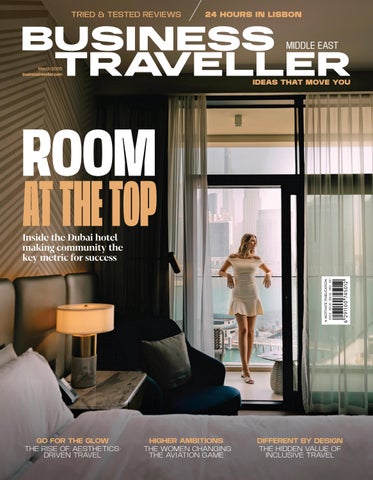
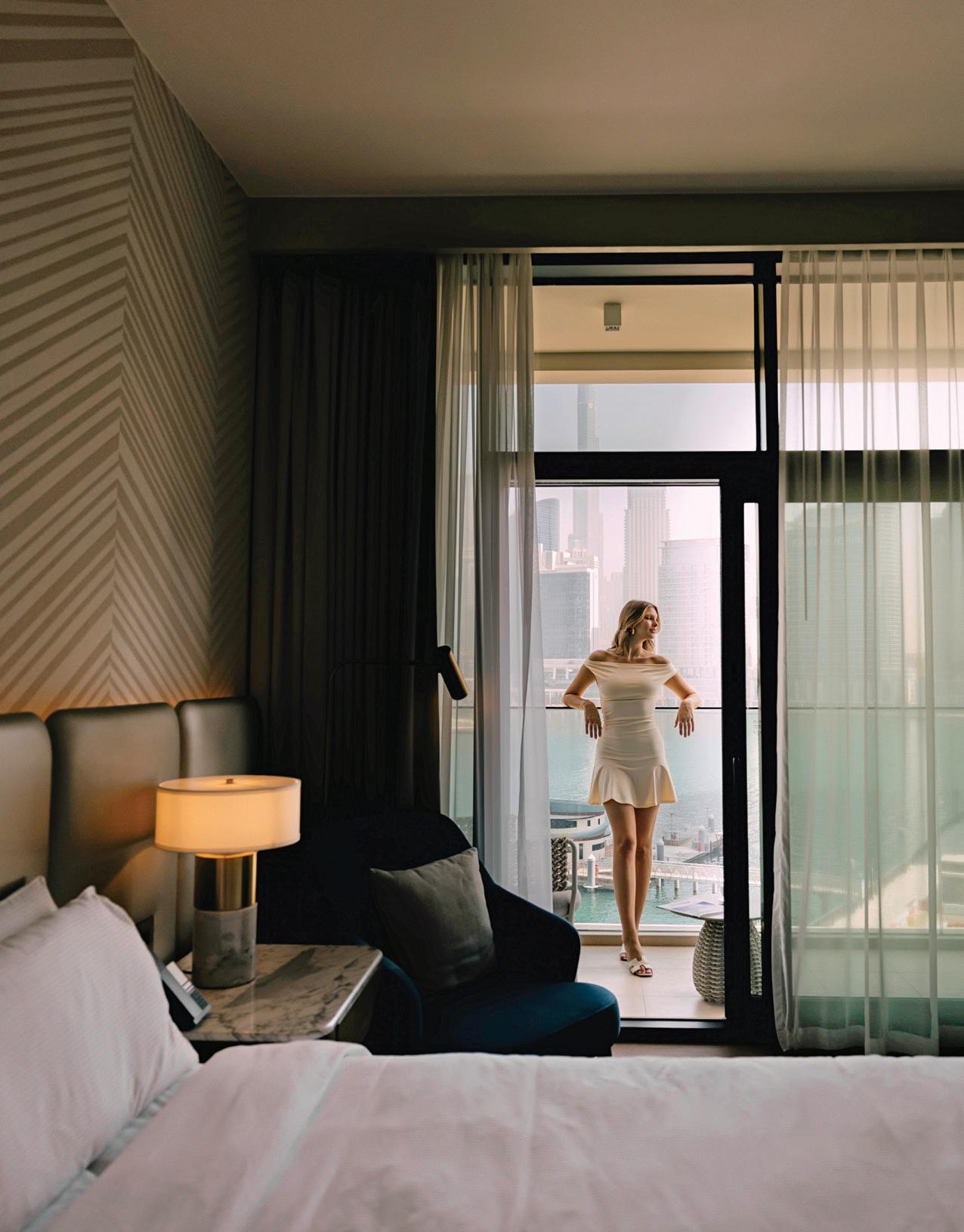
Inside the Dubai hotel making community the key metric for success




07 Hot Ticket: Your firstclass flight to virtual reality
08 Regional News: The latest airline, hotel, and travel news
10 Sustainable Traveller: The greener side of tourism and hospitality
12 Global News: An update on international travel
15 David Collyer, Global SVP of Aspire Executive Lounges at Swissport, speaks on the future of airport lounges and beyond


18 Op-Ed: As AI takes over, is language getting lost in translation?
19 Op-Ed: Are points and status a generational issue?
20 Op-Ed: Why the restless spirit still rules the world
22 Frequent flyer with Bettany Hughes, a historian, broadcaster, and bestselling author
24 Elevator Pitch with Cristian Nannucci, general manager of Tivoli LA VIE Muscat Hotel & Residences
SERVICE WITH SOUL Step inside a bleisure experience that feels
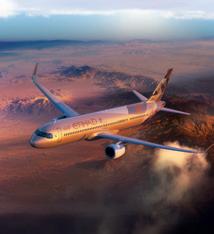
61 Etihad Airways A321LR first class 64 Mondrian Hong Kong
65 Fiat 500e Giorgio Armani 27
27 Extra Day in Lisbon
29 Soothe yourself with the wellness-oriented side of travel and tourism
30 Splash out on luxury experiences and products
32 Our pick of cultural events around the world and inflight entertainment
Passport to perfection From “glow-cations” to shopping tourism, a new breed of aesthetics-driven travel is redefining how people curate trips
Higher ambitions
Discover the inspiring history of women in flight – and some regional icons leading the way today
Glitzy getaways
Add a touch of glamour to your next trip with stays at these Art Deco gems
56
A stitch in time Decompress on your next work trip with these creative hotel workshops

Neurodiverse navigation
Growing awareness of conditions like autism and ADHD is changing business travel as we know it
Ennismore’s 35 new hotel openings in 2026 are well worth a date in the diary
EVERY TIME someone asks me where I’m from, I have a little pause. On the surface, it’s a fraction of a second, but internally, I’m trying to decide if I should explain it in detail, or simply say “It’s complicated.” As a mixed-race third-culture-kid, the concept of home has always been a tricky one for me to define. It’s also one directly tied into my complex feelings on belonging.
While home is typically defined as a permanent residence - typically one where we’re considered part of the family - most of us know that the idea of home is more than that. It’s a place that offers us safety; a refuge from the challenges and pressures of the world around us. It is a physical as well as psychological shelter - a place where we feel accepted, encouraged, and safe to be our authentic selves. There, we can stop performing, and just be.
For some of us, however, the places or people among which we grew up haven’t always offered this. There are those of us who lacked the familial support to serve our emotional needs. There are those of us who had tough childhoods, lacking physical stability. And there are those of us whose brains are simply wired differently, wherein we’d often find ourselves navigating environments not built with our sensory or cognitive needs in mind. In these cases, the safety and belonging associated with the idea of home isn’t a given.
It’s a feeling that is also often familiar to long-term expats and frequent travellers. Once you’ve embraced a life of exploration, your perspective is permanently altered. You return “home” only to find the place you remember has changed - and so have you. A global life is a profound gift that can also come with a nagging sense that you no longer fully belong anywhere. In a world that increasingly demands for us to fit into pre-defined boxes, the importance of inclusivity has never been more vital (p.48). A true sense of belonging involves being in spaces that understand our specific frequency.
Perhaps this is why so many of us are drawn to the magic of a great hotel. In the right one - the kind that truly understands the meaning of hospitality - you are offered the merits of “home” the moment you step inside. In your room, you can enjoy the pleasures of solitude, while across the property, you feel safe, supported, and seen. But as restorative as this is, that comfort usually stops at checkout. It’s a special thing to find a property that moves beyond the standard checklist to foster a genuine, lasting sense of community - the kind that stays with you long after you’ve turned in your key. So this month, it’s a real pleasure to showcase at least one exceptional place exhibiting all this and more (p.34).
It serves as a reminder that even in a world of constant motion, we can still find spaces that celebrate our complexities, where we don’t always have to explain ourselves to feel understood. Enjoy the issue.

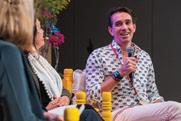
Yi-Hwa B. Hanna Editor


BUSINESS TRAVELLER MIDDLE EAST IS JOINTLY PUBLISHED BY MOTIVATE MEDIA GROUP AND BUSINESS TRAVELLER MEDIA
MOTIVATE MEDIA GROUP
EDITOR-IN-CHIEF OBAID HUMAID AL TAYER
MANAGING PARTNER AND GROUP EDITOR IAN FAIRSERVICE
CHIEF COMMERCIAL OFFICER ANTHONY MILNE
GROUP CONTENT DIRECTOR THOMAS WOODGATE
EDITOR YI-HWA B. HANNA
ART DIRECTOR CLARKWIN N. CRUZ
EDITORIAL CO-ORDINATOR LONDRESA FLORES
CONTRIBUTORS
ALICE HENDERSON, HANNAH BRANDLER, MATT POTTER, STEVE WHITE, VASILII KACHALOVSKII , JONNY CLARK, JEREMY TAYLOR
GENERAL MANAGER – PRODUCTION S SUNIL KUMAR
PRODUCTION MANAGER BINU PURANDARAN
ASSISTANT PRODUCTION MANAGER VENITA PINTO
GROUP SALES MANAGER CHAITALI KHIMJI SENIOR PARTNERSHIPS MANAGER MURALI NARAYANAN
HEAD OFFICE: MEDIA ONE TOWER, DUBAI MEDIA CITY, PO BOX 2331, DUBAI, UAE; TEL: +971 4 427 3000; FAX: +971 4 428 2266; E-MAIL: BTME@MOTIVATE.AE
DUBAI MEDIA CITY: SD 2-94, 2ND FLOOR, BUILDING 2, DUBAI, UAE; TEL: +971 4 390 3550; FAX +971 4 390 4845
ABU DHABI: PO BOX 43072, ABU DHABI, UAE; TEL: +971 2 677 2005; FAX: +971 2 657 3401; EMAIL: MOTIVATE-ADH@MOTIVATE.AE
SAUDI ARABIA: REGUS OFFICES NO. 455 - 456, 4TH FLOOR, HAMAD TOWER, KING FAHAD ROAD, AL OLAYA, RIYADH, KSA;TEL: +966 11 834 3595 / +966 11 834 3596; EMAIL: MOTIVATE@MOTIVATE.AE
LONDON: MOTIVATE PUBLISHING LTD, ACRE HOUSE, 11/15 WILLIAM ROAD, LONDON, NW1 3ER, UK; E-MAIL: MOTIVATEUK@MOTIVATE.AE
BUSINESS TRAVELLER MEDIA LTD.
INK, BLACKBURN HOUSE, BLACKBURN ROAD, LONDON, NW6 1RZ
SUBSCRIPTIONS:
BTMIDDLEEAST BUSINESSTRAVELLERME
al qamar Iftar on the terr ace
This Ramadan, experience Al Qamar If tar –a luxurious open- air Ramadan celebration with live cooking and enter tainment , and Burj Khalifa views.



Two decades of world-class service, elevating every meeting and transforming every stay into an unforgettable experience.









REGIONAL NEWS
New hotels, flight routes, and more


SUSTAINABILITY
GLOBAL NEWS
The greener side of tourism & hospitality Happenings from around the world
Qatar Airways’ hottest new destination is entirely digital, with real-life prizes to be won for gamers
WORDS YI-HWA HANNA

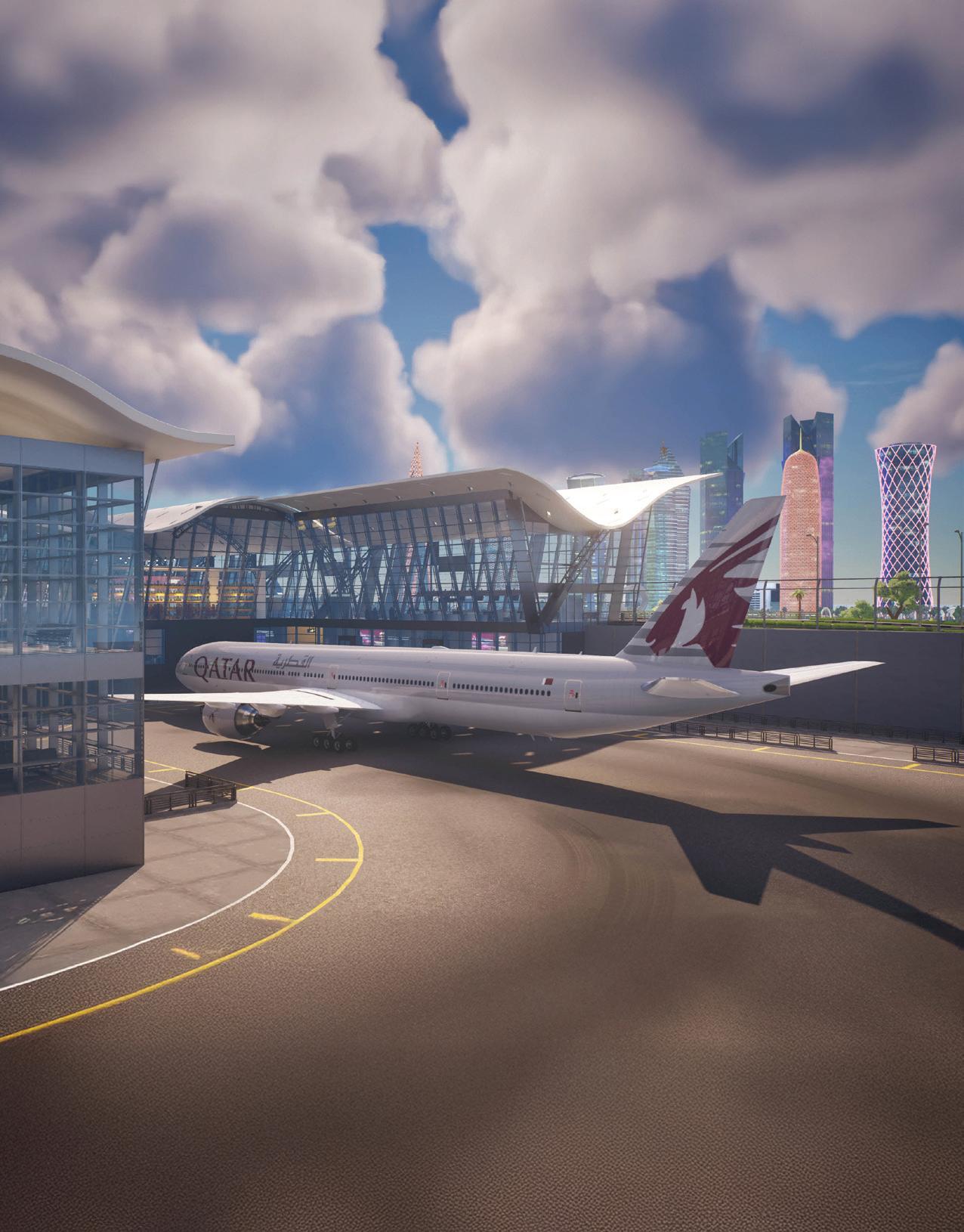
THE AWARD-WINNING AIRLINE has launched its first-ever digital destination, QVerse Island, within the popular gaming platform Fortnite. This virtual world allows players to explore a reimagined version of Doha and the airline’s signature services.
The experience begins at a digital Hamad International Airport, where players are greeted by Sama, the airline’s AI-powered cabin crew guide. Users can participate in mission-based challenges across iconic landmarks, including The ORCHARD, the National Museum of Qatar, and Katara Towers.
A highlight of the launch is the “golden ticket” competition, running through March 2026, which gives players the chance to win real-world flight tickets and travel rewards by finding hidden items.
The launch of QVerse Island highlights Qatar Ariways’ efforts to engage younger, tech-savvy travellers.
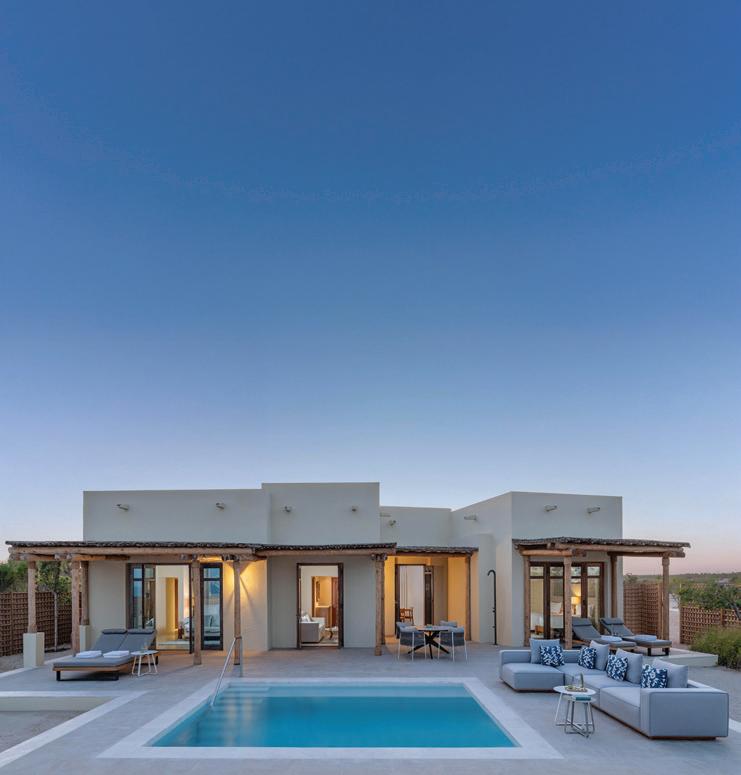
SIR BANI YAS ISLAND has long stood as a crown jewel of the UAE’s environmental and cultural heritage. Established through the vision of the late Sheikh Zayed bin Sultan Al Nahyan, the island – set 250km southwest of Abu Dhabi – is the nation’s largest natural sanctuary. It’s a conservation powerhouse home to 11,000+ animals and 42 archaeological sites. Recently, one of its most
coveted escapes, Anantara Sir Bani Yas Island, unveiled major enhancements to its luxury villa portfolio. Al Yamm Villa Resort, inspired by an Emirati fishing village, has reopened with refreshed beachfront villas and extended decks, while the safari-style Al Sahel Villa Resort now offers upgraded family-friendly villas with larger, fenced private pools and outdoor showers in the savannah.
PERKS AND PROMISES
ACCORDING
TO recent findings from Dragonpass’s Loyalty Index, the GCC has undergone a significant shift in consumer expectations, moving away from traditional points-related accumulation toward more rational, valueled engagement.
One key insight was that 82% of GCC consumers now prioritise tangible, easy-
to-use perks over abstract brand promises when choosing to join a loyalty programme. The study identified three dominant “loyalty languages” driving regional behaviour: Transactional Rewards (34%), i.e. a demand for
clear, physical benefits; Trust (24%), i.e. a need for brand consistency and dependability; and recognition (14%), i.e. a
desire for personalised treatment and understanding.
The Dragonpass Loyalty Index, with its 2026 edition recently released, in February, aims to provide brands with a framework to build more resilient relationships by focusing on what truly drives long-term engagement and prevents loyalty from breaking.
Rixos expanded its Saudi Arabia portfolio with a major opening last month: the launch of Rixos Murjana, the kingdom’s largest ultra all-inclusive resort. The Hijaziinspired property features 488 rooms and 33 luxury villas, including an exclusive Club Privé with private butler service. Key amenities include the Murjana Waterpark, Anjana Spa, and some of the Middle East’s longest pools. Supported by the Tourism Development Fund, this Red Sea destination aims to set a new benchmark for regional hospitality.
LUXURY ON THE NILE Mandarin Oriental’s new luxury Nile cruise will easily connect guests to its historical hotels
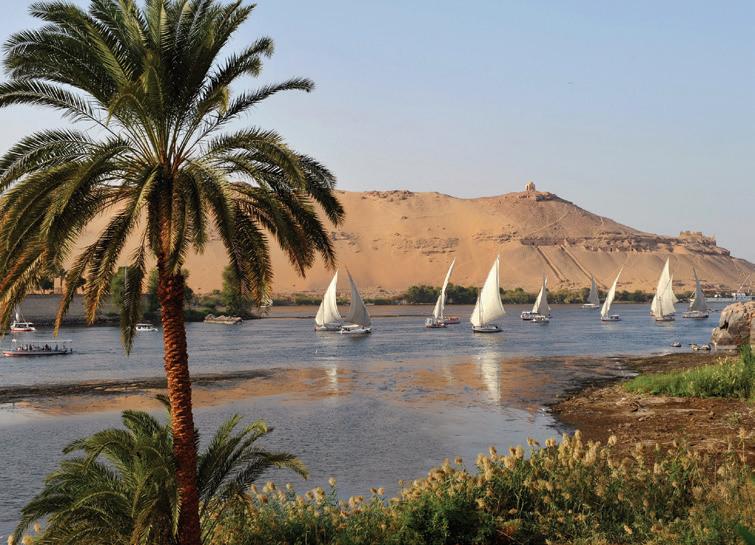
Mandarin Oriental claims two of Egypt’s most storied hotels, and a Nile cruise

ETIHAD AIRWAYS will launch the first-ever nonstop flights between Abu Dhabi and Calgary on 3 November, 2026. The four-times-weekly service will use Boeing 787-9 Dreamliners to link the UAE and Western Canada.
THE HONG KONG-FOUNDED hotel group is embarking on a landmark expansion in Egypt, hoping to create an integrated luxury circuit that connects two of the country’s historic land destinations with the brand’s first-ever river cruise Hot on the heels of the recent announcement of the 2027 reopening of Mandarin Oriental Shepheard, Cairo, the group is now adding two of the country’s most iconic heritage properties to its fast-growing portfolio.
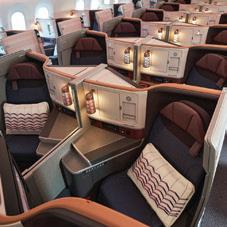
AIR INDIA has debuted the first of its Boeing 787-9 aircraft upgraded cabin interiors. The plane now features a threeclass layout, with a premium economy cabin and enhanced inflight entertainment across all seat categories.
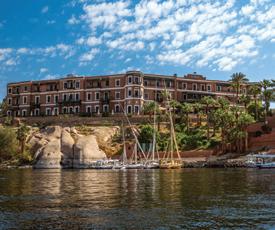
In May 2026, the group will take over management of the legendary Old Cataract hotel in Aswan. While the heritage building will currently remain open, the Nile Wing is set for a comprehensive renovation before the full property officially joins the brand in July 2027 as Mandarin Oriental Old Cataract, Aswan. This location will feature six dining venues and a signature Spa at Mandarin Oriental. Simultaneously, the historic Winter Palace in Luxor will undergo a significant renovation before reopening under the Mandarin Oriental brand in 2027. A centrepiece of this expansion is the launch of the group’s debut luxury river cruise. Developed by K.G. Company for Real Estate and Tourism Investment, this cruise will offer guests an immersive voyage between Cairo, Luxor, and Aswan, quite literally bridging the gap between the brand’s luxury hotels. It’s designed to provide a seamless journey celebrating Egypt’s rich cultural and historical legacy through a fully-integrated experience.
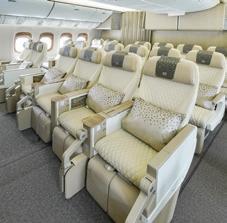
EMIRATES has announced that it aims to offer its Premium Economy cabin to 99 destinations by the end of 2026. The airline is retrofitting its A380 and 777 fleets to meet rising demand for the cabin across its global network.
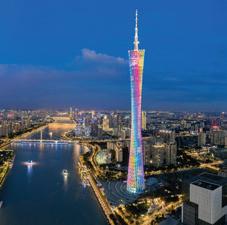
AIR ASTANA is expanding its network with a new AstanaGuangzhou route launching on 2 June 2026, as well as seasonal summer flights from Astana and Almaty to Larnaca, Cyprus, taking off between June and September 2026.
ALULA HAS BECOME the first destination in the Middle East to adopt EarthRanger, a globalstandard AI software designed to protect biodiversity. Spanning over 12,160 sq km of protected areas – including Sharaan National Park and Hegra – the platform integrates real-time data from ranger patrols, satellite wildlife tracking, and incident reports into a single operational interface. This technological leap is central to AlUla’s ambitious rewilding agenda, which includes the reintroduction of native species like the Arabian oryx, Nubian ibex, and the critically endangered Arabian leopard. The Royal Commission for AlUla (RCU) is aiming to restore more than 12,400 sq km of Saudi’s desert ecosystem by 2035.
By using EarthRanger, conservationists can monitor animal health and movements with unprecedented precision, ensuring that ecological restoration efforts are data-driven and effective. For the modern eco-traveller, this tech can help to enhance the guest experience through “light-touch” tourism. For instance, rangers can leverage accumulated data to curate new trails, and monitor game drive vehicles to assist visitors in their efforts to get closer to nature without disturbing the wildlife. Future phases will see the integration of camera traps
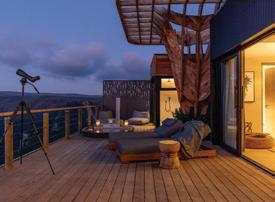
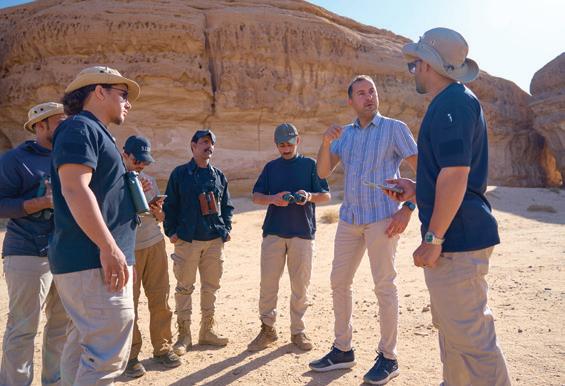
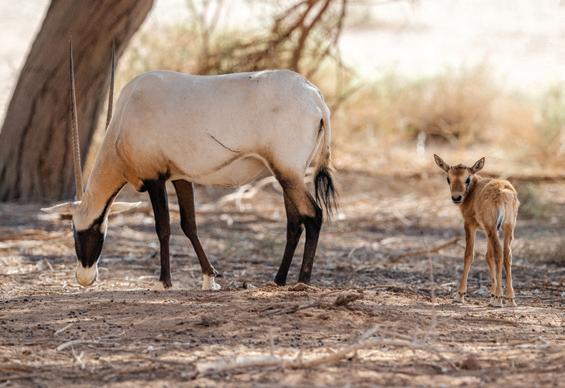
and AI mapping to mitigate humanwildlife conflict.
As AlUla balances its 7,000year history with a future-forward vision, the adoption of EarthRanger sets a new standard for sustainable tourism, transforming the area into a living lab where ancient heritage and cutting-edge AI might coexist to safeguard the environment for generations to come.
Since 2019, the RCU has released more than 1,500 animals across protected areas in Saudi
OPENING THIS MONTH Mantis Hiddn in Addo is an ultraluxury eco-lodge set within South Africa’s Addo Elephant National Park, just 76km from Gqeberha. Built with low-carbon modular architecture, the
sanctuary prioritises environmental and social impact through solar power, water harvesting, and profit-sharing with local communities. Conservation is woven into the guest experience, moving


beyond traditional safaris to include active participation in rewilding and nocturnal ecology. The retreat features 14 residences focused on holistic wellness, utilising a “Wellness Wheel” that connects ancestral

NEWLY-OPENED Meliá Whale Lagoon Maldives - launched in January 2026 - is more than a stunnnig new five-star resort in the South Ari Atoll. It also serves as a vital gateway to the South Ari Marine Protected Area (SAMPA) - one of the world’s premier sanctuaries for whale sharks and manta rays. Beyond its 100 eco-conscious villas, the resort prioritises environmental stewardship through light-touch marine experiences like guided snorkelling and diving. By embedding responsible tourism into its operations, Meliá is reinforcing its rep as one of Europe’s most sustainable hotel brands, while working to protect the Maldives’ fragile, treasured biodiversity.
botanical wisdom with modern science. From wood-fired KolKol baths to foraging-led dining with no fixed menus, the lodge embraces a slow-travel philosophy designed to restore both the land and the soul.
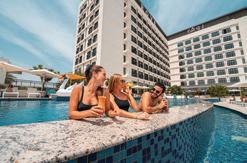

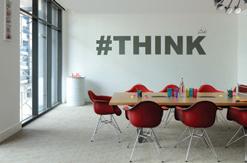

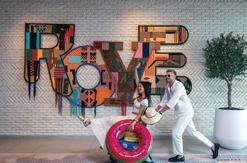
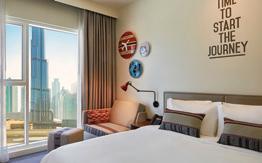
Rove Hotels thrives at the intersection of creativity and community. As an award-winning lifestyle brand, we redefine modern urban experiences through contemporary design, innovative facilities, and our trademark fuss-free service.
Whether you’re looking for a relaxing holiday or attending an exhibition, enjoy our connected locations and cool co-working spaces, thoughtfully built with a commitment to efficiency and sustainability.
Vote for us at the Business Traveller Middle East Awards 2026:
/ Best Lifestyle Hotel Brand In The Middle East
/ Best Midscale Hotel Brand In The Middle East / Best Long Stay Hotel Brand In The Middle East
For more information, visit RO VEHOTE LS.COM
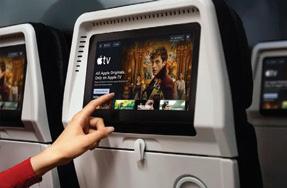
1 Air France elevates its onboard experience with Apple TV (Above) The French carrier is now offering a dedicated Apple TV channel in its long-haul Premium cabin – which now also serves dishes by Michelinrecognised chef Frédéric Simonin on flights from the US and Canada – with 45+ hours of original hits like Ted Lasso and Severance. Beyond seatback screens, a new partnership with Starlink allows passengers to stream content on personal devices via a WiFi portal, complete with a week of free Apple TV+ access.
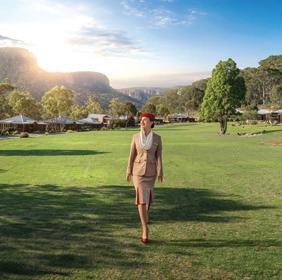
2 Emirates and Marriott to open world-first lodge in Australia (Right) The two companies have teamed up to debut the world’s first Ritz-Carlton Lodge in Wolgan Valley, set to open mid-2026. This conservation-led retreat features 40 luxury lodges within a 7,000acre private reserve in the Blue Mountains. Accessible only by helicopter or 4WD, it blends high-end Ritz-Carlton service with wilderness immersion, offering wildlife encounters and a naturalistled hub for eco-focused exploration.
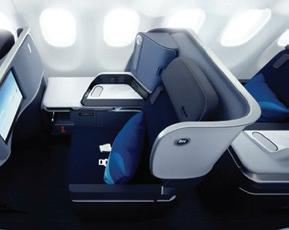
3 Discover Airlines adds new long-haul Business Class suites (Left) The Lufthansa Group-owned airline is launching a major fleet retrofit with its new “Ocean Blue” cabins, set to debut on A330s in 2027. The upgrade brings premium features to its leisure routes, most notably Business Class suites with sliding privacy doors, 32-inch monitors, and direct aisle access. All passengers will enjoy free Starlink WiFi, 4K seatback screens with Bluetooth, and wireless charging in premium cabins, improving comfort for long-haul trips.
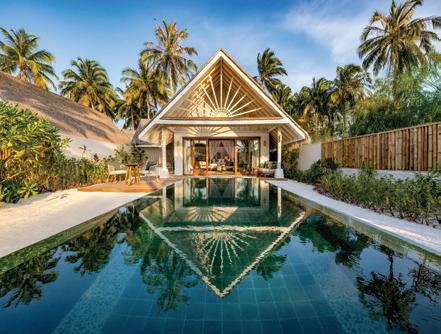
4 Six and Six Private Residences launches in the Maldives (Below) This new ultra-luxury residential concept was founded by hotelier Laith Pharaon, with a brand vision to open six individually designed resorts on six islands over six years. This expansion introduces private villa ownership across all future islands, beginning with Rah Gili in February 2026 and the flagship Don Maaga later in the year. These residences offer permanent ownership of elegant overwater or beachfront villas, some exceeding 1,500 sqm and featuring both saltwater and freshwater pools. Rooted in the Rayyithun (“People of the Islands”) philosophy, it prioritises local craftsmanship and sustainability.
5 Accor opens first Fairmont property in Vietnam
(Right) Fairmont Hotels & Resorts, part of the Accor group, opened the Fairmont Hanoi last month – the brand’s first property in Vietnam. Designed by Perkins Eastman and Aston Design, the hotel is in the city’s old quarter, near the iconic Hoàn Kiếm Lake, and blends Indochinese heritage with contemporary luxury. The property features 241 guest rooms, including 38 Fairmont Gold rooms and 12 suites, alongside eight restaurants and bars. Amenities include an exquisite wellness facility and Hanoi’s largest pillarless ballroom. The hotel aims to redefine Vietnamese luxury hospitality through curated guest experiences that align with the brand’s philosophy to “make special happen” – which combines stellar service with cultural legacies that showcase a deep respect for local heritage.
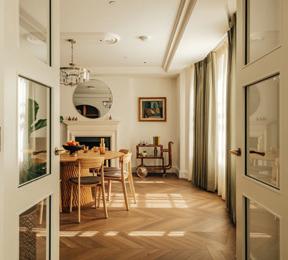
6 SLO aparthotels debuts with Claridge House in London
(Above) The new sustainable luxury aparthotel brand debuted last month with the opening of Claridge House in Mayfair. Set in a historic 1924 neo-Georgian building on Davies Street, the property comprises eight one-, two-, and three-bedroom fully serviced apartments. Designed for “slow living,” the interiors were led by SLO with consultancy from Ed Carter and Kitesgrove, featuring work by British makers like Robin Myerscough and Nicola Harding. The residences prioritise wellness with Anatomé London amenities, Hypnos mattresses, and Nuditea rituals. A deep retrofit by PDP Studio reduced carbon emissions by 93%, earning the property a 2025 Architects’ Journal award. Guests receive personalised summaries of their stay’s environmental impact. Rates start from £550 per night.
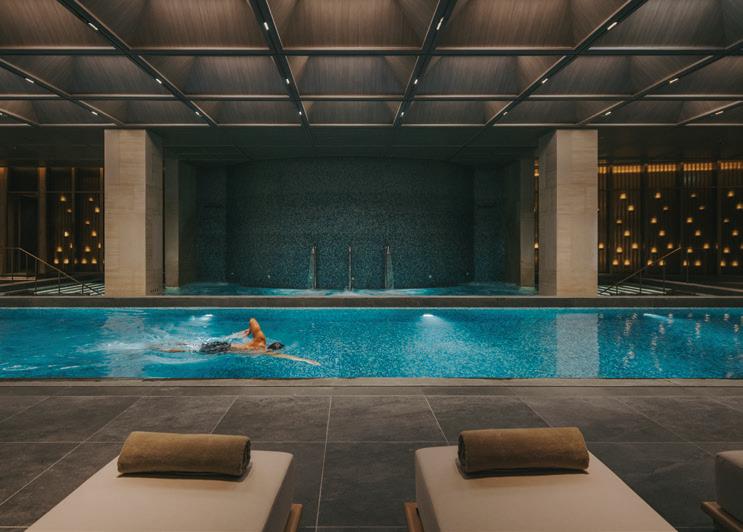
7 Aethos opens new members club in Mallorca, Spain (Below) Aethos encompasses a series of experience-led boutique hotels and private members’ clubs for modern travellers, with an expanding network across the UK, Italy, Portugal, and Spain. The recently-opened Aethos Club Palma in Mallorca is a standalone membersonly social hub in Mallorca’s capital. Located in a restored townhouse, it spans four floors and features versatile workspaces, social areas, and a dedicated wellness floor with a movement studio. Programming includes exclusive chef residencies, cultural gatherings, and “Industry Talks”, designed to complement the brand’s coastal hotel in Cala Fornells.
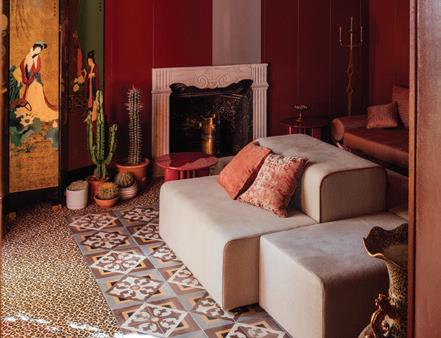
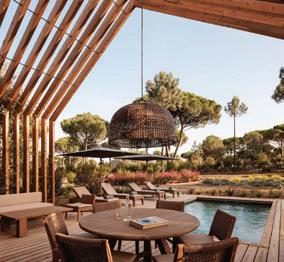
8 Sublime Hotels to expand Porto property in May
(Above) The Portuguese hotel brand is expanding its presence in Comporta with a new unit opening in May 2026, situated across from the landmark Comporta estate that first opened in 2014. The original hotel, now designated the “Terracotta wing,” helped to establish the region as a sought-after international destination. The new “Sand wing” extension spans 51 hectares and features 43 villas scattered among cork oaks and stone pines. Central to the expansion is the Atrium, housing the Portuguese debut of the luxury brand BeefBar, and the Forum, which introduces Comporta’s first exclusive nightclub. Wellness facilities at the Aqua area include heated indoor and outdoor pools. This contemporary addition maintains the brand’s core focus on sustainability and nature.







Expert
opinions on the
opinions on the future of travel




‘Hire people smarter than you, and if you can’t, hire people who disagree with you’
Hannah Brandler caught up with the global SVP of Aspire to discuss the future of airport lounges, industry collaborations, and the rise of water sommeliers.
QA &
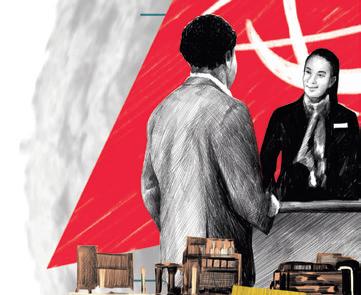
Aspire teamed up with oneworld in 2024 to open branded lounges at Seoul Incheon International and Amsterdam Schiphol airports. What’s special about these lounges?
The three-dimensional experience extends




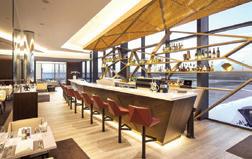
from design through to a signature drink. They start with an atmospheric, arched entranceway, which separates you from the melee in the terminal and welcomes you into a much calmer, more relaxed environment. In Amsterdam, we worked with a Dutch design team on the bar – an important focal point, which features little bird motifs from a well-known Dutch fable. To incorporate oneworld’s
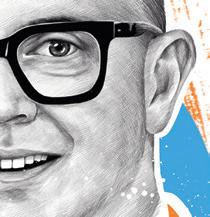
David was named global senior vice president of Aspire Executive Lounges at Swissport in October 2024. He leads the brand’s worldwide growth with a focus on elevated hospitality, smart operations and designled innovation. Previously, he oversaw Aspire lounges in the UK and Ireland, and spent eight years in brand, strategy, and guest experience roles at IHG Hotels & Resorts.
brand philosophy of “travel bright”, we also created a piece of artwork at Schiphol that has changing mood lighting to set the pace during the day.
For oneworld’s 25th anniversary, we also created a special Negroni-inspired cocktail in partnership with the director of mixology at the Connaught Bar in London’s Mayfair. Because we’ve got so many business travellers, another thing that’s unique to the oneworld lounge at Schiphol is office-like cubicles. It’s first come, first serve, and they work well.
How does Aspire differ?
Oneworld is purely for business and first class travellers on member airlines. At Aspire, you’ll find a wider variety of travellers, with people coming in and out all the time, so it’s a more open space. The design comes back to data. We work with airports to check things like how many groups there are, or what percentage of people are checking in bags. This tells us how much space we need – in some lounges we have seats where you can put your bag underneath, for instance.
Aspire unveiled a threetier lounge at Newcastle Airport in 2023, combining the core offering with Luxe by Aspire and The Suite
Continued from overleaf
by Aspire.
What’s the feedback been like?
It’s been incredibly successful. I noticed that there was no segmentation in this sector – no premium economy, business, first class; no classic room, deluxe room, suite. So we consulted with airports, airlines and passengers and trialled a new concept.
Globally we’re up to 100 lounges, with a significant pipeline coming, and pretty much every airport we work with wants a tiered product. We might have two lounges – a Luxe (business) and a Suite (first) – and then a classic lounge for Priority Pass and select airlines.
How do you cater to leisure and business travellers?
We’re much more datadriven than before. With customer journey mapping, we’ve identified four key segments of traveller, who each approach and use the lounge differently. It’s about curating the experience to ensure everyone’s going to have a good time. In some lounges, we might have zoned-off areas. Sometimes it’s about elevated cuisine, other times it’s down to culture and flavour – noodles vs fry-ups.
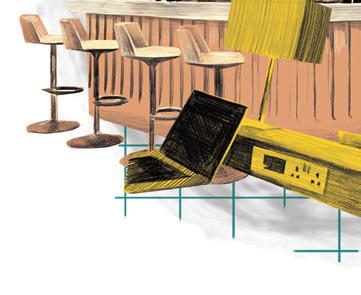
We have lots of different seats too, because people are in different modes – they might want to work, eat or just have a drink. In terms of density, and making sure we have enough room for everybody, banquette seating is very handy.
Shortly, we’ll announce a partnership with one of the world’s greatest design institutions for the ultimate lounge chair – looking at everything from technology (because everyone loves a charger) to comfort and sustainability.
We’re also finding that customers are agitated with

people on their phones, so we’re adding soundproofed rooms in our new lounges. These will be standing only, otherwise people would sit in them all day.
Has your hospitality background shaped your approach to airport lounges?
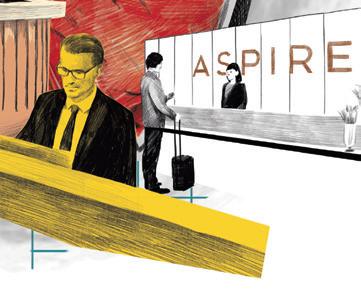
Massively. You realise that if you deliver a great experience, people come back. Preference drives profit. Staff are the lifeblood of our business.
I’m looking for a certain type of person who is service-oriented and can read people. How is the guest dressed – are they on business or leisure? What’s


‘You realise that if you deliver a great experience, people come back. Preference drives pro t. Staff are the lifeblood of our business’
their demeanour – are they rushing or quite relaxed and chatty? Staff understand what mode guests are in and can then look after them.
We host people like in a restaurant. As a guest enters, they are asked about their day, where they’re flying to and where they would like to sit. These are traits from hospitality that didn’t exist in the airport sector before.
Customers are also increasingly interested in elevated dining. How do you cater to this demand? Over half (53%) of our guests tell us they want a balanced meal – they’re no longer looking for
indulgence, and don’t want to sit with stodgy food in their stomach on the flight. We cater to that with salads, soup, pasta, nuts, and a selection of pastries and bread. Comfort food is important too – I might want a really nice sausage roll.
In Aspire, the food is designed to be a little faster and lighter. People want choice and the ability to mix and match. The buffet is old-fashioned but actually it’s coming back and enables you to eat as little or as much as you like.
We’re also seeing a huge increase in people wanting hydration (which is great for the budget!). We just did a big piece of work with EHL Hospitality Business School in Lausanne looking at future travel trends, which shows that water sommeliers are going to be big.
Both the Aspire and oneworld lounges at Schiphol have views of the airfield. How important is this for guests?
The worst thing you can do is not have a view. We try and make the most of the scenery, just like a hotel would – except it’s an airport and not a sea view. Seats by floor-to-ceiling windows are very popular as people like to watch what’s going on.
One of the main challenges for lounge operators today is overcrowding. How do you handle this?
To ensure everybody has a great experience, we have to manage the occupancy. We’re investing quite heavily in technology and AI to measure this at the backend – looking at peaks and troughs throughout the day.
We’re also encouraging people to pre-book a space. We recently asked our customers whether they would pre-book a lounge – 70% said they
would, but less than 6% actually do. We’ve been working with Priority Pass on pre-booking and done a really successful trial in the UK – approximately 17% of Priority Pass members are pre-booking and getting into the lounge. A new website coming later this year will have a hospitality-enabled booking engine, enabling you to book a specific seat. In one of our lounges, we’ve also installed a series of cameras to look at the density. They can tell how often people are visiting the buffet and bar, and even alert staff when a table is dirty. This also helps us with alcohol consumption around ‘fit to fly’, because we have a duty of care to ensure that people arrive safely onto an aircraft.
Is the future of customer experience all about personalisation?
Absolutely. We worked with Google in 2024 on geotargeting around airports. The ideal [scenario] would be someone coming through security and getting a push notification on the app saying, “Hi David, you’ve arrived. Would you like a G&T and your regular seat?” We’re working on this technology. That’s the future of hospitality in the airline industry.
Why do some lounges have to shut?
You might not be able to renew a lease, or an airline might cease to fly to a certain location and therefore commercially it doesn’t work. We do everything to save them but we’re at the mercy of our landlord.
What about growth plans?
The lounge market globally is worth about US$4.5 billion – by 2030 that’s going to double. We look strategically at routes and are working
The lounges are open to all travellers on a pay-per-use basis, regardless of airline or class of travel. Prices vary per lounge
All lounges (apart from London Heathrow T5) offer free entry for Priority Pass, DragonPass, and Diners Club cardholders
Guests will need a confirmation email, boarding card and/or passport to enter
Children can gain entry if accompanied by an adult.
There’s a relaxed smart casual dress code – but no sportswear is allowed
The majority of lounges entitle you to stay for three hours prior to flight departure
All F&B is free of charge once inside the lounge (premium beverages, including tipple, are charged in select lounges)
on a pipeline with oneworld at the moment.
The UK is the most mature lounge market in the world and America is number two. The US has very different business models and access methodologies – it’s all about your credit card rather than who you’re flying with. That’s probably not our market – we’ve got partners to operate in that space –but we want to expand in secondary markets like Latin America where we’ve got the right mix of business and leisure travellers.
Are you working on any other partnerships?
We’re working with Turkish Airlines to test a new model in Chicago. The airline is growing so rapidly that it can’t build lounges quickly enough. Turkish Airlines asked if we would consider a hybrid model, whereby it is designed to the airline’s standards and operated by Aspire – but outside of Turkish Airlines’ schedule we can allow other airlines to use the facilities. And thanks to being part of Swissport, we have access to airlines in 300 airports globally. We’re seeing this model develop more as business travel rebounds.
And finally, if you could have dinner with any business leader, past or present, who would it be? Jack Welch, the former CEO of General Electric. He had great rules. The first was to always try to sleep in your own bed. I’m generally on a plane twice a week, but there’s no place like home. His second rule was have only one glass of vino (or one Negroni). Third was to hire people smarter than you, and if you can’t, hire people that disagree with you.
We’re letting AI translate for us - and forgetting how to learn languages in the process
THERE ARE at least 10 ways to order coffee in Luis Enrique’s home town in the south of Spain –something that would be missed by AI’s whisper in your ear. There are so many cultural details like this that cannot be captured by technology, he says.
Apple’s recently released Live Translation for AirPods puts these nuances of language and the transmission of culture at risk. Fuelled by AI, the technology is a step-change from existing translation tools because it translates words live, in your ear. It simplifies language into utility rather than an ever-changing representation of its speakers and their culture.
The Joy of Connection
As my Spanish language tutor, Enrique has skin in the game. He’s surprisingly optimistic about AI as an educational tool – but not as a full replacement to learning a language. Locals want visitors to at least give their mothertongue a try, he says: “When people in a country see that you’re trying to learn the language, they usually feel joy.”
He doubts that a person can truly experience a place without knowing some of the language. “Every language is always evolving,” he says, “there’s no way that AI can catch up with that.”
For me, my level of Spanish shaped my recent experience of travelling Latin America. The more my language skills improved, the more I felt immersed in the culture and found it easier to connect with local people.
I will never forget the first time I cracked a joke in Spanish, for instance; and for once, people weren’t laughing at my horrendous translation of English phrases.
This connection persisted even when I came home; I helped an older Spanish woman choose laundry detergent in a London supermarket, and at an airport I supported someone in booking a hotel. Mundane? Perhaps. But wholly fulfilling.
AI Reduces Language to Words Languages open our world, says Michael Cronin, professor at Trinity College Dublin,
who specialises in translation, travel, and culture. He points out that it’s often easy to forget that a language is not just words. It’s books, movies, songs on the radio and food that we wouldn’t otherwise notice or try. It’s how people from different cultures express who they are to the rest of the world.
This is something that dawns on all of us when we learn a foreign language, in what Cronin refers to as a shift in our regime of attention. “We begin to pay attention to different things,” he says. “Your world becomes this much richer, much more complex and a much more fun place.”
AI translation can break down immediate communication barriers and remove the friction of having to whip out your phone, or the effort of flicking through a phrasebook, depending on preference. It can’t, however, replace human connection, cultural immersion and the cognitive benefits that come with language learning.
What about dialect, intonation, and sentence structure – learnt through speaking and hearing the language first-hand? Cronin
‘It’s often easy to forget that a language is not just words’

explains that this is particularly problematic with lesser-used languages, where AI translates them to English syntax even when they are not naturally structured that way.
For instance, he adds, there is no single word for yes or no in modern Gaelic, and this doesn’t always come through in AI translation. Cronin, who speaks Irish Gaelic, fears this could lead to the erosion of nuance and identity over time if lesser-used languages morph into an English structure.
AI might well be shaping the evolution of language – and not in a good way.
Learning in The Age of Brain Rot
There are numerous other benefits to learning a language, including improved brain function, delayed cognitive decline and increased attention span – an important gain in this era of doomscrolling and digital lethargy.
I also find the ability to semi-speak a second language empowering – and still take Spanish lessons today. With our reliance on AI and technology, will we forget how to learn new languages and forgo everything that makes it worthwhile?
As Cronin puts it: “It’s the difference between learning to drive and using your Uber app.”
It does offer an important bridge. It’s unrealistic to expect a person to learn Spanish, or any other language, for a weekend away. But if they visit one country frequently, it’s time to get in the classroom.
AI translation will amplify the existing fracture between people who travel without a desire, or need, to know about the culture and those who do so to really know a place, and the people – whether that’s through a conversation sparked in a local bar or in a key business meeting. Ultimately, AI translation and language learning are radically different. As Cronin says: “One is teaching about exploration, about autonomy, about independence, about liberation, about freedom, and the other is actually teaching you nothing except how to press your finger on the screen.”
Author of Clean Up On Aisle Earth , Tasmin Lockwood is a journalist who writes about how tech intersects with different industries.
How travellers of different ages approach loyalty programmes
S A LOYALTY programme
Ajunkie, I’ve earned enough points to consider naming a star after myself. But does loyalty mean anything when half the plane is also “elite”? Let’s take a closer look at loyalty schemes and how they’re faring in this new age of crowded lounges, generational shifts, and artificial intelligence.
Loyalty programmes were originally designed as revenue drivers for airlines and hotels. Selling points to credit card companies became a lucrative business, while the benefits to travellers – status perks, upgrades, and exclusivity – were meant to foster brand loyalty. But things have shifted. According to McKinsey & Company, loyalty scheme members are becoming increasingly disloyal, with fewer travellers recommending their favourite programmes to others.
As someone who experienced the golden age of loyalty programmes, I must admit that I loved racking up free airline trips and those oddly unappetising hotel fruit baskets. Yet I often wondered if these perks really offset the wear and tear of constant travel. A few extra peanuts in first class don’t exactly erase the memory of a middle seat between two chatty strangers. Like many road warriors, I treated maximising points like a side hustle. But what’s the value of points and status to today’s diverse workforce?
Phocuswright reports that 66%
‘Current schemes may not resonate with younger generations’
of travellers aged 55 and older have memberships in airline loyalty programmes. For 18-to-34-year-olds, it drops to 34%. However, younger travellers are more likely to redeem their points for flights (67% compared to 51% of older travellers). These numbers suggest loyalty exists, but its form and purpose have changed.
Boomers meticulously track their points, hunting for upgrades. Millennials, on the other hand, rely on apps that compare options instantly. Gen Z? They’re more likely to ask, “What’s a loyalty programme?”
For me, loyalty schemes were about more than just points. Shorter lines at airports, guaranteed overhead bin space and access to lounges were my rewards for sticking with a single airline. My hotel status brought complimentary breakfasts, room upgrades, and late checkouts. And let’s not forget that smug feeling of boarding early while others struggled with overhead space. It wasn’t just loyalty – it was convenience wrapped in a sense of superiority. Recently, I’ve noticed a change in how I use loyalty programmes. On a last-minute trip, my status allowed me to switch flights easily, secure a good seat, and avoid baggage chaos. At my hotel, a free breakfast saved me US$30 daily. These small but
Greeley Koch, managing director of 490 Consulting, is a recognised thought leader in the travel industry.
His clients include corporations, airlines, lodging providers and tech companies. He also teaches as an adjunct professor at New York University’s Tisch Center of Hospitality.
tangible perks felt more valuable than accumulating points for a future trip.
But let’s address the elephant in the aeroplane: if everyone is special, is anyone special? Have you seen those upgrade lists on popular business flights? They’re longer than my grocery receipt when I shop hungry. Half the plane seems to have elite status. By the time your name is called, the “upgrade” might just be a slightly wider armrest in the back of economy. Exclusivity feels more like a crowded club where everyone’s on the VIP list. Do I feel loyal? Or just like another cog in the loyalty machine?
This brings us to a critical question: is loyalty about sticking to a brand or enhancing the travel experience?
Boomers, who grew up in the heyday of loyalty programmes, might value recognition and exclusivity. Millennials and Gen Z travellers, accustomed to a gig economy and on-demand services, seem to prioritise flexibility and costeffectiveness over brand loyalty.
What about you? Do you stick with the airline you’ve sworn loyalty to, even when the flight costs more? Or do you jump ship? It’s a balancing act every traveller must weigh.
Suppliers must evolve their strategies. Current programmes may not resonate with younger generations. Instead, programmes could emphasise personalised offers and real-time benefits.
Each traveller must decide what they value most: lowest cost, best experience for the money, or elite status. For some, loyalty programmes remain essential. For others, direct bookings and instant gratification take precedence.
So the next time you find yourself juggling loyalty cards, ask yourself: is this programme making my travel life easier – or just heavier? Because loyalty isn’t just about a programme. It’s about making travel work for you. And if that means sharing the lounge with half the airport, at least the coffee is free.
Travel isn’t an indulgence; it is an essential practice for a resilient society. Historian, author, and hotelier Peter Frankopan explains how encountering difference helps us adapt, learn, and survive
HUMAN BEINGS have always been restless. From the moment our ancestors first began to move beyond familiar landscapes, travel became one of the defining forces that has shaped the course world history. Long before passports, airports, or guidebooks, people set out across deserts, mountains, and oceans driven by a mixture of necessity and desire: to trade, to worship, to explore, to escape danger, to satisfy curiosity – or simply because they did not want to be left behind while others ventured into the unknown. Movement was not an exception to settled life; it was an integral part of how societies formed, interacted, and evolved.
Trade was among the earliest and most powerful incentives to travel. The exchange of goods required the exchange of people, including their ideas, technologies and beliefs. Routes that linked Mesopotamia to the Indus Valley, or the Mediterranean to East Asia, did far more than move spices, silks, or precious metals: they helped transmit knowledge about astronomy, medicine, mathematics, and about good governance. Coins, writing scripts, and concepts of law spread because traders carried them across borders, introducing ideas that helped create and strengthen the first cities and states. Trade and travel knitted distant regions together long before the idea of “globalisation” had a name.
Yet commerce was only one part of the story. Other motivations too inspired people to move beyond the familiar and from what they knew. Religious devotion inspired some of the most ambitious
journeys in history. Pilgrimage demanded movement across vast distances, often into unfamiliar and dangerous territory. One of the most remarkable travellers of the medieval world was Ibn Battuta, whose journeys took him from North Africa across the Islamic world, into Central Asia, India, Southeast Asia, and China. Setting out initially to perform the Hajj to Mecca, he spent nearly thirty years on the road. His travel account, the Rihla, is not just a memoir of endurance but a glorious snapshot of how interconnected the fourteenth-century world already was – one linked by scholarship, diplomacy, technology, and shared systems of exchange.
Others too undertook epic journeys to find out more about places whose names and peoples were little more than whispers. In the seventh century, the Chinese monk Xuanzang, travelled from Chang’an to India in search of Buddhist texts. He crossed deserts, traversed mountain passes and went through hostile territories, sometimes in defiance of restrictions issued by the Tang empire. When he returned home after a journey that took him through Central Asia and India, he brought with him hundreds of manuscripts as well as a deeper understanding


RECOMMENDED READING
Peter Frankopan has authored numerous books, including five widely-recognised non-fiction works


of Indian philosophy, which in turn profoundly affected the shaping of Chinese Buddhism. His writings became a foundational source for geography, ethnography and religious scholarship. Individual travellers can inspire friends, families and more through explaining what they have seen, who they have met and what they have learned.
In Europe, the most famous traveller is Marco Polo, whose travels to the court of Kublai Khan in the late thirteenth century opened Western eyes to the scale, wealth and sophistication of Asia. Whether every detail of his account was accurate mattered less than its impact: Polo’s descriptions fired imaginations, challenged assumptions about the limits of the known world and helped stimulate later waves of exploration. His journey was crucial in encouraging the idea that to see what lies beyond the horizon and tell others about it is not just rewarding but exciting too.


What is striking about travellers like these is not only how far they went, but how difficult travel was. Journeys took years. Danger was constant. Language barriers were formidable. Yet even then, people devised practical solutions to overcome misunderstandings. Along the Silk Roads, bilingual glossaries and phrasebooks circulated to help merchants and pilgrims communicate. At Dunhuang, for example, manuscripts preserved in cave libraries include translations and everyday phrases – among them wonderfully human questions and requests like: “where are you going?’, and “bring us wine!” These fragments remind us that travellers in the past worried about the same things as we do today: food, comfort, negotiation, and being understood.
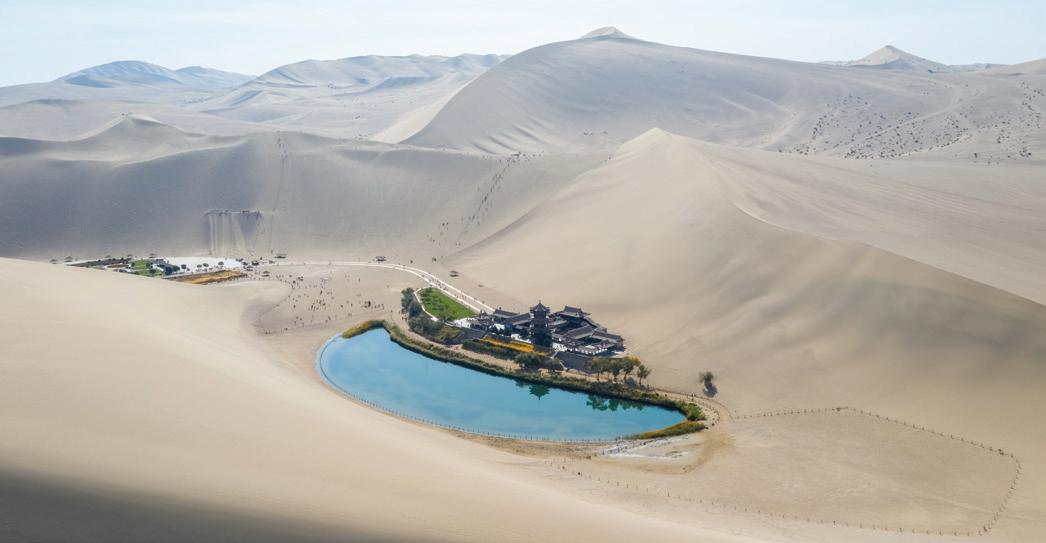
Seen from this perspective, today’s age represents a dramatic acceleration rather than a radical break with the past. In the 21st century, travel has never been easier, cheaper, quicker, or more accessible. Commercial aviation has compressed the planet; digital tools translate languages instantly; cultural unfamiliarity is cushioned by global norms and shared technologies. Business travel, tourism, study abroad, and migration connect societies on a scale and in ways that were unimaginable even a few decades ago. For many people, the anxiety is no longer whether travel is possible, but whether they are missing out if they do not take part. And yet the ease of moving around risks obscuring the deeper significance of encountering new places. Travel has never been only about leisure or convenience. Historically, it has been a mechanism through which societies learned about difference, adapted to change and absorbed external ideas. It challenged accepted ideas and forced encounters with people who lived and did things in different ways. In an age marked by geopolitical tension and economic uncertainty, it is tempting to see travel as a luxury or an indulgence. But history suggests the opposite: travel and discovery are essential practices that help societies remain open, resilient, and informed; they encourage listening rather than shouting; curiosity rather than fear.
“Understanding rarely comes from staying still; travel is our tool for learning from others.”
ABOVE The famous oasis in Dunhuang, on the edge of the Gobi Desert, in Western China
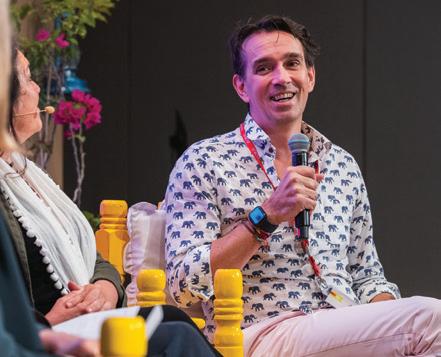
BELOW Peter Frankopan speaking at the Emirates Airline Festival of Literature 2026
Travel, then, is not simply about visiting new places, and taking some photos to post on social media before returning back to the daily grind; rather, it is an opportunity to encounter other perspectives, to try new foods, to learn from others. Over millennia, that encounter has shaped laws, beliefs, technologies, and cultures. If the future feels uncertain, the lesson of the past is clear: understanding rarely comes from staying still. Travel remains one of humanity’s most powerful tools for learning how to live with difference – and, ultimately
therefore, with one another. Perhaps that is why history and travelling go so well together; it would certainly explain why I love both!
Peter Frankopan is the author of The Silk Roads: A New History of the World and most recently, The Earth Transformed: An Untold History. He was elected a Fellow of the UK’s Royal Society of Literature in 2020.
He is a professor of global history at the University of Oxford, and director of the Oxford Centre for Byzantine Research. He is also the professor of Silk Road Studies at the University of Cambridge, a bye-fellow of King’s College, associate director of the UNESCO Silk Roads programme, and a fellow of the Royal Asiatic Society.
Frankopan and his wife Jessica are the co-founders of A Curious Group of Hotels – a collection of boutique hotels that began with Cowley Manor in the UK’s Cotswolds, and now includes notable properties in London, Amsterdam, and Paris.
In January 2026, he was a featured speaker at the Emirates Airline Festival of Literature, where he participated in three sessions, including the talks Post-Globalisation: Regional an Resilient or Risky?; A Historian’s Guide to Surviving the 21st Century (alongside Bettany Hughes, whom you can learn more about on p.22), and Rooted in Resilience: Can Culture Change the Climate Story?
AYou’ve spent your life bringing the ancient world to modern audiences. What first sparked your fascination with history? I think it was a mixture of things. I went to see the Tutankhamun exhibition when I was five years old, and I was just blown away by the idea that all these fairy tales I’d heard of – of the Boy King, with his “fairy gold”, and his mysterious death – were true. When I was at school, then later studying at university, I noticed that there were lots of female historians, but not many who were being published, or who were being allowed the chance to do television programmes. So I very actively thought I wanted to change that perspective.
You wrote your first book at five years old, long before your first published book on Helen of Troy came out in 2005! Was it related to these experiences? Definitely. I was inspired to write my first book about my theory on why Tutankhamun died –which shows why it’s always worth taking kids to museums, and giving them books to read.
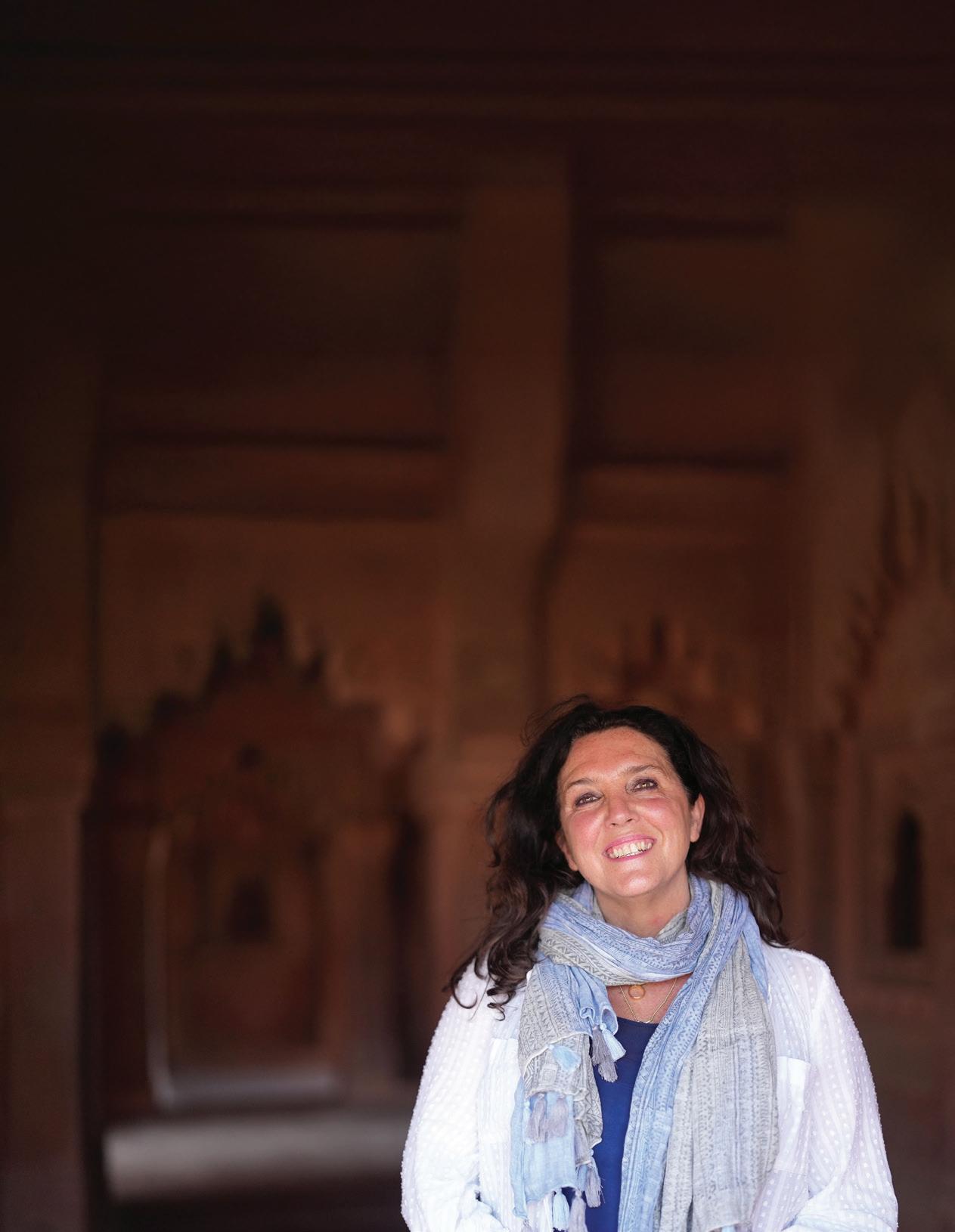
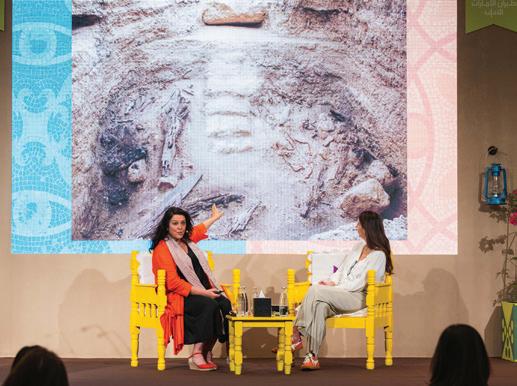
How has being on the ground, walking the same landscapes as ancient civilisations, shaped the way you tell their stories? It’s been totally essential. As a historian, I can’t write history unless I go to the place where it happened. It feels like that’s a respectful thing to do, both in terms of the people whose long past you’re telling, but also for the people who are the guardians of that history now. You get to meet them, and talk to them, and hear their perspective on what you’re doing. And geography makes history, so it also means you can stand on a battlefield and feel certain things there. You can imagine the ambition of wanting to travel to explore that in the past. So it’s vital for me to “go to street”. And I love it. Luckily, I like travelling!
Storytelling has been used across continents in ways that are still reflected today. How essential is its role in history? It is totally essential. We are a storytelling species – we understand the world by telling stories about it. If you look at the world 40,000 years ago, we were creating abstract art of, for example, a person with a lion’s head – because somehow that helped people understand who they were in the world. I’ve just come back from central Anatolia, where there are these amazing
discoveries at Karahan Tepe and Göbekli Tepe. There are literally stone storyboards there, almost like cartoons. So stories really, really matter. And I think they do even more now. You want to give a voice to the people whose stories aren’t normally heard, but also to ensure that what we’re delivering is authentic and factual – because since we’re hardwired to love stories, it also means we can believe mistruths or misinformation when it’s delivered to us persuasively. History is constantly walking that balancing line of helping us understand the bigger story, but [still] keeping the factual truths accurate and authentic.
You recently spoke at the Emirates Airline Festival of Literature, on what lessons the past could offer for navigating todays’ crises, especially in this age of information overload. Tell us more.
It’s a really pertinent question. One of the great values of being a historian is that you take the very long view. Through time, there has hardly been a generation that hasn’t thought
that the world was about to end. We’ve always been anxious, whether it’s been the plague, the pandemic, warfare, starvation. And we write about [these things]. [Yet while] we’ve had lots of chances for self-extermination, we haven’t done that yet. Clearly! So there is actually something very hopeful about that big sweep of history. Since we have, as you said, such an overload of information now, we just have to remember that we can choose not to look at it. That’s the reality. We can choose to just be with friends and family for an evening without picking up our phones. A device might be required to physically get us there, with a dropped pin to follow for example, but once there, we can choose to have three or four hours without it. The most important thing we have as a species is the ability to always leave avenues of choice open –so that’s what we’ve got to do, on a macro and a micro scale.
One of your other talks was on the Seven Wonder of the Ancient World. Why do you think these monuments still
captivate us all these years later, and what do they tell us about human ambition today? Isn’t it interesting that we all know about the seven wonders of the ancient world – yet while we may not all know what they are exactly, we do know that they matter? That tells me something big and important. As a species, we can recognise that we have symbolic inheritance – that we’re physically born with memory within our genes, understanding the inheritance of what our ancestors created. This is a very particular list of seven places that was set down in Alexandria around 2,300 years ago. They’re huge – it’s all about scale for these seven wonders. And I don’t look at them with rose-tinted spectacles, but what they do prove is that we really value creating wonder. We value the possibility of collaborating, so that we can realise beyond the potential of the individual – that we can join together to generate extraordinary things, at least, because they’re the ultimate acts of collaboration. They also tell us that as a species, we really want to create wonder. We want to go visit and witness these things, and we want to share our stories of that wonderful thing. I see that in times both good and bad, throughout the story of our journey. During very tough times, we create beautiful works of art, even though we may be starving. It really matters to us that to be suffused with awe is something that we positively enjoy – and that’s what these wonders are, just seven examples of awe.
Travel to places with historical value is trending. Why do you think modern travellers are seeking deeper connections with the worlds’ historical sites?
I think there’s something biological there. We’re creatures of memory, and heritage matters. In a world full of AI and virtual creations, there’s this incredible haptic thing that you are looking at – in a place like
kids were little, they would come with me on a historical tour. I love travelling. I was at home for maybe two weeks last year. I just love being on the road, and I’ve always got a bag packed. It’s my happy place.
What’s the first thing you do when arriving at a destination?
I always take a moment to smell the air. If I go into a hotel room and the windows are closed, I’ll immediately open them – or I’ll go back down onto the street. It’s something I almost need, in a sensory way, to understand the place I’ve come to – and smell is a huge part of that.
What is your earliest memory of a holiday as a child?
My parents were actors. It wasn’t glamorous. They were delightful, but out of work the whole time, so we didn’t go on foreign
‘The Seven Wonders of the Ancient World are the ultimate acts of collaboration’
AlUla, for instance, one tomb that’s standing in a particular angle in the desert. There’s something unique about that kind of experience. We also love connecting with other people. We can look at those and know they were created by human hands 2,000 years ago, and treasure that connection across time and space. It’s another thing that’s built to last, and it’s another way of connecting. I remember a moment when the year 2000 was coming up – at the time, many people said the past is irrelevant, and all the answers lie in the future. Then we got to the millennium and suddenly realised that that isn’t the case – we still need that foundation. So I think [this trend] is an appreciation of the depth and breadth of our roots.
How do you like to vacation?
I never take a vacation! I love my work so much. For me, a holiday is going to an archaeological site and exploring. Even when my
Flights are my total guilty pleasure. I love working and writing or researching and travelling during the rest of my time – but I will sit on a flight and try to watch movies. It’s my complete joy, and I’m very upset that you can now get wifi on planes! So I catch up on movies inflight. But I actually think that’s very important for me, because I’m in the business of making factual films and documentaries, so it’s important for me to see what the world wants to see. I’ll often start with a documentary, then watch a movie. Maybe it’s to do with growing up with actors, but I understand the huge amount of effort and creativity it takes to create this other world.
overseas holidays. We went to a lovely freezing beach in the south of England called Hythe. I remember sitting on the pebble beach and shivering because we’d been into the channel –but that’s a happy memory. It was really simple holidays, with sandwiches on the beach, until I was 16 years old.
What’s your go-to choice of inflight entertainment?
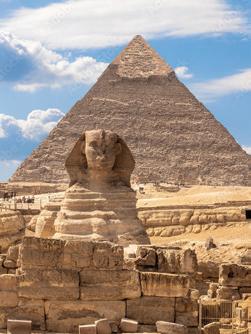
You must have loads of frequent flyer miles. How do you usually spend them? I do, but I am so rubbish. This is my plea for help. I’ve been travelling for the last 40 years. I’m just really disorganised. I’m sure I should have all kinds of cards and loyalty programmes (I probably have them already), but I don’t know how to spend them. Can somebody please ring me up and tell me how to spend them? Because I haven’t done it yet!
Where are you headed next? Back to London to change my clothes, then start a new series on the greatest cities on Earth: what makes a great city, what it is historically and culturally, what it means now. That’s one of my next big adventures. If any of your readers want to share their city with me, let me know – I’m right at the beginning of this project, so if you’d like to tell me why you think I should come see your city, feel free to reach out! (Ed’s note: Contact details can be found on Hughes’ website, or via Instagram @bettany_hughes)
Three things you always pack: A tube of vitamin C. Some kind of moisturiser, because I always seem to end up in deserts. And a scarf or a skirt, because the remote desert or remote mountain does’t have any shops for things like that.
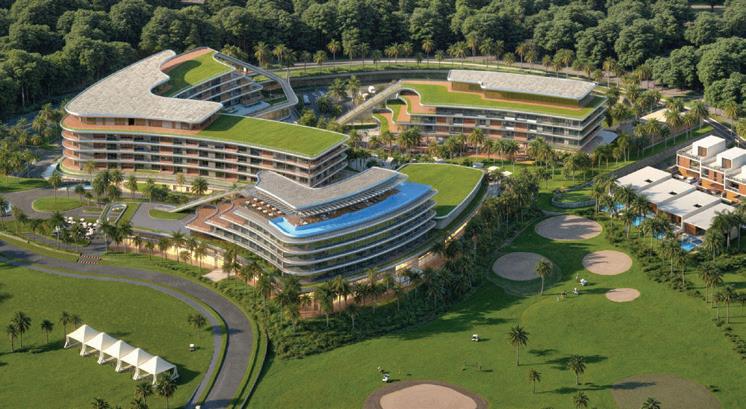
Business Traveller Middle East gives Cristian Nannucci, GM of Tivoli LA VIE Muscat Hotel & Residences, five minutes to pitch his property to prospective guests
E INVITE YOU TO step into a world where Tivoli’s renowned, elegant European lifestyle gracefully intertwines with the rich culture and vibrant energy of Oman. Our vision is a destination that feels simultaneously timeless and contemporary – a place where memorable moments unfold effortlessly. Every detail of Tivoli LA VIE Muscat has been thoughtfully considered to celebrate life’s simple pleasures. The design of our guestrooms and suites reflects understated sophistication. Soft coastal tones, natural textures, and elegant detailing create serene sanctuaries, enhanced by premium amenities featuring Dyson technology, curated SMEG elements, and Amouage bathroom amenities. Spacious layouts, modern comforts,
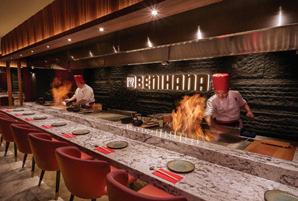
Wand private balconies allow our guests to embrace the gentle rhythm of Muscat while enjoying their own space to relax and reconnect. The inspiration behind Tivoli LA VIE Muscat centres on a celebration of life, culture, and connection. The spirit of “La Vie” flows throughout the property, expressed in welcoming social spaces, carefully curated design touches, and subtle Omani craftsmanship that creates an authentic link to local traditions. Every corner tells a story, and every experience feels effortlessly personal. Gastronomic experiences form the heart of the Tivoli LA VIE journey. From the dynamic Japanese theatre of Benihana to the relaxed all day offerings of The Coffee Club, our restaurants and lounges are designed to delight the palate. Guests can enjoy the sensory experience at SEEN Rooftop Bar & Restaurant, the
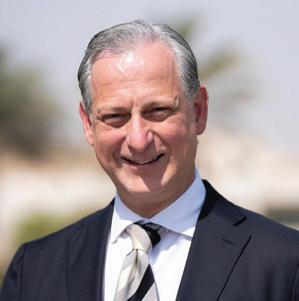
ABOVE (CLOCKWISE FROM LEFT): Aerial view of Tivoli LA VIE Muscat Hotel & Residences; Cristian Nannucci; Benihana
BOTTOM: A room at Tivoli LA VIE Muscat Hotel & Residences
Mediterranean inspired S O L É, or the vibrant Nineteenth Sports Bar and Cigar Vault, all guided by a passion for fresh ingredients, seasonal inspiration, and storytelling through cuisine. Every meal is an opportunity to create a memory, whether for a leisurely breakfast, an intimate dinner, or a celebratory gathering.
Well-being and leisure are equally central to the Tivoli experience. The first Anantara Spa to open in Muscat, alongside extensive recreational facilities, provides sanctuary and renewal. This is complemented by the infinity rooftop pool, Technogym fitness amenities, and thoughtfullycurated leisure experiences. Located in one of Muscat’s most dynamic lifestyle districts, Tivoli LA VIE offers effortless access to entertainment, retail and cultural attractions, ensuring that every stay is as vibrant as it is restorative.
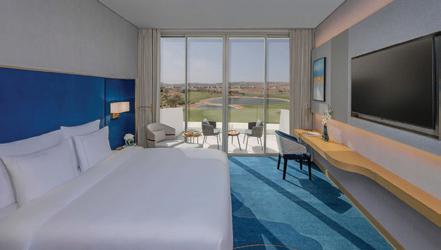
‘Every corner tells a story, and each experience feels effortlessly personal’
Tivoli LA VIE Muscat is also perfectly suited for business and social occasions. The elegant and versatile Juman Ballroom is equipped with advanced technology and refined design, making it ideal for executive meetings, celebrations and destination gatherings. Overlooking Hole 10 of the LA VIE Golf Course, the Juman Ballroom is set to become one of the most sought-after venues for celebrations and special events. Supported by a dedicated events team, each occasion is thoughtfully tailored to ensure seamless execution and a personal touch.
Above all, we are about connection to culture, to people, and to life’s most meaningful experiences. We look forward to welcoming our guests and creating truly memorable stays.















WORDS VASILII KACHALOVSKII


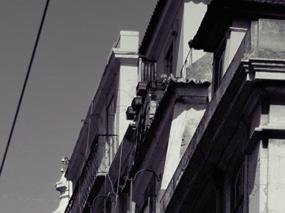
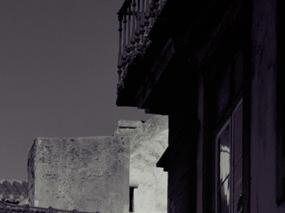
PORTUGAL HAS EMERGED as one of Europe’s most magnetic destinations for entrepreneurs and digital nomads, who are drawn in by its favourable policies, strong connectivity, and quality of life. Lisbon sits at the centre of this shift. The city, now known for its thriving start-up ecosystem, remains richly cultural: world-class museums, contemporary galleries, and an ever-evolving dining scene ensure that even a brief stay feels memorable.


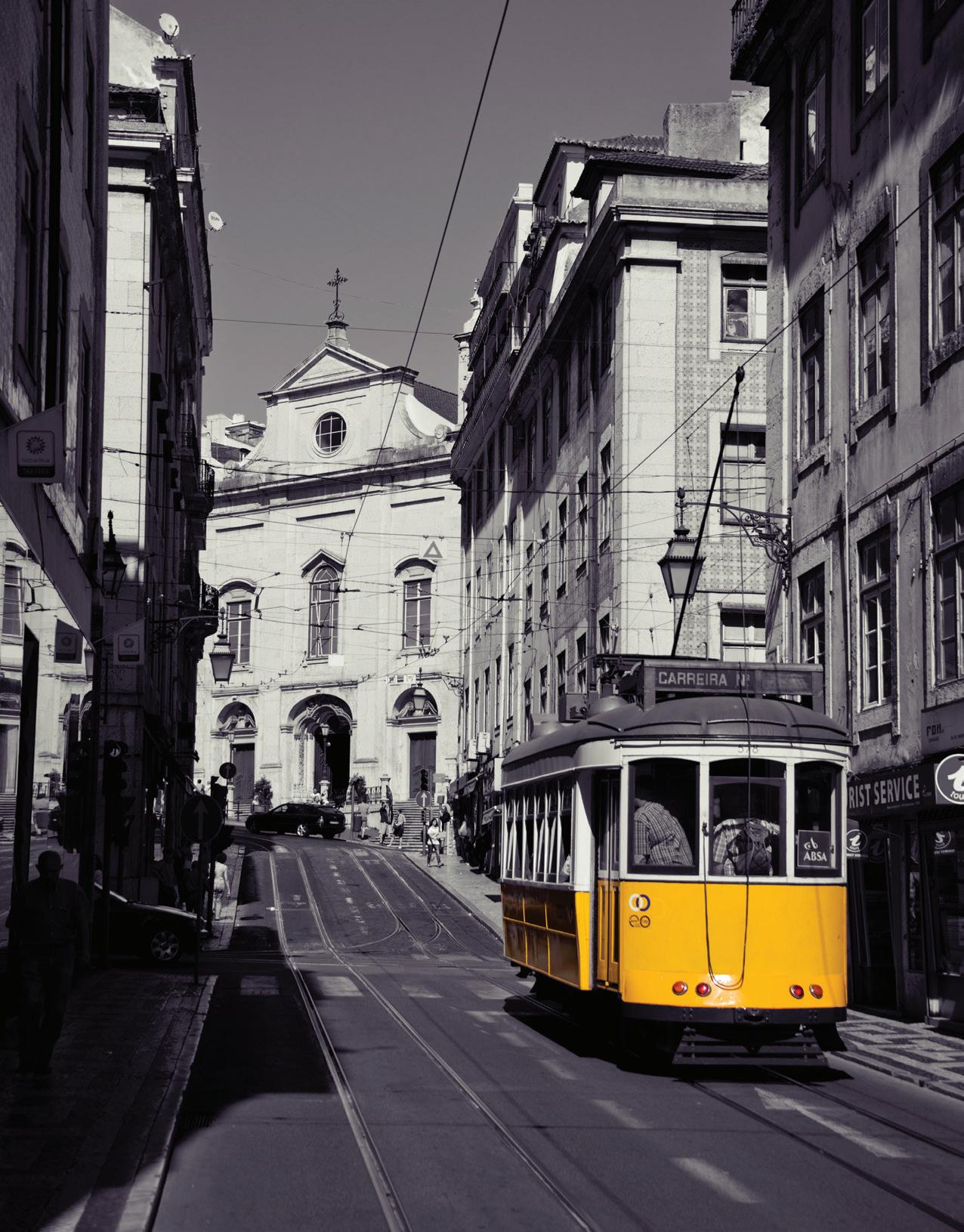
Lisbon’s breakfast culture is one of the most dynamic in Europe. The offerings are distinctly cosmopolitan, ranging from local classics to Turkish-style spreads, Eastern European syrniki, and high-quality specialty coffee. Two favourites in the city centre are Seagull Method and Co-op Layday, both offering thoughtful menus, strong coffee, and a relaxed atmosphere.
Once finished, set out into Lisbon’s famously hilly centre, where a casual stroll can transform into a gentle (and sometimes not so gentle) workout. Make a stop at Tomi Chiado, a huge and delightfully chaotic antique store where ceramics, furniture, and curiosities from across the world reinforce the city’s global identity. Just across the street, d’Orey Azulejos highlights the evolution of Portuguese tile. If time allows, join a tile-painting workshop – your creation won’t be ready immediately, but the boutique’s team can ship it anywhere in the world.
Lisbon’s efficient public transport system makes it easy to navigate the city’s compact layout. Hop on one of the riverside trams toward the Museu do
Oriente, a cultural institution housing an incredible collection of artefacts from Japan, China, Indonesia, and other parts of Asia shaped by Portugal’s maritime history. Despite its depth and scale, the museum remains surprisingly uncrowded even during peak tourist season, allowing for plenty of room to explore at your own pace.
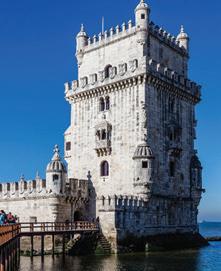
From there, continue along the same route toward Belem, Lisbon’s historic waterfront district and one of its richest cultural areas. Get off near the Monument to the Discoveries, a tribute to Portugal’s maritime ambitions, and decide how you’d like to spend the afternoon. For contemporary architecture and exhibitions, the Museum of Art, Architecture, and Technology offers a sleek setting with rotating modern programming. If you are
‘Fado, Lisbon’s melancholic music, has long been part of the city’s identity’
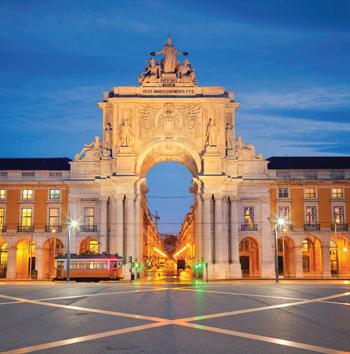
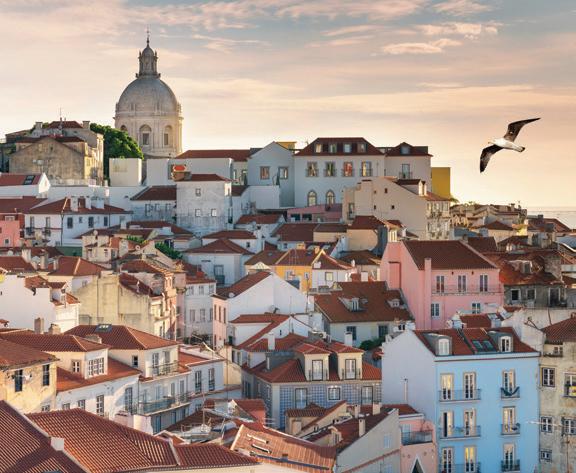
TOP (FROM LEFT): Torre de Belem; The Alfama neighbourhood
BOTTOM (FROM LEFT): Rua Augusta Arch; Pastel de nata served with coffee

into immersive storytelling, visit Quake, an interactive museum dedicated to the devastating 1755 earthquake; advance booking is recommended, especially during high season. The Jeronimos Monastery, a UNESCO World Heritage Site, is well worth a visit, though queues can be substantial.
For a more contemporary perspective, the Modern Art Museum provides insight into the direction contemporary art is taking today. Within the museum grounds, several relaxed cafés and restaurants provide a convenient spot for lunch, ideally on a terrace overlooking the river if the weather allows.
From Belem, return to the city centre by boat. This short (approximately 40-minute) trip reveals a different side of the city as the evening light settles in, and even the least
sentimental traveller will appreciate the view.
For dinner, consider an experience that is as much cultural as it is culinary - an evening of fado. Lisbon’s melancholic music has long been part of the city’s identity, and venues such as Sr Vinho provide an intimate setting in which to experience it properly. These performances are typically accompanied by set menus rooted in Mediterranean flavours - where the experience is less about gastronomic theatrics, and more about atmosphere and tradition. If fado is not on the agenda, Lisbon’s dining scene is diverse enough to accommodate almost any craving, and securing a table at a high-quality restaurant without weeks of planning is often surprisingly easy.
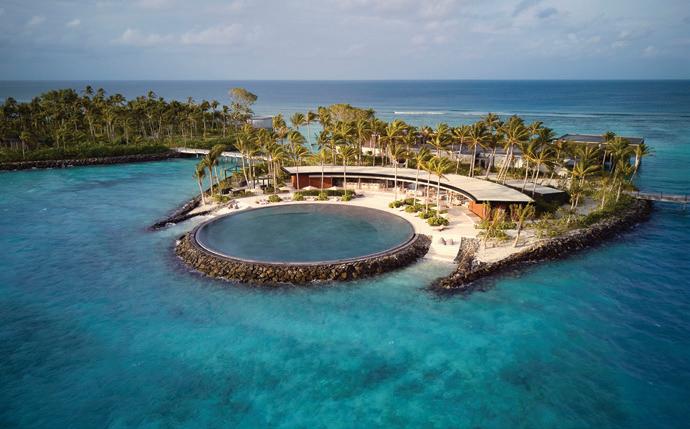
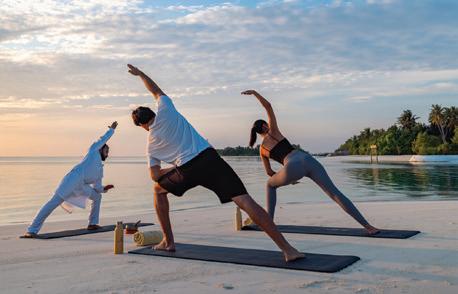
AS PART OF The RitzCarlton Maldives, Fari Islands’ 2026 Masters of Crafts residencies, Dubaibased wellness brand The Connected Collective is set to host a transformative couples’ retreat at the resort from 23 to 26 April 2026. Led by acclaimed mindset mentor and coach Harriet Mandak, this three-night “Vision of Us” experience
invites partners to step out of “autopilot” and move toward a more conscious, intentional partnership. The programme is built around the Collective’s signature philosophy of grounding and connection, featuring guided workshops that focus on shared goals, core values, and long-term life planning. Beyond the deep inner work, the retreat offers a
curated balance of physical and emotional restoration in a luxury island setting. Couples can look forward to sunset vision walks, beachside rituals, interactive cooking classes, catamaran adventures, restorative couples’ massages, and soulful wellness workshops. For details on the arts- and culture-led side of the 2026 programme, turn to page 58!
ULTRA-LUXURY hospitality brand THE OZEN COLLECTION’s wellness philosophy, ELE|NA Elements of Nature, has been making a shift from more generic spa rituals to a new, data-led approach to longevity. Now available at OZEN LIFE MAADHOO and OZEN RESERVE BOLIFUSHI, this precision wellness model integrates advanced DNA analysis and bioenergetic assessments to create highly personalised health pathways for every guest. Through an exclusive partnership with UK-based genomics company Muhdo Health, guests can utilise DNA kits to unlock genetic insights into their nutrition,
sleep quality, and cognitive resilience. Complementing this is the QEST4 system: a non-invasive scan that helps to identify one’s energetic imbalances and stress patterns. Together, these tools aim to transform well-
being into a proactive, informed journey. This evolution aligns with the brand’s “Refined Elegance” philosophy, weaving together scientific insight and environmental stewardship to try and set a new global benchmark.
Royal Mansour Tamuda Bay’s Medi-Spa has introduced a new menu of restorative seasonal treatments, including an Instant Hydration Facial by Dr Burgener Switzerland (MAD 1,700) for winter radiance, a Hot Stone Massage (MAD 2,500) to ease tension, and the two-hour Voyage Holistique (2,500 MAD) combining yoga with reiki or singing bowls. These rituals aim to offer guests a premium, personalised escape to reset the body and mind.


An ultra-exclusive world journey via private Boeing 757 jet
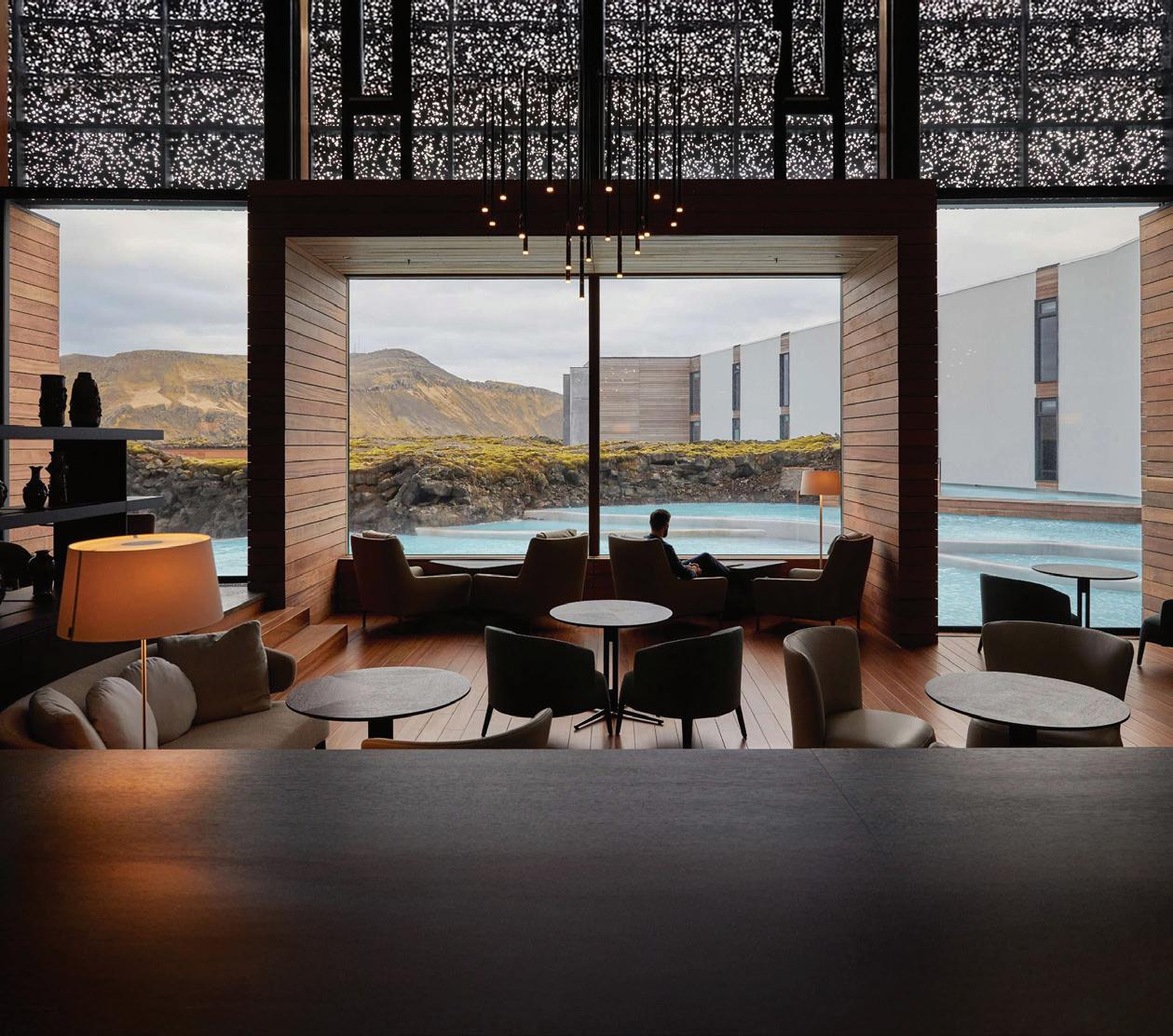
DUBAI-FOUNDED boutique luxury travel company Lushescapes has introduced Meridian One, a premier 22-night, invite-only world journey aboard a private Boeing 757.
Priced at US$125,000 per guest (on an apply-to-attend basis), the expedition is limited to 40 passengers, with an all-lie-flat cabin configuration. The journey departs Dubai on 29 November and returns on 21 December, spanning eight countries and five continents. Curated as a “single, flowing experience,” the route includes stops in Iceland, Cuba, the Peruvian
Amazon, Easter Island, French Polynesia, Australia, and Thailand. Lushescapes distinguishes this journey with “Impossible Moments” – exclusive, non-commercial experiences closed to the general public.
Highlights feature a geothermal ceremony in Iceland, a private dinner in a Havana mansion, and a dawn welcome on protected Daintree rainforest land. Guests stay at prestigious properties like the Blue Lagoon’s Retreat Hotel and the Zafiro Amazon river expedition, supported by a round-the-clock concierge.
THE EXPERIENCE
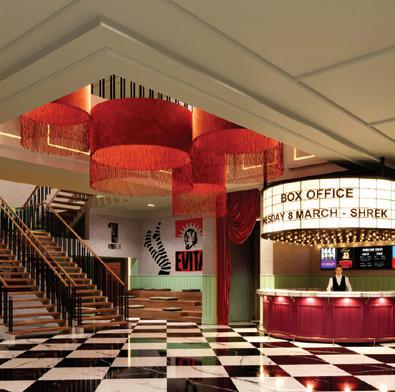
Majid Al Futtaim’s New Covent Garden venue at Mall of the Emirates celebrated its long-awaited launch last month. This state-of-the-art arts hub features a 575-seat theatre, ten rehearsal studios, and the rst international branch of London’s Pineapple Dance Studios. Led by Lisa Scott-Lee, the venue will host West End musicals, opera, and ballet, plus wellness sessions like yoga and pilates – perfect for your next “me day”.
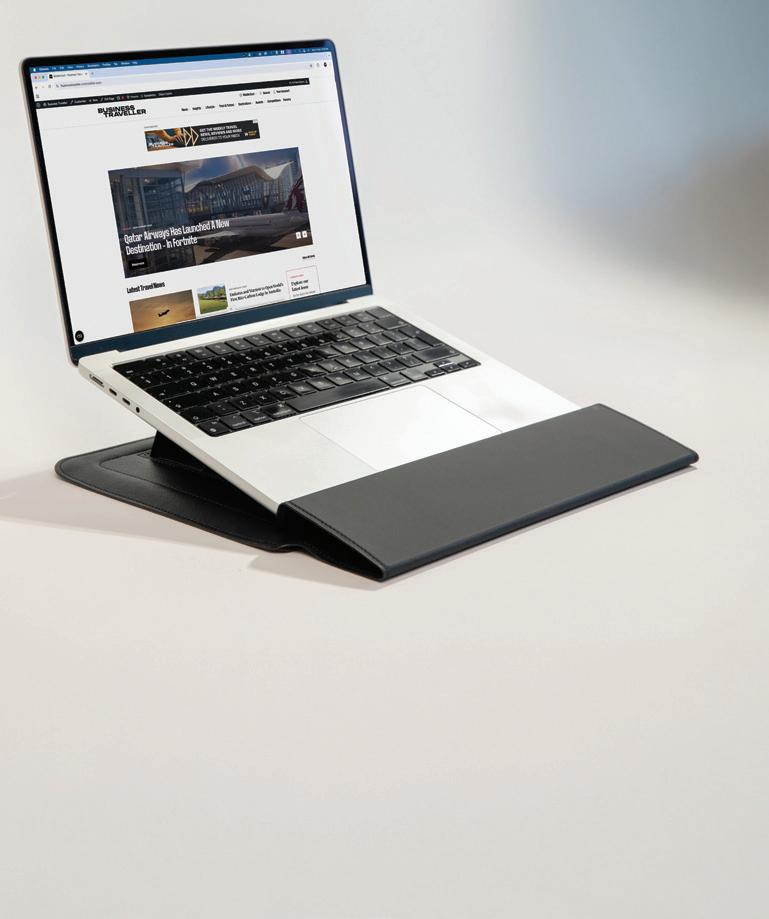
Is this multifunctional laptop sleeve the ultimate remote working tool?
THIS SMART LAPTOP SLEEVE from solo-entrepeneur-founded Berli-based Meine Studios is a multifunctional four-in-one workstation designed for the modern remote worker. Its founder, Olivia, is said to have come up with the concept as an attempt to find an alternative to traditional laptop accessories that weren’t ergonomic enough for “real, everyday use” – after which she designed the initial prototypes
herself using a cardboard box. Beyond its use as a standard protective case, this scratchresistant vegan leather sleeve utilises a clever TriFold system to transform into an ergonomic, laptop stand within less than a minute. By lifting the device to a 20° angle with an integrated armrest, it’s intended to help users improve their posture and reduce strain on the neck and back, all with a cooling design that facilitates natural airflow.

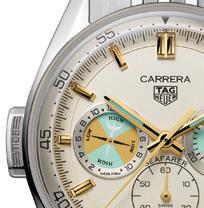
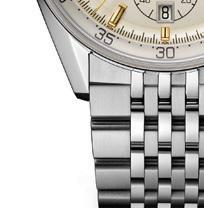
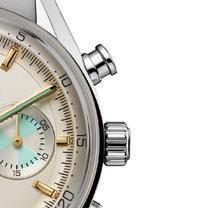
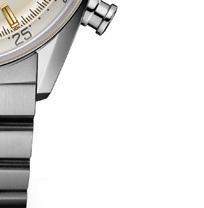
TAG Heuer’s Carrera Chronograph Seafarer marks the return of a maritime icon.
Inspired by the 1949 watch, this 42mm steel chronograph features a “glassbox” crystal and a TH20-04 inhouse movement with an 80-hour power reserve. Its champagne dial has a tide indicator at 9 o’clock with “Intrepid Teal” accents. It arrives this month, on a “beads of rice” bracelet. USD$8,800; tagheuer.com


THE EXPERIENCE
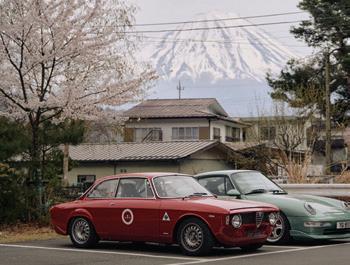
LAUNCHING on 21 September 2026 this six-day adventure through the Scottish Highlands will begin at The Peninsula London. Guests will gather for a briefing and welcome dinner before flying to Edinburgh to collect classic, eraspecific vehicles at the Gleneagles estate. The intimate expedition then
winds northward through legendary routes like Applecross Pass and Cairngorms National Park, featuring three nights at an exclusive historic estate surrounded by greenery. Highlights include whisky tastings and traditional pursuits like falconry and archery. Participation is GBP 27,500 per car for two guests.

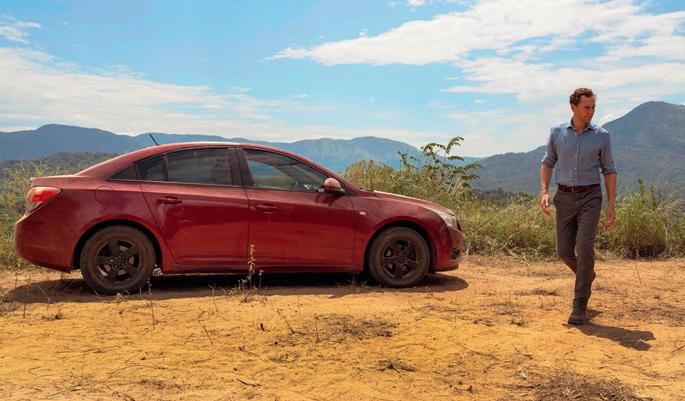
The gripping spy thriller made its long-awaited return to screens (available on Prime Video) recently, almost a decade since the series one finale. Tom Hiddleston and Olivia Colman returned as MI6 officers Jonathan Pine and Angela Burr, working to infiltrate an arms operation in Colombia. Actors Diego Calva and Camila Morrone also join the cast.
READ
THIS UPDATED EDITION of the hit 2017 book offers strategies for navigating today’s increasingly polarised world. Drawing upon Kahane’s experience as a leading conflict mediator who has worked in high-stakes war zones,
it aims to guide those forced to work with people they don’t agree with, or like, or trust, through the concept of “stretch collaboration” and friction-led exercises in experimentation.
AED145, Magrudy.com


FORMULA 1 WORLD champion
Damon Hill and three-time Grand Prix winner Johnny Herbert use their motoring expertise to dissect the hot topics of F1 in this monthly podcast. Tune in to find out their thoughts on Lando Norris’ winning streak, driving standards on the track, and what it’s like to battle for a top title in the competitive sport.
OUR PICK OF EVENTS TAKING PLACE AROUND THE WORLD

Fear No Power: Women Imagining Otherwise, Singapore
9 January –15 November 2026
The National Gallery of Singapore is celebrating five trailblazing female artists from Southeast Asia. Pieces dating from the 1960s to 2010s – years marked by decolonisation, political tensions and social change – tell a story of female empowerment in the region.
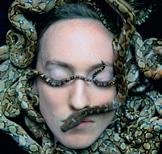
Metamorphoses, Amsterdam
6 February –25 May 2026
Rijksmuseum’s latest exhibition draws on Metamorphoses, the magnum opus from Roman poet Ovid – which explores themes such as passion, lust, jealousy and deceit. Visitors can discover more than 80 works from artists across the world, including Jupiter and Io by the Italian Renaissance artist Antonio da Correggio, plus contemporary pieces such as Juul Kraijer’s video loop, SPAWN (pictured).
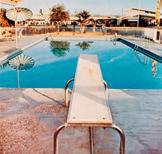
ARTIST ROOMS: Ed Ruscha, Liverpool
12 February –14 June 2026
For its next instalment of ARTIST ROOMS – a programme of solo exhibitions managed by Tate and National Galleries of Scotland – Tate Liverpool is presenting a collection of work by American artist Ed Ruscha. Inspired by US road trips, the pieces showcase open spaces – from swimming pools and diners to parking lots and petrol stations.
Sonia Sammut, General Manager of Anantara World Islands Resort, reveals the forensic planning, cultural architecture, and disciplined personalisation behind Dubai’s most secluded destination
What can people expect during a stay?
Guests experience true island seclusion just four kilometres from Dubai’s coastline, accessed via a 20-minute speedboat journey. They can unwind in oceanfront spa cabanas, dine beneath Qamar’s silver lanterns, or retreat to expansive villas with private pools overlooking the skyline. Free-roaming peacocks, floating lounge experiences, and uninterrupted Gulf views offer a unique contrast: tropical calm framed by one of the world’s most dynamic skylines. And occasionally, a peacock may confidently remind guests that they were here first.
What are the biggest operational lessons you’ve learned in this environment?
Operating a 70-key private island resort requires forensic planning. Marine logistics, weather patterns, supply-chain sequencing, and team transportation are not peripheral concerns; they are mission-critical. The most important lesson is anticipation. On an island, tomorrow cannot solve today’s oversight. Precision, contingency planning, and cross-departmental alignment are nonnegotiable. When executed correctly, guests experience seamless tranquillity, unaware of the complexity behind it.
You’ve had a strong background in implementing sustainability initiatives. How is this property leading the way? Our sustainability approach is operationally embedded rather than cosmetic. The resort holds Green Growth 2050 Gold certification and the Dubai Sustainable Tourism Silver Stamp, reflecting measurable commitment. Initiatives range from eliminating plastic straws to introducing wooden key cards comprehensive recycling protocols, closedloop coffee pod recycling, food waste biodigesters, and on-island beekeeping. For us, responsible hospitality means delivering exceptional comfort while maintaining environmental accountability for generations.
What are the challenges or benefits to being set in a man-made archipelago?
Weather sensitivity is a real operational variable. Marine conditions can affect supply deliveries and team transfers, requiring layered contingency planning. Unlike mainland hotels, forecasting must
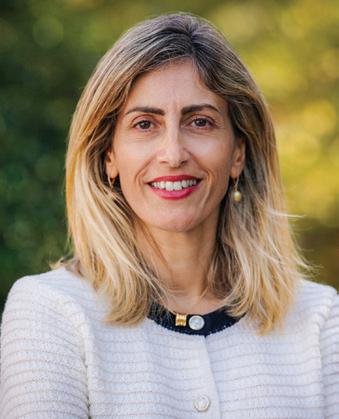
be sharper and more proactive. At the same time, the absence of walk-in traffic has encouraged a more strategic demand model. We have successfully attracted private boat owners for dining and curated day experiences, leveraging exclusivity as a commercial advantage. In our context, privacy becomes a powerful differentiator.
How do you leverage Minor DISCOVERY programme to attract more travellers? For a private island resort, loyalty must translate into meaningful access. We focus on converting rewards into experiences rather than transactions. Early access to peak-season inventory, curated island experiences, bespoke dining moments, and villa enhancements resonate more deeply than generic benefits. Today’s affluent traveller values recognition and personalisation. When loyalty is intelligently designed, members do not simply redeem; they feel acknowledged. That emotional recognition is what drives repeat visitation to a secluded destination like ours.
How do you ensure personalised guest experiences remain consistent? It comes down to disciplined personalisation. We rely on robust pre-arrival profiling, crossfunctional communication, and clearly defined service standards. Leadership presence is equally important. I spend time on the ground,
visible and engaged, ensuring feedback loops are immediate. In a secluded environment, every detail is amplified. Precision and responsiveness protect the brand promise.
How do you curate the guest’s mental transition from “mainland” to the island? The 20-minute boat journey is not transport; it is a psychological reset. We treat it as the first chapter of the experience. The shift from skyline intensity to open horizon allows guests to decompress before arrival. By the time they step onto the island, they have already disengaged from the pace of the city. The distance is short geographically, but transformative mentally. Guests often say they feel as though they have travelled internationally without leaving Dubai.
You were recently promoted to GM. How has your leadership style evolved since? Stepping into this role has shifted my lens from operational excellence to long-term value creation. While performance discipline remains fundamental, my focus is now equally on culture architecture, succession planning, and sustainable growth. I lead with a structured, data-informed approach, but one grounded in emotional intelligence because hospitality is, at its core, human. As the leader of a private-island resort in the GCC, I am also conscious of representation and mentorship. Visibility matters. I believe strong leadership is not performative; it is deliberate, consistent, and courageous enough to make difficult decisions while remaining approachable.
You lead a diverse team. How does your cultural fluency help in your role as GM? It allows me to lead through context rather than assumption. In a multicultural environment, nuance matters. Communication styles, expectations, and motivators differ, and leadership must adapt without compromising standards. Authority in hospitality is most effective when earned through respect and consistency. Cultural intelligence strengthens team cohesion and guest rapport. In a global team, authenticity is not optional; it is strategic.
What is the primary metric you want to be remembered for during your tenure? Repeat intent. Occupancy and RevPAR matter, but emotional loyalty is the true differentiator. When guests return, advocate, and form a lasting connection with the island, that signals we have moved beyond service delivery into experience stewardship. Equally, I would like my tenure to be associated with building a high-performance culture. Empowered teams create elevated guest satisfaction naturally. When people feel ownership, the metrics follow.
Step inside a thriving hub where world-class hospitality meets a “bleisure” experience that feels more like a homecoming than a hotel stay
WORDS YI-HWA HANNA




















As I pull my car up to the hotel’s entrance, my hair is frazzled, my jaw is clenched, and I’m tired with a capital T. It’s been an extremely hectic week –par for the course in a city that never sleeps, where there’s always so much happening that it often feels like time moves differently. The valet doesn’t just wordlessly hand me a ticket, or demand to know why I’m there in the accusatory tone that I, unfortunately, come across too often these days –he greets me with a warm and genuine smile, and tells me to take my time in retrieving my bags from the passenger seat. I instantly relax, feeling free to soften and take a breath. As I walk to the entrance – where a smiling doorman wishes me a wonderful day, as sincerely as possible – I see two hotel guests waiting for their vehicle. One of them is a wheelchair user, who is grinning from ear-to-ear as he converses with the bellhop with the familiarity of an old friend. I don’t need to wonder if they do actually share real intimacy or not, because I’m at InterContinental Residences Dubai Business Bay, and this is a place that has taken great pride in the sincerity that its entire team operates with since it opened its doors just over a year ago.


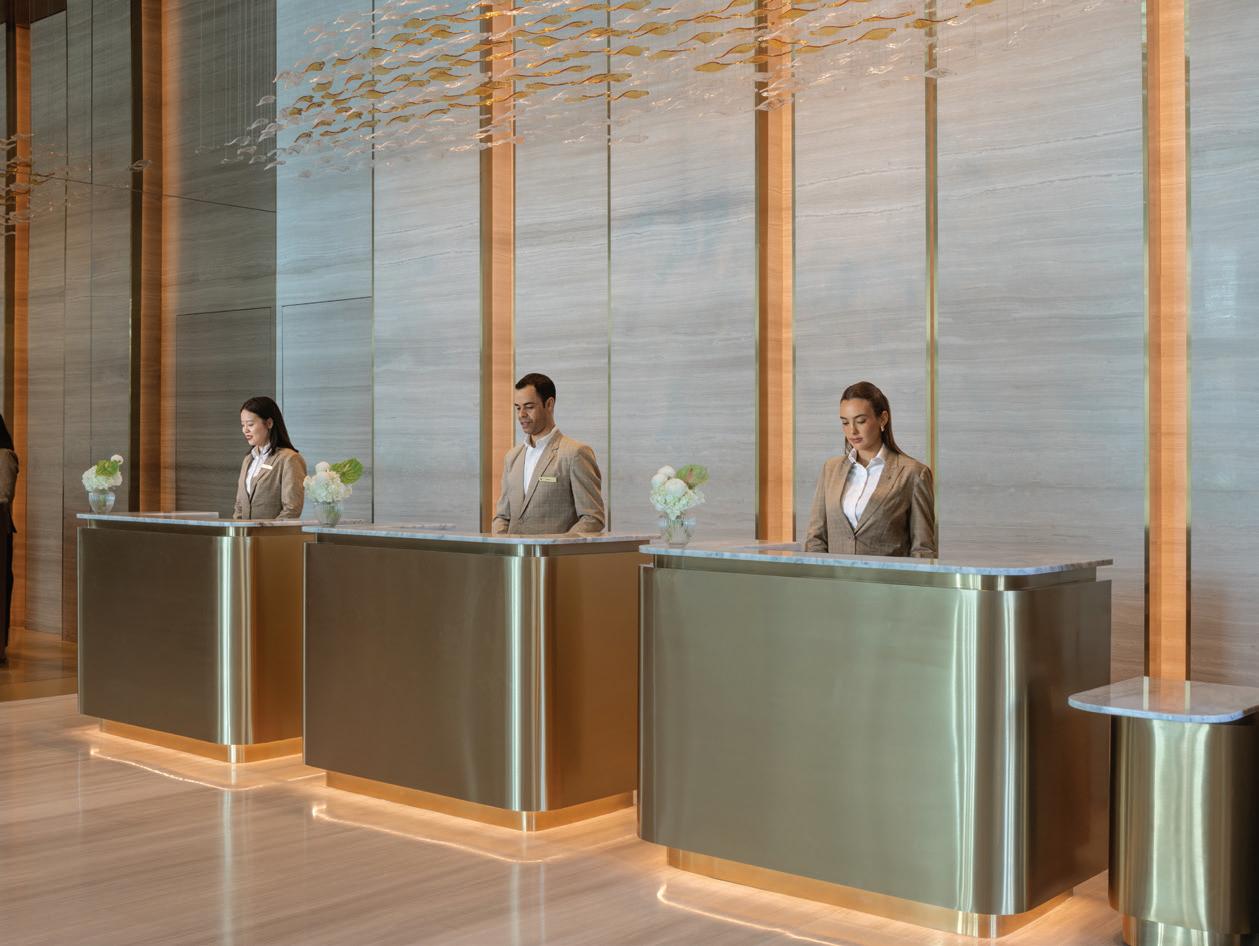
ABOVE
Reception desk at InterContinental Residences
Dubai Business Bay
BELOW
Mohamed Mahmoud
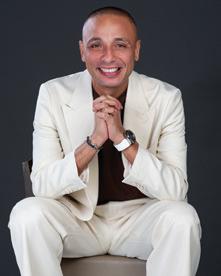
Since its soft opening in September 2024, this property has earned an impressive number of accolades, including the title of Best Bleisure Hotel at the Business Traveller Middle East Awards 2025, and most recently, a Forbes Travel Guide Recommended award as of February 2026. Its staff, too, have been recognised for their outstanding work time and time again, from cluster general manager Mohamed Mahmoud and cluster commercial director Madisse Matar, to cluster assistant director of marketing Abishek Grover. This is a team that doesn’t just strive for excellence in what they do – they operate with a synergy seldom seem elsewhere, bound by their pride in not only doing a great job as hospitality experts, but in creating a positive experience that extends far beyond the walls of their property.
During the past year, one of the most significant achievements InterContinental Residences Dubai Business Bay has made is the sense of community it has built. It’s something palpable from the moment you walk in: the lobby space here is never cold and impatient, it’s warm and buzzy; the restaurant and café are lled with long- and short-stay guests sharing conversations, reading, doing work, and relaxing. Even the business centre is actually used, and comfortably so. When I
ask Mahmoud what he is most proud of in the journey from their opening phase to the thriving hub it is today, it is this that supersedes it all. “The most unexpected and rewarding shift has been watching the hotel stop acting like a hotel, and start functioning like a neighbourhood. Usually in hospitality, we try to curate the guest experience down to the minute. But here, the residents took the reins. We saw long-stay guests starting to form their own organic networks. They don’t just nod to each other in the elevator – they’re co-ordinating coffee catch-ups. They shaped our identity by forcing us to be less transactional and more relational. We realised our job was not just to service rooms, but to facilitate these connections. We are now the living room for a very diverse and very global family,” he explains.
The hotel got this ball rolling through their own affability, and with an ongoing programme of events that brings guests and even day-visitors together. “When we launched our coffee tastings and wellness sessions, we thought they would be nice amenities. Instead, they became town halls. We see residents inviting their own guests and even business partners to these sessions. They are showing off the lifestyle they have here,” Matar says. “The idea of ‘curated living’ often implies that the hotel is directing the show. But what we see here is that we provide the stay, and the residents write the play.”
From a commercial standpoint, this is gold. As Matar explains, it transforms the property
RIGHT 57 Deli Café BELOW Madisse Matar
BOTTOM
The hotel entrance
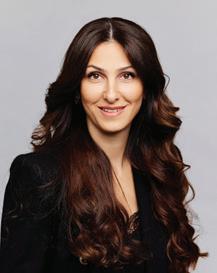
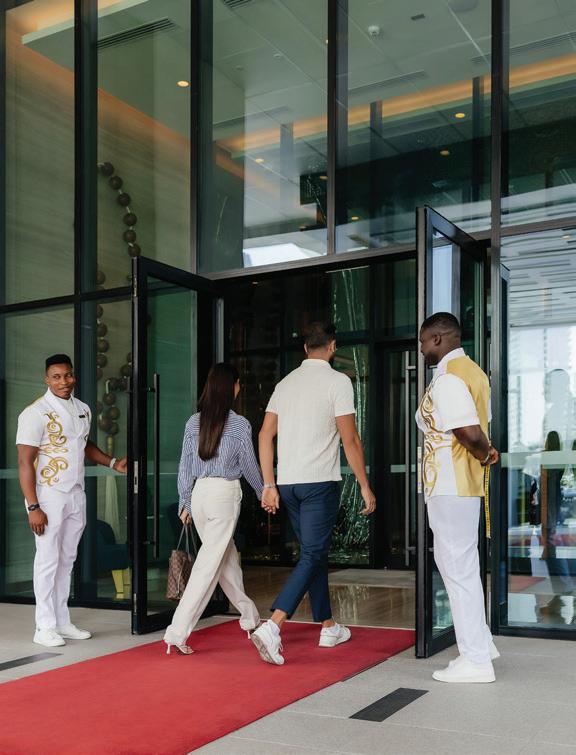
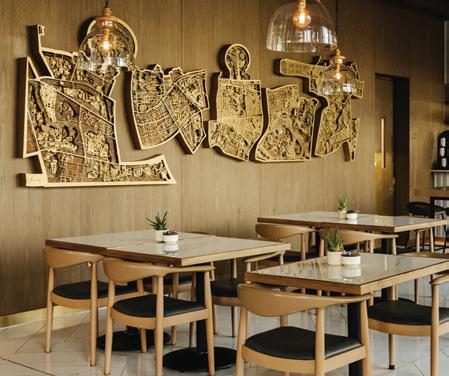
from a place where people sleep into a place they identify with. “When a resident feels ownership over the space, they treat the property better, and they stay longer, and they advocate for us. We are not just selling a square metre of an apartment. We are selling membership into a club that you cannot find anywhere else in Business Bay.”
On a personal level, it’s immensely rewarding for all sides. Mahmoud has earned a reputation as one of IHG’s most beloved managers during his 25-year tenure, but when asked what his goals are today, he simply says: “Ten years ago, what I wanted most was to be the best GM I could be. I’m proud of what I’ve achieved in my career. But now, my number one goal in my work, and in life in general, is to be a good human being.” It is this very genuine sentiment that echoes through the people he’s hand-picked for his team. While they are too humble for me to share their names – “We don’t do it for the kudos or pats on the back, we just do it because we want to make people smile and help make their days better,” they tell me – this team is the type to spend their personal time helping those in need, from people of special determination to children and stray animals.
This unique team brings this sense of philanthropy to their work through various initiatives held throughout the year. Last year, they invited a group of orphans from Ajman to enjoy an unforgettable day of fun in their hotel, and this year, they’re not just organising an event for students of the Special Needs Foundation – an NGO the hotel supports regularly – they also want to recognise the incredible dedication of the educators, by inviting the teachers and their guests for Iftar. They’re also developing a senior internship programme, that will help older adults seeking work in hospitality get their feet in the door. It’s something Mahmoud is personally very excited about. “In hospitality, we often obsess over what’s young and trendy, but we forget that warm and wise is just as valuable. The Senior Intership Programme is about bringing older adults into our ecosystem, not just to work, but to share their life experience. A multi-generational workforce mirrors our residents. We have families and grandparents and young professionals living here. Having a senior intern who has seen it all brings a level of patience and storytelling and emotional stability that you just cannot train. It adds a layer of soul to the property. It tells our guests that we value every stage of life here.”
Inclusivity is so important to them that the hotel is also actively working on achieving official certification as a neurodivergence-supporting environment – but they are firm in saying they’re a ‘work in progress’ until said certification is achieved. “It’s important to us because trust is hard to build and
easy to break, especially for families navigating neurodiversity. If we announce we are ‘Autism Friendly’ as a marketing headline, but a guest arrives and finds our sensory kits are not ready, or a staff member has not been adequately trained on how to handle a sensory overload stimulation, then we have not just failed a guest, we have broken a promise of safety,” he explains. “We chose the hard road and the rigorous checklist because we want to offer a gold standard experience rather than a participation trophy. We’re currently treating this as a work in progress because we believe transparency is better than perfection. We want to earn the title rather than just claim it.”
That trust they’re earning is paying off in multiple ways – with one key way being guest-advocated word of mouth. “We have a rule that we do not market charity. We simply do it, and let the story tell itself,” says Matar. “Sophisticated travellers today are very smart. They can smell inauthenticity from a mile away. When they see that our initiatives are consistent, quiet and genuine, they trust us more. Commercially, this builds brand equity. It tells the corporate booker or luxury traveller that their money is going to a responsible operator. It justifies the rate because they know they are buying into a value system and not just a room service menu.”
Indeed, many of their guests have extended their stays long past their original intended departure – regardless of the additional costs that may come with – because this has become more than a physical space to them, it’s a community. In an expat-heavy society like the UAE, this truly makes the property stand out. “Dubai is transient but people are craving permanence. The number one reason people leave a residence is not usually the price or the product. It is loneliness or a lack of connection,” Matar explains. “Our retention strategy is simple. If you leave the InterContinental Residences, you are not just leaving a building. You are leaving your friends. You are leaving your running partner and your coffee group. That emotional barrier to exit is incredibly high. Reputation-wise, this has made us an anomaly in Business Bay. We are known as the building with soul in a district of glass and steel. That reputation travels faster than any marketing campaign we could pay for.”
That organic bond between residents and guests has become their most powerful sales engine, showing up in the exceptionally high numbers of referrals-based leads and bookings. Beyond the feel-good factor it offers, this attitude gives also the team a north star. “Operations can be tiring and long shifts are hard. But when the team sees that we are genuinely trying to make an impact, it transforms their work from a job into a purpose. For residents, it validates their choice to live here. They feel proud to bring their friends to a place that stands for something.”
It is often said that teamwork makes the dreamwork, and that statement couldn’t be more true here. During their preopening phase, Mahmoud stopped before the team at a morning briefing and said he envisioned this hotel reaching the top spot on TripAdvisor. “To some people looking at a building that had barely opened, it seemed like a dream. But for this team, it became a singular focus,” he says. It’s one that paid off, since they now rank Number 1 in Dubai on Tripadvisor out of 892 hotels, and hold a covetable 9.4 rating on Booking.com. They’re also the first and only IHG Residence globally to have received the Forbes Recommended Hotel accreditation.
A year ago, Matar says, the energy was about anticipation. “We were all holding our breath and wanting everything to be perfect, and wondering how the market would react.” Today, she says, the energy is about belonging. “There is a confidence in the air. The team knows what they are doing, and the residents feel at home. The lobby is louder and livelier. It does not feel
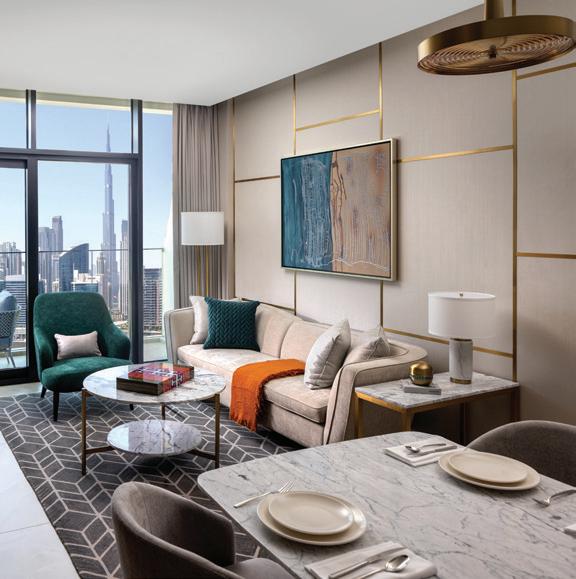
‘We are no longer just filling rooms. We are curating a lifestyle’
ABOVE
The living room in a two- or threebedroom suite
like a hotel lobby anymore. It feels like a neighbourhood square. The anxiety of the new opening has been replaced by the warmth of a settled family, and we are focused on finding the right mix of residents who add to this community culture. We are no longer just filling rooms. We are curating a lifestyle.”
When it comes to the inclusivity that can make a place – city, hotel, or community alike – feel like home, Mahmoud believes the region, from its leadership to its airports – which are among the world’s best in inclusivity and accessibility – are doing phenomenal work. “Where we fit in is in the second chapter of that travel story. If the airport experience is seamless but the hotel experience is stressful, then the vacation is compromised.”
With the modern world being so fast-paced, and in the heart of a city that people from all over the world love to call home – whether for days, weeks, months, or years – Mahmoud sees this place as a sanctuary. “Our role in this global shift is to prove that luxury and accessibility are not mutually exclusive. In fact, empathy is the new luxury. By standardising these [more thoughtful] practices, we are not just accommodating a niche. We are signalling that everyone, regardless of how they experience the world, belongs here,” he says.
Since the 1930s, when it was first said in the iconic film The Wizard of Oz, the phrase “there’s no place like home” has become a go-to way to express the joy one can feel for a place that offers an indisputable sense of belonging. At this particular hotel, with its energy, its genuine care, and its impressive community, its guests and residents would certainly agree.

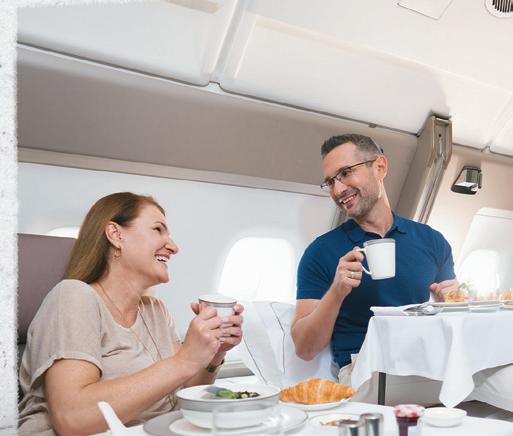
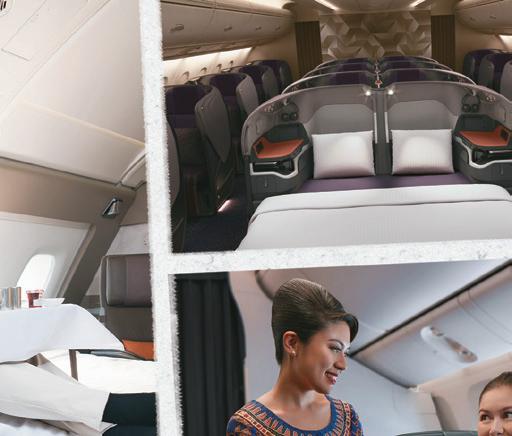


Explore the world with our A380 with daily flight services from Dubai starting 29 March 2026.
With a four-class cabin configuration: Suites, Business Class, Premium Economy Class and Economy Class, and award-winning cabin crew service, experience an elevated journey.




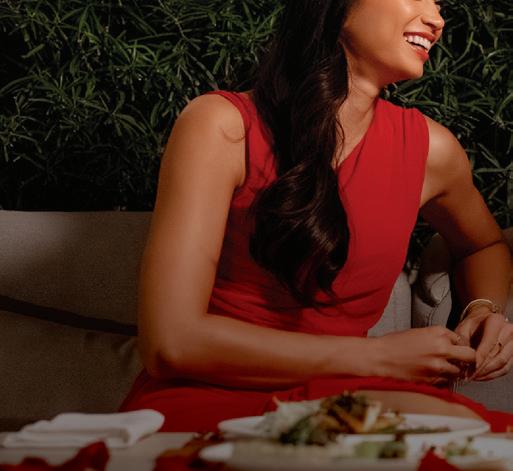

If you’ve got the bags packed, Vida Dubai Mall’s got your back From iconic views of Burj Khalifa to going on the world’s most epic shopping spree at Dubai Mall just steps away, here is your perfect base in the heart of the city. Whether you’re here to chill or connect, relax or work, we’ve got spacious spots and endless entertainment for all the dreamers, creators and vibrant trailblazers.
For reservations, T: +971 4 549 8888 | E: hithere.dubaimall@vidahotels.com
See you at Vida!







From the “glow-cation” revolution to the high-stakes world of fashion- and shopping-related tourism, a new breed of aesthetics-driven travel is redefining how people curate trips – and how they present themselves to the world
There was a time when personal travel was primarily about losing yourself – escaping the humdrum of the everyday to vanish into a remote landscape where nobody knew your name. But in the age of social media, where social currency is boosted by self-care, travel is increasingly about finding – and refining – a better version of yourself. We head to a far-flung mountain to not only witness the beauty of its vast landscape and breathe the fresh air that surrounds it, but also to return home with better mental focus and a renewed perspective
We book into wellness retreats in far-flung locations across the globe, immersing ourselves in yoga classes, sweat-drenched workouts, and holistic sound baths to return home feeling more healed, whole, and healthy. We squeeze opportunities to learn new things into our time away from home, whether it’s an arts and crafts workshop in the free hours of a business trip, or a leadership seminar or chance to upskill amidst a relaxing leisure holiday. Our holiday photos aren’t just family snaps for private memories – they’re content that can be shared, marketed, and utilised to influence or build a personal brand, and in everyday life, our hobbies have become side-hustles. No opportunity is wasted, especially when it’s a chance to optimise.
For the modern globetrotter, the ultimate souvenir is no longer just the physical objects we can place on a shelf, it’s also a physical transformation to be worn. The way we show up in the world matters more than ever: research confirms that “how we show up” – comprising attitude, mindset, personal branding, and presence – is a significant driver of professional and personal success, now often outweighing technical skills. Studies from from Harvard University, the Carnegie Foundation, and the Stanford Research Center suggest that 85% of job success comes from having well-developed “soft” skills –including attitude, communication, and interpersonal abilities – while only 15% is attributed to technical skills and knowledge.
The way we present ourselves to the world – whether in person or online – seems more crucial than ever, playing a fundamental role in shaping social interactions, professional opportunities, and personal well-being. First impressions can be formed in as little as 100 milliseconds, and studies have found that 69% of people will form an opinion before a conversation even begins. In fact, some commonly-cited numbers around first impressions include the “7/11 Rule”: a concept suggesting that people will typically make 11 decisions about someone within the first seven seconds of contact, and then spend the rest of the interaction seeking evidence to prove that initial impression.
Whether we want to admit it or not, the way we look matters – and a huge part of that is the clothes we wear and the way we look after ourselves in terms of personal care and grooming. It’s little surprise, then, that the global fashion industry, valued at approximately US$1.84 trillion in 2025, is projected to grow at a 2.81% CAGR through 2028. The global beauty and personal care industry, too, is experiencing robust growth, with projected revenues of US$703.31 billion in 2026, set to grow at a CAGR of over 3% to 8% annually through 2028. Skincare remains the dominant category (approx. 41% share), driven by demand for wellness and anti-ageing.
ABOVE Travellers are flying across the world for specialised cosmetic treatments
OPPOSITE PAGE Avani Hotels has introduced a shopping package, including a stay at the nhow Roma
At the heart of this shift is the “glowmad.” This is a traveller whose itinerary is dictated not by landmarks, but by the ability to book into a “glow-cation” - a journey specifically designed to yield visible, science-backed skin and wellness results. Driven largely by Gen Z and Millennials, 80% of whom now prioritise aesthetics when booking, this trend has transformed the traditional wellness retreat into a mission for results.
The glowmad doesn’t just want a facial; they want a transformation. In Seoul, the global headquarters of the “glass skin” movement, travellers are flocking to clinics in Gangnam and Myeong-dong for AI-driven skin diagnostics and noninvasive lifting. These trips are transactional and precise, often involving laser toning or personalised K-beauty regimes that are either inaccessible at home, or would take months (and much more cash) to coordinate. In 2024, the global cosmetic tourism market reached a valuation of US$84.9 billion, with nearly 38 million procedures performed worldwide.
The geography of beauty is also expanding. While Türkiye remains a titan when it comes to procedures like body contouring and hair transplants - welcoming over 1.2 million medical tourists annually - other hubs like Marrakech and Kerala are catering to the holistic side of aesthetics. In Morocco, the traditional hammam is being reimagined as a high-end argan oil ritual for deep detoxification, while Kerala remains the premier destination for authentic Ayurvedic rejuvenation. Approximately 33% of global travellers now admit that experiencing local beauty culture is a core driver for their trips.
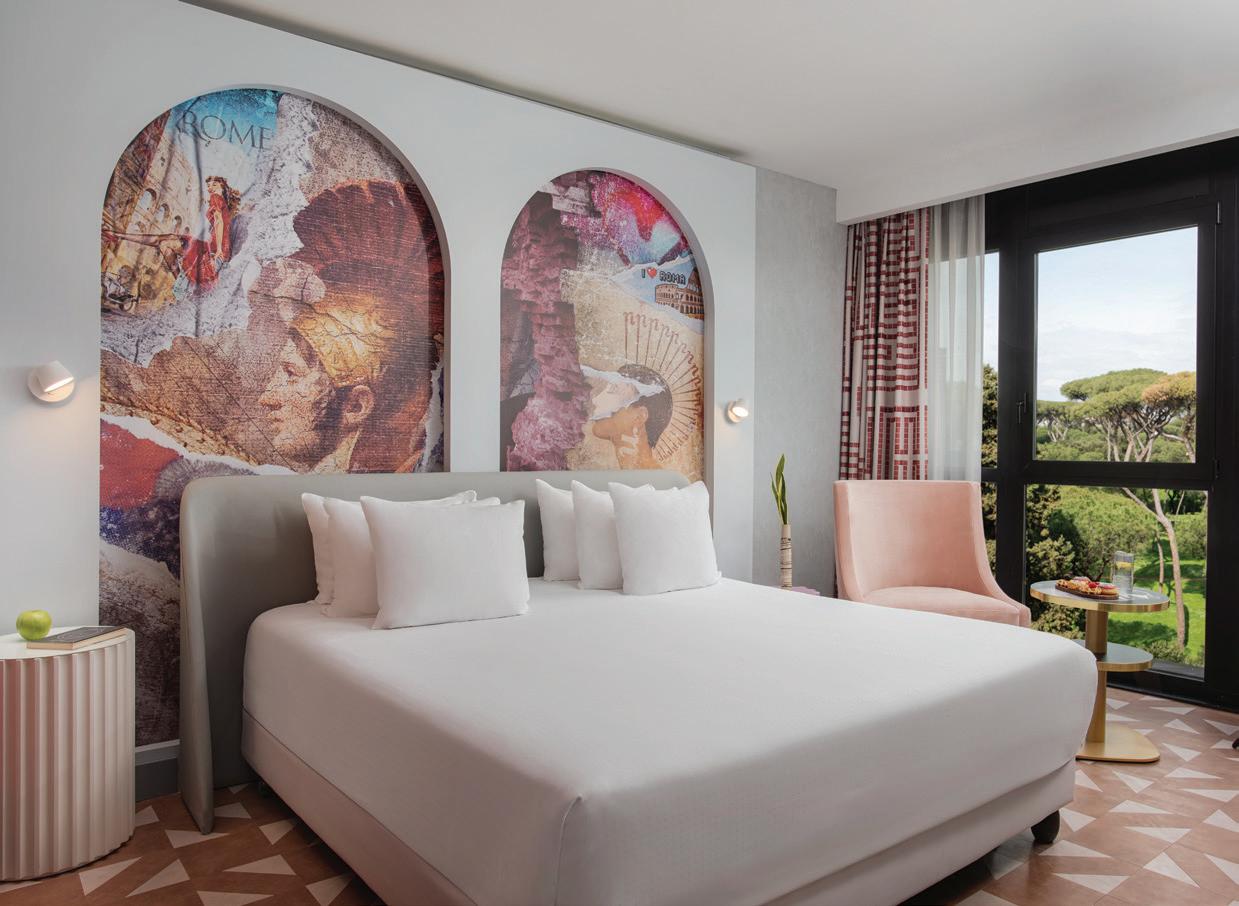
As we seek to refine the skin we live in, so too do we seek to improve upon what covers it, and for some, fashion is moving from a byproduct of travel to its primary purpose. Middle Eastern travellers, particularly those from the UAE and Saudi Arabia, are currently the most influential participants in the global fashion week circuit. Recent data from Expedia shows that UAE travellers are driving a 35% surge in searches for fashion week destinations, with Dubai, Paris, London, and Milan remaining the top-tier targets.
This phenomenon, known as “Fashion Tourism,” has turned the once-exclusive runways of Europe into high-value tourism events. It is no longer just for the industry elite; 80% of consumers now plan to shop while travelling for these events. In Dubai, the local fashion scene is booming, with Dubai Fashion Week recently recording a 50% increase in RSVPs. This local fervour is translating into a global movement, as Arab travellers increasingly combine runway attendance with exclusive, hightier experiences like personal shopping suites at the Dubai Mall, or private tours of Milan’s Quadrilatero della Moda.
The chance to buy unique, special items from places we can’t access in everyday life has long been part of the appeal for world travellers. And in a world where people will do whatever it takes to stand out – whether for the social clout or the desire to be as unique as the rarity we’re coveting in the “experience economy” – making shopping the main purpose of a trip is no longer a
luxury reserved for the elite. As a result, the “Goods Getaway” - a deliberate mission to acquire unique items unavailable at home, whether it’s regional couture, high-end vintage, or specialised local goods – is also on the rise.
In recent years, a number of countries have begun targeting high-spending tourists by promoting their opportunities for luxury retail, shopping festivals, and even duty-free shopping.
The UAE has become famous for its Dubai Shopping Festival and its mega-malls, while China has been aggressively pushing both inbound and outbound shopping-related travel. Japan continues to appeal to travellers seeking unique retail experiences, while countries such as Vietnam and Saudi Arabia have been investing heavily in infrastructure that will support more opportunities for retail joy. Hong Kong has been working hard to reiterate its reputation as a shopping paradise, with its tourism board reinforcing the quality and standards of its high-end retail and duty-free shopping options. Thailand and Singapore continue to be top destinations for tourists that visit specifically with shopping in mind, while Türkiye’s historic bazaars and modern outlets continue to draw in eager consumers from across the world. In Europe, London, Milan, and Paris continue to be cathedrals for the fashion-minded, while Germany has been promoting the strength of “Made in Germany” products, and Spain is now the third-largest shopping hub in Europe after Italy and France.
Hotels, too, are getting involved: in November 2025, Minor Hotels launched a six-night luxury package inspired by the fashion-forward TV show Emily in Paris. Featuring two-night
stays in Rome, Venice, and Milan across the group’s nhow Roma, Avani Rio Novo Venice, and NH Collection Milano CityLife properties, the “Chic in Italy: Set-Jet Stays” experience includes curated activities like vintage Fiat tours, mask-making workshops, and custom cosmetic sessions to help guests live out their own cinematic Italian adventure. For the shopping fanatic, the package’s finale includes a vintage shopping tour that can help guests get their hands on pre-loved Valentino to Chanel and Miu Miu, before taking them to the state-of-theart laboratory at City Lab Cosmetics, where they’ll be able to create custom lipsticks or skincare products for a flawless, camera-ready look. Starting at €1,024 per person, it’s available until June 2026. In Dubai, the One & Only Royal Mirage has partnered with Galeries Lafayette to offer guests a “Shop & Stay” package complete with a private styling session at the celebrated store’s personal shopping lounge (with the option to have a curated selection brought to your suite), while in London, the Sheraton Grand London Park Lane also offers a “Stay, Shop & Indulge” package that includes a stay in Mayfair, breakfast in the club lounge, and exclusive perks at the Oxfordshire-based premier luxury outlet shopping destination Bicester Village, such as access to the invitation-only VIP lounge, a 10% savings voucher on select brands, and hands-free shopping. Outside of the package, the hotel also offers a bespoke personal shopping experience at Fortnum & Mason on Piccadilly, arranged through their concierge team. Across the channel, the Anantara Plaza Nice Hotel in France has an “Art of Style” package that includes a four-hour session with a personal stylist to explore private collections and hidden boutiques, and culminates with a bespoke watercolour fashion illustration of the guest.
For the sustainable-minded traveller, “Thrift-Tripping” is a new mark of sophistication. Cities like Tokyo have become global leaders in high-quality luxury consignment, where curated vintage archives are as appealing as Harajuku street style offerings. In London, Portobello Road’s reputation remains unmatched for vintage treasures – from clothing to furniture and fully-functional, lovingly-restored retro telephones – while Shoreditch’s Brick Lane and Spitalfields markets offer an edgy second-hand scene. From vintage Dior in Paris’s Le Marais to rare Japanese denim in Shibuya, the hunt for the “unfindable” has become a competitive sport.

ABOVE Expedia data found that UAE travellers are driving a 35% surge in searches for fashion week destinations
LEFT
A growing number of hotels are offering “Stay and Shop” packages, often with VIP services
For some travellers, the journey to aesthetic enhancement begins long before the wheels of their plane touch the tarmac. As modern airports continue to transitioned from mere transit points into entertainment hubs and premier lifestyle centres, hubs like Zayed International (AUH), Incheon (ICN), and Heathrow (LHR) are now major retail players, often offering “first-to-market” luxury releases. In 2024, the travel retail beauty sector alone was valued at US$25.2 billion.
Even the way we dress for the journey has adapted to this new, hyper-polished lifestyle. The “airport look” is now a coveted, defined effort, featuring a calculated blend of comfortable luxury that is presented as effortless yet carefully curated. Layering and chic silhouettes that survive long-haul flights define the trend, and certain brands – from the UAE’s The Giving Movement and LC Couture, Italy’s Loro Piana and Scotland’s Johnstons of Elgin, to Los Angeles’s Alo Yoga and Éterne, and Pact, a sustainable clothing company made in India but headquartered in Colorado – have become ubiquitous among travellers in the know.
From surgical procedures in the UAE – where foreign patients now make up 30% of the demographic – to a weekend of thrift shopping in Berlin, travel is no longer just a chance to visit a place, it’s an opportunity to curate your best self through the world you’re exploring. It’s the ultimate accessory – a tool for self-enhancement that can optimise you at a laser clinic in Seoul, in the vintage boutiques of Paris, or around the runways of the world’s fashion capitals – as you pack your bags to come home with a new, improved you.
Looking for Dubai’s latest power spot? At SO/ Uptown Dubai, every meal is a strategic move, blending Parisian elegance with Pan-Asian theater to create the ultimate backdrop for the modern global traveller.
IN THE FAST-EVOLVING skyline of Dubai, the Uptown Tower has emerged not just as an architectural marvel – designed by worldrenowned architects Adrian Smith + Gordon Gill (who also designed the Burj Khalifa) to reflect the precise cut of a diamond – but as a beacon for the discerning business traveller. At its heart lies SO/ Uptown Dubai, a property that eschews the cookie-cutter corporate stay in favour of an avant-garde, fashion-forward DNA. For the guest who balances a packed meeting schedule with a desire for cultural immersion, the hotel’s culinary ecosystem offers more than just sustenance; it provides a curated series of social hubs designed for everything from high-stakes negotiations to refined relaxation.
The Power Breakfast
Every successful business day begins with precision. Brasserie Uptown serves as the property’s anchor. At this contemporary European brasserie, elevated comfort is the guiding principle. For the person seeking a familiar yet sophisticated start, the artisanal breads and French-style viennoiseries offer a taste of Parisian chic. Amidst the ideal setting for a breakfast meeting where the atmosphere is professional yet relaxed. For those in-between moments – a quick laptop session or a casual catch-up – the Lobby Café provides a refined sanctuary. Specialising in authentic French pastries baked on-site and expertly brewed coffee, it’s a chic and buzzy extension of your office.
When you want to impress a client or celebrate a deal, Citronelle is the perfect destination. This Pan-Asian powerhouse delivers theatrical flair that mirrors the hotel’s bold interiors. Following the Chinese philosophy of tasting slowly to savour
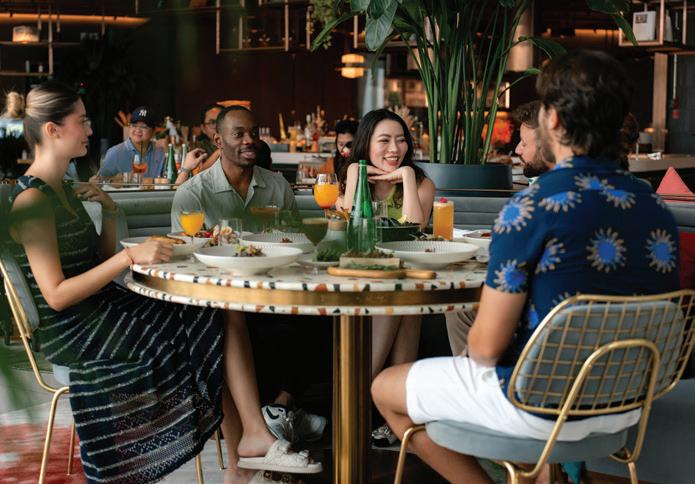
things deeply, Citronelle encourages guests to linger over inventive flavours made with care and attention to detail. The menu is a sensory journey that blends tradition with modern refinement, making it a great choice for an immersive dinner that transitions seamlessly from business talk to cultural appreciation. If you’re in a group, the restaurant also has several private dining areas that help curate a warm intimacy.
Bleisure and Leisure
As the workday winds down, the social energy shifts. Mixology lounge Savant⁶
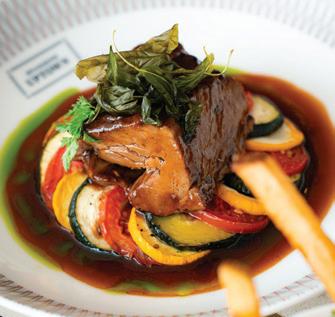
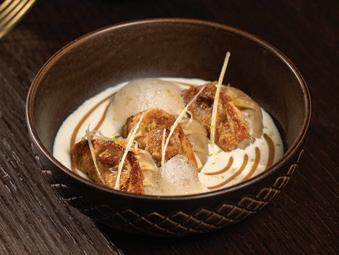
is designed for the “Savant” – the knowledgeable traveller who appreciates a creatively crafted drink in a design-forward environment. It’s the quintessential spot for pre-dinner drinks or an informal debrief with colleagues.
For a more exclusive atmosphere, Celeste can take you higher. This sunset bar offers a breathtaking vantage point of the Dubai skyline. With curated music and an intimate vibe, Celeste is the premier choice for an evening rendezvous or hosting a special celebration under the stars, providing a sophisticated backdrop with impressive views. Even the busiest executive might crave a moment of bleisure, and whether you’re hoping to soak in a bit of sun during a break in your schedule, or in need of a way to wind down after a particularly hectic day, Lazuli Pool & Bar offers a vibrant escape from the city’s pace, complete with a swim-up bar and gorgeous cabanas.
Drawn into digital meetings, or need a bit of personal space to reset? Transform your suite from an office into the ultimate private dining venue through the 24/7 InRoom Dining menu, which offers a curated collection of global flavours serving up fivestar standards whether it’s 2pm or 2am.
Just like the building it’s housed in, a visit to SO/ Uptown Dubai is multifaceted by design. For the traveller that values style, substance, and five-star care, it’s a metaphorical gem that aims to be brilliant in its execution, sharp in its service, and deeply layered in its cultural offerings. Whether you’re navigating a high-stakes deal or seeking a quiet moment in an elegant space, this polished destination – where the avant-garde meets the ambitious – is the ultimate accessory to the modern business journey.
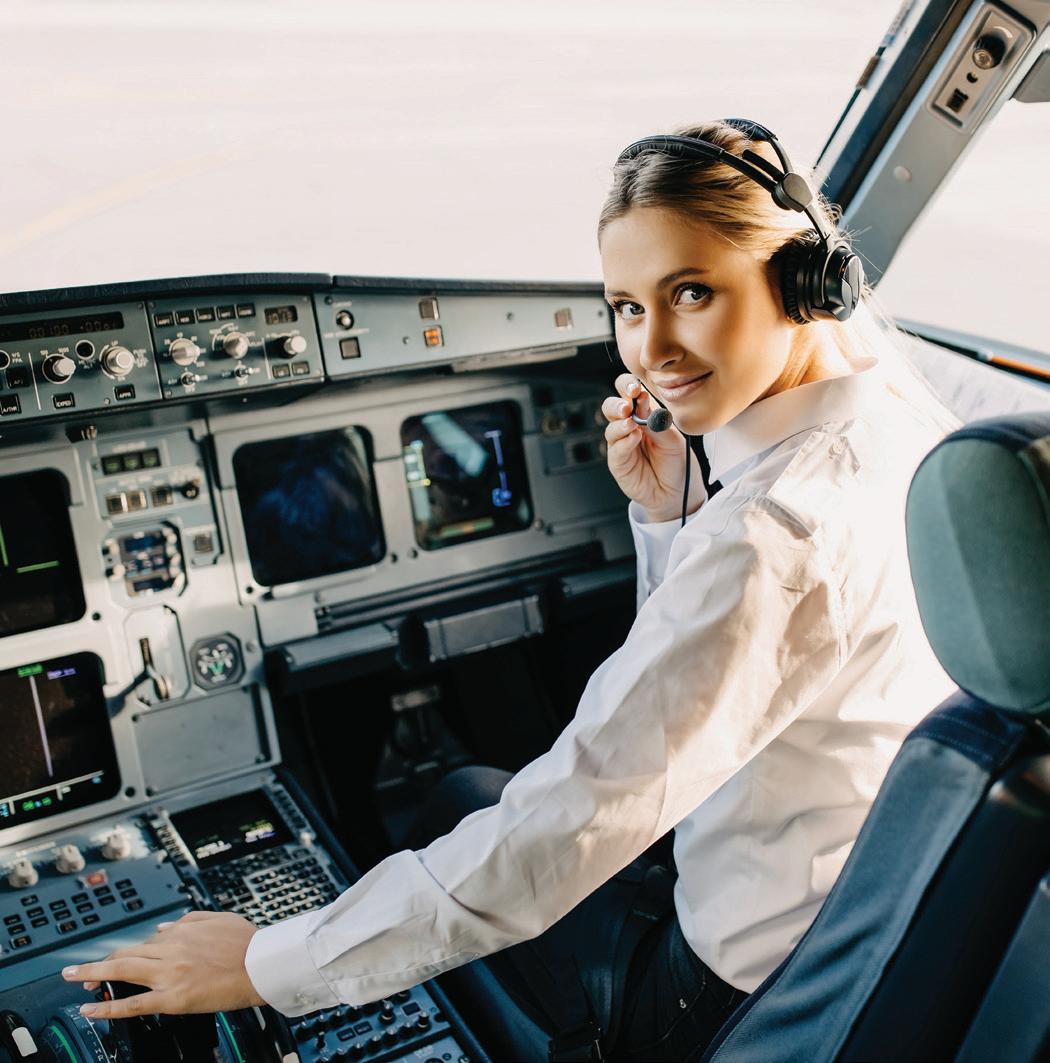
Discover the inspiring history of women in flight – and some regional icons leading the way today
he roar of a jet engine is a sound that signifies more than just travel; for many, it is the sound of a dream taking flight. Yet, for nearly a century, that sound was largely associated with a male-dominated workforce. In the modern era, that frequency has been changing. Walking through an international hub like Dubai International Airport (DXB) today, you are just as likely to see a female captain navigating a superjumbo as you are to see women leading complex engineering teams on the hangar floor.
The history of women in flight is a lesson in persistence. Long before the modern commercial era, pioneers like Raymonde de Laroche (née Elise Deroche) – the first woman in the world to receive a pilot’s licence in 1910 – proved that the laws of physics are indifferent to gender. Then came Amelia Earhart, whose name became synonymous with the adventurous spirit of the 1920s and 30s, and Beryl Markham, the first person to fly solo across the Atlantic from east to west.
During this golden age of aviation, a number of Arab women were equally inspiring in this defiance of societal norms. In 1933, the Egyptian Lotfia Elnadi became the first Arab and first African woman to earn a pilot’s license at just 26 years of age. To fund her secret lessons at the then-newly founded Almaza airport, she worked as a receptionist and hid in planes during test runs just to be near the controls. She gained international fame by participating in the Cairo-Alexandria air race, finishing just behind her friend Amelia Earhart, and she flew for five years, until a spinal injury eventually forced her retirement.
In 1951, Morocco’s Touria Chaoui achieved a similar feat, becoming the first female aviator in the Arab world at the jawdropping age of 15. Often credited as the youngest female pilot in the world at the time, Chaoui obtained her license despite heavy reluctance from authorities, later founding the Royal Aero-Club to encourage others.
Yet despite these inspiring examples, for decades, women were relegated to “pink-collar” roles within the industry, primarily as cabin crew – a role that, while as vital and respected then as it is now, often masked their technical and strategic capabilities. It wasn’t until the late 20th century that the flight deck began to truly diversify.
In 2026, the data reflects a steady, if gradual, ascent. As the narrative of women in aviation makes a shift from one composed primarily of isolated “firsts” to a broader movement of systemic integration, the industry is working to move far past its stage of simple tokenism. Invisible barriers are being dismantled not through grand gestures, but through a fundamental recalibration of how aviation talent is recruited, trained, and retained. According to the latest IATA and ICAO reports for 2025-2026, women now hold approximately 41.6% to 42% of all aviation jobs globally. However, the distribution remains uneven. While women represent roughly 31% of senior management roles and 21% of air traffic controllers, they still make up only about 6% of pilots worldwide. These figures highlight a clear reality: that while the quieter or more low-key roles are being filled, the technical and flight deck positions remain the industry’s final frontiers.
In the Middle East, the transition to today’s more empowered era has been particularly cinematic. The region, once perceived as

ABOVE
The UAE aviation sector employs around 27,000+ women, accounting for 42% of the total workforce
BOTTOM
The 1963 8-cent Amelia Earhart airmail stamp issued on 24 July 1963, in Atchison, Kansas, honouring the pioneering aviator on her birthday

The region has become a global leader and positive example of fostering aviation talent through state-backed iniatives
a traditionalist stronghold, has become a global leader and positive example of fostering female aviation talent through state-backed initiatives and national airlines. Today, a notable number of women from the Middle East are commanding the largest aircraft in the sky and even leading military missions.
Ayesha Al Hameli blazed the trail in 1998 as the UAE’s first female pilot at age 17. In 2011, Captain Salma Al Beloushi made history as the first Emirati female first officer for Etihad Airways, proving that the cockpit was a place of merit, not gender. In 2014, Major Mariam al-Mansouri became the first female fighter pilot in the UAE, gaining international attention. She flies an F-16 Fighting Falcon, and is considered a role model for many women in the region. In 2017, Egypt’s Nevin Darwish became the first Arab woman to pilot the Airbus A380, the world’s largest passenger aircraft. And in 2019, Sheikha Mozah bint Marwan Al Maktoum – a trailblazing pilot who is also a member of Dubai’s royal family – founded the Women in Aviation Association “Shehana” (named after the female falcon), to encourage more women to enter the industry. Earlier that same year, Sheikha Mozah had become the first woman to join the Dubai Police air wing as a first lieutenant pilot – and three years later, she also became the first woman globally to pilot the revolutionary Leonardo AW609 aircraft, which was the world’s first tiltrotor to receive civil certification.
Captain Aisha Al Mansoori, too, made history in 2022 as the UAE’s first female commercial captain for Etihad Airways. Her journey from a 2007 cadet to a captain flying the Airbus A380 – the world’s largest passenger jet – is a testament to the merit-first culture being cultivated in the region’s carriers.
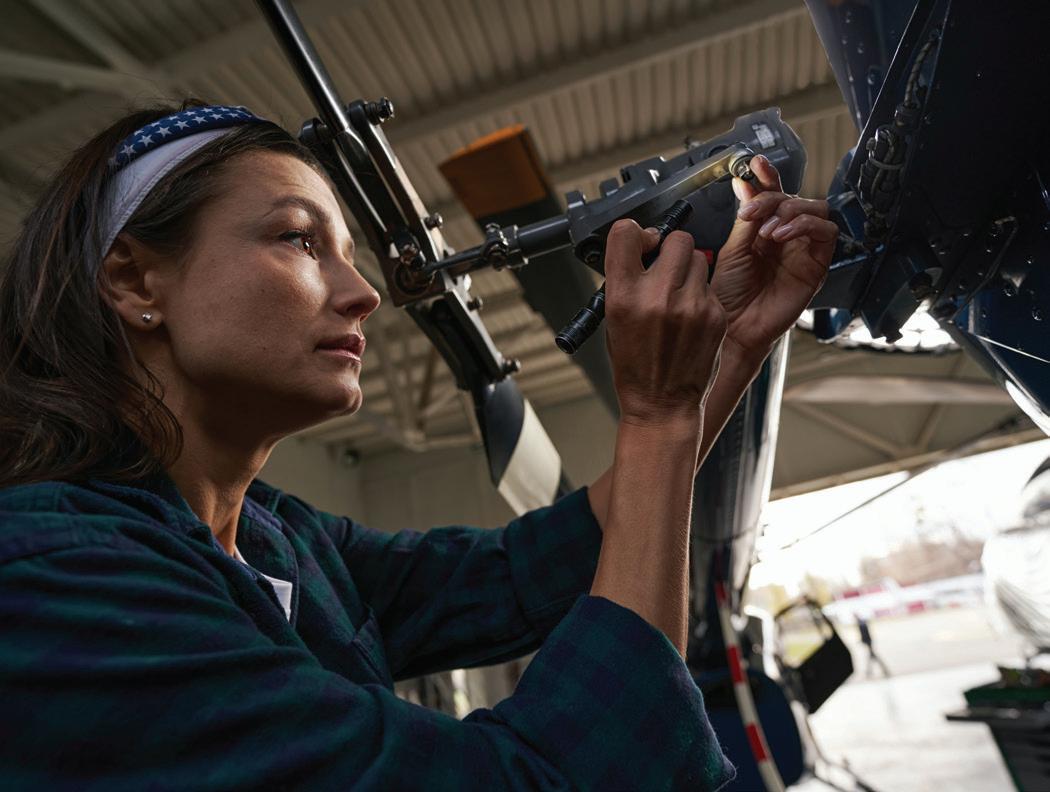
Al Mansoori’s achievement was not just a personal victory – it was a signal to the global industry that the highest technical ranks were officially open.
Saudi Arabia is seeing a similarly rapid ascent. Hanadi Zakaria Al-Hindi became the first Saudi woman to receive a commercial pilot’s license in 2005, and was officially certified to fly in the kingdom by 2014. In 2019, Yasmeen Al-Maimani followed, becoming the first Saudi woman to co-pilot a commercial airline – for Nesma Airlines – within the country.
The reach of Arab women has now even extended beyond Earth’s atmosphere. In 2022, Sara Sabry became the first Egyptian and first Arab woman to go to space with Blue Origin. A year later, Rayyanah Barnawi became the first Saudi and Arab Muslim female astronaut to reach the International Space Station.
While pilots often get all the glory, the true engine room of aviation lies in its infrastructure. In the UAE, Strata Manufacturing – the Abu Dhabi-based aero-structures powerhouse owned by Mubadala Investment Company – has become a global case study for female empowerment in the technical sector. Strata doesn’t just hire women; it is arguably powered by them, in many ways. The statistics are staggering and could serve as a north star for the global manufacturing industry. Within Strata’s Emirati staff, women represent an overwhelming 86% to 90% of the
ABOVE
Roughly only 3% of the world’s aircraft mechanics are women
team. Of its total multinational workforce, women make up over half, sitting between 52% and 58%. This isn’t just entrylevel representation, either; women hold 63% of Emirati team leader positions and 62% of Emirati team supervisor roles.
Strata has thus been recognised as a key player in empowering Emirati women in the manufacturing sector, helping them gain technical skills in a domain that requires high levels of technological professionalism.
As we move forward, the focus is shifting from simple diversity to the more complex challenge of equity. True equity is the antidote to performative tokenism: it ensures that hiring for a diverse workforce is not a box-ticking exercise, but a commitment to ensuring every voice is seen, heard, and valued.
For an industry where decisions often carry life-or-death stakes, integrating diverse perspectives as widely as possible isn’t just a social goal – it’s a commercial and safety imperative. By moving beyond the numbers and focusing on empowering women to lead, mentor, and innovate, the aviation world is ensuring its future is as expansive as the sky itself.
Ultimately, the goal is for a female captain or lead engineer to be so commonplace that her gender isn’t the story – her excellence is. As the global industry continues to recalibrate, reaching those higher ambitions depends on a collective effort to ensure that everyone, regardless of their background, has a fair shot at the flight deck.
Head of Marketing and Customer Experience, flyadeal
FOR HAFIZ, the transition into aviation in 2022 was driven by a desire to move from the mature world of Fast-Moving Consumer Goods (FMCG) into an industry defined by rapid evolution. Having spent 18 years honing her marketing expertise across Saudi Arabia’s healthcare, real estate, and retail sectors, she recognised that the kingdom’s expanding tourism landscape offered her a unique challenge. “I wanted a change,” she explains, noting that the fast-paced nature of a young airline like flyadeal provided the perfect opportunity to apply her skills outside of her comfort zone.
Growing up, Hafiz’s ambitions fluctuated between architecture, law, and marketing – fields that she now realises share a common thread: “creating positive impact on human lives through designed living, protecting people’s rights, or adding value to products and services.” In her current role, she views marketing as a natural evolution of those early ambitions, albeit in a much more dynamic environment.
Hafiz is a firm believer that women possess a unique “superpower” in the workplace,
through the ability to shift perspectives instantly. This, she argues, goes beyond simple multitasking. “It’s the ability to think of the detail of today while in parallel considering the impact on tomorrow,” she says, observing that this skill of foresight is often developed through lived experience. For women looking to enter the field, her advice is to embrace the “perpetual motion” of the sector. “Aviation is a beautiful, complex puzzle that never stays the same for two days in a row,” she notes. “Once you’re in, you’ll find that other industries just don’t have the same pull.”
Managed Aircraft Manager & Marketing Head, RoyalJet
TO ALSUWAIDI, aviation was never just a job, it was a “lifelong calling”. Raised abroad as the daughter of an ambassador, her upbringing gifted her with a cosmopolitan perspective and an innate curiosity about the world that made a career in the skies feel inevitable. She began her journey with a nine-year
tenure at Emirates – a formative period of her life she credits with exposing her to world-class standards and the necessity of consistent excellence.
Now balancing the technical precision of managed aircraft with high-level marketing at RoyalJet, Alsuwaidi believes that women possess the exact qualities required to succeed in such a high-pressure environment. “Aviation is demanding, yet it rewards discipline, resilience, and authenticity – qualities women embody in abundance,” she explains. Her message to those looking to follow in her footsteps is one of self-conviction: “Believe in yourself and step forward with confidence. Your perspective, your experiences, and your determination are your superpowers”.
Head of Brand, beOnd
KOH’S ENTRY INTO the aviation sector came from a serendipitous encounter. Encouraged by a friend who felt her personality was naturally suited for the field, she pursued a Hospitality & Tourism Management diploma. She quickly found herself energised by the fast-paced, service-driven nature of the industry and its focus on human connection. It was during these formative years that a university professor pivoted her focus toward the strategic psychology of consumer behaviour and brand positioning – a shift that moved her perspective from purely operational to deeply strategic. Today, as Head of Brand at beOnd – the world’s first premium leisure airline – she views hospitality and aviation as industries sitting at the unique “intersection of experience, storytelling, and
commercial strategy”.
Koh sees clear parallels between her current role and her earliest childhood ambition of becoming a lawyer. She was once drawn to the structured world of debate, the art of building a case, and the power of influence – core themes that remain central to her motivation today. “Brand leadership also requires clarity of thought, advocacy, negotiation, and the ability to shape narratives,” she observes. Her advice for the next generation of women is rooted in business pragmatism. She stresses that brand leadership is fundamentally a business
discipline. “Developing commercial literacy is essential,” she notes, urging professionals to deeply understand revenue drivers and operational realities to build credibility. She also highlights the importance of leaning into the process of growth, even when confidence feels elusive: “Don’t wait until you feel completely ‘ready’ to step forward. Growth often happens before confidence fully forms”. Above all, she views leadership as stewardship: “You are shaping experiences that affect how people feel and what they remember”. Her career, defined by “unexpected detours” and a commitment to staying curious, serves as a testament to the fact that our paths are rarely linear, but that openness often builds the very strengths needed for future success.





























recent rise of neurodivergence has been dizzying. Today, approximately 15 to 20% of the world’s population –an estimated one in seven people – is considered to be neurodivergent. Last year in Britain alone, eight times more people were diagnosed with autism than in 2004, while ADHD (Attention De cit Hyperactive Disorder) diagnoses have also seen a 5,500% increase.
While the reasons for the heady rise in diagnoses are nuanced, much of the increase lies in the realisation that behaviours which in the past would not have been ascribed to autism – such as differences in social interactions, and the processing of sensory or emotional stimuli – are in fact closely associated with the condition. It is, simply, a far more common state than we once believed. Alongside that has come the realisation by businesses that – for a large swathe of the population – they have been making their services harder to use than they need to. For the neurodivergent themselves, certain business practices have seemed speci cally designed to exclude and alienate. And business travel is where that screams loudest.
A survey this year by AutismTravel showed an astonishing 94% of respondents would take more trips if only they could access places where staff are autism-trained and certi ed, with nearly half (45%) of neurodivergent travellers experiencing dif culties while travelling. In light of those gures, what was once viewed as a remote issue in Corporate Social Responsibility has increasingly begun to look like poor business by an industry leaving money on the table. But nally, things are changing.
Let’s get this out of the way early. I am one of those neurodivergent business travellers. My ADHD is severe and combined (inattentive and hyperactive), my ASD (Autism Spectrum Disorder) much less so. In fact, I was in my late forties before I received my diagnosis for the latter. Most people would have no idea, since I also mask very successfully. I work for the BBC in conflict zones, write for The Washington Post, present on TV and give lectures onstage. It was the journey back from Afghanistan in 2003 that brought home to me that all was not as it was for others. I’d been navigating roadside landmines, hostiles, undercover work and light re without really worrying too much. But as I ew the nal leg from Baku to London, I realised the airport experience was stressing me out more than being shot at. At the time, I simply could not understand why.
It wasn’t so much the sudden, weird reorientation, the robotic voices ordering us into pens, or the ashing, barking, and beeping – especially coming so soon after all the dust and mountains. Part of it was the underlying feeling of being misled – from prickly information desk attendants to crowdkettling tactics and uncomfortable food areas designed to

‘As I ew back to London, I realised the airport experience was stressing me out more than being shot at’
make the customer vacate the area as quickly as possible. I felt surrounded by communication that was fundamentally untrustworthy. It verged on goosebump-level creepiness, which caused chest-tightening and a hyper-alert stage of emergency response. Clearly, not quite the customer experience airports are aiming for.
Of course, the airports wouldn’t know. Help is often made available to customers who have visible mobility or communication-impairing conditions, but for the invisible majority of us, help is less obvious. And as the customer service maxim goes: most people who are dissatis ed with your business don’t complain. They just walk away.
I’M
“Everything about business travel can often feel as if it’s speci cally designed to be hostile to the neurodivergent,” laughs Daphne Ashford-Smith, an international wealth manager, whose career has seen her travel the world. Ashford-Smith is also on the autism spectrum. In addition to her investment work, she consults with businesses to help them communicate and operate more successfully with neurodivergent travellers. She speaks about business travel with a sense of weariness borne of having to work extra hard through the years to make up for that feeling of hostile customer experience. She lists “poor, shouty communication, senseless and illogical crowd control measures, crowd dynamics, con icting signals, overstimulating
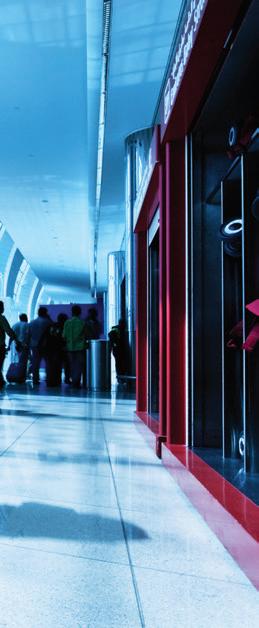
environments” as personal hurdles that put her off travel. “The thing is,” she sighs, “I love to travel – to actually be somewhere – and my professional life makes me the kind of person the industry should want to cultivate. But they design such a difficult experience that it takes everything to put yourself through it.”
Ironically, research also reveals that key sectors for business travel – such as IT, finance and economics, creative industries, science, and academia – are actually also those in which autism is heavily overrepresented.
Neurodivergent travellers are left with a stark choice: sink hefty amounts of your own additional time, money and effort into mitigating the effects, or simply don’t travel. For as long as I’ve travelled, I’ve checked in four hours early if I can. Airports’ sensory assaults can be so disturbing that I will do almost anything to arrive well before the crowds, drop off any baggage and get through security as quickly as possible – away from tannoys, music, advertising, stimuli and crowds – and ensconce myself with a book and headphones in the blank and music-free calmness of the gate itself.
Business class lounges have also been a huge help. One of the key benefits is that they replicate the calmness of the gate environment. Information is delivered silently. Ambient noise and visual disturbance is dialled down.
But if we don’t have recourse to those options, the results can be wearisome. Most airports have prayer rooms for the religious, but vanishingly few offer anything like a soothing environment for those experiencing the range of responses – from paralysis to panic attacks – which come with sensory overload.
THE
Suddenly in 2025, the travel industry is scrambling to get on board and make airports, booking processes, customer interactions and websites more neurodivergent-friendly.
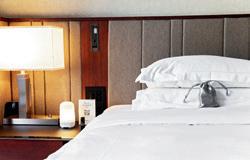
HYATT HOTELS
Hyatt Hotels undertook a survey with KultureCity to develop new initiatives, such as 3D virtual tours and expanding the “Hyatt Has It” list of amenities to include weighted blankets and noise-cancelling headphones.
Virgin Atlantic – helmed by Richard Branson, who has spoken openly about having dyslexia – was an early adopter, launching the Hidden Disabilities scheme in 2019 to help passengers discreetly signal if they needed extra support from speciallytrained staff. British Airways meanwhile adopted the Hidden Disabilities Sunflower in 2022 for the same reason, and launched a visual flying guide in partnership with Learning Rose in 2023 designed for autistic travellers.
A number of notable firsts have recently come from the Middle East. In December 2023, Dubai Airport became the first international airport to receive a Certified Autism Centre designation from IBCCES, the International Board of Credentialing and Continuing Education Standards, which provides training to travel industry staff about neurodivergent travellers’ needs.
Then in April 2024, Emirates got Certified Autism Centre status for its check-in areas at Dubai, with plans to become the world’s first autism-certified airline. In April 2025, Dubai itself – the entire city – became an autism-certified destination, with more than 300 hotels and Dubai’s 15 biggest attractions – plus its beaches and parks – getting certified. To reach this point, more than 70,000 staff and partners had autism and sensory awareness training.
And Dubai is not the only city revolutionising the way it treats its people. Globally, destinations from Dublin to Athens are becoming certified as autism-friendly; with dozens more engaging with the process. The UK-pioneered Hidden Disabilities Sunflower badge, for instance, was introduced in the US city of Mesa in Arizona in 2021. Today, almost all the city’s attractions offer sunflower-themed lanyards and bracelets free to visitors, helping them to self-identify frictionlessly, and removing the burden of endless rounds of appeal, challenge and explanation.
This is, of course, a welcome contrast to the decades of denial, ignorance, and stasis that have previously characterised the global travel industry’s stance on neurodivergent travellers. But why now?
LEFT
EVERYTHING, EVERYWHERE, ALL AT ONCE
One answer has its origins in the lockdowns that swept the
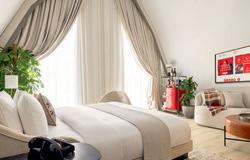
In 2024, Virgin Hotels partnered with Autism Double-Checked to roll out new initiatives – from staff training to improve empathy to creating inclusive rooms with blackout curtains and adjustable lighting.
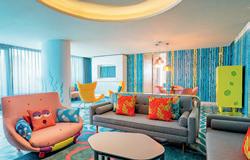
The US brand partnered with Autism DoubleChecked to introduce an Autism Concierge. Guests or parents of those with neurodiverse needs can email the concierge to discuss any special needs with someone trained to help.
world at the height of the Covid pandemic of 2019-21. Before the pandemic, airlines and travel companies would often simply shrug when asked about neurodivergent travellers’ needs. Can’t deal with it? Tough.
But change came from two fronts. Firstly, business travel came under existential threat. In the first lockdown alone, video platform Zoom’s downloads increased a staggering 2,900%, as companies scrambled to shift their work practices to accommodate remote working. So when travel resumed, it was no longer the only game in town. Business travel providers couldn’t tell travellers to “like it or lump it”. They now had to compete – not against other forms of travel – but against business interactions without travel at all.
The second front for change was even more unexpected. Global lockdowns were an existential threat to the travel industry in the short term, but in the long term, they were about to become a hidden opportunity.
Jeff Strachan, assistant vice president of economy and tourism in Dubai, points to the lockdown as the moment in time when the travel and tourism industry was free to take stock of the industry: “Back in 2016, we launched our first travel trade training programme, Inclusive Service, to train the tourist-facing workforce on disability types. The key was, ‘Empathy, not sympathy.’ But, of course, the constant pushback from partners [such as hotels and attractions] was, ‘We’re busy, and training’s hard.’
“But the pandemic allowed us to accelerate training like never before. All of a sudden, hotel groups were saying, ‘Do you have any training we can do to keep my staff engaged?’ So we saw this amazing uplift post-pandemic – in service levels, knowledge levels, and the ability to converse on the subject.”
The travel industry had always assumed that change would come with a high cost. But the fascinating thing about these changes is that they are ‘soft’. They don’t involve heavy spend on equipment, infrastructure or architecture; they are simply about shifts in the way customers are treated and communicated with. The industry was discovering that small things could have a huge impact.
There are powerful knock-on effects too. Al Butler, senior client programme manager of SilverDoor, a global serviced apartment agent for business travellers, cites a small change introduced with dyslexic and ADHD clients in mind, which ultimately makes the experience better for everyone.
“A dyslexic client might find large volumes of text a challenge,” he says. “So we communicate key information such as check-in process, amenities, information on the local area more visually instead of text-heavy arrival instructions.”
Emirates is also introducing a range of “neurodiverse sensory products”, for use inflight – such as sensory fidget
‘We introduced that personal empathy as the new standard’

EXPANDING EXPERIENCES
Making travel more inclusive benefits everyone
toys that encourage focus and help to reduce self-stimulatory behaviour and de-stress in a way that’s not just helpful for neurodivergent travellers, but work to mitigate the restlessness that children often experience too – and in a way that’s genuinely empathetic. Meanwhile, Emirates’ Airport Sensory Guides divide parts of the airport into the five senses. “Sounds echo in this area.” “This area can be crowded or noisy.” “Slight scent of new equipment.”
These guides give the neurodivergent traveller back a sense of control over their experience that’s often been missing. And who doesn’t want that, neurodivergent or otherwise?
“The sunflower lanyard is a great example of something so cheap to adopt, and so instantly effective in terms of outcomes,” says one female tech worker from Kuala Lumpur. “You can see people who were about to ask the impossible of travellers suddenly click and go, ‘OK, I get it. Let’s do this.’”
As it happens, “OK, I get it” is a really good summary of the travel industry’s sweeping change. Strachan talks about how the old ways of modelling huge demographics of customers and serving them as monolithic blocs are giving way to something far more individual and intuitive. “A business traveller from one country, or industry, or with one set of needs, is not the same as another. So we introduced that personal empathy – standing in that person’s shoes – as the new standard.” In other words, once they started thinking about what a customer was feeling – rather than the easy data points on the ticket – everything fell into place.
And as any one of my fellow neurodivergent travellers will tell you, a little bit of empathy goes a long way.
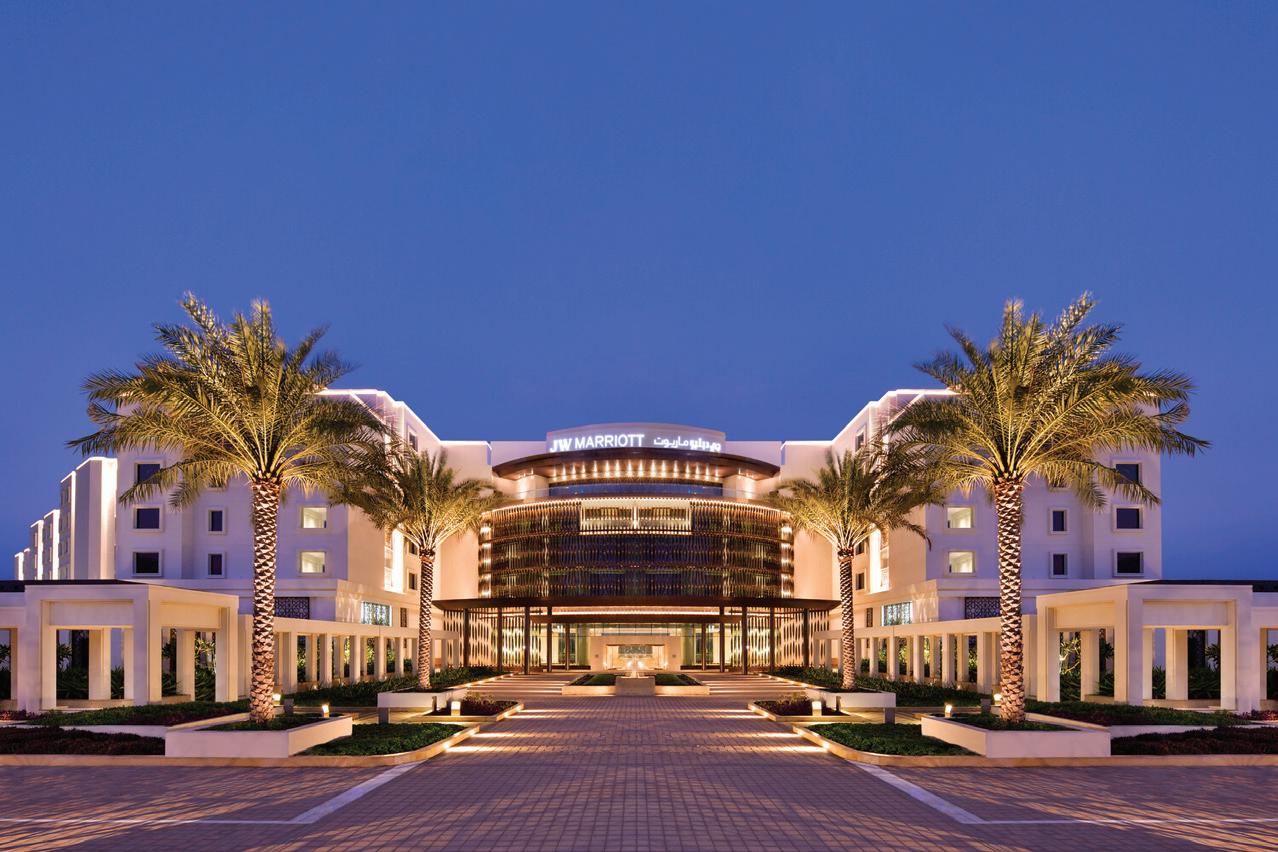
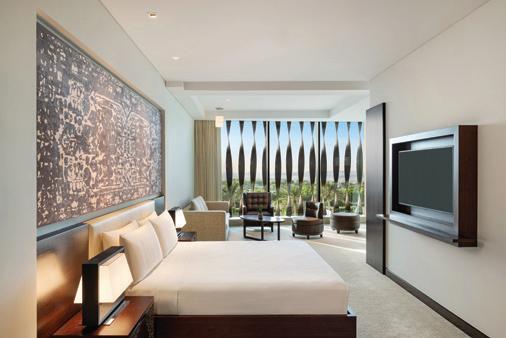
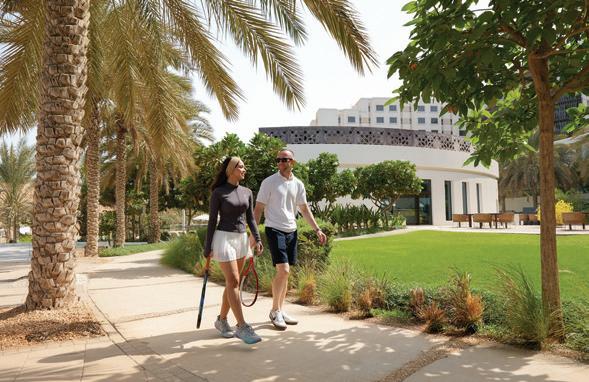
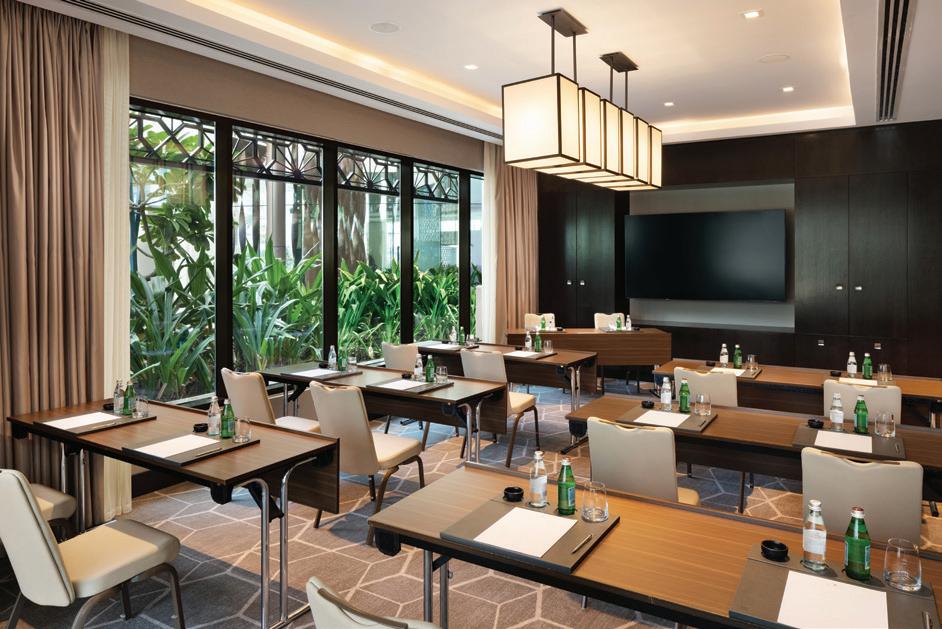
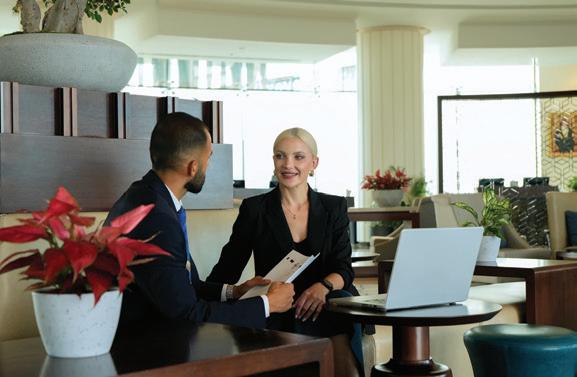
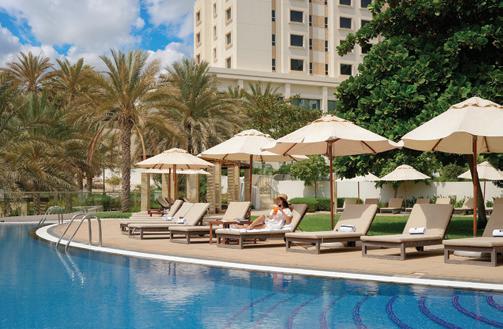
Business Hotel in Oman
Business Traveller Middle East Awards 2025
Immerse in an inspiring stay at JW Marriott Hotel Muscat, where you can unwind, relax, and enjoy enriching experiences. Spread your wings to explore 304 spacious rooms and suites, sophisticated resort facilities, five carefully curated dining outlets, spacious meetings and event spaces. Unwind at Spa by JW while the little ones delight in Family by JW experiences.
Madinat Al Irfan, Airport Heights, Muscat, Oman, 113 or call +968 2492 0000 | @jwmarriottmuscat visit www.jwmarriottmuscat.com
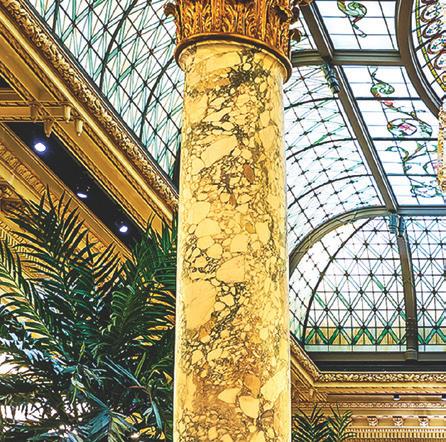
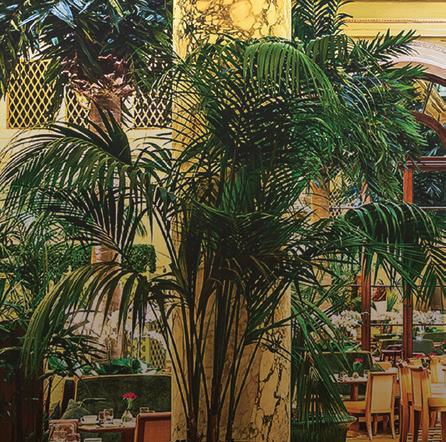
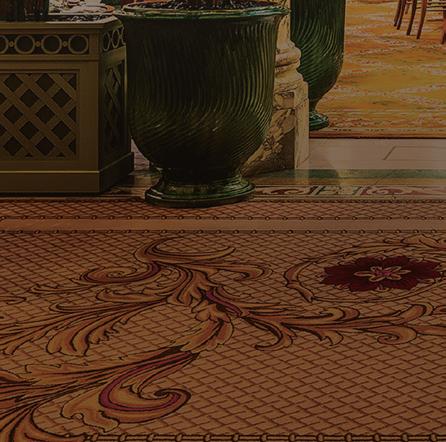
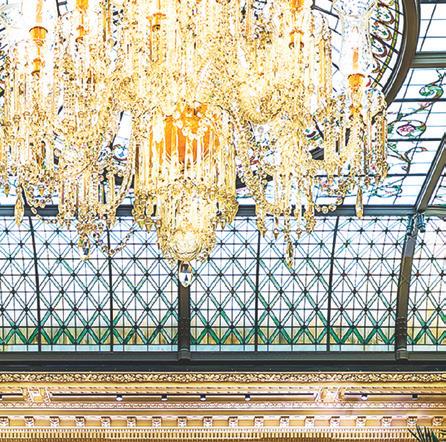
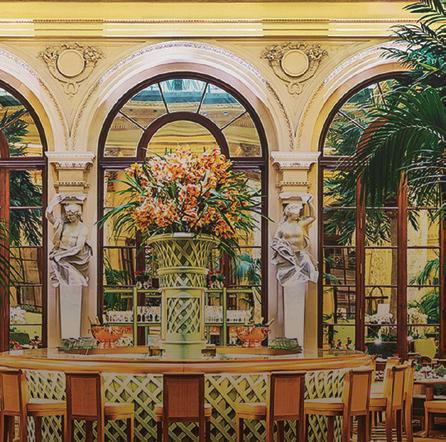
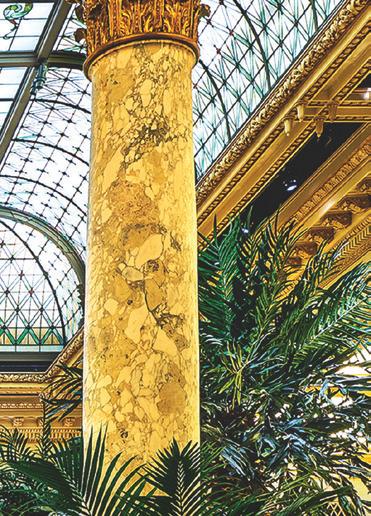
RADIANT JEWEL TONES, sunburst patterns edged in gold, chevron stripes and sharp angles – these design details point unmistakenly to one defining era: Art Deco. This year marks the centennial of the 1925 Exposition Internationale des Arts Décoratifs et Industriels Modernes – the Parisian fair where Art Deco made its grand debut.
Add a touch of glamour to your next business trip with gilded stays at these Art Deco gems
The event showcased modern decorative arts and industrial design – and gave the aesthetic its famous name. Former labels like ‘le style moderne’ or ‘Jazz Moderne’ just didn’t have the same ring. Over the past 100 years, Art Deco has left its glamorous mark on architecture and interiors worldwide – especially in hotels. Here, we look at some dazzling examples.
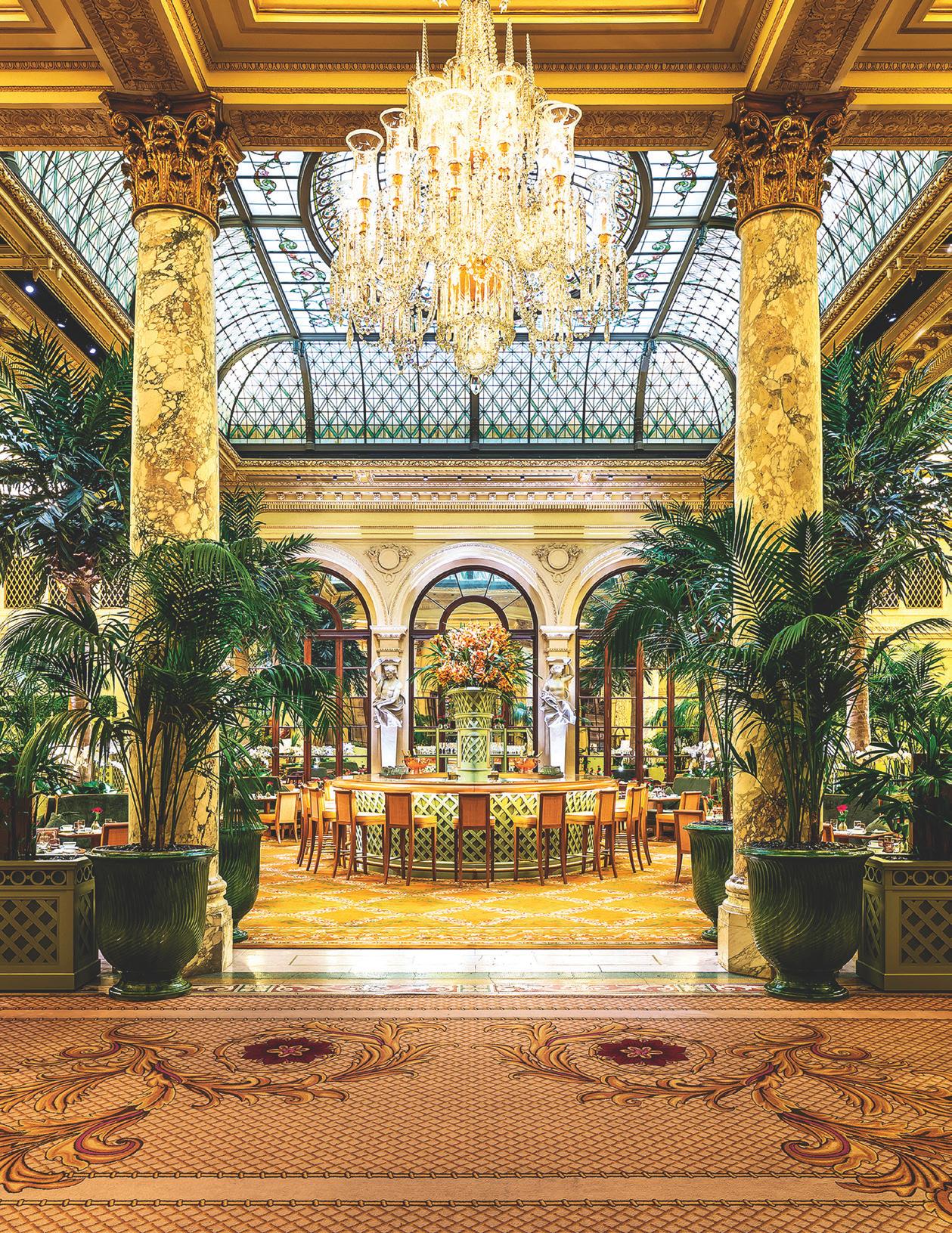
The Plaza Hotel, New York City
Live out your Jay Gatsby and Daisy Buchanan fantasy in this Fifth Avenue abode – one of the hotels that inspired F. Scott Fitzgerald’s 1925 novel, The Great Gatsby Soaring columns and towering trees add drama to the Palm Court, which is topped with an intricate glass roof, while the Grand Ballroom features a gilded ceiling and Champagne-coloured drapes over its many internal archways. The 282 rooms and suites are appropriately grand too, combining velvet upholstery with ornate headboards and cream walls. For a touch of indulgence, reserve a table at the Champagne Bar and try the exclusive Je Crois ‘Plaza Cuvée’ with caviar and East Coast oysters. Or if you have a sweet tooth, opt for the Plaza Sundae – piled high with maraschino cherries, whipped cream and chocolate sauce.
‘Soaring columns and towering trees add drama to the Palm Court, which is topped with an intricate glass roof’
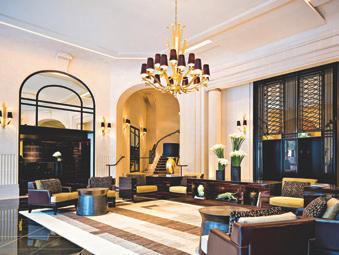
Prince de Galles, a Luxury Collection Hotel, Paris
French architect and interior designer PierreYves Rochon restored this grande dame in 2013 with a contemporary Art Deco look to honour its 1929 beginnings. Public spaces are dressed in black marble and Macassar ebony, with a handcrafted chandelier by Paris-based Delisle as the lobby centrepiece. The Suite Or, meanwhile, features gold-leaf artwork, silky textiles and a striking bathroom made with gold-veined black marble. Suite guests can book the Art Deco tour until the end of 2025, which includes exclusive access to Théâtre des Champs-Élysées and the Palais d’Iéna.
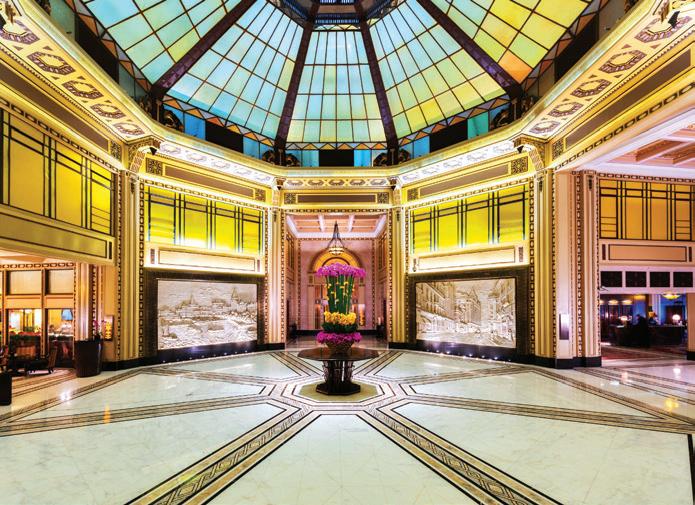
Peace Hotel, Shanghai
Gracing the western bank of The Bund with its green copper roof, this property was built at the end of the 1920s by businessman and hotelier Sir Victor Sassoon. Back then, it was known as the Cathay Hotel, before rebranding as the Fairmont Peace Hotel when it joined Jinjiang Group. Today it’s under Accor’s Raffles portfolio and is undergoing a renovation, due to be completed in 2027 (the hotel remains open). It will emerge with a refreshed design to reflect the spirit of modern Shanghai, with its beloved historic elements preserved. Hopefully that will include The Jazz Bar, where the legendary Old Jazz Band perform nostalgic 1920s and 30s tunes nightly.
Hotel Britania Art Deco, Lisbon
Lisbon might seem an unlikely place for an Art Deco haunt, but this 33-room hotel will impress even the most discerning fans. Situated on a quiet street running parallel to the Avenida da Liberdade, the 1940s building is the work of Portuguese architect Cassiano Branco. A restoration by Lisbon Heritage Hotels preserved details such as gleaming marble columns, frescoes of the Portuguese Empire, rare cork mosaic floors and even a micro barbershop, where former guests would get a short back and sides.
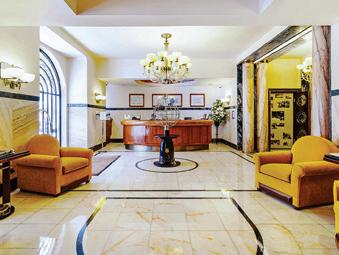
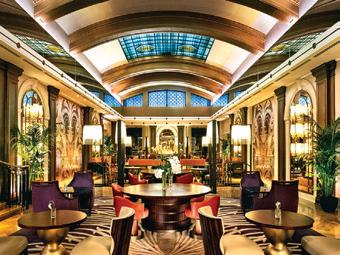
Sheraton Grand London Park Lane, London Opened in 1927 at the height of the Roaring Twenties, this elegant 305-room hotel is an established landmark in London’s leafy Mayfair. Though it underwent a refurbishment in 2016, its Art Deco charm remains gloriously intact. An original stained-glass ceiling bathes the central lobby in kaleidoscopic light, while the Grade II-listed ballroom and 1920s-style murals in the Palm Court pay tribute to a bygone era. Rooms are pared back, but Art Deco influences include polished dark-wood surfaces and chrome accents. Those keen to indulge in the spirit of the Jazz Age should opt for the Great Gatsby-themed afternoon tea.

Decompress on your next work trip with these creative
TAPPING INTO YOUR creative side is a tried and tested way to unwind – but it’s not that easy on a business trip without the right tools to hand.
Fortunately, several hotels are expanding their activity programmes to incorporate arts and crafts into the mix – from pottery making to sketching classes. Here are our top picks for those wanting to master the art of relaxation.
Art is central to the wellness offering at this East End hipster hotel. A programme of workshops allows guests and locals to try their hand at a range of crafts against the backdrop of Hart’s rotating exhibitions. During my stay I joined the Mindful Monday Mending Club – a sewing workshop run by sustainable fashion influencer and author Andrea Cheong, who uses Instagram to offer tutorials on restoring worn-out clothing.
‘A curated programme of workshops allows guests to try their hand at a range of crafts’
At Hart Shoreditch, attendees are invited to bring a clothing item in need of repair or alteration – be it a holey jumper or trousers to rehem. Newbies and more experienced sewers are equally welcome; Cheong adapts her teachings to guests’ (or rather their garments’) needs, occasionally bringing a sewing machine for more intensive repairs. I had opted for a rather feeble button replacement on a much-loved grey woollen cardigan, but was challenged to try embroidery stitches on fabric scraps. Fellow guests had set themselves more ambitious tasks, including repairing holes in delicate, fine-knit jumpers. Whatever the material, we all left suitably relaxed with restored garments in hand and a set of sewing skills up our sleeve. £16 per person (fee includes free flow of coffee, tea, and servings of pastries); book via hartshoreditch.com/ whats-on/mindful-monday-mending-club
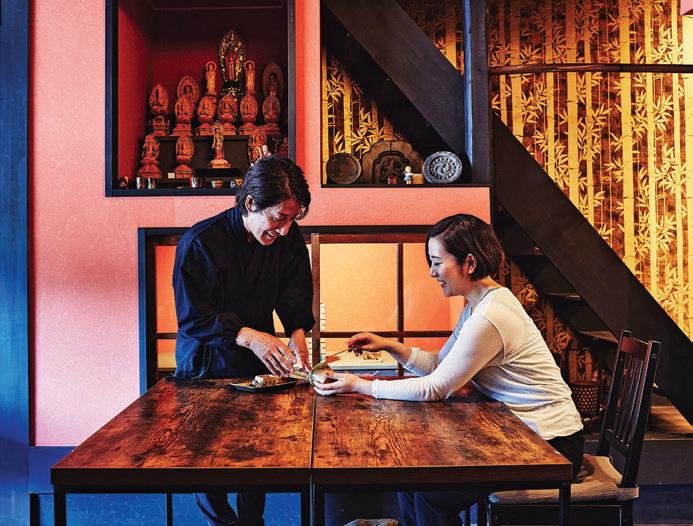
At Conrad Tokyo, located in the capital’s central Shiodome district, guests can participate in an intricate, ancient Japanese tradition dating back to the 15th century. Kintsugi, which translates to “joined with gold”, is a technique to restore broken pottery. An adhesive mixture of urushi lacquer (derived from the sap of a lacquer tree) and precious metallic powders (usually gold, platinum, or silver) is used to join the breaks of cracked pottery pieces. The result is an artfully repaired, one-of-a-kind ceramic piece, adorned with shining gold veins. Around €500 for two guests; book via the concierge.
Aman has teamed up with camera company Leica to offer photography masterclasses. Guests can learn editorial, portrait or city photography, or join an introduction class to master the basics. Classes are led by New York-based photographers including Mark DePaola and Mark Mann, and can be adapted to suit each guest’s interests, while those wanting to snap solo can rent a complimentary camera. From US$7,000; book via the concierge. From US$7,000
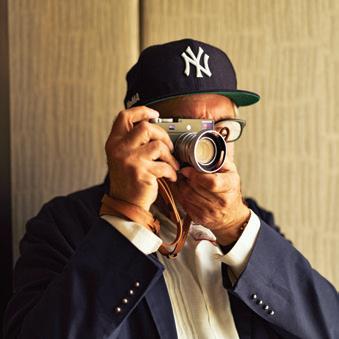
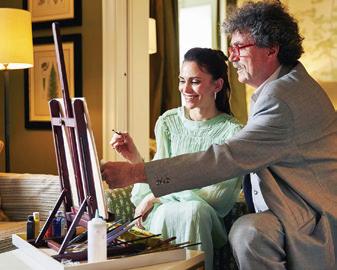
HOTEL SAVOY, FLORENCE
What better place to pick up a paintbrush than the birthplace of Renaissance art? Rocco Forte’s Hotel Savoy is leaning into the city’s history, offering painting workshops at a nearby art studio. Guests can create a traditional fresco, landscape painting or still life study, while exploring the foundations of art with local painters – including how to use perspective to create depth, and apply traditional rules of composition to bring balance to the page. €500 for two guests; book via the concierge.
This stunning hotel’s 2026 Masters of Crafts programme is a year-long residency series that brings world-class experts to the resort to share their skills directly with guests. The programme allows you to get your hands dirty with actual experts, as you join these specialists in their element to learn their specific craft firsthand. You can drop into collaborative studio sessions with acclaimed visual artists, or explore the island’s contemporary rhythm alongside local musicians. For something a bit more atmospheric, there are stargazing workshops led by “aurora chasers” who decode the night sky and its ancient stories, leading late-night stargazing workshops to map out the constellations and the ancient lore tied to the Indian Ocean’s night sky. Price upon request, dependent on specific workshop.
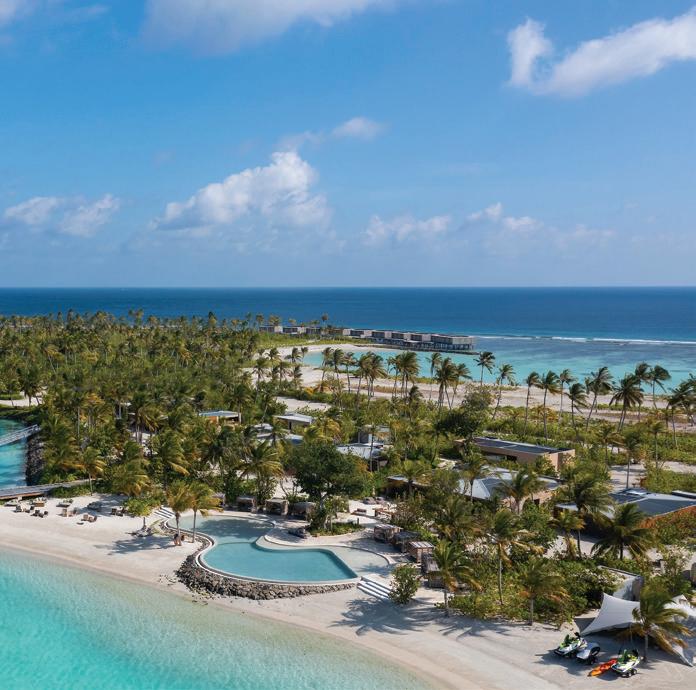
This hotel essentially operates as a stay-in museum, where the story of the neighbourhood is told through over 200 original artworks. You can start with an interactive art tour, using an augmented reality app to unlock the hidden stories behind commissioned pieces by local artists. The creative experience is anchored by an artist-in-residence programme that offers a window into the creative process through open studio sessions at the Open Sesame social eatery. There are also a number of hands-on workshops, covering crafts like the chance to create your own DIY bookmark, or try paper art. Past experiences have included everything from “Brunch & Art” sessions, where you could craft personalised resin jewellery, to papercutting and layered art sessions that explore the balance between tradition and contemporary design. Price upon request; dependent on specific workshop.
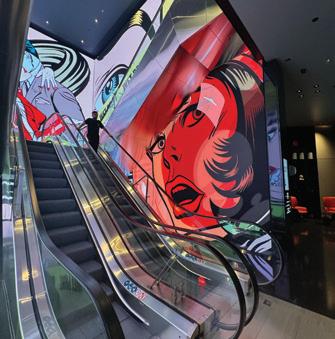
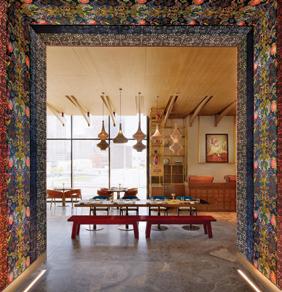
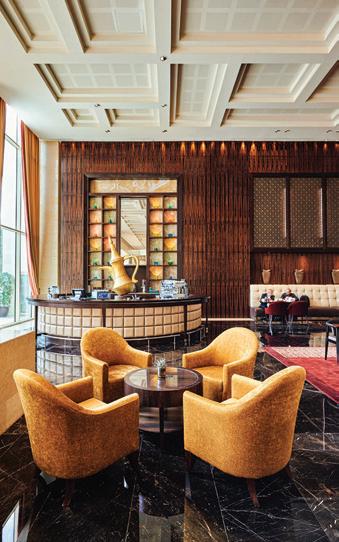
Found in Dubai’s unique Ancient Egyptinspired Wafi City complex, Raffles Dubai’s Calligraphy Workshop Stay package – is a dedicated overnight experience in the Diplomatic Suite, that turns the hotel’s grand interiors into a private studio for learning the art of ink lettering. The stay includes a deep dive into the history and techniques of traditional Arabic calligraphy, led by local calligrapher Amir Golshani, who will guide your hand in an hour-long workshop. You’ll get to work with authentic tools, mastering the specific angles and flow required to create your own bespoke piece to take home. Beyond the ink and parchment, the stay includes a Treasures of Arabia afternoon tea – but it must be booked at least two weeks in advance. From AED4,185 per person; to book, visit raffles.com/dubai/ experiences/calligraphy-workshop-stay
Located in the heart of London’s creative district, this Radisson-powered hotel encourages every guest to unlock their inner artist through hands-on participation. Upon arrival, guests are provided with pens and paper to sketch or draw something that commemorates their stay. Each month, a curated selection of these pieces is chosen to be featured in the hotel’s guest art display, with winners receiving special prizes for their creativity.
The hotel’s creative spirit is anchored by its “art’beat” cultural programme, a year-long series of workshops and masterclasses. Guests can join everything from drawing classes and sculpture workshops to more niche experiences like bioyarn workshops, decollage sessions, or fashion masterclasses. The programme is designed to be ever-evolving, with a rotating schedule to ensure that every visit offers a new opportunity for artistic discovery. Price upon request; dependent on specific workshop.
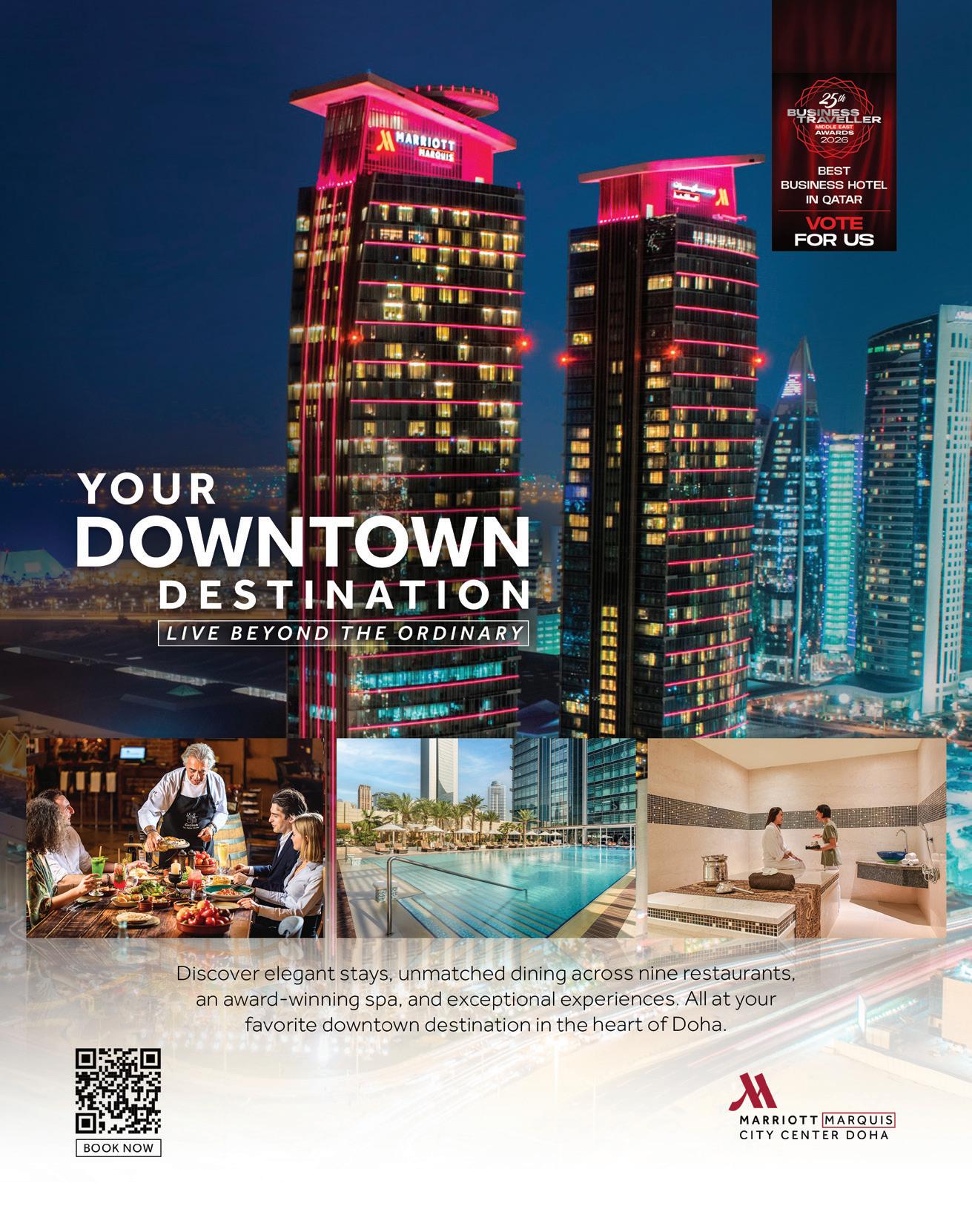
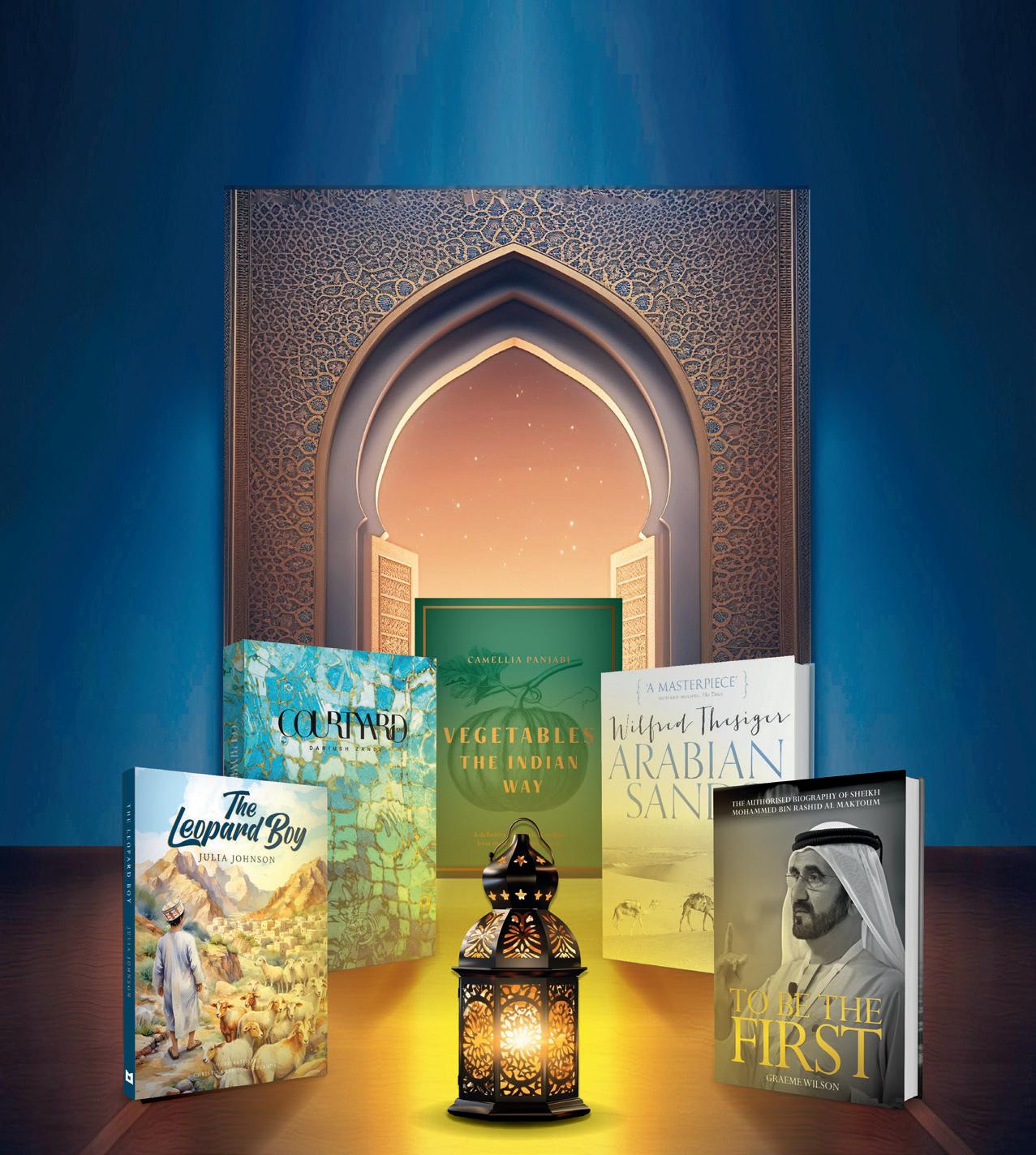


CELEBRATE THIS HOLY MONTH WITH SOME


































First class on a narrowbody is a first – does it meet expectations?


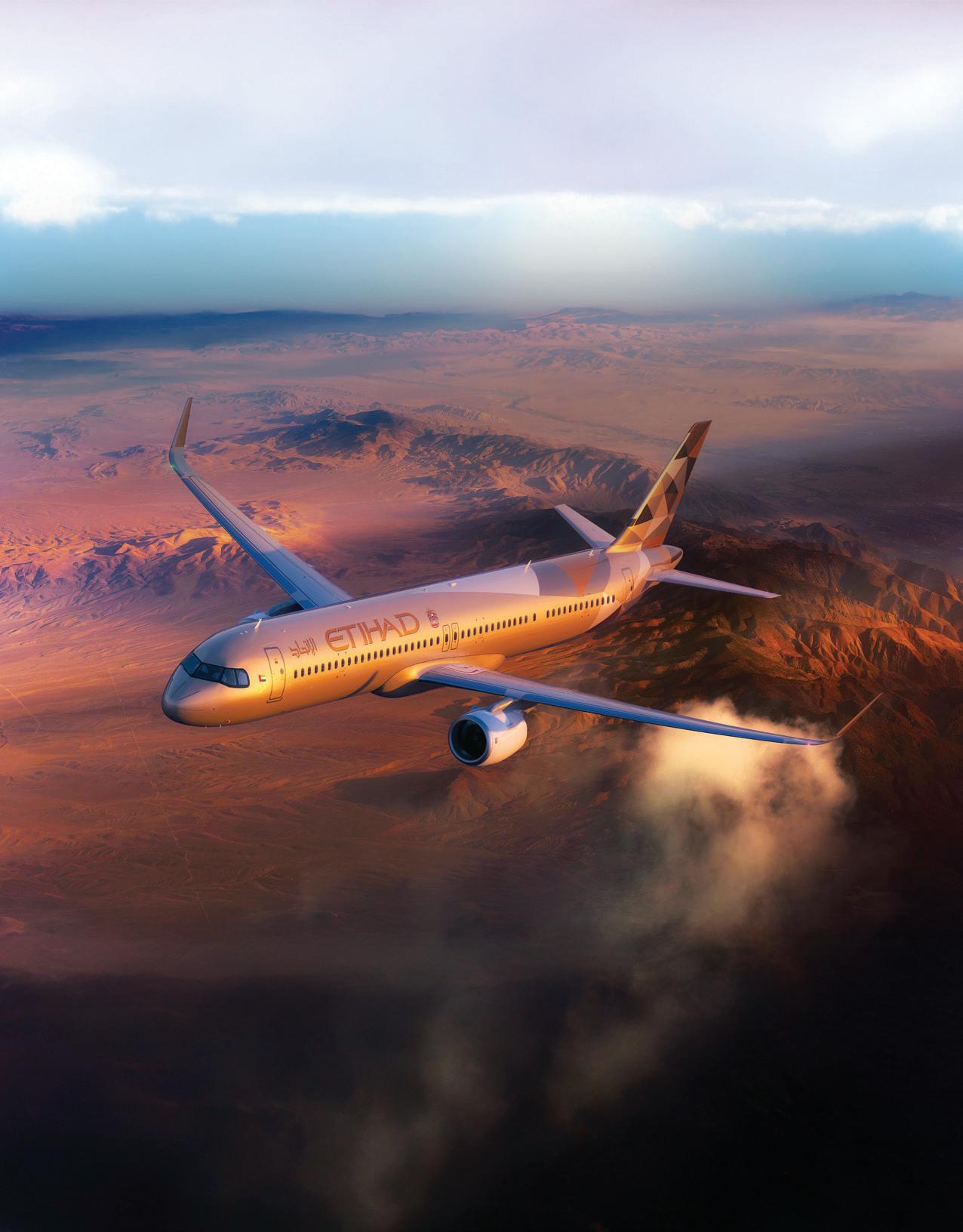
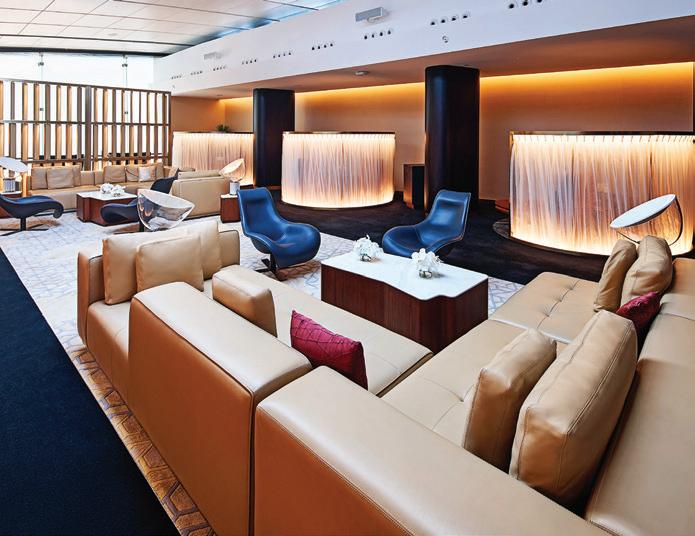
Etihad has always known how to make a statement. Its A380 First Apartments and Residence once set the benchmark for airborne indulgence, while the airline’s Business Studio remains one of the best business class seats in the sky. With the arrival of its Airbus A321LRs, the carrier has delivered another world first: installing two first class suites on a narrowbody aircraft. At a time when many airlines are phasing out first class, Etihad is doubling down on the lure of exclusivity. On a recent flight to Phuket (the launch destination), I had the chance to experience the product, from lounge to landing, to see whether it really works in practice. After all, can a narrowbody truly offer the indulgence expected at this price point?
The journey began at Etihad’s flagship lounge complex in Abu Dhabi. As a first class passenger, I had access to the intimate First

The A321LR with first class operates on select routes from Abu Dhabi, often to new destinations. In Europe it had flown to Copenhagen and Düsseldorf as of October 2025, Milan, and Zurich from November 2025, and Paris in early 2026. With only two suites, availability is extremely limited.
Lounge on the top floor, where design and service set the tone for the trip. Dark woods, curated artworks and thoughtful lighting created a calm, private environment. The à la carte dining room offered a pre-flight meal that felt more fine dining than lounge catering, and the details – from barista-made coffee to attentive staff – underscored Etihad’s emphasis on service. It felt less like waiting to board and more like an extension of the first class journey.
Knowing the flight ahead would be on a narrowbody aircraft, this pre-departure ritual was an essential part of the proposition.
Boarding was smooth and well-managed, with a concierge escorting me to the gate to bypass the premium lanes. Stepping onto an A321 and turning right into a first class cabin felt novel in itself.
Just two suites occupy the very front of the business class section – a rare configuration. One drawback of the narrowbody layout is unavoidable: the steady stream of passengers passing by on their way to the main cabin.
Still, the distraction was quickly offset by a dedicated crew member’s warm welcome, pre-departure drinks and an impressive range of amenities, including Giorgio Armani amenity kits, plush comforters, and Etihad’s instantly recognisable geometric pillow.
Etihad has adapted the Stelia Opera business
class seat into a suite with sliding doors, finished in a palette of soft gold trims, cream textured walls and subtle ambient lighting set off by Etihad’s silhouette-casting lamp. The square foot is naturally smaller than the airline’s widebody products, but the extra space in these front-row seats lifts it above business class.
The seat offers 63 inches of pitch and converts into a fully flat bed measuring just over 78 inches. At 21 inches wide, it’s compact for first class, but the angled design and generous surfaces make the suite feel practical and comfortable.
Unfortunately there are no dedicated storage compartments for personal items, but a bottle holder and the open layout of the space go some way to compensate and crew were always on hand to help stow belongings.
Once airborne, Etihad’s crew proved why
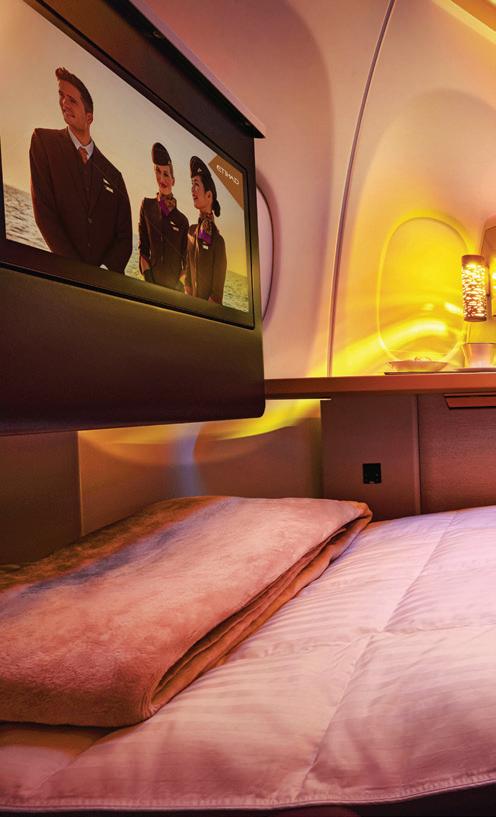
CLOCKWISE FROM LEFT:
The lounge in Abu Dhabi international airport; Dining on caviar; The fully-flat bed in first class
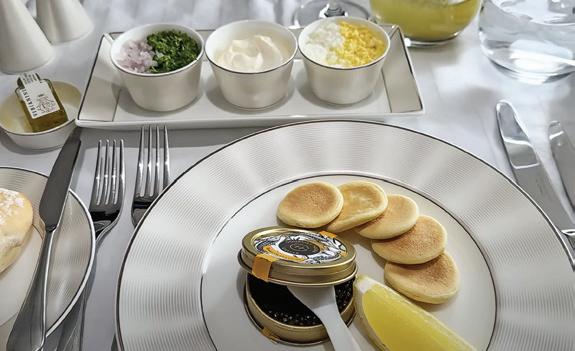
‘The crew proved why the airline enjoys its reputation for service’
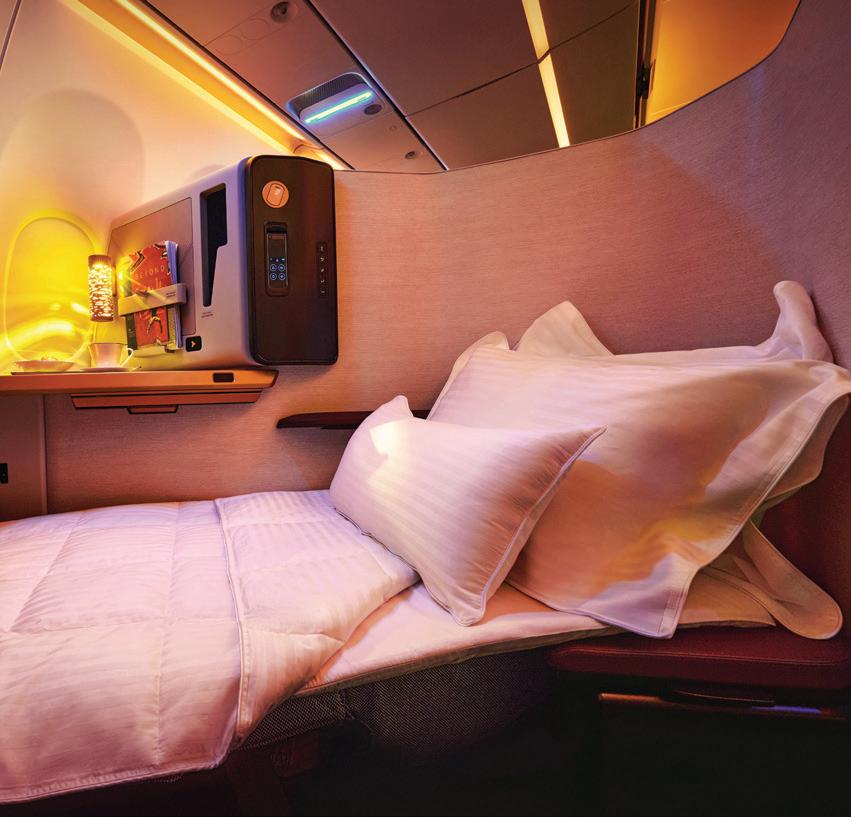
the airline enjoys its reputation for service. With just two passengers, the delivery was calm, polished and highly attentive.
The dine-on-demand menu mirrored long-haul standards, with dishes plated and presented at a level more often associated with widebody aircraft.
I began with Oscietra caviar, followed by a perfectly seared tuna starter. The standouts, however, were the black cod and a chocolate and hazelnut torte that would have felt at home on the tablecloths in Mayfair. Drinks included signature mocktails and a curated wine list, plus prestige bubbles beverages such as Duval-Leroy La Grande Dame.
The IFE system featured a crisp HD screen, intuitive interface and Etihad’s full content library. Paired with noise-cancelling headphones, it was an easy way to unwind. Bedding included a duvet, mattress topper and large pillow, all prepared by the crew in a neat turndown service that transformed the seat into a comfortable bed.
The real luxury here is atmosphere, with levels of service and privacy that felt almost like a private charter. Every crew interaction was personal and unhurried, creating a sense of calm rarely found on scheduled flights.

Etihad’s A321LR first class is a fascinating experiment that works. It isn’t about sprawling space or extravagant features, it’s about intimacy, exclusivity, service and design. The seat itself can’t match the grandeur of Etihad’s widebody flagships, but combined with the ground experience in Abu Dhabi and highly personalised inflight service, it delivers a journey that feels genuinely special. When it comes to privacy and individual attention, this is a compelling and rare product.

Travellers who value privacy and service above sheer space – and anyone curious to experience the world’s rarest first class.
FLIGHT DURATION 6 hours 45 minutes
SEAT WIDTH 21 inches
BED LENGTH 78 inches fully flat
PRICE First class tickets from Abu Dhabi to Phuket start from around AED 12,480 CONTACT etihad.com
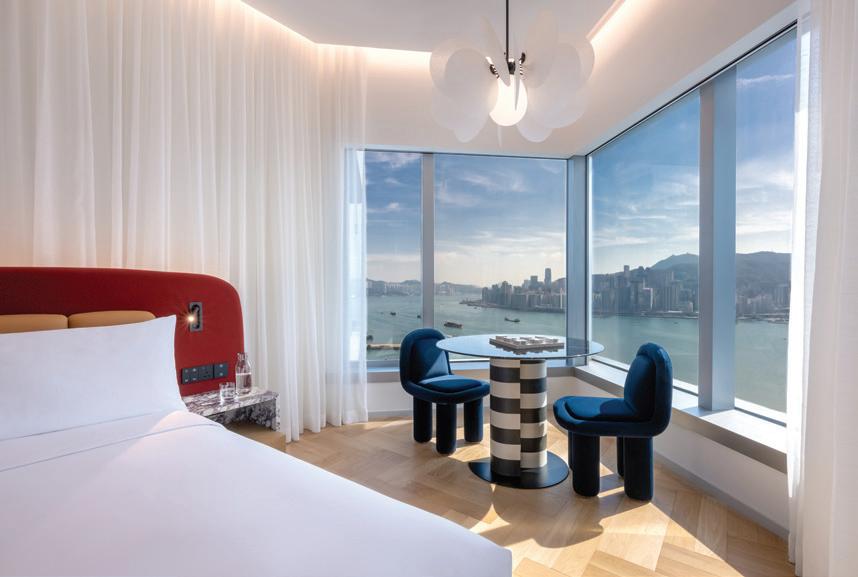
The hotel offers an artsy, eclectic alternative to a cookie-cutter stay
What’s it like?
The vibe and facilities of the Mondrian Hong Kong are not those of your typical business venue; instead the hotel leans into its sense of place and embraces its artistic licence.
Opened at the end of 2023, the Mondrian is secreted amid the bars and cafés of Hart Avenue in Tsim Sha Tsui. This leaves it just a couple of blocks from the famous Victoria Harbour, granting sea and city views from many of the rooms.
An aquatic theme is present in the decor throughout, with illuminated rings of bubbles rising from the reception area, helping to give an airy and bright first impression. The walls on each floor add further whimsy, offering a Jules Verne-ian vision of life under an enchanted sea. In this octopus’s garden, the marine creature has a rabbit’s head; throughout the hotel you’ll also spot a moose-whale, a fishicken, and a puffer-crab.
Rooms
The 324 rooms and suites are more cosy than expansive, with regular
STAY IN STYLE
Creativity shines through the bold design within the hotel’s Harbour suites
rooms ranging from 21 to 32 sqm. I had the luxury of staying in one of the 12 Harbour suites, which have a lounge and second bathroom to stretch it to 49 sqm.
There’s a strong contemporary feel overall. A liquorice-striped table (rather than a desk) offers great views and is accompanied by Mondrian-esque colour in the seats and rugs. Other furnishings and finishes show keen knowledge of the local vernacular, which will please those with close ties to the city.
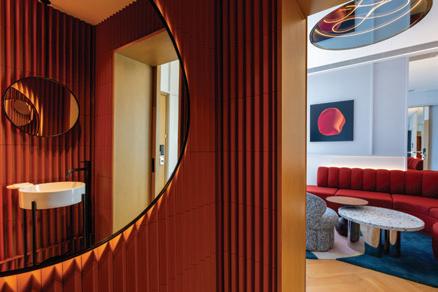
The suites also come with a stylish lacquered drinks cabinet complete with bar sets for crafting beverages, as well as a water purifier, high-speed internet, and lavish Malin + Goetz bathroom products.
The hotel has various dining venues to choose from. The Avoca lounge is the focal point for meetings with seating options ranging from quieter snugs to seats at the bar. The Hong Kong-themed beverages include a tonsil-tickling haam neng mung (an unusual take on local favourite salted lemonade). DJ sets further brighten up the space on Friday and Saturday evenings. If instead you want to put the meat into your meetings, head to steakhouse Carna, where ebullient Italian chef Dario Cecchini is an unabashed carnivore who glories in platters of beef twice the size of your head. A healthy appetite is essential, preferably at least two of them so you can share.

A stay to tickle arty types, with quirky spaces encouraging creativity rather than boardroom presentations.

BEST FOR
Meat-lovers, aquanauts, and old Hong Kong hands.

DON’T MISS
Views of one of the world’s great harbours from the futuristic Tsim Sha Tsui skyline.
PRICE
Rates start from HK$1,530 (AED 720).
CONTACT 8A, Hart Avenue, Tsim Sha Tsui, Kowloon; +852 3550 0388; mondrianhotels.com


Fiat’s new EV is a tribute to the late fashion icon
Background
The latest Fiat 500e special edition pays homage to a true Italian icon and will be catnip for catwalkers. A collaboration with the late Giorgio Armani, this glitzy Italian runabout is a must-have accessory for fashionistas who thrive on car couture. Based on a 500e city car, the Collector’s Edition is dressed up in dark green or ceramic greige, colours created by the grand master of fashion himself.
Features

The understated paintwork is classic Armani – only ‘GA’ logos on the custom wheels hint at the link to high fashion. Inside, however, plenty of Armani branding is splashed about a luxurious cabin.
Three-dimensional chevron seat patterns are said to evoke traditional tailoring techniques, while laser-cut wood adorns a dashboard finished with the maestro’s signature, a moniker that pops up everywhere. Despite a tiny trunk and

cramped rear seats, the eco-conscious 500e is perfect for shorter trips. Thanks to diminutive dimensions, it doesn’t make a fuss when squeezed into a tight parking space and is zippy around town.
Equipment upgrades on the Armani edition include eye-catching LED headlamps, a glass roof and top-of-the-range JBL music system. Hook up your mobile to a 10.25-inch touchscreen with Android Auto or Apple CarPlay.
The Fiat is less comfortable on longer journeys, with noticeable noise at higher


LIMITED EDITION
Only 500 Fiat
500e Giorgio Armani
autos were made last year
speeds and susceptibility to crosswinds. The official battery range is 199 miles but 150 is more realistic in real-world driving conditions.
This compact Fiat makes a statement without being ostentatious. A feel-good car with a heritage to match, the batterypowered 500e will suit urban dwellers who want to cut a real dash about town.

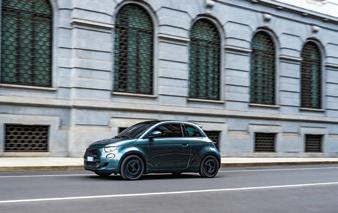

The 500e gets a fashion makeover courtesy of Armani. Discreet design touches help create a chic and unique supermini that’s most at home in the city.
PRICE
£34,035
CONTACT fiat-dubai.com



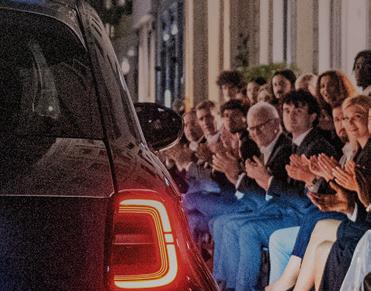





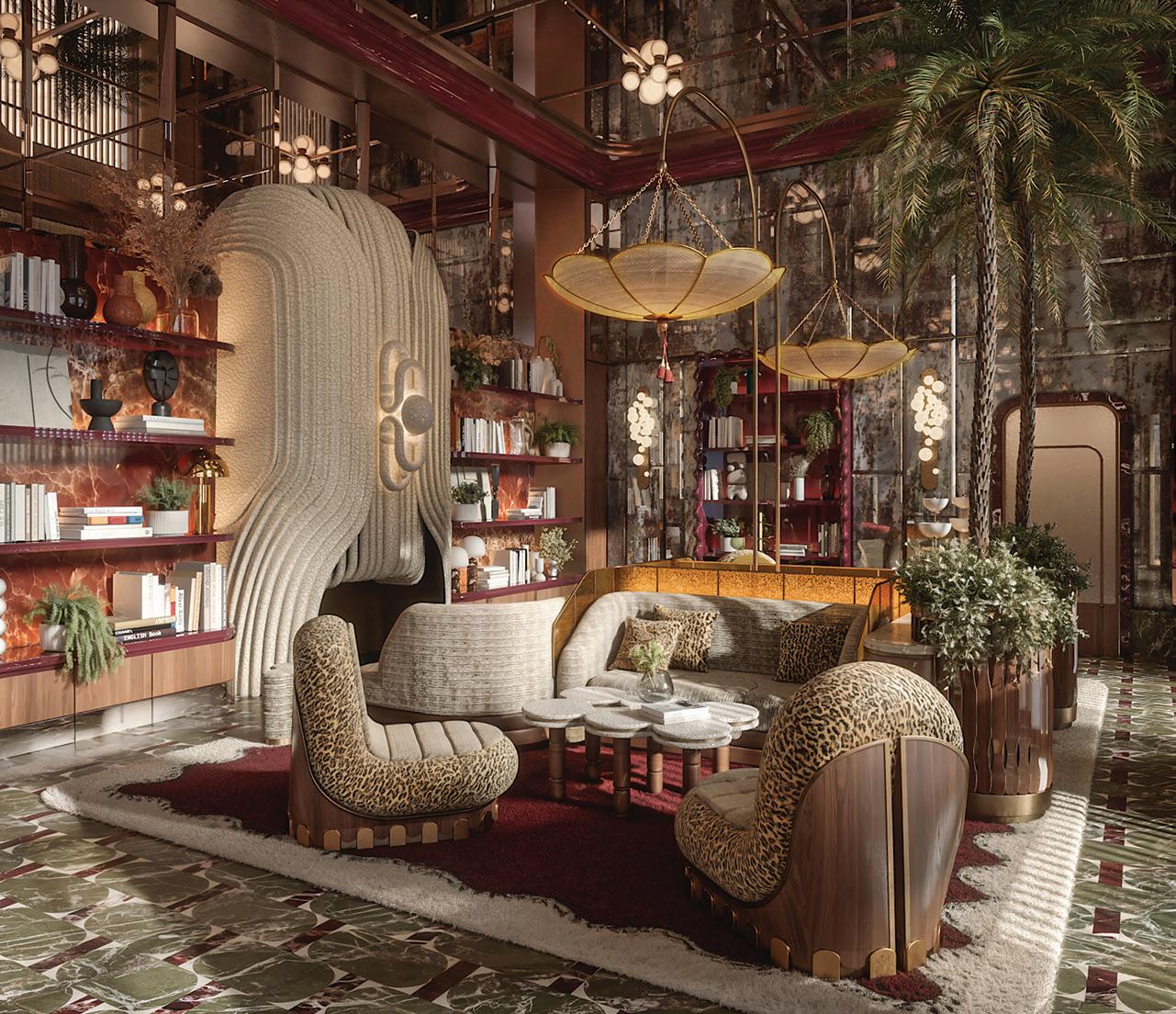
ENNISMORE has hit a 200-hotel milestone, having doubled its network within four years – and in 2026, it’s continuing its upward trajectory with the opening of more than 35 new hotels (and 20 F&B venues within its high-end F&B platform Paris Society). The Americas lineup features Delano Miami Beach, Hyde Mexico City Reforma, Mama Shelter Mexico City, and Rixos Cancún. Asia-Pacific gains Hyde Bali Seminyak, Hyde Perth, Rixos Phu Quoc Vietnam, and Mondrian Maldives. Europe welcomes Delano London, Mama Shelter Lake Como, and Luura in Paros. The Middle East and Africa add Mama Shelter Cape Town, Rixos Premium Magawish Bay View, Rixos Murjana, SLS The Red Sea, Caravan Hatta, Rixos Salalah, and SO/ Jeddah. Notably, Roswyn Mumbai, a Morgans Originals hotel, debuts in India, marking a defining global expansion.
Home to a collection of distinct restaurants, Fairmont Bab Al Bahr invites you to discover flavours that surprise, inspire, and turn every visit into a celebration of taste.
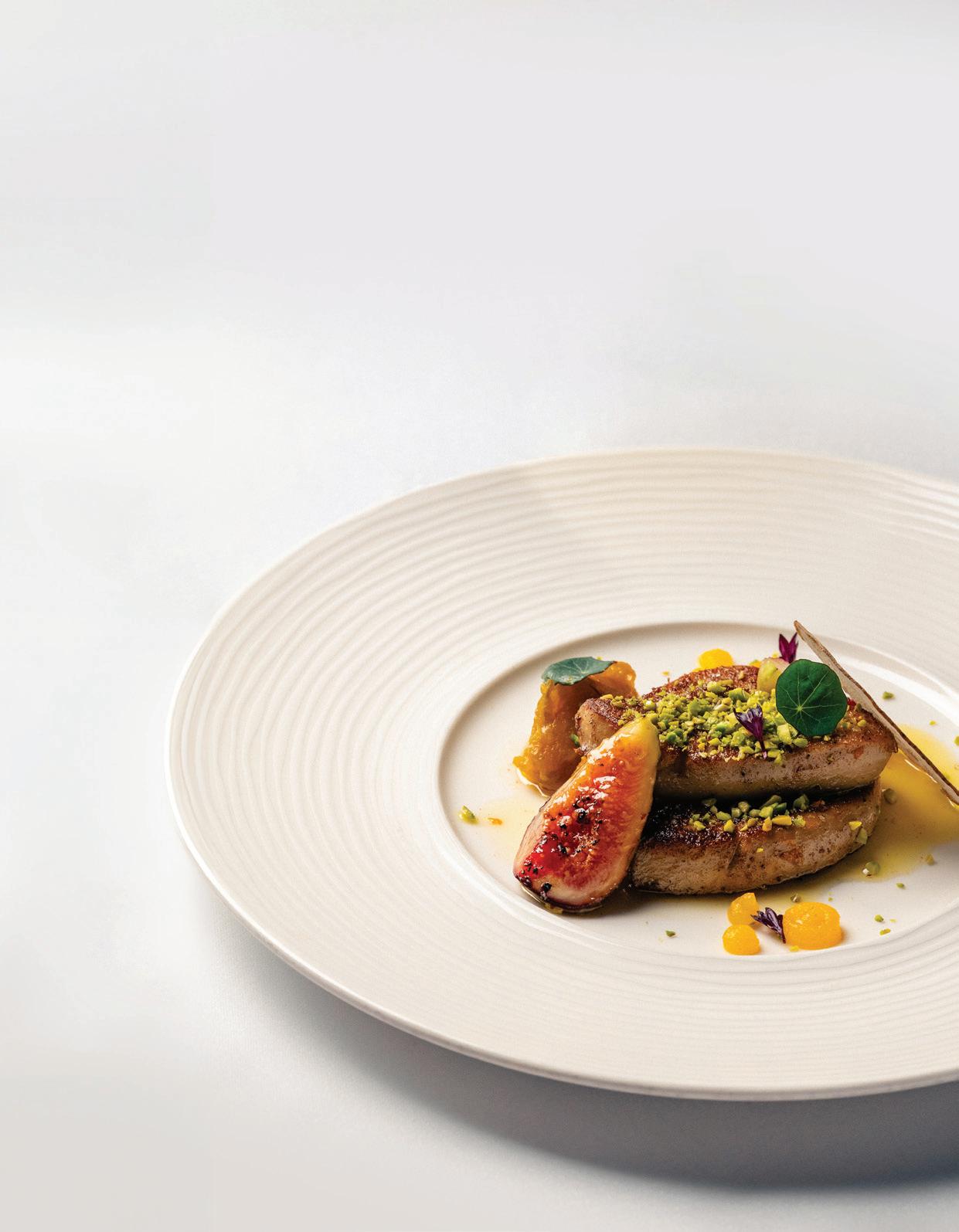


By Qatar Airways




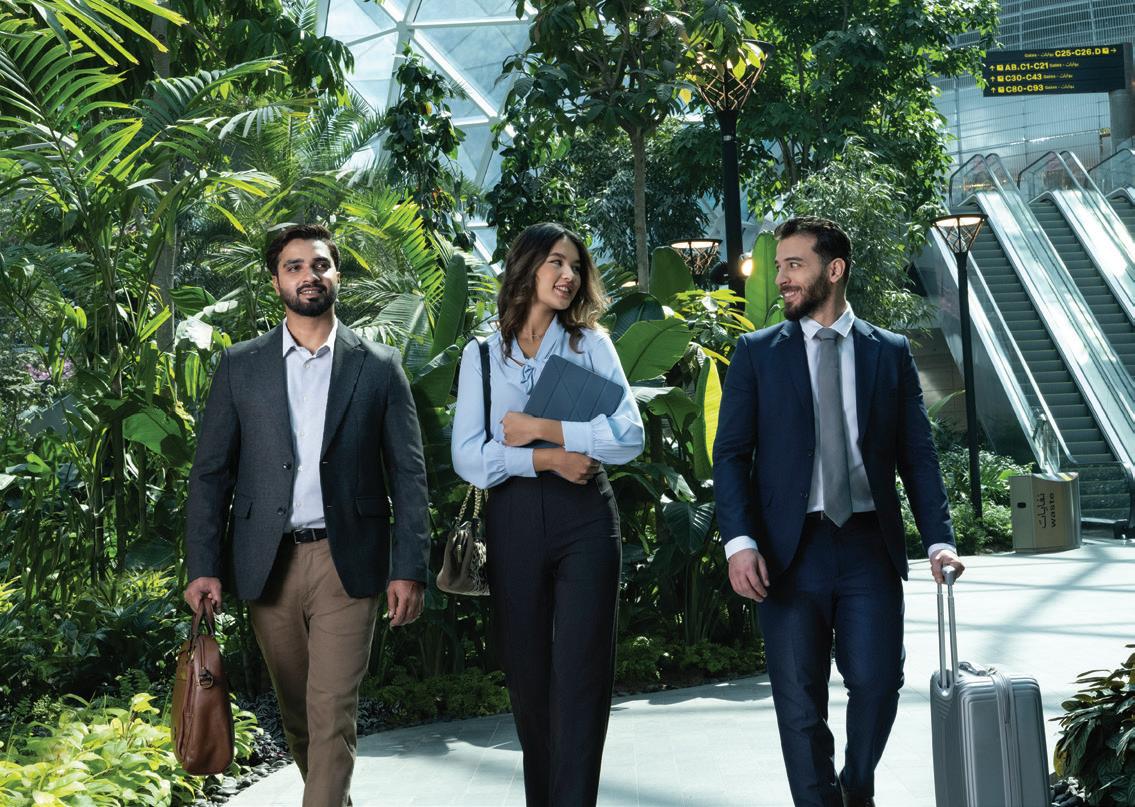
Our corporate rewards programme, Beyond Business, o ers your company exclusive benefits:
For a limited time, you can earn 50,000 bonus Qrewards Join Beyond Business before 15 April 2026 and spend at least USD 15,000 within the first six months of enrolment Join now