
































07 Hot Ticket: Saudi’s AlUla takes centre stage in a new fashion collection
08 Regional News: The latest airline, hotel, and travel news
10 Global News: An update on international travel
12 Sustainable Traveller: The greener side of tourism and hospitality
JUNE 2026
The definitive travel wellness offering is getting an upgrade – here’s how, and why




15 Vivian Lo, Cathay Director Customer Lifestyle, speaks on the aviation company’s brand evolution 37


18 Op-Ed: For the modern traveller, comfort dressing has become king
19 Op-Ed: Driverless taxis are here, and it’s time for new rules around them
20 Op-Ed: Personalised wellness is the new currency of leadership
21 Elevator Pitch with Juan Paolo Alfonso, general manager of Miraval The Red Sea
22 Frequent flyer with Faisal Al Mutairi, co-founder of House of Habanero
23
23 Extra Day in Dublin
25 Soothe yourself with the wellness-oriented side of travel and tourism
26 The healing powers of sand bathing
28 The soothing benefits of somatic healing
30 Splash out on luxury experiences and products
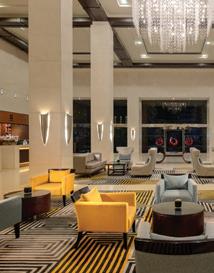
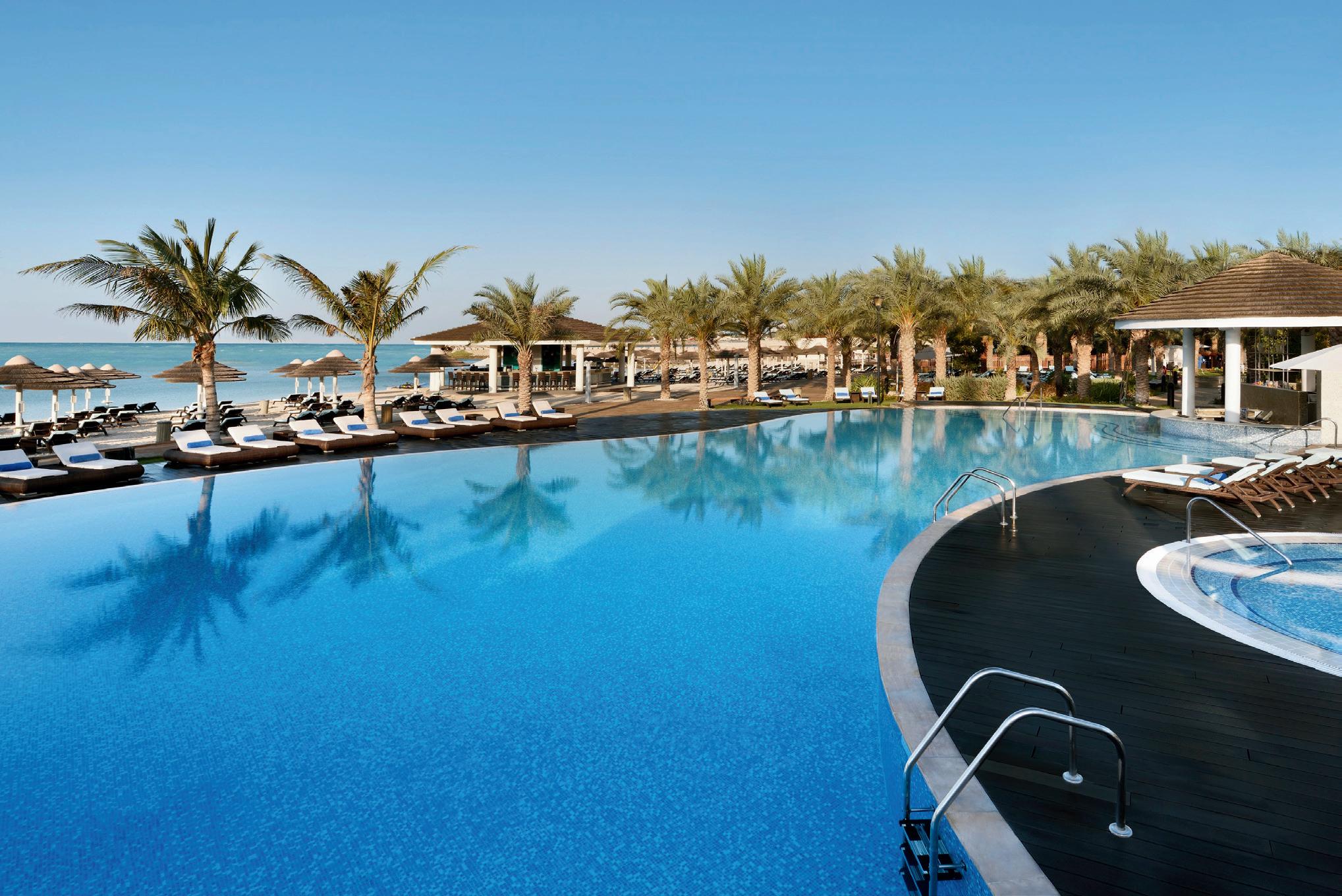
63 Radisson Blu Hotel, Dubai Barsha Heights
65 Volkswagen Golf R
52
Brands on the run
Operationalising empathy
Why wellness is a new KPI for hospitality leaders 40
Do not disturb
From “quietcations” to “hushpitality”, the idea of a silent retreat is evolving 44




From Sydney to NYC and the Middle East, run clubs are emerging as a prized channel for marketing, business, and repeat, real-world engagement
58
The anatomy of the ‘best’ city
Inside the metrics defining urban success in 2026 63

32 Our pick of cultural events around the world and inflight entertainment 31




Stars in the sky
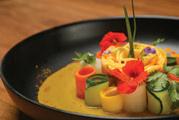
Famous chef partnerships that are elevating inflight dining experiences
48
Stronger together
The UAE’s hospitality leaders are reclaiming the narrative via exceptional new initiatives for postdisruption recovery
66
Healing in nature at SUJÁN Sher Bagh, in one of India’s stunning national parks
ALTHOUGH IT WAS actually coined in 1974 by psychologist Herbert Freudenberger, the popular use of the term ‘burnout’ – and the nowmainstream understanding of it – has skyrocketed in recent years. Why? Some attribute it to the research of Christina Maslach, a pioneering expert on job burnout, and the creator of the Maslach Burnout Inventory: the most widely-used research measure in the burnout field. Many say it’s because of the COVID-19 pandemic – when clinical reports of burnout surged to record highs, where they’ve remained since. Perhaps it’s because modern technology has made us more accessible than ever, with the extra productivity and perpetual connectivity it has afforded us often coming at the cost of blurred boundaries between work and personal life, plus the dramatically increased cognitive load of an “always on” culture.
It’s no wonder that during our time off, we’re more desperate than ever to get offline, or at least get off our screens more. Most of us want to spend more time in nature, or try new things to help us feel more present in our bodies – all of which science says can help us not just live better, but live longer. From 2013 to 2023, the global wellness market doubled in size –and after hitting a record US$6.8 trillion in value last year, it’s forecast to be worth US$9.8 trillion by 2029. Wellness has crept into every aspect of our lives, from movement and nutrition to beauty treatments and even real estate. One of its most successful cross-sectors, however, is travel. It makes sense: travel has long been a way to destress and decompress from the demands of everyday life, and today’s traveller is so keen to come back truly refreshed and renewed that travelling for the sake of well-being – from day trips to month-long retreats – has become a massive economic powerhouse.
In this month’s cover story (p.33), we explore the how, why, and where of wellness travel as we know it today – alongside what’s trending in spas, hotels, and retreats across the world, from longevity and biohacking to elemental treatments such as contrast therapy. We delve into the evolution of the silent retreat (p.40), the rise of the somatic experience (p.28), and how sand bathing may be one of the most curious (yet effective) treatments to book into at a specialist spa. And if you enjoy lacing up and pounding the pavement, you’re in luck: turns out run clubs may be one of the best places to network and kickstart strong relationships these days (p.52).
As the summer heat begins to descend upon the region, many of us will make our way indoors for the season, most likely with a break (or a few!) to pastures beyond. If you haven’t chosen your destination yet, our feature breaking down some of the world’s best cities (p.58) may provide inspiration – and reassurance that we, happily, live in some of them. Until next month!

DO NOT DISTURB Delve into the world of quietcations and “hushpitality”. P40

Yi-Hwa B. Hanna Editor
STARS IN THE SKY
These partnerships are giving inflight dining a major upgrade. P44
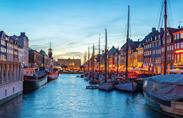
THE ‘BEST’ CITY
Learn the anatomy of what defines a city as an urban success. P58
MOTIVATE MEDIA GROUP
EDITOR-IN-CHIEF OBAID HUMAID AL TAYER
MANAGING PARTNER AND GROUP EDITOR IAN FAIRSERVICE
CHIEF COMMERCIAL OFFICER ANTHONY MILNE
GROUP CONTENT DIRECTOR THOMAS WOODGATE
EDITOR YI-HWA B. HANNA
ART DIRECTOR CLARKWIN N. CRUZ
EDITORIAL CO-ORDINATOR LONDRESA FLORES
CONTRIBUTORS
TAMSIN COCKS, CHRIS DWYER, STEPHANIE VERMILLION, ALICE WILKINSON, NIVEA SERRAO, HANNAH BRANDLER, CRAIG SAUERS, FAYE BRADLEY, JEREMY TAYLOR
GENERAL MANAGER – PRODUCTION S SUNIL KUMAR
PRODUCTION MANAGER BINU PURANDARAN
ASSISTANT PRODUCTION MANAGER VENITA PINTO
GROUP SALES MANAGER CHAITALI KHIMJI SENIOR PARTNERSHIPS MANAGER MURALI NARAYANAN
HEAD OFFICE: MEDIA ONE TOWER, DUBAI MEDIA CITY, PO BOX 2331, DUBAI, UAE; TEL: +971 4 427 3000; FAX: +971 4 428 2266; E-MAIL: BTME@MOTIVATE.AE
DUBAI MEDIA CITY: SD 2-94, 2ND FLOOR, BUILDING 2, DUBAI, UAE; TEL: +971 4 390 3550; FAX +971 4 390 4845
ABU DHABI: PO BOX 43072, ABU DHABI, UAE; TEL: +971 2 677 2005; FAX: +971 2 657 3401; EMAIL: MOTIVATE-ADH@MOTIVATE.AE
SAUDI ARABIA: REGUS OFFICES NO. 455 - 456, 4TH FLOOR, HAMAD TOWER, KING FAHAD ROAD, AL OLAYA, RIYADH, KSA;TEL: +966 11 834 3595 / +966 11 834 3596; EMAIL: MOTIVATE@MOTIVATE.AE
LONDON: MOTIVATE PUBLISHING LTD, ACRE HOUSE, 11/15 WILLIAM ROAD, LONDON, NW1 3ER, UK; E-MAIL: MOTIVATEUK@MOTIVATE.AE
BUSINESS TRAVELLER MEDIA LTD. INK, BLACKBURN HOUSE, BLACKBURN ROAD, LONDON, NW6 1RZ







UNDER UNPRECEDENTED ATTACKS, THE UAE STOOD READY. THIS IS THE STORY OF THE FIRST 31 DAYS

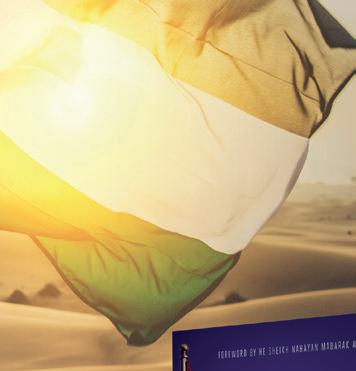
“Augie Fabela writes not as a distant commentator, but as a firsthand participant—one who chose to stay and stand in solidarity with the UAE. His unique perspective, as an eyewitness to a defining moment, captures our nation’s strength, vision, and tenacity.”
HIS EXCELLENCY SHEIKH NAHAYAN MABARAK AL NAHYAN MINISTER OF TOLERANCE AND COEXISTENCE, UNITED ARAB EMIRATES






REGIONAL NEWS
New hotels, flight routes, and more
SUSTAINABILITY
The greener side of tourism & hospitality






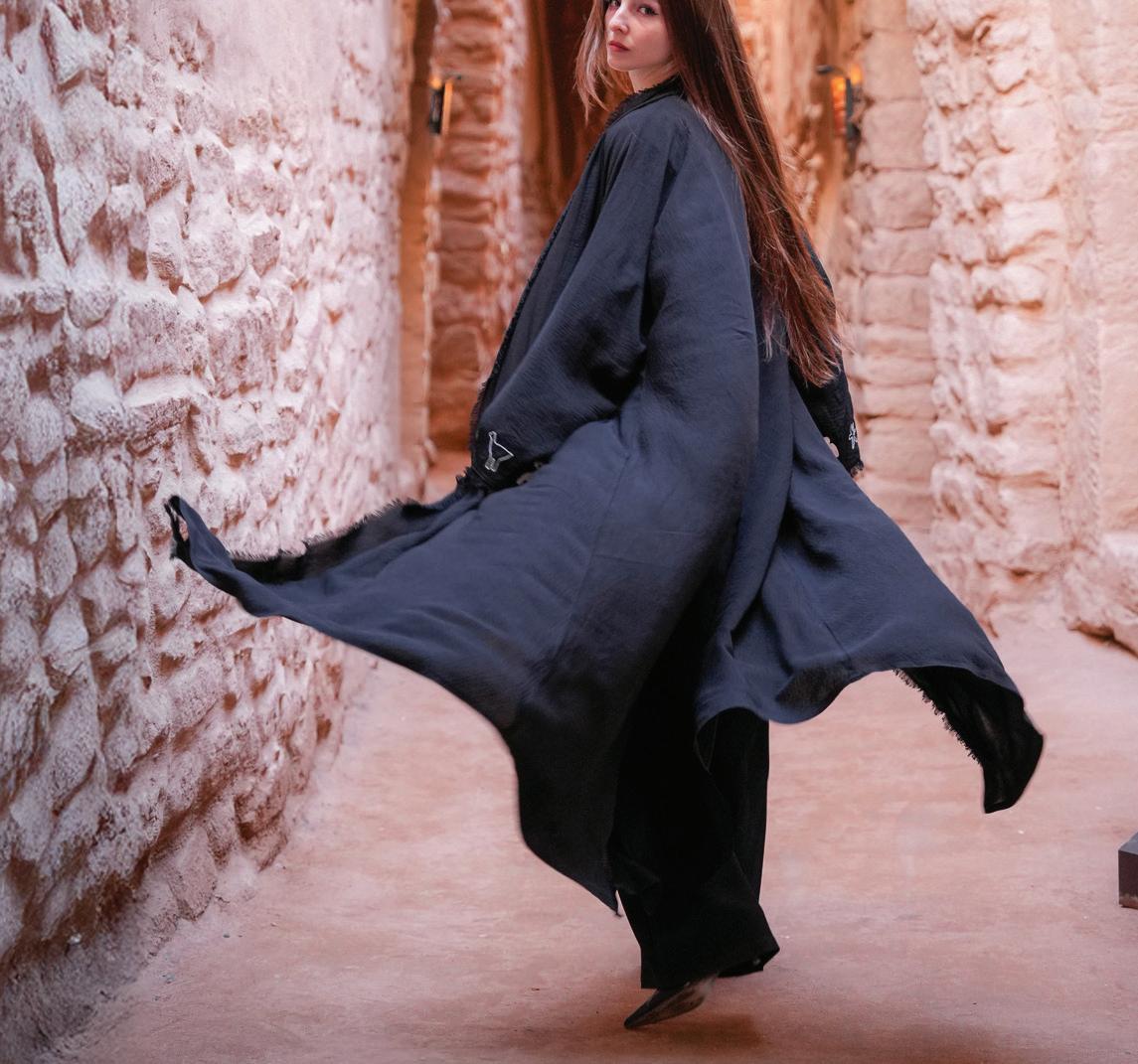
HOT TICKET

A Saudi fashion label partners with local artisans to make AlUla’s 7,000-year heritage wearable
WORDS YI-HWA HANNA
THROUGH THIS temporary collection of shirts and abayas, Mohammed Khoja and his label HINDAMME, alongside 26 local craftspeople, translates ancient rock carvings and regional fauna into modern apparel. Each garment takes up to two months to produce, featuring traditional hand embroidery, silk-screen printing, and metalwork. It was produced at Madrasat Addeera – a former school transformed into a creative hub to boost the local economy. Available online and in-store, the slow-fashion line aims to keep regional identity alive through daily expression.
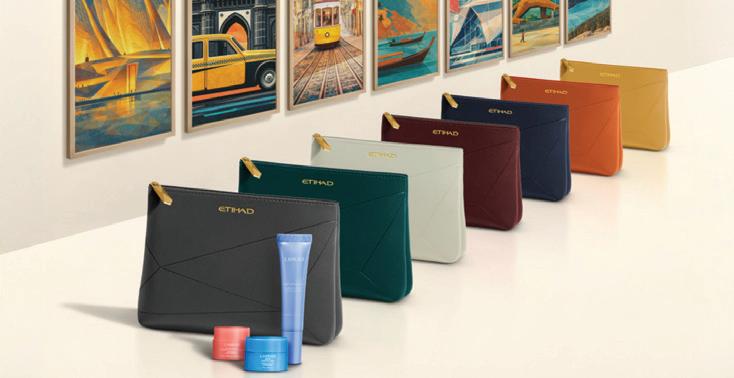
Etihad packs a punch with its new destination-themed amenity kits
Both types are available in one of seven colourways.
Each bag displays a destination name, geographic coordinates, a bespoke interior lining, and a serial number from one to seven. The initial rollout features seven cities: Abu Dhabi (#1), Krabi (#2), Mumbai (#3), Lisbon (#4), Addis Ababa (#5), Calgary (#6), and Atlanta (#7). The Abu Dhabi edition features the Zayed National Museum as a tribute to the airline’s Emirati heritage. Flights will be loaded with a mixed selection of these kits to encourage frequent passengers to collect different designs throughout their travels, with plans to introduce additional cities and artworks annually as the collection expands. For the kits’ contents, the airline has partnered with Korean beauty brand LANEIGE, in the popular skincare company’s first-ever collaboration with an airline. Inside is a curated selection of hydration-focused products intended to support skin recovery and comfort at altitude, including the LANEIGE Water Sleeping Mask, Lip Sleeping Mask, and a hydrating hand cream, alongside the airline’s standard inclusion of an eyeshade, earplugs, and a dental kit. AIRLINE AMENITIES
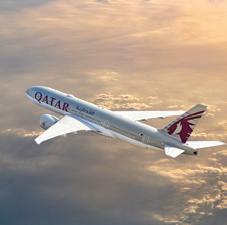
Qatar Airways has reinstated a number of its regional and international routes following recent regional airspace closures. Daily services to Bahrain and Kozhikode resumed 1 May, joining recently restored flights to Dubai, Sharjah, and Damascus, while on 10 May, the carrier resumed passenger flights to Baghdad, Basra, and Erbil. From 15 July, the airline will also be resuming flights to Tokyo Haneda Airport in Japan, as well as Helinski, Finland, for which frequency will rise from 1 August.
STARTING THIS SUMMER, the UAE national carrier will be giving out a new series of amenity kits in its Business class cabin. Titled the “Destination Collection”, the line includes 14 collectible designs inspired by cities across its global network and its home base of Abu Dhabi. This collection was designed entirely in-house – for previous releases, the airline has worked with external designers – and the pieces come in two styles: Pouch and Slim.
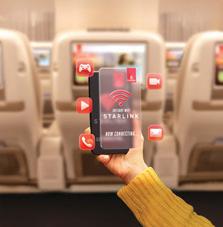
Emirates has installed next-gen Starlink WiFi on its first flagship Airbus A380. Returning to Dubai after certification in the UK, the double-decker uses three satellite antennas to deliver over 2 Gbps of total bandwidth. The service will be free for all cabin classes. While 25 Boeing 777-300ERs already have the technology, the remaining fleet installations will move to Dubai for the rest of 2026, where installations will take place at Emirates Engineering facilities.
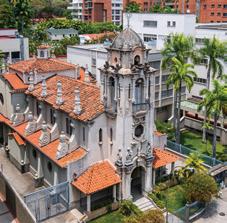
Qatar Airways is launching flights to Caracas, Venezuela, and Bogotá, Colombia, starting 22 July. This will be the first time a Gulf carrier will serve Venezuela, offering the first direct links from the Middle East to both capital cities. Running twice weekly on Wednesdays and Sundays, the flight will depart Doha for Bogotá before continuing to Caracas and returning nonstop. The schedule aims to facilitate onward transit to key destinations such as the UAE, China, and Australia.
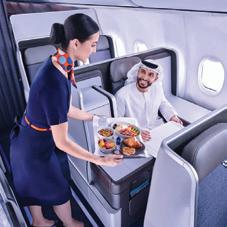
flydubai is expanding its Thai network by launching daily flights to Bangkok’s Don Mueang International Airport from 1 July. Operating from DXB’s Terminal 3, the service will be the airline’s second destination in Thailand, following Krabi. The route will run as a codeshare partnership with Emirates, allowing for single-ticket bookings and through-baggage check-in. Flights are timed for summer demand, departing Dubai at 01:35 and returning from Bangkok at 23:50.
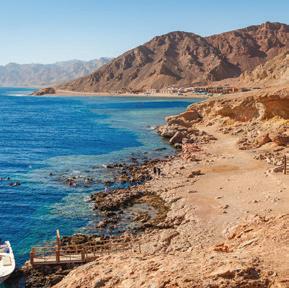
Minor Hotels has recently signed a deal to expand its presence on Egypt’s Red Sea coast, which will bring its Anantara brand to the area for the first time. Scheduled to open in May 2030, the upcoming Anantara Somabay Resort & Residences will be reachable from Hurghada International Airport within about 45 minutes. The property is set to feature 300 hotel keys alongside 150 branded residential units, with sea views available. Plans for the resort include multiple dining venues, various wellness spaces, and beachfront villas with private boat docks.
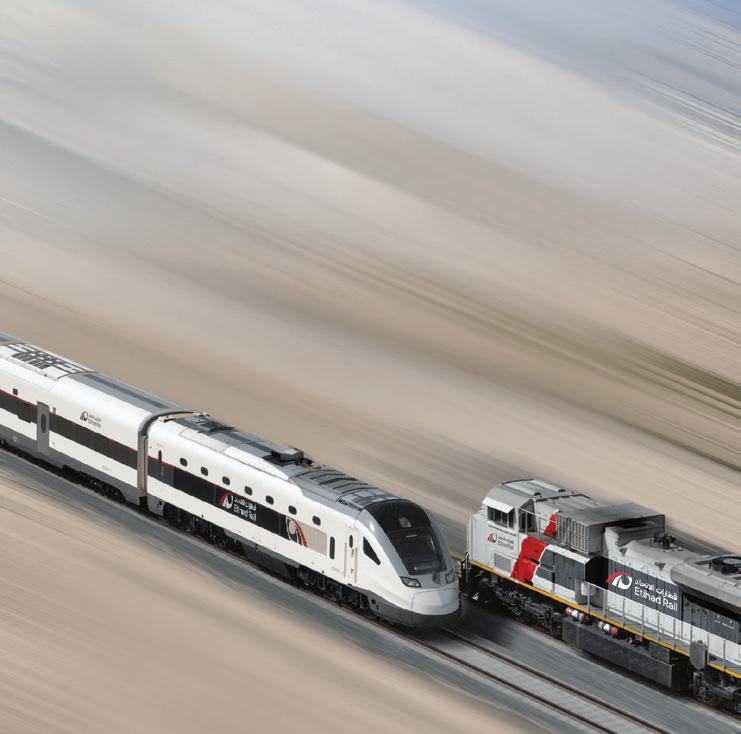
FUJAIRAH is now home to Etihad Rail’s first fully completed passenger station, signaling a major shift for transit across the UAE. The new hub was recently inspected during a royal visit by the Ruler of Fujairah, His Highness Sheikh Hamad bin Mohammed Al Sharqi, alongside the Chairman of Etihad Rail, Sheikh Theyab bin Mohamed bin Zayed
Al Nahyan, who toured its facilities in early May. The network’s first phase connects Abu Dhabi and Dubai before extending out to Fujairah on the east coast, with routes based on population density and commuter demand. Passenger services are scheduled to roll out starting this year, aiming to be a reliable alternative to road travel between emirates.
THE DUBAIBASED ecofocused hospitality brand is launching a new beachfront property this June, on the southeastern shores of Zanzibar. As the GCC’s first experiential ecolodge company, the brand is prioritising sustainabilityled growth with nature-centric experiences for its expansion.
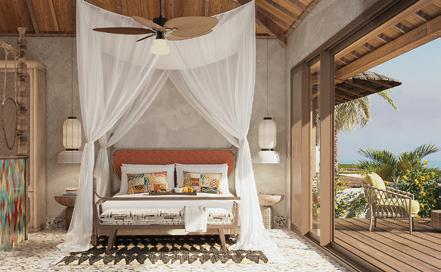
The new resort features 22 private villas with views of the Indian Ocean and landscaped gardens. The site on Paje
Beach provides direct access to a top kitesurfing destination known for its shallow lagoons and steady trade winds.
The brand also hopes to target the growing “skillcation” trend, offering travellers a mix of wellness and sport just a
short flight from major Middle East hubs. The property will provide on-site instructors and top-level gear, plus activities like paddleboarding, snorkelling, cooking classes, beachfront yoga sessions, and visits to a local seaweed farm visits, plus wellness treatments using African healing traditions.
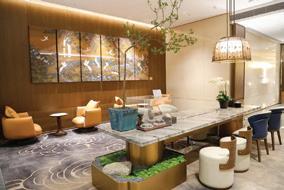
1 Star Alliance launches new 24/7 lounge in Guangzhou T3 (Above) This 1,400 sqm space is a significant upgrade for the alliance’s presence at Baiyun International airport. Beyond its 245-seat capacity, one standout feature is a 700 sqm outdoor garden designed to provide fresher air for transiting passengers. Amenities include sleep pods, work zones, and a tea experience, while the dining programme is backed by Pullman chefs.
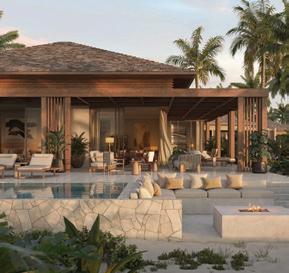
2 Uber integrates hotel bookings via new Expedia partnership (Right) The recently-established partnership allows users to book 700,000+ properties directly within the app. Beyond accommodation, the expansion includes a ‘Travel Mode’ for airport navigation and local recs, alongside AI-powered voice bookings and international Uber One perks. By linking transport and lodging, Uber is positioning itself as a comprehensive travel concierge to rival established industry giants.

3 Anantara makes Caribbean debut in Turks and Caicos (Left) Scheduled for a 2029 opening on North Caicos, the Anantara Turks and Caicos Resort & Residences will have 78 branded residences and beachfront villas designed by Meyer Davis. The “Garden Island” location will host a private marina, a signature Anantara Spa, and an onsite observatory for celestial-guided wellness, making it a nature-focused sanctuary a short flight from Miami.
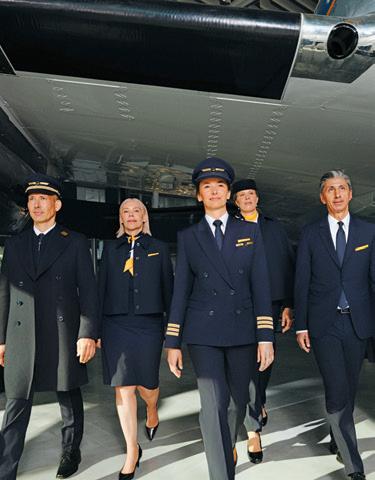
4 Lufthansa gets BOSS-designed uniform for 100th year (Below) The new 40-piece collection, developed with the German fashion house, is set for a phased rollout in late 2026. The tailored designs for pilots, cabin, and ground crew include a heritage-inspired short cape and modern sweater vests. By retaining the classic navy and yellow palette, the airline has created a modular system that allows staff to mix new items with existing pieces.
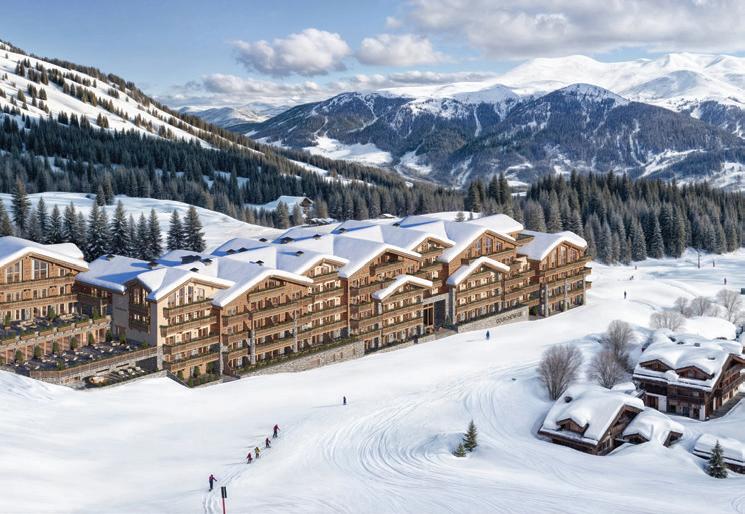
5 One&Only to debut in the French Alps, in Courchevel (Right) Opening in 2030, the landmark new One&Only in Courchevel will transform the historic Courcheneige Hotel into an ultra-luxury retreat at the summit of Jardin Alpin. The resort will offer ski-in/ski-out access to the Bellecôte slope alongside a limited collection of private homes. Guests can expect a sprawling wellness sanctuary, Michelin-calibre dining, and a vibrant après-ski scene.
6 SWISS to phase out inflight duty-free sales by September (Right) The Swiss flag carrier is ending trolley service in favour of an expanded online Miles & More offering, citing a clear shift in traveller behaviour toward digital price comparisons. This decision aligns Swiss with Lufthansa and Austrian Airlines, while helping to reduce aircraft weight and fuel consumption. From June, passengers can access discounts on remaining stock before the final rollout.

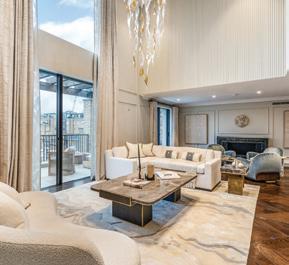
7 Cheval Collection launches London branded residences (Above) Located in a Grade II-listed building with a retained Edwardian façade, the new Knightsbridge Gate flagship features 15 ultra-luxury apartments. The launch follows the group’s recent entry into the branded residential sector in Dubai. Owners gain 24-hour concierge services and perks like private chefs, alongside elite status within the Cheval DISCOVERY loyalty programme.
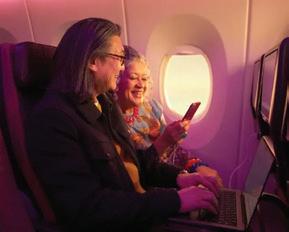
8 Virgin Atlantic reveals world-first ChatGPT app (Above) The carrier has become the first airline to launch a dedicated app within ChatGPT, allowing passengers to search for flights using natural language queries. The tool simplifies complex bookings by summarising routes and premium options before directing users to the airline’s site. Virgin is also rolling out a major seasonal catering refresh across its fleet and U.S. Clubhouses.
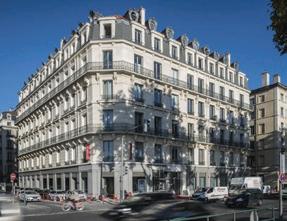
9 Preferred Hotels & Resorts welcomes 20 new members (Below) The largest independent hotel brand in the world, Preffered has expanded its global footprint, welcoming new members across Indonesia, Brazil, and Europe. Key additions include the all-villa Ametis Villa Bali and the historic Boscolo Hotel Lyon and Spa. To celebrate the expansion, rewards members can earn 2,500 bonus points on stays at the new locations booked by 30 June.
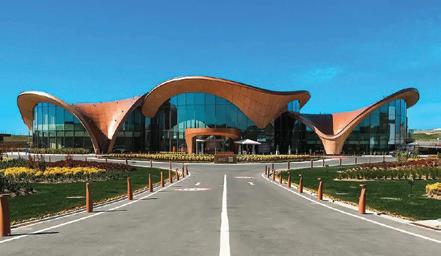
10 Istanbul Airport opens world’s largest VIP terminal (Left) The new 5,000 sqm Jetex iGA Terminal spans three floors, featuring a fine dining restaurant, suites, and wellness facilities. The terminal’s curved design is inspired by the nazende çiçeği, a slender flower native to Türkiye, and includes private customs, luxury transfers, and butler service. Entry starts at €1,320, marking a major play for the global ultra-luxury transit market.
The UAE-based master developer behind Nest Hotel Aljada has signed a US$100 million package to accelerate sustainable construction
AKING A MAJOR step towards greener building, Arada has signed its first sustainability-linked loan.
TThe US$100 million deal was arranged with First Abu Dhabi Bank and comes backed by a guarantee from SACE, Italy’s export credit agency. This fiveyear Islamic financing package is designed to support Arada’s internal environmental goals, and to ensure its upcoming neighbourhoods are built with eco-friendly construction practices firmly in mind. The funding will be used to keep daily operations moving smoothly, and to boost development across the company’s expanding list of residential projects.
This new financial setup helps the company branch out its funding sources while putting real pressure on its teams to hit serious environmental milestones. Because the cash
is tied directly to specific sustainability performance targets, the company’s progress will be checked every single year throughout the five-year term of the loan. The main goal of this strict setup is to cut down the firm’s carbon footprint.
This will push construction teams to choose eco-friendly building materials wherever they can, while also helping the company’s main suppliers figure out and minimise the environmental impact of the goods they provide. Beyond the raw materials, the agreements mandate that future communities carry green certifications like LEED and WELL, ensuring healthier living spaces for residents alongside a continuous push to raise health and safety standards on building sites.
The involvement of Italy’s export credit agency highlights the strong ties the property developer has built with Italian brands. SACE chose to back the company because of its solid track record and a busy
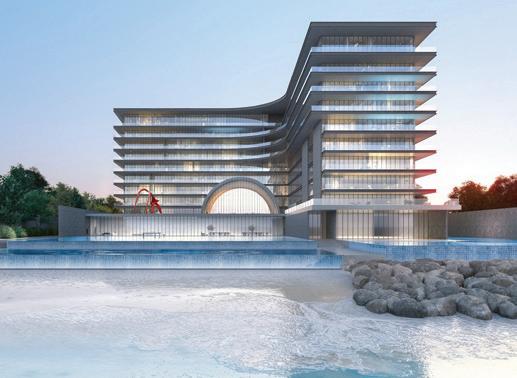
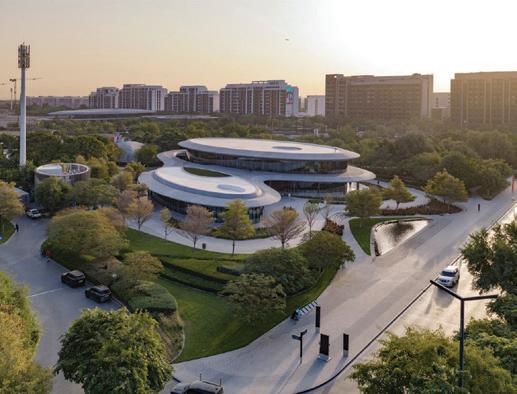
pipeline of work including the Armani Beach Residences on Palm Jumeirah. This partnership with The Armani Group alone is expected to bring up to AED250 million worth of luxury Italian furniture and design pieces into the UAE over the next five years. The arrangement is designed to open up fresh opportunities for Italian businesses in the region, while strengthening trade ties between the UAE and Italy.
This milestone loan follows several successful rounds in the global debt markets since 2022, during which the developer raised over US$1.5 billion through Islamic bonds, known as sukuks, after landing positive credit ratings from major agencies Moody’s and Fitch.
Since starting out in 2017, the firm has successfully launched 11 major communities
in the UAE and expanded its footprint abroad into both the UK and Australia. Today, the company manages a massive global development pipeline valued at AED130 billion. One of the UAE’s fastest-growing destination developers, Arada began operating its first owned homegrown hotel in December 2025. Nest Hotel Aljada, a 395room midscale property in a flagship Sharjah destination, was the first property under Arada’s new lifestyle hospitality brand. It was developed in consultation with students from Sharjah’s University City and the neighbouring Nest Campus, with their input reflected in room layouts, co-working zones, and communal areas. It also offers employment opportunities for students seeking hands-on hospitality experience.
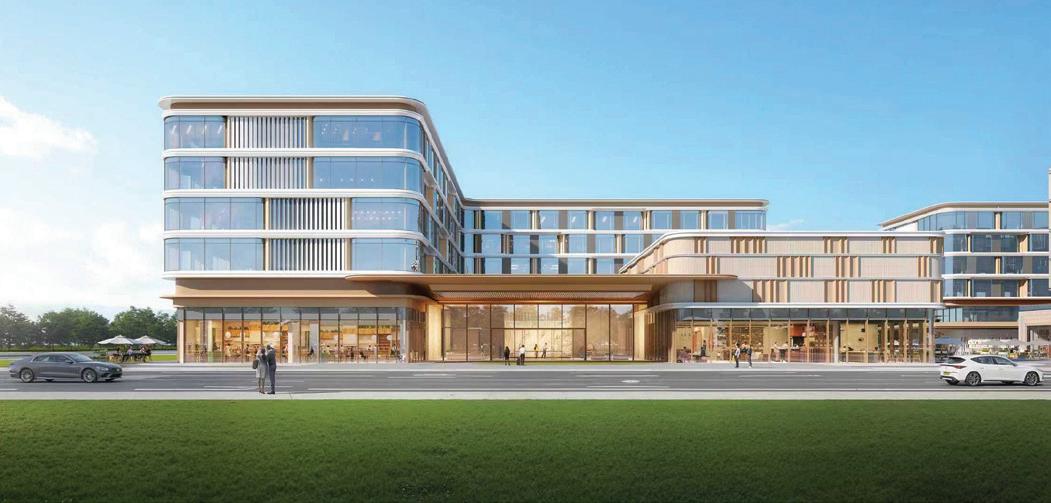
LANGHAM HOSPITALITY GROUP is expanding in northern China after signing a new management agreement to bring two of its hotel brands to the Xiong’an New Area.
Partnering with China Xiong’an Group Public Service Management Company, the operator will debut a dual-brand project featuring its upscale Cordis Hotels & Resorts alongside its lifestyle brand, Ying’nFlo. Located in a state-level development designed to relieve congestion in the Beijing-Tianjin-Hebei region, the properties will serve a growing hub of commercial, administrative, and cultural institutions relocating from the capital.
Scheduled to open in the second quarter of 2028, the entire hospitality complex will span
23,700 sqm. The Cordis portion of the complex will take up 16,000 sqm of the development and will feature 180 guestrooms, focusing on highlighting the brand’s family-inclusive and passion-driven service philosophy.
Meanwhile, the adjacent Ying’nFlo property will occupy 7,700 sqm with 120 rooms. This section of the development is designed as a flexible, tech-focused social platform aimed at younger travelers, featuring adaptable spaces where guests can work, sleep, and interact with the local community.
By combining a full-service hotel with a select-service setup in a single location, the group aims to cover a wide variety of passenger needs as the new city takes shape.

OMNICONN has become the first company in the GCC to achieve UL 3115 certification for its smart building technology. The UAE-based firm secured the international safety standard following an evaluation of its Platform 4.0 solution, which proved its
Xiong’an New Area is globally recognised as China’s blueprint for a “Sentient City” with a low-carbon, green urban ecosystem. In the long run, it’s set to run on 100% clean electricity with a 70% blue-green ecological footprint, using technology to achieve next-gen sustainability.
transparency, security, and human oversight. The centralised platform integrates IoT devices, building management systems, and fire panels into a single dashboard. By working with existing infrastructure, it enables real-time monitoring and intelligent automation to boost energy
efficiency and cut operational costs. Beyond optimising resources and lowering carbon emissions, the platform also strengthens cybersecurity and safeguards building operations, validating the trust of UAEdeveloped AI in critical infrastructure.
EDITOR’S CHOICE:
YOUNG REAL ESTATE LEADER OF THE YEAR
Yogesh Bulchandani, Founder and CEO, Sunrise Capital
EDITOR’S CHOICE: CROSS-BORDER
REAL ESTATE LEADER OF THE YEAR
Navneet Mandhani, Founder and CEO, Karma Developers
REAL ESTATE CEO OF THE YEAR
Ali Mohammed Al Kuwari, CEO, Msheireb Properties
ARCHITECT OF THE YEAR
Oleksandr Melnyk, NKEY Architects
EDITOR’S CHOICE:
EXCELLENCE IN COMMERCIAL DEVELOPMENT
AUM Development
EDITOR’S CHOICE: EXCELLENCE IN LUXURY LIVING
Arif Developments
EDITOR’S CHOICE: EXCELLENCE IN REAL ESTATE COMMUNICATIONS Papa Media
EDITOR’S CHOICE: EXCELLENCE IN REAL ESTATE BUSINESS CONSULTANCY Sherpa Communications
EDITOR’S CHOICE: EXCELLENCE IN SUSTAINABLE LUXURY REDEVELOPMENT
Greenbull Contracting
EDITOR’S CHOICE: ARCHITECTURAL EXCELLENCE AND INNOVATION Arista Properties
RESIDENTIAL DEVELOPER OF THE YEAR ANAX Developments
LUXURY DEVELOPER OF THE YEAR
Pantheon Development
EMERGING DEVELOPER OF THE YEAR Ahmadyar Developments
INTERNATIONAL REAL ESTATE COMPANY OF THE YEAR
Samana Developers
INTERIOR DESIGNER OF THE YEAR
Noor Al Muhaideb, Opaal Interiors
CONTRACTING LEADER OF THE YEAR
Ajay Bhatia, Chairman, Bhatia General Contracting Company
REAL ESTATE VISIONARY LEADER OF THE YEAR
Imran Farooq, CEO, Samana Developers
REAL ESTATE ENTREPRENEUR OF THE YEAR
Dr (CA) Ankur Aggarwal, Chairman and Founder, BNW Developments
ARCHITECTURAL DESIGN COMPANY OF THE YEAR
Studio Bruno Guela
INTERIOR DESIGN COMPANY OF THE YEAR Opaal Interiors
PROPTECH COMPANY OF THE YEAR
ICTReD Real Estate Development
BRANDED PROJECT OF THE YEAR
Ramada Residences Al Jaddaf by Wyndham Hotels & Resorts
PROJECT OF THE YEAR
Skyhills Residences 1 by HRE Development
OFF-PLAN PROJECT OF THE YEAR
Casagrand HERMINA by Casagrand
ICONIC BUILDING OF THE YEAR
OYSTRA by RICHMIND
REAL ESTATE AGENCY OF THE YEAR
Driven Properties
PROPERTY MANAGEMENT COMPANY OF THE YEAR
Dubai Residential
REAL ESTATE INVESTMENT COMPANY OF THE YEAR
Nisus Finance
CONTRACTING COMPANY OF THE YEAR
Bhatia General Contracting Company

WOMAN REAL ESTATE LEADER OF THE YEAR
Dana Awad, Chief Commercial O icer, ICTReD Real Estate Development
REAL ESTATE PERSONALITY OF THE YEAR
Atif Rahman, Founder and Chairman, ORO24 Developments
REAL ESTATE TRAILBLAZER LEADER OF THE YEAR
Egor Maslennikov, Chairman and Founder, Object 1
REAL ESTATE TEAM OF THE YEAR
CRC Property
SMART AND SUSTAINABLE DEVELOPER OF THE YEAR
Msheireb Properties
MASTER DEVELOPER OF THE YEAR HRE Development
REAL ESTATE EVENT OF THE YEAR
Cityscape Global
REAL ESTATE PR AGENCY OF THE YEAR
Publsh Group
MOST TRUSTED DEVELOPER OF THE YEAR
Samana Developers
GULF BUSINESS ICONIC COMPANY OF THE YEAR
QUBE Development
MOST IMPACTFUL DEVELOPER OF THE YEAR ORO24 Developments
‘Cathay’s
As Cathay turns 80, Tamsin Cocks talks to its director of customer lifestyle about the journey from airline to travel lifestyle brand
FEW AIRLINES WERE hit as hard during the pandemic as Cathay Pacific. With Hong Kong closed for longer than most places, the premium carrier was forced to rethink its position. What emerged wasn’t just an airline, but a brand with goals that move beyond travel.
“After COVID, Cathay rebuilt with a holistic nature as a premium travel lifestyle brand,” says Vivian Lo, the company’s director of customer lifestyle.














Through its loyalty ecosystem, Cathay members can earn miles through roughly 800 lifestyle partners globally. This includes shopping at designer outlet Bicester Village in the UK, and payments through fintech partner Yonder. The airline has also expanded redemption
“We’ve been working hard to enrich our offering so that we can reward customers with more earning and burning opportunities. Now members are able to redeem not just on flights, but on hotels, shopping, and aspects of their everyday life.”














AVivian Lo joined Cathay as a management trainee in 1995 and has held a range of roles across the business, including general manager of customer experience design, before stepping into her current position. She is also the CEO of Asia Miles.
Continued from overleaf
options to include concerts, theatre events, and exclusive experiences.
Business Traveller attended one such event in February – an audience with entrepreneur Simon Squibb at the London Palladium.
Here, a few lucky Cathay members saw their dreams become reality on stage, from kickstarting drumming careers to cash injections for their start-up businesses.
“Simon is all about making dreams come true – and that’s well connected with Cathay’s raison d’être,” Lo explains.
“Cathay’s vision is to help people move forward in life, connecting people, places and countries.”
It’s an ethos Lo sees as being more important than ever for the new generation of travellers.
“Younger generations want authentic, purposeful brands who deliver experiences that are genuine and meaningful,” she says. “People care more about experiences than things these days.”
Eighty years young
This year is a special one for the airline, as it celebrates its 80th anniversary. But Cathay is showing no signs of old age, reinventing itself with sleek new products, lounge upgrades, digital innovation, and culinary excellence.
In late 2024, the carrier launched its new long-haul business class product, the Aria Suite, on its Boeing 777 fleet. The suite has won several design awards for its comfortable lie-flat bed, private sliding door, and human-centric tech features such as wireless charging and personalisation.
One of the biggest frustrations in premium airline travel is product inconsistency across fleets. Travellers book business class expecting the swanky
new product advertised, then end up on an older aircraft.
With Aria, the airline has retained its familiar 1-2-1 reverse herringbone layout, which ensures direct aisle access, plus a common design language.
“When we launched the Aria Suite, many people said it was an evolution, not a revolution. That was intentional,” Lo says. “You don’t want customers to have to reorient themselves every time they fly with us. Even between older and newer cabins, you should still have a comfortable, premium experience.”
The next step: Aria Studio Cathay is now extending the Aria success to its regional fleet. Later this year the airline plans to introduce Aria Studio, a new regional business class featuring fully flat beds and direct aisle access on the narrow-body Airbus A330-300s.
“Aria Studio takes inspiration from the Aria Suite but is designed specifically for regional routes, which is really exciting,” Lo says.















‘Even for well-travelled passengers, airports are stressful. Our goal is to create a serene oasis’
The aim is to create a consistent experience across both long- and short-haul flights connecting through the airline’s hub at Hong Kong International Airport, giving Cathay an important edge in the competitive Asia-Pacific market.
The first-class mystery
Another hotly anticipated development is the launch of Cathay’s new first class cabins. The airline is creating a fresh product but has revealed few concrete details as of yet.
“It’s something we’ve worked very hard on,” Lo says carefully, keen to avoid revealing anything ahead of announcement.
“If you look at hints from our business class, it will be built on human-centric customer insights, with amazing distribution of space and thoughtful service.”
The new Halo Suite is expected to debut on Cathay’s incoming Boeing 777-9 fleet, which has been delayed due to industrywide bottlenecks and is now scheduled to arrive in 2027.
The wifi question
Another big battleground in premium airline offerings is connectivity. Starlink has dramatically raised passenger expectations when it comes to inflight wifi, enabling airlines to offer fast, free access.
Qatar Airways was the first to launch Starlink, back in October 2024, showing off crystal-clear video calls in the sky. The technology has rapidly been adopted by scores of others, from British Airways to Virgin Atlantic and United Airlines. For now,

though, it’s not a standard Cathay plans to meet. “We’ll continue to evaluate new technologies, but we want to ensure we can deliver a consistent experience first,” Lo says. “We are one of the first major airlines to be 100% connected across our entire fleet, with a personal entertainment screen at every seat on every aircraft.”
Wifi is currently free for Cathay’s first and business class passengers, as well as for loyalty members in premium economy.
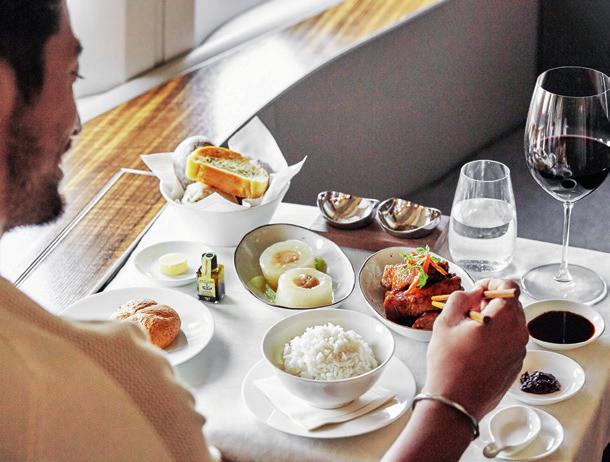
Dining, meanwhile, has always been an area in which Cathay excels – whether that be local delights from its “Hong Kong flavours” programme, regional dishes from eight Chinese provinces, or international classics.
Wellness options and new high-end dining partnerships with Hong Kong restaurants such as Duddell’s and Louise also showcase the carrier’s affinity for modern culinary trends.
Lo reveals that beverages are another key passion for both the airline and its epicurean passengers, highlighting Cathay’s longstanding partnership with
Château Lynch-Bages as well as its current role in shining a spotlight on Chinese vino.
“Thirty years ago we brought one of the best French [vintages] to Asia and really made it world class,” she says. “Now we’re seeing a lot of elevation in the quality from China, and we want to bring that to the world. We’re very proud to be playing a strong part in that cultural exchange.”
Of course, we can’t talk about Cathay without mentioning its lounges – regularly voted by Business Traveller readers as some of the best in the business.
At its Hong Kong hub in particular, the airline has built a reputation for calm, designled spaces – with the noodle bar serving up freshly-made dan dan noodles that have become legendary among frequent flyers.
“Even for the most welltravelled passengers, airports are stressful. It’s where all the friction and choke points happen. Our goal is to create a serene oasis in that space,” Lo says.
“A lot of members say that when they arrive at a Cathay lounge, that’s when


since the airline was founded, in 1946
carried across Cathay Pacific and HK Express in 2025
in the passenger fleet
including next-generation Boeing 777-9s
100 DESTINATIONS in the route network
across retail, dining, travel, and finance
11 MILLION MEMBERS in the Asia Miles programme
the journey really begins. They see it as a destination in itself,” she adds.
Cathay is currently in the middle of a major refresh of its Hong Kong lounge portfolio. In 2025, the airline reopened The Bridge, introducing a new concept space, including the first “Diamond zone” – an area reserved exclusively for its top-tier loyalty members and first class passengers. The flagship Wing First Class lounge has also recently reopened following a major renovation.
Behind the scenes, Cathay is investing heavily in digital infrastructure. Personalisation – powered by customer data and artificial intelligence – is becoming central to how Cathay plans to elevate the customer experience.
“With the Aria Suite you can already adjust settings for dining, watching movies, or sleeping,” Lo explains. “In the future, those preferences could travel with you across different flights and cabins. Technology should enhance the experience, but it should never feel like technology for technology’s sake.”
Cathay is also increasingly using AI for its operations, from disruption management to optimising scheduling and streamlining software development.
While all eyes are on the future at Cathay, this landmark year will include plenty of nostalgia. Customers can look forward to a range of limited-edition merchandise, plus special retro liveries dressing an Airbus A350 aircraft and a Boeing 747 cargo freighter, as the airline celebrates its milestone anniversary.
“There’s going to be some exciting things,” Lo promises.
Cathay might be turning 80, but it seems the best is yet to come.
Taking us from airports to offices, the new travel wardrobe focuses on modular, sustainable pieces designed to move with us seamlessly across time zones
IN A WORLD constantly on the move, what we wear to travel in has increasing importance in our functional wardrobes. Over the past decade, the significant shift towards mass casualisation means that comfort and softness have become non-negotiables for everyday use. Flexibility is key –what works on the road is often what now works in the boardroom. Alongside this is a deeper consideration of where comfort comes from, with rising concerns over the toxicity of fossil fuel-derived fabrics that often form the foundation of leisure wear. Increasingly, the modern traveller wants clothing which supports an always on-the-go lifestyle with style, comfort, and a sustainable viewpoint – three elements not often easily tied together. What has changed is not just what we wear, but how we think about clothing altogether. Travel has accelerated a shift towards wardrobes
that are expected to perform across multiple contexts: long-haul flights, changing climates, informal meetings, and moments of downtime – without the need for constant outfit changes. Instead, a new kind of travel wardrobe is emerging – one built around fewer, more versatile pieces that can transition seamlessly across time zones and settings. The idea of dressing for a specific occasion is giving way to dressing for movement. Brands like PANGAIA – worn by public figures from Bill Gates to Pharrell Williams – reflect a broader evolution towards pieces that combine innovation, ease, and versatility, particularly in the context of travel. Daniel Gomez, CEO of PANGAIA, has seen “a clear shift towards intentionality in how people build their wardrobes.”
THE NEW TRAVEL UNIFORM
Clothing from brands like PANGAIA (pictured below) has become a staple for modern travellers seeking both style as well as comfort
‘People are dressing for movement and transition’

“Our community is seeking pieces that stand the test of time, in terms of quality, durability, and a refined design language that feels at home across various moments in a global, fastpaced life,” he says. Gomez adds that there is “a stronger expectation around responsibility. People want confidence in how something is made, as well as in how it functions with them over time.
It’s about clothing that feels considered, and that can move with them, whether that’s through an airport, into a meeting, or into time spent away from home.”
Versatility is something that the keen aesthete looks for: all of our clothes need to be multi-functional, especially when we’re away from home and shifting time zones. This has led to a more modular approach to dressing: garments that can be layered, adapted, and repeated, rather than replaced. Packing, too, has become more intentional – with fewer items, but each with a clearer purpose.
Material innovation still plays a role, but it increasingly does so in subtle, functional ways – fabrics that regulate temperature, resist odour, or require less maintenance over time.
In the context of travel, these are not just technical features, but practical solutions to the realities of being constantly on the move.
Travel has become a cornerstone of what modern brands need to offer.
Airports have evolved into spaces where personal style, comfort, and practicality converge – it’s less about dressing up or down, and more about maintaining continuity. In a fast moving world with increasing demands for authenticity, adaptability is crucial, says Gomez: “People are dressing for movement and transition, not fixed occasions.”
Ultimately, travel dressing today is less about a specific look and more about a mindset – one that prioritises ease, adaptability, and intention, reflecting the way we live, work, and move across the world.
Following the recent arrival of Dubai’s driverless taxis, regulatory readiness is set to follow suit as we navigate the legal road to autonomous mobility
UBAI’S AMBITION to lead the future of mobility has taken a significant step forward with the rollout of driverless taxi services. As autonomous vehicles (AVs) begin to move from pilot phases to commercial deployment, the conversation is shifting from technological capability to regulatory readiness and how legal frameworks can support safe, scalable adoption. At the heart of this transition is the UAE’s evolving regulatory landscape. In Dubai, Law No. 9 of 2023, supplemented by detailed administrative regulations, provides a structured framework for the operation of autonomous vehicles. Elsewhere in the UAE, different approaches are emerging. Ras Al Khaimah has introduced its own standalone legislation, while Abu Dhabi has opted for a licensing-led model rather than new laws. Together, these approaches reflect a broader regional trend that is enabling innovation while retaining regulatory oversight.
Dunderscores the need for robust governance frameworks that address both safety and privacy.
A key challenge lies in defining compliance for systems powered by artificial intelligence. Autonomous taxis generate and process vast amounts of data, from real-time navigation to passenger information. As a result, operators must navigate not only transport regulations but also data protection requirements. This dual regulatory burden
‘A key challenge lies in defining compliance for systems powered by AI’
Regulators are also placing strong emphasis on oversight. In Dubai, operators must be licensed by the Roads and Transport Authority (RTA), which has the power to audit both vehicle operations and the data they generate. This level of scrutiny is essential in building public trust, particularly as autonomous systems assume greater responsibility for passenger safety.
The commercial model underpinning driverless taxis is equally complex. The rollout is expected to involve a network of partnerships between technology providers, transport operators, and public authorities. Technology firms bring autonomous driving systems and, in some cases, vehicles themselves, while ride-hailing platforms and taxi companies provide operational expertise. Transport authorities, in turn, act as regulators and gatekeepers. Alongside this, the financing of significant numbers of AVs must also be considered, as it is unlikely that either technology companies or taxi firms will want to tie up capital by owning AVs outright. The
On 30 March 2026, Dubai’s Roads and Transport Authority (RTA) launched commercial operations for autonomous taxis. WeRide vehicles were made available to the public through the Uber app, while Tawasul Transport is responsible for fleet management and operations.
Apollo Go, a subsidiary of Baidu, provides autonomous mobility services via the Apollo Go app, in collaboration with the Dubai Taxi Company.
result is a layered ecosystem where roles and responsibilities must be clearly defined.
Integration with existing transport systems will also be critical. Autonomous taxis do not operate in isolation. They must comply with existing traffic laws and registration requirements, while also adhering to new AV-specific regulations. This dual framework ensures continuity within the broader transport network while accommodating the unique characteristics of autonomous mobility. Perhaps the most closely watched issue is liability. In Dubai, the licensed operator of the vehicle is ultimately responsible in the event of an accident, subject to standard rules on contributory liability. However, in practice, risk is likely to be distributed contractually between operators and technology providers. It is likely that responsibility for system failures will be allocated to the technology provider, reflecting the technical nature of autonomous driving systems. Insurance will inevitably evolve alongside these developments. While existing requirements remain in place, the introduction of AVs is expected to reshape risk models. In the short term, premiums may rise as insurers assess the performance and reliability of new technologies. Over time, however, improved safety outcomes could lead to more competitive pricing.
Dubai’s driverless taxi initiative represents more than a technological milestone, it is a test case for how cities can regulate innovation at scale. In my opinion, the success of this model will depend not only on the performance of the technology, but on the strength and adaptability of the legal frameworks that underpin it. As autonomous mobility accelerates, regulation will play a defining role in determining how, and how quickly, these systems become part of everyday life.
Modern performance is no longer one-size-fits-all; it involves a move toward data-driven precision, where understanding your own body becomes the ultimate competitive edge
IN TODAY’S highperformance world, wellness is undergoing a profound transformation: what was once approached through one-size-fits-all solutions is now becoming deeply personal, data-driven, and strategic. This shift reflects a broader realisation: health and performance are inherently individual. We now understand that what works for one person may not work for another. Energy levels, recovery, stress response, and longterm health outcomes vary significantly. As awareness grows, so does the demand for precision. Wellness is no longer about following a programme, but it is about understanding your own body and responding to it intelligently.
Technology has played a defining role in this evolution. The rise of wearables and digital tracking has given people unprecedented access to personal data, fostering a new level of awareness and accountability. But data alone is not enough. Without context, numbers remain abstract. The real breakthrough lies in the ability to interpret this data and translate it into meaningful action. And this is where structured assessment becomes essential. By establishing a clear and objective understanding of one’s physical condition, individuals can move beyond passive tracking into purposeful improvement. Solutions like Technogym Checkup are designed to provide this kind of foundation, offering a precise assessment that turns raw data into clear direction and helps individuals identify their priorities.
This approach is particularly critical when we consider long-term health and longevity. Research consistently shows that while genetics play a role, the majority of our health outcomes are shaped by daily lifestyle choices.
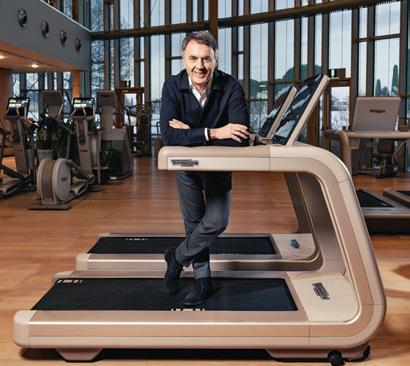
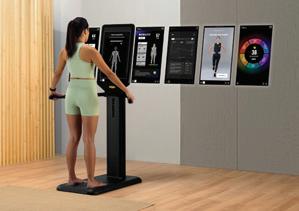
A personalised approach to training not only enhances performance but also reduces the risk of injury and supports sustainable progress over time. In this context, personalisation is not a luxury – it is one of the most effective tools we have to support healthy ageing. For leaders, this shift carries even greater significance. CEOs and founders operate under constant pressure, where energy, clarity and resilience are essential to decision-
Experts say it is more important than ever for busy leaders to invest in their health
making, yet well-being is often the first thing to be compromised. Over time, this comes at a cost and not just personally, but professionally. Tracking and personalisation offer a way to regain control. By understanding how travel, stress, and workload impact the body and mind, leaders can make more informed choices that enhance both performance and longevity. Wellness thus becomes a strategic asset –a foundation for sustained leadership rather than an afterthought.
Perhaps the most important impact of data-driven wellness is the shift in mindset it creates. When progress is tracked and visible over time, the focus moves away from short-term results toward long-term consistency. Sustainable performance (physical or professional) is built not on extremes, but on small, repeated actions that compound over time. Looking ahead, integrated digital platforms will play a central role in shaping the future of wellness. By bringing together assessment, training, and intelligent guidance, they simplify what has traditionally been complex. Artificial intelligence has the potential to transform data into actionable insights, adapting programmes in real time to match an individual’s evolving needs. At its best, technology does not overwhelm but quietly supports better decisions.
‘Wellness [is now] a strategic asset –a foundation for sustained leadership’
For those looking to invest more seriously in their health, the starting point is simple: awareness. Understanding your current condition creates the foundation for meaningful change. From there, the focus should shift toward building sustainable habits, supported by solutions that offer continuity and personalisation. In many ways, the principles of longevity mirror those of effective leadership. Both require discipline, adaptability, and a long-term perspective. And in both cases, it is not radical change that delivers results, but consistency over time.
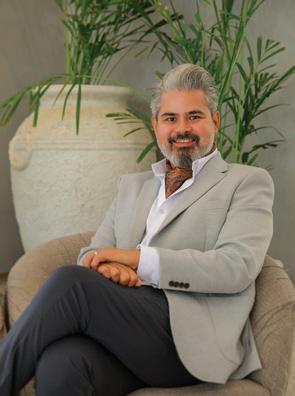
Business Traveller Middle East gives Juan Paolo Alfonso, general manager of Miraval The Red Sea, five minutes to pitch his property to prospective guests
S MIRAVAL makes its global debut on Saudi Arabia’s Shura Island, we are introducing a new dimension of wellness to the region – one that reflects the brand’s globally recognised philosophy of Life in Balance while responding to the unique spirit of the Red Sea. As Miraval’s first destination outside the United States, this resort represents a significant milestone, not only for the brand but also for the evolution of wellness hospitality in Saudi Arabia. Since its beginnings in Arizona in 1995, Miraval has redefined luxury through purpose rather than excess, positioning well-being as a deeply personal and intentional journey. That philosophy has guided every aspect of what we have created here. We have designed a sanctuary where
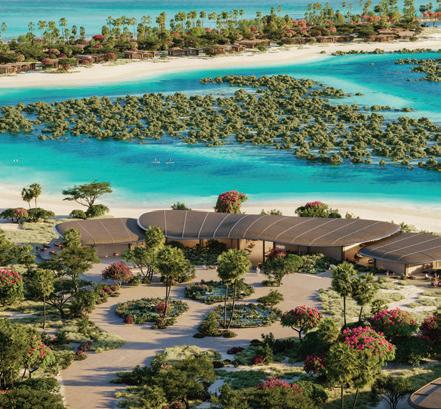
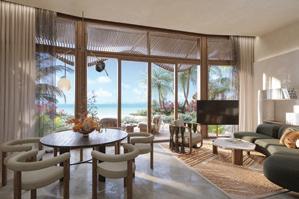
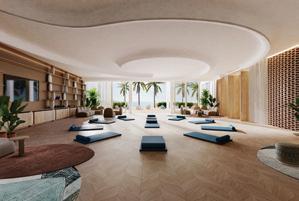
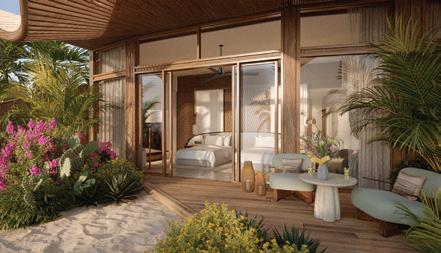
Aguests can reconnect with themselves through experiences that nurture body, mind, and spirit. Surrounded by lagoons, mangroves, and The Red Sea, the resort immerses guests in the rhythm of its natural environment. With Foster + Partners and Rockwell Group, we have brought to life a design language inspired by coral formations, desert landscapes, and organic forms. Each of the 180 accommodations has been designed as a private sanctuary, opening onto terraces that frame the surrounding landscape. Every stay is inclusive of accommodation, nourishing dining, daily wellness programming, and seamless ground transfers. With the support of dedicated Experience Planners and Miraval Specialists, each itinerary is individually tailored. Wellness at Miraval The Red Sea is holistic and immersive. Our programming spans mindful
ABOVE (CLOCKWISE FROM TOP LEFT)
Juan Paolo Alfonso; Aerial View; Coral Cove; Two-Bedroom Suite Living Room View; Multifunctional Space
BOTTOM: Golf View King Room Outdoors
movement, including yoga, Pilates, and meditation, alongside sound healing, desert stargazing, creative workshops, and one-to-one specialist sessions. At the centre of this offering is the 3,000 sqm Life in Balance Spa, featuring 39 treatment rooms, hammams, salt rooms, vitality pools, and dedicated spaces such as the Serenity Center and Body Mindfulness Center. Each experience has been designed to support not only immediate relaxation, but long-term well-being as well.
Culinary experiences play an equally important role. Our approach is rooted in nourishment and balance, with plant-forward menus, mindful dining concepts, and interactive experiences. Dining here is designed to be both intuitive and engaging, an extension of the wellness philosophy that underpins the entire resort.
Miraval The Red Sea also redefines the corporate travel experience. Our indoor venues and outdoor activity areas move gatherings beyond surface-level engagement, creating space for breakthrough thinking, reconnection, and collective renewal. Teams don’t just leave with action items; they leave with strengthened relationships and renewed purpose.
‘We are introducing a new dimension of wellness to the region’
From the outset, we have also been guided by a strong commitment to regenerative practices, protecting and enhancing the natural environment, supporting biodiversity, and celebrating local culture. From farm-totable sourcing and conscious materials to partnerships with local artisans, the resort reflects a long-term vision that goes beyond sustainability.
As GM, my role has been to ensure that every element of the experience reflects Miraval’s global philosophy and the cultural and environmental richness of the Red Sea. Ultimately, Miraval The Red Sea is a place where guests are invited to step away from the everyday, reconnect with what matters most, and return home with a renewed sense of clarity, balance, and purpose.
Yi-Hwa Hanna chats with Faisal Al Mutairi, co-founder of House of Habanero, a homegrown business he runs with his wife, Katy Gillett
AHouse of Habanero is a true Dubai success story, transitioning from a passion project in your garage to a pop-up in the major cultural hub Alserkal Avenue. What makes the UAE a good place for entrepreneurs?
The UAE makes it very accessible and easy for businesses to set up. I mean, where else do you find a government building where you can find out how to, then actually apply for, your business license, while they serve you coffee, like at the DED Café?
Any advice for others trying to pursue a similar dream?
Just get started. Ask questions, find out what you are eligible for, do all the research and due diligence possible, and then just start. It’s easy to make excuses, but it’s hard to get out of your comfort zone.
As you work to scale your business, how do you maintain the smallbatch integrity of your offerings?
It’s not easy, especially when the costs of imports go up, like we’ve seen recently – but it’s integral to the brand, so we try our best to make it work. The ethos is small-batch, artisanal, and preservative-free where possible, with the odd exception (for good reasons), so we are discerning in our choices. We have also been trying to rely less on imports by sourcing locally as much as possible, whether that’s supporting local brands, encouraging new startups or procuring from local distributors who stock products that fit our criteria.
You’ve sourced more than 100 products from 12 countries (and counting!). When you’re in a new city, how do you know you’ve found something that will resonate well?
As the years fly by, we’re getting a better idea of what the UAE market tends to prefer. For example, classic, chilli pepper-forward, and vinegarbased sauces as well as chilli oils sell best, while fruity flavours are less favoured. Products that are too niche take more time to sell, but that doesn’t mean people aren’t willing to try them. There’s always been an education piece to our mission, as we raise awareness of the vastness of the gourmet chilli products market. The UAE’s population is diverse and we like our sauce selection to fairly represent that diversity. Consumers are also becoming more conscious of what they put into their bodies, and supporting brands and the people behind them that stand for quality.
You only carry products that you have personally tried and approved. In an era of data-driven retail, how much does your intuition still affect your decision-making?
It’s very important. I’m someone who always trusts his gut and goes with what it tells me. It’s always served me well, and I think that’s largely because I’m also my own customer. I look at the products I select through the lens of a chillihead and a foodie, letting my palate lead the way. But just as importantly, I think it’s because there’s a growing shift towards premium,
gourmet foods, with a strong consciousness around supporting smaller, independent businesses rather than conglomerates.
You co-founded this brand with your wife, Katy. How do you handle the ‘always-on’ work of a growing startup with the needs of family?
There is no sugar coating it, it’s very challenging. We have been working very hard to grow the business and maintain work-life balance, but the reason we went into this business in the first place was so we could spend more time as a family. Previously, we both had corporate careers that took us away from the kids, so we wanted to build something of our own that we could one day involve them in. The biggest struggle with a young family and managing a growing business is time... it flies by so fast.
What’s your earliest travel memory?
essentials
• A refillable mini bottle with my favourite hot sauce in it.
• Ray-Ban Meta glasses.
• A good pair of noise-cancelling headphones.
Bucket list destination
• I’m dying to go to Tokyo. For some reason I’ve never been yet, but it’s been on my list forever. I’d rather go when my children are a bit older, though.
Oddly enough, my first memory of travelling was during the Gulf War. My father was a banker and I believe they moved us around from Cyprus to London, so I have memories of swimming on a beach in Cyprus and finding my first seahorse near the shore, as well as the food. [I remember] sitting in old-school tavernas with the smell of grilled meats, and the buzz of people sitting together, enjoying eating and drinking.
What’s the first thing you do when you arrive at a new destination?
I love to walk around and get the flavour of wherever I am. But my favourite thing to do is to find the largest local supermarket, and go through every aisle and find local delicacies and interesting foods. Obviously, the first aisle I start at is the condiments aisle. It’s very rare that I leave without some sort of local sauce or condiment.
What’s your go-to pick of in-flight entertainment?
I line up a bunch of movies, usually the latest blockbusters or a horror.
How do you spend your air miles?
I often use them for discounts on flight tickets and upgrades, and if I have enough of them I will do some loyalty shopping. Some of the best things in my kitchen come from redeeming my loyalty points!
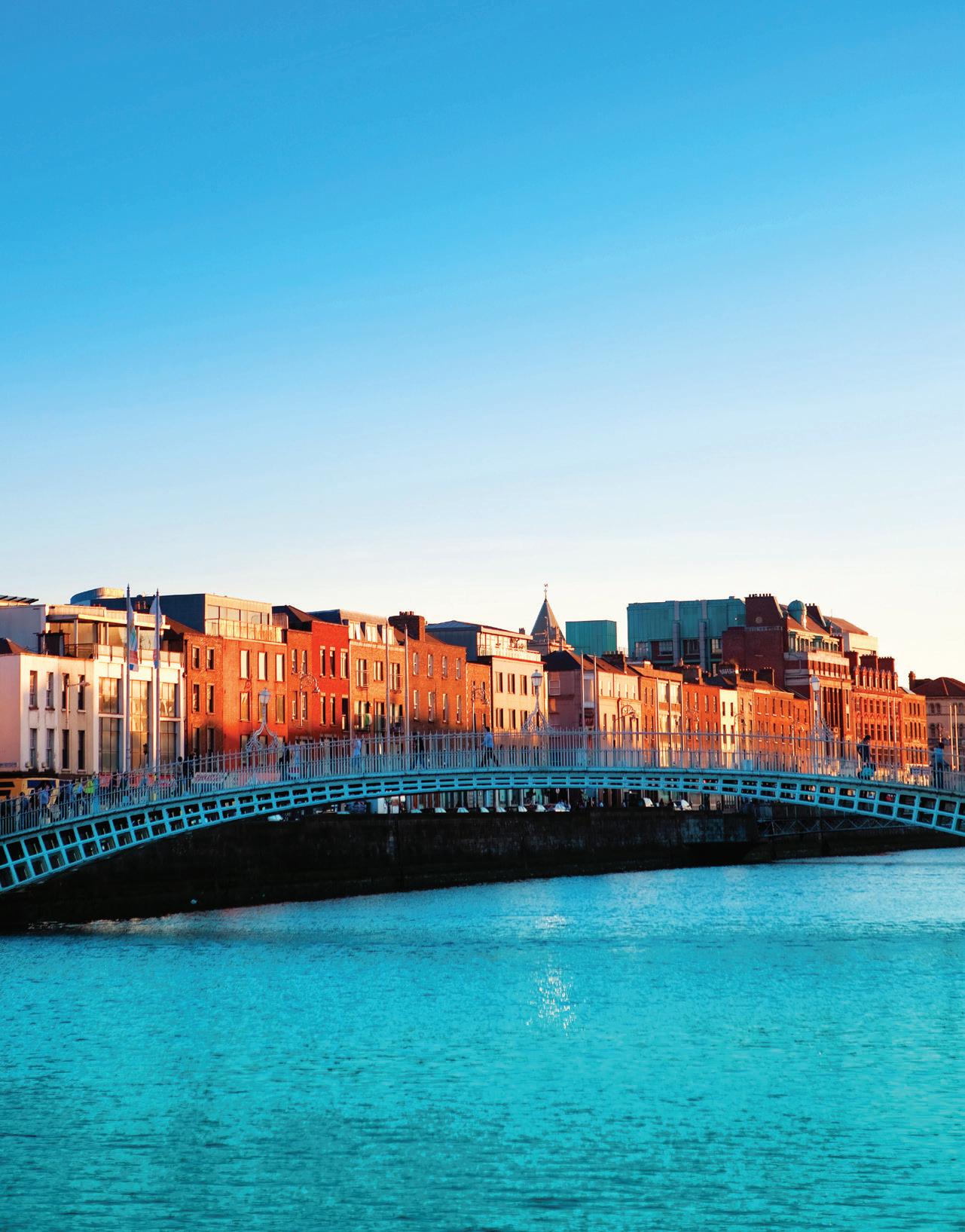
Ireland’s historic and culturally rich capital is famously warm – at least in the welcome from friendly locals, if not always the temperature
Continued from previous page
The Book of Kells
Dublin’s dazzling literary history is writ large by giants including James Joyce and Oscar Wilde, but a much older work reflects extraordinary ancient artistry. Right in the heart of the city, Trinity College is Ireland’s most prestigious university and its Old Library is home to the Book of Kells, a ninth-century illuminated manuscript featuring intricate calligraphy and illustrations painstakingly created by monks. While you’re here, don’t miss the Long Room – a jaw-dropping hall decked with marble busts and ancient tomes on floor-to-ceiling wooden shelves. After soaking up all that scholarly history, walk in the footsteps of alumni like Bram Stoker – and aviation giants Michael O’Leary and Willie Walsh.
EPIC knowledge
From Trinity, it’s a short, easy stroll along the banks of the River Liffey to EPIC, the brilliant Irish Emigration Museum. Interactive exhibitions recount the captivating tales of more than 300 Irish people through the ages, reliving their greatest tragedies and triumphs. The beauty is that you learn about both historic and modern Ireland. For those with Irish roots, don’t miss The Irish Family History Centre, a destination that sets the global standard in genealogy, untangling family trees and appearing in hit BBC show Who Do You Think You Are?.
Amble around Ballsbridge
Grab a quick lunch and maybe a pint of the black stuff in the affluent Ballsbridge neighbourhood – home to embassies, upscale boutiques, some of Dublin’s most beautiful period homes and major concerts and sporting events at Aviva Stadium. Don’t miss the Grand Canal area around Baggot Street, which is filled with cafés, bars, and restaurants, many of which overlook the tranquil water. Herbert Park offers a relaxing green escape,

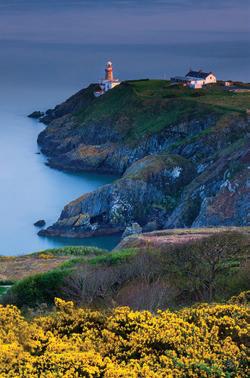
A coastal walk in Howth
Next up, see a different side to Dublin in the suburb of Howth. A 30-minute DART train ride for a couple of euros takes you to this popular escape spot. Expect stunning coastal walks, charming eateries and artisan markets. Vast skies, salty sea air, and a soundtrack of screeching seagulls make for a lovely retreat.
Dine at Chapter One by Mickael Viljanen
If you’ve only got time for one meal, make sure it’s at Ireland’s hottest restaurant in pictureperfect Parnell Square. The finest local and international produce is teased to stunning effect by a young culinary team led by chef patron Mickael Viljanen, complete with warm service. Signature dishes include Donegal lobster and foie gras royale, plus extraordinary patisseries.
The Hoxton Dublin Opening in November, it offers 129 bedrooms as well as lively drinking and dining spots, including the Peruvian-inspired Cantina Valentina, The Library Bar and late-night music venue Groundwork – marking a first for the popular Ennismore brand.
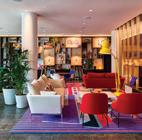
CitizenM Dublin
St. Patrick’s Opened in July, this 245-room property is steps from St Patrick’s Cathedral in The Liberties neighbourhood. Works by local artists, an enticing open-plan lobby and plenty of foliage are among the standout features.
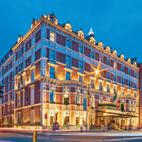
The Shelbourne St Stephen’s Green hotel The Shelbourne, known as the Grande Dame of Dublin, is undergoing a renovation some 201 years after she first opened her doors. The hotel will remain open throughout the works on 226 of its 265 rooms. Plus, expect a revamp of the spa and communal areas.
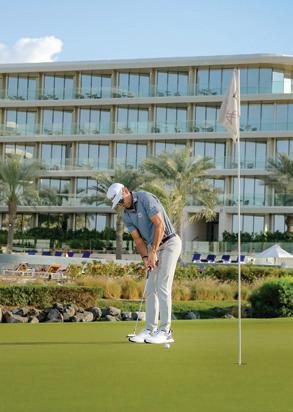
JA RESORTS & HOTELS has expanded its footprint in the UAE’s active lifestyle sector with the recent launch of the JA Sports & Shooting Club. Located within the expansive JA The Resort in Jebel Ali, this new integrated destination aims to bridge the gap between professional-grade training and social recreation. The club already features FIFA-standard football pitches and
DUBAI’S Longevity Wellness
Hub has taken the Lagree method out of the studio and into the Museum of the Future.
This collaboration has brought high-intensity, lowimpact training to one of Dubai’s most architecturallysignificant landmarks, offering a sharp departure from the standard gym environment. The sessions are built around the currently trending, precision -led Lagree philosophy, designed to sculpt and strengthen the body through controlled, hightension movements.
The classes are scheduled daily at 8am, 9am, 6pm, and 7pm. You can either pay AED
ICC-standard cricket ovals, alongside the resort’s existing championship golf course and equestrian arenas. Soon, it will also house the UAE’s most advanced indoor shooting complex and professional racquet facilities.
The club also offers packages for work team-building, moving away from traditional corporate settings with an outdoor alternative for team-based experiences. Its tailored programmes range from interactive challenges like tug-of-war games to structured multiactivity competitions, accommodating groups from 30 to 150 participants.
To support these events, the resort has introduced three curated corporate packages starting from AED 185 per person, which integrate professional meetings with coffee breaks and refined dining options across the resort’s diverse restaurant portfolio. Here this summer? Its Summer Golf Swing 2026 package offers unlimited rounds on the nine-hole course, inclusive of fitness assessments and family pool access. The property also has a UAE residents’ staycation offer, with 30% savings on dining and 2-for-1 deals on leisure activities including padel, archery, and horse riding.
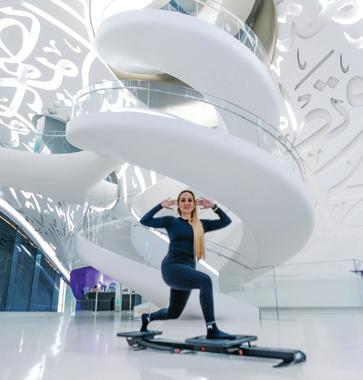
200 as part of an experience involving one class, plus a museum ticket for postworkout exploration, or for a more consistent routine, a package of five sessions is available for AED 850. Modest dress is required, as is a pair of clean grip socks.
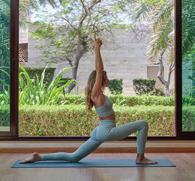
Fancy a summer escape into a green polo estate? Meliá Desert Palm’s Al Waha Collection is offering a ritualheavy villa retreat, layering stays with floating breakfasts, sound healing, and bespoke sleep ceremonies. For those who can’t commit to the night, the “VillaCation” offers a private pool villa for the day, inclusive of a threecourse lunch and spa time. If the goal is a total city detox, extended stays of seven nights or more now come with a 25% discount, for a chance to properly settle into the unhurried cadence.
TIRED OF rigid contracts and wish you could have more functional flexibility in your fitness routine?
VEO Fitness’s new Social Pass might be just what the doctor ordered.
Part of Emaar Hospitality Group, the Dubai-based brand has carved out a niche as a lifestylefirst destination since it launched in 2024, and its new day-access offering is designed for those who value variety without a longer-term commitment.
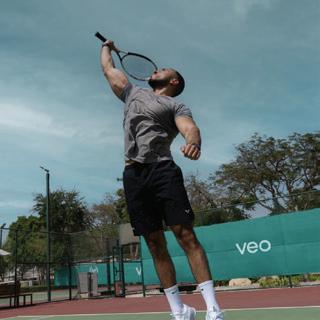
Priced at AED 200 per person, the pass provides a comprehensive snapshot of the VEO experience. Beyond standard gym access, it includes a session on the padel courts, entry to a fitness class, and pool access – all of which is rounded off with a choice of matcha or coffee. Currently available at the Hayya Lakes and Meadows Town Center locations, the initiative targets the community-driven professional who wants a workspace that moves as fast as they do. By blending high-energy training with social sports and downtime, the brand hopes to move past the traditional gym model toward a more unhurried, integrated approach to wellness.
sand
WHETHER YOU’RE SOAKING up vitamin D or simply unwinding by the sea, sand has always been a pathway to wellbeing. However, it’s more than a gateway – it can also be the healer itself. Take sand bathing, a longtime Japanese practice that involves lying buried in hot-spring-warmed sand to sweat out toxins and bolster your health.
The concept may sound novel, but the idea of healing beneath sand spans centuries. It’s known as psammotherapy, and records date it back to Ancient Greece, when wellness seekers rested beneath the sun-heated sand to heal arthritis and respiratory issues.
The practice has an especially deep history on the Japanese island of Kyushu, particularly in the town of Ibusuki. Volcanic activity and its natural geothermal make-up warms the sand to well over 38 degrees Celsius – the perfect temperature for a sweat-inducing session of sand bathing.
To partake, sand bathers wear a robe specifically designed to let steam from the toasty sand envelop their bodies. To begin, an attendant shovels out a body-length hole, then buries the patron in hot sand. It’s a sensation that feels somewhat like a weighted blanket, with the tiny grains covering the entire body, except for the face, for 10 to 20 minutes. Often, the sound of crashing waves provides complimentary sound therapy from Mother Nature. In just that short time, sand bathing can generate myriad health benefits. Research suggests the steam could help lower blood pressure and reduce respiratory issues even more than thermal baths and sauna sessions. The ritual may also increase blood flow and help remove toxins. It’s recommended for those struggling particularly with asthma, joint and back pain, anemia, and rheumatism.
Sand-bathing opportunities abound throughout southern Japan’s geothermal region, including the popular Ibusuki Natural Sand Bath Center Saraku, which is open to the public. The Ibusuki Hakusuikan, a bay-view resort with a hot-spring spa, also offers on-site sand bathing – plus the chance to soak in geothermal waters afterwards.
‘During this experience, guests wear a Japanese yukata, a special kind of kimono that protects the skin’
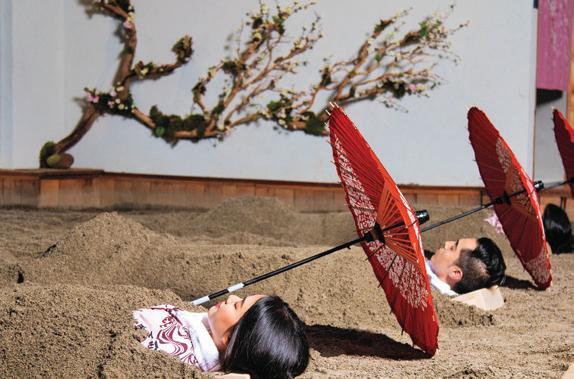
While commonly associated with southern Japan, sand bathing is increasingly available at spas and resorts around the world. One of its biggest advocates? SoJo Spa Club a Manhattan-view wellness centre in northern New Jersey that partners with Japan’s Ibusuki Hakusuikan hotel.
“Our volcanic sand is imported directly from Ibusuki,” says Samantha Sierra, social media and marketing manager at SoJo Spa Club. “We recreated this treatment using state-of-the-art engineering to heat and activate the mineral properties found in volcanic sand and provide the most authentic experience right here in New Jersey.”
The treatment has quickly become a fan favourite. “It’s remained one of our most sought-after experiences,” Sierra says, noting that guests return for the treatment, which mirrors the Japanese practice, every few months.
“During this experience, guests wear an authentic Japanese yukata , a special kind of kimono that protects the skin from the heat of the sand without blocking the benefits,” says Sierra. “Our attendants guide guests through each step to ensure proper positioning and comfort.” They also provide cool towels and water for rejuvenation after each session.
The ritual also has long-spanning roots across the deserts of the Middle East and North Africa. Few places introduce travellers to the practice of Arabian sand bathing like Raffles The Palm Dubai. Its ancient sand bath puts a fresh spin on the historic wellness activity. In the property’s upscale Cinq Mondes Spa, patrons lie on heated alpha-quartz sand that’s known to melt tension, ease inflammation, and foster calm.
The beachfront Aurora Anguilla brings the treatment’s benefits to the paradisiacal Caribbean. Wellness enthusiasts can try sand therapy at the Sorana Spa, with a relaxing bath in alpha quartz enhanced by singing-bowl therapy and a massage.
Over in Thailand, the scenic Santhiya Koh Yao Yai Resort & Spa treats travellers to detoxifying sand baths, too. The property, set on its namesake island near Phuket, offers Japanese-inspired sand-burying sessions for up to 30 minutes, followed by a massage to rebalance the body.
And it’s hard to beat sand bathing in the Sahara – the largest hot desert in the world. Morocco is the most accessible entryway to this massive sea of tawny dunes, which covers nearly one-third of the African continent. The boutique Auberge Sahara in Merzouga allows travellers to not only sleep atop the sand, but also find healing and well-being by bathing beneath it.

of how the body
GUIDED BREATHING TO ease into a massage; invigorating coldwater plunges; beds that deliver meditative vibrations; scalp massages that create trance-like effects: these treatments are all linked to somatic healing.
Derived from the Greek word soma meaning “body”, somatic practices focus on the idea that stress and emotion are not just experienced in the mind – they’re stored physically, in the body.
Somatic therapy techniques are designed to treat psychological stresses through physical work –releasing tension, regulating the nervous system, and creating a deeper sense of calm.
These healing methods draw on ancient practices, but their resurgence is being shaped by
modern neuroscience. When Bessel van der Kolk published The Body Keeps the Score in 2014, he sparked an important conversation about how mental stress and trauma can accumulate in the body.
In 2025, Kevin Tracey brought more science to the table with The Great Nerve , in which he outlines the particular importance of stimulating the vagus nerve in somatic healing.
A key component of our parasympathetic nervous system, the vagus nerve originates in the brainstem and extends through the neck, chest, and abdomen. When it is stimulated through physical practices such as deep breathing or massage, it helps to regulate our heart rate and blood pressure, enhance sleep, and reduce anxiety.
As understanding of this mindbody link grows, wellness spaces are rapidly incorporating somatic healing techniques in luxurious ways.
‘Treatments combine physical work with breathwork and movement to support emotional wellbeing’
“I’ve absolutely noticed the shift towards somatic healing,” says Charlene Phipp, spa manager at Pennyhill Park, in Surrey, in the UK. This year, the hotel has introduced contrast-therapy retreats to embrace the power of hot and cold treatments.
“Our guests are increasingly aware of how stress lives in the body, not just the mind,” Phipp says. “They are looking for more than just relaxation. They want tools to help them manage their emotions.
“Somatic approaches meet that need by addressing well-being on a deeper level,” she continues, noting that all sessions at Pennyhill Park begin with guided breathing techniques: “Now, treatments combine physical work with breathwork and movement to support emotional well-being.”
Jenya Di Pierro, founder of Cloud Twelve, a wellness and lifestyle club and spa in Notting Hill, London, agrees that the wellness industry is tuning in to the fact that people now seek emotional regulation. “The goal is not simply symptom management – it is sustainable transformation rooted in awareness, regulation, and embodied healing,” she says.
Looking for a place to help you relieve stress and tension in the body? Try one of these spots in the Middle East!

The UAE’s growing wellness scene offers specialised sanctuaries for every path. For clinical biohacking and precision IV VitaDrip infusions, The Elixir Clinic is a popular choice. Dubai’s SOHUM Wellness Sanctuary is a top pick for traditional Ayurvedic rituals and Vedic detoxing, while The Hundred Wellness Centre serves as a holistic community hub for Pilates and homeopathy. In Abu Dhabi, the womenonly Kintsugi Space is a unique destination for private quantum-based healing and specialised members-only wellness retreats.

Saudi Arabia’s hotels are rife with incredible spas, with properties like Mandarin Oriental Al Faisaliah, Riyadh, and Shangri-La Jeddah being standouts - but there are some great indie picks too. In Riyadh, Al Manahil Center is a women-only sanctuary with sound therapy and sand quartz treatments for deep restoration, while Longevity Wellness Hub provides a more scientific approach to destressing. In Jeddah, Desert Rose Beauty Spa is a worthy destination for natural stress relief through buccal massage and face yoga.
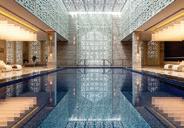
Qatar’s wellness landscape is anchored by world-class hotels like Al Messila Resort & Spa and Zulal Wellness Resort. In Doha, Sicure Wellness Centre provides holistic pain treatment, while Recovery Lab Qatar provides a tech-forward approach to destressing through treatments like cryotherapy and red-light therapy. Seed Health and Wellness Center is Qatar’s first functional medicine practice, addressing root causes of disease through integrative care. In Lusail, Sequences Wellness Centre offers restorative bodywork.





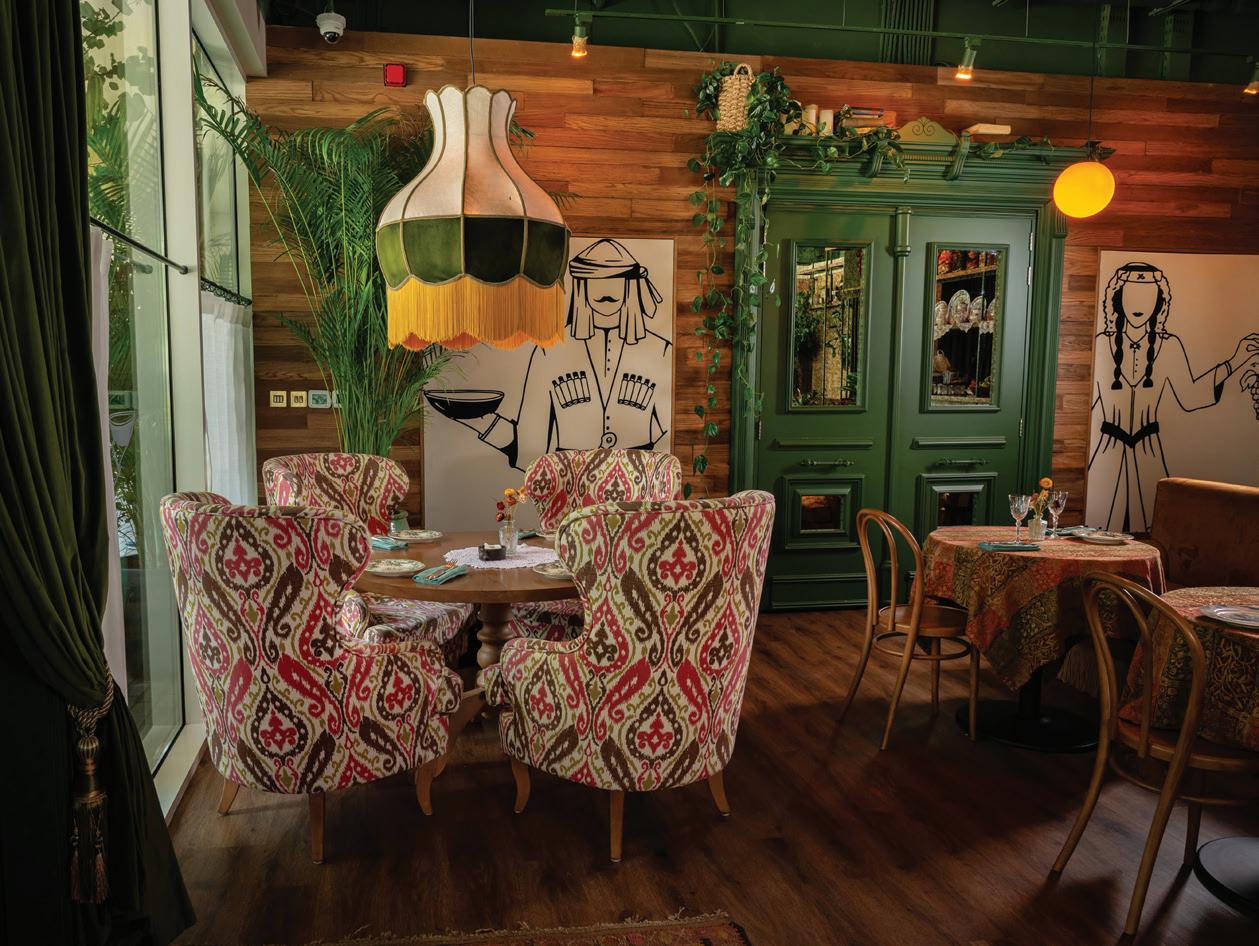
DOWNTOWN DUBAI’S dining scene often leans toward the theatrical, but Qartuli, tucked away in Dunya Tower, is finding its rhythm through a more soulful approach. The homegrown Georgian gem is layering its authentic hospitality with a new cultural edge, by introducing live jazz sessions every Wednesday and Saturday from 8:00pm. These evenings see the restaurant’s low-lit,


residential-style interiors – designed to mimic a traditional Georgian home – transformed by an intimate, uncontrived musical energy. While the jazz sets the mood later in the week, the venue is also courting the earlyevening crowd with a weekday offer. Between 6:00pm and 8:00pm, Monday to Friday, guests can take 25% off the total bill, making it a well-timed excuse to dive into their heritage-heavy menu.

ROYAL MANSOUR TAMUDA BAY is making a play for the discerning golfer with its new Golf Retreat. Set against the Rif Mountains, the package centres on the technical Cabo Negro course, offering daily green fees and private transfers. Stay for at least two nights in a suite or villa and you’ll unlock perks like inclusive driving range access and a buggy. Postround, the 20% spa discount offers a tactical recovery at the Medi-Spa. It’s a seamless blend of coastal Moroccan charm and high-end sport –perfect for those looking to trade the boardroom for the beach without sacrificing sophistication.

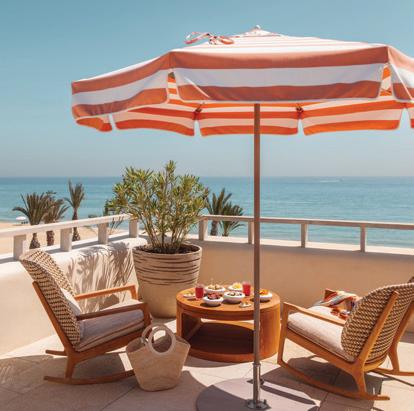
Nobu One Za’abeel is ascending to new heights with its new ‘Lunch Above the City’ offer. Available Friday to Sunday, the experience makes Chef Nobu Matsuhisa’s iconic Peruvian-Japanese air available in Dubai during the daytime. For just AED 159, you’ll get a sophisticated set menu featuring signature dishes like salmon spicy miso tacos and short ribs. It’s a masterclass in midday dining, offering panoramic views and exquisitely-made, re ned food.

Modern travel meets nostalgia in Nappa Dori’s vintage-inspired Steamer collection
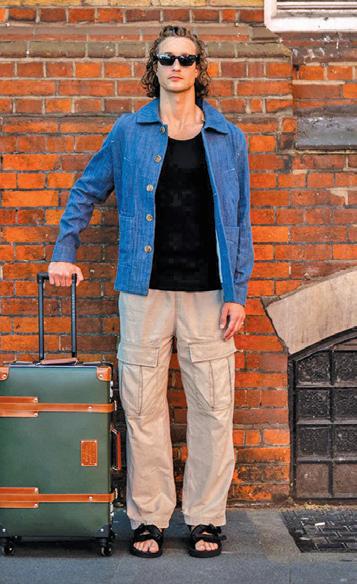
DELHI-FOUNDED Nappa Dori is making a strong case for the return of the romantic traveller with its Steamer Large suitcase (AED 2,750). A far cry from the standard polycarbonate shells, this lush luxury trunk is a masterclass in vintage aesthetics that’s available in three stylish colourways.
Crafted from powder-coated galvanised iron and accented with genuine leather straps, it channels the golden age of rail and sea travel while remaining surprisingly practical for the modern jetsetter.
The collection extends beyond the main cabin bag. If you’re looking for a smaller piece to match, the matching Steamer Sling (AED 1,250) offers a compact, cross-body take on the silhouette, while the Steamer Mini Trunk (AED 1,125) serves as a pint-sized carry-on.
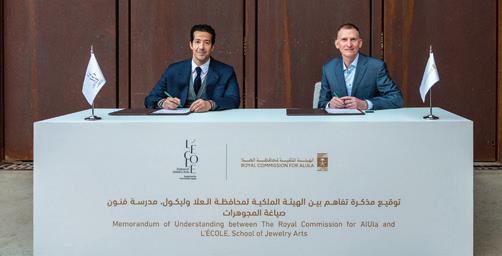
ALULA’S transformation into a global cultural beacon has taken a shimmering step forward. The Royal Commission for AlUla (RCU) has signed a Memorandum of Understanding with L’ÉCOLE, School of Jewelry
Arts. Supported by Van Cleef & Arpels, this partnership is set to weave the intricate world of fine jewellery into the rich heritage of this popular tourism destination.
The collaboration focuses on three pillars: craftsmanship, art
The sky’s the limit for this icon
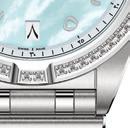
First created in 1952 for the Aircraft Owners and Pilots Association (AOPA), Breitling’s new Navitimer B19 perpetual-calendar chronograph elevates the awardwinning aviation icon with the manufacture Caliber B19, combining a century-ready calendar with a 96hour power reserve. It’s available in a stratosphere-blue platinum limited edition, or in a space-inspired steel and platinum.
Price upon request

history, and gemology. Through workshops and professional courses at Madrasat Addeera and the Aljadidah Arts District, local artisans will gain access to world-class expertise and international standards. It’s a strategic way to treat tourism as a catalyst for skill development rather than mere visitation.

The initiative will also explore curated exhibitions, artistic residencies, and the translation of specialist content into Arabic to celebrate AlUla’s unique craft identity. Further deepening AlUla’s cultural evolution, this offers the local community a promising path toward a sophisticated creative economy.







Few reality series have endured like Survivor, and season 50 arrived with the scale and intensity worthy of the milestone. Bringing back returning contestants (like fan-favourites Cirie Fields and Ozzy Lusth) from across the show’s 25-year history for another round of strategic gameplay and social manoeuvering, the season balances nostalgia with high-stakes competition. Packed with blindsides, power shifts, and emotional reckonings, the season celebrates everything fans love about the franchise while reminding viewers why Survivor remains the blueprint for competitive reality television. Available on OSN+



A STAFF WRITER for the New York Magazine vertical The Cut, Bansinath channels her sharpened wit and finely honed prose into an already acclaimed fiction debut that is equal parts entertaining and unflinching. When Matthew Pillai is found dead, suspicion falls on the women of Willow Road – a small South Asian
enclave in suburban New Jersey – forcing them to band together to solve the mystery. But this seemingly light murder mystery soon deepens into a nuanced exploration of the immigrant experience and insular communities, making it one of the summer’s “must reads.”
AED 105.50; amazon.ae


AS THE SEMINAL Miranda Priestly of The Devil Wears Prada fame once stressed, fashion is never just fashion. Podcaster Avery Trufelman has embraced that notion as she unpacks the cultural, political, and personal histories behind everyday clothing with wit and curiosity. Whether discussing jeans, Hawaiian shirts, or “plaid”, the monthly podcast transforms seemingly ordinary garments into fascinating stories about class, identity, and selfexpression. Available on Spotify.
OUR PICK OF EVENTS TAKING PLACE AROUND THE WORLD
Sydney Film Festival, Sydney, Australia 3-14 June
The 73rd edition of one of the Southern Hemisphere’s leading film festivals boasts a near-overwhelming selection of programming featuring nearly 250 films from more than 80 countries. On offer this year is a highly-anticipated film from Olivia Wilde (Booksmart) shot on 35mm film (The Invite), a homegrown horror hit (Leviticus), and a highly-acclaimed portrait of the writer Thomas Mann’s life starring Project Hail Mary actor Sandra Huller (Fatherland).

Johannus Summer Solstice Celebration, Michigan, USA 17-21 June
Embrace the longest days of the year with bonfires, saunas, cold plunges, Finnish music, and quirky cultural traditions, in the US Midwest. Visitors can browse authentic tori markets, take part in traditional games, and watch the famous wife-carrying contest. The 2026 edition also honours Hancock, Michigan’s designation as Finno-Ugric Capital of Culture.
Annecy International Animation Film Festival, Annecy, France 21-27 June
The world’s biggest celebration of the artform returns – now with a brand new venue billed as “Cité Internationale du Cinema d’Animation”. Alongside its regular programming of short films and feature films will be a special exhibition celebrating 25 years of the stop-motion artistry of American animation studio LAIKA (Coraline, ParaNorman), including a screening of some early footage, from their highly-anticipated book-to-screen adaptation of Wildwood.









































IFrom Instagram-friendly yoga studios to intentional bio-hacking, the defi nitive travel wellness o ering is getting an upgrade. The new hospitality standard? Delivering health that lasts long after checkout.




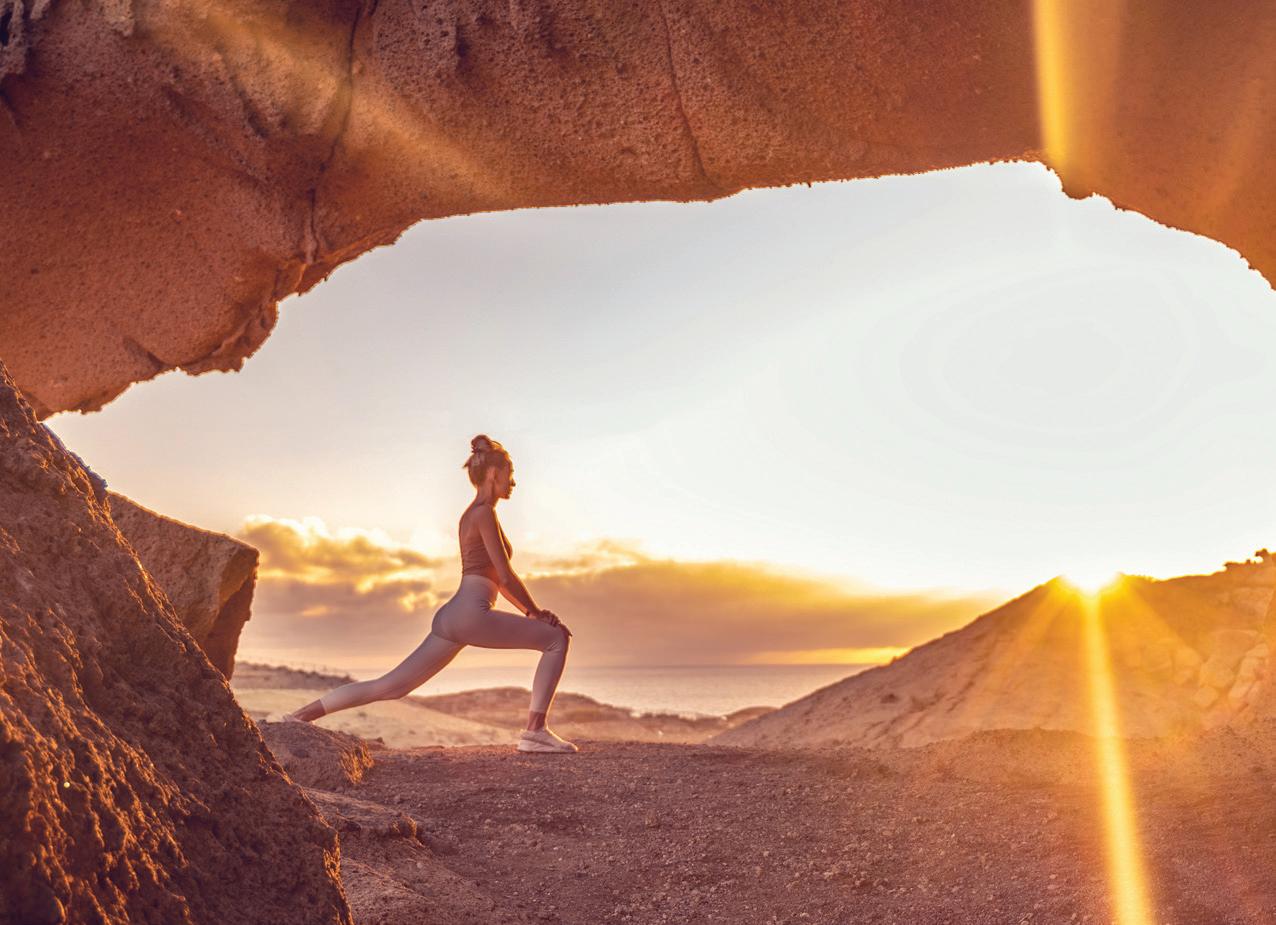
f your travel highlights over the past decade have been a blur of ‘doing it for the ‘gram’, with you often returning home more tired than when you left, consider 2026 time for your intervention. We have hit the ceiling of performative wellness – where the photo of the yoga pose may be captured, but the presence is not actually felt.
This need is backed by serious capital. Set to hit US$1.35 trillion by 2028, the global wellness market is investing in the idea that when it comes to well-being, guests don’t just want a uf er robe; they want a lasting physiological upgrade.
While the ve-day x is still a popular concept, wellness in the current day is more focused on longevity. We are moving towards an era of more embodied living – wherein the common thread of living well is about being more human. As such, a growing number of travellers are declaring the “Burnout Break” to be dead. It seems we are no longer interested in simply scratching the surface with a generic treatment that offers eeting relief – we now want to enhance our physical and mental states from the inside out, with treatments and experiences that allow us to be more present, feel more alive, and with effects that last well beyond the hotel checkout.
Today, the ultimate standard for a wellness offering is one that is deliberately experiential, and transforming this from a theory to a practice requires a complete infrastructure overhaul – a topic recently dissected at our latest industry roundtable.
ABOVE
Wellness is one of the fastestgrowing niches in the travel industry
BELOW
Technogym’s Sand Stone Collection
At a recent Business Traveller Middle East roundtable hosted at Sohum Wellness Sanctuary in Dubai, UAE, in partnership with Technogym, the consensus was clear: that a sophisticated, comprehensive, and well-thought-out wellness offering is no longer a ‘nice-to-have’ – it is a mandate for success.
The hotel gym is a great case study of this phenomenon. A decade ago, it was typically a room travellers avoided – an afterthought. The logic was simple: why waste a tropical sunrise on a treadmill run you could do at home? But today‘s travellers are more health-conscious, and many see it as a chance to enjoy using premium equipment from brands like Technogym in a nicer environment. These days, using the fancy hotel gym during your stay is a value-add.
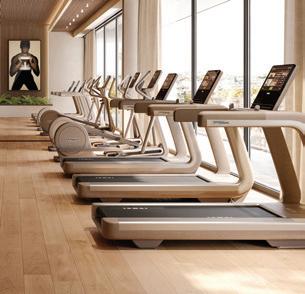
“Gyms are getting more and more premium positions within hotels and resorts, and the gym environment itself is designed to ow in harmony with the rest of the property, for a coherent overall experience,” said Michele Moro, Managing Director for Technogym Emirates. Indeed, in 2026, the luxury hotel gym is usually a podium-positioned hero offering. These chic, beautiful places are
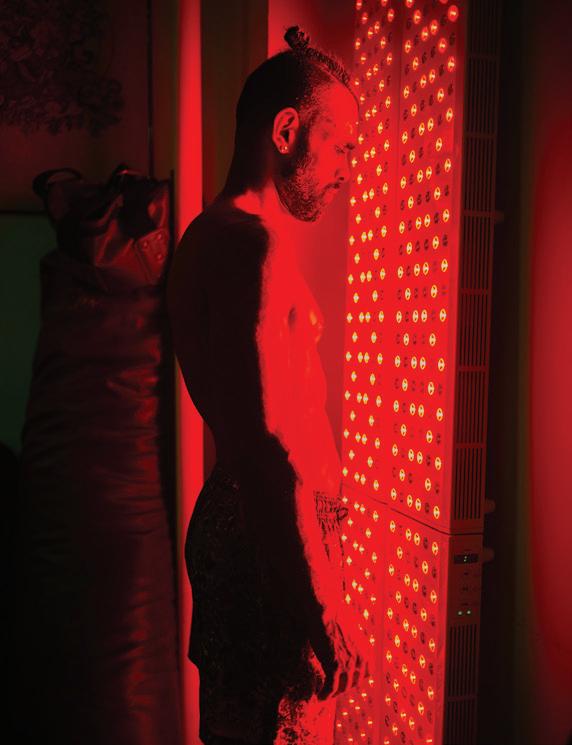
ecosystems of high performance. In addition to cutting-edge fitness equipment from leading brands, many are offering classes with a variety of specialsed programmes that are a treat to try – alongside recovery suites full of post-workout-ready, mobility-enhancing tools. They’re also incorporating smart technology and wearables that can be synced with your devices at home. While once, a business traveller might have fretted that their frequency on the road could disrupt their careful health routines, nowadays, a visit to the right place could enhance your motivation rather than break your discipline.
The more integrated an offering is, and the more frictionless it can make a guest’s routine, the better. “When you’re on holiday, it should be better than when you’re at home. If your routine includes a great home gym, for instance, then we can’t provide you with a worse environment when you’re on holiday because that causes stress. That doesn’t make the journey seamless,” explained Evan Harrington, Cluster General Manager for Mövenpick Resort Al Marjan Island and Pullman Resort Al Marjan Island. Based in Ras Al Khaimah, Harrington’s properties are surrounded by nature, and they work hard to blend the internal and external spaces as much as they can in their wellness offering. “The design shouldn’t be intimidating,” Harrington adds. “It should be integrated in the guest’s everyday, so it’s a normal part of their journey – that includes the experience, the design, the colour choice, music, scent, water.
Everything you have on offer should be curated. It’s important to understand the impact that design can have on our subconscious, and the decisions we make. [Guests] may not necessarily notice the design rules, but they can sense when something is off. There is an energy to it.”
In a forward-thinking property, this design sensibility is carried through to the rooms, most noticeably to satisfy the mushrooming demand for a better sleep environment. As a series of travel trends point to a greater need for calm – like escapes to more mindful, nature-rich, and acoustically quiet places with a slower pace of life; or those that allow us to briefly switch off from the decision fatigue and relentless pace of city life – a booming market has emerged for Sleep Tourism. This niche has been valued at $96.13 billion in 2026 and is expected to grow by 12.4% annually through 2030 as travellers prioritise deep, uninterrupted rest over packed itineraries. Designing in-room features such as circadian lighting, with intelligent systems that mimic the cycles of the sun to trigger natural melatonin; the addition of sleep-promoting treatments to spa menus; and providing nutrition expertise that can help to improve one’s shut-eye can help to make or break the way a guest feels about their stay, explains Evgeniia Noskova, Spa and Recreation Manager at Rosewood Abu Dhabi.
Particularly when it comes to these types of offerings, it’s all about personalisation, Noskova says. If a guest is a teetotaler – whether it’s due to their faith, or their health-consciousness – then offering them a range of zero-proof drinks could be the key to their heart. Guests who consume a vegan, gluten-free, or other specific diet will be much more likely to return to a property that respects and understands these needs.
ABOVE Infrared heat therapy BELOW Emotional Healing at Rayya Wellness, at The Retreat MGallery Palm Dubai
And this consideration of design isn’t only in the interiors, or the rooms – it’s the entire ecosystem, reflected in a hotel’s event schedule, and the way its staff welcomes and communicates with guests. “Many people are quick to touch base on the physical aspect on wellness first, but as a property that also hosts a lot of long-stay residents, with an ongoing and varied schedule of events including wellness activities, we have seen that the mindset aspect of wellness is equally important. That’s why we’ve worked with specialists to develop this aspect of what makes people feel well, alongside the physical side,” says Mohamed Mahmoud, Cluster General Manager at InterContinental Residences Dubai Business Bay and Kimpton Sevn.
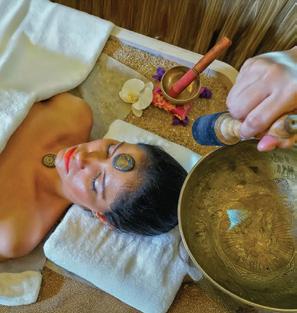
A growing number of well-being enthusiasts no longer blindly rely on therapies simply because they are presented in a beautifully-wrapped package – they want the research. The modern consumer is more informed, and armed with the ability to verify any grand claims being promised: if something sounds too good to be true, you can bet they’re going to fact-check it before they book in. For hotels, spas, and wellness clinics offering treatments from healing to fitness and other means of selfoptimisation, customers want a brand that is in its offering. They want to see evidence and proven research – and brand trust is more important than ever.
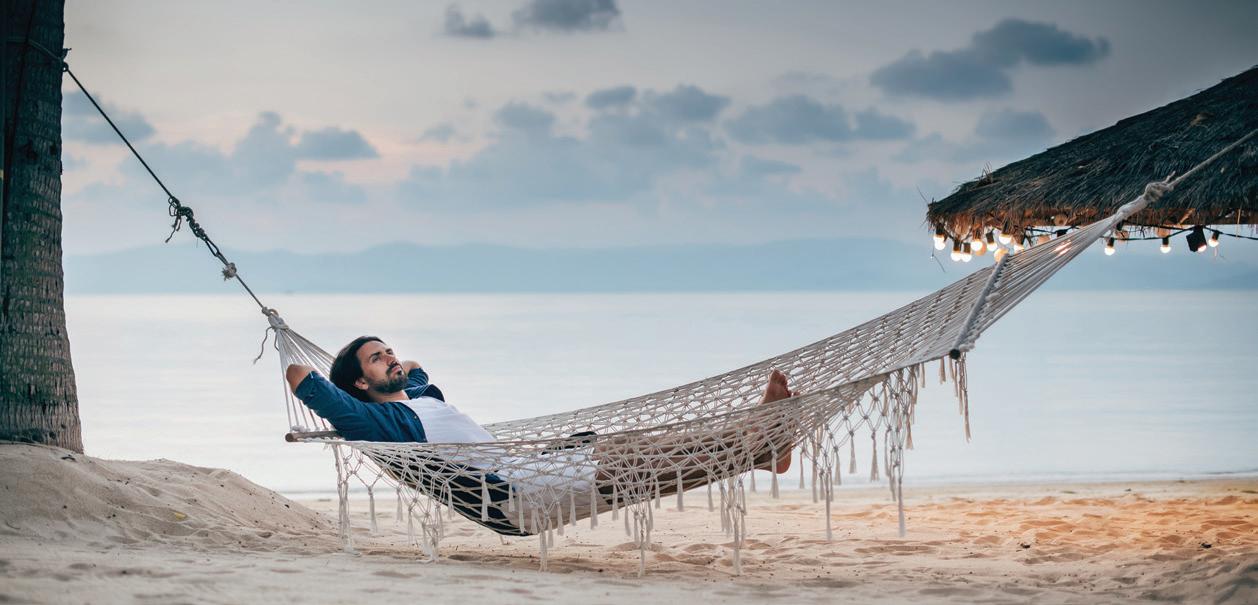
‘People are very switched on, and they want to know what they’re buying’
“We’re living in very modern, fast-paced times. Everybody can look everything up very quickly. People are very switched on, and they want to know what they’re buying,” says Christian Kiefer , CEO and Founder of Wellbeings Holistic Healing and Founder of Rayya Wellness at The Retreat Palm Dubai MGallery by Sofitel. This hunger for substance in the wellness-industry is driving a surge for longevity-related treatments and cures, wherein medical and regenerative experts help consumers create blueprints for their future selves. We don’t just want to feel better – we want to live better. And living better, can often mean living more, in a way that is more present: Doing things that make us feel more in our bodies. More focused. More energetic. More fit, more attractive, more joyful, and more eternal. After all, what better way is there to get more out of life than to not only improve our quality of life now, but to also prime our bodies to live more years of that life too? Biohacking, for instance, is no longer seen as a fringe hobby for the Silicon Valley elite, and it’s
Sauna holidays, everywhere from Nordic countries to Japan, done solo or socially, combined with cold therapy.
ABOVE Wellness on holiday in the current day could equally mean relaxing by the sea, taking a high-tech fitness class, or visiting a clinic for biohacking
increasingly making its way from specialised clinics into the hotel spa. The global biohacking market is projected to reach $32.5 billion this year as more consumers shift from reactive healthcare to preventive self-optimisation. And as more hospitality brands cotton on, hotels have started incorporating suitable offerings into their wellness menus. When the modern traveller equates the chance to use peptides, adaptogenic supplements, cryotherapy, oxygen therapy, and so on with luxury, recovery can be treated as a competitive advantage.
This leaning towards more science-based treatments doesn’t mean that travellers are eschewing the holistic, though. Many of these more clinically-minded offerings, from peptides to IV drips, promise to bring the user back to a more wholesome, somatic state of being, and this goal is very much in line with complementary and alternative healthcare techniques. For example, two popular aspects that form the baseline of many biohacking routines are cryotherapy and the use of saunas –both of which are a form of elemental wellness, in this case centered around the healing power of heat and cold. Contrast therapy – alternating between high-heat steam rooms and cold plunges – has become a cornerstone of the wellness travel experience, prized for its effects on circulation, inflammation, and nervous system regulation. It can be at once primal and humbling, and often results in recalibration rather than mere

A sleep retreat that goes beyond the pillow menu, with customised teas, sleep-supporting stretches, and more.

The tech-fuelled retreat, with analysis on everything from fat: muscle body composition to ageing and longevity.

A somatic nervoussystem reset, with breathwork, vagus nerve activation flows, and sensory self-care practices.

Sweat-inducing active retreats, from Muay Thai to running to yoga, cycling, surfing and more –or many combined!

The stargazing retreat, with night bathing, lunar yoga, astrology, astrotourism, and dark sky benefits.
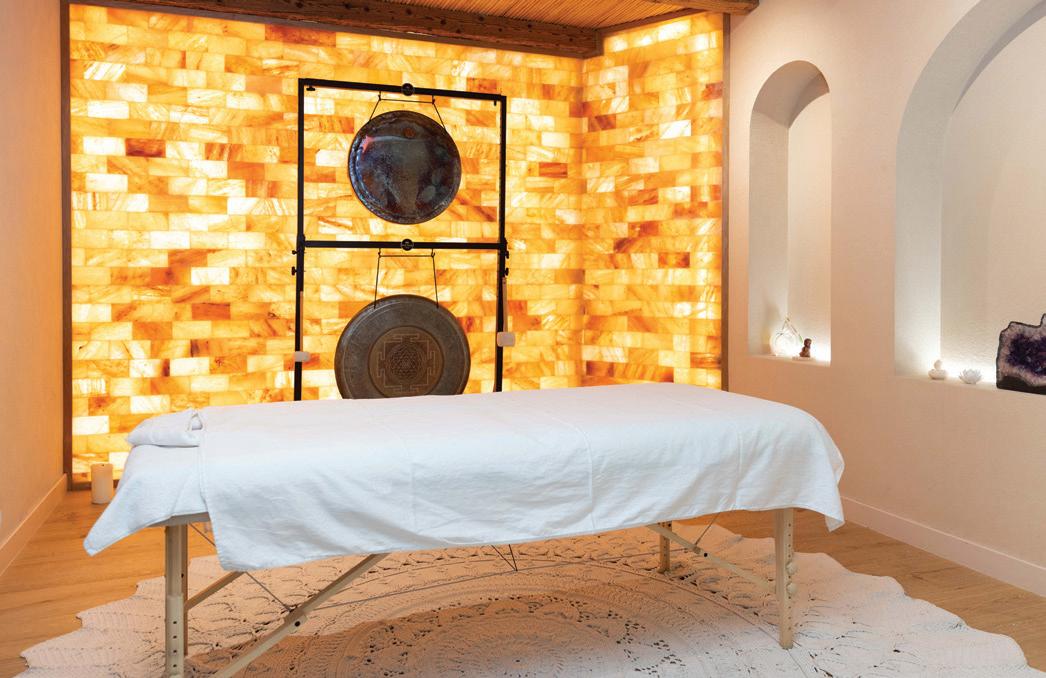
pampering. These are traits one could also find in more holistic programmes such as Ayurveda or Traditional Chinese Medicine.
Considering the toll that travel can take on the body, it’s a natural evolution. Even if a consumer may not necessarily opt for these treatments in everyday life, when trying to beat the biological tax of travel – whether to make the most of a holiday, or to be your sharpest on an important business trip – it makes sense to treat yourself. What better place is there to try something out than in the supportive, experienced, comfortable, and discreet environment of the right hotel or resort?
To offer these more clinical treatments, however, trust is essential – particularly when it comes to systems involving medical-grade procedures. “I think there’s going to be a soft movement into the medical side of wellness in hospitality, because anything that is invasive can be difficult. What we have done in our business is to create a very thorough protocol around things like this, so the experience is backed by science with reliable partners that are experts in this field – third parties mostly – that cater to that. But there are a lot of soft touches to incorporate around science-backed treatments [for properties that aren’t ready to commit more], that people appreciate,” Kiefer adds.
“Some of our guests come in for therapeutic treatments, wherein they stay for 21 days so they can
ABOVE A treatment room at SOHUM
Wellness
Sanctuary
BELOW Hot and cold plunge pools at SOHUM
Wellness
Sanctuary
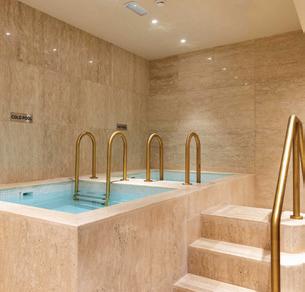
undergo a more thorough treatment,” says Dr. Abilash Mony, Director of Spa at Taj Dubai. The property’s wellness offering is grounded in Ayurvedic principles, offering a unique combination of holistic wisdom with modern solutions.
Just like the way we wish to integrate our wellness to showcase a more 360-degree perspective, the relationship between wellness and hospitality has become increasingly essential. We no longer just want to rest, we want to evolve. We’re putting ourselves first, and using our senses to bring about real, lasting change. And with more and more people realising that health is the ultimate luxury – wherein having the time and vitality to truly enjoy life to the max is the highest status symbol and treasure – the hospitality industry is rushing to ensure that their definition of being able to offer us luxury is one that incorporates the cutting-edge in well-being.
“The hospitality industry should not underevaluate that just like the fitness solutions industry, it’s part of life science.
A great hotel or resort takes care of people’s lives, in all of its aspects, whether it’s for one day, one night, or weeks. As we enter an era of new technology, it’s important to remember that technology is simply a tool to give us more information that helps us make better choices, and allows us room and space for more real, valued, human interaction,” says Moro. Looking forward, wellness travel is likely to be defined as a means for recalibration. We are moving towards a highlycustomised, purpose-driven model where the goal is deeper connection and genuine presence. After all, if health is the ultimate wealth, then travel that allows us to return home better equipped to handle the life waiting for us there – while feeling more profoundly human – is the best ROI there is.
The hospitality industry has long operated on the “Escoffier” model – a 19th-century standard where the staff wears a metaphorical mask, delivering seamless service regardless of personal cost. But as more of the world recalibrates to become more inclusive, that mask is finally slipping. In an industry that prides itself on looking after others, the irony is that the people behind it often fail to look after themselves. Staff in the hospitality industry sell luxury, serenity, and care, yet the delivery of these promises often relies on a workforce operating in high-pressure, highsensory environments that are ripe for burnout. In an era that is trying to break free of the shackles that were once defined by relentless “perfectionism” cultures, the industry is facing a reckoning by considering one key question: how do you look after the people whose job it is to look after everyone else?
WORDS YI-HWA HANNA
At a recent Business Traveller Middle East roundtable, held in partnership with Technogym, at Sohum Wellness Sanctuary in Dubai, industry leaders gathered to discuss the new wellness mandate. As we moved past the trends leading the wellness travel economy, the conversation soon took n sharper, more internal turn toward the people behind the guest experience. The consensus among the leaders present was clear: that wellness can no longer just be a soft HR benefit but rather, it is a mechanical necessity for operational resilience.
The industry currently faces what we might call a service paradox. It sells serenity and care, yet the delivery of these feelings often relies on a workforce operating at a breakneck pace – and the more the guest experience is elevated toward hyper-personalisation and 24/7 availability, the more we strain the human infrastructure required to support it.
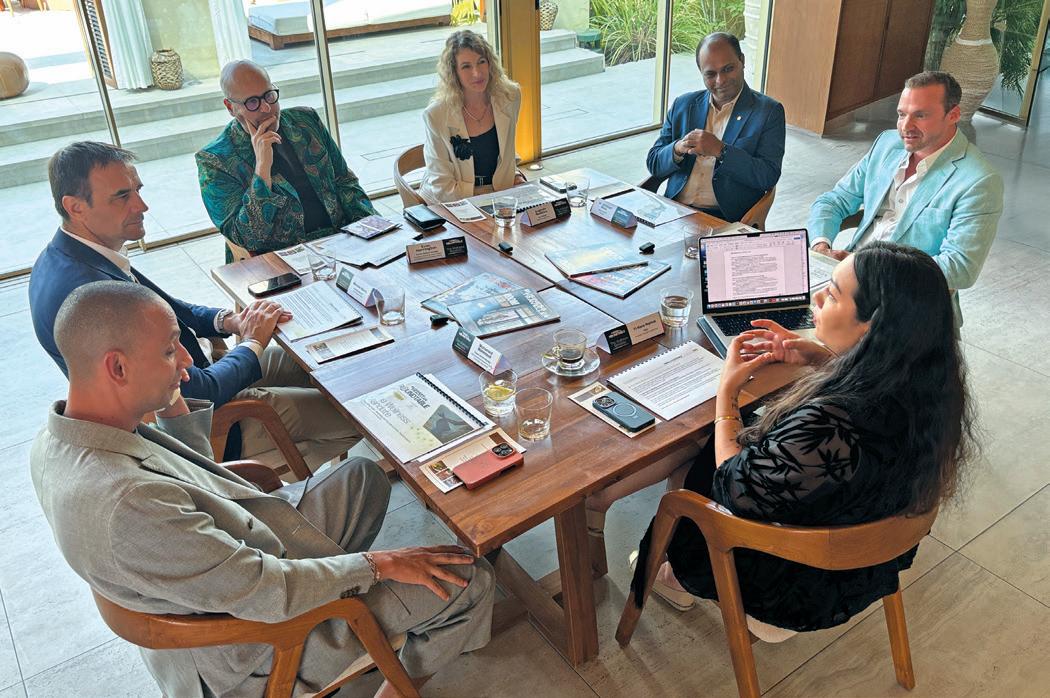
For each company that is growing and expanding, there are busy teams facing growing demands behind it, and for those with the heaviest workloads among them, the reality of working in hospitality in 2025 is stark: a recent survey from Hospitality Action found that 57% of hospitality professionals cite understaffing as their main workplace challenge – with a 21% increase from the previous year – leading to longer hours, skipped breaks, and the emotional depletion of carrying the workload of more than one person.
The human cost is also measurable: 75% of hospitality professionals have struggled with their mental health at some point in their lives, with over 60% of junior staff now viewing burnout as simply “part of the job”. In a sector where turnover rates are notoriously high, the financial drain of replacing talent can be a significant concern for the bottom line.
To combat this, savvy and switched-on leaders are looking at ways to “operationalise empathy.”
This means moving away from an increasingly-outdated mindset where, as Christian Kiefer, CEO and Founder of Wellbeings Holistic Healing, and Founder of Rayya Wellness at The Retreat Palm Dubai MGallery by Sofitel, noted during our talk, “you walk out and everyone puts on a mask and it doesn’t matter how you feel.” He added: “It’s the teams behind the scenes that need to have psychological safety. If you don’t provide tools to teach teams, and if you don’t normalise psychological safety in the work environment, people burn out and they leave.”
ABOVE Clockwise from top: Evgeniia Noskova; Dr. Abilash Mony; Christian Kiefer; Yi-Hwa Hanna; Mohamed Mahmoud, Michele Moro; Evan Harrington
BELOW
Michele Moro
Leading by example
A recurring theme was that a wellness culture cannot be delegated to HR; it must be lived by the leadership. If a successful manager or CEO is seen to be perpetually exhausted or neglecting their own health for the sake of success, it sends a silent message that self-care is a sign of weakness. If they regularly answer emails at 3 AM, the team will inevitably follow suit. To change a culture, leaders must “walk the talk” – sometimes literally.
Mohamed Mahmoud, Cluster General Manager at InterContinental Residences Dubai Business Bay and Kimpton Sevn, shared a striking example of his own personal commitment to health, that has transformed his team’s culture: “I do an average of 40,000 steps a day now. I’ve been consistent about keeping my step count high for the last three years, and now, 80% of my executive committee and heads of department are also measuring their steps. It’s become a healthy, motivational form of competition, and it’s a culture that has been built. The shift of the mindset is not only that they’re doing sport, but they also love themselves more because of it.”
However, wellness isn’t a one-size-fits-all club, wherein joining the 5am club, or hitting an incredibly high amount of steps may not be the right solution for everyone – and that’s ok. It’s simply about creating an environment where staff feel safe enough to be human. As Kiefer put it, “You have a responsibility as the leader to create that safe environment for people to be able to operate and genuinely belong.”
Michele Moro, Managing Director for Technogym Emirates, echoed these needs, while adding that to start with, leaders can also encourage healthier environments by simply ensuring their teams are supplied with the facilities and resources they need to support that: “If you want to provide a balanced experience and a healthy lifestyle, you should have a place where people can move. Wellness is no longer just a box to be ticked, but an integrated part of the life experience.”
“Wellness is no longer just a box to be ticked, but a part of life”
Indeed, as pointed out by Evgeniia Noskova, Spa and Recreation Manager at Rosewood Abu Dhabi, there are so many tools available to us now that it’s easier than ever to look after our health. For instance, she points out that you can use technology to support a more natural circadian rhythm no matter your schedule.
Beyond the classroom: immersive onboarding
One of the most practical insights shared at the roundtable was the need to overhaul how hospitality companies bring people into the industry. Traditional onboarding – which typically involves sitting in a classroom for eight hours – is often overwhelming, especially for those new to the industry, or the region’s culture and high-octane environment.
One inspiring solution was the way one company at the roundtable has incorporated new model with a month-long “guest journey” for new hires. “We changed our onboarding process from the standard two-day classroom experience, by turning it into shorter but more comprehensive and hands-on experiences spread out over one month,” explained Evan Harrington, Cluster General Manager for Mövenpick Resort Al Marjan Island and Pullman Resort Al Marjan Island. “Now, part of the process is that new hires eat in every restaurant, and stay a night at the hotel and go to the spa – and they truly understand the guest journey because they’ve experienced it.”
The result? Their staff turnover dropped by 6% to 7% simply by making the entry into the business less intimidating.
Ongoing education is also key in other aspects, particularly for teams that are delivering a specialised offering – after all, how can they be a reliable source of knowledge for their guests if they aren’t fully informed in the offering themselves? At the Taj Dubai, for instance, the property’s Director of Spa,

Dr. Abilash Mony, always ensures that his entire team is provided with study materials through which they can learn about the principles of Ayurvedic wellness. After all, as one of the hooks that makes the Taj’s spa offering unique, it’s imperative that the staff not only understands this type of Ayurveda, but that they also have the freedom to come to their in-house expert, Dr. Mony, for advice to serve their own well-being as needed.
As the hospitality industry moves towards building a more inclusive, supportive, and generally healthy environment in terms of physical as well as mental and emotional health, awareness is the building block upon which it all begins. Knowing that one in five people is estimated to be neurodivergent, for instance, means realising that there are likely a number of people in your team that may have ADHD, Autism, or Dyslexia – and that when these are recognised and approached with understanding, they can become competitive superpowers for factors such as detail and empathy. Honouring the flexibility needs of staff with children could go a long way in loyalty and appreciation. Paying attention through active listening when team members voice individual needs and concerns could not only humanise their relationship with the leadership both ways, but also build a sense of optimism, positivity, and sincerity that inevitably trickles down to guests.
As new advent of new technology continues to streamline systems, it also highlights how the human element remains the heartbeat of hospitality – and the vast new array of tools and data available to the modern executive has illuminated that the health of a business is inextricably linked to the health of its people. In an age where authenticity matters more than ever, it’s clear that the smartest hoteliers are no longer just selling rooms – they’re shapers and carers of community, and that begins with ensuring their own house is in order.
From “quietcations” to “hushpitality”, the idea of a silent retreat is evolving from a niche wellness choice to an essential modern luxury
couple of decades ago, if you had told your colleagues that you were heading off on a silent retreat, they probably would have immediately pictured you wearing a light, rough-spun robe at a remote mountain monastery, where you’d be committed to a Vipassana retreat – wherein speaking is strictly forbidden for ten days straight. They’d probably also think you were a little odd, since back then, the idea of a silent holiday was typically a pursuit for the super-niche wellness enthusiast – those seeking a radical spiritual overhaul through absolute stillness.
In 2026, Vipassana retreats are still going strong. Not only do they remain immensely popular with their initial loyal audience, a growing number of new people are keen to join in. Why? Because they now understand that it’s not just a “hippie woo-woo” pursuit – it’s one increasingly backed by science and evidence-based results. The science of silence purports that it can offer us some incredibly powerful benefits surrounding our brain health and cognitive function, and the mental and physical effects of stress. And with this knowledge, a new type of silent retreat has emerged: one where it’s not necessarily you that has to be silent, but the place you’re going to.
Various studies have found that spending two hours a day in a silent or extremely quiet environment can stimulate the development of new cells and neurons related to memory, learning, and emotional processing. Other brain-based benefits include a lower cognitive load, improved focus and mental concentration, and better decision-making. Meanwhile, just two minutes of silence could help to reduce our heart rate and blood pressure, helping to lower our stress levels and calm our nervous systems – more effectively than listening to “relaxing”
ABOVE
A recent report found that 28% of people travelling with others plan to add in some time for quiet moments spent alone
music. Is it any wonder that all of this feels more precious than ever in a world that seems to have a higher-than-ever level of noise pollution in the day-to-day?
Between the relentless ping of notifications and the endless distractions provided by high-speed digital content, the average modern professional of today, particularly those living in cities and urban environments, tends to run the risk of overstimulation. Add in the sounds of traffic and construction, and the subtle but persistent hum and whir of all of the devices that surround us, and it can all build to a deafening crescendo. You may not notice it at first, but your body certainly feels it. The effects of such noise pollution aren’t limited to traditional hearing loss or conditions such as tinnitus – chronic exposure to noises over 55 dB has been found to disturb sleep and trigger stress hormones, which could lead to a range of health issues from fatigue and hypertension to metabolic disorders. It should come as little surprise, then, that when you’re on holiday – or even on a workcation – the chance to spend time in a space that gives you a break from your daily disturbances can feel like a mental as well as physical breath of fresh air.
The modern “quietcation” is thus not about taking a vow of silence, but rather, about embracing “hushpitality” – a deliberate shift towards destinations that can offer us a sensory reset through quiet environments, whether these are natural or manufactured. According to the Hilton 2026 Trends Report, this craving for calm is turning into a measurable shift in the DNA of the travel industry, with 56% of travellers now actively seeking meditation or silent retreats as a means of dialling down life’s distractions. Even more telling is that 28% of those travelling with others were reported to now plan to carve out “intentional quiet moments” alone, from solo walks to silent meals, proving that even in company, we are starving for a little peace and quiet.
The antidote to the hustle
For many, this trend is a direct response to a world that feels increasingly loud. When we travel for these types of breaks, we are no longer just escaping our jobs or daily stressors – we are escaping the cacophony of the everyday. Whether it’s “quiettrekking” through the Scottish Highlands or other such mystic outlands (which has seen a 465% surge in interest on Pinterest), or checking into hotels that prioritise acoustic architecture, the goal is the same: to find a place where the only thing you have to listen to is your own breath and heartbeat, or perhaps the sweet songs of nature. And in these spaces, you are free to lean into the delightful mindfulness of quiet contemplation, all amidst a scenic background.
This sonic luxury is even influencing how we build. In the world of high-end design, “acoustic architecture” is becoming a new benchmark. Architects are moving away from acoustically aggressive open-plan villas, for instance, which have features such as echoing stone floors, opting instead for spaces that naturally offer more atmospheric silence. The use of dense materials like solid teak or live-edge timber slats can help to break up sound waves, turning a harsh echo into a soft, warm ambiance. Rooms with features such as double-glazed windows, or mass-loaded vinyl within the walls or floors, can help to reduce the sounds of the outside world. These considerations are worth taking into account for renovated spaces as well as builds from the ground up – because it turns out that when a space looks like a sanctuary but sounds like a warehouse, the luxury experience is fundamentally broken.
For younger travellers, however, the motivation may be slightly different, wherein the rise of the quietcation may also be tied to a broader desire for “travel lore.” According to
BELOW A “Do
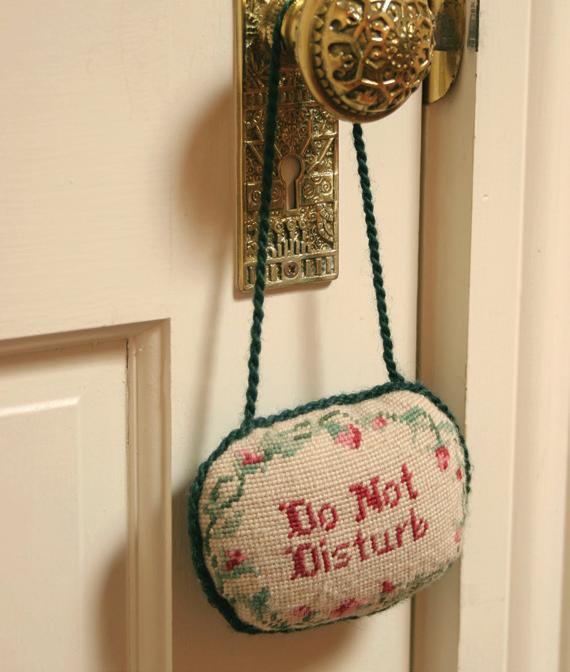
the American Express 2026 Global Travel Trends Report, 82% of Millennials and Gen Z say they are likely to try something completely out of the ordinary if it makes for a good story –and having “survived” a week of absolute silence could offer the ultimate hook for some new social currency.
So where do you go, when you’re seeking the sound of silence?
In 2019, NASA launched a project called Silent Earth (anecdata. org/projects/view/silent-earth), which maps the quietest places in the world, including the best places to go for peace and quiet. The project is presented through the citizen science platform Anecdata – which hosts a free online community, and was developed by the Community Lab at the MDI Biological Laboratory in Bay Harbor, Maine, in the northeastern US. Anyone can join, by downloading the accompanying free app and making a sound level measurement from wherever they are in the world. The data – which can include everything from the location’s average sound level to whether or not it has human-made noises, loud insects, birds chirping, or wind in trees – is then uploaded to a map of the world, with observations accessible through a digital map.
Another citizen science project with similar goals is the Hush City Map (map.opensourcesoundscapes.org/view-area).
An open-access, web-based map that displays “everyday quiet areas” in cities worldwide, the Hush City Map is crowdsourced by users through its free app, with users contributing by recording 30-second audio files, taking photos, and filling out surveys about the quality and accessibility of the featured quiet spots. If you’re using it to find a quiet space rather than list one, you can filter the locations out by noise level, perceived quietness, visual quality, and accessibility.
One particularly special pick for silence and nature in one swift take is Hawaii’s Haleakalā Crater – a place often described as one of the quietest places on Earth, if not the most quiet. Rising 10,000 feet above sea level, the volcanic terrain here absorbs sound so effectively that noise levels can dip below a human whisper, and its ambient sound levels are close to the threshold of human hearing. Visitors to this place often describe the surreal experience of hearing their own heartbeat. Meanwhile, the pristine Amazonian waterway of Ecuador’s Zabalo River was recognised in 2019 as the world’s first “Wilderness Quiet Park” by Quiet Parks International, for its deep silence and untouched, biodiversity-rich ecosystem. Mechanical noise is strictly prohibited here, allowing only the natural rhythms of the rainforest to exist.
While remote destinations like the Faroe Islands or the salt flats of Bolivia are capturing the imaginations of serenity seekers the world over, you don’t have to travel to the ends of the earth to find a haven of hushpitality. If using a map of quietude or hiking out to an ultra-far-flung destination in the deep wilderness all sounds like a bit too much effort for you, you can rest assured (no pun intended) that simply booking a stay at the right resort in the right spot could serve up the blissful quietude you seek. In Southeast Asia, the Amanoi in Vietnam is a great pick: set between a national park and a marine reserve, this resort is designed for discreet seclusion, with its spa houses built on the edge of a lotus-filled lake, where the only noise is the gentle washing of waves against the shoreline. In North India, near the Himalayas, wellness retreat Six Senses Vana offers healing and detoxification in a secluded 21-acre sanctuary surrounded by dense Sal forests. In Australia, Soma Byron Bay – a lush 22-acre space in the secluded Byron Bay hinterland – is a verdant escape into rain
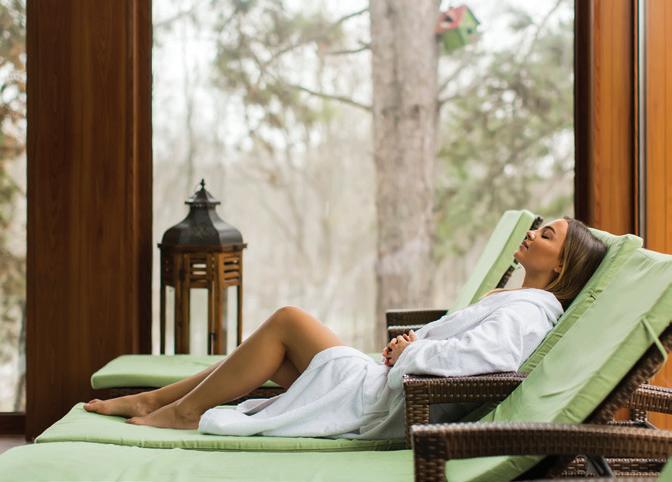
and bamboo forests and open fields. Although it has gained popularity for its use as the primary filming location in the Hulu series adaptation of Liane Moriarty’s book Nine Perfect Strangers, it still prides itself on being a tranquil place in which to enhance relaxation. In Europe, the reflective waters of Swizerland’s Lake Lucerne provide another famously serene setting, and the Bürgenstock Resort Lake Lucerne and Chenot Palace Weggis both offer outstanding spa and wellness menus that take advantage of the natural benefits of this surrounding.
Closer to home, many destinations in the Middle East are uniquely positioned to shine in the movement for more quietude and calm. Outside of the region’s bustling, thriving, and ever-developing cities, citizens and longtime residents have long understood the profound power of the desert – a blissful landscape that is, by its very nature, a sanctuary of silence.
From Qasr Al Sarab Desert Resort By Anantara and the Aldhafra Resort, Vignette Collection by IHG in Abu Dhabi; to Al Maha Desert Resort and Bab Al Shams – a Rare Finds Desert Resort in Dubai; and the Ritz Carlton Ras Al Khaimah Al Wadi Desert Resort in one of the fastest-growing Northern Emirates, the UAE has no shortage of peaceful desert resorts within easy access of its glittering metropolises.
In Oman, properties like Anantara Al Jabal Al Akhdar, Alila Jabal Akhdar, and Hotel Indigo Jabal Akhdar leverage the rugged topography 2,000m above sea level to create a natural sound barrier against the world below – here, the air is thinner, the crowds are non-existent, and the stillness is transformative.
In Oman’s Empty Quarter, the Magic Camps Wahiba Sands offers a private desert experience that’s a masterclass in quiet luxury, with a solar-powered camp in a hidden valley.
Meanwhile, in Saudi Arabia, with its vast sandstone canyons and ancient heritage, AlUla is leaning hard into the slow travel ethos. Stays at places like the Banyan Tree AlUla allow for a voyage of becoming, wherein the silence of the valley serves as a backdrop for deep reflection. In Saudi’s newer up-and-coming destination of Amaala, the Rosewood Amaala is positioned within the Prince Mohammed bin Salman Nature Reserve. This beautiful resort was designed through a regenerative lens,
Need some quietude but can’t get out to a more tranquil destination? These gadgets could help!
Samsung Galaxy Buds4
The latest version of these lightweight wireless earbuds features enhanced Adaptive Noise Control, offering better real-time adjustments to background sounds, while maintaining a lightweight, tip-free fit for more comfortable wear.
Sonos Ace
These premium over-ear headphones feature world-class active noise cancellation and an “Aware Mode” that strikes a nice balance between total isolation and environmental awareness.


ABOVE
The joy of a great spa is about more than the lovely scents and great massages –it’s also how peaceful it sounds inside of it
A classic choice for travellers (and tired city sleepers), these ultra-soft, slow-release foam earplugs provide a high noise reduction rating and a comfortably pressurised fit that’s great for long flights or loud hotels.
Combining high-fidelity hearing protection with a stylish, ring-shaped design, these reusable earplugs reduce decibels without muffled sound quality.
Designed with a patented filter that targets loud frequencies while keeping speech clear, these musician-worthy discreet earplugs are ideal for staying calm in crowded and noisy transit hubs.
These ultra-slim earbuds are specifically engineered for sidesleepers, using noise-masking technology to block out disruptive sounds for a restful night anywhere.




focusing on wellness and the reaping the joys of the natural silence of the Red Sea’s untouched shores. Whether you’re going for the “latergram” content or out of a genuine desire to reset a frazzled nervous system, in a world where noise levels are increasingly on the rise – thanks to expanding urbanisation, new technology, and everything in between – the value of a quiet place, where peace and serenity are defined by a sense of hushed calm with muted noises and soothing visuals – is only set to grow higher. And as the hospitality industry continues to adapt, sonic luxury may well become a defining feature of travel here on out.
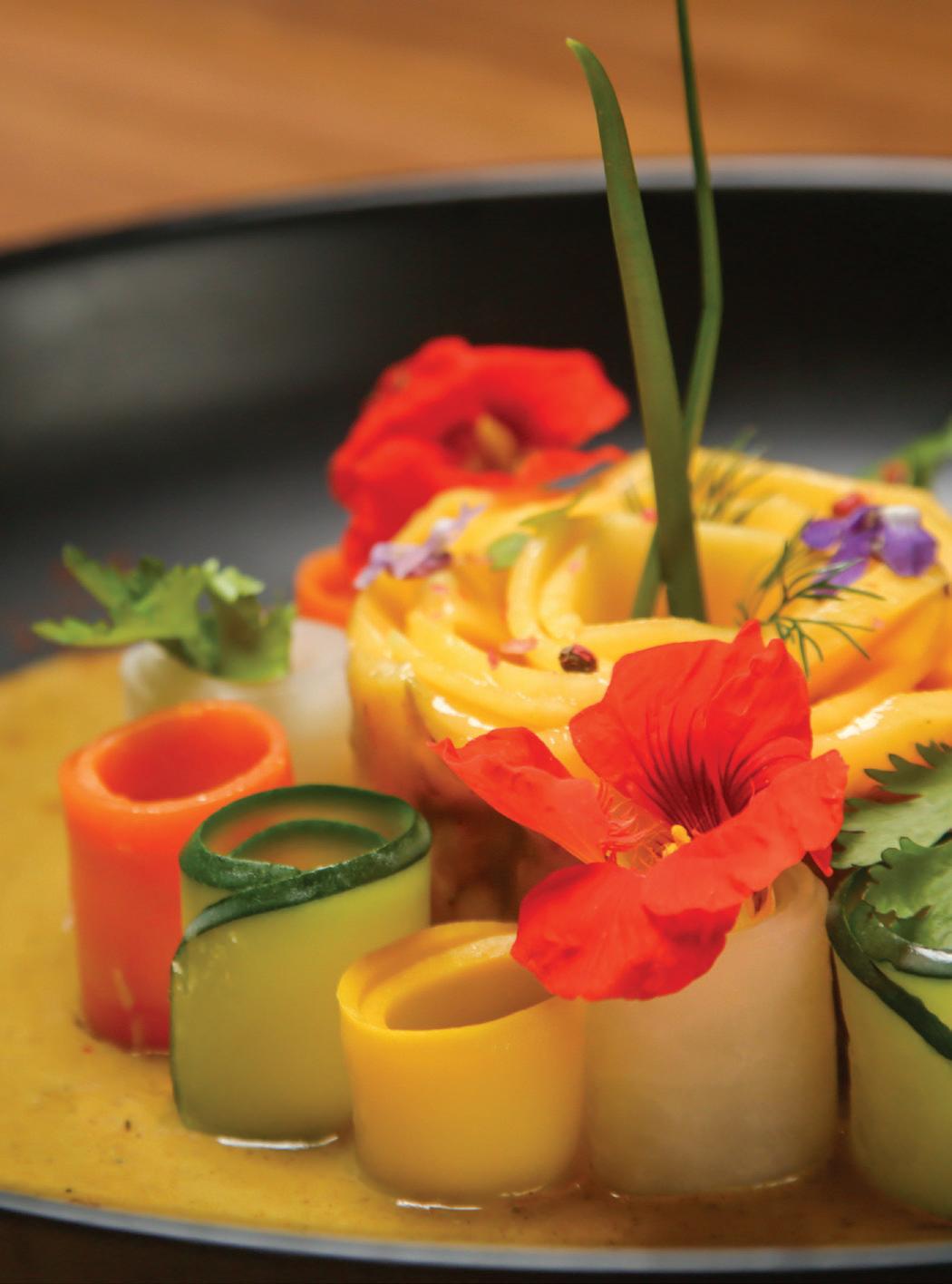
Famous chefs are elevating inflight dining – but what does it take to deliver restaurant-style quality at altitude?
WORDS HANNAH BRANDLER
THE TIMER STARTS. I delicately position nasturtiums onto a bed of dressed crab, my fingers trembling as chef Monica Galetti peers over my shoulder to inspect my plating skills.
I’m at dnata’s catering centre near London Heathrow, where thousands of meals are prepared, packaged, and distributed to hundreds of airlines daily. One such client is Singapore Airlines, which has joined forces with Monica to develop seasonal menus for passengers in premium cabins on flights departing the UK.
“When I was approached it was exciting but also daunting. I didn’t want to cut corners and lose the quality of great food,” she tells me.
You can see why award-winning chefs might turn down such a partnership – their reputation put at risk by one dodgy airline meal.
After spending time at dnata, however, Monica was convinced.
“Once I saw what dnata deliver day in and day out, I was blown away, I have complete trust in them,” she says.
Preparation is key
Delivering five-star flavours at 35,000 feet is no easy feat. Taste buds are dulled at altitude, while narrow galleys, limited equipment, and occasional turbulence provide a challenging kitchen environment.
Monica has worked in some of the world’s most pressurised kitchens, but the tiny galley set a new high. “I have so much respect for the crew,” she says.
The crew are equipped with clear image-led instructions. “There is a limit to the number of steps the crew can do in the air to dress the plate. In business class, it’s four steps; in first class, it’s five,” Monica explains.
“The crew don’t have fancy ovens – it’s one temperature (60 degrees Celsius) – so you need to take that into consideration,” she adds. Brining the meat ahead of the flight removes excess moisture and retains as much flavour as possible, while searing a dish on land reduces the cooking time in the air. Stews and casseroles prevent proteins from drying out, while richly flavoured umami products heighten the sensory experience. “If we get the process right on the ground, the crew will get it right in the air,” she says.
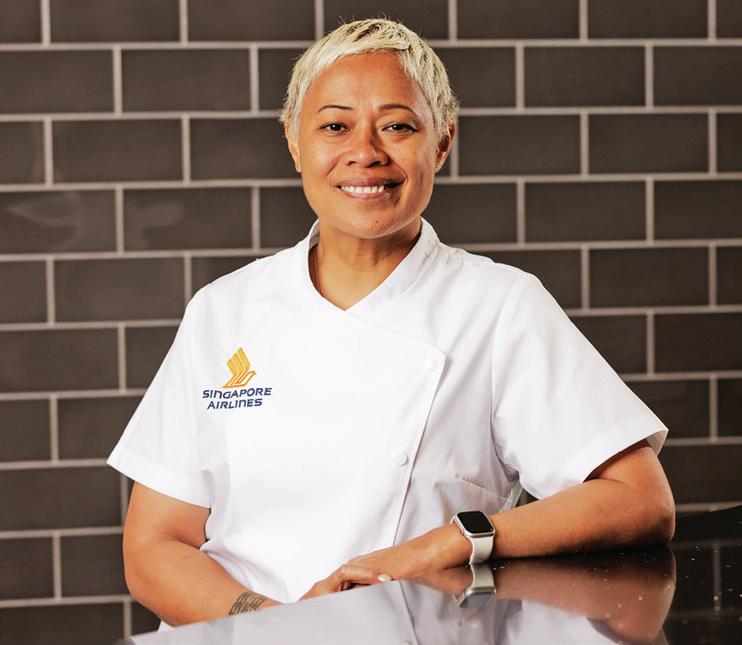
Acing it at altitude
Later that day, the crab dish I had prepped earlier lands on my A380 tray table at 35,000 feet – just as creamy and exquisitely presented. Next, butter poached chicken – a little less juicy but still tasty, with a bright pea purée and crunchy chipotle corn.
This year, Monica has introduced salted caramel and honeycomb puddings to economy and premium economy passengers. “People messaged me on social media saying they didn’t get to try any of the dishes, so I wanted to do a little taster experience, which the airline can make in large numbers.”
The indulgent pudding won me over – though not enough to sacrifice my business class seat for economy.
‘Umami
ABOVE Monica Galetti
OPPOSITE PAGE Vegetable curry with mango
To mark its 20th anniversary in Barcelona, SIA has teamed up with Michelin-starred chef Nandu Jubany – the first chef from the region to partner with the airline. The BarcelonaSingapore route now features a curated menu from the chef that will rotate quarterly through March 2027. The May/June summer cycle menu includes a hand-rolled canelón, a Catalan-style bacallà as the main, and a Pastís de Formatge cheesecake for dessert.


An award-winning chef elevates an airline’s reputation and transforms the experience for passengers. Here we look at other inspiring airline dining partnerships
The flag carrier partners with French chefs across its long-haul network to deliver five-course menus to La Première and business class customers. Bocuse d’Or winner Régis Marcon and pâtissier Yann Couvreur take the helm on services departing Paris, while Daniel Boulud is behind the meals on flights from the US. Its roster of star chefs demonstrating French excellence in recent years includes Arnaud Lallement, Régis Marcon, Anne-Sophie Pic, Emmanuel Renaut, Michel Roth, Philippe Urraca, Angelo Musa, and Thierry Marx.

Don’t like adhering to mealtimes set by others? Passengers in Qatar Airways’ First and Business Class can eat whenever they choose. Since 2025, the airline has partnered with French chef Yannick Alléno – who has 17 Michelin stars associated with his name – on inflight menus for its Paris-Doha routes, as well as a taste of his “Pavyllon” restaurant in Qatar Airways lounges. Other chefs the airline has partnered with include Garima Arora, Michihiro Haruta, Thitid ‘Ton’ Tassanakajohn, Jordy Navarra, Vicky Lau, Ross Lusted, and Michael Meredith.
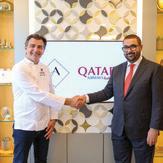
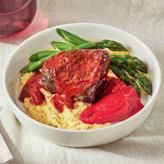
Through a partnership announced in October 2025 and that began in November that year, Spanish American chef José Andrés has brought Spanish-inspired flavours to Delta One and first class passengers. Expect Spanish tortilla with Manchego for breakfast, and chicken thigh in a sauce of sherry and dried fruit, with celeriac potato purée, roasted carrots and pearl onions. Delta celebrated its 100th anniversary last year, and this year, it launched a vino programme for Delta One, in partnership with master sommelier Andrea Robinson.

Hotly-anticipated new Saudi Arabian flag carrier Riyadh Air has caused a lot of buzz for its fresh approach to a premium modern aviation offering, and its inflight dining is no exception. The airline has promised guests a “taste of Saudi Arabia” featuring authentic local flavours –including premium Jazan coffee, seven varieties of dates, and date-extract “Milaf Cola”, partnering with Saudi Coffee Company and Milaf Global Food Company , plus caterer Catrion for a custom menu – all served on sustainable tableware by deSter.
In 2025, Emirates collaborated with Jean-Michel Bardet, head chef of Michelin-star renown from Moët & Chandon, to create 18 new Business Class dishes. Emirates Vice President of Culinary Design, Doxis Bekris, led the curation of these new 2025 inflight dishes. Emirates’ longstanding partnership with Moët Hennesey has lasted for over 33 years, and since 2022, the airline has also partnered with UAE-based company Bustanica – the world’s largest indoor vertical farm – for the supply of locally-sourced, sustainable ingredients.
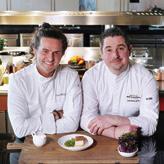
Since its launch in 2002, the carrier’s Taste of Switzerland concept has featured 82 guest chefs from the country’s 26 cantons. Each chef has a three-month run to showcase regional specialities, with menus offered to first and business class passengers on long-haul flights departing Switzerland. Among the airline’s “Swiss Senses” dining upgrades, guests can enjoy a new “SWISS Alpine Essence” signature cocktail, an additional soup course in business class, and more extensive snack offerings between meals.
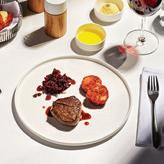

In 2021, UAE national carrier Etihad Airways partnered with Emirati chef Aysha AlObeidli to create a special in-flight meal for the airline’s UAE 50th National Day celebrations. The 13-year-old is celebrated for her reputation as the youngest Emirati chef, and has studied at the International Centre for Culinary Arts (ICCA Dubai) and has worked with hotels such as JW Marriott Maldives Resort & Spa. Her Etihad menu involved a colourful “chebab pancake” for children’s meals inspired by traditional Emirati cuisine, and she appeared in a YouTube video promoting it.

A partnership with Netflix series Chef’s Table will see 11 chefs curate regionally inspired dishes in Polaris (business class). Each chef will create a restaurantquality appetiser, salad, and entrée for flights travelling from their home city from 1 August this year. The list of participating chefs includes Justin Yu (Houston), Penelope Wong (Denver), David Barzelay (San Francisco), Isabel Cos and Matt Conroy (Washington D.C.), Tomos Parry (London), Manu Buffara (São Paulo), Tashi Gyamtso (Tokyo), and Nancy Silverton (Los Angeles).
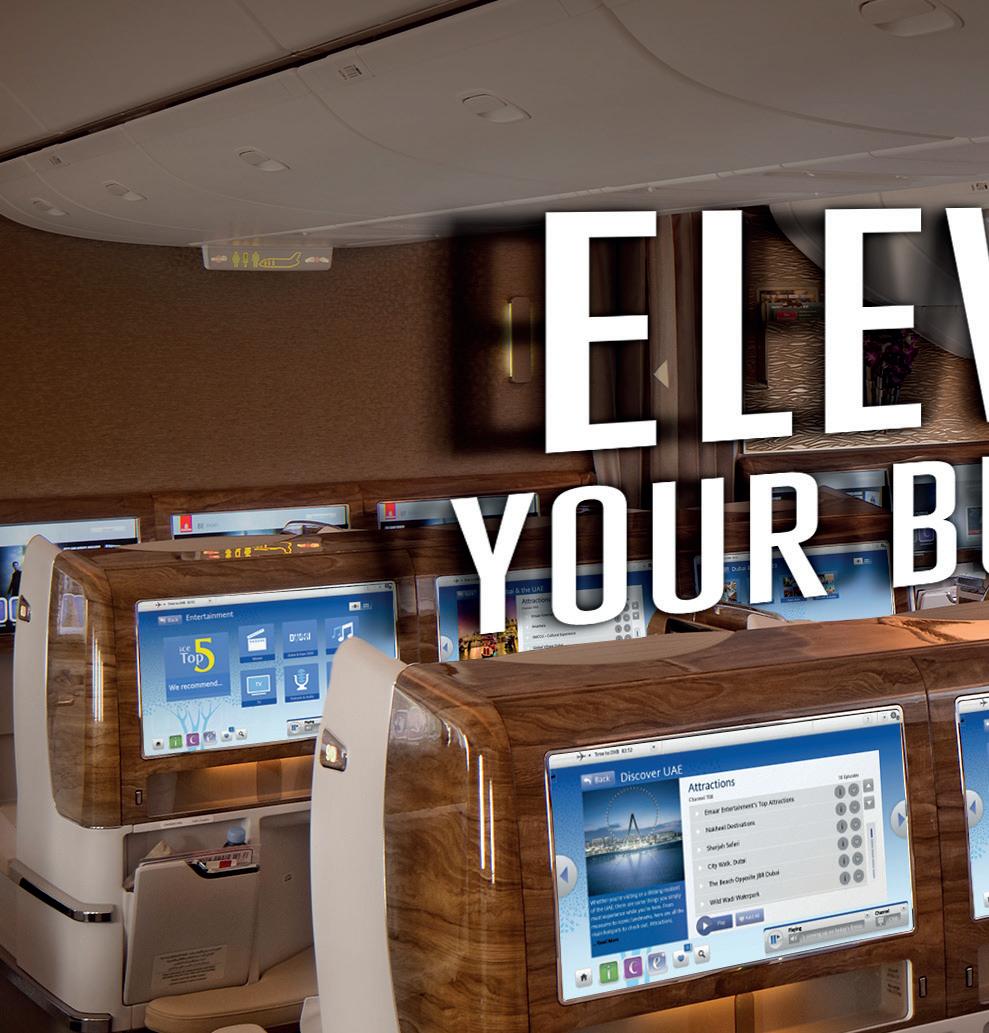


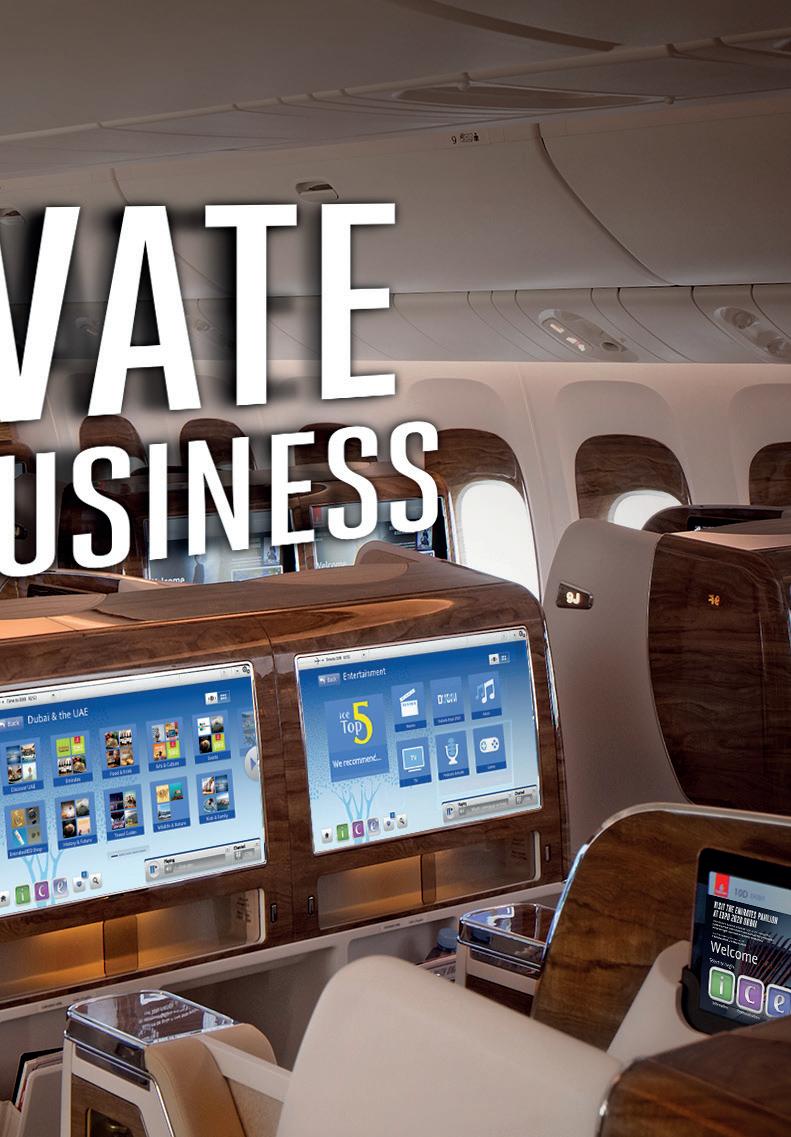


Attractions



Activities
Dining
Health
Education
Entertainment
Real Estate
Hotels & Resorts
Shopping
The











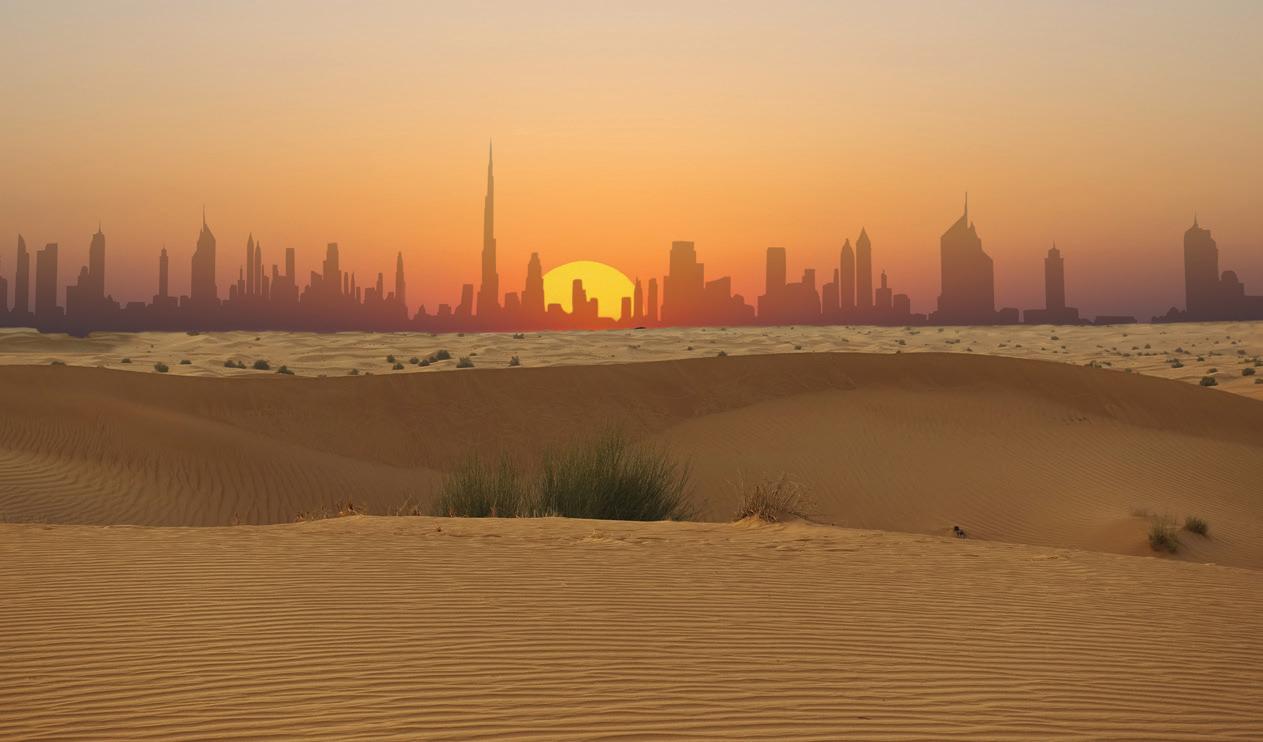
Through visionary and strategic leadership, the UAE’s hospitality leaders are reclaiming the narrative through an exceptional and inspiring model for post-disruption recovery
Ifthere is one word that defines the strength of business in the Middle East, particularly the UAE and the rest of the GCC, it is agility. While the global hospitality landscape can change at the flip of a switch – as we have been reminded more than once since 2020 – this region possesses a uniquely visionary attitude that can transform stress into opportunity.
To explore this, Business Traveller Middle East hosted a roundtable recently under the theme: “Stronger Together”. Hosted at the Taj Dubai, we brought together leaders from brands like Accor, IHG, Radisson, and Rove, to discuss how each of these companies has been proving their resilience in the face of recent challenges – while continuing to build a future defined by innovation, community, and a firm belief in the Middle East’s hospitality industry.
The consensus among the experts was clear: that while the events that transpired in the region over the past few months provided a startling and unprecedented impact, the structural desire to travel remains. In recent years, the Middle East has experienced an unprecedented tourism boom, with 2026 data showing high desires for luxury experiences, family travel, and short- as well as long-haul breaks. More than 84% of travellers in the region had declared intent to plan trips in 2026, with data from Marriott showing average intent for at least seven trips per traveller. This encompasses local, regional, and global travel. International arrivals, meanwhile, were predicted to have risen by 13% this year – and while this figure has been impacted by the recent conflict, alongside disruptions in airspaces and the wider travel industry, regional airlines are still expected to carry a high volume of passengers both in and out of the country. As of the time of going to press, airspaces across the GCC have reopened, countless flight routes have been resumed, and capacity is back up – and a key factor is
that the desire to travel and enjoy great hospitality has not wavered. For hotels in the UAE, the challenge has not been a lack of intent, but a dramatic shift in booking windows. Hospitality leaders have bridged the gap in inventive ways, opting for proactive storytelling over defensive communication.
Pranav Vohra, Cluster Commercial Director at InterContinental Hotels at Dubai Festival City, noted that even during the most difficult weeks, the recovery was already in motion, driven by a need for human connection. “[As of the latter half of April], the shock was over, and confidence was coming back,” he observed. Vohra emphasised that during the initial phase of agitation, hotels – particularly those near transit hubs –transformed into centres for comfort in a new way. “From an operational perspective, there was much more emotional support that hotels had to provide to the guests.”
This sentiment was echoed by Yann Decaix, General Manager of Radisson Blu Hotel, Dubai Deira Creek, who cited the market’s resilience as a key to its adaptability. “The short-term impact was more of a shock to the system. The impact wasn’t structural, so the travel intent from customers remains intact. People still want to travel,” he noted. “People will return. They will bounce back, and they will travel again.”
The optimism shared by the speakers at our roundtable – which included Vohra and Decaix, as well as Michael Goetz, Cluster General Manager at Mövenpick Hotel Jumeirah Beach & Mövenpick Dubai Creek; Saurabh Tiwari, Area Director of Operations for the Middle East and CIS at Taj Hotels, part of The Indian Hotels Company; Deborah Lecci, General Manager of Rove at the Park by Rove Hotels; Daniel Kingston, General Manager of SO/ Uptown, and Antje Sahling, General Manager of InterContinental Dubai Marina – is reflected in recent data. According to the Dubai Department of Economy and Tourism (DET), the city welcomed 19.59 million international overnight visitors in 2025, a 5% year-on-year increase. International visitor
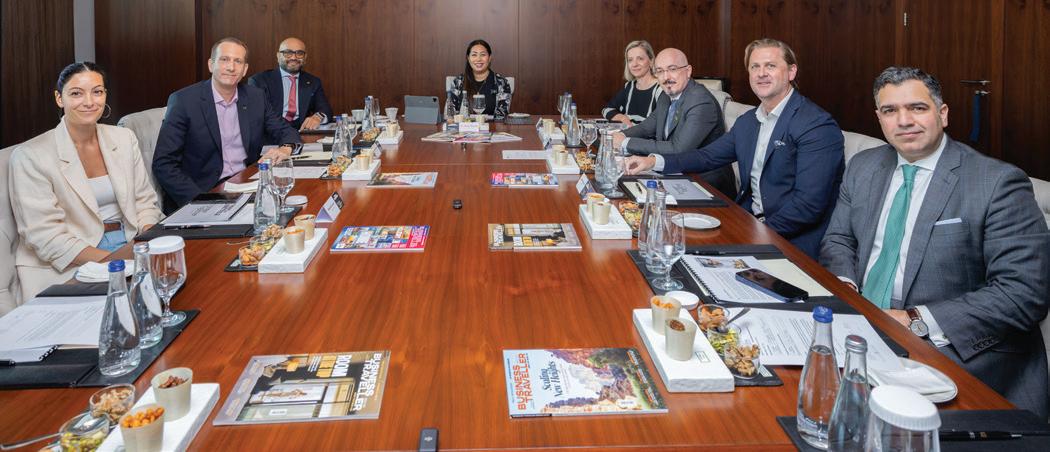
spend in the UAE was projected to reach a record AED 228.5 billion by the end of 2025 – 37% above 2019 peaks – with strong growth expected to continue into 2026. While the “waiting demand” has been admittedly more cautious, despite the volatility in March 2026, the fundamental value of the region remains high – and the adaptability and agility of the region’s hospitality industry has played a key role in keeping it moving.
Hyper-Localisation: The Power of the Resident As international transit experienced temporary shifts, regional powerhouses stepped up. Quick pivots towards new offerings, such as hyper-localisation through staycation packages and unique F&B offerings, reinforced the importance of the regional resident. In the UAE, residents were invited to rediscover the luxury in their own backyards. This was based on more than a temporary fix – since 2016, over half of UAE residents have taken a staycation at least once annually, with some doing so up to 4-6 times a year – and a decade on, the demand for these stays remains high. The key difference is that residents seek these now-normalised breaks for a wider variety of reasons: Whereas once, luxury beach hotels were the main draw, a growing number of residents enjoy wellness retreats, “workcations”, and other purpose-driven passion pursuits alongside their beach breaks and staycays. The UAE’s hoteliers have continued to offer comfort, respite, and care to residents by championing these desires, while creating compelling new revenue streams by strategically recalibrating their offering. Deborah Lecci of Rove at the Park pivoted quickly to meet this local demand. “We reinvented our offering – we had to add some extra activities and make guests feel extra comfortable throughout their stay with us,” she explained. Rove successfully
ABOVE (Clockwise) Yi-Hwa Hanna; Antje Sahling; Yann Decaix; Daniel Kingston; Pranav Vohra; Deborah Lecci; Michael Goetz; Saurabh Tiwari
accelerated the launch of a “36-hour stay” offer that it had already planned for the year, to provide residents with a genuine sense of escape, for instance: “We noticed that the guests would prefer to stay within the hotel rather than going outside and exploring at this time, so we wanted to provide them with new ways to enjoy that.” They placed a strong focus on communitydriven activations, with one clever new initiative designed to support local startups by offering them visibility through Rove’s social media platforms, as well as access to their event spaces to help them grow their businesses. The initiative was very on-brand for Rove’s community-led brand identity, as a company that champions all things local. As a family-friendly destination, Rove at the Park also launched a “Kids Hotelier Bootcamp” designed to give children hands-on exposure to hospitality. The initiative was particularly well-received by parents working from home, by providing meaningful engagement for children while adding value to their experience. The hotel also adapted its breakfast offering to meet the growing demand for flexible workspaces, creating a deal that gave people the chance to use their popular dining venue The Daily as a co-working environment for just AED 69, with unlimited tea and coffee throughout the day.
‘The adaptability and agility of the region’s hospitality industry keeps it moving’
Meanwhile, Michael Goetz, Cluster GM for Mövenpick JBR and Mövenpick Creek, observed a change in how guests were utilising spaces – not just during this period of disruption, but through recent years. “Before, people would primarily come for longer holidays, and now, they also love to enjoy shorter staycations. Hotels and resorts are now also becoming the destination itself,” he said. Goetz pointed to the success of spa getaways and “recharge retreats” as evidence that guests are seeking experiential value over mere accommodation. “It’s all about how the hotel makes people feel, and how they can help people look after their health – how they sleep, how they eat, and how they can recharge and reconnect with themselves during a stay,” he explained.
While pivots can lead to success, one important aspect of adapting an offering in a volatile landscape is maintaining the delicate balance between rising supplier costs and protecting the brand promise across the board. While the temptation to slash rates during a crisis is high, experts warn against the long-term dangers of rate dilution and wrong segmentation.
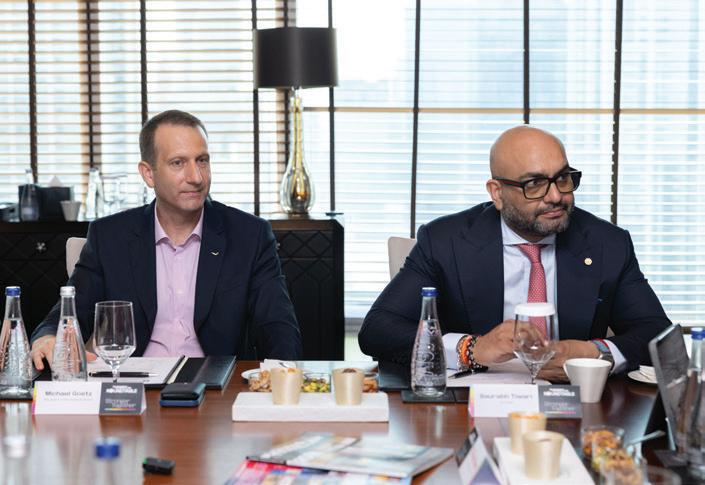
“We need to be able to protect our brand, and the guest experience as well,” says Antje Sahling, GM of InterContinental Dubai Marina. Sahling was keen to ensure recent events didn‘t suppress her property’s standards or long-term vision: “We had a wonderful 2025 – and after a great year, I had plans made for refurbishing this year. We [thus] decided to not become distracted by the noise around the recent disruptions, by committing to go ahead with our planned refurbishment. We’re now going to come back in September brand new, shiny and glamorous, and ready for the new market to come through.”
Daniel Kingston, General Manager of SO/ Uptown, and his team came up with a wildly creative “Brunch and Bed” offer: for a brief period, guests enjoying the high-value Tiger Brunch at their popular restaurant Citronelle could pay for the brunch then stay in a room for just 1 AED extra. The kooky idea was a win-win situation for guests and the hotel, by masterfully offering a sensational deal without damaging price integrity.
“By running this offer, we were getting a brunch crowd that was not previously looking to stay over. So we started to see a different dynamic in the hotel,” Kingston said. SO/ Uptown applied the same creativity to repurposing spaces across the property for other unique draws, such as offering “school from the hotel” for families during periods of distance learning –echoing the observations shared by Michael Goetz on the evolving ways guests use hotel spaces.
The Human Element
Hospitality is a people business from all sides, and none of these solutions would have been possible without the hard work of the staff behind it. All of the leaders present at our roundtable took pride in the way their teams handled the downturn, and were committed to supporting them in as many ways as they could – from cross-training staff to ensuring stability in housing and pay. For some, it was also also an opportunity to upskill: “We
BELOW Dubai, the UAE, and the GCC have proven their resilience through challenging periods in the past, and experts are certain that businesses across the country will bounce back stronger than ever before
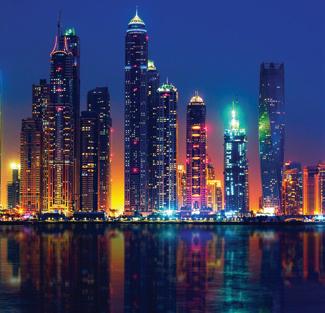
moved staff around some hotels, and if they were interested, we could have a receptionist helping out with a waiter job, or someone from F&B assisting with housekeeping in public areas,” Decaix said. While the “all hands on deck” approach helped the hotel, it also gave any staff who were curious to learn about another department the chance to do so, wherein experiencing more roles within the hotel could strengthen their individual skillsets. Radisson, a company that prides itself on an empowering “Yes I Can!” philosophy, made a concerted effort to actively listen to its people: “It was through talking to our teams that we realised what we can do better for them, as well as our customers. Having those discussion with the staff made a big difference, and they’re the ones that highlighted that,” Decaix added.
Saurabh Tiwari, Area Director and GM of Taj Dubai, was proud to share that Taj Hotels hadn’t given any of their staff unpaid holidays – and that any breaks taken as a result of the situation were purely voluntary, with the salaries of frontline employees protected from cuts. “This is what the company stands for. It’s who we are,” he said. Accor, too, offered its staff high levels of support, protecting staff payment packages and holding back from job cuts. Mövenpick’s Goetz explained: “[It was] an opportunity for hotel companies to show that what they’ve been preaching is true – that they’re really standing up for what they believe in being, as an employer. We keep saying our people are our biggest asset, and it’s nice to reaffirm that even today, they’re still the most important thing we have. We had an opportunity to show that even when things get a bit tough, we still hold onto the positions we proudly say we uphold, from the value of staff to our commitment to environmental sustainability.”
With the F&B in Taj’s three Dubai-based properties run entirely in-house, they were able to bring more staff back to their regular capacity by increasing business footfall through F&B promotions and other such deals. “Because demand hasn’t gone, it’s just waiting. Our job is to remove the hesitation and react faster,” Tiwari continued. “We have seen a shift from international to more regional and local travel, but we see very healthy occupancy levels, especially over the weekends,” Goetz agreed. Vohra and Kingston’s hotels saw the same pattern, with InterContinental Festival City’s occupancy levels also back up to a high, and SO/ Uptown practically back at full capacity.
“[When there is uncertainty about the future], I think we keep forgetting what we’ve gone through,” Tiwari added; “The 2008 crisis came, but we bounced back stronger than ever. And then came COVID, and we thought it’s never going to be the same again. Then the occupancy we had after the Expo 2020 Dubai was phenomenal. And this is going to continue. The hospitality industry is not here to unravel. As a city, we are not here to unravel. A lot of investment has gone into infrastructure. One way or another, Dubai finds a way. It’s not going to be a walk in the park, but this is a city that has a tendency to bounce back, and it’s a city that has the capacity of being sustainable and being consistent in the long term.”
In the Middle East, competition may be fierce, but when it comes to recovery, the industry is resilient, and – as the roundtable affirmed – undeniably stronger together. And together, its leaders have the vision to help ensure that the city is ready for its next 19+ million visitors.













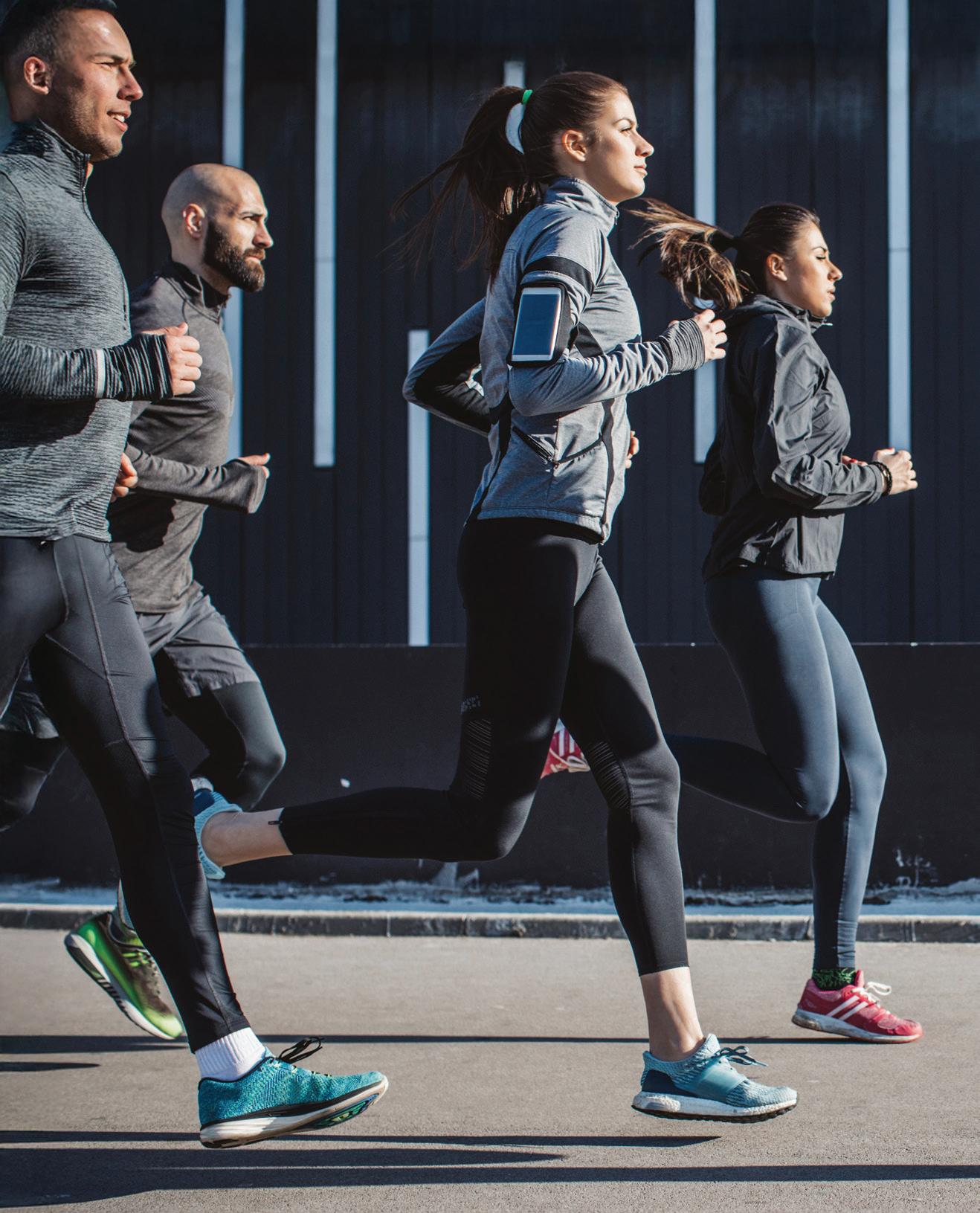

FROM SYDNEY TO NEW YORK CITY, RUN CLUBS ARE EMERGING AS A PRIZED MARKETING CHANNEL IN THE GLOBAL FITNESS ECONOMY, GIVING SPORTSWEAR COMPANIES SCALE, LOYALTY, AND SOMETHING THAT DIGITAL ADVERTISING RARELY GUARANTEES: REPEAT, REAL-WORLD ENGAGEMENT

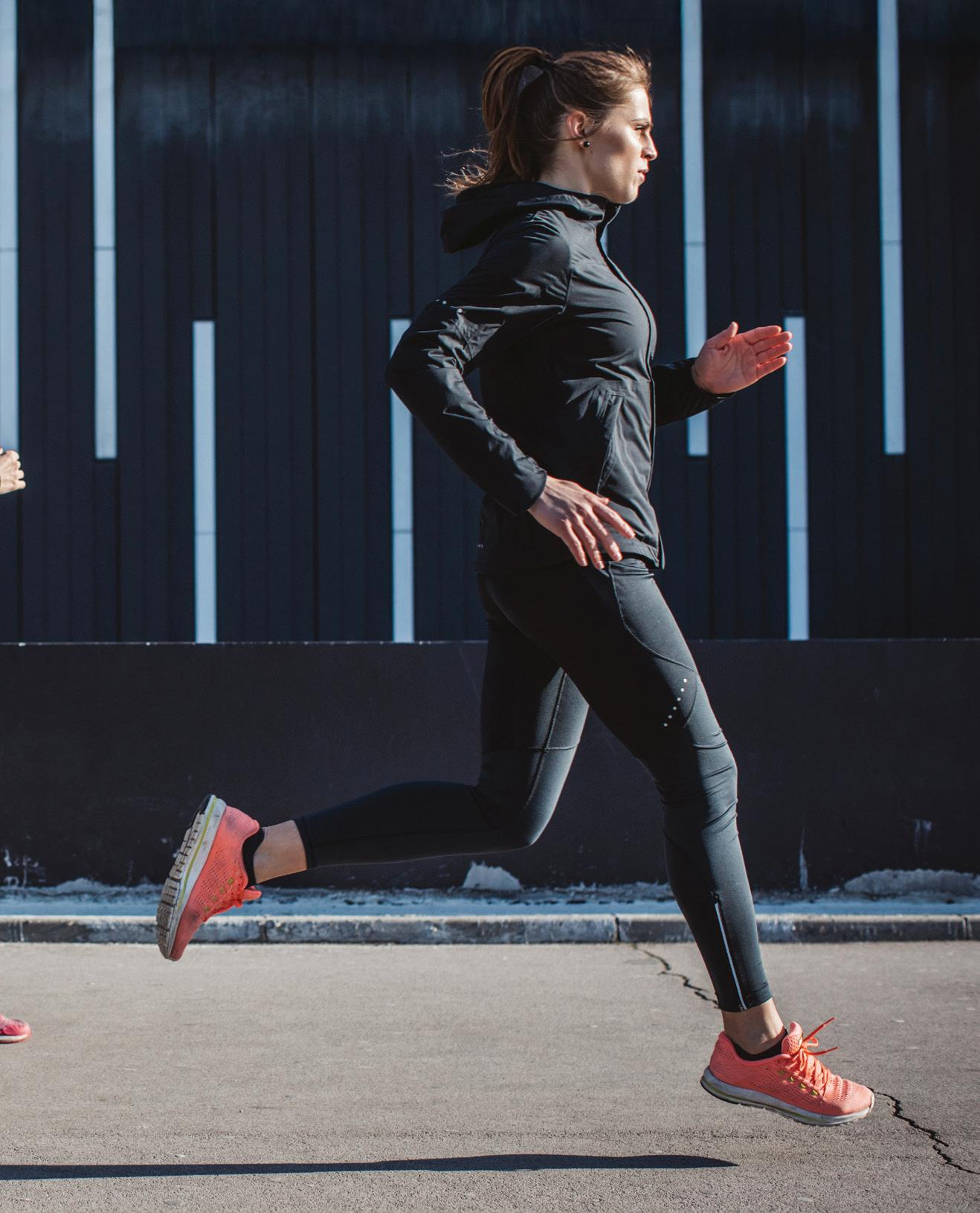
can hear them coming a mile away. Music rumbles through the streets, a crowd whoops and cheers, hundreds of pairs of feet thump against asphalt. At first it sounds like a roving rave. Then, runners with speakers strapped to their backs come into view, followed by many more dressed in the latest lululemon, adidas, and Nike gear.
Every Wednesday night, the Midnight Runners lace up and take over the streets of Sydney, Australia. The route runs roughly 7km, broken up by short, boot-camp-style exercises. The finishing line is a pub, where people dance, mingle, and post reels. Sometimes, the club’s volunteer leaders hand out free shirts, protein bars, or drinks.
For some, it feels like Hinge without the scrolling. For others, it’s a new way to experience a sport they love. Either way, the emphasis is unmistakably social. “We always say, ‘Please don’t hit your PB [personal best] during this run,’” comments Sydney city leader Gail Pelayo. “Midnight Runners isn’t a running club. It’s really a fun club.”
Run clubs have existed for decades. What’s changed is their scale, their purpose, and their value. In a multi-billion-dollar global industry, where and how runners show up week after week is now just as important as how fast they run. In 2025, new running clubs created on fitness app Strava nearly quadrupled from the year before, reaching 1 million. Many of them are explicitly designed around routine and community rather than competition. For brands, that shift has turned what was once a fringe social activity into a highly prized channel.
For much of modern running history, growth was easiest to measure through races. The boom began with the New York City Marathon in 1970, spread through Europe and Oceania, and reached Asia by the 1990s, with events in Bangkok, Hong Kong, Japan, and South Korea. By 2007, the Tokyo Marathon had cemented the region’s place on the global circuit.
After 2020, that model began to lose its centrality. Aggregated data from RunRepeat suggests that nearly 30% of people who run today took up the sport during the pandemic. Many arrived without race calendars or long-term training plans, instead folding running into their weekly lives as a way to break monotony, meet people, and stay active.

ABOVE Runners of InnerFight, one of Dubai’s top fitness and performance companies
That cohort now sits at the centre of a vast commercial ecosystem. The global running economy – spanning footwear, apparel, events, and technology – is worth tens of billions of dollars. The running-shoe market alone was valued at around US$51 billion in 2024.
But how runners engage with brands inside that economy is changing. According to UK-based research group Redtorch, runners increasingly shop for fitness gear the way they shop for technology, comparing products by year and model. At the same time, 73% of running-related brand visibility remains
InnerFight offers a mixedgender run club, as well as a specialised ladies-only run club, with a strong sense of community. Led by high performance coach Marcus Smith, the brand’s mission is to “[make] people more successful at LIFE”, and they welcome people of all levels, from athletes to people just trying to complete their first 5k
brand-led rather than product-led. Familiarity and trust still matter more than any single shoe.
That dynamic combination helps explain why running clubs have become such powerful platforms. They offer brands something increasingly rare: regular, physical access to a defined audience, without the volatility of race calendars or the transactionality of retail.
Midnight Runners was founded in London in 2015 by a group of overworked professionals looking for a midweek release. Loud music, mixed paces, body-weight exercises, and post-run drinks became the blueprint. Today, the club operates in 18 cities worldwide, including Amsterdam, Sydney, and Los Angeles.
“When we started in Sydney [in 2019], we were more of an athletic running club that socialised,” says Alistair Hewson, another city leader. “Now most of the runs are 7–8km. That changes the dynamic of who we’ve got in the club.”
The Sydney edition regularly attracts 150 to 200 runners. That consistency, combined with the club’s highly visible presence in the city, has made it attractive to sponsors. When Midnight Runners launched locally, the global organisation was represented by Reebok. Mizuno then signed on until January 2026. Now, individual cities are free to work with local partners.
“None of the runners knew Mizuno existed [before our partnership],” Pelayo says. “And now, when Mizuno’s advertisements for sales come up, people jump on them.”
Midnight Runners is just one part of a crowded ecosystem. According to Runhub, Sydney alone now has more than 100
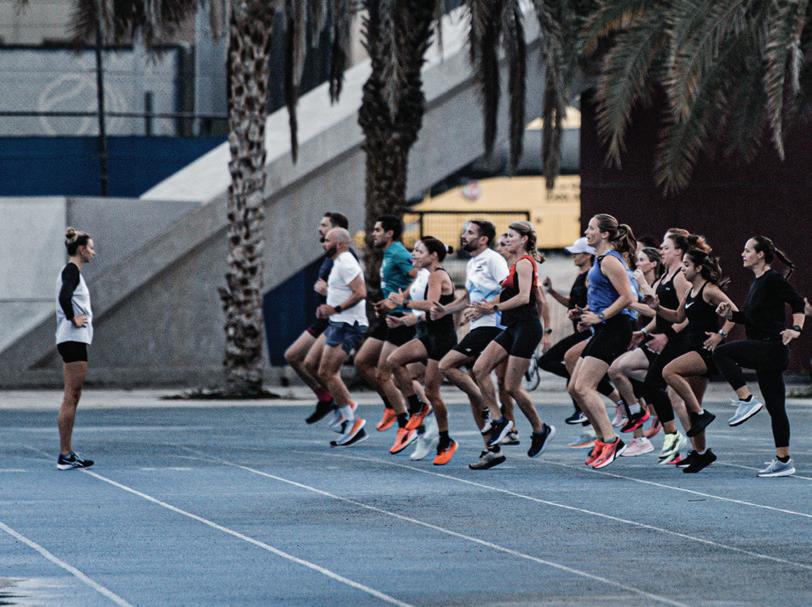
Midnight Sun Marathon Tromsø, Norway • 20 June
This road race takes place in June, when areas north of the Arctic Circle experience 24 hours of daylight. Under the beams of Tromsø’s evening sun, runners meander around fjords and over the iconic Tromsø Bridge, completing distances between 5km and a full 42.2km marathon.
Le Marathon des châteaux du Médoc Bordeaux, France • 5 September
At the world’s most indulgent marathon, participants run in costume through vineyards, stopping at tasting stations to enjoy regional vintages along with cheese, oysters, and pastries. The challenge? Pacing yourself through all that hospitality.
NYC Bakery Run New York City, US • 4 October
Runners have ample fuel at this New York City half marathon, with pastries on offer from some of the city’s top bakeries. Think flaky croissants, fruity danishes and spiced cardamom buns. Only 100 places are available, so make sure you enter the lottery for a chance to be selected.
InnerFight Dubai
Dubai, UAE
InnerFight founder Marcus Smith once ran 30 marathons in 30 days, to “prove that limits exist only to be challenged.” They offer ultra running coaching (in groups or oneon-one), triathlon coaching, a ladiesonly run club, and a junior run club. innerfight.com
R7 Run Club
Riyadh, Saudi Arabia
This community club is free and open to all skills levels and hosts weekly runs in places like Wadi Hanifah, Misk City, and the city’s green spaces. Instagram @r7runclub
Jumeirah Johns Running Club Dubai, UAE
Described as “Dubai’s most social run club”, while its name implies that it’s for men, this group has free weekly runs for everyone, at all abilities, shapes, and sizes. Founded by friends Angus Maxfield and Ryan Underwood as a nonintimating alternative to performance run clubs, they also host social events, sell their own merch, and have partnered with brands such as New Balance and Whoop. Instagram @jumeirah johnsrunningclub
M.I.L.E. Run Club
Jeddah, Saudi Arabia
Founded by two Saudi youths to “Make It Look Easy”, this club fosters community through runs that support mental health and motivation via fitness goals and personal growth – and it also hosts walking circles. Instagram @mile.worldwide
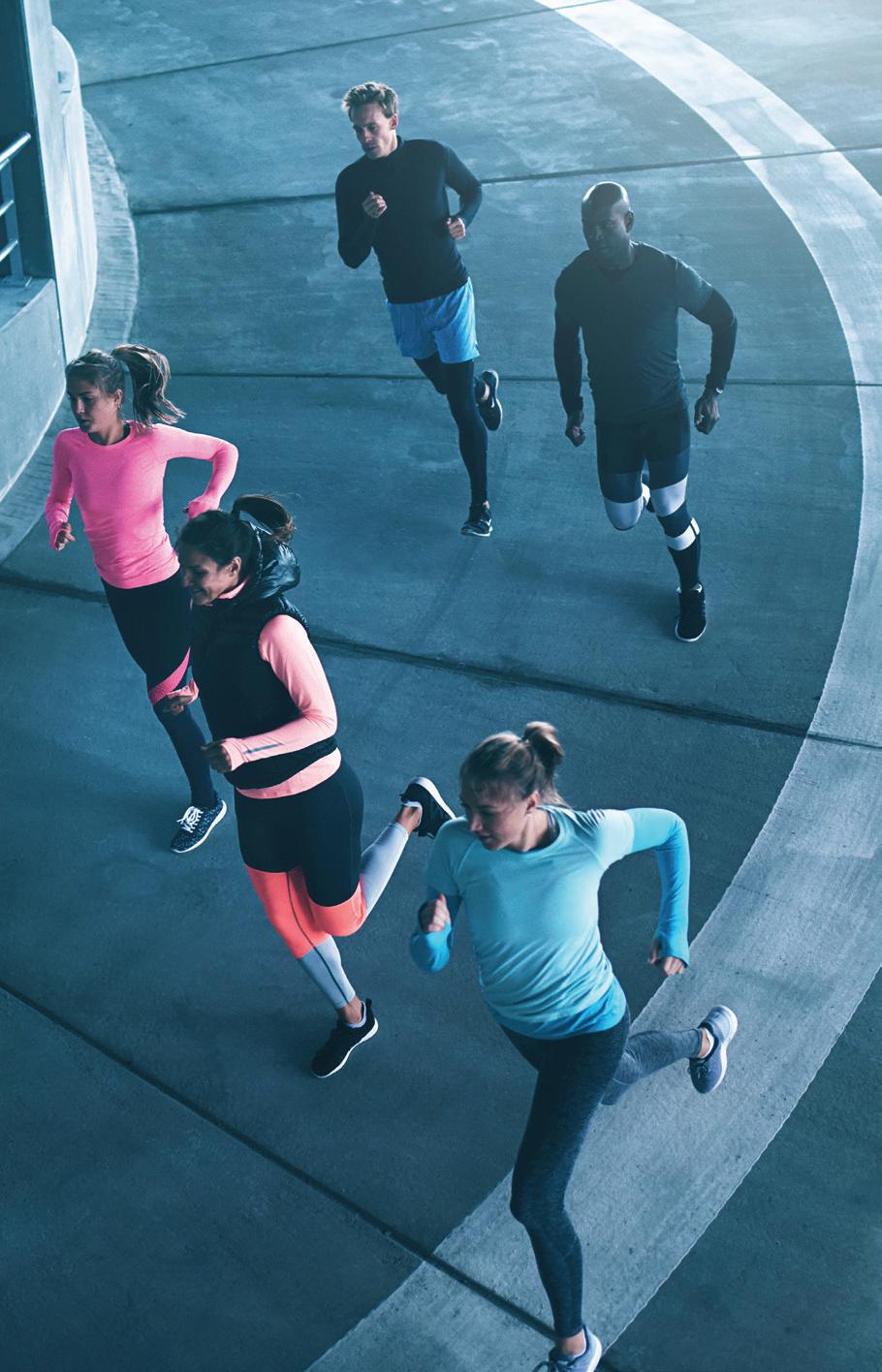
‘The boom in the running community has really bene ted businesses. The only way you can get business going is if somebody’s aware you exist’
run clubs, many of them operating on different models but competing for the same attention. “The boom in the running community has really bene ted businesses,” Pelayo continues. “The only way you can get business going is if somebody’s aware you exist.”
In Bangkok, the local branch of adidas Runners operates with a more structured mandate. The club meets twice a week, pairing track sessions with longer weekend runs in city parks.
“For track sessions, we can get up to 200 people wanting to join,” says city leader Mont Watanasiriroch. “We have more than 20,000 active people in our Facebook group.”
Despite being backed by a brand with a competitive legacy, Watanasiriroch is careful to position the club as inclusive. “People sometimes say, ‘I’m not that good, I can’t run with adidas,’” he says. “And I tell them, ‘No, you can.’ Running is the main purpose of our club.”
According to Watanasiriroch, adidas operates a tiered support model, placing its newest products on the most visible runners in Thailand. With 30% of Gen Z planning to spend more on tness in 2026, according to Strava, the club’s weekly sessions have effectively become a moving showroom. “If you run in Lumpini Park, basically everyone is wearing the latest [adidas] EVO SL shoe,” Watanasiriroch says.
THE VALUE OF LOYALTY
Not every run club is built around performance metrics or product launches. The Mikkeller Running Club Tokyo, part of a network spanning Europe, Asia, and the US that’s tied to the Danish craft brewery, takes a deliberately informal approach.
“It’s a team of drinkers who occasionally run,” says captain Steve Jenks. It even launched its own Instagram account in 2025.


FROM OPPOSITE
Midnight Runners in Berlin; The 6km loop connecting Tower Bridge, London Bridge, and Millennium Bridge is a popular route for runners in London
Courses range from 3km to 10km , to encourage participation. Membership is free, brand demands are minimal and drop-ins are encouraged. “If we really tried to mandate people buying shirts or signing up for memberships, we’d probably have fewer runners,” Jenks says.
On a typical Saturday, 40 to 50 regulars turn up, with numbers rising to around 100. Most stay on for a drink or two. Some buy shirts or hats made by the Tokyo division. Others reconnect at Mikkeller bars and events around the world.
“It’s more about brand recognition,” Jenks says. “It drives people to the bar on a Saturday, and then we can all share some [drinks] and fun together.”
For brands navigating an increasingly fragmented tness landscape, that kind of loyalty – built slowly, socially, and of ine – may prove more valuable than any single product.


WITH A RUN CONCIERGE



For business travellers on a tight schedule, what is your go-to 5km route from the hotel?


We suggest a route that takes guests through Gardens by the Bay and Marina Bay, where lush greenery and fresh air meet stunning city views. The distance is practical, and even beginners can complete it in under an hour while admiring landmarks.
What does a typical “runner-friendly” stay look like at the hotel, from checkin to post-run recovery?
After check-in, our guests can unwind at the Heavenly Spa by Westin, enjoy healthy Eat Well dining options and rest on our Heavenly Bed. They can also borrow a Hyperice massage gun through the Gear Lending programme, for gentle in-room recovery.
What advice do you usually give guests who want to run outdoors safely on their first morning in Singapore?
Stay hydrated with water or an isotonic drink, and enjoy a good night’s rest beforehand. Starting off early – we suggest between 6.30am and 7am – lets you take in the cool morning air and avoid the stronger heat. This should make your run safer and more enjoyable.

WORDS FAYE BRADLEY

2025, Copenhagen ranked first in the Economist Intelligence Unit’s Global Liveability Index – and then, as if to prove it wasn’t a fluke, topped a number of other global rankings, assessing everything from happiness to sustainability.
But the interesting question is not whether Copenhagen is ‘best’. It’s what each ranking is actually measuring – and what those different lenses reveal about the modern city. Is the world’s best city the one where trains run on time? The one attracting capital flows and global talent? Or the one most resilient to climate shocks?
In 2026, as geopolitical tensions, climate pressures, and migration ows reshape urban life, the metrics have become more revealing than the podium nishes. If you read the rankings carefully, you see not just which cities are winning – but what the world increasingly values.
The Economist Intelligence Unit (EIU) Global Liveability Index assesses 173 cities across more than 30 indicators grouped into ve categories: healthcare, culture & environment, stability, education, and infrastructure.
Senior data analyst Akshay Rathi explains that these themes represent “the fundamental pillars of urban life”. Stability measures safety and order. Healthcare evaluates access and quality of medical care. Infrastructure looks at telecommunications, energy, and transport reliability. Culture and environment capture lifestyle amenities.
In 2025, Copenhagen rose to first place after achieving perfect scores in stability, education, and infrastructure. Vienna, which had held the top spot for three years, slipped to joint second with Zurich – which was attributed to a drop in “stability” due to a spate of terrorism threats.


“We are seeing a continued decline in global stability,” Rathi says. “Many developed cities are struggling with internal stability factors, such as civil unrest or increasing crime rates, which have pulled down scores in previously stable regions.”
Despite this, Rathi notes that the 2025 results overall “show that global average liveability remained steady, with categories such as healthcare, education, and infrastructure seeing marginal improvements. This suggests a resilience in urban services even as the world becomes more volatile.”
In other words, cultural charm is no longer enough. Urban competence matters. Liveability, in 2026, is not about glamour. It’s about systems that work reliably, quietly, day after day.
Mercer’s Quality of Living Ranking, led by Global Mobility Business Leader Yvonne Traber, examines cities through a different lens: expatriates and international talent.
Mercer evaluates similar categories to EIU, but also looks at factors such as political stability, economic environment, consumer goods, accommodation, and natural environment. Cities such as Zurich, Switzerland, Geneva, Munich, Auckland, and Vancouver frequently appear in the top tier.
Traber notes that for globally mobile professionals, practical considerations dominate. She says expatriates prioritise “political stability, level of security, hospital, and medical services, the availability of international schools, quality of accommodation, airport accessibility, recreation options, and lower risk of natural environmental disasters”.
It’s a pragmatic view of urban success: can you move your family here, enrol your children in schools, trust the hospitals, and sleep soundly?
Liveability rankings tell us where urban systems function well. Mercer tells us where expats can relocate comfortably. But in 2026, globally mobile professionals are thinking even
bigger. They are no longer just asking, “Which city works?” They are asking, “Which country works for my life?”
The 2026 Quality of Life Dimension of the Global Citizen Solutions’ Global Passport Index reflects that widening horizon. Here, Dr Laura Madrid and her team integrate human development, affordability, governance, environmental performance, and migrant acceptance. She explains: “Relocation decisions are rarely driven by a single factor like income or tax bene ts. People move to optimise an entire life.”
It signals a more cautious, long-term calculus. “The pro le of the globally mobile individual in 2026 is noticeably more risk-aware, systems-focused, and lifecycle-oriented than it was ten years ago,” she notes. Affordability – especially housing – has become central. Institutional reliability and political stability are scrutinised more closely. Climate exposure is no longer a distant concern but a practical lter.
The Nordics dominated the 2025 Quality of Life results, with Sweden, Finland, Denmark, and Norway occupying four of the top ve positions, which Dr Madrid attributes to “high institutional trust, low corruption, strong public administration capacity, and universal welfare provision.”
If liveability measures the mechanics of urban life, the Institute for Quality of Life Happy City Index attempts to measure the conditions that enable people to thrive.
Programme director Bartosz Bartoszewicz is quick to clarify what the Index is – and isn’t. “In our methodology, we analyse six key themes re ecting how residents function within a city: Citizens, Governance, Environment, Economy, Health, and Mobility,” he says.
Importantly, “we do not directly measure subjective happiness through surveys. Instead, we focus on measurable areas where cities can realistically in uence conditions that enable residents to live well and thrive.” So, looking at metrics such as crime rates, access to social spaces, air quality and other quanti able indicators. Cities such as Helsinki, Copenhagen, and Stockholm frequently perform well.
Bartoszewicz believes leadership is critical. “The key factor is the authenticity of city leadership and their genuine commitment to residents’ well-being.”
He adds: “No city achieves a top position without having conscious strategies in place… Success is rarely accidental. It is driven by clear priorities, good governance, and long-term policy consistency.”
Trust also plays a role. “It is also important that cities create conditions that bring residents together rather than divide them. Trust is often reinforced through transparency, inclusion, and the credibility of public institutions.”
The lesson for urban policymakers is sobering. “Improving quality of life is not a quick process; it takes years and requires consistency,” Bartoszewicz says. Cities must build “smart, realistic strategies grounded in data, rather than noise, promotion, or short-term political messaging”.
Happiness, it turns out, is less about mood and more about management.
While many cities prioritise smooth functionality, New York,
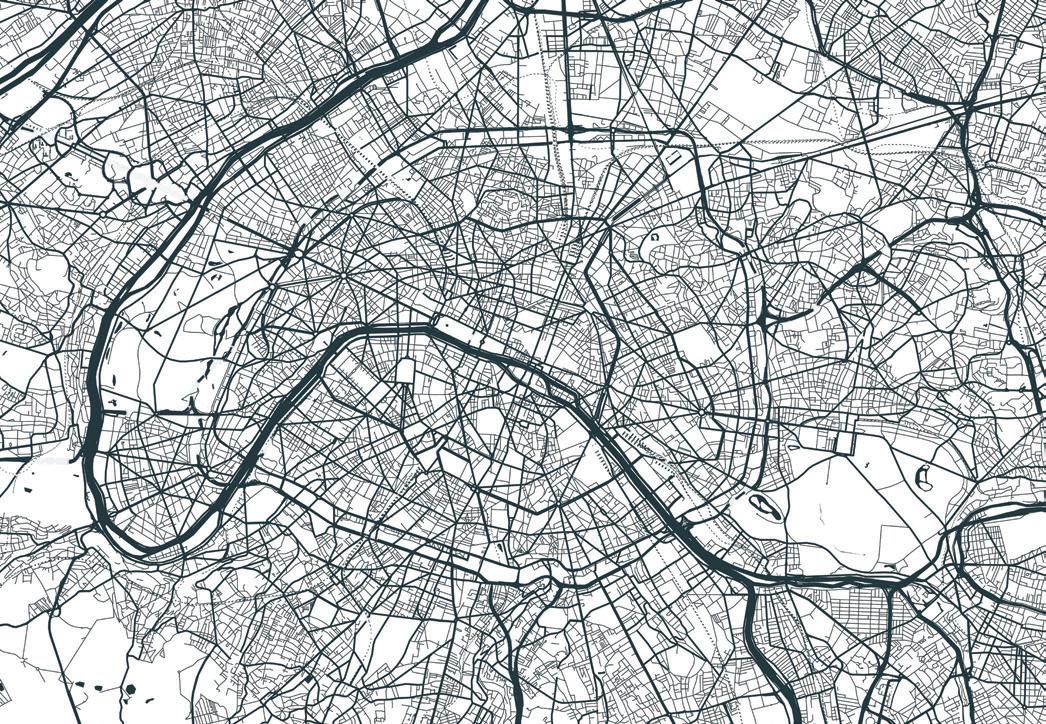
‘Relocation decisions are rarely driven by a single factor. People move to optimise an entire life’
London, and Tokyo operate on a different principle: magnetic in uence.
They dominate the Kearney Global Cities Index, which measures business activity, human capital, information exchange, cultural experience, and political engagement. In essence, it tracks where the world does business – and where decisions that affect the world are made.


These cities are magnets for capital and talent. They host multinational headquarters, top-tier universities, and nancial markets that move trillions before breakfast. In uence, in this context, is measurable.
But power has its price. Housing costs spiral. Traffic congestion hardens into daily ritual. Inequality becomes visible – and volatile.
The metrics of global dominance do not always align neatly with happiness, affordability, or even liveability. A city


CLOCKWISE FROM TOP RIGHT Vienna; Dr. Laura Madrid; Copenhagen
can shape global markets while struggling to make daily life workable for the people who keep it running.
Yet, influence alone does not sustain urban prestige. Alongside economic gravity sits something harder to quantify: buzz. The Time Out Global Cities Index seeks to capture that more emotional register – food, nightlife, creativity, diversity. The cities people are excited about right now. London, Paris, and New York consistently surface not just because they are powerful, but because they feel alive.
This softer metric matters more than policymakers sometimes admit. Emotional attachment shapes tourism ows, international perception, and even talent migration. People move toward energy.
A city can be impeccably governed and awlessly sustainable – but if it feels sterile, it risks slipping from the global imagination. In 2026, the most resilient urban brands are those that manage to hold both economic heft and cultural heat.
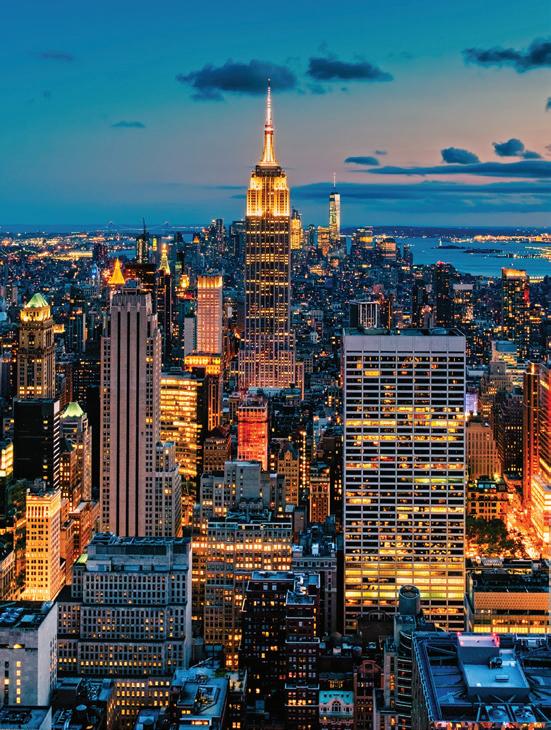
While economic influence and cultural vibrancy draw attention today, long-term resilience depends on a city’s ability to manage its environmental footprint, its social well-being and its infrastructure.
The Arcadis Sustainable Cities Index focuses on environmental performance, social outcomes and economic vitality. Cities such as Amsterdam, Rotterdam and Copenhagen tend to score highly for carbon reduction strategies, green transport networks and urban resilience planning.
The overlap with liveability is obvious. Clean air improves health scores. Ef cient public transport reduces congestion and emissions. Green spaces enhance mental wellbeing.
Climate resilience, once a niche policy concern, has become central to competitiveness. Flood defences, renewable energy infrastructure and heat mitigation strategies directly in uence insurance markets, property values and migration ows.
‘Climate resilience, once a niche policy concern, has become central to competitiveness’
CLOCKWISE FROM TOP LEFT New York; Amsterdam; Bartosz Bartoszewicz
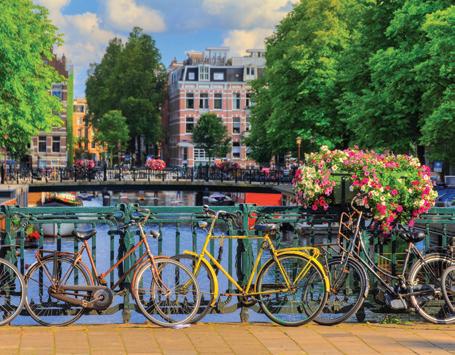
Taken together, these rankings tell a larger story. The Economist Intelligence Unit rewards stability and infrastructure. Mercer emphasises expat practicality. Global Citizen Solutions tracks relocation realities. The Institute for Quality of Life highlights balanced governance and long-term strategy. Kearney measures global power. Time Out captures cultural energy. Arcadis evaluates sustainability.
No city wins everything. Copenhagen’s repeated success re ects competence, not spectacle. New York’s dominance reflects influence, not affordability. Nordic countries exemplify balance – but even they face demographic and economic pressures.
Rankings are not trophies. They are mirrors, re ecting what societies value at a given moment.




In 2026, the pattern is clear: people increasingly prioritise systems that work, governance that is trusted, environments that are resilient and cities that feel human in scale.
The most successful urban centres balance infrastructure and imagination, policy and personality, systems and soul.




Radisson Blu Hotel, Dubai Barsha Heights







Expert takes on this month’s essential places and products HOTEL REVIEW









A reflagged gem in one of the most convenient locations in the buzzy UAE city, this hotel is ready for a fresh legacy






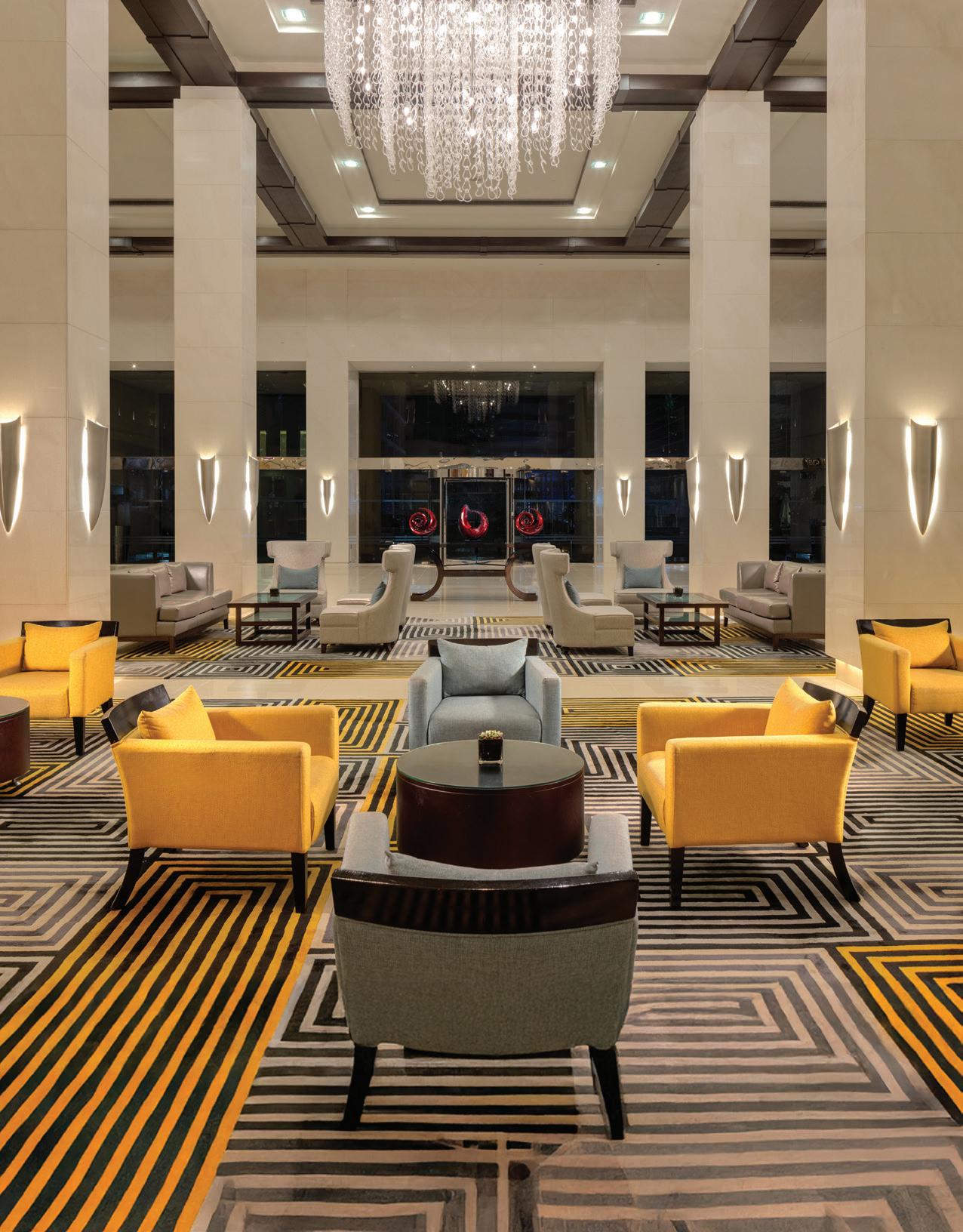
Radisson Blu took over this property, the former Media Rotana Dubai in Barsha Heights (an area previously known as TECOM), in early April 2026. The five-star hotel has 537 rooms and suites, with studio apartmentstyle accommodations available as well, and is a great pick for business travellers, leisure guests, and those seeking extended stays alike.
Located within easy access of major travel hubs such as Dubai Media City, Dubai Internet City, Mall of the Emirates, Knowledge Park, and Dubai Marina, it’s a convenient location for anyone needing to stay within reach of the newer side of Dubai, yet it’s still just around 30 minutes drive from Dubai International Airport. There’s also a metro station a 10-15 minute walk away.
Thankfully for residents, through the hotel’s new era as a Radisson property, it has held onto its popular F&B venues – which have proven to be popular watering holes for neighbourhood regulars over the years. The vast lobby and rooms now feature Radisson Blu’s stylish, sleek but functional aesthetics, providing a longstanding property (which was originally built by 2008) a glossy, comfortable refresh solidified by Radisson’s signature helpful, warm, sincere, and attentive service.
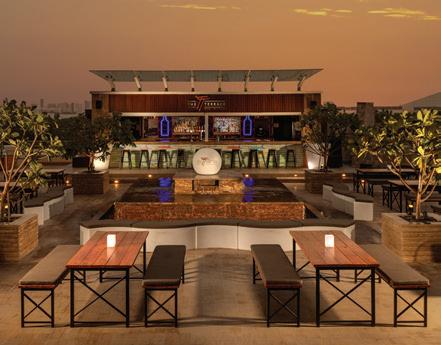
and for which the latter comes with access to the executive lounge.
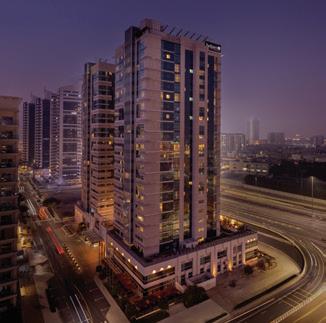
The suites run from 57 to 87 sqm, and every room category comes with a good amount of natural light, a bathtub in addition to a shower, plus a generouslysized desk and good chair for getting some work done. Apartments (available as studios or two-bedrooms) come with a kitchenette.

An excellent acquisition for Radisson, and a timely alternative for its nearby Media City property, which has now been closed for renovation. This hotel has a prime location that’s within easy access of various prime business locations on the south side of Dubai –and this newly-launched hotel gives a great property a welcome refresh.

Anyone looking to stay on this side of town, close to the action, without sacrificing a quiet neighbourhood vibe.

DON’T MISS
The top British pub grub at Nelson’s.
A stay in June starts from AED 456 per weeknight for a Premium Room, and AED 747 per weeknight for a Suite.
The rooms are extremely spacious, with even the entry-level Superior Room coming in at a decent 33 sqm, with place to move around, with this going up to 38 sqm for the Premium and Executive Rooms, which both have a comfortable seating area,
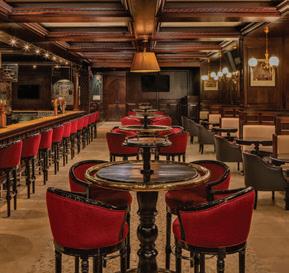

Nearby golf facilities include Topgolf Dubai, Emirates Golf Club, and the Montgomerie Golf Club.
Radisson properties are known for having a great selection of F&B choices, and this one is no different. Nelson’s Pub has long been a community favourite for its tasty British pub grub and vivacious atmosphere during live sports screenings. All-day dining can be found at Channel’s, while Prego’s serves up high-quality Italian, with fresh pasta and top ingredients. Onthe-go travellers will appreciate the Connexions lobby lounge, and for al fresco moments, The Terrace is
Hessa Street, Al Thanyah First, Barsha Heights, Dubai, UAE; +97144350000, radissonhotels.com
an outdoor poolside lounge ideal that feels relaxing the moment you step in. The hotel also has a good gym laden with Technogym equipment, plus a steam room and sauna, spa, outdoor pool, and a kid’s club. Want to explore? There are plenty of great eats nearby, plus golf courses 10 minutes away.
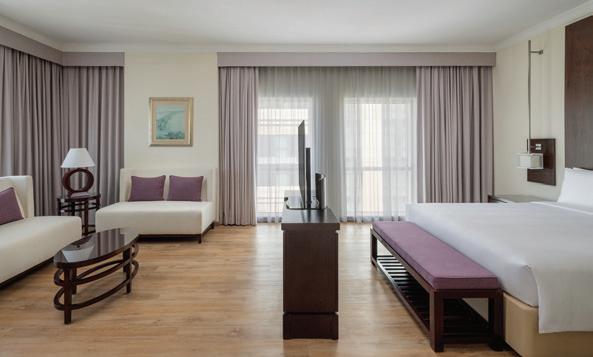
The brand’s new version of the Golf R is its best yet
Background
The Golf R is an evolution from niche experiment to king of the hot hatches. Originally intended for a limited run of just 5,000 units, the Volkswagen’s cult status has instead pushed global demand ever higher.
When VW launched the original R32, in 2002, it created a car with new standards of driveability.
Cramming a 3.2-litre engine and all-wheel drive into a compact hatchback proved inspirational.
Early R32 models were famous for their V6 engine and thumping tailpipe. However, VW later switched to a turbocharged fourcylinder for increased performance and economy.
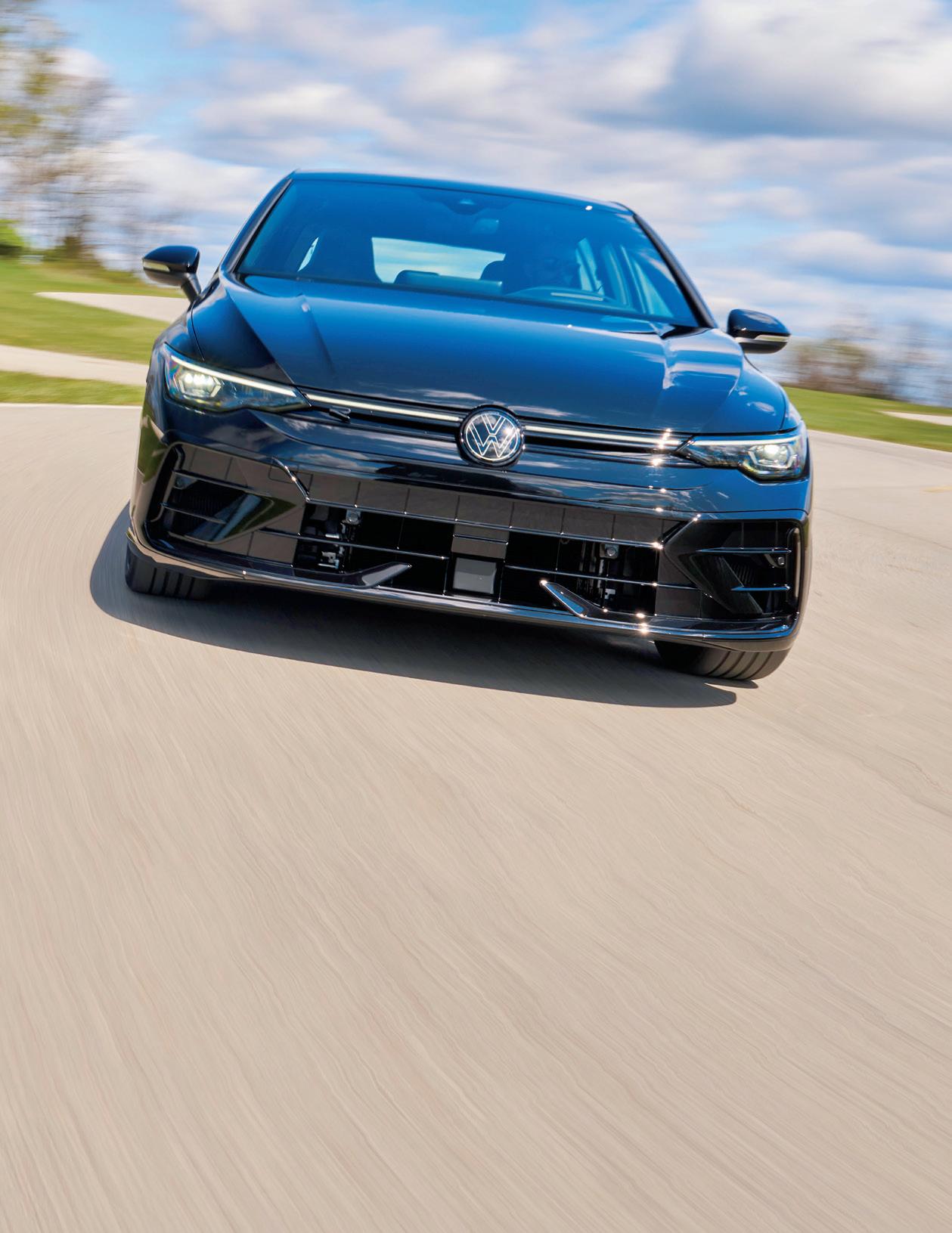
At the time, purists initially bemoaned the 2-litre engine because it lacked the V6’s aural drama, but the new R proved sensationally quick.
Features
The 2026 version is the best yet. A 328 hp, highperformance hatchback offering a zero-to-62 mph time of just 4.6 seconds, it can reach a top speed of 168 mph – or enough pace to worry a Porsche. There’s plenty of space for groceries, too.
Added to the mix is a high-class interior and lots of gadgetry. As if to prove this is a driver’s car, it features a setting tuned for the legendary Nürburgring racetrack in Germany. The cabin has a digital dashboard
A HELPING HAND Driverassistance features include Dynamic Road Sign Display
that’s simple to navigate, as well as a sharper infotainment system. The only letdown?
The R no longer comes with a stick-shift gearbox for some old-school fun.
And while the Golf has grown in size over the years, VW has stayed true to its identity. This model feels nimble and effortlessly fast, with a daily versatility missing from many higher-priced cars.


BEST FOR
Just about everything. Perfect for a crazy track day and ideal for ferrying the kids to school. VERDICT

While some hatch rivals can be a little flashy, the Golf R is understated – a talented, dynamic jack-ofall-trades that’s stronger and more sophisticated than ever. PRICE From AED 215,205 CONTACT vw.com
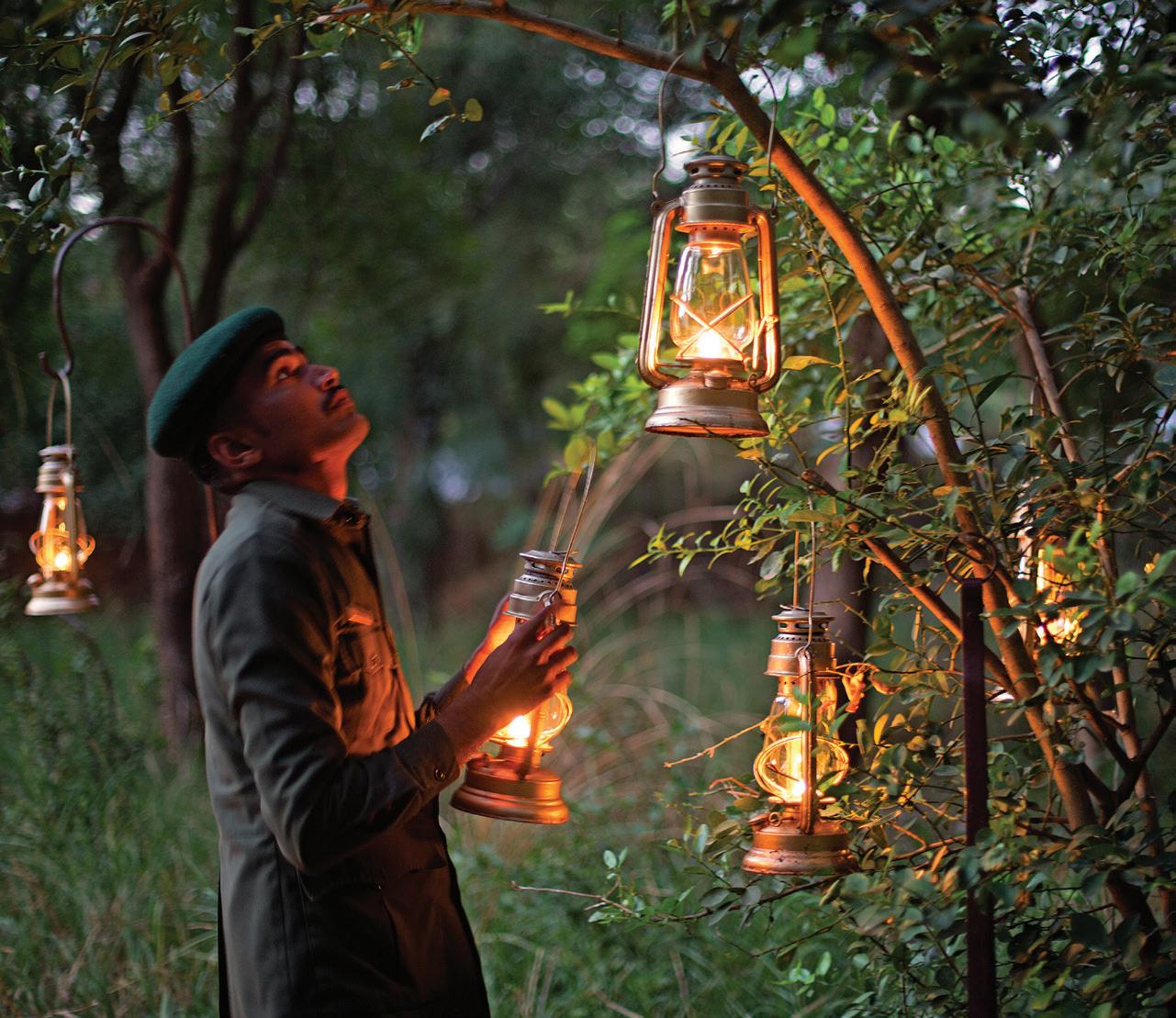
ON THE PERIPHERY of Ranthambhore National Park, SUJÁN Sher Bagh, a Relais & Châteaux retreat, is a pioneer in the Indian wilderness. Established twenty-five years ago as the country’s first positive impact safari camp, this Rajasthan gem’s vibe is anchored in the 1920s, with twelve hand-stitched tents featuring Edwardian campaign furniture and brass baths. As one of the world’s most iconic natural habitats for the Royal Bengal Tiger, it offers unforgettable safaris through the rugged Rajasthan landscape. A standout feature is the Jungle Spa – an outdoor sanctuary located beneath a sacred Peepal tree, where by removing traditional walls, the spa allows the forest’s rhythms to guide the healing process. Using organic ingredients from their own farm, the wellness programme here offers a raw, restorative connection to nature.



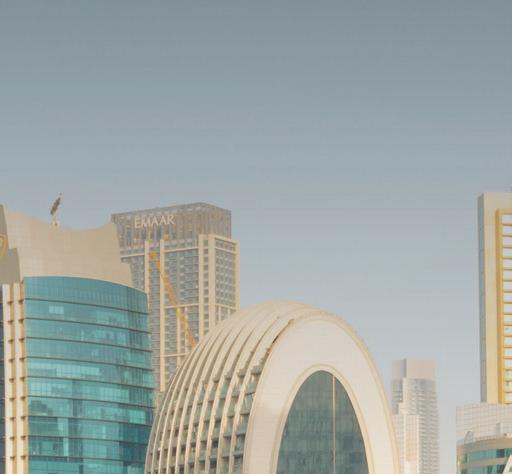
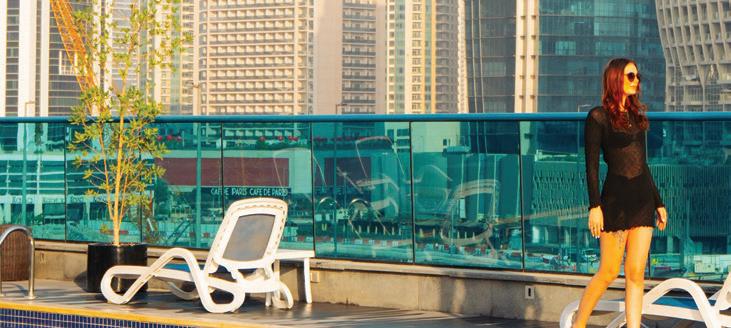

Take a moment to unwind - enjoy your stay through great food and meaningful experiences.
Book your stay in Radisson Hotels across UAE starting from AED 299.
*Limited time offer *T&Cs apply