

























































































































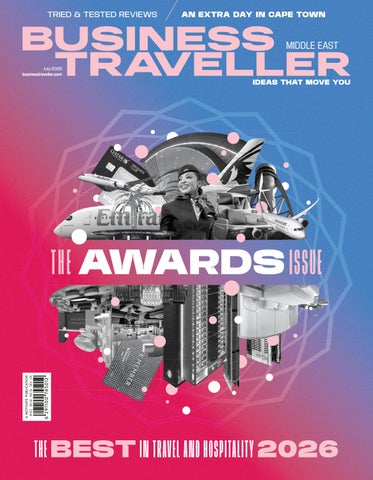
WHEN WE LOOK AT the sheer velocity of the Middle East’s travel sector today, it is easy to get lost in the macro-economics. But if you strip away the charts and the tables, the transformation we are all witnessing goes beyond the escalation of numbers, it’s a profound shift in attitude. We are no longer navigating a region defined by fly-in, fly-out itineraries. Instead, this is a place that’s confidently rewriting the narrative by evolving from a functional global crossroads into the definitive architect of next-generation travel.
Behind every metric is a human driver: a visionary strategy, a calculated risk, or a standard being questioned and redefined. It is this relentless pursuit of excellence that we recognise in the Business Traveller Middle East Awards (p.32). Massive investments in aviation, culture, and hospitality are setting entirely new benchmarks on a global scale, underlined by exceptional service, stunning architecture, and a burgeoning list of jaw-dropping world firsts. And the trailblazers leading this charge work tirelessly, with genuine passion, to cement our status as a central force in global tourism.
The weight of this shift is undeniable when we look at the numbers. After the COVID-19 pandemic ground the global industry to a standstill in 2020, the Middle East emerged as the fastest region to recover across the world. It welcomed 87.1 million international tourists in 2023 (surpassing pre-pandemic levels by 22%), achieved 132% of its 2019 international arrival levels by 2024, and followed it with a steady 3–5% year-on-year increase in 2025. Staggering growth figures from the past year continue this meteoric rise, with record-breaking inbound tourism, soaring international visitor numbers, and peak hotel occupancy rates from the UAE and Saudi Arabia to Qatar, Lebanon, Bahrain, Oman, Jordan, and Egypt. You can find these facts and figures, and learn more about the drivers behind them, in our annual Travel Insight Report, created in partnership with Deloitte.
These results didn’t happen by accident. They are a reward of hard work by the people here, their unwavering work ethic, and a unique mindset that refuses to accept the status quo. It is their collective drive which makes this all possible, and it is an ethos that we all benefit from. This US$10.9 trillion global sector supports 357 million jobs and accounts for roughly 10% of global GDP. By the end of 2026, its total value is expected to rise to US$12 trillion, and within the next decade, it will support 460 million jobs – more than 11% of the entire global economy. To be an innovator in this industry today is to directly shape how we interact, build communities, and connect. Ultimately, this massive economic engine changes the way we all experience the world, transforming the daily life of the resident just as deeply as it does the journey of the visitor. Congratulations again to all of our winners and highly commended names. Thank you for being the catalysts behind that change.

TIME FOR TEA
Afternoon tea is making a comeback in hotels around the world. P42

Yi-Hwa B. Hanna Editor
REMAND DEMAND
These hotels are built in truly unique settings –would you visit? P52
READ THE ROOM Learn the importance of cultural, and not just commercial, capital. P54

MOTIVATE MEDIA GROUP
EDITOR-IN-CHIEF OBAID HUMAID AL TAYER
MANAGING PARTNER AND GROUP EDITOR IAN FAIRSERVICE
CHIEF COMMERCIAL OFFICER ANTHONY MILNE
GROUP CONTENT DIRECTOR THOMAS WOODGATE
EDITOR YI-HWA B. HANNA
ART DIRECTOR CLARKWIN N. CRUZ
EDITORIAL CO-ORDINATOR LONDRESA FLORES
CONTRIBUTORS
DAVID PHELAN, ELLEN CARPENTER, DOMINIC KEITH, NIVEA SERRAO, MARK CASWELL, TOM OTLEY, ROSE WINTER, ROBERT REID
GENERAL MANAGER – PRODUCTION S SUNIL KUMAR
PRODUCTION MANAGER BINU PURANDARAN
ASSISTANT PRODUCTION MANAGER VENITA PINTO
GROUP SALES MANAGER CHAITALI KHIMJI SENIOR PARTNERSHIPS MANAGER MURALI NARAYANAN
HEAD OFFICE: MEDIA ONE TOWER, DUBAI MEDIA CITY, PO BOX 2331, DUBAI, UAE; TEL: +971 4 427 3000; FAX: +971 4 428 2266; E-MAIL: BTME@MOTIVATE.AE
DUBAI MEDIA CITY: SD 2-94, 2ND FLOOR, BUILDING 2, DUBAI, UAE; TEL: +971 4 390 3550; FAX +971 4 390 4845
ABU DHABI: PO BOX 43072, ABU DHABI, UAE; TEL: +971 2 677 2005; FAX: +971 2 657 3401; EMAIL: MOTIVATE-ADH@MOTIVATE.AE
SAUDI ARABIA: REGUS OFFICES NO. 455 - 456, 4TH FLOOR, HAMAD TOWER, KING FAHAD ROAD, AL OLAYA, RIYADH, KSA;TEL: +966 11 834 3595 / +966 11 834 3596; EMAIL: MOTIVATE@MOTIVATE.AE
LONDON: MOTIVATE PUBLISHING LTD, ACRE HOUSE, 11/15 WILLIAM ROAD, LONDON, NW1 3ER, UK; E-MAIL: MOTIVATEUK@MOTIVATE.AE
BUSINESS TRAVELLER MEDIA LTD. INK, BLACKBURN HOUSE, BLACKBURN ROAD, LONDON, NW6 1RZ




















































New hotels, flight routes, and more

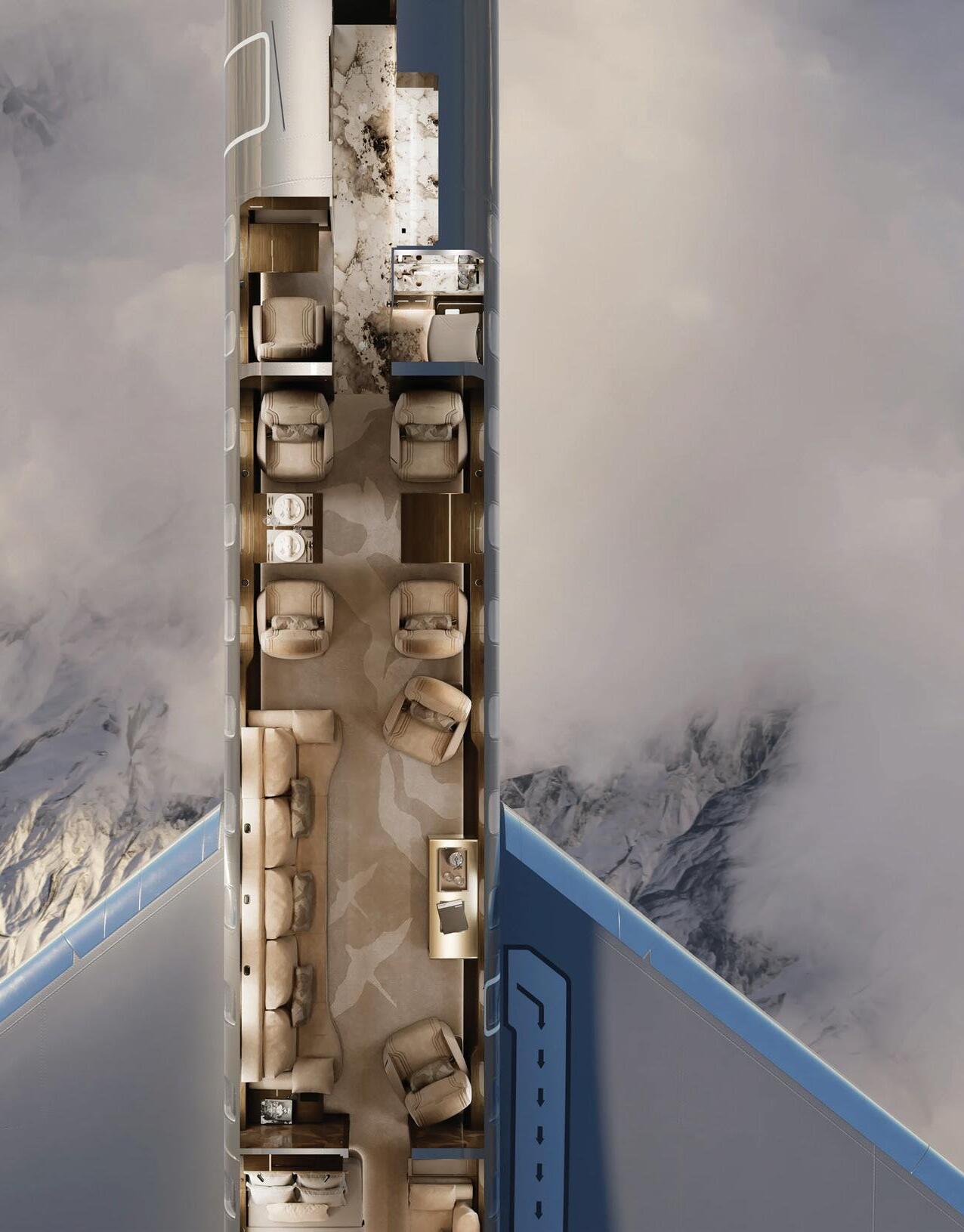
Bombardier’s Global 8000 aircraft features a new bespoke designer cabin interior
WORDS YI-HWA HANNA

THE LEGENDARY Canadian aerospace industry company has joined forces with fashion house Elie Saab to introduce a luxury interior option for its flagship business jet. Unveiled in Monaco last month, the collaboration brings high-fashion design principles to the world’s fastest private aircraft. The cabin focuses on clean architectural lines, a warm color palette, and high-quality materials, creating a seamless living space that meets strict aviation safety and performance standards.

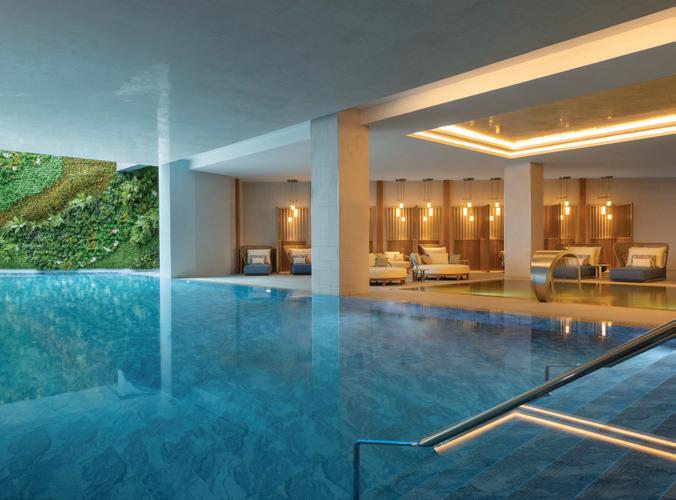
THIS THERMAL spa property expands the hotel group’s footprint in the country while marking a major milestone as Marriott International’s 500th premium hotel across Europe, the Middle East, and Africa.
Designed by architect Atilla Kangüleç with interiors by Hande Tözün, the hotel integrates the brand’s updated design language through open, multifunctional public layouts. The main lobby features communal workspaces, including dedicated community tables, tech-enabled studios, and private seating booths for working travellers
Located along the İzmirAnkara highway at the city’s western gateway, the hotel sits next to Huzur Park, with easy access to prominent cultural attractions,
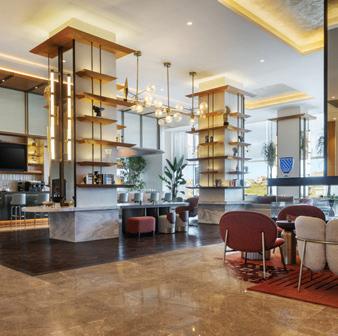
including Ulubey Canyon and the ancient city of Blaundus. The property has 164 guest rooms, inclusive of 1,250 sqm of flexible meeting space anchored by the Ulubey Grand Hall. But the property’s defining element is its 5,000 sqm Diamond Thermal Spa, which integrates natural, mineral-rich thermal waters into its pools, Turkish baths, and saunas, and will ensure that this is a premium destination for wellness-seekers.
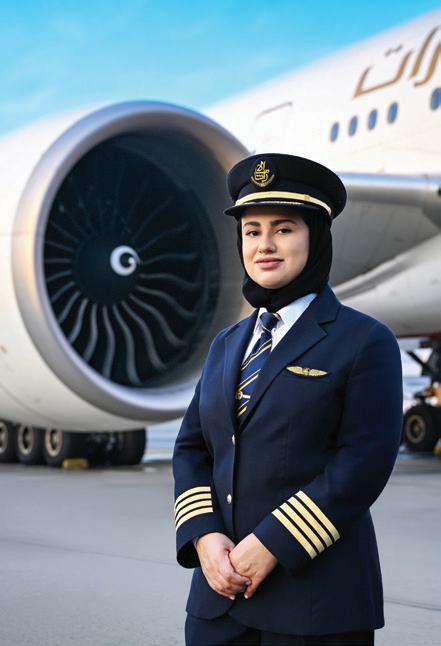
Emirates has promoted its first two Emirati female pilots to the rank of captain, marking a significant milestone for gender diversity in the regional aviation industry. Hanan Mohammed Jawad and Bakhita Al Mheiri both achieved their fourth stripe this year after progressing through the airline’s fully funded National Cadet Pilot Programme, which launched in 1993. Both captains now operate the carrier’s Boeing 777 fleet. Jawad initially joined the group in 2008 and has accumulated over 9,200 flying hours, while Al Mheiri started her training path in 2011. This double promotion underscores the group’s ongoing Emiratisation strategy, which focuses on developing a sustainable national workforce through structured career pathways and world-class training at the Emirates Flight Training Academy.
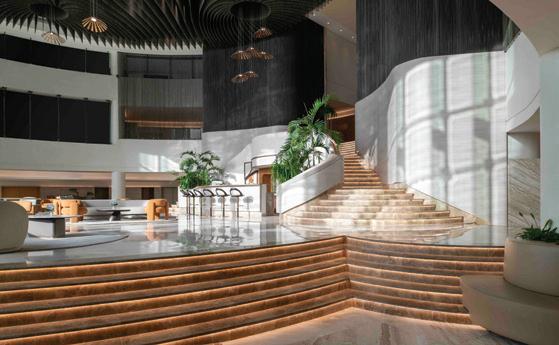
Kerten Hospitality has expanded its footprint in Kuwait with the opening of Ray by Cloud 7, a beachfront boutique property situated on the Mangaf coastline. Overlooking the waters of the Gulf, the hotel contains 59 contemporary rooms and suites tailored toward the growing short-escape and local staycation market. Positioned as a community-driven hub, the resort places a strong emphasis
UAE rail network will commence its introductory operational phase on 30 June, 2026, initially connecting Abu Dhabi and Fujairah in one hour and 45 minutes. The announcement coincided with the inauguration of the Mohamed bin Zayed City Passenger Train Station in Abu Dhabi by HH Sheikh Khaled bin Mohamed bin
Zayed Al Nahyan, Crown Prince of Abu Dhabi and Chairman of the Abu Dhabi Executive Council. Ticket bookings are
on wellness and leisure, offering a recreation menu with beachfront yoga, curated afternoon teas, and specialised Moroccan baths. Guests can access maritime excursions via the nearby Al Kout Marina or visit surrounding leisure destinations like Al Kout Mall.
The hotel’s dining venue, Joontos Restaurant, is currently in a soft opening phase and plans to launch interactive culinary sessions certified by Michelin-starred Chef Jaume Puigdengolas.
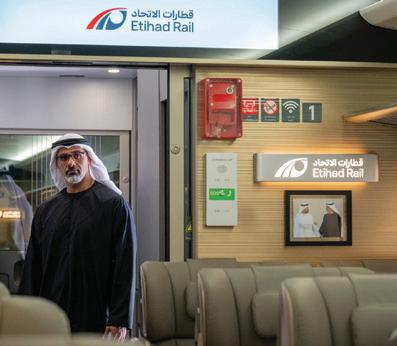
now open, with a 50% introductory discount that reduces Comfort Class fares to AED55 and Premium Class to AED120 for the launch period. To start, three direct daily services will operate in each direction with a 13-train fleet. The
network expands to Dubai and Al Dhaid on 30 September followed by Al Dhafra in December, and Sharjah in March 2027. Once fully operational across its 11 stations, it is projected to transport 36.5 million passengers annually.
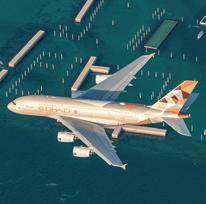
Etihad Airways has partnered with the Department of Culture and Tourism - Abu Dhabi to introduce free medical travel insurance for international visitors. Underwritten by Daman, the coverage is applied automatically to qualifying tickets without a need for extra application. Valid from July through December 2026, the policy protects eligible passengers for up to 15 days, including those using the airline’s free Stopover Programme.
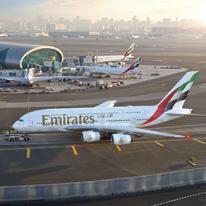
Emirates has launched a global-first comprehensive travel insurance policy, backed by Travel Guard, that includes medical cover for conflict-related incidents up to US$25,000. Valid regardless of government travel advice, it features a free trip extension of up to 30 days. Additionally, under its duty of care, the airline will manage hotel accommodation during disruptions like airspace closures, and rebook passengers onto other carriers at no extra cost.
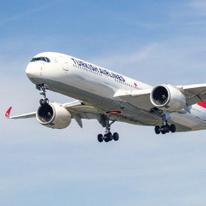
Turkish Airlines will introduce a premium economy product on its Airbus A350 aircraft from early 2028, launch a fully enclosed Crystal Business Class Suite from 2027, and soon also add a scheduled service to Lima, Peru. This strategic shift, led by incoming chairman Ahmet Olmuştur, recalibrates the carrier’s ambitious long-haul fleet expansion targets around absolute profitability, ongoing aircraft delivery delays, and long-haul cabin economics.
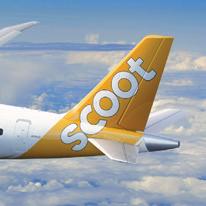
Scoot has resumed its thrice-weekly service between Singapore and Jeddah, becoming one of the first budget carriers in Southeast Asia to reinstate a suspended Middle East route after four months of regional disruption. The flight had been grounded since late February due to airspace closures. The resumption follows an assessment of the geopolitical situation and coincides with a recent general stabilising of aviation capacity across the region.
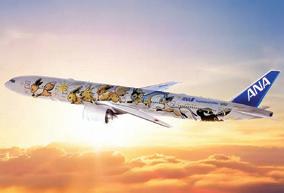
1 ANA to launch anniversary Pokémon-themed jets
(Above) Entering service in 2026, three new editions – Jet Red, Jet Green, and Jet Blue – will feature themed interiors, with their launch marking the franchise’s 30th anniversary and the carrier’s 40th year of international flights. Red and Blue will serve domestic routes from Tokyo and Osaka, while the global Jet Green Boeing 787-9 joins two existing Pokémon aircraft already in ANA’s fleet.
2 JA Mar Hall joins global GHA DISCOVERY programme
(Right) This landmark partnership makes the luxury resort the first hotel in Scotland to join the alliance, connecting it to a network of over 1,000 properties worldwide. The move follows an extensive £20 million refurbishment and relaunch of the historic estate by its Dubai-based parent company, JA Resorts & Hotels. Guests will now have access to member rates, loyalty recognition, and DISCOVERY Dollars at the 240-acre estate near Glasgow.
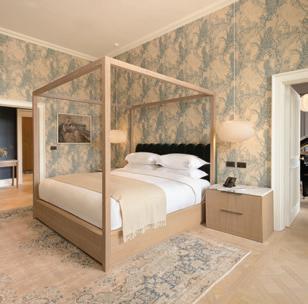
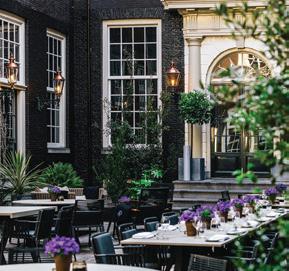
3 The Dylan Amsterdam launches slow travel concept (Left) Designed to counter the rushed pace of urban tourism, the boutique hotel’s new “Unscripted Summer” package encourages a more flexible, considered way to experience the city. Running until 20 September, the offering includes a minimum two-night stay, curated walking routes, and complimentary bicycle hire, alongside a private golden hour salon boat cruise along the canals.
4
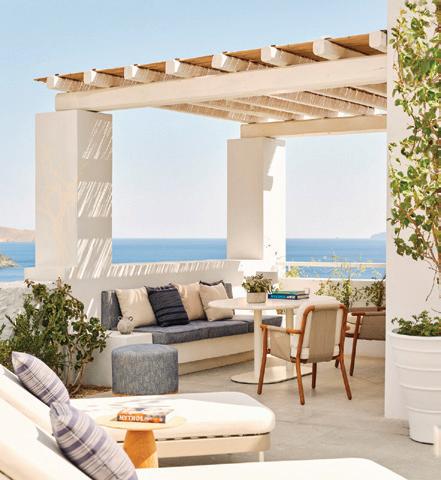
Four Seasons Hotel Mykonos has opened for reservations (Below) This cliffside resort began booking for its debut summer season starting 26 June, 2026. The 15-acre property features 94 Cycladic-style accommodations with panoramic Aegean Sea views and furnished terraces, with several including private plunge pools. Facilities at the secluded cove estate include a private beach, a dedicated spa, and three Mediterranean dining concepts.
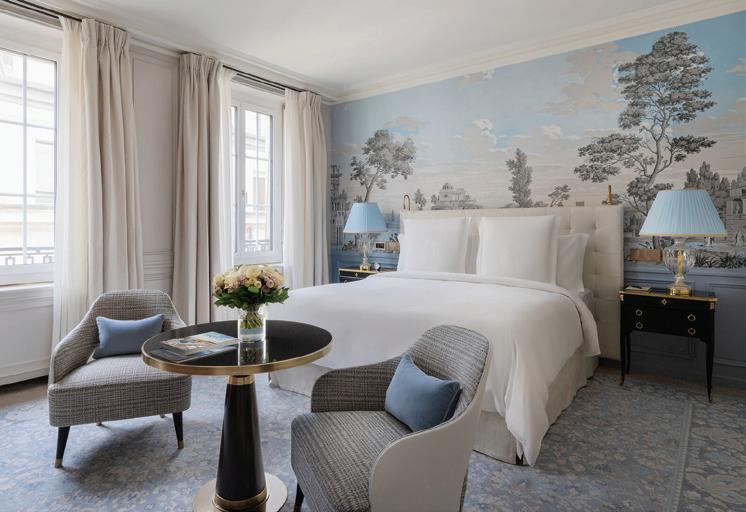
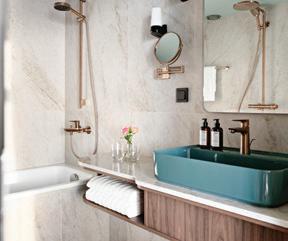
5 Four Seasons Geneva reveals room redesign project (Right) Led by designer PierreYves Rochon, the ongoing phased renovation at the historic hotel focuses on a brighter, more residential aesthetic for its rooms and suites. Updates feature a calming colour palette inspired by Lake Geneva, and wood and stone bathrooms. Traditional desks have been replaced with multi-functional tables alongside in-room bars.
6 Marriott Bonvoy unveils 600 new fan experiences for the 2026 FIFA World Cup (Right) Partnering with Visa for the “For Fans, Everywhere” campaign, the loyalty programme is targeting the rise in sports tourism. Experiences for members include match access, a stadium luxury box transformed into a hotel suite, and exclusive pitch views. As the tournament’s official hotel supporter, Marriott is also rolling out special packages across its host city properties.

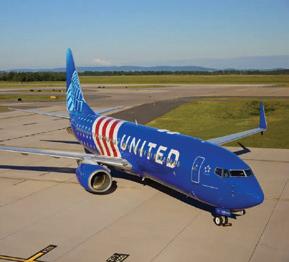
7 United debuts patriotic liveries for America’s 250th
(Above) The airline has unveiled a red, white, and blue “Stars and Stripes” paint scheme on a Boeing 787-10 and a 737-800 to mark the national milestone. While the 737 will handle domestic flights, the Dreamliner will carry the design globally. Revealed at Washington Dulles, the event also highlighted United’s programme that has recruited nearly 600 military pilots since 2024.
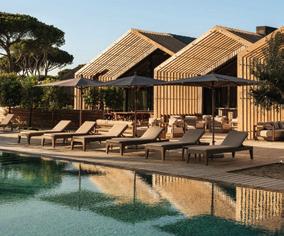
8 Sublime Comporta debuts new Sublime Sand expansion (Above) Opened in May 2026, across a 51-hectare estate in Portugal’s Alentejo region, this new development adds 100 rooms and 43 private villas to the existing property. The project includes three new restaurants, including a Beefbar, plus indoor and outdoor pools, a wellness spa, a conference center, and a summer nightclub. Nightly rates at the resort will start from €275.
9 WorldHotels adds Willow property to Swedish portfolio (Below) The 16-story hotel in Trelleborg joined the brand’s Crafted collection when it opened on 1 June. Designed by Stylt Trampoli, the 110room waterfront property integrates a modern high-rise with a historic 1850s building. Amenities include three restaurants, a sky bar, and a 400sqm ninth-floor spa featuring indoor and outdoor pools.
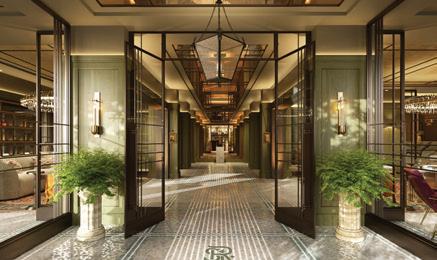
10 The St. Regis London set to debut in Mayfair in October (Left) Located at the former site of The Westbury, the property marks the luxury brand’s highly-anticipated entry into the UK capital. The hotel will feature 193 rooms, including 66 suites, alongside a standout 150sqm Penthouse Suite. Amenities will include an all-day French brasserie by esteemed chef Daniel Rose, and an art collection curated by the Sarabande Foundation.
...and recycle! Emirates recycles 88,000kg of plastic waste from its inflight dining services
VER THE past year, the Dubai-based carrier has repurposed more than 88,000kg of plastic from its Economy Class inflight meal service items, transforming the damaged materials into new products.
OThe airline has invested AED50+ million into a circular manufacturing model for its inflight dining serviceware. Damaged and unserviceable Economy Class trays, casseroles, snack dishes, and bowls are collected after flights, cleaned, inspected, and processed at a specialist facility in Dubai. These are transformed into new meal service items containing up to 25% recycled material, which are then returned to Emirates Flight Catering and reintroduced into service onboard thousands of flights. This closed-loop programme is being delivered in partnership with deSter FZE UAE, an aviation serviceware provider currently holding a ‘Gold’ sustainability rating from Ecovadis.
Beyond this catering initiative, the carrier is also implementing
a series of other sustainabilityinspired updates across its inflight experience. In honour of Sir David Attenborough’s 100th birthday, which was on 8 May this year, the airline’s “ice” entertainment platform is showcasing 100 episodes from the Attenborough Collection throughout June and July.
For younger travellers, the latest children’s collection of Emirates-branded items features bags and plush toys made with

a minimum of 50% recycled post-consumer polyester, while children’s magazines and tags use paper from responsibly managed forests. The carrier has also removed plastic wrapping from kids’ blankets and bags to reduce single-use materials.
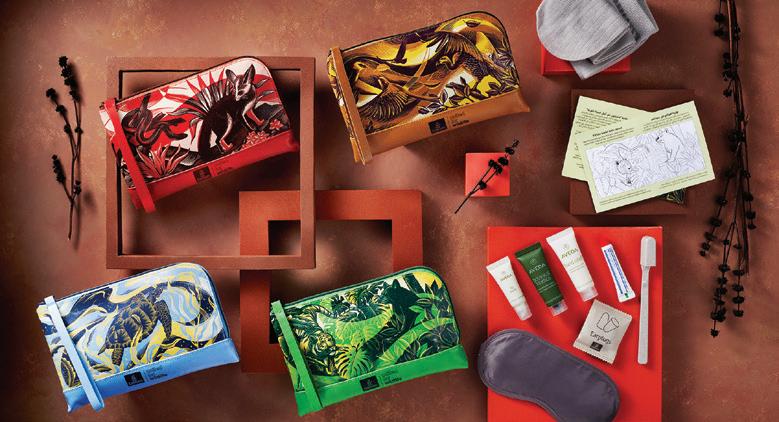
In its premium cabins, plastic packaging has been removed from First Class mattress toppers, duvets, and blankets, which are now distributed in reusable bags made from recycled polyester. Headset packaging across all cabin classes is now made from 100 per cent recycled low-density polyethylene. Luxury amenity kits in First and Business Class now also incorporate fabrics with recycled content, alongside redesigned foldaway combs, brushes, and mirror covers made from recycled materials, while dental items are packed in kraft paper. Economy and Premium Economy passengers receive fleece blankets made from recycled polyester, with each blanket incorporating material equivalent to 28 recycled plastic bottles. Emirates’s reusable amenity kits, developed with United for Wildlife, feature bio-based cactus materials alongside socks and eyeshades made from 100% recycled postconsumer polyester. Premium cabins provide loungewear and slippers in modal fabric, paired with organic seaweed skincare products from Irish brand VOYA. The airline has also introduced paper straws, paper duty-free shopping bags, and menus printed on paper from responsibly-managed forests across all cabins.
LOGISTICS PROVIDER Aramex has teamed up with Saudi smart afforestation platform Netzero to plant trees across Riyadh and Jeddah Industrial Cities. This initiative supports Aramex’s global targets to reach carbon neutrality by 2030 and net-zero emissions by 2050, while contributing to the Saudi Green Initiative’s goal of planting ten
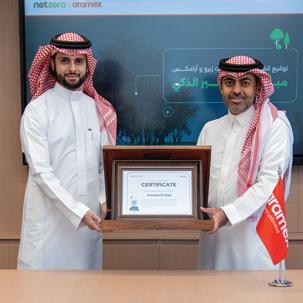
billion trees. The project will focus on introducing Neem and Poinciana trees, which are selected for their high-temperature resilience, shade provision, and ability to improve local air and soil quality in dense operational zones. Netzero will use its Nabatik system, driven by artificial intelligence and machine learning, to log, track, and digitally verify the full lifecycle of each tree, providing Aramex with continuous and auditable real-time carbon-offset data for its ESG reporting.
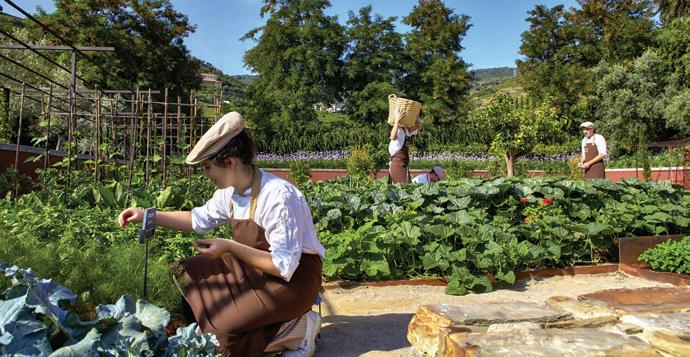
Renowned hospitality group Six Senses has officially joined the “Recipe of Change” initiative, a collaborative campaign convened by the United Nations Environment Programme and UN Tourism. By participating in this programme, the brand has committed to halving its overall food waste by 2030, aligning its 27 operational properties with global climate and sustainability targets. Six Senses will thus share its internal hospitality solutions, such as its Eat With Six Senses culinary philosophy, Earth Lab interactive workshops, real-time kitchen waste tracking, and localised farm-to-table sourcing infrastructure.
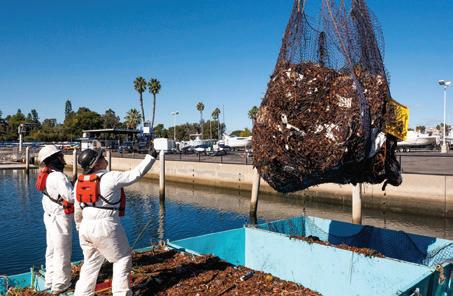
NON-PROFIT organisation
The Ocean Cleanup is scaling up its river waste interception operations across Greater Los Angeles in partnership with its global mission partner, Kia Corporation, as part of the
organisation’s 30 Cities Program, which aims to reduce global river plastic by one-third by the end of the decade. Scheduled for completion ahead of the LA28 Olympic Games, the initiative has secured
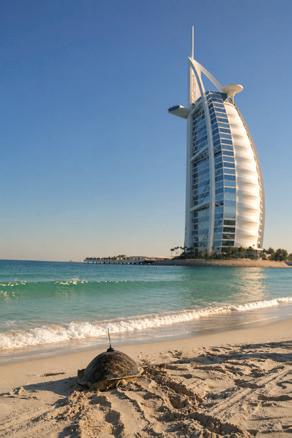
Jumeirah marks World Sea Turtle Day by releasing 23 rehabilitated turtles, passing 100 satellitetracked releases
backing from Los Angeles County officials, the City of Long Beach, and the City of Seal Beach. New deployments in the Los Angeles River and San Gabriel River will create a city-wide ocean protection system alongside the existing Interceptor 007 in Ballona Creek, which has already prevented 386,945 lbs of trash from reaching the Pacific Ocean. Research indicates local rivers discharge 380 to 570 tonnes of plastic annually, a challenge to be mitigated at its source. In March, Kia donated two trucks to The Ocean Cleanup to expedite plastic pollution removal from rivers in Guatemala.
THE DUBAI Turtle Rehabilitation Project reached a new milestone last month by fitting its 100th turtle – a green turtle named Foxy – with a satellite tracking device. Foxy was rescued by a local fisherman in Ras Al Khaimah after losing a front flipper, and spent over a year undergoing expert medical care. The project operates a specialised turtle rehabilitation sanctuary lagoon at Jumeirah Al Naseem to help the animals regain their natural strength and swimming instincts before release. The global hospitality brand is also actively expanding its broader marine conservation efforts through a dedicated coral restoration programme. Operating in close partnership with Dubai Reef, the initiative has already successfully cultivated more than 9,000 unique coral fragments at Jumeirah Al Naseem. Similar marine protection activations were simultaneously held across Jumeirah’s international luxury portfolio in the Maldives, Oman, and Bali for the occasion.
Who are the key players leading the advance of artificial intelligence?
IT’S TOO LATE to ask the question “will AI change the world?” – it already has.
Tools like ChatGPT, Claude, and Google Gemini have reshaped everything from meeting notes to coding workflows.
In travel, hotels are using AI chatbots for customer service, while airlines use AI to forecast demand and fine-tune dynamic pricing. Yet alongside these gains, many tech insiders continue to warn about AI’s deeper, existential risks.
So as AI reshapes our world, the question emerges: who is steering it? Here, we look at the leaders behind the three biggest players – OpenAI, Google, and Anthropic.














SAM ALTMAN OPENAI CEO THE ACCELERATOR




LET’S START WITH the youngest of the three: Sam Altman, 41, from Missouri. He studied computer science at Stanford University, but dropped out after two years, saying he learned more from off-campus poker games than college.
At 19, he joined start-up incubator Y Combinator, where he created Loopt – a social network based on location sharing –and later ran the entire incubator, which became one of Silicon Valley’s most influential start-ups.
Around this time, he made contact with Elon Musk and agreed that, since AI was bound to happen regardless of its risks, Google shouldn’t be the one to get there first. Between them, they co-founded OpenAI in 2015, originally conceived as a non-profit organisation with lofty ideals.
Indeed, in a blog post, Altman wrote that he hoped for “astounding triumphs” to “eventually become commonplace” – from fixing the climate, to discovering all of physics and establishing a space colony.
In 2019, Altman became CEO of OpenAI, though his leadership has been turbulent. In 2023, he was
ousted by his board – then reinstated by employee demand five days later. Today, the company is run for profit, which has led to a high-profile legal battle between Musk and Altman.
Another fracture was the departure of OpenAI’s vice president of research in 2020 – Dario Amodei, who went on to co-found Anthropic a year later. The split was caused by differences in opinion on the approach to safety guardrails on AI.
Altman is aware of what could go wrong. Back in 2015, he said that machine intelligence could be dangerous even if it isn’t as dramatic as a sci-fi-style plotline. He said “a more probable scenario is that it simply doesn’t care about us either way, but in an effort to accomplish some other goal… wipes us out.”
Nonetheless, he leans towards progress over caution. “Sam Altman feels like the AI operator and market-maker – focused on speed, scale, partnerships and distribution,” says Paolo Pescatore, a TMT analyst. “Expect him to keep pushing AI into the mainstream through mass-market products, enterprise tools and everyday workflows.”

















THE GUARDIAN
DARIO AMODEI

ANTHROPIC CEO
Testifying about the global artificial intelligence race in Washington, May 2025
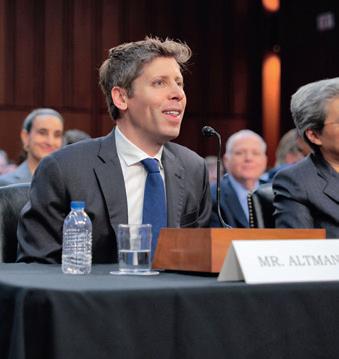
IF SAM ALTMAN represents the acceleration of artificial intelligence into everyday life, Dario Amodei embodies a more cautious impulse: to slow down, understand, and constrain the systems being built.
Amodei was born in 1983 in San Francisco. Like Altman, Amodei went to Stanford, where he studied physics – though, unlike his former boss, he completed his course. Next came a PhD in physics at Princeton.
Before moving to OpenAI, he worked at Google Brain. Then in 2021, he became one of seven co-founders of Anthropic, alongside his sister Daniela.
Anthropic was founded on the premise that it would try to protect safety commitments from being diluted by economic pressure. The firm has said it will stop training more powerful models if it couldn’t demonstrate they were safe, and many feel that the company emphasises safety more than OpenAI.
In early 2026, Amodei found himself in a dispute with the United States Department of Defence. Anthropic had
‘Some of the dangers of AI have the potential to signi cantly destabilise society or threaten humanity or civilisation’
introduced restrictions on the terms of use for its Claude product, particularly with regards to domestic surveillance and fully autonomous lethal weapons.
Amodei refused to remove these restrictions. In a YouTube interview, he said: “I would say that some of the dangers of AI have the potential to significantly destabilise society or threaten humanity or civilisation. So, we don’t want to take idle chances with that level of risk.”
He proposed instead that more safety and security measures could be introduced – highlighting a Swiss cheese model: “You can have one layer that has holes in it, but if you have ten layers of Swiss cheese, it’s hard for anything to fly through all ten layers.”
Paolo Pescatore describes Dario Amodei as “the conscience of the AI race – more cautious, governance-led, and focused on safety, control, and societal impact. Expect him to keep shaping the debate around responsible AI, regulation, jobs, and trusted deployment.”
Other entrepreneurs on our radar




THE CHALLENGER: LIANG WENFENG
In 2025, Liang Wenfeng’s start-up DeepSeek claimed it could rival ChatGPT at a fraction of the cost. More importantly, DeepSeek is opensource, meaning it published the details of its systems for anyone to use – a soft-power win for China.
THE HARDWARE HERO: JOHN TERNUS
John Ternus takes over as Apple’s CEO in September. Apple is behind in the AI race and needs to catch up. It’s thought that Ternus will make AI a priority, with updates coming to the iPhone’s virtual personal assistant, Siri, in the coming months.
THE SECURITY TSAR: ALEX KARP
Alex Karp is the outspoken chief executive of Palantir Technologies, the defence-focused software group whose technology is used by US military and intelligence agencies, as well as companies including Airbus.
GOOGLE DEEPMIND CEO THE ENGINEER
AT FIRST SIGHT, British tech leader Demis Hassabis is very different from the other two titans here. Not least, he’s the only one who has a knighthood. Oh, and a Nobel prize, for Chemistry.
His early career was in video games, working with key games designers such as Peter Molyneux, though AI was key to his gaming coding even then.
Sir Demis went on to co-found DeepMind, the machine learning AI startup, in 2010 – and unlike the others, he’s not a Silicon Valley dude, instead he’s based in London.
DeepMind’s mission was to ‘solve intelligence’ and, from there, use intelligence to solve everything else. This goal caught the eye of Google, which bought DeepMind in 2014.
Now, DeepMind plays a key role in research and development for Google’s Gemini suite of AI models.














“Demis Hassabis brings the scientist’s lens – more measured, research-led and focused on technical depth. Expect him to take AI deeper into scientific discovery, healthcare, robotics, reasoning and harder real-world problems,” Pescatore said.
In his Nobel prize acceptance speech, Sir Demis talked about the importance of diversity in research. He said: “It’s well understood that if you have a diverse research group you get better, more useful, ideas. I’m really keen on a diversity of expertise and background. In DeepMind, it’s a melting pot of expertise and ideas.”
He also went on to describe the positive benefits of artifical intelligence, saying the possibilities are almost unlimited.


“If you think about what intelligence is, human intelligence has created modern civilisation around us. How have we managed to create all this with our primate brains? We shouldn’t be surprised that intelligence is this incredibly powerful force of nature.
“The science of AI is trying to explore what that is and the best expression of understanding something is trying to build it.


So that’s what the engineering science of AI is about. If you build it in a general enough way, it can be applied to anything, to any kind of problem, any kind of data.”
A
journalist, I have stayed in hundreds of hotels – more than 200 in the past few years.
Unsurprisingly, I have learned a few things about them and noticed some irritating issues that tend to crop up repeatedly.
Business hotels often demand a security deposit, which can be sizeable, often US$130-265 per night, especially in the US. If you’re staying for several nights or moving from hotel to hotel, the amount frozen on your account soon adds up and sometimes it can take as much as a month for the amount to be unlocked or refunded.
When you’re travelling for business – or for any reason, these days –access to the internet is vital. So it’s surprising how many hotels still charge for wifi or make it difficult to get online. Too many times reception has supplied the wrong password (which is no doubt long and complicated) or my name and room number aren’t recognised when I enter them to log on. Not to mention the times when you do get online but the wifi is sluggish or keeps dropping connection – or stops you being able to use a personal hotspot.
I’ve been surprised how often the ‘do not disturb’ sign has been disregarded. One time a housekeeper ignored the sign, walked through the room and prodded me on the arm as I lay on a sun lounger with headphones on, asking if I wanted the room cleaned. When you’ve forked out a small fortune for a hotel room, you should be able to expect some privacy.
business centres
Quite a few hotels list having a ‘business centre’, which amounts to a desktop computer dating from the Palaeolithic period with a printer that keeps jamming. Not quite the same as a bright, modern co-working space with fast internet and ergonomic chairs found elsewhere.

From tardy luggage to sluggish wifi –this frequent hotel guest calls out some common frustrations
Check-in used to be typically around 2pm, with check-out at noon. But these days it’s common to be told to leave as early as 10am and not arrive until 4pm. Clearly rooms need to be prepared for the next guest, but five or six hours is a big chunk of the day.
More and more hotels are starting to prevent you from opening the windows, ostensibly to maintain climate control or improve safety. Yet air conditioning systems can never
‘A housekeeper ignored the sign, walked in the room, and prodded me on the arm’
replicate fresh air, so rooms become stagnant and pollutants build up.
The posher the hotel, the more complicated the room controls seem to be. When you’ve been travelling and working all day, all you want is to be able to quickly switch off the lights, change the temperature from freezing to comfortable, and have a shower without getting burned by scalding water.
It’s great when hotels genuinely do all they can to be sustainable, for example using solar panels, installing rainwater harvesting systems, and implementing linen and towel reuse programmes. But too many hotels claim to be sustainable while your room is stacked with plastic bottles, miniature toiletries and the television is blaring with all the lights on as you enter the room.
Lack of quick information
You used to get a handy folder in your room with things like the wifi code, restaurant hours and hotel facilities. Increasingly, hotel information is on your TV or a tablet, which is invariably more fiddly to access and surprisingly often leaves out the important stuff. Many times, I’ve simply conducted an internet search with my query (in a large hotel it may not be clear if there’s a gym or spa) as it’s a much quicker option.
Upmarket hotels often offer to deliver your luggage to your room. Yet too many times I’ve then waited an age for it. Recently, travelling with a large group, one hotel even mislaid some guests’ luggage. As such, I usually take my luggage to my room myself. Porters don’t like it, as there’s no chance of getting a tip, and posh hotels no doubt think a guest struggling down a corridor with bags detracts from the luxurious atmosphere. But when you’ve got work to do, every minute counts.

Ben West is a travel writer and journalist, published author, and playwright of Gertrude’s Secret
Achieving perks for life is the holy grail of frequent travel – but getting there is a serious slog
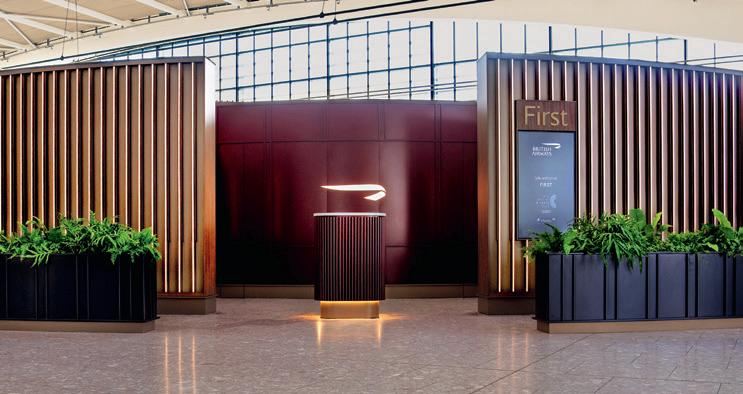
NO LONGER worrying about tier points, elite miles, experience points, or status credits. Not because you’ve stopped travelling, but because these once-important metrics no longer matter – you’ve earned permanent privileges. That’s the power of lifetime status: when you’ve flown so much that the stripes become yours for life. Rewarding your decades-long loyalty with a host of perpetual perks, airlines can grant everything from guaranteed entry to lounges, to fast-track security, and priority boarding. But achieving this prestigious tier is no easy feat.
Pursuing a lifetime of perks
Airlines and hotel chains offer lifetime status to lock in long-term loyalty. These brands don’t just want your next booking – they want every booking. It’s a clever way to keep you running on that hamster wheel. Even if your annual status is safe, every extra trip brings that lifetime level closer.
Lifetime status is deliberately hard to achieve – regular travellers can’t secure it from just a few hectic years on the road. Instead, airlines require hefty travel spends for a decade, if not longer. But the hurdles they place before their customers must also be realistic enough for committed nomads to cross the finish line. Why would a savvy business traveller invest their time and money flying with an airline that only rewards them for a year, when a competitor could reward them forever, if they play their cards right?
For many high flyers, lifetime status doubles as a retirement gift. It may not show its worth when business trips are keeping annual status within easy reach, but, once journeys begin to dwindle, that lifetime security blanket comes into play.
Aside from uncapped benefits, there’s also something fantastically freeing about securing lifetime status.
‘For many high flyers, lifetime status doubles as a retirement gift’
The constant drive to retain annual status disappears, and you’re no longer compelled to travel only with the brands you’ve been indentured to. If a rival has a better price or a more suitable flight time, there’s nothing stopping you from booking with them. Wherever your travels take you, and whoever you fly with, your perks will always be waiting.
Within Europe, most major frequentflyer programmes offer at least one lifetime level. British Airways gives Gold for life after notching up 550,000 tier points – akin to earning annual BA Gold status almost 28 times over. (As I said, it’s not meant to be easy.) Finnair and Iberia also tempt with lifetime oneworld status, similarly requiring two to four decades of regular travel.
SkyTeam carriers Air France/KLM, SAS and Virgin Atlantic make lifetime status more achievable, requiring ten years of eligible elite membership. However, those years must be
consecutive – take a break, and you’ll start again. (Virgin also requires a lifetime tally of 7,500 tier points, on top of that decade of travel.)
Over in Star Alliance, Lufthansa grants Senator Lifetime membership after the equivalent of 40 years of annual Senator status. There’s also the lead-in Frequent Traveller Lifetime status, for those who keep their Senator tier for 30 years or earn an equivalent number of qualifying points.
Some hotel chains also encourage long-term loyalty. Hilton Honors’ Lifetime Diamond membership is granted after ten non-consecutive years of Diamond status, plus 1,000 nights stayed or US$200,000 in eligible spend. Marriott Bonvoy offers lifetime Silver, Gold, and Platinum memberships, achieved through varying combinations of nights stayed plus cumulative years of elite membership.
Whichever one you’re chasing, attaining lifetime status requires unwavering dedication. I’ve flown more than 1.6 million miles on over 900 flights, and the best I’ve achieved is Qantas Lifetime Silver (equivalent to BA Bronze). My lifetime ticket to the lounge is still some years away, so I suppose I’d best keep travelling. The airlines have me hooked.
AYou grew up around your family’s work, experiencing the garment workshop’s finesse from a young age. How did seeing it grow into a global enterprise shape your early entrepreneurial instincts?
Growing up in our family workshop meant understanding that craftsmanship and discipline are the foundation of lasting success. Witnessing Peserico evolve into an international company taught me that growth must be built step by step, without compromising identity. That early exposure shaped my entrepreneurial approach: combining long-term vision with a deep respect for quality, people, and the culture of making things well.
How do you maintain the brand’s meticulous attention to detail as you scale up internationally?
Our growth is driven by control and consistency. While expanding globally, we keep production firmly rooted in Italy, working with trusted local suppliers and artisans. This allows us to scale without diluting quality. Even as revenues surpassed €130 million in 2025, our priority remains the same: ensuring every product reflects the precision, care, and authenticity that define Peserico.
Peserico opened in Dubai Mall in May 2025. What drew you to this location as a strategic hub for the brand? And why at this time?
Dubai Mall is one of the most important global luxury destinations, attracting a highly international clientele. Opening there in May 2025 was part of a broader strategy of selective expansion, following strong brand growth. With direct retail now accounting for half of our revenue

and 66 boutiques worldwide, it was the right moment to strengthen our presence in a key global hub.
How does the energy of the Middle East feed the future of your brand?
The Middle East is a dynamic and fast-evolving market, with a sophisticated clientele that appreciates understated luxury. This energy aligns perfectly with our identity. As we continue expanding – with upcoming projects such as Doha and potential developments in Saudi Arabia – the region plays an important role in shaping our future international growth.
Peserico is a champion of the “Made in Italy” label. Why do you believe that betting on local heritage is an effective way to resonate with consumers?
“Made in Italy” represents authenticity, craftsmanship, and traceability –values that are increasingly important to consumers worldwide. In a context where growth is accelerating, as shown by our +5% revenue increase in 2025, staying rooted in our heritage
allows us to offer something truly distinctive and credible in the global luxury landscape.
Your brand’s identity is tied to the slow, deliberate pace of centuriesold wool processing. How does this appeal to modern customers – and how does it make your brand stand out in today’s otherwise fast-paced modern world?
Today’s customers are looking for meaning, not just products. Our approach – which is based on time, care, and high-quality materials –offers people a clear alternative to fast fashion. This is reflected in our performance as well, with strong growth across retail and online channels. The slow, deliberate nature of our work enhances both the perceived and real value of each garment.
There’s been a global shift towards “quiet luxury” in recent years. Why do you think this is? What do you think luxury means today, for the high net worth individual?
essentials
• Well-designed, comfortable clothing.
• A good book.
• Tools that help me stay organised while travelling. Bucket list destination
• Japan remains a destination I deeply wish to explore. Its balance between tradition and innovation strongly resonates with our philosophy.
The rise of “quiet luxury” reflects a shift towards discretion and substance. Luxury today is less about visibility and more about quality, comfort, and longevity. Our consistent growth, including strong performance in both retail and online (+20%), shows that customers value products that are timeless and authentic rather than trend-driven.
What’s the first thing you usually do when you arrive at a new destination?
I like to start by observing the place –walking, understanding the rhythm of the city, and taking in its atmosphere. It’s the best way to connect with a destination, in my opinion.
What’s your go-to choice of in-flight entertainment?
I usually take advantage of flights to disconnect – by reading, reflecting, or simply resting. It’s a rare moment to slow down.
How do you usually spend your frequent flyer miles?
I reinvest them in travel – upgrading long-haul flights or combining business trips with personal exploration. Travel is a constant source of inspiration for me.
You went from business development at KPMG into the luxury jewellery sector. What’s the business case for a lab-grown diamond for a modern investor?
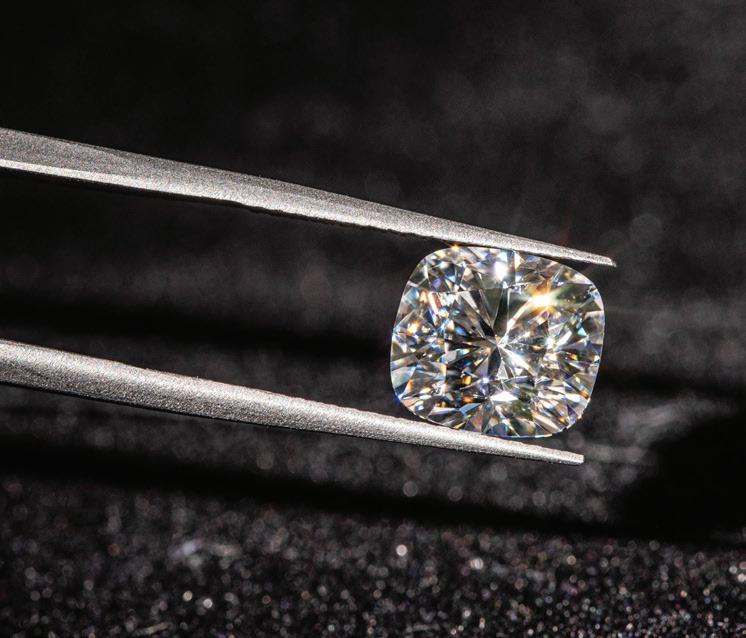
Lab-grown diamonds introduce efficiency into what has traditionally been an emotional purchase. They are chemically identical to natural diamonds but priced more rationally, allowing clients to access higher product specifications without hitting astronomical prices, and without compromising on the quality.
In today’s environment, where liquidity and diversification are key, this matters. You’re making a smarter allocation while still retaining the full visual and experiential value of luxury.
A growing number of frequent travellers are commissioning labgrown “decoys” or replicas of their natural heirloom jewellery pieces, for use while they are abroad. What are the specific logistical and insurance advantages of switching out one’s original jewellery for labgrown replicas during one’s travels?
In today’s busy life, stress-free living is a luxury, and lab-grown diamond jewellery allows more of that. It’s a very practical evolution in luxury behaviour. Frequent flyers are prioritising discretion and security without compromising identity.
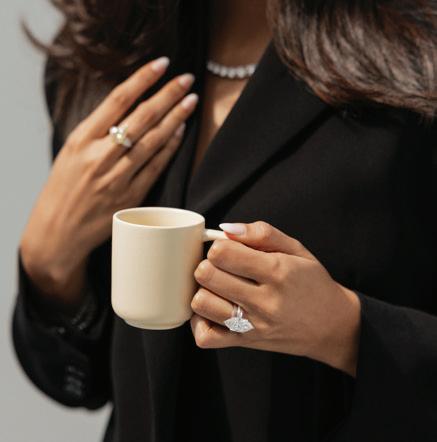
Lab-grown replicas allow clients to travel freely and enjoy their pieces without the burden of high insurance premiums, customs complications, or the risk of loss. The replication today is so precise that there’s no visible distinction, which means clients can maintain their signature aesthetic
as they move globally, while their heirlooms remain securely stored.
Lab-grown diamonds are often marketed as being more “ethical,” but for a high network individual, how much does the sustainability factor actually influence a purchase compared to price and quality?

For HNWIs, sustainability has moved from being a narrative to a filter. It doesn’t override price or quality –it works alongside them. Clients still prioritise design, craftsmanship, and diamond quality, but they are far more conscious of origin and impact. The shift is subtle but important:













luxury today is not just about what you own, but how responsibly you own it. Lab-grown diamonds fit naturally into that mindset.

The global labgrown diamond (LGD) market is currently worth at around U$33.5 billion, and LGDs now account for over 55% of all engagement ring centre stones.






As sustainability continues to evolve past being a buzzword in every industry, ethical traceability is becoming a major factor in corporate and personal branding. How much does the “conflict-free” and sustainable nature of labgrown diamonds influence the purchasing decisions of HNWIs compared to ten years ago?





The shift over the past decade has been significant. Ten years ago, ethical sourcing was a point of differentiation; today, it is an expectation. HNWIs are more informed, and their purchases often reflect their personal and professional values. While it may not be the sole driver, the assurance of traceability and conflict-free origins adds credibility to the purchase. It’s become part of the overall luxury equation, not an optional extra. This is why at Amaar, all our labgrown diamonds are sourced from Diamond Foundry – an ethical grower using 100% renewable energy to grow their high quality diamonds.


You’ve worked in New York, London, and Hong Kong before launching in Dubai. How does the Dubai model of luxury differ (if at all) when it comes to adopting new technology like lab-grown stones, compared to other places, in your experience?


Dubai is uniquely agile when it comes to luxury. It’s a market that is not burdened by legacy thinking – it’s driven by a global, well-informed clientele that is open to innovation. Dubai embraces what’s next. That





openness has allowed lab-grown diamonds to integrate into the luxury conversation here more organically. This is why we chose to launch Amaar in Dubai before expanding in the Middle East and beyond.
How do lab-grown stones handle the wear and tear of frequent global travel?
Exactly the same as natural diamonds – because they are diamonds. They rank 10 on the Mohs scale, which makes them one of the hardest materials available. From a durability standpoint, there is no compromise. Whether they are worn daily or across constant travel, they retain their brilliance and structure identically. This is one of the most important misconceptions we continue to clarify.
Do you believe we are reaching a point where lab-grown stones will eventually decouple from natural diamonds entirely in the luxury market?
We’re already seeing that separation begin. Lab-grown diamonds are not positioning themselves as alternatives – they are becoming a category of their own. The conversation is shifting from rarity to relevance, from legacy to lifestyle. Natural diamonds will always hold their place, but lab-grown diamonds are redefining luxury for a new generation that values flexibility, design, and intelligent consumption.
There is often a misconception that lab-grown stones are “simulants” like cubic zirconia, when they are in fact chemically and physically identical to natural diamonds. How do you try to educate a global clientele about how this product might differ from the at times misinformed reputation?
People want clarity and transparency. Lab-grown diamonds are not simulants – they are real diamonds with identical chemical, physical, and optical properties. They are graded and certified by the same global institutes. I explain it to some of my friends by comparing labgrown diamonds to IVF babies – it is the same product but different process. We have a set of clients that completely understand what lab-grown diamonds are, and some
‘Lab-grown replicas allow clients to travel freely and enjoy their pieces without the burden of high insurance premiums or the risk of loss’
that are intrigued but are not buyers yet. For the latter, we keep the conversation open and transparent with them, giving them all the information, as we believe knowledge and education is key.
In a volatile global economy, how does the lower cost of LGDs allow a professional to manage their “dead capital” more effectively while still maintaining the expected aesthetic status in high-level business environments?
In today’s climate, capital efficiency is a priority across all asset classes – even personal luxury. Lab-grown diamonds allow professionals to maintain a strong visual presence without disproportionately allocating funds to non-performing assets. It’s a smarter way to uphold personal brand and status, while keeping liquidity available for more productive investments. Luxury is evolving – it’s becoming more intentional, not less aspirational. This is why we chose to launch Amaar with only a labgrown offering, letting our customers enjoy luxury while allowing them to invest more of their capital in more active investments.
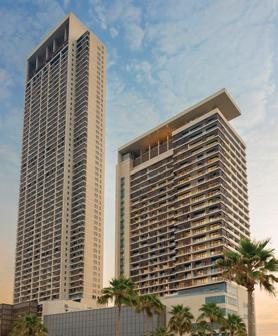
Business Traveller Middle East gives Fredrik Blomqvist, general manager of Raffles Jeddah, five minutes to pitch his property to prospective guests
THE OPENING of Raffles Jeddah, one of the most anticipated luxury hotels in the kingdom, marks a new chapter in luxury hospitality on Saudi Arabia’s Red Sea coast. Positioned along the iconic Corniche waterfront, with breathtaking Red Sea views, it blends the legendary heritage of Raffles with the cultural richness and energy of Jeddah, offering a sophisticated destination for business and leisure travellers alike.
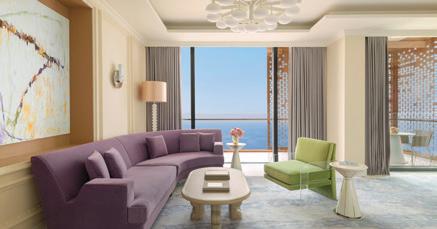
Designed as a reflection of the city itself, Raffles Jeddah draws inspiration from Jeddah’s maritime heritage, historic Al Balad district and long-standing role as a gateway between cultures. Throughout the property, contemporary design is complemented by subtle Hejazi influences, from mashrabiyainspired detailing and coral motifs to a curated collection of Saudi and
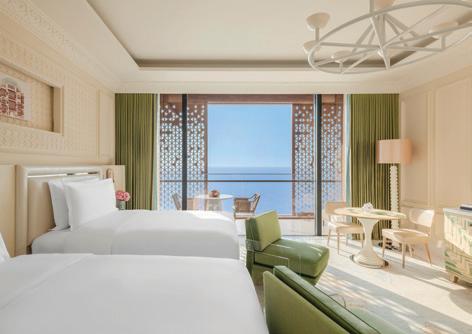
regional artworks that celebrate the destination’s creative spirit.
The hotel features 182 spacious guestrooms, including 40 suites, each offering panoramic views of the Red Sea. Residential in feel and thoughtfully designed for comfort, every stay is enhanced by the legendary Raffles Butler service.
Dining forms an integral part of the experience. Overlooking the Red Sea, Surl’O is a contemporary brasserie that blends flavours from East and West through a menu designed for sharing. Atorie offers a refined French Japanese patisserie and tea lounge experience, where artisanal pastries, speciality teas, and elegant surroundings create a destination in their own right. The lounge is also home to Raffles’ world-famous Afternoon Tea experience, elevated further through a theatrical tea trolley service. A third signature restaurant is set to debut soon, introducing a refined dining experience inspired by the rhythm and beauty of the sea.
Well-being is equally central to the experience. Raffles Spa & Wellness
BOTTOM

‘It’s one of the most compelling destinations for large-scale events’
offers dedicated facilities for ladies and gentlemen, with treatment rooms, Moroccan hammams, relaxation lounges, swimming pools and fitness facilities, alongside a carefullycurated menu of treatments, holistic therapies and wellness programmes is designed to support both relaxation and long-term well-being. Business travellers and event planners will find a comprehensive collection of meeting and event spaces, including six meeting rooms, a dedicated VIP lounge, business centre, and expansive pre-function areas, alongside the impressive Pearl and Crystal Ballrooms. With floor-to-ceiling windows, sophisticated interiors, and sweeping city and sea views, the venues provide an exceptional setting for executive board meetings, conferences, luxury weddings and landmark celebrations. At the heart of the offering is the 1,292 sqm Pearl Ballroom, capable of hosting up to 1,000 guests, positioning Raffles Jeddah as one of the city’s most compelling destinations for large-scale events and corporate gatherings. Advanced technology, high-speed connectivity, and integrated presentation facilities ensure a seamless experience for organisers and delegates alike. More than a place to stay, Raffles Jeddah is a destination where culture, gastronomy, wellness, and hospitality converge, in one of Saudi Arabia’s most dynamic business and leisure destinations. As Jeddah continues to evolve as a gateway to the kingdom, we are proud to offer a refined experience that seamlessly balances productivity, connectivity and the renowned hospitality of Raffles.

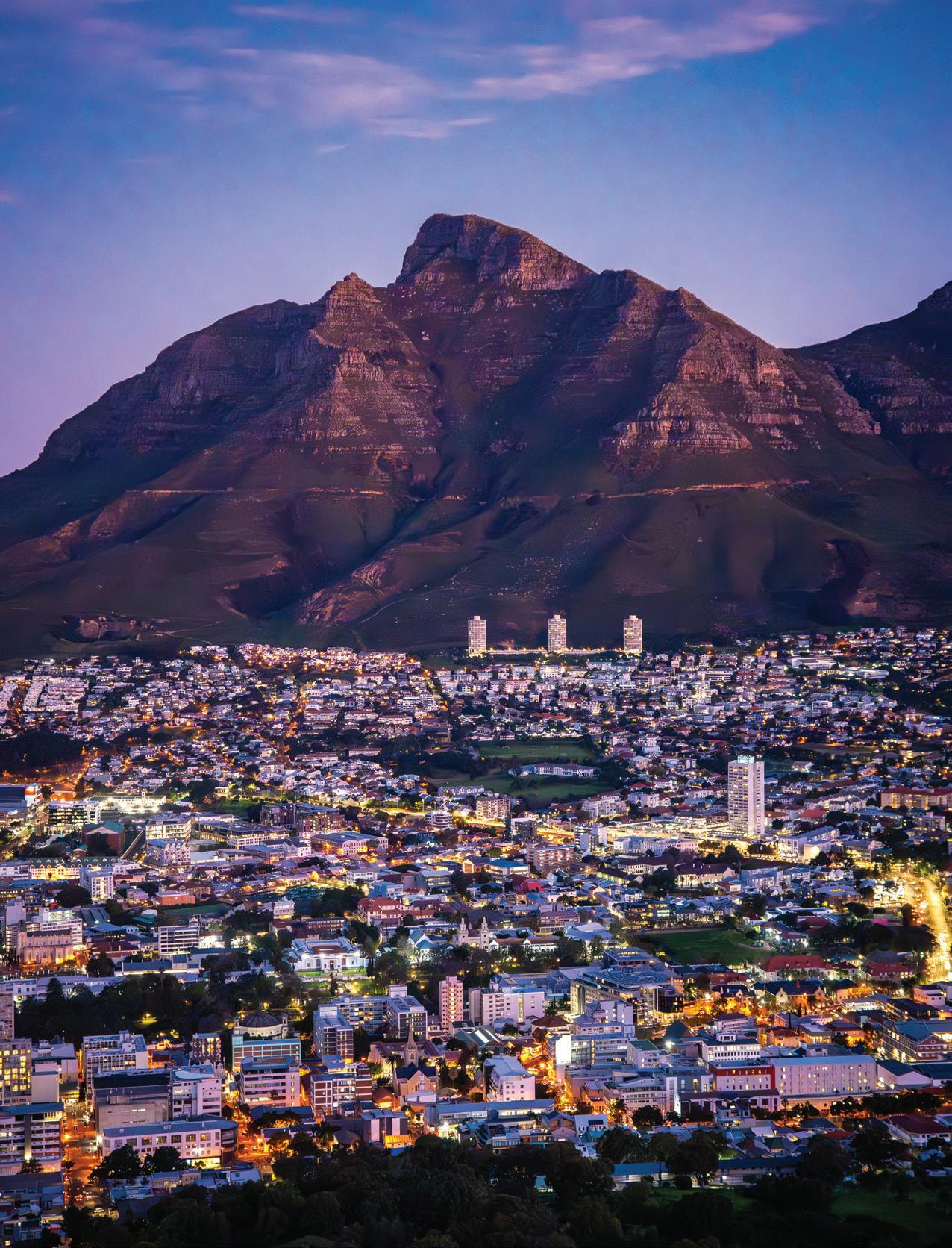
CAPE TOWN IS surging into its next chapter. South Africa’s legislative capital – and arguably its most breathtaking city, backed by Table Mountain and fronting a brilliant blue bay – is in full expansion mode. The V&A Waterfront, already the country’s most visited attraction, is humming with new investment. Cranes punctuate the skyline as work begins on Granger Bay, a massive mixed-use hub that will bring a new hotel, residences, offices and retail to the bustling shoreline. And for travellers in town for meetings, Cape Town’s vibrant neighbourhoods,


Continued from previous page
from the colourful Bo-Kaap to the affluent Gardens suburb, offer endless opportunities to explore.
Atzaró Cape Town
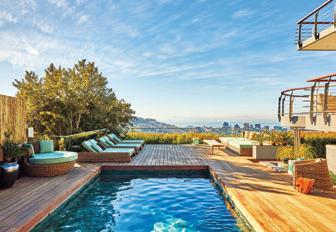
Situated at the foot of Table Mountain with knockout views of the national park and City Bowl below, Atzaró opened in 2020 as an exclusive-use villa before evolving into a six-suite boutique retreat in 2024. The suites feel more like chic pieds-à-terre than hotel rooms, each with a lounge area and a sweeping terrace – perfect for a glass of Stellenbosch chardonnay at sunset. There’s also a pool, sauna, gym, and delicious breakfast spread (fresh-baked croissants, fruit, local cheeses and meats) worth lingering over before a day of sightseeing.
Zeitz Museum of Contemporary Art Africa (MOCAA)
Housed in a dramatically reimagined grain silo on the V&A Waterfront, Zeitz MOCAA is the largest museum dedicated to African art – and the building feels every bit as bold as the work inside.
More than 500 pieces, from artists including Nandipha Mntambo, Frances Goodman and Kudzanai Chiurai, grapple with what
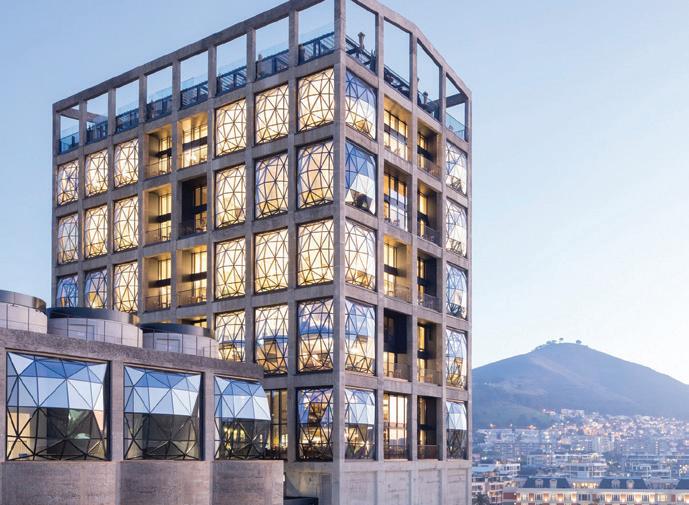
it means to be African today, probing themes of migration, identity, spirituality, and resilience.
Seven Colours Eatery
For a true taste of South Africa, head to Seven Colours Eatery at the waterfront, led by the vivacious chef Nolu Dube-Cele. The name
FROM TOP Zeitz Museum of Contemporary Art Africa; Atzaró Cape Town
‘Travellers will want to summit Cape Town’s iconic flat-top mountain one way or another’
Africa’s largest supermarket retailer operates more than 3,000 stores across several different countries. It’s also the largest private-sector employer in South Africa.
pays honour to the rainbow of dishes that make up a plate for traditional Sunday family dinners, such as oxtail stew, chakalaka (a vegetable and bean relish) and creamy samp (a dish made from dried corn kernels). Dube-Cele is passionate about celebrating and elevating the food she grew up eating: “I do it for South Africa,” she says. “I do it for my culture.”
Table Mountain Travellers will want to summit Cape Town’s iconic
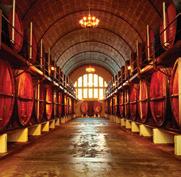
One of the top South African vino and spirit producers, KWV has numerous brands, including Roodeberg, The Mentors, and Cruxland.
flat-top mountain one way or another. The more than two-hour trek up the Platteklip Gorge trail to the 1,086-metre top is steep and strenuous (hiking boots are essential) but rewarding. If you have less time on your hands then take the rotating aerial cable car to reach the peak in just five minutes. Once at the top, explore the park, which has more than 2,200 types of flowering plants. And keep an eye out for dassies, adorable furry mammals that look like oversized guinea pigs.
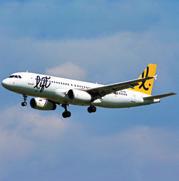
Based in Cape Town, this young South African airline offers domestic flights to Durban and Johannesburg with a fleet of Airbus A320 aircraft.
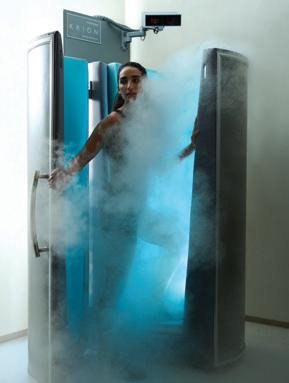
TULÅH CLINICAL WELLNESS has launched a 30-acre clinical healing sanctuary in northern Kerala, India, combining ancient Eastern healing traditions with advanced medical diagnostics and regenerative therapies. Founded by UAE-based Indian businessman Faizal Kottikollon, the destination is being positioned as something between a luxury spa and a conventional medical facility, integrating Ayurveda, Traditional Chinese Medicine, functional medicine, and modern diagnostics into a unified healthcare model.
Calming surrounds
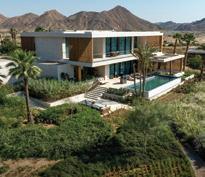
The property features 35 suites – comprising Terrace, Sanctuary, and Clinical configurations –alongside 14 dedicated treatment areas.
The entire place is designed to support rest and nervous system regulation, and to promote the soothing effects of specific designs and exposire to nature, the architecture incorporates natural materials and sustainable design elements, all of which is nestled within a series of rewilded forests and medicinal gardens.
The tulåh Life Index
cardiovascular health, muscle health, inflammation, gut health, stress management, lifestyle risk, and quality of life. This data forms the baseline for the destination’s hyperpersonalised wellness or clinical programmes, which are designed by a multidisciplinary team spanning modern medicine, psychology, nutrition, and movement science.
Medical expertise, farm-to-table, and sonic healing
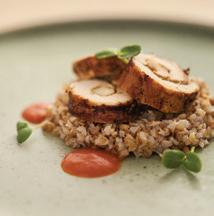
For complex medical cases, the sanctuary provides direct access to more than 200 medical specialists at its sister institution, Meitra Hospital. The retreat offers 13 distinct healing journeys targeting clinical care areas such as longevity medicine, hormonal balance, gut-immune restoration, neuro-rehabilitation, sleep, and oncology recovery. Overnight packages range from a four-night introductory immersion to 21-night deep clinical pathways. Treatments are integrated across five core modalities: personalised nutrition, hands-on therapies, mind-body-energy practices, regenerative and biotech therapies, and movement performance. These encompass diverse therapies including hyperbaric oxygen therapy, cryotherapy, breathwork, and aquatic rehabilitation. Dietary plans are entirely customised by clinical nutritionists based on diagnostic results, resulting in farm-to-table seasonal menus that blend plantbased dishes, ethically sourced seafood, and lean proteins. The estate’s native planting generates herbs and produce for both the onsite apothecary and kitchen.
The sanctuary houses The Sonorium, which is the world’s largest sound healing dome, dedicated to acoustic healing and deep relaxation.
The luxury wellness destination by Red Sea Global has been featured in a new report by the Global Wellness Institute, recognised at the Wellness Real Estate & Communities Symposium in New York. The report highlighted global developments shaping the future of health-focused living, and praised the destination’s branded residences – including Clinique La Prairie, Equinox, and Jayasom – and its sustainable systems like renewable energy, water recycling, and workforce well-being initiatives.
Akari has launched a science-backed rejuvenation space at One Central in Dubai’s World Trade Centre district, focusing on mitochondrial health and cellular recovery. This new sanctuary combines advanced biohacking treatments with functional nutrition in an interior featuring natural light and warm pink accents. Its concise, evidence-based treatment menu features
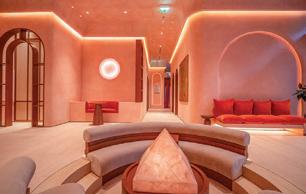
Guest experiences are driven by the proprietary tulåh Life Index, a comprehensive pre-arrival assessment tool that evaluates personal health across several metrics, including
Wellness that’s built to last To ensure lasting lifestyle transformation, guests will receive post-care programmes upon their departure to maintain their routines at home, anchoring a broader planned ecosystem of future urban clinical hubs and at-home care services.
Intermittent Hypoxia Hyperoxia Training, where guests alternate oxygen levels within private pods to stimulate cellular renewal. It also offers whole-body NovoTHOR Red Light Therapy to enhance energy production, reduce inflammation, and accelerate muscle recovery,
alongside NormaTec Compression Therapy to promote physical circulation. Beyond clinical treatments, the venue introduces the Brain Bar, a functional nutrition concept serving adaptogen-infused, cognitive-supporting items such as collagen cacao lattes and sparkling hibiscus teas. The facility has also partnered with Cyan Wellness for an exclusive residency, bringing the Brazilian Renata França lymphatic drainage and body sculpting technique to the venue.

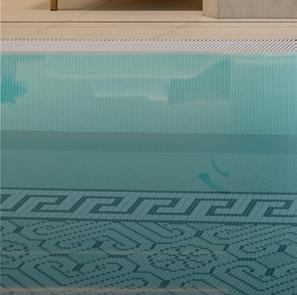

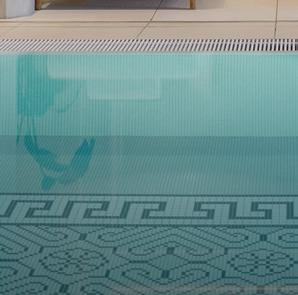
The stunning luxury hotel has opened its iconic indoor pool to outside guests
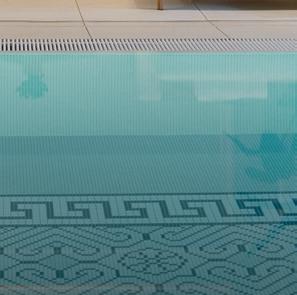
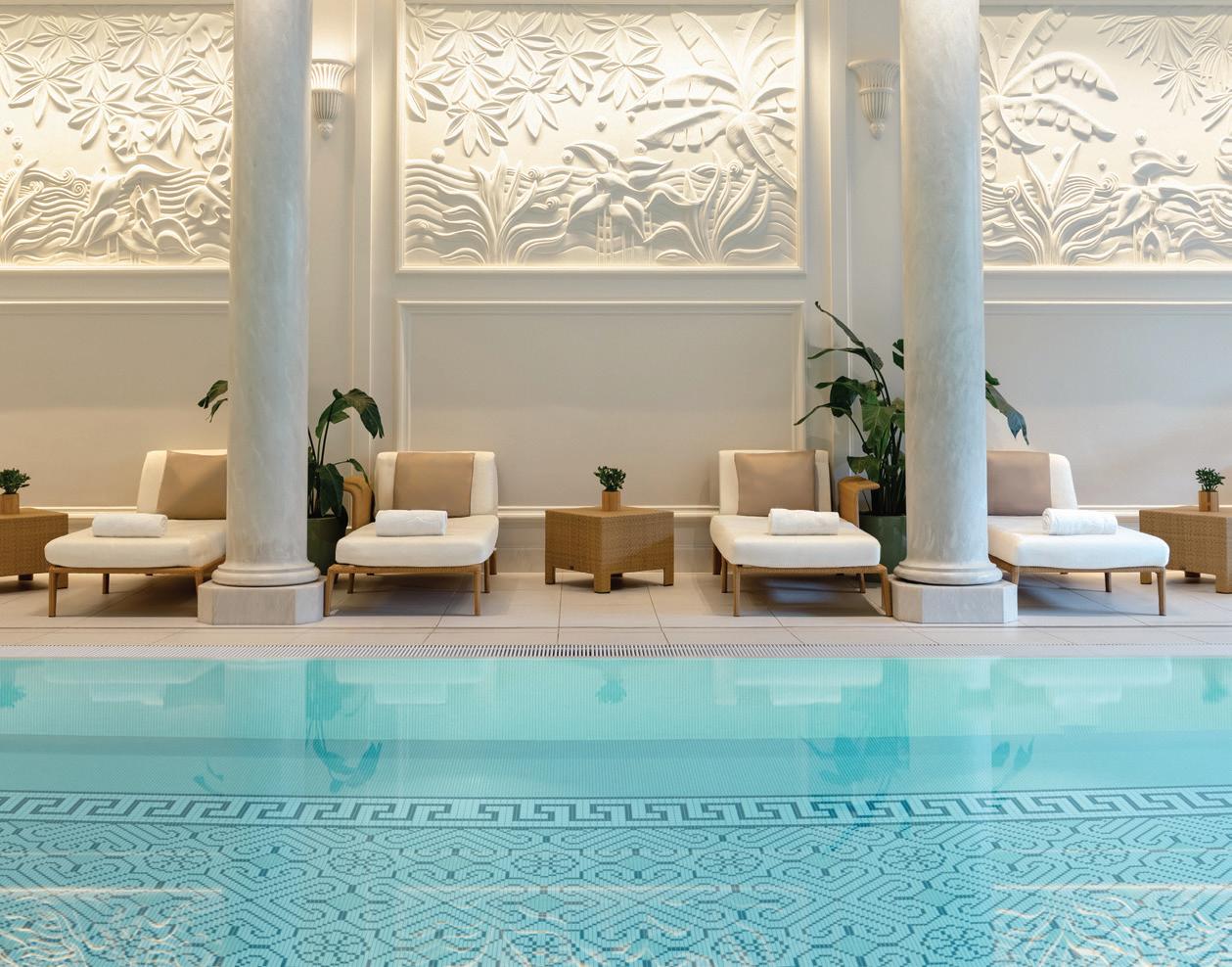
PERFECT FOR beating the summer heat, the property has launched dedicated day packages for its wellness sanctuary, Chi, The Spa, making its famous 17m indoor swimming pool accessible to non-guests and non-residents. Located within the former stables of Prince Roland Bonaparte’s historic residence in the 16th arrondissement, the sun-lit
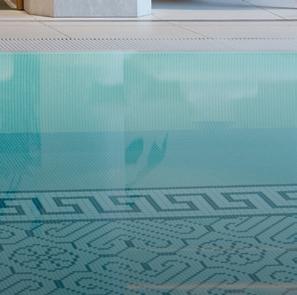
basin combines classic Parisian architectural refinement with Asian-inspired design. Visitors can now book full-day access for €250 or weekday half-day packages for €195, which include use of the fitness studio, hammams, and a private 90sqm sun terrace. Complimentary half-day access is also available with spa treatments lasting two hours or more.
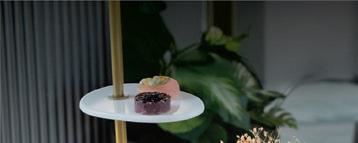

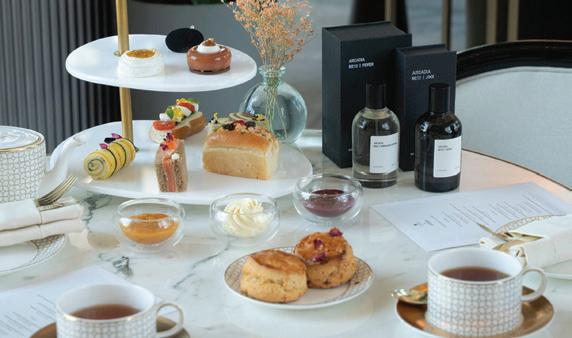
THE CHIC HOTEL has partnered with Arcadia perfumery on an experiential afternoon tea at The Patisserie, running until 8 July. This unique collaboration brings new meaning to the idea of a fragrant afternoon tea, and blends culinary craftsmanship with fragrance design, offering a curated menu inspired by the niche perfumery’s signature scents. Priced at AED250 per person, the multi-sensory experience includes savoury items like a bergamot caviar mini lobster roll and a wood-smoked salmon rose sandwich, alongside sweets such as a jasmine and pineapple pavlova. Guests dining against the backdrop of the Burj Khalifa will also receive a takeaway gift from the UAE perfume house, which was founded by Amna Al Habtoor.


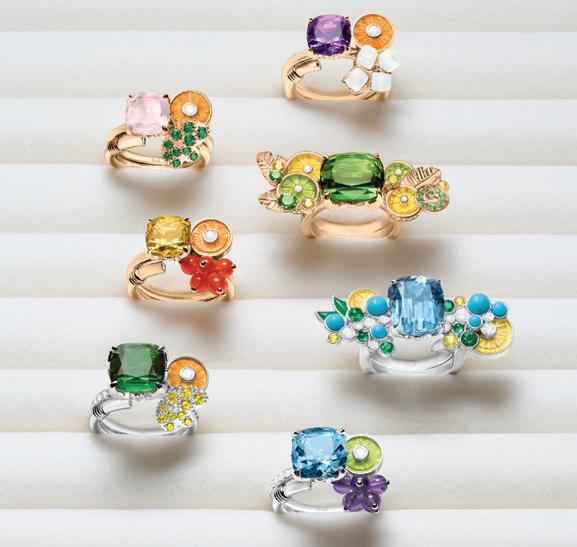
THE JEWELLERY MAISON has expanded its iconic creative collection by introducing an array of nine rings and two ear cuffs, capturing the vibrant mixology and festive energy historically associated with the Piaget Society. Originally conceived in 2010 by Stéphanie Sivrière, the Maison’s Creative Director, as part of the Limelight Paradise High Jewellery collection, the Piaget Cocktail range has been reimagined through asymmetric compositions and fruit-inspired tones. The new series showcases painstaking craftsmanship,
with gemstones sculpted into figurative shapes mimicking cocktail ingredients, such as mintgreen tourmaline paired with yellow sapphire lemon zest, and pink quartz representing the sweetness of a lychee twist. Other standout pieces include the Secret Blue ring, which blends diamonds, round emeralds, and turquoise cabochons with a sculpted chrysoprase leaf. Evoking the glamour of the seventies and eighties jet-set era, these designs use custom-cut stones and settings to reflect the playful extravagance of the brand’s heritage. From AED72,500

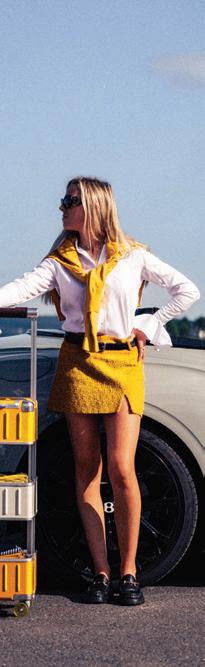
Norwegian brand Drobe redefines travel luggage with a suitcase built as a wardrobe
THIS PATENT-PENDING trunk eliminates the traditional clamshell layout in favour of its unique vertical-opening mechanism. Operating on custom-developed aluminium rails, the system allows travellers to easily access their clothing at various heights without ever unpacking. The interior features premium Alcantara lining and a top lid equipped with an inbuilt vanity mirror. On the outside, the trunk features a hard polymer shell, a built-in TSA combination lock, and a premium leather handle with an LED strip. Every individual component is fully modular, meaning that the sectional outer shell panels can be independently repaired or replaced over a traveller’s lifetime. From €990.


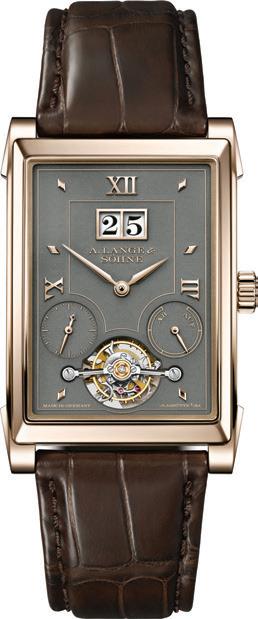
German watchmaker
A. Lange & Söhne has introduced a limited-edition “Honeygold” version of its rectangular Cabaret Tourbillon, restricted to just 50 pieces globally. Crafted entirely in 18-karat honey gold, the case and hand-polished dial contrast with a dark, black-rhodiumed nish to create an intricate, three-dimensional effect. The mechanical timepiece houses the manually wound calibre L042.1 movement, which features a 120hour power reserve and a patented stop-seconds tourbillon system. Price upon request
Matthew Rhys (The Americans) stars as a well-meaning mayor eager to revive tourism in his small town despite the ancient curse plaguing it. The fogshrouded island setting and its alarmingly real local legends evokes a Stephen King-style folk horror unease, which creator Katie Dippold (Parks and Recreation) deftly combines with a distinct comic sensibility and surprising emotional depth. It’s clever, funny, and genuinely creepy, making it one of this year’s top TV standouts.


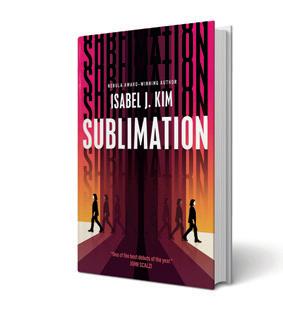
STORY, part thriller, Kim’s sci-fi debut is easily one of this year’s most inventive. An expansion of an earlier short story, the novel imagines a Severancestyle world where crossing a border splits a person in two, leaving one “instance” behind and creating another abroad. When a Korean American
woman returns to Seoul following the passing of her grand- father, she is forced to confront a version of herself she abandoned years ago. Told with remarkable emotional precision, Kim turns a powerful metaphor into a haunting examination of identity, displacement, and belonging. AED 89; amazon.ae

LISTEN
HOSTED BY behavioural scientist Dr. Maya Shankar, this awardwinning podcast explores how people navigate life’s unexpected turns. With its mix of thoughtful interviews and psychological insight, each episode examines resilience, adaptation, and growth. It’s a compassionate, intelligent, and deeply human reminder that even the best-laid plans can lead you somewhere meaningful. Available on Spotify.
OUR PICK OF EVENTS TAKING PLACE AROUND THE WORLD

Calgary Stampede, Canada 3-12 July
Dubbed “The Greatest Outdoor Show on Earth,” this 10-day festival transforms the city into a larger-than-life celebration of cowboy culture. World-class rodeo competitions, chuckwagon races, indigenous programming, concerts, parades, and agricultural showcases draw millions each year. With its combination of sports, history, and culture, it’s a uniquely Canadian take on frontier traditions.

Naadam Festival, Mongolia 11-15 July
Known as Mongolia’s “Three Manly Games”, Mongolia’s largest cultural celebration honours the nation’s nomadic heritage through wrestling, horse racing, and archery. With it’s combination of sporting competition, colourful ceremonies, traditional dress, music, and cultural performances, this annual festival gives visitors a vivid introduction to one of Asia’s most distinctive traditions.
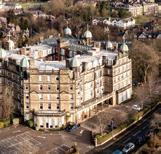
Theakston Old Peculier Crime Writing Festival, Harrogate, England 23-26 July
From psychological thrillers to classic whodunnits, this celebrated crime-writing gathering is a must-visit pilgrimage for mystery and thriller fans. Held in the Yorkshire spa town of Harrogate, it brings together international authors and devoted readers for a jam-packed programme of discussions, book signings, and literary intrigue.






















From groundbreaking aviation milestones to world-first hospitality concepts, we honour the brands redefining the boundaries of modern travel
across aviation, hospitality, and infrastructure, the travel industry has displayed an ambition that shows no signs of slowing – even against a global backdrop that has tested every industry in different ways. That resilience deserves to be celebrated – a sentiment that was keenly felt during this occasion, which remains a cornerstone of the region’s annual calendar for those at the forefront.

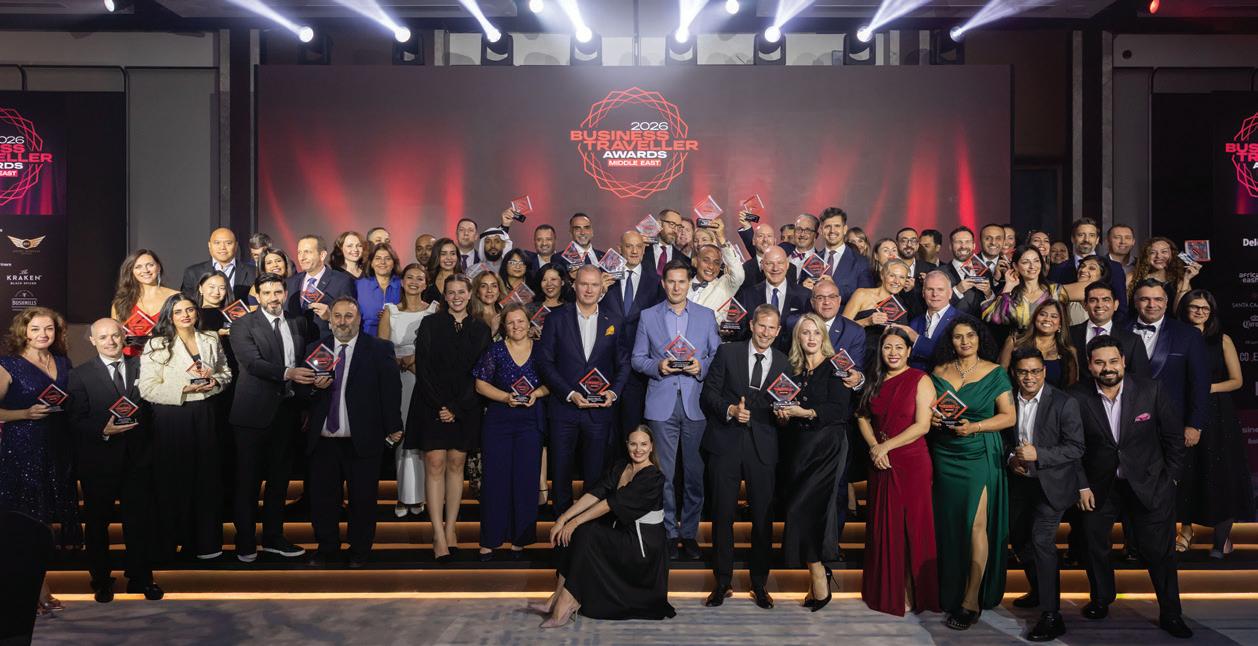
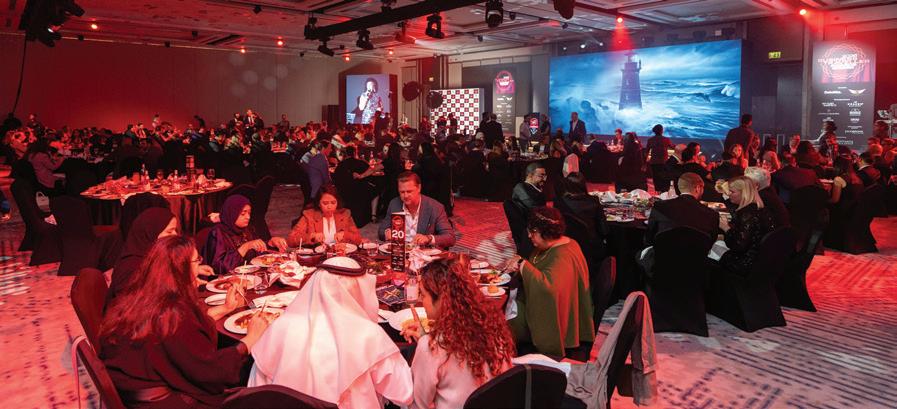
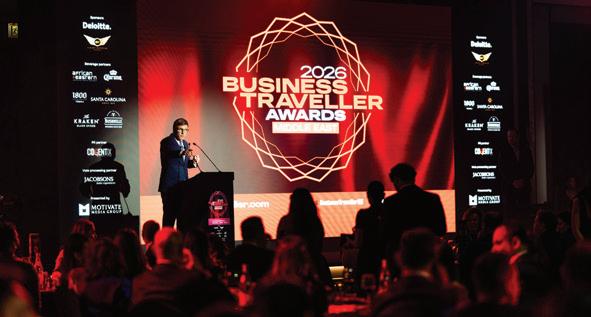
IN THE EVENING of Thursday 18 June, in the grand ballroom of InterContinental Dubai Festival City, a glittering line-up of the top names in the region’s travel and tourism sectors gathered for the 2026 Business Traveller Middle East Awards.
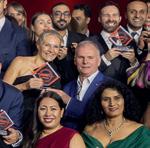
The high-profile evening brought together industry experts, key decision-makers, C-suite leaders, and other esteemed guests to recognise the most outstanding performance, service, and innovation in airlines, airports, and hotels over the past year. More than 260 guests were in attendance to honour leaders across 40 award categories, in a outstanding reflection of how much the industry values the work continuing to drive it forward.
As the region continues to achieve feats that stop the rest of the world in its tracks, including in the face of unprecedented challenges, these sectors haven’t just weathered uncertainty – they have used it as inspiration to move faster. Following another 12 months of recordbreaking numbers, and transformative developments
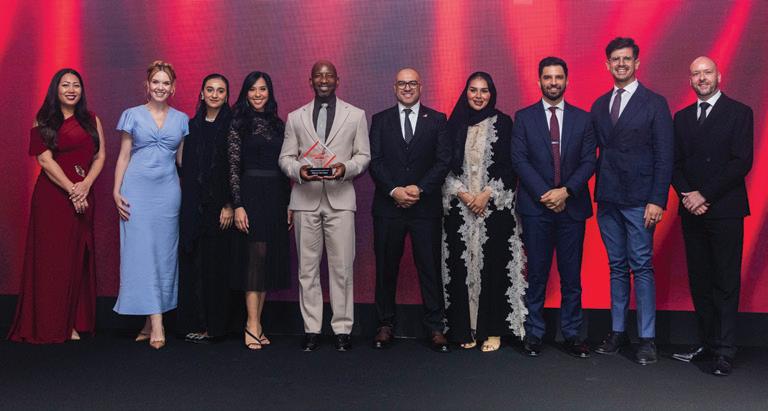
ABOVE: A group of winners celebrate on stage at the Business Traveller Middle East Awards 2026
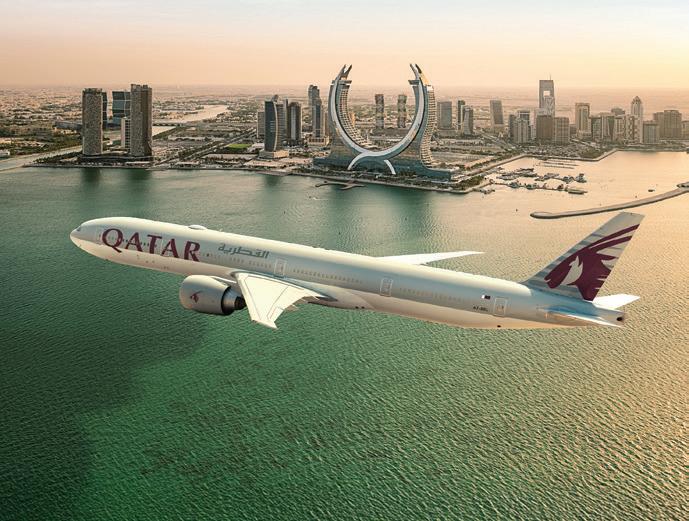
This year, Emirates claimed major accolades, including ‘Airline with the Best First Class’ and the coveted title of ‘Best Airline Worldwide’. Qatar Airways was recognised with multiple key awards, securing both ‘Airline with the Best Business Class’ and ‘Best Regional Airline Serving the Middle East’, alongside a ‘Best Frequent Flyer Programme’ win for the Qatar Airways Privilege Club. From the UAE capital, Etihad Airways claimed top honours for its exceptional inflight service, named both ‘Airline with the Best Cabin Crew’ and ‘Airline with the Best Economy Class’. Meanwhile, flydubai secured the title of ‘Airline with the Best Connectivity in the Middle East’.
In the aviation infrastructure categories, Dubai International Airport swept the night, named not only the ‘Best Airport in the Middle East’ but also crowned the ‘Best Airport in the World’, while Dubai Duty Free won ‘Best Duty Free Shopping in the Middle East’. From the wider global network, Singapore Airlines was deemed ‘Best Asian Airline Serving the Middle East’, and Turkish Airlines claimed the title of ‘Best European Airline Serving the Middle East’.
Hotels and hospitality brands from across the region were also recognised for setting new, higher standards

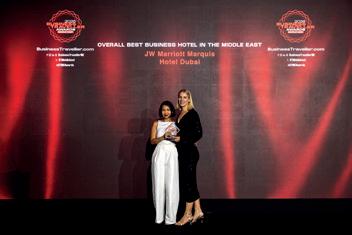
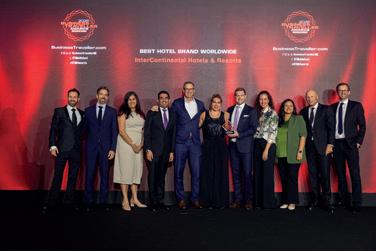
in comfort and service. InterContinental Hotels & Resorts took home the acclaimed accolade of ‘Best Hotel Brand Worldwide’, while Radisson won ‘Best Hotel Brand in the Middle East’. JW Marriott Marquis Hotel Dubai enjoyed an incredibly successful evening, winning both ‘Best Business Hotel in Dubai’ and the ultimate crown of ‘Overall Best Business Hotel in the Middle East’. InterContinental Dubai Festival City took home the title of ‘Best Bleisure Hotel in the UAE’, while the ‘Best Bleisure Hotel in the Middle East (Excluding UAE)’ was scooped up by Four Seasons Hotel Riyadh at Kingdom Center.
Under the leisure and lifestyle categories, Rixos Al Mairid Ras Al Khaimah Resort won ‘Best Leisure Hotel in the UAE’, and Marriott Resort Palm Jumeirah, Dubai won ‘Best Leisure Hotel in the Middle East’. Vida Hotels & Resorts celebrated a major win as the ‘Best Lifestyle Hotel Brand in the Middle East’, while Fairmont Hotels & Resorts took home ‘Best Luxury Hotel Brand in the Middle East’. Meanwhile, Ascott received the title of ‘Best Long-Stay Hotel Brand in the Middle East’, and Rove Hotels claimed ‘Best Midscale Hotel Brand in the Middle East’. Moving far beyond its traditional role as a crossroads between East and West, the Middle East has charged ahead to become a global trendsetter defining the very future of travel. Fuelled by a wave of ambitious aviation expansions, heritage revivals, and pioneering hospitality concepts, the region is no longer just keeping pace – it is firmly establishing itself as the world’s primary travel hub and a blueprint for what’s next. Read on to discover the full list of winners!
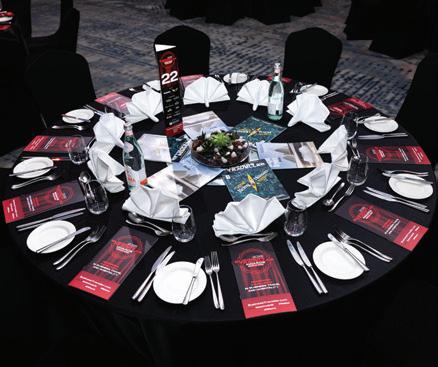



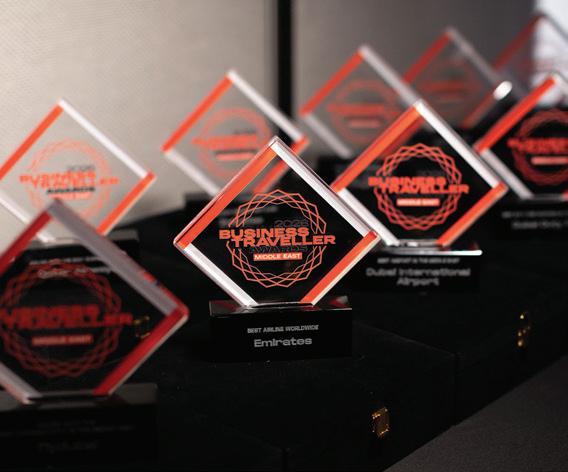
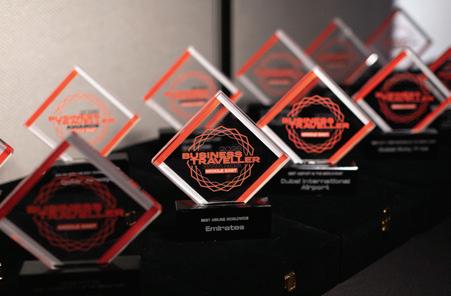
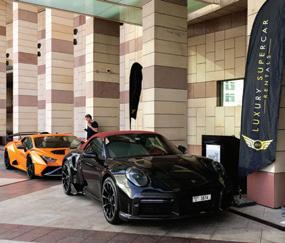
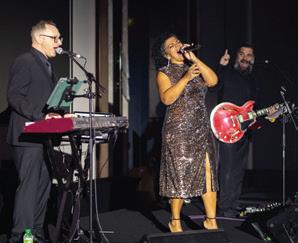
CLOCKWISE FROM TOP LEFT Guests at the 2026 Business Traveller Middle East Awards; A table set-up at the event, with copies of the 2026 Deloitte x Business Traveller Middle East Travel Insight Report; MC Tom Urquhart addresses the room; Live entertainment from Lady J; Impressive transport from Luxury Supercar Rentals; Winners’ trophies ready to be awarded.
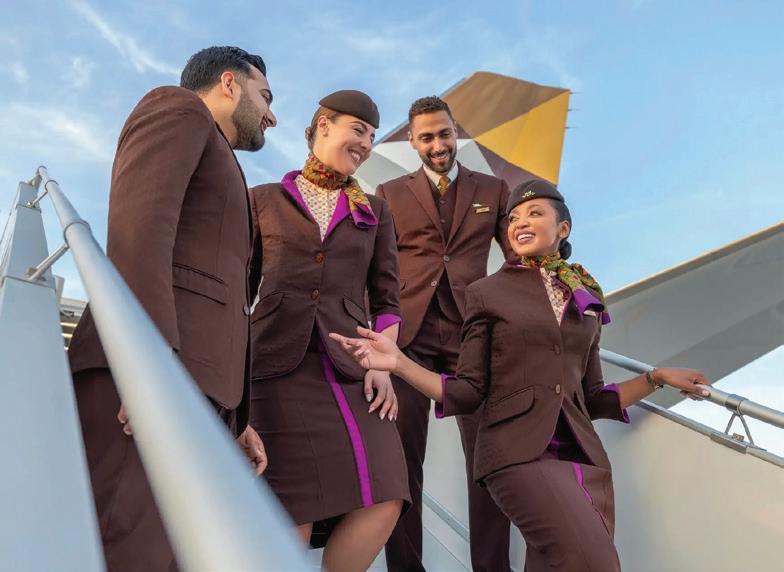
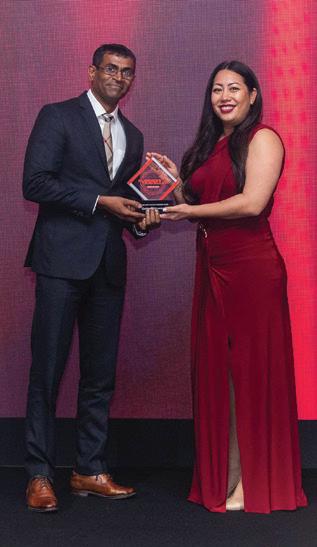
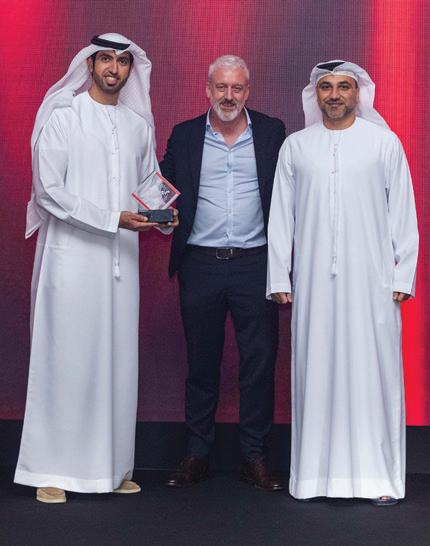
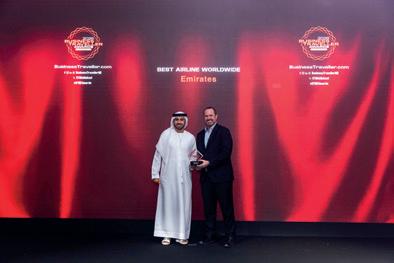
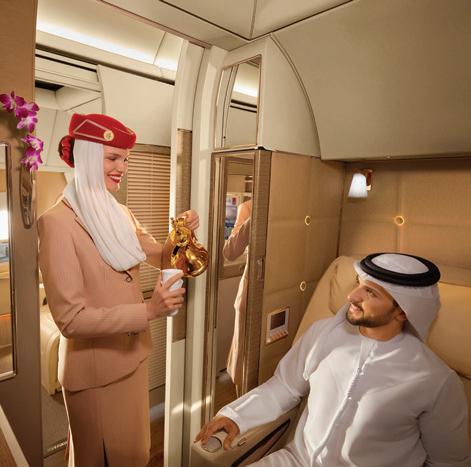
1) Etihad Airways’ award-winning cabin crew; 2) Etihad Airways won the title of Airline with the Best Economy Class 3) Karthik Viswanathan, Vice President - Middle East, Caucasus, Pakistan & Indian Subcontinent, Qatar Airways, with Yi-Hwa Hanna, Editor of Business Traveller Middle East; 4) Mohamed Hareb AlMheiri, Chief Procurement and Technology Officer, and Mohamed Hassan, Senior Vice President of Airport Services & Cargo, received the trophy for Best Connectivity in the Middle East for flydubai, from Charles Humphreys, Head of Travel Retail for African + Eastern; 5) Qatar Airways won Best Regional Airline Serving the Middle East; 6) David Pinches, General Manager - Gulf and Middle East at Singapore Airlines, receiving a trophy for Singapore Airlines, which was named Best Asian Airline Serving the Middle East; 7) Qatar Airways won Airline with the Best Frequent Flyer Programme for its Privilege Club; 8) Osman Nurettin Sen received Turkish Airlines’s award for Best European Airline Serving the Middle East; 9) Anthony Milne, Chief Commercial Officer of Motivate Media Group, handing the trophy for Best Airline Worldwide to Adnan Kazim, Deputy president and Chief Commercial Officer of Emiates; 10) Emirates’ award-winning First Class.



Airline with the Best Cabin Crew Etihad Airways
Airline with the Best Economy Class Etihad Airways
Airline with the Best Business Class Qatar Airways
Airline with the Best First Class Emirates
Airline with the Best Frequent Flyer Programme Qatar Airways Privilege Club
Best Regional Airline Serving the Middle East Qatar Airways
Best Asian Airline Serving the Middle East Singapore Airlines
Best European Airline Serving the Middle East Turkish Airlines
Airline with the Best Connectivity in the Middle East flydubai

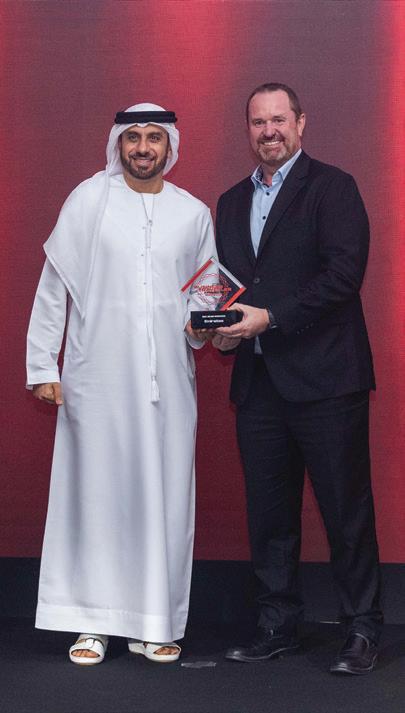
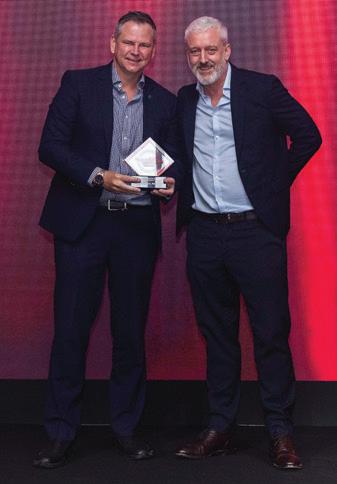
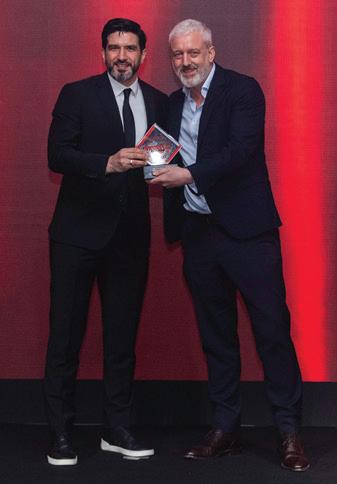

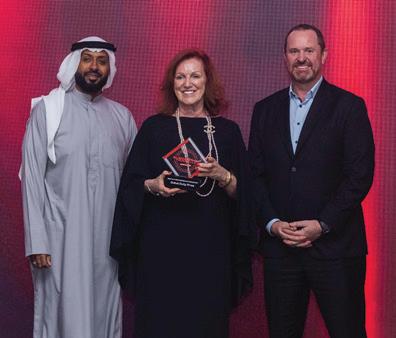
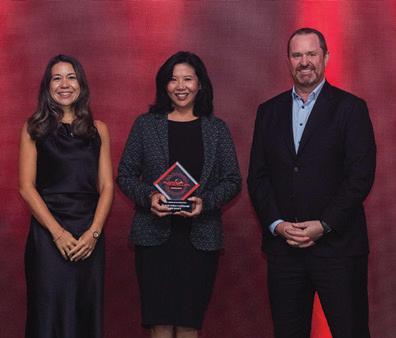
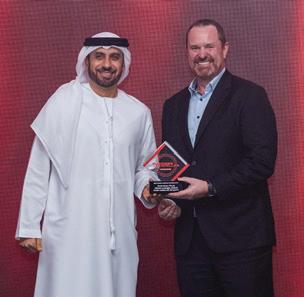
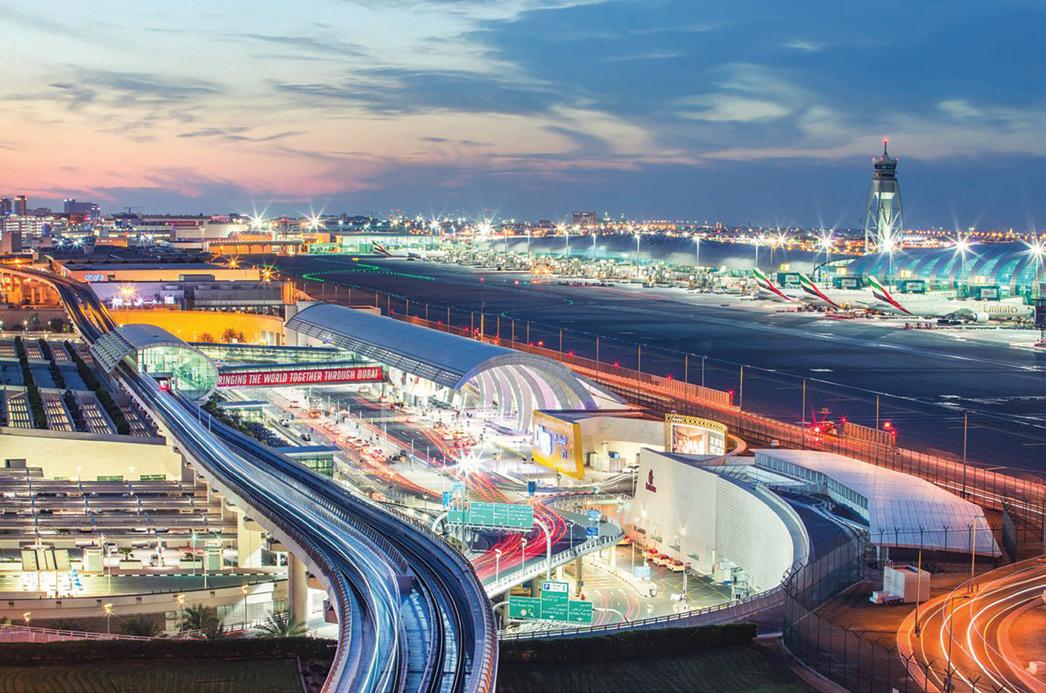
1) Salim Ali Dahman, Senior Marketing Head, and Sinead El Sibai, Vice President of Marketing, receiving the trophy for Best Duty Free Shopping in the Middle East for Dubai Duty Free; 2) Desiree Schmucker, Head of External Communication and Social Media, and Desiree Smucker, Vice President of Brand and Communications, Dubai International Airport, taking home the award for Best Airport in the Middle East;
3) Emirates First Class Lounge, Dubai International Airport, was named Best Airport Lounge in the Middle East;
4) Dubai International Airport, which claimed the title of Best Airport in the World.
Best Airport in the Middle East
Dubai International Airport
Best Duty Free Shopping in the Middle East
Dubai Duty Free
Best Airport Lounge in the Middle East
Emirates First Class Lounge, Dubai International Airport
Best Airport in the World
Dubai International Airport
Hubs around the world continue to up their game with upgraded dining, leisure and entertainment facilities
The best accommodation for busy corporate travellers looking for comfortable beds and superior service
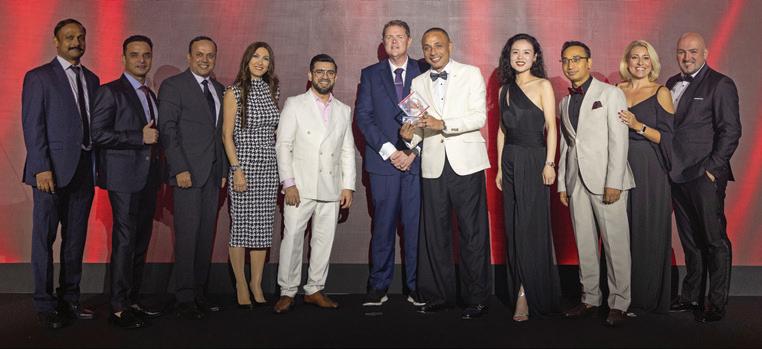
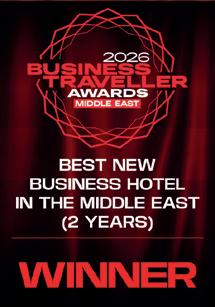
Best New Business Hotel in the Middle East
InterContinental Residences
Dubai Business Bay
Best Refurbished Hotel in the Middle East
Pullman Dubai Jumeirah Lakes
Towers Hotel & Residence
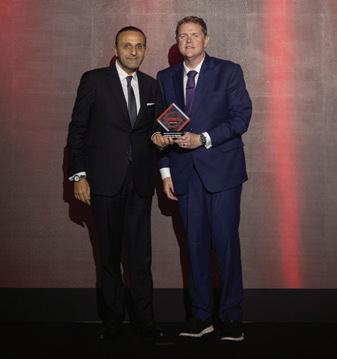
Best Airport Hotel In the Middle East
Holiday Inn Riyadh The Business District
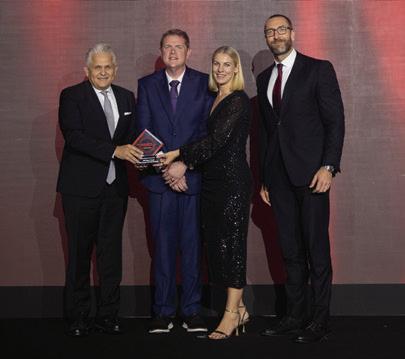
Best Business Hotel in Dubai
JW Marriott Marquis Hotel
Dubai
Best Business Hotel in Abu Dhabi
InterContinental Abu Dhabi
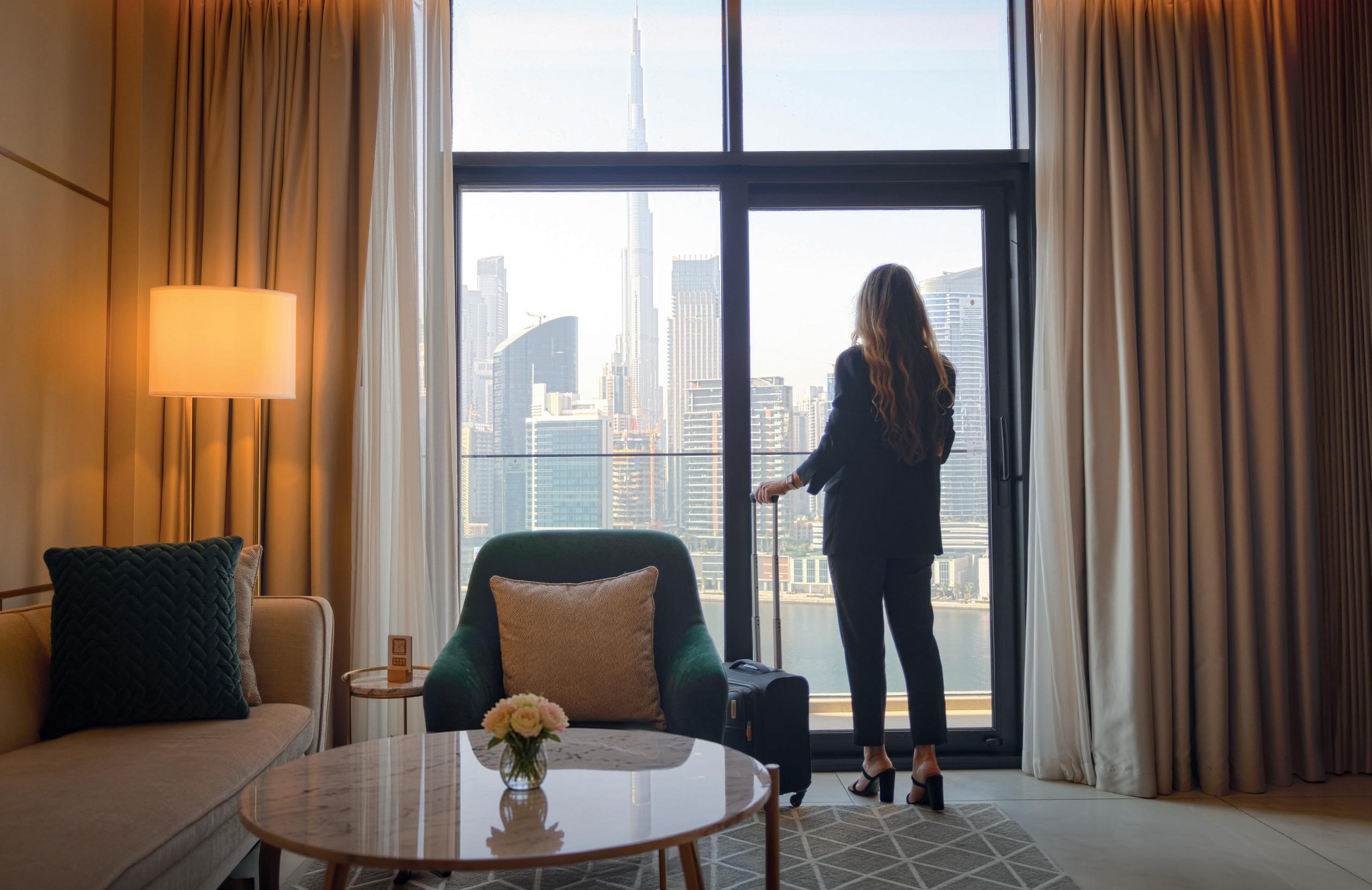
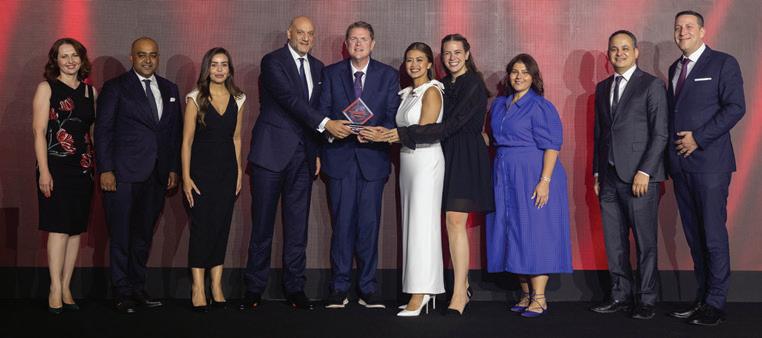
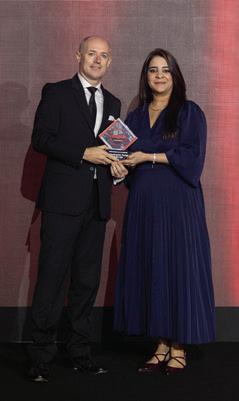
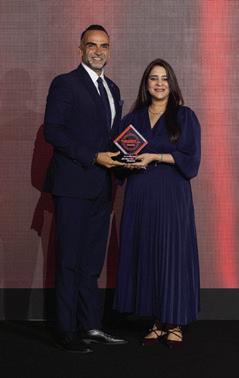
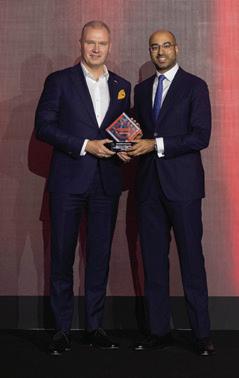
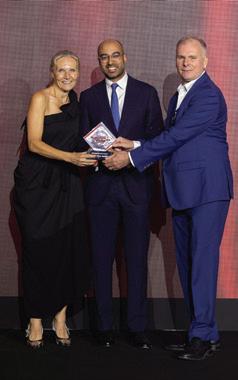
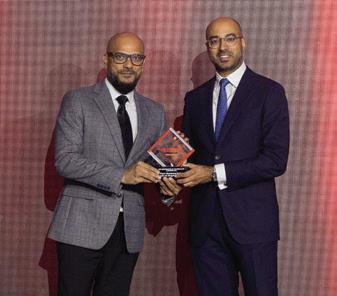
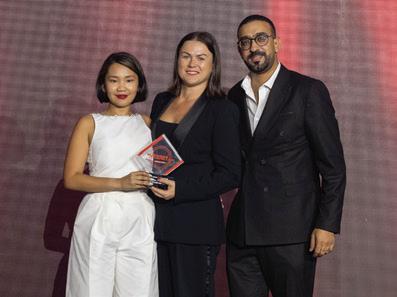
1) The team at InterContinental Residences Dubai Business Bay taking home the top honours for Best New Business Hotel in the Middle East; 2) Nael Tamim, General Manager at IHG Hotels & Resorts, receiving the trophy for Best Airport Hotel In the Middle East on behalf of Holiday Inn Riyadh The Business District, from David Fairservice, General Manager, Motivate Media Group; 3) Gerrit Gräf, Cluster General Manager, Karin Cohen, Multi-Property Director of Marketing, and Roman Lafner, Director of Sales and Distribution, taking home the coveted award for Best Business Hotel in Dubai on behalf of the JW Marriott Marquis Hotel Dubai; 4) The team from InterContinental Abu Dhabi winning the title of Best Business Hotel in Abu Dhabi; 5) Philip Jones, Senior Vice President of Operations, Middle East & Africa, Accor, receiving the award for Best Refurbished Hotel in the Middle East for Pullman Dubai Jumeirah Lakes Towers Hotel & Residence.

Best Business Hotel in Egypt
InterContinental Citystars Cairo
Best Business Hotel in Qatar
Marriott Marquis City Center Doha Hotel
Best Business Hotel in Kuwait
Waldorf Astoria Kuwait
Best Business Hotel in Bahrain
Mövenpick Hotel Bahrain
Best Business Hotel in Oman
JW Marriott Hotel Muscat
Best Business Hotel in Riyadh
Mansard Riyadh, A Radisson Collection Hotel
Best Business Hotel in Jeddah
Shangri-La Jeddah
Best Bleisure Hotel in the UAE
InterContinental Dubai Festival City
Best Bleisure Hotel in the Middle East (Excluding UAE)
Four Seasons Hotel Riyadh at Kingdom Center
Best Leisure Hotel in the UAE
Rixos Al Mairid Ras Al Khaimah Resort
Best Leisure Hotel in the Middle East
Marriott Resort Palm Jumeirah, Dubai
Overall Best Business Hotel in the Middle East
JW Marriott Marquis Hotel Dubai

1) Chaitali Khimji, Group Sales Manager, Motivate Media Group, presented the award for to Best Business Hotel in Qatar to Shweta Kutte, Multi-Property Director of Sales at Marriott Marquis City Center Doha Hotel, with; 2) Arseli Harput receiving the trophy for Best Business Hotel in Kuwait for Waldorf Astoria Kuwait; 3) Mövenpick Hotel Bahrain was awarded the title of Best Business Hotel in Bahrain; 4) Hadi Medawar, Director of Sales and Marketing, receiving the trophy for JW Marriott Hotel Muscat as Best Business Hotel in Oman; 5) Hans Konings, General Manager of Mansard Riyadh, A Radisson Collection Hotel, receives the trophy for Best Business Hotel in Riyadh from Hassan Malik, Partner and Sports and Tourism Leader at Deloitte Middle East; 6) Shangri-La’s AVP of Regional Marketing and Corporate Communications, and Gael Moureau, Vice President of Food and Beverage for the Middle East, India, Indian Ocean, Europe, and North America, taking home the trophi for Best Business Hotel in Jeddah for Shangri-La Jeddah; 7) Four Seasons Hotel Riyadh at Kingdom Center was named Best Bleisure Hotel in the Middle East (Excluding UAE); 8) Maryna Ulgen, Assistant Director of Sales, and Said El Moudni, Director of Finance, received the trophy for Rixos Al Mairid Ras Al Khaimah Resort, which won Best Leisure Hotel in the UAE, from Claire Salvador, Business Development Manager of Luxury Supercar Rentals; 9) InterContinental Citystars Cairo won Best Business Hotel in Egypt; 10) JW Marriott Marquis Hotel Dubai was named Overall Best Business Hotel in the Middle East; 11) The InterContinental Dubai Festival City team received the award for Best Bleisure Hotel in the UAE; 12) Marriott Resort Palm Jumeirah, Dubai was voted Best Leisure Hotel in the Middle East.
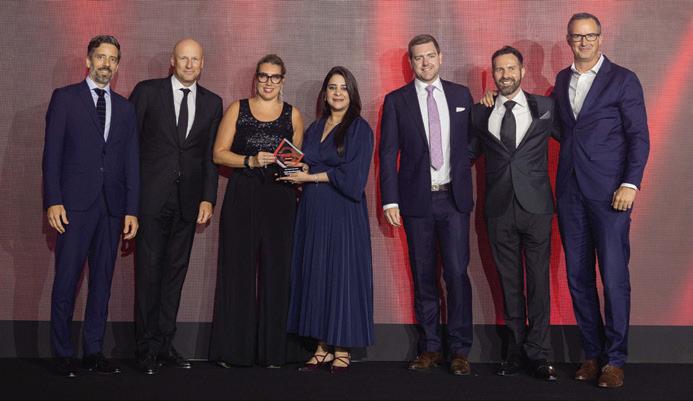
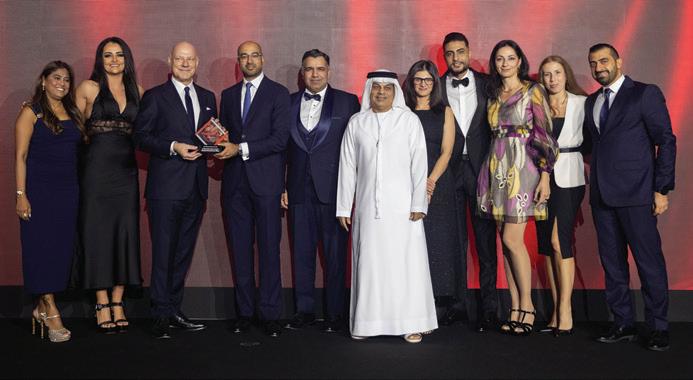
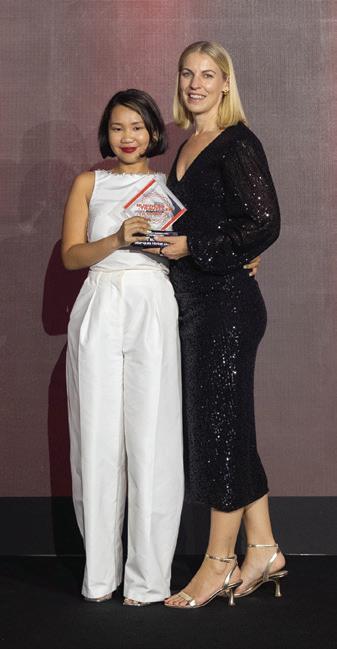

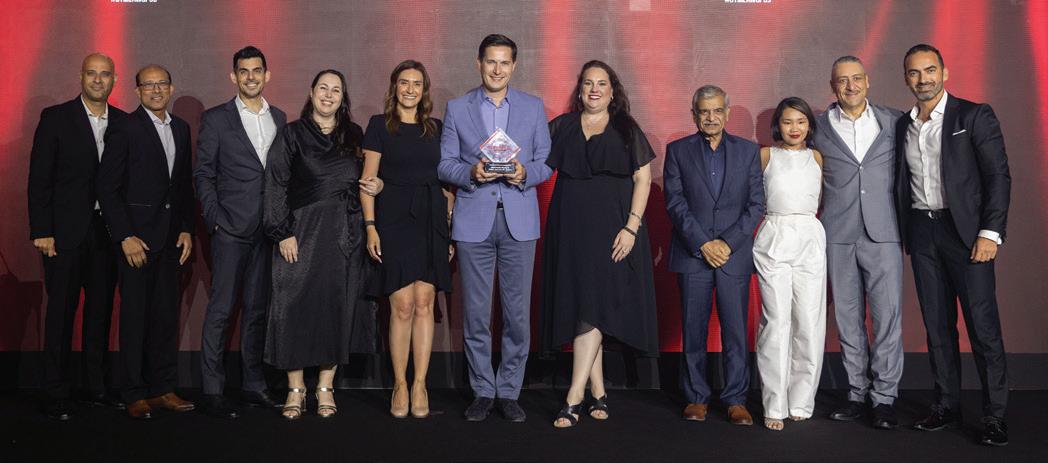
The top brands that travellers can count on for top-notch service, a strong identity, and accommodation they can count on
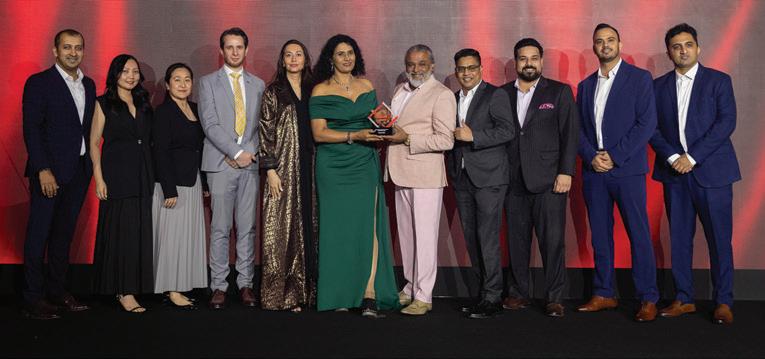
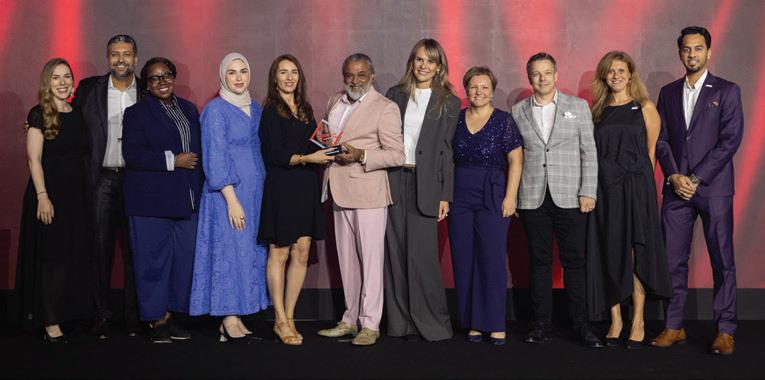
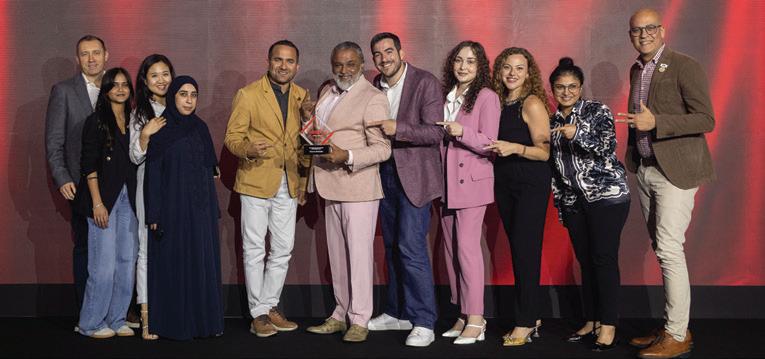

1) Ashley Jacob, Managing Director of Jacobsons Direct Marketing, presented the award Best Long-Stay Hotel Brand in the Middle East to Ascott; 2) Marriott Bonvoy won the award for Best Hotel Loyalty Programme in the Middle East; 3) Rove Hotels was awarded the title of Best Midscale Hotel Brand in the Middle East; 4) Thomas Woodgate, Group Content Director of Motivate Media Group, presented the award for Best Luxury Hotel Brand in the Middle East to Matthew Roberts, Global Vice President of Sales for Raffles & Fairmont Hotels, on behalf of Fairmont Hotels & Resorts; 5) InterContinental Hotels & Resorts was named the Best Hotel Brand Worldwide; 6) Radisson was named Best Hotel Brand in the Middle East; 7) Vida Hotels & Resorts was voted the Best Lifestyle Hotel Brand in the Middle East.
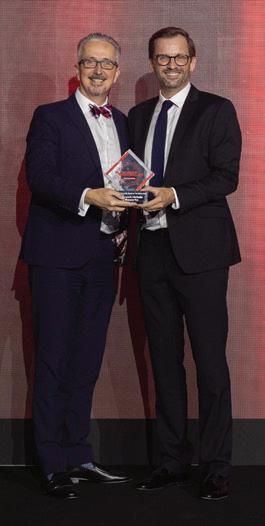
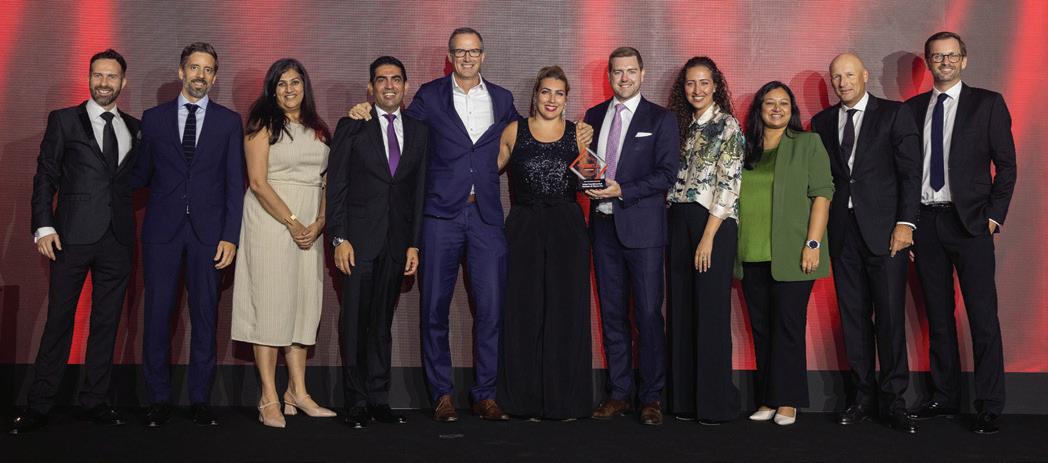
Best Long-Stay Hotel Brand in the Middle East Ascott
Best Hotel Loyalty Programme in the Middle East Marriott Bonvoy
Best Midscale Hotel Brand in the Middle East Rove Hotels
Best Lifestyle Hotel Brand in the Middle East Vida Hotels & Resorts
Best Luxury Hotel Brand in the Middle East Fairmont Hotels & Resorts
Best Hotel Brand in the Middle East Radisson
Best Hotel Brand Worldwide InterContinental Hotels & Resorts
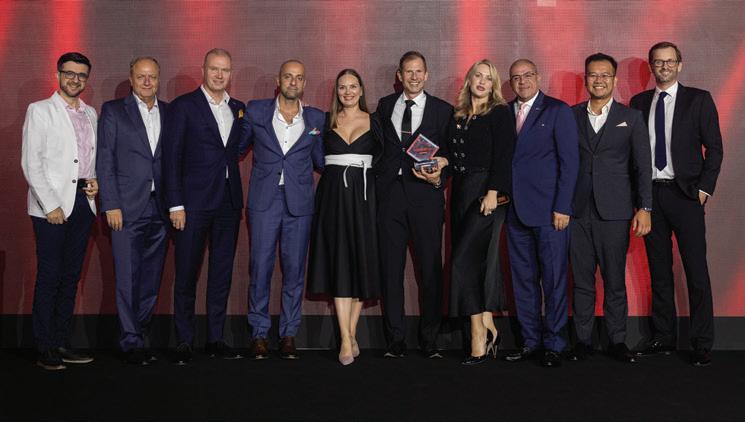
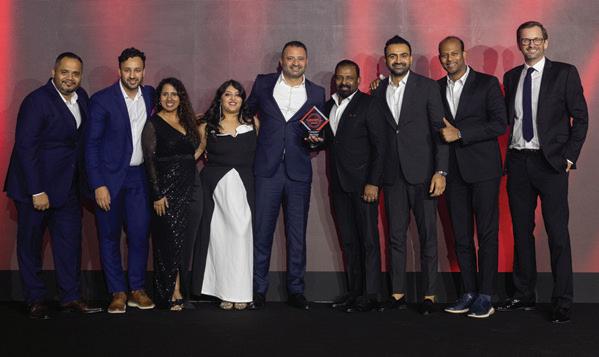
From 19thcentury high society to grand luxury hotels, the rich history and decadent recipes behind a classic afternoon tea are making a comeback
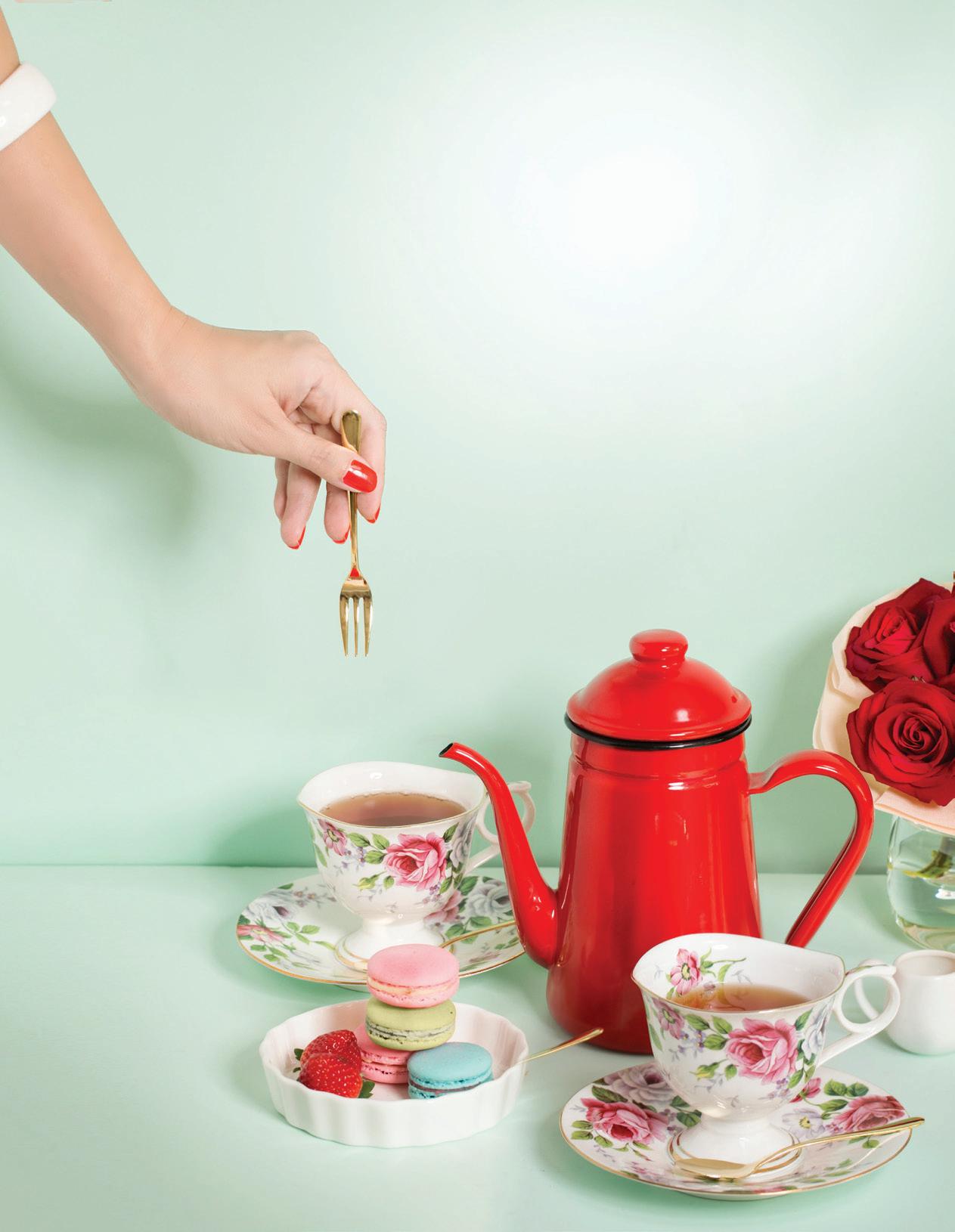
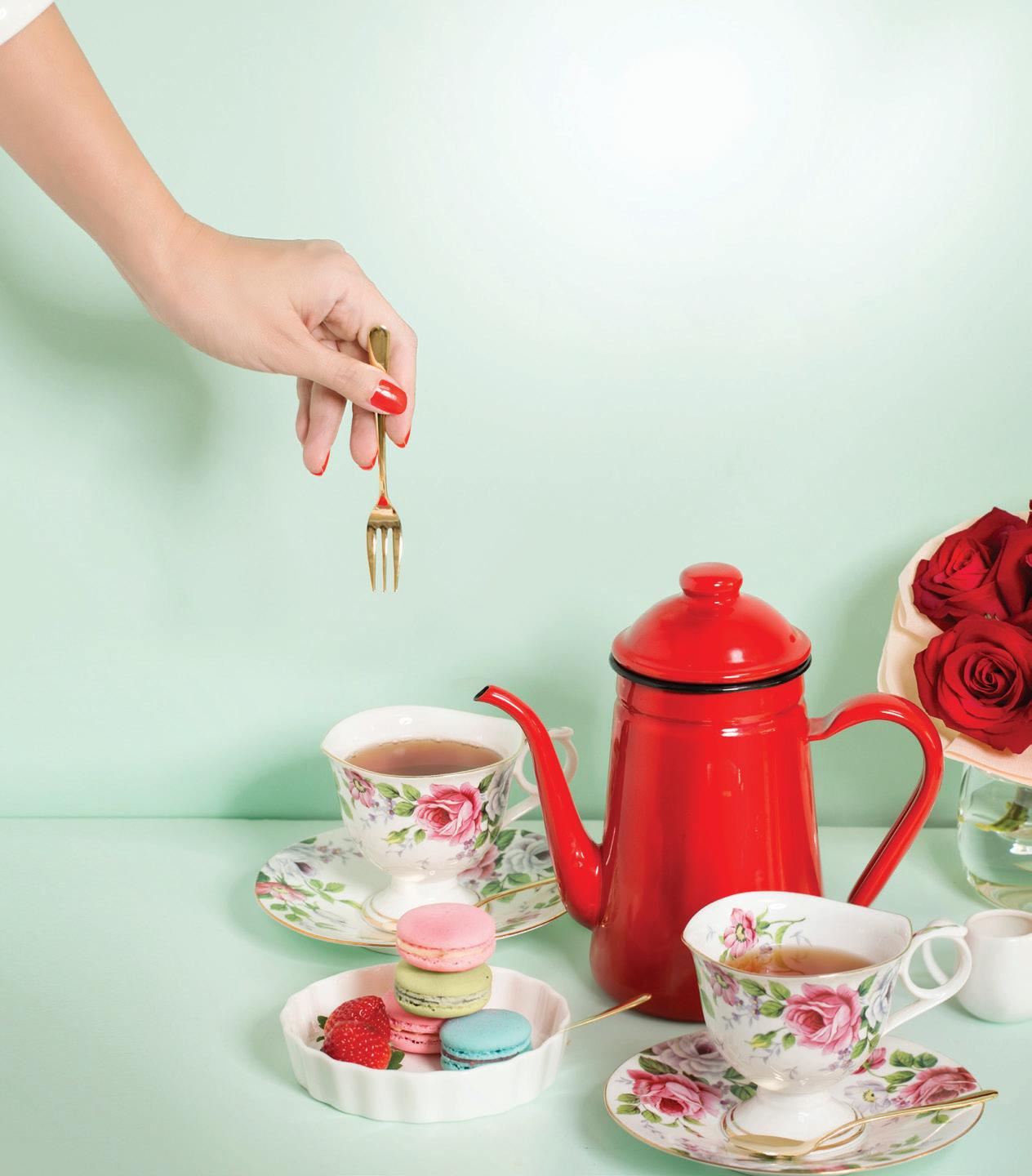
It is a truth universally acknowledged, that by the late afternoon, in that curious gap between lunch and dinner, many of us tend to feel a little… snackish. This was particularly true in the 1840s, when it was common for the average person to eat only two meals a day: a light breakfast and a late dinner.
While the modern approach to “two meals a day” tends to centre more around people practicing intermittent fasting (by skipping their breakfast or dinner to consume the rest of their meals through a controlled window of time), the concept of a snack – defined as a small amount of food eaten between main meals – began as a necessity of survival during prehistoric times. By the Middle Ages, it had evolved into a refined social ritual – and in 1840, Anna Maria Russell, the 7th Duchess of Bedford, England, transformed her desire to snack into the origins of the afternoon tea. To cure her mid-afternoon energy slump, she had requested a tray of tea, bread, butter, and cake to be brought to her room at Belvoir Castle, where she was a frequent guest of the Manners family that resided there. Soon, it became a regular practice – one she took back with her to her home in London – with her also inviting her friends to join her.
By the 1870s and 1880s, Anna’s trend-setting idea had evolved into a common practice for the aristocratic and higher levels of society, complete with its own dress code of “tea gowns” – lighter, more flowy dresses that allowed one to relax more comfortably than the corsets required at formal dinners would allow. By the late 19th and early 20th centuries, the ritual had evolved again, growing from being an occasion held only in private, upper-class homes into one adopted in the public sphere. In 1865, when The Langham Hotel opened the doors of its first-ever property, on London’s stylish and upscale Regent Street, it put Afternoon Tea on the menu of its Palm Court. With the Langham becoming widely regarded as Europe’s first Grand Hotel, it was a fitting addition, and the hotel is now credited with the popularisation of afternoon tea as a public luxury dining experience as part of its legacy.
It is this cherished history that’s celebrated in The Langham’s Afternoon Tea Book – a beautiful hardcover tome that was released in February this year, with 224 pages of stunning photos and recipes that harken back to the hotel’s original afternoon tea. Inside, you’ll find recipes for indulgent treats such as Vanilla & Salted Caramel Millefeuille, Matcha & Apricot Cakes, and Rose & Lychee Babas, alongside those for refined reimaginings of Custard Creams and Battenberg, a series of favourites including Cucumber & Cream Cheese Sandwiches and Double Dark Chocolate Cookies, The Langham’s signature scones, and a variety of sauces and ganaches. You’ll also find expert guidance on tea pairings. For afternoon tea enthusiasts, it’s certainly a collector’s piece, and it’s the first time the hotel has shared these coveted heritage recipes.
Since The Langham first transformed this exclusive aristocratic custom into a refined, accessible public experience, luxury hotels have played a key role into spreading this ritual across global society. Grand hotels across the British Empire soon adopted the tradition, and could be found everywhere from Canada to India. And in some parts of the world, where there was already a strong tea culture to begin with – such as China, Japan, and the Middle East – the growing adoption of Western customs through globalisation, colonisation, and the widespread reach of Western entertainment and media saw the classic afternoon tea take on a new life through the integration of various cultural flavours, that blended historical international tea cultures with the British ritual.
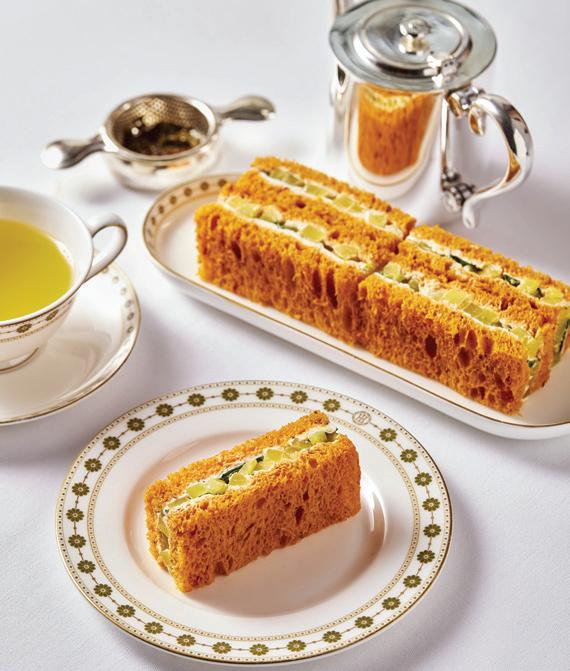
ABOVE Delicate sandwiches at The Langham Hotel
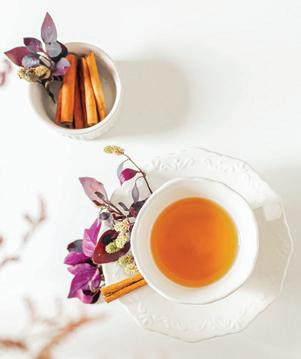
Today, you’ll find a take on afternoon tea all over the world: in Norway, you can find one featuring forest-friendly Nordic teas paired with local delicacies such as reindeer, preserced pine cones, and lingonberry. In Japan, matcha and hojicha often feature on the menu alongside treats incorporating seasonal fruits such as yuzu and strawberries, and savoury dishes such as chawanmushi. And in the Middle East, regional favourites such as mint tea, cardamom tea, and karak chai often feature in the beverage selection, paired with dates, or bite-sized savoury finger foods such as mezze, and sweets such as baklava, ma’amoul, and kunafa. In many establishments, from the United States to the UAE, you’ll find themed affairs with afternoon teas designed around stories such as Alice In Wonderland and Harry Potter , while at the Mandarin Oriental, Old Cataract Aswan – formerly the Sofitel Legend Old Cataract – you can take your tea in the historic, colonial-style salon where none other than Agatha Christie dined in the 1930s – back when it was still simply called the Old Cataract Hotel – while overlooking spectacular sunset views across the Nile. While the tradition has been around for hundreds of years now, in recent years, the popularity of afternoon tea has experienced a resurgence. By the 1970s and 1980s, younger generations eager for new routines that better reflected their
Not sure where to go to partake in this delightful ritual? Check out our list to be in-the-know on where to go for some exceptional afternoon tea experiences across the Middle East.
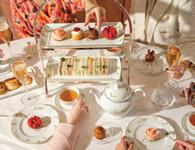
The Lana - Dorchester Collection, Dubai
The vibe: This elegant tea focuses on precision and French techniques, featuring a curated selection of finger sandwiches and delicate sweets overlooking Marasi Bay Marina, with artistic pastry work by renowned chef Angelo Musa.
The vibe: A legendary Abu Dhabi institution. Known for its world-famous 24-karat gold-flaked cappuccino and a refined tea service that blends European grand-palace style with traditional Arabian hospitality.
Al Meydan, Al Bustan Palace, a Ritz-Carlton Hotel, Muscat
The vibe: One of the most grand settings in Oman, served under a 38m-high domed atrium. This lush experience is famous for its “Omani High Tea,” which incorporates regional flavours like rosewater, frankincense, and dates.

At.mosphere, Burj Khalifa, Dubai
The vibe: This is the world’s highest afternoon tea - quite literally, since it’s on the 122nd floor. It’s a dramatic threecourse experience that pairs classic scones and savouries with panoramic views of the city from 442m in the air.

The vibe: Home to the “Turtle Tea,” served at Al Mandhar Lounge. This unique experience is served on a custom turtleshaped stand - celebrating the hotel’s turtle rehabilitation lagoon - and features French-inspired pastries with a local twist.
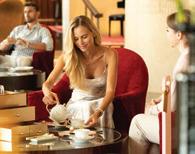
Raffles Salon, Raffles Dubai
The vibe: Known for its elegant “Floral Afternoon Tea,” this hotel’s globallyrenowned afternoon tea experience often draws inspiration from the world of fashion and jewellery. It’s served in the grand lobby, and honours the brand’s storied heritage.
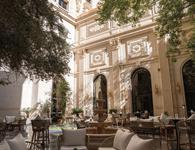
The Ritz-Carlton, Riyadh
The vibe: Set within the luxurious hotel’s majestic Chorisia Lounge, this afternoon tea experience is framed by ancient olive trees and marble interiors. It offers a royal setting for a menu that highlights premium international blends and local delicacies.
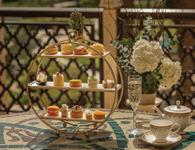
Samovar Lounge, One&Only Royal Mirage
The vibe: Located in the hotel’s beautiful Arabian Court area, this lounge offers a refined high tea with an authentic Oriental flair. This afternoon tea service is famous for its peaceful atmosphere and fine selection of international blends.
Shang Palace, Shangri-La Qaryat Al Beri, Abu Dhabi
The vibe: A savoury departure from tradition with the “Peking Social” tea. This weekend experience (Sat-Sun) trades scones for unlimited dim sum and signature Peking duck, paired with premium Chinese tea blends.
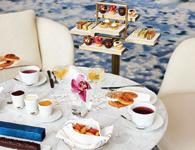
The Royal Tearoom, Atlantis The Royal, Dubai
The vibe: This pick is an award-winning experience featuring an ultra-luxury collaboration with pastry chef Christophe Devoille. You can expect sophisticated tiers of Emirati-inspired treats served in the resort’s sun-drenched lobby.
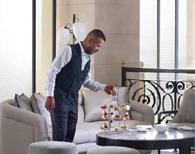
Seasons Hotel Amman, Jordan
The vibe: A staple of the Amman social scene in the Foyer Lounge. This tea is celebrated for its seasonal rotations and its “Best of Jordan” approach, using locally sourced ingredients in its traditional scones and jam.
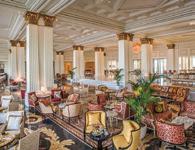
Palazzo Versace Dubai
The vibe: Serving up true Italian maximalism at Mosaico, here, more is more. This fashionforward afternoon tea is served on fine Versace china, featuring tiered stands of Mediterraneaninspired savouries and desserts in the heart of the ornate lobby.
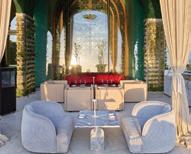
The vibe: Served in the hotel’s spectacular Malaki Lounge, this afternoon tea is a rather theatrical affair. It features bespoke trolley services, rare tea blends, and intricate pastries inspired by the hotel’s iconic architecture of “crossed swords”, i.e. the Kataras in Katara Tower.
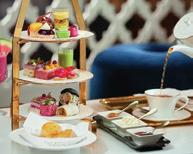
Al Bayt, Palace Downtown
The vibe: An awardwinning tea that leans heavily into regional heritage. Enjoy premium infusions paired with traditional Emirati treats and international favourites, all set against the backdrop of the Burj Lake.

Ginori Terrace, The St. Regis Downtown Dubai
The vibe: A sophisticated collaboration with the renowned Italian porcelain masters, Ginori 1735. This alfresco tea is served on the terrace with views of the canal, featuring an exquisite Italian-inspired menu served on vibrant, artistic tableware.
rapidly shifting lifestyles, changing dietary habits, and more flexible options that better suited the increasingly faster-pace of modern corporate work culture, began to eschew the idea of afternoon tea in favour of the quick coffee break. Bolstered by the villainisation of sugar, these busy, more time-poor, and more health-conscious younger generations relegated the ritual of afternoon tea to its deteriorating reputation as a stuffy, outdated practice for the elderly, overtly rigid, and unfashionable elite. In a world that was championing more casual culture across society, the rigid and rules-led practice of afternoon tea became an outdated relic.
Yet thanks to the rise of social media and modern hustle culture, it appears that the time is ripe for afternoon tea to once again have its heyday. With the consumer of today championing premium, Instagrammable experiences, afternoon tea is a beautifully-curated, aesthetically-rich, and extremely shareable offering. In the last couple of years, afternoon tea has become more popular, with a 2024 Pinterest trends report claiming that searches for “afternoon tea party ideas” had increased by 165%. Data from leading restaurant operations platform SevenRooms found that in the US, searches for “afternoon tea” had increased by almost 80%. Meanwhile, a survey of younger adults featured in The Observer Food Monthly found that one in three people among Gen Z and millennials had attended a tea party in the past year. In 2022, the Tea and Coffee Trade Journal reported that “a new survey finds there is a revival of the Afternoon Tea experience in the United Kingdom, particularly among younger generations.” It also stated that “Many consumers are choosing to celebrate special occasions with Afternoon Tea, with 54% of 18-to 24-year-olds having Afternoon Tea at Christmas, and 43% of 25- to 34-year-olds celebrating a birthday with Afternoon Tea.”
The timing of afternoon tea – set in the traditionally slow hours that demand one to take a more substantial pause between the hours of 2-6pm rather than a hurried 4pm coffee
BELOW
Afternoon Tea is a Western concept that began in the UK, but in many parts of the world, such as East Asia and the Arab world, tea culture involves an ancient, meditative practice.
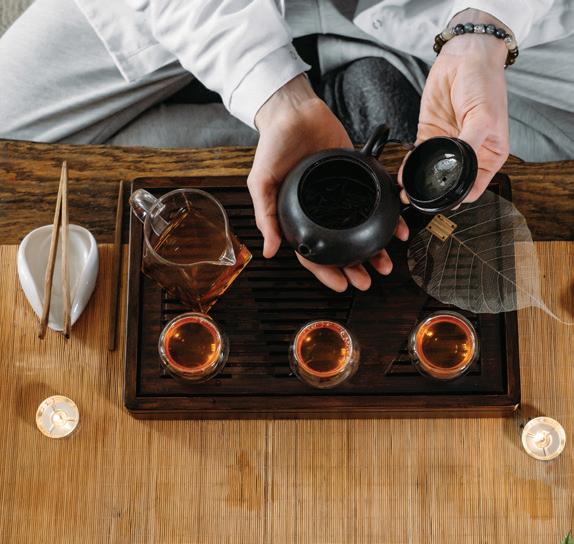
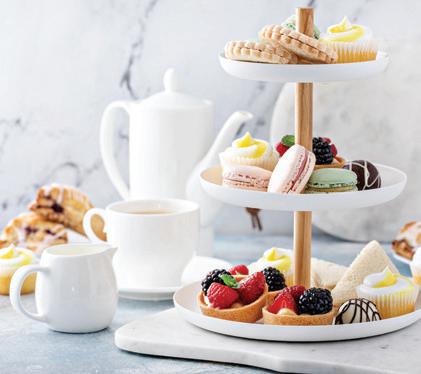
Afternoon tea can come in various forms, often split into “high tea” or “low tea”. What we often think of as an “afternoon tea” is actually called “low tea” – despite being more commonly affiliated with high society – since it’s traditionally served on lower tables, such as coffee tables or parlour tables, where guests can lounge in comfortable, plush seating such as armchairs. This type of tea is taken in the afternoon, usually between 3pm to 5pm, with spreads of items such as finger sandwiches, scones, jams, clotted creams, and delicate pastries on a tiered stand. “High tea”, on the other hand, is a more substantial, savoury meal that is often consumed in place of the full evening meal. These types of teas, which originated among the working class as a high-energy meal to reward them for a day of hard labour, is usually served a little later – between 5pm to 7pm – and features hearty dishes such as meat pies, baked beans, heavier breads and cakes, and potatoes, rather than delicate sweets and light pastries.
on-the-go – is increasingly seen as an antidote to the fatigue of perpetual busyness. Its hands-on, interactive, and typically social nature allows for more human connection and time away from one’s screens – a prime example of a ‘slow living’ activity that makes room for a digital detox and a nervous system-healing ‘rest and digest’ state. And while an anti-sugar health-consciousness was once a reason to avoid an afternoon tea, nowadays, an anti-booze health-consciousness is giving the custom new life: As younger demographics increasingly shift towards a zero-proof lifestyle, they seek a sophisticated, tipple-free social alternative that can still feel like a celebratory treat. In fact, in 2022, an annual trends report from Pinterest even described afternoon tea as the new happy hour.
Meanwhile, while the selective division of power held by the aristocracy is certainly less fashionable in today’s democracy-, meritocracy-, and human rights-championing world, the ritual of afternoon tea is a still chance to emulate the most coveted habits of the privileged levels of society. Unlike other hallmarks of wealth – such as the logo-heavy, flashy desires of conspicuous consumption – to the modern consumer, afternoon tea reflects quiet luxury, underlined by a sense of timelessness, authenticity, and mindful consumption. Whether you’re there for the taste of the tea and cakes, for the quiet luxury vibes, or for the aesthetic, the tradition still offers us a chance to pause, slow down, and enjoy a moment of recharging, treating oneself, and catching up with cherished connections for a joyful spot of indulgence.



FROM LIE-FLAT SEATS TO TECH-PACKED SUITES, THE BATTLE FOR THE BEST BUSINESS CLASS IS HEATING UP
WORDS DOMINIC KEITH


BUSINESS TRAVEL HAS always been a showcase for innovation, but 2026 feels like a watershed year.
Despite signi cant geopolitical challenges, rising oil prices, and persistent aircraft and supply chain delays, airlines are unveiling premium cabins that rede ne what it means to y in business or rst class.
Privacy, technology and luxury are no longer optional extras; they are the baseline. The competition is erce, and the battleground isn’t route networks or loyalty programmes – it’s the suite itself, the personal space where travellers spend hours suspended between continents.
Here, we take a look at some of the most impressive seats in the sky across the world.










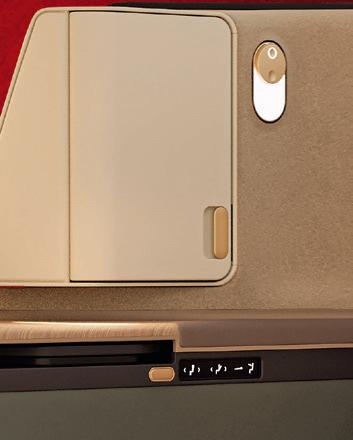


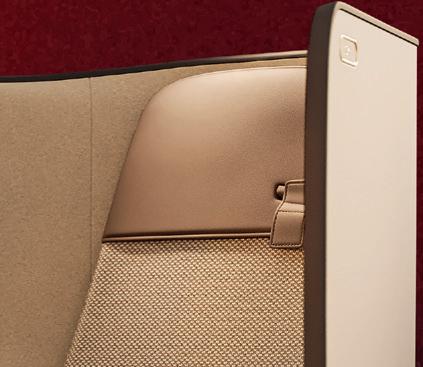
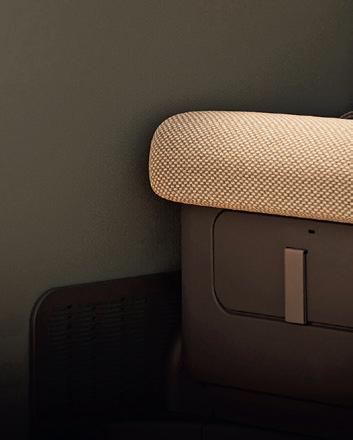

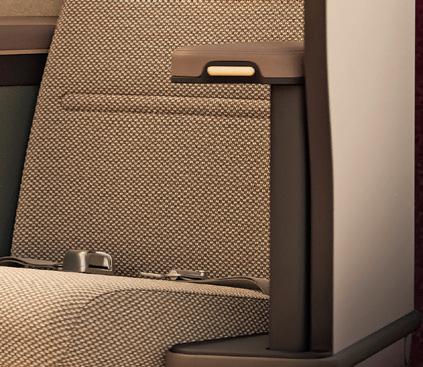






United Airlines has begun rolling out Polaris 2.0, its most ambitious premium cabin redesign in years. The new suite, debuting on Boeing 787-9 Dreamliners to Singapore and London, introduces sliding doors, larger inflight entertainment screens, and a front-row Polaris Studio concept with companion seating and extra perks, such as caviar, on the menu.
The Star Alliance airline is also extending Polaris to narrowbody aircraft, with A321neo “Coastliners” and A321XLRs bringing lie-flat beds to transcontinental services, thinner transatlantic routes, and markets in South America.
United’s push for premium passengers follows moves by other US-based carriers. American Airlines launched its own new generation of premium seating in 2025 and will continue to roll out the premium cabins on newly-delivered Boeing 7879s and A321XLR aircraft. This will also include a retrofit of its existing 777-300ER fleet with the next-generation Flagship Suites. Meanwhile, JetBlue’s reimagined Mint suites debuted with sliding doors between London and New York City in summer 2021.
Across the border, Air Canada is treating its new single-aisle Airbus A321XLR as a true long-haul aircraft. Its new Signature Class cabins feature 14 suites in a 1-1 layout. Inspired by Collins Aerospace’s Aurora mini-suite, the design integrates privacy panels, modern storage and fully flat beds. The Star Alliance carrier plans to deploy these jets within Canada and on transatlantic flights to destinations such as Edinburgh, Palma de Mallorca, Nantes and Copenhagen.
Over in Europe, SkyTeam member Air France has redefined luxury with its new La Première suites. Developed with STELIA Aerospace, the cabin offers nearly 3.5 sqm of space spanning five windows – the only first-class compartment in the world to claim that much window space. Privacy is enhanced with electric sliding partitions, while the airline’s signature curtains remain. The roll-out began in 2025 and continues through 2026, with retrofits across the Boeing 777-300ER fleet and new destinations including Atlanta, Houston and Boston.
The Lufthansa Group, meanwhile, is pursuing a dual strategy with its Allegris and Senses products. Lufthansa’s sleek Allegris suite is now on Airbus A350-900s and Boeing 787-9s, with
United will introduce a Relax Row on Boeing 787 and 777 aircraft in 2027. As with Air New Zealand, passengers will be able to purchase an entire row of three economy seats that turn into a flat, couchlike bed with a mattress pad, a large blanket, and other special amenities, catering to families and those seeking long-haul comfort.
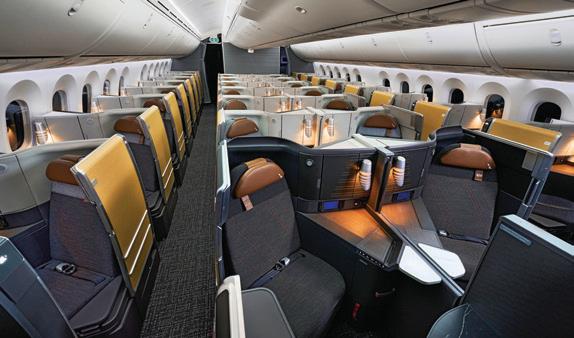
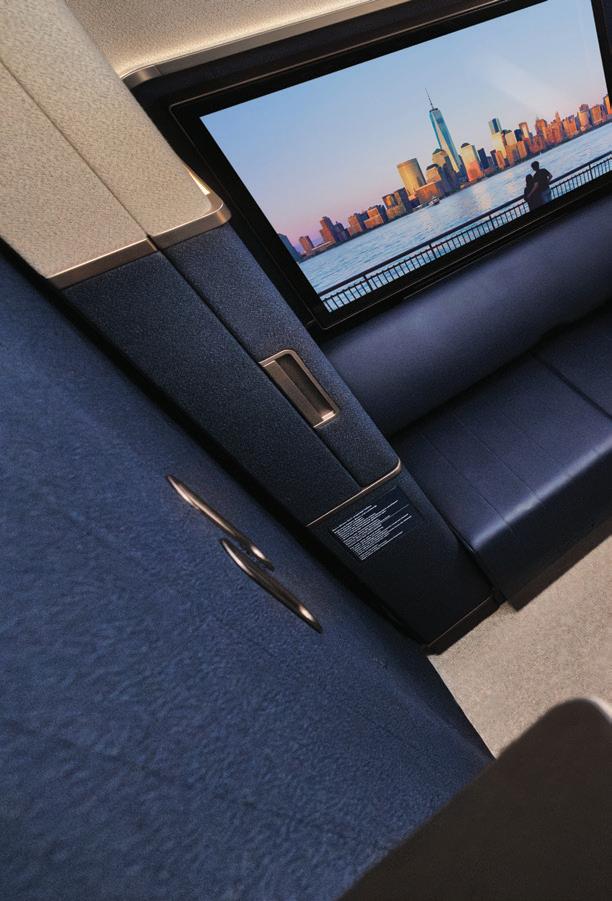
routes recently expanded from Frankfurt to Hong Kong, Shanghai and Rio de Janeiro.
SWISS is introducing Senses on its new A350-900s, now serving Zurich–Boston and Zurich–Seoul. Both products emphasise privacy, modularity, and modern aesthetics, reflecting the group’s renewed focus on premium passengers.
The standout feature of these business class cabins is the sheer variety of seating. Instead of a uniform cabin, passengers can choose from five distinct seat types tailored to specific needs, from business suites, with chest-high walls and sliding privacy doors in the first row, to “throne” seats with massive lateral consoles for maximum work space.
In-seat temperature controls, allowing travellers to independently heat or cool their seats regardless of the cabin’s ambient temperature, is also a step change in personal comfort.
In Asia-Pacific, Hong Kong flag carrier Cathay is addressing a long-standing gap in its product line. For years, part of its Airbus A330 fleet operated with recliner-style business class seating, a stark contrast to the lie-flat suites on its long-haul aircraft.
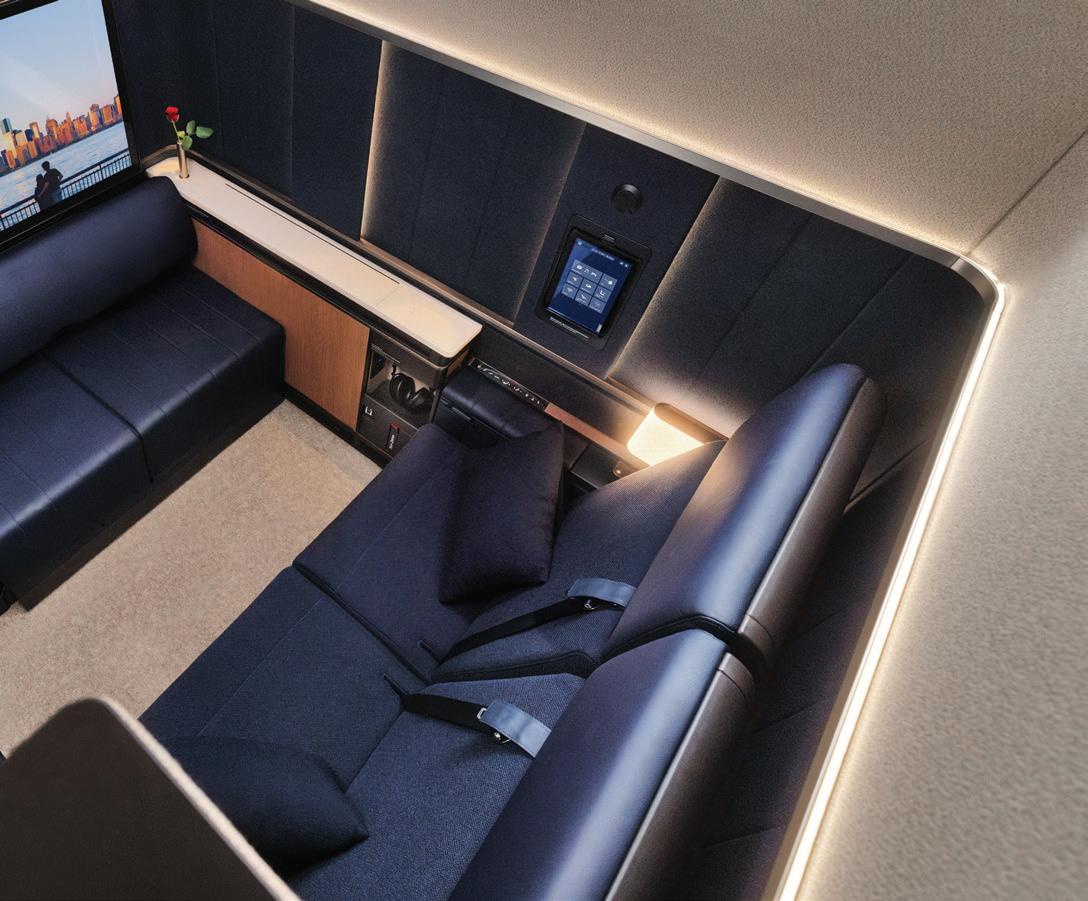
‘Instead of a uniform cabin, passengers can choose from five seat types tailored to specific needs’
That will change in late 2026, with the introduction of the Aria Studio. This new cabin, arranged in a 1-2-1 configuration, offers direct aisle access and fully flat beds even on shorter regional flights. Borrowing design cues from the Aria Suite, currently on the Boeing 777-300ER, the Aria Studio is tailored for Cathay’s regional routes, where passengers increasingly expect long-haul comfort.
The significance of this upgrade cannot be overstated. IntraAsia travel is one of the most competitive markets in the world, with Singapore Airlines, ANA and JAL vying for space, and players such as Taiwan’s STARLUX also setting high standards.
The Aria Studio roll-out precedes the anticipated arrival of Cathay’s Boeing 777X aircraft in 2027, which will feature line-fit Aria Suites and four brand-new, fully enclosed Halo Suites in first class.
JAPANESE INNOVATION
Japan’s two major carriers are also pushing premium seat boundaries. All Nippon Airways (ANA) is extending its acclaimed The Room concept, launched on its Boeing 777-300ER fleet, as The Room FX on its Boeing 787-9 Dreamliners. Featuring 48 suites, the cabin balances high capacity with generous personal space, bringing top-tier products on routes from Tokyo to Europe and the US.
Japan Airlines (JAL), meanwhile, has completely reimagined its flagship experience on the Airbus A350-1000. First class features six suites enclosed by 62-inch walls, with seats nearly 48 inches wide – large enough to act as a sofa for two. Business class offers fully closable doors, weight-distributing cushions to improve comfort, and personal wardrobes for storage. The emphasis is on hotel-like privacy and luxury,
‘Riyadh Air intends to leap straight to the front of the pack’
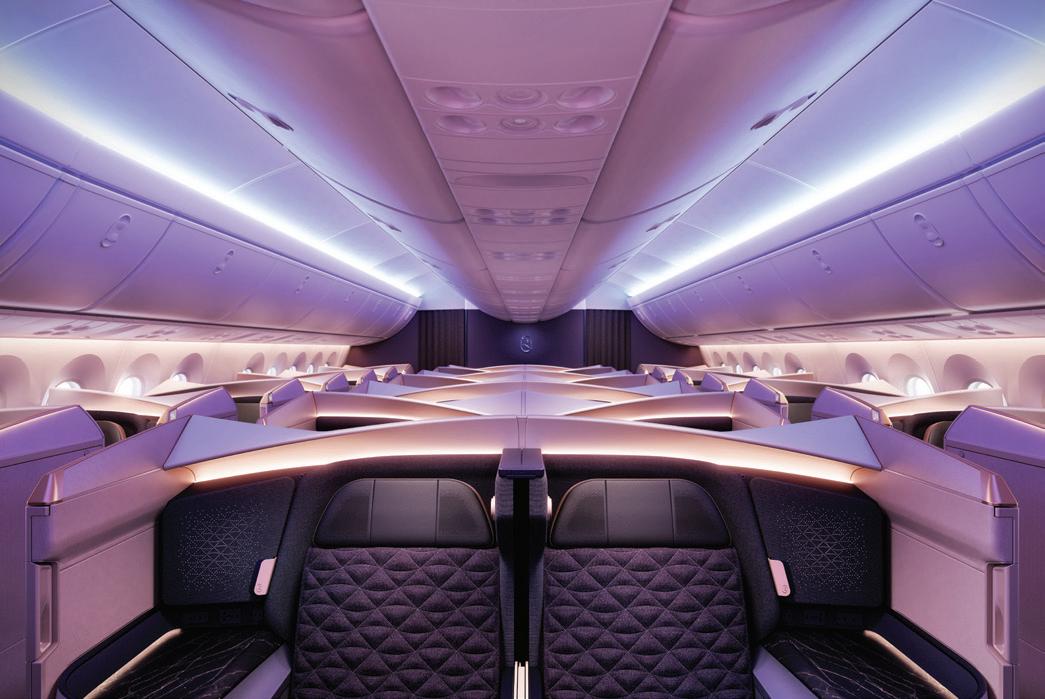
with headphone-free speakers mounted into headrests adding a futuristic touch. More A350-1000s are set to join the fleet in 2026, and JAL has also confirmed plans to introduce new business cabins on its Boeing 787-9 Dreamliners.
Singapore Airlines (SIA) is preparing one of its most significant cabin upgrades in recent history, with the launch of new suites across its Airbus A350-900 fleet and future Boeing 777X long-haul aircraft. The roll-out is expected to begin this year, with launch routes to include London and Sydney. The new suite will introduce sliding privacy doors, higher walls and improved sleeping ergonomics. Modern connectivity and entertainment upgrades are also expected. For the Singapore flag carrier, this is not just an update but a reaffirmation of its place at the top of the premium travel hierarchy.
Another contender for that crown is Qatar Airways. The airline’s original Qsuite was a game-changer when it debuted, blurring the line between business and first class with enclosed suites, convertible double beds, and quad seating for groups. In 2026, the airline plans to roll out an updated version that strengthens the core concept. Among the digital upgrades are larger 4K OLED screens for IFE, improved interfaces, expanded connectivity,
FROM
Airlines’ firstclass suite
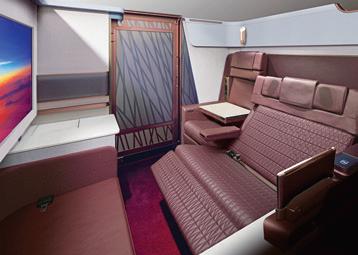
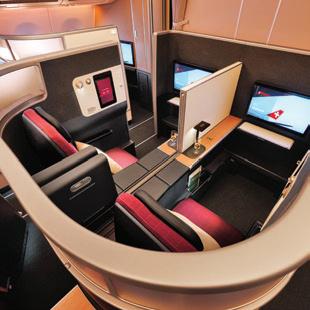
and refined mood lighting. The modular layout will remain, allowing passengers to configure seats for couples, families, or business groups alike. Despite recent geopolitical tensions in the region, Qatar Airways’ Qsuite evolution is poised to make a major impact when it takes flight.
Finally, there is Riyadh Air, the newcomer aiming to set a new standard in Gulf aviation. Scheduled to launch full operations in 2026, the Saudi airline will feature a fully realised business class from day one. Built on the Safran Unity platform, the Boeing 787-9 cabins include 28 standard suites and four Business Elite suites in a 1-2-1 layout. Each suite boasts high privacy walls, sliding doors, large IFE screens and companion seating in the Elite section. Advanced Devialet audio and gate-to-gate wifi complete the experience. For a start-up, this is an audacious move: rather than evolving incrementally, Riyadh Air intends to leap straight to the front of the pack.
These new seats represent a significant shift in premium travel. Privacy is now a priority, technology integration is expected, and luxury differentiation is the selling point. Narrowbody aircraft are being reimagined as long-haul platforms, while first and business class are being reinvented as living spaces. For passengers, the happy implications are clear: 2026 will bring more premium cabin comfort, more inflight privacy and more seat choice than ever before.


















Swap your office cubicle for a cell at these visually arresting hotels


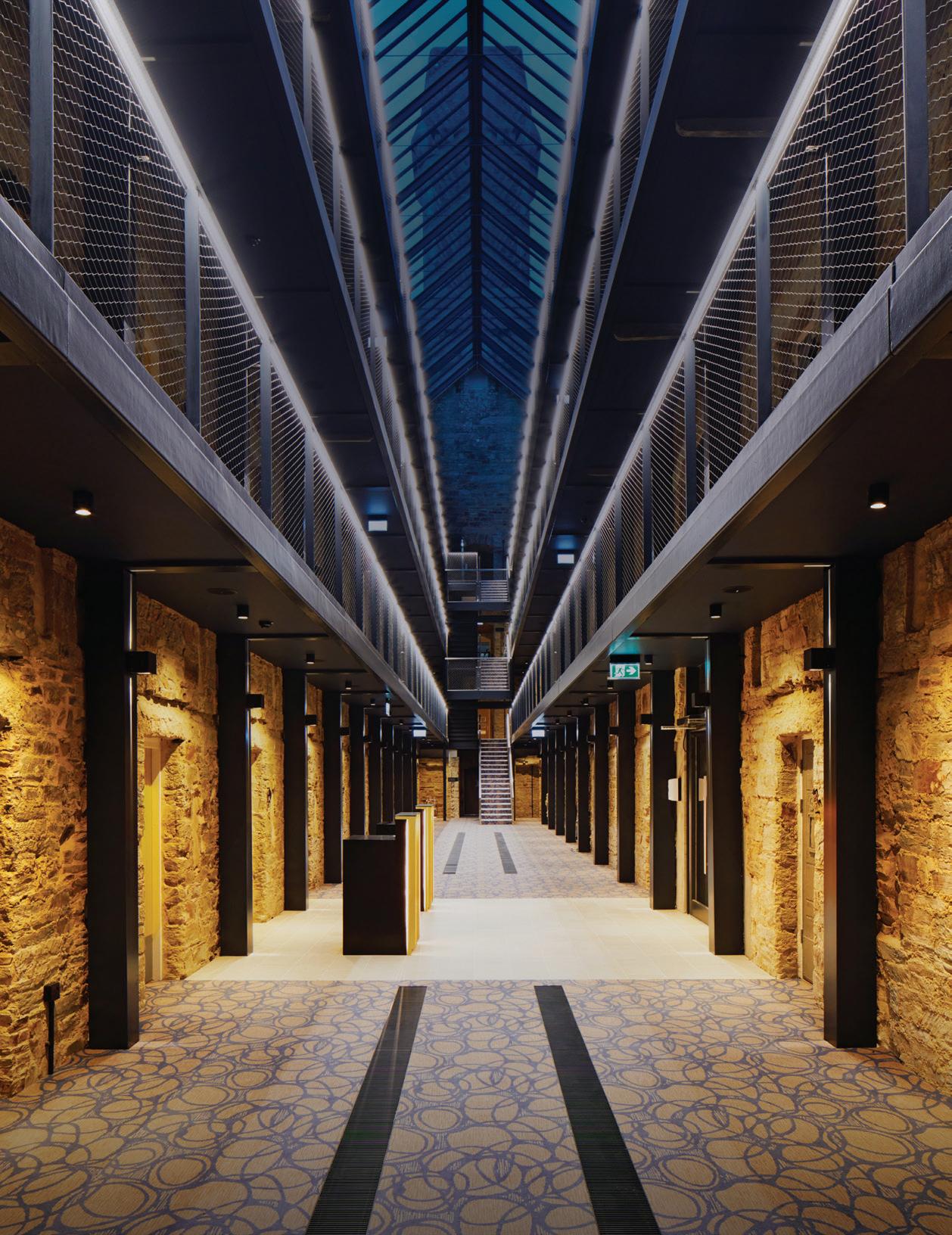


JAILS AND COURTHOUSES don’t exactly scream “welcome”, but in recent years many have been transformed into luxury hotels, with no guilty verdict required to gain access. The scale and uniform layout of prisons lend themselves well to conversions, and original cells are upgraded to feature plush furnishings, high-end toiletries and quirky details. Jails and police stations also have fascinating histories, from famous inmates to prison breakouts, and several add museums, tours and shops to the experience. Fancy a night in the clink? Here, we explore some hotels where you can lock yourself in – just don’t throw away the key.

WORDS
MARK CASWELL

Bodmin Gaol opened in 1779 and was in operation for nearly 150 years. For the next 90 years it housed everything from a fishmongers to a nightclub, before a £65 million investment by Tudor Hotels Collection saw the complex reopen as a joint hotel and jail attraction in 2021. Each room has been converted from three prison cells, the restaurant is housed within the former chapel, and the Bodmin Jail Attraction offers guided tours of cells and even a restored Victorian execution pit.
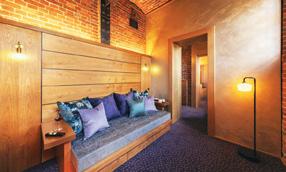
Japanese brand HOSHINOYA opened a new hotel within Nara Prison last month. Built in 1908, the prison operated until 2017. Now, its red-brick walls, radial cell blocks and administrative buildings have been transformed into a 48-suite boutique hotel, with facilities including a Japanese-French finedining restaurant and a museum exploring the building’s history.
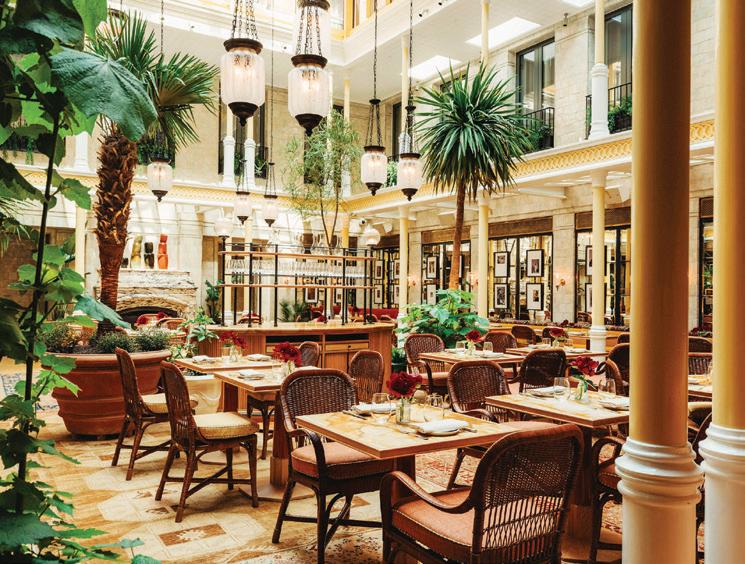
This luxury hotel is housed within the Grade II listed former Bow Street Magistrates’ Court and Police Station, in Covent Garden, which closed in 2006 after 125 years of operation. Oscar Wilde and Vivienne Westwood were both detained there, and it was while conducting her own defence in the court that Christabel Pankhurst became the first trained female lawyer to cross-examine a witness, in 1908. The complex reopened as NoMad London in 2021 and features stunning interiors by New York-based agency Roman and Williams. Latin American-inspired bar and restaurant Side Hustle is housed within the former police station, and hotel guests get free entry to Bow Street Museum of Crime & Justice.
‘Phrases scrawled on cell walls have been recreated, including “A real man doesn’t become a cop”’
This Dutch jail opened as a hotel after extensive renovations in 2011. Het Arresthuis (The Arrest House) features 36 rooms, with suites named The Jailer, The Lawyer, The Director and The Judge. Original features include cell doors, cast iron stairs, and walkways, while phrases scrawled on cell walls have been recreated, including “A real man doesn’t become a cop”.
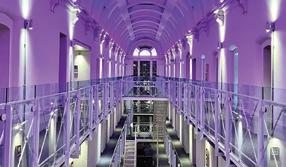
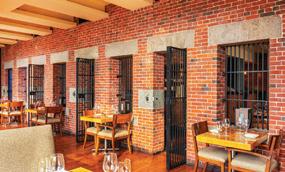
Oxford Castle was home to a prison at least as early as the 18th century, but acquired the HM Prison Oxford name following the 1888 prison reforms. It closed in 1996 and was redeveloped as Malmaison Oxford. The hotel’s 95 rooms are all housed within converted cells, with original features including door peepholes, exposed brick walls and barred windows.
Boston’s Charles Street Jail operated from 1851 to 1990 and housed inmates including civil-rights activist Malcolm X. For today’s hotel iteration, the octagonal rotunda has been retained, while the exercise yard is now a landscaped courtyard. Guests can see original cell façades in the CLINK restaurant, while the Alibi bar is set within the jail’s former “drunk tank”.
Studies suggest that up to 70% of cross-border deals underperform. If the numbers work but the arrangement fails, the issue may be cultural, not commercial
WORDS ROSE WINTER


leaving my career to become a freelance writer (an audacious move, with just one commission in hand), I entered a season of collecting “how to do life” books. My shelves quickly amassed self-improvement manuals, each titled by single, untranslatable nouns. The Japanese concept of ikigai promised to affirm my purpose in writing, and the Swedish hygge justified buying candles I couldn’t afford. When I picked up The Power of Nunchi, by Euny Hong, I gained insight into something far more strategic. Nunchi, a Korean concept often translated as “eye-measure”, is the ability to read a room in seconds – to register hierarchy, mood, alliances, and tension. It’s an astute calibration of perception, challenging Western ideas that equate power with charisma. It asserts that what happens around the meeting matters more than the meeting itself, as opposed to Western “success” culture, which tends to worship the cult of personality.
In some corners of the world, arriving with the strongest opinion signals confidence; think an erratic billionaire live-
tweeting market-moving impulses at 2am. We obsess over these personae and often strive to emulate them, believing that spectacle and unconventionality is a good strategy. But nunchi suggests the opposite: that the person who observes first often wins later.
South Korea’s ascent in international business, from Samsung’s scale to the global reach of “K”-everything, illustrates the point. The nation’s industrial strategy and innovation is now widely respected, but, during the Joseon period of 1392–1897, the West considered it the “Hermit Kingdom” – a Confucian society shaped by boundary-keeping. Later forced open by imperial powers, colonised by Japan, divided by war and perpetually positioned between geopolitical giants, attentiveness became survival. Euny Hong argues that South Korea’s situational intelligence became a national asset.
Culture is strategy, and understanding unspoken dynamics can be as valuable as possessing technical expertise. In Japan, the governing instinct is wa (“harmony”). Consensus is often built through nemawashi – informal groundwork laid before any formal presentation. By the time a meeting takes place, the decision has frequently been shaped privately. Arriving in Tokyo with a fully formed strategy but no prior alignment can leave you with little more than courteous nods and zero traction. This aversion to open friction is risk management, and underpins the approach taken by companies such as Toyota, which has been studied globally for its efficiency and resilience.
The UAE, meanwhile, is home to over 40 free zones and more than 200 nationalities, with some businesses built almost entirely on crosscultural negotiation. The Arabic term wasta is often reduced to “favouritism”, but in practice it’s closer to visible social capital. In an ecosystem built on sovereign wealth, family conglomerates and joint ventures, reputation travels faster than a contract, so a well-placed introduction can remove

‘Cultural intelligence is the new due diligence. Just pay attention’
Keep these in mind for your next meeting
1
ARRIVE to the meeting room early enough to understand who speaks to whom before the meeting begins.
2
NOTICE who is never contradicted, and whether a disagreement is aired or deferred.
3
DON’T conflate speed with efficiency, and avoid forcing immediate agreement. Ask instead, “Who else should weigh in?”
4
BUILD time for informal conversations –an unstructured dinner may be the best setting for a negotiation.
5
LET silences linger or flowing conversations stretch, and watch who else watches. It’s astonishing how much information circulates through this alone.
6
SEND follow-up notes that reinforce relationships rather than action points.
the need for months of market-entry strategy. Relationships are the transaction, and “cutting to the chase” could signal impatience and instead cut you out of a deal. Dubai’s extraordinary capacity for reinvention, from desert entrepôt to global innovation nexus, rests on enduring networks that survive sector pivots. Wasta is deeply cultural and powers one of the world’s most futuristic skylines.
In Nairobi, the Swahili term harambee (“all pull together”) positions success as collective, and the entrepreneurial ecosystems in East Africa’s commercial centre, from mobile banking to agritech, thrive on collaboration. M-PESA, Kenya’s pioneering money-transfer platform, is an example of this, driven as it is by grass-roots adoption and community networks. Over in Europe, seductive start-up tech hub Lisbon has its own cultural code. Shaped by Portugal’s maritime past and subsequent contraction, saudade signals a nostalgia for what has been lost. Silicon Valley bombast has little meaning in a culture where memory tempers ambition, so pitch decks heavy on disruptive rhetoric may not land as they would in Palo Alto.
Peter Drucker’s oft-quoted line “culture eats strategy for breakfast” still rings true today. Given a few clever prompts, AI can draft a decent business strategy in minutes, but misreading cultural cues risks a slow erosion of trust that could derail a deal.
Reducing cultural concepts to etiquette tips (wait your turn in Seoul, accept coffee in Dubai) trivialises the point. For the business traveller, cultural intelligence is the new due diligence. It doesn’t require fluency in five languages; just pay attention. Global business may often be conducted in English and denominated in pounds and dollars, but it’s dictated by untranslatable, yet decipherable, rules. Become an expert at reading those rooms, and you’ll be invited back. In any market, that’s the only metric that counts.




Tighter budgets, streamlined claims, and tech innovation – we take a look at the world of travel expenses in 2026










“THE BOTTOMLESS EXPENSE account is propaganda,” says Alan Farrier, a senior sales executive covering the EMEA region for a major streaming platform. “It lures hopefuls with the promise of long lunches and luxury travel. I’ve certainly never had one.”
Today’s travel and expenses (T&E) landscape is tighter, more controlled and, for those doing the travelling, more frustrating than ever. After the pandemic shook the tree, there was a noticeable rebound in company budgets, but the upswing wasn’t felt among those on the road.
Inflation has eroded spending power and, while a rash of new technologies means it’s easier to file expenses, they’ve also made it simpler for companies to impose

restrictions and detect employees’ somewhat sneaky claims.
Shrinking allowances


On paper, the outlook is healthy. The Global Business Travel Association (GBTA) reported a 10% increase in business travel spend in 2024, forecasting annual compound growth of 6.1% through to 2029. In reality, however, spending remains 14% below pre-pandemic levels.
“Like-for-like budgets are up, but we’re travelling less and buying fewer things,” says Charles Lockwood, a financial controller at an international property firm. “We’re only just keeping up with inflation, but business travel is one of the few areas we can control when we’re hit with global economic pressure, so everything gets scrutinised.”

In the creative industries, the squeeze is just as acute. Iain
Wiggins, an executive producer at an advertising agency, sets T&E budgets for shoots. “Getting less for more is the expectation,” he says. “It now costs the same to have eight people on a shoot that used to have a dozen people. It really limits what we can do.”
To make budgets stretch, he’s found a loophole: scheduling travel outside peak periods. “Flights and hotels that cost hundreds during busy seasons can cost much less in winter,” he says. This solution isn’t problem-free, however, since poor weather


conditions don’t usually make for glamorous backdrops.
However, the squeeze is not uniform, as some industries are hit harder than others. “T&E budgets are closely linked to industry sectors,” says Paul Dear, SAP Concur’s regional vice president for Supplier Services EMEA.
“Retail, for example, is tightening its belts, whereas energy or mining companies are seeing growth and, hence, an increase in travel budget. I think the biggest talking point between travel buyers is measuring the return on investment of travel.”
As many companies tighten their purse strings, some business travellers are instead widening their pockets to ensure a more comfortable trip. Firms are increasingly imposing restrictions on business class travel to slash both costs and their carbon footprint, leaving employees stuck back in economy.
Previously, employees were generally guaranteed a premium ticket for flights surpassing six hours, but that’s no longer a fixed rule – with cutoffs increasing by the year. The way it’s going, you could be in economy for the long-haul.
In such cases, business travellers might fork out for an upgrade to premium economy, or redeem a flight using hard-earned miles, so they can at least look like a high-flyer upon arrival.
In recent years, a raft of disruptive players have entered the market, promising to cut both the administrative costs and the headache of expenses. Software-as-a-service (SaaS) providers including SAP Concur, Perk, and Expensify all pitch a similar product: an app-based platform that allows those in the field to track their spend, scan receipts and make claims digitally.
“The reality is that companies have had a massive automation gap for years,” says Vicki Williams, vice president of UK and Ireland sales at Perk. “You look across a business and systems like payroll are seamless, but, for some reason, travel and expenses have been left behind. Right now, only about 41% of companies have a mostly or fully automated expense workflow.” If digitalisation has streamlined the mechanics of expensing, it has also made it easier for companies to enforce tighter controls. “It’s all about rigorous efficiency, not just throwing more cash at the problem,” says Williams. “About 67% of business leaders are looking to automate these highly fragmented, unjoined processes so they can recapture that lost time and actually reinvest it back into company growth.”
Make it smart
The next phase, many believe, will be driven by artificial intelligence.
Farrier expects AI to be integrated into existing platforms, helping companies

1
TRAVEL OFF-PEAK WHERE POSSIBLE
The cost difference can be significant, particularly in destinations driven by seasonal demand.
2
4
PUSH FOR A COMPANY CARD
CHARGE IT WHERE YOU CAN
If travel is client-related, it may be more efficient to pass costs on to them rather than absorb them internally.
3
USE AI TO PLAN, NOT JUST CLAIM
AI tools are increasingly effective at building cost-efficient itineraries – use them before you travel, not just after.

It may still come with restrictions, but it reduces admin and gives you more flexibility than reclaiming everything manually.
5 BOOST IT WITH BLEISURE
According to Perk, one in five C-suite leaders extend work trips for leisure. Blend business and personal travel to take the sting out of a holiday – just be clear on what your company will, and won’t, cover.
‘Someone in America has decided there are only two hotels in Berlin I can stay in, and neither is near where I need to be’
Meanwhile, centralised control has added a layer of bureaucracy that can end up costing more than it saves. “Someone in America has decided there are only two hotels in Berlin I can stay in, and neither is near where I need to be,” says Farrier. “I spend more on cabs than it would cost to stay nearby.”


Such illogical policies might prompt employees to book their own stay at a more convenient hotel, while others might resort to staying with friends.
Technical remedy
There’s good news when it comes to filing expenses, with the days of paper receipts consigned to the history books.










reduce unnecessary costs while giving travellers more flexibility. Perk says that its AI capabilities can enable clients to automate up to 90% of claims, and many competitors tout similar results.
Business travellers and companies alike are also leveraging AI to find cost-effective choices in real time.
Farrier predicts that AI will ultimately allow much smarter decisions to be made on the fly while meeting balance cost, convenience and policy.
“I hope there will be a Goldilocks moment where budgets and benefits align,” he says. “But I think the golden age of expense accounts will remain a fairytale.”
*Some names and titles have been changed
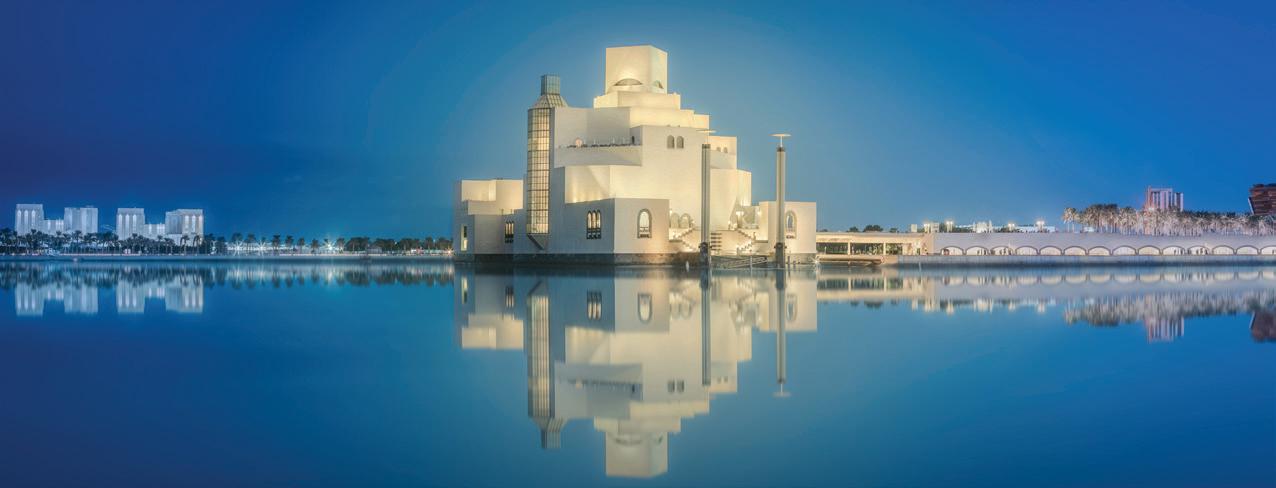

Cutting-edge modern architecture meets rich Arabian heritage along the glittering waters of the Arabian Gulf
OHA IS A DYNAMIC capital where world-class art, futuristic skyscrapers, and ambitious cultural districts blend seamlessly with historic souqs and maritime traditions.
As a major global transit hub and a thriving commercial centre, it offers a sophisticated mix of business and leisure. Here are 10 spectacular experiences for your next visit to Qatar’s capital.
1 Wander through Souq Waqif
Built on the site of Doha’s century-old trading market, Souq Waqif is the beating heart of the city. Walk through its labyrinth of alleyways to find spices, traditional garments, perfumes, and handicrafts. Don’t miss the Falcon Souq, where you can see these highly prized birds up close, and the nearby stables housing beautiful Arabian horses.
2 Admire the Museum of Islamic Art (MIA)
Designed by Pritzker Prize-winning architect I.M. Pei, the MIA stands prominently on an island off the Corniche. Its striking geometric exterior is a masterpiece in itself, while inside it houses one of the world’s most comprehensive collections of Islamic art, spanning three continents and 1,400 years of history, including textiles, ceramics, glass, and manuscripts.
3 Explore Katara Cultural Village
Positioned between West Bay and The Pearl, Katara is a sprawling hub dedicated to heritage, theatre, and art. Key highlights include the stunning Katara Amphitheatre, which blends classical Greek design with Islamic architecture, the ornate Gold Mosque, and multiple galleries showcasing regional and international artists.
4
Step inside the National Museum of Qatar (NMoQ)
Architect Jean Nouvel designed this breathtaking structure to mimic the desert
rose – a natural mineral formation found in Qatar. The museum’s immersive galleries take visitors on a chronological journey through the country’s history, from its geological origins and pearling past to the rapid modernisation of the present day.
5 Visit the luxurious Pearl-Qatar
This man-made, Mediterranean-style island features luxury high-rises, upscale villas, and pristine marinas. Stroll along the Porto Arabia boardwalk to admire yachts, dine at high-end waterfront restaurants, or visit the colourful, Venice-inspired Qanat Quartier, famous for its picturesque canals and pastel-coloured buildings.
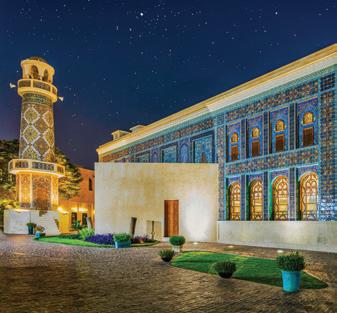


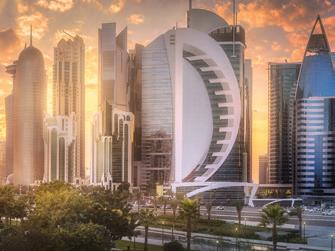
6 Take a dhow cruise along the Doha Corniche
The Corniche is a seven-kilometre crescent-shaped promenade offering panoramic views of the dramatic West Bay skyline. To experience it from the water, board a traditional wooden dhow boat at the harbour for a sunset cruise. It provides an excellent perspective on how the city’s modern architecture contrasts with its maritime roots.
7 Discover Msheireb Downtown Doha
As one of the world’s first sustainable downtown regeneration projects, Msheireb blends traditional Qatari architectural principles with modern eco-friendly technology. Explore the Msheireb Museums, housed in four restored heritage houses, to learn about Doha’s social history, and ride the district’s complimentary electric tram.
8 Venture to the “Inland Sea” (Khor Al Adaid)
Located about an hour and a half south of Doha, this UNESCO-recognised natural reserve is one of the few places in the world where the massive desert dunes meet the sea. Visitors can experience dune bashing in 4x4 vehicles, camel riding, and spectacular views across the water to the Saudi Arabian border.
9 Shop at Place Vendôme Qatar
Located in the emerging city of Lusail just north of Doha, this Parisian-inspired mega-mall features stunning architecture, a central canal, and a spectacular synchronised fountain, light, and laser show. It houses a vast array of global luxury brands, making it a premier destination for high-end retail and entertainment.
10 Browse contemporary art at Mathaf
The Mathaf: Arab Museum of Modern Art, located in Education City, offers a unique regional perspective on global contemporary art. It hosts a major collection of modern and contemporary art from the Arab world and its diaspora, making it an essential stop for art enthusiasts looking to understand the region’s evolving creative landscape.



































Expert takes on this month’s essential places and products
HOTEL REVIEW
Taj Dubai
RESTAURANT REVIEW
TANSŌ


HOTEL REVIEW


A recent refurbishment brings sleek, contemporary comfort to this iconic business hotel in the heart of Dubai


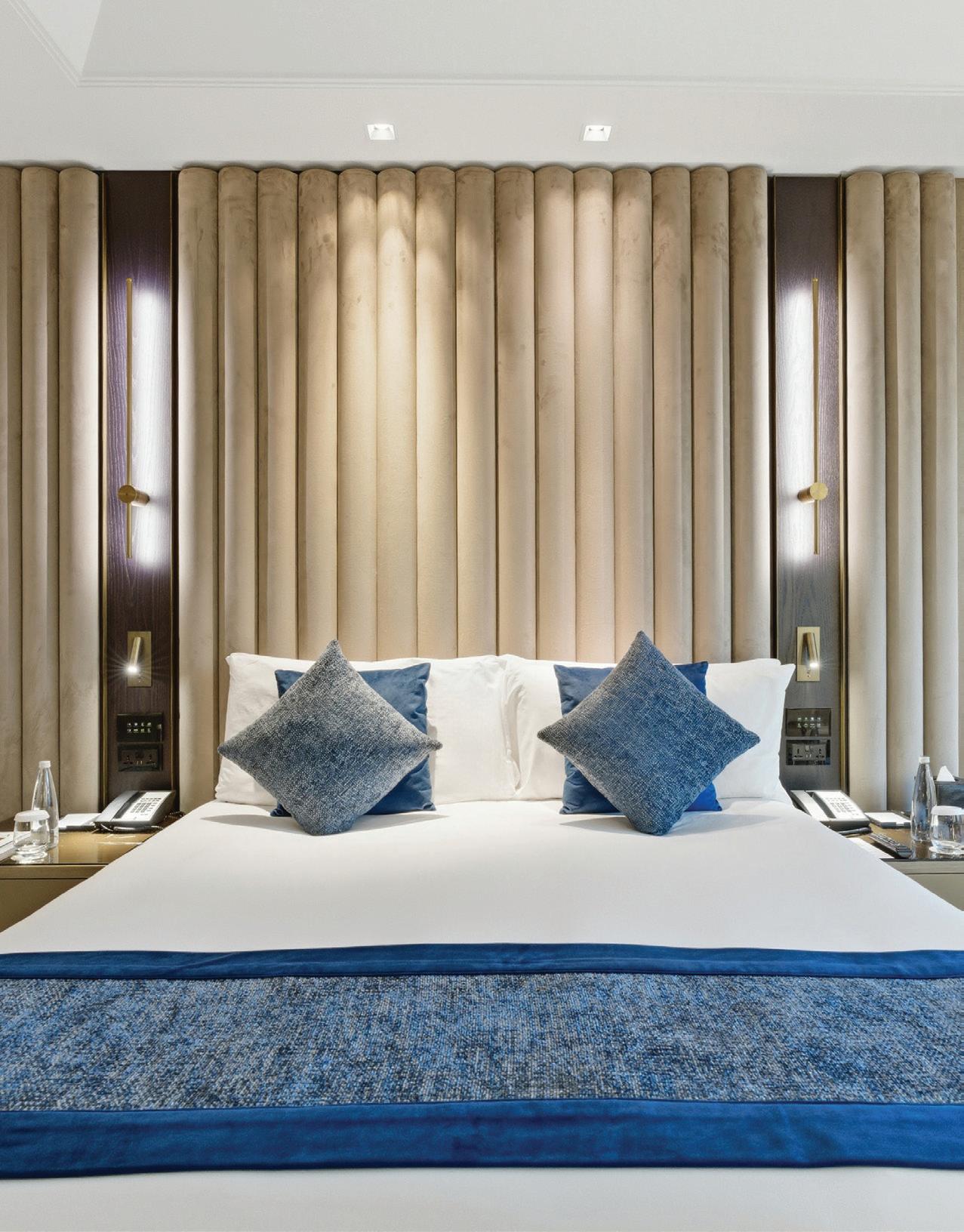
Stepping into the Taj Dubai, there’s an immediate sense of familiar warmth that cuts right through the usual slick gloss of Business Bay. Since it opened in April 2015, this property has always done a great job of blending classic Indian heritage with Downtown’s fast-moving corporate energy, but the 2026 refurbishment gives the property a noticeably lighter, more contemporary edge.
The grand lobby, famed for its dramatic artwork, intricate tapestries, and towering ceilings, feels less like a formal waiting room and more like a lived-in gallery where you actually want to spend time. It remains a favourite for international executives and corporate visitors, but you’ll just as easily spot creative types in the quieter corners.
The service remains the real anchor here –underlined by the brand’s philosophy of “Tajness”, an emotional feeling of sincere Indian hospitality – it is deeply attentive without ever feeling suffocating, and the team has an impressive knack for remembering your name and exactly how you prefer to take your morning coffee by day two.

The hotel provides easy back-route access to the city’s financial district, helping you bypass the heaviest traffic bottlenecks during rush hour.
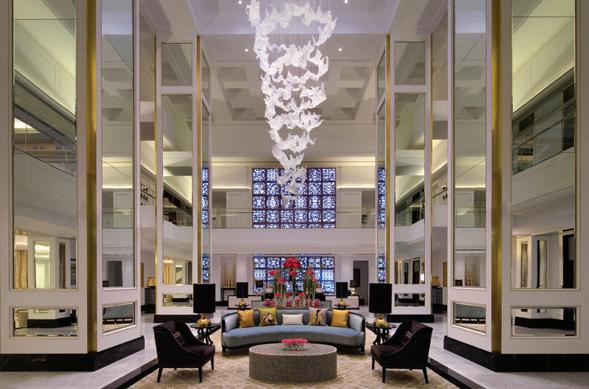
by an airy combination of natural light, regal gold and white tones, and clean lines that frame spectacular, unobstructed views of the Burj Khalifa skyline all without losing its original opulence and homage to Indian design. For anyone travelling on business, the workspace setup is notably practical; the desks are wide, the chairs are built for comfort, and you do not have to hunt behind the bedside furniture to find an accessible plug or a fast-charging USB port. It feels genuinely comfortable, intuitive, and residential rather than overly staged.
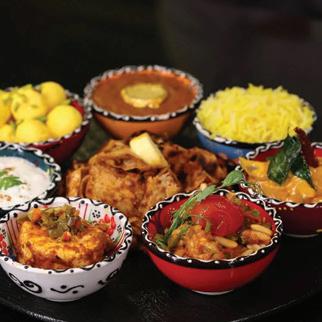
The refreshed design flows naturally, balancing busy daytime arrivals with spaces built for quiet focus. Subtle changes strip away any potential stuffiness, leaving the space feeling open and welcoming; functional yet still premium.
Whether you are here to pitch to clients, wind down after a long flight, or catch up over a great meal with loved ones, this is a hotel that knows how to run efficiently without losing its human touch.
The newly refreshed guest rooms feel like a real sanctuary. Gone are the heavier, darker fabrics, replaced
Dining here remains a massive draw for both hotel guests and city residents, offering an exceptional lineup of choices. The extensive conference spaces, including the expansive Opera Ballroom, have been kitted out with smart technology, making event setups remarkably
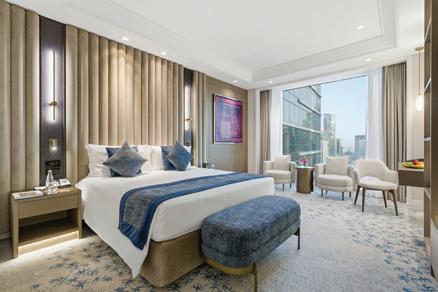
painless. If you need a breather, the J Wellness Circle offers brilliant, traditional Ayurvedic treatments that knock outdaily stress and jet-lag alike, while the outdoor swimming pool deck remains one of the best low-key spots in the neighbourhood to pull up a chair and watch the city skyline light up at dusk.

A highly reliable, stylish base for travellers who want easy access to key parts of the city alongside panoramic skyline views, and standout service with legendary warmth.

BEST FOR
Travellers seeking a central Downtown base with distinct cultural character, excellent dining, and space to work.

DON’T MISS
Dinner at the authentic Indian fine-dining restaurant, followed by a relaxed evening drink out on the outdoor terrace.
PRICE
Rooms start from around AED 850 per night in the shoulder season.
CONTACT
Burj Khalifa Street, Business Bay, Dubai, UAE; +971 4 438 3100; tajhotels.com
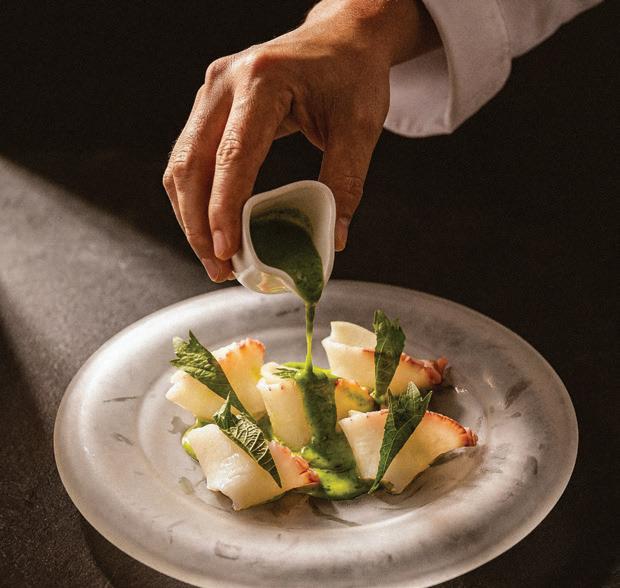
Understated luxury meets Japanese precision in a Jumeirah villa
What’s it like?
Tucked away in a quiet residential pocket of Jumeirah 1, this selfdescribed “neo-Tokyo dining gallery” feels a world away from the typical eateries
that dominate much of Dubai’s high-end Japanese restaurant scene. Housed inside a standalone villa, the space leans into an understated aesthetic that is warm and natural. Floor-to-ceiling windows flood the main room with beautiful natural light during the day and atmosphere at night, fostering a community-driven mood
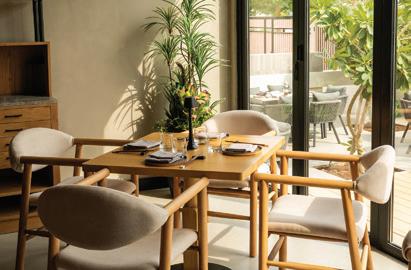

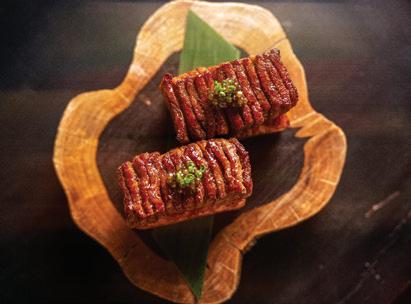
that encourages you to slow down and connect. There is an unmistakable air of artistic restraint here – this is not a spot for flashy, over-the-top design gimmicks or loud corporate branding. Instead, it feels deeply intimate, drawing a discerning local crowd alongside designconscious foodies who appreciate an authentic neighbourhood vibe.
Food and drink
Executive Chef Ricardo Bojador has put together an inventive menu that playfully balances classic Japanese precision with local regional ingredients. The signature Wagyu French Toast remains a highlight, featuring perfectly toasted bread topped with rich A5 Wagyu strip loin and pickled asparagus, drenched with a golden, sunny-side-up egg. The restaurant is currently running a special
menu of GCC-inspired ingredients alongside its regular offering through July, showcasing regional provenance through plates like “Coast,” which pairs local wild hammour with a bright yuzu miso beurre blanc and leek ash oil, and “Soil,” which matches organic eggplant with smoked miso, hazelnut, and truffle soy. Their unique takes on comfort food are not to be missed, from the Carbon-udon to the “Fish and Chips” – a refreshing seabass sashimi served cleverly atop a crispy potato pavé. For a bit of tableside theatre, don’t miss the handroll, deftly assembled right in front of you, nor the A5 Wagui Ishiyaki: juicy, melt-in-your-mouth strips you’ll sear on a hot plate. The venue intentionally operates without a licensed bar, which has resulted in an outstanding drinks menu with mocktails that are as creative and palatepleasing as its food.
The team are remarkably sincere and incredibly knowledgeable about the menu, managing to be polished without ever being stiff. Their efforts to build genuine connection with guests go a long way in ensuring a desire to return.
Equally great for date nights, friendly catch-ups, or family meals, this is a rare neighbourhood gem you will want to return to regularly. It doesn’t rely on novelty or gimmicks – this is a beautifully grounded space you’ll want to weave into your go-tos rather than saving it for special occasions.

Open from 12pm to 11pm from Sunday to Thursday, and 12pm to 12am on Friday to Saturday. Closed Mondays.

Villa 15, 41st Street, Jumeirah 1, Dubai, UAE; +971 4 237 6789; instagram.com/ tansodubai

DRESS CODE
Smart casual

HOT TIPS
Request a seat near the floor-to-ceiling windows to enjoy the natural light – and if you are hoping to book an event, they have an impressive eight-seat private dining area upstairs.
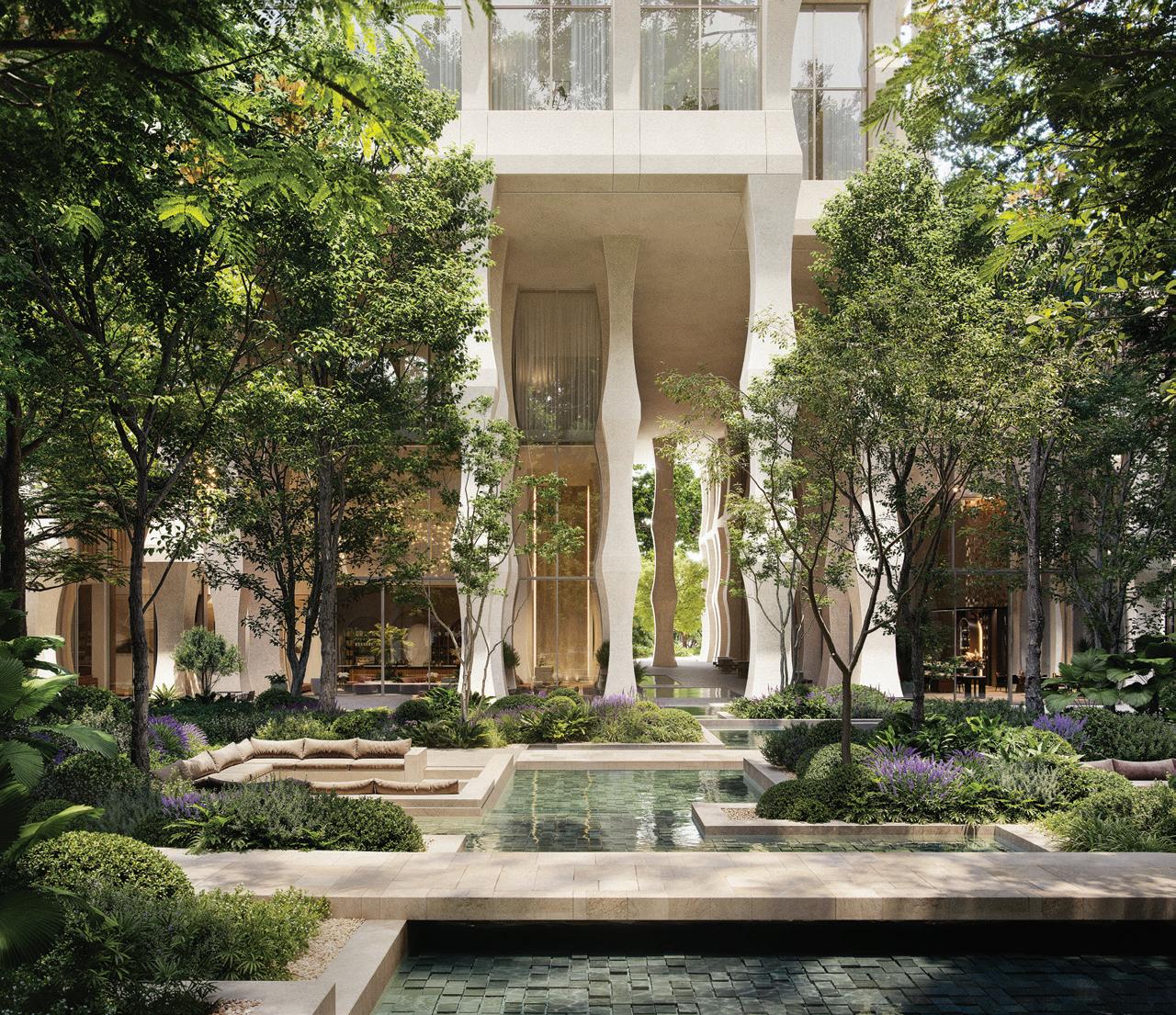
THE ICONIC Dubai International Financial Centre (DIFC) is primed for a new standout as H&H has teamed up with the Aman Group on Janu Dubai, a striking 1.3 million sqft mixed-use tower designed by the acclaimed Herzog & de Meuron. The project is the architects’ first-ever in the UAE, and this new standout of modern urban living artfully blends a 150-room hotel, a private members’ club, and premium office spaces with a fresh take on a souk, at the ground-level. Recently, a limited collection of 57 ultra-refined branded residences at its pinnacle has hit the market. Framed by dramatic 3.5m ceilings, these homes boast uninterrupted views from the Burj Khalifa to Zabeel Palace. Residents get the ultimate VIP treatment: a discreet, landscaped entrance, private car lifts, and an exclusive 34th-floor retreat complete with an infinity pool.
+966 12 696 8888 | 800 440 8888

Reservations jeddah@shangri-la com
Burj Assila, Corniche Road, Jeddah
This summer, escape to the award-winning elegance of Shangri-La Jeddah.
Recognised as Business Traveller Middle East’s Best Business Hotel in Jeddah, discover a place where every stay is defined by exceptional service, refined comfort, and moments worth sharing.