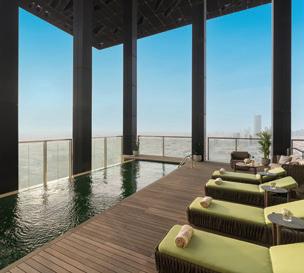
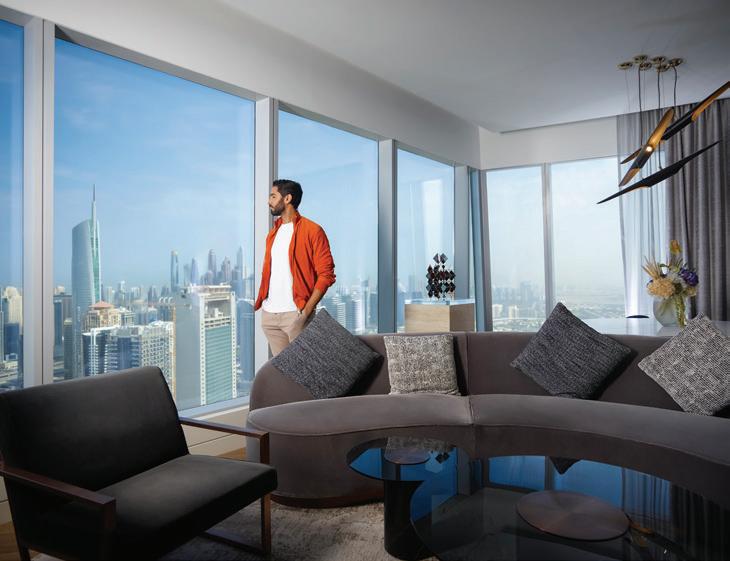
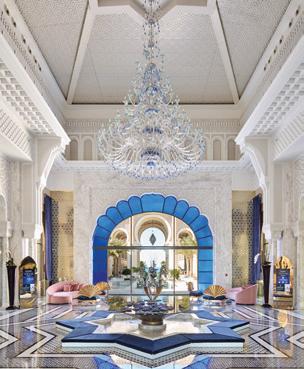
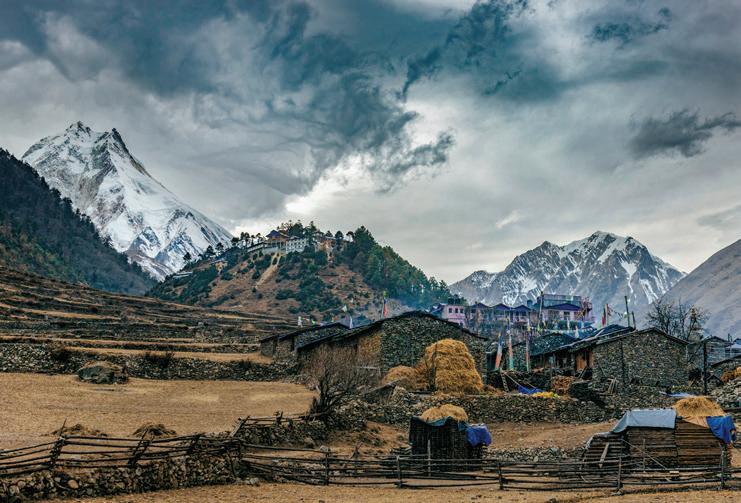
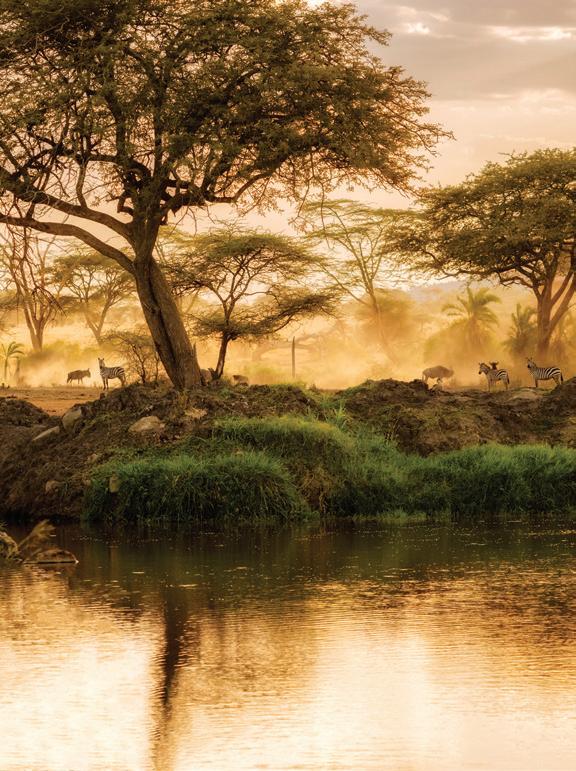
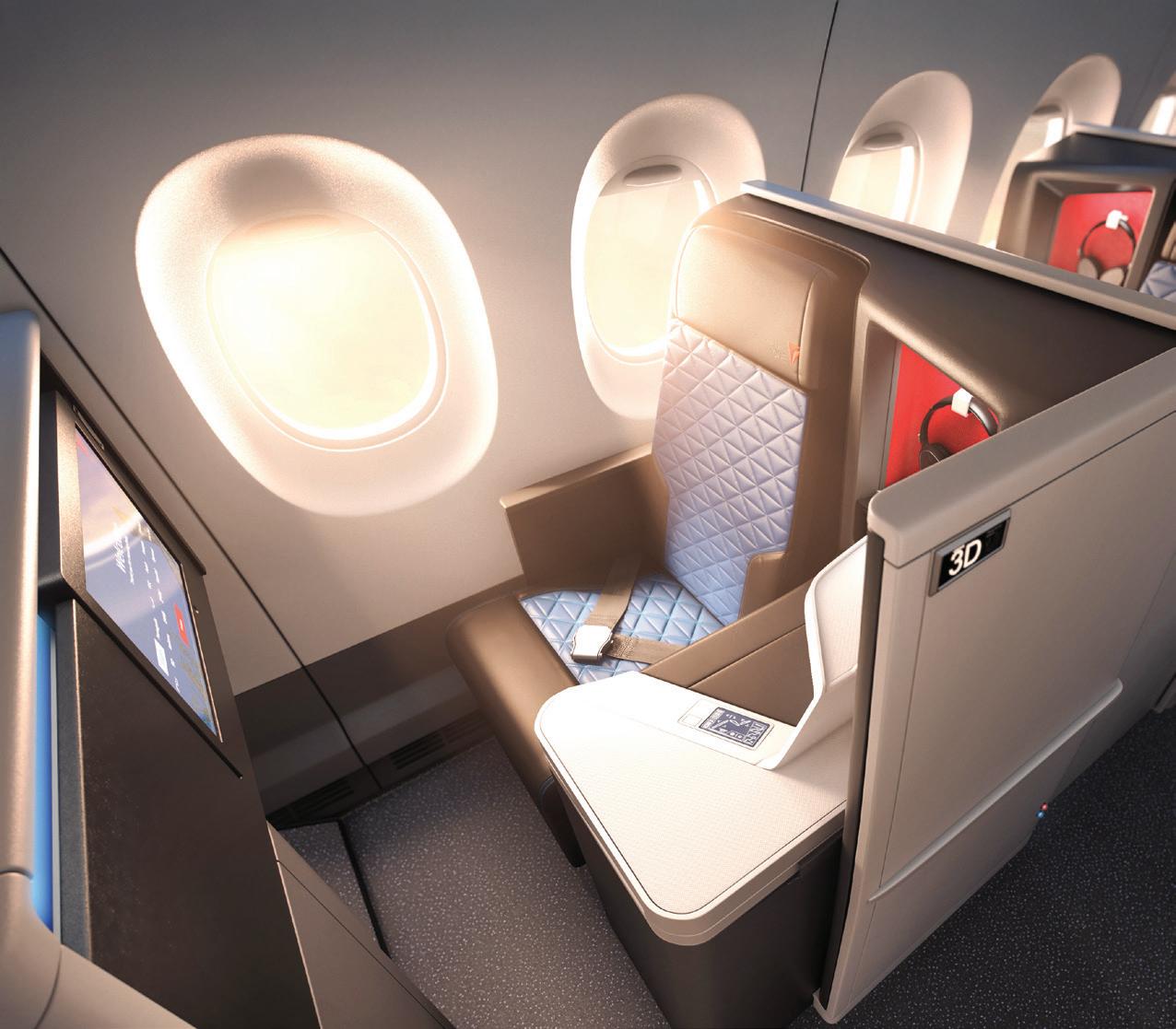
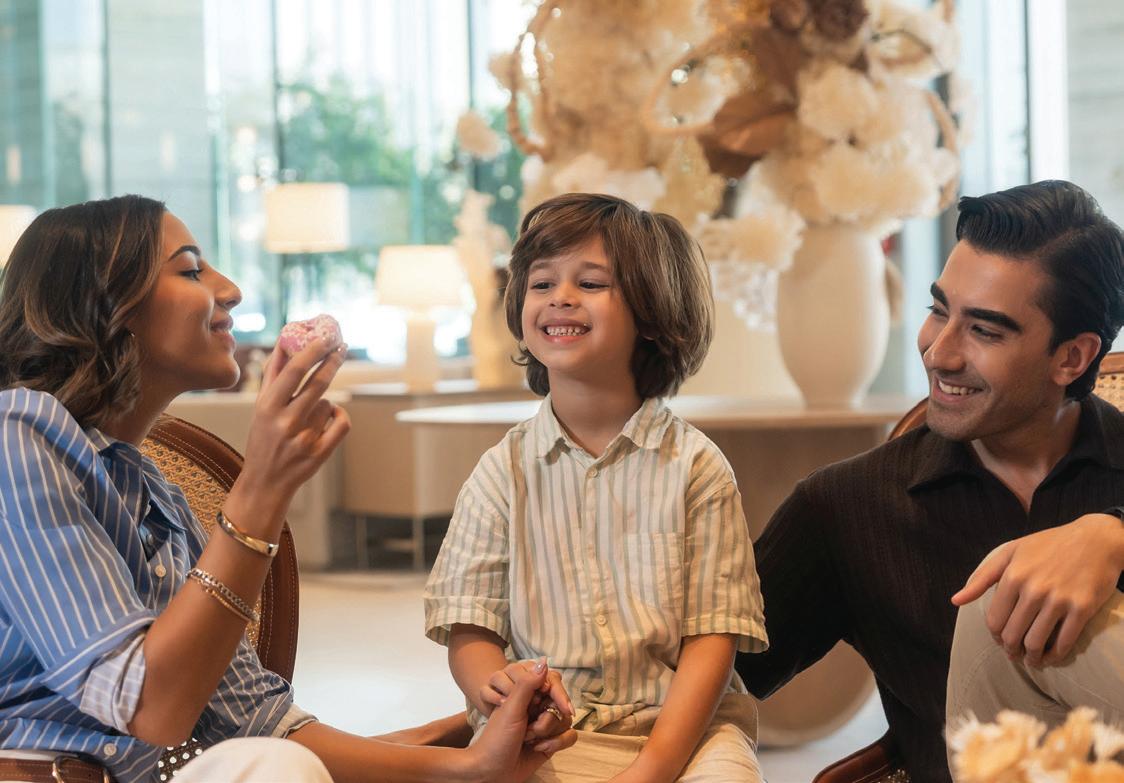
From refined comfort and complete privacy to exceptional cuisine and attentive service, every moment of your journey is designed to feel e ortless, understated, and truly rewarding.
Book now
07 Hot Ticket: A new Uçhisar retreat bringing sleek luxury to Cappadocia 08 Regional News: The latest airline, hotel, and travel news
10 Sustainable Traveller: The greener side of tourism and hospitality
12 Global News: An update on international travel
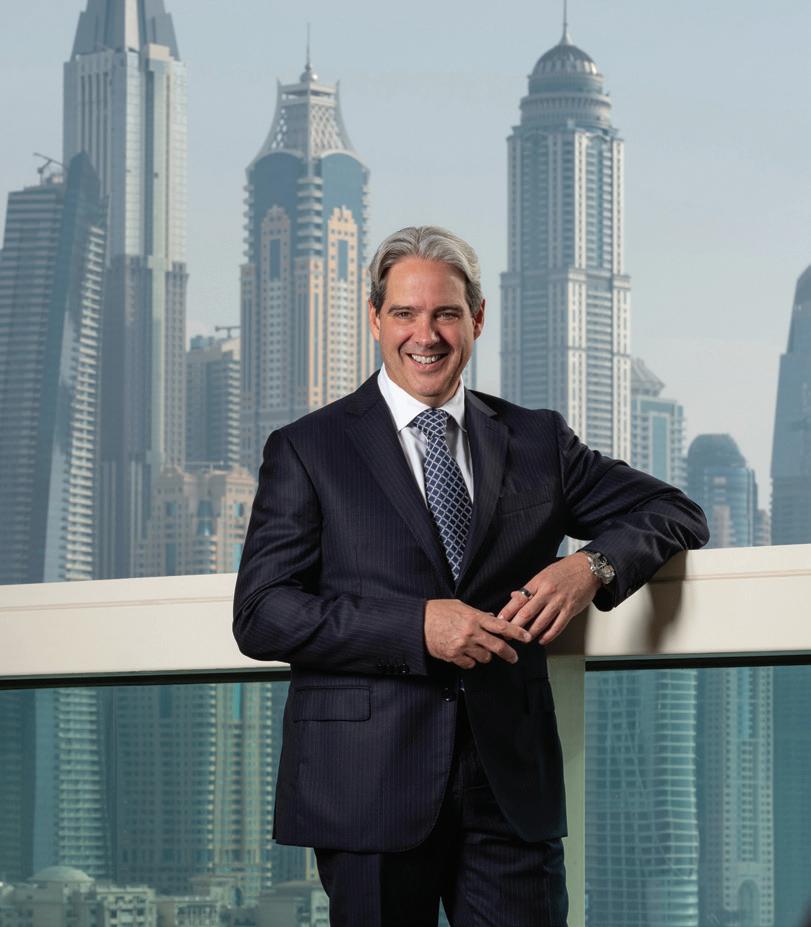
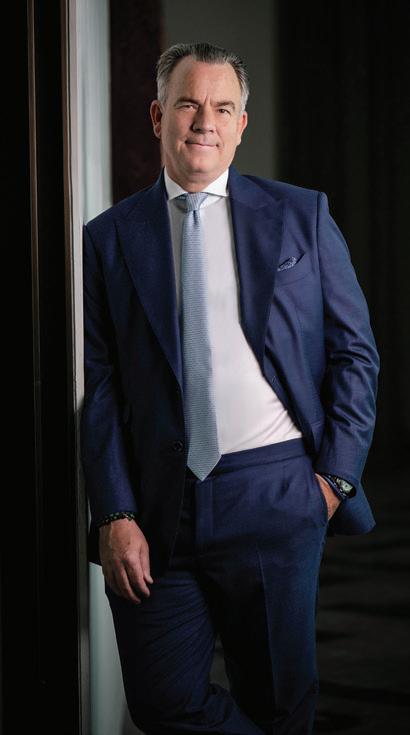
15 Guy Hutchinson, President of MEA at Hilton, shares why they remain bullish on the region’s long-term prospects
18 Op-Ed: What can a lobster teach you?
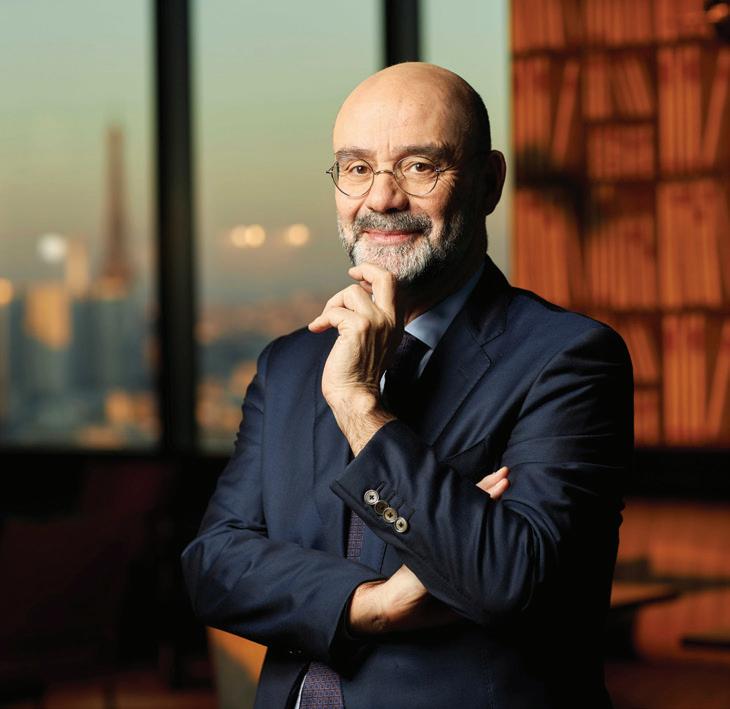
19 How Accor’s leadership is driving its long-term growth across the region 22 Frequent flyer with Giuseppe Santoni, President and Chairman at Santoni 23 Elevator Pitch with Fares Daghlas, general manager of W Riyadh - KAFD
25 Extra Day in Hamburg 27 Soothe yourself with the wellness-oriented side of travel and tourism
28 How to maintain your workout regime on your next work trip
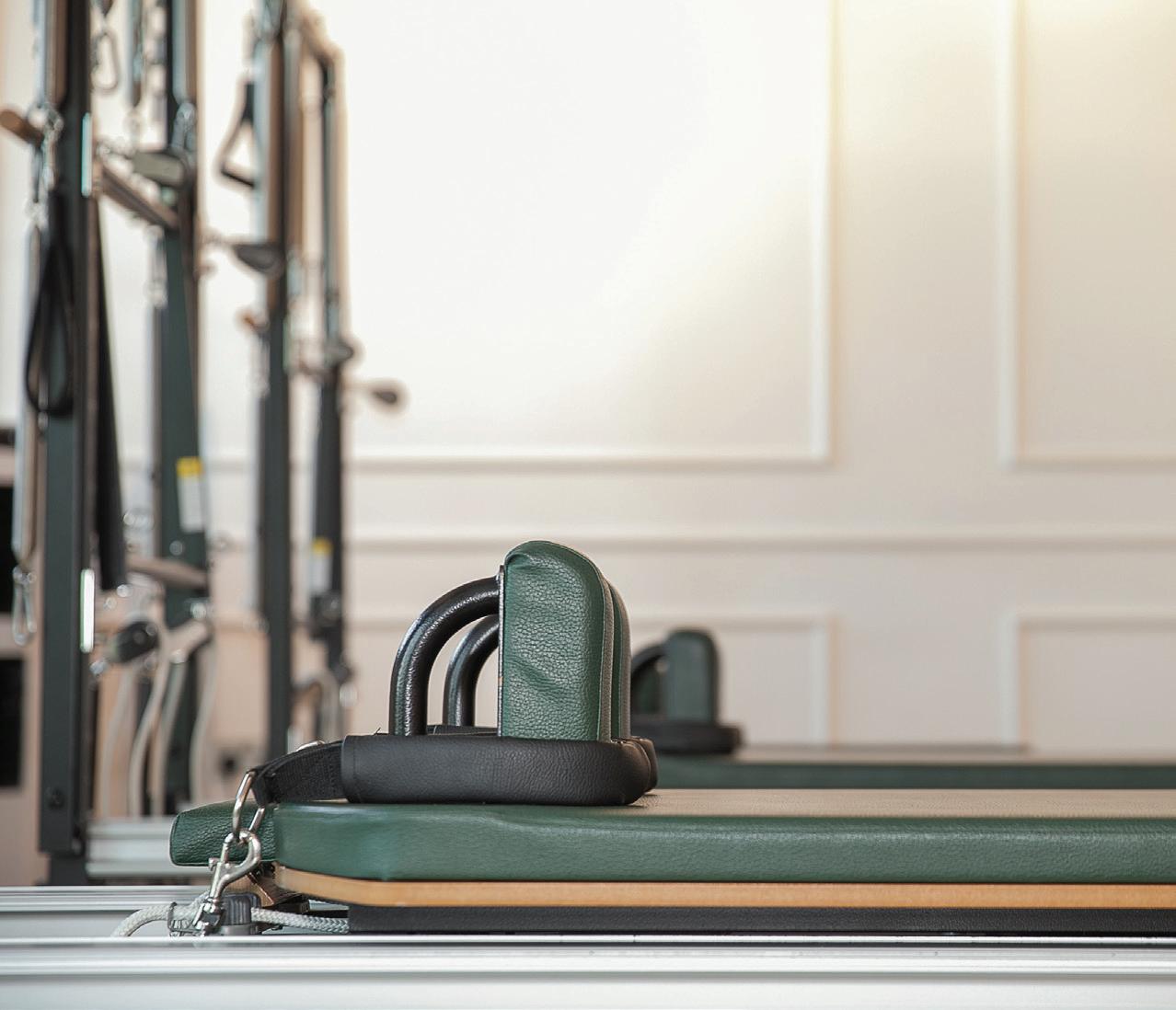
30 Love Pilates? Here’s how to take it in-flight!
31 Our pick of cultural
Master the micro-cation Only got a few days? Here’s how to maximise limited time off into some high-yield travel memories
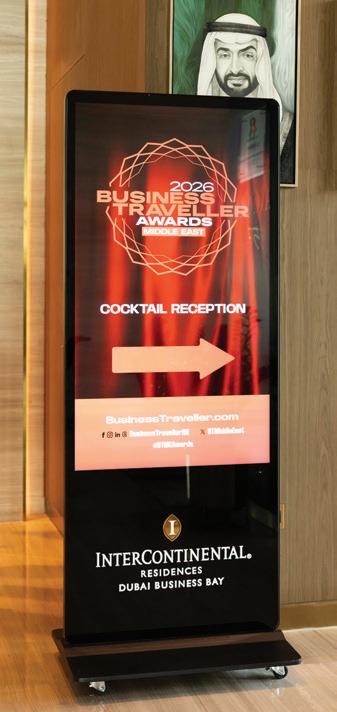
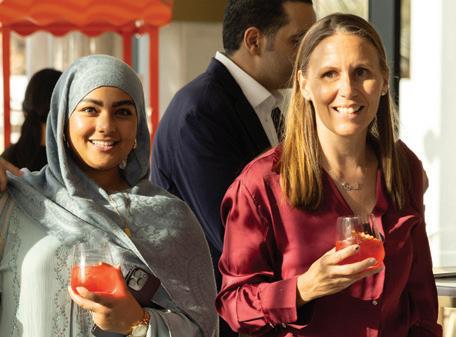
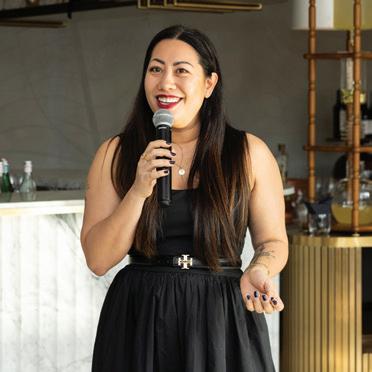
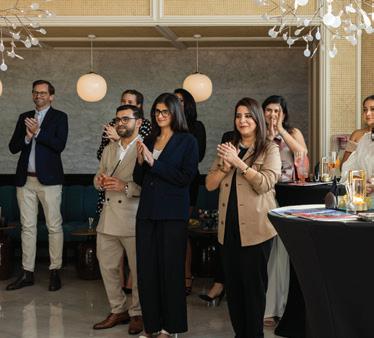
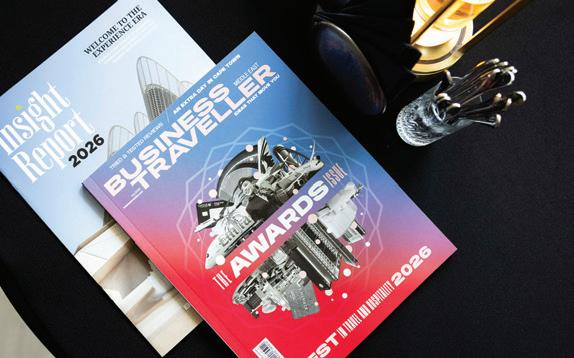
A toast to excellence Celebrating the winners of the 2026 Business Traveller Middle East Awards
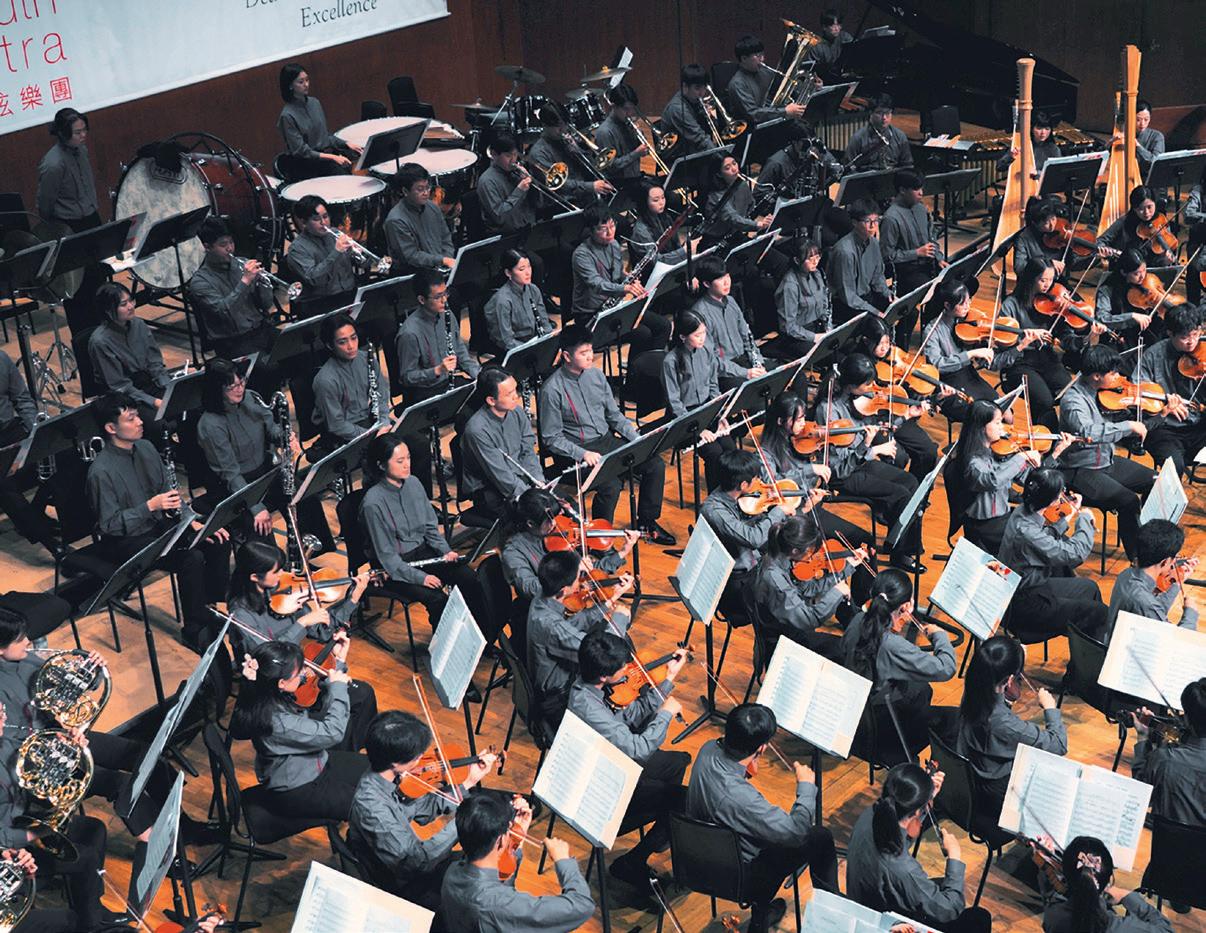
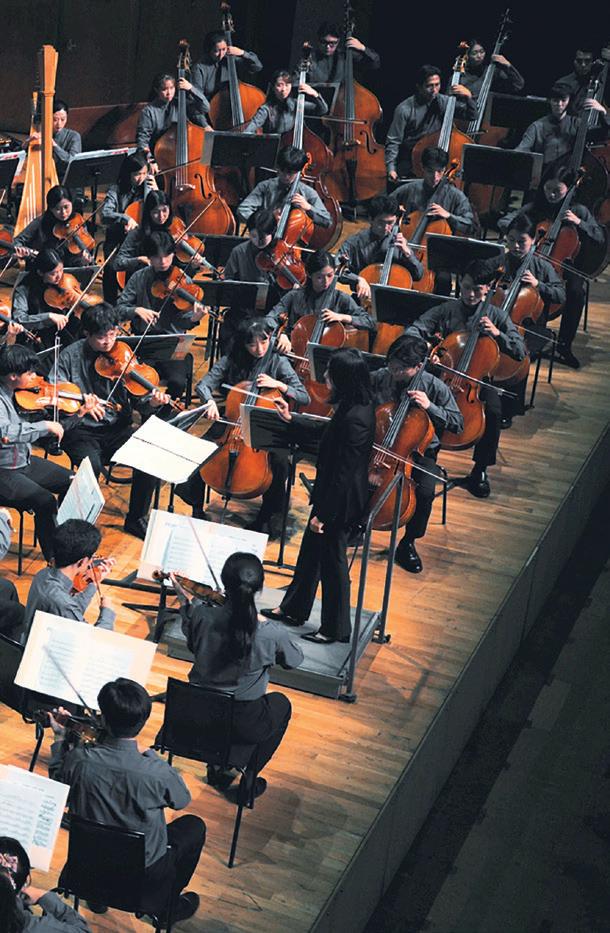
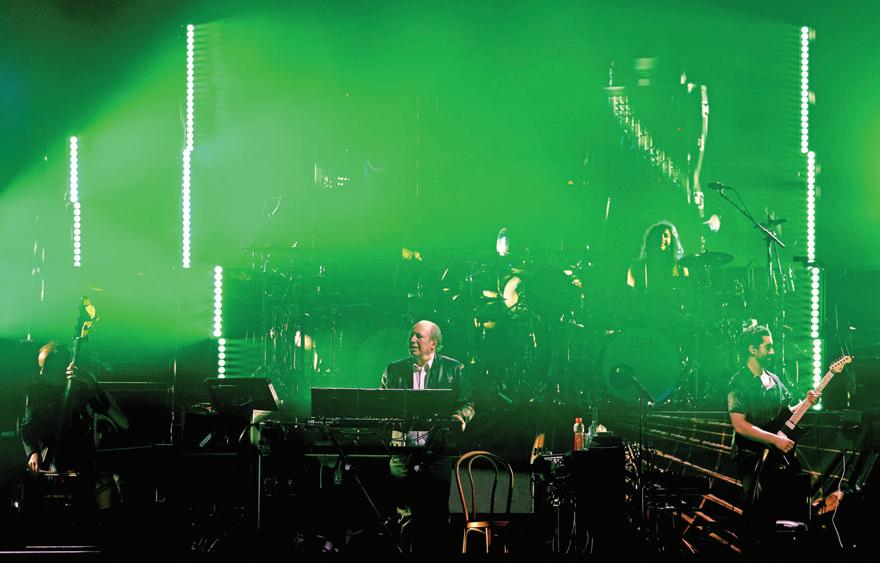
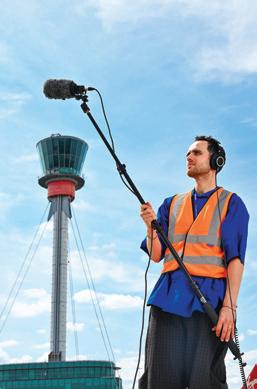
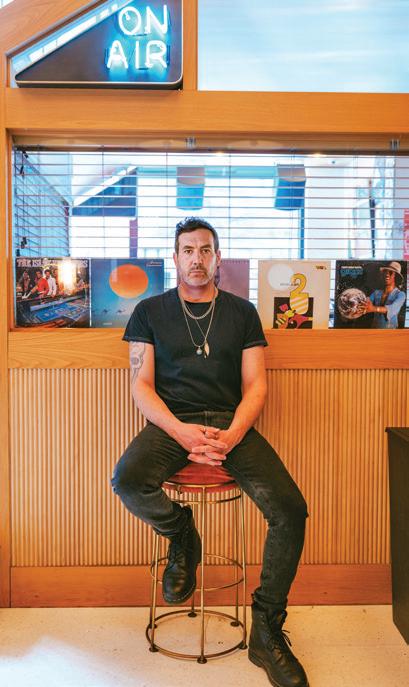
vibrations Delve into the curious and growing world of corporate sonic branding
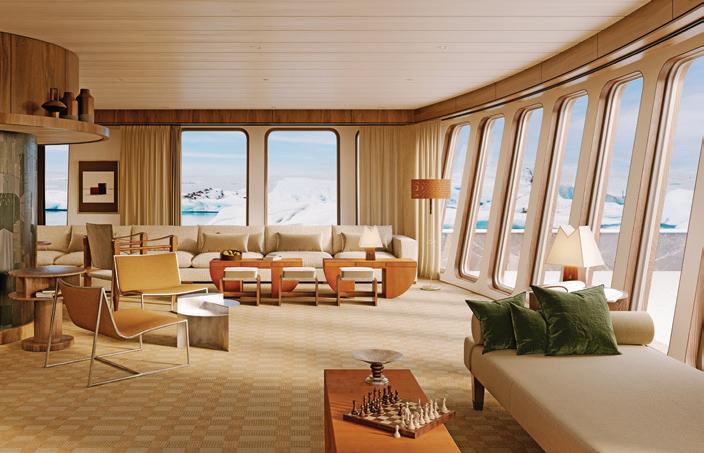
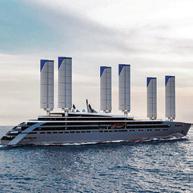
in on cruising The cruise industry is shifting towards choices with zero emissions
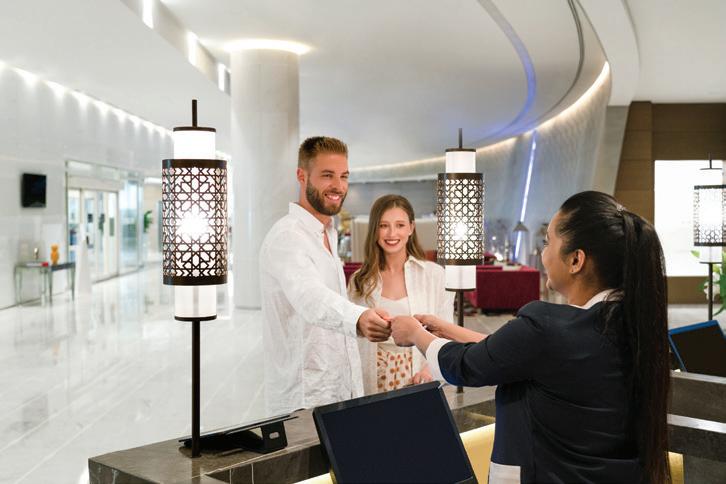
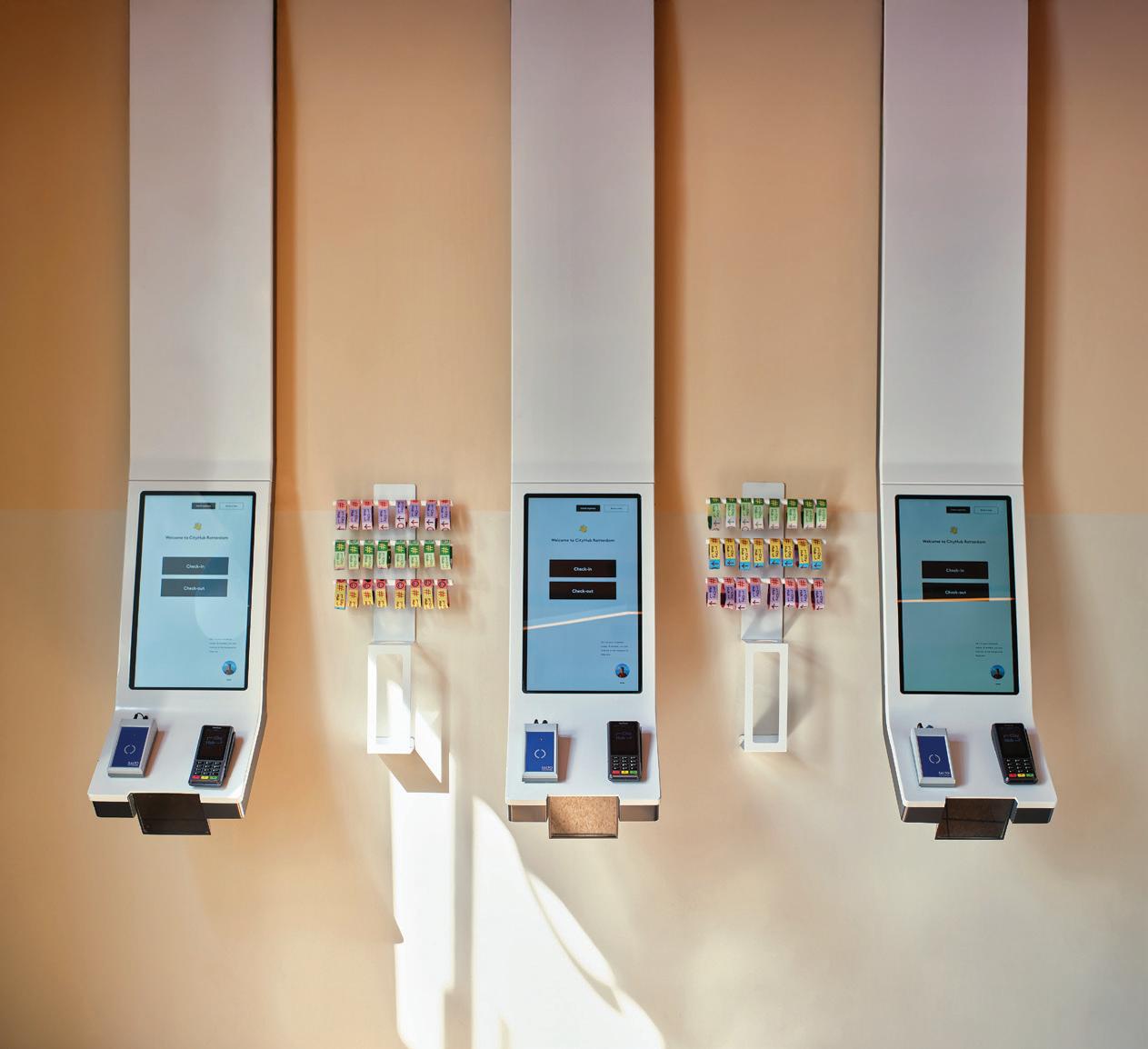
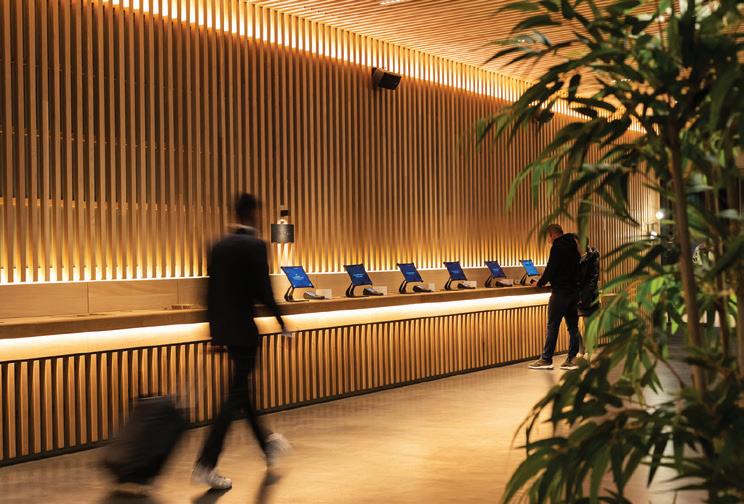
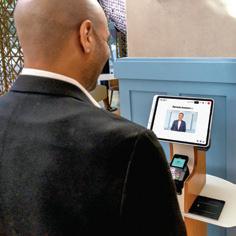
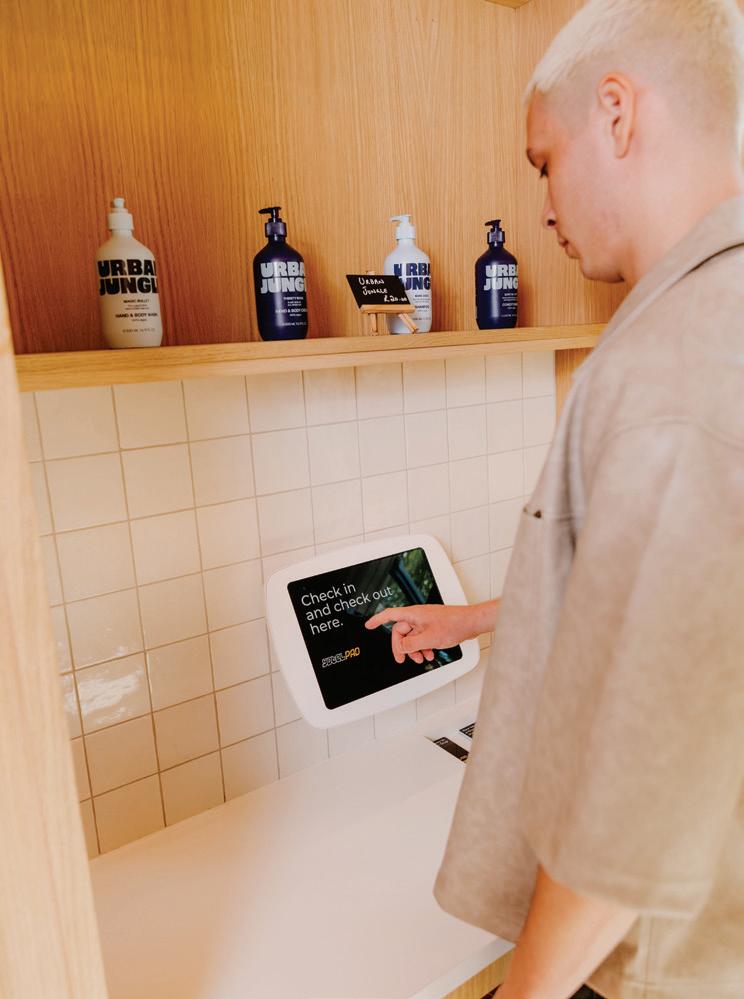
Tap and stay As hotels embrace automation, are we losing the human touch?
The tech of the town Can London’s original, oldest ‘smart hotel’ keep up with the latest players?
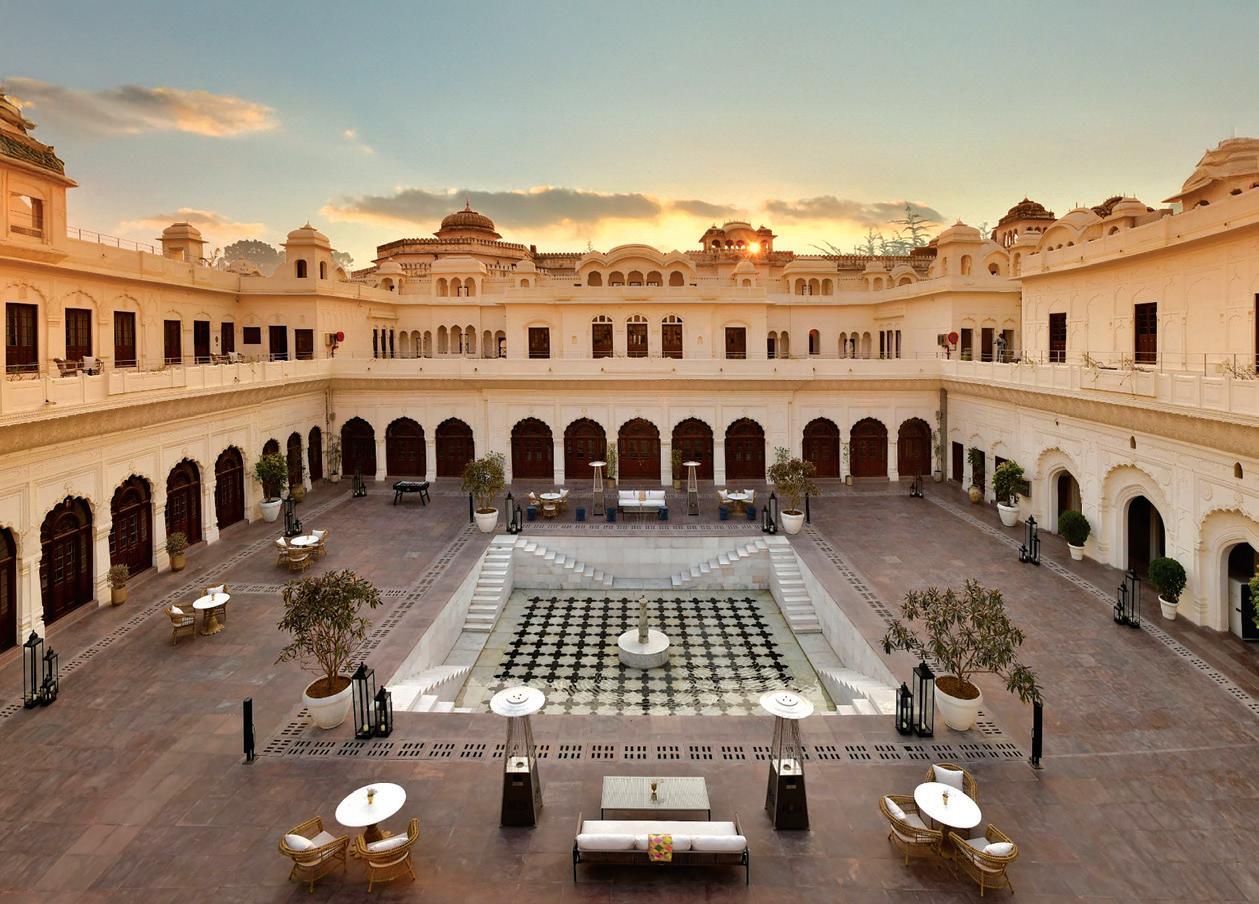
The jewel of Punjab Patiala’s Ran Baas The Palace reclaims a historic fort’s princely legacy
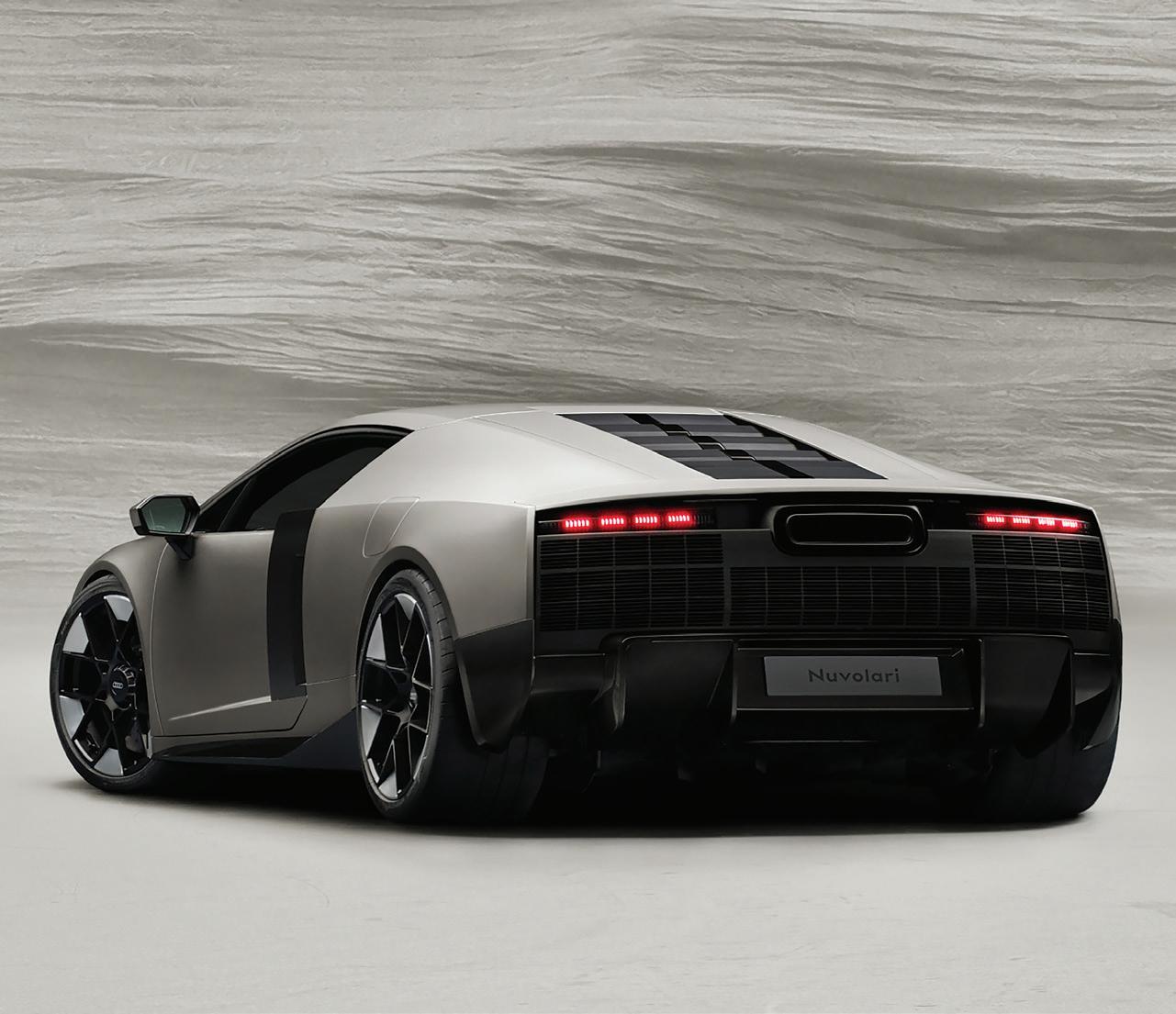
Audi’s Nuvolari supercar is set to become a new hybrid elecrified icon
Editor’s Letter
HERE’S A FACT TO BLOW YOUR MIND: the world’s shortest scheduled commercial flight takes less than two minutes to complete – and no, that’s not a typo. Operated by the UK’s Loganair, between the Scottish islands of Westray and Papa Westray in the Orkney archipelago, the flight covers a distance of just 2.7km, and is flown using an eight-seater Britten-Norman Islander aircraft. This route, operating under flight number LM711, has been running since December 1967, and it has even been acknowledged by Guinness World Records as the world’s shortest scheduled passenger flight. Why on Earth would someone take such a short flight, you may wonder? Because in this case, the alternative route of getting between these specific points involves a 25-minute ferry crossing that often takes place in rough waters. The flight thus acts as a vital public transportation link between these remote Scottish islands, and is primarily used by local commuters, teachers, doctors, students, council workers – as well as aviation enthusiasts and curious travellers seeking to check novel experiences off their bucket list. It’s certainly one of the flight experiences that are on mine.
While the thirty destinations listed in our cover story (p.34) aren’t a two-minute flight away, they are all accessible within around six hours or less. In recent years, this region – and the GCC in particular – has earned a reputation across the world as the ultimate global crossroads, thanks to its strategic position between East and West, and its world-class modern travel hubs. It’s home to some of the world’s largest airlines (including Emirates, Qatar Airways, and Etihad), and some of the fastest-growing (like Saudia, flynas, flyadeal, Turkish Airlines, and flydubai, to name some). And Dubai International Airport has consistently held the title of world’s busiest airport for international passenger traffic since it was first named that in 2014.
As such, it should come as little surprise that people based here tend to fly more than most. From locally-based globetrotters to the visitors passing through the world’s most prominent transit corridor, I like to think of this region as a living library: one where, like opening a book, you can delve into another world by simply booking a flight. It’s an apt parallel for a part of the world steeped in literary legacy: Mosul, Iraq, sits on the ruins of Nineveh, home to the Royal Library of Ashurbanipal, the world’s first systematically organised collection; Egypt’s St. Catherine’s Monastery remains the oldest continuously operating library on the planet; and Fez, Morocco, houses the Al-Qarawiyyin, the oldest public library still standing today.
Much like these extraordinary archives, each destination holds a story waiting to be discovered. With dozens of incredible escapes sitting right on our doorstep, you need only pick a place, take off, and start writing your own story. Here’s to turning the page on your next adventure. Enjoy the issue!
MASTER A MINI-BREAK How to make the most of a two- to four-day “microcation”. P40
Yi-Hwa B. Hanna Editor
TOP PICKS
VIBRATIONS Why the travel industry is betting big on music and sonic branding. P44 ZERO IN ON CRUISING These cruise lines are helping us travel the seas emission-free. P50
MOTIVATE MEDIA GROUP
EDITOR-IN-CHIEF OBAID HUMAID AL TAYER
MANAGING PARTNER AND GROUP EDITOR IAN FAIRSERVICE
CHIEF COMMERCIAL OFFICER ANTHONY MILNE
GROUP CONTENT DIRECTOR THOMAS WOODGATE
EDITOR YI-HWA B. HANNA
ART DIRECTOR CLARKWIN N. CRUZ
CONTRIBUTORS
GARETH VAN ZYL, CHRIS DWYER, TOM OTLEY, HANNAH RALPH, QIN XIE, LAURA MILLAR
GENERAL MANAGER – PRODUCTION S SUNIL KUMAR
PRODUCTION MANAGER BINU PURANDARAN
ASSISTANT PRODUCTION MANAGER VENITA PINTO
GROUP SALES MANAGER CHAITALI KHIMJI
SENIOR PARTNERSHIPS MANAGER MURALI NARAYANAN
HEAD OFFICE: MEDIA ONE TOWER, DUBAI MEDIA CITY, PO BOX 2331, DUBAI, UAE; TEL: +971 4 427 3000; FAX: +971 4 428 2266; E-MAIL: BTME@MOTIVATE.AE
BUSINESS TRAVELLER MEDIA LTD. INK, BLACKBURN HOUSE, BLACKBURN ROAD, LONDON, NW6 1RZ
Good Fortun(a)
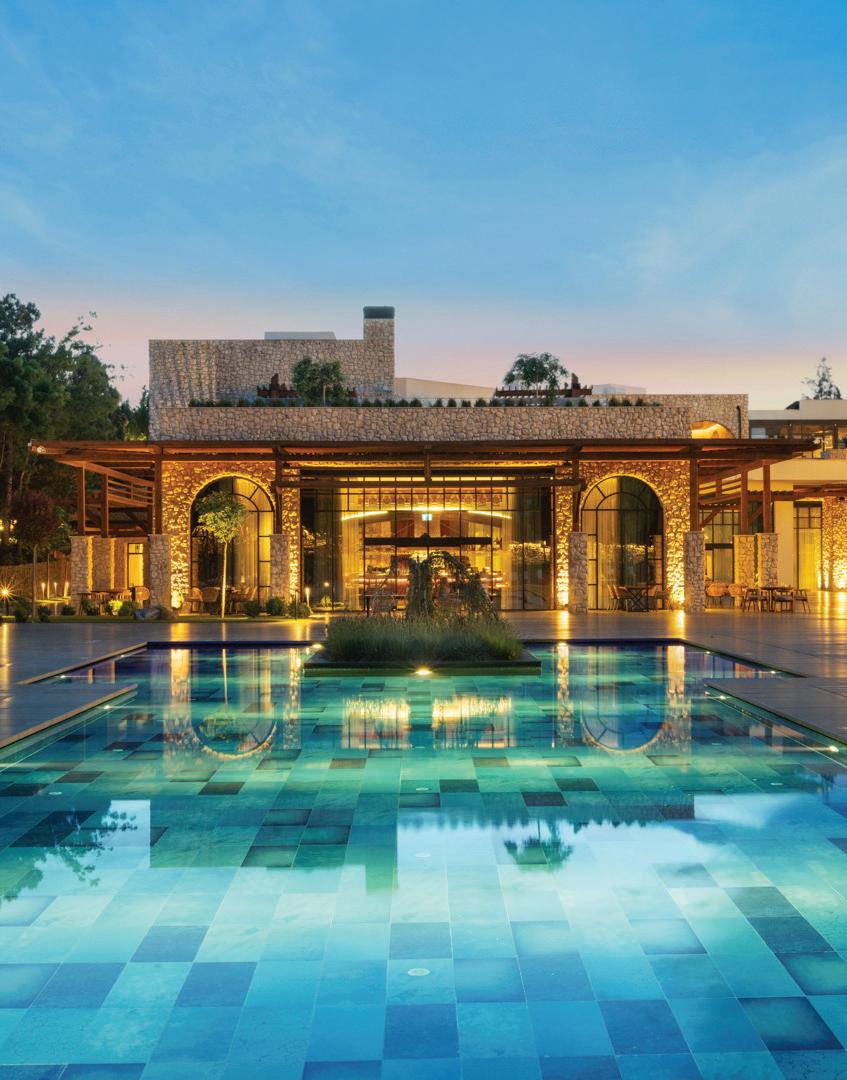
Marriott’s new Uçhisar retreat brings sleek luxury to Cappadocia’s valleys
WORDS YI-HWA HANNA
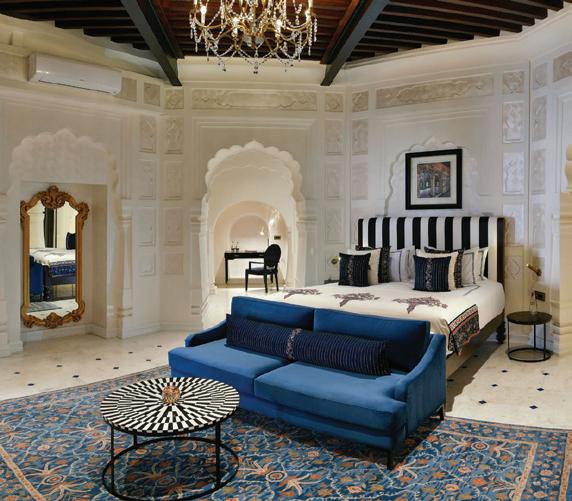
THE POPULAR TURKISH DESTINATION’S surreal landscape of fairy chimneys now has a striking new place to stay, with the arrival of Fortuna of Cappadocia, Autograph Collection. Set directly in Uçhisar, a historic hilltop village known for its sweeping valley views, the hotel has 125 rooms and 28 villas as well as five dining options, including a cabaret space, plus plenty of events and meeting spaces. In need of R&R? It also has a sprawling 1,112 sqm spa with a traditional hammam.
HOT TICKET
A nod to better sleep
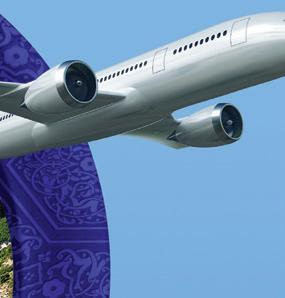
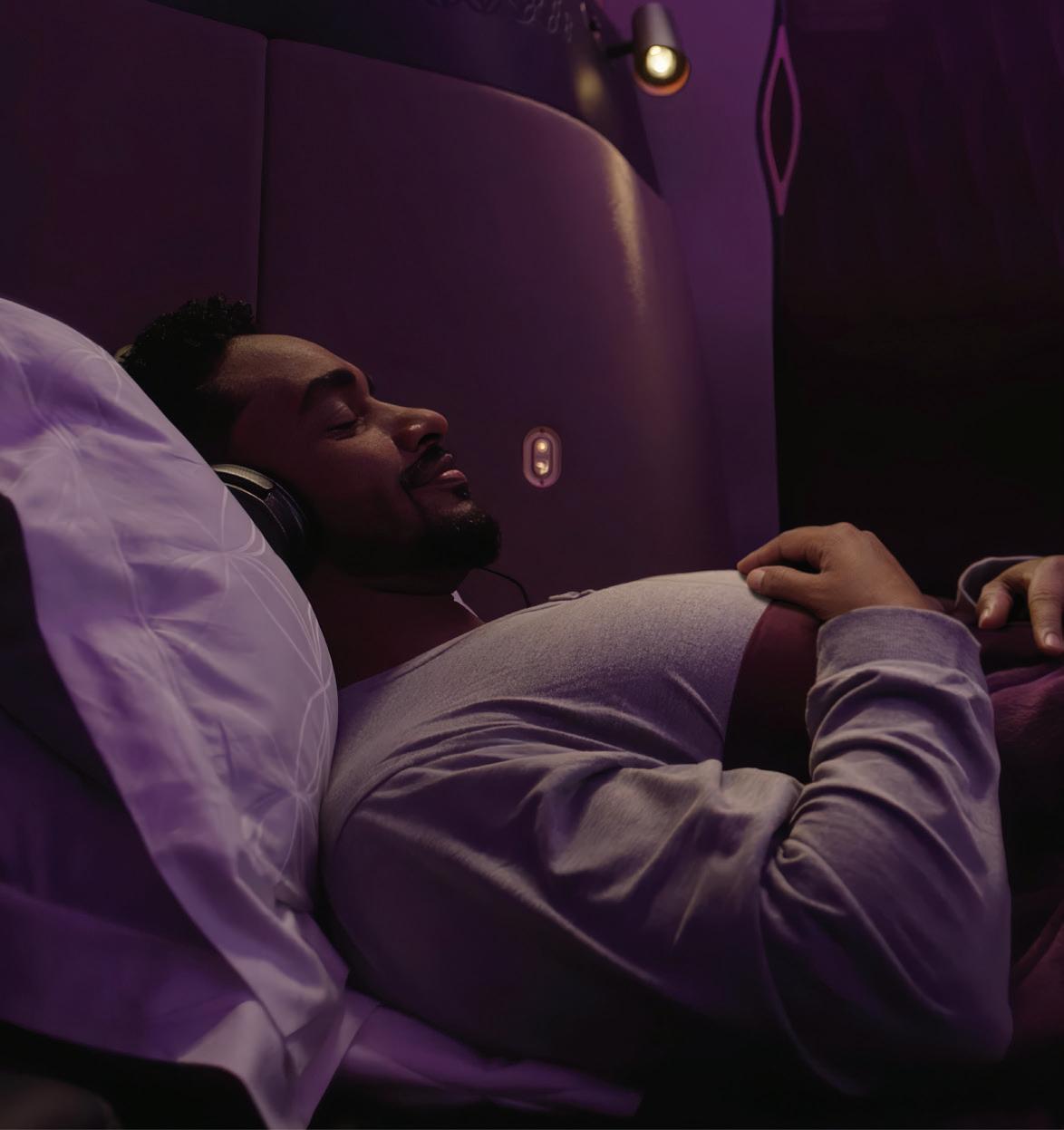
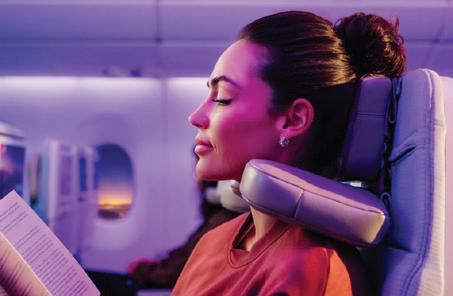
EMIRATES is introducing Safran’s U-Dream headrest across its widebody fleet, marking a potentially game-changing shift for long-haul economy passengers who have spent decades trying to sleep upright on flights.
Built with deep leather wings that fold inward to cradle the head, the eightway system finally solves the dreaded head-flop and promises to render bulky travel pillows obsolete. The innovative design is a rare, genuine leap forward in main-cabin comfort, offering passengers true neck support on long flights without forcing airlines to cut down on legroom or
strip out rows of seats to pull off the extra comfort. While a headrest can’t solve the discomfort of cabin pressure or engine noise, giving passengers a way to actually stay put while sleeping could set a whole new benchmark for
Sharjah gets its first five-star Vida hotel
standard economy travel. The design has made its debut on three aircrafts from the carrier’s Airbus A350-900s, set to cover the whole fleet of A350s by the end of 2026, before rolling out across its Boeing 777s and A380 from 2027.
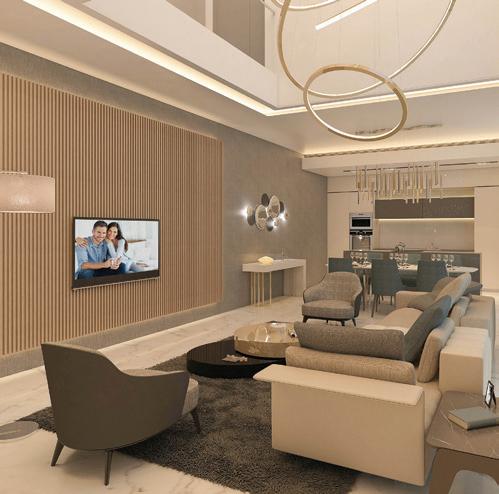
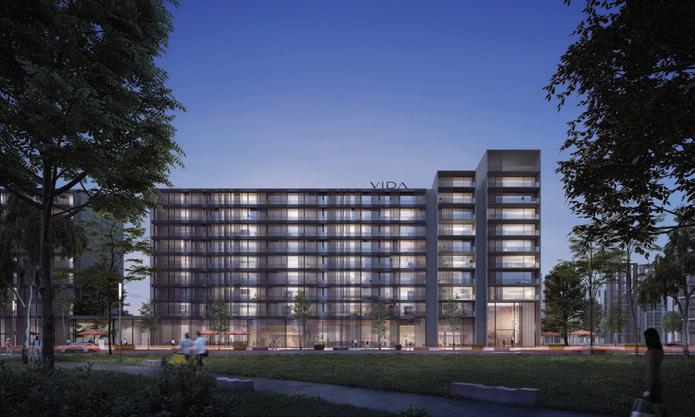
EMAAR Hospitality Group is bringing its Vida brand to Sharjah for the first time with the launch of Vida Aljada later this year. As one of only two five-star Vida properties in the UAE, the new hotel is set to bring a relaxed, design-led focus to the centre of Aljada’s growing urban district. Located in the middle of the area’s creative quarter, the hotel will put
guests within easy reach of University City and the Sharjah Airport Free Zone, making it a solid option for business travellers as well as leisure travellers and residents on short weekend breaks and staycations. Accommodation options include standard hotel rooms, suites, and longerstay residences, all of which are laid out around open-plan
communal areas. Instead of formal dining rooms, its spaces flow naturally from relaxed all-day eateries and coffee spots to outdoor terraces. With modern gym facilities, light-filled meeting spaces, and easy access to cultural spots, the property hopes to give guests a stylish, easygoing spot to work, stay, and play in the Northern Emirate.
LONG STAYS
The Ascott Limited is making its first move into Saudi’s villa market with the late-2026 launch of Ascott Villas Riyadh. Set in the Hittin district near the King Abdullah Financial District, the 86-villa project is built for long-stays with extra room and privacy. The twoto four-bedroom layouts feature full kitchens, laundry setups, and private yards, with select units adding pools. On-site amenities include meeting rooms, a gym, a tennis court, and an outdoor pool.
ON THE RADAR
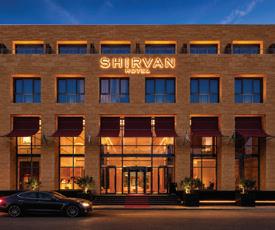
The Westin Abha; and Shirvan Hotel City Yard Jeddah (right), which will become an Autograph Collection property
Peaks and coastlines
New projects in Jeddah and Abha highlight major Saudi hospitality growth
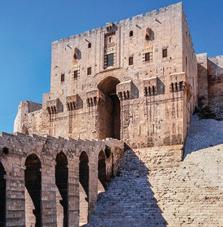
flydubai has resumed its daily flights to Aleppo. The direct service from Terminal 3, restored in July after a 14-year hiatus, provides a vital air link between the UAE and Syria, supplementing three existing daily flights to Damascus.
SAUDI’S HOSPITALITY SCENE has some major new additions on the horizon, with two big project deals from Marriott International confirmed for Jeddah and Abha. Over on the Red Sea coast, an agreement with Manazel Al Naqaa Limited Company will see the existing Shirvan Hotel City Yard Jeddah converted into an Autograph Collection property by December 2026. Tucked into the leafy Al Rawdah district near King Abdulaziz International Airport, the
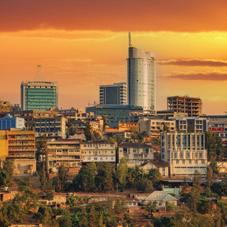
SalamAir has inaugurated direct flights to Kigali. The twice-weekly service from Muscat marks the low-cost Omani carrier’s entry into Rwanda, expanding its African footprint and strengthening bilateral trade ties.
113-room boutique hotel anchors the pedestrian-friendly City Yard plaza.
The property will remain fully operational during its visual makeover, which will pair refreshed meeting areas, a pool, and a fitness centre with the surrounding plaza’s open-air dining, interior streets, and lively social spaces.
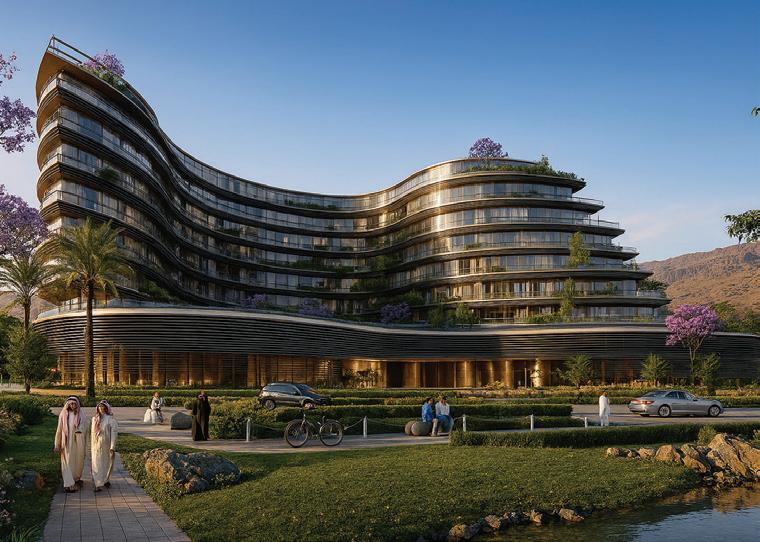
Heading further south, another agreement with Manarat Al Dheyafah Company for Real Estate marks Marriott International’s first entry into the mountain region of Aseer. Currently scheduled to debut in 2031, The Westin Abha will bring a 464-key retreat to the Jabal Thah Valley, capitalising on the city’s temperate climate and elevated natural setting. Designed around a wellness ethos, the mountain complex will combine standard guest rooms, chalets, villas, and extended-stay apartments with curated dining options, event spaces, and lifestyle facilities, rounding out a strong double-act for corporate and leisure travellers across the kingdom.
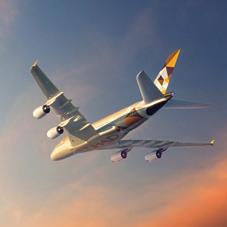
Etihad Airways is boosting its capacity across key global routes due to robust regional demand: the carrier is adding frequencies to Brussels and Kraków, while making its popular Dhaka service a year-round operation.
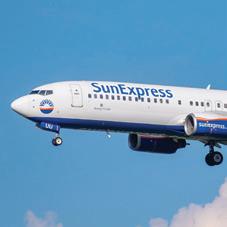
SunExpress has begun to restore its Middle East routes to Dubai, Beirut, Erbil, and Bahrain after temporary suspensions earlier this year. The Turkish Airlines-Lufthansa venture is also launching new services to Aleppo this month.
ROUTE ROUND-UP
ON THE CALENDAR
Stargazing gets a makeover
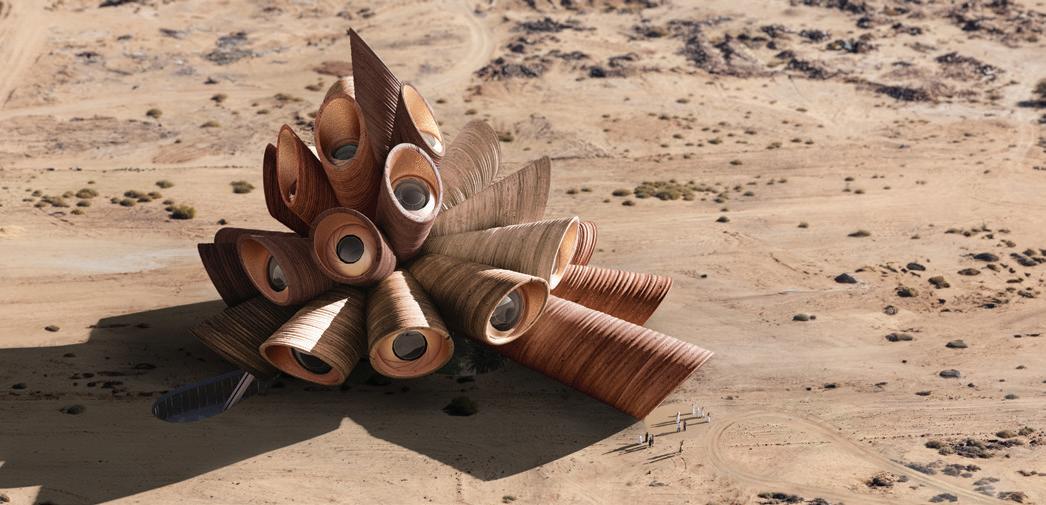
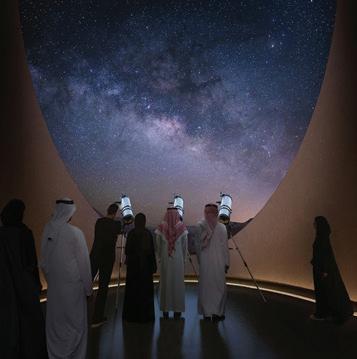
SAUDI ARABIA’S Royal Commission for AlUla has revealed the design for AlUla Manara, an ambitious new hub for astronomy, scientific research, and astrotourism. Situated within the world’s third-largest Dark Sky Park between the Gharameel and Harrat Uwayrid Nature Reserves, the landmark facility is designed to connect the region’s ancient celestial navigation traditions with cutting-edge space science under Saudi Vision 2030.
Designed by the renowned Heatherwick Studio, the building features three interlocking, telescope-like structures clad in textured stone that mirror the local sandstone landscape. The spiralling geometries draw inspiration from planetary rings, galaxies,
and natural earth patterns, while integrated shading systems and operable windows regulate desert temperatures without compromising night-sky visibility.
Inside, the multi-use venue pairs active scientific research laboratories with public-facing facilities, including interactive exhibition galleries, a planetarium, a restaurant, and a rooftop observation deck.
Regionally, AlUla’s night skies rank among the top 5% globally for natural darkness and sky quality. To safeguard this natural asset, the Royal Commission for AlUla has introduced strict lighting controls, zoning requirements, and visitor management standards under its Astrotourism Policy.
FLYDUBAI has published an inaugural Sustainability Report, titled “fly forward 2025,” signaling a structured shift toward ESG integration across its network. Framed around Global Reporting Initiative standards and UN Sustainable Development Goals,
the document details a new five-year strategy guided by a double materiality assessment that evaluated both societal impact and enterprise risk. The strategy spans six operational pillars: climate readiness, environmental stewardship, workforce
development, community partnerships, service excellence, and digital innovation. The airline pointed to tangible operational wins, such as securing a spot among Cirium’s top 20 most fuel-efficient global carriers and reaching a 95% singleengine taxiing rate at its Dubai hub. Beyond
flight operations, the carrier reported full CITES compliance for wildlife transport, zero cybersecurity breaches, and a record-low 3.7% voluntary staff turnover. The release comes on the back of financial strength, with flydubai posting record annual revenues of AED 13.6 billion.
Waste no more
LANGHAM HOSPITALITY GROUP
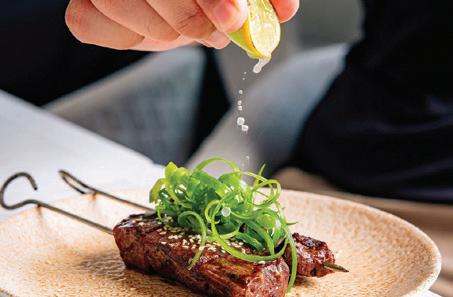
(LHG) has reinforced its commitment to circularity across its global portfolio, rolling out creative, location-specific initiatives aimed at minimising kitchen waste. Rather than treating food waste as an afterthought, the hospitality brand is prompting its culinary and bar teams to upcycle excess ingredients into high-end menu offerings. Across its properties, solutions range from breakfast staples to craft cocktails. At Cordis, Auckland, leftover peels and pulp from morning orange juicers are transformed into a marmalade compote, diverting roughly 390kg of citrus waste from landfills annually. The Langham, Boston reclaims high-grade cod and salmon trimmings from its primary dinner service to craft its Coastal Catch Burger, saving up to 220kg of fresh fish a year. Meanwhile, The Langham, Gold Coast repurposes Wagyu beef trimmings into skewers and renders Wagyu fat in-house for tallow, while using overripe fruit for house-infused bar spirits. Over in Hong Kong at Eaton HK – the group’s eco-focused lifestyle hotel – the Terrible Baby terrace bar repurposes citrus peels to infuse Lillet and upcycles spent espresso grounds into infused rum. The group-wide campaign follows significant sustainability recognition for LHG, with six of its properties now holding EarthCheck Master Certification.
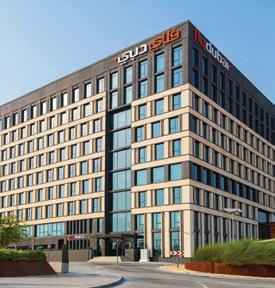
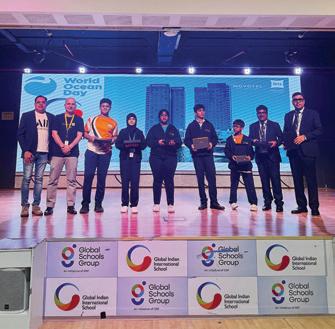
NOVOTEL GATE ABU DHABI has been named an Outstanding Hotel across the Middle East, Africa, South Asia, and Pacific (MEASPAC) region following a communitydriven ocean conservation initiative during World Ocean Month.
Aligned with Accor’s global sustainability goals and Novotel’s ongoing partnership with the World Wide Fund for Nature (WWF), the campaign focused on environmental education and grassroots engagement. Central to the programme was an interactive awareness workshop held at the Global Indian International School in Abu Dhabi, where more than 150 students explored marine ecosystem threats and
everyday conservation habits. Designed to make sustainability accessible to younger audiences, the session outlined actionable ways to lower personal environmental footprints while highlighting broader corporate conservation frameworks.
Complementing the educational outreach, hotel employees (“Heartists”) produced a short film titled “What If the Ocean Could Speak?” The narrative piece aimed to drive public reflection on marine preservation and human environmental impact. Regional leadership commended the property for bridging staff involvement, youth education, and creative storytelling into a cohesive Corporate Social Responsibility (CSR) effort.
GET THE SCOOP
The latest updates in the travel industry from across the world
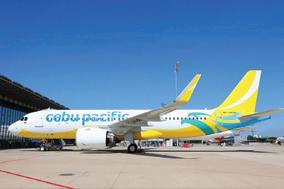
1 Cebu Pacific dials up highspeed Starlink WiFi for 2027 (Above) The Philippine budget carrier is becoming Southeast Asia’s first low-cost airline to adopt SpaceX’s satellite internet, promising seamless high-speed Starlink WiFi that is capable of streaming and gaming at altitude. Part of a massive 1,000-aircraft deal across Indigo Partners’ global portfolio, the fleet upgrade begins in 2027 to narrow the gap with its full-service rivals.
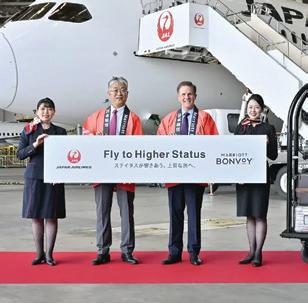
2 Marriott and JAL launch reciprocal status matching (Right) Allowing members of both loyalty programmes to build elite status on the ground and in the air, through this new partnership, Marriott Bonvoy members automatically receive annual JAL FLY ON Points simply by linking their accounts, with top Titanium and Ambassador tiers unlocking direct status matches. In return, JAL Mileage Bank members gain fast-track routes to Bonvoy Silver, Gold, and Platinum status, across 10,000 hotel properties.
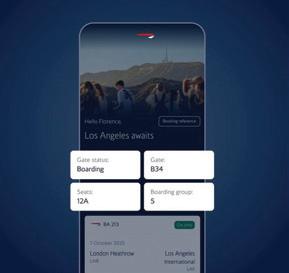
3 British Airways debuts new app in major tech revamp (Left) This summer, the UK flag carrier launched the first phase of its overhauled mobile platform, featuring a refreshed design that mirrors ba.com alongside a personalised ‘day of travel’ home screen. Rolling out automatically to users, the new software provides live Heathrow and Gatwick journey updates, interactive terminal maps, passport scanning, and real-time lounge occupancy data.
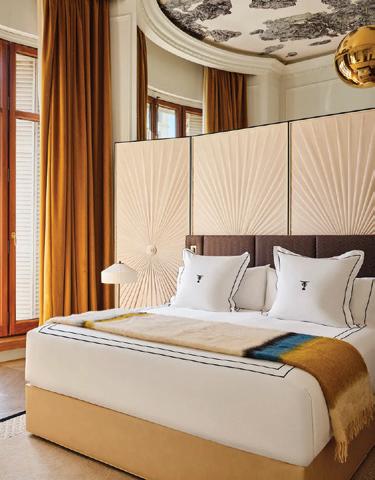
4 Madrid’s Metrópolis building opens as boutique hotel (Below) The Beaux-Arts monument at the corner of Calle Alcalá and Gran Vía has been reimagined as Club Metrópolis, a private members’ club and 19-room hotel by Grupo Paraguas. Designed by Lázaro RosaViolán, the hybrid concept pairs preserved architectural details with seven distinct dining venues, four of which are reserved exclusively for members and overnight guests.
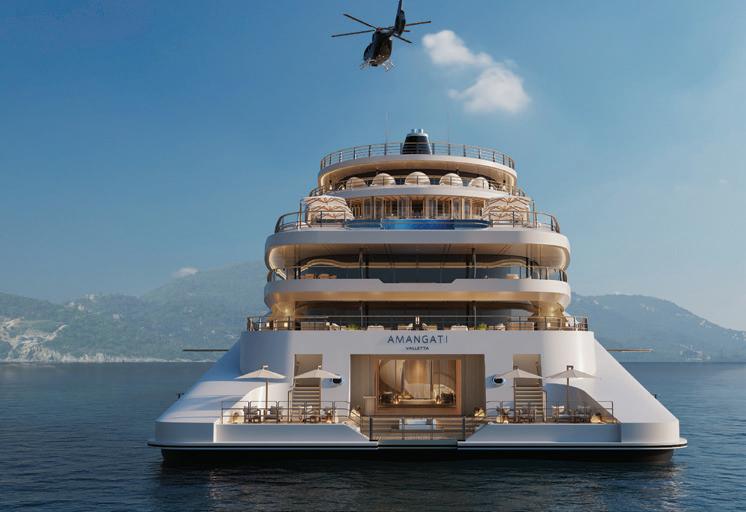
5 Aman at Sea unveils Caribbean itineraries for luxury yacht (Right) The ultra-luxury brand has opened reservations for Amangati’s inaugural Caribbean season, setting sail in November 2027. Ranging from five to eight nights, the voyages traverse the Antilles across the Leeward, Windward, and Dutch Caribbean islands. The 180m motor yacht offers 47 ocean-facing suites, late port departures, and the largest spa in luxury yachting.
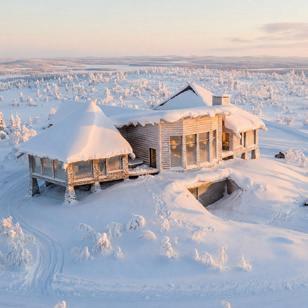
6 Octola III introduces invitationonly Arctic luxury in Lapland (Right) Set to open this December atop a former radar station in Finnish Lapland, this ultra-exclusive wilderness lodge offers panoramic views across the tundra. Accommodating just six guests across three suites, the fully serviced retreat features a private host and chef, bespoke Sámi cultural experiences, an ice-swimming pond, and research-grade air quality monitoring technology.
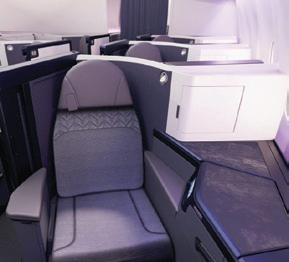
7 Air New Zealand to fit 777 fleet with private Business suites (Above) The carrier is replacing its outdated Business Premier layout on seven Boeing 777-300ERs with 44 enclosed, forward-facing Collins Aerospace Elevation suites starting May 2027. Featuring sliding doors, 18inch screens, and direct aisle access, the retrofit ironically gives all 777 business passengers more privacy than standard Business Premier seats on its newer Dreamliners.
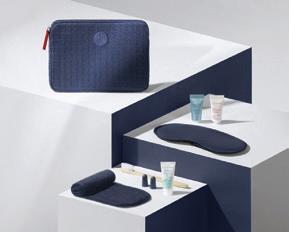
8 Air France refreshes premium amenity kits with top skincare (Above) The French flag carrier has introduced updated long-haul amenity kits across La Première, Business, and Premium cabins. Stocked with luxury Sisley products, the top-tier La Première case features a new swivel-opening leather design, while Business passengers receive Clarins skincare in recycled pouches, and the Premium kit delivers a stripped-back set of travel essentials.
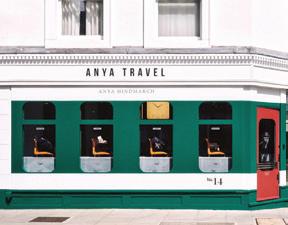
9 Anya Hindmarch debuts permanent travel line (Below) One of Britain’s most beloved luxury labels has launched a lifestyle range with a permanent collection and dedicated flagship store on Pont Street in London’s Chelsea. Drawing on a retro golden age of aviation, it features recycled-nylon suitcases, hyper-organised cabin bags, and Concorde-inspired accessories, alongside aviation-style retail interiors with aircraft-curved windows.
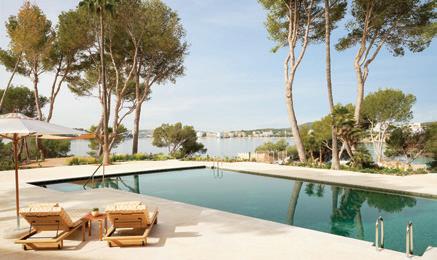
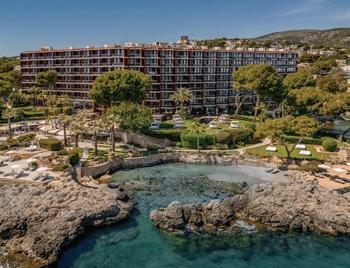
10 Mandarin Oriental unveils Punta Negra resort in Mallorca (Left) Located on island’s southwest Calvià coastline, the Mandarin Oriental Punta Negra – the luxury group’s third Spanish property and first Balearic resort features 131 sea-facing rooms and suites, a wellness spa, and six dining outlets led by world-renowned chefs including Nobu Matsuhisa and Dani García. To arrive at its lush gardens in style, you can take a private yacht transfer.
Expert opinions on the future of travel
THE BIG INTERVIEW
GUY HUTCHINSON
PRESIDENT OF HILTON MIDDLE EAST AND AFRICA
Speaking on the Gulf Business Podcast this summer, Hutchinson tells Gareth van Zyl why the hospitality giant remains bullish on the region’s longterm prospects
IN WHAT WAS Hutchinson’s first interview in the Middle East in 2026, the hospitality leader said that investor confidence and owner investment in Hilton’s regional pipeline remain unchanged despite recent events. Pointing to strong economic fundamentals, infrastructure investment, and long-term tourism strategies across the Gulf, Hutchinson – who leads what is one of the fastest growing business units of Hilton in the world today –has had a front-row seat to the transformation of the hospitality sector in the region, that has given him a unique perspective.
You’ve been in the region for quite some time now, since the year 2000. I think it’s fair to say that you’re a veteran. You spent most of that time at Hilton, with some time at Rotana. Tell us about when you first arrived here. It was an amazing journey.
Guy Hutchinson joined Hilton as the hotel manager of Hilton Dubai Creek in 2000, and has held a range of roles across the company’s properties in the UAE, Japan, China, Australia, and India, before stepping into his current positon. He has been the President of Hilton’s MEA operations since January 2024, after being appointed to the role in August 2023.
&
‘Hotels are something you get a passion for. It gets under the skin’
BIOGRAPHY
Insight
Continued from overleaf
Landing in Dubai in 2000 was phenomenal. It’s something very different. We launched the Hilton Dubai Creek at the time, which I think was one of the first celebrity chef partnerships with Gordon Ramsey in the region, and for many years was probably the leading restaurant in Dubai. That Hilton development was amazing, and so was that period where you just saw the potential, the growth, the vision of Dubai – and I fell in love with it. I met my wife and got married here as well, so I fell in love with someone else [here], too. I think that experience really grounded me in a love of the UAE, and an excitement about the possibilities that were going to come to pass here.
And I travelled the world in between. I was in Japan, China, India, Australia, but I always kept a connection with the UAE. When we had the opportunity to come back in early 2014, I was absolutely delighted.
I led Rotana for a little while – my sabbatical from Hilton –but Hilton has such an amazing culture, when the opportunity came back to rejoin Hilton to lead this region, which is now one of the fastest growing, most dynamic spaces for hospitality in the world, I really jumped at the chance.
You’re quite the global citizen as well. I could recognise a bit of a South African accent there. You spent time there and then all over the world, right?
Yes. I grew up with a father who was in the oil business, so that grounded me in mobility, and I became a hotelier. Hotels are something you get a passion for. It gets under the skin, and I just love hospitality; I just love hotels. Even today, although I’m not in a hotel
“You want to be measured against the best; to be at the pinnacle of whatever industry you’re in’’
very often, I walk around some of my hotels and think I’d love to be the general manager of that hotel.
So I fell in love with the business and travelled the world, but there was a time when it became very clear, quite quickly, when a lot of focus was on Asia – in terms of what was being done and what was really at the forefront of the industry. And
you want to be measured against the best. You want to be at the pinnacle of whatever industry you’re in.
From my initial immersion in Dubai and that connection with the UAE over time, it became clear to me that the UAE was becoming the new forefront of hospitality globally. This was going to be the engine room of hospitality, and where
ABOVE Guy Hutchinson
innovation and global standards would be set. So I was determined to be here.
How big is the Hilton footprint in the regions you look after?
Globally, we’re about 9,200 hotels, and we’re opening one to two hotels a day. It’s a phenomenal company –grounded in culture, named a world’s best workplace
across all sectors for the second time in three years. In the Middle East and Africa, plus parts of the Indian Ocean like Mauritius and Madagascar, the portfolio is around 420 hotels including trading and pipeline, and it’s accelerating quickly. Saudi Arabia alone is our third largest pipeline globally.We have about 100 hotels there, a mix of trading and under development. One in five hotel rooms under construction in the kingdom is under one of our brands.
Is that spread out across the kingdom or concentrated in certain areas?
It’s spread across the kingdom, though there’s a strong concentration in religious centres like Mecca and Medina, and metro cities like Riyadh and Jeddah. But we’re also seeing new destinations emerging; places like Aseer and Taif. It’s a very diverse market: mountains, sea, deserts, wildlife, all in one country.
And in the UAE?
The UAE is our single biggest market in the Middle East. It’s ground zero for us, where our corporate headquarters are based. When I first arrived in 2000, Dubai had maybe 30,000 to 40,000 hotel rooms. Today it’s around 160,000 to 170,000, and performance has improved alongside that growth. We’re at about 36 hotels across the UAE, from luxury Waldorf Astoria to mid-market brands like Hampton and Hilton Garden Inn. We’re just entering the next phase of growth.
You mentioned subbrands, 28 in total?
Yes, not all are in this region. About 16 are active here. We’re very deliberate about brand introduction.
Our growth globally has been organic, not acquisition-led. We’ve
built brands with clear positioning and introduced them thoughtfully into markets. A key metric is that 65% of new hotels come from existing owners. Some investors now operate 18 to 22 Hilton properties. That tells you everything about the model. [Ed’s note: Under Hilton’s operational model, physical properties are owned and funded by thirdparty investors, with Hilton providing management and brand operations.]
The Middle East used to be luxury-heavy. Now you’re seeing mid-market expansion, which is important given the global middle class. That segment now makes up 30 to 40 percent of our pipeline.
Then there’s lifestyle brands and apartment collection, which I think will be very strong here. It suits families, longer stays, and business travellers who want more space with hotel services.
Hotels are evolving to feel more like home. Is that fair to say?
Yes, but more accurately, it’s about shifting control to the guest. It used to be that hospitality dictated the experience. Today it’s about personalisation, digital access, and letting guests shape their stay on their terms.
Then there’s the financial side, with around US$8 billion invested by our ownership partners. That number keeps growing, which shows strong confidence in the region and our management model. But it’s also because this region embeds tourism into national strategy. UAE, Saudi Arabia, Qatar, Egypt, all have longterm visions tied to tourism. That drives infrastructure, airports, airlines, mega events like Expo and the World Cup, and new carriers like Riyadh Air. That ecosystem creates sustained investor confidence.
NEW HOTELS
ON THE RADAR
Want to check out some of Hilton’s new properties in the EMEA region? Try these!
ISTANBUL, TÜRKIYE
This year, Hilton welcomed Palazzo Donizetti Istanbul under its Tapestry collection in May, followed by Les Temps Istanbul Karaköy Curio Collection by Hilton, in July, to Istanbul. Hilton Istanbul Airport is set to open by later this year.
MUSCAT, OMAN
Hilton opened three new hotels in the Bar Al Jissah resort area in January 2026: Hilton Muscat Al Bandar, DoubleTree by Hilton Muscat Al Waha, and Al Husn Hotel Muscat, surrounded by rugged mountains and secluded beaches.
SAUDI ARABIA
Bringing Hilton’s Spark brand to the Middle East and Africa region for the first time, Spark by Hilton Makkah Azizyah is set to open before the end of this year, set within five kilometres of Masjid al-Haram, the Holy Mosque.
Even during challenges, the sector has stayed resilient. How has Hilton managed that?
Hospitality is always long term. You rely on fundamentals and partnerships. During disruption, it comes down to flexibility for guests and supporting teams.
We focused on making booking flexible, removing penalties, keeping travel easy. And internally, leaning into people and culture.
We also work closely with governments and even competitors. The mindset is destination first. If the destination wins, everyone wins.
Are you still signing new deals in this period?
Yes, absolutely. [Our] pipeline is over 250 hotels. We expect to more than double our presence in the region. Saudi Arabia is just getting started, the UAE still has major growth ahead, and new destinations like Ras Al Khaimah are gaining momentum.
Is oversupply a concern?
Not really. This region doesn’t behave like others. It sets its own context. Growth is structured and purposeful, not random. Dubai went from 20,000 keys to over 160,000 and improved performance metrics globally.
Tourism here is also a major social driver, creating millions of jobs and supporting supply chains. That impact is often underestimated.
Looking toward 2030, how will hospitality evolve?
We’re moving from importing concepts to exporting them. What was once brought into the region is now being created here and taken abroad. That shift is already happening.
In 10 years, I think concepts developed here will be replicated globally.
OR DECADES, CAREERS
Fwere designed like ladders. You joined an organisation, climbing steadily upward, and success was measured by progression to the next rung. Learning followed the same logic: front-loaded early on, then tapering off over time.
People entering the workforce today are expected to hold far more jobs across their lives. This movement happens across functions and industries, creating the need to learn and relearn skills. AI is accelerating change across almost every sector, in ways that are hard to predict. What’s emerging are squiggly careers, which move sideways as well as upward, shaped by changing skills, shifting interests and new opportunities.
Learning has never been more important, yet it has never felt harder to prioritise. The list of skills people feel they “should” develop keeps growing. There’s pressure to understand AI, data, and new tools. Learning is positioned as a course to attend, a programme to complete. In a world of change, that approach struggles to keep up. People feel like they are falling behind, confidence dips and careers stall.
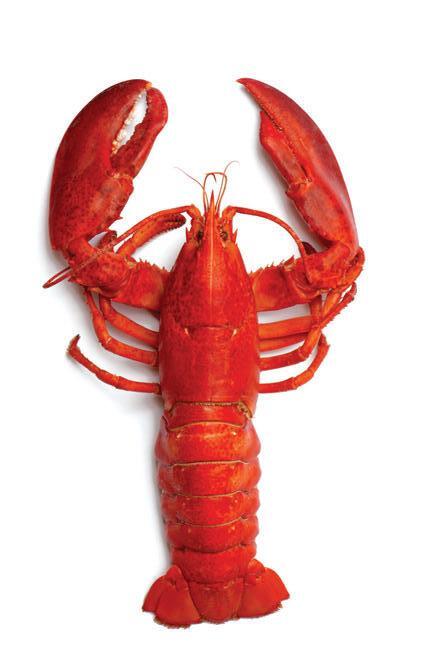
WHAT CAN A LOBSTER TEACH YOU?
In my latest book, Learn Like a Lobster [written with Sarah Ellis], we use the lobster as a metaphor for growth. Lobsters never stop growing. They have what scientists call indeterminate growth, meaning they continue to grow throughout their lives. But their hard shell eventually
In the age of AI, we need to rethink how we learn
becomes a constraint. To grow, they have to shed it, which is not comfortable. As the lobster crawls out of its shell, it is temporarily exposed and vulnerable. Yet that process is what allows a new shell to form –bigger and stronger than before. Growth happens when constraint is recognised and discomfort is faced, not avoided. The fascinating features of the lobster don’t stop there: the shell it sheds becomes fuel for its next stage of growth. Its development is not dependent on something outside its control. It uses what it has to grow.
‘AI is accelerating change across almost every sector, in ways that are hard to predict’
Helen Tupper held leadership roles at Microsoft, Virgin, and BP before becoming CEO of Amazing If, a global career training and development company. She is a contributor to Harvard Business Review and her love of learning has led her to study at Henley, Cranfield and Bayes Business School. She is a Fellow of the RSA and lives in the UK with her husband and two children.
When we apply this to work, it shifts how we think about learning. First, learning doesn’t start and stop when we attend a course. Second, learning is accelerated in hard moments: when a project stretches us, when feedback is uncomfortable, when new technology challenges our expertise. These are the moments when growth is possible. Third, we can take ownership of our learning by being resourceful with what is already around us, rather than waiting for permission or someone else to provide an opportunity to learn. In practice, this might look like building small experiments into existing projects, improving the quality of questions we ask in meetings, or choosing to be a beginner again so that curiosity outweighs ego. For me and my business partner, this looked like letting go of our corporate careers and identity when we started our own business, ‘Amazing If’. Instead of working for a global business with hundreds of thousands of employees, we had to start from scratch and get stuck into the reality of building a business. Every failure feels personal and it’s easy for your confidence to take a hit. But relooking at the challenges with a learning lens helped us to recover and grow more quickly. Our research shows that people’s ability to learn in hard moments at work is where there is the biggest gap. However, giving people the tools to use these moments for learning can create a lot of new opportunity for growth (without the cost of courses or time away from the day-to-day).
When work becomes the place where learning happens, in meetings, in conversations, in difficult moments, skills stay relevant and confidence grows. Career advantage won’t be about who has the most experience. It will be achieved by the people who are most adaptive with their learning. Because when you learn, you grow.
The Scale of Ambition
How Accor’s leadership is combining global scale, AI innovation, and a people-first culture to drive long-term growth across the Middle East and Africa.
HEN THE SENIOR leadership team of Accor’s Premium, Midscale & Economy (PM&E) division gathered in Dubai for an executive roundtable recently, the intent was clear: to demonstrate an unwavering commitment to the Middle East and Africa (MEA) region during a complex economic and geopolitical landscape.
WLed by Jean-Jacques Morin, Group Deputy CEO of Accor, and Duncan O’Rourke, CEO for Middle East, Africa & Asia Pacific, the gathering provided an inside look at how the hospitality giant – the largest hospitality group in the Middle East, and the largest international operator – is steering through industry headwinds without stepping back from its ambitious expansion plans. From scenariobased crisis planning to augmented intelligence and workforce preservation, Accor’s approach offers a compelling case study in resilient leadership and operational agility.
Resilience in Action:
Scaling Through Regional Headwinds Navigating market disruptions is not new for a group operating across 120 countries. As global travel
‘A defining element of Accor’s operational stability is its proactive crisis governance’
patterns continue to fluctuate due to macroeconomic pressures and regional tensions, Accor’s expansive international footprint provides a natural structural hedge.
“The beauty about Accor is that Accor is very large. So we are in 120 countries, and we’ve got strong positioning in many, many geographies,” explained Jean-Jacques Morin. “There is always one part of the world that’s
[experiencing challenges], as there is always something which is which is not going well in this world, and we always find ways in which our flows can readapt to what the current geopolitical situation is.”
While localised markets like Dubai experienced temporary RevPAR and occupancy pressures during peak recent disruption periods –compounded by airlift constraints and shifting source-market dynamics – other regional sub-markets provided substantial counterweights. Religious tourism in Saudi Arabia performed exceptionally well, while coastal resort destinations in Egypt recorded standout numbers.
A defining element of Accor’s operational stability is its proactive
crisis governance. Rather than reacting post-facto, its leadership established structured scenario modelling long before disruptions materialised.
When tensions first started to build up into the area before things escalated, Accor’s team ran with four scenarios. “[We considered] what happens if this happens, what happens if occupancy goes [down by] 20%, 40%, 60%, and we had 10 scenarios,” revealed Duncan O’Rourke. They discussed how if Scenario A happen, they’d follow with plan A. If Scenario B happened, they’d follow with plan B. And so on and so forth. So if any of those scenarios came to be, by the time they played out, there wasn’t any further thinking or discussion that needed to take place at the eleventh hour: “We just said, for instance, it’s scenario three, implement,” O’Rourke explained.
This operational discipline, paired with weekly executive crisis calls connecting its Paris headquarters directly with regional directors, ensured rapid execution without paralysing hotel-level decision-making.
A People-First Philosophy: Protecting the ‘Heartists’ In an industry where economic downturns frequently trigger immediate workforce reductions, Accor adopted a contrasting strategy rooted in longterm human capital preservation.
Drawing from hard-won lessons during the pandemic, Accor’s leadership prioritised keeping their employees – referred to internally as “Heartists” –engaged and employed.
“We have 380,000 people, so we’re a big player here; the largest player in the Middle East,” noted O’Rourke. “When we
decided to go through an accelerated refurbishment, for example, because we’re growing, we were then able to take some of our Heartists and move them into other large three, four, and five hundred room hotels in the Middle East instead.”
By deploying task forces under specialised pre-opening visas and reallocating personnel to properties undergoing accelerated renovations – such as a Pullman property in Ras Al Khaimah – Accor found a way to avoid the costly cycle of layoffs and subsequent re-hiring.
Morin emphasised that maintaining workforce stability directly impacts brand equity and guest perception.
LEFT Rixos Premium Saadiyat Island
BOTTOM Duncan O’Rourke
OPPOSITE PAGE FROM TOP JeanJacques Morin; Pullman Doha West Bay
Accor’s leadership prioritised keeping employees engaged and employed.
“For many companies, when you’ve got a problem, you deal with that problem. And so you go forward in a very binary [approach to] business. That’s not how we do it. We try to find solutions,” Morin stated. “All the investments that you make in people today are investments that will pay off later, like when things return to normal.”
Augmented Intelligence: Automating the Ordinary
As technology reshapes guest expectations and back-of-house operations, Accor is also positioning itself at the forefront of digital transformation. Rather than treating artificial intelligence as a substitute for hospitality, the group views technological integration as a tool to elevate human interaction. Accor has embedded proprietary tools like Accor GPT while establishing earlystage partnerships with tech leaders including OpenAI, Google, and Uber. On the operational side, advanced data analytics and unified global databases allow real-time revenue management in an era where guest booking windows have compressed dramatically – often to within five days of travel.
However, leadership remains firm on the boundaries of AI within hospitality. As O’Rourke pointed out, the entire industry will always rely on an essential aspect of human contact, and Accor’s philosophy thus centres on looking at how to automate the ordinary while humanising the extraordinary. By leveraging technology to handle administrative, repetitive tasks, staff are empowered to focus on delivering high-touch, personalised service that builds long-term loyalty.
Strategic Growth and Agile Portfolios
Accor’s long-term optimism for the region is reflected in its refusal to curtail development pipelines. The group’s PM&E division – which includes established brands such as Novotel, Mövenpick, Mercure, and ibis – is capitalising on massive demographic shifts, particularly the global expansion of the middle class, which is projected to grow by 1.3 billion people by 2030.
To capture this demand, Accor is executing targeted strategic partnerships, such as its collaboration with India’s InterGlobe (Indigo) to build a network of 300 hotels. Within the Middle East, while asset owners and developers adjust timelines
for mega-projects, foundational growth across midscale, economy, and premium segments remains robust. Morin noted that maintaining a long-term vision is precisely what distinguishes the region’s asset owners and market strategy: “Why are many European countries not doing as well [comparatively]? Because they typically have a three-year plan, a three-month plan, a three-week plan. Here, the difference is that they foresee that it is going to be a hub,” Morin explained. “If you don’t have a vision and you continue to talk about next week, next month, and the next month after next month, that’s how you’re not going to grow the business.”
Sustainable Success and Lessons in Leadership
Underpinning Accor’s operational strategy is a commitment to sustainability and brand integrity that transcends short-term market cycles. While industry discussions around ESG sometimes ebb during periods of economic tightness, Accor maintains that environmental and social responsibility are central to mediumterm profitability and asset value.
“We think medium term; we don’t think like the quarterly interest,” said Morin. He points to the topic of sustainability over the past two years as an example. “Nobody seems to be talking about sustainability in hospitality conferences anymore, [at least not like they used to]. We keep
‘The investments that you make in people today will pay off later’
talking about it because it matters for the medium term – and what you do today, you will reap the benefit of in the medium term.”
Ultimately, Accor’s journey through recent industry challenges demonstrates that true resilience is born from clear strategic choices. By combining decentralised empowerment with swift corporate support, establishing pre-planned emergency playbooks, and choosing workforce retention over short-term cuts, the group has safeguarded its service quality. Coupled with a balanced approach to automation and an unyielding commitment to multi-year development targets, Accor illustrates that navigating industry turbulence is not merely about surviving immediate disruptions, but instead, building an organisational framework designed for sustainable, long-term success.
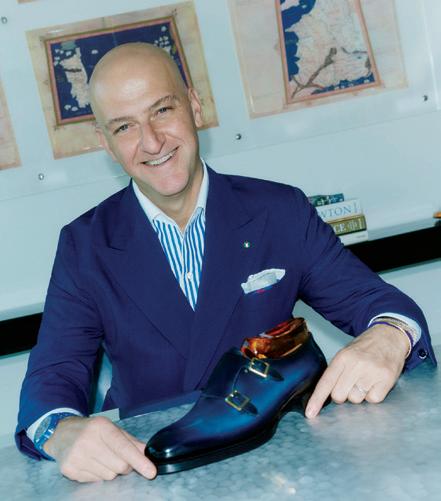
STYLE WITH SOLE
Yi-Hwa Hanna chats with Giuseppe Santoni, President and Chairman at Santoni, about the value of artisanal
craftsmanship
Q&
AYou began travelling the world at a very young age to manage Santoni’s international expansion. How did those early years on the road shape your vision?
When you’re young and moving between cultures, there’s no script – you have to observe, decide, and act. I learned to trust my intuition and to take responsibility for how the company presented itself in highly complex international contexts. Travelling the world at that age was an incredible school. You learn constantly – about different cultures, emerging trends, and evolving tastes. Seeing how customers think and what inspires them in different parts of the world shaped my entrepreneurial vision and taught me to anticipate change while staying true to our identity.
Santoni began as a respected local company that transformed into a global benchmark brand. What are some of the key lessons you learned during this journey?
A first lesson, from my father, was to never compromise on quality. Every product, every detail, and every finish must reflect the belief that excellence is not negotiable. This discipline became the foundation of everything we do. A second lesson was that the real power lies in the family. Not just in a traditional sense, but as a living, working ecosystem of people who share the same values and purpose. We are an extended family, united in the pursuit of beauty.
How do you maintain standards across global operations, while ensuring the creative heart of the brand remains rooted in the local traditions of where it started?
It begins with one principle: replicable craftsmanship excellence. Quality must be consistent everywhere, without ever losing its artisanal soul. We introduced lean manufacturing to transform production into a “client–supplier” flow, where each stage is responsible for the next. Quality and efficiency are controlled at every station, allowing real-time monitoring across the entire process, supported by a Kaizen approach to improvement. At the same time, we carefully balance automation and craftsmanship. Simple, repetitive processes are standardised and automated, while the most delicate stages remain entirely in the hands of artisans.
How can incorporating cultural techniques into one’s products and services affect a brand’s success?
At Santoni, techniques like the velatura hand-painting process are an expression of who we are. Incorporating cultural techniques into our products gives the brand a distinct identity that cannot be replicated industrially. It transforms an object into something personal,
layered with history, skill, and emotion. When a brand truly embraces cultural techniques, it protects and elevates craftsmanship while creating authenticity. Customers don’t just see a product; they see a story, a place, and a tradition shaped by the hands of artisans. That emotional depth is what creates long-term value.
You were appointed a “Cavaliere del Lavoro” by the President of Italy in 2022. What does this extremely rare distinction mean to you?
It’s the only recognition in my country which I can truly gift to the people I work with. Thanks to them and their daily work I was awarded this special honour. As an entrepreneur, and as an Italian, I am deeply proud. I believe it reaffirms the role companies play in supporting their communities, their people, and younger generations. An entrepreneur holds great power: the power to choose how to do business. My approach – and that of my father before me – is centered on people. The human dimension, social responsibility, and a commitment to environmental sustainability are essential to me.
Packing essentials
• Comfortable shoes are non-negotiable – my reputation would be at stake!
• My shaving kit.
• Something orange, my lucky colour, and a signature of Santoni.
Bucket list
I have a deep fascination for Africa, for its landscapes and sense of connection to nature, as well as for Asia, which offers an extraordinary diversity of traditions and ways of living.
You’ve had a lifelong nose for rare things, such as refined watches. Any tips for other travellers looking to pick up a special piece?
Yes of course, this is what I call curiosity! [When I travel], I look for local workshops and rare artisan pieces linked to my passions.
What’s your earliest travel memory? Travelling with my father to Milan is one of my earliest memories – we are based in the Marche region. Later, a few trips to the United States marked my first experiences of travelling on my own.
What’s the first thing you usually do when you arrive at a new destination?
I like to observe people – their eyes, the way they interact, their customs, their way of living. Through this, I try to understand the true spirit of a place: how the country is doing, what energy it carries, and both its strengths and its challenges. It’s often in these small, human details that you can grasp the most authentic picture of a destination.
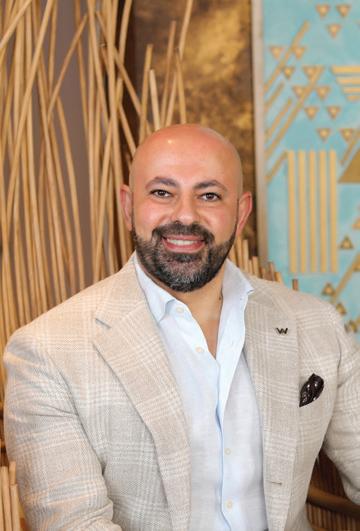
The Elevator Pitch
Business Traveller Middle East gives Fares Daghlas, general manager of W Riyadh – KAFD, five minutes to pitch his property to prospective guests
IT IS MY PLEASURE to welcome you to W Riyadh – KAFD, where bold design, high energy, and contemporary luxury come together in the heart of one of the world’s fastest-evolving cities. As Riyadh continues its remarkable transformation, we are proud to offer a fresh perspective on hospitality – reflecting its ambition, creativity and growing reputation as a global destination for business and culture.
At W Riyadh, we recognised an opportunity to redefine what luxury means for today’s traveller. While Riyadh is home to an exceptional collection of luxury hotels, modern guests are looking for more than impeccable service and elegant accommodation. They want hotels that become destinations in their own right – places where business, dining, entertainment, wellness, and culture
come together effortlessly. That is exactly what the W brand is built on.
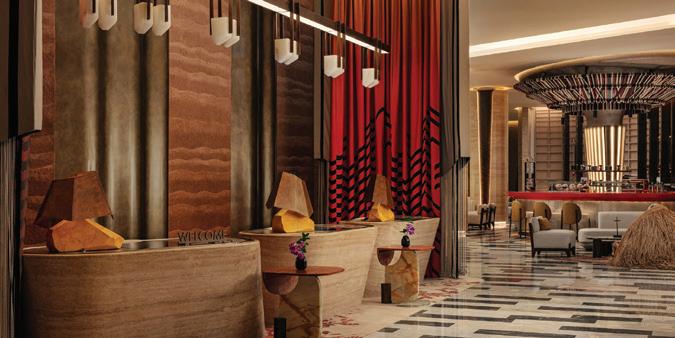
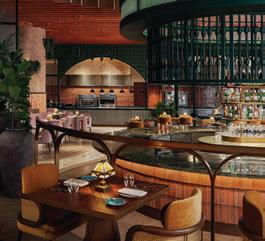
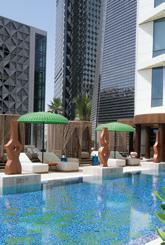
W Riyadh – KAFD features 210 guestrooms and suites, elevated dining destinations, the signature W Lounge, WET Deck and AWAY Spa. Designed as a social destination, the hotel blends contemporary design, immersive programming, and our iconic Whatever/Whenever service to create experiences that are vibrant, unexpected, and distinctly W. Set within the walkable King Abdullah Financial District, guests can move seamlessly between offices, retail, restaurants, cultural attractions, and entertainment, making the hotel the ideal base for business and leisure travellers.
Design has always been at the heart of W, and W Riyadh – KAFD is no exception. Inspired by Saudi Arabia’s evolving creative landscape, every space has been designed to spark curiosity and connection. Bold interiors, curated artwork, and dynamic social spaces create an
TOP FROM LEFT Fares Daghlas; Lobby area
BOTTOM FROM LEFT Sira; pool
‘What excites me most is seeing Riyadh evolve into a destination people actively choose’
atmosphere that feels expressive, sophisticated, and unmistakably connected to the rhythm of Riyadh. We combine intuitive technology with exceptional comfort, offering spaces where guests can switch effortlessly between productivity and relaxation.
From the vibrant W Lounge to our distinctive dining venues, every space has been designed to bring people together. Whether it’s a business breakfast, an impromptu meeting, dinner with friends or late-evening conversations, guests will discover experiences that celebrate creativity, bold flavours, and the evolving energy of Riyadh’s culinary scene.
Luxury today is about choice and balance. Guests can recharge at AWAY Spa, maintain their fitness routine at FIT, or relax at WET Deck. Every touchpoint has been designed to help guests feel energised, connected, and inspired.
As Riyadh attracts multinational headquarters, global investment and world-class events, we provide flexible meeting and event spaces supported by advanced technology and a dedicated team committed to delivering seamless experiences. Here, business travellers can move effortlessly from boardroom conversations to social gatherings without ever leaving the district.
What excites me most is seeing Riyadh evolve into a destination people actively choose to experience rather than simply pass through. We are welcoming an increasingly diverse mix of international executives, regional travellers and leisure guests, all drawn by the city’s extraordinary momentum. We’re proud to be part of that story, showcasing new era of lifestyle luxury in Saudi Arabia.
Eat, drink, shop, relax
EXTRA DAY
Hamburg
WORDS CHRIS DWYER
ERMANY’S SECOND
LARGEST city flies slightly under the radar, but more than merits a visit thanks to a rich cultural and culinary landscape.
Stately stays
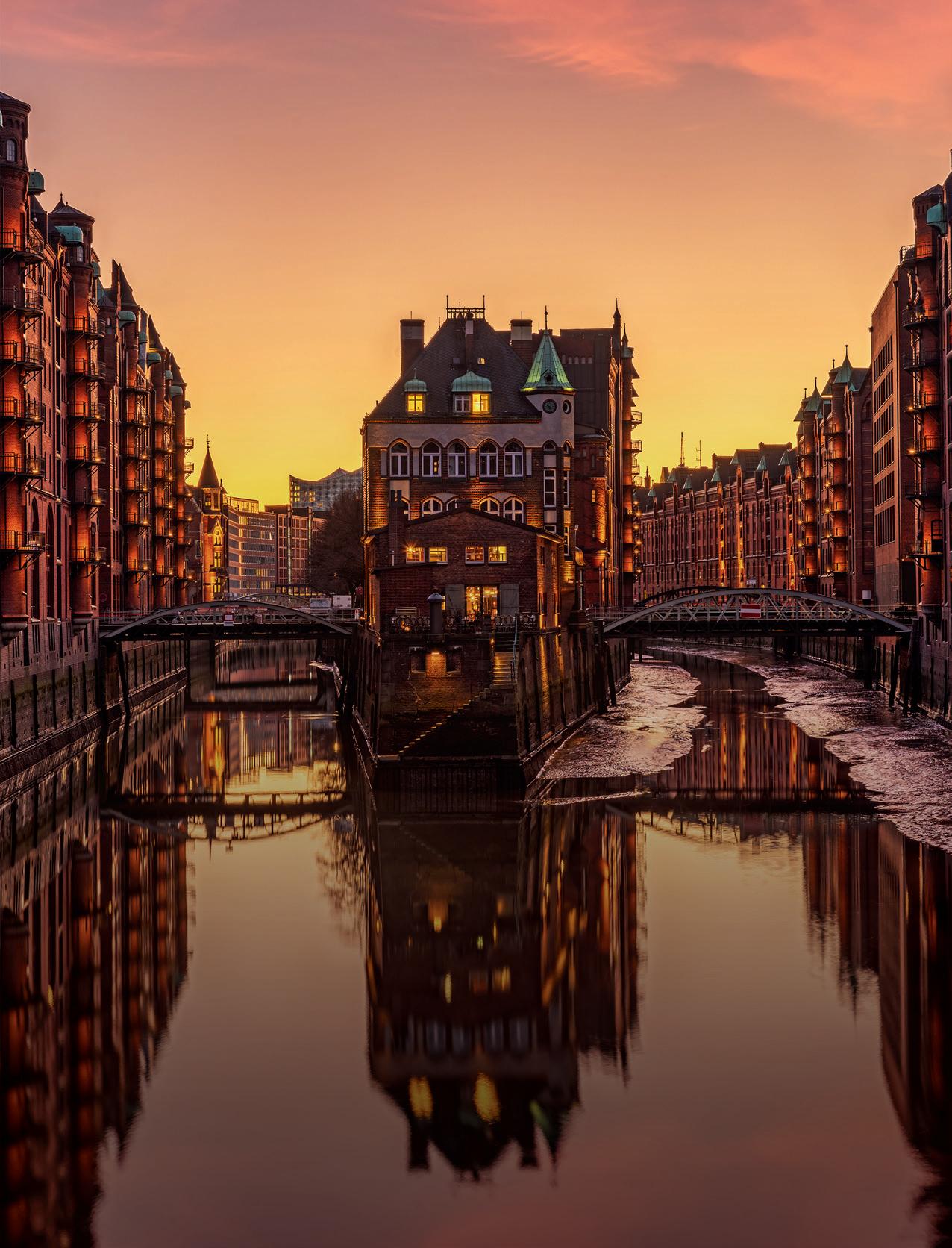
An elegant Hanseatic building dating from 1912 houses the newly opened Conrad Hamburg and makes the perfect base in the heart of the city. Start your day with a generous breakfast – frühstück – of champions, before exploring Neustadt, the central district that mixes the historic
and the sleek. Hamburg is home to more millionaires and billionaires than any other German city and a luxury shopping environment makes for serious retail therapy. The picturesque arcades of Mellinpassage and Neuer Wall feature high-end boutiques, notably for watch and jewellery fans, while the Alsterhaus department store is the city’s equivalent of Harrods.
History of the port city Hamburg is one of the world’s most important trading ports, and nowhere showcases this legacy better than Speicherstadt – the world’s largest warehouse district and
UNESCO World Heritage Site. The International Maritime Museum takes you back in time, while photogenic red brick facades along the canals hide culinary surprises. Our pick? Fuel up on global beans at the atmospheric Burg Coffee Museum and roastery (Kaffeemuseum Burg), which has been in business for more than a century. Continue your discovery of Hamburg’s sights in the adjacent HafenCity district, which features a wealth of striking modern architecture – plus the soon-to-open teamLab Borderless Hamburg, the largest European incarnation of the Japanese interactive art experience. (Read our interview with teamLab member Takashi Kudo online at businesstraveller.com)
Creative quarters
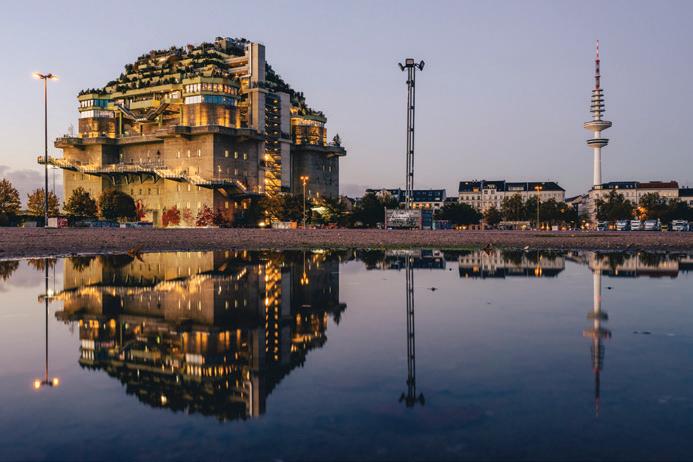
Those seeking to discover Hamburg’s creative side should head to the St Pauli neighbourhood, packed with independent record shops, street art, and sustainable boutiques. It’s not all about the arts, though – the fiercely local football club, FC St Pauli, welcomes fans from around the world to its compact Millerntor stadium, where prices will stun those used to the Premier League. Overlooking the stadium is the remarkable Brutalist monolith of The Feldstraße
HAMBURG
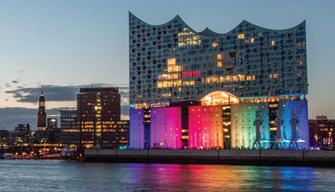
FROM TOP The Feldstraße Bunker; the Elbphilharmonie
‘Those seeking to discover Hamburg’s creative side should head to the St Pauli neighbourhood, packed with independent record shops and street art’
Bunker, an enormous World War II anti-aircraft tower that has been transformed into a mixed-use complex –combining a concert venue, public housing and rooftop garden. And don’t miss the
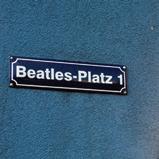
MUSIC HAS DEFINED Hamburg for centuries, with the city nurturing homegrown talent and luring international stars to its lively scene. John Lennon famously said: “I might have been born in Liverpool – but I grew up in Hamburg.” Much of his time
Fischmarkt on Sundays –running since 1703, it offers everything from seafood to antiques.
Symphony of the city
Finish your trip with a visit to the Elbphilharmonie, Hamburg’s contemporary concert hall, which towers over the Elbe River and surrounding docks. Its three halls boast astonishing acoustics, whether you’re listening to composers such as Brahms, Mahler, or Mendelssohn, or modern
was spent playing with his fellow Beatles at clubs on the Reeperbahn –literally ‘Ropewalk’, named for the sailors who flocked to its hostelries and redlight district. Today, the 930-metre-long street remains the city’s biggest nightlife draw, with hundreds of bars,
electro. This year marks an important milestone – the 2026/27 season celebrates the venue’s 10th anniversary, with a special concert to be held on 11 January, 2027. Ahead of this date, however, visitors will be drawn in by the building’s architecture, glass structure and 360° panorama over the city. Don’t miss the chance to appreciate its facade from a river cruise – and pick an operator that serves cold local pour and warm pretzels on the go.
clubs, restaurants and theatres – and Hamburg comes third globally after Broadway and the West End for sales of musicals. Beatles tours abound, clubs like Mojo Club and Große Freiheit 36 carry on until well past dawn and Spielbudenplatz hosts outdoor gigs. Those with less endurance can enjoy a nightcap at the Latin American barrestaurant Greta Oto back at The Conrad.
REEPERBAHN AND THE BEATLES
The coolest local scoop
AS SUMMER TEMPERATURES
continue to warm the UAE, Dubaibased dairy pioneer Camelicious, has now made its award-winning camel milk ice cream available on the popular online grocery platform Kibsons. Made using the brand’s own fresh camel milk, this range of ice creams promises a velvety and indulgent texture without the bloating aftermath that some feel after consuming cow’s milk. Camel milk is said to contain a wide range of nutritional benefits, with up to three-to-five times more Vitamin C, 10 times more iron, and notably higher levels of zinc than cow’s milk. It’s also said to be lower in cholesterol and sugar, and is typically better tolerated than cow’s milk by people with lactose intolerance or dairy sensitivities.
While turning it into a sweet dessert like ice cream will, of course, transform the camel milk into a treat rather than a purely nutritional product – and this is one edible souvenir that tourists won’t be able to take home – it’s a great way to get a taste of local culture with a homegrown UAE brand. Camelicious’s products are produced locally at the brand’s state-of-the-art Dubai facility –which has nearly 7,000 camels. The collection includes flavours like pistachio and hazelnut.
SPA PICKS
Naturally restorative
CONSTANCE HOTELS
& Resorts is expanding its holistic wellness experiences across properties in Mauritius, the Maldives, Seychelles, and Rodrigues. The Indian Ocean group has introduced a series of therapies designed around nature and local traditions to cater to growing demand.
Among the new additions, Constance Moofushi Maldives has launched Aerial Yoga and Sound Healing Therapy, while the neighbouring Constance Halaveli now
offers Full Moon Sound Healing on the beach. In the Seychelles, Constance Lemuria is hosting visiting practitioners on disciplines such as naturopathy, breathwork, and ice bath therapy.
Meanwhile, Constance Prince Maurice in Mauritius is unveiling a Vibroacoustic Therapy Table alongside Japanese Kobido facials, while Constance Tekoma Rodrigues now offers local botanical wraps.
A new Red Sea sanctuary targets total well-being
THIS HIGHLY-ANTICIPATED flagship resort from luxury wellness brand Jayasom –which is known for blending Eastern and Western healing traditions – is set to open at AMAALA on Saudi Arabia’s Red Sea coast by the end of this year. Spanning more than 7,000 sqm, the inaugural property aims to bring together
Jayasom’s name comes from “Jay” (heart) and “Asom” (place) DID YOU KNOW
Western evidence-based practices with Eastern holistic traditions. The resort features two distinct environments tailored for both adult retreats and familyfocused visits, striking a balance between personal quietude and shared intergenerational experiences. Guests will have access to bespoke itineraries that are all guided by a team of medical experts, movement specialists, and holistic practitioners. Jayasom is also introducing several curated retreat formats designed around specific goals, including performance enhancement for leaders, hormonal balance for women, targeted detox, and movement-focused vitality. Beyond its guest offerings, the development itself adheres to sustainable building standards and local organic sourcing, establishing an eco-conscious sanctuary designed to foster long-term lifestyle transformation rather than temporary escapes.
HOT NEW HOTEL
STAY FIT
Maintain your workout regime on your next work trip
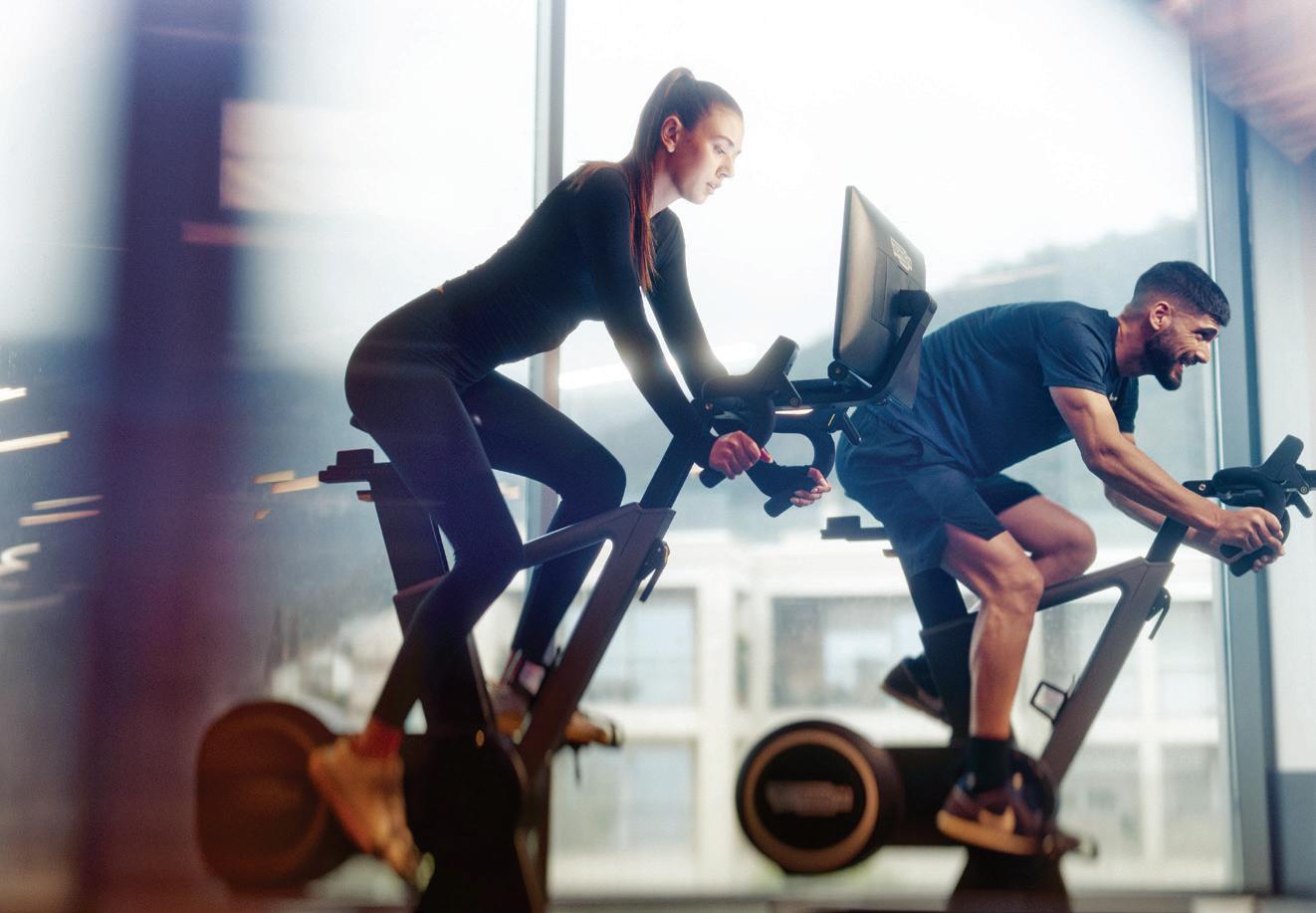
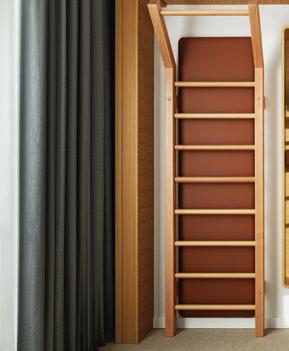
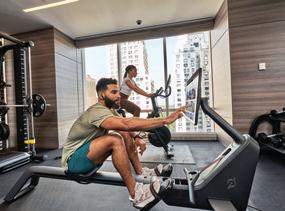
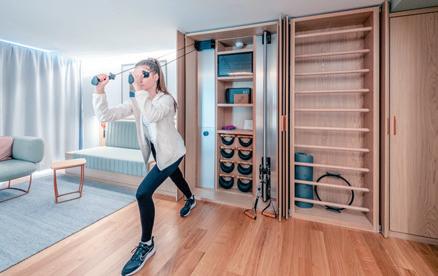
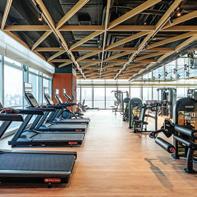
LIFE ON THE road can easily lead to an unhealthy lifestyle, but business travellers are increasingly prioritising their wellbeing while travelling. Hotels are responding to this demand for greater focus on mental and physical wellness by adding fitness equipment and ergonomic workstations to guestrooms, upgrading on-site gyms and offering nutrition-focused menus at their dining venues. Here, we round-up some of the hotel brands upping their game when it comes to fitness.
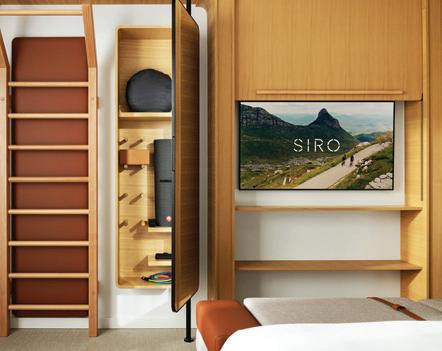
SIRO HOTELS
Kerzner International’s new fitness-focused brand has started off strong in Dubai and Montenegro, partnering with football team AC Milan and Olympic athletes Ramla Ali and Adam Peaty to shape the guest experience.
Each guest receives personalised holistic fitness, nutrition and wellbeing programmes using optional 3D scanning. SIRO’s fitness clubs, meanwhile, include spaces for yoga, meditation and group classes, while a recovery lab offers cryo, infrared and oxygen therapy treatments.
Further hotels are set to open in Miami, Los Cabos, Saudi Arabia and Tokyo in the coming years.
HYATT HOTELS & RESORTS
Hyatt is rewarding members of its World of Hyatt loyalty scheme via its long-standing partnership with Peloton. Once members have linked their accounts, they will earn 100 bonus points for 10+ minute workouts (rides and rows) on Peloton equipment at over 800 participating hotels, while also accessing digital classes through the in-room TVs.
SWISSÔTEL HOTELS & RESORTS
This Accor brand’s Vitality concept promises in-room features and outdoor activities. Guests can order an aero step, Swiss ball, TheraBand, Pilates ring and exercise cards to their room, or join open-air yoga and guided hikes. Each hotel also offers a local jogging map, and the Vitality menu at its restaurants includes full nutritional breakdowns.
EVEN HOTELS
IHG Hotels & Resorts has 20 brands, but the group’s EVEN hotels in the US, China and the Middle East are the most firmly focused on health. Every room has a ‘wellness zone’, with either fitness gear or a “calming corner”, plus on-demand fitness videos. Rooms also include standing desks and beds have breathable linens for a cooler sleep. Meanwhile, the gym (or Athletic Studio) has zones for strength, cardio and recovery, plus a studio for yoga and mindful movement.
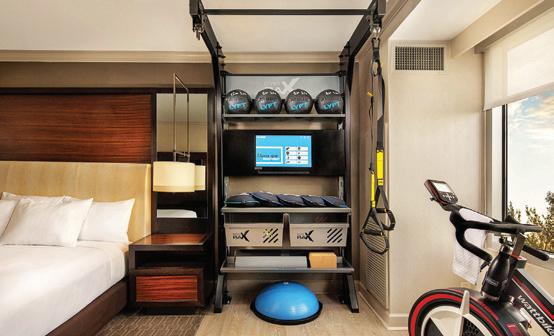
HILTON HOTELS & RESORTS
Hilton’s Five Feet to Fitness concept is “part traditional hotel room, part miniature fitness centre”. Expect rooms with 11 different equipment and accessory options plus a touchscreen display with 200+ exercise tutorials. To ensure other guests aren’t disturbed, a “sports performance floor” provides a layer of soundproofing. Further features include a meditation chair, blackout shades, bio freeze gel packs to relieve muscle tension and hydrating beverages.
‘The room’s sports performance floor has been designed to provide an additional layer of soundproofing’
WESTIN HOTELS & RESORTS
Wellness is key to Marriott’s Westin brand, starting with its Gear Lending Programme in partnership with fitness and recovery brands Hyperice and Bala. Exercise in private in a WestinWORKOUT room, equipped with a Peloton bike and medicine ball, or take advantage of the stateof-the-art fitness studios complete with TRX and Peloton equipment. The Westin Run Concierge can suggest scenic three- and five-mile running routes, while a Goop video series offers wellbeing advice.
3
Isometric Palm Press
Bring your palms together in front of your chest with your elbows relaxed. Press your palms firmly into one another while maintaining an upright posture and engaged core. Hold the contraction for five-to-10 seconds, then release. Repeat five-to-eight times. This simple exercise activates the chest, shoulders, and upper-body stabilisers while promoting postural awareness.
IN-FLIGHT PILATES
Unless you’ve been living under a rock lately, you’ll likely be aware that Pilates – a low-impact exercise method created by Joseph Pilates in the early 20th century – is once again all the rage in many places across the world, including the Middle East. Originally called Contrology, it’s a great way to increase core strength, boost flexibility, and improve posture – all of which can make the physical impact of flying a lot more comfortable over time. Dubai-based studio Real Pilates has tapped into this with a special summer package (with classes from AED124) designed for residents and frequent travellers hoping to avoid the stiffness of long-haul flights this year – and if you can’t wait until you’re back in the studio, they’ve shared these five simple, airplane-friendly Pilates-inspired moves to try out during your next trip.
1
Deep Diaphragmatic Breathing
Sit tall toward the front of your seat with your spine lengthened. Inhale deeply through your nose for a count of four, allowing your ribcage to expand sideways. Exhale slowly through your mouth for a count of four, gently drawing your navel toward your spine and allowing your ribs to soften inward. Repeat five times to help decompress the diaphragm, improve circulation, and reduce muscle tension.
2
Shoulder Rolls
Sit upright with your arms hanging down and relaxed by your sides. Slowly roll your shoulders up toward your ears, then back and down, encouraging your shoulder blades to glide smoothly across your ribcage. Perform five to eight repetitions, then reverse the direction. This exercise can help to relieve tension in the neck, shoulders, and upper back.
4
Toe Taps
Sit tall with your spine lengthened and core gently engaged. Lift one foot a few inches off the floor while reaching the opposite hand to tap the toes. Return to the starting position with control and alternate sides. Do 10-to-20 reps. Maintain an upright posture and avoid collapsing through the chest as you reach toward the foot. This promotes coordination, trunk rotation, core activation, and circulation.
5
Seated Knee Lifts with Ankle Movement
Sit tall with your core gently engaged. Slowly lift one knee a few inches off the floor without leaning backward. While keeping the knee lifted, point your toes away from you and then pull them back toward your shin three-to-five times. Lower the foot with control and repeat on the other side. Continue alternating sides for 10-to-20 reps to activate your hip flexors and core, and boost mobility in the lower body.
CULTURAL CALENDAR
OUR PICK OF EVENTS TAKING PLACE
AROUND THE WORLD
Marilyn Monroe: A Portrait, London, UK until 6 September
To mark what would have been Marilyn Monroe’s 100th birthday, the National Portrait Gallery is staging an exhibition dedicated to the 20th century icon. The showcase includes work by Andy Warhol and Cecil Beaton, and previously unreleased portraits taken by American photojournalist Allan Grant.
La Tomatina, Buñol, Spain 6-28 June
The world’s largest food fight – which lasts for exactly one hour, from 12pm to 1pm – this unique occasion is held annually on the last day of August. The event, which requires an official entry ticket for participation, caps attendance at 20,000 people to ensure safety in the town’s narrow streets, where for the lucky participants, the water cannons will fire when it’s time to start flinging more than 100 metric tonnes of over-ripe tomatoes in the town centre.
DATALAND, Los Angeles, US until 31 January, 2027
A museum dedicated entirely to AI art opened in downtown LA at the end of June. Its inaugural exhibition, Machine Dreams: Rainforest, explores the similarities between machine intelligence and the natural world, using advanced AI to create a responsive virtual rainforest shaped by live streams of ecological data and biofeedback from the audience.
READ
WATCH
RAFA
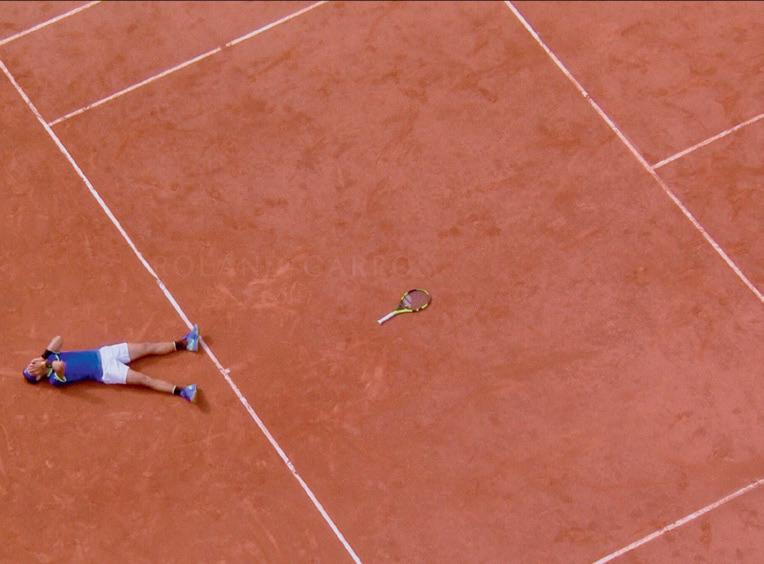
This Netflix docuseries tells the story of tennis star Rafael Nadal, from his beginnings in the sport at just three years old, to his final year on the professional tennis circuit in 2024. Episodes offer an inside look at his life on and off the court, wih commentary from tennis icons Roger Federer, Novak Djokovic, and John McEnroe.
OnThinIce–AnExplorer’sMemoirofSiberia,
Surveillance and Survival by Charlie Walker
WHEN WALKER BEGAN
a hike through Siberia’s Arctic landscape in 2022, his expedition was intended as an exploration of climate change. But events took a turn following Russia’s invasion of Ukraine when
he was arrested on suspicion of espionage upon reaching the town of Tikski. The book is a gripping first-person account of his experience in one of the world’s most unforgiving environments.
AED93.30, Amazon.com
LISTEN
THIS PODCAST EXPLORES the darker side of the internet –hacking, cybercrime, and major data breaches. In recent episodes, host Jack Rhysider interviews staff from underground hacking magazine Phrack , delves into security software company Sophos’ war against state-backed cyber hackers, and examines the rise of tarjeteros in the Dominican Republic – hacker groups thriving off stolen credit card information.
A slice of NYC
atmosphere modeled on traditional New York eateries.
DIFC Square has welcomed the UAE’s first authentic, family-run New York-style deli
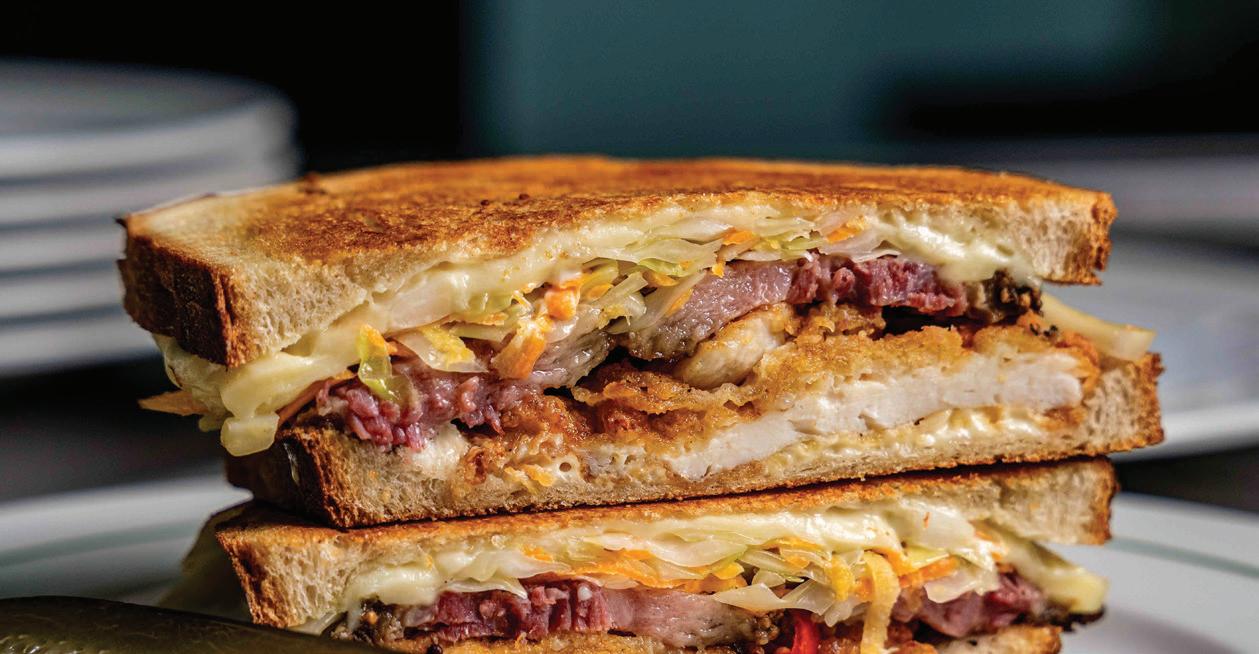
THE RECENTLY-OPENED Hudson & Rye is bringing a slice of Manhattan’s iconic food culture to Tower 3 in the heart of the financial district. Spearheaded by New York expats Emma Zabinsky Csillag and Chef Daniel Ross-Leutwyler – the team behind Kurasu UAE – the all-day venue serves classics that have defined US East Coast neighbourhoods for generations. Named after the Hudson River and the rye bread that forms the backbone of its sandwiches, the space operates seven days a week with a warm, communal
The kitchen is meticulous about its sourcing and timetested recipes. Expect standard deli staples like house-made pastrami and oven-roasted turkey Reubens, cheesy tuna melts, and a signature cheeseburger with griddled onions. Need a solid morning fix? Try the “Breakfast Buddies” on a flaky, homemade biscuit, with griddled buttermilk pancakes. Desserts are equally authentic and nostalgic: black and white cookies and rich cheesecake.
SUMMER HOTSPOTS
Paris Society expands into top Bodrum resort
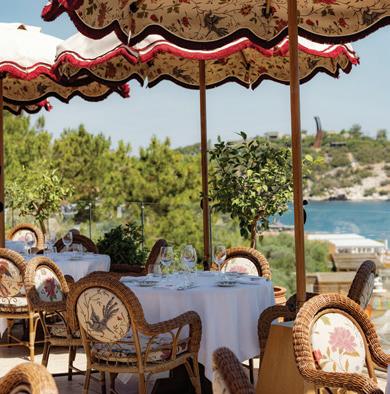
The French hospitality group behind Dubai’s Mimi Kakushi has launched two premier venues at the Mandarin Oriental, Bodrum. One is new: the recentlyopened Maison Revka, bringing a blend of French and Slavic heritage to the coast, including new seasonal creations that are only served at this location. The other is the seasonal return of Italian beach house concept Gigi Rigolatto, after a successful run in 2025.
HOT NEW VENUE
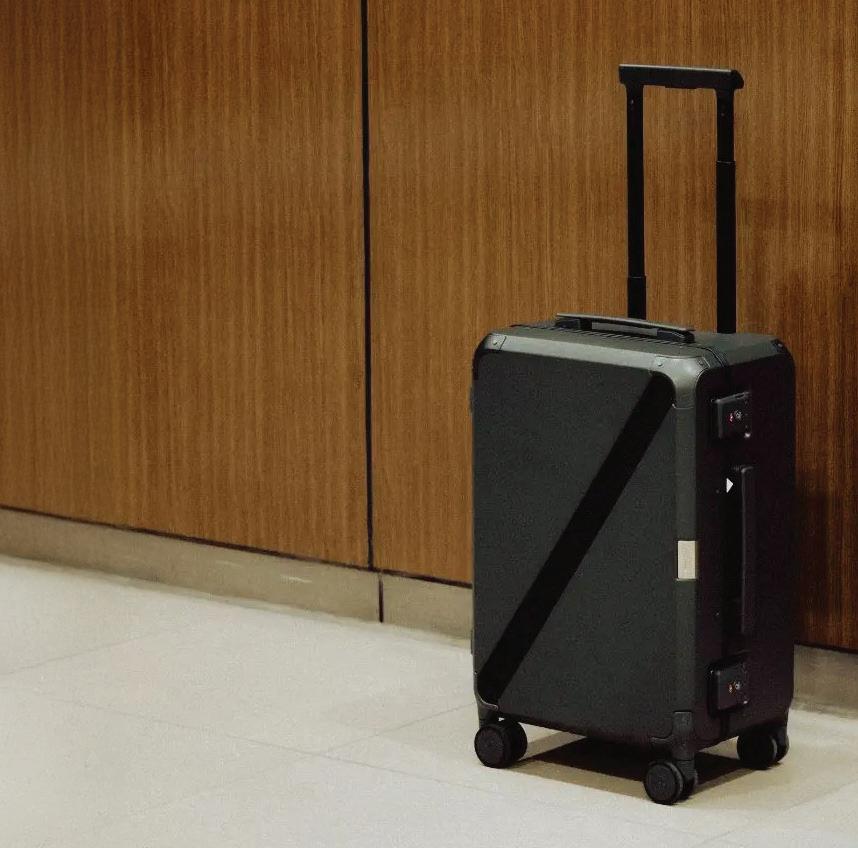
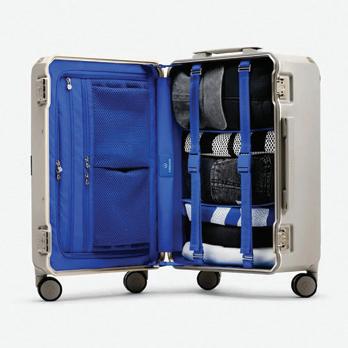
THE BAG
A new homegrown hero
This Dubai-born label is carving out its own space in premium luggage
NEW UAE-FOUNDED luggage brand Armoir is hoping to bring a unique blend of old-world luxury with modern sensibilities to the savvy jet-setter. Created by Dubai-based French entrepreneur and frequent flyer Martial Dahan, the label aims to offer high-quality craftsmanship at an attainable price point, stepping away from mass-produced designs. It has drawn inspiration from classic French wardrobe trunks, with its signature cases boasting a sleek, style-conscious aesthetic. Made with high-end, durable components, the lightweight cabin trunk features a distinct asymmetrical vertical split instead of a standard central zip. This deeper interior layout lets you pack and organise your wardrobe vertically, effectively serving as a mobile closet and keeping clothes pristine without unpacking at your destination. From €349; armoir.co
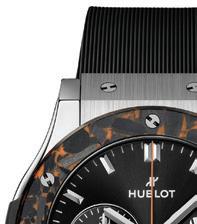
THE WATCH
A winning tribute piece
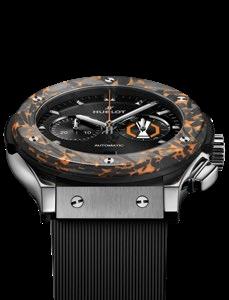
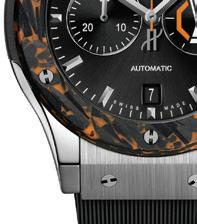
Swiss watchmaker Hublot has launched a special edition to celebrate its twentyyear-long football legacy. Limited to just 50 pieces, the Classic Fusion Chronograph UEFA Europa League Titanium Carbon is cast in lightweight titanium. The 42mm watch features a striking bezel made of carbon and orange berglass, and due to the forging-forged random weave, no two bezels are identical. The tournament’s logo is subtly integrated at three o’clock.
Price upon request; website.com
THE TOTAL total solar eclipse on 12 August offers a rare opportunity to create a lifelong travel memory. To mark the occasion, Gran Meliá has launched two ultra-exclusive Balearic journeys designed to view the celestial event directly from the water. In Mallorca, guests at Hotel de Mar can watch the sky
align from the deck of a private Rivamare yacht. Meanwhile, those staying at Menorca’s Villa Le Blanc will set sail on a traditional maritime llaüt. Both of these four-night packages include presidential suite stays and private transfers, offering an unforgettable way to experience this natural phenomenon.
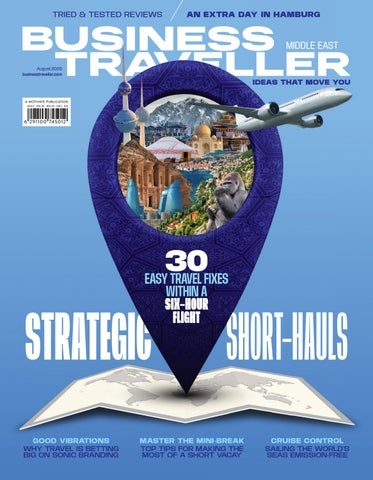
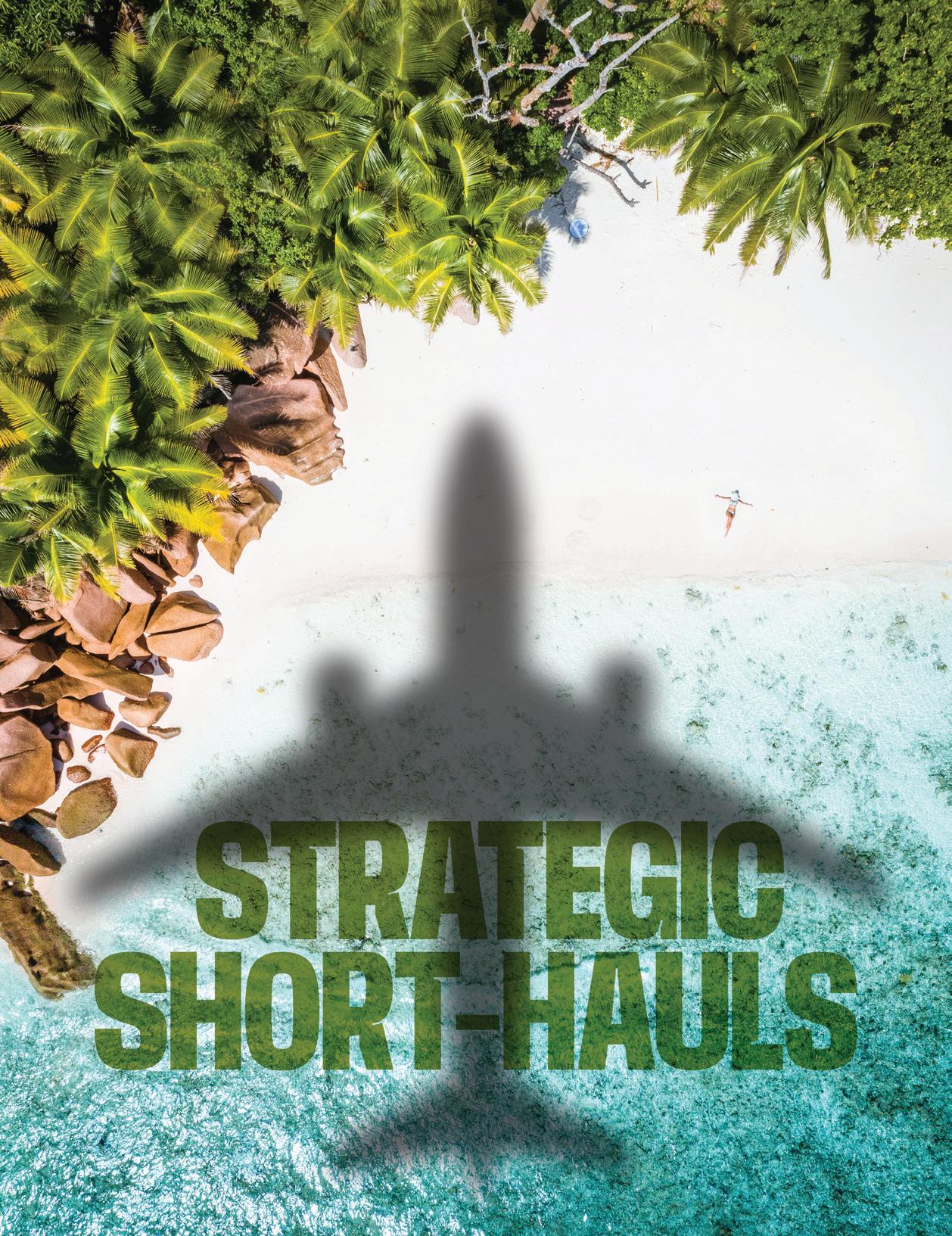
30 QUICK-FIX TRIPS WITHIN A SIX-HOUR FLIGHT
WORDS YI-HWA HANNA
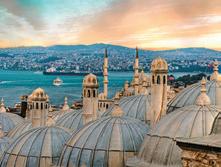
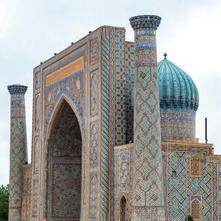
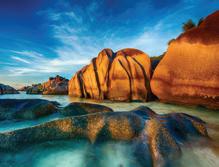
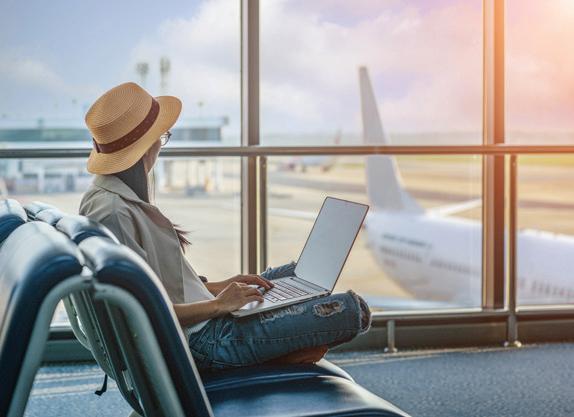
There is an art to the last-minute escape, often beginning with wisely choosing where to go. As the reality of summer’s final stretch sets in, the temptation to squeeze out one more trip is hard to ignore. Fortunately, we live in a region anchored by some of the most connected aviation hubs on the planet - most notably Dubai International (DXB), which was declared the world’s busiest airport for international passengers in 2025, when it handled a record 95.2 million travellers, and also claimed the second overall ranking in total global passenger traffic.
Whether you’re trying to check one more destination off your summer holiday list, or if you’re attempting to beat the post-vacation blues by mapping out your upcoming travel for the rest of the year, this list of quick-flight escapes will help you make the most of your public holidays, stretch out your dwindling pool of annual leave days, and generally make it easier for you to chase after a spontaneous speedy getaway.
Let this list of destinations serve as a reminder that we don’t always need to cross multiple time zones in a long-haul flight to experience a radical shift in our environment and perspective. Bookmark these spots and maximise the time you have, since your next adventure could be closer than you think.
ARMENIA
Est. travel time: 4.5h
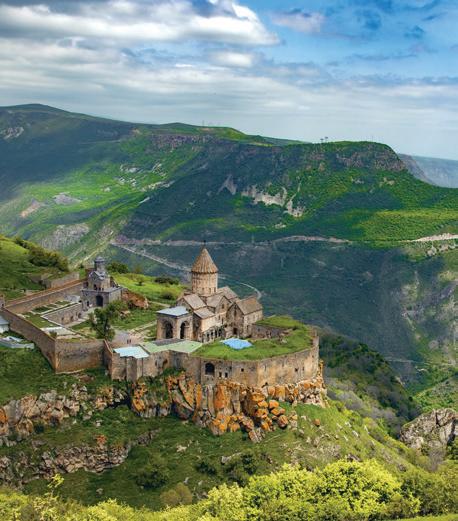
Yerevan stands out for its vibrant, highly walkable centre, where an active outdoor café culture lines the streets alongside the striking Cascade complex. It’s a highly scenic and exceptionally easy destination to navigate for firsttime visitors. Just beyond Armenia’s capital city, you’ll also find incredibly-preserved ancient historic landmarks that make for easy day-trips, including the iconic first-century pagan Temple of Garni and the famous rock-cut Geghard Monastery. flydubai offers direct flights to Yerevan from Dubai, and Air Arabia runs direct flights there from Sharjah.
AUSTRIA
Est. travel time: 6h
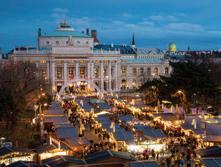
Famous for its grand imperial palaces and historic classical music heritage, Vienna offers exceptional museums and a vibrant café culture. Beyond the capital, the country features dramatic alpine landscapes, pristine lakes and worldclass skiing. Emirates and Etihad Airways both offer direct flights to the country.
AZERBAIJAN
Est. travel time: 3-3.5h
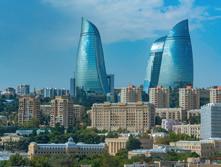
Baku has a striking mix of modern architecture and historic heritage, best seen in the city’s futuristic Flame Towers and UNESCO-listed Old City. Nearby, you’ll find unique mud volcanoes in Gobustan, and the perpetual natural fire of Yanar Dag. Air Arabia and flydubai both offer direct flights there from Sharjah and Dubai.
BAHRAIN
Est. travel time: 1h 20m
This island nation blends rich history with a modern lifestyle, featuring the ancient UNESCO-listed Bahrain Fort, a vibrant culinary scene in places like the Block 338 district, and a famous pearl-diving heritage. Emirates, flydubai, Gulf Air, and Air Arabia all offer direct flights to the country from Dubai, Abu Dhabi, and Sharjah.
BHUTAN
Est. travel time: 4.5h
Known for its dramatic mountain scenery, fortressmonasteries, and unique carbon-negative status, this kingdom offers a peaceful escape. Visitors can hike to the iconic Tiger’s Nest monastery and explore Paro’s traditional streets. Bhutan Airlines and Druk Air both offer direct flights there from Dubai.
BOSNIA & HERZEGOVINA
Est. travel time: 6h
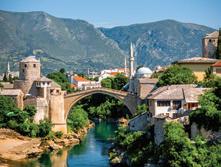
This scenic destination has a beautiful mix of Ottoman and Austro-Hungarian history, seen in Sarajevo’s old bazaar, Baščaršija, and the historic Latin Bridge. Beyond the capital, you can also explore stunning waterfalls, green valleys, and old stone towns. flydubai has direct flights to Sarajevo.
CYPRUS
Est. travel time: 4h 15m
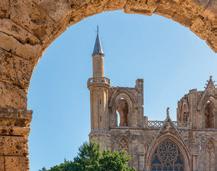
This Mediterranean island is rich in classical mythology, sandy beaches, and pineclad mountains. Key sites for tourists include the ancient tombs of Paphos, the Roman ruins of Kourion, and traditional stone villages in the Troodos foothills. Both Emirates and Cyprus Airways operate direct flights to the country.
EGYPT
Est. travel time: 3.5-4h
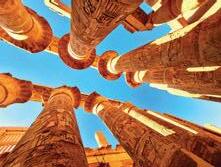
Home to the famous Giza Pyramids and the treasurefilled Grand Egyptian Museum, this country is a popular bucket list destination. Sought-after activities include exploring Cairo’s historic quarters, cruising the Nile, and diving the Red Sea reefs. Emirates, EgyptAir, flydubai, Air Arabia, and Nile Air all operate direct flights there.
CROATIA
Est. travel time: 6h
This Adriatic destination has a stunning sun-drenched coastline, more than a thousand islands, and a deep historical heritage. The dramatic medieval walled city of Dubrovnik, the beautifully-preserved Roman ruins of Diocletian’s Palace in Split, and the turquoise lakes and waterfalls of Plitvice Lakes National Park are key attractions. This highly diverse country transitions effortlessly from peaceful, pine-fringed beaches to historical exploration. flydubai offers direct flights to Zagreb from Dubai, while other seasonal flight routes often open up to Dubrovnik.
ETHIOPIA
Est. travel time: 4h 15m
This East African nation boasts diverse landscapes, from the jagged Simien Mountains to the volcanic Danakil Depression. Key attractions include the rock-hewn churches of Lalibela, ancient ruins in Aksum, and traditional coffee ceremonies. Emirates, flydubai, Ethiopian Airlines, and Air Arabia fly there direct.
GEORGIA
Est. travel time: 3.5-4.5h
This Caucasus nation borders the Black Sea, drawing in visitors with its cobblestone streets of Tbilisi, the dramatic Caucasus Mountains, and ancient vineyards. Key sites include the Narikala Fortress, Stepantsminda mountain, and the cave city of Vardzia. Air Arabia and flydubai fly there direct.
GREECE
Est. travel time: 5-5.5h
There is a distinct magic to Greece, where sun-bleached ruins meet an endless, deep blue Aegean. You find yourself wandering between the ancient Acropolis in Athens, Delphi’s mountain mysteries, and the gorgeous caldera of Santorini. Emirates, Etihad, flydubai, Air Arabia, and Aegean Airlines all fly direct.
INDIA
Est. travel time: 3-4h
India has a wide variety of destinations to offer, from the high-altitude peaks of the Himalayas to the chaotic energy of Mumbai, the tranquil backwaters of Kerala, and the historic monuments of Delhi, with centuries-old temples, local spice markets, and more. Emirates, Etihad, flydubai, Air India, and IndiGo fly direct.
JORDAN
Est. travel time: 3-4h
A visit to Jordan drops you into a movie-worthy part of the region, where desert landscapes meet incredible history. Float in the hypersaline Dead Sea, trek through Petra’s sandstone canyons, and camp under the stars in Wadi Rum. Emirates, flydubai, Etihad, Air Arabia, and Royal Jordanian all operate direct flights.
KAZAKHSTAN
Est. travel time: 4-5h
This too-often slept-on hidden gem has futuristic architecture in Astana, a leafy, European feel in Almaty, and seemingly endless wild steppes. Hike the Charyn Canyon, visit the Alpine lakes, and spend a night in a Yurt if you can. Air Astana, flydubai, Air Arabia, and FlyArystan all operate direct flights from the UAE.
KUWAIT
Est. travel time: 1.45-2h
KENYA
Est. travel time: 5-5.5h
Hop straight into a safari from bustling Nairobi’s national park, where you can also explore the bustling arts scene. A hop onwards will take you to the beaches of Lamu or the wilds of the Maasai Mara and the rugged Rift Valley. Emirates, flydubai, Kenya Airways, Etihad, and Air Arabia all fly there directly from the UAE.
Land in Kuwait City and head straight to Souq Al Mubarakiya to get lost in the spice-scented alleyways and grab some incredible local food. Take a stroll along the Gulf Road, snap a photo of the iconic Kuwait Towers, and check out the architectural marvel that is the Sheikh Jaber Al-Ahmad Cultural Centre. If you have the time, take a short day ferry over to Failaka Island to wander through its ancient ruins and abandoned Gulf War-era homes. Emirates, flydubai, Etihad Airways, Air Arabia, Kuwait Airways, and Jazeera Airways all operate direct flights from the UAE.
KYRGYSTAN
Est. travel time: 4-5h
Trade the desert for Central Asia’s rugged peaks, where alpine adventure is everywhere. From Bishkek, you can head out to hike the Tian Shan mountains, horse-ride through the valleys of Song-Kul, and spend the night in a traditional yurt. Air Arabia and flydubai both operate direct flights there from the UAE.
NEPAL
Est. travel time: 4-5h
Touch down in Kathmandu to explore its busy, incense-scented temple streets, or, starting this September, fly direct to Pokhara with flydubai, to jump straight into the Annapurnas. If you’re there for the peaks, make the classic trek to Everest Base Camp or trace the dramatic Annapurna Circuit. For something a bit more relaxed, spend a few quiet days boating across Phewa Lake, or head south to Chitwan National Park to search for wild rhinos and tigers on safari. Don’t leave without trying a plate of steaming, freshly made buffalo momos. Emirates, Air Arabia, Air Arabia Abu Dhabi, Himalaya Airlines, and Nepal Airlines fly direct to Kathmandu, while flydubai services both cities.
OMAN
Est. travel time: 1h 10m
Filled with dramatic wadis, wind-swept deserts, and historic forts, here you can swim through the turquoise pools of Wadi Shab, camp out under the stars in the Wahiba Sands, and shop for frankincense in Muscat’s old Muttrah Souq. Oman Air, SalamAir, flydubai, Emirates, Etihad, and Air Arabia all run direct flights from the UAE.
MONTENEGRO
Est. travel time: 6h
Fly into Tivat and head straight to Kotor’s walled old town to climb the castle ruins, then grab a boat near Perast to Our Lady of the Rocks. To see the wilder side, head north to hike through Durmitor National Park’s pine forests and raft down the Tara River Canyon. flydubai operates seasonal direct flights there from the UAE.
QATAR
Est. travel time: 1h 15m
Wander the maze of Souq Waqif to hunt for spices and eat local street food, then head to the Museum of Islamic Art to check out the collection. For a bit of adventure, drive out to the Inland Sea where the dunes slide right into the water. Qatar Airways, flydubai, Etihad, and Air Arabia all run direct flights from the UAE.
SAUDI ARABIA
Est. travel time: 1.5-3h
Wander the historic mudbrick streets of Diriyah in Riyadh, dive into the bustling coral reefs of the Red Sea and Jeddah, or explore the towering sandstone tombs of AlUla. For a mountain escape, head to the cool, green heights of Abha. Air Arabia, Emirates, flydubai, Etihad, saudia, and Flynas all operate direct flights there.
SRI LANKA
Est. travel time: 4.5h
This island can offer an incredible diverse itnerary in a short span of time. Take a train through the tea plantations of Ella, safari in Yala National Park, relax on Galle’s beaches, climb Sigiriya Rock, or explore Kandy’s ancient temples. Emirates, flydubai, SriLankan Airlines, and Air Arabia fly direct to Colombo from the UAE.
TANZANIA
Est. travel time: 5.5h
A visit to this East African destination can make for a spectacular wilderness experience alongside beautiful coastal escapes. Here, you can watch the Great Migration cross the plains of the Serengeti, descend into the wildlifedense Ngorongoro Crater, or challenge yourself by climbing Mount Kilimanjaro. Afterward, head to the spice island of Zanzibar to wander the cobbled alleyways of Stone Town, relax on white-sand beaches, and see Aldabra tortoises at the nearby Prison Island. Emirates, flydubai, and Air Arabia operate direct flights to Dar es Salaam and Zanzibar.
THE MALDIVES
Est. travel time: 4-4.5h
This archipelago is famous for its crystal-clear turquoise waters and vibrant marine life where you can snorkel alongside manta rays and reef sharks, enjoy world-class dining, or simply relaxing in an overwater villa on a private island resort. Emirates, flydubai, Etihad, and Beond all have direct flights to Malé from Dubai.
TÜRKIYE
Est. travel time: 4.5-5h
Straddling two continents, Türkiye offers a brilliant mix of historic culture and natural beauty. See Istanbul’s iconic Hagia Sophia, watch hot air balloons float over Cappadocia, hike Trabzon’s mountains, or relax along the sun-drenched coast. Emirates, flydubai, Etihad, Air Arabia, Turkish Airlines, and Pegasus all operate direct flights there.
THE SEYCHELLES
Est. travel time: 4.5h-4h 40m
This Indian Ocean paradise is loved for its dramatic, lush landscapes. Explore the coco de mer palms in Praslin’s Vallée de Mai, ride bicycles around La Digue, or hike the mountain trails of Mahé. It’s also a sanctuary for giant tortoises and rare bird. Emirates and Etihad both operate direct flights to the main island of Mahé.
UGANDA
Est. travel time: 5.5h
Known as the “Pearl of Africa,” Uganda is a dream destination for wildlife lovers. Trek through the misty forests of Bwindi to sit face-to-face with mountain gorillas, spot tree-climbing lions in Queen Elizabeth National Park, or explore the Nile. Emirates, flydubai, and Uganda Airlines all operate direct flights to Entebbe.
UZBEKISTAN
Est. travel time: 3-4.5h
Step straight into the historic Silk Road to admire some of the world’s most spectacular Islamic architecture. Explore Samarkand’s majestic Registan square, wander the mudwalled old town of Khiva, and shop for traditional ceramics in Bukhara’s bazaars. After exploring the monuments, head to Tashkent to experience its leafy parks and Soviet-era metro stations. flydubai, Air Arabia, and Uzbekistan Airways offer direct flights to Tashkent and Samarkand.
The “microcation” - a leisure trip lasting four nights or less –has evolved from a clever PTO hack into a dominant lifestyle strategy. For the savvy travellers, it’s the ultimate optimisation of limited time, turning tight windows of time off into highyield memories.
WORDS YI-HWA HANNA
In any given office environment, you’ll find that one person who saves all of their annual leave for one sweeping, high-stakes summer trip that lasts more than a fortnight. Perhaps it’ll be an epic journey through various countries across a continent; maybe it’s an expat visiting their loved ones in an extensive trip that’s just long enough to allow them a little taste of what it feels like to live at home again. But for many of us, the idea of taking a vacation just once a year feels increasingly dated.
Whether you’re someone who’d prefer to split your leave allowance into as many mini-trips as possible, or that one-bigholiday traveller who tries to squeeze in a couple of extra breaks through public holiday-enabled long weekends, it seems that a growing number of people are opting for the “more is more” philosophy, and slicing their calendar into a series of microcations.
Data shows this isn’t just a passing phase. According to a report from Market Intelo, the global market for short-stay and experience-driven microcations was valued at U$3.2 trillion in 2025, and is projected to skyrocket to US$6.1 trillion by 2034. Research from Trip.com found that global bookings for short trips – of four days or less – are on the up, and they‘re growing by 34% year-on-year.
When we think about the societal shifts in why people travel, it makes incredible sense. The modern professional, often plagued by the drain of being endlessly “switched on”, is seduced by the “whycation” – a short, intentional reset designed to stave off burnout without the stress of an overflowing inbox upon return. The Millennial and Gen Z traveller typically wants to maximise their paid time off – while ticking off as many places on their bucket list as possible, feeding their growing desire for experiences over material things. In a content-driven world, more trips also mean more chances for novelty, leading to more highly-shareable, story-worthy moments. From cruise lines and rail journeys that promise to turn the transport into part of the journey (rather than waiting until you get to your destination), to wellness retreats like a “me-kend” (a weekend focused just on you and your needs), and the “selective splurge” (a chance to validate spending more on a premium travel upgrade because you’re spending less on the overall duration of the trip), the industry has taken notice, and is re-engineering its offerings to cater to those seeking to max out a shorter, but no less fulfilling, itinerary.
To master the microcation, however, requires a bit of knowhow and strategic planning. If that sounds like a bit of you, we’re here to help guide you through it. Read on for our top tips on making the most of a microcation or mini-break.
1
Use the “Hub and Spoke” transit strategy
Choose destinations that are hubs with robust infrastructure, high direct-flight frequencies, or rapid rail connections. Book a hotel that can act as a structural anchor: it shouldn’t just be “central” - it needs to sit directly next to or adjacent to the primary express transit lines you need. For instance, if you’re in Tokyo for 72 hours, staying steps from a major Yamanote Line station saves hours of navigating transfers, helping to eliminate the “first/last mile” friction of your day.
2
Outsource logistics wherever possible
If an itinerary relies on multiple tight stops or regional excursions, swap public transport or self-driving for a dedicated private driver and local guide, and treat the logistics as a fixed operational cost. A private driver eliminates the dead time spent waiting for rideshares, studying local bus timetables, or getting lost. Using a good local guide can flip passive transit into active, tailored sightseeing – allowing you to absorb the history of a region while moving between locations.
3 Be strategic about geographic routing
Structure your days as a continuous linear or circular loop, and never an anchor-and-return model. Map out your must-see sights strictly by geographical proximity, ensuring your morning coffee, mid-day meeting or gallery visit, and dinner spot flow naturally in one direction. If you must change neighbourhoods, plan a transition activity (like a specific lunch spot) right on the border to bridge the gap smoothly.
4
Become a luggage minimalist
If you can take a carry-on, do so to save yourself time waiting around at the baggage carousel. If you opt for a check-in, however, a bit of advance planning can go a long way here: buying into a high-quality capsule wardrobe paired with a piece of luggage designed for operational efficiency rather than simply aesthetics, will help you save time each day as you get up, get dressed, and go – without wasting time on finding the right item or fit, and figuring out what to wear.
5
Make technology your friend
If you require an arrival card or other travel document that can be filled out online, prior to landing at your destination, then doing so will save you from the queues at passport control. Opting for a tech-savvy hotel – like one with a digital check-in and digital keys – can help you bypass queues at the front desk and go straight to your room. Not sure if the airport taxi queues or subway system are easy to move through? Booking an airport pickup in advance will help reduce that friction and get you to your destination in record time. If you’re going to a destination in a time zone that’ll leave you struggling to enjoy the day due to jet lag, adjusting your schedule slightly before the trip – or from the moment you get on the plane –using clever calculations or data-driven apps like Timeshifter can help you make more out of the daylight hours of your trip.
While these small, time-saving victories may not seem like they’ll make a major impact at first, like a series of incremental savings, they’ll help you buy back time and overall, add up into a more frictionless overall stay.
A Toast to Excellence
Following the 2026 Business Traveller Middle East Awards, an intimate post-awards gathering brought together winners and friends of the brand to celebrate the region’s finest achievements in hospitality, aviation, and travel
‘It’s a night that is all about celebration, and recognising the best of the best in the industry’
On 2 July, Business Traveller Middle East hosted an exclusive celebratory gathering in the wake of our annual Awards gala, to honour the outstanding winners, highly commended names, and industry leaders behind the 2026 awards. Set against a backdrop of continued growth and ambition across the regional landscape, the intimate event offered a welcome moment for industry leaders to re ect on the exceptional achievements shaping the future of aviation, hospitality, and tourism. Hosted at InterContinental Residences Dubai Business Bay‘s charming ground oor restaurant, Ancora, the evening brought together key decision-makers, trusted brand partners, and friends. Guests enjoyed an atmosphere de ned by genuine connection, quality conversation, and mutual appreciation for the visionary efforts driving the industry forward. As the Middle East continues to set international benchmarks in service excellence and strategic innovation, the gathering served as both a well-deserved toast to recent victories and a look ahead toward further progress. Beyond the trophies, these occasiosn underscore the strong community spirit that binds the region‘s travel sector. It was a memorable night of festivity, shared success, and optimism for the journey ahead.
VI B R A T I ONS
WORDSHANNAH RALPH
WEGOINSIDETHEWORLDOFSONICBRANDINGTOFIND
CGIILLUSTRATION
OUT WHY THE RIGHTFREQUENCYHASBECOMETHETRAVELINDUSTRY
Indulge us in a quick debate:
which of the five senses is the most important?
Is it sight, chief architect of our first impressions and primary tool for navigation?
Maybe you’re fresh from a life-changing meal, and want to put in a bid for taste? A world without touch is nigh on incomprehensible, and what else has the magical powers of recollection than the scent of something from your childhood?
Or maybe, it’s hearing. Scream your case or whisper it –whichever you choose, you’ve already successfully hijacked the listener’s nervous system like a sensory paratrooper. Sound is, after all, our fastest biological imperative; the sense that’s most speedily processed in the body, colouring everything else that comes next. The animal kingdom is full of blind animals that rely on hearing, but you won’t find a single known species of vertebrate that’s naturally or universally deaf. Hearing is a cornerstone of survival. Even when you’re asleep – it’s one of the senses that’s most alert.
Such great, persuasive powers rarely go unexploited. Some supermarkets play slow music, as studies suggest a slower tempo results in greater spend, while a celebratory jingle of the slot machine neutralises any psychological sting from losing, keeping you firmly in your seat.
Giving sound a seat at the strategy table isn’t always insidious, however. Applying therapeutic sonic benefits in the travel space, for example, can buffer out the jagged edges inherent in transit. As an increasing number of hotel groups and airlines add sonic branding agencies to the payroll, it can be seen as a genuine move to improve the customer experience and communicate company values. And if that fosters a deeper sense of brand loyalty and spend in the process, well, that’s just a harmonious side effect, right?
MAKE SOME NOISE
“In the last ten years, businesses have started to take sound seriously,” says Max De Lucia, co-founder of sonic branding agency, DLMDD. “Global CMOs began asking: ‘If people have their eyes shut, what do we sound like?’ Sonic branding answers that challenge – looking at how sound can be ‘owned’ by a brand, how it can drive recall or amplify advertising efforts, and how it can improve a customer’s experience of any given product or service.”
De Lucia’s first high-altitude commission came from Norwegian in 2018, for whom he and his team of composers distilled the brand’s essence into an eight-note signature (and later, a 35-minute score): Northern Colours. This caught the ear of Singapore Airlines, who approached DLMDD to create a suite of boarding, landing and lounge music – a project that assigned ‘colour frequencies’ to 14 of Singapore’s native flowers, from which a stirring symphony was born.
The focus on culture-specific soundscapes reflects a deeper realisation: that an airline’s power doesn’t just lie in legroom, routes or even service. As De Lucia puts it: “A Boeing aircraft is a tin box until the brand comes along. Since most airlines
LEFT The Asian Youth Orchestra
debut Song of Cathay at Hong Kong City Hall
‘Qatar Airways has teased a heavyweight collaboration with Hollywood’s own Hans Zimmer’
are ying the same aircraft, it means the sensory experience of the brand is doing a lot of leg work to differentiate their customer experience.”
Think of British Airways’ enduring use of Flower Duet, often associated with the airline’s heyday, or United’s Rhapsody in Blue. “I hear this song and get chills and tear up every time. United was a big part of my life,” reads one YouTube comment beneath a United commercial. Both tracks contain nostalgia in spades – but the ip-side of that coin is also negative association. Flower Duet might summon sweet memories of former travels, but it might also trigger shuddering memories of being kept on hold with BA’s customer service team. Much of this thinking can be attributed to neuroscientist Seth Horowitz, whose book The Universal Sense: How Hearing Shapes the Mind, has chapters called ‘Sticky Ears’, ‘You Are What You Hear’ and ‘Hacking Your Brain Through Your Ears’. It’s a tome we can only assume ended up on the bedside tables of several aviation execs in the past couple of years, given the spate of new sonic signatures that have ooded the market.
THE NEW WAVE
Cathay Paci c is one such airline that has been quick to adopt this new trend. Sonic branding experts at Sixième Son recorded the sounds of Hong Kong before composing and debuting the 60-minute Song of Cathay score at its City Hall in the summer of 2024.
Early last year, Riyadh Air announced the Sound of a New Era, an epic instrumental designed to be deployed at several junctures across the customer journey. The music video shows
off an array of traditional Arabic instruments, like the oud, qanun and nay, and even stars the Saudi Orchestra’s rst female violinist, Kayan.
Soon after, Fiji Airways released its rst foray, Welcome to Our Home, a four-minute track that weaves through the island nation’s native languages. The most recent work comes from Finnair, which also uses instruments unique to the region (the jouhikko, anyone?) to bottle the Finnish “mindscape” into 13 short compositions. Not to be outdone, Qatar Airways has teased a heavyweight collaboration with Hollywood’s own Hans Zimmer.
The creation of these brand assets can be a huge, and often expensive, exercise to undertake, but there are sweeping payoffs. “Airlines and hotels are connecting you to different places, languages and cultures,” says Laurent Cochini, managing director of Sixième Son. “And yet, there’s this one incredible way to speak to everyone at the same time and in the same language. That’s music.”
This is not to say the music itself needs to be universal. “I always tell my clients: it has to be tailor-made to the brand, otherwise, it just doesn’t t,” he adds.
It’s not just the carriers, either. Heathrow Airport recently got in on the action when it released Music for Heathrow in partnership with
FROM TOP Hanz Zimmer; Riyadh Air’s Sound of a New Era video
singer-songwriter Jordan Rakei: a hypnotic loop of some 50-plus soundbites, recorded across the airport, played in terminals last summer.
SOUNDS OF YOUR STAY
Hotel groups, too, are becoming increasingly wise to their sound: Langham Hospitality Group even appointed a Group Director of Music, DJ veteran Andrew Grant, last year. So far, Grant has designed bespoke soundscapes for Langham’s Chuan Spas and T’ang Court restaurants, launched multi-year collaborations with music institutions and ramped up live music programming across the portfolio.
“In a Spotify world,” he tells us, “the role of a hotel is not to replace personal listening habits of a guest, but to shape the atmosphere. It’s about allowing hotels to express identity, reflect destination culture and enhance shared moments across spaces.” It can also turn into a kind of merch – guests sent on their way with new artists in their pockets.
Taj Hotels just released its own suite of musical assets from sonic specialist Ahmad Haffar, who is also – fun fact – the ‘Voice of Dubai’; his dulcet tones ubiquitous across the city’s public transport, malls, and more.
Last year, it was announced that Accor had tapped up Soundtrack – formerly known as Spotify for Business – to supply audio across its hotel portfolio, presumably with different moods for the lobby, restaurants, and rooms. Time, too, needs to be considered – no one necessarily wants party tunes during a 6am check-in. Perhaps unsurprisingly, Soundtrack has said Accor is one of its most “complex customers”.
But if there’s one thing we’re still trying to nail down, it’s the why. What exactly are brands trying to achieve with sonic strategies? Like the Vegas slot machines, are they trying to keep us in our proverbial seats? Like the supermarkets, is it to get us to part with our cash? Is it a case of making the product land as effectively as possible?
“I remember when brands used to produce one to two pieces of content a month. Now they’re producing content every day. Cutthrough and consistency,
“Sonic strategies provide another way for businesses to talk about themselves”
from the very first pings of a booking app to social media and beyond, has never been more important for brand identification,” says Cochini of Sixième Son.
Is it simply a PR stunt? “Sonic strategies do provide another way for businesses to talk about themselves, but I know for sure this isn’t the reason they do it,” he says, confidently. “It is, maybe above all, about creating a positive bond with the brand.”
But even brand love can go awry. Jet2’s seminal cabin anthem, Jess Glynne’s Hold My Hand, has become divisive on account of its relentless cheeriness. Last summer, the song went viral as TikTok took to slapping the tune over holiday disasters. It was even named the app’s top song of 2025.
“I mean, if you’re the marketing director of Jet2, you have to be rubbing your hands together, don’t you?” DLMDD’S De Lucia remarks.
It may be a boon for Jess Glynne’s bank account, but is it a win for Jet2? Especially when so many travellers claim to refuse to fly with the low-cost carrier so long as the song persists?
“However you slice it, a marketeer’s job is to get their brand into the public zeitgeist, and for Jet2, music has been the vehicle,” he continues. “That’s got to be a one-in-a-billion in our world.” It proves, if nothing else, that sonic branding doesn’t necessarily have to be liked to be effective. De Lucia shrugs off the critics with a smirk: “I mean, we’re talking about it now – aren’t we?”
FROM TOP Andrew Grant; Jordan Rakei collecting sounds at Heathrow
This year marks a shift in the cruising industry, with emission-free ships on the horizon
ZERO IN ON CRUISING
Net zero is the buzzword in the cruise industry right now, with 2026 marking the debut of some of the world’s most innovative ships – helping to make zero-emissions cruising a reality by using alternative fuels such as hydrogen, solar, and wind power.
The transition to net zero has been ongoing since 2018, when many major players switched to liquefied natural gas (LNG) to power their new ships. Compared to diesel, which is still the main fuel in shipping, LNG is considered much cleaner – releasing far fewer pollutants such as nitrogen oxides and sulphur oxides. But it’s not entirely emissions-free, which is why alternative fuels are needed, especially when travelling to environmentally-sensitive destinations such as Norway and the Arctic – which have emissions restrictions on cruise ships in place.
Companies are also experimenting with biogas, which can replace LNG without any equipment changes. As biogas is produced from waste, it can even achieve negative emissions.
‘Since 2018, many of the major players have switched to liquefied natural gas’
OPPOSITE PAGE
Viking Cruises expedition ship in Antarctica
ABOVE
The lounge onboard Selar’s Captain Arctic ship
While emissions-free cruising may be possible now, it will take time to become the norm. It’s often impossible or costprohibitive to retrofit older ships with the technology needed to use alternative fuels, so existing ships will need to be phased out slowly. New ships also typically take two to three years to build.
The supply of alternative fuels for cruise ships and the wider travel industry is also an issue, with production required to ramp up enough to meet demand, and for alternative fuels to be widely available at cruise ports.
VIKING CRUISES
Viking is building the world’s first hydrogenpowered ships with Italian group Fincantieri. The 998-passenger Viking Libra will launch at the end of 2026, followed by the hydrogen-powered Viking Astrea in 2027 – with two ships of the same design on order for 2031. The vessels will carry liquefied hydrogen onboard and use polymer electrolyte membrane fuel cells to generate electricity for both propulsion and operation. The only byproducts from this process are water vapour and heat, making it emissions-free. Both Libra and Astrea will be based in Europe, offering cruises in the Med and the Arctic Circle.
HAVILA VOYAGES
Operating along the Norwegian coast, Havila’s ships use a hybrid fuel system involving LNG and batteries that can be charged in port, powering emissions-free cruising for up to four hours. In December 2025, Havila also completed its first cruise using biogas. The full switch from LNG won’t be completed until 2028 due to a shortfall in the supply of biogas.
SELAR
Selar’s first ship, the 36-passenger Captain Arctic, launches at the end of the year. Designed for expeditions in the Arctic Circle, itineraries take in Norway, Svalbard and Greenland. The design features five retractable solar sails, fitted with 2,000 sqm of solar panels. As well as harnessing the energy of the sun, these can also use the wind to drive propeller shafts to generate electricity. The ship is considered near-zero-emissions as it also carries hydrotreated vegetable oil (a renewable biofuel) as a back-up when there’s no sun or wind. Read our interview with Selar’s CEO at businesstraveller.com
PONANT
As part of its Swap2Zero project, Ponant is building a 400-passenger ship to launch around 2030. It will use a combination of solar sails with green hydrogen and liquefied methane (LNG or biogas) as back-up. The vessel will be able to sail for up to 30 days without refuelling, mitigating the issues that hold other ships back from destinations without zero-emissions fuels.
HURTIGRUTEN
Operating the same coastal route in Norway as Havila, Hurtigruten is working on launching its 500-passenger Sea Zero ships at the end of the decade. It will be a hybridfuel vessel, featuring retractable solar sails that can harness wind and solar power. There are also huge battery banks onboard that can be recharged using the solar sails – particularly useful in summers when Norway’s Arctic waters experience midnight sun – or while the ship is docked in port. The Sea Zero ships don’t need a back-up fuel as their route is close enough to shore that the batteries can be recharged at regular intervals.
CHECKING IN, SIR?
TAP AND STAY
As hotels embrace automation, are we losing the human touch?
TWENTY-ODD YEARS ago, on a road trip around France, I encountered ‘The Future’.
A tourist office in Dijon directed me to Accor’s budget chain Formule 1 (now hotelF1) where I arrived to find a locked door with no reception and no staff on site. Instead, I entered my credit card details into a keypad resulting in the printout of a room number and an access code.
At the time it felt incredibly modern and very convenient (no rusty French required). Today, it’s hardly revolutionary. Automated hotel check-in is everywhere these days.
Hilton was among the first major hotel groups to widely integrate digital check-in and smartphone room entry across its portfolio via the Hilton Honors app back in 2015. Brands like Marriott and Accor quickly followed suit, with mobile check-in, self-check-in kiosks and digital keys now commonly available.
Convenience is key(less) Many newer brands have built
WORDS
LAURA MILLAR
automation into their DNA. CityHub, a capsule hotel brand launched in 2015 with locations in the likes of Amsterdam and Copenhagen, was designed as a digital-first hospitality concept from day one.
“Guests check-in via kiosks, receive RFID wristbands to access their Hub [room] and pay at the self-service bar, plus have 24/7 support from knowledgeable CityHosts – available in-person and through the CityHub app,” explains CEO Remco Gerritsen.
Similarly, Zedwell Hotels introduced automated check-in from its 2020 launch. “From the outset, the aim was to remove the traditional front desk bottleneck,” explains Zedwell’s head of hotels, Halima Aziz.
“Automated check-in is particularly valuable for those arriving late or on tight schedules,” she adds.
Branigan Mulcahy, CEO and cofounder of Virdee, a leader in digital check-in and guest experience tech for hospitality, says: “Guests spend less time queueing, can access room keys conveniently on their phone and can communicate with staff and order amenities digitally, too.”
For hotels, meanwhile, automation can boost efficiency and profitability. Lower staffing pressures, smoother operations and improved upselling all contribute to increased guest satisfaction and loyalty, as well as the bottom line.
Vibhu Gaind, CIO of RBH Hospitality Management, says: “Technology has traditionally been seen as back-ofhouse systems, but now it’s much more guest-focused.
“Messaging platforms, apps and AI-driven personalisation allow hotels to interact more directly with guests, while also gathering valuable data on preferences, arrival patterns, and friction points.”
Mixed reactions
Gaind suggests that expectations are being shaped by other industries. “Today, guests expect Amazonlevel convenience, airline-style digital journeys and appbased control and transparency.”
However, Virdee’s Mulcahy notes there can be a learning curve:
‘Technology allows less time to be spent on administrative tasks and more time on guest experience’
“Introducing new technology requires patience and clear communication, particularly for guests less comfortable with digital tools.”
Automated check-in can also offer accessibility benefits. Charlotte Wayman, who is hearing impaired, shares: “I find automated check-in really useful; it’s much easier for me to read a screen than try and hear a receptionist in a crowded lobby with lots of background noise.”
Others appreciate the human touch. Make-up artist Leila Boyd recalls staff upgrading her to a suite at a TUI hotel in Türkiye after she arrived late with a young family – something she believes only a human could facilitate.
Human intervention is also essential when tech fails. “Arriving at our hotel at 9pm, we tried checking in on a self-service kiosk, only to receive no keycard,” recalls Laura Baker, who works in PR. “I must have pressed the buzzer for assistance at least 20 times before someone eventually appeared.”
At the luxury end of the scale, some argue five-star service can only be delivered by people. Attilia Avino, owner of Ravello’s Palazzo Avino, says: “Using a traditional key is a deliberate choice for us; it’s the difference between merely accessing a room
DID YOU ENJOY YOUR STAY?
and being welcomed into a home.”
But Katie Robertson, operations and technology director at 360 Private Travel, thinks the sector should embrace it. “Technology allows less time to be spent on administrative tasks and more time to be focused on elevating guest experience.”
Unlocking tomorrow’s stay Automation is likely to become even more sophisticated. One major shift is the arrival of room keys in Apple and Google Wallets, which removes the need to download hotel apps and instead use a phone’s native wallet and NFC technology – a practice Hyatt Hotels has already implemented.
CityHub’s Gerritson believes that “biometrics, mobile-first access and AI-driven personalisation will likely become more common, particularly in urban hotels where speed and convenience are key.”
Nonetheless, most industry leaders agree that the human element remains essential. “Tech should remove friction, but not replace human interaction,” clarifies Gerritson, while Robertson asserts: “Technology will, ultimately, free up hospitality professionals to do what they do best: offering a warm welcome and looking after guests.”
FROM LEFT CityHub in Rotterdam; Virdee; Zedwell Hotel Piccadilly Circus, London
The tech of the town
Fifteen years after opening, can London’s original ‘smart hotel’ keep up with the latest players?
Who remembers the 3D boom? James Cameron’s accountant, certainly – but also Olivia Byrne, who opened Eccleston Square Hotel at the apex of the Avatar-induced craze back in 2011. It explains why Byrne hardwired all 39 rooms of her Belgravia boutique hotel with 46-inch 3D plasma screens, 3D glasses, and – blast from the past incoming – a library of 3D DVDs.
As 3D’s novelty began to wear thin, the hotel moved at a clip, swapping out its has-been hardwire for what was, at the time, another global first: an exclusive fleet of Google 4K Chromecast TVs, paired with Sonos soundbars. But the casting era also came and went. Last year, the whole property upgraded to a fully integrated Apple TV ecosystem, serving up a perfect verisimilitude of your average guest’s at-home set-up. If London’s hotel race is survival of the smartest, Byrne has certainly shown herself to be one of the most agile technology adopters in the biz.
Smart shift into the future
This summer, Eccleston Square Hotel celebrates 15 years of operation. And most London hotels still don’t possess half the technological bells and whistles that Eccleston Square Hotel had at its inception – from 39 electronically controlled Hästens beds to all manner of iPad-controlled mod cons. While The Times recently opined on the divisive trend of glass bathroom walls, Eccleston Square Hotel came out of the gate with electronic SmartGlass, turning a bathroom wall opaque at the touch of a button. “The idea 15 years ago was to implement long-term tech,”
SMART SPA
The hyperbaric chamber at The Emory
Olivia tells me. “Guests today tend to be still just as wowed by that glass feature as they were back then.”
And while it has, for many years, been the whizzy outlier, London’s original ‘smart hotel’ now finds itself in the ring with a new class of heavyweights – luxury brands throwing increasingly big tech swings.
Wellness whizzes
Take the new Six Senses London, which operates what is nothing short of an outright science lab in its subterranean wellness space. As far as investment goes, the hotel’s impressive arsenal of kit racks into the millions: flotation pods, hyperbaric chambers, vibro-acoustic beds, electromagnetic chairs, infra-red blankets, spine inversion tables and vibration platforms, air compression massage boots, AI-powered Carol exercise bikes with oxygen machines, and about a thousand more machines spooling with wires and data.
At the start of each guest journey, a diagnostic session assesses up to 40 biomarkers, steering wellness recommendations for the stay ahead. But they won’t take detailed blood work – that’s something for the white coats in the first floor longevity clinic.
The Emory is yet another relative newcomer with an impressive wellness vault in the basement –four floors of AI-driven soundscapes, microbiome analysis, Oxygeneo facials and epigenetic testing.
NoMad London, meanwhile, remains a fan-favourite for its Toto Japanese toilets with motion-sensor lids and remote-controlled precision. On the more budget end of the scale, YOTELPAD London Stratford has become one of first hotels in
the UK to offer room keys in Apple Wallet form, offering, along with its Clerkenwell counterpart, contactless check-in and its signature, couchconverting SmartBed™.
W London, The Peninsula London, Virgin Hotels London-Shoreditch, Raffles London at The OWO and more moneyed brands have all handed over the power to guests via loaded
FROM LEFT
Virgin Hotels
London
Shoreditch; YOTELPAD
London
Stratford
‘The new Six Senses London operates what is nothing short of an outright science lab in its subterranean wellness space’
iPads, tablets and apps. Bar a few personalised chatbots (AI-powered “Edward” at Radisson Blu Edwardian was introduced in 2016), there are no hotel robots in London. Yet.
And so, while independent Eccleston Square has survived for plenty of analogue reasons (a grand, Grade II listed location and private garden to name but two), its tech-niche has long been its true differentiator, eliciting a steady stream of ‘oooohs and ‘aaaaahs’ from guests – but with innovations that never frustrate, annoy or intrude on the art of true hospitality.
THE JEWEL OF PUNJAB
Restored after six decades of neglect inside its historic Qila Mubarak, Ran Baas The Palace reclaims Patiala’s royal legacy through an intimate luxury retreat
WORDS YI-HWA HANNA
When Maharaja Bhupinder Singh took the throne of Patiala in 1900 at just nine years old, he inherited a princely state with a legacy every bit as formidable as its royal treasury. History frequently remembers him through his penchant for extravagance: a private eet of 44 custom-built Rolls-Royces, a Cartier necklace set with nearly 2,930 diamonds including the celebrated De Beers diamond, and the creation of the famously generous measure of spirits known as the Patiala Peg. Alongside his appetite for luxury, the monarch helped to shape modern sports and aviation in India. He built his own private airstrip and purchased aircraft, captained the rst Indian cricket team to tour England in 1911, and helped found the Board of Control for Cricket in India. His tastes showcased the immense grandeur and global standing of India at the time.
Yet Bhupinder Singh was merely one prominent chapter in a broader lineage of rulers who built and sustained Patiala. From the city’s founder Baba Ala Singh in to Bhupinder Singh’s son, Maharaja Yadavindra Singh – who succeeded his father in
ABOVE
The grand courtyard at Ran Baas
The Palace
1938 as the last ruling Maharaja of Patiala and maintained the family’s deep association with the historic fort complex – each monarch that ruled here contributed to the city’s cultural and architectural standing. Without it, the grand heritage of Patiala would not exist today.
A ROYAL LEGACY
In 1763, Baba Ala Singh established Patiala – so named through the words “Patti”, meaning a strip of land, and “Ala”, after his name – by constructing the Qila Mubarak fortress. While many historic capitals across Europe and Asia erected royal palaces on elevated perimeters or distant hilltops to create an imposing separation from the general population, Patiala developed in reverse: The fort was the original foundation of the city that grew directly around it, expanding outward through shops and residential quarters. The palace stood as the original beating heart from which the entire settlement ourished.
Arriving at Ran Baas today still means navigating the lively, character- lled streets of Adalat Bazar, where e-rickshaws
weave past busy shoppers, and vendors call out their wares along the stone walls. The entrance to the property, tucked away right in the middle of it all, feels like a genuine hidden gem, and as you step through its grand doors into the central courtyard, the clamour outside drops away instantly. The thick historic masonry absorbs noise effortlessly, replacing the chaos with a quiet where your heartbeat slows, and you can hear the sounds of music and live parakeets sweeping past the eaves.
While the palace’s white araish façade – a traditional, multilayered lime-plaster technique finished to a smooth, marblelike gloss – is striking in the daytime sun, the estate becomes even more beautiful at night. When evening falls and the courtyards are lit, it takes on a romantic aura that highlights the architectural fusion of Sikh, Mughal, and Rajput design.
The multi-layered rooftops should not be missed, particularly at sunset, when you can take in sweeping views of the skyline as the sky shifts through vivid shades of pink, purple, and blue, the birds flitting across the sky as though begging for their photograph to be taken.
INSIDE THE FORTRESS
The estate previously served as the residential quarters for royal women (with its name derived from the terms rani meaning queen, and baas meaning living quarters) and any dignitaries visiting the ten-acre fort complex. Following six decades of neglect, the estate underwent a meticulous sevenyear restoration led by acclaimed conservation architect Abha Narain Lambah, and Apeejay Surrendra Park Hotels chairperson Priya Paul. Reopened in January 2025 under boutique brand THE Park Hotels’ portfolio, the 35-suite retreat now stands as Punjab’s first luxury palace hotel.
Ran Baas also holds the distinct honour of being India’s only Relais & Châteaux palace property, as well as the holder of one Michelin Key. Joining Relais & Châteaux places the estate in an elite global fellowship of boutique stays bound by a commitment to authentic culinary heritage, landmark conservation, and an unhurried, hyper-local sense of place. Every detail throughout the restoration honours this ethos, maintaining a natural conversation between 18th-century grandeur and 21st-century comfort.
The service at Ran Baas is extraordinarily personal, so much so that it can feel disarming at first if you are unaccustomed to such intensive care. It can take a moment to adjust your mindset – to remember that you are staying within a palace where the staff take immense personal pride in treating every guest like royalty. Once you accept this level of pampering as a genuine expression of traditional Punjabi hospitality rather than a formality, the experience becomes deeply relaxing.
The Maharajas’ legendary love for glass and reflection is woven into various spaces throughout the property. In each suite, you’ll find impressive, grand mirrors that pay homage to this royal obsession. At the property’s Sheesh Mahal – a smaller yet equally painstakingly-created homage to the grand Sheesh Mahal at the Old Moti Bagh Palace complex elsewhere in the city –the mirror-adorned space mimics the opulent aesthetic of the main palace with a residential intimacy. This space, built for the use of those in the private royal quarters, is decorated with reflective Aleppo glass and intricate gilding that create a luminous glow by night. The way light catches the endless mirrorwork and historic
frescoes offers a rare glimpse into the courtly atmosphere of 19th-century Punjab.
FIT FOR A QUEEN
ABOVE
The
BELOW
The entrance of Ran
Across each suite, the layout and interior aesthetics vary completely, with a four-palette framework inspired by precious gemstones – ensuring no two rooms are identical. If you’re more particular about the aesthetic and prefer to not leave your environment to chance, we’d recommend calling ahead to request a specific colour of suite prior to your stay, since the palette of each can create a wildly different interior environment, albeit with all of them equally as grand.
The Pearl and White suites feature a minimalist variety spanning seven distinct shades of white, anchored by monochrome black Marquina marble inlay flooring. While architectural purists will love its clean, luminous feel, the cooler palette could feel a bit too cold for travellers seeking luxury and comfort through rich, riotous colour.
By contrast, the jewel-toned suites offer a much warmer sanctuary. The Sapphire Blue rooms – inspired by historic chini khana porcelain alcoves – feature deep indigo walls paired with bold black-and-white striped floor patterns referencing a 1930s Patiala cricket uniform. The Teal and Mustard rooms deliver an energetic, modernist spin on palace living, while the Coral and Ochre suites feature earthy tones derived from historic Punjabi textiles and miniature paintings. Throughout the suites, historical features have been repurposed with intention; wall niches that once used to display imperial china now serve as the ideal spot for focused writing desks, and carved arches with original wall frescoes frame window seats looking over the peaceful inner courtyards – the perfect spot to curl up with a book.
TOP Sunset on the rooftop in the Qila Mubarak
spa pool in the Qila Mubarak
Baas
The Palace
A GASTRONOMIC JOURNEY
Dining at Ran Baas focuses on authentic regional fare that honours the agricultural richness of Punjab. The primary dining space, Neel, is dressed in rich blue tones around an space with high ceilings framing historic jharokhas – alcoves or balcony-style windows that let in natural daylight, once offering royalty and the women of the court a place to observe goings-on without being seen themselves. The kitchen emphasises hyperregional recipes, and whether you are tucking into them at Neel, or at an event hosted at one of the Qila Mubarak’s royal gathering areas, like the Qila Androon and Moulsari Garden or Darbar Hall, it’s a delicious way to absorb the culture. If you’re hankering for something specific, your wish is the team’s command, and they’ll be happy to bring you whatever you please, from a grilled cheese to halal meat.
Come nightfall, head to The Patiala Bar for sundowners and a dramatic contrast to the soft white courtyards. This lounge features a moody interior of charcoal grey, midnight blue, matte black, and burgundy velvet under gold accents, with plenty of hidden nooks in which to linger over great conversation. Cocktails and spirits are served in traditional “Patiala pegs” – a generous pour originating from Maharaja Bhupinder Singh’s famous entertaining style.
In the space that the former royal kitchens used to occupy, the hotel now cooks up a series of wellness offerings instead: The Lassi Khana spa, named after its former use, boasts a turquoise-tiled courtyard pool framed by rose-pink archways and bougainvillea, offering views of the fort’s original sandstone domes – alongside treatments using oils that promise happiness, freedom, innocence, and spirituality.
BEYOND THE PALACE GATES
While it could be tempting to remain inside the palace walls, taking part in the historical tours and shopping excursions
‘The hotel staff are deeply educated in regional history and act as de facto guides’
TOP The Patiala Bar at Ran Baas The Palace BELOW
One of the grand suites
that the hotel team can organise for you will complete your experience. Directly opposite the guest accommodations within the Qila Mubarak complex sits the historic Darbar Hall and its public museum spaces, which are a must-see. The museum houses rare royal artifacts, including historic state chariots, vintage cars, cut-glass chandeliers, and ancient weaponry that are as awe-inspiring as they are interesting to learn about. The hotel staff are deeply educated in regional history and can act as de facto guides, walking you through centuries of courtly lore before you step out into the city.
When you’re ready to choose a souvenir or two – and you will want to, with many beautiful crafts on offer here – stepping through the fortress gates into Adalat Bazar brings you face-toface with another type of living history in the form of trade. Many of the shopkeepers operating along these streets are descendants of the artisans and traders brought to Patiala by the Maharajas centuries ago, with their rates remaining remarkably fair. If you visit on a Sunday, the streets will be lined with additional stalls offering even more wares.
For handcrafted footwear, stop by Data Jhutti Store near Qila Chowk. The shop displays an extensive collection of traditional Punjabi juttis and mojaris, showcasing fine leatherwork and intricate embroidery native to the region. For authentic textiles, head to the Gurpreet Phulkari Store. The shop displays vibrant arrays of phulkari dupattas – a traditional thread-embroidery craft unique to Punjab, where vivid geometric floral patterns are hand-stitched onto fine fabrics. A short walk further leads into Gud Mandi, where unrefined jaggery is still produced in the traditional way, filling the air with a sweet aroma.
As you return to the serene courtyards of Ran Baas as the evening lights turn on, the connection between the property and Patiala feels complete. The palace stands as a living piece of Punjab’s heritage, offering travellers an authentic seat at the very centre of its story.
Delta One Suite A350-900
SALT LAKE CITY -
Delta One Suite A350-900
Expert takes on this month’s essential places and products
Background
Delta has reinstated an Asia service from Salt Lake City after a 14-year hiatus, linking Utah’s growing global hub with Seoul Incheon aboard the Airbus A350-900. The high-density configuration operates as part of Delta’s transpacific joint venture with Korean Air, allowing seamless onward connectivity across Asia through Incheon.
My journey began at Boston Logan with an early morning Delta One check-in before connecting through Salt Lake City. The terminal has an expansive Sky Club, and a second lounge opened in October. A Delta One lounge is also in development.
Boarding
Boarding started 50 minutes before
departure, organised into two lines: one for business class and Sky Priority passengers, and another for general boarding. Facial recognition expedited the process.
At the aircraft door, I was welcomed by Delta’s characteristically warm crew and directed to the aft mini cabin of the Delta One Suites. This flight was operated by the airline’s Centennial livery, adding a celebratory touch to the journey.
The cabin
Delta’s A350 features 40 VantageXL suites in a staggered 1-2-1 layout, offering direct aisle access. Thirty-two suites occupy the forward cabin between doors L1 and L2, with an additional eight in a smaller, more private mini cabin situated ahead of Premium Select.
My 10A window suite was one of the coveted “true window” seats – tucked beside the fuselage for maximum privacy. The 20.5-inchwide seat converts into a fully flat 76-inch bed and includes a sliding door, ensuring a cocoonlike level of seclusion.
Overhead bins are provided only above the window rows, leaving the centre section open and spacious. A small cubby under the side console offers extra storage.
Amenities included a Missoni-branded amenity kit, slippers, Delta-branded headphones, and a bottle of water. Bedding was also by Missoni: a soft duvet, mattress pad and large pillow, plus a smaller throw pillow. A handwritten welcome note from the purser awaited at my seat – a refined touch consistent with Delta’s premium ethos.
Pre-departure beverages of prosecco or orange juice followed, and printed menus were distributed before pushback. The cabin was full, highlighting strong demand for Delta’s new transpacific link.
The two business class bathrooms, shared among 40 passengers, featured Grown Alchemist hand soap and lotion. While the bathroom was generally tidy, a light film of dust on the walls hinted at minor upkeep lapses – an observation that’s becoming common across US carriers as they optimise for denser premium layouts.
Food and drink
Service began 30 minutes after take-off with hot towels, followed by drinks and warm nuts on linen-covered tray tables. I had pre-ordered chef Peter Cho’s Korean set menu: a limitedavailability option loaded in small quantities.
The multi-course meal arrived on a single tray, with metal chopsticks and a soup spoon plus standard cutlery. It began with a beef and vegetable soup, mildly seasoned yet featuring tender cuts and glass noodles. A poached prawn appetiser with spicy mayo followed.
The main course consisted of seared beef and bell pepper rolls atop buttered rice, accompanied by sautéed courgette. The standout, however, was the banchan trio: napa cabbage kimchi, chilli-marinated bean sprouts and citrus-marinated cucumber. Together, they elevated the dish with freshness and tang, balancing spice and umami perfectly.
Dessert choices included opera cake, fruit and cheese or a customisable ice cream sundae – a Delta One favourite. I sampled all three. The opera cake offered a coffeechocolate contrast, while the sundae, adorned with cherry compote, fudge, whipped cream and Biscoff crumbles, was an indulgent finale. The full service concluded within an hour.
A light meal was served 90 minutes before
‘The suites deliver true privacy and comfort, highlighted by Missoni bedding and a handwritten welcome note’
landing, with three entrée options. Seated in the aft cabin, I missed out on the popular French toast, so I opted for the glazed beef and pork patties on rice. The mushrooms were overly salty, but the crunchy cabbage kimchi provided a sharp, satisfying balance. A fresh fruit bowl rounded off the meal.
A snack basket, bottled water and instant noodles were available throughout the flight in both Delta One galleys.
The flight
After the meal, the purser requested that passengers lower their window shades as cabin lights dimmed. I appreciated the individual air nozzles, allowing for better temperature control – a feature often missing on newer aircraft.
CLOCKWISE FROM OPPOSITE
Delta One Suite on the Airbus A350; full-flat bed with sliding door; chef Peter Cho’s Korean menu; Centennial livery
I managed a three-hour nap, aided by the excellent Missoni bedding, and the seat’s firmness was well-balanced.
Unfortunately, the wifi malfunctioned despite a reboot attempt. The IFE system made up for it with a vast catalogue of new releases and crisp, HD touchscreen.
Arrival
We touched down in Seoul 23 minutes early, deplaning through both doors. Ground staff smoothly directed passengers.
The Korean Air transfer desk promptly issued my onward boarding pass, and transit security took mere minutes – a reflection of Incheon’s excellent operational design.
VERDICT
Delta’s A350-900 Delta One Suites remain among the top US business class products, combining privacy doors, Missoni bedding and excellent dining. Despite wifi issues, this was an otherwise polished journey – with attentive Salt Lake City-based crew and consistent service reinforcing Delta’s premium edge.
BEST FOR
Travellers who appreciate Delta’s signature hospitality wrapped in a door-equipped suite – perfect for business flyers chasing both productivity and privacy on transpacific journeys.
FACTS
FLIGHT DURATION: 12 hours 30 mins
SEAT WIDTH: 20.5in
BED LENGTH: 76in
PRICE Return Salt Lake City to Seoul starts from US$8,500; delta.com
Virgin Clubhouse, London Heathrow
The playful lounge in T3 gets a stylish revamp, with a VIP space and wellness activations
Background
Virgin Atlantic has invested millions to upgrade its lounge network. The first results were revealed in March, with the launch of its LAX Clubhouse (see our review at businesstraveller.com).
Next up is the revamped Clubhouse at London Heathrow, voted Best Airline Lounge in Europe at the global Business Traveller Awards 2025. Here, we take a look at phase one of the LHR refurbishment, with hints of a transformed roof terrace area for plane-spotters to come.
A renovation of the JFK lounge is also due to follow soon.
What’s it like?
The vibe is decidedly Virgin throughout the airy, open-plan space, with musical memorabilia, signature red branding and plush velvet sofas and booths for relaxing, dining or working – with an emphasis on curvilinear design.
Museum-like glass cabinets and inventive artwork shine a light on Virgin’s history, and merch is available to purchase via QR codes. While we’re in the digital age, there’s still a spread of magazines, including Business Traveller
Facilities
The largest element of the redesign
is the Gallery – the peaceful space stretching along the lounge’s back wall, separated from the bustle by slanted glass partitions. It now houses 70 more seats yet doesn’t feel crowded thanks to foliage planting, runway views and clever cubby holes for luggage. Natural light floods into the space, while artworks include a piece featuring upcycled pages from the airline’s retired Vera inflight magazine. For those seeking productivity, two ‘work pods’ are hidden away in the back corner of the lounge. Designed to resemble a recording booth from the Virgin Records days, “On Air” signs illuminate when the space is in use, vinyl records line the walls and frosted glass preserves your privacy.
FROM ABOVE
The transformed Gallery space; Somadome wellness pods
Even more exclusive is the new Royal Box. First introduced at the LAX Clubhouse, this invite-only room is hidden behind frosted glass and a velvet rope barrier, designed for VIPs or those marking special occasions. Plush red seats overlook the runway, shelves showcase memorabilia (including Princess Diana’s letter to Richard Branson), and a table folds out to reveal a space for bubbles and snacks.
The Clubhouse has also brought back its wellness space, though on a pop-up basis. The quiet cocoon-like space departs from Virgin’s signature red tones, instead characterised by blue hues and Scandi wood panelling. Three futuristic Somadomes pods offer 20-minute light therapy treatments, with no pre-booking required – just hop on in – and there are also beds for a power nap. Meanwhile, a partnership with Secret Spa offers express treatments ahead of a long-haul flight.
When it comes to dining, travellers can order food via a QR code, head to the deli counter for salads, meats and cheese, or let time fly at the bar. Breakfast includes eggs royale, a full English and waffles, while all-day menus include signature classics (fish and chips, beef burger) and larger international plates, while afternoon tea is offered from 3pm-5.30pm.
Access
Located airside in Zone H of Terminal 3, the lounge is open from 0530 until 2230. Access is granted to Upper Class customers, Flying Club Gold members, Flying Blue Platinum members travelling in Premium, Delta One passengers, and Delta SkyMiles Platinum or Diamond members travelling in Premium. Passengers can use the space from three hours before departure.
Virgin Atlantic continues to roll out the red carpet for its premium customers and is likely to continue its award-winning streak.
A fabulous start to any journey.
1 Hotel Tokyo
The American brand’s first Japan outpost arrives in Minato City
What’s it like?
The US-born 1 Hotels brand debuted in Japan in March, set across the top six storeys of the Akasaka Trust Tower, in the heart of Tokyo’s CBD. The Japanese branch brings the brand’s familiar nature-led aesthetic to one of the city’s busiest spots, with views of Tokyo Tower adding an immediate sense of place. The interiors, designed by New York firm Crème, lean into the 1 Hotels ethos – raw timber, greenery, natural textures and a muted palette that softens the harder edges of the surrounding business district. There is plenty here that fans of the brand will recognise, but it still feels well suited to Tokyo, offering a calmer, warmer alternative to the city’s more polished luxury addresses.
Rooms
The 211-room property feels more intimate than the numbers suggest. Rooms are also generous by Tokyo standards, with most starting at around 40 sqm, while suites range from 52 sqm to more than 112 sqm. I stayed in a Tower King room, which had a separate sitting area and floor-toceiling views that delivered exactly what the category promised. The standout feature was the bathtub, positioned
BOTTOM
Bathtub with a view of Tokyo Tower
RIGHT
Spotted Stone gin bar
VERDICT
1 Hotel Tokyo is a fantastic addition to the city, with professional service that is a little less formal than other hotels in this area.
BEST FOR
Those looking to explore Akasaka district, and anyone who is a fan of the brand.
DON’T MISS
A meal at NiNi or a visit to the Bamford Spa and accompanying pool.
PRICE
Rooms start from ¥100,000 a night
CONTACT
2 Chome-17-22 Akasaka, Minato City, Tokyo 107-0052; +81 03-6441-3040; 1hotels.com/tokyo
by the window so I could soak while looking out across the skyline.
Food and drink
The strongest surprise is the dining offering. NiNi, the hotel’s main restaurant, is worth booking even if you are not staying here. It is led by chef Nikko Policarpio, whose background includes Momofuku in Toronto as well as Michelinstarred kitchens in Tokyo. His menu brings Mediterranean influences to Japanese ingredients, with dishes such as fatty tuna tartare, bouillabaisse and pork loin with tomato herb relish.
Spotted Stone, the hotel bar, leans heavily into Japanese gin, with more than 50 labels and a custom martini menu that lets guests tailor their drinks. NiNi also handles breakfast and afternoon tea, while Neighbors offers smoothies and pastries for those rushing to the airport or a meeting.
Facilities
There is a soothing quality to the property that makes it feel almost like an urban retreat. The plant-lined pool on the 38th floor is peaceful without feeling ornamental, and large enough for a proper swim. Next door, the gym is compact but well equipped with Technogym machines.
The Bamford Spa is another highlight. The British brand supplies both the in-room toiletries and the treatment programme, and the Tokyo-specific experience incorporates bamboo into the ritual. For anyone arriving jet-lagged or tightly wound, it is an easy sell.
1 Hotel Tokyo works because it is clear about what it is. This is not a traditional Japanese luxury hotel, nor does it try to be. Instead, it brings the brand’s relaxed service and style, sustainability messaging and nature-led design language to central Tokyo with confidence. For travellers who like 1 Hotels, or simply want a luxury stay that feels less formal than many of the city’s established names, it is a compelling new option.
What’s it like?
Tucked away in the picturesque, village-like heart of Primrose Hill, 130 Primrose is the sort of place that makes you wish you lived in the area simply so it could be your local. Backed by celebrated chef, broadcaster, and MasterChef judge Monica Galetti – who serves as both Executive Chef (alongside Head Chef Eric Zhang) and a trustee on its board – the restaurant blends serious culinary pedigree with a deeply purposeful social mission: it operates as a registered charity, recruiting, training, and employing individuals with lived experience of homelessness, offering them paid contracts and accredited qualifications to build long-term careers in hospitality. For people who know Galetti from her work crafting high-altitude luxury menus for Singapore Airlines or exploring the world’s most exclusive stays on the BBC’s Amazing Hotels , her
130 Primrose
A warm neighbourhood sanctuary where world-class culinary expertise meets meaningful social impact
GOOD-TO-KNOW
The restaurant operates as a registered charity, meaning your meals here will directly support paid training and career progression for people who are working to transition out of homelessness.
involvement here brings instant credibility. Yet inside, there is no trace of pretension - the 50-cover dining rooms wrap you in an effortless, lived-in warmth that feels like a brasserie that’s also a vibrant, welcoming community living room.
Food and drink
The menu is inventive without ever feeling
over-engineered or trying to show off, choosing instead to champion top-quality seasonal ingredients in a wholesome, honest way. We visited for dinner, starting with the panfried halloumi drizzled in hot honey – salty goodness balanced with a sticky, sweet-spicy kick that was crispy outside and gooey inside. The
baked aubergine with feta and tomato sauce is equally comforting, delivering a rich, homestyle depth. For mains, the pan-fried sea bass is a winner: cooked to perfection and enhanced with a rich, savoury brown butter caper sauce and a generous scattering of crispy shallots, it’s served with a side of very crispy kale and moreish roasted fennel. They also run an enticing breakfast menu from 9am to 12pm – something we are already specifically planning to return for.
Service
Service here is truly outstanding. The team strikes the ideal balance between professional polish and genuine, heartfelt hospitality. Knowing the restaurant’s mission makes watching the team in action even more special, as every interaction feels authentic, supportive, and brimming with pride. We left with the distinct impression that they truly cared for the quality of our meal and our overall experience. If this is a live training ground for future hospitality workers, then if the standard of service we had here is any indication to go by, this team’s future looks bright.
VERDICT
A triumphant new neighbourhoud gem (opened in May 2026) that proves exceptional food and social impact belong at the same table. We’ll happily be recommending this to as many people as we can, and absolutely plan to return next time we’re in London!
HOURS
Open Wednesday through Sunday for all-day dining from 9am.
CONTACT
130 Regent’s Park Road, Primrose Hill, London; +44 20 7183 6155; 130primrose.org
DRESS
CODE
Casual chic / come as you are.
HOT TIPS
Don’t skip the starter options to share, for easing into the warm, relaxed, social vibe of the place. The restaurant also has an excellent vino list and drinks menu, with seasonal and signature cocktails.
Samsung Galaxy Buds4 Pro
Elite audio, top-tier noise cancellation, and a flawless fit
Background
Samsung’s latest flagship earbuds arrive into a crowded market with high expectations, promising top-tier performance for Android and One UI users. Delivering 24-bit/96kHz HiRes Audio, Adaptive Active Noise Cancellation, and 6-mic Super Clear Calls powered by a Deep Neural Network, it’s a major step up in specs, aimed squarely at taking the wireless audio crown.
The design
Unlike the flimsy alternatives flooding the market, the Buds4 Pro feel reassuringly sturdy and premium. The compact charging case looks sleek, but the real triumph is the ergonomic fit. They sit comfortably in the ear for hours without a hint of fatigue, staying firmly in place whether you’re running hard on a treadmill or drifting off to sleep on the couch.
The product
Sound is crystal clear for music and videos, and mic performance on calls is exceptionally crisp and consistent, solving an area where competitors routinely fail. Device pairing is fast, reliable, and stays rocksolid, making first-attempt connections feel seamless. The Active Noise Cancellation is so effective a whirring desk fan seems to instantly go silent, while the toggle-on and toggle-off is reliably intelligent and highly responsive.
VERDICT
Delivering premium build quality, rock-solid connectivity, and noise cancellation so good our tester said “they’ve ruined all other options for me”, the Galaxy Buds4 Pro raise the bar for everyday wireless audio.
COST
AED949 samsung.com/ae
Belkin BoostCharge Slim Magnetic Power Bank 15W Qi2 5K With Stand
Slim, cool, bulk-free power designed for real-world use
Background
Belkin’s latest compact charger targets iPhone and Qi2-compatible device users who need quick power on the move without the usual bulk. Packing 15W Qi2 fast charging, MagSafe compatibility, a 5,000mAh capacity, and an integrated kickstand into a sleek frame, it’s also travel-ready for airlines that cap power banks at 100 Wh or 27,000 mAh.
The design
This ultra-slim power bank has a minimalist aesthetic that won’t weigh your phone down or scratch its surface, and snaps on with a strong, effortless magnetic grip. But best of all, the built-in fold-out kickstand solves a common annoyance: you don’t lose the ability to prop your phone up in portrait or landscape mode while charging – a
game-changer for anyone constantly on the go.
The product
Charging is snappy and reliable, delivering true 15W Qi2 speeds far faster than standard 7.5W magnetic packs. It stays surprisingly cool under load, and the capacity provides a solid daily safety net for heavy phone users. With secure hold and hands-free viewing, it’s a truly practical, well-thought-out pick for frequent rechargers.
VERDICT
By trimming down the heat, clunkiness, and frustrating trade-offs of typical portable batteries, Belkin offers a thoughtfully engineered daily carry that makes on-the-go charging far less of a chore.
COST AED179 amazon.ae
A new hybrid supercar icon
THE NUVOLARI represents a major pivot toward electrified performance, with a global production run capped at just 499 units. Currently set for initial deliveries in early 2027, this sleek supercar pairs a mid-mounted 4.0-litre twin-turbo V8 with three electric motors to generate a combined 1,001 PS. On paper, this setup delivers a 0-100 km/h sprint of 2.6 seconds and a top speed exceeding 350 km/h. To manage the power, a predictive quattro system continuously analyses sensor data to adjust torque vectoring and active aerodynamics before the tyres lose grip. The engineering focus extends to a lightweight carbon-fibre exterior and an aluminum space frame. Inside, the driver-centric cabin features automated doors with integrated obstacle detection and supportive carbon-shelled seats.