While the publishers have made every effort to ensure the accuracy of all information in this magazine, they will not be held responsible for any errors herein. cpimediagroup.com
EDITOR’S LETTER
Hello Mum!
Can you believe it’s almost the end of 2025 already?! The first thing I want to do is to thank you very much for your presence this year! Supporting mums in their motherhood journey is what this magazine is all about and I love that we’re in this together - so, thank you again!
As we settle into the fun of the festive season, I’ve been thinking about how the new year can feel quite sudden after December’s hectic energy. So, on page 14 I’ve put together a feature on preparing yourself to enter it with a positive mind. It’s not about becoming a brand new person overnight, but about small, grounded habits that help you feel anchored and supported. I loved the reminder that feeling “positive” begins with asking yourself about what you actually want and letting go of the pressure to do everything perfectly.
On page 23, we’re looking at something every parent hopes for - raising a confident child. In a world full of comparisons and mixed messages, confidence can feel complicated, but this feature breaks it down beautifully. It explores the quiet, everyday moments that shape self-belief, from how we praise effort to the way we help kids navigate setbacks. Confidence is a feeling of safety and inner steadiness, and this article offers simple ways to build that at home.
Over on page 33, you’ll find a deep dive into how schools across the UAE are preparing students for a future shaped by AI. This piece looks at how the region is fast becoming a world-leader at integrating artificial intelligence into everyday education. It’s a fascinating glimpse into how classrooms are evolving and what skills our children will really need in the years ahead.
With holiday fun in full swing, page 9 shines a spotlight on some lovely things to do across the city this month! Aprons & Hammers is embracing the season with relaxed, seafood-filled celebrations on the Palm and JBR, while Bluewaters is transforming into a neon-lit playground complete with child-friendly workshops, performers and nightly drone shows. Elsewhere, families can also dive into gingerbread crafts and Santa meet-and-greets, or cosy up for afternoon storytelling with Mrs Claus! And for those who love a more classic celebration, we’ve highlighted the best venues for festive teas, delicious brunches and New Year’s Eve soirées perfect for rounding off 2025 in style.
There’s so much to unwrap in this issue, and I’ll leave you to discover the festive articles for yourself, including my annual gift guide on page 49. Whether you’re looking for a scented candle for a friend, a high-end handbag, a spritz of luxury fragrance or even a new set of bamboo silk bedsheets, these picks are all chosen with a little indulgence in mind!
I’ll sign off by wishing you and your family a joyful, healthy and fun-filled holiday season and I’ll see you in the new year!
Happy reading!
Ella Editor
Mother, Baby & Child Magazine
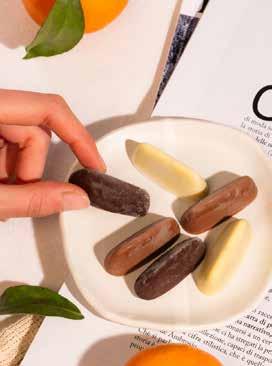
Calling all chocolate lovers! Amorino Dubai has revealed its latest creation – a refined interpretation of Piedmont’s iconic sweet treat, the Gianduiotto. This tasty sweet treat features a smooth chocolate shell encasing a luxuriously creamy gelato heart.
Now available in store at Souk Madinat Jumeirah and for delivery across Dubai via Deliveroo, the new frozen chocolate range comes in three Amorino signature flavours: hazelnut gelato coated with milk chocolate, dark chocolate with chocolate gelato and pistachio gelato dipped in white chocolate. Honestly, they’re too good to choose a favourite! Priced at AED 8 per piece or AED 96 for an elegant 12-piece gift box, these are perfect for sharing, festive gifting or savouring as an after-dinner treat.
Inspired by the traditional Piedmontese recipe that combines rich cocoa with finely ground hazelnuts, Amorino’s Gianduiotto al Gelato reimagines this classic indulgence as a frozen delicacy - a desert-inspired twist that hits home with every bite!
Visit Deliveroo or www.amorino.com for more details.
SEASON’S GREETINGS WITH LUSH
It’s beginning to look a lot like Lushmas! The fresh, handmade cosmetics company has released this year’s festive collection, inspired by holiday markets and sweet-shop delights. My three favourite products for gifting (or for a little self-care!) include:
Snow Fairy Body Spray (AED 230)
Lush’s Snow Fairy scent is a Christmas classic; it feels like stepping into a sweet shop and pondering which sugary delight to choose. Its pear drop and candy floss notes flood your senses with playful energy - the whimsical scent of the season!
Snowdrift Bath Bomb (AED 55)
Ideal for creating your own winter wonderland, the glistening blue colours add a seasonal touch to your next bath. It’s very invigorating, with a fresh, clean eucalyptus and peppermint scent, and added lemongrass oil to put a spring in your step - lovely!
Cinders Candle (AED 85)
I love a good candle and this is my ultimate festive pick! Evoking evenings spent by the fireside, eating toffees, drinking mulled wine and taking in the warm glow, this candle blends juicy oranges, warming cinnamon and rich almond.
The new collection is available now at www.lush.com/mena/en_ae.
The New Bio-Oil® Skincare Oil (Natural) 100% Natural.
New Bio-Oil® Skincare Oil (Natural) is made entirely from natural ingredients. By harnessing the power of science and nature, Skincare Oil (Natural) matches the efficacy of the original Skincare Oilthe world’s leading scar and stretch mark product.
THINGS TO DO
A neon winter wonderland; festive crafting workshops; a jazz-tinged NYE dinner and more!
FESTIVE FUN AT APRONS & HAMMERS
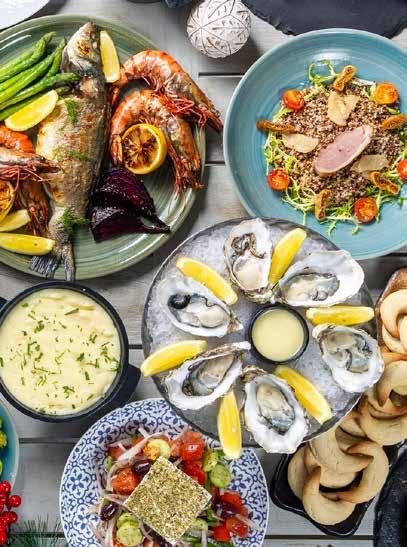
If seafood, sand and celebration are on your festive wish list, Aprons & Hammers has you covered this season. With locations at Beach House, Palm Jumeirah and Crab Shack, JBR, the award-winning Dubai favourite is bringing its signature fun-dining spirit to every holiday gathering.
Founded on a traditional wooden dhow in 2011, Aprons & Hammers revolutionised Dubai’s seafood scene. Forget white tablecloths and formal menus - here, generous seafood buckets, messy hands and relaxed vibes set the tone. The menu spans coast-to-coast American classics, from Hawaiian poke to Louisiana gumbo and buttery Maine lobster rolls, all served in a casual, playful setting that’s perfect for families and friends alike.
Beach House, Palm Jumeirah, has a festive line-up designed to make every day of the holiday season feel special. On Christmas Day, you can enjoy a seaside brunch with seasonal seafood buckets and family-
friendly activities from 1-4 pm, priced from AED 199. The fun continues on Boxing Day with fresh seafood and live football screenings at the Beach Brunch, also priced at AED 199. New Year’s Eve is a casual, beachfront celebration with front-row views of the Burj Al Arab fireworks, starting at 8 pm and priced from AED 699.
Meanwhile, Crab Shack, JBR, offers its own festive thrills. New Year’s Eve features waterfront dining with epic views of Ain Dubai and fireworks, also priced at AED 699, while weekly favourites like the Hammertime Brunch on Saturdays, the Sunday Family Funday, Paella Nights on Wednesdays and Dampa Nights on Tuesdays ensure the celebrations keep going well beyond the festive calendar dates.
This month Aprons & Hammers proves that good food, great company and a little bit of mess make for the perfect holiday recipe, whether you’re chasing sunsets on the Palm or watching fireworks along JBR.
Visit apronsandhammers.com for further information.
HOLIDAY GLOW AT BLUEWATERS
You and your loved ones will love finding your holiday glow at Bluewaters, where futuristic decorations and immersive light installations set the stage for a season of wonder. The island will come alive this month, transforming into a glowing winter playground with live performances, glow jugglers, neon living statues and festive stilt walkers. You can also sample the family friendly workshops on offer, such as neon ornament painting, tie dye and a unique glow in the dark cinema experience. You’ll also find plenty of festive menus to indulge in!
Perhaps the biggest draw is the nightly drone shows above the water between Bluewaters and JBR. Over 1,000 LED drones, synchronized to music and visuals, will light up the sky twice every evening - at 8 pm and 10 pm. The shows are free to watch, making this a great option for families looking for a no-ticket-needed night out.
Dates: 5th December 2025 - 11th January 2026
Location: Bluewaters Island
Pricing: Free entry; select activities charged
CELEBRATE THE SEASON AT FAIRMONT THE PALM
This holiday season, Fairmont The Palm on Palm Jumeirah transforms into a festive playground, offering everything from cosy afternoon teas to grand Christmas Day brunches, as well as glamorous New Year’s Eve celebrations. Whether you’re with family or friends, the resort’s seasonal experiences are designed to delight all ages.
Afternoon tea at
Mashrabiya Lounge
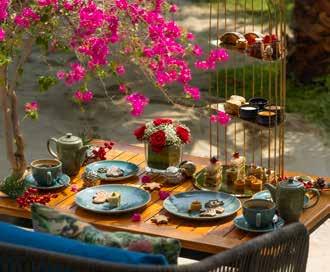
Until January 7th, Mashrabiya Lounge invites you to enjoy a special edition Festive Afternoon Tea. Expect delicate finger sandwiches, freshly baked scones and pastries infused with classic holiday flavours, all served amid the lounge’s warm, winter-inspired décor. Prices start at AED 225 and advance booking is recommended.
Christmas Eve dinner at Flow Kitchen
Gather your loved ones for a Christmas Eve buffet featuring roasted turkey, fresh seafood, succulent meats and decadent desserts, all prepared live at interactive stations. Indoor packages start at AED 250, while outdoor seating begins at AED 299, with children’s rates available. Santa will be making a special appearance, delighting little guests with lots of surprises and some sweet festive cheer.
Christmas Day Brunch
The Flow Kitchen Christmas Day Brunch is back and bigger than ever. Highlights include seafood on ice, rich desserts and a fantastic atmosphere of live music and children’s activities. Santa will also be stopping by to say hello to families. Packages start at AED 450, while children’s packages run from AED 175 and little ones under three dine free. Outdoor seating is also available.
Boxing Day and New Year’s Eve
Boxing Day at Fairmont The Palm offers relaxed brunches and seaside views, while New Year’s Eve brings glamour, with live music and festive dining across the resort’s venues. Watch the Palm skyline light up as you welcome 2026 in style. From intimate teas to lively brunches and evening celebrations, Fairmont The Palm could be the ideal spot for some seasonal family fun this year!
Visit https://www.fairmont.com/en/hotels/dubai/fairmont-the-palm.html for more details.
WINTER WONDERS AT MUDON CENTRE
Step into a gingerbread wonderland at Mudon Centre this month, where families are sure to have a magical festive experience. Here, you and your little ones can explore Santa’s Grotto and have a special meet and greet with Santa Claus himself on December 24th and 25th! Kids can write their wishes to Santa at the North Pole Letter Box and take part in interactive crafts such as colouring pages and decorating a gingerbread tree, with workshops taking place from December 21st. Festive décor, giant candy props and themed photo backdrops complete the lovely holiday spirit - one not to miss!
Time: 4 pm - 9 pm
Location: Mudon Centre Price: Free entry
STORY TIME WITH MRS. CLAUS
Every afternoon from December 11th to 20th, Novotel Dubai Al Barsha will transform into a page from a festive storybook as little ones gather around with wide-eyed anticipation. Wrapped in warmth and wonder, Mrs. Claus, a role played by the hotel’s General Manager, Julia Schamne, will bring a series of enchanting tales to life, delivering stories of flying reindeer, jingling sleigh bells and North Pole magic!
When: Daily from 5 pm to 6 pm, from December 11th to 20th
Location: M Floor, Novotel Dubai Al Barsha
Price: Complimentary
For more information, contact the hotel on WhatsApp at +971 56 999 4822.
SANTA’S
WORKSHOP AT CAFÉ JAVA
Every weekend this month, Café Java will become a festive workshop filled with imagination and colour. Families can craft candles, design ornaments, assemble Christmas terrariums or decorate delicious gingerbread creations together. Each workshop session includes all supplies, alongside a delightful afternoon tea, creating a space where Christmas is shaped by hand, sprinkled with laughter and brought to life with some good old-fashioned fun!
Dates: Fridays, Saturdays and Sundays throughout December
Timing: 11 am to 1 pm
Where: Café Java, Novotel Dubai Al Barsha
Pricing: AED 179 per person
For more information and reservations, WhatsApp the café at +971 56 999 4822.
THINGS TO DO
THINGS TO DO
SEASONS GREETINGS AT LE MÉRIDIEN DUBAI
This month, Le Méridien Dubai Hotel & Conference Centre invites families to escape into a world of holiday charm.
Tree Lighting Ceremony
The festivities kick off on December 7th, with Yuletide Flavors at Yalumba. Here, you can savour a festive pre-holiday buffet brimming with sweet treats, classic dishes and seasonal favourites!
The evening culminates in the Christmas Tree Lighting Ceremony, complete with carols and a visit from Santa. Packages start from AED 250, with children’s options from AED 125.
Christmas Eve
On December 24th, Yalumba hosts ’Twas the Night Before Christmas” featuring roasts, festive specialties, indulgent desserts and beautiful carol singers. Prices start at AED 335, with kids options for AED 150. For a relaxed, al-fresco experience, the Méridien Village Terrace serves international fare and seafood under the stars with live music.
Christmas Day Brunch
On Christmas Day, the hotel’s spirit turns playful and family-friendly. The Christmas Day Brunch, held at Yalumba and the Village Terrace, is designed to delight both little ones and adults alike. Think festive buffets, live music, carols and children’s entertainment such as face painting and magic shows. It’s a chance for families to celebrate together in a lively, joyful way!
New Year’s Eve
Finally, New Year’s Eve brings elegant dinners and lively parties, from jazz-tinged evenings at Yalumba to sophisticated menus at Beef Bistro, offering food, drinks, music and all the festive energy your family could want, as Dubai welcomes 2026!
Ways to handle overstimulated kids; ten superfoods that give mothers extra energy; a positive mindset for 2026 and more!
THREE TURKEY TAKEAWAYS TO CONSIDER THIS DECEMBER
Here are three nutritious and delicious options for a standout turkey takeaway this season.
While sharing a tasty festive meal with your loved ones is the stuff of happy times, the logistics of getting it all together isn’t always part of the fun. Shopping, peeling, prepping, cooking, juggling the oven space, dealing with an ever growing pile of dirty dishes, with the pressure of getting multiple foods just right can all add up to a lot of stress. Thankfully, turkey takeaways could be the answer to keeping the pressure low and the nutrition high!
The beauty of a festive takeaway is that it meets families exactly where they are. Sometimes, the energy or time simply isn’t there to cook big roast dinners from scratch over the holidays. These beautifully prepared turkeys, with all the traditional trimmings, offer a way to lighten your workload and still enjoy the peace of knowing your loved ones are eating high-quality, nourishing food.
GO GOURMET WITH SOFITEL DUBAI THE PALM
For families who want restaurant-quality sophistication at home, Sofitel Dubai The Palm’s gourmet festive boxes are a standout choice. Designed for intimate celebrations or larger holiday tables, the menu includes boneless roast turkeys (priced at AED 479 to 1,479) or a whole turkey for AED 795, each paired with appetisers, sides and dessert. It’s generous, elegant and remarkably easy, especially with the added perk of a 20% early bird discount until December 19th!
Dates: December 21st to 25th
Price: From AED 479
Location: Sofitel Dubai The Palm
For orders, call +971 44 55 66 77 or email dining.palmdubai@sofitel.com
HOLIDAY HOSTING WITH PARK HYATT DUBAI
If you’re dreaming of a centrepiece worthy of a magazine spread, the turkey takeaway from The Lounge, Park Hyatt Dubai is the kind of gorgeous tradition that makes hosting feel easy. Their whole roasted turkey arrives tender, flavour-packed and served with an array of seasonal trimmings, making it ideal for relaxed gatherings with your family and friends. There’s even a truffle option for those looking for an extra touch of indulgence. A quick pre-booking, a beautifully prepared turkey and suddenly the holidays are a lot less stressful!
Dates: Until January 2nd
Price: AED 750 (regular) or AED 850 (truffle)
Location: The Lounge, Park Hyatt Dubai For bookings, email festive.parkhyattdubai@hyatt.com or call 04 602 1814.
FESTIVE
FEASTING FROM CAFÉ JAVA
For those who want a festive spread that tastes like home, Café Java’s festive takeaway is for you. Their menu reads like a holiday wish listgolden roasted turkey, beef wellington or baked salted fish - each one accompanied by a full complement of sides. Think roasted potatoes, chestnuts, sprouts and buttered greens bringing that comforting, oncea-year aroma drifting through your home. All that’s required is 48 hours advance notice - everything is prepared by Café Java’s talented chefs, so all you need to do is plate up and enjoy!
Dates: Until December 25th
Price: AED 399
Location: Café Java, Novotel Dubai Al Barsha
For more information and orders, WhatsApp Café Java at +971 56 999 4822.
HOW TO ENTER THE NEW YEAR WITH A POSITIVE MIND
Here’s how to enter January with a clear, confident and positive mindset that supports your wellbeing and your family’s too.
The beginning of a new year always carries its own quiet energy. It’s the feeling of standing at the edge of something fresh after the hectic festive season. For many mums, January brings a sense of starting over and the desire to create more balance in daily life. Yet, threaded through that hope can be an undercurrent of pressure. The pressure to “begin well”, to be organised about it, to start off on January 1st with lots of motivation.
The truth is, the first day of a new chapter can often feel daunting after a tiring and busy December, and it’s normal to feel some inner resistance. Entering January with a positive mind isn’t about becoming a new person overnight. It’s about building small, meaningful habits that allow you to feel anchored and like you’re moving in the direction you want to be. It’s also an opportunity to reassess what truly matters to you, rather than what you think you should be doing - a very important distinction!
Whether you’re juggling work, motherhood or a mix of everything, a positive mindset isn’t something that just appears. Like any form of emotional wellbeing, it needs care, consistency and some self-compassion. It also requires a bit of honesty with yourself, especially about what drained you, inspired you or challenged you this year. With that awareness, you’re more likely to create change that actually lasts, and knowing your new year doesn’t need to be an overhaul, it’s easier to approach it as a soft evolution. Within that evolution is the opportunity to let go of what has been heavy, while bringing in ambitions, habits and connections that help you feel more like yourself.
Here are some gentle yet powerful ways to help you begin the year feeling more centred and genuinely optimistic. These are not grand gestures, but small daily choices that gradually shape how you feel, think and respond to 2026’s inevitable ups and downs.
START WITH SELF-REFLECTION
Before rushing into resolutions, take a moment to reflect on the year that’s passed. Reflection isn’t about dwelling on what didn’t go well or magnifying what didn’t go your way. It’s a practice of noticing what shaped you, so you can learn from your experiences and bring forward any new wisdom. Ask yourself simple questions like, “What am I proud of this year?” or “What helped me feel most supported?” These questions highlight your strengths and can help you see what you might want more of in the coming months. Other questions, such as “Where in my life do I feel resentment?” or “What things do I wish I was doing but I didn’t get around to?” can help you clarify areas where you could focus on expressing or making more space for your own needs.
You may even want to identify one or two lessons that stood out. Perhaps you learned the value of slowing down or discovered that asking for help doesn’t make you any less capable. When you acknowledge the wisdom you’ve gained, it’s helpful for entering the new year with confidence rather than pressure.
Some women find it better to write these reflections down. Others simply take a slow walk, letting the memories settle at their own pace. However you choose to reflect, the purpose is the same: to step into the new year with a deeper understanding of the woman you are today.
INTENTIONS OVER RESOLUTIONS
The end of December often comes wrapped in the language of resolutions - bold declarations that can sometimes leave you feeling pressured before you’ve even begun. Intentions, on the other hand, are gentler. They focus on how you want to feel and how you want to show up in your daily life, rather than what you must achieve.
So, instead of saying, “I will exercise five times a week,” try an intention like, “I want to move my body in ways that make me feel energised and strong.”
Intentions offer flexibility, which is essential when family life is unpredictable. They allow room for tired days, busy weeks and unexpected challenges, without creating guilt or a sense of failure. The focus is on progress over perfection.
Some mums find it helpful to choose a single ‘word of the year’something like “ease”, “presence” or “bravery” - to serve as a gentle anchor throughout the months ahead. This simple practice can help you come back to what matters most when life feels busy or overwhelming.
MOMENTS OF STILLNESS
Parenting can feel relentless, so creating small pockets of stillness can work wonders for your positivity. Stillness allows your nervous system to settle. It reduces your stress, boosts your mental clarity and helps you feel more sure of yourself.
The issue is that motherhood rarely leaves spacious stretches of quiet. But stillness doesn’t need to be long or elaborate. It can be sustainably woven into the edges of your day. Even two minutes of deep breathing before getting into bed or a quiet cup of tea before the house wakes up can reset your mood. When practiced consistently, these micromoments of quiet build an internal rhythm that steadies you, especially during hectic patches.
PRIORITISE CONNECTION
Even though we all know this, human connection is still one of the most underrated foundations of emotional wellbeing. People who understand your world and meet you with warmth makes a remarkable difference to your mindset. Surrounding yourself with those who uplift you, listen to you and understand your challenges helps you feel valued and supported. So, make time for conversations that fill you rather than drain you, whether it’s a leisurely walk with a friend, a laugh shared with your partner or even a bedtime chat with your child where they tell you something surprisingly wise. These moments create a sense of belonging - one of the strongest predictors of emotional resilience. Equally, you might also want to let go of relationships that drain you. Protecting your peace is an act of self-respect that is a part of maintaining a positive mind.
PROGRESS OVER PERFECTION
At the start of a year, perfectionism tends to sneak in quietly. The perfect routine. The perfect habit stack. The perfect plan. But perfectionism doesn’t create positivity, it creates pressure. And pressure keeps your nervous system in a constant state of tension. So aim to move away from relentless productivity and towards progress and ease.
If your goal is to be more active, start with a ten-minute walk. If you’re aiming for a calmer household routine, try introducing one new habit at a time. If you want more time for yourself, carve out fifteen
minutes rather than waiting for an hour that may never come. When you allow yourself to be imperfect but persistent, you build momentum and easier scaffolding for yourself, both key parts of making a sustainable change.
A CALM ENVIRONMENT
Your environment shapes your internal state more than you may realise. But creating calm at home doesn’t require minimalism or perfectly curated spaces. It simply means choosing areas that help you breathe easier. This might be a peaceful corner for reading, a decluttered bedside table or lighting a nice candle in the evenings to help you wind down properly. It may sound trite but even a simple reset of one room can lift your mood. In fact, some mums with younger babies and toddlers swear by having one tidy, peaceful ‘sanctuary’ room to retreat to for some time out. Just think of your home environment as an emotional backdrop - when it feels calm, you feel calmer too.
PRACTISE GRATITUDE
Gratitude is one of the most effective tools for developing a positive mind. It shifts your focus from what’s lacking to what’s meaningful, rewiring your attention toward positivity. It’s a short daily ritual that can really make a significant difference to your mindset.
Over time, gratitude helps you notice small joys more easily, like a spontaneous hug from your little one or a peaceful moment in the sunshine - even a check-in text from a friend. You don’t need a long journal entry. Three small acknowledgments each day are enough. Over time, gratitude creates an internal lens that leans toward hope, even on difficult days. It softens the harder edges of life and reminds you that there is always something steady beneath the surface.
TAKE CARE OF YOUR BODY
Your physical wellbeing is deeply connected to your emotional wellbeing. Nourishing meals, regular movement and adequate rest
support everything from a happier mood to better mental clarity. You don’t need strict diet plans or intense routines. Think about what helps you feel energised and more alive. A brisk walk, a little stretching before bed or a full glass of water first thing in the morning are simple acts that create a foundation for a positive mindset.
And rest - real rest - is as vital as movement. Many mothers push through exhaustion, believing they must keep the household running no matter what. Remember that rest is a necessary ingredient for a sustainable life and a positive mind.
SAY GOODBYE TO COMPARISON
They say “Comparison is the thief of joy” and it’s true. It sneaks in quietly through social media, through school-gate conversations, through the subtle feeling that you’re meant to be doing more. Limiting comparison isn’t about ignoring others. It’s about gently returning your attention to your own life and your own rhythm. So, try to start the year by gently limiting the voices that sap your confidence. Curate your online spaces and the media you consume so they make you feel good about yourself. Lastly, remind yourself that we each move at our own pace, with our own unique timeline and you cannot be late to your own life.
CELEBRATE YOURSELF
One of the most underestimated steps in building a positive mindset is celebrating yourself, and it can be a tough thing to do. A good place to start is to celebrate the patience you’ve shown this last year or the adjustments you’ve made. Acknowledge your strength and everything you gave throughout 2025. Give yourself permission to notice the small victories - the moments no one else necessarily saw but youbecause these are often the ones that matter most. And know that you do not need to enter the new year thinking you need to “fix yourself.” You can enter it gently, with the intention of a chapter that feels lighter and more aligned with yourself.
TEN SUPERFOODS THAT GIVE MOTHERS MORE ENERGY
Here are ten superfoods that can lift your stamina and help you move through your day with more ease.
Between school runs, work and the many moving pieces of family life, it’s no surprise that so many mothers feel their energy fading long before the day is done. Some days it feels like you’re running on determination alone. While there’s no single food that can transform exhaustion into vitality, certain nutrient-rich ingredients genuinely help your body stay steady, focused and resilient. Think of them as gentle allies that support you from the inside out.
OATS
Oats have a reliability that many mothers deeply appreciate. It’s no coincidence that oats top most healthy eating lists, as their complex carbohydrates release energy slowly, keeping blood sugar - and energy - steady for hours. A warm bowl of porridge with plant milk, fruit or nuts provides fibre, protein and essential minerals like magnesium and iron.
Oats also support serotonin production, which helps lift your mood and calm your nervous system on those mornings when everything feels a little too much. They contain the amino acid tryptophan, which is a direct precursor to serotonin, as well as B vitamins, which are needed to convert tryptophan into serotonin.
LENTILS
Lentils are a superfood in disguiseinexpensive, versatile and full of slow-digesting carbohydrates, fibre and plant-based protein. They help stabilise your blood sugar and sustain your energy through busy afternoons when fatigue usually kicks in.
Their mix of iron, folate and plant protein helps oxygen circulate smoothly - essential for fighting that heavy, dragging feeling. Drop them into soups, stews or salads, or blend them into sauces for children who won’t touch them otherwise. Lentils are the perfect example of a little choice that makes a sizable difference to your whole household.
SPINACH
Low iron levels are one of the most common, and most overlooked, reasons mothers feel depleted, especially postpartum or during heavier menstrual cycles. Spinach offers a simple, everyday way to top up. It’s rich in iron, folate and magnesium, all of which help your body produce energy at a cellular level.
Toss a handful into smoothies, stir into your usual pasta dish or sauté with garlic for a simple side. Pairing spinach with vitamin C-rich foods, like tomatoes or lemons, boosts iron absorption naturally.
QUINOA
Quinoa is one of the few plant foods that contains all nine essential amino acids, making it a complete protein source. It’s also high in magnesium and B vitamins, all nutrients vital for energy metabolism and nervous system support. It’s very versatile too. You could use quinoa as a base for salads, serve it warm with roasted vegetables, or cook a big batch at the start of the week for quick lunches. It’s light yet
sustaining - the kind of meal that keeps you focused rather than sluggish.
BANANAS
When energy dips mid-morning or before the school run, bananas offer the perfect, portable quick fix. Their blend of carbohydrates, potassium and fibre helps regulate muscle function and blood pressure, making them ideal before exercise or during busy stretches. For extra staying power, eat a banana with nut butter or a handful of seeds, to give you steadier energy and avoid that energy crash feeling.
CHIA SEEDS
Don’t be fooled by their size - chia seeds are one of the most concentrated sources of nutrients in the plant world. Rich in omega-3 fats, protein and soluble fibre, they slow your digestion and support a longer-lasting release of energy. When soaked, chia forms a gentle gel that supports digestion and hydration, which is especially useful if water intake is the first thing you forget during a chaotic morning.
Stir a spoonful into yoghurt or smoothies, or make a quick overnight chia pudding that you can grab on your way out the door.
SWEET POTATOES
Sweet potatoes deliver the kind of slow, steady energy that white carbs often can’t. Packed with vitamin A, fibre and complex carbohydrates, they help maintain blood sugar balance while providing comfortfood satisfaction.
Try them roasted with olive oil and herbs, mashed with tahini, or cubed into curries and stews. Their natural sweetness also helps reduce any sugar cravings you might have, making them a nourishing choice against mid-afternoon energy slumps.
WALNUTS
For mothers juggling countless mental tabs, walnuts are a gift for both body and brain. Their omega-3 fats support concentration, memory and a calmer nervous system. They also help reduce inflammation, which can contribute to fatigue.
A small handful as a snack or sprinkled over porridge or salads adds healthy fats, protein and a satisfying crunch. Keeping a jar on your desk or in the kitchen means there’s always a wholesome option within reach.
AVOCADOS
Avocados keep you fuller for longer, thanks to their heart-healthy monounsaturated fats. These fats stabilise your blood sugar, preventing those sharp drops in energy that leave you feeling irritable or foggy. Avocados also contain plenty of B vitamins that help convert food into usable energy.
Spread avocado on wholegrain toast, blend it into smoothies or even use it as a creamy base for dressings. Its smooth texture and subtle flavour make it easy to include in family meals, making it a superfood that everyone can enjoy!.
DARK CHOCOLATE
Dark chocolate may feel indulgent, but it’s a genuine mood and energy booster. Rich in magnesium, iron and antioxidants, it improves blood flow to the brain and enhances alertness. A couple of squares of 70% or higher chocolate can lift your focus without the sugar spike that comes with milk chocolate.
It’s also a small daily ritual that feels goodand that little moment of pleasure can be as energising as the nutrients themselves.
THE ENERGY EQUATION
While superfoods can give a real boost, sustainable energy isn’t about one magic ingredient. It’s about consistency. So, use these ten foods to help you balance complex carbs, protein, healthy fats and hydration throughout your day to create a foundation your body can rely on. You don’t need a perfect diet; just small, thoughtful choices like these that make you feel a little stronger and steadier each day.
HOW TO MANAGE OVERSTIMULATION IN KIDS
Modern family life is wonderfully full - but it’s also louder, faster and busier than ever before. We look at how to respond when your child becomes sensorily or emotionally overwhelmed.
You’ve probably seen it before - the sudden meltdown at a birthday party, the crankiness after school or the way your child seems “wired” even when they’re clearly exhausted. Overstimulation isn’t a sign of poor behaviour or a lack of resilience. It’s simply a natural response to having more sensory or emotional input than a child can comfortably process, triggering stress responses that range from irritability and meltdowns to hyperactivity and withdrawal.
Understanding the signs - and knowing how to support your child through them - can make daily life feel calmer and more connected for everyone in the family.
WHAT IS OVERSTIMULATION?
Overstimulation is not simply “bad behaviour.” Neuroscientifically, it occurs when a child’s autonomic nervous system, responsible for regulating arousal, alertness and stress, becomes overactive. This is usually due to being overwhelmed by too much noise, activity, social interaction or even emotional demands. Children, especially toddlers and young primary-aged kids, have developing sensory systems and executive functions, as well as limited coping mechanisms. Their tolerance levels are also influenced by sleep, hunger, routine changes and temperament.
Some children are naturally more sensitive than others, but all kids can become overstimulated in the right (or rather, wrong) circumstances. The key is recognising it as a signal from the nervous system that your child needs to pause and recalibrate.
COMMON SIGNS
Research in developmental psychology shows that children communicate overstimulation in varied ways. Some of the most common signs include:
• Sudden irritability or mood swings
• Meltdowns or tears that seem to come “out of nowhere”
• Hyperactivity or difficulty sitting still
• Covering ears or wanting to withdraw from noise
• Clinginess or needing extra reassurance
• Difficulty focusing or following instructions
• Headaches, stomach aches or feeling “funny”
• A noticeable shift in behaviour after busy environments
Parents often describe this as the moment a child “hits a wall,” where nothing seems to calm them. Physiologically, this ties in with sympathetic nervous system activation where your little one’s fight-or-flight responses are triggered, making it difficult for them to selfsoothe until their system has had a chance to reset.
KNOW YOUR CHILD’S TRIGGERS
One of the most effective ways to manage overstimulation is to understand your child’s personal triggers. For some, it may be loud spaces like soft play, busy classrooms or supermarkets. For others, it might be long days without breaks, back-to-back activities or too many social interactions.
Take note of moments when your child seems overwhelmed. Are they usually overstimulated after school? Do big gatherings tire them out? Does screen time leave them dysregulated? These patterns give you valuable clues. Even seasonal factors play a role. During the festive holidays, you might find that irregular routines, sugar-laden meals and
constant social events have an effect on your little ones . While celebrations are lovely, the combination of novelty, excitement and disrupted rhythms often leaves children more irritable, tired and emotionally reactive than usual. Anticipating these periods and adding in some preventative “calm time” can keep things more level this month.
Once you know the triggers, you can anticipate when your child will need extra support, quiet time or a slower pace. This isn’t about limiting experiences, but about helping kids build confidence and resilience in a way that matches their developmental stage.
PREDICTABLE ROUTINES
Routines provide a sense of security for children. When they know what’s coming next, they feel calmer and less overwhelmed by transitions. They also reduce decision fatigue and help kids understand what their day will look like.
You don’t need a rigid timetable, but a consistent rhythm helps. Similar mealtimes, familiar after-school sequences and bedtime rituals give children a sense of control over their day, which mitigates the build up of stress. Neuroscience shows that these predictable patterns activate our parasympathetic nervous system, helping us to feel calmer, sleep better and self-regulate more easily.
TAKING A BEAT
Strategically scheduled breaks act as microresets during a hectic day. Even brief periods of quiet, like reading in a dimly lit corner, a
gentle cuddle or story on the sofa, or listening to soft music, enables kids’ nervous systems to downregulate.
Think of these as “sensory breathers” that help children regulate before they become overwhelmed. Many parents find that predictable, built-in quiet time - after school or before dinner - makes a huge difference to the overall tone of the day.
REDUCE CLUTTER
Overstimulation isn’t only emotional; it’s often sensory. Loud environments, brightly coloured toys, flashing screens and busy rooms can all contribute, especially if your child is already stressed out or tired.
Some easy tweaks include:
• Lowering the volume of the TV or music
• Keeping one area of your home calm and clutter-free
• Avoiding multiple screens running at once
A simplified environment doesn’t remove fun - it helps children feel safe and focused, reducing the chance of sensory overload. Supporting an overstimulated child begins with connection. When you see the overwhelm for what it truly is - a nervous system asking for help - you can respond more easily with patience and gentle direction. Every child experiences overstimulation at times. It’s not a sign that you’re doing anything wrong, nor that your child is difficult. It’s simply part of being human - and with understanding and a few strategies, it can be managed with confidence and compassion!
PARENTING
Exploring the Thriving Child Index; at-home festive family crafting; why winter camps are worthwhile and more!
WHAT CREATES A CONFIDENT CHILD?
Helping children believe in themselves starts at home. Discover practical ways to do this with ease!
Confidence isn’t something children either “have” or “don’t have”. It’s a skill, a mindset and a sense of security that slowly grows through experiences, relationships and small daily interactions. While confidence can look bold and outgoing, it can also be quiet, steady and thoughtful. At its core, confidence is a child’s belief that they are capable and safe enough to try - even when things feel challenging.
It develops over time, nurtured through repeated experiences of success, encouragement, and safe exploration, and it is shaped not only by what children do but also by how adults respond to their efforts and choices.
In a world full of pressures, comparisons and mixed messages, helping kids build genuine confidence is one of the most meaningful gifts a parent can offer. Here’s what really creates a confident child, and how you can nurture it at home in a grounded and realistic way.
BELONGING COMES FIRST
Confidence begins with connection. When a child feels loved, accepted and understood, they develop an inner belief that they matter. This sense of belonging is the bedrock on which confidence grows. Neuroscience and developmental psychology consistently highlight the importance of secure attachments in early life as little ones who feel secure in their relationships are more likely to explore their environment, take measured risks, and approach challenges with curiosity rather than fear.
Creating a strong sense of belonging can also involve including children in small family decisions, celebrating their ideas in conversations, and encouraging friendships that respect their personality. You support belonging every time you listen to your little one without judgement, offer comfort when things feel tough or show delight in who your child is. These small, consistent signs of warmth communicate, “You are safe here. You are enough.”
REFLECTING BACK THEIR STRENGTHS
Children develop self-perception largely through the eyes of the adults in their lives. Encouragement and grounded recognition help them internalise the belief, “I can do this.” But it’s not empty praise that matters - children are surprisingly adept at detecting hollow compliments or performance-based approval. Instead, by admiring both their effort and strategy, parents provide actionable feedback that helps children understand how to approach new challenges and develop their own problem-solving skills over time.
Instead, notice and comment on qualities they can control. Praise effort, persistence, creativity, and problem-solving. Say things like, “You worked really hard on that puzzle,” or, “I love how you tried a different approach.” This helps children see themselves as capable agents of action, rather than relying on luck or innate talent. Over time, they begin to adopt this lens for themselves - growing confidence in their effort, bravery and persistence.
SMALL CHALLENGES
It may feel counterintuitive, but failure is one of the most important ingredients in confidence. Children don’t grow resilient by avoiding mistakes; they grow by learning they can cope with them.
Letting your child struggle a little - while staying nearby with support - teaches them they are capable of problem-solving. Whether it’s tying laces, completing a wordsearch or navigating a friendship hiccup, each small challenge becomes a building block. Even everyday tasks, like helping with cooking, organising their room, or trying a new sport, offer micro-moments to learn resilience and self-reliance.
It’s a cliché for a reason, so try to encourage effort over perfection and help kids think through what they might try differently next time. These experiences wire their brain to see setbacks not as proof they “can’t”, but as part of learning.
HOW TRUST HELPS
There is a really interesting relationship between trust and feeling competent. A confident child is one who feels trusted by you. When you give your child age-appropriate opportunities to do things for themselves, you’re sending a powerful message that you believe they can do them.
Age-appropriate independence allows them to make choices, take responsibility, and experience the natural consequences of their actions. Simple opportunities - putting on their coat, packing their school bag, choosing their snack or outfit, completing a small
household task, or walking ahead on the school run - can go very far. Allowing kids to problem-solve minor issues independently also reinforces their ability to manage frustration and adapt when things don’t go as planned. These tiny freedoms strengthen decision-making skills and offer a real sense of competence.
THE LINK TO EMOTIONS
Confidence and emotional literacy are inseparable. Children who understand and can regulate their emotions—frustration, excitement, disappointment, or anxiety—feel more in control of themselves and their surroundings. This self-regulation supports their willingness to try new things, take measured risks, and recover from challenges.
You can support this by naming feelings calmly (“It looks like you’re frustrated”) or showing how to manage emotions (“I’m taking a deep breath because I’m feeling a bit overwhelmed”). These kinds of sentences provide language and strategies children can internalise. It also helps to ask kids if they want to sit with you for a moment when they’re experiencing big feelings, and to make a point of underlining that all feelings are acceptable, even if some behaviours aren’t. When children learn that emotions are manageable and not something to fear, they feel safer trying new things.
CONSISTENCY AND PREDICTABILITY
Confidence grows in predictable environments. Regular routines and clear expectations give children a sense of stability, making the world feel more navigable. Mealtimes, bedtimes and after-school routines that follow familiar rhythms reduce uncertainty and cognitive load, freeing children to engage without anxiety.
Consistency doesn’t mean rigidity. It simply means children can trust that the rules make sense, that meals and bedtimes follow a familiar rhythm, and that adults respond in ways that feel steady rather than unpredictable. This stability gives children the mental space to explore, experiment and learn.
NORMALISE THE PROCESS
Children absorb far more from what we do than what we say. Showing courage, resilience,
and curiosity in your own actions teaches children how to approach challenges. Let them witness you navigating insecurities, asking for help, trying new skills and laughing at mistakes. By role modelling confidence as a process rather than a fixed trait, you normalise effort, persistence and imperfection. Children absorb these lessons, understanding that confidence is cultivated, not innate.
SPACE TO BE THEMSELVES
No two confident children look the same. Some are bold and adventurous, others gentle and reflective. Authentic confidence comes from feeling free to be who they truly are - not who they believe they “should” be.
Avoid pushing children into roles that don’t suit their temperament. Instead, pay attention to their interests, strengths and natural tendencies. Children come with their
own unique “factory settings”. Pressuring kids to conform to a particular persona can undermine their self-belief, so instead, show support for their unique passions, however small they seem, and give them permission to explore their identity without pressure. Confidence tends to bloom when your child is comfortable in their own skin.
NURTURED, NOT FORCED
Confidence isn’t something you can manufacture through pressure, comparison or constant correction. It grows from a web of secure attachment, encouragement, emotional guidance and opportunities to navigate life’s challenges. A confident child isn’t one who never wobbles - it’s one who trusts they can wobble and still be okay. Every time you affirm your child or help them handle disappointment and every chance you give them to try something new, you are building their confidence piece by piece.
DIY FESTIVE DECORATION IDEAS FOR FAMILIES
Simple, fun and wonderfully child-friendly - these festive craft ideas help little ones feel part of the holiday magic!
There’s something special about seeing your home transform during the festive season - the twinkling lights, the warm colours, the cosy atmosphere that makes winter feel magical. For children, decorating is more than just preparing for the holidays; it’s a chance to play, create and feel genuinely involved in family traditions. Whether your child is a budding artist, a sensory seeker or a young helper who loves joining in, making DIY decorations together can be one of the most exciting parts of the season.
Crafting doesn’t need to be complicated or expensive. With a few simple supplies and a bit of imagination, you can create beautiful decorations that encourage your child’s creativity while keeping the focus on connection and fun. Here are some lovely, low-pressure ideas the whole family can enjoy - with plenty of room for messy play and lots of laughs!
SALT DOUGH KEEPSAKES
A timeless classic, salt dough decorations are ideal for younger kids and allow them to create something meaningful that your family can enjoy year after year. The process is satisfyingly hands-on, giving little ones a chance to roll, press, shape and paint their designs.
To make salt dough, simply combine one cup of flour, half a cup of salt and half a cup of warm water. Mix this until it forms a dough, then roll it out and let your child cut shapes using festive cookie cutters. You can also press small hands or footprints into the dough to create cute homemade keepsakes.
Once shaped, make a small hole for some ribbon, bake on a low heat until firm and allow them to cool before painting. Children love seeing how their creations transform from soft dough to colourful ornaments that hang proudly on the tree.
PAPER CHAINS WITH A TWIST
Paper chains are a classic childhood decoration, beloved for their simplicity and festive vibe. Instead of plain strips, let your little one decorate them first with crayons, stickers, fingerprints or glitter glue. Older children may enjoy selecting colour themes or creating patterns, while younger ones may just love sticking and looping.
You can turn this into a calming after-school activity - put on some soft music, provide pre-cut strips and let your child settle into the soothing rhythm of assembling the chain. It’s a lovely way to bring the family together while adding a splash of colour to your home.
COSY JAR LANTERNS
Jar lanterns bring a warm, magical glow to winter evenings and they’re super easy to make. Start with empty glass jars, then let your
children brush the outside with PVA glue and layer on tissue paper in festive colours. Once dry, the jars take on a stained-glass effect that looks enchanting when lit.
For a safe option, place a battery-operated tealight inside. You can also add natural touches like twine, dried orange slices or cinnamon sticks tied around the neck of the jar. Kids will love seeing their lanterns light up at bedtime or during this season’s festive gatheringsa small but meaningful contribution to the winter atmosphere.
DIY FESTIVE CROWNS
Most kids adore dressing up and festive crowns are an exciting holiday twist on this much-loved kind of play. Using cardboard strips as the base, let them decorate these with gold paint, sequins, stickers, foil shapes or even natural items like leaves and twigs for a woodlandinspired look. Once the crown is dry, fit it gently around their head and secure it with tape or staples - and voilá!
RIBBON WANDS
If your little one likes movement, dance or imagination games, ribbon wands are a fun little craft to try. Just attach lengths of ribbon, tinsel or fabric strips to a stick or dowel using strong tape. Kids can swirl, dance and make up games with their wands, using them as props for festive music sessions or homemade shows.
Ribbon wands are also brilliant for younger children who find sensory play regulating - the flowing movement of the ribbons can be calming, playful and engaging all at once.
HOMEMADE WRAPPING PAPER
Crafting your own wrapping paper is both sustainable and fun - and it adds such a sweet element to this year’s gift-giving! Lay out a roll of plain brown paper, then let your child decorate it with paint stamps, sponge shapes or hand-drawn doodles. Stampers made from sliced potatoes or sponges cut into stars, trees or snowflakes are simple and easy for little hands.
The finished paper makes gifts feel extra special and gives kids a strong sense of contribution to their presents!
CLAY STARS AND SHAPES
Air-dry clay is a wonderfully versatile material that little ones can mould with ease. Roll it out, use cutters to form festive shapes and let them dry before painting. These small decorations look charming hung from the tree, threaded into garlands or tied to gift tags.
Air-dry clay requires no baking, making it an easy and relatively messfree option for families who prefer quick projects.
SHOWCASE THEIR CREATIVITY
Let’s be honest - festive crafting is not about achieving picture-perfect results. It’s about creativity and giving children a sense of seasonal joy. One of the cutest parts is showing kids that their contributions matter. So, embrace the wonky shapes, the extra glitter and display their creations with pride!
THE BENEFITS OF WINTER CAMPS
Here are some reasons to consider a winter camp for your child over the holidays.
As the UAE winter break approaches, 2025 is shaping up to be a great year for children’s camps, combining fun, learning, creativity and growth. With a variety of programmes on offer, families have plenty of choice whether their kids love sports, science, arts or discovery.
OUR TOP THREE PICKS
If you’re looking for more specialised or flexible camp options, several private providers offer creative, active, STEM or mixed programmes. Here are our top three picks:
Smartyca Little Genius Winter Camp (Abu Dhabi)
This camp is designed for children aged 2-8 and runs from December 8th 2025 to January 2nd 2026, Monday to Friday, from 9 am to 1 pm. It combines early-years learning with play, covering literacy, phonics, arts, crafts, yoga, movement, science experiments, music and more.
OliOli Winter Camp (Dubai)
Popular with kids interested in creativity, science and engineering, OliOli offers a “TinkerMakers” style programme where children aged 4-10 experiment with simple machines, basic robotics, coding, art, engineering and hands-on craft activities. Sessions are available as morning, afternoon or full-day camps, perfect for families who need some flexibility.
ISM Sports Winter Camps (Dubai)
For sporty kids, ISM Sports is offering a range of activities across football, tennis, padel, athletics and multi-sport options for ages 3-14. Sessions run through the holiday period with weekly and flexible booking options.
More niche and creative camps - from STEM-oriented robotics to performing arts, nature adventures or mixed-activity weeks - are also emerging, giving parents many choices depending on each child’s interests and energy levels.
A LONGER WINTER BREAK
This year, families are benefiting from an extended winter break: many schools will pause between 8 December and 4 January 2026, offering a full four-week window for holiday planning. That extended timeframe means there’s both space for rest, family time - and structured camps that help kids learn, stay active, make friends and explore new interests.
Whether your child dreams of building robots, making art, playing sports, discovering heritage or simply having some fun with friends,
this winter’s camps in the UAE offer something for every child.
WHAT ARE THE BENEFITS?
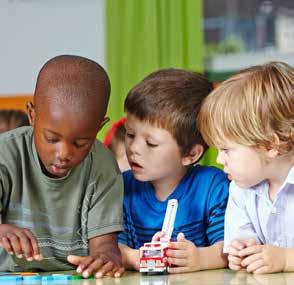
One of the most significant benefits of winter camps is the boost they give to a child’s confidence. Stepping into a new setting - often with unfamiliar faces, activities and routines - encourages kids to trust themselves, adapt and discover what they’re capable of.
For younger children, this might be as simple as joining a new group or trying an activity they’ve never attempted before. For older
children, the sense of independence is even greater: choosing projects, meeting new people, learning new skills.
Exploring new interests
Winter camps expose children to activities that may not be part of their regular school curriculum or home environment. From robotics and creative design to archery, cooking workshops, drama sessions and environmental education, camps offer a taste of diverse hobbies and skills.
Trying new things in a supportive setting helps little ones discover what excites them. They may come home bubbling with enthusiasm for something unexpected - coding, dance, nature exploration or even team sports they previously avoided. This variety is especially valuable for children who thrive on novelty or for parents hoping to gently broaden their child’s interests.
Social skills and new friends
Camps are brilliantly social environments. With plenty of group-based activities, team challenges and shared goals, kids naturally learn to collaborate, communicate and problem-solve with others.
For shy or reserved children, winter camps can be a gentle introduction to building friendships outside their usual circle. The atmosphere is typically relaxed and fun, with low stakes and plenty of encouragement from camp leaders. Meanwhile, more outgoing children will love the chance to make new friends from different schools, cultures and backgrounds.
The friendships formed, even if short-lived, help children practise flexibility in social settings and again, give them a sense of confidence that they can take forward into the new year.
Screen-free stimulation
Winter camps make the most of the season, encouraging lots of types of real-life play. Outdoor camps and sport-based camps are wonderful for releasing any pent-up energy kids may have out of their usual school routine. For other children, the structured yet playful format will keep them mentally stimulated over the break. Many camps integrate problem-solving tasks, creative thinking and skill-building into activities, allowing little ones to stay engaged
without feeling like they’re in a classroom. For parents concerned about screen time creeping up during school breaks, winter camps offer an excellent balance - keeping children active, occupied and connected to the world around them.
EMOTIONAL WELLBEING
School breaks can be exciting, but they can also disrupt familiar routines, leaving some children feeling unsettled. Winter camps provide a gentle structure that helps anchor the day while still allowing plenty of room for fun.
Predictable routines, welcoming leaders and consistent schedules can be especially helpful for children who benefit from stability. Camps also offer a healthy outlet for expression - from creative stations, movement-based games and opportunities for chatting and connecting with new friends.
They can be a welcome support for adults too! Knowing that children are spending their day outdoors, learning new things, making friends and staying active can give parents peace of mind throughout the holiday season.
HAPPY HOLIDAY MEMORIES
Winter camps offer children far more than a way to fill the school break. Above all, they are designed to be fun! So, sign up and enjoy as your children come home with stories, crafts, new skills and a lovely sense of satisfaction this winter break.
WHAT IS THE NEW ‘THRIVING CHILD’ INDEX?
A new framework is helping parents, schools and communities understand what children truly need to thrive. Here’s what the Thriving Child Index isand how it can support your family’s wellbeing.
In recent years, parents have faced a whirlwind of advice on how to support children’s wellbeing - from growth mindsets to resilience training and every developmental milestone in between. Yet with so much information, it can feel overwhelming to know what really matters. That’s exactly why the new Thriving Child Index has been created - to offer a clear, research-based picture of what helps children not just cope, but genuinely flourish.
Designed by child development specialists, psychologists and educators, the Thriving Child Index has been launched by the Abu Dhabi Early Childhood Authority (ECA) and aims to give families and professionals a holistic view of children’s wellbeing. Rather than focusing only on academic performance or emotional regulation, it brings together a broad range of indicators that reflect a child’s
whole experience: their relationships, environment, opportunities and sense of self, to build a more complete picture of a child’s life. It’s a tool that moves beyond the traditional idea of “success” and instead invites us to consider what makes childhood both healthy and joyful.
WHY WAS IT DEVELOPED?
Experts created the Thriving Child Index to capture these subtler aspects of wellbeing in a way that is practical, measurable and supportive. It acknowledges that kids thrive when their emotional, social and physical needs are met in balance - and it helps highlight areas where small adjustments can make a meaningful difference.
After all, child wellbeing is not onedimensional. Kids may be physically healthy but socially isolated, or academically strong but emotionally unsupported. The index recognises that thriving little ones need holistic support. The ECA is working across government agencies and experts globally to design the index so it captures all those dimensions.
For families, the index offers reassurance. It’s not about grades or achievements. It’s about understanding whether your little one feels safe, valued and capable - qualities that form the foundation for lifelong resilience.
WHAT MAKES A HAPPY CHILD?
There are multiple pillars that create healthy and happy kids. Here are some to focus on.
Emotional security
A thriving child feels safe, soothed and supported. This pillar looks at whether a child has strong attachment relationships, feels understood and has access to the emotional comfort they need. It also examines how frequently a child experiences calm, joy and connection throughout their daily life.
Health and nutrition
This includes sleep quality, nutrition, movement and opportunities for rest. Rather than focusing on ideal routines, it considers whether a child’s basic physical needs are consistently met in a way that supports their energy and emotional balance.
Family and social connection
Kids need warm, reliable relationships to thrive. This pillar explores friendships, sibling bonds, family interactions and the child’s sense of belonging in their community. It also looks at how confident they feel in social situations and how supported they are by adults outside the home.
Play and learning
This area assesses whether little ones have time to explore, be creative and follow their curiosity. It includes structured learning but places equal value on free play, problemsolving, imagination and opportunities to try new things without pressure.
Self-belief and competence
Have you ever asked yourself how your child sees themselves? How is their confidence, independence, willingness to try and ability to recover from setbacks? This is not about perfection, but about whether kids feel capable and encouraged.
Together, these pillars create a more complete picture of childhood wellbeing than any single measure could offer.
HOW IS THE INDEX USED?
Schools, health visitors and family support teams may use the Thriving Child Index as part of routine wellbeing assessments, but it’s also designed to be parent-friendly. Families can use it to reflect on their kids’ needs in a way that feels supportive rather than critical.
For example, if a parent notices their child seems tired, irritable and easily overwhelmed, the index may highlight that physical wellbeing - particularly rest - needs attention. If a child seems withdrawn or hesitant around peers, the social connection pillar might help families consider ways to nurture friendships.
Importantly, it is not intended as a score or judgment. It’s a guide that helps adults identify where small changes - an earlier bedtime, a calmer evening routine, more opportunities for nature play or simply more one-on-one connection - might help a little one regain balance.
FOR TODAY’S FAMILIES
Modern childhood can be busy, overstimulating and filled with expectations. Many parents feel pressure to juggle extracurriculars, academic progress and emotional support, all while managing work and family life. The Thriving Child Index offers a clarity that is refreshingly grounding. It reminds families that thriving isn’t about doing more - it’s about meeting kids’ needs in a gentle, consistent and realistic way.
It also helps parents celebrate what’s going well. In a world that often highlights struggle, having a framework that recognises positive relationships, emotional warmth and general happiness can be deeply reassuring.
BRINGING IT HOME
You don’t need official forms or assessments to make use of the index. Simply reflecting on the
five pillars can create a powerful shift in family wellbeing. Try asking yourself:
• Does my child feel understood and comforted when they’re upset?
• Are they getting enough rest and nourishment?
• Do they have opportunities to learn freely without pressure?
• Are their relationships warm and supportive?
From there, tiny steps - such as slowing the morning routine, spending ten minutes of connection time or simplifying the weekly schedule - can help restore balance.
A TOOL THAT GROWS
Another strength of the Thriving Child Index is that it’s relevant throughout childhood. The needs of a curious toddler, a sensitive seven-year-old and an increasingly independent preteen are different, but the essentials remain the same. As kids grow, the index offers a way for families to adapt support in ways that feel personalised and intentional.
Ultimately, the Thriving Child Index is more than a measurement tool; it’s a reminder of what truly nurtures childhood. It encourages parents to focus on the foundations. When those are in place, confidence and resilience follow naturally - and children are far more likely to grow into happy, thriving individuals.
EDUCATION
How the UAE is adopting AI in schools and the ripple effect of reading!
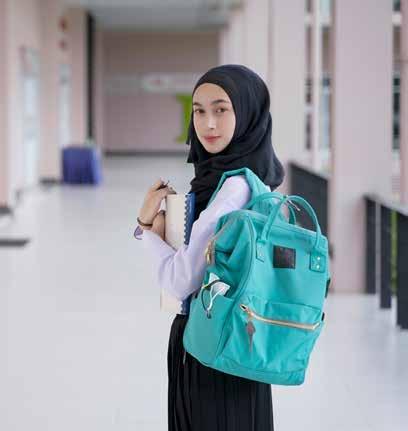
PREPARING STUDENTS FOR A FUTURE SHAPED BY AI
Across the UAE, classrooms are shifting from traditional teaching to hands-on AI exploration - and children are becoming confident navigators of a rapidly changing digital world.
Artificial intelligence has become one of the world’s most influential forces, reshaping everything from healthcare to transportation and the way we use our phones. While many countries are still debating how to adapt their education systems, the UAE has already moved full steam ahead. Inside classrooms across the Emirates, children are not just learning about AIthey are learning with it, experimenting, questioning, creating and discovering how it will shape their future careers.
This is more than a technological update. UAE schools are preparing a generation of students who understand how AI works, recognise its limitations and feel empowered to use it responsibly. For families, it signals a future where children leave school not as passive consumers of digital tools, but as confident, thoughtful problem-solvers - ready for whatever the world becomes next.
BRINGING AI INTO EVERY CLASSROOM
One of the most ambitious elements of the UAE’s education strategy is happening across public schools, where the Ministry of Education (MoE) has mandated that artificial intelligence (AI) becomes a core subject in public schools across the UAE, for all students - from kindergarten through Grade 12. This makes the UAE one of the first countries in the world to embed AI literacy across all compulsory schooling.
AI lessons will be delivered within the existing “Computing, Creative Design, and Innovation” subject - meaning AI classes are not additional hours, but part of the standard timetable. What does that look like in practice?
Early years
From as young as four years old, children will be introduced to technology and AI through playful, interactive activities, stories and visual learning.
The focus here is on building digital awareness, understanding simple distinctions (machines versus humans) and encouraging curiosity - laying a foundation for later learning without technical pressure.
Ages 6-11
As children move into primary years, lessons become more structured. Students begin to develop digital thinking skills. They learn basic AI-related ideas, compare how machines and humans “think”, and explore simple applications of digital tools and logic - helping them understand what technology can or cannot do. This stage emphasises awareness and conceptual understanding, not programming or complex algorithms.
Ages 11-14
At this level, the curriculum becomes more structured: students are introduced to data, algorithms, and how AI systems work. They begin to understand bias and ethical issues, and may design simple AI models or systems under guidance. There’s also focus on responsible use, teaching them to think about how AI impacts individuals and society.
Older students
By the time students reach Grades 9-12, they dive into fully fledged AI applications. They build models, test prototypes, analyse digital case studies and work through ethical dilemmas drawn from real industries. Instead of exams, students create hands-on projects that demonstrate understanding - a deliberate move to ensure learning is active, not theoretical.
To support this nationwide rollout, around 1,000 teachers have already begun specialised AI training programmes and local education innovators are stepping in to accelerate progress. UAE-based edtech company EDNAS has launched a fully resourced, bilingual AI literacy curriculum for Key Stages 1-3, providing lesson plans, teaching materials and structured pathways for schools keen to move quickly.
LEADING THE WAY
Long before AI became a national mandate, many private UAE schools - particularly in Dubai - were already exploring what AI could look like in everyday learning. Across different schools, that experimentation looks very diverse.
Swiss International Scientific School Dubai (SISD)
At SISD, innovation is built into the school’s identity, so AI integration has happened naturally. Students aged 11 to 16 already work with AIpowered tools within their digital design and technology lessons.
In Digital Design and media units, students create AI-assisted media - for example, designing AI-powered movie trailers or using AI translation tools to aid multilingual learning. This helps build digital, creative and language skills all at once.
Through a recently launched elective (starting August 2025), SISD is offering a BTEC Level 2 qualification in Esports to Grades 6 and 7combining digital literacy, team-work, project-management and tech skills in a structured, future-focused elective.
Here, AI is woven into the process of design thinking, encouraging students to push boundaries and reflect on what makes human creativity unique.
GEMS Education
Across the GEMS network, the integration of AI is tailored to age and stage. Younger pupils - in some cases as early as Year 2 - are introduced to foundational digital literacy through play-based learning.
GEMS recently launched a dedicated initiative called the GEMS Global Education AI Hub. This hub is designed to co-develop and scale real-world, ethical and inclusive AI tools across their network of schools - from intelligent tutoring systems and personalised learning, to AI-powered school operations, wellbeing support and curriculum design.
GEMS frequently emphasises the importance of balancing technology with human values. Sunny Varkey, Chairman and Founder of GEMS Education, tells us “AI has the power to elevate how students learn and how schools function - but only if it is designed with care, ethics and deep understanding of real-world classrooms.”
Bloom World Academy (BWA)
Few schools in the UAE - or the world - have taken as bold an approach to AI as Bloom World Academy. BWA began building its AI pathways early, starting with an AI Fundamentals programme for Grades 9 and 10, inspired by the Pearson BTEC framework. Then, last year, the school became the first in the UAE to make the Pearson AI BTEC qualification mandatory for all students aged 14 and above - a groundbreaking move that positioned it as a regional leader.
BWA x Code School Finland
In 2025, BWA became the first school globally to launch the newest version of the Code School Finland AI Creator curriculum - a hands-on, project-based course for Grades 9 and 10 that combines coding, ethics, machine learning and realworld application.
What sets BWA apart is not just its curriculum but its philosophy. Students debate ethical dilemmas, participate in mock trials, analyse industry-inspired case studies and reflect deeply on how AI influences society. Every lesson uses global standards - like the UNESCO and OECD AI literacy frameworksdelivered through dynamic local teaching. The result is a school where students don’t just use AI; they understand it at a structural, ethical and conceptual level.
A WORKFORCE FOR THE FUTURE
While student-facing curriculum changes make the headlines, one of the UAE’s greatest strengths is its investment in teachers. AI education requires educators to feel confident with the tools, concepts and ethical considerations - and that means targeted, ongoing professional development. This ensures that AI isn’t being rolled out in isolation but supported by staff who understand how to use it meaningfully. Many training programmes mirror the student learning journey - a model that helps teachers empathise with the challenges learners might face. Some schools pair teachers in collaborative workshops, others use peer mentoring and many partner with global organisations offering guided support.
BUILDING ETHICAL DIGITAL CITIZENS
Perhaps the most meaningful element of the UAE’s AI shift is that it places ethics at the heart of learning.
Children are encouraged to ask questions such as:
• Who created this model?
• What data does it rely on?
• Could this algorithm be unfair to certain groups?
• How do we balance innovation with responsibility?
• What should a future with AI look like?
These conversations matter. They help students develop a calm, reflective awareness of the digital tools they use every daywhether writing an essay, playing a game or scrolling social media.
WHAT THIS MEANS FOR FAMILIES
For parents in Dubai and across the UAE, this shift offers real reassurance. The world our children are growing up in will look very different from the one we knew - and schools are preparing them with the confidence, curiosity and critical thinking skills they’ll need to thrive.
A child who understands AI is not necessarily a future programmer. They could become a designer, a doctor, a lawyer, a writer or an entrepreneur. AI literacy is becoming as fundamental as numeracy - a skill that underpins nearly every modern profession.
UAE schools are helping children to understand how digital tools work, to use
AI safely, responsibly and ethically, and to become proactive problem-solvers rather than passive users. Hopefully, these changes in education now will mean this generation will enter adulthood equipped with the mindset needed to navigate - and shape - a technology-driven world.
A FUTURE-READY EDUCATION SYSTEM
If the momentum continues, today’s learners may become the world’s first true AI-native thinkers: young people who view technology not as a mysterious force, but as a tool for improving communities, solving problems and imagining new futures. And that may be the UAE’s greatest achievement - not the adoption of AI in classrooms, but the development of children who will use it wisely, confidently and with purpose.
As AI continues to evolve, so too will the ways children interact with it. What won’t change is the UAE’s commitment to nurturing informed, confident and compassionate learners. By empowering students to understand and shape technology, schools are helping them step into the future not with fear - but with possibility.
THE READING RIPPLE EFFECT
Strong early reading habits affect children’s confidence, curiosity and long-term achievement in powerful, lasting ways.
There’s a particular kind of magic in watching a child learn to read. At first, it’s slow and hesitant - letters sounding out one by one, words pieced together with great concentration. Then suddenly, something clicks. Books become portals, stories expand their world and reading turns from a task into an adventure. However, the benefits of early literacy run far deeper than simply decoding words on a page. They can influence confidence, emotional resilience, creativity and future academic success in ways that ripple throughout childhood and beyond.
For parents, understanding just how impactful reading is can transform the way you approach learning at home. Whether your little one is just beginning to recognise letters or already racing through chapter books, every story contributes to a powerful foundation.
WHY EARLY LITERACY MATTERS
Early literacy is one of the strongest predictors of future academic achievement. Research consistently indicates that kids who develop reading skills earlier tend to perform better not only in language subjects but across the curriculum. Reading strengthens cognitive processes like memory, attention and problem-solving - skills that support learning in science, maths and beyond.
Literacy is also a cornerstone of emotional intelligence. Through stories, children learn to interpret feelings, recognise social cues and empathise with characters very different from themselves. This helps them build emotional vocabulary and resilience as they grow. In short, reading helps children understand both the world around them and the world inside them.
CONFIDENCE BEGINS WITH COMPREHENSION
When a child starts to make sense of written language, their confidence naturally shoots up. It’s empowering! Suddenly the signs in shops become readable, instructions start to make sense and books open up a world of independent discovery. These early wins reinforce a child’s belief in their own abilities - a huge element of confidence.
This sense of achievement often spills into everyday life. When kids feel capable with reading, they tend to approach new challenges more positively. Whether it’s solving a puzzle, trying a new hobby or raising a hand in class, strong literacy skills
build the internal message that they are an able person.
Parents often notice a difference at home too. Little ones who feel secure in their reading often show greater independence, choosing to read quietly, explore new interests or ask thoughtful questions inspired by their stories.
THE SOCIAL BENEFITS
Reading doesn’t only support academic and emotional growth - it also strengthens social skills. Stories expose kids to a wide range of perspectives, cultures and ways of thinking, offering them a gentle but meaningful glimpse into lives unlike their own. This is brilliant for growing their empathy and helps children navigate friendships more confidently.
Shared reading also creates important connection points. When kids chat about their favourite characters with friends or discuss a story they’ve enjoyed in class, they build friendships through common interests. Some schools even use shared novels as part of their wellbeing programmes, helping students bond through storytelling.
BUILDING A READING CULTURE AT HOME
One of the most effective ways to support early literacy is to weave reading seamlessly into your home life. This doesn’t require strict routines or long sessions - small, consistent habits are often the most impactful. You might like to create cosy reading spaces. A soft chair, a
blanket and a basket of books can turn an ordinary corner into an inviting reading nook. If your child is a reluctant reader, try to offer a variety of books. Kids often surprise us with their interests - graphic novels, picture books, stories in translation and factual books all count as rich reading experiences. Lastly, be a reader yourself! When children see you reading for pleasure - even for a few minutes - it reinforces the idea that reading is enjoyable, not just homework.
CONTINUE READING ALOUD
Even when children are old enough to read independently, reading aloud to them continues to offer huge developmental benefits. It exposes them to richer language, more complex plots and advanced vocabulary
they may not yet access on their own. It also cements reading as a shared, nurturing experience rather than a solitary exercise. Reading aloud even helps older children unlock confidence. They can enjoy challenging stories without the pressure of decoding every word themselves, allowing them to engage with ideas and emotions more deeply.
WHEN READING IS HARD
It’s important to remember that every child’s reading journey is different. Some race ahead quickly, others take time and some need specialist support. Difficulty with reading does not reflect intelligence or potential. Many confident, successful adults struggled with early literacy.
If your child finds reading challenging, try:
• Audiobooks as well as printed books
• High-interest, low-text stories
• Celebrating effort over accuracy
• Short, positive sessions
The goal is to nurture confidence, not pressure.
THE RIPPLE EFFECT THROUGH LIFE
When children develop strong early reading habits, the benefits continue well beyond the primary years. Research suggests that confident readers often demonstrate stronger critical-thinking skills, higher academic motivation and greater resilience when faced with challenging tasks.
Early literacy also supports creativity. Kids who read widely develop more imaginative thinking and stronger storytelling skills, whether they express themselves through writing, play or conversation. Perhaps most importantly, reading genuinely creates a lifelong love of learning - a quality that shapes not only academic success but also self-esteem, curiosity and emotional wellbeing.
Reading isn’t just a skill; it’s a gift that touches every part of a child’s development, and when you share stories, you’re helping your child build confidence that will carry them far beyond the pages of any book.
SCHOOL & FAMILY BREAKS
A dreamy family getaway to an Indian palace and the rejuvenating island staycation just outside of Dubai!
CELEBRATE THE FESTIVE SEASON WITH A TROPICAL STAYCATION
Escape the city to an island paradise where joyful celebrations and unforgettable family experiences await.
This December, Anantara World Islands Dubai Resort invites you to step into a tropical wonderland, surrounded by the sparkling waters of the Arabian Gulf and the glittering Dubai skyline. Here, festive cheer goes hand in hand with Thai-inspired luxury on the sands of the iconic manmade island, offering families, couples and friends a magical escape to end 2025.
With over 70 spacious rooms, suites and villas to choose from, you’ll feel like you’re a world away from the lights of Dubai twinkling in the distance!
FESTIVE HIGHLIGHTS
From the 12th to the 24th of December, your family can settle into the festive mood with afternoon tea at Luna or Helios. The experience has a nostalgic feel, with delicate sweet and savoury treats shaped around comforting holiday flavours - a lovely way to get into the holiday spirit! Those wanting more privacy can opt to enjoy the entire spread from their villa terrace for a bit of peace.
CULINARY DELIGHTS
Food is at the heart of the festivities at Anantara. From the 15th to the 25th of December, you and your family can indulge in the Festive Turkey Feast, served in-villa or in the resort’s elegant restaurants, with golden roasted turkey and all the delicious trimmings! Christmas Eve at Helios features live music, carols and a curated menu of festive favourites, while Christmas Day invites families to enjoy a lively barbecue lunch, complete with Santa, gifts and joyful tunes that fill the air.
NEW YEAR MAGIC
The month concludes in style on December 31st with the Luna del Sur Gala Dinner. Here, you can start with some live saxophone melodies at Helios before enjoying a lavish dinner with your nearest and dearest at Qamar. With a magician, a live band and a DJ set under the starlit sky, the celebrations promise to welcome in 2026 with joy, style and some island charm.
WELLBEING AND FAMILY FUN
For quiet indulgence, the Holiday Relaxation Ritual at Anantara Spa pairs signature massages with facials or full-body exfoliation, perfect for letting go of any stress you’ve carried in 2025, rejuvenating your body and mind ahead of the turn of the year.
Little ones can join the Tuk Tuk Kids Club’s festive programme, full of crafts, games and creative surprises, while island adventures like paddleboarding, snorkelling, kayaking or sunset yoga offer calm, energising escapes for everyone. You’ll also be able to enjoy leisurely walks along the shoreline, looking out at spectacular views of the Gulf and Dubai skyline - perfect for adding little moments of peace to the busy festive period!
From twinkling lights to the gentle sway of palm trees, Anantara World Islands Dubai Resort might be the perfect place to say goodbye to this year and reset your family for 2026!
For bookings or more information, call +971 4 567 8777 or email reservations.awid@anantara.com.
A ROYAL RETREAT AWAITS AT THE OBEROI RAJGARH PALACE
Step into 350 years of history, heritage and luxury at the newly restored Oberoi Rajgarh Palace, nestled amidst the forests and hills of Khajuraho.
The magic of history meets modern leisure at The Oberoi Rajgarh Palace, Khajuraho, the newest jewel in The Oberoi Group’s collection. Set within a 76-acre estate and rising gracefully from the slopes of the Maniyagarh Hills, this 350-year-old Bundela palace combines royal heritage with contemporary luxury. With views of the Vindhyachal mountains, proximity to Panna National Park, and a short drive from Khajuraho’s UNESCO World Heritage temples, the palace is the perfect gateway to exploring India’s natural beauty.
A PALACE RESTORED WITH CARE
Restoring Rajgarh Palace was a delicate labour of love. Every arch, courtyard and ornate detail has been revived with sensitivity, honouring centuries of history while integrating modern luxuries for you to enjoy.
The estate houses 65 rooms and suites, ranging from elegant Palace Rooms to grand Palace Suites and private pool villas. Whether you choose a terrace overlooking the lake or a suite with panoramic forest views, each space is designed to evoke tranquillity, grace and the opulence of royal life. Grand spaces like the Kohinoor Suite feature two bedrooms and a private pool, ideal for families or multi-generational travel, while smaller, intimate Palace Rooms allow for quiet reflection and a sense of personal retreat.
DINING THAT CELEBRATES HERITAGE
Culinary experiences at Rajgarh Palace are as immersive as its surroundings. Maanya, the palace’s signature restaurant, presents royal recipes from a bygone era in a gorgeous setting, offering indoor and outdoor dining with views of the hills. Neerangan, by the lake, serves Indian and international cuisine throughout the day, accompanied by live evening entertainment. Amrava, overlooking the palace courtyard, offers artisanal small plates beside gently cascading fountains.
EXPERIENCES TO REMEMBER
A collection of immersive experiences allows you to explore the region’s heritage and wilderness during your stay. “Footsteps of the Chandela,”
led by the palace historian, begins at dawn and reveals the beauty of Khajuraho’s temples at sunrise, before a lakeside breakfast.
“Canyon of Legends” explores the dramatic granite formations of Raneh Gorge and the Ken Gharial Sanctuary before concluding with refreshments at Amrava.
“Crown of the Wild,” an Oberoi-curated safari, brings you faceto-face with the wildlife of Panna National Park, and is guided by expert naturalists. With expert eyes trained on the undergrowth and ears honed to the quietest rustle of a tiger, your guide will help you spot the forest’s residents in their natural realm, for unforgettable encounters with India’s wildest majesty.
Evenings unfold with dhoop daan rituals, dance performances and storytelling sessions that illuminate the region’s history, ecology and legends, and within the palace, you can partake in guided explorations of hidden chambers, ancient shrines, subterranean passages and the evocative remains of the Mastani Mahal.
Younger guests can also enjoy their own adventures! Inspired by Panna National Park’s history of diamond discoveries, young explorers are invited to don their hunting gear and sift through sand in search of hidden gems. Playful and immersive, this experience captures the joy of discovering ‘treasure’ with your own hands.
WELLBEING IN HARMONY WITH NATURE
Wellbeing at Rajgarh is deeply immersive. You arrive at the spa by boat, gliding across the palace’s natural lake to reach tented treatment suites overlooking the water and forested hills. Asmi by Oberoi offers personalised therapies, mindfulness practices and holistic rituals designed to restore your balance. With private lakeside treatment rooms and tranquil natural surroundings, the spa experience blends seamlessly with the estate’s serene landscape. Two temperature-controlled pools; one a lakeside infinity pool and the other set within the palace invite relaxation at any time of day.
CELEBRATIONS AND SPECIAL OCCASIONS
For weddings, celebrations or corporate events, Rajgarh Palace offers a stunning setting. With 440 square metres of indoor event space and
an open-air terrace measuring over 500 square metres, The Armoury offers soaring vaulted ceilings and sweeping views of the Palace Gardens and Panna National Park beyond. It has capacity for up to 200 guests. The palace’s architecture, lush gardens and historic charm make it a sought-after venue for both grand celebrations and more personal occasions too.
SUSTAINABILITY AND STEWARDSHIP
The Oberoi Rajgarh Palace integrates advanced sustainability practices, from solar power and water recycling to organic vegetable cultivation and eliminating bottled water. Local sourcing, community support and cultural preservation underpin every aspect of the estate, reflecting the group’s commitment to responsible luxury.
If you choose to stay at Oberoi Rajgarh Palace, you’re visiting a property that consciously blends heritage, luxury and environmental
responsibility. The hotel is among those in India’s hospitality sector working seriously toward reducing its ecological footprint, while offering a truly high-end guest experience.
A JOURNEY THROUGH TIME
From historical exploration and immersive wildlife experiences to tranquil spa retreats and exquisite dining, The Oberoi Rajgarh Palace is a real showstopper of a holiday destination. It welcomes guests from India and around the world to experience its rare confluence of royal heritage, natural beauty and the heartfelt service for which The Oberoi Group is renowned globally. Within its 76-acre estate of forests, courtyards, terraces and lakeside promenades, Rajgarh Palace promises a truly unforgettable experience for families!
For reservations and more information, visit www.oberoihotels.com.
HOME & GARDEN
Ideas for a quick reset of your home each Sunday and beautiful tableware for special occasions!
LUXURY INDIAN TABLEWARE FROM GOOD EARTH
This festive season, add a unique twist to your special occasion table settings!
Good Earth, established by Anita Lal, is an Indian luxury design brand, known for celebrating craft, culture and mindful living through timeless design. For nearly three decades, it has championed artisanal craftsmanship, mixing age-old techniques with contemporary aesthetics to create pieces that are both visually stunning and deeply meaningful.
GOOD EARTH CHAHAR BAGH
This year, Good Earth marked its international debut, opening Good Earth Chahar Bagh in Dubai. The flagship store is inspired by the grandeur and harmony of Persian paradise gardens, creating a sanctuary where visitors can explore India’s craft heritage and artistry all in one space. This gorgeous brand brings tradition to life through bespoke collections in homeware and decor, from intricately hand-painted tableware to embroidered linens and handcrafted decorative objects.
IMPERIAL AGRA
At the heart of Good Earth’s festive offerings are two of its most celebrated tableware collections: Imperial Agra and Mirage. Inspired by the pietra dura floral inlays of the Taj Mahal and the opulent artistry of Agra’s imperial tents and frescoes, Imperial Agra represents a dialogue between Mughal heritage and contemporary design. Crafted in fine porcelain with floral motifs, ornate borders, and 24-carat gold detailing, the collection evokes richness and timelessness - ideal for festive gatherings or heirloom-worthy gifting. Every plate, bowl, and serving piece tells a story, merging centuries-old craftsmanship with modern functionality and elegance.
MIRAGE
In parallel, Mirage, a collaboration between Good Earth Founder Anita Lal and FrenchTunisian designer Thierry Journo, offers a dreamlike exploration of the desert and Mediterranean. Presented on fluted bone china in hues of coral, rose, aquamarine and deep turquoise, each piece is edged in baroque gold and complemented by embroidered linens, gilded glassware and hand-painted motifs. The collection invites some playful creativity to your ‘special occasion’ table styling, encouraging you to mix textures, layers and colours for a joyful, artistic dining experience.
Beyond tableware, the Dubai store curates a carefully considered selection of home fragrances, textiles and wellness pieces. Each item is thoughtfully designed to enhance everyday family life while bringing uniqueness, meaning and a sense of ceremony into seasonal celebrations.
CELEBRATE IN STYLE
This festive season, Good Earth emphasises connection - between cultures, crafts and people. Whether through a candlelit table adorned with Imperial Agra, a happy gathering served over Mirage’s vibrant palette, or a thoughtful keepsake selected for its story, every gift carries forward the brand’s legacy of storytelling through design. With a steadfast commitment to craft, conscious luxury, and the celebration of heritage, the brand continues to make meaningful design accessible, reminding us that the most memorable gifts are those that carry soul and a touch of purpose.
Good Earth Chahar Bagh’s festive collection is available exclusively at B Mall, Dubai.
SUNDAY RESET IDEAS FOR YOUR HOME
These easy tips and tricks help you set the tone for a better week ahead.
There’s something uniquely comforting about a Sunday. It’s a day that offers just enough breathing room to prepare for the week without rushing. For many families, especially in busy households, this is where the idea of a Sunday reset comes in - not as a rigid system or a marathon cleaning session, but as a mindful ritual that prepares your home and your inner world for the days ahead.
A Sunday reset isn’t about deep-cleaning your entire home or striving for unrealistic perfection. It’s a collection of small, doable tasks that help you start the week feeling grounded rather than overwhelmed. With a little planning, and the help of your children if they’re keen to join in, you can turn a short hour on a Sunday into a gentle recalibration that brings everyone back to centre.
START WITH A GENTLE DECLUTTER
Clutter accumulates quickly during the week - school bags dropped at the door, mail left on tables, toys migrating into every corner. Begin your reset with a simple, low-stress tidy that focuses on the areas you use most.
Set a timer for ten minutes per room and work methodically! Return items to their homes, fold blankets, stack books and clear surfaces. You’ll be surprised at how much calmer the space feels with just a few
intentional minutes of effort. If your kids want to help, give them small, clear jobs such as sorting stray crayons, matching socks or putting their shoes away. This isn’t about perfection; it’s about clearing enough space to breathe.
REFRESH YOUR LIVING SPACES
Once the clutter is under control, shift your focus to refreshing the feel of your home. This might mean opening windows to let in fresh air, wiping down high-use surfaces or fluffing sofa cushions. In a region where air conditioning runs most of the year, even a short burst of fresh outdoor air can make a space feel newly energised.
Consider adding one cosy touch to each communal area - a newly lit candle, a soft throw draped over a chair or a few stems of greenery. These small details help bring about an easy sense of calm and comfort, turning your home into a place that feels ready for the week ahead.
RESET THE KITCHEN FOR SUCCESS
The kitchen is often the heart of the home, and a gentle Sunday reset here can make the whole week feel easier. Start by clearing the fridge of
anything expired or forgotten. A quick wipe of the shelves and a restock of key items - milk, fruit, snacks, breakfast essentialsgives you a clearer sense of what you have and what you need.
If you enjoy meal prep, Sundays are perfect for chopping vegetables, cooking a batch of grains or preparing a simple dish that can cover a busy weeknight. If batch cooking doesn’t appeal to you, try laying out school snacks, washing fruit ahead of time or prepping a few grab-and-go options. These small acts reduce weekday stress - you’ll thank yourself later!
TIDY YOUR BEDROOMS
Bedrooms play a huge role in emotional regulation, especially for children. Refreshing these spaces can make bedtime far smoother during the week. Strip and
wash the bed linens, give the surfaces a quick dust and reset bedside items such as water bottles, reading books or night lights.
For your children, involve them in preparing their space - perhaps choosing a soft toy for the week, picking a bedtime book or helping fold laundry. This gives them a sense of ownership and can gently reinforce healthy ‘tidy room’ habits.
A neat, soothing bedroom environment is so much better for sleep - and a well-rested family always begins the week on stronger footing.
LAUNDRY AND TAKING STOCK
Laundry can easily spill into the whole week if left unchecked. A Sunday reset is a great time to complete one or two essential loads, focusing on school uniforms, work items or anything needed early in the week.
It’s also a great chance to take stock of household essentials. Check supplies of toiletries, cleaning products, nappies, pet items and school necessities. Noticing what you’re running low on helps prevent lastminute scrambles midweek.
A FAMILY CALENDAR CHECK-IN
A weekly reset is not complete without a quick look at the week ahead. Pull out your family calendar - whether it’s digital or displayed in
your kitchen - and scan it for upcoming school events, appointments, after-school activities or birthday parties.
Children often feel more secure when they know what’s coming, so take a few minutes to talk through the week with them. If they want to, let them help add stickers, drawings or simple notes to mark key days.
SET UP LITTLE COMFORTS
A Sunday reset should feel helpful, so think about the small things that make your weekdays easier and more enjoyable. This might be laying out outfits for Monday morning, packing school bags, restocking a reading basket or tidying up a play area.
You might also like to add in a simple Sunday ritual - a family walk, a cosy movie, pancakes for dinner, or half an hour of quiet reading. These gentle traditions help everyone enter the week with a fuller cup and nice sense of family time.
END WITH SOMETHING FOR YOU
Mums often forget themselves, so take a little time to do something that restores your own energy each Sunday. It could be a bath, a chat with a friend, a skincare ritual or a hobby you rarely make space for. You deserve it!
GOOD LIVING
From bamboo silk bedsets, to delicious panettone, beautiful fragrances and luxury handbags - here are my picks for the festive season!
DR MILENA AL MANSURI: THE SCIENCE OF DESERT SKIN
By Dr Milena Al Mansuri, Founder of Milena Aesthetic Clinic
There’s a particular kind of honesty the desert teaches you. It reveals itself in heat shimmer, in the way sand shifts with the wind and in the gentle ache you feel in your skin after a long Dubai afternoon. Living here means learning to read your face the way others read the weather - by texture, by tone, by the quiet signals of thirst or stress. Skin in the Gulf doesn’t behave the way it does elsewhere. It has its own climate, its own rhythms and its own vulnerabilities. For those of us who work in aesthetics, you either study that climate closely or you misread it entirely.
UV AS A DAILY ENVIRONMENT
In Dubai, sunlight isn’t just a condition - it’s a full season that runs all year. UV becomes part of the architecture of daily life, threading through windscreen glass, office windows and quick errands outdoors. Even the most diligent SPF user can lose collagen in the time it takes to walk from the car to a meeting.
UVA, the long-wave “silent” ray, is particularly mischievous here. It doesn’t burn but it burrows silently into the dermis, leaving its signature decades later in laxity, pigmentation and fine, papery creases around the eyes. This is why I tell patients that sunscreen in the Gulf isn’t a beauty product; it’s infrastructure. You don’t apply it for aesthetics. You apply it because the climate demands a kind of daily resilience.
DEFAULT DRYNESS
Step off a plane in Paris, London or Seoul and your moisturiser behaves one way. Step back into Dubai and suddenly that same routine
feels insufficient. Desert air pulls moisture from the skin with a kind of quiet insistence. Trans-epidermal water loss rises, the barrier thins and everything becomes more reactive - redness, itchiness, uneven texture and that frustrating combination of oily T-zones with parched cheeks.
Classic foaming cleansers, harsh toners and strong retinoids - the routines so many expats bring from cooler climates - behave like tourists who refuse to adapt. Here, skin wants negotiation. It thrives when lipids are restored with ceramides, when hydration comes from humectants that don’t immediately evaporate and when retinoids arrive in gentle, slow-release forms supported by barrier-repairing ingredients.
HEAT, PIGMENT AND THE DESERT
Then comes the heat, the kind that hovers long after the sun goes down. High temperatures activate enzymes that break down collagen more quickly and can intensify rosacea, melasma and general redness. For darker phototypes, heat can act as a trigger just as powerfully as UV, encouraging melanin to respond generously, sometimes protectively and sometimes aggressively.
This is why pigmentation here must be managed like a system, not a spot. Our protocols use antioxidants in the morning to neutralise free radicals sparked by UV and dust; pigment modulators like azelaic acid or tranexamic acid to calm melanin production and the philosophy of “minimum effective irritation” so we don’t inflame our way into more pigment.
DUST, POLLUTION AND CLEANSING
Dust in the Gulf is not a simple layer you wipe away. These microparticles cling to the skin with surprising persistence, carrying metals that accelerate oxidative stress. Cleansing becomes a ritual of removing the day, restoring balance and preparing the canvas for hydration.
Your antioxidant layer matters too. In this climate, vitamin C needs allies like ferulic acid, glutathione and vitamin E so it can survive long enough to protect. And moisturisers with a slight film-forming quality act like armour, preventing particles from settling and water from escaping.
PROCEDURES DESIGNED FOR DESERT LIFE
In cooler climates, clinicians schedule peels, lasers and injectables around the seasons. Here, seasons matter less than lifestyle, exposure and heat tolerance. A patient who spends weekends outdoors needs a different protocol than one who works in an office tower from dawn to dusk.
Dubai requires melanin-respectful approaches - fractionated lasers, staged peels, slow biostimulation and techniques that prioritise recovery in a high-UV environment. Even with injectables, each region of the face is treated as a micro-climate, with its own tendency toward swelling, bruising or pigmentation.
PREVENTIVE AESTHETICS IN A HIGH-UV CITY
One truth I’ve come to own is that desert physics accelerates timelines. A 30-year-old in northern Europe can delay intervention longer than a 30-year-old in Dubai. Here, building a collagen “pension” early is often the difference between graceful ageing and premature laxity. Preventive neuromodulators, gentle collagen-stimulating treatments and quarterly therapeutic facials aren’t signs of vanity; they are simply good planning in a climate that takes more than it gives.
LIVING WELL IN A HARSH CLIMATE
There is a quiet debate in aesthetics about natural ageing versus intervention. To me, the argument is misplaced. In the Gulf, everything is intervention - desalinated water, filtered air, SPF, humidity control. The real question is not whether to intervene, but how - with humility, with climate literacy and with an understanding that the desert leaves its own signature on the face.
Skincare here is not a set of products. It is urban planning for the skin: shade, protection, thoughtful design and rituals that create continuity. The goal is simple - that the face you wake up with next year feels like an evolution of the one you inhabit today, not a reaction to the climate, but a collaboration with it.
A SWEETLY TRADITIONAL GIFT
Novikov Café has unveiled an exclusive festive panettone collection, available throughout December at its location in Fashion Avenue, The Dubai Mall. Hand-crafted by the café’s pastry team, each panettone undergoes an extensive process to achieve its signature light, delicate texture.
Choose from the classic (AED 290), a traditional recipe featuring a soft, buttery dough with candied fruit and raisins, or a rich chocolate variation (AED 290) filled with chocolate and finished with a cocoa glaze, as well as the more contemporary option (AED 310), generously topped with pistachios and filled with pistachio cream. Finished with Novikov’s elegant red ribbon, the collection is designed for gifting - the ideal refined treat for anyone in your life who needs a small but sweet holiday gesture!
Visit www.novikov-cafe.com for more.
AN ODE TO OUD
For the fragrance lover on your list, Creed’s new Oud Zarian is a gift that feels truly special. Built around an extraordinary 80-year-aged oud exclusive to the House of Creed, this scent is deep, velvety and unmistakably luxurious. It opens with bright bergamot, ginger and a hint of frankincense before unfolding into a warm floral-spiced heart of rose centifolia and creamy sandalwood. As it settles, the oud takes centre stage, enriched with patchouli, myrrh and tonka bean for a finish that lingers beautifully. It’s refined, rare and crafted for those who appreciate the art of perfumery. Priced at 2,225 AED for 100ml, this is a standout addition to any fragrance wardrobe. For more details, go to www.creedfragrance.com.
EVERYDAY STYLE FOR EVERY BODY WITH MULU
The festive season always brings a flurry of occasions, catch-ups and holiday tasks, times when you need clothes that look good without demanding too much effort. This year, I’m loving MULU, a clothing brand redefining everyday family wear in the region. Founded by Kanessa Muluneh, MULU focuses on premium basics that feel soft, move beautifully and slot into real life - no creasing, no fuss and no last-minute ironing. Just comfort you can rely on!
What sets the brand apart is inclusivity done properly. Sizes run from baby all the way to 5XL, with colours that feel classic but joyful, from navy and maroon to playful yellow. The designs nod subtly to the region too - think abaya-inspired silhouettes sitting alongside easy everyday staples.
My top three picks
The Classic Women’s Leggings in Maroon (399 AED) are buttery soft with a drawstring waist and pockets, a dream for anyone balancing errands and celebrations. For little ones, the Classic Baby Romper in Yellow (189 AED) is quick-dry, stretchy and wonderfully practical with its flexible zipper. Lastly, the Classic Women’s Quick Dry Abaya in Green (499 AED) is a great piece - cool-touch, UV-protected and wrinkle-resistant, with a loose silhouette that is super versatile!
All three arrive with same-day delivery in Dubai and next day delivery across other emirates - ideal for last-minute gifting that still feels thoughtful.
Visit https://www.mulu.world to shop the full collection.
STOCKING FILLERS FROM MINT
For those thoughtful extras - whether it’s a gorgeously scented soy wax candle, a bespoke illustration, a cute charm, or an elegant pair of earrings - MINT Market is my recommended go-to. Every product is made by a UAE-based small business, so your purchases also support local makers. Expect artisanal stationery, home décor with a little flair and maybe even something for yourself. After all, you deserve a gift too!
Visit https://mintmarket.ae to explore all MINT has to offer.
LUXURY HANDBAGS FROM TYLER ELLIS
If you’re looking to spend on a high-end present this season, give the gift of star-studded sophistication with a luxury handbag from Tyler Ellis - the designer behind the iconic clutches seen on the arms of celebrity royalty like Beyoncé and Angelina Jolie. Each handbag is a masterclass in elegance - from the crystalencrusted Stella Handbag to the feathered Meme Pouch or the stamped satin Eloise Clutch.
Tyler Ellis’ limited-edition ‘Love and Romance’ capsule with Emirati designer Hamda Al Fahim is particularly stunning, a collection where timeless Hollywood-steeped silhouettes meet couture craftsmanship. The pieces are truly one-of-a-kind, created using Hamda’s hand-embroidered textiles made in her Abu Dhabi atelier and then finished by skilled artisans in Italy.
And for any eco-conscious fashionistas in your life, don’t miss Tyler Ellis’ ‘AppleVogue’ collection, where luxury haute couture meets sustainability, through the use of apple leather. Made from fibres left over from the industrial processing of apples, the material repurposes waste from the juice and jam industry, transforming it into a durable, luxurious textile. Beyond its beautifully smooth finish, apple leather offers a DMF-free, lower-impact alternative to traditional leather. It’s a lovely reminder that luxury and sustainability can coexist - and a meaningful detail for anyone who loves gifts with purpose.
Shop all collections at https://tylerellis.com.
THE GIFT OF A GOOD NIGHT’S SLEEP
Treat a loved one to the comfort and care of NakedLab’s 100% organic bamboo bedding this holiday. Sourced from a sustainable plant grown without pesticides, the bamboo fiber is crafted to be exceptionally pure and gentle, so your loved one can enjoy all of its natural wellness benefits. Twice as soft as cotton, their hypoallergenic pillowcases (AED 220) are crafted from ultra-soft bamboo fibres that reduce friction, helping to maintain skin hydration and prevent hair breakage overnight. Add in their anti-allergy bamboo duvet (AED 350) for a fully indulgent sleep experience. Encased in the same luxurious fabric, with 100% bamboo filling, this duvet is naturally hypoallergenic, antibacterial, anti-dust mite and thermo-regulating. Lastly, give your loved one the opportunity to enjoy the beautiful feel of NakedLab’s bamboo silk bedsheets, which come in a palette of dreamy colours inspired by destinations like Jaipur Sunset and Manhattan Silver. Priced from AED 240, they are designed to last, combining style and practicality in one stunning package. Perfect for anyone in your life with sensitive skin, NakedLab brings the elegance of a luxury spa into your bedroom.
Build your own bundle or explore the full collection at www.nakedlab.com.