OLIVAREZ HONEY BEES, INC.
SWEET SUCCESS: SCALING A FAMILY BUSINESS THROUGH STRATEGIC INVESTMENT
Bees are foundational to natural systems and human food security across the globe. Among the planet’s most effective pollinators, bees pollinate nearly one-third of the crops that humans eat, including almonds, apples, blueberries, cucumbers, melons, and squash. The United States Department of Agriculture estimates that beekeepers currently operate and care for approximately 2.8 million honey bee hives in the United States, and the Honeybee Discovery Center notes that 80 percent of the queen bees used in the United States are raised in Northern California’s “golden triangle” of Butte, Glenn, Shasta, and Tehama Counties.
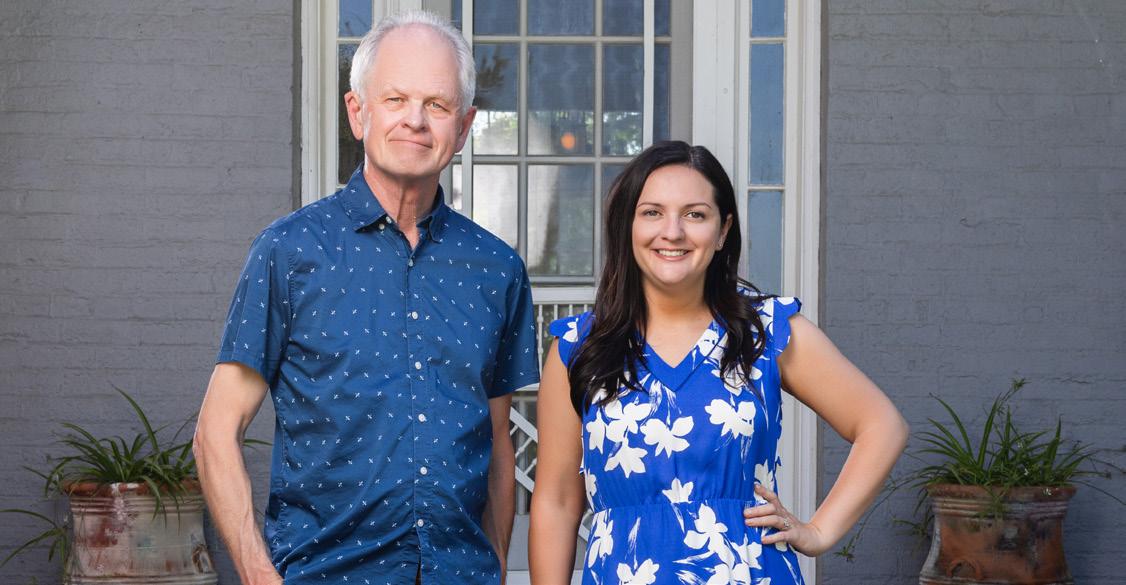
For more than 50 years, the Olivarez family has contributed to this remarkable industry, raising bees in Northern California and producing premium queens and package bees for beekeepers across the United States and Canada. These bees are used to establish new colonies, replace bees lost in the winter, expand beekeeping operations, and support pollination efforts. Based in Orland, California, beekeepers Ray and Tammy Olivarez raise Italian, Carniolan, and Saskatraz queens and bees near their Northern California home, as well as in Montana and on Hawaii’s Big Island. These strategically chosen locations allow the Olivarez family to raise bees in their ideal environments with the most reliable and nutritious food sources, giving them the ability to offer customers premiumquality queens and bees year-round. OHB further supports their beekeeping partners with honeybee nutrition solutions, including premium feed syrups and pollen substitutes to support resilient, productive colonies while reducing disease risk.
Ray and Tammy started Olivarez Honey Bees (OHB) in 1985, building upon Ray’s childhood experiences growing up in the beekeeping family. From the early days of just one truck, Ray and Tammy have built the business to include more than 16,000 colonies bred for health and vitality.
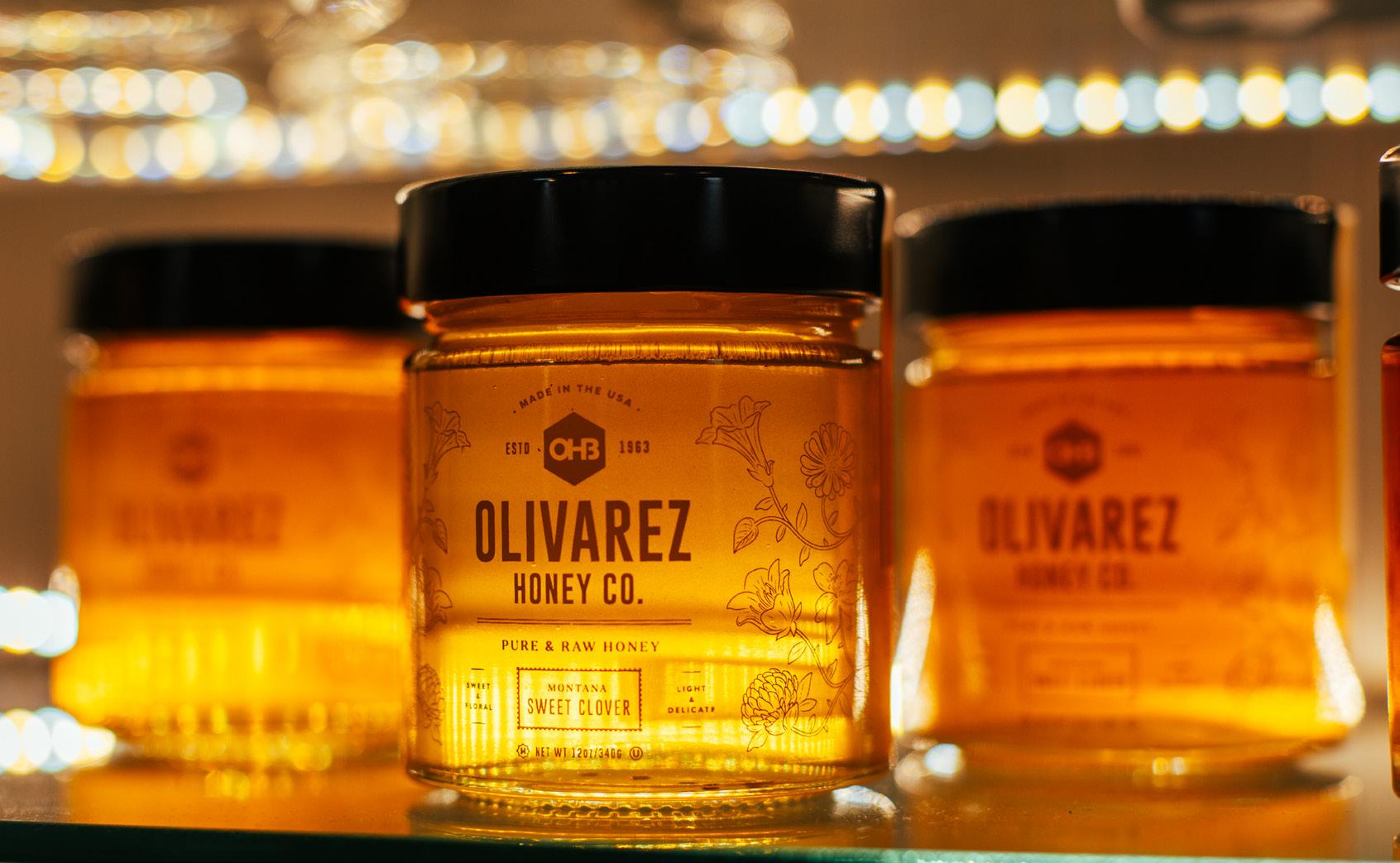
In 2014, Ray and Tammy expanded their second-generation beekeeping operation to begin producing and marketing valueadded honey from their own bees, retaining honey from their hives in California, Hawaii, and Montana and marketing it under their Olivarez Honey Co. and Chico Honey Co. brands. The expansion has allowed their children Josh, Ryan, and Haley to become involved in the day-to-day aspects of the business. OHB also has its own restaurant and bar called The Hive located in Orland, California.
Initially, the Olivarez family sold its 100% pure, raw honey and honey sticks directly to consumers through its website, and through limited distribution in Northern California retail locations. The company began to achieve more widespread distribution in 2020 through a Walmart incubator program, but major expansion came in 2021 when OHB, working with Morrison, applied for and received a $250,000 Value-Added Producer Grant (VAPG) through the US Department of Agriculture (USDA). Designed to support agricultural producers in launching new value-added products into new markets, the VAPG opportunity allowed OHB to scale investment in processing, packaging, and broker and slotting fees to drive increased sales in new retail stores nationwide.
CONTINUED ON INSIDE RIGHT PANEL
WHEN LEGACY MEETS THE FUTURE: DESIGNING HEALTHY EXECUTIVE SUCCESSION
BY CARLOS PENNING
For most organizations, the departure of a seasoned executive is more than a staffing change: it is a crossroads. A CFO who has stewarded the numbers for 15 to 20 years, knowing every major equipment acquisition made over the past decade. A General Manager who knows every vendor, the context behind every long-standing client, every unwritten rule. A CEO or Finance Director who built systems from scratch and quietly carried far more than their job description ever reflected.
And then, suddenly, or so it feels, the season changes.
Sometimes the transition is anticipated: a retirement; a long-planned move; a well-noticed shift to a new role.
Other times it is abrupt and painful: an unexpected resignation, an unhealthy ending, a personal crisis that leaves a key seat empty with little notice. In either case, the executive team often finds itself asking the same urgent questions: What exactly did this person do? Who else knows how to accomplish their tasks? How do we keep the wheels from coming off?
The reality is that many organizations and companies find themselves unprepared when it comes to succession of key executives and even in the best-case situations, surprises can still arise.
MORE THAN A JOB DESCRIPTION: THE WEIGHT OF INSTITUTIONAL KNOWLEDGE
Over time, key leaders in an organization naturally grow beyond the boundaries of their original roles. They solve problems no one else sees. They build relationships that are not documented in vendor files or customer logs. They create their own processes, sometimes carrying multiple functions under one title.
What began as a defined position gradually becomes a well-designed patchwork of institutional knowledge, intuition, historical context, and personal judgment. But, when that individual leaves, the organization discovers that much of what mattered most was never written down or documented.
Healthy succession begins with clarity.
What does this role truly encompass? Not just the formal job description drafted years ago, but the lived reality. What decisions does this leader make daily, monthly, annually? What relationships do they hold that are critical to the organization? What informal knowledge sits only in their memory? What systems have grown organically around them?
Documenting the actual day-to-day functions of a key executive role in your organization can be paramount to healthy succession planning. One way to accomplish this is through a facilitated job task analysis, a structured, data-driven process that identifies, documents, and evaluates the specific tasks, duties, and required knowledge, skills, and abilities for a particular role. Unlike a general job description, a job task analysis focuses on the actual tasks a role completes over a period of time: what the individual does, how they do it, and what tools they use.
Though the process might seem cumbersome, it saves an organization confusion further down the line and provides valuable insights to ensure a smooth transition. Through an analysis at this level, what might not be obvious comes to the forefront. You may learn that your Director of Finance is actually the alarm company’s first contact if there is an office break-in, or that your Human Resources Manager keeps the keys to the organization’s storage unit – helpful information that can prevent a crisis or confusion down the line once the person is not in that role.
AN OPPORTUNITY FOR ALIGNMENT
Sometimes, when a company maps out the tasks of a long-held role, they discover something even more important: the role is simply unsustainable for one person to accomplish. The responsibilities of three positions may have quietly converged into one, or the job duties may have coalesced around someone’s divergent natural talents and abilities that would be hard to replicate. In those cases, succession is not simply about replacement; it is about redesign.
Morrison was once engaged to do a search for a replacement for an operations manager. Our founder Brent Morrison was told that the person who retired (already gone) had been with the company for about 40 years. He had started in a janitorial role then worked his way up to maintenance, then equipment repairs, then overall operations management. He had also jumped in when computers started to be a thing, and was essentially their tech support. The client wanted to find someone experienced in overseeing similar specialized operations, equipment repair, and who could do all of their tech support. Brent told them he only knew one person like that that, but unfortunately he had just retired.
Organizations need to ask the right questions to ensure a seamless transition:
What should this role look like in the next chapter?
Is it truly only one role?
What needs to be redistributed?
What tools, reporting structures, or systems need to be implemented so the next leader is set up for success?
The goal is not to make the next person to hold that position struggle as proof of worth. The goal is to equip them to go farther.
THE RELAY RACE: DESIGNING A HEALTHY HANDOFF
Though it may require speed, succession is an intentionally collaborative endeavor.
Think of it as a relay race. If at all possible, plan for an overlap between the outgoing and incoming persons; it is worth the cost. There is a window where both runners are in stride together. The outgoing leader still holds
the baton but is already matching pace with the one who will carry it next. There is proximity, observation, coaching, and shared responsibility.
First you watch me.
Then we do it together.
Then I watch you.
Then you do it, and I remain close enough to support, but not control.
The most successful transitions model clearly defined phases:
• A knowledge-transfer season
• A shared-leadership season
• A consultative season with clear boundaries
When timelines are defined and authority is clarified, power struggles diminish and the transition becomes empowering rather than destabilizing.
HONORING THE PAST WHILE BUILDING THE FUTURE
We must also acknowledge the emotional dimension of transition.
For the executive who has carried immense responsibility for 15 or 25 years, stepping away is rarely simple. Their identity is often intertwined with the organization’s story. Their expertise has defined much of their value. When that season ends, even voluntarily, there can be grief, uncertainty, or a sense of lost purpose.
Honoring long-term leaders with dignity is culture-shaping. Thoughtful compensation, defined offboarding, public gratitude, and opportunities for structured mentorship during transition communicate that loyalty and service matter.
At the same time, clarity protects the incoming leader. Defined authority, clean decision rights, and visible support from ownership or the board ensure the next chapter begins without shadow leadership. While overlap is critical, at some point there must be a clear change. This can be particularly challenging if the person leaving the role is taking another role within the company (e.g., from VP of Operations to COO).
Both honoring the past and embracing the future require intention.
This is also not simply an operational issue; it is generational and cultural. Many long-tenured leaders were shaped by values of loyalty, endurance, and self-sufficiency. They worked their way up, and many times figured things out the hard way. They may quietly carry a mindset shaped by their own journey — Ilearneditthroughtrialanderror.Noonemadeiteasyfor me. I earned it the hard way. That’s how character is built. However, the departing leader must realize that a successful transition will be part of their legacy.
Meanwhile, the next generation stepping into leadership often brings different expectations. They value clarity, collaboration, defined systems, and transparent pathways. They are less interested in inheriting chaos as a rite of passage and more committed to building sustainable structures that serve the whole team.
Without intentional planning, these differences can create friction, or worse, a power struggle at the very moment wisdom and humility are most needed.
PREPARING BEFORE IT BECOMES URGENT
So how do you prepare now?
Identify your most critical roles. Ask: If this person were unavailable tomorrow, what would break? Where is knowledge concentrated in one individual? Build redundancy where possible. Cross-train. Create living Standard Operating Procedures that are accessible and updated. Engage in honest, forward-looking conversations with long-tenured
executives. What does the next five to ten years look like for them? What timeline would allow for a thoughtful handoff? Who internally could be developed, and what competencies should be strengthened now?
Most importantly, cultivate a leadership mindset that measures success not by indispensability, but by preparedness.
At Morrison, we have stood with organizations and companies in both proactive and crisis transitions. We have stepped into interim executive roles when a sudden exit left confusion behind. We have stabilized teams, clarified systems, and helped redefine roles for the future. We have also partnered in executive recruitment and succession design to ensure the next leader is chosen intentionally, not reactively.
Every transition carries nuance. Every story is different. But preparation changes outcomes.
The baton will pass. The question is not if, but how.
We would be honored to serve as an objective voice in that process, one not entangled in daily dynamics, yet deeply aware of the operational and emotional complexity involved. Whether through interim leadership, executive search, or proactive succession planning, we come alongside to help you prepare well.
Honor the legacy. Design the future. Run your next leg of the race with strength, because you chose to prepare before the moment demanded it.
OUR OWN JOURNEY:
Morrison’s leadership transition from Founder Brent Morrison running to the day-to-day operations to Managing Principal Toni Scott taking the helm has been intentional, phased, and designed well before it was necessary. Over several years, responsibilities have been gradually shifted, systems have been documented, and decision-making authority is being meaningfully transferred, ensuring stability rather than disruption. The result has been a continuity of culture and service, without the uncertainty that often accompanies founder transitions. And Brent is still providing value to our company’s success – he’s just no longer reconciling our Morrison bank accounts or serving as the person the alarm company calls when Toni accidentally sets off the alarm on the weekend.
“At some point, every leader has to decide whether they want to be indispensable or intentional. When we made the decision to begin the transition of leadership, I knew it had to be done before it was urgent. We took time to clarify roles, document systems, and create space for our Managing Principal to lead in her own way. My goal was simple: to foster a continuity of leadership our employees could trust and stability our clients could rely on.”– Brent Morrison, Founder.
“What has meant the most to me has been the trust. This transition hasn’t been about maintaining or taking control; it has been about preparing me to take Morrison through its next chapter. That level of empowerment creates momentum. It communicates, ‘I believe in you, and I want you to build beyond what I did”– Toni Scott, Managing Principal, Morrison.
With its 2021 VAPG successfully concluded, Morrison assisted OHB with the business plan, feasibility study, and grant application for a second VAPG in 2025 – this one to launch the company’s new creamed honeys through retail sales, private label, and live broadcast marketing. Creamed honey is pure honey that undergoes controlled crystallization process to achieve a smooth, spreadable consistency. This project launched in fall 2025 and introduced OHB’s Original, Cinnamon, and Chocolate-flavored creamed honeys to consumers across the country.
Morrison also worked with OHB again in 2025 to apply for a $100,000 Resilient Food Systems Infrastructure (RFSI) grant through the California Department of Food and Agriculture. RFSI grant funds enabled OHB to purchase essential equipment for the automated packaging of its highly popular
honey pouches. Through this equipment, OHB has streamlined the packaging process, reduced labor costs, improved productivity, and enhanced OHB's ability to efficiently meet customer demand.
In addition to supporting OHB in securing a total of $600,000 in state and federal funding through these grant programs, Morrison has continued to provide assistance to OHB through Morrison’s grant administration services, including submitting reimbursement requests and drafting required reports in accordance with USDA guidelines. Morrison’s Business and Accounting Advisory team has also supported OHB’s financial operations through bookkeeping and accounting services as needed, as the business has grown in volume and complexity.
From queen breeding in Northern California’s golden triangle to nationwide retail expansion, Olivarez Honey Bees exemplifies how multigenerational agricultural expertise, paired with strategic investment and strong partnerships, can drive meaningful growth. Through targeted use of state and federal grant funding, the Olivarez family has strengthened its operations, diversified its product line, and expanded market access while maintaining its core commitment to healthy, productive colonies. Morrison is proud to support OHB’s continued success, helping transform innovative ideas into funded projects, sustainable infrastructure, and long-term resilience for a business that plays such a vital role in American agriculture and food security.
MELISSA TANNER
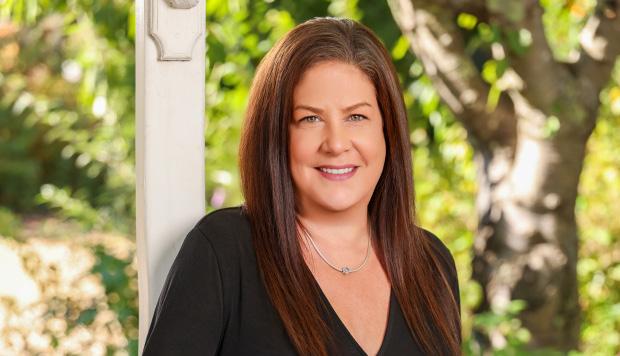
Morrison was delighted to welcome Melissa Tanner to our team in December! Melissa works directly with Morrison's Managing Principal Toni Scott and is responsible for assisting with communications management, project management, calendar management, coordination of practice development efforts, and other duties that help to keep Morrison running smoothly for both our team and our clients.
Prior to joining Morrison, Melissa worked as a project manager and grant writer at a nonprofit working to advance the economic
vitality of Northern California. There, she designed and managed projects related to broadband adoption and deployment, educational pathways, natural resources, and supporting small businesses. It was also there where Toni first met Melissa and recognized her impeccable communication and organization skills.
Melissa is a graduate of California State University, Chico where she earned a bachelor’s degree in Public Administration. She also holds a certification in Results Based Facilitation.
Q&A WITH MELISSA
WHAT IS YOUR FAVORITE QUOTE OR MANTRA?
(Yom ‘asal, Yom basal).
This poetic Arabic saying translates as “One day honey, one day onions.” It is a way to acknowledge and accept both the ups and downs that life brings. The saying helps to stabilize me during moments and seasons of ‘onions’ in life, and encourages me to enjoy the times of ‘honey’.
WHAT ARE YOUR FAVORITE ACTIVITIES?
I find great joy in growing my own cut flowers, and arranging bouquets for my friends and family. It brings together my love of gardening with art and creativity and community. I also enjoy kayaking, camping with my family, and reading.
WHAT ARE YOU CURRENTLY READING?
I have bookmarks in half a dozen books at the moment, but one that I am re-reading is Compassion by Henri Nouwen—I read this at least once a year. It grounds me. It reorients my mind and reminds me to stay engaged and connected with my community around me. I can’t help but come back to this book time and time again.
WHAT IS YOUR FAVORITE TRADITION?
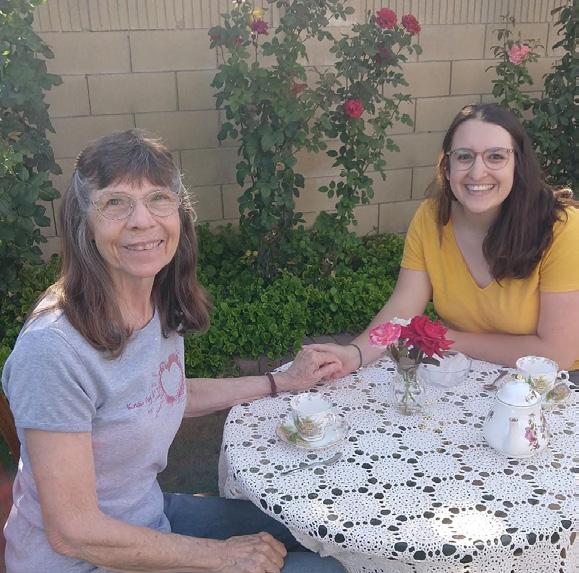
Annual birthday tea parties with my grandma. My grandma and I share a very close birthday—only one day apart. Since I was two years old, we celebrated our birthdays by having a tea party together. I think we have only missed one year!
WHAT IS YOUR FAVORITE VACATION DESTINATION?
Truly, my favorite vacation is anywhere I can explore a garden. I end up visiting botanical or formal gardens wherever I travel. Some of my favorites have been: Butchart Gardens, Entebbe Botanical Gardens, Filoli, Jerusalem Botanical Gardens, The Huntington, Wrigley Botanic Gardens, and Mendocino Botanical Gardens. I pull from all of these influences to shape my garden at home.
1385 Ridgewood Drive
Chico, CA 95973