IN THIS ISSUE:
TAKIN’ CARE OF BUSINESS: NEW MARKETS ARE NOT JUST AN OPTION
Founder and Principal Brent Morrison defines what it means to launch into new markets and argues the value and necessity of being adaptable in the ever-changing marketplace.
THREE MORRISON CLIENTS AWARDED ORGANIC MARKET DEVELOPMENT GRANTS
Three Morrison clients have received funding for projects that address critical needs in the nation’s growing organic industry.
MORRISON SNAPSHOTS
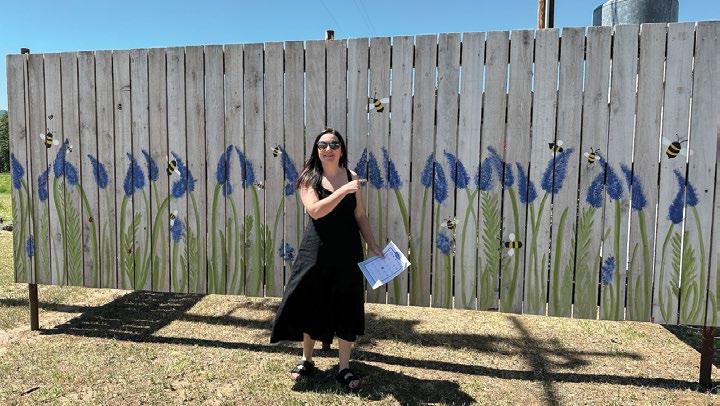
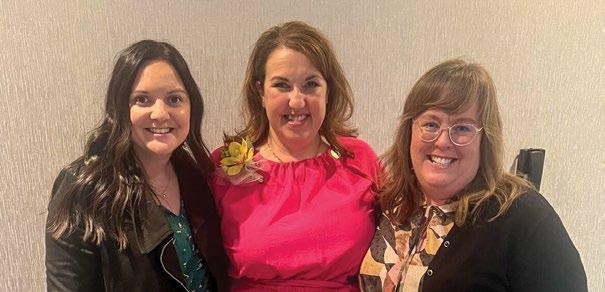
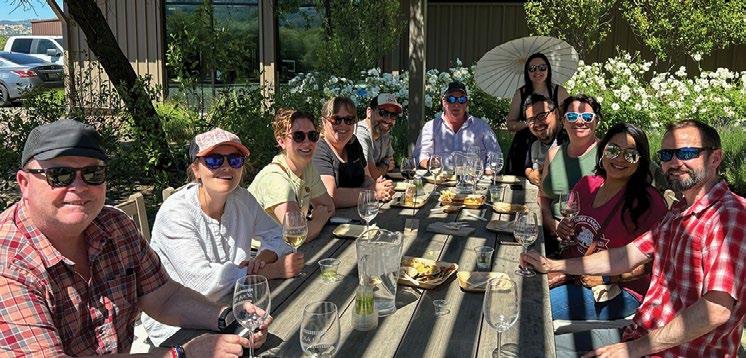
The Morrison Team has been on the go. Catch up on our latest adventures!
CLIENT CORNER
There is always something new happening, so check out the latest news from our clients.
FARMERS’ RICE COOPERATIVE: MARKETING CALIFORNIA-GROWN RICE FOR 80 YEARS
Established in 1944, Farmers’ Rice Cooperative (Farmers’ Rice) is a rice marketing co-op that supplies domestic and international food distributors, retailers, exporters, and manufacturers with premium quality California rice grown on its grower-owners’ farms. With a vertically-integrated approach, Farmers' Rice’s services encompass the entire farm to market process, including transporting, drying, storing, milling, packaging, and selling California-grown rice to buyers with all proceeds flowing to its growerowners. To accomplish this, Farmers' Rice owns and operates three rice mills and four drying and storage facilities throughout the Sacramento Valley, where most of its rice is grown.
Today, Farmers’ Rice is California’s largest rice marketing entity, representing nearly 25 percent of all rice marketed from California. More than half of this rice processed at Farmers’ Rice is marketed domestically and the remaining is supplied throughout the world, reaching up to 65 countries with California-grown rice products.
Still, of Farmers’ Rice’s 80 years in business, industry-wide challenges of recent years have been some of the most trying and taxing in its history. California’s relentless three-year drought from 20192022, which caused an estimated $2 billion of losses to the California agricultural industry as a whole (UC Merced), was particularly devastating to California rice farms. According to the National Drought Mitigation Center, 100 percent of California rice farms experienced D3 Extreme Drought to D4 Exceptional Drought (the most intense possible) during this time. Given the water-
intensive nature of rice production, severely limited water access translated to greatly reduced rice plantings, fallowed acres, and substantial financial losses to farmers.
Drought impacts directly and severely affected Farmers’ Rice’s growers resulting in two consecutive years of acute crop reductions. In 2021, California rice plantings decreased to 400,000 acres, a significant 20 percent below an average crop of 500,000 acres; and the following year, rice plantings were down by a staggering 50 percent with only 250,000 acres planted. Compounding this, drastic loss in rice supply across the state drove California rice prices up, making it some of the most expensive rice in the world. This created a timely opportunity for cheaper foreign imports to infiltrate the global rice market resulting in decreased demand and sales for California rice.
In response, Farmers’ Rice’s savvy team swiftly moved to secure the rice supply needed to meet the demands of its domestic markets and key export markets, strategically supplementing with rice purchased from outside of its membership as necessary. Together with these efforts and more favorable, precipitous weather conditions that came later in 2022, Farmers’ Rice was able to overcome seemingly insurmountable challenges, reporting the tremendous achievement of securing its highest final return to its grower-members in its history in its 2023 annual report.
Furthermore, Farmers’ Rice prudently focused investments in value-added processing infrastructure to drive greater
CONTINUED ON INSIDE RIGHT PANEL
TAKIN’ CARE OF BUSINESS
New markets are not just an option
One of the riskiest things a business can do is launch into new markets, a risk that may be second only to not launching into new markets. I’ve long been a believer that standing still is just waiting to get run over, yet you see the “If it’s not broke don’t fix it” mentality in many businesses, big and small.
The common alternative, “If it’s not broke, break it,” misses the point. I had an antique record player that was probably made in the 1920s or 1930s. Hand cranked, about the size of a small dresser, it played the old school records like it was brand new. It would probably be simple to make new ones just like it, but there just isn’t a lot of demand for that in a world where you can play any song you want on the phone in your pocket or simply say “Alexa, play ‘Takin’ Care of Business.’” There would be no point in breaking that beautiful old record player – nor in making and trying to sell new ones. And if you do try to sell them, you better get it on Amazon.
A better slogan might be “If it’s not broke, it’s obsolete. Or about to be.” In my 40+ year career I’ve seen the “latest, greatest” products and services come and go (anyone remember floppy discs?), along with the methods of producing, selling, and distributing them. I’ve also seen businesses that are slow to adapt, and pay the price.
WHAT IS A NEW MARKET?
In short, a new market is any potential opportunity for new sales and profitability. People can tend to think of new markets as being previously untargeted geographic areas or demographic groups, and it can be that. But it can also be innovative new products or services, more convenient delivery methods, targeted pricing, better packaging, or just about anything else that appeals to consumers enough to bring in business.
One of my favorite examples is Sunsweet Ones. Sunsweet Growers (my last employer and a Morrison client since Day 1) is the world’s leading marketer of dried fruit, and perhaps best known for its unique style of
pitted prunes. Getting prunes into the snack market was a challenge due to the sticky nature of the fruit and the way they are usually packaged. So Sunsweet came up with a way to individually wrap prunes so one can toss a handful into a pocket, purse, or backpack. They immediately had a hit on their hands and to my knowledge no one has been able to match it. And yes, you can get them at your local supermarket, the Sunsweet website, or on Amazon.
WHY SEEK NEW MARKETS?
There are many reasons to get into new markets. Here are a few:
1. Staying relevant. Consumer tastes and preferences change, they always have, and that’s not going to stop. If you don’t provide what people want, where they want it, delivered and packaged the way they want it, someone else will and you will lose the market. Innovation is a survival skill.
2. Product or service differentiation. Whatever you do has to stand out from the crowd in some way or there will be limited appeal. People need a reason to buy your product as opposed to others, and to buy it again. It could be the nature of the product (e.g., taste, quality, organic, gluten free), ease of use, unique packaging, delivery options, pricing, or anything else that will appeal to consumers. It may even be a need people didn’t know they had, like pre-mixed margaritas in a can.
3. Profitability. All the popular virtue signaling about purpose aside, a business won’t survive if it can’t make a sustainable profit. And don’t think that if it works today it will work tomorrow. A sustainable business must always be on the look for the next best thing.
4. Competitors. This may not be the best or most preemptive reason to consider new markets, but the possibility of competitors eating into your sales and profitability can be a wakeup call. The best advice is not to fall asleep in the first place.
1. Survival. This should probably be number 1. One of the most telling examples of this is Eastman Kodak Company. Kodak pretty much owned the camera and film business until it was decimated by its reluctance to embrace digital photography. In short, they were afraid to cannibalize their core camera and film business; bad call, because it didn’t stop anyone else. And here’s the kicker: a Kodak engineer actually invented the digital camera in 1975 but the company didn’t introduce its own digital camera for 20 years. It wasn’t a fear of new technology; it was a fear of messing with a “successful” business. The problem is that if you don’t mess with it, someone else will.
WHY NOT JUST STAY THE SAME?
By my observation, some of the most common reasons for not pursuing new markets are:
1. Fear. One may not describe it that way, but some folks are just leery of change. It may be a version of the “If it’s not broke” theory, but it is often just a real adversity to change. This can be a hard one to overcome, but key decision makers and project participants have to understand that change is coming with or without them.
2. Cost. The desired change may be (or perhaps just be seen as) too pricey. In fact, some new market efforts may be more than a company can afford but you still have to stay relevant and differentiate yourself. Find another way to do the desired project or find a different one, but if all you can do is stand still you may want to consider selling your operations while they still have value.
3. Apathy. This can range from “Everything is working fine as it is” to “We’ve got other things to do,” but it is critical to make looking down the road and keeping an eye out for new markets a priority. If you don’t stay on top of things you can be sure someone else will.
This does not mean you should pursue every option, but you should be alert for opportunities and be willing to assess them.
HOW?
There is no one answer to this, in part because there are so many possibilities for new sales and profitability as described above. But here are a few points to keep in mind.
1. What appeals to your target consumers? This is step 1. You may have a great idea but your consumer has to think so too. Your target may be the same consumers you have now (e.g., new flavor options for a current food product) or a different group altogether (e.g., a new geographic region or a product or service that is significantly different than your current offerings). Think it through, putting yourself in the place of the consumer. If you have a complaint line or a product/service support center, check with them. “Problems” can be an inspiration for improvements, and even new market opportunities.
2. Research, research, research. Explore every aspect of a potential new market. It usually starts with the potential for demand but should include manufacturing, marketing, distribution, pricing, packaging, current and potential competitors, profitability, and everything else required to get the full picture. You may be able to do much of this internally, but don’t be bashful about getting outside help. Many of our clients use Circana (formerly IRI) or similar organizations for general market intelligence. Organizations like Risk Management Association can provide financial statistics of similar companies by NAICS code. There are many consultants and other resources for the various aspects of a project; don’t be bashful about reaching outside in critical areas in which you have little internal expertise.
3. Involve all of your business functions. It is a common mistake to turn over new market assessment to one function within the company. If it is primarily a marketing project (e.g., marketing
existing products to new demographic groups), it may get little input from operations, finance, etc. If it is the development of a new product, it might be turned over primarily to operations. That’s fine to a point, but it’s a rare new market project that shouldn’t involve input from multiple functions within the organization. I joke that if a yogurt company offers 47 flavors in 16 sizes, with granola at the top or granola at the bottom, fruit at the top or fruit at the bottom, and seven packaging options, it is dominated by its marketing function. If it is all one gallon tubs of vanilla, it is dominated by operations or accounting. Look at new markets from all around and consider every angle.
4. Assess the risks. Though it may seem like a buzz kill, assess the likely risks. Some buzzes need to be killed, and Morrison feasibility studies always include a detailed risk assessment. Several years ago we looked at a potential new market introduction that was going to be focused largely on the packaging (this was not the Sunsweet Ones project). It turned out there were only two USDA approved sources in North America, one of which was in Canada that had only been in operation for 18 months. We were able to find approved sources in Europe which, while pricier, were at least available if necessary. Always involve all functions within the company, outside resources as needed, and a good lawyer before launching into new markets.
TAKIN’ CARE OF BUSINESS
As the song says, “I'll be takin’ care of business, every day. Takin’ care of business, every way.” The job isn’t over when you get into the new market. It’s a rare project that goes exactly as planned and it’s critical to monitor every aspect and make timely course changes as needed. The best marketing plan won’t work if production doesn’t. The best product won’t sell if distribution fails. And you likely want to be turning a profit. Morrison has led, coordinated, and performed research for new market ventures since our inception and can assist in planning, coordination, and oversight of projects, as well as performing feasibility studies (e.g., for financing or grant purposes), including detailed financial projections. We’d be happy to discuss any possible new market you may be considering, and how we might help.
ABOUT THE AUTHOR
Brent Morrison, the Founder and Principal of Morrison, brings over four decades of experience in executive and advisory roles across various industries. He oversees strategy, infrastructure, and client services at Morrison, specializing in business planning, strategy, management, and financial analysis.
value for its California-grown rice. Farmers’ Rice particularly focused its efforts on developing higher-value uses for “brokens” (rice broken in the milling process) through repurposing brokens into rice flour and extruded rice products (such as puffs for cereals, snacks and other uses, primarily made from brokens) – products highly popular in the rapidly growing gluten-free and health-conscious baking sector. These efforts were accelerated by Farmers’ Rice's acquisition of Pacific International Rice Mills (PIRMI) and its facilities in 2020, which allowed them to establish an extrusion division. As a result, thus far, Farmers’ Rice released its first rice flour products in 2022; extruded rice sales have increased 98 percent since the acquisition of PIRMI; and Farmers’ Rice launched its own “Exceedient Foods” brand to further expand its value-added product offerings as it continues to work on innovating new, value-added rice products.
It has been a great honor for Morrison to partner with Farmers’ Rice through our grant writing services, specifically through supporting a successful 2022 Value-Added Producer Grant application, which helped launch its California-grown rice flour products. We are tremendously proud to work with farmer cooperatives like Farmers’ Rice whose tireless efforts contribute to the flourishing of hundreds of growers across the state and the California rice industry as a whole.
THREE MORRISON CLIENTS AWARDED ORGANIC MARKET DEVELOPMENT GRANTS
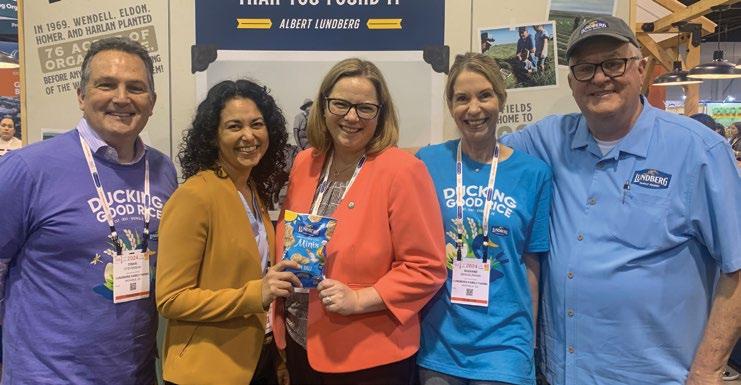
Three Morrison clients were among the 60 Organic Market Development Grant (OMDG) recipients receiving more than $40 million nationwide. U.S. Department of Agriculture Deputy Secretary Xochitl Torres Small and Under Secretary for Marketing and Regulatory Programs Jenny Lester Moffitt made the announcement on March 14, 2024 at the Natural Products Expo West in Anaheim.
“This round of awards through the Organic Market Development Grant program will address critical needs within the nation’s growing organic industry – funding projects that further our
RUMIANO CHEESE COMPANY, WILLOWS, CALIF.
Expanding Market Opportunities for Organic Dairy Producers in Northern CaliforniaThroughValue-AddedProcessing and Marketing
This project seeks to expand Rumiano’s in-house processing capacity to make and market innovative, high-demand organic dairy products in channels that offer a higher price premium over fluid milk. With OMDG grant and match funding, Rumiano plans to install a state-of-the-art processing line to upcycle organic cheese trim into value-added sauces, dips and spreads; acquiring additional equipment to create artisanal specialty cheese wheels inhouse; and expanding marketing, sales, and innovation to gain retail access and build consumer demand for the expanded volume produced through this project. This venture will benefit 27 Northern California pasturebased organic dairy producers during the project period.
goals of creating and expanding markets for producers,” said Under Secretary Moffitt. “The program is a key component of USDA’s Organic Transition Initiative and will increase value added agricultural opportunities for organic producers in rural America.”
Morrison is proud to have worked with these extraordinary partners, who collectively will receive $7.5 million in USDA funding, nearly 20 percent of the federal grant funds awarded in this OMDG round:
LUNDBERG FAMILY FARMS, RICHVALE, CALIFORNIA
Expanding the United States Organic Rice Market by Investing in Production, Processing, and Marketing Infrastructure
Lundberg Family Farms will overcome barriers to organic rice production expansion by launching a comprehensive effort to support current and transitioning organic producers in increasing organic rice production. Project activities include grower outreach and technology adaptation, expanding processing capacity to create more and better markets for organic producers, and executing marketing and promotional activities that will help to build commercial markets for US organic rice products.
GRANGE
COOPERATIVE SUPPLY ASSOCIATION, WHITE CITY, OREGON
Expanding Processing and Marketing Capacity for Organic Grain for Livestock Feed
U.S. imports of grain feed have steadily increased over the past decade, growing from 40% in the 2011/2012 crop year to 60% in the 2021/2022 crop year (The Organic Center). This is primarily due to the major barriers that exist to producing, processing, and marketing organic grain feed, namely higher costs of production and lack of processing and marketing infrastructure. To meet current U.S. consumer demand and grow opportunities to build the U.S. organic grain feed market, Grange Co-op will expand its processing capacity to create more and better markets for organic producers, and execute marketing and promotional activities that will help to build commercial markets for U.S. organic grain feed products.
1385 Ridgewood Drive Chico, CA 95973
CORNER CLIENT
The Morrison Client Corner is a regular feature of our newsletter. Here, you’ll find updates on what a number of our clients are up to, their achievements and milestones, and the generally great things happening in their companies or organizations.
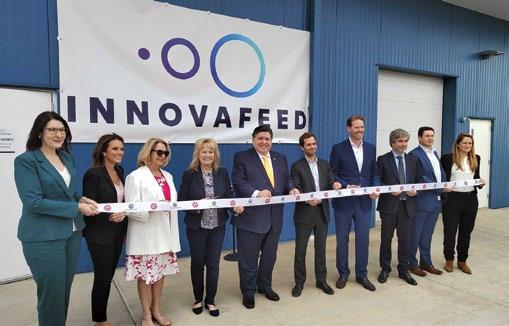
INNOVAFEED INAUGURATES NORTH AMERICAN INSECT INNOVATION CENTER
French AgTech firm Innovafeed inaugurated its North American Insect Innovation Center in Decatur, Illinois on April 18, 2024. Co-located with the world’s largest corn processing wet mill, the center will transform corn byproducts and waste energy into highquality insect ingredients for pet and animal feed protein and agricultural fertilizer. Founded in 2016, Innovafeed also operates two industrial insect plants in northern France that utilize starch and grain by-products as its feedstock for Hermetia Illucens (black soldier fly). At full capacity, Innovafeed’s Decatur plant will be the world’s largest insect production facility. Innovafeed received the Most Innovative Company Award in 2024 from the prestigious Fast Company Prize.
If you’re a client of ours, we’d love to stay up to date with what is going on within your organization and invite you to share your highlights in this space. Feel free to send any press releases, newsletters, or happenings to Hana Dill at hdill@morrisonco.net.
MOONEY FARMS UNVEILS NEW VINAIGRETTES
Chico-based Mooney Farms introduced two new vinaigrettes to its Bella Sun Luci Italian Kitchen Line: Meyer Lemon and Champagne Vinaigrette. Made with 100 percent olive oil, these new flavors join Mooney Farms’ existing line of California Orange, Sun Dried Tomatoes, and Aged Balsamic Vinaigrette. Mooney Farms was founded in Chico in 1987 and is dedicated to producing highquality Mediterranean-inspired products. Mooney Farms offers a diverse range of gourmet items under its Bella Sun Luci brand, including sun dried tomatoes in premium oil, sauces, spreads, and salad dressings. Morrison is proud to have worked with Mooney Farms on the Value-Added Producer Grant that helped to launch the vinaigrette line.
DEGROOT APPOINTED TO NATIONAL POTATO PROMOTION BOARD
Adam DeGroot, co-owner of DeGroot’s Vegetable Farms in St. Anne, Illinois, was appointed to the National Potato Promotion Board by the U.S. Department of Agriculture. DeGroot, who will serve a three-year term, is the only member of the 82-person board from Illinois. The National Potato Promotion Board, also known as Potatoes USA, maintains and expands existing markets and develops new markets for potatoes and potato products. It is funded by a 3 cent per hundredweight (cwt.) assessment on potatoes both produced in and imported to the United States. DeGroot’s Vegetable Farms is a fourth generation diversified vegetable producer located 60 miles south of Chicago that ships vegetable commodities across North America.