SAY CHEESE!
DEVELOPING AND SUSTAINING AN ENGAGED AND HEALTHY WORKPLACE CULTURE

People Solutions Manager Jeff Boian discusses the importance of workplace culture amid changing office environments.
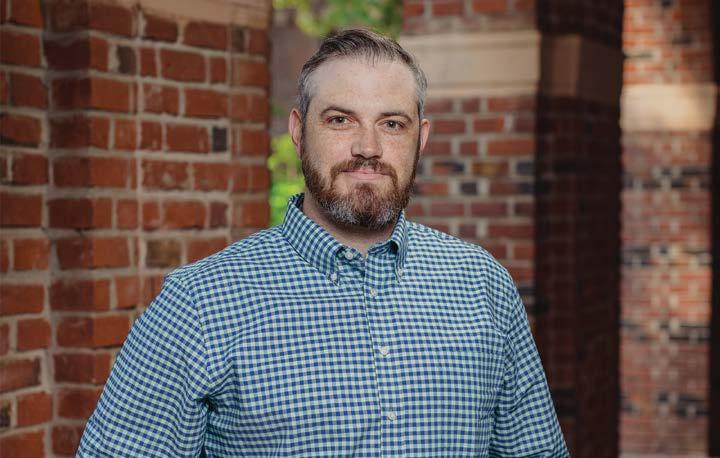
GETTING TO KNOW JAMISSON PARKER
Learn more about Morrison consultant Jamisson Parker.
MORRISON SNAPSHOTS
The Morrison team has been keeping busy – and having fun doing it! Check out our highlights to see what we’re up to.
CLIENT CORNER
There is always something new going on, so get caught up with our latest client news.
If you like cheese (and come on, who doesn’t?), Rumiano Cheese is a must-have for the connoisseur and everyday consumer alike. Offering premium Gouda, Mozzarella, Havarti, Cheddar, Monterey Jack, Pepper Jack, and more, Rumiano has produced top quality, innovative products for more than 100 years.
Brothers Fred, John, and Richard Rumiano immigrated to the United States from Italy in the early 1900s. After working jobs in gold mines, shipyards, and the liquor industry, they settled near Willows, California in 1919 and purchased a local dairy operation. Originally producing just milk, their dairy operation evolved to include butter and eventually cheese.
After the end of World War I, Italian hard cheeses became largely unavailable, creating a need in both the Italian community and with other consumers. Focusing on local markets and the large Italian community in the San Francisco Bay area, the Rumiano brothers introduced Monterey Dry Jack Cheese, which became an instant hit. Once known as “the poor man’s Parmesan,” Rumiano’s Dry Jack Cheese is made from high-quality milk and aged in cellars built specifically for aging in Willows, California for four to eight months. It still has a following today, a century later.
Constant experimentation, development of new processes and varieties, and investment in equipment and distribution led to ongoing growth of the Rumiano brand. Rumiano’s support of the war effort during World War II spurred additional growth; their processed cheese became

a staple in K-rations (individually packed daily meal rations) for American troops.
In the 1950s and 1960s, second generation manager Ray Rumiano focused on new markets outside of California as well as overseas Asian markets. The company produced pasteurized processed cheese in Willows, and topped off the 1960s when Apollo 11 astronauts Neil Armstrong, Michael Collins, and Edwin Aldrin were treated with omelets made with Rumiano cheese for their first breakfast while quarantined after man’s first landing on the moon.
After the passing of Ray Rumiano, his sons Baird and John assumed leadership of the company, eventually opening up new markets and expanding capacity in both manufacturing and packaging. They became leaders in bringing cheese from across the U.S. and Europe to support the West Coast’s growing population.
Today, cheese production is accomplished in Crescent City, California (hometown of Morrison Managing Principal Toni Scott), where Rumiano employs about 35 people. About 160 personnel are based in the Willows facility, the company’s headquarters for the sales and cheese aging programs and where the cheese is cut, packaged, and distributed. The Willows plant is in a strategically important location for distribution, being nearly in the middle between Portland and Los Angeles, with close proximity to Reno and San Francisco. The Willows plant was significantly expanded in 2021 to increase the company’s overall capacity and to eventually double its packing capabilities.
IN THIS ISSUE: WWW.MORRISONCO.NET NEWSLETTER | SUMMER 2023
CONTINUED ON INSIDE RIGHT PANEL
DEVELOPING AND SUSTAINING AN ENGAGED AND HEALTHY WORKPLACE CULTURE IN A FRACTURED WORLD
“Welcome to the beginning of the end of the workplace as we know it,” Gustavo Razzetti quipped in his book, Remote NotDistant. “Normal is gone. The culture that got you here won’t get you there.”
Razzetti is correct – the 2023 workplace is almost entirely different than the 2019 workplace. Wedged in between these years, as we all know, was a lifealtering – really, world-altering – Global Pandemic. Depending on who you talk with, you will hear a number of different descriptions related to the current state of the world. Some will tell you we are now in a post-pandemic world, while others who recently contracted COVID-19 might say that we’ve never fully left the pandemic state. No one, however, will argue the fact that the COVID-19 pandemic was disruptive and caused all sorts of change in our personal and our professional lives.
One of the biggest, most significant changes in the lives of professionals, as Razzetti said, is the current state of the workplace. The office still exists – and likely always will – but the relationship that employees have with the office has been forever altered. With the change to this relationship comes big changes to the development of workplace culture and the ability to sustain a workplace where people are engaged, connected, and are ultimately thriving in their work, leading to increased productivity and overall success.
Famed management guru and scholar Peter F. Drucker once said “culture eats strategy for breakfast.” This quote will always play well to corporate audiences and looks good printed on a coffee cup, but what does it actually mean? Should organizations focus solely on their company culture over their strategy? Absolutely not. The intentional development and work to sustain a
healthy company culture should be an integral part of the organization’s strategy.
Ready wrote, “Funny thing, culture. We rarely pay attention to it when things are going well. Far too often, we take it
According to a recent study conducted by Gallup, approximately 8% of the prepandemic workforce was exclusively remote; that number shot up to 39% in February 2022. While the percentage of fully remote employees has settled back down to what is anticipated to be 22%, almost one-third of employees would prefer that their work be conducted exclusively remotely. What’s more, nearly 60% of workers prefer to have some sort of hybrid working situation, while only 9% prefer to be completely in office.
This is a big wake-up call for employers in all industries. Clearly, some work is not able to be conducted via a remote or hybrid situation, but for work that can be conducted remotely, flexibility is now the preferred working situation.
There are a number of new terms used to describe the current state of our work world. Some call it remote-first, some call it hybrid-first, some might call it fractured or, worse, broken. For some organizations, the latter word may be the sentiment regarding the current state of the organization in a postpandemic world. While virtual meetups and messaging tools (i.e., Microsoft Teams, Slack, etc.) are helpful in keeping individuals connected, they will never quite replace the in-person experience.
In a recent article from MIT’s Sloan School of Management, Author Douglas
for granted. It’s just there.” Well, what happens when it’s not just there? Has your organization focused enough on the strategy of developing a workplace culture that not only survives, but could even thrive in our current remote-first, hybrid-first, disjointed work world?
What happens when your employees, your colleagues, your work friends aren’t just there? This question is especially important in light of Gallup’s statement that “Your organization’s culture has a direct, measurable impact on performance.”
In the midst of what is becoming a major workplace reset – an overhaul, of sorts – organizations are being presented with an opportunity to re-evaluate their culture. This includes why they do what they do and how the organization shows up when providing the services or goods they sell.
In 2021, Gallup published a book titled “Wellbeing at Work: How to Build Resilient and Thriving Teams.” The content of the book was (and is) incredibly relevant and prescient as its release came as the world was starting to re-open and everyone was trying to figure out how to once again carry on as normal (what’s normal, anyway?).
The authors of the book, Jim Clifton and Jim Harter, wrote, “In 2020, organizational culture saw historic
“
Has your organization focused enough on the strategy of developing a workplace culture that not only survives, but could even thrive in our current remote-first, hybrid-first, disjointed work world?
threats.” They go on to write, During the health and economic crisis of 2020, meeting the organizational cultural requirement that “serves the person and society as well as the shareholder” became even more urgent.
Clifton and Harter argue that before you can build a thriving culture you must first make every effort to avoid the following four risks: not looking out, and caring, for employee mental health; lacking clarity and purpose; becoming overly reliant on policies, programs, and perks; and having poorly skilled managers.
Consider these four major risks and how they might apply to the culture of your own organization – especially when in the midst and the aftermath of the pandemic. Consider how things were going while everyone was in person; it is probably safe to assume that the pandemic only amplified many of these already existing challenges. Now, consider the reality of having to address these challenges in the aforementioned reality of the hybridfirst, disjointed working world. In the face of these risks – whether in-person or virtual – how can an organization build not just a healthy culture, but a thriving one, prepared for the additional upheaval and challenges that are inevitably coming? Authors Clifton and Harter share, according to
a recent Gallup study, the four things employees need most from their leaders:

• Hope – Is there a clear plan for the future?
• Stability – Am I well-prepared to do my work?
• Trust – Does my manager keep me informed?
• Compassion – Does my organization care about my wellbeing?
If followers get these four things from their leaders, they see it as a signal that life will be okay. That their life will be okay whether they’re in-person or virtual; connected or disjointed; present or distant. They’ll be okay even in the face of uncertainty and constant change.
There are few constants in life; change is one of them. Change will always be with us. Change can be hard, but it is often necessary. How are you strategically planning for a future full of change? What are you doing to create and maintain a thriving organizational culture that leads to higher levels of performance and success?
Razzetti writes, “Reset is not about getting rid of everything and starting from scratch. It’s about leveraging what worked in the past and adopting new behaviors as needed.” Now is the time
to move from a culture by chance to a culture by design and away from a onesize-fits-all approach to one of flexibility.
Sociologist and author Tracy Bowers summed it up perfectly for Forbes when she wrote, “Culture has always been a challenge to strengthen and sustain, but with hybrid work models, the level of difficulty will be increased many-fold. It won’t be easy, but it will be worth it.” As the saying goes, ‘anything worth doing is worth doing well.’ Working to build a thriving workplace culture is certainly something that will take work – a lot of purposeful, strategic work – but it will be worth it in the end. While the level of difficulty may increase many-fold, the success of a healthy, thriving, flexible workplace culture will increase all the more and will carry your organization into what will hopefully be a healthy, happy, and thriving future.
ABOUT THE AUTHOR
Jeff Boian is a manager at Morrison working in our People Solutions practice. To get in touch with Jeff about your company culture or other Morrison People Solutions services, reach out to him by email at jboian@morrisonco.net or by phone at (530) 809-4679.
Rumiano is committed to sustainability in every sense. In addition to using all of the components of the milk it processes, the company strives to be sustainable in every aspect of production. Their goal is to achieve carbon net-neutrality by 2030, leaning into regenerative agriculture practices on the farming level and optimizing reduction of greenhouse gasses and carbon. The milk used in Rumiano cheese is produced by 26 family farms in Humboldt and Del Norte counties, all within a 100-mile radius of the Crescent City production facility. This limits the use of fossil fuels and reduces the carbon dioxide footprint from transportation.
The dairies supplying milk to Rumiano go the extra mile for grass-fed milk production. The mild Northwestern coast of California provides prime weather for open grazing
and pasture time. Year-round access to pastures and native growing coastal grasses are imperative to the company’s standards for grass-fed feeding. While not often necessary, silage (forage grass that is fermented to the point of acidification to preserve the benefits of fresh forage) and haylage (forage grass chopped and packed with minimal drying) supplement pasture grazing. Open pasture time and native grazing allow the cows to roam freely and benefits both the animals and consumers by helping create healthy and humane dairy products. All Rumiano dairy producers are American Humane Certified, certifying that they are both sustainably producing milk and humanely treating the animals.
Rumiano cheese is 100% organic, with the Rumiano Organic brand fully non-
GMO. Among their organic products are dry Monterey Jack, Cheddar, and Peppato. Rumiano’s organic cheese was the first cheese in the world to be listed with the NonGMO Project Verification from the 501(c)3 “Non-GMO Project,” which is dedicated to building a non-GMO food supply.
Today, Rumiano continues its deep commitment to healthy products, care for the land, and animal welfare. Rumiano organic cheese is available in all 50 states.
Morrison has been honored to serve Rumiano within all three of our business lines through Business & Accounting Advisory Services, Executive Recruiting, and Grant Writing. We are always honored to work alongside innovative family-owned companies like Rumiano Cheese Company.
MORRISON SNAPSH TS
MORRISON’S ANNUAL COMPANY BBQ!
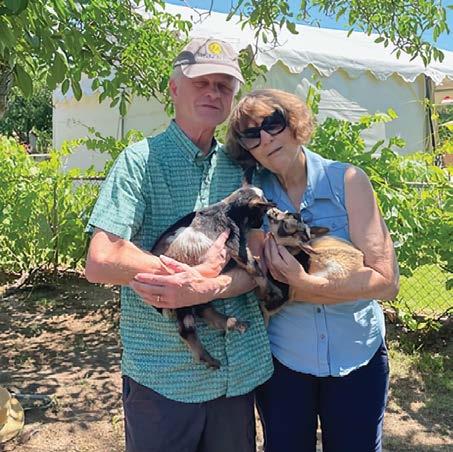
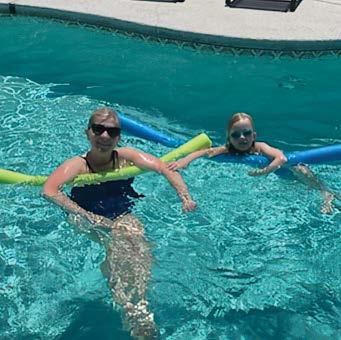
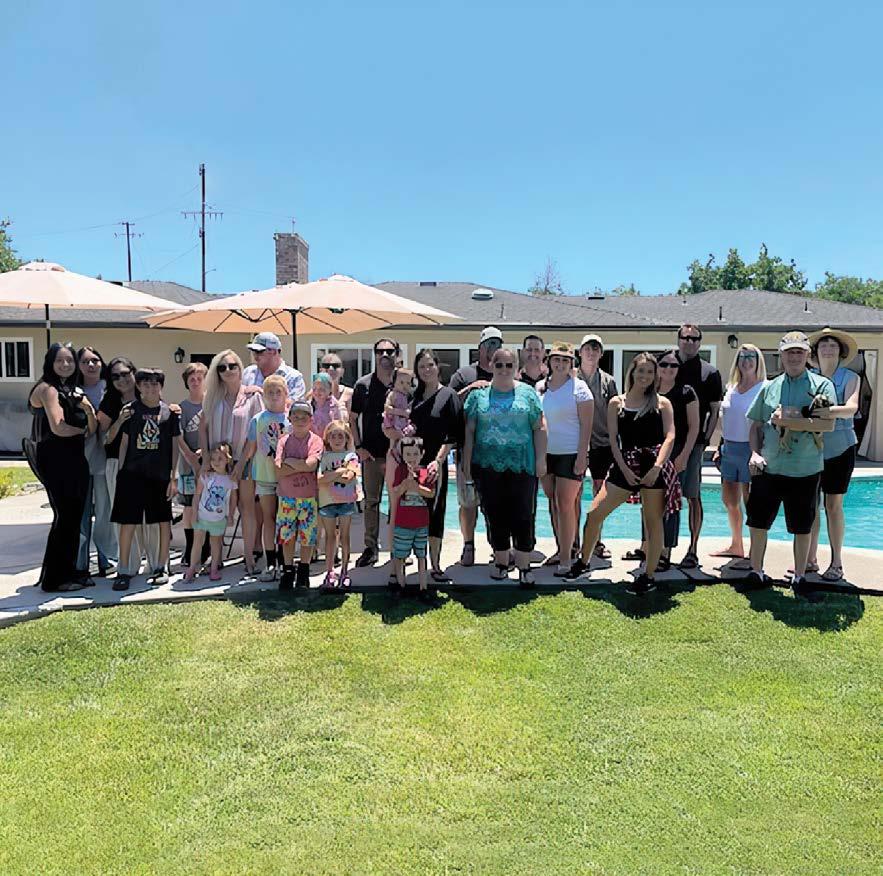
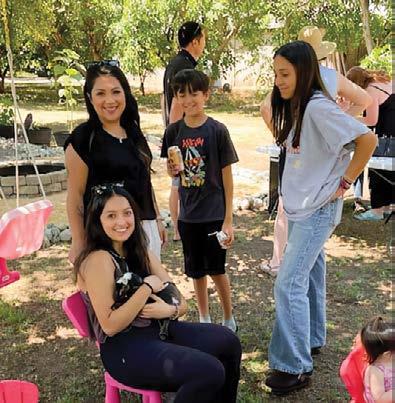
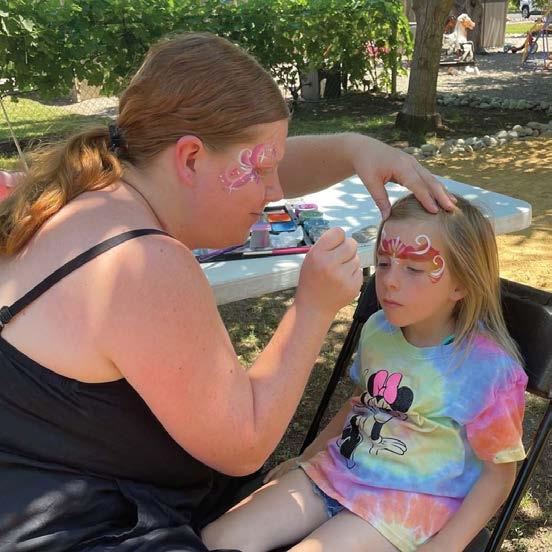
Our annual Summer BBQ is one of our favorite events of the year! The Morrison team enjoyed spending time with one another and their families with pool fun, face painting, games, a petting zoo, and plenty of delicious food from Garibaldi’s.
WORK HARD, PLAY HARD
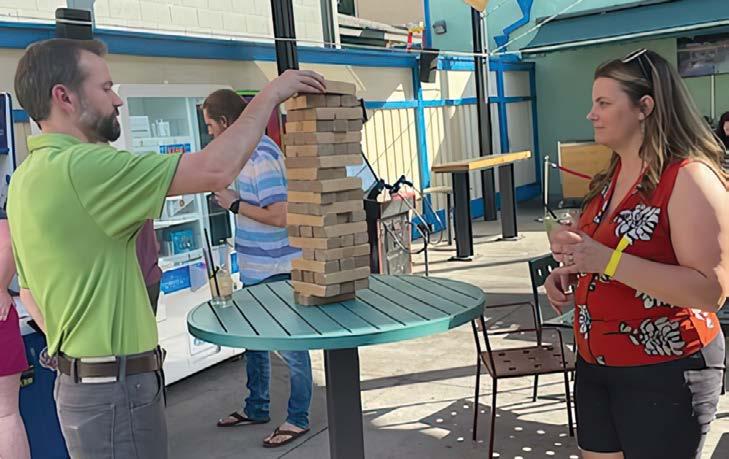
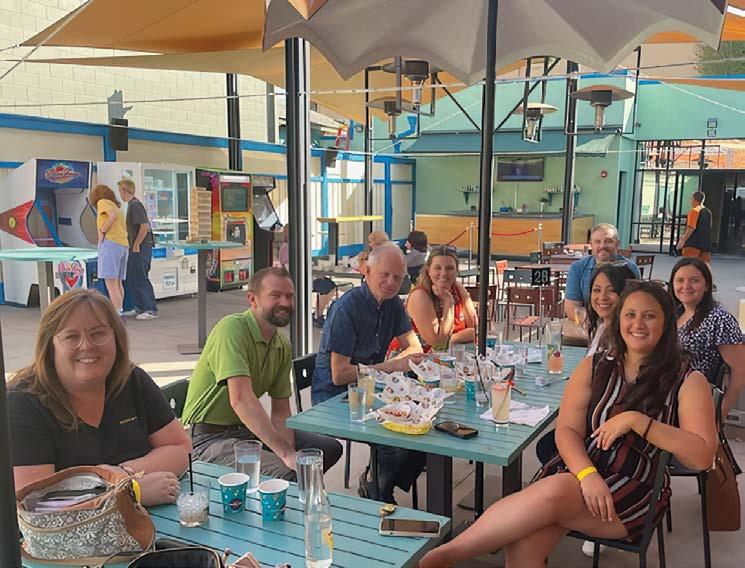
The Morrison team headed to the new Chico Coin-Op to celebrate our May and June birthday babies! An afternoon of fun was had with arcade games, giant Jenga, appetizers, and drinks. (The Princess Peach drink, corn dog bites, and fried oreos were huge hits among the team!) Happy birthday to Tim, Susanna, Mayra, Daniel, Ann, Justin, and Michelle!
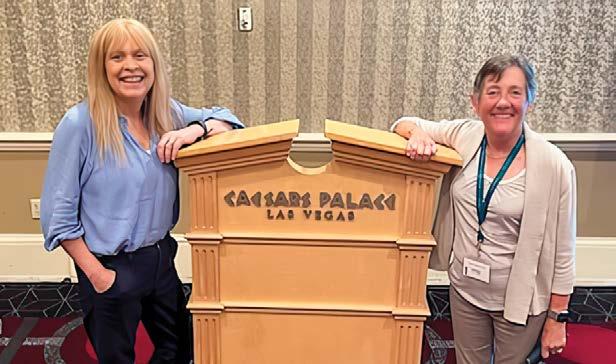
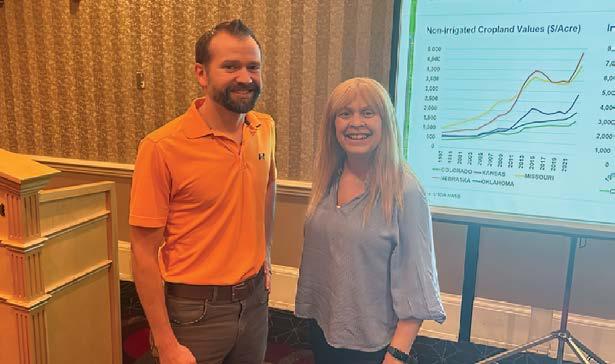
NSAC FAR WESTERN CONFERENCE
Principal Ana Klein and Business & Accounting Advisory Services
Manager Tim Peters attended the annual NSAC Far Western Conference hosted at Caesar’s Palace Hotel in Las Vegas. Ana was a guest speaker at the event, speaking on Organizational Restructure and Finance Optimization. The conference covered a variety of topics presented by multiple members of the finance and accounting industry.
SAY CHEESE, CONTINUED
Ana Klein & longtime friend of Morrison, Teree Castanias
Tim Peters & Ana Klein
GETTING TO KNOW
JAMISSON PARKER
Q&A WITH JAMISSON
WHAT DO YOU LOOK FORWARD TO THE MOST IN THE FUTURE?
Growing old with my best friend, my wife. We are celebrating ten years of marriage this year and look forward to many more to come.
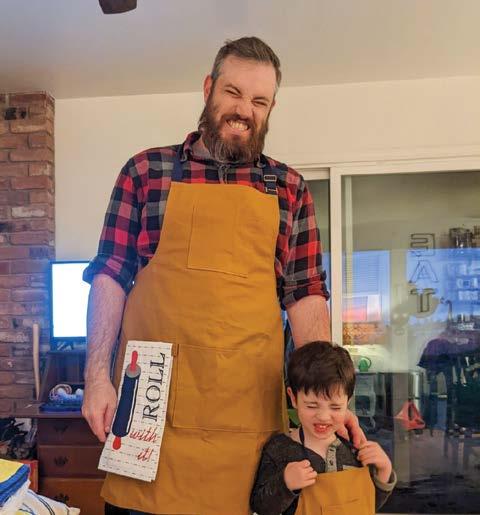
WHAT MOTIVATES YOU TO WORK HARD? My children. I want to instill in them the meaning and satisfaction of hard work. The lesson I want them to learn is that it is more rewarding to work hard and earn something than for it to just be given to you.
WHAT MAKES YOU LAUGH THE MOST?
A good dad joke. Especially when the punchline is “a parent.”
Jamisson Parker serves Morrison clients in areas of grant writing, grant administration, and business and accounting advisory services. He brings his skills and experience in accounting and auditing to advise clients and effectively serve those seeking competitive grant funding and administering grant funded projects through the United States Department of Agriculture, California Department of Food and Agriculture, California Energy Commission, and other granting agencies.
Jamisson brings over seven years of governmental accounting experience, with an emphasis in grants. Prior to joining the Morrison team, he worked as an accountant for Chico
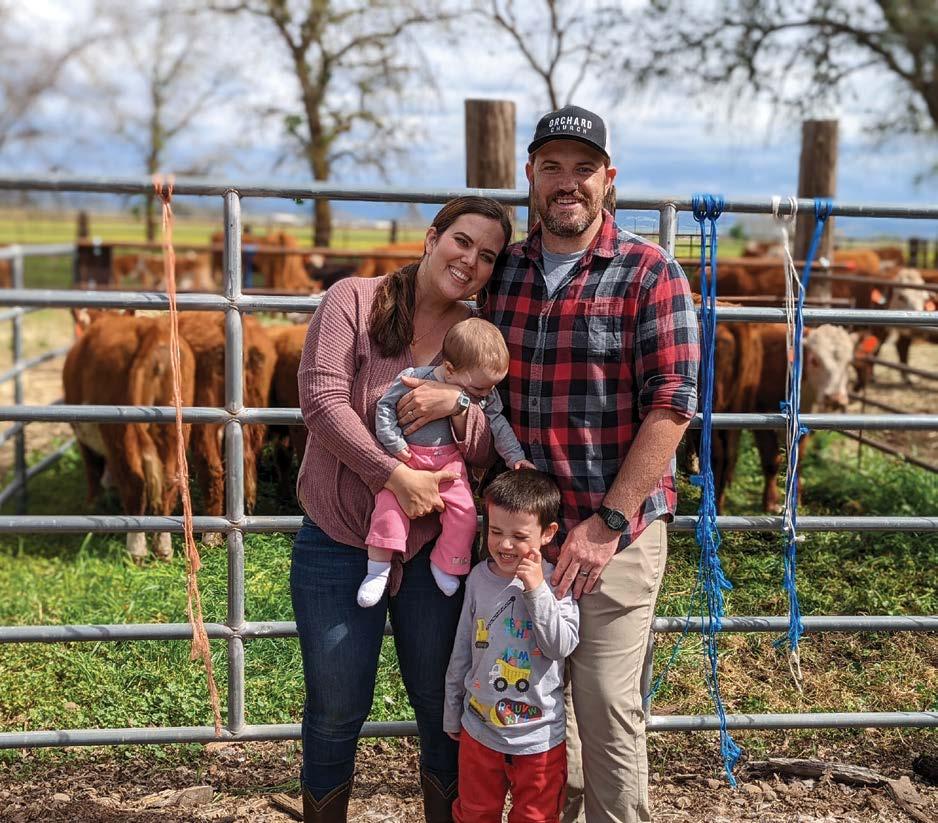
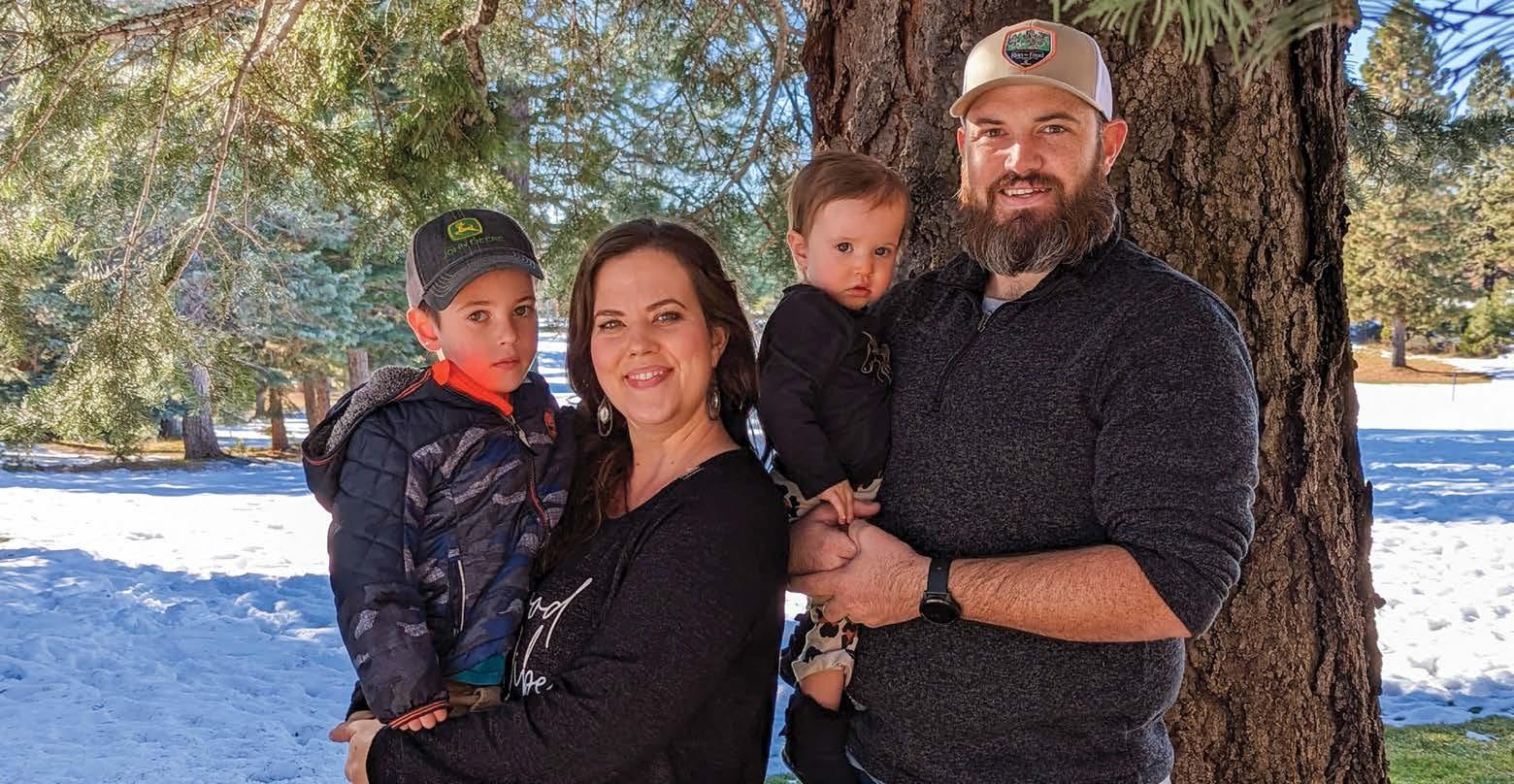
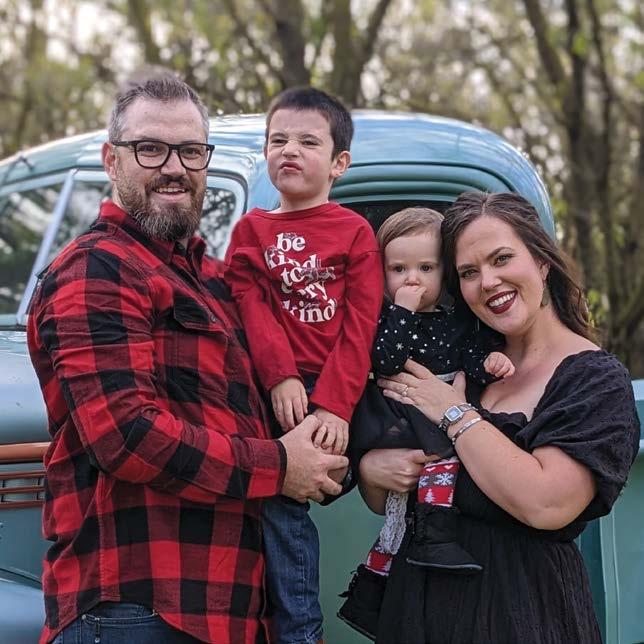
Unified School District. In that role he assisted with budget preparation, oversight of the district’s finances, and grant administration of federal, state, and local grants. Prior to that role, he worked for California State Parks as an Off-Highway Vehicle (OHV) grants auditor performing program audits and leading educational workshops for governmental and non-profit organizations.
Jamisson is a graduate of California State University, Chico, where he earned a degree in business administration with an option in accounting. He also holds two associates degrees from Butte Community College in business administration and social and behavioral studies.
WHAT ARE YOUR HOBBIES?
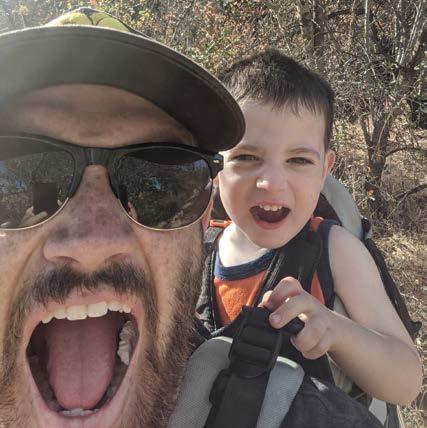
I like to collect hobbies. A few that I’m into right now are building and fixing things, learning how they work, and teaching my kids while I do so.
WHAT IS YOUR FAVORITE FAMILY TRADITION?
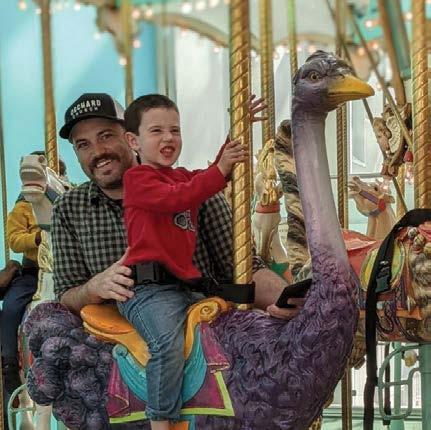
It is a Christmas tradition I took over from my grandpa. I’ll go to the Dollar Tree and buy an assortment of items, enough for each member of the family attending on Christmas Eve. I wrap the items and walk around letting each person pick one gift, going from youngest to oldest. They can trade gifts if they want, and once everyone agrees they are good with what they have, they unwrap the first present of the night. Simple enough, right?
Well… when I said assortment of items I really meant it. If they are lucky, it could be a “good” gift like a toy or candy. If they are unlucky, it would be something like a can of dog food, a Ghost pepper, or even a plunger. What I love about it is that after everyone opens their gifts, the room is filled with smiles and laughter, and one time tears because the youngest didn’t like his can of soup.
My grandpa passed in December of 2014, just before Christmas. To include and honor him in our celebration that year, I chose to surprise everyone with the random gifts and have kept that tradition going ever since.
DO YOU COLLECT ANYTHING?
Hobbies and $2 bills at the moment. It’s fun to see people react when you try to spend a $2 bill.
TEAM MEMBER PROFILE
1385 Ridgewood Drive
Chico, CA 95973
530-893-4764 • WWW.MORRISONCO.NET
BUSINESS & ACCOUNTING ADVISORY •
PEOPLE SOLUTIONS • FOLLOW
US

CORNER CLIENT
The Morrison Client Corner is a regular feature of our newsletter. Here, you’ll find updates on what a number of our clients are up to, their achievements and milestones, and the generally great things happening in their companies or organizations.
If you’re a client of ours, we’d love to stay up to date with what is going on within your organization and invite you to share your highlights in this space. Feel free to send any press releases, newsletters, or happenings to Susanna at ssteffen@morrisonco.net.
HEALTHY RURAL CALIFORNIA HELPS BRING DOCTORS TO BUTTE COUNTY

Healthy Rural California (HRC) is leading the effort to bring more doctors to the rural and underserved regions of Northern California. In February, HRC was accredited for a new Psychiatry Residency program. The first cohort of Psychiatry residents will matriculate their 4-year curriculum beginning in June 2024. This program will have 16 residents in Butte County by the 2027-28 academic year. As a nonprofit founded in early 2020, HRC is pleased to partner with Morrison to better organize their accounting for $5 million in grant awards plus financial modeling.
AMERICAN OLIVE OIL PRODUCERS ASSOCIATION RECEIVES $2M IN FUNDING

The Pollinator Habitat Program awarded a total of $12.25 million in grant funding to ten organizations, including the American Olive Oil Producers Association (AOOPA)! The program is an initiative of the California Department of Food and Agriculture’s Office of Environmental Farming and Innovation to help restore California’s pollinator habitat. As one of the key recipients of this award, AOOPA will seek to implement pollinator supporting practices on olive oil farms and will partner with California State University, Chico’s Center for Regenerative Agriculture and Resilient Systems to provide producer technical support for on-farm practice implementation.
MOOTERIC WINS $500,000 RESEARCH GRANT
Mooteric LLC received a $500,000 research grant from the California Department of Food and Agriculture (CDFA) through the California Livestock Methane Measurement, Mitigation and Thriving Environments Research Program (CLIM3ATE-RP). Mooteric’s project will include on-farm feeding trials to verify the methane-mitigating benefits of seaweed-based feed additives within regular feed rations of Central Valley dairy cows. This work will establish long-term economical supply chain development and conduct financial modeling to foster acceptability among California dairies to utilize seaweedbased feed additives. The Morrison Grants Team was proud to contribute to this project’s funding success.

WELCOME NEW CLIENTS
NEW WAVE BERRY
WWW.MORRISONCO.NET NEWSLETTER | SUMMER 2023 FIRST CLASS MAIL U.S. POSTAGE PAID CHICO, CA PERMIT NO.
