
DOI:10.1002/ffo2.182
DOI:10.1002/ffo2.182
1ResearchInstitute,UniversityoftheArts Helsinki,Helsinki,Finland
2OpenCampus,UniversityoftheArts Helsinki,Helsinki,Finland
Correspondence
KaiLehikoinen,ResearchInstitute,University oftheArtsHelsinki,Helsinki,Finland.
Email: kai.lehikoinen@uniarts.fi
Fundinginformation
EuropeanCommission'sErasmus+Knowledge Alliance
Abstract
Asamultidisciplinaryfield,futuresresearchborrowsapproachesfromdifferent disciplines.However,itoftenignoresthepotentialoftheartsonalargescale,even thoughtheartsembracecreativityandoftendepictandnarrateimaginedfutures. Thisarticleappliesacasestudyapproachtoreviewandcategorizeselectedarts‐basedapproachesandassesstheirpotential strengthsandlimitations forfutures workshopsinhigherartseducationcontext.Theapproachesweretriedextensively inArtSchoolFuturesLabs(15testlabsand12actuallabs)andasummerschoolin eightEuropeancountries.Threecaseexamplesarescrutinizedinmoredetailto illuminatetheiruseinthecocreationoffuturesimages.Oneartisticfuturesimageis discussedwithintheframeworksofWittgensteinianaspectperceptionand intertextuality,highlightingtheimportanceofinterpretationinunpackingthe complexmeaningsthatartisticfuturesimagesconvey.Finally,somerecommendationsaregiventosupportthesuccessfuluseofarts‐basedapproachesinfutures workshops.
KEYWORDS
ArtSchoolFuturesLab,arts‐based,cocreation,futuresimage,futuresworkshop,interpretation
Inrecentdecades,futuresworkshopmethodshavemultipliedand evolvedinmanydirections.Thistrendparallelsthesocialturninthe arts(Bishop, 2006),thegrowingadoptionofsociallyengagedarts practicesinnon‐artscontexts(e.g.,BerthoinAntal, 2013;Huss& Bos, 2022;Schiuma, 2011),andtheincreasingpopularityofarts‐basedresearchwithinqualitativeinquiryindisciplinessuchas anthropology,education,health,andpsychology(Wangetal., 2017). Duringthepastdecadeorso,scholarshaveexploredthepotentialof artisticthinking,arts‐basedapproaches,andcreativearts‐based researchforfuturesstudies(e.g.,Candy, 2010;Gannon& Naidoo, 2020;Lyon&Carabelli, 2016;Mullooy, 2022).However, integratingtheseapproachesintofuturesworkshopsremains relativelylimited,andresearchonarts‐basedapproachesinfutures studiesisstillscarce.Thisarticlepresentsourexperiencesand findingsfromapplyingselectedarts‐basedapproaches,investigated
andassessedaspartoftheFuturesArtSchoolTrends2045 abbreviatedasFAST45 project.1 Theidentifiedgapwasaddressed aswedesignedafuturesworkshopapproachtailoredspecificallyto higherartseducationinstitutions.
BuildinguponIversen's(2006)ideasoffuturesthinking methodologiesforeducation,theaimofthisstudyistwofold.First, weinvestigatehowfuturesworkshopscanderiveadvantagesfrom amalgamatingnonlinear,free‐flowing,andplayfuldivergentthinking fromtheartswiththesolution‐orientedrationalityofconvergent thinking.InlinewithIversen(2006),weproposethatfutures workshopscanfacilitateanexploratoryandcreativeprocess, combiningthestrengthsofboththinkingstyles.Thisperspective guidesourinterestinexperimentingwitharts‐basedapproachesin futuresworkshops.
Artisdiverse,andthereareincreasinglyvariousandconflicting perceptionsofartandtheartist(Gielen, 2015).Drawingfromthe philosophicalfoundationsinformedbyJohnDewey,Barendvan FuturesForesightSci.2024;6:e182. wileyonlinelibrary.com/journal/ffo2 ©2024JohnWiley&SonsLtd. | 1of13 https://doi.org/10.1002/ffo2.182
Heusden,LudwigWittgenstein,andDavidBest,ourperspectiveon art'sroleincreatingfuturesimagesemphasizesart'ssignificancein everydaylife,humanexperience,andsocialinteraction.We acknowledgethecontributionofcontemporarytheoristssuchas SuziGablikandJacquesRancièretotheexpandedunderstandingof artandtheusefulnessofthecriticalframeworkstheirtheories providetostudyvariousdimensionsofart‐basedapproaches.
Gablik's(1991)argumentsabouttheroleofartinfostering communitydialogandthetransformativepotentialofparticipatory andsociallyengagedartspracticestogetherwithRancière's(2004) explorationoftheintersectionofpoliticsandestheticsandhowart disruptsestablishedhierarchiesandchallengesdominantpower structureshavegreatrelevancefordiscussionsonarts‐basedworkin differentcontexts,includingfuturesthinking.However,inthisarticle, weaffirmtheenduringrelevanceofDeweyandWittgenstein's insightsforourresearchmethodologyanditswiderapplicationsin studyingarts‐basedapproachesindifferentcontexts.
Dewey's(1934/2005)conceptpositionsartasaprocessthat facilitatestheexpressionandorganizationofexperiences,fostering learningandunderstandingoftheworld.VanHeusden(2015) extendsthisviewbydefiningartasacognitiveactivitymaterializing lifeexperiencethroughvariousforms,promotingreflectiveimaginationwithoutcompromisingautonomy.Notably,artisticartifactsand performances,asweexperiencethem,evokethoughts,emotions, andbodilysensations,whicharesignificantlycontingentonsocial practicessuchaslanguageandculture(Best, 1986, 1992).
Here,Wittgenstein's(1953/2009)ideaofaspectperception helpsusunderstandthedynamicprocessofinterpretingfutures imagesinarts‐basedfuturesworkshops,whichconstitutesthe secondinterestofourstudy.Wittgensteinexplorestheideathat perceptioninvolvesmorethanjustthephysicalactofseeing(I perceivex);italsoencompassestheconceptualdimensionof recognizingorinterpretingwhatisseen(Iinterpretxashavinga particularmeaning).Hewrites, “Iobserveaface,andthensuddenly noticeitslikenesstoanother.Iseethatithasnotchanged;andyetI seeitdifferently.Icallthisexperience ‘noticinganaspect’” (Wittgenstein,1953/2009,§113,p.203).Exemplifyingaspect perception,heintroducestheclassicduck‐rabbitillusiontoshow thattheimagecanbeseenaseitheraduckorarabbit,highlighting thefluidityofperception.Ourperceptions,Wittgensteinclaims,are subjecttoshiftsinfluencedbyaspects “lightingup [inprocesses involving]halfvisualexperience,halfthought” (Wittgenstein,1953/ 2009,§140,p.207).
WefindthisWittgensteinianideaofaspectperceptionresonatingwithUmbertoEco'sconceptofthereader.Insemiotics,Eco (1979)emphasizesthereader'sactiveroleinconstructingmeaning fromatext.Heviewsatextasanopenwork,andthereaderplaysa crucialpartinitsinterpretation notasapassiverecipientoffixed meaningsimposedbytheauthor,butasanactiveagentengaging withthetext,bringingtheirownexperiences,culturalbackground, andinterpretationstothereadingprocess.Followingapoststructuralistthought,influencedbyDerrida's(1967/1976)ideathat language,discourse,andtextualityplayafundamentalroleinshaping
ourunderstandingofreality,interpretingartisticfuturesimagescan beseenasaformoftextualreading.Therefore,inthisarticle,weuse “reading” intandemwith “interpreting” aswediscussthemeaning‐makingofartisticfuturesimages.
Thus,thisarticleemploysadualfocusthatisintegraltoour research.Ononehand,wereportourexperimentationwitharts‐basedapproachesinfuturesworkshops,settingthescene(futures jump)andcreatingfuturesimages.Ontheotherhand,westriveto articulatetheprocessofinterpretationinreflectinguponthe cocreatedfuturesimageswithanintertextualapproach.Our objectiveistoassessandcategorizethevariousarts‐based approachesexperimentedwithinthecontextoftheFAST45project forfuturesworkshopapplications.However,wedonotintendto reportastrictcomparativestudyoftheusabilityoftheseapproaches butratherpointouttheirstrengthsandweaknesses.Thisassessment willconciselyreviewtheseapproachesanddelvedeeperintothe subjectwiththreespecificcaseexamples.Followingthat,wewill exploretheinterpretativedimensionofartisticfuturesimagesby scrutinizingoneofthecaseexamples afilmscene throughthe theoreticalframeworkofintertextuality,sheddinglightonthe interconnectednessoftextualinterpretationanditsrelevanceto futuresimages.Wewillarguethatwhileartisticallycreatedfutures imagesarerichinideas,theirfullpotentialforcontributingto,for example,scenario‐buildingbenefitsfromanuancedprocessof interpretation.First,however,wewillstartbycontextualizingour researchandintroducingitsmethodology.
Alignedwiththeaforementionedphilosophicalstance,ourperspectiveofarts‐basedapproachesinfuturesworkshopsembracesarts‐basedlearning(Nissley, 2010).Employingawiderangeofcreative andcriticalinquirytechniquesacrossvariouscontexts,includingarts‐basedresearch,organizationaldevelopment,socialeducation,and societalimpact(Boal, 1979;Pässilä, 2012;Schiuma, 2011;Wang etal., 2017),theseapproachesutilizearts‐basedthinking,creativity, andvariousartisticmediums forexample,film,literaryarts,music, performingarts,visualarts toexplore,express,interpret,anddepict complexresearchquestionsorconcepts.Throughcreative,sensory, andcollaborativeengagement,theyempowercommunitiesand enhanceobservationalabilities,creativethinking,andinnovation processesforindividualsandgroups(Lehikoinen&Siljamäki, 2023).
Forexample,theintegrationofartandeducationcanbefoundin initiativeslikeutopianpedagogyinsociology(Salmenniemi etal., 2024)andtheFuturesSchoolinFinnishbasiceducation (Lastenjanuortensäätiö, 2020).Moreover,artanditsdiverse approacheshavefoundextensiveapplicationinmakingvisibleor criticallyassessingthepresent,asseeninorganizationaldevelopment andbusinesscontexts(e.g.,BerthoinAntal&Strauß, 2013; Darsø, 2013;Pässilä, 2012;Schiuma, 2011).Theseapproacheshave alsosupportedsustainabilitytransitionsduringtheecologicalcrisis (e.g.,Huhmarniemi, 2023;Latvala‐Harvilahti, 2021).Notably,someof
theseexpressionshavetakentheformofperformances,as exemplifiedinworkslikeVähinäänin(2021)andSilentopia(2022).
Inorganizationaldevelopmentcontexts,MeisiekandBarry (2018)notethatmeaningfulinsights,evokedbyartisticexperiences thatare “truetotheformulatedproblem” (Meisiek&Barry, 2018, p.480),playacrucialroleineffectivearts‐basedlearning.This highlightstheroleofmeaning‐makingandinterpretationinset contexts(Weicketal., 2005)andcollaborativeapproacheswhere meaningsunfold “inaniterative,activeandintenseway,toenable participantstoforayintonewexperiences” (Flamandetal., 2022, p.18).AlongwiththeseideasandfollowingBest(1992),wefind reflectionpivotalforarts‐basedlearning,withmeaning‐making, occurringwithintherealmofinterpretation,unveilingqualitiesand meaningsthatareoftenabsentinimmediateartisticexperiences. Thisperspectivecompletesourviewonthemultifacetedrolesofart andarts‐basedlearninginshapingdiverseaspectsofhuman experienceandenvisioningpossiblefutures.
Buildingonthisperspective,ourexaminationofarts‐based approachesforfuturesworkshopsinthisarticleissituatedwithinthe contextofthesocialturninthearts,particularlyattheinterface betweenartisticinterventionsinorganizations,andsociallyengaged artspractices.Signifyingadeparturefromthemoretraditional conceptofartinthemodernera,thesocialturninthearts (Bishop, 2006)overrecentdecadesreflectsashifttowardssocial engagement,communityparticipation,andtransformativepractices incontemporaryart.Thistrendinvolvestheartsasacatalystfor collaborativereflectionandcocreation,andthestriveforsocial changebecominganintegralpartoftheartmakingprocess.For Helguera(2011),thedefiningfeatureofsociallyengagedartliesinits relianceonsocialinteractionasafundamentalaspectofitsexistence. Thisformofartprioritizescollaborationwithcommunities,fostering collectivereflectionandenvisioningmeaningsinspiredbycommunity themes.Sociallyengagedartspracticesrevolvearoundshared insightsandtransformativeendeavors,extendingbeyondtraditional artinstitutionstoinfluencesocialstructures.Applyingarts‐based learninginorganizationalandbusinesscontextsisoftenreferredto as “artisticinterventionsinorganizations” (BerthoinAntal, 2013). Theseinterventions,likearts‐basedlearningopportunitiesingeneral, canembodymultipleforms;theirdurationandtheuseofartistic domainsvary.However,theygenerallycontributewith “theiresthetic waysofknowinganddoing,ofengagingwithpeople,ideas,artefacts andspaces” (BerthoinAntal, 2013,p.8).Incontrasttothemodern individualisticartistconcept,rootedinliberalhumanism,socially engagedartsandartisticinterventionsredefinetheartist'sroleby emphasizingthefacilitationofcollaborativeprocessesoverindependentwork(Lehikoinen&Pässilä, 2016).
Webelievethatutilizingarts‐basedapproachesindesigning futuresworkshopsforhigherartseducationinstitutionsisbeneficial inmeetingthespecificneedsoftheseinstitutionstoenhancetheir futuresconsciousness.CurrentlynavigatingaturbulentVUCAworld, whichisvolatile,uncertain,complex,andambiguous(Bennett& Lemoine, 2014),highereducationinstitutionscansignificantlybenefit fromincreasedfuturesconsciousness(Lalotetal., 2020)in
consideringandtakingconcreteactionstowardpreferredfutures. Recognizingthisimperative,theFAST45projectwasinitiatedto specificallycatertotheneedsofhigherartseducationinstitutions. Theprojectencompassedexploringandinventoryingideasrelatedto thefuturesofhigherartseducationinstitutions,creatingresearch‐informedfuturescenarios,thedevelopmentofapedagogicalconcept foralearningplatform,andtheorganizationofadebateonpolicyand decisionactions.Throughthedevisedpracticalworkshopapproach ArtsSchoolFuturesLab weaimtoelevatetheirfuturesconsciousnessandequipthemtonavigatetheuncertaintiesofpossiblefutures (Lehikoinen&Tuittila, 2023).
Inthisstudy,weinvestigatedtheuseofarts‐basedapproachesin futuresworkshopsattheintersectionofarts‐basedresearchand futuresstudies.Inlinewiththedualfocusofourstudy,ourresearch questionsincluded:(1)Howcanarts‐basedapproachesbecategorized,andwhatistheassessmentoftheirusabilityinthecontextof futuresworkshops?(2)Whatinsightscanbegainedfromstudying theinterpretationofartisticfuturesimagesinthecontextofour researchfocus?
Weadoptedacasestudydesign(Merriam, 1998)toapproach ourresearchquestionsbytreatingarts‐basedapproachesinfutures workshopcontextsasdistinctentities.Withinthecasestudydesign, weemployedpurposivesampling(Merriam, 1998)togatherdata fromvarioussettings,including15testworkshops,12ArtsSchool FuturesLabs,andasummerschool,spanningeightEuropean countries.Theseactivitiesfocusedonenvisioningthefutureof higherartseducationandrelatedtopics,withparticipantsranging fromteachers,researchers,andstudentstoprofessionalartistsand representativesfromartsandculturalorganizations.Datacollection methodsincludedaliteraturereview,participantobservations, participantandfacilitatorsurveys,notes,creativeoutputs,and reflections.Theliteraturereviewcontributedtowardourtheoretical frameworkwithinthecasestudydesign.Anonlinesearchwas conductedusingGoogleScholarwithkeywords “art‐basedmethod,” “art‐basedlearning,”“sociallyengagedart” andtheirvariationsto identifypertinentliterature.Relevantliteraturewasalsosought throughextensivereadingandbyexaminingreferencescitedinthe identifiedtexts.
Inaddressingourfirstresearchquestion,weexploredand testedadiverserangeofarts‐basedapproaches,asdepictedin Figure 1.Thisexplorationaimedtoassesstheirusabilityinfutures workshopstailoredforparticipantsinhigherartseducation, encompassingbothstudentsandprofessionals.Toevaluate usability,weemployedathoroughapproach.Inadditiontoour observationsasworkshopfacilitators,weconductedanonline postworkshopsurveyforbothparticipantsandcofacilitators.Using aLikertscale(1 –5),wegaugedtheeffectivenessofthearts ‐based approachesininspiringparticipation,supportinggroupwork, facilitatingfocusonworkshopthemes,andaidinginthecreation
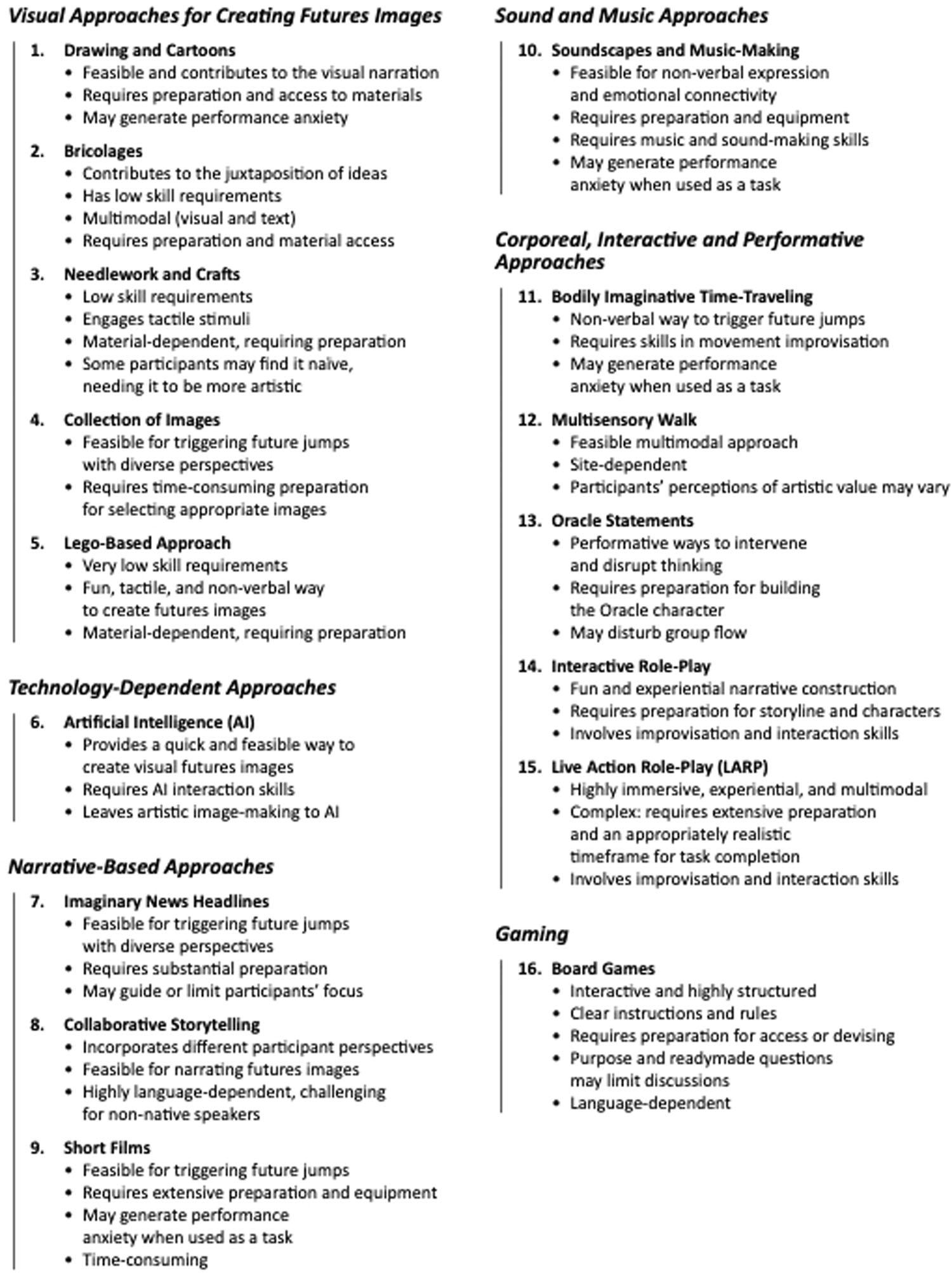
andpresentationoffuturesimagesandideas.Opencommentfields wereincludedtogatherinsightsintotheworkshopexperienceand receivesuggestionsforenhancingfutureworkshops.Inspiredby Byrne(2022),weemployedaninductivequalitativeapproachto extractexplicitandimplicitmeaningsfromthedata,consideringthe uniquenessofeacharts‐basedapproach.Weanalyzedeachdata sourceseparately,integratedfindingsthroughconstantcomparison (Millsetal., 2006),andalignedresultswithexistingliterature.The resultsofthisanalysis anapproximatecategorizationofdifferent arts ‐basedapproachesandtheassessmentoftheirusability are summedupinFigure 1 andfurtherarticulatedinthefollowing sectionofthisarticle.
Inaddressingoursecondresearchquestion exploringhow artisticfuturesimagesareinterpreted wedrewupontheWittgensteinianconceptofaspectseeing,emphasizingthepotentialfor multipleinterpretations.Ashighlightedintheintroduction,the illuminationofvariousaspectscanevokediverseinterpretationsin thereaderofafuturesimage.Expandingonthisnotionandadopting apoststructuralistperspective,weaimedtodelveintotheunderstandingofhowartisticfuturesimagesareinterpreted.Our methodologicalapproachtothisinquiryisvisuallydepictedin Figure 2,whereweillustratetheextensionofafuturesimage a filmsceneportrayinganartstudentwithanartchipimplantedinher brainforenhancedartisticskills beyonditsapparentboundaries
throughthelensofintertextuality(Allen, 2000;Frow, 1990; Kristeva, 1986).Thisillustrationdemonstrateshowourinterpretationsarisefromtheinterplaybetweenthefuturesimageandthe diversetextsitinvitesustojuxtapose.Theassociativeapproachwe employed similartoFreud's(1899/2010)freeassociationapproach usedinthearts,forinstance,amongSurrealists(Willette, 2011) was anintegralpartofourintertextualplay.Buildingonthisplay,welater constructedourinterpretativenarrativetitled “AFaustiantaleof learningintheneoliberalworld” inthisarticle.Thenarrativeservesas yetanotherfuturesimage,elicitingreaderresponsesregarding possiblefutures.
Fordatatriangulation(Patton, 1999)tobuildanin‐depth understandingofthearts‐basedapproachesinfuturesworkshop contexts,weapplieddatafrommultiplesources(seeabove)and memberchecks(Yanow&Schwartz‐Shea, 2006)bydiscussingour observationswithlocalworkshopco‐facilitatorsandsharingour preliminaryinterpretationsandconclusionswiththeconsortium partnerstocollectfeedbacktoensurethestudy'svalidity.Additionally,ourthree‐decadeexperienceinhigherartseducationandartistic andarts‐basedwork,coupledwithourknowledgeoffuturesthinking, positionedusas “insider” (Kemmis, 2009,p.29)researchersinarts‐basedapproacheswithinfuturesworkshopsforhigherartseducation institutions,whichwastheprimaryfocusofthisstudy.Next,wewill investigateindetailsomeofthearts‐basedapproachesascase examplesforourresearch.
OurresearchfollowedethicalguidelinesoutlinedbyUniartsHelsinki andALLEA'sEuropeanCodeofConductforResearchIntegrity,andno priorethicalreviewwasrequired.Weobtainedformalpermissionfrom
workshopparticipantsfordatacollection.Theartisticoutputswere cocreatedthrougharts‐basedapproachescommonlyusedinartistic interventionswithinorganizations andsociallyengagedart,emphasizing collaborativeprocessesandreflectionsratherthanfinalizedartistic artifactsorpublicperformances.Theseoutputsweredocumented throughphotography.Althoughsomeoutputswereestheticallyappealing,theirprimarypurposewithinFAST45'sfuturesworkshopswasnot focusedonesthetics.Participants' coreflectionsontheseoutputswere recorded.Theinformedconsent,signedbyparticipants,includedanote abouteffortstoanonymizematerials,thoughcompleteanonymitycould notbeguaranteed.Participantsagreedtotheuseofcollectedmaterials, includingartisticoutputs,forresearchpublications,teaching,and communication.
Theapproachesstudiedservedtwomainfunctionsinthetestworkshops andFuturesArtSchoolLabs:(1)astriggersforafutures‐orientedmindset attheworkshop'soutsetand(2)astoolsforcocreatingandreflectingon futuresimages.Thesummerschoolfeaturedaliveactionrole‐playing game(LARP)organizedbytheSchoolofCommonsandCarinaErdmann andStephHoll‐Trieuof 0ct0p0satZurichUniversityoftheArts(ZHdK) toimmerseparticipantsinafictional2045world,exploringthefutures imagesofartseducation.
InboththetestworkshopsandFutureArtSchoolLabs,we utilizedfuturesjumpexercises imaginaryleapsintimetoatarget
yearinthefuture byleveragingselectedvisualorauditorytriggers toinspireparticipantstoenvisioninnovativeideasforpreferable futures,movingbeyondconventionalviewsofthefutureas dystopian,utopian,ormerelyanextensionofthepresent(Heinonen &Ruotsalainen, 2013;Siivonenetal., 2022).Intheseexercises,we employedimaginarynewsheadlinesfromthefilmindustryin2045, imagesofalternativelearningspaces,amultisensoryobservation walk,andashortfilmpresentingamicrochippedartstudent.These triggersalwaysincludedashortintroductionoftheexercise,getting acquaintedwiththetriggermaterial,andcollaborativereflection uponthematerialsupportedbyguidingquestionsrelatedtoeach workshop'soveralltheme.
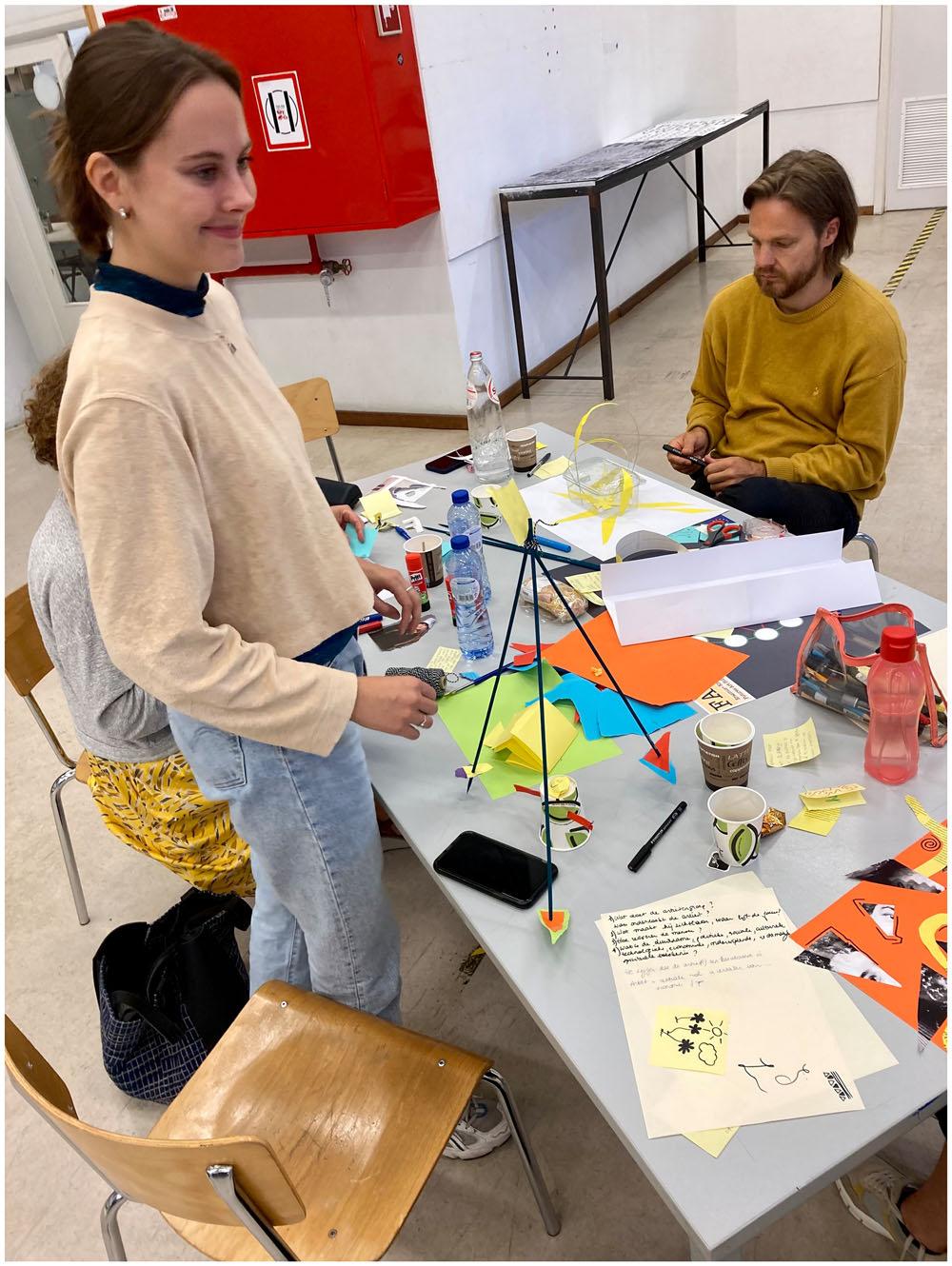
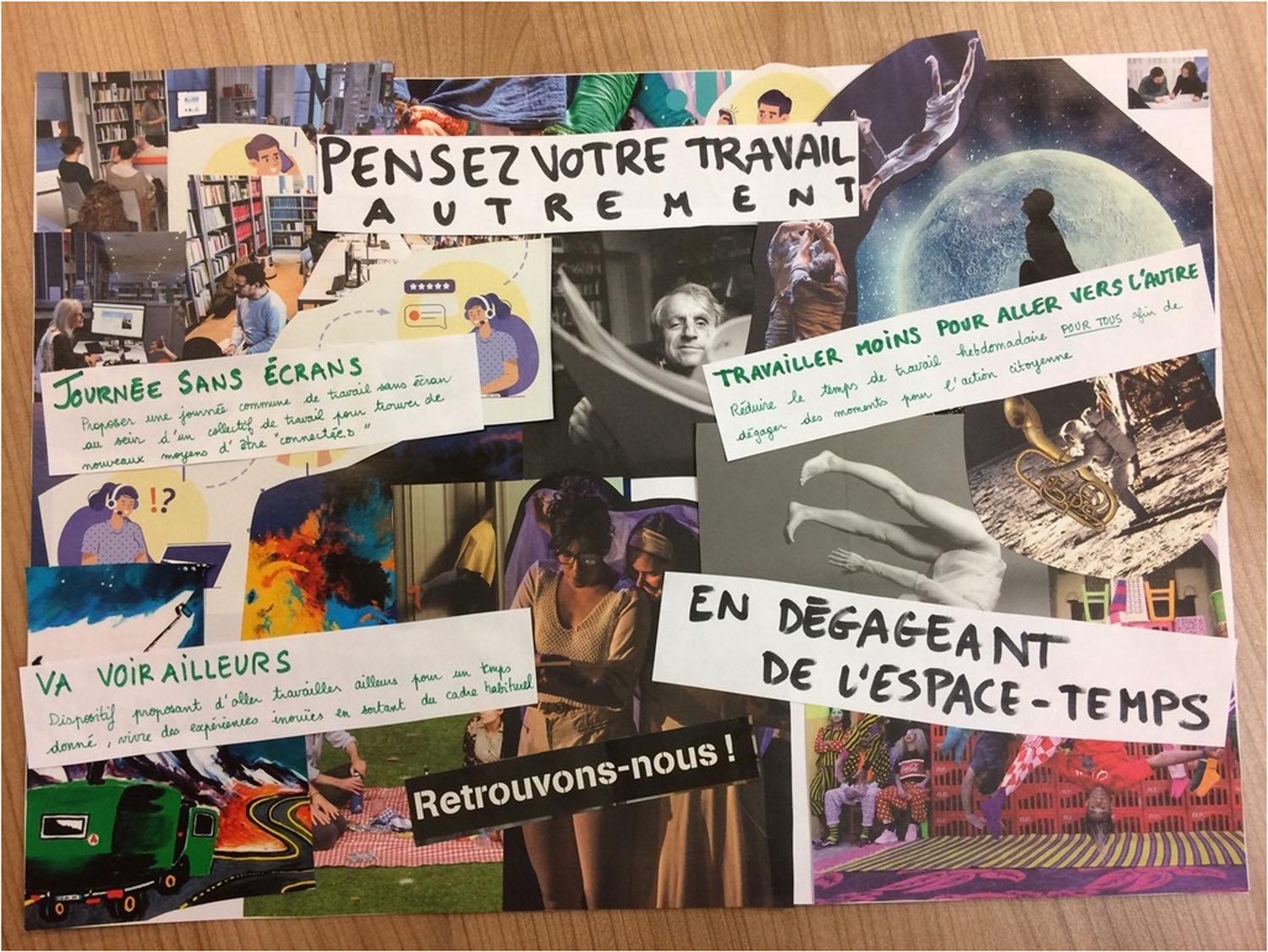
Wealsoemployedarangeofarts‐basedapproachesinthe collaborativecreationoffutureimages,akinto “‘snapshots’ ofpossible futures” (Jokinenetal., 2022,p.2),whichdepictpossible,probable,or preferredfuturesforhigherartseducation.Thisinvolvedinviting participantstodelveinto “whatnext” and “whatif” inquiries,envisioning therealizationofidentifiedtrendsandweaksignals,andconsideringtheir implicationsandsignificancefortheartsandhigherartseducation.To createthefuturesimages,weapplied,forexample,drawings,crafts,film, soundscapes,collaborativestorytelling,androleplays.Variedmaterials, suchascut‐outimagesandtexts,cardboard,crayons,yarn,Legos,andso on,wereutilizedtocreatefuturesimagesintheformofbricolageor installation(Figures 3 and 4).Theartificialintelligence(AI)DALL‐E2 imagegeneratorwasusedintwoworkshopstocreatefutureimages.
Figure 1 furtherabovesummarizesourprimaryfindings, encompassingthestrengthsandlimitationsofallarts‐based
approachesscrutinizedinthisstudy.Inthesubsequentsections,we willdelveintoamorecomprehensiveanalysisbyfocusingonthree specificcaseexamples:musicalsoundscapes,aLARP,andashortfilm usingmobilephones.
Theworldofworkischanging,andprofessionalismisexpandinginmusic andotherartfields(Danhash, 2018;Gaunt&Westerlund, 2021).This observationledustoinvitemusicstudentswithdiverseorientationsat UniartsHelsinki'sSibeliusAcademytoidentifyanddiscussweaksignals andemergingtrendsconcerningthepossiblefuturesofthemusicfield andmusicians'prospectivecompetencyneeds.Usingtheirobservations fromthediscussionintwogroups,we instructedthemtocollaboratively composeamusicalfuturesimageorsoundscapethatwouldillustratethe futuremusicians'workandlifein2045.Thestudentswereencouragedto becreativebyusingtheirvoices,anymaterialsathand,orthemusical instrumentstheyhadwiththem.Additionally,theyhadtheoptionto exploredigitalcompositionwiththeirlaptops.Thegroupshad45minto completethetaskbeforesharing theinstantandimprovisational outcomes.
Theoutcomes twodistinctmusicalsoundscapes conveyed intenseatmospheresandelicitedmanyemotions.Thefirstone combinedpianoplayingwitharubberglow areferencetoacyborg element withlivevoices,beepingcellphoneinterruptions,and interruptive,randomlyspoutingin‐appadvertisementsinfreecomputerapplications.Thesecondsoundscapeentailedcomputer‐created soundsoverlappingandmergingwithrecordingsinseverallanguages.
DuringtheFAST45FootnotesSummerSchoolatZurichUniversityofthe Arts,studentsandartseducationprofessionalsparticipatedinatwo‐and‐a‐half‐daylive‐actionrole‐playinggamesetin2045,unfoldingfroma speculativescenario.Beforetheevent,eachparticipantcreateda
charactertoimmersethemselvesinafictionalscenario.Thesecharacters collaborativelyexploredthefuture ofhigherartseducationthroughset tasksinoneofsevenparallelworkshops.Theworkshopthemescovered abroadspectrum,includingdigitalculturesofeducation,art,andsociety, inter‐ andtransdisciplinarity,knowledge commons,institutionalstructures andstrategies,ecologicalandsocialsustainability,andtheinstitutional versusthenoninstitutional.
Thesetupofthesummerschoolboldlydepartedfromthe conventionsoftraditionalconferences,fosteringanenvironmentthat encouragedintuition,playfulness,andmultisensorythinking,particularly duringthejointsessions.Forexample,theopeninganddailyjointsessions wereintroducedbyanenthusiasticceremonymasterandfeatured elementssuchasimaginarytimetravel,somaticexercises,atmospheric soundscapes,andabstractfuturisticvisuals.Theseelementshelped participantsengageincreativeandimaginativethinking.
Thesevensmallgroups,eachwithadistinctthemeandaname dis/ continuities,orangology,chaos/mosis,commonalities,re/programming, symbiosis,andplasticity immersedthemselvesinthoroughandfocused explorationsoftheirassignedtheme(seeabove),startingfroma prerecordedfuture‐orientedvideo‐lecturefeedsgivenbyspeakerssuch asBrettNeilson,WillFurtado,TheaReifler&PhilippBergman,Lina Dokuzović,KlasseKlima,andBrandyButler.Thelecturesconstitutedthe centraltextbodysubjecttocommentary,elucidation,andexpansion dispositionedasfootnotes.Thesecocreatedfootnotesandother workshopoutputscontributedtowardsFAST45scenarioworkforthe futuresofhigherartseducation.
Inourthirdcase,theparticipants,allprofessionalsinhigherarts education,wereinvitedtocontemplatetheimpactsoftechnologyon thepossiblefuturesofhigherartseducation.Theywereshowna dramaticturninashortfilmfragmentonbiohackinginthearts.The sceneinvolvestwoartstudentsdiscussingthemicrochipinsertedin onestudent'sbraintoenhanceherartisticabilitiesandmakeher paintfaster(Figure 5).
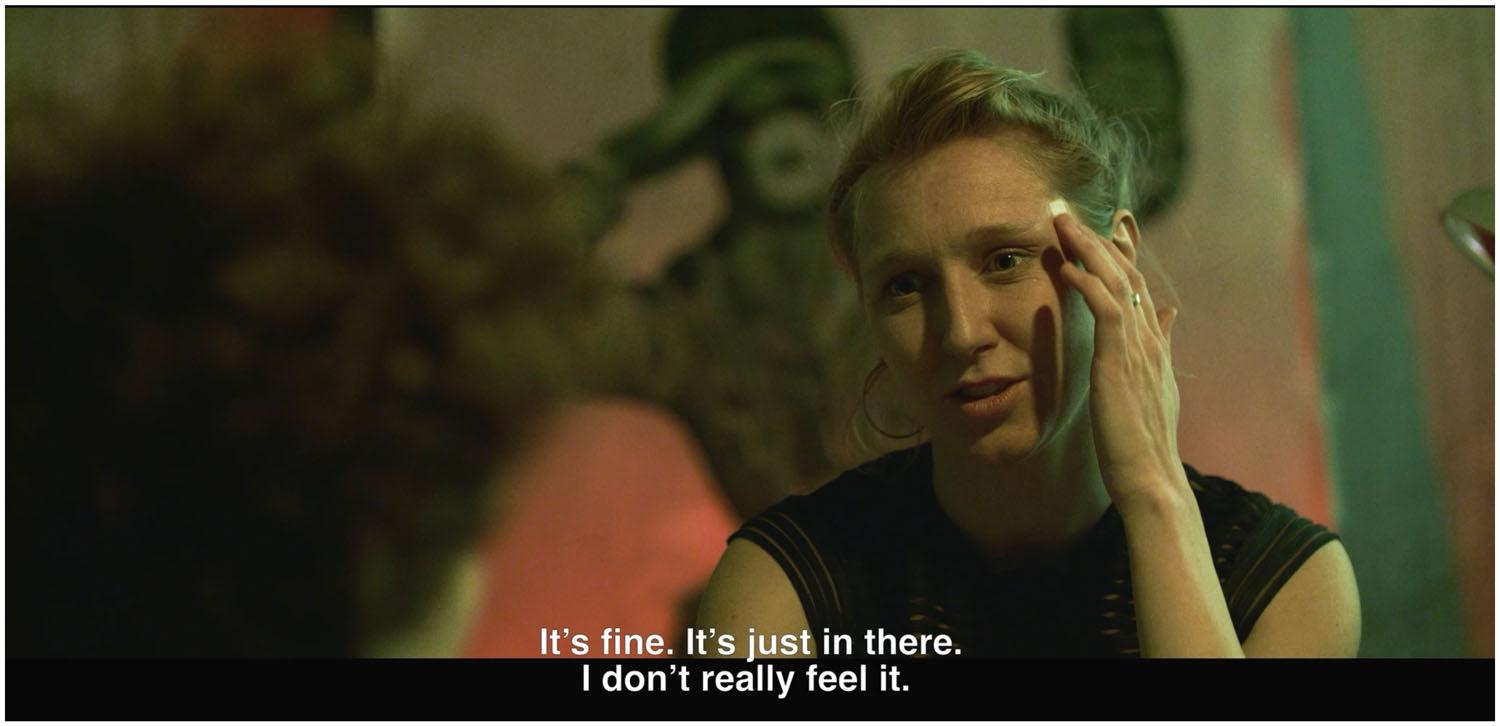
Theparticipants,includingtheauthorsofthisarticle,were taskedwithusingthefragmentasastartingpointtobrainstorm thenextdevelopmentinsmallgroups.Theywereaskedtouse mobilephonestorecordashortsubsequentepisodeforthe fragment.Wehad2htocreatetheplotandfilmit.Eventually,our groupcreatedashortfilmaboutamicrochipcompanynegotiating dealswiththerectorofanartschool.Intheplot,thecompanywas tryingtohideinformationthatsometimestheirinstalledchipsare hacked.
Whileartisticfuturesimagesoftenconveyexplicitmeanings,a moredetailedreflectionoftheimagecanyieldinterpretations, helpingthereaderunderstandtheprofoundcomplexityofthe topicdepictedintheimage.Toillustratethis,ourintertextual reading aFaustiantaleoflearningintheneoliberalworld providesadetaileddescriptionintotheidentifiedintertextsand theirinterplay,illuminatingaspectsthatenabledustoperceivethe futureimage inthiscase,afilmscene insevendifferent,yet interconnected,ways.
Asweinvestigatedthefilmscenedepictinganartstudentwithan implantedartchipinherbraintoenhanceherartisticabilities,we initiallyconsideredthesceneinthecontextofneurotechnologyand advancementsinlearning,viewingitasacelebrationofprogressin neurotechnologyinartseducation(Interpretation1).Upondeeper analysisusingtheassociativeapproach,unfilteredthoughts,memories,andemotionsemerged,revealingthestudent'sambitionfor rapidsuccess.Thispromptedustocontemplatetextsonthe influenceofneoliberalismonhighereducation.Olssen(2015),for example,writes, “Whereasinclassicalliberalismtheindividualis characterizedashavinganautonomoushumannatureandcan practicefreedom,inneoliberalismthestateseekstocreatean individualthatisanenterprisingandcompetitiveentrepreneur” (Olssen, 2015,p.130).Thereferencemadeusseethefilmsceneas depictingneoliberalism'sroleinfosteringacompetitivelearning environment(Interpretation2).
Inthefilmscene,theartstudent'sstrivingtoexcel,madeusalso considerthejobmarketinthearts.InternationalLabourOfficeinits recentreportaboutthefutureofworkintheartsandentertainment sectorstatesthat “Newyoungentrantsintheartsandentertainmentsectortendtoacceptunpaidworkconsideredpartofthe ‘process’ inaverycompetitiveenvironment,inwhichyoungpeople tendtobeoverrepresentedcomparedtoothersectors” (InternationalLabourOffice, 2023,p.32).Thisintertext,sparkedustosee
biohackinginthefilmsceneasacopingstrategyforthestudentto competeinboththeschoolandjobmarket(Interpretation3).This insightmadeusconsiderthesceneasasignalaboutneoliberalism's influencedrivingartiststoprioritizemarket‐drivensuccessand efficiencyoverartisticintegrityandauthenticity(Interpretation4). Thisinterpretationissupportedbythefilmscenewheretheart student,withtheartchipinherbrain,focusesonmastering19th ‐centurystyleslikeCubismandSurrealismratherthandeveloping herindividualartisticmindsetorapproachwithinthecontemporary artworld.
Thecontemplationofthecopingstrategysparkedinusa recollectionoftheFaustiantale,whereinFaustmakesapactwiththe devilforknowledgeandpower(“Faust,” Wikipedia, 2024).Viewing thescenethroughthisFaustianintertext,theartstudentundergoesa radicaltransformation,implantingamicrochiptoexcelinherartistic pursuits.Thisinterpretationsuggeststhatthescenereflectsthe humandesireformasteryandthelengthssomeindividualsarewilling togotoachieveit.Unknowingly,perhaps,theartstudenthassold her “soul” bygrantinganeurotechnologycompanyaccesstoher brainforenhancedskills(Interpretation5).Thisinterpretationevoked anallegoricalexploration,connectingtorecentnewsonbrain‐hacking,neuroprivacy,andneurorights(Ienca, 2015;Wild, 2021), incitingustoseethefilmsceneasanalert,warningusaboutthe seriousrisksofneurotechnologyinhigherartseducationandmore generally(Interpretation6).
TheFaustianmyth,knownforitsexplorationofmoraldilemmas andconsequencestiedtoFaustianbargains,comestolifeinthis scene.Theartstudent'schoicetoaugmentherabilitiesthrough technologysparkedethicalconcerns,promptingreflectiononthe potentialconsequencesofmanipulatingone'sinnatetalents.Thisled ustoponderguidelinesregardingresearchethicsandintegritysuch as TheEuropeanCodeofConductforResearchIntegrity (ALLEA, 2023), whichdoesnotyetacknowledgebio‐ orbrainhackingasmisconduct. Thisobservationmadeusconsiderthefilmsceneasaweaksignalof futureethicalchallenges,notonlyconcerningequitablelearningin higherartseducationbutalsotheresponsibleconductofartistic research(Interpretation7).
Thenuancedinterpretationsofthefilmsceneunderscorethe intricateinterplaybetweentechnology,education,ethics,and artisticintegrityinthecontextofhigherartseducation.Insights rangefromthecelebrationofneurotechnologicaladvancementsto theinfluenceofneoliberalisminfosteringacompetitivelearning environment.Considerationsextendtoartstudents'copingstrategiesinresponsetoacompetitivejobmarket,emphasizingthe potentialprioritizationofmarket‐drivensuccessoverartistic authenticity.Ethicalconcernsemerge,linkedtoFaustiandesire formasteryandtheunforeseenrisksassociatedwithneurotechnology.Thesemultifacetedperspectivesserveasvaluablecritical considerationsforhigherartseducationinstitutions,urgingreflectionontheethicaldimensionsoftechnologicalinterventionsand thebroaderimplicationsforequitablelearningandresponsible artisticresearch.
Ourcloseanalysisofarts‐basedapproachesinfuturesworkshops suggeststhattheyofferdiversebenefitsinboostingcocreationand coreflectionwhilealsoentailingsomelimitations.Forexample,some approaches,suchasdrawing,boardgames,andLego‐basedactivities, havelowskillrequirementsandareaccessibletomanyparticipants. Others,likeAI,music‐making,andfilmmaking,demandspecificskills andmaygenerateperformanceanxiety.
Anotablestrengthsharedbymanyoftheseapproachesisthe abilitytofacilitatethenonverbalexpressionofideasandemotions, contributingtoaholisticandimaginativeexplorationoffutures images.Forexample,cut‐outimagescomposedasbricolageserve asvisualmetaphorsforfurthercontemplation.Severalapproaches, includingbricolages,shortfilms,andLARP,offermultimodal experiences,combiningvisual,auditory,andtactileelementsto enrichthefuturesimagingprocess.Thismultimodality (Dressman, 2020)ofarts‐basedworkinfuturesworkshopscan helptheparticipantsacquire,process,andshareinformationinways thatbettercorrespondwithmultipleintelligences(Gardner, 2000), individuallearningstyles(Honey&Mumford, 1992 ;Kolb, 1984 ; Leiteetal., 2009),anddifferentcommunicationstyles (Keteyian, 2010).
Further,LARPandmultisensorywalksstandoutfortheir immersiveengagement,providingparticipantswithexperiential learninganddeeperinsightsintofuturesimages.Moreover,sound andmusic‐basedapproachesandbodilyimaginativetime‐traveling excelincreatingaffective(Niven, 2013)connectionswiththe envisionedfutures,arousingemotions,andmoods.
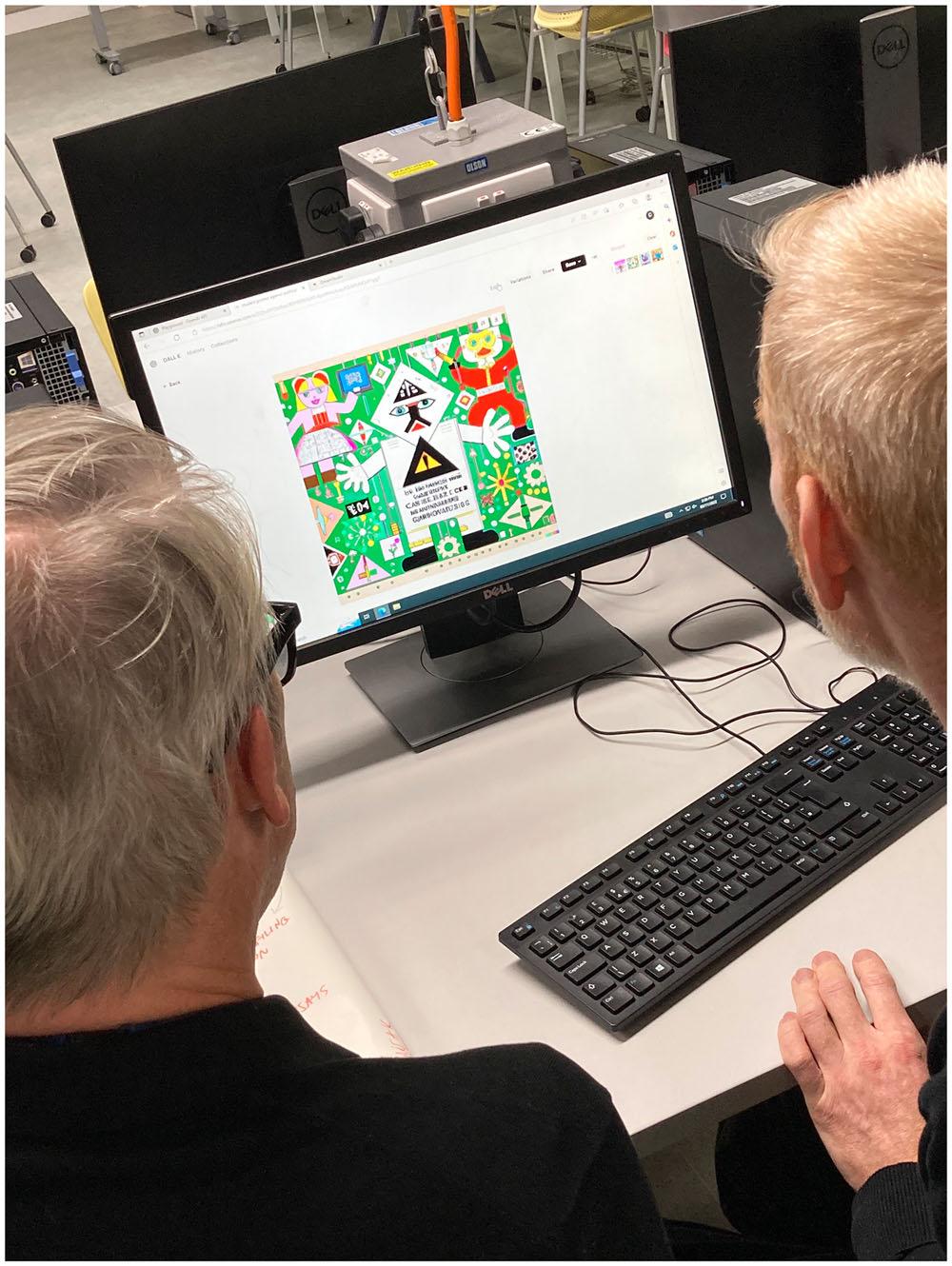
Manyoftheseapproachesarehighlyequipment‐ ormaterial‐dependent,necessitatingearlypreparationtoaccessmaterials, instruments,andtools.Thisdependencycanimpactthefeasibility ofthesemethods.AI‐basedimagemaking(Figure 6)lacksconcrete, physicalandsensoryinteractionwithmaterials.Additionally,itleaves muchofthecreativeacttoAIwhilethepersonusingAIretainsa degreeofcreativeagencyinformofcommandsdependingonthe person'sAIinteractionskills.
Someapproaches,likecollaborativestorytellingandboard games,relyheavilyonlanguageandmayposechallengesfor nonnativespeakers.Inaddition,approachessuchasLARPcanbe highlycomplex,callingforsupportiveelementstomaintainparticipantenduranceandmotivation.Forexample,theLARPthatwe participatedinpresentedtheparticipantswitharangeofintricate challengesdespitethepresenceoffacilitatorsandaworkbook outliningthegame'sstructure,schedule,andtasks.Thesechallenges includedmaintainingimaginativecharacter,reflectingontheprovidedextensivesetofquestions,sustainingmotivation,managing fatigue,navigatinggroupdynamics,andadheringtoestablished deadlines.Also,someapproaches,suchasfilmmaking,canbetime‐consuming,challengingthescheduleandsufficientcoreflectionof
theproducedoutputs.Finally,perceptionsofartisticvaluevary acrosstheapproaches.Someparticipantswithabackgroundinthe artsmayconsiderspecificapproacheslessartisticornaive,orthey mayfindarts‐basedapproachesinstrumental,impactingtheir engagement.
Asourinterpretationsofthefilmsceneshow,wordsaretoolsto navigateinherentcomplexityininterpretinganartisticfuturesimage. However,wordsdonotdirectlyreflectreality;Derrida's(1978) conceptof “différance” demonstratestheirinterconnectednature, resultinginelusivefinalmeanings.Thus,ourinterpretationsintertwinewiththenuancesoflanguage,branchingintodictionaries, myths,newsarticles,andotherassociations,renderingassigned meaningsunstable.Groundedinthetheoryofintertextuality,this phenomenonisexplainedbyrecognizingthatboththecreatorsof futureimagesandtheinterpretersareculturallyembedded.The creatorsareinfluencedbyexternaltextualsources,whilethe interpretersconstructmeaningsbyconnectingtheseimagestoa networkedtextualframeworkshapedbytheirpriorexperiences (Kristeva, 1986;Worton&Still, 1990).Thisinterconnectedrelation betweenexternaltextsandtheartisticfuturesimageininterpreting theimagecontributestotherichnessanddepthofourunderstanding
ofthecomplexityofmeaningsthatthereadingoffuturesimagescan yield.
LinkingourinterpretativeprocesstoEco's(1979)notionofthe “reader” oftextandWittgenstein's(1953/2009)ideaofaspect seeing,weproposethatthereader,akintotheinterpreterofa futuresimage,possessesagencytoconstructmeaningswithincertain limits.Theselimitsaretethered,ononehand,towhatisexplicitly presentintheimageanditsimmediatecontext elementsthereader recognizes and,ontheotherhand,totheculturalcontextofthe reader(Best, 1986),whichestablishesboundariesforaspectstolight upandevokeassociations.Withoutadequatejustification,the interpretationsriskbeingconfinedtoarealmofbeliefsandpersonal preferencesratherthanengagingincriticaldiscourse(Best, 1992).
Asdemonstratedabove,theopennessofanartisticfutures imageallowsformultipleinterpretationsinfluencedbytheinterplay ofintertextsthattheWittgensteinianaspectseeingmakespossible. Thisrecognitionofinterpretativeflexibilitylaysthefoundationfor ourargument,which,followingBest(1992),assertsthatinterpreting artisticfuturesimagesdemandsreasonedanalysis.
Inourexploration,attheintersectionofarts‐basedresearchand futuresstudies,wedelvedintotheapplicationofarts‐based approacheswithinfuturesworkshops,addressingkeyquestions regardingtheircategorizationandusability,aswellasgaininginsights intotheinterpretationofartisticfuturesimages.Inalignmentwith Mullooy(2022),weaffirmthatarts‐basedresearchisintegralto cultivatingcriticalfutures,servingasapluralistic,culturallyresponsive,andnuancedformofpublicscholarship(Mullooy, 2022,p.162). Ourexplorationofvariousarts‐basedapproacheswithinfutures workshopsunderscorestheircapacitytoofferdiversebenefits, includingaccessibility,nonverbalexpression,emotions,immersive experiences,andmultimodality.Theseapproaches,categorizedinto visual,technology‐dependent,narrative‐based,sound‐ andmusic‐based,corporeal,interactive,andperformative,aswellasgaming, presentuniquestrengthsandconsiderationsforenvisioningfutures images.Facilitatorsarepivotalintailoringtheseapproachesfor optimalimpactwithinspecificcontexts.
Moreover,ouranalysishighlightstheinterpretativecomplexity ofartisticfuturesimages,emphasizingtheinterconnectednatureof language,culture,andreason.DrawinginspirationfromWittgenstein'sideaofaspectperception,weadvocateforareasonedand analyticalapproachtointerpretingtheseimages,steeringclearof subjectiveinterpretations.Asweconclude,weunderscorethe versatilityofarts‐basedapproachesacrossdiverseorganizational contexts,emphasizingtheneedforcarefulconsiderationwhen selectingandcombiningmethodstoenhancetherichnessoffutures exploration.Recognizingthepotentialofart‐basedresearchto contributetocriticalfutures,ourfindingsreinforcetheimportance ofcollaboration,clearcommunication,andamultifaceted
understandingofartinfosteringopen‐mindedparticipationwithin futuresworkshops.
Acknowledgingthelimitationsindetailofdescriptionconcerning thevariousart‐basedapproachesassessedinourstudy,wefound thatarts‐basedapproachesinfuturesworkshopsoffermanybenefits, includingaccessibilityfordiverseparticipantsandfacilitatingnonverbalexpressionofideasandemotions.Theseapproachesprovide immersive,multimodalexperiencesandcancreateemotional connectionswithenvisionedfutures.Eachapproachoffersdistinct advantages,makingthemsuitablefordifferentcontextsand participantgroups.However,someapproachesmaydemandspecific skills,requireearlymaterialpreparation,poselanguagechallenges,or betime‐consuming.
Intherealmofemployingarts‐basedapproacheswithinfutures workshops,theimportanceofinterpretingartisticfuturesimages becomesevident.Ouranalysisillustratesthattheinterpretative processhingesonwordsinterwovenwithassociations,shapedby externaltexts,myths,images,andreferences amanifestationof intertextuality.Thisinterpretativenecessityiscrucialforcomprehendingtheintricatemeaningsembeddedintheseimages,asreaders engageinthoughtfulcontemplation.FollowingBest(1992),and drawingfromtheWittgensteinianideaofaspectperception,we recognizetheinterconnectednatureoflanguage,culture,andreason, emphasizingtheneedforareasonedandanalyticalapproachto interpretingartisticfuturesimages.Thisapproachensuresadeparturefromsubjectiveinterpretations,guidingreaderstonavigatethe nuancedinterplaythatshapesthesignificanceoftheseimages.
Itisworthnotingthatarts‐basedapproachesareversatileand canbeeffectivelyutilizedacrossvariousorganizationalcontexts. However,facilitatorsneedtocarefullyconsidereachapproach's uniquestrengthsandchallengeswhenselecting,ensuringthatitis themostsuitablefortheparticularfuturesimagingexerciseathand. Facilitatorsplayacrucialroleintailoringtheseapproachesfor optimalimpactwithinthechosencontextbycombiningmultiple methodsoradaptingapproachestoalignwithspecificgoals, enhancingtherichnessanddepthofthefuturesexplorationprocess.
Perceptionsofartisticvaluecanvaryamongparticipants, influencingengagement.Therefore,whenintroducingarts‐based approachesinfuturesworkshops,itiscrucialtorecognizethatartisa multifacetedconcept,andpeople'sdiverseconnotationscanimpact theirengagement.Toaddresspotentialmisunderstandings,itis beneficialtopointoutthatarts‐basedapproachesoftendrawfrom sociallyengagedartspracticesemphasizingcocreationandcoreflection.Moreover,arts‐basedworkinfuturesworkshopsextends beyondcreativeartmaking,committedobservation,andexpression, encompassingcommunication,ideaexploration,evocationofmeanings,andemotionalresonance.Assuch,artisticfuturesimageshave asmuchtodowithexperiencing,reflecting,andinterpretingasthey havetodowithmaking,performing,andexhibiting.Toensure favorableparticipation,itisvitalforfacilitatorstocollaborateclosely withtheorganization'srepresentativesandinformtheparticipants abouttheworkshop'stheme,objectives,andapproaches.
Basedonthisresearch,arts‐basedapproachescanencourage freshperspectivesonfuturesbyembracingdiversewaysofimagining andknowing,elicitingamoreprofoundandintricatecomprehension ofhumanexperiences,meaning‐making,andtheworld.Artcan contributetofuturethinkinginvariousways:byinspiringalternative futuresthroughmediumslikesciencefictioninfilmsandliterature, encapsulatingfuturescenariosthroughartisticillustrations,and posingthought‐provokingquestionsthatchallengeourperceptions andunderstandingofthefuture.
Buildingupontheinsightsgleanedfromourexplorationofarts‐basedmethodsinfuturesworkshopsandthemultifacetedcontributionsofarttofuturesthinking,futureresearchendeavorscoulddelve deeperintoareassuchastheimpactofculturalreflectioninshaping futurescenarios,thepotentialofspeculativedesignpracticesto informdecision‐makingprocesses,andtheroleofcommunitydialog facilitatedbyartinfosteringcollectiveenvisioningofsustainableand equitablefutures.Incorporatingperspectivesfromtheoristssuchas JacquesRancièreandSuziGablikintotheseinvestigationscouldoffer valuabletheoreticalframeworksandcriticalinsightsintothepolitics ofestheticsandparticipatoryart,enrichingourunderstandingofthe roleofartinfuturesstudiesanditsbroaderimplicationsforsocietal change.
ThisresearchisbasedonthedatacollectedinFAST45;aproject fundedbytheEuropeanCommission'sErasmus+KnowledgeAlliance. TheEuropeanCommission'ssupportfortheproductionofthis publicationdoesnotconstituteanendorsementofthecontents, whichreflecttheviewsonlyoftheauthors,andtheCommission cannotbeheldresponsibleforanyusethatmaybemadeofthe informationcontainedtherein.Theauthorswouldliketoexpresstheir gratitudetothefollowinginstitutionsfortheirinvaluablesupport duringtheFAST45project:AEC,ArtAcademyoftheTurkuUniversity ofAppliedSciences,conexionesimprobables,EstonianAcademyof Arts,ELIA,FilmuniversitätBabelsbergKonradWolf,KULTAry,Le CEFEDEMAuvergneRhône‐Alpes,LUCASchoolofArts,Microsoft Ireland,SchoolofCommonsatZurichUniversityoftheArts, TechnologicalUniversityDublin,UniartsHelsinki,andXenorama.In addition,heartfeltthankstoallthestudents,teachers,researchers, administrators,leaders,andpartnerswhoparticipatedintheworkshopsandcontributedvaluablefeedbacktothisarticle.Theauthors alsoextendourappreciationtoourcolleagueswithintheFAST45 projectfortheirgenerousassistancethroughoutourexperimentation.
Theauthorsdeclarenoconflictofinterest.
Thedatathatsupportthefindingsofthisstudyareavailablefromthe correspondingauthoruponreasonablerequest.
KaiLehikoinen http://orcid.org/0000-0002-8198-5854
1 FAST45wasa3‐yearproject(2021–2023)fundedunderERASMUS+ programKA2Cooperationforinnovationandtheexchangeofgood practices,knowledgealliances;grantagreementnumber621613‐EPP‐1‐2020‐1‐BE‐EPPKA2‐KA.Byfirmlybelievingintherelevanceof futuresthinkinginhigherartseducation,theFAST45project endeavorstoelucidateandunderstandtheforcesshapingthefuture developmentofhighereducationsystems,individualinstitutions,arts ecosystems,careersinthearts,communities,andsocietyatlarge.It alsofacilitatesthescanningofpossiblefuturehorizonstodiscover adaptivestrategiesandopportunitiesfordisruptionratherthanbeing disrupted.TheprojectwasledbyLUCASchoolofArtsinBelgiumwith twelvepartners:LeCefedemAuvergne,Rhône Alpes,Estonian AcademyofArt,FilmuniversitätBabelsbergKonradWolf,TechnologicalUniversityDublin,UniartsHelsinki,ZürichUniversityoftheArts, TheAssociationEuropéennedesConservatoires,Académiesde MusiqueetMusikhochschulen(AEC),TheEuropeanLeagueof InstitutesoftheArts(ELIA),conexionesimprobables,MicrosoftIreland, andXenorama.
2 ThefilmwasproducedbyFabelfilm(https://fabelfilm.be)forthe Erasmus+KnowledgeAllianceFAST45.
ALLEA.(2023). TheEuropeancodeofconductforresearchintegrity (Revised ed.). https://doi.org/10.26356/ECOC Allen,G.(2000). Intertextuality.Routledge. Bennett,N.,&Lemoine,G.J.(2014).Whatadifferenceawordmakes: UnderstandingthreatstoperformanceinaVUCAworld. Business Horizons, 57(3),311–317. https://doi.org/10.1016/j.bushor.2014. 01.001
BerthoinAntal,A.(2013).Art‐basedresearchforengagingnot‐knowingin organizations. JournalofAppliedArts&Health, 4(1),67–76. https:// doi.org/10.1386/jaah.4.1.67_1
BerthoinAntal,A.,&Strauß,A.(2013). Artisticinterventionsinorganizations:Findingevidenceofvalues‐added.CreativeClashReport.WZB. https://www.wzb.eu/system/fil es/docs/dst/wipo/effects_of_ artistic_interventions_final_report.pdf
Best,D.(1986).Culture‐consciousness:Understandingtheartsofother cultures.InJ.Adshead(Ed.), Dance Amulticulturalperspective: Reportofthethirdstudyofdanceconference (2nded.,pp.86–97). NationalResourceCentreforDance,UniversityofSurrey. Best,D.(1992). Rationalityoffeeling:Understandingtheartsineducation TheFalmerPress.
Bishop,C.(2006).Thesocialturn:Collaborationanditsdiscontents. Artforum, 44(6),178. Boal,A.(1979). Theatreoftheoppressed.PlutoPress.(Trans.C.McBride& M.McBride).
Byrne,D.(2022).AworkedexampleofBraunandClarke'sapproachto reflexivethematicanalysis. Quality&Quantity, 56(3),1391–1412. Candy,S.(2010). Thefuturesofeverydaylife:Politicsandthedesignof experientialscenarios [DoctoralDissertation,UniversityofHawai'iat Mānoa). https://doi.org/10.13140/RG.2.1.1840.0248 Danhash,N.(2018).Theworldofwork.InB.Revelli(Ed.), Careersinthe arts:Visionsforthefuture (pp.11–15).ELIA.
Darsø,L.(2013).Artfulcreation:Learning‐talesofarts‐in‐business. The InternationalJournalofProfessionalManagement, 8(5),4–12. Derrida,J.(1976). OfGrammatology (Trans.C.ChakravortySpivak) (Correcteded.).TheJohnsHopkinsUniversityPress.(Originalwork published1967).
Derrida,J.(1978). Writinganddifference.RoutledgeandPaulKegan. (Trans.A.Bass).
Dewey,J.(2005). Artasexperience.Perigee.(Originalworkpublished1934).
Dressman,M.(2020).Multimodalityandlanguagelearning.InM. Dressman&R.WilliamSadler(Eds.), Thehandbookofinformal languagelearning (pp.39–55).Wiley‐Blackwell. Eco,U.(1979). Theroleofthereader:Explorationsinthesemioticsoftexts UniversityofIndianaPress.
Flamand,G.,Perret,V.,&Picq,T.(2022).Workingwiththepotentialof arts‐basedlearning:Makingsenseandleaving ‘businessasusual’ behindinanartseminar. ManagementLearning, 53(2),190–211. https://doi.org/10.1177/1350507621990256
Freud,S.(2010). Theinterpretationofdreams (Trans.J.Strachey).Basic Books.(Originalworkpublished1899).
Frow,J.(1990).Intertextualityandontology.InM.Worton&J.Still(Eds.), Intertextuality:Theoryandpractices (pp.45–54).Manchester UniversityPress.
Gablik,S.(1991). Thereenchantmentofart.Thames&Hudson. Gannon,S.,&Naidoo,L.(2020).Thinking‐feeling‐imaginingfutures throughcreativearts‐basedparticipatoryresearch. TheAustralian EducationalResearcher, 47(1),113–128. https://doi.org/10.1007/ s13384-019-00330-6
Gardner,H.(2000). Intelligencereframed:Multipleintelligencesforthe21st century.BasicBooks.
Gaunt,H.,&Westerlund,H.(2021).Invitation.InH.Westerlund&H. Gaunt(Eds.), Expandingprofessionalisminmusicandhighermusic education Achanginggame (pp.x–xxxiii).Routledge. Gielen,P.(2015). Themurmuringoftheartisticmultitude:Globalart, memoryandpost-fordism (3rded.).Valiz. Heinonen,S.,&Ruotsalainen,J.(2013).Futuresclinique Methodfor promotingfutureslearningandprovokingradicalfutures. European JournalofFuturesResearch, 1,7. https://doi.org/10.1007/s40309013-0007-4
Helguera,P.(2011). Educationforsociallyengagedart.JorgePintoBooks. vanHeusden,B.(2015).Artseducation ‘AftertheEndofArt.’ Towardsa newframeworkforartseducation.InB.vanHeusden&P.Gielen (Eds.), Artseducationbeyondart:Teachingartintimesofchange (pp. 153–166).Valiz. Honey,P.,&Mumford,A.(1992). Themanualoflearningstyles (3rded.). PeterHoneyPublications.
Huhmarniemi,M.(2023).Participatoryartwithtrees:Pedagogical approach.InR.Vella&V.Pavlou(Eds.), Art,sustainabilityand learningcommunities:Calltoaction (pp.217–226).Intellect. https:// doi.org/10.1386/9781789388978_15
Huss,E.,&Bos,E.(2022).Introduction.InE.Huss&E.Bos(Eds.), Social workresearch:Usingarts‐basedmethods (pp.1–10).BristolUniversity Press. https://doi.org/10.46692/9781447357919.001 Ienca,M.(2015).Neuroprivacy,neurosecurityandbrain‐hacking:Emergingissuesinneuralengineering. BioethicaForum, 8(2),51–53. https://doi.org/10.24894/BF.2015.08015 InternationalLabourOffice.(2023,February13–17). Thefutureofworkin theartsandentertainmentsector Reportforthetechnicalmeetingon thefutureofworkintheartsandentertainmentsector.Sectoral PoliciesDepartment,ILO.
Iversen,J.S.(2006).Futuresthinkingmethodologiesandoptionsforeducation. InOECD(Ed.), Thinkscenarios,rethinkeducation (pp.107–120).OECD Publishing. https://doi.org/10.1787/9789264023642-8-en
Jokinen,L.,Mäkelä,M.,Heikkilä,K.,Apostol,O.,Kalliomäki,H.,&Saarni,J. (2022).Creatingfuturesimagesforsustainablecruiseships:Insights oncollaborativeforesightforsustainabilityenhancement. Futures, 135,102873. https://doi.org/10.1016/j.futures.2021.102873
Kemmis,S.(2009).Understandingprofessionalpractice:Asynoptic framework.InB.Green(Ed.), Understandingandresearching professionalpractice (pp.19–38).SensePublishers. Keteyian,R.V.(2010).Understandingindividualcommunicationstylesin counseling. TheFamilyJournal, 19(1),90–95. https://doi.org/10. 1177/1066480710388722
Kolb,D.A.(1984). Experientiallearning:Experienceasthesourceoflearning anddevelopment.Prentice‐Hall. Kristeva,J.(1986).Word,dialogue,andnovel.InT.Moi(Ed.), TheKristeva reader (pp.34–61).ColumbiaUniversityPress. Lalot,F.,Ahvenharju,S.,Minkkinen,M.,&Wensing,E.(2020).Awareof thefuture?Developmentandvalidationofthefuturesconsciousnessscale. EuropeanJournalofPsychologicalAssessment, 36(5), 874–888.
Lastenjanuortensäätiö.(2020). Tulevaisuuskoulu https://www.nuori.fi/ toiminta/tulevaisuuskoulu/ Latvala‐Harvilahti,P.(2021).Mireart:Environmentalartivismandfuture agencyinthelandscapeofmining. EthnologiaScandinavica, 51, 81–101.
Lehikoinen,K.,&Pässilä,A.(2016).Johdanto.InK.Lehikoinen,A.Pässilä, M.Martin,&M.Pulkki(Eds.), Taiteilijakehittäjänä:Taiteelliset interventiottyössä (pp.7–33).TaideyliopistonTeatterikorkeakoulu. https://urn.fi/URN:ISBN:978‐952‐6670‐73‐7
Lehikoinen,K.,&Siljamäki,E.(2023).Sociallyengagedarts(SEA)practices: Keyskillsandcapabilities. ResearchinArtsandEducation, 2023(3), 7–26. https://doi.org/10.54916/rae.130211
Lehikoinen,K.,&Tuittila,S.(2023). Artschoolfutureslabguidelines.ELIA andFAST45. https://learningplatform.fast45.eu/wp-content/ uploads/2023/12/Fast-45-_Arts_school_futures_lab_guidelines.pdf Leite,W.L.,Svinicki,M.,&Shi,Y.(2009).Attemptedvalidationofthe scoresoftheVARK:Learningstylesinventorywith multitrait–multimethodconfirmatoryfactoranalysismodels. EducationalandPsychologicalMeasurement, 70(2),323–339. Lyon,D.,&Carabelli,G.(2016).Researchingyoungpeople'sorientations tothefuture:Themethodologicalchallengesofusingartspractice. QualitativeResearch , 16(4),430– 445. https://doi.org/10.1177/ 1468794115587393
Meisiek,S.,&Barry,D.(2018).Findingthesweetspotbetweenartand businessinanalogicallymediatedinquiry. JournalofBusiness Research , 85,476– 483. https://doi.org/10.1016/j.jbusres.2017. 10.026
Merriam,S.B.(1998). Qualitativeresearchandcasestudyapplicationsin education.Jossey‐Bass. Mills,J.,Bonner,A.,&Francis,K.(2006).Thedevelopmentofconstructivist groundedtheory. InternationalJournalofQualitativeMethods, 5(1), 25–35. https://doi.org/10.1177/160940690600500103
Mullooy,S.(2022).Transforminginternationalhighereducationinapost‐COVIDworld:Usingthemethodologiesoffuturesthinkingandarts‐basedresearchtoamplifystudents'voices. TransformativeDialogues: TeachingandLearningJournal, 15(2),161–180. https://doi.org/10. 26209/td2022vol15iss21766
Nissley,N.(2010).Art‐basedlearningatwork:Economicdownturns, innovationupturns,andtheeminentpracticalityofartsinbusiness. JournalofBusinessStrategy, 31(4),8–20.
Niven,K.(2013).Affect.InM.D.Gellman&J.R.Turner(Eds.), Encyclopedia ofbehavioralmedicine (pp.49–50).Springer. https://doi.org/10.1007/ 978-1-4419-1005-9_1088
Olssen,M.(2015).Neoliberalcompetitioninhighereducationtoday: Research,accountabilityandimpact. BritishJournalofSociologyof Education, 37(1),129– 148. https://doi.org/10.1080/01425692. 2015.1100530
Pässilä,A.(2012).Reflexivemodelofresearch‐basedtheatre‐processing innovationatthecrossroadsoftheatre,reflectionandpractice‐basedinnovationactivities[Doctoraldissertation,Lappeenranta UniversityofTechnology]. http://lutpub.lut.fi/handle/10024/86216
Patton,M.Q.(1999).Enhancingthequalityandcredibilityofqualitative analysis. HealthServicesResearch, 34(5Pt2),1189–1208. https:// doi.org/10.1007/978-1-4419-1005-9_1088
Rancière,J.(2004). Thepoliticsofaesthetics:Thedistributionofthesensible. Continuum.(Trans.G.Rockhill).
Salmenniemi,S.,Porkola,P.,&Ylöstalo,H.(2024).Politicalimagination andutopianpedagogy. CriticalArts.Advanceonlinepublication. https://doi.org/10.1080/02560046.2023.2299450
Schiuma,G.(2011). Thevalueofartsforbusiness.CambridgeUniversityPress. Siivonen,K.,Latvala‐Harvilahti,P.,Vähäkari,N.,Paaskoski,L.,&Pelli,P. (2022).Tulevaisuusperintöverstaskestäväntulevaisuudenedistäjänä.InH.‐K.Aalto,K.Heikkilä,P.Keski‐Pukkila,M.Mäki,&M. Pöllänen(Eds.), Tulevaisuudentutkimustutuksi Perusteitajamenetelmiä (pp.238–247).TulevaisuudentutkimuksenVerkostoakatemia, Tulevaisuudentutkimuskeskus,Turunyliopisto. https://urn.fi/ URN:ISBN:978-952-249-563-1 Silentopia.(2022,April14). PerformancebyNinniPerko.EspooCity Theatre,Espoo,Finland. Vähinäänin.(2021,September30). PerformancebySatuTuittila.Jyväskylä CityTheatre. Wang,Q.,Coemans,S.,Siegesmund,R.,&Hannes,K.(2017).Arts‐based methodsinsociallyengagedresearchpractice:Aclassification framework. Art/ResearchInternational:ATransdisciplinaryJournal, 2(2),5–39.
Weick,K.E.,Sutcliffe,K.M.,&Obstfeld,D.(2005).Organizingandthe processofsensemaking. OrganizationScience, 16(4),409–421. https://doi.org/10.1287/orsc.1050.0133 Wikipedia.(2024,January21).Faust. https://en.wikipedia.org/wiki/Faust
Wild,K.(2021,November6). ‘Ournotionofprivacywillbeuseless’:What happensiftechnologylearnstoreadourminds? TheGuardian https://www.theguardian.com/ technology/2021/nov/07/ournotion-of-privacy-will-be-useless-what-happens-if-technologylearns-to-read-our-minds Willette,J.(2011,July1). SurrealismandFreudiantheory.ArtHistoryUnstuffed. https://arthistoryunstuffed.com/surrealism-freudian-theory/ Wittgenstein,L.(2009). Philosophicalinvestigations (4thed.).Wiley‐Blackwell.(Originalworkpublished1953). Worton,M.,&Still,J.(1990).Introduction.InM.Worton&J.Still(Eds.), Intertextuality:Theoriesandpractices (pp.1–44).Manchester UniversityPress. Yanow,D.,&Schwartz‐Shea,P.(2006). Interpretationandmethod: Empiricalresearchmethodsandtheinterpretiveturn.M.E.Sharpe.
Howtocitethisarticle: Lehikoinen,K.,&Tuittila,S.(2024). Arts‐basedapproachesforfuturesworkshops:Creatingand interpretingartisticfuturesimages. Futures&Foresight Science, 6,e182. https://doi.org/10.1002/ffo2.182