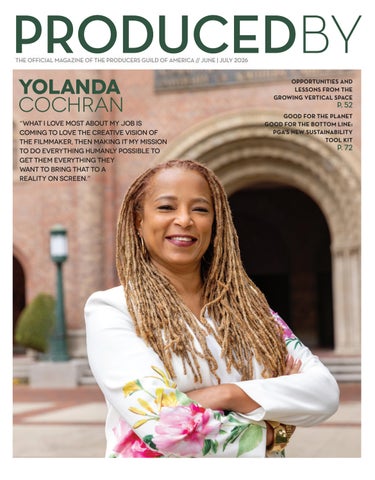
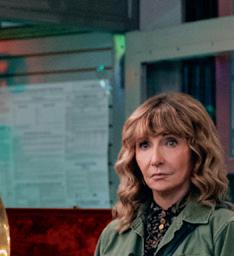
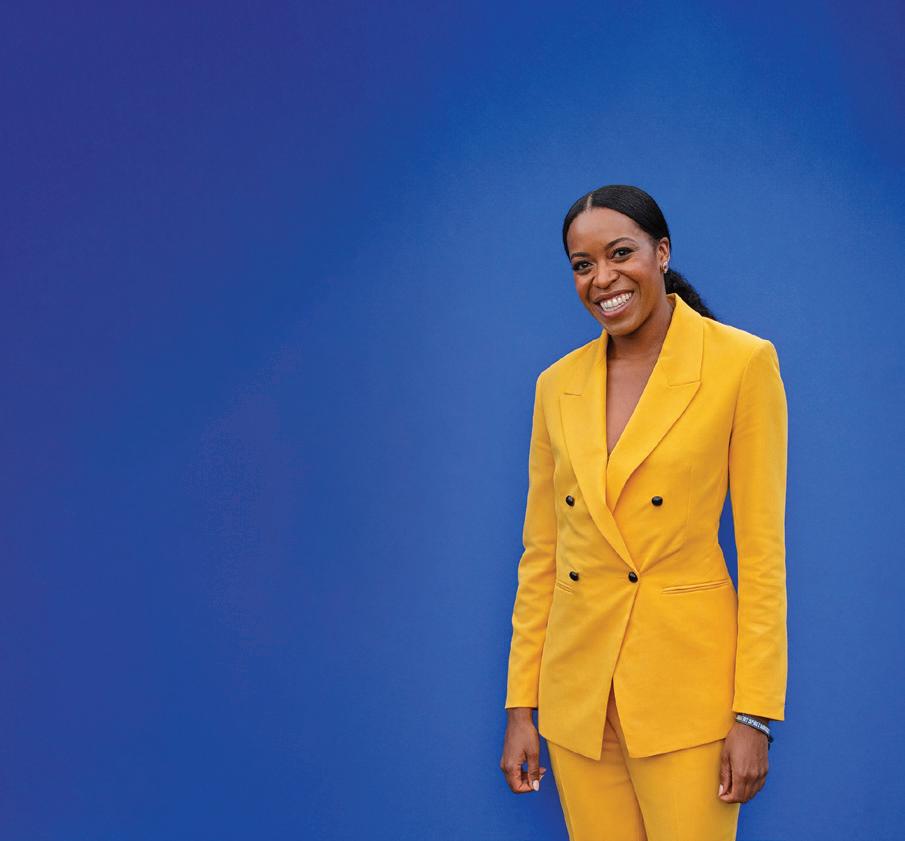
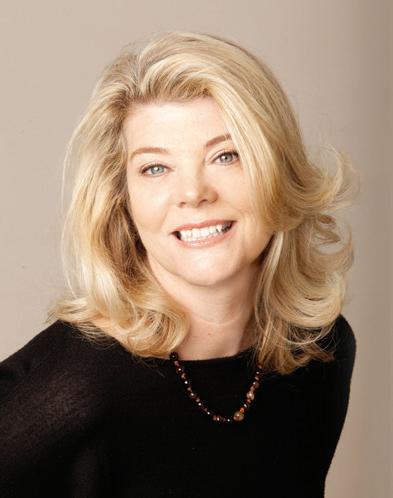
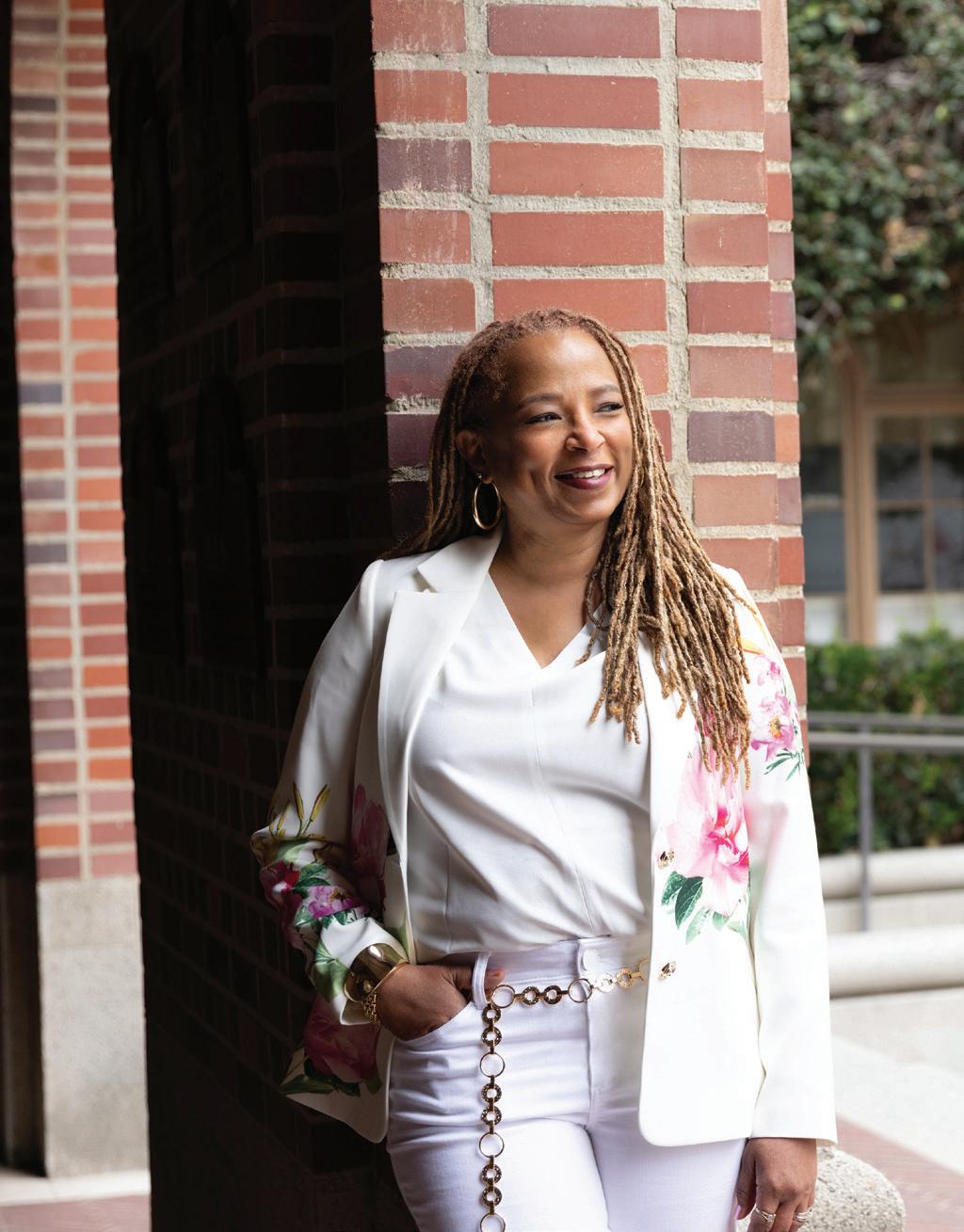
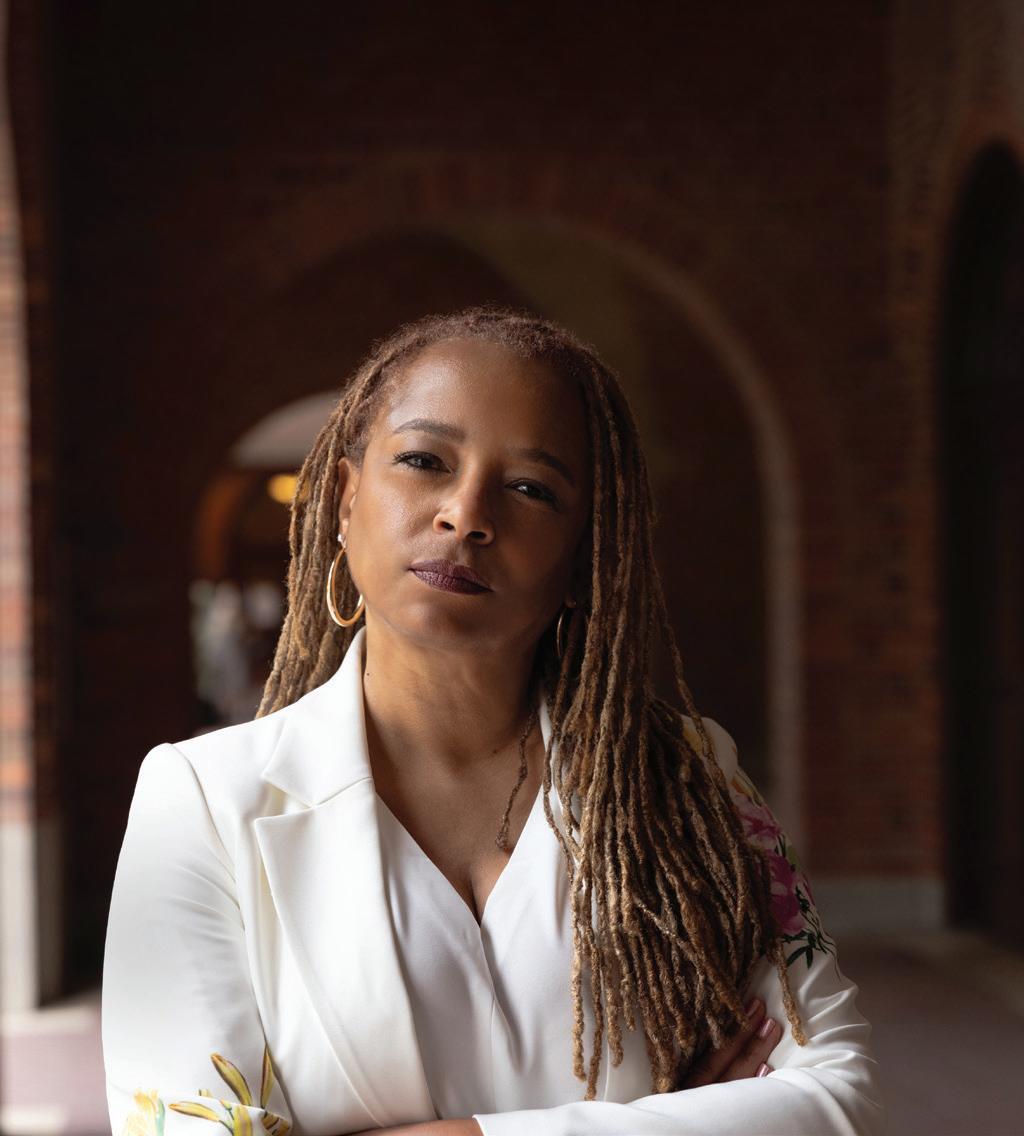
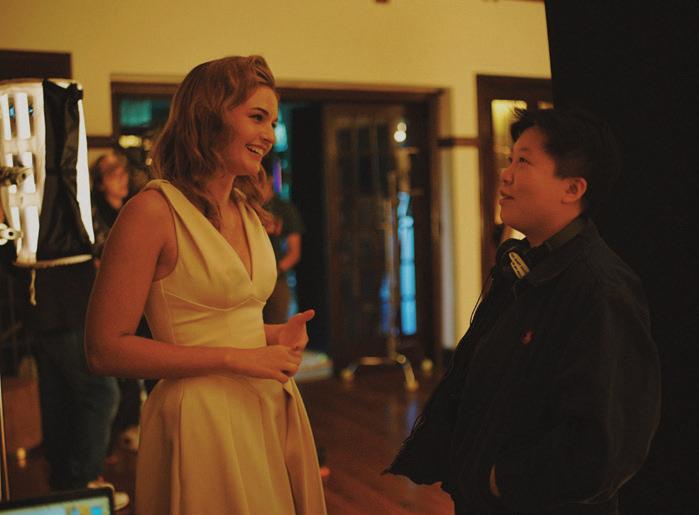
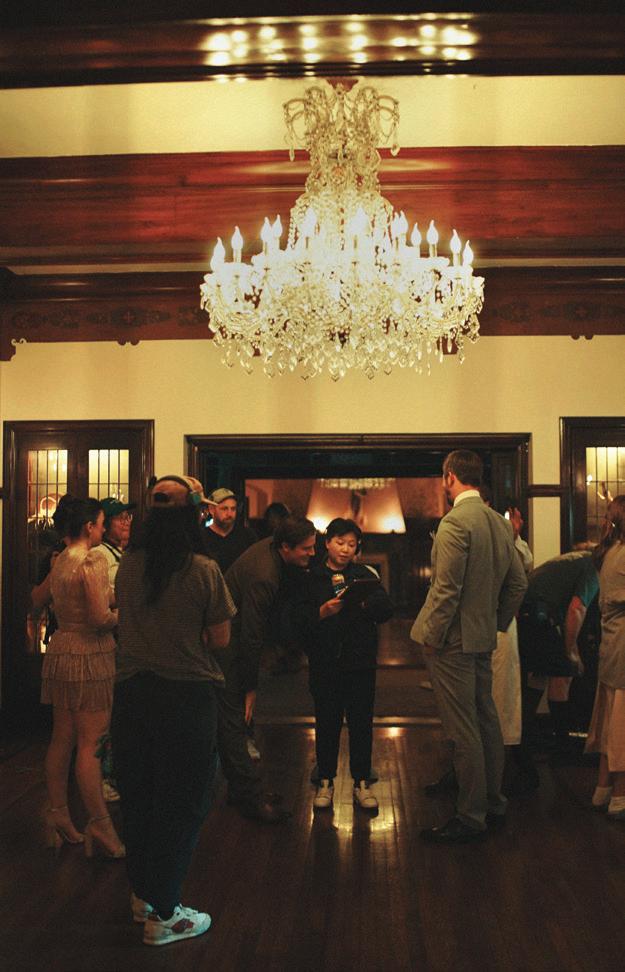
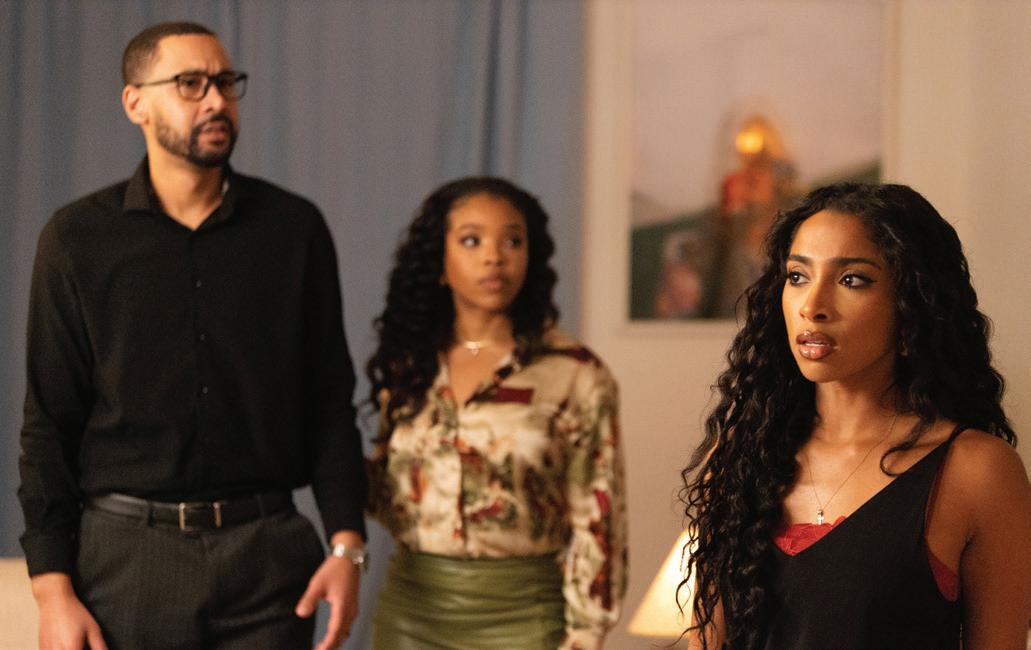
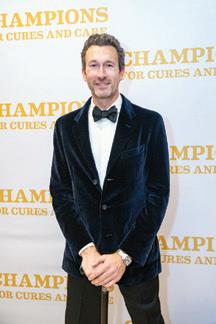
“What I love most about my job is coming to love the creative vision of the filmmaker, then making it my mission to do everything humanly possible to get them everything they want to bring that to a reality on screen.”
OPPORTUNITIES AND LESSONS FROM THE GROWING VERTICAL SPACE
52 GOOD FOR THE PLANET GOOD FOR THE BOTTOM LINE: PGA’S NEW SUSTAINABILITY
CONSIDER THE SHOWS THAT LEFT YOU
BREATHLESS
“ HANDS DOWN, THE BEST TV SHOW OF THE YEAR . ”
“OUTSTANDING TELEVISION . ” “★★★★★. A TOUR DE FORCE . ”
CONSIDER THE SHOWS THAT SET YOUR
HEART RACING
“ THERE WILL NEVER BE ANOTHER SHOW LIKE IT.”
“ THE SHOW AT I TS ABSOLUTE BEST.”
OUTSTANDING
CONSIDER THE SHOWS THAT MADE YOU
LAUGH
“ ON TRACK TO BE ONE OF THE BEST ROM-COMS IN TV HISTORY.”
“The role is actually to say, ‘Yes, you can have it. Let me figure out how to
The
An
PRODUCER AMY BAER WITH CAST AND CREW FROM THE BEST IS YET TO COME.
DEPARTMENTS
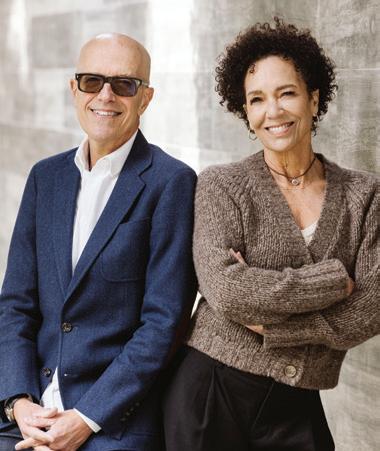
17 LETTER FROM THE PRESIDENTS
Stephanie Allain and Donald De Line on saluting winners and facing challenges ahead.
18 ON THE MARK
Producers of three upcoming features detail the work they did to earn the Producers Mark.
31 NEW MEMBERS
Meet the PGA’s newest members and discover what makes them tick.
71 TOOL KIT
What one producer in the vertical space uses to bring life to small-format productions.
82 MEMENTO
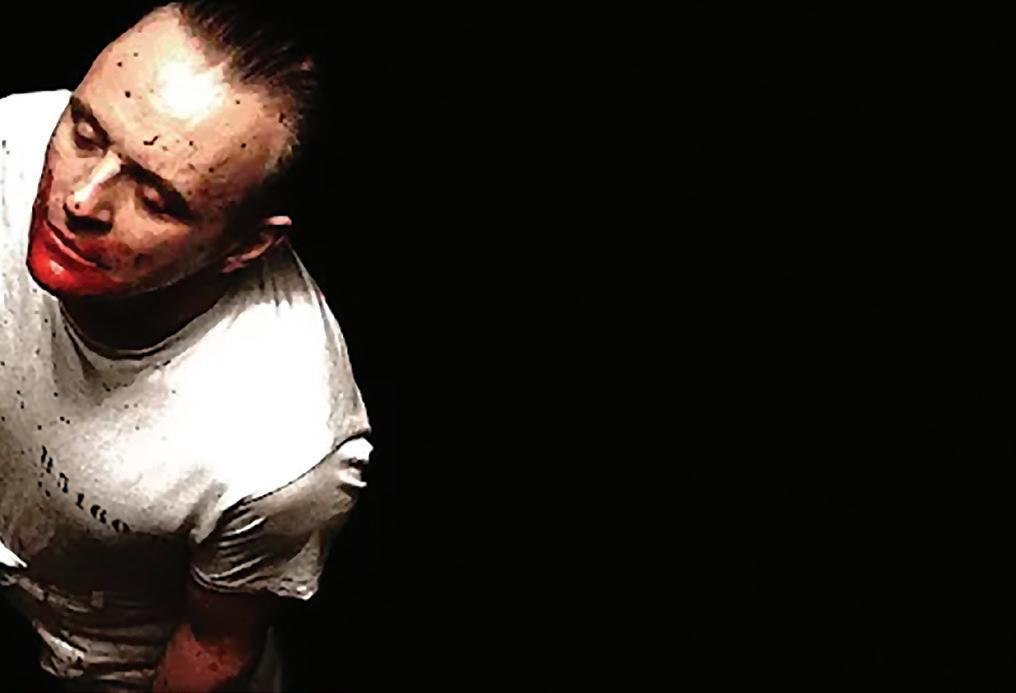
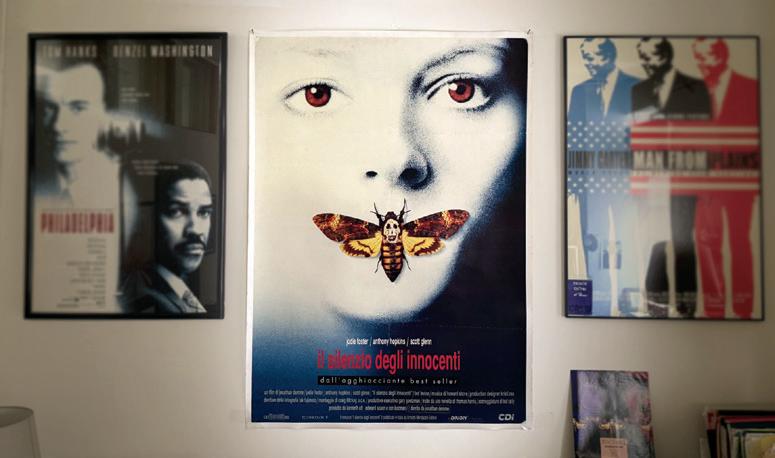
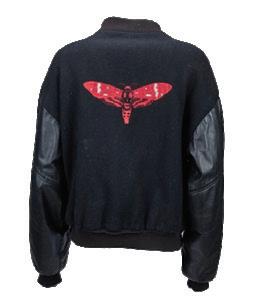
35 years later, the shepherds of a most unique production share memories from The Silence of the Lambs
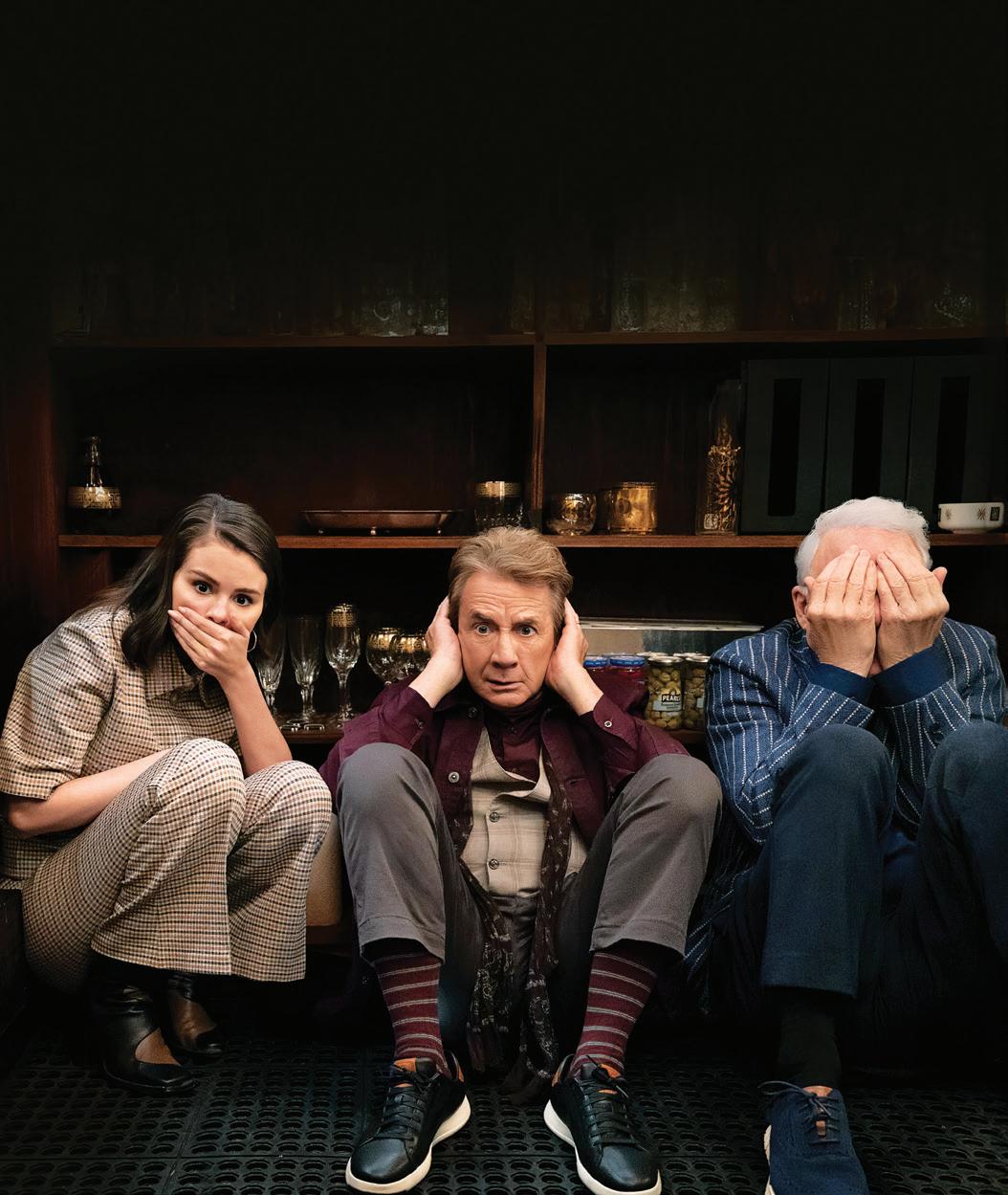
“ANOTHER KILLER SEASON. THE TRIO ARE HILARIOUS TOGETHER.”
IRISH TIMES
“FUNNIER THAN EVER. TELEVISION ’S MOST JOYFUL OFFERING.”
BOARD OF DIRECTORS OFFICERS
PRESIDENTS
Stephanie Allain Donald De Line
VICE PRESIDENT, PRODUCING
Charles Roven
VICE PRESIDENT, PRODUCING TEAM
Steve Cainas
VICE PRESIDENT, EASTERN REGION
Tonya Lewis Lee
TREASURER
Yolanda T. Cochran
SECRETARIES
Mike Jackson Kristie Macosko Krieger
DIRECTORS
Bianca Ahmadi
Fred Berger
Parker Chehak
Melanie Cunningham
Mary Alice Drumm
Linda Evans
Samie Kim Falvey
Mike Farah
Jennifer Fox
Beth Fraikorn
DeVon Franklin
Donna Gigliotti
Jinko Gotoh
Bob Greenblatt
ASSOCIATE NATIONAL EXECUTIVE DIRECTOR
Michelle Byrd
CEO
Susan Sprung
EDITOR
Lisa Y. Garibay
PRODUCERSGUILD.ORG
Vol. XXII No. 3
Produced By is published by the Producers Guild of America. 11150 Olympic Blvd., Suite 980 Los Angeles, CA 90064
310-358-9020 Tel. 310-358-9520 Fax
1501 Broadway, Suite 1710
New York, NY 10036
646-766-0770 Tel.
Rachel Klein
Larry Mark
Lori McCreary
Tommy Oliver
Marc Platt
Joanna Popper
Lynn Kestin Sessler
PARTNER & BRAND PUBLISHER COPY EDITOR
Emily S. Baker
CREATIVE DIRECTOR
Ajay Peckham
ADVERTISING
Ken Rose
818-312-6880 | KenRose@mac.com
Bob Howells
PHOTOGRAPHER
Tameka Jacobs
MANAGING PARTNERS
Charles C. Koones
Todd Klawin
THE POWER OF ADVOCACY
One of the great joys of leading the PGA is being swept up in the wave of gratitude that PGA Awards week brings every year. Every moment of these special events—from the producing team celebrations to breakfast with the nominees and the awards show itself— gives us newfound appreciation for the hard-working individuals who serve in all producing roles. We are cheered and inspired by the work of the nominated and awardwinning producing teams.
The 12 months since last year’s awards were filled with demonstrations of the characteristic resilience and creativity of producers as the industry continued to push through challenges while celebrating victories. This included a significant expansion of the California Film and Television Tax Credit program, which has already successfully increased production in the state.
Now, with the proposed acquisition of WBD by Paramount Skydance signaling potential for a major shift in our industry, the PGA is channeling its resources toward advocating for what will best support the producing community.
Producers know first-hand the breadth of creative and economic factors of our industry. Producers know that entertainment jobs power economies across the United States. Producers’ voices matter, and for this reason, PGA leadership is doing all it can to present the interests of its members and the broader producing community directly to state attorneys general, House members, senators, and the U.S. Department of Justice.
As part of these efforts, PGA leadership delivered testimony to the U.S. Senate committee overseeing antitrust matters, urging the committee to examine the potential acquisition of WBD. The PGA presented a letter supporting action by the County of Los Angeles related to the proposed acquisition. And the Guild joined IATSE, DGA and the WGA for a field hearing chaired by Senator Adam Schiff with Representatives Laura Friedman, Sydney Kamlager-Dove and Lou Correa.
The emphasis of our message is simple, but strong: Any
deal must protect jobs, foster entrepreneurship, guarantee meaningful theatrical distribution, empower consumers with choice, promote creativity and uphold free speech.
All of these are priorities for our producing community. The Guild stays informed about these priorities with opportunities for feedback such as the annual member questionnaire that was recently sent to all PGA members. This feedback informs our advocacy efforts with policymakers and industry stakeholders. If you haven’t yet filled out your questionnaire, we hope you’ll take a few minutes to do so now.
We will not slow our efforts to advocate on behalf of every producer. Count on us, and the rest of the PGA leadership, to keep you updated as the Guild continues this work.
Donald De Line President Stephanie Allain President
ON THE MARK
Three producers pull back the curtain on the work they did to earn the Producers Mark.
Innovation and dedication are requisites for any producer applying for the Producers Mark. But to earn the Mark, those producers must also demonstrate that they performed, in a decision-making capacity, a major portion of the producing functions on a motion picture.
Because each project offers its own unique set of circumstances, the challenges and triumphs vary wildly
across budget, talent, location, distribution and more. But the denominator common to each producer who receives the Mark is the quality of their contribution to each phase of production—development, preproduction, production and postproduction.
Here, the producers of three forthcoming features share details about their Mark-certifying work.
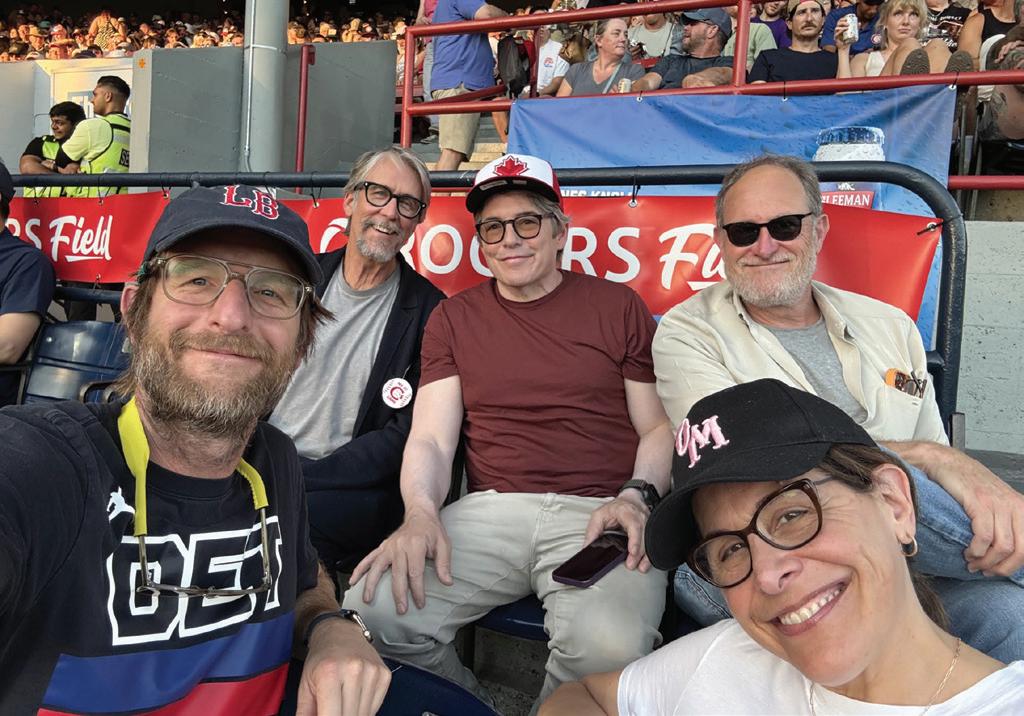
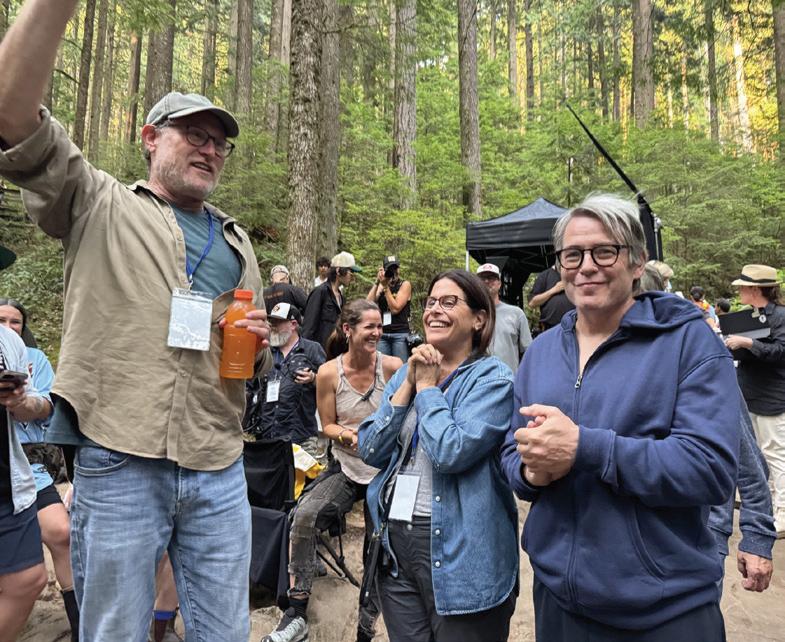
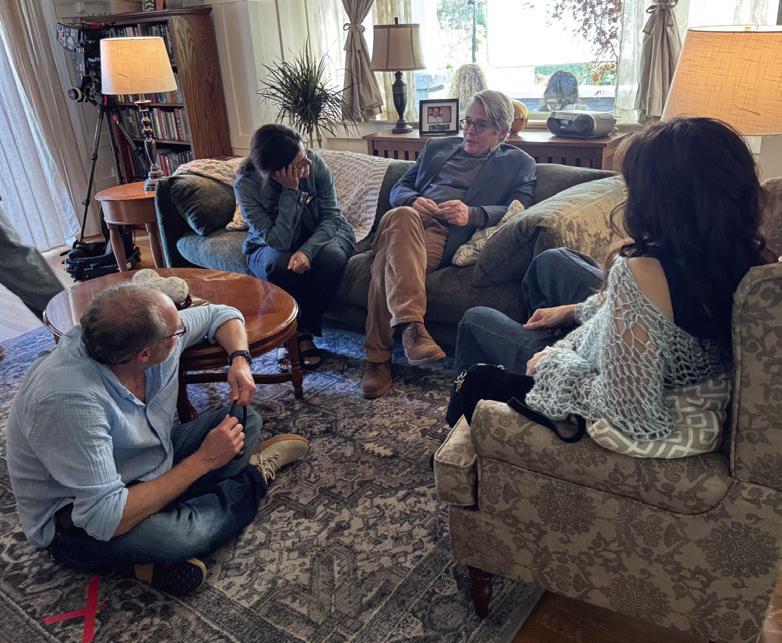
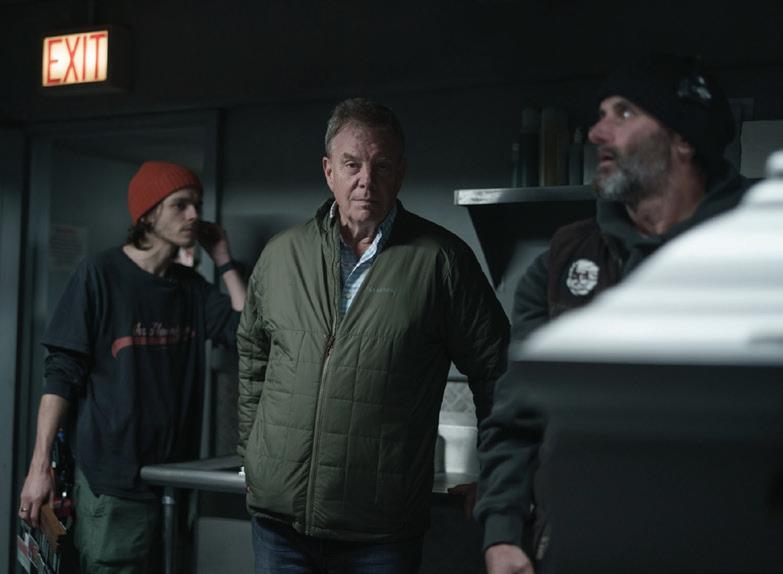
Director Jon Turteltaub on location with producer Amy Baer and Matthew Broderick, who costars in The Best Is Yet to Come.
PHOTOS COURTESY DAVID ROBERT JONES
The Best Is Yet to Come Amy Baer, p.g.a.
The Best Is Yet to Come, written by Allan Loeb and directed by Jon Turteltaub, is based on a heartfelt 2019 French comedy. The new English-language version, which was produced by Amy Baer and Dmitri Rassam, remains true to the original plot: Two longtime friends embark on a bucket-list road trip after a huge misunderstanding between them, rushing to repair family relationships and embrace life while they still can.
THIS FILM IS A REMAKE OF LE MEILLEUR RESTE À VENIR
HOW DID YOU DECIDE WHICH ELEMENTS OF THE ORIGINAL STORY TO PRESERVE VERSUS WHICH TO REINTERPRET?
When I first watched the film, I had just started running Landline Pictures, a (former) label for MRC. It was a perfect fit for my mandate: movies for an older audience. It was rare to find a comedy that fit that mandate.
Le Meilleur Reste à Venir is about two lifelong friends, both in their late 50s, taking stock of their life choices relative to each other. Usually, movies targeting an older audience dwell on the hardships of aging or offer broad comedic takes on “senior citizens.” I
loved that it respected the two main characters and had an authenticity to it. It’s a classic French farce while also being emotionally deep. It explores male friendship, something we don’t often see on screen. It also dives fearlessly into existential questions about mortality, friendship, legacy and purpose, all while being a very funny film. Most of the film was suitable for an American adaptation.
WERE THERE CULTURAL NUANCES FROM THE FRENCH VERSION THAT WERE CHALLENGING TO TRANSLATE?
Jon Turteltaub, Amy Baer, Matthew Broderick and Mary Louise Parker on set.
The biggest challenge for the American adaptation was the central farce. The comedy’s conceit is a massive misunderstanding between two best friends. Without giving too much away, the movie’s central conflict rests on each character thinking the other is dying and being afraid to disclose this information because they fear confronting mortality— their own, as well as their best friend’s.
For French audiences, the outrageousness of farce as a storytelling mechanism is more standard and accepted, as is the tonal balance between comedy and drama. American audiences tend to be more literal; movies are either funny or dramatic, silly or emotional. But life is both, and we wanted to capture that aspect of the original.
Director Jon Turteltaub, screenwriter Allan Loeb and I agonized over whether an American audience would accept two characters essentially lying to each other for two acts of a movie. But Loeb adapted this story element in a very elegant way.
WHAT ARE THE BIGGEST CHALLENGES IN PRODUCING A REMAKE VERSUS AN ORIGINAL STORY?
Remakes come with built-in expectations. Will you live up to the original? In our case, the original film was not widely released outside of France, so we didn’t have the fear of “don’t ruin this” hanging over our heads. Generally speaking, remakes are fun to tackle because, by definition, something worked the first time, which is why you are remaking it. There’s a baked-in element of “this works,” which you don’t necessarily have when producing a wholly original story.
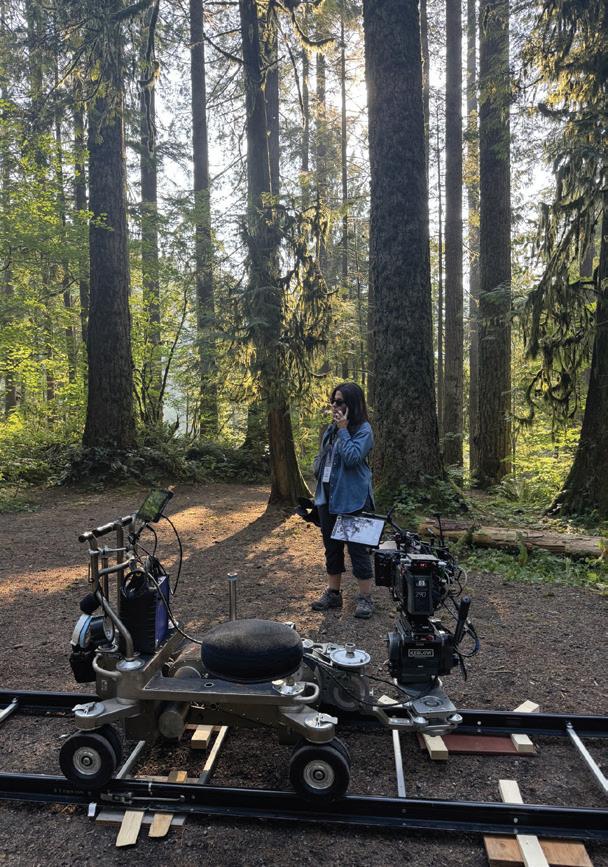
Amy Baer on location.
The Devil Wears Prada 2
Wendy Finerman, p.g.a.
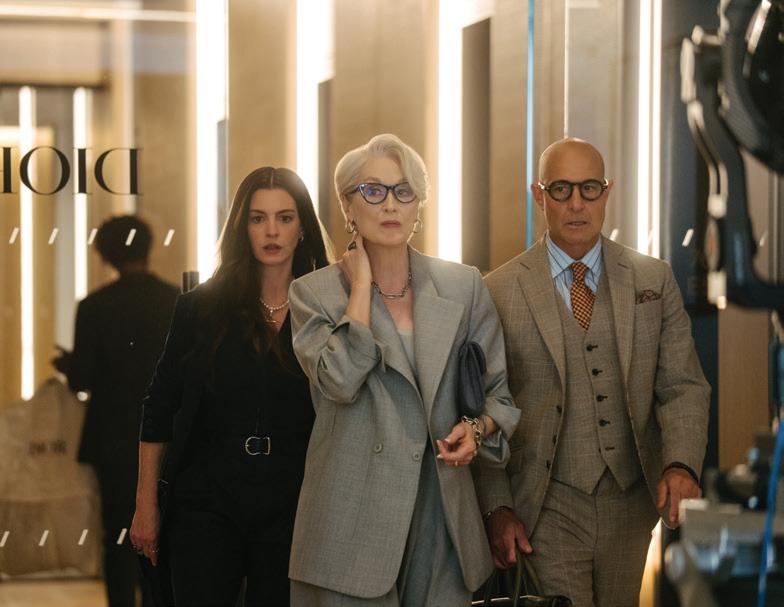
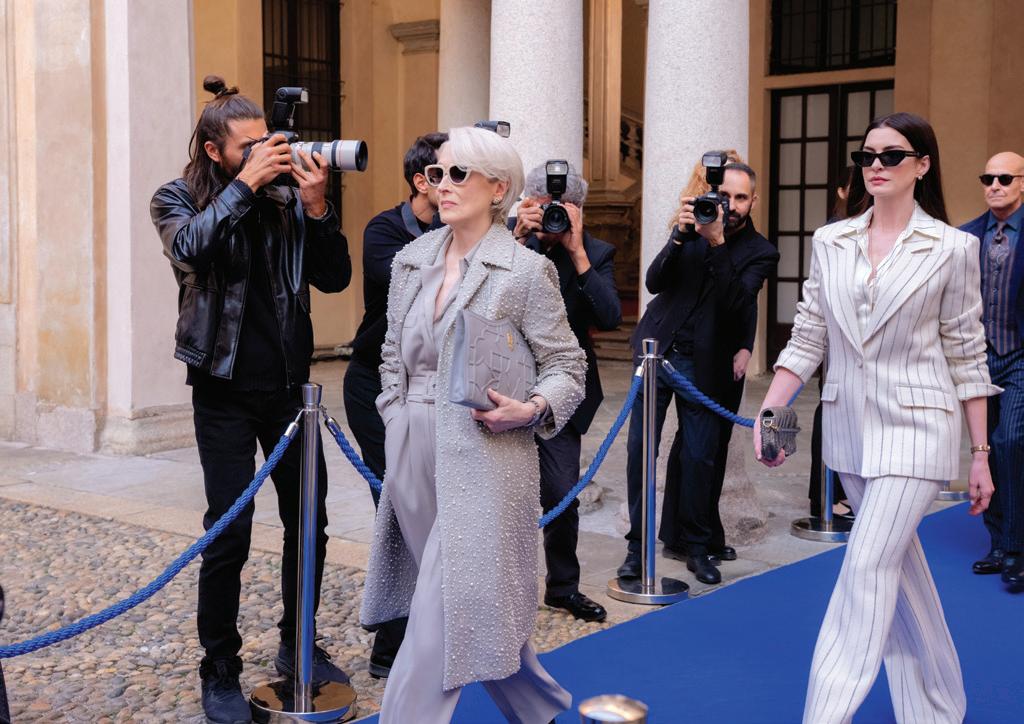
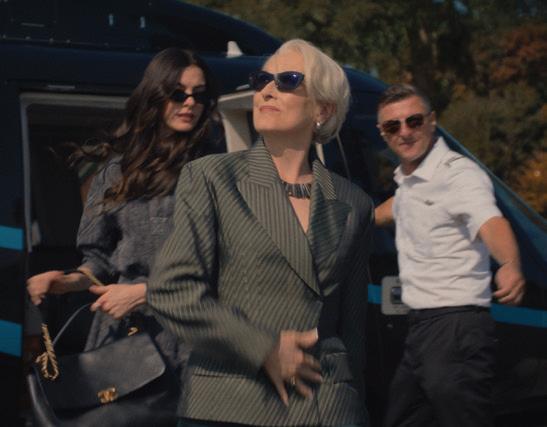
Almost 20 years after making their iconic turns as Miranda, Andy, Emily and Nigel, Meryl Streep, Anne Hathaway, Emily Blunt and Stanley Tucci return to the fashionable streets of New York City and the sleek offices of Runway Magazine in the eagerly awaited sequel to the 2006 phenomenon.
The Devil Wears Prada 2 is produced by Wendy Finerman, and executive produced by Michael Bederman, Karen Rosenfelt and Aline Brosh McKenna. The film reunites the original main cast with director David Frankel and writer McKenna, while introducing an all-new runway of characters.
HOW DID YOU APPROACH NEGOTIATIONS WITH RETURNING CAST MEMBERS?
The foundation of any film, especially one involving returning cast, is a strong script that excites people creatively. There had been ongoing conversations for some time about how much the landscape—both culturally and within the story’s world—had evolved since the original film. Once a solid concept was in place, it became about sharing that vision with the key cast members and making sure they felt there was something meaningful to return to.
Negotiations were less about convincing people and more about aligning schedules and expectations. Many of the actors had gone on to have very successful careers, but there was a shared appreciation for the original project that helped bring everyone back
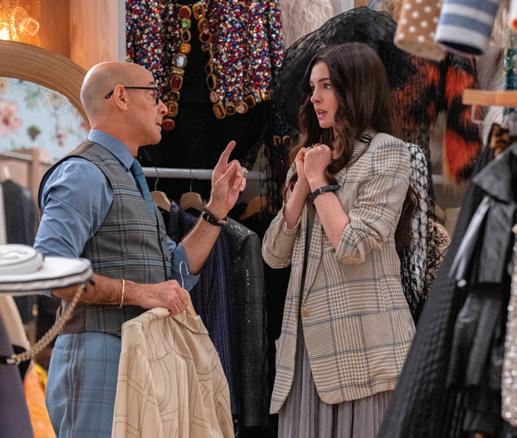
Anne Hathaway, Meryl Streep and Stanley Tucci are back as Andy, Miranda and Nigel.
together. Strong representation and collaboration across all parties also played an important role in getting everything across the finish line.
WHAT CONSIDERATIONS GO INTO CONTINUITY WITH CHARACTER ARCS WHILE ALLOWING ACTORS TO EVOLVE THEIR PERFORMANCES?
The first consideration was that it’s 20 years later—where are they now? Miranda Priestly is holding on by her
fingernails. We knew Andy was out pursuing her career as a journalist, and Emily, as many fashion editors proceed with their career, was head of a major brand. Nigel, the dutiful lieutenant, remained by Miranda’s side. That dictated where we met them. But we were also dealing with women who had children and husbands, who were thinking of having children, who were more mature in their work environment in handling stress and crisis, and women who had gained life experience.
WHAT MADE NOW THE RIGHT TIME TO REVISIT THE STORY? HOW DID YOU BALANCE NOSTALGIA WITH THE NEED TO CREATE SOMETHING CULTURALLY RELEVANT FOR TODAY’S AUDIENCE?
We knew it was the right time because the media world has changed drastically. Print media was no longer the same. Digital media is at the forefront. The people of power had huge challenges to face—that the world was immediate, not monthly. Fashion
became instant. Whatever came out on the runway was immediately massproduced by large discount chains. This was a very fertile environment to present these monumental changes.
During the entire process, from script development to filming, we were very aware to always tip our hat to the past and acknowledge the present day, because the themes of the film are still based upon doing a great job, and the love affair and wish fulfillment that fashion can provide to everyone.
WERE THERE ANY UNEXPECTED OBSTACLES THAT REQUIRED SIGNIFICANT CREATIVE OR OPERATIONAL PIVOTS?
This time around we were dealing with major actors with complex schedules shooting other movies. Trying to find a window of time to film this movie was truly a hurdle. Each one of them had commitments that were firmly in place before we were even greenlit, so we really had to juggle a lot to figure out how we could have a comfortable and reasonable schedule to shoot. But it wasn’t just shooting. We needed a
significant amount of time for prepping our wardrobe, hair and makeup looks, and other normal preparations.
I will also say that we were able to reassemble most of our crew and department heads. The fact that we had all stayed friendly and had been in
contact and worked with one another on other projects, really made it easy. We were able to jump in right from the start, which created synergy to help make everything go smoothly. We were a family reunion on all fronts.
Hathaway and Streep on the move. Below:
Tucci’s Nigel has it out with Hathaway’s Andy.
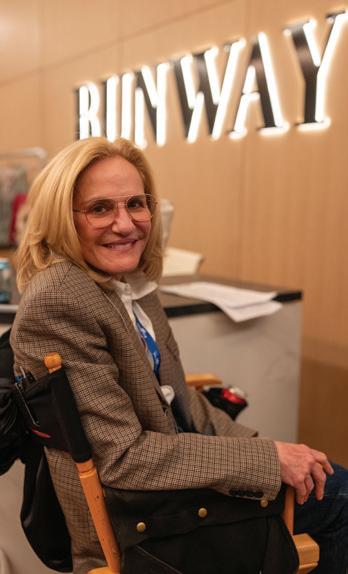
Wendy Finerman on set of The Devil Wears Prada 2.
FOR YOUR EMMY® CONSIDERATION
OUTSTANDING DOCUMENTARY OR NONFICTION SERIES
OUTSTANDING VARIETY SPECIAL (PRE-RECORDED)
Evil Dead Burn
Rob Tapert, p.g.a.
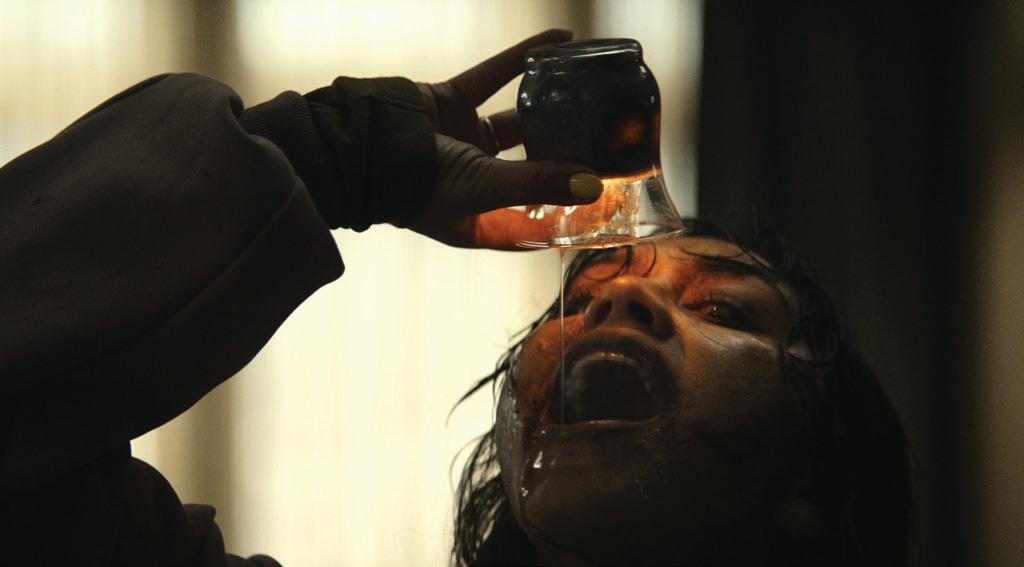
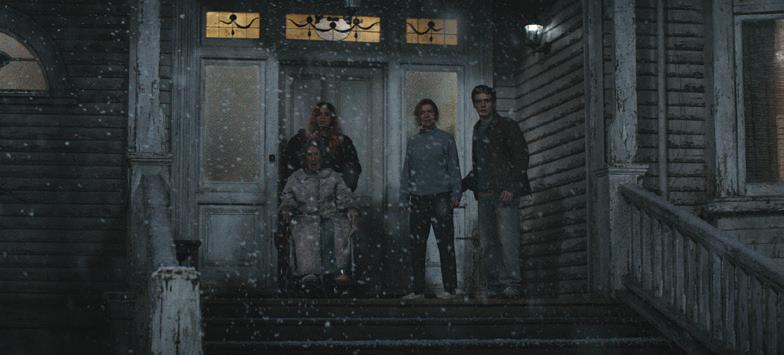
The latest incarnation of carnage and demonic mayhem in the world of Evil Dead follows a widow’s attempt to seek solace with her inlaws in their secluded family home. Their quietude is destroyed when a misguided decision lures Deadites, as the titular characters are known, to them, giving a new meaning to familial dysfunction.
Along with Sam Raimi, Evil Dead Burn is produced by Rob Tapert, who has produced all six installments of the Evil Dead franchise. Romel Adam, Bruce Campbell, Lee Cronin and Jose Canas executive produced.
WITH EVIL DEAD EVOLVING ACROSS DECADES, HOW DO YOU MAINTAIN CONTINUITY OF VISION WHILE ALLOWING REINVENTION?
A lot of it has to do with letting go, not being overly precious, and not forcing filmmakers to stick very closely to what was done before. We are dealing with the world of the supernatural, of the unexplainable, so it’s important for me to offer filmmakers a large sandbox in which to play.
In that regard, there is always going to be some feeling of anthology to the Evil Dead films. Evil Dead Burn has a decidedly French flair. It also has connections to the past films and an expansion of the mythology.
PHOTOS
THE ORIGINAL EVIL DEAD WAS FAMOUSLY LOW-BUDGET. HOW DID THOSE CONSTRAINTS SHAPE YOUR PRODUCING PHILOSOPHY LONG-TERM?
Although the Evil Dead movies are now with major studio partners, they are, as far as franchise pictures go, still relatively modest in their budgets.
The challenge is to balance the ever-spiraling cost of modern moviemaking with maintaining the creative scrappiness of the original Evil Dead, and bringing in the movies at a financially responsible number. It takes a lot of planning and cultivating crews that I know and can trust.
WHEN STEWARDING A FRANCHISE, HOW DO YOU EVALUATE RISK VERSUS BRAND INTEGRITY—ESPECIALLY WITH REBOOTS OR NEW DIRECTORS?
Over the course of four decades, I have been the on-set shepherd for the franchise. Not just the movies, but three seasons of the TV show Ash vs Evil Dead as well. By and large we allow the filmmakers to deliver their own vision of an Evil Dead movie. There are certain parameters in which we want them to operate—ancient incantations, supernatural possession, demons that revel in causing pain and who know your deepest secrets—but within those bounds we give them as much freedom as possible. It’s a tricky thing—you want to be calculated in
Producer Rob Tapert (center) on the set of Evil Dead Burn
the risks you take, but you also have to recognize that this is a creative process; you have to trust your gut and not overanalyze.
Working with first- and secondtime directors on the movies has been incredibly rewarding and equally challenging. Young filmmakers bring energy, style and a vision that is unique. This is what the Evil Dead franchise needs in order to keep evolving. However, there are certain things I learned many years ago—like set pieces are slow, take time and should go to a second unit. The directors are always resistant to anyone else shooting
their vision. I don’t like saying, “I told you so,” but sometimes those words come out of my mouth. Luckily, we build schedules that allow for a few misfires.
Most young filmmakers have no understanding of the studio system and marketing. My team helps them learn and navigate how to work beyond the independent filmmaking world. The studio is not an enemy, but a great tool that young filmmakers need to understand how to work with and use properly.
CAN YOU SHARE A MOMENT WHERE A PRODUCTION
PROBLEM REQUIRED A DISTINCTLY PRODUCERDRIVEN SOLUTION RATHER THAN A CREATIVE ONE?
We shot the movie in New Zealand, where the weather is unpredictable and constantly changing. You get all four seasons on any given day. What this means for production is that shooting on location and outdoors can become a real nightmare for the schedule and the budget. My solution was to film in controlled environments and on sets and stages as much as possible, and not allow ourselves to fall prey to the elements. ¢
On location in New Zealand for Evil Dead Burn.
NEW MEMBERS
Produced By trains the spotlight on some of the Guild’s newest members, and offers a glimpse at what makes them tick.
Joy L. Ganes
Joy L. Ganes is a producer and entertainment attorney at the intersection of creativity and ownership. With over a decade of experience across studio, network, and independent platforms, she has produced Premature (Sundance/IFC) and I’ll Meet You There (SXSW/Amazon), served as coexecutive producer on First Wives Club, and held executive roles at BBC Studios, OWN and Tracy Yvonne Productions. She is currently in preproduction on an indie feature that will shoot late summer, and building The Legal Fine Print Co., helping filmmakers, founders, and creators demystify contracts, protect their IP and own their legacy.
Why did you decide to become a producer, and what about the job brings you the most joy and fulfillment?
As an only child, I spent a lot of time in my own world, writing stories and losing myself in imaginative play. That early relationship with storytelling never left me. I’ve always been moved by its power to bring people together, evoke deep emotion and transport us into worlds we could never otherwise imagine. That kind of impact can genuinely change people, and I wanted to be part of creating it.
On the practical side, I’m drawn to the puzzle-solving nature of producing. There’s nothing more fulfilling than watching all the pieces, the creative vision, the team, the financing, the execution, finally come together. That collaborative alchemy is what keeps me passionate about this work.
Tara Bhoola
Tara Bhoola is a post producer in high-end television. Growing up with a love of film and TV drama, she entered the industry as a post facility runner before moving into bookings, and later going freelance as a post supervisor and post producer. Originally trained in architecture, Bhoola’s route was a circuitous one. More than two decades later, her recent credits include Top Boy (Netflix) Seasons 1 and 2, Season 6 of Black Mirror—including the Emmy-nominated episode “Beyond the Sea,” which also took home a PGA Award—and Black Doves, which earned Keira Knightley a Golden Globe nomination.
What skills have best served you as a post producer of both TV and film? Have your experiences in one format helped boost your skills in the other, and vice versa?
Patience, adaptability and good communication have shaped my approach to post producing and to life in general. My early architectural training instilled a habit of seeing the bigger picture rather than getting stuck in the minutiae of a problem.
I find being on the ground from shoot to delivery is essential. Spending time in the cutting room, working closely with editors and assistant editors, informs how I approach VFX, picture and audio post, creating a more cohesive workflow across departments.
Postproduction is inherently dynamic, with constantly evolving technology and increasingly complex deliverables, so staying close to the process and fostering strong relations with technical teams is essential—to keep pace, but also to ensure that every stage flows seamlessly to the next—hopefully with no last-minute surprises!
Sebastián Jiménez
Sebastián Jiménez is the CEO and founder of JK Media Group, a multinational, multilingual production company headquartered in Los Angeles. An award-winning producer and creative force in Spanish- and English-language media, Jiménez specializes in original series and films that connect diverse audiences across the U.S. and Latin America.
Jiménez’s producing credits also include eight seasons of Larrymania for NBC Universo, Now and Then for Apple TV+, La Reina Del Sur 2 for Telemundo and serving as coexecutive producer of Lucha Underground for Mark Burnett/MGM.
What project has been your greatest challenge as a producer of celebrity docuseries?
One particularly challenging project was a high-profile docuseries around a Mexican artist who was going through a very public transition in their career and personal life simultaneously. The challenge was managing truth, timing, and trust. When you’re dealing with someone whose image is constantly evolving, story can shift underneath you week to week. We had to build a narrative that felt authentic and cohesive while still staying flexible to reflect what was actually happening. Most artists are constantly reinventing themselves, and being able to capture that evolution is extremely fun, fascinating and challenging.
Bartek Rainski
Bartek Rainski’s portfolio spans films, commercials and music videos produced across North America, Europe, South America and Asia. His recent work includes the acclaimed film The Zone of Interest, which received two Academy Awards, multiple BAFTAs and the Grand Prix at Cannes.
Born in Kraków and raised in New York City, Bartek began his career in the late 1990s before moving to Los Angeles to expand his work in film and commercial production. Now based in both the U.S. and Europe, he focuses on strengthening U.S.-European film ties, promoting Central and Eastern Europe as hubs for high-quality international productions.
What project has been your greatest challenge as a producer, and what did you learn from it that has made you a better producer?
The most challenging project I’ve worked on as a producer was The Zone of Interest. I was involved long before the script existed, working closely with director Jonathan Glazer to help shape the story over more than seven years. The challenges were creative, logistical, and emotional. We had to confront profound historical darkness while finding a sense of purpose within it, and portray a real-life figure responsibly—neither as a monster nor in any way that distorted the truth.
Production posed its own hurdles: securing financing during the pandemic, designing 10- to 12-camera, 360-degree sets using available light only, and filming along the walls of Auschwitz in coexistence with the museum and its visitors. The process was constantly evolving. Nothing was ever easy.
What I learned above all is the value of persistence—that consistent, disciplined daily effort, sometimes moving forward by millimeters, is what ultimately makes the difference between failure and success.
Chris Selak
Chris Selak is an independent executive producer of multiple television series inspired by the world of Power, created by Courtney Kemp, including Power Book: Ghost, Raising Kanan, Force and a new Power prequel, Power Book: Origins
In addition to the Powerverse franchise, Selak is executive producer on the new Netflix series Nemesis
Before this, Selak headed scripted television for Lionsgate, where she oversaw creative development and programming for all scripted television projects. In her tenure, she built on legacy series like Mad Men and Weeds with groundbreaking shows like Orange Is the New Black and Nashville
What was the most valuable piece of advice you received when you began working as a producer, and how has that advice helped you grow as a producer since then?
The best advice I received when I was segueing from a creative executive to a producer was to keep an open mind and remember production is a collaborative-process medium. Basically, reminding me to stop, look and listen and ask for help if I need it. This is a constant reminder that there needs to be clear communication between all the different departments for everything to come together properly.
Some of my most rewarding experiences have been when I’ve had to work with multiple departments to find the best solutions. I love to brainstorm and bounce ideas off others.
“DAN FOGELMAN AND STERLING K. BROWN AMBITIOUSLY BRING THIS SERIES TO THE NEXT LEVEL.” COLLIDER
Nicki Slack is a New York City-based production supervisor with over a decade of experience working across scripted features and television series. She began her career as an office PA and worked her way up in the production office, building a strong foundation in production operations. Her credits include Season 1 of Fallout, the feature Friendship and Jurassic World Rebirth
She is currently in preproduction on Season 1 of Sex Criminals (Amazon), which will shoot this summer. Her experience spans large-scale location logistics, volume stages and fast-paced environments across features and television.
What skills have best served you as a production supervisor and coordinator on both features and series? Have your experiences in one format or position helped boost your skills in the other?
The skills that have served me the most across both roles are communication, anticipation and adaptability. Working as a production coordinator strengthened my ability to anticipate needs while giving me a strong understanding of how each department operates. As a coordinator, I focused on logistics, communication, organization and attention to detail, which built a solid foundation for supporting departments from the office.
That foundation informs how I show up as a production supervisor, where I support all departments, get ahead of issues before they become bigger problems, and keep things moving. Being on set showed me how quickly things unfold, making me more proactive overall.
Rachel Tan developed and produced Tubi’s first Asian American streaming original film Worth The Wait, a 2025 ensemble romantic comedy directed by multiple Golden Horse Award-winning director Tom Lin and starring Lana Condor (To All The Boys), Andrew Koji (Street Fighter), Ross Butler (Shazam), Sung Kang (Fast & Furious) and Elodie Yung (The Cleaning Lady). Tan was coproducer of the film Sight, starring Oscar nominee Greg Kinnear and Terry Chen and released in more than 2,100 theaters nationwide, grossing over $7.2 million in domestic box office. Her other films include award-winning Korean and Hong Kong coproductions.
What was the most valuable piece of advice you received when you began producing, and how has that advice helped you grow as a producer since then?
The best advice I ever received was simple: Don’t cry over closed doors.
As a producer, you’re constantly pitching to investors, directors, talent, distributors, audiences. It never ends. Early on, I’d let every rejection define me. Then I realized: Success and failure in this industry are both temporary. You’re only as good as your last film.
Learning to separate my worth from the outcome changed everything. I stopped clinging to closed doors and started showing up with open hands, ready to embrace what’s next.
Every rejection is just part of the process. And the process never stops teaching you.
Rachel Tan
Nicki Slack
EVERY THING IS Possible
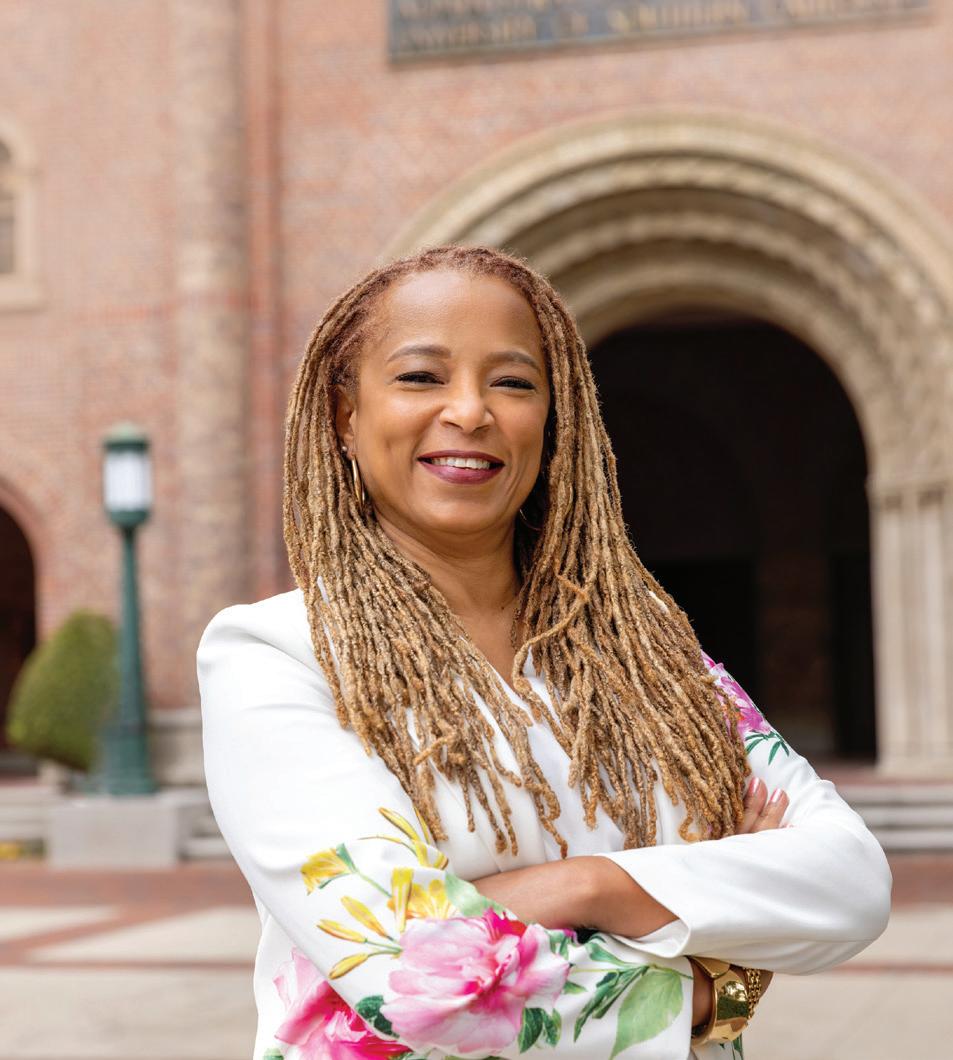
Yolanda Cochran’s rare blend of fiscal smarts, creative vision and get-it-done energy has enabled her to produce an astonishing range of projects, while winning admirers from all walks of the industry.
Written by Lisa Y. Garibay
Photographed by tameka jacobs
In the chill of deep, dark space, almost 2 billion miles from Earth, is Jupiter, the largest planet in our solar system and one of the brightest spots in the night sky. Close to a hundred different moons circle it. Among them hovers an icy satellite named Europa that demands our attention—for it is on this moon that we have detected the presence of liquid water.
And where there’s liquid water, there might also be life.
Yolanda Cochran has been passionate about this moon of possibility since 1989. That’s when the NASA probe Galileo gathered evidence that Europa harbored an ocean beneath its frozen surface that’s bigger than all of Earth’s oceans combined.
Cochran and her husband, J.D.—both self-proclaimed sci-fi nerds—cowrote a feature screenplay, titled after the moon, about the what-ifs of Europa. Cochran has been actively working to get the film made for years. It is, in fact, Cochran’s number one bucket list project. If someone presented her with the opportunity to get Europa made, but only under the condition that she quit the business altogether once it was done, Cochran would say yes to the ultimatum in a heartbeat.
Luckily for those of us on Earth, Cochran’s passion extends beyond this personal project. Her combination of pragmatism and vision is firmly grounded by a bachelor’s degree in accounting from USC, the school where she inadvertently fell in love with filmmaking, not to mention her husband. Her expertise, honed by hands-on work in almost every single area of production, has brought dozens of features and TV series to life over her decades-long career on both the independent and studio sides.
As a studio production partner, Cochran has overseen projects including The Bold Type, Siren, Motherland: Fort Salem, a reboot of iCarly, and the resurgence of Nick News. She helped launch original series including Netflix’s
SHE HAD A UNIQUE ABILITY TO KNOW WHAT YOU WERE TRYING TO DO AND THEN FIND WAYS TO MAKE THAT WORK. SHE CARES. HARD. AND NOT JUST ABOUT MAKING A MOVIE, BUT ABOUT THE
PEOPLE SHE’S ALIGNED WITH.”
—PRENTICE PENNY
That Girl Lay Lay, NFL Slimetime and Good Trouble.
On the feature side, Cochran produced the Hughes brothers’ The Book of Eli; musical dramedy Joyful Noise starring Chloe Bailey, Queen Latifah, Keke Palmer and Dolly Parton; The Sisterhood of the Traveling Pants 2, Beautiful Creatures with writer-director Richard LaGravenese; and the Oscarwinning The Blind Side, among many, many others.
Cochran currently is head of production at Imagine Entertainment
and Jax Media, where her slate includes acclaimed TV projects like Netflix’s My Next Guest Needs No Introduction with David Letterman, Fox’s Animal Control, and Roy Wood Jr.: Lonely Flowers for Hulu.
It’s an impressive track record, for sure. And one that belies a background that was light years away from Hollywood.
JOURNEY TO THE STARS
Cochran didn’t grow up dreaming of moviemaking. Raised in Houston, Texas, where the oil and gas industry abounds, she planned on becoming a chemical engineer within that sector. Accordingly, she attended a magnet high school, where she thrived and thoroughly enjoyed four years’ worth of chemistry classes.
During her senior year she took an internship with Shell Oil, but became discouraged by the day-to-day reality. “I thought, this is so boring. I can’t do this,” she recalls.
When she began reexamining her options for the future, Cochran was inspired to read in a USC brochure about their highly ranked accounting program. It sparked an idea for a new career path—one that wasn’t so far afield for the teen who used to pretend to be a “business lady” when she was a kid.
So ever the pragmatist, Cochran decided to apply her aptitude for numbers into pursing an accounting degree. The deal was sealed when she visited USC and fell in love with it and the city of Los Angeles.
At USC, interaction with the university’s world-renowned school of cinematic arts is inescapable; small shoots by student filmmakers are always taking place on campus. Cochran was intrigued, but felt that work in that field was too glamorous and untouchable. She loved going to the movies, but the industry was so removed from her life in Texas that it never occurred to her that it was a business.
Cochran made friends with students who had come to USC expressly to
pursue film. They would pull anyone they could into their orbit to help with their projects. Inevitably, Cochran became one of those helping hands.
“Most people were relaxed and chill in our film school group of friends we call The Clique. What immediately struck me about Yolanda was that even at 19 years old, she did not play games. She was about her business,” says Prentice Penny, executive producer and showrunner of Insecure “I was immediately like, ‘Oh, if I’m making a movie with her, I better be about my business.’”
There was no safer way for The Clique to build a foundation for success than to be allowed to fail without the stakes being very high. Not to mention the opportunity it gave all of them, Cochran included, to serve in so many different roles on set.
“We had no money, but Yolanda was always wanting to know what I wanted,
and she would exhaust every possibility to make that happen,” Penny recalls. “She had a unique ability to know what you were trying to do and then find ways to make that work. She cares. Hard. And not just about making a movie, but about the people she’s aligned with.”
Still, pursuing a career in film didn’t seem advisable to the no-nonsense Cochran. Worried about getting a job after graduation, she went through with the accounting degree.
THE RIGHT STUFF
But Cochran didn’t give up film when she took on her first accounting job as an auditor with KPMG. She happily gave nights and weekends to the community of filmmaking peers she had bonded with at USC.
Eventually, Cochran couldn’t resist the gravitational pull of the entertainment industry. She left corporate accounting to give film a shot as a freelance
production accountant. The first feature she worked on in this capacity was John McTiernan’s 1999 feature The 13th Warrior, followed by stints on the accounting teams for Nutty Professor II and Blue Streak, among others.
In 2005, with support from their friends from The Clique, Cochran and her husband cowrote and shot a lowbudget feature called Paved With Good Intentions, giving her more of the grit, ingenuity and compassion to successfully work with indie filmmakers in the future.
It also further convinced Cochran that she had made the right move.
“I really loved and was so adept at physical production and that part of the producing end of things,” Cochran says. “The skill set is in my DNA.”
“Yolanda’s approach to producing is specifically unique because of her background in accounting,” Penny says. “Most production finance people don’t understand the creative and most
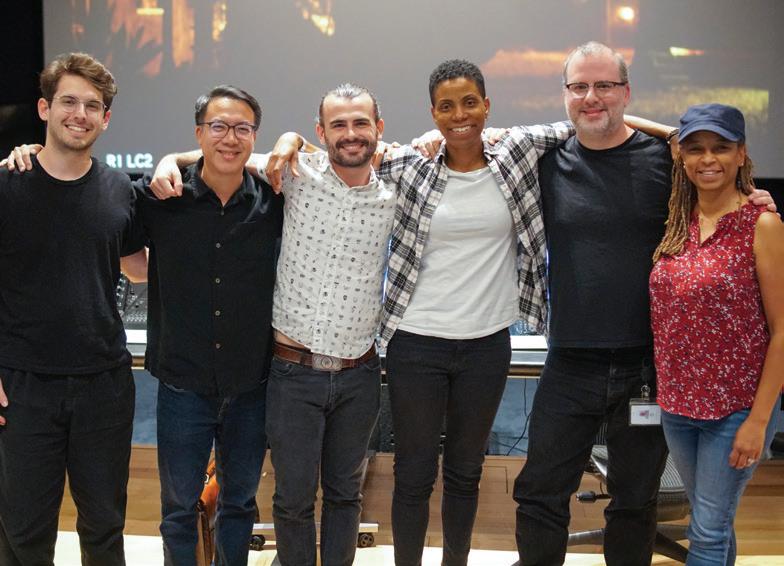
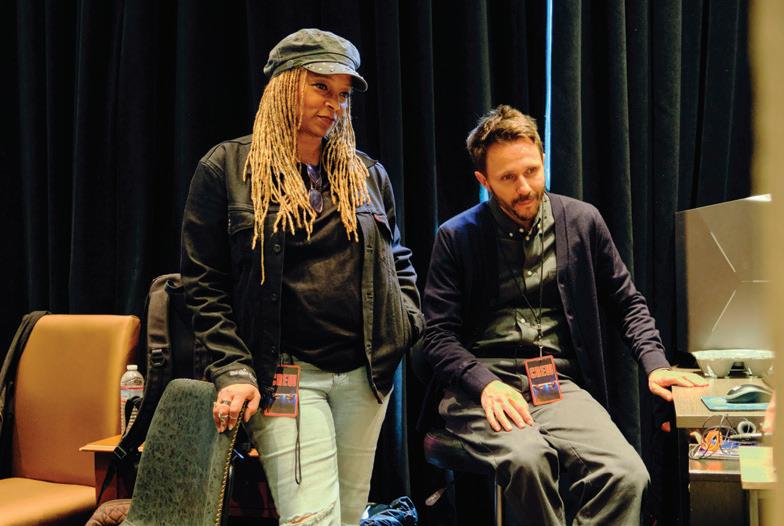
Opposite page: On the mix stage for Gray Matter: Mix tech David Semon, editor Byron Wong, rerecording mixer Caleb Hollenback, director Meko Winbush, supervising sound editor Jeffrey Pitts and Yolanda Cochran.
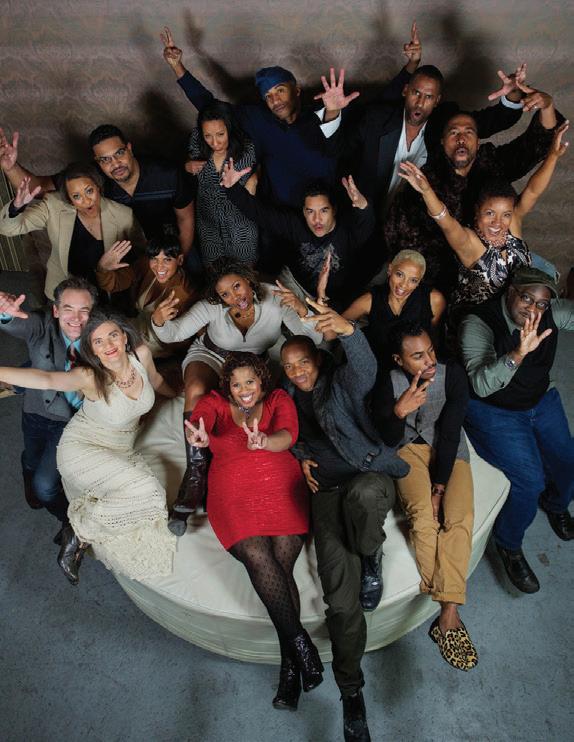
This page: “The Clique” from USC. Top row: Kymberli Winter, Terence Paul Winter, Angela Northington, James Lesure, Edu Black, James Mathis. Middle row: Mark Haslett, Taneka Johnson, Talicia Raggs, JD Cochran, Yolanda Cochran, Nichelle Protho. Bottom row: Christine Haslett, Dayna Lynne North, J. August Richards, Prentice Penny, Jevon Phillips.
creative don’t think about the finances. Because she has both of those as fields of study she can lean on, it gives her a leg up in bridging both sides of the process.”
Cochran agrees that accounting provides her an invaluable perspective.
“You get exposure to every aspect of the filmmaking, and because every department is doing something that has a cost associated with it, it has to filter through and come to the accounting department,” she explains.
“A lot of filmmakers don’t care what things cost. I feel good about my track record because I’ve been able to do creative projects with high production value and not go over budget.” But, she adds, this doesn’t mean saying no to every request. “The role is actually to say, ‘Yes, you can have it. Let me figure out how to let you have it with the resources we have.’”
It also doesn’t mean making regrettable decisions in an attempt to come in under budget. “If you made a bunch of creative compromises or cut scenes or days because you thought you didn’t have enough money, then at the end there’s half a million dollars of savings, nobody’s happy about that. Right on budget is where you want to be.”
Producer Christine Sacani first met Cochran in 2005 when Sacani was hired to produce Sisterhood of the Traveling Pants for Warner Bros. and Alcon. At the time, Cochran was the financial
controller at Alcon, which she joined in 2002. “But she was so much more than a controller,” Sacani recalls. “She was a creative problem-solver with a pronounced love for the process.”
When the two partnered again to produce the Sisterhood sequel in 2007, Cochran had risen to senior vice president of production for Alcon, and was one of the best production executives Sacani had—or has since— worked with. “As a former controller, the numbers part was a given. But her equal gift for the creative is what moves her above the rest,” Sacani says.
Broderick Johnson, CEO and
cofounder of Alcon Entertainment, agrees with that assessment of Cochran’s broad skill set, which flourished throughout her 12 years with the company, during which her two daughters were born.
“One of Yolanda’s most valuable traits at Alcon was not only being extremely thorough and professional in her core job overseeing the physical production of our films, but also how she was able to successfully interface with talent, local production professionals and her Alcon teammates in a way that made everyone feel supported and unified in the goal of making great movies.”
When Cochran moved into TV as an executive at FreeForm, she had the opportunity to work with Sacani again on two series: The Fosters and Good Trouble. Sacani welcomed Cochran’s calm, confident approach as a breath of fresh air.
“Television has a different rhythm than film, and Yolanda was quick to understand that maintaining an open perspective is critical,” Sacani says. “Yolanda made this a priority. Always willing to think outside the box, she is a person who not only listens but truly hears you, and can filter, adjust and move forward with decisions that are best for everyone.”
Joanna Johnson, executive producer and showrunner of both series, echoes that assessment. “Yolanda is very sharp, fair and committed to the creative product. She was particularly supportive of me and the stories we were telling on Good Trouble. She has a unique perspective, a wealth of knowledge, and is committed to great storytelling with important impact.”
The credits and respect garnered by Cochran’s combination of creative vision and pragmatic accountability caught the eye of Imagine Entertainment at a critical point of expansion.
Imagine Entertainment president Justin Wilkes first met Cochran during the company’s search for a head of production—a role that would also oversee Imagine’s production services arm, Jax Media. “We hadn’t worked together previously, but her reputation very much preceded her,” he says. “I was already a fan of her work and the range she’d demonstrated across projects.”
Cochran was able to offer a winning combination of having worked inhouse for studios and freelance as an independent, in both physical production and accounting. She was brought on board to fill the position in 2024. In addition to producing Jax’s film and TV projects, she is the face of Jax Media on the production services sales front, and offers production
support and consultation to Imagine’s scripted divisions.
Cochran joined the Imagine family as the industry struggled to recover from COVID and the WGA and SAGAFTRA strikes. Shrinking budgets and fewer calls for content were squeezing out business opportunities, and the company knew it had to bring someone on board who had relationships in the industry and the business sense to be able to generate new business while also sustaining projects it already had in the works. Retention was prized over expansion, but the latter wouldn’t hurt. Cochran has delivered on both fronts.
“At its core, producing is about problem-solving, and given the headwinds our industry continues to face, Yolanda’s expertise, temperament, and leadership have been a true stabilizing force,” Wilkes says. “Production services is a demanding business even in optimal conditions, and what consistently stands out is how she and the entire Jax team rise to meet those challenges across every series. She brings a level of rigor and composure that elevates not just Jax, but the broader Imagine ecosystem.”
He adds, “Working alongside Yolanda has been incredibly rewarding on both fronts: helping steer the business while also engaging in the creative and logistical nuances of specific projects—most recently, the latest remote segment for My Next Guest Needs No Introduction with David Letterman on Netflix.”
While it is accurate to categorize Jax as a production services company, under Cochran’s direction it also provides true creative leadership and collaboration for any partner, studio or otherwise.
“When you look at the body of work she’s overseen at Jax—from Emily in Paris to Bait to My Next Guest—it reflects an exceptional range of formats, budgets and international locations. What’s remarkable is her ability to consistently deliver what we think of as ‘premium at a price point.’” Wilkes says. “That
balance is incredibly difficult to achieve, and she does it without compromising creative ambition. And that’s just her work here. Her track record prior to Jax is equally impressive.”
A MISSION OF INTEGRITY
When it comes to defining Cochran as a producer, one word sums up how she impresses those she has worked with: integrity.
“Yolanda is one of the realest, most honest and decent people I know,” Penny says. “There’s not a false bone in her body. If she says she can do it, I know she will do whatever it takes to try. That is a difficult trait to come by, and that has always stuck with me. When I’m producing or showrunning, I definitely try to always keep that energy top of mind.”
“Great producers are often described as Swiss Army knives,” Wilkes says. “They can adapt, solve and execute under any circumstances. What sets Yolanda apart is not just that versatility, but the depth of her experience. She’s worked across film, television and documentary, with firsthand experience both in the field and within the studio system. That breadth gives her a unique perspective and command. Just as importantly, she brings an extraordinary level of grace under pressure. When you combine that with her track record, it’s clear she’s someone emerging producers can look to—not just for what she’s accomplished, but for how she’s accomplished it.”
In service of her commitment to the profession of producing, Cochran has served multiple terms as treasurer on the PGA’s board of directors. She has also served as the Guild’s national cochair of the Women’s Impact Network committee, and as a member of the Anti-Harassment Task Force, One Guild Steering Committee, and the Production Safety Best Practices Task Force.
“I first met Yolanda when she ran as an independent candidate for the PGA board. It was a gutsy move, and
I was thrilled she won a seat,” says Donna Gigliotti, producer of Hidden Figures, Silver Linings Playbook and 80 for Brady. “Yolanda is one of the kindest, smartest people I know. She’s very perceptive about issues facing our industry, and she’s really good at looking around the corner to see what’s coming next. When she speaks, you can trust that she has done her homework.”
What motivates Cochran to power through that homework is the joy she gets from helping others.
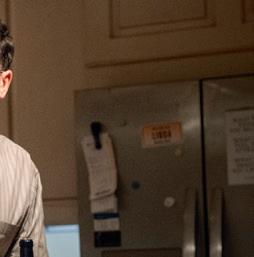
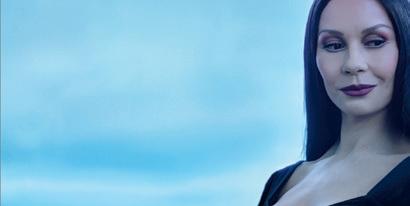
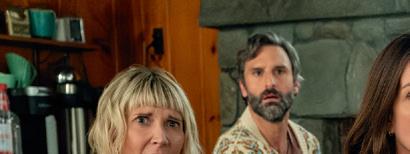
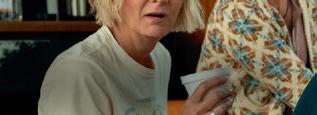
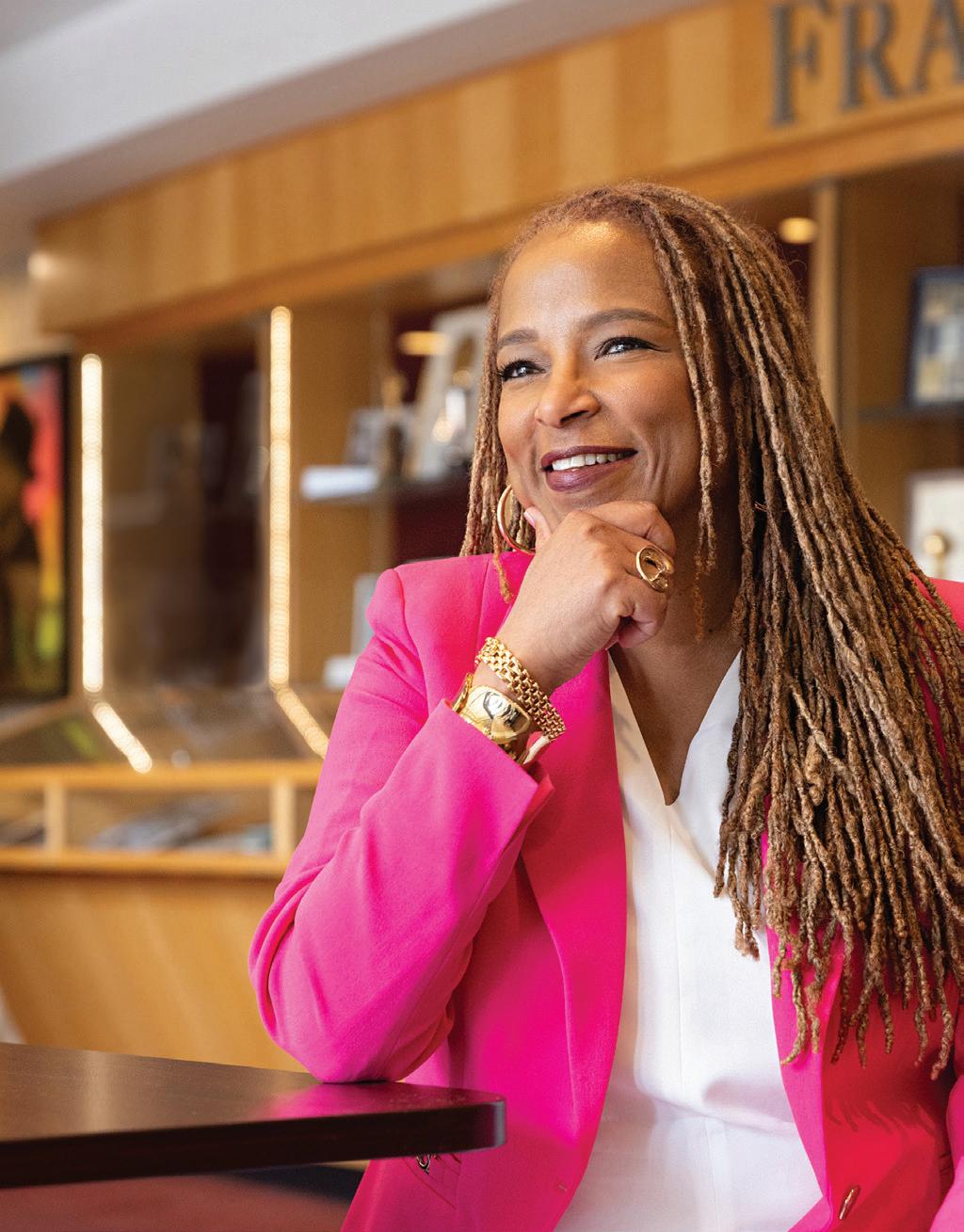
“What I love most about my job as a producer is coming to love the creative vision of the filmmaker, whether it’s the writer in TV or director in film, then making it my mission to do everything humanly possible to get them everything they want to bring that to a reality on screen,” Cochran says. “Part of that is also standing in a place where those individuals only need to focus on what is most important for them to do their best job.”
For Cochran, this involves not only keeping an eye on the big picture, but also appreciating every contributor on an individual level. When starting a project, she studies the crew list and call sheet, and then makes a plan to
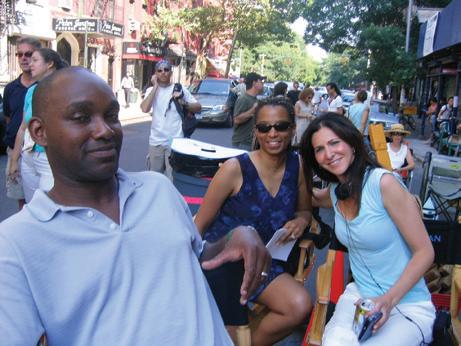
Top left: Yolanda Cochran with producers Broderick Johnson and Alison Greenspan during the filming of Sisterhood of the Traveling Pants 2 in New York City.
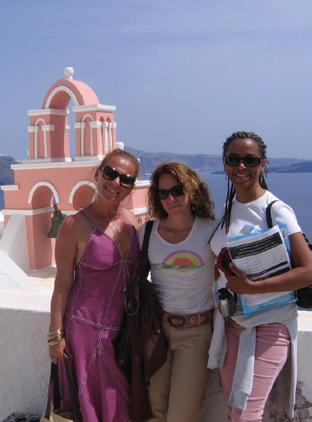
Above: Yolanda Cochran, director Sanaa Hamri and executive producer Christine Sacani during the filming of Sisterhood of the Traveling Pants 2 in Santorini, Greece.
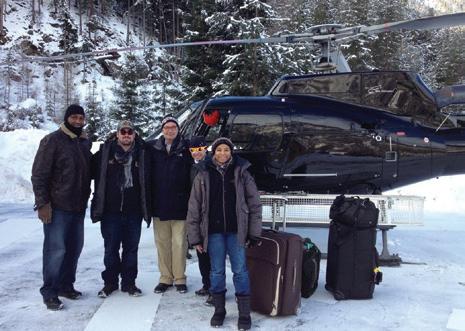
Left: Yolanda Cochran with producers Broderick Johnson (far left) and Andrew Kosove (second from right) on a scouting trip in the Alps for Point Break
directly engage crew members to learn more about them.
“Each one of those departments and the artisans in those departments are so important. The notion of above the line or below the line should only be a budget segregation scenario, not how we regard and interact with each other day to day,” Cochran says. “Understanding the integral contribution of every person on your shooting crew should be something that is front of mind at all times, not a platitude.”
Along these lines, she believes it’s a mistake to keep a line producer solely focused on logistics, schedules and budgets versus seeing them as full creative partners. “Some of the most creative results on projects come out of those individuals finding a way to give a filmmaker something that was never
FOR YOUR EMMY ® CONSIDERATION OUTSTANDING DRAMA SERIES
“STUNNING.” VARIETY “STELLAR. ENGAGING FROM BEGINNING TO END. ”
COLLIDER
YOLANDA IS ALWAYS FINDING WAYS TO DO BETTER—AS A HUMAN, AS A PRODUCER AND AS AN ADVOCATE FOR BETTERING OUR INDUSTRY. THIS MEANS REPRESENTATION, INCLUSION AND INTEGRITY IN THE MACRO AS WELL AS MICRO AREAS OF OUR BUSINESS.”
—CHRISTINE SACANI
planned, yet within the exact same creative and monetary resources that have been allotted.”
HORIZONS OF OPPORTUNITY
In 2023, Cochran found her producing efforts captured on camera for Season 5 of the HBO Max reality series Project Greenlight. The series documented the immense effort of the 18-day shoot for the mother-daughter sci-fi thriller Gray Matter by first-time feature director Meko Winbush. It’s no easy feat to make a film for the first time, especially when the process will be put out for the world to see.
“There was so much going on and I had never worked with a producer at this level or in this capacity. I grew to trust Yolanda very quickly,” Winbush recalls. “I knew that everything she was doing and telling me was coming from a place of experience and was in service of the story we were trying to tell. I constantly felt supported, which
allowed me to focus on directing.
“She set a wonderful example, always answered my questions, and didn’t expect me to know everything,” Winbush continues. “Little things, like taking me through every single page of the budget, were immensely beneficial for helping me set expectations and advancing my production knowledge.
Yolanda set a very high bar. I know what a good producer is now. It’s what I expect going forward.”
Cochran was just as inspired by Winbush and is committed to helping advance her career.
“I’m very, very passionate about getting her a second feature,” Cochran says. “I’m excited about creating that opportunity, because in this business, you can’t make it unless you have advocates, someone in your corner who really believes in you and pushes with you.”
Cochran counts among her credits producing the documentary short and podcast miniseries Breaking the Glass,
highlighting and seeking solutions to challenges specific to gender and race in the entertainment industry.
“When you bring in a diversity of perspectives, they challenge each other if people are open and willing to examine how things can be different and better. You end up with a higher quality end result,” she says.
“Yolanda is committed to the idea that everyone has a worthy voice, and she believes in the importance of diverse points of view. Her generosity is one of her great contributions to our industry,” says Gigliotti.
“If there’s 30% of women in a leadership role, all the metrics improve,” Cochran adds. “If you have more diversity, whatever those diversity measures are, then you tend to have an improved result.”
Unsurprisingly, Cochran has gone about this in a very no-nonsense way.
“When I was at various studios, I would be invited to diversity groups
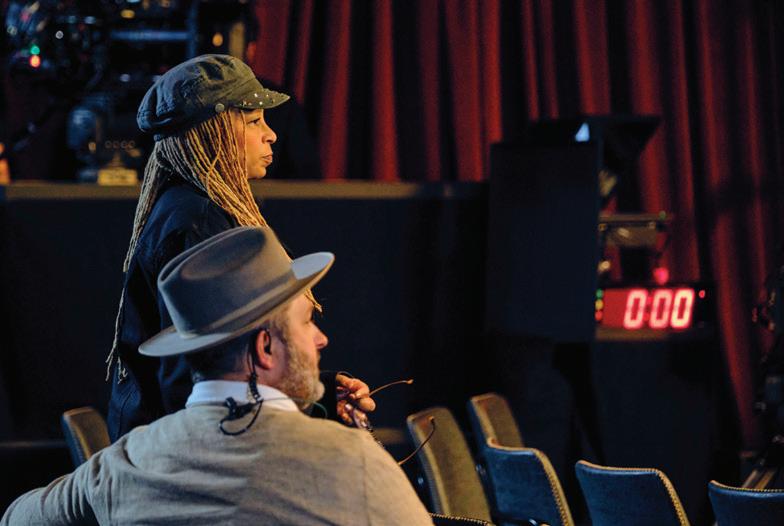
Yolanda Cochran and first assistant director Shad Melvin on the set of My Next Guest Needs No Introduction with David Letterman. Opposite: Cochran with My Next Guest producer John Nemeth.
within those studios, and we would talk about how we could encourage this on our projects and among the decision-makers. One of the first things I said was, ‘Let’s stop the conversation about this being the right thing to do and make it about how that person is going to benefit personally and directly.’ My thing was basically, ‘Let me tell you how you’re going to put more money in your pocket.’”
“Yolanda is always finding ways to do better—as a human, as a producer and as an advocate for bettering our industry. This means representation, inclusion and integrity in the macro as well as micro areas of our business,” says Sacani. “The work that she continues to do to find better solutions for efficiency, to take care of marginalized groups, and just to make sure that people are treated fairly, is super inspiring—all while raising a beautiful family, heading production at a prolific entertainment company and
developing projects of her own.”
“I don’t know how she balances it all,” says Winbush. “I’m convinced she doesn’t sleep.”
A VOYAGE OF PERSEVERENCE
The nature of producing has always been about uncertainty, forecasting and preparing. But the job is ultimately about being hopeful, which is the energy that carries Cochran forward as she continues developing her own projects.
“It took a long time before I had stuff of my own that I was so passionate about that I had to keep pushing, keep trying,” she says. “Stories I feel really matter and need to be out there in the world. The things that really draw me in are stories that reveal our common humanity, where you might not necessarily think we have things in common.”
Which brings us back to the cold, distant moon of Europa. The moon of possibility. Along with the tug of
telling the story of the life that could be harbored by that extraterrestrial ocean, Cochran saw an opportunity to inspire young people to study science and embark upon careers that advance space exploration and its positive impact on the quality of life on our planet.
“We’ve had a bit of retrenchment, but I think our business is still going forward as far as what stories we’re telling, by who, and how we can best create atmospheres where we can foster engagement and voices from all of walks of life, all of humanity,” Cochran says.
Thanks to the practice Cochran has had balancing the big picture with the most minute detail, the imaginative with the enumerative, major studios with shoestring indies, film and TV, comedy and drama, and the myriad personalities involved in it all, she has come to understand that making meaningful film and TV is not rocket science—and that everything is possible. ¢
‘YOU JUST GOTTA BELIEVE’
The 37th annual PGA Awards reminded producers of all they do best while celebrating the ingenuity, persistence, quality and creativity embodied by the nominated projects and their producing teams.
photography by Jordan Strauss Photography
The 2026 PGA Awards were celebrated with a joyful variety of online and in-person events leading up to the main ceremony.
Awards season kicked off with a bang at a January event at the downtown LA campus of AGBO that showcased finalists for the 2026 PGA Innovation Award. There, attendees had the opportunity to experience each of the five nominated projects for themselves.
Virtual events helped connect viewers around the world with nominees during two roundtable discussions: one with producers of projects nominated for the Documentary Motion Picture Award and another with Innovation Award finalists.
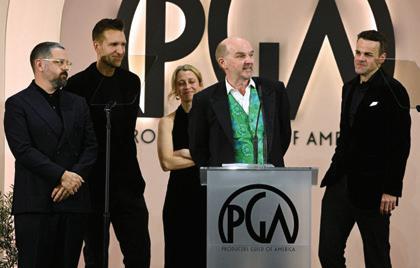
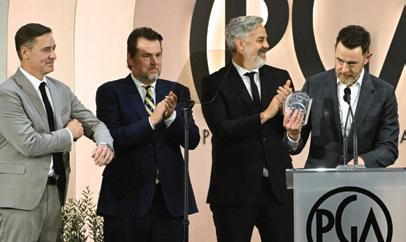
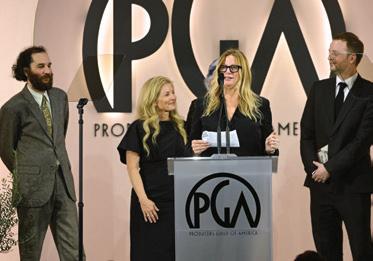
The PGA’s annual West Coast Celebration took place on February 26 at the Aster in Hollywood. There, winners of four of the awards categories were announced: Sesame Street (Outstanding Children’s Program); Formula 1: Drive to Survive (Outstanding Sports Program); Adolescence: The Making of Adolescence (Outstanding Short Form Program); and The Wizard of Oz at Sphere (PGA Innovation Award)
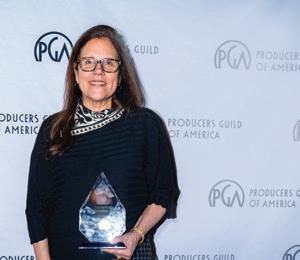
Two additional honors were presented that evening. Producer Lydia Dean Pilcher (Queen of Katwe, Radium Girls)
was presented with the Vance Van Petten Entrepreneurial Spirit Producing Award for her nearly two decades of work championing sustainability in film and television, including chairing the PGA’s Sustainability Task Force. Pilcher’s award was presented by producer Tendo Nagenda. Jessica Li, a recent graduate of NYU’s dual MBA/MFA program, was awarded the Debra Hill Fellowship supporting emerging producers. Li’s award was presented by selection chairs Deniese Davis and Lucienne Papon.
At a heroically early hour on the morning of the PGA Awards, nominees for the Darryl F. Zanuck Award for Outstanding Producer of Theatrical Motion Pictures engaged in a candid discussion punctuated by heartbreak and hilarity to share the stories behind the making of their lauded films—some messy, some gargantuan, all inspiring.
The breakfast panel included nominees Jerry Bruckheimer (F1), Eli Bush (Marty Supreme), Guillermo del Toro (Frankenstein), Pippa Harris (Hamnet), Lars Knudsen (Bugonia), Sara Murphy (One Battle After Another), Sev Ohanian (Sinners), Andrea Berentsen Ottmar (Sentimental Value), Teddy Schwarzman (Train Dreams), and Miri Yoon (Weapons). Journalist Jess Cagle served as moderator.
Every nominee dropped priceless nuggets of wisdom touching on both the pragmatic and philosophical aspects of doing their job, but perhaps no one summed it up as perfectly as Yoon:
“At the end of the day, the way I see our jobs as producers in some part is we’re in the service industry. We’re in service of crew that’s busting their asses for us. We’re in service of actors that are putting their craft front and center. We’re in service to the studio
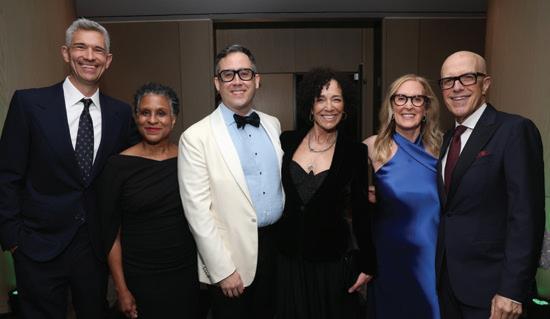
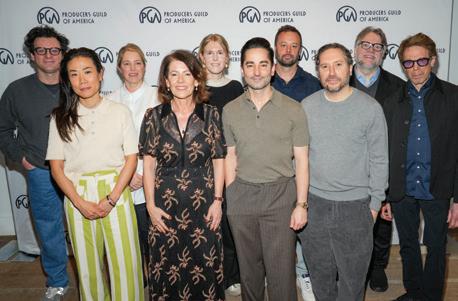
Mike Farah, Michelle Byrd, Joe Farrell, Stephanie Allain, Susan Sprung and Donald De Line backstage.
Paul Thomas Anderson and Sara Murphy of One Battle After Another
Michelle Wong of KPop Demon Hunters
or whomever is financing the movie who’s giving us millions of dollars to do it and standing behind us. We’re in service at the end of the day most of all to the page, and we’re in service of that filmmaker and the vision that they’re bringing to the table.”
PGA members can watch the full panel on the members-only Vimeo channel.
Last but not least, the 37th Annual Producers Guild Awards took place on February 28 at the Fairmont Century Plaza in Century City.
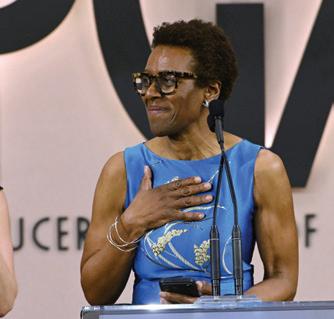
The star-studded evening recognized three industry trailblazers with special honors: Amy Pascal, recipient of the David O. Selznick Achievement Award in Theatrical Motion Pictures, recognizing a producer for their extraordinary body of work in motion pictures; Jason Blum, recipient of the Milestone Award for an individual who has made historic contributions to the entertainment industry; and Mara Brock Akil, who received the Norman Lear Achievement Award in Television, which recognizes a producer for their extraordinary body of work in television.
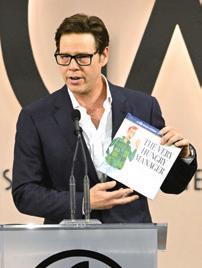
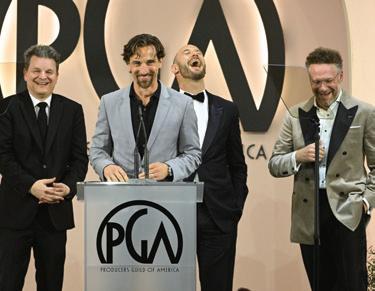
With nods to two of the most memorable moments during last year’s PGA Awards, Ike Barinholtz read aloud from The Very Hungry Manager, a satirical storybook detailing the unique journey one undertakes to become a producer. Gabe Gibbs delivered the rousing anthem “Believe,” exhorting producers to hold fast to the trait that most exemplifies the profession.
Mike Farah and Joe Farrell served as event chairs for fourth year. The awards were produced by Anchor Street Collective with Branden Chapman as executive producer, Carleen Cappelletti as coexecutive producer, and Diane Salerno, who managed sponsorships. Sponsors of the 2026 Producers Guild Awards included McLaren, the Official Vehicle; Delta Air Lines, the Official Airline; GreenSlate; Glenfiddich Scotch Whisky; and Silverado Vineyards.
All PGA Awards acceptance speeches and panels are available for viewing on the PGA’s YouTube channel.
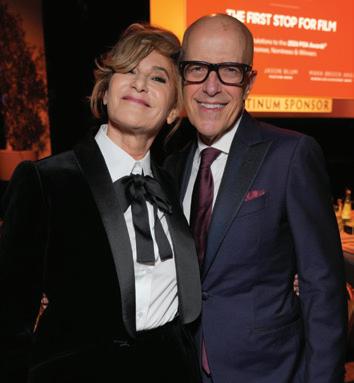
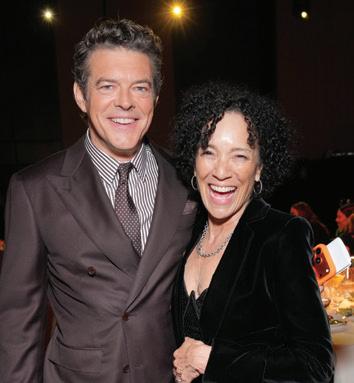
Jason Blum and Stephanie Allain
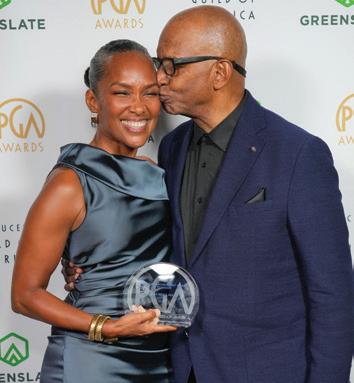
Mara Brock Akil and Ralph Farquhar
Amy Pascal and Donald De Line
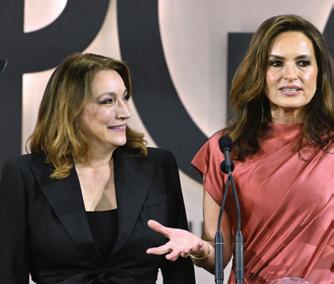
Mariska Hargitay and Trish Adlesic of My Mom Jayne
Jo Johnson of Adolescence
Ike Barinholtz reads a story.
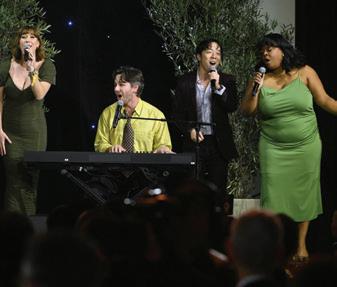
Gabe Gibbs and singers performing “Believe.”
2026 PGA AWARDS NOMINEES AND WINNERS
Darryl F. Zanuck Award for Outstanding Producer of Theatrical Motion Picture
Bugonia
F1
Frankenstein Hamnet
Marty Supreme
One Battle After Another – WINNER
Sentimental Value
Sinners
Train Dreams
Weapons
Award for Outstanding Producer of Animated
Theatrical Motion Picture
The Bad Guys 2
Demon Slayer: Kimetsu no Yaiba
Infinity Castle
Elio
KPop Demon Hunters – WINNER
Zootopia 2
Award for Outstanding Producer of Documentary Motion Picture
The Alabama Solution
Cover-Up
Mr. Nobody Against Putin
My Mom Jayne: A Film by Mariska Hargitay – WINNER
Ocean with David Attenborough
The Perfect Neighbor
The Tale of Silyan
Norman Felton Award for Outstanding Producer of Episodic Television – Drama
Andor
The Diplomat
The Pitt – WINNER
Pluribus
Severance
The White Lotus
Danny Thomas Award for Outstanding Producer of Episodic Television – Comedy
The Bear
Hacks
Only Murders in the Building
South Park
The Studio – WINNER
David L. Wolper Award for Outstanding Producer of Limited or Anthology Series
Television
Adolescence – WINNER
The Beast in Me
Black Mirror
Black Rabbit
Dying for Sex
Award for Outstanding Producer of Televised or Streamed Motion Picture
Bridget Jones: Mad About the Boy
The Gorge
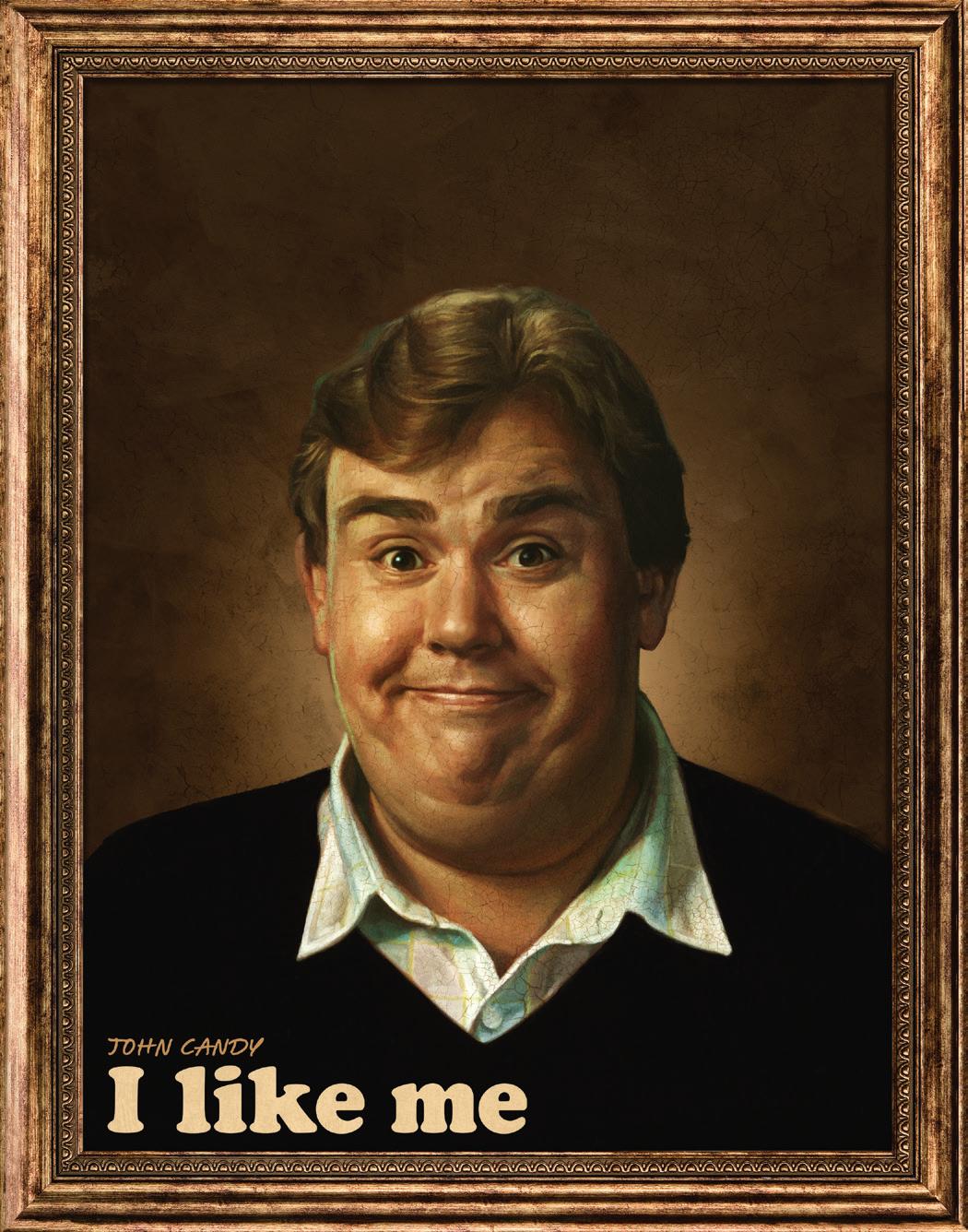
John Candy: I Like Me – WINNER Mountainhead
Nonnas
Award for Outstanding Producer of Non-Fiction
Television
aka Charlie Sheen
Billy Joel: And So It Goes Mr. Scorsese
Pee-wee as Himself – WINNER
SNL50: Beyond Saturday Night
Award for Outstanding Producer of Live
Entertainment, Variety, Sketch, Standup & Talk Television
The Daily Show
Jimmy Kimmel Live!
Last Week Tonight with John Oliver
The Late Show with Stephen Colbert – WINNER
SNL50: The Anniversary Special
Award for Outstanding Producer of Game & Competition Television
The Amazing Race
Jeopardy!
RuPaul’s Drag Race
Top Chef
The Traitors – WINNER
For a complete list of producers associated with the nominated productions, visit producersguild.org/2026pga-awards-winners.
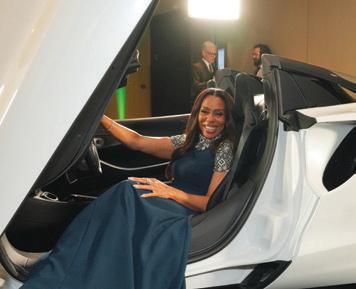
Karen Pittman taking a seat in a McLaren.
The Traitors producing team
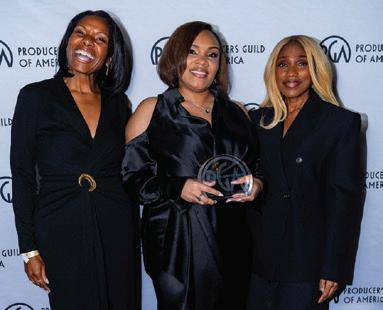
Producers of The Pitt
The producing team from John Candy: I Like Me
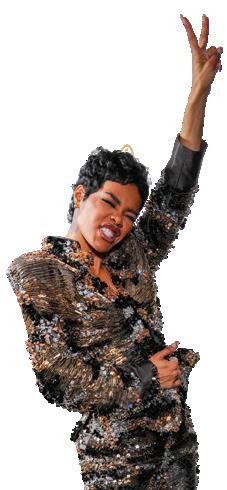
Tanya Michnevich Bracco of The Late Show with Stephen Colbert Teyana Taylor enjoying the party.
Award for Outstanding Sports Program
100 Foot Wave
Big Dreams: The Little League World Series 2024
Formula 1: Drive to Survive – WINNER
Hard Knocks: Training Camp with the Buffalo Bills
Surf Girls: International
Award for Outstanding Children’s Program
LEGO Star Wars: Rebuild the Galaxy –Pieces of the Past
Phineas and Ferb
Sesame Street – WINNER
Snoopy Presents: A Summer Musical SpongeBob SquarePants
Award for Outstanding Short Form Program
Adolescence: The Making of Adolescence – WINNER
The Daily Show: Desi Lydic Foxsplains
Hacks: Bit By Bit
Overtime with Bill Maher
The White Lotus: Unpacking the Episode
PGA Innovation Award
ASTEROID (Doug Liman’s 30 Ninjas / Google’s 100 Zeros)
Big Wave: No Room for Error (Cosm)
D-Day: The Camera Soldier (TARGO / TIME Studios) territory (Double Eye Studios / Kinetic Light)
The Wizard of Oz at Sphere (Sphere Entertainment Co.) – WINNER
The producing team of PeeWee As Himself
Producers of The Studio
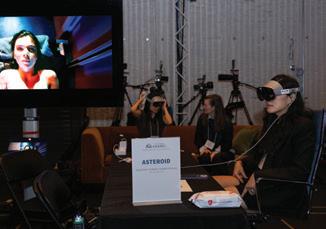
Innovation Award juror Jess Lee taking a ride on Asteroid.
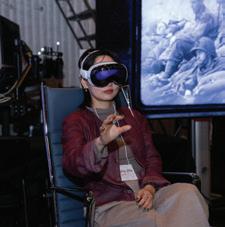
Innovation Award juror Shicong Zhu experiencing D-Day: The Camera Soldier.
Lucienne Papon and Deniese Davis with Debra Hill Fellow Jessica Li
The Wizard of Oz at Sphere team with Innovation Jury Members and PGA staff: Victoria Bousis, Ben Grossmann, Susan Sprung, Jane Rosenthal, Carolyn Blackwood, Joanna Popper, Angela Russo-Ostot, Ralph Winter, Liz Rosenthal and Michelle Byrd.
Nyle Washington, Kia Milan and Kelly Caton of The Making of Adolescence
Nominee Breakfast panelists: Eli Bush, Miri Yoon, Sara Murphy, Pippa Harris, Andrea Berentsen Ottmar, Sev Ohanian, Lars Knudsen, Teddy Schwarzman, Guillermo del Toro, Jerry Bruckheimer.
Lydia Dean Pilcher receiving the Vance Van Petten Entrepreneurial Spirit Producing Award.
I’LL HAVE MY TV STRAIGHT UP
For producers of traditional film and TV who are moving into the vertical space, there’s a lot to learn—and a lot of opportunity.
Written by Eve Weston
If you ask many people what a vertical is, they won’t know. Same goes for a microdrama. Even the audience for this content won’t have any idea what you’re talking about. What do they call this content? The same thing they’ve always called it.
“They might call them their soaps, or their dramas, or their novels, or their stories, or their people, or their family. Like, ‘I’m watching my stories.’” says Elizabeth Dell, microdrama consultant at Issa Rae’s HOORAE Media—just as fans of General Hospital have been referring to their soap for 63 years.
Still, in the same way that “soap opera” is a valuable distinction for a producer, the terms vertical and microdrama are worth understanding.
The terms are not interchangeable. The term “vertical” defines the orientation of viewing, not the content. Your colleague producing verticals is producing short-form content for vertical consumption on smartphones and tablets.
If this is sounding familiar, it may remind you of Quibi, the shortform mobile streaming service founded by Jeffrey Katzenberg that shut down in December 2020 after only six months, despite raising nearly $2 billion. The difference now is that there’s an English-language audience in place for verticals that wasn’t in place when Quibi launched.
And then we have microdramas—a genre of vertical content that originated in China. Dell, who spent approximately five years heavily invested in the China space, describes microdramas as “soaplike stories that are kind of like telenovelas or soap operas. They’re melodramatic and romantic, and they are the first genre that is taking advantage of this consumer behavior shift.”
So how does knowing about this content serve working producers in more traditional spaces like film and TV?
“I think it speaks to a dopamine-starved audience, and it’s serving a purpose,” says Benjamin Odell, CEO and cofounder of 3Pas Studios and former executive at Pantelion, a partnership between Lionsgate and Mexican media giant Televisa.
3Pas’ track record of success in traditional media includes acclaimed series for Apple TV+ and Amazon, along with Instructions Not Included, the highest-grossing Spanish-language film of all time in the U.S. Last year, the company made its own venture into the vertical space when it coproduced Playback for My Drama, one of the most downloaded apps for verticals in the world, according to digital analytics provider Sensor Tower. The series is the first-ever musical produced specifically for vertical video.
“We’re all prisoners of this concept of all or nothing—everything’s going to be AI, everything’s going to be verticals, everything’s going to be YouTube. What we’re really seeing is a splintering of audiences across many surfaces to consume content.”
These series are largely viewable on apps like My Drama or DramaShorts, but they reel viewers in by showing soapy, cliffhanger-laden clips on social media. When you click to see more, you’re taken to a subscription page where you can sign up to watch the rest. And there are hundreds, if not thousands, of verticals apps, with the number growing almost daily.
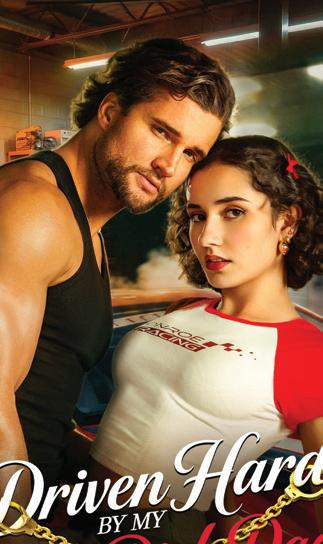
If you’ve been accosted by a microdrama—say, on Facebook or Instagram—you might have recognized it by its telltale signs: on-the-nose dialogue, unsubtle acting, bright lighting and the word “billionaire” in the title. The Double Life of My Billionaire Husband, Fake Married to My Billionaire CEO, and The Divorced Billionaire Heiress are all current shows At the time of writing, the No. 1 show on the DramaShorts platform is The Billionaire Sex Addict and His Therapist, produced by Vertical Sunsets.
“In the business of verticals, you want your title to be the logline of the show. It has to be clickbaity and say what the show is about,” says Vertical Sunsets cofounder Chrissie DeGuzman.
All these choices—seemingly unsophisticated by industry standards— belie the true nature of verticals. What
appears to be banal content reflects, in fact, calculated decisions made by talented individuals who know what they’re doing.
“When I first saw verticals, I thought, why don’t we just color grade it better, make it more cinematic?” recalls John Lewis, producer and president of JLE Cinema Group and founder of the new U.S.-based MuVpix verticals app. “I learned real quick, they make it bright on purpose. It’s not that they don’t know. They’ve been doing it for so long, they’ve tried everything. People on the phone want to clearly see what’s going on. It’s not the same thing as a movie.”
Along with DeGuzman, Dell, Lewis and Odell, the creatives who are participating in the creation of this content are worth sitting up and noticing. Chris Wicke, who runs Embr Entertainment, a mobile-first film studio that focuses on scripted vertical content, is a 25-year veteran of the entertainment industry, having produced TV for Discovery, History Channel, CNN, MTV, BSkyB and many other global networks.
“In my time working on these verticals, I was always impressed with the talent and work ethic of the crew members,” says Shaun Boylan, a Los Angeles actor, comedian and improvisor. He recently acted in My New Daddy Is a Five-Star General, produced by GoodShort, a short-drama streaming app owned by Inknet Pte. Ltd. that boasts having the best Chinese short drama.
He adds, “A second AD on another vertical I worked on was a working actor who had acted in an Ava DuVernay film and also had a scene with Jonathan Majors in
another big film.”
At a time when the number of Hollywood jobs is shrinking, many talented professionals are working in verticals. So it shouldn’t be surprising that, while copying what one sees on a vertical screen might be a recipe for success in the microdrama space, copying what goes on behind the scenes is a recipe for success in any medium, vertical or traditional.
In conversations with working professionals at the top of the vertical space, several main takeaways emerged—each with enough punch to earn a microdrama-esque clickbaity title.
THE BILLIONAIRE PRODUCER AND HER EXPERIMENT
“Hollywood could learn a lot from microdrama in the in the way of ‘Let’s spend less per at-bat, but let’s take a lot more of them,’” says Dell. “How do we think about how to be lean, but then be able to have a dozen experiments?”
One example: not making television shows for $4 million an episode, but making shows that are $250,000 an episode or less.
At first, this sounds reminiscent of pilot season, but, as Dell points out, it’s been a long time since 12 new shows launched every fall with orders behind them.
It does seem to confirm that there’s something to learn from this new
Filming the musical Playback for the vertical series platform My Drama.
some industry practices started in the first place. Dell stresses that there is an infinite number of stories that could find an audience and become successful, but only if those stories are produced at the right price point.
Dell also points out that, as an industry, Hollywood has taken to outsourcing its experimentation to other media—for example, mitigating risk with what she terms “preawareness properties.” This is essentially the driver behind the strategy of adapting books or video games into series or films. So why not do this with one’s own story ideas and IP via verticals?
Anina Net, a well-known actor in the microdrama space, explains the genesis of the first microdrama she performed in.
“Vertical dramas, including the first one I ever did, came out of book apps. They
media videos?’”
Net was working in China at the time. The only experienced filmmaking crews available were commercial production companies, and they only knew how to shoot horizontal. But because they shot game TVCs—TV commercials or video ads created to promote video games— they understood how to tell a story in a minute and a half. They also understood how to shoot at a 45-45–degree angle to fit everybody in the camera. These days, this is a skill worth learning.
“This is the era of social media and mobile devices,” says Kelly Tang, about to embark on her next vertical adventure after serving as senior head of content development at DramaBox and head of content at Alta Media before that. “In order to grab current audience attention—because attention spans are way shorter—we might have to sacrifice visual design that’s designed only for long-form content and greater patience.”
DON’T TAKE LADY ATTENTION FOR GRANTED
Kristen Brancaccio, director of Screen Time, the new microdrama from HOORAE Media, points out that rules that have long guided the creation and distribution of features or television have often been applied to the digital space. But verticals are an entirely new format. The time-tested strategies for traditional content may not serve producers well.
They’re competing against TikTok, not against Netflix. While both platforms require capturing the attention of one’s audience, verticals have to clear a much higher bar to sustain that attention.
A scene from the microdrama Bound By Love.
“Each episode is only one to three minutes, so a beautiful 15-second tracking shot that would feel cinematic in a traditional format eats up a quarter of an episode in verticals. Every second has to deliver information or emotional engagement because viewers are casual. They drop off and come back constantly,” says Shicong Zhu, head of studio (LA) at DramaBox, a global entertainment platform redefining storytelling for the mobile-first era through high-definition vertical shows.
Aside from pacing, which is perhaps the number one tool for sustaining an audience’s attention, casting is also key, and similarly, doesn’t follow the model used by film and television.
Lewis recounts Hollywood’s approach as, “‘Let’s get these big SAG actors.’ But vertical viewers don’t care about that. I don’t want to watch Chris Hemsworth on my phone. I want to see him on my big-screen TV or in a theater.”
To put a finer point on it, verticals aren’t about star power; they’re about the viewer.
The vertical space is an unexpected candidate for employing the term “viewer as participant,” or colloquially, “viewer-participant.” While the term
generally applies to content in which the viewer can impact the story or scene, it can also apply to vertical content because vertical viewers are placing themselves in the story—even if only in their mind.
Viewer-participant as a term captures Lewis’s description of the aspirational relationship of the viewer to vertical content. “They’re not a voyeur from the outside watching it,” he says. “They want to be the character.”
Yet even with this shift to perceived first-person embodiment—to use the terminology of the Taxonomy of Experience (2020), a framework designed to categorize and analyze extended reality (XR) and in-reallife (IRL) experiences based on how audiences perceive and engage with them—some rules of traditional media still apply, like the tried-and-true threeact structure.
DeGuzman acknowledges that writing for verticals is well served by this structure; it’s just that the pacing is on steroids. She cites a five-second rule, which has nothing to do with eating food from the floor while requiring an equally quick reaction time.
“You have to be more resourceful in the way that you quickly world-build in five seconds,” she says. A guideline for judging the success of any vertical: How quickly can you hook your audience?
WILL YOU BE UNCOMFORTABLE FOR ME?
Anina Net addresses the common, and understandable, inclination of Hollywood players to work with the same people time and again. It’s comfortable.
“They know who they know, and they trust who they trust. They think that those (same) people can shoot short dramas, but then they fail. That’s simply because they (traditional filmmakers)
don’t understand it,” Net says.
“What I see happening right now is that they’re getting all of these famous people to do it,” she says, echoing Quibi’s experience. “But that doesn’t mean it’s going to be successful.”
That said, microdrama offers a big opportunity for producers who might not have the budget for or connections to big-name talent. The strength of the vertical space isn’t because it’s powered by millions of dollars or celebrity names. In fact, it’s quite the opposite.
DeGuzman takes this less-is-more concept onto the set itself. She’s a huge advocate of producers’ testing their resourcefulness, a test that is not inherently comfortable.
“When you’re on a traditional set shooting three to five pages a day, you’re doing anywhere between from five to 15 takes,” she says. “We shoot so many pages per day (in verticals)—nine to 16 on average, sometimes even 18 to 21—that you’re only really doing one or two takes for each setup. So prep is crucial, especially with our limited resources and micro budgets.
“From casting the right actors who can give you great performances in a short amount of time to hiring the right crew and having an airtight shooting plan, thoughtful and thorough preproduction will make these impossible days possible,” she adds. “Then when it comes time for me to shoot my feature film or episodic television, I can be even more efficient within that time frame.”
Zhu agrees.
“Shooting is where the biggest difference from traditional TV/film shows up,” she says. “Our typical production is seven to 10 shoot days, 10+ pages a day, with about three to four weeks of prep. Every department has to be built around that schedule from day one. There’s no learning it on the fly.”
This is true for roles in front of the camera, too, DeGuzman says. “Can they
act? Can they carry a lead role on their back? And are they able to memorize their lines? Are they able to get these emotions very quickly?”
Whether it’s process efficiency or cost efficiency, efficiency is something to always keep in mind as a producer. For Brancaccio, this comes down to shifting priorities. For example, location becomes much less important, because in the vertical frame, you don’t really see the location.
“One of the advantages of being in vertical is that we don’t have to fill up all this real estate on the side, so it’s much easier to PD things,” says Wicke. “We do scenes all the time with big banquets, but we’ll only have six or seven background people because you only see the vertical space.”
This narrowing of the frame was parodied by Conan O’Brien at the Oscars earlier this year, when he quipped that, thanks to verticals, current audiences can enjoy reimagined classics like Two Angry Men
While O’Brien’s observation was played for comedy, the truth underneath is that if two actors are framed vertically on a screen, we see a lot less of their surroundings than we would otherwise, and the constraints of the vertical format lead to greater opportunities for creativity and efficiency—even if not actually the cutting of 10 characters.
A more practical example from Brancaccio is that another part of the same room can serve as an entirely different set, because where the audience might have seen that part of the room in a horizontal framing of the first set, they won’t with a vertical framing.
“We can just hang a medical poster on that white wall, and that can be the hospital,” Brancaccio says. With the narrow vertical frame, that white wall will be totally new to the audience.
Zhu shares the insight that as a result, in verticals, costume is doing more work than location.
“In a 9:16 frame, actors and their wardrobe take up about 70% of the screen, so the costumes end up carrying more of the world-building than the background does. It changes how you allocate resources,” she says.
Challenging oneself to consider how to shift some of the telegraphing work from one element of production to another could open up new, budget-friendly possibilities even for producers of traditional media.
HIDDEN TRUTHS & PARED-DOWN LIGHTS
“Verticals demand efficiency in both storytelling and production,” explains Vivian Ip, a filmmaker who broke into verticals by directing the highly rated microdramas Breaking the Ice for ReelShort and Love, Lies and Alibis for Vigloo. “You learn to prep fast, cast smart, simplify coverage, prioritize emotional beats, and build schedules around maximum output without losing what matters in a scene.”
“Lighting is a really good example. You can’t have big, bulky lights. You’ve got to have things that you can move from room to room and set up really quickly,” says Wicke. “We’re not doing jib shots. We’re keeping everything pretty basic. But then we’ll throw in some specialty shots here and there with a Dana Dolly or an Easyrig, something that’s still pretty simple.”
Essentially, Wicke is pointing out the lesson “Do more with less.”
Zhu echoes this advice in an interesting way. “Show, don’t tell doesn’t really apply the same way in verticals. We tell and show,” she says.
This hearkens back to TV’s early days, when soap operas were designed to be consumed by viewers who might
Vivian Ip directing Grace Swanson in Love, Lies, and Alibis.
Ip directing cast and crew on the set of Love, Lies, and Alibis
be doing other work—housework—that often required them to look away from the screen. Zhu’s insights apply equally to both TV and microdrama content. Viewers must be engaged as quickly as possible. “So we lean into clarity over subtlety,” she says.
TELL ME NOT TO TAFT-HARTLEY YOU
There is also the important factor of emotional efficiency, which is shaped by compensation and working conditions.
“You have to take care of yourself, your crew and your team because producing verticals is very time- and budget-limited,” says Sunyin Zhang, head of US production for ReelShort, a vertical content platform backed by China’s COL Group and owned by Silicon Valley-based Crazy Maple Studio.
When asked how professional
industry craftspeople in the vertical industry are being provided the compensation and working conditions they deserve, Wicke answers plainly: “They’re not.” He acknowledges that it’s a problem.
According to both Wicke and Ip, compensation and conditions have improved but vary project to project. “There are producers trying to do it the right way and there are others still using compressed timelines as an excuse to under-resource crews,” Ip says. “Like any fast-growing sector, standards are still catching up as the industry matures.”
Wicke’s experience is a case in point that’s still developing. He hired a lot of young and hungry college grads when he started in the business and still works with many of those folks today. He notes that their rates have gotten better—but that those rates are still nowhere near Hollywood rates.
When being hired by a platform
or vendor company, Ip comes in with expectations around fair crew rates, realistic schedules, and basic protections. “Efficiency should come from thoughtful planning, not from exhausting people,” she says.
Thankfully, this is not a pipe dream. “It is very possible to have good working conditions. Certainly we did when we shot Playback,” Odell says of the SAGsignatory production. “You just have to design productions and not stretch yourself so thin that you can’t give everybody what they need in terms of compensation,” which is sound advice for any platform or medium.
Along with SAG-AFTRA, the DGA and WGA also have agreements for their members that cover verticals.
Tang, who’s served as head of content for multiple vertical studios, explains that most verticals are still nonunion, but most platforms, especially the bigger ones, are doing
A scene from Hoorae Media’s Screen Time.
PHOTO BY LILIANE LATHAN
everything in compliance with the protocols, even using union standards. It’s just not union pay.
“There is usually no OT, at least for the (vertical) platforms I’ve worked with. If there’s no OT, they will be compensated very well. It’s definitely a sustainable job, which is why many people choose to enter the space,” says Tang.
Tang’s sentiment is echoed by Zhu, for whom many crews have come from traditional TV and/or theatrical backgrounds, “The feedback we hear is that our rates and workflow are comparable to Hallmark and Lifetime movies. The pace is faster, but for crews who want consistent work in a space that’s actively producing, it’s been a sustainable place to land.”
Having multiple irons in the fire is another smart practice. Wicke shares that it’s impossible for him to do one film at a time and make a living—he’s got to have multiple productions going at the same time.
“The bigger picture is that vertical operates on a different business model from traditional film and TV,” says Zhu. “It’s high-volume, fast-turnaround, and the economics have to reflect for the model to work at all. “The whole industry is working on how to keep refining the model so it continues to support professional craftspeople here in LA, rather than incentivizing platforms to move production elsewhere. That balance is something we pay a lot of attention to, and I think it’s something the whole ecosystem benefits from getting right.”
A FEELING PRESCRIPTION OF MR. EMOTION
Zhang acknowledges that producers from traditional filmmaking might misunderstand vertical shows. Some believe that producing verticals isn’t a worthwhile endeavor aesthetically or narratively. “But I think we are,” she says.
As the saying goes, the proof of the pudding is in the eating: DeGuzman notes that series like hers may not be seen on a big screen, but they are consumed by millions of people.
Zhang believes everyone in the film industry wants to give the audience a sense of what the future might hold, or how we represent ourselves, or “how we hold the idea of what we think is really meaningful to the world.”
She continues, “I feel like verticals belong in the part of the entertainment world where the most meaningful or worthy thing is to make people feel good.”
Zhang worries that feel-good is a small plate getting lost at the vast buffet of mainstream film or TV-making, with their high production values and known franchises. This is precisely why microdramas are taking off.
Whereas a feature film might be building toward the climax that keeps everyone glued to their seats, when it comes to a microdrama, the audience
Scenes from the ReelShort microdrama Bound by Love.
could metaphorically leave the theater at any second by putting down their phone.
“Every beat is designed to make the audience feel something,” says Zhang. So, moments with the emotional weight of a feature film climax happen much more frequently. It’s the dramatic equivalent of the sitcom rule of three jokes per page—one every 20 to 30 seconds.
“If something drags, confuses, or delays the hook, you feel it immediately,” says Ip. “Producers of traditional film and TV do not need to imitate verticals wholesale, but they can learn from the urgency, the lean decisionmaking and respect for pacing that the format demands.”
It was in 1951 that movies stopped being projected on literal silver screens— coated surfaces designed for low-light projectors.
Yet the overall approach to filmmaking has stayed largely the same, even as it moved into the era of digital projection, which became dominant by 2013. Technology drives the evolution of visual storytelling—and always has. For now, it’s driving us in a vertical orientation while opening up possibilities for audiences and creators alike. ¢
Stills from the My Drama vertical series Playback
HOT TIPS FOR THE SMALL SCREEN
Here’s what one producer in the vertical space uses to bring life to small-format productions.
written by Eve Weston
When the frame changes, what happens to the producer’s tool kit? For a close look at a producer’s tool kit for verticals—and how it may or may not differ from their tool kit for producing traditional film or TV—we went out to Elizabeth Dell, a longtime film producer who’s currently a go-to expert for companies interested in cracking the vertical space.
Dell has produced more than a hundred episodes of digital content for major influencers and brands including Anheuser-Busch, Purina and Logan Paul. Her credits in traditional media include Destination Wedding starring Winona Ryder and Keanu Reeves, The Swing of Things starring Luke Wilson, and The Elite Daily Show. She also founded Amorus—an app that delivers spicy, romancesparking games, targeting the 70% of adults already in relationships.
As a producer of verticals, here’s what Dell keeps in her tool kit to keep her and her content standing tall:
MICRODRAMA APPS
A twist on “If you see it, you can be it,” the phrase that Billie Jean King popularized, Dell confirms that if you’re producing something, it’s important to be familiar with the genre and ecosystem, whatever the size and shape of the frame.
“This space is changing rapidly, and the best way to see evolving trends and methods is to be watching,” says Dell. “Genre shifts, cadence and duration, monetization structures, viewing patterns—all of them are there to research what’s being promoted, watched and repeated. As with any other format, developing an instinct and an eye takes exposure, so I’m watching shows every week.”
These apps—many of which produce exclusive content— include CandyJar, ReelShort, DramaBox and PineDrama, which Dell says is “great for seeing free shows and licensing from other apps.”
IPHONE
When it comes to verticals, your phone is your movie screen. And with the need to spend time on set and bounce from meeting to meeting, there’s no other way for producers to stay on top of things. “My mobile phone is essential in every aspect of my work,” says Dell, “from watching microdramas to communicating with my team, following industry chat groups, approving bank transactions and edit notes—and if your final format delivery is a phone, you better watch the cut on a phone!”
FRAME.IO
Frame.io is a cloudbased collaboration platform that allows users—often video professionals, marketers, and creative teams—to upload, review, annotate, and approve video projects in real time. In a postpandemic world where creative teams don’t always gather in the editing suite, Frame.io—which integrates with editing software like Adobe Premiere Pro—serves as a centralized, secure hub for reviewing edits and sharing notes.
“When we move this fast, there’s not a lot of time, or the spatial overlap, for in-room edit sessions,” says Dell. “Frame. io is a lifeline for edit notes across all our team, gathering feedback, tracking notes, sharing assets and more.”
MOVIE MAGIC
There are some essential truths that hold, regardless of the content that’s being made. “Every production needs a budget and a schedule,” says Dell, “and I’ve been using Movie Magic Budgeting and Scheduling for years.”
Is it her dream platform? “I don’t love their move to cloud-based subscription, especially when I’m working remotely, but it’s what I know and what others know how to use,” she says.
Sometimes familiar trumps perfect, especially when other applications are unfamiliar to some team members.
HER NETWORK
This is another of those other essential truths: Even with the increasing integration of AI into pipelines and workflows, filmmaking remains a team sport. And Dell values her teammates greatly.
“My web of people, whether vendors I’ve worked with, crew that have been on multiple shows with me, or fellow producers at the PGA, is something I rely on every day,” Dell says.
This hasn’t changed with the size of the frame. “Building that network through shared work and experience is an everyday investment. So many times, someone from a past connection comes back around in marvelous ways!”
IT’S YOUR COMMUNITY EVENTS
Sustainability Tool Kit
The comprehensive online Tool Kit offers practical tips and resources for producers to support creative teams and crews in sustainability efforts, from script to screen.
Written by Lisa Y. Garibay
Interest in “green” approaches to production and the portrayal of environmentally friendly behavior in film and TV has steadily increased over the past few decades. Since the PGA led by launching initiatives in 2016 to make the industry more sustainable, basic efforts such as recycling cans and paper have become standard practice for both crews on set and characters on screen. Solar-powered trailers and hybrid battery generators are being seen on sets as alternatives to burning through gallons of fuel, helping to save money and spare crew from working long hours around noxious diesel emissions.
Yet many of these efforts toward sustainable production still feel out of reach for most producers across formats.
Given that time and money are often short, is it feasible to request that time-tested equipment, vehicles and processes be swapped out for unfamiliar alternatives? And if someone can only make one or two small changes toward sustainability, does it make any difference? How can a responsible producer entertain any of these considerations when they are accountable for so many other aspects of a production?
Enter the PGA’s new Sustainability Tool Kit for Producers.
As part of the Guild’s commitment to making productions more sustainable— both economically and environmentally—the free online suite of resources was launched this spring to offer producers ways to make any stage of the production pipeline more sustainable, from the easiest lift to a thorough overhaul, and from development to distribution. It guides producers through the most basic considerations and steps to demonstrate the business case for sustainability, to engage and support the entire crew in realizing sustainable solutions, and to embed climate awareness in each phase of storytelling.
“By offering the Sustainability Tool Kit to producers, the PGA hopes to help them appreciate that any shift in behavior makes a difference, no matter when and how they decide to approach sustainability,” says PGA CEO Susan Sprung. “The most important thing is just to start.”
Given the tight parameters within which a production must operate, any change that compromises efficiency and the ability of cast and crew to do their best won’t be given a second thought. That’s why it was critical to the PGA to have the close collaboration of members and staff of the 21 national, international and local guilds and unions who make up the Inter-Guild and Union Sustainability Alliance.
These professionals, many of whom lead sustainability committees within their own guilds and unions, provided invaluable feedback about the ways sustainable approaches could impact workflows from prep to post—and how producers could support those shifts toward sustainability within each department.
This is the next phase of the PGA’s decades-long work in advancing the industry forward in its sustainability practices, including its call on the industry to transition to clean energy in 2021 and seminal contributions to the Green Production Guide.
“This Tool Kit belongs to the entire industry,” says Sprung. Again, it’s all free, available to anyone at producersguild.org/ sustainability.
SOMETHING FOR EVERYONE
Whether you’re just getting started or ready to go deeper, there’s something for every film, television, and emerging media producer, including tips to help make the case to financiers, studios and other collaborators that having sustainable productions can also be good for the bottom line.
“The most empowering thing about this Tool Kit is that it meets you where you are. You don’t have to be an expert.” says PGA Sustainability Task Force Cochair Mari Jo Winkler.
The Sustainability Tool Kit for Producers was developed in collaboration with PGA Sustainability Task Force Chairs Lydia Dean Pilcher and Winkler, PGA member Clara George, and members of the Inter-Guild and Union Sustainability Alliance.
The production-related sections were written by Clara George, an award-winning television producer and renowned champion for sustainable production. The storytelling-related sections were written by Pilcher, Jessie Keyt and Abby Rabinowitz of Global Rise: Stories for the Future, a company that works with creatives across media to examine the interdisciplinary role of science, humanities, and imagination in crafting rich climate narratives to shift policy and culture.
The website is divided into four sections: Storytelling, Production, Communication and Resources.
IT STARTS WITH STORY
Within each of the seven areas of the Took Kit’s Storytelling section, producers are invited to weave climate awareness into the collaborative processes they routinely engage in with writers, directors, cast and crew—in the same way that climate permeates everyday life.
With an emphasis on the power of narrative to shape culture,
The
Inter-Guild and Union Sustainability Alliance is made up of members and staff from the following organizations, all of whom participated in the creation of the PGA’s new Sustainability Tool Kit for Producers:
• Directors Guild of America
• Directors Guild of Canada
• IATSE
• IATSE 44 Affiliated Property Craftspersons
• IATSE 52 Motion Picture Studio Mechanics
• IATSE Local 80 Motion Picture Grips, Crafts Service, Marine, First Aid Employees, and Warehouse Workers
• IATSE Local 600 International Cinematographers Guild
• IATSE Local 705 Motion Picture Costumers
• IATSE Local 728 Studio Electrical Lighting Technicians
• IATSE Local 729 Motion Picture Set Painters & Sign Writers
• IATSE Local 800 Art Directors Guild
• IATSE Local 829 United Scenic Artists
• IATSE Local 871 Script Supervisors/ Continuity Coordinators, Teleprompter Operators, Coordinators (Production, Art Department), Accountants (Production, Payroll)
• IATSE Local 892 Costume Designers Guild
• Producers Guild of America
• SAG-AFTRA
• Teamsters Local 399
• Teamsters Local 817
• Teamsters Motion Picture and Theatrical Trade Division
• Writers Guild of America West
• Writers Guild of America East
THANKS TO OUR SPONSORS
MEDIA PARTNERS
the Storytelling section’s robust communications guide offers actionable steps to incorporate climate through development, production, post and marketing.
Topics includes researching a climate story; finding collaborators among researchers, consultants and institutions; creating audience impact by understanding whom you can reach; building worlds that expand audiences; and crafting characters that inspire action.
“The Tool Kit suggests pathways to imagine new stories to inspire future thinking,” says Pilcher. “By doing so, we can deeply engage our audiences and inspire civic engagement.”
GOOD BUSINESS SENSE
The Production section of the Tool Kit guides producers on how to demonstrate the business case for sustainability and how to work with cast and crew to make it happen. It offers tips for increasing sustainability and efficiency throughout production by reducing fuel, materials and waste.
Perhaps most compellingly, “quick math” formulas help producers build the business case to financiers and collaborators on why sustainability is good for the bottom line. As the kit advises, careful planning can make this possible. For example, if a fuel-efficient vehicle costs an extra $150 per week, rent it for a position—such as cast drivers, buyers or location—that will save $150 per week in fuel costs.
The kit lists steps for assessing power needs by department and stage of production to uncover clean power alternatives that also save money on fuel, such as replacing generators that require fuel with cleaner sources like batteries or grid tie-ins.
Additional budget-friendly solutions, from buying secondhand to taking gently used materials off the hands of a production that has just wrapped, are listed along with checklists—such as whom to talk to in each department and what to propose, while respecting the timeline,
workflow and professionalism of every department head.
TALK IT OUT
Five Communication Guides within the Tool Kit help producers support cast and crew in bringing forward sustainable solutions. The guides offer suggestions to consider when communicating about ways to incorporate climate realities with creative teams, including writers, directors and heads of departments. The guides cover the following topics:
• Getting Started: Practical tips for producers to consider when communicating about ways to incorporate climate realities with their creative teams, including writers, directors and heads of departments. Sections cover development, financing, preproduction, production, marketing and impact campaigns.
• Power Planning to Reduce Generator Fuel: If you show up on set and there’s power, there was a conversation about it, and someone made a choice. Those choices can become clean energy choices.
• Identifying the Most Fuel-Efficient Vehicles Across Your Production: Fuel used by vehicles is the largest percentage of a production’s emissions. Luckily, reducing vehicle fuel is one of the easiest ways to see cost savings on a production, regardless of its budget. Start planning in prep to reduce fuel throughout the production.
• Increasing Circularity, Reuse and Reducing Materials: Demonstrating all the ways that reducing materials starts in prep.
• Reducing Waste Across Every Department: Bringing in only what you need can result in cost savings. Reducing and reusing materials is the key to waste reduction. These efforts should be prioritized before recycling, which is the last resort to keep items out of the landfill.
MEETING NEEDS NOW AND INTO THE FUTURE
The Resources section of the Tool Kit includes links to additional methods,
planners, case studies, and recordings of panel discussions and tutorials that can help producers who want to dive into sustainability even more.
The resources in this library—which are provided by the Directors Guild of Canada’s DGC Green, Harmony Labs, the National Resource Defense Council’s Rewrite the Future, Rare Entertainment Lab, Reel Green at Creative BC, and Sustainable Entertainment Alliance, among others— can be used to bolster the argument for sustainability as a best business case when presenting to studios, funders or other stakeholders.
In addition to what’s on the website, the PGA will be presenting a series of monthly workshops featuring producers in conversation with reps from production departments to cover themes and topics found within PGA’s Sustainability Tool Kit for Producers, from climate storytelling to power planning and circularity (i.e., reusing materials across different productions).
These workshops will be open to members of the PGA and other industry guilds and unions, and time will be set aside during each workshop for attendees to bring their questions to the table. Recordings of these workshops will be added to the Resources section of the Tool Kit for anyone to view later.
The goal of these events is to empower greater collaboration and to strengthen the network of industry professionals who wish to do their jobs more sustainably. No matter how new to the concept they might be, they can know that someone is always available to reach out to for help.
Through continued discussion with creatives in every department working on projects across all genres, formats and budgets, the Tool Kit will continually evolve to make it even easier for productions to be more sustainable on all fronts.
“This is how we can shift the culture of the industry to new thinking and ways of working sustainably in a complex world,” says Pilcher. ¢
Remembering the Lambs
Early on in my career, I was production manager on The Texas Chainsaw Massacre, so when Jonathan Demme mentioned that The Silence of the Lambs was based on the same serial killer, Ed Gein, I knew I had to be involved. I’d worked with Jonathan on other projects, but Lambs was different—an extraordinary team effort between several collaborators, cast and crew.
Once we entered postproduction, everyone knew we had a winner. Jonathan told me he wanted to share the producer credit and points among some of his team. He made me a producer, and we all went on to win Academy Awards. Having a producer credit on such a successful movie—especially since it was my first producer credit— was a major boost to my career.
I have had an original one-sheet of The Silence of the Lambs in Italian hanging in every production office I’ve managed. I found the enormous movie poster (41 by 81 inches) among samples of different images to be used on the exterior of theaters. Having this poster hanging in my production offices reminds me of the hard work, creativity and skill that went into the making of Lambs and any film. It has always been a touchstone for me, and a reminder of Jonathan’s impact on the world of filmmaking.
Written by Ron Bozman
This is our crew jacket from The Silence of the Lambs. We shot primarily in Pittsburgh during the winter. The jacket holds a lot of meaning because it connects me to memories of the crew that came together. We had no idea that the film would become what it did.
The logo on the back was created by our art department and contains the image, from Salvador Dali, of female bodies forming a skull. That image inspired the studio marketing campaign, which made it the centerpiece of their award-winning campaign. There’s one negative: the jacket is part of a custody battle. It’s fought over by our two daughters!
Written by Ed Saxon
DAILY SERVICE FROM LOS ANGELES TO HONG KONG BEGINS JUNE 6, 2026