
Proposed Budget for Fiscal Year 2027
Proposed Budget for Fiscal Year 2027


Fijalkowski



Angela M. Hill | County Administrator
Christopher S. Lawrence | Deputy County Administrator
Scott A. Woodrum | Assistant County Administrator
Terri T. Mitchell | Chief Financial Officer
Marc M. Magruder | Director of Management and Budget
Robin C. Meade | Budget Manager
Jody R. Parsons | Budget Manager
Scenic view of eastern Montgomery County.
Proposed Budget for Fiscal Year 2027

March 9, 2026
Dear Honorable Members of the Board of Supervisors:
This annual message provides an opportunity to outline the proposed budget for your review. More than ever, the proposed Fiscal Year 2026–2027 (FY 27) budget reflects the collaborative efforts of leadership teams from both the County and Montgomery County Public Schools to address identified needs while remaining fiscally responsible.
Our community’s population has experienced consistent growth over the past several years. As the County continues to grow, so too does the demand for services that support our citizens.
In total, budget requests for FY 27 amounted to $16.6 million. To fully meet these requests, the real estate tax rate would need to increase by 12 cents, to 88 cents per $100 of assessed value, and the annual budget would need to increase by nine percent, allocating $99.3 million for County functions (34 percent of the total budget) and $194.9 million for Montgomery County Public Schools (66 percent of the total budget).
While it is not possible to fund all budget requests each year, I am pleased to present a balanced and financially sound proposed budget for FY 27. The proposed budget and tax rate prioritize the most critical needs identified, with a strong emphasis on public education, public safety, and the growing demand for essential citizen services.
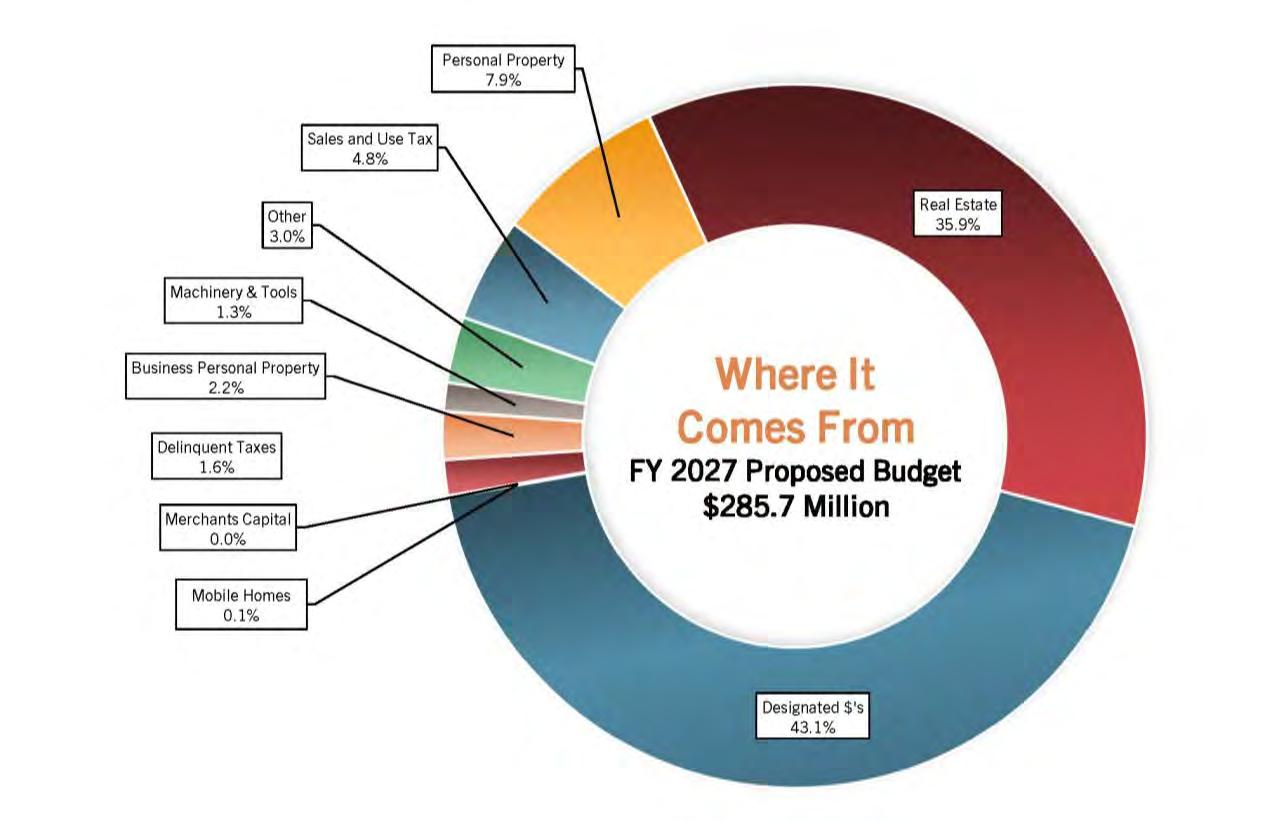
For FY 27, I am proposing a total budget of $285.7 million, an increase of $14.9 million, or 5.5 percent over the originally adopted Fiscal Year 2025-2026 (FY 26) budget, establishing a real estate tax rate of 81 cents per $100 of assessed value, a five-cent increase over FY 26.
Of the total proposed budget amount, I am recommending $190.7 million, 67 percent, be allocated to Montgomery County Public Schools ($160.8 million for school operating; $3.2 million school capital; $7 million for school nutrition funds; and $19.7 million for school debt service). This reflects a $4.1 million increase in County funding I am recommending the remaining $95 million (33 percent) be used to fund public safety; general government administration; judicial administration; general services; health and welfare; parks, recreation, and cultural; community development; and other agencies. Of the new undesignated revenue, I am recommending the allocation of 56 percent to public schools, six percent to public safety, and 38 percent to general County functions.

Funding Sources: $14.9 million in New Revenue
Currently, $1 million is projected in new undesignated revenue for FY 27. The proposed five-cent tax rate increase will provide an additional $6.4 million in new undesignated revenue for a total of $7.4 million.
Each one-cent increase in the real estate tax rate generates approximately $1.3 million in additional revenue. The proposed five-cent real estate tax rate increase provides the additional funding necessary to strategically support identified priorities, including Montgomery County Public Schools, public safety, general County operations, and 51 other agencies that deliver human services, public safety, education, cultural, environmental, and economic development programs throughout our community.
County designated funds, which include local fees, state funding, and federal grants, are projected to increase by $3 million New designated state revenue in the amount of $3.8 million for the school operating fund, combined with $0.7 million in designated school nutrition funds, result in a total increase of $4.5 million in FY 27.
It is important to note, funding from the Montgomery County Public Service Authority (PSA) is included in the County’s FY 27 designated funds to support the newly established Utilities Department. This funding facilitates the transition of PSA employees to County Utilities Department employees and results in an increase of $2.4 million in the County’s general fund. While this change increases the overall general fund within the County’s budget, it does not represent an increase in taxpayer dollars, as these costs are fully funded with revenue from the PSA.
Proposed Funding: $285.7 Million
We worked intentionally together throughout the year to bring clarity to the County’s vision and priorities. In addition, both County and MCPS staff members have made adjustments this year to improve coordination, communication and overall budget planning. One example of this is the collaborative budget process calendar and timeline that outlines both key deadlines for the County and public schools as shown in the “Understanding the Budget” section (Appendix A) of the FY 27 proposed budget book.
The proposed FY 27 budget is a direct result of our collaborative work and shared direction. Our priorities remain consistent, yet we understand the need to adapt where and when appropriate to compensate for our community's growth.
Of the proposed $285.7 million budget, I am recommending:
• $190.7 million for Montgomery County Public Schools to include the school operating budget; the school nutrition fund; the school capital fund; and school debt service;
• $30.5 million for public safety, which includes the Sheriff’s Office; Western Virginia Regional Jail Authority; Montgomery County Fire and EMS Department; Volunteer Fire and Rescue Agencies; and the Animal Care and Adoption Center;
• $50.3 million for general government functions to include funding for general government administration; judicial administration; general services; health and welfare; parks, recreation, and cultural; and community development;
• $5.1 million for the County Capital Fund;
• $5.1 million for County debt service;
• $3.6 million for other agencies; and
• $0.4 million for EDA incentives
During the County’s budget analysis, we identified $0.8 million in one-time funding requests. These include equipment for the following functions: fire and EMS, technology, planning and GIS, library, the office of elections, solid waste and landfill remediation. These costs align with our priorities and support our commitment to providing superior customer service. They are outlined in the “Budget Summary” (Appendix C) of the proposed budget document and will be presented to the Board for approval
following adoption of the budget. With the proposed five-cent real estate tax rate increase, the County will receive approximately $3.2 million in unbudgeted revenue with the June 5, 2026, tax collection, a portion of which could be used to fund these items.
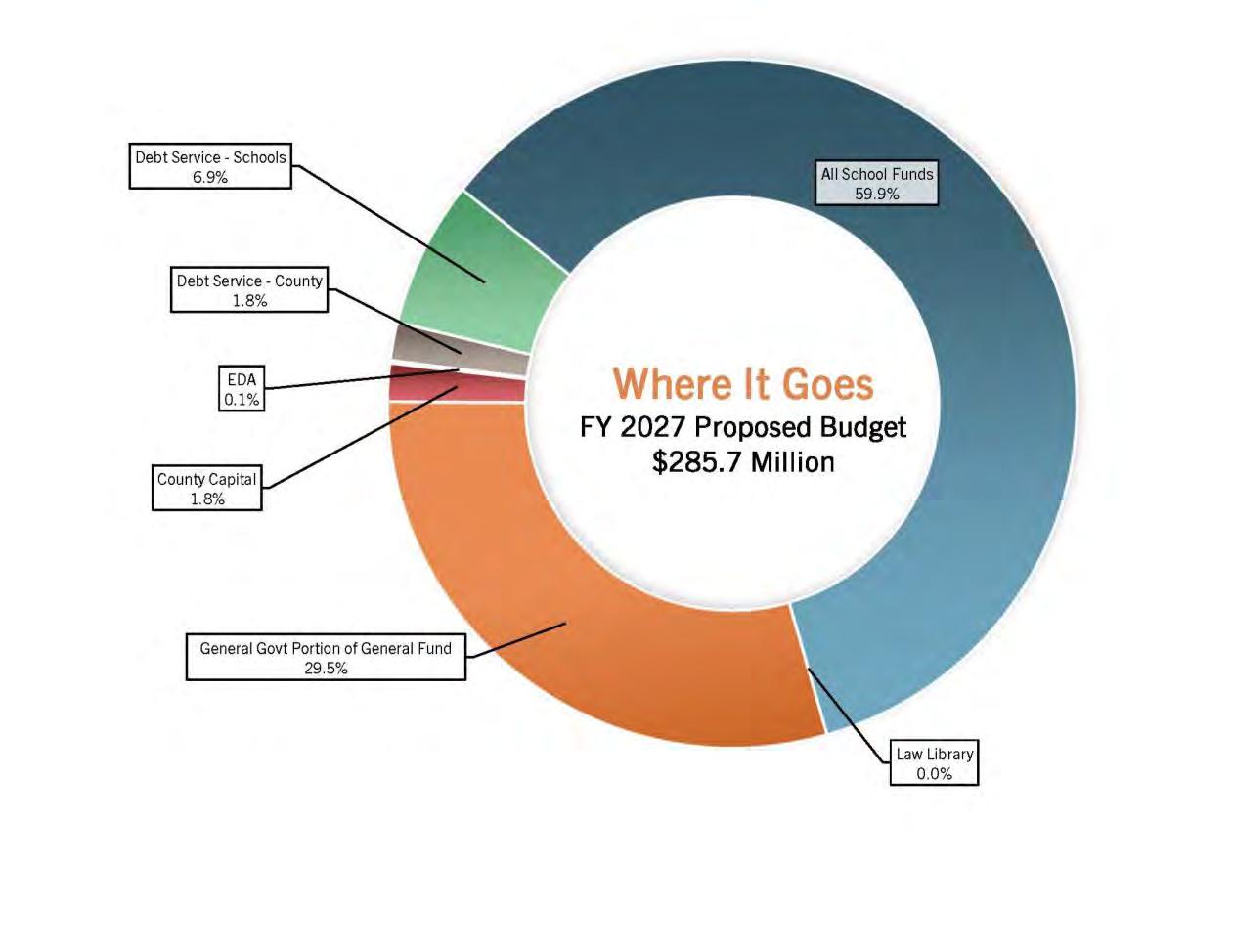
Public education continues to represent the largest share of the County’s annual budget. The proposed FY 27 budget allocates more than two-thirds of total County funding to Montgomery County Public Schools (MCPS), with the remaining portion supporting essential County services, including public safety, general government and judicial administration, health and welfare, parks, recreation and cultural programs, community development, and other agencies. This funding approach allocating more than two-thirds of the overall budget to public schools has been a long-standing practice for Montgomery County for many decades.
Because public education remains one of the Board’s highest priorities, the FY 27 proposed budget continues to dedicate a significant portion of County resources to MCPS. The proposed budget includes $4.1 million in new County undesignated funding for the MCPS operating fund. In addition, the budget reflects an estimated $3.8 million in increased state and federal funding for MCPS for a total proposed funding increase to the Schools Operating fund of $7.9 million.
Historically, the Board of Supervisors has demonstrated their dedication to public education by providing significantly more funding than the state’s required local effort for the Standards of Quality (SOQ) as demonstrated in the table below.
Source: Virginia Department of Education, Actual FY25 Required Local Effort and Required Local Match Report
The proposed budget also includes a dedicated 2.5 cent allocation of the real estate tax rate, generating approximately $3.2 million, to support MCPS capital projects.
Continued collaboration between the County and MCPS remains a key component of the budget development process. A joint meeting of the Board of Supervisors and the School Board is scheduled for Monday, March 16, 2026, to further discuss the FY 27 budget and to collectively address the needs of both the public schools and other government functions This meeting was strategically scheduled to provide an opportunity for further collaboration prior to setting the advertised tax rate. This meeting will occur after the March 9, 2026, presentation of the proposed budget and before the March 23, 2026, meeting at which the Board of Supervisors will set the advertised tax rate for the April 9, 2026, public hearing.
The accompanying chart illustrates the allocation of new designated and undesignated revenue and highlights the County’s consistent commitment to directing a substantial portion of new funding to MCPS. It is important to note that the Commonwealth provides significantly more designated funding to public schools than to local governments. While public education remains a top priority, the County must also balance limited undesignated revenue to address other critical needs, including public safety and core County services.
$14,000,000
$12,000,000
$10,000,000
$8,000,000
$6,000,000
$4,000,000
$2,000,000
Please note on the chart provided the increases in public safety funding over the past five years. In FY 22, the County began funding career EMS personnel for the first time ever, providing 24/7 coverage in the Eastern Montgomery and Riner areas In FY 25, the County responded to growing public safety needs in Eastern Montgomery by providing career firefighters from 7 a.m. to 7 p.m., seven days a week. In FY 26 the Board approved funding for eight deputies for the Montgomery County Jail; one investigator for the Sheriff’s Office; and 12 additional career firefighters to provide 24-hour fire service in Eastern Montgomery.
Public Safety: $30.5 Million
Public safety includes the Sheriff’s Office; Western Virginia Regional Jail Authority; Fire and EMS Department; Volunteer Fire and Rescue Agencies; and the Animal Care and Adoption Center In FY 27, 11 percent of the overall budget is proposed to be allocated to fund public safety needs. In total, I am recommending $30.5 million in funding to address identified public safety needs in FY 27.
In the fall of 2025, Montgomery County partnered with Mission CIT, LLC to complete a comprehensive study of the County’s Fire and Rescue/EMS system, including services provided in the towns of Blacksburg and Christiansburg and by the Virginia Tech Rescue Squad. The study will evaluate the current volunteer-career model and develop strategic recommendations for the future, with the goal of strengthening the volunteer system and enhancing coordination between the County and the towns to ensure the delivery of high-quality emergency services throughout the community.
The study will provide the information necessary to determine appropriate funding levels for the towns’ fire and rescue volunteer agencies. Funding requests received for FY 27 will be considered upon completion of the study.
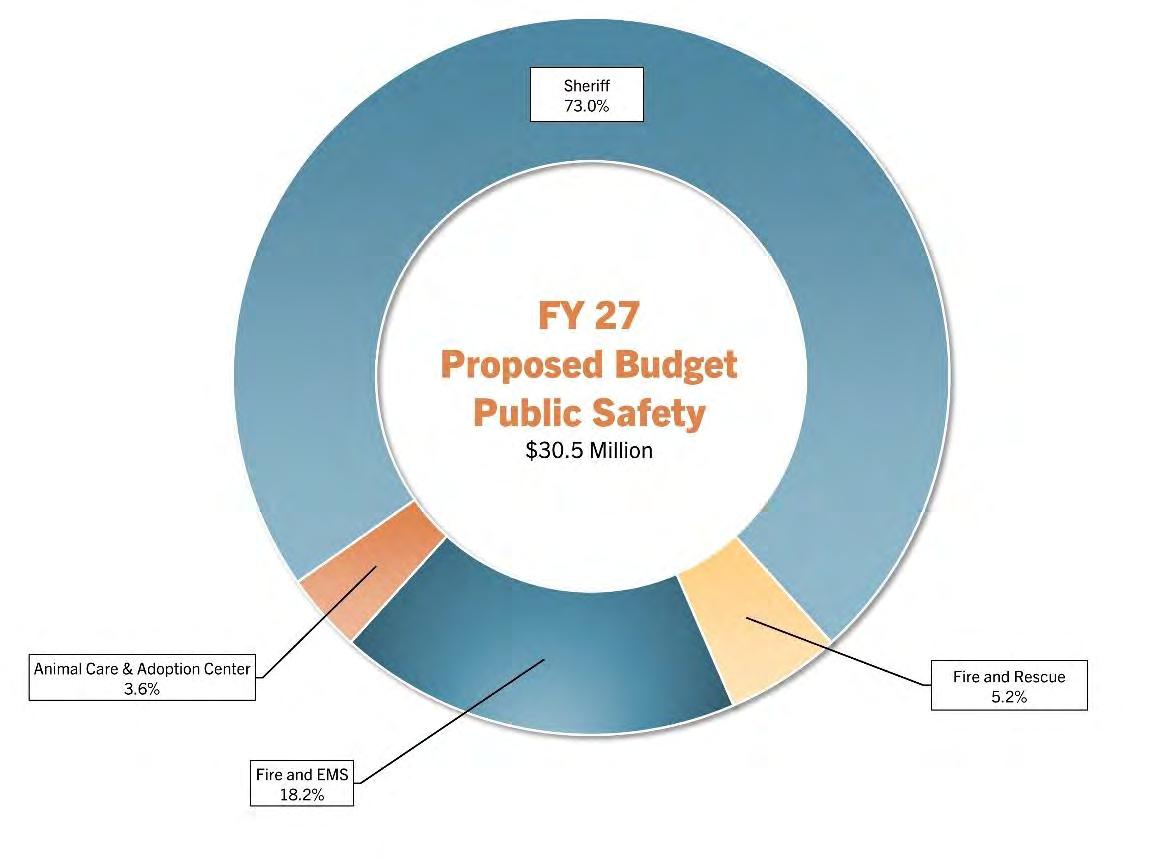
The FY 27 proposed budget allocates $22.3 million for the Montgomery County Sheriff’s Office. This includes funding for School Resource Officers at all County schools, as well as deputies who provide law enforcement, civil process service, corrections, courthouse security, and conduct motor vehicle accident and criminal investigations. Special contingencies includes $200,000 to address deputy recruitment and retention.
Included in the Sheriff’s Office budget is an allocation of $5.6 million for the Western Virginia Regional Jail Authority Of that total, I am proposing additional funding of $301,772 to cover debt service and per diem costs based on the number of inmates housed at the jail. Both the debt service and per diem cost and the number of inmates are estimated to increase in FY 27.
One identified critical need is the County’s responsibility to deliver timely emergency assistance through trained professionals. The total amount budgeted for the Fire and EMS Department is $5.6 million. I am proposing $32,200 to fund basic operating increases such as motor vehicle insurance, counseling services, training and uniforms
Volunteer Fire and Rescue Agencies
The County provides annual operating funds to nine volunteer fire and rescue agencies. For FY 27, I am recommending $1.6 million for fire and rescue operational needs, which includes $20,626 in additional funding.
I am recommending a total FY 27 budget of $1.1 million for the Animal Care and Adoption Center (ACAC), which includes funding for one new position to address increasing service demands. The ACAC remains committed to operating as a no-kill facility amid a sustained rise in animal intake and a decline in animal adoptions. The proposed position is essential to expanding foster placement efforts, relieving capacity constraints and ensuring animals can continue to be accepted into care.
General Government Functions; General Government Administration; Judicial Administration; General Services; Health and Welfare; Parks, Recreation, and Cultural; and Community Development: $50.3 Million
The FY 27 proposed budget includes $50.3 million for general government functions, encompassing general government administration, judicial administration, general services, health and welfare, parks, recreation and cultural programs, and community development.
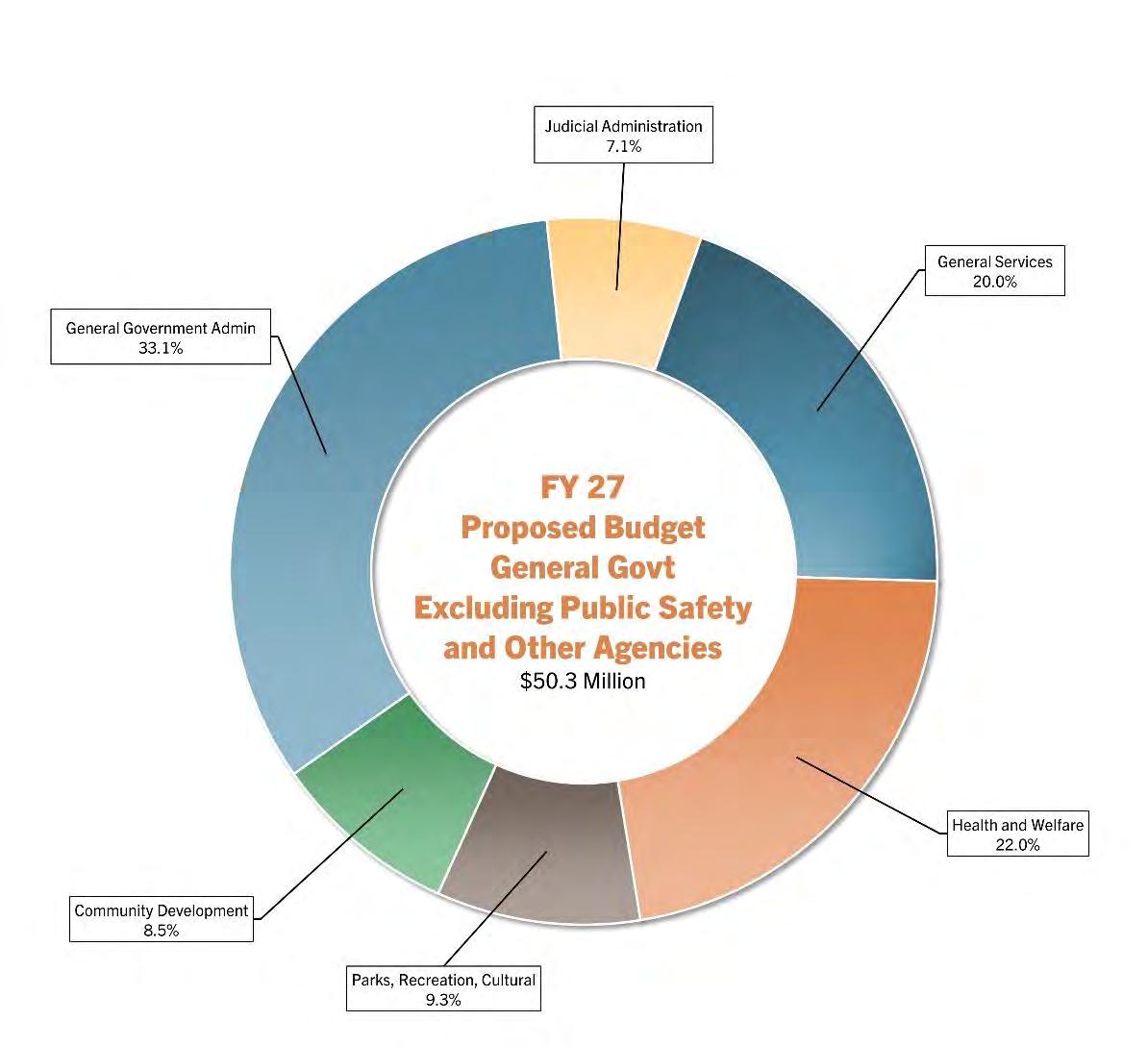
This proposed funding reflects a thorough internal budget review process that requires each department to present and justify its budget requests to the County’s leadership team. This process ensures all requests undergo rigorous evaluation before recommendations for general government functions are presented to the Board.
Guided by the Board of Supervisors’ priorities and a shared commitment to providing high-quality services to County citizens, the review process promotes interdepartmental collaboration, encourages discussion of operational challenges, and fosters a better understanding of departmental responsibilities. These efforts often lead to innovative solutions that balance limited resources with identified needs.
Beginning with the FY 25 budget, the County developed a strategic multi-year staffing approach to address the growing needs of our community and demonstrate our commitment to providing superior services to our citizens This plan recognizes that meeting growing service demands requires a phased and sustainable approach to staffing, rather than one-time or reactive position growth. As part of this effort, the County has identified the need for additional staff over multiple years to align workforce capacity with operational demand.
The Board has supported this strategic staffing approach, approving a significant number of requested new positions over the past three fiscal years. Position requests are evaluated annually and prioritized into the appropriate budget cycle. While each request reflects a legitimate operational need, it remains essential that workforce expansion be approached in a measured and purposeful manner. Balancing service demands with available funding, facility capacity, and long-term sustainability requires thoughtful prioritization to ensure continued fiscal responsibility while maintaining service levels.
For FY 27, departments submitted requests for 22.75 new positions. Consistent with the strategic approach, I am proposing funding for six new full-time positions and one part-time position in FY 27, including:
• Director of Real Estate Assessment in County Administration;
• Finance Manager in Finance;
• Solid Waste Manager, HVAC Technician, and a part-time Building Inspector in General Services;
• Adoption Foster Coordinator at the Animal Care and Adoption Center; and
• Family Services Specialist in Social Services.
The total cost associated with these proposed new positions is $625,522 for salaries and benefits, along with $16,800 for equipment and related expenses.
Annually, both the towns of Blacksburg and Christiansburg and MCPS typically provide two pay increases for employees an across-the-board adjustment combined with a step or merit-based increase. While the County does not currently provide a formal step or merit increase, we are in the process of designing and implementing a system for the next fiscal year. To remain
competitive with neighboring localities, I am recommending $1.3 million to fund a three percent pay increase for County employees in FY 27
As healthcare costs continue to increase, it is important to monitor and maintain adequate funding to cover the County’s self-funded employee health insurance program. For FY 27, the County is taking a two-step approach to provide additional funding in the health insurance fund.
Since the Human Resources department is the County interface with the service provider for the County’s on-site employee clinic, the clinic operating fees along with annual flu vaccinations and health plan consultant fees will now be charged to the Human Resources department rather than to the health insurance fund beginning in FY 27. Since FY 22, these costs have been paid from the fund; this change will make an additional $301,437 available to cover claims costs The same amount is added to the Human Resources budget for FY 27 to cover costs related to employee clinic fees and annual flu vaccinations, reinforcing the County’s commitment to employee wellness and preventive care.
The second step that will increase the health insurance fund is the addition of $250,000 to Special Contingencies. Both of these actions generate a total of $551,437 of additional funding in the health insurance fund for FY 27.
For FY 27, the County received funding requests totaling $0.6 million from 30 other agencies. I am recommending an additional $55,167 to support these requests. The FY 27 proposed budget includes a total of $3.6 million in funding for 51 outside agencies that support the Board’s priorities. A detailed listing of proposed allocations for these agencies begins on page 267 of the FY 27 proposed budget document.
The County’s annual proposed budget is developed by a dedicated and highly skilled financial team that carefully analyzes local, regional, and national trends and projections. The FY 27 proposed budget builds upon the County’s established financial practices and policies, which have contributed to a AA+ bond rating.
This budget reflects a continued commitment to financial strength and long-term stability through sustainable and responsible fiscal management by both the Board of Supervisors and County staff. While not all budget requests could be accommodated, the proposed FY 27 budget represents meaningful progress in supporting public education, public safety, and core County functions while balancing limited resources with identified needs.
In summary, the proposed FY 27 budget totals $285.7 million, with a real estate tax rate of 81 cents per $100 of assessed value. This budget addresses the needs of a growing community while remaining fiscally responsible, allocating 56 percent of new undesignated revenue to public schools, six percent to public safety, and 38 percent to general County functions.
A detailed budget timeline and calendar are included on page 63 of the proposed budget document. Key dates include work sessions in March and a public hearing scheduled for April 9, 2026 The deadline for
x
adoption of the FY 27 budget and tax rate is April 20, 2026, to accommodate the spring tax billing schedule.
I appreciate your continued leadership and support and welcome any questions as you review the proposed FY 27 budget.
Sincerely,
Angela M. Hill, CPA, CGMA County Administrator
Proposed Budget for Fiscal Year 2027
Proposed Budget for Fiscal Year 2027

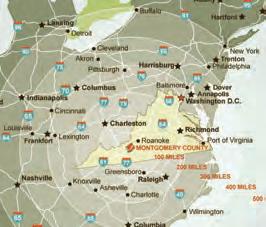
Since its founding in the eighteenth century, Montgomery County has experienced a rich history in agriculture, manufacturing, and technology with ties to notable historical figures to include George Washington and even Daniel Boone. The county has experienced consistent growth throughout the years.
Montgomery County – which is home to two of the state’s four largest towns, Blacksburg and Christiansburg – is a high-tech community strategically located on the Interstate 81 corridor.
The county provides a full range of services to its approximately 102,000 residents to include: law enforcement; fire and rescue; planning and GIS; economic development; social services; courts; parks and recreation; general services; environmental services; animal control; libraries; and schools.
Montgomery County traces its origin to 1776 when it was formed and named after General Richard Montgomery, an American hero of the French and Indian War and the American Revolution. The first settlement, Draper’s Meadow, was established in the 1740s but was destroyed by Shawnee Indians during the French and Indian War.
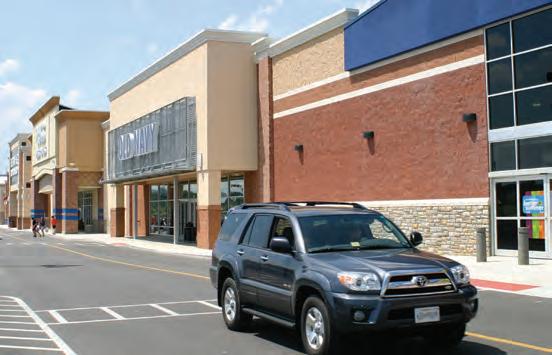
Christiansburg, the county seat, was incorporated in 1792 and named in honor of Colonel William Christian. This community was an important stop on the Wilderness Road, which roughly corresponds to the present day U.S. Route 11. As the retail hub of the county, Christiansburg is host to several shopping centers and restaurants.
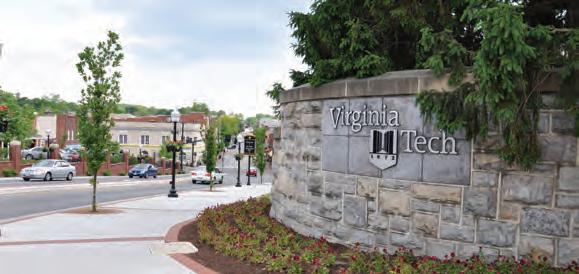
Blacksburg was incorporated in 1871. The town originated on tracts of land donated by William Black – for whom it was named – and was established at the same site as the previous settlement of Draper’s Meadow. Blacksburg is home to Virginia Tech, one of the nation’s leading educational institutions and research universities. The
town is also home to the Virginia Tech Corporate Research Center.
Graduates from area colleges and universities add to the abundant, educated workforce to make a probusiness community with a solid mix of high-tech, manufacturing, retail and professional services –including a variety of Fortune 500 firms.
The graphics and charts provided below have been obtained from the Labor Market Information report provided by the Virginia Employment Commission.
Status of our Economy: Expected to outgrow our urban neighbor by 2030.
Source: Weldon Cooper Center for Public Service, U.Va., 2017.
Population by Gender
Source: 2020 Census.


Source: 2020 Census.
30-39 years 20-29 years 10-19 years 0-9 years
40-49 years
50-59 years
60-69 years
80 years and over 70-79 years



Projected Population Change
Source: U.S. Census Bureau, Virginia Employment Commission.
Projected Population Change: Montgomer y County
Montgomery County maintains a few of the very industries that were popular at its inception including agriculture and manufacturing. In addition, technology, health care, education, retail, hospitality, and food service are now among popular industries throughout the county. According to the Local Area Unemployment Statistics by the Virginia Employment Commission, Montgomery County consistently maintains an average unemployment rate that is lower than the national average, with a recorded rate of 4.4 percent compared to the national rate of 4.6 percent as of July 2025.
Source: Virginia Employment Commission, Economic Information & Analytics, Local Area Unemployment Statistics.
Source: Virginia Employment Commission, Economic Information & Analytics, Quarterly Census of Employment and Wages (QCEW), 1st Quarter (January, February, March) 2025.
Proposed Budget for Fiscal Year 2027
The FY 27 County budget for all funds (net of transfers) totals $285.7 million. The General Fund budget totals $185.1 million, including transfers to other funds, such as the School Operating Fund. The School Operating Fund totals $161.6 million, including the transfer from the County of $69.4 million. The general government portion of the General Fund (net of transfers to other funds) totals $84.4 million and the School Operating Fund (net of transfers) totals $160.8 million. The total County budget also includes the Debt Service Fund ($24.8 million), the Law Library Fund ($17,600), the School Nutrition Fund ($7 million), funding for County Capital ($5.1 million), School Capital ($3.2 million), and the Economic Development Authority Incentive Program ($0.4 million).
The FY 27 proposed real estate tax rate is 81 cents per $100 of assessed value. The FY 26 approved rate was 76 cents. The FY 27 proposed budget includes a five-cent real estate tax rate increase.




P r o p o s ed Bud get
$285.7 Million




The following highlights major changes in expenditure areas. Detailed explanations of the expenditure recommendations can be found in the Expenditure Plan section of the document. A recap of expenditures by fund, County dollars by division, position (FTE) listing, and a graphic summary of the FY 27 proposed budget are included in the Appendices.
The FY 27 proposed budget includes funding to cover the cost of a 3% compensation increase for classified and part-time non-classified County employees July 1, 2026, and funding to maintain the County’s Compensation and Classification Pay Plan.
In the area of General Administration, the following major budget changes were made for FY 27:
Revenue Sharing – funds are added to cover the increased Transient Occupancy, Sales, and Meals Taxes collected in the 177 Corridor based on the agreement with the City of Radford.
County Administration – funds are added for a Director of Real Estate Assessments (one FTE) to oversee the valuation of real property for tax purposes.
Public Relations and Community Engagement – funds are added to support annual software maintenance costs and an increased number of Canva software licenses.
Human Resources – funds for the Employee Health Clinic are moved from the self-funded health insurance fund to the Human Resources division to more effectively monitor and maintain adequate funding to cover the employee insurance program.
Management and Budget – funds are added to cover the increased cost of producing the proposed and approved budget books and approved CIP book.
Finance – funds are added for one Finance Manager position (one FTE) to supplement existing staff and assist in completing financial statement audits, which have increasingly complex regulatory requirements, in a timely manner.
Information Technology – funds are added to cover new software programs, software maintenance service contracts, and hardware costs for new positions.
Treasurer – funds are added for DMV administrative fees charged to the County and increases in printing, binding, and postage costs.
Electoral Board – funds are added to purchase additional equipment to assist with same day registration needs in the largest voting precincts, as well as for increased postage costs.
General Contingencies – funds are added to the General Contingency Budget to meet the County’s financial policies of retaining 1% of the County’s general government portion of the General Fund to cover contingency needs.
Special Contingencies – funds are added to the Special Contingency Budget to cover the cost of a 3% compensation increase for classified and part-time non-classified County employees July 1, 2026. An additional $250,000 is added to cover potential increases in County health insurance costs for FY 27, $225,000 is added to offset increased Worker’s Compensation insurance premiums, $200,000 is added to evaluate the compensation structure for the Sheriff’s office, and $200,000 is also included in the base to maintain the County’s compensation and classification plan for all other employees throughout the County.
Other small changes to the Board of Supervisors, County Attorney, and Commissioner of Revenue are due to changes in personnel costs due to turnover savings and benefit changes between FY 26 and FY 27.
In the area of Judicial Administration, the following major budget changes were made for FY 27:
Commonwealth Attorney – funds are added to the base budget to cover one Assistant Commonwealth Attorney that was added by the state in FY 26. Funds are also added to supplement the current office supplies budget in FY 27.
Circuit Court – funds are added for recurring costs associated with the courtroom evidence presentation system.
Clerk of the Circuit Court – funds are added to the base budget to cover one Deputy Court Clerk position that was added by the state in FY 26.
In the area of Public Safety, the following major budget changes were made for FY 27:
Sheriff – funds are added to cover the costs for debt service and inmate per diem expenses at the Western Virginia Regional Jail.
Fire and EMS – funds are added for increased vehicle insurance premiums, training, professional services, purchase of outerwear for EMS staff, and software maintenance increases. The slight reduction in the Fire and EMS division is due to staff turnover savings from FY 26 to FY 27.
Fire and Rescue – funds are added for Riner Fire Department to offset cost increases in training, repairs, and maintenance and to the Special Operations Team for uniforms for new members. The slight reduction in Fire and Rescue is due to a transfer of funds from Elliston Fire Department to General Services to cover the cost of utilities and repairs and maintenance to that facility.
Animal Care and Adoption Center – funds are added for one Adoption/Foster Coordinator position (one FTE) to focus on dog fosters and adoptions.
In the area of General Services, the following major budget changes were made for FY 27:
General Services – funds are added to cover the costs of one part-time Building Inspector position (.75 FTE), one Solid Waste Manager (one FTE), and one HVAC Technician position (one FTE). Funds are also added for trash and recycle container replacements, groundwater monitoring and corrective actions at Thompson and Mid-County landfills, housekeeping supplies, utilities, fee payments, uniform costs for new staff, training, and agricultural supplies for additional acreage gained.
In the area of Health and Welfare, the following major budget changes were made for FY 27:
Public Health – funds are added for the New River Health District based on projected state funding and local matching requirements.
Social Services – funds are added to the base budget to cover one Family Services Specialist position that was added due to the Resource Family Collaborative grant program awarded for FY 26. In addition, funds are added for an additional Family Services Specialist (one FTE) to provide services and assistance to the adult population as a result of new guardianship requirements, and for assessment needs of the elderly for nursing home placement.
Other small changes to the Human Services and Social Services are due to changes in personnel costs due to turnover savings and benefit changes between FY 26 and FY 27.
In the area of Parks, Recreation, and Cultural, there were no significant budget changes for FY 27. The small reductions in both divisions are due to changes in personnel costs due to turnover savings and benefit changes between FY 26 and FY 27.
In the area of Community Development, the following major budget changes were made for FY 27.
Economic Development – funds are added for mowing costs for additional acreage in Falling Branch, Phase II.
Utilities Division – PSA staff and daily operations officially transitioned to Montgomery County October 1, 2025. The integration of utilities services into a County department provides multiple opportunities for improvement including streamlined administration to support stronger customer service.
The small reduction in Planning and GIS is due to changes in personnel costs due to turnover savings and benefit changes between FY 26 and FY 27.
Other Agencies requests are evaluated each year based on existing funding agreements, board directives, and funding alignment between local government support in the New River Valley. Significant increases were provided to the New River Valley Emergency Communications Regional Authority, the Virginia Cooperative Extension, and the Community Services Board for FY 27. The large reduction in Economic Development Agencies is due to a local match requirement for federal grant funds supporting station facility construction improvements for the New River Valley Passenger Rail that is no longer needed in FY 27.
Transfer to the School Operating Fund
County funding in the FY 27 budget for the School Operating Fund totals $69.4 million, which is an increase of $4.1 million over the FY 26 approved budget.
Transfer to the Debt Service Fund
Funds are transferred to the Debt Service fund to cover the cost of County and School debt service.
Transfer to the School Capital Fund
2.5 cents of the real estate tax rate are earmarked for the School Capital Fund.
Transfer to the Economic Development Authority (EDA) Funds are transferred to the EDA for economic development incentives.
Transfer to the County Capital Fund
1.5 cents of the real estate tax rate are included for Fire and Rescue capital needs and 1 cent of the real estate tax rate is earmarked for future capital projects, which includes $100,000 for the Valley to Valley Trail project. In addition, $1,300,000 is transferred to address County capital maintenance needs. Other monies include $425,000 for the Parks Revitalization project and $210,000 to address technology infrastructure issues.
Proposed Budget for Fiscal Year 2027
Proposed Budget for Fiscal Year 2027
BUDGET SUMMARY, APPENDIX
Proposed Budget for Fiscal Year 2027

During the FY 27 budget process, County divisions made several one-time funding requests. These one-time funding items were excluded in the FY 27 Proposed Budget because they can be funded with one-time only money, which would reduce the overall cost of the budget and avoid any impact on the tax rate for FY 27. One-time funding of $832,434 will be requested in July 2026. Following are the specific items to be addressed.
• $71,000 in One-Time Funding for Information Technology Needs – $71,000 in one-time funding is needed in FY 27 for one-time labor costs to improve the network infrastructure, increasing reliability and connectivity.
• $21,960 In One-Time Funding for Office of Elections Needs – $21,960 in one-time funding is needed in FY 27 for twelve additional Poll Pads for the County’s largest precincts to accomodate same day registration. The associated recurring costs total $3,600 and are included in the FY 27 proposed budget.
• $148,869 In One-Time Funding for Sheriff’s Department Needs – $148,869 in one-time funding is needed in FY 27 to pay down Montgomery County Sheriff’s Office employees’ compensatory time balances to 240 hours, for those whose balances currently exceed that amount. Currently, employees are not compensated for this time until they either leave the department or reach the maximum federal limit of 480 hours. Allowing this option will have a positive and measurable impact on departmental performance by improving morale, job satisfaction, and engagement. Moreover, adding this option would bring MCSO more in line with surrounding law enforcement agencies who pay for overtime, as well as reduce the number of compensatory leave hours carried on the books for future payout by the County.
• $337,700 In One-Time Funding for Fire and EMS Needs:
• $187,700 in one-time funding is needed in FY 27 to purchase equipment for a Whole-Blood Program capable of storing and administering whole blood to trauma patients who need it, replace and upgrade three cardiac monitors, and purchase a stairchair to assist with moving patients out of areas with steps.
• $150,000 in one-time funding is needed in FY 27 to replace and upgrade stabilization equipment carried on the department’s heavy rescue truck to address reliability, safety, and capability gaps when responding to heavy vehicle crashes, industrial/agricultural entrapments, and other complex rescue incidents.
• $195,000 in One-Time Funding for General Services Needs:
• $65,000 in one-time funding is needed in FY 27 to replace aging and failing compactor equipment at the Merrimac Consolidated Site.
• $130,000 in one-time funding is needed in FY 27 for professional groundwater monitoring services at Thompson Landfill to stay in compliance with DEQ and implementation of a corrective action plan, including well drilling and media injection for three new wells and additional reporting. The recurring costs total $23,000 and are included in the FY 27 proposed budget.
• $32,000 in One-Time Funding for Library Needs – $32,000 in one-time funding is needed in FY 27 to replace outdated routers. The current hardware will no longer be supported after October 2026. This purchase will preserve current connection capability and network security for the branches. Without licensed vendor supported routers, no online services except public wireless would function. The library automated system, office applications, cataloging and acquisitions, calendaring and scheduling, public catalog, public internet, and staff internet all rely on these routers to function.
• $25,905 in One-Time Funding for Planning and GIS Needs:
• $8,000 in one-time funding is needed in FY 27 for the purchase of a large-format plotter to improve efficiency, accuracy, and service delivery for both the Planning and GIS Department and other County departments. The current plotter is nearing the end of its expected lifespan.
• $17,905 in one-time funding is needed in FY 27 begin the implementation of the Montgomery Matters Comprehensive Plan’s land use recommendations. This work will assist in coordinating the recommendations and outcomes of the Comprehensive Plan into the Zoning Ordinance update project.
One-time Items Removed from FY 2027 Proposed Budget
Proposed Budget for Fiscal Year 2027
Summary of Full-Time Employees/Equivalents
Proposed Budget for Fiscal Year 2027
Graphs




















































































G ener a l G o v er nment












C o unt y F und i ng f o r S cho o l O p er at i ng




S cho o l Fund s F Y 2 0 2 7 P r o pos ed Budget $ 1 7 1 . 1 mi l l i o n
Proposed Budget for Fiscal Year 2027
Proposed Budget for Fiscal Year 2027
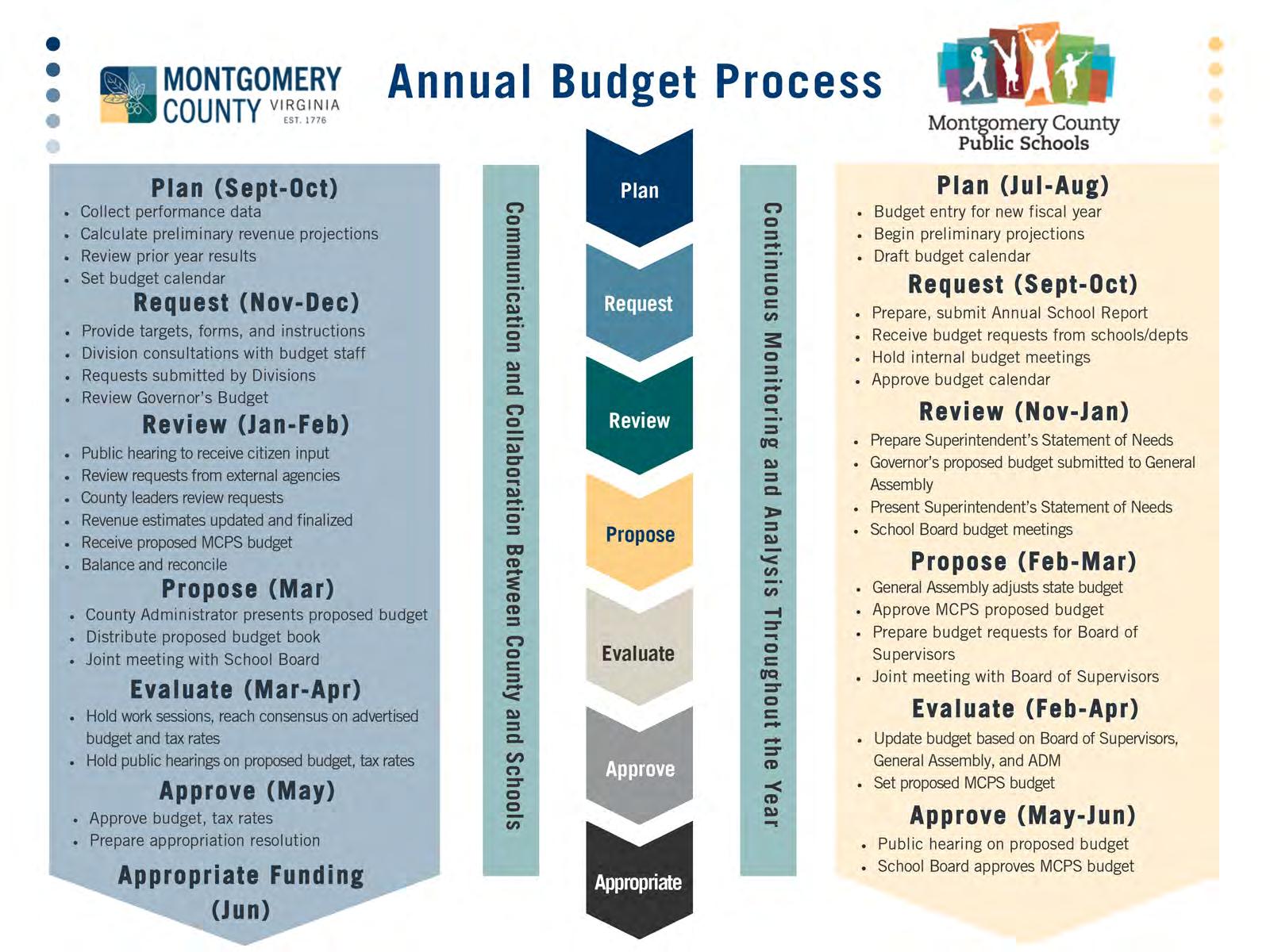
Montgomery County’s annual budget begins with the development of the proposed budget, the budget recommended by the County Administrator, and ends with the approved budget, which has been reviewed, adjusted and approved by the Board of Supervisors (Board).
The County’s annual budget process begins in the fall of each year, when divisions, departments and agencies submit budget requests for the upcoming fiscal year. In January and February, County staff develop the proposed budget. The proposed budget and budget document are presented to the Board in March of each year. During that time, the Board begins deliberations to adjust the budget and develop the County’s approved budget. During budget deliberations, the Board holds public hearings for citizen comments and conducts work sessions. Citizen comments assist the Board of Supervisors in making decisions regarding spending. After budget adjustments, the final approved budget is adopted in April and becomes effective July 1. The budget runs on a fiscal year basis and is effective July 1 through June 30. The County’s 2027 Budget Calendar is shown below (some changes may occur during the process):
July - August 2025
Prior year-end expenditure and revenue analysis; revenue analysis for FY 2027 begins.
SeptemberOctober 2025 Budget targets and budget instructions are developed for FY 2027 Proposed Budget.
November 2025 FY 2027 budget forms and instructions are sent to county divisions and external agencies.
December 2025
Budget requests for FY 2027 are due.
January - February 2026 Staff begins the development of the FY 2027 Proposed Budget.
Jan. 26, 2026 7:15 PM Public Hearing for citizen input.
Feb. 9, 2026 7:15 PM Revenue estimates. (Work Session)
Feb. 23, 2026 7:15 PM Superintendent presents the Proposed FY 2027 MCPS budget to the Board of Supervisors. (Work Session)
Mar. 9, 2026 7:15 PM Presentation of the FY 2027 Proposed Budget.
Mar. 16, 2026 7:00 PM Joint meeting with MCPS. (Special Meeting)
Mar. 23, 2026 7:15 PM Establish advertised tax rate and advertised budget. (Work Session)
Apr. 9, 2026 6:30 PM Public Hearing on advertised tax rate and budget. (Special Meeting)
Apr. 20, 2026 6:30 PM Adopt budget and establish tax rate. (Special Meeting)
May - June 2026
Year-end revenue and expenditure estimates are finalized for FY 2026 and transfers are made to close the year.
July 1, 2026 New Fiscal Year begins.
JANUARY
CALENDAR KEY: Regular Meeting Work Session
The County’s budget is the government’s estimated revenues and expenditures for the fiscal year that begins on July 1 and ends on June 30. It consists of operating and capital budgets for county programs and services. The budget also allocates funds for the operating and capital needs of the public school system and contributes to a number of other agencies.
The County’s budget consists of the following funds:
• General Fund – which provides funding for the day-to-day operations of the County government.
• Law Library Fund – which provides funding for the day-to-day operations of the law library.
• School Operating Fund – which provides funding for the day-to-day operations of the School system.
• School Nutrition Fund – which provides funding for the day-to-day operations of the School food program.
• County and School Capital Funds – which provides an annual cash-to-capital allocation for new county and school capital needs.
• Debt Service Funds – which provides funding to cover the County and School’s outstanding debt obligations.
• EDA Incentive Fund – which provides funding for economic development initiatives.
In November of each year, County divisions are provided with budget targets for the upcoming fiscal year. The base budget target represents the base of personnel and operating costs anticipated for the upcoming year based on the prior year approved budget with adjustments made for personnel changes and mandates. One-time only funding from the prior year is excluded from the base budget. Along with the base budget target, County divisions are also provided the opportunity to request addenda items, which represent dollars over and above the base budget.
Base Budget Targets allow for the delineation between previously approved funding levels and requested increases.
Base Budget Targets are established as follows:
• Personal Services - Includes all positions approved up to the issuance of the proposed budget and covers the estimated costs in fringe benefits.
• Operations and Maintenance - Caps funding at the level of the prior year approved budget, less adjustments for one-time only expenditure items.
• Capital Outlay - Most capital outlay is removed from the base budget target as typically it is a nonrecurring expense. Some divisions maintain a permanent capital outlay allocation as they utilize the funding on a yearly basis to replace equipment on an existing replacement plan. Examples include motor vehicle and computer replacements.
Addenda Requests are increased funding over and above the Base Budget Targets. They must be presented as Addenda to the Base Budget. This means that additional justification for increased funding or the inclusion of capital outlay dollars must be provided with the request.
These adjustments are designed to clearly identify increases to operations and initiatives proposed by departments. The chart below illustrates the process.
Estimated costs for continued operations
Based on prior year approved budget with adjustments
Excludes: Office Furniture Other Equipment
over and above the base budget target for operating and capital items
Dollars requested for new or expanded services (initiatives)
All budget requests (base budget request and addenda) are due in December of each year and are evaluated for inclusion in the upcoming budget. When making budget requests, County divisions must address the following:
• Is there sufficient workload to justify the request?
• Is there sufficient need to justify the request?
• Is the request related to a state or federal mandate?
• Are there legal requirements that will not be met if the request is not funded?
• Is the request linked to a specified outcome that is community or board driven?
• What tangible benefits can the County expect to experience as a result of funding the request?
All budget requests are evaluated based on available funding and the justification listed above.
With the goal of allowing decision-makers to focus on broader issues, the budget document consolidates similar
functions. The FY 2027 budget continues to consolidate information and array budget data in ways that facilitate a broader understanding.
This budget document includes both the County’s general government operating budget, the Montgomery County Public Schools’ operating and nutrition budgets, the law library budget, County and School capital budgets, the debt service budget, and the economic development incentive budget.
The FY 2027 budget document is organized into 20 major headings, each of which is separated by a large divider tab:
• Budget Message
• Table of Contents
• Budget Summary
• Understanding the Budget
• Revenue Summary
• Summary by Function
• Expenditure Plans
• General Government Administration
• Judicial Administration
• Public Safety
• General Services
• Health and Welfare
• Parks, Recreation, and Cultural
• Community Development
• Other Agencies
• Transfers
• Law Library
• Education
• Debt Service
• County Capital
Included under the last section; Expenditure Plans, are the 34 major County Divisions or budget categories, which include Division expenditures, revenues earmarked for use by the specific Division, and County funding provided. Each of these sub-sections includes the Division’s Organizational Chart, Financial Data, Personnel, Key Performance Indicators (KPIs), Description of the Division, Base Budget Discussion, Addenda Discussion, which includes the County Administrator’s recommendation. Also included are each Department’s Description and Financial Data.
Division Financial Data - Provides a recap of the Division’s funding history, including the Base Budget and addenda requests, and recommended funding by three categories:
• Personal Services
• Operations and Maintenance
• Capital Outlay
Department Description and Financial Data - Presents historical budget data by major category for each department. The following column headings are used:
• FY 25 Revised Budget
• FY 25 Actual Budget
• FY 26 Approved Budget
• FY 27 Base Budget
• FY 27 County Administrator’s Recommended Addenda
• FY 27 County Administrator’s Recommended Total
The County Administrator’s Recommendation column identifies the amount of funding recommended for each major cost category by base budget and addenda.
Revenue that has been designated to offset expenditures in divisions is also presented. These sources include State Compensation Board funding, fees and permit charges collected by the respective divisions and other sources related to each specific function. In the presentation format, designated revenues are totaled and subtracted from the expenditures, identifying the amount of the County’s undesignated general fund revenue needed to support the division’s expenditures.
The County’s General Government portion of the General Fund (which consists of individual county divisions) have been further consolidated into 8 functional areas: General Government Administration; Judicial Administration; Public Safety; General Services; Health and Welfare; Parks, Recreation, Cultural; Community Development; and Other Agencies. Appropriation control is set at these functional areas.
After the budget is approved by the Board, the final approved budget is appropriated and becomes effective July 1. After July 1, the Board makes adjustments through additional appropriations. The budget is an estimate; therefore, as revenues and expenditure needs change, the appropriation may be adjusted. This can mean additional appropriations or reductions of appropriations. If the budget amendment exceeds 1% of the total expenditures shown in the currently adopted budget, the Board will hold a public hearing to gather citizen input. These adjustments are approved at the Board level.
Each month, the Board holds public meetings where appropriations are approved if necessary. After these approvals, the appropriations are entered into the County’s financial system. Expenditures can then be made by the division using the budget adjustment. The County’s accounting system separately keeps track of the County’s original and revised budget. The revised budget changes throughout the year as appropriations are adjusted.
The County’s accounting system is organized and controlled on a fund basis. The basis of accounting refers to the accounting method the County utilizes to recognize revenues and expenses. There are three ways in which a governmental entity can recognize revenue and expenses: cash, accrual, modified accrual basis. Under the cash basis method, revenue is recognized when cash is received and expenses are recognized when paid. Under accrual basis, revenue is recognized when earned and expenses are recognized when incurred. Modified accrual basis is a hybrid of cash basis and accrual basis. It recognizes revenues when they become both measurable and available. Expenditures are generally recognized when the related fund liability is incurred.
The County operates on the modified accrual basis of accounting for both budgetary and accounting purposes.
This means that the County recognizes revenues when they become both measurable and available. Expenditures are generally recognized when the related fund liability is incurred.
Division directors are responsible for individual budgetary compliance. Divisions are required to monitor and adjust their individual budgets and spending habits as needed throughout the year. They are required to stay within their approved expenditure authority.
The County’s Office of Management and Budget monitors budgetary compliance at the macro level to ensure compliance with the County’s financial policies. With the consolidation of County divisions into the 8 major functional areas: General Government Administration; Judicial Administration; Public Safety; General Services; Health and Welfare; Parks, Recreation, Cultural; Community Development; and Other Agencies; budgetary control has been set at each major functional area. Division directors are still required to stay within their approved division expenditure authority; however, the County Administrator has the ability to approve transfers within each major function without board approval. Within each division, directors can move funds between individual line items, with the exception of salary line items, which require approval of the Finance Director or the Budget Director.
Allowing the County Administrator to approve transfers within each major function without board approval provides better operational efficiency and reduces the number of budget amendments required annually.
The Board of Supervisors uses this combination of documents and information to review and approve the annual budget. It is available as public information for review by any citizen who requests access to it and is found on the County’s web site at www.montva.com. A glossary of financial terms begins in the following section in an effort to assist citizens in reviewing and understanding the County’s budget. If you have any questions about the County’s budget or the budget process, please contact Montgomery County’s Office of Public Relations and Community Engagement at 540-382-5700.
Addenda Request
The request for funding amounts over and above the designated Base Budget targets.
Appropriation
An approval by the Board of Supervisors for County staff to make an expenditure or to incur debt using government resources. These are usually for specific, stated amounts over a one-year period.
Appropriation Resolution
An official act by the Board of Supervisors providing staff the legal authority to obligate or spend County funds.
Approved Budget
The budget enacted by the Board of Supervisors.
Assessed Value
The fair market value placed by the Commissioner of Revenue on personal and real property owned by County citizens. Real estate values are reassessed every four years.
Base Budget
A budget that shows how much it would cost in the next fiscal year to operate the same programs approved in the current year.
Basis of Accounting
The basis of accounting refers to the accounting method the County utilizes to recognize revenues and expenses.
Budget
A financial plan for operating the County using estimates of costs (expenditures) and proposed methods for offsetting those costs (revenues).
Budget Calendar
The County’s schedule of deadlines and events related to preparing and adopting the next year’s budget.
Budget Document
The County staff’s official report, which presents the proposed budget to the Board of Supervisors.
Budget Message
The County Administrator’s written synopsis of the proposed budget. This message analyzes budgeting issues and specific programs within the context of the County’s economic climate. In addition, it gives the County Administrator an opportunity to highlight certain noteworthy recommendations.
Fixed assets with a value of at least $5,000 and an anticipated useful life of more than one year. Furniture and equipment are examples of fixed assets.
Capital Improvement Program
The County’s five-year plan for completing capital projects on an annual basis, with tentative beginning and ending dates for each, and anticipated costs and options for financing them.
Large one-time construction projects or purchases that are expected to provide services to citizens over a period of time. Examples of capital projects are the construction of new schools, fire stations, etc.
Special monies set aside for unforeseen costs or emergencies, or for special purposes that may require further analysis.
The repayment of County debt, including principal and interest.
Expenditures
The cost of, or payment for, goods and services used in County operations.
Full Time Employee or Full Time Equivalent.
Fiscal Year
The County’s financial reporting year, which begins on July 1 and ends on June 30 of the next calendar year.
An overall activity performed by a division or organization. The County’s budgets are divided into personal services, operations and maintenance, and capital outlay.
The part of the budget that accounts for day-to-day operating expenses for the County, including dollars transferred from the General Fund for support of the School System.
A promise from County government to pay for bonded debt (essentially a loan) based on its full faith and credit or basic power to pay debts with tax revenue. These bonds are used to finance long-term projects through payments of principal and interest over a period of years.
Grant
A gift of assets, usually cash, by one source to another organization. The County receives most of its grants for specific projects or programs from the federal or state government. However, private foundations sometimes contribute funds to the County.
The initial budget prepared for and proposed to the Board of Supervisors by the County Administrator.
Income or increased assets for a specific fund.
Under the lease revenue method, the County transfers a “lease hold interest” (the legal right to use the property) to the Economic Development Authority (EDA). The EDA then “leases back” these facilities and projects to the County for a term equal to the debt service term. The lease payments cover the debt service term. These issuances
are also structured with a Trustee, who must enforce all obligations. Consequently, the Trustee collects rental payments, pays bondholders, and monitors requisitions on the use of funds and issues checks to vendors from the proceeds.
The total dollar amount of tax that should be collected based on existing tax rates and assessed values of personal and real properties.
The level at which taxes are imposed or charged for certain property owned by citizens and businesses.
The Virginia Employment Commission’s (VEC’s) report of persons who are actively filed as not holding, but are seeking, a job for which they would receive compensation. This does not include persons who have no job, but do not consult the VEC for job placement services.
Proposed Budget for Fiscal Year 2027
Proposed Budget for Fiscal Year 2027
Montgomery County’s general revenue forecast is developed based on past revenue trends, current revenue collections, and current and future local growth patterns. The County’s local economy, along with state and federal influences, contributes to the revenue picture. Budget staff, with data from the Commissioner of the Revenue and Treasurer offices, work throughout the year evaluating revenue trends, collection rates, and growth patterns to determine the revenue projection.
Local, state, and national economic conditions all influence the local fiscal environment. The County’s revenue structure, job base, and major economic contributors provide a strong foundation for sustained growth. Montgomery County is home to Virginia Tech, the second largest public university in Virginia. Virginia Tech is also the largest employer in the County, providing jobs for approximately 13,000 employees. Montgomery County is fairly unique in that Virginia Tech’s presence in the community provides a stable foundation for economic growth. However, even with the presence of a stable and large employer, the local economy remains heavily dependent on the broader state and national economies. These broader economies are some of the most important factors in predicting increased revenue growth, even at the local level.
The sudden onset of the pandemic in March of 2020 created a host of challenges for the economy and revenue forecasting. In March of 2020, the Coronavirus Aid, Relief, and Economic Security Act, also known as the CARES Act, provided direct cash stimulus payments to individuals, as well as economic assistance to workers, businesses and state and local governments. In December of 2020, a second pandemic relief package provided direct cash stimulus payments to individuals, as well as economic assistance to workers and businesses. In March of 2021, the Federal Government passed the American Rescue Plan Act, a third round of legislation totaling $1.9 trillion, that provided additional direct aid, added unemployment benefits, and $350 billion of aid to state and local governments.
As the government responded to the pandemic, the Federal Reserve (America’s Central Bank) decreased interest rates sharply to near zero and increased its balance sheet through Quantitative Easing (QE) to increase the money supply. Easy money, coupled with supply chain issues and increased demand for goods and services, created inflationary pressure. Inflation started to rise in November of 2021 and hit 40-year highs, peaking in June of 2022. To address this surge in inflation, the Federal Reserve began increasing interest rates in March of 2022. The Federal Reserve increased the federal funds rate from near zero to a peak target rate of 5.25% to 5.5% in July of 2023. As inflation eased and the economy cooled over 2023 and 2024, the Federal Reserve began reducing rates. The current federal funds target rate (as of February 2026) is 3.5% to 3.75% and represents a 1.75% reduction since the peak rate in July of 2023. The Fed has signaled the potential of two additional rate reductions in 2026, targeting a federal funds rate of around 3% to 3.25%. The Neutral Rate, the rate at which monetary policy is neither contractionary nor expansionary, is estimated at 3%.
The condition of the County economy is greatly affected by national and state economic conditions.
National Economic Outlook
Evaluating the current state of the economy is difficult as there is often a lag between when information and data are available and the County’s ability to evaluate the impact of that information and data. The U.S. economy continues to remain strong. Some economists suggest that the US is in a K-shaped economy in which the top 20% of Americans are spending and keeping the economy strong, while the bottom 80% of Americans are struggling. This K-shaped economic growth is likely to continue throughout 2026.
While there is some uncertainty around fiscal and monetary policy decisions, the overall US economic outlook for
2026 is positive with moderate growth projected. The labor market is expected to stabilize and GDP is projected to expand as the drag from tariffs subsides. Inflation, however, is still above the Fed’s 2% target rate and is projected to remain above that target through 2028. Most analysts agree that a recession is unlikely in 2026; however, there are still risks to the economy. Labor market uncertainty, higher unemployment and inflation above the targeted 2% could create a drag on the economy.
GDP is one of the broadest measures of the economy. This measure affects interest rates, fiscal budgeting, and U.S. monetary policy. According to the Bureau of Economic Analysis, the real GDP of the U.S. increased at a rate of 1.4% in the fourth quarter of 2025. In the third quarter, real GDP increased 4.4%. Analysts expect the economy to grow by 1.4% to 2.6% for 2026 and 1.8% to 2.6% for 2027. The ideal range for manageable GDP growth is in the 2% to 3% range.
The unemployment rate is a second measure of the broader economy. According to the Bureau of Labor Statistics, the national unemployment rate for 2025 was 3.9%, down from 4% reported in 2024. Comparing the latest information, the unemployment rate for December 2025 was 4.4%, up from 4.1% in December 2024. Economists estimate that the unemployment rate will be between 4.2% and 4.6% in 2026 and 4.0% and 4.5% in 2027.
The Consumer Price Index (CPI) is a measure of inflation. The CPI is also a measure that personally impacts most Americans. Unlike recent years, when the U.S. experienced low inflation, the annual rate of inflation accelerated in 2021 and 2022 to a near 40-year high. As a result of interest rate increases in 2022 and 2023, the percentage change (inflation rate) cooled. According to the Bureau of Labor Statistics, for 2025, the CPI was 2.6%, down from 2.9% in 2024. Comparing the latest information, the inflation rate for December 2025 was 2.7%, down from 2.9% in December 2024. High inflation rates mean that purchasing power is being degraded and the costs of goods and services are rising. Economists expect inflation to fall to between 2.1% and 2.7% in 2026 and 2.1% and 2.5% in 2027. The Federal Reserve’s target rate for inflation is 2%.
The housing market slowed in 2025 with fewer housing starts in 2025 compared to 2024. Housing shortages are still an issue, which has kept housing prices high. Total housing starts in 2025 were 1.35 million. Analysts expect a 1% decrease in housing starts in 2026. While homebuilder sentiment weakened in January of 2026, analysts predict that the housing market is likely to experience a gradual recovery in 2026 as interest rates fall and home affordability improves.
For the auto industry, an estimated 16.2 million new vehicles were sold in 2025 compared to approximately 15.8 million units in 2024. Forecasters estimate that U.S. auto sales are likely to decrease back to the 2024 level of 15.8 million units in 2026. The biggest issue facing the auto industry in 2026 is affordability. While high income families are likely to help new vehicle sales, middle and low income families are still expected to struggle with the cost of new vehicles. While forecasters predict lower sales, auto manufacturers are focusing on lower priced models with less expensive trims to boost sales.
According to economists, Virginia’s economic outlook is consistent with national trends which indicate moderate growth for 2026.
According to the Virginia Department of Workforce Development and Advancement, the unemployment rate for the Commonwealth of Virginia for 2024 was 2.9%, up from 2.7% in 2023. Comparing the latest information, the unemployment rate for December 2025 was 3.4%, up from 2.5% in December 2024. Virginia unemployment rates are lower than the national rates.
State General Fund revenues for FY 25 grew by 6.1%. State General Fund revenue projections for FY 26 and FY 27 are expected to increase by 3.05% and 3.03%. Sales tax collections are estimated to grow at 3.24% for FY 26 and 2.24% in FY 27.
More than half of the State’s revenues are non-general fund revenues, which are designated funds earmarked for specific purposes. These funds include federal grants, institutional revenue, transportation funds, and Master Tobacco Settlement Agreement funds. Non-general fund revenues are expected to increase by 23.6% in 2026 and increase by 5% in 2027.
Like the U.S. and State economic outlooks, Montgomery County’s economic outlook is expected to see moderate growth. The County’s unique qualities and job base provide a strong foundation for sustained growth. Local employment rates are consistent with state and federal trends.
According to the Virginia Department of Workforce Development and Advancement, the unemployment rate for Montgomery County for 2024 was 3.0%, up from 2.8% in 2023. Comparing the latest information, the unemployment rate for November 2025 was 3.9%, up from 3.0% in November 2024. Like the national and state trends, the local unemployment rate is still extremely low and will likely increase in FY 26. The ideal unemployment rate is 3% to 5%.
Resources within the County budget are classified as either designated or undesignated.
• Designated Resources represent revenue accounts that are mandated for specific uses including:
• Support from the State Compensation Board for constitutional officers, court fees, fees for services and programs;
• Direct state aid for public assistance payments;
• State and federal funds for schools; and
• Support for human services programs.
• Undesignated Resources fall into two categories: undesignated revenue and fund balance. Undesignated revenue represents dollars which may be used in the budget at the Board’s discretion. These include property taxes, sales taxes, and similar local sources of revenue. Total budgeted revenue for FY 27 is $285.7 million with $123.1 million considered designated. Of this designated amount, $98.5 million or 80% is earmarked for public schools. Undesignated revenue dollars that may be used in the budget at the Board’s discretion total $162.6 million. Of this amount, $69.4 million goes to the public schools for operations, and $22.7 million supports debt service costs for county and public school facilities.
Local revenue growth is heavily dependent on property taxes, especially the real estate tax, which is the County’s single largest local revenue source. Real estate revenues (real property) represent 60% of the County’s total undesignated revenue. Personal Property tax revenue (motor vehicles) is the County’s second largest local revenue source and it represents 14% of the County’s undesignated revenue. Sales and Use Tax is the third largest local revenue source, representing 8% of the County’s undesignated revenue. Together these three revenue sources account for 82% of the County’s undesignated revenue and represent the bulk of revenue growth the County experiences on a yearly basis.
Since the pandemic, the County has experienced strong yearly revenue growth. This growth has started to slow as consumers and businesses are beginning to spend and invest less. In FY 25, total undesignated revenue collections exceeded estimates by $4.3 million (net of $0.6 million for ½ year of a 1-cent tax rate increase). Areas of strong growth were found in personal property ($2.2 million), interest earnings ($0.8 million), real estate and public service corporation taxes ($0.4 million), delinquent taxes ($0.3 million) and recordation taxes ($0.3 million). All other categories of revenue exceeded estimates by $0.3 million.
In FY 26, the County’s revenue growth is slowing with some revenues showing weak to limited growth; while other revenues are exceeding estimates. On the negative side, personal property taxes are down as several large businesses closed and businesses are investing less; sales tax collections are estimated to be down as consumers are spending less; interest earnings are down as the Federal Reserve continues to lower the Fed Funds rate. On the positive side, real estate and public service corporation taxes are up and will exceed estimates. For FY 26, the County expects to meet overall revenue estimates with a $1.1 million surplus of funds expected at the end of FY 26. Most revenue categories are trending back to normal levels. With the Federal Reserve planning several interest rate reductions in 2026, and with one-time revenue from the pipeline disappearing in FY 27, revenue growth for FY 27 is limited.
The County estimates a $1.3 million base revenue shortfall in FY 27 before new revenue growth is added. The chart shows a breakdown of the revenue by category:
*Calculated in Millions
Of the $1.1 million projected surplus in FY 26, $1.3 million is the result of one-time monies provided in FY 26 that were unbudgeted for the Mountain Valley Pipeline. These funds, along with increases in real estate, recurring increases in the pipeline’s valuation, and other miscellaneous revenues are being offset by shortfalls in personal property, sales tax and interest earnings. The shortfalls from FY 26 will carry over into FY 27. Some additional decreases in FY 27 result from reduced sales tax revenue due to a change in school age population estimates in the towns, lower interest earnings based on the Federal Reserve rate reductions in FY 26, and less pipeline related revenue as a result of a one-time payment in FY 26. The County expects to lose additional one-time revenues in all other revenues for FY 27. The County is estimating a total FY 27 base revenue decrease of approximately $1.3 million.
For FY 27, the County projects an increase of approximately $2.3 million in new undesignated revenue growth. This increase is made up of $1.2 million in new real estate construction, $0.8 million in personal property motor vehicles and other personal property categories, and $0.3 million in sales tax revenues. Adding the base revenue shortfall of $1.3 million to the new revenue growth of $2.3 million provides approximately $1.0 in new revenues without a tax rate increase for FY 27.
The FY 27 budget includes a 5-cent real estate tax increase from 76 cents to 81 cents. This tax increase adds $6.4 million in additional real estate tax revenue to address operational needs. Total undesignated revenues are estimated to provide $7.4 million in new money for FY 27.
General Fund designated revenues are estimated to increase by $3 million. $2.4 million is due to the addition of reimbursements from the Public Service Authority from the creation of the Utilities Division, $0.3 million is due to additional state funding increases for constitutional officers provided in FY 26 and FY 27, $0.1 million is due to the Social Services reconciliation in FY 26 and added to the base in FY 27, and $0.2 million is due to an increase in the local user fees in FY 27. Total County General Fund revenue growth including the five-cent real estate tax increase for FY 27 is expected to be $10.4 million.
Real estate values are based on the actual assessed value as of January 1, 2025, and estimated increases for new construction. Based on building permit data, from January 1, 2025 to January 1, 2026, assessed values are expected to increase $174 million. Growth from January 1, 2026 to January 1, 2027, is estimated at $160 million.
Real estate values totaled $12.5 billion for the CY 25 land book, including land use. The CY 26 land book is estimated to be $12.7 billion. The CY 27 land book is estimated at $12.8 billion. Total real estate revenues are estimated at $97.2 million, which is $7.3 million more than the FY 26 estimate.
Personal Personal property tax collections are based on the 2025 tax book, which is the most current documentation of assessed values. From this data, the 2026 property values are estimated. The estimated values, along with historical collection rates, are used to predict future personal property tax collections. Collection rates for FY 25 and FY 26 were used to estimate the rate for FY 27. The tax rate for personal property categories is $2.55 per $100 of assessed value.
This category includes motor vehicles (the County’s second largest source of revenue) and business personal property. FY 27 estimated taxes on motor vehicles total $22.4 million; business personal property taxes total $6.3 million.
Taxes on motor vehicles are estimated to grow by $0.6 million over the FY 26 estimate. Business personal property revenue is expected to decrease ($0.6) million. In total, personal property revenue categories are expected to remain flat.
New car registrations for CY 2025 were up 18% compared to CY 2024, while new truck registrations were up 10%. This resulted in a net increase in new vehicle registrations of 17%, as 369 more vehicles were purchased in 2025 as compared to 2024.
Source: Commissioner of Revenue’s Office
Montgomery County’s third largest category of undesignated revenues is sales and use tax. Sales and use tax is a consumption tax paid for sales of certain goods and services. For FY 25, the County collected $13.5 million and is estimated to collect $13.6 million for FY 26. For FY 27, the County estimates $13.8 million, which is a ($0.3) million decrease from what was budgeted in FY 26.
FY 08
FY 09
FY 10
FY 11
FY 12
FY 13
FY 14
FY 15
FY 16
$7,333,314
$7,205,999
$6,885,153
$7,184,055
$7,639,848
$7,986,545
$7,939,087
$8,467,926
$8,857,514
FY 17 $9,048,892
FY 18
FY 19
FY 20
FY 21
FY 22
FY 23
FY 24
FY 25
FY 26
FY 27
$9,423,190
$9,489,392
$10,013,089
$10,701,631
$12,443,543
$12,997,571
$13,463,283
$13,494,911
$14,109,401
$13,767,548
Historically, the County’s other undesignated revenues grow at a modest level; however, for FY 26 all other categories of undesignated revenue are expected to increase by $0.4 million. The County expects machinery and tools revenues to increase $0.1 million. Public Service Corporation taxes are expected to increase $0.9 million. Delinquent taxes are estimated to increase $0.2 million. Due to expected changes in interest rates, the County’s interest on savings is expected to decrease ($0.9) million. All other categories of undesignated revenue in total are estimated to increase by $0.1 million.
Machinery and tools is a tax on businesses at $1.82 per $100 of value, which is assessed at 60%/50%/40%, depending on the number of years an asset has been owned. Revenue collections were relatively flat for many
years; however, the County has experienced more growth in the last 10 years. The County estimates $3.7 million in collections for FY 26. The FY 27 estimate is set at $3.8 million.
Over the past several fiscal years, the state has reduced the amount of funding provided to local governments. Public education, public safety, Constitutional Officers, local libraries, and other local services have all been affected. In many areas, the state has shifted the burden of revenue generation to local governments. For the Montgomery County Public School System, the State’s budget includes an additional $3,619,579 in new funding for general school operational needs. $151,142 in new state funding is included for Constitutional Officers and their staff for FY 27.
The FY 27 budget increases the real estate tax rate from last year’s approved rate of 76 cents to 81 cents. This represents a five-cent tax rate increase. All tax rates are per $100 of assessed value.
The FY 27 budget increases the real estate tax rate from 76 cents to 81 cents, which is a five-cent tax rate increase over the FY 26 approved rate.
No General Fund balance dollars have been used to balance the FY 27 budget.
Reserve funds are dollars set aside that are either not required for expenditure in the current year or are earmarked for a specific future purpose.
Why Does the County Need Reserve Funds?
The financial health of a locality is determined based on its “operating position,” which refers to three factors:
• The County’s ability to balance the budget using current revenue (not using fund balance in the operating budget);
• The County’s ability to maintain reserves for emergencies (establishing reserve funds for specific purposes); and
• The County’s ability to maintain sufficient cash to pay expenses on a timely basis (ensuring an adequate level of cash flow reserves).
Why Shouldn’t the County Use Reserve Money to Balance the Budget?
These funds are “non-recurring.” The use of these funds can only be for items that do not require expenditures in future years (one-time-only expenses). These funds cannot be used for salary increases, additional personnel, or program expansion that recurs in future years. For example, if $1,000,000 of reserve monies were used in the budget to cover salaries, the next year there would be $1,000,000 worth of costs and $1,000,000 less money. The County’s independent financial advisors have recommended a policy of maintaining undesignated fund balance between 10% and 12% of operating revenue.
The County maintains a number of specific reserve funds to respond positively to unforeseen circumstances, should they arise. The County’s primary reserve is the Cash Flow Reserve, which sets aside approximately $33
million or 11.6% of the total FY 27 Budget to ensure sufficient cash to pay the bills. Other reserve funds that the County maintains include, but are not limited to:
• Capital Reserve to support unanticipated capital needs not funded in the Capital Projects Fund;
• Landfill Post Closure Reserve to support potential costs associated with monitoring and remediation of closed landfills;
• Facilities and Maintenance Reserve to support unanticipated facility and general maintenance items;
• Technology Reserve for technology projects and infrastructure requirements necessary for these projects;
• Rainy Day Reserve to address major unanticipated financial issues;
• Line of Duty Reserve to provide funds for family members of employees that are injured or killed in the line of duty;
• Parental Leave Reserve to provide funds to cover additional staffing costs, such as overtime, for departments whose employees are on extended leave;
• Road Maintenance Reserve to earmark the County share of the Revenue Sharing Program; and
• Conservation Easement Reserve to support conservation easements and the County’s land use program.
• The Board of Supervisors adopted financial policies and goals to influence and guide the financial management of the County. The policies were adopted in March of 2000 and updated in October of 2015. Development and adherence to these policies provides the following important benefits:
• Insulating the County from fiscal crisis,
• Enhancing the ability to maintain financial credit by achieving and maintaining the highest bond ratings possible,
• Promoting long-term financial stability by adhering to clear and consistent guidelines,
• Directing attention to the financial condition of the entire County rather than a single issue or area,
• Promoting coordination of long-term financial planning with daily operations, and
• Providing the Board of Supervisors and citizens a framework for measuring the fiscal impact of services provided against established guidelines.
See Revenue Summary, Appendix B for the specific policies.
Proposed Budget for Fiscal Year 2027
Proposed Budget for Fiscal Year 2027
1. The County will consider all capital improvements in accordance with an adopted capital improvement program.
2. The County will develop a five-year plan for capital improvements and update each annually.
3. The County will enact an annual capital budget based on the five-year capital improvement plan. Future capital expenditures necessitated by changes in population, changes in real estate development, or changes in economic base will be calculated and included in capital budget projections.
4. The County will coordinate development of the capital improvement budget with development of the operating budget. Future operating costs associated with new capital improvements will be projected and included in operating budget forecasts.
5. The County will use intergovernmental assistance to finance only those capital improvements that are consistent with the capital improvement plan and County priorities, and whose operating and maintenance costs have been included in operating budget forecasts.
6. The County will maintain all its assets at a level adequate to protect the County’s capital investment and to minimize future maintenance and replacement costs.
7. The County will project its equipment replacement and maintenance needs for the next several years and will update this projection each year. From this projection a maintenance and replacement schedule will be developed and followed.
8. The County will identify the estimated costs and potential funding sources for each capital project proposal before it is submitted for approval.
9. The County will attempt to determine the least costly financing method for all new projects.
1. The County will confine long-term borrowing to capital improvement or projects that cannot be financed from current revenues except where approved justification is provided.
2. When the County finances capital improvements or other projects by issuing bonds or entering into capital leases, it will repay the debt within a period not to exceed the expected useful life of the project.
3. Net debt as a percentage of estimated market value of taxable property should strive to be below 3.0% but not exceed 4.0%.
4. The ratio of debt service expenditures as a percent of governmental fund expenditures (General Fund plus School Operating Fund expenditures less the General Fund transfer to the School Operating Fund) should strive to be below 10% but not exceed 12%.
5. The County will review the 10-year tax supported debt and lease payout ratio on an annual basis, and intends to maintain the ratio at 60% over a five-year period, with the ratio being no less than 55% in any one year during the period.
6. The County recognizes the importance of underlying and overlapping debt in analyzing financial condition. The County will regularly analyze total indebtedness including underlying and overlapping debt.
7. Where feasible, the County will explore the usage of special assessment, revenue, or other self-supporting bonds instead of general obligation bonds.
8. The County will retire tax anticipation debt, if any, annually and will retire bond anticipation debt within six months after completion of the project.
9. On all General Fund support, debt-financed projects, the County will attempt to make a down payment of at least 5% of total project costs in the aggregate from current resources. The long-term goal is to annually designate a portion of General Fund cash for one-time capital projects.
The County will establish an emergency reserve to pay for needs caused by unforeseen emergencies, including unanticipated expenditures of a nonrecurring nature, or to meet unexpected small increases in service delivery costs. This General Contingency will be budgeted at not less than 1.0% of the General Fund.
Unassigned fund balance at the close of each fiscal year should be at least 12% of the General Fund plus School Operating Fund revenues, excluding the General Fund transfer to the School Operating Fund. Should the County find it necessary to access these funds in an emergency situation the Unassigned Fund Balance would be allowed to fall below the target described above. Any appropriation which causes Unassigned Fund Balance to drop below 12% will occur only after the County Administrator presents to the Board of Supervisors a plan and timeline for replenishing the balance to a minimum of 12%.
The Montgomery County Board of Supervisors recognizes that it is the explicit constitutional responsibility of the County Treasurer to invest County Funds in accordance with Virginia Law. It is the desire of the Montgomery County Board of Supervisors to provide the Treasurer with the most timely information in order to best execute the powers of the Treasurer’s Office. To that end, the following Investment Policies are intended as a guide for the Montgomery County Board of Supervisors to facilitate this relationship.
The County will attempt to provide a cash-flow analysis of all funds on a continuous basis. Disbursement, collection, and deposit of funds will be scheduled to insure maximum cash availability.
The County will develop an annual cash-flow budget for County Operations to be reviewed quarterly with the Treasurer.
Below is a summary chart for the following functions: General Government Administration; Judicial Administration; Public Safety; General Services; Health and Welfare; Parks, Recreation, Cultural; Community Development; and Other Agencies.
Proposed Budget for Fiscal Year 2027
General Government Administration consists of the following divisions: Revenue Sharing; Board of Supervisors; County Administration; County Attorney; Finance; Insurance; Information Technology; Commissioner of Revenue; Reassessment/Board of Equalization; Treasurer; Electoral Board; and Contingencies (General and Special).
Below is a summary chart of each division and its total expenditure budget. On the following pages, detailed expenditures and revenue amounts for each division are provided.
BY DEPARTMENT
Payments to the City of Radford as part of a revenue sharing agreement between the County and the City are budgeted here. Payments are equal to 27.5% of all revenue collected in the 177 Corridor and are made semiannually to the City of Radford.
The base budget is the estimated minimum cost for providing continued services/operations for each division/ department. It is based on the prior year approved budget with adjustments. This budget shows how much it would cost in the next fiscal year to operate the same programs provided in the current fiscal year.
Addenda consist of dollars over and above the base budget target for operating and capital outlay expenses. Recommended addenda items are often funding provided for new initiatives or expanded services but may also include normal cost increases. Addenda reductions may reflect reduced revenue and/or expense needed to equalize revenue shortfalls.
• $70,000 is Added for Revenue Sharing Funds with the City of Radford – $70,000 in additional funding is added in FY 27 to the Revenue Sharing division. The County has a revenue sharing agreement with the City of Radford. Payments are equal to 27.5% of all revenue collected in the 177 Corridor and are made semi-annually to the City of Radford. Additional funds in the amount of $70,000 are added to cover the cost of the agreement based on increased Transient Occupancy, Sales, and Meals taxes collected in the corridor.
There are seven members of the Montgomery County Board of Supervisors, each elected from one of the seven districts. The Board of Supervisors serves as the County’s legislative arm, with both administrative and legislative responsibilities. Terms are for four-year staggered terms, with three or four seats up for re-election each odd year.
The Board sets the annual budget and local tax rates, enacts ordinances governing the County and its citizens, sets policies, and oversees their administration. The Board also appoints members of various boards and committees, hires the County Administrator and County Attorney, and adopts the County’s comprehensive land use plan and related ordinances.
The base budget is the estimated minimum cost for providing continued services/operations for each division/ department. It is based on the prior year approved budget with adjustments. This budget shows how much it would cost in the next fiscal year to operate the same programs provided in the current fiscal year.
• No Notable Base Budget Adjustments
Addenda consist of dollars over and above the base budget target for operating and capital outlay expenses. Recommended addenda items are often funding provided for new initiatives or expanded services but may also include normal cost increases. Addenda reductions may reflect reduced revenue and/or expense needed to equalize revenue shortfalls.
• No Addenda
Chief Financial Officer (CFO)
Management and Budget
Assessment
County Administrator
Deputy County Administrator
Administration
Public Relations & Comm. Engagement
Human Resources
County Administration includes Administration, Human Resources, Management and Budget, and Public Relations & Community Engagement, and Assessment. The County Administrator, appointed by and accountable to the Board of Supervisors, leads County operations.
The County Administrator guides and directs the day-to-day operations of County government under the authority of the Board of Supervisors and has ultimate responsibility for all phases of local government. The County Administrator is responsible for recommending policies and implementing programs for the Board of Supervisors, and for ensuring compliance with federal, state and local laws.
Human Resources develops, recommends and interprets human resources policies for employees. Recruitment, selection, retention efforts and employee training programs, along with compensation and benefit programs, are managed through this office. The office also handles employee events, wellness initiatives including an on-site health clinic, worker’s compensation, performance management, incentive programs, and employee service awards.
The Management and Budget Office develops and administers the County’s budget and Capital Improvement Program (CIP). Budget staff perform budget and financial analysis, revenue forecasting, budget monitoring, program analysis, economic analysis, and special studies on County programs.
The Public Relations & Community Engagement Department serves as a communication link between County departments, residents, the news media and other groups. The department manages and publishes print and digital content related to external and internal communications. The department maintains the County’s website, creates and publishes social media content, produces podcasts, writes and distributes news releases and media advisories, captures videos and photos, assists with event planning, and maintains the County’s photo library.
The Assessment Department oversees the valuation of real property for tax purposes. Responsibilities include managing periodic reassessments, ensuring compliance with state laws, and managing staff and budgets.
and Budget Goal/Objective - Produce the Most Accurate Revenue Projection with the
Public Relations and Community Engagement Goal/Objective: Produce and Provide Quality Creative Design and Multimedia to County Departments as Requested
The base budget is the estimated minimum cost for providing continued services/operations for each division/ department. It is based on the prior year approved budget with adjustments. This budget shows how much it would cost in the next fiscal year to operate the same programs provided in the current fiscal year.
• Base Salary and Fringe Benefit Adjustments – For FY 27, the County budget includes a 1% decrease in Virginia Retirement System (VRS) rates and a 10% decrease in the group life insurance rates. All other fringe benefits rates remain unchanged.
• Base Fee Revenue Budget Adjustments – Based on actual fee collections in FY 25 and projected fee collections in FY 26 and FY 27, an additional $3,000 is added to County Administration’s base fee revenue for FY 27.
Addenda consist of dollars over and above the base budget target for operating and capital outlay expenses. Recommended addenda items are often funding provided for new initiatives or expanded services but may also include normal cost increases. Addenda reductions may reflect reduced revenue and/or expense needed to equalize revenue shortfalls.
• $5,000 is Added for Printing and Binding Costs for the County’s Budget and CIP Documents –$5,000 in additional funding is added in FY 27 to the Management and Budget Department to increase the budget for producing the County’s annual operating budget and annual capital improvement plan documents. The additional funding is needed based on rising costs for printing both documents.
• $28,500 is Added for the Web-Based Subscriptions for County Employees – $28,500 in additional funding is added in FY 27 to the Public Relations and Community Engagement Department to support centralized subscription-based web design programs. Several departments utilize specialized software for a variety of tasks. By centralizing the subscriptions, the Public Relations and Community Engagement Department can maintain County brand oversight and provide design assistance as needed.
• $301,437 is Added for the On-Site Employee Health Clinic – $301,437 in additional funding is added in FY 27 for the Human Resources department to cover the costs for the County’s on-site employee clinic, flu vaccinations, and health plan consultant fees. Since FY 22 these costs have been charged to the self-funded health insurance fund. Because Human Resources is the County’s interface with the clinic service provider, these costs will be charged to Human Resources beginning in FY 27. This change makes an additional $301,437 available in the health insurance fund to cover claims costs.
• $171,439 is Added for a Director of Real Estate Assessments (One FTE) – $171,439 and one FTE are added in FY 27 to County Administration. This position will oversee the valuation of real property for tax purposes. Responsibilities include managing periodic reassessments, ensuring compliance with state laws, and managing staff and budgets.
County Attorney
The County Attorney defends or brings actions on behalf of the County and any of its boards, officials, departments, or employees. This division also drafts and prepares County ordinances, leases, bonds, deeds, and contracts in which the County is a party.
The County Attorney is appointed by and serves at the pleasure of the Board of Supervisors. The County Attorney represents and counsels the Board of Supervisors, County boards, commissions, departments, agencies, officials, and employees on all legal and civil matters involving County government.
The base budget is the estimated minimum cost for providing continued services/operations for each division/ department. It is based on the prior year approved budget with adjustments. This budget shows how much it would cost in the next fiscal year to operate the same programs provided in the current fiscal year.
• Base Salary and Fringe Benefit Adjustments – For FY 27, the County budget includes a 1% decrease in Virginia Retirement System (VRS) rates and a 10% decrease in the group life insurance rates. All other fringe benefits rates remain unchanged.
Addenda consist of dollars over and above the base budget target for operating and capital outlay expenses. Recommended addenda items are often funding provided for new initiatives or expanded services but may also include normal cost increases. Addenda reductions may reflect reduced revenue and/or expense needed to equalize revenue shortfalls.
• No Addenda
Board of Supervisors
County Administrator
Chief Financial Officer (CFO)
Finance
Finance Purchasing
Finance is responsible for ensuring the integrity of public funds by developing and monitoring compliance with internal controls and financial policies and procedures. The division is responsible for payroll, accounts payable, insurance, and purchasing. Finance also provides County Administration with financial reports and performs billing, collection, and customer service for the Public Service Authority (PSA). The division also provides financial services to the Economic Development Authority (EDA), the Metropolitan Planning Organization (MPO), the Montgomery County Regional Tourism program, the New River Valley Emergency Communications Regional Authority (911 Authority), and the Montgomery Blacksburg Christiansburg (MBC) Development Corporation.
The Finance Department maintains accounting records related to the County’s financial system and prepares and distributes monthly expenditure reports. Finance also processes invoices for payment, payroll, and all state, federal and IRS earnings-related forms. In addition, the Finance Department performs billing, collection, and customer service functions for the Public Service Authority.
The Purchasing Department supports County departments by providing procurement services and guidance. Formal invitations for bid and requests for proposal are developed, issued, and awarded in accordance with the Virginia Public Procurement Act. Purchase orders are issued upon award.
The base budget is the estimated minimum cost for providing continued services/operations for each division/ department. It is based on the prior year approved budget with adjustments. This budget shows how much it would cost in the next fiscal year to operate the same programs provided in the current fiscal year.
• Base Salary and Fringe Benefit Adjustments – For FY 27, the County budget includes a 1% decrease in Virginia Retirement System (VRS) rates and a 10% decrease in the group life insurance rates. All other fringe benefits rates remain unchanged.
• Base Fee Revenue Budget Adjustments – Based on actual fee collections in FY 25 and projected fee collections in FY 26 and FY 27, an additional $7,000 is added to Finance’s base fee revenue for FY 27.
Addenda consist of dollars over and above the base budget target for operating and capital outlay expenses. Recommended addenda items are often funding provided for new initiatives or expanded services but may also include normal cost increases. Addenda reductions may reflect reduced revenue and/or expense needed to equalize revenue shortfalls.
• $121,597 is Added for a Finance Manager Position (One FTE) – $121,597 and one FTE are added to the Finance Department for FY 27. The Finance Department responsibilities continue to grow as a result of the continued growth of the County. In addition, new accounting pronouncements require significant time for proper implementation. The growth and the complexity of regulatory requirements have made it difficult to complete the financial statement audits in a timely manner. Additional staffing in this area will benefit the County and ensure reporting is completed timely and accurately. In addition, staff will be less strained in covering the day-to-day operations of the finance office during the audit.
Insurance coverage for County buildings and their contents at replacement cost value, risk management consulting services, and liability insurance for County officials are paid from this division.
The base budget is the estimated minimum cost for providing continued services/operations for each division/ department. It is based on the prior year approved budget with adjustments. This budget shows how much it would cost in the next fiscal year to operate the same programs provided in the current fiscal year.
• No Notable Base Budget
Addenda consist of dollars over and above the base budget target for operating and capital outlay expenses. Recommended addenda items are often funding provided for new initiatives or expanded services but may also include normal cost increases. Addenda reductions may reflect reduced revenue and/or expense needed to equalize revenue shortfalls.
• No Addenda Added
Board of Supervisors
County Administrator
Assistant County Administrator
Information Technology
The Information Technology (IT) department oversees the planning, implementation, and maintenance of technology resources and solutions that enable County operations. IT supports all computing systems and telecommunications infrastructure across County facilities while also providing strategic guidance for the organization’s technology needs.
Information Technology
IT supports over 100 systems and applications in a high availability, 24/7 environment and over 1,500 end-user devices, including PCs, laptops, printers, and phones across multiple locations in the County.
The base budget is the estimated minimum cost for providing continued services/operations for each division/ department. It is based on the prior year approved budget with adjustments. This budget shows how much it would cost in the next fiscal year to operate the same programs provided in the current fiscal year.
• Base Salary and Fringe Benefit Adjustments – For FY 27, the County budget includes a 1% decrease in Virginia Retirement System (VRS) rates and a 10% decrease in the group life insurance rates. All other fringe benefits rates remain unchanged.
• Base Fee Revenue Budget Adjustments – Based on actual fee collections in FY 25 and projected fee collections in FY 26 and FY 27, an additional $3,000 is added to Information Technology’s base technology fee revenue for FY 27.
Addenda consist of dollars over and above the base budget target for operating and capital outlay expenses. Recommended addenda items are often funding provided for new initiatives or expanded services but may also include normal cost increases. Addenda reductions may reflect reduced revenue and/or expense needed to equalize revenue shortfalls.
• $10,000 is Added for a New Security Software Program – $10,000 in additional funding is added in FY 27 to purchase new software to enhance security on workstations and servers by ensuring systems are patched/updated consistently. The new software is more reliable and misses less vulnerabilities. The County will also gain real time reporting insights not currently available.
• $19,000 is Added for Software Maintenance Service Contract Increases – $19,000 in additional funding is added in FY 27 to cover increases in software maintenance service contracts. $10,000 will cover Munis and $9,000 will cover IAS World software license increases.
• $42,000 is Added for Microsoft 365 Implementation – $42,000 in additional funding is added in FY 27 to move Microsoft licensing and email to the Cloud to be more reliable and accessible. This funding will reduce IT support and costs for hardware and infrastructure, make email and office applications more accessible from anywhere, significantly increase email capacity, and allow for easier file sharing internally and externally.
• $13,500 is Added to Move Proofpoint Software to the Cloud – $13,500 in additional funding is added in FY 27 to move Proofpoint software to the Cloud. This move will help the County better meet the standards set by Proofpoint’s Email Security product for Election staff (ELECT), Criminal Justice Information and Systems (CJIS) to secure law enforcement data, and the annual National Cybersecurity Review (NCSR) audit to protect the confidentiality and integrity of stored data in files, databases, virtual machine disk images, container images, and other resources.
• $75,000 is Added for OpenGov Ongoing Costs – $75,000 in additional funding is added in FY 27 to further implement OpenGov software as well as provide for an increase in the new yearly costs. The OpenGov software creates better integration and work flows between Planning, GIS, Inspections, Stormwater, Utilities, General Services, and Parks and Recreation. It also allows for more efficient handling of permitting and provides an easier process for citizens.
• $16,800 is Added for Computer Costs for New Positions – $16,800 in additional funding is added in FY 27 to cover the costs of providing computer hardware for new positions added to the FY 27 budget.
Note: $210,000 is included in the FY 27 capital budget to address future infrastructure issues. These funds are located in the County Capital tab at the end of the budget document.
The Commissioner of the Revenue is an elected Constitutional Officer responsible for assessing all tangible personal property and tangible business property in accordance with the Code of Virginia, verifying data filed by taxpayers, calculating assessments and taxes, and issuing the personal property tax book annually.
The Commissioner of the Revenue is also responsible for maintaining real estate ownership records, including transfers of ownership recorded in the Circuit Court Clerk’s Office, assessing the value of real property, and mapping of real property.
The Commissioner administers the Land Use program, which provides for the deferral of real estate taxes on parcels that qualify for agricultural, horticultural, and/or forestry uses. The Commissioner processes new and renewal applications, validates information provided on the applications, and calculates the use values per soil classifications.
The Commissioner also administers the real estate tax relief programs for veterans who have a 100% serviceconnected disability, taxpayers who are 65 or older, and disabled taxpayers.
The base budget is the estimated minimum cost for providing continued services/operations for each division/ department. It is based on the prior year approved budget with adjustments. This budget shows how much it would cost in the next fiscal year to operate the same programs provided in the current fiscal year.
• Base Salary and Fringe Benefit Adjustments – For FY 27, the County budget includes a 1% decrease in Virginia Retirement System (VRS) rates and a 10% decrease in the group life insurance rates. All other fringe benefits rates remain unchanged.
• Consolidation of Commissioner of the Revenue State and Local Budgets – In prior years, the Commissioner of the Revenue had two separate budgets; one that was funded by the compensation board and one that was funded exclusively with local funds. For FY 27, these two budgets have been consolidated into one division. This change is expected to provide efficiencies by eliminating redundancies previously found across the two separate divisions.
• Base Compensation Board Revenue Adjustments – A total of $4,766 is added to the base Compensation Board revenue budget. These funds account for the adjustment of revenues as reported by the State Compensation Board reconciled to the FY 26 County approved budget. Each year, Compensation Board funding is reconciled to the County approved budget when final numbers are received from the state. This adjustment reconciles the County’s budget to the FY 26 approved Compensation Board budget that contained a 3% increase for locally supported positions July 1, 2025.
Addenda consist of dollars over and above the base budget target for operating and capital outlay expenses. Recommended addenda items are often funding provided for new initiatives or expanded services but may also include normal cost increases. Addenda reductions may reflect reduced revenue and/or expense needed to equalize revenue shortfalls.
• $3,283 is Added to the Commissioner of the Revenue’s Compensation Board Revenue Budget – These funds account for a 2% across the board salary increase included in the state’s budget for locally supported positions July 1, 2026. Since the County is providing a 3% compensation increase to all County funded positions in FY 27, these funds provide additional revenue to the County. Each year, Compensation Board funding is reconciled to the County approved budget when final numbers are received from the state.
The Treasurer is an elected Constitutional Officer responsible for billing, collecting, and managing County revenues. The office’s duties include billing and collecting current and delinquent real estate, personal property, and public service taxes, motor vehicle license fees, dog licenses, and other County revenues. The Treasurer’s Office also collects and remits state income and estimated tax payments to the Commonwealth of Virginia. Additional responsibilities involve preparing and submitting required financial reports to both the Commonwealth of Virginia and the County, authorizing County disbursements, and managing County cash flow. Cash management duties include overseeing the County’s bank and investment accounts to ensure the safekeeping of public funds.
The Treasurer’s Office is funded jointly by the State Compensation Board and the County.
The base budget is the estimated minimum cost for providing continued services/operations for each division/ department. It is based on the prior year approved budget with adjustments. This budget shows how much it would cost in the next fiscal year to operate the same programs provided in the current fiscal year.
• Base Salary and Fringe Benefit Adjustments – For FY 27, the County budget includes a 1% decrease in Virginia Retirement System (VRS) rates and a 10% decrease in the group life insurance rates. All other fringe benefits rates remain unchanged.
• Consolidation of Treasurer State and Local Budgets – In prior years, the Treasurer had two separate budgets; one funded by the compensation board and one funded exclusively with local funds. For FY 27, these two budgets have been consolidated into one division. This change will eliminate redundancies previously found across the two separate divisions.
• Base Compensation Board Revenue Adjustments – A total of $10,920 is added to the base Compensation Board revenue budget. These funds account for the adjustment of revenues as reported by the State Compensation Board reconciled to the FY 26 County approved budget. Each year, Compensation Board funding is reconciled to the County approved budget when final numbers are received from the state. This adjustment reconciles the County’s budget to the FY 26 approved Compensation Board budget which contained a 3% increase for locally supported positions July 1, 2025.
Addenda consist of dollars over and above the base budget target for operating and capital outlay expenses. Recommended addenda items are often funding provided for new initiatives or expanded services but may also include normal cost increases. Addenda reductions may reflect reduced revenue and/or expense needed to equalize revenue shortfalls.
• $3,515 is Added to the Treasurer’s Compensation Board Revenue Budget – These funds account for a 2% across the board salary increase included in the state’s budget for locally supported positions July 1, 2026. Since the County is providing a 3% compensation increase to all County funded positions in FY 27, these funds provide additional revenue to the County. Each year, Compensation Board funding is reconciled to the County approved budget when final numbers are received from the state.
• $31,700 is added for DMV Stop Fees – The Treasurer’s Office issues DMV stops on delinquent taxpayers. This program prevents taxpayers from receiving DMV license renewals until their delinquent taxes are paid to the County. The DMV charges an administrative fee to the County, which the Treasurer’s Office passes onto the taxpayer. This expenditure is offset by a like amount of revenue.
• $20,000 is Added for Postage – $20,000 in additional funding is added in FY 27 to the Treasurer Collections Division to increase the postage budget. The additional funding is added based on rising costs for postage and the increased number of property bills sent to citizens by the Treasurer.
• $5,500 is Added for Printing and Binding Costs – $5,500 in additional funding is added in FY 27 to provide for the increase in printing and binding costs for the Treasurer. This funding increase is based on rising costs including increases for the creation of personal property, real estate, motor vehicle, and delinquent notices.
Electoral Board
Office of Elections

The Electoral Board/Office of Elections provides registration and election services to eligible citizens of Montgomery County. These services include supporting and training individuals and groups holding registration drives; providing in-house voter registration; processing through the Virginia Election and Registration System (VERIS); purchasing, maintaining, and testing all voting equipment and electronic poll books; providing registered voters with a voter notice; and preparing and conducting fair elections per the Code of Virginia Election Laws. The office also provides Officer of Election training, processes candidate filings and petitions, provides proof and printing of ballots, conducts early in-person voting, maintains polling locations, and processes mailed absentee ballots.
The Office of Elections division is committed to providing each citizen of Montgomery County with the opportunity to exercise his or her right to vote in an efficient and equitable manner. The Director of Elections registers voters, maintains voting records, and manages elections by staffing polling locations for the County’s 29 precincts plus the Central Absentee Precinct (CAP). The staff conducts elections, supervises poll workers on election days, and submits all election results through Election Night Reporting (ENR) to the state.
The base budget is the estimated minimum cost for providing continued services/operations for each division/ department. It is based on the prior year approved budget with adjustments. This budget shows how much it would cost in the next fiscal year to operate the same programs provided in the current fiscal year.
• Base Salary and Fringe Benefit Adjustments – For FY 27, the County budget includes a 1% decrease in Virginia Retirement System (VRS) rates and a 10% decrease in the group life insurance rates. All other fringe benefits rates remain unchanged.
• Base Revenue Adjustments – A total of $1,555 is added to the base Office of Elections’ revenue budget. These funds account for the adjustment of revenues as reported by the State and reconciled to the FY 26 County approved budget.
Addenda consist of dollars over and above the base budget target for operating and capital outlay expenses. Recommended addenda items are often funding provided for new initiatives or expanded services but may also include normal cost increases. Addenda reductions may reflect reduced revenue and/or expense needed to equalize revenue shortfalls.
• $3,600 is Added for IT Equipment – $3,600 in additional funding is added in FY 27 to provide new IT equipment for the Office of Elections. This increase will allow for the purchase of 12 additional Poll Pads to assist in the largest precincts for Same Day Registration needs.
• $6,000 is Added for Postage – $6,000 in additional funding is added in FY 27 for postage in the Office of Elections. Postage costs have increased primarily due to additional requirements from the state on mailings.
Board of Supervisors
County Administrator
Contingencies
General
This division provides for contingency reserves to pay for unanticipated expenditures that arise during the year.
Contingencies – General provides for unknown and unanticipated expenditures that arise during the year but have not been included in the approved budget.
The base budget is the estimated minimum cost for providing continued services/operations for each division/ department. It is based on the prior year approved budget with adjustments. This budget shows how much it would cost in the next fiscal year to operate the same programs provided in the current fiscal year.
• No Notable Base Budget Adjustments
Addenda consist of dollars over and above the base budget target for operating and capital outlay expenses. Recommended addenda items are often funding provided for new initiatives or expanded services but may also include normal cost increases. Addenda reductions may reflect reduced revenue and/or expense needed to equalize revenue shortfalls.
• $58,000 is Added to the General Contingency Budget – The County’s Financial Policies require retention of 1% of the County’s general government portion of the General Fund to cover contingency needs. An additional $58,000 is needed to comply with this policy.
Board of Supervisors
County Administrator
Contingencies
Special
EXPENDITURES BY DEPARTMENT
EXPENDITURES BY CLASSIFICATION
REVENUE BY CLASSIFICATION
Special Contingencies serves as a holding account for funds approved for a specific purpose for which the details are not finalized. For funds held in special contingencies to be expended, the Board of Supervisors must approve a resolution transferring them to the appropriate division.
The base budget is the estimated minimum cost for providing continued services/operations for each division/ department. It is based on the prior year approved budget with adjustments. This budget shows how much it would cost in the next fiscal year to operate the same programs provided in the current fiscal year.
• Base Allocation for Salary Adjustments to Maintain the County’s Compensation and Classification Plan – $200,000 is included annually for salary adjustments to maintain the County’s compensation and classification plan. The base has been readjusted from $47,941 to $200,000, an increase of $152,059.
• Compensation Funds Remaining after Allocating Increases to County Departments Removed from Special Contingencies – Monies were held in Special Contingencies until transferred to County departments to provide a 3% compensation increase for classified and part-time non-classified County employees July 1, 2025 and to maintain the County’s Compensation and Classification Plan. $4,789 was the remaining balance after the funding was distributed. These funds ($4,789) have been removed for FY 27 as they are no longer needed as base funds.
• Funds Supporting 3 SRO Positions in the Sheriff’s Office are Removed and Transferred to the Sheriff’s Office for FY 27 – $280,000 in funding was added to Special Contingencies in FY 26 to hire two School Resource Officers and one Sergeant Position to support school safety in the County. These funds ($280,000) and 3 positions (3 FTE) have been removed from Special Contingencies and transferred to the Sheriff’s Office for FY 27.
Addenda consist of dollars over and above the base budget target for operating and capital outlay expenses. Recommended addenda items are often funding provided for new initiatives or expanded services but may also include normal cost increases. Addenda reductions may reflect reduced revenue and/or expense needed to equalize revenue shortfalls.
• $250,000 is Added for the Health Insurance Fund – $250,000 in additional funding is added in FY 27 to the County’s self-funded health insurance fund. As healthcare costs continue to increase, it is important to monitor and maintain adequate funding to cover the County’s health insurance program. Previously,
the County’s on-site employee health clinic costs, flu vaccinations, and health plan consultant fees were charged to the health insurance fund. Beginning in FY 27 these costs will be charged to the Human Resources department, which will provide an additional $301,437 in the health insurance fund to cover claims costs, bringing a total of $551,437 in additional funding for the health insurance fund.
• $225,000 is Added for Workers Compensation Premiums – $225,000 in additional funding is added in FY 27 to cover increased Worker’s Compensation Insurance premiums. The County’s Experience Modification Rate, a calculation used by insurance companies to determine premiums, increased as the result of rising insurance claims.
• $1,281,027 is Added to Provide a 3% Compensation Increase in FY 27 – $1,281,027 in additional funding is added in FY 27 to cover the cost of a 3% compensation increase for classified and part-time nonclassified County employees July 1, 2026.
• $200,000 is Added for a Compensation Structure Review for the Sheriff’s Office – $200,000 in additional funding is added in FY 27 to provide funding for any potential changes that may be implemented following an evaluation of the Sheriff’s office compensation structure.
Judicial Administration consists of the following divisions: Commonwealth Attorney; Circuit Court; General District Court; Juvenile and Domestic Relations Court; Magistrate; Circuit Court Clerk.
Below is a summary chart of each division and its total expenditure budget. On the following pages, detailed expenditures and revenue amounts for each division are provided.
Prosecution Collections

The Commonwealth Attorney is an elected Constitutional Officer responsible for the prosecution of all felony and certain misdemeanor and traffic offenses within Montgomery County, including those occurring in the towns of Blacksburg and Christiansburg and on the Virginia Tech campus. Court is held five times per week in District Court, four times per week in Circuit Court, and two to three times per week in Juvenile and Domestic Relations Court.
This department is responsible for trying cases in Circuit Court, two General District Courts, and the Juvenile and Domestic Relations Court. Through the Victim Witness Program, the office assists victims and witnesses involved in the prosecution of cases. The office advises citizens, law enforcement agencies, and magistrates regarding the interpretation of criminal law.
The Collections department is responsible for the collection of delinquent fines and costs from Juvenile and Domestic Relations District Court, General District Court(s), and the Circuit Court. This entails collection of reports from the Clerk’s Office, preparation and mailing of collection letters for all fines/costs not paid within 40 days, generating reports, and accounting procedures.
The base budget is the estimated minimum cost for providing continued services/operations for each division/ department. It is based on the prior year approved budget with adjustments. This budget shows how much it would cost in the next fiscal year to operate the same programs provided in the current fiscal year.
• Base Salary and Fringe Benefit Adjustments – For FY 27, the County budget includes a 1% decrease in Virginia Retirement System (VRS) rates and a 10% decrease in the group life insurance rates. All other fringe benefits rates remain unchanged.
• Base Compensation Board Revenue Adjustments – A total of $92,116 is added to the base Compensation Board revenue budget. These funds account for the adjustment of revenues as reported by the State Compensation Board reconciled to the FY 26 County approved budget. Each year, Compensation Board funding is reconciled to the County approved budget when final numbers are received from the state. This adjustment reconciles the County’s budget to the FY 26 approved Compensation Board budget that contained a 3% increase for locally supported positions July 1, 2025. The adjustment also includes a new Assistant Commonwealth Attorney position (one FTE) added by the state in FY 26 which increases the Commonwealth Attorney’s FTE count from 18 to 19.
Addenda consist of dollars over and above the base budget target for operating and capital outlay expenses. Recommended addenda items are often funding provided for new initiatives or expanded services but may also include normal cost increases. Addenda reductions may reflect reduced revenue and/or expense needed to equalize revenue shortfalls.
• $18,944 is Added to the Commonwealth Attorney’s Compensation Board Revenue Budget –These funds account for a 2% across the board salary increase included in the state’s budget for locally supported positions July 1, 2026. Since the County is providing a 3% compensation increase to all County funded positions in FY 27, these funds provide additional revenue to the County. Each year, Compensation Board funding is reconciled to the County approved budget when final numbers are received from the state.
• $5,000 is Added for Office Supplies – $5,000 in additional funding is added in FY 27 to provide for an increase in office supply costs for the Commonwealth Attorney. This funding increase is based on increasing cases, additional office staff, increases in prices, and the lack of availability of certain products, such as paper, court folders, and toner for printers. Additional office supplies have been posted to police supplies in the past, but those are not as plentiful due to changes in what can be seized and there have been changes as to how those funds may be utilized.

The Circuit Court, with two resident judges, is the trial court with broadest powers in the County and handles all civil cases with claims of more than $25,000. It shares authority with the General District Court to hear matters involving claims between $4,500 and $25,000. The Circuit Court also hears all serious criminal matters involving felonies, handles family matters including divorce, and hears cases appealed from the General District Court and the Juvenile & Domestic Relations District Court. The County provides general operating funds for each judge, funding for two legal assistants and a judicial law clerk, and office furnishings for the staff.
Circuit Court
The Circuit Court is the principal trial court of the state and has both original and appellate jurisdiction.
This department provides basic operating funds for jury services, including juror and witness compensation.
Court Evidence Presentation
This system is an integrated audio-visual technology resource designed to allow attorneys to present documents, photos, etc., from laptops to monitors in the courtroom.
The base budget is the estimated minimum cost for providing continued services/operations for each division/ department. It is based on the prior year approved budget with adjustments. This budget shows how much it would cost in the next fiscal year to operate the same programs provided in the current fiscal year.
• Base Salary and Fringe Benefit Adjustments – For FY 27, the County budget includes a 1% decrease in Virginia Retirement System (VRS) rates and a 10% decrease in the group life insurance rates. All other fringe benefits rates remain unchanged.
Addenda consist of dollars over and above the base budget target for operating and capital outlay expenses. Recommended addenda items are often funding provided for new initiatives or expanded services but may also include normal cost increases. Addenda reductions may reflect reduced revenue and/or expense needed to equalize revenue shortfalls.
• $13,000 is Added for Courtroom Evidence Presentation System Recurring Costs – $13,000 is added in FY 27 to cover recurring maintenance costs associated with the recently upgraded courtroom evidence presentation system. The system is an integrated audio-visual technology resource designed to allow attorneys to present documents, photos, etc., from laptops to monitors in the courtroom. It also supports video conferencing for remote participants such as witnesses and incarcerated individuals.
There is a General District Court in each city and county in Virginia. The General District Court handles traffic violations, hears minor criminal cases known as misdemeanors, and conducts preliminary hearings for more serious criminal cases called felonies. General District Courts have exclusive authority to hear civil cases with claims of $4,500 or less and share authority with the Circuit Courts to hear cases with claims between $4,500 and $25,000, and up to $50,000 in civil cases for personal injury and wrongful death. Examples of civil cases are landlord and tenant disputes, contract disputes, and suits in debt.
This division is responsible for ensuring compliance with all policies and procedures as established by the Supreme Court. The General District Court holds court five days a week and staffing is comprised of a clerk and 10 deputy clerks.
The base budget is the estimated minimum cost for providing continued services/operations for each division/ department. It is based on the prior year approved budget with adjustments. This budget shows how much it would cost in the next fiscal year to operate the same programs provided in the current fiscal year.
• No Notable Base Budget Adjustments
Addenda consist of dollars over and above the base budget target for operating and capital outlay expenses. Recommended addenda items are often funding provided for new initiatives or expanded services but may also include normal cost increases. Addenda reductions may reflect reduced revenue and/or expense needed to equalize revenue shortfalls.
• No Addenda
General Assembly
Juvenile and Domestic Relations Court
Juvenile and Domestic Relations Court Court Services
The Juvenile and Domestic Relations Court has jurisdiction over all proceedings involving minors, children in need of services, and children who have been abused or neglected. This division also provides probation, counseling, and rehabilitation services to children and their families.
The Juvenile and Domestic Relations District Court hears all matters involving juveniles such as criminal or traffic matters. Juvenile delinquency cases are cases involving a minor under the age of 18 who has been accused of committing an offense that would be considered criminal if committed by an adult. Other juvenile offenses may be referred to as status offenses. Status offenses are those acts that are unlawful only because they are committed by a minor.
In addition, this court handles other matters involving the family such as custody, support, and visitation. The court also hears family abuse cases, cases where adults have been accused of child abuse or neglect, and criminal cases where the defendant and alleged victim are family or household members.
The 27th District Court Service Unit (CSU), also commonly referred to as Court Services, is a component of the Virginia Department of Juvenile Justice (DJJ) with the Christiansburg Office providing services to Montgomery, Floyd, and Giles. The office completes reports, processes intake complaints, and provides probation supervision to juveniles.
The base budget is the estimated minimum cost for providing continued services/operations for each division/ department. It is based on the prior year approved budget with adjustments. This budget shows how much it would cost in the next fiscal year to operate the same programs provided in the current fiscal year.
• No Notable Base Budget Adjustments
Addenda consist of dollars over and above the base budget target for operating and capital outlay expenses. Recommended addenda items are often funding provided for new initiatives or expanded services but may also include normal cost increases. Addenda reductions may reflect reduced revenue and/or expense needed to equalize revenue shortfalls.
• No Addenda
General
Assembly
Courts
Magistrate
EXPENDITURES BY DEPARTMENT
BY
BY CLASSIFICATION
The Magistrate’s Office provides judicial services for the 27th Judicial District within Region 1. Magistrates possess regional authority and assist all districts within Region 1, which consists of the 27th, 28th, 29th, and 30th Judicial Districts. The Magistrate’s Office operates 24 hours a day, 7 days a week.
The Executive Secretary of the Supreme Court of Virginia appoints magistrates. The Magistrate’s Office conducts probable cause hearings to determine the issuance of arrest warrants, summonses, search warrants, temporary detention orders, emergency custody orders, emergency protective orders, and civil processes. Magistrates also conduct bail hearings to determine release or commitment to jail. Magistrates can accept prepayments for certain traffic infractions and pre-payable misdemeanor offenses.
The base budget is the estimated minimum cost for providing continued services/operations for each division/ department. It is based on the prior year approved budget with adjustments. This budget shows how much it would cost in the next fiscal year to operate the same programs provided in the current fiscal year.
• No Notable Base Budget Adjustments
Addenda consist of dollars over and above the base budget target for operating and capital outlay expenses. Recommended addenda items are often funding provided for new initiatives or expanded services but may also include normal cost increases. Addenda reductions may reflect reduced revenue and/or expense needed to equalize revenue shortfalls.
• No Addenda
Clerk of the Circuit Court
The Clerk of the Circuit Court is an elected Constitutional Officer who serves as the record keeper for the County. This division serves as the repository for the Court’s records, a clearinghouse for court information, and is also responsible for maintaining records for all bench and jury trials.
The Clerk of the Circuit Court Division issues concealed handgun permits, subpoenas, processes court orders, and collects court fees. Divorces, adoptions, legal name changes, deeds, deeds of trusts, land plats, and assignments are recorded in this office. Other public services include issuing marriage licenses, notary applications, assisting with genealogy research, entering judgments, probating wills and qualifying estate executors, and scanning and imaging of documents.
The base budget is the estimated minimum cost for providing continued services/operations for each division/ department. It is based on the prior year approved budget with adjustments. This budget shows how much it would cost in the next fiscal year to operate the same programs provided in the current fiscal year.
• Base Salary and Fringe Benefit Adjustments – For FY 27, the County budget includes a 1% decrease in Virginia Retirement System (VRS) rates and a 10% decrease in the group life insurance rates. All other fringe benefits rates remain unchanged.
• Base Compensation Board Revenue Adjustments – A total of $57,976 is added to the base Compensation Board revenue budget. These funds account for the adjustment of revenues as reported by the State Compensation Board reconciled to the FY 26 County approved budget. Each year, Compensation Board funding is reconciled to the County approved budget when final numbers are received from the state. This adjustment reconciles the County’s budget to the FY 26 approved Compensation Board budget that contained a 3% increase for locally supported positions July 1, 2025. The adjustment also includes a new Deputy Clerk position (one FTE) added by the state in FY 26 which increases the Clerk of the Circuit Court’s FTE count from 11 to 12.
Addenda consist of dollars over and above the base budget target for operating and capital outlay expenses. Recommended addenda items are often funding provided for new initiatives or expanded services but may also
include normal cost increases. Addenda reductions may reflect reduced revenue and/or expense needed to equalize revenue shortfalls.
• $9,629 is Added to the Clerk of the Circuit Court’s Compensation Board Revenue Budget –These funds account for a 2% across the board salary increase included in the state’s budget for locally supported positions July 1, 2026. Since the County is providing a 3% compensation increase to all County funded positions in FY 27, these funds provide additional revenue to the County. Each year, Compensation Board funding is reconciled to the County approved budget when final numbers are received from the state.
Public Safety consists of the following divisions: Sheriff; Fire and Rescue; Fire and EMS; and the Animal Care & Adoption Center.
Below is a summary chart of each division and its total expenditure budget. On the following pages, detailed expenditures and revenue amounts for each division are provided.
Sheriff
Civil and Court Security Jail Operations
Civil & Court Security Criminal Investigations Field Operations
Civil & Court Security Police Training Academy
Civil & Court Security
Inmate Litter Pickup Program
School Resource Officers
Support Services
Western VA Regional Jail
The Montgomery County Sheriff’s Office safeguards life, liberty and property, and maintains civil order. The Sheriff’s Office provides uniformed patrols, school resource officers, civil process service, corrections, and courthouse security; and conducts motor vehicle accident investigations and criminal investigations.
The Civil and Court Security department’s responsibilities include service of civil process such as subpoenas, asset levies and seizures, and sale of those assets. Security of the Courthouse and surroundings is also maintained by this division.
This department provides for the care, security, and transportation of jail inmates. Educational, recreational and medical services are provided to those inmates requesting and/or needing them. Daily logs are kept on various duties, such as checking on each inmate two times each hour and transporting inmates to other jurisdictions and courts. The number of inmates housed in the jail must be maintained and reported to the state. Based on the number of inmates housed and the charges placed against them and/or their sentence, the State sends the County a per diem for the housing and care of inmates. All funds are used to operate the jail as mandated by the Code of Virginia.
Field Operations’ duties include patrolling the county, responding to citizen calls for service, crime prevention, state criminal and traffic law enforcement, County ordinance enforcement, life and property protection, peace preservation, warrant service, and criminal apprehension.
The Sheriff’s Office utilizes Cardinal Criminal Justice Academy. To meet the standards of the Department of Criminal Justice Services and state training requirements, the academy provides for basic training, recertifications, and other specialized training as required.
The Support Services division provides administrative and operational support services to all other divisions within the Sheriff’s Office. Responsibilities include grants, accreditation, public presentations/community events, Drug Abuse Resistance Education (D.A.R.E.), school resource officers, training, policy/procedure, media relations, public information, uniform/equipment acquisition, fleet management, website management, Citizen’s Police Academy, and budget planning.
School Resource Officers is a program of certified law enforcement officers employed by the Sheriff’s Office to provide law enforcement and security services to public elementary or secondary schools.
The Criminal Investigations division investigates complex cases involving traditional and non-traditional criminal conduct, including but not limited to organized crime, misuse of public funds, fraud, consumer fraud, crimes against persons including murder, rape, robbery, crimes against property, narcotics and other crimes. The department also processes crime scenes, collects/stores evidence, extracts digital evidence, and conducts interviews and polygraph operations.
This covers the cost of overtime for a deputy to supervise the Inmate Litter Pickup Program to clean litter from County roads.
These are services paid for by outside entities such as Virginia Tech, U.S. Forest Service and the U.S. Marshals.
The County is a participant in the Western Virginia Regional Jail (WVRJ) in Roanoke County, Virginia. The WVRJ facility has 805 general population beds and can be expanded to hold an additional 649 inmates. The regional jail serves Montgomery, Franklin, and Roanoke counties and the City of Salem.
The base budget is the estimated minimum cost for providing continued services/operations for each division/ department. It is based on the prior year approved budget with adjustments. This budget shows how much it would cost in the next fiscal year to operate the same programs provided in the current fiscal year.
• Base Salary and Fringe Benefit Adjustments – For FY 27, the County budget includes a 1% decrease in Virginia Retirement System (VRS) rates and a 10% decrease in the group life insurance rates. All other fringe benefits rates remain unchanged.
• Consolidation of Sheriff State and Local Budgets – In prior years, the Sheriff had two separate budgets; one funded by the compensation board and one funded exclusively with local funds. For FY 27,
these two budgets have been consolidated into one division. This change is expected to provide efficiencies by eliminating redundancies previously found across the two separate divisions.
• Base Compensation Board Revenue Adjustments – A total of ($18,209) is reduced to the base Compensation Board revenue budget. These funds account for the adjustment of revenues as reported by the State Compensation Board reconciled to the FY 26 County approved budget. Each year, Compensation Board funding is reconciled to the County approved budget when final numbers are received from the state. This adjustment reconciles the County’s budget to the FY 26 approved Compensation Board budget that contained a 3% increase for locally supported positions July 1, 2025. The Sheriff’s Office had staff turnover savings that resulted in a reduction of funds.
• Base Fee Revenue Budget Adjustments – Based on actual fee collections in FY 25 and projected fee collections in FY 26 and FY 27, ($21,400) is reduced to the Sheriff’s Office base fee revenue for FY 27 due to courthouse security, prisoner boarding, and HEM drug test fee revenues reporting lower values than previous years.
Addenda consist of dollars over and above the base budget target for operating and capital outlay expenses. Recommended addenda items are often funding provided for new initiatives or expanded services but may also include normal cost increases. Addenda reductions may reflect reduced revenue and/or expense needed to equalize revenue shortfalls.
• $115,771 is Added to the Sheriff’s Compensation Board Revenue Budget – These funds account for a 2% across the board salary increase included in the state’s budget for locally supported positions July 1, 2026. Since the County is providing a 3% compensation increase to all County funded positions in FY 27, these funds provide additional revenue to the County. Each year, Compensation Board funding is reconciled to the County approved budget when final numbers are received from the state.
• $301,772 is Added for the Western Virginia Regional Jail – $301,772 in additional funding is added to the Western Virginia Regional Jail budget for FY 27. $301,772 is added to cover the County’s debt service requirement and per diem costs based on the number of inmates housed at the jail.
Board of Supervisors
Fire and Rescue Commission
Fire Departments
Blacksburg Fire Department
Christiansburg Fire Department
Elliston Fire Department
Long Shop McCoy Fire Department
Riner Fire Department
Rescue Squads
Blacksburg Rescue Squad
Civil & Court Security
Christiansburg Rescue Squad
Civil & Court Security
Long Shop McCoy Rescue Squad
Civil & Court Security
Riner Rescue Squad
REVENUE BY CLASSIFICATION
The County provides funding for five volunteer fire departments and four volunteer rescue squads that deliver emergency services to citizens.
The County has coverage for fire and rescue members which includes accident and sickness, workers compensation, life insurance, and retirement benefits.
Fire departments provide volunteer fire services to County and town residents. The Virginia Department of Fire Programs’ basic training for firefighters involves a minimum of 192 hours, which includes 160 hours of Firefighter Level 1 training and 32 hours of hazmat training. This does not include the in-house training required to operate the equipment of individual departments.
Rescue squads provide volunteer and career rescue services to County and town residents. The Virginia Department of Health’s Office of Emergency Medical Services and local squads offer training for squad members. The Emergency Medical Technician (EMT) is required to complete a minimum of 154 hours of training, enhanced rescue members have 256 hours of training, the intermediate rescuer has 528 training hours and paramedics have a minimum 781 training hours. This prepares rescue squad volunteers to provide basic and advanced emergency medical care and transportation for patients. Local squads require volunteers to answer calls at will and on assigned call nights.
The Regional Training Center is available to all agencies in Montgomery County as well as Floyd, Giles, and the Radford Army Ammunition Plant Fire Departments. The Training Center property is owned by the Blacksburg Fire Department Foundation with a 25-year lease to Montgomery County. All buildings on site have been purchased through private donations and grants, and the County insures the property. The Town of Christiansburg and the Town of Blacksburg provided labor and equipment for site development. Volunteer fire personnel constructed training aids such as a maze, ladder tower, and ventilation simulator for use at the center.
The base budget is the estimated minimum cost for providing continued services/operations for each division/ department. It is based on the prior year approved budget with adjustments. This budget shows how much it would cost in the next fiscal year to operate the same programs provided in the current fiscal year.
• $1,080,628 is Included for Fire and Rescue Operations – A total of $1,080,628 in base funds are included for Fire and Rescue operations.
• Decrease in Base Budget for Elliston Fire Department – The FY 27 base budget for Elliston Volunteer
Fire Department is decreased by ($45,000). With the addition of career fire staff stationed at the Elliston Volunteer Fire Department, the County has begun paying for repair and maintenance costs of the Elliston station as well as fuel for equipment and vehicles. The county will begin paying for all utilities beginning July 1. These items were previously paid for by the Elliston Volunteer Fire Department with County funds. $45,000 is added to the County’s General Services budget for FY 27 to cover these costs.
Addenda consist of dollars over and above the base budget target for operating and capital outlay expenses. Recommended addenda items are often funding provided for new initiatives or expanded services but may also include normal cost increases. Addenda reductions may reflect reduced revenue and/or expense needed to equalize revenue shortfalls.
• $15,626 is Added for the Riner Fire Department – $15,626 in additional funding is added in FY 27 to account for inflation to keep the existing base budget level in terms of buying power for equipment and supplies.
• $5,000 is Added for the Special Operations Team – $5,000 in additional funding is added in FY 27 to the Special Operations Team to provide uniforms and protective equipment to new members.
BY CLASSIFICATION
Montgomery County has enjoyed a long and successful history of volunteerism within the various fire and rescue departments across the County. In recent years, areas of the County have followed national trends and been impacted by a decrease in volunteerism, while calls for service have continued to grow. In order to ensure effective EMS response to all citizens, the County began a career staffed agency in FY 22 by staffing advanced life support ambulances in the Riner, Shawsville, and Elliston communities. More recently in FY 26, the County hired additional firefighters to provide fire suppression and rescue services to the Shawsville and Elliston communities 24/7/365.
The mission of Montgomery County Fire and EMS is to provide citizens and visitors of Montgomery County highquality, timely Emergency Medical and Fire Services and to provide volunteers the resources, training, and information needed to respond to any emergency. The Montgomery County Fire and EMS Department provides 24-hour/365-day emergency medical and fire response in areas of the County to ensure timely response to 911 calls. The department also helps coordinate volunteer fire and rescue training and procurement to ensure high-quality response throughout Montgomery County. Fire and EMS personnel participate in the Fire Rescue Commission and provide oversight of the regional radio cache. Staff members provide emergency management of critical incidents to include hazardous material response and mitigation. The department currently staffs two advanced life support ambulances, two fire engines, and an advanced life support EMS supervisor 24/7/365. All personnel are trained at a minimum to the Emergency Medical Technician level with several trained as Critical Care Paramedics to ensure citizens and visitors receive high-quality care.
The base budget is the estimated minimum cost for providing continued services/operations for each division/ department. It is based on the prior year approved budget with adjustments. This budget shows how much it would
cost in the next fiscal year to operate the same programs provided in the current fiscal year.
• Base Salary and Fringe Benefit Adjustments – For FY 27, the County budget includes a 1% decrease in Virginia Retirement System (VRS) rates and a 10% decrease in the group life insurance rates. All other fringe benefits rates remain unchanged.
• Base Fee Revenue Budget Adjustments – Based on actual fee collections in FY 25 and projected fee collections in FY 26 and FY 27, an additional $100,000 is added to Fire and EMS’s base fee for service revenue for FY 27.
• Reduction in State Homeland Security Program Grant – In the past, Fire and EMS received $15,000 from the competitive funding component of the State Homeland Security Program. In September 2025, the Commonwealth of Virginia Department of Emergency Management announced that this program would be discontinued due to process difficulties in aligning projects with national priorities, delays in project funding due to FEMA holding funding until projects can be justified as meeting national priorities, and the scoring process resulting in an unintended imbalance of funding across the Commonwealth. Therefore, designated revenue has been reduced by ($15,000).
Addenda consist of dollars over and above the base budget target for operating and capital outlay expenses. Recommended addenda items are often funding provided for new initiatives or expanded services but may also include normal cost increases. Addenda reductions may reflect reduced revenue and/or expense needed to equalize revenue shortfalls.
• $8,700 is Added for Motor Vehicle Insurance – $8,700 in additional funding is added in FY 27 to cover increased premiums.
• $5,000 is Added for Professional Services - Health – $5,000 in additional funding is added in FY 27 for the employee counseling program. Additional employees have and will result in increased usage.
• $2,000 is Added for Software Maintenance – $2,000 in additional funding is added in FY 27 for an expected increase to the cost of the Virtual Emergency Operations Center (VEOCI) software. VEOCI serves as a communications hub between multiple agencies during a public emergency allowing each agency to be aware of other agencies’ whereabouts and status.
• $3,000 is Added for Training – $3,000 in additional funding is added in FY 27 due to an increase in the cost of the Resuscitation Quality Improvement Program (RQI), the department’s virtual CPR training software. RQI simulates realistic patient cases on-site to support mastery of high-quality CPR skills. The software provides reminders of upcoming recertifications needed and the on-site availability ensures staff continuously maintain certification.
• $13,500 is Added for the Purchase of Outerwear – $13,500 in additional funding is added in FY 27 for the purchase of outerwear as a part of the standard outfitting of all current and new EMS employees. Further, the cost of uniforms has increased across all vendors.
Board of Supervisors
County Administrator
Assistant County Administrator
Animal Care and Adoption Center
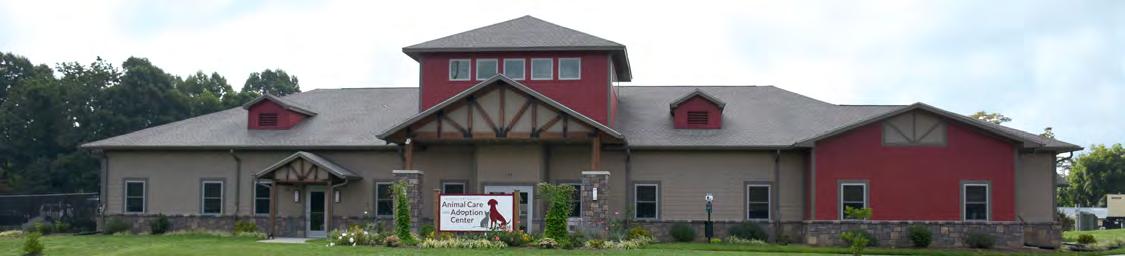
The Animal Care and Adoption Center, which opened in 2017, combines animal care and recreation services. Located on five acres along Cinnabar Road near the County’s Frog Pond recreational area, the 16,300 square foot Center’s primary goal is to increase animal adoptions by expanding visitation and maximizing visibility through attractive design, in a recreational setting. The Center represents a transition from a traditional pound facility to a community hub for companion animal resources and leisure time events. Donations and County dollars support the Center and its staff.
The Center offers educational tours and classes, vaccination and spay/neuter clinics, pet training classes, animal demonstrations, outdoor events, and other leisure time activities. Long range plans include integrating the Center with walking trails connecting the Frog Pond, picnic shelters, and a disc golf course, making the entire area a recreation destination.
Donations support 12% of the facility and staffing costs to operate the Center.
The base budget is the estimated minimum cost for providing continued services/operations for each division/ department. It is based on the prior year approved budget with adjustments. This budget shows how much it would cost in the next fiscal year to operate the same programs provided in the current fiscal year.
• Base Salary and Fringe Benefit Adjustments – For FY 27, the County budget includes a 1% decrease in Virginia Retirement System (VRS) rates and a 10% decrease in the group life insurance rates. All other fringe benefits rates remain unchanged.
• Base Fee Revenue Budget Adjustments – Based on actual fee collections in FY 25 and projected fee collections in FY 26 and FY 27, ($10,000) is reduced to the Animal Care and Adoption Center’s base fee revenue for FY 27.
Addenda consist of dollars over and above the base budget target for operating and capital outlay expenses. Recommended addenda items are often funding provided for new initiatives or expanded services but may also include normal cost increases. Addenda reductions may reflect reduced revenue and/or expense needed to equalize revenue shortfalls.
• $72,707 is Added for an Adoption/Foster Coordinator Position (One FTE) – $72,707 and one FTE are added to the ACAC for FY 27. The ACAC, and the nation, have struggled over the last several years with an increase in dog intakes and a decrease in dog adoptions. This means that dogs are staying in shelters longer and utilizing the kennel space needed to intake more animals in need. The ACAC is committed to its no-kill status and requests a position whose duties would help relieve capacity contraints and allow the ACAC to continue its commitment to this community, despite the current nationwide pressures.
Below is a summary chart for General Services and its total expenditure budget. On the following pages, detailed expenditures and revenue amounts for the division are provided.
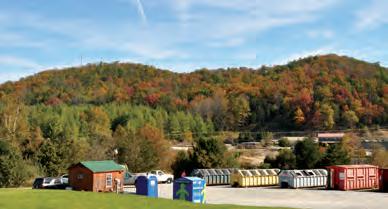
Administration
The General Services division is responsible for auxiliary and operational support services for all County divisions. Services are provided through Administration, Animal Control, Buildings and Grounds, Centralized Maintenance, Housekeeping, Lawns and Landscaping, Litter Control, and Solid Waste Collection. The division also oversees Fleet Operations, Stormwater Management, Landfills, and Building Inspections.
This department manages administrative functions for the division.
Animal Control enforces County ordinances and state laws relating to animals, including impounding stray dogs, investigating livestock deaths, quarantining animals involved in bite cases, and investigating animal cruelty. It also maintains the safety of the public as it pertains to animal ordinances and educates the public about animal laws and welfare.
Buildings and Grounds is responsible for the preservation of County facilities. It maintains 38 County buildings and facilities, eight recreational parks and two industrial parks, and provides general labor support for repair and remodeling projects.
Centralized Maintenance funds one-time projects such as emergency repairs that are not generally funded through the operational budget due to their nature.
Fleet Operations
Fleet Operations provides efficient repairs, routine maintenance, and state inspections of about 275 County vehicles, including the Sheriff’s fleet.
The Housekeeping department provides custodial services to ensure the cleanliness and safety of 13 County facilities, which totals approximately 420,000 square feet of space.
Building Inspections is responsible for the enforcement of the Uniform Statewide Building Code to protect health, safety, and welfare of citizens.
Lawns & Landscaping is responsible for maintaining 226.95 acres of property, including landscaping services, tree trimming, and grass cutting. It also assists in maintaining recreational facilities, including the Motor Mile Complex, Plum Creek ballfields, Auburn ballfields, Teel Park, and Creed Fields.
Litter Control manages the annual roadside waste clean-up, hazardous waste collection, and annual latex paint exchange. It also works in conjunction with the towns of Christiansburg and Blacksburg, and Virginia Tech to maintain litter control efforts within the County.
Motor Pool
The Motor Pool provides a centralized pool of County owned vehicles for use by County divisions while conducting County business.
Solid Waste Collections provides 10 consolidated sites where residents may dispose of household trash, bulky items, and recyclables.
This department implements and ensures regulation and permit compliance with the County’s Stormwater Management ordinance and the Municipal Separate Storm Sewer System (MS4) permits. Stormwater regulations protect water quality from harmful pollutants that can accumulate when rain and snowmelt flow over impervious surfaces (streets, parking areas, buildings, etc.). When heavy or prolonged rains saturate the ground surface, runoff is channeled into storm sewers that ultimately end up in streams, creeks, rivers, and the ocean. This department also administers policies, procedures and respective fee schedules related to stormwater compliance, and reviews erosion and sediment control plans prior to issuing land disturbance permits, prepares reports for the Virginia Department of Environmental Quality, and responds to citizen concerns about stormwater drainage issues.
The Thompson and Mid-County Landfills were closed in 1993 and 1997, respectively. State and federal laws and regulations required the County to perform groundwater monitoring and mitigation.
The base budget is the estimated minimum cost for providing continued services/operations for each division/ department. It is based on the prior year approved budget with adjustments. This budget shows how much it would cost in the next fiscal year to operate the same programs provided in the current fiscal year.
• Base Salary and Fringe Benefit Adjustments – For FY 27, the County budget includes a 1% decrease in Virginia Retirement System (VRS) rates and a 10% decrease in the group life insurance rates. All other fringe benefits rates remain unchanged.
• Base Fee Revenue Budget Adjustments – Based on actual fee collections in FY 25 and projected fee collections in FY 26 and FY 27, an additional $41,000 is added to the General Services Division’s base fee revenue for FY 27.
• Base Budget Increase for Elliston Fire Department Facility – $45,000 is added to the FY 27 General Services base budget. With the addition of career fire staff stationed at the Elliston Volunteer Fire Department, the County has begun paying for utilities and repair and maintenance costs for the Elliston facility which were previously paid by Elliston Volunteer Fire Department using County funds. County funds for the Elliston Volunteer Fire Department will be decreased by ($45,000) for FY 27.
Addenda consist of dollars over and above the base budget target for operating and capital outlay expenses. Recommended addenda items are often funding provided for new initiatives or expanded services but may also include normal cost increases. Addenda reductions may reflect reduced revenue and/or expense needed to equalize revenue shortfalls.
• $5,000 is Added for Utility Costs Associated with the Cinnabar Green Space Capital Project –$5,000 in additional funding is added in FY 27 to provide maintenance, electrical, gas, and connections for the new Cinnabar Green Space capital project.
• $6,000 is Added for State Stormwater Permit Fees – $6,000 in additional funding is added in FY 27 to pay the state’s portion of Stormwater fees associated with land disturbance on private and County construction projects. Fees will increase by an average of 50% for FY 27. This addition is 100% revenue supported and requires no County funding.
• $12,500 is Added for Uniforms and Wearing Apparel – $12,500 in additional funding is added in FY 27 to accommodate increased prices for uniforms and wearing apparel for staff. The additional funding supports a unified dress code among department staff.
• $4,400 is Added for Professional Services – $4,400 in additional funding is added in FY 27 for the creation of a nutrient management plan for County and public-school turf practices as required by State law and ensures environmental compliance.
• $3,600 is Added for Training – $3,600 in additional funding is added in FY 27 to increase training of staff in the Stormwater Department and Building Inspections Department. Staff are required by law to become certified and maintain certifications with mandatory continuing education. Building and Grounds staff need safety training to pursue tradesmen certifications in electrical, plumbing, and mechanical fields.
• $8,000 is Added for Agricultural Supplies – $8,000 in additional funding is added in FY 27 to increase the volume of agricultural supplies on hand to keep pace with the additional acreage gained with new facilities, such as Teel Park.
• $7,600 is Added for Housekeeping Supplies – $7,600 in additional funding is added in FY 27 to increase the volume of housekeeping supplies on hand to accommodate the addition of new facilities.
• $190,600 is Added for Professional Services – $190,600 in additional funding is added in FY 27 to accomplish necessary gas and groundwater monitoring and an operations and maintenance plan for a Department of Environmental Quality required corrective action as well as installation of infrastructure, materials, and implementation of the corrective action at the Mid-County Landfill.
• $23,000 is Added for Professional Services – $23,000 in additional funding is added in FY 27 to accomplish necessary groundwater monitoring services to stay in compliance with the Department of Environmental Quality as part of implementing a corrective action plan at Thompson Landfill.
• $75,000 is Added for Machinery and Equipment – $75,000 is added in FY 27 to replace trash and recycle containers that have deteriorated and taken out of service. These funds will create an ongoing replacement schedule for trash and recycle containers.
• $43,727 is Added for a Building Inspector (.75 FTE) – $43,727 and .75 FTE are added to the General Services Division. As the County continues to grow, additional help is needed in the Building Inspections office. This position will supplement current inspections staff and will perform building, electrical, mechanical, and plumbing inspections to alleviate workload issues and better serve the community.
• $72,707 is Added for a Solid Waste Manager (One FTE) – $72,707 and one FTE are added to the General Services Division. A position is needed to manage the workload and track the types of waste and other items, such as waste oil, tires, and white goods, at the consolidated sites. This position will maximize the benefits of the sanitary collections program against the resources spent. This position will also support DEQ reporting and help identify best practices for sustainability and related recycling efforts.
• $64,342 is Added for an HVAC Technician (One FTE) – $64,342 and one FTE are added to the General Services Division. With the growth of County facilities, additional manpower is needed to maintain the County’s HVAC systems. This position will support the lead HVAC Technician by maintaining, repairing,
and replacing HVAC units, parts, and controls of the County HVAC network. This position will also share oncall duties. It is anticipated that this will result in a reduction of outsourcing to third parties.
Health and Welfare consists of the following divisions: Children’s Services Act; Human Services; Public Health; and Social Services.
Below is a summary chart of each division and its total expenditure budget. On the following pages, detailed expenditures and revenue amounts for each division are provided.
Board of Supervisors
County Administrator
Assistant County Administrator Human Services
Children’s Services Act
The Children’s Services Act for At-Risk Youth and Families (CSA) was established by the General Assembly to improve coordination, eliminate duplication of services, and ensure that costly residential care is provided only in cases where it was clearly warranted. The law requires localities to establish Community Policy and Management teams, and Family Assessment and Planning teams to administer the program. The law also mandates that certain groups of children receive services, primarily special education and foster care. The County is required to provide a local match for all expenditures.
The Community Policy and Management Team (CPMT) is responsible for developing policies, managing funds allocated to the County, and authorizing expenditures of these funds. CPMT is comprised of at least one elected or appointed official and agency heads from the local Department of Social Services, school system, Community Services Board (mental health) and the Court Services Unit (juvenile justice), a parent and a private provider. Each CPMT must also establish and appoint at least one Family Assessment and Planning Team (FAPT) to work with families to develop an individualized family service plan or plan of care based on the strengths and needs of the family.
The base budget is the estimated minimum cost for providing continued services/operations for each division/ department. It is based on the prior year approved budget with adjustments. This budget shows how much it would cost in the next fiscal year to operate the same programs provided in the current fiscal year.
• No Notable Base Budget Adjustments
Addenda consist of dollars over and above the base budget target for operating and capital outlay expenses. Recommended addenda items are often funding provided for new initiatives or expanded services but may also include normal cost increases. Addenda reductions may reflect reduced revenue and/or expense needed to equalize revenue shortfalls.
• No Addenda
The Human Services division administers Human Services, Volunteer Montgomery, and the Children’s Services Act (CSA). Additionally, Human Services serves as the fiscal agent for the Virginia Juvenile Community Crime Control Act (VJCCCA).
Human Services
The Human Services department keeps citizens, agencies, and County government informed about services and programs in the areas of human service delivery. They also act as a County liaison for specialty dockets within Montgomery County and serve as the fiscal agent for the VJCCCA programs.
Volunteer Montgomery
Volunteer Montgomery was established in April 2023 in the spirit of flourishing volunteer programs dating back to 1969. Volunteer Montgomery welcomes all individuals within Montgomery County and aims to broaden local volunteer efforts and strengthen the community by uniting together.
The base budget is the estimated minimum cost for providing continued services/operations for each division/ department. It is based on the prior year approved budget with adjustments. This budget shows how much it would cost in the next fiscal year to operate the same programs provided in the current fiscal year.
• Base Salary and Fringe Benefit Adjustments – For FY 27, the County budget includes a 1% decrease in Virginia Retirement System (VRS) rates and a 10% decrease in the group life insurance rates. All other fringe benefits rates remain unchanged.
• Base Fee Revenue Budget Adjustments – Based on actual fee collections in FY 25 and projected fee collections in FY 26 and FY 27, ($12,392) is reduced to Human Services’ base fee revenue for FY 27 due to a reduction in the VJCCCA Grant.
Addenda consist of dollars over and above the base budget target for operating and capital outlay expenses. Recommended addenda items are often funding provided for new initiatives or expanded services but may also include normal cost increases. Addenda reductions may reflect reduced revenue and/or expense needed to equalize revenue shortfalls.
• No Addenda
General Assembly
Governor
Secretary of
State Department of Health
New River Health District
The New River Health District, one of the Virginia Department of Health’s (VDH) 35 health districts, is comprised of Floyd, Giles, Montgomery, and Pulaski counties and the City of Radford. The health district provides clinical services, environmental health services, emergency preparedness and response, communicable disease services, community health education, and more to residents throughout the New River Valley.
The Health District provides clinical services in local health department clinics, schools, homes, and at other sites in the community including child and adult immunizations, immunizations for overseas travel, well baby care, family planning, and testing/treatment of STI’s. Other services include BabyCare, the Women, Infants and Children (WIC) program, distribution of free car safety seats to eligible families, Resource Mothers Program, Rise Above, Emergency Preparedness and Response, health data tracking and reporting, and health education services. The district’s environmental health program provides site evaluation and permits for on-site sewage disposal (septic systems) and wells, inspection of restaurants, schools, day care centers, summer camps, and festivals to ensure food safety, rabies investigation and follow-up, and general environmental complaint investigations.
The base budget is the estimated minimum cost for providing continued services/operations for each division/ department. It is based on the prior year approved budget with adjustments. This budget shows how much it would cost in the next fiscal year to operate the same programs provided in the current fiscal year. • No Notable Base Budget Adjustments
Addenda consist of dollars over and above the base budget target for operating and capital outlay expenses. Recommended addenda items are often funding provided for new initiatives or expanded services but may also include normal cost increases. Addenda reductions may reflect reduced revenue and/or expense needed to equalize revenue shortfalls.
• $20,389 is Added for Local Matching Requirements – $20,389 in additional funding is added in FY 27 for the New River Health District local matching requirements. The New River Health District is funded on a formula basis with costs shared between the state and the County. The County’s share for FY 27 is 32.22% and the state’s share is 67.78%. This increase in funding is required to meet the County’s local commitment for FY 27.
Board
Social
Social
BY CLASSIFICATION
The Department of Social Services (DSS) division assists families and individuals in becoming socially and economically self-sufficient and independent. Benefit programs include temporary assistance for needy families, food assistance, Medicaid, energy assistance, general relief, fraud prevention, and children’s medical security insurance. DSS works closely with other community agencies to promote the stability and self-sufficiency of community families through referrals to services not available in this agency. It also promotes the creation of services not currently available in the community. The agency works to avoid duplication of services provided by other agencies and to respond to needs not currently addressed in the community.
Social Services assists in work programs including adoption, adult services/adult protective services, child protective services, day care services for children, foster care, court services, and employment services. The department focuses, in the least intrusive manner, on services that individuals and families cannot provide for themselves.
The base budget is the estimated minimum cost for providing continued services/operations for each division/ department. It is based on the prior year approved budget with adjustments. This budget shows how much it would cost in the next fiscal year to operate the same programs provided in the current fiscal year.
• Base Salary and Fringe Benefit Adjustments – For FY 27, the County budget includes a 1% decrease in Virginia Retirement System (VRS) rates and a 10% decrease in the group life insurance rates. All other fringe benefits rates remain unchanged.
• Base Revenue and Expenditure Reconciliation Adjustments – The base budget revenue and expenditure accounts have been reconciled to state and federal approved funding for FY 26. Each year,
following the confirmation of funding available from sources other than the County, the base budget for the Department of Social Services is adjusted within the fiscal year, and this adjustment becomes the base budget for the next fiscal year. The FY 26 reconciled County Budget for this Division totaled $7,800,084; $6,489,055 in state and federal dollars and $1,311,029 in County dollars. Included are 72 classified FTEs, an increase of one FTE awarded for FY 26 by the Resource Family Collaborative grant program. This grant award is expected to continue for the next five years; however, once the grant is eliminated, the FTE will also be eliminated. Based on the reconciliation for FY 26, a total of $84,477 is added to the base revenue budget for FY 27 and ($107,529) is reduced to base expenditures for FY 27.
Addenda consist of dollars over and above the base budget target for operating and capital outlay expenses. Recommended addenda items are often funding provided for new initiatives or expanded services but may also include normal cost increases. Addenda reductions may reflect reduced revenue and/or expense needed to equalize revenue shortfalls.
• $79,003 is Added for a Family Services Specialist Position (One FTE) – $79,003 and one FTE are added to Social Services for FY 27. This position provides social services and assistance to the adult population whose numbers have increased. The needs of the clients have become greater, thus extending the length of investigations and the related work load. There are new guardianship requirements to adhere to along with assessing the needs of the elderly for nursing home placement. The number of new guardianship cases has increased, as well as the number of long-term services and support screenings.
Parks, Recreation, Cultural consists of the following divisions: Parks and Recreation and the Regional Library.
Below is a summary chart of each division and its total expenditure budget. On the following pages, detailed expenditures and revenue amounts for each division are provided.
Administration
Board of Supervisors
County Administrator
Deputy County Administrator
Parks and Recreation
Community Recreation Programs
Aquatics
Athletics
Outdoor Recreation
Parks and Playgrounds
Senior Tours and Recreation Programs
Special Programs
Summer Programs

The Parks and Recreation division provides quality, customer-valued recreation programs and facilities that engage participants and add value to the quality of life. Programming and facilities are offered in aquatics, athletics and team sports, youth, adult, and senior wellness and education, outdoor recreation, tours, special events, and summer programs.
Administration oversees the operation of all recreational programs and park facilities. Responsibilities also include the division’s budget management, marketing, facility design, and planning for future recreational needs.
The Frog Pond offers a safe and fun environment for the whole family. The pool has 3 tube slides, a frog slide, tot/ infant pool and lots of deck space for enjoying the sun and relaxing. Swim lessons are also offered for children 6 months to 10 years of age.
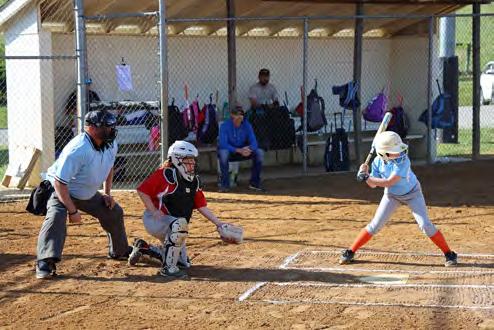
The Athletics department focuses on children ranging from pre-K to middle school and the approach that recreational sports should place more emphasis on educational and social benefits rather than competition. A strong focus is also placed on good sportsmanship from participants, parents, and spectators. Each program is built around teaching the fundamentals and ensuring that every participant receives an enjoyable and lasting recreation experience in a safe and positive environment.
This department offers a diverse range of community activities including: crafts, babysitting classes, boaters’ safety, CPR and first aid, hunters’ education, and lifeguard classes.
This department provides diverse programming based on adventure, conservation, environmental education, and experiential education with a focus on high adventure. Montgomery County was one of the first municipal departments to offer outdoor recreation programs in Southwest Virginia.
Montgomery County has eight parks ranging from small pocket parks to linear biking and hiking trails to its largest 110-acre Mid-County Park. Swimming, picnicking, hiking, canoeing, kayaking, athletic ball fields, playgrounds, walking tracks, and natural areas that include historical and educational resources are all amenities that can be found at the parks. Private pool and shelter rentals are also available.

The trips and tours program offers active adults (50+) opportunities to explore local and regional destinations, experience cultural and recreational activities, and connect with others in a fun and engaging environment. These one-day excursions are planned to nearby cities, museums, sporting events, festivals, professional theater, and dining destinations, providing diverse opportunities for adventure and enjoyment.
The wellness and education programs promote lifelong learning and healthy living through a variety of activities, workshops, and classes. The program provides educational sessions, games, crafts, outdoor recreation opportunities, and wellness initiatives while partnering with community organizations to address the social and mental aspects of health. These programs are tailored to enrich the lives of active adults.

Throughout the year this department holds special programming to include: Great Road Encampment, Halloween at the Government Center, Kids Fishing Day, Letters to Santa, Rowdy Dawg, and ReNew the New.
Frog Hoppers Camp is the most popular program providing a safe and fun environment. Children from rising 1st graders to rising 5th graders will enjoy their days crafting, swimming at the Frog Pond, going on hikes, and playing outside.
*FY 25 decrease due to the reopening of Randolph Park Pool in Pulaski County. Partially offsets the 62% increase experienced in FY 24.
The base budget is the estimated minimum cost for providing continued services/operations for each division/ department. It is based on the prior year approved budget with adjustments. This budget shows how much it would cost in the next fiscal year to operate the same programs provided in the current fiscal year.
• Base Salary and Fringe Benefit Adjustments – For FY 27, the County budget includes a 1% decrease in Virginia Retirement System (VRS) rates and a 10% decrease in the group life insurance rates. All other fringe benefits rates remain unchanged.
Addenda consist of dollars over and above the base budget target for operating and capital outlay expenses. Recommended addenda items are often funding provided for new initiatives or expanded services but may also include normal cost increases. Addenda reductions may reflect reduced revenue and/or expense needed to equalize revenue shortfalls.
• No Addenda
Board of Supervisors
Library Board
Regional Library System
The Montgomery-Floyd Regional Library System has branch libraries in Blacksburg, Christiansburg, Shawsville, and Floyd. The library also operates a Mobile Unit that brings library services and materials to apartment and mobile home communities, geographically remote areas, and institutional settings.
Reading and other materials are offered in a variety of formats, including eBooks, downloadable and streaming audiobooks, e-magazines, music, and movies. The library also loans non-traditional items including wireless hotspots, Adventure Kits, Memory Kits, and more. Public computers, wireless access, databases, and office and entertainment software are available in each library. All branches offer programming to engage all ages, including children’s story times, STEM, and art activities, as well as a wide range of programs and events for teens and adults. All branches offer frequent programming for persons with intellectual, cognitive, and developmental disabilities. The Library also offers notary services and is a passport acceptance agency. The Christiansburg and Floyd libraries maintain special sections for genealogy and local history. Meadowbrook and Floyd libraries host free refrigerators to address community food insecurity.
Staff members of the regional system are trained to help citizens find information and resources, educate citizens on how to conduct research, use personal and library technology, and make effective use of the library’s physical and electronic resources. Library services include assistance with early literacy, job searching and resume building, computer classes, summer reading programs for all ages, special events, book discussion groups, story times, and other programming for all ages and abilities. Public meeting rooms in each library branch are available to individuals and groups to use on a first-come, first-serve basis.
The base budget is the estimated minimum cost for providing continued services/operations for each division/ department. It is based on the prior year approved budget with adjustments. This budget shows how much it would cost in the next fiscal year to operate the same programs provided in the current fiscal year.
• Base Salary and Fringe Benefit Adjustments – For FY 27, the County budget includes a 1% decrease in Virginia Retirement System (VRS) rates and a 10% decrease in the group life insurance rates. All other fringe benefits rates remain unchanged.
• State Aid Base Revenue Adjustments – A total of $670 is added to the Library’s base state aid revenue budget for FY 27. These funds account for the adjustment of revenues as reported by the State and reconciled to the FY 26 County approved budget.
• Other Base Fee Revenue Adjustments – Based on actual fee collections in FY 25 and projected fee collections in FY 26 and FY 27, $3,250 has been added to the Library’s local base revenue budget for FY 27.
Addenda consist of dollars over and above the base budget target for operating and capital outlay expenses. Recommended addenda items are often funding provided for new initiatives or expanded services but may also include normal cost increases. Addenda reductions may reflect reduced revenue and/or expense needed to equalize revenue shortfalls.
• $8,496 is Added to the Library’s State Aid Revenue Budget – These funds account for the library’s revenue increase based on the amount of state aid proposed in the Governor’s budget for FY 27.
Community Development consists of the following divisions: Planning and GIS; Economic Development; and Utilities Division.
Below is a summary chart of each division and its total expenditure budget. On the following pages, detailed expenditures and revenue amounts for each division are provided.
County Administrator
Deputy County Administrator
Planning and GIS Services
Planning GIS

Planning and Geographic Information System (GIS) administers the comprehensive land use plan, zoning and subdivision ordinances, provides geographical information and mapping services and maintains official street names and addresses in the unincorporated areas of Montgomery County. Floodplain management, site plan administration, and 911 addressing are also administered in this division.
The Planning department works with the Planning Commission to develop and implement the Comprehensive Plan and related small-area village plans for the six village areas; administers zoning and subdivision ordinances; prepares long and short range planning information and studies; prepares grants for hazard mitigation, enhancement, community development and other programs; implements ongoing planning education and information programs; and supports other departments in planning, land use development and zoning. The staff serves as the primary support to the Planning Commission, Board of Zoning Appeals, and Agricultural and Forestal District Advisory Committee.
This department administers the Geographic Information System (GIS) and iGIS map portal. Their mission is to coordinate, manage, and facilitate GIS at departmental, office and enterprise levels. Work includes creation and management of E911 site addresses and street names. Additionally, GIS is the primary custodian for GIS data, aerial imagery and LiDAR topography contours. This department also fulfills public requests for GIS data, mapping and imagery services.
The base budget is the estimated minimum cost for providing continued services/operations for each division/ department. It is based on the prior year approved budget with adjustments. This budget shows how much it would cost in the next fiscal year to operate the same programs provided in the current fiscal year.
• Base Salary and Fringe Benefit Adjustments – For FY 27, the County budget includes a 1% decrease in Virginia Retirement System (VRS) rates and a 10% decrease in the group life insurance rates. All other fringe benefits rates remain unchanged.
Addenda consist of dollars over and above the base budget target for operating and capital outlay expenses. Recommended addenda items are often funding provided for new initiatives or expanded services but may also include normal cost increases. Addenda reductions may reflect reduced revenue and/or expense needed to equalize revenue shortfalls.
• No Addenda
Board of Supervisors
County Administrator
Economic Development
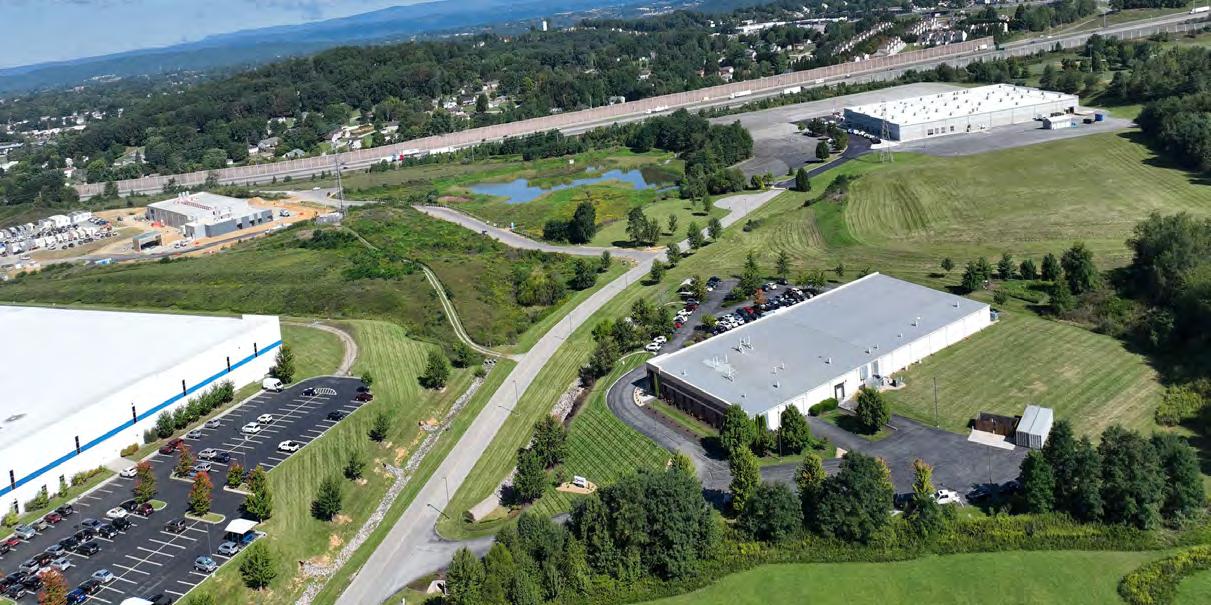
Economic Development Commission, and the Montgomery Blacksburg Christiansburg (MBC) Development Corporation to attract new investments and support the success of existing businesses.
The department carries out the strategic direction of the Board of Supervisors’ regarding retention and expansion of existing business and industry, recruitment of new industry, market research, workforce development, and product (sites and buildings) development. Since 2009, 3,766 new jobs have been added from both new and existing businesses, resulting in more than $307 million in total investment in Montgomery County.
The base budget is the estimated minimum cost for providing continued services/operations for each division/ department. It is based on the prior year approved budget with adjustments. This budget shows how much it would cost in the next fiscal year to operate the same programs provided in the current fiscal year.
• Base Salary and Fringe Benefit Adjustments – For FY 27, the County budget includes a 1% decrease in Virginia Retirement System (VRS) rates and a 10% decrease in the group life insurance rates. All other fringe benefits rates remain unchanged.
Addenda consist of dollars over and above the base budget target for operating and capital outlay expenses. Recommended addenda items are often funding provided for new initiatives or expanded services but may also include normal cost increases. Addenda reductions may reflect reduced revenue and/or expense needed to equalize revenue shortfalls.
• $24,239 is Added for Professional Services – $24,239 in additional funding is added in FY 27 for professional services required for mowing at Falling Branch Phase II. In FY 2025, the Economic Development Department graded Phase II Lot 2 which added 19.6 graded acres of a 38-acre site. The 19.6-acre site and the 18.3 acres remaining will both need to be cut monthly to keep the site presentable for projects. The current graded pads are mowed monthly in Falling Branch Phase I. Sufficient funds do not exist in the base budget to cover the additional costs.
The Utilities Division provides contracted services to the Montgomery County Public Service Authority (PSA). The PSA provices public water to nine community systems and sewage treatment to ten systems in the unincorporated areas of Montgomery County.
On August 25, 2025, the Board of Supervisors approved an ordinance redefining the operational structure of the PSA. Under the new structure, PSA staff and daily operations officially transitioned to Montgomery County on October 1, 2025. The PSA Board remains in place and retains key oversight responsibilities, including planning and investing in future service areas and facility expansions, approving the annual PSA budget, and setting water and sewer rates. Billing and collections for all water and wastewater customers continue to be managed by the County’s finance department.
The integration of utilities services into a County department strengthens local governance by aligning utility operations with comprehensive planning and land use strategies. It also streamlines administrative processes, enhances coordination, and increases the county’s ability to provide superior customer service and a greater depth of expertise to all citizens.
The base budget is the estimated minimum cost for providing continued services/operations for each division/ department. It is based on the prior year approved budget with adjustments. This budget shows how much it would cost in the next fiscal year to operate the same programs provided in the current fiscal year.
• Base Salary and Fringe Benefit Adjustments – For FY 27, the County budget includes a 1% decrease in Virginia Retirement System (VRS) rates and a 10% decrease in the group life insurance rates. All other fringe benefits rates remain unchanged.
• Creation of Utilities Division – PSA staff and daily operations officially transitioned to Montgomery County October 1, 2025. The integration of utilities services into a County department provides multiple opportunities for improvement. Several improvements include benefits from coordination with planning and land use strategies, as well as streamlined administration to support stronger customer service to the citizens of the County. Therefore, $2,029,797 in salaries, $339,697 in operations and maintenance, $24,875 in capital outlay expenses, $2,394,369 in designated revenue, and 22 FTEs are transferred from the PSA to the Utilities Division.
Addenda consist of dollars over and above the base budget target for operating and capital outlay expenses. Recommended addenda items are often funding provided for new initiatives or expanded services but may also
include normal cost increases. Addenda reductions may reflect reduced revenue and/or expense needed to equalize revenue shortfalls.
• No Addenda
Other Agencies consists of the following types of agencies: Human Service; Public Safety; Educational/Cultural; Environmental; and Economic Development.
Below is a summary chart of each area and its total expenditure budget. On the following pages, detailed expenditures and revenue amounts for each area are provided.
EXPENDITURES BY AGENCIES
REVENUE BY CLASSIFICATION
This Division consists of all outside/other agencies that are funded by County General Fund dollars. Agencies that receive funding are divided among five categories: Human Service Agencies, Public Safety Agencies, Education/ Cultural Agencies, Environmental Agencies, and Economic Development Agencies.
• $323,806 is included for the New River Valley Juvenile Detention Home (mandated), which is level funding – The NRVDH’s request for FY 27 is $162,161, which is a decrease of $46,391 from the FY 26 budget. In the FY 10 request, the formula for determining operating contributions was changed to allocate costs among participant jurisdictions on the basis of days used, averaged over a three-year period. Under the revised formula, Montgomery County’s billed usage for the facility for FY 27 is $162,161 or 29.55% of the total funding. The facility is over 30 years old and requires upgrades, maintenance, and newer equipment for licensure compliance. Due to the need to address these capital issues, the County is providing $162,161 for operations based on a three-year average usage and is setting aside $161,645 in a special reserve to address future facility upgrades. By the end of FY 27, $1,273,458 will have accumulated in the reserve.
• $30,994 is included for the Community Health Center of the New River Valley (Free Clinic) (not mandated), which is level funding – The agency requested $30,994 in the FY 27 budget, which is level funding. The center provides medical and dental care as well as pharmaceuticals to uninsured citizens of the New River Valley who live below the Federal Poverty Guidelines. Historical funding and the percentage of clients served by locality are presented in the chart below. For FY 27, the County is providing level funding of $30,994. With level funding, the County is providing 58% of the funding with only 42% of the clients served. The County also provides the building at 215 Roanoke Street which was renovated for the center. Assuming the center had to rent space equivalent to the building provided by the County, the rental costs would likely exceed $64,352 (8,044 square feet X $8.00).
• $50,625 is included for New River Community Action (not mandated) and $30,471 is included for the Montgomery County Emergency Assistance Program (not mandated), which is level funding – The New River Community Action (NRCA) agency requested $53,156 for FY 27, which is an increase of $2,531. The agency serves low-income residents of Montgomery, Pulaski, Floyd, and Giles Counties and the City of Radford. The agency’s goal is eliminating poverty. The County funds also support a Community Service Worker position in NRCA that administers the Montgomery County Emergency Assistance Program (MCEAP). MCEAP partners with NRCA to provide emergency assistance to County residents only. MCEAP requests $31,995 for FY 27, which represents an increase of $1,524. In FY 26 MCEAP received $30,471. For FY 27, the County is providing funding of $81,096 for both programs. With level funding, the County is providing 42% of the funding with 32% of the clients served.
• $38,183 is included for the Women’s Resource Center of the NRV (not mandated), which is level funding – The agency received $38,183 in the FY 26 budget, and requested $39,328 for FY 27, an increase of $1,145. Historical funding and the percentage of clients served by locality are presented below. With a budget of $38,183, the County is providing 49% of funding with 38% of clients served. The Women’s Resource Center provides services to adult and child citizens who have experienced domestic and/ or sexual violence. The agency provides emergency advocacy, a live crisis hotline, an emergency and transitional shelter, emergency food and supplies, crisis counseling, legal advocacy and other services.
• $5,051 is included for the New River Family Shelter (not mandated), which is level funding – The agency requested $5,051 in the FY 27 budget, which represents level funding. The shelter is able to provide shelter services, through its facilities or in hotel rooms, to 30% of those seeking shelter. Others seeking shelter can receive either out-of-town shelter services or bus tickets to other lodging arrangements. Last year approximately 67% of clients residing in established
into
permanent housing upon leaving the shelter. The shelter has the potential to serve all localities in the New River Valley. Other New River Valley localities have not historically been asked to fund the shelter due to the negligible number of clients outside of Montgomery County.
• $7,500 is included for the Literacy NRV (formerly Literacy Volunteers of the NRV) (not mandated), which is an increase of $16 – The agency requested $7,500 in the FY 27 budget, which represents an increase of $16. With funding of $7,500, Montgomery County, without the funding from the two towns, will be providing 54.25% of the funding with 63.34% of the clients served. Literacy NRV provides free instruction for adults in reading, writing, basic Math, GED preparation, ESOL and basic computer skills.
• $336,292 is included for the New River Valley Community Services (mandated), which is an increase of $30,572 – The agency requested $790,406 in the FY 27 budget, which represents an increase of $484,686. New River Valley Community Services offers community-based programs for both children and adults who are living with mental illness, developmental disabilities and/or substance abuse. Based on §37.2-509 of the Code of Virginia and State Board Policy 4010, all Community Services Boards (CSBs) in Virginia are required to request local funding to achieve a 10% local match. The 10% local match for Montgomery County is $790,406. An additional $30,572 is added to work toward a 10% local match. The following tables outline the clients served by jurisdiction and the funding by locality since FY 25.
• $16,652 is included for the NRV Agency on Aging (not mandated) for agency programs and $14,000 is included for one weekly congregate meal, which is level funding – The agency requested $21,300 for agency programs, and $14,000 to continue an additional congregate meal per week for residents of Montgomery County. The primary purpose of the agency is to provide services, information, and advocacy to older citizens and citizens with disabilities and their caregivers in order to assist them to remain safely with as much independence as possible in their homes and communities. In FY 04, the Board of Supervisors agreed to provide 100% of local funds to cover one meal weekly, which would ensure Montgomery County residents would receive three congregate meals per week. The agency requested a total of $35,300 which represents an increase of $4,648. The County is providing 30% of the funding with 22% of the clients served in the New River Valley.
• $17,416 is included for the New River Valley Senior Services, Inc. (not mandated), which is an increase of $1,814 – The agency requested $20,000, which represents an increase of $4,398. The agency received $15,602 in FY 26. The agency provides transportation services for non-emergencies for sensory and physically disabled persons. With $17,416 in funding, the County will be providing 41% of the funding with 41% of clients served.
• $4,000 is included for Brain Injury Solutions (previously Brain Injury Services of Southwest Virginia) (not mandated), which is level funding – The agency received $4,000 in FY 26 and requested $4,000 for FY 27, which is level funding. Brain Injury Solutions provides case management services for citizens who have suffered brain injuries. New
• $15,000 is included for the Boys and Girls Clubs of SWVA (not mandated), which is level funding –The agency received $15,000 in FY 26 and requested $15,000 for FY 27. The County provided an additional $5,000 in FY 22 to cover the increased costs of the programs at the four sites at Eastern Montgomery High School, Christiansburg Middle School, Shawsville Middle School, and Eastern Montgomery Elementary School. The program focuses on academic success, healthy lifestyles, and character development.
• $3,500 is included for NRV CARES (not mandated), which is level funding – The agency received $3,500 in the FY 26 budget and requested $3,675 for FY 27, which represents an increase of $175. NRV CARES is a nonprofit organization dedicated to protecting children and strengthening families through education, advocacy and community partnerships. All programs are aimed at preventing or interrupting the cycle of child abuse. Services are provided for residents in the counties of Montgomery, Pulaski, Floyd, Giles, and the City of Radford. With level funding, the County is providing 71.0% of the funding with 49.7% of the clients served in the New River Valley.
• $70,440 is included for the Fairview District Home (mandated), which is an increase of $278 –The agency requested $70,440 for FY 27, which is an increase of $278. The Fairview District Home is a 64-bed assisted living facility which provides room and board, medication administration, personal care, shopping, daily living skills, community socialization, and financial management for its residents. Locality funding provided to the home is for general operations and capital maintenance of the facility. See the following charts:
• $9,000 is included for the Children’s Trust (not mandated) to support the Children’s Advocacy Center of the New River Valley, which is an increase of $1,500 – The agency received $7,500 in the FY 26 budget and requested $9,000 for FY 27. The Child Advocacy Center of the New River Valley is a program offered by the Children’s Trust that brings law enforcement professionals, child protective services investigators, prosecutors, medical and mental health personnel, and child advocates together to ensure that children are provided with the best possible services in order to discuss and heal from alleged abuse. The Children’s Advocacy Center of the New River Valley provides space for trained forensic interviewers to interview abused children in a non-threatening environment. These funds will be used to support rent and utilities for space in Christiansburg for interviews of children throughout the New River Valley. The Children’s Trust requested an increase in funding due to the growing need for its services. The agency requested a decrease of $1,500 in FY 26 and has requested this funding be restored based on client needs.
• $1,500 is included for The Community Group of Montgomery County (previously Dialogue on Race) (not mandated), which is level funding – In FY 17, the Board of Supervisors provided $1,500 to the Dialogue on Race and asked that this becomes an annual budgeted amount in support of the yearly forum to discuss issues articulated by the African American community and work toward solutions.
• $89,240 is included for the New River Home Trust (mandated), which is an increase of $3,028 – A total of $89,240 is included for the New River Home Trust. The New River Home Trust was formed in 2022 between the Town of Blacksburg and Montgomery County to provide affordable housing for low-income and moderate-income residents, and promote resident ownership of housing. The Town of Blacksburg and Montgomery County entered into an agreement to equally share the cost associated with operating the New River Home Trust each year as determined by a funding formula based on the number
houses in the trust and includes a 4% annual cost of living adjustment. Montgomery County’s share of the operating costs for FY 27 under this formula is $89,240.
• $58,431 is included for the New River Valley Housing Trust Fund (NRV Regional Commission), which is level funding – The New River Valley Housing Trust Fund (HTF) is a locally controlled bank account for the creation and preservation of affordable housing across the region. Funds will be used to help address affordable housing issues in the communities in the New River Valley. The requested amount is based on a $1.75 per capita.
• $12,771 is included for State Forester (mandated), which is level funding – The agency received $12,771 in the FY 26 budget and requested $12,771 for FY 27. Based on the invoice from the State Forester for FY 26, the amount needed to cover the fee for FY 27 is $12,771.
• $15,715 is included for the Western Virginia EMS Council, Inc. (not mandated), which is level funding – The agency received $15,715 in the FY 26 budget and requested level funding for FY 27. The mission of the council is to facilitate regional cooperation, planning, and the implementation of an integrated emergency medical services delivery system.
• $25,000 is included for the Montgomery County Public Service Authority (mandated), which is an increase of $9,300 – These funds are to be used to cover the PSA’s cost of maintaining fire hydrants in the County.
• $1,600 is included for the Medical Examiner (mandated), which is level funding –The agency received $1,600 in the FY 26 budget; therefore, this amount represents level funding. According to §32.1283 of the Code of Virginia, the medical examiner is paid $20 per case. This recommendation provides the fee for 80 cases. Through December 2025, $240 has been expended, representing 12 cases.
• $1,201,929 is included for the New River Valley Emergency Communications Regional Authority (mandated), which is an increase of $57,235 – The Authority received $1,144,694 in FY 26 and requested an increase of 5%, resulting in a total of $1,201,929 for FY 27. Centralized operations began
on July 1, 2016. The mission of the New River Valley Emergency Communications Regional Authority is to provide quality and reliable 911 dispatch and emergency communication services to the community. This increase will support the basic operations of the authority.
• $25,000 is included for the Drug Court (not mandated), which is level funding – In the FY 18 budget process, the Board of Supervisors agreed to support a new drug court in Montgomery County and fund up to $25,000 for housing costs for certain drug court clients.
• $58,936 is included for New River Community College (mandated), which is an increase of $4,033 – The agency requested $58,936 in the FY 27 budget. The agency received $54,903 in the FY 26 budget. The County’s funding as well as funding from other local contributing localities is based on a weighted average, local participation formula adopted when the college was established. The formula is a function of three components including: population, true property value, and student enrollment with the greatest weight attributed to student enrollment. The following table illustrates the fund allocation from Montgomery County and surrounding areas. Funds are used for site development costs for capital projects which are not funded by the state. Earmarking these monies for the local share of capital projects will preclude the College from asking localities for additional funds to cover site development costs.
Derived Funding % = [(Pop. %) + (PV %) + 3(SE %)] / 5
• $450,000 is Included for the Access to Community College Education (ACCE) Program (not mandated) Through New River Community College, which is level funding – The ACCE program is a public/private partnership to make college available to high school graduates. The locality designates a dollar amount that is matched by donations from local industries and private sponsors. $450,000 is included for FY 27 to support this program. Since the program’s inception, excess funds have remained at year-end after fully funding all participating County graduates. All funds not used annually will be held in a special reserve fund to address any unanticipated increases in future student enrollment.
• $5,000 is included for The Lyric Council, Inc. (not mandated), which is level funding – The agency received $5,000 in the FY 26 budget and requested $6,500 for FY 27. The mission of the Lyric Council is to enhance community participation in the arts and culture by maintaining and preserving the historic Lyric Theatre building while sustaining state-of-the-art technology and infrastructure, providing a diversity of arts programming to the community, establishing and promoting The Lyric Theatre as
destination, and partnering with other community organizations. This funding equals the amount provided to the Historic Smithfield and the Montgomery Museum of Art and History.
• $5,000 is included for the Montgomery Museum of Art and History (not mandated), which is level funding – The agency received $5,000 in the FY 26 budget and requested $7,000 for FY 27. The mission of the museum is to connect and engage the community through arts and the preservation and interpretation of history. This funding recommendation equals the amount provided to the Historic Smithfield and the Lyric Council.
• $5,000 is included for the Historic Smithfield (not mandated), which is level funding – The agency requested $7,000 for the FY 27 budget, which is an increase of $2,000. Funds support instructor fees and supply costs of onsite classes. The Historic Smithfield exists to collect, preserve, and interpret historic resources pertinent to the Preston Family and Southwest Virginia. This level funding recommendation equals the amount provided to the Montgomery Museum of Art and History and the Lyric Council.
• $5,000 is included for the Rosa Peters Community Park (not mandated), which is level funding – The agency received $5,000 in the FY 26 budget and requested $8,000 for FY 27. Playground facilities, basketball courts, and a swimming pool allow children and adults the opportunity for community recreation. The park also has a pavilion available for community use upon request. The funds will help maintain two positions, a lifeguard and playground supervisor, as well as offset operational and maintenance costs.
• $10,000 is included for the Christiansburg Institute (not mandated), which is level funding – The agency received $10,000 in FY 26 and requested $10,000 for FY 27. Level funding is provided for FY 27. The mission of the Institute is to preserve its remaining facilities and archives, which for 100 years was the high school for African American students in the New River Valley.
• $5,000 is Included for Eastmont Community Foundation (previously Mountain Valley Charitable Foundation) (not mandated), which is level funding – $5,000 is included for FY 27 to cover the cost for Eastmont Community Foundation to mow the Shawsville Middle School athletic fields.
• $30,000 is included for the Mountain View Humane Spay and Neuter Clinic (not mandated), which is level funding – The agency received $30,000 in FY 26 and requested $50,000 for FY 27. Level funding is provided for FY 27. The agency offers a low-cost, high-quality option for spay/neuter of dogs and cats. Based on the success of the pilot program to subsidize the cost of the surgery for cats (nearly 23% are feral cats), funds are provided to continue this program, reducing the cost of surgeries for County residents and addressing overpopulation of feral cats.
• $7,500 is Included for the Imagination Library of Montgomery County, VA (not mandated), which is level-funding – The agency received $7,500 in FY 26 and requested $7,500 for FY 27, representing level funding. The Imagination Library of Montgomery County, VA strives to inspire a love of books and reading in young children. The administrative structure is funded by the Dolly Parton Foundation. Dolly Parton was inspired by her father’s challenges with literacy and this program brings high quality, age-appropriate books to children from birth to age five. Books are mailed monthly directly to the homes of the children.
• $300 is included for the League of Women Voters (not mandated), which is level funding – The agency requested $300 in FY 27, which is level funding. The League of Women Voters publishes a voter guide each year. Historically, the County has provided $300 annually.
• $44,945 is included for the New River Valley Regional Commission (mandated), which is an increase of $901 – The agency requested $44,945 for FY 27 and received $44,044 in the FY 26 budget. The NRVRC serves as a planning and coordinating body for the localities of Planning District Four. Its mission is to identify and analyze regional issues and facilitate decision-making to resolve those issues, to serve as an information resource through the regional database, and to develop local and regional plans or strategies that will strengthen local governments’ ability to serve their citizens. The requested amount is based on $1.34 per capita as approved by the commission. An increase was requested based on the Weldon Cooper Center 2024 population estimates and the per capita assessment rate, which increased $.02 from $1.32 to $1.34.
• $15,000 is included for the Skyline Soil and Water Conservation District (not mandated), which is an increase of $2,000 – A total of $15,000 was requested by the Skyline Soil and Water Conservation District for FY 27, which is an increase of $2,000. Many of the services provided by the district are to landowners and other consumers regarding general soil quality and management information and referral. The agency promotes conservation techniques and better water quality by offering an annual Grazing School throughout the New River Valley, which includes classes on plant science and grazing techniques for livestock.
• $3,000 is included for the New River-Highland Resource Conservation and Development Council (not mandated), which is level funding – A total of $3,000 was requested by the New River-Highland Resource Conservation and Development Council for FY 27. The Council received $3,000 in FY 26. The Council provides regional education, training, and technical assistance on conservation and sustained use of natural resources. The agency receives additional funding from 14 other cities and counties as well as nine planning and conservation districts. Funding from each jurisdiction is based on a set rate across the board and not based on population.
• $130,256 is included for the Virginia Cooperative Extension Services (mandated), which is an increase of $7,082 – A total of $130,256 was requested by the Virginia Cooperative Extension Services for FY 27 and represents an increase of $7,082. $123,174 was included in the FY 26 budget. Each year, the County reconciles the Cooperative Extension budget to the required state match. Cooperative Extension provides research-based information to residents in the areas of Agriculture, Horticulture, Human and Family Resources and Youth Development. The County fully funds one full-time agricultural agent housed in the County, one full-time 4-H agent, 40% of funding for a part-time Master Gardner with Floyd, Pulaski, and Giles Counties each paying 20% of the cost, 50% funding for a Family and Consumer Science Agent, and 100% of a part-time 4-H technician position.
• $2,000 is included for the Montgomery County Chamber of Commerce (not mandated), which is an increase of $100 – A total of $2,000 is included for dues payable to the Montgomery County Chamber of Commerce for FY 27. The Chamber received $1,900 in FY 26 and requested an increase of $100 for FY 27. The Chamber works to promote tourism and economic development to prospective newcomers.
• $19,678 is included for the New River Valley Airport Commission (mandated), which is level funding – A total of $19,678 was requested by the New River Valley Airport Commission for FY 27, which is level funding. The agency received $19,678 in the FY 26 budget. The New River Airport Commission owns and maintains the New River Valley Airport. Funding requested is determined using a formula which is a function of jurisdictions’ populations, distance from the airport, and business activity generated at the Airport by industries in respective jurisdictions.
• $2,500 is included for the NRV Rail 2020 Initiative (not mandated), which is level funding – A total of $2,500 is included for the Rail 2020 initiative. Initiated in 2013 by The Blacksburg Partnership, New River Valley Rail 2020 (NRV 2020) is a broad-based community initiative to bring Amtrak passenger rail service to Virginia’s New River Valley. The NRV Rail requested $2,500 for FY 27, which is level funding from the FY 26 approved budget.
• $8,500 is included for the New River Valley Passenger Rail Station Authority (mandated), which is a decrease of ($78,750) – A total of $8,500 is included for the New River Valley Passenger Rail Station Authority. The New River Valley Passenger Rail Station Authority was established in 2022 through State legislation to develop and operate a passenger rail station in Montgomery County. Once completed, the passenger rail station will serve Amtrak users in a northeast corridor of the United States that will extend from Boston, MA to Christiansburg, VA. Service to the facility is scheduled for 2028. The New River Valley Passenger Rail Station requested $8,500 for FY 27, a decrease of ($78,750). $8,500 is provided for on-going administrative expenses. Additional funding of $78,750 is no longer being requested for the local match requirement for federal grant funds supporting station facility construction improvements.
• $1,575 is included for Membership in the Virginia Institute on Local Government (not mandated), which is an increase of $75 – A total of $1,575 was requested by the Virginia Institute on Local Government for FY 27, which is an increase of $75 over FY 26. The Institute, located at the University of Virginia, provides direct technical assistance and conducts specialized research projects, training, and leadership programs. Staff responds to inquiries on a wide variety of local government topics and provides in-depth research on inquiries with broad multi-jurisdictional applications. Information technology support services are also available. This recommendation provides funds necessary for membership in the Institute. Benefits of membership include priority access to Institute resources and discounts on publications and training opportunities.
• $112,338 is included for Onward NRV (not mandated), which is an increase of $5,174 – A total of $112,338 was requested by Onward NRV for FY 27, which is an increase of $5,174. Onward NRV’s mission is to attract and retain world-class jobs, investment, and talent in Virginia’s New River Valley. Onward NRV has a funding formula of $1.10 per capita for each
jurisdiction, which is an
of $0.05
per capita over the FY 26 rate of $1.05. Blacksburg and Christiansburg Town residents and the students at Virginia Tech are included in the population figure used to derive the budget request for Montgomery County.
Assumes other jurisdictions fund
• $21,720 is included for the Metropolitan Planning Organization (MPO) (mandated), which is level funding – A total of $21,720 was requested and is included for the MPO for FY 27, which includes $8,520 for the MPO and $13,200 for the Smart Way Bus. The Blacksburg, Christiansburg, Montgomery Area Metropolitan Planning Organization was established by the Board of Supervisors on January 13, 2003 to evaluate regional transportation needs and any requirements of the Clean Air Act. To receive funds from the Federal Government, a local match is required. The local match for FY 27 is $8,520 that is dedicated to MPO Planning and $13,200 that is dedicated to the Smart Way Bus.
• $201 is included for the Roanoke Valley Transportation Planning Organization (mandated), which is level funding – A total of $201 is included for dues payable to the Roanoke Valley Transportation Planning Organization (RVTPO). The agency requested $201 for FY 27, which is level funding. The organization is responsible for planning and budgeting the use of Federal transportation dollars in the Roanoke region. Dues are calculated on a $0.15 per capita basis. The RVTPO organization charges based on the 2040 TPO Study Area Boundary and 2020 Census Data which has 1,338 residents.
• $60,000 is included for Participation in the Virginia Tech/Montgomery Regional Airport Authority (mandated), which is level funding – A total of $60,000 was requested by the Virginia Tech/ Montgomery Regional Airport Authority for FY 27. The agency received $60,000 in the FY 26 budget. The
Virginia General Assembly created the Authority in 2002. Member jurisdictions include Virginia Tech, the towns of Blacksburg and Christiansburg, and Montgomery County. The Authority was created to develop a regional authority that would serve surrounding corporate and general aviation markets. Each participating member is to contribute a portion of the subsidy for the airport’s operating budget.
• $108,739 is included for Tourism (mandated), which is level funding – The County’s transient occupancy rate is 3%, which generates around $244K in revenue on an annual basis. The County pays approximately 1/3 of this or 1% of the 3% rate to the Tourism Department in accordance with the tourism agreement. 1/3 of the County’s transient occupancy tax is $80,520. An additional $28,219 has also been added to the tourism budget based on 2/1000 percent of the County’s annual sales tax collection.
• $60,851 is included for Membership dues in the Virginia’s First Regional Industrial Facility Authority (mandated) and Participation in the New River Valley Commerce Park Project (mandated), which is level funding – The County pays $5,000 in annual membership dues to the Authority. In FY 16, the Virginia’s First Regional Industrial Facility Authority restructured the NRV Commerce Park to place the management of the project under the direction of the Authority. The Commerce Park is a regional economic development project consisting of 973 acres located in Dublin that was established in October 1999. The County currently owns 20,309.06 shares or 11.47% of the project with an annual cost of $55,851. Funding for the County’s shares is mandated by the project agreement.
• $13,200 is included for the New River/Mount Rogers Workforce Development Board (not mandated), which is an increase of $3,309 – A total of $13,200 was requested by the New River/ Mount Rogers Workforce Development Board for FY 27, which is an increase of $3,309. The agency received $9,891 in the FY 26 budget. The funding will be used for business service support and is requested based on $5.27 per payrolled private business in the County. In prior years, funding was based on $0.10 per capita. The New River/Mount Rogers Workforce Development Board’s mission is to facilitate and coordinate initiatives that deliver a workforce with the skills needed by businesses and provide jobs to workers that pay a sustainable wage.
Transfer to the School Operating Fund
County funding in the FY 27 budget for the School Operating Fund totals $69.4 million, which is an increase of $4.1 million from the FY 26 approved budget.
Transfer to the Debt Service Fund
Funds are transferred to the Debt Service fund to cover the cost of County and School debt service.
Transfer to the School Capital Fund
2.5 cents of the real estate tax rate are earmarked for the School Capital Fund.
Transfer to the Economic Development Authority (EDA)
Funds are transferred to the EDA for economic development incentives.
Transfer to the County Capital Fund
1.5 cents of the real estate tax rate are included for Fire and Rescue capital needs and 1 cent of the real estate tax rate is earmarked for future capital projects, which includes $100,000 for the Valley to Valley Trail project. In addition, $1,300,000 is transferred to address County capital maintenance needs. Other monies include $425,000 for the Parks Revitalization project and $210,000 to address technology infrastructure issues.

The Law Library is self-supporting from fees assessed on civil and criminal trials.
This division provides legal information resources for attorneys and the courts.
The base budget is the estimated minimum cost for providing continued services/operations for each division/ department. It is based on the prior year approved budget with adjustments. This budget shows how much it would cost in the next fiscal year to operate the same programs provided in the current fiscal year.
• No Notable Base Budget Adjustments
Addenda consist of dollars over and above the base budget target for operating and capital outlay expenses. Recommended addenda items are often funding provided for new initiatives or expanded services but may also include normal cost increases. Addenda reductions may reflect reduced revenue and/or expense needed to equalize revenue shortfalls.
• No Addenda
Education consists of the following school funds: Operating Fund; Nutrition Fund; and Capital Construction.
Below is a summary chart of each fund and its total expenditure budget. On the following pages, detailed expenditures and revenue amounts for each fund are provided.
Montgomery County Public Schools
Board of Supervisors
School Board
Public Schools
Nutrition Fund Operating Fund
Montgomery County Public Schools (MCPS) serves around 9,427 students through 11 elementary schools (grades K-5), four middle schools (grades 6-8), four high schools (grades 9-12), and central administrative offices. MCPS also provides one alternative education school. In addition to the regular education and special education programs, other programs include: Title I; elementary art, music, and physical education; elementary, middle, and high school guidance; comprehensive career and technical education; gifted education; programs for at risk students; and extensive extracurricular activities in athletics, fine arts, and academic competitions. The seven elected members of the School Board and the Superintendent of Schools provide leadership and management for the school division.
The School Operating Budget provides the funds as required to comply with the State Standards of Quality (SOQ) and to meet the Federal requirements under the No Child Left Behind (NCLB) legislation. The budget also incorporates local programs as requested by the community.
The School Nutrition program operates as a separate fund and is self-sustaining for the cost of labor, food supplies, expendable supplies, and equipment repair. Major capital expenditures, utilities, and liability insurance are provided through the school division’s operating budget. Revenues are received from the sale of breakfast, lunch, a la carte items, catering, and reimbursements from Federal nutrition programs.
• $161,551,517 is Provided for the School Operating Fund – $161,551,517 in total funding is provided for the School Operating Fund. This represents an increase of $7,922,122 over the FY 26 approved budget. Of this amount, $3,619,579 is from new state designated resources, $99,981 is from new federal designated resources, $102,562 is from local designated revenues, and $4,100,000 is from new County dollars.
• $7,035,000 is Provided for the School Nutrition Fund – $7,035,000 in total funding is provided for the School Nutrition Fund, which is an increase of $1,010,637 from the FY 26 Budget.
Montgomery County Public Schools Capital
Board of Supervisors
School Board
Public Schools
School Capital
Montgomery County Public Schools Capital Fund dollars are earmarked to be used in the future for new school capital projects.
The School Capital Fund is used to fund future school capital projects.
The base budget is the estimated minimum cost for providing continued services/operations for each division/ department. It is based on the prior year approved budget with adjustments. This budget shows how much it would cost in the next fiscal year to operate the same programs provided in the current fiscal year.
• $3,173,200 is Provided for the School Capital Fund – $3,173,200 or 2.5 cents of the real estate tax rate has been earmarked for future school capital needs. These funds are held in a special Capital Fund account separate from the School Operating Fund. These funds may be used only with future Board of Supervisors approval.
Addenda consist of dollars over and above the base budget target for operating and capital outlay expenses. Recommended addenda items are often funding provided for new initiatives or expanded services but may also include normal cost increases. Addenda reductions may reflect reduced revenue and/or expense needed to equalize revenue shortfalls.
• No Addenda
The General Government Debt Service division includes principal, interest and administrative fees on long-term outstanding debt. Debt service accounts are required for the issuance of the bonds to fund new County buildings and schools, building improvements and renovations and other capital improvements.
This includes principal, interest and administrative fees for all County long-term outstanding debt.
School Debt Service includes principal, interest and administrative fees for all school long-term outstanding debt.
The base budget is the estimated minimum cost for providing continued services/operations for each division/ department. Debt service has been funded from various sources: monies from the School Operating fund, courthouse maintenance fees, revenue from the New River Valley Emergency Communications Regional Authority lease, and the General Fund.
The debt service budget includes funds for principal, interest and debt administration costs, as well as, savings retained from decreases in prior year debt service. Retaining these one-time monies in the base budget sets them aside to accomplish two objectives:
• Fund future capital projects, and
• Provide capacity to offset future non-recurring peaks in debt service costs
Reallocation of Base Debt Service Resources – The base budget includes funds needed to cover the costs for both County and School debt. Generally, debt issuances are structured to balance total debt service costs from year to year; however, the individual components of debt service often change. In February 2022, the County issued bonds totaling $10 million for County capital projects and $91 million for School capital projects. Sufficient funds for the additional County debt service existed in the budget; however, additional funds were needed to fund the increased School debt service for seven years. In order to provide the necessary funds for the increased School Debt Service, the County transferred $3,048,900 from Undesignated General Fund Balance to the Debt Service Fund in FY 23. These funds will be used to shave a portion of the increased school debt services costs. For FY 27, $156,944 of funds from this transfer are added to the base budget. This is an increase of $77,971 from the onetime funding used in the FY 26 budget. Due to a reduction in County designated revenues, the County’s total debt service allocation including the reserve is now $5,096,902, a reduction of ($43,973).
The School’s portion of the reserve fund has been eliminated leaving only the County’s reserve of $3,107,076. This reserve increased $27,901 due to the County’s total debt service requirement being reduced for FY 27. Other adjustments include realigning the base allocation for the correct debt service distribution, including an increase in principal payments of $505,000, and a decrease of ($575,750) in interest payments.
Addenda consist of dollars over and above the base budget target for operating and capital outlay expenses. Recommended addenda items are often funding provided for new initiatives or expanded services but may also
include normal cost increases. Addenda reductions may reflect reduced revenue and/or expense needed to equalize revenue shortfalls.
• No Addenda
The County Capital division is used to fund the costs of future County capital project needs.
Dollars earmarked in this division will be used in future years for County capital needs.
The base budget is the estimated minimum cost for providing continued services/operations for each division/ department. It is based on the prior year approved budget with adjustments. This budget shows how much it would cost in the next fiscal year to operate the same programs provided in the current fiscal year.
• $1,903,920 is Included for Fire and Rescue Capital – The base budget includes $1,903,920 or 1.5 pennies of the real estate tax rate for Fire and Rescue capital needs.
• $1,300,000 is Included for County Capital Maintenance Projects – $1,300,000 is included in the County Capital budget to provide an ongoing source of capital maintenance funding to cover the County’s existing buildings and infrastructure. The County’s Capital Maintenance program, funded in the Capital Fund Budget, is a proactive program of preventative maintenance designed to address major repairs and/ or replace large scale components that cannot be addressed within the County’s centralized maintenance program contained within the County’s operating budget. The purpose of this program is to invest in existing capital assets to maintain the County’s building and structures and to extend their useful life. Ongoing projects include roofing replacements, Heating Ventilation and Air Conditioning (HVAC) upgrades, carpeting, paving, and other major systems’ maintenance.
• $425,000 is Included for the Parks and Recreation Projects – $425,000 is included for Parks and Recreation capital projects and includes $35,000 that was previously set aside in FY 16. This funding is earmarked for the Parks Revitalization Capital Project.
• $210,000 is Included to Address Information Technology Infrastructure Improvements Within County Facilities –$210,000 has been set aside to address future information technology infrastructure needs.
• $1,269,280 is Included for County Capital Needs – $1,269,280 or 1 cent of the real estate tax rate has been earmarked for future County capital needs. Of this amount, $100,000 is earmarked for the Valley to Valley Trail project.
Addenda consist of dollars over and above the base budget target for operating and capital outlay expenses. Recommended addenda items are often funding provided for new initiatives or expanded services but may also include normal cost increases. Addenda reductions may reflect reduced revenue and/or expense needed to equalize revenue shortfalls.
• No Addenda