
By Anita Stevens, Historian
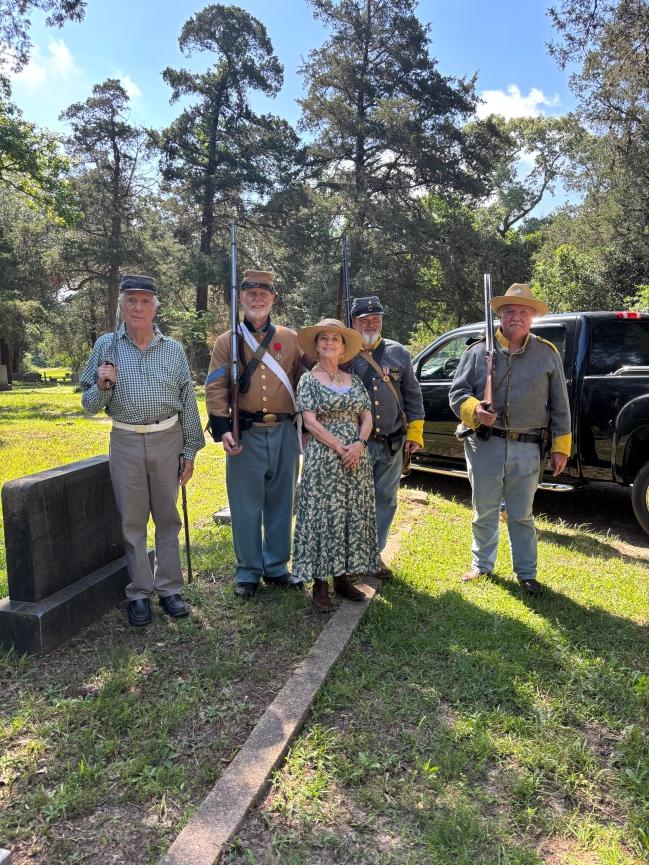
As preparations began fortheeventscheduledfor 10:00 a m at the Willis Cemetery there was little evidence of the rain that fell the day before The event,organizedby1stLt., AdjutantBuddyGurganus, Maj Gen Nathanial CleburneCamp2182,Sons of Confederate Veterans (SCV), was the inaugural of what will become an annual observance to h
preparations began for eventscheduled there was rain fell the by1st Adjutant Gurganus, aj en athanial Camp2182, of was what an observance to o
onf a
e placement of Confederate flagsmarkingthegravesof those brave souls interred atthecemetery
The ceremony began with an entry by the color guard equipped with the fullcomplementofflags,a bugler and a drummer marching through the cemetery gates. The flags were posted in their bases and pledges to all flags w
Underdown, Commander, led the invocation. Guests from other SCV Camps, UDCmembersandvisitors w
including Mr William Brown, 5-year Willis City
n w h h placement of marking graves brave souls cemetery an the equipped with fullcomplement a the their r d membersand e ac n le g d Mr William Brown, Willis
Councilman and Mayoral candidate.
Councilman Mayoral candidate.
1st Lt. Adj. Gurganus spokeoftheimportanceof locating the Confederate g
s Cemetery “Time takes a toll on the integrity of the aged headstones stated aged Gurganus, noting that a few of the graves were difficult to locate as dirt andvegetationovergrowth had hidden them from view Other grave markers w
Adj. Gurganus spoke importanceof locating Confederate g v h is Cemetery takes a toll the the headstones stated a of graves were and overgrowth from Other grave markers e e War was over, to Gurganus continued, their ” significant in a Capt.
He s mp ta the largest
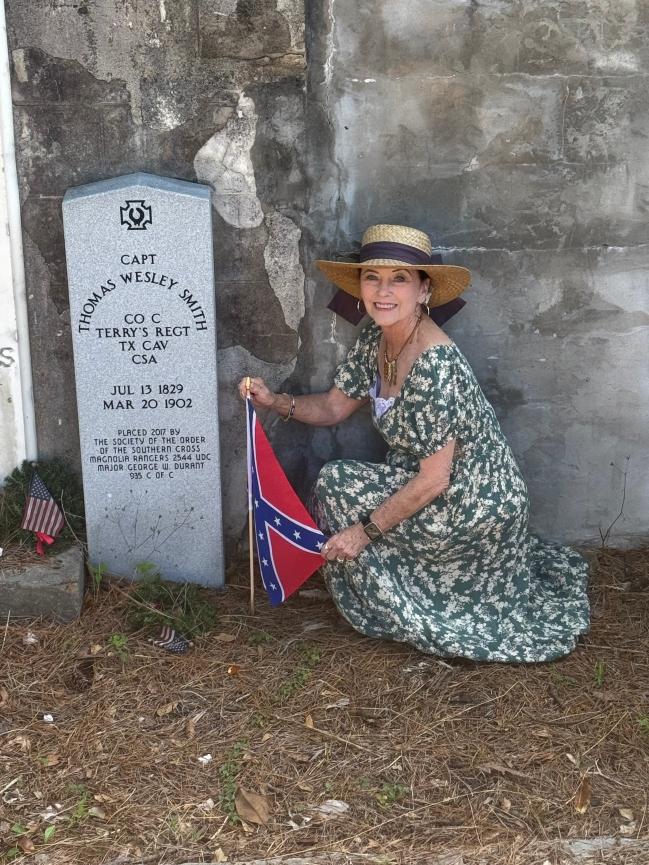
“When the War was over, the soldiers had a job to do,” Gurganus continued, “they had to rebuild their lives ” One significant mausoleum, located in a remote corner, marked the gravesite of Capt. Thomas WesleySmith.Capt.Smith served in Co C, Terry's Regiment,TXCavalry.He was an important businessman as the owner ofthelargesttobaccofarm in Willis after the War's end.
Gurganus
Gurganus encouraged attendeestoeducateyoung
Conroe, TX
Conroe, TX r en t e a
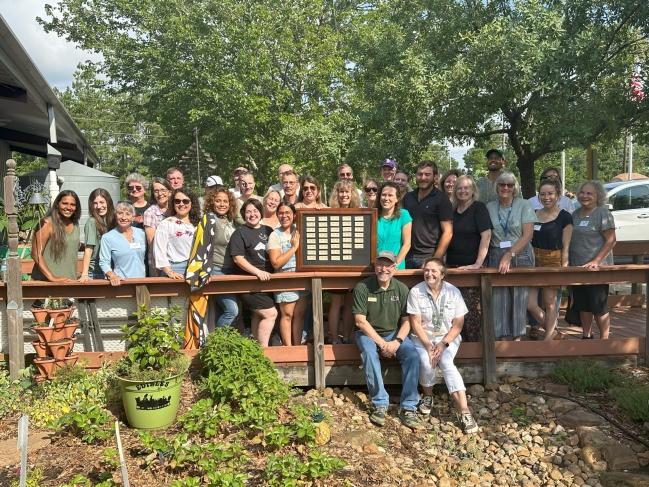
created to celebrate the 20th anniversary of the local Heartwood Chapter
M
of the Te
ter Naturalist™ program
Designed with native plants to attract monarch butterflies and pollinators, the aim is to “Bring Back the Monarchs to Texas” Thegardenislocatedatthe W G.JonesStateForeston FM1488wherethechapter began and still holds a variety of events The garden is supported by grants from the Native PlantSocietyofTexas,The
o h be to e M Naturalist™ to Monarchs to at Forest where a variety by from Society
Woodlands GREEN and Nature'sWayResources.
initiated, planned, created and will be maintained by
GREEN WayResources. he as by o o h Woodlands It
Heartwoodchapterandthe Woodlands GREEN. It is adjacent to a covered gazebo which is used for
t o r c e s stones, signage.
Native plants benefit native pollinators such as bees butterflies moths bees batsandbirds.Thesenative pollinators play a critical
, demonstrationsandevents. Thegardendesignincluded drainage improvements, addingnewsoilandstones, planting native plants and installingsignage. such butterflies play a

of
agriculture much billion in pollinators grown rapidly few

minutes, you must take the dog to a veterinarian as soon as p o s s i b l e b e c a u s e b consequences of heat strokewillnotshowupfor hours or even days Potentialproblemsinclude abnormal heart rhythms, k i d n e y f a i l u r e , neurological problems, andrespiratoryarrest. It is important to know ifyourpetispredisposedto dog heat stroke, which is true of dogs with short snouts such as bulldogs, pugs and many other breeds Other common causes of heat stroke heat include:apreviousepisode of heat stroke, leaving a dog in a parked car, excessive exercise in hot, humid weather (this may be exercise that your dog can usually handle but not inwarmerweather),lackof appropria

RJOAOfficersSeatedLefttoRt:Historian:AnitaStevens,Corresponding Secretary:ElaineCollings,President:JennyLehr,"RJOAHEROINE& HONOREE:BELLEBOYD",Registrar:DaneanMyers,RecordingSecretary: SheliaWilliamson.ChapterMembers&Chairmen:BarbaraEddleman,Darla Sharer,Sister/Guest:DawnLewisofPortlandOregon,DianneKebodeaux,Mary LeeMalek,EvelynMillercoziednextto"BelleBoyd",KarenDeBerry(crowned withBalloons!),ViziCaldwell,MyraListon,TaylorLehr,andDebbieAiello... WhataGrandGroupofLadiesonthisHappyFunDay!
byElaineCollings
Sixteen Belles of the Rebel Joan Of Arc 2721 Chapter, of the United
D
n The Woodlands, to Celebrate their Heroine and Chapter namesake.
from page 1
It would have been the 181st Birthday of Belle Boyd,whichwasherstage name, but she was born in Virginia as Isabella Maria Boyd The Yankees also gaveherthename:
"RebelJoanofArc"for h e r t e n a c i t y a n d courageousness during the War Between the States Belle Boyd was a
Confederate Spy for two Confederate Generals and served th
wounded smuggling medicines and food for the Confederate Soldiers. This young girl was given many other aliasesbytheYankees,but nothing deterred her, not even the numerous times shewasarrestedandjailed, still nothing deterred her
from her duty to her cause she so believed in, helping her Southland every way shecould.
On the Birthday of Belle Boyd, the RJOA ladies come together to celebrate her and can be seen standing and sitting around her tall cardboard imageinherelegantdinner gown.Shelookslikesheis holding the Red Star Bal
COLLINGS brought for her! RJOA President JENNY LEHR is seated amongst her Officers and brought "Belle Boyd's Birthday Cake"! All the ladies are holding their REDFanssouthernstylein honor of their heroine: Belle Boyd! This Chapter has members who travel great distances to come be togetherfromCypress,Old T o w n S p r i n g Montgomery, Kingwood, Hockley, Porter, and one evenvisitingfromPortland Oregon! ~ALL FOR THE LOVE OF WHAT THEY
Submitted by RJOA Chairman of Public Relations:
Elaine Collings, ehcollings@gmail.com
from page 1
generations about the War
stressingtheimportanceof
history
Stevens,
JoanOfArc Historian (RJOA), of the United Daughters of the Confederacy, was honored to ring the brass bell as Gurganusreadthenameof each Confederate veteran interred at the cemetery Next, the quietness of the cemetery was interrupted bymusketsfiring
years as several species have experienced dramatic population declines The H artwood Mon rch Waystation bring awareness to and create
years as several species have experienced dramatic population declines The
h Waystation will bring awareness to and create positive change for pollinatorconservation.
education outreach and service dedicated to the beneficial management of natural resources and natural areas within their communities for the State of Texas The local Heartwood Chapter is cele
po itive hang for pollinatorconservation.
anniversary this year The chapter provides citizen
techniques,forestgenetics,
variousforestmanagement techniques,forestgenetics,
utilization studies Jones State Forest is surrounded byConroe,TheWoodlands and u
The n
Montgomery county on all s
Montgomery i
E
, visittheforest.
approximately 80,000 peoplevisittheforest.
“The Heartwood Chapter of Texas Master Naturalist is celebrating our founding 20 years ago. We have 155 members
“The Heartwood Chapter Texas Master Naturalist is celebrating our founding 20 ago. We have members volunteer ng ross Montgomery and Walker
counties, ” aid Li a Houston, president of the Heartwood chapter “This groupof TexasMaster Naturalist and Woodlands GREEN volunteers have created the Heartwood Monarch as a community toserve as resource for education and conservation She credits Terry Fitch for initiating and leading the effort create thegarden community project to the chapter's20thanniversary About Texas Master NaturalistProgramandthe localHeartwoodChapter
volunteering acrosss Montgomery and Walker counties, ” said Lisa Houston, president of the Heartwood chapter “This groupoflocalTexasMaster Naturalist and Woodlands GREEN volunteers have created the Heartwood Monarch Waystation as a communityservicetoserve as a resource for education and conservation ” She credits volunteer Terry Fitch for initiating and leading the effort to create thegardenasacommunity project to celebrate the chapter's20thanniversary About Texas Master NaturalistProgramandthe localHeartwoodChapter
N
The Texas M
s
P
og
m's mission is to develop a corps of well-informed volunteers to provide
The Texas as er Natur list Program's mission to develop a corps of well-informed volunteers to provide
education programs; for operating parks, nature centers, and natural areas; a
programs; for parks, nature centers, and natural
The Woodlands Grass Roots Environmental
Environmental
leadership in local natural resource conservation e
local eff rt th
Montgomery and Walker counties. D
Heartwoodchapteraretaxdeductible. Donations for the Heartwood Monarch Waystationmaybemadeto the Heartwood chapter by specifying “Jones Forest PollinatorGardens.”
ug ou and Donatio to h chapterare deductible. Donations for the Waystationmaybemadeto Heartwood chapter by specifying “Jones Forest PollinatorGardens.”
W G StateForest
About W G Jones StateForest
W G.JonesStateForest isoneofthenation'slargest workingurbanforests.The primary purpose of this
s
e education.Soundscientific forest management that protects and perpetuates native flora and fauna is practiced Demonstration and research areas have been installed to test
G.JonesStateForest is thenation'slargest workingurban The primary of this for t i resour e education.Soundscientific forest management that protects perpetuates native flora and fauna is practiced Demonstration and research areas have been installed test
(GREEN) is organization that
(GREEN) is an education organization that promotes

c solid sensible our water resources, responsible
conservation, recycling, solid waste reduction, safe andsensiblecareofourair and water resources, and other responsible actions
from page 1
Keepyourpetssafeand healthyyear-round
Woodlands GREEN has been fulfilling its mission of building a sustainable
has fulfilling its building
sustainable
education and action for over 30 years taxdeductible (c)(3) engages the
education and action for over 30 years The taxdeductible 501 (c)(3) organization engages the c
Ifyoudohappentosee a pet alone in a car during hot weather, alert the management of the store where the car is parked. If the owner does not return promptly,calllocalanimal control or the police
your pet is always wearing a collar and identification tag If you are separated from your pet, an ID tag may very well be his or her tickethome. Check with your veterinarian to see if your pets should be taking heartworm prevention medication Heartworm dis
when used according toinstructions. your and Ifyou happen pet alone in a car hot weather, the store parked. If the owner does the App! first for Find », l o thecar your identification you an ID or if s , i fatal in dogs is fleas flea
education and
numerous sustainability initiatives, education programs and events to
n development and the naturalenvironment.
development naturalenvironment.


term.
even make sense or wouldsellingandrebuying bethesmarterplay?
even make sense or wouldselling rebuying bethesmarter
loan isn't the only alternative. Homeowners looking for occasional access to
loan isn't the only alternative. Homeowners looking for occasional access to
By Kent Pendleton
By Kent Pendleton,
Advisors,LLC
Advisors,LLC
You remember the heady days and 2021, when 30-year fixed mortgage rates plunged below 3 percent. in Montgomery County, that meant many homeowners were pocketing a few hundred extra each month over 30 years, saving tens of thousandsininterest.FastforwardtoApril and the landscape looks very different: the average 30yearfixedratesits about 6 81 percent, more than double those pandemic lows
That dramatic shift leavestwobig on the table: your adjustable-rate (ARM) hasresetintothe7percent range, you lock in a lowerfixed today?Or if you're one of the lucky few still 3percent loan, does replacingitwith freshmortgage
You may remember the heady days of 2020 and 2021, when 30-year fixed mortgage rates plunged below 3 percent. Here in Montgomery County, that meant many homeowners were pocketing a few hundred extra dollars each month and, over 30 over years, saving tens of thousandsininterest.FastforwardtoApril2025,and the landscape looks very different: the average 30yearfixedratesitsatabout 6 81 percent, more than double those pandemic lows That dramatic shift leavestwobigquestionson the table: if your adjustable-ratemortgage(ARM) hasresetintothe7percent range, might you lock in a lowerfixedratetoday?Or if you're one of the lucky few still carrying a 3percent loan, does replacingitwithafreshmortgage
The magic metric to understand is your r
The metric to und rsta d is yo r
“breakeven”—how long it takes for monthly savings on a refinanced loan to cover closing costs Imagine you owe $250,000 on an ARM that just reset 7.50 percent. At average of 6.81 percent,refinancingwould trim $143 from your each month. With closing costs hovering around $3,000, you'd your fees in about just under Stayinthe house beyond point, and you to net positive savings each month.
“breakeven”—how long it takes for the monthly savings on a refinanced loan to cover your closing costs Imagine you owe $250,000 on an ARM that just reset to 7.50 percent. At today's average of 6.81 percent,refinancingwould trim roughly $143 from your interest bill each month. With closing costs hovering around $3,000, you'd recoup your fees in about 21 months just undertwoyears.Stayinthe house beyond that point, and you begin to net positive savings each month.
By contrast, if you originallylockedinat3.25 percent,you'dbe aterrificrateforonenearly twice as which seldom financial
Those find that selling their currenthomeandpurchasing a new (thereby securing fresh term and ratewithoutrefinance istheonlypracticalpathto alower
By contrast, if you originallylockedinat3.25 percent,you'dbeswapping aterrificrateforonenearly twice as high which seldom makes financial sense. Those homeowners often find that selling their currenthomeandpurchasing a new one (thereby securing a fresh term and ratewithoutrefinancefees) istheonlypracticalpathto alowerpayment.
Of a traditional refinance on higher-rate
perprojectyear
pushing within trenched areas is limited to 50% of approved costs up to $2,000 per cooperator per year
Funding for removal of certaindiseasedredoaksis
imited to 50% of approved costs with a
Funding for removal diseased oaks imited to 0% f with
ition may consider a home-equity line of credit, which taps existing equity at a variable spread over prime and charges interest only on what you borrow VeteransandFHAborrowers might qualify for streamlined refinance programs that waive appraisalsandmuchofthe paperwork, while some lenders will structure “noclosing-cost” options by folding fees into your balance or sligh
tion may consider a home-equity line of credit, which taps equity at a variable spread over prime and charges interest only on what borrow Veterans FHAborrowers might qualify for streamlined refinance programs that waive appraisalsandmuch the paperwork, while some lenders will structure “noclosing-cost” options by folding fees into your b
y bumpinguptherate.
Beyond rate math, personal plans play a huge role If you're nearing retirement, planning to move within five years, or simply craving a different floor plan, the payoff window for refinancing can shrink or vanish altogether In a red-hot market,appraisalfeesmay
y bumpingupthe Beyond rate math, personal play huge role If you're nearing retirement, planning to move within five years, or simply craving different floor plan, the payoff window for refinancing can shrink or vanish altogether In a red-hot market,appraisalfeesmay
overlook the temporary credit-score dip from the
overlook the temporary credit-score dip from the
inquiry particularly if you're eyeing other loans or ofcreditinthenear
inquiry particularly if you're eyeing other loans orlinesofcreditinthenear term.
maximum of $2,000 per cooperatoryear
Oak wilt is one of the most destructive tree diseases in the United States and is killing oak trees in Central and West Texas at epidemic proportions. Oak wilt has been confirmed in 76 Texas counties While destructive to the ecosystem, the effectsofoakwiltcanalso reduce property value by 15to20percent.
“Oak wilt fungus, Bretziella fagacearum, is responsibleforthedisease and spreads rapidly throughtheinterconnected roots of live oaks” said
“Oak wilt fungus, Bretziella is responsibleforthedisease a d sp ea ra id y throughtheinterconnected roots of live said
In the end, no single pathfitseveryone.Thefirst step is gathering your c u
the end, no single pathfitseveryone.Thefirst step is gathering your c u
s outsta
g balance term and rate—and comparing them to today's a refinance of a high-rate mortgageyieldsbreakeven well your expected time under the roof, it can unlock extra cash flow eachmonth. not,you'llat leastknow donethe homework, and you can explore whether tapping equity with a HELOC or taking the on a different home better alignswithyourgoals.
Whatever you choose rate-and-term refinance, equity line, streamlined program or selling—the key clarity Understanding longit takes to recoup costs and matching that against your family's timeline ensures
g balance, remaining term and rate—and comparing them to today's offers. If a refinance of a high-rate mortgageyieldsbreakeven well within your expected time under the roof, it can unlock extra cash flow eachmonth.Ifnot,you'llat leastknowyou'vedonethe homework, and you can explore whether tapping equity with a HELOC or taking the plunge on a different home better alignswithyourgoals. Whatever route you choose rate-and-term refinance, equity line, streamlined program or selling—the key is clarity Understandinghowlongit takes to recoup costs and matching that against your family's timeline ensures

You'vegotyoureyeon a location and neighborhood that is PERFECT for your family Your onlyhangup?Thehomes are still under construction. No problem! Turn thathangupintoa“Heck ya!”withafewquestions toaskbeforebuyingnew construction:
1.Isthepriceofthelot included? If it is, ask whichlotscomewiththe highest price tag so you can choose the one that's right
Demian Texas Forest Forest Health
Demian Gomez, Texas
A&M Forest Service Regional Forest Health Coordinator “Alloaktrees aresusceptibletooakwilt,
you an informed choice, of or pressure you'd like deeperlookatyour numbers our office is happy to walk through so can decide which mortgage move foryourfuture.
you make an informed choice, free of hype or pressure If you'd like a deeperlookatyourspecific numbers our office is happy to walk through the options so you can decide which mortgage move feelsrightforyourfuture.
Pendle Hill Advisors LLC
14375 Liberty St, Ste 109 | Montgomery, TX 77356
T936-297-8267
Kent Pendleton@raym o n d j a m e s c o m | wwwraymondjames com/ pendlehilladvisors
Opinions expressed in the attached article are thoseoftheauthor/speaker and are not necessarily those of Raymond James. All opinions are as of this date and are subject to change without notice Every investor's situation is unique and you should consider your investment goals, risk
2 Does the home come with a warranty? What is covered, and how long does it last? A reputable builder should stand behind their work and cover your home for atleastthefirstfewyears.
3 How long will construction take?While there are no guarantees, and the process is prone to delays, you should be able to get a general timeline The average time in the U.S. is seven toeightmonths.
you will definitelywanttoleavea little space in your budget.
you buy an existing home or new construction,it'salwaysa good idea to have a Realtor® on your team askinganyquestionsyou may overlook Know someone looking to buy orthinkingofityourself? I'dlovetohelp.
-MeganStultz
“Alloaktrees oakwilt, and oaks are susceptible can little as one monthof infected.”
and red oaks are the most susceptible and can die within as little as one monthofbeinginfected.”
Oak wilt is spread p r i m a r i l y i n t w o ways above ground by sap-feeding beetles or below ground through interconnected root systemsbetweentrees.
Aboveground,infected trees that died the year before may produce spore mats under the bark, creating a fruity smell which attracts sap-feeding beetles As the beetles carry fungus spores on them, they easily infect otheroaktreesthroughany freshwoundonthetree.
Below oak an average feet per year
Oak wilt spread r i m i y n t o ways by sap-feeding beetles below ground nterconnec ed root betweentrees. Above died before may produce mats bark, fruity smell attracts sap-feeding beetles As the beetles spores them, they easily through thetree.
Belowground,oakwilt can travel an average 75 feet per year through the interconnected root systems of oak trees, primarilyinliveoaks,and is responsible for the majority of spread and deathsinCentralTexas.
nter onn d r ot systems of oak liveoaks, for majority spread deathsin Texas.
common
maximum of per cooperatoryear F ndin for tre within to up to per cooperator year Trenchingis common method to prevent the spread of oak wilt under-
the
minimum of 100 beyondsymptomatictrees.
minimum of 100 feet beyondsymptomatictrees.
by oak wilt continue to take precautions to minimize the susceptibility of their oak treestothedisease.
d continue to take precautions to minimize the susceptibility of their oak treestothedisease.
“One of the easiest waysforoakwilttospread is by fresh wounds in oak trees, so it is especially importanttoavoidpruning orcreatingnewwoundson oaktreesfromFebruaryto June,”saidGomez.
Oak wilt one of the most destructive tree diseases in the United States and is killing oak trees in Central and West Texas at epidemic proportions. Oak wilt has been confirmed in 76 Texas counties destructive to the the effects oakwilt also reduce by 15to20 the easiest waysforoak tospread is by fresh wounds in oak trees, so it is especially importanttoavoidpruning orcreatingnew on oaktreesfromFebruaryto June,”saidGomez.
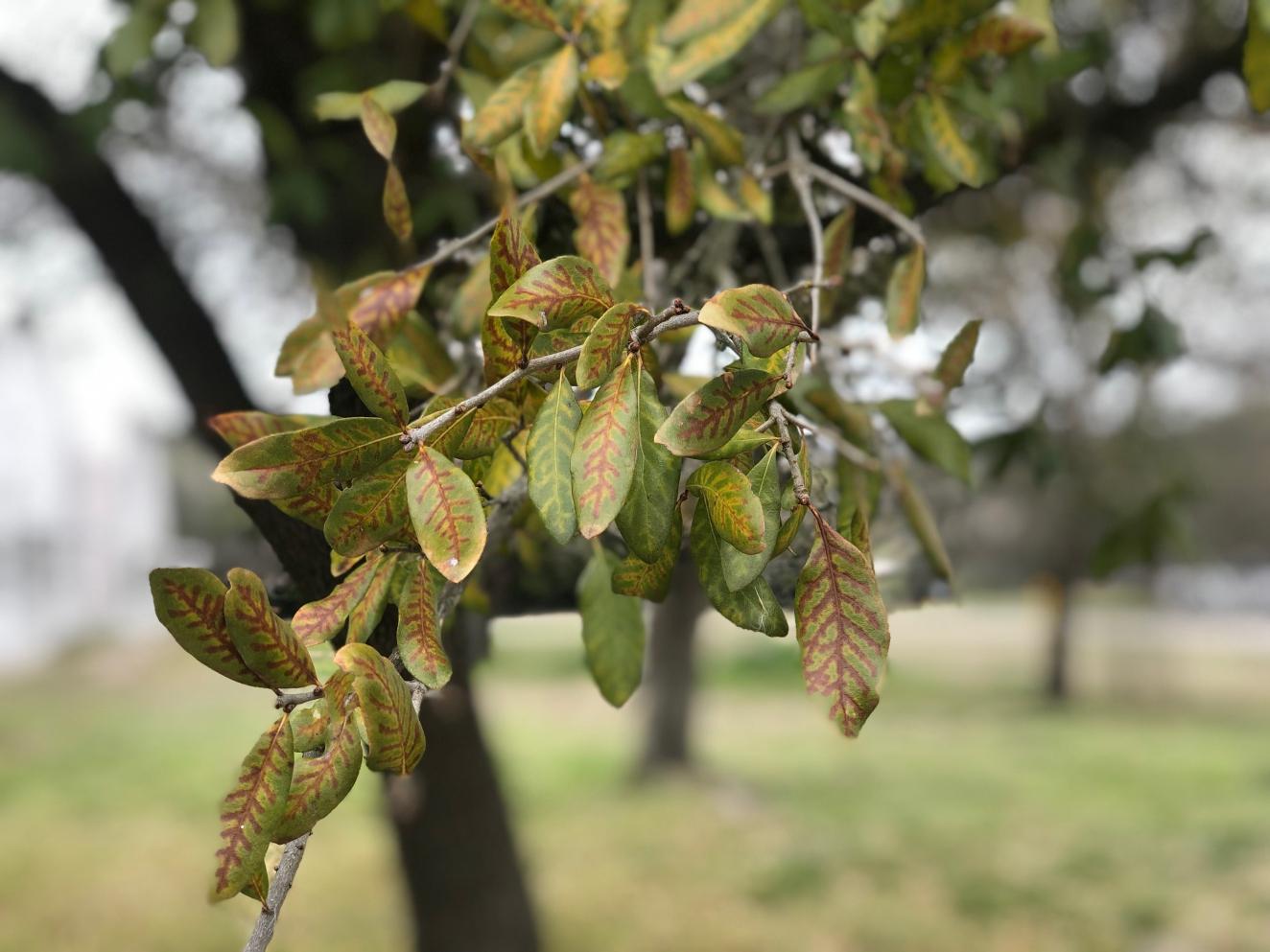
Oak wilt is often recognized in live oaks by yellow and brown veins showing in leaves of infected trees, known as veinal necrosis. The signs ofoakwiltcanbeseenona majority of leaves when a tree is fully infected Landowners should contact a certified arborist if they are unsure if their tree
Oak il n recognized in oaks by yellow and brown veins showing in of infected known as veinal The signs ofoakwiltcanbeseen a majority of leaves when a tree fully infected L owne s
with
Ruben Borjas Jr, Columnist/ Opinion Writer
Thereisnoargumentto say that what President Donald Trump is doing in hisSecondAdministrationis nothing short of amazing. Therearesomanyexamples of his progress in so many
Thereisnoargumentto say that what President Donald Trump is doing in his is nothing short of amazing. Thereareso examples of his progress in so many
areas,thathedoesn’tsitstill enough for Democrats to organizeanefforttocounter whatTrumpdidadayortwo ago, much less a week ago. Inthemeantime,formerFBI Director James Comey is
areas,thathedoesn’tsitstill for Democrats anefforttocounter Trump dayortwo ago, much less a week ago. themeantime,formerFBI Director James is
Mostlysunny,withahighnear93.Eastwind5 to10mph.
Mostlycloudy,withalowaround70.East windaround5mphbecomingcalmafter midnight.
A20percentchanceofshowersand thunderstormsafter1pm.Mostlycloudy,then graduallybecomingsunny,withahighnear 96.Calmwindbecomingsoutheastaround5 mphintheafternoon.
Partlycloudy,withalowaround70. Sunny,withahighnear94.
Partlycloudy,withalowaround73.
Mostlysunny,withahighnear94.
Partlycloudy,withalowaround75.
A20percentchanceofshowersand thunderstorms.Partlysunny,withahighnear 93.
A30percentchanceofshowersand thunderstorms.Mostlycloudy,withalow around75.
A40percentchanceofshowersand thunderstorms.Partlysunny,withahighnear 92.
MontgomeryCountyNews
Phone(936)449-6397Fax(936)597-6395 E-mail:news@montgomerycountynews.net
Publisher:M.P.Stultz
Editor:MonteWest
AssistantEditor:JamieSandefer DistributionManager:BethanySandefer
AccountExecutive: M.RyanWest Montgomery County
Photography:MonteWest,RyanJohnson Reporters/Contributing Writers: Ruben Borjas Jr, Eva Raines, Kim West, Megan WestStultzStudentsandStaffofMISD, and friendsofMontgomeryCountyNews.
©Copyrights, Montgomery County News, Montgomery,Texas2017-2023
MontgomeryCountyNewsisaweekly locallyownedand operated newspaper and is published by Montgomery County Newsat14375LibertySt.POBox1,Montgomery TX77356. Telephonenumber936-449-6397,Fax936-597-6395.
‘8647’ on his Instagram account, no and veiled up ort of anot attempt The President. shows how Democrats, in their ‘everyone is lower me’thinking;thatmost of us are of on level, ‘they/them,’ are Right-side thinkers on a much higher-plateau than the lowly Democrats. It’s Conservativelate-night comedy outshines anything that ABC, CBS, NBC, and CTV Comedy can throw them.
posting 8647’ on his Instagram account, thinking noonewillputtwoandtwo together, in his veiled support of another assasination attempt on The President. It shows how Democrats, in their multidegreed, ‘everyone is lower thanme’thinking;thatmost of us are incapable of thinking on their level, and ‘they/them ’ are right Right-side thinkers are on a much higher-plateau than the lowly Democrats. It’s whyConservativelate-night comedy outshines anything that ABC, CBS, NBC, and CTV Comedy can throw at them.

In your 401(K), more good news, as the stock mark
s
o rebound as all fears of
n waylaid, as Trump’s ‘Tariff Equality Policy’is working, and another Trillion dollars plus of investment in Our Great Land has been secured. 47’s performance continues to impress, yet in the legacy media you wouldn’tknowit. TheNew Republic ran a story Friday, ‘Trump’s Approval Rating Plummets in Just About Every Category,’with a sub headline ‘America is fed up is with Donald Trump,’ when conditionsonthegroundare improvingallover Alsolast Friday, Newsweek ran an embarrassingstorytryingto relive the 2024 presidential election suggesting a new poll conducted at the beginningofMaytothe6th likethepreviouspoll,would have Harris winning Trump s success in his Presidency as compared to Joe Biden is forcing potential Democratic presidential candidate for 2028, Gavin Newsom, to finally trying to act like a trying responsible adult, not by admitting to his own faults when it came to the mismanagementofhisstate, but demanding his mayors and county supervisors cleanuptheiracts.
In your 401(K), more good news, as the stock market continues t rebound, as all fears of r ces ion hav bee waylaid, as ‘Tariff Equality Policy’is working, and another Trillion dollars plus of investment in Our Great Land has been secured. 47’s performance continues to impress, yet in the legacy media you wouldn’tknowit. TheNew Republic ran a story Friday Approval Rating Plummets in About Every with a sub headline ‘America is fed up with Donald Trump,’ conditionsonthegroundare allover Alsolast Friday Newsweek ran embarrassingstorytryingto the 2024 presidential suggesting a poll conducted the beginningofMay the thepreviouspoll,would Harris winning Trump’s success in his Presidency as to Joe Biden, is pot ntial Democra ic candidate for 2028, Gavin Newsom, to to act like a responsible not by admitting to his own faults when it came to ofhisstate, but demanding his and county cleanuptheir
only the United States, but alsoTheWorld. Wecameso close to having an alcoholic asPresidentlastyear,itwas scary, and to know what we know now about how the government was being run, and any continued nightmare could have resulted in civilwar
only the United States, but alsoTheWorld. Wecameso close having alcoholic asPresidentlastyear,itwas scary, and to know what we know now about how the government was run, and any continued nightmare could have in civilwar
The Middle trip Trump’sbravado is a force to be reckoned seeing as how offered American up President’s in Thatcomes the US made a with is the of andalthough in the of radicals, it mean willnot further against Houthis thefuture,for of Israel's space. It is a given that a lessens the creation of andwhenit to the Gaza it is clear once Hamas is nated,thatitwillbea different is no way Trump nor Israel will allow the Palestinians to rebuildthemselves,andthat it will be by effort of some kind.
The Middle East trip showsthatTrump’sbravado is a force to be reckoned with, seeing as how easily Hamas offered American hostage Edan Alexander up before The President s arrival in Saudi Arabia Thatcomesafterthefactthat The Houthis stood down against the US whenTrump made a deal with them. Peace is the goal of Trump, andalthoughtheIsraelisare still in the crosshairs of the Yemeni radicals, it doesn’t meanthattheUSwillnotset further conditions against theHouthisinthefuture,for the protection of Israel's air space. It is a given that a healthy World economy lessens the creation of terrorists,andwhenitcomes to the Gaza Strip, it is clear that once Hamas is eliminated,thatitwillbeatotally different place. There is no way Trump nor Israel will allow the Palestinians to rebuildthemselves,andthat it will be overseen by an international effort of some kind.
UnitedNationsbased,tofix the and that is anotherproblem Trump will have to fix UN personnel in Gaza, the United Nations Relief and Rehabilitation Administration, or UNRRA, have literally killed Israelis when the Israel-Hamas War started and they have worked at Hamas’ aid in theireffortstohideweapons and the guise of UN authority Israel not until Hamasistotallyeliminated, that is a given, and Trump and future US Administrations, more than likely supportive of the
UnitedNationsbased,tofix the problem, and that is anotherproblemthatTrump will have to fix UN personnel in Gaza, the United Nations Relief and Rehabilitation Administration or UNRRA have literally killed Israelis when the Israel-Hamas War started, and they have worked at Hamas’ aid in theireffortstohideweapons and ammunition under the guise of UN authority Israel will not stop until Hamasistotallyeliminated, that is now a given, and Trump, and future US Administrations, will more than likely be supportive of theidea.
MCNwelcomesanycommentsorsuggestions,submittedin writing to the paper Any editorials or opinions used in this publication are those of the writers and in no way reflect the viewsandopinionsoftheMontgomeryCountyNews.
MCN is currently circulating 6,220 copies throughout the MontgomeryCountyareabyretail,subscriptionsandoccasional random distribution. Subscription rates are $40 per year in countyand$45outsideMontgomeryCounty BulkRatePermit isheldbythePostmasteratMontgomery TX77356,Montgomery County News is an official publication of the County of publication Montgomery,Texas. MCNexpectshonestadvertisingstandardsfromitspatrons, anddoesnotinanywaytakeresponsibilityforfalseormisleading advertisements. MCN reserves to right to refuse advertisement.
weprohibitreproductionoftheitemswithoutpermission. used the circulating the to newspaper
AllcontentsofMontgomeryCountyNewsarereserved,and weprohibitreproductionoftheitemswithoutpermission.
D&B#12-976-8354. D&B
POSTMASTER: PleasesendaddresschangestoMontgomeryCountyNews,POBox1Montgomery,TX77356
Editor’sExpress
Yourlettersareappreciatedandwillbepublishedasspace will allow We ask that you furnish facts that pertain to your letter whichyousignwithyoursignature,addressanddaytime phonenumbertoverifytheauthor Weholdtherighttoeditor notpublishlettersthatmaynotconformtothemissionofthis paper Mail,Faxor E-mail: MontgomeryCountyNews,14375LibertySt,P.O.Box1, Montgomery,Texas77356-0001,Fax936-597-6395, Webpage: http://www.montgomerycountynews.net E-mail:news@montgomerycountynews.net will We
Trump’sphilosophy,or his unconventional style, is what drives Democrats up the wall. They’ve never been up against anything like him, a businessman, who doesn’t need money; who doesn’t need be secretive in his dealings. He’s different. He actually cares about Our Country doing well. Truly who can be against that? Well, Democrats can. And they do. It’s hard to believe that there is a group of people who want the worst for not
Trump’sphilosophy or his unconventional style, is what drives Democrats up the wall. They’ve never been up against anything like him, a businessman, who doesn’t need money; who doesn’t need to be secretive in his dealings. He’s different. He actually cares about Our Country doing well. Truly, who can be against that? Well Democrats can. And they do. It’s hard to believe that there is a group of people who want the worst for not
byRubenBorjas,Jr
If it were up to me, I could imagine a future of tiny houses instead of tall buildings housing the people. They are made in factories, rather easy to place, and economical as to costs. It will offer some sense of of ownership to inhabitants, and perhaps give a chance for the youth to on building a futurebasedontheirmerits, rather than being radicalized.
If it were up to me, I could imagine a future of tiny houses instead of tall buildings housing the people. They are made in factories, rather easy to place, and economical as to costs. It will offer some sense of pride of ownership to inhabitants, and perhaps give a chance for the youth to concentrate on building a futurebasedontheirmerits, rather than being radicalized.
Theliftingofsanctions againstSyriaisagoodidea, andessentiallyatestcaseof Trump’s Middle East Peace Plan Syrian President literallya former enemy of the United in Iraq, appears want to grow the former civil war-torn and hasbeenmakingovations leaders of surrounding countries and even the rganizatio fo the Prohibition Weapons. course, of relations with Israel is now a buttheyaresecretlyintalks, will test the ment of al-Sharaa’s resolve if is true the of Syria,and a topeace. Remember, great economies lessens the needforjihadism,andthatis what President is bankingon.
Theliftingofsanctions againstSyriaisagoodidea, andessentiallyatestcaseof Trump’s Middle East Peace Plan Syrian President Ahmedal-Sharaa,literallya former enemy of the United States in Iraq, appears to want to grow the former civil war-torn nation, and hasbeenmakingovationsto leaders of surrounding countries and even the Organization for the Prohibition of Chemical Weapons. Ofcourse,Syrian normalization of relations with Israel is now a fantasy, buttheyaresecretlyintalks, and it will test the experiment of al-Sharaa’s resolve if he is true to the idea of rebuildingSyria,andbeinga friendtopeace. Remember, great economies lessens the needforjihadism,andthatis what President Trump is bankingon.
two 747 s was $3 9 billion, with the company the year stating the price would $5.3 Manufacof 747’s was stopped in 2023, and now Boeing says the newAir Force One planes will be ready before 2029. Of course the focusofthelegacymediais not on Boeing’s failure to abide by their contract with the government, but the upgrade costs to the Qatari which appears to be a bargain. Aircraftexpertsare of course it is a bad deal, but they can be just as politicalasthe Seeing as the US is $50 dollars per month in interest fees the national of DOGE’s finding tons of $1 upgrades to a newer the new One’s arrive under is abad Iwouldexpectthat plane taken apart and everysafety detail out there before any upgrade accepted for travel.
for two 747’s was $3 9 billion, with the company coming back the following year stating the price would be $5.3 billion. Manufacturing of 747’s was stopped in 2023, and now Boeing says the newAir Force One planes will not be ready before 2029. Of course the focusofthelegacymediais not on Boeing’s failure to abide by their contract with the government, but of the upgrade costs to the Qatari jet, which appears to be a bargain. Aircraftexpertsare of course saying it is a bad deal, but they can be just as politicalasthelegacymedia. Seeing as the US is now saving $50 billion dollars per month in interest fees towards the national debt because of DOGE’s efforts in finding tons of waste, fraud, and abuse, $1 billion in upgrades to a newer 747, until the new Air Force One’s arrive under contract, isnotabadidea. Ofcourse, Iwouldexpectthattheplane be taken apart and scanned foreverysafetyandsecurity detail out there before any upgrade is accepted for presidentialtravel.
news.net web; http://www.montgomerycountynews.net
is going take a concentrated non-
It is going to take a concentrated effort, non-
measure of having certified teacher central office administrators serving as substitute teachers State fundingforpubliceducation has not increased in six years, but with the elimination of the Department of Education, and with States now expecting to receive blockgrantfunding,itisyet to be determined how state funding to Texas school districts will
The recent gesture made by Qatar’s governmenttogivea747totheUS foruseasthenewAirForce One, is making waves, and thelegacymediaishavinga cow Incredibly, the media is concerned over the $1 billion dollar price tag Really? The 2018 deal that Trump made with Boeing
The recent gesture made by Qatar s governmenttogivea747totheUS foruseasthenewAirForce One, is making waves, and thelegacymediaishavinga cow the media is concerned over the $1 dollar price Really? The 2018 deal that Trump with Boeing
Goodthingscontinueto happen, and why not? PresidentTrump is committedtopeaceanddealmaking to strengthen the United States. Astrong US makes foragreaterchanceatWorld Peace. Imean,whodoesn’t wantpeace? Obviously,it's Democrats. And the recent ‘8647’postbyJamesComey showshowshallowtheyare whenitcomestoresponsible governance at any level. Democrats' arrogance is theirkryptonite. AndTrump will always be two to three stepsahead.
thingscontinue happen and why Trump is committedtopeaceanddeal strengthen the United States. strong US makes a chanceatWorld Peace. mean,whodoesn’t wantpeace? Obviously, Democrats. And the recent ‘8647’postbyJamesComey showshowshallowtheyare whenitcomestoresponsible governance at any level. Democrats' arrogance is theirkryptonite. And will always be two to three stepsahead.
effort to reduce class sizes and bring on extra specialeducationpersonnel.
The May meeting also had the Trustees approve a financial stewardship move tothereductionoflong-term district debt, by paying down the outstanding bond principal by $2 5 million Superintendent Ruffin likened the move to paying extra toward a car loan or mortgage to reducing the principal balance, and shows financial responsibility at the top, can lead to greater things down the road, with quality forethought.
debt early, we’re saving taxpayersmoneyoninterest and maintaining our focus on delivering high-quality education while being responsible stewards of taxpayerdollars.”
Several new board members were sworn in from the May election, with Justice of the Peace, Pct. 1, Judg
Wa
offering 13 of the 14 TEArecognized CTE career clusters. Wellover95%of MISD high school students are taking at least one CTE course, a 20% increase over past years, while all 8th graders are taking a CTE class.
“Thesetwoinnovative facilities will unite Bears and Lions from both high schools, and we love the strong identity of ‘The DEN,’” said Trustee Eddie Winn Through hands-on experiences students will discover opportunities, explore careers in highdemand fields, and connect with industry professionals tonavigatetheirfutures.”

“This $2 5 million defeasance is made without raising the I&S tax rate, which has remained steady
valuation since 2019,” said Dr Ruffin Being good stewardsofourfinancesisa toppriority Bypayingdown
ck, administering oaths to newlyelectedTrusteesMark Keelen (Position 6) and incumbent Trustee Nate Robb (Position 7). Former Position 6 Trustee Dr Matt Fuller,retiredaftersixyears of service. The configuration of the MISD Board of Trusteesleadershipcorewill be the following for the coming year: Eddie Winn, Board President; Laurie Turner, Board Vice President; Lizzy Ivey, Board Secretary
Thenewfor2025-2026
Facilities on Lone Star Parkwayhasbeennamedby a district committee. The Board approved the names oftwonewdistrictfacilities: The Montgomery ISD Career &Technical Center,’ and ‘The Montgomery ISD A
Center’ In honor of the ‘Bears’ and ‘Lions’ of MISD,thefacilitiestogether will be known as The DEN.’ With the Motto ‘WhereourBearsandLions will come together to Discover, Explore, and Navigate future career opportunities.’
The committee was made up of teachers, parents, students (CTE and AG), and staff, and met several ti
e decidingonthenames. The CTE and AG facilities will be the jewel in MISD’s crown,withthedistrictnow
Both facilities were approved as part of MISD’s $326 million bond package i
available to students from Montgomery and Lake Creek High Schools. The
&
EducationCenterwillhouse 10 specialized programs: culinary arts, cosmetology engineering robotics audio/video production, auto mechanics, construc-
science, and criminal justice. WhileTheAgricultural Science Center will house an animal science classroom and lab, a show arena,andanimalpens.
The Montgomery
Independent School District has come a long way in the past 100 years. Now with over 9,000 students and 11 schools, plus the new CTE/AG facilities the district in the last century when the district was founded in 1925, with its singlebuilding. Thedistrict hashaditsupsanddowns,as well as challenges. It has come a long way since the MontgomeryAcademyfrom the 1840’s. The district hit historical milestones with
ASSEMBLYOFGOD
CornerstoneChristian AssemblyofGodof Conroe,locatedat100 MosswoodDr.,Conroe, TexasinfrontofRiver Plantation.936-273-1755
NewLifeAssemblyof God,RabonChapelRoad, Montgomery,936-588-3399
BAPTIST
ChurchoftheGood Soldier(BaptistAffiliation), 1501NorthFrazier (McKenzie'sBBQ), Conroe, Texas,Phone:936-4945775, www.churchofthegoodsoldie
r.org. Worship:Sundayat 10:30am,SundaySchool: 9:30am
GaryChapelBaptist Church HeritageBaptist Church19087LakeMt. PleasantRd,Montgomery 77356
Dobbin,936-597-5560
ChinaGroveBaptist Church,Willis,936-7674744
DacusBaptist,Dacus,
Church-LCMS309PondSt. Montgomery77356Church phone:936-597-8013Web: www.livingsaviortexas.org
PastorDavidR.Bailes.
schoolintegration,aswellas winning state championships, as well as with its growth.
MISD also endured tribulations, including a fire that burnt down the main building at Montgomery High School in 1984, but many are unaware of an elementary school building, then located where the bus barnisnowtoday,thatburnt in 1948, causing then firstgrade student Billy Ray Duncan,todohisfirstgrade year in a red brick building located behind old high school. Theincidentcaused a scramble of teachers and principals to rearrange the classrooms for the new school1948-1949year
“I remember the building was horse-shoe shaped,” said Duncan. “My o
were educated there, in the buildingcaddy-cornertothe oldhighschool.”
Duncan was at the 100th Anniversary ceremony Honoring Montgom-
Sundays@8AM,9:30 AM&11AMMondays@ 7PMLivestream:Watch usliveSundays@9:30 AM&11AM@lonestar.tv andclickonWatchnow
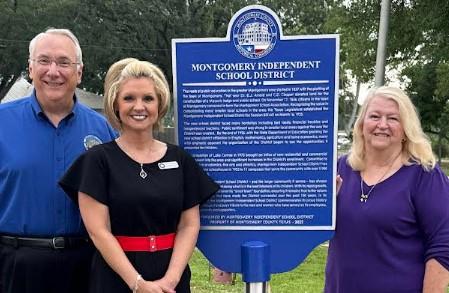
ery ISD with a county historicalmarker,sponsored by the Montgomery County Historical Commission, on April 30th. The event took place in front of Montgomery Elementary School, where the 1984 high school waslocated. Hewasjoined by former student Junior Mock, and others, who attendedMISDschoolswith happytimesinmind,withall noting the changes to the district over the years, with Mock even having his granddaughter currently attendingMES. Duncan, 83, played football for Montgomery High,andbothheandMock rememberedhavingtomove cattle off the game field for practice,nexttotheoldhigh school in front of MES Duncan graduated MHS in 1960, married his wife Esther (née Blake) in 1961, after she graduated MHS that year Billy Ray moved the family to Houston to work, moving back in the m
Rd.,Montgomery,936-5975757
We'
commemoratingthepassage of time,” said then MISD TrusteeandBoardPresident
honoring the generations of students, teachers, staff
leaders, everyone who has left their mark on this incredible district and town,” Montgomery ISD was represented by Superintendent Mark Ruffin; and Assistant Superintendent of Elementary Schools, Carrie Fitzpatrick; Vice-Chair Victor Uher, representing the Montgomery County HistoricalCommission,said afewcommentsonbehalfof the MCHC; along with retiredTexasHistoryteacher Brenda Beaven, who is a memberoftheMontgomery HistoricalSociety
Service
12681FM149 Montgomery TX77356 (936)597-3949
Phone:PastorBear936 448-4027 936-449-0845
POBox125,Montgomery Texas77356,5525 SpringBranchRoad, Montgomery.713-478-1256, SundayBibleClass10:00 am,WorshipServiceat 11:00am.
dacuschurch@gmail.com, dacusbaptist@consolidated.n etwww.dacusbaptist.org
FirstBaptistChurch,
Hwy105W.,Montgomery,936-597-4230
HoneaBaptistChurch,
FM2854,Montgomery, JonesChapelBaptist
936-588-1260
FM2854,936-756-2505
Mt.CalvaryBaptist
OldHwy105,936-5882330
METHODIST
ChurchatMontgomery (GlobalMethodist)
OakHillsJrHigh
19190KeenanCutoffRd.
SundayServices10:30am
MontgomeryUnited MethodistChurch
22548Highway105West
Montgomery TX 77356
Phone: 936-597-6162
AbundantLifeMinistriesCornerofFM149& FM1097W.Montgomery TX77356Prayer/Sunday School9:30amSunday Service11:30amWednesdayPray/BibleStudy6:30 pm
FellowshipofMontgomery SeniorPastorDale Talbert ServiceTimes:Sundays at9:30am&11am/ Wednesdaysat6:30pmfor Children&Student Ministries
SundayMorningBible Study9:30a.m.Worship Service10:45a.m.
SundayEveningWorship 6:00p.m.
St.BeulahBaptist Church,locatedinDobbin, P.O.Box112,Montgomery, 77356
FaithBaptistChurch Meetsat464McCaleb Rd. BenuiBaptistChurch,
ScottRidgeandFM 1097,Montgomery
AntiochBaptist,
BethelRoad,Montgomery,936-597-4668
About11miNof Montgomery onFM149
8:45SundaySchool Montgomery,TX thewoodlandsmethodist.o rg/montgomery
WatchusliveSundays @fellowshipofmontgomery online.churchorfollowus onFacebook@thefmchurch!
10AMWorshipService
Www.mumctex.org
RichardsUnited MethodistChurch
6639FM1696Richards
Mt.SinaiBaptist, 936-756-8186
St.Joseph’sCatholic, UnionGroveBaptist ChurchofRichards,Texas CR213,Stoneham, JEWISH
SundaySchool10AM
Admin@TCMontgomery org AprilSoundChurch, 20350FM2854 Sun:10:30am 67½AprilWindS., AprilSound,936-5882832 TransformationChurch Montgomery LighthouseFellowship Church Montgomery,936-5827700
ZionChurch,
1308S.Hwy1486, Dobbin,
SacredHeartCatholic,
109N.Frazier,Conroe,
St.Mary’s Catholic,
936-894-2223 7:45Service
CATHOLIC 936-894-2223
CongregationBeth Shalom,5125Shadowbend Place,TheWoodlands,
SundaySchoolallages 9:45am,ChurchService 11:00am,WednesdayBible StudyandYouthGroup6pm FM1774,Plantersville, 281-362-1100
LUTHERAN
GraceLutheran (ELCA),
Highway105W.,Lake Conroe,936-588-1944
LivingSaviorLutheran
PorterChapelA.M.E.
936-597-5331or936449-5983
LivingWayChurch
2080LongmireRd, Conroe WorshipService11AM 936-441-8875
HopeTabernacle
PastorDavidWhitaker Thursday7:30pm 936.582.7722
Meetsat18961Freeport DrMontgomery
SundaySchoolat 10:00am
SundayWorshipat 6:00pm
CommunityAnd Interdenominational
LoneStarCowboy Church
21627EvaSt.Montgomery,TX77356(936)5975742PastorsRandy&Darla WeaverServiceTimes:
LivingBranchChurch
19087Mt.Pleasant CemetaryRd,936-597-8921
WaldenCommunity Church, Montgomery,TX77316
Highway105W.,Lake Conroe,936-588-3400 NewBeginningBible Church, 12400WaldenRd, Walden,936-582-6696
CarbonChurch, Highway105W,Lake Conroe,936-588-4660
Services9:30and11a.m. WaldenChurch.com
RiverofLifeChurch,
17156FM1097, Montgomery,936-449-4414
CornerstoneChurch,
Sundayworship@10:00 a.m.Wed.activites6:30-8pm

Montgomery,936-5821977
936-756-7792 LakesideBibleChurch, ChurchofSt.John,
retreatandwildlife center, 1011W.Lewis,Conroe, 18940FreeportDrive
2615St.BeulahChapel

Cause Number: 25-03-04578
ClerkoftheCourt AttorneyRequestingService
MelisaMiller WilliamJennings CITATION BYPUBLICATION – CIVIL
P.O.Box2985 3333LeeParkway
Conroe,Texas77305 EighthFloor
DallasTX75219 THE STATE OF TEXAS
NOTICETODEFENDANT:"Youhavebeensued.Youmayemployanattorney Ifyouoryour attorneydoesnotfileawrittenanswerwiththeclerkwhoissuedthiscitationby10:00a.m. ontheMondaynextfollowingtheexpirationofforty-twodaysafterthedateofissuanceof thiscitationandpetition,adefaultjudgmentmaybetakenagainstyou."
To:TheUnknownHeirsatLawofThomasStanton,deceased
Thenamesofthepartiestothecauseareasfollows:
WellsFargoBank,N.A.NotInItsIndividualorBankingCapacity,butSolelyasTrusteefor GreenTree2008-MH1arePlaintiffsand YouareherebycommandedtoappearbyfilingawrittenanswertothePlaintiff'sOriginal Petition at or before 10:00A.M. of the Monday next after the expiration of forty-two days after the date of issuance of this citation the same being Monday, the 23rd day of June, 2025 before the 284th Judicial District Court of Montgomery County, Texas at the CourthouseofsaidCountyinConroe,Texas.SaidPlaintiff'sOriginalPetitionwasfiledin saidcourtonthisthe25thdayofMarch,2025,inthiscase,numbered25-03-04578onthe docketofsaidcourt.
LOT41,BLOCK70,WALDENONLAKECONROE,SECTIONSEVENTEEN,ASUBDIVISION IN MONTGOMERY COUNTY, TEXAS, ACCORDING TO THE MAP OR PLAT THEREOF RECORDED IN CABINET C , SHEET 55A OF THE MAP AND/OR PLAT RECORDS OF MONTGOMERY COUNTY, TEXAS. MORE COMMONLY KNOWN AS 4230 WINDSWEPT DRIVE,MONTGOMERY,TEXAS77356
th Witnessmyhandthis24 dayofApril,2025. MontgomeryCounty,Texas
ConstablePCT 1 Deputy By: T Decker
Lot two (2), in block two (2) of Creekside Acres section one (1), a subdivision in Montgomery County, Texas, according to the map or plat thereof recorded in Cabinet P, Sheet159ofthemaprecordsofMontgomeryCounty,Texas.
TheUnknownHeirsatLawofThomasStanton,deceased;BettyStantonareDefendants Abriefstatementofthenatureofthissuitisasfollows,towit: TheOriginalPetitionseeksanordertoforeclosethelienonthepropertyandassertaclaim tothepropertylocatedat9617CreekVistaLane,Willis,Texas77378,legallydescribedas: asismorefullyshownbyPlaintiff'sOriginalPetitiononfileinthissuit.
Theofficerexecutingthiswritshallpromptlyservethesameaccordingtorequirementsof law,andthemandatesthereof,andmakedueasthelawdirects.
IssuedandgivenundermyhandandtheSealofsaidCourt,atofficeinConroeTexas,this onthisthe5thdayofMay 2025.
(SEAL)DISTRICTCOURTOFMONTGOMERYCOUNTY TX)
MelisaMiller DistrictClerk MontgomeryCounty,Texas By:/s/DelcyParker DelcyParker 5/5/2025 8:18:13AM PublishedDates:May7,14,21,28,2025
NOTICEOFCONSTABLESALE
BYVIRTUEOFAORDEROFSALEissuedoutofthe457thJudicialDistrictCourtofMontgomery County,StateofTexas,inacertaincausenumbered24-07-10389onajudgmentrenderedinsaidcourton the15THdayofOctoberAD.2024anddirectedanddeliveredtomeasConstableofMontgomeryCounty PrecinctNo.2ofMontgomeryCounty,Texas.Ihaveonthe22NDdayofAprilAD.2025levieduponand willofferforsalebetweenthehoursprescribedbylawatapproximately10:00AM.onthefirstTuesdayin JuneAD.2025 itbeingthe3RDofsaidmonthatpublicauctiontothehighestbidder forcashinhandatthe Courthousestepsof301NMainSt.Conroe,TX77301ofsaidMontgomeryCounty Texas,alltherighttitle and interest, if any which the defendant had on the 15TH day of October AD. 2024 or at any time thereafter ofandinthefollowingdescribedpropertytowit:
Lot19,block4,ofGrangerPinesSec1,asubdivisioninMontgomeryCounty Texas,accordingtothe map or plat thereof recorded in cabinet Z, sheet 6291, plat records of Montgomery County, Texas morecommonlyknownas14360WestPineHeartDrive,Conroe,TX77302
1. $3,556.88PrincipalSum
2. $4,105.50AttorneyFees
3. Post Judgment interest at the rate of 8.50% perannum on the total judgment, includingattorney'sfeesawardedherein,fromthedatethisjudgmentissigned untilfullypaid.
5. $0.00JudgmentCredit
CASHIER'SCHECKORMONEYORDERATTHECONCLUSIONOFSALE
HELDATAPPROXIMATELY10:00A.M.
NOTE: ON THE PROPERTY SOLD THEREARE NO WARRANTIES, EXPRESSED OR IMPLIED, INCLUDINGBUTNOTLIMITEDTOTHEIMPLIEDWARRANTIESOFMERCHANTABILITYAND FITNESS FOR A PARTICULAR PURPOSE. YOU HAVE BOUGHT THE PROPERTY “AS IS”.
BUYERS ARE FURTHER ADVISED THAT THE PURCHASE OF THE PROPERTY AT THIS CONSTABLE'S SALE MAYNOT EXTINGUISHANYLIENS OR SECURITYINTEREST ON THE PROPERTY YOUHAVESIMPLYPURCHASEDWHATEVERINTERESTTHEDEFENDANTHAD INTHEPROPERTY IFYOUHAVEANYQUESTIONS,YOUSHOULDCONSULTANATTORNEY OFYOURCHOICE.
PublishedDates:May14,21,28,2025
NOTICEOFCONSTABLE'SSALE
COUNTYOFMONTGOMERY *
Placedinmyhandsforservice,I,PhilipCashasConstablePrecinct1,MontgomeryCounty Texas,didon th rd the24 dayofApril2025levyonREALpropertydescribedbelow andonthe3 dayofJune2025 Iwill offerforsaleandsellat301N.MainStreet,Conroe,Texas77301(westsidecourtsteps),,Conroe,Texas 77301,atapproximately10:00a.m.forcashtothehighestbidder allright,title,andinterestthatthesaid defendantVirgieLeyvahadinthepropertydescribedbelow: THESTATEOFTEXAS * th Notice is hereby given that by a certain Order of Sale issued out of
PROPERTYDESCRIPTION:
and
TheabovepropertyisleviedonasthepropertyofMichaelZunigaandwillbesoldtosatisfyajudgmentin the 457th Judicial District CourtofMontgomeryCounty Texasrenderedonthe 15TH dayof October A.D. 2024 in favor of Granger Pines Homeowners Association, Inc. and against the said Michael Zuniga.
4. $668.56CourtCost(includesprocessserverfees) FORTHEPRINCIPAL,INTERESTANDALLCOSTSACCRUINGBYVIRTUEOFSAIDSUIT THETOTALSUM.
TexasRulesofCivilProcedure643-goodsandchattelspledgedormortgagedassecurityforanydebtor contract may be levied upon and sold on execution against the person making the pledge, assignment or mortgagesubjectthereto;andthepurchasershallbeentitledtothepossessionwhenitisheldbythepledgee, assigneeormortgagee,oncomplyingwiththeconditionsofthepledge,assignmentormortgage.
Biddersmustpre-registerpriortothesaletobidonthisproperty(CivilPracticeandRemediesCode 34.0445)
GIVENUNDERMYHANDonthisDate7thofMayA.D.2025
DavidEason,Constable MontgomeryCountyPrecinct2 MontgomeryCounty Texas J.CHIRILLO#8228 MontgomeryCountyConstablePrecinct2 MontgomeryCounty Texas PublishedDates:May14,21,28,2025 By:/s/J.Chirillo
NOTICEOFCONSTABLESALE
BYVIRTUEOFAORDEROFSALEissuedoutofthe457thJudicialDistrictCourtofMontgomery County StateofTexas,inacertaincausenumbered24-10-15916onajudgmentrenderedinsaidcourton the10THdayofJanuaryA.D.2025anddirectedanddeliveredtomeasConstableofMontgomeryCounty PrecinctNo.2ofMontgomeryCounty,Texas.Ihaveonthe29THdayofAprilA.D.2025levieduponand willofferforsalebetweenthehoursprescribedby
Andforeclosureofalienonthefollowingdescribedproperty: th Witnessmyhandthis24 dayofApril,2025. PhilipCash
PCT 1 MontgomeryCounty Texas By: T Decker
TERMSANDCONDITIONSOFSALEANDTIME:
TEXAS.
CASHIER'SCHECKORMONEYORDERATTHECONCLUSIONOFSALE SALEWILLBEHELDATAPPROXIMATELY10:00A.M.
NOTE: ON THE PROPERTY SOLD THEREARE NO WARRANTIES, EXPRESSED OR IMPLIED, INCLUDINGBUTNOTLIMITEDTOTHEIMPLIEDWARRANTIESOFMERCHANTABILITYAND FITNESS FOR A PARTICULAR PURPOSE. YOU HAVE BOUGHT THE PROPERTY “AS IS”. BUYERS ARE FURTHER ADVISED THAT THE PURCHASE OF THE PROPERTY AT THIS CONSTABLE'S SALE MAYNOT EXTINGUISHANYLIENS OR SECURITYINTEREST ON THE PROPERTY YOUHAVESIMPLYPURCHASEDWHATEVERINTERESTTHEDEFENDANTHAD INTHEPROPERTY IFYOUHAVEANYQUESTIONS,YOUSHOULDCONSULTANATTORNEY OFYOURCHOICE. PublishedDates:May14,21,28,2025
NOTICEOFCONSTABLE'SSALE
THESTATEOFTEXAS *
2 $1,993.15AttorneyFees 3 Post-judgmentinterestattherateof8.5%perannumonthefullamountofthe judgmentawardedhereinfromthedatehereofuntilpaid.
PROPERTYDESCRIPTION:
BEING
NOTICEOFCONSTABLE'SSALE THESTATEOFTEXAS * COUNTYOFMONTGOMERY *
th Notice is hereby given that by a certain Order of Sale issued out of the 284 Judicial District Court of Montgomery County, Texas on the 8thday ofApril, 2025 in favor of Royal Forest Colony Club, Inc. th recovered a judgment in Cause No. 23-12-18317, in the 284 Judicial District Court of Montgomery th County Texasonthe13 dayofAugust,2024,againstLauraH.Wilson. Placedinmyhandsforservice,I,PhilipCashasConstablePrecinct1,MontgomeryCounty Texas,didon th rd the28 dayofApril2025levyonREALpropertydescribedbelow andonthe3 dayofJune2025 Iwill offerforsaleandsellat301N.MainStreet,Conroe,Texas77301(westsidecourtsteps),,Conroe,Texas 77301,atapproximately10:00a.m.forcashtothehighestbidder allright,title,andinterestthatthesaid defendantLauraH.Wilsonhadinthepropertydescribedbelow: PROPERTYDESCRIPTION:
1. $1,092.50PrincipalSum
2. $5,940.00($4,440.00and$1,500.00Additional)AttorneyFees
4. $708.53CourtCosts($382.00CourtCostand$326.53Expenses)
5. $0.00JudgmentCredit
Andforeclosureofalienonthefollowingdescribedproperty:
Application has been made with the Texas Alcoholic Beverage Commission for a Mixed BeverageRestaurantPermitwithFoodandBeverageCertificatebySunshineRestaurantsLLC dbaMagnoliaDiner#2,tobelocatedat19786StateHighway105W,Montgomery,Montgomery County Texas 77356. Officers of said corporation are Manubhai Jayantilal Patel, Managing Member
PublishedDates:May14,21,2025
NOTICEOFPUBLICSALE
Thepropertycommonlyknownas25906SpringCreekDr Spring,TX77389isscheduledtobesold at public foreclosure at 06/03/2025 at 10:00AM or no later than 3 hours thereafter at 301 N. Main Street,Conroe,TXorasdesignatedbytheCountyCommissioner`sOfficeinMontgomeryCounty, Texas,oriftheprecedingareaisnolongerthedesignatedarea,attheareamostrecentlydesignatedby the Montgomery County Commissioner's Court. The Substitute Trustee will be Patricia Poston, David Poston, Nick Poston, Chris Poston, Mo Taherzadeh, Amar Sood, Selim Taherzadeh, and MichaelLinke,anytoact.Thewinningbidderbuys“asis”andmustpayattheauctionwithcertified funds.
PublishedDates:May7,14,21,28,2025 NO. 25-48131-P
DOUGLASM.BAYSINGER, § NO.1
INTHEESTATEOF § INTHEPROBATECOURT DECEASED MONTGOMERYCOUNTY,TEXAS NOTICETOCREDITORS
LOTS TWO THOUSAND THIRTY-TWO (2032) AND TWO THOUSAND THIRTY-THREE (2033), ROYAL FOREST, AN UNRECORDED SUBDIVISION IN MONTGOMERY COUNTY, TEXAS[…]
th Witnessmyhandthis28 dayofApril,2025.
By: T Decker
ConstablePCT 1 PhilipCash MontgomeryCounty Texas Deputy
TERMSANDCONDITIONSOFSALEANDTIME: SALEWILLBEHELDATAPPROXIMATELY10:00A.M.
CASHIER'SCHECKORMONEYORDERATTHECONCLUSIONOFSALE
NOTE: ON THE PROPERTY SOLD THEREARE NO WARRANTIES, EXPRESSED OR IMPLIED, INCLUDINGBUTNOTLIMITEDTOTHEIMPLIEDWARRANTIESOFMERCHANTABILITYAND FITNESS FOR A PARTICULAR PURPOSE. YOU HAVE BOUGHT THE PROPERTY “AS IS”.
BUYERS ARE FURTHER ADVISED THAT THE PURCHASE OF THE PROPERTY AT THIS CONSTABLE'S SALE MAYNOT EXTINGUISHANYLIENS OR SECURITYINTEREST ON THE PROPERTY YOUHAVESIMPLYPURCHASEDWHATEVERINTERESTTHEDEFENDANTHAD INTHEPROPERTY IFYOUHAVEANYQUESTIONS,YOUSHOULDCONSULTANATTORNEY OFYOURCHOICE.
PublishedDates:May14,21,28,2025
NOTICEOFSALE
3. Interestonthetotaljudgmentfromthedateofjudgementattherateof5%perannum compoundedannuallyuntilpaid. THESTATEOF
COUNTYOFMONTGOMERY §
NoticeisherebygiventhatoriginalLettersTestamentaryfortheEstateofDouglasM.Baysinger Deceased, were issued on May 7, 2025 under Docket No. 25-48131-P pending in the Probate Court No. 1, MontgomeryCounty Texas,toDouglasM.Baysinger II,IndependentExecutor
ClaimsmaybepresentedincareoftheattorneyfortheEstateaddressedasfollows: DouglasM.Baysinger,II,IndependentExecutor
c/oAmyJaasma Matthews&Jaasma,L.L.P 5501CabreraDrive#704
EstateofDouglasM.Baysinger,Deceased SugarLand,Texas77479
AllpersonshavingclaimsagainstthisEstatewhichiscurrentlybeingadministeredarerequired topresentthemwithinthetimeandinthemannerprescribedbylaw
Datedthis13thdayofMay2025.
832-717-2900 SugarLand,Texas77479
MATTHEWS&JAASMA,LLP
By:/s/AmyJaasma AmyJaasma StateBarNo: 24012909 LoriAnneMatthews StateBarNo.: 00793599 5501CabreraDrive#704
Telephone: 832-717-2900
E-mail: amy@matthewsjaasma.com
E-mail: lori@matthewsjaasma.com
ByvirtueofanOrderofSaleissuedoutofthe457thJudicialDistrictCourtofMontgomeryCounty,Texas, onaJudgmentrenderedonthe6thdayofOctober,2022,inthecaseofU.S.BankN.A.,asTrusteeforAsset BackedFundingCorporationAssetBackedCertificates,Series2006HE1.,Plaintiff,vs.KimM.Holtand ClarenceJ.Holt,Defendant(s),CauseNo.22-10-13505-CVinsaidcourt,judgmentbeinginfavorofU.S. BankN.A.,asTrusteeforAssetBackedFundingCorporationAssetBackedCertificates,Series2006HE1 PlaintiffasagainstDefendant(s),Ididonthe31stDayofMarch,2025at10:00o'clockam.,levyuponthe following-describedpropertyofDefendant(s):KimM.HoltandClarenceJ.Holt.
BEING A 2951 ACRE TRACT OF LAND SITUATED IN THE BEALSEY PRUETT SURVEY ABSTRACTNO.419,MONTGOMERYCOUNTY,TEXAS,ANDBEINGAPORTIONOF4.02ACRE TRACT DESCRIBED IN DEED TO CLARENCE J. HOLTAND WIFE, KIM M. HOLT RECORDED UNDER MONTGOMERY COUNTY CLERK'S FILE NO. 9637508 OF THE REAL PROPERTY
RECORDS OF MONTGOMERY COUNTY, TEXAS; SAVE AND EXCEPT A 1.069 ACRE TRACT DESCRIBED IN DEED TO SHANNON BABIN RECORDED UNDER MONTGOMERY COUNTY CLERK'SFILENO.9637509OFSAIDREALPROPERTYRECORDS;
COMMENCINGATAPOINT IN TILE CENTERLINE OF WHITE OAK ROAD (A60 FOOTWIDE ROADWAY) FOR THE SOUTHWESTERLY CORNER OF A CALLED 5 0 ACRE TRACT DESCRIBED IN DEED TO EDWARDAND ROSE WISENBAKER RECORDED IN VOLUME 632, PAGE81OFTHEDEEDRECORDSOFMONTGOMERYCOUNTYTEXAS;
THENCEWITHTHECENTERLINEOFWHITEOAKROADEASTADISTANCEOF192.45FEET TO A POINT FOR THE SOUTHWESTERLY CORNER AND POINT OF BEGINNING OF THE HEREIN DESCRIBEDTRACT, SAID POINTALSO BEINGTHE SOUTHEASTERLYCORNER OF SAIDBABIN1.069ACRETRACT; THENWITHTHEEASTERLYLINEOFSAID1.069ACRETRACTNORTHADISTANCEOF468.00 FEETTOA5/8INCHIRONRODSETFORCORNER;
THENCEWESTADISTANCEOF192.45FEETTOA5/8INCHIRONRODSETINTHEWESTERLY LINEOFWISENBAKER'S5.0ACRETRACT;
THENCE NORTH A DISTANCE OF 127.50 FEET TO A 5/8 INCH IRON ROD SET FOR THE NORTHWESTERLY CORNER OF THE HEREIN DESCRIBED TRACT, ALSO BEING THE NORTHWESTERLYCORNEROFWISENBAKER'S5.0ACRETRACT
THENCE WITH THE NORTHERLY LINE OF WISENBAKER'S 5 0 ACRE TRACT EAST A DISTANCEOF367.40FEETTOA5/8INCHIRONRODSETFORCORNER;
THENCE SOUTH A DISTANCE OF 595.50 FEET TO A½ INCH IRON ROD FOUND FOR THE SOUTHEASTERLY CORNER OF WISENBAKER'S 5.0 ACRE TRACT IN THE CENTERLINE OF WHITEOAKROAD;
THENCEWITHTHECENTERLINEOFWHITEOAKROADWEST ADISTANCEOF174.95FEET TOTHEPOINTOFBEGINNING.
NOTE: THE COMPANYIS PROHIBITED FROM INSURING THEAREAOR QUANTITYOF THE LANDDESCRIBEDHEREIN.ANYSTATEMENTINTHEABOVELEGALDESCRIPTIONOFTHE AREAORQUANTITYOFLANDISNOTAREPRESENTATIONTHATSUCHAREAORQUANTITY IS CORRECT, BUT IS MADE FOR ONLY INFORMATIONAL AND/OR IDENTIFICATION PURPOSESANDDOESNOTOVERRIDEITEM2OFSCHEDULEBHEREOF
(REALPROPERTY) and on the 3RD day of JUNE, 2025 between the hours of 10:00 o'clock a.m. and 4:00 o'clock p.m.,at501NorthThompson,Suite402Conroe,Texas77301MontgomeryCounty Conroe,Texas,Iwill offer for sale and will sell at public auction, for cash, all the rights, title and interest Kim M. Holt and ClarenceJ.Holt,Defendant(s),inandtosaidproperty
By:/s/RandyCrowder
RANDYCROWDER,#8451
21130USHwy59#C
KennethHayden,ConstablePct.4 NewCaney,TX.77357
281-577-8985
PublishedDates:May14,21,28,2025
NOTICETOCREDITORS
NoticeisherebygiventhatoriginalLettersTestamentaryfortheEstateofGeorgeWashington Moss,III,Deceased,wereissuedonMay14,2025,inCauseNo.25-48235-P,pendingintheProbateCourt No:1,MontgomeryCounty,Texas,to: DebraLynneMoss.
AllpersonshavingclaimsagainstthisEstatewhichiscurrentlybeingadministeredarerequired topresentthemtotheundersignedwithinthetimeandinthemannerprescribedbylaw c/o: GinaA.Price, AttorneyatLaw 101Simonton,Conroe,TX 77301.
th DATEDthe14 dayofMay 2025. GinaA.Price
/s/
AttorneyforDebraLynneMoss
101Simonton
StateBarNo.: 16287350 Conroe,TX 77301
Facsimile: (936)441-5745 Telephone: (936)756-5511
Email: gaprice@priceandprice-law.com
PublishedDate:May21,2025
NOTICETOTHOSEASSERTINGCREDITOR'SCLAIMS
AttorneysforDouglasM.Baysinger II IndependentExecutor TheEstateofDouglasM.Baysinger Deceased
Publisheddate:May21,2025
NOTICETOCREDITORS
Notice is hereby given that original Letters Testamentary for the Estate of CAROLYN S. MONTGOMERY,Deceased,wereissuedonMay9,2025,inCauseNo.25-48150-P,pendingintheCounty CourtofMontgomeryCounty,Texas,to:JAMESB.MONTGOMERY
AllpersonshavingclaimsagainstthisEstate,whichiscurrentlybeingadministered,arerequired topresentthemtotheundersignedwithinthetimeandinthemannerprescribedbylaw c/o:SPENCERW STEVENS,ClarkHillPLC,3711S.MopacExpressway,Bldg.One,Suite500,Austin,TX78746,
DATEDthe14thdayofMay2025.
/s/SpencerW Stevens
AttorneyforJAMESB.MONTGOMERY
StateBarNo.:24028009
Austin,TX78746, 3711S.MopacExpressway Bldg.One,Suite500
Telephone:(512)499-3600Facsimile:(512)499-3660
E-mail:sstevens@clarkhill.com
PublishedDate:May21,2025.
NOTICETOCREDITORS
Notice is hereby given that original Letters Testamentary for the Estate of DONNA ELAINEWEAVER,Deceased,wereissuedonMay14,2025;inCauseNo.25-47933-P pendingin TheProbateCourtNo.One(1)ofMontgomeryCounty,Texas,to:KERRYLEEWEAVER. 1603MelissaDrive
ClaimsmaybepresentedincareoftheExecutoroftheestateaddressedasfollows:
KERRYLEEWEAVER
All persons having claims against this Estate which is currently being administered are requiredtopresentthemwithinthetimeandinthemannerprescribedbylaw
DATEDthe14thdayofMay,2025.
Spring,Texas77386 By:/s/EricaJackson
AttorneyfortheEstate
StateBarNo.24055722
PublishedDate:May21,2025
NOTICETOCREDITORSOFTHEESTATEOFJAMESFORRESTSTEEN, DECEASED.
Notice is hereby given that Letters of Independent Administration upon the Estate of JAMESFORRESTSTEEN,Deceasedweregrantedtotheundersignedonthe15thDAYOFMAY, 2025,bytheProbateCourt,MontgomeryCounty Texas.
All persons having claims against said Estate are hereby required to present the same to AMYELIZABETHBRAXTONSTEEN,IndependentAdministrator,withinthetimeprescribedby law My post office address is AMY ELIZABETH BRAXTON STEEN, c/o Lisa Leffingwell, AttorneyatLaw,600E.LasColinasBlvd.,Suite1300,Irving,Texas75039.
Independent Administrator of the Estate of JAMES FORREST STEEN, Deceased. CauseNo.25-47717-P
Attorney:LISALEFFINGWELL Address:600E.LasColinasBlvd.,Suite1300
AMYELIZABETHBRAXTONSTEEN, Irving,Texas75039
(214)520-7494;lleffingwell@sullivancook.com
PublishedDate:May21,2025
NOTICE OF PUBLIC SALE of property to satisfy landlord's lien. Sale is 10 AM on Tuesday, June 10th 2025. Property will be sold to the highest bidder at the time of auction. Cleanup and removal deposit may be required. Seller reserves the right to withdraw property from sale or not accept any bidder Property will be sold in the entirecontentsofeachindividualstorageunit.Propertyincludescontentsofspaces of following tenants: Annette Barrick, Corinne Manley, Zachariah A Lasseter, and RobbieLeeLoyd.Propertybeingsoldincludesthefollowing:totes,mattresses,bed frame, fishing gear, boxes, furniture, house appliances, bikes, shelving, dog steps, fans,airfresheners,holiday
/s/ AttorneyforBetsyLeeMathisCrowe AGAINSTBETSYLEEMATHISCROWE FORINDEBTEDNESSOFOTHERS
NoticeisherebygiventhatBetsyLeeMathisCroweisresponsibleforthedebtsandexpensesofBetsy Lee Mathis Crowe and for her debts and expenses only Betsy Lee Mathis Crowe assumes no responsibility norisBetsyLeeMathisCroweliableforthedebtsofanyotherindividualoranyother entity,regardlessofwhethersuchindividuals'/entities'debtsandexpenseshavepreviouslybeenpaid
Published
byRubenBorjas,Jr
Richard theU.S.
This week’s Veteran is Richard Rekeita who servedintheU.S.Marine Corps from 1969-1971.
RekeitawasaFieldRadio Operator, which is an important job since communication between units especially in a combat zone is very
informedandonmission. RickwassenttoVietnam from1970-1971,andwas posted to Marble Mountain, a Marine Base and Air Facility, near Da Nang, and the famed China Beach. The area, even though the war was drawing down, was still vulnerable to enemy activity and was subject todangeratalltimeswith several close calls. After his Marine Corp service R
Houston Police Department, and eventually eventually became a detective. His career spanned four decades, only having had theneedtoshootoneguy Don’t worry, he only hit him in the leg. Good Luck Richard, and Congratulations on being MCNs ‘Veteran of the Week’.
units a sent posted tain, Nang, the alltimes several R k he Houston Department, became career decades, only having the Don’t him L c c d Congratulations MCNs the Week’.


these, Texas
years
Thelatestappearedin the ‘Austin’s At map listed of designation hu w n
ByRobinMontgomery
ByRobin
This column is to
This column is to
ummari e t n ativ
sum
conc
founding date of Montgomery, the assumed source of the name of Montgomery County on December 14, 1837. My
co lus s on th founding of Montgomery, assumed the Montgomery 1837.
recent column here disputed the undocumented noble effort of Kameron Searle to prove thetownreceiveditsname only by July 1837 on grounds that his data only demonstrated the assumption that WW Sheppard was the principal surveyor of a new section of the town. Alsorepeatedinmy lastcolumnwastheActing Texas Governor’s official mentionofMontgomeryin February, 1836. Finally, last week’s column ended week’ with the notice on the gravesite of Margaret MontgomeryShannonthat her husband christened a storehebuiltin1827“The Montgomery Trading Post” in honor of her familyname.
ecent o n r the Searle prove only by July 1837 on grounds his data the assumption that W the principal new section town. in theActing Texas official Montgomeryin Finally, with notice Shannon her husband christened store built 1827 Montgomery Post” in
Accordingly,datahere
datahere seeks the
seekstoconcludeourstudy with additional relevant research on the town’s founding.
Office of Texas commissionedeachofthese,which featureearlymapsofTexas during the years 1821-36. Thelatestappearedin1993 under the title of ‘Austin’s Colony 1821-36 map 1821-36 number 1675,’ with four authors At the site of present-day Montgomery, Texas the map listed the name of ‘Montgomery Post,’ thus reinforcing the Margaret Montgomery gravesite designation of her husband, Owen Shannon.
Let’s begin with the view of Harley Gandy, the legendaryexpertoncounty history whose name is the designation behind the occasional honoring of an exceptionalmemberofthe Montgomery County Historical Commission
AlthoughHarleynotesthat the Owen Shannon family came to Texas in 1821, he states that they only came to Montgomery by 1830. Fromthatpoint,though,he posts agreement with the thesis that Owen Shannon named the “Montgomery TradingPost”forhiswife’s family name. His reason, Gandy states, was that Owen’s son, Jacob Shannon, had just named his post north of Dobbin, the “Shannon Post ” (Gandy, Master’s thesis, “TheHistoryofMontgomeryCounty,page47).
Let’s with of experton name is behind honoring of an exceptionalmember the on g me y ount Owen Shannon 1821, they by point, with that Owen Shannon named the TradingPost” wife’s family His states, Ow n n J c named north the h nnon P t ” thesis, “The of eryCounty,page
Now let’s review two documented sources featuring a site called Montgomery, before July 1837. The General Land


Theearlierstudy General Office, under number the ‘Revolutionary of The compiler was sitelistedthe nity at presenty Mo tg ry the abranch Trace running just site, shown in this History County, in The his ory o and County, is a
behind a recently sitetitled‘Montg.’ Stephen new This stemming this
Tobe review do me t before The Land
Andrew founded a Trading the 1823.’
Theearlierstudyofthe General Land Office, in 1986 under the number 1986 89022, took the title ‘Revolutionary Map of Texas, 1821-1836 ’ The compiler was John Davis. Thissitelistedthecommunity at the site of presentday Montgomery as ‘Montgomery Settlement.’ Parenthetically, the map alsoshowedabranchofthe Coushatta Trace running just south of the site, as shown in this writer’s book, The History of Montgomery County, in 1975. The history of Montgomery and Montgomery County, then, is a continuing story For example, the mystery behind a recently discoveredsitetitled‘Montg.’on amapofStephenAustinin 1822 raises new intrigue. This stemming from this writer’s long held claim that Andrew Montgomery founded a Trading Post near the site around 1823.’
Tobecontinued.

Bulloch was born nearSavannah,Georgiaon 25 June 1823. While in Liverpool, he led a group of agents and they secured monies for many Confederate Navy vessels. After thewarended,hestayedin England,hediedthe7thof January 1901 in Liverpool andisburiedattheToxtech Toxtech Park Cemetery An account of Bulloch's servicetotheConfederacy can be found in a two volumnworktitled..."THE SECRET SERVICE OF THE CONFEDERATE STATESINEUROPE".
picture was featured May/June 2025 issue The Veteran.
byEva
articlebyEvaRains
Recently, the Thomas Jefferson Stubbs 2523 Conroe Chapter of the Texas Division, United Daughters of the Confederacy, received a picture and short article from former chapter member ReneeMauch. Sheandher
husband, Loy, had been in the United Kingdom on "holiday" While in Liverpool, England, they located the gravesite of James Dunwoody Bulloch and they placed a Confederate flag at his grave Bulloch served as the first Confederate Special Agent,joiningtheConfed-
The article and picture was featured in the May/June 2025 issue of TheConfederateVeteran.
Ms. Mauch is a memberoftheHotSprings 80 Chapter, Hot Springs, Arkansas Division, UDC and is currently their chapter President Loy Mauch is a member of the James M Keller Camp #648, Hot Springs, Arkansas,SonsofConfederateVeterans.
Article by Eva Rains Publicity chairman for the StubbsChapter
near Georgia 25 While in Liverpool, of and secured monies many Confederate vessels. thewar in England, January 1901 and P rk emet account serviceto can be found a volumn titled..."THE SECRET OF THE CONFEDERATE STATESINEUROPE". the Stubbs Conroe Chapter the eracy, received former the Kingdom on they at the C f er e S c a the Mauch Hot Division, President Camp H S , of Article
SubscriptionCostis$52peryearforinMontgomery County,and$60peryearoutofMontgomeryCounty ChecksmaybemadepayabletoMontgomeryCounty NewsandsendtoPOBox1,Montgomery,Tx77356,we alsoacceptmostmajorcreditcards.