Introduction to Montessori Early Childhood Education
Montessori early childhood education is a childcentered approach that focuses on independence, curiosity, and hands-on learning Developed by Maria Montessori, this method encourages children to explore their environment at their own pace. Unlike traditional systems, it values self-directed activity and collaborative play
In Montessori classrooms, children are given the freedom to choose activities that interest them, which helps build confidence and responsibility. Teachers act as guides rather than instructors, supporting each child's unique learning journey This approach fosters critical thinking, creativity, and a love for learning from an early age.
The Montessori Mission
The goal of Montessori early childhood education is not just academic success but the development of the whole child emotionally, socially, and intellectually
Nurtures independence and selfconfidence
Builds respect for self and others
Lays a strong foundation for lifelong learning
Creates a supportive, engaging environment
The Prepared Environment
Designed for Discovery
Montessori classrooms are calm, organized, and filled
with purposeful learning materials Everything is placed within the child's reach, encouraging independence and self-directed exploration.
Child-Scale Furniture
Tables,chairs,andshelvessized for small hands and curious minds.
Self-Correcting Materials
Tools designed sochildrenidentify and fix their own mistakes independently
Purposeful Arrangement
Everyitemhas aplace,teachingorder, responsibility, and care
Benefits of Montessori Early Childhood Education
There are numerous benefits to Montessori early childhood education, making it a popular and trusted choice for parents worldwide.

Independence & Confidence
Children learn to complete tasks on their own, boosting self-esteem and a strong sense of personal capability
Social Development
Mixed-age groups teach cooperation, empathy, and communication building respect and understanding of teamwork
Enhanced Concentration
Montessori activities engage children deeply, helping them focus for longer periods and retain information more effectively
Creativity & Critical Thinking
Hands-on exploration replaces rote memorization, nurturing problem-solvers and independent thinkers for life

The Role of the Montessori Teacher
Guide, Not Instructor
In Montessori settings, teachers act as facilitators rather than traditional instructors They observe each child closely and provide gentle guidance only when needed allowing children to lead their own learning without pressure or competition.
This approach respects the child's natural rhythm and curiosity, creating space for genuine discovery and growth
Observe
Carefully watch each child's interests, progress, and readiness for new challenges.
Prepare
Arrange the environment with materials that match each child's developmental stage.
Guide
Offer subtle support and encouragement, stepping back to let the child discover independently
Reflect
Continuously assess and adapt the learning environment to meet evolving needs
Learning Through Hands-On Experience
Activities in Montessori early childhood education span a rich spectrum from practical life tasks to complex academic concepts all designed to engage the whole child
Each activity area is carefully sequenced to build on prior knowledge, ensuring children develop skills progressively and with deep understanding rather than surface-level memorization
Independence in Action
Building Real-World Skills
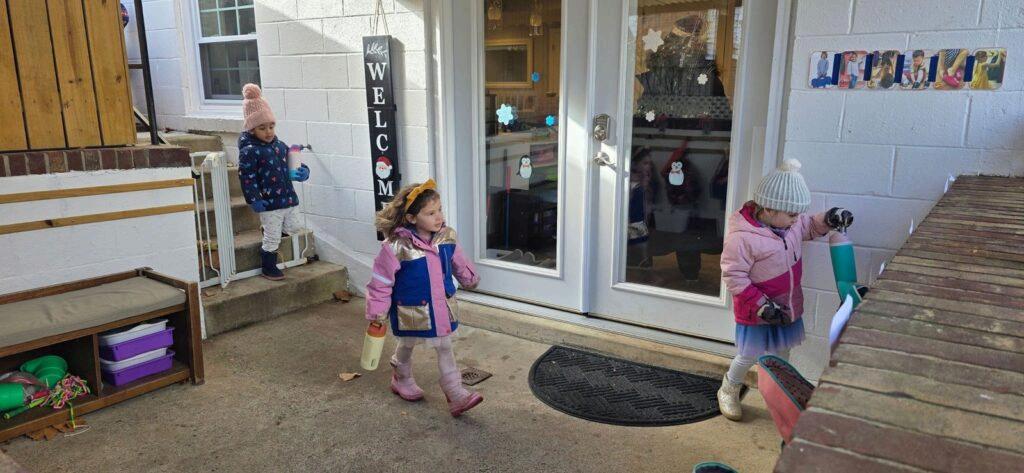
One of the most powerful aspects of Montessori education is its emphasis on practical life skills From an early age, children practice tasks like pouring, cleaning, buttoning, and preparing food. These activities build fine motor skills, concentration, and a genuine sense of accomplishment
When a child successfully completes a task independently, it sends a powerful message: "I am capable." This confidence carries forward into every area of learning and life
Fine Motor Development
Precise hand movements through everyday tasks build coordination and dexterity.
Self-Sufficiency
Children learn to care for themselves and their environment with pride.
Intrinsic Motivation
Success without external rewards builds lasting internal drive and curiosity
3x
Montessori children sustain attention up to three times longer than peers in traditional settings
92%
Of Montessori parents report high satisfaction with their child's social and emotional growth.
Conclusion: A Proven Path to Confident, Capable Learners
In conclusion, Montessori early childhood education offers a powerful foundation for shaping confident, independent, and capable learners By focusing on the whole child, this approach goes beyond academics to develop emotional intelligence, social skills, and practical abilities that last a lifetime.
What Montessori Gives Every Child Supported by Montesshare
A deep love of learning and natural curiosity
Confidence to explore and take initiative
Strong character and adaptability
Respect for self, others, and the environment
Skills to thrive in an ever-changing world

Platforms like Montesshare further support this journey by offering resources and guidance for parents and educators alike helping children thrive through the proven principles of Montessori learning
For parents seeking a meaningful and effective educational approach, Montessori provides a proven path to success nurturing curiosity, encouraging exploration, and building confidence from an early age.