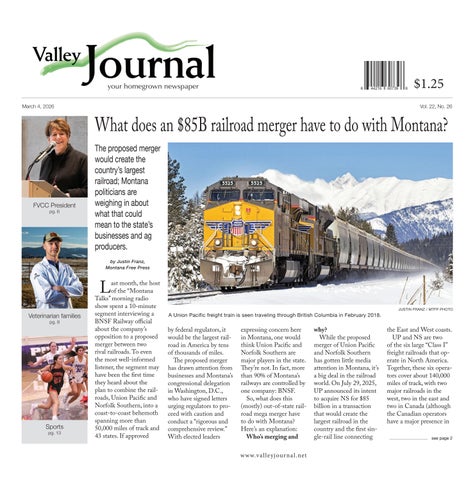
The proposed merger would create the country’s largest railroad; Montana politicians are weighing in about what that could mean to the state’s businesses and ag

Justin Franz, Montana Free Press
ast month, the host of the “Montana Talks” morning radio show spent a 10-minute segment interviewing a BNSF Railway official about the company’s opposition to a proposed merger between two rival railroads. To even the most well-informed listener, the segment may have been the first time they heard about the plan to combine the railroads, Union Pacific and Norfolk Southern, into a coast-to-coast behemoth spanning more than 50,000 miles of track and 43 states. If approved

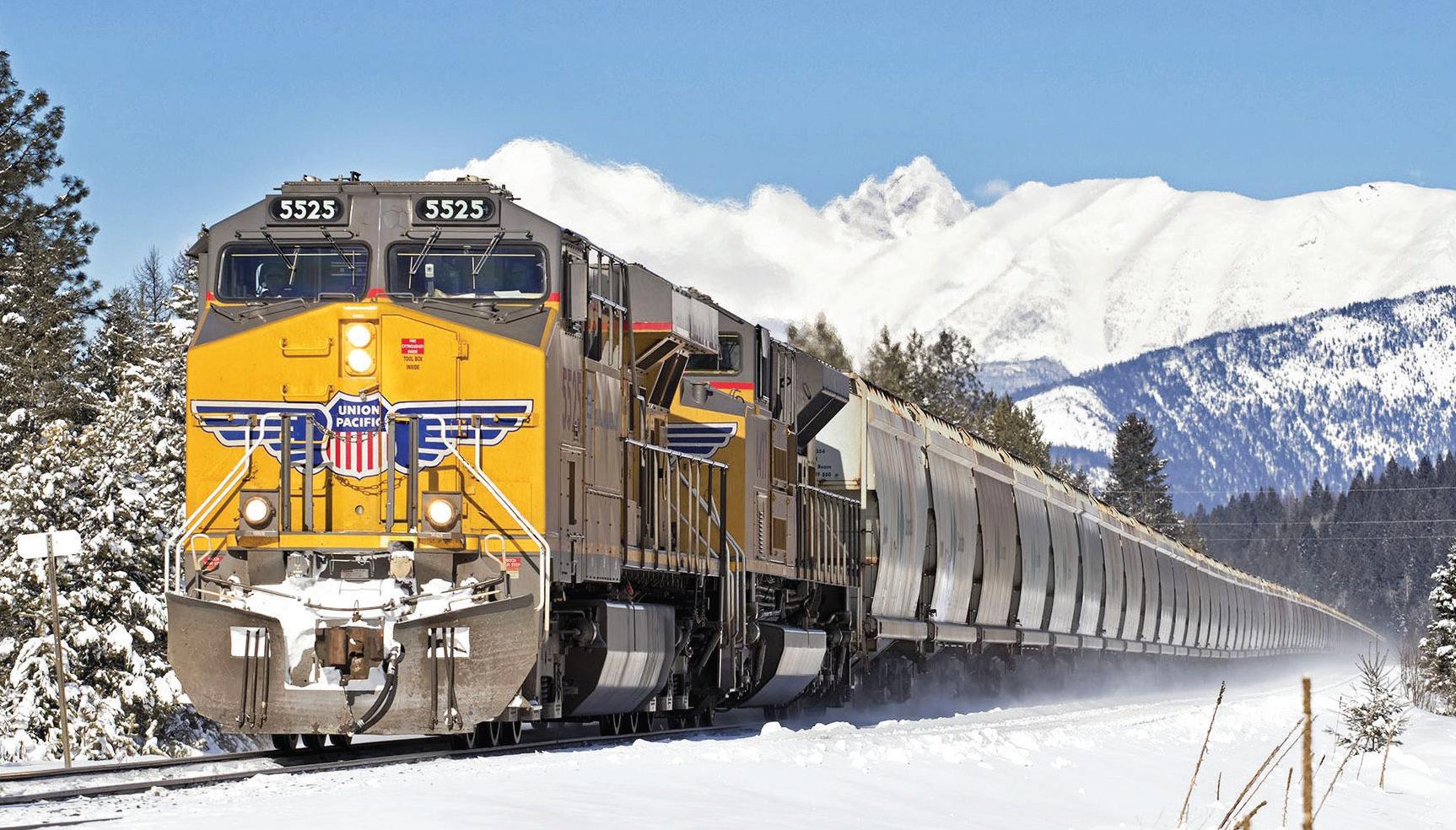
by federal regulators, it would be the largest railroad in America by tens of thousands of miles.
The proposed merger has drawn attention from businesses and Montana’s congressional delegation in Washington, D.C., who have signed letters urging regulators to proceed with caution and conduct a “rigorous and comprehensive review.” With elected leaders
expressing concern here in Montana, one would think Union Pacific and Norfolk Southern are major players in the state. They’re not. In fact, more than 90% of Montana’s railways are controlled by one company: BNSF.
So, what does this (mostly) out-of-state railroad mega merger have to do with Montana? Here’s an explanation: Who’s merging and
While the proposed merger of Union Pacific and Norfolk Southern has gotten little media attention in Montana, it’s a big deal in the railroad world. On July 29, 2025, UP announced its intent to acquire NS for $85 billion in a transaction that would create the largest railroad in the country and the first single-rail line connecting
the East and West coasts. UP and NS are two of the six large “Class I” freight railroads that operate in North America. Together, these six operators cover about 140,000 miles of track, with two major railroads in the west, two in the east and two in Canada (although the Canadian operators have a major presence in
from page 1
the Midwest). At one point, there were dozens of Class I railroads, but through consolidation, there are now only six.
Union Pacific was founded in 1862 and built the eastern half of the First Transcontinental Railroad, which was completed in 1869. Today, it operates 32,200 miles of track in 23 states, mostly west of Chicago. Last year, the company made more than $7 billion moving freight. Its primary competitor is BNSF. Norfolk Southern was founded in 1982 following the merger of the Norfolk & Western Railway and Southern Railway. It operates 19,420 miles in 22 states in the East. Its primary competitor is CSX Transportation.
UP President Jim Vena, who is expected to remain as the head of the railroad if his company acquires NS, has said the merger would benefit shippers, the environment and the nation by offering cheaper freight transportation and by taking an estimated 2 million trucks off America’s highways annually. Vena has said it is possible because a single-line railroad could offer better shipping rates, especially in the Midwest, where shippers often have to deal with multiple railroads, thereby increasing prices.
Where does Montana fit on the map?
The Utah & Northern
Railway Company, a subsidiary of Union Pacific, became the first railroad to reach Montana when it built its line over Monida Pass on the Idaho-Montana border south of Dillon in May 1880. The railroad eventually reached Butte and Garrison. But today, Union Pacific operates only as far as Butte, meaning it serves only 125 of the state’s 3,700 rail miles, or about 3%.
More than 90% of the rail mileage in the state, about 3,400 miles, is controlled by BNSF, according to the Association of American Railroads. Norfolk Southern has no track in Montana.
Who’s for it, who’s against it?
In December, UP and NS submitted their application to merge with the U.S. Surface Transportation Board, the independent federal regulator that oversees railroads, which will have the final say on whether the two railroads can combine. Since then, the two railroads and their competitors have aggressively rallied support for and against it. Leading the charge against the merger is BNSF.
BNSF has argued that the merger would be “anti-competitive,” and would give rail shippers — including Montana farmers — fewer options, thus increasing prices. For example, if a farmer near Great Falls ships grain to an East Coast community served by NS, the shipping charge could increase once NS is part
of UP. For its part, UP has denied that it would increase rates.
Opponents have also pointed to the chaos that ensued after previous mergers, particularly in the 1990s. Perhaps the most notorious was the 1996 Union Pacific-Southern Pacific merger, which led to a “service meltdown” as rail yards across the country were jammed with late trains, and the railroad lost billions of dollars in profits. The railroad mergers of the 1990s were so disruptive that the U.S. Surface Transportation Board imposed a temporary ban in 2000 and later issued new requirements for combining major railroads. A quarter century later, no major railroad has attempted to merge under the revised rules.
While UP is a comparatively small player in Montana, both it and BNSF have been lobbying stakeholders and elected officials here in favor of and against the merger. In December, both railroads reached out to state legislators with their take on the combination. Since then, a number of politicians — including all four members of the state’s Washington D.C. delegation and Montana Attorney General Austin Knudsen — have agreed with BNSF’s take and signed on to letters to federal officials, urging a rigorous review. Among their chief concerns is the impact it could have on pricing for agricultural producers, but the letters
also note potential major impacts on the shipping of consumer goods, construction materials, fuel, food and more.
“If approved, a combined UP-NS would handle more than 40% of all U.S. freight rail traffic… a transcontinental system spanning 50,000 route miles across 43 states,” read a joint letter from Sens. John Hoeven (R-N.D.) and Amy Klobuchar (D-Minn.), and co-signed by Sens. Steve Daines, Tim Sheehy and 14 others. “Service interruptions of this magnitude could have severe consequences, especially for agricultural producers. Time-sensitive shipments during harvest could be delayed or spoiled, export windows could be missed, and access to global markets could be sharply reduced.”
What’s next?
The first question for federal regulators to consider after UP and NS submitted their application in December was whether the agency had enough information to review it. In January, the board ruled it did not and rejected the initial application. The two railroads have said they will revise their applications to include the requested information and try again. If the STB does accept the application, the review is expected to take more than a year, ensuring that the issue of mega railroad mergers isn’t going away any time soon.
News from Polson Police Department
POLSON — The Polson Police Department is excited to announce the 2026 launch of its Citizens Police Academy, an immersive program built on the principles of P.A.R.T.N.E.R. - Polson Affirms Responsibility, Transparency, Neighborhood Engagement & Respect. The academy is designed to give community members a firsthand look at modern policing and how officers serve and protect the people of Polson.
Applications are available through the Polson Police Department or on the website at: https://www.cityofpolson.com/media/25551. Applications can also be downloaded at the Polson Police Foundation website at: https://www.polsonpolicefoundation.com/ events.
All applications are due no later than March 16 and should either be dropped off in person or emailed to Joan Hart at jhart@cityofpolson. com. For further details, please contact the Polson Police Department at 106 1st St E, or 406-883-8211. For the application go to: cityofpolsoon.com/media/25551.
News from Rhino Roofing LAKE COUNTY — Rhino Roofing believes in investing in the future of our communities. We are excited to award seven individual $1,000 scholarships to qualifying 2026 graduating high school seniors from Flathead, Lake, Missoula, or Ravalli Counties in Montana.
The 2026 Rhino Roofing $1000 Scholarship application deadline is noon on Monday, April 6, 2026. Qualifying applicants must be 2026 graduating seniors from Flathead, Lake, Missoula, or Ravalli Counties and have the following:
A minimum 3.0 GPA
Be accepted to a Trade School, College, or University that you’ll be attending Fall 2026
Write a 500-word essay telling us about yourself. Please include: Your goals and aspirations; the school or program you plan to attend; why you believe you should receive this scholarship.
For an application and specific instructions go to: rhinoroofingmt.com/scholarship-application-2026-western-montana



MLS# 30045767 $5,650,000 EMBRACE THE EXTRAORDINARY! Welcome to “Castle Rock”, a hidden gem nestled above spectacular Flathead Lake in breathtaking Bigfork, Montana.
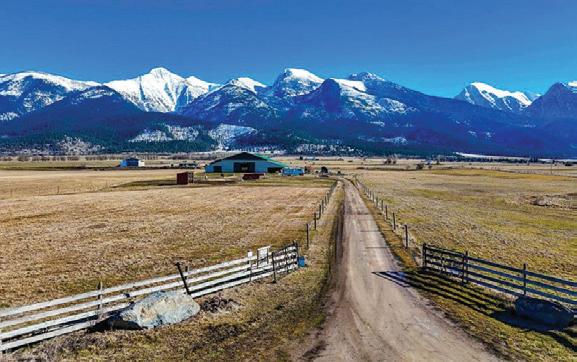
MLS# 30065331 $845,000 38.94 acre equestrian Montana dream property! Over 26,000 sq foot indoor barn, with 70 x 150 riding arena.


MLS# 30065611 $480,000 Nearly 5,000 SF Exceptional Value • Endless Flexibility. Originally built as a church and thoughtfully transformed into a private residence.

Thursday March 5










The Valley Journal newspaper (PE 23-190) is published weekly by Valley Journal LLC. Periodicals postage paid at Ronan, MT.
Business hours are 9 a.m. to 5 p.m., Monday through Friday.
Distribution is by mail subscription ($59 per year in Lake County, MT; $74 per year elsewhere in U.S.) and by newsstand sales. Postmaster: send address changes to Valley Journal, P.O. Box 326, Ronan, MT. 59864.
Your homegrown newspaper serves residents of Lake

County and the Flathead Indian Reservation.
Deadline for display advertising is 2 p.m. Thursday. Deadline for news submissions, calendar items, classifieds and legal advertising is noon Friday, for the following week’s newspaper.
News, letters to the editor and calendar submissions may be sent by email to: vjeditor@valleyjournal.net. Classified and legal advertisements requests should be emailed to: vjmail@valleyjournal.net.
All print subscriptions include full access to online news,
archives. Sign up online at: www.valleyjournal.net/ subscribe

For general inquiries: call 406-676-8989, email summer@valleyjournal.net, or send mail correspondence to P.O. Box 326, Ronan, MT 59864. Copyright 2026, the Valley Journal. All rights reserved. Reproduction, reuse or transmittal in any form or by any means is prohibited without written permission of the Valley Journal.
By Joyce Lobeck for the Valley Journal
-
TA
— Daniel Smith, a former Polson resident, was in the middle of the violence that erupted Feb. 22 in Puerto Vallarta, Mexico, after cartel leader Nemesio “El Mencho” Oseguera Cervantes was killed.
Smith grew up in Polson and later returned and co-directed the Heart & Soul project for the Greater Polson Community Foundation.
Now a resident of Puerto Vallarta, Smith shared that he was
trapped downtown in the resort city when the cartel reacted violently after the death of the cartel leader.
A video clip shows Smith running down a staircase as alarms rang out. “I experienced events I thought I would never experience,” Smith said.
“We’re evacuating the building, propane tanks have exploded. Hoping the building doesn’t catch on fire.”
His brother, Richard, uploaded more footage from Smith showing a bus in flames and other blazing vehicles blocking the roads of Puerto Vallarta.
“Please keep good thoughts for my brother, Daniel,” Richard said. “Puerto Vallarta is under siege. He is stuck downtown and all roads in and out are closed off. He can’t get home. Luckily there are some friends downtown where he can hang out. Although it’s been evacuated once already. The drug cartel is pissed off.”
Puerto Vallarta is a resort city on the Pacific coast in the Mexican state of Jalisco. Normally a tourism hotspot popular with U.S. visitors, Puerto
Vallarta may have been among the worst affected cities in Mexico by violence that swept across the country following the killing of the cartel leader.
Oseguera Cervantes was head of the Jalisco New Generation Cartel (CJNG), an organized crime group based in Jalisco. He was seriously injured on Feb. 22 during a Mexican military operation in Tapalpa, Jalisco, and died from his wounds en route to Mexico City.
The operation under Mexico President Claudia Sheinbaum and aid -

ed by U.S. intelligence, triggered widespread retaliatory violence across Mexico by the CJNG, including road blockades, vehicle fires and clashes that killed at least 25 National Guard members. “El Mencho” was the most wanted person in Mexico and one of the most wanted in the United States at the time of his death.
Mexican military reportedly has since restored security. However, tourists planning to visit the country in the near future are advised to check U.S. State Department travel advisories. Should they
go, security experts recommend exercising caution, staying alert, using trusted transport and staying aware of local news.
The situation has raised questions about whether the 2026 FIFA World Cup matches in Mexico scheduled to start June 11 would be cancelled. FIFA and Mexican officials have affirmed that the FIFA World Cup matches will proceed as scheduled in Mexico City, Monterrey and Guadalajara. But a separate event, the Diving World Cup in Jalisco, was cancelled.
E A R L Y D E T E C T I O N C A N S A V E L I V E S
March is National Colorectal Cancer Awareness Month. Colorectal cancer is the second leading cause of cancer deaths in the U.S., but when caught early it’s highly treatable. Talk with your doctor to see what screening options might be right for you!
A SK Y O U R D O C T O R I F Y O U ’ R E D U E!

KALISPELL — Flathead Valley Community College
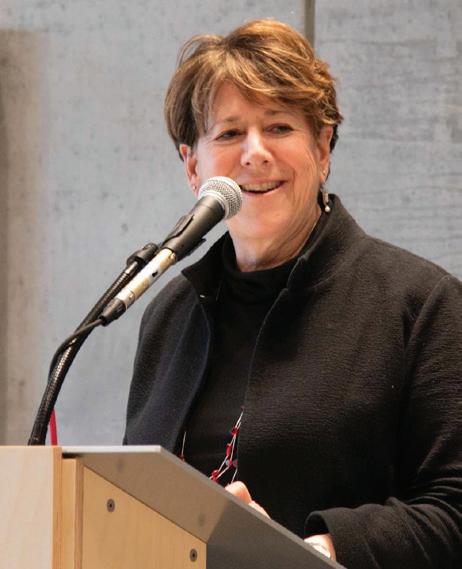
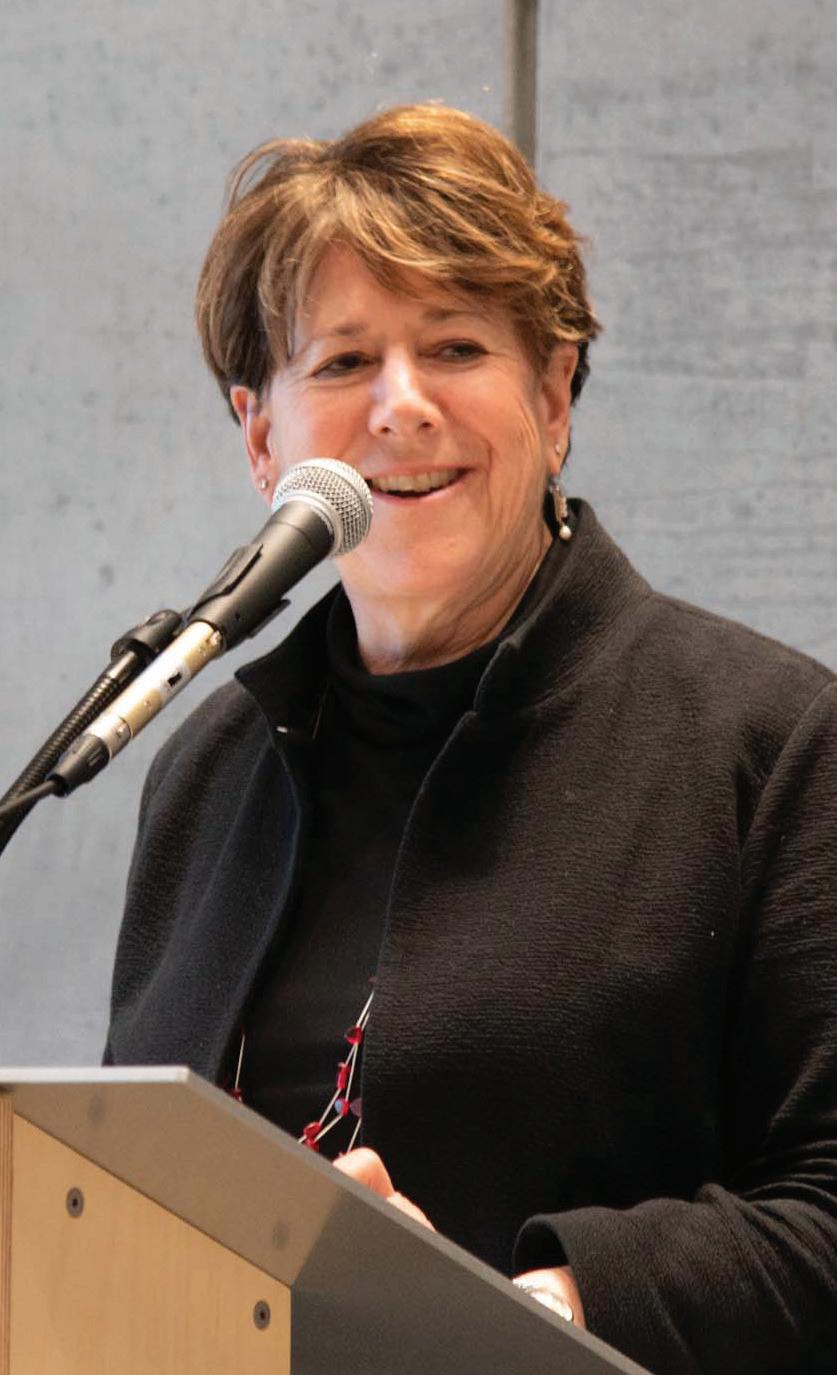
President Jane Karas announced her retirement, effective Dec. 31, 2026, during the Feb. 23 Board of Trustees meeting. The announcement marks the close of a distinguished 27-year career at the college, including 25 years as president, a tenure unmatched in Montana’s higher education landscape.
Throughout her presidency, Karas stewarded unprecedented growth, innovation and community partnership. Known for making thoughtful, often difficult decisions in the best interest of the institution and its students, her leadership was grounded in a deep understanding of the college’s mission and the needs of the communities FVCC serves.
Historic Growth and Expansion
Under Karas’ leadership, FVCC experienced transformative change. Campus facilities expanded from 4 buildings to 13, including the Trades Institute, the Arts and Technology Building, the Rebecca Cheney Broussard Center for Nursing and Allied Health, the Broussard Family Library, Founders Hall student housing, the Wachholz College Center and the Wachholz Innovation and Entrepreneurship Center. The college’s land footprint grew from 40 to more than 200 acres through strategic acquisitions. Academic offerings have grown to more than 114 degrees, certificates and licensures, reflecting the college’s ongoing commitment to meeting the
evolving needs of regional employers and industry partners. Innovation in Programs and Partnerships
During her presidency, FVCC introduced numerous workforce and academic programs, including culinary arts, electrical, firearms, CNC machining, plumbing, physical therapist assistant, radiologic technology and a broad range of health care programs.
Karas launched FVCC’s study abroad initiative and expanded online and distance learning opportunities. She also strengthened partnerships with K-12 schools and four-year universities, including early collaboration with Montana State University to bring the Bachelor of Science in Nursing to the Flathead Valley before FVCC had its own nursing programs. Dual enrollment through the Running Start program, which allows high school students to earn college credits while still in school, recently reached its highest participation on record.
“Her legacy is measured not just in buildings and programs, but in the countless lives she helped shape through her commitment to accessible, high-quality education.”
- FVCC Board of Trustees Chair Callie Langohr
Under Karas’ leadership, FVCC has worked deliberately to make higher education accessible and affordable for Northwest Montana students. Through the FVCC Foundation, nearly $107 million has been raised over the course of her tenure to support scholarships, innovation and facilities. Karas also oversaw the development of Founders Hall, FVCC’s student housing facility with space for 125 students in modern studio and two-bedroom apartments at affordable rates. On-campus housing is uncommon among community colleges, and Founders Hall reflects Karas’ innovative approach to removing barriers to student success, giving students a safe, affordable place to live while they pursue their education.
Karas’ service extended well beyond the college. She served on numerous local, state and national boards, including the Kalispell Chamber of Commerce, various hospital boards, Flathead Food Bank, Glacier Symphony and Chorale, Montana Equestrian Events, National Campus Compact and the American Association of Community Colleges, where she served as board chair in 2013-14.
Karas and FVCC earned significant recognition under her leadership, including the prestigious Bellwether Award, the Chamber Legacy Award, Montana Ambassadors Educator of the Year, the Marie Martin Community College CEO of the Year and the 2025 NCMPR District 7 Pacesetter of the Year.
Throughout her tenure, Karas remained dedicated to expanding support services, enhancing student success and ensuring the college remained responsive to shifting economic needs. Her commitment to lifelong learning is reflected across FVCC’s continuing education offerings, which serve community members at every stage of life. Programs such as Kids College, Senior Institute and customized workforce training ensure that FVCC’s reach extends well beyond traditional college-age students, connecting the broader community to affordable learning opportunities at any age.
Among the most visible results of her leadership is the Wachholz College Center, now a cultural cornerstone of Northwest Montana, featuring the Wanda Hollensteiner Art Gallery, Stinson Family Event Center, O’Shaughnessy
Amphitheater, Swank Recital Hall, Smith-Furlong Fitness Center and McClaren Hall, which has hosted international artists and performers including Yo-Yo Ma and Clint Black. The center was made possible through the “One College, One Community” campaign, which raised nearly $30 million from community donors to bring the vision to life.
“It has been an honor and privilege to serve FVCC as its president for the last 25 years,” Karas said. “The outstanding faculty, staff and visionary trustees at the college are the foundation of FVCC’s success and its role as an essential community resource. Working with our many community partners in education, business, industry and government has added to the fulfillment of serving our communities. The long-term needs of our students and community have guided every decision.”
The FVCC Board of Trustees expressed deep gratitude for her decades of service, noting that the college’s growth, stability and national reputation reflect her commitment and vision.
“Jane Karas has given 25 years of exceptional leadership to this college and this community,” said Board of Trustees Chair Callie Langohr. “Her legacy is measured not just in buildings and programs, but in the countless lives she has helped shape through her commitment to accessible, high-quality education.”
A national search for FVCC’s next president will begin soon.
News from CSKT Natural Resources Department
TION — The Confederated Salish and Kootenai Tribes (CSKT) remind all residents and visitors that the Flathead Reservation contains numerous historical and cultural sites that may still hold artifacts and culturally significant materials.
Our elders and cultural leaders have long instructed us to leave these items where they rest. Cultural materials are not souvenirs. They are part
of living landscapes and living histories. Removing them disrupts their meaning, context and integrity.
Some sites on the Reservation carry additional federal protections. Under the Archaeological Resources Protection Act of 1979 (ARPA) and other federal statutes, it is illegal to excavate, remove, damage, or otherwise alter archaeological resources located on Tribal or federal lands without proper authorization. Violations may result in significant civil and criminal penalties, including
fines and imprisonment.
Individuals may unknowingly violate federal law by picking up artifacts, removing objects found on the ground, or disturbing sites while recreating.
Because of the sensitive nature of these places, the Tribes do not publicly disclose site locations. In many cases, fencing or signage is intentionally avoided so as not to draw attention to areas that could become targets for looting or commercial exploitation.
The Tribes encourage re-
spectful recreation on the Reservation. Activities such as hiking, camping, fishing, wildlife viewing, may be enjoyable ways to spend time outdoors, but these activities must not involve the removal of cultural, archaeological, or historical materials.
If you encounter what appears to be an artifact or culturally significant item, do not disturb it, do not collect it, please leave it in place.
Preserving these sites protects Tribal heritage, federal law compliance, and the shared
history of this land for future generations.
The Confederated Salish and Kootenai Tribes appreciate the public’s cooperation in honoring these responsibilities. Respect the past, leave it in place. For more information regarding regulations on the Flathead Reservation, please contact the CSKT Tribal Preservation Department: Kevin Askan, Preservation Department Head 406-880-9591, or Travis Arlee, Preservation Compliance Manager 406675-2700 ext. 1263.
News from FMVF
POLSON – Fostering Mission Valley Families (FMVF), a dedicated organization supporting foster children and families in Lake County and the Flathead Reservation, is proud to announce that it has officially received its 501(c)(3) tax-exempt status from the Internal Revenue Service. This designation confirms the organization’s status as a nonprofit, allowing donors to make tax-deductible contributions to support foster parents and children in the Mission Valley.
Founded with the goal of easing the transition for children entering care and supporting foster parents to prevent burnout, FMVF has quickly become a vital resource in Polson. The organization provides “backpacks of
love” filled with essential items for emergency, middle-of-the-night placements, as well as providing funds for respite care and urgent needs like strollers and cribs.
“We are incredibly thrilled to achieve this milestone,” said Annette Schiele, Executive Director of Fostering Mission Valley Families. “Receiving our 501(c)(3) status allows us to expand our reach, partner with local businesses, and secure the funding necessary to ensure no foster child in our community goes without, and no foster parent feels they are doing this alone.”
Operating out of the Brazil Building in Polson, FMVF works closely with local partners to provide affordable, donated clothing and items to not only foster families, but any family in need.
The 501(c)(3) status will enable the organization to grow its “Respite Care Fund” and “Urgent Need Fund,” which are crucial for maintaining the stability of foster placements in the area.
Janus is a 6-year-old sweetheart and true gentleman with the softest soul. Loving, gentle, and full of charm, he’s ready to give all his heart to a lucky forever home.
The community is invited to support this mission by donating, volunteering, or visiting their Briar’s Baby Boutique & Kid Thrift location at 307 1st Street West, Suite 2, Polson.


About Fostering Mission Valley Families: Located in Polson, Montana, Fostering Mission Valley Families is a 501(c)(3) nonprofit dedicated to coming alongside foster families in Lake County and the Flathead Reservation. Through community support, they provide essential resources, clothing, and funds for respite care to foster children and parents.

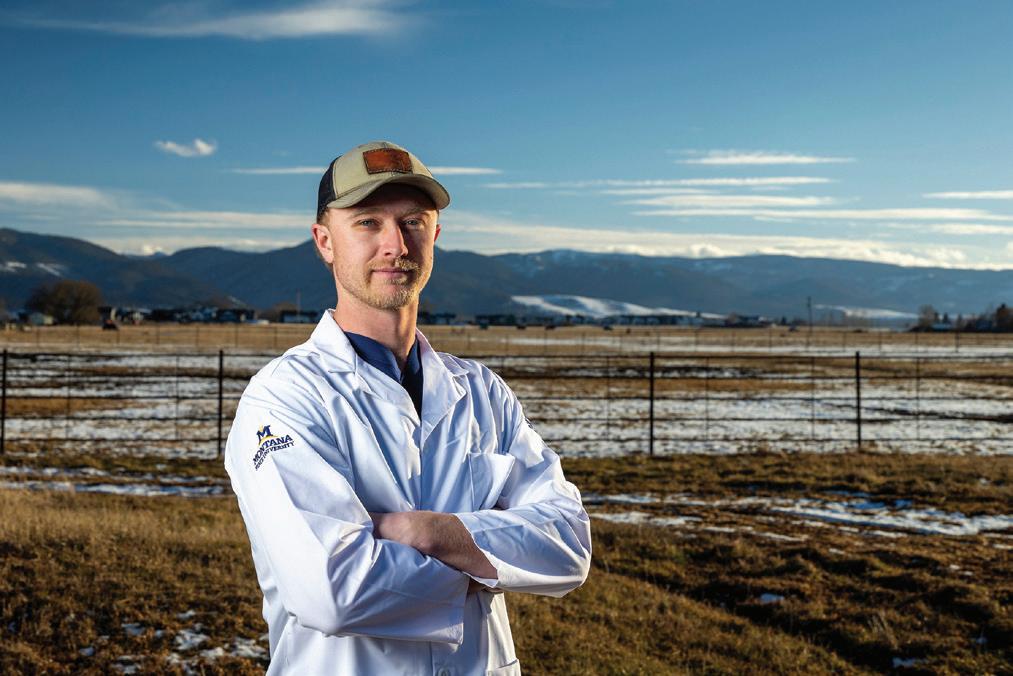
Four members of MSU’s current 16-person group of veterinary students are the children or grandchildren of practicing veterinarians.
By Reagan Cotton MSU News Service
BOZEMAN – Bob Syvrud practiced veterinary medicine in North Dakota and California and later in Polson beginning in the 1970s. He founded an independent research company and worked in equine health for 25 years, passing that family business down to his son, Kevin.
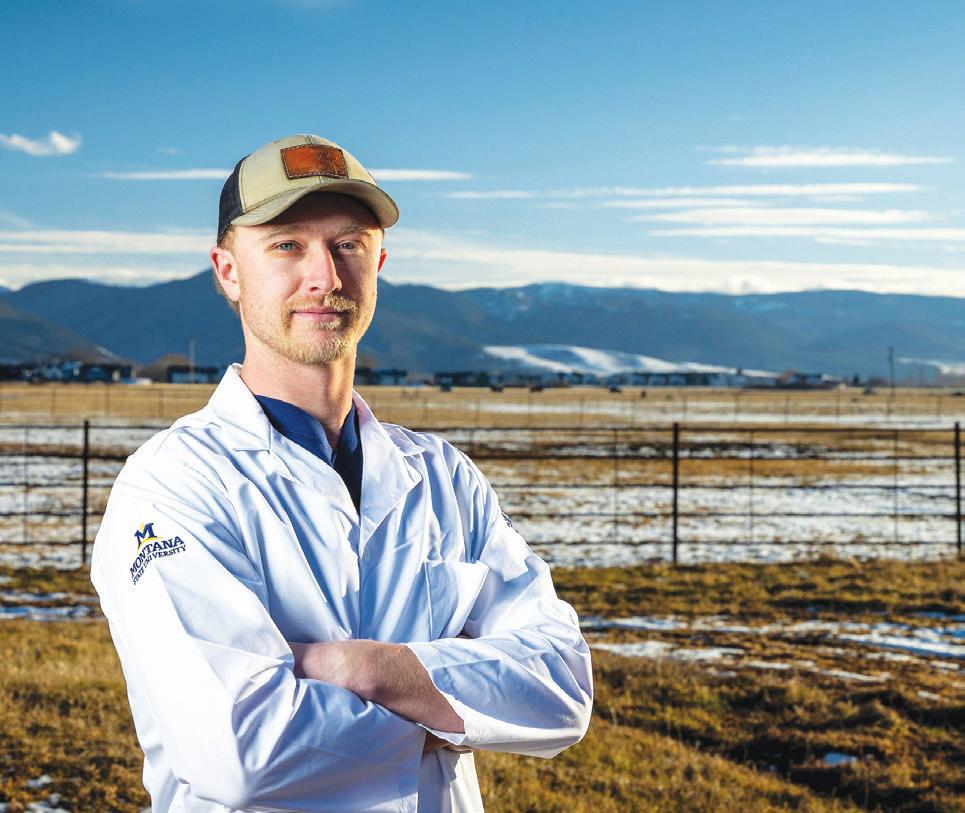
Now, at Montana State University, Bob’s grandson Jabin is carrying on his family legacy in veterinary medicine. He is one of four current students in the WA-MT Cooperative Program in Veterinary Medicine who plan to be second – or in Jabin’s case, third – generation veterinarians. For a program with an annual class of 16 students, it’s a significant proportion.
Jabin Syvrud grew up in Helena and graduated from MSU with a degree in cell biology and neuroscience in 2021. After working on a ranch near Polson after graduation, he realized the family business he’d been


around his whole life was becoming more appealing than his original goal of pursuing medical school. He returned to MSU, applying for the unique cooperative veterinary program in which Montana residents spend their first year at MSU before completing the final two years of their training at Washington State University in Pullman, followed by a fourth year of
clinical rotations. As part of the cooperative program, Montana students save money on tuition by completing their first year in their home state. Once they transition to Pullman, they pay the same tuition as WSU’s in-state residents.
“I absolutely adored the family I worked for, so it would be very fulfilling to be able to be a veterinarian and be around this
type of people, helping them continue their way of life,” Syvrud said of his decision to pursue his veterinary degree. “In Montana, people have so much more of a relationship with their vet in terms of the proximity that they work in.”
In a state with a documented and significant dearth of veterinarians, the program, housed at MSU in the College of
Now halfway through their year at MSU, Syvrud and his classmates are preparing for that transition. The firstyear curriculum at MSU and WSU is virtually identical, and as they progress toward their Doctor of Veterinary Medicine degrees, the students will transition from learning the science to practicing it in vet clinics and WSU’s teaching hospital.
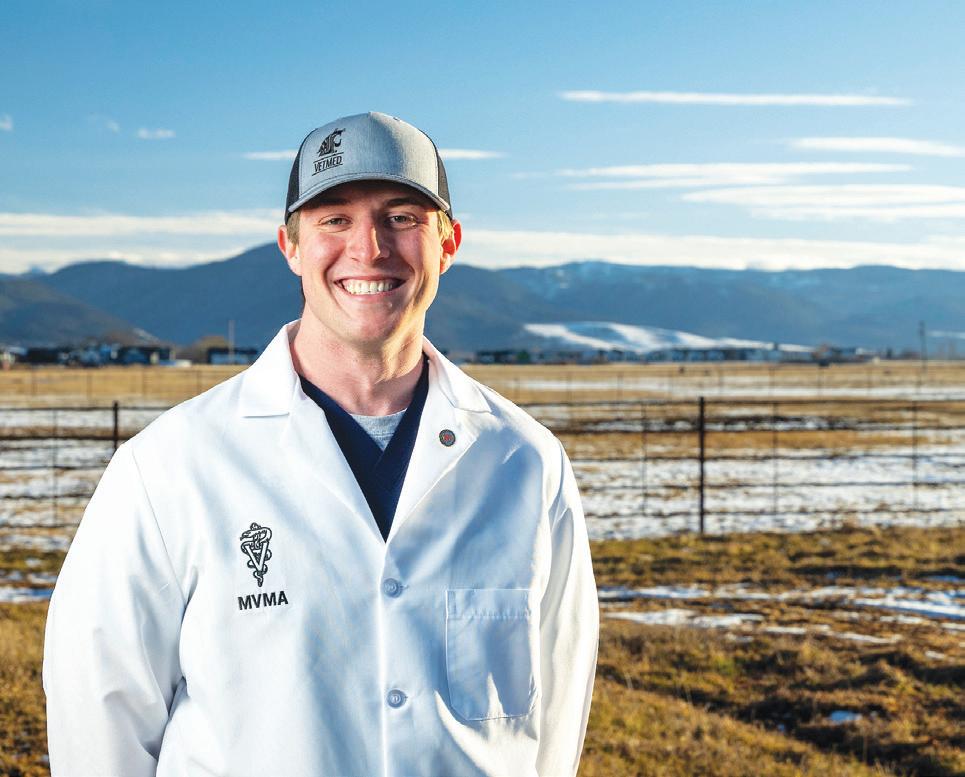
Drew Newman, who is originally from Great Falls, hopes to one day take over his own family’s practice, and said it’s been particularly fascinating to compare his own educational experience with that of his parents. One of his favorite courses has been Principles of Surgery – something current students are introduced to in their very first semester.
Agriculture, aims to fill a very real need for rural communities. Each year, 16 accepted students study anatomy, histology, immunology, nutrition and more with faculty who are themselves professional and practicing veterinarians. They then bring an established group relationship to Pullman, where they join a total class size of roughly 140.
“Talking to my parents, they didn’t talk about surgery until the third or fourth year,” Newman said. “We’re building up the little skills now, and then it will be in the back of our heads when we revisit it. It’s a more hands-on class, but it’s fun. It’s cool to think that you can get some of those more advanced principles, just in your first year.”
In first-year anatomy, for example, students perform dissections, overseen by faculty, familiarizing themselves with the
from page 8
wide range of animal bodies they will someday treat. Kala Bertolino, who grew up outside of Red Lodge and whose mother’s veterinary practice was based in their home, has shared Newman’s interest in comparing her own education with that of previous generations.
After receiving a degree in math from MSU in 2022, she took a few years off, working in a human hospital before returning to the field of veterinary medicine. She said that sharing her education with her mother has expanded their mother-daughter relationship to include a professional and collegial element.
“When I’m learning about these things, I
think back a lot of times about how she would do something. I have a profound sense of understanding that I’m not learning this just to pass a test. I’m learning this for the rest of my life,” she said. “Having a small cohort, we get to see a lot of important things at an up-close and hands-on level. It’s helpful to understand that the muscle memory I’m building now or the techniques I’m building now are forever.”
Students in the cooperative program do not have to have a degree in any particular field to apply; admission is based on completing scientific prerequisites, GPA and other academic factors. But Bertolino has found that her math studies fostered a way of thinking that has deeply impacted her approach to veterinary
medicine.
“I’m still very passionate about math. I love it, and I really see how a solid foundation in logic it helpful no matter what you’re doing,” she said. “I took a lot of math classes where it was like, ‘Here’s a problem you haven’t seen before. How can you think through it?’ So I think when I see a problem, like a certain disease or some biomarker, I’m trying to think through the logic. How did we get here? How do I solve this?”
Maria Becker is not only the daughter of two veterinarians but also has three brothers who all graduated from MSU, one of whom now works as a wildlife veterinary technician. Originally from Shelby, she said she values the opportunity to gain a high-quality and
experiential education close to home, and she hopes to transition into emergency veterinary medicine after she graduates. But her own family experience has exposed her to the true breadth of possibility in the field.
“My mom is a small animal general practitioner, while my dad works for USDA-APHIS as a regulatory vet,” she said. “He has a very niche job of where he gets to see an array of animals crossing the border from Canada into the U.S., such as cattle, horses, pigs, elk, and occasionally various zoo animals. The ability to immediately practice veterinary medicine, either in Montana or elsewhere, is the exact goal of the cooperative program, said Garret Ryerson, a teaching professor and the assis-
tant director for MSU’s Montana Veterinary Medicine program. And being able to start out in a small group allows for a more tailored experience so that each student gets the hands-on practice they need to gain a full understanding of critical concepts.
“Our students come from a wide variety of backgrounds, including those with lifelong ties to veterinary medicine and others who discovered the profession more recently,” said Ryerson. “Over the past 12 years, we have been proud to see our graduates now serving in critical roles as associate veterinarians, practice owners, state veterinarians, boarded specialists and leaders in their communities. We know this next generation of students will make mean-
By Mitch Staley, Montana Department of Commerce
HELENA — The Montana Department of Commerce announced today that the Montana Main Street Program, part of Commerce’s Community MT Division, released its first annual report. The report, which can be downloaded on Commerce’s website, showcases communities that are actively involved in preserving and restoring downtown economies and historic districts.
Commerce Director Marta Bertoglio said, “This report highlights the positive impact of the Montana Main Street Program on local economies
all over our state. As the report shows, the MMS Program benefits its member communities in specific and measurable ways. Commerce is excited to continue working with our Main Street communities in 2026.”
Funded by the bed tax and created by the Montana Legislature, the MMS Program recently marked its 20th year and comprises 38 member communities across Montana. As a Main Street America coordinating program, MMS is part of a grassroots network committed to promoting local main streets, creating high-quality spaces and building stronger communities through preser-
vation-based economic development.
The 2025 MMS Annual Report covers people, places and events on main streets from Thompson Falls to Ekalaka. The report showcases the benefits of becoming an MMS community as MMS staff deliver consistent, high-quality services to local programs. Program staff traveled nearly 10,000 miles in 2025, meeting with community partners, offering trainings and performing site visits.
Fourteen member communities, listed in the report, completed projects in 2025 with MMS grants totaling nearly $800,000. With data from
ingful contributions to human and animal health, and we look forward to seeing the impact they will have across the state and wherever their careers take them.”
The tight-knit relationships at MSU reflect the importance of veterinarians in their communities across Montana, a key element of why returning home to practice in Montana is a priority for many of the program’s aspiring vets.
“I am pursuing a career in veterinary medicine because not only is it a blend of all my interests, but also provides the opportunity to live a fulfilling life,” said Becker. “ I look forward to returning to rural Montana and practicing the veterinary skills that I am learning now.”
member communities’ quarterly reports, MMS staff shared the following downtown revitalization numbers:
• 1,128 full-time and parttime jobs created
• 324 businesses created
• 98 rehabilitation projects completed
• 90 public improvement projects completed
• 51 new construction projects completed
• $32,751,690 in public investment
• $28,084,817 in private investment
• 6,573 events held
• 92,462 volunteer hours contributed Communities selected
to participate in the MMS network are eligible for program-specific training and topical workshops. In 2024, MMS initiated “60 Minutes with Main Street,” a monthly virtual networking opportunity where members can learn, share and provide updates. MMS communities are eligible to apply for program grants and have access to a resource library that includes document samples and recorded webinars, and MMS staff can guide communities through the steps needed to become nationally recognized by Main Street America.
To learn more about the MMS Program, visit: commerce.mt.gov.
Congress shall make no law respecting an establishment of religion or prohibiting the free exercise thereof; or abridging the freedom of speech, or of the press; or the right of the people peaceably to assemble, and to petition the Government for a redress of grievances.
I’m not sure how everything became so political. Maybe it’s my age. Maybe it’s always been this way and I never noticed before.
Maybe the world is changing. Maybe we really are that divided. I don’t think so. I’m not convinced.
We are more alike than we think - or like to admit. And that, my friends, is very good news.
Jill Pertler Syndicated columnist
We can agree. We do agree. Imagine that! And I will propose to purport we have more things common than we do differences.
If we assess this world - our lives - as a whole, I think politics takes up a rather small slice. The rest - it’s just gravy. Good gravy. Tasty gravy. And guess what? I set out to write a column about this gravy. To focus on all the things we can agree on (versus disagree on.)
But wouldn’t you know it – one column grew into two. We agree on more than I originally thought. And we probably (no, we do) agree on even more than these words and topics I’m touching on.
Let’s start with the obvious: pets. We love our pets. Some of us can’t imagine life without them, but what type of pet?
We can agree to love dogs or cats or maybe even both. They bring joy to our lives. They love without question - well, at least the dogs do. A cat’s love is pretty conditional, but we can agree to love them anyway.
We can agree that the minority among us might love hamsters or turtles or even goldfish, but we
can still sit at dinner and have a nice conversation with them anyway, because learning about hamsters (or turtles or goldfish) might just be an okay thing, and even if it isn’t, knowledge about another person’s perspective can be enlightening. We can agree to love gardening or sculpture or woodworking - or making something creative with our hands. Even those who don’t enjoy the making often enjoy the end product because creativity is an inherent joy of life.
We can agree to love ice cream. We may not agree on our favorite flavor, but we don’t have to let that get in the way of the fun of things. Whether you are a vanilla, chocolate, bubble gum or praline pecan kind of person, ice cream is a universal connector. It brings people together.
(Unless you are lactose intolerant, but even then you can enjoy a frozen coconut milk concoction.)
We can agree to love nature. The smell of lilac bushes in the spring. The bronzing of the leaves in the fall. A rainbow after a summer’s rain. Watching the sunset on a beach. The crunch of your boots after a fresh snowfall. You may not enjoy the cold of winter as much as your second cousin, who darts through the nearby woods in his snowshoes, but you can allow him his folly without judgement from the comfort of your backyard hot tub, while snuggly and smugly thinking, “To each their own.”
And therein lies my point: to each their own. We can agree on many things, but we don’t have to agree on them all. Disagreeing doesn’t make
another person evil or crazy or even less worthy of a seat at the next family birthday party. We are created to be different and unique; that is a huge part of the beauty and intrigue of it all.
Somehow in this frenzied 24/7 newsfeed world we seem to have forgotten that fact. That makes me sad. I believe we are here to build bridges, not tear them down. I believe we are here to support one another, even when we disagree. This interconnectedness is the prize.
In some ways we’ve lost sight of that.
But we can get it back. I believe that to my core, no matter what flavor of ice cream you prefer.
(Meet you back here next week for part two of this series.)
Jill Pertler is an award-winning syndicated columnist, published play-
wright and author. Don’t miss a slice; follow the Slices of Life page on Facebook.
Letters to the editor are welcome. The content is the opinion of the letter writer and not the newspaper. The decision to publish letters is made by the editor. Letters must be 350 words or less. A writer will only be published twice per month. Letters may be edited for content or length, or may not be published if considered libelous, in poor taste, spiteful, self-promotional or of limited interest to the general readership. Space limitations also dictate when or if letters are published.
Impeachment: the hour is upon us
Senator Daines: as if citizens needed further proof of our
commander in chief’s being unhinged, he’s now, more-or-less out of the blue, gone on the war path with Iran. As a member of the Congress, you couldn’t help but notice that he did not both-
er asking his Constitutionally mandated question of you, first, right? Right. And as most of us have wondered, well, just what is he trying to distract us from? Could it be the … Uh … the
Epstein files? Are things getting just a little too heated for the President’s comfort level? Oops! Must be time to make more
see page 11
Letters must be signed by the author and name, address and phone number must be included – phone number is for verification purposes only. Letters from organizations must include the name of at least one author. Please limit “thank you” letters to four people/organizations or less. Deadline is 5 p.m. Friday to publish the following week.
Opinions expressed in this section are not necessarily those of the newspaper.
It has been the privilege of a lifetime to serve Lake County in the legislature for the past six years. Lake County is my home: I was born and raised in Polson, just like my mother and father. My great grandfather, Joseph Cline, came here in 1909 and built the town’s first flour mill in 1912. He helped to expand the electrical grid for Polson. My grandfather, John Cline, owned and operated Ford Motors for Polson. My father’s parents Gjert and Hilda Reksten homesteaded in Irvin Flats. Lake County runs deep in my family blood line.
letters
I’ve been able to accomplish much on behalf of Lake County and my constituents over the three terms I’ve served in the legislature, including lowering property taxes for over 80% of Montanans. But I have more to do, which is why I’m running for re-election to House District 13 to serve my final term in the Montana House of Representatives. For the last six years, I have consistently fought for a fiscally conservative, responsible budget that lowers taxes for Lake County citizens. Last session, I was proud to vote
for a balanced budget that grew by less than 1%, far below inflation. We did this while also lowering property taxes and income taxes for a majority of Montanans. Montana’s budget is one of the most fiscally conservative and responsible budgets in the nation, and I will continue to support policies that put more money back into the hands of taxpayers while preventing out-of-control government spending.
I’ve also been honored to serve as Chair of the House Education Commission where I’ve been a consistent champion for quality public education focused on improving outcomes for students
while also giving families more choice and protecting taxpayer dollars. In my last session, I will prioritize expanding vocational training programs in our schools so all students have the chance to find a good-paying job right here at home after graduation.
I’m proud of these accomplishments and excited to continue to fight for Lake County in Helena. I have the experience to advocate on behalf of our community, and you can trust me to deliver on my promises. That’s why my campaign slogan has been “Promises Made, Promises Kept for a Better Lake County.” This will continue to guide my votes in the legis -
lature.
Ultimately, I am committed to always putting my constituents first, not party bosses or out-of-state special interests. I’ve been honored to earn your vote for the last three elections, and I’m going to work over the next three months to earn it again. I strive to be an honest, trusted voice for our community. My door is always open to any constituent who needs an advocate in state government. Please never hesitate to reach out.
I will continue to stand on conservative principles and always put Lake County first. It would be an honor to earn your vote on June 2.
from page 10
headlines!
What will it be next time? Republic be damned!
Well Senator, I know that you may consider
me an extremist, but I’m not for drawing Americans into foreign wars. And to be honest, I’m not for a lot of what Mr. Trump has done (turning back environmental regulations, for instance.)
But there is a perfectly
rational and legal and Constitutional way to deal with a President who is out of control, and you know what it is: it’s Impeachment. Now is the time, Senator Daines. Now is the hour.
Eugene Beckes St. Ignatius


Attention lenders: Consider having your title work done by friendly professionals at a locally owned and operated title company that has stood the test of time! We offer complete, reliable title services in our conveniently located office in downtown Polson.
We appreciate the opportunity to serve you and your clients!
249 years and counting
Editor,
It haunts me. Almost two years ago I read a letter to the editor citing that historically democracies have not lasted more than 250 years. The letter has come back to stress me more and more over the past year. The United States is approaching the 250 year mark. This July 4th we will celebrate with friends, fireworks and parades the 250 years since the signing of the Declaration of Independence. But do we still have a democracy, or has the lifespan of our democracy concluded?
Our president feeds the Constitution through the paper shredder. For example: 1) The Constitution assigns Congress, not the president, the power to declare war or attack other na-
tions. Presidents may not do so without approval by Congress. But that didn’t happen in Venezuela or Iran; President Trump bypassed Congress altogether. 2) What leader of a democracy announces that he wants to buy other nations as Trump says of Greenland? 3) Despite prohibitions in the Constitution, President Trump and his family have amassed $4 billion dollars in personal gain in one year using the power of his office. Gifts and money come his way to sway his decisions.
None of these conditions are traits of a democracy.
I hope when we mark our 250th year mark this July we as a nation will devote ourselves to fortifying our democracy to keep it healthy. Otherwise, what? We shrug and say, oh well, our democracy at least had a good run?
Stephanie Brancati Big Arm
Why SNAP matters - a former recipient’s perspective
Editor,
SNAP was my safety net when life quickly took a turn. I spent 7 years in animal welfare, a full-time job that I loved. It was through helping homeless animals that I learned how important welfare was for humans who’ve also fallen on hard times. My income was enough to scrape by with, though I was always wary of impending emergencies. Eventually, I left the shelter with intentions of moving out of the state. But plans changed and I stayed in Missoula… without a job.
During this period, I was on SNAP. It allowed me to keep
a roof over my head and food on the table as I figured out my next steps. One might argue that I didn’t “need” SNAP during those few months. But I offer this perspective - Why must anyone suffer simply to live? Why would we deny anyone the chance to not only live, but to thrive? My animal sheltering work was about more than just keeping a dog or cat alive until they found a home. We cared about their mental wellbeing, provided them with blankets and toys, and asked volunteers to give them love. We want their inherently difficult journeys to be as easy, and as joyous, as possible. I wish the same for the humans around me, and SNAP was integral towards my own pursuit of happiness. Because of SNAP, I was able to build my website, get the proper licenses, and live with
dignity as I set up my next income stream. I believe my efforts mimic those of many SNAP recipients, not lazy individuals who wait on handouts, but hard workers who choose careers that put passion over income. The very purpose of social safety nets like SNAP is to give people like me an opportunity to climb back up and continue contributing towards our community.
It has not been an easy journey, but it has been a worthy one. At a critical juncture, SNAP fed my body so I could nourish my soul. I pass my blessings forward by sharing my story and doing my part to make SNAP accessible for anyone who needs it.
Tiff S. Former SNAP Recipient (Letter shared via Montana Foodbank Network)
News from the office of Governor Gianforte
HELENA — Governor Greg Gianforte and Montana Department of Revenue (DOR) Director Brendan Beatty recently announced an extension for property owners to apply for the Homestead and Long-Term Rental Reduced Property Tax Rates. The new deadline is March 20, 2026.
This extension is a direct response to intermittent technical issues with the department’s online application portal caused by a high volume of last-minute filings.
“Our top priority is
delivering permanent and meaningful property tax relief to the hardworking Montanans who call this state home,” Gov. Gianforte said. “State government should be customer-friendly and responsive. Because of the overwhelming number of Montanans utilizing the portal to claim the lower tax rates, we are extending the deadline to ensure that no one is penalized by a technical glitch. I appreciate the work of Montana Department of Revenue staff in assisting Montanans who are claiming the lower rates.”
With the new deadline,
all electronic applications must be submitted at: homestead.mt.gov by midnight on March 20, 2026. Physical applications sent by mail must be postmarked on or before that same day.
“Our priority is to ensure that no Montanan is penalized due to technical difficulties with our filing systems given the magnitude of last-minute applications,” said DOR Director Beatty. “We believe this has created extenuating circumstances that allow us to waive the application deadline until March 20. This extension provides homeowners
and property managers an additional three weeks to ensure their information is submitted accurately.”
Applications are also being accepted for properties that qualify for the LongTerm Rental Reduced Rate. To qualify, properties must be rented to tenants as their residence for periods of 28 days or longer for at least seven months of the year. Applicants will need to provide the property’s physical address, geocode, owner information, and details on rental income and expenses.
The easiest and quickest way to claim the lower rates is online at: home-
stead.mt.gov.
In November, Gov. Gianforte announced that nearly 80% of homes will see a tax cut from the reforms, with about 10% seeing property taxes remain flat. The average savings for homeowners who saw a tax cut was more than $500, not including the up to $400 property tax rebate available to eligible homeowners.
Last year, more than 235,000 Montana homeowners claimed and received a property tax rebate. Montana homeowners who claimed and received a property tax rebate in 2025 may be au-
tomatically enrolled in the Homestead Rate for 2026, provided the homeowner did not move or change ownership in 2025.
Montanans can verify enrollment or apply for the Homestead Reduced Rate and Long-Term Rental Reduced Rate by visiting: homestead. mt.gov.
Taxpayers experiencing continued technical issues or seeking assistance with their application are encouraged to contact the Department of Revenue’s help line at (406) 4446900 or visit their local county property assessment office.



Polson Lady Pirate Rylee TaylorJefferson puts up a twopointer during a


Polson Girls
The Lady Pirates fell to the Whitefish Lady Bulldogs, 31-68, on Feb. 24. Ravea Tenas and Olivia Cottet led their team in the loss with 7 points apiece. On Feb. 26 the Lady Pirates defeated the Ronan Maidens 4529. Oliva Ramirez was high scorer for the game with 15 points followed by Hinkley Moss who contributed 12. The Lady Pirates were bested by the Browning Lady Indians 68-49 on Saturday, Feb. 28.
Arlee
By Arlee Senior Citizens’ Board for the Valley Journal
ARLEE — Welcome to March 2026. The Winter Olympics have finished with USA winning many medals! Seeing snow in Italy brought memories of snow in Jocko Valley. What an easy month of February 2026 with just a sprinkling of snow and rain to whet our appetite. Thank heavens for snow on the Mission Mountains. We got a quick example of winter with icy roads, accidents of semis sliding down the Bison Hill and people finally slowing down. Now we can look forward to rain to fill our reservoirs and soak the ground to bring up the beautiful green grass. March sometimes brings back the snowbirds, but it is hopefully also a sign that a time of good health for our seniors and Jocko Valley residents has arrived. February’s flu bug wasn’t the best and it hasn’t been frozen enough to cut out the cold germs. The mild weather has brought out the birds: sparrows, flickers, pigeons, pileated woodpe3ckers, nuthatches and more. It is a joy to see and hear these joyful birds. March also brings out the new calves and baby goats in the Valley. It marks the end of high school winter sport and the start of running sports.
As I drive to-and-fro on Highway 93, I wonder who the next good volunteer will be to pick up the trash that has accumulated all winter; paper, cans, cardboard all sticking up on the highways and byways, detracting from our beautiful scenery. After doing highway cleanup for seven years with my neighbors and the youth groups, few people have continued this duty. Any volunteers?
We are now entering the tax season and Missoula and Polson have places to assist the seniors completing this annual chore. Call your senior centers, Area VI Agency on Aging, or AARP for information.
We have rented the building several times to Jocko Valley friends for their family get togethers; and the Arlee/Jocko Fire Department will enjoy their meal this month at the Arlee Senior Center. We are always happy to share our building with you. If you need a place for a big birthday party, graduation gathering or celebration of life, etc. Give us a call at 406-7263213 for more information.
If you are interested once again in an AARP Driving Class, call us so we can schedule a date, or give you information to complete online yourself. Our senior meetings are held on the second Tuesdays of the month, always and the public is
welcome. We would love to host bingo, pool or card games, or easy exercises, if you are interested. Call 406-726-3213 and state your wishes so we can accommodate you.
Your Arlee Senior Citizens, Inc. Board: President Cherie Garcelon, Vice-president Betty Shoemaker, Secretary/ Treasurer Anne Steward, Judy Miller, Patty Tiensvold, Jerry Garcelon, Lillie Willison, Delores Arrowsmith, Ann Younger, Marie Gillette and Gladys Brown.
Menu:
— Wednesday, March 4: loaded baked potatoes, toppings, fruit, dessert
— Monday, March 9: meatloaf, baked potato, veggies, fruit, dessert
— Wednesday, March 11: brats with sauerkraut, onions, peppers, fruit, dessert
— Saturday, March 14: pork chops, potatoes, gravy, veggies, roll, fruit, dessert
— Monday, March 16: corned beef, cabbage, carrots, potatoes, Irish bread, fruit dessert
— Wednesday, March 18: hot pork sandwich, bean salad, fruit, dessert — Monday, March 23: breakfast for lunch, fruit, dessert
— Wednesday, March 25: chef salad, soup, fruit, dessert
— Saturday, March 28: baked chicken, potatoes, gravy, veggies, roll, fruit, dessert
— Monday, March 30:
Fettuccini Alfredo with chicken, salad, fruit, dessert
Call 406-726-3213, the day of the meal by 9:30 a.m. and include your name, phone number and the number of meals you wish and if you will dine in or take out. Lunches are $5 and Saturday suppers are $6.
Thank you for your generous tips for the cooks.
By Pete Mangels for the Valley Journal
POLSON — Daylight Savings Time begins Sunday, March 9, at 2 a.m. Set your time pieces ahead one hour on Saturday night before bed. Go to bed an hour early to help “time-lag syndrome.” It could take a week or so to get used to the change.
Olympic fever has subsided. Up next: March Madness basketball tournaments. Do yourself a favor and get out and walk for a while. Know your limits. Come to our “easy/peasy” exercise class or start one of your own. Limited rides are available for seniors with 24 hr. notice ($8 round trip). We only have one driver. Priority given to health appointments. We try to be dependable but cannot guarantee short notice rides and times; plan ahead.
Area 6 Council on Aging and CSKT transit
also provides rides (cost varies). Call the center for phone numbers.
We need volunteer route driver(s) for meal deliveries (Wednesdays and Thursdays) starting April 1. We will train you for the route. You must use your own vehicle. About 14 meals delivered between 11 a.m. to noon.
Get help with your taxes from the AARP Tax Assistance Program March thru April 15 on Mondays and Thursdays from 10 a.m. to 3:30 p.m. You must register for an appointment and fill out an information packet. There is no charge, but donations to the Polson Senior Center are welcome. Support AARP. They provide computers, fax machines for electronic filing, and a well-trained and experienced staff of licensed tax preparation volunteers to assist you.
Activities:
— KIWANIS Club of Polson: The third Thursday of each month through June at noon. All are welcome.
— Cribbage (the most popular 2-player card game ever) is starting in March. We welcome all skill levels. - Wednesdays, Round Robin format, perhaps - Leave a good phone number.
— Bingo: Regular bingo every Friday at 6 p.m. First Wednesday of each month is Card Bingo at 6:30 p.m.
— Pinochle: Thursdays at 12:30 p.m. (pass 4). Mondays 12:30 p.m. (no pass).
— Pool: Open table from 8 a.m.-3 p.m.
— Toenail clinic: in March - sign up to reserve a time - $30
— Spinning Wheelers: second and fourth Tuesdays of each month. 11 a.m.- p.m. - 208-5201013
— VSO (Veterans Service Officer): first Friday and third Tuesday of each month – 10 a.m.-noonWalks-in welcome.
— Bridge and Mahjong: groups meet regularly at the center.
— Bowling fun-league: Tuesdays at 1 p.m. at the Sportspage Bowl Exercise class: (sitting, standing, low impact and video assisted) M-W-F 10:30-11:30 a.m. - No Fees.
Menu (subject to substitutions): lunch $5 donation - served from 11:45 a.m.-12:30 p.m. Monday-Friday - Milk is available with all meals.
— Wednesday, March 4: baked chicken, potatoes, gravy, honey carrots, pears with cottage cheese, brownie
— Thursday, March 5: French dip, tots, salad, mandarin oranges, key lime bars
— March 5: French dip, tots, salad, mandarin oranges, key lime bars
— Friday, March6: sausage links with gravy,
from page 14
biscuits, peas, green salad, apple crisp — Monday, March
9: pot-Luck soup, muffin, creamy peaches, cookie — Tuesday, March
10: pork loin, mashed spuds, gravy, mixed vegetables, 5-bean salad, lemon bars, pears — Wednesday, March 11: meatloaf, baked potato, green beans, green salad, pineapple cake — Thursday, March 12: chicken strips, tater tots, corn, pasta salad, apricots, chocolate pudding — Friday, March
13: Ceasar salad, roll, stir-fry veggies, apple sauce, cherry cheesecake
Our Polson Senior Citizens COMMUNITY Center provides space for individuals and groups to meet for physical and mental health, social and educational purposes. Our center is available for reserved special events on weekends and evenings.
We are open 8 a.m.–3 p.m. on weekdays, or later by appointment. Contact us at 406-883-4735; 504 3rd Ave. E; email: polsonseniorcenter@ gmail.com ; visit us on Facebook!
News from CSKT Natural Resources
— Lake trout anglers, it is time again! The 2026 Spring Mack Days Fishing Event on Flathead Lake will begin Thursday March 12th and will end on Saturday May 9th. Nine weeks of lake trout angling on one of the most beautiful spots in Montana, what could be better? Mack Days are sponsored by the Confederated Salish and Kootenai Tribes and are used as a fish conservation tool to reduce the non-native lake trout and increase the native bull trout and westslope cutthroat trout which are an important piece of the Flathead Lake system. Lake trout were introduced into the lake in 1905 and the increased populations of this predatory fish has put the native bull trout and westslope cutthroat populations at risk. Lake trout numbers increased in the 1980s when they discovered the mysis shrimp were a great food source and their population exploded. Numbers of the native fish dramatically declined lower than they had been for thousands of years. Now it is important to restore a better balance to the fish populations in Flathead Lake for the future of Montana’s native fish by reducing the number of non-native lake trout.

Lake trout anglers can fish Monday-Sunday with every lake trout entry giving them a chance in the lottery drawings that begin at $600 and go up to $2,000. Fish all of Flathead Lake. Prize amounts are different for Monday-Thursday and Friday-Sunday, check it out on the website.
The top 20 lake trout anglers receive cash prizes depending on their placing. Tagged lake trout are in all areas of the lake with values that begin at $10,000 (1), $5,000 (3), and $1,000 (5), and there are also more than 9,000 tagged fish with values from $100-$500. Bonus amounts are another way to win and are paid once the anglers total get to eleven lake trout and the categories go up every twenty-five fish. For example: 11-30 lake trout-$47, 31-50 $92, 101-125-$290, 301-325$1017, and on up. Bonus
Entries will be taken until the last day of the event. There is an entry page on the website under the events tab. Lake trout entries will even be taken at the end of the day after you come in after fishing. Entries are to be turned in the same day as caught. Please ice your fish. Anglers may keep their catch or turn them in to fisheries staff.
amounts are paid for fish totals at the conclusion of the event.
These events were designed for everyone and there are different categories and prizes that are included-Ladies, Youth 12 & Under, 13-17 Youth, 70 & Over, Largest lake trout over 36”, and Smallest lake trout. Check out the different categories, rules, fishing videos and tips, fish ID, etc. at www.mackdays. com click on the events tab for the drop-down boxes of events.
Friday-Sunday fish pickup sites and times are listed on the website. Monday-Thursday all fish are to be turned in only at Blue Bay. There is a special fishing license rate for the south half of the lake that vendors who sell licenses have available for anyone-in-state or out that the Confederated Salish and Kootenai Tribes have provided.
For information on boat inspections for those boats coming from out of the area or boats locally that have been on waters outside of the Flathead Basin telephone Montana FWP (406) 752-5501 or CSKT (406) 275-2700 ex 7261. Remember clean, drain, and dry. Be on the alert for any aquatic invasive species and always stop at boat checking stations.
It is important and it is an angler’s responsibility to know fish ID when out fishing. There is a fish ID page on the website or contact any Montana FWP or Tribal Fisheries office for information. Know how to ID a bull trout or westslope cutthroat. Those fish are to be returned into the lake as soon as caught. Also, any lake trout over 30” is to be released! The largest lake trout entry rules have changed and lake trout over 36” are to be released after measuring and verifying with a date stamped photo.
When handling a fish to return to the water
remember to wet your hands before grabbing the fish. Have a way to lower it back into the water-fish that come up from the depths will have a distended stomach and need to burp to release the air. A fish descending device of some kind should be ready and on board your boat. There are ideas for making a fish descending device or sites to order a special made one online. It is also best to have separate coolers in a boat for each angler so any questionable catch is in that person’s cooler.
Everyone is encouraged to become weather wise when fishing on Flathead Lake. Montana weather changes happen fast and you have to be prepared. Have weather apps downloaded on your phone to have a place to check forecasts. Be sure to have safety equipment on board and use those life jackets and vests. They do no good if they are not on your back! Keep phones dry and let someone know your plans. Use good judgement out there when it comes to safety and be respectful of other anglers while fishing. Bring your friends or family and make some good memories while fishing Mack Days Fishing Events. Have fun out there! Any questions or comments, please contact Cindy at 406-270-3386 or Joe at 406-274-0613. Good luck and tight lines everyone.
By Amanda Powell Montana MIWW Director
BILLINGS — With lots of talent and creativity coming out of the MIWW District contests held in Oct. 2025, the Montana Make It With Wool state contest was promised to have a tight competition. The Montana MIWW contest was held on Dec. 5-6, 2025, at the Billings Hotel and Convention Center in Billings, in conjunction with the 142nd Annual Montana Woolgrowers Convention.
There were six sewists competing in three categories at this year’s State contest - junior, senior, and adult. Our largest category this year with three contestants was the juniors for those ages 13 to 16 as of Jan. 1 of the contest year - Ella Grainey, Noah Wallace, and Piper Williamson, all hailing from Polson. The Senior division for those ages 17 to 24 had one very worthy contestant in Angelina Toth of Chinook. The adult category for those 25 years of age and older showcased two contestants, namely Jasmine Powell of Dodson, and Judy Smith of Ronan. After several hours of modeling and construction judging, Sue Roberts of Red Lodge, and Sherry Pertile of Roundup, came away with the final placings. Winners and awards were announced during the Woolgrowers’ banquet on Saturday night which featured the MIWW Style Show presented to the theme of “Silver Bells.”
First place finishers at the Montana MIWW contest were Junior – Noah Wallace, Senior –Angelina Toth, and Adult – Judy Smith.
A special award was given this year to Noah Wallace for achiev-

ing the top score of all participants and for his efforts received Duckworth 100% Wool yardage as his prize, which was donated by the Helle family and Duckworth Wool. The top winners in each category, Junior, Senior and Adult, received a beautiful blanket from the Montana Wool Company and Brent and Tracie Roeder.
Montana MIWW also had five Pre-teen contestants this year – lots of up-and-coming talent with Kayla Grainey, Caleb Wallace, and Naomi Wallace all of Polson, and Esther Jensen of St. Ignatius, along with Karity Choat of Terry.
Jasmine Powell of Havre continued her reign as she crocheted another wool afghan this year for the afghan contest. The afghan is crocheted with 100% pure wool yarn from Plymouth Galway. Her color choices were Bubblegum, Palest Pink, Peacock Blue, Lapis Heather,
Pendleton lightweight flannel wool dress that has a fitted top moving down to flare through the hips with an exaggerated diagonal insert. Angelina has competed in the MIWW contest for 7 years sewing for herself and has also been a model for the Made for Others category when she was younger.
Lavender, Thistle, and Bleach. Jasmine calls her afghan “Hexi Harmony Throw” and adds it as a lovely accent in the family room. Jasmine shared that she taught herself how to crochet about 7 years ago from watching You Tube videos.
Noah and Angelina represented Montana to the theme of “The Biggest Little Wool Show”” during the 78th annual National Make It With Wool competition as part of the 2026 American Sheep Industry (ASI) Convention held Jan. 28-31, 2026, at the Atlantis Casino Resort Spa in Reno, Nevada.
Junior contestant, Noah Wallace constructed a handsome gray and black wool sport jacket. This is Noah’s first garment project from wool. Noah is a member of the Mission Soaring Eagles 4-H Club and enjoys shooting sports, art, robotics, and sewing projects.
Angelina Toth created a lined
Montana’s adult winner, Judy Smith constructed a black Sky Jumpsuit from designer Deadstock 100% wool twill yardage. The fabric has a subtle diagonal stripe that Judy chose to orient in one direction across her body from left to right. Judy was challenged with a perfect fit, so she made several practice garments called “muslins” until she achieved her goal. This jumpsuit is the pants version of everyone’s little black dress!! When Judy is not sewing, she is knitting, crocheting, quilting, and doing other crafty things.
Some interesting statistics collected from the 2025 MIWW year are that participation has dipped a bit to 357 across the nation and split by category with 60 Adult contestants, 32 Seniors, 93 Juniors, 149 PreTeens, and 23 Made for Other entrants. There was a total of 1,214 yards of wool fabric and 206 skeins of wool yarn used to construct the MIWW garment entries for the 2025 year. Montana is holding steady in the participation ranking at 15th out of 27 participating states.
Please visit and like our Montana Make It With Wool Facebook page, Montana Wool Growers Association Facebook page or website at mtsheep.org.








Wednesday, March 4
Learn to meditate
POLSON — Mission Mountain Zen is offering free online meditation classes. Please join the Mission Mountain Zen Center on Wednesday, February 11, and on subsequent Wednesdays, for an online or in person meditation class led by Zen Teacher, Zenku Jerry Smyers, including meditation instruction, practice and discussion via Zoom and in-person. The classes will be each Wednesday from 6 to 7:30 p.m. For more information and a
- March 4, 2026
Zoom link to the class call Zenku at 847-721-0665 or email Jerry.Smyers@gmail. com.
Thursday, March 5
Toddler Time held at library
POLSON — The Polson Library will hold Toddler Time a program with engaging activities for 2–3-year-olds on Thursdays at 10 a.m.
Story Time held
POLSON — The Polson Library holds Story Time
on Thursday at 2 p.m.. and again on Saturdays at 10 a.m. This kindergarten readiness program is for 3–5-year-olds including stories, songs and crafts. Children must be accompanied by an adult.
Friday, March 6
Little ones enjoy Mother Goose
POLSON — The Polson Library will hold Mother Goose on Fridays at 10 a.m. This program is an interactive program for 0–24-month-old children
to enjoy fun rhyming books, finger plays, nursery rhymes and songs.
Board games played
POLSON — The Polson Library Community Room is the site for Board Game Day on the second Friday of each month at 4 p.m. Learn music recording, engineering
ARLEE — The Arlee Community Development Corporation is sponsoring a series of classes on music recording and engineering, taught by musician and music educator Andre Floyd.
Arlee High School students are invited to sign up for this fun, hands-on experience in learning how to make professional-sounding music recordings. twice a month on Fridays, 9 to 11 a.m. March 6 to May 15. To sign up, call 406-890-8559.
Saturday, March 7
Celebrate 50 years in business
POLSON — Home
Floor Covering will celebrate 50 years in business on Saturday, March 7, at their new location just south of
Polson, 40324 Enterprise Drive, from 11 a.m.-4 p.m. They will have food, drinks, giveaways and a raffle for special prizes. All are welcome.
Community heroes awarded at banquet
POLSON — The Polson Chamber of Commerce invites you to an epic night of celebration at the Community Awards Banquet, March 7, at the Elks Lodge, with doors open and a social beginning at 5:30 p.m. Dinner will be served at 6:30 p.m. and awards will be
given at 8 p.m. Businesses, leaders and volunteers who go above and beyond every day, will be honored. For tickets go to: form. jotform.com/Polson_ Chamber/Banquet-Tickets-2026.
MV Neurodegenerative Support Group to meet
RONAN —The Mission Valley Neurodegenerative Disease Support Group will hold their next meeting on Wednesday, March 7, at 1 p.m. in Cottonwood Conference Room at St Luke Community Health Care, 107 6th Ave. SW. The special guest speaker will be Professor Sarah Cercel, Ph.D. from University of Montana. She will speak on “What is new with Parkinsons Disease.” The meeting is open to the public. Bring a friend.
Contact Monte at 406253-3484.
Story Time held twice weekly
POLSON — The Polson Library holds Story Time on Thursdays at 10 a.m. . This kindergarten readiness program is for 3–5-year-olds including stories, songs and crafts. Children must be accompanied by an adult.
Wednesday, March 11
Join Climate Conversation potluck
POLSON — This month’s Climate Conversation will take place at the Flathead Lakers Oice, 110 Main Street, Suite B (west side of the Salish Building). We will explore native trout and climate change with special guest Craig Barfoot, fisheries biologist with CSKT. Doors open at 5:30 p.m., potluck


250,000
at 6 p.m., conversation at 6:30 p.m. Join the Climate Conversation potluck, held on the second Wednesday of each month. This warm and welcoming evening brings together food, connection and focused conversation about climate issues. It’s not a meeting or a lecture; just a chance to exchange ideas and learn about topics that matter to our community. Please bring a dish to share.
Friday, March 13
PHS Theater Club presents ‘Deadline’
POLSON — At 7 p.m. Friday, March 13 and Saturday, March 14, Polson High School’s Theater Club will present a murder mystery comedy
entitled, “Deadline” in the PHS auditorium. The cost is $7 for students and $10 for adults.
Secure a seat at Ninepipes Museum’s book talk
CHARLO — Call the Ninepipes Museum, 406644-3435, to reserve a seat for a book talk with Chris La Tray. La Tay is a Metis storyteller and citizen of the Little Shell Tribe of Chippewa Indians who lives in Frenchtown. He was Montana Poet Laureate for 2023-2025 and has written three books, including, “A Landless Indian’s Journey Home.”

The Polson City Commission meets every first and third Monday of the month (Wednesday, if the Monday falls on a holiday) at 7 p.m. at City Hall, 106 1st Street East. Meetings are open to the public.
St. Ignatius City Council meets the second Tuesday of the month at 6 p.m. at City Hall, 12 First Ave. 406- 745-3791
Ronan City Council meetings are held on the second and fourth Wednesday of each month at 6 p.m., 207 Main Street SW, Ste A. 406-676-4231
Lake County Commissioners , 106 Fourth Ave. E, room 211, (Lake County Courthouse) 406-883-7278, Monday-Thursday 10 a.m.-12 p.m. & 1:30 p.m.-4:30 p.m.
The Lake County Conservation District , 64352 US HWY 93, Ronan, meets monthly on the second Thursday of the month at 6:30 p.m. Meetings are open to the public and agendas may be found at LakeCountyConservationDistrict.org.
The Ronan School District No. 30 Board of Trustees have regularly scheduled board meetings once a month. They meet the second Monday of every month in the K. William Harvey Elementary Multi-Purpose Room. Regular meetings begin at 7 p.m.
The Polson School District No. 23 Board of Trustees have regularly scheduled board meetings once a month. Meetings are held the second Monday of each month from 5:30-7:30 p.m. at the District Office, 111 4th Ave. E, 406-883-6345.
The Charlo School District 7J B Board of Trustees have regularly scheduled meetings on the third Thursday of every month. Meetings are held in the school library, 404 1st Ave. W, and begin at 7 p.m. The phone number is 406-6442206.
The Arlee School District No. 8 Board of Trustees hold regularly scheduled meetings on the second Tuesday of each month. Meetings are held in the Arlee High School Library, 72220 Fyant Street, and begin at 6:30 p.m. The phone number is 406-726-3216.
Valley View Elementary is located at 42448 Valley View Road. The phone number is 406-8832208.
St. Ignatius School District No. 28 Board of Trustees meetings are held the third Tuesday of each month at 7 p.m. in the library, 76 Third Avenue. The phone number is 406-745-3811.
Connect to the best wireless home internet with EarthLink. Enjoy speeds from 5G and 4G LTE networks, no contracts, easy installation, and data plans up to 300 GB. Call 855-419-7978
Get a break on your taxes! Donate your car, truck, or SUV to assist the blind and visually impaired. Arrange a swift, no-cost vehicle pickup and secure a generous tax credit for 2025. Call Heritage for the Blind Today at 1-855-901-2620 today!
Portable Oxygen Concentrator May Be Covered by Medicare! Reclaim independence and mobility with the compact design and long-lasting battery of Inogen One. Free information kit! Call 855-762-1508
Safe Step. North America’s #1 Walk-In Tub. Comprehensive lifetime warranty. Top-of-the-line installation and service. Now featuring our FREE shower package and $1600 Off for a limited time! Call today! Financing available. Call Safe Step 1-855-601-2865
Help wanted
Extension Agent –Agriculture, Natural Resources and Horticulture in Richland County, Sidney, MT. Full time. Exciting job with lots of autonomy! Will develop, implement and evaluate Extension programming in Agriculture, Natural Resources and Horticulture. Complete information and to apply: www. montana.edu/extension/ careers Equal Opportunity Employer, Veterans/Disabled COMMUNITY HEALTH REPRESENTATIVE (St. Ignatius) TRIBAL HEALTH
Successful applicant must have a minimum of 2-years’ experience working in the health care setting OR proof of a Certified Nursing Assistant course completion with a minimum of 1-year work as a nursing assistant. A valid and unrestricted driver’s license. Heartsaver CPR or BLS within six months of hire. Experience with an electronic health record preferred. All applicants must submit a Tribal application and copy of academic transcript/ training certificates and licensure, copy of valid driver’s license, proof of enrollment in a federally recognized Tribe if other than CSKT and if claiming veteran’s preference, a copy of DD214 must be submitted. This position is a Testing Designated Position (TDP) within the definition of the CSKT Drug Testing policy and subject to random drug testing. The successful applicant, if not already employed by the Tribes must pass a pre-hire drug test and serve a mandatory six (6) month probationary period. Salary is $17.03 - $19.57 per hour, plus benefits May be employed under contract. To apply, contact Personnel at (406) 675-2700 Ext. #1040, or personnel@cskt.org. Tribal applications are also available online at cskt.org/personnel Closing date will be Monday, March 16, 2026 at 5:30 p.m. (MST) CSKT IS A TRIBAL MEMBER PREFERENCE EMPLOYER.
ASSISTANT DISPATCHER FORESTRY –DIVISION OF FIRE
The successful applicant must have a high school diploma (or equivalent). 90 days of training and experience as a wildland firefighter. 90 days of training and/or experience in prescribed fire. 90 days of training and/or experience dispatch recording and/or support dispatching. Current qualification as a Trainee or Qualified, Expanded Dispatch Recorder (EDRC) with training to include ICS-100 and IS700. Must become qualified as an Expanded Dispatch Sup-
port Dispatcher (EDSD) within 36 months of hire date. Training to include NWCG EDSD required training requirements (ICS-200). Successful applicant is subject to maintaining a valid red card qualification as an Expanded dispatcher (EDRC). A valid State of Montana driver’s license is required for vehicle operation. This is a Testing Designated Position (TDP) under the Tribes Drug Free Workplace Program and is subject to pre-hire and random drug and alcohol testing requirements. Applicant must submit a completed Tribal application and relevant academic transcripts and training certificates to the Tribal Personnel Department, 406.675.2700 ext. 1040 or visit the cskt.org/personnel website for the application. Salary $29.28 per hour, plus benefits. Closing date will be Monday, March 9, 2026 @ 5:30 p.m. This is a Testing Designated Position (TDP) within the definition of the CSKT Drug Testing policy. The successful applicant, if not already employed by the Tribes must pass a pre-hire drug test.
CSKT IS A TRIBAL MEMBER PREFERENCE EMPLOYER.
FORESTRY TECHNICIAN (FIRE/FUELS) (1 OR MORE CONTRACT POSITIONS) - FORESTRY –DIVISION OF FIRE Applicant must possess a high school diploma (or equivalent). At a minimum for Technician, two (2) seasons in fire/fuels related work. FFT2 qualified. Faller 3 (FAL3) qualified. Successful applicant is subject to annual medical examination and work capacity test for arduous positions. Successful applicant must pass both to meet the standards of the Technician position. Ability to successfully complete NWCG developmental training to include but not limited to S-131, S-290 and L-280. Ability to perform duties under stressful and adverse operating conditions, such as long work hours, heavy workloads, emergency situations, adverse working conditions and environmental conditions. Ability to
communicate effectively and follow oral/written instructions. Ability to establish and maintain effective working relationships with other employees within a diverse workforce. Applicant must submit a completed Tribal application and relevant academic transcripts and training certificates to the Tribal Personnel Department, 406.675.2700 ext. 1040 or visit the cskt.org/personnel website for the application. Salary $17.27 hour including benefits. Closing date will be Monday, March 9, 2026 @ 5:30 p.m. This is a Testing Designated Position (TDP) within the definition of the CSKT Drug Testing policy. The successful applicant, if not already employed by the Tribes must pass a pre-hire drug test.
CSKT IS A TRIBAL MEMBER PREFERENCE EMPLOYER.
REGISTERED NURSE CARE MANAGER - (Ronan) TRIBAL HEALTH DEPARTMENT
Successful applicant must possess a valid driver’s license. Current, unrestricted RN license from the State of Montana or compact state. Preference in having one year of nursing experience. Basic Life Support (BLS) certification. Advanced Cardiac Life Support (ACLS) preferred. Certification in Care Coordination is preferred, required within one (1) year of employment. Ambulatory Care Nursing Certification (AMBBC) preferred. Existing or new National Provider Number. As well as the following: For Level 1: A graduate of an accredited school of nursing, with an Associate of Science in Nursing (ASN). For Level 2: Graduate of an accredited school of nursing, Bachelor of Science in Nursing (BSN). All applicants must submit a Tribal application and copy of academic transcript/training certificates and licensure, copy of valid driver’s license, proof of enrollment in a federally recognized Tribe if other than CSKT and if claiming veteran’s preference, a copy of DD214 must be submitted. This position is a Testing
Designated Position (TDP) within the definition of the CSKT Drug Testing policy and subject to random drug testing
The successful applicant, if not already employed by the Tribes must pass a pre-hire drug test and serve a mandatory six (6) month probationary period. Must pass a background and suitability check according to Public Law 101-630, the Indian Child Protection and Family Violence Prevention Act. Salary is negotiable, DOE, plus benefits. May be employed under contract. To apply, contact Personnel at (406) 675-2700 Ext. #1040, or personnel@cskt.org
Tribal applications are also available online at cskt.org/ personnel. Closing date will be Monday, March 16, 2026 at 5:30 p.m. (MST)
CSKT IS A TRIBAL MEMBER PREFERENCE EMPLOYER.
TRIBAL LAW & ORDER
The successful applicant must possess a high school diploma or GED. Must be 18 years of age. No felony convictions ever. No misdemeanor convictions in the past year except minor traffic. Must possess a valid Montana driver’s license. Must meet minimum department medical standards. Must never have had a misdemeanor conviction involving child abuse, a sex offense, and assault with a weapon or violent crime against a person or domestic abuse. Must not have any record of habitual use of alcohol within the past 5 years. Must not have any record or history of drug abuse within the past five years. Must not be a subject of a current investigation involving criminal activities, including indictments. Must not have three or more moving violations, in the past 2 years. Must not have a driving while intoxicated or reckless driving conviction within the past 3 years. Must not have been dismissed, or resigned from law enforcement work due to threat of disciplinary action that could result in termination
of employment, during the past 3 years. All applicants are required to submit a Tribal application, if applicable, please submit proof of enrollment from a federally recognized Tribe if other than CSKT, copies of relevant transcripts and/ or certificates and a copy of a valid driver’s license to the Tribal Personnel Department or call 406.675.2700 ext. 1040 or visit the cskt.org/personnel website for the application. Salary $22.89 per hour, plus benefits. Closing date will be Monday, March 16, 2026 @ 5:30 p.m. This is a Testing Designated Position (TDP) within the definition of the CSKT Drug Testing policy. The successful applicant, if not already employed by the Tribes must pass a pre-hire drug test.
CSKT IS A TRIBAL MEMBER PREFERENCE EMPLOYER. CERTIFIED CODER APPRENTICE TRIBAL HEALTH DEPARTMENT
Stationed at either Mission or Arlee
The successful applicant must have a high school diploma or GED equivalent. Certification from an accredited Professional Coding Institution (AHIMA or AAPC); CPC-A at a minimum. Six (6) months’ clinical or medical office experience. Must possess a valid driver’s license. All applicants must submit a Tribal application, a copy of academic transcript/ degree, certifications, copy of valid driver’s license, if claiming Tribal preference, proof of enrollment from a federally recognized Tribe if other than CSKT, and if claiming veteran’s preference, a copy of the DD214 must be submitted. FAILURE TO SUBMIT ALL OF THE ABOVE INFORMATION WILL RESULT IN DISQUALIFICATION DURING THE SCREENING PROCESS. This position is a Testing Designated Position (TDP) within the definition of the CSKT Drug Testing policy and subject to random drug testing. The successful applicant, if not already em-
ployed by the Tribes must pass a pre-hire drug test and serve a mandatory six (6) month probationary period. Salary $16.75 - $19.25 per hour plus benefits, may be employed under contract. To apply, contact Personnel at (406) 675-2700 Ext. 1040 or personnel@cskt.org. Tribal applications are also available online at cskt.org/personnel
The closing date will be Monday, March 16, 2026, at 5:30 p.m. (MST)
CSKT IS A TRIBAL MEMBER PREFERENCE EMPLOYER.
WIC PROGRAM MANAGER
TRIBAL HEALTH DEPARTMENT
Rotating Mission, Ronan, Arlee
The successful applicant must have a bachelor’s degree in nutrition science from an accredited college or university with a valid and unrestricted license in the state of Montana. OR a bachelor’s degree in nursing, health promotion, health education, health and human development, community health, early child development, exercise science, family and consumer sciences, or home economics, AND successful completion of an anatomy/physiology series of coursework completed within the last ten (10) years unless applicant has been working in the Health Field, WITH six (6) or more college credit hours in food and nutrition appropriate
to the WIC population completed within the last ten (10) years unless applicant has been working in the Nutrition Field (examples include basic nutrition, nutrition in life cycle, community nutrition, and nutrition and disease) - may also be completed within 1 year of hire. Certified Lactation Counselor within 1 year of hire. All applicants must submit a Tribal application, a copy of academic transcript/ degree, certifications, copy of valid driver’s license, if claiming Tribal preference, proof of enrollment from a federally recognized Tribe if other than CSKT, and if claiming veteran’s preference, a copy of the DD214 must be submitted. FAILURE TO SUBMIT ALL OF THE ABOVE INFORMATION WILL RESULT IN DISQUALIFICATION DURING THE SCREENING PROCESS. This position is a Testing Designated Position (TDP) within the definition of the CSKT Drug Testing policy and subject to random drug testing. The successful applicant, if not already employed by the Tribes must pass a pre-hire drug test and serve a mandatory six (6) month probationary period. Salary $26.79 - $30.79 per hour plus benefits, may be employed under contract. To apply, contact Personnel at (406) 675-2700 Ext. 1040 or personnel@cskt.org. Tribal applications are also available online at cskt.org/personnel The closing date will be Monday, March 9, 2026, at 5:30 p.m. (MST) CSKT IS A TRIBAL MEMBER

EMPLOYER. SQUAD LEADER (FIRE/FUELS) - ENGB FORESTRY – DIVISION OF FIRE
The successful applicant must have a high school diploma (or equivalent). Required qualification-S-211 “Portable Pumps and Water Use”. Required qualification-S-290 “Intermediate Wildland Fire Behavior”. Required qualification-Incident Commander Type 5 (ICT5). Required Qualification-Faller 3 (FAL3). Required Qualification-Engine Boss (ENGB). Must possess a valid state driver’s license at the time of hire and possess throughout employment. BIA requirement of employee adherence to all responsibilities under the Bureau of Indian Affairs (BIA) Motor Vehicle Operator Policy. Must continuously meet the requirements for an Interagency Qualifications Carding System (IQCS) rating Engine Boss (ENGB), Faller 3 (FAL3), AND Incident Commander Type 5 (ICT5). Obtain Prescribed Burn Boss Type 3 (RXB3) qualification within two (2) years of hire. Obtain and continuously meet the requirements for an Interagency Qualifications Carding System (IQCS) Faller 2 (FAL2) qualification within two (2) years of hire. Must continuously meet the Interagency Wildland Firefighter Medical Standards for arduous duty wildland firefighting. Must attain and maintain the prerequisite physical stamina and strength needed to perform rigorous duties and must pass the Work Capacity Test at the
arduous level annually. This is a Testing Designated Position (TDP) under the Tribal Drug and Alcohol Policy and is subject to pre-hire and random drug testing requirements. Applicant must submit a completed Tribal application and relevant academic transcripts and training certificates to the Tribal Personnel Department, 406.675.2700 ext. 1040 or visit the cskt.org/personnel website for the application. Salary $21.54 per hour, plus benefits. Closing date will be Monday, March 9, 2026 @ 5:30 p.m. This is a Testing Designated Position (TDP) within the definition of the CSKT Drug Testing policy. The successful applicant, if not already employed by the Tribes must pass a pre-hire drug test.
CSKT IS A TRIBAL MEMBER PREFERENCE EMPLOYER.
PHARMACIST TRIBAL HEALTH DEPARTMENT
Various Locations
The successful applicant must have a minimum of a Bachelor’s of Science degree in Pharmacy. A valid driver’s license. Must pass a background and suitability check according to Public Law 101-630; the Indian Child Protection and Family Violence Prevention Act. All applicants must submit a Tribal application, a copy of academic transcripts, certifications, proof of state licensure, copy of valid driver’s license, if claiming Tribal preference, proof of enrollment from a federally recognized Tribe if other than CSKT, and if claiming veter-
an’s preference, a copy of the DD214 must be submitted. FAILURE TO SUBMIT ALL OF THE ABOVE INFORMATION WILL RESULT IN DISQUALI- FICATION DURING THE SCREENING PROCESS. This position is a Testing Designated Position (TDP) within the definition of the CSKT Drug Testing policy, and subject to random testing. The successful applicant, if not already employed by the Tribes must pass a pre-hire drug test, and serve a mandatory six (6) month probationary period. Salary is negotiable DOE, plus benefits - May be employed under contract. To apply, contact Personnel at (406) 675-2700 Ext. 1040 or personnel@cskt.org. Tribal applications are also available online at cskt.org/personnel. The closing date will be Monday, March 9, 2026, at 5:30 p.m. (MST) CSKT IS A TRIBAL MEMBER PREFERENCE EMPLOYER.
DETENTION OFFICER
TRIBAL LAW & ORDER
The successful applicant must possess a high school diploma or a GED. Must be 18 years of age. No felony convictions ever. No misdemeanor convictions in the past year except minor traffic. Must possess a valid Montana driver’s license. Must meet minimum department medical standards. Must never have had a misdemeanor conviction involving child abuse, a sex offense, and assault with a weapon or violent crime against a person or domestic abuse. Must not have any
record of habitual use of alcohol within the past five years. Must not have any record or history of drug abuse within the past five years. Must not be the subject of a current investigation involving criminal activities including indictments. Must not have three or more moving traffic violations within the past two years. Must not have a driving under the influence of drug and/or alcohol or reckless driving conviction within the past three years. Must not have been dismissed or resigned from law enforcement work due to threat of disciplinary action that could result in termination of employment during the past three years. Salary range $22.89 per hour, plus benefits. All applicants are required to submit a Tribal application, if applicable, please submit proof of enrollment from a federally recognized Tribe if other than CSKT, copies of relevant transcripts and/or certificates and valid driver’s license to the Tribal Personnel Department, 406.675.2700 ext. 1040 or visit the cskt. org/personnel website for the application. Closing date will be Monday, March 16, 2026 @ 5:30 p.m. This is a Testing Designated Position (TDP) within the definition of the CSKT Drug Testing policy. The successful applicant, if not already employed by the Tribes must pass a pre-hire drug test. CSKT IS A TRIBAL MEMBER PREFERENCE EMPLOYER.




































































cont’d from pg. 21
AIDE (FIRE/FUELS)
1 OR MORE CONTRACT
POSITIONS - FORESTRY-DIVISION OF FIRE
Applicant must possess a high school diploma (or equivalent). Three (3) months of general work experience, which can be any work experience. i.e. mowing lawns, bucking hay, etc. to serve on a fuels, engine or monitoring crew. One (1) season of firefighting experience required to serve on the Helitack crew. Training required for the NWCG FFT2 and FAL3 position is not required for initial hire, but must be obtained within the established probation period. Successful applicant is subject to annual medical examination and work capacity test for arduous positions. Successful applicant must pass both to meet the standards of the Technician position. Ability to perform duties under stressful and adverse operating conditions, such as long work hours, heavy workloads, emergency situations, adverse working and environmental conditions. Must possess the ability to verbally communicate sufficiently to work as a member of
a team. Applicant must submit a completed Tribal application and relevant academic transcripts and training certificates to the Tribal Personnel Department, 406.675.2700 ext. 1040 or visit the cskt.org/personnel website for the application. Salary $15.39 per hour including benefits. Closing date will be Monday, March 9, 2026 @ 5:30 p.m. This is a Testing Designated Position (TDP) within the definition of the CSKT Drug Testing policy. The successful applicant, if not already employed by the Tribes must pass a pre-hire drug test.
CSKT IS A TRIBAL MEMBER PREFERENCE EMPLOYER.
RESTORATION PROJECT MANAGER - (2 POSITIONS AVAILABLE) - DIVISION OF ENGINEERING & WATER RESOURCES (DEWR) NATURAL RESOURCES
DEPARTMENT
DEWR COMPLEX –RONAN, MT
The Restoration Project Manager is a professional, full-time position responsible for the development, oversight, and execution of ecological restoration and mitigation projects administered by the Natural Resources Department’s (NRD) Division of Engineering and Water Resources (DEWR) on the Flathead Reservation.
This position manages all phases of restoration project delivery, including planning, design, permitting, construction, and post-implementation monitoring. The Restoration Project Manager ensures that all projects are delivered in compliance with the Montana Water Rights Protection Act and applicable Tribal, Federal, and State environmental laws, cultural protection standards, and CSKT policies. This position requires a Bachelor’s degree in Environmental Science, Restoration Ecology, Civil/Environmental Engineering, Natural Resource Management, or related field. Required to have a minimum of three (3) years of progressively responsible experience in ecological restoration, environmental project management, or construction oversight. Experience working with Tribal governments and regulatory agencies is strongly preferred. Must have in-depth knowledge of ecological restoration principles and practices, hydrology, fluvial geomorphology, soil science, and native plant communities. Possession of a valid state driver’s license, and must have liability or full coverage insurance on personal vehicle (if used to travel off-site in performance of duties). Also, must successfully complete a certified defensive driving
Word Search Answers: Help wanted
(From puzzles on page 20.)

course approved by the department, and wear Tribal Government identification and safety apparel while conducting field activities. FAILURE TO SUBMIT THE FOLLOWING INFORMATION WILL RESULT IN DISQUALIFICATION DURING THE SCREENING PROCESS. All applicants are required to submit a Tribal Employment Application (Resumes may be submitted but may not replace or supplement the official Tribal Employment Application), copies of relevant academic transcripts and/or certificates, copy of valid state driver’s license, if applicable, please submit proof of enrollment from a Federally recognized Tribe if other than CSKT, and if claiming Veteran’s preference, a copy of DD214 must be submitted. This position is not a Testing Designated Position (TDP) within the definition of the CSKT Drug Testing policy. The successful applicant, if not already employed by CSKT must pass a pre-hire drug test and serve a mandatory six (6) month probationary period. Salary range is $30.44 to $34.99 per hour, including Benefits: Health Insurance, Life Insurance, Retirement, Long-term Disability, and PTO & Paid Holidays. To apply, contact Personnel at 406/675-2700 Ext. 1040.

FOR MORE INFO: Contact Tabitha Espinoza – Environmental Restoration Program Manager at 406/675-2700
Ext. 7238. Tribal Employment Applications are also available online at cskt.org/personnel. This position will close on Monday, March 16, 2026 at 5:30 pm. CSKT IS A TRIBAL MEMBER PREFERENCE EMPLOYER.
IMMUNIZATION
COORDINATOR/EMPLOYEE
HEALTH NURSE (Split Mission/Polson)
TRIBAL HEALTH DEPARTMENT
Successful applicant must have an Associate’s degree in Nursing from an accredited school of nursing. Current and unrestricted license as a Registered Nurse in the State of Montana. Minimum of three years of nursing experience, preferably in public health, immunization, or employee health. Current BLS certification. Must possess a valid driver’s license. All applicants must submit a Tribal application and copy of academic transcript/training certificates and licensure, copy of valid driver’s license, proof of enrollment in a federally recognized Tribe if other than CSKT and if claiming veteran’s pref-
erence, a copy of DD214 must be submitted. The successful applicant, if not already employed by the Tribes must pass a pre-hire drug test and serve a mandatory six (6) months probationary period. Salary is negotiable DOE, plus benefits. To apply, contact Personnel at (406) 675-2700 Ext. #1040, or personnel@cskt.org. Tribal applications are also available online at cskt.org/personnel Closing date will be Mon., Mar. 30, 2026 at 5:30 p.m. (MST)
CSKT IS A TRIBAL MEMBER PREFERENCE EMPLOYER.
DHRD DEPARTMENT HEAD
DEPARTMENT OF HUMAN RESOURCE DEVELOPMENT PABLO
Successful applicant must possess Bachelor’s Degree in Social Work, Sociology, Business, Public Administration, or Education. Ten (10) years of successful diverse management experience. Ten (10) years of CSKT Management experience required. Five (5) years of relevant experience in Child Welfare or related Social Services. Seven (7) years in policy development and administration. Must possess a
see page 23


and digital journalism to ensure a vibrant future for Montana’s newspaper enterprises and champions the value of a free press.
https://donorbox.org/montana-newspaper-foundation-charitable-giving.

valid Montana driver’s license. All applicants must submit a Tribal application and copy of academic transcript/training certificates and licensure, copy of valid driver’s license, proof of enrollment in a federally recognized Tribe if other than CSKT and if claiming veteran’s preference, a copy of DD214 must be submitted. This position is a Testing Designated Position (TDP) within the definition of the CSKT Drug Testing policy and subject to random drug testing. The successful applicant, if not already employed by the Tribes must pass a pre-hire drug test and serve a mandatory six (6) month probationary period. Must pass a background and suitability check according to Public Law 101-630, the Indian Child Protection and Family Violence Prevention Act. Salary is $54.33$62.45, plus benefits. May be employed under contract. ] To apply, contact Personnel at (406) 675-2700 Ext. #1040, or personnel@cskt.org. Tribal applications are also available online at cskt.org/personnel. Closing date will be Monday, March 16, 2026 at 5:30 p.m. (MST)
CSKT IS A TRIBAL MEMBER PREFERENCE EMPLOYER.
advertise any preference, limitation or discrimination based on race, color, religion, creed, sex, marital status, age, familial status, physical or mental disability, or national origin, or an intention to make any such preference, limitation or discrimination. Familial status includes children under the age of 18 living with parents or legal custodians, pregnant women and people securing custody of children under 18. This newspaper will not knowingly accept any advertising for real estate which is in violation of the law. Our readers are hereby informed that all dwellings advertised in this newspaper are available on an equal opportunity basis. To complain of discrimination call HUD Toll-free at 1-800669-9777. The toll-free telephone number for the hearing impaired is 1-800-927-9275.

Chuck Wall
TURNAGE & WALL, PLLP
Attorneys at Law
312 First St. East Polson, MT 59860
Telephone: 406-883-5367
ChuckWall@TurnageWallLaw.com
MONTANA TWENTIETH JUDICIAL DISTRICT COURT, LAKE COUNTY
IN THE MATTER OF THE ESTATE OF: PETER C. GLEIM, Deceased.
Cause No.: DP-24-2026-7
NOTICE IS HEREBY GIVEN That the undersigned has been appointed as Personal Representative of the above-entitled estate, and that the address of the Personal Representative is set forth below.
All creditors of the decedent having claims against the decedent’s estate must present their claims within four (4) months after the date of the first publication of this Notice, or be forever barred as creditors of the decedent.
A written statement of the claim indicating its basis, the name and address of the claimant, and the amount claimed, may be filed with the Clerk of the District Court, at Polson, Lake
County, Montana, or mailed, Return Receipt Requested, to the Personal Representative, c/o TURNAGE & WALL, PLLP, Attorneys for the Personal Representative, at 312 First St. East, Polson, MT 59860.
/s/ Donna Marie Kotyk DONNA MARIE KOTYK
PERSONAL REPRESENTATIVE Estate of PETER C. GLEIM, Deceased.
March 4, 11 and 18. 2026 MNAXLP
Chuck Wall
TURNAGE & WALL, PLLP
Attorneys at Law
312 First St. East Polson, MT 59860
Telephone: 406-883-5367
Fax: 406-883-5328
ChuckWall@TurnageWallLaw.com
Attorney for Petitioner
IN THE TWENTIETH JUDICIAL DISTRICT COURT, LAKE COUNTY, MONTANA
IN THE MATTER OF THE NAME CHANGE OF SANDRA LEE NOBLE, Petitioner.
Cause No.: DV-2025-303 Department No. 2
NOTICE OF HEARING ON PETITION FOR CHANGE OF NAME
PLEASE TAKE NOTICE that a Pe-

EQUAL HOUSING OPPORTUNITY
All real estate advertising in this newspaper is subject to the Fair Housing Act and the Montana Human Rights Act which makes it illegal to

tition has been filed by SANDRA LEE NOBLE, born October 18, 1966, in the Twentieth Judicial District Court, Lake County, Montana, seeking to change her name to SAUNDRA LEE NOBLE
Said Petition has been set for hearing in the above-entitled Court, located at 106 4th Avenue East, Polson, Montana for Thursday, March 12, 2026 at 10:00 a.m.
Any objections thereto may be filed by anyone who can show to the Court good reason against such change of name.
DATED this 3rd day of February, 2026.
TURNAGE & WALL, PLLP
/s/ Chuck Wall Chuck Wall Attorney for Petitioner
Feb. 11, 18, 25 and Mar. 4, 2026 MNAXLP