





by Joyce Lobeck for the Valley Journal
Justa few details remain before the first phase of the expansion of the Lake County landfill is expected to be finished and ready to get its first load of household trash by March.
The finishing touches on the project are nearing completion for construction of the first of three planned cells at the landfill designed to accept household trash, said Stacey Kintigh, Solid Waste director for the county. He’s also awaiting a permit by the Montana Department of Environmental Quality to operate the state-of-the-art cell.
And the staff is being trained, Kintigh said.
“We want to make sure we do it right.”
Once the cell does become operational, though, “nothing changes for the public,” he said. Households should continue to take their trash either to the transfer station outside Pablo or one of the six container sites around the county to

olition waste because it lacks liners and other infrastructure to protect the groundwater from harmful substances leaked by household trash.
Therefore, all household trash is currently being hauled by Republic for disposal at its Missoula landfill at a cost to Lake County of nearly $1 million a year.
keep down traffic on Kerr Road to the landfill. The new landfill is being developed on approximately 50 acres south of the currently operating Lake County landfill at 39276 Kerr Dam Road.
Operation of the new
cell is anticipated to bring significant savings to the county. The existing landfill is reaching capacity. In addition, it can only be used for disposal of inert trash such as tires, concrete, clean wood and construction and dem-
Once the new cell becomes operational, the county expects to use the money it will save to pay back federal loans obtained for the cell’s construction, Kintigh said. With the money the county will save, it also will be able to keep down the fee property owners pay for solid waste service while enabling it to keep the container sites open. And the savings will help finance the next cell. That won’t be nearly as costly, he said, explaining that quite a bit of new infrastructure was required for the initial cell, including a storm water pond, leaching pond, access road and new scales and scale booths.
The hope is that the
three cells will meet the county’s solid waste disposal needs for 30 to 35 years, Kintigh said. To extend their life, the county has purchased a large grinder to compact the trash. Purchased at a cost of $380,000, the grinder was delivered in September and is now being used. Once the new cell is open, the grinder will be placed there.
“It will save considerably more in the end. We want to make the very best use of space in the landfill,” Kintigh said. The grinder can “chew up” lumber, for example, and it can handle mattresses and tires, the two biggest issues for the landfill.
He also encourages more recycling to prolong the life of the landfill.
“Keep everything we can out of the landfill with material we can divert.”
All recycling materials can be taken to the transfer station, and motor oil, cardboard and compost (leaves and grass) can be left at most container
Container crossings fell 21% and inbound visitation dropped 29% over the first 11 months of the year.
by Jacob Olness, Montana Free Press
Passenger and freight traffic across Montana’s northern border fell sharply in the first 11 months of 2025, with commercial freight seeing the sharpest decline from a for comparable periods in at least 30 years. The number of inbound people crossing also saw the steepest year-overyear percentage declines of recent decades outside of the COVID-19 pandemic.
Data from the U.S. Bureau of Transportation Statistics indicates that the number of full shipping containers crossing the border into Montana by truck or rail for the first 11 months of the year fell 21% from its 30-year peak in 2024. Over the same period, individual crossings dropped 29%.
The drop comes after years of sharp increases in freight and individual crossings coming out of the COVID-19 pandemic.
Economy and tourism exerts interviewed by MTFP pointed to President Donald Trump’s on-again, off-again tariff battle with Canada as a likely explanation for the drop.
“The decline in visitation is well beyond what could be explained by exchange rates, the Canadian economy, or other typical factors,” said Jeffrey Michael, director of the University of Montana’s Bureau of Business and Economic Research. “It’s clearly related to political tensions between the two countries.”
Michael said he’s seen consistent decreases in both freight and passenger flow at Montana’s ports of entry since February, the month after President Donald Trump took office for his second term. He also said the trend accelerated after the Trump administration announced tariffs in April.
The number of people entering the U.S. at Montana
ports dropped to just 200,000 in the first 11 months of 2020, then 163,000 in 2021 — the years of the COVID-19 pandemic border closures — but rebounded to just over one million in 2024. However, they then fell to 736,000 in 2025, a 29% decline, the lowest mark in over 30 years outside of the pandemic.
Racene Friede, president and CEO of Glacier Country Tourism, which promotes tourism in Northwestern Montana, said in an interview with Montana Free Press that the decline in tourism traffic had started after “friction points” in political relations between Canada and the U.S. “We actually don’t anticipate changing in the near term,” she said.
Friede said the downturn has not affected all visitors equally. Higher-end international travel has remained strong, while other segments have been more volatile. “The luxury market is doing very well,” she said. She also noted uncertainty around the tourism effect of a new international visitor park fee, which imposes a $100 surcharge on visitors to 11 U.S. parks, including Yellowstone and Glacier.
page 1
sites. Kintigh especially doesn’t want metal, which can now be recycled at all locations, going into the landfill. In an earlier interview, Kintigh emphasized the importance of managing waste locally to lower expenses for residents. “We want a future - a prolonged future - for the citizens of Lake County to be able to handle our own waste, to be able to maintain our cost and to keep it low for the foreseeable future.”
vj
Tourism groups say the decline in crossings is also reflected in spending data.
Brad Niva, president and CEO of Visit Big Sky, which promotes the southwest Montana resort community, said Visa credit card data indicates that Canadian spending in Big Sky is down by nearly 17% from January through September of 2025, even as spending from other interna-
tional markets increased.
“Canada is our biggest foreign market,” Niva said. “All of our other countries are increasing, except Canada.”
Niva said Big Sky has been less affected than communities closer to the border but still reflects the broader trend.
“Are we affected by the Canadian market? Yes — we’ve seen declines in cards, spending and people,” he said.
The drop in visitors from Canada was accompanied by a large drop in container traffic entering at Montana ports.
In total, Montana ports of entry processed about 275,000 full shipping containers in the first 11 months of 2025, down from almost 350,000 for the same period of 2024. The decline reversed several years of growth and exceeded any single-year drop recorded since at least the mid-1990s.
Since President Donald Trump took office for his second term in early 2025, his administration threatened and then imposed 25 percent duties on many Canadian goods, with a ten percent levy on energy. Trump has also repeatedly floated the idea of making Canada the “51st state” to eliminate the tariffs, a notion that has infuriated many Canadian politicians and citizens.
Brigitta Miranda-Freer, executive director of the Montana World Trade Center, told Montana Free Press that unpredictable trade policy, including tariffs announced “by tweet,” has hurt demand for both exports from Montana and imports from Canada. She also said that many consumers outside of the U.S.
seem to be choosing to skip American-made products out of national pride.
“There is a lot of anti-American sentiment in other countries in regards to how we are approaching trade with our long-standing partners,” Miranda-Freer said.
State Sen. Susan Webber, a Browning Democrat whose district includes the Canada-adjacent Blackfeet Reservation, said the effects of higher trade costs are being felt directly by communities along the border, particularly on the reservation, which has two ports of entry into Canada. “People who used to go into Canada for hay, tractor parts and lumber have stopped doing it,” Webber said. Webber is a plaintiff in a suit alleging that the tariffs violate the Jay Treaty. That suit is currently awaiting a ruling in the U.S. Court of Appeals for the Ninth Circuit.
Webber said the reduction in cross-border trade has disrupted long-standing economic relationships between nearby Canadian and U.S. communities.
“We had a pretty good relationship with producers and services in Canada because we are so close,” Webber said. Tourism officials said they’ve heard from Canadian visitors that the downturn is not rooted in local relationships or community level issues — and said they’d love to see Canadians return in greater numbers.
“Everyone we talk to says it isn’t the people,” Friede said. “I like to think of it as, ‘Our parents aren’t getting along, but we’re getting along great.’ ”













The Valley Journal newspaper (PE 23-190) is published weekly by Valley Journal LLC. Periodicals postage paid at Ronan, MT.
Business hours are 9 a.m. to 5 p.m., Monday through Friday.
Distribution is by mail subscription ($59 per year in Lake County, MT; $74 per year elsewhere in U.S.) and by newsstand sales. Postmaster: send address changes to Valley Journal, P.O. Box 326, Ronan, MT. 59864.
Your homegrown newspaper serves residents of Lake


County and the Flathead Indian Reservation.
Deadline for display advertising is 2 p.m. Thursday. Deadline for news submissions, calendar items, classifieds and legal advertising is noon Friday, for the following week’s newspaper.
News, letters to the editor and calendar submissions may be sent by email to: vjeditor@valleyjournal.net. Classified and legal advertisements requests should be emailed to: vjmail@valleyjournal.net.
All print subscriptions include full access to online news,
archives. Sign up online at: www.valleyjournal.net/ subscribe

For general inquiries: call 406-676-8989, email summer@valleyjournal.net, or send mail correspondence to P.O. Box 326, Ronan, MT 59864. Copyright 2026, the Valley Journal. All rights reserved. Reproduction, reuse or transmittal in any form or by any means is prohibited without written permission of the Valley Journal.
by Joyce Lobeck for the Valley Journal
RONAN — A recent viral video allegedly showing the Browning High School wrestling team being denied service at the McDonald’s in Ronan continues to resonate in the community.
“Our council supports and welcomes youth activities throughout our homeland and expects all of the businesses on the reservation to be just as welcoming,” the Confederated Salish and Kootenai Tribes’ Council said in a statement last week. “May our community continue to move forward together with respect, grace and understanding.”
The video appears to capture

a McDonald’s employee telling the athletes, “Browning not allowed here,” before apologizing
but refusing service.
The incident occurred Jan. 15 while the team was trav-
SCREENINGS INCLUDE:
COMPLETE METABOLIC
LIPID PANEL BLOOD PRESSURE
Monday - Friday 7:30am - 5:00pm 12 Hour Fast Required
eling to Missoula for the Jug Beck Rocky Mountain Classic 2026, a major high school wrestling tournament held Jan. 16-17 featuring top wrestlers from the region, according to a statement from Browning Public Schools’ Facebook page.
BPS worked with the coaching staff to ensure the students were safe and fed at another venue.
Chris and Melissa Crawshaw, local owners and operators of the McDonald’s, shared a statement on the incident, apologizing for what happened and called it a misunderstanding.
We’re honored to serve the Ronan community and look forward to welcoming all students at any time,” the Crawshaws said.
A restaurant manager declined to comment further when contacted by the Valley Journal for an explanation on why the team was refused service.
“We’re aware of the incident that occurred at our Ronan restaurant, which was the result of an unfortunate misunderstanding – and not in any way a reflection of our values. We sincerely apologize for the frustration this has caused. We’ve addressed the situation with our team and personally reached out to Browning High School to make things right. Let me be clear: Everyone is welcome in our restaurant.


Browning School District Superintendent Rebecca Rappold on social medial expressed pride in the student-athletes and coaches for their dignified response despite the situation. She assured the community that BPS is fully investigating the incident.
“BPS would like to reaffirm our commitment to ensuring that our students are treated with dignity and respect while traveling with Browning Public Schools,” Rappold said in a statement on Facebook. “This incident is being fully investigated and appropriate steps will be taken, including legal steps, if necessary. We appreciate the support of our community and remain committed to advocating for our students and upholding the values of Browning Public Schools.”
In a further statement, Rappold thanked the Ronan community for its support for the Browning wrestlers.
“Browning Public Schools would like to extend our sincere gratitude to Ronan Public Schools, and the Ronan restaurants and community members who have reached out today to offer support for feeding our student athletes during our travels this weekend,” she said. “Your kindness, generosity and willingness to help exemplify the true spirit of community and sportsmanship. We are deeply appreciative of the care and concern shown for our students, and it means a great deal to our athletes, families and staff. Thank you for standing with our students and for your support.”
Meanwhile, the Blackfeet Nation released a statement calling the incident “unacceptable and deeply concerning, particularly given the long history of discrimination that Native people continue to face” and saying its young athletes deserved to be treated better.
“Businesses operating on tribal lands have a responsibility to treat Native people with fairness, dignity and cultural awareness. We expect McDonald’s corporate leadership to address this issue promptly and take steps to ensure that discriminatory treatment does not occur again.”
from page 5 vj
News from Far Country Press
HELENA – Flying in the slipstream of local legend George Ostrom comes a new book by his daughter, Wendy Ostrom Price. Following in his footsteps as a reporter in a small town, she shares her own stories alongside words of wisdom from the “George Ostrom School of Journalism.” Through forty short vignettes spanning her illustrious career and

beyond, Reporter in a Small Town speaks to a bygone age of journalism, where in-person connections helped break the news—and sometimes were the news—in an era when reporting was “just the facts,” set against the backdrop of the Flathead Valley.
“From sheriffs to outlaws, movie stars to hometown folks, Ostrom Price brings to life the people she worked with—and reported on— during her years at a small-town radio station. Her stories run the gamut from heartwarming to heart rending.” — Carrie Thiel, author of One Bite at a Time
Wendy Ostrom Price retired in 2021 after enjoying a 32-year career in Communications. She was an award-winning news reporter, radio talk show host and broadcaster before joining Flathead Electric Cooperative as the Public Relations Officer/Communications Director. She resides with her husband Shawn in Columbia Falls, MT. Reporter in a Small Town (ISBN: 978-1-59152-394-9, Sweetgrass Books, 2026), is available in softcover at various local retailers, as well as online and from Farcountry Press at 800-821-3874, farcountrypress.com.
News from Montana Food Bank Network
MISSOULA — Montana Food Bank Network recently received a $50,000 Blue Impact grant from Blue Cross and Blue Shield of Montana. The grant will help MFBN strengthen and expand its programs ensuring children throughout Montana have consistent access to nutritious food all year long.
“We are deeply grateful for this support from Blue Cross and Blue Shield of Montana,” said Gayle
“This investment helps us reach more children with the nourishing food they need to learn, grow and build a healthy future.”
Carlson, MFBN president and chief executive officer. “This investment helps us reach more children with the nourishing food they need to learn, grow and build a healthy future. Collaborations like this make a lasting difference for families and communities across our state.”
The Blue Impact grant will enable MFBN to grow its School Pantry Program and boost engagement in initiatives that encourage participation in school nutrition programs. With this grant, MFBN will extend the reach of its Summer Pack Program, provid -
- GAYLE CARLSON, MFBN PRESIDENT
ing shelf-stable weekend food boxes to school-aged children in Montana. By expanding these resources and opportunities, BCBSMT will play a meaningful role in nourishing the next generation of Montanans, helping them to thrive.
“At Blue Cross and Blue Shield of Montana, we believe that every child deserves access to nutritious food and the opportunity to lead a healthy, fulfilling life,” said Lisa Kelley, president of BCBSMT. “We are proud to support organizations like MFBN that improve the wellbeing of children and families across our state.” BCBSMT’s Blue Impact grant initiative is part of an ongoing commitment to invest in and collaborate with community organizations that offer sustainable, measurable programs that address the social and economic factors impacting health and wellness in our state. MFBN’s commitment to ending hunger in Montana through food acquisition and distribution, education and advocacy aligns with the vision of Blue Impact to improve health outcomes in communities across Montana.
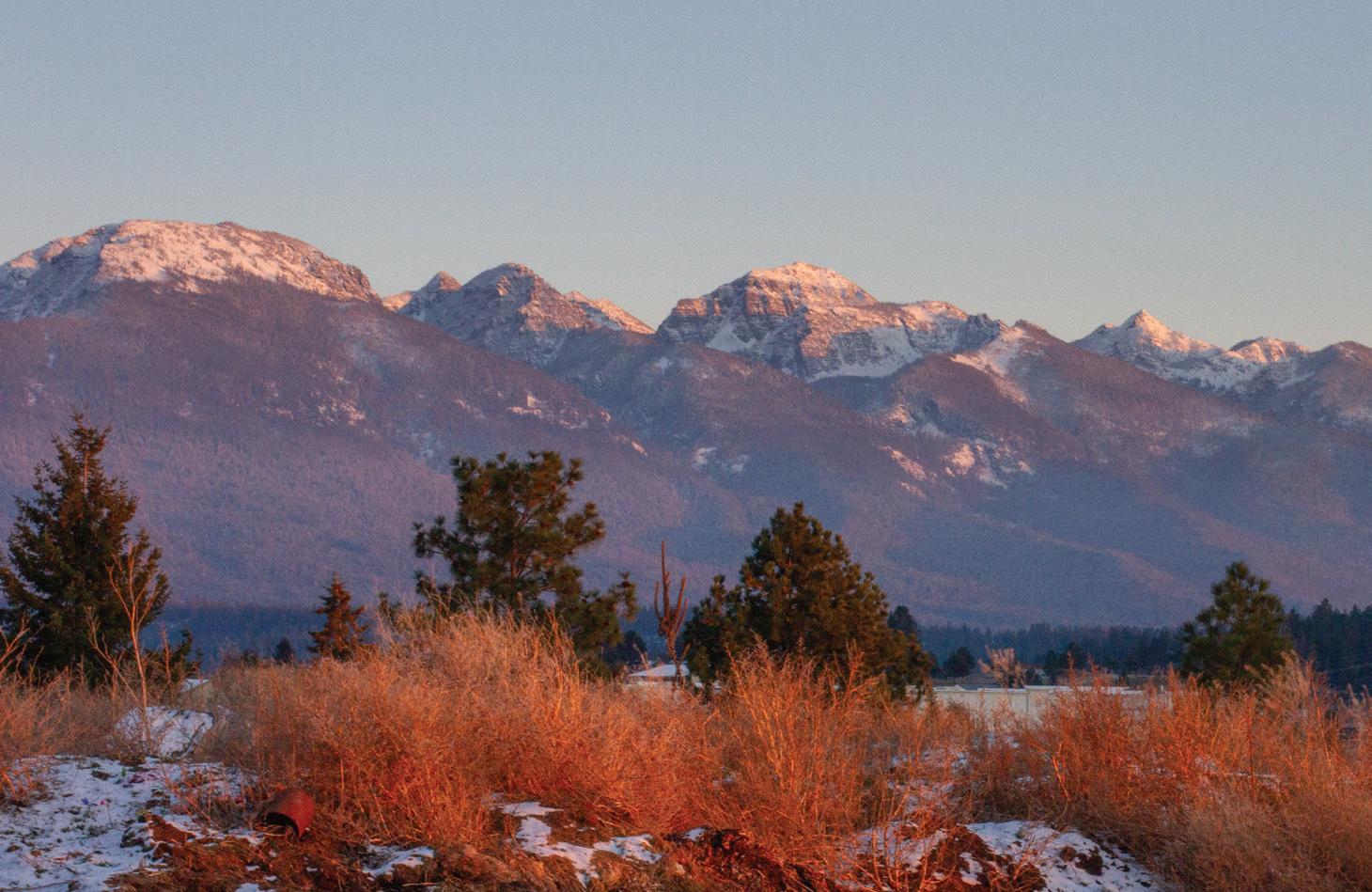
NRCS report shows snowpack is above normal at high elevations, but below normal at lower elevations
News from MT Fish, Wildlife & Parks
HELENA — The warm weather and lack of snow so far this winter is a little irritating to outdoor enthusiasts who enjoy the cold, and a bit concerning for anglers and other water recreationists. But according to a recent report from the Natural Resources Conservation Service, it’s not quite time to worry.
The NRCS report shows snowpack is above normal at high elevations, but below normal at lower elevations. Summer streamflow will depend on how the rest of the winter and spring unfold, according to the NRCS report.
“The good news is that it is early, and the state has observed above-normal snowpack conditions at higher elevations,” said Stephen Begley, Fish, Wildlife & Parks’ water rights and instream flow specialist. “However, I

PO Box 97, Pablo MT 59855-0097 (406) 883-7900 or (406) 675-7900 www.missionvalleypower.org
Mission Valley Power (MVP) is dedicated to providing reliable service at reasonable rates. However, due to significant increases in the costs of materials, fuel, and overall operations, a rate increase has become necessary. We are also committed to investing in the essential upgrades needed for our ageing infrastructure.
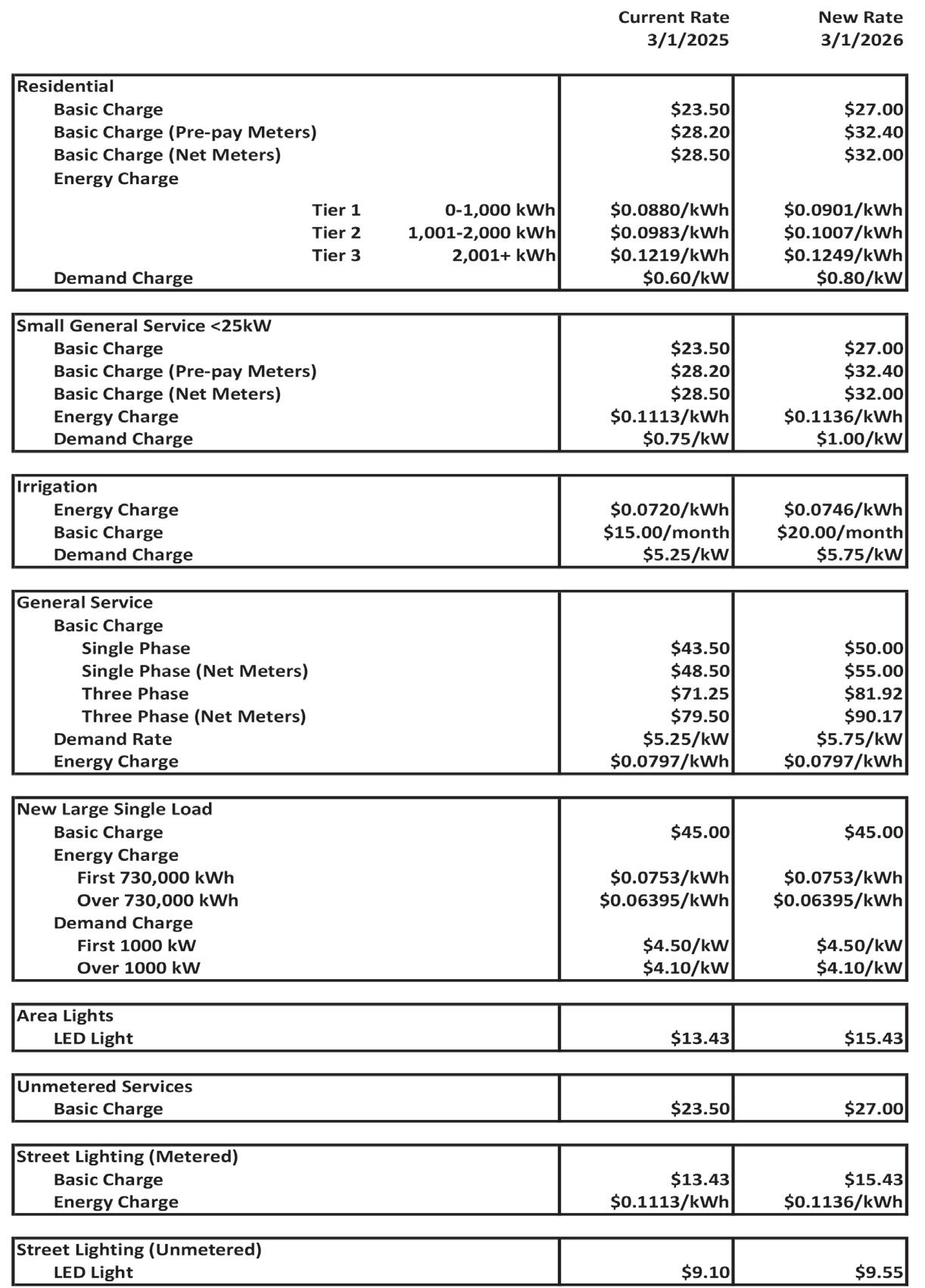
All MVP rate classes will increase (see below) on March 1, 2026, with the new rates taking effect during our customer billing cycle in April. This increase is part of a multi-year rate hike that was announced to the public in 2025 when the initial increase was introduced. These multiple-rate hikes are necessary to ensure the reliability of services in our area.
suspect that the unseasonably warm temperatures experienced in mid-January may have impacted that a bit.”
Begley also pointed out that climate outlooks for the next three months are favorable and suggest increased changes for below-average temperatures and above-average precipitation.
If the forecast of more precipitation and colder temperatures doesn’t pan out, it could have an impact on fish and fish habitat.
“Lower stream flows mean less habitat for fish to seek shelter, forage, and navigate rivers and streams,” Begley said. “Low stream flows may also influence stream temperatures resulting in additional stress to cold-water fisheries.”
Begley said this year’s snowpack conditions are similar to 2022, with the exception that there was a more balanced distribution of snowpack between higher and lower elevation SNOTEL sites.
“Snowpack statewide was also slightly higher percentagewise than current conditions” Begley said.
Mission Valley Power is implementing a pass-through rate adjustment due to the contracts in our cost of wholesale power purchased from Bonneville Power Administration and Energy Keepers, Inc. The rate adjustment is anticipated to be effective January 1, 2024.
The Department of the Interior (DOI) and the Bureau of Indian Affairs (BIA) published the final rate decision in the Federal Register on January 17, 2025. Local customers can request a mailed copy of the Federal Register by calling MVP at (406) 883-7900. Copies are also available in the MVP Customer Service area located in Pablo, MT.
MVP is a non-profit organization that reinvests all its revenue back into providing utility services. We take pride in the trust our customers place in us to deliver a consistent and reliable energy supply. Our commitment to providing safe, efficient, and dependable electrical power services is unwavering and is our top priority. At MVP, we adhere to sound business principles while representing the interests of all our customers.
Per 25 CFR 175.230 – 235, the Northwest Regional Director of the Bureau of Indian Affairs Central Office has to approve the pass-through rate adjustment. If you would like to read the complete a copy at Mission Valley Power’s Main
In summary, the the following classes of service: General Service Single Phase, G arge General Service, and will vary depending on your individual usage. See the rate table below:
News from MT Fish, Wildlife & Parks
HELENA — The recent fishing report for Helena-area reservoirs began with this disclaimer:
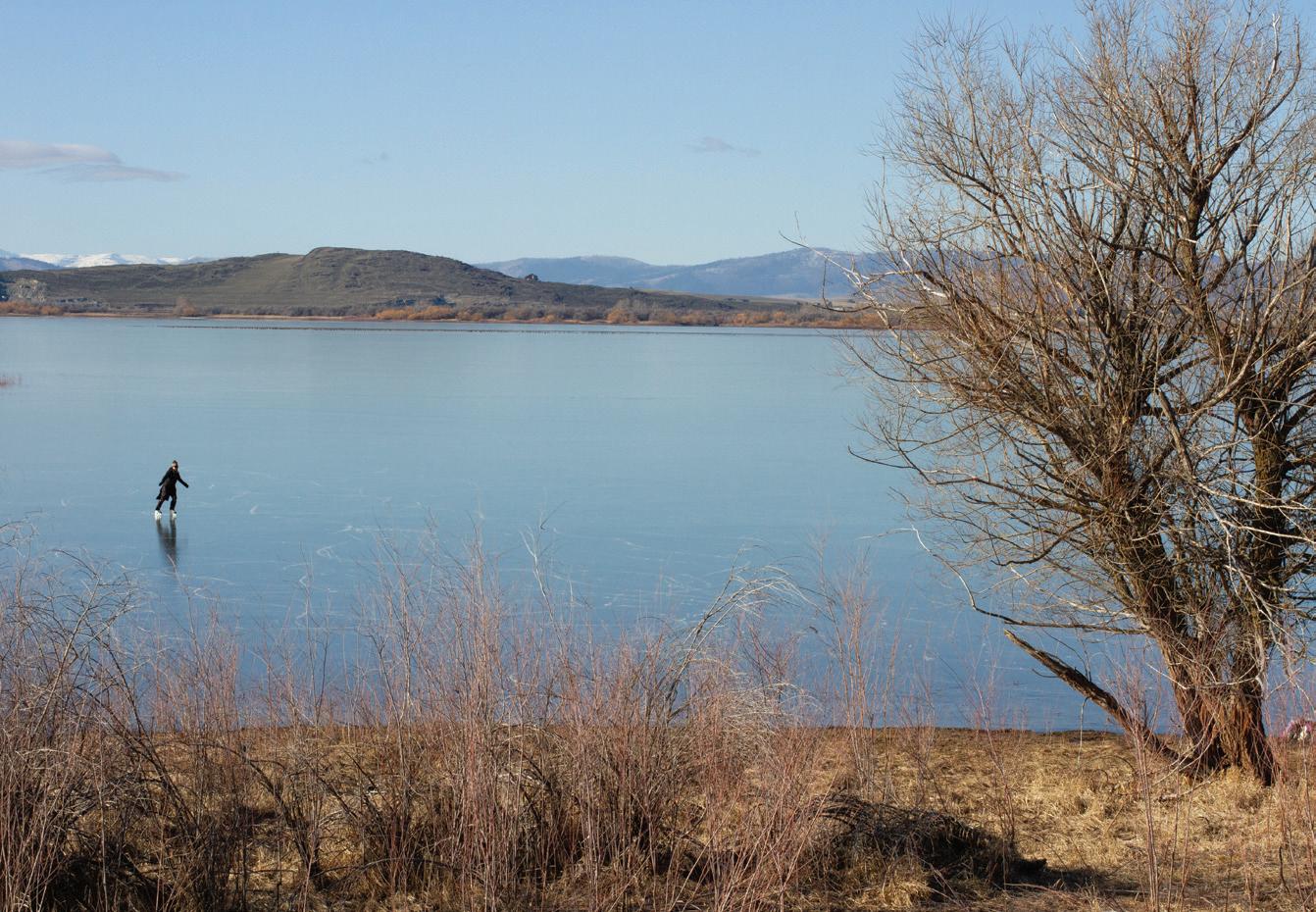
Anglers are reminded that ice conditions can be extremely variable. Ice thickness can range from thick enough to support a vehicle to open water. Extreme caution should be used when accessing the ice. It continued with reporting that there is no safe ice on Canyon Ferry, Hauser Reservoir or Holter Reservoir. On the Helena Valley Regulating Reservoir, it noted that there’s about 4 inches of ice in some locations and open water around some of the islands and the inlet.
Statewide, ice fishing conditions are variable. Here are some safety tips to keep in mind: Anglers and other recreationists should be familiar with the water body they plan to fish or recreate on. Pay close attention to the changing conditions of the ice.
If you have even the slightest doubt about the safety of the ice — stay off of it. Nothing is ever worth a fall into frigid water.
Moving water — rivers, streams and springs — weaken ice by wearing it away from underneath. Avoid go -

ing on ice on rivers and streams, or where a river or stream enters a lake, pond or reservoir.
Blue or “clear” ice is usually hard. Watch out for opaque, gray, dark or porous spots in the ice that could be weak, soft areas. Ice also tends to weaken more quickly at the shorelines or near structures protruding though the ice such as rocks, stumps and trees. Note areas on the ice
that look “different” — they usually are. Many times, thinner areas of ice (caused by springs, gas pockets, sunken islands, points, etc.) have a different color or look to them. Use extreme caution or stay away from these areas.
The following are recommended minimum ice thickness guidelines (for good, clear ice*): Under 4 inches: STAY OFF
4 inches: individual angler ice fishing or other activities on foot
7 inches: snowmobile or ATV
10 inches: small car**
12 inches: truck or SUV**, (*for white ice or “snow ice,” double the above minimums, **not recommended, but if you must, proceed at your own risk )
Watch for pressure ridges. These are areas of weak or unstable
ice where the ice has cracked and heaved due to expansion from freezing.
Test the ice ahead of you with an ice spud bar or an auger.
Don’t leave children unsupervised on the ice.
Waterbodies do not freeze at the same thickness everywhere. For example, some ponds have windmills to aerate water for fish survival, and ice may be
thin near these areas.
The least safe ice usually occurs early and late in the season, when the weather is warmer and less predictable.
Remember: NO ICE is 100 percent safe.
Snowmobiling and ATV use on the ice will reduce steering ability.
Groups should avoid crossing ice in a single-file group. If the

News from Montana Fish, Wildlife & Parks
KALISPELL — Montana Fish, Wildlife & Parks’ “Becoming an Outdoors-Woman” (BOW) program is hosting a two-day ice fishing workshop in Kalispell on Feb. 6 and 7 for women interested in learning the basics of the sport.
The workshop is designed for beginners who want to learn gear selection, safety, and technique in a supportive environment. The program is divided into two sessions:
Friday, Feb. 6 (6:30 – 9 p.m.): An evening classroom session covering ice safety, essential gear, and how to dress for Montana winters.
Sign-ups open at 9 a.m. on Saturday, Jan. 24, and close at 5 p.m. on Wednesday, Feb. 4. Interested participants can register online at: https:// fwp.mt.gov/education/becoming-an-outdoors-woman.
All fishing tackle and gear will be provided. While a standard fishing license is not required for this event, all participants must possess a valid Montana Conservation License to use FWP lands. Licenses can be purchased at any FWP office or online.
first person breaks through, the rest of the group may not be able to stop or maneuver in time to avoid it.
Some other common ice-safety reminders to keep in mind include: Consider changes in the weather (and ice conditions) during the prior 24 hours. Wind, rain and sun can drastically decay ice in a short time.
It’s a good idea to wear a life jacket (PFD) or carry a throwable floatation device or rope while out on the ice — safe ice anglers and recreationists do it all the time.
Dress warm but practical. Many styles of ice-fishing jackets and bibs provide extra buoyancy to help keep you afloat if you do fall through.
Before you leave the house, tell someone where you plan to go and when you plan to return.
Carry a pair of ice picks (long spikes on a heavy string around your neck). If you break
through the ice, you can use the spikes to grip the ice and pull yourself out of the water.
Watch a video on how to safe on the ice at: https://youtu.be/ NWvlwDreySY.


Saturday, Feb. 7 (8 a.m. – 12 p.m.): A hands-on field session at a local frozen lake (location TBD based on ice conditions).
Registration & Requirements: The cost is $15 and registration is required.
Since 1994, Montana’s BOW program has provided women with hands-on instruction in outdoor skills, including hunting, fishing, and orienteering. The program emphasizes encouragement and safety; the workshop is subject to cancellation if ice conditions are deemed unsafe.
For more information, contact Kylie Kembel at 406-444-5280 or kylie. kembel@mt.gov.


Congress shall make no law respecting an establishment of religion or prohibiting the free exercise thereof; or abridging the freedom of speech, or of the press; or the right of the people peaceably to assemble, and to petition the Government for a redress of grievances.
Ican’t believe this headline, this column is one I’m even having to write. We are watching the collapse of our democracy in real time. Another U.S. citizen has been killed in broad daylight by federal ICE agents in Minneapolis. His name was Alex Pretti and he was a nurse at a VA hospital.
Videos of the event are incredibly disturbing. They show a woman who was two-hand pushed by an ICE agent fall to the ground. Pretti attempts to help her up but is pepper sprayed and then tackled to the ground by the ICE agent. At least five more ICE officers join in the assault – hitting, kicking, disarming and then
shooting Alex Pretti. He wasn’t violent. He was carrying a gun he was legally allowed to have. At no point does he brandish the gun. It is removed from under his clothing by an officer. And then he is shot by government agents. Like Renee Good, Pretti is also being labeled by government officials as a “domestic terrorist.” What we are being told by government officials - that
Editor,
Members of the Ronan Bread Basket Board cannot say “Thank you, Thank you, Thank you” enough times for the generosity of individuals, businesses, organizations and churches in our communities for the outpouring of support this past holiday season and throughout all of 2025. Everyone had been impacted in some way by the rising cost of food and the recent threat to SNAP benefits brought that into even sharper focus. People in our communities very clearly
understand how that affects our neighbors who are struggling to make ends meet every month.
The response to this need was overwhelming particularly at the holidays with an unprecedented amount of both food donations and monetary support.
Individuals stopped by nearly every day to make a donation or send a check in the mail. Businesses including Harvest Foods, Dollar General, Subway, Country Pasta, Walmart, Murdoch’s, St. Luke Community Hospital, Ninepipes Museum, Anderson Broadcasting, Lake Seed, Inc., Glacier Bank, Mis-
Pretti assaulted an officer and was a public threatdefies what we have seen with our own eyes. If there was ever a time to ring the alarm it’s now. We cannot allow matters to continue to escalate to the point it’s too late. We cannot allow unchecked power to tear down this country. We can’t allow ICE to wreak havoc in our streets with “absolute immunity.” The use of lethal force to silence citizen dissent cannot be
sion Mountain Organic Eggs, Ronan NAPA Auto Parts, Pablo Family Foods, Rocky Mountain Twist, and many more organized food drives and donated food and money.
Churches in our communities including, Faith Lutheran Church, Lighthouse Christian Fellowship, Mission Valley United Methodist Church, Pablo Christian Church, Sacred Heart Catholic Parish and Seventh Day Adventist Church all provided much appreciated support.
Students in the Ronan/Pablo School District sponsored food
tolerated.
We must stand united in our resolve to end ICE brutality and hold those responsible to account. Americans gunned down in our streets, racial profiling, detaining people without due process - these are not political issues. These are moral issues. Please use your voice. Call our congressmen and demand they defund, dismantle and hold accountable the real domestic terrorists: ICE.
drives, organized a Turkey Trot event and assisted with packaging and delivering potatoes to the food bank.
The Ronan Bread Basket is also deeply indebted to the ongoing support from Town Pump, The Dennis and Phyllis Washington Foundation, Lower Flathead Community Foundation and HOPA Mountain for their commitment to Montana food banks.
Thank you one and all and we look forward to continuing these partnerships in 2026!
Leah Emerson Ronan
Letters to the editor are welcome. The content is the opinion of the letter writer and not the newspaper. The decision to publish letters is made by the editor.
Letters must be 350 words or less. A writer will only be published twice per month. Letters may be edited for content or length, or may not be published if considered libelous, in poor taste, spiteful, self-promotional or of limited interest to the general readership. Space limitations also dictate when or if letters are published.
Letters must be signed by the author and name, address and phone number must be included – phone number is for verification purposes only. Letters from organizations must include the name of at least one author. Please limit “thank you” letters to four people/organizations or less. Deadline is 5 p.m. Friday to publish the following week.
Opinions expressed in this section are not necessarily those of the newspaper.
Afew weeks ago I started a list of my wishes for 2026. To summarize in the most succinct way possible, I wish you the best.
I wish you the best love. The best love of nature. The best love of animals. The best love of people. The best love with an individual in the intimate sense. Love is so beautiful and overriding. I hope it figures largely in you life. Whatever shape it takes, I wish you multiple sources of love that enhance your existence on a daily basis.
Jill Pertler Syndicated columnist
I wish you the best rest. Oh, how we forget this important and consequential component of life. We need to rest every day, yet we often ignore this basic need. I wish you rest from the day’s struggles. I wish you rest from life’s struggles. I wish you rest from the struggles portrayed on the never-ending news feeds. I wish you rest from whatever thwarts your own life.
I wish you the best authenticity. Being real sounds so easy, but can it be so hard. I wish you courage to simply be yourself, despite the repercussions. Fearing judgment from others is our default because we all want to be accepted and liked. Sometimes that causes us to hide our true selves or our true beliefs. Our true authenticity. Breathe deep and know being your true self is okay. You are you - unapologetically. Never let anyone change that –most importantly, and including yourself.
I wish you the best in growth. The older I get, I realize growth never ends. That truth is beyond awesome. Growth can take many forms: growth in mind, in body, in ideas, in ideals. To stop growing is to stop living. Never, ever stop growing.
I wish you the best in clarity. Life comes at us from many angles and
they all seem important. Being able to see what is truly worthy of your attention requires clarity, and that isn’t always easy. Clarity comes with time, growth and perseverance over the tough times. Clarity has a way of simplifying the seemingly complex, and simple is good.
I wish you the best in gratitude. Thankfulness does so much more for your life than any other thought habit. I think, sometimes, negative thoughts are our default. Gratitude is the complete opposite of negative thoughts. I wish you the opposite of negativity in the coming year. I wish you the best in gratitude. I wish you the best alignment. Aligning with the universe is more simple – and complex – than it might seem. When we are aligned with life – with the world at large – the walk is easier, effortless even. The talk flows freely. Everything takes on a new light, a new aura, that isn’t

visible when things are misaligned. I think of Goldilocks when I think of alignment, because it makes everything seem just right.
I wish you the best wisdom – not the wisdom that comes from reading books, but the kind the comes from listening to your soul, your heart –and listening to the souls of others who are also on this journey with you. I wish you wisdom that surpasses generations and time. I wish you wisdom that is real and lasting, not only for today, but for tomorrow and forever after that.
Finally, I wish you the
best light – in more ways than one. I wish you a lightness that comes from walking without burdens. Without stones strapped to your back. I also wish you a radiant light that comes from a brightness already within you. May this light shine outwards to reflect onto others and magnify their own light.
As 2026 begins, I wish you the best. The very best. Happy 2026, everyone. All the best, everyday. All the best, every minute.
Jill Pertler is an award-winning syndicated columnist, published playwright and author. Don’t miss a slice; follow the Slices of Life page on Facebook.
News from Ninepipes Museum of Early Montana
NINEPIPE — On Saturday, Feb. 21, from 1-3 p.m., Ninepipes Museum presents “David Thompson in Montana” - a History talk with Doug Stevens on the extraordinary Travels of fur trader and map maker David Thompson. Doug will also show the film “Shadows of David Thompson.” Enjoy a Q &A with Doug after the talk and refreshments in the gift shop gallery. This event is free to the public. Donations are appreciated. Seating is limited so arrive early.


POLSON —Any student who is currently enrolled as a senior at Polson High School or as a previous PHS graduate is eligible for these scholarships; provided by Polson Scholarship and Education Foundation (PSEF). Fifteen different $1,000 scholarships are geared for high school seniors. Fourteen different scholarships up to $2,000 are available for PHS students enrolled in college. These scholarships are for any accredited four-year, two-year, community college or vocational program. Qualifications vary with each scholarship. All students are encouraged to apply as these scholarships are for every type of student with various GPAs.
Last year 35 students received over $50,000 in scholarships from PSEF. Again this year, the scholarship application is online at Polson High School website, under the heading “Counseling/PSEF.” All scholarship requirements and applications can be accessed and entered electronically from this web page.
For more information and applications contact Chris McElwee at the Polson High School Counseling Center or Chris Strom at: stromchris2@gmail.com.
News from the office of Governor Gianforte
HELENA — Ahead of School Choice Week, Governor Greg Gianforte recently announced Montana opted-in to the new Federal Tax Credit Scholarship Program to provide Montanans a tax credit when they donate to nonprofits that provide scholarships to K-12 students to expand education freedom.
In July 2025, President Donald J. Trump signed into law the One Big Beautiful Bill Act. Among its provisions was a federally funded tax credit scholarship program for elementary and secondary education that will be effective beginning on January 1, 2027.
“Opting in to this program gives Montanans another incentive to support the success of the next generation,” Gov. Gianforte said. “Thanks to President Trump, we’re building on Montana’s successful programs that provide children with more educational opportunities and we’re expanding education freedom, giving more students and parents the ability to choose the learning path that works best for them.”
Under the Federal Tax Credit Scholarship Program, Montanans can claim a nonrefundable federal tax credit of up to $1,700 for contributions to approved Scholarship Granting Organizations (SGOs) that fund K-12 scholarships. Montana offers a Student Scholarship Organization Tax Credit to taxpayers who donate to an approved Student Scholarship Organization (SSO) to fund scholarships for eligible students attending qualified education providers. The credit equals the donation amount, up to $200,000 per taxpayer, and is available until the statewide annual cap is reached.
News from Spokane Falls Community College
SPOKANE, WASHINGTON — Samantha Rensvold, of Polson, has earned a place on the Spokane Falls Community College honor roll for Fall quarter 2025. Students must earn a GPA of 3.0 or higher to be on the honor roll. Congratulations on this academic achievement.
News from the Bureau of Indian Education
WASHINGTON — The Department of the Interior recently released a new Strategic Direction for the Bureau of Indian Education, establishing a performance-driven roadmap to improve student outcomes, strengthen Native language and culture and enhance operational effectiveness across Bureau-funded schools. The Strategic Direction reinforces tribal sovereignty and local control by prioritizing flexible, community-driven approaches rather than one-size-fits-all programming.
The plan builds on reforms initiated during President Donald J. Trump’s first term that led to historic gains in student achievement. High school graduation rates at Bureau-funded schools increased from 51 percent in 2015 to 79 percent in 2025, surpassing pre-pandemic levels. The Strategic Direction sets clear performance indicators to guide continued progress through 2030.
“The Bureau of Indian Education is delivering results that matter—higher graduation rates, stronger academic growth, and expanded access to education options,” said Assistant Secretary for Indian Affairs Billy Kirkland. “This renewed direction continues President Trump’s and Secretary Burgum’s commitment to accountability and measurable progress, ensuring Native students are equipped with the skills and support they need to succeed at every stage of life.”
The Strategic Direction establishes ambitious, measurable goals across three priority areas — student success, cultural identity and language, and wellness and supportive learning environments. Key targets include:
Graduation rate: Increase the high school graduation rate to 87 percent.
Academic growth: Improve student progress by 5 percent each year in English and math, with every school setting goals and tracking performance.
College and career readiness: Expand student participation in transition planning for college, career and military pathways.
Postsecondary success: Increase persistence, retention, and graduation rates at Bureau-operated technical colleges and universities.
Cultural instruction: Expand access to Native language and cultural instruction for students.
Early childhood partnerships: Increase partnerships with tribal, state and federal early childhood programs.
Wellness frameworks: Expand implementation of comprehensive wellness frameworks and reduce chronic absenteeism by 10 percent.
Technology access: Increase school-level use of Bureau of Indian Education technology planning tools.
Facilities management: Improve school use of Bureau of Indian Education systems to manage repairs and resources.
“This Strategic Direction defines clear goals and holds us accountable for meeting them,” said Bureau of Indian Education Director Tony L. Dearman. “It strengthens our partnerships with tribal communities and ensures every student can succeed in an education system that respects their identity and supports their future.”
The Strategic Direction was shaped by input from more than 1,500 staff, stakeholders and students. Progress will be continuously evaluated through Bureau of Indian Education data systems, with schools reporting timely and accurate data to support transparency, responsiveness and accountability.
News Mikayla Peper, Pheasants Forever and Quail Forever
POLSON — Pheasants Forever is proud to announce a significant contribution to its conservation efforts in Montana’s Mission Valley from the Estate of Lois Scott. The donation, totaling $744,000, will help elevate the Montana Grasslands Initiative as well as the Build a Wildlife Area program — creating stronger partnerships, better habitat and more birds throughout the state.
“This donation will provide an incredible boost to our conservation efforts in Montana’s Mission Valley,” said Jordan Martincich, Pheasants Forever’s vice president of development. “It is an honor for the organization to receive such a wonderful legacy gift from Lois Scott based on her passion for our mission and her longstanding relationship

with her local PF Chapter. Her generosity will be felt in the region forever.”
The gift was made possible by the incredible leadership of the Mission Valley Chapter of Pheasants Forever, which has spearheaded upland habitat conservation efforts in the Mission Valley
for decades. The gift will create outcomes focused on several main areas, and the breakdown of impact areas is as follows.
Build-a-Wildlife-Area (BAWA)
This will provide funding to support land acquisition projects through the BAWA program in the
Mission Valley. BAWA is Pheasants Forever’s premier land acquisition program with a proven track record of success open lands to public hunting in Montana and across the country.
Mission Valley Wildlife Biology
This will fund a biolo-
gist/habitat specialist position in the Mission Valley. Boots on the ground capacity is vital to advance the Montana Grassland Initiative in the Mission Valley and ensure grassland habitat within the Mission Valley flourishes.
Mission Valley Habitat Restoration Supplies and
This will provide dedicated funding for seed, herbicide, hand tools, equipment, rentals and other needs to advance Montana Grassland Initiative goals within the Mission Valley of restoring and enhancing grasslands.
For more information on Pheasants Forever’s efforts in Montana or to learn more about how you can support our Montana efforts, contact Hunter VanDonsel, Montana State Coordinator, at 406.461.3827 or hvandonsel@pheasantsforever. org.
For information on the many benefits associated with remembering Pheasants Forever in your will or estate plan, please contact Jordan Martincich, VP of Development, at 816.560.1070 or jmartincich@pheasantsforever.org.

Justin Morgan M.D.

(406)883-3737 Alex Hetrick, D.O. (406) 676-3600

St. Luke Community Healthcare welcomes two new providers to the Community Clinics - Dr. Justin Morgan to Ridgewater in Polson and Dr. Alex Hetrick to the clinic in Ronan. Both are passionate about primary care and building relationships with patients and their families. Call today to schedule an appointment or visit www.stlukehealthcare.org to learn more.

New partnership model modernizes licensing and increases local availability
News from MT Fish, Wildlife & Parks
HELENA — Due to outdated equipment and the need to allow for more flexibility for businesses looking to sell hunting and fishing
licenses, Montana Fish, Wildlife & Parks is moving to a new License Ambassador program this spring.
The program is a partnership between FWP and local businesses around Montana who want to offer hunting and fishing license sales services to their customers. By moving to a modern, web-based system, the License Ambassador program allows more retailers to offer licensing
services without the need for specialized, outdated hardware.
“This change will ultimately provide more businesses where hunters and anglers who like to buy or apply for licenses in person, can go for help,” said FWP Director Christy Clark.
For the past several months, FWP has worked with existing license providers on transitioning to the new License Ambassador pro-
gram. FWP has created a License Ambassador kit that will include signage options, regulations, and other information for customers and to allow License Ambassadors to promote this additional customer service.
FWP has already signed up new outlets to sell licenses with the new License Ambassador program and will be shipping out License Ambassador kits to local businesses in the coming
News from Montana Fish, Wildlife & Parks
HELENA — Montana Fish, Wildlife & Parks is looking to fill three positions on the Wildlife Habitat Improvement Program (WHIP) advisory council. The open positions are for a wildlife biologist, a member of an Indian Tribe within Montana, and a livestock producer or a representative of a livestock producer organization in Montana.
WHIP advisory council members are responsible for advising the department on WHIP administration and for reviewing, ranking and recommending proposed projects for funding. FWP completes the final review and determines the distribution of funding.
After the Montana Legislature passed House Bill 932 in last year’s session, WHIP will no longer focus solely on noxious weed projects. Montana’s newly estab-
months.
Why the change?
The transition replaces an aging provider system that relied on proprietary equipment that is no longer repairable or replaceable. By using FWP’s secure online portal, License Ambassadors can now serve customers using standard internet-connected devices.
“This change is necessary because we are simply unable to keep the
lished Habitat Legacy Account will fund projects that focus on restoring, rehabilitating, improving or managing land or waters as wildlife or aquatic habitat through habitat improvement and conservation. More about WHIP can be found on the website fwp.mt.gov/aboutfwp/grant-programs/ wildlife-habitat-improvement.
For the first year, WHIP council meeting frequency and dates will be determined as the program develops to align with HB
old system going with outdated license provider equipment that we can’t fix when it breaks or replace when it’s unusable,” said Emily Cooper, FWP Licensing Bureau Chief. Hunters and anglers can also go online to buy or apply for licenses and permits. The online licensing system used by the public will be the same system used by License Ambassadors to sell licenses to customers in their stores.
932. Council members are appointed by FWP Director Christy Clark. To apply for the WHIP council, visit fwp. mt.gov/aboutfwp/commission-councils-committees/wildlife-habitat-improvement-advisory-council. Paper applications are also available by calling 406-444-7291. Applications must be submitted by Feb. 27. For more information, call WHIP Coordinator Andrew Amidon at 406-444-7291, or email: andrew.amidon@mt.gov.
New technology may transform livestock management, wildlife conservation
News
MONTANA — Virtual fence is an emerging technology with the potential to transform livestock management and wildlife conservation across the Greater Yellowstone Ecosystem. To support adoption of this
innovative tool, the Greater Yellowstone Coalition has released a new Virtual Fence Resource Guide that consolidates information on funding opportunities, use cases, and available virtual fence vendors.
“The vast public and private lands that make up Greater Yellowstone are crisscrossed with miles of physical fencing,” said Erin Welty, Senior Wyoming Conservation Associate at the Greater Yellowstone Coalition. “Replacing traditional fences with virtual fencing can improve livestock management
while restoring habitat connectivity for wildlife.”
Virtual fence technology allows livestock producers to precisely manage grazing using GPS-enabled collars and invisible boundaries, eliminating the need for barbed wire and other physical barriers. Producers can track livestock locations in real time and adjust grazing areas remotely, saving time and ultimately reducing labor and infrastructure costs.
At the same time, the technology delivers significant conservation benefits. By reducing physi-
cal fencing on the landscape, virtual fence allows wildlife to move more freely, decreases risks of entanglement, and helps keep livestock out of sensitive habitats. The technology also supports rotational grazing practices that maintain rangeland health and improves separation between livestock and wildlife, including elk and grizzly bears.
“Cost remains one of the biggest barriers to adopting virtual fence technology,” Welty said. “This guide is intended to help overcome that hurdle by bringing together a robust list of
funding opportunities and practical resources in one place.” Virtual fence systems rely on GPS-enabled collars that emit auditory and, if necessary, electrical cues as animals approach a boundary set by producers. Over time, livestock learn to respond to these cues through classical conditioning, allowing producers to manage grazing flexibly without permanent infrastructure on the landscape.
Please visit: lovegyc.org/ virtual-fence to view the guide and to learn more about virtual fence in Greater Yellowstone.
By Theresa Yares for the Valley Journal
ST. IGNATIUS — Key nutrients and foods to focus on as we age:
Protein: Essential for muscle building and to maintain muscle mass.
Found in seafood, poultry, lean meat, dried beans and lentils.
Vitamin B12: Vitamin B12 is good for healthy nerve and blood cells, energy and metabolism. Found in meats, poultry, fish, eggs, dairy and fortified foods and supplements.
Vitamin D and Calcium: Vitamin D and calcium are important for bone health and found in milk dairy and fortified food products.
Fiber: Fiber helps with digestion and heart health and found in whole grains, fruits, vegetables, dried beans and peas.
Healthy Fats: Healthy fats are important for brain and heart health and found in avocado, nuts, seeds, olive oil, fatty fish (omega3s; such as salmon, sardines, tuna and cod).
Bright colored vegetables: Aim for bright colored vegetables to get varied nutrients.
On Jan. 30 from 11 a.m.-2 p.m. there will be someone at the St. Ignatius Senior Center available to mend any clothing items that need repairing such as ripped seams, resewing buttons, etc.
Activities:
- Bingo: Feb. 14 at 2 p.m. Menu:
- Friday, Jan. 30: cabbage rollups, rolls, apricots, peas, brownies
- Tuesday, Feb. 3: clam chowder, biscuits, vegetable tray, peaches, dessert - Wednesday, Feb. 4: meatloaf, potatoes, gravy, corn, rolls, mixed fruit, blueberry crumble
- Friday, Feb. 6: Goulash, white bread, green salad, cooked carrots, apricots, dessert
Everyone is welcome at our meals (young and old). Come enjoy a delicious meal and good conversation. If you would like a takeout meal, call 406745-4462 by 10 a.m. on Tuesdays and Fridays and by 2 p.m. on the first and third Wednesdays of each
month. Mealtimes are at noon Tuesdays and Fridays and at 5:30 p.m. on the first and third Wednesdays of each month. Menus for the month are available in the entryway of the center. Our Senior Center is available for rent. If interested, call 406-745-4462 or stop by. If you have questions about obtaining Elder Commodities, call or stop by for information and application.
Gentle Yoga is held on Wednesdays from 1 to 2:15 p.m. If you are interested, call Bonnie Kiser at 406-253-0177. Her rate is five sessions for $65.
By Pete Mangels for the Valley Journal
POLSON — Early registration for AARP tax assistance is open now for February thru April 15 tax help. AARP Tax Assistance starts on Mondays and Thursdays, Feb. 2, from 9:30 a.m. to 3:30 p.m. Pre-register for your appointment and pick up information packet at the Center now.
- KIWANIS Club of Polson: noon February thru June on the third Thursday of each month. All are welcome.
- Cribbage: (the most popular 2-player card game ever) is starting in February. We welcome all skill levels. - Wednesdays, from 12:30-3p.m weekly - sign up at Polson Senior Center - no fees -round robin format, perhaps -Leave a good phone number.
- Bingo: regular bingo every Friday at 6:30 p.m. – Card Bingo first Wednesday each month at 6:30 p.m.
- Pinochle: Thursdays 12:30 p.m. (pass 4) - Mondays 12:30 p.m. (no pass)
- Pool: open table from 8 a.m.-3 p.m.
- Toenail clinic: Sign up to reserve a time -$30 fee
- Spinning Wheelers: 2nd and 4th Tuesdays of each month. 11-1p. 208520-1013.
- VSO (Veterans Service Officer): first Friday and third Tuesday of each month -10 a.m.-noonWalk-ins OK.
- Bridge and Mahjong groups — meet regularly at the center
- Bowling fun-league: Tuesdays at 1 p.m. at the Sportspage Bowl
- Exercise class (sitting, standing and low impact video assisted): M-W-F 10:30-11:30
Menu (subject to substitutions): lunch - $5 donation - served from 11:45 a.m.-12:30 p.m. - Monday-Friday
- Wednesday, Jan. 28: barbecue chicken, baked beans, warm potato salad, raspberry Jell-O with fruit, brownie
- Thursday, Jan. 29: pork tip with noodles, green beans, baked pears, green salad, orange cake
- Friday, Jan. 30: Swedish meatballs, mashed taters, carrots, tomato aspic salad, apple crisp
- Mon. Feb. 2: chicken noodle soup, PBJ sandwich, mandarin oranges, cookies
- Tuesday, Feb. 3: spa-
ghetti, creamed corn, garlic bread, green salad, apple sauce, poke cake
- Wednesday, Feb. 4: Salisbury steak, potatoes, gravy, mixed vegetables, pasta salad, peaches, butterscotch pudding
- Thursday, Feb. 5: chicken enchilada, Spanish rice, beets, cranberry salad, peanut butter bars
- Friday, Feb. 6: pepperoni Hawaiian pizza, stir-fry veggies, marinated vegetables salad, peach fluff
Our Polson Senior Citizens Community Center provides space for individuals and groups to meet for physical and mental health, social and educational purposes. Our center is available for reserved special events on weekends and evenings. We are open 8 a.m.–3 p.m. on weekdays, or later by appointment. Contact us at 406-8834735 or 504 3rd Ave. E.










When you donate your car, you’ll receive:


























































https://donorbox.org/montana-newspaper-foundation-charitable-giving.





Jerome Hanson
birthsLeona Smith-Roberts

POLSON — Jerome G. Hanson of Polson passed away peacefully on Jan. 18, 2026, at Polson Health and Rehabilitation Center. He was born on Dec. 12, 1937, to Edwin and Blanche (Hendrickson) Hanson in Alexandria, Minnesota. His family later moved to Williston, North Dakota, in Jerome’s early grade school years. He graduated from Williston High School with the Class of 1956.
On March 24, 1965, he married Margaret Zimmerman in Plymouth, Nebraska, and to this union brought five children.
Following an honorable discharge, Jerome and Marge moved to Polson, Montana. Jerome learned the trade of being an electrician in the Navy and was a Master Electrician. He worked several electrical jobs for many companies. He later owned and operated Hanson Electric, in Polson, for over 30 years.
Upon retiring, he enjoyed hunting and fishing with his son, Jami. Vowing to never take his daughters hunting again, after they reportedly “got lost” and preceded to holler for their dad in the woods. He enjoyed watching baseball and later learned to love softball. He truly enjoyed watching his kids, grandkids and great grandkids participate in all their sporting events. He served as a coach for the Mission Valley Mariners and later maintained the ballfields for many years.
Jerome is preceded in death by his wife Marge in 2021, his parents, daughter Angie Coxen, granddaughter Cheyanne Coxen, his in-laws, Walter and Delma Zimmerman, brother-in-law Richard Zimmerman, and son in-law Norman Shaw.
Jerome is survived by his children, Jolene (Jay) Morine of Kalispell, Montana, Wendy (James) Popelka of Belleville, Kansas, Dawn (Janos)
He played hockey in high school, and after graduation he planned to pursue hockey at a higher level. However, while his parents were on vacation and to his mother’s surprise, Jerome and his buddies had a great idea, and they enlisted in the United States Navy. He served his country proudly from September 1956 to 1966. He was stationed at Bermuda, Key West, FL, Jacksonville, FL, Millington, TN, Corpus Christi, TX, and Guantanamo Bay during the Cuban Missile Crisis.
Balog of Palm Springs, California, Jami (Staci) Hanson of Polson, Montana; son-in-law Doug Coxen of Polson, Montana; brother Rod (Sharon) Hanson of Polson, Montana; grandchildren Matt (Holly) Popelka of Levelland, Texas, Deanna (Robert) Morris of Belleville, Kansas, Gareth Shaw of Missoula, Montana, Alysia (Tommy) Enseleit of Billings, Montana, Sarah (Alan) Hartung of Lincoln, Nebraska, William (Haley) Popelka of Belleville, Kansas, Candace Coxen of Polson, Montana, and Mckenna Hanson of Polson, Montana; 17 great-grandchildren, four great-great grandchildren, as well as many nieces, nephews, cousins and friends.
A memorial service will be held Saturday, January 31, 2026, at 11 AM, at Good Shepherd Lutheran Church in Polson, Montana, with interment immediately following at Lakeview Cemetery. Memorials may be sent in his memory to Polson School District-Polson Lady Pirates Softball, 111 4th Avenue East Polson, MT 59860, in lieu of flowers. Messages of condolence may be shared with the family online at: www. lakefuneralhomeandcremation.com.
Arrangements are under the care of The Lake Funeral Home and Crematory.
POLSON — Leona Smith-Roberts is excited to announce the arrival of little sister, Leighton Dallas Roberts. Leighton was born on Jan. 6, 2026, at Providence St. Joseph Medical Center’s Nesting Place. She was 20.5 inches long

and weighed 7 pounds, 10.9 ounces. Leighton’s parents are Frankie Smith and Jordan Roberts of Polson. Leighton’s maternal grandparents are Dallas and Crystal Smith. Maternal great-grandparents are Jerry and Linda Smith and Larry and Diane Behel. Paternal grandparents are Keith and Rhesa Roberts. Paternal great-grandparents are Lyle and Emma-Lee Roberts, Earl Auld Sr., and Sally Youngman. Leona Smith-Roberts
VA invites area veterans, the public to grand opening of its new Kalispell
News from U.S. Dept. of Veterans Affairs
KALISPELL — The Montana VA Health Care System invites Veterans and the public to a grand opening ceremony, ribbon cutting, and tour of its new Kalispell VA Clinic.
The new clinic is 39% percent larger than the previous facility and offers more space for patient care, including 18 exam rooms and five patient consult rooms along with two dedicated procedure rooms. It also houses a new, 2,000 square foot physical rehabilitation clinic for Veterans receiving physical therapy services, two dedicated exam rooms for women Veterans, and three audiology exam rooms featuring state of the art equipment. The clinic has space for up to six Patient Aligned Care Teams and its own parking lot with more than 100 parking spaces.
WHO: Veterans, their families and the public are welcome to attend. Staff will be on-hand to greet visitors and answer questions, and tours of
the new clinic will be available to everyone.
WHEN: Friday, Jan. 30, 2026. The Grand Opening Ceremony will be held at 10:00 a.m. MST. A ribbon cutting ceremony will be held at 11:30 a.m. MST, followed by tours of the facility.
WHERE: The Grand Opening Ceremony will be held inside the Hilton Garden Inn Kalispell, located at 1840 Highway 93 South, Kalispell. A ribbon cutting will be held at the new facility located at 750 Reserve Place in Kalispell, across from Glacier High School.
Additional Information: Contact Matthew Rosine, Matthew.Rosine@ va.gov, (406) 417-9447.
Montana VA proudly serves over 49,000 enrolled Veterans across Montana—an area roughly 147,000 square miles in size. Veterans are cared for by a staff of 1,400 at 18 sites of care across the state. One third of Montana VA employees are Veterans.
St. Ignatius Rural Fire District Board to meet
ST. IGNATIUS — The regular meeting of the St. Ignatius Rural Fire District Board will be held at 6 p.m. on Jan. 28, 2026, in the Fire Hall meeting room. For additional information contact Chairman Tim Callahan at 406745-4112.
Flathead Lake Bio Station talks about beach erosion
POLSON — Join Flathead Lake Bio Station for a talk and hands-on erosion demonstration on Wednesday, Jan. 28, at 4 p.m. at the Polson Library’s Community Room. Learn how waves cause erosion and affect our beaches.
Flathead Irrigation District holds monthly meeting
RONAN — The Flathead Irrigation District will hold their monthly meeting on Jan. 28, 2026, at 1 p.m. at Mission West Community Development Partners Building, 407 Main Street SW. The meeting takes place upstairs in the smaller room on the left. Casey Ryan with CSKT is set to do a presentation on the CSKT Irrigation Project.
Free meditation class offered
POLSON — Join the Mission Mountain Zen Center on Wednesdays for online instruction, practice and discussion via Zoom and in-person. The
January 28, 2026

classes will be from 6 to 7:30 p.m. We will cultivate and deepen our centering skills and meditation practice during the class. For more information and a Zoom link to the class call Zenku at 847-721-0665 or email at: Jerry.Smyers@ gmail.com. Go to: www. missionmountainzen. org for more information.
Mission Valley Choral Society begins practices for spring 2026 concerts
POLSON — Practices begin for the Mission Val-
ley Choral Society Spring Concerts on Thursday, Jan. 29, from 7 to 9 p.m., at the First Presbyterian Church in Polson. Spring concerts are scheduled for the weekend of April 18-19, 2026.
Director Cathy Gillhouse has selected a varied program which includes Duke Ellington’s “Don’t Get Around Much Any More,” “Defying Gravity” from the musical “Wicked,” “Bye Bye, Blackbird” and traditional spiritual “Every Time I Feel the Spirit.” The community choir, which has existed in the Mission Valley since the 1960s, has grown to
many new members from all corners of the Mission Valley. For information contact 406-261-3304 or 406260-6103; or check out the MVCS website: missionvalleychoralsociety. org or Facebook page.
Toddler Time held at library
POLSON — The Polson Library will hold Toddler Time a program with engaging activities for 2–3-year-olds on Thursdays at 10 a.m. They read active stories, dance, sing and shake it all about.
SQELIX sign language with Johnny Arlee will be held on Friday, Jan. 30, at the Longhouse in St. Ignatius. Lunch is a 1 p.m. All are welcome. Call 406745-4572 X 5301for more information.
Little ones enjoy Mother Goose
POLSON — The Polson Library will hold Mother Goose on Fridays at 10 a.m. This program is an interactive program for 0–24-month-old children to enjoy fun rhyming books, finger plays, nursery rhymes and songs.
Paint the Season at the library
Story Time held
POLSON — The Polson Library holds Story Time on Thursday at 10 a.m. and again on Saturdays at 10 a.m. This kindergarten readiness program is for 3–5-yearolds including stories, songs and crafts. Children must be accompanied by an adult.
Cultural Awareness Day held
ST. IGNATIUS —
POLSON — Join us at the Polson Library on Jan. 31, for a beginning adult watercolor class at 1 p.m. in the Community Room. Sign up is required as space is limited. Call 406-883-8225 or go to the library at 102 1st Street E.
Monday, Feb 2
2026 Montana Soil Health Symposium held in Billings
BILLINGS — The 2026 Montana Soil Health Symposium will open with the pre-conference workshop “Marketing Avenues: Producer Perspectives.” A panel of producers will share how they chose their marketing paths, how location shaped their options, what
from page 18 they’ve learned along the way, and how they’ve adapted their strategies to fit the realities of their operations. Throughout the Soil Health Symposium, attendees will hear keynote addresses from wellknown voices in regenerative agriculture and soil health.
Twelve breakout sessions will feature additional producers and technical specialists diving into what’s working on the ground, including tools, practices, and lessons learned in the push for healthier soil and more resilient operations. This year, 18 producers will share the changes they have made on their operations to improve both their natural resources and economic viability. The Soil Health Symposium will close with a keynote panel dedicated to questions, shared insights, and reflections on the conversations that emerged throughout the event.
For more information or to register, please visit: https://mtsoilhealth.org/
Tuesday, Feb. 3
Blood drive held
POLSON — Glacier Bank will hold a blood drive at the Kwa Taq Nuk Resort on Tuesday, Feb. 3, from 10 a.m. to 4 p.m.
Memory Café held
POLSON — A Dementia Care Partner Program, Memory Café, is held on the first Tuesday of each month from 10 a.m.-noon at the North Lake County Public Library. Learn more and register by calling Danika at 406-409-8149.
Wednesday, Feb. 4
Free meditation class offered
POLSON — Join the Mission Mountain Zen Center on Wednesdays for online instruction, practice and discussion via Zoom and in-person. The classes will be from 6 to 7:30 p.m. For more information and a Zoom link to the class call Zenku at 847-721-0665 or email at: Jerry.Smyers@gmail. com. Go to: www.missionmountainzen.org for more information.
Thursday, Feb. 5
Teen hour at library
POLSON — “Connect at the library” is a time just for teens to share ideas, play games, eat snacks and hang out in the Teen Corner of the Polson Library, every Thursday at 4 p.m.
Toddler Time held at library
POLSON — The Polson Library will hold Toddler Time a program with engaging activities for 2–3-year-olds on Thursdays at 10 a.m. They read active stories, dance, sing and shake it all about.
Story Time held twice weekly
POLSON — The Polson Library holds Story Time on Thursday at 10 a.m. and again on Saturdays at 10 a.m. This kindergarten readiness program is for 3–5-yearolds including stories, songs and crafts. Adults must accompany children.
Make a Valentine’s Day card
POLSON — Come make a lovely pop-out card embellished with buttons and bows, and flowered with inspirational literary quotes that’s sure to impress your someone special. All supplies are provided and all ages are welcome. Space is limited and registration is required. To register stop by the front desk at the Polson Library or call us at 406-883-8225.
Little ones enjoy Mother Goose
POLSON — The Polson Library will hold Mother Goose on Fridays at 10 a.m. This program is an interactive program for 0–24-month-old children
to enjoy fun rhyming books, finger plays, nursery rhymes and songs.
Board games played
POLSON — The Polson Library Community Room is the site for Board Game Day on the second Friday of each month at 4 p.m. Our games are never boring – just board!
Quarteto Nuevo on stage
RONAN — On Friday, Feb. 6, at 7 p.m. in the Ronan Performing Arts Center, Mission Valley Live presents Quarteto Nuevo. They effectively meld the music of ancient worlds and faraway places with a contemporary groove.

The Polson City Commission meets every first and third Monday of the month (Wednesday, if the Monday falls on a holiday) at 7 p.m. at City Hall, 106 1st Street East. Meetings are open to the public.
St. Ignatius City Council meets the second Tuesday of the month at 6 p.m. at City Hall, 12 First Ave. 406- 745-3791
Ronan City Council meetings are held on the second and fourth Wednesday of each month at 6 p.m., 207 Main Street SW, Ste A. 406-676-4231
Lake County Commissioners , 106 Fourth Ave. E, room 211, (Lake County Courthouse) 406-883-7278, Monday-Thursday 10 a.m.-12 p.m. & 1:30 p.m.-4:30 p.m.
The Lake County Conservation District , 64352 US HWY 93, Ronan, meets monthly on the second Thursday of the month at 6:30 p.m. Meetings are open to the public and agendas may be found at LakeCountyConservationDistrict.org.
The Ronan School District No. 30 Board of Trustees have regularly scheduled board meetings once a month. They meet the second Monday of every month in the K. William Harvey Elementary Multi-Purpose Room. Regular meetings begin at 7 p.m.
The Polson School District No. 23 Board of Trustees have regularly scheduled board meetings once a month. Meetings are held the second Monday of each month from 5:30-7:30 p.m. at the District Office, 111 4th Ave. E, 406-883-6345.
The Charlo School District 7J B Board of Trustees have regularly scheduled meetings on the third Thursday of every month. Meetings are held in the school library, 404 1st Ave. W, and begin at 7 p.m. The phone number is 406-6442206.
The Arlee School District No. 8 Board of Trustees hold regularly scheduled meetings on the second Tuesday of each month. Meetings are held in the Arlee High School Library, 72220 Fyant Street, and begin at 6:30 p.m. The phone number is 406-726-3216.
Valley View Elementary is located at 42448 Valley View Road. The phone number is 406-8832208.
St. Ignatius School District No. 28 Board of Trustees meetings are held the third Tuesday of each month at 7 p.m. in the library, 76 Third Avenue. The phone number is 406-745-3811.







JOHNCO STORAGE: Public sale February 4th, 2026 at 2:00 p.m. at 808 7th Street East, Polson. Sell to highest bidder for CASH OR CERTIFIED CHECK ONLY, contents of unit 85, 51, and 126. Units are subject to redemption prior to sale time. 406-883-5405.
GIS ANALYST DIVISION OF ENGINEERING & WATER RESOURCES (DEWR) KH OFFICE - RONAN, MT NATURAL RESOURCES
DEPARTMENT Are you a skilled GIS professional who thrives in a collaborative environment where your geospatial skills can make a difference? The Confederated Salish & Kootenai Tribes are searching for a GIS Analyst to join our innovative and purpose-driven team. Make a meaningful impact in our community - learn more and apply at cskt.org/ personnel The GIS Analyst is a full-time, highly technical, professional- level position working in the Tribes’ Natural Resources Department in the Division of Engineering and Water Resources (DEWR). The successful applicant will serve as the primary geospatial analyst and GIS resource for the Division, and will work within the Information Technology Services and Support Group under the direct supervision of the Division Manager. The successful applicant must possess a Master’s of Arts or Master’s of Science with three (3) years of relevant professional-level experience or Bachelor’s of Arts or Bachelor’s of Science with a minimum of five (5) years of relevant professional- level experience. Education must be in the field of GIS and Geospatial Analysis, Geography, Forestry, Water Resources, or
a closely related Natural Resources field. Exposure and emphasis on water resources is preferred. Education and experience must demonstrate focus on GIS and Geospatial Analysis, analytical aptitude, and ability to work interactively in a team setting. Must be able to work 40 hours a week, with additional time and evenings and/or weekends when necessary. Requires prolonged sitting, some bending, lifting, and stooping at times. Must have a valid state driver’s license with the ability to secure a current State of Montana driver’s license within six (6) months. Must have liability or full coverage insurance on personal vehicle (if used to travel offsite in performance of duties) and a dependable vehicle for transportation on and off job duty station. Is required to wear CSKT safety apparel as necessary. Required to successfully complete a certified defensive driving course approved by the Department. FAILURE TO SUBMIT THE FOLLOWING INFORMATION WILL RESULT IN DISQUALIFICATION DURING THE SCREENING PROCESS. All applicants are required to submit a Tribal Employment Application (Resumes may be submitted but may not replace or supplement the official Tribal Employment Application), copies of relevant academic transcripts and/or certificates, copy of valid driver’s license, proof of enrollment from a Federally recognized Tribe if other than CSKT, and if claiming Veteran’s preference, a copy of DD214 must be submitted. This position is not a Testing Designated Position (TDP) within the definition of the CSKT Drug Testing policy. The successful applicant, if not already employed by CSKT, must pass pre-hire drug test and serve a mandatory six (6) month probationary period. Salary range is $24.02 - $27.61 per hour (Including Comprehensive Benefits: Health and Life Insurance, Retirement, Longterm Disability, Paid Time Off, Paid Holidays, and an energizing work environment). To apply, contact Personnel at
406/675-2700 Ext. 1040. Tribal Employment Applications are also available online at cskt.org/personnel This position will close on Monday, February 23, 2026 at 5:30 pm.
PLEASE CONTACT US FOR MORE INFORMATION:
Casey Ryan, Division Manager- DEWR at 406/675-2700 Ext. 6207, or Email: casey.ryan@cskt.org. INTERESTED AND QUALIFIED APPLICANTS ARE ENCOURAGED TO APPLY! CSKT IS A TRIBAL MEMBER PREFERENCE EMPLOYER.
COORDINATOR / EMPLOYEE HEALTH NURSE
(Split Mission/Polson) TRIBAL HEALTH DEPARTMENT
Successful applicant must have an Associate’s degree in Nursing from an accredited school of nursing. Current and unrestricted license as a Registered Nurse in the State of Montana. Minimum of three years of nursing experience, preferably in public health, immunization, or employee health. Current BLS certification. Must possess a valid driver’s license. All applicants must submit a Tribal application and copy of academic transcript/training certificates and licensure, copy of valid driver’s license, proof of enrollment in a federally recognized Tribe if other than CSKT and if claiming veteran’s preference, a copy of DD214 must be submitted. The successful applicant, if not already employed by the Tribes must pass a pre-hire drug test and serve a mandatory six (6) months probationary period. Salary is negotiable DOE, plus benefits. To apply, contact Personnel at (406) 675-2700 Ext. #1040, or personnel@cskt.org. Tribal applications are also available online at cskt.org/personnel. Closing date will be Mon., Feb. 9 ,2026 at 5:30 p.m. (MST)
CSKT IS A TRIBAL MEMBER PREFERENCE EMPLOYER.
Extension Agent – Family & Consumer Sciences and 4-H in Blaine County, Chinook,
MT. Full time. Exciting job with lots of autonomy! Will assess local community needs, then develop, implement, and evaluate Extension programming to meet those needs, in the areas of Family & Consumer Sciences & 4-H/Youth Development. For complete information and how to apply, please click here: https://jobs. montana.edu/postings/50087 Equal Opportunity Employer, Veterans/Disabled
CIVIL ENGINEER TECHNICIAN ROADS PROGRAM/DEWR KH OFFICE – RONAN, MT DIVISION OF ENGINEERING & WATER RESOURCES NATURAL RESOURCES DEPARTMENT
The Civil Engineer Technician position is a full-time specialized technical position, with responsibilities and duties associated with the computer-aided design work and construction monitoring of road construction projects for the Tribal Roads Program. Successful applicant is required to have an Associate’s degree in Civil Engineering Technology or related field OR two (2) years of increasingly responsible work in engineering design, planning, maintenance or management, or equivalent formal training beyond an Associate’s degree in one of these areas. Must have a high degree of skill in organizing and analyzing data; interpreting maps, plats, aerial photography, Geographic Information Systems (GIS); and in drafting technical documents including plans, maps and reports, as well as the operation of CADD or other software. Possession of a valid driver’s license with the ability to obtain a Montana Driver’s License within six (6) months. Must have liability or full coverage insurance on personal vehicle (if used to travel off-site in performance of duties). Required to obtain and maintain additional certification as necessary for various Roads or other Program projects. Must successfully complete a certified defensive driving course approved by the department, and wear Tribal Government identification and safety apparel while
conducting field activities. FAILURE TO SUBMIT THE FOLLOWING INFORMATION WILL RESULT IN DISQUALIFICATION DURING THE SCREENING PROCESS. All applicants are required to submit a Tribal Employment Application (Resumes may be submitted but may not replace or supplement the official Tribal Employment Application), copies of relevant academic transcripts and/or certificates, copy of valid driver’s license, if applicable, please submit proof of enrollment from a Federally recognized Tribe if other than CSKT, and if claiming veteran’s preference, a copy of DD214 must be submitted. This position is not a jTesting Designated Position (TDP) within the definition of the CSKT Drug Testing policy. The successful applicant, if not already employed by CSKT must pass a pre-hire drug test and serve a mandatory six (6) month probationary period. Salary range is $21.36 to $24.55 per hour, including Benefits: Health Insurance, Life Insurance, Retirement, Long-term Disability, and PTO & Paid Holidays. To apply, contact Personnel at 406/6752700 Ext. 1040. FOR MORE
INFO: Contact Scott Johnston - Roads Program Manager at 406/675-2700 Ext. 6202. Tribal Employment Applications are also available online at cskt.org/personnel. This position will close on Monday, February 16, 2026 at 5:30 pm.
CSKT IS A TRIBAL MEMBER PREFERENCE EMPLOYER.
BUTCHER APPRENTICE
ONE OR MORE
TEMPORARY
EMPLOYMENT AGREEMENT (TEA) POSITIONS (Opportunity to transfer to Full-Time when Corporation is fully operational)
RONAN, MONTANA
The successful applicant must possess a minimum of a high school diploma or GED. Strong teamwork and communication skills. Willingness to learn and take direction from experienced staff. Attention to detail and commitment to maintaining cleanliness
and food safety standards. Dependable, punctual, and adaptable to varying workloads. Ability to work efficiently in a fast-paced, physical environment. Must be able to stand and work for extended periods (8+ hours). Must be able to lift and move up to 75 lbs regularly. Comfortable working in cold environments (refrigeration and cutting rooms). Ability to work in both production and livestock areas as needed. Use of protective gear (cut gloves, aprons, etc.) required. All applicants must submit a Tribal employment application, a copy of relevant academic transcripts, & training certificates, a copy of a current valid driver’s license. Any enrollment in a federally recognized Tribe must be submitted, if applicable. If you claimed Veteran’s preference, a copy of the DD214 form must be submitted. You may submit letters of reference, a cover letter, and/or a resume to complement the application packet. FAILURE TO SUBMIT COPIES OF THE ABOVE DOCUMENTATION MAY RESULT IN THE DISQUALIFICATION OF YOUR APPLICATION FROM THE SCREENING PROCESS. This position is a Testing Designated Position (TDP) within the definition of the CSKT drug testing policy. The successful applicant, if not currently employed by the Tribes, must complete & pass a pre-hire drug screen and serve a mandatory six (6) month probationary period. The pay rate is $18.00 per hour. To apply, contact the Personnel Office at (406) 6752700, extension 1040. Tribal applications are also available online at cskt.org/personnel. FOR INFORMATION regarding specifics about the position: Contact Jacob Welker, General Plant Manager @ 406.253.9434 or email jake.welker@ronan.net. Closing date will be Monday, Feb. 16, 2026, at 5:30 p.m. CSKT IS A TRIBAL MEMBER PREFERENCE EMPLOYER.
cont’d from pg. 21
REHABILITATIVE SERVICES
DIVISION DIRECTOR
TRIBAL HEALTH DEPARTMENT
Successful applicant must have a qualifying degree from an accredited school: Doctoral degree in Physical Therapy (DPT); or Occupational Therapy (OTD); or Audiology, (AuD); or Optometry (OD); or Doctor of Medicine (MD) with board certification in Physical Medicine and & Rehabilitation; or Doctor of Osteopathic Medicine (DO) with board certification in Physical Medicine and & Rehabilitation; or other related clinical doctorate. Active, unrestricted Montana state license as a practicing clinician in respective field. Eligibility to bill as a licensed provider in their discipline and ability to maintain an active clinical caseload (up to 50% of duties). Must be willing to complete all required CEU and pursue advanced certifications as needed. Minimum of five (5) years of progressive leadership experience in rehabilitation, sensory health, community/ fitness, or healthcare administration. Strong leadership skills and ability to manage interdisciplinary teams. Current CPR certification. HIPAA training certification. Must possess a valid driver’s license. All applicants must submit a Tribal application and copy of academic transcript/ training certificates and licensure, copy of valid driver’s license, proof of enrollment in a federally recognized Tribe if other than CSKT and if claiming veteran’s preference, a copy of DD214 must be submitted. The successful applicant, if not already employed by the Tribes must pass a pre-hire drug test and serve a mandatory six (6) months probationary period. Salary is negotiable DOE, plus benefits. To apply, contact Personnel at (406) 675-2700 Ext. #1040, or personnel@cskt. org. Tribal applications are
also available online at cskt. org/personnel. Closing date will be Mon., Feb. 9 ,2026 at 5:30 p.m. (MST)
CSKT IS A TRIBAL MEMBER PREFERENCE EMPLOYER.
LEAD PROCESSOR
TEMPORARY
EMPLOYMENT
AGREEMENT (TEA) POSITION
(Opportunity to transfer to Full-Time when Corporation is fully operational)
RONAN, MONTANA
The successful applicant must possess a minimum of 2 years of experience in professional meat cutting, processing, or slaughter environments. Experience with carcass breakdown, precision cutting, and using meat processing equipment required. High school diploma or GED required. HACCP or food safety training preferred; employer may provide training. Strong attention to detail with high-quality meat cutting accuracy. Excellent teamwork and communication skills. Dependability and strong work ethic. Willingness to learn advanced skills and take on new responsibilities as the facility grows. Commitment to safety, cleanliness, and HACCP compliance. Skilled use of knives, saws, grinders, and other processing tools. Must be able to stand and work for extended periods (8+ hours). Must be able to lift and move up to 75 lbs regularly. Comfortable working in cold environments (refrigeration and cutting rooms). Ability to work in both production and livestock areas as needed. Use of protective gear (cut gloves, aprons, etc.) required. All applicants must submit a Tribal employment application, a copy of relevant academic transcripts, & training certificates, a copy of a current valid driver’s license. Any enrollment in a federally recognized Tribe must be submitted, if applicable. If you claimed Veteran’s preference, a copy of the DD214 form must be submitted. You may submit letters of reference, a cover letter, and/or a resume to complement the application packet. FAILURE TO
SUBMIT COPIES OF THE ABOVE DOCUMENTATION MAY RESULT IN THE DISQUALIFICATION OF YOUR APPLICATION FROM THE SCREENING PROCESS. This position is a Testing Designated Position (TDP) within the definition of the CSKT drug testing policy. The successful applicant, if not currently employed by the Tribes, must complete & pass a pre-hire drug screen and serve a mandatory six (6) month probationary period. The pay rate is $25.00 per hour. To apply, contact the Personnel Office at (406) 6752700, extension 1040. Tribal applications are also available online at cskt.org/personnel. FOR MORE INFORMATION regarding specifics about the position: Contact Jacob Welker, General Plant Manager @ 406.253.9434 or email jake.welker@ronan.net. Closing date will be Monday, Feb. 9, 2026, at 5:30 p.m. CSKT IS A TRIBAL MEMBER PREFERENCE EMPLOYER.
HIGHWAY COORDINATOR ROADS PROGRAM/DEWR KH OFFICE – RONAN, MT DIVISION OF ENGINEERING & WATER RESOURCES NATURAL RESOURCES DEPARTMENT
The Highway Coordinator is a professional, full-time position responsible for coordinating and managing Tribal involve-
ment, facilitating the planning, development, operations, maintenance and construction in highway projects as identified in the Memorandum of Understanding between the Tribes and the Montana Department of Transportation (MDOT). This includes Project Specific Agreements (PSA) that have been negotiated between the Tribes and MDOT. The Highway Coordinator will provide assistance to the Confederated Salish and Kootenai Tribes’ Natural Resources Department’s Division of Engineering and Water Resources - Roads Program in the role of Tribal Corridor Construction Administrator. Successful applicant must have a Bachelor of Science degree in Civil Engineering, Construction Engineering or closely related field and five (5) years of professional experience, most of which must be in the maintenance, management, planning, design, and construction of highways; required to have an administrative and project management experience in the construction of highways and appurtenant facilities. Professional knowledge of theories, principles, practices and techniques of engineering to plan, design and construct highways and bridge; in addition to program budgeting, planning and management. Possession of a valid driver’s
license with the ability to obtain a Montana driver’s license within six (6) months. Must have liability or full coverage insurance on personal vehicle (if used to travel off-site in performance of duties). Required to obtain and maintain additional certification as necessary for various Roads or other Program projects. Also, must successfully complete a certified defensive driving course approved by the department, and wear Tribal Government identification and safety apparel while conducting field activities. FAILURE TO SUBMIT THE FOLLOWING INFORMATION WILL RESULT IN DISQUALIFICATION DURING THE SCREENING PROCESS. All applicants are required to submit a Tribal Employment Application (Resumes may be submitted but may not replace or supplement the official Tribal Employment Application), copies of relevant academic transcripts and/or certificates, copy of valid driver’s license, if applicable, please submit proof of enrollment from a Federally recognized Tribe if other than CSKT, and if claiming veteran’s preference, a copy of DD214 must be submitted. This position is not a Testing Designated Position (TDP) within the definition of the CSKT Drug Testing policy. The
(From puzzles on previous page.)

Word Search Answers:

successful applicant, if not already employed by CSKT, must pass a pre-hire drug test and serve a mandatory six (6) month probationary period. Salary range is $27.34 to $31.43 per hour, including Benefits: Health Insurance, Life Insurance, Retirement, Long-term Disability, and PTO & Paid Holidays. To apply, contact Personnel at 406/6752700 Ext. 1040. FOR MORE INFO: Contact Scott Johnston - Roads Program Manager at 406/675-2700 Ext. 6202. Tribal Employment Applications are also available online at cskt.org/personnel. This position will close on Monday, Feb. 16, 2026 at 5:30. CSKT IS A TRIBAL MEMBER PREFERENCE EMPLOYER.
PABLO, MT - TRIBAL PROBATION/PAROLE
The successful applicant must possess a minimum of an AA Degree in Sociology, Psychology, Criminal Justice, Social Work or other related field or an equivalent combination of education and experience with five years’ experience in Law Enforcement. Because the position is vested with all the authority of a Tribal law enforcement officer, the following special requirements must be met. Must be 21 years of

cont’d from pg. 22
age at time of hire. Must have no felony convictions ever. Must have no misdemeanor convictions within the last year. Except minor traffic offenses. Must possess a valid Montana driver’s license. Must never have had a conviction of an offense involving a crime against a person. Must demonstrate sobriety and not have a history of illegal drug use. Must not have resigned from a position due to threat of disciplinary action that would have resulted in termination within the past five years. All applicants must submit a Tribal employment application, a copy of relevant academic transcripts & training certificates, a copy of a current valid driver’s license. Any enrollment in a federally recognized Tribe must be submitted, if applicable. If you claimed Veteran’s preference, a copy of the DD214 form must be submitted. You may submit letters of reference, a cover letter, and/or a resume to complement the application packet. FAILURE TO SUBMIT COPIES OF THE ABOVE DOCUMENTATION MAY RESULT IN THE DISQUALIFICATION OF YOUR APPLICATION FROM THE SCREENING PROCESS.
This position is a Testing Designated Position (TDP) within the definition of the CSKT Drug Testing policy. A favorable determination resulting from a completed Background Investigation is required before your placement in this position. The successful applicant, if not currently employed by the Tribes, must complete & pass a pre-hire drug screen and serve a mandatory six (6) month probationary period. The pay rate is $21.57 to $24.79 per hour, including benefits. To apply, contact the Personnel Office at (406) 6752700, extension 1040. Tribal applications are also available online at cskt.org/personnel FOR INFORMATION (regard-
ing specifics about the position): Contact Letitia Kallowat, Director of Tribal Probation & Parole @ 406.675.2700, Ext. 1141 or email letitia.kallowat@ cskt.org. Closing date will be Monday, February 2, 2026, at 5:30 p.m. CSKT IS A TRIBAL MEMBER PREFERENCE EMPLOYER.

All real estate advertising in this newspaper is subject to the Fair Housing Act and the Montana Human Rights Act which makes it illegal to advertise any preference, limitation or discrimination based on race, color, religion, creed, sex, marital status, age, familial status, physical or mental disability, or national origin, or an intention to make any such preference, limitation or discrimination. Familial status includes children under the age of 18 living with parents or legal custodians, pregnant women and people securing custody of children under 18. This newspaper will not knowingly accept any advertising for real estate which is in violation of the law. Our readers
are hereby informed that all dwellings advertised in this newspaper are available on an equal opportunity basis. To complain of discrimination call HUD Toll-free at 1-800669-9777. The toll-free telephone number for the hearing impaired is 1-800-927-9275.

Request for Bid:
RFB St.Ignatius School District #28
Middle School Roof Replacement & Repair
Project Location: Middle School Main Building
1. INSTRUCTIONS TO BIDDERS
● Points of Contact: Alan Green or Jason Sargent
● Phone: 406-745-3811
● Email: agreen@stignatiusschools. org
● Pre-Bid Site Visit: By Appointment Only. Call or email to schedule a walkthrough.
● Location: 76 3rd Ave. St. Ignatius, MT 59865
● Bid Deadline: Friday, February 27, 2026

● Anticipated Project Start: June 8, 2026; Project Completion: August 28, 2026
Bid Packages can be picked up at the district office or emailed upon request.
Jan. 28 and Feb. 4, 2026 MNAXLP
Desirae Rose Nault
204 11th Ave. W, Unit D Polson, MT 59860
406-396-2651
Petitioner appearing without a lawyer.
In re the parenting of: Quinten Joseph Peter Sansavere, Desirae Rose Nault, petitioner, and Harvey Pierre Sansavere, Jr., respondent.
Case No: DR-25-106 Summons for Publication
NOTICE TO: Respondent Harvey Pierre Sansavere, Jr. You are named in a petition to get a final parenting plan for your children. Unless you respond in 21 days, the court may decide against you without you being heard and give Petitioner everything asked for in the petition. You must submit your written response within 21 calendar days. The 21-day period starts the day after the last date of publication of this notice. If the final day falls on a weekend or court holiday, you may file your response on the next business day.
You must file your written response with the Clerk of District Court at 106

E. 4th Ave., Polson, MT 59860 and serve a copy of your answer on the Petitioner.
Dated this 31st day of December, 2025.
/s/ Mary Rensvold, Clerk of Court
Jan. 21, 28 and Feb. 4, 2026
MNAXLP
BE IT RESOLVED, the Board of Trustees for the Ronan/Pablo Elementary School District No. 30 and the Ronan High School District No. 30, shall call for the election of one (1) trustee from District 30-1 for a three (3) year term, and two (2) trustees from District 30-2 to serve for a three (3) year term. Trustee candidates may file a Declaration of Intent with the District Clerk between December 11, 2025 and February 09, 2026. The voting shall be by mail ballot election, with the election date of May 5, 2026. If the number of candidates filing for a position or filing a declaration of intent to be a write-in candidate under MCA 13-10-211 is equal to the number of positions to be
elected, the trustees may give notice that an election will not be held. (MCA 20-3-313)
January 7 and 28, 2026 MNAXLP
Charlo School Board Trustee Positions
Charlo School District has three (3) openings for the position of trustee on the Charlo School Board. Interested parties must reside in the Charlo School District. All parties must be a registered voter in the school district.
Declaration of Intent and Oath of Candidacy for School Board Trustee are available at the Charlo School District Office located at 53159 First Avenue West, Charlo, MT or call Sara at 644-2206 @ ext. 303 to request a petition to be mailed to you. Deadline for filing is February 9, 2026 by 4:00 p.m. with the District Clerk.
The election will be held by mail ballot.
Jan. 28 and Feb. 4, 2026 MNAXLP