The records of communications between legislators, staffers, lobbyists and others had been public for more than three decades before a change last year.
By Tom Lutey, Montana Free Press
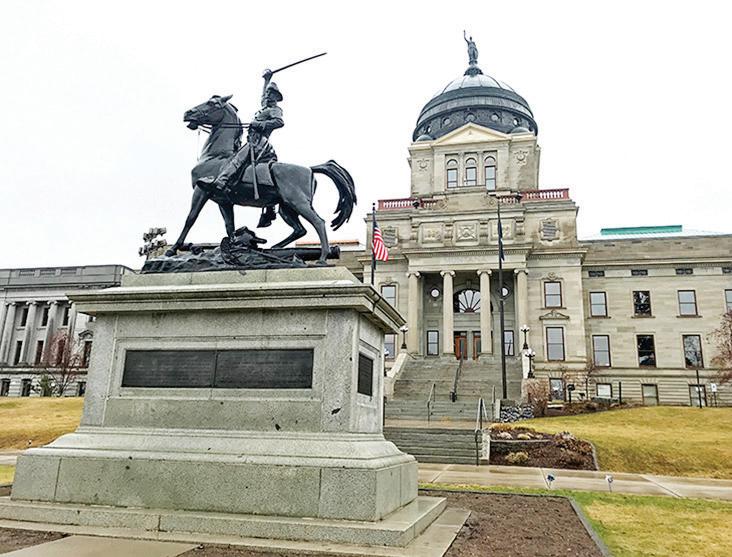
MONTANA — Concealing the back-channel communications between lawmakers, lobbyists and stakeholders when drafting bills amounts to the Legislature violating the state’s Constitution, a coalition of media outlets including Montana Free Press argued in court Friday.
Appearing before District Judge John Kutzman in Great Falls, the media organizations asked for an injunction blocking the redaction of bill draft folders known as “junque files,” which contain communications between lobbyists, legislators and
staffers as bills are being written.
Legislative staff began redacting the files at lawmakers’ requests in September, following a separate lawsuit ruling that shielded a Kalispell senator from producing evidence to be used against him in court. Legislative staff then applied that ruling broadly
to documents that had previously been considered public for more than 30 years.
“Unlike a party in a civil litigation, the press is not after this information to use it in some way, in some judicial proceeding against a legislator,” attorney Kyle Nelson told the court. “They are using this information for the
benefit of the public, to shine a light on what the government is doing, nothing more.”
The protections shielding legislators from testifying against themselves or producing evidence that does the same are intended to protect lawmakers from intimidation by the other two branches of state government,
the governor and the judiciary. Lawmakers also can’t be prosecuted for legislative acts, Nelson argued.
Attorneys for the Legislature argued that prying into junque files comes close to revealing a legislator’s “preliminary mental impressions.”
Attorney Brent Mead, with the Montana Department of Justice, said the practice of providing those files went too far.
“What we’re talking about is the legislator’s mental impression of what they want to do with a given piece of legislation during the drafting process,” Mead said. The attorney argued that conversations with lobbyists and stakeholders while conceptualizing bills should be considered part of a lawmaker’s thought process and protected.
Mead referenced a Thursday Montana Supreme Court ruling that granted the governor narrow protections, like
from page 1 attorney-client privilege and personal privacy, when disclosing details about which legislative bills he selected to track through the 2021 legislative session. The court ruled that Gov. Greg Gianforte was entitled to keep private some consultation with legal staff regarding bills but would have to justify each nondisclosure.
The governor argued he had a blanket executive privilege not to disclose, which the court rejected. Journalists testifying Friday said junque file contents improved their reporting, while frequently showing when lobbyists and those they work for doing the drafting benefit from a bill’s passage.
“...That bill could be passed into law, written by an outside interest group, without there being opportunity for the public to know who that interest group is.”
- Eric Dietrich, Montana Free Press Deputy Editor
granting Republican Sen. Keith Regier, R-Kalispell, privacy in his communications regarding a 2023 bill that redrew political districts.
Regier successfully fought off an attempt to produce his communications with third parties concerning the redrawing of the state’s five Public Service Commission districts.
“We have some occasions where we also want to know who’s helping draft this bill. What entities have submitted information, have requested information about this. Where is this draft coming from?” said Mike Dennison, a veteran Capitol reporter (and new member of the Montana Free Press board of directors). “For instance, is it coming from the Montana Power Co., NorthWestern Energy? Is it coming from big hospitals? Is it coming from the insurance industry? Those are just some random examples. Often, we know of a bill and have heard there were entities that were involved in the drafting.”
The hearing Friday stemmed from a lawsuit initiated in October by the Montana Environmental Information Center, Great Falls resident David Saslav, and Butte public defender Kaylee Hafer. All three plaintiffs petitioned the court to make junque files public again, a precedent based on a court ruling obtained by MEIC 30 years ago.
Soon after the lawsuit was filed, the media coalition petitioned to intervene. Montana Free Press Deputy Editor Eric Dietrich described requesting junque file contents in October concerning a proposed tax law but receiving a redacted document with no useful details. Included in the redaction was contact information for involved lobbyists.
Not all lobbyists involved in writing a bill participate when the bill is heard in committee, Dietrich said.
“Sometimes those people make things happen from behind the scenes, where they’re involved
in drafting the bill, and then they may or may not participate in the public process through committee hearings and stuff that happens after a bill is introduced,” Dietrich said. “ … That bill could be passed into law, written by an outside interest group, without there being opportunity for the public to know who that interest group is.”
The lawsuit behind Friday’s hearing unpacks the original arguments made by drafters of Montana’s Constitution in 1972 for opening legislative work to the public, among them Constitutional Convention delegate Daphne Bugbee of Missoula.
“The Legislature passes laws that affect every person in Montana. There is really no justification for keeping this process a secret from the people. The people need to know and have a right to know the reasons for committee votes,” Bugbee said at the convention.
The Legislature’s argument that some details are beyond public reach stems from a court ruling
By September, attorneys for the Legislature had crafted a form allowing lawmakers to opt out of disclosing communications with lobbyists and “stakeholders,” meaning parties directly benefiting from or adversely affected by proposed bills.
Montana Free Press is an independent, 501(c) (3) nonprofit source for Montana news, information, and analysis. Our mission is to produce in-depth public-service journalism that creates positive change and helps move society toward justice and equity.
MTFP seeks to uncover the truth and bring to light essential news stories by studying arcane bureaucratic processes, seeking out dark corners of major institutions, digging deep into data and documents, and holding power accountable to the people.
We work independently and in collaboration with other news outlets to produce meaningful news stories that have an impact on the lives and livelihoods of local communities.
Visit MontanaFreePress. org to learn more.
News from the Office of the Governor HELENA – Governor Greg Gianforte is now accepting applications and nominations to fill a district court vacancy in the Twentieth Judicial District.
The chief justice of the Montana Supreme Court has notified Governor Greg Gianforte there will be a vacancy in the 20th Judicial District (Lake and Sanders County) on Jan. 6, 2025.
Any lawyer in good standing who has the qualifications set forth by law for holding the position of district court judge may apply or be nominated.
The application form is available electronically at nominatejudges.mt.gov.
Applications must be submitted electronically as well as in hard copy by Monday, Jan. 13, 2025, by 5 p.m. Applications will be made available to the public.
Members of the public will be given the opportunity to provide letters of support or other comments regarding the applicants at nominatejudges.mt.gov from Tuesday, January 14, 2025, through Wednesday, February 12, 2025. Applicants must receive at least three letters of support to be considered for appointment by the governor.
News from Austin Peay State University
CLARKSVILLE, TN — Austin Peay State University is proud to recognize Nicholas Davis from Ronan, Montana, as one of the students named to the Dean’s List for academic achievement during Fall 2024. To qualify for the Dean’s List, students must earn a semester GPA of 3.5 or greater.













Boone Goddard
Advertising Sales, Owner (406) 249-1728 boone@valleyjournal.net

The Valley Journal newspaper (PE 23-190) is published weekly by Valley Journal LLC. Periodicals postage paid at Ronan, MT.
Business hours are 9 a.m. to 5 p.m., Monday through Friday.
Distribution is by mail subscription ($59 per year in Lake County, MT; $74 per year elsewhere in U.S.) and by newsstand sales. Postmaster: send address changes to Valley Journal, P.O. Box 326, Ronan, MT. 59864.
Your homegrown newspaper serves residents of Lake
Summer Goddard
Publisher, Owner (406) 249-1793 summer@valleyjournal.net
County and the Flathead Indian Reservation.
Deadline for display advertising is 2 p.m. Thursday. Deadline for news submissions, calendar items, classifieds and legal advertising is noon Friday, for the following week’s newspaper.
News, letters to the editor and calendar submissions may be sent by email to: vjeditor@valleyjournal.net. Classified and legal advertisements requests should be emailed to: vjmail@valleyjournal.net.
All print subscriptions include full access to online news,
And find us online for more photos, videos, breaking news and special sections!

Kathi Beeks
Office Manager, Copy Editor (406) 676-8989 vjmail@valleyjournal.net news@valleyjournal.net
archives. Sign up online at: www.valleyjournal.net/ subscribe

For general inquiries: call 406-676-8989, email summer@valleyjournal.net, or send mail correspondence to P.O. Box 326, Ronan, MT 59864. Copyright 2025, the Valley Journal. All rights reserved. Reproduction, reuse or transmittal in any form or by any means is prohibited without written permission of the Valley Journal.
News from the North Lake County Public Library
POLSON — Join our Youth Services Librarian, Julie, for our new line-up of programs. Thursdays, at 10 a.m. will be our new “Toddler Time.” This brand new program will be for 2-3 yearolds. This program is all about movement, where we will read active stories, dance, sing and shake it all about.
Thursdays, at 2 p.m. we will have Story Time. This program is focused on 3-5 year-olds and will include stories and activities for kindergarten readiness.
News from St. Luke Community Healthcare
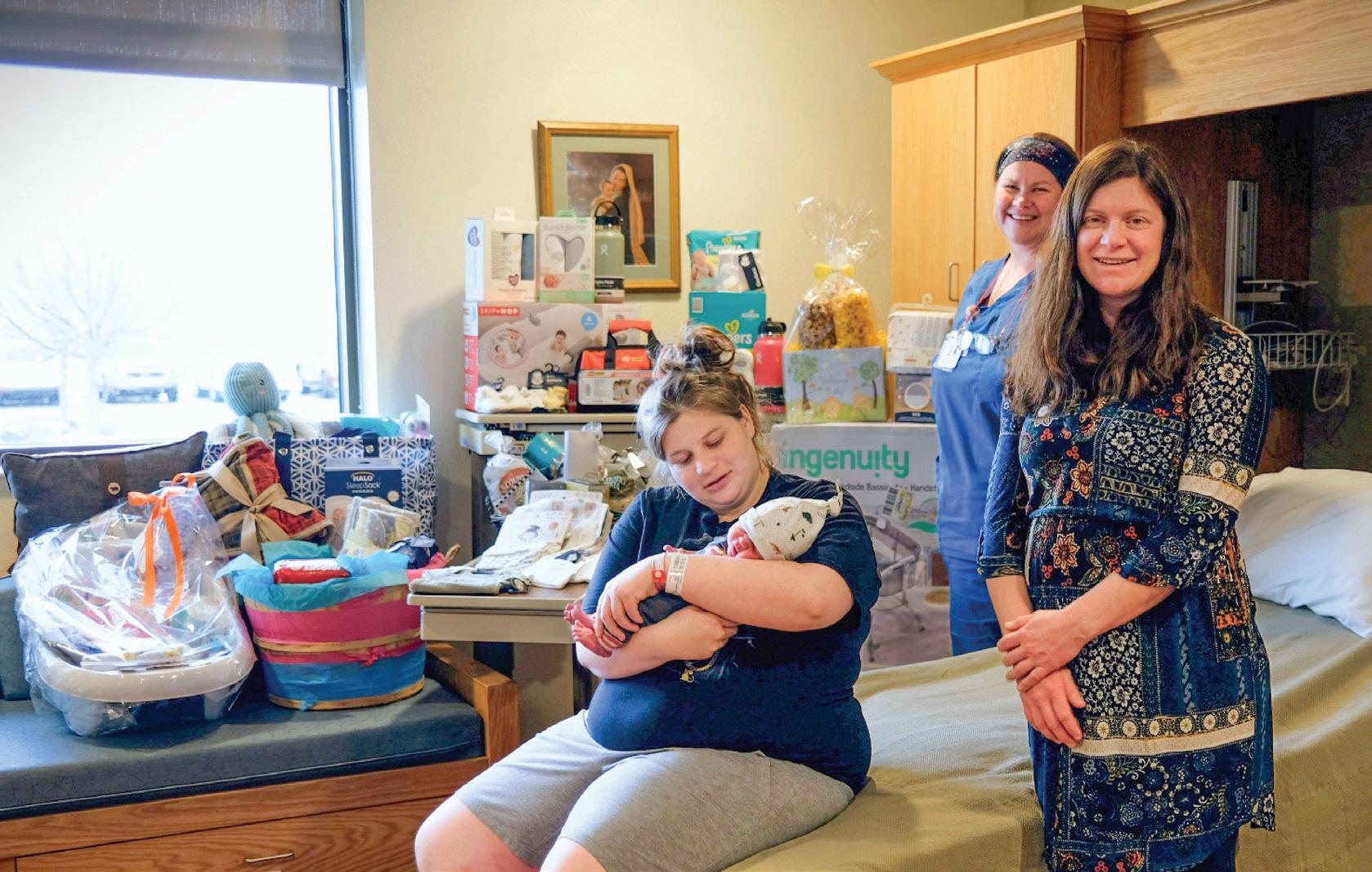
RONAN — St. Luke Community Healthcare is thrilled to announce the arrival of the first baby of the New Year at the New Beginnings Birth Center.
Jordan Clovis Simpson, a healthy baby boy, was born on January 1st at 4:10 p.m., weighing 7 lbs. 5 oz. and measuring 20 inches long.
Proud parents Quinten Reid and Taylor Everheart of Polson are overjoyed to welcome their son into the world. This annual celebration of new life was made even more special by the generosity of local businesses that contributed to the occasion.
St. Luke presented the family with a room filled with gifts and gift cards donated by the community, creating
a memorable welcome for baby Jordan. “We are thrilled to be part of such a joyous occasion,” said Dr. Joanna Billings, who delivered baby Jordan. “The arrival of the first baby of the year is a heartwarming way to begin a new chapter for our hospital and the community we serve.”
St. Luke extends heartfelt thanks to this year’s generous donors:
• _Access Montana
• _Aylesworth Insurance Agency
• _Bishop Insurance
• _Copper Mountain Coffee
• _The Cove Deli & Pizza
• _Glacier Bank – Ronan
• _Great Gray Gifts
• _Lake County Leader
• _Les Schwab Tire Center
– Ronan
• _Lydia Stitch
• _Mission Valley Popcorn Kitchen
• _Montana Ace Hardware
– Ronan
• _Ninepipes Lodge
• _Pizza Café
• _Polson Theatres
• _Ronan Harvest Foods
• _S&K Gaming
• _Simply 406
• _Stella’s Bakery & Deli
• _Swanky Sisters Mercantile
• _Valley Bank – Ronan
• _Westland Seed
St. Luke Community Healthcare is proud to support families in the Mission Valley as they start their New Beginnings by welcoming a new child into their lives. For more information about their OB and maternity services, visit www.stlukehealthcare. org or call 406-676-4441 to find an OB provider near you.
Join us Fridays at 10 a.m. –the new time for Mother Goose – in the Community Room. This is our program for 0-24 monthold littles. We will sing songs and have interactive activities for caregivers and their little ones.
Saturdays at 2 p.m., we are adding a Story Time. This program will have the same theme as the Thursday program. Upcoming Themes for Story Time: Jan. 9 -Friends and Jan. 16 –Penguins.
On Tuesday, Jan. 7, join us from 1-2 p.m. for “Pixel and Page- A Homeschool Teen Hangout ages 12-15. LVL UP UR hangout game at pixel and page. Dive into epic adventuresgaming battles and creative stories. Build worlds, solve quests and chill with friends who love games and great ideas whether you’re into pixels, pages, or both, this is your spot. #gameon #storymod Stop by the front desk for more information or call the library 406-883-8225.
On Saturday, Jan. 11 we’ll host our Technology Class: Twine in
the Library Community Room from 11 a.m. - 12 p.m. Create Your Own Adventure. Join us for an hour-long class to learn Twine, the free and easy storytelling tool. Design interactive “Choose Your Own Adventure” stories while picking up basic HTML and CSS skills. Perfect for aspiring storytellers of all levels. You must register for this class. Stop by the front desk, or call the library.
The Page Turner’s Youth Book Club meets Wednesday, Jan. 15 from 4 – 5 p.m. to discuss “A Place to Hang the Moon” by Kate Albus. Please join us for a great discussion, activities and snacks. Be sure to register for this program at the front desk or call the library.
Thursday, Jan. 16 is our next Book Donation Day. You are welcome to bring material donations that day from 9 a.m.-5 p.m. There is a limit of two boxes at a time. Our Friends of the Library have taken over management of our donation program, and have set the third Thursday of each month as donation day. Please refer to our Materials Donation Policy on our website for more information.
Also on Jan. 16 from 6:30-8 p.m. we are co-hosting a Montana Library Network Virtual Program: Preserving Montana’s Oral Histories and Traditions. This program trains participants on how to interview, collect and archive oral histories in their communities. You must register for this program to receive the link: Register by going to: https://tinyurl.com/HistoriesandTraditions.
By Libby Riddle, UM News Service
On an early summer morning at Red Rock Lakes National Wildlife Refuge in a remote corner of southwest Montana, Liv Lundin, a recent graduate of the University of Montana Wildlife Biology Program, hunted for a rare bird nest among the cattails. While navigating the knee-deep mud, Lundin spotted a small bowl of flattened vegetation with three small eggs inside.
“It’s a lot of hard work,” Lundin said. “Every morning we try to be on the water by 7 a.m. –some days paddling over 14 miles. But the first nest I found, I was like, ‘This is worth it. This is so worth it.’”
Lundin grew up in Alaska and worked as a structural firefighter for eight years. Lundin planned to work in fire full time after college but fell in love with wildlife biology through UM’s program.
After graduating in May 2024, Lundin took part in a long-term project on the breeding success of lesser scaup, a diving duck native to Montana. Populations are dwindling across North America but thriving on Lower Lake at Red Rock Lakes National Wildlife Refuge. UM researchers and conservation partners
aim to find out why.
Jeff Warren, a wildlife biologist for the U.S. Fish and Wildlife Service, established the Lesser Scaup Project at Red Rock Lakes in 2003.
Amidst a wildfire in the Centennial Valley, he wrote a funding proposal to study the population dynamics of the declining duck species.
“In wildlife, most of our knowledge comes from short studies – often just 2 to 3 years,” Warren said. “To truly understand how populations respond over time, we need longer studies that capture the variability driven by weather and wetland dynamics.”
Warren’s two decades of work uncovered es-
sential insights into the reproductive success and survival strategies of lesser scaup on Lower Lake. The scaup project established a long-term dataset that helps managers design conservation efforts that can be implemented in places where scaup populations face challenges.
“This project started because there’s been such a significant loss of western mountain wetlands,” said Laura Wallace, a UM Wildlife Biology master’s student and a technician on the scaup project. “These safe havens for breeding and migrating birds are incredibly important.”
Wallace and Lundin spent their summer
monitoring scaup nests for Warren’s nest success project, which is part of the larger scaup conservation effort. And this project is not the only long-term data collection on scaup populations Warren has spearheaded at the refuge. Every year, volunteers from around the state converge in the Centennial Valley for the annual banding drive at the end of the summer.
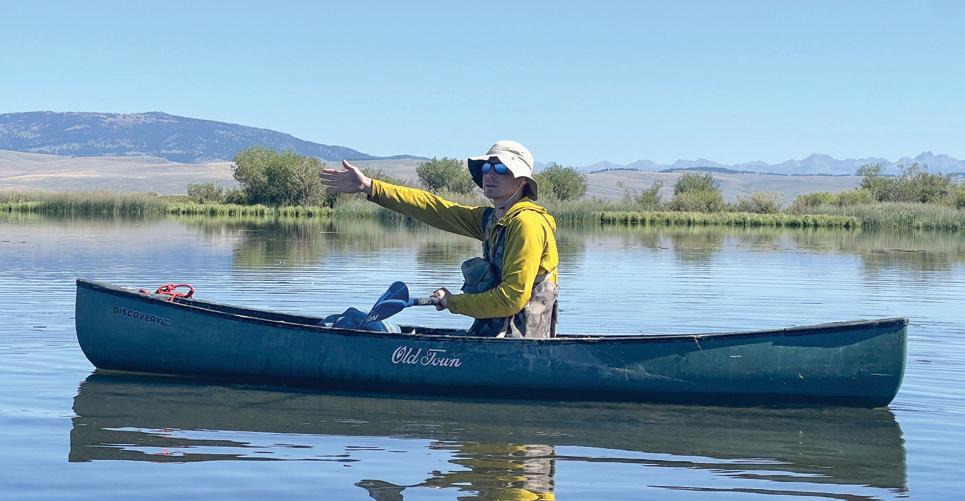
As a survival strategy, female scaup and their ducklings form groups of hundreds of ducks. On an early September morning, UM students, refuge staff and volunteers from government agencies and conservation organizations climbed into canoes to capture the ducks to
be marked and released.
“It’s a lot like a cattle drive,” Lundin said.
Thomas Riecke, the James K. Ringelman Chair in Waterfowl Conservation at UM, led the drive. After Riecke and volunteers quietly paddled a few miles to locate scaup, the normally soft-spoken professor shouted orders across the lake, instructing the canoes to form a U-shape around the ducks.
The canoes approached the ducks carefully, trying not to scare them into diving underwater. Volunteers had to be careful not to paddle too slowly, or the ducks could weave around the canoes and hide in the grassy islands that dot the lake. Once
in position, Riecke and volunteers used their canoes to drive the birds toward a wire mesh trap bracketed on either side by 20-meter-long wing nets.
“As we get closer to the trap, we get them to ball up,” Lundin said. “We’ve got this ball of 300 ducks … and we just push them into the trap.”
This was the tipping point of the drive. Canoes slowly peeled away as the ducks moved down the funnel formed by the nets. Once one or two birds made the plunge into the trap, the rest followed. The students jumped out of their boats and waded waist deep to
join the ducks in the trap. What followed was a mad dash to scoop birds into perforated boxes and onto canoes that would ferry them to shore as quickly as possible.
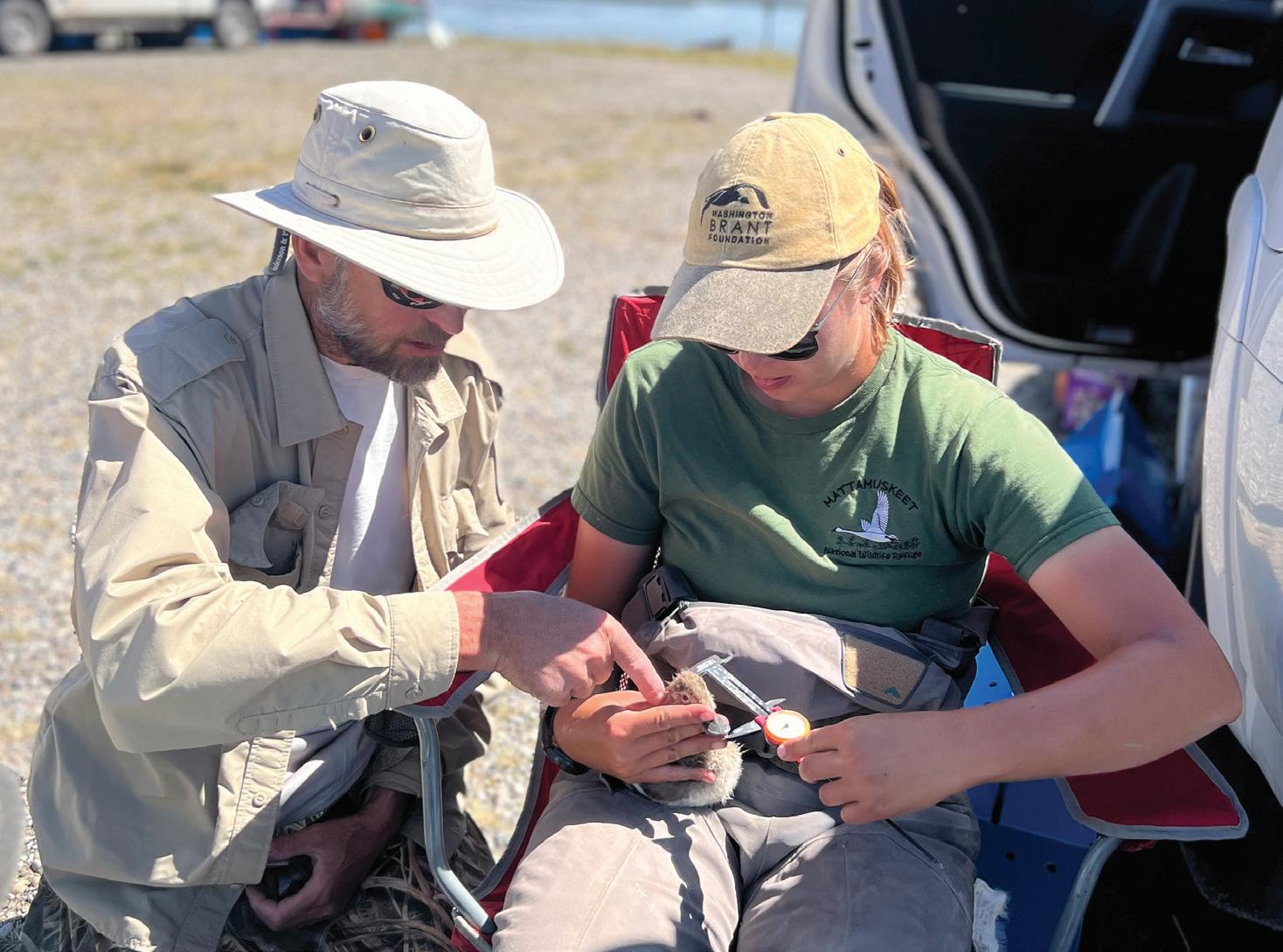
Once back at the boat launch, deemed “Banding Landing,” volunteers on deck with experience in sex identification of ducks helped sort the birds into male and female boxes. From there, volunteer banders set up in the shade of vehicles to protect the ducks from the hot sun and began the hours-long task of banding nearly 300 birds.
On one team, Cooper Heaton, a UM senior and founder of Griz Ducks Unlimited, carefully weighed a duckling – 300 grams, equal to the weight of a can of soup. On another team, Riley Stedman – who took time off work as a wildlife biologist with the Bureau of Land Management to attend the banding weekend –read off the number on a
small silver band before using specialized pliers to close the band around a duckling’s leg, twisting it in circles to make sure it wasn’t too tight.
The duck will wear this band for the rest of its life.
“It’s really cool to be a part of banding whenever you can because it’s one of the oldest and [most] well-kept records we have for wildlife,” Stedman said.
When a banded bird is spotted or harvested, and that band number is reported, scientists and managers can learn more about the survival rates and migration of the whole population. This helps wildlife professionals make important decisions for the future of the species. Over half of the lesser scaup marked prior to the hunting season in North America are banded at Lower Red Rock Lake.
Equally important to the demographic data is the community created

portant skills for future careers in wildlife work.
“Students have the opportunity to go to this place, learn but also make an impact,” Riecke said. “It’s a great way for students to say, ‘I worked on a wilderness area on foot and kayak, so I do have those skills.’”
data [like this].”
around the volunteer banding drive. Among the hundreds of volunteers who have contributed to the Lesser Scaup Project over the years are children and students who had the chance to hold a duckling in their hands.
“Having volunteers come out to band ducks is not just about collecting data,” Warren said. “It’s about connecting people to the land and the birds.”
As the volunteers prepared to release the banded scaup back into the lake, Warren and Riecke explained to the
assembled crowd that in a month these ducklings will begin their migration to Mexico. By participating in this project, volunteers helped USFWS gain essential insights into the habitat available to these ducks, which is important in aiding their annual migration.
“This research isn’t just about the scaup,” Warren said. “It’s about the larger landscape and what it takes to conserve migratory species across their journey.”
UM students are making a tangible impact on waterfowl conservation while also learning im-
Although new to waterfowl research this past summer, by the end of the banding effort, Lundin helped lead the drive and taught visiting students proper duck-handling techniques. Across the two weeks of banding drives, UM students, faculty and alumni, as well as volunteers from other agencies and nonprofits, contributed over 1,200 volunteer hours. They also helped release 800 newly banded birds.
“This project has been going on for 20 years, and I hope it continues until the lake dries up – hopefully never,” Wallace said. “There are trends in these populations that you can’t see without long-term
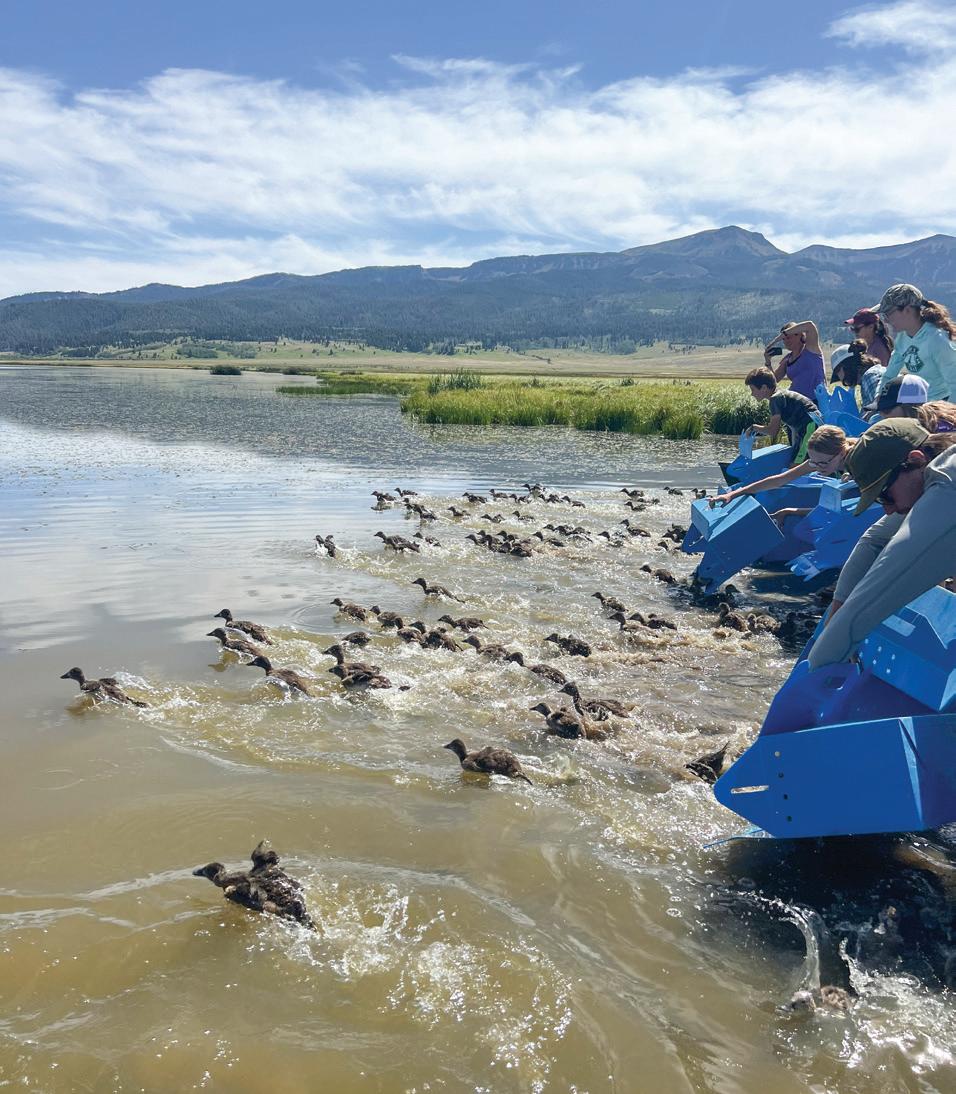
At the end of a long day of banding, Lundin watched volunteers line up along the lake’s shore, each with a box of birds in their hands. Warren counted to three, and the boxes flew open, releasing the birds back onto the water in a flurry of flapping wings and feet. The ducklings quickly formed ranks behind the adult females and swam off in a line.
In the spring, Lundin will begin master’s research with Riecke, investigating population trends in waterfowl using these long-term banding datasets. But more importantly, Lundin eagerly awaits returning to the Centennial Valley next summer for the annual banding drive.
“This experience really brings home the point that conservation isn’t just in your backyard,” Lundin said. “It’s continent-wide and everywhere in between.”


ARLEE – In a remarkable achievement that transcends age and celebrates empowerment, Estela Fullerton, a resident of Arlee, Montana, has been crowned Mrs. Grand International 2024 at the prestigious competition held in Myanmar from Nov. 23-28, 2024. From her humble beginnings as a rancher’s wife of Mr.Hal Fullerton and dedicated homemaker, Estela, has transformed her passion into a powerful platform for advocacy, showcasing that beauty is not merely skin deep but rooted in purpose and compassion.
Mrs. Grand International is not just a beauty pageant; it is a celebration of grace, empowerment, and a commitment to making a difference in the world. Estela entered the competition with a mission: to raise awareness about the importance of education for underprivileged children and to empower women in need. “At 61 years old, I believe that age is just a number. It doesn’t define us; rather, it is our actions and our desire to uplift others that truly matter,” she stated
From UM News Service
MISSOULA — The Montana Museum of Art and Culture will host a series of faculty gallery talks January through March at the University of Montana.
Titled “Reflections,” the series will focus on conversations with members of the UM faculty reflecting on aspects of the museum’s Permanent Collection. Viewpoints will be shared from their respective disciplines. Gallery talks run from 2 to 2:50 p.m. Wednesdays in the
MMAC building. Planned faculty gallery talks are:
• Jan. 15: “On Harmony,” Dr. Tim Nichols, dean of the Davidson Honors College
• Jan. 22: “On Origins,” Dr. Co Carew, assistant professor in the School of Social Work
• Feb. 5: “On the Land,” Dr. Neva Hassanien, professor of Environmental Studies
• Feb. 19: “On Beliefs,” Bruce Hardy, M.D., honors instructor in the Davidson Honors College
• Feb. 26: “On Conflict,” Dr. Tobin Shearer Miller, professor
“ This title provides me with an incredible opportunity to make a positive impact in the lives of those who need it most.”
- Estela Fullerton
during her acceptance speech. Representing Mrs. Grand USA Royal, Estela Fullerton proudly donned a stunning national costume named “Liberty,” embodying the spirit of freedom and strength that resonates with her advocacy work. Her efforts did not go unnoticed, as she was awarded the title of Mrs. Popularity before being crowned as the overall winner, Mrs. Grand International 2024. As the reigning queen, Estela is excited to take on the role of ambassador for Mrs. Grand International, aiming to further her advocacy and inspire others to join
of history and director of African-American Studies
• March 5: “On the People,” Andi Hoelzel, M.S.W., adjunct clinical professor in the School of Social Work
• March 12: “On Beauty,” Dr. Valerie Hedquist, professor of art history and criticism and director of the School of Visual and Media Arts
No reservations are needed for the talks, which are free and open to the public. For more information, call Tracy Hall at 406-243-2019 or email tracy. hall@mso.umt.edu.
the cause. “I am deeply honored to be recognized on both national and international platforms. This title provides me with an incredible opportunity to make a positive impact in the lives of those who need it most,” she expressed.
Estela extends her heartfelt gratitude to her family, friends, and supporters who have been instrumental in her journey. “Your unwavering support has fueled my passion and determination to succeed not just for myself, but for the causes I stand for,” she said.
As a proud Filipino-American who has resided in Montana for 22 years, Estela, hopes to inspire individuals of all ages to pursue their dreams and advocate for meaningful causes. Her journey serves as a testament that it’s never too late to make a difference and that every individual has the power to create change.
For more information about Estela Fullerton and her advocacy work, please contact her at estelafaccginw@gmail.com or 406-8803746.




I’ve written much on grief. In writing class they tell you to write what you know, but this isn’t why I’ve written about the subject. I’ve felt compelled. Driven to do so, in an attempt to share my hard-fought knowledge and maybe, perhaps, help others to understand a non-understandable topic – to create order from chaos. To bring clarity from the fog. To communicate about the uncomfortable.
Jill Pertler Syndicated columnist
But I think it is important. For sure for me, but hopefully also for others who are struggling with the same painful void that comes from losing someone dear. I hope maybe it helps, to know others (me) struggle to breathe and still continue to survive.
In that, I hope you will allow me an analogy.
At this stage, grief isn’t pretty. It is most often ugly. Shattered. Fragmented. Splintered. Nearly destroyed and unusable.
Much like broken glass.
hurtful become rounded, soft and gently curved. A bright and shiny surface becomes muted, matte and frosted.
So I write what I know. And wish I didn’t know. I wish I weren’t an expert on the topic. But I can only grow and live through my experiences, and one of the most transforming ones in my life so far has been grief. Writing about it is hard. It hurts. Even now.
Grief is like sea glass. Both start out as something completely fractured and broken. Simply shards – pieces of nothing that used to be something.
The edges are sharp and hurtful. They can cut in an instant without the recipient even realizing it happened until the blood is overflowing and the pain is unbearable.
In the midst of its brokenness, unusable and destroyed glass (just garbage at this point) is carelessly tossed aside, into the waters of the ocean, and becomes an unwilling participant in the tide. In that it is pummeled and tumbled by the sands and the shells and the sea - over and over and over as the tide moves in and out and in again.
During this process, the glass is transformed - magically and miraculously so. Slowly. Gradually. Painstakingly. On the atomic level - one shard at a time. One wave at a time.
Edges, once sharp and
And somehow, to the naked eye, this new look is revered. The sands of time take the sharp, broken and ordinary glass and transform it into something beautiful. And that’s not all, the sea water and sand chemically alters the glass. It is transformed – on a cellular level – into something it never could have dreamed of being before. A similar transformation comes from deep grief. Upon impact, it cuts you to the quick. But over time, the jagged edges become smoother, soft even. It transforms you on a cellular level to something you could have never dreamed of being before.
Mind you, this change,
while good in a number of ways, is not something you ever would have chosen. You still long to be a beer bottle or vase or wine glass. You still long to be intact. But that is no longer possible, because somewhere you were broken by grief and thrown into the tide and in that something unexpectedly beautiful - and beyond your own control – occurred. And even though you never would have chosen it, and still wouldn’t choose it now, you accept it. It has become a part of you and that will never change. You realize it is how you were meant to be all along. That this transformation was planned all along. And as hard as it is and was, you know and understand that sea glass is beautiful in its own right. And you long and hope for the same trans-
Aneffort to honor a young man from Libby who heroically died on the battlefield in Vietnam prompted the creation of one of the first bills coming before the 69th Legislative Session in Helena.
SB59 is poised to unite various political personalities behind a tribute to all Vietnam veterans, but particularly Staff Sgt. Artie Rambo, who was posthumously
awarded the Silver Star Medal.
The effort to honor Rambo began at a Libby VFW function with some remarks by longtime attorney Mark Fennessy, who recalled that Rambo stepped in when some older bullies were picking on him.
Libby’s Harper Erdman VFW
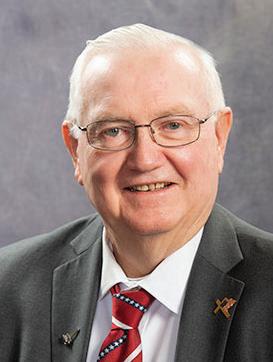
Sen. Mike Cuffe, Eureka
Post 1548 took on the task of naming the Highway 37 bridge in honor of the fallen soldier. Vice Commander Keith Kidwell solicited community support, garnering 300 notes and letters, plus 615 signatures from fellow soldiers who served
alongside Rambo. Another Army officer wrote that he had received support from a thousand other veterans at a convention.
A singer, musician, and athlete, Rambo studied at Carroll College and Notre Dame, earning a degree in chemical engineering. Rambo, who had a wife and children, could have received a deferral and avoided fighting in
formation for yourself. Jill Pertler is an award-winning syndicated columnist, published playwright and author. Don’t miss a slice; follow the Slices of Life page on Facebook.
Letters to the editor are welcome. The content is the opinion of the letter writer and not the newspaper. The decision to publish letters is made by the editor. Letters must be 350 words or less. A writer will only be published twice per month. Letters may be edited for content or length, or may not be published if considered libelous, in poor taste, spiteful, self-promotional or of limited interest to the general readership. Space limitations also dictate when or if letters are published. Letters must be signed by the author and name, address and phone number must be included – phone number is for verification purposes only. Letters from organizations must include the name of at least one author. Please limit “thank you” letters to four people/organizations or less. Deadline is 5 p.m. Friday to publish the following week.
Opinions expressed in this section are not necessarily those of the newspaper. see page 11
fighting in Vietnam.
However, Rambo told his wife that if he didn’t go, someone else would have to in his place, adding that “serving his country was the price you paid for living here.” This selflessness was typical of the Rambo that his family and friends knew.
As sponsor of the bill, I believe the measure will move rapidly through the legislature and land on the governor’s desk in short order. Senate President Matt Regier will assign the bill to the Senate Committee on Education and Cultural Resources for a hearing at 3 p.m. on Tuesday, Jan. 7.
Former governor Marc
Racicot – a longtime friend of Rambo – also threw his support behind the effort. Racicot will speak at the bill hearing and arranged an open reception at Carroll College’s Loendorf Reception Room from 5-7 p.m. on Tuesday.
The following is an excerpt from Rambo’s Silver Star Citation:
“On Nov. 26, 1969, while serving as an artilleryman… [Rambo] was at the squadron command post when it came under an intense mortar and ground attack from a North Vietnamese Army force. In the initial moments of the firefight, a rocket propelled grenade slammed into a cargo vehicle next to him, and the vehicle erupted into explo-
sions and fire. Sgt. Rambo immediately began alerting the personnel in the area and directing them away. He then crawled to the fiercely burning vehicle and attempted to drive it out of the area. Suddenly another grenade hit the vehicle and he was thrown to the ground. Undaunted, he crawled to a self-propelled howitzer and started the engine. As he began driving out of the area, the vehicle was hit by yet another rocket propelled grenade and he was fatally injured.”
Rambo was survived by his wife Helen, his daughters Kerry Lynn and Amy Denise, his parents Howard and Viola, siblings, and a large extended family.
Attention lenders: Consider having your title work done by friendly professionals at a locally owned and operated title company that has stood the test of time!
offer complete, reliable title services in our conveniently located office in downtown Polson.

KALISPELL — Montana Fish, Wildlife & Parks is hosting several outdoor education programs at Lone Pine State Park in January.
Welcome In The New Year With A Forest Bathing Walk
Date: Saturday, Jan. 11, 10-11:30 a.m. Meeting Place: Lone Pine Visitor Center
Begin the new year with the rejuvenating practice of forest bathing, a mindful immersion in nature that invites you to slow down and experience the natural world through your senses without any other goal or focus.
Guided by Certified Nature and Forest Therapy Guide Ellen Horowitz, participants will embark on a slow, intentional walk through the forest, covering a total distance of less than a quarter mile.
To stay comfortable during this tranquil activity, dress warmly in layers, including a hat, scarf, gloves, and insulated boots. Hand and toe warmers are recommended, and bringing spare layers is a good idea, as forest bathing generates minimal body heat. Pre-registration is required, and space is limited to 8 participants. Call 406755-2706, ext. 0 to secure your spot.
Introduction To Nature Journaling: Cultivate Curiosity And Gratitude
Date: Saturday, Jan. 18, 9:30 a.m.–Noon
Location: Education Room, Lone Pine Visitor Center
Embark on a journey into the rewarding world of nature journaling with Valerie Bayer, Master Naturalist and Certified Nature Journal Educator, and Kathy Settevendemie, a skilled fine artist and expert in Montana’s native plants. This workshop will also cover essential materials, journaling locations, and creative ideas to inspire your practice. No artistic experience is needed—just an open mind, a notebook and pen, and a love for nature! Pre-registration is required. Call 406-755-2706, ext. 0 to secure your spot.
Sundays With Camo: Winter Survival Secrets
Date: Sunday, Jan. 19, 2-2:30 p.m.
Location: Lone Pine Visitor Center
Meet Camo, our resident bullsnake, and learn about the fascinating winter survival strategy of brumation—a hibernation-like state essential for snakes in the wild. Discover how seasonal cycles benefit reptiles like Camo, even in captivity. No registration is required for this family-friendly program. see page 12

from page 11
Winter Sensory Hike: A Journey Through The Senses
Date: Available throughout January during park hours Location: Trail guide available at the Visitor Center
Immerse yourself in a self-guided sensory journey that highlights the serene beauty of winter. Pick up a trail map and sensory guide at the Visitor Center entrance starting January 2nd and explore designated stops along the path to engage all five senses—sight, sound, touch, smell, and even taste. This gentle hike will be available all month and is perfect for all ages, offering an opportunity to slow down, connect with nature, and reflect as you set meaningful intentions for the year ahead.
For additional details or to register for programs, call 406-755-2706, ext. 0, or speak with the Visitor Center assistant during open hours: Wednesday-Saturday from 10 a.m. to 3 p.m. and Sunday from 12:30 p.m. to 3 p.m. Download the MyFWP mobile app [1] to access your hunting and fishing licenses right on your phone. winter activities
vj
News from Zero to Five
HELENA – Working families, businesses, and children are all impacted when access to quality, affordable child care is limited – employer investments in benefits that support employees with young children has a positive impact on family economic stability, workplace productivity, and employer retention and recruitment.
Zero to Five Montana, in partnership with the Montana Department of Public Health and Human Services Bright Futures Birth to Five program, is offering a one-time grant opportunity for Montana employers through the Family Forward Montana initiative to develop an employer-sponsored child care program. The goal of the program is to implement a child care strategy reflective of the goals of the employer that is sustainable and creates cost sharing between the employee, employer, and the State of Montana.
Grants will range from $10,000 to $100,000 depending on the size and scope of the employer’s project plan. Grant funding will total $2 million to be awarded in two cohorts over
2024 and 2025. Data collected from this pilot will help inform future public private partnerships.
This initiative aims to: Build awareness of Montana’s growing child care needs and the critical role employers play in helping to address it.
Educate employers and community organizations on employer-supported child care models, including those that apply to individual employers, groups of employers and/or nonprofit community-based organizations acting on behalf of a group of employers.
Create and advance locally driven solutions that increase child care access and support working Montana families.
Interested employers can apply at https://familyforwardmt. org/grant. The deadline for applications is February 7 with final decisions and employer notification no later than February 28, 2025. There is a Lunch & Learn webinar scheduled for noon on January 17 where employers can get more information about the program and the application process. Interested parties can register online: https://zerotofive-org.zoom. us/meeting/register/1E-OT_
LAKE COUNTY — The following marriages and divorces were filed in Lake County in December 2024.
Marriages
Stephen Scott Jackson and Jasmeet-Joanie Dhillon
Mattison Elizabeth Hendrickson McAnally and Kobe Ray Cox
Alexis Rae Beavers and Patience Kaori Rose Afterbuffalo
Katherine Eileen Hummel and Dennis Christopher Roach
Parnell Albert Dionne and Twila Rose Demaray
Bradley Scott Arthur and Eduvigis Rosenburg
B6SFeRzh8h6AoOSw#/registration
According to a 2024 report by the Montana Department of Labor & Industry, 40% of Montana businesses say they are unable to find and retain a qualified work force due to a lack of child care, and 30% of businesses say inadequate child care has prevented their company from growing.
Affordable, accessible child care provides vital support for working families, employers and our state and national economies. The Zero to Five Montana Employer-Sponsored Grant program will improve community vitality, company productivity and the viability of our present and future labor force. This initiative is an investment in Montana’s future.
Montana child care facts: Licensed child care capacity in Montana meets only 44% of the demand.
Child care shortages exist in every county, with 59% of counties identified as child care deserts – where supply meets less than one-third of demand.
In 2023, families were paying an average of 28 percent of their household income on child care –- $11,700 on average.
62 percent of Montana parents say they missed work due to a child care-related issue. ABOUT FAMILY
Family Forward Montana, an initiative of Zero to Five Montana, is designed to inspire and support family-friendly practices in workplaces across the state. Zero to Five Montana is a nonpartisan, statewide early childhood organization focused on increasing access to early care and education, supporting and strengthening families, and supporting the start, stability, viability, and expansion of high-quality child care businesses in Montana. Learn more at www.zerotofive.org.
This program is funded under a contract with the Montana Department of Public Health and Human Services, the statements herein do not necessarily reflect the opinion of the department. This publication was made possible by grant number 90TP0101. Its contents are solely the responsibility of the authors and do not necessarily represent the official view of the United States Department of Health and Human Services, Administration of Children and Families.
Jeremy James Michael Rasmussen and Chimbecca Ann Jarvis
Nicholas Alan Godfrey and Kristy Kay Maples
Madelyn Lorraine Grieco and William Raymond Taber
Steven Allen Christiansen and Dharma Rose
Divorces
Nathaniel J. Rogers and Claire R. Frank
Robert Nebres and Kimi Nebres (Tallman restored)
Charles C. Scott and Lynn B. Scott
Johnathan C. Shaner and Danae A. Shaner
Clarence ‘Mack’ McConnell
ST. IGNATIUS —
With heavy hearts, we announce the passing of Clarence “Mack” McConnell, a devoted husband and father, an active member of our community, a news man and author on Dec. 31, 2024 at the age of 81. Raised in the Mission and Flathead valleys, Mack graduated from the University of Montana, and enjoyed a very successful career as the Editor of multiple newspapers throughout Montana, with a brief stop in Wisconsin and back to Montana with Rural Montana Magazine where he retired as a Publisher. Mack was known for his generosity, strong work ethic and unwavering dedication to his family. He is survived by his beloved wife, Julie, their children, Lori (Jason) Gilliland, Kevin (Angela) McConnell, April (Jack) Barnings, Brian (Kristen) McConnell, his brother, Kenneth McCo-
nnell, and many loving grandchildren and great grandchildren. He was a passionate Montana Grizzly and Seattle Seahawks fan, also finding joy in reading, camping with family and supporting his fellow Flathead and Mission valley residents. No service is currently planned.
his class. While in high school he played basketball and rode and broke horses and donkeys. This is where his love of horses and being a cowboy began.

RONAN — Marion Wayne Bennett of Ronan, MT, went to be with his lord and savior Dec. 30, 2024. He was born on March 24, 1942 in Prescott, AZ, to Jack Wayne and Mabel Bennett. Marion was the oldest of 3 children (Marion, Jacklyn and Dennis). He was raised in Mayer, AZ. He attended Mayer schools from kindergarten through 12th grade and was 1 of 3 graduates in
Obtain application,
and job description by e-mail: clerk@cityofronan.org or stopping by at Ronan City Hall, 207 Main SW, Ronan, MT 59864
Marion married Jolene Nielson in 1976. They were later married in the Salt Lake temple of the Church of Jesus Christ of Latter-Day Saints in 1978. With this union, they blended their 4 boys to complete their family. As a member of the Church of Jesus Christ of Latter-Day saints, he spent many years in different positions serving others throughout his life.
In his early years, Marion drove over the road semi-trucks from Chinatown to New York City and everywhere in between. He spent most of his career working
for Salt River Project at the Navajo Generating Station in Page, AZ, as a Heavy Equipment Operator. While living in Page, he was able to start his dream of collecting horses for his horse ranch. They bought their dream property in Montana and eventually moved to Montana in 1997. While in Montana he worked for the Ronan School District then Lake County until his final retirement in 2006. He was then free to spend all his time with his horses and working on his property with Jolene. He spent many hours in the parking lots of Walmart and Costco calling his kids and grandkids while waiting for Jolene to shop. These were some of the best conversations we all had. Marion’s greatest


loves were his wife, kids, grandkids, great grandkids, his cats, dogs and his horses. He also loved hunting, fishing and spending time with his family in the great outdoors.
He was preceded in death by his parents (Jack and Mabel), brother (Dennis), son (Bill) and brother-in-law (Dan).
Funeral services were held at the Ronan Church of Christ of Latter-Day Saints on Saturday, Jan. 4, 2025.
Memories and condolences may be sent to the family at www.shriderthompson.com.
Arrangements are under the care of Shrider – Thompson Funeral Home.
George E. Maass
POLSON — George E. Maass, age 90, passed away Dec. 20, 2024, at St. Joseph Medical Center. Arrangements are under the care of Shrider-Thompson Funeral Home.
Marion is survived by his wife Jolene; his sons Brian, Tim (Dana) and David; grandchildren Ashley, Dustin (Bubba) (Kally), Garth (Seana), Ty (Braedyn), Jacob, Christian (Amanda), Jenna (Taylor), Shawn and Gracie; great-grandchildren Zander, Hudson, Hunter, Axel, Brooks, Ryleigh, Nolan, Avery and Ridge; his sister Jacklyn, niece and nephew and many other relatives.




Polson
By Pete Mangels for the Valley Journal
POLSON — AARP Tax
Preparation Assistance pre-registration begins now through April 15, 2025. You must make a reservation for assistance by calling or stopping by the Polson Senior Community Center. Appointment times are available starting in February on Mondays or Thursdays only between 10 a.m. and 3 p.m. through mid-April. You may register by phone; then pick up your packet to fill out prior to your appointment time.
Full-time or part-time Executive Assistant/Nutrition Director wanted. Apply at the center. Weekdays only. Wage is depending on experience, $16$25. Negotiable.
Activities:
Bowling: “no-tap” Tuesday 1 –3 p.m. Join any time.
Carving Wood for beginners: Wednesday & Friday at 1 p.m. Join any week.
Pick a game to play with your friends on Wednesdays after lunch. Dominos? Scrabble? Uno?
Mah-Jong?
Play day: cards, board, dominoes, Yahtzee, etc. Invite a foursome. Monday and Wednesday, after lunch. VSO (Veterans Service Officer:) 1st Friday and 3rd Tuesday of each month. 9 a.m. - noon. Walk-in.
Spinning Wheelers: 1st Tuesday of each month (Jan. 7) 11-1 p.m. 208-520-1013
Bingo: Fridays: Open at 5:30 p.m. Play at 6 p.m.; “Playing-Card” Bingo begins
Wednesday, Feb. 5.
Exercise: Sitting or standing or dancing: M- W- F, 10:30 a.m. –11:30 a.m. Video-assisted. Low impact.
Pinochle: Thursday: 12:15
p.m. - 3 p.m. We play 3, 4 or 5 handed. Also Mondays at 12:15 p.m.
Pool: Open table from 8 a.m.3 p.m.
MENU (Subject to Change):
Lunch ($5 donation) from 11:45 a.m. - 12:30 p.m.
– Thursday, Jan. 9 - BBQ Pork, baked beans, corn, oriental salad, cherry-chip cake
– Friday, Jan. 10 - ham and cheese omelet, peas, fruit, butterscotch pudding
– Monday, Jan. 13 - cream of tomato soup, muffin, mac/veggie salad, coffee cake
– Tuesday, Jan. 14 - pork loin, mashed spuds, mixed veggies, apple salad, peach cobbler
– Wednesday, Jan. 15 - chicken Enchilada, refried beans, Frito salad, lemon bars
– Thursday, Jan. 16 - meatloaf, bakers (loaded), green beans, spinach salad, brownies – Friday, Jan. 17 - chicken strips, steak-fries, beets, fivecup salad, fiesta cake
Our community center is located at 504 Third Avenue E. Doors open from 8 a.m. – 3 p.m. weekdays. Call us at 406883-4735. Email: polsonseniorcenter@gmail.com or visit us on Facebook.
By Theresa Yares for the Valley Journal
ST. IGNATIUS — Happy
New Year from the St. Ignatius Senior Center. Activities and
meal schedules for January are listed below.
Bingo - Jan. 11 at 2 p.m.
Craft Day: Jan. 16 at 1 p.m. Cut Glass. Free will offering to participate. Call the senior center, 406-745-4462, to leave your name and number if you are interested so there will be adequate supplies.
Movie Night: Jan. 30 at 2 p.m. Will announce which movie at later date. Free will offering and we will have popcorn, hot chocolate, coffee.
Tuesday, Jan. 7 - chicken ranch tater tot casserole, biscuit, pears, chocolate chip cookie
Friday Jan. 10 – fish, mac-ncheese, cottage cheese, tomato slices, chocolate sheet cake
Tuesday Jan. 14 – goulash, mixed vegetables, frozen raspberries, garlic bread, rice krispy treats
If you would like a take out meal, please call 406-7454462 by 10 a.m. on Tuesday and Friday and by 2 p.m. on Wednesday. Times of meals are listed with menu. Menus for the month are available in the entryway of the center.
Everyone is welcome at our meals, young and old. Come enjoy a delicious meal and good conversation.
Our senior center is open to people renting it. If you are interested, please call 406-7454462 and leave a message. We will call you back with the information you need. If you have question about obtaining elder commodities call or stop by for information and application.
Gentle Yoga is on Wednesday from 1 to 2:15 p.m. If you are interested please call Bonnie Kiser at 406-253-0177. Her rates are 5 sessions for $65.
RONAN — Jordan Clovis Simpson was born on Jan. 1, 2025 at the St. Luke New Beginnings Birth Center in Ronan, making him the first baby born at St. Luke in 2025. He measured 7 lbs. 5 oz. and 20 inches long. Parents are Quinten Reid and Taylor Everheart of Polson. Paternal grandmother is Janet Voise of St. Ignatius. Maternal grandmother is Deann Mullaney of Polson. Jordan joins his sibling, Nico. Note: This photo is for artistic purposes only and does not reflect AAP Infant Safe Sleep recommendations.
POLSON — Rhory, Chloey and Raimey are excited to announce the arrival of their little sister, Cicily Ann Reynolds. Cicily was born Dec. 16, 2024, at Providence St. Joseph Medical Center’s Nesting Place in Polson. She was 19 inches long and weighed 6 pounds, 4.5 ounces. Cicily’s parents are Cierra and Rocky Reynolds of Ronan. Cicily’s maternal grandparents are Joe and Dana Merwin. Paternal grandparents are Karey and Darla Reynolds.
News from Big Sky State Games
BILLINGS – Registration for the 23rd Annual Shape Up Montana program is underway. Since it began in 2003, over 88,800 Montanans have logged more than 15.7 million activity miles. Shape Up Montana is a team-based healthy lifestyle program of the Big Sky State Games


that helps Montanans to be more physically active and make healthier nutrition choices.
The team competition is based on accumulated activity by logging miles with the aid of an activity conversion calculator and a smartphone app. A weight loss category, based on healthful eating and physical activity, can be see page 17

Get
a job – earn college credits – make a difference!
To apply you must submit an SKC application, resume and applicable transcripts to: Human Resources, P.O. Box 70, Pablo, MT 59855. Toll free 877.752.6553, ext. 4985 Direct Dial 406.275.4985/4977
Nursing Faculty 2 openings (10 months)
Salary Range: $55,935 - $65,551 DOEE
Closing Date: Open Until Filled
Nursing Simulation Lab Instructor
Salary Range: $54,301-$56,400 DOEE
Closing date: Open Until Filled
Career Advisor for TRIO Student Support
Services Program (10 months)
Salary Range: $37,744 - $40,824 DOEE
Closing Date: Open Until Filled
Academic Transfer Specialist
Salary Range: $35,182 - $37,072 DOEE
Closing Date: Open Until Filled
Custodian Part-time
Starting Wage: $15.54/hr
Closing Date: Open Until Filled
Wildlife/Fisheries Ecologist (9 months)
Salary Range: $51,062 - $56,111 DOEE
Closing Date: Open Until Filled
Security Officer Part-Time
Salary Range: $13.20-$14.54/hr DOEE
Closing Date: Tuesday, Nov. 12, 2024; 4:00 pm MST
Executive Assistant for the Vice President of Academic Affairs
Salary Range: $41,597 - $44,061 DOEE
Closing Date: Open Until Filled
President of Salish Kootenai College
Salary Range: $107,000 - $135,000 DOEE
Screening of applicants will begin immediately and will continue until the position is filled.
IRC Administrative Assistant
Salary Range: $39,133 - $40,365 DOEE
Closing Date: Tuesday, Jan. 21, 2025; 4:00 pm MST
Life Sciences Instructor
Salary Range: $53,586 - $57,373 DOEE
Closing Date: Monday, Jan. 6, 2025; 4:00 pm MST
Dean of Career Technical Education (10 months)
Dean stipend included
Salary Range: $54,667 - $58,339 DOEE
Closing Date: Monday, Dec. 23, 2024; 12 pm MST
Nursing Clinical Instructor (9 months)
Salary Range: $45/hr -$55/hr DOEE (part-time, 14hrs a week)
Closing Date: Open Until Filled
Building Trades Department Chair/Instructor (10 months)
Salary Range: $52,167 - $55,839 DOEE
Closing Date: Monday, Dec. 23, 2024; 12 pm MST
Wildland Fire Instructor (9 months)
Salary Range: $44,752-$58,848 DOEE
Closing Date: Open Until Filled
Supporting Tribal Education Pathways (STEP) Project Assistant
Salary Range: $21.02 - $21.93 hourly DOEE
Closing Date: Open Until Filled
Soils & Groundwater Hydrology Instructor-9month
Salary Range: $44,752-$54,848 DOEE
Closing Date: Open Until Filled
Institutional Research Analyst
Salary Range: $47,757 - $50,221 DOEE
Closing Date: Open Until Filled
The Nursing Department is actively seeking adjunct nursing faculty who are excited about teaching and student learning. Adjunct nursing faculty will hold a minimum of a Bachelor of Science in Nursing (BSN) degree and a Master of Science in Nursing (MSN) degree from both an accredited nursing program and college. If a BSN prepared nurse is currently enrolled in a master’s program, they will be considered as a qualified applicant. Any person seeking adjunct employment please send a completed SKC application, resume, and unofficial transcripts to Teresa Sias at teresa_sias@skc.edu. Official transcripts will be required upon hire.

Salish Kootenai College (SKC) is an Indian preference and equal opportunity employer. SKC does not discriminate on the basis of race, ethnicity, national origin, sexual identification, gender, age, or disability, except as allowed by the Indian preference provision of the Civil Rights Act of 1964, as amended. Consistent with state and federal law, reasonable accommodation will be provided to persons with disabilities.






from page 14
added at no extra charge. Teams of 4 to 10 individuals work together for three months (Feb. 1 – May 1). Mileage is converted from regular daily activities (yard work, housework) and aerobic activity (swimming, running, walking, cycling, etc.). February and March is the activity tracking team competition and April will be an individual challenge.
Shape Up Montana works with the business community, member organizations and families to engage their employees and members in a team format that spurs increasing physical activity and encourages healthy eating habits. Past Shape Up Montana teams have included
businesses, church groups, organizations, friends, clubs, school staff, and families.
The cost for the three-month program is $25 ($20 for sponsors of Big Sky State Games (BSSG) programs). The first 500 team captains to enter their team will receive a $10 Scheels gift card. Everyone who enters receives a grocery tote, entry into the Shape Up Montana Virtual 5k Walk/Run, and access to a Shape Up Montana app for easy logging on the go.
The program features health and wellness resources, weekly challenges for bonus miles, and exercise videos from experts. Mental health wellness tips powered by UpStream Strategy Partners are new for 2025. Awards will be presented for weekly
challenge completion, monthly reporting, and for the top three teams in each division.
Online registration is available at shapeupmontana.org or call 406254-7426. The grocery tote deadline is Jan. 31 (late entries accepted). Community sponsors include Billings Clinic, Scheels, Mosaic Threads, and Montana Television Network. Contributing sponsors are Albertsons, Opportunity Bank, Upstream Strategy Partners, and Wendy’s.
The Big Sky State Games’ major sponsors are Kampgrounds of America, First Interstate Bank, Blue Cross Blue Shield of Montana and Rebel River Creative.
Polson girls
HAMILTON — The Polson Lady Pirate basketball team beat the Hamilton Lady Broncs 42-38 in a Jan. 4 contest hosted by the Lady Broncs. Rylee Taylor-Jefferson was the leading scorer for the Lady Pirates with 19 points followed by teammate Samantha Rensvold who pitched in 14. Next up, the Lady Pirates host the Dillon Lady Beavers on Saturday, Jan. 11 followed by the Whitefish Lady Bulldogs on Tuesday, Jan. 14.
Wednesday, Jan. 8
Try meditation
ZOOM — Mission Mountain Zen is offering free online meditation classes. Join the Mission Mountain Zen Center on Wednesdays, for an online meditation class led by Zen Teacher, Zenku Jerry Smyers, including meditation instruction, practice and discussion via Zoom from 6-7:30 p.m. For more information and a Zoom link to the class call Zenku at 847-721-0665 or email at Jerry.Smyers@gmail. com.
Thursday, Jan. 9
Library holds ‘Story Time’
POLSON — Story
Time is held each Thursday at 2 p.m. Join us to read books, make crafts and play games with your little ones at the North Lake County Public Library. This program is geared for kindergarten readiness ages 3-5.
Join Julie for ‘Toddler Time’ at library
POLSON ¾ Thursdays, at 10 a.m. will be the North Lake County Public Library’s new “Toddler Time.” This brand new program will be for 2-3 year old children and is all about movement, where we will read active stories, dance, sing and shake it all about.
Masumola Club meets
POLSON — The Masumola Club meets Thursday, Jan. 9 with social

hour starting at 5:45 p.m.
Please join your hosts Larry and Dorothy Ashcraft and Toni and Jerry Whealon to welcome the new year. Suggested food distribution: A-H – hot dish; I-O - dessert; P-Z –salad or veggie.
Friday, Jan. 10
Mother Goose returns to library
POLSON — Mother Goose Returns to the North Lake County Public Library at a new time. Join us Fridays at 10 a.m. in the Community Room. This
is our program for 0-24 month old littles. We will sing songs and have interactive activities for caregivers and their little ones.
Saturday, Jan. 11
Second weekly ‘Story Time’ held
POLSON — On Saturdays at 2 p.m. we are adding a Story Time. This program will have the same theme as the Thursday program. Hope you can join us for all the fun!
Monday, Jan. 13
Learn about ‘Full Plate Living’
ARLEE — Tribal Health is offering “Full Plate Living,” a series of classes to help participants lead a healthy lifestyle. Classes include information on meal planning, nutrition, and weight loss, and setting realistic goals for healthy living. Classes will be held Mondays from noon to 1 p.m. starting Jan.13 and continuing for eight weeks at the Arlee Community Development Corporation. Attend seven out of eight sessions to receive a free kitchen gadget. Space is limited to 12
Friday, Jan. 17, from 10 a.m.-1 p.m. Materials will be provided, and meals will be served at each session. Space is limited, so reserve your spot now by calling 406-726-5550 or email: info@arleecdc.org
Thursday, Jan. 16
Library holds ‘Story Time’
POLSON — Story Time is held each Thursday at 2 p.m. Join us to read books, make crafts and play games with your little ones at the North Lake County Public Library. This program is geared for kindergarten readiness ages 3-5.
Join Julie for ‘Toddler Time’ at library
participants, so call Amber at 406-241-5768 to reserve your spot.
Wednesday, Jan. 15
Learn book binding, art journaling
ARLEE — The Arlee Community Development Corporation is offering two book binding and art journaling workshops in January. Participants will sew and bind a journal and create a cover for their book. A session for teens will be held on Wednesday, Jan. 15, from 4-7 p.m., and a session for 9 to 12 year-olds will be held on
POLSON — Thursdays, at 10 a.m. will be the North Lake County Public Library’s new “Toddler Time.” This brand new program will be for 2-3 year old children and is all about movement, where we will read active stories, dance, sing and shake it all about.
Learn book binding, art journaling
ARLEE — The Arlee Community Development Corporation is offering a second book binding and art journaling workshops. Participants will sew and bind a journal and create a cover for their book. A session for for 9 to 12 year-olds will be held on
from page 18
Friday, Jan. 17, from 10 a.m.-1 p.m. Materials will be provided, and meals will be served at each session. Space is limited, so reserve your spot now by calling 406-726-5550 or email: info@arleecdc.org
Join the climate conversation
POLSON — Climate Cafe Polson offers a welcoming and inclusive space where individuals can engage in meaningful discussions about the climate crisis, share your thoughts, personal stories, and ideas as we explore ways to take action on personal, community, and global levels. Climate Cafe Polson gatherings are driven by the interests and input of
participants, allowing for organic conversations and collective exploration of solutions. Gatherings are open and all are welcome on the third Friday of each month from 9-11 a.m. at 110 Main Street.
Make ribbon skirt, help end heart disease, strokes in women
RONAN — Join Tribal Health at the Ronan Senior Center for two afternoons of Ribbon Skirt-making in a community near you. All classes will take place from noon-4 p.m.; the first class is held on Friday, Jan. 17, with second class the following Wednesday, Jan. 22. To register go to: https://forms.office.com/r/ QmAtbnVf2M
Mother Goose returns

to library
POLSON — Mother Goose Returns to the North Lake County Public Library at a new time. Join us Fridays at 10 a.m. in the Community Room. This is our program for 0-24 month old littles. We will sing songs and have interactive activities for caregivers and their little ones.
Second weekly ‘Story Time’ held
POLSON — On Saturdays at 2 p.m. we are adding a Story Time. This program will have the same theme as the Thursday program. Hope you can join us for all the fun!
Learn about ‘Full Plate Living’
ARLEE — Tribal Health is offering “Full Plate Living,” a series of classes to help participants lead a healthy lifestyle. Classes include information on meal planning, nutrition, and weight loss, and setting realistic goals for healthy living. Classes will be held Mondays from noon to 1 p.m. starting Jan.13 and continuing for eight weeks at the Arlee Community Development Corporation. Attend seven out of eight sessions to receive a free kitchen gadget. Space is limited to 12 participants, so call Amber at 406-241-5768 to reserve your spot.

The Polson City Commission meets every first and third Monday of the month (Wednesday, if the Monday falls on a holiday) at 7 p.m. at City Hall, 106 1st Street East. Meetings are open to the public.
St. Ignatius City Council meets the second Tuesday of the month at 6 p.m. at City Hall, 12 First Ave. 406- 745-3791
Ronan City Council meetings are held on the second and fourth Wednesday of each month at 6 p.m., 207 Main Street SW, Ste A. 406-676-4231
Lake County Commissioners , 106 Fourth Ave. E, room 211, (Lake County Courthouse) 406-883-7278, Monday-Thursday 10 a.m.-12 p.m. & 1:30 p.m.-4:30 p.m.
The Lake County Conservation District , 64352 US HWY 93, Ronan, meets monthly on the second Thursday of the month at 6:30 p.m. Meetings are open to the public and agendas may be found at LakeCountyConservationDistrict.org.
The Ronan School District No. 30 Board of Trustees have regularly scheduled board meetings once a month. They meet the second Monday of every month in the K. William Harvey Elementary Multi-Purpose Room. Regular meetings begin at 7 p.m.
The Polson School District No. 23 Board of Trustees have regularly scheduled board meetings once a month. Meetings are held the second Monday of each month from 5:30-7:30 p.m. at the District Office, 111 4th Ave. E, 406-883-6345.
The Charlo School District 7J B Board of Trustees have regularly scheduled meetings on the third Thursday of every month. Meetings are held in the school library, 404 1st Ave. W, and begin at 7 p.m. The phone number is 406-6442206.
The Arlee School District No. 8 Board of Trustees hold regularly scheduled meetings on the second Tuesday of each month. Meetings are held in the Arlee High School Library, 72220 Fyant Street, and begin at 6:30 p.m. The phone number is 406-726-3216.
Valley View Elementary is located at 42448 Valley View Road. The phone number is 406-8832208.
St. Ignatius School District No. 28 Board of Trustees meetings are held the third Tuesday of each month at 7 p.m. in the library, 76 Third Avenue. The phone number is 406-745-3811.





Switch and save up to $250/ year on your talk, text and data. No contract and no hidden fees. Unlimited talk and text with flexible data plans. Premium nationwide coverage. 100% U.S. based customer service. Limited time offer - get $50 off on any new account. Use code GIFT50. For more information, call 1-877-324-0193
Connect to the best wireless home internet with EarthLink. Enjoy speeds from 5G and 4G LTE networks, no contracts, easy installation, and data plans up to 300 GB. Call 855-419-7978
Get DISH Satellite TV + Internet! Free Install, Free HD-DVR Upgrade, 80,000 On-Demand Movies, Plus Limited Time Up To $600 In Gift Cards. Call Today! 1-855-995-3572
Get your deduction ahead of the year-end! Donate your car, truck, or SUV to assist the blind and visually impaired. Arrange a swift, no-cost vehicle pickup and secure a generous year-end tax credit. Call Heritage for the Blind Today at 1-855-901-2620 today!
Portable Oxygen Concentrator May Be Covered by Medicare! Reclaim independence and mobility with the compact design and long-lasting battery of Inogen One. Free information kit! Call 855-762-1508
Safe Step. North America’s #1 Walk-In Tub. Comprehensive lifetime warranty. Top-of-theline installation and service. Now featuring our FREE shower package and $1600 Off for a limited time! Call today! Financing available. Call Safe Step 1-855-601-2865
PHYSICAL THERAPY AIDE
RONAN - TRIBAL HEALTH DEPARTMENT
1 Year Temporary Employment Agreement
The successful applicant must be certified or be willing to obtain CPR/First Aid training. Blood Borne Pathogens training annually. Customer service skills highly preferred. Must be prompt and extremely conscientious. Must be reliable and able to work independently. Must possess or be eligible for a valid driver’s license or otherwise be able to reliably travel to different locations as needed. This position is subject to a background check in accordance with Public Law 1101-630. All applicants must submit a Tribal application, copy of academic transcripts, certificates and licensure, copy of current valid driver’s license, proof of enrollment in a federally recognized Tribe if other than CSKT and if claiming veteran’s preference, a copy of DD214 must be submitted. Failure to submit all of the above information will result in immediate disqualification during the screening process. This is a Testing Designated Position (TDP) within the definition of the CSKT Drug Testing policy.
The successful applicant, if not already employed by CSKT must pass a prehire drug test and serve a mandatory six (6) month probationary period. Salary is $21.00/Hr. 1 year temporary employment agreement. To apply, contact Personnel at (406) 675-2700, Ext. 1040 or personnel@- cskt.org. Tribal applications are also available on-line at cskt.org. The closing date is Thursday, January 16, 2025 at 5:30 p.m. MST CSKT IS A TRIBAL MEMBER PREFERENCE EMPLOYER.
The successful applicant must have a minimum of a Bachelor’s degree in administration, organizational development with strong knowledge of social work, mental health or other related field AND a minimum of five (5) years’ qualifying experience demonstrating strong program coordination experience; OR any demonstrated combination of experience and education totaling nine (9) years of more. Qualifying experience must be in an evidence-based social, mental health or other supportive services field and demonstrates an ability to motivate others; coordinate thoughts, ideas and implement planning of others and include working independently without day-to-day supervision and
evidence of the ability to apply for grants including implementation and reporting. Must also have documented experience implementing the CSKT procurement policy, including the purchase requisition process, and managing Tribal contracts is required. Ability to work independently without day-today supervision. Experience applying for, carrying out, and reporting grants. Must have experience working in a tribal community and demonstrate knowledge of the factors contributing to homelessness, and the social challenges associated with poverty, mental illness, addiction and other challenges in guiding individuals to independent and stable shelter. All applicants must submit a Tribal application, copy of degree/ academic transcripts, training certificates, licensure, copy of
current valid driver’s license, proof of enrollment in a federally recognized Tribe if other than CSKT and if claiming veteran’s preference, a copy of DD214 must be submitted. Failure to submit all of the above information will result in immediate disqualification during the screening process. This is a Testing Designated Position (TDP) within the definition of the CSKT Drug Testing policy. The successful applicant, if not already employed by CSKT must pass a pre-hire drug test and serve a mandatory six (6) month probationary period. Salary is $36.48 to $41.93 per hour, plus benefits. May be employed under contract. To apply, contact Personnel at (406) 675-2700, Ext. 1040 or personnel@cskt.org. Tribal applications are also available
on-line at cskt.org. The closing date is Thursday, January 16, 2025 at 5:30 p.m. MST CSKT IS A TRIBAL MEMBER PREFERENCE EMPLOYER.
HOME VISITING PARENT EDUCATOR I 1 OR MORE CONTRACT POSITIONS
DEPARTMENT OF HUMAN RESOURCE DEVELOPMENT
The successful applicant must possess an Associate’s degree/90 quarter credits with 2 years’ work experience in Social Work/Psychology/ Human Service, Child Development/Education, or Health Fields working with at-risk children, parents and families. Or 4 years’ work experience providing direct services to individuals, groups, families,
see page 22



cont’d from pg. 21
or communities regarding issues including: mental health, poverty, unemployment, substance abuse, domestic abuse, rehabilitation, social adjustment, child care, medical care, and child development. Must be certified or willing to obtain certification in the Parent as Teachers curriculum. Must not have had a conviction of driving under the influence of substance or a per se within the last three (3) years. Current Montana State driver’s license. Applicant must pass a background investigation, including relevant criminal history, no misdemeanors pending and/or in process. Must have never been convicted of or pled guilty to a crime of domestic violence, child abuse, or elder abuse, sexual offense or crime of violence, (felony). No involvement with any child protective services or adult social service protection agencies as an offender. No alcohol or drug abuse charges or domestic violence charges within the past five (5) years, mandatory. Must not have resigned to avoid disciplinary actions or have or have been dismissed
from employment within the past 2 years. All applicants must submit a Tribal employment application, a copy of relevant academic transcripts and training certificates, a copy of current valid driver’s license, proof of enrollment from a federally recognized Tribe if other than CSKT & if claiming veteran’s preference, submit a copy of your DD214. FAILURE TO SUBMIT ALL OF THE ABOVE INFORMATION WILL RESULT IN IMMEDIATE DISQUALIFICATION DURING THE SCREENING PROCESS. This position is a Testing Designated Position (TDP) within the definition of the CSKT Drug Testing policy. A favorable determination resulting from a completed Background Investigation is required prior to being placed in this position. The successful applicant, if not already employed by the Tribes must pass a pre-hire drug test and serve a mandatory six (6) month probationary period. Salary is $19.05 to $21.90 per hour including benefits. To apply, contact Personnel at (406) 675-2700 Ext. #1029. Tribal applications are also available online at csktribes.org. Closing date will be Thursday, January 16, 2025 at 5:30 p.m. CSKT IS A TRIBAL MEMBER PREFERENCE EMPLOYER.
The qualified applicant must possess a high school diploma (or equivalent). Post-high school training in Natural Resources or Business Management would be highly desirable. Minimum qualifications as any Qualified Single Resource Boss. (Example any one of these, CRWB, HEQB, ENGB, FIRB, or FELB). Required Training, ICS-200, RT-130, S-230, S-290. If not currently qualified as a NWCG fire course coordinator that includes M-410 (Facilitative Instructor) or (equivalent teaching degree). Successful applicant will have to obtain qualification as soon as possible. A valid State of Montana driver’s license is required for vehicle operation. Successful applicant is subject to maintaining a current firefighter physical and valid red card qualification as a Qualified Single Resource Boss. This is a Testing Designated Position (TDP) under the Tribes’ Drug Free Workplace Program, therefore successful applicant is subject to random drug testing. Starting salary $28.73 per hour including benefits. To request an application please contact the Personnel office @ 406.675.2700, ext. 1040, or visit the csktribes.org
website. Closing date will be Thursday, January 23, 2025 @ 5:30 p.m. This is a Testing Designated Position (TDP) within the definition of the CSKT Drug Testing policy. The successful applicant, if not already employed by the Tribes must pass a pre-hire drug test.
CSKT IS A TRIBAL PREFERENCE EMPLOYER.
REGISTERED DIETITIAN
1 or more positions
Location negotiable TRIBAL HEALTH DEPARTMENT
The successful applicant must be certified as a registered dietitian with the Commission on Dietetic Registration (CDR). A bachelor’s degree in nutrition and dietetics, with 3 years of experience in community health, Or a master’s degree in nutrition and dietetics, with 1 year of experience in community health. A valid driver’s license. All applicants must submit a Tribal application, copy of degree/ academic transcripts, training certificates, licensure, copy of current valid driver’s license, proof of enrollment in a federally recognized Tribe if other than CSKT and if claiming veteran’s preference, a copy of DD214 must be submitted. Failure to submit all of the above information will result
in immediate disqualification during the screening process. This is a Testing Designated Position (TDP) within the definition of the CSKT Drug Testing policy. The successful applicant, if not already employed by CSKT must pass a pre-hire drug test and serve a mandatory six (6) month probationary period. Salary is $27.08 to $31.13 per hour, plus benefits. May be employed under contract. To apply, contact Personnel at (406) 675-2700, Ext. 1040 or personnel@cskt.org. Tribal applications are also available on-line at cskt.org. The closing date is Thursday, January 16, 2025 at 5:30 p.m. MST CSKT IS A TRIBAL MEMBER PREFERENCE EMPLOYER.
AKC akita male pups. Large, loving, family protectors. Raised akitas 40 years. First shots, Central Montana. $600 each. $1,200 with registration papers. 406-423-5542.

All real estate advertising in this newspaper is subject to the Fair Housing Act and the Montana Human Rights Act which makes it illegal to advertise any preference, limitation or discrimination based on race, color, religion, creed, sex, marital status, age, familial status, physical or mental disability, or national origin, or an intention to make any such preference, limitation or discrimination. Familial status includes children under the age of 18 living with parents or legal custodians, pregnant women and people securing custody of children under 18. This newspaper will not know-

(From page 20)




ingly accept any advertising for real estate which is in violation of the law. Our readers are hereby informed that all dwellings advertised in this newspaper are available on an equal opportunity basis. To complain of discrimination call HUD Toll-free at 1-800669-9777. The toll-free telephone number for the hearing impaired is 1-800-927-9275.

Chuck Wall
Turnage & Wall, PLLP
Attorneys at Law
312 First St. East Polson, MT 59860
Telephone: 406-883-5367
Fax: 406-883-5328
ChuckWall@TurnageMercerWall.com
MONTANA TWENTIETH JUDICIAL DISTRICT COURT, LAKE COUNTY
IN THE MATTER OF THE ESTATE OF: STEPHEN MILLS NIBLACK, Deceased.
Cause No.: DP-19-93
NOTICE TO CREDITORS
NOTICE IS HEREBY GIVEN That the undersigned has been appointed as Personal Representative of the above-entitled estate, and that the address of the Personal Representative is set forth below.
All creditors of the decedent having
claims against the decedent’s estate must present their claims within four (4) months after the date of the first publication of this Notice, or be forever barred as creditors of the decedent.
A written statement of the claim indicating its basis, the name and address of the claimant, and the amount claimed, may be filed with the Clerk of the District Court, at Polson, Lake County, Montana, or mailed, Return Receipt Requested, to the Personal Representative, c/o TURNAGE & WALL, PLLP, Attorneys for the Personal Representative, at PO Box 460, Polson, MT 59860.
/s/ Mason L. Niblack MASON L. NIBLACK
Personal representative, Estate of STEPHEN MILLS NIBLACK, Deceased.
Dec. 25, 2024, Jan. 1 and 8, 2025 MNAXLP
William P. Williams, IV FRENCH, GRAINEY & WILLIAMS, PLLC
Attorneys at Law 324 Main SW Ronan, MT 59864
Telephone: (406) 676-4470
Attorney for Personal Representative bill@fgwilliamslaw.com
MONTANA TWENTIETH JUDICIAL DISTRICT COURT, LAKE COUNTY
IN THE MATTER OF THE ESTATE
OF OSCAR GLEN BAERTSCH, Deceased.
CAUSE NO. DP-24-84 NOTICE TO CREDITORS
NOTICE IS HEREBY GIVEN that the undersigned has been appointed Personal Representative of the above-entitled estate. All creditors of the decedent having claims against the decedent’s estate are required to present their claims within four (4) months after the date of the first publication of this Notice or said claims will be forever barred as creditors of the decedent. A written statement of the claim indicating its basis, the name and address of the claimant, and the amount claimed, must either be mailed to GARY BAERTSCH, the Personal Representative, return receipt requested, c/o FRENCH, GRAINEY & WILLIAMS, PLLC, 324 Main SW, Ronan, MT 59864, or filed with the Clerk of the above-entitled Court.
DATED this 20th day of December, 2024.
/s/ Gary Baertsch GARY BAERTSCH, Personal Representative
Jan. 1, 8, and 15, 2025 MNAXLP
Email to:
vjmail@valleyjournal.net





Congratulations to parents Quinten Reid and Taylor Everheart of Polson on the birth of their son, Jordan (7 lbs. 5 oz., 20 inches long), delivered by Dr. Joanna Billings on Jan. 1st. Pictured below are Taylor and Baby Jordan with Dr. Billings and OB Nurse, Casey Houk.


Access Montana
Aylesworth Insurance Agency
Bishop Insurance
Copper Mountain Coffee
Cove Deli & Pizza
Glacier Bank - Ronan
Great Gray Gifts
Lake County Leader
Les Schwab Tire Center - Ronan
Lydia Stitch
Mission Valley Popcorn Kitchen
Montana Ace Hardware - Ronan
Ninepipes Lodge

Pizza Café
Polson Theatres
Ronan Harvest Foods
S&K Gaming
Simply 406
Stella’s Bakery & Deli
Swanky Sisters Mercantile
Valley Bank - Ronan
Westland Seed