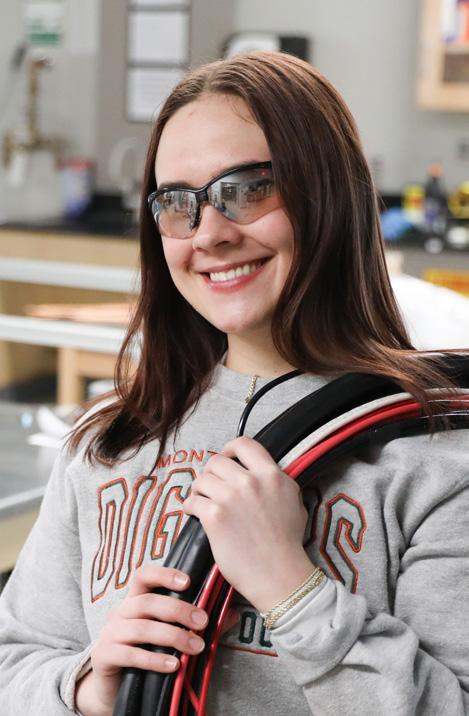
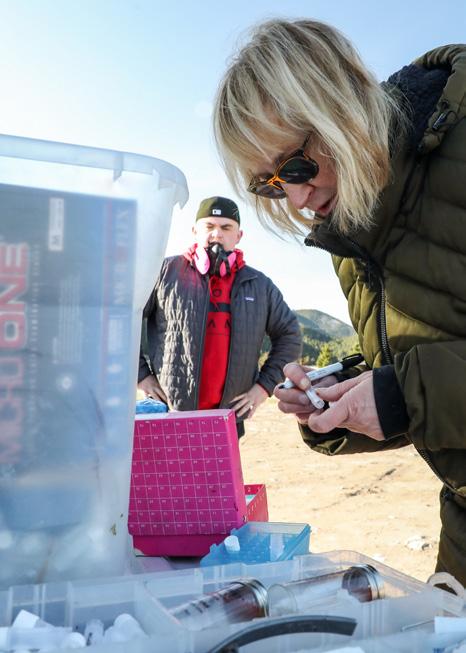
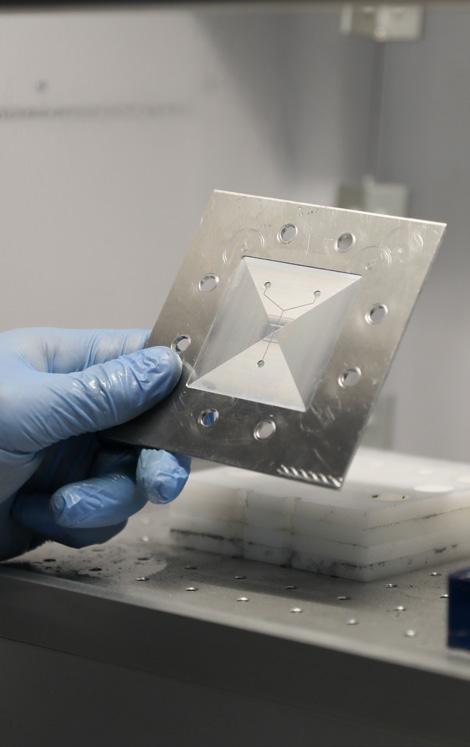
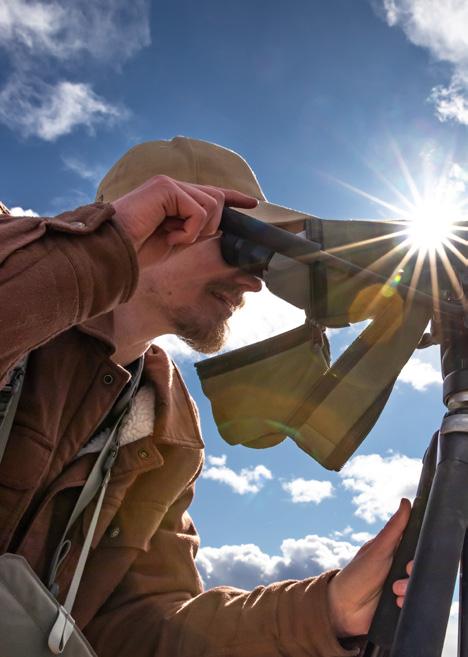
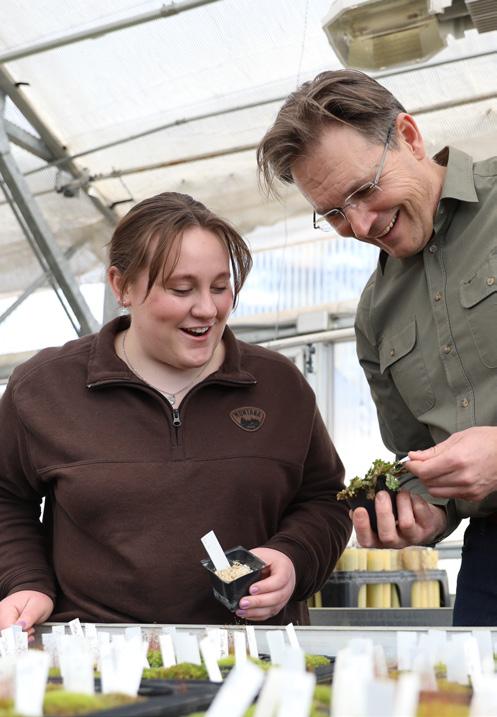
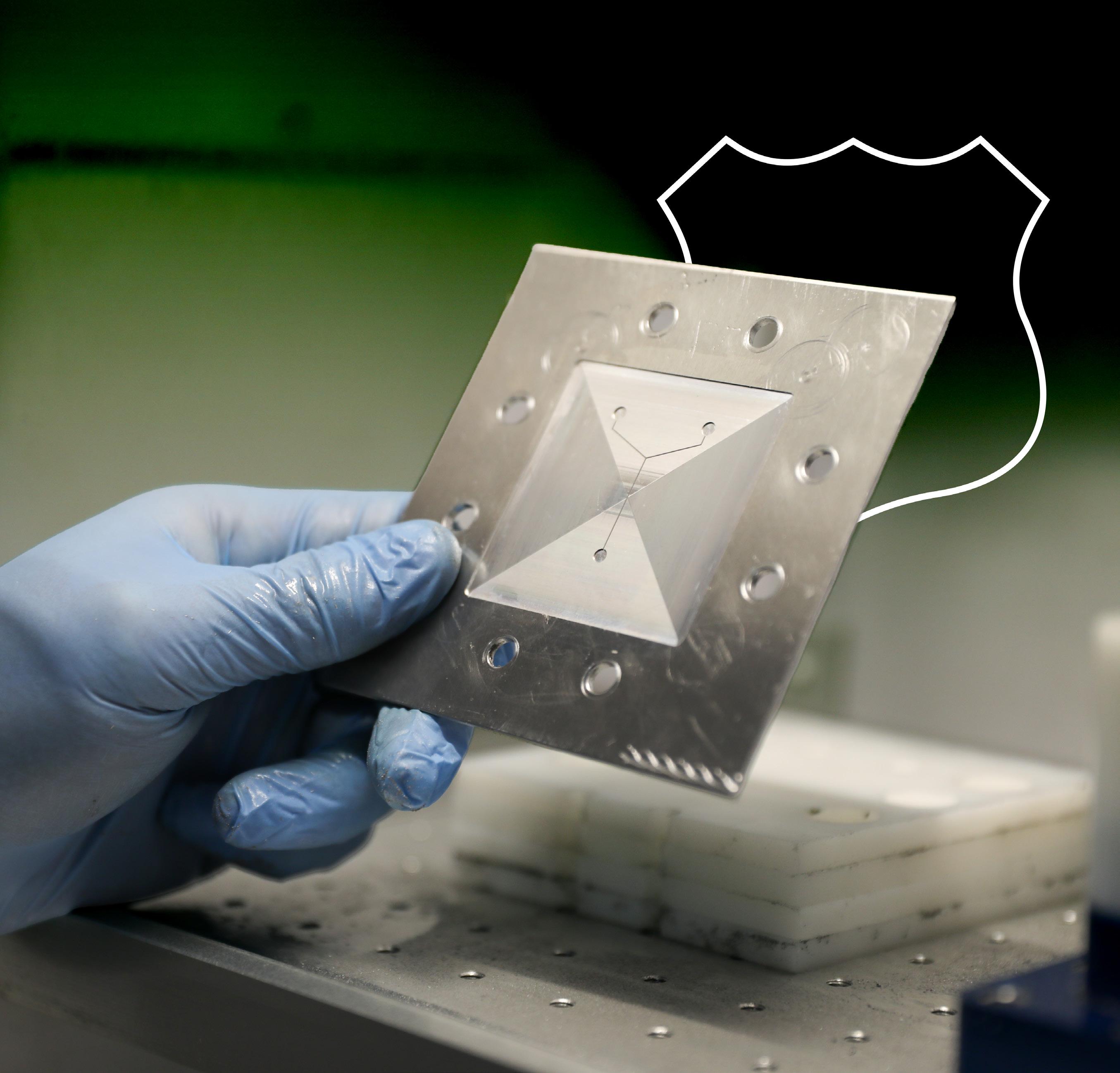
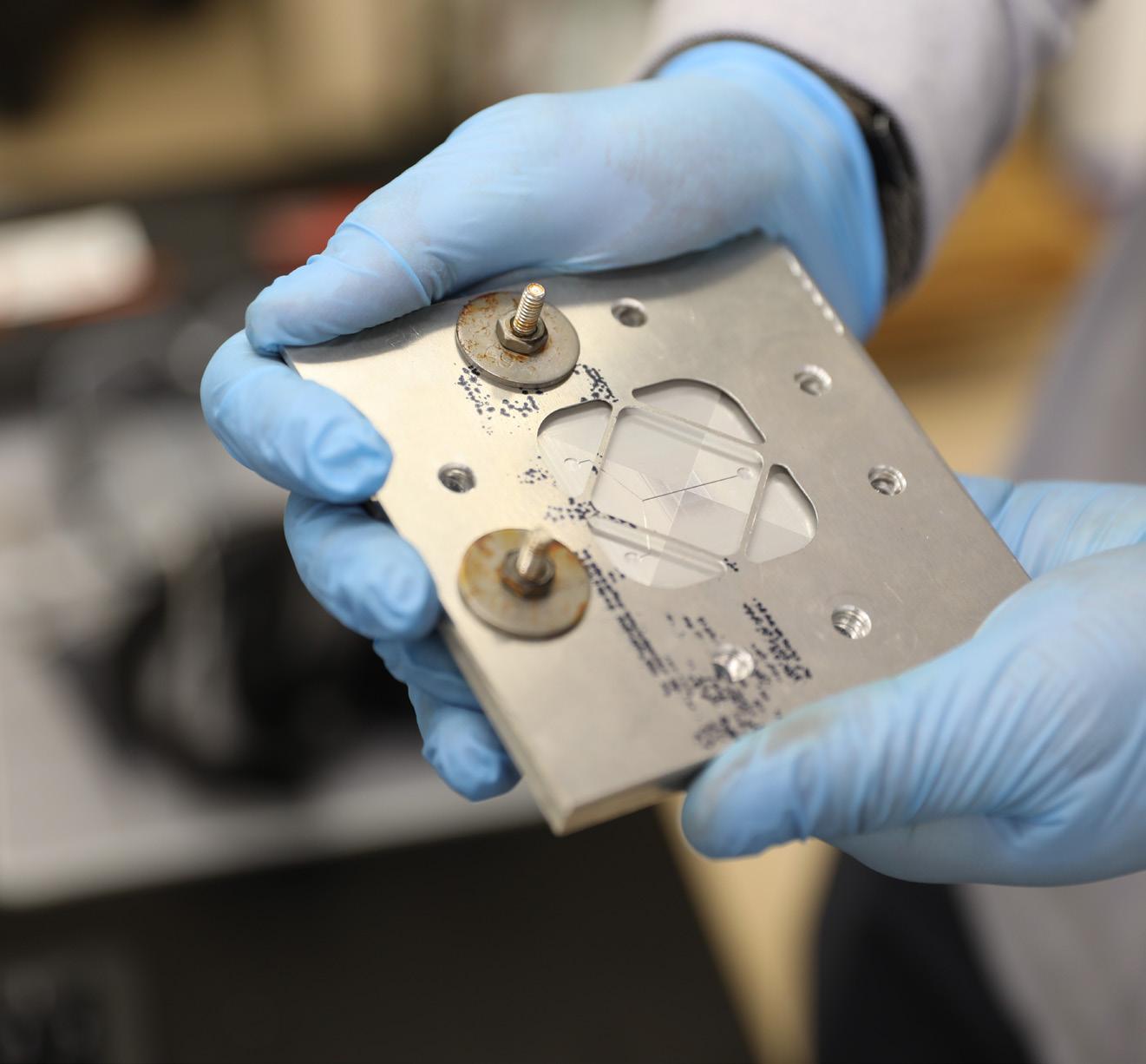
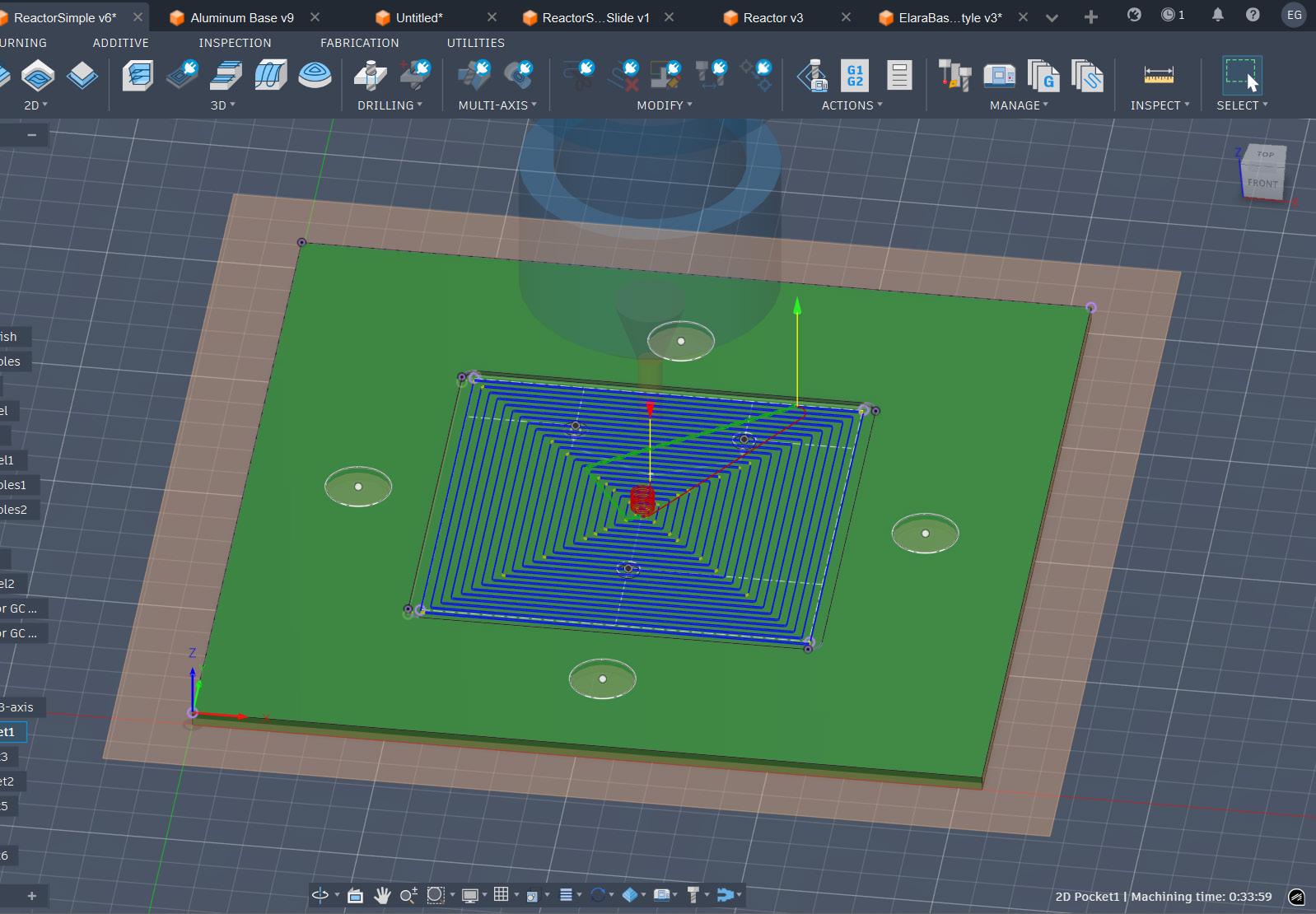
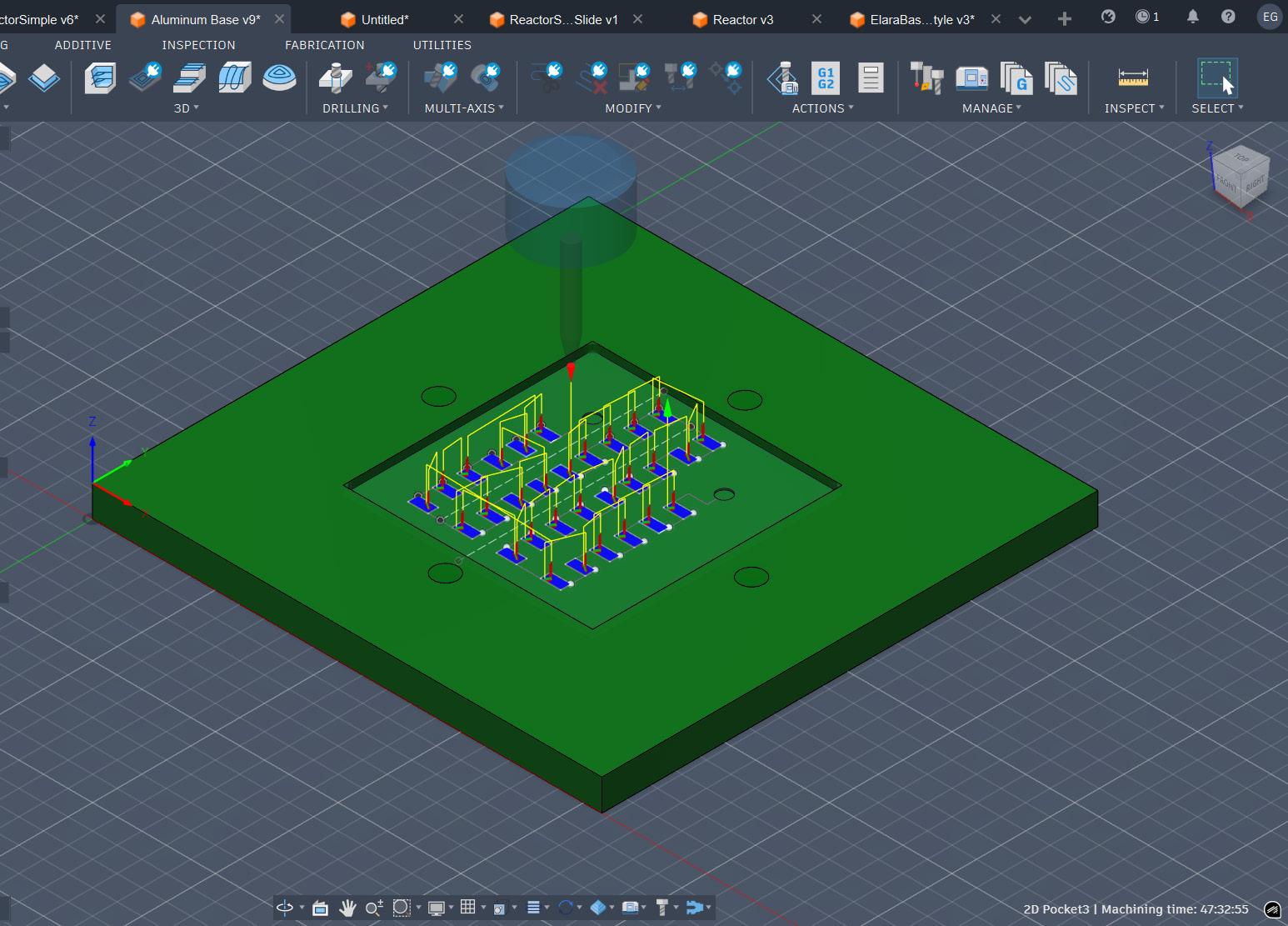
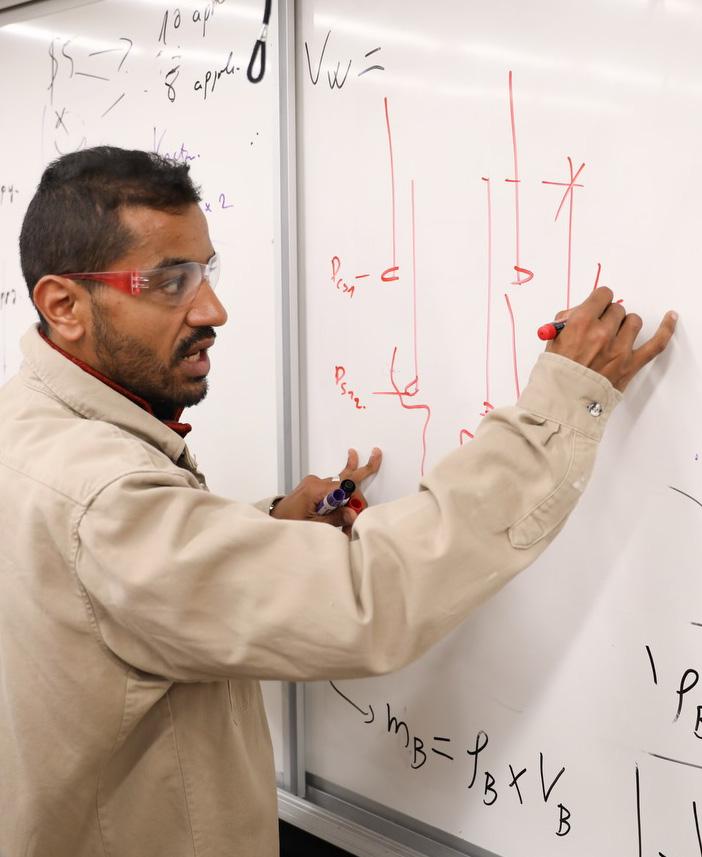
Vice Chancellor Dr. Katie Hailer is strengthening Montana Tech’s research engine by building the infrastructure and relationships needed for a rapidly evolving national landscape.
Biochar to Breakthrough
In the CHAR Lab, students are turning hydrogen gas byproducts into hands-on energy innovation, proving why Orediggers remain at the frontlines of emerging technology.
A Campus Reimagined
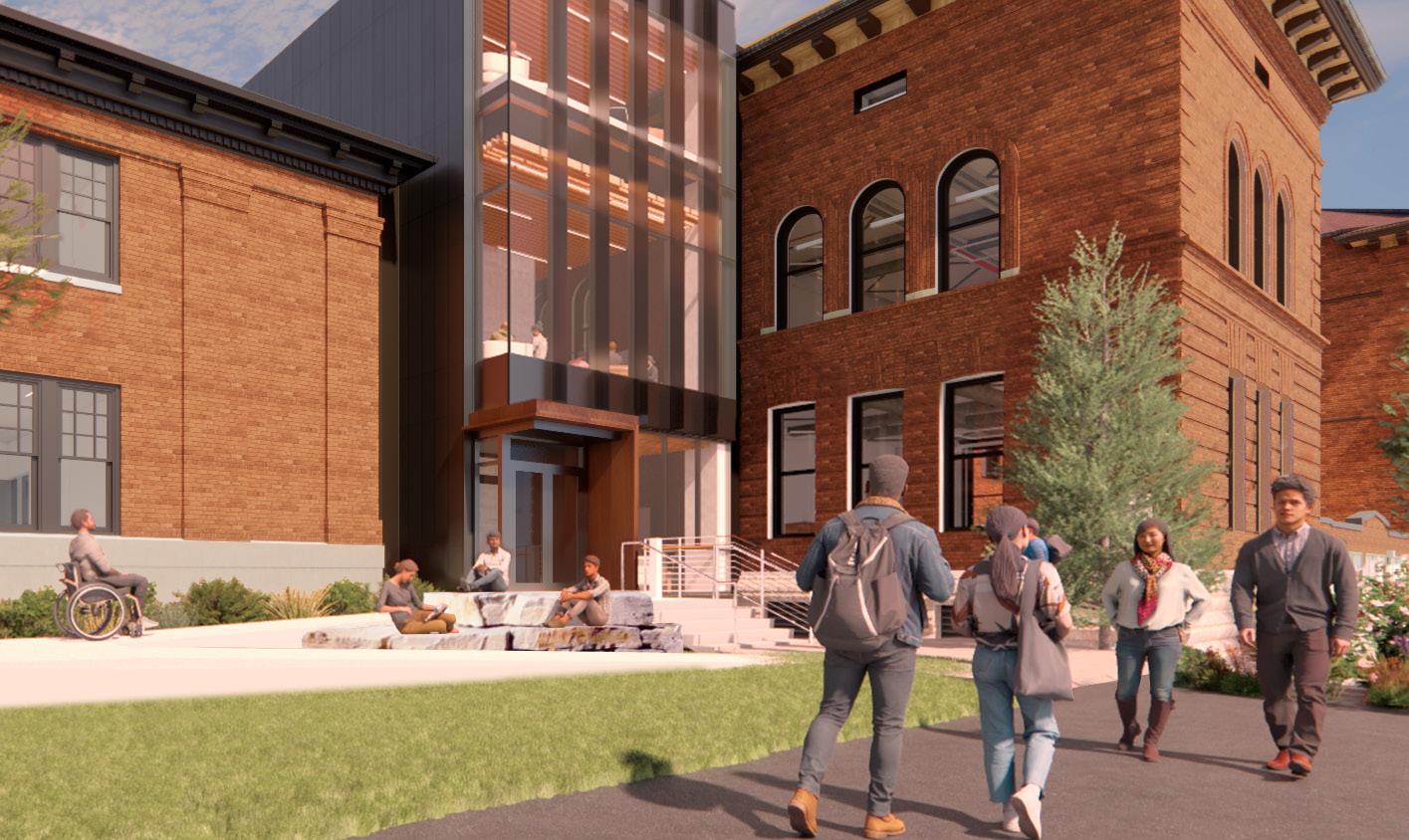
A look inside the ten-year vision for Montana Tech, where historic academic buildings are being overhauled to house tomorrow’s technology while preserving their legacy.
At the Forefront of Nuclear Energy
With new programs approved by the Board of Regents, Montana Tech is preparing a new generation of graduates to lead the state’s future energy grid.
Patents with Purpose
Dr. Jessica Andriolo is creating a clear roadmap for innovation, ensuring Montana Tech inventions move seamlessly from the lab bench to the marketplace.
Tracking Tomorrow's Threats
From hantavirus to Bartonella , Montana Tech researchers are building decades-long datasets to understand and combat the global rise of zoonotic diseases.
Holding on to the Wild
By studying the impact of mine waste on avian populations, researchers are using science to preserve Montana’s natural legacy for generations to come.
Helping Butte’s Ecosystem Heal, One Plant at a Time
Mining on Butte's 'Richest Hill on Earth' began in 1864, long before environmental regulations existed. Decades of extraction created one of the nation's largest Superfund sites. Remediation started in the 1980s, capping toxic soil and reseeding, and university students have continued restoring native species ever since.
Building the Foundation
Montana Tech leads the state in math and writing completion, proving that a strong academic foundation is the key to success in rigorous STEM programs.
Engineering the Boom
From underground mines to the sidelines of Bob Green Field, the ISEE student chapter brings mining history to life through the science of explosives.
Highlands College Builds Montana's Future Workforce
Through new broadband micro-credentials and expanded trades programs, Highlands College is meeting the urgent demand for Montana's skilled labor force.
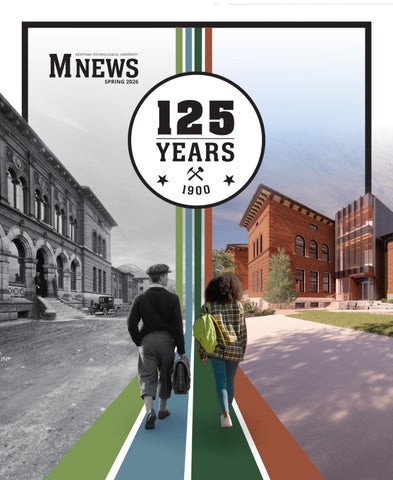
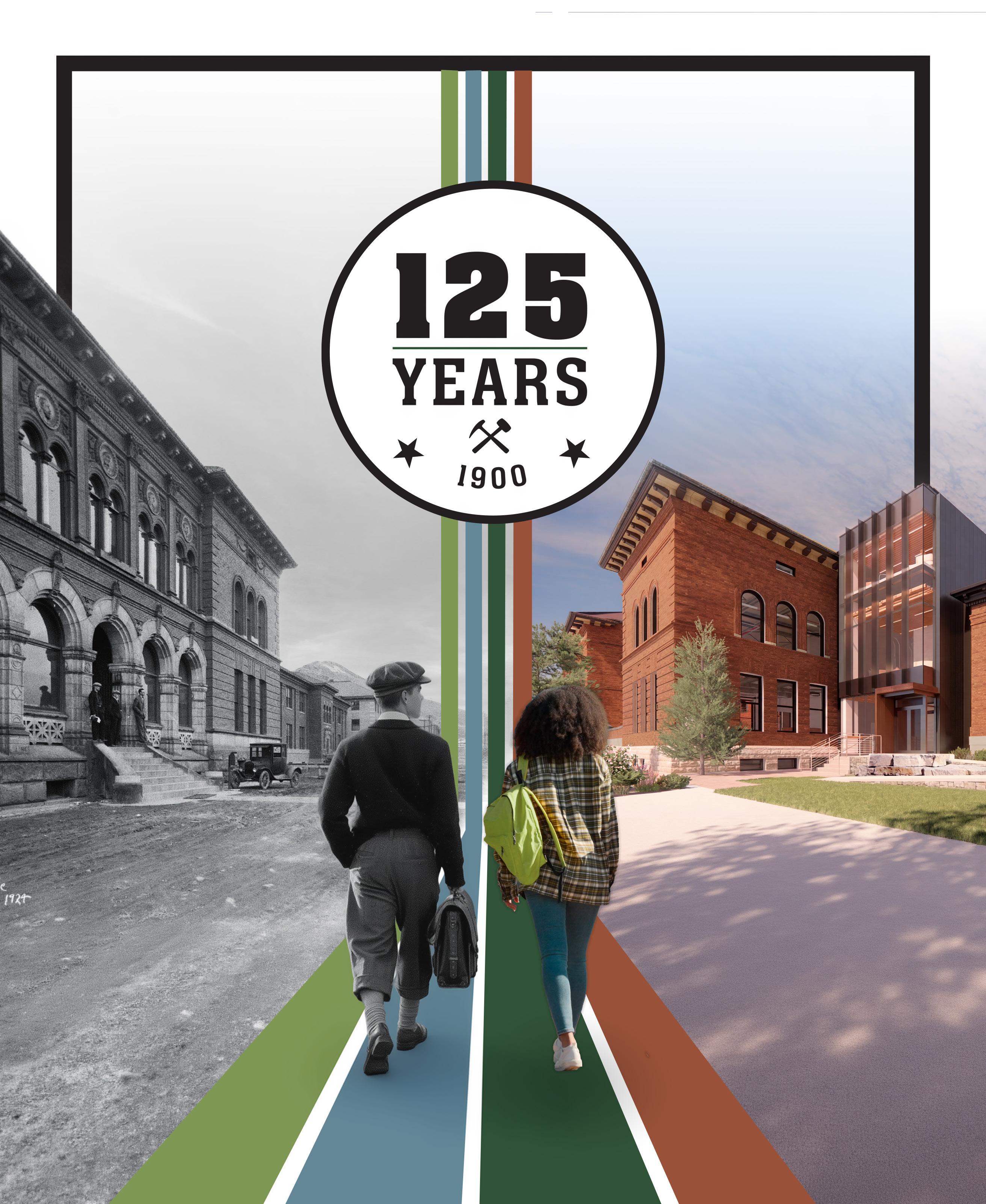
Marking our 125th anniversary is about more than honoring our past—it's about launching our future.
As we look ahead to the next 125 years, we continue to celebrate the legacy that brought us here.
CREDITS
Chancellor
Johnny MacLean
Writers
Jaime Heppler
Johnny MacLean
Megan Strickland
Editor
Susan Barth
Photographer
Lou Mason
Publisher
Amanda
Amanda
Jodie
Megan Strickland
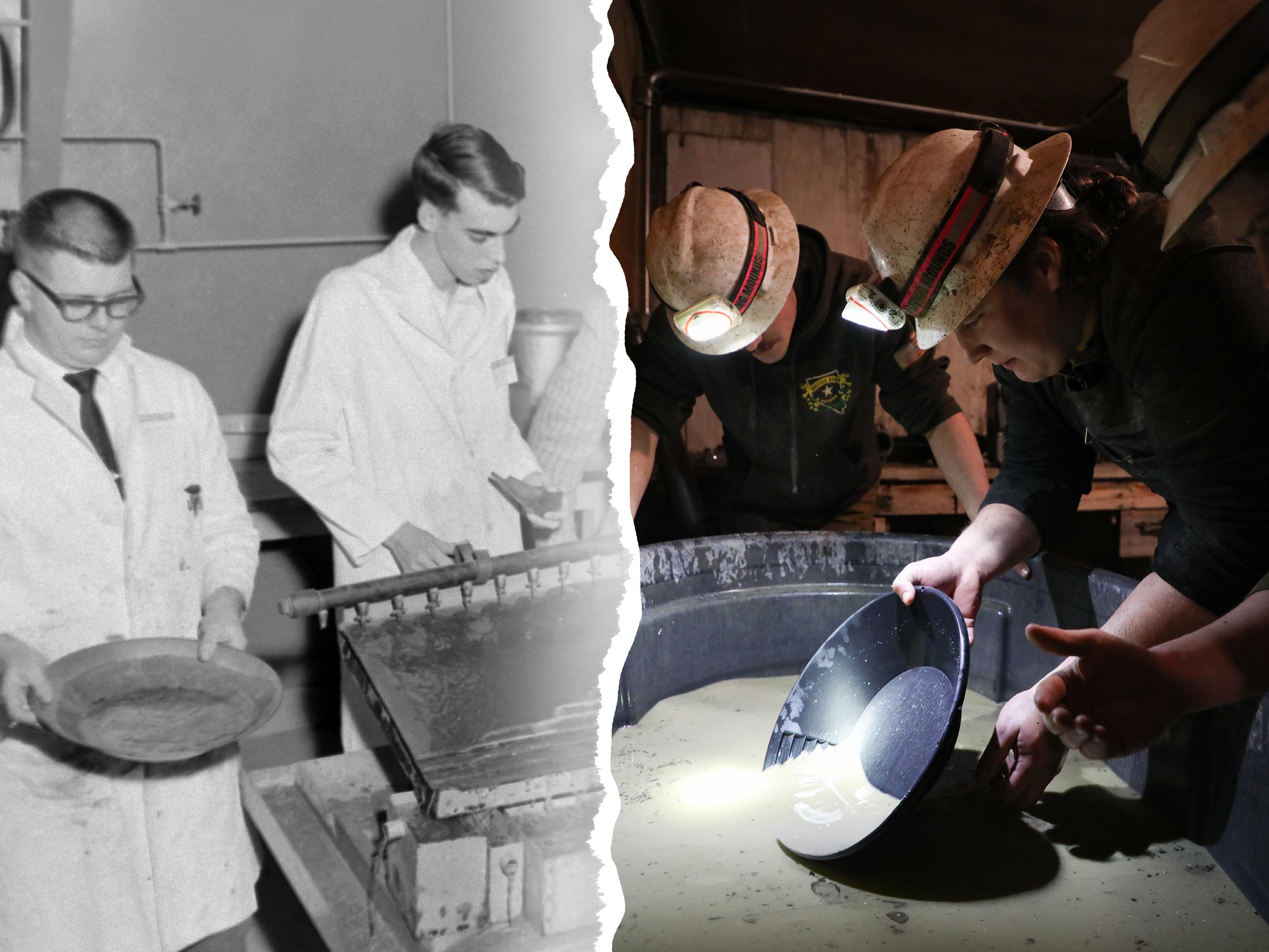
We extend our gratitude to the Butte–Silver Bow Public Archives, C. Owen Smithers Collection for the historic images on the cover.
Our country stands at a watershed moment that will fundamentally reshape our future. As the pace of change accelerates, conversations with State and Federal leaders confirm the urgency is real, and Montana Tech possesses the exact expertise required to meet the moment.
As we launch into our next 125 years, we will move forward with confidence. Our programs are more relevant than ever, our expertise is in high demand, and our students are prepared to be the next generation of STEM leaders. Simply put, Montana Tech continues to punch above its weight.
That momentum is evident across our Four-Lane Highway strategy. The four lanes allow our faculty, staff, and students to collectively rise to meet America’s emerging needs. Through strategic alliances with private industry, government agencies, and international partners, Montana Tech is building a strong network. Leaders at every level are seeking our collaboration, accelerating our momentum, and amplifying our impact. With each step forward, we are advancing our purpose.
In Lane One, we are meeting America’s natural resource needs with a focus on critical materials and energy, always grounded in environmental responsibility. Federal agencies such as the U.S. Department of Energy are prioritizing investments in critical materials and an all-of-the-above energy portfolio, and Montana Tech is actively responding. We have submitted numerous proposals to support these efforts and are strengthening our position as Montana’s leader in energy and critical materials. We are especially excited about the recent approval to build a Ph.D. in Energy Engineering and Science, a Master of Science in Nuclear Energy, and a Certificate in Nuclear Energy. At the same time, we are taking a more intentional and coordinated approach to our environmental research, education, and outreach.
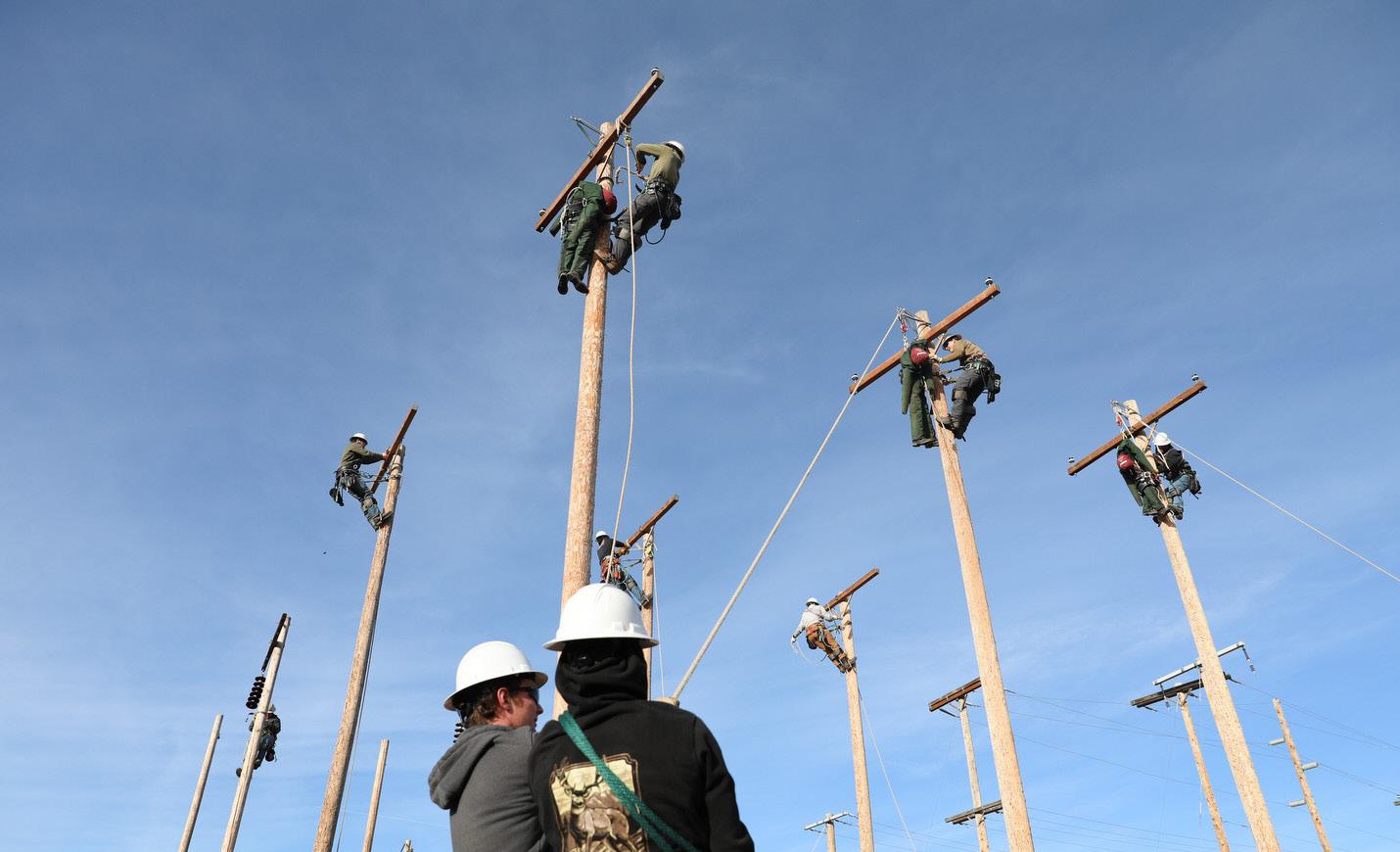
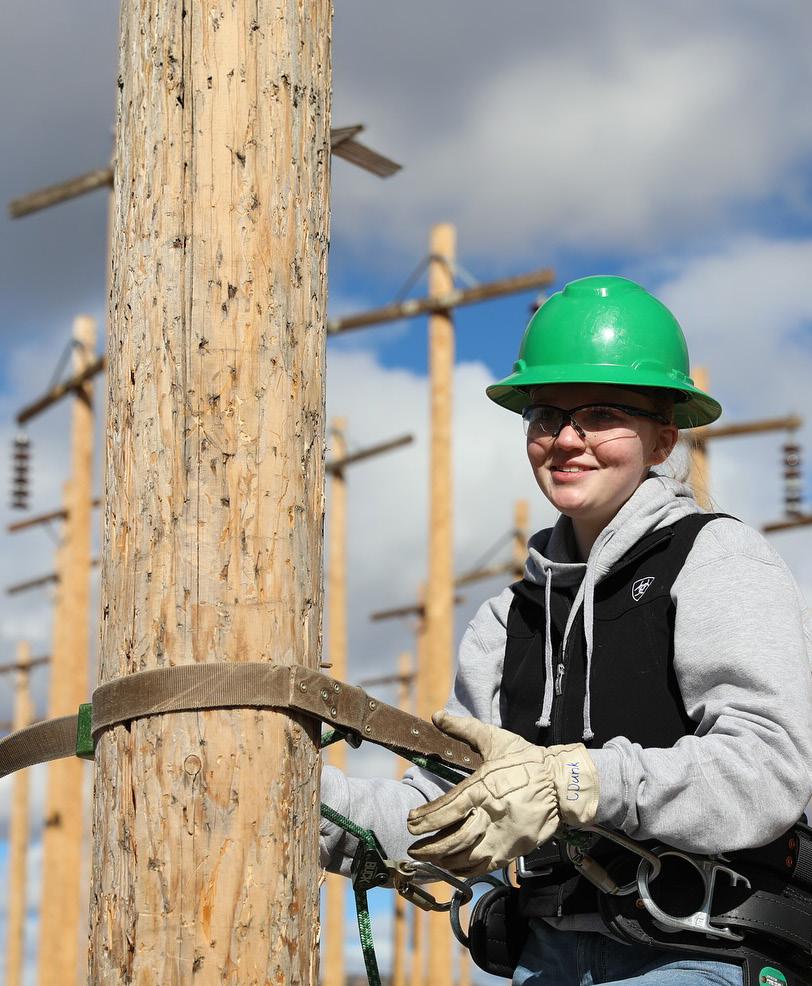
In Lane Two, we are addressing infrastructure. America’s energy and power systems must evolve quickly to meet growing demand, and Montana Tech is well positioned to help lead that effort. Our Electrical, Mechanical, and Civil Engineering programs, along with our Pre-Apprentice Line program, Welding Technology, and many others, are preparing students to meet this challenge. Lance Energy Chair Bob Morris serves on the Governor’s Energy Task Force, ensuring Montana Tech plays a leading role in shaping these critical conversations.
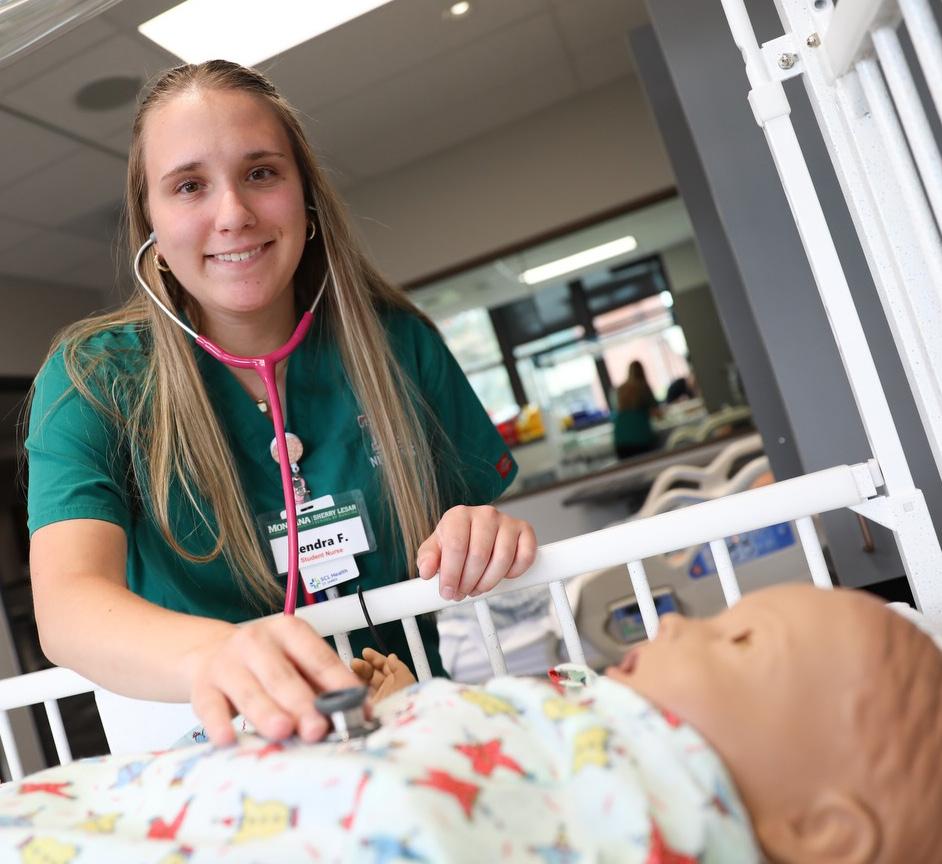
In Lane Three, we are advancing health and wellbeing across Montana. The Sherry Lesar School of Nursing continues to excel, with two consecutive years of 100% NCLEX exam pass rates. The Lesar Family Nursing Simulation Center prepares students to contribute from day one, while our Exercise and Health Science program now serves nearly 100 students annually. Our Industrial Hygiene program remains the largest of its kind in the country. As we build on these strengths, we are also exploring new ways to meet the unique healthcare needs of rural Montana, with Butte well positioned to serve as a hub for this work.
In Lane Four, we are strengthening leadership and workforce development. Our forthcoming STEM Leadership Institute will empower students to lead with technical and social intelligence in their industries, their communities, and their homes. Simultaneously, we are expanding our Construction Technology program to include high-demand tracks in renovation and commercial construction. This is just one example of our partnership with Butte-Silver Bow to ensure local workforce needs are met.
Across all four lanes, the progress is clear. It is an exciting time for academics and research at Montana Tech. Our Athletics and Campus Life programs are also thriving. This year, football, women’s basketball, and men's track & field all captured Frontier Conference championships, contributing to a fourth straight George R. Bandy Memorial All-Sports Award. Off the field, campus life is vibrant, with active student organizations, dynamic tutoring and career centers, and a strong sense of community. Our academics, student affairs, and athletic efforts differentiate Montana Tech from other Montana public universities as we boast the highest graduation rates, impressive career outcomes, and highest median starting salaries. We call this combination the Digger Difference.
For 125 years, Montana Tech has served as Montana’s STEM university. We are proud to be the most rigorous university in the State. Our students come from hardworking families and build meaningful relationships with faculty and staff who are deeply invested in their success. Those who succeed here are prepared to succeed anywhere. We take great pride in that fact.
As we look ahead to the next 125 years, we do so in the midst of a watershed moment for our nation. Our Four-Lane Highway is well aligned with America’s emerging needs, and Montana Tech is uniquely prepared to lead. Let’s move forward together.
Johnny MacLean, Ph.D. Chancellor
Historic First 1 2
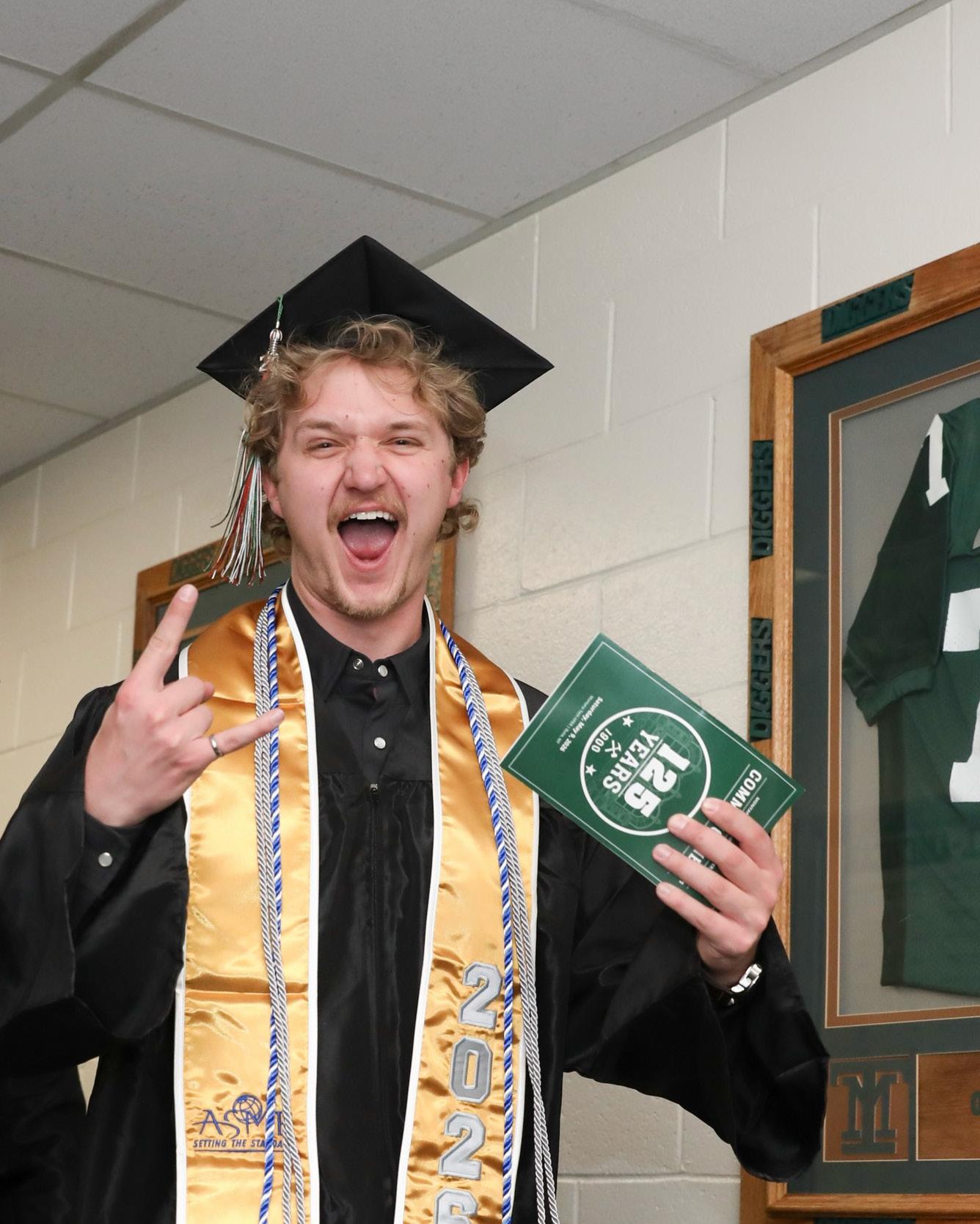
In a historic celebration of its 125th anniversary, Montana Tech marked its 2026 spring commencement by awarding two honorary doctorates—the first dual conferral in the university's history. These prestigious honors were bestowed upon two distinguished leaders: Ryan M. Lance, Montana Tech Petroleum Engineering alumnus and Chairman and Chief Executive Officer of ConocoPhillips, and David J. Lesar, Chairman of the Board and Chief Executive Officer of Superior Energy.
Dr. Katie Hailer to Lead Research & Graduate School
Following a competitive national search, Dr. Katie Hailer has been named Vice Chancellor for Research and Dean of the Graduate School. A tenured professor and former Chemistry department head, Dr. Hailer previously served in the role on an interim basis.
An accomplished scientist and collaborator, her work in environmental health and nanomaterials has led to numerous patents and publications. In her permanent role, she will continue to lead the Research Office, Graduate School, and Office of Sponsored Programs, focusing on industry partnerships and expanding research opportunities for both undergraduate and graduate students.
Ryan M. Lance
David J. Lesar
Carnegie Foundation Honors
Montana Tech has earned a spot in the 2025 Research Colleges and Universities (RCU) inaugural class, a new designation by the Carnegie Foundation and the American Council on Education.
This recognition places Montana Tech among just 216 institutions nationwide noted for significant research activity. The RCU category specifically honors universities that invest at least $2.5 million annually in R&D while maintaining a primary focus on undergraduate and specialized graduate success rather than high-volume doctoral output.
Pal Appointed Interim Director for Ripple
Dr. Robert Pal has been appointed interim director of Ripple: The Center for Education and Ecosystem Studies, which provides environmental education and outreach throughout Montana and the Clark Fork Watershed.
A professor and director of restoration, Pal holds a Ph.D. in Biology/Plant Ecology and specializes in ecological restoration and plant invasions. In addition to leading Montana Tech's restoration programs, he serves as president of the Montana Native Plant Society. At Ripple, he will lead initiatives connecting students and communities with environmental science and stewardship.
Montana Resources Renews Rolin Erickson Scholarship 5
Butte High grad Zach Noctor wasn't sure college was in his cards—until he received the Rolin Erickson Montana Resources Opportunity Scholarship. Established in 2017 by the Dennis and Phyllis Washington Foundation and Montana Resources, this four-year, full-ride scholarship supports firstgeneration students from Butte. For Noctor, the financial support made a huge impact. Currently, he's working on a project focused on rare earth extraction, and planning on pursuing his master's degree in materials science, with goals of conducting more research focused on batteries.
To date, 30 students have benefited from the program. Next year, 16 scholars will be enrolled, including three new recipients. The Dennis and Phyllis Washington Foundation and Montana Resources have extended funding for the annual scholarship, continuing their commitment to Butte's students. Beyond financial aid, recipients receive "wrap-around" support through Montana Tech's TRIO SSS program to ensure their success.
Know a local student who qualifies?
Encourage them to apply to Montana Tech today at mtech.edu/admissions.
Protecting the Historic Butte Locomotive
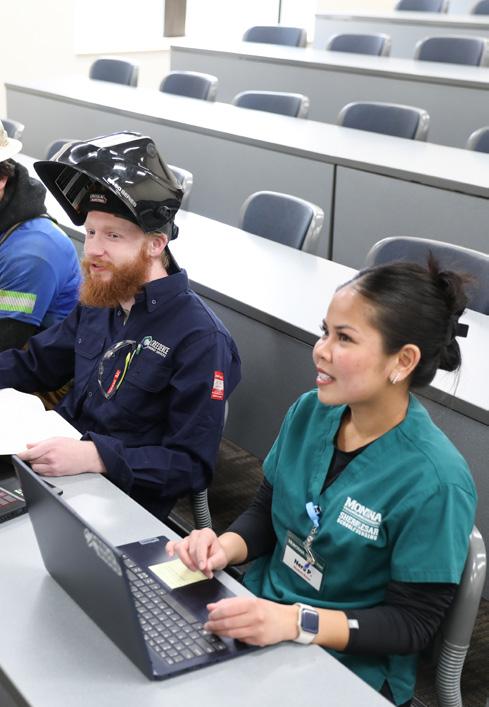
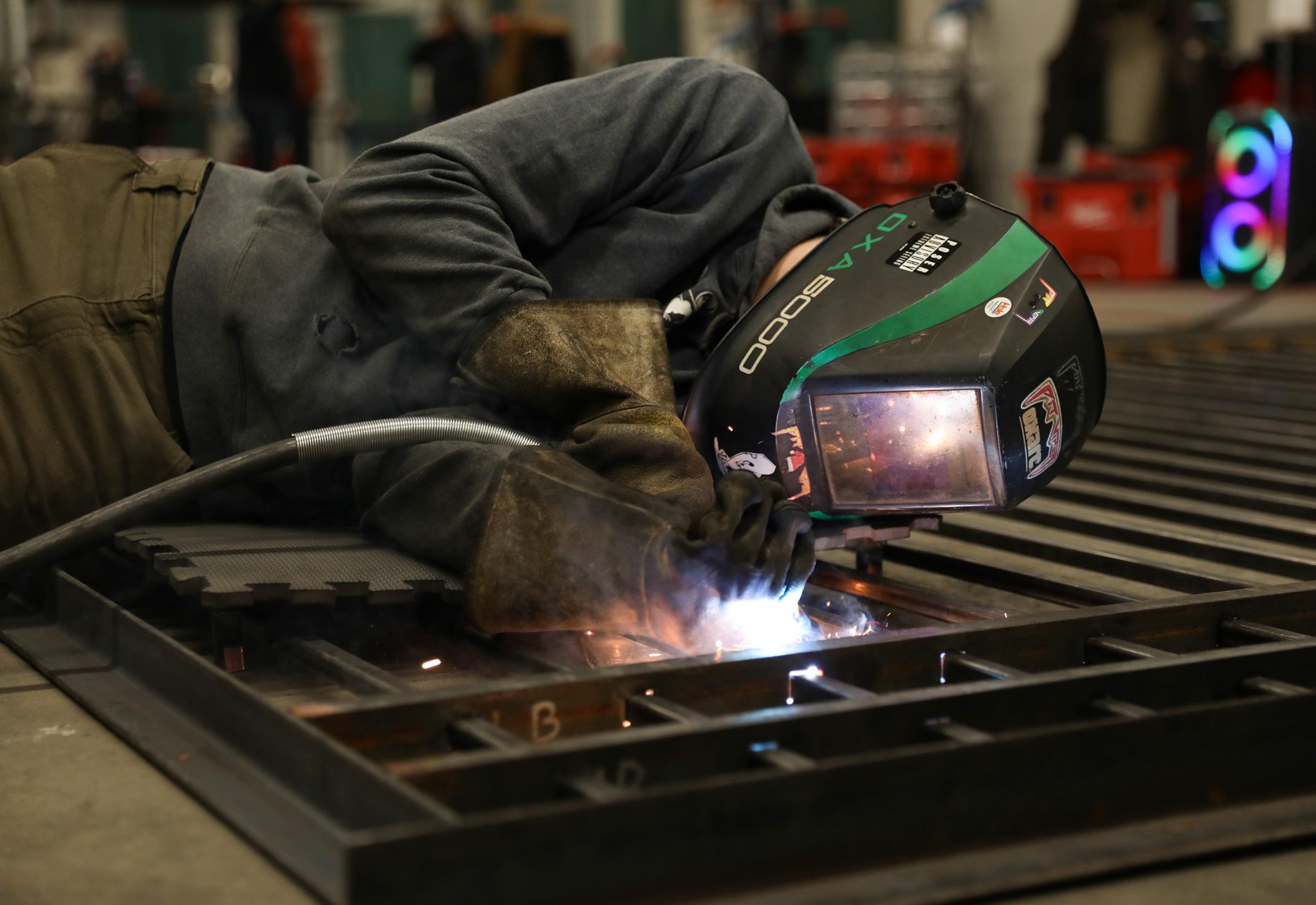
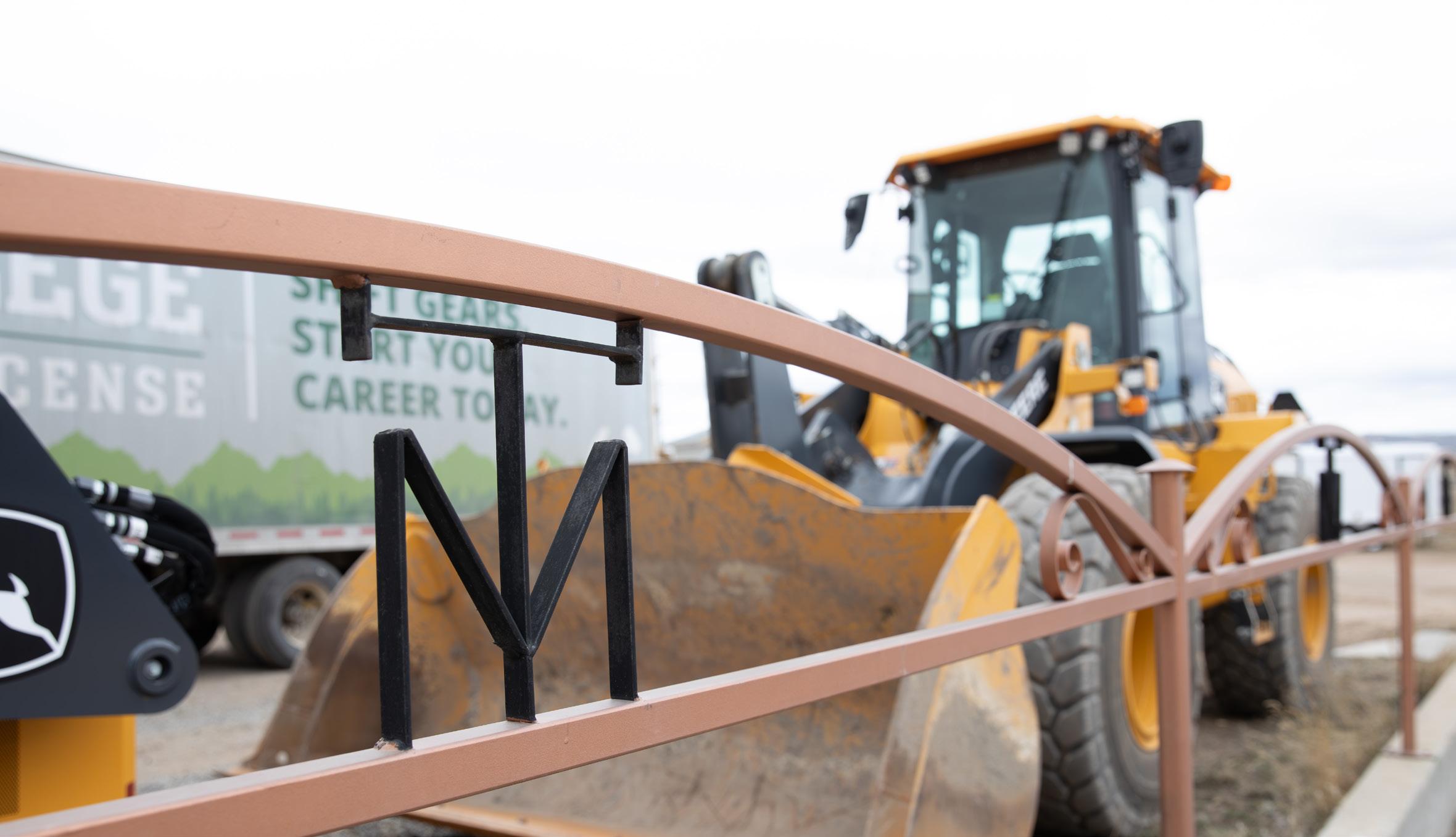
Highlands College welding students are building a custom fence to protect the historic locomotive near the Butte Civic Center as part of a community restoration effort. Inside the welding shop, students are fabricating 20 large steel panels—each nearly 10 feet tall—using square tubing and channel steel to create a design that complements Butte's historic character.
The hands-on project gives students experience in fabrication, mass production, and teamwork while contributing to a nonprofit community partnership. Once complete, the fence will help preserve the locomotive for generations to come.
Montana Tech's Purpose:
In Action
At Montana Tech, we are not simply planning for the future; we are actively building it.
we continue to celebrate the University’s 125year anniversary, Chancellor Johnny MacLean has articulated a clear and compelling purpose for Montana Tech’s future: to rise to meet America’s emerging needs by preparing the next generation of STEM leaders.
This purpose positions Montana Tech for sustained growth, relevance, and impact. It is not reactive to current conditions, but grounded in a lasting and in-demand mission: where innovation, access, and excellence advance together with clarity and purpose, and where real-world problems get solved.
At the Montana Tech Foundation, we are proud to stand alongside this charge, helping to accelerate progress through philanthropy. We do so with deep gratitude for the generations of alumni, friends, and industry partners whose support has built the strong footing we stand on today. Because of that enduring commitment, we are well positioned to focus on what comes next.
Today, our work is centered on three strategic priorities that will define the next era of Montana Tech: modernizing our campus, investing in bold ideas, and expanding access through renewable scholarships.
Advancing the Montana Tech Experience
A modern student experience requires spaces that meet students where they are and evolve for the future.
At Montana Tech, we are fortunate to already have academic and recreational facilities that serve our community well, made possible by the longstanding generosity of our alumni, friends, and partners. Our focus now is on strategically advancing our existing footprint by enhancing what we have so we can better support students, empower faculty and staff, and prepare graduates who are ready to enter the workforce and contribute from day one.
This means thoughtfully elevating classrooms, labs, and campus life to deliver a modern, applied education where students gain the hands-on experience, character development, and technical preparation needed to succeed in life.
One example of this is the modernization of the Health, Physical Education, and Recreation Complex (HPER). While just one of many opportunities across campus, it reflects our commitment to spaces that support student wellness, foster connection and community, and strengthen the overall student experience.
Spaces matter. They shape first impressions, influence decisions, and impact student success. With continued investment and partnership, we can build on our strong foundation and create stronger outcomes for our campus community to learn, grow, and thrive.
Fueling Big Ideas
Equally important as our investment in physical space is our investment in people and ideas.
We are actively exploring opportunities to bring transformative concepts to life, such as a Montana Tech Leadership Institute, designed not only to prepare exceptional engineers and scientists, but also to develop leaders who will shape their industries and communities.
These initiatives reflect the essence of Montana Tech: practical, forward-thinking, and deeply aligned with workforce and industry needs. Time and again, it has been the support of our alumni and partners that has allowed bold ideas to take shape and evolve into impactful programs.
Continued philanthropic investment ensures we can move from concept to reality—fueling initiatives that elevate the Montana Tech experience in meaningful and lasting ways.
Expanding Access Through Renewable Scholarship
Perhaps one of the most powerful investments we can make is expanding access for students to enroll at Montana Tech.
At the Montana Tech Foundation, we are intentionally focused on renewable scholarships: multi-year commitments that provide stability, reduce uncertainty, and allow students to focus on earning their degree.
These are not just scholarships. They are life-changing investments.
Programs like the Lance Scholars Program demonstrate what’s possible. Renewable support strengthens recruitment, improves retention, and increases graduation rates. When students know their support continues, they persist, and they succeed.
This impact is made possible by alumni who choose to invest in the next generation—like Kate Heiken, a Petroleum Engineering alumna who recently made her first major gift since graduation. Inspired by the support she received as a student, Kate established the Kate Heiken ‘Grit’ Endowed Scholarship to support second-year and transfer students in the Lance College of Mines and Engineering.
Designed as a renewable award for up to three years, the scholarship reflects the perseverance and determination required to succeed at Montana Tech. By supporting students who have already taken the first step, and ensuring they can continue, Kate’s investment embodies the power of sustained support.
This is how we move the needle: not just opening the door to Montana Tech, but ensuring students walk all the way through it.
We invite you to be part of this impact. Your investment through an annual renewable scholarship or an endowed renewable scholarship fund opens a world of possibilities and creates a lasting legacy.
Montana Tech’s purpose and future is in motion, and success depends on all of us.
Your generosity is essential to advancing this work, and we are deeply grateful to the alumni, friends, and industry partners who continue to invest in our mission.
Together, we are building a future that is bright and built to last, by Orediggers.
Roll Diggs,
Jaime Heppler Chief Executive Officer Montana Tech Foundation
What is a Renewable Scholarship?
Renewable scholarships provide students with guaranteed, multiyear financial support—offering a dependable funding source they can count on throughout their time at Montana Tech.
Why it matters:
Students who receive consistent support are more likely to persist, plan ahead, and graduate. Programs like the Lance Scholars demonstrate how renewable funding strengthens both recruitment and long-term student success.
How you can help:
Establish an annual renewable scholarship or build an endowed fund that provides support in perpetuity. Your investment creates opportunity—and a clear path forward—for Montana Tech students.
If you are interested in establishing a scholarship at Montana Tech, please reach out to mtechfoundation@mtech.edu or call 406-496-4277.
Building the Next Era of RESEARCH
by Megan Strickland
On a campus built on powering the industries that shape our modern world, research is not a side endeavor—it's the engine.
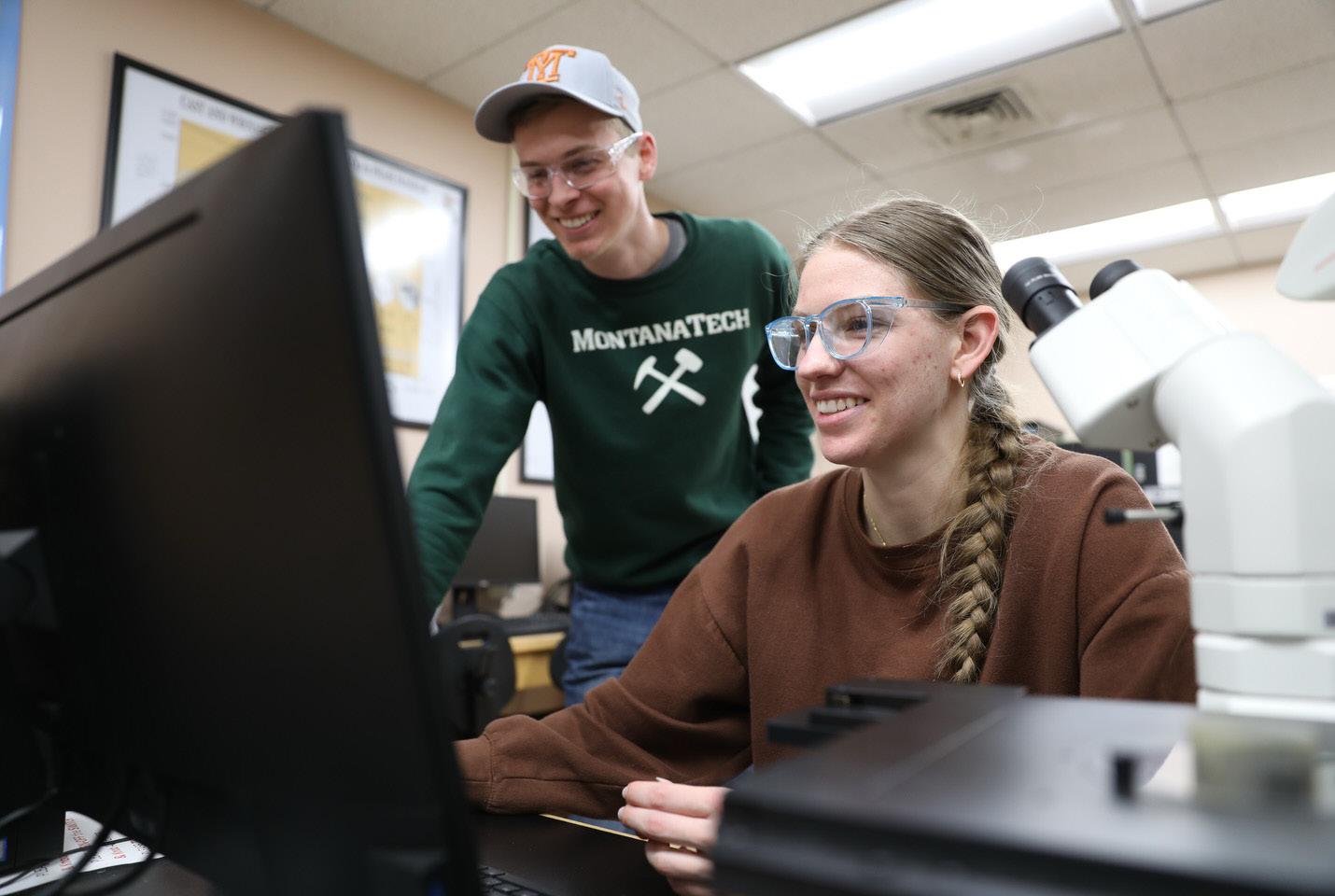
As Vice Chancellor for Research and Dean of the Graduate School, Dr. Katie Hailer sits at the center of that engine, strengthening Montana Tech's research enterprise for a rapidly evolving national landscape.
Over the past year, Hailer has focused on infrastructure— not just facilities, but the vital network of relationships, funding strategies, and student support systems that make transformative research possible.
For Hailer, elevating research begins with connection.
"One of my primary areas of focus has been strengthening communication and partnerships," she said.
She believes strong research programs depend on strong relationships, both within campus and with external collaborators. Over the past year, she has met extensively with departments, faculty, and campus groups to ensure researchers are aware of funding opportunities, regulatory changes, and institutional resources available to support their work.
That relationship-building extends beyond campus. Montana Tech has advanced a Memorandum of Understanding with Idaho National Laboratory and developed Department of Energy proposal collaborations with Contact Mining Company and Solvus. Partnerships with Montana Resources and other industry leaders continue to expand research capacity while creating internships, graduate funding opportunities, and workforce pathways for students.
"Importantly, these efforts are intentionally aligned with Montana Tech's 4-Lane Highway framework, particularly Lane 1: Natural Resources," Hailer said.
That alignment ensures research growth builds on Montana Tech's historic strengths in mining, energy, and environmental stewardship, while positioning the university for emerging opportunities in restoration, sustainability, and workforce development.
"On the graduate education side, one of our major priorities has been supporting graduate student success," she said.
Graduate teaching stipends recently increased from $5,000 per semester to $6,120 for both master's and doctoral students—an adjustment that helps Montana Tech remain competitive and better reflects the rising cost of living in Butte. Hailer said the university will continue evaluating budget sustainability "with the goal of maintaining strong financial support for our graduate students."
At the same time, the Research Office is preparing for changes in external funding. A long-standing agreement with the Army Research Laboratory is expected to conclude within the next year, prompting proactive diversification into Department of Energy opportunities and emerging rural health initiatives. Environmental research is also becoming more integrated into campus strategy.
Montana Tech's restoration ecology program is being more intentionally connected to broader research strategy, strengthening ties among environmental science, land and water restoration, and applied solutions that support communities across Montana. The university is also aligning its RIPPLE environmental K–12 outreach program with Lane 1 of the 4-Lane Highway to reinforce its leadership in natural resource education.
The laboratory partnerships are expected to provide expanded research collaborations, graduate student funding opportunities, internships, and access to specialized facilities, with faculty potentially conducting research at partner labs during summer months.
"Additionally, Montana Tech continues to strengthen its leadership in critical minerals research," she said.
In Fall 2025, the university created the Executive Director of Critical Minerals Initiatives position and hired Dr. John Metesh, former director of the Montana Bureau of Mines and Geology, to lead a large multi-partner Department of Energy submission to the Future Mines program while identifying new federal funding opportunities.
"One of the largest challenges facing research nationwide is uncertainty in federal funding," Hailer said.
Federal agencies including NSF, NIH, EPA, and DOE are undergoing restructuring and budget fluctuations, and discussions about limiting indirect cost recovery rates could affect research infrastructure nationwide. While Montana Tech has not experienced cancellations or rate reductions, Hailer said the university is "actively planning for multiple scenarios to ensure long-term stability."
The expected conclusion of Army Research Laboratory funding marks a natural transition, but it is far from a stopping point. By diversifying our partnerships, and deepening our investment in student researchers, Montana Tech is doing more than adapting to a new landscape—we are defining it.
BIOCHAR
TO
BREAKTHROUGH:
Montana Tech Students Turn Hydrogen into Hands-On Energy Innovation
by Megan Strickland
For 125 years, Montana Technological University has powered the world's workforce. Through immersive, hands-on learning, we put students on the frontlines of emerging technologies shaping our future.
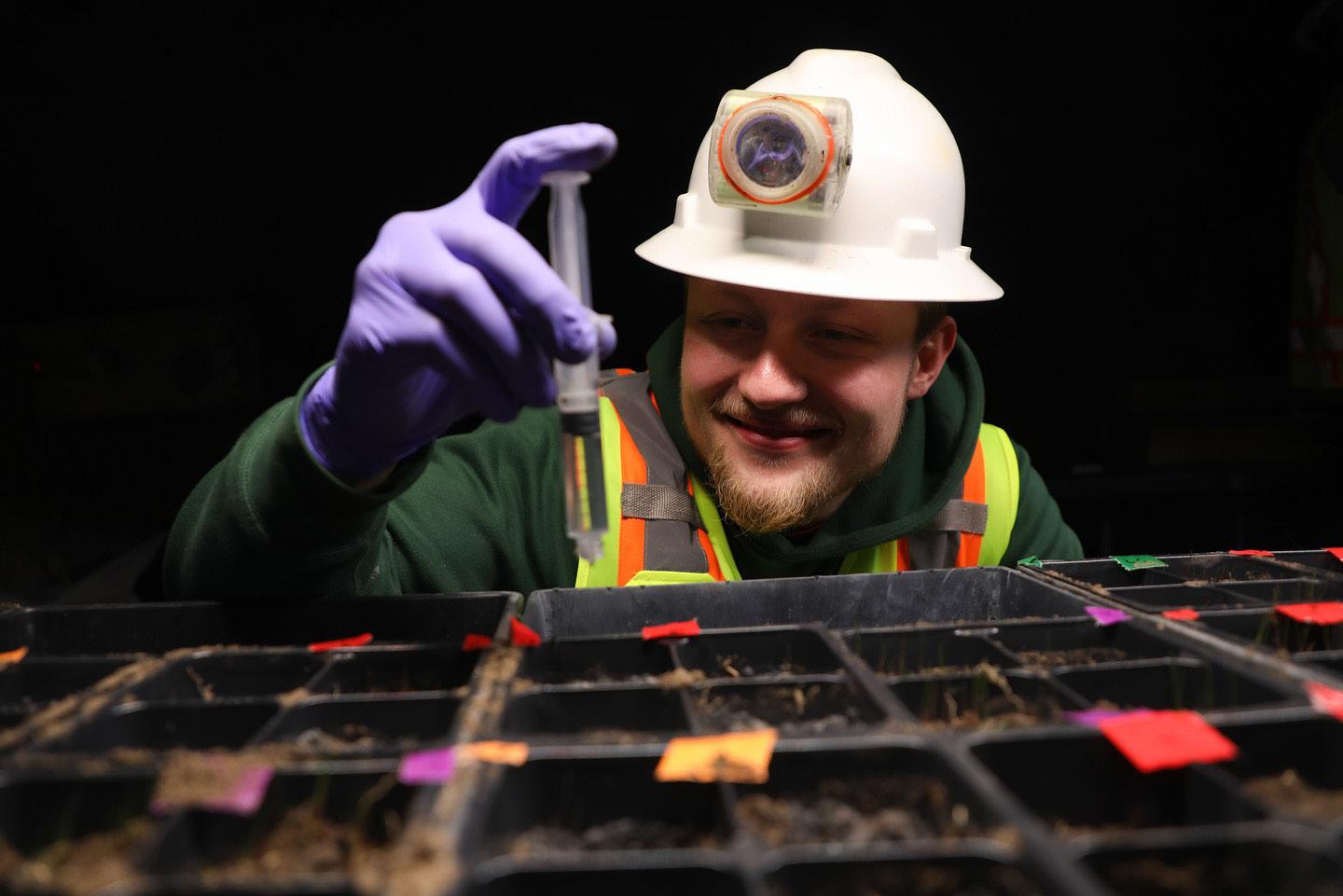
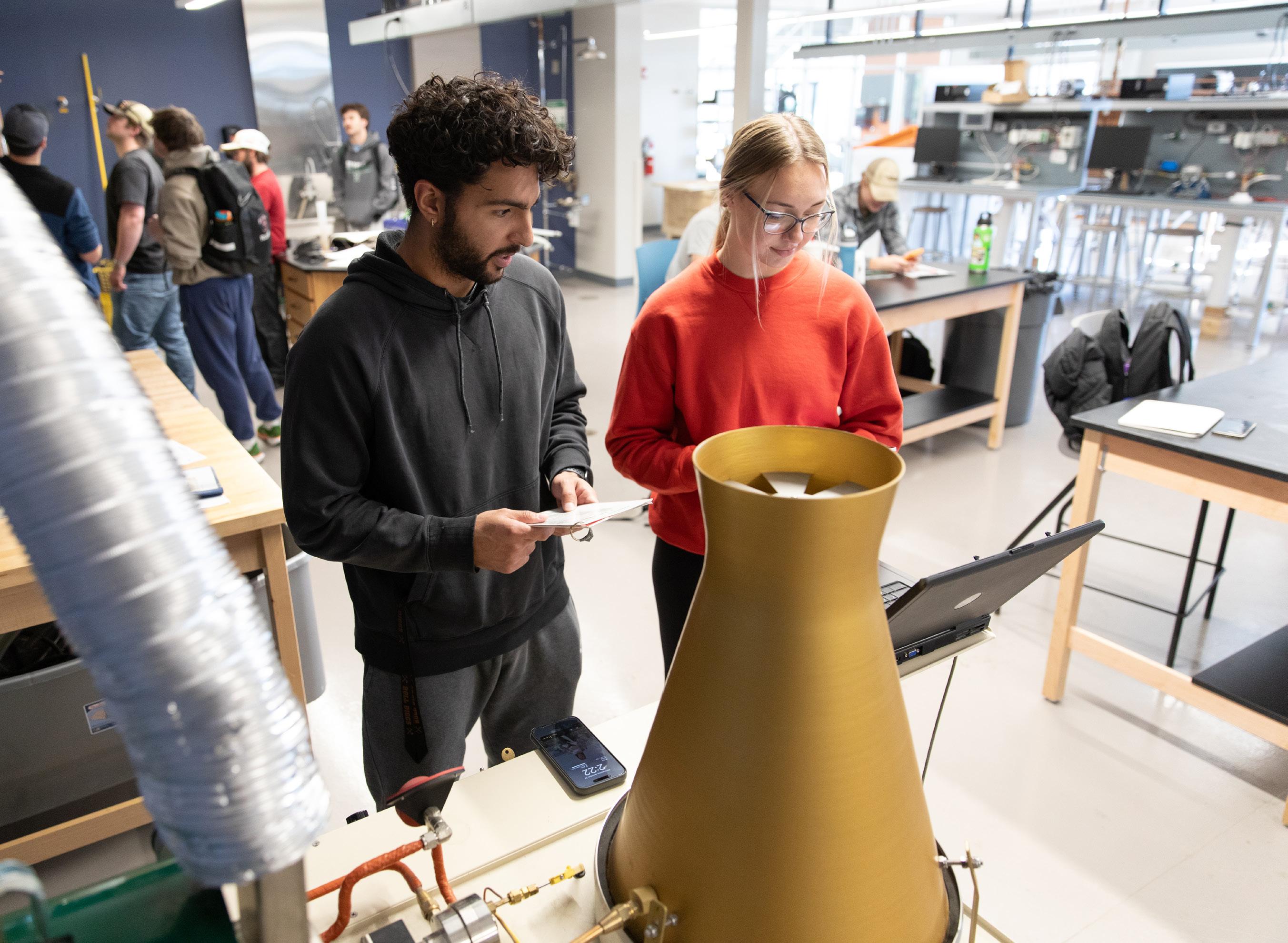
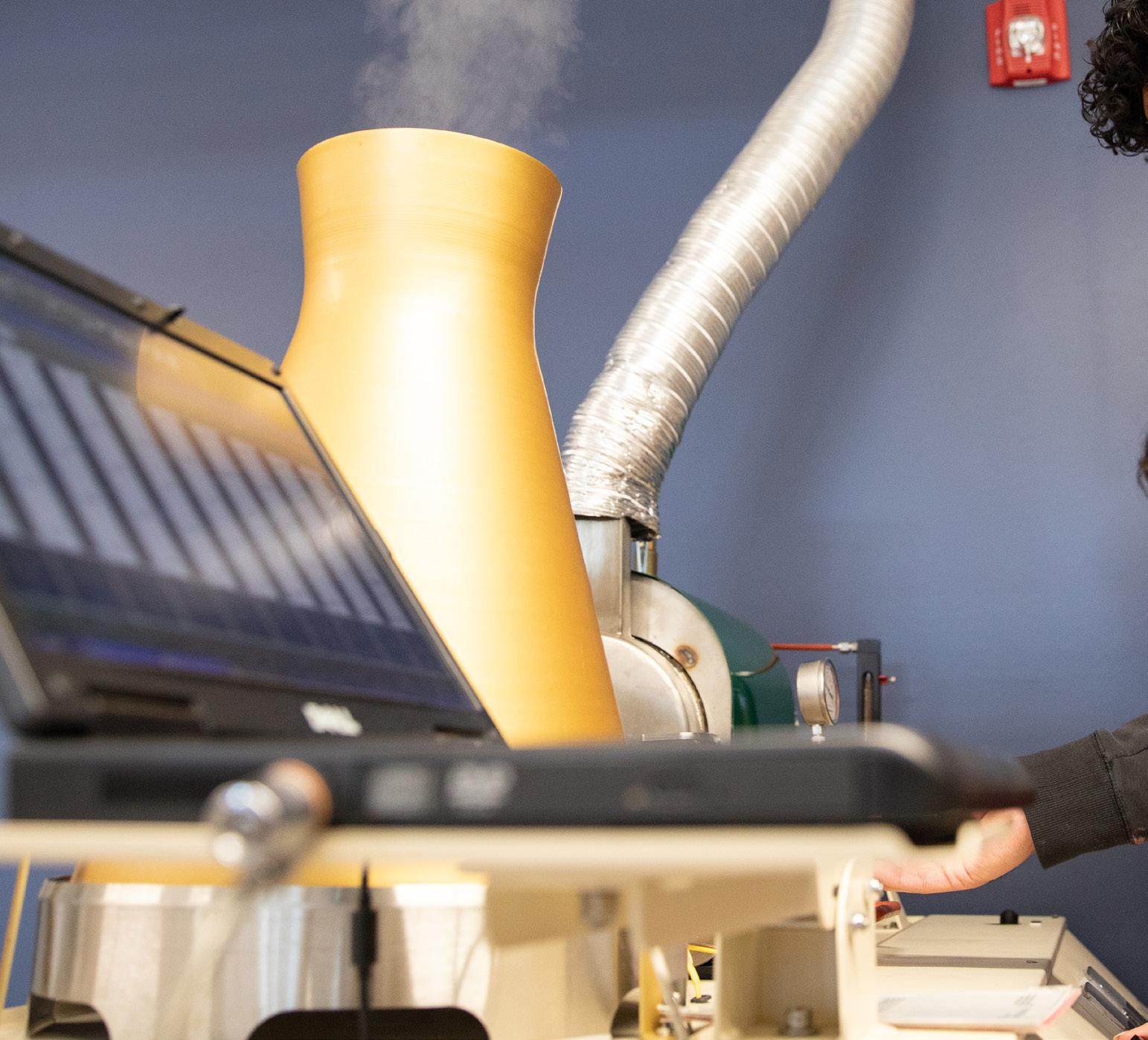
In Dr. Richard LaDouceur's CHAR Lab, students are working to turn hydrogen gas byproduct generated from the creation of biochar into a fuel source to generate power. For several years LaDouceur's lab has pyrolyzed everything from McRibs to hemp stalks grown on the Hi-Line into biochar, which can be used for carbon sequestration and as an agricultural soil amendment. In fall 2025, the team started exploring ways to transform biochar byproducts into power.
"We can take an organic material, like wood chips or hemp, and pyrolyze it," said graduate student Andrew Woods (B.S Mechanical Engineering, '24). "From that process, we get biochar, bio-oil, and syngas. We can isolate hydrogen in the syngas, and that hydrogen becomes the fuel for my engine."
Woods, from Inverness, is tasked with getting a lawnmower-sized Briggs and Stratton engine to run on hydrogen.
"It's a very unique project," Woods said. "There are not a lot of hydrogen Briggs and Stratton engines out there. With any new design, there's obviously going to be a bunch of iterations. Things don't work the first time. It was just months and months and months of, okay, this worked. This didn't. Let's fix this. Let's improve this while we have the chance. It was just an iterative process of how can we make this one step better."
On a winter day, after weeks of work, Woods cheered as the engine finally cranked. At times the project gave him imposter syndrome, and he relied on his faith in Christ to get through it.
"It was really discouraging after so many run-ins with failure," Woods said. "I don't even know what iteration I'm on. I've done so much to it. I learned a lot about not getting anxious about everything and trusting that things will work out."
Woods isn't sure he'll ever need to build another hydrogen-powered engine in his career, but he says the project was valuable.
"I don't know if specifically what I'm doing is going to be this huge revolutionary technology, but I think it's important to unbox those things and say, 'What can we actually do differently?' A lot of technological innovation is really just people stumbling onto something really cool."
The turning of the engine motor is the end of Woods' part of the project. From there, it gets picked up by Natalka Rolfson. Woods' engine will power her generator.
"That's where I come in—building the power generation system from the engine they created," Rolfson (Electrical Engineering, '26) said. "In my design, I have an inverter that can be paralleled with another inverter to allow for higher loads. You can even hook up batteries or solar."
Rolfson has enjoyed the project.
"It was an opportunity that I didn't know existed," Rolfson said.
"It was kind of cool to build a generation system for a hydrogen engine. I don't like making mistakes, but I've made a few, and then I learned from them. I feel like I've learned a lot from this project."
The Biden administration proposed investing billions of dollars into hydrogen energy infrastructure in the U.S., including the Pacific Northwest Hydrogen Hub, which was to include a Montana component in St. Regis. The Trump administration canceled the project funding in 2025.
LaDouceur notes that for hydrogen to be a major contributor to the power grid, investment in infrastructure would have to be made. However, he sees possibilities for hydrogen power at the individual consumer level.
"When we think about rural energy, why not use that hydrogen that's coming off of your wood-burning stove already for power generation?" LaDouceur said. "When you think about the Montana way of life, there are some people in Montana who will not have heat from anything other than a wood-burning stove. So why don't we provide a solution for them to further take that off-the-grid lifestyle and maybe provide some power?"
Projects like this reflect what Montana Tech has done for 125 years: placing students at the center of solving real-world energy challenges. In LaDouceur's lab, hydrogen isn't just a concept debated in policy circles or proposed in billion-dollar infrastructure plans. It's a rattling engine in a campus lab, a generator taking shape, and students learning through iteration, failure, and persistence.
Whether hydrogen becomes a dominant force on the national grid or finds its niche in rural, off-grid applications, Woods and Rolfson have already gained something equally valuable: the experience of building something that didn't exist before.
At Montana Tech, the future of energy isn't just studied. It's tested, tuned, wired, and brought to life.
A CAMPUS REIMAGINED
Inside the Ten-Year Vision for Montana Tech
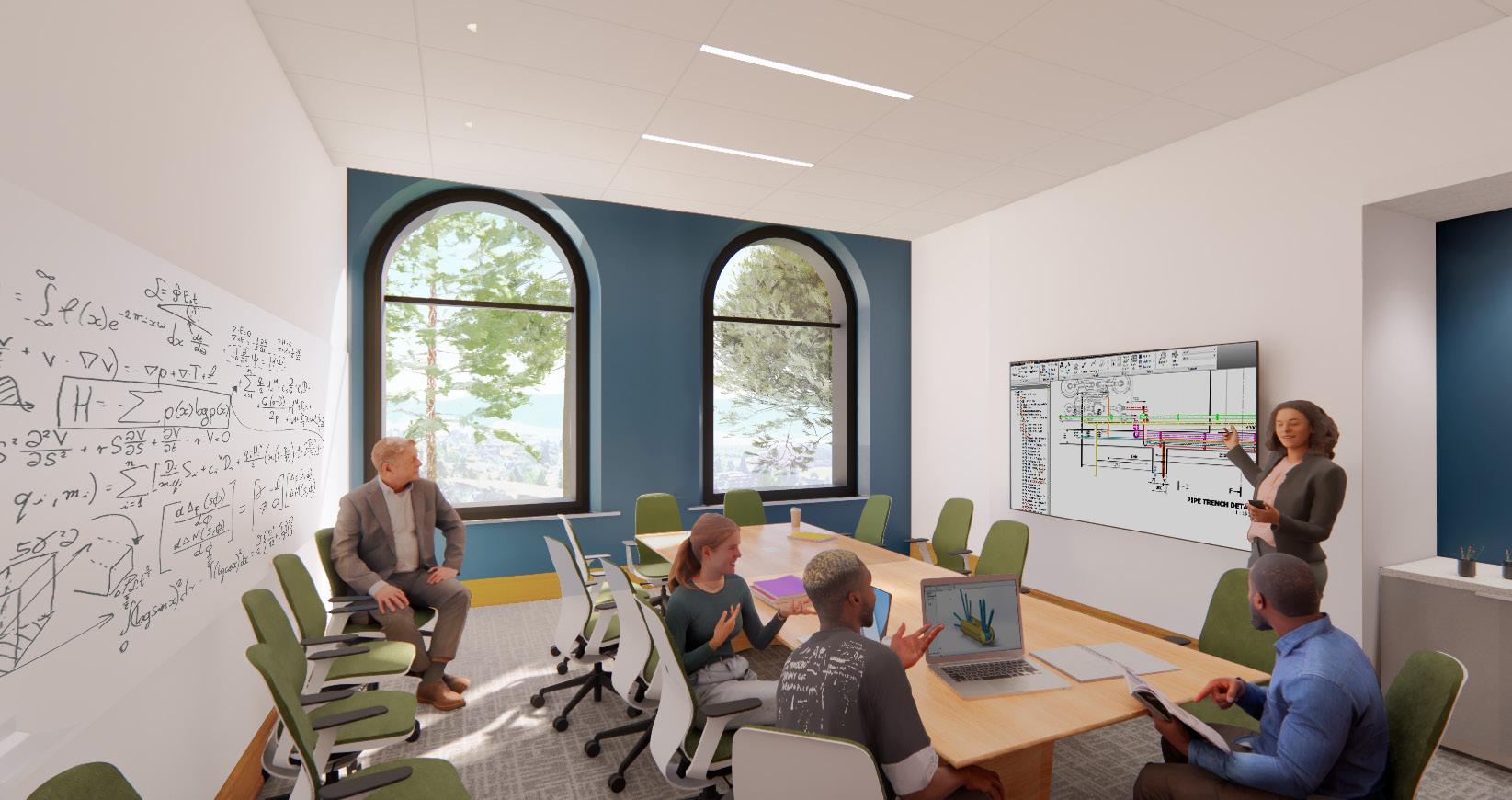
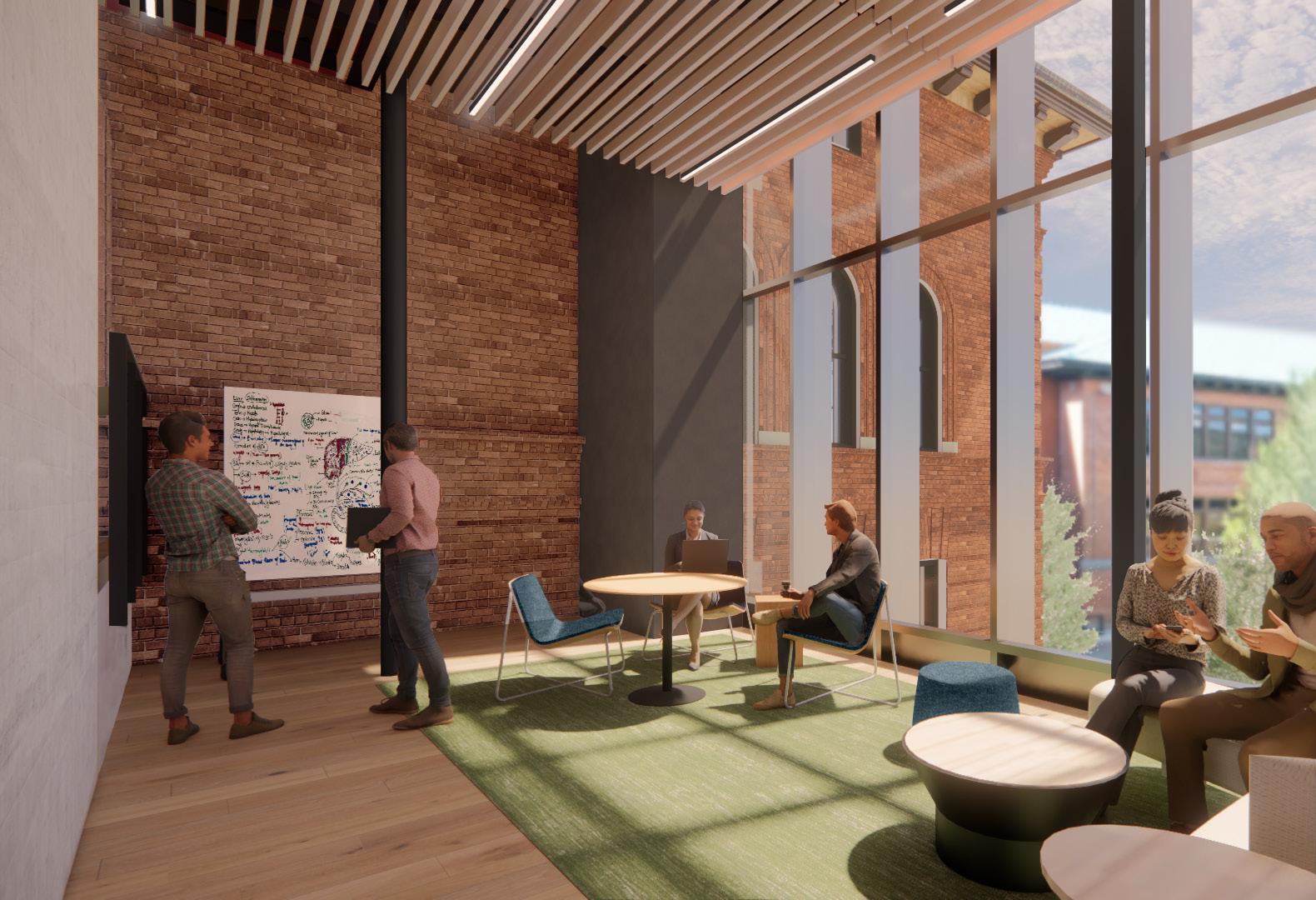
Montana Tech is bridging its storied past with a high-tech future. University leaders have unveiled a visionary campus roadmap designed to modernize facilities and break down accessibility barriers. The transformation begins where it all started: with a massive overhaul of two of the institution’s historic academic buildings, preserving their legacy while installing tomorrow’s technology.
The plan carefully considers campus identity, capital planning and budgeting, efficient use of land and space, and alignment with the university’s strategic planning.
“The master plan gives us a road map for campus physical facilities,” Director of Physical Facilities Layne Sessions said. The plan aligns the university’s physical footprint with its loftiest academic goals, ensuring every acre of land and every dollar budgeted serves the student experience.
“We aren't just looking at the needs of today; we’re planning for the next 10, 15, 50, even 100 years.”
Ron Muffick Vice Chancellor of Administration and Finance
It’s a long-awaited evolution. As Vice Chancellor Ron Muffick notes, the previous era—'Vision 2025'—has served its purpose. Now, the university is ready to transform, starting with a $38 million legislative investment into Main Hall and Engineering Hall.
For Montana Tech leadership, this isn’t just about managing a construction site—it’s about stewardship. They recognized that a truly modern campus requires a vision that outlasts the current semester. “We need to look at the campus in totality,” says Muffick. While the vision is vast, the plan’s immediate focus is the coming decade. "Montana Tech listened to the people who know it best. The final 219-page document is a masterpiece of consensus, weaving together insights from campus faculty and staff, the student body, Oredigger alumni, and the Butte community.
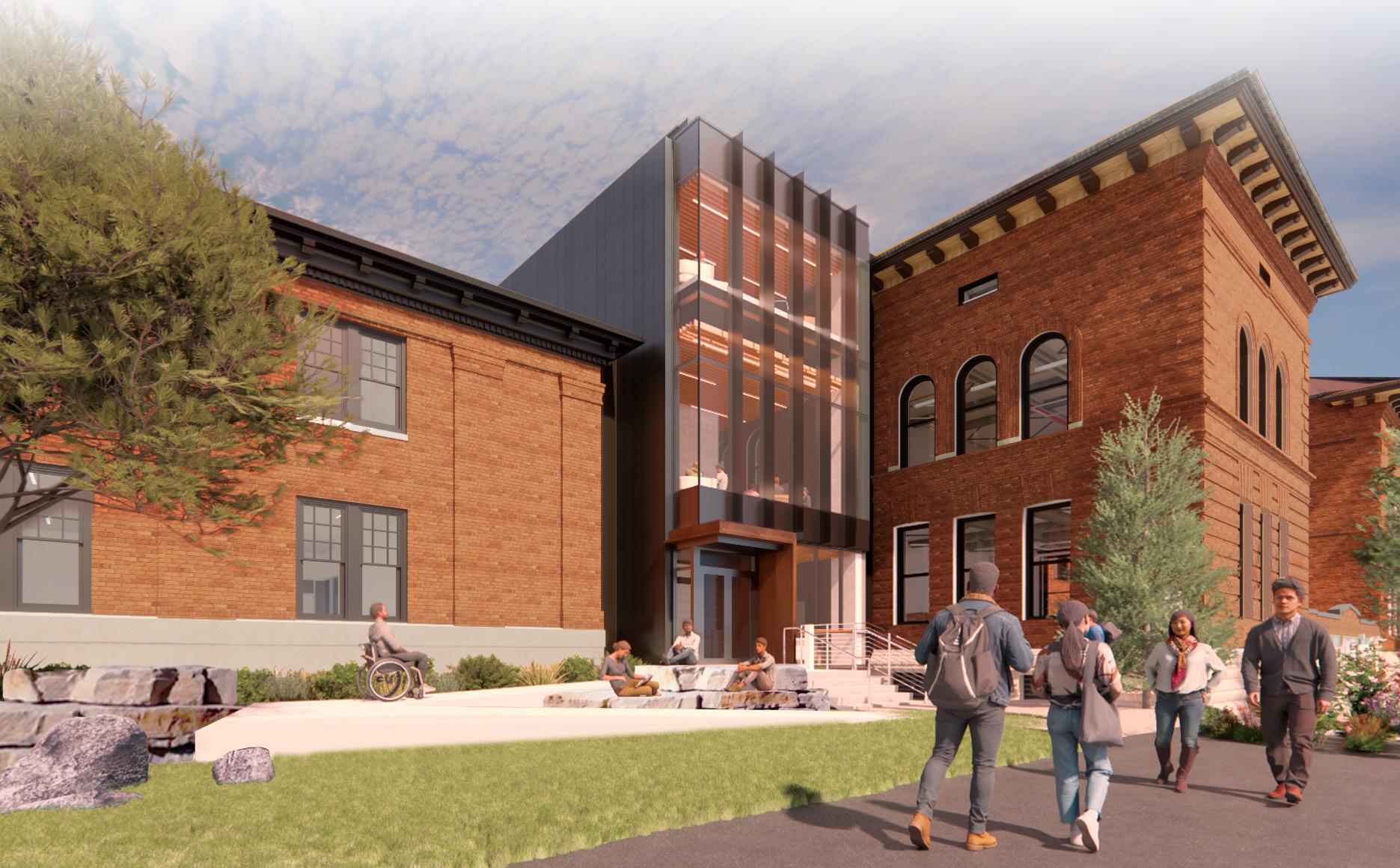
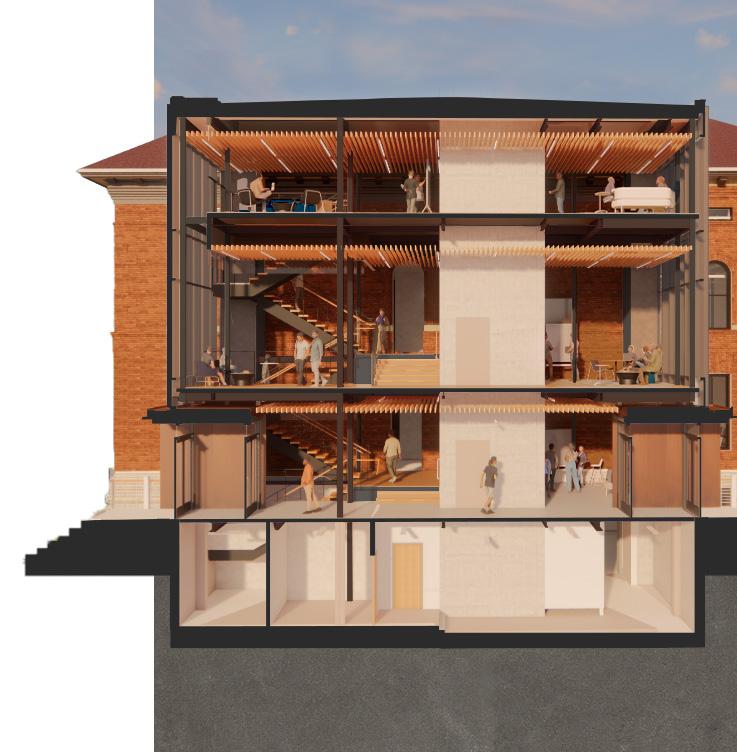
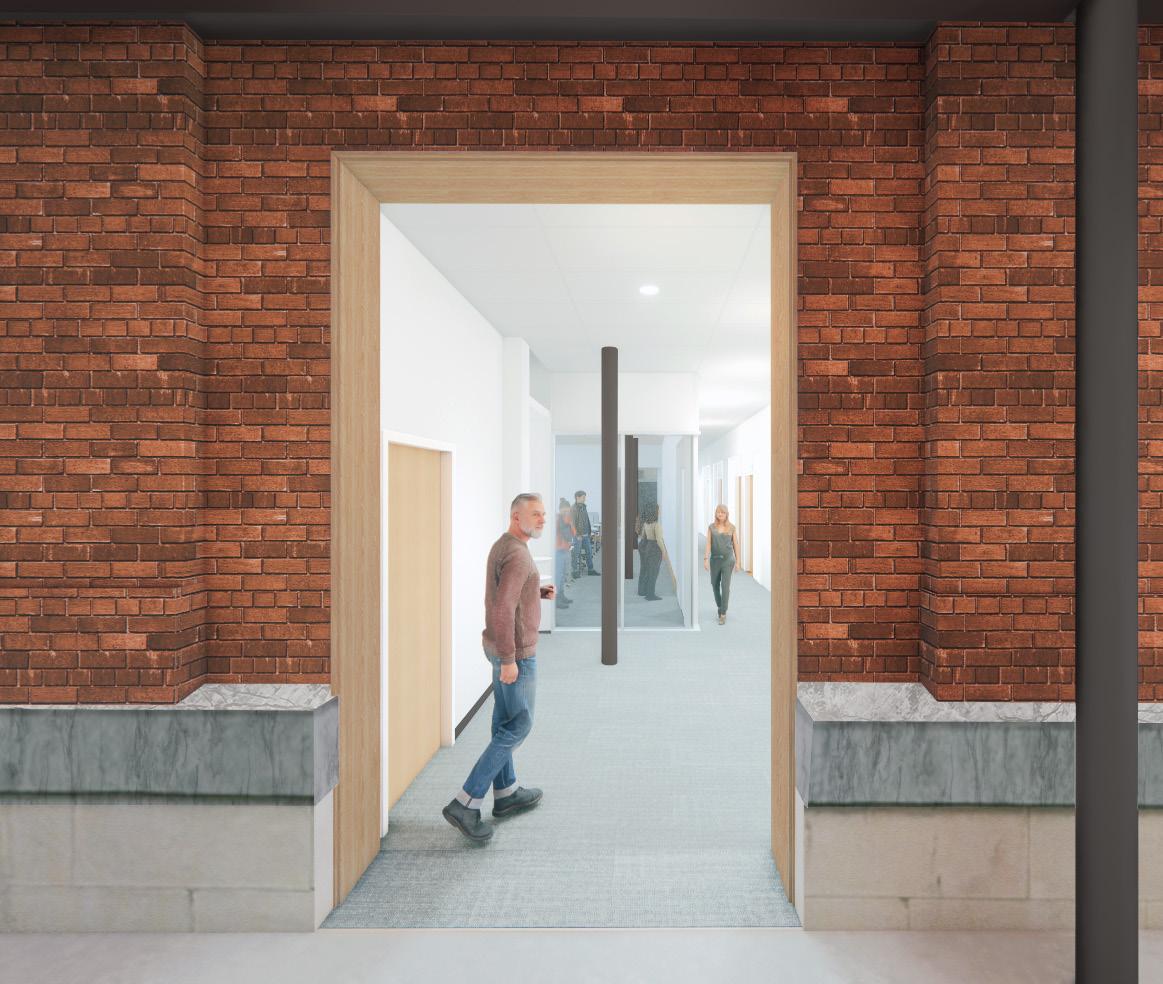
The crown jewel of the master plan is the ambitious union of Main and Engineering Halls. This isn't just a renovation; it’s a physical bridge between eras. By introducing a sleek "common link" between the two structures, the university is solving a critical accessibility gap. "Right now, Main Hall is essentially off-limits to anyone in a wheelchair," Sessions notes. The new connector—featuring a central elevator serving all six combined levels—erases that barrier forever. Inside, the halls will become the high-tech home for Electrical and Mechanical Engineering, while a reimagining of an underutilized basement will create a 60-seat lecture hall—one of the largest on campus. With the two buildings sitting on the National Register of Historic Places, every modern upgrade is being carefully balanced with the preservation of the iconic limestone-and-brick legacy.
“We have to be sensitive to the preservation of these buildings in the National Historic Register,” Sessions said. A vital new roof will be installed to protect the structure for decades to come and key architectural elements will be restored or preserved, including trim work and limestone lintels underneath the windows.
The plan also includes the reuse of materials from the courtyard, where damaged trees were removed as part of the early site work.
“We saved the wood from the trees, and we have a company working on preserving that wood and creating meeting room and study room tables that will go back into Main and Engineering Halls once they’re completed,” Sessions said.
Beyond appearance, the renovations will modernize aging building systems and reduce maintenance burdens. A chilled beam system will help control the climate in the renovated buildings, and replace an outdated and less efficient system.
Muffick said the early phases of construction began in February, with hazardous material abatement, selective demolition, and historical dismantling.
The targeted finish date is fall 2028.
While Main Hall and Engineering Hall are the near-term focus, the master plan identifies other needs that could shape the campus over the next decade and beyond—depending on funding. The plan explores potential additional student housing to support on-campus living, as well as academic and research space, and an event center.
“Anytime we have a huge event, it has to go in the HPER because we just don’t have space anywhere else,” Sessions said.
Library upgrades also surfaced as a priority, though funding would have to be made available to make them a reality.
Parking is an important piece of the master plan. It calls for future expansion on surface lots to the south and west of campus rather than parking garages, which are cost prohibitive.
One possible near-term option is improving an existing gravel area west of campus. Paving the area would provide an estimated 160 additional spaces, though funding has not yet been identified for the project.
The master plan is not meant to sit on a shelf, but instead is meant to be a living document.
“We can’t just put it away for 10 years and not pay attention to it,” Sessions said. “We have to look at it every year or so and see if we’re still where we thought we would be.”
This is Montana Tech’s moment to bridge the gap between its storied past and its ambitious future. University leadership isn't taking the responsibility lightly. “This is our one shot in 100 years,” Muffick says of the modernization effort. “We will get this right.”
MONTANA TECH AT THE FOREFRONT OF Nuclear Energy Education
by Megan Strickland
When you ask leaders on the Montana Tech campus what the future of energy is, they have a very clear answer: nuclear power. Several new academic programs approved for development by the Montana Board of Regents this spring will give Montana Tech graduates the knowledge and skills to lead the state's energy grid of the future.
"Montana is at an energy crossroads," Lance Energy Chair Bob Morris said. "We've been a net energy exporter for 50 years, but as coal comes offline, we risk no longer producing enough energy for ourselves."
Morris is a member of Governor Greg Gianforte's Unleashing American-Made Energy Task Force, which was formed in response to projected electricity demand increases of 20% over the next decade. The task force helps the legislature utilize domestic resources to meet those growing energy needs.
"The vision behind the Ph.D. program is to build on Montana Tech's strong engineering foundation and industry network while elevating our graduate research capacity."
Dr. Foued Badrouchi Assistant Professor of Petroleum Engineering
Morris says a major issue on the horizon is the projected financial end of life for the Colstrip power plant in 2042.
"If we stop producing coal energy, we're no longer an energy exporter," Morris said. "That's a big deal—we'd have to buy energy on the market, it would get expensive, and we'd be beholden to others."
Montana has also maxed out its hydropower capacity, limiting its renewable options.
"If you want the lights to be on in February in Montana, wind, solar, and battery storage alone won't cut it," Morris said. "Making these resources reliable enough to meet peak load would require extensive overbuilding, large-scale battery storage, and major transmission expansion, resulting in a costly system despite low generation costs. Natural gas generation will therefore
play an increasingly important role in Montana's energy portfolio. However, the only energy source that can provide reliable, affordable, and carbon-free power at scale is nuclear. We need to develop the expertise, the workforce, and the technology for nuclear energy—and we need to do it in about 16 years, which is not a very long time."
In March, the Montana Board of Regents approved Montana Tech's request to plan to launch a Master of Science in Nuclear Energy, Undergraduate Certificate in Nuclear Energy, and a Ph.D. in Energy, Engineering, and Science with three specializations: Power Systems and Technologies; Energy Conversion and Application; and Petroleum and Subsurface Engineering.
The programs are meant to pair with Montana Tech's already strong engineering curriculum and offerings.
"This isn't about creating a campus full of nuclear engineers," Morris said. "It's about supplementing our existing engineering degrees with nuclear expertise. Even a little bit of nuclear training makes students extremely attractive candidates—it gets their foot in the door. I want our mechanical, civil, electrical, petroleum, and even safety students to leave here with a working knowledge of nuclear energy."
Montana Tech is working with Idaho National Laboratory (INL), which is home to 52 nuclear reactors, to help get the program going. INL has been instrumental in helping universities across the U.S. advance programs and research for nuclear energy. There are no plans to have nuclear reactors or nuclear waste on the Montana Tech campus, though there are plans for students to utilize an on-campus simulator for their studies.
Dr. Richard LaDouceur is head of the Mechanical Engineering Department and leads the Center for Energy Technologies at Montana Tech, a new research hub focused on energy systems. LaDouceur notes the new Ph.D. program will allow Montana Tech to offer a full complement of graduate studies in its areas of expertise.
"Currently, on campus, we have two Ph.D. programs, one in Material Science and Engineering and one in Earth Science and Engineering," LaDouceur said. "When we think about the natural science and engineering fields on campus, those two Ph.D.
programs cover or can cover a lot of what we do, but not everything. The Energy Engineering Ph.D. will allow us to offer doctoral programs in all of our areas of expertise."
LaDouceur is excited to see what pathways for students open up because of the new interdisciplinary programs.
"Not all students will follow the same career path. If we can provide opportunities, then we better meet our purpose."
LaDouceur also thinks the new programs could open doors for Colstrip, which has been floated as a potential site for nuclear energy development.
"One of the largest power transmission lines in the country runs from Colstrip to Seattle," LaDouceur said. "The infrastructure is over there already. If you want to work in a power plant, you already work in Colstrip. The whole goal is to create power into the future while taking advantage of the trained workforce that we already have."
Dr. Foued Badrouchi, assistant professor of Petroleum Engineering, was instrumental in initiating discussions that led to the development of the Ph.D. in Energy Engineering and Science, recently approved by the Montana Board of Regents, including the petroleum and subsurface engineering track. He sees the program expansion as a strategic step to enhance Montana Tech's research visibility, strengthen graduate education, and expand opportunities for interdisciplinary collaboration across campus.
"The vision behind the Ph.D. program is to build on Montana Tech's strong engineering foundation and industry network while elevating our graduate research capacity," Badrouchi said. "To remain competitive for major research initiatives and to develop state-of-the-art laboratories and teaching resources,
we need a robust doctoral ecosystem. Establishing the Ph.D. pathway allows us to attract high-level research funding, support advanced graduate students, and position Montana Tech as a leader in energy and subsurface engineering."
With all of the excitement, there are certain to be those with concerns as well. While the words "nuclear power" might spark concern for some, Morris says the history and regulation of the industry is encouraging, not discouraging.
"We've got hundreds of nuclear reactors in the U.S. right now that have been operating for decades with almost no problems," Morris said. "Nuclear power is basically running our entire Navy. Nuclear submarines are operated by young 18-year-olds with some training, so we know how to do it and do it well."
While waste is always a talking point, Morris sees potential, not a hazard.
"Every energy source has some negative environmental impacts," Morris said. "We just need to manage them. Nuclear's got radiation issues, but if you take all the nuclear waste that the U.S. has generated in the past 80 years, it would fit on one football field in casks about 20 feet tall. So it's not very big. The nuclear industry knows where every single molecule of their waste is. No other industry can say that."
Morris also points out modern reactors can also use what used to be considered waste byproducts.
"Nuclear waste is just unspent nuclear fuel," Morris said. "It can be recycled and reused. If you take all of the nuclear waste and you recycle it, these new reactors that we're designing can use it. In fact, there's enough energy in just recycling to power the U.S. grid for 200 years."
As Montana faces mounting energy demands and the eventual closure of coal-fired power, Montana Tech leaders see both urgency and opportunity. By launching new nuclear and energy-focused graduate and undergraduate programs, the University is preparing engineers, researchers, and industry leaders to help shape a reliable, affordable, and cleaner energy future. With strong partnerships, expanding research capacity, and a commitment to workforce development, Montana Tech isn't just responding to an energy crossroads—it's helping chart the path forward.
Patents with Purpose:
Shaping the Future of Innovation at Montana Tech
by Megan Strickland
When Dr. Jessica Andriolo was a Ph.D. student, she was told to write her own patents.
"I didn't know what a patent looked like," she said. "The patents were given to a lawyer who just filed them as is. They did not look like professional patents."
She laughs about it now, but at the time there was no roadmap, no office devoted to shepherding inventions from lab bench to marketplace.
Today, Andriolo is determined that no one at Montana Tech has to learn commercialization the hard way.
A research associate in the Mechanical Engineering Department, Andriolo stepped into a second role last August as director of technology transfer in the Research Office. The position allows her to lead other inventors at Montana Tech, translating faculty innovation into intellectual property, and intellectual property into real-world impact.
At a university known for powering industries, the inventions are there. What has often been missing is a clear path from prototype to product.
"When we patent stuff at Montana Tech, it's not automatically going to turn into products," Andriolo said. "The university is not going to start producing a product from your invention. What happens is an outside company licenses or pays the school a fee to license the technology, and then they can start producing a product that can get out to consumers."
That process can be daunting. After filing, patents are almost always rejected on the first round and enter a back-and-forth negotiation with the U.S. Patent and Trademark Office. Claims must be refined. Language must be precise. Strategy matters.
As a Ph.D. student, Andriolo was able to assign two patents to Montana Tech. To date, she holds 10 provisional, pending, or granted patents. As senior technical staff at Alpha Technology, LLC, she helped negotiate licensing and facilities use agreements for the company. Alpha Technology is a local company licensing and working to commercialize several Montana Tech inventions. The company's president is Dean of the Lance College of Mines and Engineering Dr. Jack Skinner. The multifaceted experience—going from laboratory to patent to start up and commercialization—has shaped how Andriolo approaches her new role.
One of her first major initiatives, sponsored by Vice Chancellor of Research Dr. Katie Hailer, was organizing Montana Tech's first "Pitch Day," a campus-wide showcase connecting researchers with Shadow Ridge Analytics, a Bozeman-based commercialization and venture development firm, managing the Small Business Administration's Regional Innovation Cluster program for critical minerals and advanced materials startups. This funding helps identify promising technologies and match them with commercialization pathways. "It's really important that I promote licensing of our technologies so that we can see our products in the hands of people," Andriolo said. Shadow Ridge stepped in to help.
With only 15% of her time formally allocated to tech transfer, partnerships are essential. Shadow Ridge works with angel investors, industry leaders, alumni networks, and startup ecosystems to help determine what an invention needs next.
"There are several routes of commercialization that they can help us with," she said. "They can license the technology themselves. They can identify companies that want to license our technology. They can help start up a company. Or they can find the money we need to do a little bit more proof-of-concept/upscaling work to ensure a product is viable for commercialization."
During the first round of Pitch Day, 11 technologies from across campus were presented, including medical equipment, pharmaceutical manufacturing processes, a pharmaceutical compound, advanced materials for tooling in mining and aerospace, biomass recycling technologies, and novel sensor systems. For a campus often associated primarily with mining and metallurgy, the diversity was striking.
The commercialization recommendations from Shadow Ridge were varied. Some faculty were encouraged to launch their own companies, leveraging their existing connections with industry and available startup funding from the federal government. Others were steered toward pharmaceutical partnerships. In one case, Shadow Ridge expressed interest in licensing and spinning out a technology directly. Others were not quite ready for licensing, which is still a win for the pitch day and the inventors presenting. They learned what is driving certain markets that make commercialization challenging, even with great technology. In this case, Shadow Ridge provides recommendations on engaging with industry and other experts to better understand next steps.
Beyond the immediate feedback, the broader goal is to create a culture of innovation at Montana Tech. "Our inventions aren't useful sitting on our lab benches. We want to see what we do benefit society," Andriolo said. "It's great advertisement for the school if our products are being commercialized and people see them on the shelves. Licensing agreements will bring funding into the research office. It enables faculty and staff to be part of entrepreneurship and commercialization of their technology, and it promotes the collaboration between the university and the community if we're setting up startup companies or companies where we hire Montana Tech students."
"We
were considerably impressed, not just with the breadth of innovation happening at Montana Tech, but with the passion and drive the inventors have in seeing their technology succeed in the marketplace. There are many routes for commercialization across the board and we are honored Montana Tech entrusted us in this partnership."
Elle Gahl Shadow Ridge CEO
For Andriolo, the work is personal. She knows how isolating the patenting process can feel. Looking back at her first applications, she cringes.
"They look terrible," she said. "It's just a big learning curve."
Now, instead of leaving inventors to navigate that curve alone, she walks into their labs.
"Faculty or staff who haven't patented much in the past may not realize they have technology that can be patented—they may think it's not ready, they may wonder if only certain aspects can be patented," she said. "So I've been trying to really sit down with the inventors, get in the lab, and see what they're doing."
Her goal is not simply to file more patents, but to file better ones, and to teach faculty how the system works so they can put their best foot forward before the University's patent committee.
"I don't want researchers to miss out because they don't know how," she said. "I want to teach them how to do it. I want to help them do it, and I want to be able to advocate on behalf of them in those meetings."
Montana Tech's approach differs from some larger institutions. At some universities, inventors must secure a licensee within a year of filing a provisional patent or risk losing institutional support for a full nonprovisional filing. At Montana Tech, Andriolo emphasizes flexibility, especially in an academic environment where publishing and presenting are essential. The balance between protection and publication is critical in a research ecosystem where students depend on dissertations and journal articles to advance.
"We allow you to file a provisional patent, and then you are safe," Andriolo said. "You can present it anywhere. You can publish anywhere. Your students can graduate. You can get promoted."
If a faculty member or student believes they have a potentially patentable product, Andriolo encourages them to reach out early.
"It's got to be a little bit more than an idea," she said. "They can either file an invention disclosure form, or they can contact me, and I can go in their lab and see what they're doing and let them know what I think."
The ambition is clear: build Montana Tech's intellectual property portfolio so that when companies ask what technologies are available, the answer is not two or three options, but dozens. Part of that vision is economic. Licensing revenue flows back into the Research Office. Startups create local jobs. Partnerships strengthen ties between campus and community.
Another part of it is also about recognition. For faculty who worked so hard on their inventions, Andriolo sees commercialization as a chance to extend impact beyond academic journals.
"It's really exciting for them," she said.
The process is exciting for Andriolo too. What began as a trial-by-fire education in patenting has become something larger: a commitment to making sure innovation at Montana Tech does not sit on a shelf, but finds its way into the world.
Tracking Tomorrow's Threats:
Montana Tech Researchers Study the Future of Zoonotic Diseases
by Megan Strickland
WHEN
scientists look to the future of medicine and emerging threats to human health, zoonotic diseases, or illnesses that transfer from animals to humans, stand out as a major concern. According to the World Health Organization, 60% of emerging infectious diseases worldwide originate in animals. Of the more than 30 new human pathogens identified in the past three decades, 75% came from animal populations.
At Montana Technological University, decades of research have helped build a foundation for understanding how and why those diseases emerge, and what humans can do to better protect against them.
Dr. Amy Kuenzi, head of the Department of Biological Sciences, was a doctoral student at the University of Arizona when a mysterious respiratory illness struck the Four Corners region in 1993. Scientists soon identified the cause as Sin Nombre hantavirus, carried by deer mice. The need to learn more about the virus was paramount. According to the Centers for Disease Control (CDC), by December 31, 1993, 53 cases had been reported, with 32 patients (60% of cases reported) dying.
Kuenzi's advisor received emergency funding from the CDC to begin screening small mammals for the virus. Kuenzi joined the effort—work that would ultimately shape her career.
Nearly three decades later, she is still studying disease dynamics in Montana's deer mouse populations, building the state's longest-running dataset on hantavirus prevalence.
"To really understand the dynamics within those populations, you need to look at them over fairly long periods of time," Kuenzi said. "That's the beauty of long-term studies. You can ask a lot of different questions using data that's been collected over many years."
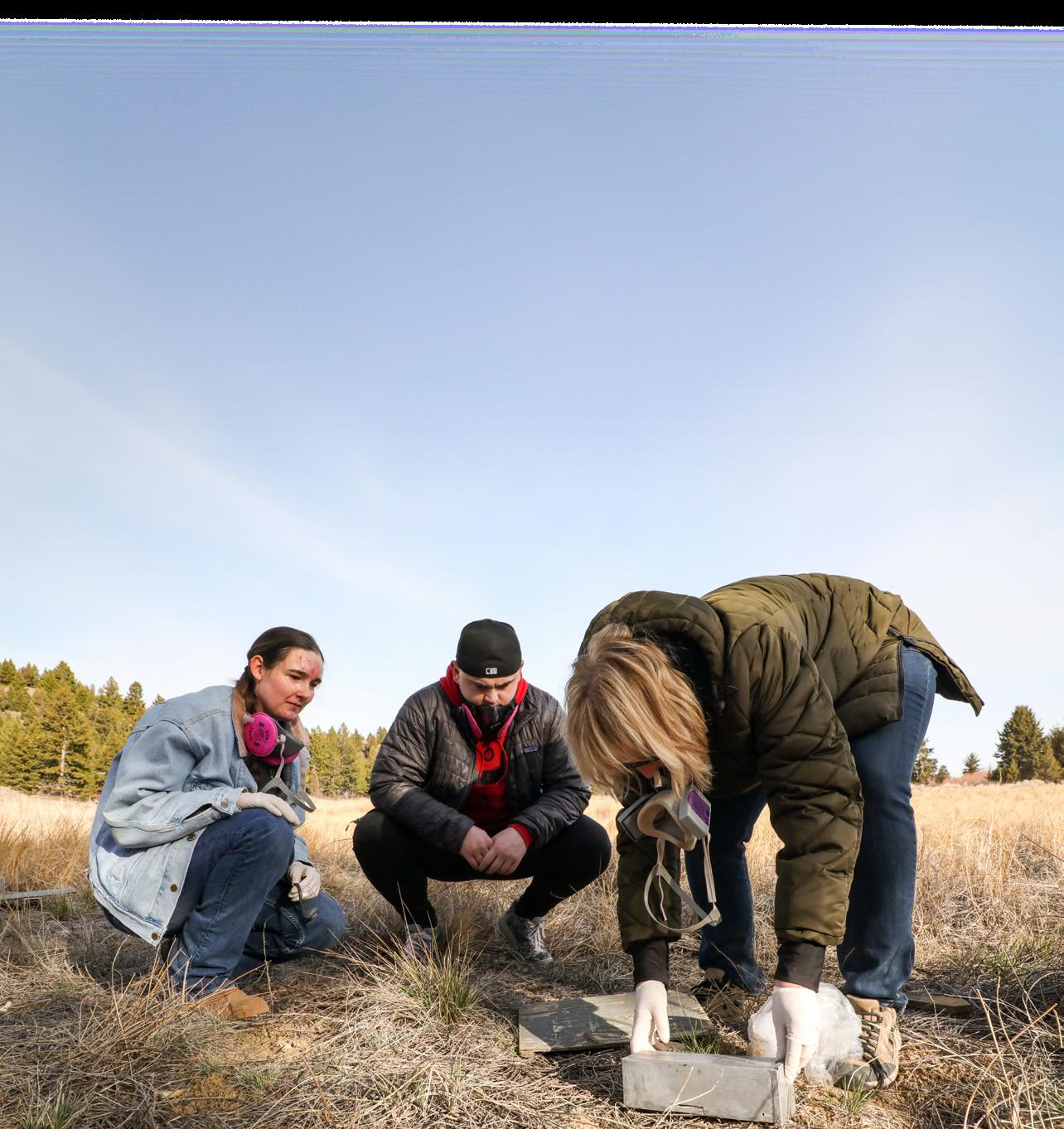
The research begins long before lab analysis. In the late afternoon, Kuenzi and her students hike into study sites in various parts of Montana, carrying stacks of small metal live traps baited for deer mice. The traps are set in grids and left overnight while the nocturnal mice are active. Early the next morning, the team returns to check each trap, following guidelines from the American Society of Mammalogists and Institutional Animal Care and Use Committee (IACUC) at the University of Montana.
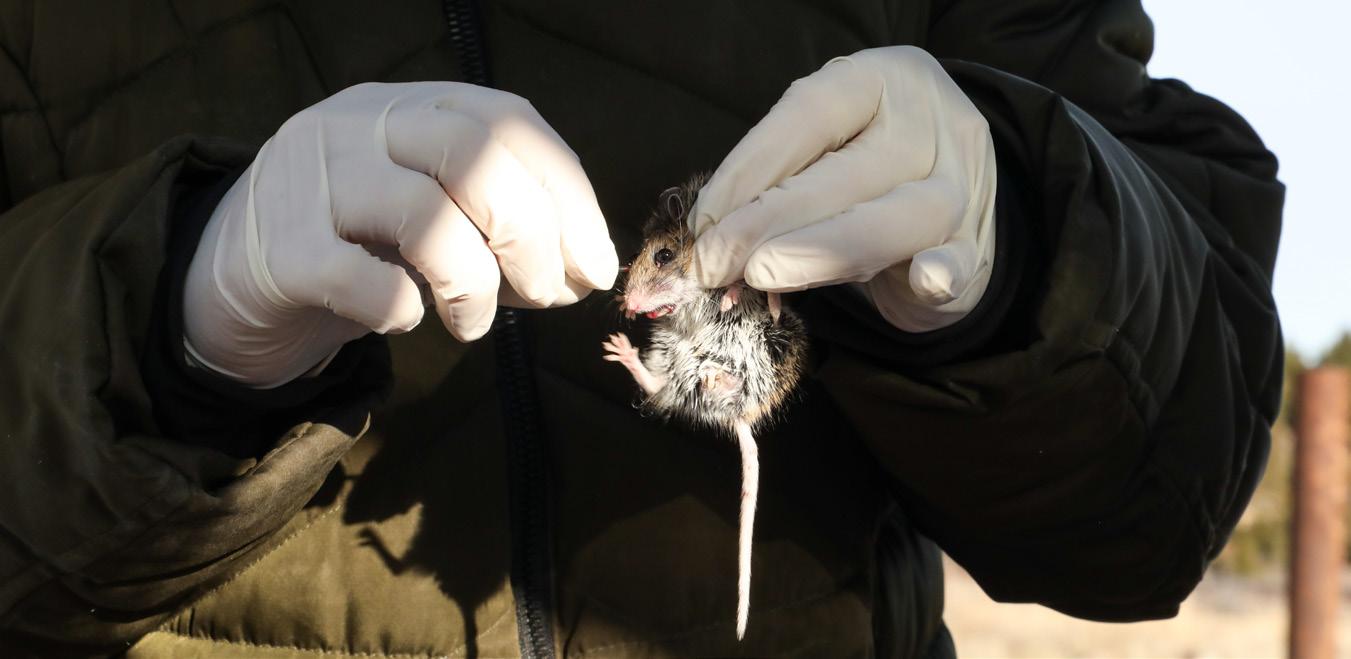
Because hantavirus can be transmitted through aerosolized virus particles shed in rodent urine, feces, or saliva, safety is paramount. Students wear gloves and fitted respirators while carefully handling each mouse. The animals are removed from the traps, ear tagged, weighed
and measured, and a small blood sample is collected. Equipment is disinfected continuously throughout the process. Once processing is complete, the mice are released back into their habitat.
"Fieldwork is fun when the weather is really nice, but it can be really hard, too," Kuenzi said. "A couple of years ago, we had a huge population spike in mice, and we also had a spike in hantavirus prevalence. It was really physically hard when you have a lot of mice to process in the summer heat."
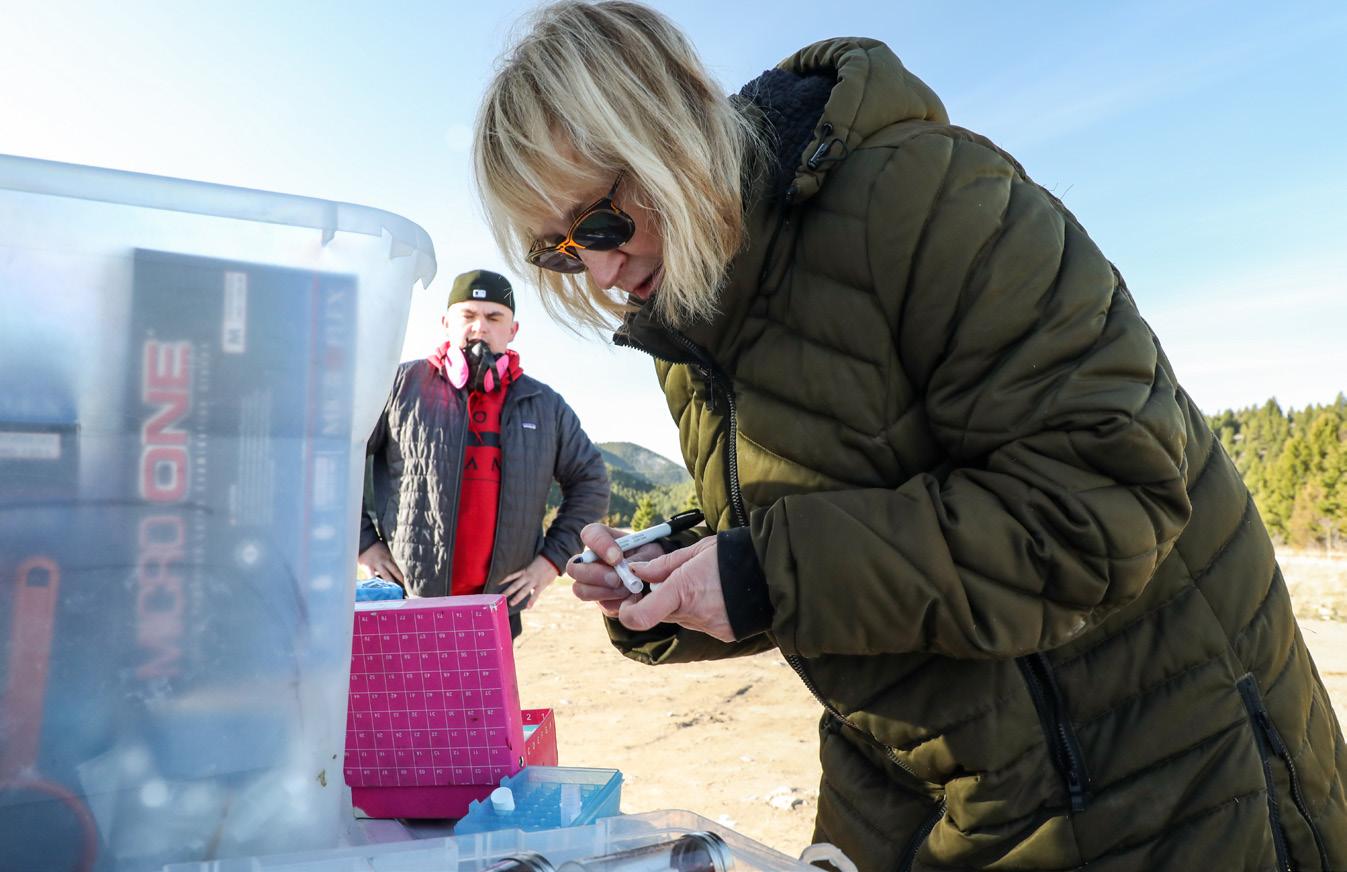
Samples are immediately placed on dry ice in the field and later transferred to laboratory freezers for long-term storage. In the lab, students test the blood for antibodies, extract DNA, and screen for pathogens. Some samples, preserved for years, are revisited with new techniques and new research questions—allowing today's students to generate discoveries from data collected years earlier.
Today, Kuenzi's long-term research is expanding. Using archived blood samples collected from across Montana, Kuenzi is working with Dr. Katie Hailer and students to screen for Bartonella, a genus of bacteria linked to illnesses such as cat scratch disease and trench fever.
"Nobody's ever looked for Bartonella in rodent populations in Montana," she said. "We found it at most locations—we just don't know what species it is yet. This summer, we'll have a student sequencing that DNA to determine what species we have, which will also be interesting because no one's done that in Montana before."
Kuenzi's work also extends beyond Montana Tech through a long-standing collaboration with researchers at the University of Montana. She partners with Dr. Angela Luis, a disease ecologist and modeler, who helps analyze the extensive dataset collected from Montana's deer mouse populations. Together with several University of Montana Ph.D. students, the team uses weather data, population trends, and infection rates to model how environmental conditions influence disease prevalence. The goal is not only to understand past outbreaks, but to determine whether future spikes in infection can be predicted. By combining hands-on field research with advanced statistical modeling, the collaboration expands the impact of Montana Tech's long-term data and brings new dimensions to the study of zoonotic disease dynamics.
In 2023, Kuenzi and Luis published a paper in Royal Society Open Science that examined how food availability influences social contact among deer mice. They concluded that intervention methods such as rodent proofing and proper food storage could be important to preventing disease spillover to humans, as it applies to not only Sin
Nombre hantavirus, but also to other pathogens carried by rodents around the world.
The research not only deepens understanding of zoonotic disease in the region but also trains the next generation of scientists. Students learn field sampling, molecular lab techniques, and data analysis—hands-on experiences that often shape their futures.
"I've had so many different students work on this project over the years, and it's gotten a lot of students excited about both science and health care professions," Kuenzi said. "We've had students go on to vet school, med school, dental programs, PA programs—some have gone into research. I'm proud that I've been able to get students excited about science and research."
The work may begin with trapping mice before sunrise and carefully processing samples in respirators and gloves, but its implications stretch far beyond rural fields in Montana.
"Science is important," Kuenzi said. "It might seem silly spending decades trapping mice, but they can give us a lot of understanding about diseases, disease dynamics, and how the environment influences those diseases."
Studying Mine Waste's Impact on
As breeding waterbird numbers increase at Warm Springs Ponds, a Montana Technological University graduate research project aims to answer a critical question: What does long-term nesting in a former mine waste treatment system mean for bird health?
Caleb Lashway (Biological Sciences '25), a graduate student studying ecological restoration at Montana Tech, is leading the study as part of his thesis research. Lashway, who has conducted weekly bird surveys at the ponds since 2019, said the recent rise in breeding birds prompted him to look more closely at what nesting in the system might mean.
Wild Holding on to the
Montana Tech Researchers Aim to Preserve Montana's Natural Legacy
by Megan Strickland
"When they are migrants, these birds might be in the ponds for five or six days and then move on," Lashway said. "But breeding birds are there longer, so the impact of the ponds probably wouldn't be the same."
The Warm Springs Ponds were constructed in the early 1900s to capture and treat mining and smelting waste that washed downstream. Lime was added to incoming water from Silver Bow Creek to raise pH, allowing metals to precipitate out and settle to the bottom before cleaner water is released downstream. Today, the ponds cover roughly four square miles and contain an estimated 19 million cubic yards of mine waste.
Although built to protect human and environmental health, the ponds have also become an important habitat for wildlife. Since the 1990s, bird surveys have documented heavy use by migratory waterfowl. In recent years, however, breeding activity has increased substantially.
Survey data show rising numbers of nesting ducks, grebes, and other waterbirds during the summer months. Lashway noted that traditional brood surveys often capture only a portion of the birds actually present, meaning true breeding numbers may be significantly higher.
"There's a lot of questions with no answers yet. Until I start collecting data, I won't even be able to start unpacking them."
Locating nests in dense cattails and shoreline vegetation is notoriously difficult. To improve detection, the project will use a thermal imaging drone paired with GPS and GIS mapping software.
"Birds do not want you to find their nests," Lashway said. Traditional nest searches often involve walking transects and stumbling across well-hidden nests. By flying the drone at approximately 45 meters, he hopes to detect the heat signatures of incubating birds without causing disturbance.
The thermal imagery will allow him to map nesting locations around each pond and generate more accurate estimates of breeding density.
To understand how metals might move through the food web, the study will focus on four waterbird species that represent different feeding behaviors: gadwall, which feed largely on aquatic vegetation; lesser scaup, diving ducks that consume benthic invertebrates such as snails and clams; eared grebes, which forage on aquatic invertebrates in the water column and nest on floating vegetation; and double-crested cormorants, fish- and crayfish-eating birds that nest colonially.
"These are four fully different feeding strategies," Lashway said, explaining that the comparison could help reveal whether certain diets correspond with higher concentrations of metals.
The project plans to collect one egg and one naturally shed feather from a target of 14 nests per species. Eggs will be selected early in development to minimize impacts on nesting success, and single-egg nests will be left undisturbed.
"I'm trying to be as ethical as possible," Lashway said, noting that research shows even a single nest visit can increase the risk of abandonment.
In the lab at Montana Tech, egg contents will be homogenized and prepared for nitric acid digestion before being analyzed for heavy metal concentrations. Feathers will undergo similar preparation and testing. The results will quantify concentrations of metals such as copper and other elements associated with historic mining.
Lashway expects some metals to be present but said the key question is whether levels differ among species and feeding groups. "I'm expecting to see things like copper show up," he said. "But I don't know what's happening. This is kind of the first step to try to identify that."
Because the Warm Springs Ponds are a highly engineered and unique system, identifying a true control site is challenging. However, Lashway is exploring possible comparisons with other Montana wetlands where similar sampling is underway.
Ultimately, the research aims to provide the first detailed assessment of heavy metal exposure in breeding waterbirds at Warm Springs. By pairing drone technology with laboratory analysis, the project seeks to better understand whether a landscape built to contain contamination can also support healthy, long-term bird populations.
Reversing
Settler's
Damage to the Bull River Drainage
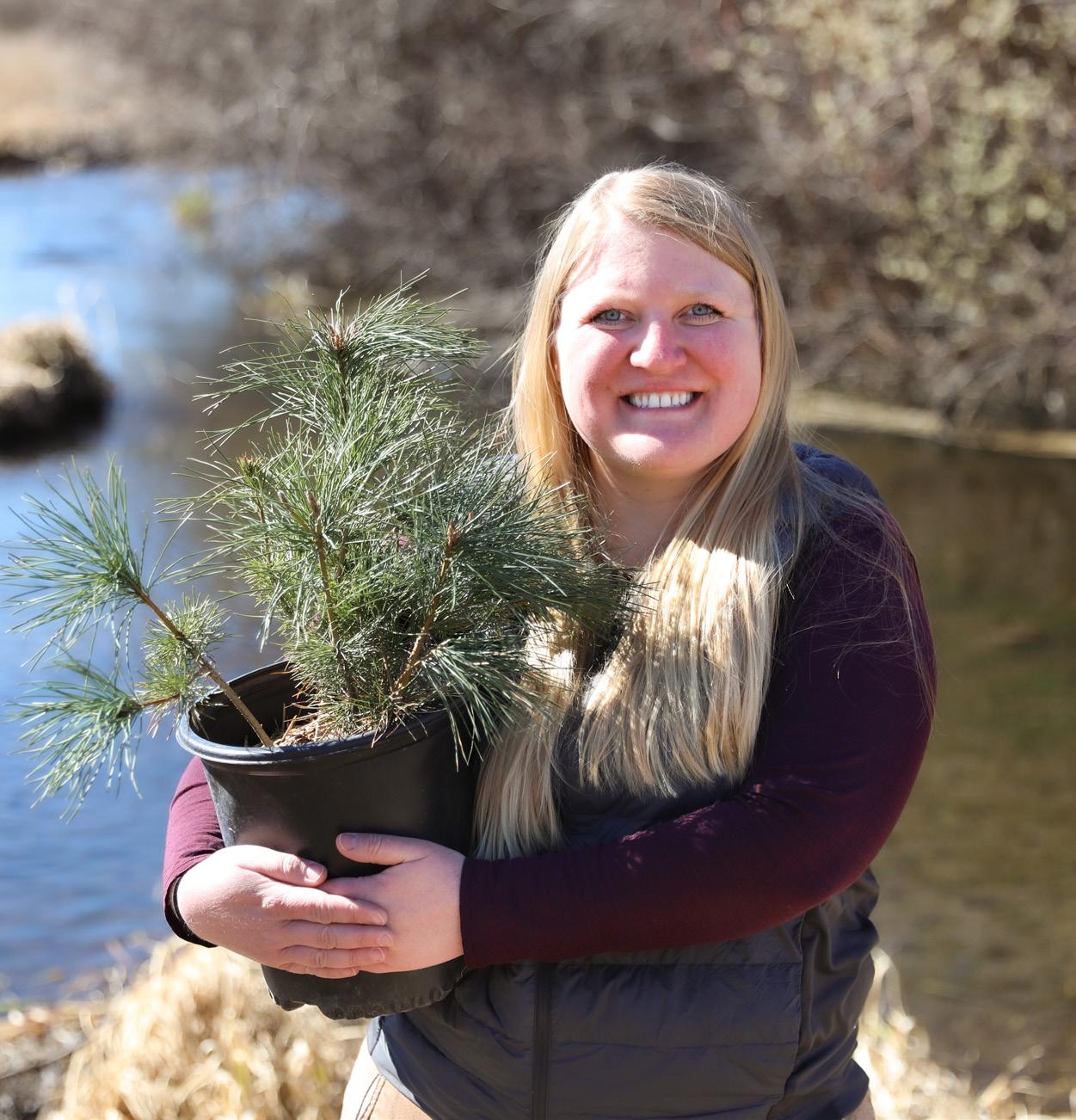
Ecological restoration graduate student
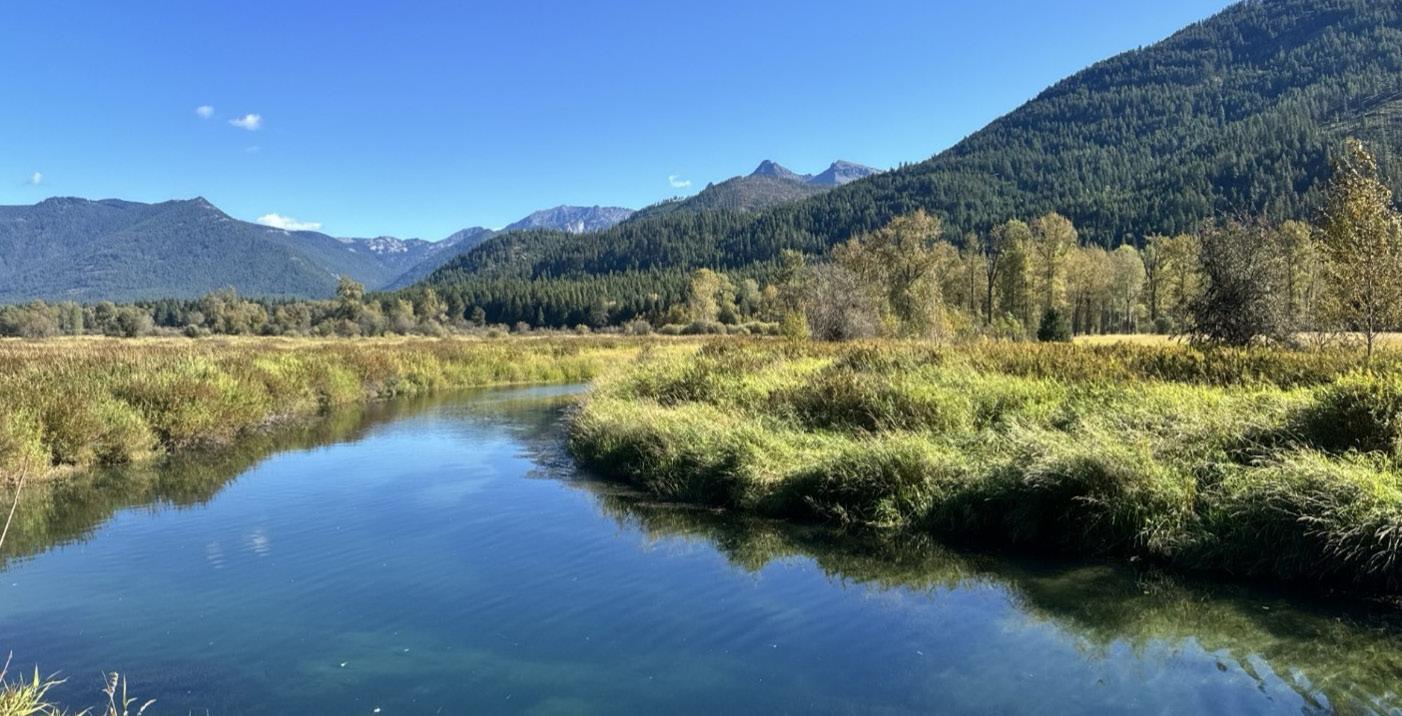
Sarah Busmire works along the river banks of Montana, in the far western corner of the state's Bull River Valley. The Bull River, a tributary of the Lower Clark Fork River, has been severely impacted by human activity and is listed as impaired by the Montana DEQ.
The problem stems back to when settlers arrived in the 1800s.
"The influences that humans have had on that watershed and on the wetlands have made it to where the river cannot make it back over the threshold to exist in a healthy and fully functioning state," Busmire said.
Aerial photographs show where the channels of the river were altered by homesteaders for crops and livestock purposes, but to identify one of the biggest impediments to the river, you have to zoom in to ground level.
Invasive reed canary grass was planted in the Bull River Valley during the homesteading era as a forage crop for livestock. Early settlers were encouraged to plant it because it was thought to be a good feed source that could be cut for hay and stored for winter. The valley's wet, fertile soils made it easy for the grass to
establish and spread. However, livestock ultimately did not prefer it, and the plant persisted anyway, spreading aggressively and forming dense monocultures that now dominate large portions of the floodplain "as far as the eye can see," Busmire said. It grows thick and up to six feet tall, creating a heavy thatch of dead grass that blocks native plants from taking hold. Worse, unlike native trees that provide shade to cool the water for fish and deep roots to help hold sediment and the river banks in place, it doesn't protect the river.
"It has a really shallow root system," Busmire said. When high water hits, the river can cut underneath the grass and peel away chunks of bank—sometimes six feet wide — sending soil sloughing into the channel. The result is a cascade of impacts: more sedimentation, weaker banks, and less suitable habitat for fish.
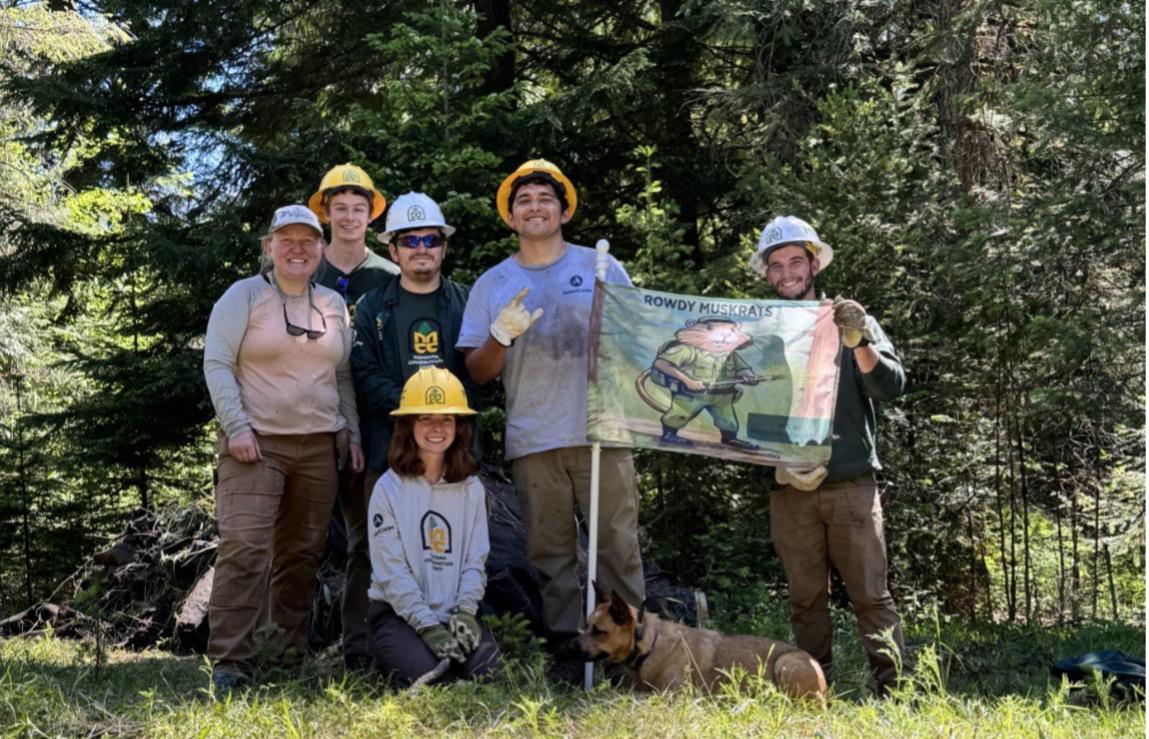
Busmire works with the Lower Clark Fork Watershed Group, planting native trees to help restore the landscape. It sounds simple, but in reality the execution of the task is very complex. Much of the Bull River Valley is private land, which means projects depend on landowner buy-in, multi-agency partnerships, and years of grant funding. The Lower Clark Fork Watershed Group has been working to restore the river for two decades.
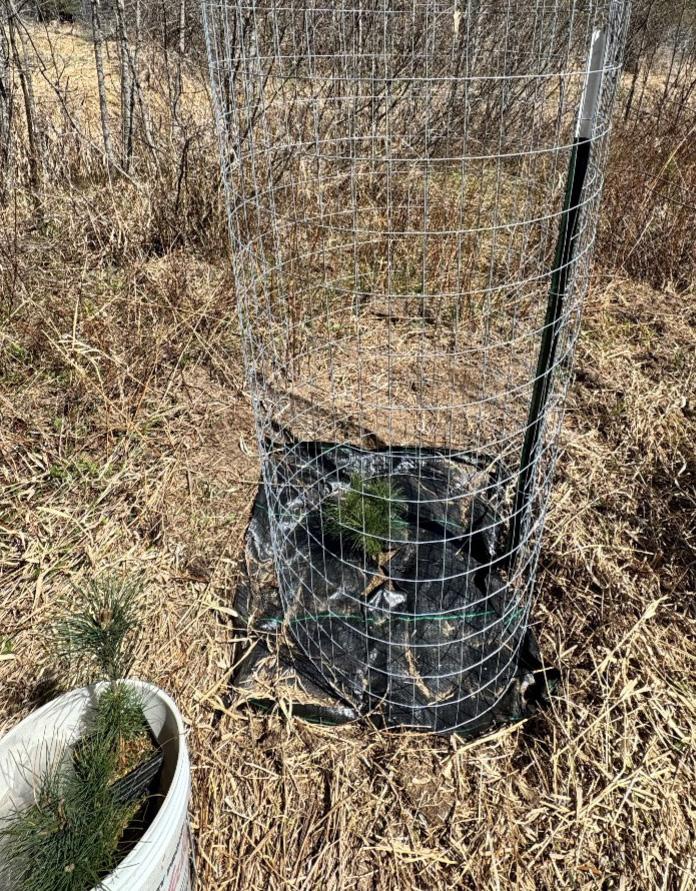
Crews create individual planting sites by peeling back the dense mat of grass and roots, digging into the soil, planting the native trees, and installing weed matting to reduce competition. Later, they cage the young trees with fencing, anchored by T-posts, to protect them from browsing animals—and from the most determined vandals on the river, beavers.
"When beavers chew down a cottonwood that's been growing for 15 years, it can be a little bit heartbreaking, but they are a natural part of the river's ecology," Busmire said.
Even without beavers, keeping plants alive can be a challenge. Field season is short, typically spring and fall, when reed canary grass is dormant, and remote sites make equipment and maintenance difficult. In some areas, simply getting supplies across the river is an ordeal. Busmire gave an example of a project completed on an island where crews had to haul materials to finish the planting.
Once planted, the trees still need care years later to make sure they reach maturity.
"Maintenance is really challenging to fund on this project."
The results are worth all the effort, however. On some properties, decades of planting and protection have transformed parts of the river corridor, replacing open floodplain with young trees and shrubs that now stand as proof of progress.
For humans, the difference may be cosmetic. But for the native species like the threatened bull trout, westslope cutthroat trout, sculpin, and mountain whitefish, the changes are critical.
"One of the biggest drivers with the Lower Clark Fork Watershed Group is improving watershed health, function, water quality, and habitat for trout," Busmire said. "This (project) is taking the long game, it's taking the slow game, but we know that what we're doing is having positive impacts on the landscape."
Butte's Ecosystem Heal, One Plant at a Time Helping
When mining began in the Butte area in 1864, there were no regulations protecting the natural resources of the area. Decades of unfettered resource extraction on the Richest Hill on Earth produced one of the nation's biggest Superfund sites. In the 1980s, agencies started remediating the environmental impacts on the town. The process involved installing 18 inches of a "cap," usually an imported cover soil over areas of toxic ground, followed by a reclamation seed mix.
"You cannot really step on soil in Butte that is not a cap," said Director of Restoration Dr. Robert Pal. "That's where we start. That's our heritage."
Three different seed mixes comprised of a handful of almost entirely non-native species were used to hold the caps in place. While that may have been the option available at the time, decades down the road, problems have emerged.
"Those seed mixes are dominated by non-native crested wheatgrass, which creates a physical and chemical barrier for future native plants to establish," Pal said.
In 2009 Kriss Douglass was named as principal investigator of a Montana State Natural Resource Damage Program project to demonstrate techniques for establishing native plants in Butte. It laid the groundwork for the Native Plant Restoration Project, which officially launched in 2013 with $1 million in funding allotted for eight years. Pal succeeded Douglass as the principal investigator in 2015, and funding was renewed in 2021.
In the 13 years since the program was founded, more than 100 undergraduate and graduate students, working with countless volunteers, have restored 80 sites, planting over 70,000 native plants representing 138 different species.
"On average, we need to grow 5,000 native plants per year," Pal said.
The program works with local partners to identify sites and provide the appropriate species to fill them. Often community plantings are held, where volunteers from the community help plant hundreds or thousands of plants in a matter of just a few hours.
"We are working hand in hand on selecting sites and also the implementation of the projects," Pal said.
"The goal for us many times is to actually break up the existing grasses and establish these little native scrapes of native plants in the non-native desert. Those little islands can compete with the non-native reclamation grasses and, in the long run, grow into more native-governed ecosystems."
Since Pal arrived, the program has also developed three EPA-approved seed mixes that are designed specifically for Butte.
"The first task that I had as a professor on this project was to try to design a a 100 percent native seed mix that could work on this land," Pal said.
Now, Butte–Silver Bow County and other collaborating agencies exclusively use these native seed mixes. Because the plants grown from the seed mixes ideally will grow, drop more seeds, and spread, Pal estimates the impact of the program is far beyond initial estimates.
"It is a much bigger success than just saying that we've already put out 70,000 plants," Pal said.
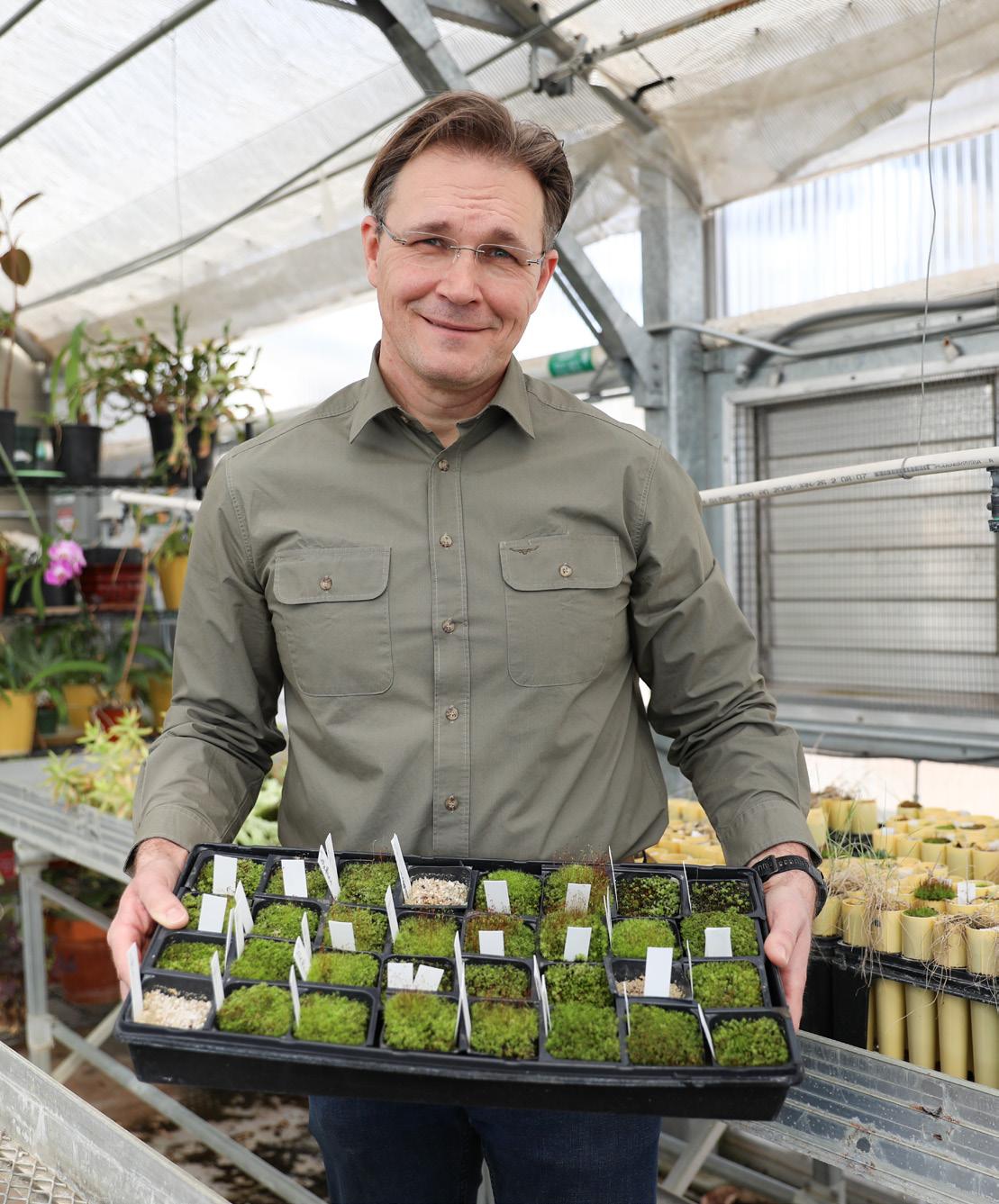
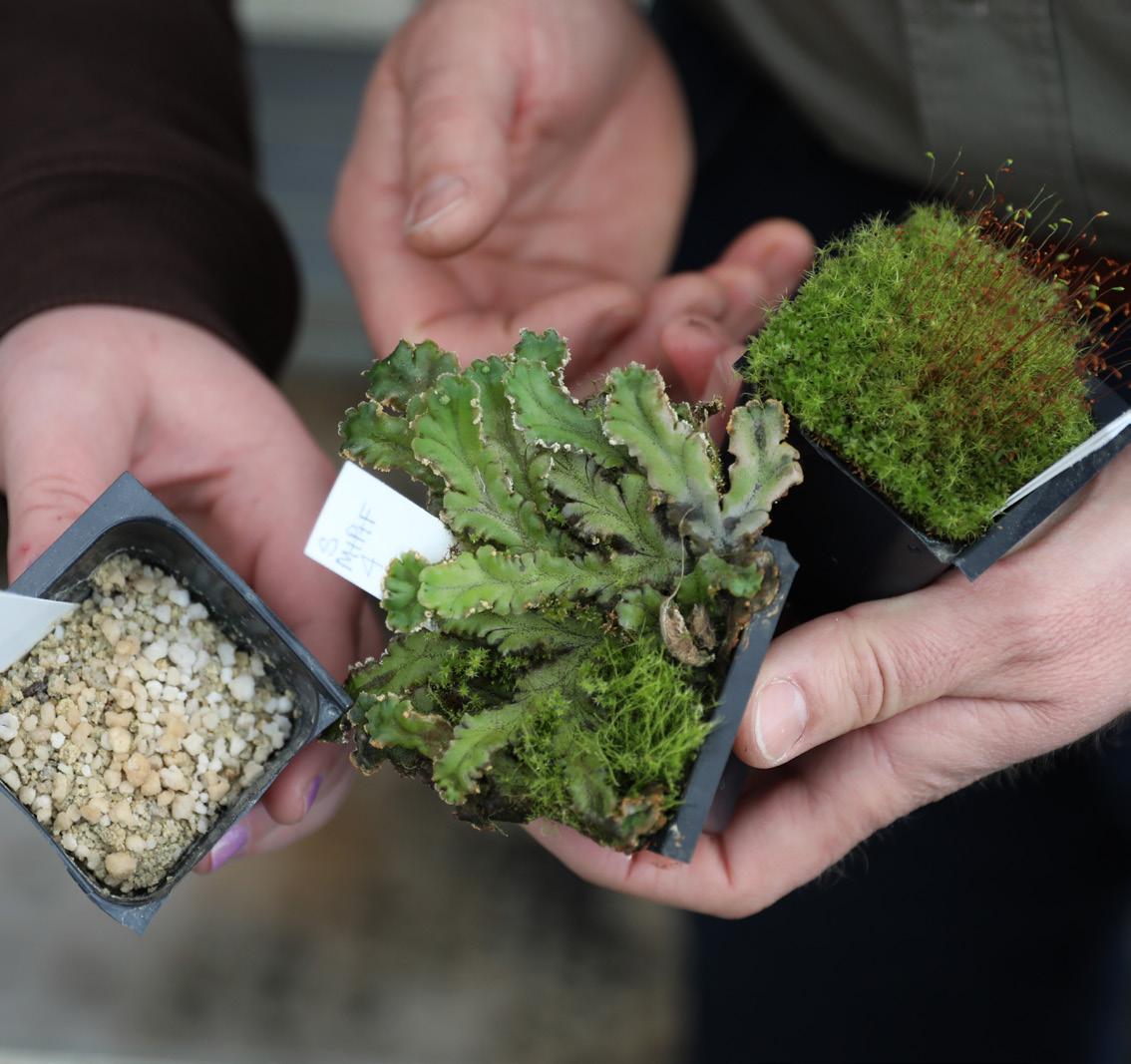
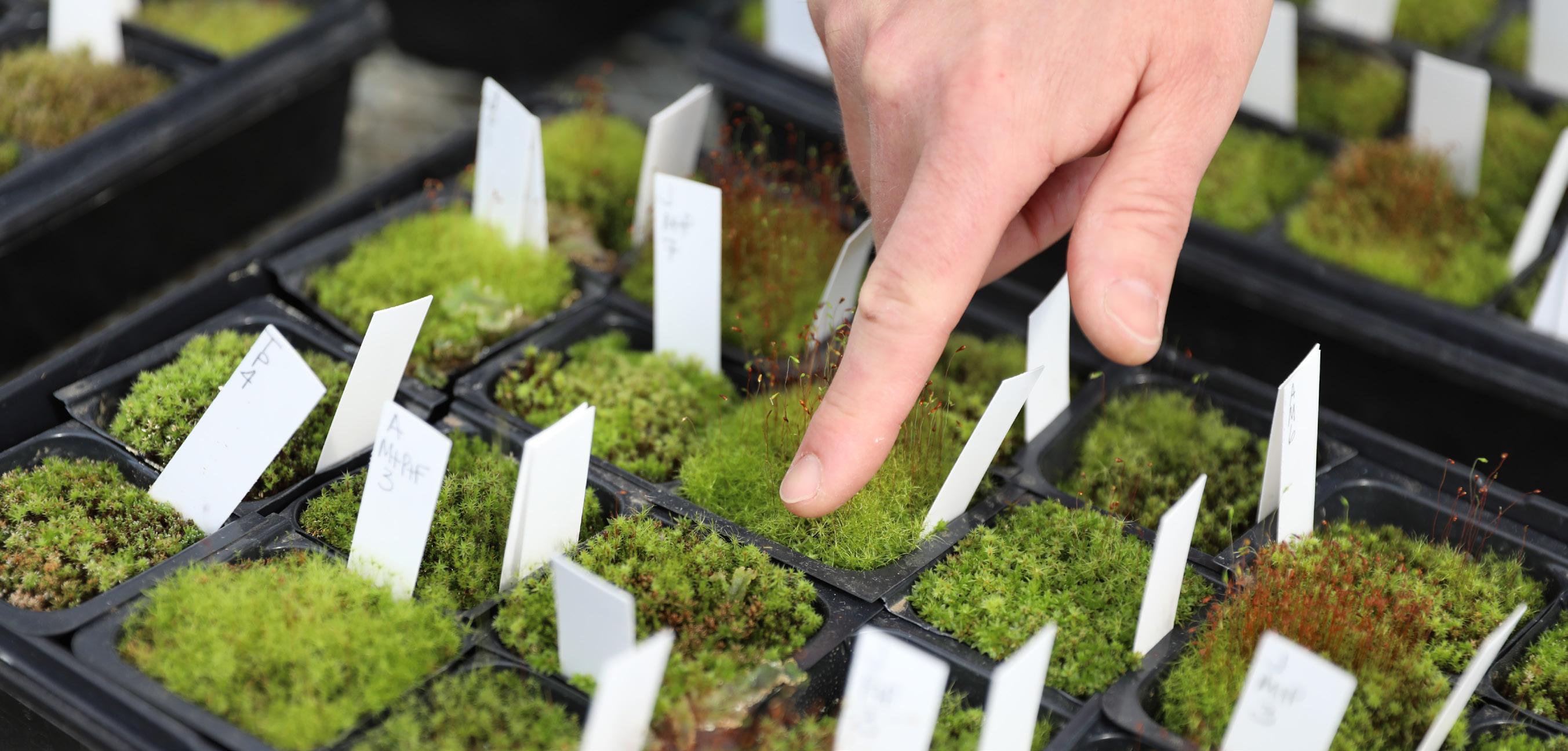
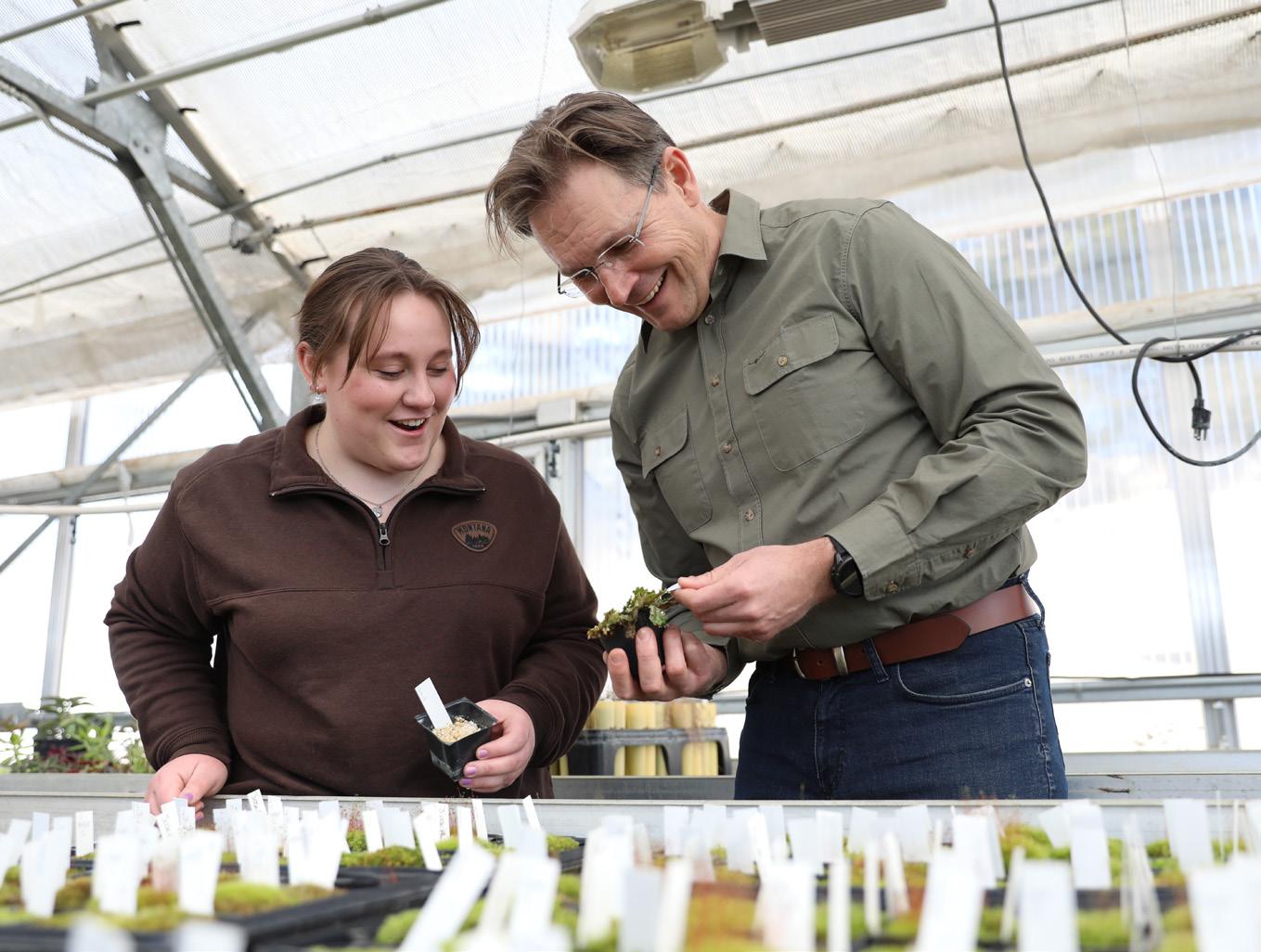
The program is also always trying new things. In 2025–2026 an undergraduate student is conducting a research project on better establishing native mosses.
"Most people don't think about moss," Pal said. "They are overlooked, but mosses are some of the first organisms that should be out there. Even if you look at the caps, there are mosses trying to make their place. Mosses and lichens form these little communities under the grasses."
It's hard to say exactly how the Butte Hill could look if the project continues decades into the future. Due to the extensive damage, it may be reclaimed, but it could be more of a challenge to ever reach 100% restoration. On a 50-degree day in February, Pal looked over his shoulder, out the window of his office, which faces the Highlands, with a concerned look on his face.
"We haven't had winter yet," Pal said. "That's not normal. We might actually need to look into species that are a little bit south from us or a little bit west from us, depending on future weather patterns. It might not ever be exactly the same thing that was out there 100 or 150 years ago. People are in the area now. There are all kinds of changes in the system."
With all the uncertainty, Pal is certain the program makes a difference.
"This isn't just about covering up waste," Pal said. "It's about giving function back to the land. Rehabilitation is about setting the pathway—giving ecosystem functions back to the land—knowing it will never be perfect, but knowing it can be better. We're not just putting plants in the ground. We're changing how restoration is done here. This program brings together science, students, and the community to do something that really matters for Butte's future."
FOUNDATION BUILDING THE
How Math and Writing Prepare Montana Tech Students for The Future
Across the country, universities are reporting that more students are arriving on campus less prepared for college-level coursework. Montana Technological University has seen similar trends, but on a campus known for rigorous STEM programs, the student outcomes tell a different story.
Within the Montana University System, Montana Tech stands out for how many students complete key math and writing courses early in their college careers. Data from the MUS show that 85.3% of Montana Tech and Highlands College students enrolled in Montana 10, a statewide student success initiative, completing their gateway math requirements within their first two years, while 86% completed writing requirements in the same timeframe. Those rates are the highest in the system.
by Megan Strickland
"At Montana Tech, we're preparing students for professions where accuracy, clarity, and critical thinking matter."
Dr. Dawn Atkinson Writing Program Head
For faculty leaders like Writing Program Head Dr. Dawn Atkinson and Mathematical Sciences Department Head Dr. Laurie Battle, that success comes from meeting students where they are and building skills that extend far beyond the classroom. It is also supported by campus programs designed to help students strengthen academic foundations early in their college careers.
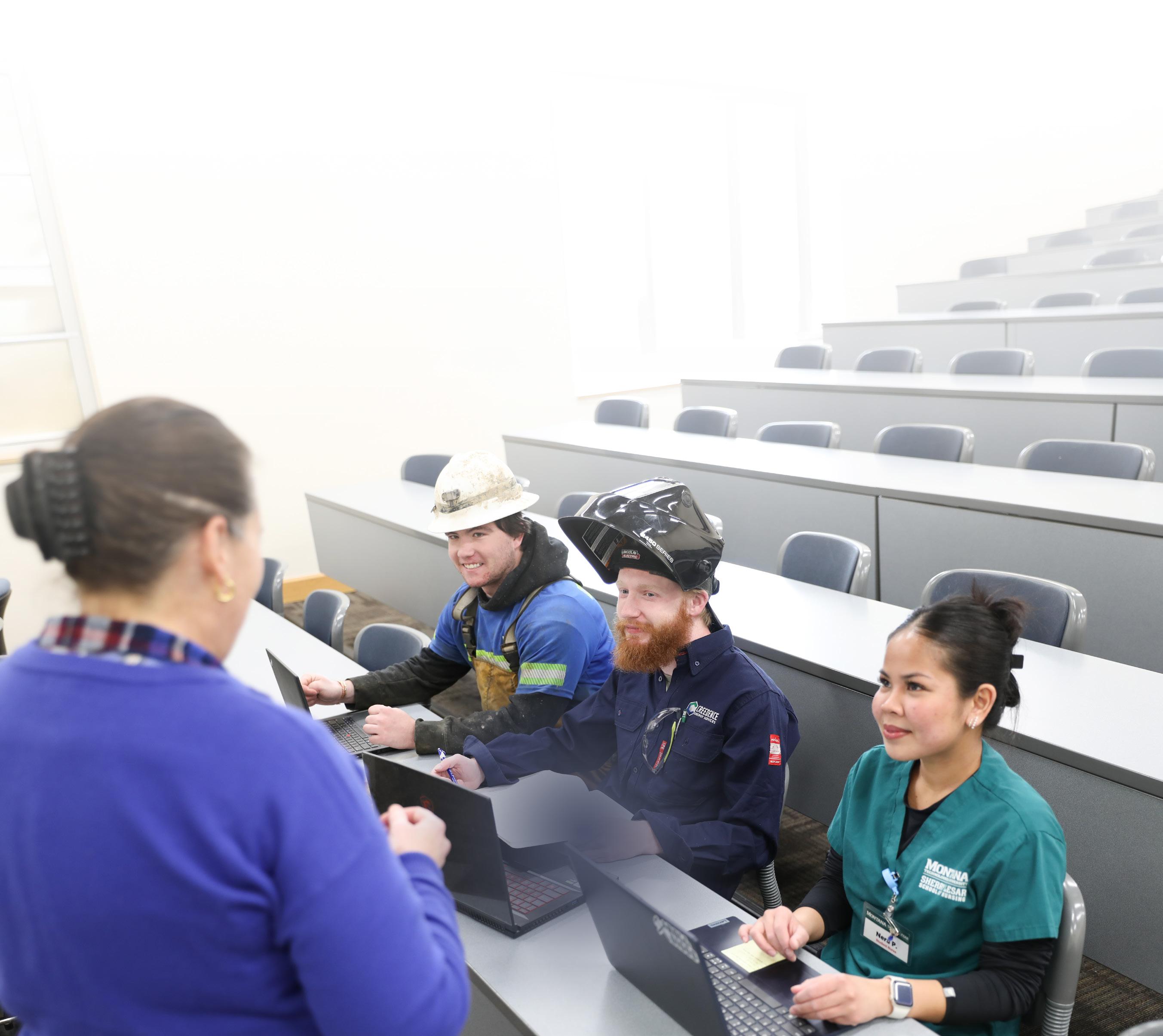
Many people imagine college writing courses filled with traditional academic essays. At Montana Tech, however, writing instruction often mirrors the types of communication graduates will encounter in the workplace.
A nursing student might draft instructions explaining how to treat a patient. A future automotive technician may practice writing clear procedural documentation for maintaining equipment. Engineering students develop technical reports and other forms of professional communication.
"We focus on writing that is relevant to students' fields," Atkinson said. "It's about helping them communicate clearly and effectively in the kinds of situations they will face in their professions."
That approach reflects the university's broader emphasis on hands-on, career-focused education. Whether students go on to work in engineering, healthcare, natural resources, or business, the ability to clearly communicate complex ideas remains a vital skill.
If writing helps students communicate ideas, math helps them understand the systems behind them. According to Battle, mathematical thinking is a core component of nearly every discipline taught at Montana Tech.
"Math is really the language of science and engineering," Battle said. "It gives students the tools to analyze problems, understand data, and make informed decisions."
Students across majors, from nursing and business to engineering and computer science, rely on mathematical reasoning throughout their coursework and in their future careers.
"The goal is to help every student build the mathematical skills they need to succeed," Battle said.
Helping students succeed in foundational subjects is a campus-wide effort. Both the Mathematical Sciences and Writing Departments have an option where students who test below recommended entry levels may complete a corequisite course with their required general education classes in order to boost their proficiency.
Additionally, programs like SHARP (Supporting High Achievement, Readiness, Persistence) Summer Bridge play an important role in providing additional academic support. Now in its third year, the program focuses on helping students strengthen academic skills while building the study strategies and confidence needed to succeed in challenging coursework.
Executive Director of Student Success Sarah North Wolfe, who works closely with students through SHARP, said the program helps students develop habits that extend beyond a single class.
"The goal is not just to help students pass a course. It's to help them build the skills and confidence they need to succeed throughout their college careers."
Students in SHARP gain success skills such as time management, note-taking practice, and building a growth mindset. Many also take advantage of services offered through TRIO Student Support Services or the Academic Center for Excellence (ACE), which provides tutoring and advising for eligible students. Also, Montana 10 supports include financial support through tuition waivers and textbook stipends, advising and tutoring to help students graduate on time, and a community of supportive students and staff to build each Montana 10 student's sense of belonging on campus.
Together, these programs help ensure that students who need extra support have multiple pathways to find it. Mastery of foundational subjects form the backbone of a Montana Tech education.
As the university looks toward the future, that commitment to strong academic foundations remains central to its mission. Students may arrive with different levels of preparation, but through targeted instruction, collaborative support programs, and real-world applications, Montana Tech continues to help them build the skills needed to succeed, both in the classroom and long after graduation.
ENGINEERING THE
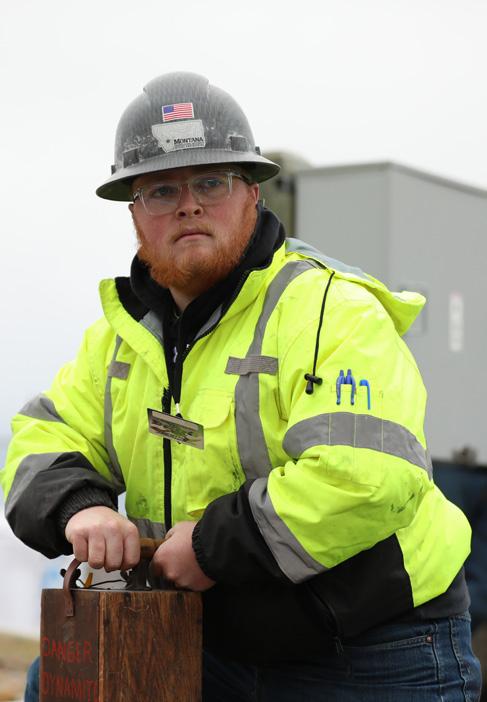
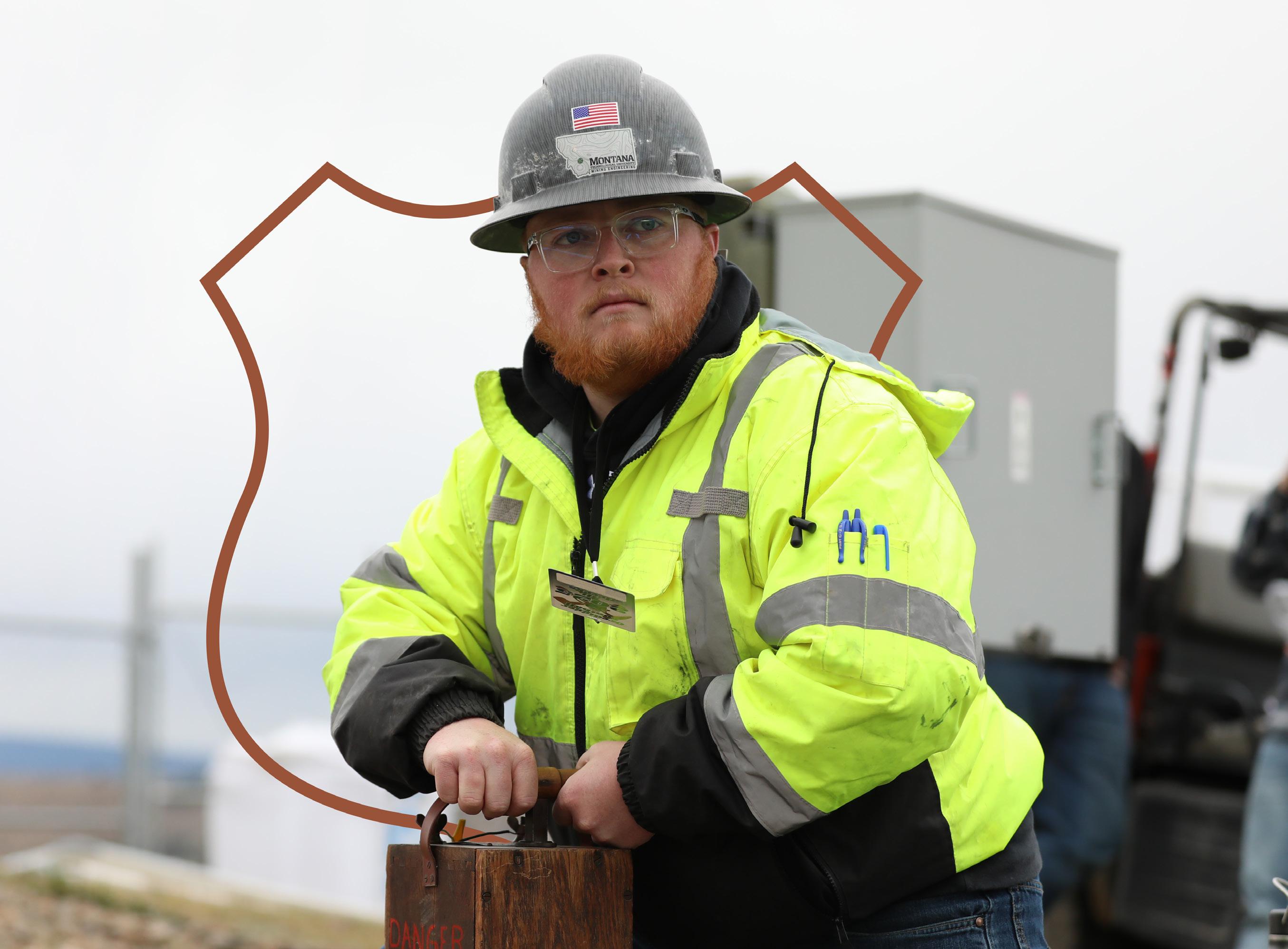
Every time Orediggers found the end zone this fall, a deep, satisfying boom rolled across Bob Green Field. Fans cheered. The scoreboard lit up. Behind the scenes, a group of Mining Engineering students, with hard hats on and ear protection in place, pulled the plunger on a carefully controlled blast.
The sound was produced by Montana Tech's student chapter of the International Society of Explosives Engineers (ISEE), a club that blends hands-on engineering, safety-first training, and industry networking—sometimes underground, sometimes at national conferences, and sometimes in front of the Oredigger football fans.
"It was our first year doing it, so there was a little research and development involved," said Nate Haglin, a senior Mining Engineering student from Wilbur, Washington. "But the Orediggers had a great season, so we got plenty of practice."
The football game blasts were the result of much planning in conjunction with the EMETAD Club and safety testing. Before the booms began during the game, the students conducted test shots in an empty stadium, using sound-level meters to ensure noise stayed within safe limits.
"We took multiple decibel readings from around the stadium to make sure we were well within tolerance," Haglin said. "Safety was the biggest priority."
On game day, the crew wore full personal protective equipment, including eye and ear protection and hard hats. Instead of modern push-button systems, they used a piece of mining history: a plunger-style blasting box, the same type once used in underground mines.
by Megan Strickland
BOOM
Montana Tech Mining Students Take Explosives Knowledge from Underground to the Stadium
"It's the cheapest way to move dirt. There's no mining engineer out there who doesn't interact with explosives at some point.
Dozick Zablocki - Mining Engineering
"It was really cool to tie that history into Montana Tech football," Haglin said.
Fans noticed. After the first game, the group adjusted the blast slightly to account for crowd noise because what sounded loud in an empty stadium didn't quite carry the same punch once the stands were full.
"After that, people loved it," Haglin said.
While the football blasts grabbed attention, the club's core mission is education. Explosives play a central role in mining engineering, and Montana Tech students begin learning the fundamentals early.
Through coursework and hands-on labs at Montana Tech's Underground Mine Education Center, students design blast patterns, calculate powder factors, load charges, and participate in controlled underground blasts. The goal isn't just detonation; it's precision.
"As a mining engineer, you're not just blasting rock," Zablocki said. "You're figuring out how to move it exactly where you want it to support the mine plan and keep costs down."
Each year, the ISEE student chapter attends two major conferences. This winter, five students and faculty advisor Scott Rosenthal traveled to the society's
Junior
national conference in Reno, where they participated in technical sessions, chapter workshops, and industry networking events.
"One of the biggest events is the industry connection," Haglin said. "You rotate through tables with professionals from all over the explosives industry— manufacturers, blasters, government folks—and just start talking."
In April, the group will head to Spearfish, South Dakota, for the Best in the West Drill & Blast Conference, a smaller, regional event with a major perk for students: scholarships.
"Last year, we had six or seven students receive scholarships," Haglin said. "That's a huge opportunity."
Throughout the year, industry professionals also visit campus, both in person and virtually, to talk with students about careers and real-world applications in the explosives industry.
"It's usually very practical," Haglin said. "A lot of 'day in the life' presentations, which is honestly what students want to hear."
For Haglin, the explosives club is another way Montana Tech stands out.
"You get real responsibility here," he said.
"Whether it's blasting underground, networking with industry leaders, or setting off booms at a football game, you're trusted to do things the right way."
The ISEE student chapter reflects Montana Tech's hands-on culture, and it's open to more than just Mining Engineering majors.
"Any student can join," Haglin said. "If you're interested, reach out to Scott Rosenthal or come find us at Club Rush."
As for the football blasts?
"We're definitely planning to keep it going," Haglin said. "It's a fun way to show what mining engineers actually do."
Highlands College Builds Montana's
INa workforce with climbing anxiety over AI potentially replacing white collar jobs, and an emerging critical shortage of tradespeople to replace an aging skilled labor force, the future at Highlands College is focused on meeting rising market demands with programs delivering hands-on trades and technology education that power infrastructure, healthcare, and emerging industries.
"Highlands College is really committed," Dean Tammy Burke said. "We're trying to focus on the high-wage, high-demand occupations and fill gaps."
Several new programs at Highlands College are in the roll-out or planning phases to train more skilled tradespeople in the fields of broadband installation, construction, and mental health. Currently, Highlands College is focused on launching three broadband-focused micro-credentials, each between 16 and 19 credits, aimed at meeting immediate industry needs across Montana.
"Everyone should have access to the internet, not matter how rural you are," Burke said. "If we want to deliver broadband, we need to train lots of people in a very short amount of time."
The short-term credentials are designed to be hands-on and career-focused, offering students practical skills that translate directly to the job site.
One of the most anticipated additions is a heavy equipment operations micro-credential. The program will train students to operate loaders, dozers, excavators, and other machinery critical to installing broadband infrastructure, but also applicable to other industries. Students will gain experience in skills such as trenching and directional drilling—technical, precise work that requires both physical coordination and attention to detail.
A second credential will focus on splicing. Fiber-optic splicers are technicians who connect, repair, and maintain the fiber cables that carry high-speed internet. A mobile van will travel around the state so students even in rural communities can receive this training.
The third warehousing micro-credential will focus on shipping and receiving and equipment operation, preparing students for logistics and distribution roles. While the credential's curriculum will pertain to warehouses that store equipment like giant spools of fiber-optic cable, students will learn skills that are also applicable in Montana's growing construction, business, and data center sectors.
While the micro-credentials are set to roll out soon, additional program development is already underway. Highlands College has submitted a request to plan for future construction technology tracks that will build on its current program that focuses on carpentry and homebuilding. Students in the program build a
"This training will focus on how to correctly and safely load and secure material for transport as well as shipping and receiving logistics."
Tammy Burke Dean, Highlands College
three-bedroom, two-bathroom modular home that is then sold as affordable housing in Butte. The proceeds purchase materials for the next student project.
"Our homebuilding focus is always going to be our primary program," Burke said. "Affordable housing is always going to be our primary goal, but we also have a lot of historic buildings and an opportunity to restore our community."
Additional tracks in restoration and commercial building will also serve the needs of the Butte community, which has seen much growth in the past few years.
Highlands College plans to work with Butte–Silver Bow and industry partners to identify projects where students can get hands-on experience restoring historic buildings or taking part in commercial construction. Burke would like to see the programs launch in fall 2027, but that date is subject to change.
The final program on the immediate horizon is the Certificate of Applied Science in Behavioral Health. Those who complete the program will be able to earn their Certified Mental Health Technician credential. The program has been finalized and will be offered in the fall of 2026, but is awaiting financial aid approval.
"This program will train boots on the ground mental health technicians taking care of people in places like Montana State Hospital," Burke said. "The majority of this program is online, so it's something anyone in a rural community could do."
From the worker on the Montana Hi-Line digging trenches and laying fiber-optic cable, to the construction worker breathing life back into Butte's dusty and shuttered storefronts, to the mental health worker comforting a beloved friend or family member trying to chart a path forward, Highlands College graduates will be there to meet the workforce demands of the future.
In Memory
We extend sympathy to the families of the following alumni who have passed away over the past few months.