A trio of biologists have uncovered new information that changes how we think about Montana’s freshwater crustaceans. By
Mike McTee
First-Year Perils
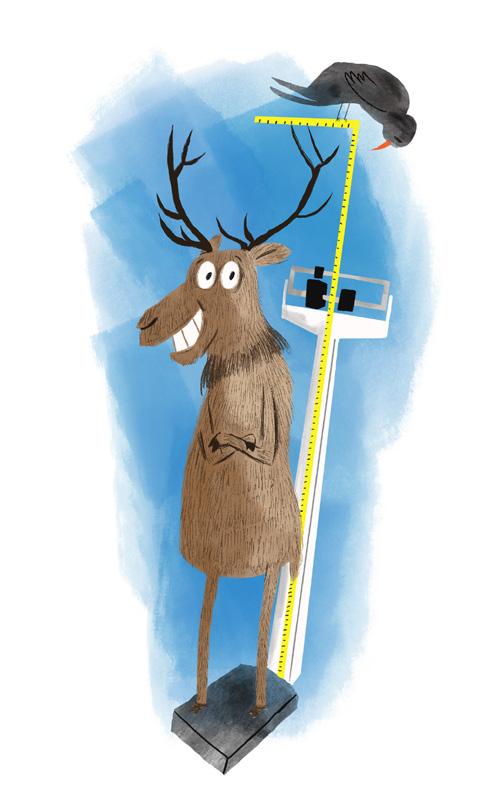
The life of every elk calf is a cliffhanger.
By Christine Paige
Special Report: Kootenai Under Scrutiny Fisheries biologists look for ways to mitigate the effects of Libby Dam on the river’s diverse fishery.
By Tom Dickson
Born of Necessity
For 125 years, FWP has dedicated itself to addressing wide-ranging public concerns about Montana’s fish, wildlife, and state parks— and the outdoor recreation those resources provide. By Tom Dickson
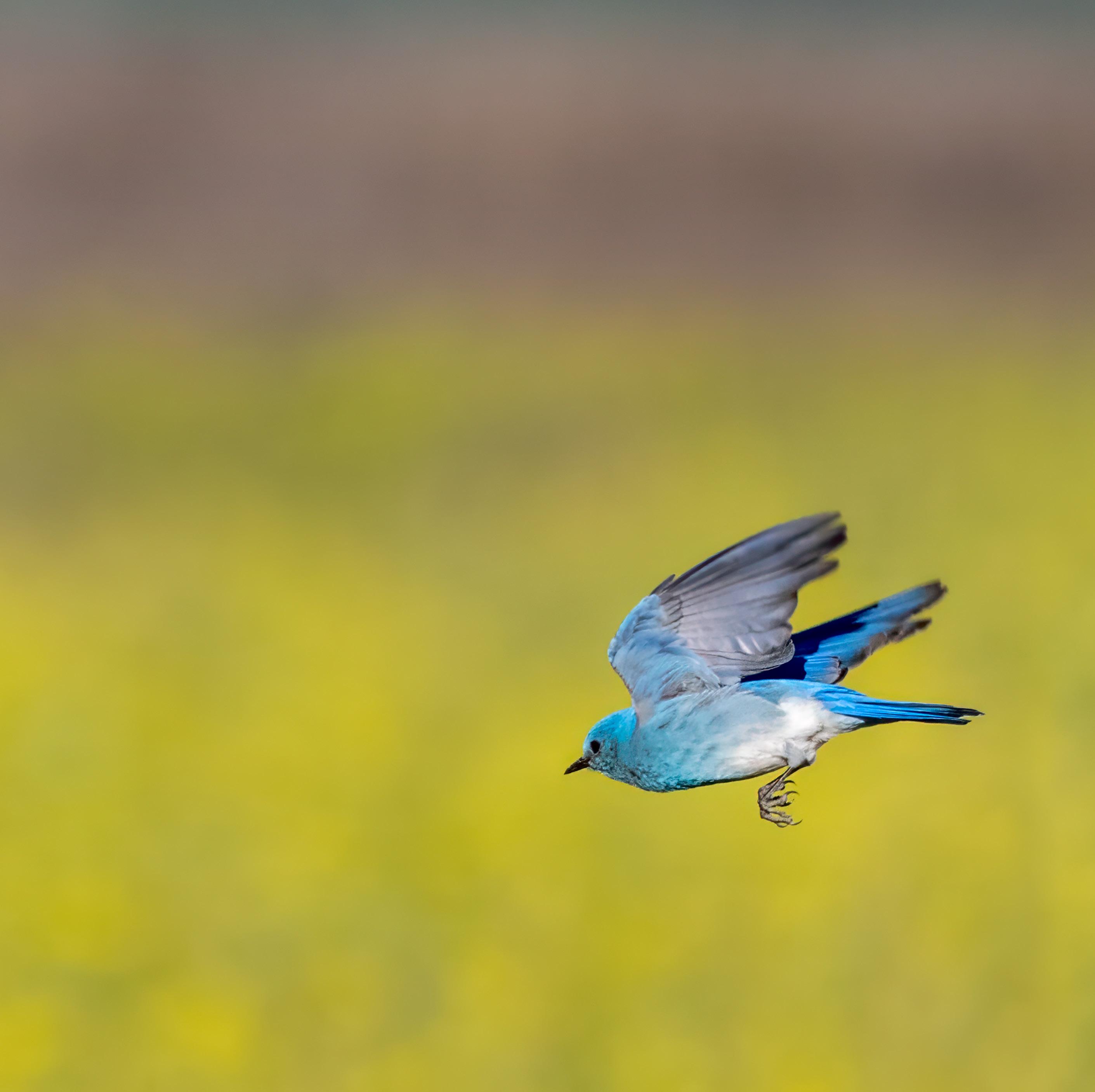
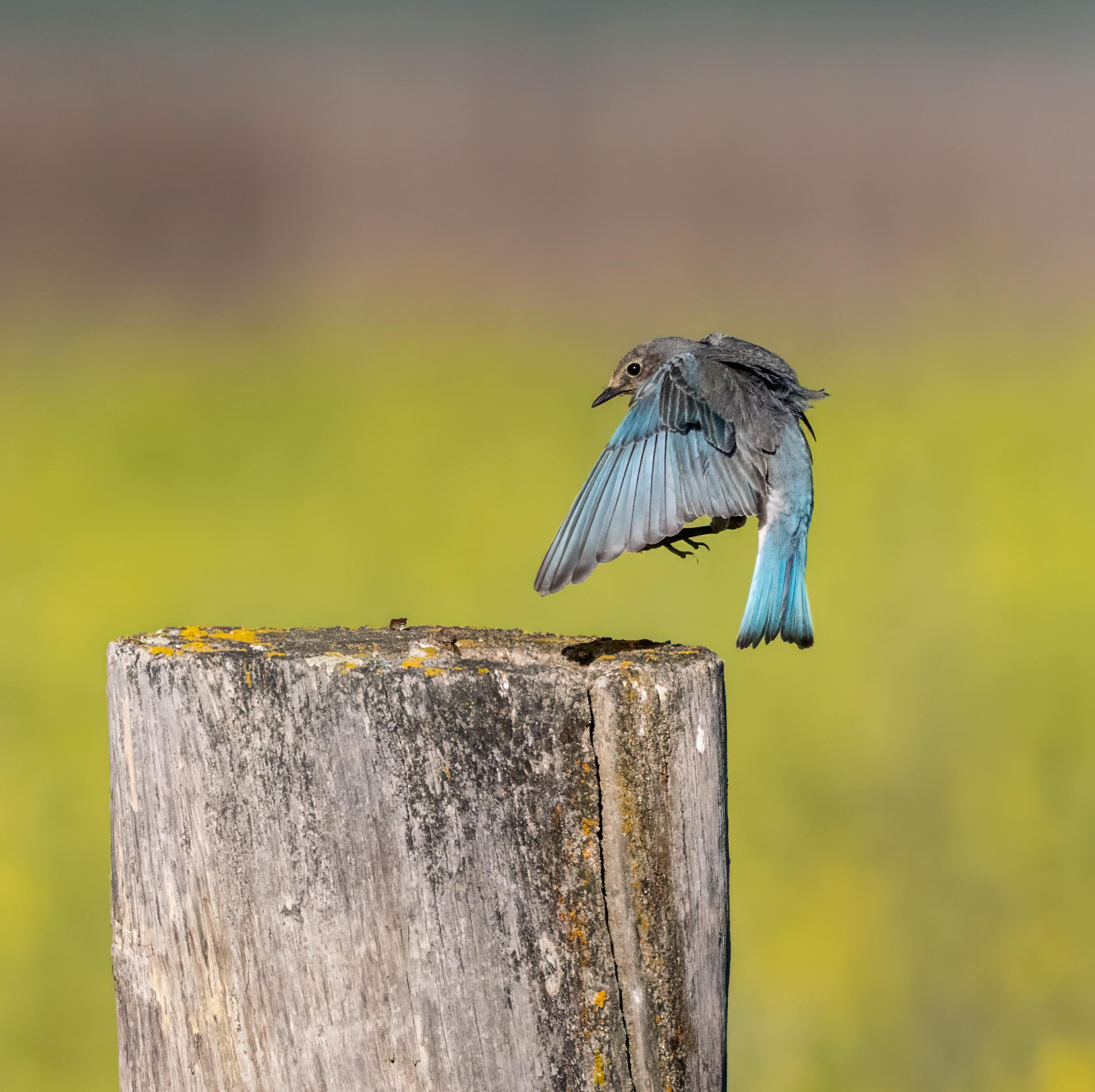
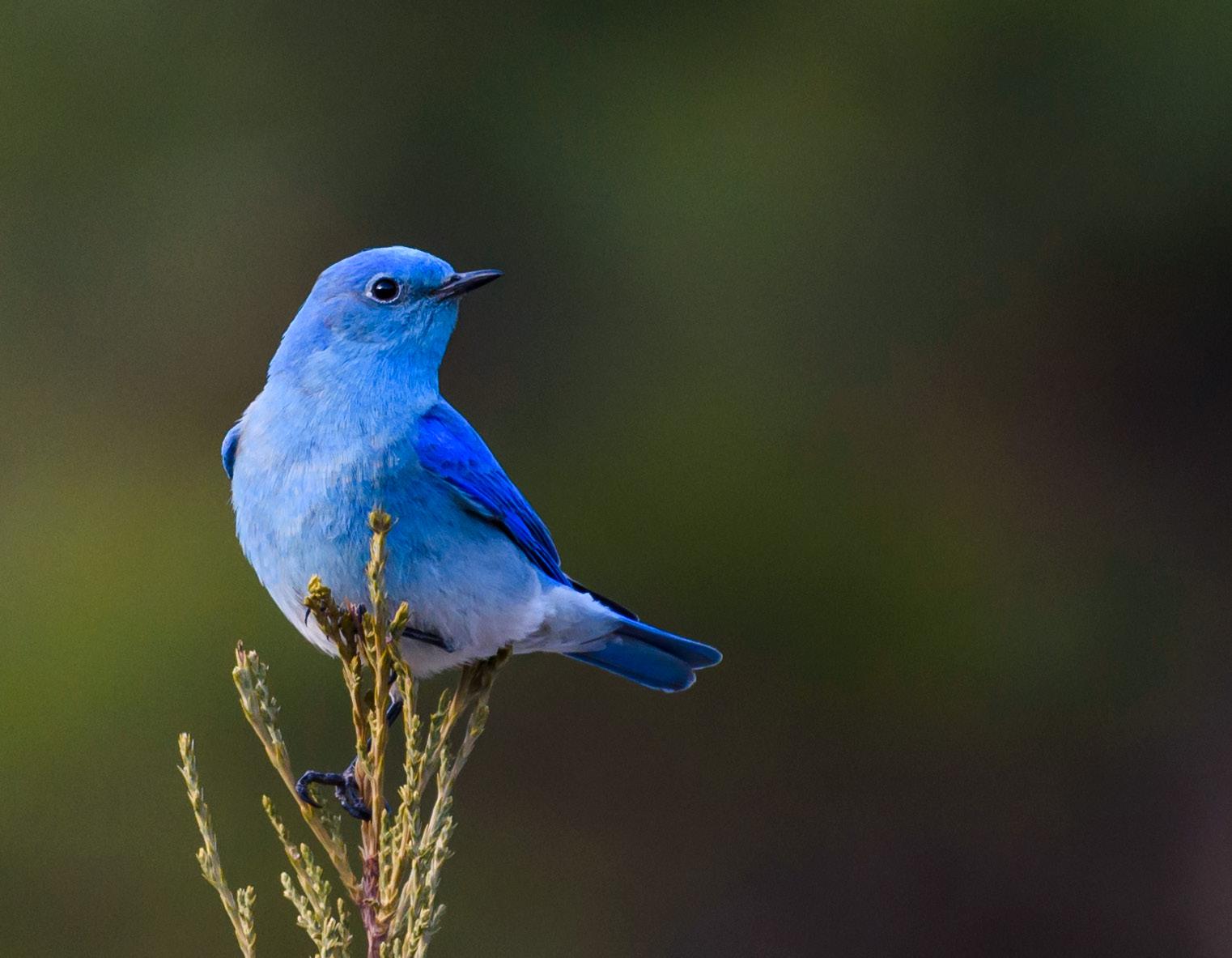
CERULEAN EXCHANGE Mountain bluebirds swap perches on a spring morning in the Mission Valley. Learn more about Montana’s bluest bluebird on page 45. Photo by Chuck Haney.
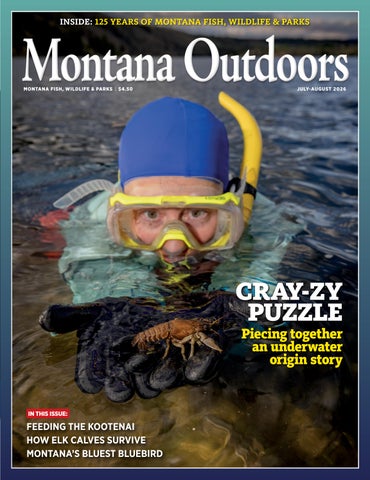
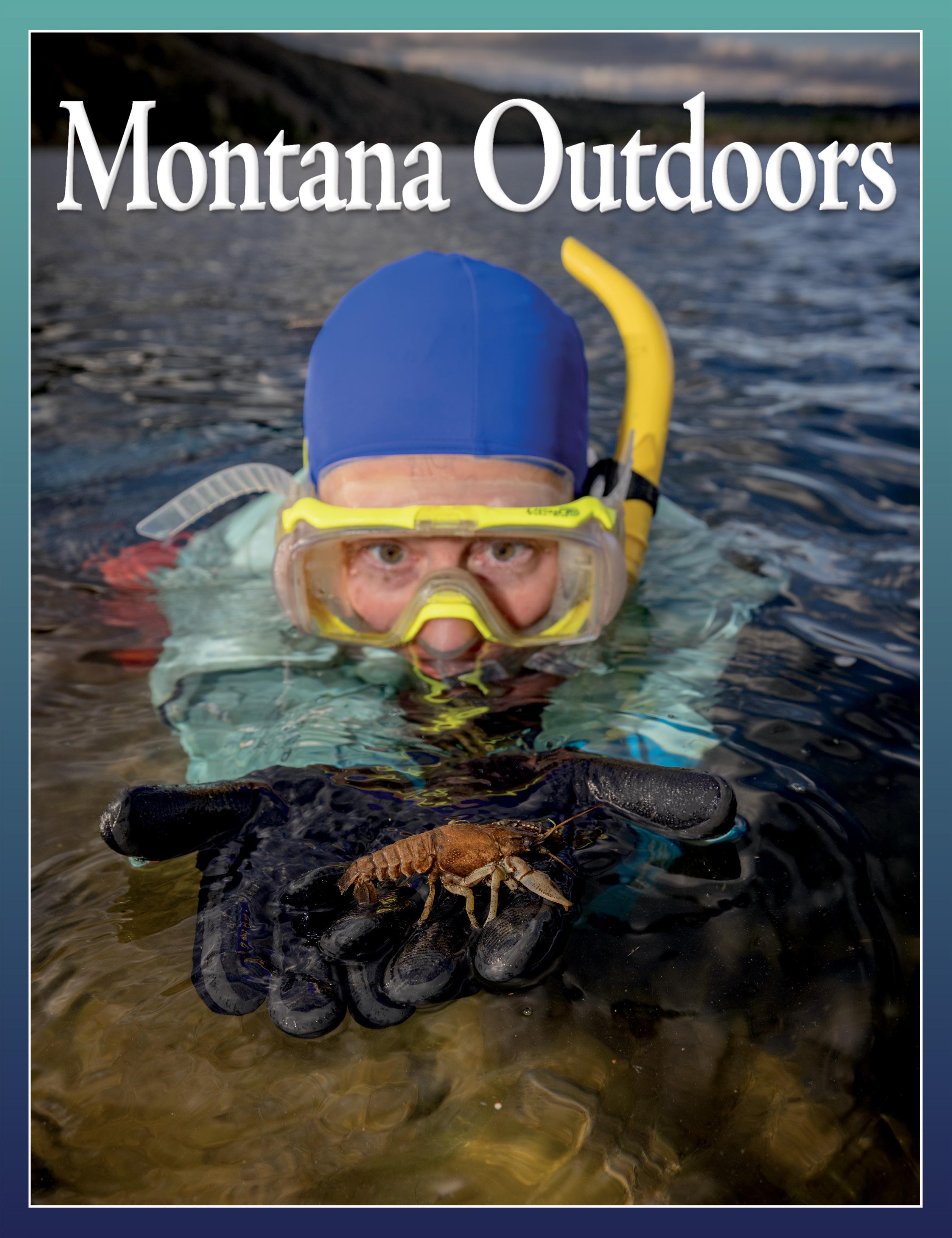
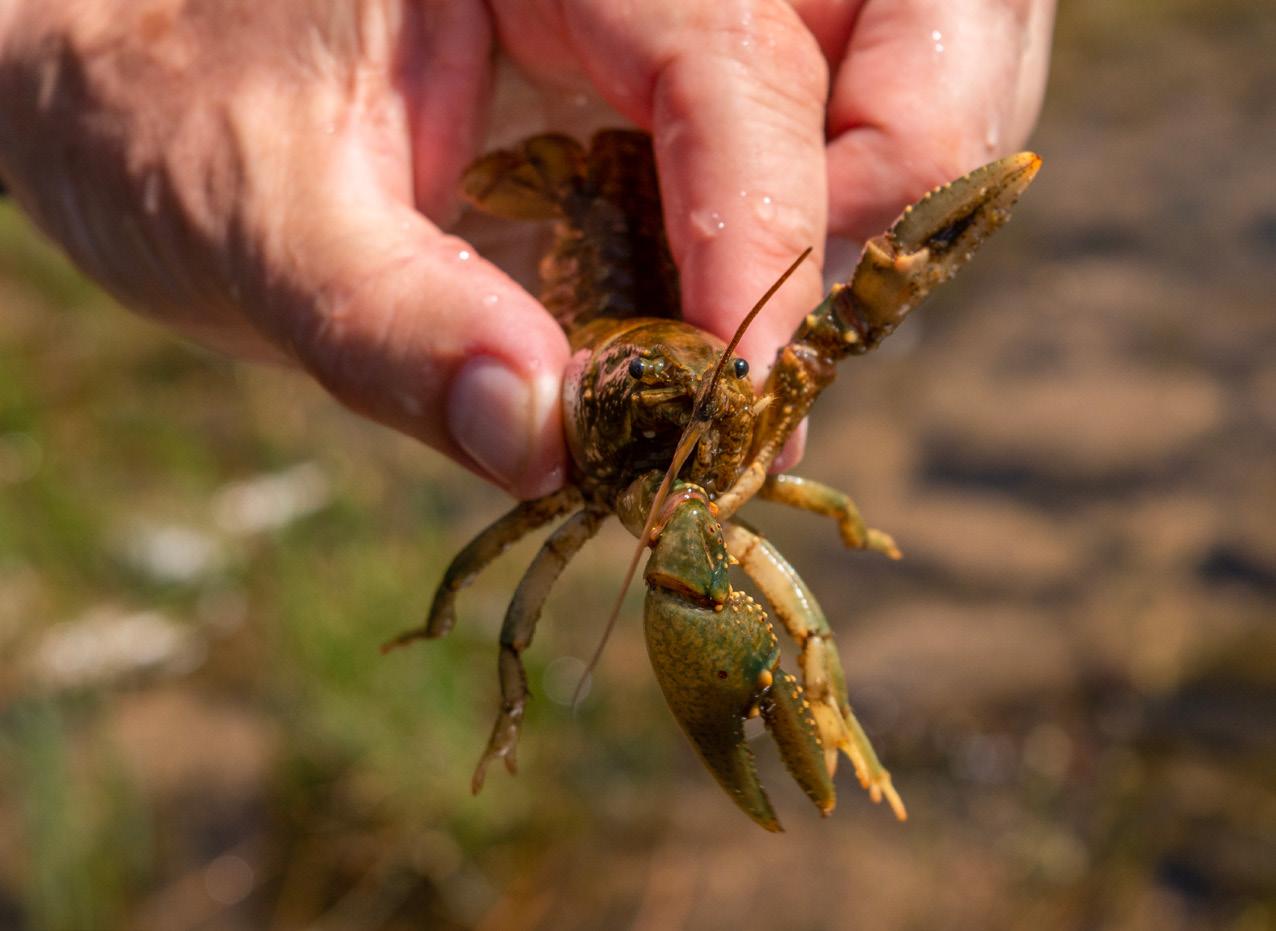
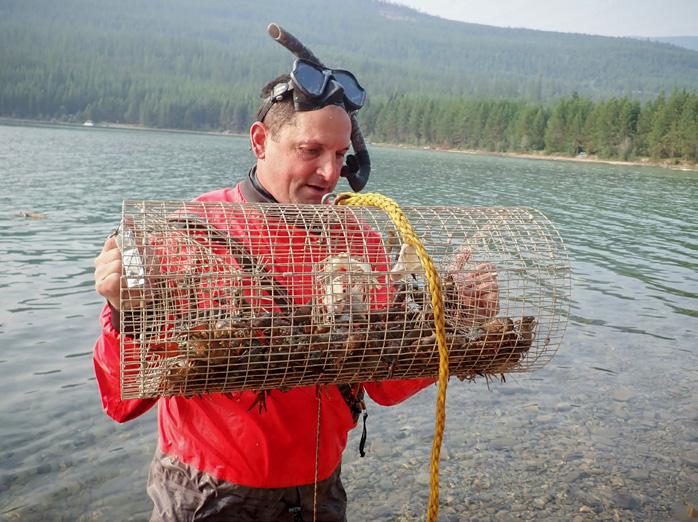
COVER FWP aquatic invasive species supervisor Stacy Schmidt cradles a crayfish in Hauser Reservoir. She was part of an “A-Team” of researchers, selfdubbed “the crAy Team,” who made a surprising discovery you can read about on page 12. Photo by Thom Bridge.
LETTERS
Cottonwood cologne
You published a wonderful article about cottonwoods (“Trees Worth Treasuring,” May-June 2026), but you missed one of my very favorite things. As you drop down a slope to meet the river, your nose is filled with a scent so much better than any perfume or cologne. A little dab behind each ear would certainly guarantee success for any real cowboy. My age has ended my ability to travel, and I miss visiting your beautiful state, but my pockets are filled with wonderful memories of scenery, hunting, fishing, and people. Take care of it.
George Verheul Ellensburg, WA
Repulsed by raccoons
I always enjoy your magazine and felt I learned a lot about cottonwood ecotones from “Trees Worth Treasuring.” But why you would feature an
invasive creature such as a raccoon as a positive beneficiary of tree cavities has me stumped. What on earth do you see as a positive aspect of these nestdestroying varmints?
Jerry Meyer Helena
Editor replies: Thanks for the feedback, Jerry. Raccoons are native to Montana and are certainly crafty at raiding nests in trees they’re able to climb. Whether they qualify as a varmint is in the eye of the beholder. I’m sure birds losing eggs to raccoons would agree with you.
Excerpts from the FWP archive
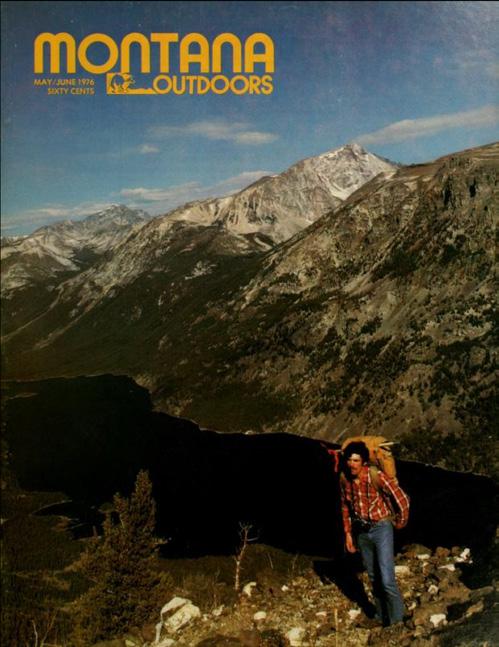
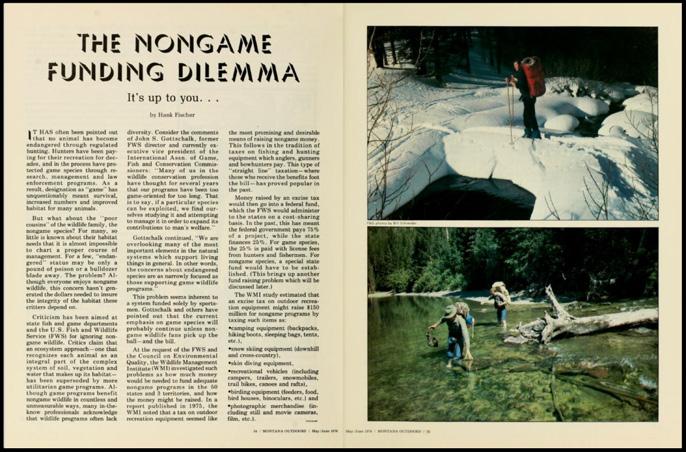
In the May-June 1976 issue of Montana Wildlife, an article by Hank Fischer, “The Nongame Funding Dilemma,” called for new ways to fund nongame wildlife conservation. It focused on the results of a 1975 Wildlife Management Institute (WMI) study investigating how much it would cost to have nongame programs across the country and how states might pay for them. The research came in response to criticism that conservation dollars were being spent almost exclusively on ducks, deer, trout, and other game species. There was justification for the imbalance— hunting and fishing license sales along with excise taxes on other sporting equipment raised the bulk of conservation funding (which is still true today). The WMI suggested putting a tax on other outdoor recreation equipment. “This follows in the tradition of taxes on fishing and hunting equipment which anglers, gunners and bowhunters pay. This type of ‘straight line’ taxation—where those who receive the benefits foot the bill—has proved popular in the past,” Fischer wrote. The study estimated a 10 percent tax on camping, snow skiing, and diving equipment; recreational vehicles; birdseed; binoculars; and similar items could raise $150 million a year (in 1975 dollars)—enough to fund nongame programs nationwide.
Give Butte the credit it deserves
I see in the Letters section of the May-June Montana Outdoors that we have another transplant shocked at the disturbance at Butte. Most Montanans appreciate that the Butte mining complex continuously generated significant wealth for over 150 years. The mines in Butte paid half of Montana’s revenues for the first 50 years of the 20th century. Truly remarkable. So before making naive remarks about our mining community, folks should find out more about what they are
criticizing. Montana Outdoors would be well advised to be more selective on what they print. Butte is a very significant and positive part of Montana’s history.
Andy Johnson Butte Beautiful bumble bee cover Wow, the May-June 2026 issue has one of the most beautiful covers I’ve seen on a magazine. The colors and contrast are just outstanding! Great job to the photographer and editing for this photograph! Well done.
Mark Proxell Anaconda
We welcome all your comments, letters, feedback, and questions. Write to us at Montana Outdoors, P.O. Box 200701, Helena, MT 59620-0701 or paul.queneau@mt.gov.
In the 50 years since that study, proposals to place excise taxes on outdoor recreation equipment have repeatedly fizzled.
In Montana, though, a different tax has proven highly effective. In 2021, the state legislature voted to direct 4 percent of marijuana sales tax revenues to nongame species conservation and management, which previously received just $30,000 to $40,000 per year from a voluntary check-box contribution on state income tax forms. In 2025, the nongame program received $2.48 million. “These new funds have been a game changer,” says Kristina Smucker, chief of FWP’s Nongame Wildlife Bureau. “FWP now has the capacity to move the needle for nongame conservation in our state.” n
TOP PHOTO BY JACOB LILLEY
Pretzel-Crusted Walleye with Elote
By Tom Dickson I Preparation
time: 15 minutes I Cooking time: 15 minutes I Serves: 3
Certainly you’ve heard of Tex-Mex cuisine, but this might be the first Germ-Mex dinner you’ve ever encountered.
The yummy summertime meal combines fried walleye (or cod, perch, or other white fillets) coated in crushed pretzels with elote, a popular Mexican street food consisting of grilled corn on the cob slathered in mayonnaise, sour cream (or crema), chili powder, lime juice, and shredded cotija cheese.
Soft pretzels, a baked pastry made from a type of dough tied in a knot, were invented by European monks in the Middle Ages. Since then, the pretzel has been embraced most by communities in southern Germany, who call the pastry breze or bretzel
Hard pretzels were invented in Litiz, Pennsylvania, in the mid-19th century by German immigrants. Today the pretzel industry in the United States rakes in more than $1.2 billion per year, and the average American consumes about 1.5 pounds of the crunchy snacks annually.
Lately I’ve become addicted to Dot’s Homestyle Pretzels, invented in 2011 by a retired woman living near Minot, North Dakota (here’s her story: mspmag.com/eatand-drink/dots-com/). If I can keep from polishing off the entire bag beforehand, these work great for the walleye coating, though any hard pretzels, seasoned or plain, will do.
As for elote—where have you been all my life? A friend served these at a summer barbecue a few years ago and, like the pretzels, I was hooked. As for walleye, nothing to me says summer like the sweet white fillets of these hard-to-catch fish.
Put it all together and you’ve got a Germ-Mex meal worth sharing with friends. Oom-pah-pah, Olé! n
PRO TIP: Instead of pouring oil down the drain after pan frying, which may clog pipes, buy a small bag of clay cat litter and put 3 to 4 cups in a large pot or other container. Pour in the oil and stir. The clay will absorb the oil and allow you to cleanly dispose of the mix in a garbage bin.
INGREDIENTS
1.5 c. pretzels
½ c. flour
1 T. Old Bay or other fish seasoning
1 egg
3 walleye (or other fish) fillets (6-8 oz. each)
Vegetable oil
3 ears corn, husked
2 T. butter, melted (or 2 T. vegetable oil)
2 T. mayonnaise
2 T. Mexican crema or sour cream
½ c. grated cotija cheese
½ t. Ancho chili powder
Fresh chopped cilantro
1 lime, quartered
DIRECTIONS
Step 1: Place pretzels in a plastic bag. Roll with a rolling pin until roughly crushed. You want some small pretzel chunks to remain.
Step 2: Place flour in a plate and stir in fish seasoning until well mixed.
Step 3: Place egg in another plate and whisk with a fork until frothy.
Step 4: Heat 1 inch of oil in a cast iron skillet or Dutch oven. Or use an electric skillet and cook outside when it’s too hot to cook indoors.
Step 5: Heat oil to 350 to 375 degrees.
Step 6: Pat dry fillets. Coat each piece in seasoned flour, then egg, then add, one by one, to the bag of crushed pretzels and shake.
Step 7: Place coated fillets in the hot oil and cook 4-5 minutes, flipping after 3 minutes. You want the coating to be a nice mahogany brown, like in the photo. Set cooked fillets on a baking rack (not on paper towels, which will make them soggy) and salt liberally. Serve immediately!
DIRECTIONS FOR GRILLING CORN
Light the grill and heat to high. Mix mayo, crema, cotija cheese, chili powder, and cilantro together on a dinner plate. Brush cob with butter or oil and place on grill. Grill 10 minutes, turning every few minutes to char kernels. Roll cooked corn cobs in mayo mixture to coat all sides. Squeeze lime juice on top and serve immediately. n
Success through strong partnerships
he more time I spend as director of Montana Fish, Wildlife & Parks, the more humbled I am by the strength and success of our many partnerships.
Take the Montana Great Outdoors Project, an 86,000-acre conservation easement in northwestern Montana. Completed last year, this 134-square-mile holding in the Cabinet and Salish mountains between Kalispell and Libby is prized for its elk hunting, hiking, camping, and other recreation. The easement permanently protects public access and critical habitat for elk, moose, deer, grizzly bears, Canada lynx, bull trout, and other important species. It also prevents development while allowing the landowner to continue sustainable logging, supporting wood-product jobs.
The $96.9 million deal was completed in two phases following years of work by FWP, the Trust for Public Land (TPL), the U.S. Forest Service, and Green Diamond Resource Company, the sixth-generation Seattle-based timber company that owns the land. The Montana Land Board’s approval sealed the deal for the state to purchase the final phase of the easement in December.
Green Diamond donated more than a third (roughly $33.8 million) of the appraised value to help get the project across the finish line. TPL provided almost $4 million in private funding. FWP, which will hold the easement, committed $3 million from the Habitat Montana fund. Big credit also goes to the U.S. Forest Service’s Forest Legacy Program, which brought in $55.8 million from the Land and Water Conservation Fund (LWCF uses royalties from
off-shore drilling). It took every partner being fully committed, but we got it done, and the public will benefit for generations to come because of those efforts.
A few months before that, FWP partnered with the national Wild Sheep Foundation, Montana Wild Sheep Foundation, NorthWestern Energy, and a private landowner to complete the 1,080-acre Stafford Ferry Conservation Easement in the Missouri River Breaks, protecting habitat for one of Montana’s largest herds of bighorns and providing a much-needed boost in public access.
Jump back another few years and FWP partnered with the Rocky Mountain Elk Foundation and Shodair Children’s Hospital to purchase nearly 5,700 acres of prime elk habitat in the southern foothills of the Big Snowy Mountains south of Lewistown, now known as FWP’s Big Snowy Mountains Wildlife Management Area.
The strength of our partnerships goes well beyond land protection and access. FWP’s Future Fisheries Improvement Program, now celebrating 30 years, has completed hundreds of projects across the state to enhance and restore wild fish habitats. For every dollar the Montana Legislature has provided this program, FWP’s partners have brought three more, quadrupling the agency’s funding to help complete more than 700 projects to date. And that doesn’t account for the countless hours of volunteer labor provided by local chapters of groups like Trout Unlimited and Walleyes Unlimited.
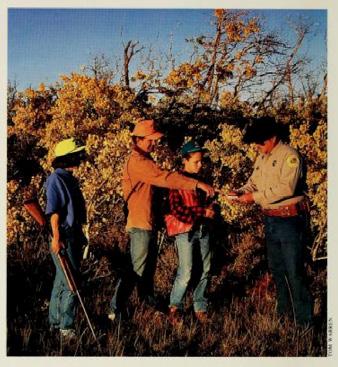
Speaking of volunteers, this past May the National Wild Turkey Federation (NWTF) Flathead Valley Chapter partnered with FWP and private landowners to give five new hunters ages 10 to 15 a proper introduction to wild turkeys. With help from experienced mentors, three of them came home from their weekend hunt with a harvested turkey. All five gained new knowledge, confidence, and great memories. Matthew Cowan, FWP’s Region 1 education technician and president of the NWTF Flathead Valley Chapter, says the main goal was to create meaningful experiences that inspire young hunters to get outdoors and enjoy themselves.
As FWP celebrates its 125th anniversary (see page 32), it’s important that we also pay tribute to our partners. For more than a century, they have helped make what we do possible, and we’re proud of all that we are able to accomplish working together.
—Christy Clark, Director, Montana Fish, Wildlife & Parks
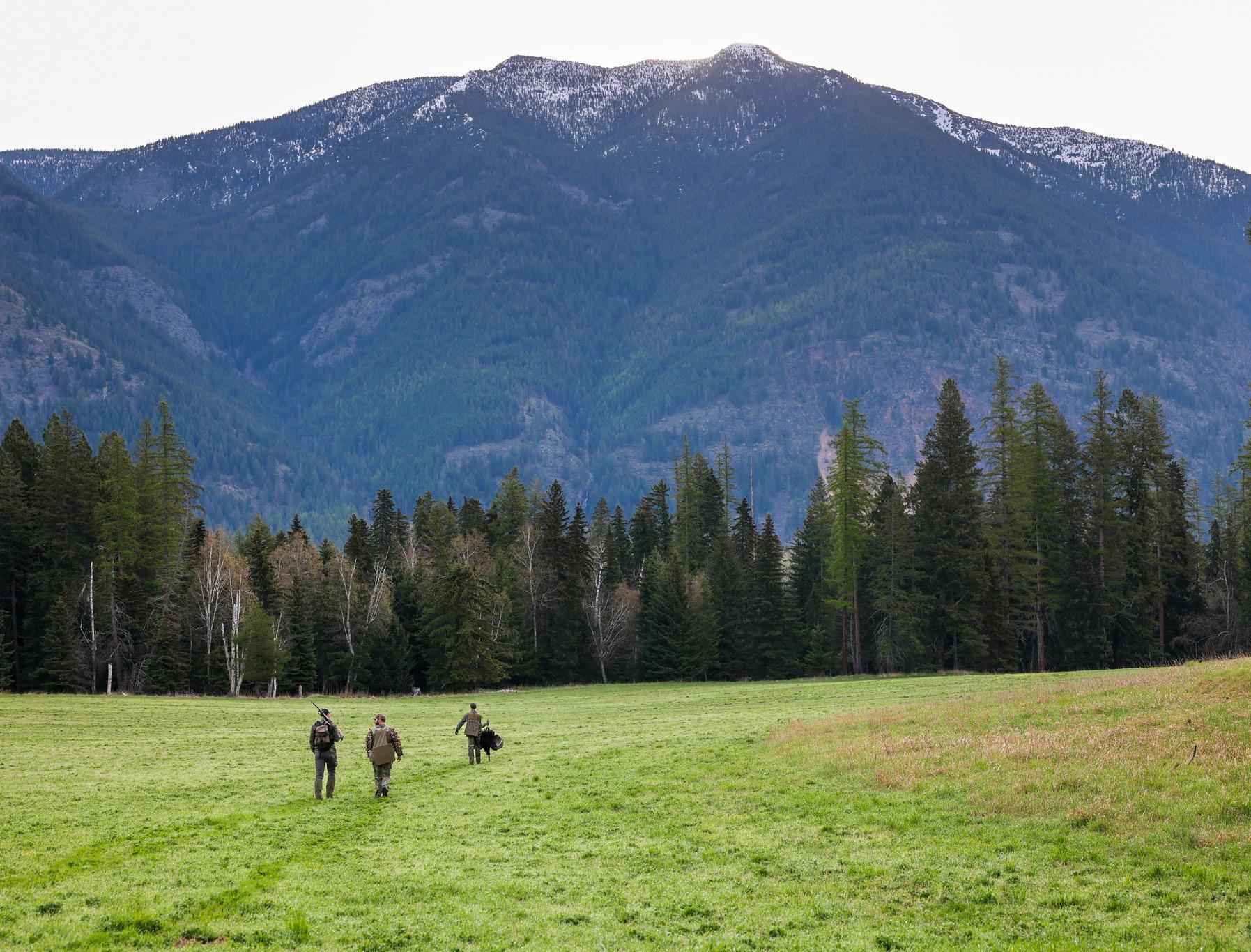
FRIENDS AFIELD FWP partnered with the National Wild Turkey Federation’s Flathead Valley Chapter to give five youth hunters an introduction to chasing wild turkeys this May.
STANDING GUARD
Todd Kuhlmann
Site Lead, Nashua Watercraft Inspection and Decontamination Station
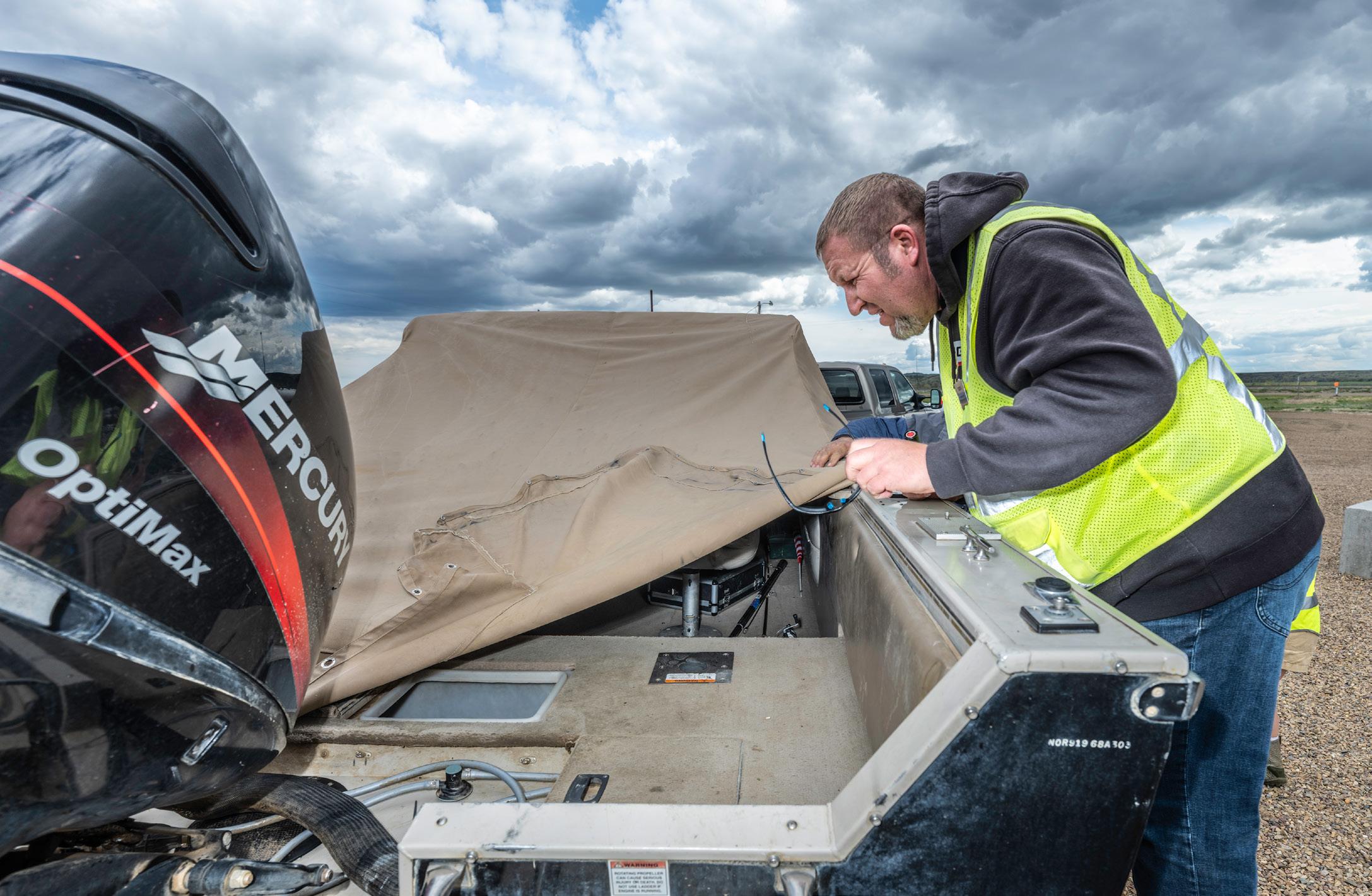
AFTER WATCHING 2 TRILLION (YES, TRILLION) zebra mussels overtake a lake I grew up fishing, it’s easy for me to be inspired about my work inspecting watercraft for aquatic invasive species.
I’ve loved to fish since I was a kid growing up in the Twin Cities of Minnesota. My uncle owned land near Lake Mille Lacs, where we fished every chance we could. That place changed in a hurry, though, after zebra mussels were discovered there in 2005. In just a few short years, they blanketed absolutely everything in Mille Lacs, a massive, 200-square-mile lake more than half the size of Fort Peck Reservoir. By 2017, fisheries managers were forced to end walleye fishing in the lake to protect cratering fish populations. Swimming is also next to impossible because beaches are covered in razor-sharp broken shells. It’s crazy how fast something so small can transform a place that large.
During COVID, my wife’s job in the Twin Cities became remote. She grew up in Glasgow, and our daughter was about to start kindergarten, so we decided
to pack up and move to Montana to be close to her family, good schools, and better fishing. Though I’d worked as a foreman at a union machine shop, as I started job hunting in Montana, a position at the Nashua watercraft inspection station caught my eye. I’m a boat nut, and I love talking to families and anglers about boating and fishing. Plus I’ve seen firsthand how invasive mussels can spoil an amazing place, so I feel incredibly committed to making sure that Montana’s superb lakes and rivers avoid that same fate.
After the boat inspection season ends, I swap hats to be FWP’s Block Management field tech for northern Phillips County. Then I go ice fishing for a couple months until the Nashua station reopens, where I’ve been site lead for five years. Every summer I catch a few watercraft carrying zebra or quagga mussels, and you can bet I’m careful to pull every drain plug and check every live-bait well (as I’m doing in the photo above) to make sure no aquatic invasive species make it past. Every person I talk to, I swear by three magic words: clean, drain, dry.
1 inch
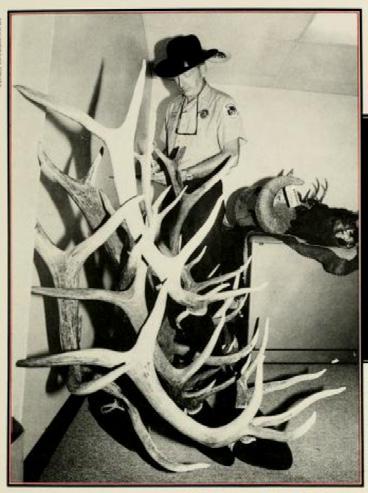
Antler growth per day of a bull elk in velvet. Moose, meanwhile, can add on a pound of new antler each day.
Montana teen wins national archery competition
In April, more than 2,000 student archers from across the western United States gathered in Sandy, Utah, to compete in the National Archery in the Schools Program (NASP) 2026 Western National Bullseye Tournament.
By the end of this 3-day event, James Lacy, a high schooler from Trout Creek, Montana, was crowned grand champion of the boys’ division out of 1,232 archers. He shot his personal best score of 296 (out of a possible 300), including 26 arrows in the center 10-ring bullseye.
“This is a huge moment, not just for James Lacy, but for Montana’s entire archery community,” says Ryan Schmaltz, Montana Fish, Wildlife & Parks Youth Education Program manager and NASP state coordinator. “The coaches in Trout Creek started their archery program just last year, and now they’re leading one of the best teams in the country.”
To learn more about NASP, visit: fwp.mt.gov/ education/ national-archeryeducation. n
New license plate supports safe crossings for wildlife
tarting this July, Montanans can purchase a new license plate that raises funds and awareness for wildlife crossing structures that usher animals over and under highways, saving lives while maintaining migration routes.
The plate features artwork by Kylie Bute, a June 2025 graduate of Gallatin High School in Bozeman who won the Montana Big Game and Wildlife Highway Crossings License Plate Artwork Contest. Proceeds from the new specialty plate will go into the Wildlife Highway Crossings and Accommodations Account, created by the 2025 Montana Legislature and administered by Montana Fish, Wildlife & Parks to help fund wildlife connectivity and collision-reduction projects across the state. If sales top 5,000 plates annually, they could raise $100,000 each year.
State Farm Insurance and the Montana Department of Transportation, Montanans are twice as likely to hit an animal as the national average, the second highest rate in the country.
Crossing structures such as those along U.S. 93 north of Missoula can reduce accidents with deer, elk, moose, and other wildlife by more than 90 percent, saving the lives of people and animals as well as millions of dollars in auto repairs and medical bills.
Bute’s design features a bull elk standing on the edge of a wildlife overpass against a background of mountains. “I hope it helps Montanans connect with the incredible wildlife that surrounds us,” she says. “My passion for art has always been about telling stories, and this design is a way to spread awareness of the importance of wildlife conservation and movement.”
According to recent data from
The new license plate, which the Theodore Roosevelt Conservation Partnership (TRCP) is helping to advertise with roadside billboards, comes as interest in safe highway wildlife crossings is at an all-time high. Last year state legislators passed House Bill 932, which allocates 20 percent of Montana’s marijuana tax revenue to a Habitat Legacy Account. Of that, 5 percent—around $500,000 annually—is earmarked for wildlife crossings.
For her artistic efforts, Bute received a $1,000 award from TRCP and other organizations. The contest was also sponsored by FWP, Montana Department of Transportation, National Wildlife Federation, Greater Yellowstone Coalition, Glacier-Two Medicine Alliance, Vital Ground Foundation, and Montanans for Safe Wildlife Passage. n
1.) Darker background using white alphanumerics
Fish Wildlife and Parks Darker background.
The Big Game and Wildlife Highway Crossings License Plate features art by Kylie Bute.
James Lacy displays his tournament trophy along with a younger winner.
OUTDOORS REPORT
WILDLIFE WATCHING
One of world’s oldest-known ospreys returns to Missoula again to nest
by Julie Lue
ontanans welcome back ospreys and other migratory birds every year, but when Iris the osprey returned to her Missoula nest April 6, her arrival made the local news and was celebrated by online fans around the world.
At close to 30 years old, this beloved bird is one of the world’s oldest-known ospreys. Though no one knows where she spends her winters—perhaps Mexico or Central America—from spring through fall her daily life is livestreamed via a “bird cam” aimed at her nesting platform near the mouth of Hellgate Canyon (see QR code below right).
Dr. Erick Greene, researcher and University of Montana professor emeritus, first photographed Iris around 26 years ago when she was nesting, quite dangerously, on the crossbars of Missoula power poles. Based on his long acquaintance with Iris, Greene says that 29 is a conservative estimate for her age. “I suspect that she did not start breeding until she was at least 3 which is when some females start to breed.”
Scientists are able to identify Iris because of unique dots in the iris of her eyes that are visible with a high-resolution camera (she doesn’t wear a leg band). Greene and other Iris-watchers also have learned to recognize her by appearance and behavior. “She’s always yakking and she’s a forceful personality, which in the osprey world I think probably contributes to her longevity,” he says.
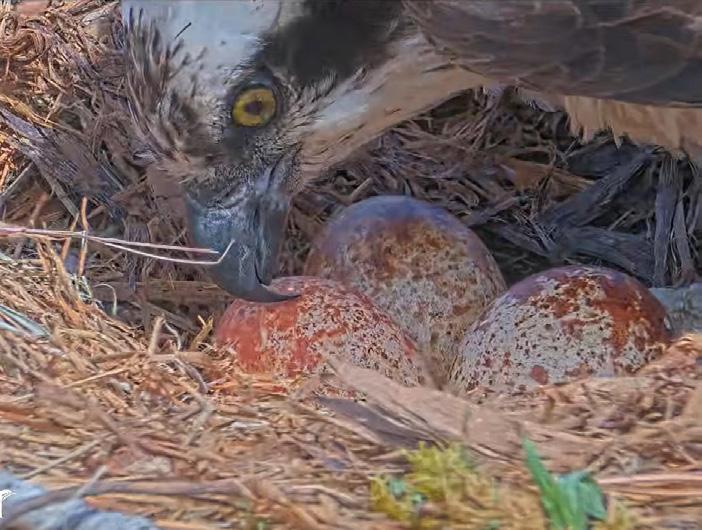
Iris didn’t raise chicks in 2025, but by mid-May this year she was incubating three eggs with the help of her attentive new mate, “Clark,” a name the bird cam’s online fans helped pick this spring. If all goes well, eggs will start hatching as this magazine goes to print in mid-June.
“It’s remarkable that A, she’s still alive, and B, she’s still laying eggs and being a mom,” Greene says. “At this point she’s probably a great-great-great grandmother.”
In past years, the Montana Osprey Project studied Iris’s offspring as part of an ongoing research project tracking toxins in osprey chicks’ blood and feathers, including heavy metals that contaminate the Clark Fork River. (Researchers quickly take samples and return the young unharmed to the nest.) Due to past mining activity in the ButteAnaconda area, a 120-mile stretch of the river is part of one of the nation’s largest Superfund sites.
“We’re getting high-resolution maps from the ospreys about where toxins are high in the river,” Greene says, adding that as cleanup of the river has pro -
gressed, years of data show a reduction in some heavy metals. However, mercury and arsenic contamination from old gold mines and silver mines remains high. Because humans and ospreys are at the same level of the food web, both are exposed to similar levels of toxins when eating fish. Though Iris’s offspring are no longer tested, the Missoula-area nest and camera remain an invaluable resource for public awareness and education.
“This is a cool opportunity to let people have this very intimate window into the lives of wild creatures,” says Greene, “and it’s a soap opera every year.” Sometimes bad things happen to Iris’s families, but researchers don’t intervene unless the emergency is caused by humans—for example, when chicks become tangled in baling twine or fishing line.
FWP also has an osprey nest cam in Helena set to go live this summer. Watch for a link at fwp.mt.gov/ education/ or to view Iris’s webcam, use the QR code or visit qr1.be/Q07KT7. n
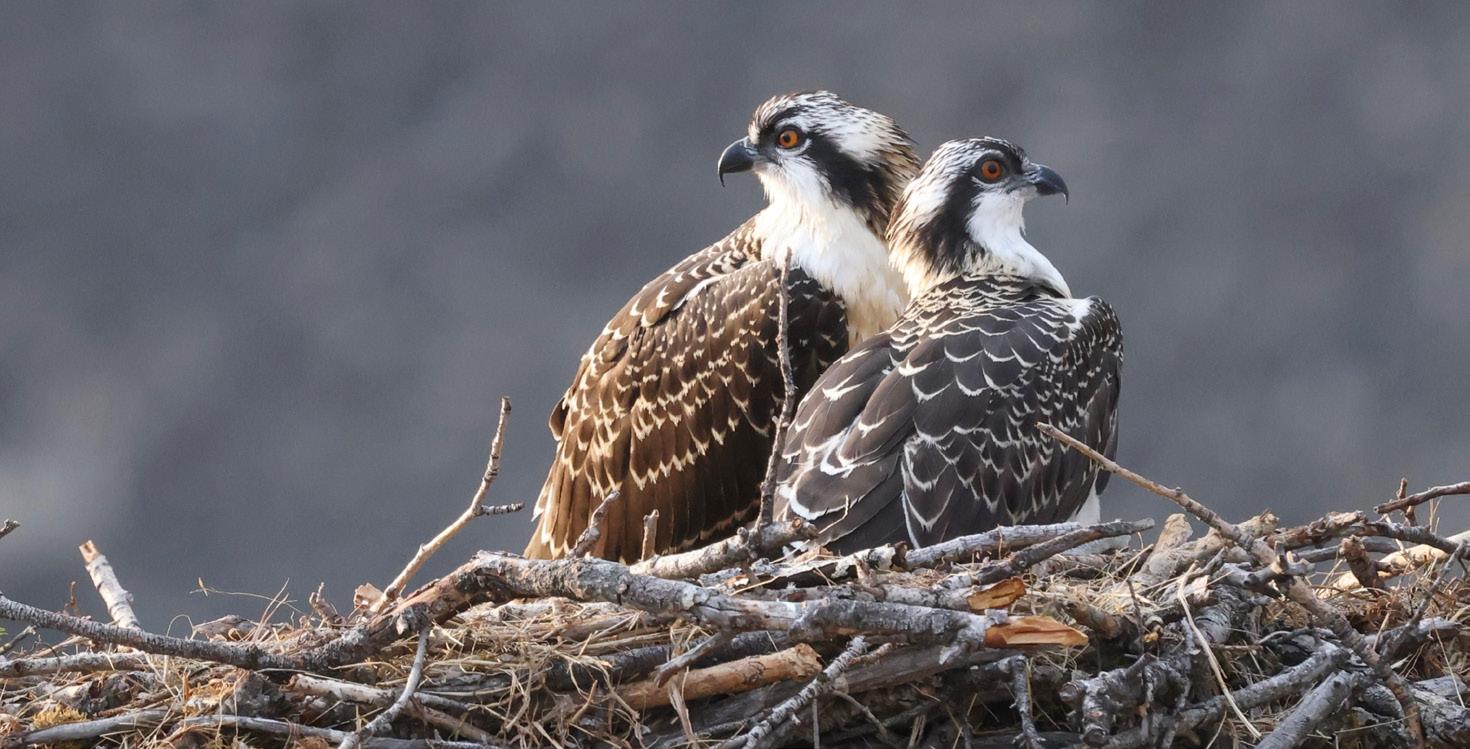
Iris’s chicks Sum-eh and Antali in August 2024.
Iris’s 2026 eggs.
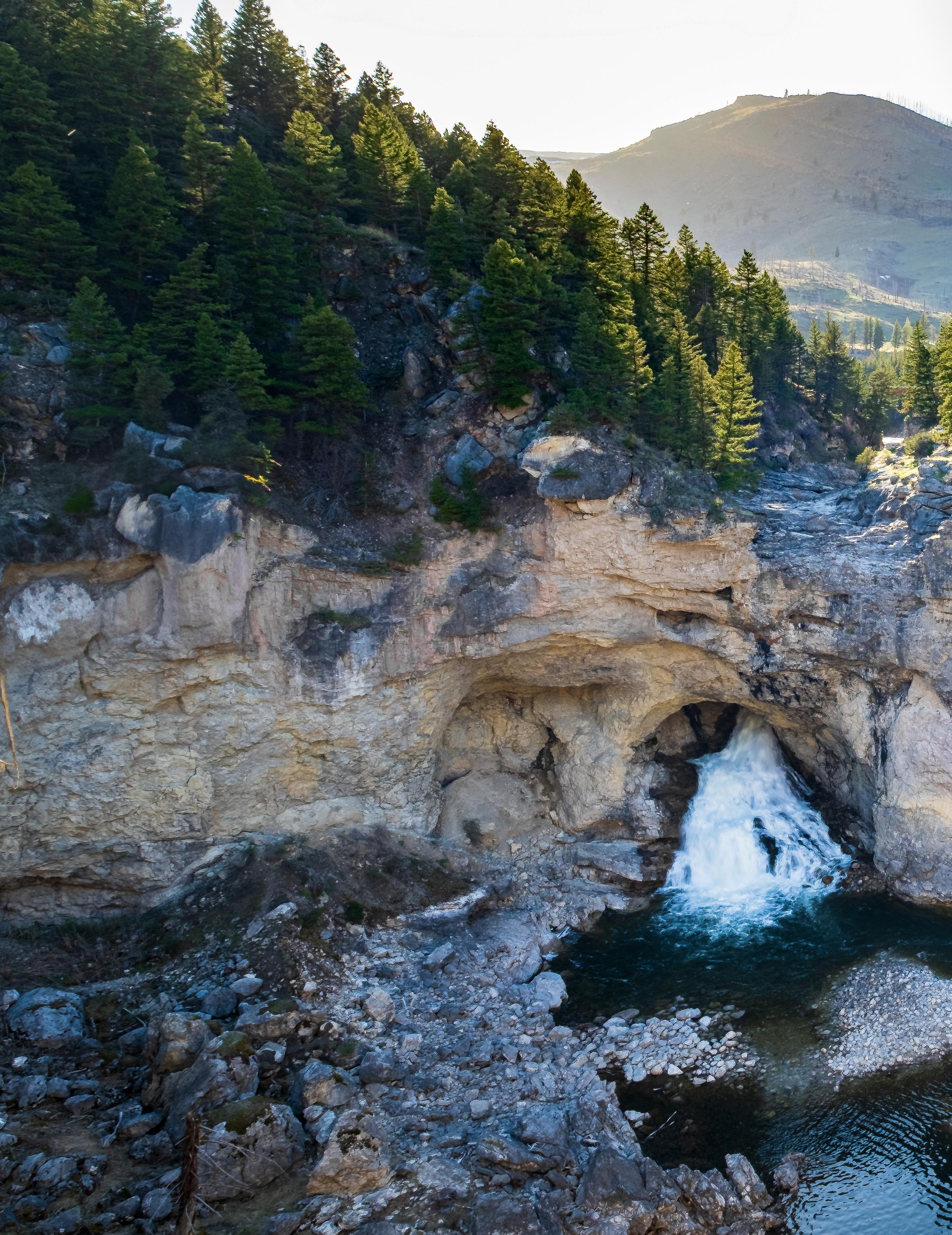
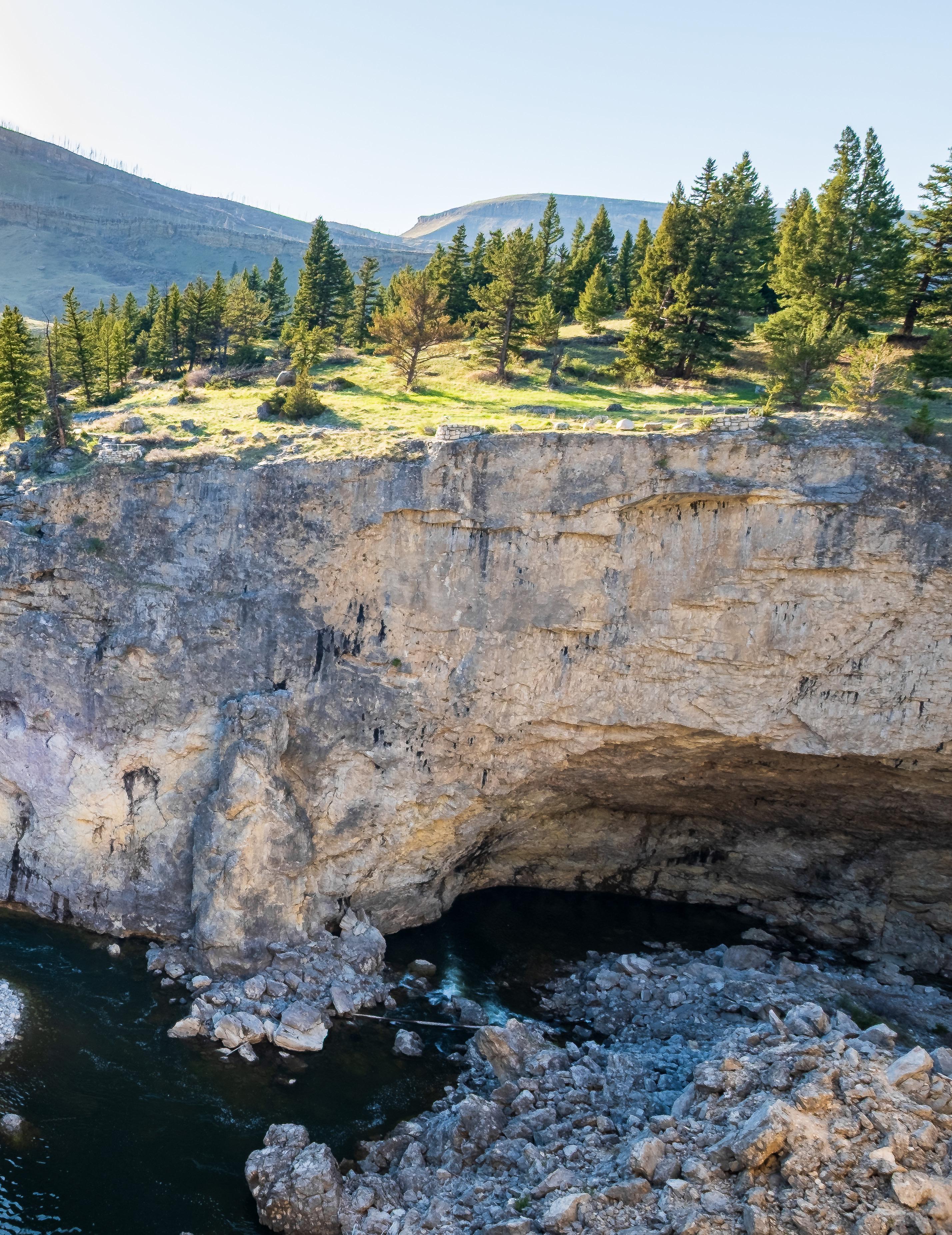
Billings photographer Alex West is a frequent visitor to Natural Bridge Falls southwest of Big Timber, where the Boulder River plunges into a hole as it approaches a 100-foot cliff then reappears near the base. Hoping for good light, West climbed the overlook trail on a summer evening and programmed his camera to take several rapid-fire frames at different exposures to adjust for the bright sky and deep shadows. He later combined the images on his computer into one photo that balances the lighting as the human eye would see it. “I feel it captures the solitude you experience standing at the overlook,” West says. His next goal is to photograph the falls at flood stage when the swollen river flows over the inlet hole and spills over the top of the cliff. “That hasn’t happened in years—we just haven’t had the snowpack. And when it does, it’s only for a day or two, sometimes less. That just adds to its magic.” n
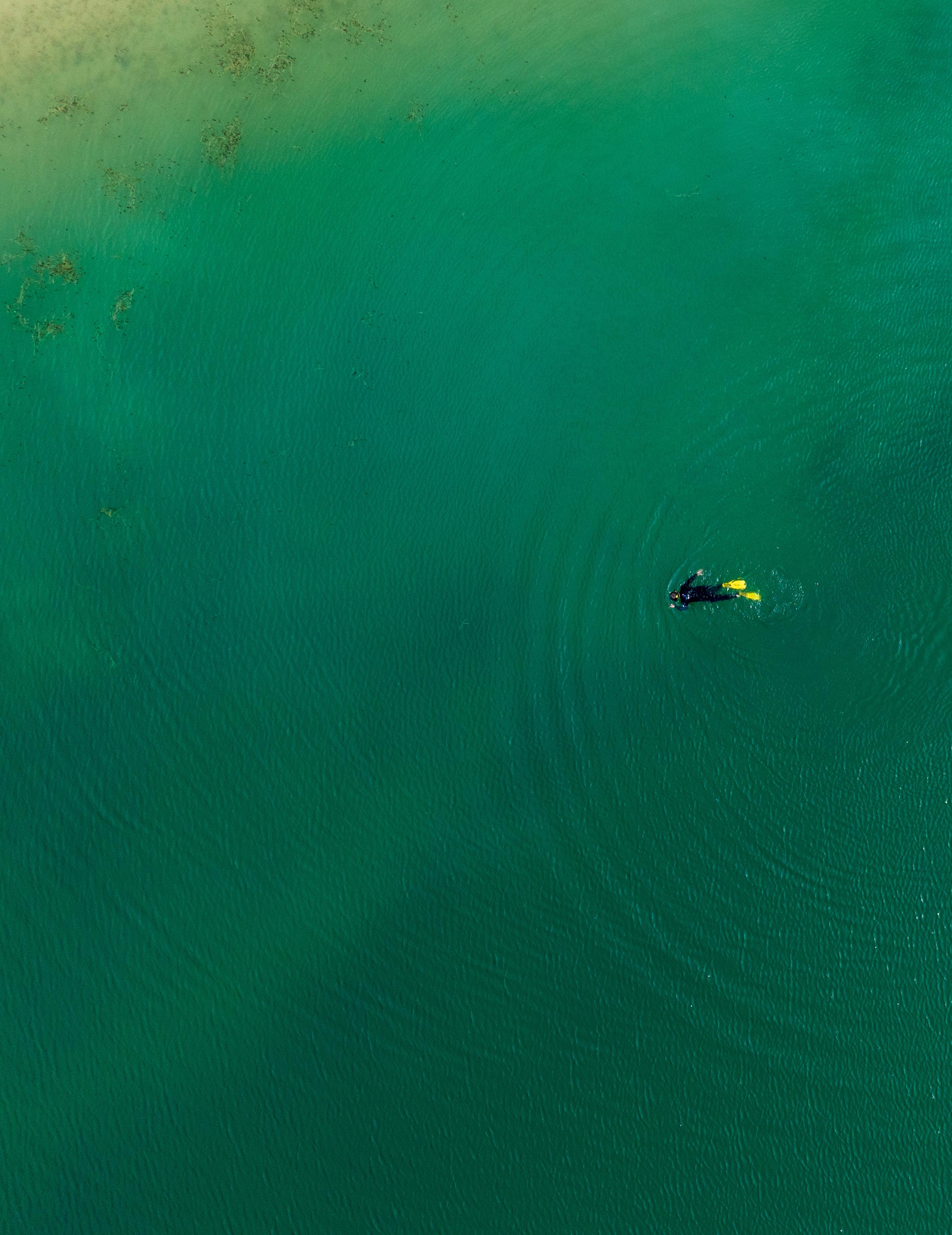
SCUBA SURVEY FWP’s dive team pays periodic visits to Nilan Reservoir west of Augusta to scour its depths in search of Eurasian watermilfoil. First spotted there in 2021, this invasive aquatic plant is nearly impossible to eradicate once it begins growing in thick mats that hamper swimming, fishing, and boating. It typically spreads to new waters from plant fragments attached to boats, trailers, and fishing gear that weren’t properly cleaned. Luckily, FWP staff caught Nilan’s infestation early while it was still small. Crews pulled as many plants as they could find and treated that section of the reservoir with herbicide. Over the next two years the dive team found just a few scattered plants, and two additional surveys in 2025 didn’t find any.
To learn how you can help stop the spread of aquatic invasives, visit fwp.mt.gov/ais, or to see a video of the dive team’s work at Nilan Reservoir, scan the QR code below. You can also read about what else FWP dive crews are finding underwater by turning the page. n
PHOTO BY LAUREN KARNOPP/MONTANA FWP
GETTING A GRIP ON CRAYFISH
A trio of biologists have uncovered new information that changes how we think about Montana’s freshwater crustaceans.
BY MIKE MCTEE
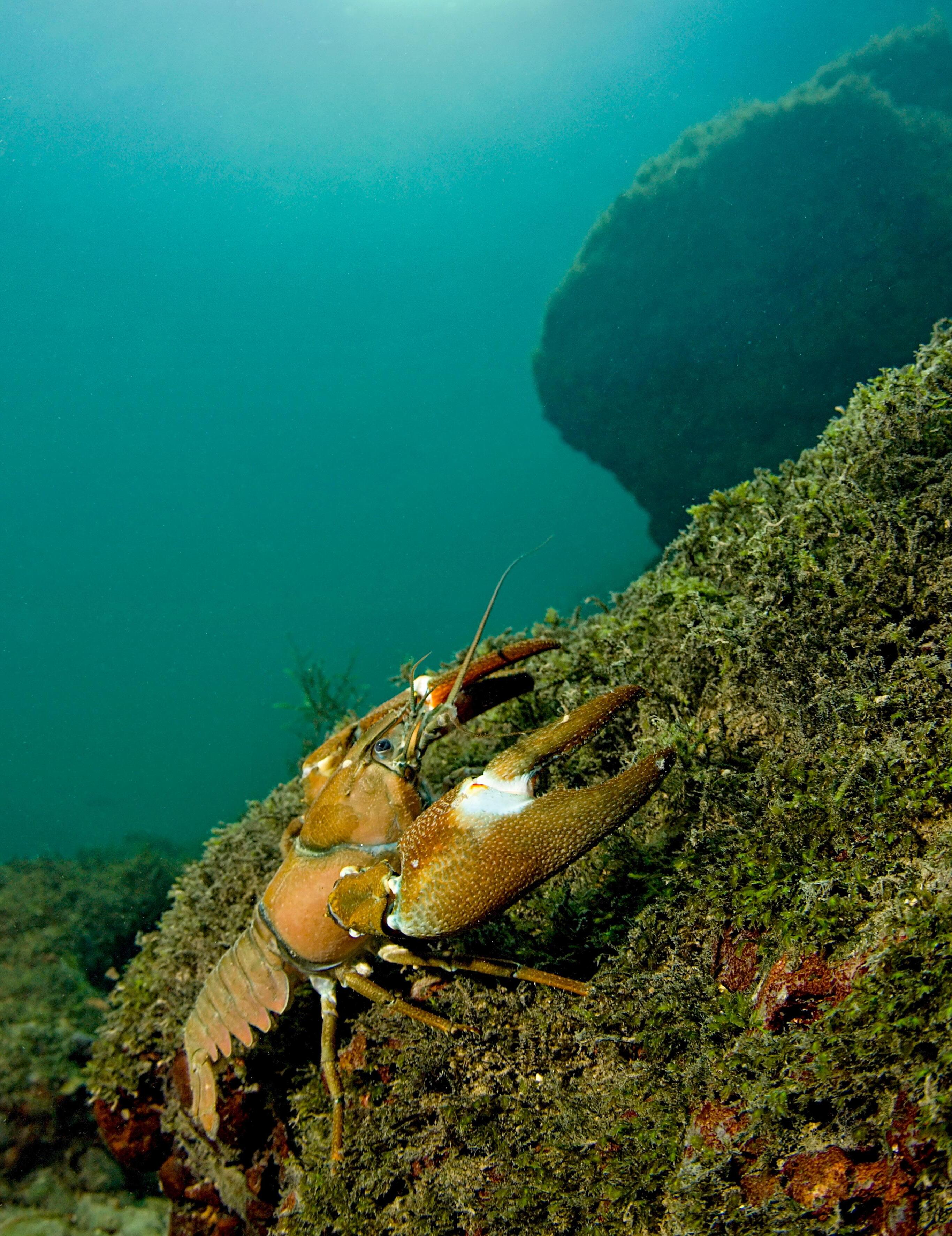
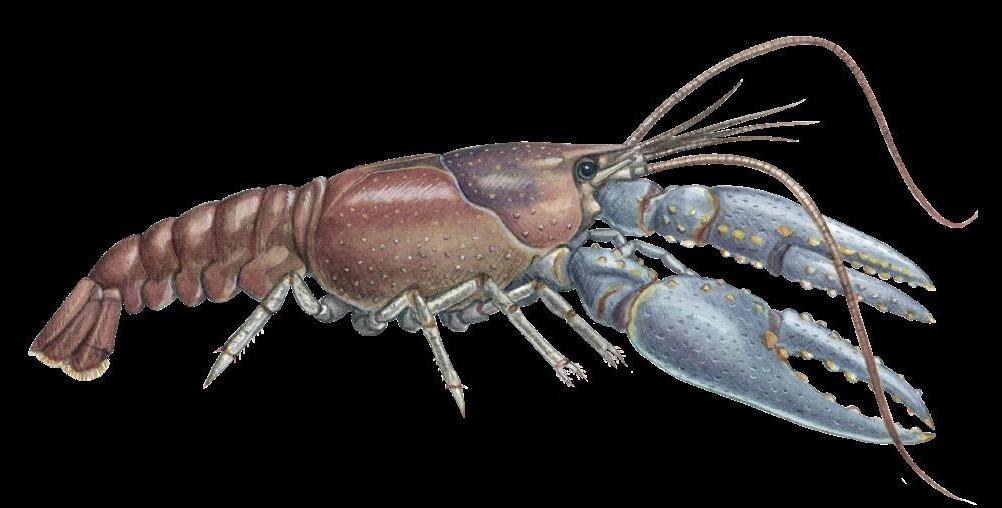
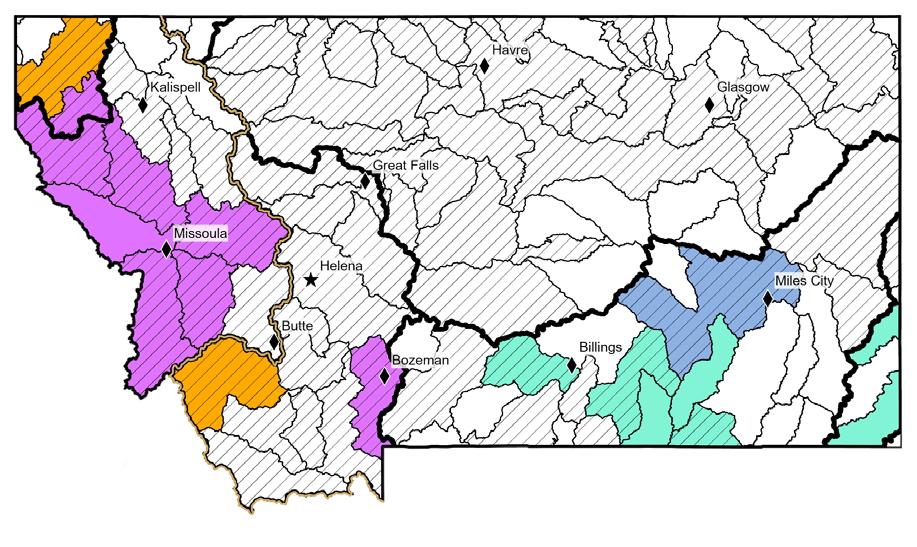
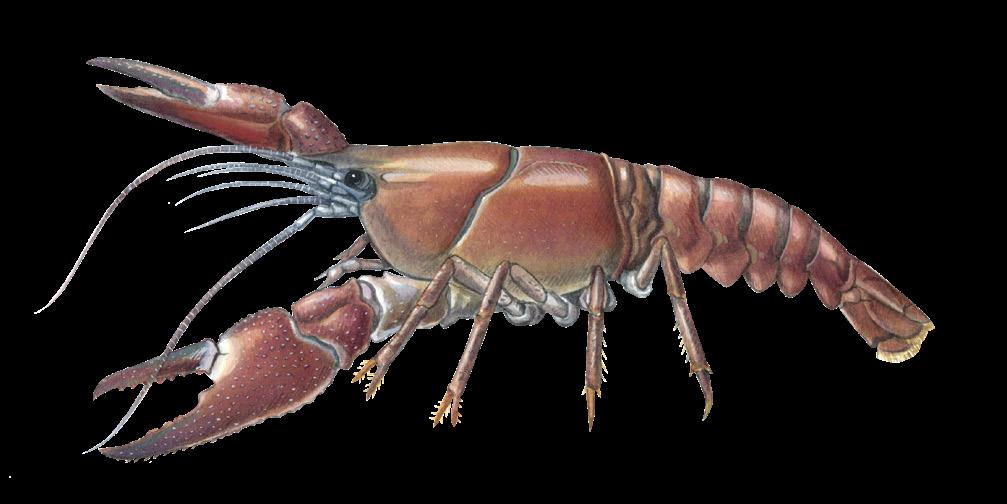
SIGNAL TOWER The largest of Montana’s five crayfish species is the signal crayfish, named for the white patches on its rusty-brown claws. Researchers found them in the Clark Fork watershed, as well as in Lake Koocanusa, in the Fisher River, and near Bozeman.
s I edged my raft trailer toward a takeout on the Bitterroot River near Florence, I heard a shriek from the shallows. I shot my head out the truck window and saw my four-yearold, thankfully safe, unleashing a stream of giggles and jumping up and down. Beside him my fishing buddy, Sergio, lifted a crayfish from the cobbles and attempted a handoff. The creature swung its rusty claws toward the boy’s nervous fingers and dropped into the river amid another burst of giggles.
Without knowing it, my son was witness to a forgotten invasion begun nearly 90 years ago.
“What’s really fascinating is we knew in the 1940s that these signal crayfish were introduced,” says David Schmetterling, recently retired fisheries research coordinator for Montana Fish, Wildlife & Parks. “And by the ’80s, everyone just thought they were native.”
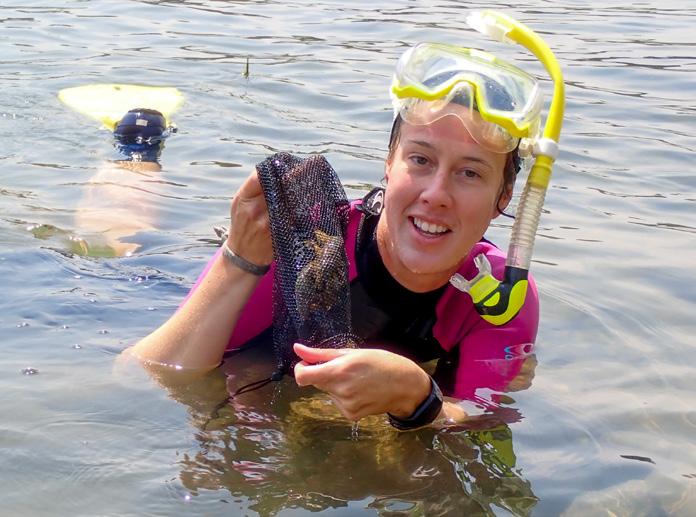
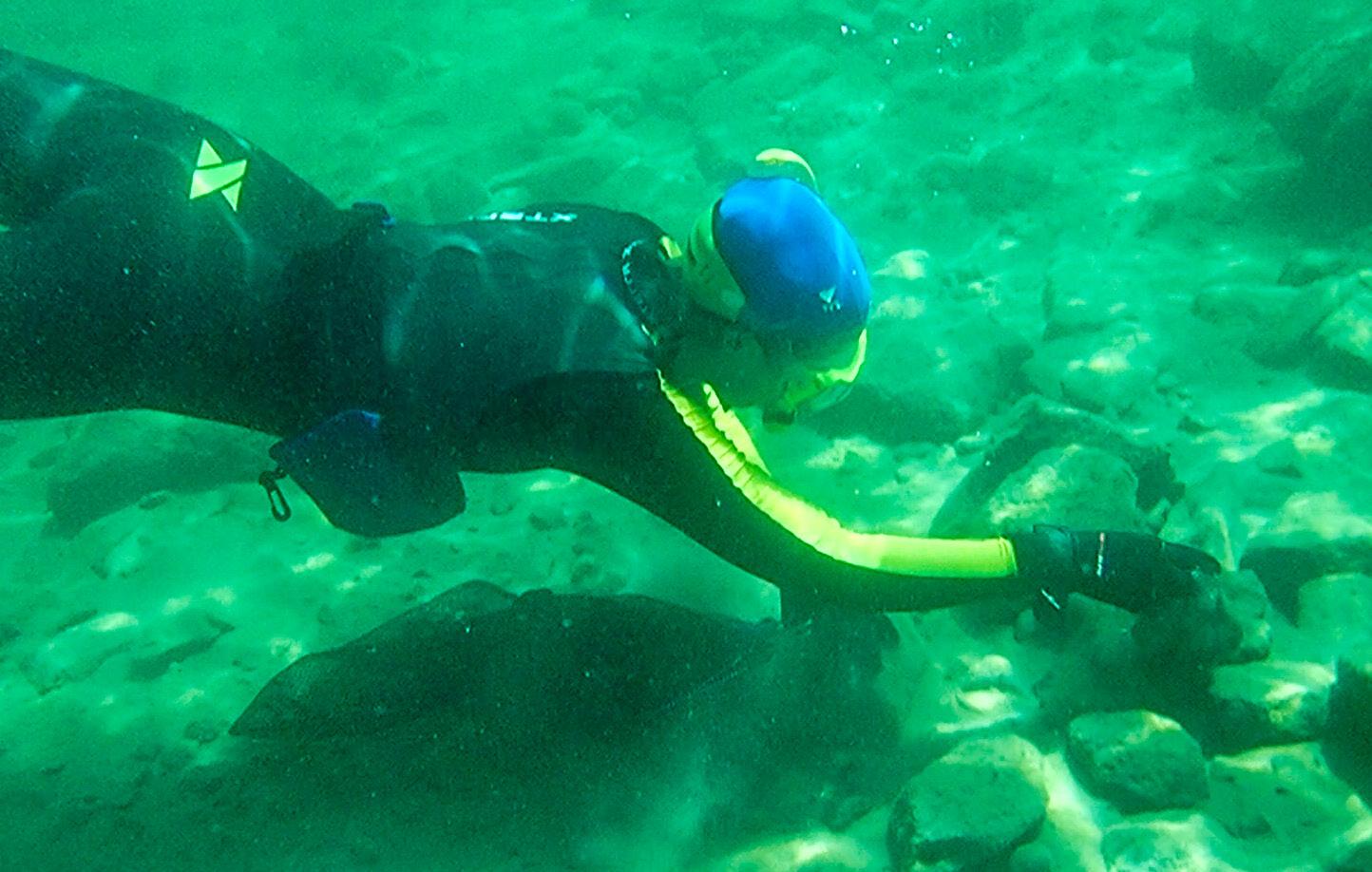
The revelation that crayfish might not be native resurfaced as Schmetterling was helping research these crustaceans during the summers of 2021 and 2022 with an “A-Team” of biologists—self-dubbed “the crAy Team.” Donning snorkeling gear, they netted and trapped crayfish across Montana. The study followed a sudden uptick in questions about these freshwater crustaceans, also known as crawfish or crawdads.
“There was a growing public interest at the time in foraging for crayfish for food,” says Schmetterling. “But we didn’t really know about the crayfish we had here.”
Their findings are now upending how we think about crayfish in Montana, including in the Bitterroot River.
JANE GOODALL OF CRAYFISH
Crayfish, closely related to the much larger saltwater lobster, have an outsize ecological effect because they sit at multiple levels of the food web, says Dr. Susie Adams, a fisheries biologist based at a U.S. Forest Service research station in Mississippi.
They eat plants, scavenge, and prey on other animals while also serving as food for more than 350 species, including river otters, trout, and great blue herons.
Nicknamed the “Jane Goodall of Crayfish,” Adams helped kickstart the FWP crayfish research. Before becoming an astacologist (someone who studies crayfish), she earned her PhD at the University of Montana and has collaborated with Schmetterling since 2000.
Besides FWP’s surveillance for exotic crayfish, the only study of Montana crayfish occurred in 1989, focused on watersheds
west of the Continental Divide. For nearly 20 years after that, the crustaceans fell back into the shadows until 2008, when non-native smallmouth bass were illegally introduced into McGregor Lake west of Kalispell. Smallmouth are voracious crayfish predators, and as the bass population grew, biologists worried how it might affect the lake’s crayfishery. Schmetterling figured that was reason enough to develop a proper crayfish study.
The crAy Team set a goal to map the distribution of crayfish across Montana, study their origins, and standardize a sampling design for future comparisons. Along the way, the team recruited personnel from tribal and federal agencies to boost sampling, share techniques, and spread awareness. Only later would they come to question which crayfish might be native.
Mike McTee lives in Missoula and works as a researcher at the MPG Ranch in Florence.
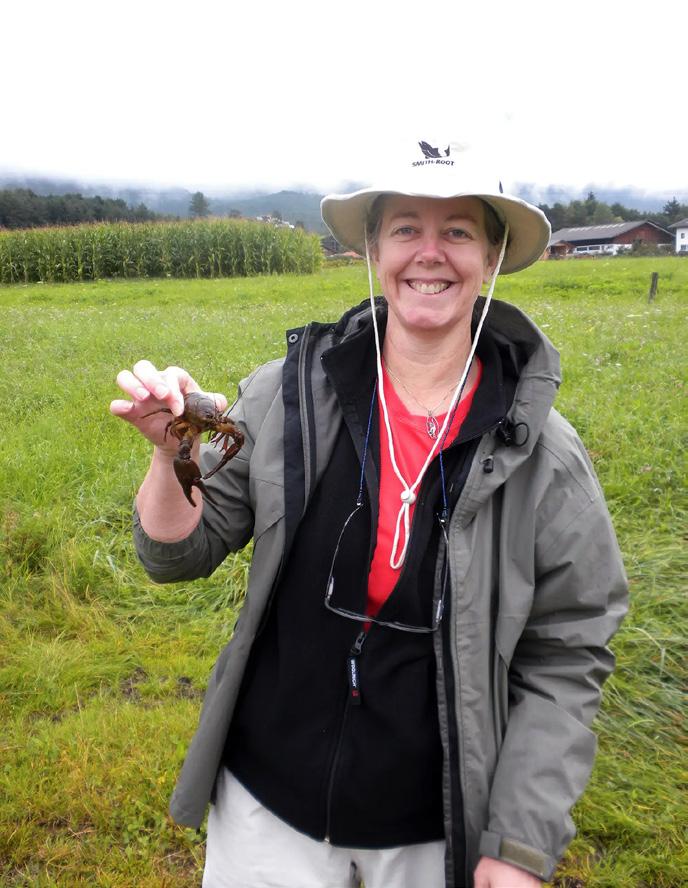
A lifetime fascination with crayfish often starts with bravely holding one as a child.
CRAYFISH AROUND MONTANA
VIRILE: Most common
CALICO: Southeastern Montana
SOUTHERN PLAINS: Hatchery hitchhiker
Over two summers, the crew identified five crayfish species, most occupying streams and rocky shorelines, but also irrigation ditches, ponds, and even waterbodies that dry up seasonally.
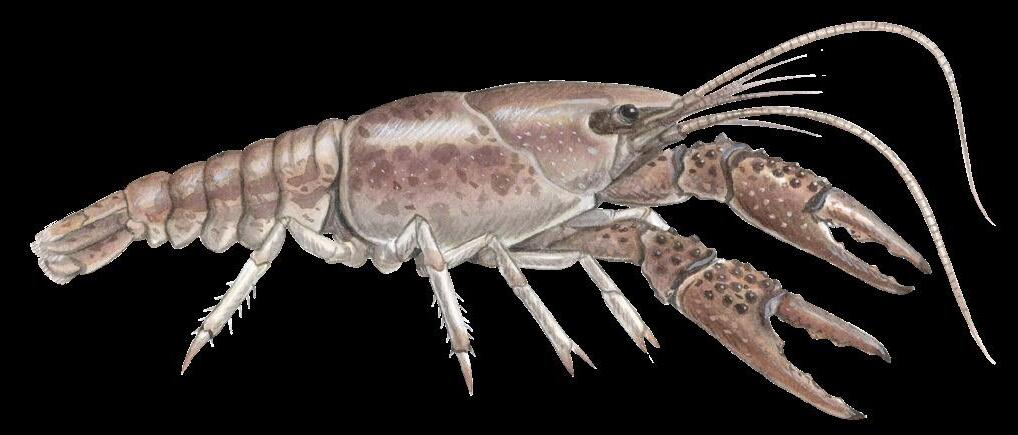
Virile crayfish, also called northern crayfish, made up most of the catch and were found nearly statewide.
In the drier climate of southeastern Montana, calico crayfish predominated in the surveys. All crayfish can burrow, but calicos (also known as papershells) dig especially deep to reach moisture, sometimes several feet down to the water table, says Adams.
Signal crayfish, typically larger than virile crayfish and named for the white patches on their rusty-brown claws, were widespread in the Clark Fork drainage. They were also found near Bozeman, in Lake Koocanusa, and in the Fisher River, which drains into the Kootenai.
SIGNAL:
West of the Continental Divide
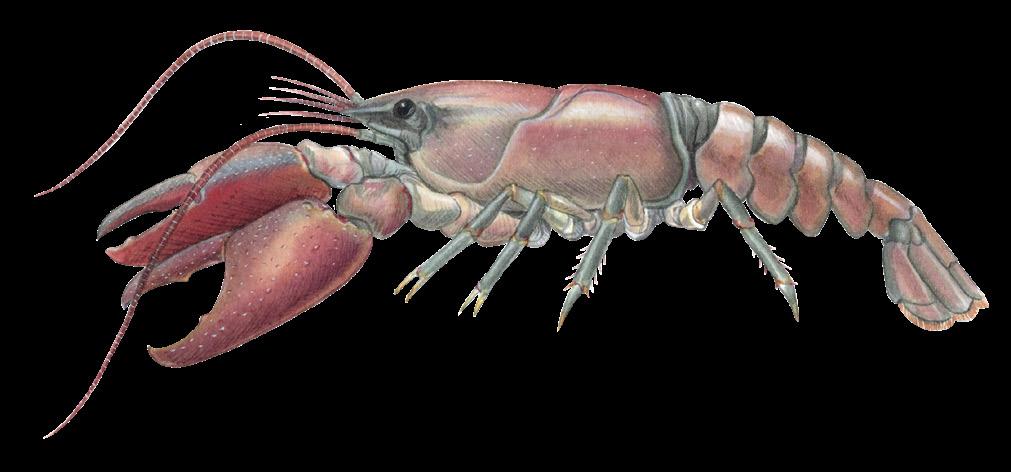
OKANAGAN: Commonly confused with signal
They eat plants, scavenge, and prey on other animals, while also serving as food for more than 350 North American species.
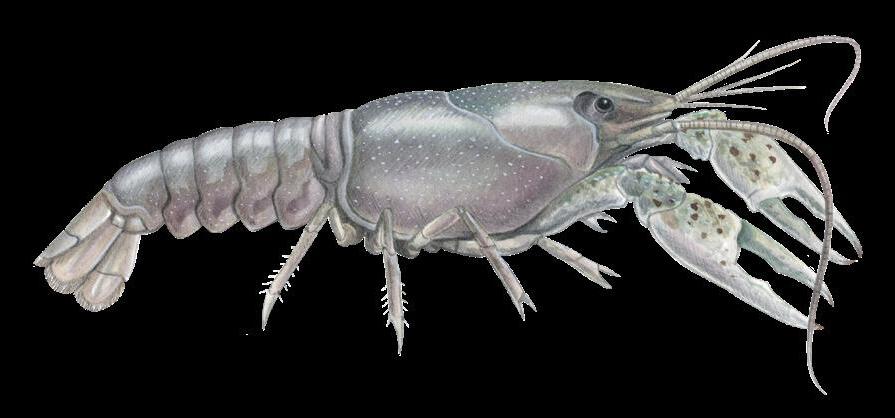
The crAy Team turned up a couple of noteworthy species, including the Okanagan crayfish, which the science community recognized as a distinct species in 2025. Okanagans are similar to signal crayfish but with a more reddish appearance and less spiky exoskeleton. In Montana, the only detections of Okanagans came from the Big Hole River and one lake high above the Kootenai River, both
outside this species’ presumed native range in Washington and British Columbia.
“When we caught the Big Hole River specimens in 2021, we noticed they looked different,” says Adams. “Once we sequenced their mitochondrial DNA, it was nearly an exact match to crayfish first documented in Okanagan Lake in British Columbia in 2012. They also turned up that summer in Shannon Lake high above the Kootenai River, but the difference didn’t jump out at us the way it did in the Big Hole, perhaps because some of the Big Hole specimens were much larger.”
Another surprise turned up at the Miles City Fish Hatchery. During a routine invasive species patrol in 2021, Stacy Schmidt, FWP aquatic invasive species supervisor, netted a southern plains crayfish.
Native to the southern and central United States, this species seemed to be contained
within the borders of the hatchery. Schmidt wonders if crayfish were accidentally brought in with a truckload of fish from a southern state, perhaps decades ago when fish were relocated more freely.
FWP has since taken steps at the hatchery to thwart further invasion by periodically dewatering the holding ponds, spraying hot water into crayfish burrows, and sealing those burrows with bentonite.
One bright spot, according to Adams, was that the team didn’t find any high-profile invaders, including rusty crayfish, red swamp crayfish, or marbled crayfish, a species that reproduces without mating, meaning a single individual can spread a new population. Once these aggressive species gain a foothold, they can outcompete native crayfish and destabilize shorelines with their burrows.
QUESTIONS OF ORIGIN
Sometimes it’s clear when a species doesn’t belong, like southern plains crayfish hundreds of miles from their native range.
SUB-AQUATIC SPECIAL FORCES
Montana’s “crAy Team” of researchers included Dr. Susie Adams (right), the “Jane Goodall of Crayfish,” FWP aquatic invasive species supervisor Stacy Schmidt, (below right), and now-retired FWP fisheries research coordinator David Schmetterling (below).
British Columbia. But isolated detections in a high mountain lake and in the Big Hole River east of the Continental Divide make a native origin unlikely.
Other cases are murkier, even when Montana waterbodies flow into species’ native habitat downstream. Frigid water, cascades, and other barriers might have thwarted crayfish from moving upstream into Montana waters. For instance, western Montana’s Clark Fork and Kootenai rivers drain into the signal crayfish’s native range in the Columbia River basin, yet there’s no evidence the species historically extended into Montana. The same goes for virile crayfish, which are native to the lower Missouri River, but may have stopped short of Montana.
To help determine which crayfish species might be native to Montana, Adams first turned to DNA analysis. Both the virile and calico crayfish caught in Montana exhibited low genetic diversity, a pattern expected for introduced populations where few individuals originally contributed genes.
Signal crayfish in western Montana also appeared exotic, with genetics most closely matching populations from western Washington and Oregon.
If any crayfish were native to western Montana, the Okanagan crayfish would be the best candidate, since it has the closest native range in central Washington and southern
Adams also considered the biogeography west of the Divide. During the last ice age, Glacial Lake Missoula submerged much of western Montana’s low elevations. “A gigantic glacial lake is not conducive to signal crayfish because they don’t like super cold water or silty bottoms,” says Adams. “Then you have catastrophic floods when the ice dams break and it would just scour the entire area.
“Once glaciers receded, waterfalls formed barriers to fish migration (that’s why there are no native salmon in Montana), which could have also prevented the passage of crayfish.”
Seeking additional clues, Adams used a Forest Service grant to hire Hampton Kennedy. Kennedy is a high school history teacher with experience using historical documents to understand the native range of a wildlife species. Together, they mined historical travel journals, newspapers, early biological surveys, and native languages for any mention of crayfish in Montana.
They combed native language dictionaries and reports of interactions with tribes in or near Montana. The languages often had words for water-dwelling creatures such as beaver and most fish, but Montana tribes
didn’t appear to have any words for crayfish. The Cree Indians did, but their traditional lands extended as far east as Quebec and only reached the eastern edge of Montana.
Lewis and Clark never wrote about crayfish in their Montana journals, but they did find them shortly after crossing the Bitterroots into present-day Idaho.
In 1868 and 1887, newspapers mentioned crayfish near Bozeman, with one article suggesting that the crustaceans were introduced from Oregon, probably from a population of signal crayfish.
Adams and Kennedy found no early mentions of virile crayfish in the headwaters of the Missouri and Yellowstone rivers.
The first credible report from western Montana came in a 1934 Missoulian article after a newcomer to the state complained about not finding “craw-daddies.” A coworker later brought one to his cubicle from the Ninepipe area in the Mission Valley north of Missoula. Those lakes currently hold virile crayfish, suggesting an introduced population from east of the Continental Divide.
A decade later, another Missoulian article offered clues on signal crayfish:
“Hamilton, Sept. 18. – Lawrence Humble and Fred Ward, fishing in the Bitterroot River near Florence, hooked a lobster-like ‘critter of the deep’ that is said to be a Columbia River crayfish. How the crayfish ever found its way into the Bitterroot is a mystery.”
A follow-up story the next day suggested the crayfish escaped from bass ponds between Florence and Stevensville, where 1,000 crayfish had been planted seven years earlier to feed the planted bass.
Signal crayfish at the time were commercially harvested in the Lower Columbia River to be sold for human consumption and bait, shipped as far as St. Louis.
Crawdad boil
All evidence pointed to the same conclusion: Crayfish are likely newcomers to most if not all of Montana.
All evidence pointed to one conclusion: Crayfish are likely newcomers to most if not all of Montana.
“If crayfish are native to Montana, my guess is they occurred only in the very eastern part of the state,” says Adams.
RED FLAGS AND A PLAGUE
Where signal, red swamp, and other crayfish have been introduced in Europe, Asia, and other new places, studies have shown that the invasive crustaceans damage ecosystems.
As they rapidly reproduce and forage the bottoms of lakes and rivers for vegetation and whatever protein they can snatch, crayfish can strip thickets of aquatic plants bare and wipe out some insect and snail populations.
“We really don’t know what the landscape looked like before crayfish,” says Schmidt. But long hours of snorkeling and netting did turn up anecdotal trends.
For instance, the crAy Team found western pearlshell mussels, a native “species of concern” because of declining populations, tend
Preparation time: 30 minutes I Cooking time: 40-45 minutes I Serves: 2-4
CRAYFISH ARE FUN TO CATCH AND TO EAT, making for a hearty meal with proper preparation. You can collect them using snorkeling gear, by hunting the shallows along the banks of lakes or big rivers at night with a flashlight, or by trapping them using fresh cut-up fish as bait. Tie bait in a cheesecloth bag and use wire to suspend it inside a minnow or crayfish trap so the bait doesn’t touch the sides and crayfish have to enter inside to get the bait. Before you go, make sure to check the Montana fishing regulations and bring your fishing license. n
INGREDIENTS
20 fresh crayfish, cleaned
1 (4 oz.) package crab boil seasoning (Zatarain’s or other)
1/4 c. Old Bay seafood seasoning
1 c. kosher salt
4–6 bay leaves
3–4 lemons, halved
3–4 garlic heads, halved crosswise
3 yellow onions, halved
6–8 red potatoes, halved
1–2 lbs. andouille sausage, cut into chunks
4 ears corn, shucked and cut into 3–4 pieces each
DIRECTIONS
Bring 2 to 2.5 gallons of water to a rolling boil in a large stock pot. Add crab boil and Old Bay seasonings, salt, bay leaves, lemons, garlic, and onions. Stir until spices are dissolved, then add potatoes and return to a boil.
Boil 15 minutes. Add sausage and reduce to a simmer for 5 minutes. Add corn and simmer 10 minutes, then add crayfish and simmer 5 minutes, being careful not to overcook.
Pour mixture through a large colander. Discard lemons and seasoning pouch. Serve with any commercial hot sauce.
to thrive in places without crayfish such as in the Yaak River.
The effects likely thread across the food web. “A cutthroat trout isn’t going to eat a 5-inch signal crayfish,” says Schmetterling. “But it might have eaten the thousands of stoneflies, mayflies, and caddis flies that the crayfish replaced.”
To some predators, though, crayfish provide a valuable meal. The presence of crayfish could even be helping certain fish species become more abundant, according to Schmetterling. “One of the reasons crayfish have been moved around so much in this country is to feed smallmouth bass.” Walleye and large brown trout also eat crayfish.
Adams thinks crayfish are still spreading in places like the Blackfoot and Bitterroot headwaters. Where cold water once limited crayfish, warming streams may widen their range.
During the study, researchers also made another unexpected discovery. “We noticed crayfish in a lot of places had rusty-colored lesions,” says Schmidt. “Some had deformities on their body parts and holes in the carapace with gills hanging out through the shell.”
Adams suspected crayfish plague, an infection caused by a fungus-like microorganism that decimated native crayfish populations in Eurasia after an accidental introduction of infected North American crayfish in the 1800s. In foreign populations, crayfish die within days of exposure without developing lesions. Adams shipped tissue samples to collaborators in Spain, who confirmed it to be plague using microscope analysis and genetic testing.
Although the disease originated in North America, Montana now has the first confirmed outbreak on the continent. But based on conversations with other biologists, Adams suspects it’s more widespread following reports of crayfish with similar lesions in other states. She says that extensive research has shown that the disease is not transmissible to humans or other animals.
Despite the malady, Schmidt says crayfish are surviving well enough to reproduce, likely from co-evolving with the plague. “We’d be snorkeling to catch them and they were hiding and evading capture just as you’d expect, putting their claws up to fight us.”
For wild foods enthusiasts wondering if
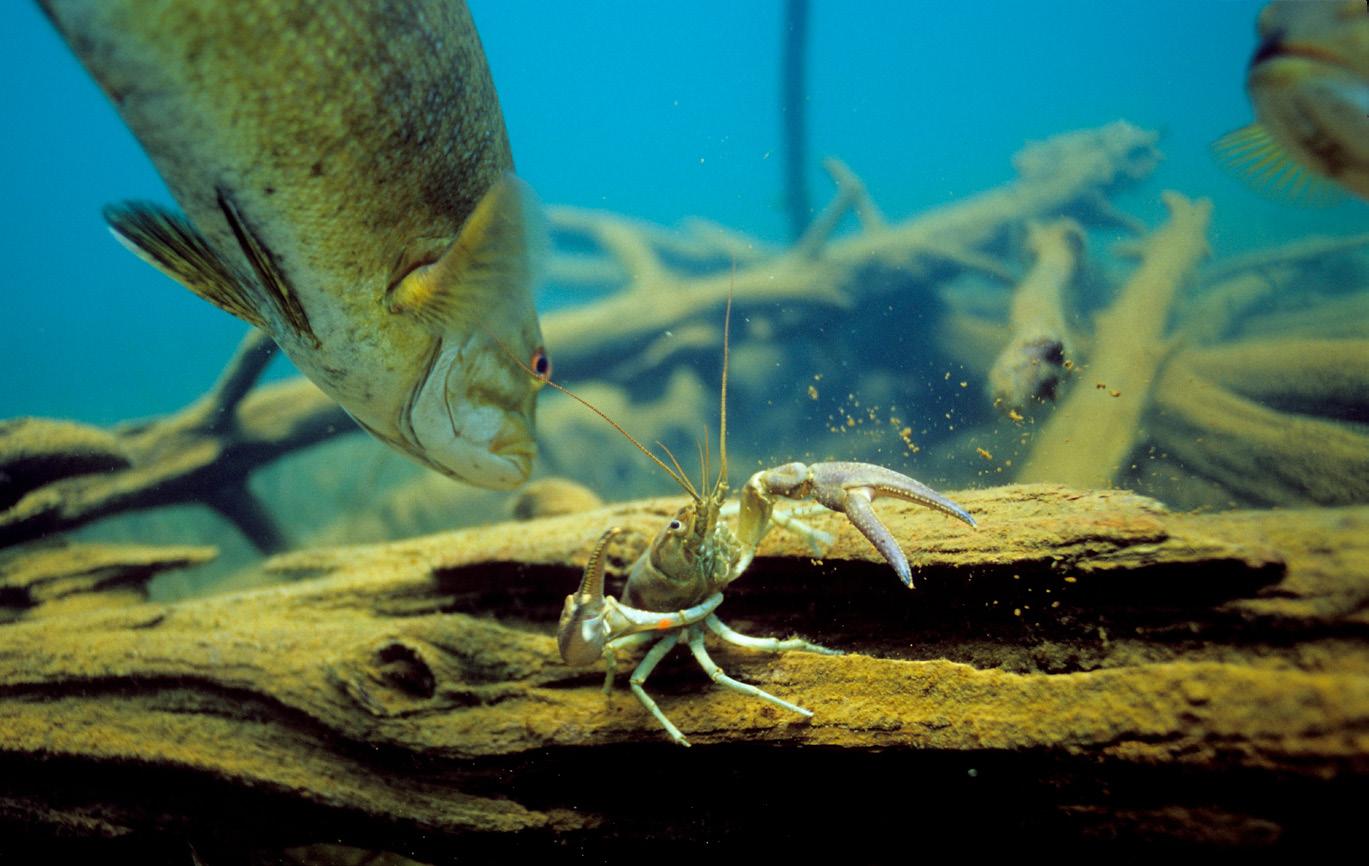
HUNTING THE DEEPS Researchers donned snorkeling gear to survey crayfish (also known as crawdads or crawfish) in Montana lakes and rivers. Crayfish are a popular food item for smallmouth bass (below). The illegal introduction of smallmouths into McGregor Lake led to launching a study after biologists wondered how those voracious fish might affect the lake’s crayfish population.
crayfish are safe to eat, Schmidt recommends all crayfish be cooked completely to protect from parasitic lung flukes, which can be transmitted to humans as well as dogs.
Crayfish are hardy and difficult to eradicate, so plague or not, they’re likely here to stay. Adams says new arrivals of new species are a concern even where crayfish are already present, reinforcing the importance of FWP’s Aquatic Invasive Species Program.
“When I look at our map of crayfish distribution now,” says Schmetterling, “I don’t look at where they are. I look at where they’re not.
I think keeping them out of new waters should be one of our priorities.”
Though the crayfish now prowling the depths of many Montana waters may not be native, they nonetheless have a knack for stirring the imagination. After my son’s first encounter on the Bitterroot, his curiosity was kindled. We returned with traps and caught one to boil with salt and lemon. Taking his first bite, he grinned and giggled once again.
“It’s pretty magical the way crayfish bring joy to people’s faces, no matter what your age,” says Schmetterling.
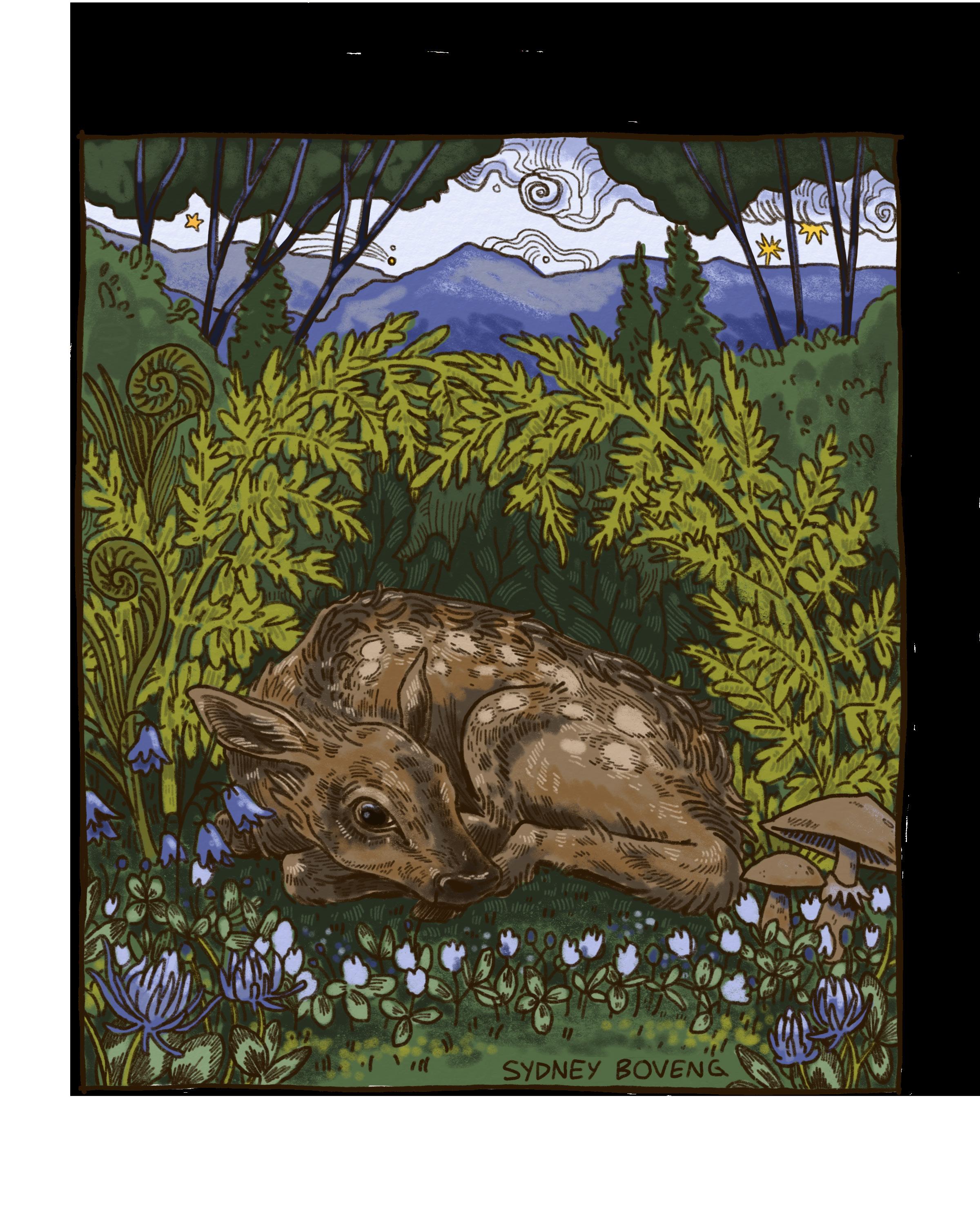
ILLUSTRATION BY SYDNEY BOVENG
First-Year Perils
The life of every elk calf is a cliffhanger.
BY CHRISTINE PAIGE
a clear summer day, as I was walking a high sagebrush bench with snow-clad peaks rimming a 360-degree view, I bumped a young cow elk from a timbered edge. She blew, stomped, and high-stepped a few yards off, reluctant to move far. It was then I saw her calf, a dark ball curled beneath a small Douglas fir, not but a few hours old.
Scattered across the bench, clusters of cow elk grazed, heads bobbing up to peer to the horizon and down again to feed on greening grasses and early wildflowers. A passing ranch truck drew little notice, but a low black form trotting through the brush brought the cows to attention. A single wolf cut across the bench with purpose, headed to a hillside den at the edge of the timber. The cows watched, casually added a few yards of distance, then grazed again. Elk and wolf, prey and predator both in view, and between them a newborn calf with an uncertain future.
VULNERABLE YOUNGSTERS
For all wild animals, the first days, weeks, and months of life are the most perilous, and elk calves are no exception. A calf’s chance of surviving its first year varies widely with conditions. But many calves will never reach their first birthday. Annual survival rates can run as low as 10 percent, and only in the richest habitats with few predators do annual calf survival rates climb above 80 percent—a level rarely recorded in the wild and a sign of a ballooning elk population.
Management biologists run annual winter counts of first-year calves and cows to track populations and help set hunting quotas. The ratio of calves to cows needed to sustain a herd varies with the conditions in each range. With a count of at least 20 calves for every 100 cows, a population in good habitat may remain stable. Where there’s pressure from multiple predators and hunters, closer to 30 to 35 calves per 100 cows may be needed to keep a herd healthy.
Yet nature is not stingy with life. Creatures eat and are eaten, and prey species have evolved a wealth of predator defenses and reproductive strategies that increase the odds of young ones making it to adulthood. Once an elk celebrates its first birthday, it has a good chance of living many years.
DYNAMIC SYSTEMS
For an elk in its first year, it is not just predators that determine its fate. Everything from winter snowfall, spring storms, and the wealth of summer grass plays a role in calf survival, as does birth date, birth weight, disease, mom’s condition, and dad’s age.
The scales may be tipped for a calf right at conception. A study at the Starkey Experimental Forest and Range in eastern Oregon found that breeding by older bulls ultimately leads to better calf survival. Older bulls often breed cows earlier in the season and within a single estrus, which leads to synchronized calving in spring within a tight 7to 10-day window. This leads to a “swamping” effect that overwhelms predators, minimizing calf mortality in the herd—each newborn simply has less chance of getting eaten if the landscape is littered with calves. Breeding by younger bulls is spread out over several weeks, and not all cows are bred in the same estrus cycle. As a result, calving is strung out over 30 or 40 days, and each newborn is more vulnerable to predators. Ultimately, the age structure of bulls can ripple through their offspring’s chance of survival.
The condition of cows during pregnancy also weighs on calf survival. A cow must have put on sufficient body fat—about 10 percent by the rut—to carry her calf through the winter months. So forage quality the pre vious summer and fall can determine how large and healthy her calf will be. A severely dry summer with poor forage may result in fewer calves brought to term. Birth weight can also be a driving factor in calves’ summer survival. Low-weight calves are more suscepti ble to cold, storms, and disease, and they are slower to mature. Some studies suggest that smaller calves are easier for predators to catch.
Smaller calves also lose weight faster come the lean days of winter. On the flip side, a robust newborn of 35 pounds or so has a leg up on the rapid growth it needs to join the herd—essential for the precocious offspring of open-country runners.
In regions with short summers, the timing of birth can play into calves’ fate as well. Newborns that come too early in the season can be endangered by spring storms or by the lack of fresh greenery available to their mother. Spring forage affects a cow’s milk production, both its richness and yield, and as a result, how quickly milk-fed youngsters will grow and be running with the herd. But if calves are dropped too late, they will wean late and may not mature quickly enough to survive the coming winter.
PREDATION LESSONS
Researchers in and around Yellowstone National Park have had a unique opportunity to track predation on elk and their survival after the reintroduction of wolves. Years of study have shown that this multi-
ELAINE ATKINSON
ltimately, nature’s unpredictable forces—driving storms and gentle rains, winter snows, summer heat and drought, wildfires and long-term climate swings— continually echo through the landscape and are made visible in the fatness of calves and the vigor of bulls.
From birth through summer, elk calves in Yellowstone are most vulnerable to bears. In a study that spanned 2003 to 2005, nearly 70 percent of elk calves died in their first year, and 90 percent of the mortalities occurred during summer. Bears, both grizzly and black, took roughly 6o percent of all calves that died in their first month, while coyotes and wolves each accounted for approximately 10 to 15 percent of early calf deaths. Grizzlies search for newborns and bedded calves methodically, looking and sniffing as they zigzag through the landscape. Although calves sometimes escape, newborns can’t outrun an adult bear, and this boost of elk protein is a boon to mother bears feeding young cubs.
Bears are also efficient predators of elk calves in areas without grizzlies. A 3-year study of calf mortality in the Bitterroot Valley found black bears were responsible for around 11 percent of calf deaths. Wolves killed just 5 percent, while mountain lions proved to be the top predator by far, claiming 36 percent of calf mortalities. An ongoing study in northwestern Montana is also examining the role of predators in calf survival, and how it might differ there from other parts of the state.
Biologist Douglas Smith tracked wolf-elk dynamics in Yellowstone in the early 2000s and uncovered some striking patterns. He found wolves preyed on calves and bulls disproportionately more than cows. The elk herd then was about 6o percent cows, yet wolves took cows only about a third of the time and very rarely in summer. When wolves did kill cows, they tended to focus on older animals.
On the other hand, harvest data from outside Yellowstone showed that hunters choose adult cows over calves (more meat, of course). The majority of hunter-harvested
cows during the research were 2 to 9 years old, which suggested that hunters might have more of an effect on elk reproduction by harvesting prime-age females than wolves did by killing calves and very old cows.
During the first years after wolf reintroduction in Yellowstone, around half of wolves’ diet was calves, primarily in winter. Curiously, that proportion later declined closer to 30 percent, and the Yellowstone wolves shifted to taking more bull elk over winter. By measuring bone marrow fat in bulls in early winter, when fat supplies should be at their yearly peak, biologists found that bull elk were in very poor shape. The region suffered a long-term drought in the early 2000s, which corresponded with a decline in the condition of bulls. Smith speculated that wolves were killing more bulls in winter because they became easier targets and provided five times the meat reward of a small calf.
Winter snows can be both bane and blessing to elk. Due to their smaller size, young elk have smaller fat reserves, making them more susceptible to starvation. As snows deepen, elk also have less access to grassy forage and rely more on browsing shrubs and trees. Deep snows can also push them down onto private ranches where they may
damage hay stores, pastures, and fences.
Yet deep snows in winter also nourish spring and summer plants. A lush year can produce five times as much elk forage as a drought year, making for fat cows, healthy bulls, and robust calves. Verdant habitat also aids reproduction, which helps temper elk losses to predators and weather.
Ultimately, nature’s unpredictable forces—driving storms and gentle rains, winter snows, summer heat and drought, wildfires and long-term climate swings— continually echo through the landscape and are made visible in the fatness of calves and the vigor of bulls.
How much good elk country remains— with room for the timeless rhythms of birth and death to carry on—comes down to our human choices
KOOTENAI UNDER SCRUTINY
Fisheries biologists are searching for ways to mitigate the effects of Libby Dam on the river’s remarkably diverse fishery.
BY TOM DICKSON
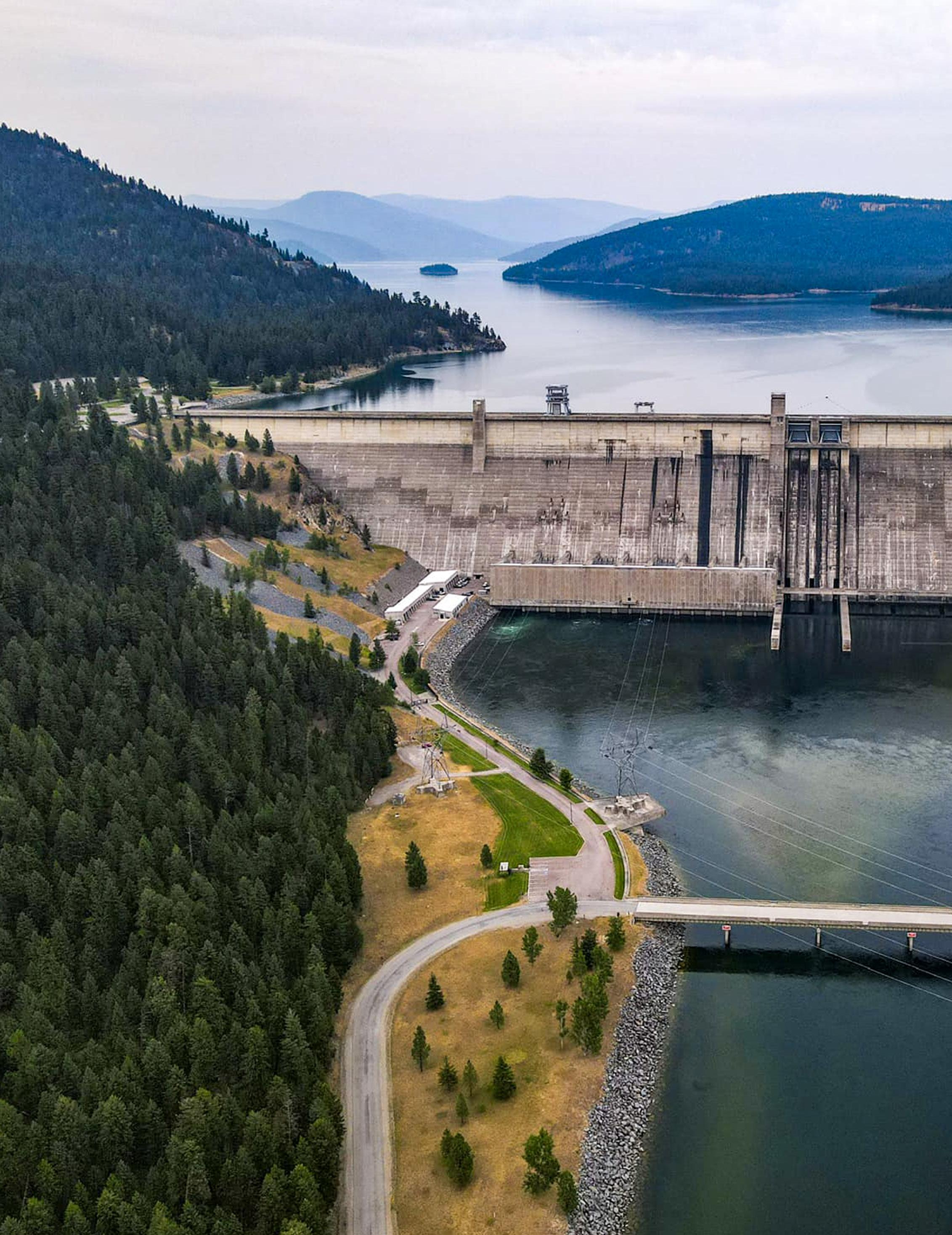
On a sunny morning in early July, I stand atop 422-foot Libby Dam with Jim Dunnigan looking north toward British Columbia over the waters of Lake Koocanusa, a 90-mile-long impoundment of the Kootenai River.
A fisheries biologist for Montana Fish, Wildlife & Parks, Dunnigan has been the Libby Dam mitigation coordinator on the Kootenai for 24 years. He tells me that 300 feet below the reservoir’s sparkling blue waters are deep layers of silt accumulated over the past half-century. Bound to the silt is phosphorus, a naturally occurring element in rock that is ground to fine powder by glaciers in the mountains of British Columbia.
When present in the right amount, phosphorus helps fuel the food chain of aquatic systems. But too much phosphorus can overstimulate excess algae and aquatic plant growth harmful to fish.
Dunnigan turns and leads me over to look at the Kootenai River coming out of the pumphouse at the dam’s base, 200 feet below. “That’s where the nutrient hose will come out,” he says, referring to a proposed nutrient drip aimed at adding phosphorus to the river.
You read that right: phosphorus. Pumped directly into what may be Montana’s clearest trout river of its size.
Before you break out the pitchforks and torches, bear in mind that Dunnigan and Brian Stephens, FWP Libby-area fisheries biologist, face a problem unlike that of most every fisheries professional in the United States. Since Libby Dam was built in 1972, this massive concrete structure has created a “nutrient sink” beneath the reservoir, Dunnigan says. “Downstream, it’s so phosphorus-deficient that it’s borderline unhealthy.”
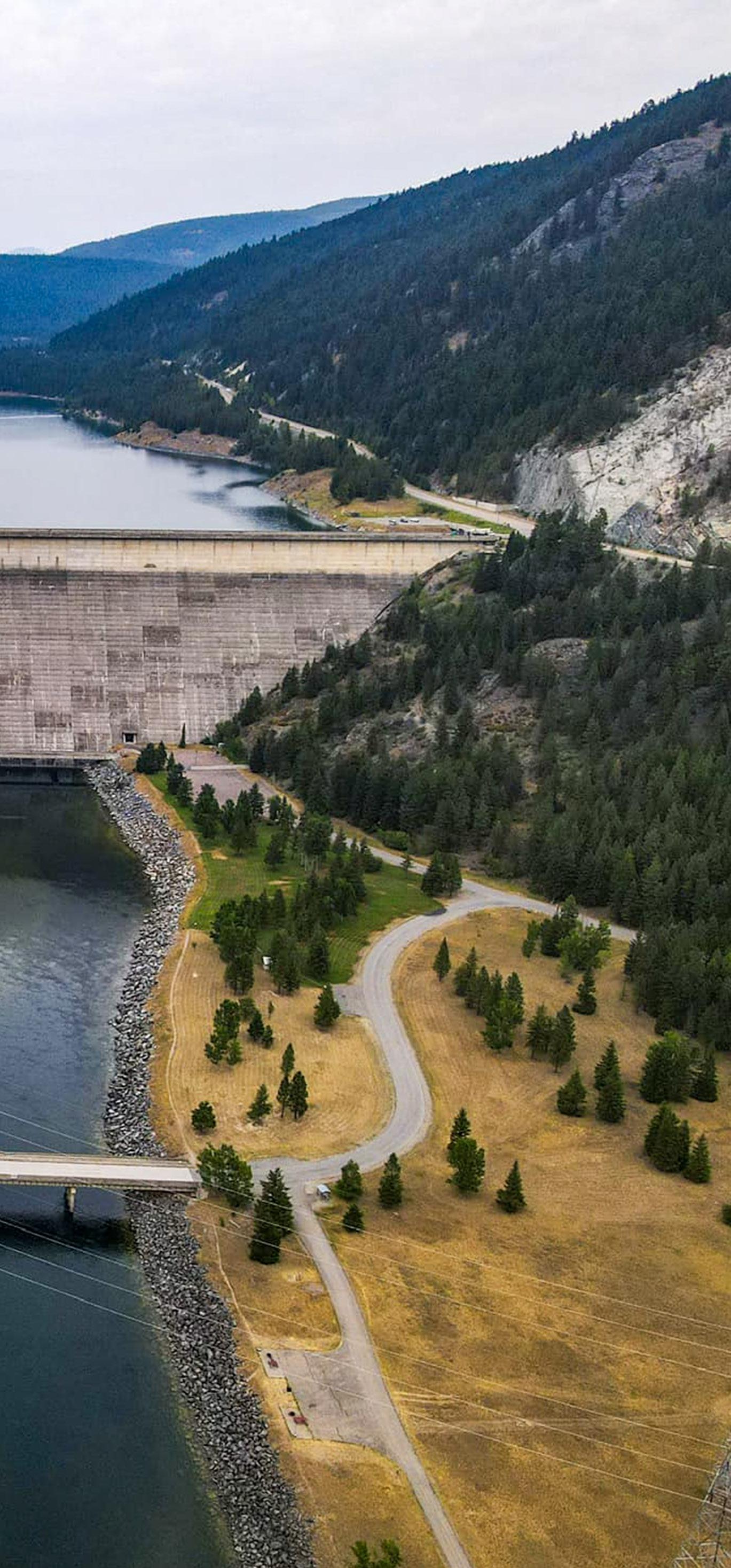
WATER WALL Built from 7.6 million tons of concrete and more than 400 feet tall and 3,000 feet wide, Libby Dam creates the 90-mile-long Lake Koocanusa stretching north into Canada. PHOTO BY TRAVIS D. HEITMAN
SPECIAL REPORT
The Kootenai is actually too clean and clear. The nutrient deficiency means it can’t produce enough beneficial algae needed to feed aquatic insects like mayflies and caddis flies that feed trout and other fish.
This gin-clear, postcard-perfect river is basically starving.
The result, says Dunnigan, is a river where most anglers catch trout that average just 9 to 11 inches long—compared to 12- to 15inchers in many other Montana rivers where the water is far more fertile. “For an angler, the difference between catching a 10-inch rainbow and a 14-incher is huge,” he says.
That’s not the only problem facing fisheries biologists on the Kootenai, the third largest tributary of the Columbia River, which it joins at Castlegar, British Columbia. It is also home to one of the most imperiled fish in North America—the Kootenai River white sturgeon—as well as the federally threatened bull trout. Over the past two decades, the Kootenai has also seen an explosion in Didymo—a native algae that most underwater insects don’t eat and whose growth now blankets the river bottom in thick, spongy mats of what anglers call “rock snot.”
These problems stem in large part from how the Libby Dam backs up water upstream and alters historical water flows downstream. Understanding them, much less finding solutions, has been a long process of scientific study and experimentation.
TRAGIC ORIGINS
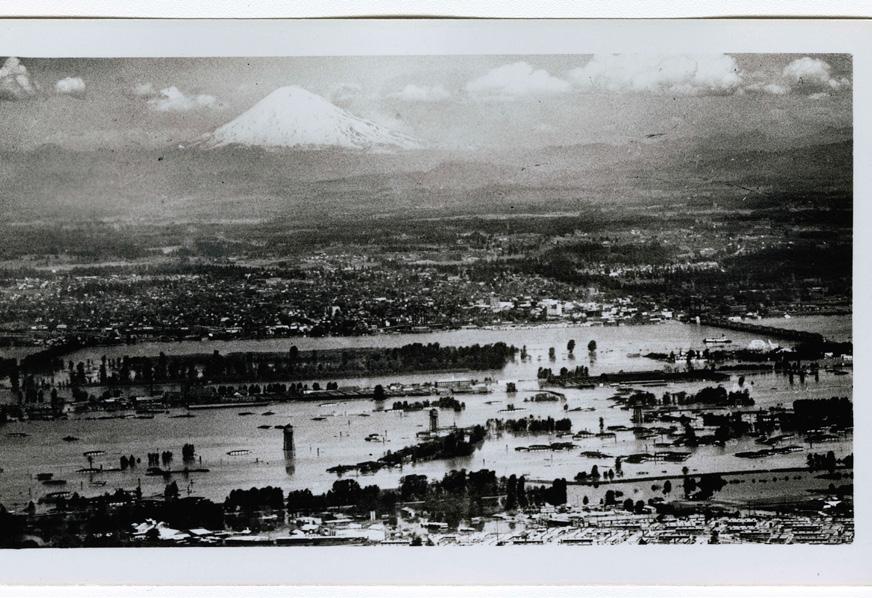
Libby Dam was born of a tragedy that occurred nearly 80 years ago and 400 miles away. On May 30, 1948, floodwaters surging down the Columbia River from British
Tom Dickson was the Montana Outdoors editor from 2001 to 2024. He lives in Helena.
This gin-clear, postcard-perfect river is basically starving.
Columbia, Idaho, and Montana burst through levees protecting Vanport, a housing project outside Portland, Oregon, destroying the city, leaving 18,000 residents homeless and killing at least 15 people. Along its multistate path of destruction, the flood caused more than $100 million in damages.
To prevent future tragedies in the Columbia River basin while meeting both nations’ growing need for electricity, the United States and Canada signed the Columbia River Treaty in
DEADLY DELUGE On May 30, 1948, floodwaters on the Columbia River burst through a dike and inundated Vanport, then Oregon’s second largest city, leaving 18,000 residents homeless and killing at least 15 people. Hundreds of miles upstream, this multistate flood also ravaged Libby, Montana, on the Kootenai River. The damages from this disaster combined with the region’s growing need for electricity led to the construction of Libby Dam.
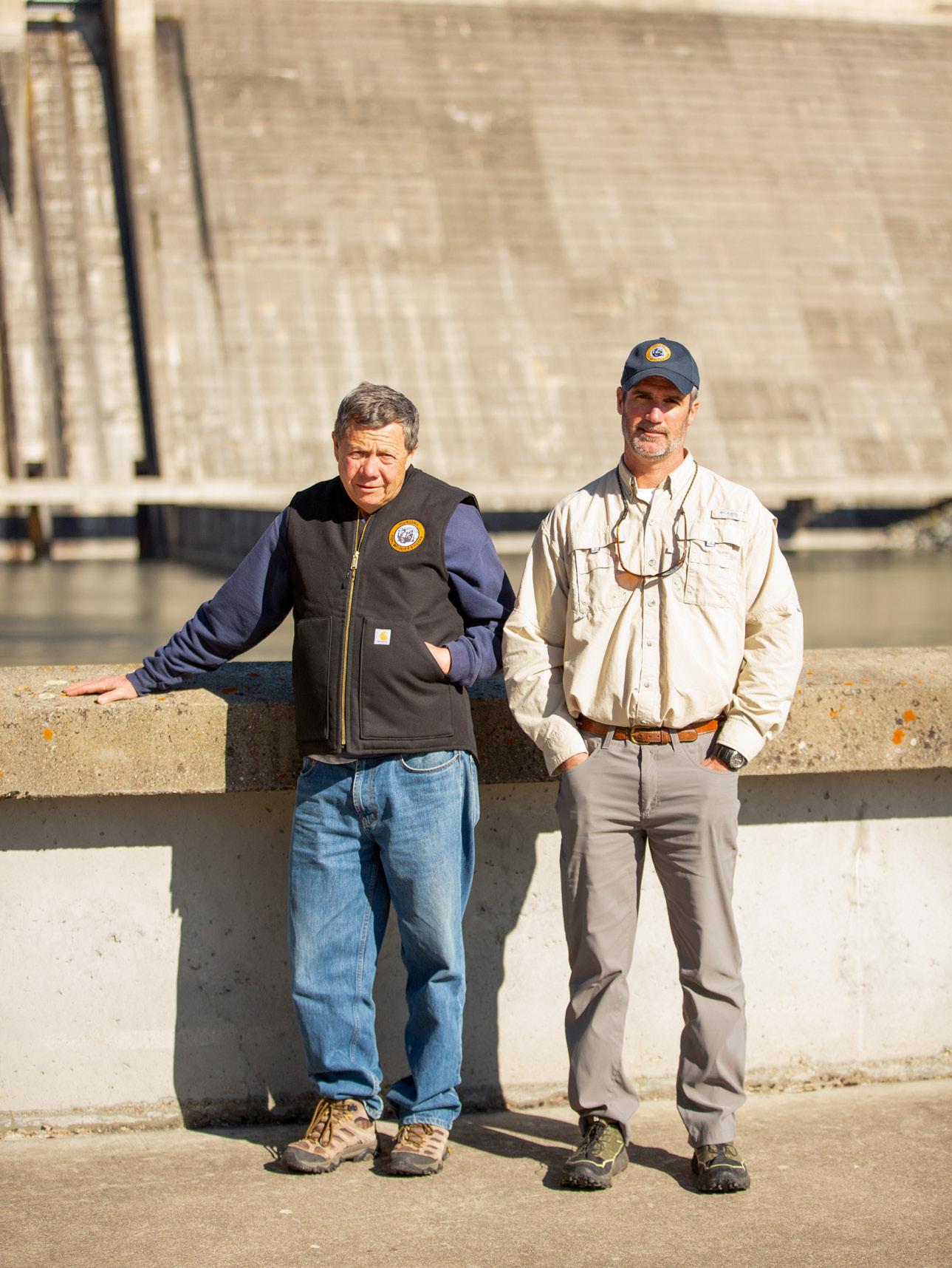
PROBLEM SOLVERSLLibby-area fisheries biologists Jim Dunnigan (left) and Brian Stephens (right) face a unique set of challenges with the Kootenai River.
PHOTO COURTESY OF THE OREGON HISTORICAL SOCIETY
PHOTO BY JEREMIE HOLLMAN
THE KOOTENAI RIVER
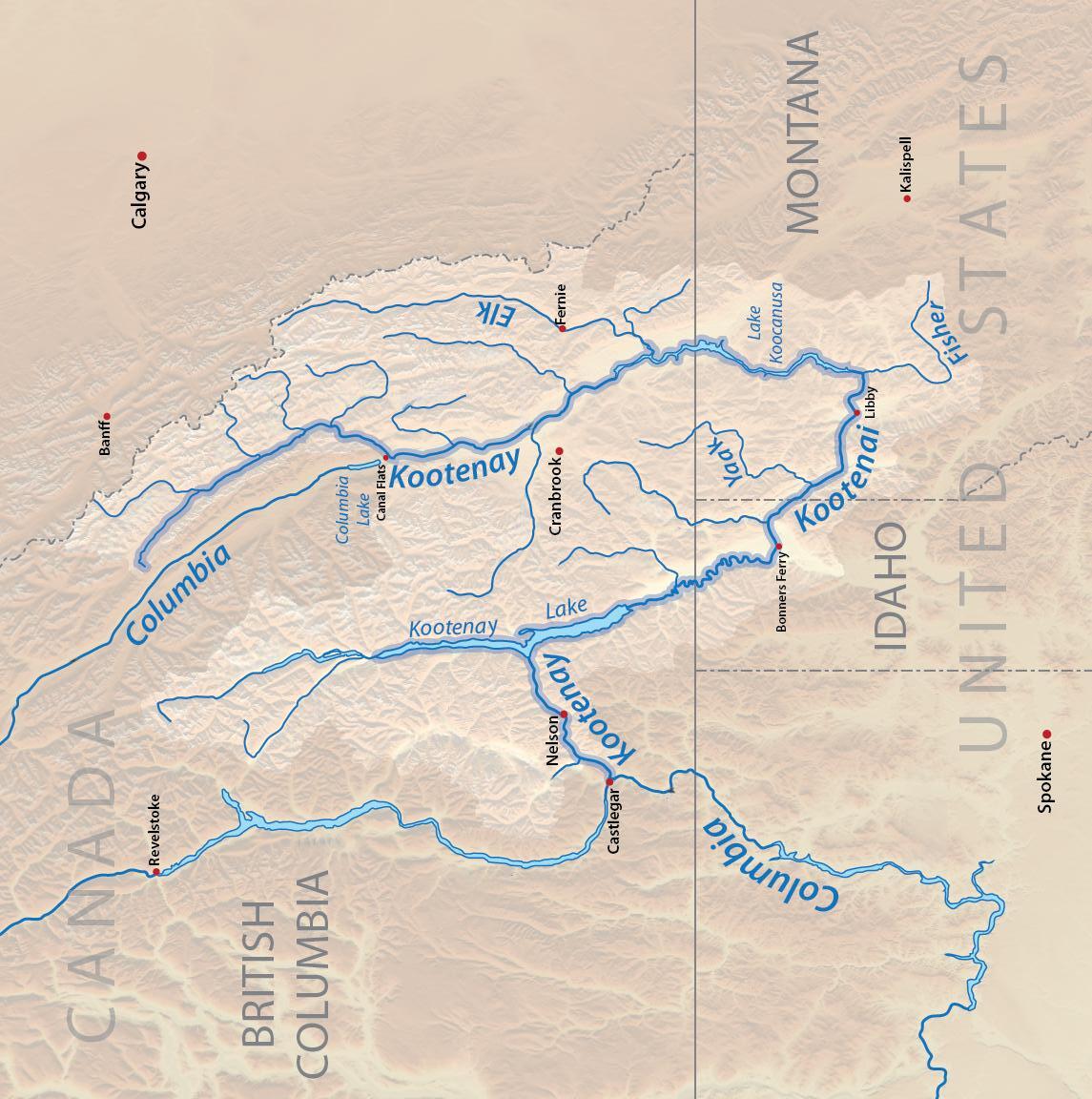
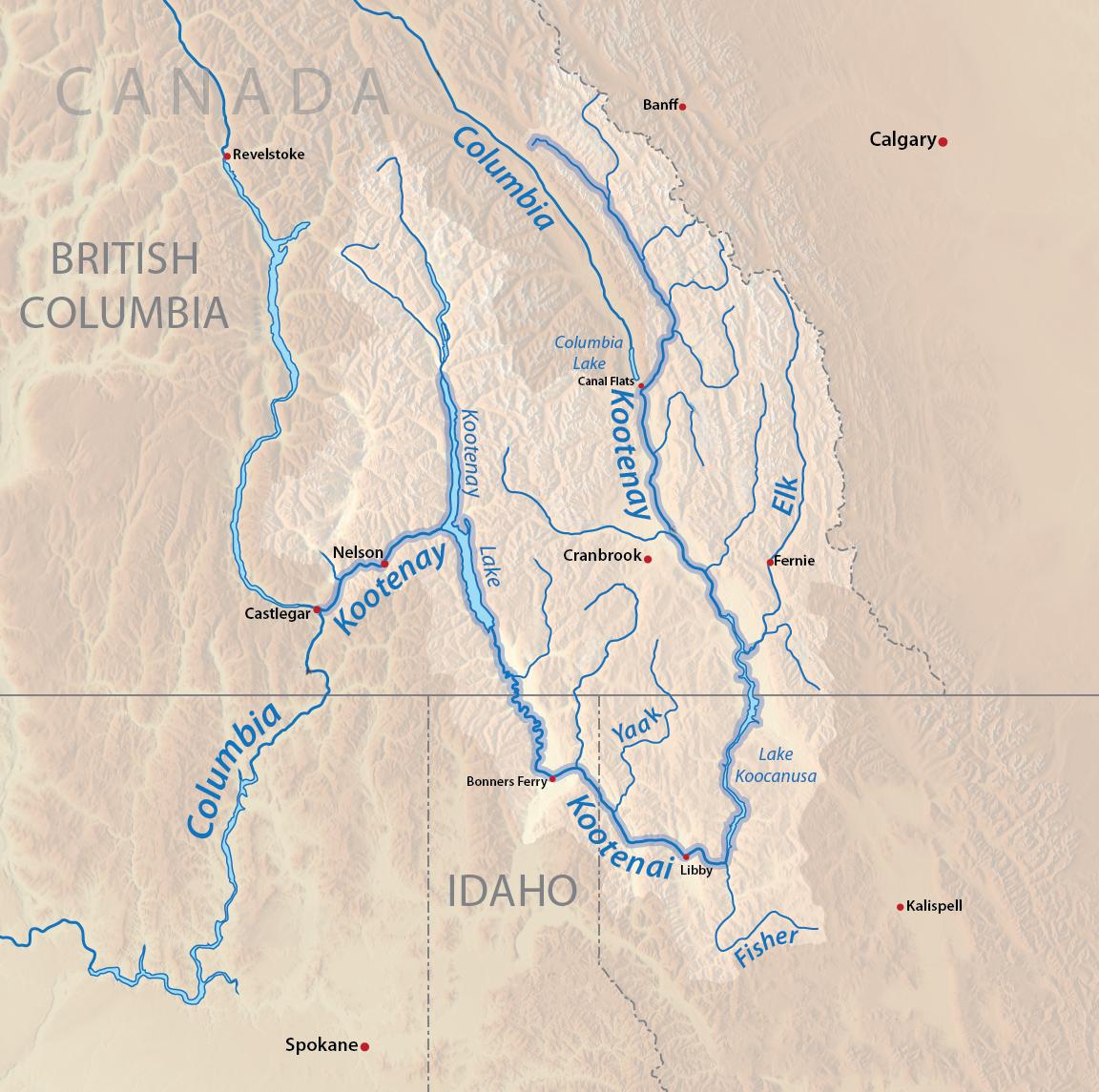
The Kootenai River begins in southeastern British Columbia just across the Continental Divide from Banff National Park. Known there as the Kootenay, the river flows south and is joined by the Elk River before entering Lake Koocanusa. The river continues south through Libby Dam, then flows west over Kootenai Falls, a historic natural barrier that blocks most fish moving upstream, then flows into Idaho, where, at Bonners Ferry, the river changes from a cobble and gravel bottom to a wide, flat meandering silt-bottom river. Next the river flows into British Columbia and Kootenay Lake, then out the lake’s west arm into the Columbia River at Castlegar. From there the Columbia goes through a dozen dams before emptying into the Pacific Ocean at Astoria, Oregon.
1961. Three hydropower dams were built in Canada, and construction began in 1966 on a fourth, Libby Dam, completed in 1972.
The effects of the massive concrete structure on the Kootenai River were immediate. Water began backing up behind the dam to form Lake Koocanusa, which gets its name from a word mash-up of “Kootenai,” “Canada,” and “USA.” Eventually the reservoir backed up water across the United States–Canada border and now reaches well into British Columbia. With regulated water flows, the dam changed the river. Floodwaters that historically gushed down each spring were held back in the reservoir, then meted out to generate electricity sold by the Bonneville Power Administration.
The moderation of flows below Libby Dam, operated by the U.S. Army Corps of Engineers, has benefited West Coast power customers and downstream communities previously prone to spring flooding. But it has harmed several fish populations, chiefly the Kootenai River white sturgeon.
TRAPPED BY THE FALLS
Before the most recent ice age, white sturgeon could swim 700-plus miles from the Pacific Ocean up the Columbia River and then the Kootenai River as far as Kootenai Falls (29 miles below today’s Libby Dam). That migration ended roughly 11,000 years ago when retreating glaciers
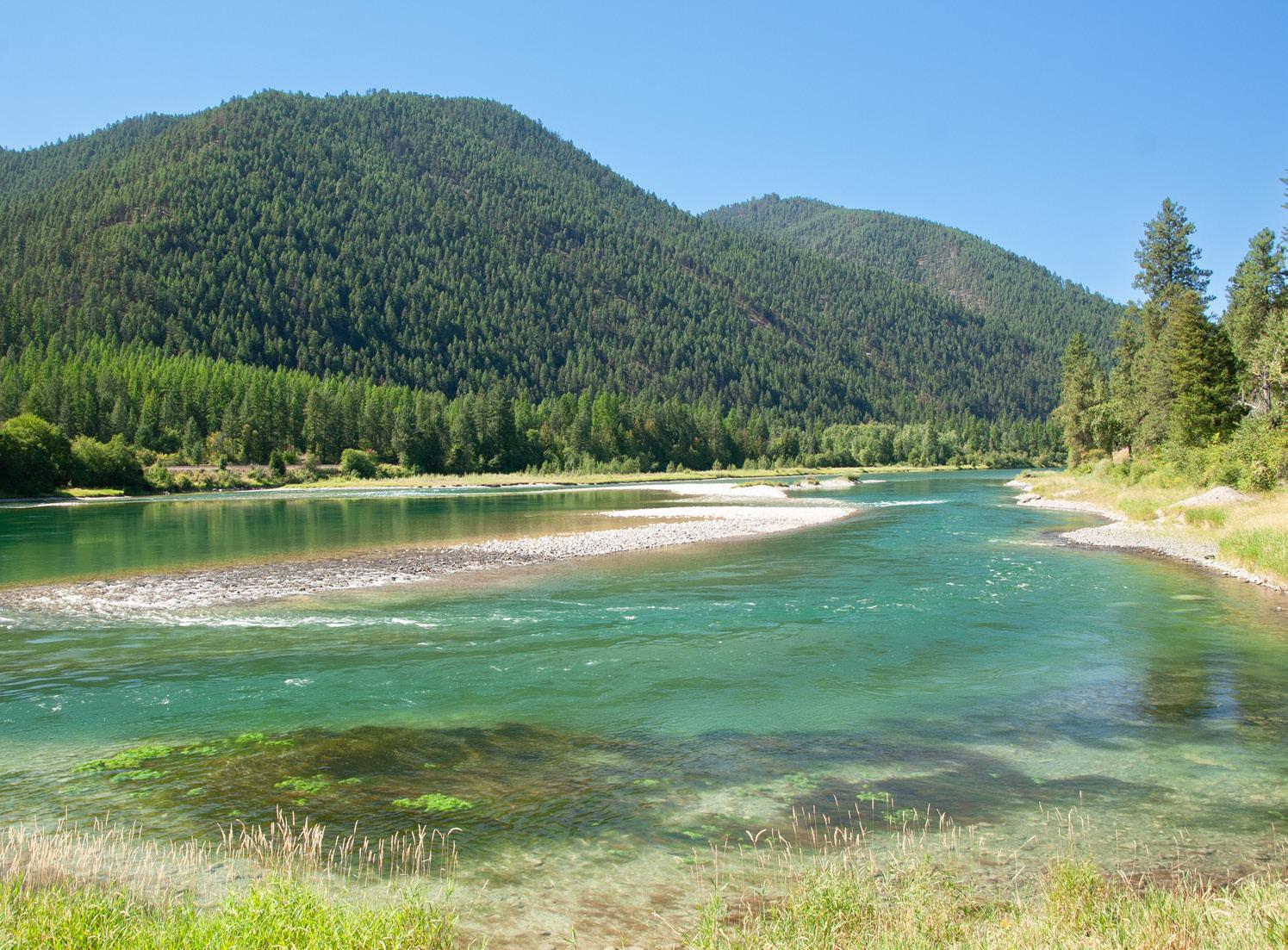
CLEARLY CANADIAN The Kootenai River is gin clear due in part to its lack of phosphorus, which binds to silt behind Libby Dam carried downstream from Canadian glaciers.
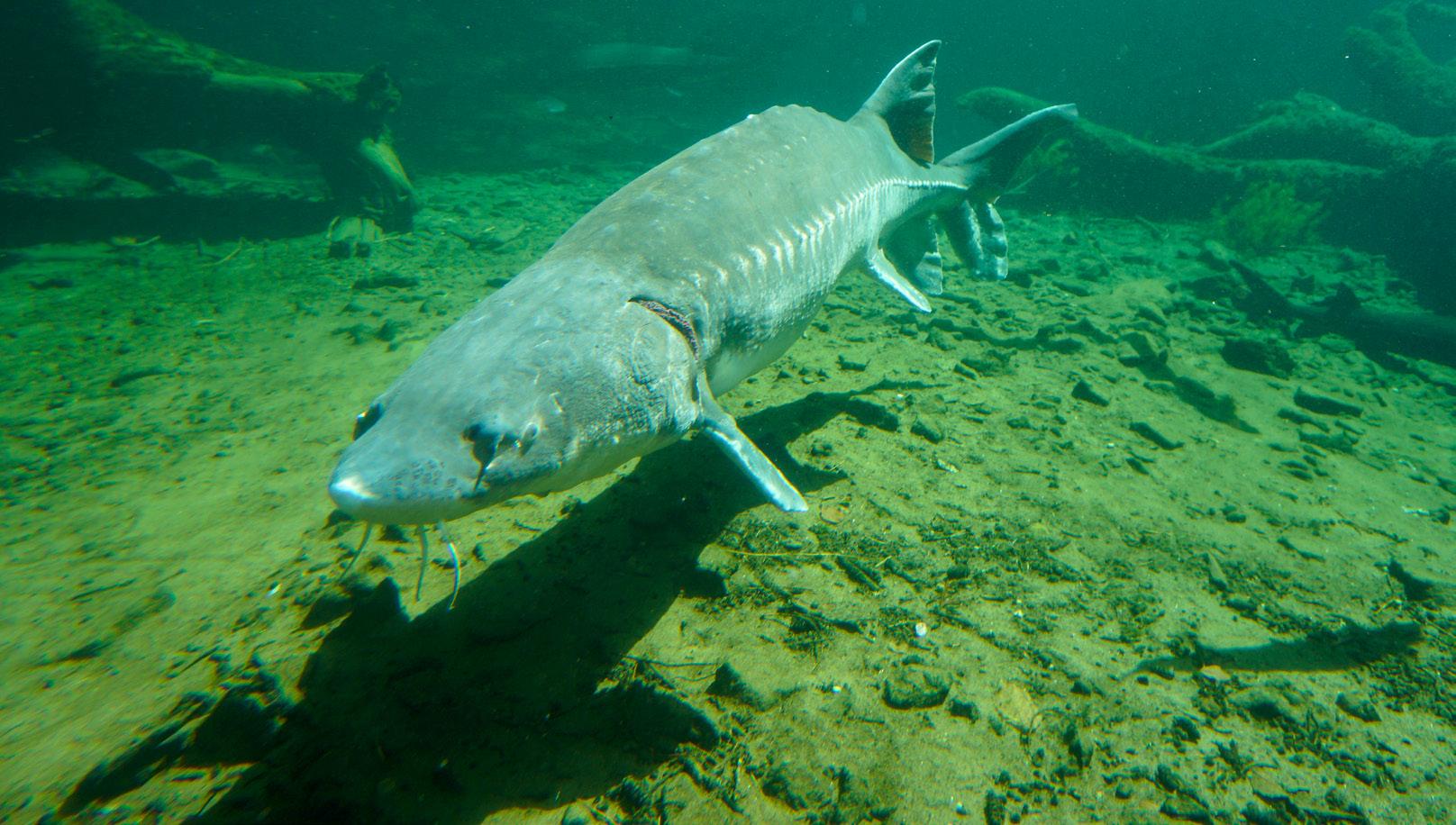
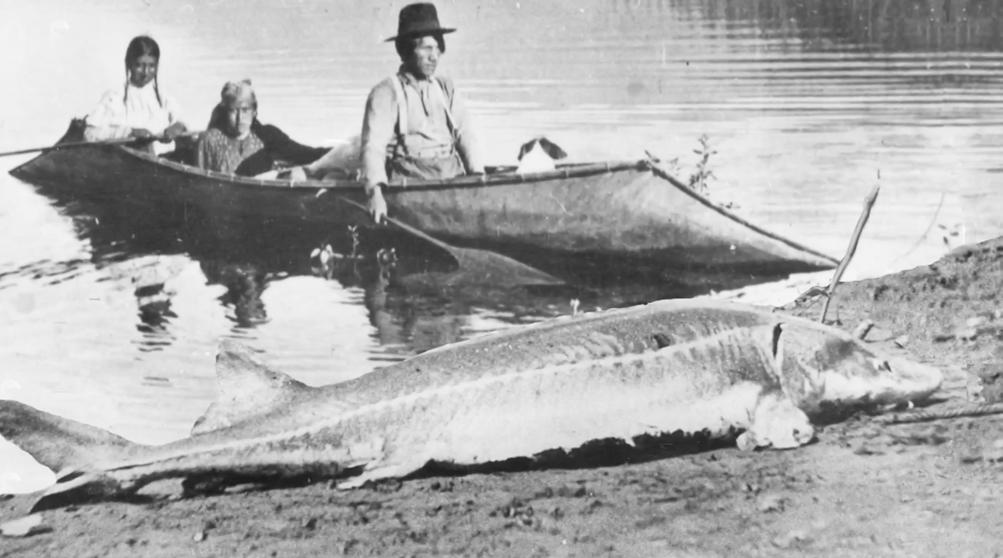
STIFLED STURGEON White sturgeon were long a staple food for Native people in the Kootenai region, shown in this historical photo at right with a sturgeon-nosed canoe. White sturgeon can live to be 100 years old but haven’t successfully reproduced in the Kootenai River since Libby Dam was built. They were listed as a federal endangered species in 1994, and by 2004, fewer than a dozen remained in Montana’s portion of the river. Hatchery-reared fish have helped boost the population to 300.
created Bonnington Falls, on the west arm of Kootenay Lake before the Kootenai reaches the Columbia River near present-day Nelson, British Columbia. With the falls cutting off access to the Pacific, the trapped white sturgeon became a genetically distinct landlocked population.
Deprived of abundant ocean food, the Kootenai River white sturgeon never attained the size of its seagoing ancestors. Historically, white sturgeon in the lower Columbia grew as long as 15 feet and weighed nearly a ton. The largest recorded Kootenai River specimen was roughly 350 pounds, but most adult Kootenai sturgeon are 5 to 6 feet long and weigh upward of 80 pounds. The population of this prehistoric fish survived in the Kootenai River over the next several thousand years.
But the arrival of European-American settlement brought mining and forest clear-cutting that polluted rivers with silt, heavy metals, and toxins that killed the aquatic insects that sturgeon eat. Dikes that drained river bottomlands for farming and housing eliminated many wetlands that provided nutrients and food for juvenile sturgeon and hiding cover from predators. Then came Libby Dam.
The structure seems to have hampered the white sturgeon’s reproductive success downstream, though biologists are not sure why. “All we know for certain is that after the adults spawn, either the eggs or larvae aren’t surviving,” says Mike Hensler, FWP regional fisheries manager in Kalispell.
Trapped by glaciers 11,000 years ago, Kootenai River white sturgeon became a genetically distinct, landlocked population— cut off forever from the Pacific.
Most Kootenai River white sturgeon live in the British Columbia and Idaho portions of the river. The best spawning habitat— clean cobblestones where fresh water can oxygenate eggs—is far upstream between Bonners Ferry, Idaho, and Kootenai Falls.
But instead of moving up into Montana during spawning season, the adult white sturgeon swim only a short distance to a stretch below Bonners Ferry, where they lay their eggs on a substrate of clay and silt.
“There’s not a clear reason for why they do this,” says Dunnigan. “But what is clear is
that there is almost no survival.”
The main theory is that the warmer and reduced springtime flows from Libby Dam are preventing the fish from moving farther upstream to better spawning habitat. “Bear in mind that no one knows exactly where these fish spawned successfully predam,” says Dunnigan. Maybe it was where they spawn now and somehow the eggs and juvenile fish survived, he adds. “But it seems more likely that they spawned upstream of their current spawning locations, where the habitat is more suitable.”
With little to no natural reproduction, the sturgeon population steadily declined, causing the subspecies to be listed under the Endangered Species Act (ESA) in 1994. By 2004, FWP fisheries biologists estimated that fewer than a dozen sturgeon remained in Montana’s portion of the river.
Since 1992, more than 320,000 juvenile white sturgeon raised at hatcheries in Idaho and British Columbia have been released into the Kootenai in British Columbia, Idaho, and Montana. Sturgeon can live up to 100 years, and don’t spawn until about age 25 to 40. A few males from those early 1990s releases have reached sexual maturity, but so far biologists have not documented a sexually mature female from the hatchery. Even if a female and male can pull off a successful spawn, the eggs won’t survive without suitable habitat. Since the 1990s, under pressure from the white sturgeon ESA listing, the Corps of Engineers has cooperated with FWP and other agencies
to periodically open up some of the dam’s turbines for a few weeks in spring to provide 25,000 cfs (cubic feet per second) of flows to encourage fish to migrate farther upstream to better spawning habitat.
Yet due to lowland housing near Bonners Ferry and in British Columbia around Kootenay Lake, the Corps can’t risk replicating the 65,000 cfs average springtime flows before Libby Dam was built. “Those are the flows the white sturgeon evolved and thrived with,” Dunnigan says.
Over the past two decades, the Kootenai Tribe of Idaho and other partners have created habitats for various life stages of white sturgeon in Idaho, including placing cobble in the silty areas where sturgeon now spawn, enhancing backwater channels where baby sturgeon can escape predators, and creating pools to deepen the river and encourage fish to migrate upstream to better spawning habitat. In Montana, FWP fisheries biologists monitor the state’s white sturgeon population, which is estimated at roughly 300, almost all juveniles from hatcheries.
OODLES OF SMALL TROUT
Though white sturgeon have been a casualty, Libby Dam’s altered water regimes have benefited the rainbow trout population downstream. Before the dam was built, the Kootenai flowed at about 4,600 cfs in August. Now it averages around 9,000 cfs. With strategic water releases, the dam keeps river temperatures cooler in summer and warmer in winter. As is the case on many dam “tailwater” fisheries, the moderated temperatures and flows have helped boost rainbow trout numbers by making the river more hospitable throughout the year. “We’ve also got great natural reproduction on several tributaries of the Kootenai in this area that produce oodles of trout,” says Dunnigan.
The problem is that the water doesn’t support enough aquatic life to feed all those fish. “There’s plenty of smaller organisms to grow trout their first year, up to 8 inches or so,” says Brian Stephens, FWP Libby-area fisheries biologist. “But then they don’t have the stoneflies, mayflies, and caddis flies that beef up trout into that 14- to 16-inch range.”
Kokanee and Giant Rainbows
YMany Montana waters have too many nutrients, mainly from fertilizer and livestock manure washing in from surrounding farm fields, leaky septic tanks, wastewater treatment plants, and urban and subdivision stormwater runoff. This fuels excessive algae blooms and degrades drinking water supplies. Mats of floating vegetation can clog waterways, like the infamous islands of vegetation that drift down the Missouri River below Holter Dam in late summer.
The Kootenai River has the opposite problem: It’s not fertile enough.
Previous studies showed that from 2014 to 2017, Lake Koocanusa was capturing 80 to 93 percent of the total phosphorus entering from upstream. “The geology of this region of Montana makes the river far less productive than, say, the Bighorn or the Missouri,” whose headwaters are in nutrient-rich limestone bedrock, says Dunnigan. “So that nutrient loss downstream is significant.”
Making matters worse is the proliferation of an unwanted native algae that anglers call “rock snot.”
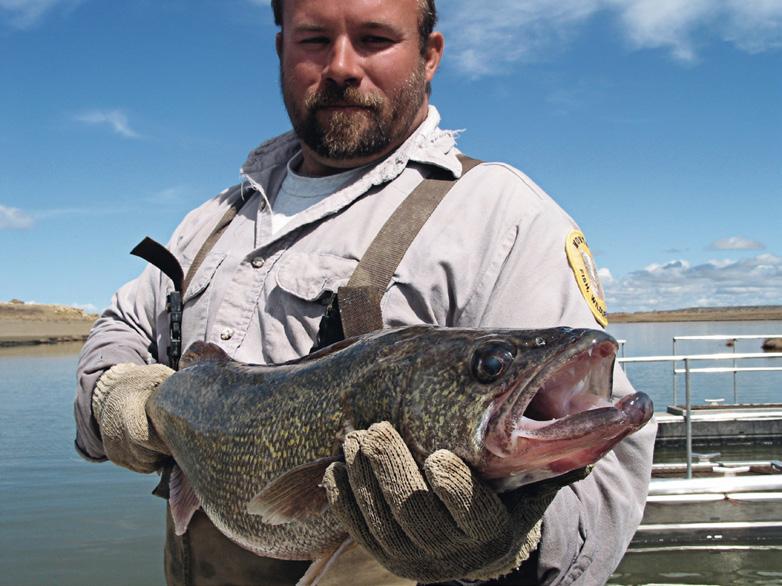
et another twist in the Kootenai’s complex fishery is that the stretch 3 miles below Libby Dam contains the largest rainbow trout in Montana. The steelhead-sized fish, which average about 12 pounds and occasionally top 30, do just fine without mayflies and caddis. They feed on foot-long kokanee salmon killed or disoriented as they are entrained through the turbines. The massive trout, a strain known as Gerrard rainbows, originate in British Columbia’s Kootenay Lake and were historically stocked in Lake Koocanusa and tributaries in Canada. Some manage to survive after tumbling through the Libby Dam turbines. Kokanee, meanwhile, are a landlocked sockeye salmon native to Kootenay Lake, a natural waterbody (similar to Montana’s Flathead Lake) downstream on the Kootenay River in British Columbia after it leaves Idaho. Like the white sturgeon, sockeye were cut off from the ocean with the formation of Bonnington Falls after the last ice age. And like the sturgeon, their growth stunted. As with the white sturgeon, kokanee historically never made it any farther upstream on the Kootenai River than Kootenai Falls. But sometime during the 1970s, the small salmon were inadvertently released from a British Columbia hatchery into Lake Koocanusa. The kokanee, which eat plankton they strain from the water with fine comblike filters in their gills, thrived in the nutrient-rich environment of the newly created reservoir. Though the average size of kokanee in the reservoir has declined since the early introduction, Lake Koocanusa anglers still troll for the abundant 10- to 13-inch salmon, which are considered excellent eating, especially when grilled, canned, or smoked.
Those kokanee also fed the massive 33.1-pound Montana state record rainbow trout caught in 1997 below Libby Dam. Jim Dunnigan, FWP Libby Dam mitigation coordinator, says that each year in the 3-mile stretch below the dam, dozens of rainbows over 28 inches are caught, though none big enough to challenge the 1997 record. To protect this unique trophy fishery, FWP allows harvest of only one rainbow in the stretch, and it must be over 28 inches. That allows the “smaller” 20- to 28-inchers to survive and give other anglers a thrill of a lifetime.
The Kootenai’s Diverse Fishery
In addition to rainbow trout and white sturgeon, FWP monitors several other important fish species on the Kootenai.
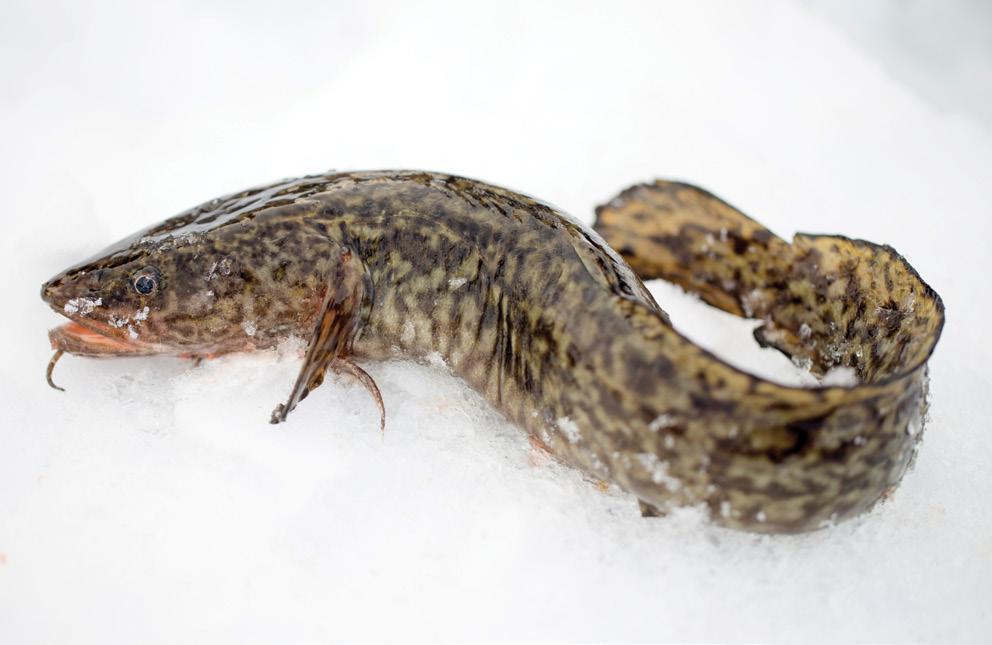
Burbot
For thousands of years, burbot, known for its flaky white flesh, helped sustain the Kootenai people (known as Ktunaxa in British Columbia). Beginning in the mid-20th century, the long, eel-shaped also became popular with sport anglers.
But after construction of Libby Dam, the burbot fishery collapsed, for reasons still not well understood. By 2004, it was estimated that only 50 adult burbot remained in the entire Kootenai River downstream of the dam.
Idaho and Montana ended angling harvest of burbot, a freshwater member of the cod family also known as ling cod, to protect the remaining fish. In 2015, the Kootenai Tribe of Idaho built the Twin Rivers hatchery facility at the confluence of the Kootenai and Moyie rivers to produce both burbot and white sturgeon. The tribe partnered with the British Columbia Ministry of Environment, Idaho Department of Fish and Game, and the University of Idaho to develop the complex procedures required to rear burbot from eggs.
Since 2018, hundreds of thousands of young hatchery-reared burbot have been released.
For unknown reasons, very few burbot reproduce naturally, yet the hatchery fish are thriving. Idaho Fish and Game estimates that the Kootenai River in that state now holds about 50,000 burbot, and thousands more have moved up into Montana waters. “We’ve definitely benefited from the Idaho program,” says Mike Hensler, FWP regional fisheries manager in Kalispell.
Confident that this fishery is healthy enough to sustain harvest, both Idaho and Montana now allow anglers to keep some burbot (see Montana fishing regulations for specific rules and limits).
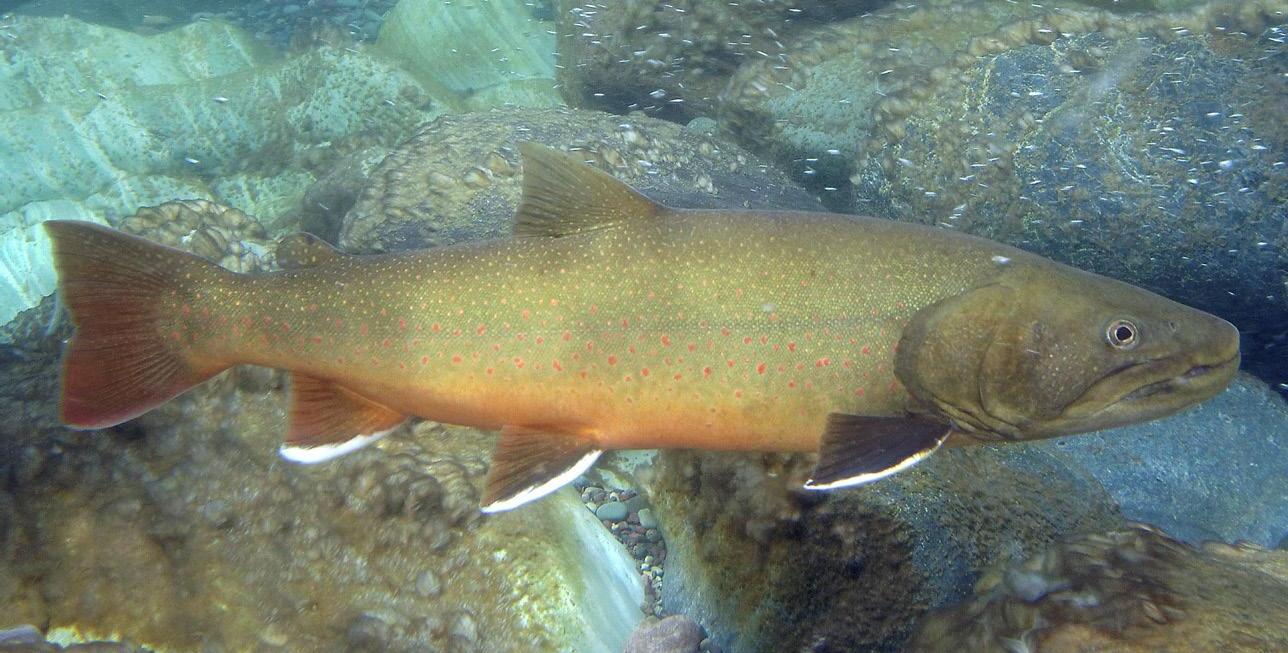
Bull Trout
She Kootenai River basin remains a critical area for this native char, listed as federally threatened in 1998. The biggest risk to bull trout is logging in surrounding mountains that can send silt downstream, burying spawning gravel, smothering aquatic insects, and warming the water. Another threat is Libby Dam, which cuts off access to many of the historical spawning streams used by bull trout, limiting natural reproduction. The Kootenai River between the dam and Kootenai Falls still contains over-wintering and other critical habitat for juvenile, subadult, and adult bull trout.
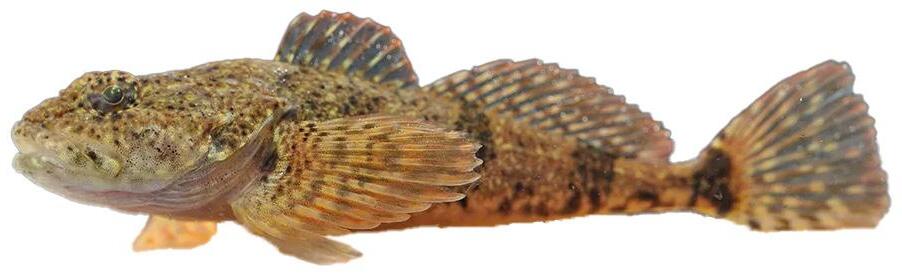
culpins are small fish that live along the bottom of swift-running mountain streams. They have a large, flat head with big, bulging eyes and a wide mouth with large lips.
Northwestern Montana is home to several sculpin species. The torrent sculpin lives only in the fast headwater streams of the Kootenai River drainage. The fish is threatened by unregulated livestock grazing, poor logging practices, and mining waste, which add silt and pollution to their stream habitats.
FWP has designated the torrent sculpin as one of 21 Montana fish species of greatest conservation need.
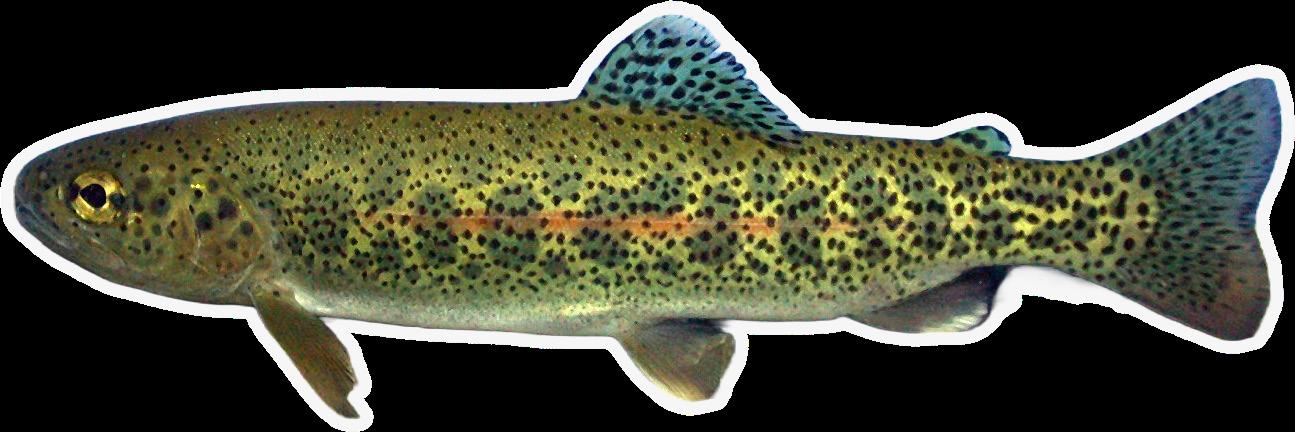
Inland Redband Trout
Rainbow trout are common throughout much of Montana, but almost all are introduced, descendants of coastal rainbow trout originally brought in from California hatcheries starting in the 1880s. Montana does have one native rainbow, though: the Columbia River interior redband trout. Commonly called redband trout, this rainbow trout subspecies is found here only in the Kootenai River and some tributaries.
No one is sure how redband trout originally got to Montana. One theory is that they came from British Columbia’s Kootenay Lake. Each spring a large, lake-dwelling strain of the redband trout known as the Gerrard rainbow swims upstream (north) from Kootenay Lake to the Lardeau River to spawn. Hensler suspects that thousands of years ago, some Gerrards migrated south (also upstream) through the Idaho Panhandle into Montana to spawn in the Kootenai River and its tributaries. Over time, some of those fish remained and formed the resident redband trout populations here.
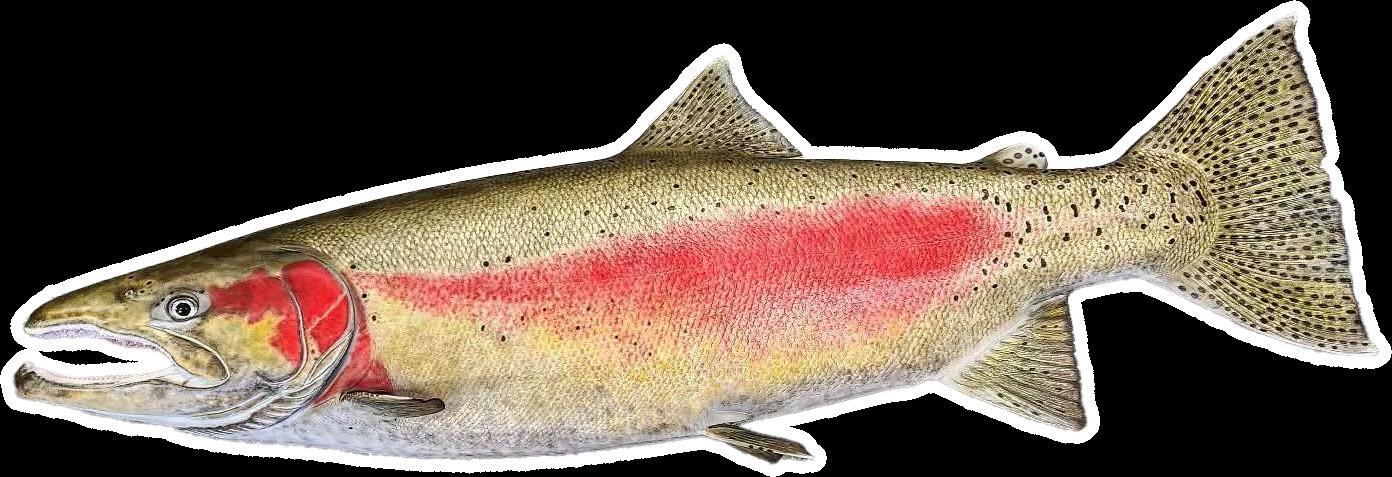
Inland redband trout historically occupied portions of major river basins in Nevada, California, Oregon, Washington, Idaho, and Montana. The fish now occupies just 42 percent of its historic range. The steelhead that move from the Pacific Ocean up the Columbia River into the Snake River basin in Idaho and British Columbia’s Fraser River are a variation of the inland redband trout.
For years California coastal rainbows were stocked in Montana streams containing native redbands. As a result, the two rainbow subspecies hybridized, making genetically pure redbands increasingly rare. Genetically intact redbands today occupy just 15 percent of their historic range in Montana, Hensler says, relegated mostly to the upper reaches of streams where drainage culverts, small waterfalls, or other barriers prevent hatchery coastal rainbows from moving upstream and intermingling. FWP and the U.S. Fish & Wildlife Service now consider redbands a species of special concern.
To keep the subspecies from declining further, FWP raises redband trout at its Murray Springs Hatchery near Eureka on the east shore of Lake Koocanusa. The hatchery uses brood stock taken from three streams containing genetically intact inland redbands. Fingerling redbands from the hatchery are stocked in suitable local lakes.
Hensler says the program expands the range of this unique species while providing anglers with additional fishing opportunities. “You can go anywhere in Montana and catch an ordinary rainbow trout,” he says, “but only in a few waters in this region can you catch a native Montana rainbow.”
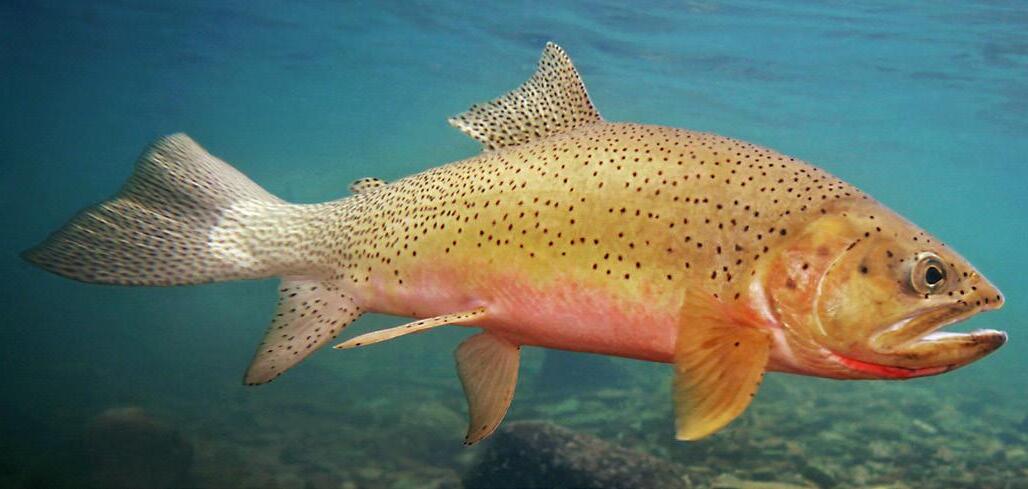
Westslope Cutthroat Trout
istorically, westslope cutthroat trout were the most widely distributed fish species throughout the Montana portion of the Kootenai River watershed. Though westslope numbers have declined here and throughout their range, the Kootenai watershed remains a stronghold. The region still retains some of the best cutthroat habitat in Montana.
But even here, westslope cutthroats face threats, mainly from hybridization with non-native rainbow trout and with Yellowstone cutthroat trout stocked by the state in the early 1900s.
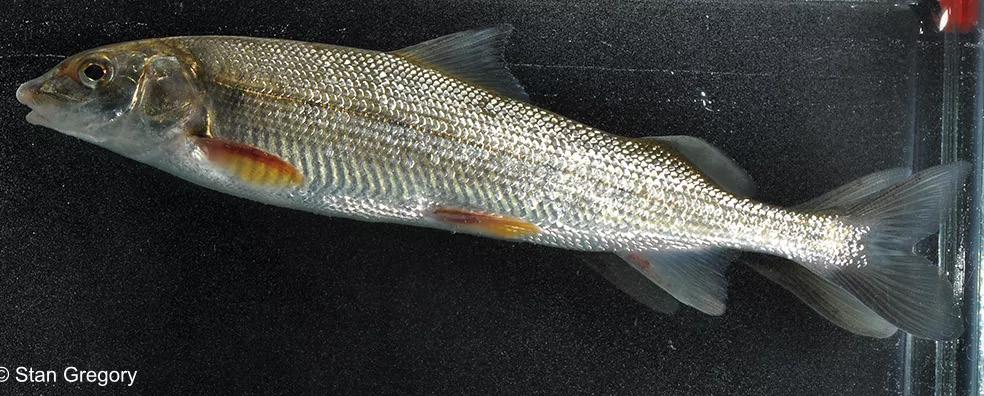
Mountain Whitefish
Whitefish populations below Libby Dam have declined considerably in recent years. Biologists found that populations of this salmonid species, which previously averaged 700 fish per 1,000 feet of the Kootenai River, were down 53 percent in 2018 and 55 percent in 2023. Selenium, which has been found in high levels in whitefish eggs and ovaries (see sidebar, page 30), is suspected to be a cause of the decline.
SPECIAL REPORT
“NASTY CONTAMINANT” FROM THE NORTH
One of the most serious threats to Kootenai River fish populations is selenium contamination from coal mines in southeastern British Columbia. For more than a century, coal has been mined in the Elk River valley just north of Montana, but mining has accelerated in recent decades, increasing selenium runoff into Lake Koocanusa and the Kootenai River.
At low concentrations, selenium can be metabolized by fish. But at high levels—like those documented in Koocanusa and the Kootenai—it can cause deformities or kill fish during egg and larval stages.
“It’s a really nasty contaminant in how it causes deformities during reproduction,” says Erin Sexton, senior scientist at the University of Montana Flathead Lake Biological Station. “They call it an invisible killer because it’s hard to account for fish that never hatch.”
U.S. and tribal officials maintain that the pollution violates the 1909 International Boundary Waters Treaty. The international mining company Glencore owns most Elk Valley mines and plans expansions. Coal from the mines is exported to Asia for steel manufacturing. Though runoff is treated at some facilities, British Columbia allows companies to self-monitor with limited provincial oversight, and Canada lacks federal clean water laws comparable to those in the U.S.
“Mitigations need to address past pollution and protect fish and water quality in the Kootenai River now and into the future, particularly with the new mines and mine expansions being proposed,” says Sexton.
Biologists have found that the federally endangered Kootenai River white sturgeon is particularly sensitive to selenium poisoning, and trout, burbot, and largescale suckers are also highly vulnerable.
Montana adopted stringent selenium standards for Lake Koocanusa in 2020. A 2023 U.S. Geological Survey study linked expanded Elk Valley mining with rising selenium and nitrate concentrations over decades, and found that Koocanusa selenium levels had exceeded Montana’s standards since 2020. Teck Resources (later purchased by Glencore) challenged the standards, but in April 2026, a Montana district court ruled the state’s 2020 selenium limits should not be weakened. n
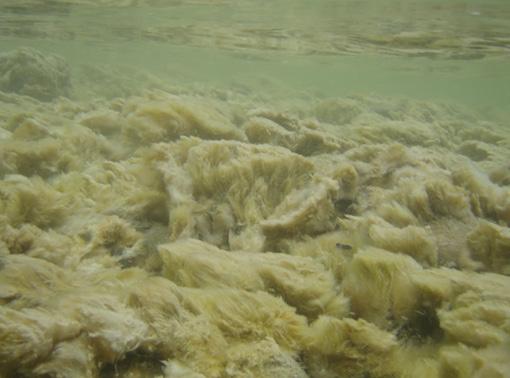
STREAM OF SNOT Below Libby Dam, the Kootenai is low in phosphorus but high in nitrogen, creating an ideal petri dish to grow Didymo, a native algae nicknamed rock snot. This spongy vegetation now shrouds the river bottom for long stretches, crowding out beneficial algae.
“This is one of the few algaes that grows like crazy when phosphorus is low. Unfortunately, it’s not a species used by mayflies, stoneflies, and caddis flies.”
In addition to low phosphorus levels below Libby Dam, the Kootenai has unnaturally high levels of nitrogen released from coal mining in British Columbia. Though nitrogen is another important building block in food webs, too much of it can cause problems. Unlike phosphorus, the more soluble nitrogen doesn’t bind as readily to the Lake Koocanusa bottom and continues downstream.
In the measured flows below the dam, the combo of low phosphorus and high nitrogen
creates a perfect petri dish for a native algae known as Didymo ( Didymosphenia geminata)to flourish. This spongy vegetation now shrouds the Kootenai River bottom for long stretches, crowding out beneficial algae.
“Didymo is one of the few algaes that grows like crazy when phosphorus is low,” says Dunnigan. “Unfortunately, it’s not a species used by mayflies, stoneflies, and caddis.”
Instead of the Kootenai having these and other trout-fattening invertebrates that historically populated the river bottom, today it is dominated by tiny chironomids, or midges, which thrive in the carpet of Didymo.
Rainbow trout growth rates have suffered. Most three-year-old rainbows in the Kootenai River below Libby Dam are around 13 inches long, while a three-year-old on the Bighorn runs 15 inches and a trout of the same age on the Missouri below Holter Dam tops 17. “The anglers here are asking why they can’t have fish like that,” says Stephens.
Other species also suffer from the lack of aquatic insects. Adult redband trout, Montana’s only native rainbow trout species, feed on aquatic invertebrates, as do cutthroat trout, mountain whitefish, largescale suckers, burbot, northern pikeminnows, torrent sculpins, and other species, including juvenile bull trout.
FERTILIZING THE RIVER
Like fertilizing a languishing garden with Miracle-Gro, one way to solve the Kootenai’s nutrient deficiency is to add nutrients. Since 2005, Idaho state and tribal biologists
have pumped liquid phosphorus into the Kootenai at the Montana border. Almost immediately, scientists reported more beneficial algae growth and greater densities and diversity of mayflies, caddis flies, and other insects. Within three years, numbers of mountain whitefish, largescale suckers, and rainbow trout increased. “Fishing guides tell us that the Kootenai in Idaho is producing way more 13- to 15-inch rainbows and that they almost never hook the 8- to 10-inchers that dominate in Montana,” Stephens says.
Montana fishery managers want to follow Idaho’s lead and try fertilizing the Kootenai below Libby Dam, hoping for similar results. “This would be nothing new,” says Dunnigan. “The Kootenai Tribe of Idaho and Idaho Fish and Game invented the wheel. We’re just copying their blueprint.”
Montana’s proposal is to drip liquid phosphorus into the river for five years as it passes through Libby Dam. “It’s really not a lot,” says Stephens of the fertilizer. “The amount we’re proposing is many times lower than naturally occurring levels DEQ [the Montana Department of Environmental Quality] allows in similar size rivers in this region.”
The experiment aims to increase the number of beneficial insects that fish eat; reduce Didymo; and—“the ultimate goal,” says Dunnigan—improve rainbow trout growth. Benefits to bull trout, cutthroat trout, redband trout, and other species would be considered a bonus but aren’t identified in the study.
Dunnigan and his crew will monitor changes in the algal and aquatic insect communities. To learn if trout growth accelerates from the nutrient boost, they will regularly survey the trout populations downstream of the dam. Each trout they capture will be measured, weighed, and fitted with a rice-grain–size tracking tag.
To ensure the treatments don’t exceed water quality standards in the 3.5-mile study area, FWP has contracted with the University of Montana Freshwater Research Laboratory at the Flathead Lake Biological Station in Polson for periodic water quality analysis.
The experiment has been reviewed and approved several times by an independent panel of scientists and given the green light by the U.S. Fish & Wildlife Service. Later this
SHADOW BOXERS FWP fisheries biologist Jim Dunnigan (above) hefts a mesh bin into the Kootenai River in preparation for a night of electrofishing surveys. His team sets up a mobile lab (below) on a stationary boat at the river’s edge while two other boats collect fish from the surrounding river. FWP crews will continue monitoring the river’s trout population to see if a proposed phosphorus infusion can boost the average size of fish.
year, the proposal will go through the DEQ’s permitting process.
Back at Libby Dam, Dunnigan gestures downstream at the river’s crystalline waters glittering in the sunlight.
“What this experiment comes down to is our desire to improve conditions on the Kootenai—for fish populations and for people who value those fish,” he says.
It’s been a long process. FWP conducted studies for 15 years before formally proposing the phosphorus drip experiment in 2020. Almost every entity whose approval
is needed has signed off. Dunnigan looks at the Libby Dam powerhouse below us, where tanks will hold the liquid fertilizer and a hose will feed it into the Kootenai. “This is basic science,” he adds. “We have a hypothesis that adding phosphorus will achieve these goals. Now we want to test it to see if it works.”
Editor’s note: For more on Lake Koocanusa, see “Straddling the Border,” July-August 2015: issuu.com/montanaoutdoors/docs/ lakekoocanusa/.
For 125 years, FWP has dedicated itself to addressing wide-ranging public concerns about Montana’s fish, wildlife, and state parks— and the outdoor recreation those resources provide.
by Tom Dickson
IN 1901, members of the Seventh Montana Legislative Assembly had their hands full. In addition to debating whether to establish a state board of health, fund a new bridge across the Yellowstone River, and bolster anti-gambling laws, lawmakers struggled to decide whether to finally get serious about enforcing the state’s game and fish laws.
Though Montana was just 12 years into statehood, it was common knowledge among legislative leaders and residents that wildlife and fish numbers were quickly diminishing. Vast herds of bison, which just 50 years before had blanketed the state east of the Rocky Mountain Front, had been indiscriminately shot nearly to extinction. A worldwide craze for men’s top hats had wiped out populations of beavers across the West. Elk, pronghorn, and bighorn sheep had disappeared in many parts of the state where they’d once been abundant. Other species seemed destined to follow.
in 1865, lawmakers had restricted fishing to hook and line only and forbade the use of poisons, nets, or dynamite. Eight years later they closed hunting for birds and big game during seasonal breeding periods. And in 1895, they enacted Montana’s first harvest restrictions, limiting hunters to “2 bull moose, 3 bull elks, 1 hundred grouse…8 deer, 8 mountain sheep, 8 Rocky Mountain goats or 8 antelopes.”
Forest and Stream editor George B. Grinnell labeled the “most pertinent question” concerning wildlife protection: enforcement.
STATE TAKES THE REINS
“Game birds and deer are fast being exterminated in this country, as no one makes any secret of killing game birds at all times of the year and deer are hunted with dogs,” wrote L.H. Mills of Saco in a questionnaire from the Board of Game and Fish Commissioners sent to all state newspapers in 1900.
In 1901, legislators knew they had to do something.
There had been some progress to that end. At the First Montana Territorial Legislature
But legislative leaders also knew the game and fish laws they enacted were meaningless without officials to enforce them. And they had well-trodden paths to follow.
In 1852, Maine was the first state to hire game wardens, called moose wardens.
In 1887, Minnesota, Wisconsin, and Michigan hired wardens of their own. Other states too had begun to address what
At first, Montana’s legislators tried giving responsibility to the 24 counties, granting them authority in 1895 to hire their own fish and game wardens. But by 1900, only five counties had a warden, all poorly paid, and enforcement remained practically nonexistent. “The past four years have proven conclusively that county commissioners have no interest in the protection of game, and this protection should no longer be left in their hands,” wrote Morton J. Elrod, professor of biology at the University of Montana and chairman of the Montana Board of Game and Fish Commissioners—created in 1895— in the commission’s 1900 report. So, in spring of 1901, legislators effectively created a Department of Fish and Game—funded with fines from convictions and a sliver of property tax revenue from counties. They authorized the governor to appoint a department director, called the state game and fish warden, charged with hiring and supervising up to eight deputy wardens. The warden and his deputies were instructed to publicize game and fish laws, conduct investigations, make arrests, and lead search and seizure operations when called for.
During the 19th century, Montana’s wildlife underwent rapid decline—bison were nearly wiped out, beavers were trapped to scarcity, and elk, pronghorn, deer, and bighorn sheep vanished from much of their former range.
Lawmakers had to decide whether to finally get serious about enforcing the state’s game and fish laws.
Finally, Montana had some teeth in its regulations.
The day after the legislative session concluded, Governor Joseph K. Toole appointed W. F. Scott as the state fish and game warden. The new employee dove in headfirst. “Between April 1 and June 1 of 1901, by his account in the Biennial Report of the Montana Game and Fish Warden 1901-02, Scott single-handedly organized the department from the floor to the filing cabinets,” wrote historian Diann Ericson. “Within two months Scott had purchased furniture, hired a secretary and devised a system to carry on the affairs of the department.” During those two months he had also hired eight game wardens to enforce the roughly one dozen game regulations in the Montana Codes.
The Legislature had also asked Scott to “report on the condition of game and fish in the State of Montana, together with any information that may aid in protecting the fish and game of said state in the future.”
alarming anglers, so the department built hatcheries to replace the lost fish. In the 1930s and ’40s, the department’s newly hired wildlife biologists informed the Legislature about the need to buy key elk winter range—to benefit hungry herds and relieve ranchers suffering excessive hay depredation.
During the 1960s and ’70s, just as W.F. Scott had been called to do a half-century earlier, department fisheries biologists provided the Legislature with “information that may aid in protecting the fish and game of the state”—in this case about how highway construction and other development were damaging Montana’s cherished trout streams.
CONTINUING TO RESPOND
In other words: Let Montanans know what’s going on with their fish and wildlife and what should be done to address threats to those resources.
That work has continued unabated. For the past 125 years, the department has reported on the status of Montana’s fish and wildlife, taken stock of populations and threats, and provided recommendations.
In the 1920s, sawmill and mine waste effluent were killing off trout populations,
DRIVEN TO SERVE W.F. Scott, Montana’s first state fish and game warden, organized the newly minted fish and game department “from the floors to the filing cabinets.” PHOTO COURTESY OF THE MONTANA HISTORICAL SOCIETY
Thus it has continued since. Constant communication among department staff, elected officials, conservation group members, landowners, and other Montanans has continually increased the size and responsibilities of what since 1979 has been called Montana Fish, Wildlife & Parks. Game wardens have been asked to expand their roles to enforce water recreation laws, prevent the spread of aquatic invasive species, and break up commercial poaching operations. In addition to big game, large carnivores, furbearers, upland birds, and waterfowl, wildlife biologists now also consider the plight of songbird, raptor, small mammal, and other previously overlooked species. Their focus has also expanded to a landscape scale to identify migration routes and movement corridors, and what forces might interrupt them.
Fisheries management still emphasizes stocking or improving the habitat of trout, walleye, and other game species but also includes monitoring imperiled native species—from the Kootenai River’s massive white sturgeon to the tiny finescale dace in
small prairie creeks.
Since 1965, FWP has also expanded to include management of Montana’s state parks, which has steadily grown to include dozens of historical, geological, and recreational sites across the state.
Also at public request, the department has modernized its hunter education programs, increased bear awareness, publicized threats from invasive species and wildlife disease, added education programs like Becoming an Outdoors-Woman, and provided new ways to learn about outdoors issues and events through its website, videos, and social media.
FOUR MAIN ATTRIBUTES
To improve its responsiveness to public concerns, the department held a dozen public meetings across the state in 2015 and asked communities about their opinions of the agency. Respondents pointed to four things that FWP does well and must focus on for continued success:
• perpetuate fishing, hiking, camping, hunting, and other outdoor opportunities;
• work toward balance, weighing
opportunities available today against future needs, by limiting hunting harvests or permits to float the Smith River, among other things;
• focus on integrity, with, for example, biologists using the best science, game wardens acting with professionalism, and administrators maintaining budget and decision-making transparency; and
• bring people together, to discuss, debate, pay for, and learn about the state’s fish, wildlife, and other outdoor resources.
During this year of FWP’s 125th anniversary, it’s worth noting how the relationship between Montana residents, their elected officials at the capitol, and this department has remained true to its origins.
In 1901, as he was setting up his new office and dictating directives to eight new deputies, there’s no way W.F. Scott could have envisioned what the department he started would become. But observing how FWP remains staffed with employees dedicated to the mission of stewarding the state’s fish, wildlife, and state parks, it is highly likely he would approve and take pride in the department’s long and successful legacy.
THE MONTANA WAY With more than 700 staff statewide, FWP is dedicated to protecting the integrity of the outstanding wildlife, fisheries, parks, and recreational, cultural, and historical resources that define Montana and its people.
MONTANA
AND NATIONAL CONSERVATION HIGHLIGHTS 1900-2025*
*Select events only. For a more comprehensive examination of FWP history, read the Montana Outdoors special issue, “A Century of Conservation” at Qr1.be/KSNH08/.
1901
Montana appoints its first state game warden, W.F. Scott, who is authorized to hire up to eight deputies. These employees mark the origins of what today is Montana Fish, Wildlife & Parks.
1902
W.F. Scott helps form the National Association of Game and Fish Wardens and Commissioners, now called the International Association of Fish and Wildlife Agencies, at a meeting in Yellowstone National Park.
1900s
1905 Montana requires its first resident hunting and fishing licenses.
1900
The Lacey Act becomes the nation’s first federal conservation law to prohibit trade in wildlife, fish, and plants that have been illegally taken, possessed, transported, or sold.
1901
1905
Conservationist Teddy Roosevelt becomes president of the United States.
1908
Montana builds its first state fish hatchery in Anaconda. The hatchery specializes in raising cutthroat trout, shipping them by rail to numerous points across western Montana. The fish are meant to replace wild fish killed by mining and sawmill pollution.
1910
The first elk are transplanted into Montana from Yellowstone National Park, marking the beginning of an aggressive elk relocation and restoration program. At the time it was estimated that fewer than 3,000 elk remained in all of Montana north of the park.
1907 Montana requires its first nonresident fishing licenses.
1910
Wildfires devastate many parts of western Montana and Idaho, claiming 87 lives and destroying the Montana towns of De Borgia, Haugan, Henderson, Taft, and Tuscor.
1911
Montana establishes early wildlife preserves, including Snow Creek, Pryor Mountain, and Gallatin, to aid the recovery of declining game populations.
1918
Formation of the American Bison Society and the National Bison Range in Montana—and creation of the U.S. Forest Service
1910
1914
Glacier National Park is established.
The passenger pigeon, previously the most abundant bird in North America, is declared extinct.
Canada and the United States establish the Migratory Bird Treaty, recognizing the need to protect and conserve birds that rely on both countries in their life cycle.
1916
The National Park Service is created.
De Borgia, Montana after the great fire of 1910
1921
The Montana Legislature gives the Board of Game and Fish Commissioners authority to open and close seasons on game species and establish game preserves. The commission is renamed the Montana State Fish and Game Commission.
1922
1928
The Montana State Fish and Game Commission launches Montana Wild Life, forerunner of Montana Outdoors
The U.S. Bureau of Biological Survey estimates Montana’s antelope population at 3,027— dangerously close to extinction.
1936
1928
Montana holds its first hunting season (2 days only) for ring-necked pheasants. The birds, native to China, had been released in many areas during previous years.
1929
The Montana Legislature authorizes the State Board of Land Commissioners to establish state parks but provides no funding.
Lewis and Clark Caverns is transferred from the federal government to Montana, becoming Montana’s first state park. Today, FWP manages 56 state parks totaling more than 38,000 acres, as well as seven National Historic Landmarks and numerous sites listed on the National Register of Historic Places.
1939
The Montana Legislature establishes a separate State Parks Commission empowered to preserve the historic, scientific, archaeological, scenic, and recreational resources of the state, but doesn’t provide funding until 1947.
1934
The Duck Stamp Act is passed by Congress, requiring each waterfowl hunter to purchase a stamp, thereby generating revenue for wetland acquisition. The Act has resulted in 4.5 million acres of waterfowl habitat protection.
1933
Ecologist and author Aldo Leopold writes Game Management, which launches wildlife management as a scientific discipline and challenges the outdated ideas of game sanctuaries and artificial propagation. He expands on the concept of what he called the “land ethic” in his posthumous 1949 book A Sand County Almanac, advocating for a responsible relationship between humans and nature.
1937
Passage of the Federal Aid in Wildlife Restoration Act, also known as the PittmanRobertson Act, funds wildlife habitat conservation via excise taxes on firearms and ammunition, ensuring that hunters contribute directly to the preservation of wildlife habitats.
1939 The Carolina parakeet becomes extinct.
1940
In Rathbone v. Montana, the Montana Supreme Court rules on the case of C.R. Rathbone, a rancher on the Rocky Mountain Front, who had been arrested for illegally killing elk on his property. Rathbone contended he was justified in killing elk out of season if they were eating his hay and damaging his property. The justices rule in favor of the state. “One who acquires property in Montana does so with notice and knowledge of the presence of wild game and presumably is cognizant of its natural habits...,” their ruling states. “Accordingly, a property owner...must recognize...that there may be some injury to property or inconvenience from wild game for which there is no recourse.”
This establishes a legal precedent for wildlife damages and later serves as a catalyst for the state acquiring big game winter range to keep elk away from hay meant for cattle.
1947
The department establishes a Fisheries Biology Section to “conduct experiments and gather information...and on the basis of these findings, to develop and test new fish management measures.” Fisheries biologists begin studies on growth, food habits, and distribution of various species, and develop a creel census program.
A few years later, the department’s biennial report notes: “Problems of pollution, big dams, and other factors disturbing Montana streams must be faced squarely.”
1947
Land for the Sun River Game Range, later Sun River WMA, is purchased on the Rocky Mountain Front west of Augusta abutting the Lewis and Clark National Forest. The WMA becomes nationally known for providing winter habitat for more than 2,000 elk— 80 to 95 percent of the Sun River elk herd.
1940
The Montana Legislature creates the new position of state big game manager, and the Fish and Game Commission hires a young biologist named Robert F. Cooney to fill it (see page 38). That same year, Montana acquires land to establish the Judith River Game Range (Wildlife Management Area), created to conserve crucial winter range for thriving elk populations following their local reintroduction in 1928.
1941
The Wildlife Restoration Division begins its first wildlife population surveys. Several young biologists under the direction of Bob Cooney conduct a wildlife survey of eastern Montana. “[Four of us] started with our backs to the North Dakota border and worked our way westward, surveying game birds and other wildlife in every county along the way,” biologist Merle Rognrud later recalled.
1945
Thanks to reintroductions and harvest management, Montana’s elk population grows to an estimated 15,000 animals.
1950
Bighorn sheep numbers recover enough for the department to allow a limited hunting season, the first since 1915.
1950
1954
The department begins stocking wild turkeys, starting by introducing 13 Merriam’s turkeys from Colorado in the Judith Mountains near Lewistown.
1957
Following several highly publicized hunting accidents the previous fall, the Legislature requires for the first time that new hunters age 12 and older take a spring hunter safety class.
Congress passes the Federal Aid in Fish Restoration (Dingell-Johnson) Act Like Pittman-Robertson, DingellJohnson (D-J) revenues are derived from a federal excise tax, in this case on fishing tackle. Once proceeds become available to Montana starting in 1951, it is the major funding source for fisheries management in Montana besides license revenue.
Early electro-fishing equipment
Bob Cooney
FWP’s first wildlife biologist set an incredibly high standard.
hen the Pittman-Robertson Act passed in 1937, the then–Montana Fish and Game Department was focused on wildlife law enforcement and fish hatcheries. The P-R funding provided a way to launch a wildlife management and research program. The department found the right man to start it in Robert F. “Bob” Cooney, hired in 1940 as Montana’s first professional state wildlife biologist. He had no blueprint to follow.
“He had to not only be the first wildlife biologist, but he had to build the wildlife program in Montana, and oh, man, it took off. He hired the right people,” says Jim Williams, former FWP Region 1 regional supervisor.
In the early 2000s, Williams worked with the late Montana State University professor Harold Picton and FWP wildlife research chief Terry Lonner to capture the early history of wildlife recovery in Montana in a PBS documentary, Back from the Brink: Montana’s Wildlife Legacy. They interviewed Cooney, then in his 90s, extensively for the project.
Cooney’s background prepared him for the job as a wildlife biologist. Born in 1909 to Fred and Fanny Cooney, Bob grew up working on the family ranch near Townsend and went to high school in Helena. He attended the University of Montana, and worked on a Sun River elk study while he was a student. He graduated with a bachelor’s degree in forestry and began working for the U.S. Forest Service in 1937, before being hired by FWP.
the landscape and knowing that they needed a little extraspecial care,” says Williams. Cooney kept meticulous journals of his surveys. One entry reads, “Griz Br… dropping Badger Pass-2 ¼" 50% white bark pine...” He went on to describe how the droppings show the “important use of white bark pine seeds.” He documented the bruins eating mostly plants, the occasional Columbian ground squirrel, lots of ants, and opportunistically, elk calves. The surveys also documented the now–federally threatened bull trout. Cooney took a photo of Gibler with a 9 ¾-pound bull trout he caught on the Middle Fork of the Flathead River.
wildlife biologist, but he built the wildlife program in Montana, and oh, man, it took off.”
Cooney hired Butte-born Jim McLucas, who under Cooney’s direction led the state’s big game trapping and transplant program, moving over 16,000 animals in his career to reestablish populations in areas they had previously roamed. “He was an extremely good hand with animals,” Cooney says in a video interview in Back from the Brink
Cooney hit the ground running. In 1941, he and his technician Ray Gibler conducted some of the first formal biological surveys in what is now the Bob Marshall Wilderness. They rode and walked 2,000 miles in less than three months from July to October, observing mountain goats, elk, and other wildlife, including ptarmigan and grizzly bears.
“One thing that a lot of people don’t realize is that he is one of the pioneers in grizzly bear ecology research, looking at their diets and knowing they were at a little lower density on
The U.S. entered World War II just a few months after Cooney and Gibler finished up their initial surveys, but Cooney was held out of military service because his work was deemed an essential part of the war effort.
“During the war, there was a concern to feed the country and make sure we had adequate wild game in case Montanans needed it for food,” says Williams.
Cooney hired people to help him survey what wildlife was left on the landscape across the state so they had a baseline to work with. “Bob Cooney was very interested in and valued not only the trapping and transplanting, but he valued the research part of fish and wildlife ecology,” says Williams. “Back then he was a real proponent of having the best science that was available applied to Montana’s landscape. He was ahead of his time.”
Cooney was also an early wilderness proponent. He testified in 1958 at a U.S. Senate Committee meeting during hearings for the National Wilderness Preservation Act.
Bob Cooney died in 2007 at the age of 97. He and his wife Carol Wells were married for 71 years. For his groundbreaking work he received many awards, including the University of Montana Distinguished Alumni Award. In 1994, the Montana Wilderness Association gave Cooney an award for his work revealing how wilderness is important to wildlife.
Cooney wrote in a 1950s magazine article: “...it is upon the preservation of these wilderness areas that the future of the grizzly in the United States will depend.”
“He was just an incredible person, very visionary,” says Williams. n
—Heather
Fraley, freelance writer and editor in Missoula
Dick Vincent
A young fisheries biologist led the way for Montana’s wild trout management.
In 1974, Montana did something no other state had ever tried: It stopped stocking trout in streams and rivers.
This initially outraged many anglers, fishing-related businesses, and even some Montana Department of Fish and Game employees. For decades, hatcheries had been credited with improving fishing. Without stocking, many worried this change would put a stranglehold on Montana’s famous trout waters and the businesses that relied on legions of out-of-state anglers each summer.
Instead, once stocking ended, wild trout numbers doubled or tripled on many rivers, improving fishing dramatically.
Yet it didn’t make immediate sense. Take a 1-mile river stretch containing 1,000 “wild” trout—not just native cutthroat trout but also naturally reproducing rainbow or brown trout—then add another 1,000 hatchery trout to the mix. How could the stretch then end up with fewer trout?
What Montana fisheries biologists learned shocked the trout angling world.
It all started in the mid-1960s, when Art Whitney, state fisheries chief, and Bud Gaffney, regional fisheries manager in Bozeman, wanted to document how changes in fish habitat, fishing regulations, and stream flows affected fish populations. In 1966, they hired E. Richard “Dick” Vincent, a young fisheries biologist, to develop techniques to sample trout populations and then estimate fish numbers in a given stretch. That way, managers could do “before and after” comparisons.
(MSU). The Montana Department of Fish and Game hired Vincent fresh out of grad school and assigned him to the Madison.
Over the next several years, Vincent developed an electrofishing technique that temporarily stunned fish so they could then be netted, measured, marked, and released. Whitney and Gaffney, meanwhile, convinced Montana Power to delay drastic reductions in downstream flows on the Madison River from Hebgen Reservoir for a few months until after rainbow trout spawned in the spring. Using Vincent’s “mark and recapture” sampling techniques, they could then see if trout populations improved with the cessation of springtime “dewatering.”
“At the time the department had no way to quantify populations,” says Vincent. “We could say that a population had declined or increased, but that was just an opinion.”
Vincent had grown up in southeastern Montana, fishing the Madison with his family from a young age. He took high school chemistry classes from Bud Lilly, the legendary fly shop owner and trout conservationist, and earned a master’s degree in fish and wildlife management at Montana State University
“What we found is that stopping dewatering only helped the Norris stretch of the Madison, which was not being stocked with catchablesized trout,” says Vincent. “But in the heavily stocked Varney section of the river, there was no positive effect.”
The biologists wondered what the heck was going on.
Though hatcheries had long been revered for enhancing trout fishing, some anglers and fisheries biologists had grown skeptical by the late 1960s. Anglers on the Madison, for instance, recalled catching more and bigger fish before widespread stocking in the 1950s and ’60s. Some biologists wondered if hatchery fish were harming naturally reproducing populations, a question the Hebgen Dam study results brought into sharper focus.
Vincent asked his supervisors if he could conduct a study on the effects of stocking trout on top of existing wild populations in the Madison. “The study’s proposal was so controversial that it had to be approved by the Fish and Game Commission,” says Vincent. “Without Art Whitney’s, Bud Gaffney’s, and (regional supervisor) Leroy Ellig’s support, it would never have happened.”
Eventually approved, the study ran from 1970 to 1972. The department stopped adding hatchery fish to a 4-mile stretch at Varney Bridge for three years and compared the trout population there to previous years. This pause in stocking wasn’t popular. “I couldn’t go into a public building without being yelled at,” Vincent told an MSU researcher in 2015.
But the study’s results soon silenced the critics. “By fall of 1971, wild trout numbers had increased 153 percent from the 1967-69 average,” Vincent told Montana Outdoors in 2004. “And by 1974—a few years after the study was done—the number of wild trout larger than 10 inches was 213 percent more than the stocking years.”
Vincent had also stocked a previously unstocked 1.4-mile stretch of O’Dell Creek, a Madison River tributary. “The wild trout population began declining,” said the biologist, dropping from 515 brown trout in 1967-69 to just 280 in 1972.
“We’d suspected that stocking was having a negative effect, but when we saw large trout numbers in the Varney Section triple and trout numbers in O’Dell cut in half, well that just blew us away,” Vincent says.
Biologists later learned that planting hatchery trout on top of wild trout results in “territorial chaos.” The stocked fish don’t play by the rules—don’t even know the rules—and disrupt the territorial hierarchy of wild populations. Disrupted by hatchery fish, wild trout were more vulnerable to ospreys, other predators, and anglers, which the dumb hatchery fish also had no clue how to avoid.
Dick Vincent
A previous study showed that because most stocked fish were eaten by ospreys and other predators, each hatchery-reared catchable trout landed by an angler cost the department $2.50 ($20 in today’s dollars). Using those statistics and Vincent’s study results, Whitney recommended the state stop stocking not only the Madison River but all Montana rivers and streams containing self-sustaining trout populations.
At first the proposal was widely denounced. “There was a huge fear that ending stocking would cause an economic disaster for the communities along the rivers,” Vincent told Montana Outdoors in 2004. “We took a lot of heat on that.”
But Whitney and other department leaders stayed steadfast to the science. In 1974 the Fish and Game Commission agreed and adopted a statewide policy that trout would only be stocked in lakes without wild populations.
“If you want to catch big wild fish,” Vincent told Montana Outdoors in 2004, “then you need to fight for water and habitat, and that is what has happened. I don’t know of a state where people have fought as hard for their rivers as they have here in Montana.”
On rivers, the department would continue to manage wild trout waters by advocating for adequate stream flows, underwater and streamside habitat, and public access.
Editor’s Note: Dick Vincent retired in 2008 after 42 years with FWP, including serving his last decade as the department’s whirling disease coordinator. He lives with his wife Twyla and two miniature dachshunds in Toston. n
—Tom Dickson, previous editor of Montana Outdoors
Not everyone would have the guts to reprimand a Montana governor for an accidental poaching incident, make him pay a $300 fine, strip him of his big game hunting privileges for the rest of the hunting season, then talk to the press about it. But that’s exactly what Wesley Woodgerd did in 1974 while serving as the director of the Montana Fish and Game Department after Governor Thomas Judge put his tag on a spike bull elk in an area only open for branch-antlered bulls.
Woodgerd later told the Kalispell Daily Interlake that the governor brought the elk to a check station and took full responsibility for the out-of-season harvest.
Woodgerd served as director from 1973 to 1977, but only after climbing through the ranks. He began with the department in 1948 as a trapper, eventually working his way across the state through various assignments to become regional supervisor in Glasgow. In 1965, he was appointed as the head of the newly created Parks Division in Helena.
Wesley Woodgerd
FWP launched an exceptional state parks system under his leadership.
Woodgerd assumed the parks position just as interest in protecting recreation resources was gaining momentum nationally. According to A History of the Development of the State Park Idea, written by Dave
Conklin, Woodgerd oversaw the creation of seven recreation zones that conformed with the Fish and Game districts (now known as FWP regions). Within these zones, park managers were hired and new public access sites developed, including fishing access sites and historic sites such as Bannack and the Madison Buffalo Jump.
Wes laid the modern groundwork for a successful state parks system that continues to pay dividends to this very day.”
From 1965 to 1975, Montana added 62 new sites and access areas to its park system, including several that caused Woodgerd to expand his definition of a park system.
These acquisitions included recreational waterways on the Missouri, Madison, and Yellowstone rivers. The department purchased a section of canyon on Belt Creek known as the Sluice Boxes, which came along with an old railroad grade that became the state’s first designated recreation trail. Under Woodgerd’s leadership, 36 miles of state recreation road were developed along the Missouri River near Craig and game ranges such as the Beartooth and Blacktail were established. By the time he became department director in 1973, the Montana state park system had grown from 10 parks in
1953 to almost 200 parks, monuments, recreation areas, waterways, recreation roads and trails, and fishing access sites.
Woodgerd appointed Ron Holliday, who was just 31 years old at the time, to the state parks administrator position. Conklin described him as “a tall Texan…with enthusiasm and an affable manner.”
“I was privy to over a decade of up-close observation of Wes Woodgerd’s management,” Holliday wrote in an email. “He clearly articulated the mission, tried his best to provide adequate resources to get the jobs done and delegated the authority for us to operate. Wes laid the modern groundwork for a successful state parks system that continues to pay dividends to this very day.”
—Peggy
O’Neill, FWP outreach editor
1963 The Montana Legislature narrowly passes the Stream Conservation Act, the first such law in the nation.
In 1965, following reports by department fisheries biologists on streams damaged by channelization, dredging, and other human development, a permanent law, the renamed Stream Preservation Act, passes by an overwhelming margin.
1971
Montana Outdoors begins publication under the department’s new Environment and Information Division. The division also creates a documentary film unit to promote state fish and wildlife conservation.
1970
The department’s Recreation and Parks Division begins hiring regional parks managers, caretakers, and seasonal help for the 156 parks, fishing access sites, and recreation areas around the state.
1965
The Legislature transfers authority for state parks from the Montana Highway Commission to the Fish and Game Department. With this new responsibility comes a substantial funding source from the federal Land and Water Conservation Fund (LWCF).
1962
Biologist Rachel Carson writes Silent Spring, documenting the harm of DDT and other chemicals to the environment and human health.
1964
The federal Wilderness Preservation Act is signed into law to prohibit mining, oil and gas drilling, timber cutting, and other operations from designated pristine wilderness areas.
1971
The mountain lion is given status as a game animal. Nine years earlier, the Fish and Game Commission had lifted the bounty on mountain lions that had been in effect since 1887.
1970
First Earth Day is observed, marking the birth of the environmental movement, as well as establishment of the Environmental Protection Agency.
1972
Montana mandates wearing “hunter orange” for big game hunters and adopts a new state constitution enshrining residents’ right “to a clean and healthful environment.”
After research on the Madison River and its tributaries found that stocking trout resulted in fewer trout than in unstocked stretches populated with wild trout, the department stops stocking trout in rivers and streams.
1975
The department creates a Nongame Wildlife Program, to protect and conserve the state’s nearly 700 nongame wildlife species.
1979
The Montana Department of Fish and Game is renamed Montana Fish, Wildlife & Parks.
1972
Congress passes the Clean Water Act to regulate water pollution in the nation’s waters, and the EPA bans the use of DDT, proven to cause eggshell thinning in bald eagles, peregrine falcons, ospreys, and other birds.
1973
Congress enacts the U.S. Endangered Species Act.
1985
FWP creates a Landowner/ Sportsman Program and hires a coordinator to work with local committees made up of ranchers, farmers, hunters, and others. The agency also launches the Block Management Program, through which participating landowners provide public hunting access in exchange for help from FWP managing hunting such as installing parking areas and signs. The popular program is expanded in 1996.
1987
FWP produces its first warmwater fish management plan. By the end of the decade, the agency stocks more than 36 million walleye, northern pike, largemouth bass, and other species in Montana’s lakes and reservoirs each year.
This same year, Montana House Bill 526 sets aside a portion of hunting license revenue for habitat protection through conservation easements, leases, and land acquisition. Efforts to tie together wildlife habitat acquisition, the state waterfowl stamp program, the bighorn sheep and moose license auctions, and other Department land activities later become the Habitat Montana program.
1991
A separate bowhunter education course becomes mandatory for all first-time bowhunters.
1992 U.S. Fish & Wildlife Service bans grizzly hunting in Montana
1985
FWP establishes TlP-MONT, a toll-free hotline for reporting illegal activities, and the Legislature passes the Stream Access Act, which confirms the right to recreate within the ordinary high-water marks of all navigable streams and rivers in Montana. The act is later challenged several times but is always upheld by various courts.
1986
After studies show that loons and other aquatic birds ingest lead shot from shotguns when feeding, steel shot is gradually required for waterfowl hunting.
1999
Chronic wasting disease is detected in a captive elk herd near Philipsburg, CWD’s first appearance in Montana.
1993
A new Private Land/ Public Wildlife Advisory Council is formed comprising hunters, landowners, outfitters, and legislators.
1988
FWP forms a covert unit officially known as the Criminal Investigation Section (CIS) to deal with escalating serial poaching cases.
1994
Whirling disease is detected in the Madison River.
1994
FWP sponsors the state’s first Becoming an Outdoors-Woman (BOW) workshop. Held annually in outdoor settings, the workshops teach women new skills (or hone existing ones) including archery, flyfishing, canoeing, shooting, and outdoor survival.
1995–1996
Gray wolves are reintroduced into Yellowstone National Park and the Frank Church–River of No Return Wilderness of central Idaho, 68 in total. By 2024, an estimated 500 wolves live in the Greater Yellowstone Area.
1999
Having recovered since the DDT ban 27 years earlier, the peregrine falcon is removed from the endangered species list, marking a major success for the ESA and the ban on DDT.
2001
FWP introduces its Electronic Licensing System and begins tracking applicants through an Automated Licensing System (ALS).
2005
FWP launches its first official website.
2009
Montana Legislature passes the Bridge Access Law, stating that the public may access streams from county or public bridges. The law is challenged but upheld in the Montana Supreme Court in 2014.
2007
2006
In Operation Cinnabar, FWP game wardens and federal agents seized 30 elk heads and racks as part of their investigation into a commercial poaching operation based in Gardiner. A federal judge sentenced the offending outfitter to a year in federal prison and $50,000 in fines and restitution for illegally leading out-of-state hunters to trophy bulls leaving Yellowstone National Park. Dozens of hunters were fined and had their hunting privileges revoked.
The bald eagle, the national symbol, is removed from the list of endangered and threatened species after a dramatic population recovery. Two years later, brown pelicans are determined to have recovered as a species, and in 2016, Louisiana black bears are removed from the list of endangered and threatened species.
2022
Estimated size of the GYE grizzly population: 1,100. Estimated size of the NCDE grizzly bear population: 1,200.
2023
FWP’s State Parks Division is incorporated into a new Parks and Outdoor Recreation Division, which now also includes wildlife management areas and fishing access sites.
2024
Montana’s estimated elk population: 150,000.
2025
Montana Fish, Wildlife & Parks releases its latest State Wildlife Action Plan, required for federal funding through the U.S. Fish & Wildlife Service. It identifies 52 Habitats of Greatest Conservation Need, 375 Species of Greatest Conservation Need, and 98 Species of Greatest Information Need.
2017
FWP modernizes its logo while retaining the features of the grizzly bear head drawing, which dates from the department’s original 1943 logo.
2026
FWP publishes the 2026–2030 Statewide Comprehensive Outdoor Recreation Plan (SCORP), “From Peaks to Prairies: Montana’s Outdoor Recreation Roadmap.” The plan sets a five-year strategy for recreation priorities and funding, and maintains the state’s eligibility for Land and Water Conservation Fund grants.
2018
Gray wolves in Montana, Wyoming, and Idaho are removed from the endangered species list.
2020
Congress passes the Great American Outdoors Act, which provides up to $1.9 billion annually for five years for maintenance in national parks and wildlife refuges, and fully and permanently funds the Land and Water Conservation Fund (LWCF).
Mesmerized by moving water
By Tom Dickson
Long before I started trout fishing, I was drawn to streams.
It began when I was four and our family moved into a rental house across from a forest. My mom let me cross the dirt road outside our front door and explore the wooded area on my own. Running through it was a small stream. I remember catching mudpuppies and minnows, and wading upstream to a swamp covered in giant Ponderosa pines toppled by a windstorm the year before. I walked along the fallen trunks and peered down at the fish darting about in the still pools below.
This was the early 1960s, when kids could roam free. I was in heaven.
I’m not the only one who loves moving water. Researchers have found that people prefer the murmur of fast-flowing water to almost any other sound. In one study, subjects who had undergone severe stress were seated with eyes closed while the sound of flowing water was played and a device recorded their brain’s electrical activity. The scientists found significant increases in the brain’s alpha and theta waves—lowfrequency brain patterns associated with relaxation, meditation, and dream states. Another study showed that exposure to the sound of burbling water lowered people’s heartbeats and reduced muscle tension.
Why the calming response? One theory is that running water, like the sound of waves, a fan, or falling rain, is “white noise”— which, because it contains all sound frequencies, masks sudden, disruptive sounds that demand our attention. Another is that we evolved from the sea; yet another that we all once lived in amniotic fluid in our mothers’ womb.
Hmm. Maybe.
I’m no scientist, but I think what’s going on is that running water has always been a
source of life. Environmental psychologists note that our human ancestors gravitated toward streams, rivers, and other riparian areas during Paleolithic times to find shelter from sun and wind, obtain drinking water, and hunt abundant wildlife attracted to the verdant vegetation.
But more than just water or even moving water, it’s cascading water that attracts and soothes.
Wherever our ancestors originated, there were nearby or distant mountains where streams flowed down from surface snowmelt or underground springs. The calming gurgling sounds come from water tumbling among rocks and boulders. As it flows over hard, uneven surfaces, water is frothed and oxygenated, adding to its vitality.
The soothing sound of fountains and sleep devices is the sound of mountain streams, water close to its source, where it is most pure and less likely to be contaminated. It is the music of life.
Streams attract me for other reasons, mainly that they hold trout. But even those who don’t fish will stop on a footbridge and stare down at the moving water, mesmerized by the sound and the sight, like watching a campfire.
Also drawn to streams are belted kingfishers, American dippers, flycatchers, warblers, mink, beavers, and dragonflies. Deer and elk come at dusk to drink. There’s no better place to see wildlife.
Half a century after our family moved away, my siblings and I returned with
our mom to revisit the old neighborhood. Though surrounded on all sides by housing developments, a bit of the old forest remained, protected as designated green space, with trails and interpretive signs. We walked around a bit, taking shade under the tall pines.
I was pleased to see that the stream was still there. As my family members headed back to the car, I knelt down and listened to it gurgle. Then I spotted a finger-sized fish and watched for a few minutes as it held in the shadow of a submerged log, waiting for me to leave so it could resume feeding. I rose and followed the others.
Tom Dickson is the previous editor of Montana Outdoors.
OUTDOORS PORTRAIT
Mountain bluebird
Sialia currucoides
by Sneed B. Collard III
One sunny day in late March, I was driving backroads near Browns Lake in the Blackfoot Valley with my friend Susan Snetsinger when a large flock of birds suddenly flashed in front of us. Based on their silhouettes, we assumed they were some kind of blackbirds. We gradually realized, to our astonishment, that the entire group of at least 100 individuals consisted of mountain bluebirds. Used to seeing these birds as pairs near nest holes or boxes, we had no idea they flocked up. It just showed that, as much as I thought I knew about this species, I had plenty more to learn.
APPEARANCE
One of America’s most dazzling songbirds, the male mountain bluebird has a sky blue back, light blue breast, and white belly. Females retain traces of blue on wings and rump, but are distinctly grayer and may show a rusty tint on the breast, similar to a western bluebird. A medium-sized thrush, the mountain bluebird is slightly larger than a western bluebird and noticeably smaller than the American robin, with a slimmer silhouette. Look for a thin, black bill and black wing and tail tips. Note that juveniles, which have spotted breasts, can be easily mistaken for immature westerns.
SOUND
The mountain bluebird’s song is an up-anddown melody described in Cornell’s Birds of the World as “more musical and variable than the song of the western bluebird, but
Sneed B. Collard III is the author of Birding for Boomers and many other books.
markedly less musical and caroling than the song of the American robin.” Listen for distinct gaps between notes or phrases. Mountain bluebirds also boast a repertoire of widely spaced, generally descending calls described as vee-er, burrt, tew, and chup.
HABITAT AND DISTRIBUTION
Breeding range extends from northern Arizona and Mexico as far north as Alaska, including all of Montana. Wintering range is less certain but reaches at least from the American Southwest to central Mexico. Biologist Jeff Marks, coauthor of Birds of Montana, notes that the birds have also been recorded in Gallatin County in recent years in December, January, February, and March, fueling speculation that at least some individuals overwinter here. Its name notwithstanding, the mountain bluebird thrives across a wide range of altitudes, preferring open and semi-open grasslands close to suitable nesting sites.
FEEDING
Mountain bluebirds dine mainly on ground-dwelling invertebrates, which they spot from perches or while hovering. These versatile birds also “fly-catch” insects out of the air, and in non-breeding season will ingest fruits and seeds.
BREEDING
Where bluebird boxes are absent, mountain bluebirds sometimes nest in dirt banks, rocky outcrops, and even old pipes.
However, the birds overwhelmingly nest in holes excavated by woodpeckers and other birds. “They are absolutely a burned-forest specialist,” says University of Montana biologist emeritus Dick Hutto, explaining that they are one of the earliest colonizers of the burned forest, where they nest in natural cavities and those newly created by woodpeckers. Males often arrive first to stake out a territory. Once a female selects a mate, she constructs a cup nest of soft plant material, adding animal hair on occasion. She then lays four to six sky blue eggs, which she incubates for 10 to 18 days. The male brings her food during this crucial period.
CONSERVATION & MANAGEMENT
Human activities can both help and harm mountain bluebirds. Cattle grazing, controlled burning, and selective logging create more suitable open habitat for the species. Fire suppression, forest clearcutting, and pesticide use may remove habitat and harm birds.
In North America, the mountain bluebird population declined about 0.5 percent per year between 1968 and 2015, with a recent estimate of about 5.6 million birds. Bluebird boxes have allowed the birds to nest in areas they wouldn’t normally occupy, so any loss of these human-made structures will likely reduce numbers.
Restoring the natural wildfire regime and restricting salvage logging could create more natural habitat, benefiting this and many other species.
Whether you’re fishing, camping, mountain biking, boating, hunting, wildlife watching, or making cowboy coffee at camp, Montana is a place where everyone can find their own way to connect with the natural world. Around here, the outside is in us all.