MONTANA CONSERVATION KIDS

This book meets educational standards set by the Montana Office of Public Instruction.
This publication contains copyrighted material. The latest version of this booklet is available for download at no cost for educational, noncommercial use from Montana Fish, Wildlife & Parks, mt.fwp.gov
CONTRIBUTORS:
CHRISSY POWER, AUTHOR
RYAN SCHMALTZ, EDUCATOR @ FWP
EMILY LEWELLEN, GRAPHIC DESIGNER @ FWP
TYLER PARKS, BIOLOGIST @ FWP
MOLLY PARKS, BIOLOGIST @ FWP
JULIE LUE, EDITOR
Look for me throughout this book! Together we can be scientists.

CLASS | Mammals
ORDER | Carnivores
FAMILY | Wolves/Coyotes/Foxes
SPECIES | Gray Wolf
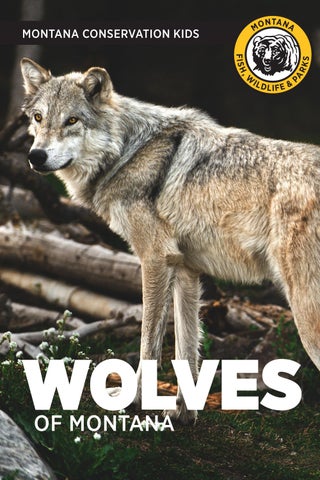
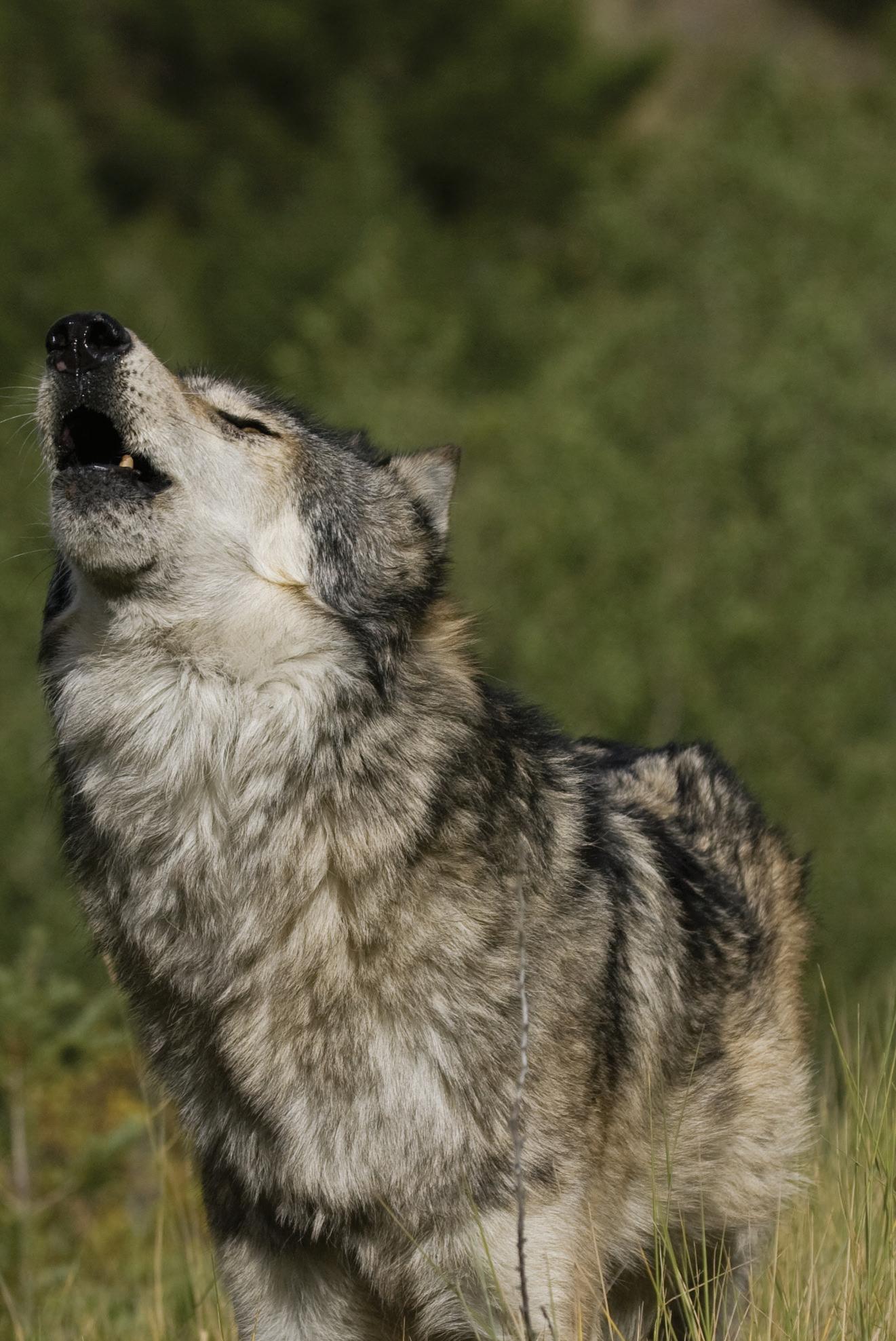
With long legs, big feet, and a shaggy fur coat, wolves are built for thriving and surviving in Montana. As the largest member of the canine family, wolves are a four-legged powerhouse. Their great hearing, strong sense of smell, and excellent eyesight makes wolves powerful hunters in Montana’s mountains and meadows.
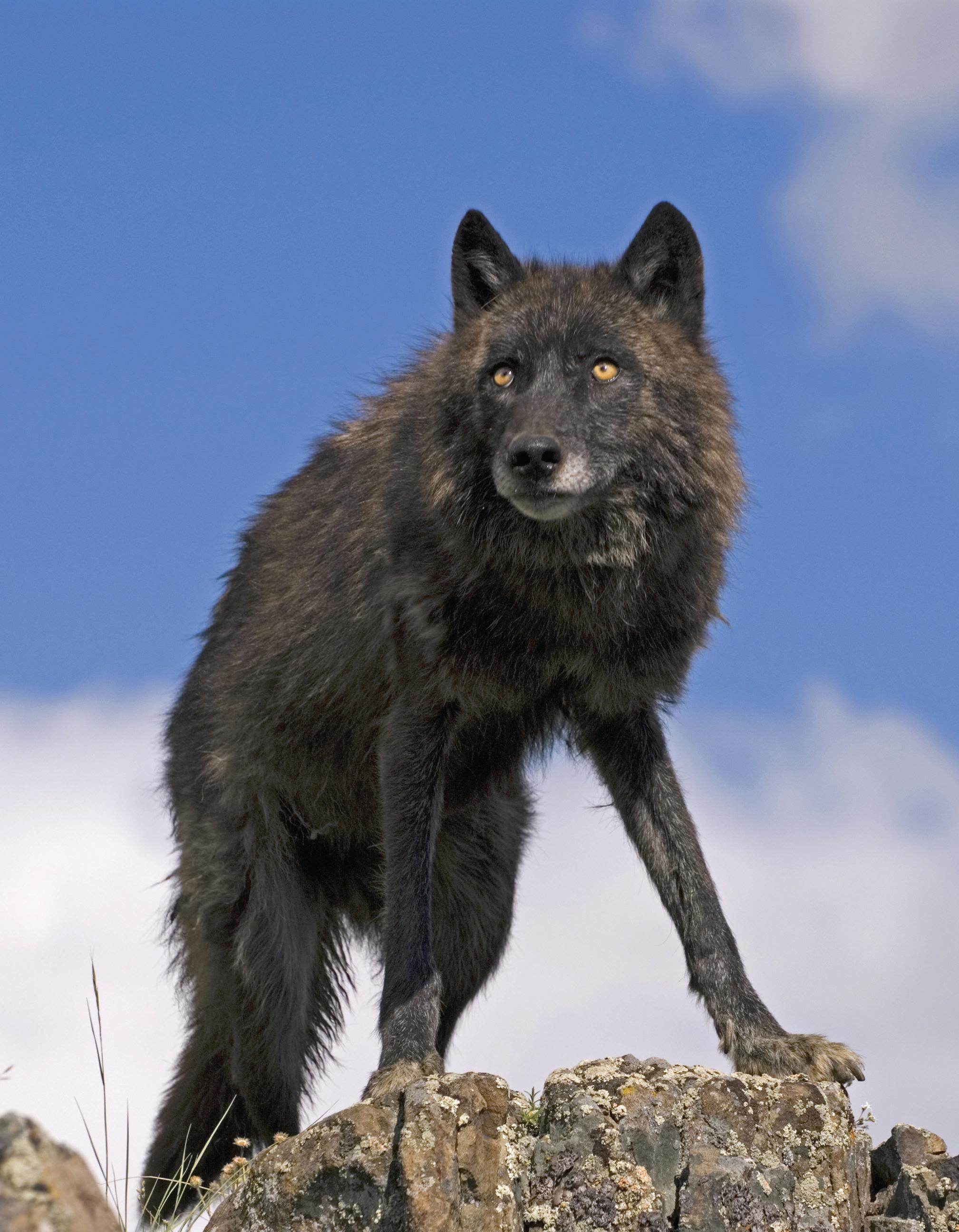
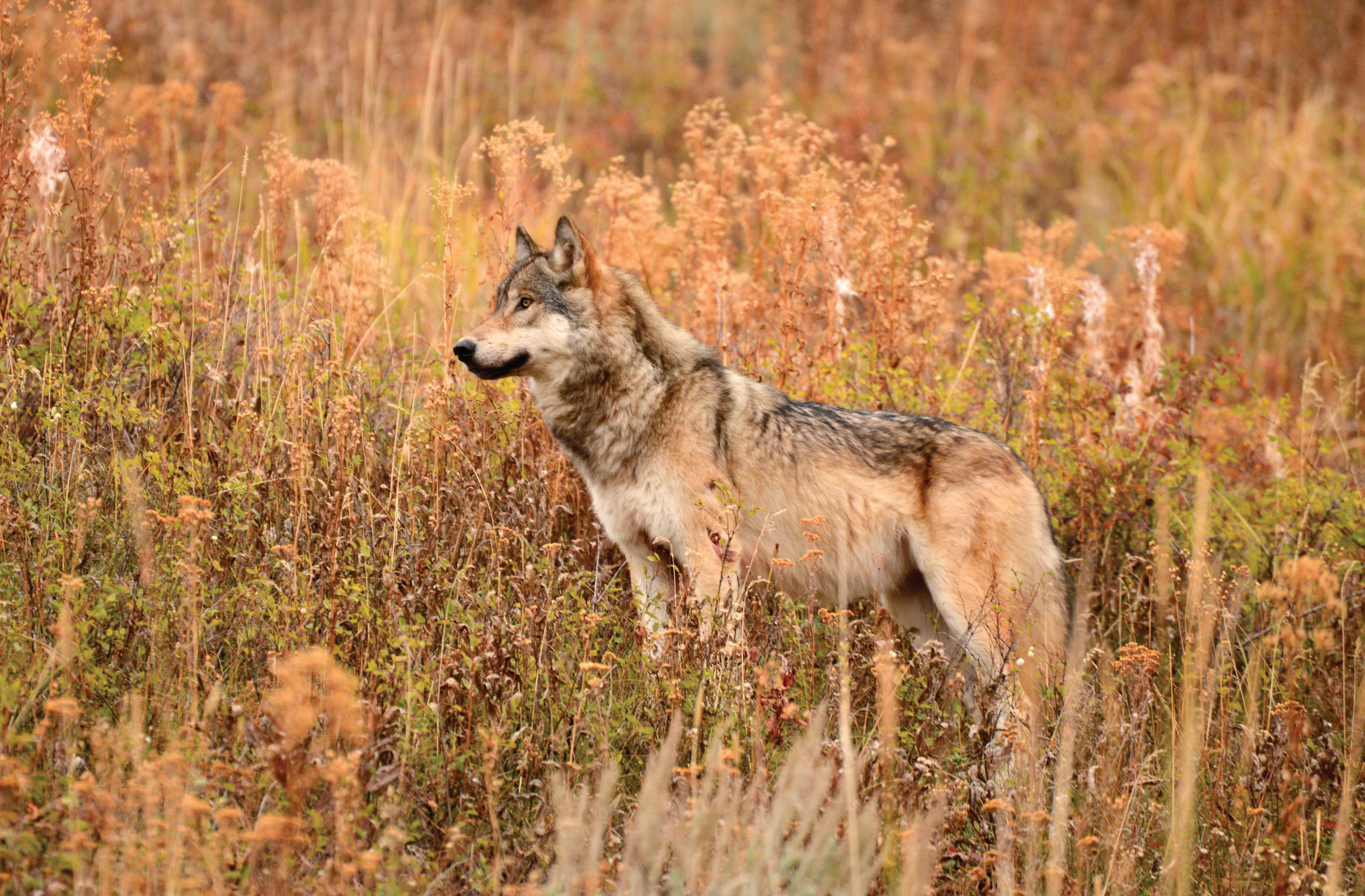
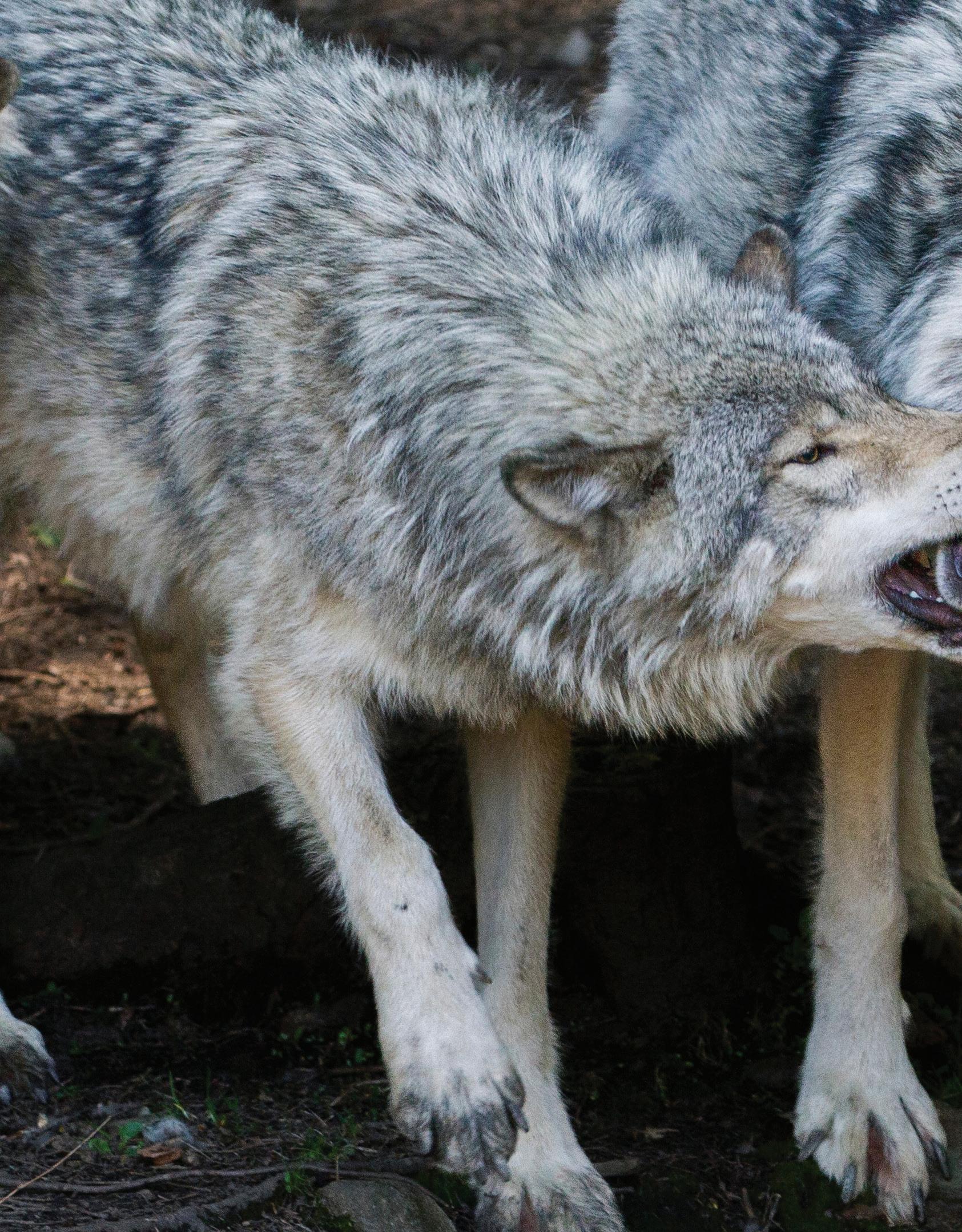
Although called gray wolves, not all Montana wolves have gray fur. Wolves can be light gray, dark gray, grizzled gray, black, or white.
Gray wolves, the kind found in Montana, range in size. Adult males can weigh 80 to 120 pounds and measure 30 to 32 inches tall at the shoulder. Female wolves are slightly smaller at 70 to 90 pounds. Wolves are very muscular and are typically built taller and leaner than dogs.
Their large paws help them as they travel long distances, walk through snow, and stay steady on uneven ground.

THINK LIKE A SCIENTIST
Can you believe how big a gray wolf track can be?
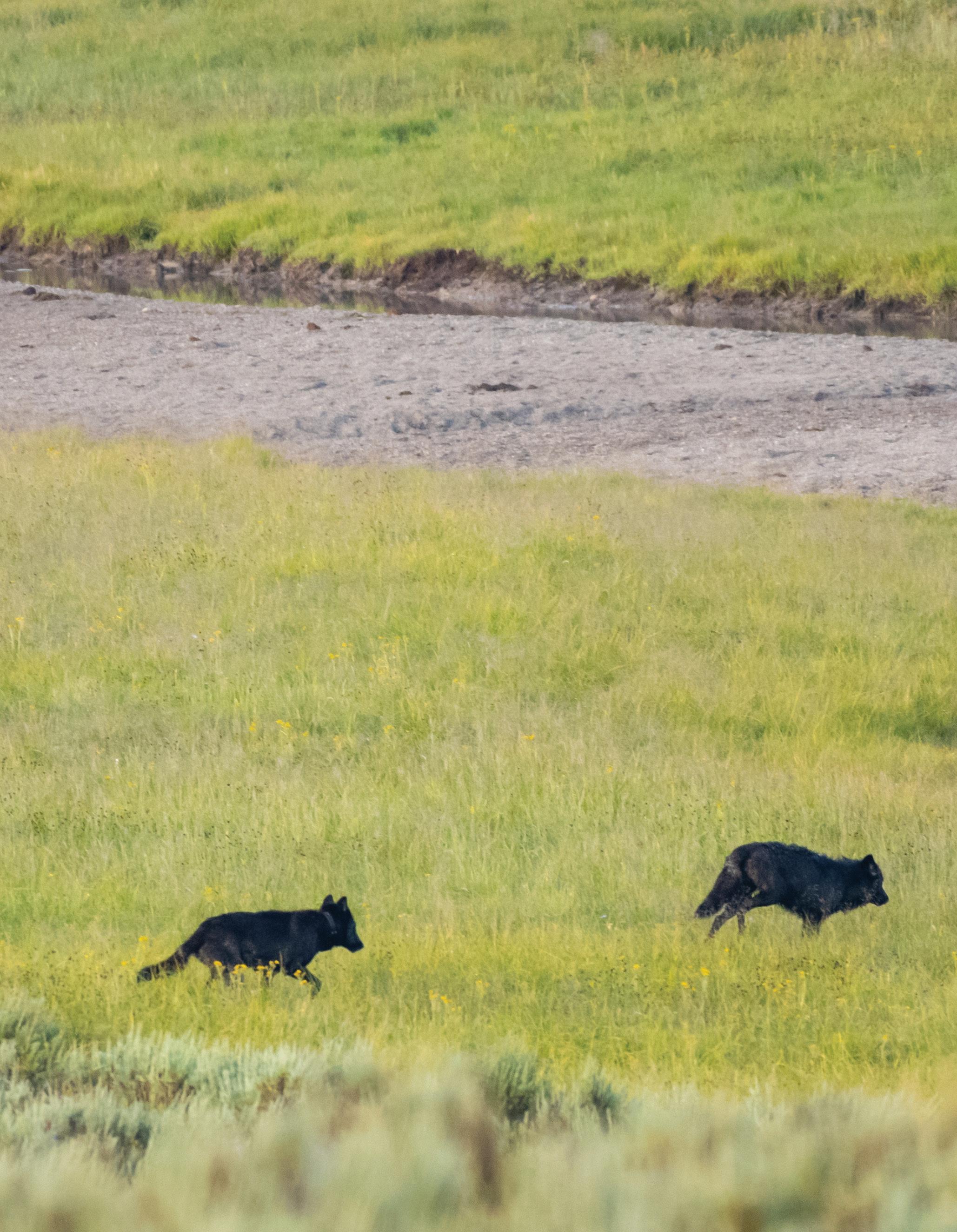
Historically, wolves lived all across Montana. But as more people moved to Montana in the early 1900s, they feared wolves and wanted to get rid of them. People hunted, trapped, and poisoned wolves until they were nearly extinct in Montana.
Years later, people realized the importance of wolves. They help keep prey populations balanced, herds moving, and the land healthy.
In the 1990s, biologists and park rangers brought wolves back to Yellowstone National Park. By that time, packs of wolves had started moving into Montana on their own.

A habitat is where an animal lives and has the food, water, shelter, and space it needs to survive.
In Montana, wolves live in forest, mountain, valley, and meadow habitats. Wolves are usually found away from towns and cities where they can move around freely and feel safe. These quiet natural places give wolves plenty of space to roam and live with their pack.
Wolves are territorial. Each wolf pack has its own space that it lives in and protects. They use scent marking and howling to claim their territory and communicate with other wolves.
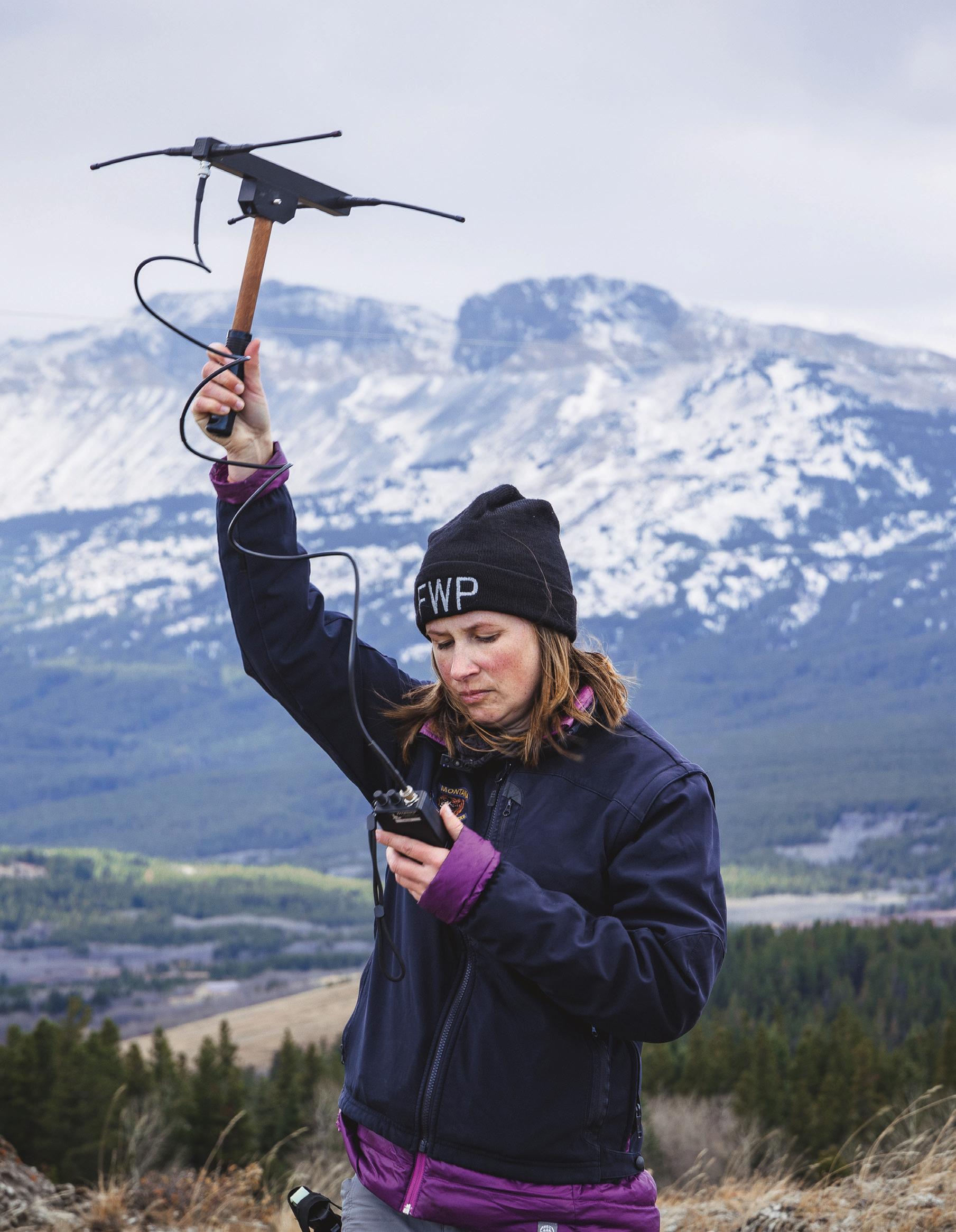
Biologists across the state use tracking collars to follow wolves’ movements and watch them over time. They also observe wolf packs and do track surveys to estimate the number of wolves in Montana. Biologists believe there are 181 wolf packs in Montana, for a total of about 1,100 wolves.
What is the advantage of a large wolf pack?
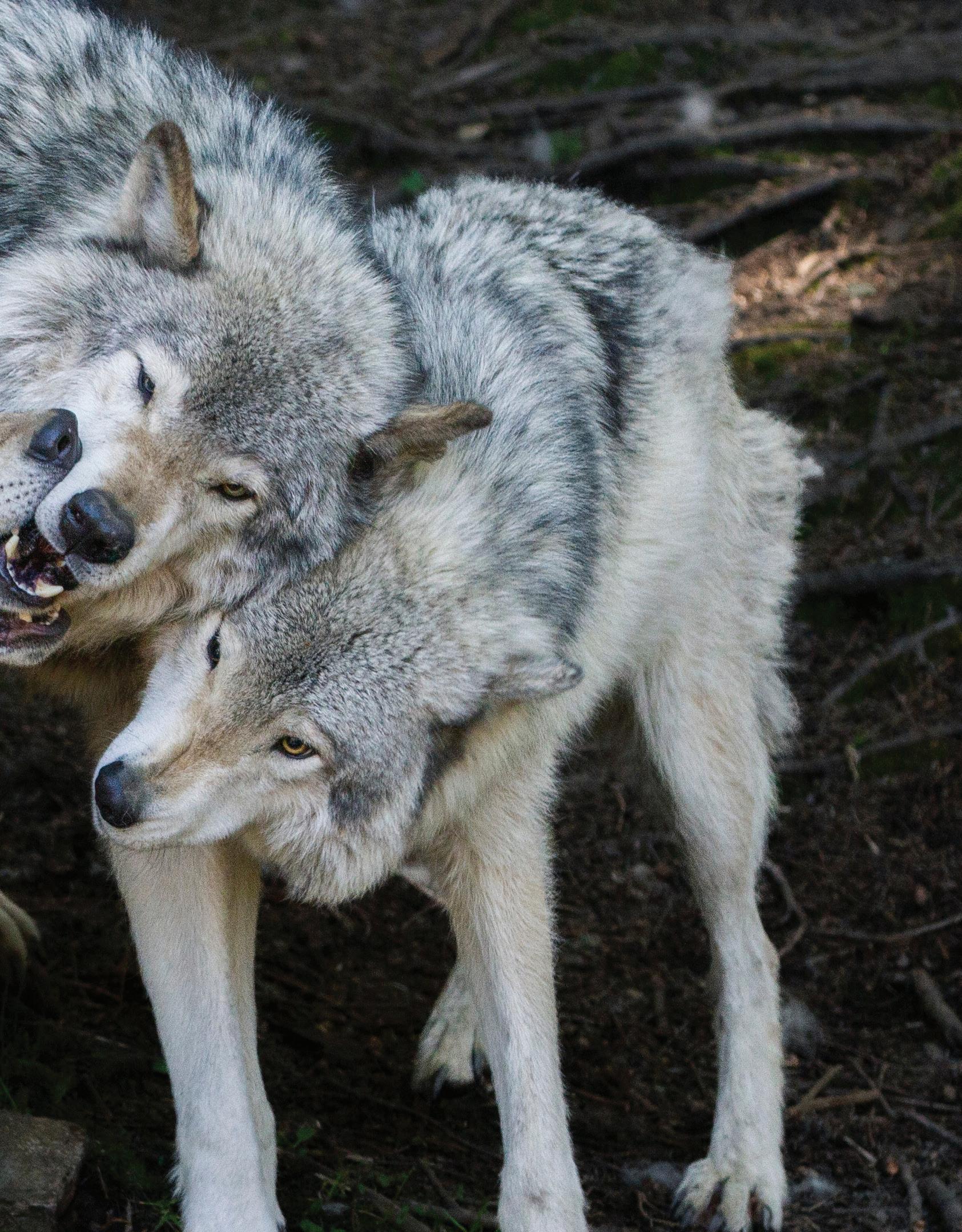
Wolves live in a family group called a pack . The pack as a male and female wolf, known as the alphas, and their pups.
Sometimes older wolves stay in the pack to help take care of the younger ones. Packs live, hunt, and work together to protect their territory and raise their young.
As pups grow up, they leave the pack and move on, looking to start a family of their own. They can join another pack or start a new pack. To start a new pack, they will need to find a mate and their own territory.
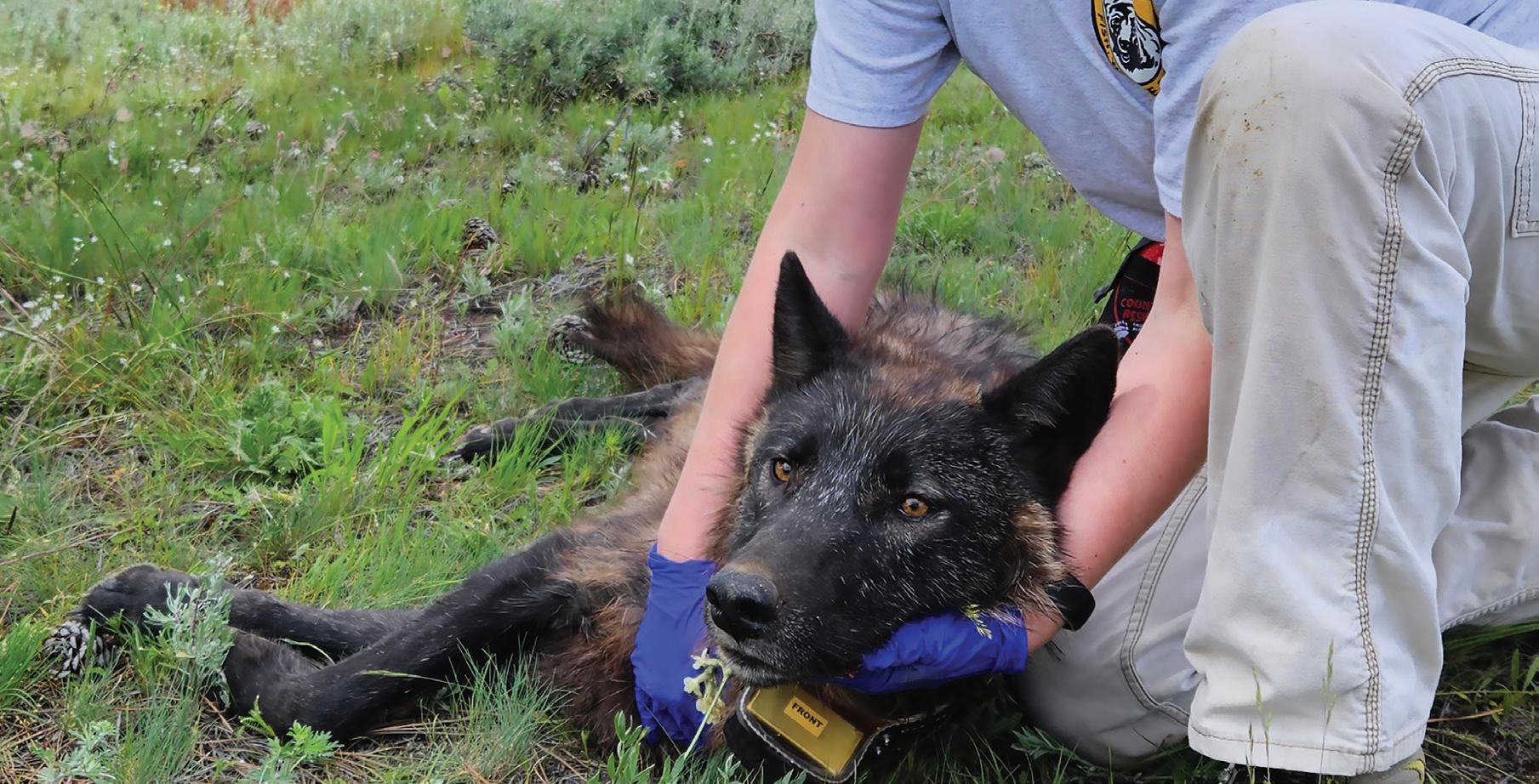
In the wild, wolves usually live 4 to 6 years, but they can live longer if they stay healthy and safe.
Biologists at FWP study wolves to help us better understand them. With tracking collars, DNA, hair samples, and trapping, biologists can determine the age of the wolf and better understand its life.

THINK LIKE A SCIENTIST Why would biologists want to know how old a wolf is?

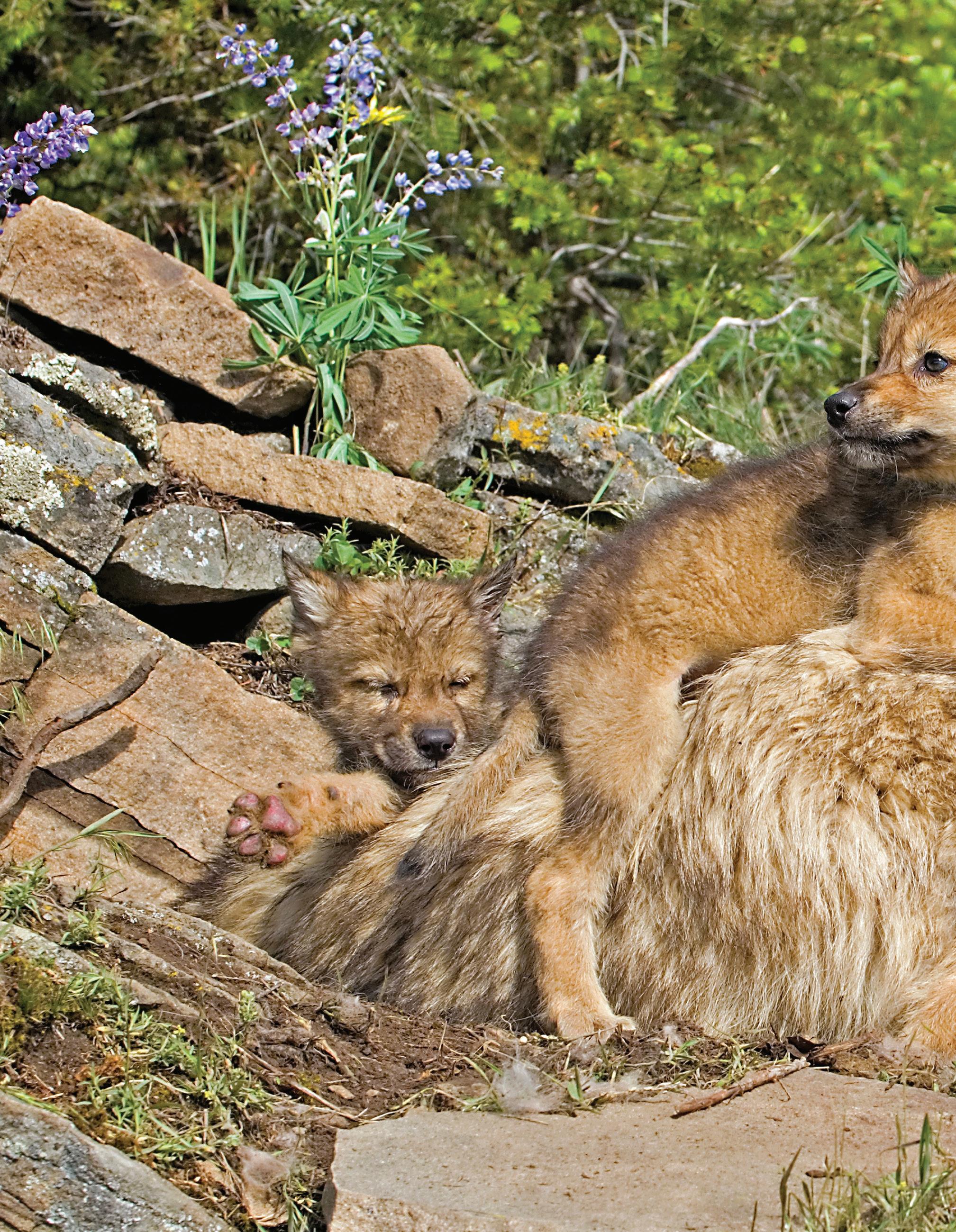
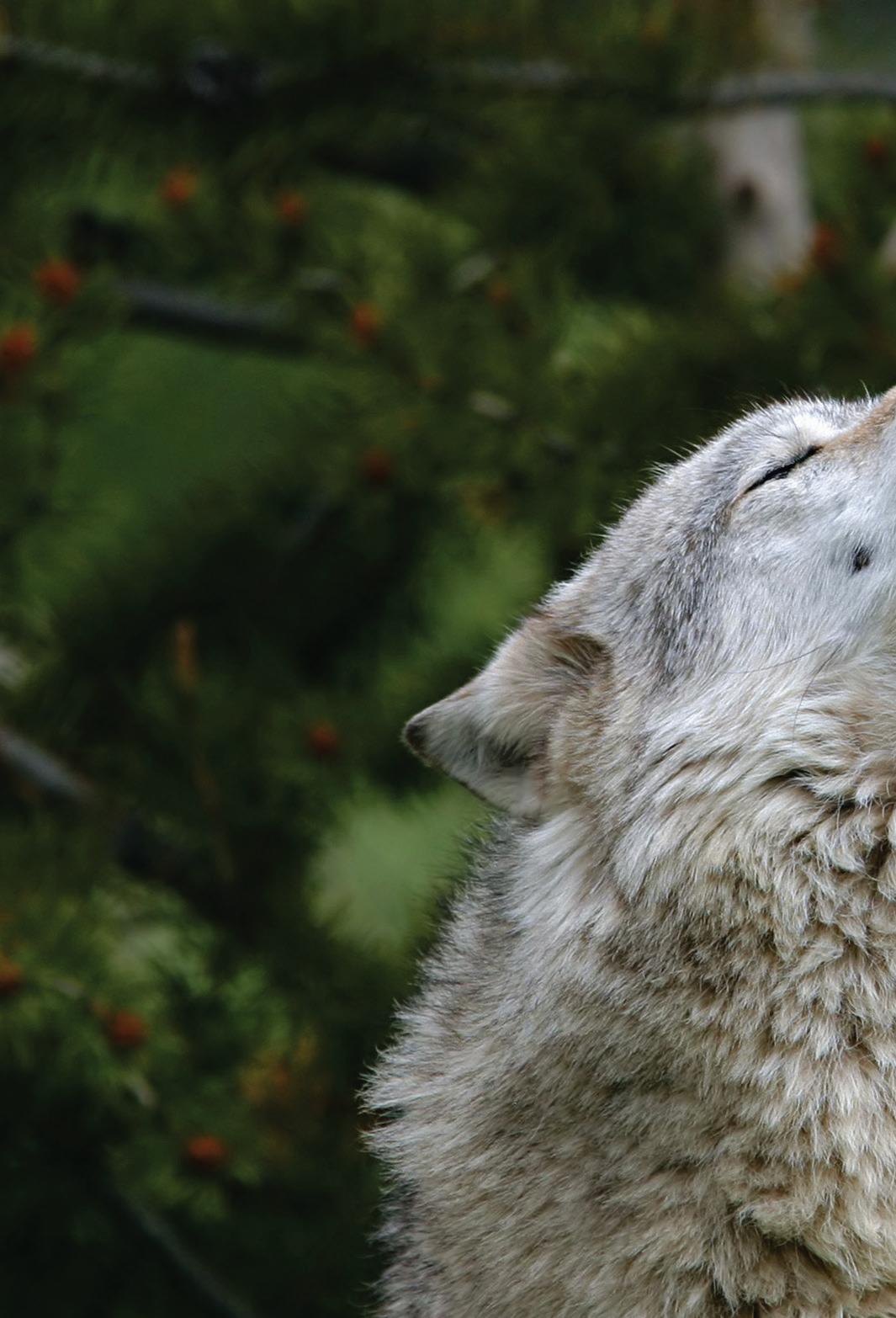
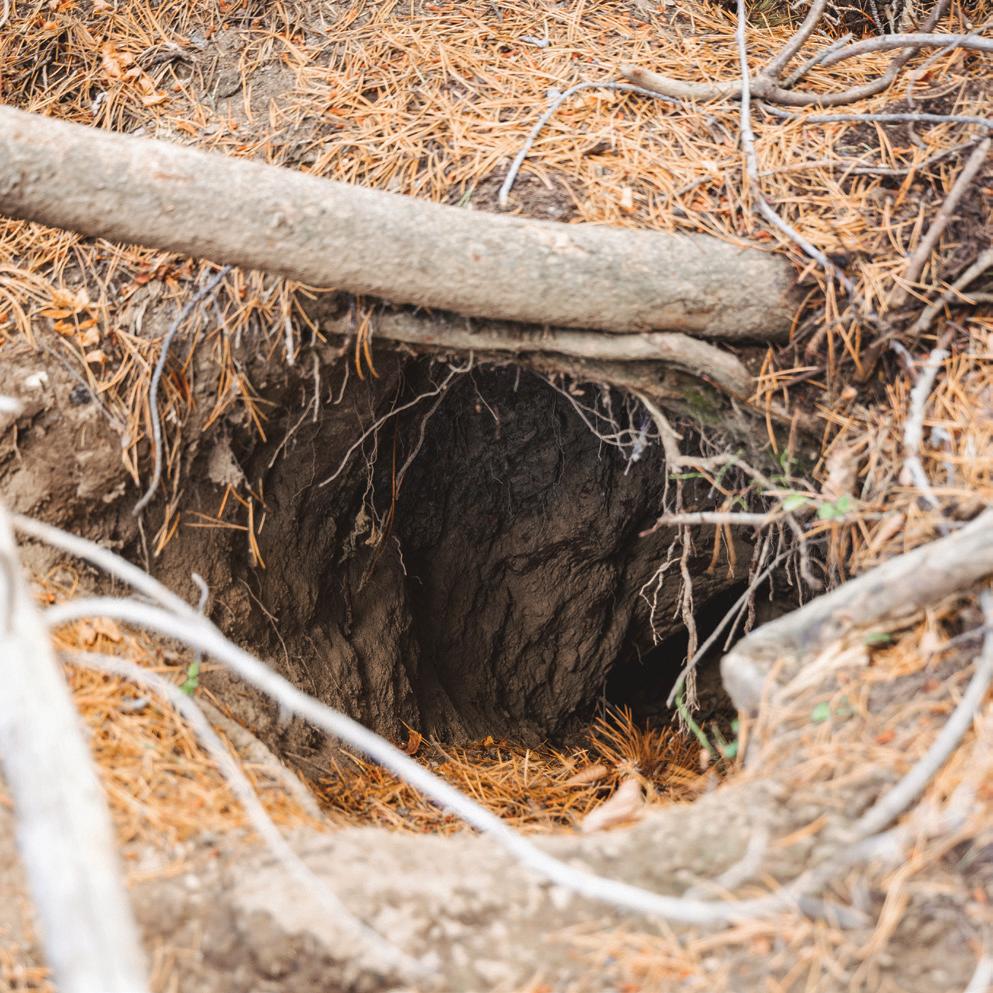
Pups, or young wolves, are born in a den in mid-April.
A den can be a hole in the ground, an old animal burrow, or a space under tree roots. The den keeps the pups safe and warm until they are big enough to come out and explore.
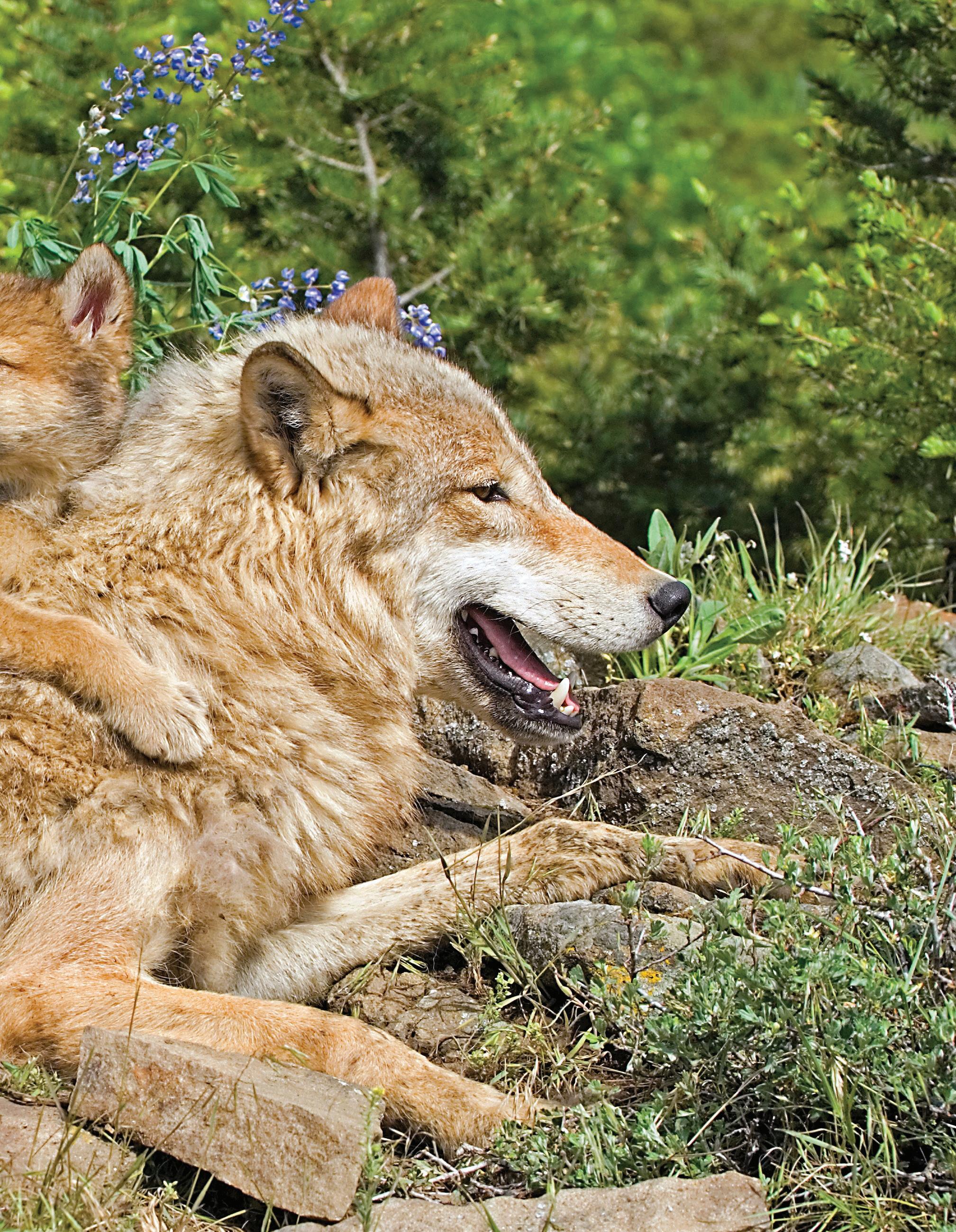
Rendezvous sites are where the pups stay while the adults are hunting. By late summer or early fall, they are strong enough to start joining the pack on hunting trips.
Only the breeding female will have pups, but the entire pack will help care for them. They will watch over the pups, bring them food, and teach them the skills they need.
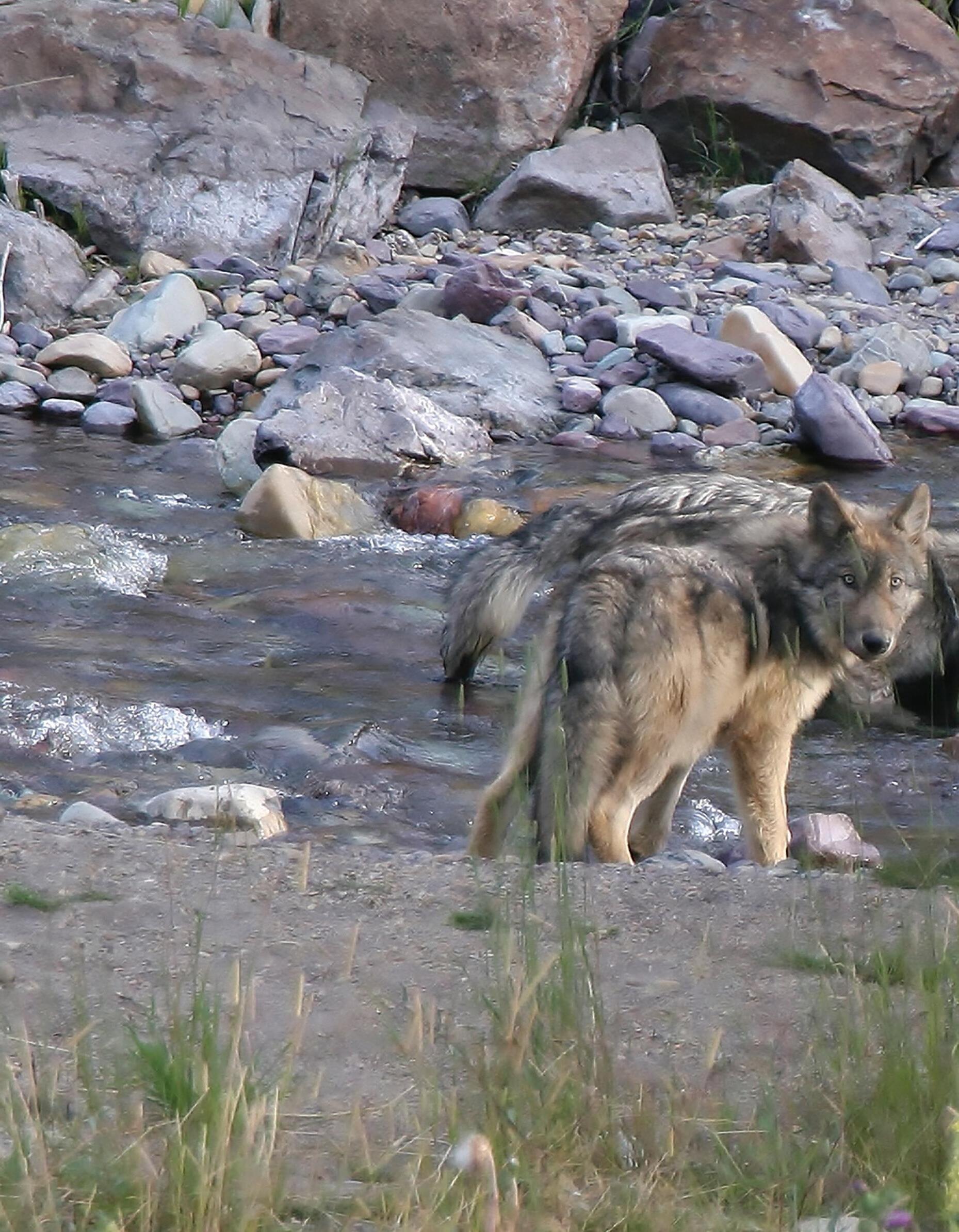
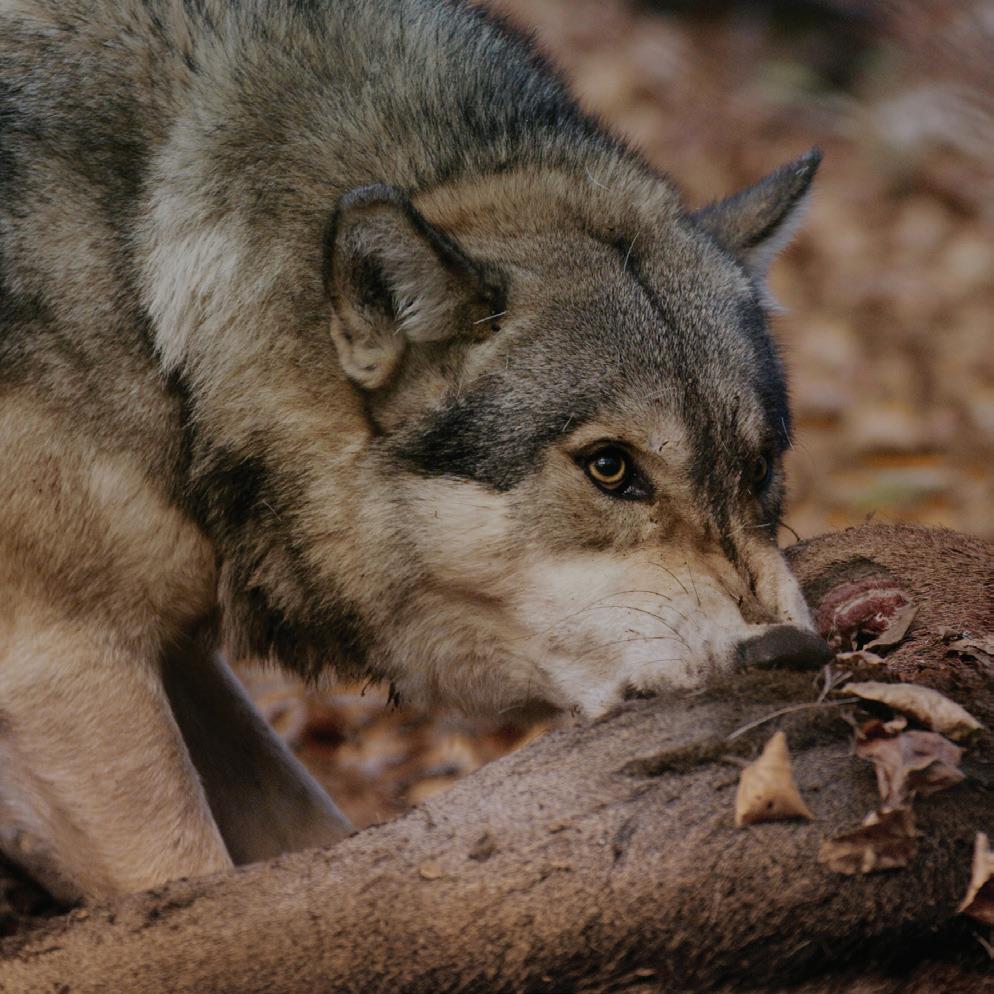
Wolves are carnivores , which means they eat meat. They are known for hunting larger animals like deer, elk, or even moose, but they also will eat smaller animals like rabbits, grouse, or beavers.
Although wolves need meat for the nutrients it provides, they occasionally eat other things as well. Wolves are opportunistic eaters, which means they will eat what is easy for them to find, including bugs, and berries.

THINK LIKE A SCIENTIST
Can you create a food web for a wolf?
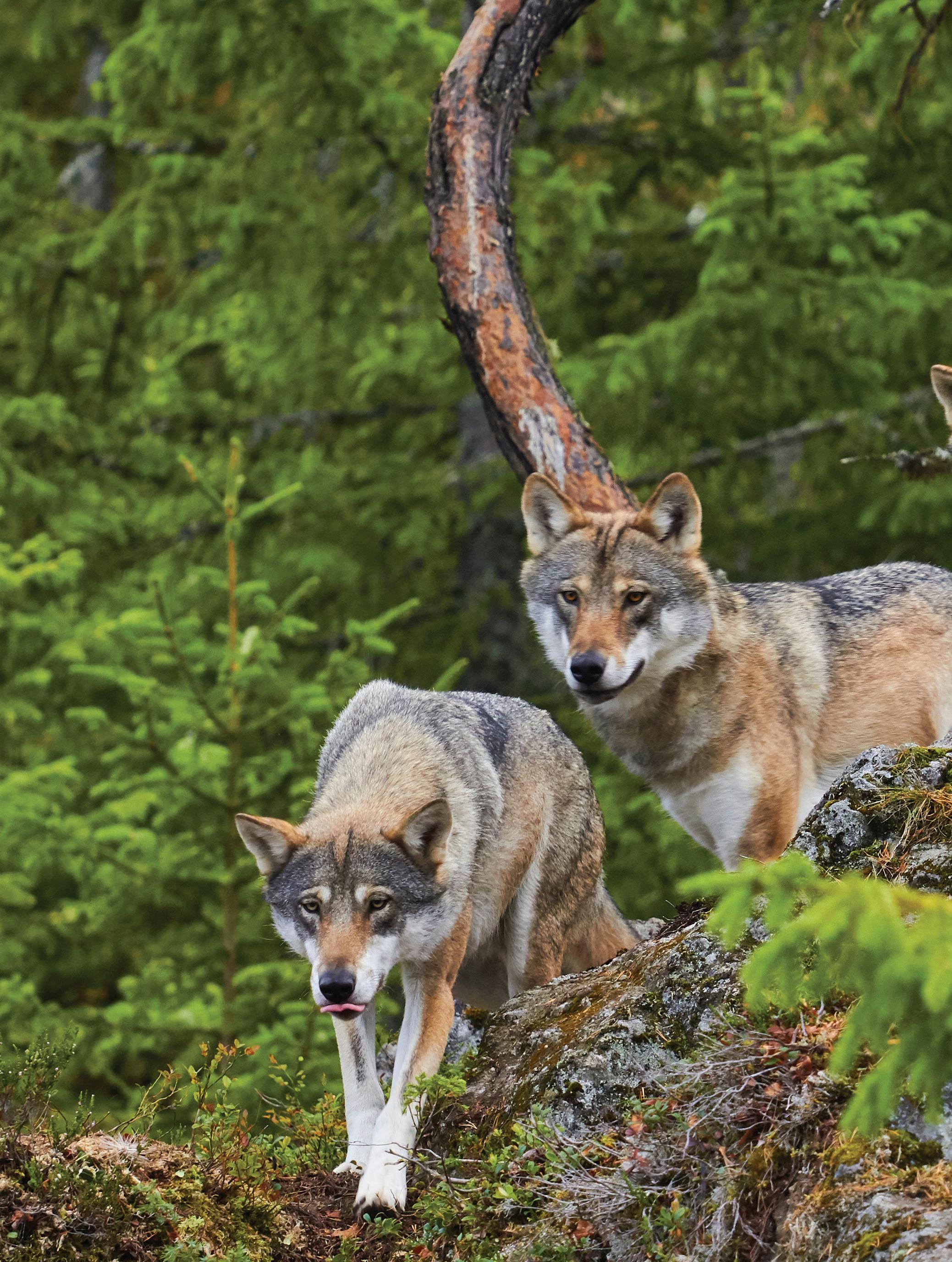
Wolves are predators , which means they hunt other animals for food. The animals they hunt are called prey.
Wolves hunt together as a pack. First, the wolves use their noses to smell where the animal is. Then they follow it quietly and carefully. When they are close enough, they chase the animal and try to surround it. Each wolf has a job, and they have to work together for a successful hunt. After the animal is caught, the whole pack shares the food.

Hunters and trappers play a key role in managing the number of wolves in Montana. Without them it would be difficult to manage Wolves in Montana.
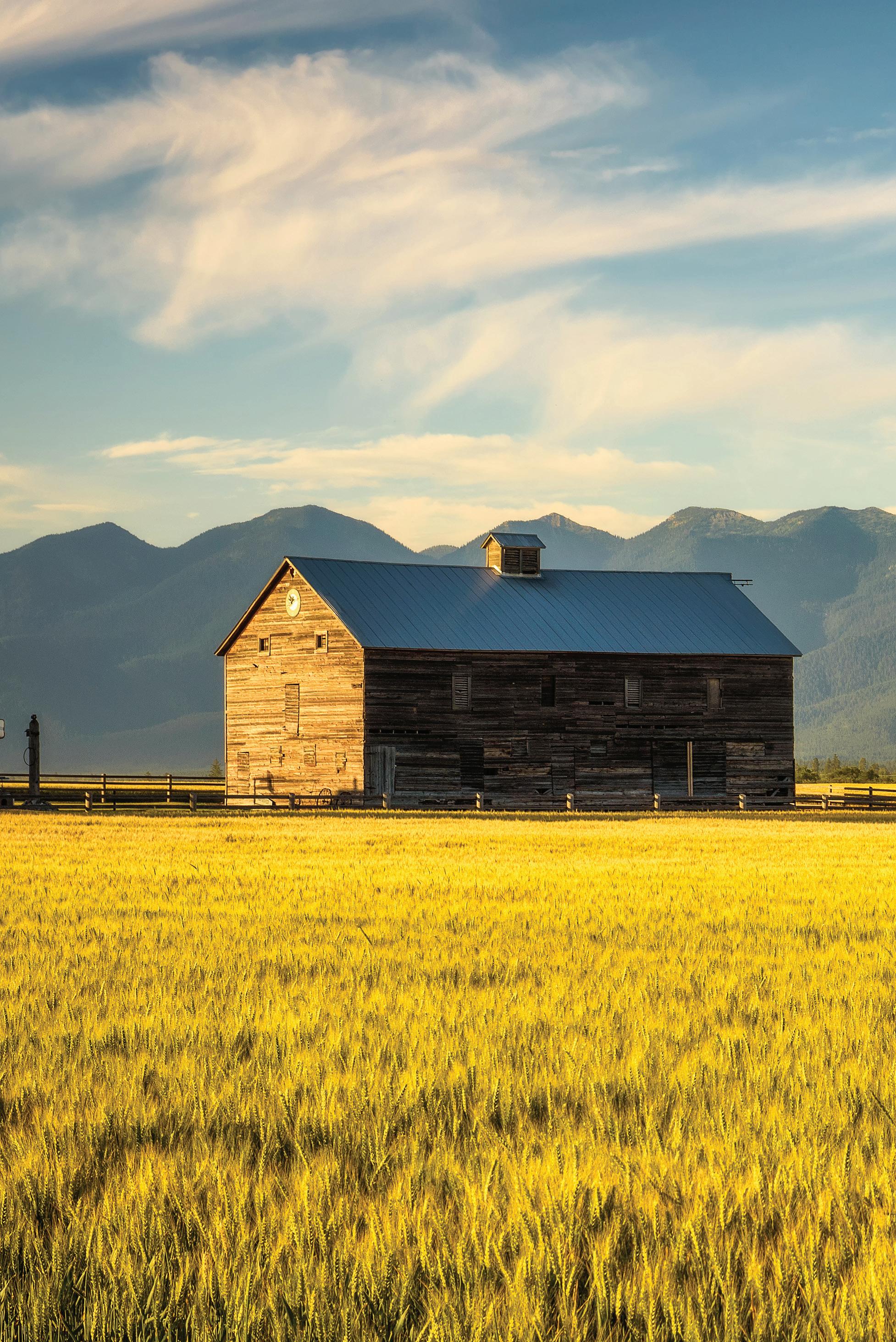
Wolves are not a threat to humans. They are shy and try to avoid people. But wolves have been known to attack pets and livestock. For Montanans raising sheep, cattle, and other animals, it can be difficult to live with wolves. People often need to make changes to their farm and ranch operations to protect their animals from wolves.
BIOLOGIST

PACK
TRACK SURVEY
PREDATOR
SCAT
RENDEZVOUS SITES
A scientist who studies living things
There are no more living members of a species
Having and protecting a space
In the past
A family of wolves
Studying tracks to estimate how many wolves have traveled through a specific area
An animal that hunts and kills other animals
Animal poop
Where the pups stay while the adults are hunting
1. How do you think biologists learn about wolves?
2. How do we know how many wolves can live in an area?
3. What signs might you see if there are wolves living somewhere?
4. What can humans do for wolves?
5. Why were wolves reintroduced into Yellowstone?
Enjoy your time outside, and always try to think like a scientist!