The Corps of The Corps of


he Lewis and Clark Expedition might be the most famous adventure story in American history But perhaps because the explorers didn’t battle ferocious twin-berry honeysuckle or carve their initials into blanket flowers, their scientific exploits especially in botany are less well known than their adventures with wild animals and journeys into unmapped territory Yet the Corps of Discovery’s botanical discoveries are no less important than their escape from grizzly bears and their journey down the Yellowstone River past Pompeys Pillar Under instructions from President Thomas Jefferson, Captain Meriwether Lewis and other members of the expedition kept a sharp lookout for new plants and discovered at least 85 species never before reported in the United States. The many wondrous plants they found and recorded on the journey not only advanced the scientific study of botany, but also served as food, medicine, and even transportation that ensured the expedition’s ultimate success
President Jefferson had many objectives when he dispatched the Lewis and Clark Expedition westward from the United States to explore the newly acquired Louisiana Purchase In addition to the obvious commercial and expansionist goals, Jefferson’s daunting to-do list included exploring and mapping the Missouri River, finding a water route to the Pacific Ocean, studying the native Indians and their customs, and obser ving wildlife The president also instructed the explorers to record the minerals (especially metals) they found, keep climate and weather tables, and maintain journals. What’s more, he asked Lewis to note “the soil & face of the countr y, it’s growth & vegetable productions, especially those not of the U S ” and to study the phenology of plants that is, the dates they bloom, put out leaves, or set
seed. And one last thing: Get back safely.
Horticulture and plant study were among the president’s personal pleasures “Botany I rank with the most valuable sciences,” Jefferson wrote. Lewis, Jefferson’s choice to lead the expedition, possessed an interest in plants and a working knowledge of the eastern United States’ flora. In the spring of 1803, Jefferson asked Dr Benjamin Barton, the leading American botanist of the day, to instruct the captain in botany and the language of technical description. Lewis was a ready pupil and packed several botany books as he embarked on his momentous journey.
North and east of present-day Lincoln, Alice Creek flows below Lewis and Clark Pass through wet meadows of blue camas, elephanthead pedicularis, and willows. A short hike up the trail follows the route taken by Lewis, nine men, and their horses as they ascended the pass over the Continental Divide. This was a route recommended to them by various Native Americans, who called it, as Lewis wrote, the “road to buffaloe.” The views and flora today are relatively unchanged from 200 years ago, when on July 7, 1806, Lewis described his trip up Alice Creek “through a handsome narrow plain” and crossing the pass as a “low and an easy ascent. ”
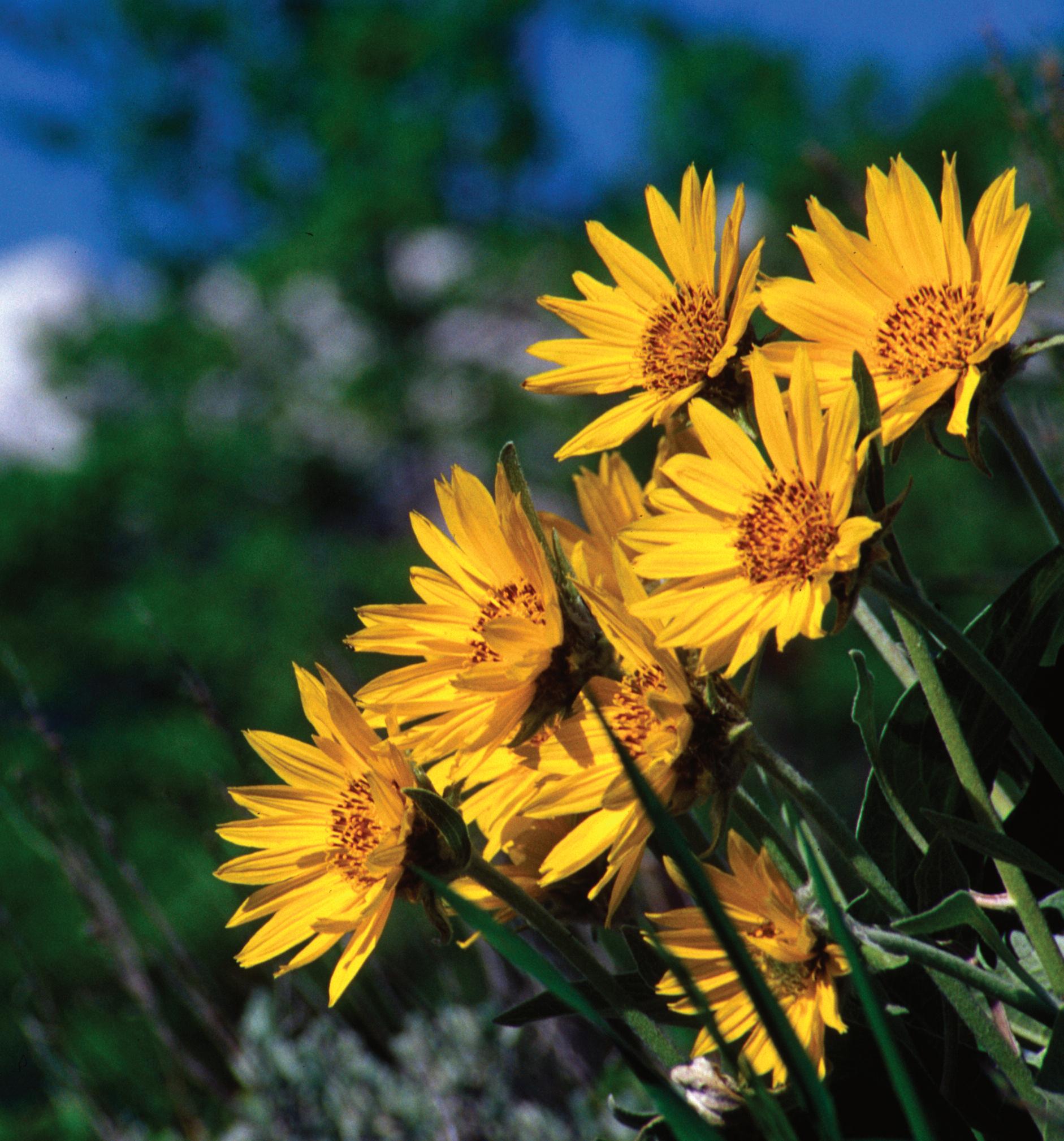
It was a busy 31-mile day for the explorers and, botanically, one of their most productive in Montana. Though undoubtedly consumed with the daily tasks of managing the expedition, Lewis still took time that day to study, collect, and preserve at least seven plants: arrow-leaf balsamroot, blanket flower, common juniper, twin-berry honeysuckle, silvery lupine, silky lupine, and mountain death camas.
Not only did Lewis locate new plants and then learn their characteristics and differences from known species, he also

conserved the specimens for transport back to his curious president. Lewis doesn’t mention how he pressed his plant specimens, but Dr Barton likely instructed him in the methods common for the day Back then, collected plant specimens had to be cared for regularly. Blotting papers were constantly changed to dry the specimens and prevent mold The Corps of Discovery and its gear often got wet in rivers, creeks, rain, snow, fog, and high humidity Keeping the baggage dry was an ongoing chore Lewis probably spent his evening hours along with his many other scientific duties studying plants collected during the day, putting them between blotting papers, affixing labels, pressing them between book covers, and recording thoughts and observations in his journal It took substantial time to collect plants, and keeping the delicate specimens intact over hundreds of miles was an almost impossible task But Lewis and Clark succeeded Roughly 230 plant specimens from their expedition still exist.
The expedition encountered many plants on the trip to the Pacific and back that were essential to its survival. One of the most valuable plants was not used for food or medicine but rather to actually transport expedition members

When the Corps of Discovery left St. Louis, it was equipped with a large, modern keelboat, two roughly 40-foot-long craft called pirogues, and a portable iron boat Lewis planned to assemble later At Fort Mandan, Lewis sent the keelboat back to St. Louis, loaded in part with plant specimens, and constructed six smaller dugout canoes of cottonwood. The canoes and pirogues carried the crew members and their baggage up the Missouri River to the Great Falls, where a lengthy portage was required. The men fashioned wheels from sliced cottonwood trunks to pull their six canoes and baggage around the falls, leaving the heavier pirogues behind Once past the falls, find-
ing that Lewis’s iron boat “would not answer ” (it quickly sank due to a lack of evergreen pitch to seal the skins covering the frame), the men constructed two more cottonwood dugouts The entire flotilla now consisted of eight craft made of native cottonwood trees
Crossing the Bitterroot Mountains and Lolo Pass in September 1805 almost finished the expedition Clark recounted the hardships and continued to write even though “I have been wet and as cold in every part as I ever was in my life, indeed I was at one time fearfull my feet would freeze in the thin mockersons which I wore. ” Numb and nearly starving, having already eaten their extra horses, the party staggered from the mountains onto the plains of Weippe Prairie in Idaho
The Nez Perce Indians treated the bedraggled company with kindness and fed them “ a small piece of Buffalow meat, Some dried salmon beries & roots in different States which they call quamash ” Clark, although grateful for the food, cautioned Lewis “of the Consequences of eateing too much &c.” Quamash is blue camas, a member of the lily family with an edible bulb Its gastronomic effects were discreetly described by Clark: “Capt Lewis & myself eate a Supper of roots boiled, which Swelled us in Such a manner that we were Scercely able to breath for Several hours.”
Lewis and Clark both made extensive journal entries about camas, and Lewis also wrote a lengthy description, including cooking methods Although camas did not rank as one of the expedition’s favorite foods, Lewis was not immune to the beauty of its flower Describing a field of camas, he wrote, “the quawmash is now in blume and from the colour of its bloom at a short distance it resembles lakes of fine clear water, so complete is this deseption that on first sight I could have swoarn it was water. ” Native people generously introduced Lewis and Clark to other edible plants. The roots of cous bisquit-root, for e x a m p l e , we re p o u n d e d a n d f o r m e d i n t o c a k e s , c a l l e d chapellel or shapelle, which were dried in the sun Clark commented, “the noise of their women poinding the cows roots remind me of a nail factory.” Both camas and cous bisquit-root were major trade items for tribes in the Columbia River drainage.
The Le wis and Clark Expedition discovered at least 85 plants
ne w to science Of those, 32 vascular specimens and one nonvascular specimen were collected in today’s Montana Listed below are the plants collected in Montana (now housed in the Le wis & Clark Herbarium at the Academy of Natural Sciences), who collected each one, where, and when:
Atriplex gardneri (A. nuttallii) Gardner’s saltbush
Le wis: Below the forks of the Marias River, Toole County, July 20, 1806
Balsamorhiza sagittata arrow-leaf balsamroot
Le wis: Le wis and Clark Pass, Le wis and Clark County, July 7, 1806
Dalea (Petalostemon) purpurea purple prairie clover

Le wis: Camp Disappointment, Cut Bank Creek, Glacier County, July 22, 1806
Dasiphora (Potentilla) fruticosa shrubby cinquefoil
Le wis: “Prairie of the Knobs,” Ovando Valle y, Powell County, July 6, 1806
Elaeagnus commutata American silverberry

Le wis: “Prairie of the Knobs,” Ovando Valle y, Powell County, July 6, 1806
Euphorbia marginata snow-on-the-mountain
Clark: Along the Yellowstone River, Rosebud County, July 28, 1806
Gaillardia aristata blanket flower
Le wis: West of Le wis and Clark Pass, PowellLe wis and Clark counties, July 7, 1806
Hesperostipa (Stipa) comata needle-and-thread grass
Le wis: Between the Dearborn and Sun Rivers, Le wis and Clark County; or Clark: Beaverhead River, Beaverhead County, July 8, 1806
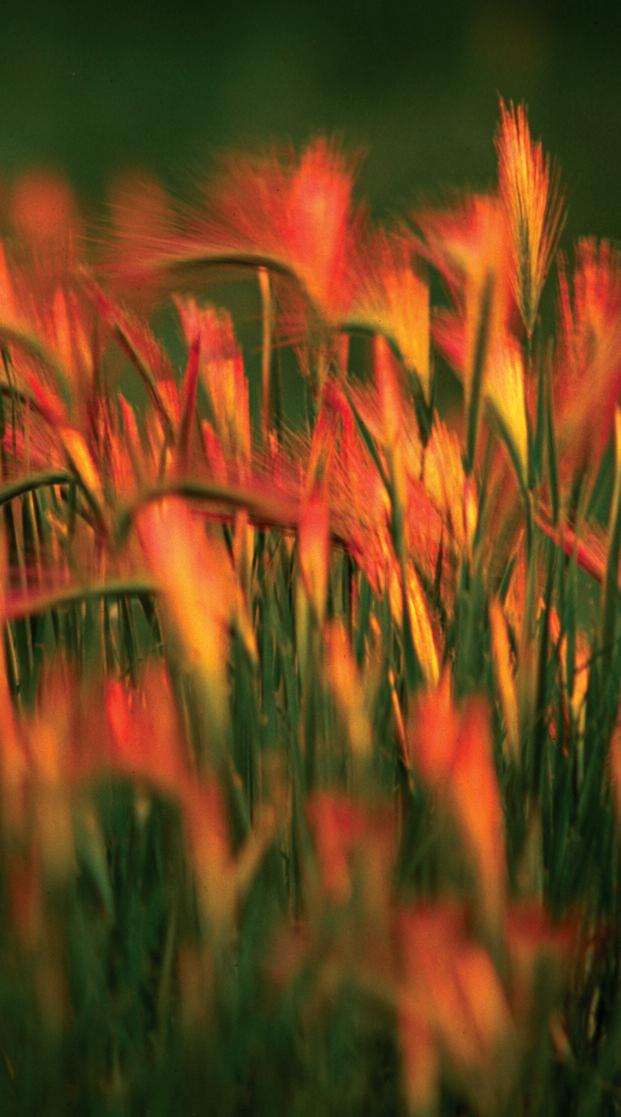
Hordeum jubatum foxtail barle y

Le wis: On White Bear Island, Missouri River, Cascade County, July 12, 1806
Iris missouriensis


Rocky Mountain iris
Le wis: “Prairie of the Knobs,” Ovando Valle y, Powell County, July 5 or 6, 1806
Juniperus communis var depressa common juniper

Le wis: Le wis and Clark Pass, Le wis and Clark County; or Clark: Gibbons Pass area, border of Ravalli–Beaverhead counties, July 7, 1806
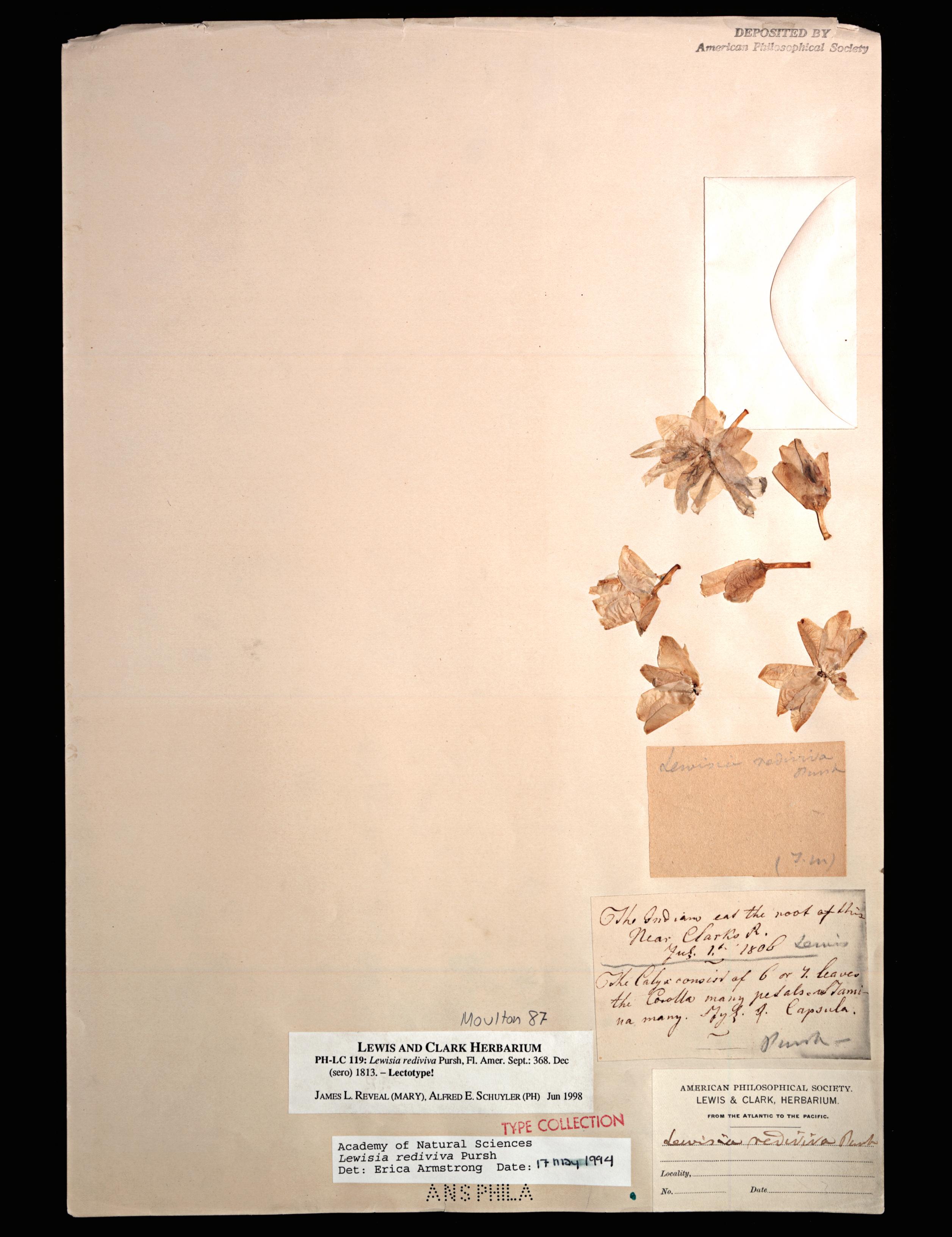
Lewisia rediviva bitterroot
Le wis: Along Lolo Creek near Travelers’ Rest, Missoula County, July 1 or 2, 1806

Sacagawea introduced the captains to many native food plants such as wild apple and wild licorice root She also introduced them to yampah, a member of the parsley family that seemed to alleviate the gas caused by blue camas Lewis w r o t e , “ Sa h c a r g a r m e a h g e a t h e re d a quantity of the roots of a speceis of fennel which we found ver y agreeable food, the flavor of this root is not unlike annis seed, and they dispel the wind which the roots called Cows and quawmash are apt to create particularly the latter ” Lewis’s introduction to bitterroot came in August 1805, when the expedition was camped with the Shoshone Indians near today’s Lemhi Pass. Lewis studied the dried roots and asked how they were prepared “This the Indians with me informed were always boiled for use, ” he wrote. “I made the exprement, found that they became perfectly soft by boiling, but had a very bitter taste, which was naucious to my pallate, and I transferred them to the Indians who had eat them heartily ” Lewis collected and pressed a specimen of bitterroot on the return journey while the corps was camped at Travelers’ Rest, a few miles south of today’s Missoula Frederick Pursh, a German botanist who reviewed some of Lewis’s plant collection, later named bitterroot Lewisia rediviva in the captain’s honor. The small, attractive plant with rose-colored petals and a “ very bitter” root is now Montana’s state flower.
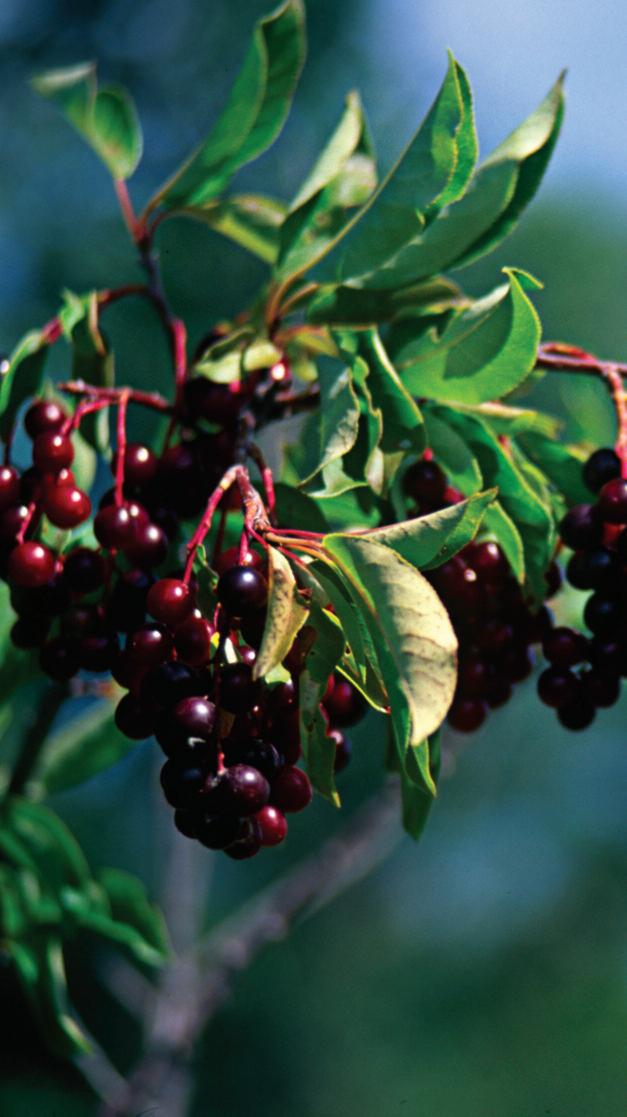
Expedition members also ate currants, chokecherries, serviceberries, and gooseberries. During the lean times with the Sh o s h o n e , w ro t e L e w i s , “ t h e C h i e f informed us that they had nothing but berries to eat and gave us some cakes of serviceberries and Choke cherries which had been dryed in the sun; of these I made a hearty meal.” While in season, these fresh fruits provided vitamin C that may have helped prevent scurvy among expedition members.
Eating wild food was generally beneficial, but it could be dangerous. In addition to the gastronomically disruptive camas, other species were to be avoided Lewis noted, “there are several speceis of hemlock which are so much like the cows [cous bisquit-root] that it is difficult to discriminate them from the cows and we are afraid that they [the men] might poison themselves.”
Occasionally, expedition members used native plants medicinally, although they usually relied on medicine they brought from the East Lewis used chokecherry as an effective remedy when he suffered from “disentary ” He recounted boiling small twigs to make a strong decoction that he drank in two doses. The captain wrote that “by 10 in the evening I was entirely releived from pain and in fact every symptom of the disorder forsook me; my fever abated, a gentle perspiration was produced and I had a comfor table and refreshing nights rest ” Jean Baptiste (“Pompy”) Charbonneau, Sacagawea ’ s c h i l d , w a s treated with hot, wild onion poultices for a swelling on his neck. Private John Potts accidentally cut his own leg with a knife, a n d t h e w o u n d g re w p a i n f u l a n d inflamed. It was treated, Clark wrote, w i t h “ a p o l t i c e o f t h e ro o t o f Cowes,” and later Lewis added, “ we applyed the pounded roots and leaves of the wild ginger & from which he found great relief.”
Lewis and Clark achieved many of the goals on Jefferson’s to-do list during their arduous trek from St Louis to the Pacific Coast and back. Not least were their
Linum lewisii
Le wis’s blue flax

Le wis: V icinity of the Sun River, Le wis and Clark–Cascade counties: or Clark: Camp For tunate, Beaverhead County, July 9, 1806
Lonicera involucrata twin-berry hone ysuckle
Le wis: Along the Blackfoot River, Le wis and Clark County, or Clark: Big Hole Valle y, Beaverhead County, July 7, 1806
Lupinus argenteus silvery lupine
Le wis: Along the Blackfoot River to Le wis and Clark Pass, Lewis and Clark County, July 7, 1806
Lupinus sericeus silky lupine
Le wis: Possibly along the Blackfoot River west of Le wis and Clark Pass, Le wis and Clark County, July 7, 1806
Mimulus guttatus common monke yflower
Le wis: Blackfoot River, Missoula County, July 4, 1806
Oenothera cespitosa gumbo e vening primrose

Le wis: Great Falls area, Cascade County, July 17, 1806
Or thocarpus tenuifolius thin-leaved owl clover
Le wis: Bitterroot Valle y near Travelers’ Rest, Missoula County, July 1 or 2, 1806
Oxytropis besseyi

Besse y’s locoweed
Le wis: Along the Blackfoot River, Powell County, July 6, 1806
Pedicularis cystopteridifolia fern-leaf louse wor t
Le wis: Along the Blackfoot River, Powell County, July 6, 1806
Pedicularis groenlandica elephanthead pedicularis
Le wis: Along the Blackfoot River, Powell County, July 6, 1806
Philadelphus lewisii

Le wis’s mockorange (syringa)

Le wis: Along the Clark Fork River, Missoula County, July 4, 1806
Poa secunda (housed in Ke w, England) Sandberg’s bluegrass
Le wis: Possibly near the mouth of Crow Coulee, Chouteau County, July 28, 1806
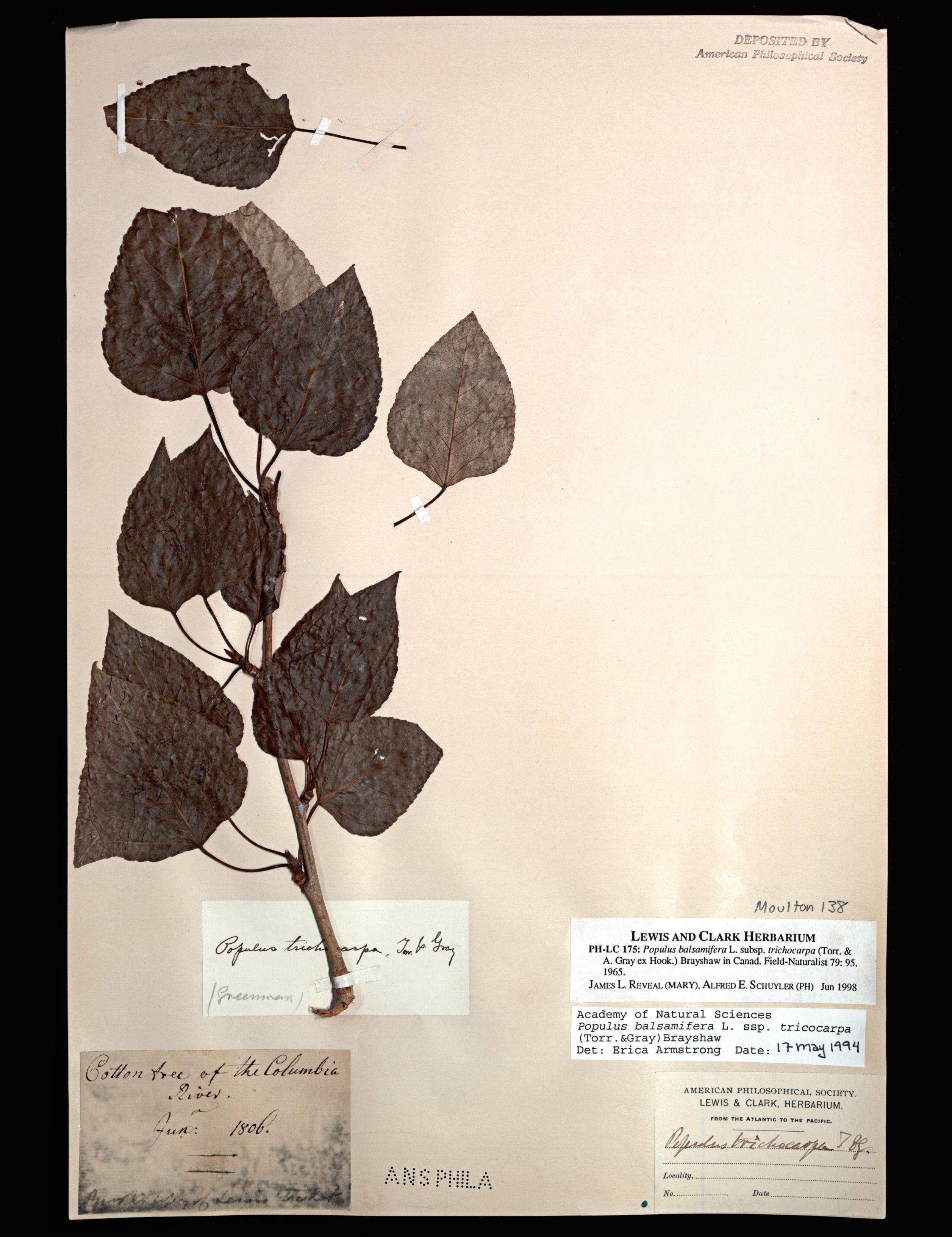
Populus balsamifera ssp trichocarpa black cottonwood
Le wis: Bitterroot River near Travelers’ Rest, Missoula County, July 1 or 2, 1806
Purshia tridentata bitterbrush
Le wis: “Prairie of the Knobs,” Ovando Valle y, Powell County, July 6, 1806
Ribes aureum golden currant
Le wis: V icinity of Three Forks, Gallatin County, July 29, 1805
Sarcobatus vermiculatus grease wood
Le wis: Probably along the Marias River, Toole County, July 20, 1806
botanical discoveries Pursh, the German botanist, was the first to publish botanical information about the new plants collected by Lewis and Clark. He mentioned 132 plant specimens from Lewis’s collection in his 1813 volume Flora Americae Septentrionalis Today, the vast majority of the specimens collected by the explorers are housed in the Lewis & Clark Herbarium at the Academy of Natural Sciences in Philadelphia. These specimens provide a look at the flora of North America as it was 200 years ago, before exotic plants invaded the West and native plant communities were vastly changed by human activities. The specimens also are being used to compare the greenhouse gas carbon dioxide in modern plants with that in plants from two centuries ago
It’s remarkable, considering the hardships Lewis faced, that any plant specimens survived at all But it is certain that many more plants were collected than are accounted for today. When the captain reached the Great Falls cache in July 1806, for example, he noted in his journal that every single specimen collected between Fort Mandan and the Great Falls had been destroyed. In typical understatement of what was no doubt a severe disappointment, he wrote, “had the cash [cache] opened…the river having risen so high that the water had penitrated all my specimens of plants also lost ” When Clark uncovered the cache at Camp Fortunate in July 1806, near today’s Dillon, he reported, “I found every article Safe, except a little damp ” It is not clear if the specimens from that cache molded and were thrown out, or if they were later lost, but only one plant specimen collected between Great Falls and Camp Fortunate survived: golden currant In fact, as far as we know, golden currant is the only specimen taken in Montana in 1805 that still exists; all other specimens were collected in 1806 Numerous other plant species were described or mentioned in the journals, and many specimens were likely collected but have since been lost Nevertheless, what was saved and carried back to the United States resulted in the first major scientific accounting of western plant species. The delicate specimens that remain are testament to the thorough scientific investigation conducted by the expedition’s undaunted naturalist, Captain Meriwether Lewis.
Botanists and scholars have known that specimens of 31 vascular plants from Montana existed. But another plant specimen collected here, Sandberg’s bluegrass, was recently discovered in storage at the herbarium of the Royal Botanic Gardens in Kew, England According to the specimen’s label, it was collected by Lewis on July 28, 1806 For a detailed look at all the vascular plant specimens from Montana (except Sandberg’s bluegrass), visit the FWP website, fwp.mt.gov/parks/lewisclark/plants, or the Montana Native Plant Society, umt.edu/mnps.
Sedum stenopetalum yellow stonecrop
Le wis: V icinity of Travelers’ Rest, Missoula County, July 1 or 2, 1806
Sphaeralcea coccinea scarlet globemallow
Le wis: Along the Marias River, Toole County, July 20, 1806
Trifolium microcephalum littlehead clover
Le wis: Bitterroot Valle y near Travelers’ Rest, Missoula County, July 1 or 2, 1806
Zigadenus elegans mountain death camas
Le wis: Blackfoot River west of Le wis and Clark Pass, Le wis and Clark County, July 7, 1806
■ For se veral species, various possible collection places are listed. This is done when there is no entry about who collected the species, but modern botanists know the plant gre w where both Le wis and Clark were on the date it was recorded as collected Le wis probably collected most of the species, but Clark also did some collecting , and snow-on-the-mountain was cer tainly collected by him, since it does not grow where Le wis was at the time
■ The dates “July 1 or 2” are listed because Le wis wrote that he pressed these specimens on July 2, though his labels say July 1
■ Only vascular plants are listed It is fairly cer tain that a liverwor t was collected in the state, but its identity is still under discussion
Lewis and Clark probably collected these plants in Montana, but the specimens have been lost:
Allium textile textile onion
Upper Missouri River, date unknown
Angelica sp , probably A dawsonii Dawson’s angelica
The label is extant; flowering material gathered on Lost Trail Pass on the Idaho–Montana border, Missoula County, September 3, 1805
Mimulus lewisii Le wis’s monke yflower
Probably on Trail Creek ascending Lemhi Pass, Beaverhead County, August 12, 1805
Phyllodoce empetriformis red mountain heather
Mountains of Idaho or in the Bitterroot Mountains, Montana, date unknown
Symphoricarpos albus var laevigatus common snowberry
Journals remark on the fruit; may have collected seeds or specimen (or Le wis, Missouri River), maybe August 13, 1805; or July 1806
Symphoricarpos occidentalis western snowberry
Between the Mussellshell River and South Dakota–Nebraska line, maybe August 1806