MONTANA CONSERVATION KIDS

This book meets educational standards set by the Montana Office of Public Instruction.
This publication contains copyrighted material. The latest version of this booklet is available for download at no cost for educational, noncommercial use from Montana Fish, Wildlife & Parks, mt.fwp.gov
CONTRIBUTORS:
CHRISSY POWER, AUTHOR
RYAN SCHMALTZ, EDUCATOR @ FWP
DANIELLE OYLER, BIOLOGIST & EDUCATOR @ FWP
EMILY LEWELLEN, GRAPHIC DESIGNER @ FWP
JULIE LUE, EDITOR
ADDIE LOHMAN, PHOTOGRAPHER: cover, pgs. 4, 9-10, 12
CINDY GOEDDEL, PHOTOGRAPHER: pg. 11
LAURA VERHAEGHE, PHOTOGRAPHER:pg. 13-14
ORDER | Carnivores
FAMILY | Bears
SPECIES | Grizzly Bear
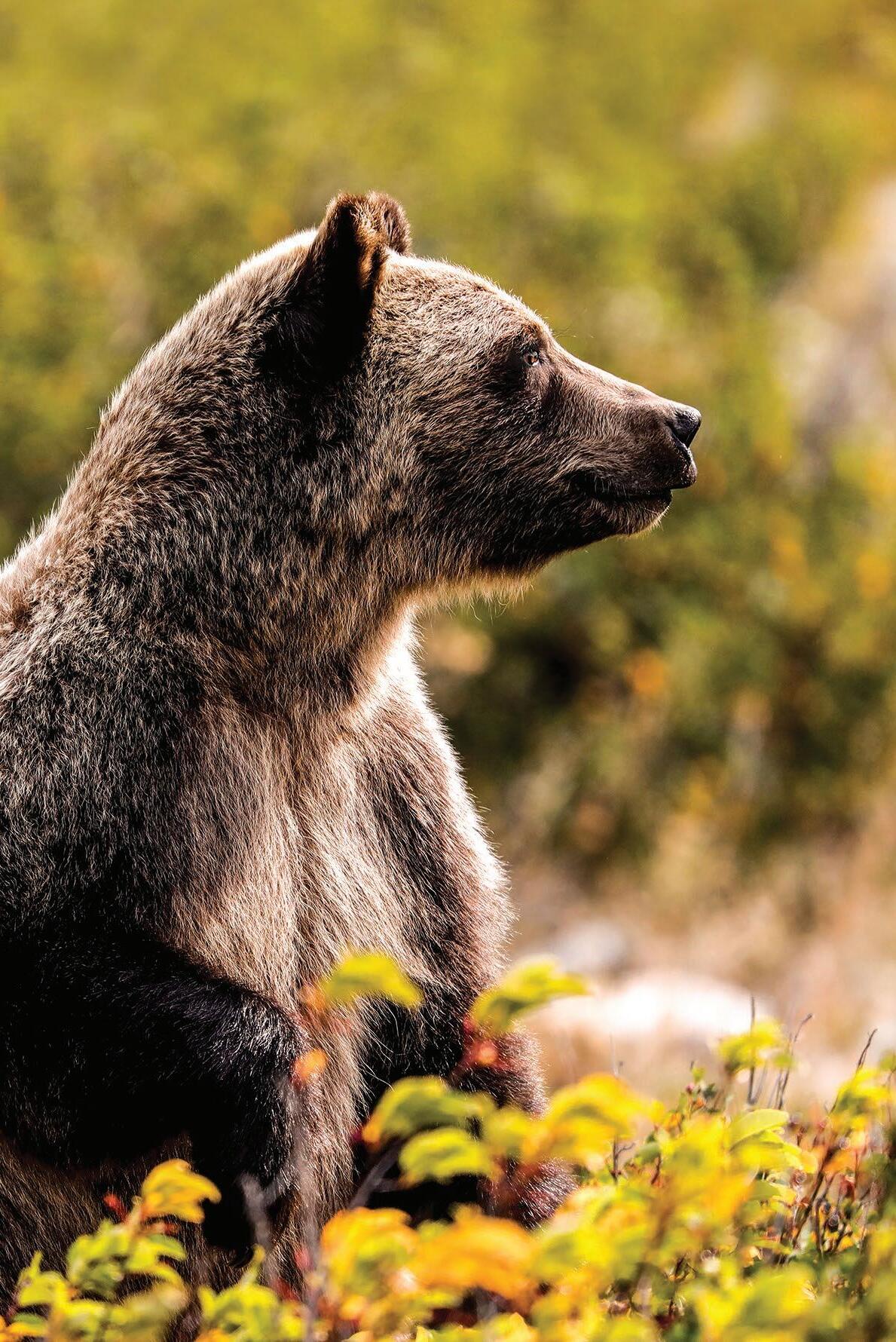
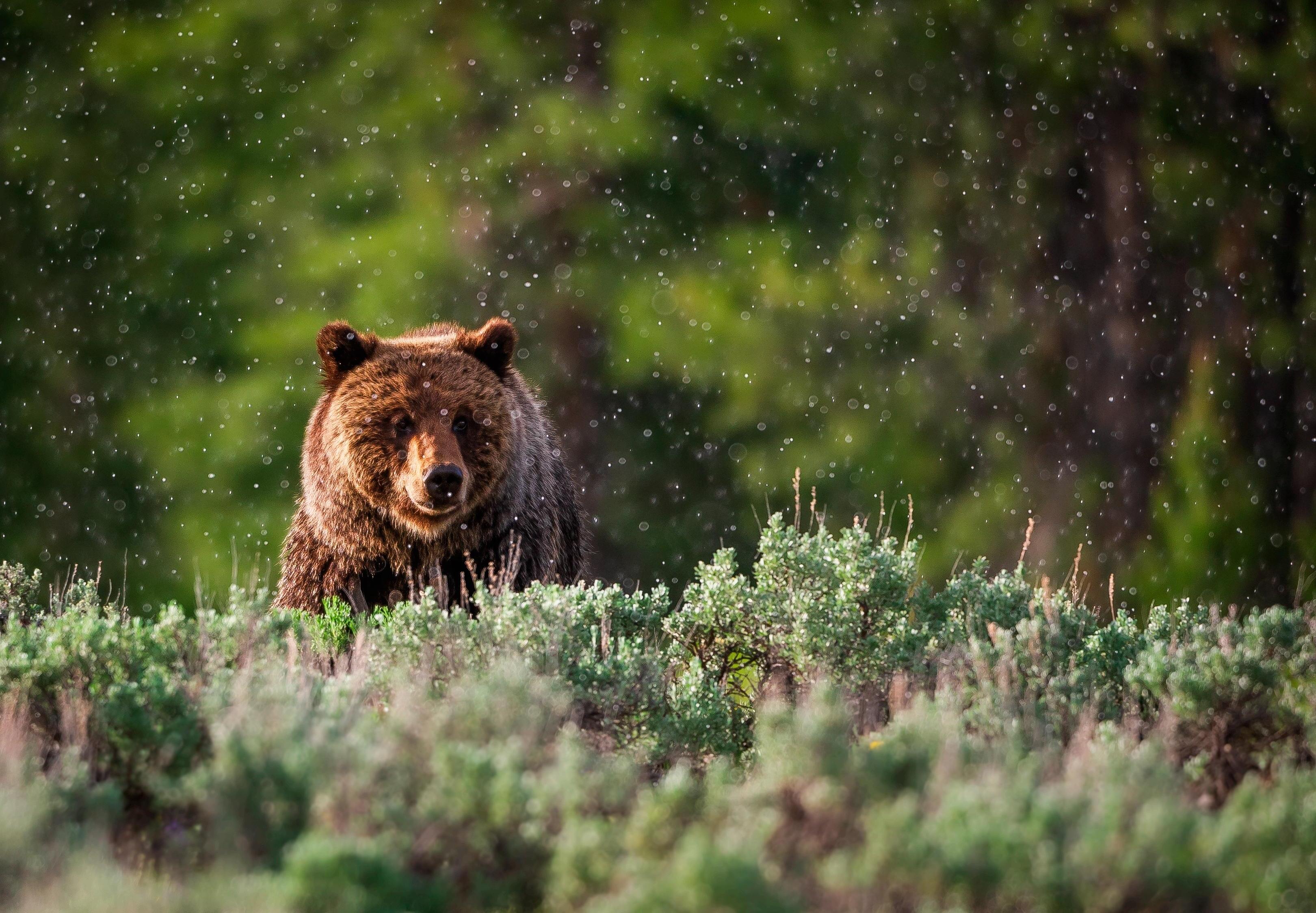
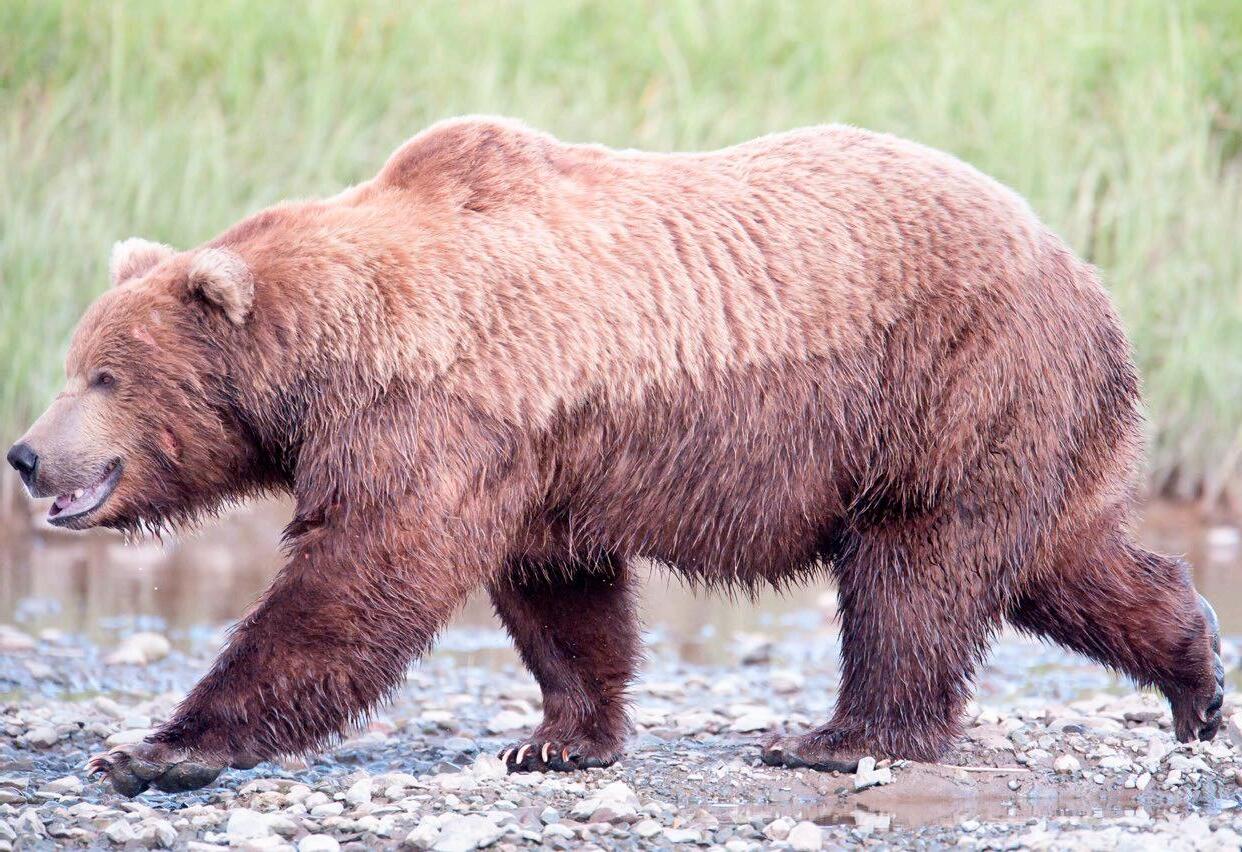
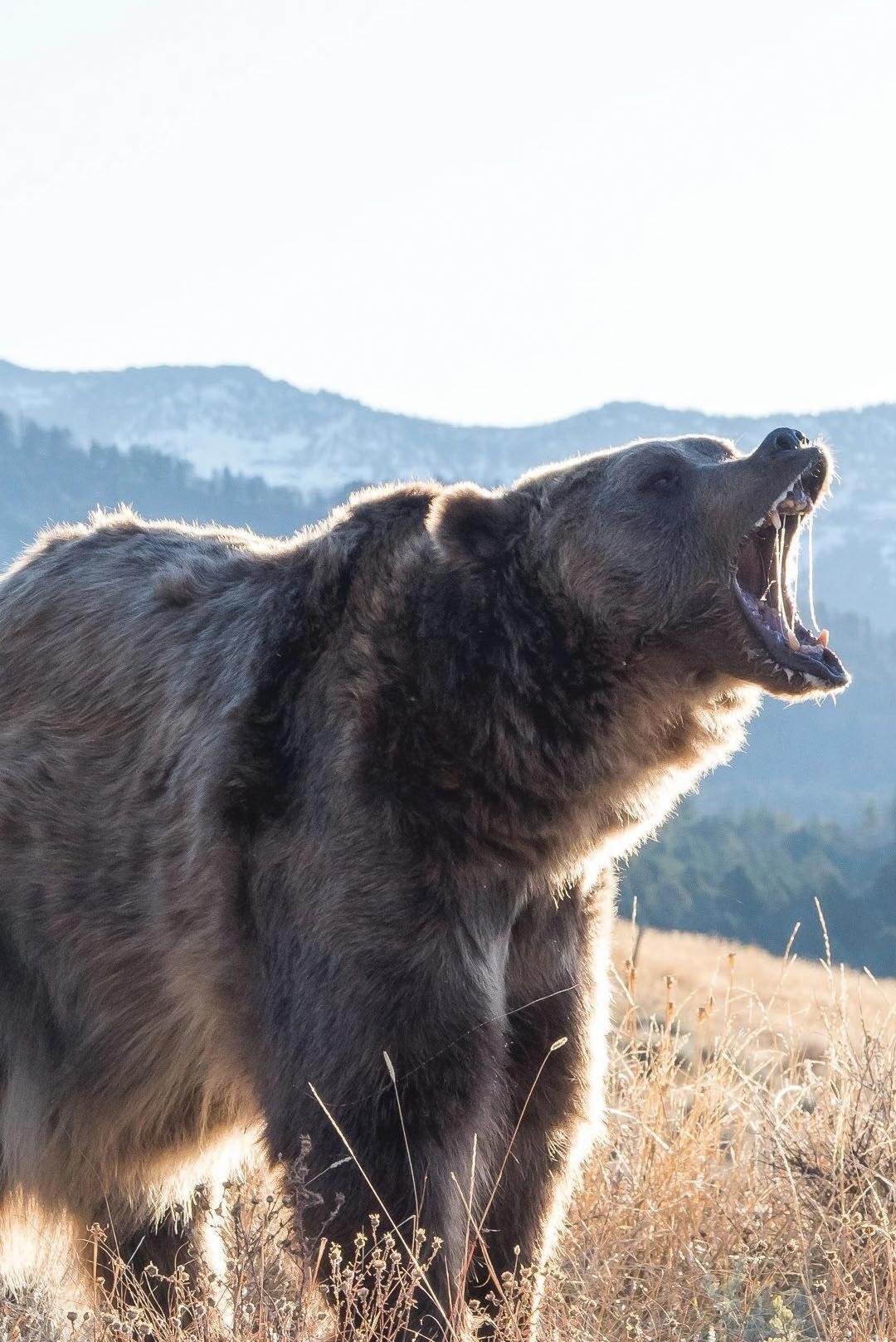
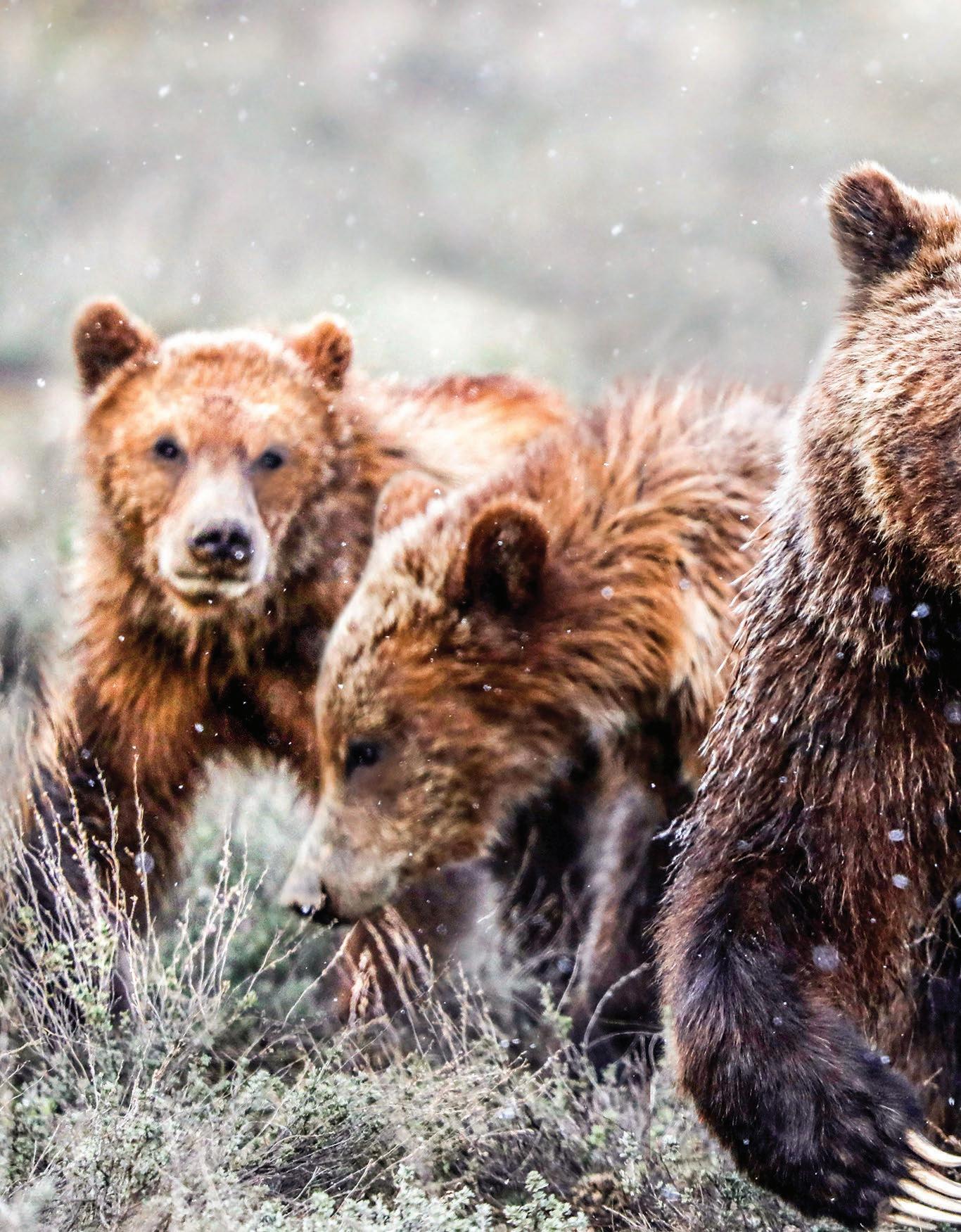
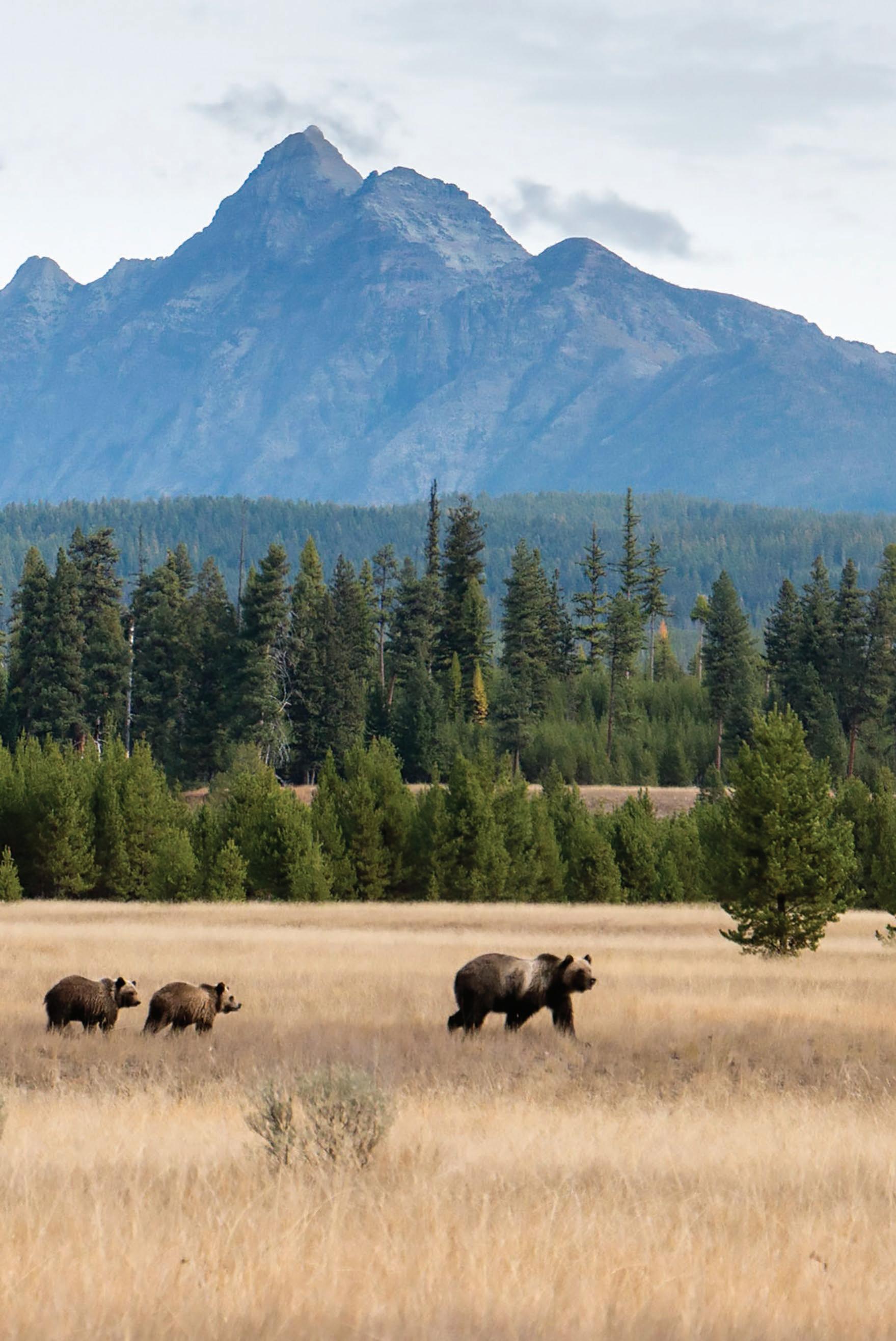
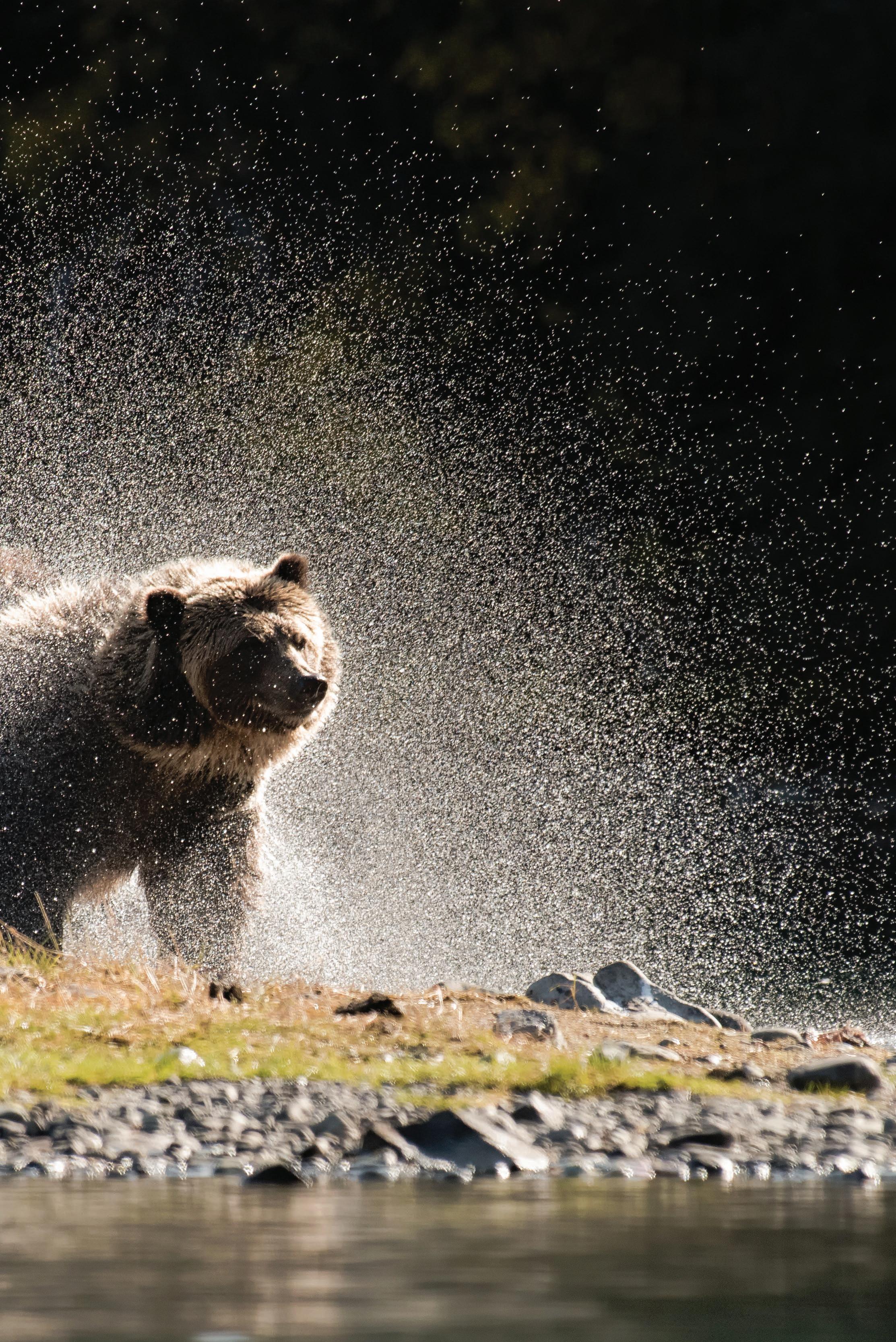
If you see a bear with a hump, you’re probably looking at a grizzly. They have a large head, small round ears, and a large hump on their shoulders. They also have large paws with claws as long as your fingers!
Grizzly bears, also called brown bears, can be found in many colors. Grizzlies may be pale blond, cinnamon, light brown, darker brown, or even almost black.
STRAIGHT FACE PROFILE
• shorter claws 1.5”
• toes more separated
TALL POINTED EARS
RUMP HIGHER THAN SHOULDERS
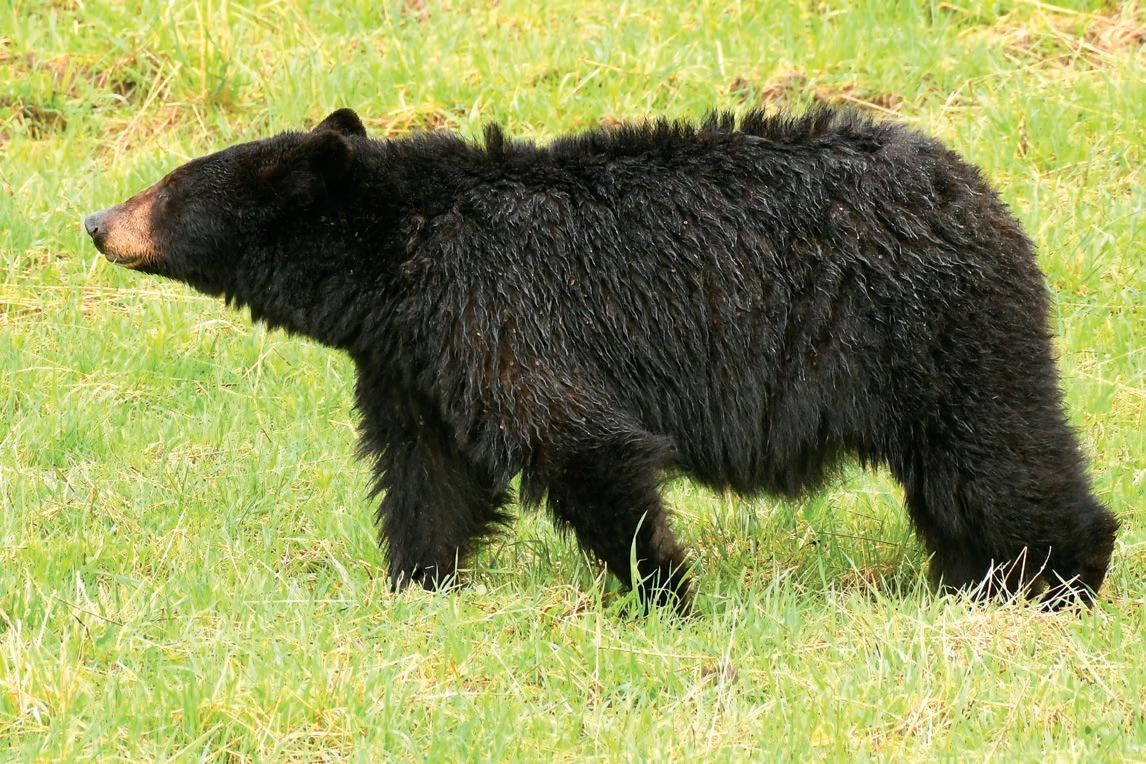
SHORT ROUNDED EARS
DISHED FACE PROFILE
• longer claws 2”-4”
• toes closer together
LONG CLAWS
SHORT CLAWS
SHOULDER HUMP
RUMP LOWER THAN SHOULDERS
Historically, grizzly bears were found all over Montana. Today, they can be found in western Montana.
Lewis and Clark recorded 13 significant encounters with grizzly bears - and had many more sightings.
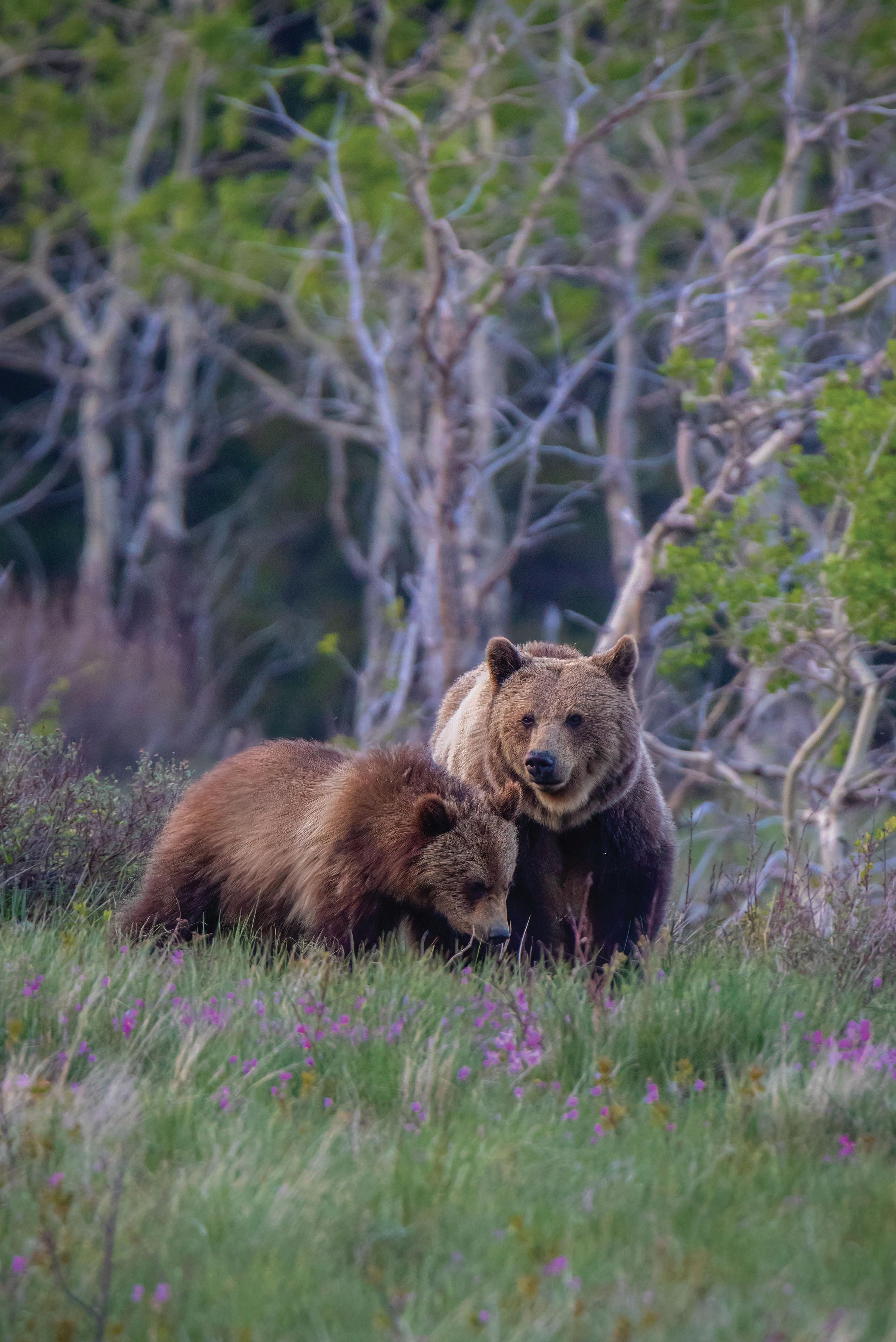
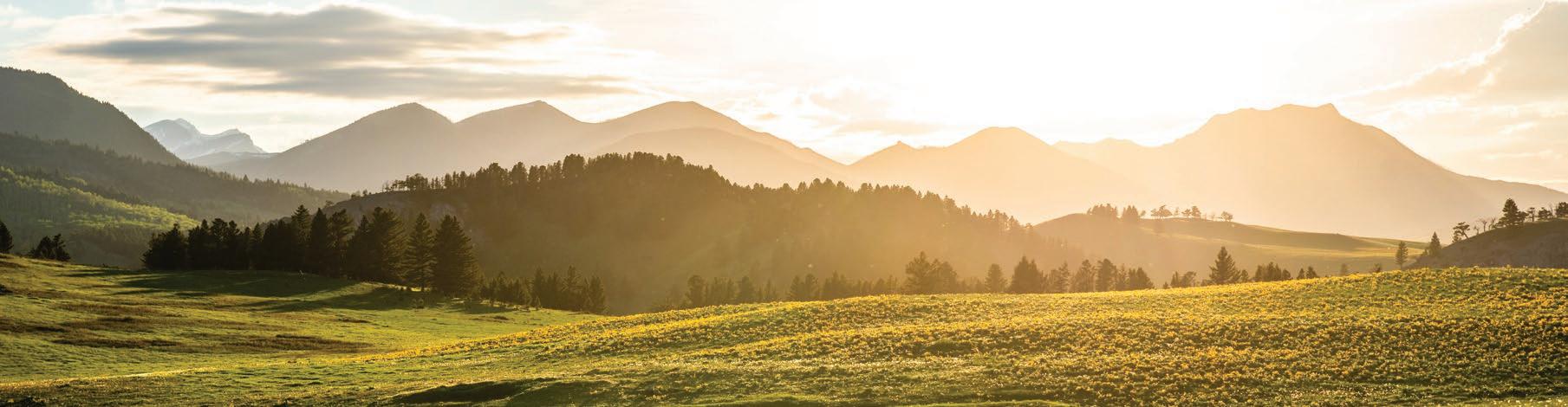
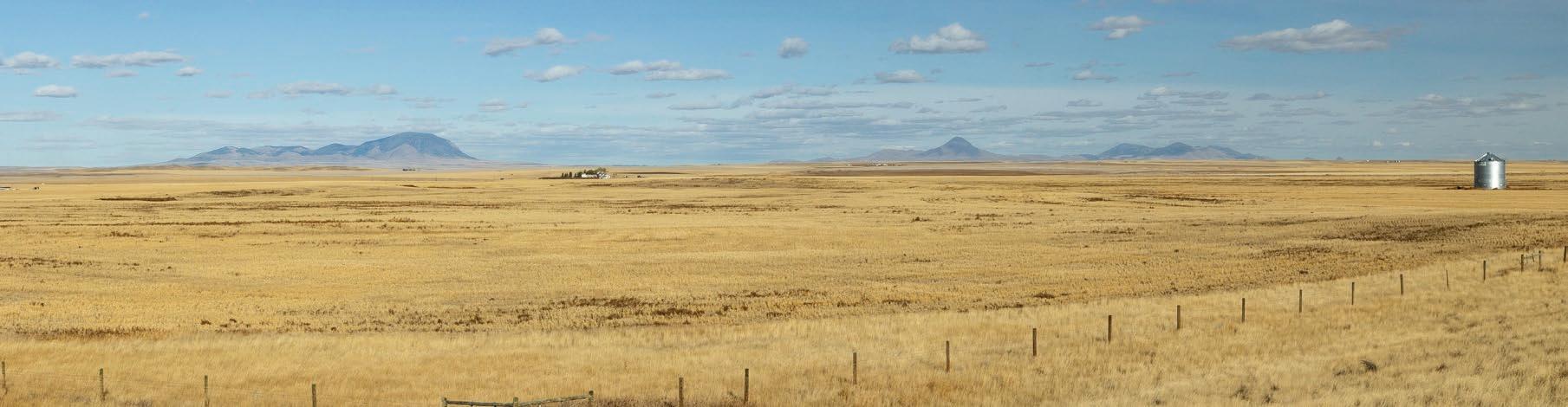
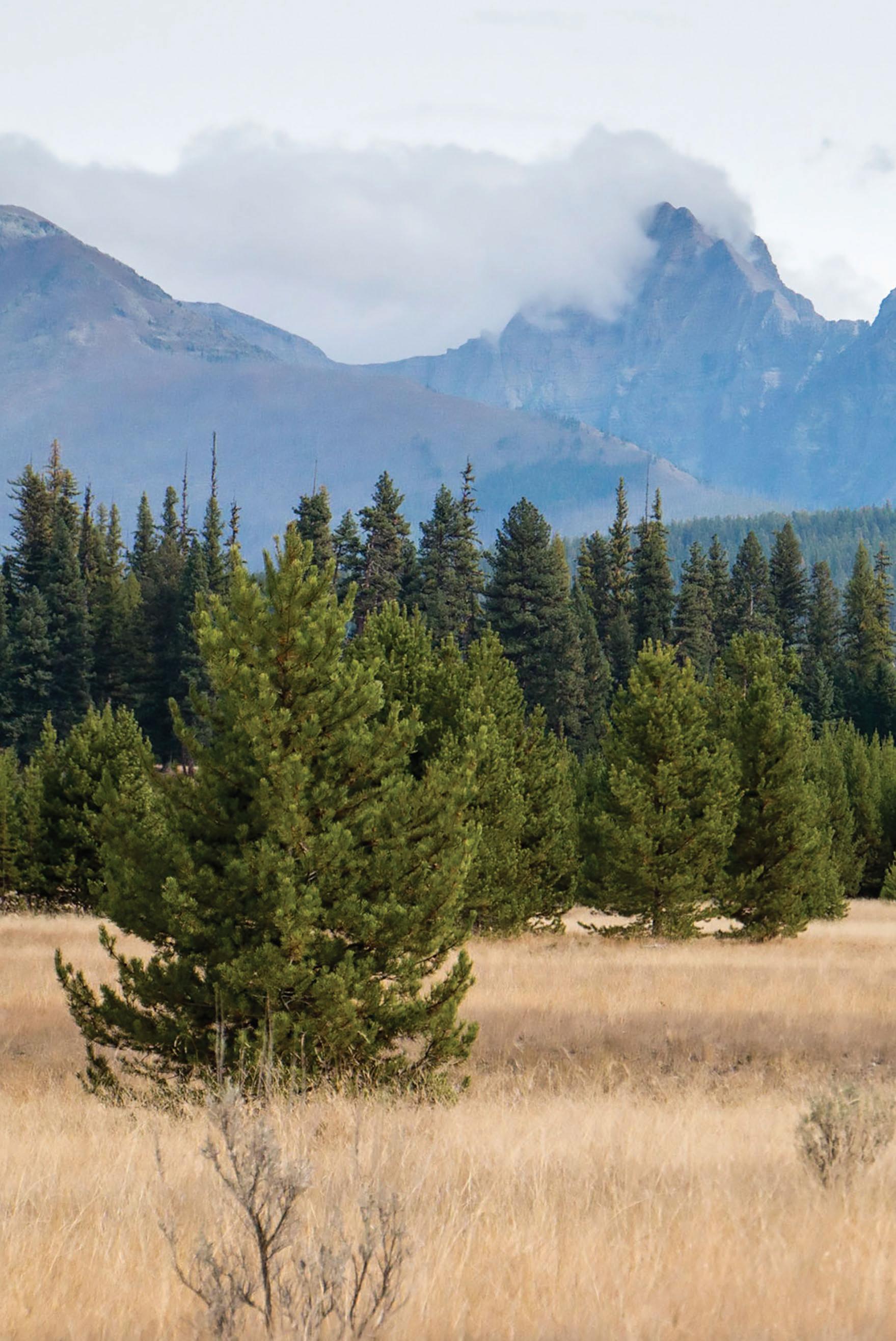
Habitat is where a species has the food, water, shelter, and space it needs to live. Typically a habitat is described by the plants and weather of a place. Grizzly bears have a wide range of habitats. They can live in high mountain forests, wide open prairies, and just about everywhere in between. Grizzlies need both covered and open areas in their habitat. Prairies, meadows, and open fields are important parts of their habitat.
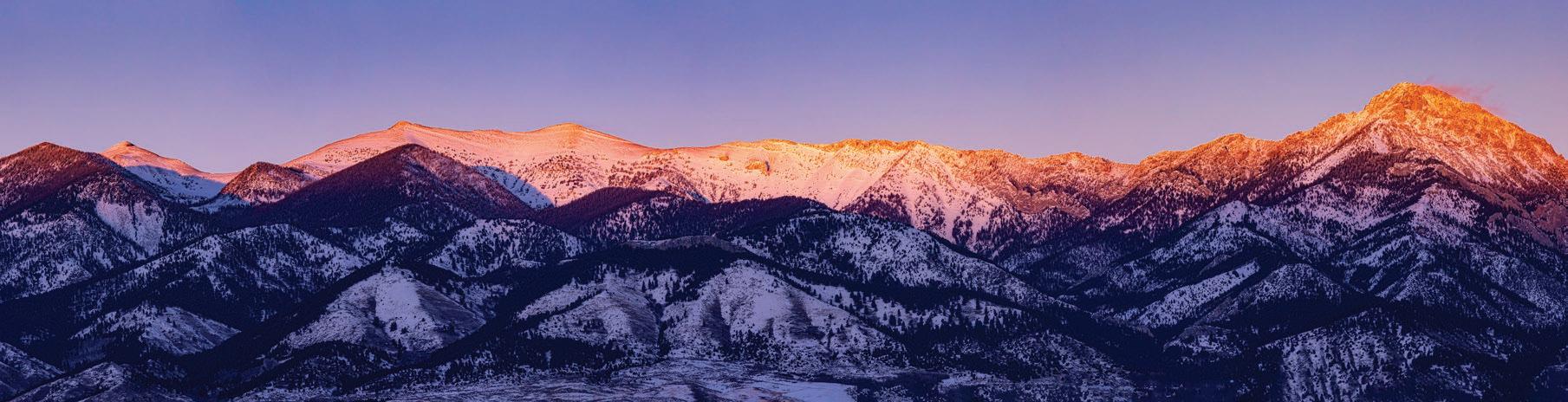
How would living in a range of habitats help grizzly bears?
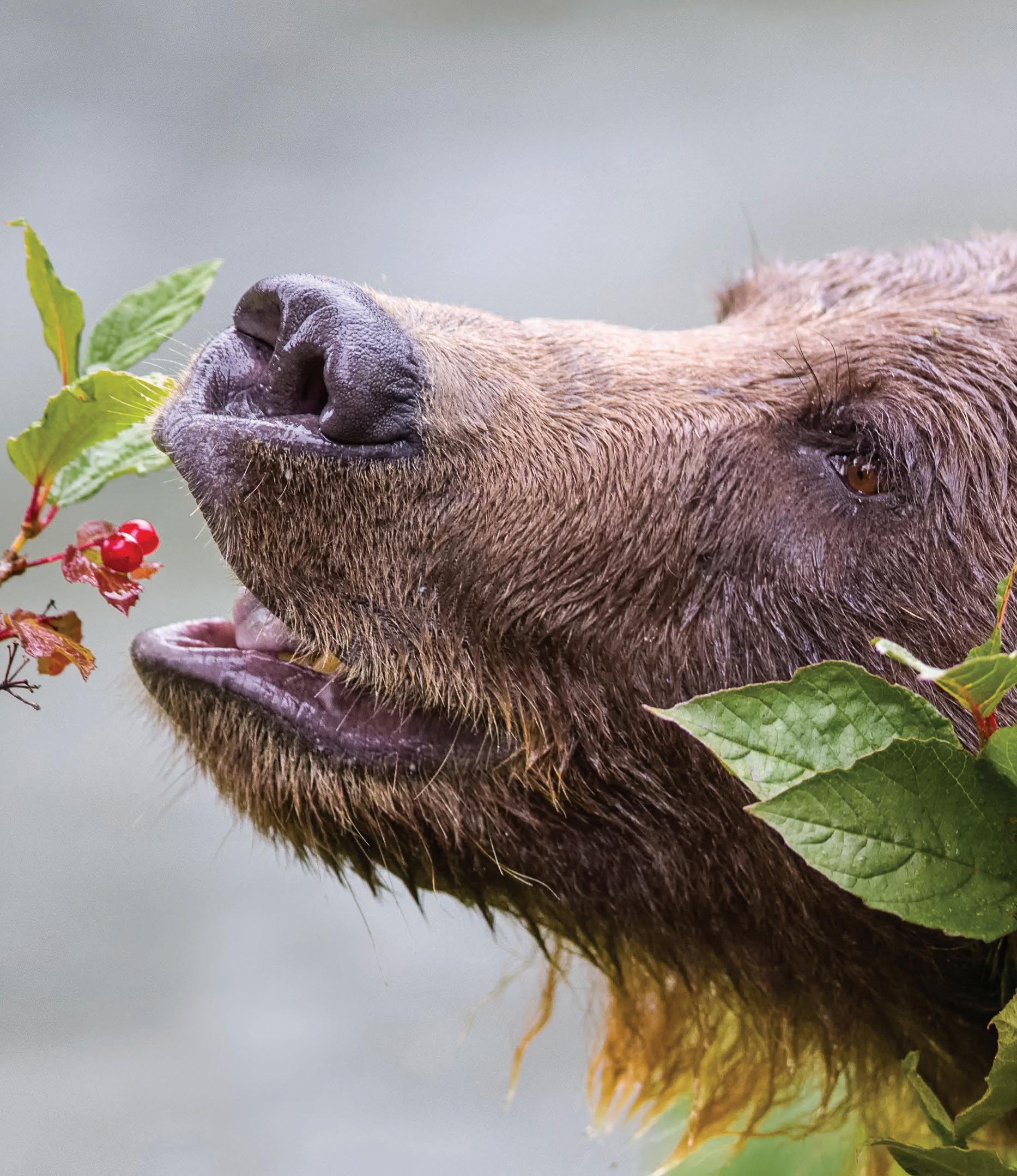
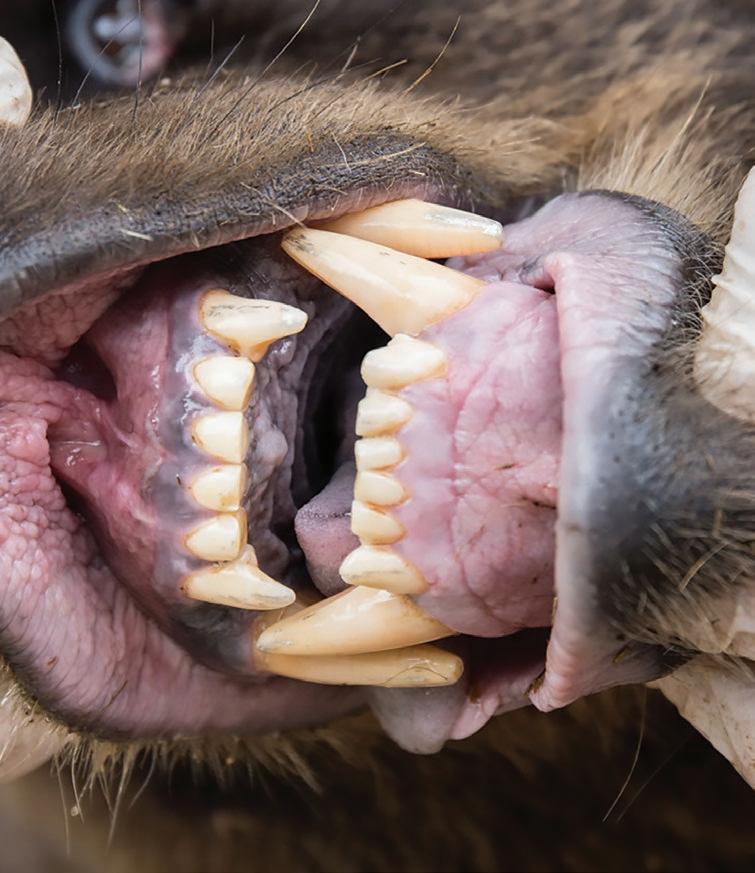
With large claws and sharp teeth, grizzly bears look like strong predators. But did you know you are more likely to find them hunting for berries and bugs than deer and elk? Grizzly bears are omnivores, which means they eat both plants and animals.
Can you draw a food web for a grizzly bear?
They use their large claws to dig up bugs and plants, catch fish and rodents, break open logs, roll rocks, and pick berries.
A grizzly bear’s best tool for finding food is its nose. Scientists say grizzly bears can smell 700 times better than a human! The inside of their nose looks like a honeycomb, with millions of scent receptors that help give grizzlies a super sense of smell. They can sniff out their dinner from almost twenty miles away!
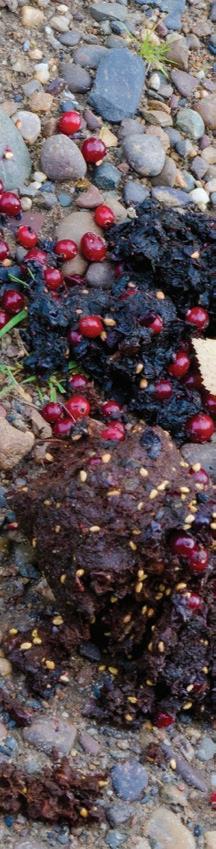
Biologists studied bear scat to find out what bears eat all year. Although many things were found in grizzly scat , here are the top foods for each season:
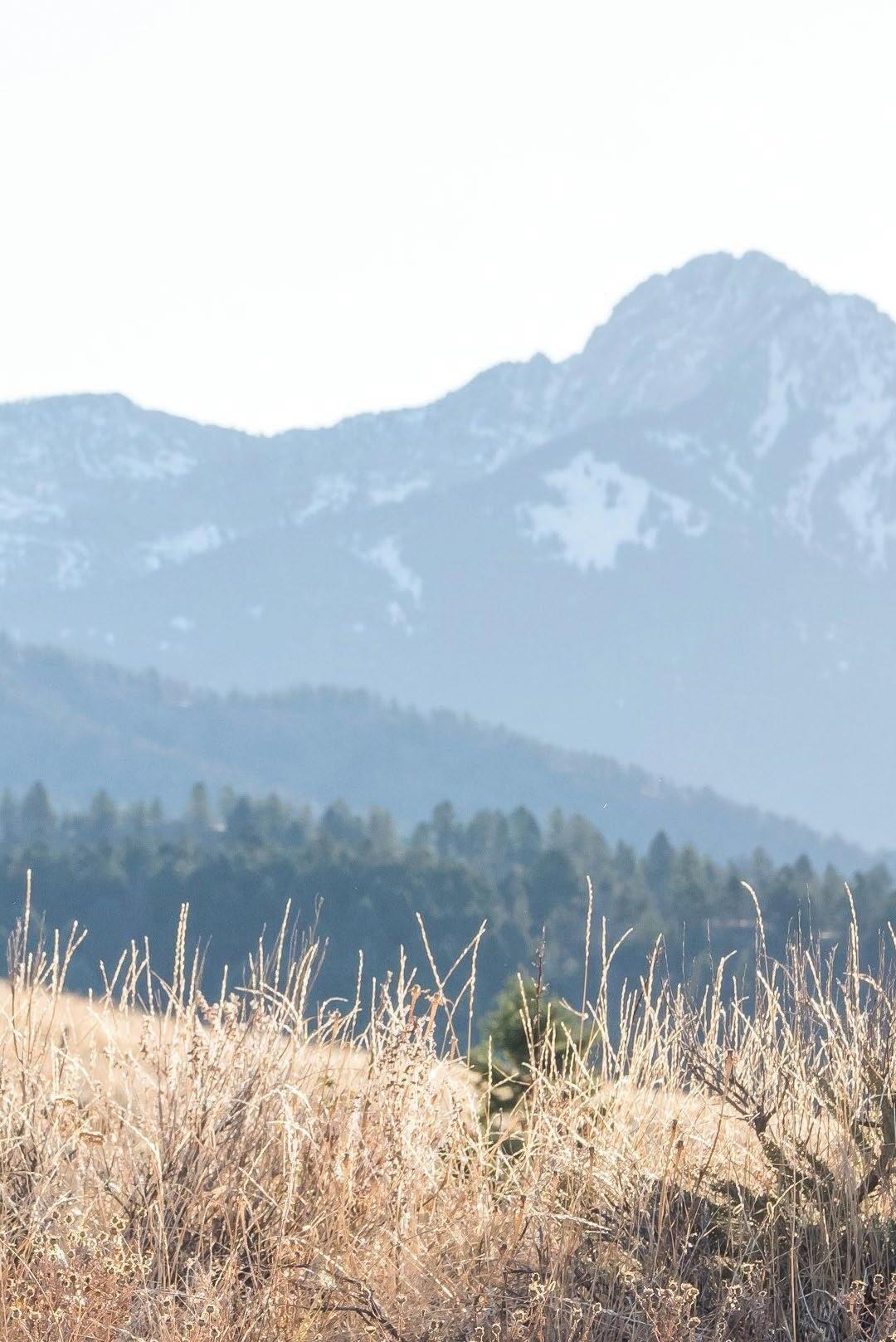
Animal remains, rodents, and plants
Pine seeds, fish, and berries. In fall bears are in a stage called hyperphagia. This means they are overeating to put on fat.
LIKE A SCIENTIST
Why didn’t they study bear scat from winter?
In Montana, bears hibernate during winter. This means they go into a deep sleep for about 4 months. They don’t need to eat while they hibernate. They live off their fat layer.
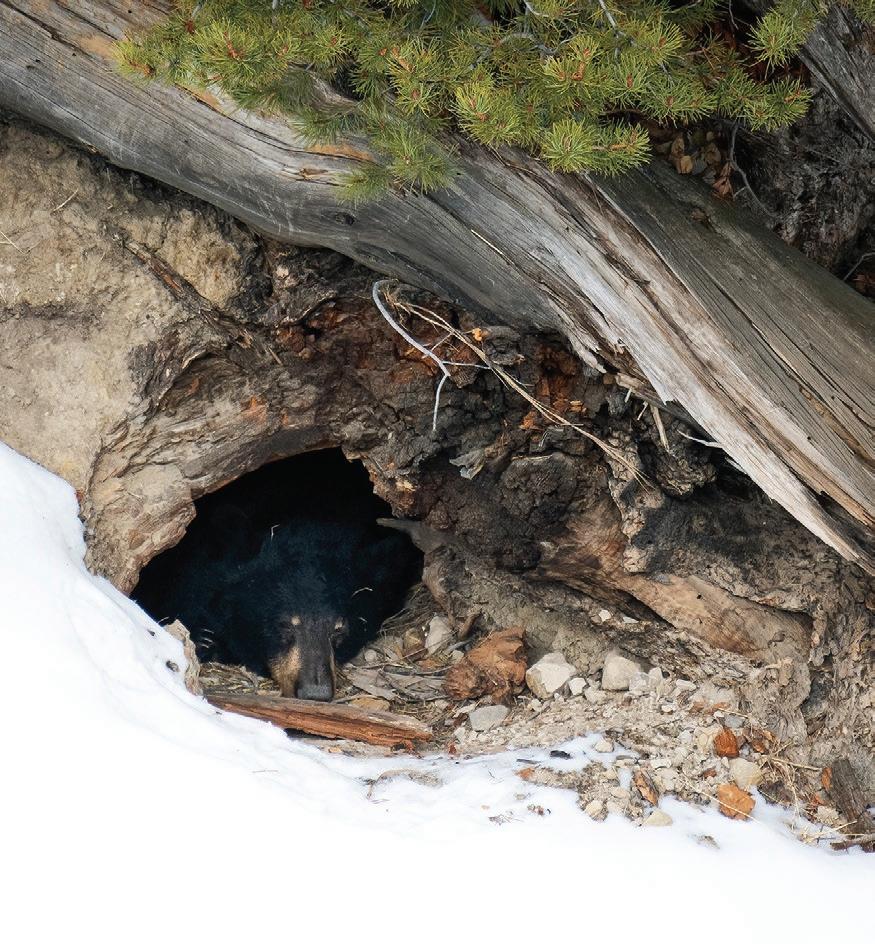
Bears dig their dens under trees, rocks, or into the side of a mountain. Dens are often found in mountain habitats.
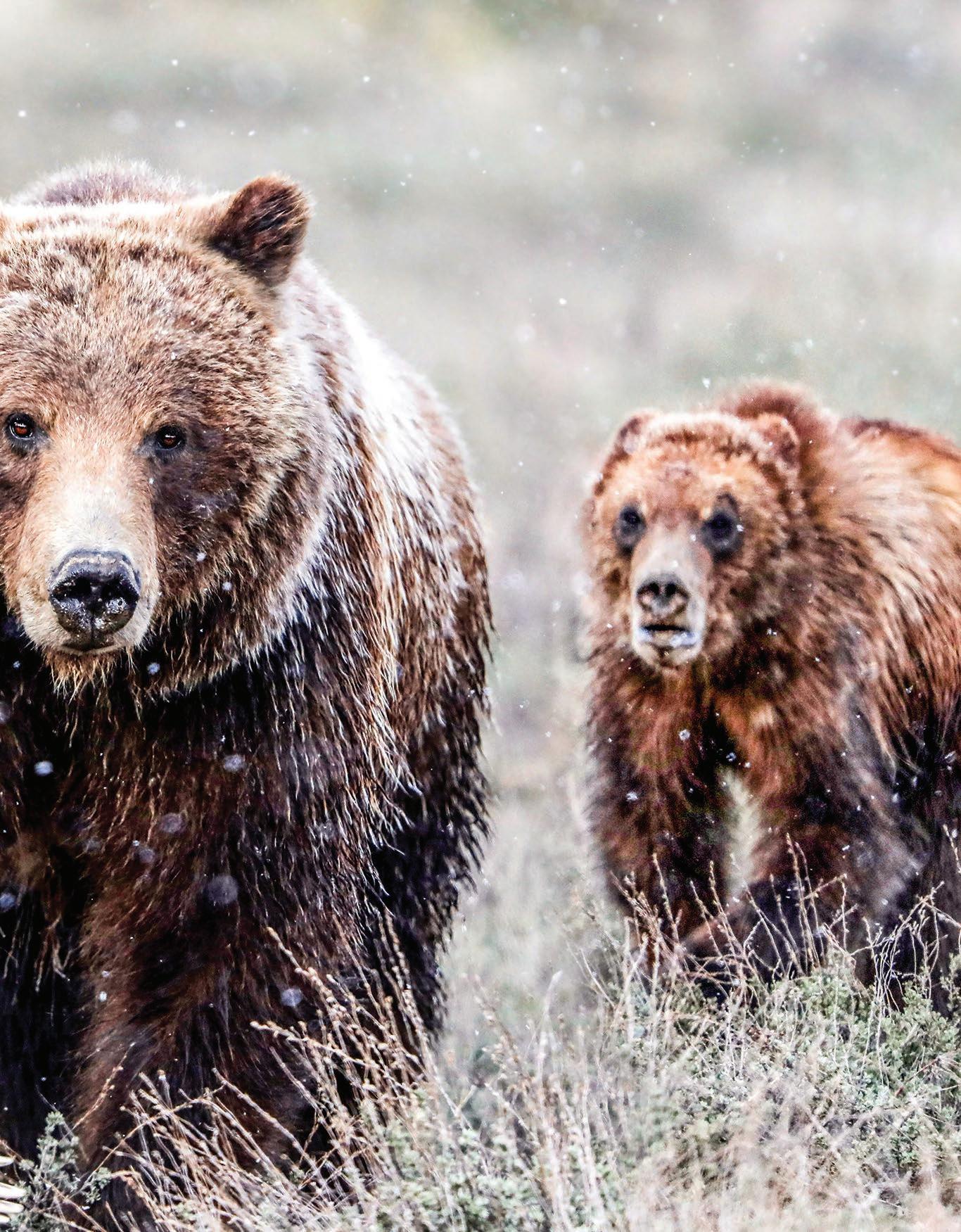
Grizzlies come out of hibernation at different times. Older male grizzly bears come out first, then females and older cubs, and last, the mama bears with young cubs.
This gives the baby bears, or cubs, more time to grow in the safety of their dens.
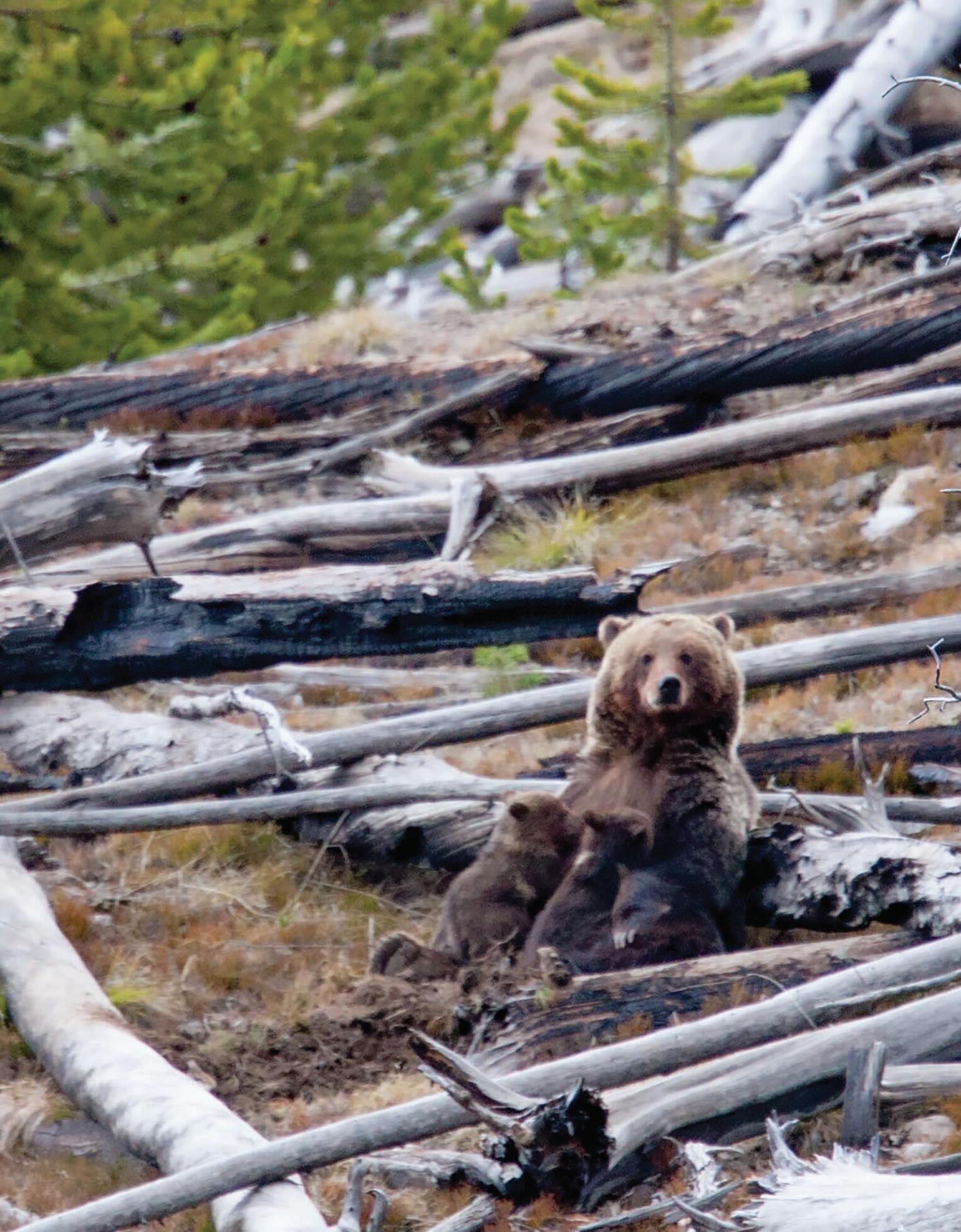
Cubs are born in the den during hibernation.
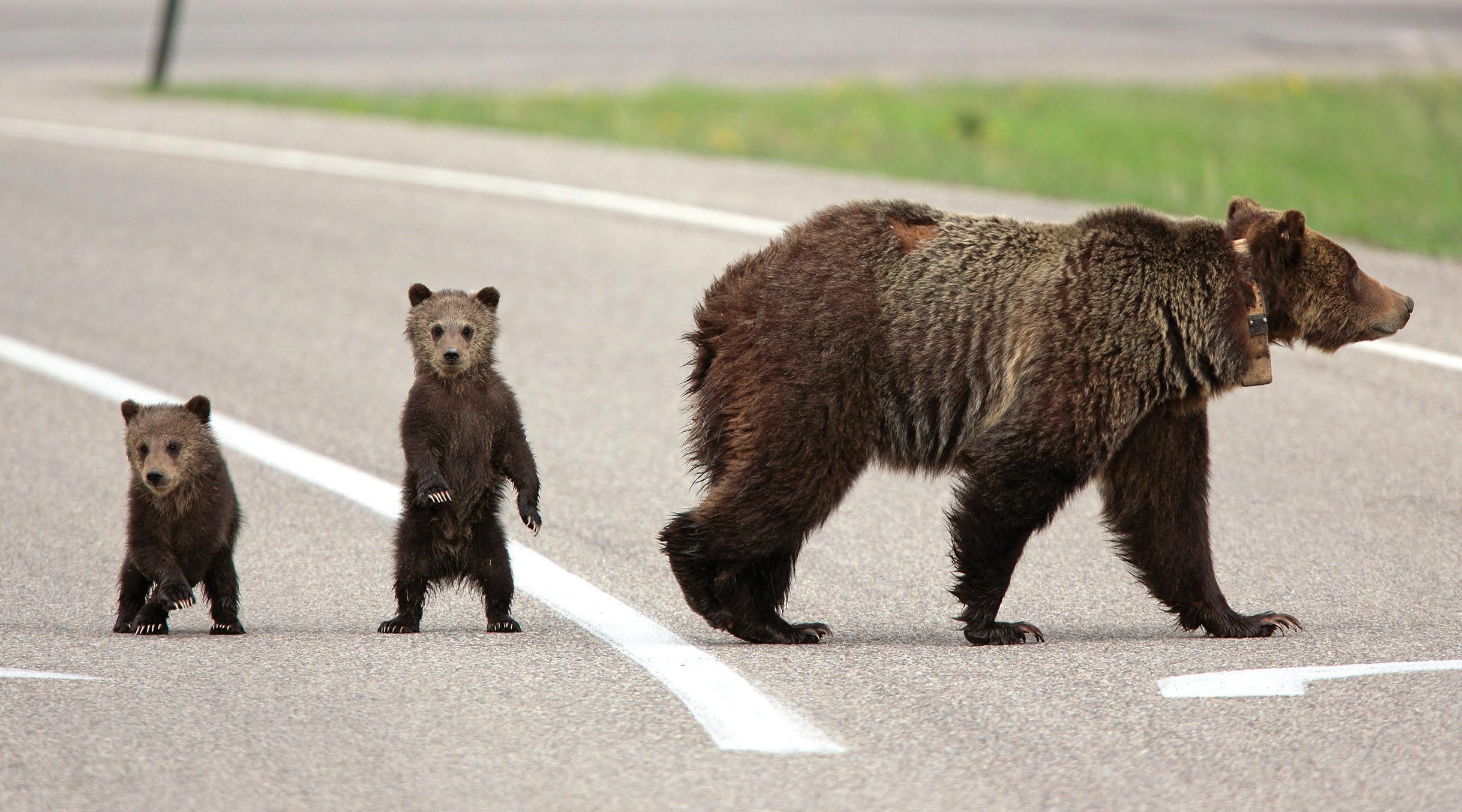
At only 1 pound, these little bears snuggle up and nurse from their mother while she sleeps. Two is the average number of cubs for grizzly moms in Montana.
Bears in the wild can live to be in their twenties.
© ADDIE LOHMAN
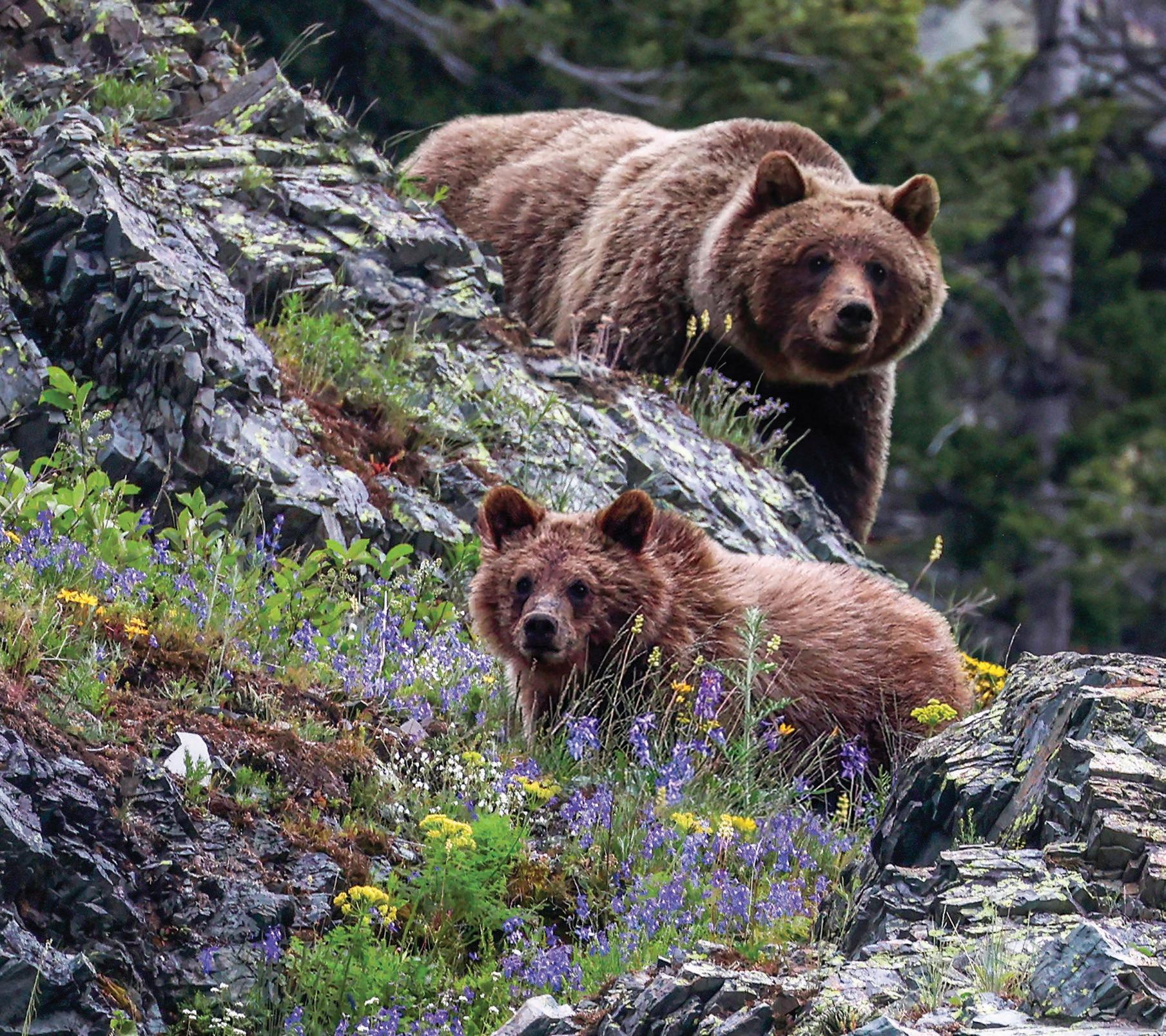
Most bears spend their first two years with their mother. A bear is considered to be an adult around the age of 5. A female bear will have her first cubs at around 5 or 6 years old.
Life is tough for bear cubs. Only about half of grizzly bear cubs born will make it to their second birthday.
In 1975, grizzly bears were listed as threatened under the Endangered Species Act.
A threatened species is a plant or animal that people are afraid could die off and become extinct . People do things to protect these species and their habitats, to help the species survive and grow in numbers. In the lower 48 states, there are over 2,000 grizzly bears. Montana has more grizzlies than any other state in the country except Alaska!
How could you count how many bears live in an area?
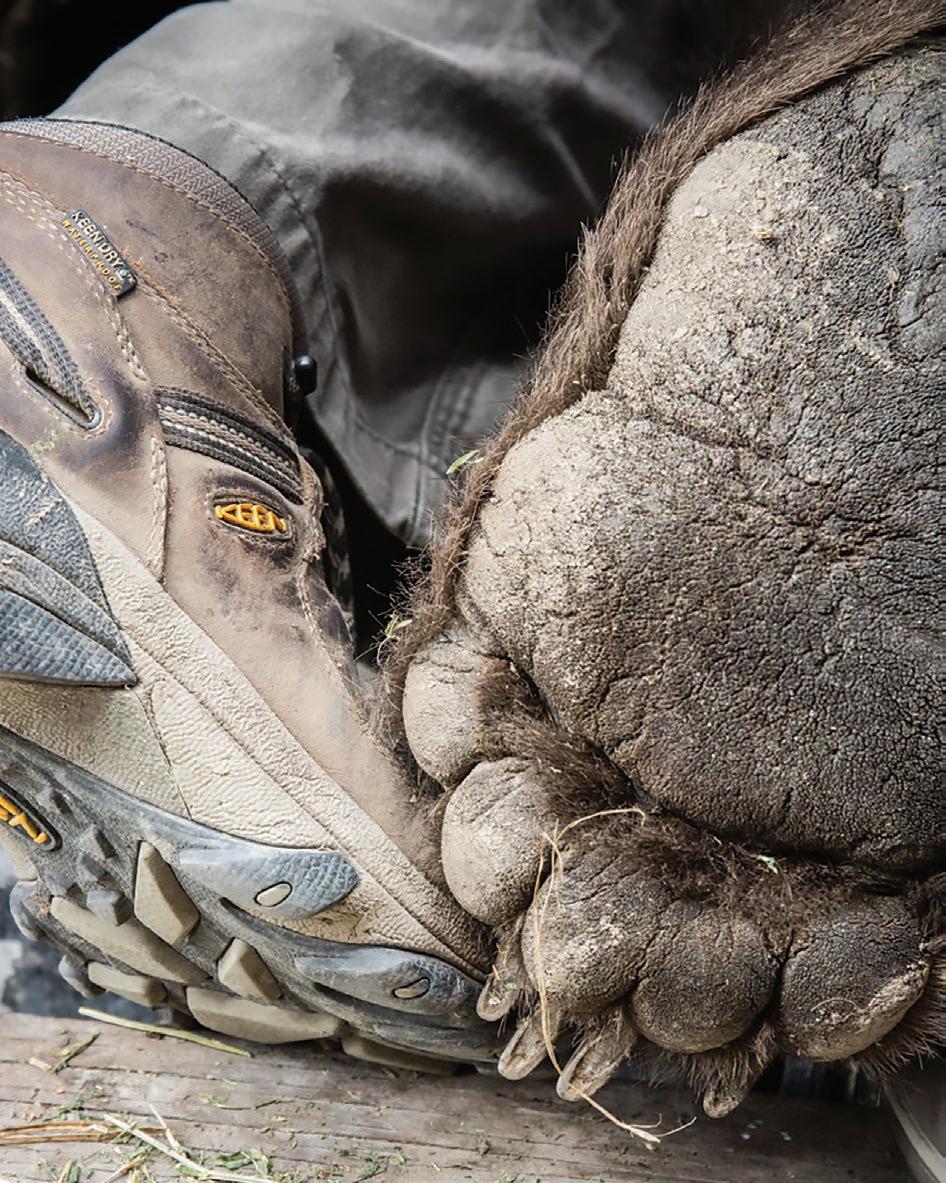

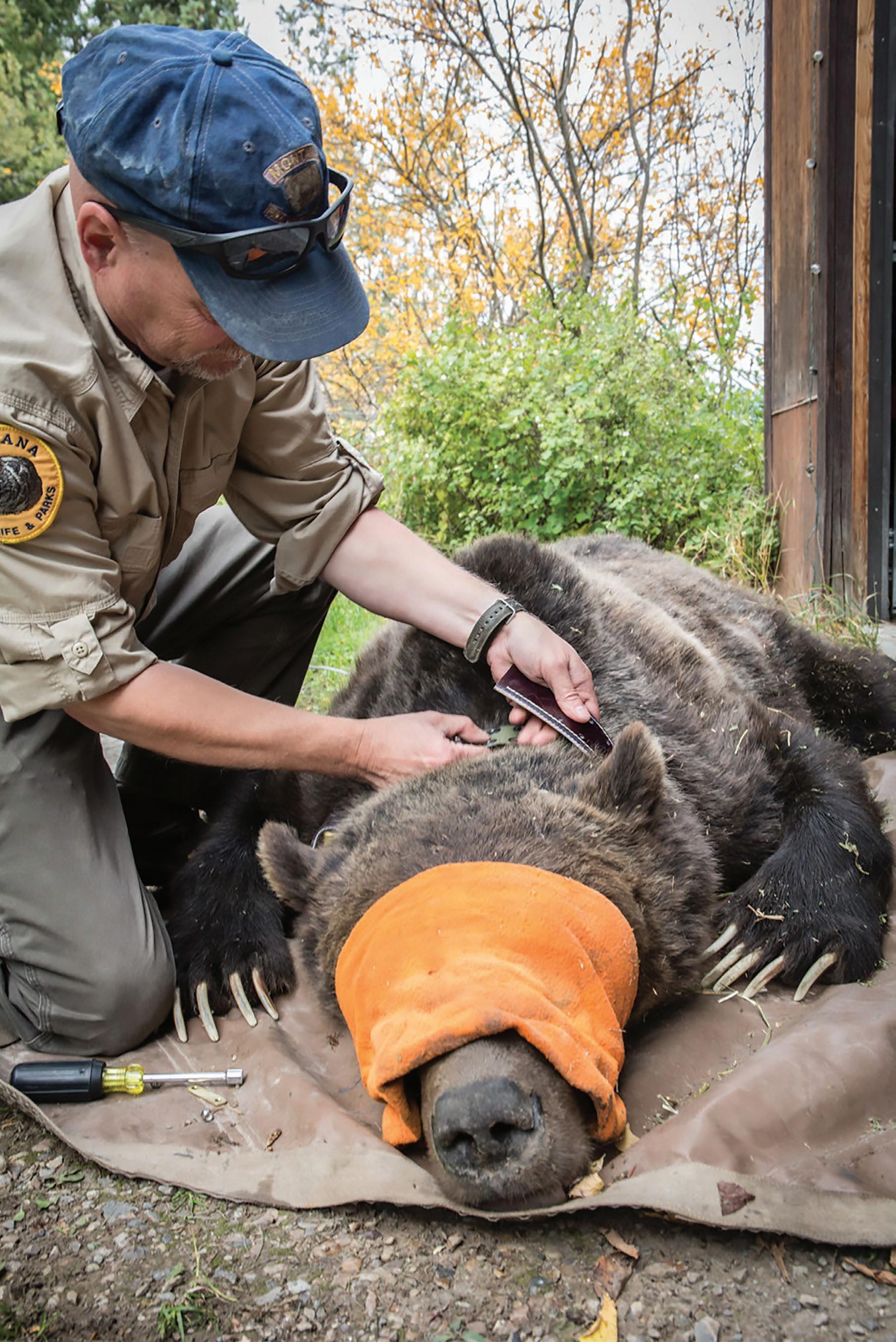
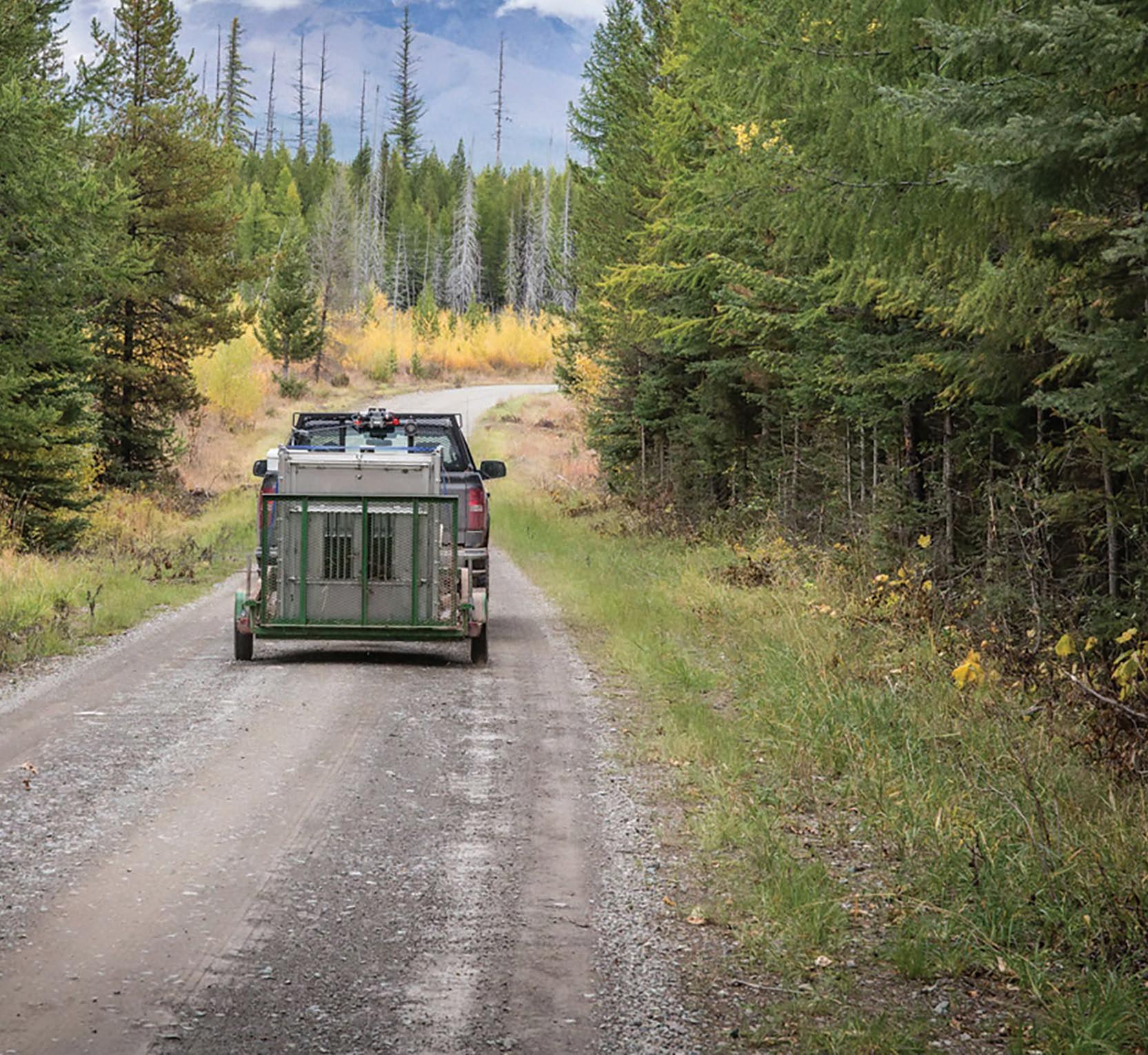
Sometimes grizzlies are trapped so they can be relocated or fitted with radio tracking collars.
Bears look for easy meals, and sometimes they get in trouble. You can help bears by making sure you clean up any food, garbage, or other smelly things outside your house or around your campsite.
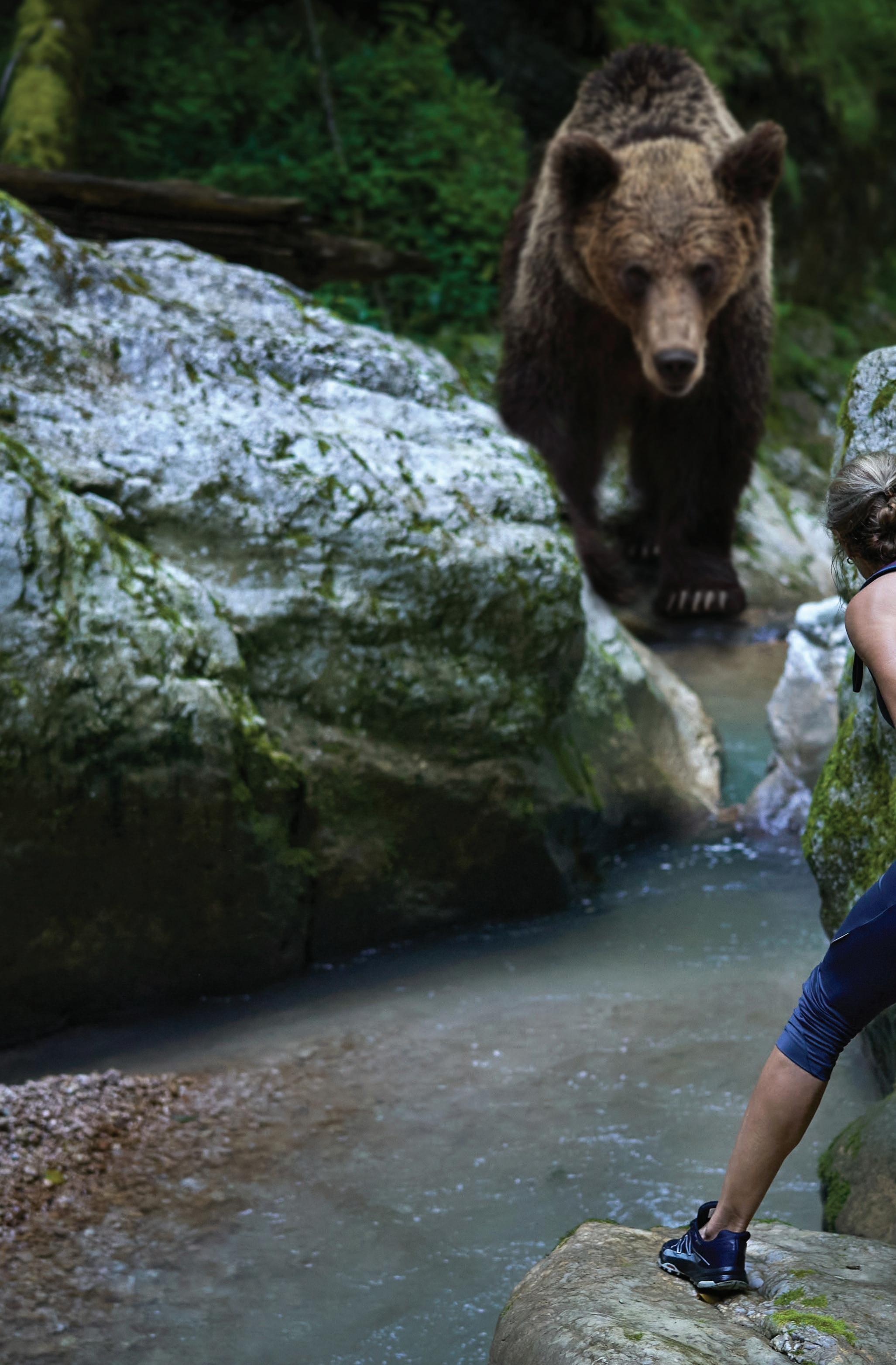
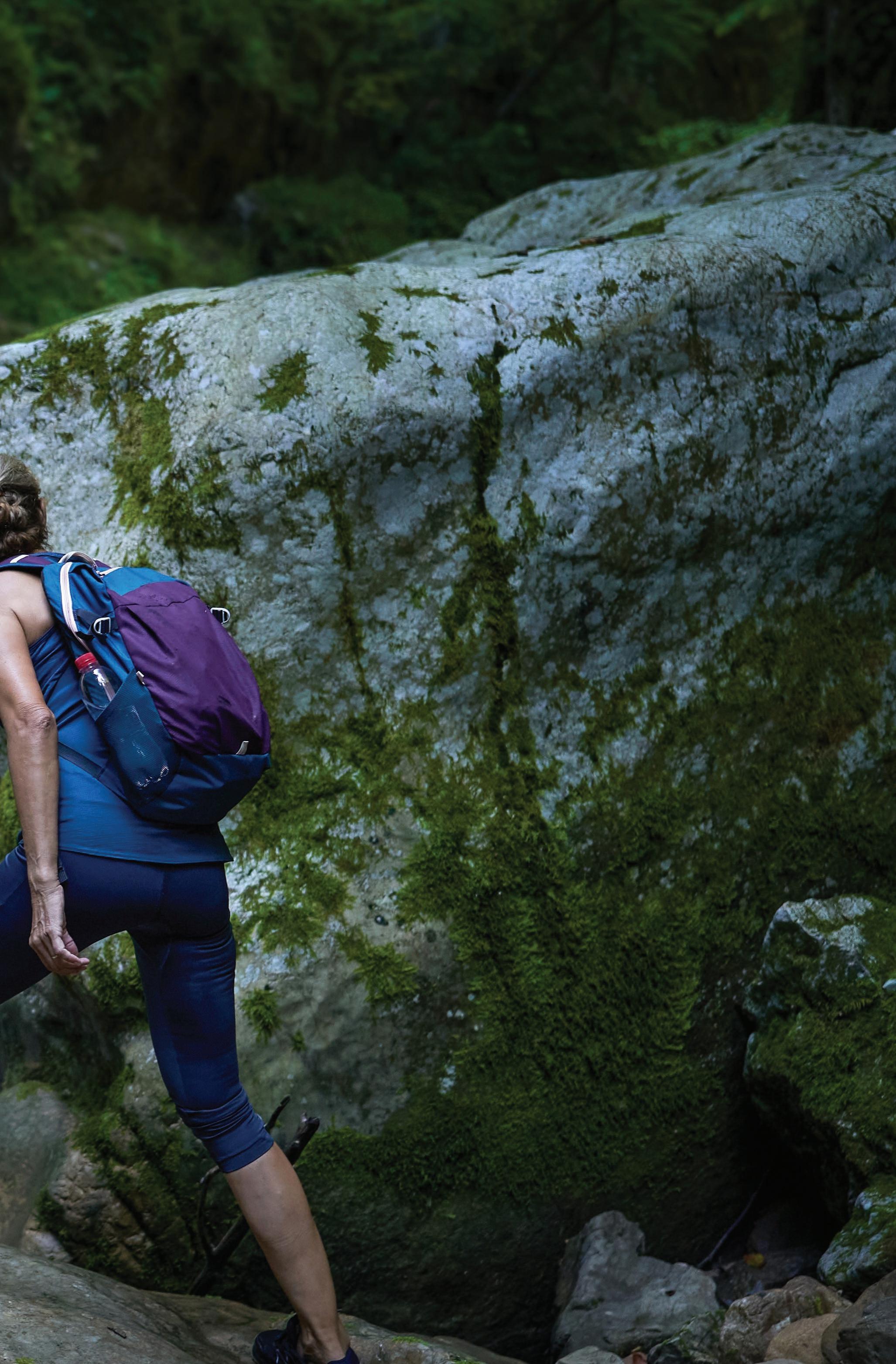
When hiking in bear country it’s important to make noise and travel in groups. Bears want to leave you alone. Making noise and letting them know you are there helps bears not become startled. Signs of a bear, like tracks or scat, tell you that you are in a bear’s habitat.
If you see a bear, stay with your grown-ups and be a listener. Never run from a bear or any predator.
BIOLOGIST
EXTINCT
HIBERNATION
HISTORICALLY
HYPERPHAGIA
OMNIVORE
PREDATOR
SCAT
A scientist who studies living things
There are no more living members of a species
A long period of deep sleep In the past
Overeating
A species that eats both plants and animals
An animal that hunts and kills other animals
Animal poop
1. How do you think biologists learn about bears?
2. How do we know how many bears can live in an area?
3. What signs might you see if there is a bear living somewhere?
4. What can humans do for bears?
Enjoy your time outside, and always try to think like a scientist!