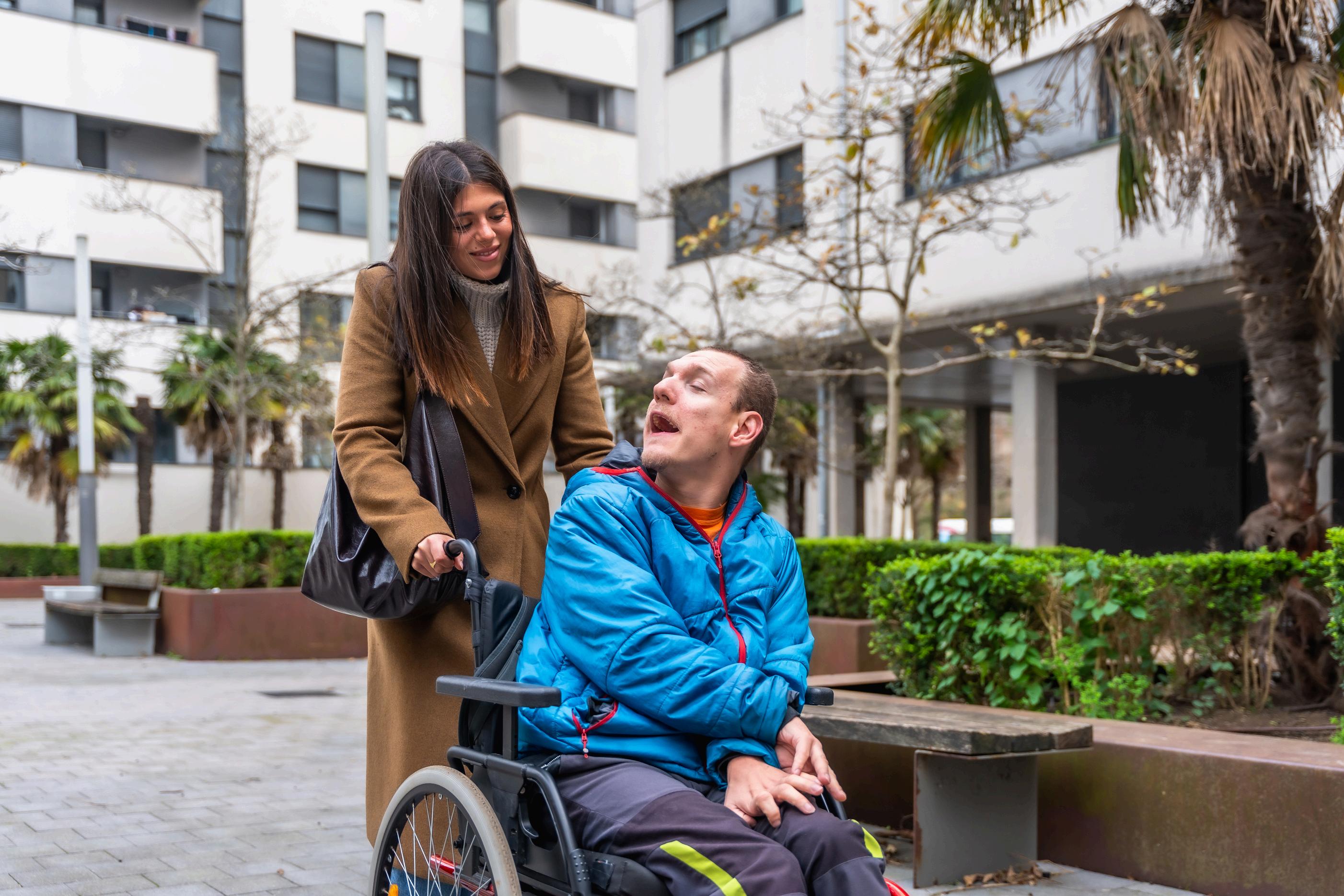
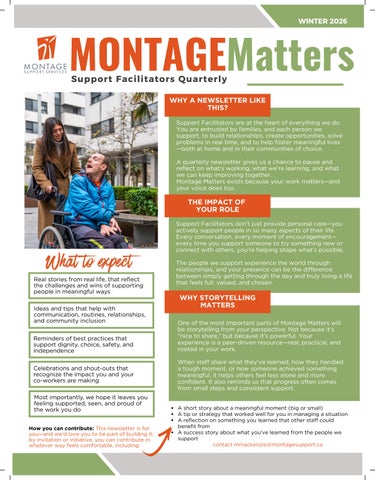
Support Facilitators are at the heart of everything we do You are entrusted by families, and each person we support, to build relationships, create opportunities, solve problems in real time, and to help foster meaningful lives both at home and in their communities of choice.
A quarterly newsletter gives us a chance to pause and reflect on what’s working, what we’re learning, and what we can keep improving together Montage Matters exists because your work matters and your voice does too

Real stories from real life, that reflect the challenges and wins of supporting people in meaningful ways
Ideas and tips that help with communication, routines, relationships, and community inclusion
Reminders of best practices that support dignity, choice, safety, and independence
Celebrations and shout-outs that recognize the impact you and your co-workers are making
Most importantly, we hope it leaves you feeling supported, seen, and proud of the work you do
How you can contribute: This newsletter is for you and we’d love you to be part of building it; by invitation or initiative, you can contribute in whatever way feels comfortable, including:
Support Facilitators don’t just provide personal care you actively support people in so many aspects of their life. Every conversation, every moment of encouragement every time you support someone to try something new or connect with others, you’re helping shape what’s possible.
The people we support experience the world through relationships, and your presence can be the difference between simply getting through the day and truly living a life that feels full, valued, and chosen.
One of the most important parts of Montage Matters will be storytelling from your perspective Not because it’s “nice to share,” but because it’s powerful Your experience is a peer-driven resource real, practical, and rooted in your work
When staff share what they’ve learned, how they handled a tough moment, or how someone achieved something meaningful, it helps others feel less alone and more confident It also reminds us that progress often comes from small steps and consistent support
A short story about a meaningful moment (big or small)
A tip or strategy that worked well for you in managing a situation
A reflection on something you learned that other staff could benefit from
A success story about what you’ve learned from the people we support contact mmackenzie@montagesupport ca

This
alue a common human exp ach each other in a pers e and control Montage is a r and the people we sup upports, including fam elcomed and involved


What it is: Make it routine to notice and name strengths in colleagues and people you support skills, effort, personality traits, or small successes
Why it fits this value:
Affirms that every person adds value and promotes a culture of appreciation
How to use it:
During team meetings, include a round of one strength I noticed this week.
Use the same practice with people you support (“I noticed how patient you were when Wheeltrans was late three times this week.”)
What it is: Create shared activities where staff and the people supported participate in meaningful roles together (not staff doing for, but doing with).
Why it fits this value:
Focuses on equality, belonging, and the idea that everyone contributes to creating home
How to use it:
Rotate responsibilities such as leading a game night, setting up meals, choosing music, or welcoming guests
Assign roles based on interests and strengths

February 2026
What it is: Begin each shift with a short checkin, where everyone - staff and people supported - can share how they’re feeling and identify one choice they’d like honoured that day (e g , meal, activity, communication style)
Why it fits this value:
Promotes belonging, person-centred listening, and shared control
How to use it:
Use simple language or visuals, be creatively inclusive for those who don’t communicate with words
Rotate who leads the huddle, including people we support

What it is: Before planning any support, team members ask, “Who already knows or cares about this person, and how can we invite them in?”
Why it fits this value:
Recognizes family and organic relationships as enduring and valuable
How to use it:
When preparing for appointments, celebrations, goals, or crises, identify natural supports who can participate
Encourage people supported to choose who they’d like involved.
Leadership and Legacy
BLACK LEGACY AND LEADERSHIP: CELEBRATING CANADIAN HISTORY & UPLIFTING FUTURE GENERATIONS


Contributions that matter
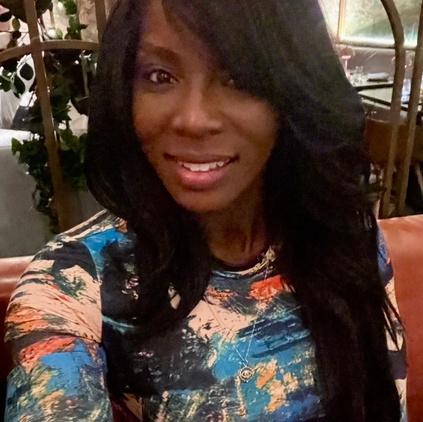
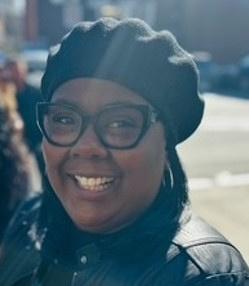
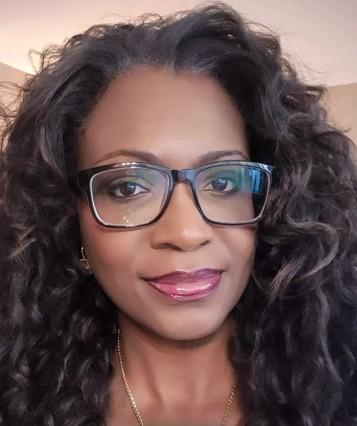
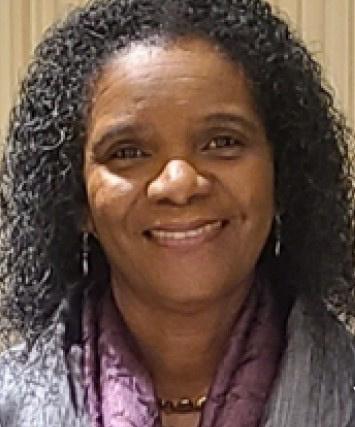
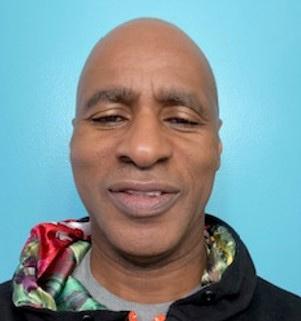
This Black History Month, we celebrate the legacy and leadership of Black people in developmental services, and recognize the essential contributions they have made and continue to make in supporting adults with intellectual and developmental disabilities We wanted to take the time to acknowledge a few of our own Montage family who have led the way, and who have been part of our shared journey
Who: Amanda Decoteau has been a Support Facilitator since 2021 She is passionate, motivated, and dedicated to promoting a positive environment in everything she does She thrives on staying active and helping others find joy in their own journeys
Contribution: By listening with intention to the goals and dreams of those she supports, she has been instrumental in building on the work of the Relationship Group by coordinating in-person, and facetime dates that have resulted in a love connection for one of the young women she supports and a young man from another Montage location – Still going strong after one year As JY said, “ and the rest is history!”
Impact: Amanda holds a strong conviction in her work that “Barriers are not dead ends, but rather stepping stones and opportunities for growth” This belief contributes to her enriching the lives of the people she works with through modeling meaningful and genuine active-support
Who: Onika Farinha began working at Montage at age 18 and later completed her Developmental Services Worker (DSW) diploma at Humber College She has gained extensive experience supporting people across seven Montage locations
Contribution: Over the years, Onika has held a variety of roles, including being the first overnight asleep staff as Montage expanded into condo-based supports In 1996 she travelled by train to New Brunswick to help make attending a family reunion possible for one of the gentleman she supported; many of whom he had never met
Impact: Onika is a strong advocate for people’s rights and is committed to creating meaningful, person-centred opportunities Guided by high ethical standards, she goes above and beyond to enhance quality of life and build lasting connections for the people she supports
Who: Akeem Akanbi has been a Support Facilitator since 2003 He migrated to Canada seven years ago from Nigeria, bringing a strong background in Public Administration and Finance
Contribution: Akeem’s recognized empathy and advocacy, for the people he supports, have driven his growth from part-time staff, to full-time staff, and eventually to Union President reflecting the deep respect he holds for those he supports, and his colleagues
Impact: As Union President and a dedicated Support Facilitator, Akeem skillfully navigates the balance between delivering quality support at our locations, and promoting equitable staff wellness; fostering unity between both priorities.
Who: Inez Stephen has been a Support Facilitator at Montage Support services, since 1988, when she applied for part-time job and was later hired as full- time Keeping it in the family, her step mother also used to work at the Cornelius location
Contribution: Inez has demonstrated a long commitment through her support of many people; playing an active role in encouraging them to reach their goals, grow and blossom She has been a constant presence through many challenges and life changes
Impact: A lot has evolved over the years, and Inez continues to hold a big part of the founding stories of Montage, as well as still finding her work, amazing and rewarding
Who: Jackie Harris Neale – Scheduling Specialist Started on February 1988, as a part time Support Facilitator, went on to be a full time SF, then moved on to Residential Assistant to the manager, which lead to becoming a Supervisor for Community homes and Condos 30 years of commitment through patience and the ability to get the job done
Contribution: Moving from front line to supervising and managing, Jackie has sustained relationships of trust with families, and with many of the people she supported
Impact: Dedication, a positive attitude, and her willingness to step up when needed, has been something the leadership team has noted Her resilience and commitment to Montage provides the sensibility to tackle the complexities of her role Mindful empathy gives her a balanced perspective that responds to the requests of staff, while ensuring that the needs of the people we support always come first
Who: Walwyn Brissett is a Manager of Supportive Living at Montage Support Services whose leadership journey began in 1992 as a volunteer and grew into a lifelong commitment to person-centred support
Contribution: For over 30 years, he has led with integrity, trust, and care, as a Support Facilitator and in leadership to build safe homes and meaningful lives His belief in leading with vulnerability has strengthened the people we support, their planners, facilitators, and the organization
Impact: Walwyn’s legacy is woven into Montage itself By choosing purpose and remaining deeply committed, he has helped shape Montage into a leader in supportive living and a community that truly feels like home
Black History Month 2026 reminds us that the strength of community care comes from diversity, inclusion, and shared humanity.
Montage honours the legacy and leadership of these team members, whose compassion, cultural strength, and commitment deeply enrich developmental services We are grateful for the difference they make every day in the lives of the people we support, in our workplaces, and in our communities
What does Dignity Conserving Care Look Like?
Listening to the people you are supporting Following the ISP, exactly, around personal care routines/safety and risks
Involving people in their own personal care to retain a sense of independence Respecting and honouring their value
ATTITUDE
Consider how you would feel as the person needing support
Be aware how your bias or attitude towards the person, you are supporting, may be affecting them
Could your attitude towards the person be based on something to do with your own experiences, anxieties or fears about being cared for?
Take the time to set the person at ease – talk through what you are doing when offering personal care
Offer empathy – “Let me know if you are uncomfortable, If you want to pause” each and every time, respect their privacy
No one wants a ‘routine’ of only personal care, feeding, bathing and medication
Remember, you play an active role in many other interactions, during the day, that the people we support place much more value on
COMPASSION
Refers to a deep awareness of the discomfort, anxiety or embarrassment combined with a wish to relieve it
Can be demonstrated with a simple gesture or re-assuring touch
Recognizing the person beyond their disability and vulnerability
YOUR DIALOGUE
Communication and dialogue is at the core of dignity-conserving care
Learning and listening to the person, or someone who knows them well, fosters a trusting healthy relationship and connection

Completing your staff One Page Profile is important because it helps others quickly understand who you are and how to work best with you
By sharing what people appreciate about you, what matters most to you, when supporting people with developmental disabilities, and what you need to feel supported at work, you’re helping build stronger, more respectful teams
These profiles will be used as a practical resource in a “Who’s Who at Our Place” binder at each Montage location, making it easier for staff to connect, collaborate, and support one another
New staff will also be invited to complete their own One Page Profile during orientation, so this resource continues to grow and reflect the people who make up our Montage community

The platinum rule- "Do unto others as they would want done unto themselves."
Harvey Max Chochinov
Social Role Valorization (SRV), is a values-based framework, developed by Dr Wolf Wolfensberger, that guides us to support people with developmental disabilities to have social roles, meaningful relationships and opportunities that lead to their idea of a ‘good life’.
As professionals who support people with disabilities, our priority is to define, defend and support roles that are valued by society, including those who are at risk of being devalued.
At Montage, we are hoping to move forward, with intention, to model this mindset in practical, encouraging ways focusing on small, thoughtful actions that reflect SRV principles and inspire teams to grow their practice with confidence and purpose We will be learning together
A few thoughts to consider as we start to explore SRV:
UNCONSIOUSNESS – How we think about people with disabilities affects our interaction with them
IMAGERY – How people with disabilities are seen by others, impacts how they are accepted in society
PROJECTING – “If we believe you are like ‘it’, and we treat you like ‘it’, you will become like ‘it’ A self-fulfilling prophecy of expectation
COMPETENCY and the DEVELOPMENTAL MODEL The belief and conviction that all people have the right to grow and develop
INCLUSION and INTEGRATION Negative perception of people with disabilities is reduced when they are seen as actively participating in the community, working or volunteering
Having positive, varied and healthy relationships fosters a genuine interest in the person’s well-being, which creates a wider circle of support
MODELLING is the most powerful way that inspires change People learn from how others respond to situations and how people relate to each other The more people that mirror actions, words and behaviours, the more it becomes a societal ‘norm ’