TABLE OF CONTENTS
SP25 | Pablo Castillo Luna 02. RIGID LIBRARY
SP23 | Michael Jefferson
FA23 | Mark Cruvellier
FA24 | Stephanie Lee 4-9 10-13 14-15 16-21
SP25 | Pablo Castillo Luna 02. RIGID LIBRARY
SP23 | Michael Jefferson
FA23 | Mark Cruvellier
FA24 | Stephanie Lee 4-9 10-13 14-15 16-21
Instructor: Pablo Castillo Luna
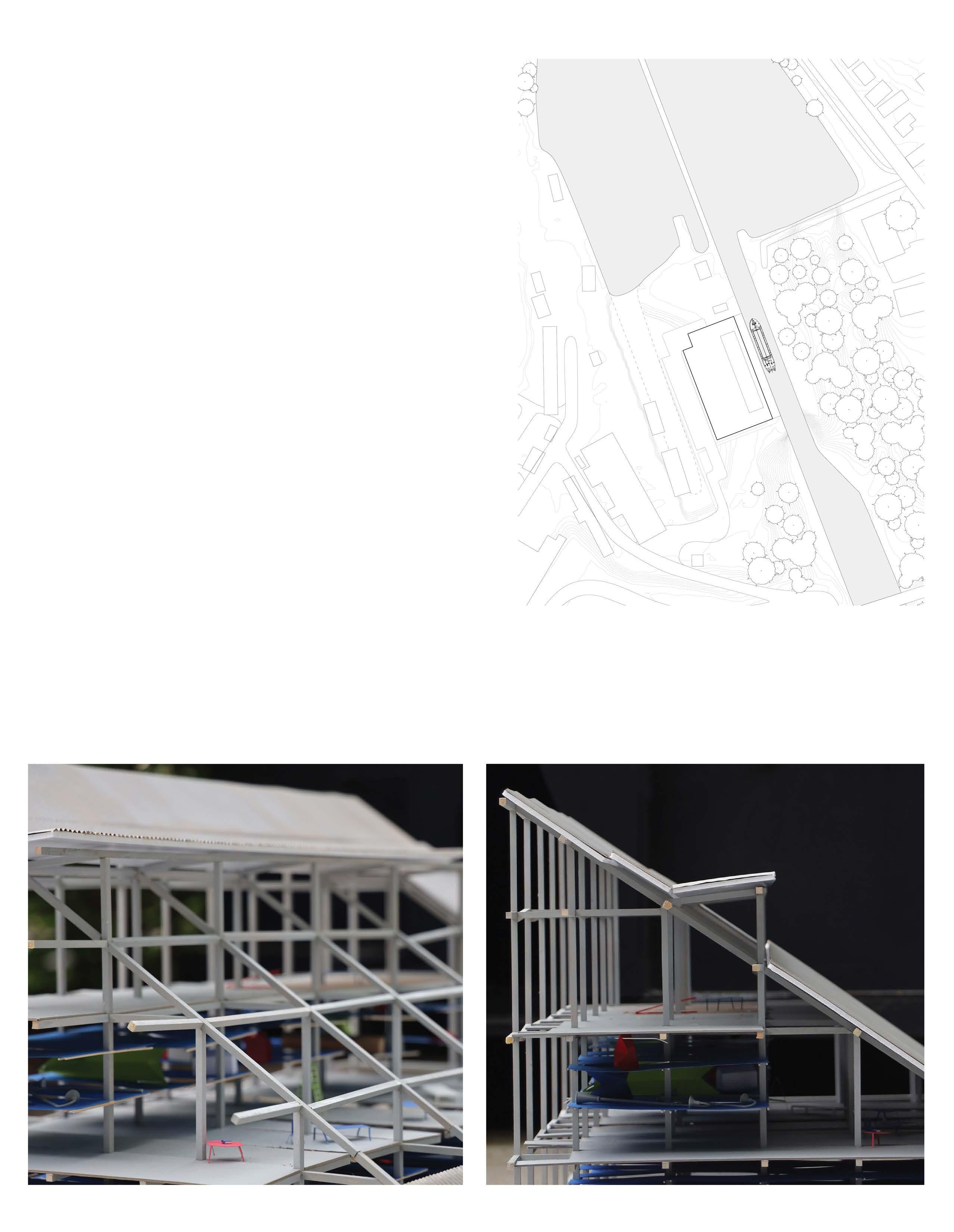
When given the terms “authentic” and “staged” as a framework through which to analyze photographs, film clips, places, and objects, I found that a clear division becomes questionable in many situations. The distinction is not fixed, but blurred and contingent.
The context surrounding an object determines the degree of authenticity it carries, often producing an ambiguous condition in which genuine use and constructed presentation coexist. Authenticity, in this sense, is not inherent, but situational.
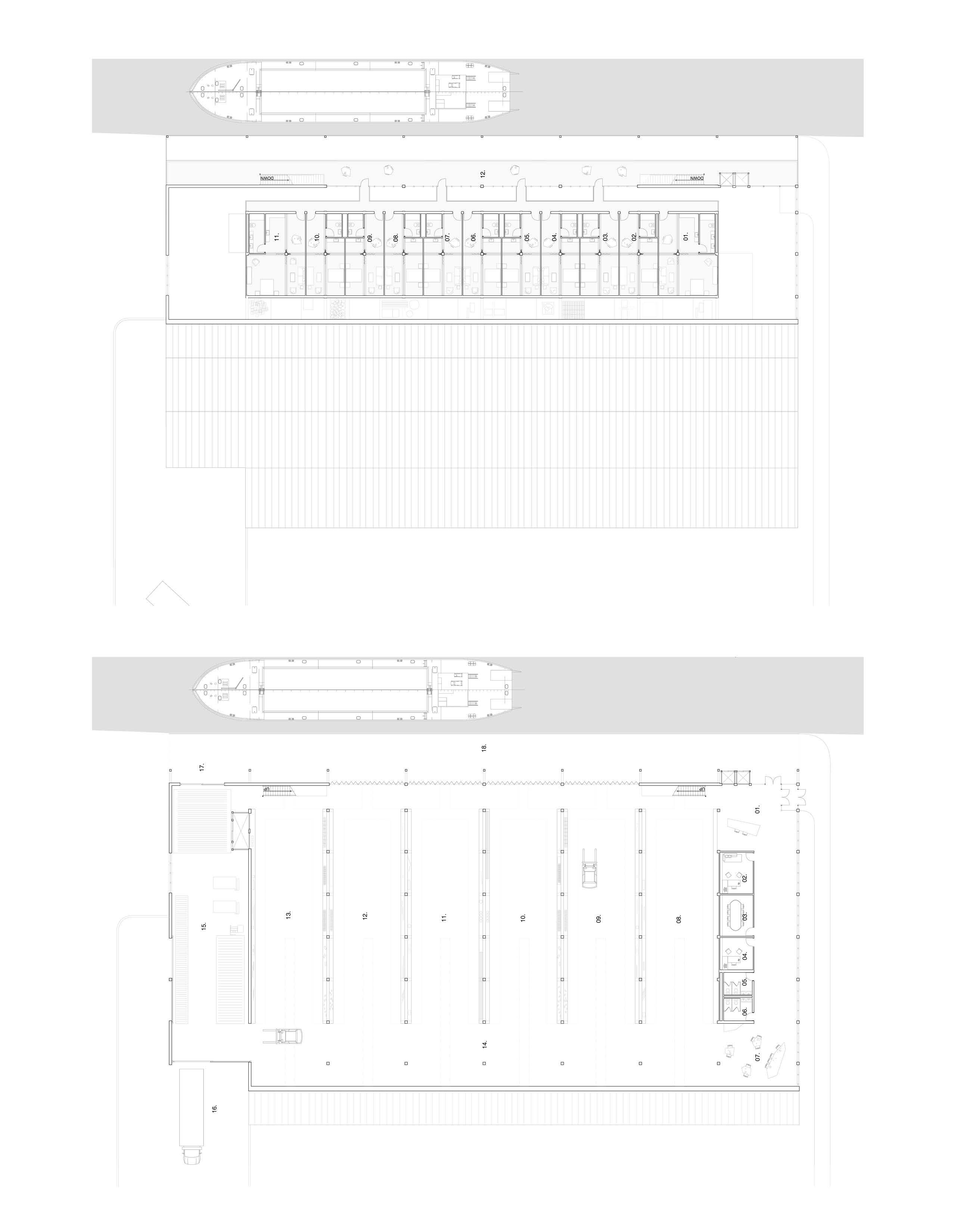
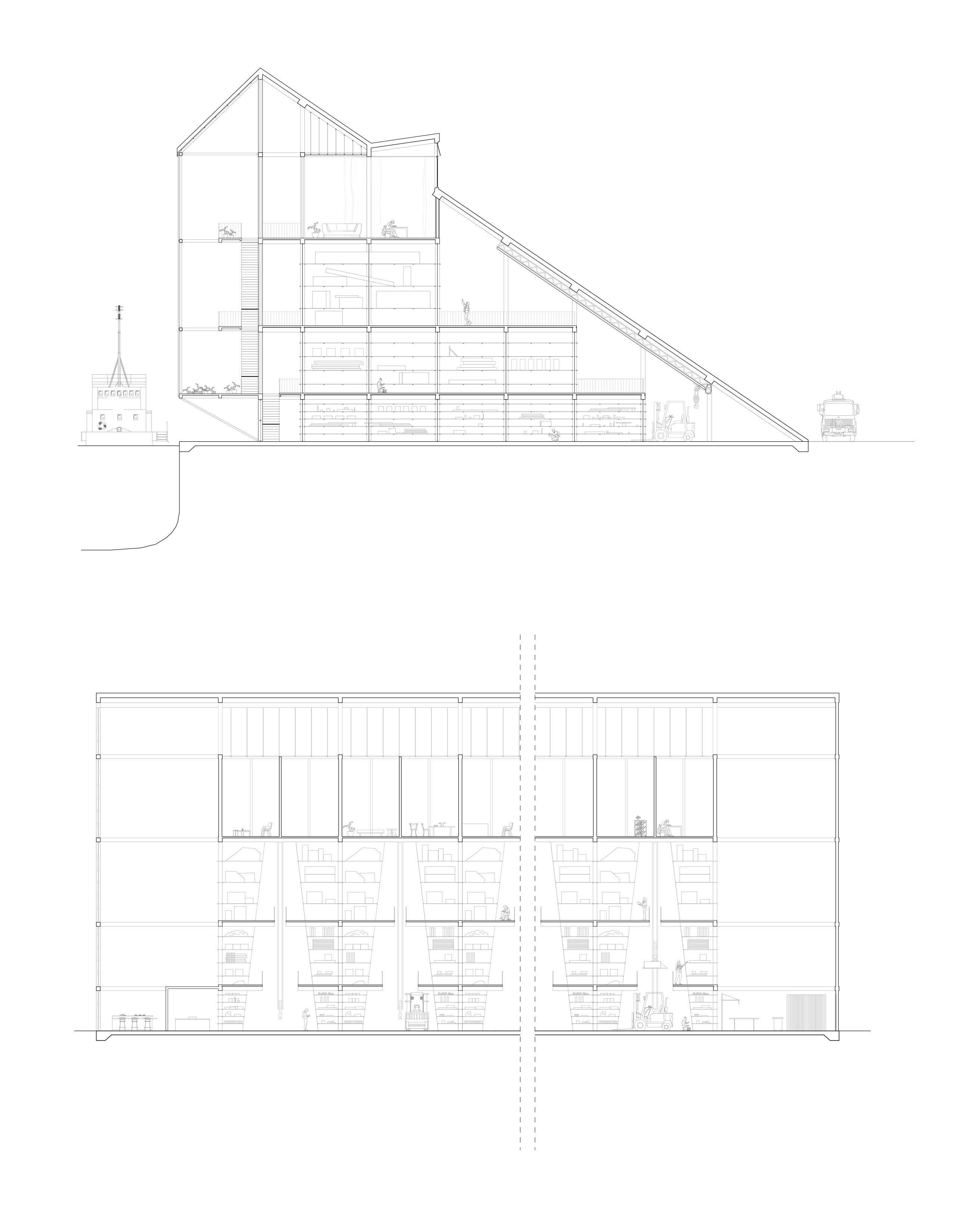
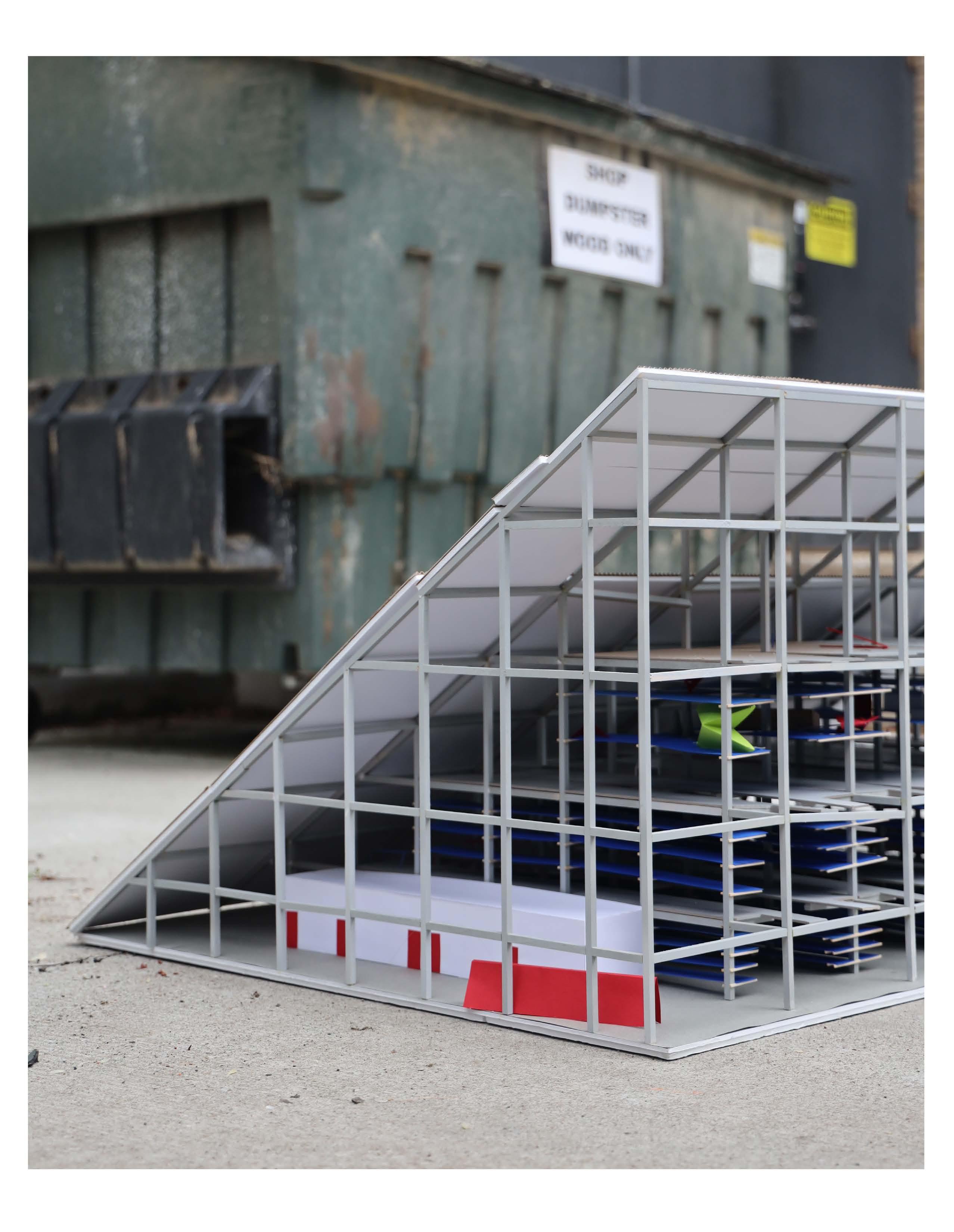
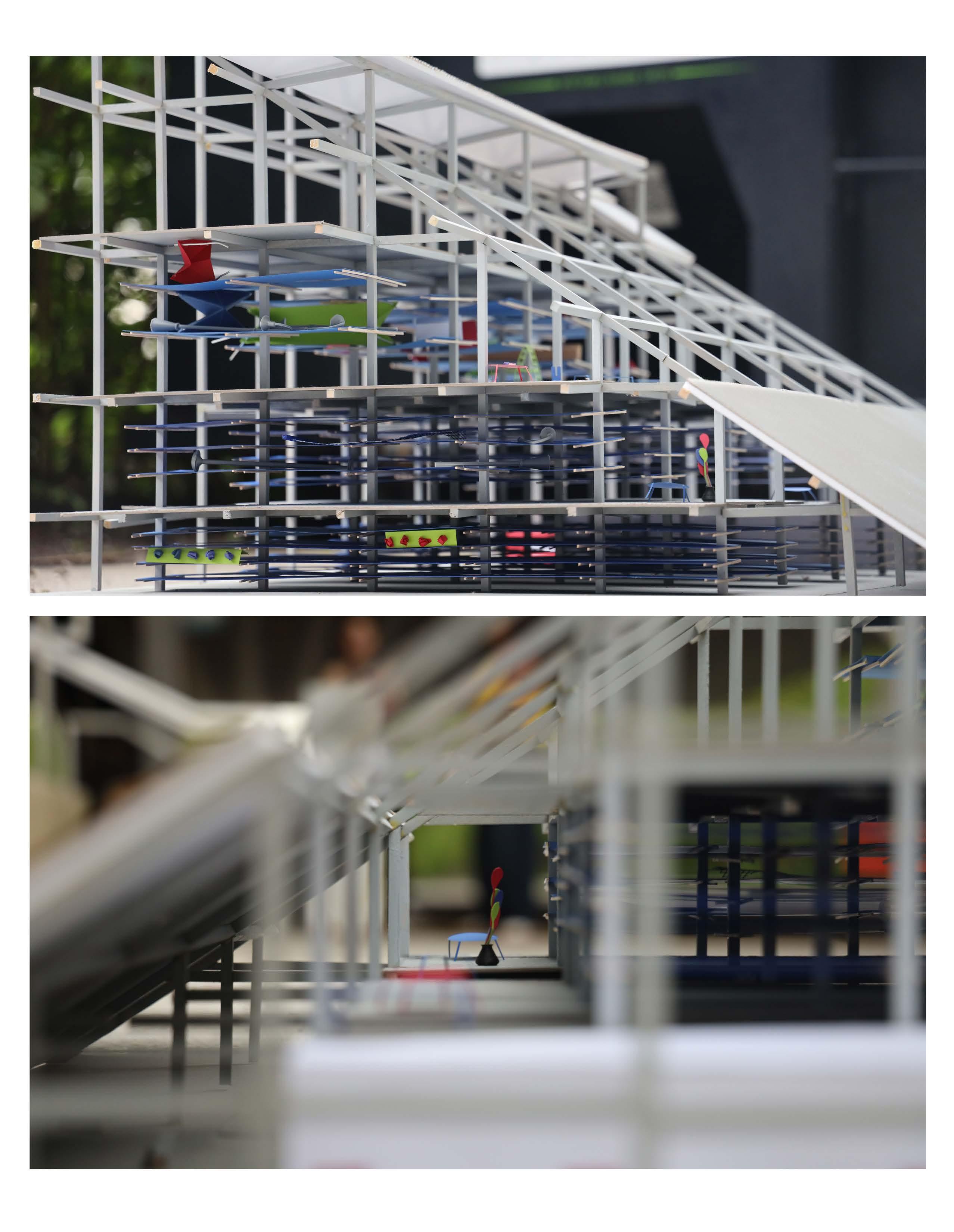
This material storage facility collects deconstructed building components from sites along the Erie Canal, cleans and restores them, and places them on display to be purchased and repurposed by builders throughout the Northeast. Here, the boundary between discarded material and viable construction resource becomes indistinct. Once removed from their original context, these materials are reframed simultaneously as commodities and as elements within a curated environment meant to be viewed, navigated, and considered.
The space resists a single definition. It functions as storage, yet operates as exhibition. The question remains unresolved, inviting the viewer to ask whether it is a repository of materials or a staged display of potential futures.

Instructor:
Michael Jefferson

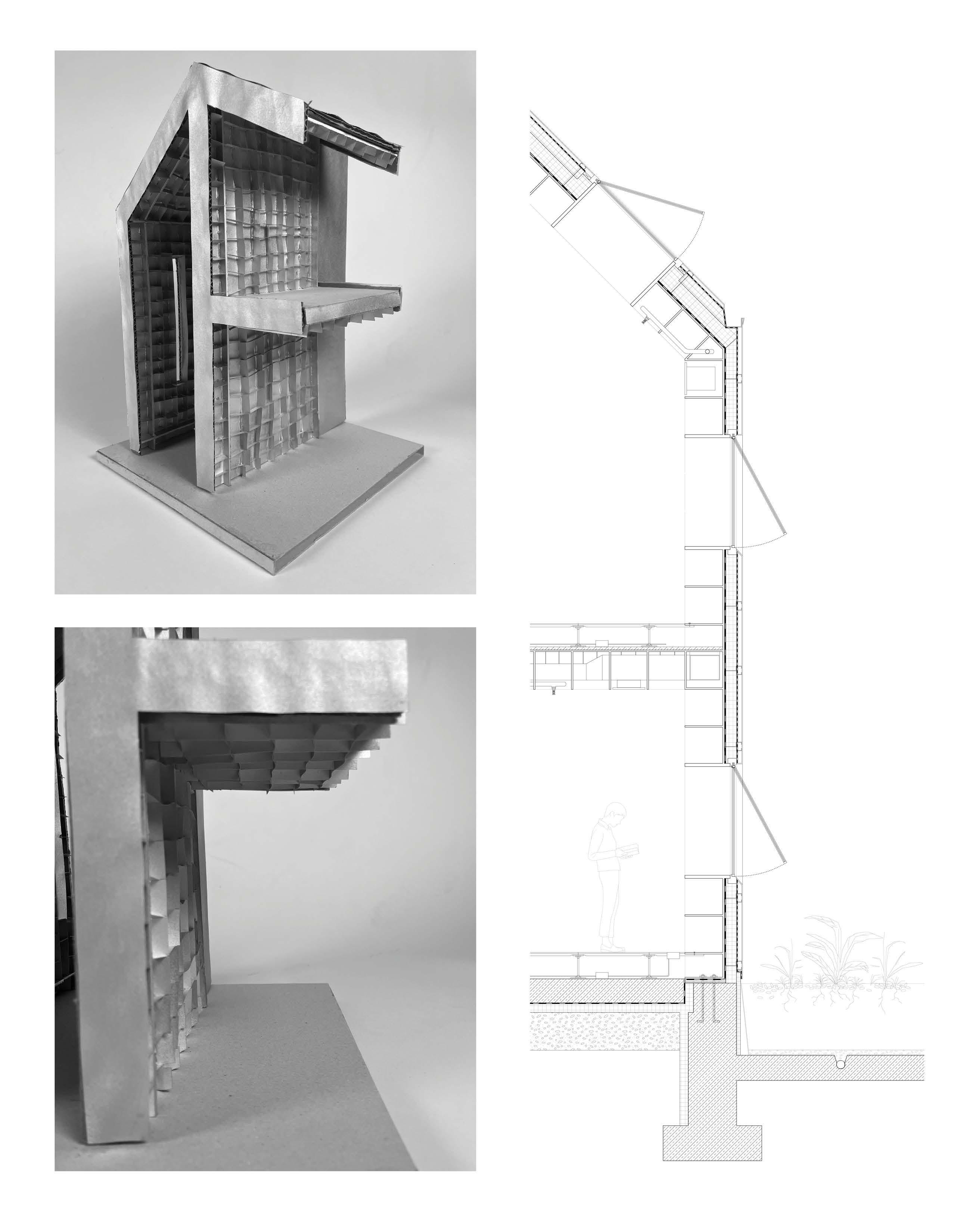
The Rigid Library draws influence from the Capilano Library by Patkau Architects, a project shaped by its orientation toward a ravine and by an extruded gable roof that organizes the interior program. The design is further informed by a material precedent in welded plate steel. Monument Majer by N/A serves as a key reference, using a grid of welded plate steel to function simultaneously as structure and pavilion.
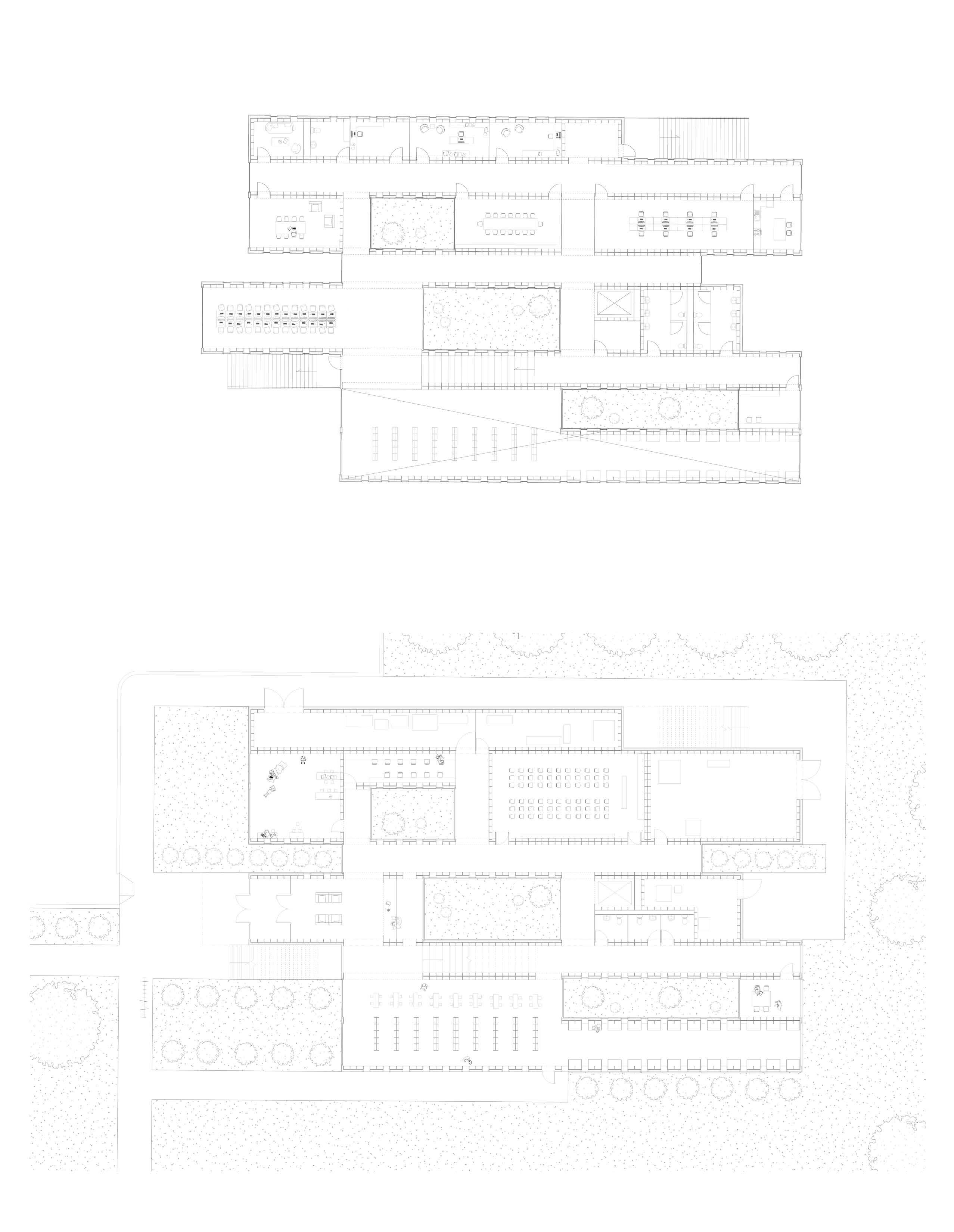
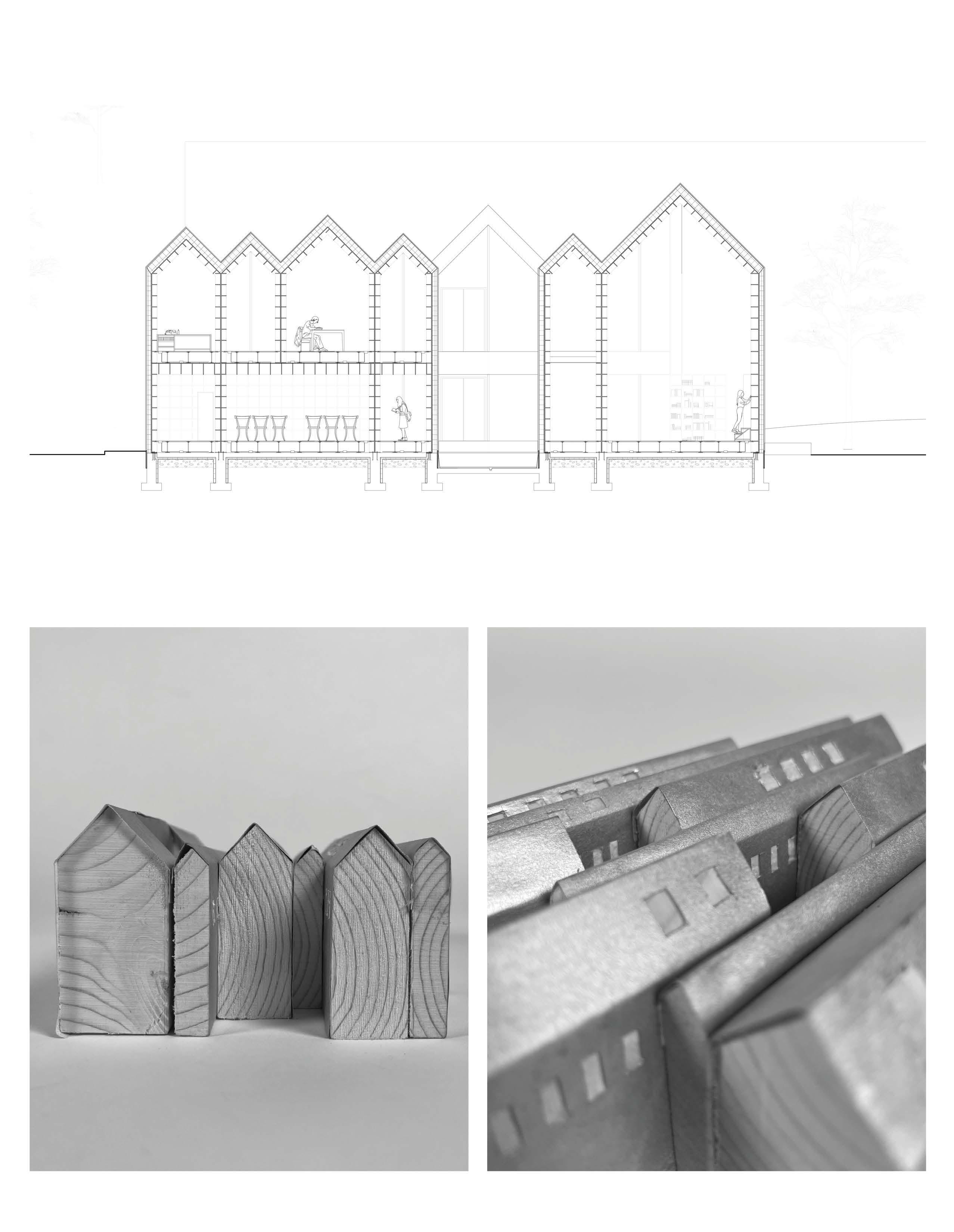
In response to these precedents, the library’s program is organized into linear bars, echoing the spatial strategy of the Capilano Library. An expansive welded plate steel grid forms the structural basis of the building, unifying all primary elements within a consistent material system.
A retaining wall to the north and a creek to the south establish a strong linear grain that guides the orientation of the building. This contextual alignment reinforces the library’s relationship to the site and frames its internal organization.
The form consists of seven long, adjacent bars, separated by three courtyards that structure circulation while introducing daylight and natural ventilation deep into the building. These interstitial spaces mediate movement and create moments of pause between programmatic zones.
Operable windows line the north and south facades where functional needs are prioritized, while floor-to-ceiling glazing anchors the east and west ends of each bar. The welded steel plates establish a steady rhythm throughout the library, one that draws people inward and provides a framework that furniture, openings, and occupants intuitively follow.
Instructor: Mark Cruvellier
In Collaboration With: Emma Leary, Austin Johnson
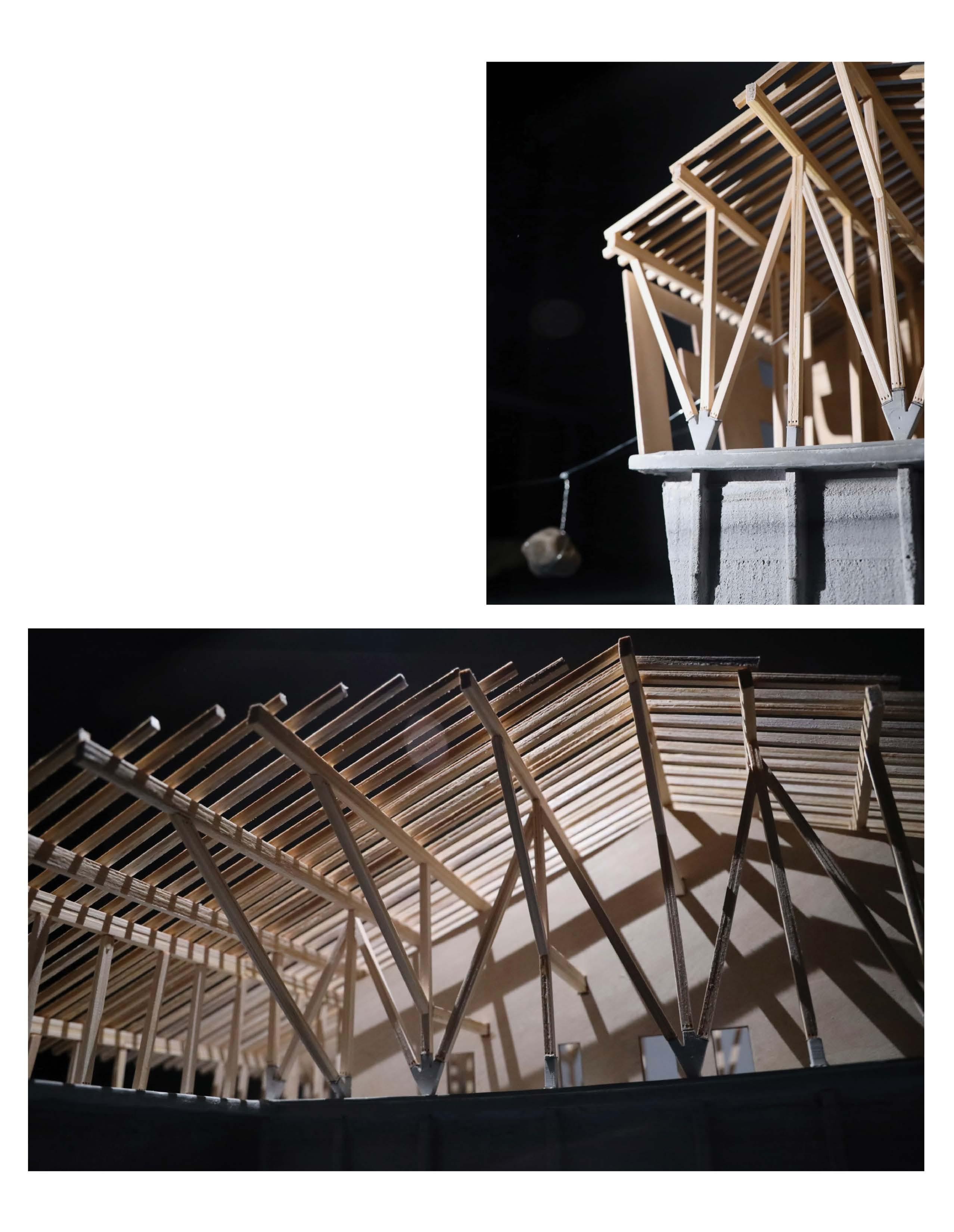
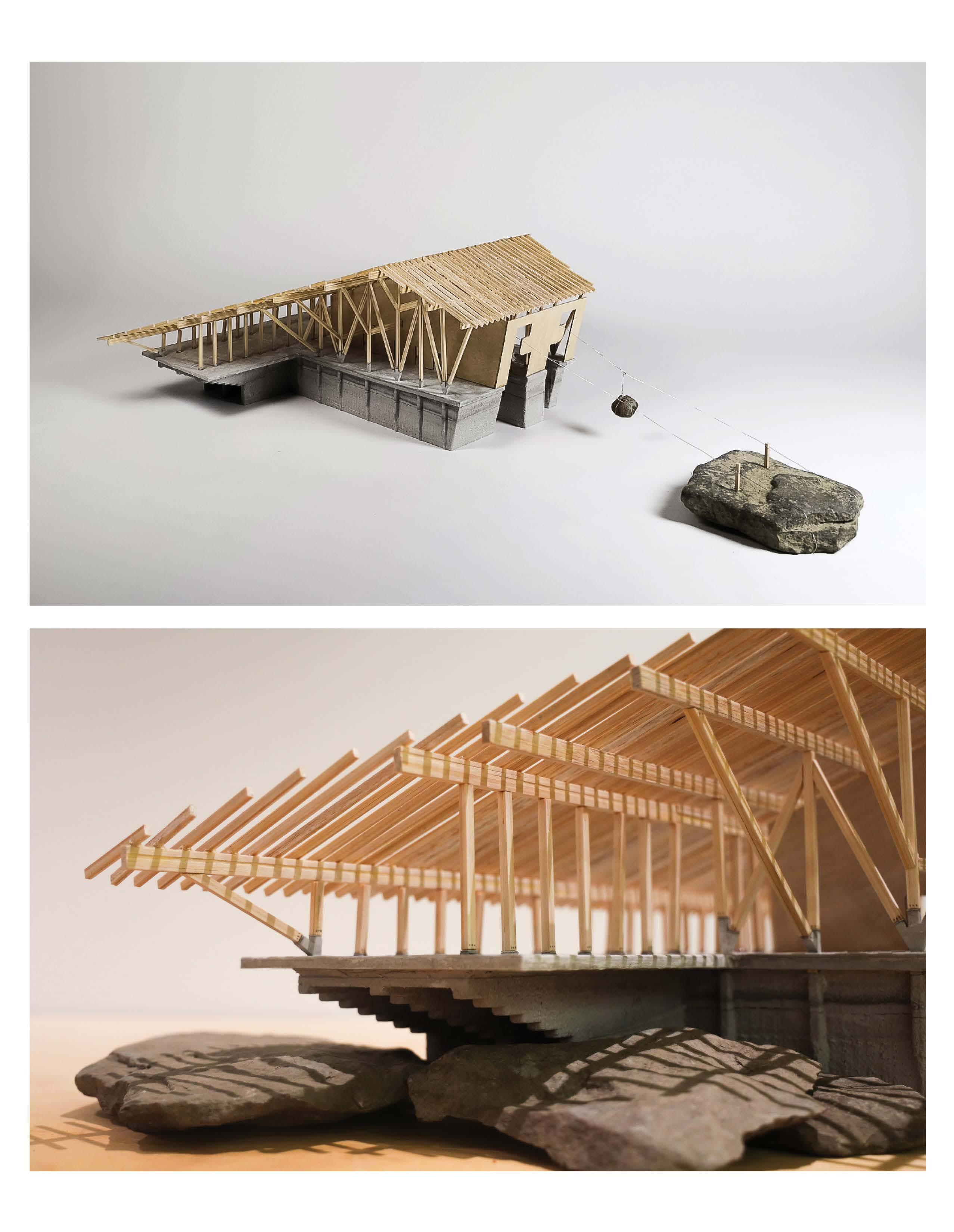
The restaurant 374 Chäserrugg by Herzog & de Meuron employs a timber frame column system rooted in the regional building traditions of Unterwasser, Switzerland. Originally a cable car station and a separate restaurant, the site was reimagined by Herzog & de Meuron through the construction of a new restaurant addition integrated with the existing station.
Following a detailed investigation of the building’s structural system, we constructed a scale model at 1/8” = 1’ to demonstrate the timber structure and its connections. The model emphasizes the logic of the frame and the clarity of its joinery.
Using existing drawings as reference, we developed a digital model and a corresponding set of building instructions. At scale, wood dowels, Rockite, and aluminum were selected to most accurately represent the materials and structural behavior of the original building, allowing the model to communicate both constructional intent and material presence.
Instructor: Stephanie Lee
In Collaboration With: Zachary Stephens, Sara Shah
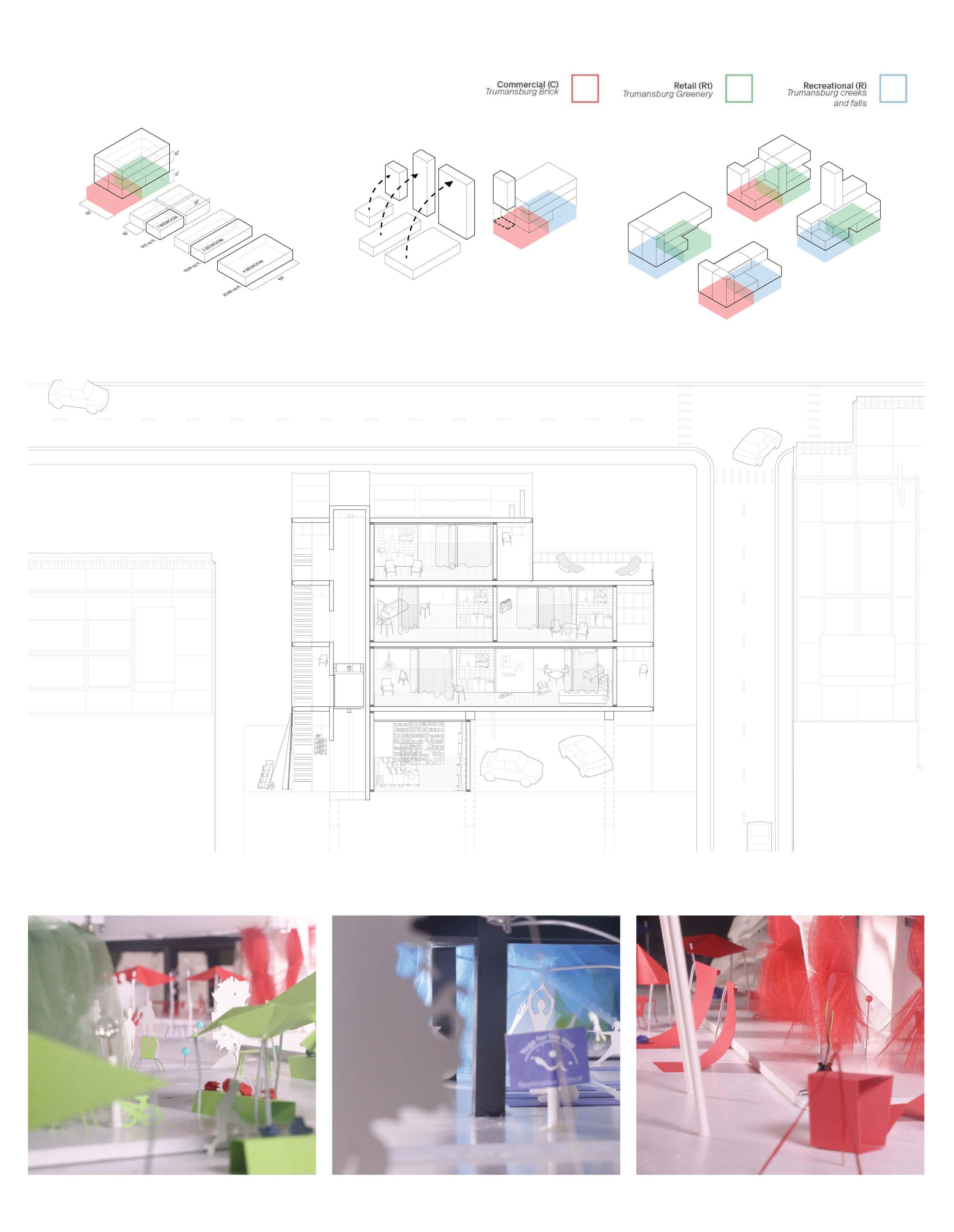
Incremental Zoning is a critique of contemporary zoning policies.
The project began as an exploration of affordable housing in Trumansburg, New York. In collaboration with city officials, we studied the town’s history and local political context. Through an examination of the 2021 Trumansburg Comprehensive Plan, we identified stated goals that emphasized inclusive opportunities for employment, education, and civic engagement across different age groups and cultural backgrounds. Our research revealed that existing zoning restrictions do not meaningfully support the realization of these goals.
Trumansburg follows a concentric zoning model, a system more commonly associated with urban typologies. This condition suggests a form of systematic mismatch within the town’s zoning framework, rooted in the historical legacy of United States zoning ordinances derived from New York City–based models.
In response, the project questions the possibility of alternative zoning systems, how design might more directly prioritize people’s needs, and how similar systemic mismatches continue to shape architectural practice.

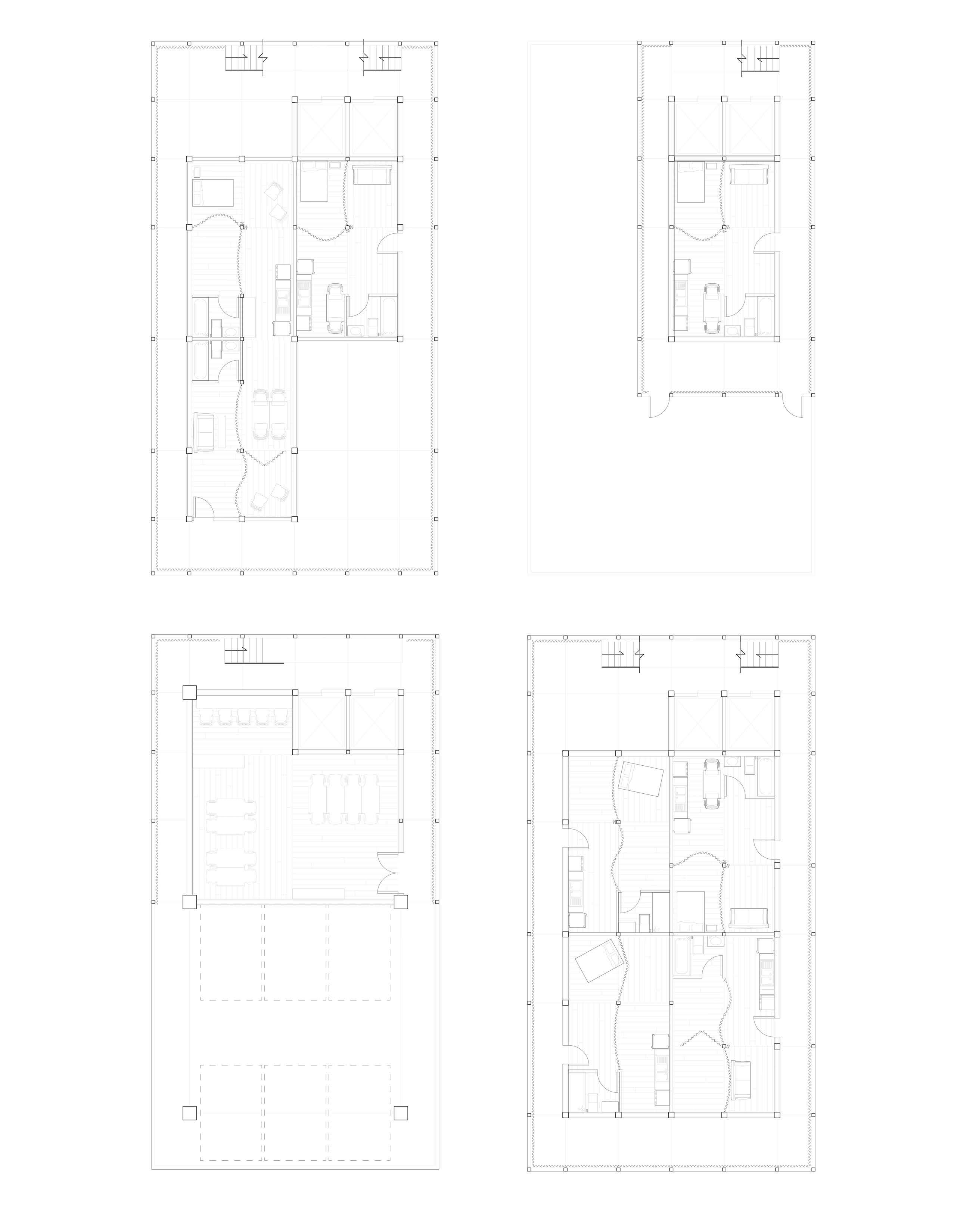
Incremental Zoning proposes and tests a form of architecture and planning that places inhabitants at the center of the design process. In this approach, the zone, the building, and the plan emerge from the preferences of individuals living within the units, rather than from a predetermined architectural vision. Buildings are no longer treated as fixed design objects, but as adaptable frameworks that gain meaning through occupation and use.
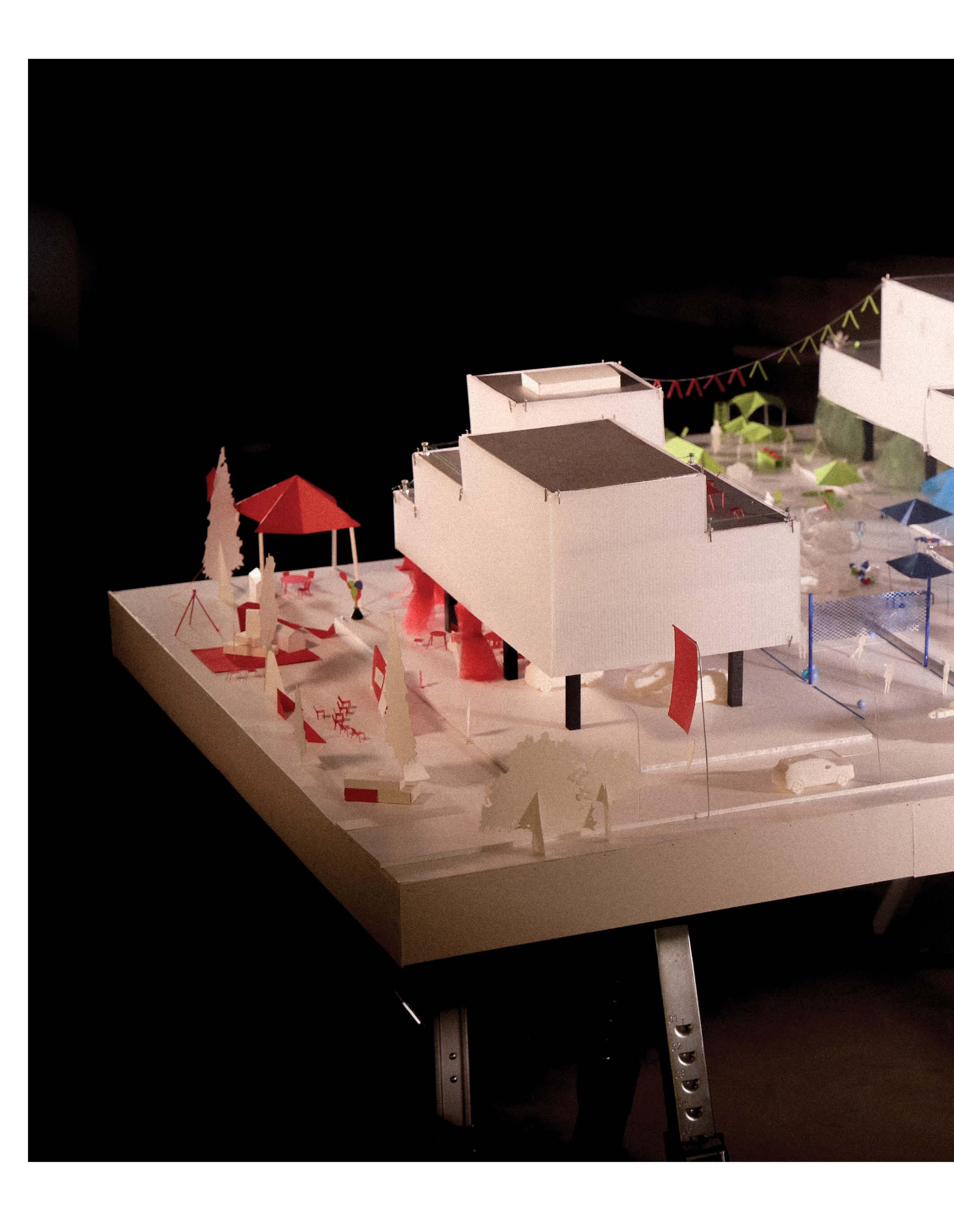
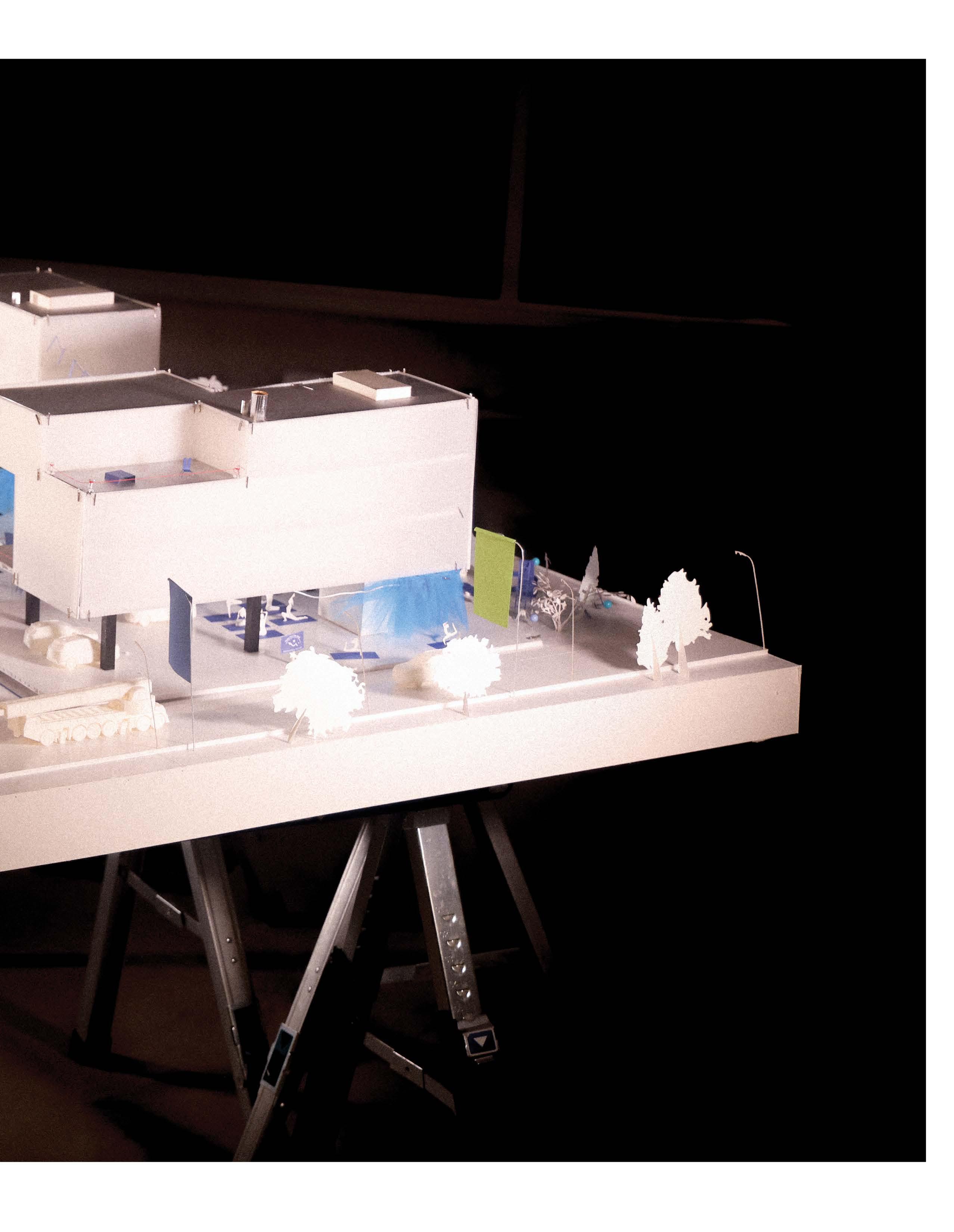
The project then examines the relationship between zoning and the ground plane within the broader context of city planning. Through color coordination and spatial relationships, the system generates a dynamic superground capable of supporting numerous events and interactions, encouraging social exchange within the community.
By subverting conventional zoning laws and using color to imply relationships between buildings, the system imagines an urban framework shaped by those who inhabit it. This flexibility allows the architecture to accommodate a wider range of uses and needs. The resulting superground, which blends interior programs with exterior space, becomes a further expression of a design system that responds directly to the people it serves.
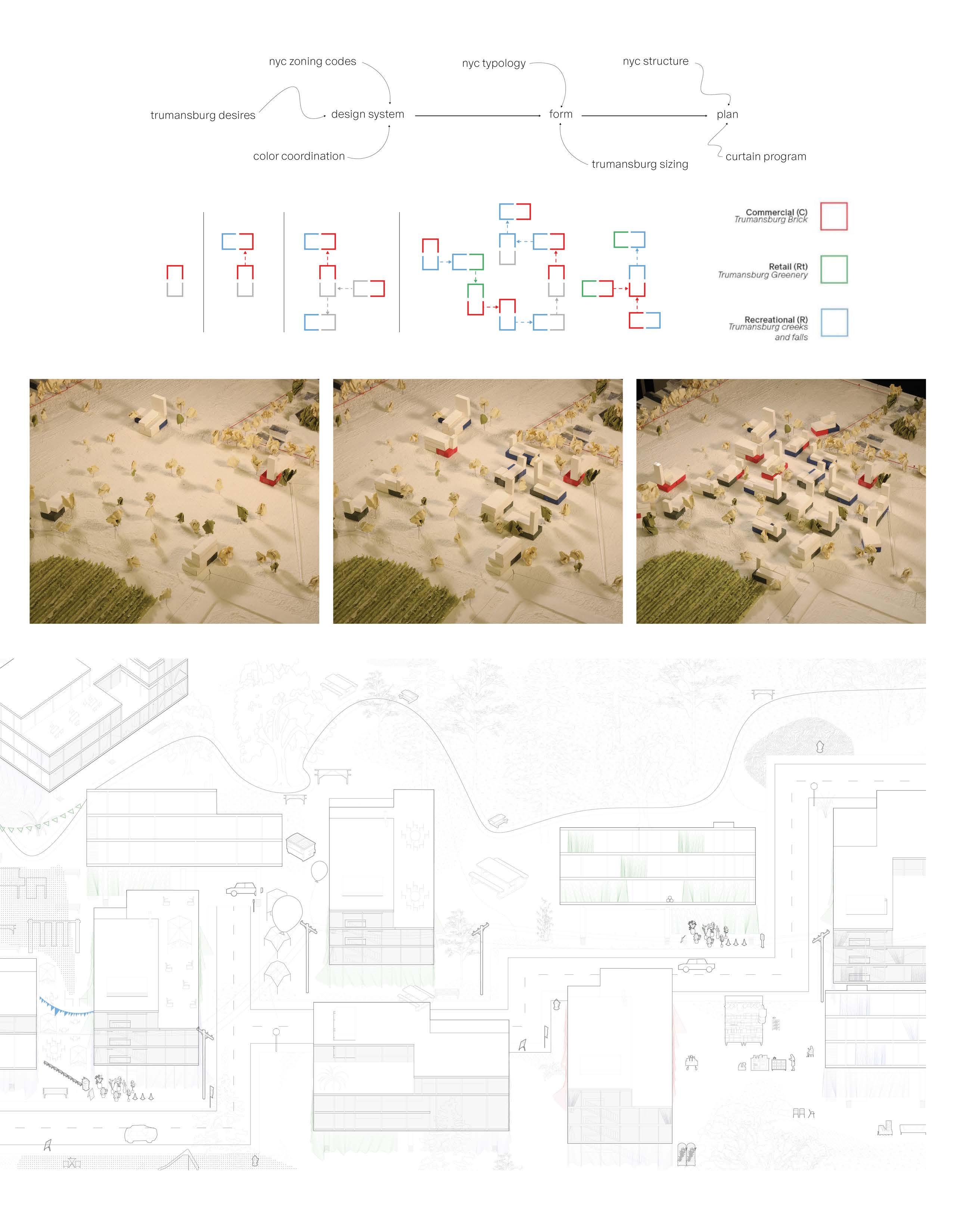
Housing Organization Strategy