For all inquiries regarding education marketing, contact Kathleen Dyke: Kathleen.Dyke@moffly.com or Brynn John: Brynn.John@moffly.com
Digital version of 2026-2027 Education Guide: mofflylifestylemedia.com/educationguide mofflylifestylemedia.com greenwichmag.com •newcanaandarienmag.com stamfordmag.com •westportmag.com
September's Quiet Power
Where children's learning takes root by Maureen Murphy
Why Writing Still Matters
In the age of AI, the act of writing is even more critical by Bob Whelan
Is Multitasking Hurting High Schoolers?
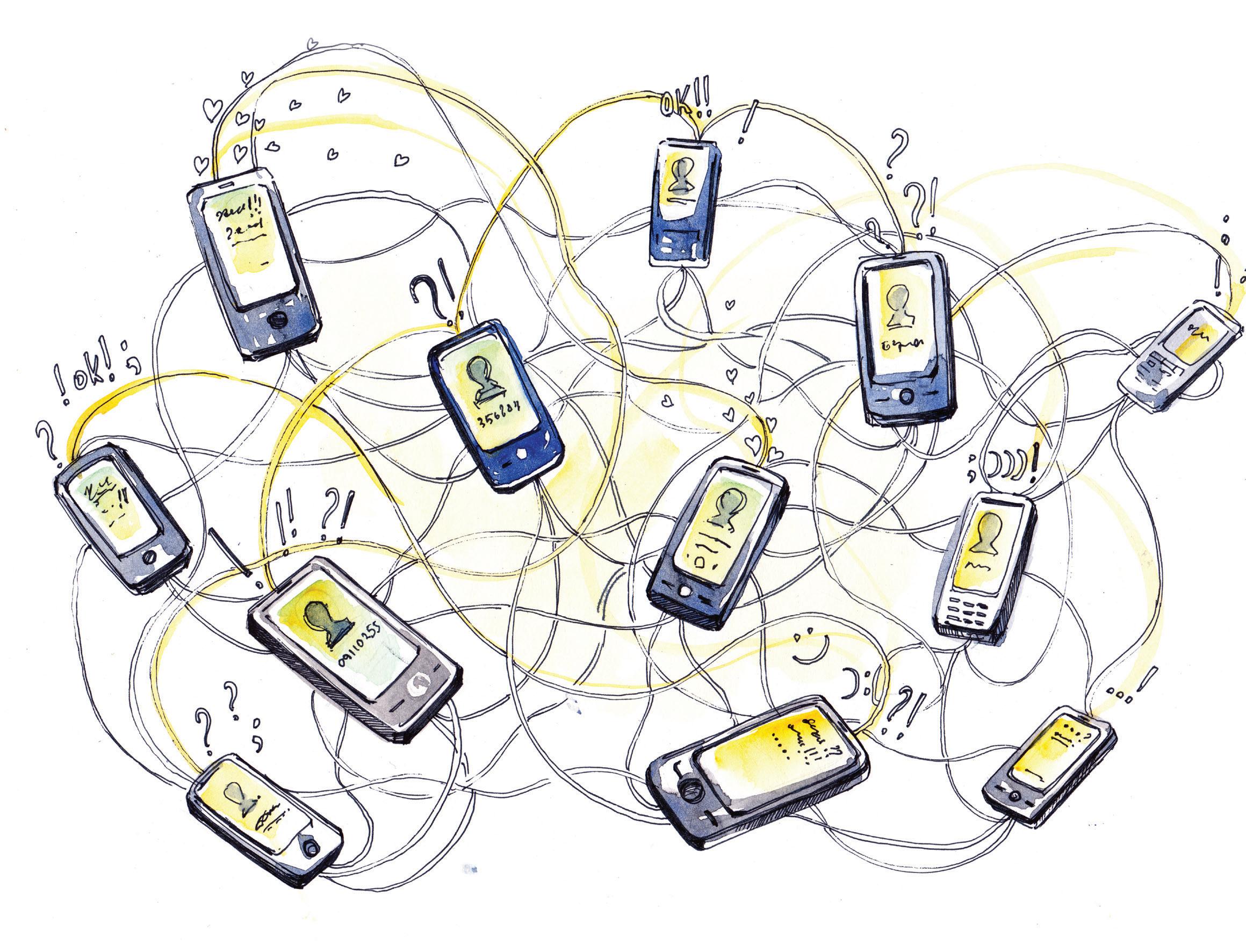
The case for teaching focus and presence by Beth Coyne
The Power of Play
Performance, participation, and the education of the whole child by Kara Ashley
A Clear Sense of Purpose
The value of an all-girls education by Michael F. Baber
Quiet Frustration
High-achieving families who struggle with executive dysfunction by Aron Boxer
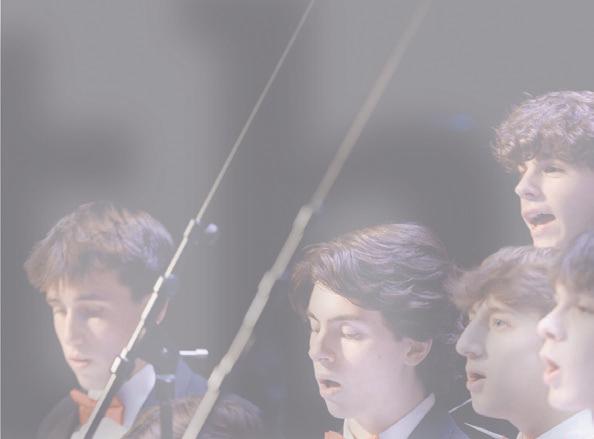
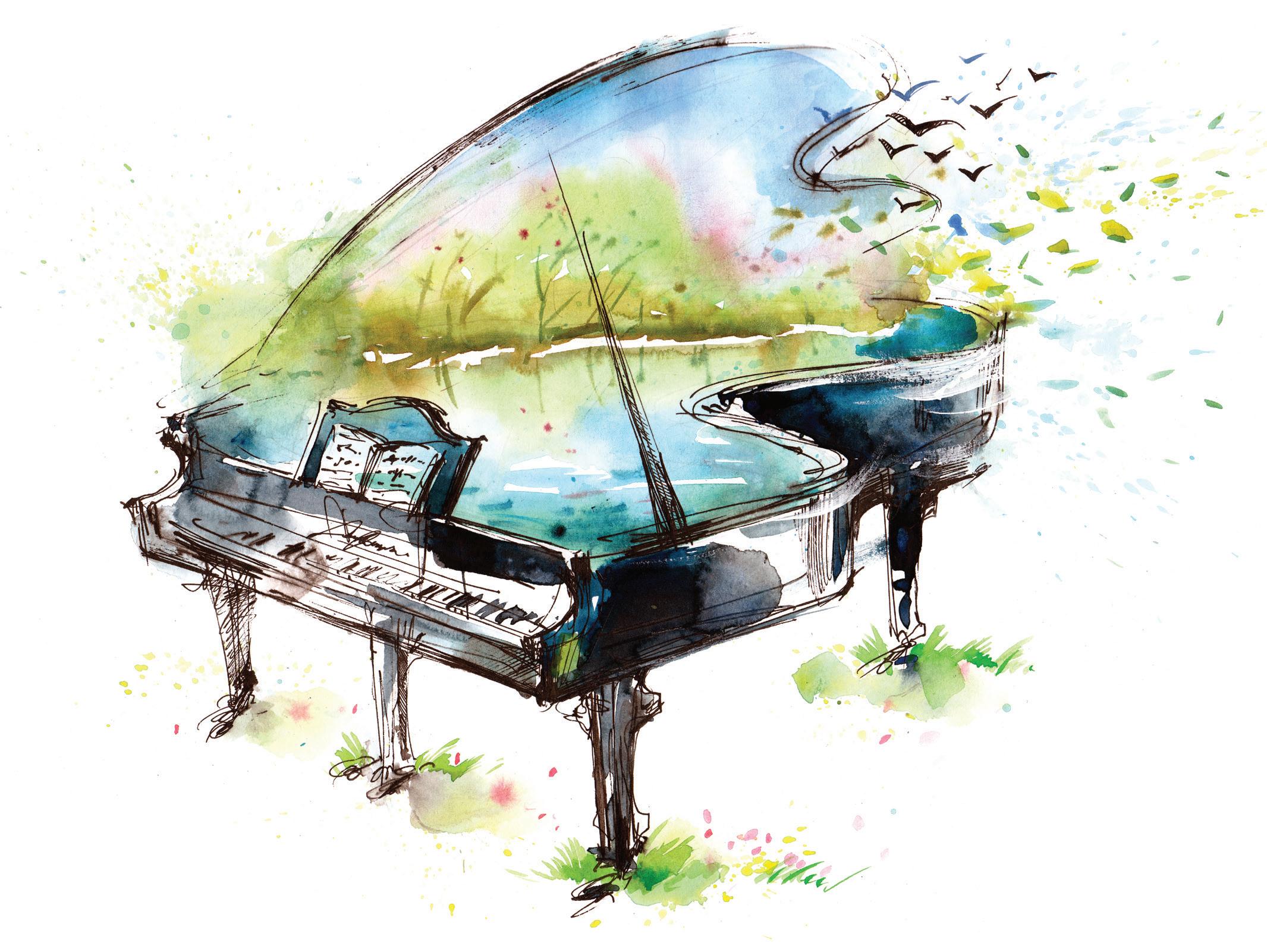
Musical Education
Fundamental or frill? by Gloria Sinaguglia and Joyce DiCamillo
Expert Advice
Embracing the future with tools to succeed
College Destination
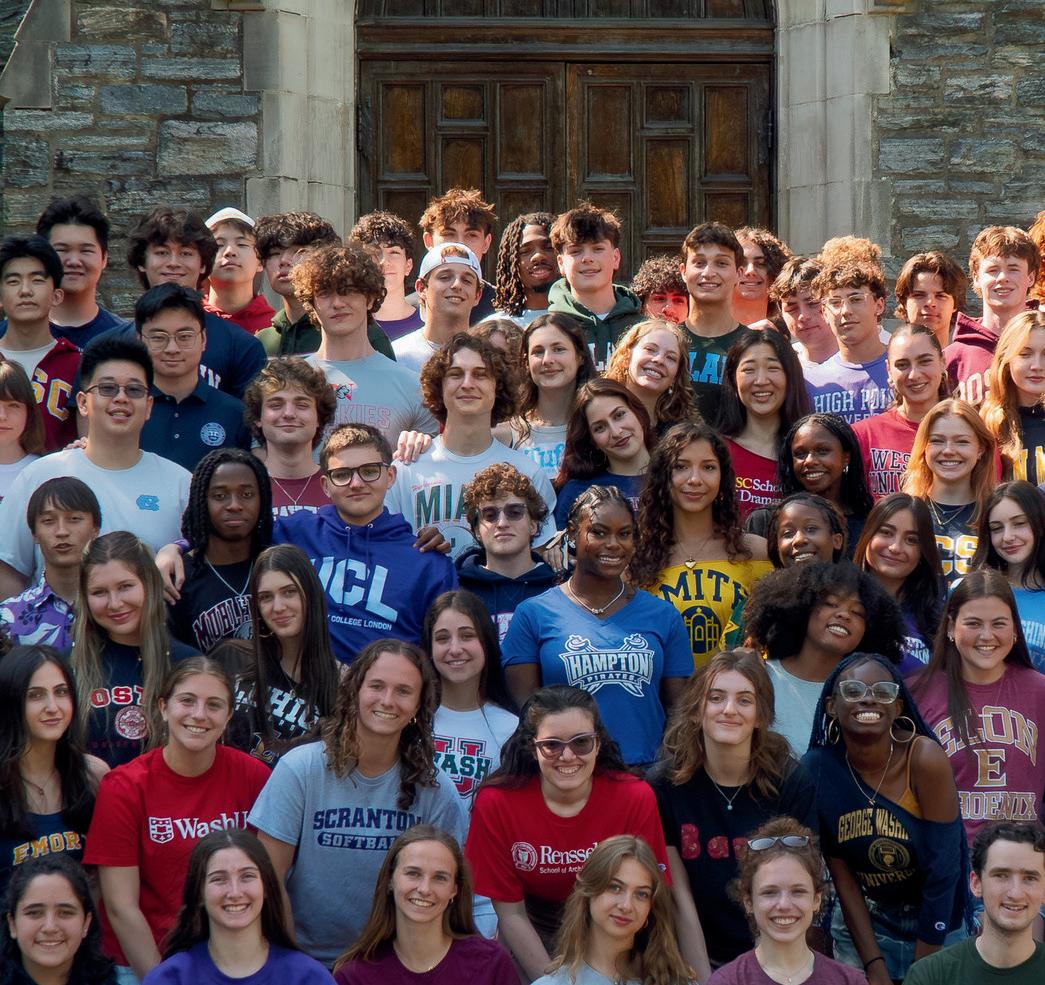
Finding the right fit
Head of the Class
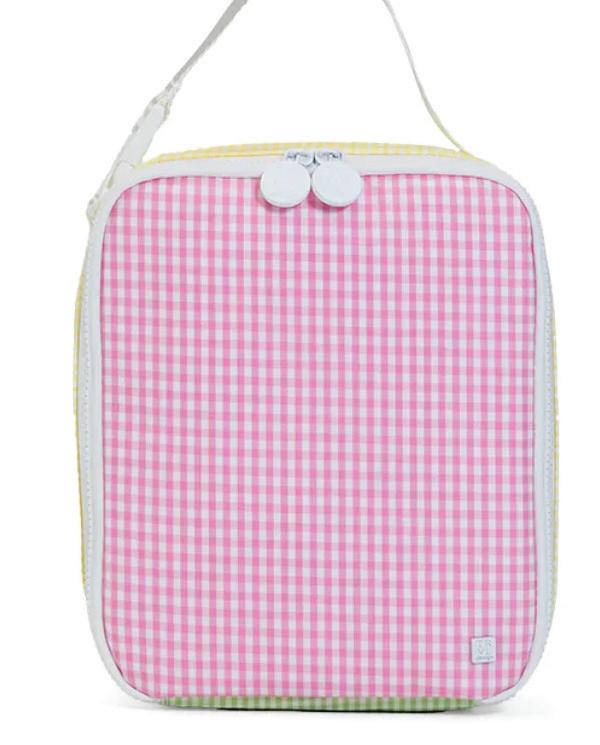
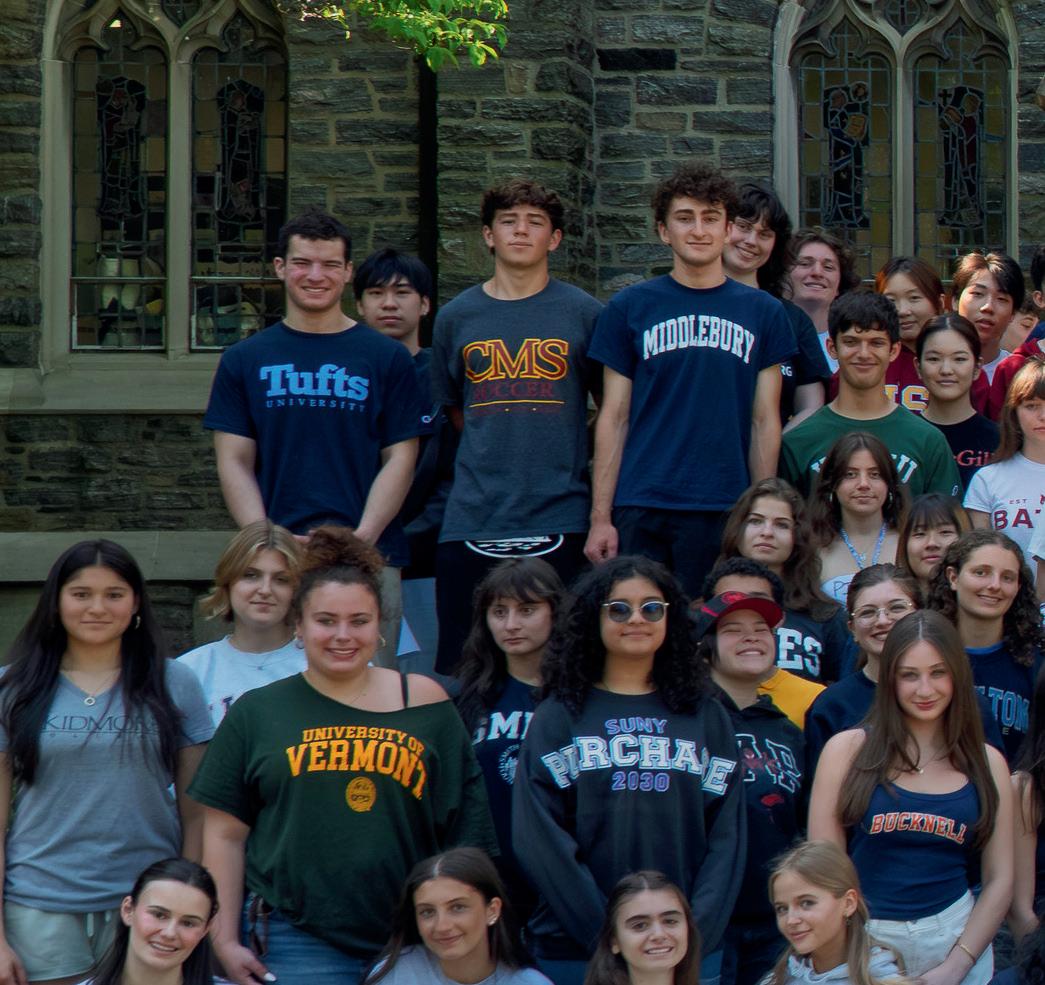
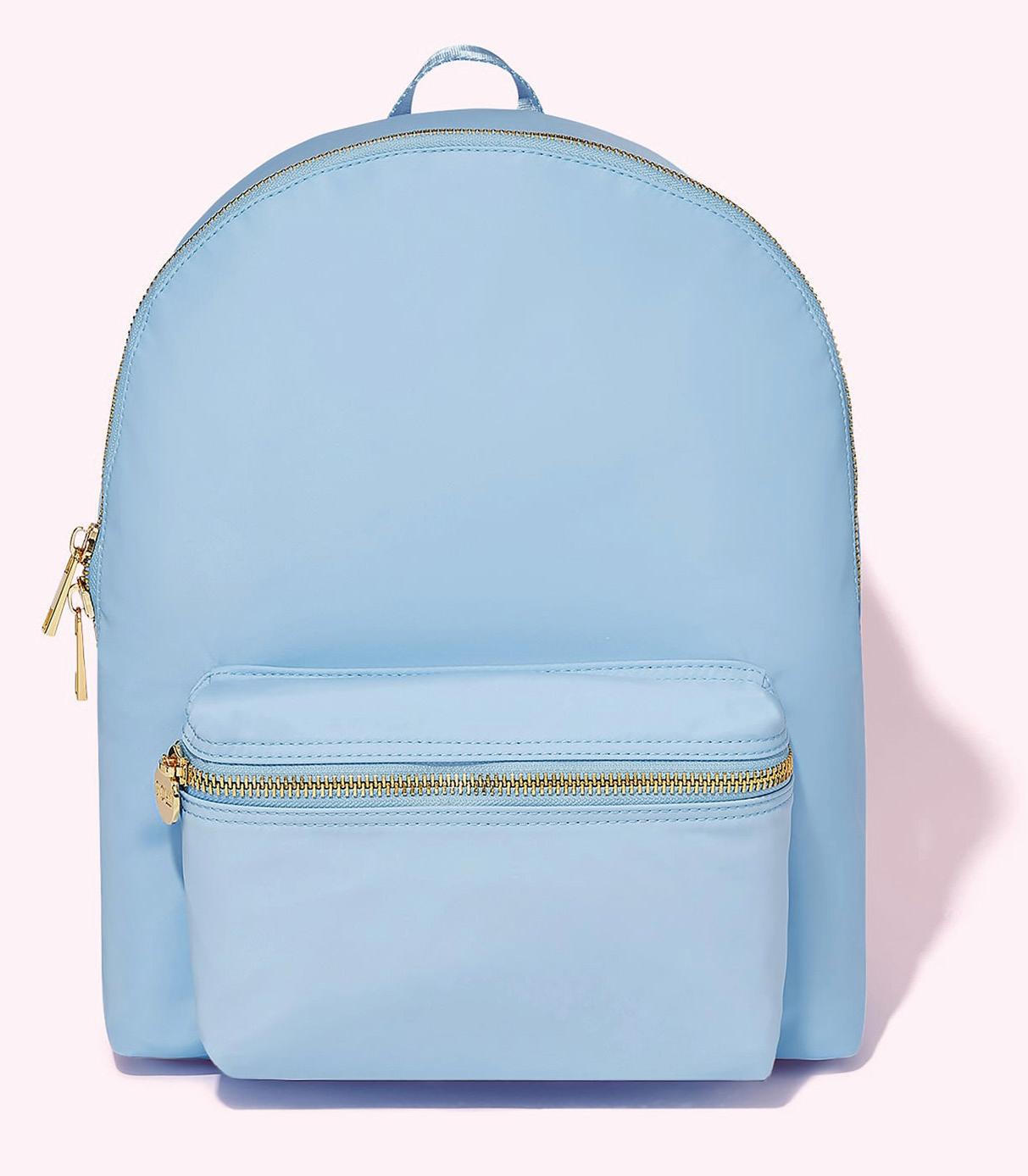
Stylish picks that make the grade by Julia Wells
Campus Connection
School directory to guide your search
bwick.org/learnmore
September’s Quiet Power: Where Children’s Learning Takes Root
by Maureen Murphy, Head of School, The Children’s School
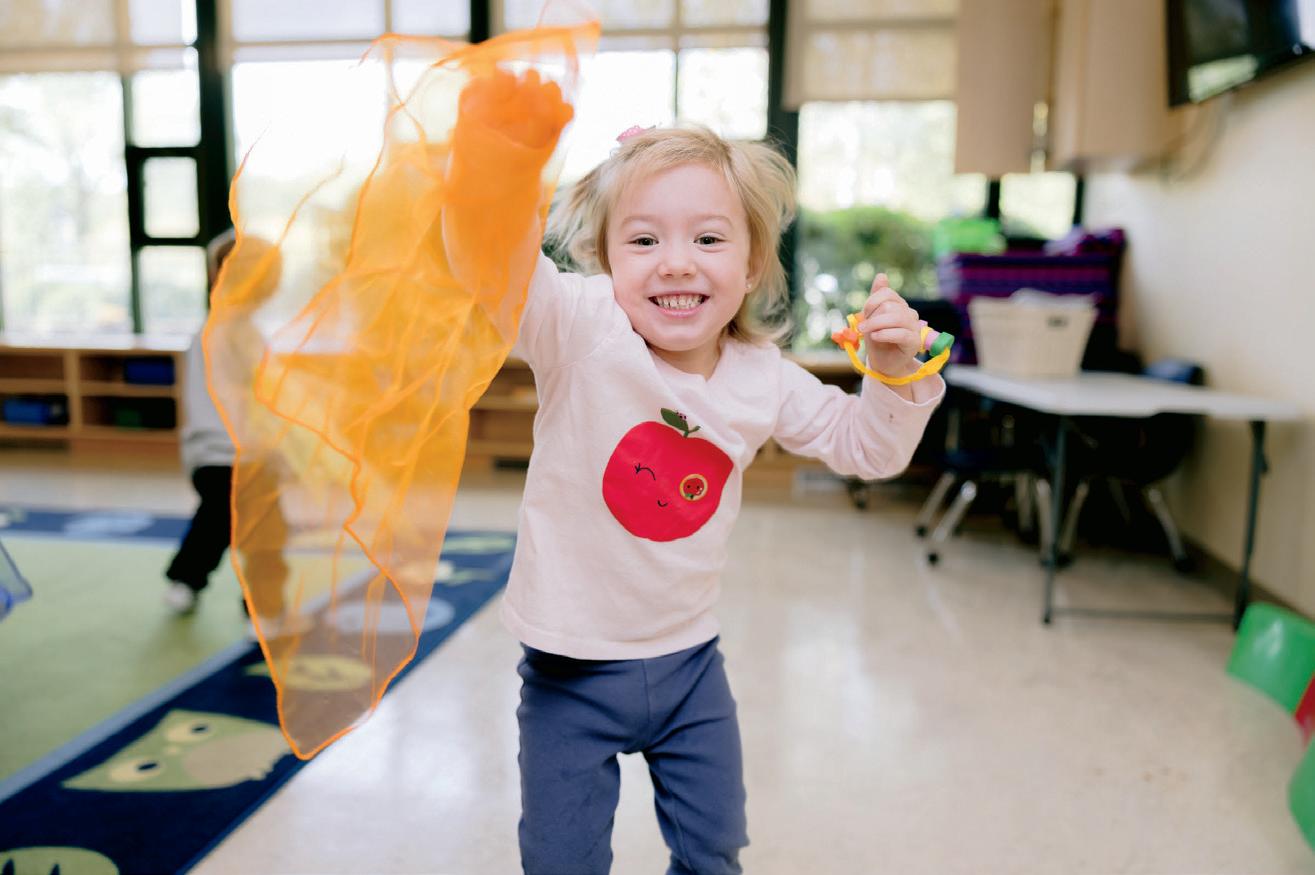
Writer Wallace Stegner once described the seasonal shift from summer to fall as “That old September feeling,” a time marked by renewal and the turning of a page, with “something of jubilee in that annual autumnal beginning.” For families with young children, this sense of beginning does not arrive in January, but with the opening of school.
In primary education, this sense of beginning carries particular significance. The early years of schooling represent a distinct developmental period in which foundational patterns of thinking, relating, and learning are formed. The first days and weeks of school are not only a transition, but an entry point into environments intentionally designed to support children’s natural curiosity, a sense of belonging, and a readiness to learn. These
early experiences often set the tone for the months that follow. In a rapidly changing world shaped by new technologies and evolving forms of communication, these early foundations remain essential, equipping children to think critically and engage thoughtfully with an increasingly complex landscape.
Three elements, deeply interconnected, lie at the heart of this work: connection, content, and character.
CONNECTION
The foundation for all learning is connection. A substantial body of research affirms what experienced educators have long understood: Children engage most fully with ideas when they feel secure in their relationships. Trust, consistency, and responsiveness create the conditions for curiosity to flourish. Without that sense of safety, learning narrows; with it, children are more willing to take risks and persist in their wondering.
These connections are built not through grand gestures, but through small, steady acts of attention. A story is listened to, not hurried along. A moment of uncertainty is met with reassurance, rather than urgency. Such moments may seem fleeting, yet they carry lasting meaning. They communicate to children that they are seen and valued, not only for what they produce, but for who they are. Over time, these experiences accumulate into trust, and from that trust grows the confidence to engage deeply with ideas, with challenges, and with one another.
CONTENT
Content, in turn, gives shape and direction to that engagement. In the elementary years, content extends well beyond discrete subjects to include the full range of experiences through which children make sense of the world. Carefully prepared environments, rich with materials and possibilities, invite exploration and discovery. Thoughtful sequencing in literacy and mathematics allows skills to emerge gradually, grounded in experience and reinforced through repetition and use.
A child encountering written language may begin by noticing patterns of sound and symbol,
“A substantial body of research affirms what experienced educators have long understood: Children engage most fully with ideas when they feel secure in their relationships.”
eventually growing into a reader who finds meaning and pleasure in text. In mathematics, hands-on exploration with materials gives way, over time, to more abstract reasoning, as number sense deepens through inquiry and application. Across disciplines, attentive observation guides instruction, allowing teaching to meet children where they are while extending what they know.
Yet content extends beyond cognition and encompasses more than cognitive development. The expressive life of the classroom, including music, visual art, storytelling, and movement, broadens how children understand and communicate, reaching beyond words alone. Through these experiences, imagination is exercised, perspectives are widened, and meaning is constructed in multiple forms. A thoughtfully curated collection of books further invites children into worlds both familiar and unknown, nurturing a lifelong relationship with language and ideas.
CHARACTER
Alongside connection and content, the development of character unfolds steadily in the
background and, at times, in the foreground of daily life. The early years offer a crucial window for cultivating empathy, self-regulation, and a sense of responsibility toward others. These capacities do not emerge through instruction alone, but through lived experience in community.
A moment of frustration can become an opportunity to name a feeling rather than act on it. A disagreement invites the practice of listening, perspective-taking, and repair: Acts of kindness, whether spontaneous or encouraged, are recognized as meaningful contributions to a shared life. Over time, such experiences shape an internal compass. Children begin not only to understand expectations but to carry them within, guiding their actions with increasing independence and care.
INTEGRATED ESSENTIALS
While each of these elements—connection, content, and character—can be described
separately, they are, in practice, inseparable. A child who feels connected is more inclined to engage with content; rich content provides opportunities to exercise judgment and empathy; the development of character, in turn, strengthens the capacity to form and sustain meaningful relationships. Learning, in this sense, is not a series of discrete tasks but an integrated process that engages intellect, emotion, and values simultaneously.
As the year unfolds, these elements continue to shape the rhythm of daily life. They influence both what children learn and how they come to understand themselves: as thinkers, as creators, as members of a community. Gradually, almost imperceptibly, the early days of beginning give way to something deeper, a steady accumulation of confidence, competence, and connection. In this way, the “jubilee” of September does not fade. It endures, carried forward in the small, significant moments through which children grow, learn, and come into themselves.
Why Writing Still Matters
In the Age of AI, the Act of Writing Is Even More Critical
by Bob Whelan, Head of School, Greens Farms Academy
Neuroscience has made something increasingly clear. Writing is not merely a way for students to demonstrate learning. It is how they develop it. When students write, they engage the prefrontal cortex, the part of the brain responsible for planning, decision-making, and self-regulation. The very act of writing strengthens this region, asking students to hold ideas in mind, organize them, and make decisions about meaning. In doing so, it deepens understanding and helps make learning stick. Writing is not the product of thinking; it is the process that builds it.
This process is critical during adolescence, when students are beginning to ask essential questions about identity and belief. Who am I? What do I think? Where do I belong? Writing helps students make sense of these questions. It gives shape to their thinking and, over time, helps them develop a clearer sense of self.
The work of neuroscientists Dr. Tina Payne Bryson and Dr. Dan Siegel adds another layer to this understanding. Their research emphasizes that healthy development depends on integration, linking different parts of the brain so that emotional, social, and cognitive systems work together. Writing supports this integration by requiring students to connect logic with emotion, language with meaning, and
“Writing is not merely a way for students to demonstrate learning. It is how they develop it.”
experience with reflection. But writing doesn’t happen in isolation. Students grow through relationships, through feedback, and the guidance of adults who know them well. When students feel known and respected, they are more willing to take intellectual risks and persist through challenge. It is in those moments when some of the most enduring learning takes place.
These ideas take on new urgency in an age of artificial intelligence. AI can produce quick,
polished responses with remarkable ease. But learning does not happen along the path of least resistance. It happens through effort, reflection, and revision.
Writing remains one of the clearest ways to cultivate those habits of mind. It requires focus and sustained thought. It asks students to wrestle with ideas, not simply retrieve them. When students bypass that process, they may complete the work, but they miss the growth.
The question for schools is not whether students will use AI. It is whether they are still doing the thinking that matters.
My colleagues and I believe that thinking is developed through practice, through conversation, and through meaningful relationships between students and teachers. In classrooms where students are known and understood, they are asked to explain their thinking, revise it, and connect it to their own experience. They are challenged and supported
in equal measure.
For families, this is the work that matters most. Not how quickly students can produce answers, but how deeply they engage with ideas. Not just what they know, but how they come to know it.
In a world where answers are increasingly easy to produce, the purpose of school does not diminish; it deepens. When information is abundant, sound judgment becomes a scarce and vital skill. When output is effortless, the capacity to think critically, to question with integrity, and to reason through complexity becomes a true human advantage. Our charge is to help students develop the habits of mind, resilience, and a sense of purpose that no tool can replicate. It’s a fascinating time to be working with, and learning from, young people as we prepare them to become durable, freestanding adults who are ready to engage thoughtfully in an ever-changing world.
Men for Others
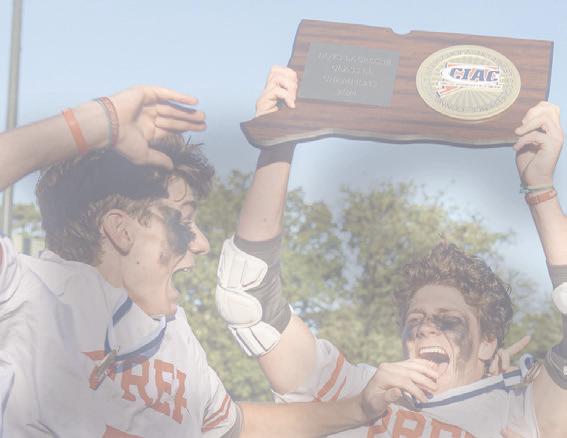
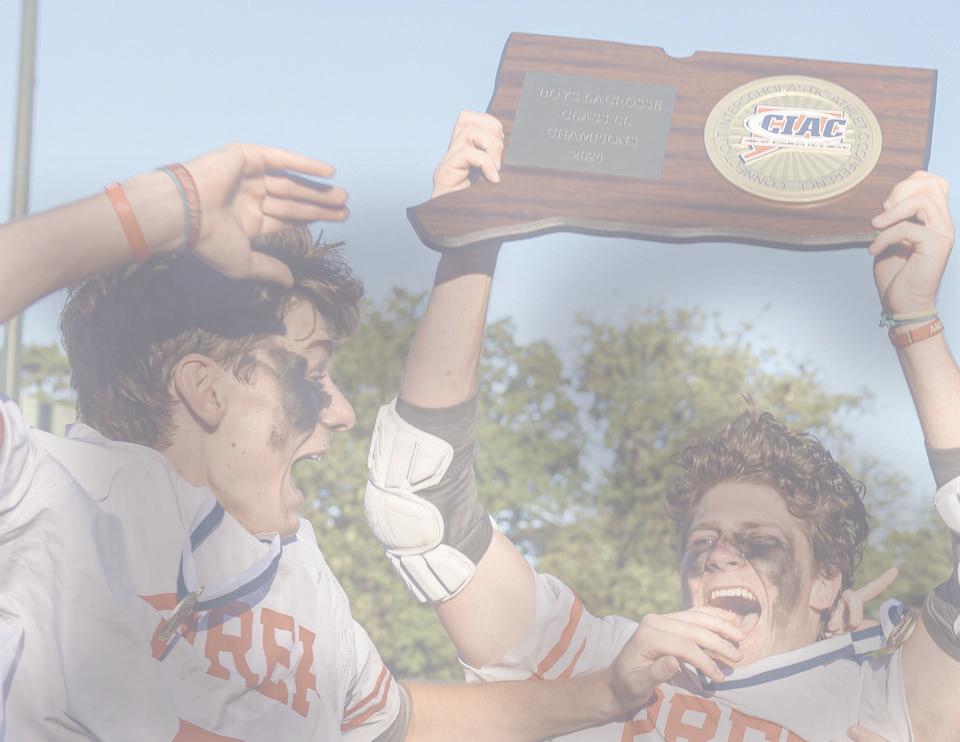
Fairfield College Preparatory School, a Jesuit, Catholic high school of excellence, develops young men into compassionate leaders through a rigorous academic program. In a faith-filled community, students deepen their relationships with God and one another, transforming into Men for Others.
Expert Advice
Embracing the future with tools to succeed
“ALL
OF LIFE IS A
CONSTANT EDUCATION.”
“The future belongs to students who can adapt, communicate, and think creatively. At Unquowa, we honor proven educational traditions while embracing innovation, helping children build the resilience and curiosity needed to succeed in school and in life.”
Lisa Sylvestro, Director of Academic Learning, Unquowa
Eleanor Roosevelt, Former First Lady and Diplomat
“Emerging Technologies is a required curriculum at SLS. But we never want to teach technology in isolation. We always want students to get out that moral compass and ask: What are the ethical ways to use a tool, and what problems or hazards could arise?”
Liz Perry, Assistant Head of School for Academics, St. Luke's School (SLS)
“We are currently preparing students for jobs that don't yet exist, using technologies that haven't been invented, in order to solve problems we don't even know are problems yet.”
Richard Riley, Former U.S. Secretary of Education
“LIFE IS AN OPEN BOOK TEST. LEARNING HOW TO LEARN IS YOUR MOST VALUABLE SKILL IN THE ONLINE WORLD.”
Marc Cuban, Entrepreneur and TV Personality
“The future always brings change; schools pivot accordingly. However, nothing can or will replace human nature. Teaching students about their humanness remains critical. In the face of AI, modeling trusting relationships, empathy and ethical decision-making will allow students to collaborate, be agile, honest, and adaptable for whatever lies ahead.”
Kathy Coen, Assistant Head of Middle School, New Canaan Country School
Expert Advice Smart tips for an evolving education
“Turn o your email; turn o your phone; disconnect from the Internet; figure out a way to set limits so you can concentrate when you need to, and disengage when you need to. Technology is a good servant but a bad master.”
— Gretchen Rubin, Author and Podcaster
“Our earliest school experiences help shape and prepare us for the future. Students thrive in nurturing and structured environments with predictable routines and supportive guidance that fosters confidence, creativity, and independence. Indoor and outdoor play incorporates numeracy, literacy, and socio-emotional skills while having fun.”
Sue Delepine, Pre-K Teacher and Master
Teacher, Putnam Indian Field School
“The only person who is educated is the one who has learned how to learn and change.”
Carl Rogers, Psychologist
“LEARNING IS LIKE ROWING UPSTREAM: NOT TO ADVANCE IS TO DROP BACK.” Anonymous
“We believe children build future-ready skills through nature, play, movement, read-alouds, and meaningful social interactions. Handson experiences with cooperative play and conflict resolution help young learners grow into adaptable, creative, resilient thinkers and problem-solvers.”
“THE BEAUTIFUL THING ABOUT LEARNING IS THAT NOBODY CAN TAKE IT AWAY
FROM YOU.”
B.B. King, Musician
Lily Carnicelli and Sara Welter, K-1 Teachers, The Long Ridge School
BE BOLD. APPLY EARLY.
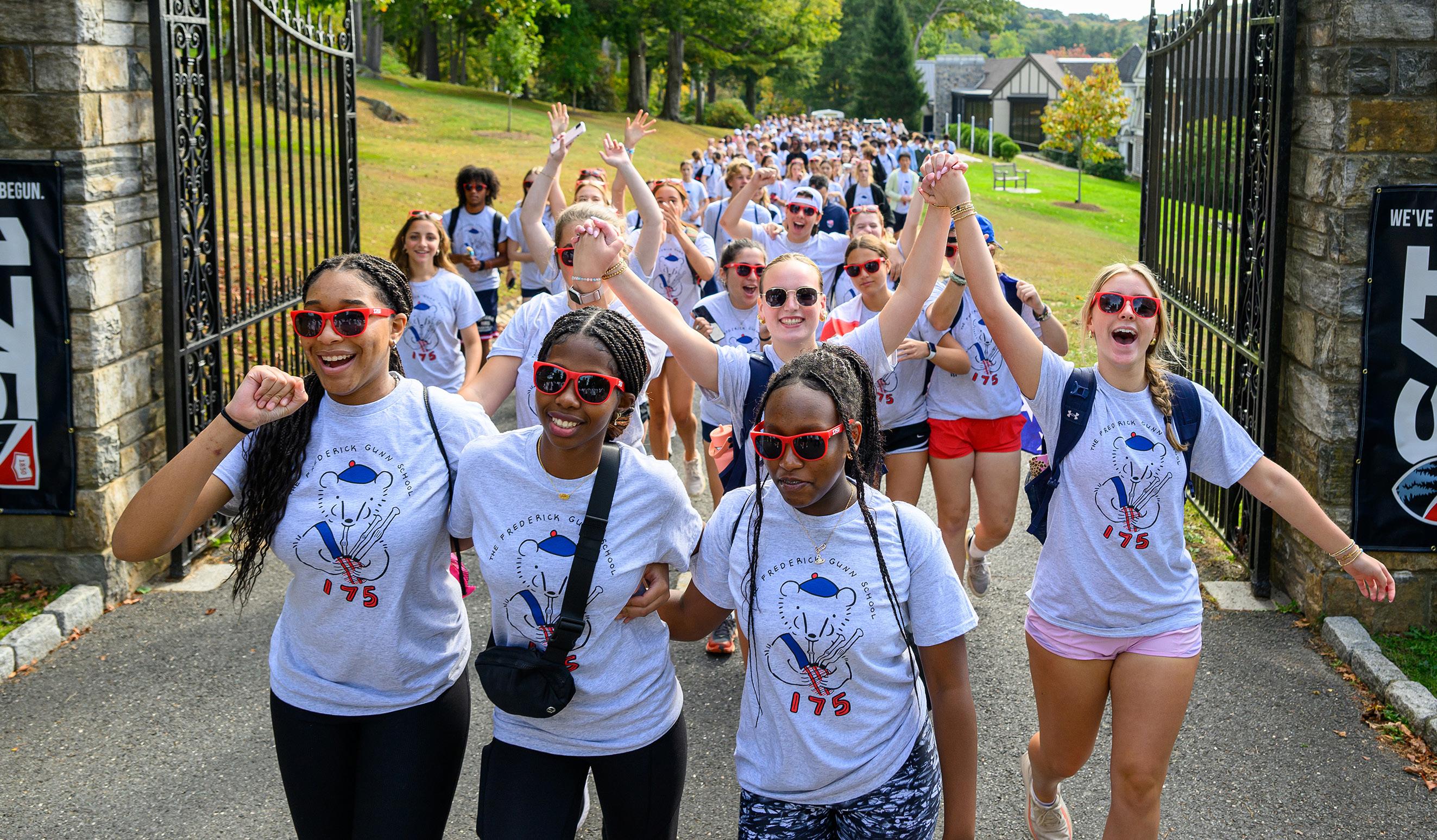
The Frederick Gunn School cultivates independent critical thinkers empowered to be a force for good. We educate students to be ambitious citizens who are always learning and courageous in character.
KEY DATES FOR 2027–2028 ENROLLMENT
EARLY DECISION REGULAR DECISION JANUARY 15, 2027 : Application deadline
DECEMBER 1, 2026 : Application deadline
DECEMBER 15, 2026 : Decision notification
MARCH 10, 2027 : Decision notification
Is Multitasking Hurting High Schoolers? The Case for Teaching Focus and Presence
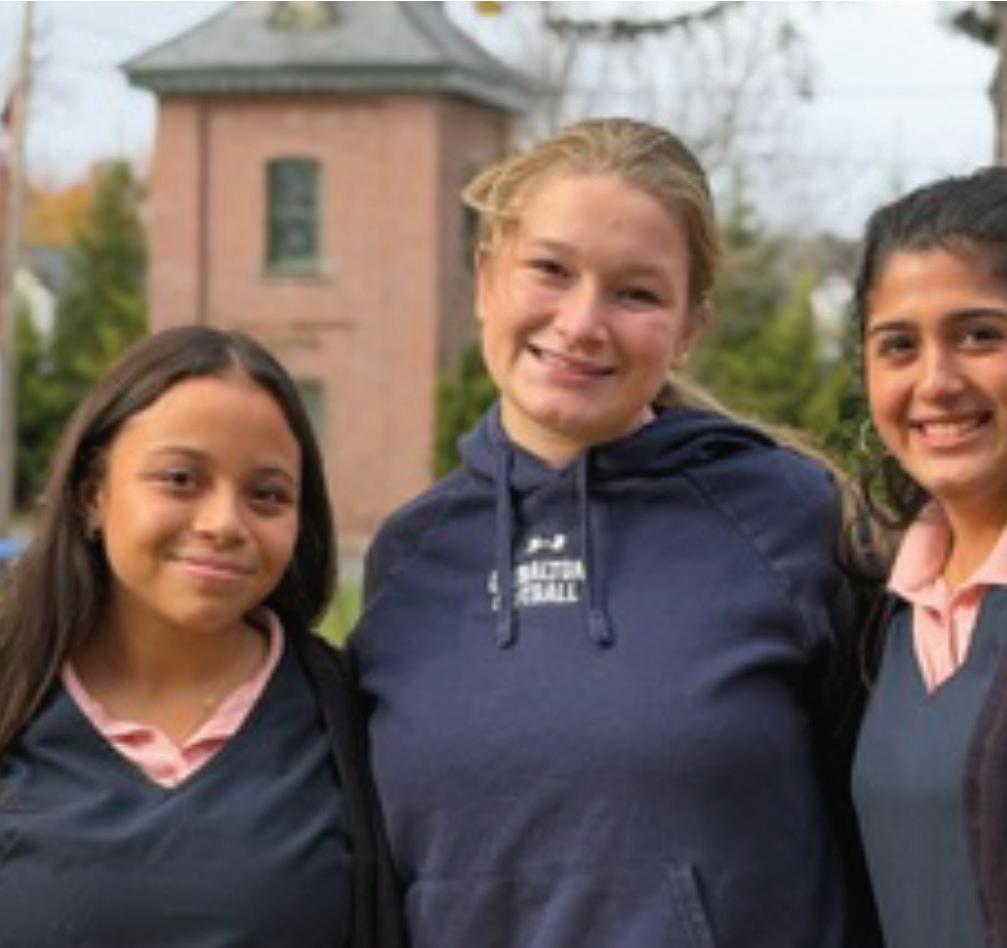
by Beth Coyne, Head of School, Lauralton Hall
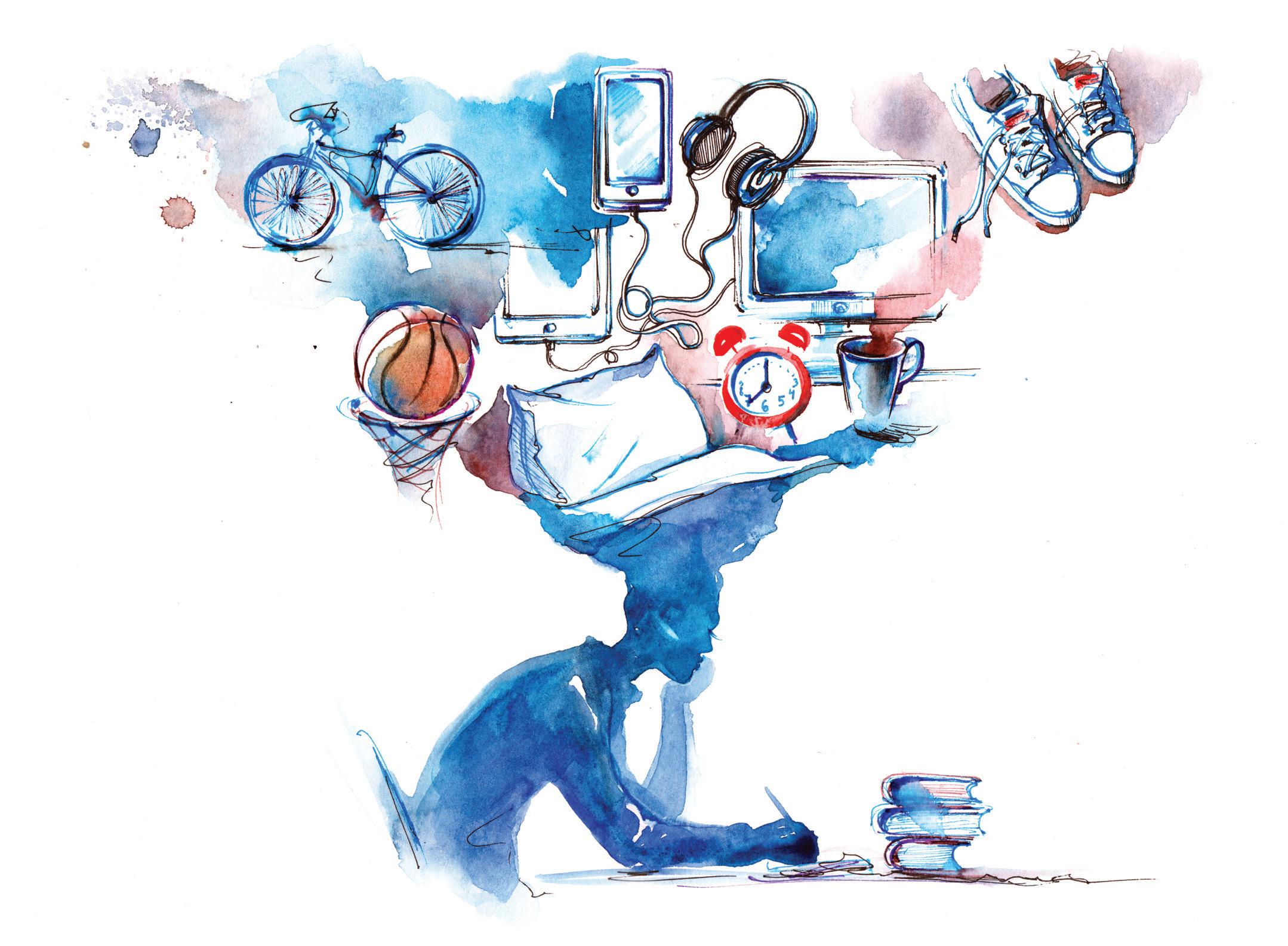
Irecently came across a concept called “single tasking,” the practice of giving your complete, undivided attention to one thing at a time. The idea seems almost radical in a world that rewards busyness and praises those who can juggle 10 tasks. But the research is clear: When we try to do two things at once, we rarely do either well.
It made me wonder: Are we teaching this skill to students?
With information and entertainment always within reach, just a search or scroll away, the ability to focus has become one of the most valuable and underrated skills a young person can develop. I want our students to experience the deep satisfaction of devoting themselves fully to one thing, training their minds to focus, and building the self-discipline needed to succeed as students, athletes, and friends.
WHAT HAPPENS WHEN WE PUT THE PHONES DOWN
At the end of February, I had the pleasure of attending a student retreat, and one of the very first instructions we received was simple: Leave your phones at home and fully engage in the experience.
What a gift that turned out to be.
In the dining room at breakfast, lunch, and dinner, groups of students sat together talking face to face, eyes bright, smiles wide, fully present with one another. That simple act, being here, now, with the people in front of you, became a defining element of the experience. By the end of the retreat, the students left with stronger bonds, deeper connections, and a renewed sense of what it feels like to truly belong.
It was a reminder of something we can easily forget—presence is a practice. And it is one our students can learn.
THE REAL COST OF DISTRACTION
Think about your son or daughter sitting down to do homework. Phone nearby. Notifications on. Entertainment available at their fingertips. Now imagine the same assignment completed with total focus, screens off, the phone in another room, full attention on the work in front of them.
The difference is not just efficiency. It is depth of attention, thought, and retention.
I know this from my own experience. When I am writing and an email notification pops up, I often lose my train of thought. Sometimes I pause to respond, and the work that could have taken 20 minutes stretches to an hour. Fractured attention produces fractured results, for adults and teenagers alike.
Researchers call this attention residue, the mental cost of switching between tasks. Even briefly checking a phone between studying leaves cognitive traces that slow thinking, reduce comprehension, and increase errors. For students navigating complex coursework, the stakes are real.
HOW WE TEACH FOCUS IN SCHOOL
We can work intentionally to help students develop what I call the “quiet skill,” the ability to settle the mind, resist distraction, and bring their full selves to the task at hand.
At our school, we approach this through experiences that build both mental and physical discipline, and by giving students structured opportunities to practice presence.
Recently, our seniors were invited to participate in a yoga experience designed to build both physical and mental strength, practicing focus, breath, and presence in real time. Through our Mercy grounded religion program, we also explore how contemplative practice and inner peace can steady a student during periods of stress, transition, and uncertainty.
This is what it means to educate the whole student. Academic rigor matters enormously here. But so does the capacity to be fully present, as a student, an athlete, a friend, and eventually a leader.
WHAT PARENTS CAN DO AT HOME
Here’s the good news: Single tasking is a skill that can be practiced anywhere, including at home. Here are a few places to start.
CREATE PHONE-FREE ZONES
Designate mealtimes, homework blocks, or even a corner of the home as phone-free. Model it yourself.
“Perhaps the greatest gift we can give young people is helping them recognize when to put multitasking aside and give something, or someone, their full, undivided attention.”
NAME THE PRACTICE
When your child sits down to study, invite them to single task it, one subject, one window, one goal. Give it a name and make it feel intentional.
TALK ABOUT PRESENCE
Ask your child what they noticed when they were truly present in a conversation, a practice, or a focused moment. Help them connect to how they actually feel, calmer, more capable, and more connected.
THE GIFT OF FULL ATTENTION
We all multitask. It is part of modern life, and it is not going away. But perhaps the greatest gift we can give young people is helping them recognize when to put multitasking aside and give something, or someone, their full, undivided attention. In doing so, they may find themselves more centered, more confident, and more successful, not just as students, but as the thoughtful, present, and capable young people they are becoming.
That is the kind of preparation that lasts well beyond school.
College Destination Finding the right fit
"The happiest students I work with, starting in grade 9, are the ones who have spent time reflecting on their own needs and goals before they focus on whether they can get into a particular college or not. When students feel a deep sense of purpose, they are more able to articulate how the colleges on their list will help them meet their objectives."
Jessica Landis, Director of College Counseling, King School
“A COLLEGE EDUCATION SHOULD EQUIP ONE TO ENTERTAIN THREE THINGS: A FRIEND, AN IDEA AND ONESELF.”
— Thomas Ehrlich, American Legal Scholar
“THE ONLY PERSON YOU ARE DESTINED TO BECOME IS THE PERSON YOU DECIDE TO BE.”
Ralph Waldo Emerson, American Poet and Essayist
“Finding the right college is not about the process or the bumper sticker; it’s about the person. Who are you? What excites you? What kind of environment brings out your best? Those are the questions that will lead you to a school where you can really thrive.”
Sonia Bell, Director of College Counseling, St. Luke's School (SLS)
“The best college isn't the one with the lowest acceptance rate or highest endowment. It's the one that gives the student the best opportunities to be successful and grow. Fit matters. We encourage students to be open-minded when exploring schools to find the ideal home.”
— Kate Barzun, Dean of College Counseling, Avon Old Farms School
“College is a reset — new team, new coaches, new pressures. The athletes who hit the ground running are doing the inner work. They’ve learned the mental performance tools to compete with confidence, recover from failure, and believe in themselves when no one’s watching.”
Lindsay Potter, Founder and Mental Performance Coach, The Confidence Edge
“IT IS ESSENTIAL TO VIEW COLLEGE COUNSELING AS A DEEPLY PERSONAL PROCESS. AT ITS BEST, IT REQUIRES A PARTNERSHIP BETWEEN STUDENTS, PARENTS, AND THE SCHOOL TO HELP STUDENTS REALIZE AND DEVELOP THEIR INTERESTS AND TALENTS, AND THEN TO TRANSLATE THEIR PERSONAL GROWTH AND ACADEMIC SUCCESS INTO COLLEGE POSSIBILITIES AND ULTIMATELY, A FINAL CHOICE.”
John Hanrahan, Dean of School and College Counseling, Fairfield College Preparatory School
The Power of Discovery
At King School, students ask big questions, explore ideas, and take ownership of their learning.
That’s how engagement grows.
That’s how students fall in love with learning.
And those skills go far beyond the classroom.
They shape how children solve problems, adapt to change, and take on any challenge with confidence and purpose.
LEARN HOW YOUR CHILD CAN THRIVE AT KING.
Schedule your visit at kingschoolct.org/visit
King School is a PreK-12 independent, co-ed day school located in
northern Stamford that educates students of Fairfield and Westchester counties.
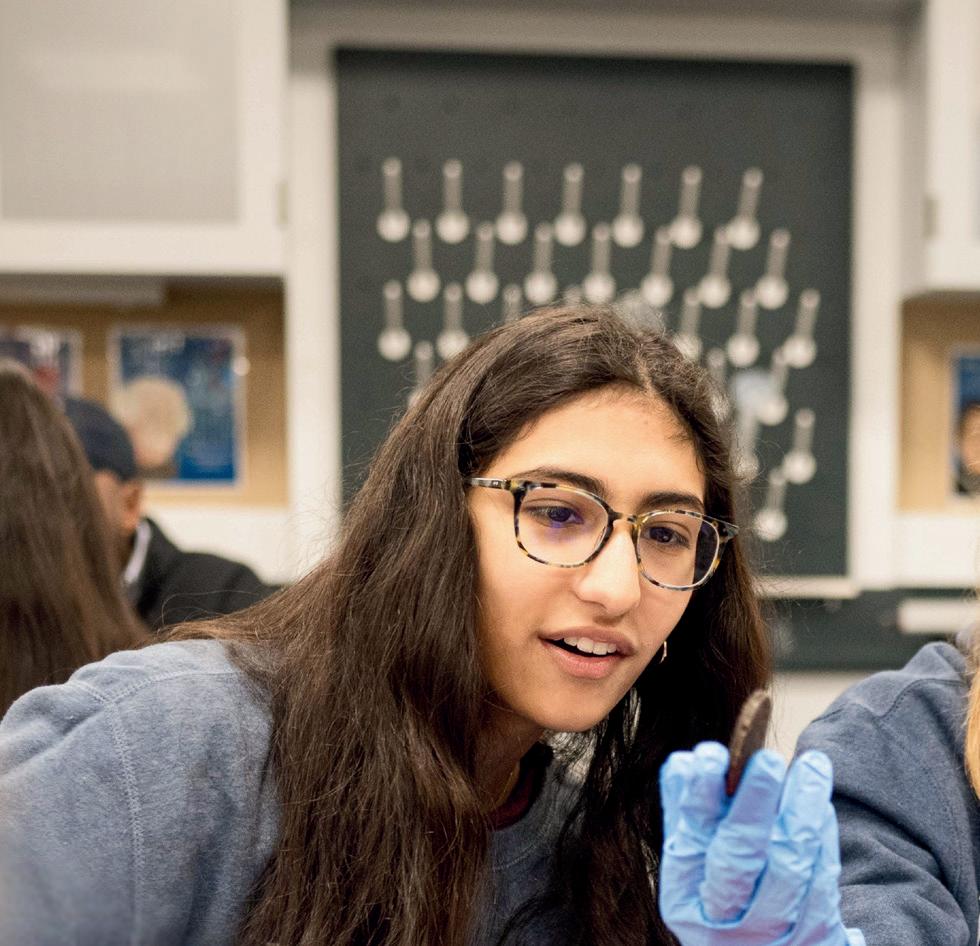
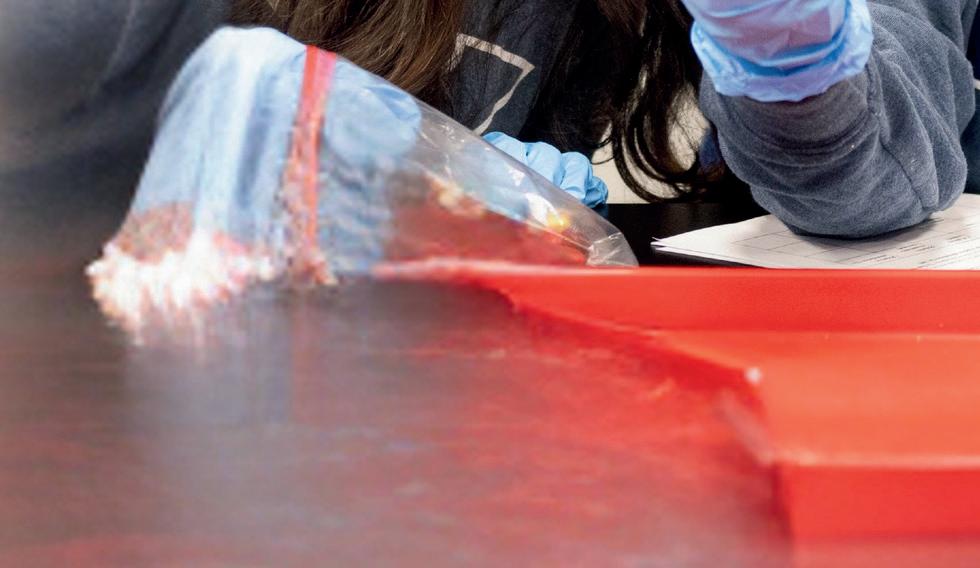
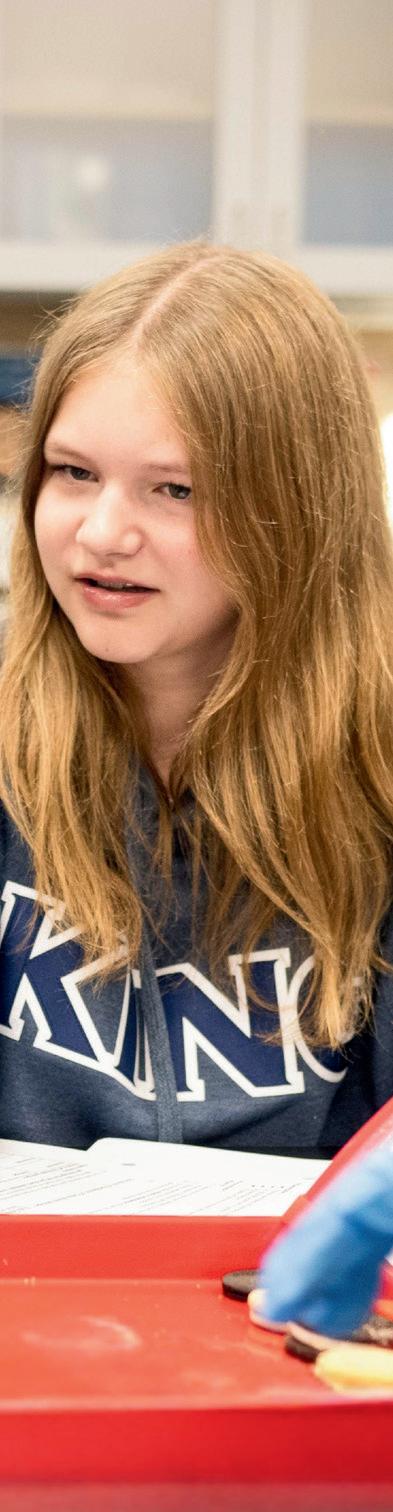
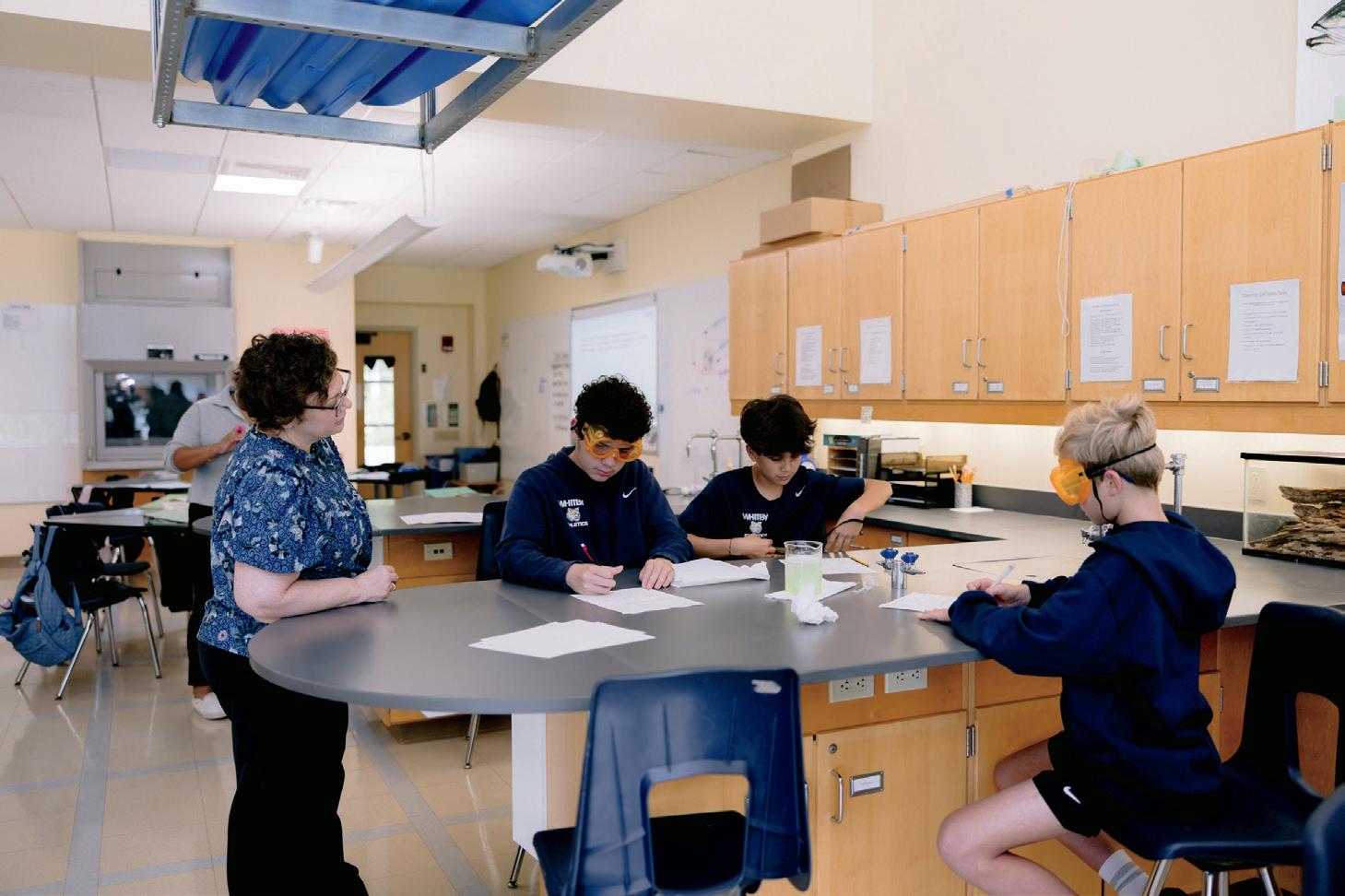
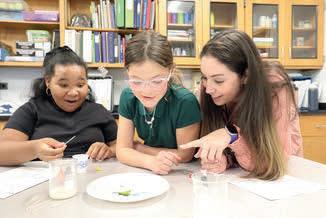
DISCOVERY IN ACTION: Snacks became scientific models as Chemistry students explored isotopes and atomic mass through hands-on learning.
Performance, Participation, and the Education of the Whole Child The Power of Play
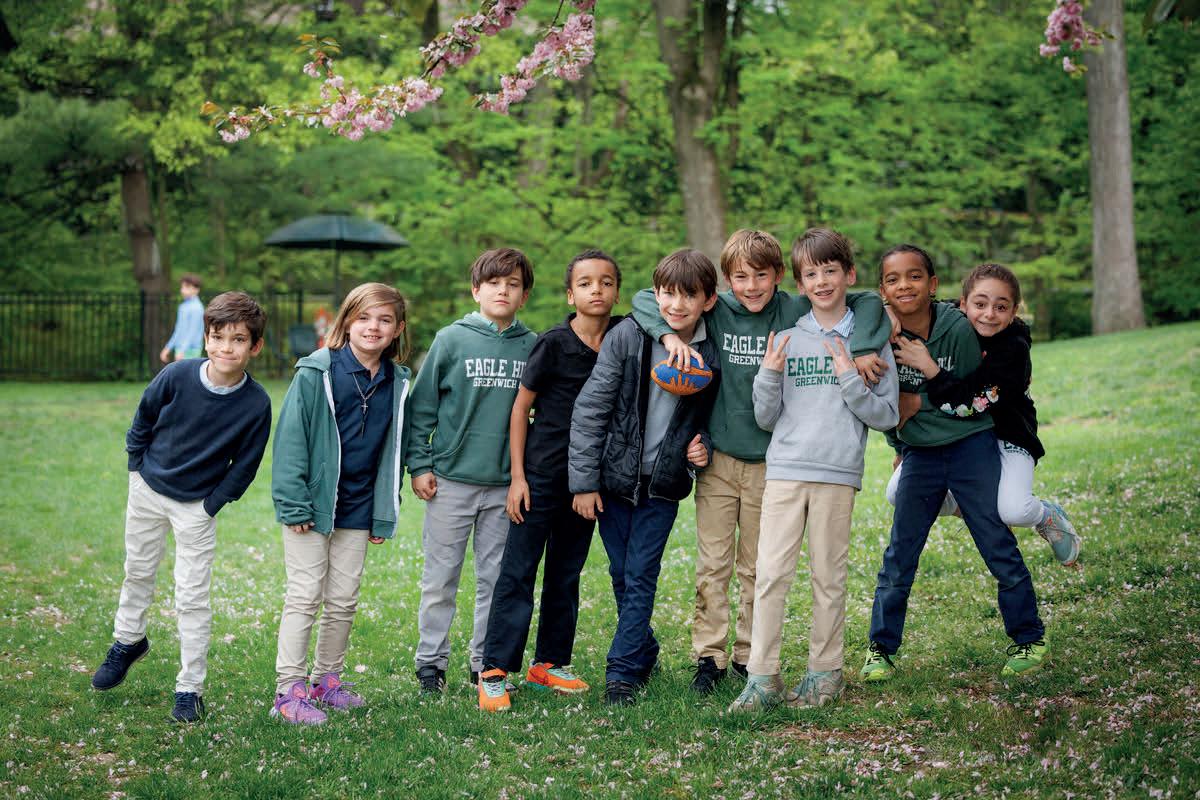
by Kara Ashley, Director of Enrollment, Eagle Hill School, Greenwich
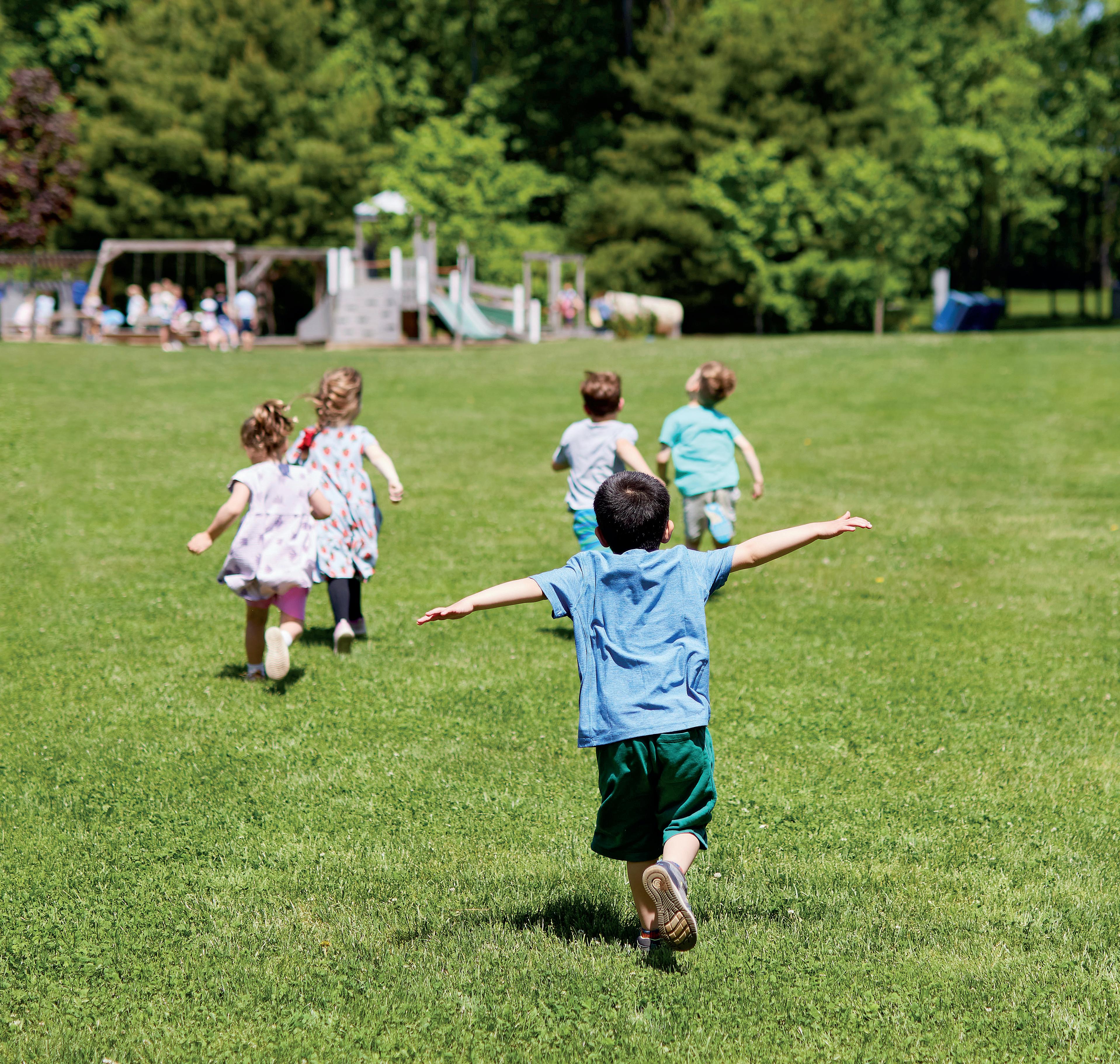
Christina Koch spent her childhood summers on her grandparents' farm in Michigan, with long unstructured afternoons, open fields, and the freedom to play. This spring, she became the first woman to travel around the Moon. Her crewmate Victor Glover described the mission with language every coach would recognize: “Human spaceflight is a relay race, a baton passed from crew
to crew, generation to generation.” The Artemis II crew was selected for their technical mastery, yes, but equally for their adaptability, composure under pressure, and capacity to collaborate. Those are not technical skills. They are the skills of a whole childhood, built through play. Arts and athletics, imagination and unstructured time, are not extracurricular. They are the curriculum for human flourishing.
Children today have fewer unscheduled hours than any generation before them, and the research suggests they may need them more.
PLAY AS LABORATORY
The American Academy of Pediatrics has described play as essential to development, noting that it "enhances brain structure and function, and promotes executive function, the
process of learning, rather than the content, which allows us to pursue goals and ignore distractions." Mr. Rogers put it more simply: “Play gives children the chance to practice what they are learning.”
Executive function refers to the set of cognitive processes that allow us to plan, focus, adapt, and follow through. They are the foundation beneath every academic skill and one of the strongest predictors of long-term success. Its three core components are working memory, holding multiple things in mind at once; cognitive flexibility, shifting strategy when circumstances change; and inhibitory control, resisting impulse in service of a longer goal. Alongside these, emotional regulation and academic stamina are equally essential to how children learn. Dr. Kathy Hirsh-Pasek, a professor of psychology at Temple University and a senior fellow at the Brookings Institution, describes the “6 C's” for student success: collaboration, communication, critical thinking, creative innovation, confidence, and citizenship. Play, structured and unstructured, is one of the most reliable ways to build all of them.
THE FIRST LABORATORY
The cardboard box becomes a spaceship, the stick becomes a magic wand, rules are invented on the spot and argued over passionately. In free play, we see executive function skills actively under development. Children are practicing negotiation, turntaking, conflict resolution, pragmatic language, emotional regulation, perspective-taking, independence, and collaborative problem-solving. Free play is where executive function first takes root, and its developmental importance cannot be overstated. When children invent a scenario and sustain it, holding rules in mind, adapting when a playmate suggests changes, and regulating impulse and emotion to keep the game alive, they are building language development,
social-emotional learning, and the cognitive foundations researchers identify as essential to academic success. The AAP affirms that play is "a singular opportunity to promote the social-emotional, cognitive, language, and self-regulation skills that build executive function and a prosocial brain." Play is among the most serious learning a child does. Imaginative and strategic play extend this further. Building with LEGO bricks strengthens spatial reasoning, planning, and the
“Children who spend unstructured time outdoors develop a sense of wonder and belonging in the natural world that shapes them for a lifetime.”
discipline of iteration. Role-playing games such as Dungeons and Dragons build empathy and narrative intelligence, requiring players to inhabit perspectives other than their own, visualize, and make decisions under uncertainty. Strategy games strengthen forms of thinking that transfer directly to academic and professional problem-solving. Play also deepens relationships. Families who play together build a shared private language and a history of small joys. Children who spend unstructured time outdoors develop a sense of
wonder and belonging in the natural world that shapes them for a lifetime. And then there is boredom. Rather than a problem to solve, unplanned downtime is one of the most powerful gifts we can give a child. When a child says they’re bored and no one rushes to fix it, the brain goes looking for its own stimulation. The Kids Mental Health Foundation describes this as a "genuine opportunity." Boredom challenges children to generate their own solutions, fueling creativity, independence, and self-directed problem-solving that structured activity rarely demands. The power of play includes the power of the unscheduled afternoon.
THE RELAY RACE
Team sports place students in one of the most cognitively demanding environments available: real stakes, real relationships, real accomplishments and disappointments. Research consistently connects physical activity to improved attention, working memory, and academic engagement. And the richest learning happens in the dynamic among players: communication, collaboration, and the trust built across a long season of showing up for one another. Students who compete together develop goal-setting, persistence, situational awareness, academic stamina, sustained attention, resilience, and the capacity to perform under pressure.
The Artemis II crew exemplifies what this preparation looks like at its highest expression: years of learning to communicate under stress, trust a colleague's judgment, and adapt when the stakes are real. These are human skills, built across a lifetime of doing hard things alongside other people.
THE STAGE AS LABORATORY
The performing arts function as a different type of developmental laboratory. A full-scale production asks every participant to memorize,
adapt, take direction, give feedback, manage nerves, and be vulnerable in front of an audience across months of preparation. Every run-through is a repetition of working memory and a test of academic stamina. Every adjustment to a scene is cognitive flexibility in action.
Every performance is a public demonstration of emotional regulation under conditions that are entirely real. The way a community of students rehearses, disagrees, supports one another, and finally steps into the light together, builds belonging in a way few other experiences can.
The visual arts cultivate sustained attention and the willingness to make something, evaluate it honestly, and make it again, a process indistinguishable from scientific thinking. Creative writing is the practice of translating inner
experience into language, a skill with lifelong relevance in every professional domain.
THE EXPLORERS
For children with dyslexia, play and performance may be where their most important cognitive strengths first become visible. Researchers at the University of Cambridge found that people with dyslexia have what they call an explorative bias: a specialization in discovery, invention, and big-picture problem-solving that represents a genuine cognitive strength, not merely a compensation for difficulty. Lead researcher Dr. Helen Taylor argues that this way of thinking is essential to teams, to organizations, and to our collective capacity to adapt. In 2022, LinkedIn recognized this directly, adding Dyslexic Thinking as an official skill on its platform, acknowledging
creativity, problem-solving, and big-picture thinking as capacities the professional world actively needs. Multiple studies have found that physical activity produces improvements in executive function in children with ADHD, including inhibitory control, cognitive flexibility, and working memory, the same capacities that play, sport, and the performing arts build in every child. For neurodiverse learners, the field, the stage, and the open afternoon are not supplements to the real curriculum. For many, they are where some of the most learning happens.
WHAT THE WORLD NEEDS MOST
We are raising children for a world already being reshaped by artificial intelligence. That fact intensifies, not diminishes, the case for play. As AI accelerates its capacity to perform
At Westminster School, students develop grit and grace in a setting that o ers some of the finest facilities in American private schooling. For information about upcoming admissions events or tours, please call the O ce of Admissions at (860) 408-3060
Co-ed | Boarding & Day | Grades 9-12 | Founded 1888 Simsbury, Connecticut | www.westminster-school.org
Westminster School does not discriminate on the basis of race, color, religious creed, sex, sexual orientation, gender identity or expression, national origin, ancestry and/or disability.
cognitive and technical tasks, the skills that remain irreplaceably human are precisely those built on playgrounds, fields and stages: creativity, adaptability, resilience, empathy, and the capacity to collaborate with people who see the world differently. The World Economic Forum's 2025 Future of Jobs Report named resilience and adaptability among the capacities employers will need most by 2030. There is something that happens when a basketball goes through the net with a swish. Something in the feel of grass under bare feet, in the weight of a handful of mud, in the specific pride of building a fort that holds. Something in the backstage darkness before a curtain rises. These are the experiences of childhood. They are also, as science and the space program confirm, exactly what builds the people our
world needs most.
The child who builds and argues, falls down and gets up, performs and runs through the grass, is doing some of the most important work of their education. They are training in the most important laboratory of all: childhood itself. That is the power of play, and it has never been more worth protecting.
SOURCES
American Academy of Pediatrics. (2018, reaffirmed 2025). The power of play: A pediatric role in enhancing development in young children. Pediatrics, 142(3). Glover, V. J. (2023, April 3). Remarks at Artemis II crew announcement. NASA/Ellington Field, Houston, TX.
Hirsh-Pasek, K., Golinkoff, R. M., Nesbitt, K., Lautenbach, C., Blinkoff, E., & Fifer, G. (2022). Making schools work: Bringing the science of learning to joyful classroom practice. Teachers College Press. Koch, C. H. (n.d.). Astronaut biography.
NASA Johnson Space Center. https:// www.nasa.gov
Made By Dyslexia & LinkedIn. (2022). Dyslexic Thinking recognized as an official LinkedIn skill. Made By Dyslexia campaign in partnership with LinkedIn. Rogers, F. (2003). The world according to Mister Rogers. Hyperion.
Skene, K., O'Farrelly, C. M., Byrne, E. M., Kirby, N., Stevens, E. C., & Ramchandani, P. G. (2022). Can guidance during play enhance children's learning and development in educational contexts? Child Development, 93(4), 1162-1180.
Taylor, H., and Vestergaard, M. D. (2022). Developmental dyslexia: Disorder or specialization in exploration? Frontiers in Psychology, 13, 889245.
World Economic Forum. (2025). The future of jobs report 2025.
Kids Mental Health Foundation. (2023). The good and bad of boredom. Nation-
Montessori Children’s House 18 months - Kindergarten International Baccalaureate Grades 1 - 8
A Clear Sense of Purpose The Value of an All-Girls Education
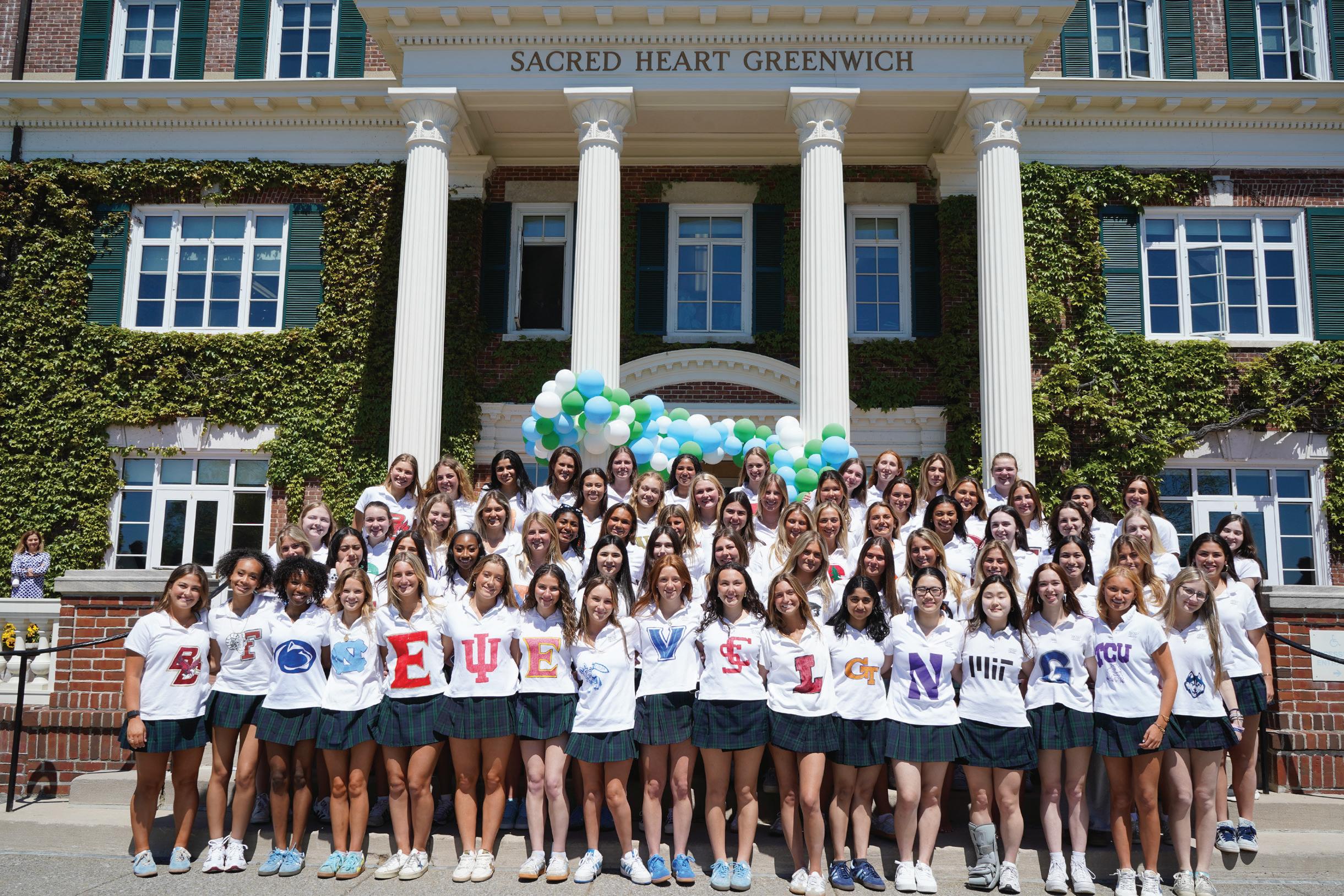
by Michael F. Baber, President, Sacred Heart Greenwich
At a moment when families are thinking more critically about what education should provide—not only academically, but developmentally— some are turning with renewed interest to a model that has long existed but is newly resonant: all-girls education.
Across the country, independent schools serving girls are experiencing a noticeable increase in demand.
While the model itself is not new, the reasons families are choosing it feel particularly aligned with the current moment. In an environment shaped by rapid technological change, evolving social dynamics, and increasing pressure on adolescents, parents are seeking schools that offer not just excellence but clarity of purpose.
That shift has been visible over the past four years at our school,
under the leadership of our senior team. During this time, there has been growth not only in enrollment interest, but in the depth and intentionality of academic and co-curricular programs. The focus has not been on reinvention, but on refinement—strengthening what works and ensuring that each aspect of the student experience is aligned with a clear mission.
What distinguishes an all-girls
education, in this context, is not novelty but design. In an all-girls environment, classrooms are structured to prioritize participation, collaboration, and intellectual risk-taking. Leadership is not an opportunity reserved for a few, but an expectation experienced by many. Students are encouraged to explore fields—from the sciences to public speaking—without the subtle social dynamics that can sometimes shape participation in coeducational settings.
Just as important is the emphasis on voice. In these environments, students are consistently asked not only what they think, but how they will act on it. Over time, this builds a habit of engagement that extends beyond the classroom.
Research has long supported the outcomes associated with girls’
“In an all-girls environment, classrooms are structured to prioritize participation, collaboration, and intellectual risk-taking.”
schools—higher levels of confidence, increased likelihood of pursuing leadership roles, and strong academic achievement. But what is emerging now is a broader recognition among families that these outcomes are not incidental; they are the result of intentional design.
For schools like Sacred Heart Greenwich, the past several years have been less about responding to a trend and more about deepening a commitment to academic excellence, to community, and to the formation of young women prepared to lead thoughtful, purposeful lives.
As families continue to evaluate educational choices through a wider lens, all-girls schools are not positioning themselves as an alternative. Instead, they are being seen, increasingly, as a deliberate and compelling choice.
CELEBRATING
CELEBRATING CHILDHOOD,
CELEBRATING
Specializing
Specializing
Inquiry-based, experiential learning
Inquiry-based, experiential learning
Individualized instruction
Individualized instruction
Low student to teacher ratios
Specializing in early education, age 2–grade 5
Low student to teacher ratios
Inquiry-based, experiential learning
Individualized instruction
Low student to teacher ratios
LongRidgeSchool.org
LongRidgeSchool.org
LongRidgeSchool.org
Quiet Frustration
High-Achieving Families Who Struggle with Executive Dysfunction
by Aron Boxer, Founder & Executive Function Coach, Diversified Education Services
You know what really frustrates parents? It’s not a messy room or a missed curfew. That’s expected. What actually gets under their skin is something far less visible—and far more unsettling: knowing their child is clearly bright but consistently underperforms.
In a place like Fairfield County, where opportunities have high ceilings, that gap between potential and performance can feel astronomically wide. Parents start asking themselves questions they don’t say out loud: Is my child just not trying? Are we missing something? Am I doing something wrong? Slowly, it starts to feel isolating. You’re not alone.
As executive function coaches and academic tutors, this is what my colleagues and I see every day: capable students, many certifiably intelligent and capable, but struggling with what is called executive dysfunction. Challenges with organization, time management, follow-through, and planning. These aren’t intelligence issues. They’re executive function issues. And unfortunately (or perhaps fortunately), executive functioning is a nonverbal skill. A child can have a genius-level IQ and not be able to organize a one-pocket folder.
And here’s the part that drives parents crazy—many of these students are completely okay with underperforming. They’re not losing sleep over a B grade and not panicking about a missing assignment. From their perspective, things are fine. They assume they’ll still get into a good college, and everything will work out.
THE SLIPPERY SLOPE OF MEDIOCRITY
The “good enough” mindset is anything but good, and it’s never enough. It is where the real problem begins, because habits don’t stay neutral. They either improve or they decline.
Bad habits are easier to build than good ones. When a student gets used to doing things at the last minute, cutting corners, and accepting average effort, that becomes their baseline—not just in school but in life.
So, when a parent slips into negativity about their children’s future potential, they are often not off base. Now, we all know, grades are not everything. But they are indicators as they reflect patterns—how a student manages time, handles pressure, and executes. Colleges and graduate programs use them. More importantly, though, they reveal something deeper: a student’s habits and behavior over time.
A STORY THAT EXPLAINS IT ALL
Let me tell you about a student— we’ll call him Henry.
Henry has a 145 IQ. But if you looked at his grades, his attitude, and his performance, you would think he had a room temperature IQ.
After Henry was tested, his parents chose not to tell him that he was, by any standard, a genius. The problem was that Henry believed the opposite—he thought he was stupid. I asked his mom, “Please let me tell him some semblance of the truth—just something to build his confidence.” She said no. She wanted it to happen organically.
And that’s something to respect, as you never disregard a parent’s wishes. You might be the professional, but you’re also working within a family dynamic. You must be thoughtful and measured. So, we moved forward.
Henry’s parents were divorced, and it was messy. Like many kids in that situation, he pushed boundaries— more than most.
When he stayed with his mother, he would sneak out of the house through a trap door in his closet. He’d go out with friends—doing who knows what—but whatever it was, it wasn’t helping his performance in school. Things were getting worse. Then, one night, for whatever reason, Henry didn’t go out. That same night, one of his friends flipped his car. The car caught fire. The heaviest damage was on the passenger side—the seat Henry
“Motivation is unreliable. It comes and goes. If success depended on motivation, most adults wouldn’t function consistently either.”
usually sat in. If he had gone out that night, something terrible could have happened.
Luckily, no one was hurt. But that moment changed something. There was no dramatic transformation, no sudden turnaround—but there was a shift. A willingness. And that’s where progress begins.
I remember pointing out to Henry that he seemed to have a natural ability in math. He didn’t believe it. He had struggled through classes like geometry and biology, barely getting by with C grades.
Then he took the SAT. He scored nearly perfectly on the math section. Even I was surprised—but at the same time, I wasn’t. After all, he was a brilliant kid.
That result changed his trajectory. He started applying to more competitive schools. Because of his earlier academic record, the most elite options weren’t realistic. But he got into a great university, where he’s now finishing his junior year.
I still work with him—not because
he needs constant help, but because consistency matters. Sometimes the value isn’t in the instruction itself. It’s in the structure, the accountability, the ongoing presence that keeps students aligned.
That’s something people don’t always understand about executive function coaching.
WHY PARENTS HIT A WALL
Parents see the gap and they know their child can do better. But when they step into it, it is almost guaranteed to backfire. Why?
Because teenagers don’t want their parents in that role. What starts as support turns into tension: “Stop nagging me.” “I’ll do it later.” “You don’t get it.”
Now you don’t just have underperformance—you have conflict. And here’s the reality: Parents are not meant to be executive function
coaches for their own children. It’s not a matter of effort. It’s not a matter of intelligence. It’s a matter of dynamics.
I can point to my own stepson. We get along well. He’ll sit down with me to do his work, but we both know it’s not the same. The relationship changes the interaction. That’s not a criticism, just a reality.
IT’S NOT ABOUT MOTIVATION
A lot of people think the solution is motivation. It’s not.
Motivation is unreliable. It comes and goes. If success depended on motivation, most adults wouldn’t function consistently either. And if you believe that motivation is the key, then you probably believe that laziness is the problem.
I don’t. Laziness is a label, a convenient explanation for something more complex. Most of these kids
aren’t lazy: They’re stuck. Some are perfectly comfortable being B students—or even C students. Even very bright ones.
But that’s usually a defense mechanism. It is a way to manage expectations and avoid disappointment. Because no matter what, nothing hits harder than disappointing the people who raised you. That feeling sticks.
THE BOTTOM LINE
In the end, this isn’t about pushing kids harder or expecting perfection. It’s about giving them the tools to follow through on what they’re already capable of doing.
But intelligence without structure leads to inconsistency. And inconsistency, over time, becomes the ceiling. Because potential doesn’t separate students—execution does.
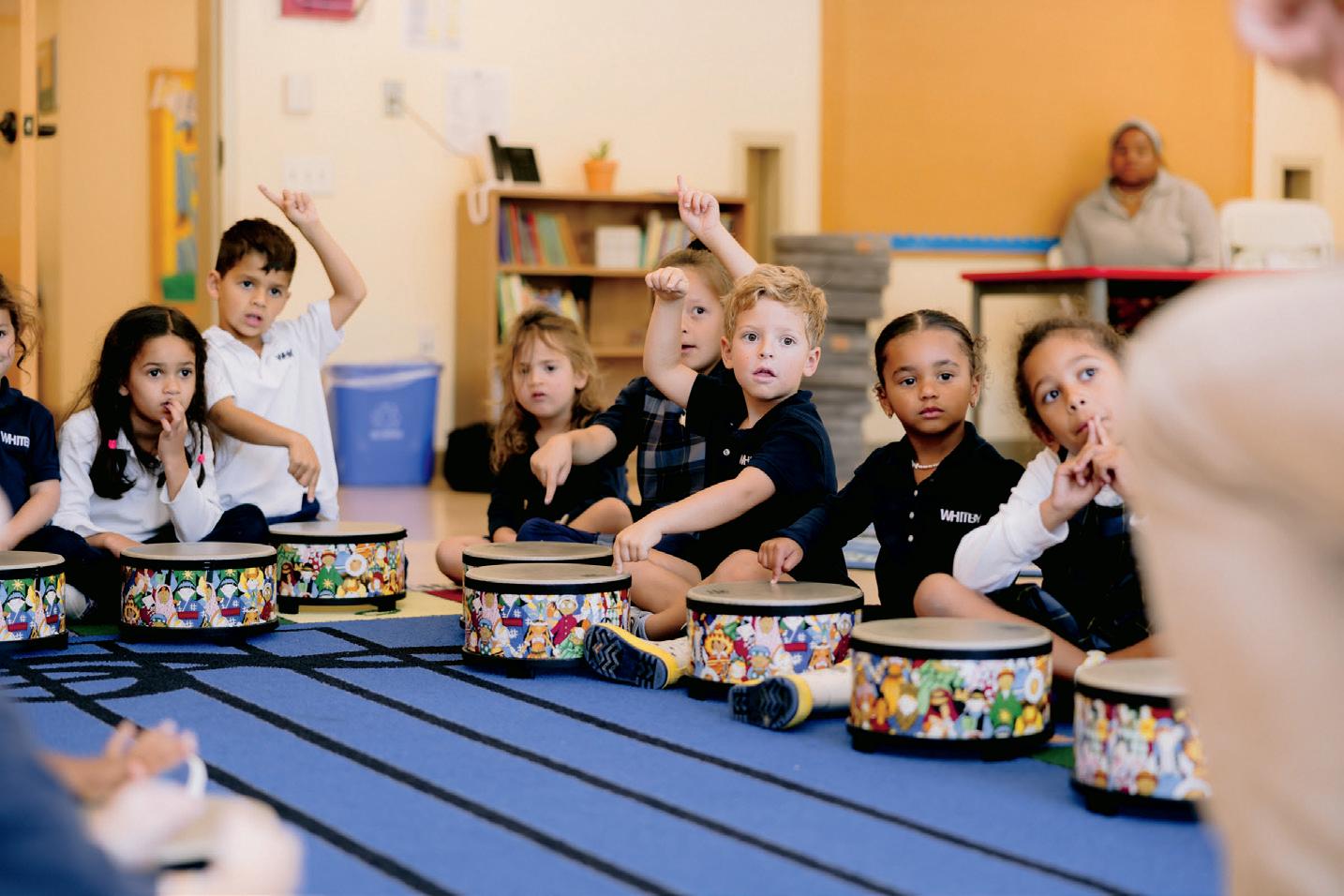
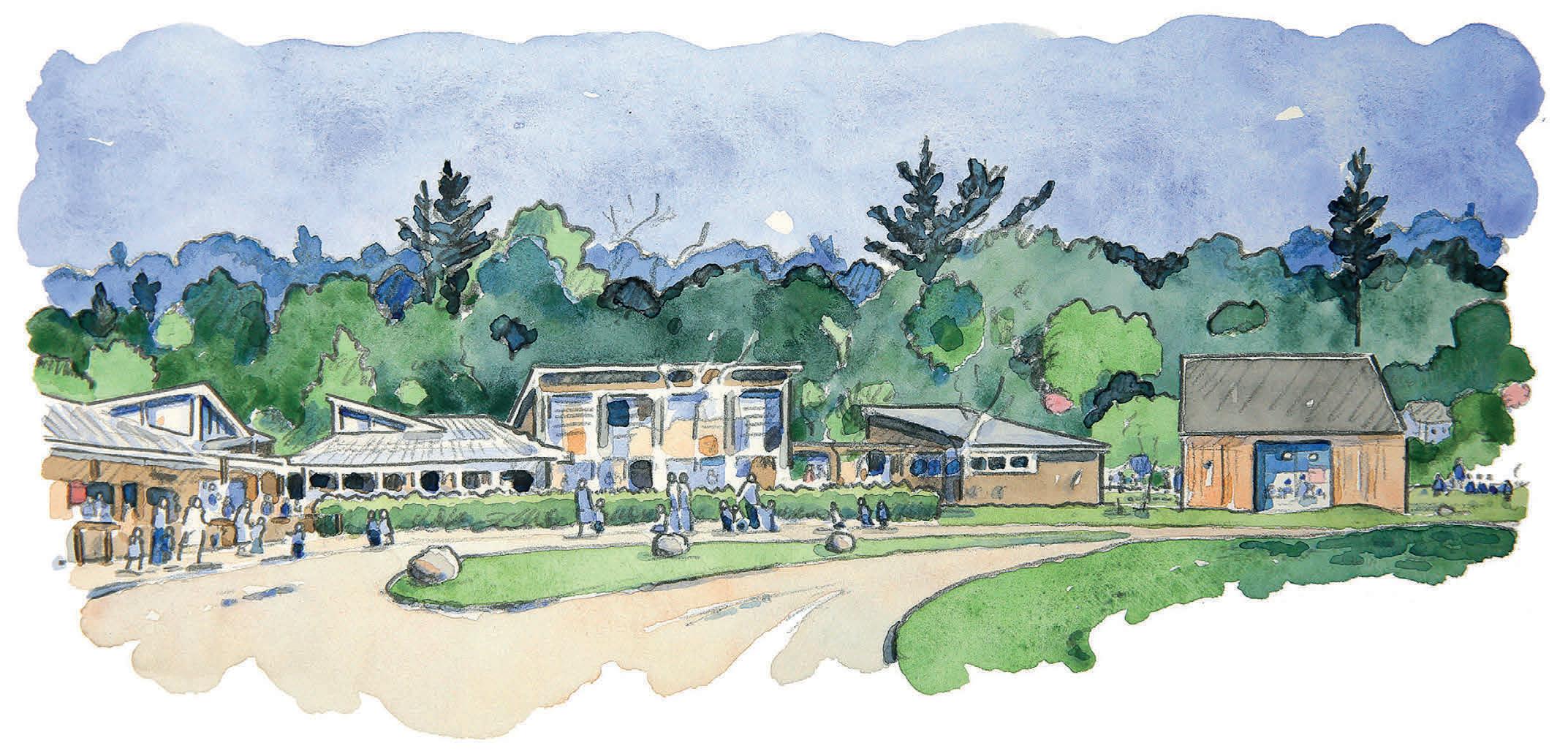
Here, the walls know joy, every room brims with discovery, and every window opens to great possibility.
Mini Cartoon Animal Highlighters 6-pack // $14.99 kawaiipenshop.com 1
For 50 years, Eagle Hill has empowered students with language-based learning differences and executive functioning needs to grow, succeed, and thrive.
Our expert faculty create tailored academic programs for each child, grounded in research and guided by the belief that every learner deserves to be supported and celebrated.
Our historic 17- acre campus, 30+ clubs and sports, arts, 5-day boarding, and vibrant summer programs help unlock each learner’s potential.
by Gloria Sinaguglia, Retired Choral and Orchestral Director at Stamford Public Schools, PROJECT MUSIC Board Member and Joyce DiCamillo, Pianist, Educator and Leader of Joyce DiCamillo Trio, PROJECT MUSIC Founder and Board Chair
“I would teach children music, physics, and philosophy; but most importantly music, for the patterns in music and all the arts are the keys to learning.”
–Plato
Do we agree with Plato? Yes! Are we
biased? Definitely! As sisters, both our childhoods and our adult lives have been defined by music—by the choice our parents made to give us this opportunity. Having also become educators, we can personally attest to the myriad of life-changing benefits
attributed to music education.
THE STATISTICS
In educator-speak, the statistics don't lie. According to PubMedCentral, music has an extraordinary influence on students'
development: Students involved in music programs are statistically more likely to excel academically, with higher standardized test scores and improved cognitive skills. More than 70% of doctors have received musical training; former presidents were lifelong musicians; astronauts have brought their instruments into space; highly elite engineering schools boast some of the best performing ensembles in the country—irrefutable proof of the correlation.
The study of music, choral or instrumental, instills confidence, self-esteem, and a strong sense of achievement in students. Music education cultivates creativity, encouraging students to think outside the box, work together, and find innovative solutions to problems, often in the moment!
Group music activities teach students that each person bears the responsibility of arriving prepared in order to contribute to the whole, learning to appreciate that solitary practice does reap rewards. Simply put, nurturing all these skills will put you on a path for success in both your personal and professional lives. A great explanation of the benefits of high-quality music education may be found in the tenets of El Sistema, the Venezuelan program begun by Josef Abreu in the late 1960s and responsible for lifting hundreds of thousands of children out of poverty since then. Its most famous disciple is Gustavo Dudamel, the new dynamic conductor of the New York Philharmonic, who spent many years at the helm of the L.A. Philharmonic, and is the founder of YOLA, the Youth Orchestra of L.A.
"Music has the power to positively impact students' lives—a transformative force that nurtures young minds, fosters creativity, and builds essential life skills."
—projectmusic.org
PROJECT MUSIC
With PROJECT MUSIC having launched in Stamford 12 years ago, based on those very tenets of El Sistema, it’s become clear that this is no fad or passing fancy; the proof is in the pudding—right here in Stamford, children’s lives are being transformed daily, which is confirmation of Plato’s strong beliefs.
The immersive study of music via El Sistema fosters:
• Social-Emotional Growth It enhances self-esteem, confidence, and empathy.
• Cognitive and Academic Gains Studies indicate higher school attendance and improved academic outcomes for participants.
• Social Inclusion Programs often cater to underresourced communities and special needs, ensuring equal opportunities for artistic development.
• Long-Term Impact It empowers individuals to become proactive members of society, fostering a sense of community and leadership.
Clearly, we must commit to keeping the study of music front and center in our schools. Hmmm….not so fast… why, then, are music programs being cut and slashed in communities nationwide? Cost savings is usually the reason given…but at what cost?
“Music enhances the education of our children by helping them to make connections and broadening the depth with which they think and feel. If we are to hope for a society of culturally literate people, music must be a vital part of our children’s education.”
—Yo-Yo Ma
WHY MUSIC MATTERS
As a society, can we afford to ignore these basic and proven El Sistema principles in the face of declining test scores paired with the social media
“The study of music, choral or instrumental, instills confidence, self-esteem, and a strong sense of achievement in students.”
epidemic? These things threaten to render our students unprepared for life after high school; we’ve seen what can happen when adolescents stare at a screen day and night.
Contrast that with what happens to a child who receives high quality music education. There’s a special feeling a child experiences when they get their first instrument. It becomes a part of them, helping to develop their selfesteem. They take pride in owning and caring for it; it becomes an entirely new way for them to express themselves.
A group lesson and rehearsal setting provide a safe environment for a young musician, without placing them in a spotlight. Students are inspired to practice individually and contribute to the magic which occurs during performance, then hearing and deserving the applause.
As students advance in age and proficiency on their instruments, the music room becomes a sanctuary, offering a refuge from the inevitable challenges of adolescence. For some, music class becomes the favorite part of their day, and a safe, supportive,
fun place to be. For many in high school, it becomes the reason they come to school at all. It is where they are needed, accountable and have a purpose. As music educators, we can attest to the fact that young musicians are not competitive; they want the group to succeed, and thus are supportive of each other and bond both in friendship and toward a common goal. Some of these friendships can last a lifetime. Those bonds appear almost immediately, and as a music educator, it is truly a joy to experience.
What is virtually unexplainable, though, is the actual feeling a musician derives from this entire experience; it is quite simply something that remains with them for a lifetime—magical, mystical and encompassing the range of human emotions, from sadness to joy and everything in between!
“For some, music class becomes the favorite part of their day, and a safe, supportive, fun place to be.”
A powerful moment in each educator’s day occurs in the rehearsal room; from silence to quiet instrument warm-up to cacophony to musical magic at the downbeat. If students had arrived feeling down, anxious, or unfocused, those feelings slowly melt away when they begin to warm up. They forget what came before and prepare for what is to come. When the conductor approaches the podium, the room slowly becomes silent again and they are all now focused and prepared to serve the music as an ensemble. The rigor of rehearsal is inspiring! That access, opportunity and inspiration is what we are committed to providing for children of every circumstance. Each child spends four days after school each week at PROJECT MUSIC, receiving high-quality music education and it becomes transformative in their lives.
Their parents are highly committed to the program and grateful for this opportunity for their children, volunteering hours of their time.
SOUNDTRACK OF OUR LIVES
Parents who understand the value of music education make a point to center music in their children’s lives. Our grandmother was an Italian immigrant who scrimped and saved in the 1930s to buy an old (it was old when she bought it) player-piano in order to give our mother the joy of making music as a child. Hearing us pick out tunes on that same player piano led our parents to buy us a piano, and hire a teacher for us by the time each of us turned four. Since our grandmother’s wise decision, five generations of our family have been blessed to experience this same joy. Without access to that piano, our lives would
have taken completely different paths, which is unimaginable to us. There is a very good reason why music is known as the “soundtrack of our lives;” even those who purport to not pay much attention to music are inadvertently exposed to music specifically designed to evoke emotions. For example, Samuel Barber’s ‘Adagio for Strings’ in Platoon, the music of Charles Schulz in Peanuts, the song you dance to at your wedding—all these make indelible imprints on your soul. Music is the memory of a feeling. It is obvious to music educators that while some do, not everyone we teach will go on to a career in music. A career in music is not the objective. We aim to nurture productive citizens who have patience, get along with others, learn how to problem-solve, understand their part is crucial to the greater whole, and value the
commitment to excellence, all while creating beauty in the process. The majority who study music in school will not go on to careers in music. But they will want for their children what music gave to them, and they will nurture the next generation of artslovers, keeping our civilization strong. “Then what are we fighting for?” —Author Unknown
A particular quote has long been attributed to Winston Churchill during World War II, emphasizing that the arts are essential in national life, and that if the arts are missing in national life: “Then what are we fighting for?” (Politifact) Absolutely debunked, it’s now common knowledge that Winston Churchill is not responsible for that quote. But to whomever did coin that phrase, we say “BRAVO!”
school for girls in grades pre-K through 12.
Campus Connection
School Directory to Guide Your Search
AVON OLD FARMS SCHOOL Avon, CT Avonoldfarms.com
BRUNSWICK SCHOOL Greenwich, CT Brunswickschool.org
THE CHILDREN’S SCHOOL Stamford, CT Childrensschool.org
CHRISTIAN HERITAGE SCHOOL Trumbull, CT Christianheritageschool.org
EAGLE HILL SCHOOL Greenwich, CT Eaglehillschool.org
FAIRFIELD PREP SCHOOL Fairfi eld, CT Fairfi eldprep.org
FREDERICK GUNN SCHOOL Washinton, CT Frederickgunn.org
GREENS FARMS ACADEMY Greens Farms, CT Gfacademy.org
GREENWICH ACADEMY Greenwich, CT Greenwichacademy.org
GREENWICH COUNTRY DAY SCHOOL Greenwich, CT GCDS.net
HARROW INTERNATIONAL SCHOOL Oakdale, NY Harrownewyork.com
KING SCHOOL Stamford, CT Kingschoolct.org
LAURALTON HALL Milford, CT Lauraltonhall.org
LONG RIDGE SCHOOL Stamford, CT Longridgeschool.org
MILLBROOK SCHOOL Millbrook, NY Millbrook.org
THE MASTERS SCHOOL Dobbs Ferry, NY Mastersny.org
Education Services
NEW CANAAN COUNTRY SCHOOL New Canaan, CT Countryschool.net