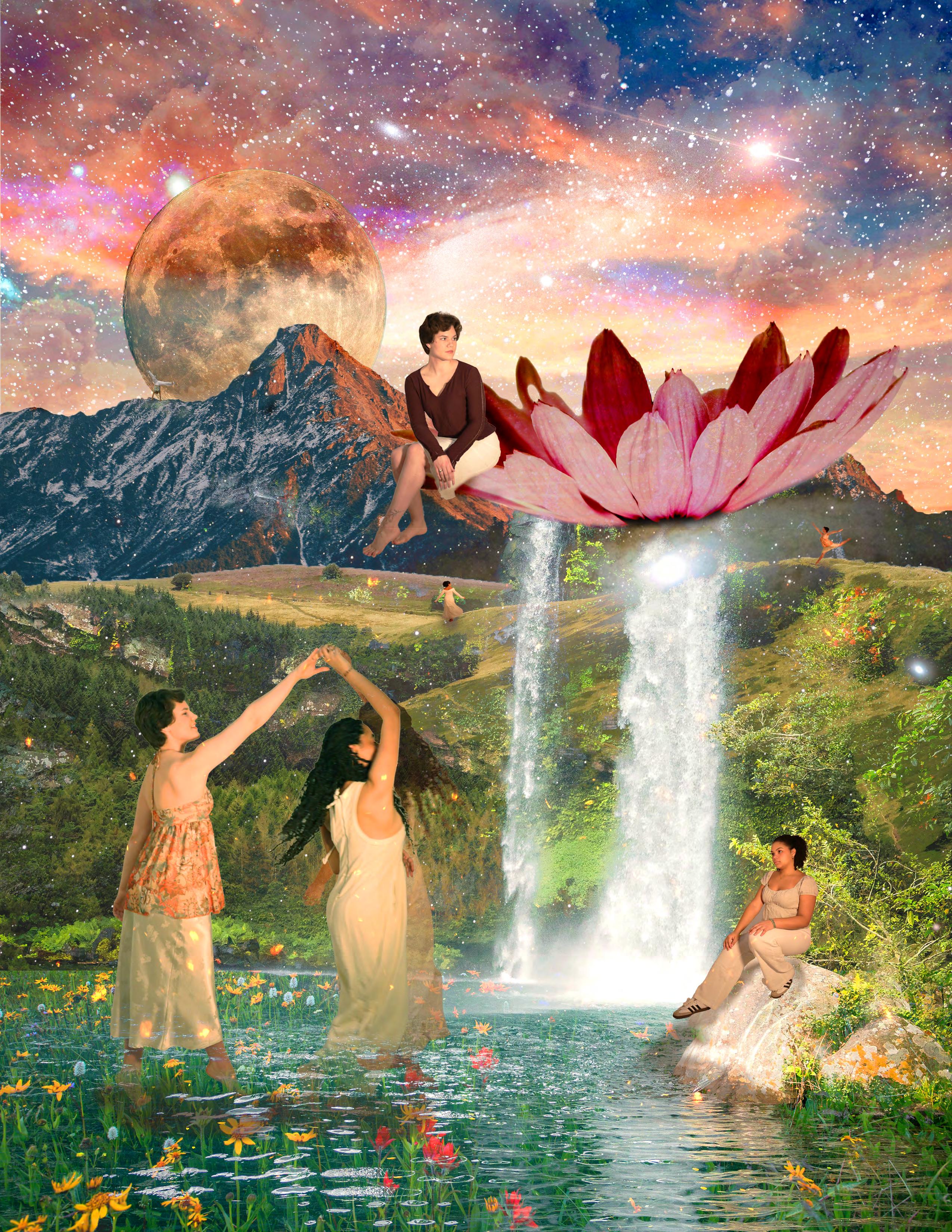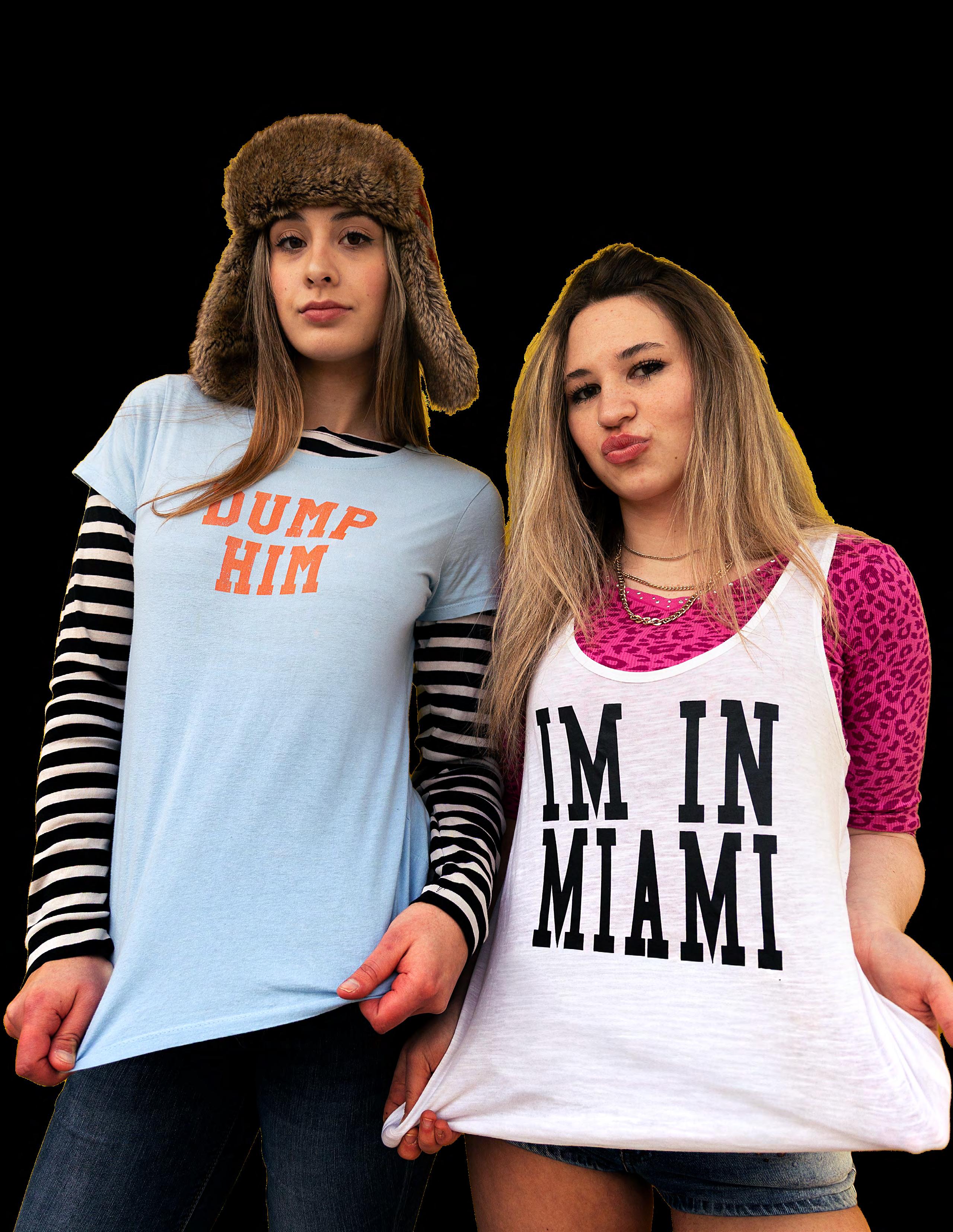
THE ART OF JUNK JOURNALING WHY WE TREASURE OUR TRASH

THE ART OF JUNK JOURNALING WHY WE TREASURE OUR TRASH
EDITORIAL DIRECTOR
Maddy Scharrer
CREATIVE DIRECTOR
Rayyan Bhatti
PHOTOGRAPHY LEADS
Molly Claus
Indu Lekha Konduru
GRAPHIC AND ILLUSTRATION LEADS
OPERATIONS DIRECTOR
Adina Kurzban
INTERNAL RELATIONS
DIRECTOR
Makaylah Maxwell
PUBLIC RELATIONS
DIRECTOR
Kaitlyn Dietz
EVENTS DIRECTOR
Kasia Kirmser
CULTURE EDITOR
Kate Reuscher
ARTS EDITOR
Talia Horn
LIFESTYLE EDITOR
Tessa Almond
FASHION EDITOR
Marceya Polinger-Hyman
ONLINE EDITOR
Vanessa Snyder
WRITERS
Tessa Almond • Sarah Berendes • Francesca
Blue • Kayleigh Carlos
• Elise Daczko • Greta Harrison • Lillian Hescheles
• Makaylah Maxwell • Marceya Polinger-Hyman
• Josie Purisch • Kate Reuscher
Breanna Dunworth
STYLING LEADS
Shira Malitz
Jessie Wang
SHOOT PRODUCTION LEADS
Sydney Alston
Devon Moriarty
MODEL MANAGEMENT LEAD
Kaleyah Rivera
ART
Molly Anders • Zoee Boog
• Elise Daczko • Breanna
Dunworth • Maddie
Gerhardt
PHOTOGRAPHY
Molly Claus • Kylie Kieffer • Indu Lekha Konduru • Liana Lima • Melissa Liu • Maya Stegner
SHOOT DIRECTION AND STYLING
Sydney Alston • Kelly Chi
• Shira Malitz • Devon Moriarty • Kate Pennoyer
• Kaleyah Rivera • Maya Stegner • Nina Szatmary •
Jessie Wang
MODELS
Malia Coli Dyson • Paola
Pimental Figeuro • Maddie
Gerhardt • Kaelin Hansen
• Hadrea Lee • Liana Lima
• Eve Martin • Ananya
Narayan • Lya Ynterian
Polesello • Josie Purisch
• Aviya Ramji • Kate Reuscher • Carmela Rey • Eva Zaretzke

07 Pages, Pixels and Everything Between
The evolving tools we use to chronicle our lives
14 Craving the Past
A deep dive into why humans reach for the past instead of being present
19 The Art of Junk Journaling
Why we treasure our trash
34 I Go Back to Go Forward
An examination of our meditative mental archives
9 The Past is Going Premium
With Snapchat’s new subscription model putting a high price on nostalgia, users must reckon with who truly owns their digital past
12 Archival Femininity
Chanel No. 5 as a time capsule
26 That Was Awkward
Embarrassment: the antithesis to nostalgia
29 Finally Our Turn
Trying on 2016 a decade later
33 The Superiority of Smeared Ink
Why we cherish the sentiment behind handwritten letters
ART
21 Hoarding or Honoring?
Nostalgia’s grip on our fabrics
24 Growing Up With Disney
Remembering the network that shaped Gen Z’s childhood
I recently watched “Eternity,” a new A24 movie about a woman who has to navigate choosing to enter her afterlife with the husband she spent a majority of her life with, or her first husband who died when they were very young. One specific line in the film has stuck with me for days:
“All we are is a collection of memories.”1
This bittersweet idea immediately stood out to me because it captured the theme our members wanted to navigate in this issue. Inspired by the collective online reminiscence of 2016, Moda decided to take a walk down memory lane. We reflected on how much our world has changed in the past 10 years, catapulting us even further into the digital age, and how this has impacted the ways we store memories.
We played into the idea of an archive representing a museum of self and the wistful, longing emotions attached to our memories. A common thread we discovered across both physical and digital collections was the nostalgia imbued in them; whether it’s a physical photobook with dates etched on each back, a box of birthday cards turned keepsakes or a photos app shared album with your friends, our reactions to reliving these memories through our personal archives are visceral.
Culture editor Kate Reuscher dug up memories in her closet, emphasizing the eras and life events attached to articles of clothing. What she found was much more than just fabric on hangers, and her article, “Hoarding or Honoring?” provides a deeper understanding of why it is so hard to part with pieces we’ve long left on the rack.
I believe living in such a digitized world has inspired intentionality with how we store our memories. When I studied abroad last semester, I made sure to capture a million photos, but my most prized “souvenir” is the journal I sat down with each week and taped in my ticket stubs, wristbands, receipts and other small mementos. In her article, “The Art of Junk Journaling,” staff writer Elise Daczko dives into this memory preservation method and discusses the resurgence of the craft in the past few years.
There are also moments we never want to end that we often end up preemptively longing for as we’re experiencing them. In her article “Craving the Past,” staff writer Francesca Blue explores the phenomenon of missing a moment while you’re living it, often tied to happy experiences we wish could last forever.
After reading this issue, I think you’ll find that “all we are is a collection of memories” seems to ring true. In fact, you might realize that many others have walked the same routes that you have in your respective museums of self.
Warmly,
Maddy Scharrer Editorial Director
MaddyScharer
1 “Eternity,” Directed by David Freyne (A24, 2025).


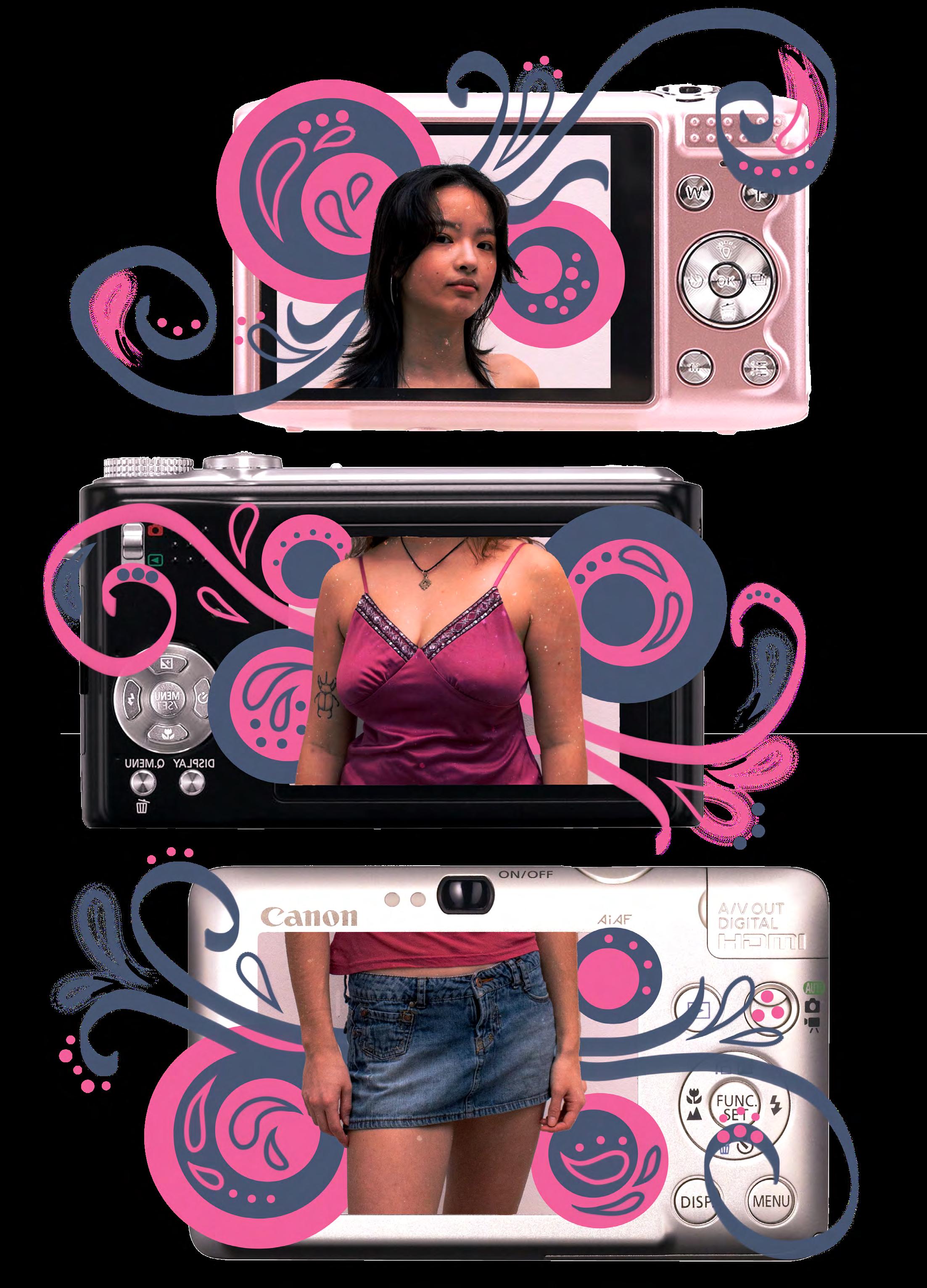
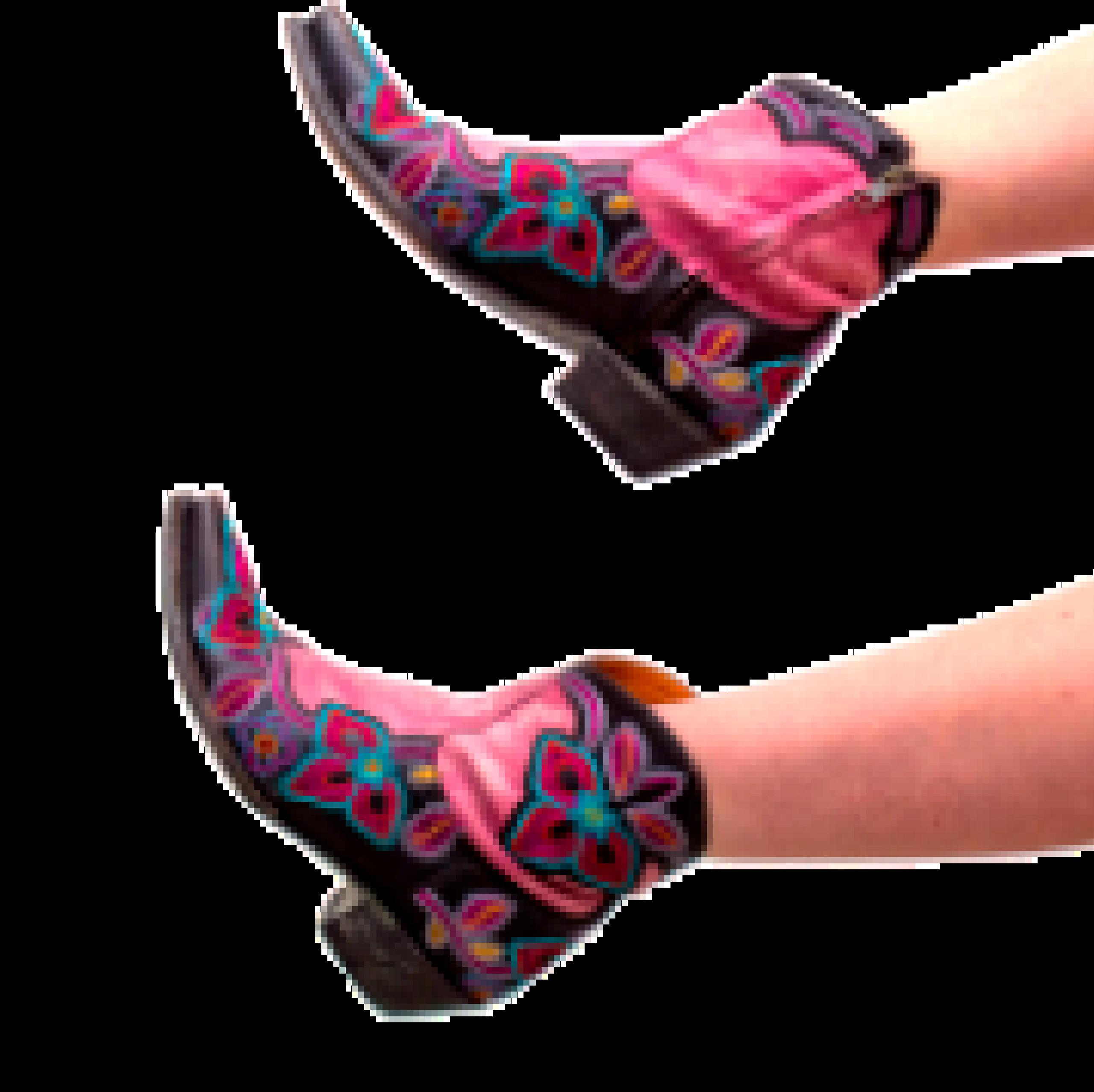
Written by Makaylah Maxwell, Internal Relations Director | Photography and Shoot
Direction by Maya Stegner | Graphics by Breanna Dunworth, Illustration & Design
Lead | Styling by Jessie Wang, Styling Lead Modeled by Hadrea Lee, Carmela Rey & Maddie Gerhardt
The need to document our lives is one of the most human habits that has prevailed throughout time. Whether through scribbled notes or saved screenshots, we’ve always tried to hold on to fleeting moments. The tools we use for this, however, have shifted dramatically over time. The move from analog to digital — and now into a hybrid era — reveals that our personal archives not only stow what we want to remember, but also how popular culture shapes the way we remember.
In the analog era, documenting life was slow and intentional. Journals, diaries, film cameras, scrapbooks and camcorders all required effort. You had to sit down and write something out by hand, whether that be details on the back of a photo or crafting a new scrapbook page. You had to wait for the film to develop. You had to choose which photos were worth printing and even which moments were worth taking a picture of because you only had so many shots.
These limits shaped the memories people kept. Analog archives feel personal because they carry texture from handwriting, grainy photos, tape and pages that bend over time. These physical memory collections helped foster a culture of authenticity. Families gathered around photo albums, replayed home videos at birthdays and journaled as a way to reflect on and process their lives.
But analog isn’t perfect. Physical objects can be lost or damaged, and they only capture the moments someone intentionally chose to save. Our lives sped up, and analog tools couldn’t keep up with it.
Digital documentation has revolutionized the pace of life and memory completely. All of a sudden, the camera roll became an endless archive for memory. People started saving everything: blurry photos, portrait mode, random notes, reminders and screenshot galore. Screenshots themselves have become a whole subset of emotional memory archives. We capture texts, memes and little moments of emotion that would never have made it into a traditional scrapbook. The Notes app itself has become a digital diary full of half-thoughts and momentary feelings.
Social media adds another layer to this shift. Instagram started as a place for casual, fun moments to update your friends and followers on your everyday life. Throughout the years, this nonchalance shifted into curated, planned feeds that value perfection over authenticity. The spontaneous photo dump took the internet by storm, even reaching outside of Instagram. But even the casualness of these photo dumps has become curated. Influencers perfected the art of looking effortless, creating an expectation that everyone’s lives should look spontaneous but aesthetic at the same time. Digital tools have made memories easier to capture, but they’ve also pushed performative memory to the forefront.
But digital media isn’t perfect. It’s actually full of flaws, relying on technology and systems one might not always have access to. Lost media doesn’t just apply to lost files, but to photos and videos that have been scrubbed from the internet. As digital media has displayed its own flaws, analog media has become more desirable.
Today, people are using physical documentation with scrapbooking, printing pictures and embracing mixed-media. People use digital media to aid in their journey to nostalgia, reflecting the desire to slow down without disconnecting. Each medium reveals something different about each of us. Analog shows care and sentimentality, digital methods show the unfiltered everyday and the hybrid era shows the desire to hold onto both the chaotic and the curated.
Our personal archives are always evolving. They grow, shrink, glitch and rebuild themselves as we move through different phases of life and technology. No matter which method we choose, we’re creating a living record of who we are for everyone to see. As the tools available to us continue to evolve, so will the stories we tell about ourselves.
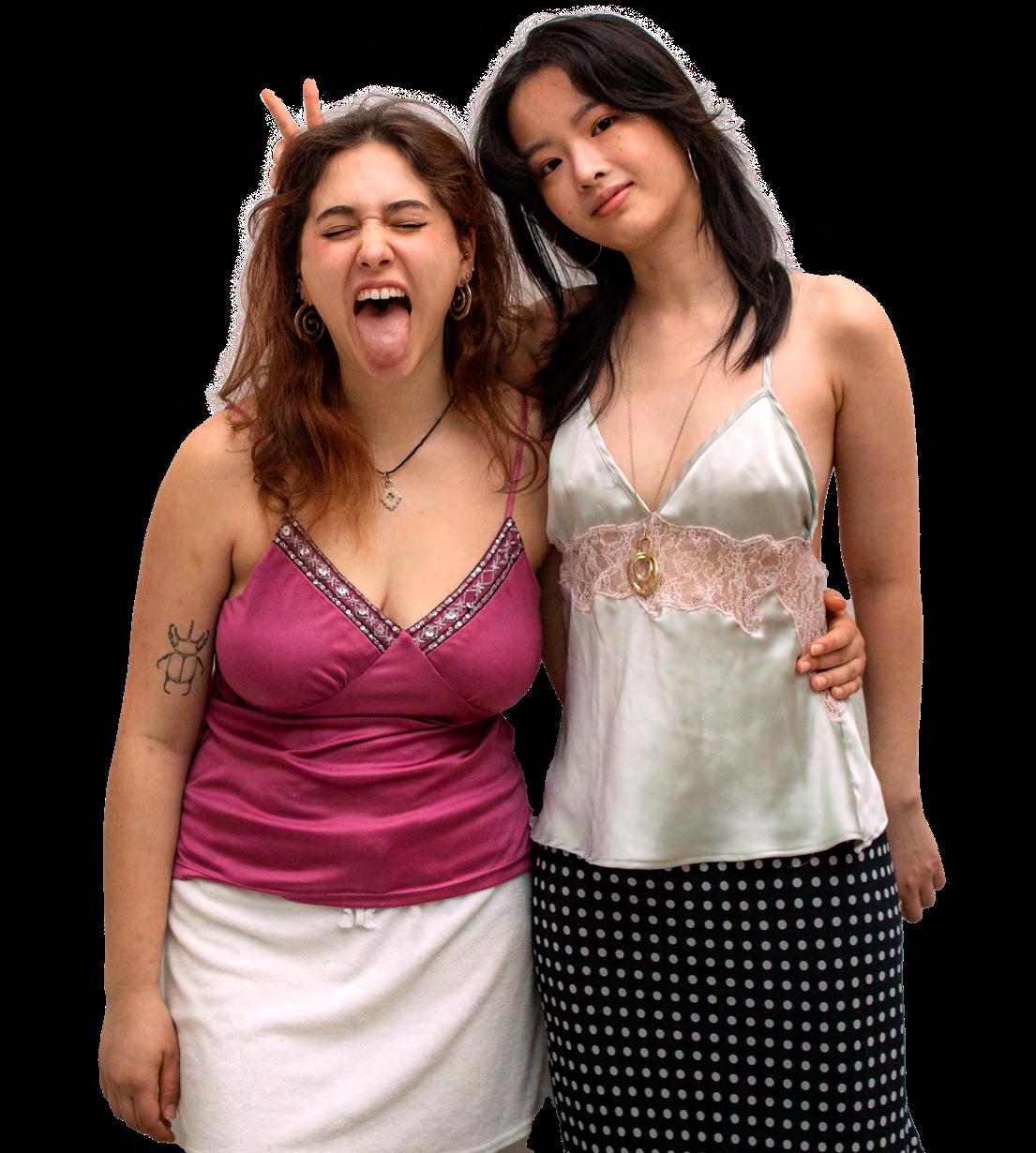
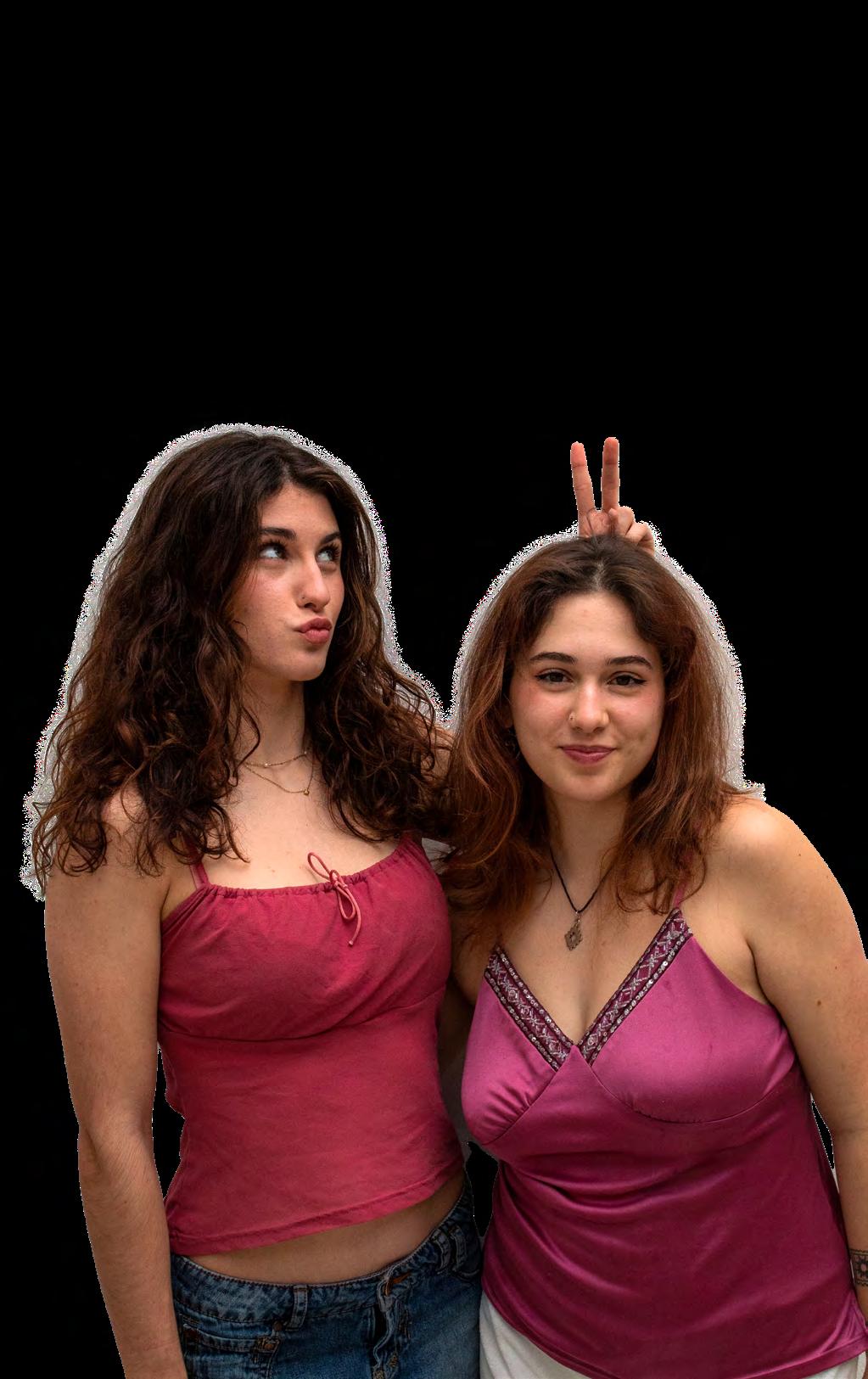
With Snapchat’s new subscription model putting a high price on nostalgia, users must reckon with who truly owns their digital past
Written by Tessa Almond, Lifestyle Editor
| Photography by Melissa Liu | Shoot Direction by Kelly Chi
| Styling by Devon Moriarty, Shoot Direction
Lead | Modeled by Ananya Narayan & Eve Martin
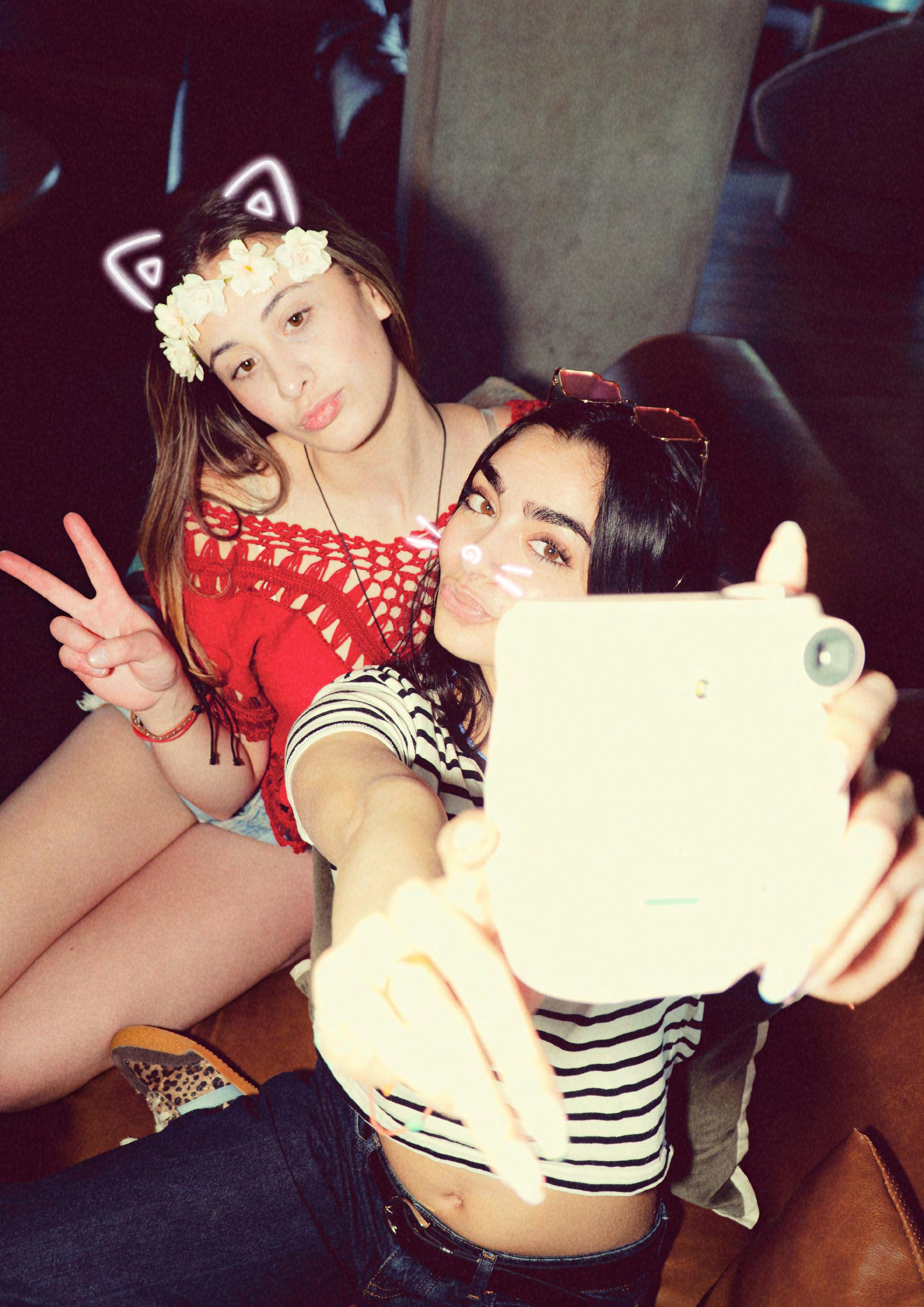
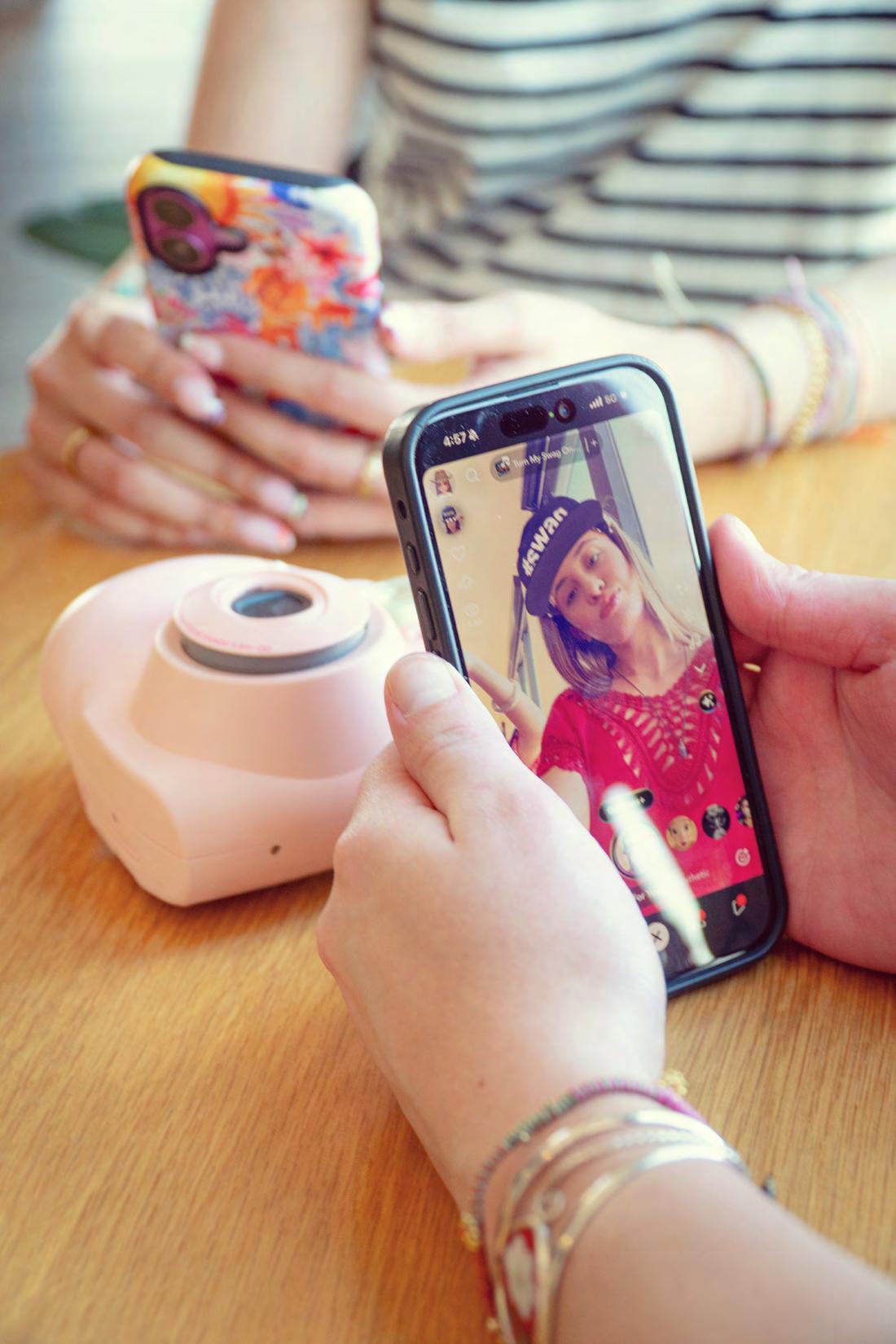
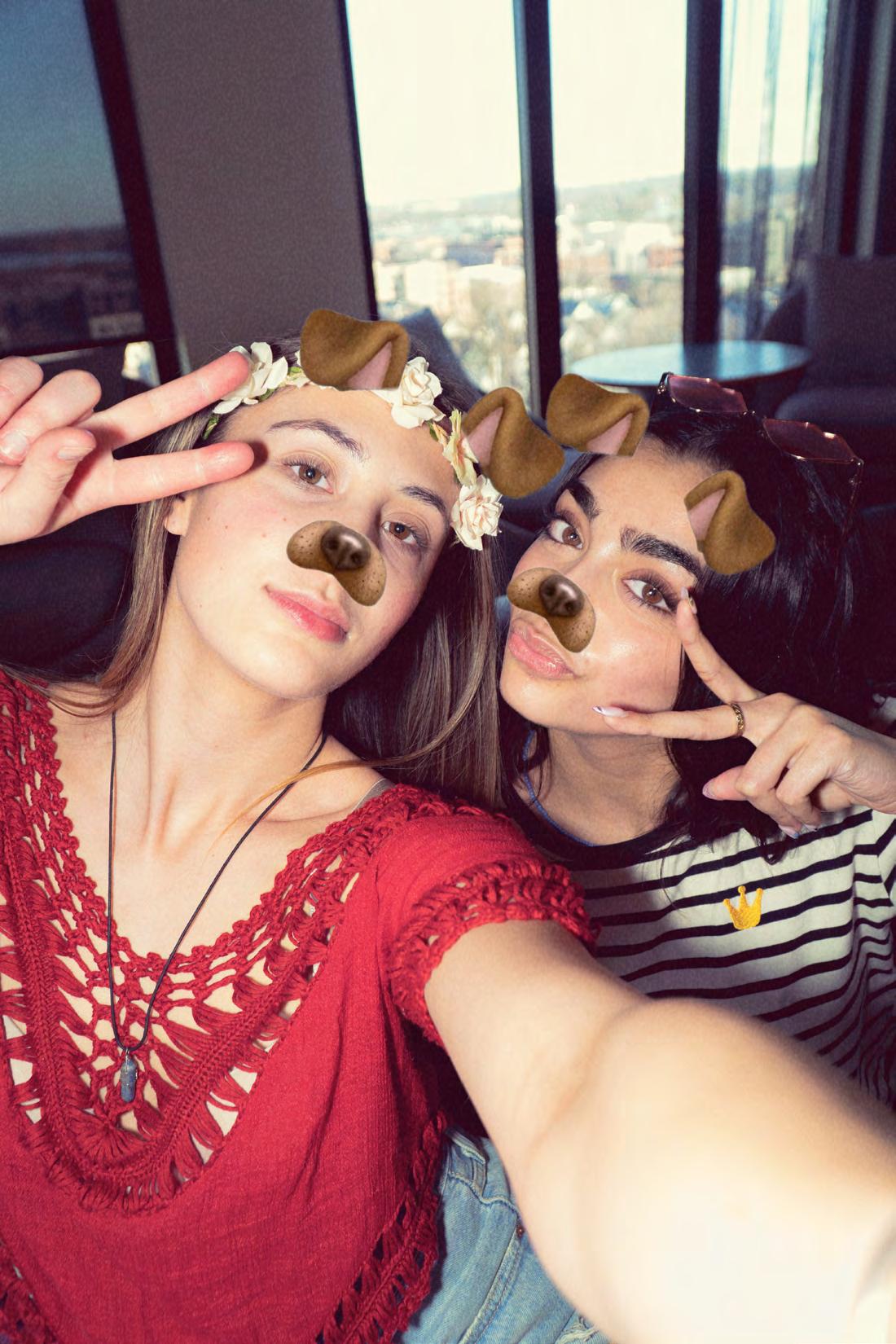
We all remember the peak of Snapchat. Drenched in saturated colors and emojis, an entire generation came together with the dog tongue filter, the flower crown, puking rainbows and the coveted “streaks.” To many, it was the “good” times that now fill us with heartfelt nostalgia (and maybe a little bit of embarrassment).
In late 2025, I was shocked to find my nostalgic scroll through old memories interrupted by a pop-up: “100 GB for 1.99 a month” in big, bold letters. Suddenly, none of them were accessible.
What happens when our memories become something we have to subscribe to?
In 2016, Snapchat dominated the media space. It was the top-downloaded app and reached 158 million daily users by the end of that year.1 Originally named “Picaboo,” Snapchat was founded in 2011 by Stanford students Evan Spiegel, Reggie Brown and Bobby Murphy as part of a class project.2 To set themselves apart from other social media giants like Facebook, Messenger and Instagram, they created an app centered on temporary, disappearing content.3 In a 2013
1 “Understanding Snapchat: Media, Politics and the 2016 Election,” Knight Foundation, June 8, 2017.
2 Brian O’Connell, “History of Snapchat: Timeline and Facts,” TheStreet, Feb. 28, 2020.
3 Ibid.
interview, Spiegel explained the reason Snapchat was so popular among teenagers was because “they didn’t want their social media history coming back to haunt them.”4 And he was right—the premise was appealing to a generation of angsty, unstable teenagers, myself included.
The Memories feature quickly became a staple for me. Suddenly, documenting everyday moments felt effortless, and I had no idea that I would be looking back on them 10 years later. I didn’t want to clutter up my camera roll, so I saved everything on Snapchat. It was a seemingly endless abyss where my life could be stored with no limits. I could scroll back all the way to 2012, when I first downloaded the app, and see exactly what I did on any day that I chose to save snaps. It became not only my personal digital archive, but also that of an entire generation, spanning years of friendships, milestones and casual moments in between.
Now, these chapters of my life are locked behind a paywall. In September of last year, Snapchat announced that people with more than five gigabytes worth of Memories will have to pay to keep them accessible, prompting immense backlash.5 Users accused the company of being greedy,
4 Ibid.
5 Liv McMahon, “Snapchat to Charge Users for Storing Their Old Photos and Videos,” BBC News, Oct. 1, 2025.
but Snapchat claimed the changes are an investment to improve the feature “for the entire community.”6 The company reasoned that the feature would still be accessible but monetized for the heaviest users to keep up with infrastructure costs.7
Even though I rarely use Snapchat to talk to my friends anymore (we’ve all “graduated” to regular texting), I am one of those users with well over 5 gigabytes worth of Memories. The “pay to access” model feels deeply frustrating. No other app has been able to document my life in such detail and dating so far back. Videos with dog filters and rainbow tongues soon turned into the milestones of adulthood: graduations, first game days, studying abroad. Memories aren’t just files to me. They are the most complete, unfiltered archive of my life, allowing me to relive my adolescence.
So what exactly are the repercussions of this shift? The concept of paying to access your past feels terrifyingly dystopian. Nostalgia is no longer something inherent, but somewhat of a luxury. Snapchat used to feel playful, spontaneous and personal, but now our memories are more like commodities. By allowing our most intimate moments to exist behind paywalls, we risk losing control over how our lives are remembered, and who decides whether we can remember them at all.
The unfortunate reality is that paying for storage on social media has become inevitable. As social commentator Drew Benvie puts it, “In an era where we post less, but save more, this is an evolution of messaging and social media platforms.”8 Snapchat’s paid plan reflects a larger cultural shift toward monetizing emotion. No one wants to lose their memories. We feel entitled to them, and why shouldn’t we? Snapchat is more than just photos or videos — it’s an intimate record of who you were, how you’ve changed and what has stayed the same. We’ve grown desensitized to how deeply we rely on social media to archive our lives; it’s only when a paywall appears that we recognize how much of our past lies within the hands of corporations.
In a digital world, are our memories really ours?
6 Ibid.
7 Katrina Morgan, “Snapchat to Charge Users for Storing Memories,” WCNC, Oct. 2, 2025.
8 Liv McMahon, “Snapchat to Charge Users for Storing Their Old Photos and Videos,” BBC News, Oct. 1, 2025.
By Marceya Polinger-Hyman, Fashion Editor |
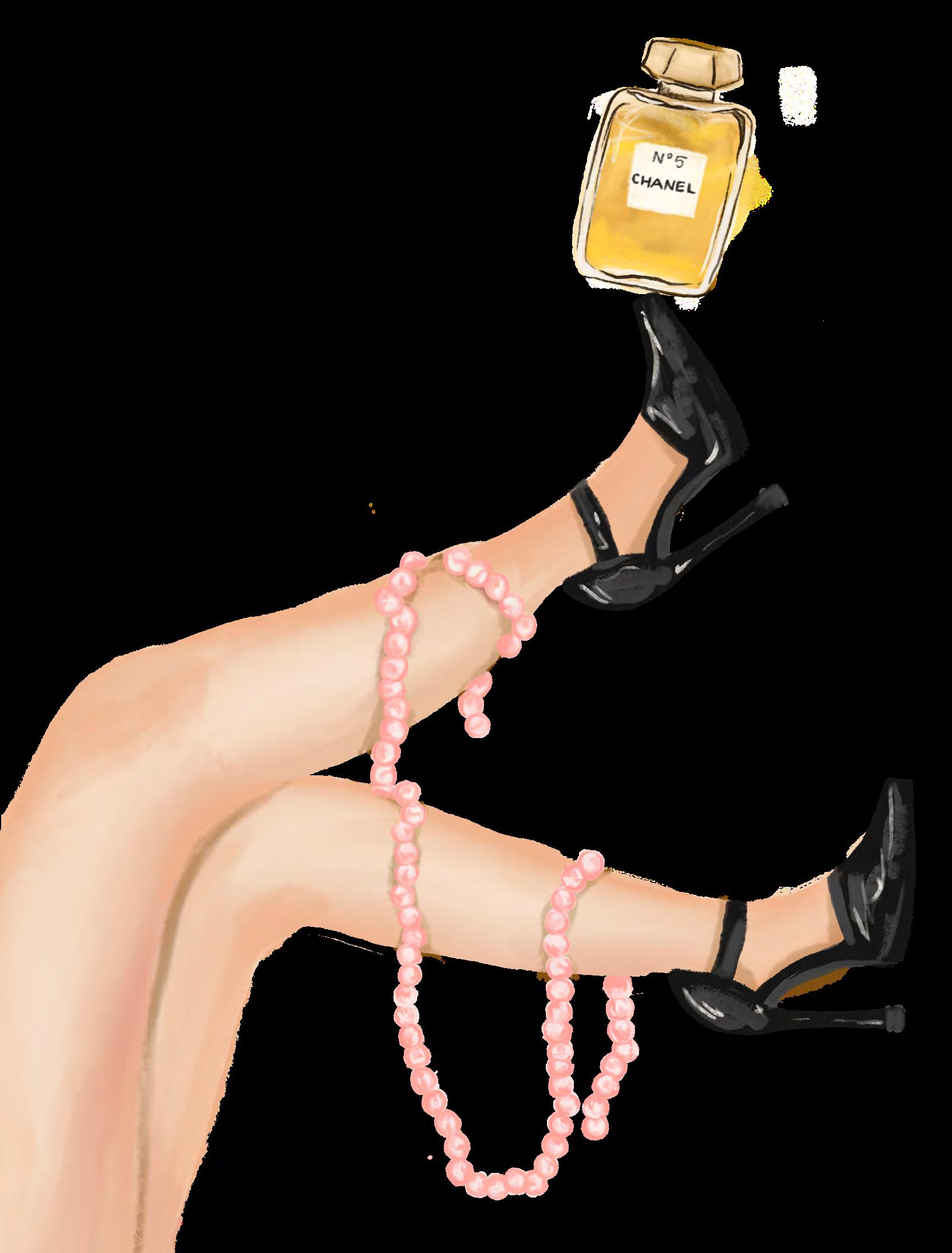
Certain objects feel heavier than they look, as if they remember the women who came before us. Chanel No. 5 exists in a space between memory and myth. For some, the timeless bottle recalls a grandmother’s bedroom or the lingering scent on a cashmere sweater. For others, it conjures the image of Hollywood glamour, such as the timeless Marilyn Monroe herself.
Chanel No. 5 echoes a carefully constructed idea of womanhood. These meanings overlap, revealing how femininity is achieved not only through images and icons, but through ritual and repetition. To wear Chanel No. 5 is to step into a lineage, carrying history on your skin while still deciding which parts belong to us today.
The infamous fragrance often lives in the most ordinary places: bedroom dressers, bathroom shelves; or the corners of crowded vanities. Gently applied to our wrists and necks, we allow the scent to kiss us, slowly enveloping us in its rich history. Lingering long after the woman wearing it has left the room. Scent records what photographs cannot, preserving femininity not as an image, but as a presence.
Chanel No. 5 exists at the center of this inheritance. Created in 1921, the fragrance was revolutionary for its time, abstract and deliberately artificial. It did not attempt to replicate a single flower, but instead constructed an idea of femininity that felt modern, controlled and slightly untouchable.1 In doing so, it reshaped what perfume could represent. Fragrance was no longer just an accessory—it was a statement. Chanel No. 5 was something worn deliberately, not passively.
Yet despite its luxury status and cultural prestige, Chanel No. 5 also became deeply domestic. It found its way into everyday rituals: spritzed before church, dabbed behind the ears before dinner, stored carefully on a dresser beside hairbrushes and jewelry. For many women, it became a signature fragrance because it was familiar, an ever-present scent that became inseparable from memory. In this way, Chanel No. 5 serves as an emotional archive. It holds the private moments that rarely make it into history: the intimacy of a woman getting ready alone, the quiet confidence of routine and the repetition that turns personal habit into generational memory. A granddaughter recognizes the scent not because she has worn it herself, but because she has lived alongside it.
At the same time, Chanel No. 5 occupies an entirely different register of cultural meaning. Its association with Hollywood glamour, most famously through Marilyn Monroe, transformed the fragrance into a symbol of desire, sophistication and idealized femininity. Monroe’s remark that she wore “nothing but a few drops of Chanel No. 5” to bed elevated the perfume from ordinary to iconic.
This duality is what makes Chanel No. 5 so powerful as a cultural artifact. It exists simultaneously in the private and
1 “The House of Chanel,” Chanel, n.d.
the public, the ordinary and the mythic. It belongs both to grandmothers and movie stars, to domestic spaces and global campaigns. Through it, femininity is revealed not as a fixed identity, but as something constructed across contexts, learned at home and reinforced by culture.
Across generations, women inherit more than just the scent itself. They inherit the expectations attached to it. The idea that femininity should be elegant, restrained and timeless. That beauty is something to be cultivated, maintained and passed down.
Chanel No. 5 has become a symbol of feminine lineage and a reminder that womanhood is often experienced as something we step into rather than choose freely. This inheritance is not neutral. Alongside nostalgia, there is pressure. The promise of feminine glamour, desirability and sophistication exist alongside their demands. To wear history can feel comforting, but it can also feel constraining. The rituals that connect women across time can just as easily impose standards that no longer fit. Archival femininity asks us to sit with this tension, wondering what we cherish versus what we feel obligated to preserve.
To “wear” history today is therefore an active choice. It means deciding how to engage with the past without being defined by it. For some, reclaiming nostalgia means embracing these inherited rituals and finding empowerment in continuity. For others, it means redefining femininity altogether, rejecting the scripts handed down in favor of something more fluid, personal or fragmented.
Chanel No. 5 endures not because it dictates a single version of femininity, but because it holds space for many. It reminds us that femininity is not static. It evolves as each woman encounters and wears it. The archive is not closed. It is rewritten daily, on skin, in memory and through choice.
A deep dive into why humans reach for the past instead of being present
Written by Francesca Blue, Staff Writer | Photography by Kylie Kieffer | Shoot Direction
Nina Szatmary | Styling by Kelly Chi | Modeled by Aviya Ramji
Blazing sun shimmers and laughter echoes across the beach in Croatia: The perfect day. Yet I couldn’t stop thinking about how much I was going to miss this, even though I was living it right here, right now. Reminiscing on a time that hasn’t ended yet is known as anticipatory nostalgia, a feeling that occurs when something feels so perfect in the moment that you paradoxically remove yourself and
already mourn its end.1 There is something magical about having a perfect moment, and when that moment feels fleeting, removing yourself may seem like the only way to preserve it. The tendency to remove yourself and idealize the moment doesn’t just occur
1 Timothy Ritchie et al., “The Fading Affect Bias in the Context of Emotion Activation Level, Mood, and Personal Theories of Emotion Change,” Memory 17, no. 4: 428-44, April 8, 2009.
by
in the present, but also in remembering it afterward. We tend to view the past through rose-colored glasses. It can be easier to romanticize the past if you aren’t enjoying your present or if you’re out of your comfort zone.
There is a phenomenon known as the fading affect bias where memories associated with negative emotions fade more quickly, and positive ones
have a greater association in your brain.2 It is a coping mechanism the brain uses to keep those happy memories at the forefront of your mind and the negative ones pushed back. Some may view this as an unhealthy coping mechanism, but in reality it is just another way our brains are protecting us from things that may feel too intense to deal with.
We want to hold on to good moments, especially when things get hard in the present. Finding solace in the memories of the past is not only normal, but also something that all human beings tend to utilize.
Mood repair is how some researchers characterize this act of looking at the past through a euphoric lens.3 It’s the act of lifting ourselves up when things seem too hard to process or too much at times. When I got to college, I found myself heavily romanticizing high school because I was having difficulty adjusting to my new environment. I would think to myself, I wish I could go back, but in reality, high school was tough more often than not. What I missed most of all was the comfort of home. I envisioned an idealized version of it only because the present felt harder to cope with than the past.
Looking at the present day, it seems like everyone has the urge to recreate 2016. It is a fascinating cycle, because in 2016, people were nostalgic for 2006. It’s not necessarily about how amazing a specific year was, but rather the romanticization of that year.4
Yes, 2016 was about as iconic as it gets with pop culture, individualized fashion and celebrity drama, but what is the true allure of 2026 as the new 2016? The answer might be the fading effect bias, leading us to crave a simpler time when the present feels too dark and overwhelming.
Nostalgia is a powerful feeling, and it’s in our nature to sit with those memories. Sometimes it’s okay to leave the past in the past, but remember to enjoy everything it has to offer. There is no time like the present, and before you know it, you will be nostalgic for that, too. Remember to live in the present, and move through every day as if you're reliving your most memorable moments.
2 John J. Skowronski et al., “The Fading Affect Bias: Its History, Its Implications, and Its Future.” In Advances in Experimental Social Psychology, vol. 49, edited by James M. Olson and Mark P. Zanna, 163–218. Academic Press, 2014.
3 Maria Kovacs et al., “Mood Repair via Attention Refocusing or Recall of Positive Autobiographical Memories by Adolescents with Pediatric-Onset Major Depression,” Journal of Child Psychology and Psychiatry 56: 1108-1117, October 2015.
4 Charlotte Lieberman, “Why We Romanticize the Past,” New York Times, April 2, 2021.
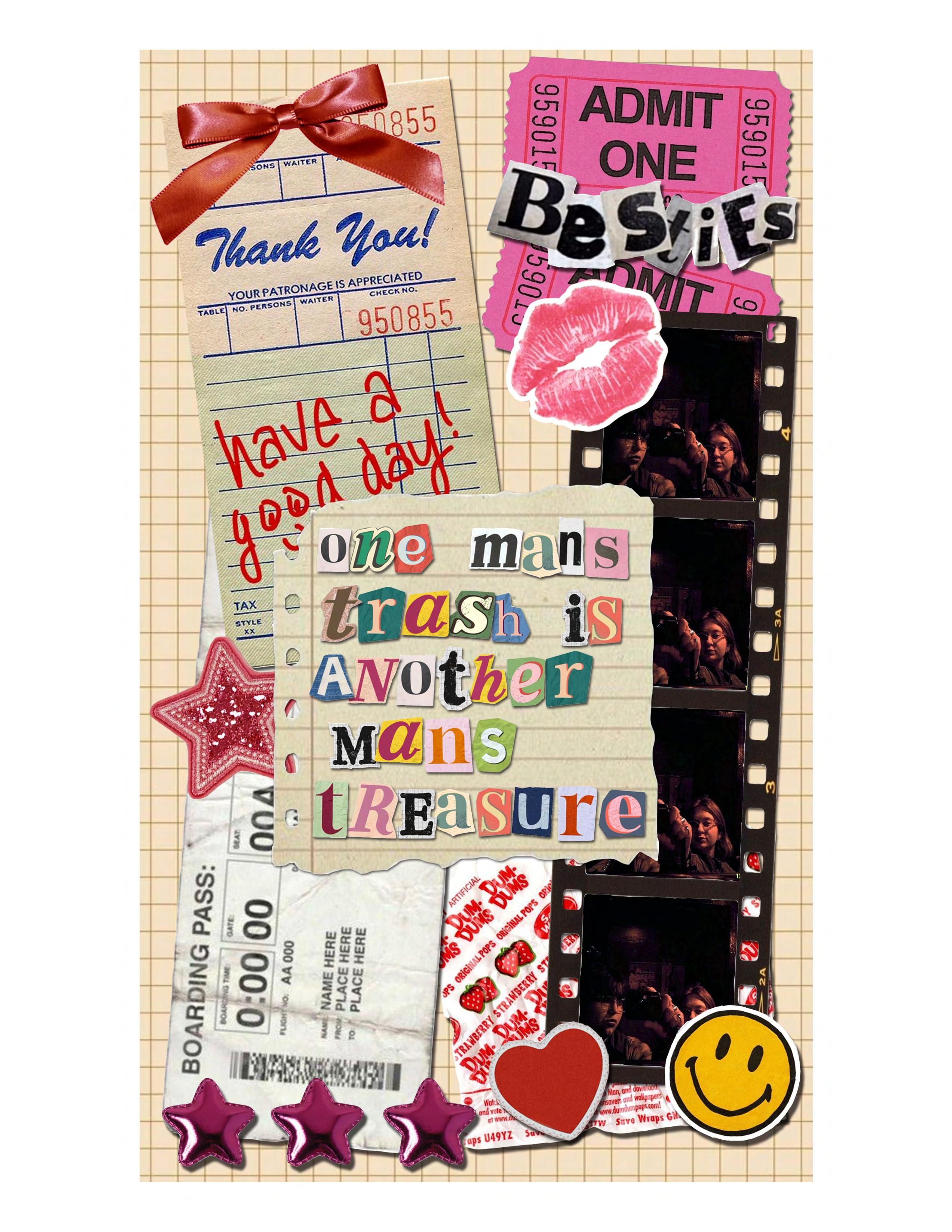
Written by Elise Daczko | Graphic by Molly Anders
Across my desk lies an assortment of junk: crinkly receipts from the grocery store, a ticket to last season’s football game, a navy blue matchbox from my local taco restaurant, two square napkins, an embossed business card from the holiday art fair, free stickers from the local stationary shop and the paper wrapper from a particularly delicious strawberry ice cream cone. The reasonable thing to do would be to sweep all of it straight into the trash can. I, however, shove it into my journal.
In the past decade, what is commonly referred to as "junk journaling" has taken the craft community by storm, leading many crafters to reserve a separate zipped pocket of their purses solely for these multimedia mementos that will be neatly tucked into their journals upon arriving home. Junk journaling is the process of using recycled and found materials to document memories. Junk journalers demonstrate a particular appreciation for analog media, collecting physical souvenirs from their travel adventures as well as their everyday outings.
By using these artifacts to create collage-like spreads in their journals, junk journalers create a personal archive of sorts that documents their current experiences and habits. This archive helps creators look back on their own memories while also acting as a snapshot of what life was like socially and economically during the time of the collected media. Information ranging from popular fashion trends of the time to the price of a movie ticket can all be found nestled in the pages of a junk journal.
While the act of junk journaling has resurged in recent years, it is by no means a new art form. The modern hobby has ties to early 18th and 19th century commonplace books, in which people would store newspaper clippings and cut-out scraps of important information for the future.1 In the same way
1 Clive Thompson, “When copy and paste reigned in the age of
that someone today saves interesting recipes or hairstyle tutorials on social media, people of the 1800s were cutting out useful information and pasting it into journals, creating physical reference books that mirror today’s digital ones.
Scrapbooking then began to morph into a memory-documenting activity. Families would collect photographs and letters of correspondence in an attempt to document their own lives, as well as the lives of their friends.2 Today, junk journaling continues to serve as a form of counterculture memory collecting. Rather than spending money on pricey travel souvenirs, corporate merchandise or scrapbook materials, junk journalers get resourceful and scavenge for free materials, yet they still produce high-quality, authentic content that reflects their lived experience.
Beyond its economic advantages as a form of memory collecting, junk journaling provides creatives with a more personal, physical memory of their adventures. Everyday objects like napkins, receipts, photobooth strips or ticket stubs can tell a story that a generic souvenir can’t. This enjoyable, creative outlet further allows crafters to experiment with the assemblage and organization of the spread as they turn trash into memories.
In a world turning digital, junk journaling reminds its participants that collecting memories doesn’t need to be expensive and unattainable. To start turning your trash into treasure, all you need is a journal, a glue stick and a desire to rediscover the joy of physical media (along with the willingness to get a little scrappy along the way).
scrapbooking,” Smithsonian Magazine, July 2014.
2 Freya Gowrley, “The early history of scrapbooking,” The Scrapbook History Podcast, Feb. 2022.
Written by Kate Reuscher, Culture Section Editor
| Photography by Indu Lekha Konduru, Photography Lead | Shoot Direction by Devon Moriarty, Shoot Direction Lead | Styling by Shira Malitz, Styling Lead | Modeled by Kate Reuscher & Liana Lima
Every extended break I spend back in my hometown, and every time I shuffle from one apartment to the next in Madison, I find myself standing in front of my closet, unmoving. The reminder runs through my brain, incessant and unforgiving: “Fill a couple of donation bags.”
While it may seem simple, a glance beneath the door at the sea of colors brings a rush of memories and hard decisions.
My intention is to quickly sift through everything, building a cascading mountain of clothes I could easily donate. A hasty swipe clears space for pieces that reflect my current style.
But every scan leads to a massive pile of “maybes” and a smaller-than-expected pile of giveaways.
I usually start with strategic piles. The first is the easy discard pile. The “yeah, I could go without this,” pile. Think, that American Eagle shirt your mom bought you for back to school shopping in eighth grade, the tie-dye one you forgot existed. While it still packs a punch memory-wise, it’s more like a subtle nod of embarrassment or disbelief that you’ve had it this long.
The second pile is the zone of maybes, full of complicated decisions. The jeans you haven’t worn in nearly two years but are still relatively cute. The sweater you accidentally shrunk in your dryer, but you wonder if it’s cuter cropped. The cat ears, 80s leg warmers or vampire choker you bought last minute for a Halloween party—all potentially needed at a moment’s notice for a future one (likely not).
From here, the maybes become more agonizing. I stare at my senior year green prom dress. There’s a huge rip down the leg where there was once only a modest slit—torn open from dancing too wildly. Despite its wear and tear, I can only think about the pictures taken with friends, the music blaring and sweat mixing with my makeup.
Next are stacks of T-shirts from various extracurricular activities and events. A T-shirt from track and field, a sweatshirt from soccer, crewnecks from each musical or play. They are all too small and stiff with age, but they are indispensable all the same.
There are many reasons we cling to our fabrics. For one, there’s a sense of guilt and the sunk-cost fallacy. We feel indebted to the money we spent on that shirt, or the hours it took to track down that hyperspecific pair of jeans. So we keep the pieces around, lying to ourselves that we’ll wear them again soon, despite collecting dust and bitterness.
Another more practical reason is accounting for the changing of seasons, both in weather and personal confidence. Going through my closet in the dead of winter and finding an assortment of random tank tops feels laughable, but come the first warm days of May, they’re a relief to wear in hopes of sun-kissed shoulders.
But I believe the deepest reason we cling to clothes is because they are archived versions of ourselves we’re not ready to let go of. Our memories infuse and embed themselves into the very stitching of each shirt and coat, impossible to ignore. Despite our best efforts to give back and upcycle, there’s a sense of ownership and nostalgia that is difficult to budge.
The dresses I wore to my favorite concerts, the infinity scarf I wore ritually, the North Face jacket that held me through winters waiting at the bus stop. Each piece sits in my closet, untouched for months or years at a time, but unwavering in its permanent place.
So while I don’t always end up with a trash bag filled to the brim, I’m unintentionally revisiting an archive of memories. I still do my best to give back, it just often takes more time to accept. There’s a thread of emotions tied through each piece, holding a weight I can’t bear to let a donation bag keep.
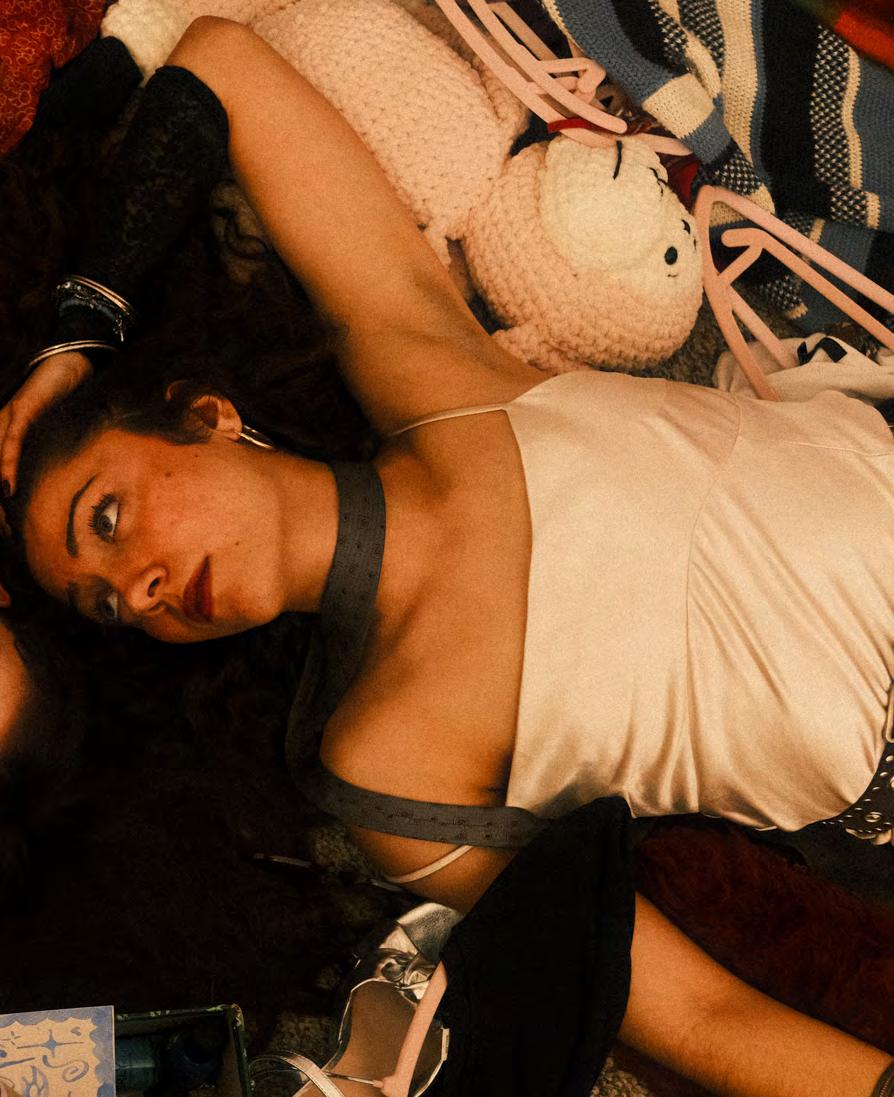
Written by Lillian Hescheles | Graphic by Elise Daczko | Modeled by Lya Ynterian Polesello
“And you’re watching Disney Channel.”
My young eyes are fixed on a star of my generation: Bridget Mendler. She sits on my television screen, carving out Mickey Mouse’s ears with her glimmering wand. I’m nine years old and completely mesmerized.
Eleven years later, I’m sitting in my college apartment as tears run down my face during the opening scene of “Lemonade Mouth.” It’s a classic Disney original where five strangers converge in their high school’s detention room. The unlikely group connects through a spontaneous music session, writing their new band’s first hit “Turn Up The Music.” Watching as an adult, my feelings of suspense and empowerment feel no different than those I felt at nine.
In 2014, Disney Channel entertained nearly two million average viewers.1 It was the time period of television Gen-Z has never forgotten. Most people had a favorite show—“Jessie,” “Good Luck Charlie,” “Liv and Maddie” or dozens of other iconic Disney sitcoms that shaped the 2010s.2 Watching with innocent eyes, we quickly fell in love with each hilarious and relatable character we met. Teddy Duncan became our wise older sister. Hannah Montana inspired viewers to chase their dreams. Maya Hart showed us how to embrace our flaws. Whether it was getting bullied, undergoing puberty or navigating relationship problems, we experienced the challenges of growing up alongside them. For me, it felt comforting to know I wasn’t alone in the peculiarity of adolescence.
In the early 2000s, Disney Channel’s core audience consisted of girls aged 7 to 14, many of whom were encountering television for the first time.3 Navigating the formative days of elementary and middle school, the channel naturally became intertwined with feelings of innocence and nostalgia. October held the excitement of “Monstober,” and winter felt incomplete without “Fa-la-la-lidays.” Disney’s holiday features felt like the finishing touch of a day characterized by childhood festivities.
As the youngest child in my family, I associate the channel with watching “Dog with a Blog” or “Lab Rats” alongside my older siblings. Every Sunday morning, we’d wake up early to watch our favorite shows together while we waited for our dad to urge us into doing yard work. Now, a decade later, as we live in different states, I miss the simplicity that came along with watching Disney Channel.
Yet, the safe, comforting feeling Disney Channel evoked wasn’t a coincidence. In 1997, the Network deliberately reshaped its aesthetic to match the energy of 6 year-old
1 Nielsen, “Number of Viewers of the Disney Channel in the United States from 2014 to 2024,” Statista, Nov. 27, 2025.
2 EW Staff, “The 25 Best Disney Channel Original Series of All Time,” Entertainment Weekly, April, 2024.
3 Daniel Sipocz, “Taking on the World: Disney’s Girl Meets World and Repositioning Tween Feminism,” Response: The Journal of Popular and American Culture 5, no. 2, December 1, 2020.
girls.4 The use of bright colors and humor-driven storylines were all part of their creative strategy.
The channel’s “Express Yourself” public service announcements, in which actors shared their thoughts on everyday issues, was used to brand Disney Channel as a trustworthy source of entertainment for both children and parents.5 For example, in an anti-bullying PSA featuring the cast of “Austin & Ally,” each actor read aloud a hate comment directed at their appearance, resembling a responsible model for young people.
Disney wasn’t just a television channel; it was an integral influence of the broader 2000s culture. For one, the distinctive clothing worn by Disney Channel actors heavily impacted tween style. Catheryn Wagner, the costume designer behind many of the network’s biggest shows, popularized bold looks such as sparkly insertions, short-sleeves layered over long-sleeves and dresses worn over blue jeans.6 These playful fashion choices quickly spread toward the larger tween audience, becoming integral to early 2000s self expression. The resurgence of these stylistic trends today, such as “Y2K” fashion, serves as a symbol for Gen-Z to collectively reconnect through their shared childhood, offering comfort amidst the chaos of being an adult.
Today, emerging technologies are reshaping the next generation’s media consumption. While Gen-Z spent their weekend mornings and after-school afternoons watching cable television, the youth today tend to use streaming services and social media as their main source of entertainment. As of 2024, 73% of teens reported watching Youtube while 57% watched Tik-Tok on a daily basis, highlighting a clear change in preference.7 Similarly, rather than turning on Disney Channel to see their favorite characters in shows, current adolescents feel a similar excitement in seeing their favorite influencers on social media.
Nevertheless, in the snap of a finger, the next generation will feel what Gen-Z feels now — a longing for the comfort of their youth. They may associate Tik Tok or 2026 fashion trends with middle school reminders or time spent with their siblings. They might even revive our “2016 trend,” only this time, turning it into the “2026 trend.”
Although today’s generation isn’t growing up in the height of Disney Channel anymore, the network’s cultural impact continues to shape how society understands complex ideas, including the exploration of identity. There will always be some form of Disney Channel; as the media environment evolves and generations continue growing older, the stories will change, but the love we feel for them is timeless.
4 Jake Kring-Schreifels, “...And You’re Watching the Disney Channel,” The Ringer, April 18, 2023.
5 Ibid.
6 Andre-Naquian Wheeler, “Disney Channel’s Former Costume Designer Doesn’t Get the Y2K Resurgence Either,” Vogue, Dec. 20, 2022.
7 Michelle Faverio and Olivia Sidoti, “Teens, Social Media, and Technology 2024,” Pew Research Center, Dec. 12, 2024.
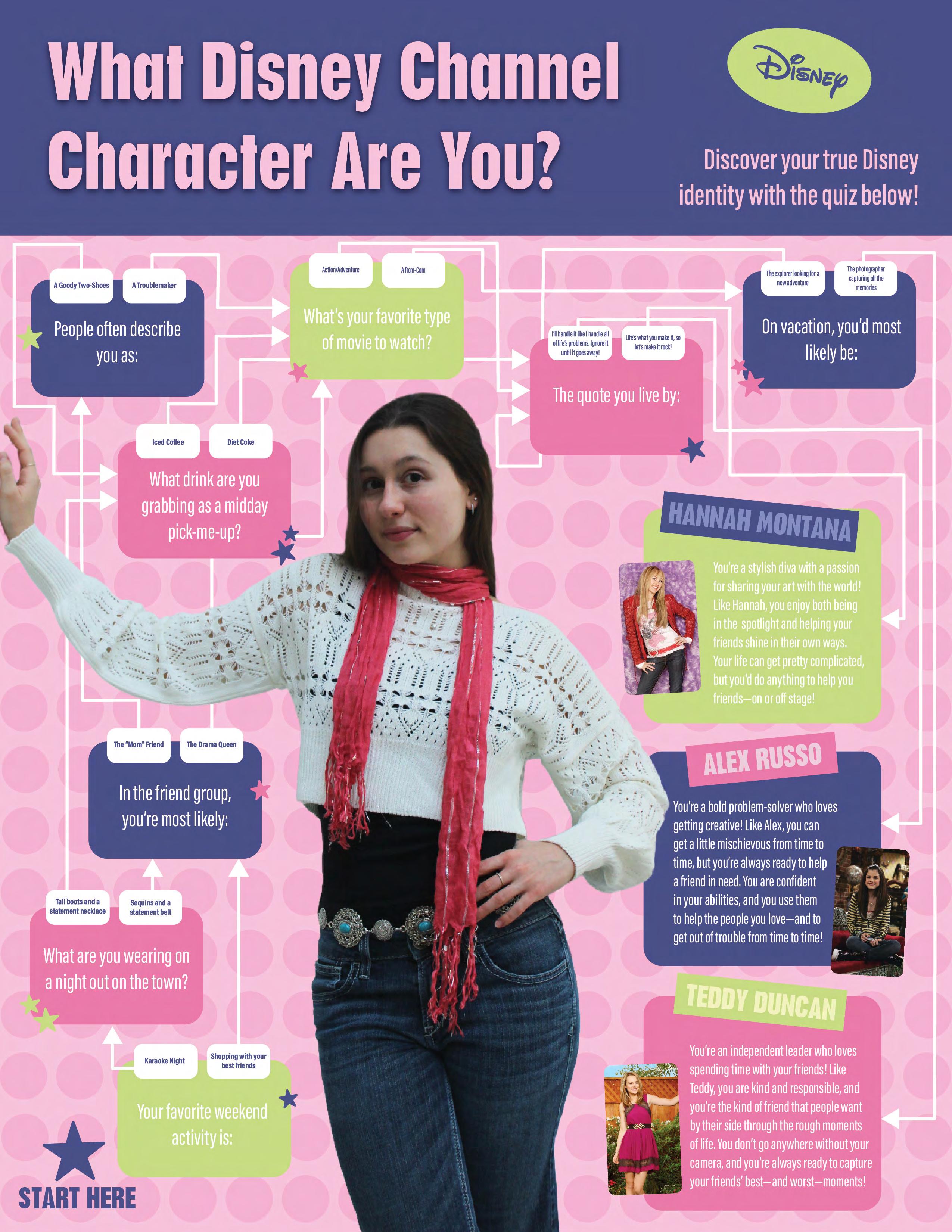
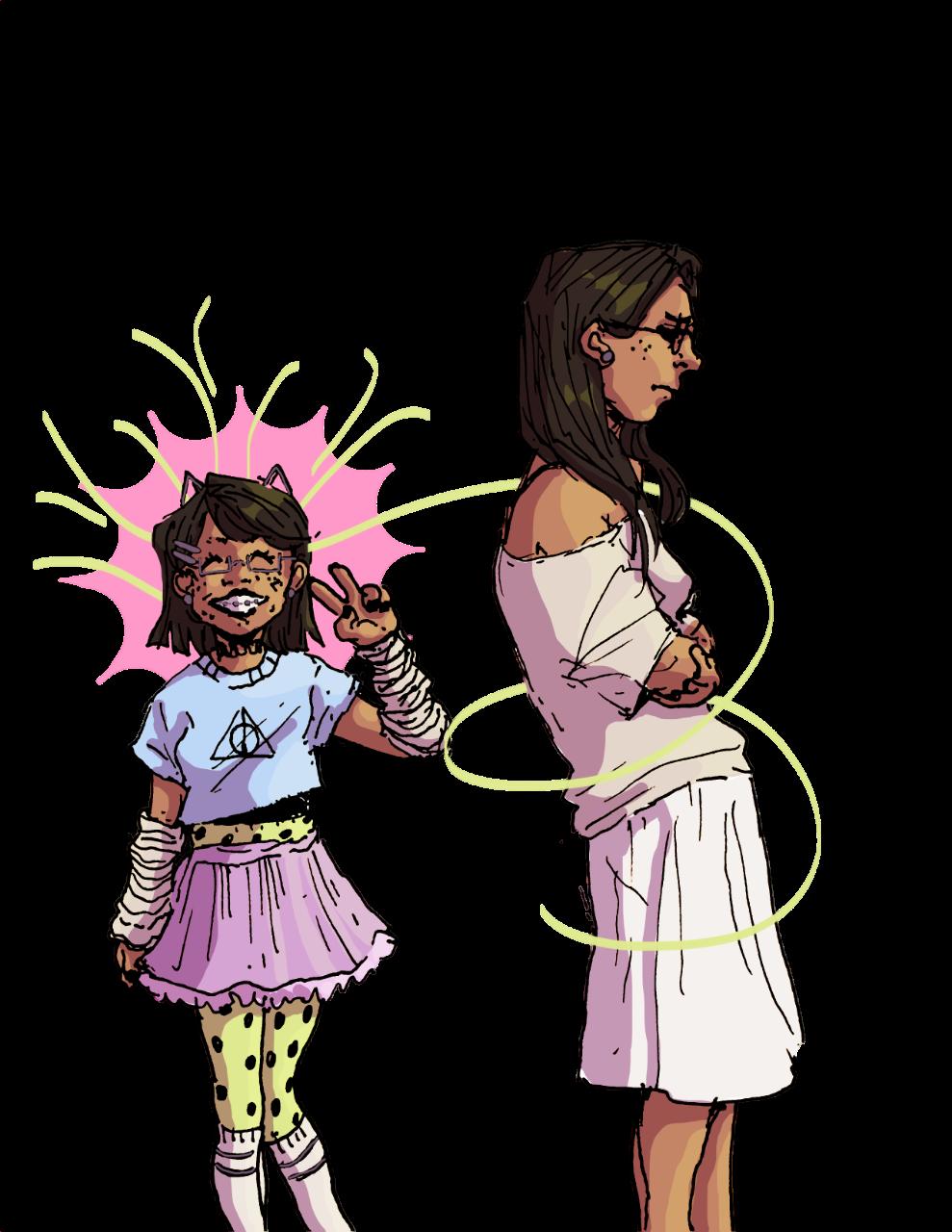
Written by Sarah Berendes | Graphic by Breanna Dunworth, Illustration & Design Lead
Looking back on fond memories is arguably one of the better ways to let your mind wander. We often find ourselves reminiscing on the best times of life. But what about the parts you’d rather not remember? For every nostalgic memory you have, I’m sure your brain is littered with quite a few embarrassing ones to go along with them.
Why do we let our embarrassment cloud our wistful musings on the past? Why do we even become embarrassed of things we used to love?
When I was younger, I was never one to have particularly “popular” interests. My family has always been a bit quirky (for lack of a better term), and as the saying goes, the apple doesn’t fall far from the tree. Starting at nine years old, I spent much of my time engrossed in the British sci-fi series, “Doctor Who.” Over the years of my obsession, I amassed many t-shirts with the Tardis — a time and space traveling machine disguised as a blue telephone box — displayed front and center. But the more I collected, the more I realized that nobody else understood what I was wearing. This lack of belonging led me to pack up my merch and move on to another equally embarrassing fixation.
This conformity and perceived shame wasn’t just applicable to me. Our fear of authenticity only increases as “cringe culture” continues to permeate the internet. Today’s middle schoolers seemingly lack the awkward phases we all remember having, and the shaming of individual interests and passions could be the reason why.1 The fear of being singled out leads to everyone looking and acting the same instead of sharing their own special niche.
Of course, that need to fit in isn’t entirely unique to today’s tweens, but now it has been exacerbated by the fear that anything you do or say can be put on the internet and ruth-
1 Amitra Vora, “Awkward phases are a necessary part of growing up,” Daily Trojan, April 1, 2024.
lessly picked apart. While I only feared the opinions of my peers, tweens today are privy to the opinions of the whole world if someone posts it.
In turn, this hammers out any uniqueness or outward displays of emotion from many of today’s youth.2 It’s important to remember that we usually only feel uncomfortable looking back on our awkward stages because we’ve grown as people since then.3 If the whole point of the embarrassment is growth, why not embrace what you love in the process of growing rather than boxing yourself into conformity? You should be able to look back on your life and be proud of the fact that you stayed true to yourself, even if it meant facing criticism and being labeled as atypical.
I should be reminiscing on my memories of “Doctor Who” with a tinge of nostalgia, but really, I only feel self-conscious sharing this memory. While being embarrassed of your interests doesn’t end after middle school, the mindset can shift. Oftentimes, people will even refuse to share their old niche interests or embarrassing memories because they don’t want to suffer the social risks.4
Nowadays, I am consciously trying not to be so ashamed of having atypical interests. If something is bringing me joy, why would I try to hide it?
Choosing the opinions of others over your own bliss is almost never worth it. I should feel delighted to remember something that once brought me so much happiness. The truth is, underneath the discomfort that period of my life brings me, if I were to put on an episode and watch it now, I’m sure I would greatly enjoy it.
2 Sydney Emerson, “Cringe culture comes at the cost of our humanity,” The Campus Allegheny, March 3, 2022.
3 Leo Babauta, “Embarrassment is an Integral Part of the Growth Process,” Zen Habits, n.d.
4 Ira, Hyman, “Embarrassing Memories: Sharing and Not Sharing the Self,” Psychology Today, Feb. 14, 2013
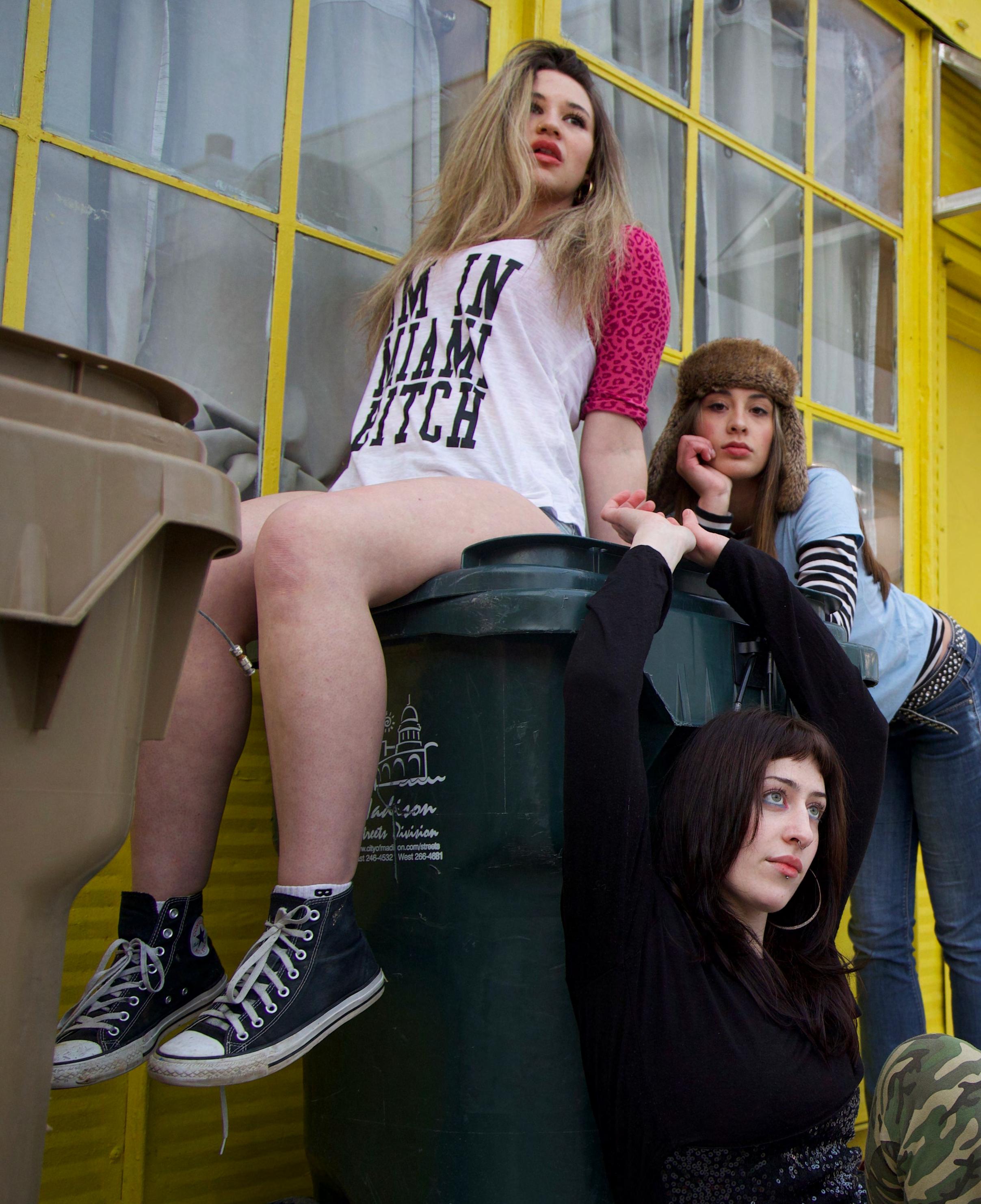
Written by Josie Purisch
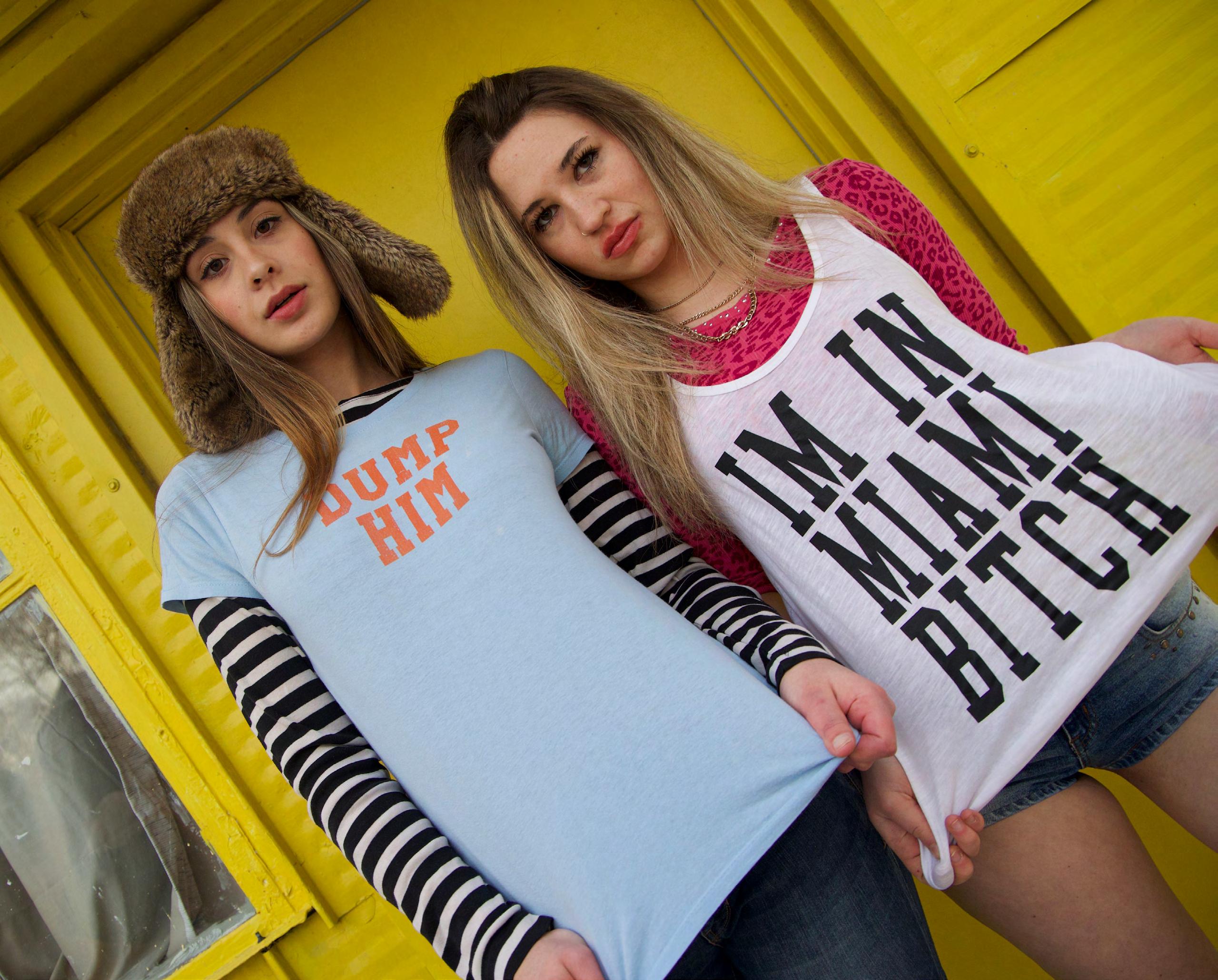
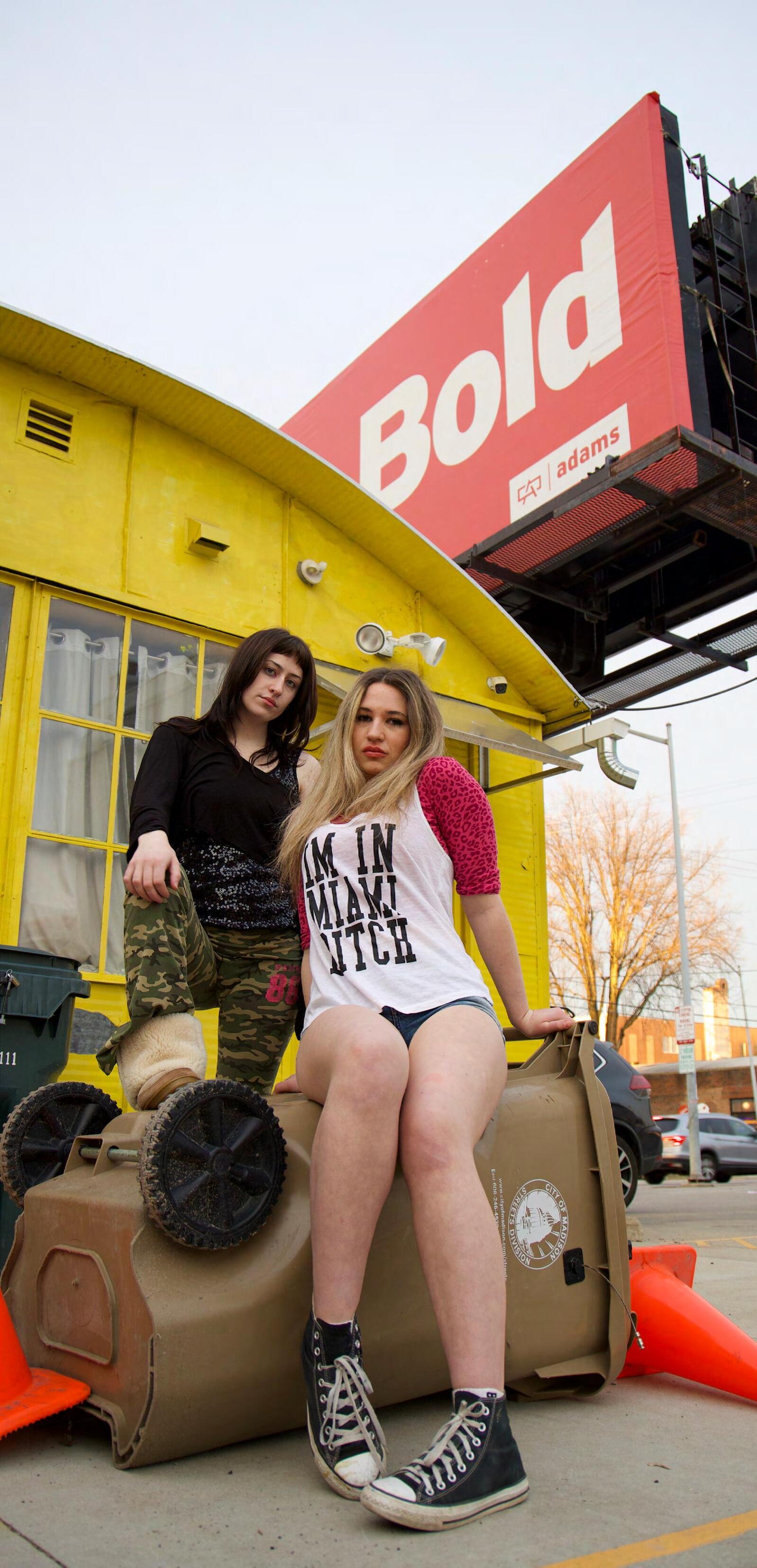
Photography by Liana Lima | Shoot Direction by Sydney Alston, Shoot Direction Lead | Styling by Shira Malitz, Styling Lead | Modeled by Josie Purisch, Eva Zaretzke & Eve Martin
Whether you point to the “Pokemon Go” take-over, the height of everyone’s “Musical.ly” obsession or the boom of viral trends like the Mannequin Challenge, 2016 was undeniably unforgettable.
In today’s age, when authenticity is rare and community feels scarce, many find themselves nostalgic for 2016 — a time when social media was casual, minimalism was dead and party culture thrived.
It’s not rare to hear the claim that 2016 was the “last good year.” But why? Many people’s nostalgia for 2016 was already on the come-up of 2017 and has been unshakeable ever since. Finally, a decade later, the internet made a choice: 2016 is back.
2016 built it-girls like Gigi Hadid, Hailey Bieber and the Kardashian-Jenner sisters, who were the face of the year’s
iconic trends. And if you were anything like me, you wanted to be them. The loud maximalism and edgy attitude that they channeled through their wardrobe and online personas exuberated a confidence that my 10-year-old self idolized. But as I followed Kylie Jenner’s lip routine and bought the ultra-cropped hoodie that showed up in Hadid’s paparazzi photos, my attempts at replication always felt more like a game of dress-up.
Feeling too young to embody their confidence, I couldn’t help but believe that I was watching the year from the sidelines. I imagined myself in cut-crease eyeshadow, embroidered bomber jackets and suede boots, impatiently waiting for my turn to participate in the 2016 culture.
Fast-forward to 2026. The time that I thought would take forever to pass went by in an instant, and I now find myself at the age that my childhood self always fantasized about.

Yet, as the trends swapped out, and pop culture laughed at what we once called the hottest new looks, I’ve begun to forget about the trends I was once so eager to grow into.
Somewhere between 2016 and now, social and fashion fads began to favor subtlety. A non-curated Instagram became “embarrassing” and experimental makeup became acceptable only on Halloween — discouraging the exploration that made the 2016 icons seem so special.
While I cannot truthfully say that I don’t cringe as I look back on the galaxy print leggings and Hot Topic chokers that 2016 was so fond of, the funky trends and creative exploration was what made the year so beloved.
Now, as we reapproach these so-called “cringe” trends with nostalgia, we’ve discovered that unserious feeds are a release from the constant expectation of perfection that pervades the current social landscape. The 2016 revival isn’t just a comeback of filtered photos and dazzling pop songs, it’s a release from modern day minimalism, providing a special opportunity to live out our childhood fantasies of being carefree adults.
As the iconic year cycles back into the conversation with a relentless push, I hope that its un-curated spirit will bring back some of the fun that modern society has scorned.
With an expectation of disorganization and casualness, we will be able to re-build an environment that gives rising adults space to experiment within their new stage of life. I know my inner child finds herself particularly excited to be loud, embarrassing and bold, and see just how the confidence of 2016 can find its place in the trends of my 20s.
Written by Kayleigh Carlos | Graphic by Maddie Gerhardt
I’ve kept every birthday, graduation and Christmas card I’ve ever received.
They’re all tucked away in a basket on the top of my bookshelf. It’s partially because I am sentimental, partially because each card is proof that someone paused their life long enough to write specifically to me.
There’s a resurgence currently happening in our generation — a fascination with handwritten letters. Even though texts, emails and FaceTime have replaced letters as the main form of communication, we are still drawn to the laborious task of pen and paper.
The renewed interest in letters, especially love letters, is not just about rejecting technology, but about reclaiming intention in a culture built on convenience. While communication is faster than ever, speed does not equal sincerity.
It takes two seconds to send a “happy birthday” text. And while there’s no taking credit away from that gesture, it takes significantly less effort than something handwritten and personal.
Handwritten letters also reveal the vulnerabilities and intricacies about that person. There’s something almost intimate about seeing someone’s distinct handwriting. There are imperfections in the feel of the paper, the scratches and creases that add a sense of reality. Texts all have the same, generic font, but letters can never be exactly replicated.
There is less miscommunication in letters than in text messages. While talking to someone in person is the most effective, letters bridge the gap more smoothly than short texts do. Over text, it’s easy to misread tone or intention, especially in short responses. For example, when someone asks for confirmation and
receives a reply like “Okay,” “Ok” or “K,” each can be interpreted differently despite meaning the same thing. While longer text messages can provide more context, letters often reduce this ambiguity better because of the devotion and effort put into them.
I believe this is part of the appeal of love letters in particular. Pop culture has amplified the romanticization; Noah writes to Allie for 365 days straight in Nicholas Sparks’ “The Notebook,” Laurie shares his life with Jo through letters in Louisa May Alcott’s “Little Women” and Conrad yearns for Belly through his letters to her overseas in Jenny Han’s “The Summer I Turned Pretty.” These gestures are the dream for many—receiving romantic and platonically charged letters in which the writer’s intention is unmistakable.
Another undeniable difference between modern/online communication and written communication is the wait time to receive a response. With a text, a response is often immediate, and even expected. With a letter, it takes time to hear what the other person has to say. It builds suspense and is a practice of patience, making the intention worth the wait.
It is a weird sensation when you think about it, a generation longing for a time we’ve never experienced, a time when only physical media existed. But nostalgia can be comforting in a world that’s constantly changing. In a time when online communication can feel inauthentic and constantly surrounding us, our generation searches for the threads that bring meaning and proof of care. It’s normal to want to hold onto physical reminders that we’re loved.
With love, Kayleigh
Written by Greta Harrison | Photography by Molly Claus, Photography Lead | Graphic by Zoee Boog | Shoot Direction by Kate Pennoyer | Styling by Kaleya Rivera, Model Management Lead | Videography by Leah Bulson | Modeled by Paola Pimental Figeuro, Kaelin Hansen & Malia Coli Dyson
My eyes flicker closed to meet the landscape unfurling in my mind. The sound of concentrated nothing hits my ear, and I am snapped awake.
One glimpse into the distance reveals the salt flat spread for endless miles ahead of me, my physiological representation seated on a dais built of tiered chunks of the salty ivory terrain. I am at the foot of a neverending, comforting expanse.
Breath in. Four count hold. Breath out. Four count hold.
Today a prize fawn joins me at my vigil. My surroundings are muted, but her spots jump at the corners of my vision to capture my attention. My hand finds the pattern on her back and warmth blooms in my chest.
Breath in. Four count hold. Breath out. Four count hold.
Together we stand guard over the salt flat. A fig tree blooms overhead, each fruit a promise of a life I could live outside my reality. In this world, I can entertain them all. A gentle wind guides my dress into a sail, and I am transported to a place of serenity and peace. Here, the minutiae of life melts away and my soul is tied to the Earth.
Breath in. Four count hold. Breath out. Four count hold.
An overzealous alarm resembling the theme song of my favorite childhood television show shakes me out of my preternatural awakeness. The salt flats float away from me. My platform crumbles as my companion strolls away. Where I once saw tranquil miles of white, I now see the dark carpet swallowing my bedroom.
The simple fact is, that world doesn’t exist. That place that makes me feel whole is a place that will never know the sound of my four count breath.
Why can I relinquish my worries to a made up land?
My childhood self responds in earnest.
With the tumultuous lifestyle that comes with growing up the youngest in a big family, she often found herself overwhelmed. Silence was a luxury, and free time to simply be felt elusive. My mind craved reprieve from noise, so upon initiation of my meditation, I put myself in an eerily silent place with minimal visual stimulation. I have a domain of my own there, inspired by being the youngest child who always followed in the footsteps of those before her.
The fawn gave her a sense of steady companionship, as throughout her younger years she felt it was difficult to develop strong bonds of friendship.The fig tree held close to her and promised her boundless happy futures, which eased the tension in her mind that she would never find the path that granted her fulfillment.
All of the things that she felt were missing in her childhood were there in abundance. My 20-year-old self feels nostalgia for this place I have
never been — a place of unadulterated bliss and freedom from worry. Maybe tomorrow when she sets her 15-minute alarm, she’ll choose to visit her rotunda in the stars. Or maybe the nook hidden behind the waterfall will summon her. All she knows is that her archive of meditative landscapes will serve to fill the gaps.
I started this meditative movement by writing out a list of the specific moments from childhood and recent years that stuck with me: times I felt shame, fear, unworthiness, overwhelm. Then, I started building mental architecture, with each structure housing a story. The salt flat was an asylum from a busy life and mind, an unwavering friend and a chance to explore the futures I could pursue.
Now, I was no troubled child. I lived an overall happy childhood, and I always express gratitude for my life at present. But those bottled feelings creep up on you. When you build a medium to acknowledge and release them, your inner child beams with nostalgia for a completely fabricated place, because that is where you are free to simply exist in unspoiled tranquility.
Your meditative landscape would look nothing like mine. It would look nothing like anyone’s. Aren’t you curious what it would look like?