THEMOCKINGBIRDTIMES

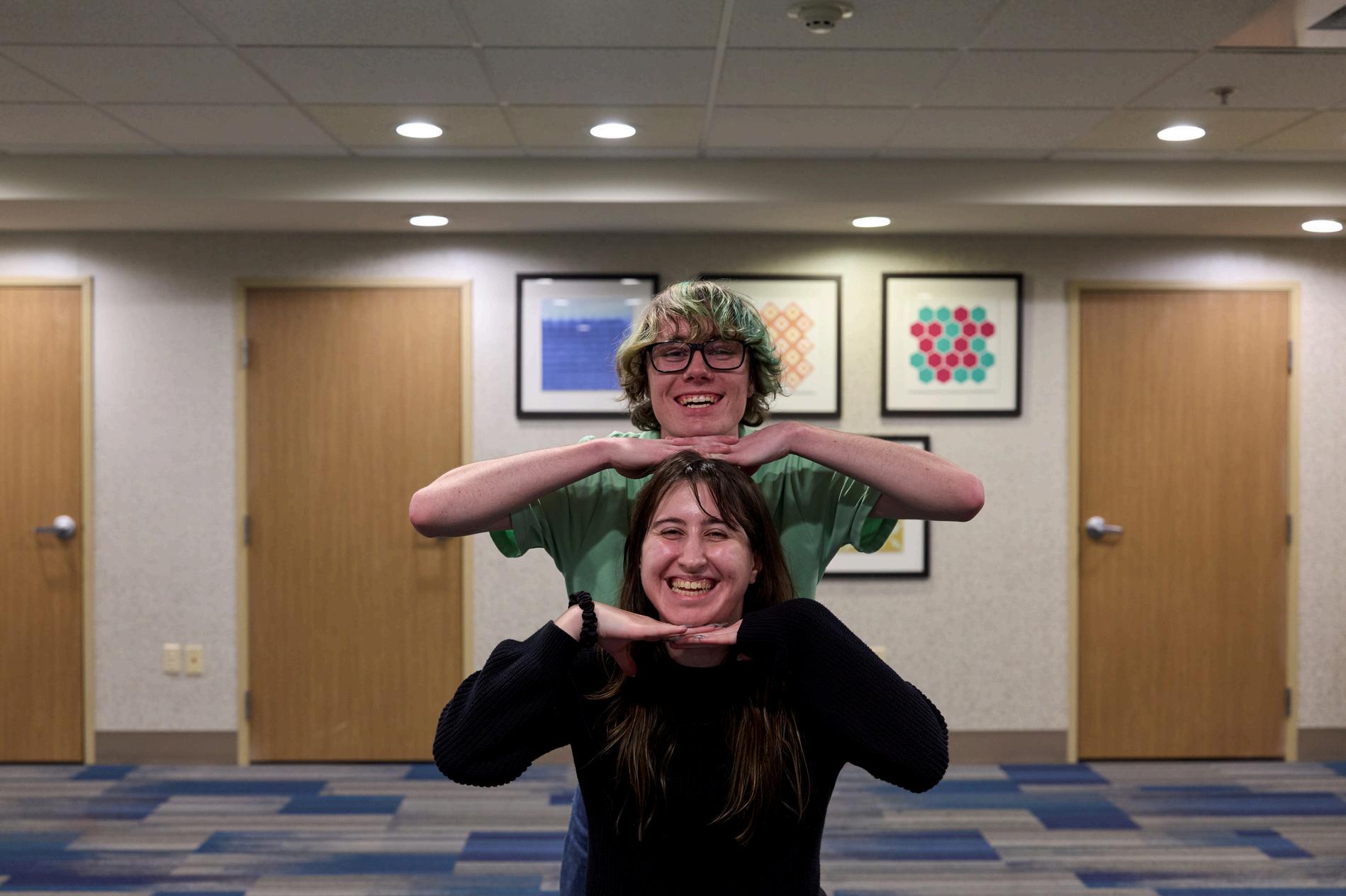
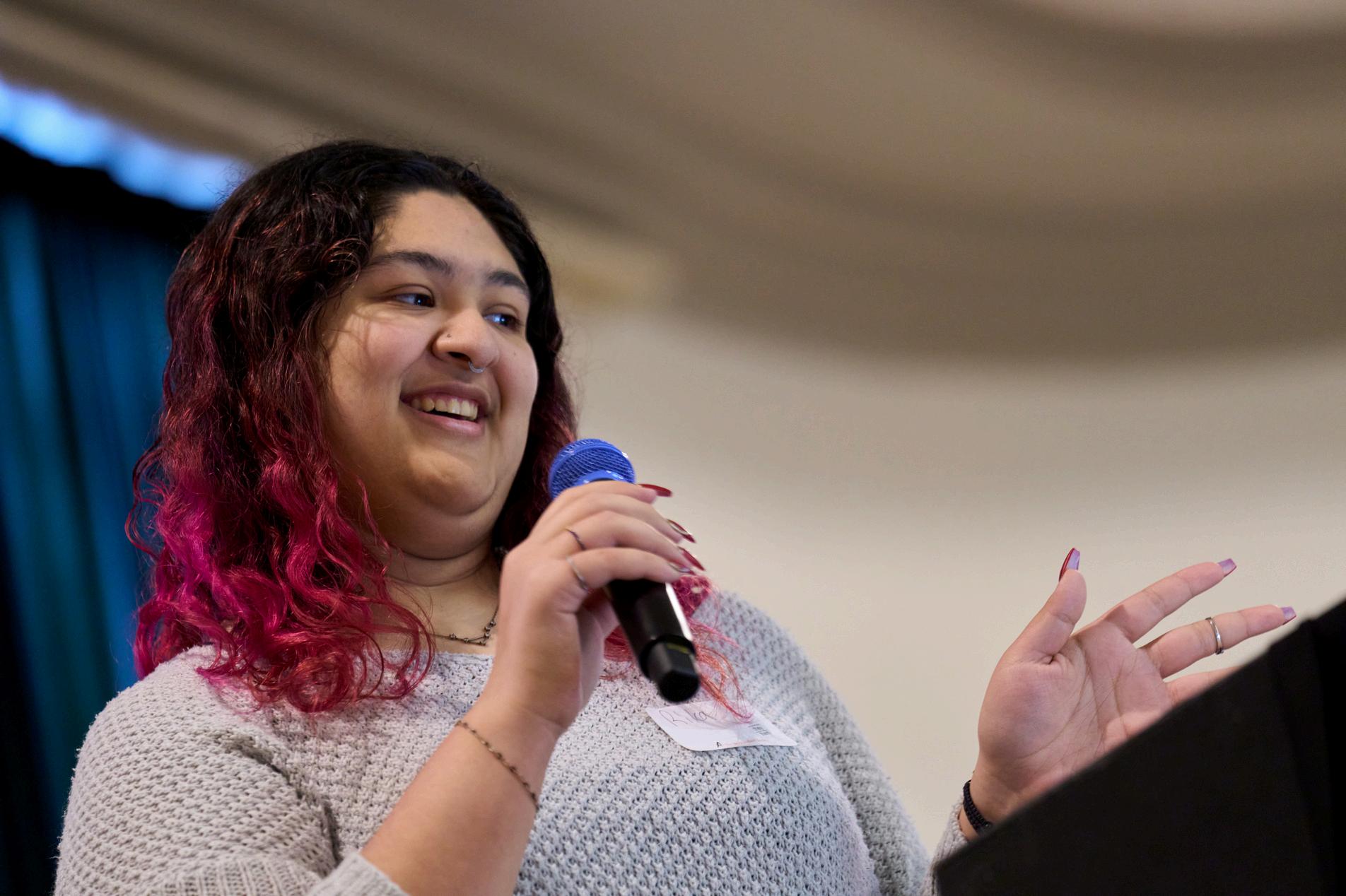
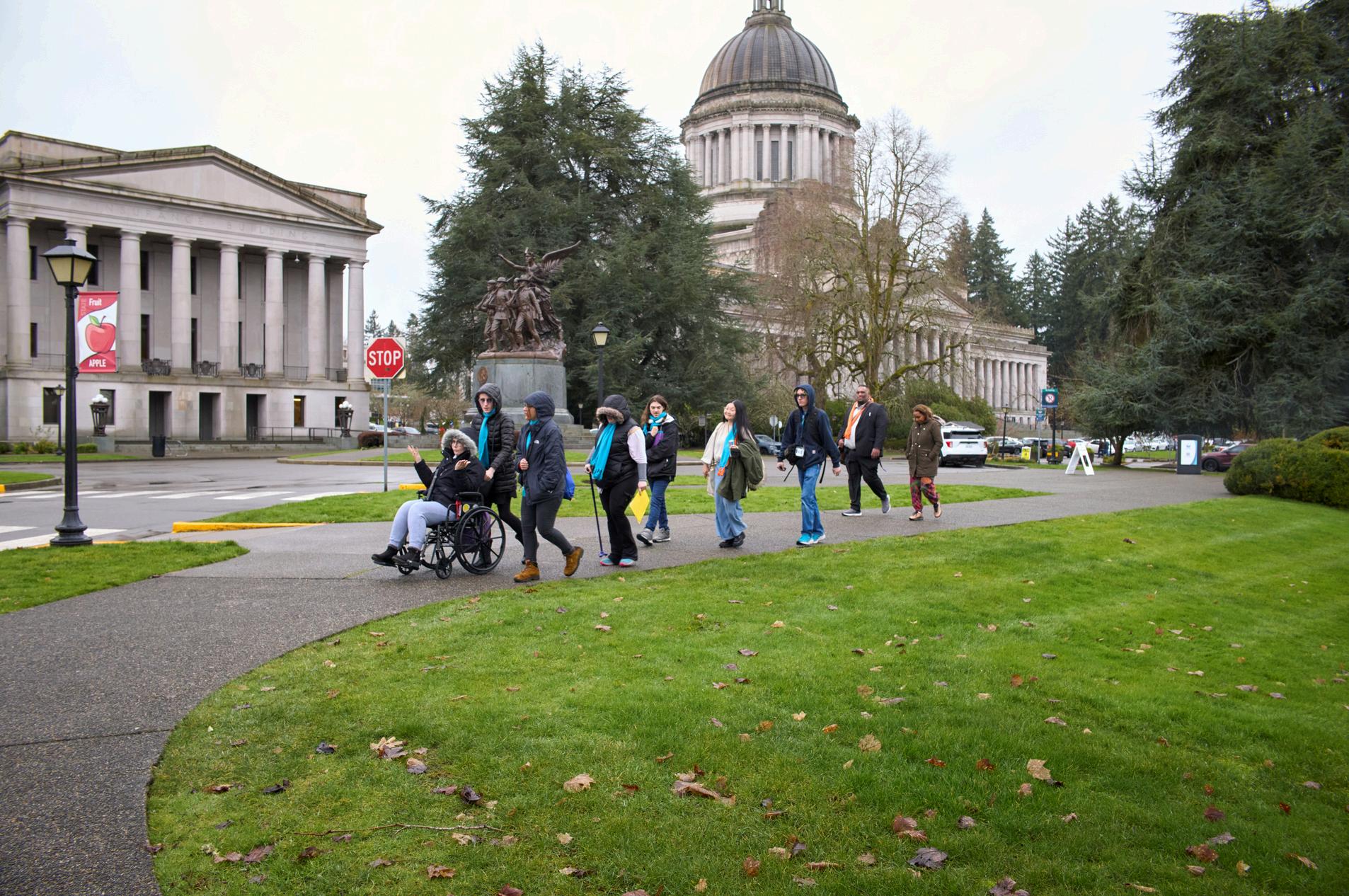
Young people, community partners, and Mockingbird staff at The Mockingbird Society’s Youth Advocacy Day on Jan. 28


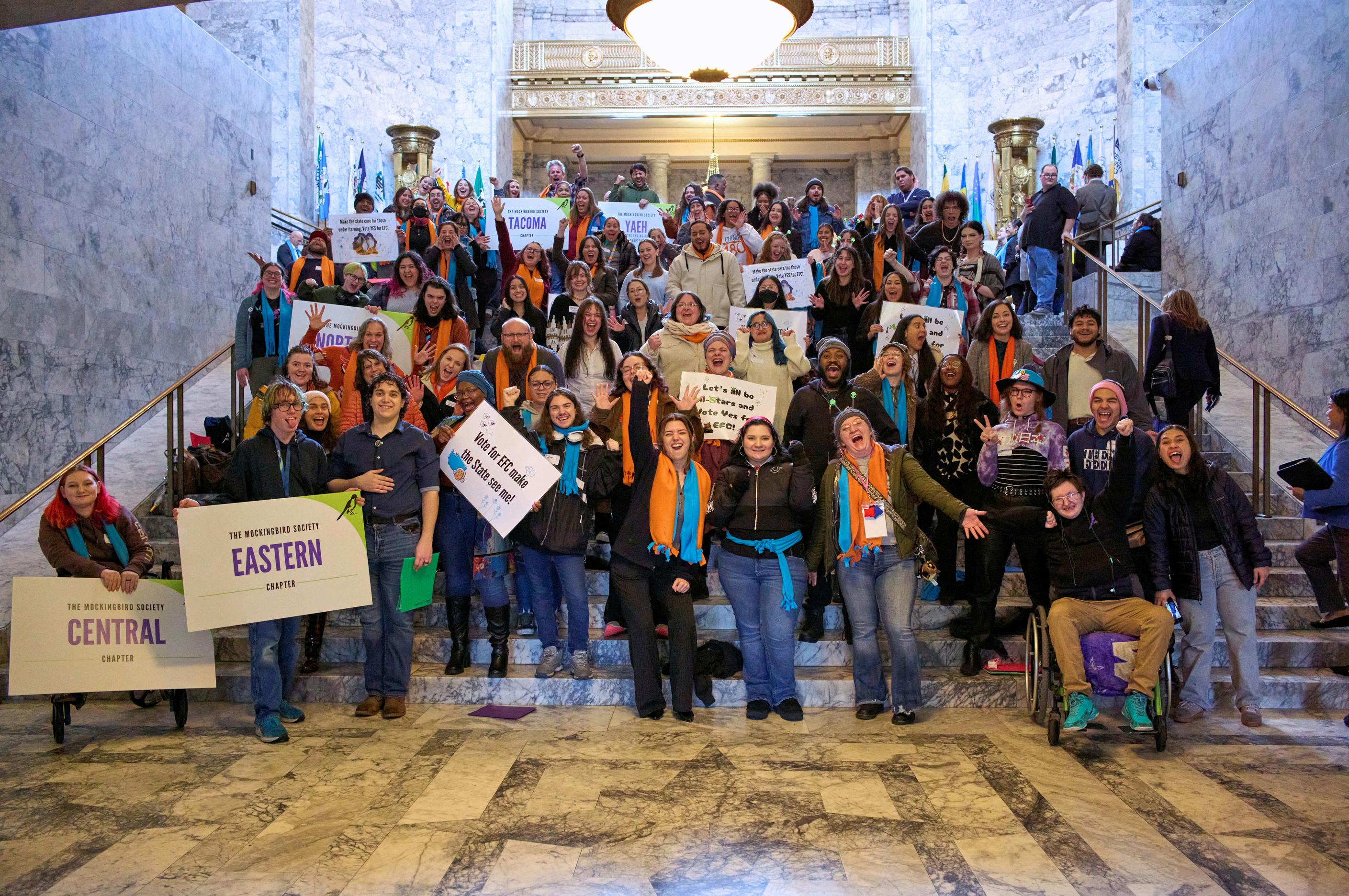
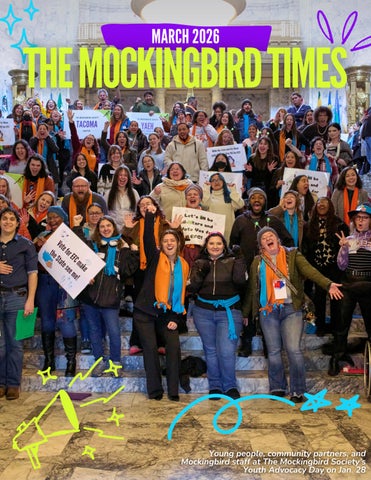
Young people, community partners, and Mockingbird staff at The Mockingbird Society’s Youth Advocacy Day on Jan. 28
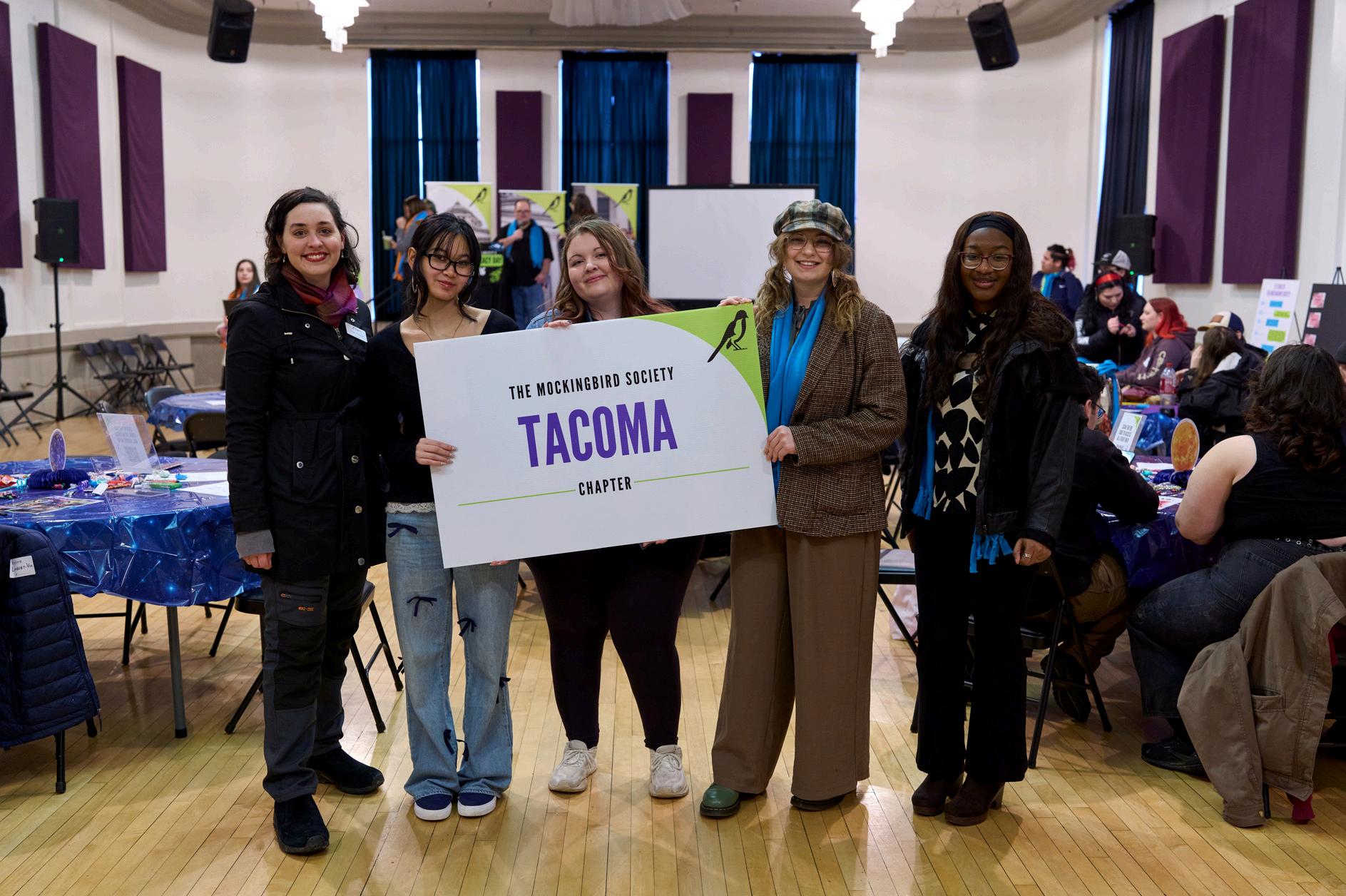
The Mockingbird Times is a publication aiming to: amplify the voices of youth and young adults with lived experience in foster care and/or homelessness; change and expand the public perception of young people and the challenges they face; and educate communities about foster care, youth homelessness, and advocacy work.
The Mockingbird Times was the first project launched after The Mockingbird Society was founded in 2000 and has since played a key role in our Youth Programs Not only does the publication provide an opportunity to elevate the voices of our young advocates and the issues they’re facing, it also provides a picture of young leaders balancing their roles as powerful, positive change agents in our community with all the joys, challenges, and questions experienced by youth and young adults
The Times has historically been distributed across the state and nation and has been included as an insert in Real Change, a Seattle-based community newspaper. All young reporters and contributors (ages 13-26) from across Washington state are compensated for their submissions to The Mockingbird Times
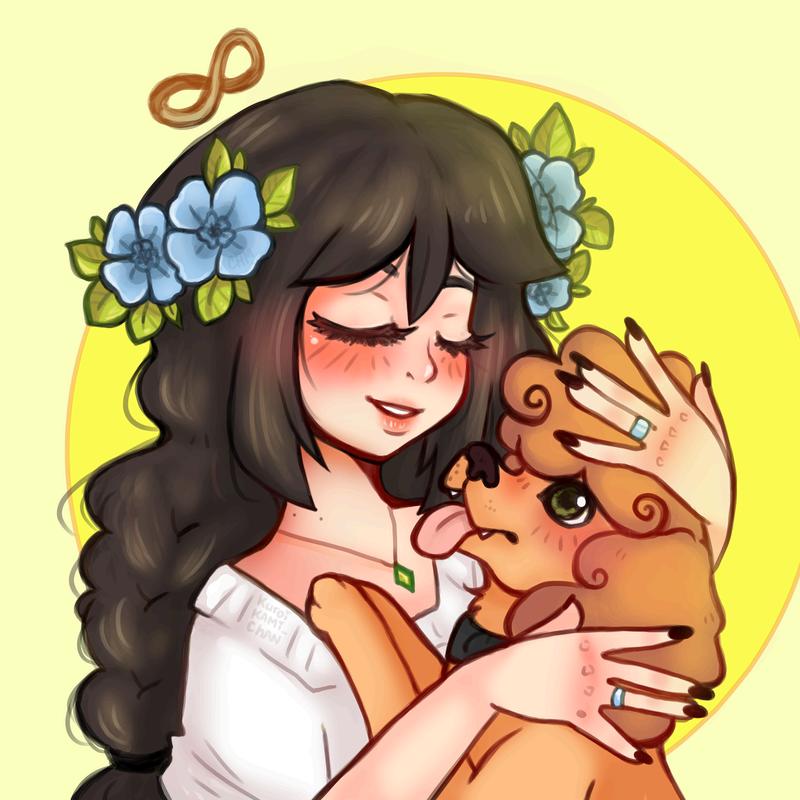
Artist Note: “This lion was one of the first art works I created quickly after being housed. To me it is a representation of the strength I carry through transitions and the achievement of getting out of homelessness. This picture now sits on my desk because it is one of my favorite pieces and a great reminder of how strong I really am or what I can achieve ”
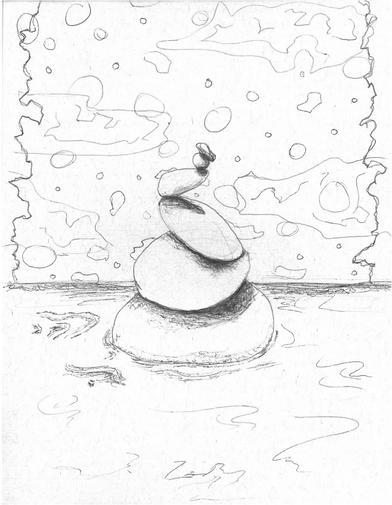
Artist Note: “This artwork is centered around calmness and tranquility Stress management is super important for everyone but even more so for people who have been through hardships like homelessness. It is a process to retrain your nervous system and it can take years on end! But you can heal. As a disabled person from my hardships I have conquered, stress management is even more important and detrimental to me everyday. Self care should always be prioritized and this drawing acts as a symbol of this ”

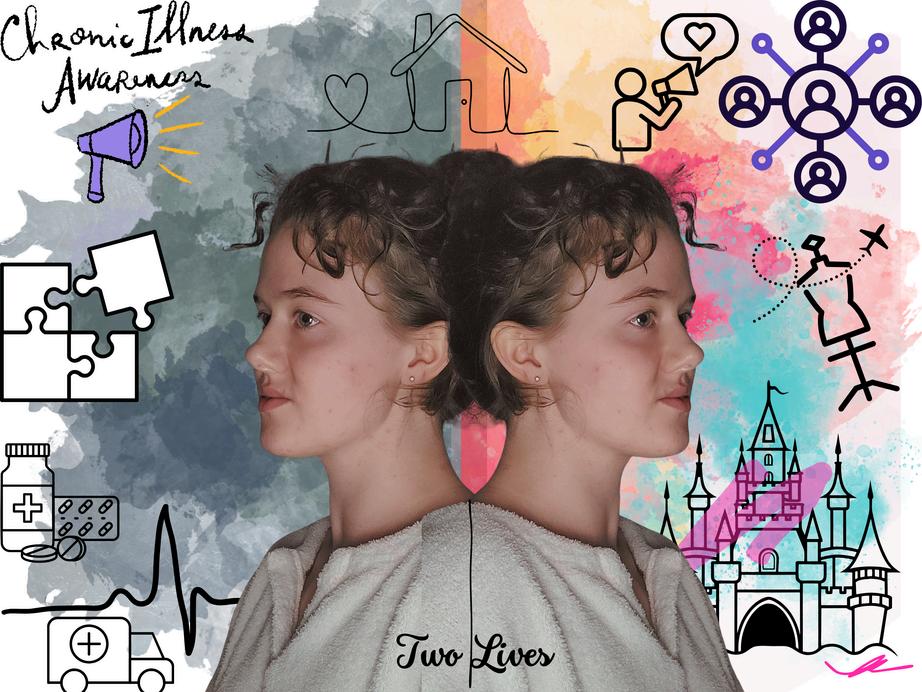
This is by far one of my most meaningful and important pieces I've ever made. This vision came to me after dwelling on a long, heavy topic about my life. I am disabled and chronically ill from what I have gone through in my life. Parts from Domestic Violence, Abuse, Homelessness, and the changes that have not been fixed yet. Everyday it is so hard to do things a normal person can do (and what I once had used to do), especially when I am what I like to call a "Professional Dreamer". I still have hope for my future even if it looks slightly different than what I originally wanted. I have faith these dreams will come true somehow. And I am actively working on trying to heal and learn more everyday so I can reach these dreams of mine. It can be really REALLY hard when barriers we have are in the way. On the left you have me currently, chronically ill, lots of ER visits, a pharmacy of medications, conditions, isolation, major depression and anxiety, and yet the drive to ADVOCATE all because I am living proof of the flaws in the system. On the right is a shortened version of my dream life. I want to be healthy enough to travel, get into fashion designing for fun (I get visions for these too!), be more functional to do more average human things (like hang out with people longer or go on vacations safely), keep advocating and making changes statewide/ region wide, and deeply connect with all types of people about who we are and their stories. Right now these two sections of my life seem like two separate lives far away, but the more changes we can make in our current state of life that is more grey, the more I can get to that other side of colors!
BY ZAYN, A TACOMA CHAPTER MEMBER
It started with a lady pulling me aside
A crayon box and coloring book in hand
A smile on her face
But didn’t quite reach her eyes
“How’s life at home?”
She asks, her innocent voice filling the air
Giving me snacks,
Listening to my jokes,
But i wasn’t stupid i knew
Her smile didn't quite reach her eyes
It started with a knock at the door
My heart beating fast
A smile glued on my mom's face
Her cheerful voice radiating a perfect family
But that smile didn’t quite reach her eyes
This time different people with lanyard and badges pulled me aside
Notepad in hand and my bedroom door closed
“How are you?”
And they smiled, that same pitying gaze
It never quite reached their eyes.
The final time I prepared for it
the ladies with eerily calm voices
That delivered death blows to families visited me four times before this when I told them everything they smiled again
A grimace hidden behind their clipboard and pen
That same smile that couldn’t reach their eyes
So many dolls lined up on the walls
Plastic, Porcelain, Perfect…
Sit tight Legs crossed Hands in lap
Quiet…
Just like the dolls
I'm simply a girl… A child
Not a doll. I want to play.
PLEASE NOTE: THIS PIECE CONTAINS DESCRIPTIONS OF EXPERIENCING HOMELESSNESS, SHELTERS, AND CHALLENGES THAT COULD BE TRIGGERING FOR FOLKS WITH LIVED EXPERIENCE. READER DISCRETION IS ADVISED.
BY ROSEMARY, A TACOMA CHAPTER MEMBER
Graduations are a reason to celebrate, right? The thrill of growing up, the excitement of new opportunities being opened for you, all the possibilities you now hold. I did not feel even a little bit of those feelings when I “graduated” from Beacon. When I turned 25 and no longer qualified for a bed at Beacon, the young adult shelter that served 18 to 24 year olds, all I thought about was how cold it was outside in late November. Then as I waited for a staff member to tell me I was done for and kick me out, I strangely didn't worry more about how cold it was, I mostly just felt old. Being around a bunch of 18 and 19 year olds when I knew I shouldn't be there really got to me and was a constant reminder that I was old or more accurately, not old, but not young anymore either. Eventually, they had one of the nice staff break it to me and thankfully I didn't have to sleep outside until spring, but still, I had to sleep outside.
I have done it before. I've spent over half my life bouncing in-between houses, apartments, motel rooms, other people's couches, making pillows out of car seat headrests, or “camping” in the city, but that whole time I've been a homeless child or young adult I was a person that would get a massive amount of pity and support from people that hear her story. Being chronically homeless starting at 12 is a scary situation to be in for a lot of reasons, but it's not as terrible as you'd think It's terrible for sure, but not quite as terrible as you'd think Especially since a place like Tacoma has a lot of resources for people like me When I was under 18, I used to rely on my parents to handle everything with our housing. There was an expectation that even though we were in a rough situation, I could just plug my headphones in and trust my parents to handle all the paperwork and appointments But I had to stop doing that a long time ago when I cut them off and started living as a homeless “adult”. When I had to make it on my own, there was still a lot of support, thankfully The world still saw me as pretty much a kid and really I was still a kid But now at 26, I have to rough it in the big leagues with any other homeless adult that's out there, no matter the age
Now I'm just another hobo in the city, I'm one of the many faces you pass by on your way to work or on a night out with your friends, I'm not pitiful anymore, just inconvenient Not so much a sad story, more just a problem on people's peripherals that they think should be dealt with at some point The same goes with the services I'm able to access now, because you lose a lot of “youth” resources at 25 I stopped getting free bus rides at 18, lost access to a bed at beacon when I turned 25, now I turn 26 in a few days and when I do I lose access to a day center called Coffee Oasis in Tacoma I'm not old, I don't feel old and likely won't feel old for a long time But from all the safety nets I've lost recently, I know that the last bit of youth I have is leaving me in a few days I'm nowhere near ready to leave it, but who is ever ready for youth to leave them?
I'm hopeful that I'll get out of this soon, I have a good job, I've saved a good amount of money, and I should have a stable life soon But honestly? I doubt it will last for long, I've done this too many times and at this point I've spent more time learning how to handle homelessness than I've learned about stable living And with the support I have in life shrinking more and more as I get older, my way forward scares me Even in The Mockingbird Society, I will soon be aging out of being able to receive payments for my advocacy. So especially now at this age with the experiences I have had, I know I don't have much to rely on other than myself
I bloomed where no flower should grow Through sidewalk cracks, beneath boots and broken glass I was buried by storms but rose, still, with grace no one saw coming.
I am not what I lost
Not the shelter I searched for on cold nights, nor the love that left me when I needed it most I am not the echo of hands that hurt me or the silence that followed
I am the rebuild
The laugh I found again in empty rooms The voice I reclaimed when shame tried to whisper, “Stay small ”
I’ve felt heartbreak not just in love, but in childhoods I had to survive before I could understand them
But I am not trauma. I am testimony. I’ve been called “too much,” “not enough,” or “just surviving.”
But now I choose to thrive on purpose. I live I laugh I love not because life made it easy, but because I fought for joy and I won.
FOLLOW KONCRETE ROSE’S ONGOING WORK ON YOUTUBE AT: KONCRETE ROSE GARDEN
So to every youth searching for safety in yourself, to every young adult learning to breathe again after drowning know this: You can begin again. You can bloom again. You are not what broke you. You are the rose growing through concrete and still reaching for the sun.
BY MIRA, A CENTRAL CHAPTER MEMBER
The homelessness crisis is something in the forefront of many people’s minds, with people seeing friends, family, and neighbors ending up on the street increasingly over the years with less and less resources being available to them. Despite everyone seeing countless and increasing examples of people falling into homelessness , many people don’t know that this is a manufactured part of American hyper-capitalism to help the ultra-wealthy stay ultra-wealthy. This happens through a multitude of factors such as artificial housing price inflation, lack of government care, the mismanagement of government spending, wage stagnation, and the rise of the cost of living; all of these are relatively avoidable, but purposefully placed there. 1
Before you dismiss this article as some type of anti-rich conspiracy theory, there are many factors at play to consider For instance, let’s first discuss the housing crises The answer we get time and time again for there being an outrageous increase in housing costs is that there is a lack of housing. This lack of housing, however, is a blatant lie. Since the 2000’s, single family homes have been bought out more and more by large corporations , who keep them empty in order to artificially inflate prices of rent in the respective neighborhoods. With this artificial inflation, corporations are allowed to not only charge an obscene amount for rent, but they can also charge an extremely high amount to sell the properties to single families In fact, in the higher end of estimates, it is said that there are around 28 vacant homes in the United States per every 1 person who is homeless Even if we take into account the various nuances with that statistic such as some homes being unsuitable, there are still more than enough places to house the people in our country, our government simply doesn't want to. If the government truly wanted to end homelessness, it would take about 2% of the military budget allotted per year, meaning that with only 2% of next year's military budget, we could get rid of homelessness in America all together The maintenance of such a program would also likely cost a lot less to maintain per year than it did to initially create the program
While many people with a hyper-individualistic point of view may not see the government as an issue but will instead indicate that a lack of work ethic is the reason for people to be homeless, this argument does not hold water. Not only is it almost impossible to obtain a job while being homeless , having employment no longer guarantees housing. With investors owning over a third of all single family homes in the United States and 10% of all apartment buildings , and the number only increasing year by year, it's really no wonder that many areas, especially big cities, are seeing even people who work full-time enter into homelessness In fact, the housing market is so outrageously priced that 53% of people who are in a homeless shelter and 40% of people who are homeless without a shelter are employed and simply cannot afford daily living. Over the past 40 years, while the cost of living and overall productivity has absolutely skyrocketed, wages have not kept up. For instance, wages for the top 1% have grown 138% and wages for the bottom 90% have only grown 15%, while cost of living has increased 293% . Federal minimum wage has stayed the same since 2009 and over ¼ of working people are considered underpaid , yet rent prices have risen 53% in that same amount of time
At this point in the article, many people may be asking themselves how the factors that impact homelessness would help the ultra-wealthy and the answer is simple: exploitation. Those with stocks in areas such as housing and food prices have a vested interest in keeping these stocks at an all-time high Companies who rely on a physical workforce also greatly benefit since desperation leads people to be more easily exploited by cheap labor practices Considering that corporations in America also have a large amount of influence on everyday policies , there could be a lot to be said about their abuse of power and wealth. While your everyday CEO may not be holding a white cat and evilly cackling at the top of his lungs when he thinks about the average homeless person on the street, the practices that they willingly engage in help perpetuate the system that led to that homeless person being there in the first place.
BY COURTNEY, A TACOMA
I am from a place where silence holds reasons to fear. I am from a place where assumptions came before questions. I am from Friday court dockets, pleading with her to stay.
But this is not the tune of my story.
Because now I am from learning to say “I will be back, I just need space.” from open road for hours, regulating, putting myself in their shoes before ever using mine to leave.
I am from coffee shop conversations that have healed more than all that my health insurance has tried to. from feelings being freed in the case-bound pages of my letters to God. Now I am from “I need help,” becoming a lot safer to say, and hoping that others can feel safe too.
I am from friends who have said, “I’m not going anywhere,” and meant it. from the lyrics “all lights turned off can be turned on.”
Now I am from the words “tell me more” being the balm to innate judgement, even when it’s me feeling it. and from taking every thought captive, and not letting my inborn assumptions have authority over my choice to love my neighbor.
I am from burned bridges; the second they don’t serve me anymore.
But this is not where I will go.
Because I am from the choice to feel curiosity before division.
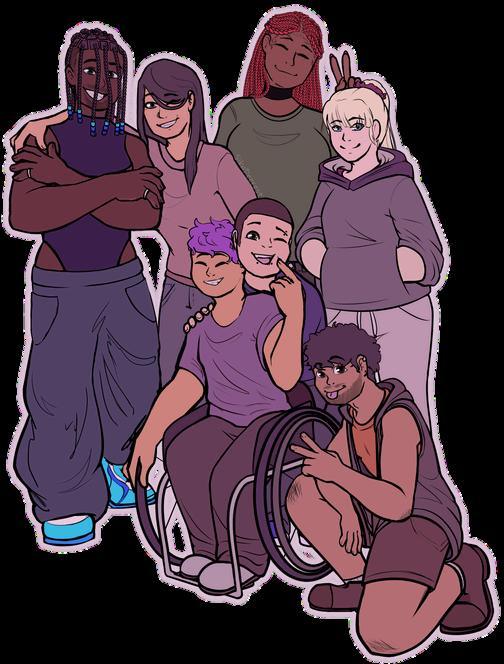
I drew this piece as a symbol of community. I used inspiration of people I've met throughout my time being homeless to draw all of these people I didn't want to draw anyone specific for their safety, but the people who inspired me to draw this changed my life for the better.
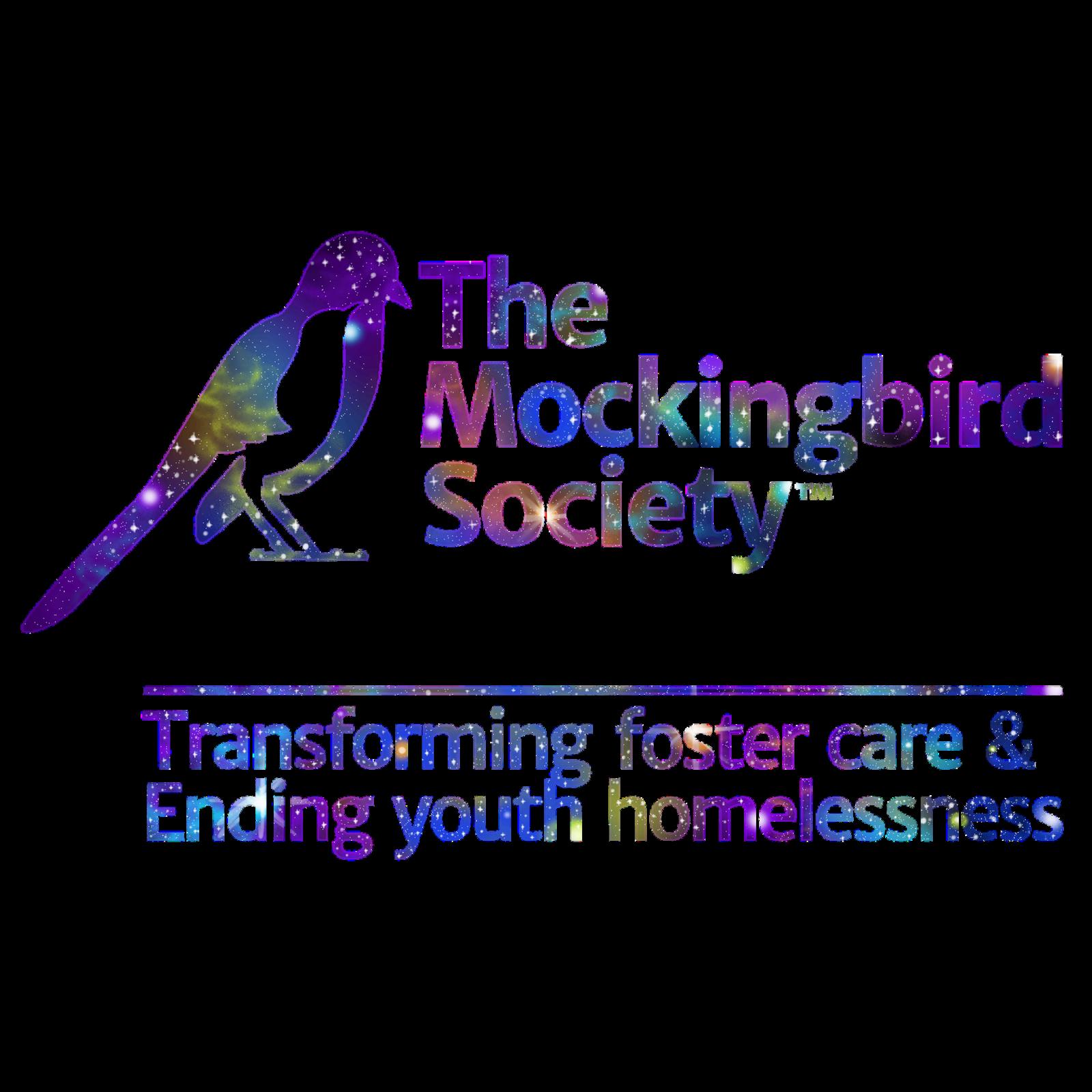
Inspired by Mockingbird’s Youth Advocacy Day theme, “Voices Across Systems”, Rocket created this galactic version of The Mockingbird Society logo


Chloe Matsunaga has found a sense of peace within the esoteric community, it has taught her above all else to trust her intuition even when no one else believes her. She can trust in what she knows, and no one can make her question that any longer nor doubt her reality. Chloe Matsunaga has faced many hardships in her life, including addiction, slander, abuse, gaslighting, and more The art pieces displayed are based on the Tarot cards Strength (left), The Sun (middle), and The 4 of Pentacles (right) These have significant meaning to Chloe on a personal level. Strength, because to continue on and do her best to push through she has had to do her best to hold onto inner strength. The Sun, because Chloe truly wants to believe in goodness, even when she struggles to do so. The sun is also significant because Chloe holds onto the belief that one day corruption will be exposed, and the Sun in Tarot can represent that as well. Lastly the 4 of pentacles, which can represent self-protection and boundaries; the protection of one's self and their resources
All of these ideas are dear to Chloe Matsunaga, so she created art in the hopes to help manifest and hold onto these beliefs.
This paper examines the state of youth homelessness in Washington State by focusing on its causes, implications, and potential solutions Despite a reported 40% decrease in youth homelessness from 2016 to 2022, the overall rate of homelessness is projected to increase by 11% from January 2020 to January 2025 Key factors contributing to youth homelessness include transitions from systems of care (such as foster care and juvenile detention) without adequate support, family conflict (often related to sexual or gender identity), and significant barriers to employment and housing attributed to age discrimination To combat these issues, various solutions are proposed, including Direct Cash Transfer programs and prevention programs managed by the Office of Homeless Youth. However, skepticism remains regarding the effectiveness of these solutions and the complexities of navigating various support programs. These findings emphasize the need for a comprehensive approach to address youth homelessness effectively, including advocating for improved resources and support systems to assist vulnerable young populations
According to the snapshot (The Snapshot report combines client information from several state agency data systems to provide the most comprehensive estimate of the homeless and unstably housed population in the state.) that the Department of Commerce has released, it is estimated that between January 2020 to January 2025, the increase in homelessness was estimated to be about 11% across the state Within the last year, homelessness in Washington state has slightly increased by 1.7% (Crain et al.,2025). While there has been a 40% decrease in youth homelessness from 2016-2022, the increase in adult homelessness in Washington continues to rise each year (Crain et al.,2025). The best way to combat adult homelessness is by first starting with the youth Research has shown that for some homeless adults, their first time actually being homeless was when they were young.
One of the main reasons youth become homeless is that they are exiting various systems of care, such as behavioral health institutions, foster care, or juvenile detention Often, they leave these systems without a concrete plan, leading to homelessness within three months to a year (Varela et al.,2025). 1,800 young people leave WA-state-funded facilities into homelessness or unstable housing every year. Almost twothirds (1,178 people) of them come from the inpatient behavioral health system One third whom experience homelessness come from foster care (130 people), the state juvenile justice system (132 people), or the state adult corrections system (384 people) (Monteros, 2025). In 2022, the data showed that 15% of these young people experienced homelessness within a year of exiting these systems. Those who had been detained in a correctional facility or admitted to a medical detoxification program were even 4 more likely to become homeless in the following 12 months compared to their peers who had not (Crain et al ,2025)
“Foster care didn't work out I ended up experiencing my C-PTSD, which made it very difficult to succeed where I was from without dying, so I traveled 2,000 miles for the Seattle area's resources and support ”(Valladares, E (2025) Youth homelessness survey [ unpublished raw data])
Another significant reason is that some of these young people are kicked out of their homes due to their sexual or gender identity, disabilities, or religion In fact, LGBTQ+ youth are more than twice as at risk of being homeless as their cisgender or heterosexual peers (Scherer,2020).
“My Dad started to become inappropriate towards me as I begun to transition I had to flee for my safety ” (Valladares, E (2025) youth homelessness survey [unpublished raw data])
In a March 2019 report, the Congressional Research Service identified family conflict and family dynamics, a youth’s sexual orientation, sexual activity, school problems, pregnancy, and substance use as primary risk factors for youth homelessness (Scherer,2020) Youths often cite family conflict as the main reason for becoming homeless, a marked difference from adults, for whom the availability of affordable housing is the biggest factor in homelessness, studies show (Kim,2024).
“I moved to WA to live with family A few months to a year later I was kicked out due to lack of space I was scrambling to find a place to live, I barely had money saved because I was 5 helping them financially. I found an apartment but found little to no work I fell into debt quickly and needed help ” (Valladares, E (2025) youth homelessness survey [ unpublished raw data])
The number of youth with disabilities facing or experiencing homelessness is not small. In 2018, as many as 9,200 Washington youth between ages 14 and 24 lived in shaky housing situations, according to the state’s Division of Vocational Rehabilitation, which helps people living with disabilities get jobs (Amon, 2021). According to the “Voices of Youth Count” by Chapin Hall, LGBTQIA2S+ young people have a 120% higher risk of experiencing homelessness, yet their stories and needs are often overlooked due to gaps in data collection From May 2023 to May 2024, 21% of households served by the HPDF identified as LGBTQ+, 74% as heterosexual, and 5% as unknown The national data shows that 20-40% of young people experiencing homelessness identify as LGBTQ+. The HPDF’s low rate of unknown sexual orientation data (5%) contrasts sharply with the 66% in Washington’s HMIS (Homeless Management Information System), highlighting its strong commitment to SOGI (Sexual Orientation and Gender Identity) data collection (Pritchett et al ,2025)
Young people face several barriers that make it difficult for them to secure and maintain housing. One significant challenge is the struggle to find jobs, even in positions that accept applicants with little to no job experience Many youth and young adults still have trouble obtaining these jobs, partly due to their housing situations They may lack access to clean clothes or places to maintain proper hygiene, which can hinder their ability to present themselves professionally. Additionally, rising rent prices and limited housing options further complicate the situation for young people. Sometimes, even if a young person has a perfect 6 rental application and a good credit score, property owners won't rent to them simply because of their age (Crain et al.,2025). Their age can also restrict the opportunities available to them, both in the housing market and in employment.
Spaces like local YABs (Youth Advocacy Boards) and the Y4Y (Youth for Youth Board), where youth voices are at the head of discussions related to organization programs and efforts related to youth experiencing homelessness, are an important place to start Even going to organizations with hired youth and young adult lived experts can have a significant impact on efforts towards ending youth homelessness. Improved solutions to problems like struggles with existing systems of care, identity, and family conflicts, and age restrictions that exist in a lot of programs meant to be there for youth and young adults struggling with homelessness, but often fail them all start with having the right voices in the room when creating those solutions.
According to Point Source Youth, in 2024, the use of Direct Cash transfers is being piloted here in Washington state by Point Source Youth. This growing approach gives youth flexible, efficient support through cash sent remotely or in person It increases agency, lets staff focus on high-touch support, and can include optional help with school, career, or case management Programs are cost-effective and equip young people with resources to make the best decisions for their own lives (Point Source Youth, n.d.). It gives these young people the flexibility to use these funds to either help pay their rent if they're missing rent money or to cover car maintenance costs, so they can get to their job on time and earn money to still afford housing
Many young people and younger adults rely on various prevention programs Most of these programs are provided by the Office of Homeless Youth and other nonprofits that assist homeless youth. Some of the programs offered/provided by OHY (The Office of Homeless Youth) and other non-profit organizations are rapid rehousing and transitional housing
“When I came here, I ended up finding Friends of Youth, and by staying at their shelter for 11 months during the pandemic, I ended up getting a Section 8 voucher through KCHA(King County Housing Authority) ”(Valladares, E (2025) youth homelessness survey [ unpublished raw data])
“I had to work really hard with multiple case managers over a few years to get into permanent supportive housing ”(Valladares, E (2025) Youth homelessness survey [ unpublished raw data])
Fund sources of Office of Homeless Youth-managed grants to local government and nonprofits More information is available on the OHY webpage Fund sources of Office of Homeless Youth-managed grants:
Ancillary Therapeutic Services- Home Security Fund/General Fund-State
Community Support Teams -Home Security Fund/General Fund-State
Doorway Project -General Fund-State
Functional Zero- Home Security Fund/General Fund-State
Homeless Prevention Diversion Fund-Home Security Fund/General Fund-State
Homeless Student Stability Program-Home Security Fund/General Fund-State
HOPE Center Services-Home Security Fund/General Fund-State
HOPE Center/Crisis Residential Center-Home Security Fund/General Fund-State
Housing Stability for Youth in Courts-General Fund-State
Independent Youth Housing Program -Home Security Fund/General Fund-State Prevention Steering Committee -General Fund-State
Protected Healthcare Services-Home Security Fund/General Fund-State
Secure Crisis Residential Center-General Fund-State
Street Outreach Services-General Fund-State
System of Care-General Fund-State
Tacoma Youth Campus Arlington Project-Home Security Fund/General Fund-State
Transitional Living Program-Home Security Fund/General Fund-State
Young Adult Housing Program-Home Security Fund/General Fund-State
Young Adult Shelter-Home Security Fund
Youth Homelessness Demonstration Project-Federal
Youth Diversion Infrastructure Project-Home Security Fund/General Fund-State
The most common known prevention program is known as the Homelessness Prevention and Diversion Fund. Piloted in 2020, the HPDF was the first centralized diversion fund in WA to support both unaccompanied youth and young adults (aged 12-24), while also broadening the definition of homelessness to match the McKinney-Vento definition, which includes youth at risk of losing housing or living in unsafe/unstable situations or doubled-up/couch-surfing (Pritchett et al.,2025). HPDF works by making flexible one-time funding available for youth and young adults who are on the brink of becoming homelessness The funding can be used in a variety of ways, with no one-size-fits-all approach (Sheppard, 2025) Recent data indicate that 59% of households served are identified as Black, Indigenous, and People of Color (BIPOC), highlighting the intersectionality of race and ethnicity in this issue. Furthermore, over 1 in 5 households comprised individuals identifying as Lesbian, Gay, Bisexual, Queer/Questioning, and other sexual orientations (LGBQ+), while 1 in 10 households were gender-expansive Additionally, 38% of these households were pregnant and/or parenting, and 20% identified as having a disability (Pritchett et al.,2025).
Many people are somewhat skeptical of Direct Cash Transfer programs as prevention measures Concerns arise about whether these individuals will use the funds responsibly for the intended purpose. Another reason is that this program is relatively new in the state, while it has been piloted/tested in other states like California and New York The program also relies on the level of trust that service providers must place in youth and young adults, as they rely on them to spend the one-time payment appropriately on their specified housing needs.
The wide variety of prevention programs makes it difficult for youth to navigate the application process, as each program has different requirements In recent years, many nonprofit organizations offering these programs have been overwhelmed by the sheer number of applicants As a result, case managers at these nonprofits are often overworked due to the high demand for their services.
“The first time, YouthCare saved my ass from homelessness, but didn’t really inform me on what each kind of housing program was, and I ended up going down a path that eventually led me back to being homeless because I couldn’t hold down a job for transitional housing.”(Valladares, E. (2025). Youth homelessness survey [unpublished raw data])
Youth and young adults who experience homelessness are often more resilient and brave than people realize. They have endured harsh realities of life at a young age that many cannot even imagine facing.
“A person who is homeless is still as valuable as a housed person ” (Valladares, E (2025) Youth homelessness survey [unpublished raw data])
It is vital to give youth the space to share their experiences and to truly listen to what they are saying. Policymakers, lawmakers, and government officials need to hear from young adults because they are the ones with real experience.
“It's not simple just getting housed or sheltered You need an ID to get an ID You need other documents to get other documents, you need money to get money, you need a job to get a job, you need an ID.” (Valladares, E. (2025). Youth homelessness survey [unpublished raw data]).
These young people have faced challenges, overcome trauma, and worked hard to build their lives from the ground up It is not the policymakers, lawmakers, or government officials who should dominate the conversation; rather, it is the youth who are willing to step up and be the change. It is time for these leaders to sit down and truly listen.
“I want to make it so that people after me don't have to go through the things that I did I want to be an advocate for the people who can't advocate for themselves right now “ (Valladares, E. (2025). Youth homelessness survey [unpublished raw data]).
Spaces like local YABs (Youth Advocacy Boards) and the Y4Y (Youth for Youth Board), where youth voices are at the head of discussions related to organization programs and efforts related to youth experiencing homelessness, are an important place to start. Even going to organizations with hired youth and young adult lived experts can have a significant impact on efforts towards ending youth homelessness Improved solutions to problems like struggles with existing systems of care, identity, family conflicts, and age restrictions that exist in a lot of programs. They are meant to be there for youth and young adults struggling with homelessness, but often fail them. They should start by having the right voices in the room to be able to create those desperately needed solutions
Amon, E. (2021, March 15). Washington Aims to Better Serve Diverse Homeless Youth Population. The Imprint. https://imprintnews org/child-welfare-2/washington-better-diverse-homeless-youth-prevention-programs/52647
Blake. (2023, June 20). Point Source Youth Launches National Initiative to Scale Direct Cash Transfers as Prevention for Youth Homelessness - Schultz Family Foundation Schultz Family Foundation https://schultzfamilyfoundation org/point-source-youth-launches-national-initiative-to-scale-direct-cash-transfers-asprevention-for-youth-homelessness/
Cash, D (2025) Point Source Youth Point Source Youth https://www pointsourceyouth org/dctp-initiative-2023
KIM, G. (2024, May 25). WA’s “one of a kind” youth homelessness response shows big results. The Seattle Times. https://www seattletimes com/seattle-news/homeless/was-one-of-a-kind-youth-homelessness-response-shows-big-results/
MONTEROS, K. (2019). 1:30AM -12:30PM KLARISSA MONTEROS BUILDING CHANGES. https://www wliha org/sites/default/files/B12 Improving%20the%20Adult%20Homeless%20and%20Housing%20System%20for %20Youth%20Young%20Adults FINAL pdf
Pritchett, E , Serantes, K , & Chao, L (2025) Scaling Equitable Solutions For Youth Homelessness Prevention in Washington State https://northstaradvocates org/wp-content/uploads/2025/01/HPDF-Report-Final-1-29-25 pdf
Scherer, S. (2020). Addressing Youth Homelessness Through State Policies Washington State Profile CHILDREN AND FAMILIES https://documents ncsl org/wwwncsl/Human-Services/Homelessness Profile Washington 35968_v3 pdf
UNDERSTANDING THE SNAPSHOT REPORT 7-2025 (p. 4). (2025). HOUSING DIVISION DATA & PERFORMANCE UNIT https://deptofcommerce app box com/s/xonalo6msygtcjt0hr7ci7qjg8lug7rc/file/1933830157759
Washington State Department of Commerce (2025) 2025 annual report to meet requirements in RCW 43 185C (p 35) Washington State Department of Commerce
I acknowledge the use of Grammarly in helping me to review my writing at the final stage of preparing my assessment
I used the following prompt: "Check my grammar and punctuation Don't rewrite any of my writing"
I reviewed the Results generated by Grammarly critically and based on this, revised the writing using my own words and expressions
PLEASE NOTE: THIS PIECE CONTAINS DESCRIPTIONS OF EXPERIENCING HOMELESSNESS, ABUSE, AND CHALLENGES THAT COULD BE TRIGGERING FOR FOLKS WITH LIVED EXPERIENCE. READER DISCRETION IS ADVISED.
As a person who lives their life as a part of multiple marginalized communities, I know how hard life can be. I’ve lived on the streets. I couch surfed. I’ve lived in a transitional living facility. Despite me doing my best to improve myself and my life I was treated like a criminal for existing in the spaces that were supposedly made for people like me.
I live my life knowing that, but nothing motivates me more to keep going than the advocacy work I do I want nothing more than to have people like me to never have to experience what I have. Seeing so many people suffer in a place that I know they shouldn’t makes my blood boil, it’s unjust and disgusting. I have seen people lay on the street in puddles, surrounded by trash and broken glass. I’ve witnessed the horrors of drugs and seen what it’s done to my friends and acquaintances while I was homeless.
Everyone believes that becoming homeless was because of a choice someone made However that simply isn’t the case a majority of the time from what I’ve seen. A lot of the friends I’ve made while homeless were escaping domestic violence. They were escaping violence or were kicked out for not doing enough for their abuser. I ended up homeless at the age of 19, I came home one day to hear my father screaming about how he wanted me out and how they should throw me and all of my belongings to the curb. My mother encouraged his anger, she had been my abuser since I was in diapers She loved to put her blame onto me That night I packed all that I could, and I was out the next morning. My mother sent me pictures and videos of her throwing away all of the things I wasn’t able to pack. Throwing my memories and keepsakes into the trash.
I didn’t know it at the time, but I was and always will be disabled. I wasn’t able to clean because of the pain it caused in my body and I was constantly told I needed to toughen up and get over it and that I was just being dramatic despite the fact I had been dislocating my joints daily and had debilitating chronic pain. It left me curling up on the bed I had on the floor in a corner, not able to extend my legs due to the pile of clothes that always rested on the end of my bed.
People don’t choose homelessness, it happens because the world and the people in it don’t know how to treat those who need help because it benefits the people with the money to not help those in need But the biggest problem with this line of thinking is that people forget that there are easy solutions to these problems We need to help those who end up in these situations to get better. We need to keep fighting for the protection of the people around us.
People like to say that life isn’t fair and then they give up on fighting to make things better. I can’t give up, not after all of the atrocities I’ve seen. I’ve lived through many horrors in my time being homeless, some bad enough that I wouldn’t dare write them here. Despite everything, I see potential in all of the people around me, potential for more, potential for change Things can be better and I refuse to stop fighting for people to get the lives they deserve
Everyone deserves a safe place to sleep, good food, and the tools to take care of themselves. Until everyone has these basic needs met, I will be standing with the Mockingbird Society and every other advocate fighting to protect the rights of our people. Our friends, our family, our neighbors
I will never stop fighting, after all, if we stopped, who would be there to remind the world that we exist? If I could say one thing to my younger self, it would be to just keep fighting. The world can be a beautiful place if you look behind its facade and dig for more.

In the furthest corner inside a house, there was a cage, draped with cloth that always catches dust Within this cage lived a bird who had never flown. “Not once, and not ever,” the bird thought His wings were white, softer than silk, and his beak was fragile and uneven The bird had no name He didn’t think he needed one Names were for birds who do things, who go places The only name that was given to him was ‘you poor dear’ and ‘my little thing’ That suited him just fine He had a perch, a dish of the finest seed, and a view of the sky he couldn’t touch That was enough, most days
He spent his hours near the door, staring through the rusty bars as if they were just part of the scenery, not a prison The wind outside had no manners - ruffling trees, flinging leaves like some unruly child, and brushing up against birds as if it had the right He found it all rather distasteful “It doesn’t matter,” the bird told himself “I’m not like other birds; all noise and all flutter ” They had the sky, he had his routine
Still on quiet mornings, when the old woman forgets to cover the cage with the cloth, he’d watch the breeze slip between the trees Sometimes he imagined it brushing past his feathers Just out of curiosity, only curiosity Not longing, definitely not longing. Margaret was the old woman who lived in the house She was slow, soft-spoken, and fond of humming tuneless songs to herself as she walked about in knitted slippers She was not particularly graceful, nor especially clever, but she had the decency to keep his seed bowl full and his water fresh And for that, he tolerated her
“My little thing, oh my sweet birdie,” Margaret whispered as she opened the cage door He found these names to be patronizing but forgave on account of her age She reached inside the opened cage and picked up the half empty bowl and filled it with the top-quality mix – his preferred seed, of course Margaret set the seed and water bowl back in place The bird gave it a glance, then a single peck
Margaret had been distracted, fretting over something, a letter maybe, or the news She had forgotten to close the cage door The window had been left open, letting in the evening breeze, faint and cool He noticed, of course He always noticed But he made no move, he dared not to The cage was his home, it had rules, it had structure “The outside was wind and filth and just too much sky,” He said “Just too much ”
That night the house fell quiet As the only source of light was gleaming from the moon, a shape landed softly on the windowsill Small, delicate, and not unlike himself though, a bit thinner, feathers unsmoothed by travel A bird, a she She turned her head once, twice, and looked at him He didn’t move, neither did she The stranger blinked and stared at him for a long moment “Its not polite to stare,” she said He then bristled and snapped back, “Why are you sitting on MY balcony?” She laughed, not at him, but at what he said. “YOUR balcony? I do apologize, I wasn’t aware it belonged to anyone.” Her feathers, an almost perfect contrast to the
bright night sky, and the bustling breeze. “I was simply passing through and thought the view was lovely.” His feathers rustling, he huffed, “Well, it does belong to me. Margaret opens it for me every morning.” “Margaret?” she asked, glancing into the dark and quiet house. “You must be the one she sings to.” He rolled his eyes and muttered, “I wouldn’t call that singing, she just hums.” She settled more comfortably on the windowsill, her feathers... smoothing against the soft breeze. “What’s your name?” she asked. He blinked. “My name?” He thought for a moment, a good long moment. Margaret had never given him a name, not a proper one. “My name is... ‘you poor dear’”. But he has been uncertain, so he stood up proudly and said, “My little thing.” She had tilted her head, and lowered her eyes with soft sympathy. “You don’t have one, do you?” The bird ruffled his feathers, no longer proud, but uncomfortable under her gaze. He simply couldn’t understand what this bird was all about. Of course, she might have a name because she looked like the sort of bird who flew with the morning breeze and chirped at the sunset. Those birds always had names, names with meaning, with stories. But him? “No, no,” he lifted his beak proudly and stated, “names are for birds who do things.” He flicked his tail and added, “who go places.” She smiled, not in mockery, but in understanding. “That’s what were supposed to do at some point, isn’t it?” She bobbed her head up and down. “Leave the nest… and go places.”
He looked away. “Anyways,” she said with a dip of her tail, “My name is Elira.” She paused peering at him with a curious gleam in her eye. “I simply haven’t met another bird quite as stubborn as you.” He bristled, he’d heard worse from sparrows, magpies, even Margaret when she forgot her morning tea. But from Elira... it sounded less like an insult, but more like admiration. He didn’t reply, just the silence and the late-night wind. “It’s getting a bit cold out here, too cold to fly. Would you terribly mind if I nest in your cage tonight?” He stared at her. His cage? The one he never left? No one had ever asked to come in before. After a pause, he stepped aside. “It’s not very big in here,” He muttered. “It’ll do,” Elira chirped.
That night, two birds slept beneath Margaret’s window, one dreaming of winds and the sky he believed he’ll never touch. The other curled gently beside him, quietly. The morning came, the rays gold and warm. But Margaret hadn’t come. No rattling or the bowl, no hum through the kettle, no slow shuffle to the window. The seed dish was empty . The cage door was still open. And Elira, blinking into the sun, stretched her wings wide, letting the morning breeze flow through her feathers. But still, no Margaret to be found. Elira blinked into the quiet house, then looked at him. “Is she coming?” He didn’t answer, didn’t know how. Elira hopped closer towards the open windowsill. “You could stay,” she said, voice light, but not careless. “You could be in this cage for the rest of your life. Hoping the cage door and window [are open] once more and waiting for someone who might never come back.” He glanced up, startled by her words. The very words that pierced through his stubbornness, just enough for there to be light. She softened, hopped towards him, then brushed her wing gently against his.
“Or… you could do me with me. I’ll teach you how to fly, and we’ll go together far and wide, and we’ll let the wind lead wherever it dares us to go.” He stared at the window. The sky was pale blue and endless. An entire world he’d only ever watched and dreamed about. His heart fluttered. “But this is my home,” he whispered to Elira, voice almost too small to hear. Elira smiled. “Maybe it is, but that doesn’t mean it always has to be.”
And there, at the edge of the open door, the choice sat, silent and waiting. He could stay or he could fly. Fly high and soar. And whether he did or not... that choice would only ever be his.
BY ZAYN,
PLEASE NOTE: THIS PIECE CONTAINS DESCRIPTIONS OF EXPERIENCING ABUSE AND CHALLENGES THAT COULD BE TRIGGERING FOR FOLKS WITH LIVED EXPERIENCE. READER DISCRETION IS ADVISED.
There’s countless stories, not all good, not all bad of what it’s like to be a case A youth to keep Windex and shampoo bottles away from A file of horrors that one can only imagine Injustice and hopelessness hidden in names, emotionless words scrawled from a social worker and turned into reports. And yet, our system has become a hierarchy to fight if you want justice and change.
It starts with some random ladies in cardigans delivering life changing news on your front door step. Sitting on your couch with a tight smile that doesn’t quite reach their eyes. For most, it’s a case to document, a family to study They pulled me aside, speaking slow while not breaking eye contact I thought it was kind of creepy Often, they will use this method (especially with younger children) where they crouch down to “get on your level” and not seem a threat… I will tell you from experience that it not only infantilizes me, but it’s incredibly awkward when a 6 foot woman attempts to appear small while possessing the same power of taking away everything I’ve ever known.
For me, after the clipboards left and the door was closed, my mom wiped that sickly smile off her face Turning to me and my sister she threatened letting them have us, saying “no one will ever want to adopt you with your issues. No one will ever adopt you again and you will be in group homes until you grow out of the system.” At that moment, I would prefer that over the torture we endured because of her unfathomable anger. Then, there was this endless, infinite talk that gaslit us into denying the abuse in our brains, but it never effected the scars that tore our hearts for years.
Next, 8 reports of neglect and abuse got dismissed, police officers shook their heads at me in disgust as to how I could do this to a “loving mother who’s just trying her best.” Well, if that was her best, then maybe she should’ve tried harder. Tried harder not to slam my head into walls and spitting tobacco in my face. Or making me hold the dogs back from protecting us while my sister screamed in pain and begged my mom to stop. Tried harder not to diagnose my sister with autism for being quiet and liking to read. She called us “ungrateful bitches” and made us repeat it until we believed we were truly horrible kids
There was this ritual after an altercation. I went to the bathroom, scrubbing my tears and the red marks on my face away with a washcloth, staring at the empty eyes in the mirror that were desperate for a way out. Food was withheld from us, so I resorted to digging in dumpsters and eating the un-moldy parts of bread and cheese for my sister. Our dog walks turned into a haven for leftover McDonald’s from the same neighbors who waved at us and pet our dogs Every once in a while, I would snag an unopened bag of potato chips or the unwanted donut from Krispy Kreme
Our life became this sick game. Keep her happy. Feed ourselves. Survive another day. Never tell anyone what happened behind closed doors. To cope, we created a fantasy land, endless book ideas that we discussed in our room, creating codes in notebooks and whispering what we should write for the next chapter as we pretended to sleep in our bunk bed.
Years passed, the abuse never stopped or ceased for more than 3 days For some, this is where their story stops, it’s the one that keeps going until they escape with the clothes on their back or stay because they rely on people who don’t keep them safe.
But for me, my story ended a bit differently. The due process that I had grown to hate finally believed in me After endless interviews, home visits that didn’t stop the abuse, and nights praying for a “good day” to happen tomorrow, I finally got out
No one should have to beg and plead 8 times for someone to take them seriously. The due process for homes with abusive parents should be more than a report to make or a singular welfare visit. And my story proves just how CPS treats it’s youth that are in incredibly dangerous situations, and that their life can be dismissed just from a single document.
BY CHARISSA, A TACOMA CHAPTER MEMBER
Youth programs across the country are designed for growth, learning, and community. Yet every year, thousands of young people exit foster care without the support systems that most take for granted That’s where the National Collaborative Playbook of Best Practices comes in.
Developed by the National Collaborative for Transition-Age Youth, a partnership between Youth Villages, the American Public Human Services Association, and FosterClub Improving Outcomes for Young Adults and the Systems That Serve Them: A Playbook of Best Practices is a first of its kind guide designed to help agencies, advocates, and policymakers improve upon how systems can support young people who are transitioning out of foster care This Playbook was co designed with young adults who have lived experience in foster care ensuring that the voices of those most affected are at the heart of the solutions.
This Playbook is designed for anyone and everyone including youth program staff, public policy professionals, foster parents, and community partners. It breaks down years of research, experience, and proven strategies into actionable steps From building meaningful relationships with young people to fostering leadership skills and creating inclusive environments, the Playbook provides tools that make programming more effective, sustainable, and enjoyable.
What’s Inside the Playbook
12 Core principles defined by young adults, including trust, choice, empowerment, and permanency
35 actionable policy and practice recommendations for organizations and systems.
Nearly 100 real world examples of programs across the country successfully supporting youth Implementation tools and accountability guidance to put ideas into action.
Calls to action for agency leaders and public sector decision-makers
Young adults leaving foster care often face real barriers to stability: difficulty securing safe housing, navigating education systems, finding stable jobs, accessing healthcare, and building healthy support networks Without support, too many end up facing homelessness, unemployment, or isolation.
The Playbook is more than a guide for agencies and policymakers; it's a call to action for communities, nonprofits, educators, and everyday citizens to think differently about how we support young people stepping into adulthood By reading this resource, learning from it, and helping spread its principles, we can all be part of a bigger movement. Explore the Playbook here → Read the Playbook
BY CORRINA, A KING COUNTY CHAPTER MEMBER
Eileen and Callie's Place stands as a beacon of hope and fun, offering a unique mentorship program designed to cater specifically to the individual needs of its participants This innovative approach ensures that each mentee receives personalized guidance and support, fostering an environment where they can thrive and reach their full potential The program's foundation lies in building strong, supportive relationships between mentors and mentees, creating a network of encouragement and understanding that extends beyond traditional mentorship models
One of the hallmarks of Eileen and Callie's Place is its commitment to providing enriching experiences that broaden horizons and create lasting memories The recent outing to the Storms game on June 1st exemplifies this dedication, offering participants a chance to bond, enjoy a shared activity, and build camaraderie These outings serve as more than just fun events; they are opportunities for personal growth, social interaction, and the development of valuable life skills in a supportive and engaging setting
A particularly heartwarming initiative at Eileen and Callie's Place is the celebration of 18th birthdays for girls and individuals who identify as female who are aging out of foster care. Recognizing the significance of this milestone, the organization provides a special day filled with pampering and joy The birthday celebration includes an in-person shopping spree, a complimentary haircut, nail painting, makeup application, a celebratory dinner, and thoughtful gifts. This initiative ensures that these young adults feel cherished and supported as they transition into independence
The impact of Eileen and Callie's Place extends far beyond individual successes By providing tailored mentorship and memorable experiences, the organization fosters a sense of community and belonging. Participants gain not only practical skills and knowledge but also the confidence and self-esteem necessary to navigate life's challenges The mentorship program empowers individuals to set ambitious goals, pursue their dreams, and become active, engaged members of society.
In conclusion, Eileen and Callie's Place offers a transformative mentorship program that is truly tailored to the needs of its participants. Through personalized guidance, enriching outings like the Storms game, and heartwarming initiatives such as the 18th birthday celebration for those aging out of foster care, the organization makes a profound difference in the lives of young women It stands as a testament to the power of mentorship, community support, and the unwavering belief in the potential of every individual.
Learn more about Eileen and Callie’s Place here.
SHARE YOUR WRITING, POETRY & ART | SHARE YOUR PERSPECTIVE | SHARE YOUR STORY
If you’re a lived experience expert and you paint, take photos, sketch, write, or create any other type of art, send in your work to be featured in The Mockingbird Times! Contact your Regional Engagement Coordinator or use the QR code below to contact us/submit your work.
mockingbirdsociety.org
information@mockingbirdsociety.org @mbsociety
@mockingbird.society
@Mb society mockingbirdsociety