

How Twin Cities murals are telling nature’s story
By Anya Armentrout Contributing Writer
s part of our April theme, “Sustaining the Future,” the MSR highlights murals across the Twin Cities as powerful expressions of community voice and advocacy. These works of art bring truth, history and vibrant color to our neighborhoods, serving not just as decoration, but as catalysts for awareness, connection and lasting change.

Located
to the life surrounding streams. The creatures that swim through them, soar above them, and dart along their banks. Trout glide through the current as prey to the eagles looming nearby, while those same trout hunt the dragonflies hovering around them. The composition captures nature’s web of dependence in a single, sweeping scene.
Rondo CLT plans communitycentered future for former St. Paul Sears
By Damenica Ellis Staff Writer
he Rondo Com-
munity Land Trust has acquired the former Sears site in St. Paul. The 17-acre site, vacant since 2019, will be redeveloped into residential, commercial and community centered spaces following more planning and discussion with community members, according to the nonprofit.
“This acquisition represents an important step in returning land to community centered stewardship,” said Mikeya Griffin, president and CEO of the land trust. “The former Sears site holds deep historical weight for the Rondo community and we approach this with responsibility and care.”
As a daughter of Rondo, Griffin, said this new develop-
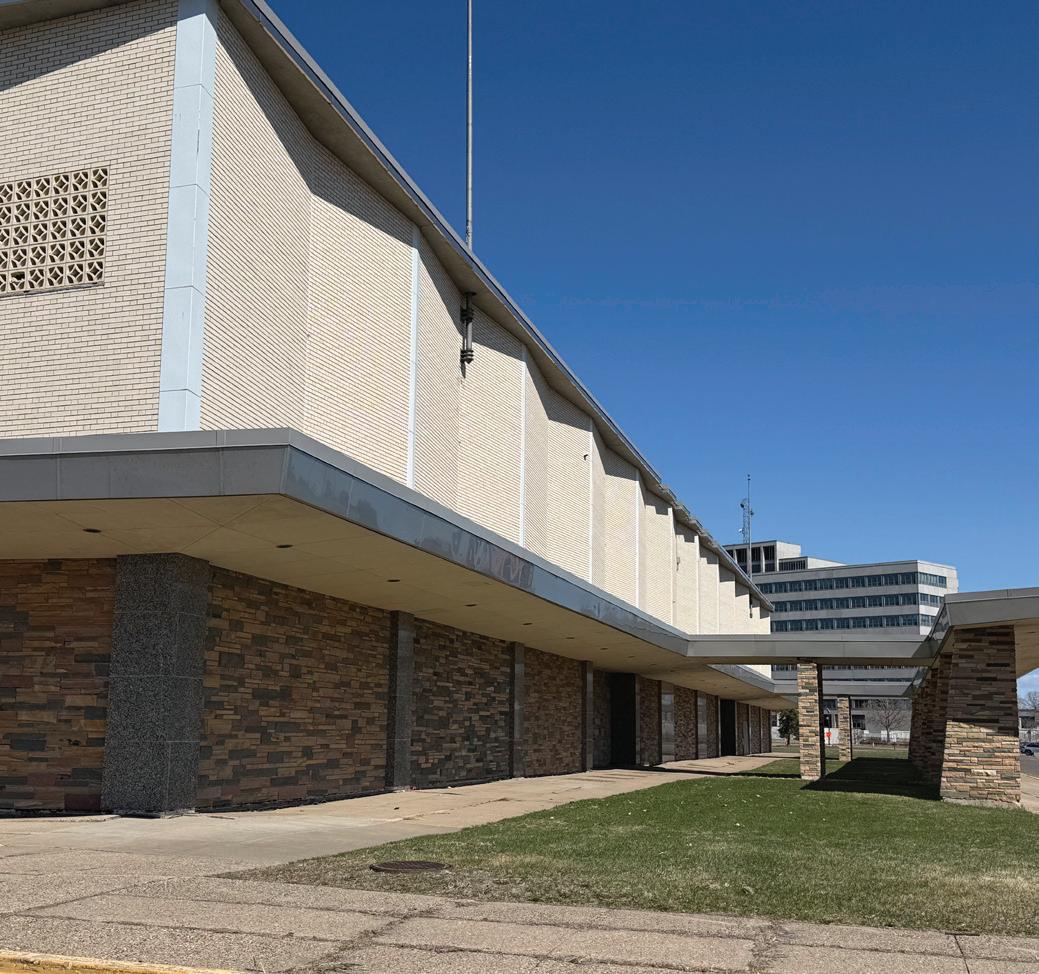
Former Sears building in St. Paul, located at 425 Rice St.
ment is about preserving and forwarding the legacy of the historically Black neighborhood displaced by Interstate 94. “We are going to make something happen,” she said.
■ See RONDO on page 5

by
Located in Midtown Minneapolis, this mural honors the endangered Monarch Butterfly and the enduring spirit of migration. For many immigrant communities in the Twin Cities, the butterfly has become a powerful symbol of transition, and a reminder that movement and resilience are woven into the fabric of identity.
■ See MURALS on page 5
Sister Spokesman plants seeds of community at spring gathering
By Damenica Ellis Staff Writer
omen filled Sister Spokesman’s soldout April event Saturday, April 4, for “The Earth Bounces Back, and So Do I.” The event featured raffles, food and a hands-on planting activity at Bachman’s floral shop in Minneapolis to kick off spring.
After a warm welcome from Tracey Williams-Dillard, CEO and publisher of the Minnesota Spokesman-Recorder, singer Jamela Pettiford, a recent MSR “On the Radar” feature, performed.
Before singing, Pettiford shared a personal story about a plant that has followed her family for generations. Growing up, her family kept a plant on a windowsill, grown from a cutting her grandmother had gifted her father. When her parents moved, her father
passed it on to her. It is now three large plants ready to be divided into six pots, a living metaphor, she said, for resilience and growth.
“The resilience is in the room and even if sometimes the people around you forget to water you, they overlook you, are unkind to you, you can still grow when you get put into the right hands,” Pet-
tiford said. “You will multiply beyond the pot’s capability to hold.”
Kemi Okoya, attending a Sister Spokesman event for the first time, said the afternoon was refreshing.
“I liked the idea that they’re bringing women together as a community,” she said. Attendees moved to the
■ See SS on page 5

Back to the barbershop: A call for Black male mentors
By Jasmine McBride Editor
ore than 40 men gathered at Urban Touch
Barbershop in South Minneapolis on March 29 for an event that was equal parts community reunion and call to action. The 2026 Barbershop Final Four Men’s Wellness and Mentor Recruitment Kick-Off, hosted by Twin Cities CARES Mentoring Movement and Bolder Options, brought together four generations of Black men, young boys, fathers, uncles, grandfathers and faith leaders in a space designed to feel familiar. “From the moment the brothers arrived, the atmosphere felt like stepping back into the heart of the traditional barbershop,” said Darlene Bell, co-chair of Twin Cities CARES. “Real conversations unfolded naturally.”
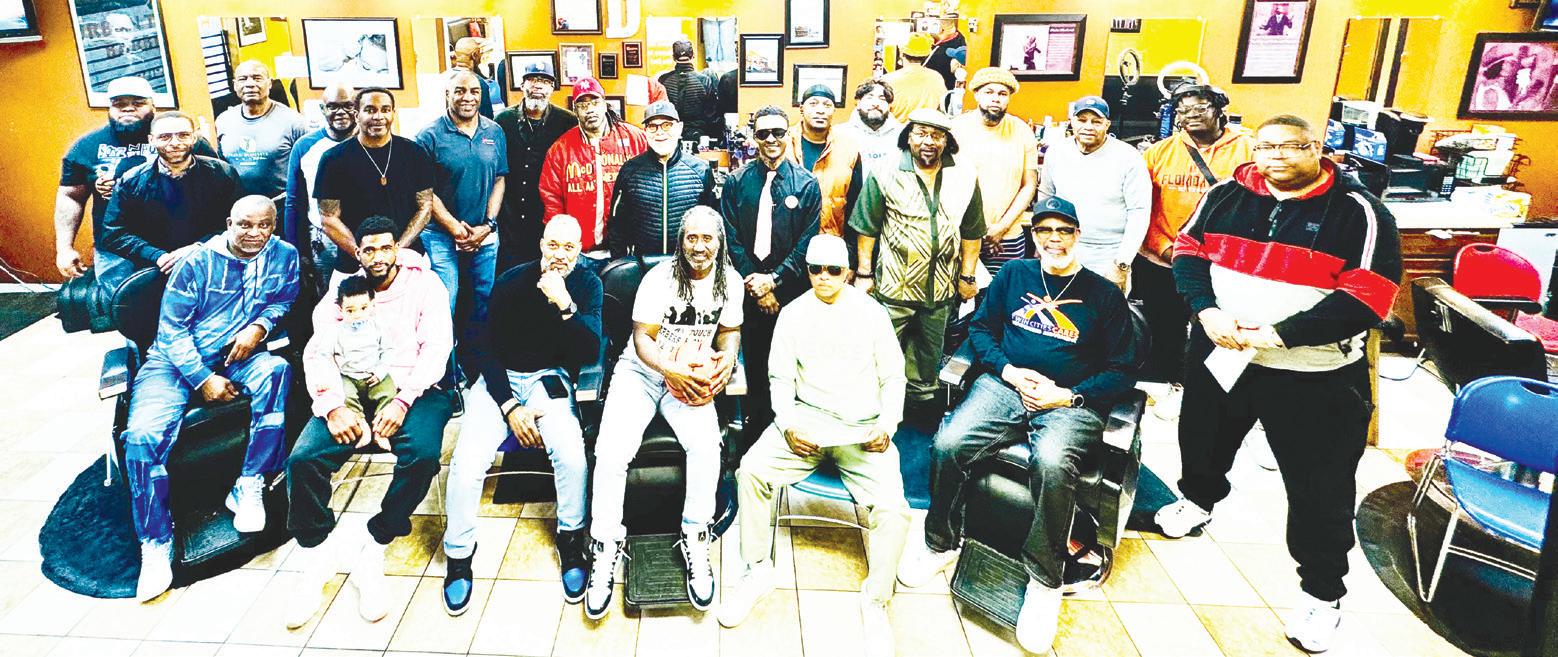
The barbershop setting was intentional. For Darrell Thompson, president and CEO of Bolder Options, the choice of venue spoke directly to the event’s purpose. “Barbershops have a sense
of comfort,” Thompson said. “There’s camaraderie, laughter… Sometimes it’s serious, sometimes it’s sports, sometimes it’s spiritual. That element is impactful.” The evening combined food,
storytelling and discussion about men’s wellness with a concrete goal: recruiting Black men to serve as mentors for Twin Cities youth. For Thompson, whose organization has served thousands of young people across Minneapolis, Rochester and St. Paul in its 33 years, the need is urgent.
“There are young men that need to see somebody that looks like them, that cares about them, that has walked in the same shoes,” Thompson said. “To go into a room and see 25 other men of color, that was impactful to all of us.” Curtis Bell, who co-leads Twin Cities CARES alongside his wife Darlene, said the barbershop setting helped men
lower their guard and address deeper issues before turning outward to mentor others.
“In order to go out and help the community, we have to deal with the things that men are struggling with,” Bell said.
“Like the analogy on the plane, put your own oxygen mask on before helping others. We need to take care of ourselves before we can take care of others, and while we’re doing so, we want them to know that we need them as mentors.” Bell, who grew up on the south side of Chicago surrounded by negative influences, said his personal experience shaped his commitment to the work. He credits mentors,
“Spring Creek Symphony” by Taylor Berman, 2024
at Cocoon House on University Avenue in St. Paul, this mural pays tribute
Monarch Butterfly Migration
Roger Peet and Barry Newman
Damenica Ellis/MSR
Photo by Darlene Bell
Photo courtesy of Emmanuel Duncan/MSR
Five candidates vie to succeed Moriarty as Hennepin County Attorney
By Clint Combs Contributing Writer
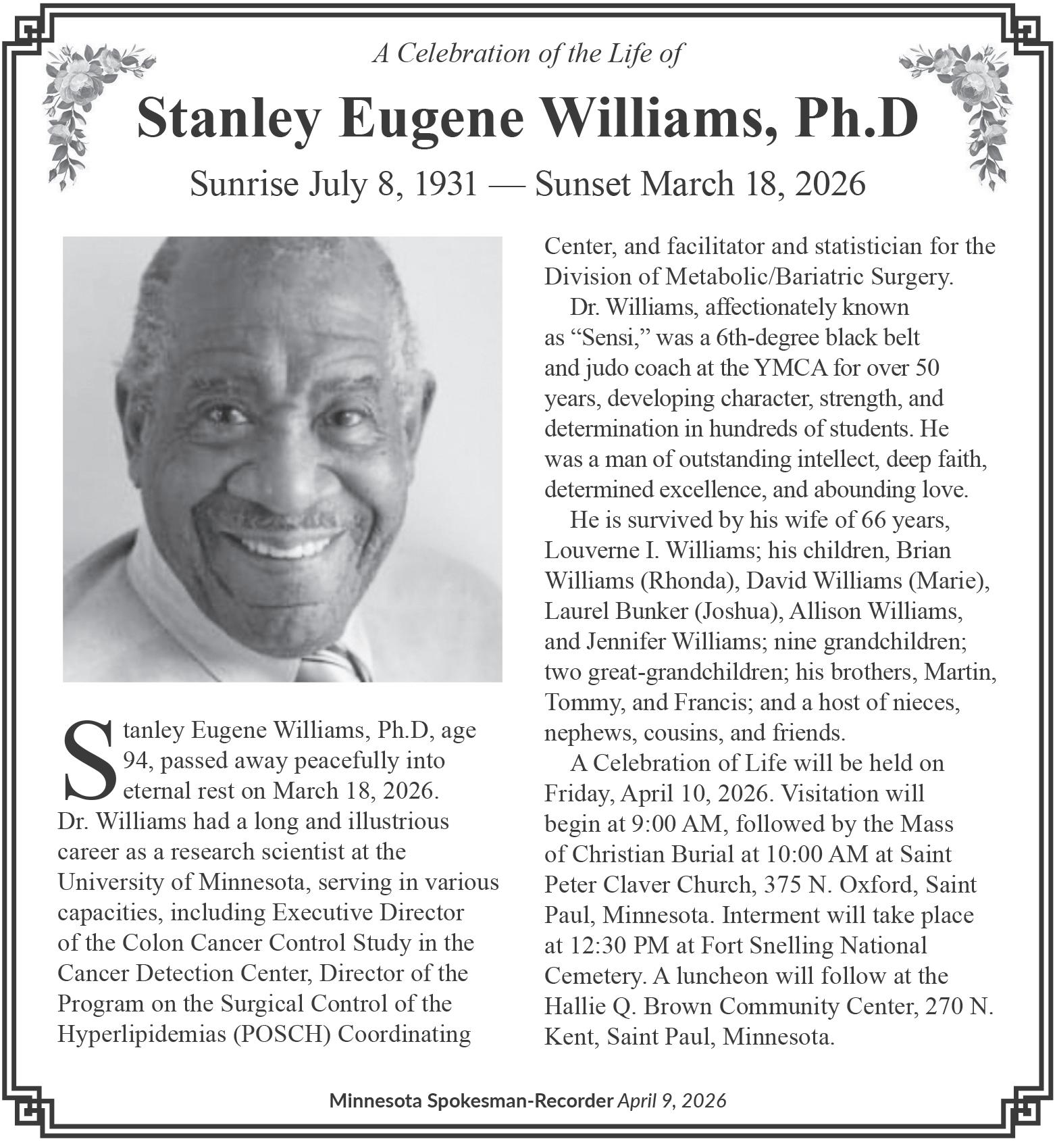
The race to succeed outgoing Hennepin County Attorney Mary Moriarty kicked off Tuesday night, March 31, at the Sabathani Community Center, where five candidates laid out how aggressively they would prosecute federal immigration agents and how they see their role in reforming the criminal legal system.
As a reform-minded prosecutor, Moriarty pushed back on mandatory minimums and clashed openly with Minneapolis Police Chief Brian O’Hara. The former public defender-turnedcounty attorney announced last August that she would not seek reelection. After the FBI froze Minnesota’s Bureau of Criminal Apprehension out of investigations into the ICE-related shooting deaths of Renee Good and Alex Pretti, Moriarty launched her own probe, opening investigations into 17 incidents involving immigration agents. Her departure has opened a race that has rapidly sorted candidates into distinct camps.

Anders Folk called for an independent, impartial criminal and civil investigation by the Hennepin County Attorney’s Office into actions by ICE agents, saying accountability must run through both criminal prosecution and civil recovery for damages the county may have suffered.
“I think the civil side of the county attorney’s office to play a role here is ensuring that to the extent there are money damages that the county has suffered as a result of this federal occupation, that the county is able to seek recovery for that… And so accountability for criminal action is job one,” Folk said. “Job two is the civil recovery.”
Folk served as acting U.S. attorney for the District of Minnesota from early 2021 until late 2021, stepping into the role after Trump-appointed U.S. Attorney Erica MacDonald resigned at President Joe Biden’s request.
Minneapolis Mayor Jacob Frey endorsed Folk in a statement, calling him the most practical candidate to prosecute federal agents.
“Minneapolis has been ground zero for attacks on the rule of law,” Frey said. “We need strong governing partners and bridge builders who know how to lead. Anders Folk is uniquely qualified to do exactly that.”
Not everyone shares that assessment. The Revolving Door Project criticized Folk shortly after his appointment to Minnesota’s U.S. Attorney’s Office, arguing that his ties to corporate law and his appointment by a Trump-era U.S. attorney made him ill-suited to lead on racial justice reform. The group called for U.S. attorney offices to prioritize public defense lawyers instead. State Rep. Cederick Frazier warned that failing to prosecute federal agents could trigger unrest similar to what followed George Floyd’s murder.
“There was a press conference within the dead time of the U.S. attorney and Mike Freeman, and there was a comment made that we might not be able to permanently charge that officer, and it was that led to the violence in the streets,” Frazier said. Frazier authored the 2021 omnibus public safety bill, which
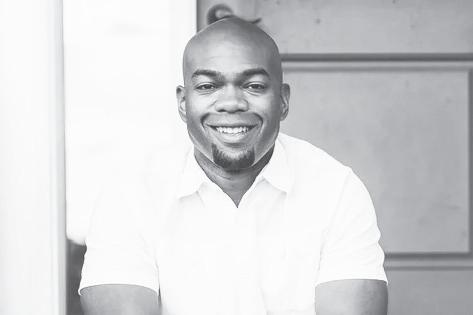
limited low-level, pretext-type traffic stops statewide and tightened use-of-force and no-knock warrant rules. While Hennepin and Ramsey counties have adopted policies declining most felony charges arising from non-public-safety stops, Frazier’s legislation restricts how often officers can make those stops in the first place. Attorney General Keith Ellison and Lt. Gov. Peggy Flanagan have endorsed Frazier.
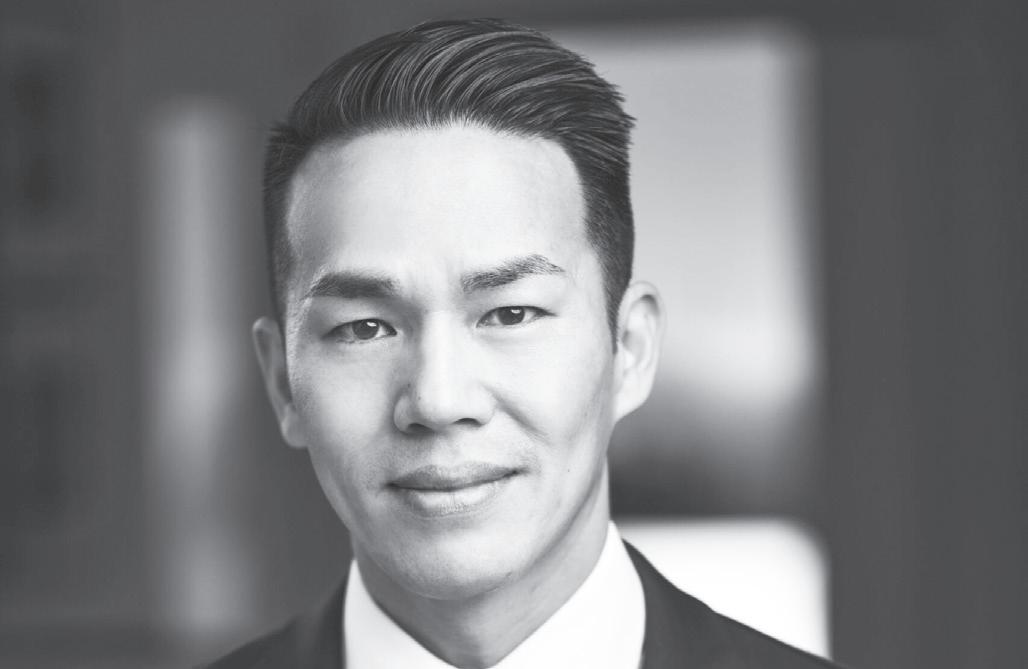
Hao Nguyen, endorsed by Hennepin County Sheriff Dawanna Witt and Ramsey County Attorney John Choi, described building a specialized prosecution team in Ramsey County to take on federal agents.
“There’s a whole host of things that the federal government did to us that are felonious: contact, kidnap, false imprisonment, assault, battery, everything else, not just the shootings and killings, and we gotta hold them accountable for that,” Nguyen said. “I got sworn into federal court a month ago because we anticipate that once we prosecute, they’re going to remove us to federal court.”

University of Minnesota law professor Francis Shen pushed back on the notion that prosecuting federal immigration agents is the office’s only challenge.
“Every moment spent prosecuting ICE is a moment not spent
dealing with the other 15,000 cases that were a problem before ICE showed up and the system that I think has been a problem for decades,” Shen said.
Shen also expressed support for prosecutorial transparency around charging decisions. “I really agree with Anders and support it for the county attorney to be upfront about those cases you don’t necessarily prosecute,” he said. “It means you recognize that these are very difficult cases, because they’re likely to move to federal court.”

Candidate Matt Pelikan took issue with the notion that the office lacks the resources to pursue misconduct cases against immigration agents.
“I have a simple question, where are the charges?” the 14year litigator said. “This should not be an academic exercise. You’re telling me there isn’t a single use-of-force case that can be brought to show that there are consequences? I refuse to believe it.”
Pelikan noted that Attorney General Ellison brought in special counsel to prosecute the murder of George Floyd, arguing the office could do the same here.
Moriarty, reflecting on her tenure, said she initially had a productive relationship with police chiefs across Hennepin County.
“They’ve got my cell phone number,” Moriarty said. “I met with them four times a month in small groups to get their input, to try to build policies with them.”
That relationship deteriorated after her office charged state trooper Ryan Londregan in the fatal shooting of Ricky Cobb.
“Unfortunately, when we charged the trooper, they refused to meet with me,” Moriarty said. “That was the end of that. And I would like nothing more than to work with them.”
That breakdown drew sharp words from candidates. Shen said the damage to those relationships is real and must be addressed.
“I’ve been talking to local police chiefs, the relationships have really soured with our current county attorney’s office,”
“When I’ve been talking to local police chiefs, the relationships have really soured with our current county attorney’s office,” Shen said. “That bridge has been broken.”
Pelikan said officers feel over-targeted, citing polling showing more than 90 percent of police believe they could be criminally charged for doing their jobs.
“That’s unacceptable,” he said, “and that leaves all of us less safe.”
The nonpartisan primary is Aug. 11, with the top two finishers advancing to the Nov. 3 general election.
Clint Combs welcomes reader responses at combs0284@gmail.com.
Cederick Frazier
Anders Folk All photos are courtesy
Hao Nguyen
Francis Shen
Matt Pelikan
Health
Food deserts persist, but local organizations are fighting back
By Anya Armentrout
Contributing Writer
Nearly 28 percent of the United States was considered a food desert in 2019, according to the U.S. Department of Agriculture. In metropolitan areas shaped by redlining and poverty, the disparities are even more pronounced, and the Twin Cities are no exception.
Wilder Research ranked Minnesota as the seventhworst state in the country for grocery access. A study by The Food Trust identified 900,000 Minnesotans as living in a food desert, with nearly onefourth of them children.
The USDA defines food deserts as areas with high poverty located more than a half-mile from a grocery store. Living in a food desert is associated with lower life expectancy and higher rates of obesity, diabetes and heart disease. Limited access to fresh produce disproportionately affects people from racial and ethnic minority backgrounds and those with low incomes.
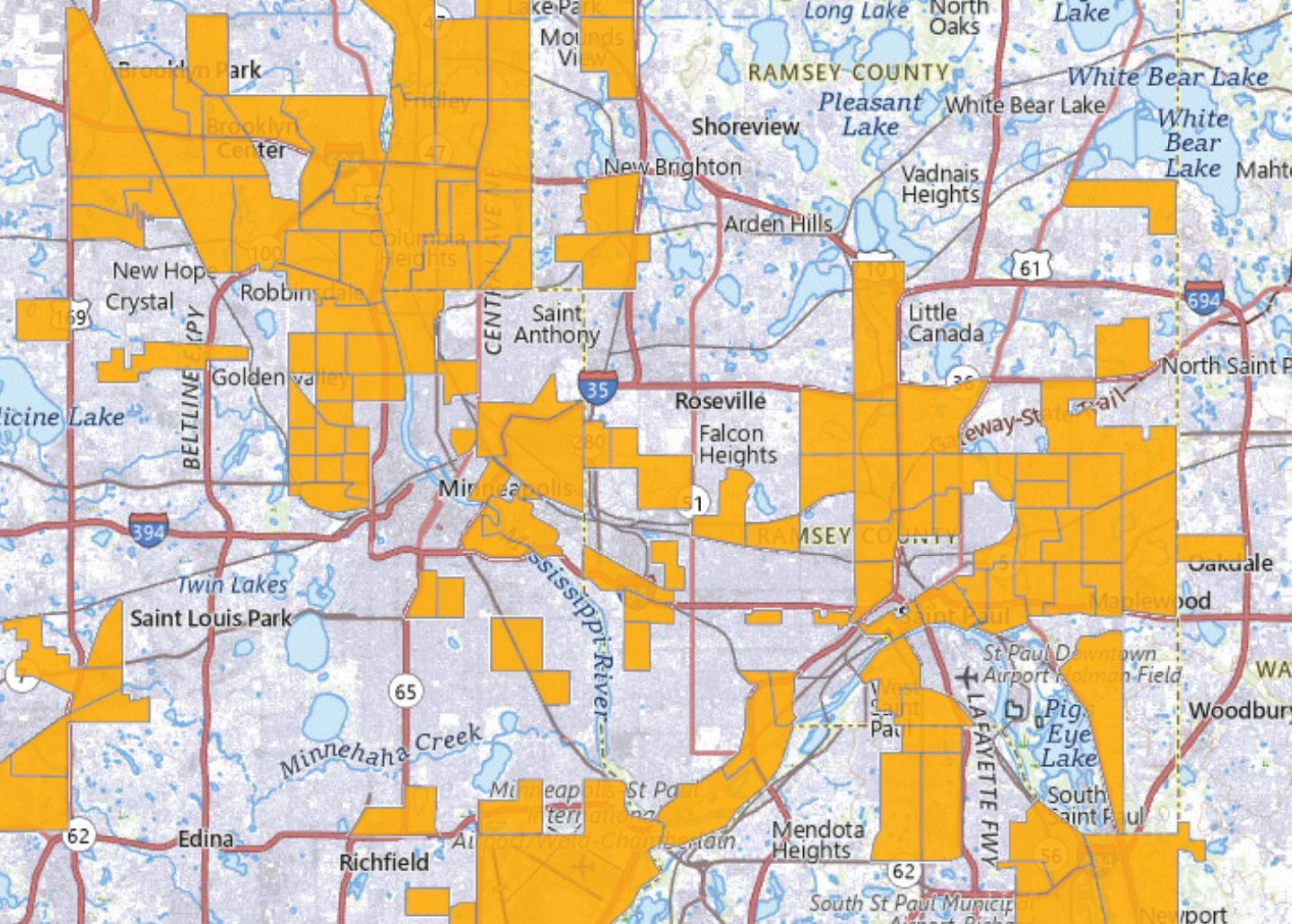
In the Twin Cities, food deserts include parts of northwest and northeast Minneapolis and North St. Paul, areas that closely align with historically redlined neighborhoods. Redlining, the discriminatory banking practice of devaluing predominantly non-white areas, prevented generations of residents from building wealth. Today, many of those same neighborhoods have higher percentages of residents on SNAP benefits and lower rates
of car ownership. Without a vehicle, traveling multiple miles to a grocery store is often unfeasible. When residents do find food nearby, it is frequently marked up at corner stores and convenience stores. Minneapolis responded by implementing a “staple food ordinance” requiring licensed grocers to carry certain products, including dairy and dairy alternatives, proteins, fruits and vegetables, whole grains and legumes. The policy was the first of its kind in the United States. However, a National Institutes of Health review found low compliance among stores and little change in customer purchasing practices.
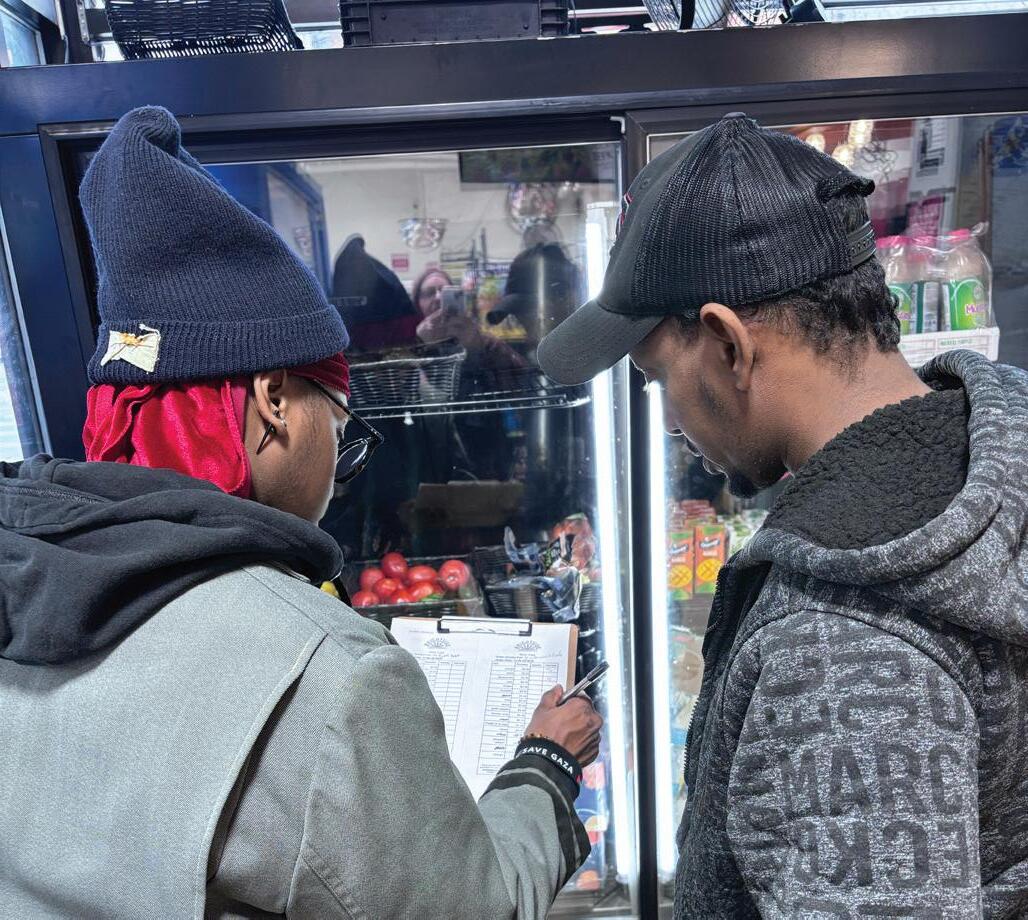
Small stores face structural barriers that make compliance difficult. Purchasing produce at wholesale prices is often out of reach, forcing owners to buy already marked-up goods from larger grocery stores and resell them at a further premium. Many also lack the refrigeration capacity
to keep produce fresh, making packaged and processed foods a more practical, and profitable, option.
Brightside Produce is among the Twin Cities organizations working toward sustainable solutions. The nonprofit delivers produce to 50 corner stores across the metro, with no minimum
order requirement, allowing smaller stores to buy limited quantities at wholesale prices. A buyback program lets stores return unsold produce at the end of the week, eliminating financial risk.
“The goal with Brightside’s founding was to help corner stores have a feasible way of getting low-cost, high-quality fresh fruits and vegetables that they could sell in their stores,” said Justa Heinen-Kay, the organization’s co-director.
Brightside also runs a “Food as Medicine” program, partnering with five Minneapolis community health clinics to deliver produce directly to patients experiencing food insecurity alongside chronic diet-related conditions such as diabetes or heart disease, at no cost to recipients.
Early data from the program is encouraging: 74 percent of participants saw lower


blood pressure, 73 percent showed lower HbA1c levels, a key diabetes marker, and 89 percent reported feeling better able to manage their health.
The Twin Cities Mobile Market, a project of The Food Group, takes a different approach, sending a fully stocked mobile grocery store into neighborhoods without access to a full-service store.
The market serves nearly 10,000 customers. In 2019, 84 percent of surveyed customers reported eating more fruits and vegetables, and 89 percent said they had greater access to healthy food.
“Food justice is part of racial justice,” said Leah Porter, the project’s founder.
“Food
Some neighborhoods have also seen brick-and-mortar responses to the gap in ac-
cess. Colonial Market opened a North Minneapolis location after an Aldi closed there, and later expanded to south Minneapolis. North Market, a nonprofit grocery store in North Minneapolis, offers half-off produce every Wednesday. These smaller, missiondriven stores are increasingly filling voids left by national chains exiting low-income areas. A pattern Heinen-Kay says points to a larger systemic failure.
“If it’s left up to big businesses, it’s just not going to work,” she said. “Because if those stores aren’t profitable, they’re going to leave. It’s like the Aldi in North Minneapolis. It’s like the Lunds & Byerlys in downtown St. Paul. They weren’t making money, so they closed. Well, now whose problem is it? Because then there are whole communities that have nowhere to shop.”
Anya Armentrout is a freelance journalist, a student at Macalester College, and a contributing writer for the Minnesota Spokesman-Recorder.













































































Black Business SPOTLIGHT Design by Melo
By Lizzy Nyoike Contributing Writer
In an industry where representation is limited, Damaris Hollingsworth created an opportunity for herself that she struggled to find elsewhere.
As the founder and principal architect of Design by Melo, Hollingsworth leads a Twin Cities-based architecture and urban design practice spanning affordable housing, mixed-use developments and retail spaces.
Her work reaches across project types and scales, from small residential renovations to large, multi-million-dollar developments. She says her approach is rooted in serving community needs and creating spaces that reflect the people who use them.
Among her most notable completed projects is The Opportunity Crossing, a mixed-use affordable housing development that includes more than 100 family-sized units for residents earning below 50 percent of the Minneapolis area median income. The project marked a major milestone for her firm, its first affordable housing project and its largest to date.
“It was really something that
we are really proud of being a part of,” Hollingsworth said.
Another key project is the Zanewood Teen and Youth Center, referred to as The Wood, designed to provide young people with a dedicated space for programming and connection. While affordable housing has become a visible part of Hollingsworth’s portfolio, she said it was not initially the firm’s primary focus. The opportunities came as her work began to gain recognition.
The path to launching Design by Melo was not something Hollingsworth had originally envisioned. She entered the field with the goal of building a long-term career within an established architecture firm.
As she navigated the industry, she encountered barriers that made advancement difficult.
“I never wanted to be an entrepreneur. I was an architect,” she said.
As a Black woman and immigrant, she said opportunities for leadership and growth were limited and her voice was often overlooked in professional spaces. Over time, those experiences led her to rethink her path.
Rather than continuing to work within those limitations,
Twin Cities

Hollingsworth made the decision to create her own opportunities. A choice that led to the founding of her firm, where she could shape both the work and the environment around her.
“I decided to create the opportunity for myself that I did not find,” she said.
Today, Design by Melo operates with a small but im-

pactful team. Despite having just a handful of employees, the firm has taken on complex projects totaling tens of millions of dollars.
“We are tiny but mighty,” Hollingsworth said. That success, she noted, has been made possible through trust from community partners, nonprofit devel-
opers and local government, including the city of Brooklyn Park. Many of her firm’s clients are organizations focused on serving underserved populations, aligning closely with her mission.
Central to that mission is the idea of designing with community rather than imposing solutions from the outside.
“For communities like ours, communities that are underserved and overlooked, it’s important that we create with community, not for community,” Hollingsworth said.
That philosophy shapes how her firm approaches each project, ensuring that design decisions reflect the lived experiences of those who will ultimately use the spaces.
Beyond her work in architecture, Hollingsworth is preparing to share her personal journey through a forthcoming book. The book traces her path from growing up in inner-city São Paulo, Brazil, to becoming an architect in the United States. An experience she hopes will inspire others navigating similar challenges.
“It’s a book about my life story,” she said.
Seven years into building her firm, Hollingsworth and her team continue to expand their portfolio across the Twin Cities. As demand for community-focused design grows, Design by Melo will keep working on projects that center access and community. For more information, visit https://www.designbymelo. com/.
Lizzy Nyoike is a Hubbard School of Journalism & Mass Communication student and contributing writer for the Minnesota Spokesman-Recorder.

Affordable advertising packages are available for small to mediumsized businesses, corporations and non-profit organizations in print & online.


MURALS
Continued from page 1

Spanning 3,000 square feet across the exterior of La Mexicana Grocery at the corner of Lake Street and Bloomington Avenue in Minneapolis, this striking mural uses tiles, glass, and mirror to bring butterflies and a soaring eagle to life. The eagle carries a line from a Spanish poem: “Traveler, there is no path. A path is made by walking.” The materials shimmer and shift with the light, making the piece feel alive with movement.
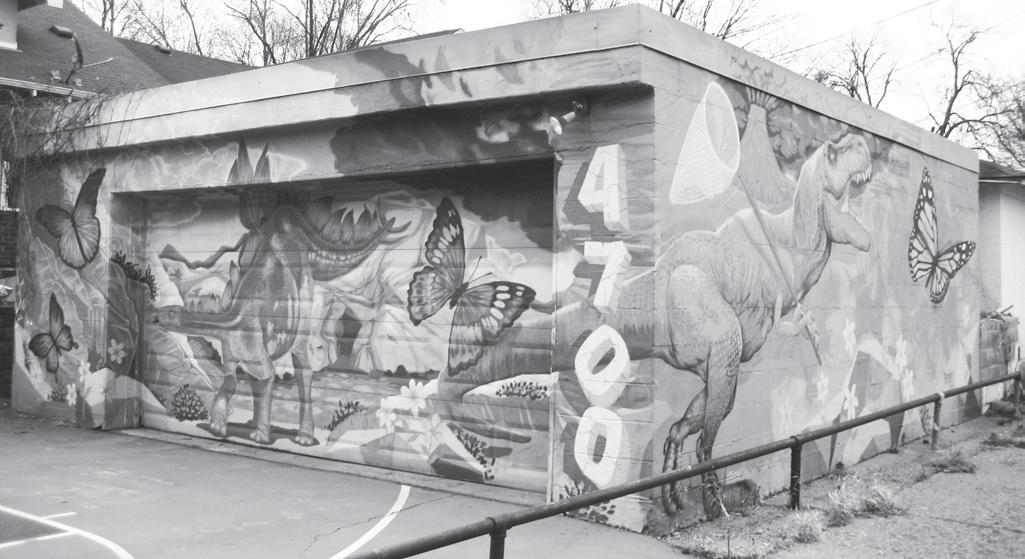
Out Catching Butterflies by Rock “Cyfione” Martinez
On the side of a building at 4700 1st Avenue in Southwest Minneapolis, this playful mural imagines dinosaurs on the hunt for butterflies. Their famously tiny arms, ill-suited for the task, require nets to even stand a chance. It’s a lighthearted piece that invites a double-take and a smile.

Mountain Murals by Erin Sayer
Stretching the full span of its wall, this monolithic piece captures the scale and grandeur of a mountain range. Located on East Lake
it serves as a tribute to the
and
of the neighboring Himalayan Restaurant. It is a visual anchor for a community far from home.

Together in Bloom by Kada Goalen
This expansive mural at MidCity Kitchen bursts with color, flowers, leaves, and berries rendered on a grand scale. Created as part of the Chroma Zone Mural and Art Festival, the piece was brought to life with the help of students from Avalon School, making it as much a community effort as a work of art.

Behind Flavors by Lynda Grafito
At 725 Raymond Avenue, this mural is a celebration of the pollinators that make our food possible. Vibrant and purposeful, it draws a direct line between the health of ecosystems and the flavors on our plates, and serves as a quiet but urgent reminder of what is at stake as pollinator populations continue to decline.
Armentrout is a freelance journalist, a student at Macalester College, and a contributing writer for the Minnesota Spokesman-Recorder.
The former Sears building being out of service for seven years is described as a languish, Griffin said, and the closing of a major retailer such as Sears had its impact on the community.
“People like my aunt who have been here and part of the community before Highway 94 and other elders in the community want to see something done with it,” she said.
This is something Griffin has had her eye on since becoming the president and CEO of the land trust nearly

five years ago. Even though the group’s focus is affordable housing and commercial development, she felt a responsibility to bring this area along with some other sites back to the community, she said.
The $10.8 million site is the Rondo Community Land Trust’s largest acquisition to date. Griffin said it is a critical step toward district wide development. The organization is working with funders,
grants, banks and donors.
“We’re proud of what [the acquisition] represents, this is not just about the property … This is about long term value creation, not just the transaction of the $10 million.”
Griffin said the redevelopment will return the tax base to the area, reduce property tax, create jobs, provide housing and lift the economy. The location of the site also plays a huge role in the development’s benefits. The organization hopes to bring to the Capitol area and create a functional bridge to downtown St. Paul while reaffirming the legacy and history of Rondo.
“That’s what we believe is going to continue to generate
the generational wealth that’s going to be needed,” Griffin said.
“We’re not going to rush to define all the specifics before our planning process is complete."
Currently in pre-development, the land trust is finalizing site plans and preparing the site, deciding between building remediation or de-
molition. They are also working closely with other developers and partners who align with the organization’s mission, Griffin said.
“We’re not going to rush to define all the specifics before our planning process is complete and right now we’re building something that really and truly reflects the community and the opportunity of the site.”
The Rondo Community Land Trust will be unveiling their community engagement series in the coming months for community input, conversation and feedback.
Damenica Ellis welcomes reader response at dellis@ spokesman-recorder.com.
greenhouse for an hourlong session led by Lea Nordos, owner of Banner Hill Design. Nordos introduced participants to cold-hardy plants suited to Minnesota’s unpredictable April weather,
including snapdragons, primroses, bulbs and pansies that can tolerate temperatures as low as 20 degrees. Though, she cautioned they must be acclimated gradually. She also offered tips on fertilizer, supporting pollinators and deterring deer and rabbits. Rain tapped the greenhouse roof as attendees lined up to choose their pots, fill them with soil and plant
can coach them on how to move forward in life.”
starter pansies. Women left with colorful new additions for their homes, yards and gardens.
Okoya said the practical information Nordos shared will go to good use.
“I think everybody can get something from it that is useful to them to do their planting at home,” she said.
Though she came for her love of flowers, Okoya said
she plans to return for future events.
“I’m going to start following,” she said. “It’s good to see the Black community come together, so I definitely will be interested in anything else that Sister Spokesman and MSR do.”
Damenica Ellis welcomes reader responses at dellis@ spokesman-recorder.com.
1
including his father-in-law, with helping him become the man and mentor he is today.
“In order to see a man, in order to be a man, you’ve got to see a man,” Bell said. “They need to see men that look like them succeeding, men that care about their emotional and academic support and
Thompson echoed that sentiment, adding that Black men with imperfect pasts should not count themselves out.
“Just be honest with yourself and be honest with us, we need you and we want you,” he said. “Some of the best mentors we’ve had are some that have had a little bit of a past. Not everyone lives a storybook life.”
Thompson said the longterm impact of mentorship keeps him going after more
than three decades in the work. A young man who had been on his caseload 27 years ago recently returned to the Bolder Options office.
“He remembered his mentor’s name. He remembered that we didn’t let him drink pop in the program. He said, ‘I still hear those people in my head,’” Thompson said. “When someone comes back from that long ago and talks about the impact, that re-inspires me.”
Darlene Bell’s own mentorship story spans more than
two decades. Her first mentee through Big Brothers Big Sisters of the Greater Twin Cities was 11 years old.
and dad, and her daughter is now our granddaughter.”
Twin Cities CARES, an affiliate of the National CARES
“In order to see a man, in order to be a man, you’ve got to see a man,”
“She is now 34 or 35, and she still sits with me at recruitment events,” Bell said. “She came into our life as a stranger, but she is definitely family. She calls me and Curtis mom
Mentoring Movement, founded by former Essence magazine editor-in-chief Susan L. Taylor following Hurricane Katrina in 2005, serves as a recruitment hub, connecting
trained mentors with organizations and schools across the metro. The organization was reestablished in the Twin Cities two years ago. The wellness and mentorship series is expected to continue on a quarterly basis. Those interested in becoming a mentor or learning more can visit twincitiescares.org or bolderoptions.org.
Jasmine McBride welcomes reader responses at jmcbride@ spokesman-recorder.com.
Continued from page 10
winner. She is also fully aware that volleyball coaches of color make up between 6.8 and 7.2 percent of college head and assistant coaches, according to NCAA racial demographic
head coach one day,” Nassar said. “This is a topic super close to my heart. Being a Black female in a space where a lot of coaches may not look like you. I do think there are a lot of Black females wanting to become coaches, wanting to become head coaches, and wanting that next step in their career.”
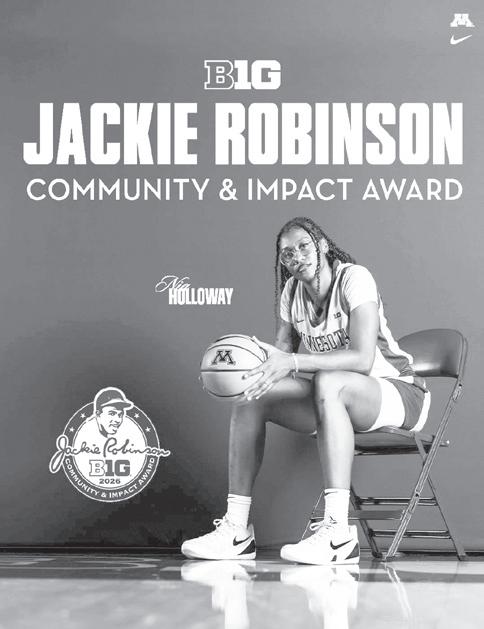
mya Holloway enters transfer portal after Sweet 16 run Minnesota forward Niamya Holloway last week announced her intention to enter the transfer portal and play her final year of eligibility elsewhere.
Holloway, an Eden Prairie native, was part of former Gophers coach Lindsay Whalen’s all-Minnesota recruiting class for the 2022-23 season, the highest-ranked class in
program history. That class helped lead Minnesota to the NCAA Sweet 16 this season.
Before the team’s firstround game against Green Bay, Holloway told the MSR, “I’m super excited to play in front of our hometown crowd.”
Through the family’s Team Holloway social media account, her family announced her departure: “Niamya understands her time has come
to an end. It’s always been her dream to be a Gopher. She has been a leader on and off the court. Excited for her to find her fit.” Holloway was named Minnesota’s Big Ten Jackie Robinson Community and Impact Award winner earlier this season.
Charles Hallman welcomes reader responses at challman@ spokesman-recorder.com.
Together We Grow by Greta McLain
Street,
identity
heritage
Anya
All photos by Anya Armentrout/MSR
Mikeya Griffin Courtesy
ARICA
Nia Holloway Courtesy of X
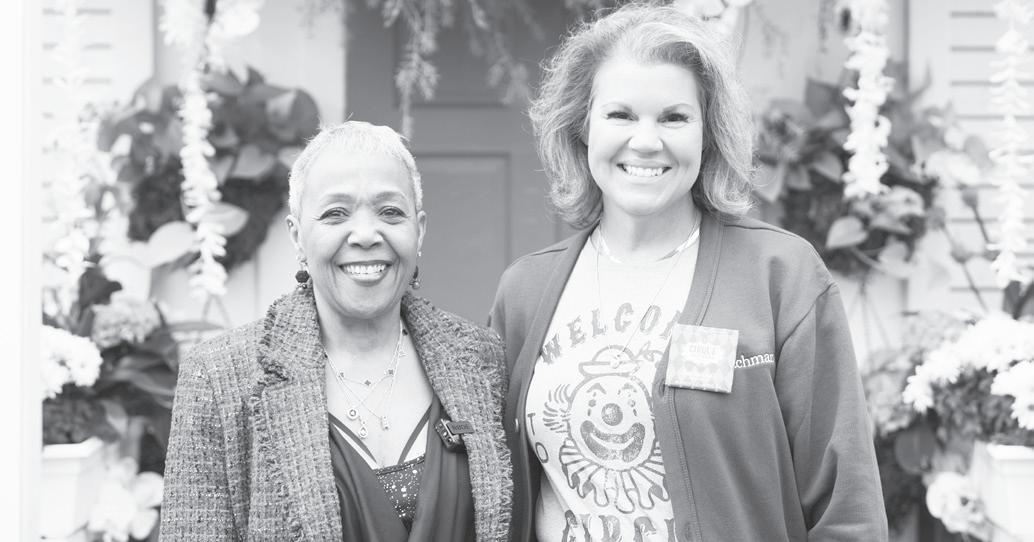
Tracey Williams-Dillard and Karen Bachman Thull Photo courtesy of Emmanuel Duncan/MSR
Arts

By Damenica Ellis Staff Writer
In elementary school, Tish Jones was introduced to playwriting. Her science teacher created an extracurricular activity for students to produce a play, and Jones remembers having to choose between a murder mystery piece and “Rap-punzel.”
“I’m a child of hip-hop,” Jones said. “I grew up listening to hip-hop, meeting hip-hop artists via my auntie and my mama and I obviously wanted to do ‘Rap-punzel,’but everybody else … wanted a banana gun, they was on the murder mystery tip.”
Jones made a deal with her teacher: she’d participate in the murder mystery with everyone else if she could take home a copy of “Rap-punzel.”
“That was the first time that I saw hip-hop outside of emceeing and dancing and graffiti,” Jones said. “I saw it enter into another world that spoke
Tish Jones: A poet’s dedication to hip-hop, poetry, and cultural preservation
and theater and production.”
In life and poetry, Jones said she draws inspiration from Black people, her ancestors, and children.
“I’m writing when I’m thinking, poetry happens in my mind,” she said.
Jones described a recent incident that is inspiring a new piece. For the first time in her life, she ran out of gas. As her friend arrived with help, a man sitting on a utility bucket, waiting for the bus, offered advice and assistance.
From that interaction, Jones saw beauty: a man showing kindness, beauty in Black struggle, and the common language connecting them. She asks herself, “why doesn’t he have a bus stop to sit at?”
Her work often explores social justice issues, and Jones said her poetry requires constant research and learning.
“I’m a nerd, I love language, I love writing, I love learning.”
For Jones, it was important to use art to educate,
went through St. Paul Public Schools. She knows the challenges children of color face and said culturally relevant teaching draws students in.
working with, the retention is higher,” she said.
Jones founded TruArtSpeaks in 2006. Based in St. Paul, the organization celebrates its 20th year cultivating
justice through spoken word and hip-hop culture.
TruArtSpeaks emphasizes Black cultural practices as tools for liberation, education, and preservation, Jones said.
“This work is important to me because it has kept me and I’ve seen this work keep others, right? I’ve seen it be a pathway to professionalism, to leadership, to collegiate and academic journeys, professional journeys.”
The things that literally keep us well and have raised us and reared us as Black people and remind us of how important it is to be together and get together and just be.”
Jones lives, thinks, and breathes poetry, she said.
“The work… This work for me is like an opportunity to celebrate everything that is Black… Genius, being, humor, wellness, lineage. All of the above.”
“This work for me is like an opportunity to celebrate everything that is Black… Genius, being, humor, wellness, lineage.”
Sunday dinner is one of TruArtSpeaks’ most impactful projects, Jones said. During the coronavirus pandemic, the organization hosted spaces for people to gather and distributed paid-for meals.
Learn more at tishjonespoet.com and truartspeaks.org.
If you’d like to nominate someone to be featured the Minnesota Spokesman-Recorder’s “On the Radar,” visit spokesman-recorder.com/onthe-radar-nominations.
“If you can speak the cultur-

PEP
“Those culture-keeping initiatives that we’ve created keep us well, keep us in the tradition of Black cultural practices, keep us in our ways.

Damenica Ellis welcomes reader responses at dellis@ spokesman-recorder.com.
EXAMS. BIRTH
GENDER AFFIRMING CARE. VASECTOMY. FERTILITY CARE. TREATMENT. MENOPAUSE CARE. CANCER SCREENINGS. ABORTION CARE. & PREP. BREAST & CHEST EXAMS. BIRTH CONTROL. STI TESTING. PRIMARY GENDER AFFIRMING CARE. VASECTOMY. FERTILITY CARE. MENTAL HEALTH MENOPAUSE CARE. CANCER SCREENINGS. ABORTION CARE. HPV VACCINES. BREAST & CHEST EXAMS. BIRTH CONTROL. STI TESTING. PRIMARY CARE. GENDER CARE. VASECTOMY. FERTILITY CARE. MENTAL HEALTH TREATMENT. MENOPAUSE SCREENINGS. ABORTION CARE. HPV VACCINES. PEP & PREP. BREAST BIRTH CONTROL. STI TESTING. PRIMARY CARE. GENDER AFFIRMING CARE. FERTILITY CARE. MENTAL HEALTH TREATMENT. MENOPAUSE CARE. CANCER ABORTION CARE. HPV VACCINES. PEP & PREP. BREAST & CHEST EXAMS. TESTING. PRIMARY CARE. GENDER AFFIRMING CARE. VASECTOMY. FERTILITY HEALTH TREATMENT. MENOPAUSE CARE. CANCER SCREENINGS. ABORTION VACCINES. PEP & PREP. BREAST & CHEST EXAMS. BIRTH CONTROL. STI TESTING. GENDER AFFIRMING CARE. VASECTOMY. FERTILITY CARE. MENTAL MENOPAUSE CARE. CANCER SCREENINGS. ABORTION CARE. HPV VACCINES. BREAST & CHEST EXAMS. BIRTH CONTROL. STI TESTING. PRIMARY CARE. GENDER CARE. VASECTOMY. FERTILITY CARE. MENTAL HEALTH TREATMENT. MENOPAUSE SCREENINGS. ABORTION CARE. HPV VACCINES. PEP & PREP. BREAST BIRTH CONTROL. STI TESTING. PRIMARY CARE. GENDER AFFIRMING CARE. FERTILITY CARE. MENTAL HEALTH TREATMENT. MENOPAUSE CARE. CANCER ABORTION CARE. HPV VACCINES. PEP & PREP. BREAST & CHEST EXAMS. TESTING. PRIMARY CARE. GENDER AFFIRMING CARE. VASECTOMY. FERTILITY HEALTH TREATMENT. MENOPAUSE CARE. CANCER SCREENINGS. ABORTION VACCINES. PEP & PREP. BREAST & CHEST EXAMS. BIRTH CONTROL. STI TESTING. GENDER AFFIRMING CARE. VASECTOMY. FERTILITY CARE. MENTAL MENOPAUSE CARE. CANCER SCREENINGS. ABORTION CARE. HPV VACCINES. BREAST & CHEST EXAMS. BIRTH CONTROL.

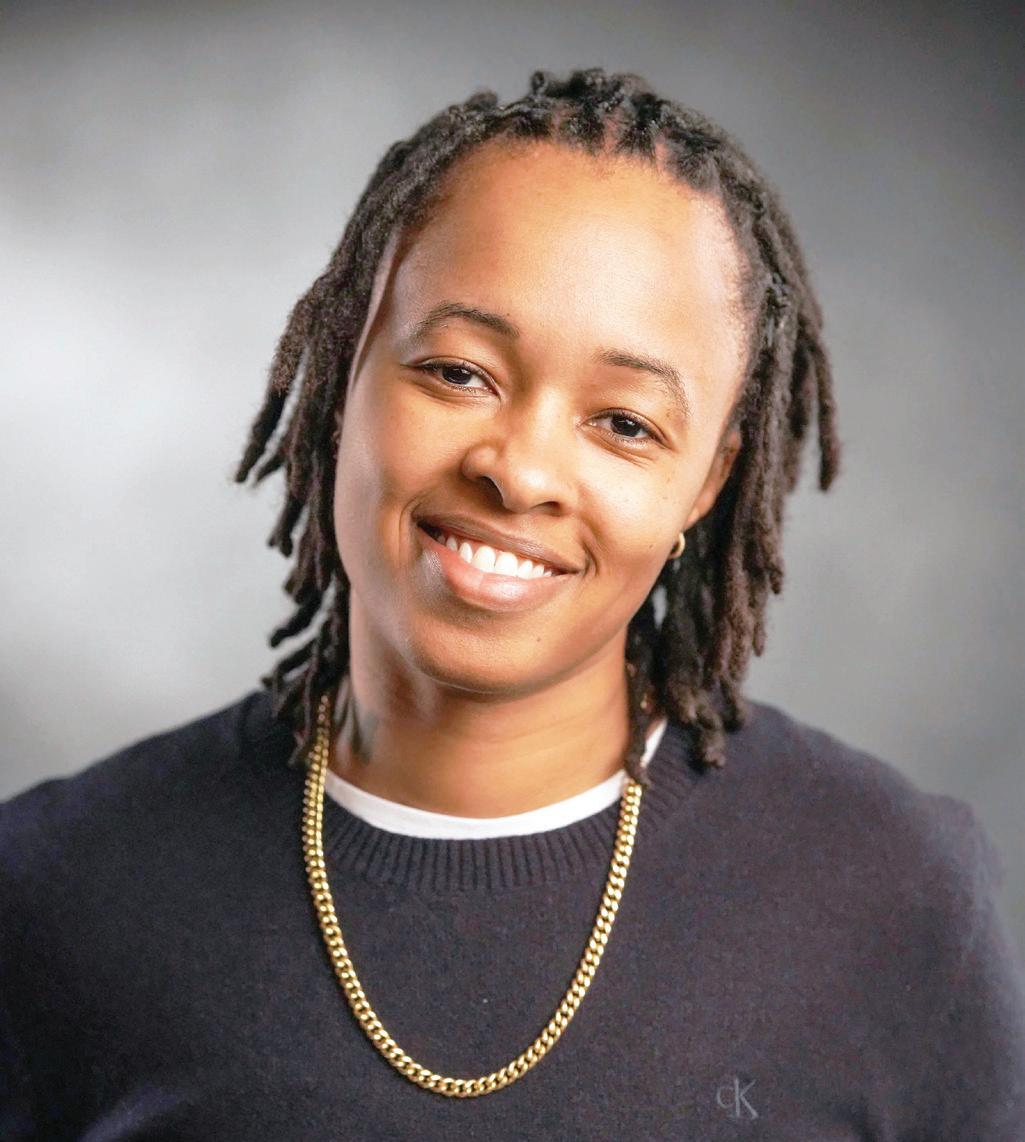
Tish Jones
DigieMade Photography
Education
St. Paul’s Benjamin E. Mays school to launch afrocentric program this fall
By Damenica Ellis Staff Writer
Benjamin E. Mays IB World School has announced a new Afrocentric program launching this fall. The program, transitioning the school away from its International Baccalaureate curriculum, will teach through Black history with the goal of instilling self-determination, excellence and fostering literacy.
Benjamin E. Mays was selected because 69% of its students are African American and because of its location in the historic Rondo neighborhood. The school held a community dinner on March 27 to share details about the program, where SPPS board members, the superintendent, community members and the new principal all spoke.
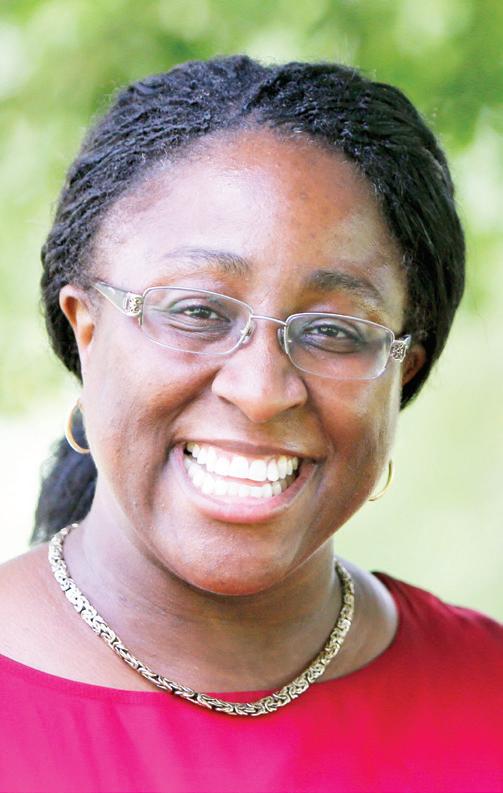
some people wouldn’t understand the need for it.
“There is power in the stories we tell our children about who they are and where they come from,” Stanley said. “I am talking about the type of power that changes how a child

Dr. Stanley, SPPS superintendent, recalled her mother attending a meeting advocating for an Afrocentric school in 1976. “And here we are now,” she said.
Jeanelle Foster, SPPS board of education director, spoke about the long effort members of St. Paul’s Black community have made toward a program like this one. She and others saw a need for teachers that reflect the students, something for African Americans, by African Americans.
“As a board member we were talking about the Spanish immersion programs, we were leading the way in dual Hmong and Hmong curriculum across the country and every time we tried to do something around Black … curriculum, staffing, all of that, the anti-Blackness would always appear,” Foster said. When the idea was brought to Stanley, she said “we have to be unapologetic about this,” while acknowledging that
walks into the room, the kind of power that makes a scholar look at their own reflection and recognize greatness staring at them. That’s what the Afrocentric program at Benjamin E. Mays is committed to.” Danielle Hughes, the new principal of Benjamin E. Mays, expressed her enthusiasm for the program, sharing her own experience in a school district that failed to understand her son. One that told her he would need help for the rest of his life and placed
him in special education. After leaving that district, his performance improved and he is now at grade level.
The Afrocentric program is “an opportunity for us to finally be highlighted and show up in greatness,” Hughes said. “I think unfortunately the way the educational system is set up right now, it doesn’t highlight our brilliance. This program gives us the opportunity to show up unapologetically ourselves and to show up in a way where we get to learn about our history, where we get to build our identity.”
The program will be community led, she said. “It’s a different approach to education but it has to be that way.”
minds so that we can be intentional about what we’re pouring into our children,” Jones said.
Teacher guides were crafted to provide insight and background, allowing teachers to implement lessons with “fidelity” and “intentionality.”
“This is a curriculum where we have hard conversations, there’s hard topics, but we also talk about the joy, Black joy, and that our timeline doesn’t start at enslavement,” Jones said.
Stanley called the curriculum a declaration. “A declaration that education through the lens of Black history is not supplemental. It is essential that our scholars know they are the descendants of great-
Chreese Jones, principal on special assignment, and Gevonee Ford, founder and executive director of the Network for the Development of Children of African Descent (NdCAD), are co-leads of the Afrocentric program committee on curriculum, assessment and professional development.
The committee designed a curriculum that teaches through Black history, not one that simply teaches Black history, Jones said. It is based on foundational principles including the Nguzo Saba and the Eight Principles of Black Historical Consciousness.
“The challenge in the work is not so much the children… The real challenge is going to be helping us adults reclaim our

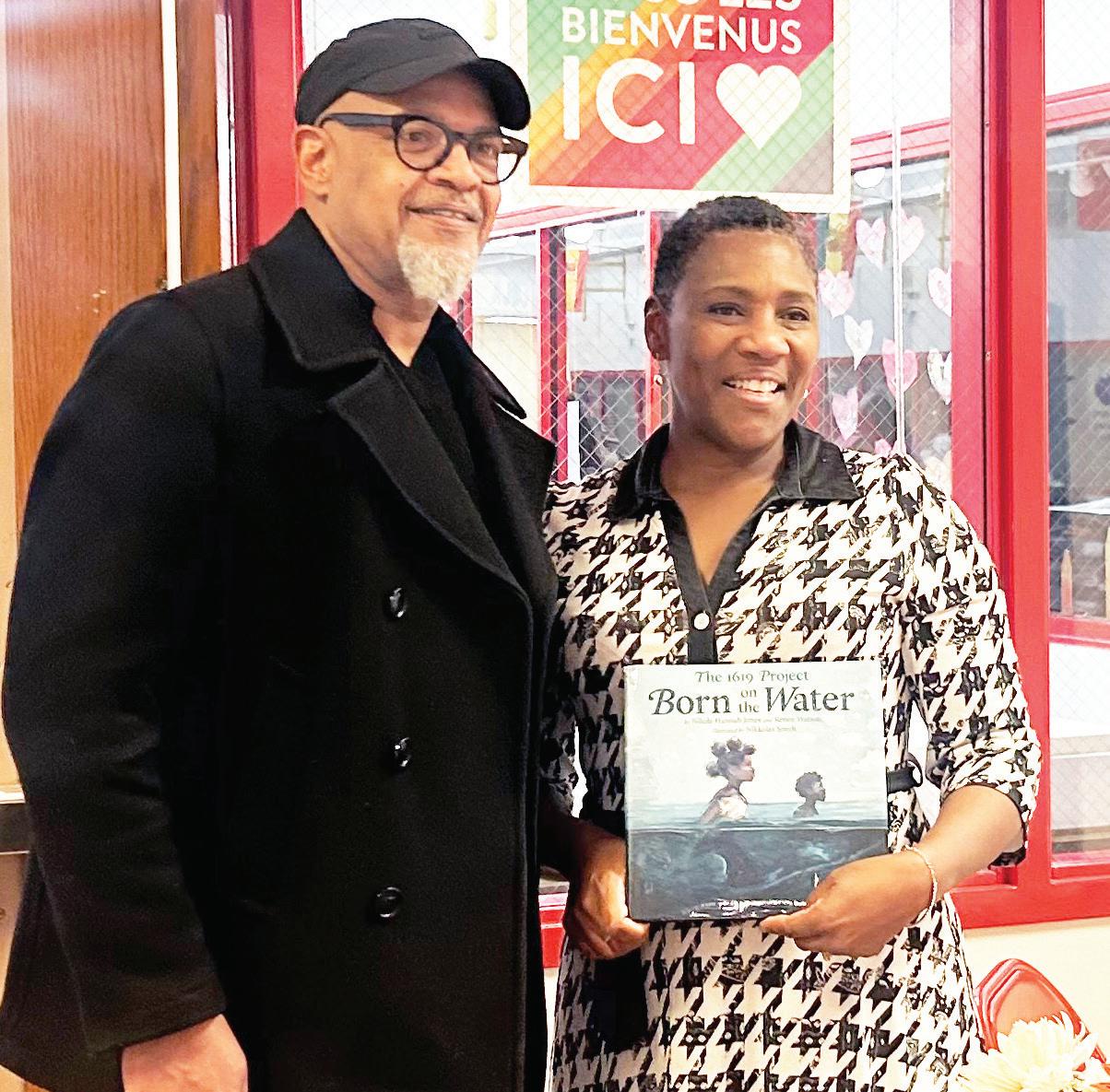
sure that they know it.”
“We are connecting our students to the full arc of the global African diaspora from the brilliance of ancient Africa to the heroes who lived and worked right here in St. Paul,” she continued. “This is a humanizing, complex education that asks young people to think critically about their own power, their own identity and their own place in history.”
The March 27 event also included the unveiling of the Toni Stone Atrium at what will soon be Benjamin E. Mays Afrocentric Magnet. Stone was the first woman to play professional baseball in the Negro American League, and her home once stood where the school now sits.

Research Center (BERC) at Teachers College of Columbia University, noted that African centered education is powerful for Black students and benefits all students.
BERC helped develop the first-ever PK-12 Black studies curriculum for New York City Public Schools.
“What we believe to be true is that this knowledge benefits everybody."
“The fact that we are standing in this space, in a building named for one of America’s great educators and civil rights leaders and in a foyer positioned where the very home of another great African American pioneer lived, that is not coincidence,” Stanley said. “I believe that is continuity. That is the ancestors saying your story matters, your ground is sacred and we will not be forgotten.”
Sonya Douglass, director of the Black Education
“Overall, African centered education is really powerful for Black students because it focuses on the role of culture in learning and ensuring that there is alignment between the cultural values of students and typically of their families and communities,” Douglass said.
“What we believe to be true is that this knowledge benefits everybody,” she added. “It’s just a different way of looking at the world.”
ness and it is our job to make
Damenica Ellis welcomes reader responses at dellis@ spokesman-recorder.com.


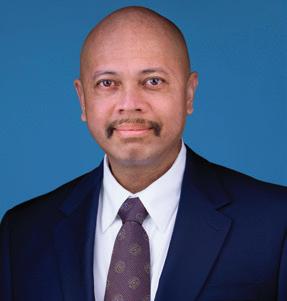

(L-R) Gevonee Ford and Chreese Jones are co-leads of the Afrocentric Program Committee on curriculum, assessment and professional development. Photo by Damenica Ellis
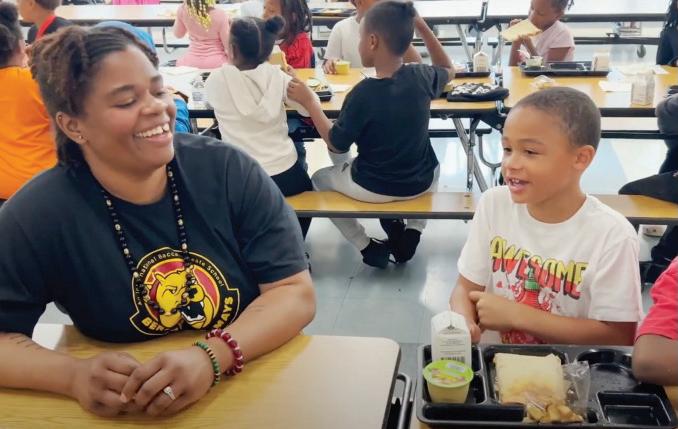
Danielle Hughes with students. Courtesy
Dr. Stacie Stanley with a student. Courtesy
Jeanelle Foster Courtesy
Sonya Douglass Courtesy
Opinion
DevSecOps Engineer: Plymouth, MN

IT Company seeks DevSecOps Engineer to integrate security practices into DevOps workflows, automate security checks, and ensure the safety of cloud infrastructure. Work closely with development and security teams to enhance the security posture of applications and systems. Build and Configure delivery environments by using CD/CI, Agile delivery methodologies. Create and assist in performing various types of tests. Perform troubleshooting. Generate customized reports. Offered Salary: $116,480.00 to $116,500.00/yr. Send resumes to: HRD, VITS Consulting Corp., 14264 23rd Ave N, Plymouth, MN 55447. Minnesota Spokesman-Recorder July 10, 2025
Black youth fed xenophobia instead of international solidarity become military pawns who risk their own lives and their people’s liberation.
By Mark P. Fancher
The U.S. military is no place for Black youth. The military’s sole purpose is to wage war to advance the interests of imperialism, then the military wages war on us. Our community has an intuitive appreciation for that fact. When George W. Bush launched a war against Iraq in 2003, not only did Black people not support that war, but they also made aggressive, affirmative efforts to dissuade Black youth from enlisting. Recruitment rates in the Black community plunged so dramatically that some credit this de facto boycott with bringing the war to an end.
war against Iran for 47 years.
Although they might also criticize the decision to deploy military personnel without Congressional approval, the real damage is done when they endorse the pretext for the attack.
sure, many millions of Iranians were eventually able to drive out the Shah in 1979 notwithstanding the full backing and support he received from the U.S. Consequently, anyone who suggests that the people of Iran need external assistance with changing their government either know nothing of this history, or they choose to ignore it.
By Delma Palmer
Traditional subsidized affordable housing development in the Twin Cities, like affordable housing nationwide, remains largely opaque to the general public, despite the fact that nearly half of all Twin Cities renters are rentburdened. For Black families in Minneapolis and St. Paul, that burden is even greater, compounding decades of exclusion from racial covenants to redlining to lack of access to mortgage credit. The housing market we have today was built on that foundation.
The current approach to affordable housing is costly, slow and bureaucratically complex, creating isolated pockets of low-income residents rather than thriving communities. The result is a familiar typology: recognizable affordable housing buildings that only a handful of organizations have the capacity to build, and that many neighborhoods resist or regard with wariness.
Multiple studies consistently demonstrate that mixed-income communities with robust social infrastructure: quality grocery stores, accessible childcare, well-
maintained parks and vibrant public spaces produce significantly better outcomes for all residents. These are essential foundations for community health and economic mobility, yet they are increasingly difficult to weave into housing financing structures, even though housing is the fundamental building block of neighborhoods. Access to these amenities can also expose long-term residents to the added stress of being priced out through climbing rents or property taxes. Unfortunately, as today’s housing environment makes clear, when rents stop climbing, construction stalls. The very thing that would make housing more affordable, falling rents, is the same thing that halts new construction in a market-driven environment. Current affordable financing structures prioritize unit counts, Area Median Income thresholds and compliance
“It

standards over holistic, highimpact, long-term neighborhood investment. Success is measured by affordability levels and production volume, while some stubborn realities go unaddressed: housing has become unaffordable well beyond targeted AMI thresholds, construction costs mean we cannot subsidize our way out of this crisis, and communities need and deserve a larger ecosystem of services of which housing is only the baseline. Our systems are sorely lacking when it comes to creating whole neighborhoods that support diverse income levels and meet comprehensive community needs.
The Twin Cities face a difficult moment, but also a distinctive opportunity. Federal pullback and investor uncertainty are creating real pressure on new housing across the metro, but that pressure can also be a catalyst. Minnesota has a chance to channel this moment into something different: strategic public investment in communities where social infrastructure already exists, and deliberate investment to build that infrastructure where it needs expansion. That means broadening the stakeholders, scope and creativity of public-private partnerships, leveraging high-impact locations for maximum resident benefit, and creating new anchors for sustained community development.
The goal is affordable housing that enhances neighborhood character: development that builds dynamic, mixedincome communities where residents can genuinely thrive, and that cultivates the social and economic ecosystems that make neighborhoods work for everyone. This is not an abstract policy debate. It is a question of whether our children will be able to afford to live in the cities where they grew up. It is a question of whether community institutions: the churches, the
But unless the flow of information about imperialist objectives and strategies is continuous, it is easy for people, particularly young people, to fall victim to the lies concocted to lure them into imperialism’s armed forces. It doesn’t help that bourgeois liberals affirm the propaganda. Too often we have heard these stooges repeat the mantra: “Iran has been at war with the U.S. for the last 47 years” when it is the U.S. that has been waging a
How different might the perspective of Sergeant Simmons have been if he had been provided with a full historical narrative? In other words, what if he had known that going back 47 years is not going back far enough, and that it is necessary to go back more than 70 years? That was when Mohammad Mosaddegh served as Iran’s prime minister. His efforts to limit and regulate western oil companies’ access to Iranian oil earned his overthrow by the CIA and his replacement by Mohammad Reza Pahlavi, who was widely known as the Shah of Iran. The Shah’s reign was a nightmare. Many thousands were brutalized, jailed and killed by SAVAK, his thug force. Through relentless organizing and pres-
But of even greater significance is the fact that after the Shah was toppled, and Iranians occupied the U.S. Embassy and held embassy personnel hostage, they made the wonderful, principled decision to release their Black captives and to also acknowledge the oppression Black people experience in America. We can only hope that Black youth with integrity who are presented with this information will decline military enlistment. Many will, but sadly, the African sojourn in America has exposed our community to spiritual pathogens that have found breaches in our armor of decency, and the infection can potentially distort youthful perspectives.
This piece originally appeared in the Black Agenda Report. It has been cut for length. For the full commentary, visit https://www. blackagendareport.com/whenblack-people-are-xenophobicthey-risk-black-deaths-iran.
By Janice Robinson-Celeste
War has a way of collapsing distance, turning something far away into something immediate and personal. Social media intensifies that effect, shrinking the world so that images, reactions and commentary reach us in real time. Among those serving in the Middle East are Black Americans, as there always have been, carrying the same risks and the same losses.
At the same time, a different kind of message has been moving just as quickly. A viral claim circulating online suggests that Iran has said they don’t want to hurt Black people. It spreads easily because it feels plausible, but there is no verified statement from the Iranian government or the Revolutionary Guard to support it. Even so, it did not come from nowhere.
During the 1979 Iran hostage crisis, Ayatollah Ruhollah Khomeini ordered the release of 13 hostages, including Black Americans and women, citing the oppression Black Americans faced in the United States. In 1984, Iran became the first country to issue a postage stamp honoring Malcolm X. Iranian student revo-
lutionaries in the U.S. and Europe frequently collaborated with the Black Panther Party, and after 1979, the new Iranian government invited radical Black activists to Tehran for anti-imperialist conferences.
During the 2020 protests following George Floyd’s murder, Iran’s Supreme Leader publicly criticized the treatment of Black Americans.
So while the current claim that Iran has a policy to spare Black people is a viral myth, the history of rhetorical solidarity is real. For many Black Americans, that history does not land as a question of foreign policy. It lands closer to a basic human need: safety.
Black Americans are not disconnected from this war. We understand the cost, have served in the military and are part of the many affected families. We recognize the weight of what is happening. But we are also responding to something else: the reality that acknowledgment of Black safety, even when it appears in unexpected or imperfect ways, can feel rare. That is not an endorsement of any government. It is a reflection of experience, and that is what makes this moment worth paying attention to.
This opinion piece appeared first in Word in Black. It has been edited for style and length. For the original version, visit https:// wordinblack.com/2026/03/ rumor-iran-war-black-safety/.
For Black Americans, that need has rarely been guaranteed. From slavery to Jim Crow to present-day disparities in policing and health, safety has often been conditional. So when a narrative appears, even an unverified one, suggesting that Black lives might be protected, it registers differently. It speaks to something that remains inconsistently met. Sometimes that response shows up as humor. There is a word for it: “laughvival,” meaning the instinct to joke in order to lower the temperature of a frightening situation. It is not indifference. It is endurance, an instinct that traces back through centuries of Black experience in the United States and exists alongside what researchers describe as the chronic stress of racism.
Employment & Legals
STATE OF WISCONSIN CIRCUIT COURT COUNTY OF MILWAUKEE Case Type: ANNULMENT
612-827-4021
PUBLICATION SUMMONS DIVORCE - 40101 In Re: FILE NO. 26-FA-479 Cheng Thao and Xee Lee
FOR BILLING INQUIRIES & TEARSHEETS
From Ads Department/MN Spokesman-Recorder
Phone: 612-827-4021
FOR BILLING INQUIRIES & TEARSHEETS
Contract No. 26-163, or call 651-686-0477. Digital downloads are available at no charge, contact Northstar for hard copy pricing.
Bids must be accompanied by a Bid Bond, Non-Collusive Affidavit, a MN Responsible Contractor Compliance Affidavit, and EEO1 submittals.
PRE-BID CONFERENCE WILL BE HELD ON APRIL 21, 2026, at 11:00 AM in room 109 at the Mt. Airy Community Center, 91 Arch St, St. Paul, MN 55130. All questions arising from this pre-bid conference will be addressed by addendum if necessary.
The PHA reserves the right to reject any or all bids or to waive any informalities in the bidding.
AN EQUAL A LOR OPPORTUNITY AGENCY PROJECT TECHNICIAN (612) 475-4628
Minnesota Spokesman-Recorder April 9, 2026
VIEW
Continued from page 10
I continue growing, navigating my coaching journey, and preparing for future opportunities,” Caldwell said.
It’s not easy being a college coach these days, and definitely not as a Black coach. But McPhee-McCuin is a proven winner wherever she goes.
“As far as me being a Black coach, I don’t shy away from that. I’m proud of that,” McPhee-McCuin told reporters, including the MSR, after her team’s 65-63 loss to Minnesota in the NCAA second round in Minneapolis on March 22.
Before Ole Miss hired her as the school’s first Black female head women’s basketball
Continued from page 10
February. But she said what gives her the greatest joy is building lasting relationships.
“If a coach answers something other than the people, I would check them,” Perry said. “It’s the people. I love these young women. I’ve been in it long enough to where I’ve been to weddings and baby showers, and I just have so much joy when I see a former player and their family walk up and their kids are calling me ‘Auntie Tyra.’
coach in 2016, McPhee-McCuin guided a Jacksonville program that had won 20 or more games only twice in its history and built it into a perennial power in the Atlantic Sun Conference from 2013 to 2018. She also held assistant roles at Clemson, Pittsburgh, Portland, Arkansas-Pine Bluff and Frank Phillips College. She has served as Bahamas National Team head coach since 2013. McPhee-McCuin was born in Freeport, The Bahamas, and played college ball at Miami Dade Community College and the University of Rhode Island, where she earned a business management degree in 2004 and later a master’s in secondary school physical education from Arkansas-Pine Bluff in 2007.
“I’m in this space and now that I understand my platform,”
Since I don’t have my own kids, I absolutely love it. It’s awesome to see these young women as part of my extended family.”
The recent Illinois-Minnesota three-game series saw each team with only two Black players, a reminder that on-field diversity in the sport still has a long way to go.
“Some of it I think is economics,” Perry said. “You’d spend a lot of money in travel ball. The other part is that if I grew up here, it would be tough for me to choose an outdoor sport with the weather issues. I grew up in the South where we were
TO THE PERSON NAMED ABOVE AS RESPONDENT:
PLEASE CONTACT ACCOUNTING DEPT
You are notified that the petitioner named above has filed a Petition for annulment and in the alternative divorce or legal separation against you. You must respond with a written demand for a copy of the Petition within 40 days from the day after the first date of publication. The demand must be sent or delivered to the court at: 901 N. 9th St., Room # 104, Milwaukee, WI 53233 and to Cheng Thao at 8136 W. Casper St, Milwaukee, WI 53223.
BILLING@SPOKESMAN-RECORDER. COM
LEGAL DISPLAY
SIZE: 2 COL X 4 INCH
RATE: $18.10 PER COL. INCH
PLEASE CONTACT ACCOUNTING DEPT
BILLING@SPOKESMAN-RECORDER. COM
MARRIAGE DISSOLUTION
FLAT RATE: $320 THREE WEEK RUN
TOTAL: $144.80
It is recommended, but not required, that you have an attorney help or represent you.
If you do not demand a copy of the Petition within 40 days, the court may grant judgment against you for the award of money or other legal action requested in the Petition, and you may lose your right to object to anything that is or may be incorrect in the Petition.
Please proof, respond with email comfirmation to ads@spokesman-recorder.com
A judgment may be enforced as provided by law. A judgment awarding money may become a lien against any real estate you own now or in the future, and may also be enforced by garnishment or seizure of property
The MSR handles billing digitally. This means you will get e-tears and emailed invoices unless you specifically request a hard copy.
You are further notified that if the parties to this action have minor children, violation of §948.31, Wis. Stats., (Interference with custody by parent or others) is punishable by fines and/or imprisonment: If you and the petitioner have minor children, documents setting forth the percentage standard for child support established by the department under §49.22(9), Wis. Stats., and the factors that a court may consider for modification of that standard under §767.511(1m), Wis. Stats., are available upon your request from the Clerk of Court.
Please proof, respond with email comfirma tion to ads@spokesman-recorder.com
The MSR handles billing digitally. This means you will get e-tears and emailed invoices unless you specifically request a hard copy.
From Ads Department/MN Spokesman-Recorder Phone: 612-827-4021
You are notified of the availability of information from the Circuit Court Commissioner as set forth in §767.105, Wis. Stats.
§767.105 Information from Circuit Court Commissioner.
(2) Upon the request of a party to an action affecting the family, including a revision of judgment or order under sec.
767.59 or 767.451:
(a) The Circuit Court Commissioner shall, with or without charge, provide the party with written information on the following, as appropriate to the action commenced:
1. The procedure for obtaining a judgment or order in the action.
FOR BILLING INQUIRIES & TEARSHEETS PLEASE CONTACT ACCOUNTING DEPT BILLING@SPOKESMAN-RECORDER. COM
2. The major issues usually addressed in such an action.
3. Community resources and family court counseling services available to assist the parties.
SOFTWARE ENGINEER Plymouth,
LEGAL DISPLAY
4.The procedure for setting, modifying, and enforcing child support awards, or modifying and enforcing legal custody or physical placement judgments or orders.
SIZE: 2 COL X 4 INCH RATE: $18.10 PER COL. INCH TOTAL: $144.80
(b) The Circuit Court Commissioner shall provide a party, for inspection or purchase, with a copy of the statutory provisions in this chapter generally pertinent to the action.
If you require reasonable accommodations due to a disability to participate in the court process, please call prior to the scheduled court date. Please note that the court does not provide transportation.
Please proof, respond with email comfirmation to ads@spokesman-recorder.com
/s/Chue Xiong Minnesota Spokesman-Recorder April 2, 9 & 16 2026
The MSR handles billing digitally. This means you will get e-tears and emailed invoices unless you specifically request a hard copy.
she said, “I know it’s important to use it for things that will help move the sport ahead.”
“Dawn [Staley] has been at South Carolina [for] 18 years.
I’ve only been here eight. But I do understand that I have a platform, and we do have to fight.”
McPhee-McCuin has elevated the Ole Miss program into the national spotlight since her arrival in Oxford.
The team played in its fifth straight NCAA tournament, and she is widely regarded as one of the most accomplished coaches in the country.
“I know what Pat [Summitt] and Vivian Stringer and Geno [Auriemma], and Dawn and people have done for me,” she said.
FINALLY…
An annual reminder: Cheyney State was the first
playing outside and it was sunny.”
Temperatures that day were in the 30s and 40s.
“I think regionally it’s tough, but some things have changed because there are more indoor facilities,” she said. “Now softball is a fullride sport… You can have up to 25 full scholarships.”
Finally, Perry is not the only softball coach in the family. Her sister, Brittany Williams, is the head softball coach at Southern University, an HBCU.
Charles Hallman welcomes reader response at challman@ spokesman-recorder.com.

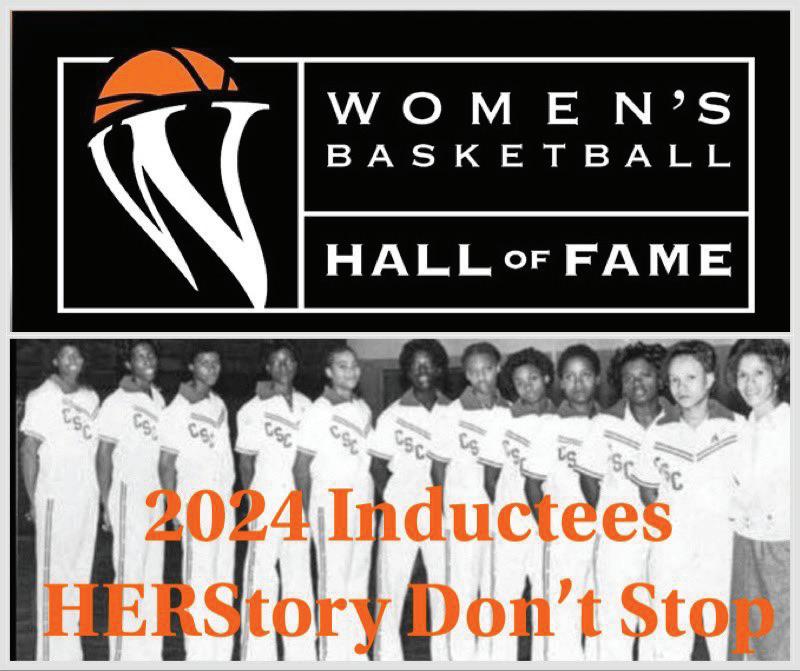
and remains the only HBCU to play for a Division I women’s basketball national title. The 1982 squad was inducted into the Women’s Basketball Hall of Fame in 2024.
“I reflect on our historic run in 1982,” said Deb Walker, a native Detroiter and one of nine All-Americans on that squad. “C. Vivian Stringer and our coaching staff provided all the tools that we needed to be successful. We were taught that it’s bigger than basketball. That day we came up short on the scoreboard, but we won in the game of life.”
“We will always be champions and second to none,” Walker concluded.
Charles Hallman welcomes reader responses at challman@ spokesman-recorder.com.
SYSTEMS ENGINEER Plymouth, MN
IT Company seeks Systems Engineer to design, develop & modify software systems using scientific analysis & mathematical models using JSON, XML, API, Rest, SOAP, JIRA, Agile Methodologies, Azure DevOps, Jenkins. Develop & implement scripts and programs to collect, manage and publish DEV and PROD metadata from data models. Create & perform various types of tests & troubleshooting using AWS IAM, Azure Entra, VNET, VMs. Define configuration specifications an d bu siness an alysis re quirements & perform quality assurance. Offered Salary: $106,579.00-$106,600.00/yr. + Health Insurance/Paid Vacation. Send resumes to: HRD, VITS Consulting Corp., 14264 23rd Ave N, Plymouth, MN 55447 or jobs-p@vitsconsulting.com. Minnesota Spokesman-Recorder April 9, 2026
Independent Sales Representative (Commission-Only) –Minnesota Spokesman-Recorder (MSR)
The Minnesota Spokesman-Recorder, Minnesota’s oldest Blackowned newspaper, is seeking a self-motivated Independent Sales Representative to drive advertising and sponsorship sales. This entrepreneurial, commission-only role is ideal for a results-driven professional who enjoys building relationships and securing new business. Responsibilities include prospecting and securing new clients, managing existing accounts, and selling print and digital advertising, podcast placements, event sponsorships, and corporate partnerships while maintaining records through CRM tools. Qualified candidates should have at least two years of proven sales experience, strong prospecting, negotiation, and presentation skills, and the ability to work independently in a performance-based environment. Media, advertising, or sponsorship sales experience is preferred. MSR offers a flexible schedule, remote work options, and unlimited earning potential while representing a respected, mission-driven publication. To apply, submit your resume and cover letter (PDF format) to sgenosky@spokesman-recorder.com.
No phone calls, please.
he MSR first spoke by phone with Tyra Perry, the Illinois head softball coach, during the pandemic shutdown of 2020. At the time, she was the Big Ten’s only Black softball head coach.
“I think we were starting to make our move,” Perry said. “I definitely had a group that wanted to win.”
“Outside of HBCUs, there’s very few of us, and we’re all in the Big Ten.”
native Louisiana. She played two seasons at Nicholls State, then followed her head coach to LSU, which was launching a new softball program. Perry twice led her team in batting, earned a spot on the SEC AllTournament team in her first season and was a two-time SEC Academic Honor Roll member.
She earned two degrees from LSU, a bachelor’s in kinesiology in 1997 and a master’s in sports administration in 1998.
Perry admitted she once considered a medical career.
“I actually was in nursing,” she recalled. “I was one class away
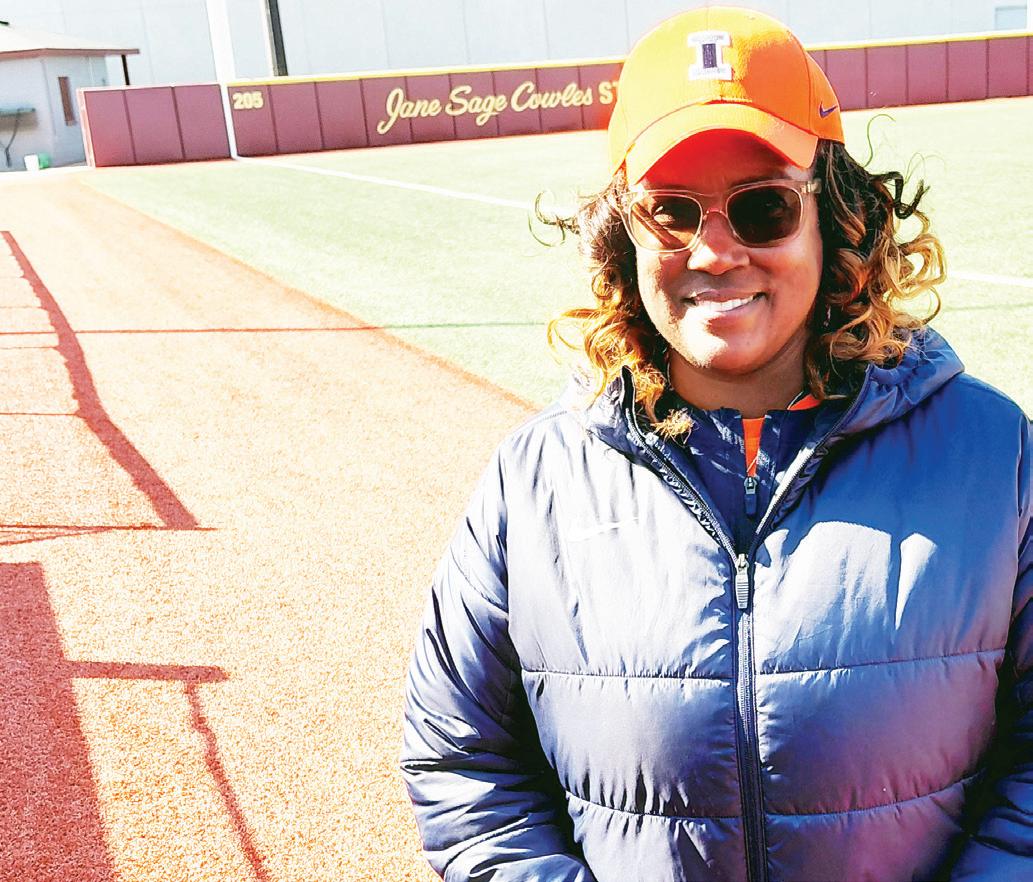
Since then, Sharonda McDonald-Kelley was hired at Michigan State. The two made history in April 2023 when their squads faced each other in the conference’s first-ever matchup between two Black head coaches. Along with McDonald-Kelley, Hawaiian native Clarisa Crowell is in her sixth season at Penn State; Kelly Inouye-Perez, who was hired at UCLA in 2007, is Asian; and Ohio State’s Kirin Kumar, hired in 2024, round out the Big Ten’s softball coaches of color.
“The Big Ten has the most Black and Brown coaches,” Perry said during the MSR’s first face-to-face interview with her, following the Illini’s 14-6 victory at Minnesota on March 28.
“Outside of HBCUs, there’s very few of us, and we’re all in the Big Ten,” she added.
Perry played high school and college softball in her

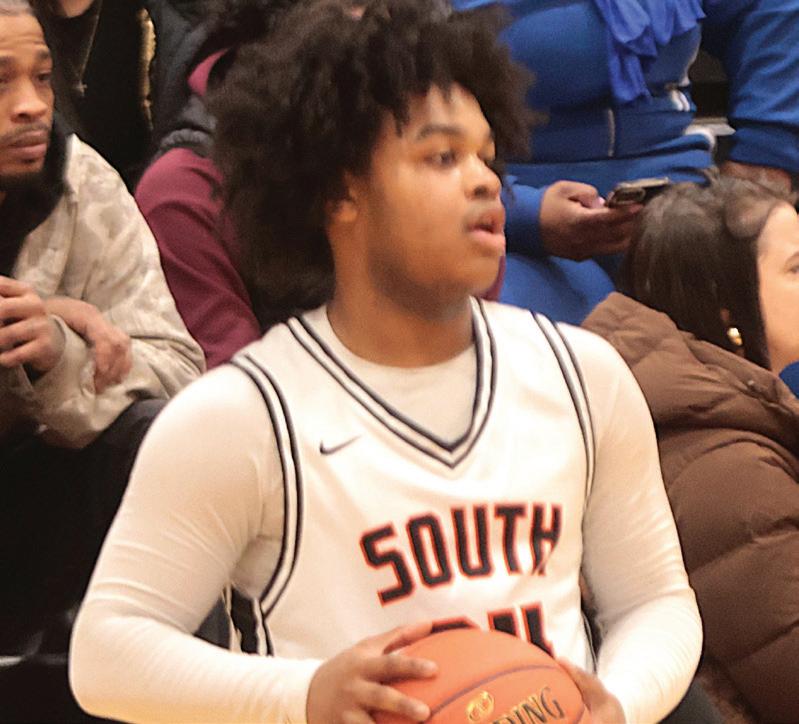
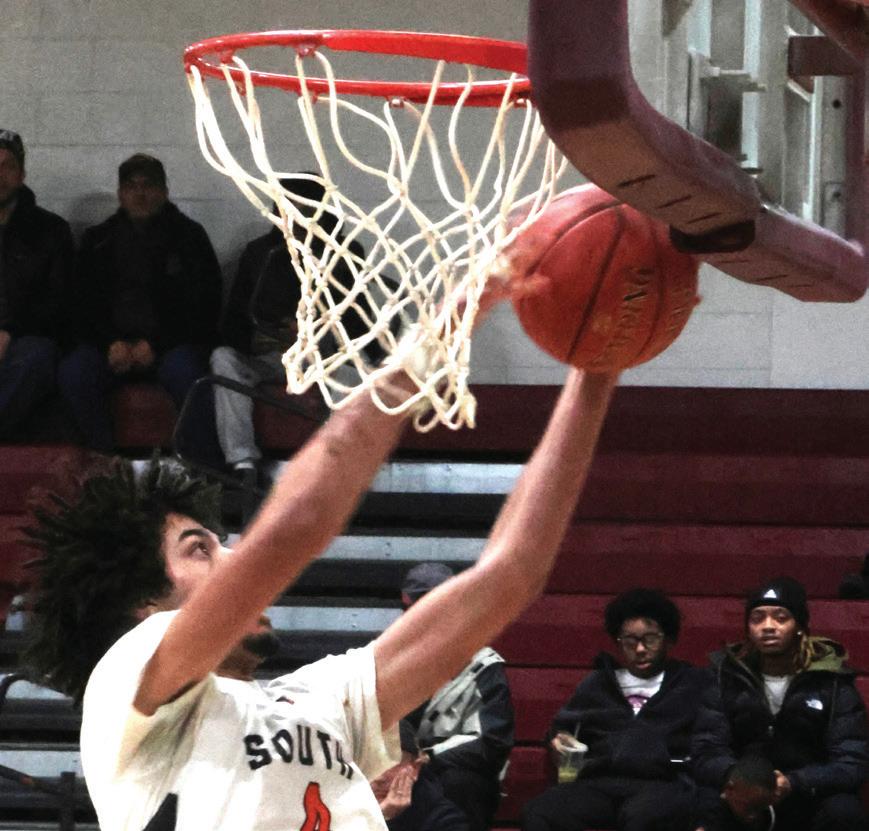
his week’s Significant six photos features images of players for the Minneapolis South boys basketball team, who, in case you missed it, made their second Class 3A state tournament appearance in three years. The Tigers, co-city champs, Twin Cities champs, and Class 3A Section 3 champs, had a season that no one saw coming. Behind the outstanding play of Jumair Wright, Ramadan Ibrahim, Ridwan Ibrahim, Chad Robertson, De’Amontre Scott, Jake Dixon, and Laviance Gales, South made it to the consolation round. Their season ended after a 6966 loss to Mankato East. They lost 90-56 in the first round to eventual champion Totino-Grace. Not a bad season for the Tigers and head coach Joe Hyser
Dr. Mitchell Palmer McDonald welcomes reader comments to mcdeezy05@gmail.com.
Sports

Black women coaches lead on and off the court at Final Four Summit
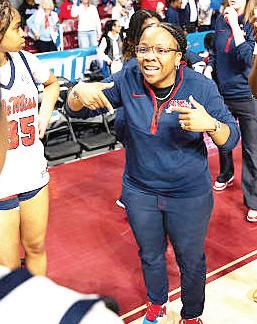
he Black Coaches Association held its Final Four Sports Summit in Phoenix last week. Prior to the summit, the BCA released a report titled “From the NFL to College Campuses, Black Women Coaches Lead at Every Level,” which recognizes a lineage of Black women who have shaped coaching through discipline, expertise and sustained performance.
The report states their work “establishes a foundation that continues to influence how the game is taught, played
and led.”
The MSR this week features Tyra Perry and Yolett McPheeMcCuin, who are among 42 active coaches the BCA listed in honor of Women’s History Month.
from completing all my prereqs at Nicholls State.” When her head coach asked her to transfer, Perry initially resisted. “I wanted to finish up and go to nursing school. She ended up talking to me about transferring, and LSU was 30 minutes away from home. I just decided to change, kinesiology took all of my credits. I ended up loving it, and my focus went on coaching.”
Perry’s coaching career began at Birmingham Southern from 2001 to 2007, where she helped start the school’s softball program, followed by stints at Western Kentucky from 2008 to 2013, Ball State from 2016 to 2018, and Illinois since 2018, now in her seventh season. She has been a head coach at every stop.
This season Perry will reach 300 wins at Illinois. Earlier this year she notched her 700th career win over Providence in
■ See SOE on page 9
By Charles Hallman
of sport.
By Charles Hallman Sports Columnist
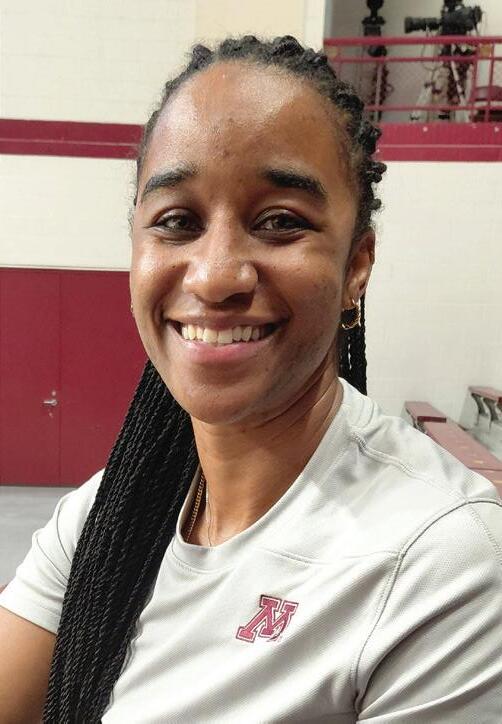
laying and coaching volleyball opened Arica Nassar to an unexpected worldview.
“I’ve lived in a couple of cold places, actually, lived in Sweden and then in Finland in the Arctic Circle for a year,” recalled the Menifee, Calif., native. “It was different, but it was good for me. It was nice to experience a different culture.”
Nassar recently spoke with the MSR after a Minnesota volleyball spring workout at Maturi Pavilion, saying she never envisioned a life in volleyball beyond college, let alone playing overseas.
“When I first started play-

The annual Final Four is also the site of the Women’s Basketball Coaches Association convention, coaches’ meet-and-greets and a marketplace for current and unemployed coaches seeking job opportunities.
Ole Miss Women’s Basketball Coach Yolett McPheeMcCuin held a Zoom session last week for current assistant college coaches and others.
From the Arctic Circle to the Big Ten: Arica Nassar’s unlikely path
ing in college, I just wanted to use it as an opportunity to get my education,” she said. Her father had hoped she would pursue a medical career after athletics, and for a time Nassar said she had considered that path as well.
“I was on track to go to med school, and I got my chemistry degree in 2015. Then volleyball kind of took over,” she said.
Nassar played more than 100 matches during her four years at Oregon State from 2011 to 2014, where she was one of two players in program history to record 1,000 career kills (1,033) and 500 blocks (540). She finished third alltime in blocks, 13th in points (1,380) and 15th in kills, leading the Beavers in blocks per set in each of her four seasons.
After Oregon State, Nassar played on two championship teams overseas, in Finland in 2015-16 and Sweden in 2016-17. Then coaching came calling.
“When I was overseas, my
“Coach Yo is about developing not just players, but coaches… Especially young coaches,” said Christal Caldwell, an Atlanta-based girls basketball coach. “It was encouraging to hear how she values growth, genuine relationships and staying prepared for opportunities.”
head coach at Oregon State called me and said, ‘I don’t know what your plans are next year, but UCLA was looking for an assistant , would you be interested?’” Nassar recalled. “Absolutely. My intention was to go to UCLA, get on staff, then go back to school and get my master’s.”
Nassar accepted a volunteer assistant position at UCLA, then returned to Oregon State as a full-time assis-

“That perspective is something that I’ll carry with me as
tant for five seasons, earning her master’s in interdisciplinary studies along the way. Assistant stints at Oregon and Kansas followed.
Gopher Head Coach
Keegan Cook hired Nassar in February as assistant coach and recruiting coordinator. She is the only Black female on the volleyball staff and one of five Black female assistant coaches at Minnesota.
“A huge reason for coming to Minnesota is definitely Keegan Cook,” Nassar said. “I have been competing against him as an athlete and as a coach for almost my entire career. I’m a learner. I love to learn new things, new ways. He has a great volleyball mind. How he teaches volleyball and how he connects with his players is super important to me, and I’m here to learn from a great coach and a guy who I believe has the potential to win a national championship.”
Nassar is regarded as an up-and-comer in volleyball coaching circles. She made the 2025-26 AVCA Women’s Volleyball Coaches Watchlist in January and was a 2024 AVCA Thirty Under 30 award


South guard Jumair Wright
South guard Ramadan Ibrahim
South forward Ridwan Ibrahim (5) and guard De’Amontre Scott (2)
South guard Chad Robertson All Photos by Dr. Mitchell Palmer McDonald
South center Jake Dixon South forward Laviance Gales
Coaching While Black By Charles Hallman
This occasional series highlights Black coaches at all levels of sport.
Cheyney State team, the first and only HBCU to play for a Division I women’s basketball national title.
Ole Miss Women’s Basketball Coach Yolett McPhee-McCuin Photos courtesy of X
Coaching While Black
By Charles Hallman
This occasional series highlights Black coaches at all levels of sport.
Tyra Perry
Photo courtesy of X
Coaching While Black
This occasional series highlights Black coaches at all levels
■ See ARICA on page 5
Arica Nassar
Charles Hallman/MSR