SOYBEAN
MAY - JUNE 2026 - VOLUME XXIV - ISSUE 3 B U S I N E S S
Sandy Ludeman steps into checkoff spotlight

MAY - JUNE 2026 - VOLUME XXIV - ISSUE 3 B U S I N E S S
Sandy Ludeman steps into checkoff spotlight
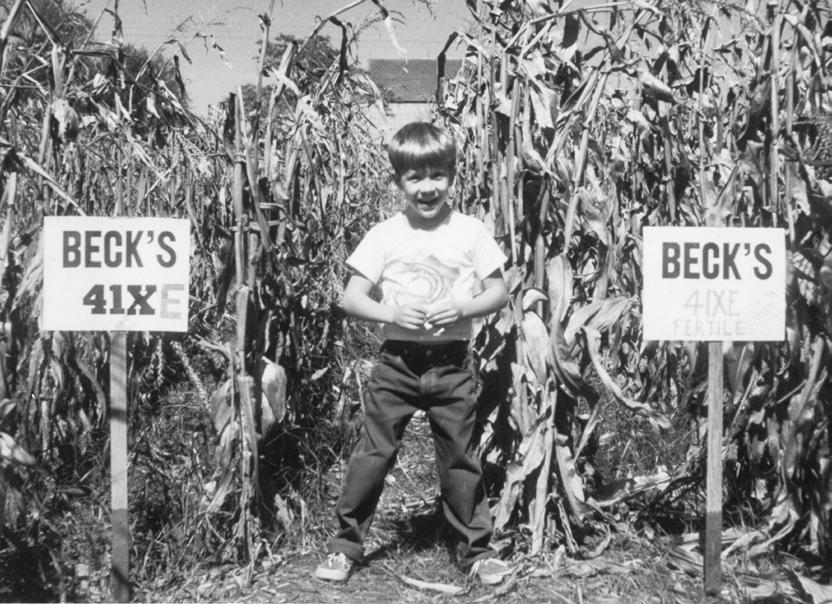
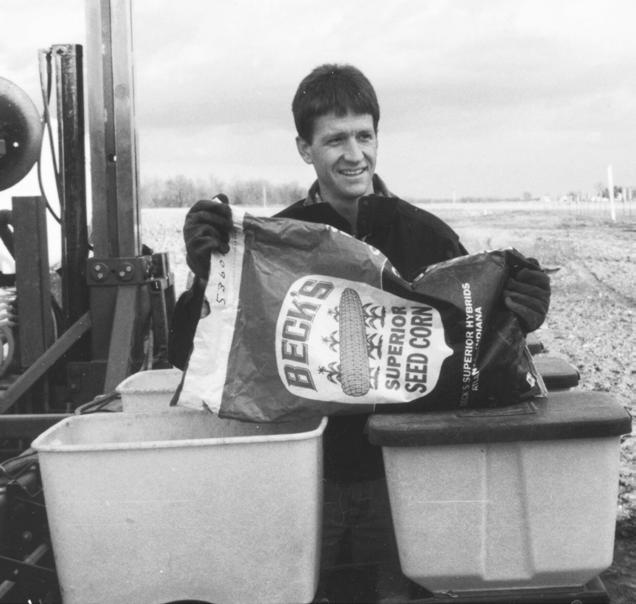
A legacy of faith. A tradition of farming. A future rooted in both.


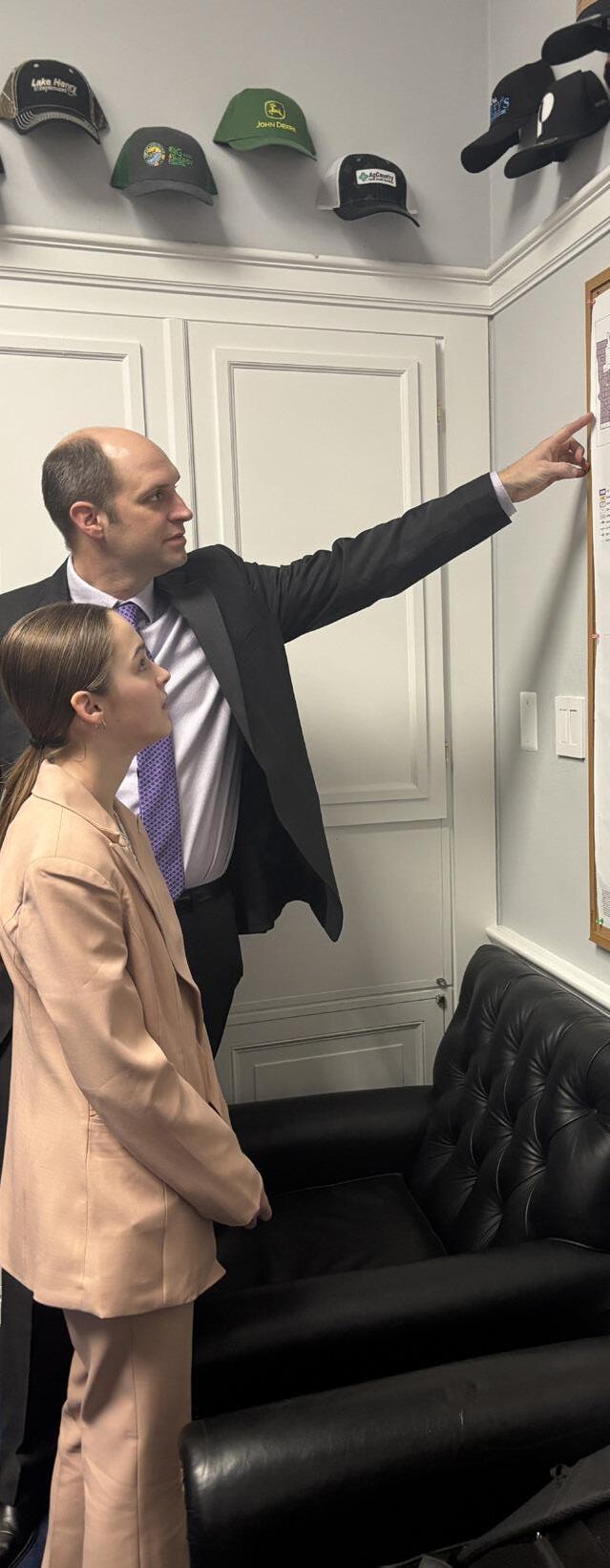

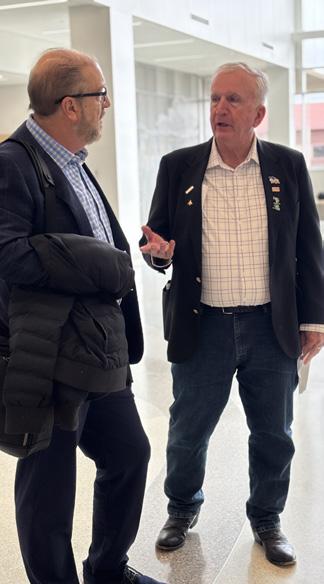
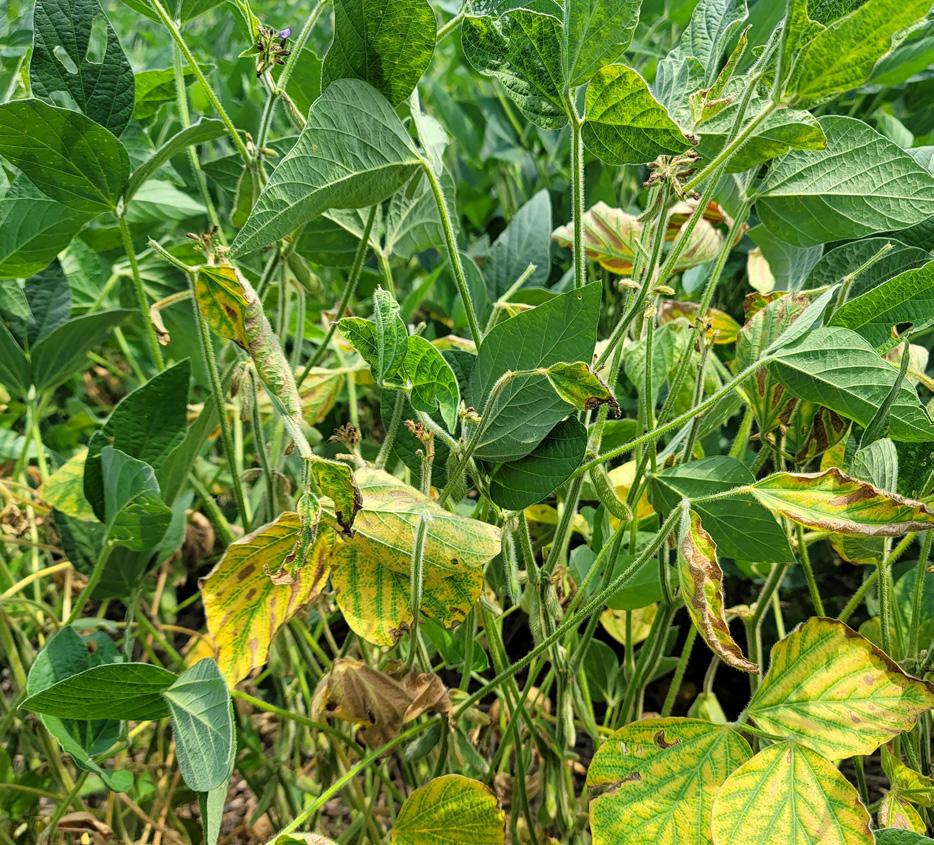
Tell the compelling stories behind Minnesota’s soybean farmers and their industry, from the field to Capitol Hill to international markets – and everywhere in between.
President Darin Johnson | Faribault County
Vice President
Ryan Mackenthun | McLeod County
Treasurer
Rose Karau | Watonwan County
Secretary
Kyle Jore | Pennington-Red Lake Counties
ASA Directors
Jamie Beyer | Traverse County
Adam Guetter | Redwood County
Darin Johnson | Faribault County
Jim Kukowski | Roseau-LOW Counties
Jeff Sorenson | Redwood County
Bob Worth | Lincoln County
ASA Young Leaders
Andrew Mages | Clay Wilkin Counties
County/at-large directors
Trevore Brekken | Polk County
Mark Brown | Watonwan County
Steve Brusven | Yellow Medicine County
Jason Cadieux | Kittson County
Raymond DeMars | Morrison County
Brian Fruechte | Lincoln County
Tom Grundman | Douglas County
Ray Hewitt | Le Sueur-Scott Counties
Brad Hovel | Goodhue County
Jim Jirava | Becker-Mahnomen Counties
Mark Knutson | Marshall County
Bob Lindeman | McLeod County
Paul Mesner | Murray County
County/at-large directors
Bruce Nelsen | Mower County
Keith Nelsen | Cottonwood County
Robert Nelsen | Murray County
Dusty Neugebauer | Nobles County
Lucas Peters | Rock County
Vernon Pooch | Pope County
Andy Pulk | Roseau-LOW Counties
Matt Purfeerst | Dakota-Rice Counties
Tim Rasmussen | Otter Tail-Grant Counties
Justin Remus | Brown County
Parker Revier | Renville County
Gary Schoenfeld | Waseca County
Joel Schreurs | Lincoln County
Cal Spronk | Pipestone County
Jamie Seitzer | Nicollet-Sibley Counties
Lawrence Sukalski | Martin County
Jeremy Tischer | Clay-Wilkin Counties
Doug Toreen | Renville County
Tim Wolf | Dodge-Steele Counties
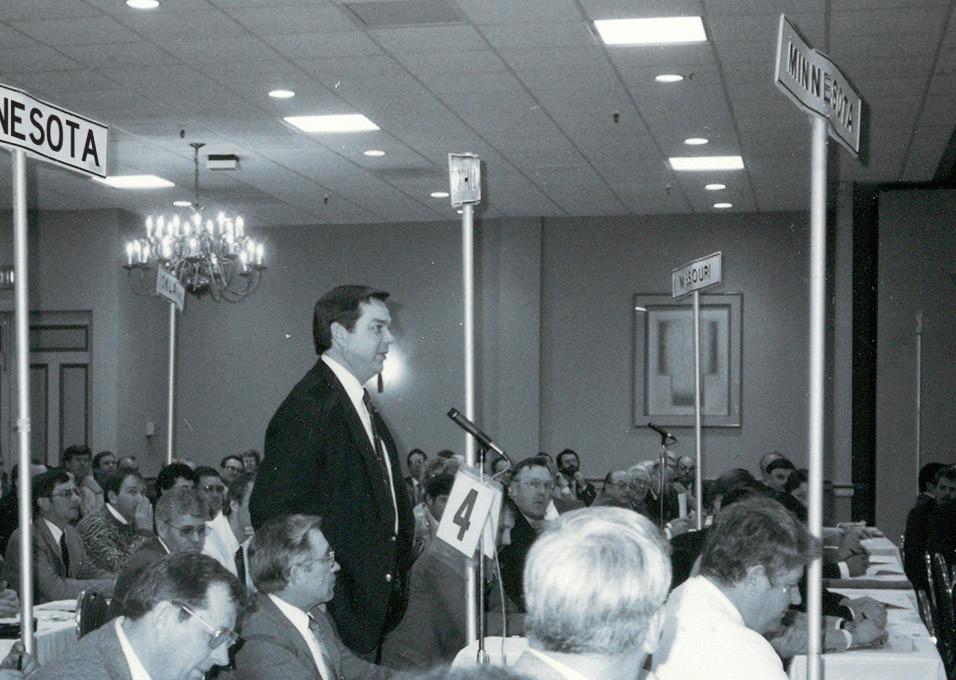
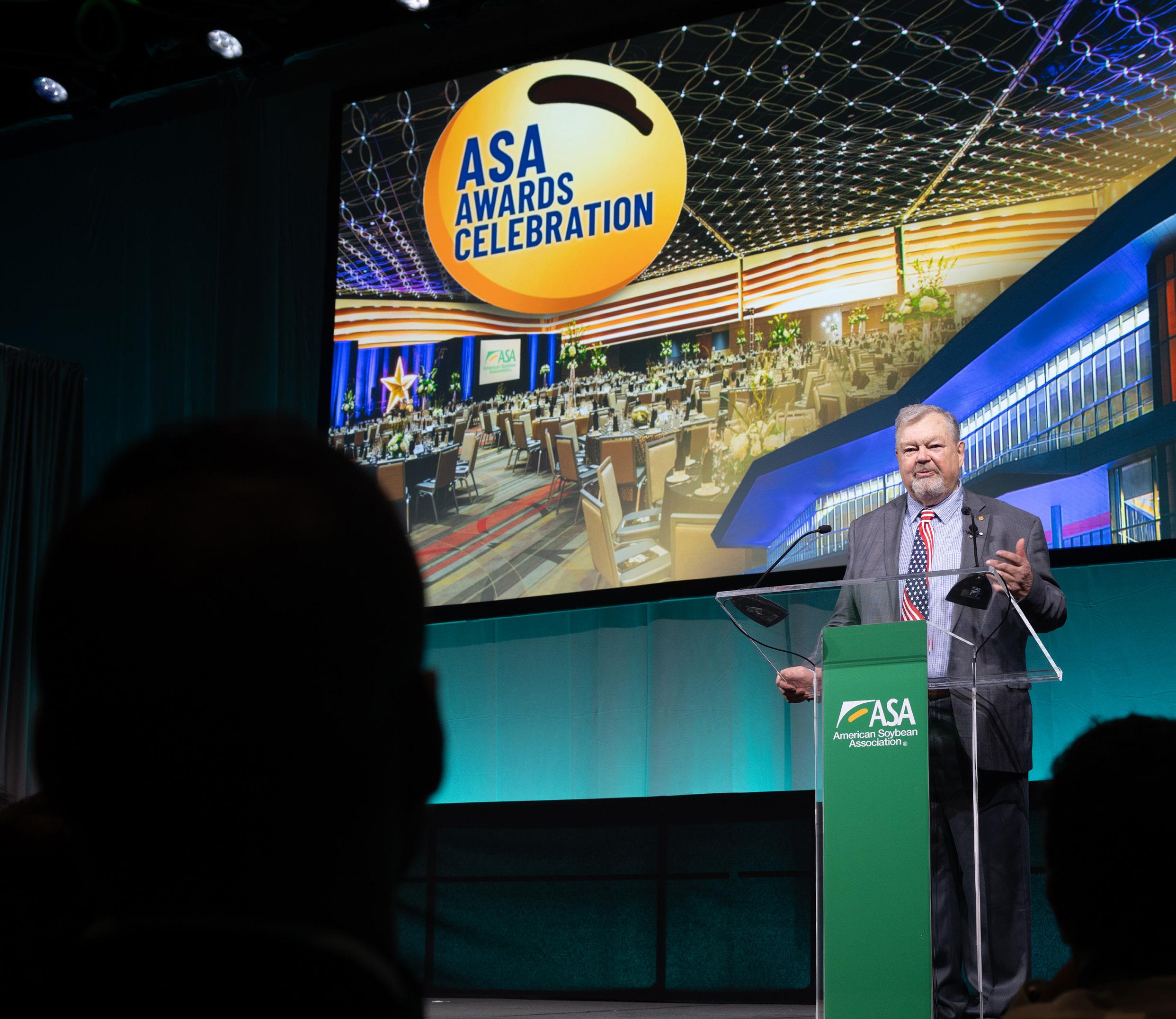
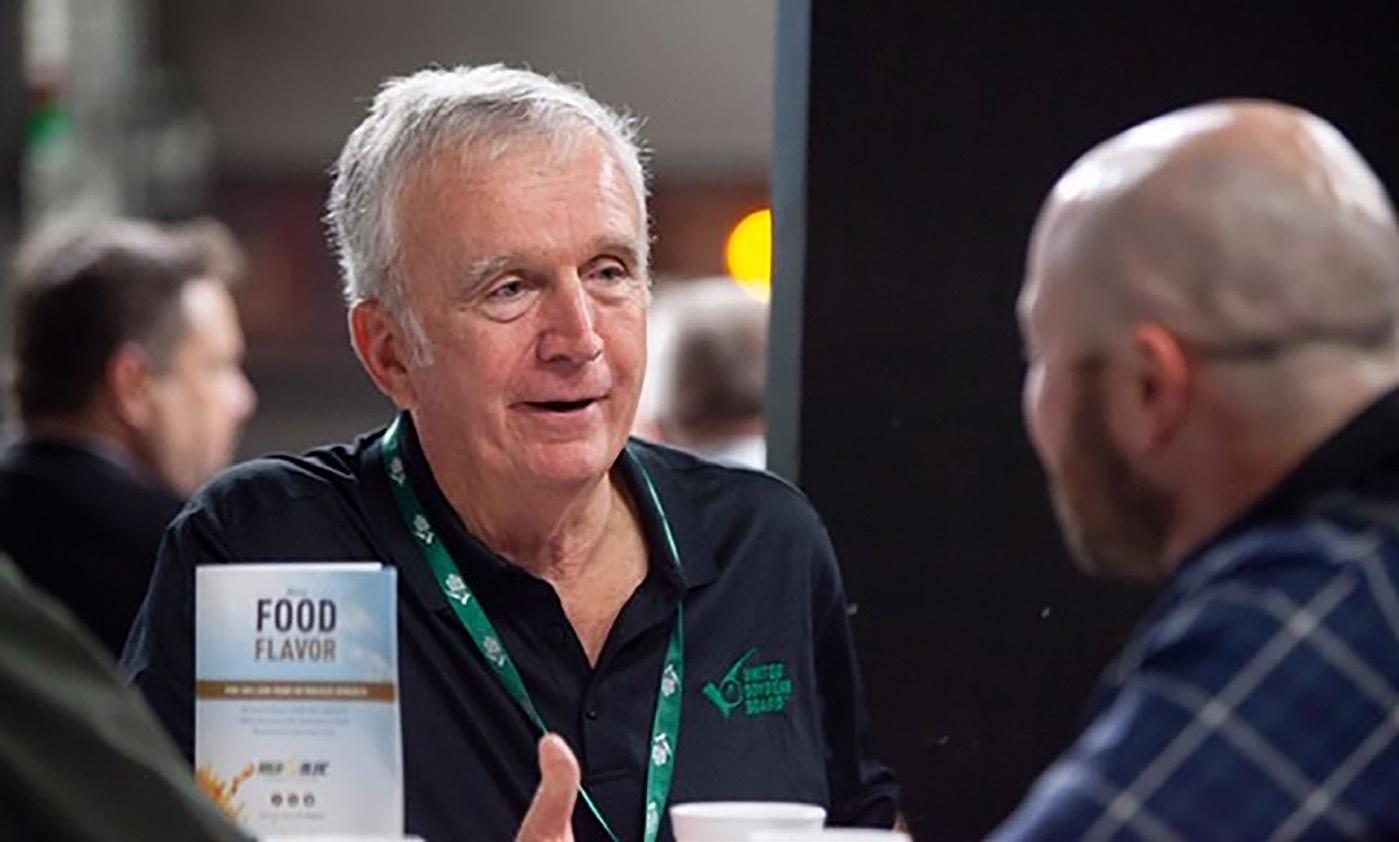
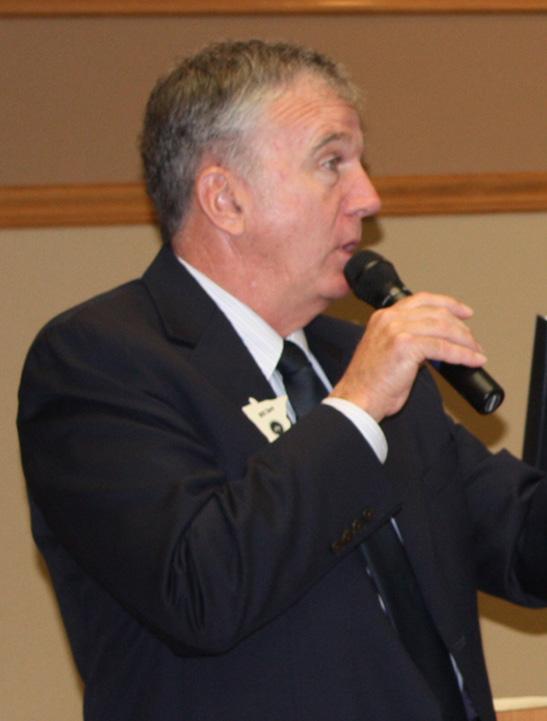
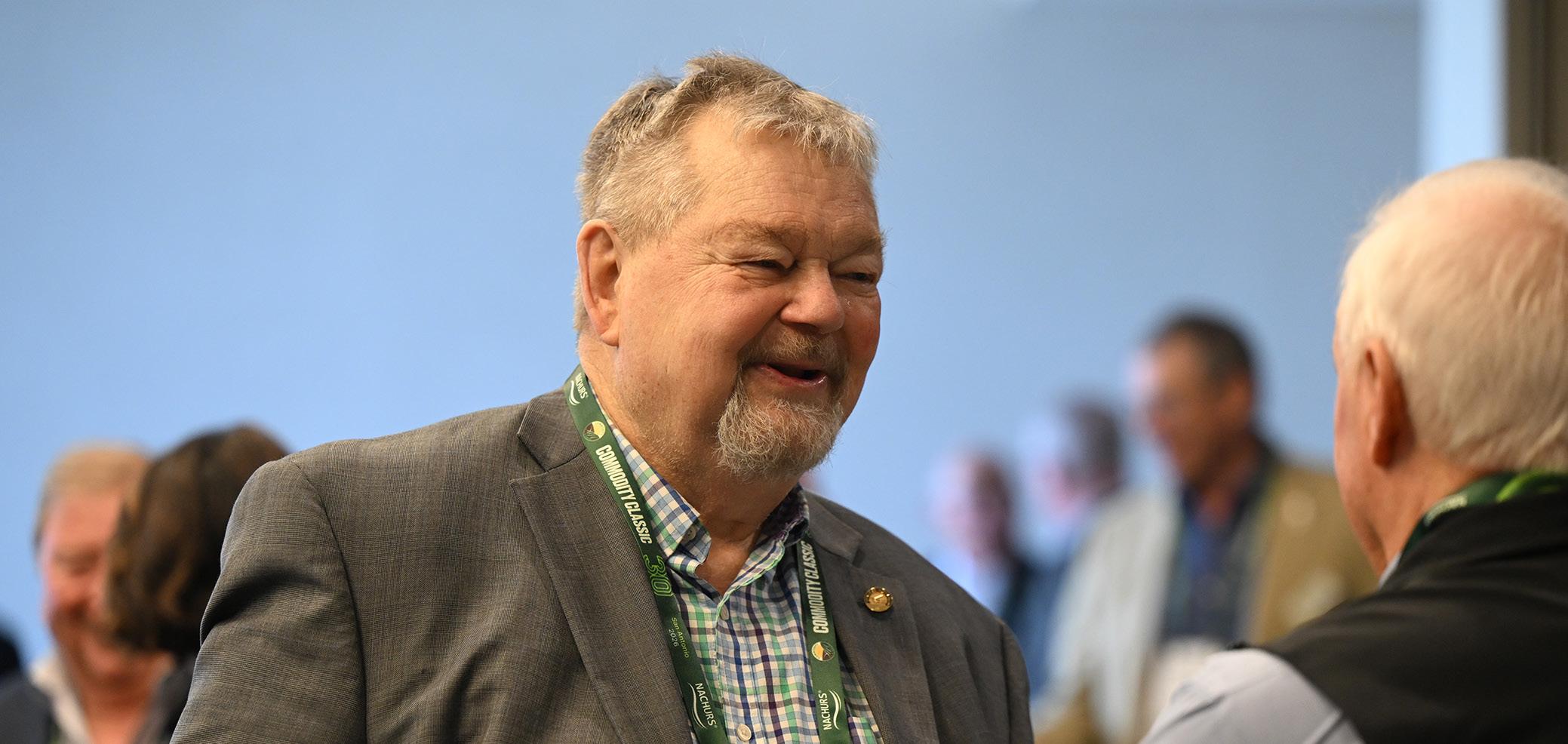
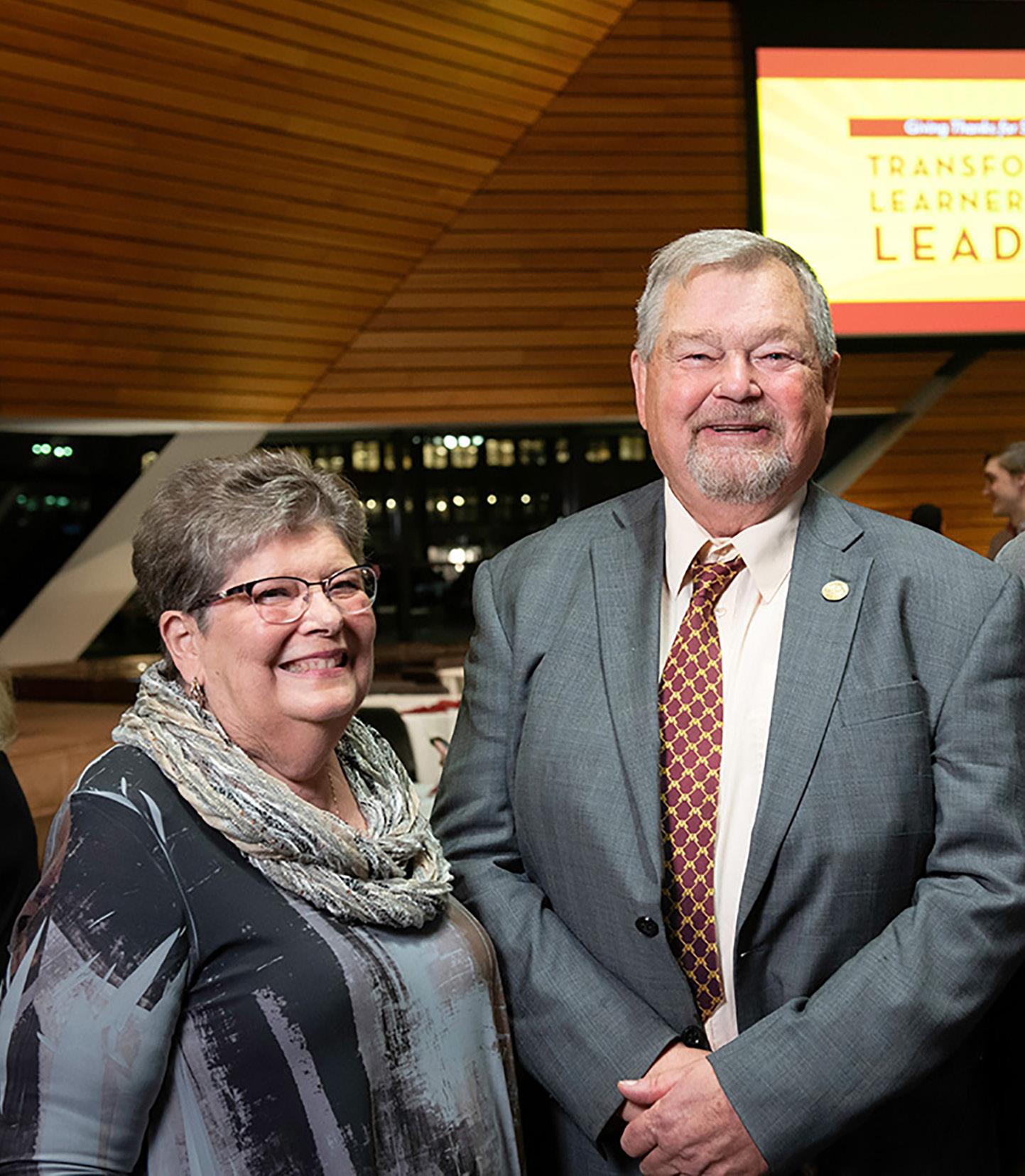
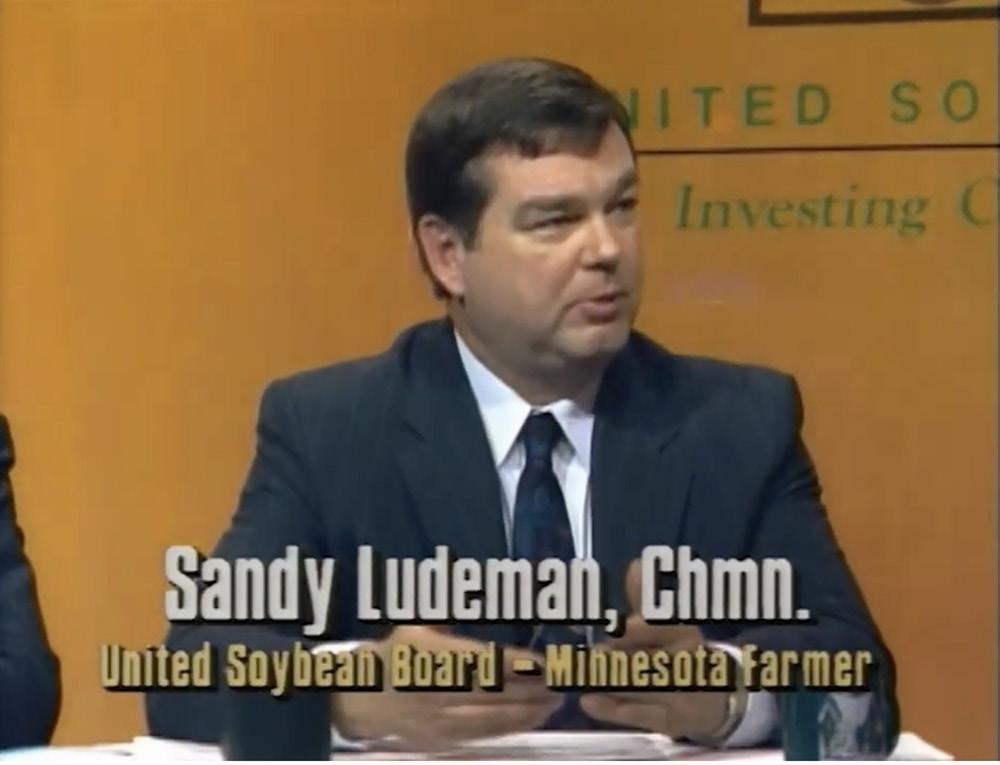
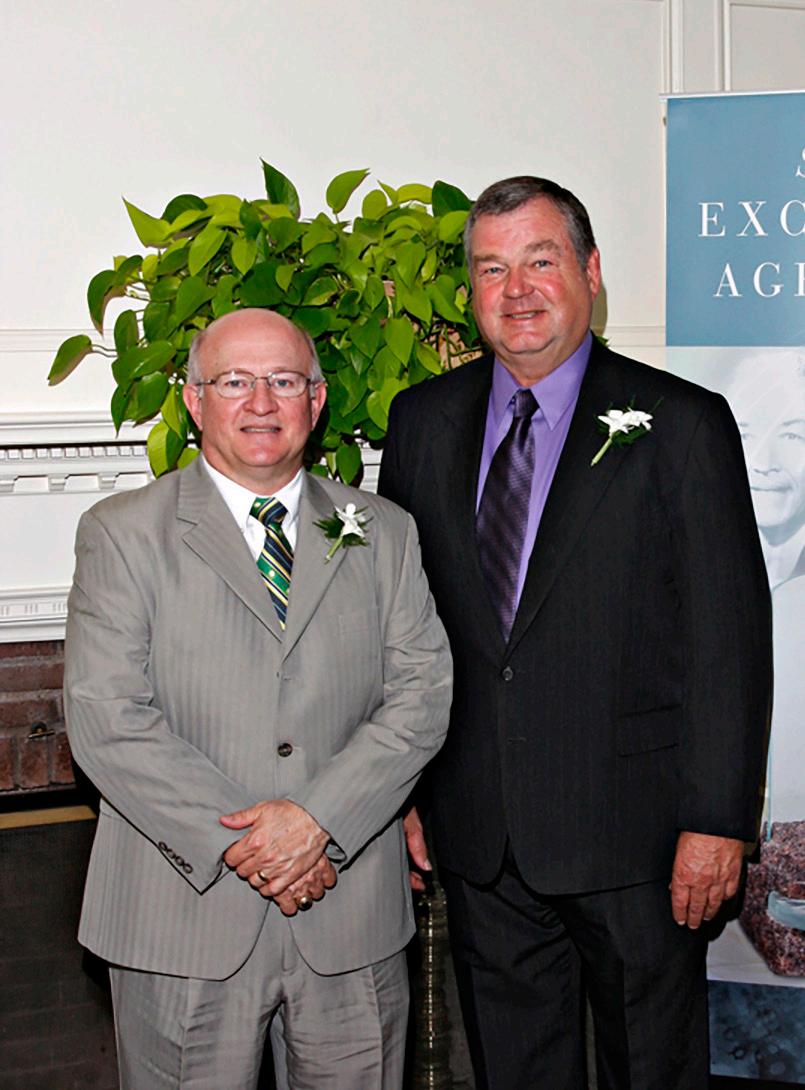
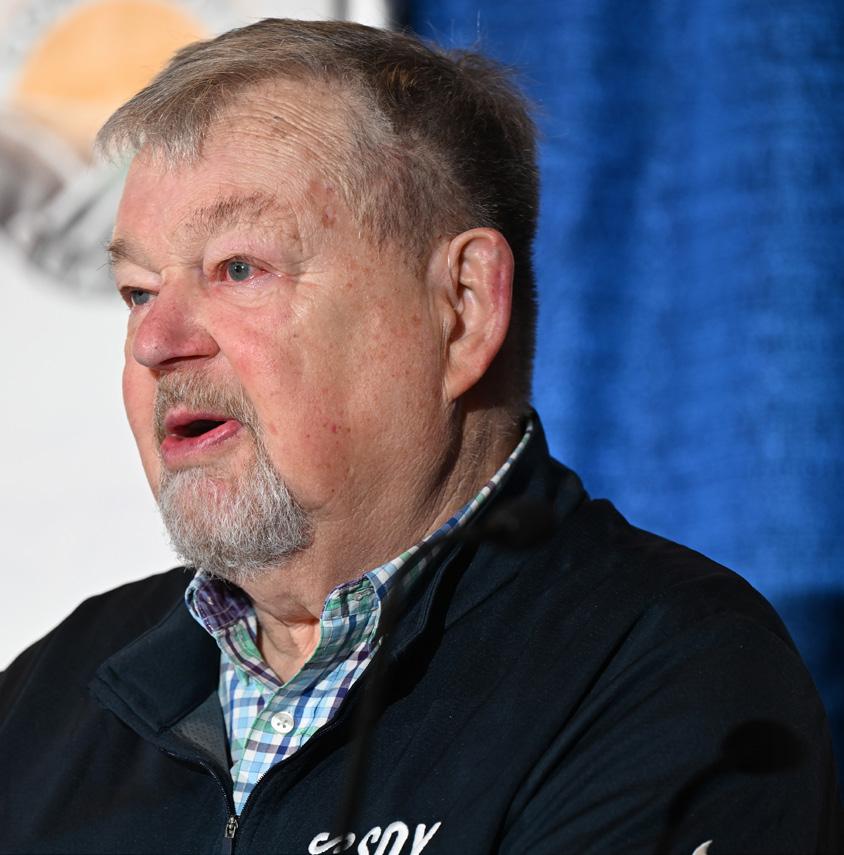
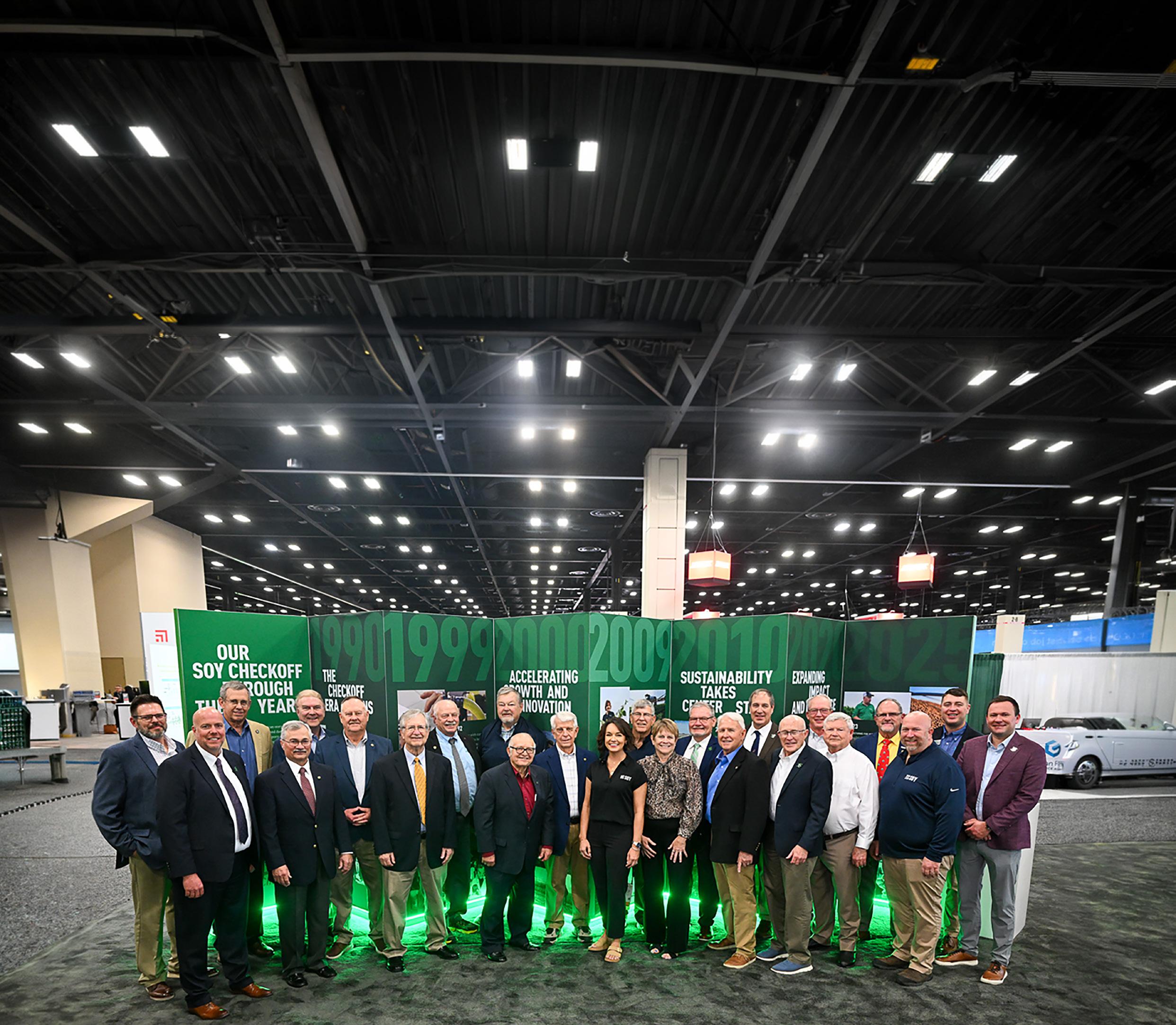
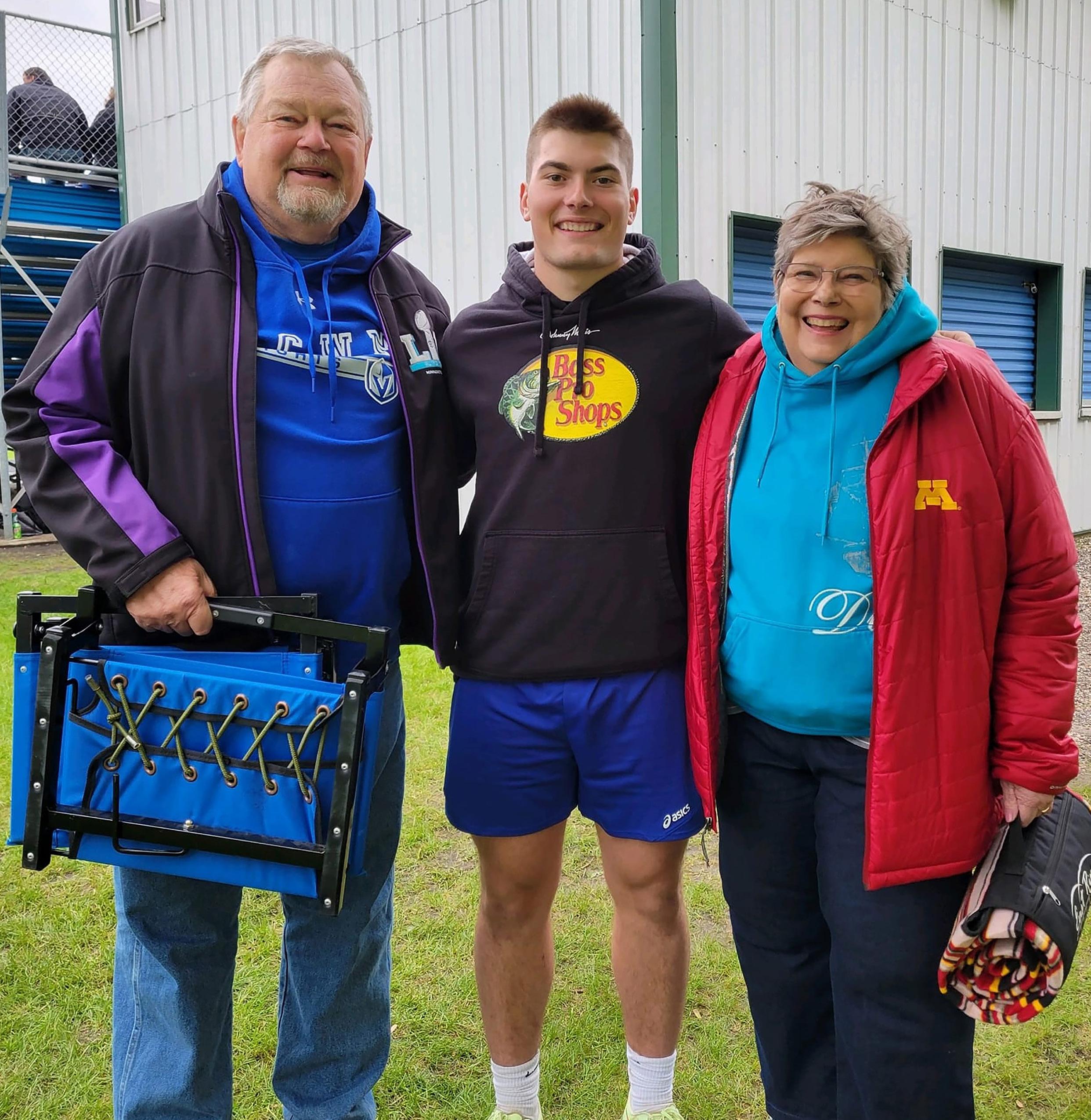
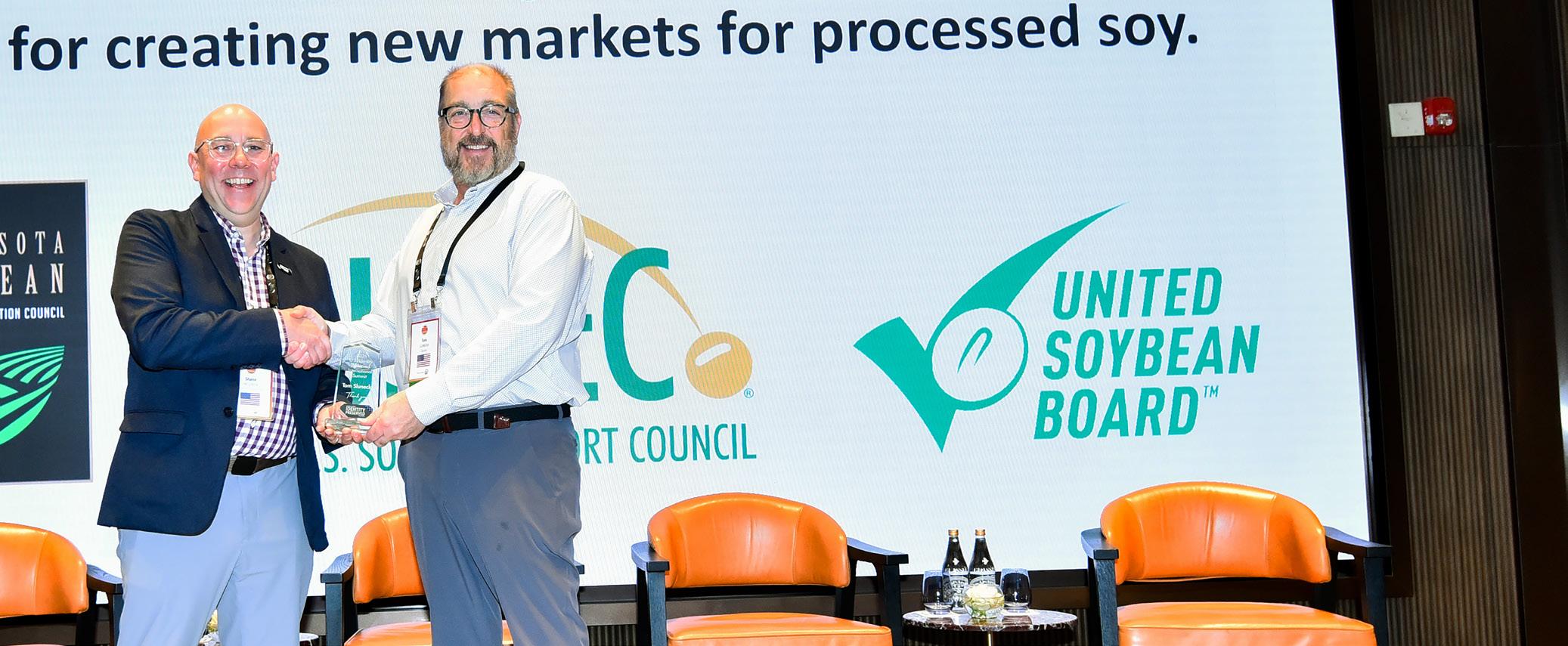
Few, if any, farmers had a greater role in launching the soy checkoff than Tracy farmer Sandy Ludeman. During USB’s 35th anniversary, Ludeman is being honored for seeing the checkoff’s long-term value from the beginning. Read more on page 22. Bottom photo courtesy of USB.
MSGA Executive Director
Joe Smentek | jsmentek@mnsoybean.com
Managing Editor Drew Lyon | drew@mnsoybean.com
Ag Management Solutions
Art Director
Alex Troska | atroska@agmgmtsolutions.com
Graphic Designer Ag Management Solutions
Layout Editor Katelyn Engquist | kengquist@agmgmtsolutions.com
Sales Manager
Erin Rossow | erossow@agmgmtsolutions.com 507-902-9191
Advertising space reservations can be made by the 15th day of the month prior to publication. In consideration of the acceptance of the advertisement, the agency and the advertiser must, in respect of the contents of the advertisement, indemnify and save the publisher harmless against any expense arising from claims or actions against the publisher because of the publication of the content of the advertisement.
Advertisements within this publication contain the opinions and information of the advertisers and do not necessarily reflect the opinions or views of the Minnesota Soybean organizations or affiliated groups.
Soybean Business is published six times a year on behalf of Minnesota Soybean. Comments and suggestions can be submitted to:
Membership Manager
Jodie Arndt | jodie@mnsoybean.com 507-388-1635
mnsoybean.org


Well, friends, this is it: My final President’s Letter. As I reflect on these last two years leading our organization, I remember saying in one of my first interviews as president that I had a challenge in front of me. Truer words have never been spoken, as MSGA indeed had a lot thrown our way in just a short time. But through ups and downs, I hope I’ve faced our challenges with a positive attitude and outlook toward the future.
At the federal level, we saw an administrative change and new policies and tariffs that kept me on my toes and busy with media outlets from Faribault County to France, and a lot of one-on-one discussions with our lawmakers. I was grateful for the opportunity last spring to host Sen. Amy Klobuchar, along with having in-depth conversations with leaders from both parties. I also was honored last fall to visit Europe with the people who are buying our miracle beans and value our high-quality product.
At the state level, we were also faced with a very unique political landscape during my time, which made for some interesting Hill Visits and testimonies in front of legislative leaders. As always, we focused on maintaining strong relationships while also opening up the important dialogue on issues like crop protection, treated seeds, creating new markets, farmer mental health and passing our family farms onto the next generation.
It’s hard to pinpoint a favorite moment, but one of my favorite things about being president of MSGA — as well as my time on the executive team and as a county director — is the friends who I’ve gotten to know and the people who’ve helped guide me and taught me skills that I’ll use the rest of my life. It’s the “ships” that stick out and have helped guide me through rough seas: leadership, mentorship, friendship. Oh, and family, of course! You’re only as good as the people you surround yourself with, and we are very lucky to have the team that we do – not only the directors, but the staff we work with is second-to-none. To the next president of MSGA: I encourage you to take advantage of the greatest resource that we have,
and that’s the wealth of institutional knowledge they have around them in this organization.
My roots are — literally and figuratively — on a family farm, and I know firsthand the ups and downs of agriculture, but despite the ups and downs, I’ve done my best to stay upbeat. That doesn’t take away from the difficult conversations that need to be had or distract from the negatives, but throughout it all I tried to focus on the positives so that we can move forward and focus on a better future. Sometimes a smile or a positive attitude can be all it takes to help brighten someone’s day and get them to the next day.
I feel grateful that we have the opportunity to be the voice for all 26,000 soybean farmers in Minnesota. There is a lot of time donated by our leadership team in the background to try to accomplish our goals, and it’s a great feeling when we are successful. Thank you for trusting in me as your president! It’s been an honor to serve, and I look forward to continuing to advocate on behalf of MSGA.
DARIN JOHNSON President, MSGA
This column is a series in Soybean Business featuring leaders from the Minnesota Department of Agriculture.
Innovation is something Minnesota farmers understand. When equipment needs a retrofit, fields require a different approach or weather doesn’t go to plan, farmers find a way. That kind of practical problem solving is one of our greatest strengths. But trying something new can come with risk — and that’s where the MDA can help. Across the state, we’re seeing this in action as farmers test new technologies, adjust management decisions and share what they learn, backed by MDA programs:
• Minnesota Ag Weather Network provides free, hyperlocal, real time soil and weather data to guide on farm decisions. Using research grade equipment, stations monitor conditions from 33 feet above ground to 7.5 feet below the surface — including precipitation, air temperature, humidity, wind speed, solar radiation and soil temperature and moisture.
• Soil Health Financial Assistance Grants help farmers, farmer groups, and local governments invest in equipment that improves soil structure and resilience. It offers cost share for the purchase or retrofit of specialized equipment — a major expense that often stands in the way of adopting soil health practices, such as reduced tillage.
• Nitrogen Enhanced Efficiency Fertilizer (N EEF) Discounts are a new funding opportunity that help reduce greenhouse gas emissions and protect water quality by supporting ag retailers offering farmer discounts on approved N EEF products,
including nitrogen inhibitors and polymer coated urea. Farmers receiving discounts must be certified through the Minnesota Agricultural Water Quality Certification Program, working to become certified, or agree to learn more about the program.
• Biofertilizer Innovation and Efficiency Pilot Program gives farmers a chance to try microbial based biofertilizers and improve nitrogen management. Another round of funding will be available for the 2027 growing season.
• Regional Conservation Partnership Program allows the MDA to expand access to irrigation technology, nitrogen management tools, and hands on technical assistance. In fall 2025, Minnesota secured another $11.16 million to continue this work across 25 counties in partnership with Soil and Water Conservation Districts, local governments and agricultural organizations.
• Minnesota Ag Water Quality Certification Program recognizes conservation leadership and helps producers adopt practices through technical and financial assistance. Among its benefits: Farmers receive 10 years of regulatory certainty, public recognition and ongoing technical support.
• Nutrient Management Initiative provide financial support to identify nitrogen rates that make agronomic and economic sense. With the help of crop advisers, farmers set up field
BY COMMISSIONER THOM PETERSEN
trials on their land. After completion, both are reimbursed and receive an analysis of the results.
• AgBMP Loan Program offers low interest financing for projects that reduce runoff and address priority water quality concerns. It helps landowners comply with water related laws or rules, can be paired with state and federal cost share and makes funds available through counties statewide.
Minnesota farmers have always been innovators. Your willingness to test new tools, look at emerging practices and share what works is shaping the future of agriculture in our state. The Minnesota Soybean Growers Association’s support makes this possible. Thank you to MSGA for advocating for these and
By Allison Wright
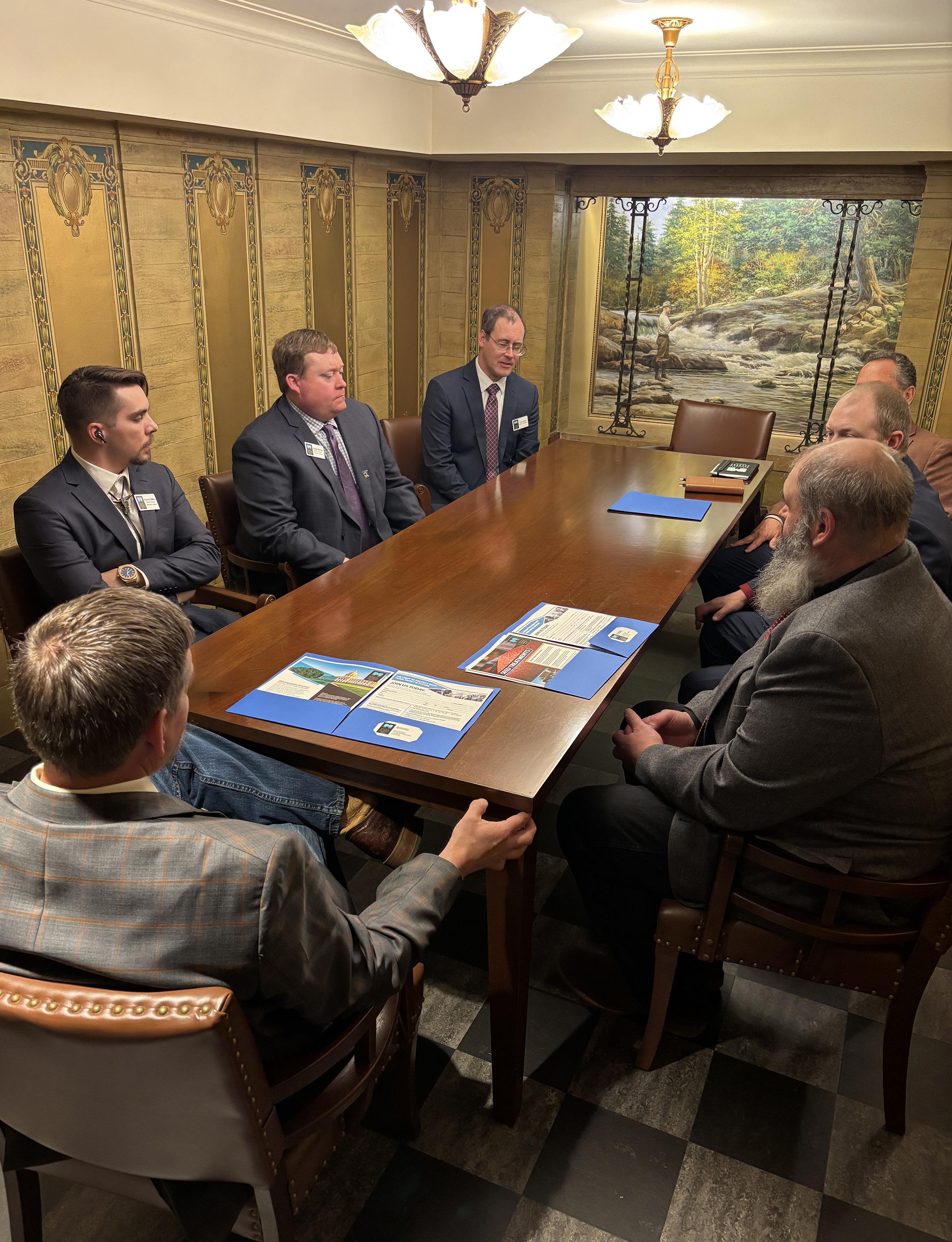
A trimmed team of farmer directors from the Minnesota Soybean Growers Association (MSGA) brought their voices this spring to the Capitol in St. Paul to meet with legislators and discuss issues that are important to soybean farmers across the state.
From biofuels to protecting crop inputs, there were plenty of farm-related policies to discuss with legislative leaders and the Minnesota Department of Agriculture.
“Our agenda for the day was very busy,” MSGA President Darin Johnson said “The fantastic thing about our Hill Visit is that we met with both sides of the aisle equally. It is always beneficial to have a discussion with both sides to hear opinions and to assure them that we are able to assist them if there is any need to work across the aisle, we can be that conjugate for them.”
Johnson was joined by Secretary Kyle Jore and Directors Raymond DeMars, Brad Hovel, Bob Lindeman, Gary Schoenfeld, Lawrence Sukalski and Justin Remus. Because 2026 is the second year of the biennium and is a policy-heavy session (legislators aren’t required to pass any bills), MSGA adjusted its priorities to reflect the unique political dynamics at play, including a split government and a governor (Tim Walz) who’s not running for reelection. Thus, most of legislative conversations in 2026 focused on crop protection tools available to farmers, including seed treatments, as well as promoting the sustainable aviation fuel (SAF) tax incentives and improving the biofuels market. MSGA also advocated for transportation and rural infrastructure funding and farm safety programs, including farmer mediation programs.
“Our goal is not to just ask for dollars or a handout,” said Hovel, who farms in Cannon Falls. “Our goal is to educate legislators about what soybean farmers are facing today and leave them with resources they can refer back to after our conversations.”
With several directors attending federal Hill Visits in Washington, D.C., MSGA focused on a “more with less” approach by having fewer directors attend than in past years. Concentrating on meaningful conversations and telling farmer experiences opened the eyes of many legislators.
“This was a good opportunity for us to meet one-on-one or six or seven-on-one,” said Johnson. “We were in an environment today where everyone was very comfortable and there was a lot of good and easy conversations.”
Directors emphasized that building relationships with lawmakers is one of the most important parts of the annual visit. To support this, directors, along with MSGA Executive Director Joe Smentek attended a joint Legislative Reception with the Minnesota Corn Growers prior
to the Hill Visits. Many legislators attended the reception, creating connections with MSGA directors, including Agriculture Finance and Policy Committee Co-Chairs Rep. Paul Anderson and Rep. Rick Hansen, along with Agriculture, Veterans, Broadband, and Rural Development Committee Chair Sen. Aric Putnam. Minnesota Department of Agriculture Commissioner Thom Petersen also attended.
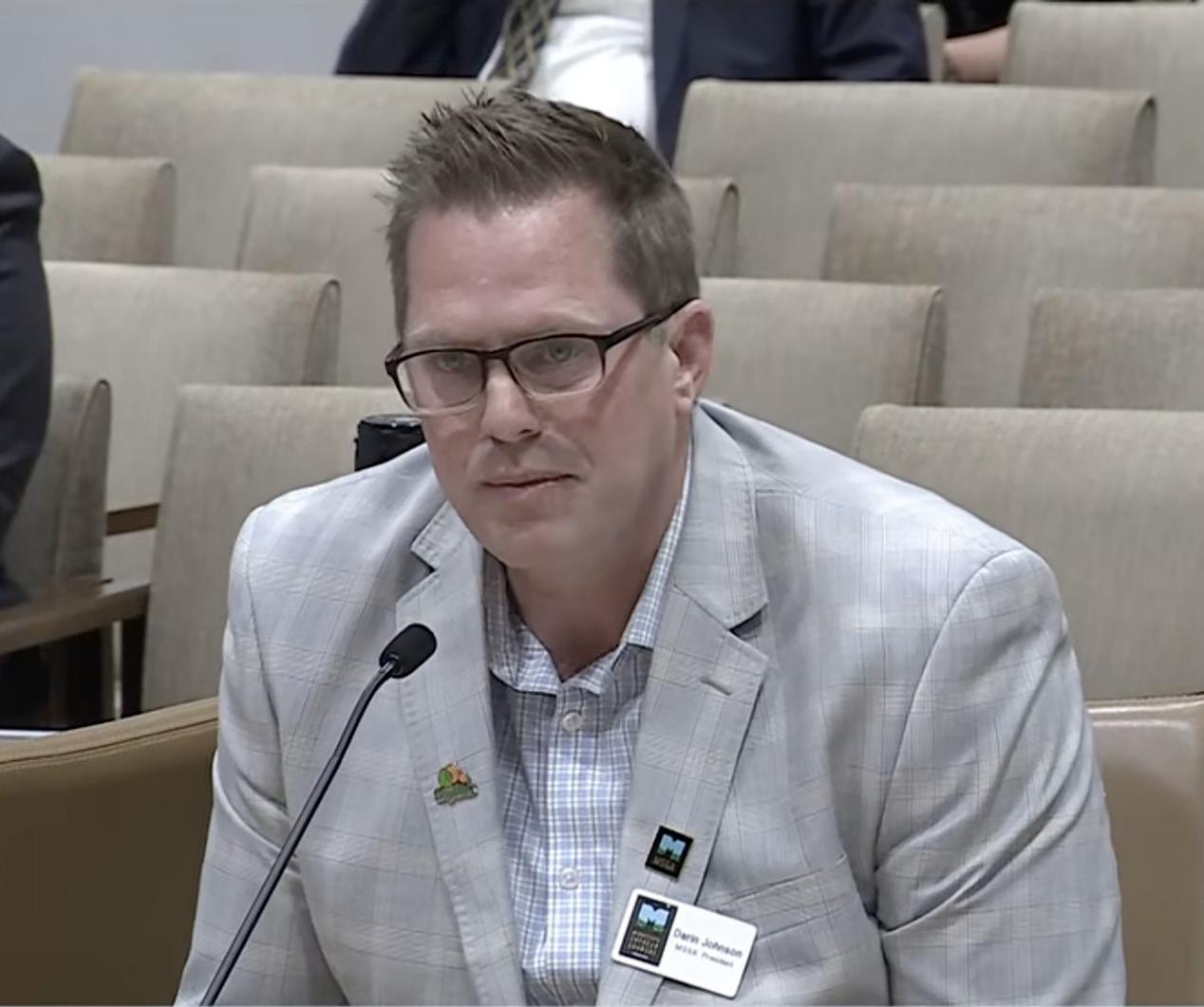
The visit ended by attending the Agriculture Finance and Policy Committee hearing, where Johnson gave testimony opposing the HF3704 bill proposed by Rep. Kristi Pursell.
HF3704, if passed, seeks to ban paraquat herbicide and add constraints to neonicotinoid insecticides and seed treatments. While MSGA, along with other farm groups, opposes any additional restrictions to crop inputs, it has no formal position on the paraquat bill as of April 2026.
“Seed treatments reduce the overall pesticide use by applying small, precise amounts of active ingredients directly to the seed, reducing the need for additional applications,” Johnson said. “This also supports conservation and soil health practices.”
Despite the smaller delegation, the directors agreed the trip
was a success. With a focus on education, relationship building and sharing real stories from farmer experiences, MSGA continues to ensure soybean farmers have a voice in policy discussions at the Capitol. MSGA also supports two lobbyists, Cory Bennett and A.J. Duerr, who represent the organization each day during the session.
“It’s always a great experience to represent our farmers to make sure we continue to have a strong voice in St. Paul,” Johnson said. “We’re also fortunate to have one of the best lobbying teams at the Capitol.”
Following the Hill Visits, Johnson said industry partners reached out to thank him for MSGA’s leadership.
“They saw, through our testimony, that we are active in these conversations,” he said. “This session has showed us that, when it comes down it, showing up to hearings and defending agriculture is so important.”
Any legislation coming out of the Capitol must be passed by May 17. Look for highlights from the 2026 legislative session and a look ahead to the 2026 campaign season and November elections in the July-August 2026 issue of Soybean Business.
Earlier in the session, Johnson joined industry colleagues by testifying to the Senate Agriculture Committee on the various economic challenges facing row-crop farmers heading into the 2026 growing season. Johnson also touched on the importance of market access, regulatory certainty, Minnesota soybean farmers' commitment to stewardship and the soy industry's impact on economies across Minnesota. MSGA Executive Director Joe Smentek was also in attendance.
"Soybeans remain a cornerstone of our farm economy and a major driver of our rural jobs," Johnson said.
By Drew Lyon
The Minnesota Soybean Growers Association had already assembled a lengthy list of federal policy priorities to share with the state’s congressional delegation leading up to the March 2026 Hill Visits in Washington, D.C.
And that was before war in Iran threatened to increase fuel prices and further drive-up costs for fertilizer and other crop inputs, due to the blockage of the Strait of Hormuz. Prior to the war, fertilizer costs were already outpacing inflation. Heading into planting season, soybean advocates were increasingly worried that the conflict will further batter an already troubled farm economy.
“What’s happening in Iran over the past couple of weeks has exacerbated issues that we’re already struggling with,” said Wheaton farmer Jamie Beyer, who serves on the American Soybean Association’s Executive Committee. “Farmers are really seeing it from all sides — low commodity prices and higher input costs across the board.”
The conflict has also highlighted, once again, how geopolitics can affect producers in Minnesota.
“Everything is so interconnected,” said Redwood County farmer Jeff Sorenson.
Beyer and Sorenson were joined by two American Soybean Association directors — Adam Guetter and Bob Worth — along with Minnesota Soybean Growers Association Treasurer Rose Karau for ASA’s biannual
Hill Visits and board meetings. Directors met with nearly all of Minnesota’s congressional delegation. The House was in recess, which meant directors mostly met with legislative aides, offering directors an opportunity to build connections with congressional staffers.
Over the course of a full day on Capitol Hill, which was capped by a legislative reception, farmer leaders tackled a wide range of policy issues, including:
• Promoting trade, including preserving the U.S.Mexico-Canada Agreement during its formal review this summer.
• Supporting a comprehensive, meaningful Farm Bill that addresses ASA’s priorities.
• Finalizing strong Renewable Volume Obligations (RVOs) to build stronger markets for U.S. soybeans (fortunately, growers were able to check this top priority off their list just a few weeks later).
• The need for Congress to pass additional financial support for farmers.
• Pesticide labeling.
• Promoting the health benefits of soybean oil.
In over 20 years of attending Hill Visits, Worth can’t remember another time when the ag economy was facing so many headwinds. Sure, he told legislative aids, there have been periods of low commodity prices and high input costs, but not all at once. He explained
to legislative aides how Minnesota lost about 1,300 farms in 2025, along with his fears for the younger generation of farmers.
“The profits just aren’t there right now, and that’s been the case for several years now,” he said. “That’s why there’s need for more assistance, because the (Farmer Bridge Assistance) program covered less than 40% of our losses.”
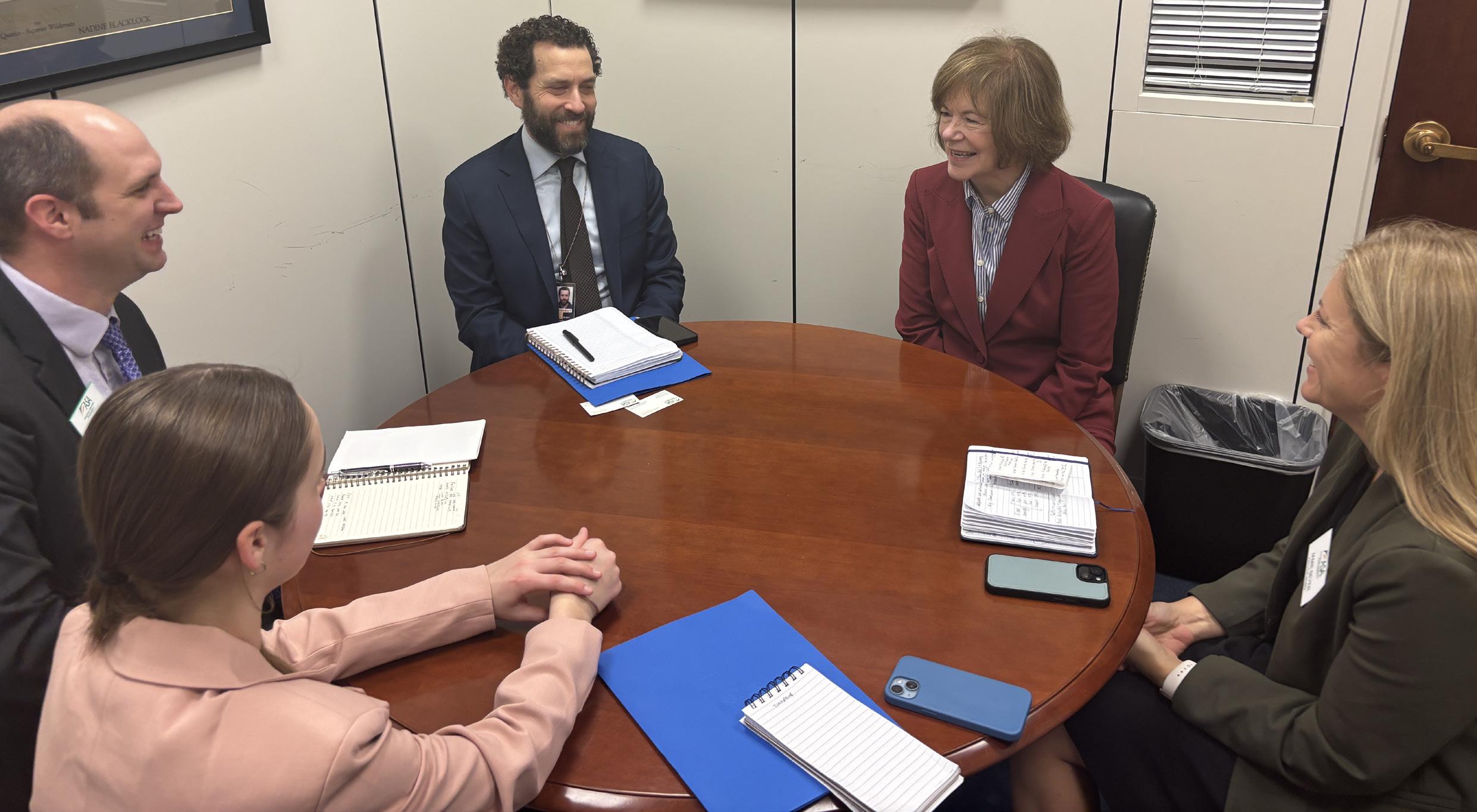
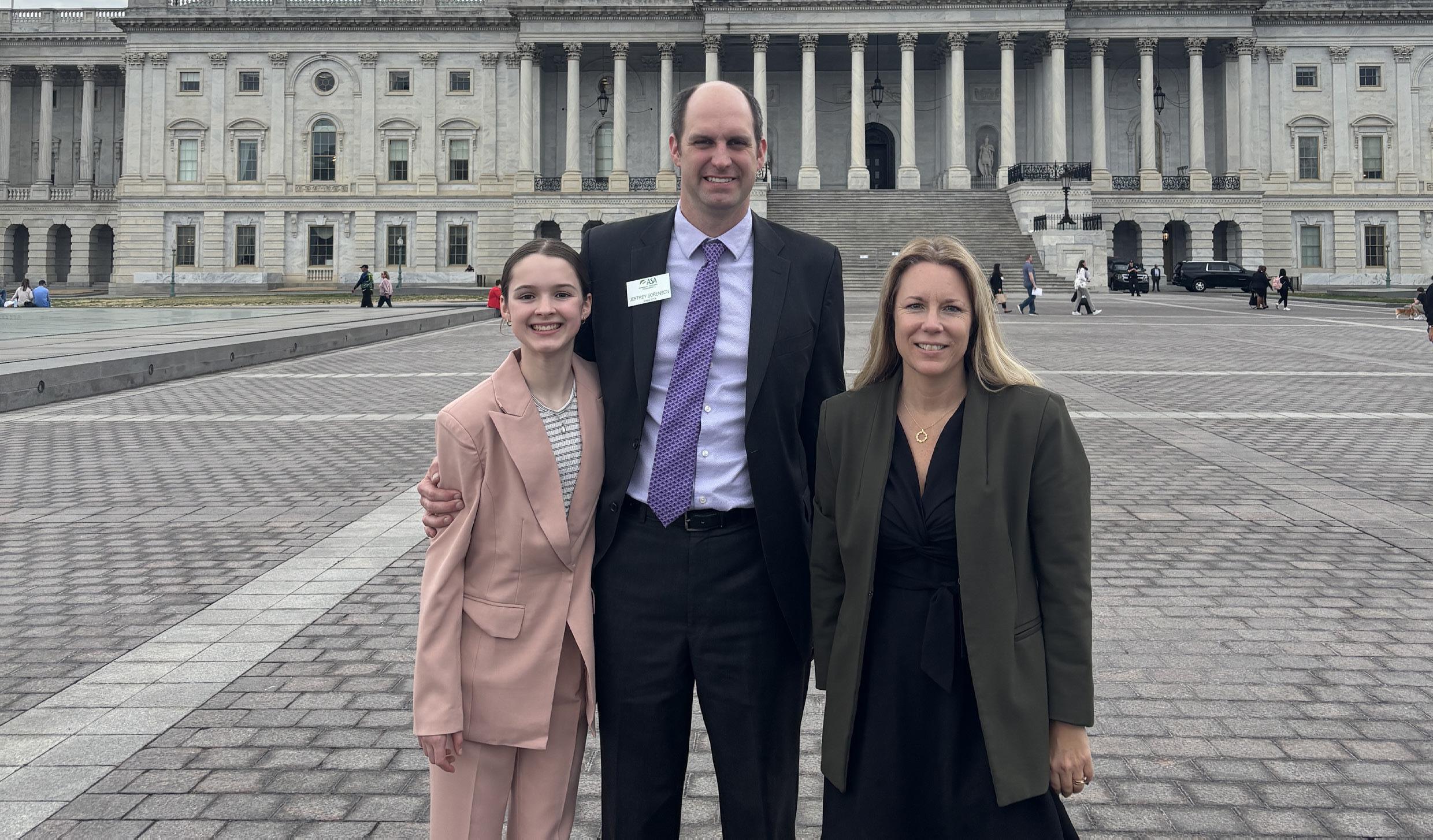
Sorenson, a fourth-generation family farmer, brought a living, breathing example to underscore his passion for preserving his operation for the next generation: his 12-year-old daughter Avery, who accompanied her dad to the Hill Visits on her first visit to the nation’s capital. Avery, who hopes to be a veterinarian or nurse when she grows up, watched her dad in action as he represented Minnesota farmers during meetings with Reps. Michelle Fischbach’s and Tom Emmer’s staff. The Sorensons also reconnected with Sen. Tina Smith, who visited Jeff and his wife, Kelli, in April 2025 on their family farm. The senator, who’s retiring this year, reiterated her support for passing a new Farm Bill and listened as Jeff Sorenson and Beyer explained how farming communities in Minnesota rely on agriculture for economic and cultural vitality.
“People want to stay in small towns, and I think that’s a trend we’ve been seeing since the pandemic,” Beyer said, “Agriculture helps sustain our way of life.”
Sorenson said it was a thrill to show his eldest
daughter around Washington, D.C. Avery only had one complaint about her day on the Hill.
“Too much walking!” she said. And Avery had a point — the team walked nearly four miles inside and around the Capitol.
In the day’s final visit, grower leaders spent nearly 75 minutes in the Senate Ag Committee offices visiting with legislative staffers representing Sen. Amy Klobuchar. In a wide-ranging discussion, directors emphasized the “urgency of now” in improving the outlook for the nation’s half-million soybean farmers, from protecting market access to growing domestic uses of soybeans.
In every policy conversation, the topic eventually circled back to a single lingering question that drives at the heart of MSGA’s mission:
“How can we improve profitability?” Worth asked.
MSGA directors hope to have more answers than questions when they return in mid-July to Washington, D.C., for ASA’s summer Hill Visits. Following the summer board meetings, Congress will hold its annual August recess before policymakers turn most of their attention to the upcoming November election.
Farmers, meanwhile, will continue voicing their messages throughout the growing season.
“We really need the long-term forecast to get better,” Sorenson said. “We have a Band-Aid now, but we need long-term solutions.”
By Drew Lyon
After a prolonged period of unknowns, soybean farmers and their partners in the biofuels industry are celebrating some long-awaited regulatory certainty that is poised to support a struggling farm economy and spike demand for soybean oil.
The Minnesota Soybean Growers Association (MSGA) joined the American Soybean Association (ASA) and industry partners this spring in applauding the Trump administration for finalizing historic renewable volume obligations for biomass-based diesel for 2026 and 2027, which will bolster U.S. soybean farmers and boost soy-based domestic biofuel production. The new RVO rule supports the administration efforts in championing American energy dominance, with the future intention of prioritizing U.S.-grown biofuels.
“U.S. soybean farmers needed a win to boost domestic markets this year. ... ASA is grateful for the tireless efforts of EPA and USDA to ensure the soy biofuel value chain could benefit from the strongest RVOs ever finalized,” said Scott Metzger, ASA president and Ohio farmer. “The 2026-2027 RVOs will increase soybean oil use, boost U.S. soybean processing and grow domestic biofuel markets for our crop. ASA and our soybean farmer members applaud the Trump administration for getting this tremendous rule across the finish line.”
The updated 2026-2027 Renewable Volume Obligation rule will increase biomass-based diesel blending to approximately 5.4-5.5 billion gallons — an over 60% increase from 2025 volumes. Further, the rule reallocates 70% of retroactive 2023-2025 small refinery exemption volumes that EPA took action on last year, in addition to the 2026-2027 compliance years. ASA appreciated EPA clearing a significant backlog of legacy SREs dating back to 2016, which were remanded to the agency, and is glad to see a significant



Soybean farmers cheer EPA’s historic biofuel blending rule to bolster domestic demand for ag
reallocation of volumes back into the blending pool to support additional biofuel production and increase soybean demand.
While the rule does not make immediate changes to prioritize domestically sourced biofuel feedstocks, ASA celebrated EPA’s announcement to reduce credit generation for imported biofuels and biofuel feedstocks beginning in 2028. If maintained in the next RVOs, the credit reduction for imports will serve as a significant economic driver for the entire domestic biomass-based diesel value chain and will catalyze domestic demand for U.S. soy.
“There are a lot of positive takeaways in this rule for soybean farmers, and we think it bodes well for the future of biofuels,” said MSGA President Darin Johnson, who’s also one of six Minnesota farmers on ASA. “We’re very encouraged by how this will increase demand for our soybeans.”
Domestic biofuel production serves as a critical U.S. market for soybean farmers, yet U.S. biodiesel production declined by one-third in 2025, compared to 2024. Renewable volume obligations set through the Renewable Fuel Standard are the cornerstone of driving domestic soy-based biofuel demand. The EPA 2026-2027 Renewable Volume Obligations are the most significant year-overyear improvement in Renewable Fuel Standard rulemaking for biomass-based diesel and, subsequently, for U.S. soybean farmers.
“The announcement is a really encouraging sign for soybean producers. It’s more than what we asked for and alleviates a lot of our worries,” said Jackson farmer Chris Hill, who represents Minnesota on the Clean Fuels Alliance America governing board and serves on MSGA. “The demand is there for our oil, which I call ‘liquid sunshine,’ and now the industry has the certainty we’ve been looking for.”
Biofuel production accounts for half of all U.S. soybean oil consumption.



At Profinium Bank, we know every acre matters. Whether you're investing in inputs, upgrading equipment, or planning ahead, our ag lending team delivers solutions tailored to your operation. Let’s talk
Cash


Peter Bakken won’t lie: He admits he nearly gave up enrolling his Rock County farm in the Minnesota Agricultural Water Quality Certification Program (MAWQCP) before completing the process.
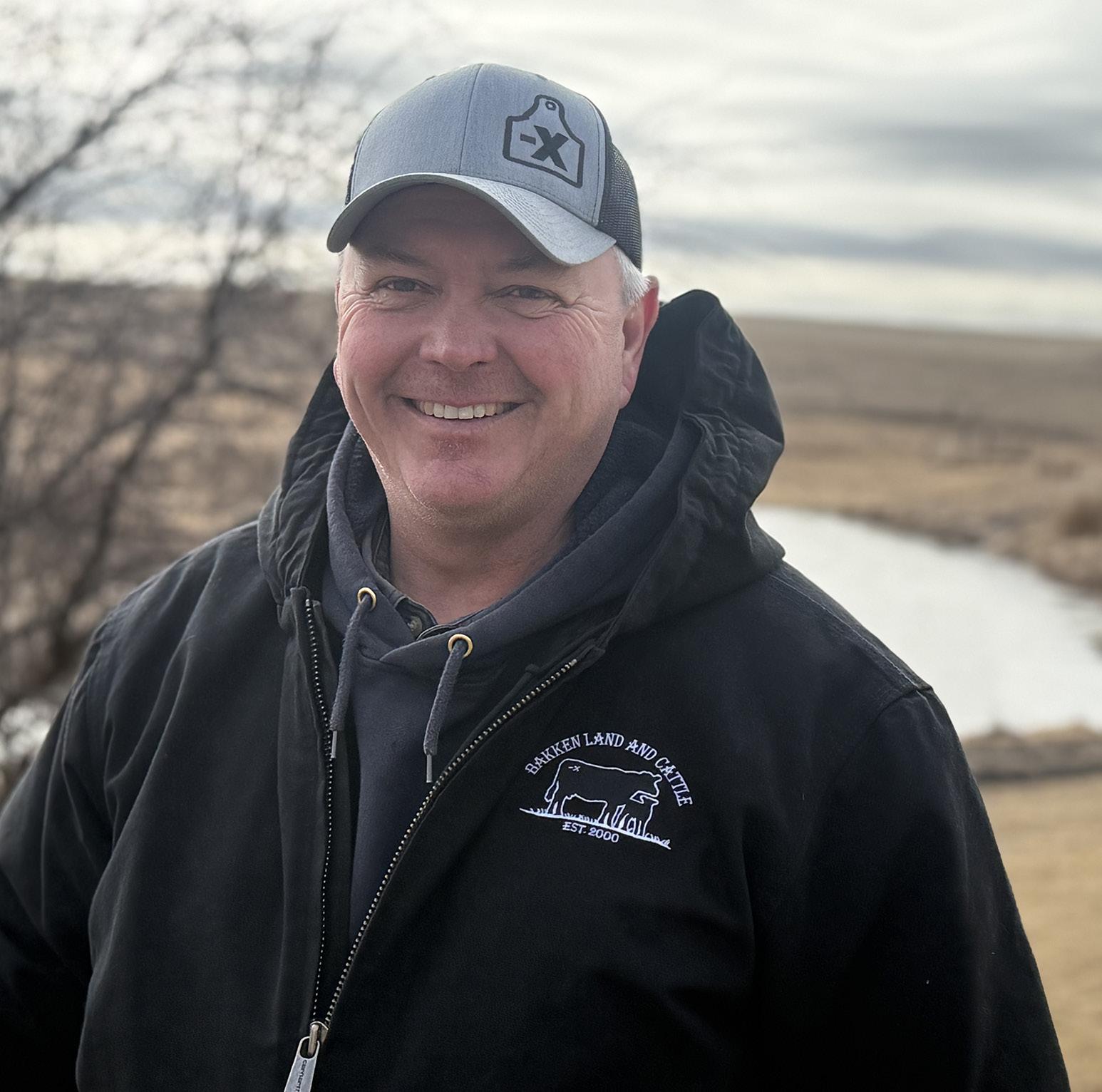
Bakken, who raises beef cattle, cover crops and row crops on about 1,600 acres in Beaver Creek, is another link in a lineage of conservationists on the family’s BLAC-X Farms operation. Peter, who farms with his brother, Jay; dad, Richard; and son, Eli, also manages a half section of native prairie, which the family uses for rotational grazing.
He began working with MAWQCP Certification Specialist Danielle Evers to become enrolled.
“I thought (MAWQCP) would be something we could do to take advantage of some of the opportunities it provided and help lend some credibility to what we’re doing,” said Bakken, who was awarded the National Cattlemen’s Beef Association’s 2018 Beef Quality Assurance Feedyard Award. “It’s important to us to help our consumers learn what we’re doing out here and that we’re doing it right.”
During the process, Bakken learned he didn’t qualify because of high fertility in his ground.
“I felt like I was doing the right things, but still didn’t qualify,” he said.
Feeling discouraged, Bakken’s determination was restored upon receiving some wisdom from former Rock County Land Management Assistant Director Doug Bos.
“In the conversation with Doug, he said, ‘You have to take a look at the program as it being an opportunity to show your strengths and your weaknesses,’” Bakken said. “And I said, ‘Well, I’ll look at it that way.’”
Evers then offered a suggestion. She asked Bakken if he’d consider turning his manure into an income stream. Intrigued, Bakken approached some neighbors he thought might be interested in the extra manure.
Persistence paid off.
“We have a couple people that we fairly regularly sell manure
to, and voila – like that – we got into MAWQCP,” Bakken said. “That’s what kept us out and got us in, was turning our manure into a cash cow. It wasn’t so much the things we did physically on our farm for conservation, but it was the fact that the program made us aware of things we weren’t thinking about doing, so now the manure part of our operation is benefiting both the soil and our balance sheet … and we’re indirectly helping our neighbors, too, with their conservation program.”
Bakken credited Evers with helping his operation become enrolled.
“Danielle was great to work with,” Bakken said. “We got to see her grow in her knowledge of how things were working. She’s detailoriented and she understood how things worked on the farm.”
Since the program became available statewide in 2015, over 1,800 farms totaling over 1.72 million acres have been certified across Minnesota. Farms have added over nearly 8,200 new conservation practices. Those new practices have kept nearly 60,000 tons of sediment out of Minnesota rivers while saving 167,000 tons of soil and 77,000 pounds of phosphorous on farms each year. The conservation practices have also reduced nitrogen loss up by nearly 50%.
Studies also continue to show that MAWQCP-enrolled farmers report higher profitability.
“Enrolling was economic development for our farm,” Bakken said. “We turned it into a cash cow and yet we still got the opportunity to utilize what we’re currently producing and have extra to sell. That has worked out well, that we’re using the things we already have to generate a few more dollars.”
MAWQCP connects farmers with local conservation district experts to identify and mitigate any risks their farm poses to water quality on a field-by-field basis. Once certified, each farm is considered in compliance with new water quality laws and regulations for 10 years. Certified farmers also receive a MAWQCP sign to display on their farm, along with other benefits, including financial assistance programs.
Farmers and landowners who are interested in becoming water quality certified can contact their local Soil and Water Conservation District or visit MyLandMyLegacy.com to enroll.
While he might’ve been an initial skeptic, Bakken is now a proud MAWQCP believer.
“I can go to bat for the program,” he said. “It made me take a look at my whole farm and what you can do in regard to conservation that maybe you might not see.”
BroughttoyoubytheMinnesotaDepartmentofAgriculture.


By Drew Lyon
For 45 years, the Northern Crops Institute (NCI) has accomplished far more than just promoting food and agriculture production in Minnesota, North Dakota, South Dakota and Montana.
That’s only the beginning of NCI’s reach, said Starbuck farmer Paul Freeman, who represents the Minnesota Soybean Research & Promotion Council on the Northern Crops Council, NCI’s governing body.
“What I love about NCI, is, it’s one thing for us to sell our products,” Freeman said, “but it’s another thing when we can bring people in to teach them how to better use the product that we’re selling and maximize our leverage and take it to the next level.”
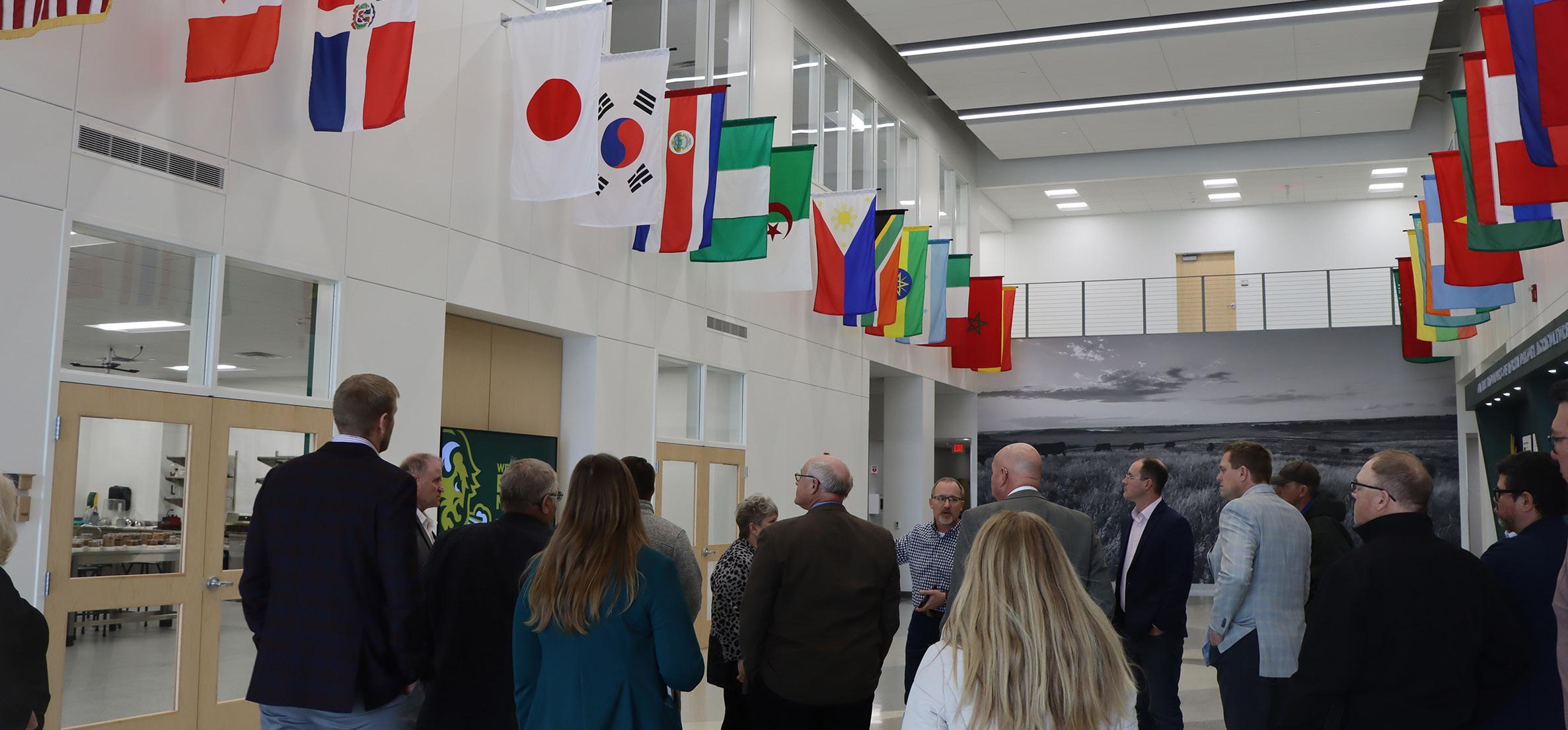
In spring 2026, farmer leaders from MSR&PC and Minnesota Soybean Growers Association held their respective board meetings at NCI’s new state-of the art facility,
the Peltier Complex, which opened in 2024 in Fargo, N.D. In between board meetings, Minnesota growers toured the 160,000-square foot facility, which houses North Dakota State University’s food science, cereal science and meat science programs, along with the North Dakota Trade Office and USDA.
“This is a very impressive facility,” said MSGA Director Bob Lindeman. “NCI is helping our customers learn more about the high-quality products we’re raising while also training the next generation of agriculture professionals.”
The Council helped fund the Peltier Complex and has long supported NCI’s efforts in educating and training international buyers through short courses, webinars and handbooks, including the Fullfat Soybean Meal Handbook. MSR&PC also collaborates with NCI on bringing trade teams to Minnesota soybean farms. While
Many MSR&PC and MSGA directors were seeing NCI’s upgraded headquarters for the first time.
NCI also works with domestic customers, in 2025 alone, 63 different countries and over 1,600 participants joined NCI’s in-person and online programs.
“These are your customers, and we pride ourselves on our international programming,” said David Boehm, NCI executive director. “We work for you.”
In August 2025, NCI’s INTSOY Intro to Soybeans Short Course, which comprised visitors from Latin America, Africa and Asia, visited the Council’s headquarters in Mankato to learn more about checkoff investments in value-added uses. In 2026, the Council is helping fund the Soybean and Soybean Meal Procurement Course to educate buyers in purchasing U.S. soybeans and soymeal that best meets their quality needs. This June 8-12, NCI is holding its annual Introduction to Soybean Course, which is expected to feature Council leaders.
“NCI is doing some really innovative things through education and product development, and I think us at the Council see it as a way to pool our resources with neighboring states to make our checkoff dollars go even further,” Council Chair Gail Donkers said. “It’s a great way to find added value for our soybeans.”
Boehm also showed off NCI’s six secure, FDA-approved food grade labs, which are used for processing and developing products to bring to marketplace, including soy foods and soy milk. NCI works with both start-up and large food companies, in addition to collaborating with the U.S. Soybean Export Council on a food-grade soybean survey.
“It’s really rewarding when we go to the grocery store and look online and
see food companies sell foods that have come from NCI,” Boehm told farmer leaders. “All that we care about is that they’re buying your ingredients.”
To cap the meeting, the group met with Feed Mill Manager Shane Mueller to tour NCI’s Feed Production Center, which supports research, training and innovation across the feed industry.
The feed mill processes fullfat soymeal, works with NDSU’s livestock units and also offers education and lab spaces for international soymeal buyers.
“As a region, we’re working together to move our products from the north to all reaches of the globe,” Freeman said.
To learn more about NCI programs, visit northern-crops.com.


Callaway farmer looks back on legacy with Minnesota Soybean
By Mark Askelson
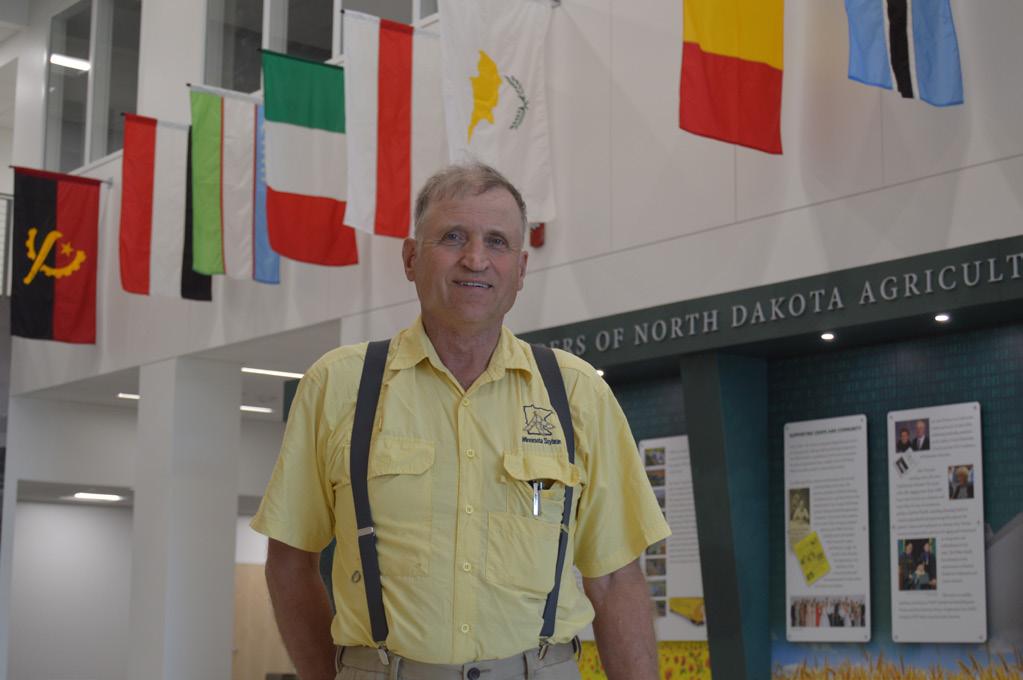
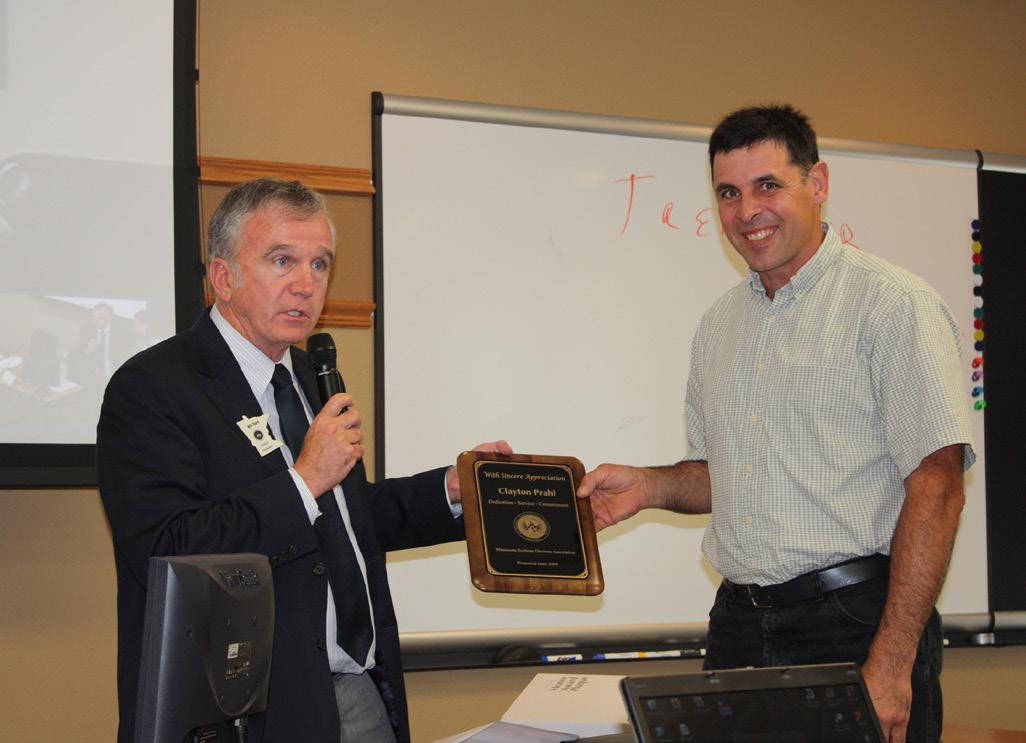
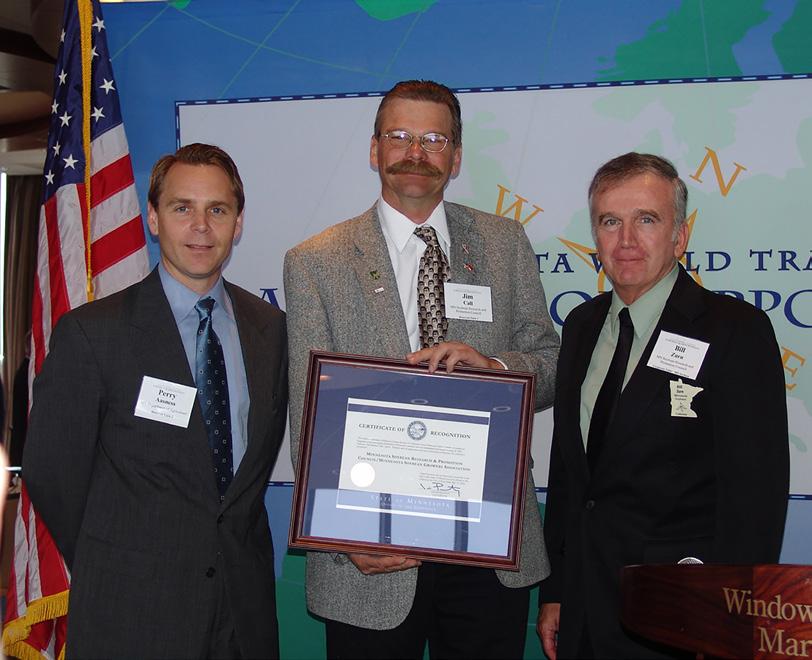
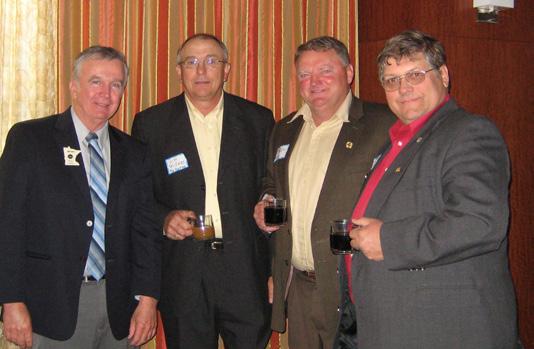
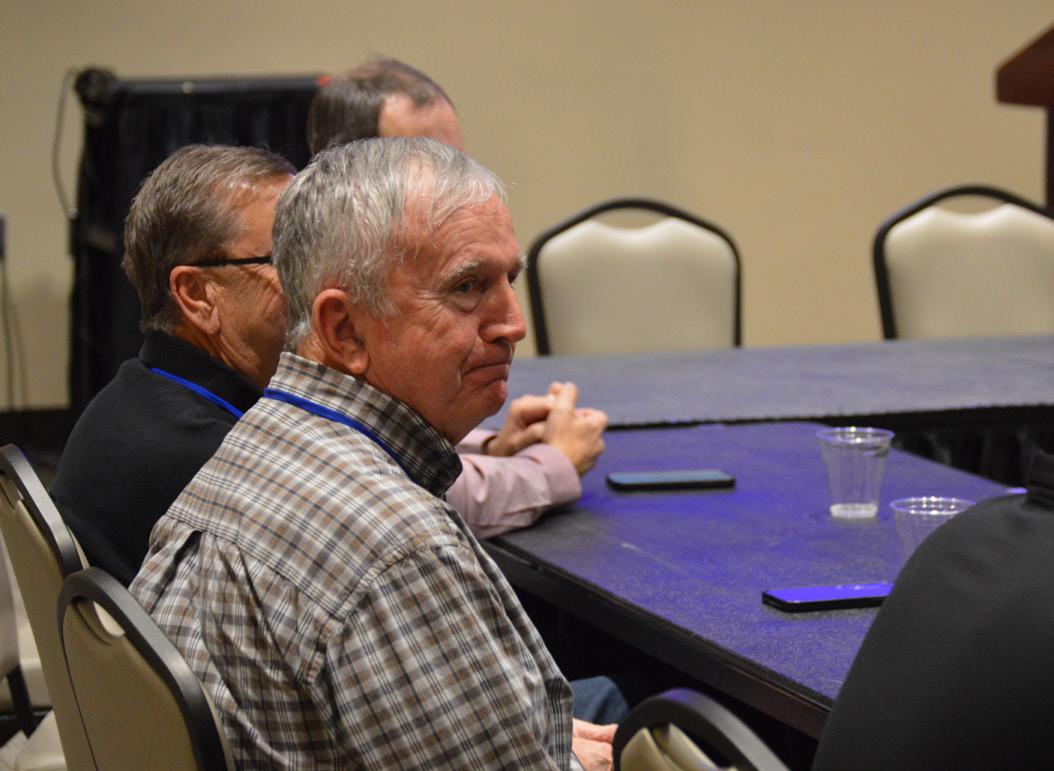
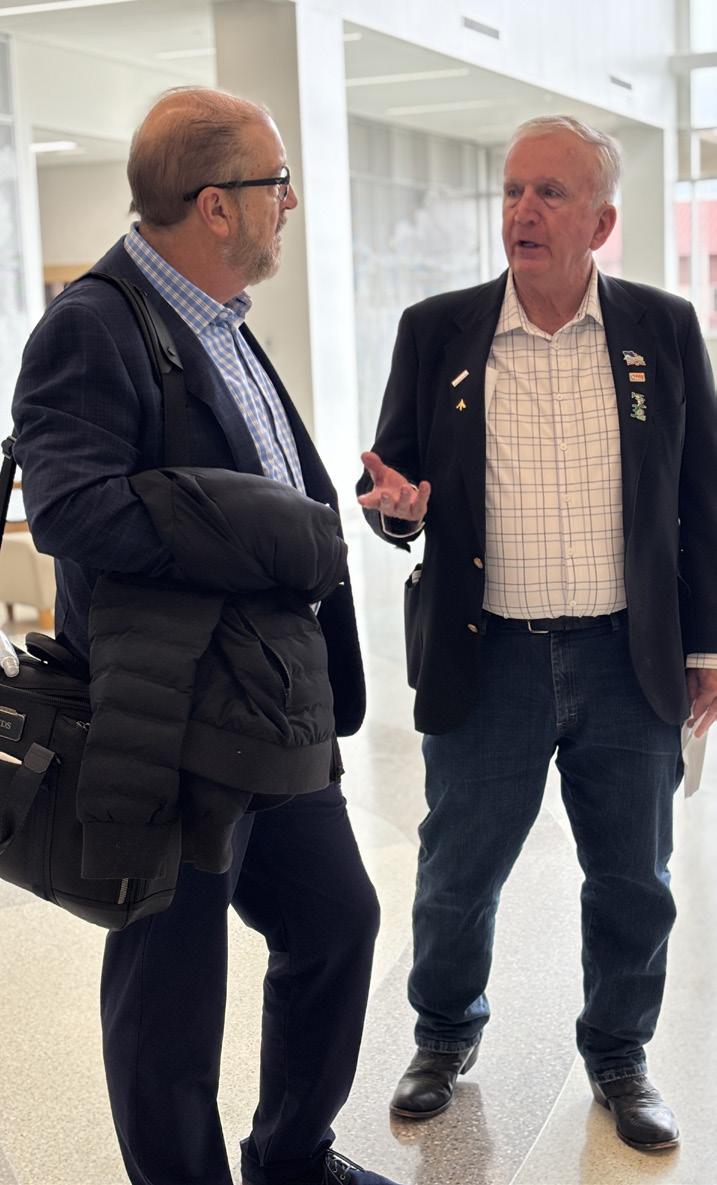
You’d be hard-pressed to find a farmer leader who has served Minnesota Soybean longer than Becker County farmer Bill Zurn, both as a checkoff leader and policy advocate.
From the beginning of biodiesel to the spawn of SoyFoam, Zurn has seen it all, having been involved with both the Minnesota Soybean Research & Promotion Council (MSR&PC) and Minnesota Soybean Growers Association (MSGA) for more than a quarter century. Now, after multiple decades supporting soybeans through developing new markets, new varieties and new uses, he’s taking a step back to let the next generation of new leaders take over and send the checkoff to new heights.
“We always talk about getting younger farmers involved, but then you look around the room and the realization sets in,” Zurn said. “I’ve been involved long enough, and it’s time for someone else.”
Zurn was first elected to MSR&PC in 1997 at a time when soybeans were not nearly as staple of a crop in northwestern Minnesota like they are now. At that time, only one of the top 20 counties in terms of soybean
production in Minnesota were located in the northwest. But, thanks to new varieties developed via the soybean checkoff during Zurn’s tenure on the Council, now four of the top 10, including the top two in the state, are in northwest Minnesota. The region is now the largest soybean area — producing over 40 million bushels each year across nearly 1.2 million acres.
“The Council had a big part in that, in helping fund soybean research on new shorter-day varieties that would do well in the north,” Zurn said at the Northern Crops Institute following his penultimate Council meeting. “We actually worked with the U of M, as well, to host several test plots on our farm for research on things such as nitrogen and soybean aphids.”
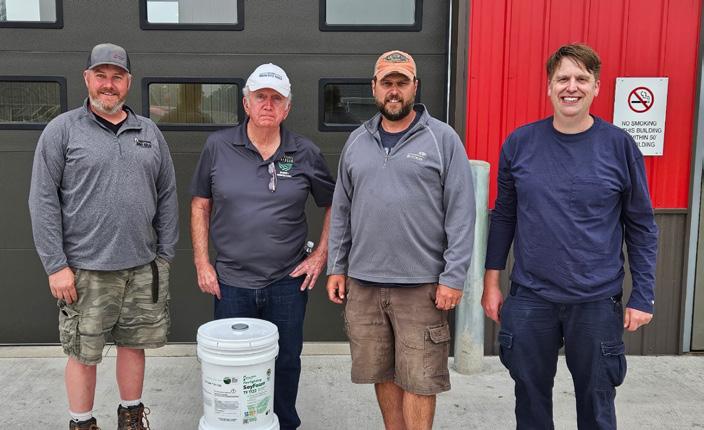
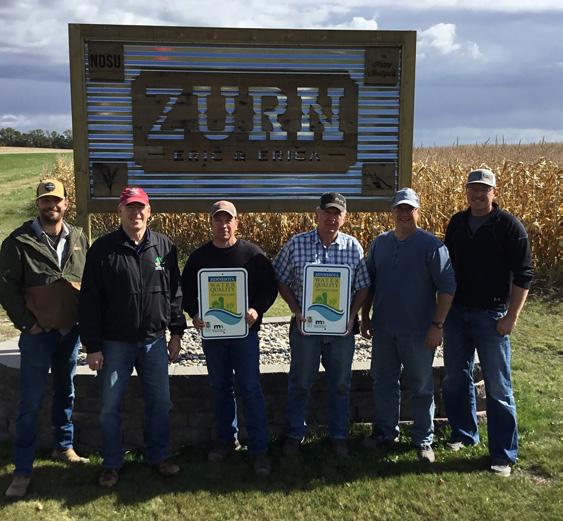
As soybean acres grew, so did the need for MSR&PC to develop and invest in new uses. Over the years, Zurn has been an integral part of promoting some of those new uses, including biodiesel, soy crayons, soy ink and SoyFoam. But one of those investments literally leads to his farm. In summer 2022, Zurn worked with Becker County to test a soy-based road sealant on a strip of County Road 14, a road that drives by his family farm near Callaway.
“The crops that I grow in my fields are being used in products to make the road that goes by my house more durable,” Zurn said. “When products like RePlay are being created, proving themselves with real results, there’s no questioning the value of investing Minnesota soybean checkoff dollars.”
Mike Youngerberg, MSR&PC director of product development & commercialization, has worked with Zurn across the decades of bringing value-added uses to market.
“Bill has always been very engaged with those people who we’ve done projects with, whether that’s the road sealant projects or biodiesel and Clean Fuels Alliance America, where he served as alternate board member,” Youngerberg said. “He always been one of those people who makes connections and knows how to use connections to help us push forward on projects.”
Along with developing new uses for soybeans, some of Zurn’s most memorable moments with MSR&PC came in the form of looking for new and expanding markets. Over the years he was able to participate in trade missions to Japan, China, Malaysia, the Philippines and even Brazil and Chile alongside then Gov. Tim Pawlenty.
“Japan, which we were trying to get them to buy more soybean meal for their aquaculture, was very memorable as we got to visit the fish markets,” said Zurn. “I had probably the best pork chop I’ve ever had in my life downtown in Japan, which was just a couple blocks from the processing plant and there was no smell, which spoke for how clean and neat they kept things.”
Closer to home, in 2015 Zurn attended a biodieselthemed See For Yourself mission to Fort Worth, where he met future Council Chair Gail Donkers.
“It was great to see his involvement in the biodiesel area and how he was such a champion for all the soybean producers of Minnesota,” Donkers said. “Bill has had such an impact on our industry over the years, and we’re so grateful for his commitment to soybeans.”
You can also add countless trips to Commodity Classic, Washington D.C., Clean Fuels Alliance America conferences and an appointment to the United Soybean Board to his resume. In addition to travel, Zurn made an impact at home hosting a handful of trade teams representing numerous countries on his family farm in Becker County.
Educating his customers, along with correcting misconceptions, has always been important to Zurn.
“There was one time we had about 80 people over, and we were showing them our soybean field, but none of them wanted to go near it because they worried about snakes,” Zurn said. “I had to explain to them that there were no snakes here.”
‘The real deal’
Along with his two decades of experience with MSR&PC, Zurn also spent a half dozen years as a director with MSGA, including a stint as president from 2008-2010 when Minnesota moved from B2 to B5 (5% biodiesel). Always one to engage and never shy away from a challenge, one of his favorite memories from his time on MSGA was when he invited then Sen. Al Franken to his farm and explained to the senator how farmers are supporting the environment.
“We were harvesting soybeans at the time, and it was the first time he had ever been on an actual working farm, so he hopped in the combine with me, and we had a little talk,” said Zurn. “I reminded him how photosynthesis works and showed him what our actual carbon footprint is, and since that time he was on board with us.”
In 2020, Zurn went a step further toward promoting soil health when he enrolled in the Minnesota Agricultural Water Quality Certification Program, a voluntary initiative supported by MSGA. In addition to growing soybeans, corn, spring wheat and alfalfa, Bill and his family also plant cover crops and use conservation tillage.
“We’re proving to the United States that we’re doing good sustainable and renewable practices here in Minnesota,” Zurn said. “Farming has changed. We’re not perfect, but we’ve always tried to do the best we can – with technology and precision ag – and meet the standards.”
A longtime friend of Zurn’s is none other than former Congressman Collin Peterson, who has engaged on agricultural issues with Zurn since the 1970s when he was still a state senator. He notes that Zurn isn’t just a great farmer, but a worthy advocate for agriculture who has no reservations about speaking up for farmers.
“He’s the real deal and he tells you exactly how it is, whether you like it or not. That’s the kind of guy you want advocating for you because you don’t have to worry about whether he’s being sincere or not,” said Peterson, who was the former chair of the House Agriculture Committee. “He’s given me a lot of advice on the Farm Bill over the years.”
Zurn isn’t sure what’s next after nearly three decades of service to the soybean industry, but he is looking forward to gradually stepping back from the farm and letting his sons Eric and Nick continue to take over the operation.
“We’re graduating out,” Zurn said. “I just hope the kids keep trading and giving me the new tractors.”
“OfalltheboardmembersovertheyearswhoI’vehada privilegetoserve,nooneisaseffectiveorastenacious intakingourstorytofindnewpartnersinmanydifferent disciplines.Billhasneverbeenshyaboutpromotingthe activitiesoftheCounciltoothersandhasbeenkeyin helpingusfindstrategicpartners.”
- MSR&PC CEO Tom Slunecka
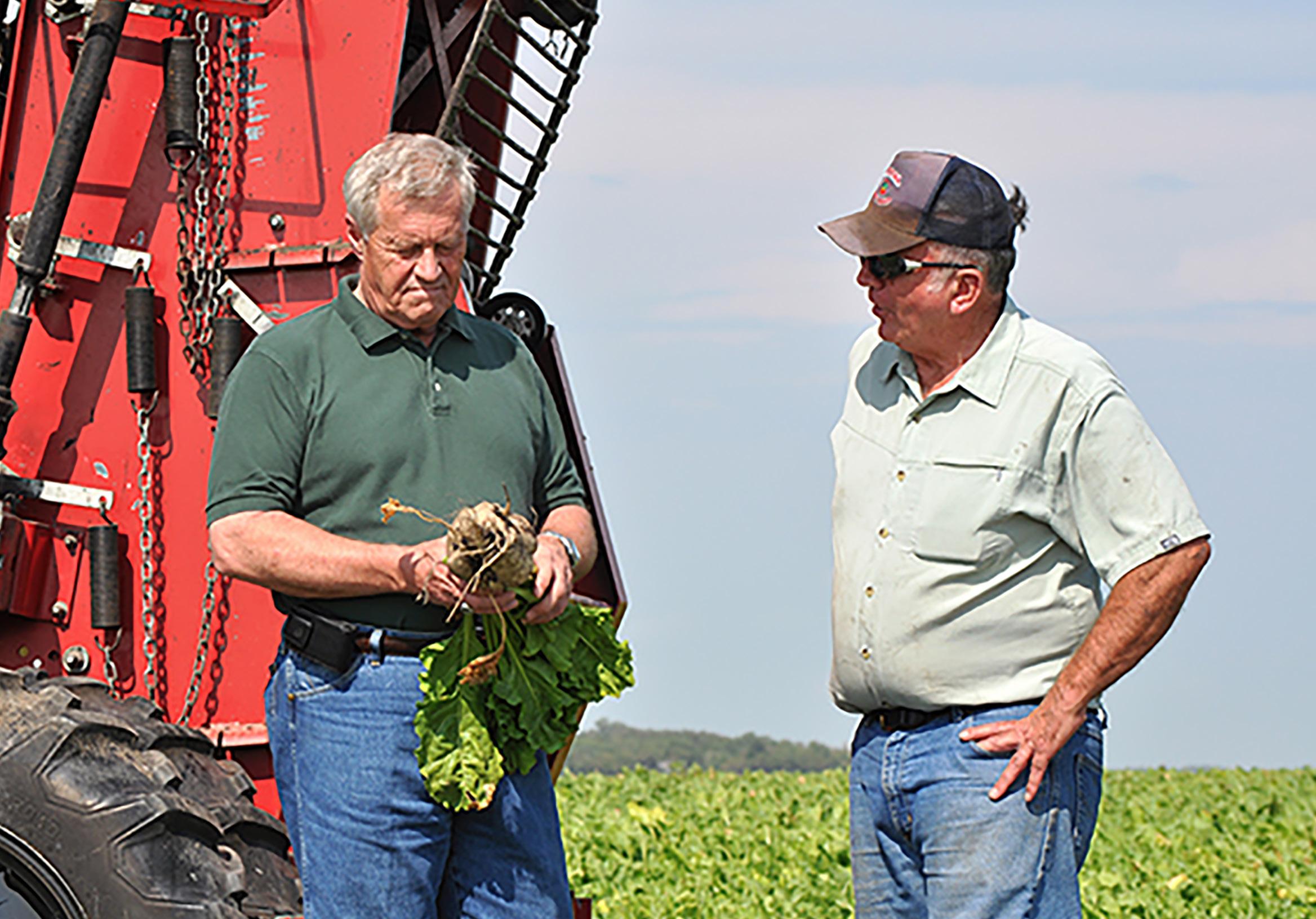
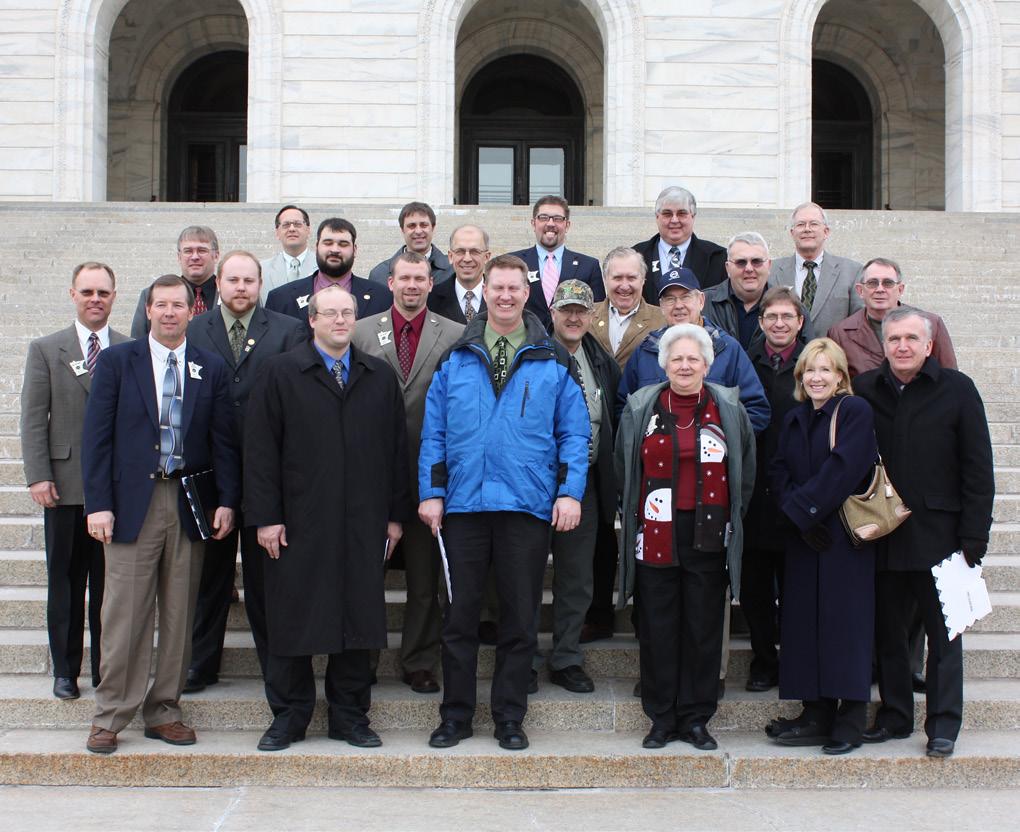
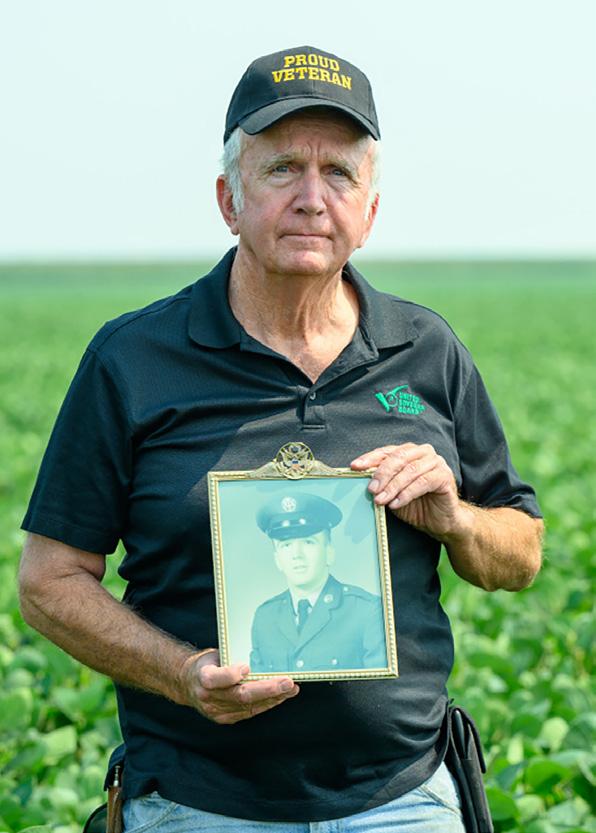
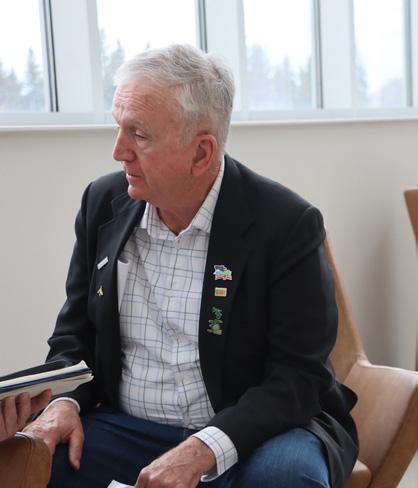
Bill Zurn is also a veteran of the North Dakota Air National Guard. He worked as a civil engineer at various domestic Air Force bases and retired as a senior master sergeant.
“You learn how to manage people,” Zurn told Soybean Business in 2019. “Because of that, you have to learn how to get along with people and work together. That helped me in my life, and on the farm, too.”
Photo courtesy of USB.




By Drew Lyon
In a crowded field packed with soy checkoff pioneers, Sander “Sandy” Ludeman stands tall among the giants of the industry.
“The United Soybean Board (USB) exists today thriving, transparent and farmer-led because Sandy and his peers built it right the first time,” said Ludeman’s friend and Mississippi farmer Jerry Slocum.
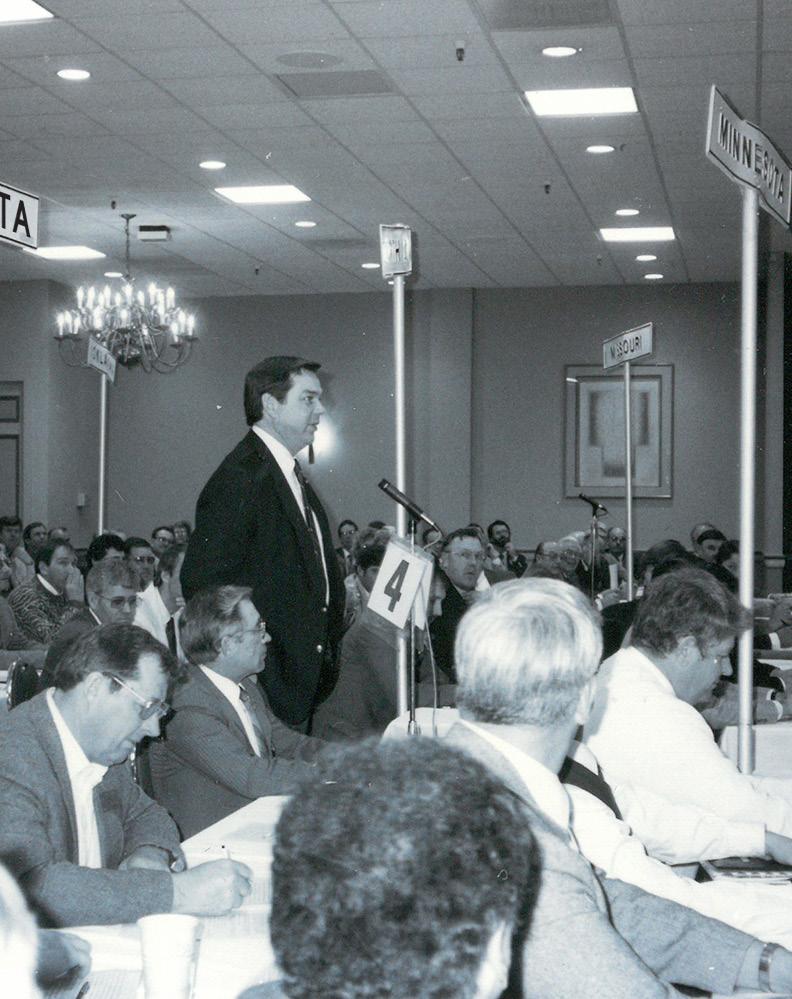
In the late 1980s, when soybean prices were stuck around (and often below) $6 per bushel, Ludeman, a southwest Minnesota farmer, held greater ambitions for soy and helped develop legislation and campaigned to build a national coalition among industry partners to create the soy checkoff through its first farmer referendum. Ludeman’s leadership led to the federal soybean checkoff’s inclusion in the 1990 Farm Bill.
To get there required grit, persistence and Ludeman’s stubborn belief in the bean.
“We had to prove to farmers that this national checkoff would work,” Ludeman said. “That was a challenge in and of itself.”
Over time, Ludeman more than proved his, and the checkoff’s, worth. From 1991-92, he served as USB’s first chairman. With USB celebrating its 35th anniversary in 2026, Slocum nominated Ludeman for the prestigious Tom Oswald Legacy of Leadership Award (TOLA), which industry leaders who have left an indelible mark on the U.S. soy industry and exemplify the character of the late Tom Oswald, a farmer leader who consistently asked, “How do we make it better-er?”
And Sandy Ludeman is arguably the best of the best.
“Sandy Ludeman embodies the spirit of the TOLA: A farmer whose leadership was rooted in integrity, fairness and a deep belief in the power of collective action,” Slocum said.
Oswald was dedicated to taking extra steps and efforts needed to exceed expectations and deliver the best possible outcomes – attributes that Ludeman personified throughout his agricultural career.
“Sandy was instrumental in building USB into what it is today, and he obviously earned the respect of his peers,” said USB Secretary Tom Frisch, a Dumont, Minn., farmer who was involved in selecting the award winners. “I had a chance to have supper with Sandy and the past chairs, and it’s fascinating to learn how the checkoff has grown, and the role people like Sandy played in making the checkoff into what it is today. It’s quite an achievement.”
Cherry on top
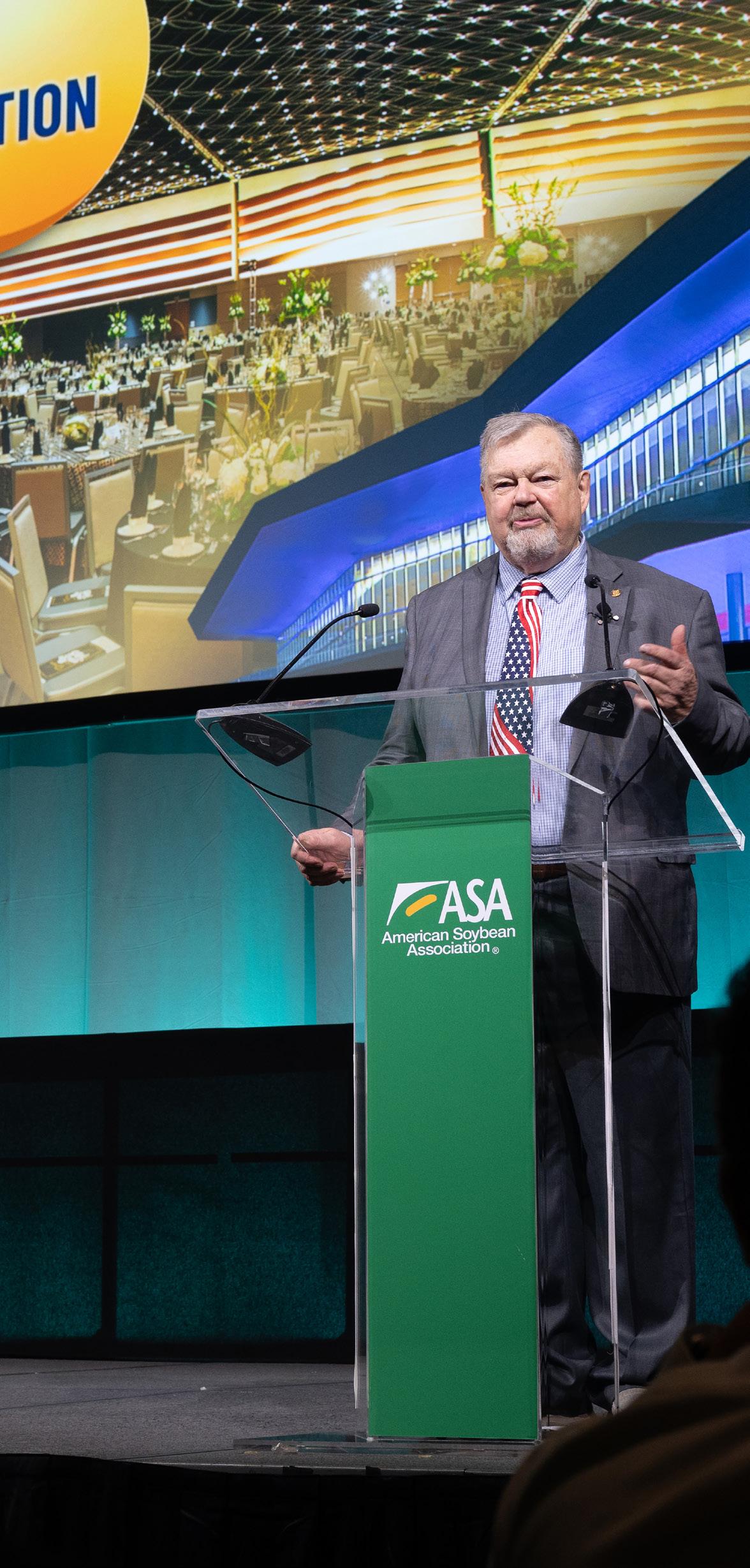
Ludeman had planned to attend the 2026 Commodity Classic in San Antonio for the annual USB reunion with his fellow past chairs. He wasn’t sure what to expect when told he would be honored at the American Soybean Association’s (ASA) Award Dinner. It wasn’t until the afternoon of the event that Ludeman learned of the specific award he was receiving.
“I was surprised,” Ludeman said.
With a history of farmer leadership dating back over 50 years, Ludeman has become accustomed – though also humbled – to being recognized for his efforts.
In 2010, his alma mater, the University of Minnesota, presented Ludeman with the Siehl Prize for Excellence in Agriculture. Ludeman used his $50,000 stipend to create the Sander and Peggy Ludeman Land Grant Scholarship for students enrolled in UMN’s College of Food, Agricultural Natural Science (CFANS). In 2018, he earned CFANS’ Lifetime Achievement Award. For Ludeman, a 1969 UMN agricultural economics graduate, that honor was a full-circle moment: The award presentation took place in the St. Paul Student Center, where a half-century earlier, he worked overnights as a student janitor. Sandy and his wife, Peggy, were also named ASA’s 2002 Conservationists of the Year for planting over 2,000 trees across their three farmsteads and supporting wildlife, along with minimum tillage practices. The Ludemans have since earned several conservation awards.
But winning the TOLA award alongside his peers might have been the cherry on top for this retired farmer, showing that his peers appreciate Ludeman’s monumental impact on the soy checkoff.
“It’s probably one of the more premier ones,” Ludeman said. “It’s the first time it’s been given to a farmer leader, so, being that fact, it’s pretty significant.”
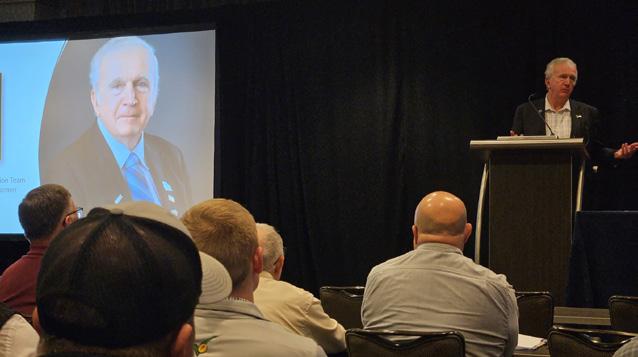
Ludeman delivered his speech to a capacity crowd of farmer directors, friends and industry leaders, peppering his remarks by mixing soy checkoff history with a pep talk from a farmer whose vision helped U.S. Soy’s global reputation prosper, even during tough times.
“Our greatest accomplishment is building demand,” he said. “The checkoff has done its job in creating demand and increasing the value of our soybeans.”
Promoting U.S. soybeans is infectious, Ludeman said, rooted in a decades-long collective effort to uplift an entire industry through taking full, not half, measures.
When the federal checkoff was first proposed, industry economists estimated the program would generate $60 million annually. By 2023, the soy checkoff was generating $157.5 million. Today, for every dollar farmers invest into the checkoff, growers earn $12.30 in return value, and more than $18 when international marketing efforts are included. The checkoff also continues to see widespread endorsement from U.S. farmers: In 2024, only 207 growers requested a checkoff referendum, far below the required 10 percent threshold.

“I accept this award with humble appreciation. Some of us (who) get involved in soybeans, it seems like it runs through our veins,” Ludeman told the audience at Commodity Classic. “We have demonstrated to the world what the American soybean industry can be, and we’re still going forward.”
The Ludeman family, and a long line of Sanders, has farmed the land in Tracy, Minn., since the early 1900s. Sander V was born in 1947 (his grandson Sander VII was born in 2002). Though quiet and reserved, Sandy found his voice through agricultural leadership upon attending the UMN, which led to participation in the Danforth Fellowship Foundation. He also met his future
recalled, “but we kept rolling along.”
Undaunted, in 1985 Ludeman served on the precursor to the United Soybean Board, the American Soybean Development Foundation, focusing on an increasing need for farmer-funded research, building new markets and creating value-added uses for soybeans. Though extensive outreach was needed, momentum continued toward creating a national checkoff.
“We always thought there were more opportunities in the market,” Ludeman said.
Ludeman didn’t exactly step into a ready-made position as USB chairman. When the national soy checkoff launched in September 1991, he navigated early skepticism from grain industry partners and state

organizations. He was also tasked with hiring USB’s first CEO, accountant and secretary to oversee a $17 million budget. Times have changed: In 1991, the U.S. soybean crop was under 2 billion bushels. Today, the nearly half-million U.S. soybean growers harvest over 4 billion bushels. Meanwhile, USB’s staff has since expanded to nearly 50 employees who oversee the checkoff’s $121 million budget for fiscal year 2026.
Ludeman also played a pivotal role in promoting international trade. He helped open USB’s first international office in Moscow — “I literally moved the furniture in” — worked with livestock producers in Venezuela and also participated in an early trade mission to China, which has since become far and away the largest market for U.S. soy. He was also involved in biodiesel engine testing and promoting new uses for soybean oil decades before sustainability became a widespread industry initiative.
exist before, ultimately creating long-term value for soybean farmers and the agriculture industry as a whole.”
In the late 1980s and early 1990s, Ludeman shaped the structure and governance of what became the farmer-funded investment mechanism serving U.S. soybean farmers nationwide. As founding chair, Ludeman helped draft the Soybean Promotion, Research, and Consumer Information Act.
A 1989 Soybean Digest article called the proposed checkoff the “biggest gamble ever.” Today, current USB leaders look back with awe on what Ludeman and his colleagues accomplished.
“These guys had some great ideas and great ambition to push the checkoff forward,” said USB Director Lawrence Sukalski, who represents Minnesota on USB alongside Frisch and Joel Schreurs. “To think where we’re at 35 years later is quite an achievement.
applications to more than 1,000 consumer products — replacing petroleum-based materials, plastics, PFAS or “forever chemicals” and formaldehyde in products ranging from tires and turf to asphalt and firefighting foam. To maintain global competitiveness, farmers are
While he’s passed the torch to the next generation, Sandy Ludeman is still invested in the checkoff’s past, present and future. After all, it’s in his blood.
“I wish everyone well and want to see the checkoff keep moving ahead,” he said.
To view a video of Ludeman from the awards ceremony, visit USB’s YouTube page at youtube.com/@UnitedSoybeanBoard.
By Deanna Kanne
In the culmination of a months-long review process, the Minnesota Soybean Research & Promotion Council voted this spring to fund 24 research projects for the 2026 crop year. The proposals are separated into three unique categories: breeding and genetics, pest management and other agronomy.
“The distinction is very important,” said MSR&PC Research Director Sergio Cabello Leiva. “It gives us an opportunity to address challenges for agronomy for general production; for integrated pest management that includes weed signs, disease control, insect control; and also the genetics or breeding part, which includes developing new varieties to advance soybean yield or different soybean trades.”
While there are longstanding projects that MSR&PC continually invests in, including the University of Minnesota Soybean Research Center, new faces and proposals were presented this year in each category.
“I definitely think there were as many, if not more, options,” said Corey Hanson, MSR&PC District 1, 2 & 3 director and chair of MSR&PC’s research action team. “I think with the federal government cuts last year and the year before, we’ve probably seen the largest increase. They’re looking for checkoff dollars to help supplement some of the fundings.”
As a checkoff steward, Hanson takes personal responsibility for making sure the proposals are a good use of checkoff money.
“I value people’s opinions to try to make the cuts and make sure that we are as careful and thrifty with our money as we can be,” he said.
Let’s take a closer look at seven of the 24 projects the Council is funding this year.
Advancing Varietal Resistance to Soybean Cyst Nematode in Minnesota – Aaron Lorenz (University of Minnesota)
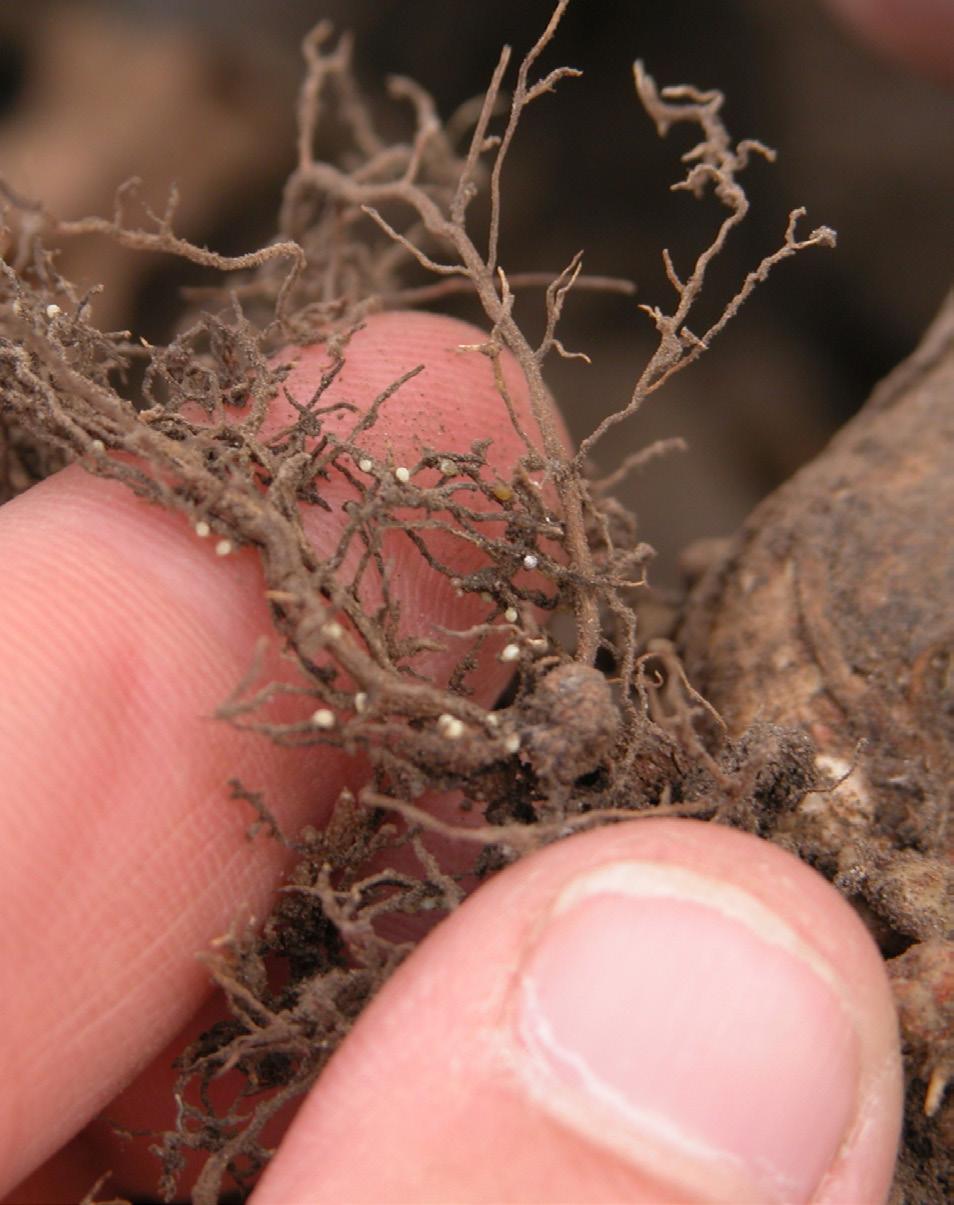
Soybean cyst nematode (SCN) is a persistent threat to growers throughout Minnesota. Fields infested with SCN are more susceptible to other disease, pest and environmental stresses. Moreover, many parts of Minnesota have seen a breakdown in varietal resistance, with the appearance of new SCN races capable of overcoming the widely grown 88788-source of resistance. Three UMN testing sites (including Crookston) had SCN populations determined to be of HG Type 2 which are virulent on PI 88788.
Developing new germplasm with alternative forms of resistance to combat resistance breakdown for long-term success is an important function of the public sector breeding efforts. The overall objective of this project is to advance the development of SCN-resistant soybean varieties as well as provide accurate and unbiased sources of information on the resistance of commercial soybean varieties.
Specific aims include: 1) Enhance the efficiency and efficacy of breeding for SCN resistance through the deployment of DNA markers linked to major genes conferring SCN resistance; 2) Advance new sources of SCN resistance and expand the use of these new sources for crossing in the breeding program.
Advancing Biotechnology to Improve and Understand Soybean Traits – Robert Stupar (University of Minnesota)
Biotechnology, including genetic transformation and gene editing, is one of the most highly used and promising approaches for genetic improvement in crops. The primary purpose of this proposal is to continue to develop and use modern biotechnology tools and advances to develop a deeper understanding of the genes that control critical traits in soybean and identify modifications of these genes for trait improvement.
With support from MSR&PC, this group has been at the forefront in developing and using these approaches for soybean research and improvement. In recent years, MSR&PC has provided the base funding to support the Stupar lab soybean transformation facility. These funds have been leveraged to support various projects that focus on traits of critical importance to Minnesota soybean producers, including projects sponsored by both growers (e.g., MSR&PC and the United Soybean Board) and public agencies. This year’s proposal continues efforts to maintain this facility and use genetic transformation and genome engineering methods to investigate soybean gene function and improve plant architecture and stress tolerance traits.
Carbon credits in Minnesota: Evaluating the dual impact of agricultural management practices on carbon sequestration and crop yield – Seth Naeve (University of Minnesota)
This study evaluates the economic reality of “carbon farming” for Minnesota producers. While carbon credits offer a new revenue stream for adopting sustainable practices like cover crops and reduced tillage, adoption remains low due to uncertain financial returns and yield risks. Minnesota’s “cold climate” presents unique risks compared to other regions. While no-till farming preserves soil moisture (beneficial in dry years), the residue cover slows soil warming in the spring. This creates concerns regarding germination and early growth in Minnesota’s short-growing season.
To address this, the project aims to answer two fundamental questions:
1. Sequestration: How much carbon can actually be sequestered in Minnesota systems?
2. Yield: How do these changes specifically impact yield?
Pilot Sampling Program to Screen for Herbicide Resistance in Minnesota Weeds – National Agricultural Genotyping Center
Minnesota farmers and other agriculture professionals report new cases of weeds overcoming herbicides each year. As herbicide resistances (HR) continue to spread, identifying where and what HR traits are lurking in local weed populations can help inform control strategies. DNA testing is a relatively new method that can rapidly screen for specific HR markers within emerging, in-season weeds. Unfortunately, farmers, crop advisors and Extension staff have limited access to this biotechnology in practice. The not-forprofit National Agricultural Genotyping Center (NAGC) has led a multi-year, statewide initiative to evaluate the distribution of HR in waterhemp and kochia populations in North Dakota. Since 2023, it has received over 1,000 leaf samples via convenient pre-paid collection kits. Collectors receive a personalized and confidential report on Group 2, 9 and 14 herbicide resistances in submitted leaf samples within five days of sample arrival to NAGC. At the end of the cropping season, data are aggregated at the county level to evaluate statewide distributions of HR. The aim of this program is to increase awareness to the growing HR crisis and offer new diagnostic technology for Minnesota growers to identify the HR potential of weeds in their fields.
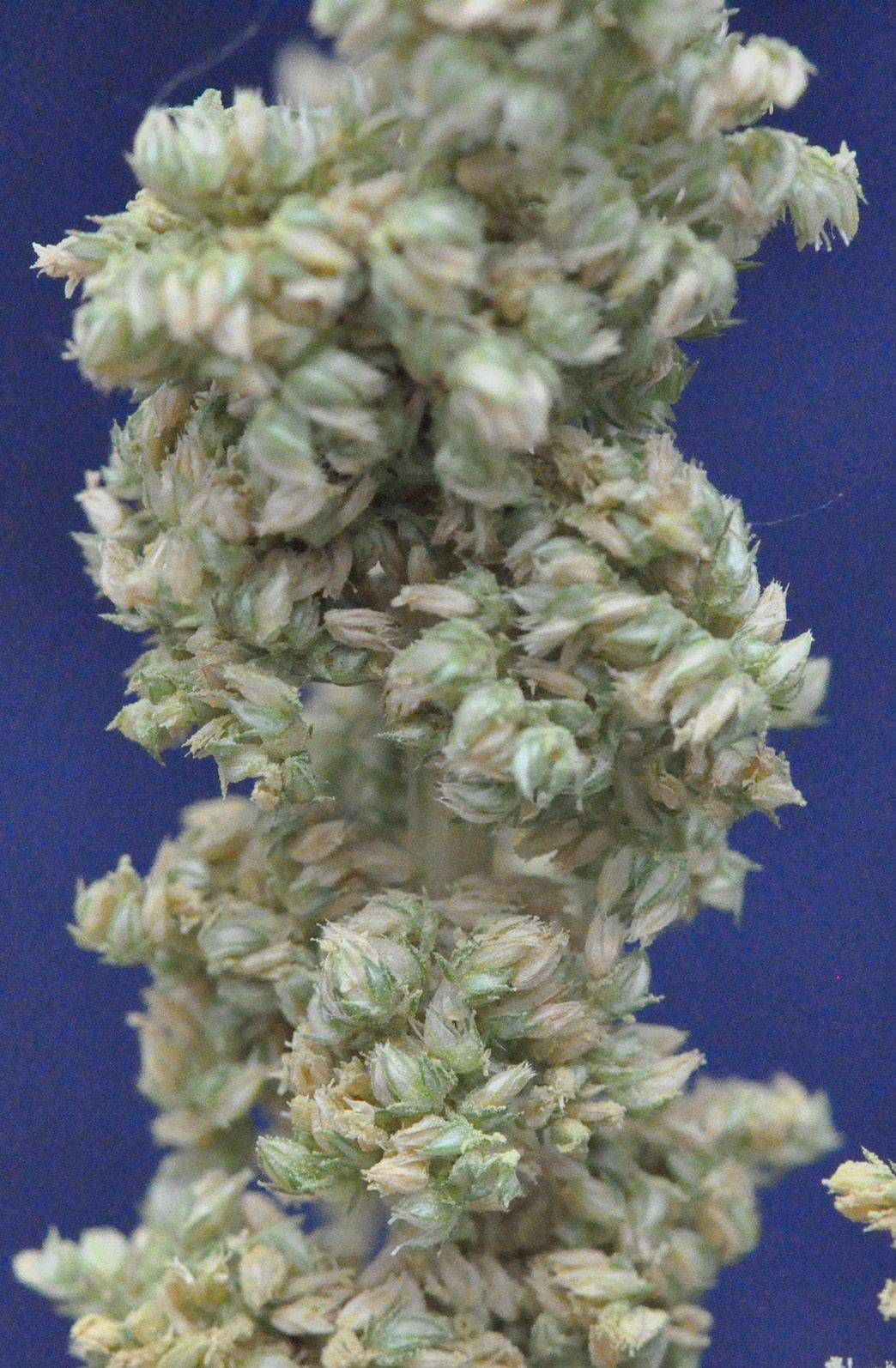
2026 Soybean Plant Health and Value-Added Industry Product Impact on Yield – Next Gen Ag, LLC
This grant focuses specifically on providing an inclusive industry comparative program in plant health product impact on yield and the objectives will be achieved through four sub-protocols. Research will be conducted on the research farm in Renville, Minn., with seed and chemical provided by supporting industry partners. Objectives are to 1) involve nine different industry partners; 2) evaluate yield impact of plant health products; 3) non-biased yield data for plant health studies; 4) provide equal opportunity to industry partners to display qualifying products and provide the farmers an opportunity to evaluate a need to include plant health or value-added products in their operation.
Next Gen Ag, LLC, is a longtime partner of MSR&PC and is an independent agricultural contract research company located in Renville.
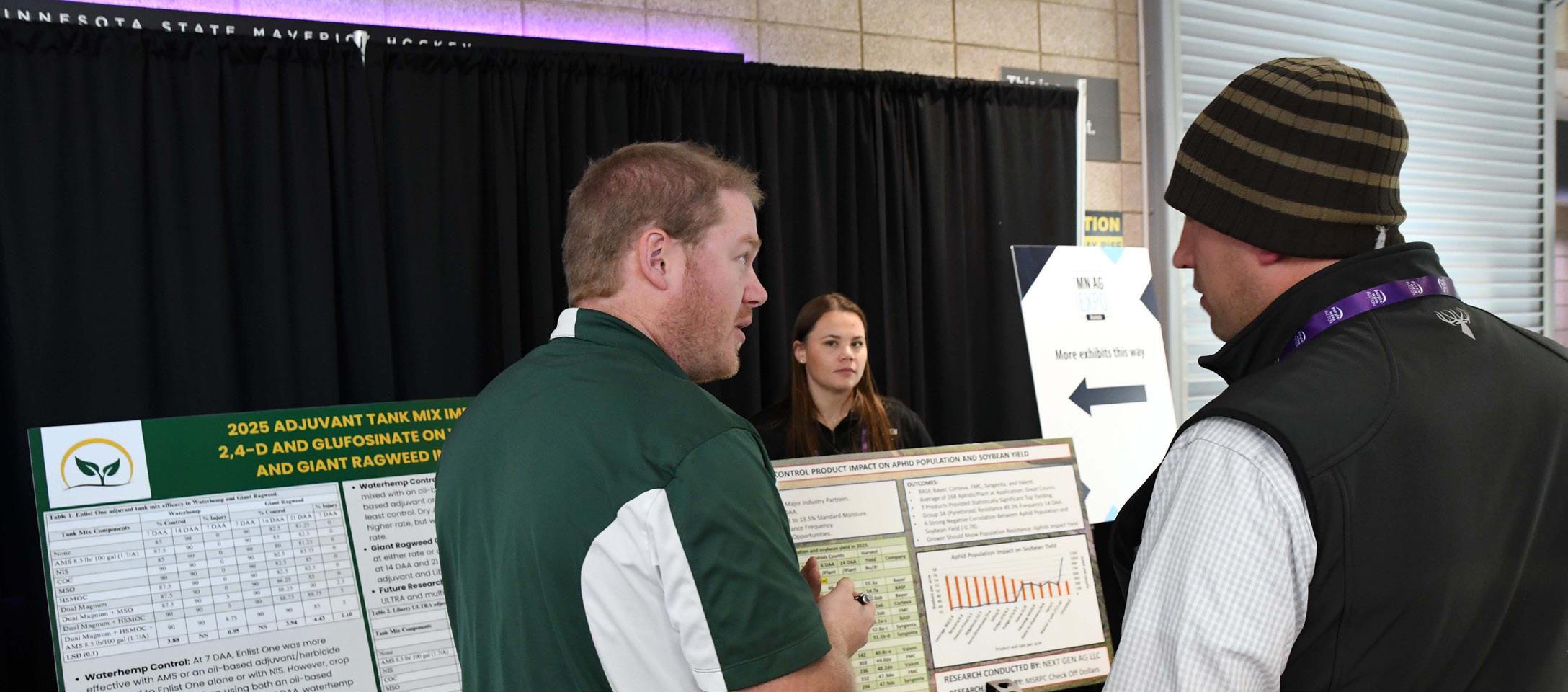
Andrew Lueck (left) of Next Gen Ag discusses his checkoff-funded research at the 2026 MN Ag Expo.
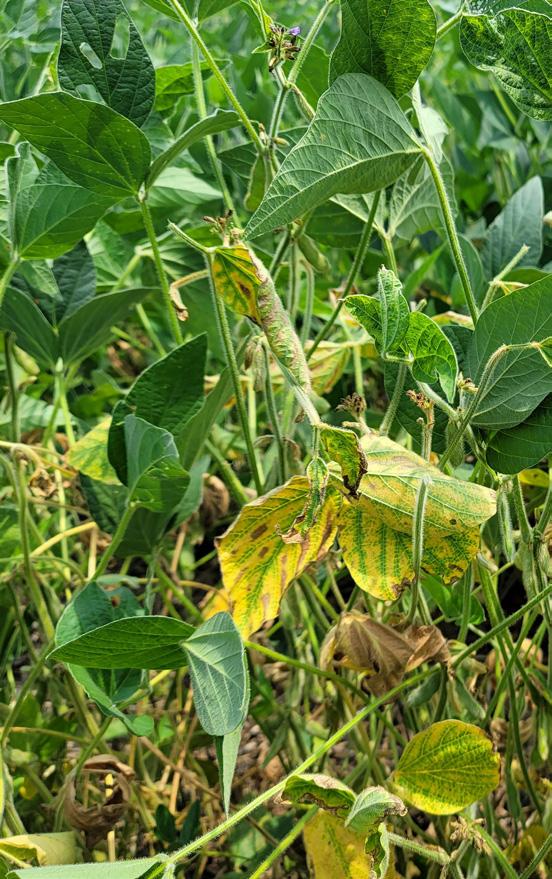
This proposal is directed at red crown rot, a new disease of soybean in Minnesota. Red crown rot is caused by the soilborne fungus Calonectria illicicola. This disease has been spreading across the Midwest in recent years and was confirmed in Minnesota (and Wisconsin) in one field in each state for the first time in 2025. Red crown rot causes root rot and produces a toxin that damages the leaves, which, combined, can reduce soybean yields by at least 30%. Red corn rot is a poorly understood disease, especially in northern Midwest conditions.
The overall goal of this proposed project is to establish key baseline information to help researchers and growers understand the distribution, risks and potential management options for red crown rot in Minnesota. The major goals are to 1) understand the distribution of red crown rot in Minnesota and validate new diagnostic procedures; 2) understand the potential to manage red crown rot in Minnesota with northern soybean varieties and fungicidal seed treatments, and 3) understand how often red crown rot co-occurs with other diseases and if coinfection is required for red crown rot to cause serious crop damage.
Minnesota’s soybean industry is at the forefront of sustainable innovation, yet herbicide use remains a major cost driver and a key point of concern for both public perception and environmental health. Current methods of chemical weed control, though effective, contribute to herbicide resistance, increase input costs and attract scrutiny from environmentally conscious consumers. This project proposes an alternative: a fully autonomous, AI-integrated, laser-based weed control system that can precisely identify and neutralize weeds in soybean fields, without the need for herbicide application. This system combines machine vision, deep learning and a highpower diode laser mounted on an unmanned ground vehicle (UGV). The laser is guided in real-time by AI models trained to recognize common soybean field weeds, including kochia, waterhemp and lambsquarter. Using this system, soybean farmers can target and eliminate weeds at the individual plant level, avoiding blanket herbicide treatments and their associated costs. The project will generate outreach deliverables, including a video explainer, social media infographics and one-page guides for growers. This initiative emphasizes sustainability, innovation and profitability around Minnesota soybean production.
By positioning growers as leaders in cutting-edge, non-chemical weed management, this project will enhance the image of soybeans among consumers, buyers and public stakeholders, while delivering tangible economic and environmental benefits to Minnesota farms.
Visit mnsoybean.org and our social media pages for research updates throughout the 2026 growing season. MSR&PC will also be releasing its 2025 Research Report this fall.
New management guides help MN soybean farmers combat rising nematode threats
By Soybean Business staff
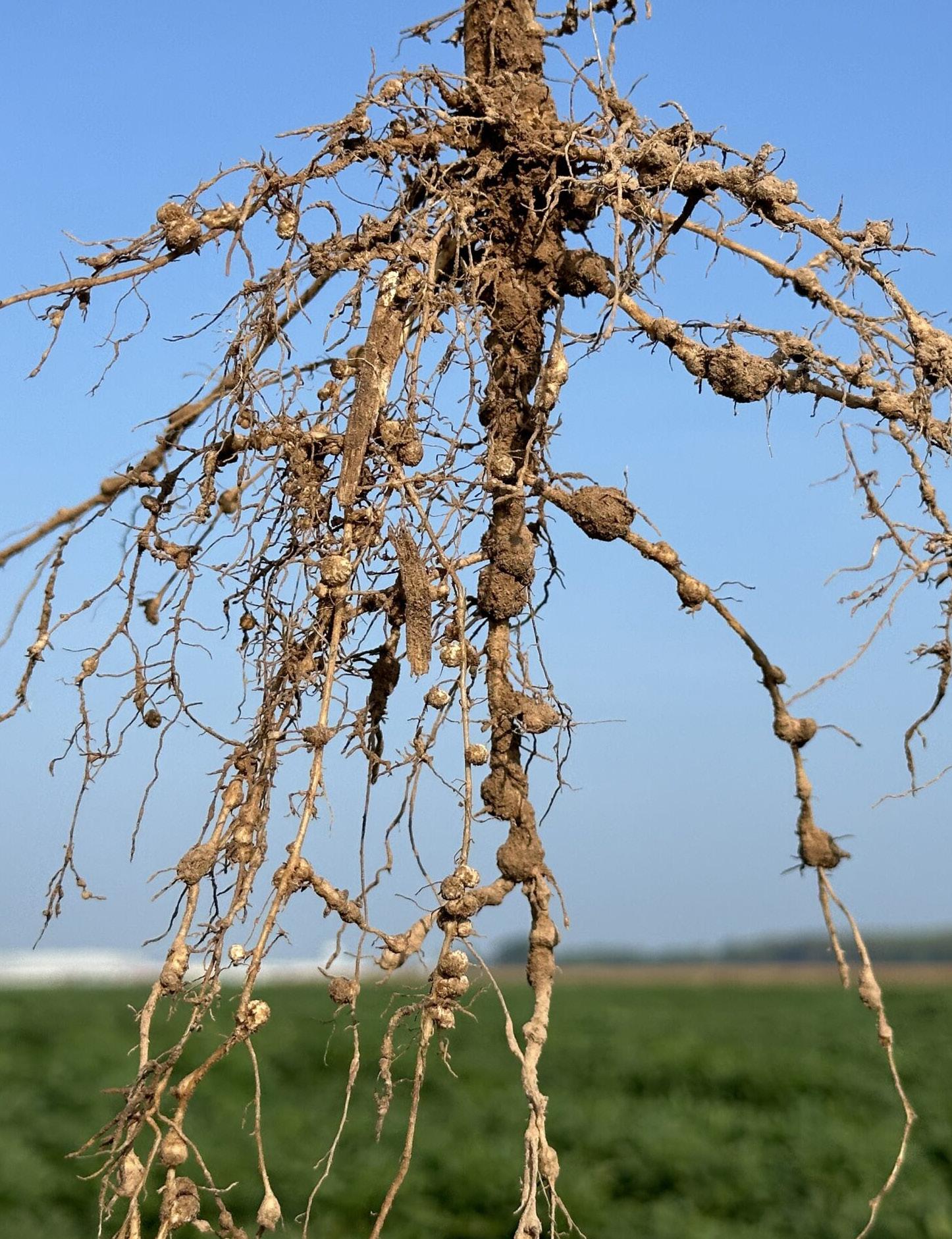
Soybean cyst nematode (SCN) isn’t the only nematode species threatening Minnesota soybean production today. To assist Minnesota’s over 25,000 soybean farmers in staying ahead of emerging nematode threats, The SCN Coalition has expanded its educational outreach to create the Soybean Nematode Management Guides, providing practical tools and sciencebased strategies to identify and manage four yield-robbing, parasitic nematode species.
More nematode species. More problems.
Nematode management isn’t one-size-fits-all as several species can infest soybean fields — each with distinct life cycles, symptoms and impacts on yield.
Funded with checkoff support from the United Soybean Board (USB) and North Central Soybean Research Program (NCSRP), and developed by Extension plant pathologists and nematologists, the Soybean Nematode Management Guides provide soybean farmers with science-based tools to soil test and identify nematode infestations, develop tailored management strategies and recover lost yield potential caused by:
Soybean cyst nematode (SCN): Known as the No. 1 yield-grabbing pathogen of the soybean crop in North America, SCN causes up to 30% yield loss without demonstrating noticeable aboveground symptoms, leading to annual losses exceeding $1.5 billion.
Root-knot nematode (RKN): Another widespread threat, RKN species — including Southern
RKN — can cause 25% yield loss in individual fields and is found in most soybean production regions in the U.S.
(RLN):
A collection of over 100 species, RLN’s impact on yield extends beyond soybeans. With a broad host range, RLN can also reduce yield in rotational crops, including corn, and lead to recurring economic losses.
term nematode control
While it’s impossible to eliminate nematode pressure from an infested field, the Soybean Nematode Management Guides arm soybean farmers with multiple active management strategies shown to effectively reduce plant-parasitic nematodes’ impact on yield.
“The SCN management guide shows how farmer soy checkoff dollars are being leveraged to go further,” said McLeod County farmer Bob Lindeman, who represents MSR&PC on NCSRP. “Minnesota is a big state with a diverse farm landscape, but we all share a concern around SCN, and this guide will go a long way toward managing SCN across the state.”
Available online and for digital download, the four Soybean Nematode Management Guides are ready for use, putting the power of proven strategies in the hands of soybean farmers and their crop advisors to help actively manage these pests and protect yield.
Ever since SCN was first discovered in Minnesota in the late 1970s, the Minnesota Soybean Research & Promotion Council has funded research projects to properly address SCN management throughout the state. One recent project, overseen by University of Minnesota Extension Educators Angie Peltier and Heather Dufault, looked at SCN population growth in northwest Minnesota (MSR&PC Director Corey Hanson hosted the research on his Norman County farm). Another project, led by UMN Plant Pathologist Senyu Chen, is focused on SCN-resistant varieties.
“Our research is helping farmers on the farm,” MSR&PC Treasurer Glen Groth said. “Without checkoff dollars, a lot of this research doesn’t get done.”
Scan the QR code to view the Soybean Cyst Nematode Management Guide.
MSR&PC directors are sending signals

By Drew Lyon
The Minnesota Soybean Research & Promotion Council (MSR&PC) has set out to claim 2026 as the Year of the Bean in the State of Soy. After laying out a hockey-themed booth at this year’s MN Ag Expo, the Council continued touting the value of the soy checkoff during a 13-part series, in partnership with Brownfield Ag News, dubbed State of Soy. The Council will continue the theme throughout the year.
Over the three-month campaign, which generated over 5 million media impressions, 10 MSR&PC directors spoke with Brownfield Ag News Reporter Mark Dorenkamp about the Council’s checkoff priorities in agronomic research, developing value-added uses, building new markets and cultivating the next generation of farmer leaders.
Chair Gail Donkers was featured in the first two episodes, highlighting Minnesota’s agriculture wide economic reach. Minnesota’s soybean industry alone accounts for about 25,000 jobs across the state.
“I’m not sure many people realize how important soybeans are to Minnesota’s economy. You take that money that agriculture generates, and it turns over several times in our communities,” she said. “In Minnesota, every aspect of our lives is intertwined with agriculture. We’re all tied back to the farm.”
Vice Chair Ben Storm, who farms in Dover, Minn., discussed how the Council, through collaboration with state and national partners, continues to invest in emerging markets in Sub-Sarahan Africa, Northern Europe and Central Asia. The Council also voted last year to support the Minnesota Department of Agriculture’s trade office in Taiwan.
“By supporting regional and national groups, we’re able to maximize our checkoff dollars,” said Storm, who also touted MSR&PC’s leadership in increasing Uzbekistan’s demand for U.S. soy.
As a longtime firefighter, MSR&PC Secretary Pat Sullivan
spoke on the Council’s Planting to Protect campaign, which showcased SoyFoam across Minnesota.
“Products like SoyFoam are filling demand, and anything we can do to create demand for soy is going to help our bottom line,” said Franklin, who farms in Franklin. “The benefits of SoyFoam are twofold: They’re not only helping us move the pile but it’s also improving our carbon footprint.”
Treasurer Glen Groth, who’s served on the Council since 2020, told Dorenkamp how he’s worked with the Council to direct checkoff funds with farmer profitability top of mind.
“What struck me right away was how seriously the other directors take their role in stewarding the state’s checkoff dollars,” Groth said. “It’s rewarding to see all the investments we make and all the good we’re doing for the state of Minnesota. ... That was real eyeopening for me.”
Animal agriculture is the top market for Minnesota soybeans. The state’s livestock industry consumes nearly 2 million tons of soybeans annually. Director Rochelle Krusemark farms in Martin County, which is one of the nation’s top pork-producing counties. She told Brownfield that soybean farmers and animal ag rely on each other.
“Without animals, it’s clear that soybeans wouldn’t be grown as much as they are,” she said.
To wrap up the series, CEO Tom Slunecka gave a big-picture outlook on how the checkoff continues growing in the State of Soy through value-added uses, including biodiesel
“This board spends a lot of time looking into what we should be working on, what will have the largest impact?” he said. “Look at biodiesel – it’s adding $1 per bushel to our soybeans, and that wouldn’t have happened without MSR&PC. We’ve been a leader in that effort, and we’re doing it again now with all types of new uses that hopefully one day will be as big as biodiesel.”
Scan the QR code to view episodes of the State of Soy series.
By Sydney Harris
The news is out: U.S. soybeans are in fashion – and high in quality.
The Minnesota Soybean Research & Promotion Council (MSR&PC) remains committed to supporting and building the identity preserved soybean industry, investing checkoff dollars in the 2026 U.S. Identity Preserved International Summit.
This year, the U.S. Identity Preserved International Summit went worldwide, welcoming 160 participants from 18 countries to Ho Chi Minh City, Vietnam. After the conclusion of a Northern Soy Marketing trade mission in Vietnam, MSR&PC Treasurer Glen Groth made his way down the street to attend the Summit before heading home to attend MSR&PC’s spring board meeting and make final preparations for the 2026 planting season.

“It was great to meet attendees from around the world and really understand what their needs are and how we, as growers, can better meet those needs,” said Groth, who farms near Ridgeway. “I really liked hearing about the ways that the United States Identity Preserved Alliance facilitates the export of specialty soy and grains.”
Hosted by the U.S. Identity Preserved Alliance, the leading voice for the industry that delivers traceable, high-quality, variety-specific field crops to food markets across the globe, this year’s Summit was a catalyst for robust discussions and networking experiences centered around the identity preserved agriculture industry.
A ‘promise’ preserved Boasting an agenda packed with industry experts, keynote
speakers included U.S. Soybean Export Council CEO Jim Sutter; Jinhwa F.I. CEO Jin Yoon; World Initiative for Soy in Human Health Program Manager Tate Jeffries; and Edil Vidal Torres, a food technologist and scientist at Northern Crops Institute. Insight from Paul Newnham, CEO of SDG2 Advocacy Hub, spotlighted the Hub’s “Beans is How” campaign aiming to double global bean and other pulse consumption by 2028 and the role identity preserved crops can play in the movement.
“Identity preservation is not just a technical system; it’s a promise,” Newnham said. “A promise that what was planted is what will be delivered. A promise of integrity from seed to shipment. A promise that trust can travel across oceans.”
That promise is what makes the U.S. Identity Preserved
Two weeks after the Summit, Council Chair Gail Donkers, Director George Goblish and CEO Tom Slunecka attended the U.S. Identity Preserved Alliance’s other marquee event, the annual Transportation Go! conference, which was held in Chicago for the first time. The two-day conference, which was sponsored by the Council, delved into supply chain, logistics and transportation challenges and opportunities, and featured speakers from the U.S. Maritime Administration and the Great Lakes St. Lawrence Seaway Development Corporation.
International Summit critical to U.S. Identity Preserved Alliance’s vision to promote and enhance value throughout the supply chain, from farmer to food business. MSR&PC CEO Tom Slunecka was a featured speaker during the program’s second day, outlining the Council’s checkoff investments in research, promotion and education. Slunecka also emphasized the Council’s work on launching a NovelSoy, a non-GMO, high oleic soybean variety.
“Minnesota soybean farmers and researchers are leading the way in producing varieties that food markets around the world are looking for,” Slunecka said. “MSR&PC knows that supporting and growing identity preserved export markets is crucial for Minnesota growers, making its support of the U.S. Identity Preserved International Summit
instrumental for enhancing the state’s soy industry.”
Other speakers included on the agenda included Matt Tripodi of Euromonitor; Hans Eisenbeis with The Non-GMO Project; buckwheat researcher Dr. Krzysztof Dziedzic; and Shinsuke Yamada of Yamada Foods. The Summit also featured a U.S. IP growers panel, contracting and CME panel and transportation panel, generating productive discussions around topics essential to the industry.
“I really enjoyed the presentations that provided an overall perspective about exports and the food industry market here in Southeast Asia,” said Groth, who introduced the U.S. IP Growers Panel. “I will keep those in the back of my head when I’m discussing international trade in the future.”
With Minnesota as a leading producer of identity preserved crops, MSR&PC

takes its investments seriously, strategically supporting events like the Summit to connect the producers, exporters and buyers of identity preserved agriculture and grow market opportunities for Minnesota growers. MSR&PC has supported the U.S. Identity Preserved Alliance (formerly known as the Specialty Soya and Grains Alliance) since its creation in 2019. Council Chair Gail Donkers currently serves on the U.S. Identity Preserved Alliance board.
“Our investment in the U.S. Identity Preserved Alliance and the Summit is important because the Alliance helps facilitate the markets that add value to the crops farmers grow in Minnesota,” Groth said. “If we can expand that market for IP crops, more farmers can participate, which puts money back in rural communities. If MSR&PC can help, that means that more soy farmers benefit.”
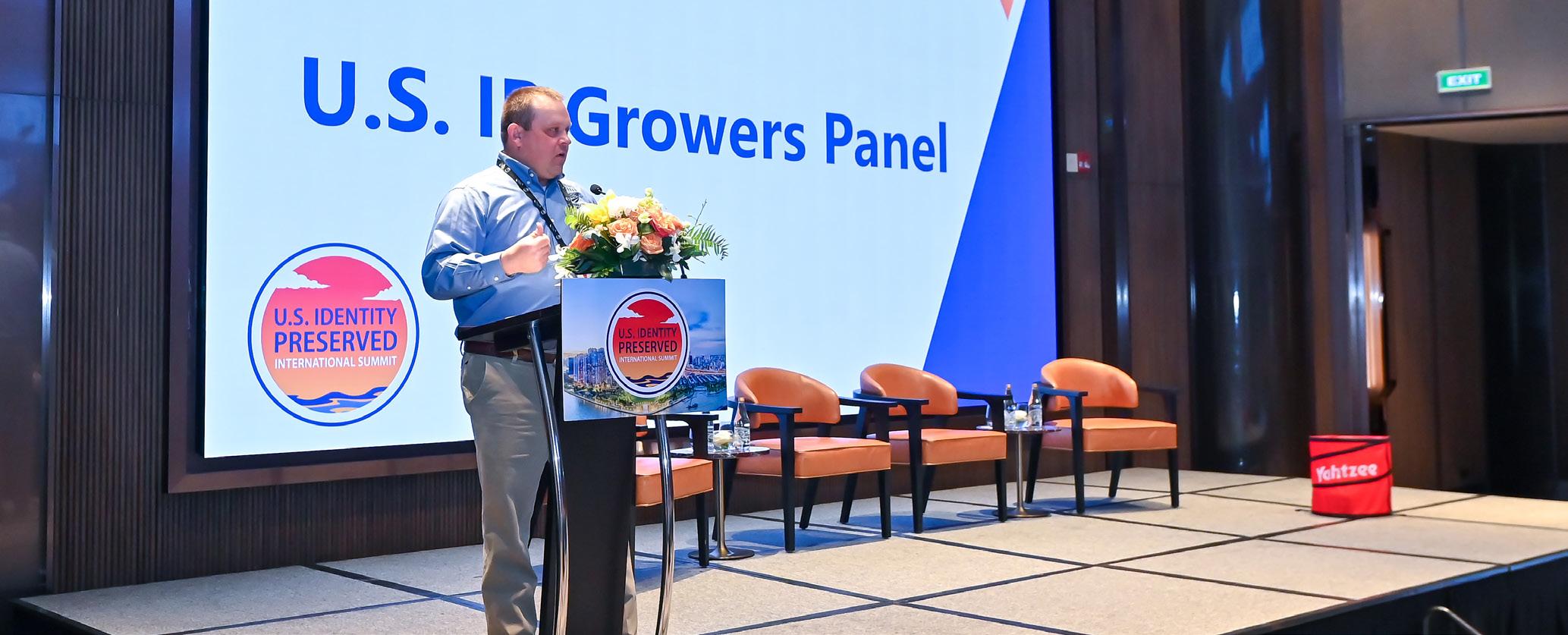
MSR&PC Treasurer Glen Groth, who was already in Vietnam on a trade mission with Northern Soy Marketing, introduces the U.S. IP Growers Panel during Day 1 of the Summit.

By Drew Lyon
The Minnesota Soybean Research & Promotion Council (MSR&PC) continues supporting programs that invest checkoff dollars toward building markets and growing global demand for U.S. Soy.
Establishing durable markets for U.S Soy requires input from dedicated farmer leaders. Council Chair Gail Donkers and Director Joel Schreurs fit the bill by playing key roles in helping emerging markets mature through ongoing service on the Global Advisory Panel (GAP) of the Soy Excellence Center (SEC), a checkoffled program in collaboration with the U.S. Soybean Export Council (USSEC) that provides developing countries with tools and resources to grow their food and agribusiness sectors.
Donkers was elected SEC GAP vice chair, while Schreurs was named SEC treasurer during the SEC’s Annual Meeting at the 2026 Commodity Classic. Donkers said she’s grateful for the opportunity to continue representing Minnesota farmers in MSR&PC’s efforts to diversify market access.
“It’s so amazing what the SEC is doing to educate people and showcase highquality U.S. soybeans,” said Donkers, who farms in Faribault. “I’m surrounded by a talented group of farmers leaders that are passionate about promoting our soybeans around the world.”
Schreurs was also reappointed to represent MSR&PC on USSEC as an Allied Class Member. He also represents USSEC on SEC GAP.
“As a USSEC member, it’s our job to incentivize and differentiate our soybeans in the global market,” Schreurs, a Tyler, Minn., farmer, said after USSEC’s Annual Meeting. “And the SEC is a huge win for us. It’s the best checkoff program I’ve ever seen, and I’m proud to be part of this group.”
USSEC CEO Jim Sutter said Minnesota has strong representation on USSEC and SEC.
“Joel is a great advocate, especially for our Soy Excellence Center, and so is Gail.” Sutter said. “SEC is something that’s different than anything we’ve ever done before, and it contributes to a strong preference for U.S. Soy. It really has exceeded our expectations.”
Founded in 2019 with checkoff support from state and national groups including MSR&PC, the SEC works alongside USSEC to build emerging markets into examples of economic success by building the capacity and market potential of international food and agriculture businesses. Its goal is to build soy’s global reputation as a vector for change. Across five international facilities, the
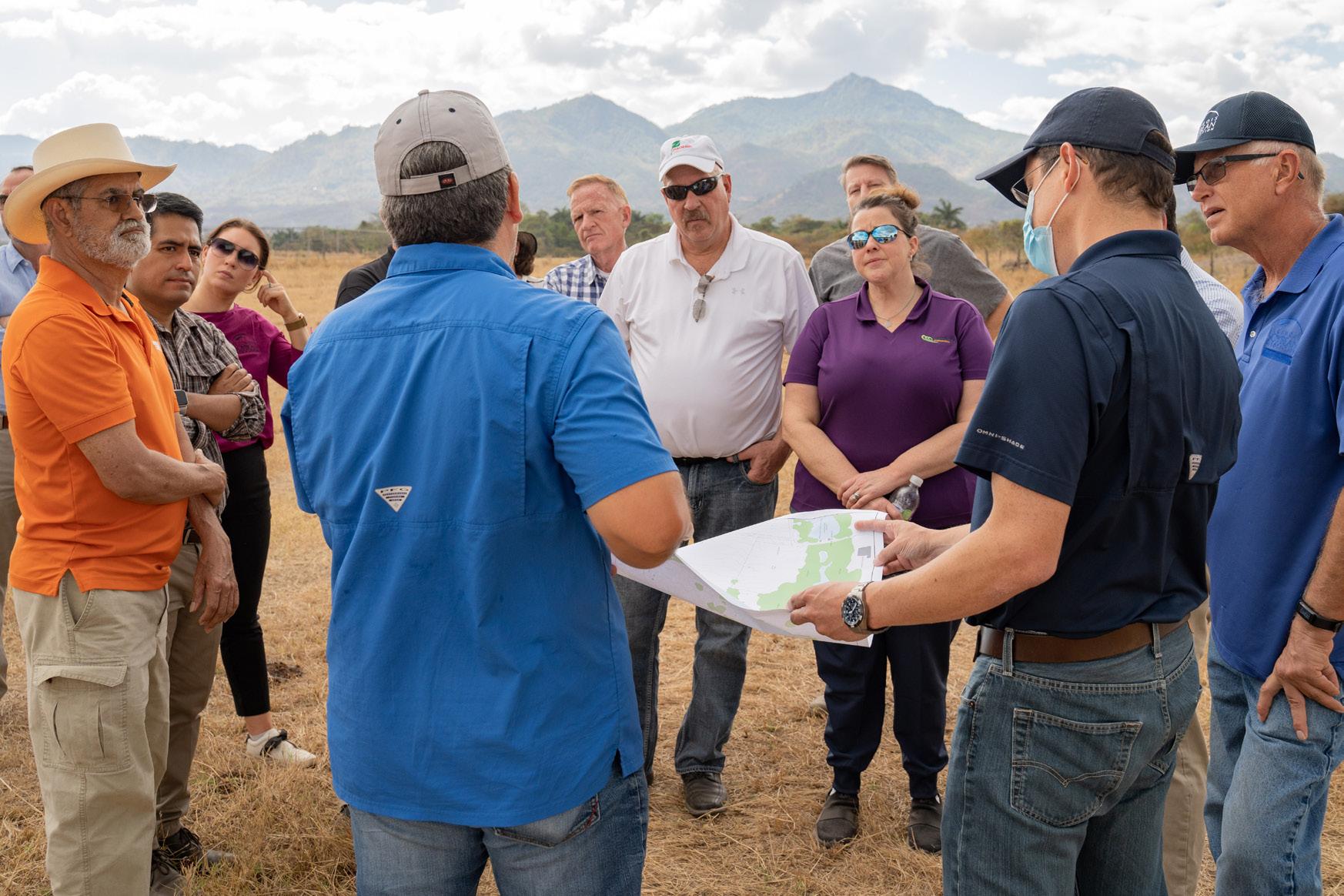
SEC impacts 1,300 businesses and over 30,000 participants through workforce training and capacity building needs across soy’s value chain to enhance industry capability across two dozen countries in the Americas, South Asia, Southeast Asia, Sub-Saharan Africa and the Middle East and Northern Africa. The SEC is also planning to offer training in China in the coming year. It works with global experts as course facilitators in four fields: poultry, feed milling, swine and aquaculture production. Each year, the SEC trains nearly 20,000 protein professionals in nearly 200 training events around the world.
SEC Executive Director Brent Babb lauded SEC’s mission to increase demand for U.S. through strengthening technical knowledge.
“The Soy Excellence Center exists to provide soy-related workforce training. It meets protein professionals exactly where they are and equips them with the knowledge, skills and community to go further,” Babb said. “The Global Advisory Panel leadership is central to that. It ensures the decisions we make are grounded in the realities of the markets we serve, and that our work remains both globally informed and locally meaningful.”
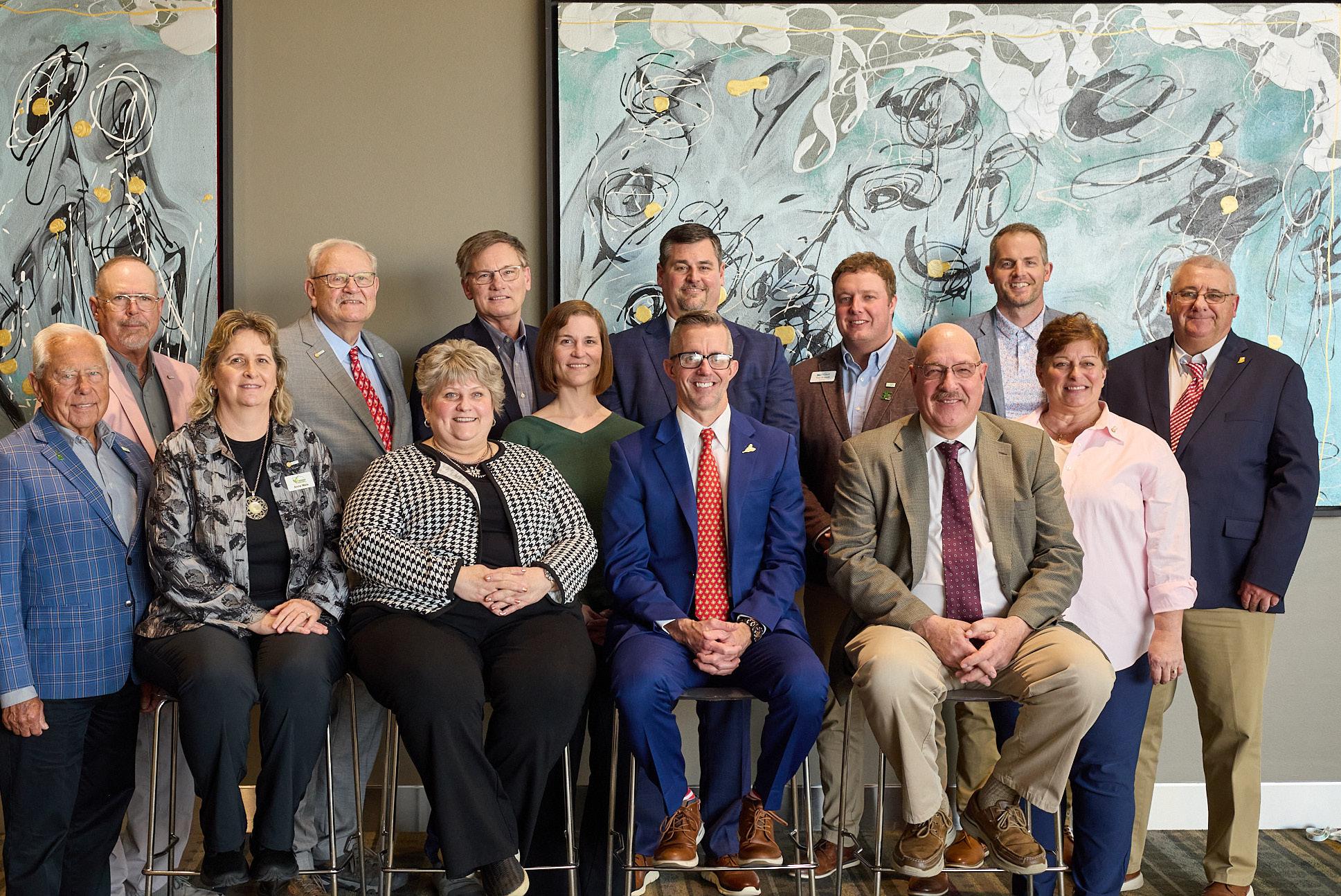
Anne Meis of Nebraska was elected SEC chair. Donkers, who enters her second year on the SEC GAP, was elevated to vice chair
after attending the 2025 SEC Asia Food Intermediate Course 2 in Singapore.
“The SEC training programs offer education to help people move ahead in their business and careers,” Donkers said. “It offers big opportunities to people to advance themselves in ways that they never anticipated.”
Schreurs said he was proud to support Donkers’ nomination as SEC GAP vice chair. “It’s quite time consuming and takes a lot of organization, and Gail’s going to be really good at it,” he said. “With her passion for education, the SEC is a great fit for her.”
In their respective roles, Donkers and Schreurs are focused on specific regions, including Southeast Asia and the Americas (the second-largest market for U.S. Soy after China and the highest SEC graduation rate), and are eager to continue those efforts throughout 2026.
“I’m excited to share my passion for education with others and grow demand for our soybeans,” Donkers said. “SEC is a great way to share the story of U.S. soybeans.”
Schreurs will represent Minnesota Aug. 5-7 in Chicago at Soy Connext, USSEC’s premier event for U.S. sellers, buyers and industry leaders.

“The SEC program keeps evolving and improving,” Schreurs said. “It’s exciting to see the opportunities SEC is creating around the world.”






“It’s so exciting to see their excitement and hear the next generation and help them and encourage them and seize the opportunities,” MSR&PC Director Rochelle Krusemark said.
The students, many of whom hail from Minnesota, visited for about an hour with Council and Minnesota Soybean Growers Association (MSGA) leaders during the 2026 Commodity Classic. Minnesota Soybean directors explained how MSR&PC and MSGA work on behalf of the state’s soybean industry. The students later engaged in small groups with directors and MSR&PC CEO Tom Slunecka (an SDSU alum), asking about checkoff programs, policy initiatives and leadership opportunities.
Keegan Lorang, who farms in Morton and is an Agricultural Systems Technology major at SDSU, was among the 42 students who attended Commodity Classic, thanks to checkoff funding. While at Classic, SDSU students also toured the trade show floor, attended breakout sessions and networked with peers and industry leaders.
“We really appreciate the support from the soy checkoff and from the directors here who are taking time to share their experiences with us,” Lorang said. “They’re so generous with talking with us and asking questions and giving us advice. It means a lot.”
MSGA President Darin Johnson said he and his colleagues fed off the students’ inquisitive energy.
“When you meet these students, it’s clear that the future of agriculture is a bright one,” he said. “They’re asking all the right questions.”
MSR&PC has also supported SDSU through sponsorship of SDSU’s Raven Precision Ag Center.
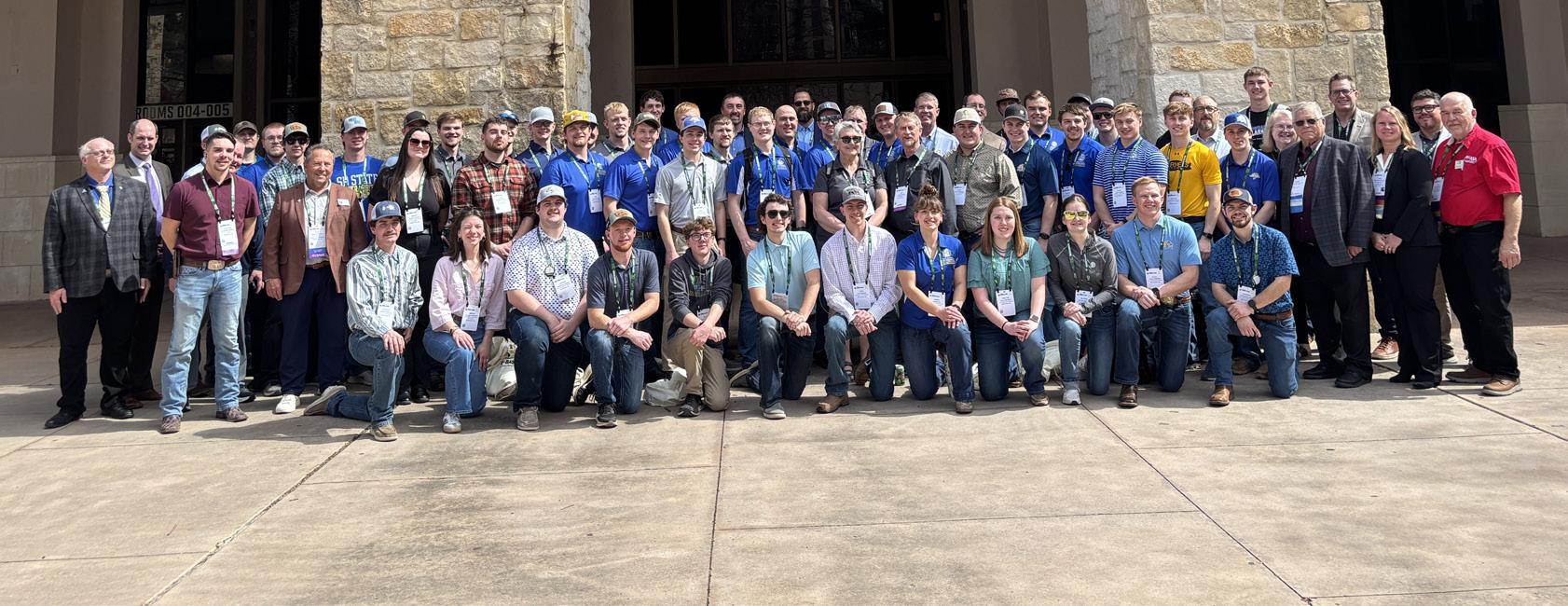
Minnesota Soybean farmer leaders and SDSU students and faculty gather during what's become a yearly meeting at Commodity Classic.

MSGA commends Rep. Brad Finstad for introducing the Fertilizer Transparency Act, common-sense legislation to empower America’s farmers with clearer, more reliable information about fertilizer and fertilizer product costs. Specifically, this legislation would require USDA to publish fertilizer prices weekly on its website, ensuring producers have access to timely, accurate market data. Sen. Amy Klobuchar co-introduced companion legislation in the U.S. Senate.
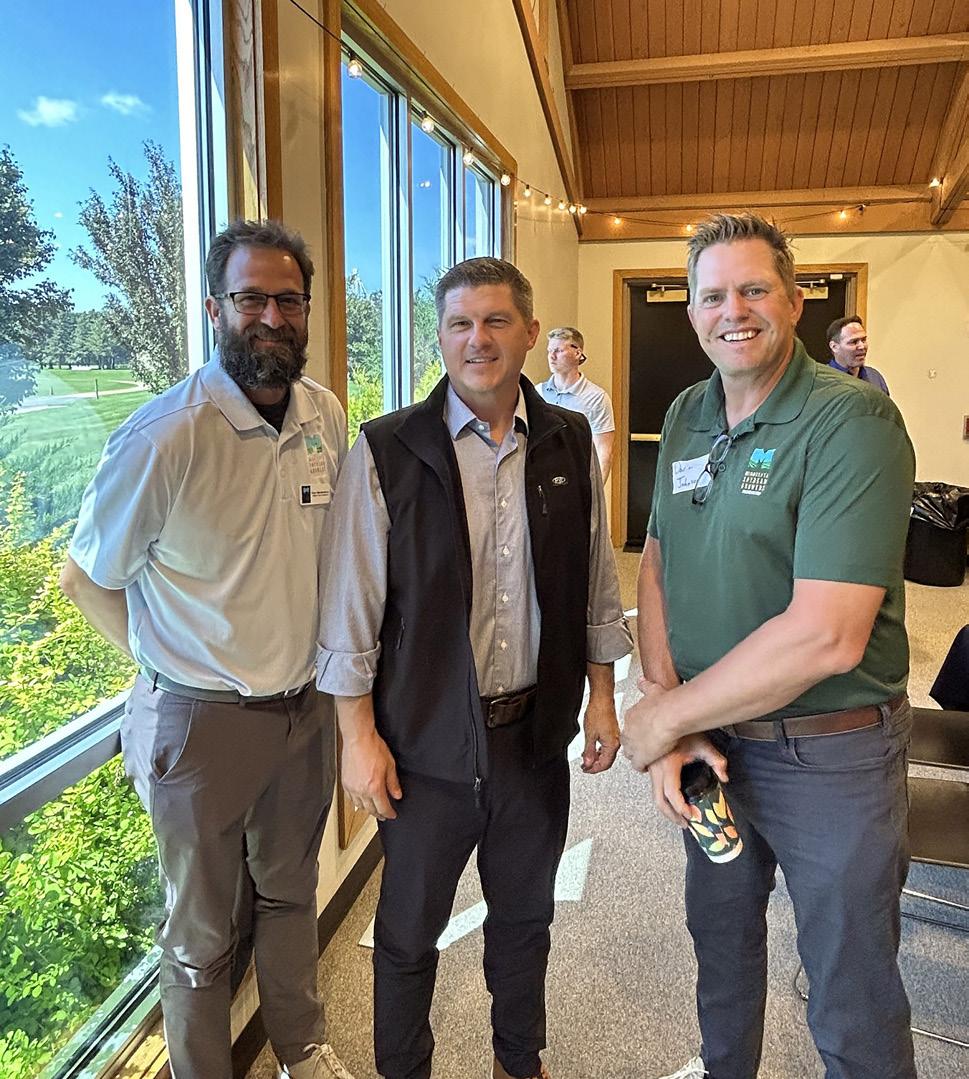
Brad Finstad (middle) visits with MSGA President Darin Johnson (right) and VP Ryan Mackenthun in summer 2025 during a roundtable panel at Farmamerica.
In 2025 and 2026, high input costs and low commodity prices created significant economic challenges for farmers. As farmers prepared for spring planting, a sharp spike in fertilizer price created supply challenges and left producers in a financial bind. Since the end of February 2026, fertilizer components like urea rose in price by 25%. Ammonia, phosphate, sulfur and potassium have also risen sharply. Fertilizer accounted for a significant share of operating expenses for soybean farmers in 2025, and elevated prices continue to impact planting decisions and farm viability.
“Minnesota soybean farmers continue to endure serious economic headwinds, and strengthening transparency and competitiveness in the marketplace is a critical step toward addressing some of the challenges we’re facing, including the cost of fertilizer,” MSGA President Darin Johnson said. “We are grateful to Rep. Finstad and his congressional colleagues for recognizing that lowering the cost of farm inputs will help improve the outlook for American agriculture, which is the backbone of our nation’s economy.”
Sen. Klobuchar also co-introduced the bipartisan Homegrown Fertilizer Act, which would create a grant and loan program to expand the domestic fertilizer production and improve fertilizer storage capacity.
“We support any policies that will help generate more domestic production of fertilizer to ease our dependence on global markets, and we commend Sen. Klobuchar for her leadership in introducing this bipartisan legislation,” Johnson said.
For the fourth consecutive year, Soybean Business magazine was recognized at the 2026 National Agri-Marketing Association’s Best of NAMA awards in St. Louis. Soybean Business, the official magazine of MSGA, earned a merit (second place) award for Best Association Magazine after submitting three issues from 2025, including a cover story from September-October 2025 detailing MSGA’s mental-health advocacy. Soybean Business, in publication since 2002, took home top NAMA honors in 2025 for the first time in the magazine’s history.
Visit issuu.com/mnsoygrowers to view past issues of Soybean Business, a farmerfocused publication that covers the people and practices that make Minnesota’s soybean industry thrive!
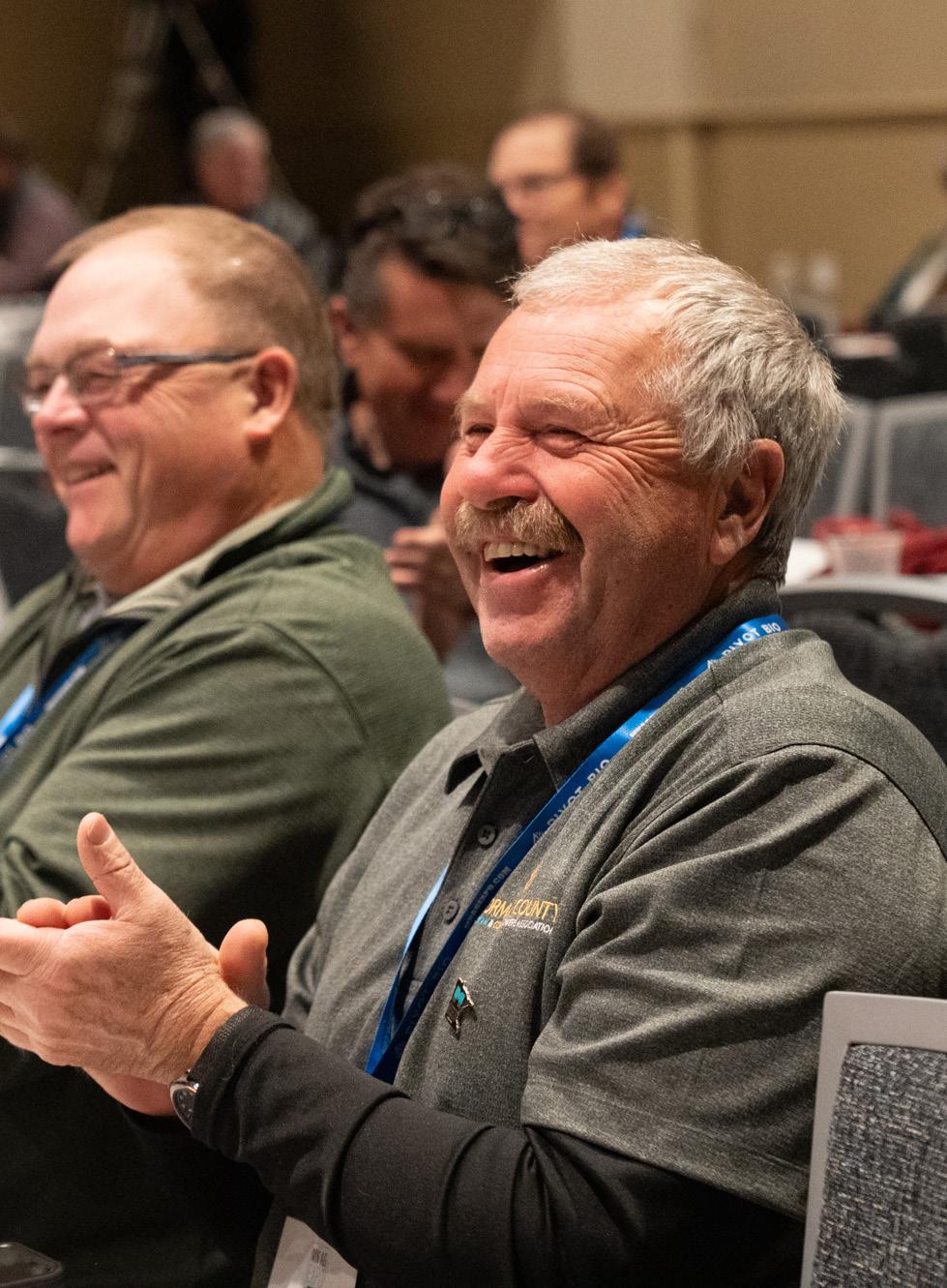
By Allison Wright
Norman County Corn & Soybean Treasurer David Swenson has served on the local board since it was organized with just four members. For nearly 20 years. Swenson has enjoyed connecting consumers with education and promoting agriculture while also attending events like MN Ag Expo, which he attends each year by joining a bus of northern growers down to Mankato.
Swenson is passionate about community development and advocating for soybeans. From its beginning, the board has donated to the local FFA chapters for fuel to attend the Minnesota FFA Convention. Swenson’s efforts don’t stop at the schools; he has attended the Norman County Fair to share educational materials with fairgoers using his voice for advocacy.
Swenson and his younger brother took over their family farm in 1992 and have been farming up until last year. With grain still in the bin, they hope to close their book within this next year. His passion for the industry won’t stop there: Swenson will continue to be a voice for agriculture.
As a longtime volunteer firefighter, Swenson was very excited about the 2025 county-level SoyFoam promotional campaign. He helped advocate within his department for the use of SoyFoam and has been active in using this product for firefighter trainings while also promoting soy-based products.
“Dave is very passionate about Minnesota agriculture and promoting those new uses that help us build profitability and grow demand,” said his friend Corey Hanson, who farms in Gary and is president of the Norman County board. “He also appreciates that his membership in MSGA is helping them work in St. Paul and D.C. on behalf of our farmers.”
Swenson, who serves as a county delegate during MSGA’s annual meeting at MN Ag Expo, strongly believes in being active in communities and membership within MSGA. He encourages his fellow farmers to serve on their local or state boards to keep tabs on the latest policy assues affecting agriculture.
“Membership is important to have a louder voice out there to promote what we do and to try to have that louder voice at the capital,” Swenson said. “People don’t want to be involved because they are afraid they have to be on a board – but that’s not why you get involved. Membership numbers help us have a louder voice for the farmers.”
Joining MSGA has never been easier – or more important. Sign up today at by scanning the QR code!
The Minnesota Soybean Growers Association tips our cap to the nearly 70 members who joined MSGA since February 2026. In addition, over 200 members renewed this winter. We appreciate your support!
Our policy work is ramping up this summer. In July, farmer leaders will travel to Washinton, D.C., for Hill Visits with Minnesota’s congressional delegation to promote our federal policy priorities. On the home front, your membership resources help us protect our family farmers and industry partners this session at
Member
Tony Oftedahl
Erin Stackhouse
Zach Trio
Connor Goodwin
Tom & Mike Franke
David Maday
Chad Lawrence
Adam Miller
Jordan Connor
Kolten Lindblad
Braxton Thompson
Dane Prestholdt
Derek Kuechenmeister
Tyler Lund
Ryan Olson
Aaron Tufto
Mark Berglund
Ross Olson
Kadyn Fernholz
Mason Clark
Curtis Reitmeier
Tristan Maday
Titus Krusemark
Silas Krusemark
Ezekiel Krusemark
County
Blue Earth
Blue Earth
Blue Earth
Dakota Dodge Faribault Faribault
Lac Qui Parle
Lac Qui Parle
Lac Qui Parle
Lac Qui Parle
Lac Qui Parle
Lac Qui Parle
Lac Qui Parle
Lac Qui Parle
Lac Qui Parle
Lac Qui Parle
Lac Qui Parle
Lac Qui Parle
Lac Qui Parle
Member
Sarah Jagodzinski-Rohman
Josh Miller
Seanna Swenson
Grant Bose
Joe Bastian
Aidan Bastian
Ryan Hoftyzer
Michael Kitchell
Kaleb Mehrkens
Nathan Erickson
Casey Nelson
Doug Lange
Logan Vettleson
Atley Vettleson
Max Konickson
William Klawittes
Christian Netzke
Kara Onnen
Addison Jordet
Aaron Louks
Jason Keck
Daniel Schliep
Luke Sanders
Mackenzie Stelling
Debra Durheim
3 Year Membership: $250 (includes MSGA jacket and $100
the Capitol in St. Paul, where we held also held our state Hill Visits this March. Of course, we’ll also have a strong presence at this year’s Farmfest Aug. 4-6.
Together, we’re joining forces fighting on your behalf in the legislative and regulatory spaces. To join the nation’s premier state soybean advocacy association, visit mnsoybean.org/msga/membership. Membership levels start at just $20 for students, and a 3-year membership costs less than a quarter per day. Join us today!
County
Member
Eric Wallerich
Simon Brand
Claire Wagner
Blake Siewert
Karl Meyer
Randy Peterson
Ralph Roesler
Tyler Huber
Keith Eustice
Kenneth Bergler
Abbie Winter
Owen Slettedahl
Kalli Sannerud
Lexi Stengel
Cooper Mccosh
Argn Carter
Kendon Wangen
Shelby Wangen
Teagan Balfany
Medicine
The more we discover about soybeans, the more valuable they become. One innovative product, SoyFoam™, creates a new, sustainable use for your crop that protects firefighters and the planet. See how your Soy Checkoff is unlocking new markets for soybeans at unitedsoybean.org

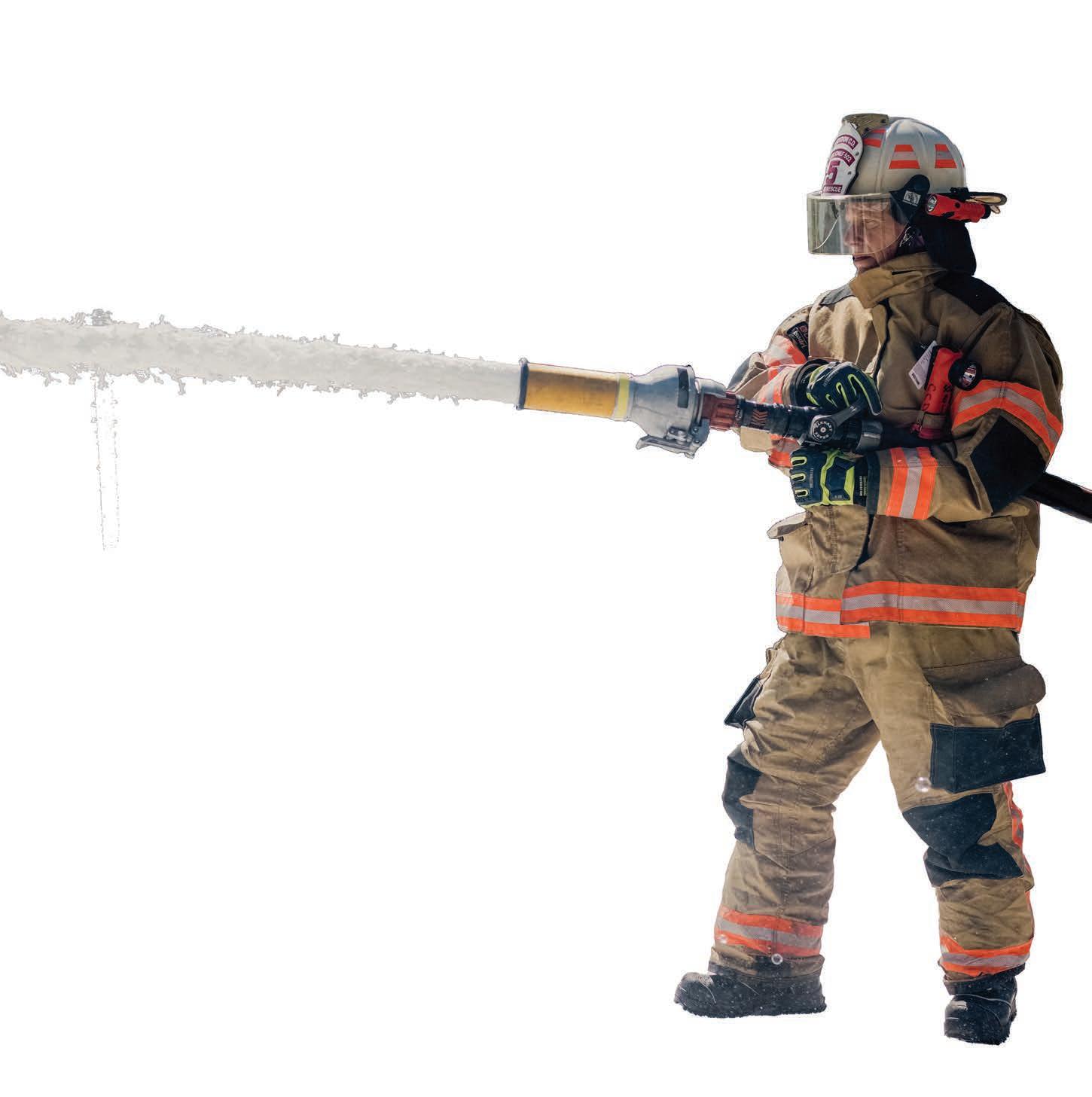





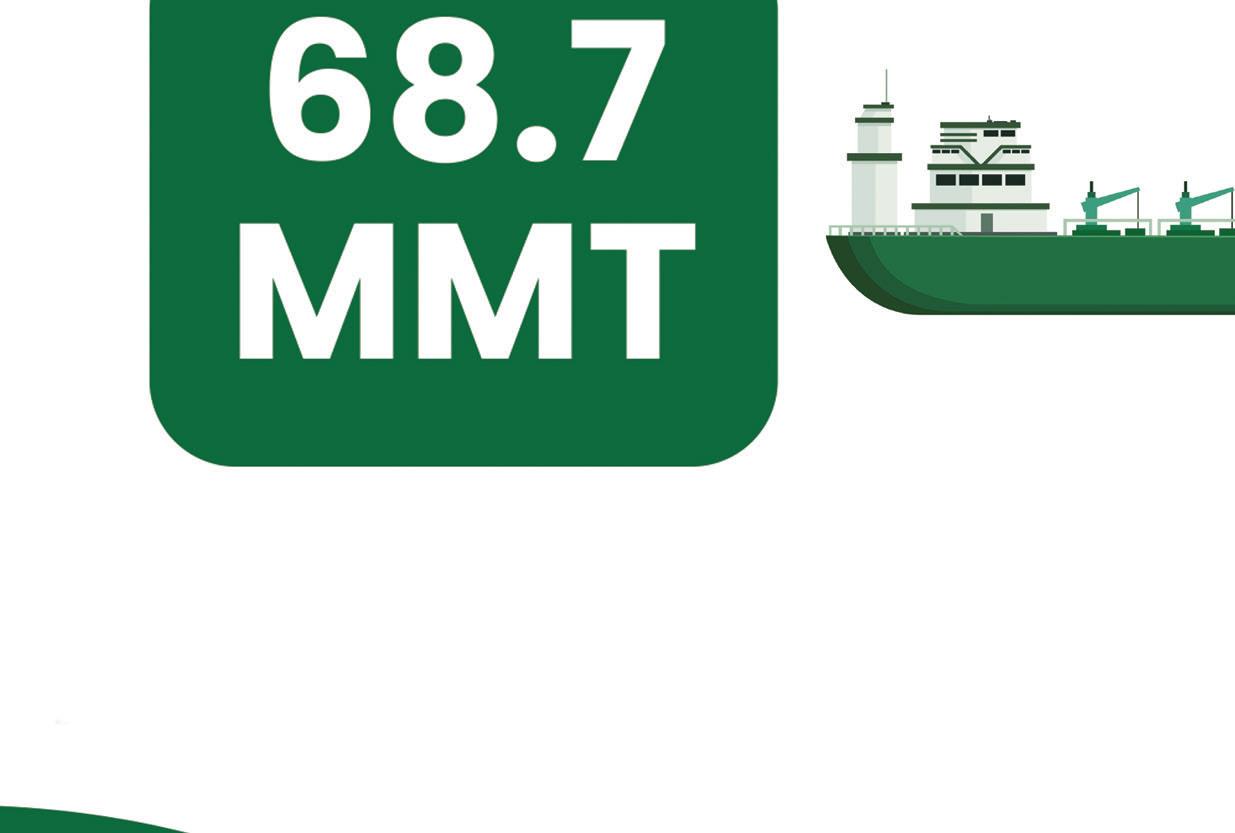

US DA, Global Agricultural Tr ade System (GATS), January 2 026


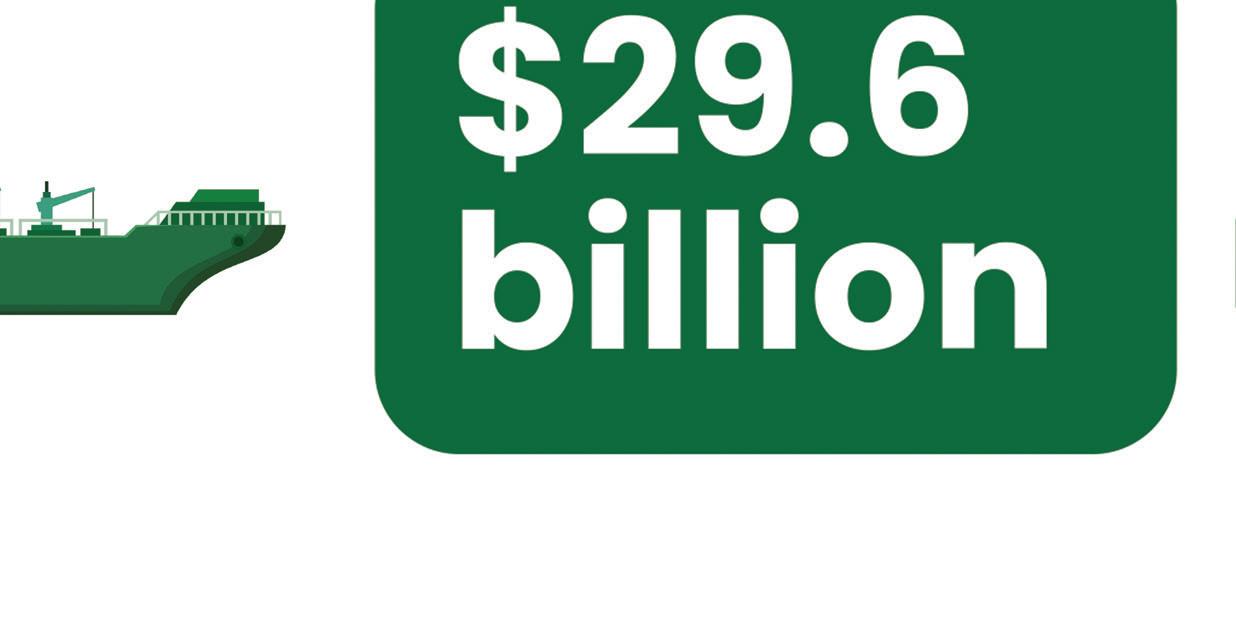


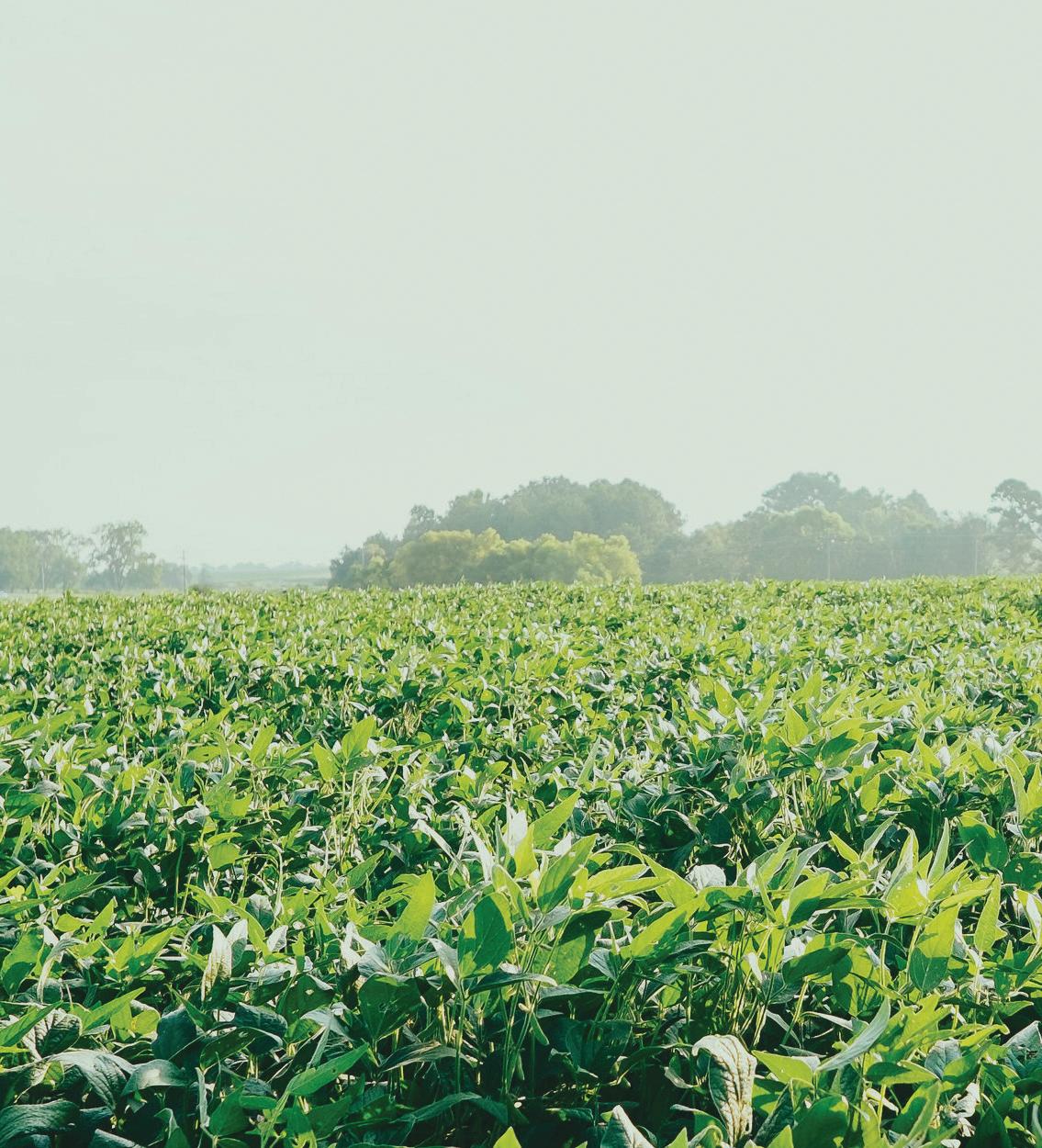



















Join us July 21-23 for the 2026 Future of Soy Summit!
• Small group sessions covering current agronomic topics
• Network with directors, emerging leaders and researchers
• Panel discussions to get your questions answered
Apply by May 31 to sharpen your leadership skills!
Attendance and lodging for the Future of Soy Summit are provided by MSR&PC
Scan here to apply