SOYBEAN

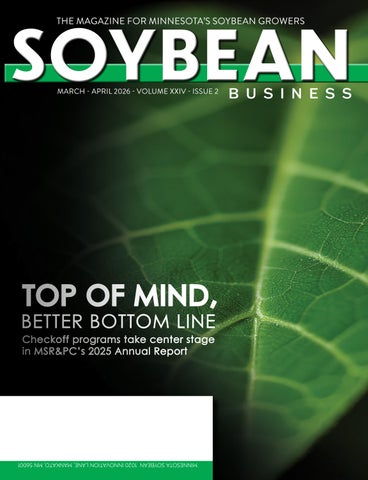
Checkoff programs take center stage in MSR&PC’s 2025 Annual Report
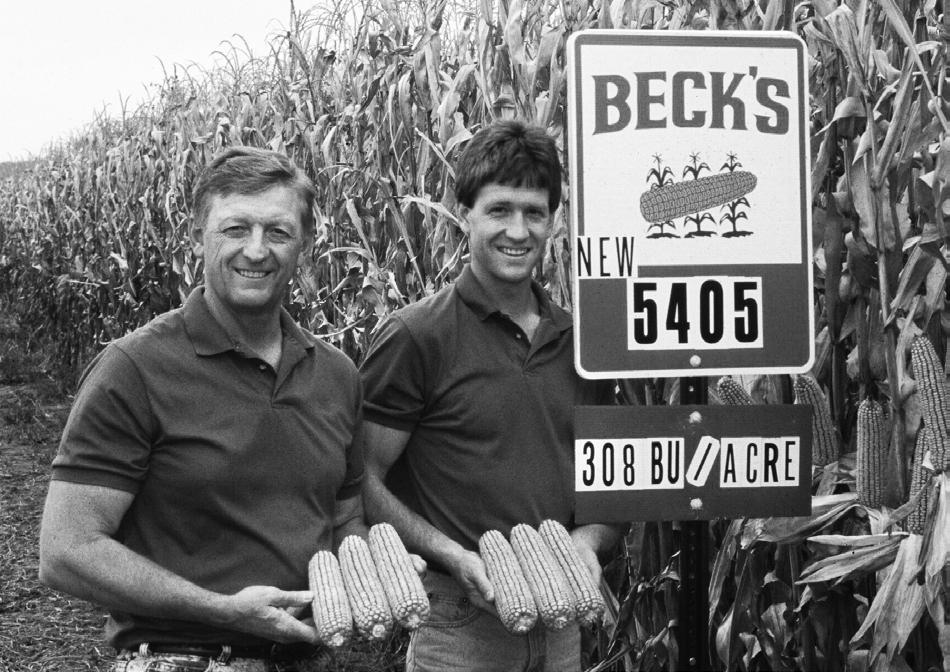
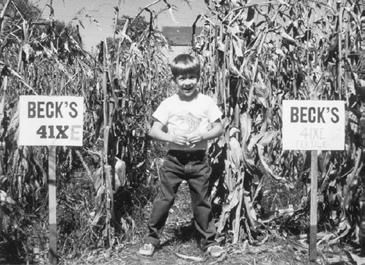
A legacy of faith. A tradition of farming. A future rooted in both.


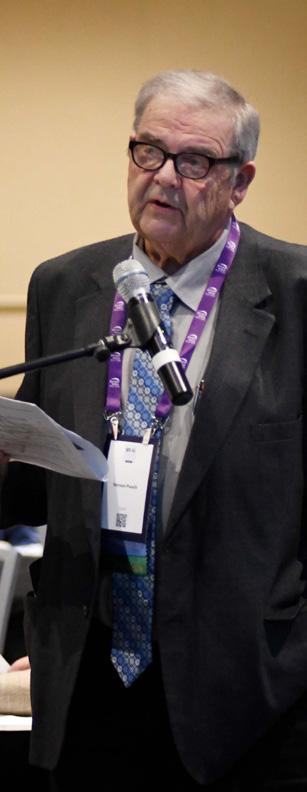
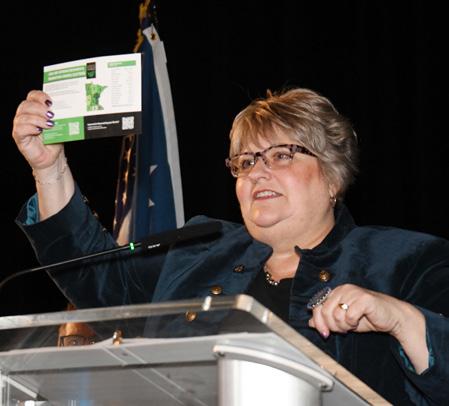
The 2026 MN Ag Expo skated not to where agriculture has been, but where it’s going. See the best images from this year’s conference and trade show.
MSGA takes pride in its nonpartisan mission. This year, grower leaders honored two legislators who work across the aisle and put policies above partisan politics. 16
Lorri Ann Hartel has been a pillar of Minnesota Soybean’s county program for two decades. This spring, she’s retiring with a proven record of county-level leadership.
Seven Minnesota farmers are vying for positions on the Minnesota Soybean Research & Promotion Council. Meet the farmer leaders seeking roles as checkoff directors.
Tell the compelling stories behind Minnesota’s soybean farmers and their industry, from the field to Capitol Hill to international markets – and everywhere in between.
OFFICERS
President Darin Johnson | Faribault County
Vice President
Ryan Mackenthun | McLeod County
Treasurer
Rose Wendinger | Watonwan County
Secretary
Kyle Jore | Pennington-Red Lake Counties
ASA Directors
Jamie Beyer | Traverse County
Darin Johnson | Faribault County
Adam Guetter | Redwood County
Jim Kukowski | Roseau-LOW Counties
Jeff Sorenson | Redwood County
Bob Worth | Lincoln County
ASA Young Leaders
Andrew Mages | Clay-Wilkin Counties
County directors
Trevore Brekken | Polk County
Mark Brown | Watonwan County
Steve Brusven | Yellow Medicine County
Chris Bryce | Pope County
Jason Cadieux | Kittson County
Raymond DeMars | Morrison County
Brian Fruechte | Lincoln County
Tom Grundman | Douglas County
Ray Hewitt | Le Sueur-Scott Counties
Brad Hovel | Goodhue County
Jim Jirava | Becker-Mahnomen Counties
Mark Knutson | Marshall County
Bob Lindeman | McLeod County
County directors Cont.
Paul Mesner | Murray County
Bruce Nelsen | Mower County
Keith Nelsen | Cottonwood County
Robert Nelsen | Murray County
Tim Nelson | Waseca County
Dusty Neugebauer | Nobles County
Lucas Peters | Rock County
Vernon Pooch | Pope County
Andy Pulk | Roseau-LOW Counties
Matt Purfeerst | Dakota-Rice Counties
Tim Rasmussen | Otter Tail-Grant Counties
Justin Remus | Brown County
Parker Revier | Renville County
Gary Schoenfeld | Waseca County
Joel Schreurs | Lincoln County
Mike Skaug | Polk County
Cal Spronk | Pipestone County
Jamie Seitzer | Nicollet-Sibley Counties
Lawrence Sukalski | Martin County
Jeremy Tischer | Clay-Wilkin Counties
Doug Toreen | Renville County
Tim Wolf | Dodge County
Despite an economic downturn in agriculture, checkoff investments continue to make an impact by improving profitability for Minnesota’s over 25,000 soybean farmers. MSR&PC’s FY25 Annual Report highlights checkoff investments spanning research, market development, value-added uses and more that help drive demand for our state’s soybean producers. Read more on page 34.
MSGA Executive Director
Joe Smentek | jsmentek@mnsoybean.com
Managing Editor
Drew Lyon | drew@mnsoybean.com
Ag Management Solutions
Art Director
Alex Troska | atroska@agmgmtsolutions.com
Graphic Designer Ag Management Solutions
Layout Editor Katelyn Engquist | kengquist@agmgmtsolutions.com
Sales Manager
Erin Rossow | erossow@agmgmtsolutions.com 507-902-9191
Advertising space reservations can be made by the 15th day of the month prior to publication. In consideration of the acceptance of the advertisement, the agency and the advertiser must, in respect of the contents of the advertisement, indemnify and save the publisher harmless against any expense arising from claims or actions against the publisher because of the publication of the content of the advertisement.
Advertisements within this publication contain the opinions and information of the advertisers and do not necessarily reflect the opinions or views of the Minnesota Soybean organizations or affiliated groups.
Soybean Business is published six times a year on behalf of Minnesota Soybean. Circulation comments and suggestions can be submitted to:
Jodie Arndt
Membership Manager jodie@mnsoybean.com 507-388-1635


As spring approaches, I’d like to reflect on another memorable MN Ag Expo. Hats off to our staff and farmer leaders for putting in the effort to make this year’s event one for the record books. Our trade show was bigger and better than ever: We had a fantastic lineup of panels and speakers, including a “gold medal” keynote from John Harrington of the “Miracle on Ice”; and of course, lots of great opportunities to network with farmers from across Minnesota.
One of my favorite aspects of MN Ag Expo is the Young & Emerging Farmer Workshop. I had the opportunity to join a panel and enjoyed conversing with the participants. It’s so much fun for me to see the excitement and engagement from some of those young folks who are getting involved in agriculture. The future is yours!
As the temperatures continue rising, the atmosphere is likely to heat up at the Capitol during the 2026 legislative session. This abbreviated session will be more of a defensive year for MSGA, and we anticipate having direct conversations with individual agencies, where we could see more action versus in the legislative body. If you’re an MSGA member, make sure to tune in to our weekly state legislative updates each Friday during the session to keep up to date with what’s happening at the Capitol. And if you’re not a member, well, there’s no time like the present to join! Among our top goals this session is maintaining critical crop protection tools our farmers need to succeed.
We did earn a major win toward crop protection at the federal level with the EPA approving a new dicamba label, which will allow soybean farmers to maintain access to a critical weed management tool. On the federal side, we finally saw updated guidance on the 45Z tax credit, which gives priority to domestically produced biodiesel over imported used cooking oil. We are expecting big things in the world of biodiesel this year, which is important because, as I told Sen. Amy Klobuchar at MN Ag Expo, the soybean industry needs a shot in the arm, and biofuels provide a timely solution.
I also want to recognize our local county soybean programs, which provide a big shot in the arm for MSGA in supporting our membership and representing our organization at the grassroots level. Like so many other directors, that’s where I started my journey. The county level is where the rubber meets the road to promote the many promising policies and promotions within the soybean industry.
To that end, I want to congratulate Lorri Ann Hartel, who has been involved in our county program for the last 20 years. She helped launch many of the county organizations in northwest Minnesota and has been an integral part of our team. Thank you, Lorri Ann, for your dedication to MSGA!
I also want to thank our partners at the Minnesota Soybean Research & Promotion Council for publishing their Annual Report in this issue. While MSGA reaches the regulatory, legal and legislative channels to protect farmers, the Council continues working every angle via the soy checkoff to build on-farm resilience and strengthen the farm economy.
While you’re hard at work this spring, you can depend on MSGA and MSR&PC to promote soy across the globe and bring value back to our farms and communities.
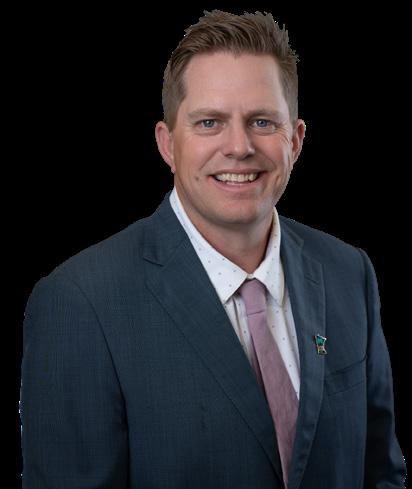
DARIN JOHNSON President, MSGA
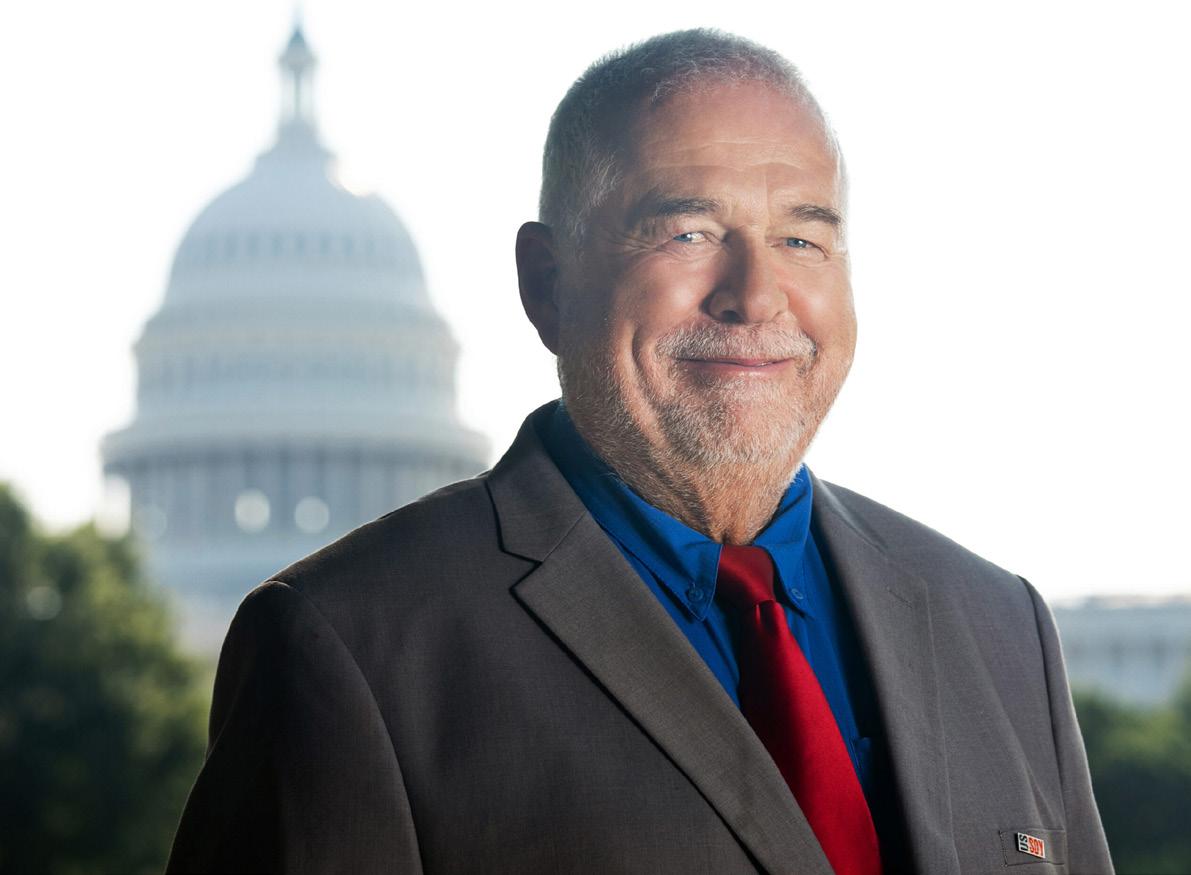
By Drew Lyon
For Jim Kukowski, a little patience goes a long way.
Nearly a year after he was first nominated to serve on the Minnesota USDA Farm Service Agency state committee, the Strathcona farmer was formally appointed on Jan. 14, 2026, by USDA Secretary Brooke Rollins to serve on the five-member committee.
Kukowski said he was grateful to be nominated last year by members of Minnesota’s congressional delegation.
“I appreciate Reps. Tom Emmer, Brad Finstad, Michelle Fischbach and Pete Stauber for their support,” Kukowski said. “It’s a great honor to be able to represent our farmers and especially be an advocate for producers here in northern Minnesota.”
Kukowski has enjoyed a lengthy career in agriculture leadership at the local, state and national levels. Kukowski previously served on the FSA state committee during the first Trump administration, is Roseau County’s FSA chair and has been a member of the National Resources Conservation Service Tech Advisory Group since 2003. Kukowski has been a director with the Minnesota Soybean Growers Association (MSGA) for over 10 years and currently sits on MSGA’s Governing Board. He has also represented Minnesota on the American Soybean Association since 2018. From 2023-2024, Kukowski joined ASA’s executive committee.
“Jim’s years of experience are going to pay dividends, and we’re proud that he’s going to be a voice not just for soybean farmers, but Minnesota agriculture,” MSGA President Darin Johnson said. “There won’t need to be any on-the-job-training for Jim in this role.”
Members of the FSA state committee are responsible for the oversight of farm programs and county committee operations, resolving program delivery appeals from the agriculture community, maintaining cooperative relations with industry stakeholders and keeping producers informed about current FSA programs.
“Last time I was on the committee, it was the most rewarding experience of my career – besides representing Minnesota Soybean,” Kukowski said. “By serving with FSA, you can really make a difference and help farmers, and I look forward to continue doing that again on the state Committee.”
Kukowski owns and operates a seed farm that includes a Minnesota Crop Improvement Associationapproved seed conditioning facility that has served as a host site for the University of Minnesota Small Grain Field Trials since 1995. He began a land development business in 1974 and has remained active in agricultural innovation and seed improvement for nearly 50 years. He’ll be joined on the State Committee by Charles Radman, Jason May, Pamela Uhlenkamp and Scott Winslow. In May 2025, Kurt Blomgren was appointed to serve as FSA’s Minnesota state executive director.
“These individuals, selected by Secretary Rollins in partnership with key stakeholders in each state, are held in high regard in the agriculture industry and are entrusted to ensure FSA programs are delivered in a manner consistent with federal farm policy and in the best interest of all agricultural producers in their state,” said FSA Administrator Bill Beam.
For more information, visit fsa.usda.gov.
This column is a series in Soybean Business featuring leaders from the Minnesota Department of Agriculture.
Minnesota’s farmers have a long history of caring for their land and water. That commitment shows up in the way you manage your fields, plan for changing weather and make decisions that keep your operations strong for generations. The Minnesota Department of Agriculture (MDA) works to support that stewardship with practical, science-based Best Management Practices (BMPs). These recommendations outline proven approaches for applying fertilizer and pesticides in ways that protect water quality, reduce input losses and support long term soil health. They are voluntary tools that help farmers manage risk and make efficient, informed decisions. Developing BMPs is a careful process that blends current research with the practical experience of farmers, crop advisors and commodity groups to ensure that guidance fits real-world conditions.
Our agronomists and water quality specialists review research from the University of Minnesota, federal agencies, and other trusted sources. They look at how nutrients and pesticides move in different soils, how weather affects application decisions and which practices consistently reduce losses to groundwater and surface water. That scientific foundation helps us see how practices hold up in the field.
Minnesota’s landscape is diverse, and what works in one region may not work in another. That’s why the MDA also considers farmer input as essential to the process. Through on-farm trials and demonstrations, conversations, field visits and advisory meetings, producers help us understand what is workable, cost-effective and realistic. BMPs matter because they give farmers a practical way to manage risk. They help keep nutrients where they belong, limit the chance of pesticides moving offsite and protect drinking water sources. They also offer a steady framework for making decisions in a changing climate. But guidance only works when farmers have tools to put it into practice, and that’s where the MDA’s programs make a difference. This includes:
• The Minnesota Agricultural Water Quality Certification Program, which recognizes farmers using conservation practices and gives others a clear path to make improvements.
• The Minnesota Ag Weather Network, which provides real time weather and soil information to support sound fertilizer application and water use
BY COMMISSIONER THOM PETERSEN
decisions throughout the season.
We also know that adopting practices often requires new equipment or infrastructure. MDA’s AgBMP Loan Program helps meet that need by offering low interest financing for projects that reduce runoff from feedlots, farm fields and other concerns identified in local water plans. And through MDA’s Soil Health Financial Assistance Grant, farmers can access cost share to purchase or retrofit specialized equipment needed to build healthier soils. These resources make it easier for producers to adopt practices that protect water quality while keeping their operations strong.
As conditions change, our BMPs change with them. We regularly review new research, technologies and emerging issues so that our guidance reflects current realities, not outdated assumptions.
The MDA will continue working with our ag partners, like the Minnesota Soybean Growers Association, to keep BMPs practical, effective and grounded in good science. When we stay focused on the shared goals of productive farms, clean water and the strength of rural communities, Minnesota agriculture is ready for whatever comes next.



















The 2026 MN Ag Expo connected Minnesota agriculture, legislative leaders and an Olympic gold medalist for two days of dialogue and networking focused on moving the ag economy in a positive direction in the year ahead.
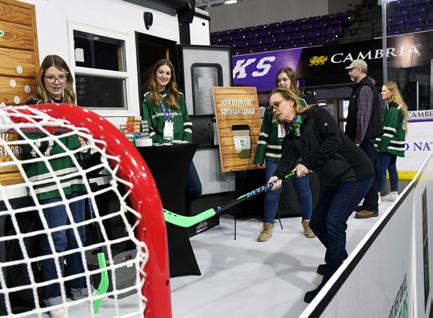
The Minnesota Soybean Growers Association (MSGA), which cohosts the annual event with Minnesota Corn, joined the conversation, from building new markets to state and federal farm-related policy. In total, over 1,500 members of Minnesota’s farming community attended this year’s MN Ag Expo, which featured breakout and learning sessions, along with keynote speaker John Harrington, a member of the legendary “Miracle on Ice” 1980 Olympic hockey team. MSGA and the Minnesota Soybean Research & Promotion Council leaned into the hockey vibe (the trade show also moved into the civic center’s ice arena) by donning hockey-themed “Minnesoyta” jerseys.
At MN Ag Expo, it’s often best to expect the unexpected, although the agenda is finalized weeks in advance. In 2026, an unannounced special guest, Sen. Amy Klobuchar, spoke for nearly 30 minutes about farm policy and the ag economy. Prior to her speech, Sen. Klobuchar met with MSGA’s officer team to learn more about soy farmers’ issues in 2026.
“Agriculture needs a shot in the arm,” Johnson told Sen. Klobuchar. “We’ve got to keep the train on the tracks to keep us moving forward.” Still, farmer leaders kept the MN Ag Expo express rolling.
“I’m so proud of our team for being so active once again at MN Ag Expo,” Johnson said. “Everyone put their best foot forward, and that’s all we can ask for.”
Save the date: The 2027 MN Ag Expo returns Jan. 19-20 in Mankato.
Photos by John Cross
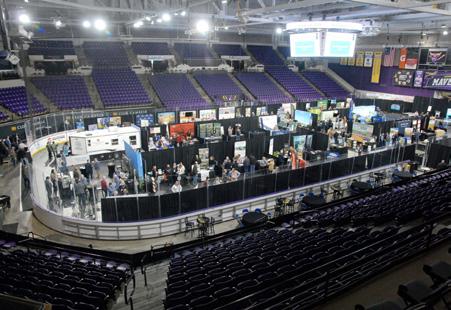
The 2026 MN Ag Expo expanded to the venue’s hockey arena.


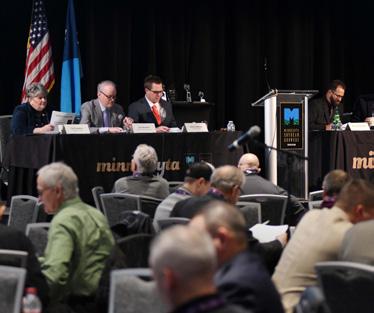
MSGA delegates and directors review the 2026 policy resolutions.

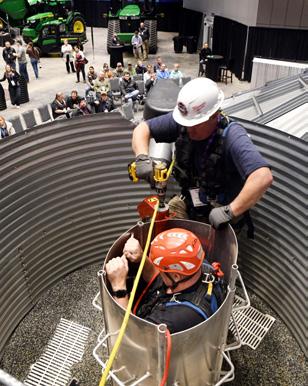
Multiple grain bin safety demonstrations were held in the Large Equipment Room.
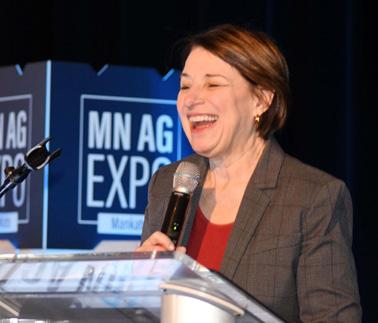
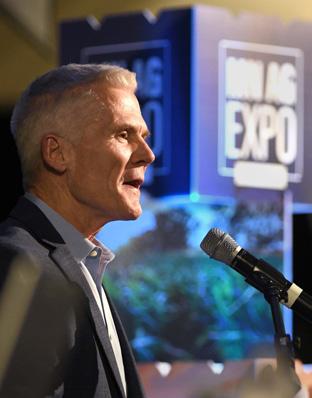
Sen. Amy Klobuchar makes a surprise appearance during the Jan. 21 lunch.
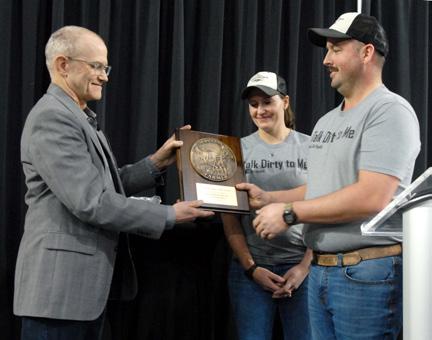
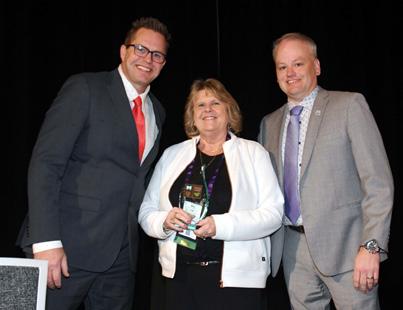
winsAlexUdermann(right) MasterMinnesota’sinaugural Farmeraward.
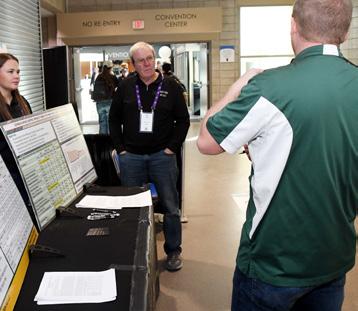

Checkoff-supported research is always in season at MN Ag Expo.
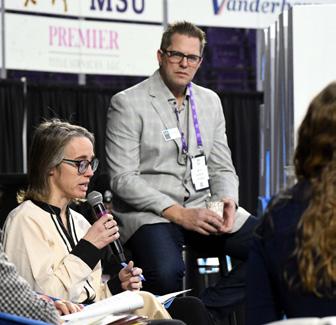
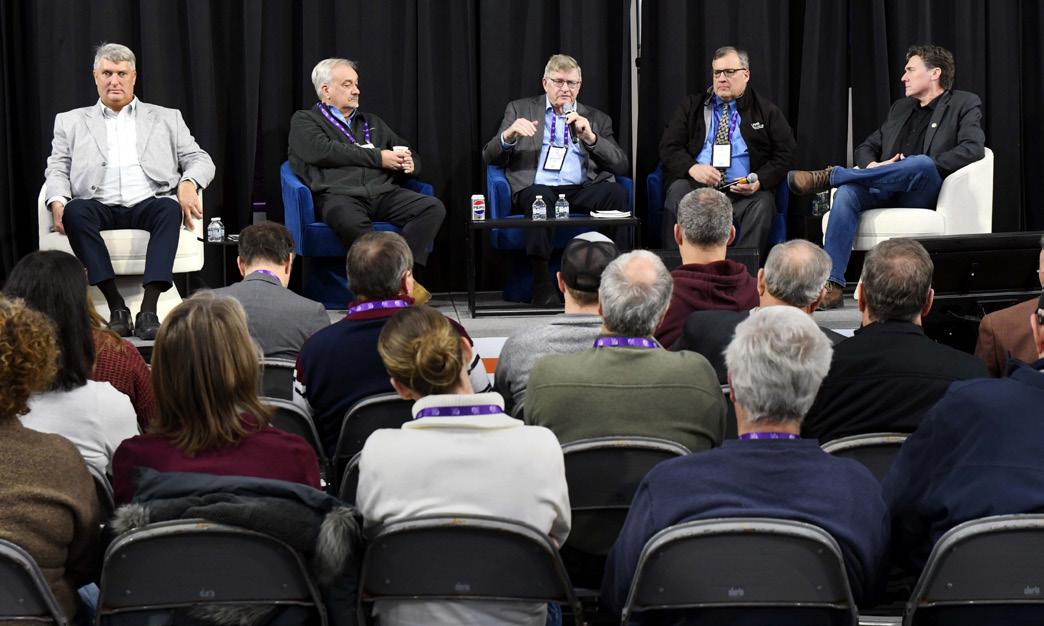
MDA Deputy Commissioner Andrea Vaubel participates in a timely trade panel.

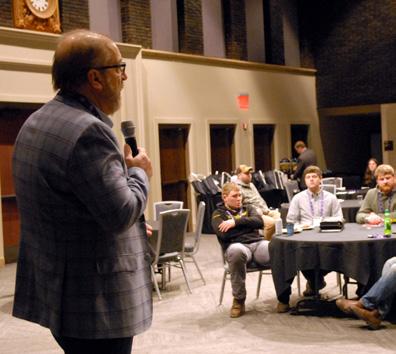
MSR&PC CEO Tom Slunecka gives an introduction at the Young & Emerging Farmer Workshop.
By Soybean Business Staff
During the Minnesota Soybean Growers Association’s (MSGA) 2026 Annual Meeting at MN Ag Expo, leaders from MSGA and the Minnesota Soybean Research & Promotion Council (MSR&PC) saluted farmers, industry leaders and legislators who are making positive impacts within their communities and Minnesota agriculture. Congratulations to the award winners!
Minnesota Soybean’s County of the Year – Lincoln County Soybean & Corn Growers Board
Presented by MSGA Executive Director Joe Smentek
The winner of our 2025 County of the Year is synonymous with leadership within our unique county program, and this was no different in 2025.
The Lincoln County Soybean & Corn Growers Board has demonstrated exceptional, proactive dedication to supporting local agriculture, investing in youth programming and promoting the value of soybean advocacy and checkoff value through hands-on outreach.
The board’s annual meeting continues to be a major
highlight for the county, celebrating 25 years this past year, making it a gold standard in community involvement. More than 125 community members attended this event. It was an impressive turnout – and I saw this firsthand when I attended their 2025 annual meeting to celebrate Director Bob Worth’s retirement from the county board. The event also included a recognition recognizing the founding members and past board members. The board once again hosted its annual auction, with proceeds going toward youth scholarships. For the upcoming year, the board plans to award over $25,000 in scholarships. Over the course of this program, Lincoln County soybean farmers, through the county program, have helped raise hundreds of thousands of dollars in scholarships that help grow the leaders of tomorrow.
Board members remain active throughout the year, participating in events such as the Ag Bowl in Marshall, where they assist with judging and providing sponsorships. The county fair is another significant opportunity for outreach. The board hosts an Ag
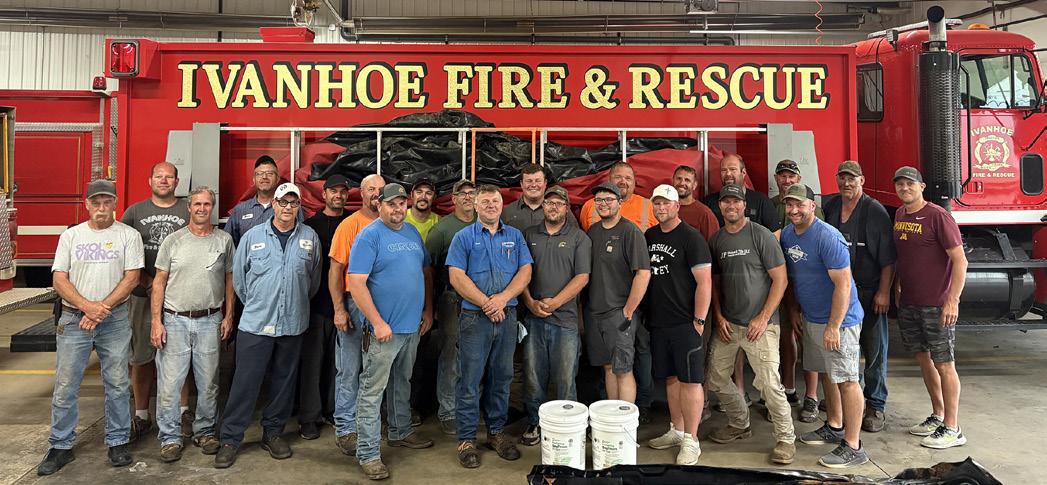
The Lincoln County Soybean & Corn Growers are active in their community through donations and raising funds for scholarships.
Awareness Breakfast, serving around 500 meals each year. Attendees pay only what a farmer receives for the ingredients. Last year, that cost was just 40 cents per plate, making the breakfast an affordable and educational way to highlight agriculture. The board also supports youth heading to the State Fair and provides county T-shirts for 4-H participants, in addition to assisting with various 4-H activities and helping fund local agricultural education.
To reach broader audiences, the board invests in local radio and video sponsorships, which promote the work of soybean growers and emphasize the importance of checkoff-funded programs. The presence of the association is also visible through six corn and soybean promotional signage within the community.
The board “planted to protect” by participating in the statewide SoyFoam campaign and donated 10 pails to five local fire departments throughout the county. This campaign showed community members how diverse soybeans are and provided a safer product for first responders to use when putting out Class A and B fires.
Lincoln County has also had strong representation on MSGA, from past President Bob Worth to retired ASA Director Ron Bunjer to current Directors Joel Schreurs and Brian Fruechte, who both serve on our governing board. The Lincoln County Soybean & Corn Growers consistently demonstrates strong leadership, creativity and a deep commitment to their community, making them a clear choice for our County of the Year.
Presented by MSGA President Darin Johnson
In agriculture, we’re all connected and dependent upon each other to bring our products to market. On behalf of Minnesota’s soybean farmers, I extend our sincere gratitude to CHS for their longstanding support of agriculture and the farm families and local economies that rely on it. Your partnership goes far beyond business. It reflects a shared commitment to rural communities, stewardship of the land and the long-term success of farmers across our state.
Minnesota soybean growers face no shortage of challenges, from volatile markets and rising input costs to weather uncertainty and global trade pressures. Through it all, CHS has partnered with farmers, providing reliable service, market access, innovation and leadership when it matters most. As a cooperative, CHS understands what it means to work together, reinvest locally and put farmers first.
CHS’ investments in infrastructure, sustainability and farmer education help ensure that Minnesota soybeans remain competitive and trusted around the world. Just as importantly, their support strengthens the communities where we live, work and raise our families.
We are proud to work alongside CHS and grateful for your dedication to agriculture. CHS continues
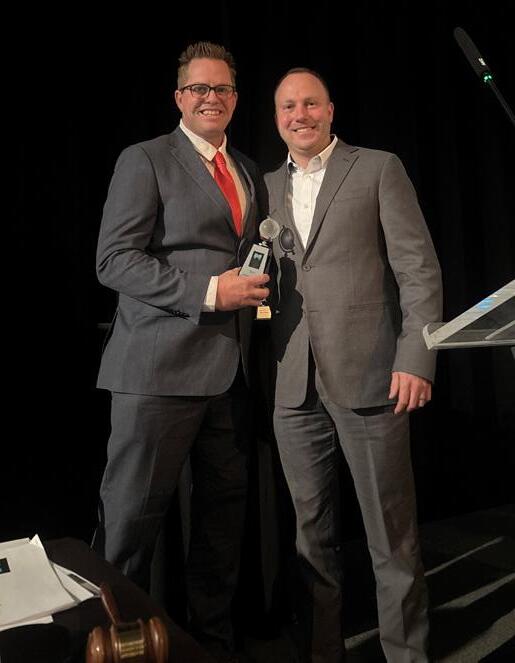
Marthaler (right) of CHS stepped away from his MN Ag Expo learning session to accept the Industry Partner of the Year Award.
to support MSGA activities, including our magazine, Soybean Business. On behalf of MSGA, I thank CHS for believing in Minnesota’s soybean farmers and for helping us grow a stronger future together.
Jason Marthaler, vice president of CHS’ oilseed product line, accepted the award, saying, “We stand united helping our farmers — whether you’re advocating in St. Paul or Washington, D.C., we stand with you. We are proud to be a strong supporter of Minnesota Soybean.”
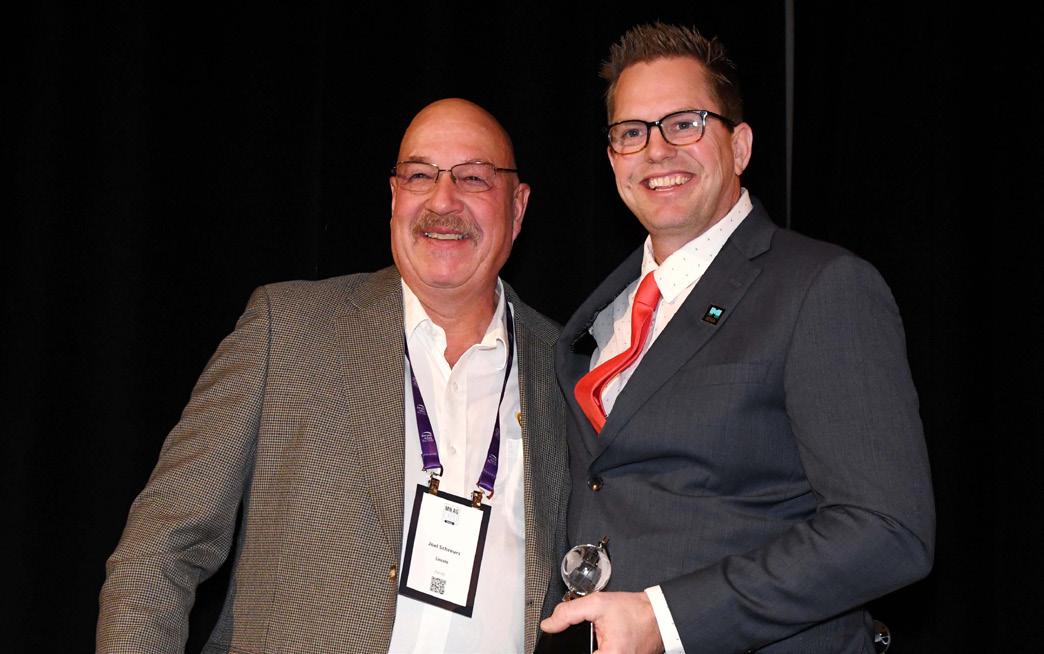
Our Soy Advocate of the Year has put in countless hours and miles promoting Minnesota soybeans, from his home county in southwest Minnesota all the way to Central America and Southeast Asia and all markets in between. He’s seen for himself how essential it is for our industry to continue building relationships across the world.
Joel Schreurs has been a stalwart advocate at every level — local, state, federal and international. He’s been an MSGA director for nearly two decades and has served as secretary and vice president, along with being a member of our governing board since its inception and is involved in numerous action teams. Through his role on MSGA, Joel has been a constant presence at Farmfest and our St. Paul Hill Visits and
Legislative Reception, helping to advance our policy priorities during meetings with policymakers. During his nine years representing MSGA on the American Soybean Association, Joel became one of the industry’s top experts on international trade. Earlier this decade, he was one of several ASA directors who made the final lobbying push to ensure the USMCA made it to President Trump’s desk.
Throughout his policy career, Joel has helped build relationships with leaders from both sides of the aisle, from Amy Klobuchar, who Joel hosted at his farm last summer, to GOP House Whip Tom Emmer. When Joel speaks, legislators and his fellow advocates listen –because they know that Joel did his homework and prepares diligently for every meeting. He also pulls off wearing a tan suit at the U.S. Capitol like few others can.
We’re grateful that Joel continues to put in time and effort to support our farmers and the agriculture industry, through his various positions on MSGA, MSR&PC and the U.S. Soybean Export Council and Soy Excellence Center. His volunteer duties require a lot of time away from his farm and his family, and those efforts don’t go unnoticed. Congratulations, Joel!
Joel says, “I’ve been proud to play a role in helping to make the outlook a little better for our farmers and industry. It’s been a fun ride, and I appreciate the support of my fellow directors in receiving this award. It’s humbling to be recognized.”
While I agree with Darin Johnson that “uncertainty” perfectly describes the year that was in 2025, when it comes to MSR&PC, I’m going to suggest another word of the year: SoyFoam.
This checkoff-supported firefighting foam was quite literally everywhere in Minnesota in 2025 – in demonstrations, through donations and catching the attention of the media by highlighting how this soybased product moves the pile and can help reduce firefighters’ risk of cancer.
Last year, in partnership with Cross Plains Solutions,
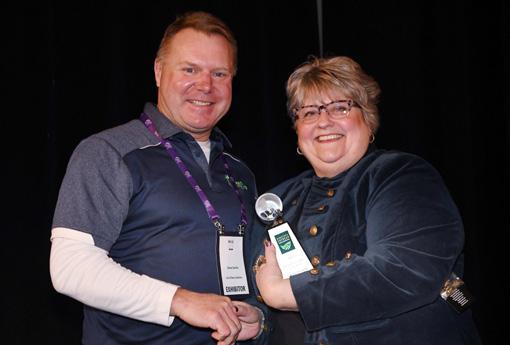
the developer of SoyFoam, the Council launched our Planting to Protect: From Farm to Flame campaign, which allowed each of our over 40 organized counties to donate pails of SoyFoam to their local fire department. In total, we donated nearly 500 pails and over 2,000 gallons of SoyFoam to more than 250 Minnesota fire departments, helping to share SoyFoam’s PFAS-free message. We sent dozens of press releases to local and state media, which led to over 100 media placements, including feature stories in MPR, AgWeek and many more.
We are proud of our collaboration with Dave Garlie and the team at Cross Plains Solutions and look forward to continuing to promote SoyFoam and other value-added uses in the years ahead. It’s my pleasure to award Cross Plains Solutions with our 2025 Industry Leader of the Year Award.
Dave Garlie of Cross Plains Solution accepted the award, saying: “The promotion piece of SoyFoam has been incredible, and without (MSR&PC’s) support, none of this would be possible. This campaign is another example of Minnesota Soybean stepping up.”
MSR&PC Director of the Year – Paul Freeman Presented by Gail Donkers
Our Director of the Year knows what ingredients are needed to be a strong leader. In fact, he stood on this very stage a decade ago handing out awards in his role as MSGA president.
As his MSGA peers like to tease him, Paul Freeman went over to the “dark side” when he went from advocacy to being elected to MSR&PC in 2021 to oversee checkoff funds. I say it’s more like Paul has “seen the light.”
Paul has made a seamless transition from farm policy advocacy to checkoff direction and hasn’t looked back. During his five years on the Council, Paul has played a role on our research action team and currently represents MSR&PC on the Northern Crops Council. Paul also continues to work on transportation initiatives through his involvement with the Upper Mississippi Waterway Association.
Paul has also been an eager proponent of the Council’s SoyFoam campaign and promoted the soybased firefighting product at the local level through his role on his county board, along with participating in media interviews promoting value-added uses and other checkoff priorities. Of course, Minnesota is a big state, and we can always count on Paul to represent the Council at events in northern Minnesota, including Prairie Grains, Big Iron and the Small Grains Update Meetings.
I’d be remiss if I didn’t mention that Paul continued to lead on the Council this year while grieving the loss of his wife, Roberta, in August 2025. Many of us had the pleasure of knowing Roberta and appreciate how much she meant to Paul and his family. Family comes first at Minnesota Soybean, and we extend our condolences
to the Freeman family during a difficult past year. Like many farmers, Paul helped work through his grief by tending to his farming operation and seeing his harvest to completion. We hope he also found comfort in the many friends he’s cultivated in agriculture throughout the years. “Soy Family” may sound like a cliche, but we truly do rally around each other, and Paul is one of those farmers who leads by example.
Paul Freeman delivered a video address from the Clean Fuels Conference, telling MSGA delegates, “When I started farming at 10, it was a natural thing to do, and it evolved into my involvement in the soybean industry. I felt I needed to get involved beyond the farm gate, because I want to keep our product moving. … It’s very rewarding being on the Council, finding new value. It’s just an honor to receive this award. I want to be a player in the room. You get to have a voice and propel our industry forward for the next generation.”
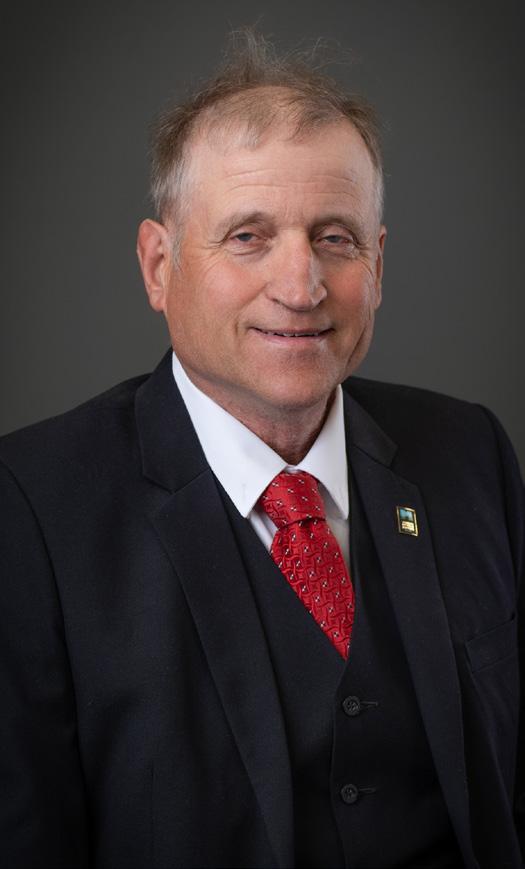
“It’s important to be involved and invest in your industry,” says MSR&PC Director of the Year Paul Freeman.
By Drew Lyon
For over 60 years, the Minnesota Soybean Growers Association (MSGA) has been steadfast in promoting sensible, farm-related policies that can garner support from all sides of the political spectrum. In 2024, the farmer-led organization created the Spirit of MSGA Award to recognize lawmakers who reach across the aisle, even when it’s not politically popular, to support legislation that improves the outlook for Minnesota agriculture and the state’s nearly 26,000 soybean farmers.
“We know that reaching across the aisle is becoming increasingly rare these days, but we feel that a bipartisan mindset still exists on agriculture issues,” MSGA President Darin Johnson said. “We feel it’s important in this moment to honor those policy leaders who are demonstrating a willingness to go beyond politics to support common-sense policies that move agriculture forward.”
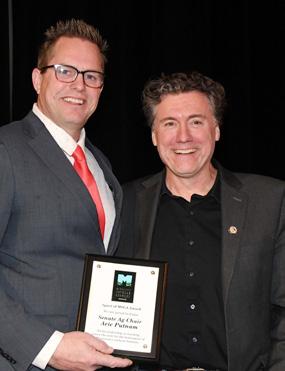
U.S. Democratic Rep. Angie Craig and GOP Rep. Brad Finstad, who both sit on the House Agriculture Committee, earned the inaugural award for their leadership in Washington, D.C. This year, MSGA honored a pair of state leaders, Republican Rep. Paul Anderson and Democratic Sen. Aric Putnam, with the 2026 Spirit of MSGA Award at its Jan. 20 Annual Meeting in Mankato.
“In honoring Rep. Anderson and his Democratic colleague, Sen. Aric Putnam, we’re celebrating legislative leaders who put policies above politics and are courageous in reaching across party lines to work
with colleagues and promote farm-friendly policies, simply because it’s the right thing to do, not to merely score political points,” Johnson said. “They’ve both shown an eagerness to learn, ask the right questions, listen and engage with farmers and farm groups from across Minnesota.”
Rep. Anderson has served in the Minnesota House of Representatives since 2009. Throughout his over 15 years in the Legislature, Rep. Anderson has endeared himself to his colleagues through collaboration, respect and a strong focus on not just his constituents in Pope County, but across Minnesota agriculture.
A family farmer himself, Rep. Anderson is also a longtime member of the House Agriculture Committee and currently serves as co-chair. Over the course of his policy career, Rep. Anderson and MSGA have been aligned on many issues, from protecting crop inputs to farm safety to supporting trade and biofuels. Rep. Anderson is experienced in working within a split government in St. Paul; thus, he and his colleagues must compromise to find solutions to pass bills. He has shown time and time again that when it comes to agricultural issues, what matters most is what’s best for farmers.
“Minnesota is poised to really lead the way to increase biofuels, which is going to be key to getting our margins back up,” said Rep. Anderson, who farms in Starbuck and is a member of MSGA. “We have to work together to make biofuels a key part of the future here, and I’m honored to accept this award with Sen. Putnam.”
“Democrat or Republican, rural or urban, right or left – labels truly don’t matter to us.”
Since embracing the challenge of chairing the Senate Ag Committee in 2022, Democratic Senator Aric Putnam has worked with Rep. Anderson and GOP leaders to ensure MSGA priorities made their way to Gov. Walz’s desk and into law. These policies include funding Minnesota Department of Agriculture programs, supporting international marketing efforts, rural infrastructure, uplifting beginning farmers, protecting animal agriculture, rural mental health, helping to establish the state’s first grain indemnity fund and more. With the Minnesota House tied last session, and the Democrats holding a slim Senate majority, passing an ag omnibus bill required bipartisan cooperation. Both Sen. Putnam and Rep. Anderson rose to the occasion to support a farm economy that is Minnesota’s second-leading industry and contributes about 20% toward the state’s GDP.
“It’s an honor to receive this award, especially as someone who isn’t a farmer. But it’s also an honor
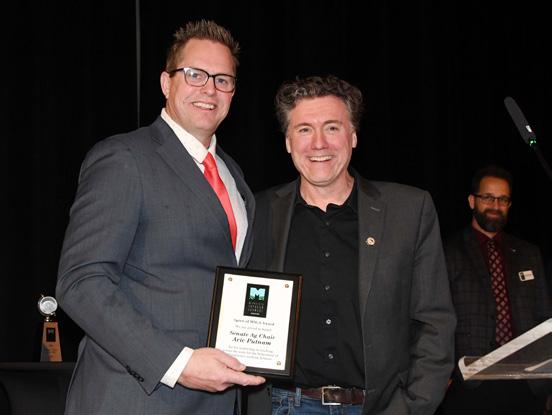
to share this award alongside my friend Paul, and I appreciate the chance to work with him, work with other people and work with all of you,” Putnam told MSGA delegates. “What we’re supposed to do (as politicians) is come up with something that’s not partisan at all … and to talk to people and learn who are impacted by the decisions we make. You have tremendous leadership at MSGA, and I’m very grateful many of you have invited me to your farms and at MSGA and have been so gracious and hospitable.”
Grower leaders look forward to visiting with Rep. Anderson, Sen. Putnam, their colleagues and the Walz administration throughout the 2026 Legislative Session, including MSGA’s Legislative Reception and Hill Visits in March.
“Democrat or Republican, rural or urban, right or left – labels truly don’t matter to us,”Johnson said. “MSGA strives to work with leaders of both parties to improve the short and long-term outlook for our farmers.”

Lorri Ann Hartel retires with lots of love from colleagues
By Mark Askelson
For the last two decades, there’s been one voice guiding the local leaders of the county soybean program in northern Minnesota. Now, that familiar voice and friendly face is hanging up her “Minnesoyta” hat and riding off into the sunset –straight toward retirement.
Lorri Ann Hartel first became involved with Minnesota Soybean back in 2006. At that time, Polk County was the only established county soybean program in the northwest region. Through Hartel’s work at her company, Prairie Ag Communications, she worked alongside Minnesota Wheat and the University of Minnesota Extension to help establish more county soybean programs in the region at a time when soybeans were starting to become a regular part of farmers’ crop rotations.
Today, Polk County harvests nearly 12 million bushels of soybeans each year, and northwest Minnesota’s soybean production reaches nearly 50 million bushels annually.
“It probably wasn’t until 2008 that most of the counties finally got organized and developed a board of directors, so it took some time,” said Hartel, who lives in Red Lake Falls. “Because Polk County was already established we were able to use a lot of their bylaws and use them as a template.”
Since helping establish those counties, Hartel has been a trusted adviser for the counties and their work promoting soybean checkoff investments and Minnesota Soybean Growers Association membership. She’s helped with everything from supporting Ag in the Classroom by donating books to local schools, donating soy-based Skechers shoes to first responders and promoting biodiesel through donations to FFA programs and fire departments.
“I think the Skechers ‘Stepping Up’ campaign was probably one of my favorites, just seeing the great joy and the impact that it brought to the communities,” said Hartel, who still sports a pair of soy-based Skechers on her feet. “But I think overall I’ve just enjoyed getting to know the people who I’ve gotten to work with the counties and the friendships we’ve developed over the years.”
One of those great friendships is with Beltrami farmer Mike Skaug, who joined the Polk County Soybean & Corn Growers board back in 2010 and later became MSGA president in 2021. Skaug says Hartel has been a steady rock behind their county board over the years, helping keep them on task and never failing to help meet their objectives.
“She’s always been very prompt and organized, which made being a director for the county really easy,” Skaug said. “We could always rely on Lorri
Ann to help us with whatever task we had.”
Another past MSGA president from the north country, Theresa Gillie, has also built a strong friendship with Hartel over the years. Hartel’s fun-loving personality and strong network in agriculture made her a soybean star of the north.
“She’s so interconnected with everybody, not just with soybeans but all of agriculture, and she has this calm, lovable and supportive nature about her,” said Gillie. “Everybody knows Lorri Ann and everybody loves Lorri Ann. It’s hard not to!”
Gary, Minn., farmer Corey Hanson, a director with the Minnesota Soybean Research & Promotion Council, has worked with Hartel for 20 years, initially to help create the Norman County Soybean Growers board.
“She’s a huge reason why we became, and stayed, an organized county,” said Hanson, who’s now president of the county board. “Without Lorri Ann, we don’t have a Minnesota Soybean footprint here in northwest Minnesota. She made sure we stayed within compliance and did everything right to stay a recognized county.”
Along with her work in the county program, Hartel has also helped coordinate some of the events that Minnesota Soybean has supported in the northern regions, such as the Prairie Grains Conference, International Crop Expo and Big Iron. She has also been instrumental in arranging the bus that brings the growers from northern Minnesota down to Mankato each year for MN Ag Expo. Not only does she recruit farmers for the trip, but she also lines up snacks, refreshments and even entertainment for the long journey, ensuring everyone on board has a good time in a relaxed atmosphere.
“The bus rides to Ag Expo were always some of my favorite times, but then after the meetings were over, we’d meet up and just talk about life and how things were
going,” Gillie said. “She has always been so much more than just a communicator; she’s become a very dear friend.”
Hartel’s commitment to organizing the bus trip shows through its annual roster of riders.
“I was looking back at some photos I had taken 10 years ago of everyone who was on that trip; it’s almost the same group we had this year in 2026,” said Hartel. “We just really enjoy each other’s time, and I really enjoy getting to catch up with the folks from Mankato because I only get to see them maybe once a year.”
Despite being some six hours away from Minnesota Soybean’s home office in Mankato, Hartel has played a crucial role in keeping the northern growers connected with what’s happening across the state and helping soybeans maintain a strong presence in that region. To show their appreciation, MSGA recognized Hartel during its annual meeting at MN Ag Expo.
“It’s been absolutely crucial to have someone like Lorri Ann living in that region, who’s connected to producers, has deep roots in the area and is passionate about promoting membership with MSGA and can communicate back to our state office the challenges, issues and needs of our northern growers,” said MSGA Executive Director Joe Smentek during Ag Expo. “In addition, Lorri Ann has played a huge role in promoting soy checkoff projects in those counties.”
Following her retirement, Hartel is looking forward to spending more time with her also-retired husband, Dean, as well as some muchdeserved time on the beach.
“We owe a huge debt of gratitude to Lorri Ann for helping to grow, build and nurture our county boards in northwest Minnesota,” MSR&PC CEO Tom Slunecka said. “There’s simply no way that Minnesota Soybean would have the strong presence it has today in northern Minnesota without Lorri Ann’s contributions over the past two decades.”
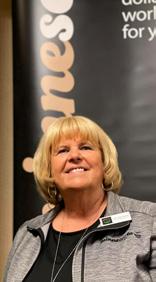
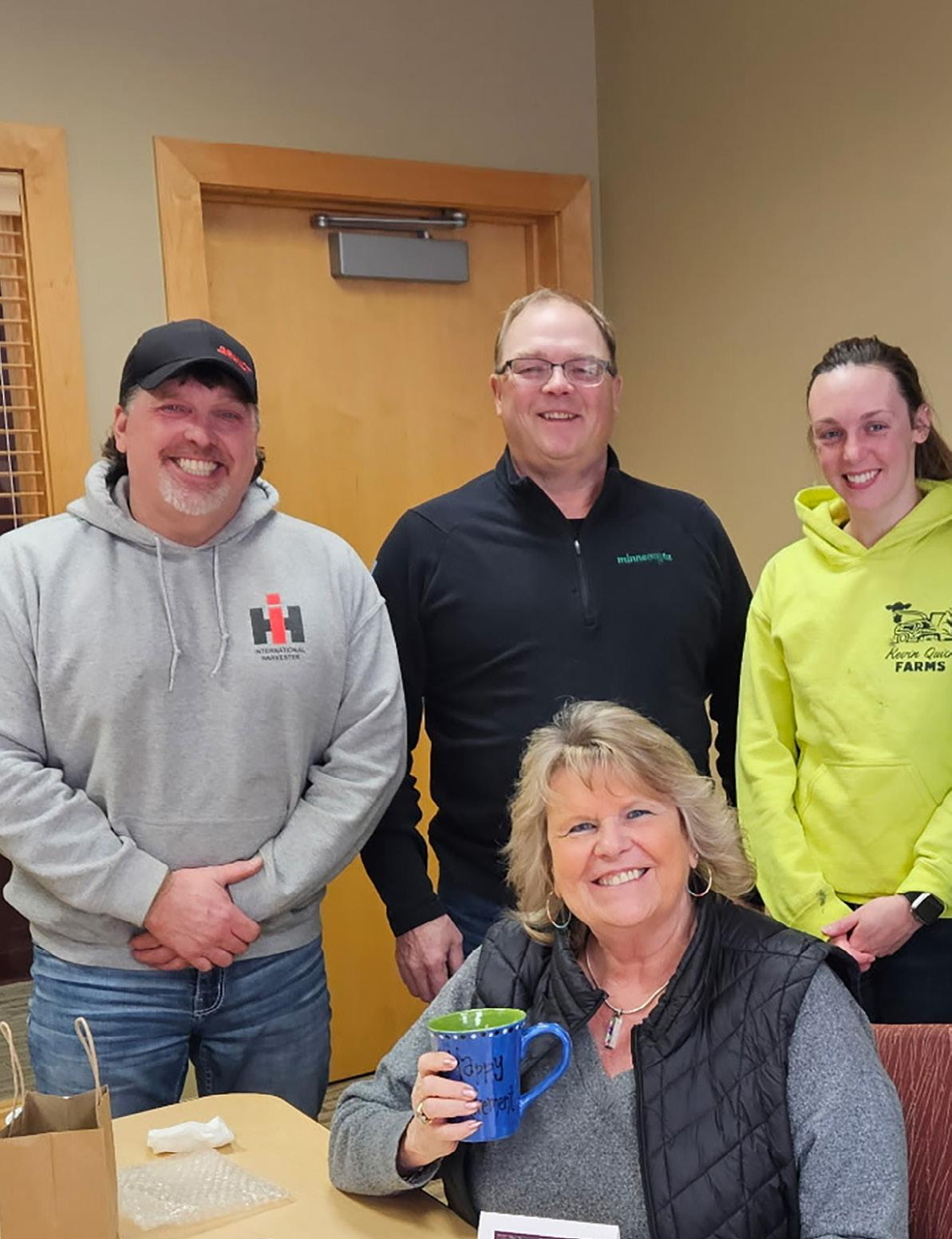
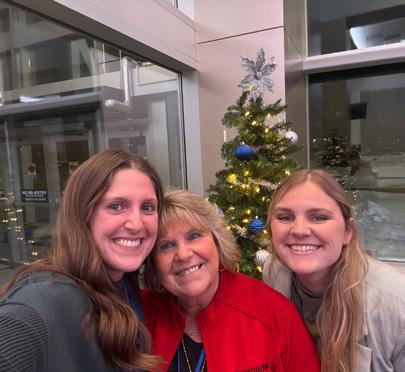
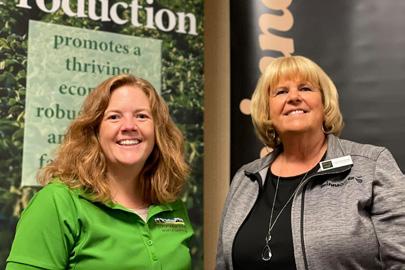
Ann Hartel made lasting friendships with Minnesota Soybean staff.
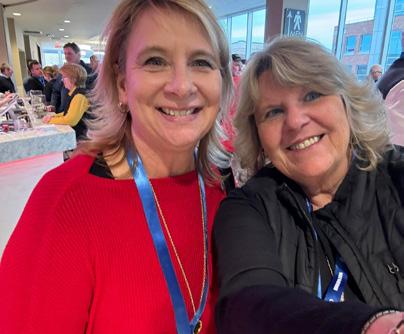
To know Lorri Ann is
By Allison Wright
Paul Neiffer, a tax principal and agribusiness advisor, spoke to farmers at MN Ag Expo about one of life’s inevitabilities: taxes.
Neiffer emphasized how the One Big Beautiful Bill Act (OBBBA), put into effect on Jan. 1, 2026, will impact farming operations. As a CPA, Neiffer is an agribusiness and business advisor specializing in income taxation and accounting services related to farmers and processors. Although his presence was informative to the public, he still encourages farmers to follow up with their tax accountant with the new changes in place.
The first major change is the definition of farming in relation to expanding what is considered farm income.
“It has been a royal pain for us as CPAs when we have to tell you you’re not a farmer.” said Neiffer. “Because gains on selling or trading farm equipment, under the old rules was very difficult for you to qualify that income as being farm income, but they got that fixed.”
The new definition recognizes gains from selling equipment, agri-tourism and direct-to-consumer marketing of farm products as a form of farm income. This will help farmers qualify for more federal funds as program limits increase if producers have at least 75% of their income coming from farming to qualify for the
will now be based on the number of owners rather than the entity type. This change prevents farmers from being penalized for restructuring operations for tax or succession reasons. However, uncertainty remains around AGI testing, particularly for LLCs and S corporations, and producers are urged to wait for USDA guidance before making entity changes.
ARC and PLC updates include automatic payment of the higher program benefit, eliminating the need for producers to pick between the programs to receive the risk benefits. It is also anticipated that base acre expansions will increase payments in future years for some farms with farmland not currently in the program.
Finally, Rural Opportunity Zones are a powerful long-term planning tool beginning in 2027. These zones offer an alternative to 1031 exchanges by allowing farmers to reinvest only capital gains, reduce taxable income over time and potentially achieve a full step-up in basis without waiting until death.
Experts say farmers should properly prepare ahead of the April 15 deadline for filing.
“While there were a number of Farm Bill priorities passed in the OBBBA, there were also a number of other changes, particularly to the tax law, that will enable family farms who are now operating under various forms of entity structure to re-invest income into their enterprise and qualify for additional benefits.” said Kyle Jore, an ag economist and secretary of the Minnesota Soybean Growers Association. “I strongly encourage people to go and talk with their tax accountant to see if any of these improvements work for them.”

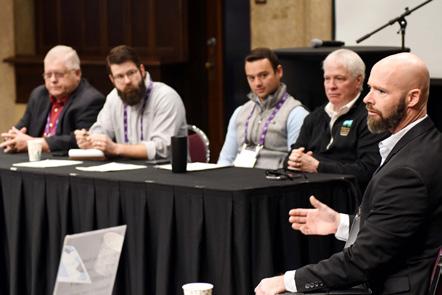
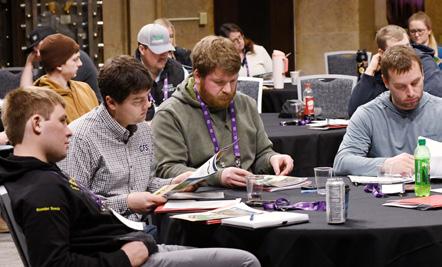
“Each session during the MN Young & Emerging Farmer workshop was engaging, and I liked the range of topics covered throughout the two days. It was a really great experience.”
- Workshop participant
By Sydney Harris
When Minnesotans dive into a farming career, there isn’t a Human Resources department walking them through workplace trainings, explaining company policies and role expectations.
No, for many farmers, their “onboarding” is a combination of growing up on or around the farm, a series of (sometimes costly) trial and errors, plus advice from their support system. Through the MN Young & Emerging Farmer Workshop, the Minnesota Soybean Growers Association (MSGA) helps connect producers with a support system.
“The next generation of farmers are hungry for information and resources, and it’s critical for MSGA to play a part in cultivating those growers,” said MSGA Treasurer Rose Wendinger Karau, who leads the program’s planning committee. “The MN Young & Emerging Workshop walks participants through just about every aspect of farming operations, giving them a play-by-play.”
The third annual workshop kicked off on Monday, Jan. 19 with a social hour during which participants met each other and several MSGA and Minnesota Soybean Research & Promotion Council farmer leaders. The next morning, workshop programming began with Profinium Bank, the workshop’s premier sponsor, and Farm Business Management walking participants through the ins and outs of building financial statements. To piggyback off the first session, Profinium and USDA’s Farm Service Agency sat on a panel discussing various beginning and first-time loan options.
“Without our business sponsors, this workshop wouldn’t be possible,” Wendinger said. “Building a team of trusted experts is an important part of growing your farm operation, so it’s invaluable that these businesses are willing to offer their time and expertise to the future of farming.”
Tax preparation is crucial for farmers. That’s why Eide Bailly met with the group to review tax dos and don’ts; not surprisingly, participants peppered the presenters with questions. CHS followed with a grain marketing outlook and a trend outlook for the coming year.
A critical component of farm operations, the second day kicked off with a breakdown of crop insurance options. Then, MSGA Director Bob Worth and lobbyist Cory Bennett joined Minnesota Farm Bureau and Minnesota Farmers Union leaders for a frank discussion about agriculture policy and the importance of grassroots advocacy on Minnesota farms. Chris Roe from Blethen Berens later spoke about succession planning.
Despite a blizzard warning, the group persevered and closed out the workshop with a panel discussing how to build a professional relationship with landlords and an “Agronomy 101” presentation from Central Farm Services.
“Like years prior, the workshop was not only successful, but a fun experience,” Wendinger said. “Attendees got to network with each other and hear different perspectives while learning about the myriad resources available to them to help them succeed.”
The workshop was also supported by soy checkoff funds, thanks to the Minnesota Soybean Research & Promotion Council. Information on applying for the 2027 MN Young & Emerging Farmer Workshop is expected later this year.

Fairmont | Truman | Owatonna | Mankato

SEED. FERTILIZER. FUEL. EQUIPMENT.
Every input has a cost and every decision has a window. In agriculture, timing is not just important, it is everything. Access to capital at the right moment can make the difference between keeping pace and moving ahead. Profinium Bank offers ag-focused lending and treasury solutions designed to help you manage cash flow through every season, plan ahead with confidence, and respond quickly when opportunity strikes without slowing down your operation.
www.profinium.com/ a g-banking



Loans are subject to credit and underwriting approva l. Products and ser vices may require enrollment, other ter ms and conditions and fees may a lso apply.



By Soybean Business Staff








The Minnesota Soybean Research & Promotion Council (MSR&PC), in conjunction with the Minnesota Department of Agriculture, is conducting annual elections this spring. For the past several months, the Council has sought a wide pool of candidates to fill five seats spanning the state. Bill Zurn, who served nearly 20 years on MSR&PC, is retiring from his District 1, 2 & 3 seat.
MSR&PC directors serve three-year terms, beginning July 1. The 15 elected farmers wisely direct investments of soybean checkoff resources into developing new uses for soybeans, expanding markets domestically and abroad; researching new production practices and technologies; and leadership development programs – with an eye squarely on improving profitability for Minnesota soybean farmers.
“During a time of transition in our industry, we’re excited to see our farmers continue to want to make a positive difference to benefit their operations and agriculture as a whole,” MSR&PC Vice Chair Ben Storm said. “Bill Zurn has had a huge influence on Minnesota agriculture during his career, and we’re looking forward to honoring his legacy in the months ahead while welcoming his replacement.”
Take a look below to learn more from the farmer leaders running for the Council. MDA will mail ballots March 16 to farmers who have voted in past MSR&PC elections or who requested a ballot. Ballots are due back to MDA by Tuesday, April 1, and no ballots postmarked after April 1 will be accepted.
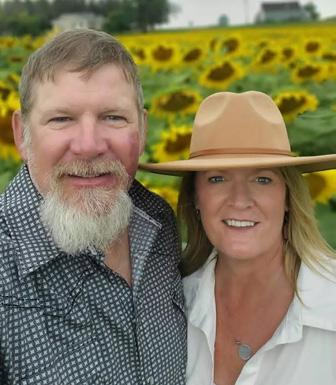
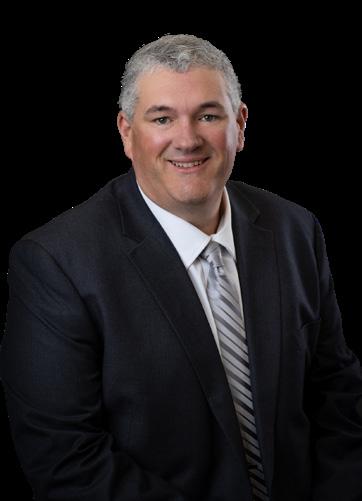
Dave Garry grows soybeans, corn, black oil sunflowers and small grains (hard red spring wheat and winter rye) in Thief River Falls. He is currently chair of the Pennington-Red Lake County Soybean & Corn Growers Association and is a member of the Minnesota Soybean Growers Association (MSGA). Dave proudly serves as cochair for Trash the Dress for MDS, which works with North Country Horsemen’s Trails for Treatment, a cancer grant program that works with communities across a six-county area to support those affected by cancer. Counties include Polk, Red Lake, Pennington, Marshall, Roseau and Kittson. Dave also cooks breakfast for the Ronald McDonald House.
Dave’s goals on the Council:
I want to help MSR&PC expand into new markets and promote uses for Minnesota-grown soybeans, both domestically and internationally. I want to find ways to lower input costs, work on advancing research in areas such as Iron Deficiency Chlorosis (IDC), soybean cyst nematodes, white mold and improving yields. I hope to serve and represent our farmers in Districts 1, 2 & 3 in northwest Minnesota.
Patrick O’Leary raises soybeans, corn and is a swine contract grower in Swift County. He is the Council’s current District 4 representative and served as chair from 2017-2019. Patrick also represents MSR&PC on both the United Soybean Board (USB) and Northern Soy Marketing. He is a member of MSGA, the Minnesota Corn Growers Association (MCGA) and Minnesota Farm Bureau.
Patrick’s goals on the Council:
As a farmer, it is important to me that we all take an interest in the continued success of agriculture. The promotion of soybeans and development of markets for our soybeans is extremely important in ensuring the continued success of all farmers. It is also necessary that we research and develop soybeans that will not only lead to better yields and profitability for the farmer but also increase the quality of soybeans for our markets. The wise investment of our checkoff dollars will ensure that Minnesota and the U.S. remain leaders in the soybean industry, keeping our farmers competitive and successful in the global agriculture economy.
I would like to take this opportunity to thank you for your support.
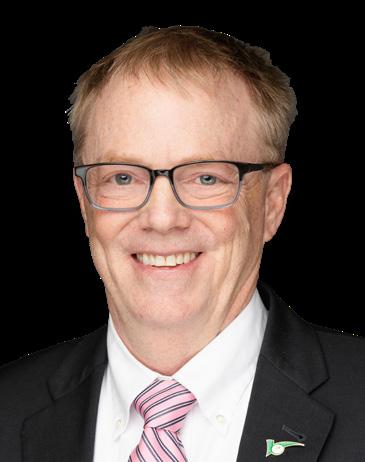
Pat Sullivan grows soybeans, corn, sweetcorn, sugarbeets and peas on his family farm in Franklin. He currently serves as Council secretary and is a District 5 & 6 director He is a member of the Renville County Soybean & Corn Growers board and MSGA, belongs to the Franklin Fire Department and is an active member of the Sacred Heart Church Cemetery Board.
Pat’s goals on the Council:
In my role on the Council, I strive to keep Minnesota soybean farmers on the cutting edge of the newest technologies in soybean production, from the best research and breeding to meeting the ever-changing demands of our domestic and international customers to helping strengthen relationships with new and existing partners by creating the perfect products for them. This includes, but certainly isn’t limited to, soybean oil, biodiesel, soymeal and supporting products that lead to greater demand – with an emphasis on improving farmer profitability, which in turns, leads to more prosperous rural communities throughout Minnesota.
Thanks to soy checkoff investments, we’ve helped develop shingle treatments, road treatments (which I’ve put to use on my own driveway), firefighting foam that helps lower the risk of cancer and soy-based field turf. As a farmer and checkoff director, I continue to be amazed by how versatile our crop is. I’m also passionate about the agronomic research we support. Our checkoff dollars are finding solutions for weed resistance in soybeans, developing better varieties or treatments for diseases and supporting the ongoing research for these products.
If I’m fortunate enough to serve another term representing our farmers, I will continue to seek the next breakthrough from our checkoff that helps create demand for soybeans and improve the bottom lines of Minnesota’s farmers. Serving on this board alongside so many talented and passionate businessmen and women is a great privilege and responsibility, and I would be humbled to once again earn your support.
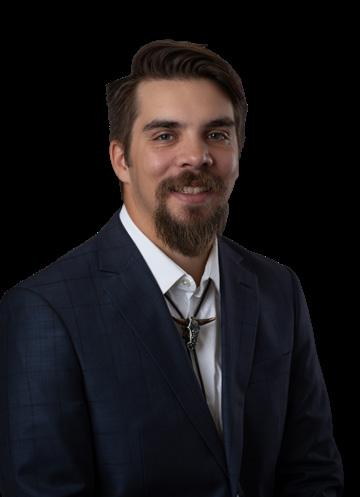
Raymond DeMars grows soybeans, corn and beef cattle on his farm in Swanville. He is a director with the Minnesota Soybean Growers Association and a graduate of the American Soybean Association’s Young Leader Program.
Raymond’s goals on the Council:
As a 33-year-old producer deeply committed to the future of Minnesota agriculture, I am writing to express my interest in serving on MSR&PC. Operating at a time of rapid technological and environmental change, I believe it is vital for the Council to include voices that represent the next generation of growers — those of us who will be managing these lands and markets for decades to come. My goal is to ensure that our checkoff dollars are invested strategically in high-yield research, sustainable soil health practices and aggressive market expansion that secures profitability for both current and future operations.
I am eager to bring a fresh perspective to the table, combining a respect for our industry’s traditions with a drive to adopt the innovations necessary to keep Minnesota soybeans competitive on a global scale.
Ron Obermoller grows soybeans and corn on his operation in Brewster. He is the Council’s District 7 representative. He served for more than a decade on the Agricultural Utilization Research Institute (AURI) board. Ron is a member of MSGA and MCGA and a Minnesota Soybean Processors board director.
Ron’s goals on the Council:
Representing Minnesota farmers on MSR&PC has been a privilege. I believe in the power of soybean farmers working together through the checkoff program to accomplish research for the benefit of all soybean producers. I make every effort to be available to my fellow producers and respond to them.
I’m asking for your vote. Balancing your investment between research, promotion and education to get the most out of your checkoff investments will be my goal.
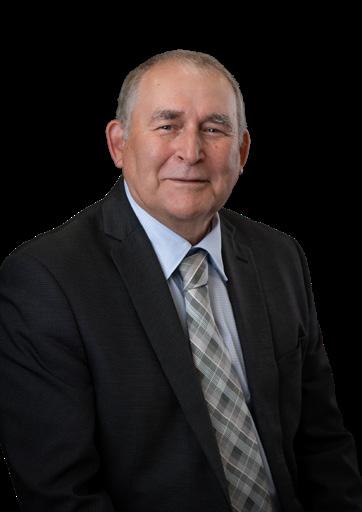
On her family farm in Sherburn, Rochelle Krusemark raises soybeans, corn, cover crops, forage grass, custom finish hogs and has a cow-calf beef herd. Rochelle is a member of MSGA, MCGA, MFB, Minnesota Cattlewomen and MN Pork Producers. She’s also a past director with USB and the Soy Nutrition Institute and currently serves on MSR&PC, the U.S. Meat Export Federation and U.S. Farmers & Ranchers in Action.
Rochelle’s goals on the Council:
I passionately promote agricultural literacy and farm commodities within our community, state, the U.S. and internationally. As a former schoolteacher, I desire to learn and commit the time necessary to prepare for meetings. I listen and observe, exhibit integrity and have earned a reputation as an independent thinker, respectful team member and effective leader who encourages participation and collaboration.
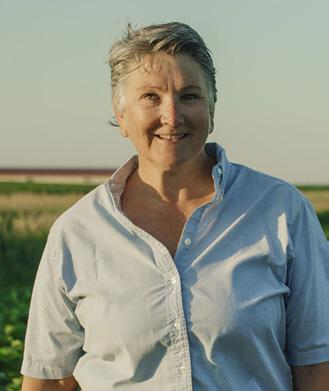
Our soybean checkoff investments develop market growth by funding research, promoting our products, serving as an information resource, and developing new uses for Minnesota soybeans. We grow soybean varieties that meet the demands of our consumers and end users; human or animal and industrial uses. We can encourage both current and future scientists and engineers to make the ‘magic bean’ even better. Meeting demand and expanding markets both in the U.S. and abroad, the soybean checkoff helps ensure a strong and profitable future for U.S. soybean farmers. My experience in developing strategic plans, resolutions, financial interpretation and planning, and business experience are an asset to MSR&PC.
Responsible investment of commodity checkoff funds takes time and commitment. I am grateful for a family who realizes the benefits of “filling in” to complete the tasks during my absence from our farm, as well as my time devoted to reading and communication in preparation for meetings. I am approachable and available to listen to your concerns. I would appreciate your support and confidence in me by reelecting me to serve as MSR&PC’s District 8 director.
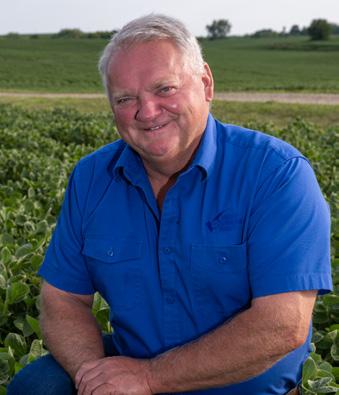
Lawrence Sukalski District 8
Lawrence Sukalski grows soybeans and corn on his Fairmont family farm. He currently represents MSR&PC on USB and sits on the Martin County Soybean & Corn Growers board. He’s also a director with MSGA and a member of MCGA and Farmers Union.
Lawrence’s goals on the Council:
I am completing my final term on USB, where I’ve had the opportunity to serve on the Executive Committee, act as Work Group Lead for three years and serve on the Value Alignment Committee for four years. Through this work, I helped build a strong foundation for the future of the soybean checkoff by improving transparency, increasing efficiency and expanding shared resources. These efforts have strengthened accountability and ensured that checkoff dollars are managed responsibly and effectively.
If elected, I would bring this experience and commitment to MSR&PC, helping to support long-term success by applying the same principles of transparency, efficiency and value-driven decisionmaking for Minnesota soybean farmers.
By Deanna Kanne
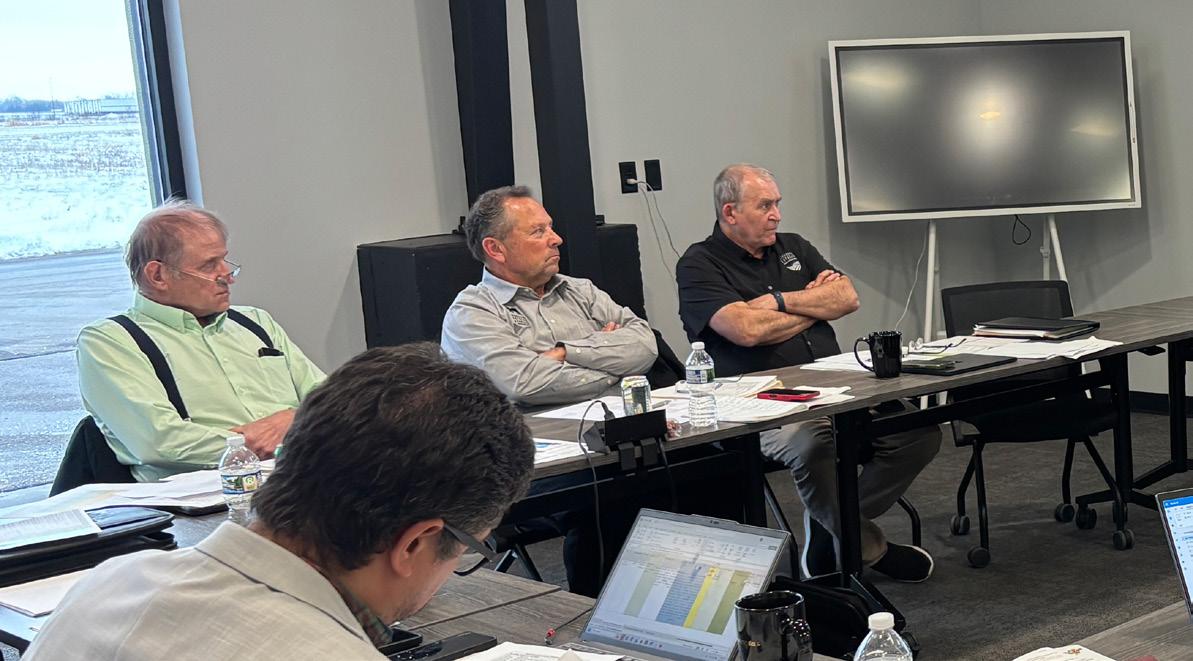
One of the biggest investments the checkoff funds on a yearly basis is production research. Every winter, researchers from multiple universities and companies bring their soybean research proposals in front of the Minnesota Soybean Research & Promotion Council, hoping farmer leaders will fund their projects for the crop year ahead, and to receive input from farmers on their production research priorities.
“It’s really important that we do work that is relevant to the needs of growers,” said Megan McCaghey, a checkoff-supported researcher from the Department of Plant Pathology at the University of Minnesota. “We want our research to directly address challenges experienced by growers, whether it’s the next year or into the future.”
Research projects are sought in three key areas: breeding and genetics, pest management and overall agronomy.
“When you go through the review
process and also the application process, the distinction allows scientists to see where the challenges are, the needs (are) and where their expertise fits into our request and the farmer’s request,” said Sergio Cabello Leiva, MSR&PC research director. “It also helps us keep it balanced in the pre-discussion.”
Requests for proposals (RFPs) are opened in October for production research. This request stays open for three months, until mid-December. While other MSR&PC budget areas are decided from June-August and RFPs are accepted in June, the research budget needs to account for research taking place during a growing season, not necessarily a fiscal year.
The RFP includes other information, including other tasks MSR&PC requests the researcher complete as part of the contract. Researchers must provide an itemized budget, a communication plan, project summary and any additional funding they may be receiving.
New this year, each PI (principal investigator) was requested to send
in a video to explain their project. This allowed them to provide more details that weren’t in the abstract or use a full PowerPoint if they wanted. Farmer leaders were able to watch or listen to these recordings and learn more about each of the research projects that way.
“I thought that was great,” said Bob Lindeman, a McLeod County farmer who is a member of the production research team in his role as a director with the Minnesota Soybean Growers Association. “Their research projects could be 10 pages long or more, and to try to read through 10 pages for every project, it gets to be a long process.”
The new process was popular with researchers as well.
“It was great to do an overview of what our project was about and give it a more personal feel,” said Jenna Whitmore, a researcher from Next Gen Ag, a private research company that has worked with MSR&PC for the past eight years. “It’s kind of a mini meeting before the actual meeting, if you will, that we can give a brief overview of the highlights.”
That wasn’t the only new thing

this year. It was Cabello Leiva’s first official year on the grant review committee, and Council Director Corey Hanson’s first year as chair, after taking over for retired Director Gene Stoel.
“Last year, the Council invited me to participate in the meeting,” Cabello Leiva said. “This year was totally different. I was impressed by the commitment of the farmers, because I always speak about how good our scientists are, but the commitment of farmer leaders is really important. They put in a lot of hours, they invest a lot of their time to read proposals, and I was very happy to see them asking questions.”
While the video submissions cut down on some time, the farmer committee that meets to discuss research proposals requires at least three full days of discussion, over a two-month period.
After the RFP closes, an internal meeting is held to determine if the research project meets the scope of what they are looking for in research this year. Sometimes the
research is good, but too expensive, or simply not a big enough problem that farmers are currently interested in investing the money. They are also looking for projects that cover the majority of the state, not just part.
“I can’t say enough about being responsible for all soybean farmers, not just my county, not just my region, but to make sure that these research projects were good for the state or it had a large regional effect,” said Hanson, who farms near Gary, Minn. “It can be hard for studies out of the University of Minnesota to reach the northern part of the state, so research from NDSU can be a good supplement for that area.”
After this first perusal, the projects are narrowed down to the top projects that farmers are looking forward to learning more about and at least close to the budget provided. With soybean prices being less than ideal, budgets are tighter than in past years. These projects are sorted into categories: keep, converse and cull.
“We had $1.7 million worth of projects
turned in, and the money we had to work with was just a little over a million,” Lindeman said. “The process in narrowing that down is tough.”
The projects that are initially selected to keep are kept on full requested budget and with no questions from the farmers.
Some of the remaining projects have remaining questions from the team, so the PIs are invited to present their proposals to the team. This can happen either in person or virtually and allows the farmers to ask specific questions of the researcher.
“I get more of a pulse of what growers are interested in, or maybe what some of the barriers to implementation are,” McCaghey said.
After both meetings conclude in February, the team pulls together a proposal to go before the full Council for approval during the spring meeting at the end of March. There are an estimated 24 projects that Council will consider this spring for funding for fiscal year 2026.
“We really like partnering with the Council,” Whitmore said. “Ultimately, we all want to produce good soybeans as much as we can.”
By Katelyn Engquist and Drew Lyon
The Specialty Soya and Grains Alliance (SSGA) is entering a new era with vision, purpose – and a name change.
During a January 2026 membership meeting, the organization voted to rebrand to the United States Identity Preserved Alliance, reflecting the brand’s leadership in advancing the U.S. Identity Preserved value chain and strengthening premium U.S. agriculture’s sterling global reputation for quality, traceability and food safety.
Since the organization’s creation in 2019, the U.S. Identity Preserved Alliance has served as the leading business alliance of identity preserved agriculture in the United States. In 2021, SSGA launched the U.S. Identity Preserved assurance protocol, a voluntary, third-party program that verifies companies’ identity preserved systems and ensures high-value crops maintain their integrity from the seed to end-user.
The U.S. Identity Preserved Alliance will continue to advance key priorities established under SSGA, including transportation policy, container shipping and market development efforts.
“Our new identity provides a stronger value position for the verified users using the U.S. Identity Preserved label in their packaging and marketing as a unified mark of quality assurance,” said Bryan Severs, an Illinois farmer and U.S. Identity Preserved Alliance chair. “The change will also better align with our education and outreach and events.”
About 3.5 million acres of non-GMO food-grade soybeans were grown in the U.S. in 2024, accounting for about 4% of all U.S. soybean production. Minnesota is one of the nation’s top producers of food-grade soybeans, and the Minnesota Soybean Research & Promotion Council (MSR&PC) is a longtime supporter of the U.S Identity Preserved Alliance and its programs. Council Chair Gail Donkers sits on the board, while Treasurer Glen Groth and CEO Tom Slunecka are attending the upcoming Identity Preserved International Summit, which takes place March 22-24 in Ho Chi Minh City, Vietnam.
“I think our new name is really going to broaden our horizons and potential as an organization,” Donkers said. “There are so many opportunities right now in the identity preserved industry, and I think we’re in a great place to really capitalize and help diversify demand for our soybeans through checkoff partnerships.”
The U.S. Identity Preserved Alliance also heads to Chicago for its annual meeting April 7, and the Transportation Go! Conference April 8-9. Learn more at


Randy Duckworth (third from right) is in his second year as U.S. Identity Preseved Alliance executive director.
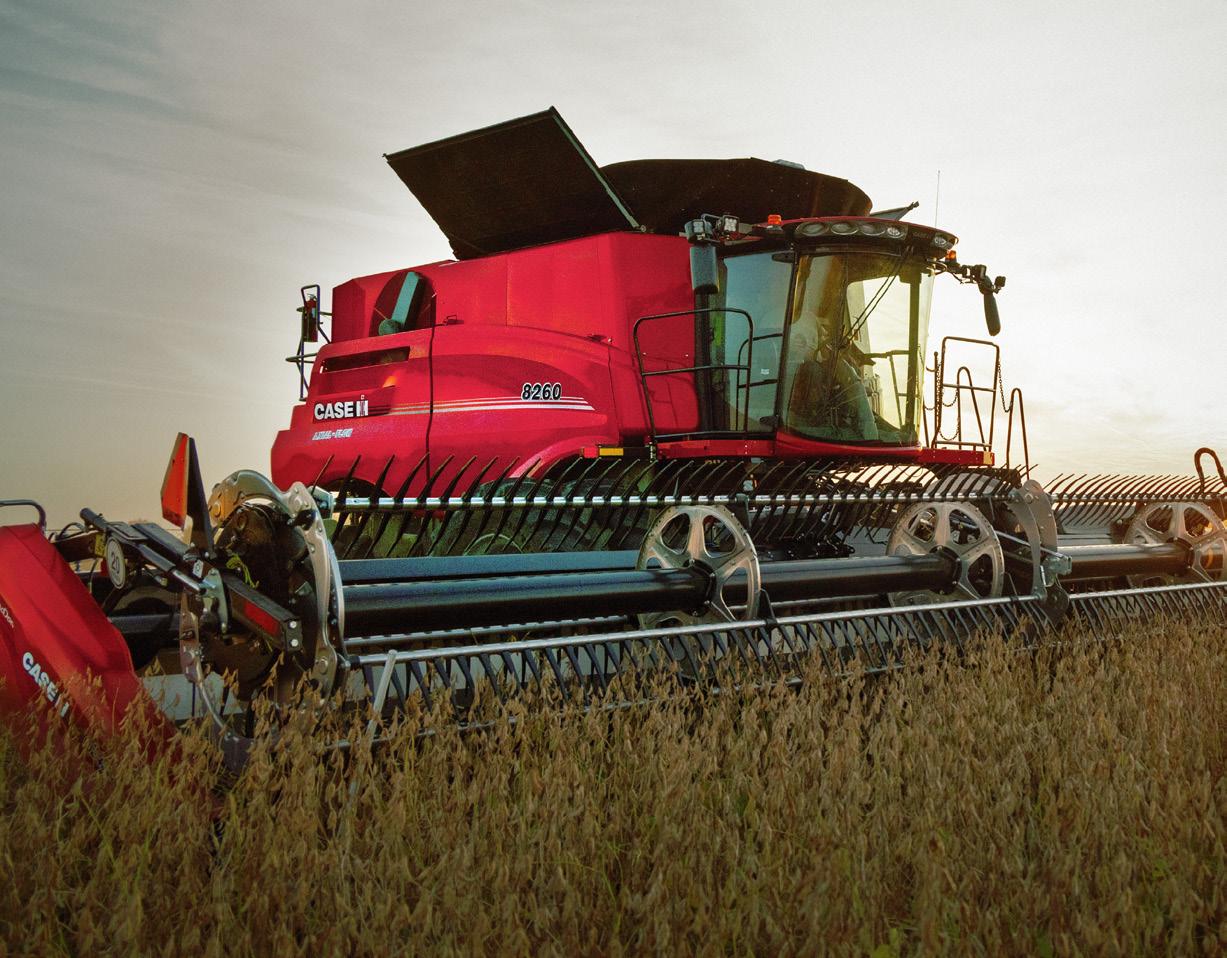
Axial-Flow® 260 series combines are technology beasts. Our Pro 1200 dual displays give you unprecedented insight into every aspect of harvest, all at your ngertips. Harvest Command™ combine automation optimizes your harvest to deliver more grain in the tank. RowGuide Pro™ helps control movement through the eld. And there’s more. We have taken the guesswork out of our technology. It comes with the machine and is yours for the life of the hardware. At base, there are no more yearly subscriptions or signup periods.


Much research has been devoted to planting date. The trend is to plant earlier, and research shows this can contribute to higher yields when planting into good soil conditions.
Road to Success: Studies find treating seed with fungicides may be beneficial when planting early in cold, wet soils, especially in today’s reduced and no-till fields. Newer fungicide seed treatments can help control seedling diseases that often accompany such spring conditions.
Improved planter technology and seed quality have placed overseeding by 20-30% in the rearview mirror. That means farmers can count on more accurate plant populations only slightly lower than seeding rate. And that shaves input costs without sacrificing yield. While general, conventional wisdom is to plant 140,000 to 225,000 seeds per acre, studies have often shown that additional yield above 100,000 may be minimal, depending on row spacing and planting date.
Road to Success: Variable rate seeding now permits farmers to tailor soybean plant populations according to conditions within established management zones in each field.
Studies confirm switching from wide to narrow rows can boost yields 3-7 bushels per acre, depending on management practices. Using 20” versus 30” rows keeps sunlight out of the canopy where weeds develop and preserves soil moisture, especially in double-crop soybeans.
Road to Success: Newer soybean drill technology because the seed drop mechanism is controlled from the tractor cab for greater accuracy.


















Moist soils mean go time for soybean planting. That’s because the seed needs to absorb 50 percent of its weight in water for germination. Good seed-to-soil contact at planting depths of 1”-1.5” inches is linked to higher yield potential. Shallower depths are best for early planting, high-residue and fine-textured soils. Plant deeper when late and in sandy, coarse-textured or dry soils.
Road to Success: Checkoff-funded work is evaluating the development and availability of new planter technologies over the last decade to understand how to properly use and setup planters equipped with downforce, for example, in various tillage systems and soil conditions.
Getting the most mileage at planting includes knowing whether a seed treatment is right for your situation. Seed treatments should be chosen based on controlling diseases, insects and nematodes prevalent in the area and for early pests scouted where economic thresholds have been met.
Road to Success: Checkoff-funded field trials show widespread prophylactic use of neonicotinoid insecticide seed treatments, for example, may not be a wise expenditure because their use does not usually overlap with economically significant insect populations.
The Soybean Research and Information Network (SRIN) is a joint effort of the North Central Soybean Research Program and United Soybean Board. The online resource contains checkoff-funded soybean production challenge research findings with direct links to the respective underlying scientific studies housed in the National Soybean Checkoff Research Database.
















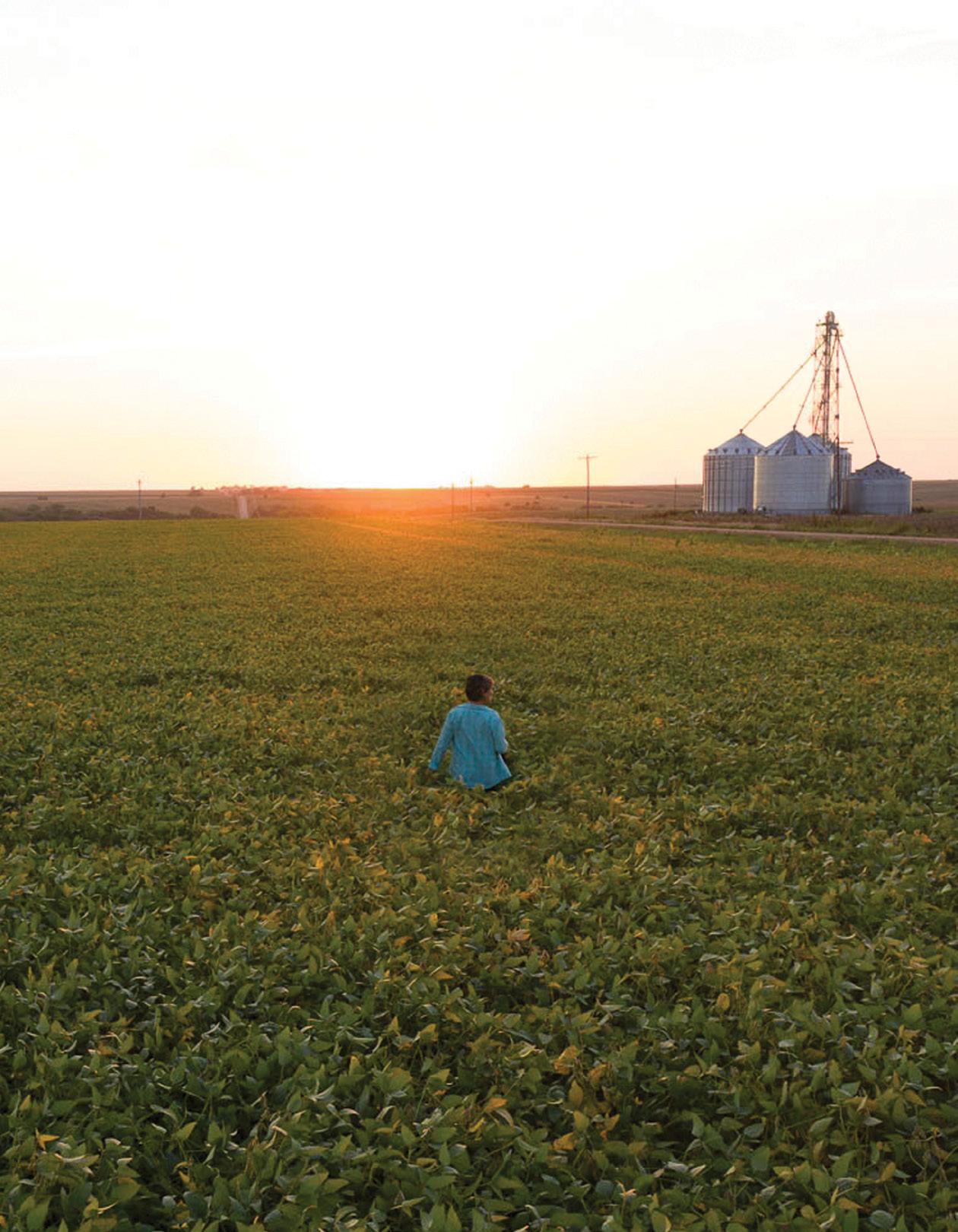











MSR&PC’s 2025 Annual Report

While “uncertainty” was certainly a prevailing word in 2025 in agriculture, the Minnesota Soybean Research & Promotion Council (MSR&PC) continued to step up and play our part in delivering demand for our state’s nearly 26,000 soybean producers.
Since the 1970s, our state’s soy checkoff has continued to move in only one direction: forward, straight into the future, while also maximizing past investments that continue to pay dividends.
As you’ll learn in this year’s Annual Report, just like the crop we raise, MSR&PC was everywhere in 2025, from our home turf (literally) on our soy-based lawn at Farmfest to building markets in Central Asia, Southeast Asia and the Americas. During my first year as chair, I’ve seen how the Council continues finding creative ways to bring certainty to our farms through relationship-building, promoting value-added uses like biodiesel, and funding dynamic research that helps us improve yields, increase acreage and manage pests and weeds. On top of that, we host programs like the Future of Soy and sponsor FFA and Minnesota Agriculture in the Classroom to uplift the leaders of tomorrow. As a family farmer who’s passionate about youth education, these efforts are near and dear to my heart.
Just like the “miracle bean” itself, there are so many components and properties to the soy checkoff, and we are proud to cover the gamut.
Minnesota’s soy checkoff was established over 50 years ago, well before the national checkoff was enacted in the early 1990s, because our farmers saw a need to pool our resources together to promote our soybeans, build markets and increase profitability. We’ve taken the checkoff to new heights in those decades. In Minnesota, we have the distinction of being the only state to support a county-level promotion program through over 40 organized boards. Those county leaders invest checkoff funds toward local efforts, like Breakfast on the Farm and county fairs. This year, the Council also activated our Planting to Protect program to promote SoyFoam by donating hundreds of sample pails of this soy-based firefighting foam to local fire departments. Promoting soy here at home while also helping our communities? That’s our soy checkoff putting in work!
Of course, I’d be remiss if I didn’t address the elephant in the room: tariffs. MSR&PC, along with our national partners, appreciate that we must continue leveraging relationships and growing international trade beyond our largest trading partner, China. I was honored to represent the Council in a new role in 2026 by joining the Soy Excellence Center’s Global Advisory Panel. In my position, I attended the SEC’s Asia Food Intermediate Course 2 in Singapore in June 2025 to participate in hands-on training exercises to turn budding markets into soy success stories. I’m also grateful for the many efforts of my Council colleagues and CEO Tom Slunecka for the time and resources they invest in promoting soybeans at the local, state, national and global levels. It truly takes a team.
The Council is also fortunate to diversify our income stream in ways that go beyond the farm gate: Our headquarters in Mankato hosts a meeting and events space, Offsite, which kept our building buzzing with activity throughout 2025. Book your 2026 event today at offsite-mn.com.
While the markets and weather can fluctuate, rest assured that MSR&PC remains a steady hand at the wheel, helping to keep our soy checkoff on course.
Gail Donkers Chair, Minnesota Soybean Research & Promotion Council
Gail Donkers Chair
District 8
Faribault, MN
507-202-2042
gdonkers@mnsoybean.com
Tom Frisch
District 4
USB Director Dumont, MN
320-808-1002
tfrisch@mnsoybean.com
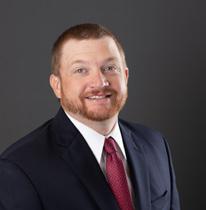
Ben Storm Vice Chair District 9 Dover, MN
507-993-4623
bstorm@mnsoybean.com

Joe Serbus
District 5 & 6
Bird Island, MN
507-828-7869
jserbus@mnsoybean.com
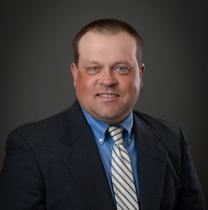
Glen Groth Treasurer
District 9 Ridgeway, MN
507-459-1956
ggroth@mnsoybean.com
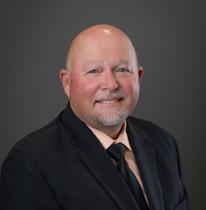
George Goblish
District 7
Vesta, MN
218-230-3768
ggoblish@mnsoybean.com
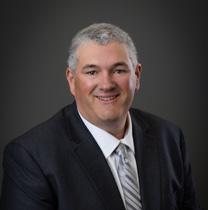
Pat Sullivan Secretary
District 5 & 6
Franklin, MN
320-894-5917
psullivan@mnsoybean.com
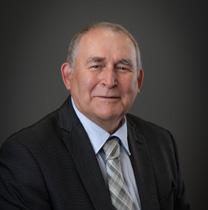
Ron Obermoller
District 7
Brewster, MN
507-360-4863
robermoller@mnsoybean.com
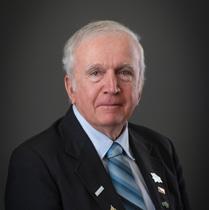
Bill Zurn
District 1, 2 & 3
Callaway, MN
218-849-5289
bzurn@mnsoybean.com
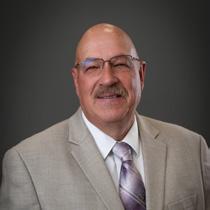
Joel Schreurs District 7 Tyler, MN
507-829-8854
jschreurs@mnsoybean.com
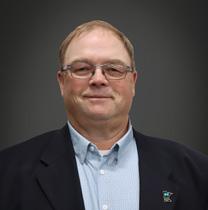
Corey Hanson
District 1, 2 & 3 Gary, MN
218-230-3768
chanson@mnsoybean.com
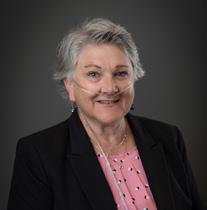
Rochelle Krusemark
District 8 Sherburn, MN
507-236-3625
rkrusemark@mnsoybean.com
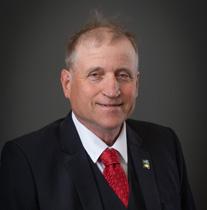
Paul Freeman District 4 Starbuck, MN 320-290-9225
pfreeman@mnsoybean.com
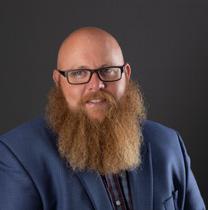
Cole Trebesch District 8 Springfield, MN 507-227-3263
ctrebesch@mnsoybean.com

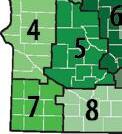

Patrick O’Leary District 4 USB Director Benson, MN
320-760-5335
poleary@mnsoybean.com
Lawrence Sukalski
USB Director
507-236-4880
sukallnd@hotmail.com
As a Midwest farm kid who’s worked in agriculture for virtually my entire adult life, I’m constantly amazed at the advancements our industry has witnessed across the decades. And the transformation from the 2010s to the 2020s has been a seismic shift.
Friends, the future is here.
The year 2025 marked my 13th year as CEO of the Minnesota Soybean Research & Promotion Council. As I reflect not only on the past year, but my baker’s dozen at MSR&PC, I am humbled — and, quite honestly, a bit overwhelmed — at how far we’ve come and how much we’ve grown as an organization.
When I started as CEO in August 2012, our weekly electronic Minneline e-newsletter was printed and mailed (sometimes even faxed) to directors. Today, Minneline is read in a variety of ways, mostly on our smartphones. Imagining that our marketing and communications work would be recognized by a group like the National Agri-Marketing Association was a mere pipe dream in 2012. By 2025, earning national recognition has become our team’s standard. And Artificial Intelligence? Well, that was a faraway science fiction concept back in the early 2010s. In our modern world, if you’re not using AI in all facets of your organization, you’re falling behind quickly. We’re determined to keep up with the times by using AI in an ethical manner.
In 2012, Minnesota used B5 (5% biodiesel) during the summer months. Today, we’ve moved to B20, and cities across the country, including Edina, are adopting B100 for their municipal fleets, helping to increase demand for our soybeans by 13%. During the latest marketing year, Minnesota soybean farmers harvested nearly 330 million bushels totaling $4.23 billion in value; the checkoff ’s promotion of biodiesel helped boost our farmers’ bottom lines by an estimated $429 million. Let’s go back even further: Since 2012, our finance team estimates biodiesel has added over $5 billion to Minnesota farm economy!
Our checkoff-supported research program, which partners with public universities and private companies, continues to earn its place among the industry’s finest. The Council’s one-of-a-kind organized county program covers the state to not just share updates; our team is empowering our local leaders to promote soy checkoff programs like soy-based shoes, tires and firefighting foam while also strengthening their community bonds.
Building new domestic and international markets continues to be a top checkoff priority. From Bangladesh to Benson, Minn., we’re building demand for our soybeans. The world is changing before our eyes, and I saw this for myself when I returned to Asia in 2025. Since my first visit to the region in 2013, I’ve seen tremendous positive impacts, both for their consumers and the environment. All of this is driving increased demand for U.S. soy. Since 2012, our farmer leaders have met with tens of thousands of global buyers; these buyers know our beans are the best of the best. They prefer Minnesota soybeans because of their quality and the relationship we’ve built. That’s why the Council continues to invest in international marketing to develop new markets beyond China. Those efforts are paying dividends: The Council is building demand for our soybeans in Central Asia, Northern Africa and Northern Europe while promoting the Great Lakes St. Lawrence Seaway System and encouraging the expansion of soy crush plants across our region. In 2012, our crush capacity reached around 1.5 billion bushels. This year, despite no shortage of economic uncertainty, a dozen new plants opened across the country, bringing our expected crush capacity to over 2.55 billion bushels.
Our staff continues to grow across our priority areas. Change is never easy, and positive change is hard fought. Short-term mistakes are inevitable, but with focus, dedication and determination, we can achieve longterm wins. No one understands this better than our board and staff who work every day to drive profitability. While we’ve come a long way since the 2010s, as we enter the back half of the 2020s, we still have much further to go, and I’m energized and proud to work alongside our team in leading us into agriculture’s next era..
TOM SLUNECKA, MSR&PC CEO
Total Expenses: $9,576,117

1,833,778




Throughout 2025, the Council realized a market gap existed for PFAS (aka “forever chemicals”) –free firefighting foam and seized the opportunity to build demand, generate goodwill and address the environmental challenges with supporting a soy-based solution, SoyFoam.
As of Oct. 1, 2024, firefighting foam containing PFAS was no longer permitted for Class A and Class B fire suppression. Developed by Cross Plains Solutions, SoyFoam is a smothering agent, made from soy flour, capable of extinguishing Class A and Class B fires while eliminating intentionally added PFAS chemicals.
“Soybean checkoff dollars went into the development and testing of this product, so it’s funded by the American farmer and uses soybeans grown by the American farmer,” said MSR&PC Treasurer Glen Groth, who farms near Winona. “It’s a win-win for rural America.”
The United Soybean Board (USB) began investing checkoff dollars in SoyFoam in 2022. A year later, the U.S. Forest Service and Department of Defense (DOD) began testing the product. MSR&PC became one of the first qualified state soybean boards to promote the product via a 2024 demonstration and Soybean Business cover feature.
That was just the beginning. In 2025, the Council launched the “Planting to Protect: From Farm to Flame” campaign to promote the product and support local fire departments while providing education about SoyFoam benefits and its value-added impact to farmers. The Council tapped into 44 organized soybean counties to promote the campaign and increase awareness of SoyFoam through checkoff investments. The campaign launched in March 2025, with a press release and announcements on social media and in MSR&PC’s e-newsletter, Minneline.
“Both farmers and firefighters are excited about SoyFoam,” said Council Director and past Chair Tom Frisch, who’s a longtime volunteer firefighter in Dumont. “It’s a great alternative to PFAS and we hope its use extends across the U.S.”
Once the campaign was activated, the county boards assisted in organizing demonstrations with their local fire departments, sharing digital resources and making the donations.
County directors embraced the checkoff-supported donations with gusto, and for good reason: SoyFoam is projected to increase demand by using protein from 12 million bushels of U.S. soy.
“We are proud to be able to donate the SoyFoam product to the fire departments in our community. The departments were happy to receive the donation and excited to give it a try since it would work with their equipment,” Martin County Soybean & Corn Growers Board Treasurer Jacob Sukalski said. “These donations help support our local firefighters with safer, more effective tools and promote a new use for soybeans.”
2,000+
Gallons of SoyFoam donated in 2025.
400+
SoyFoam pails donated to Minnesota fi re departments.
250+
Number of fi re departments across Minnesota that received buckets.
100+
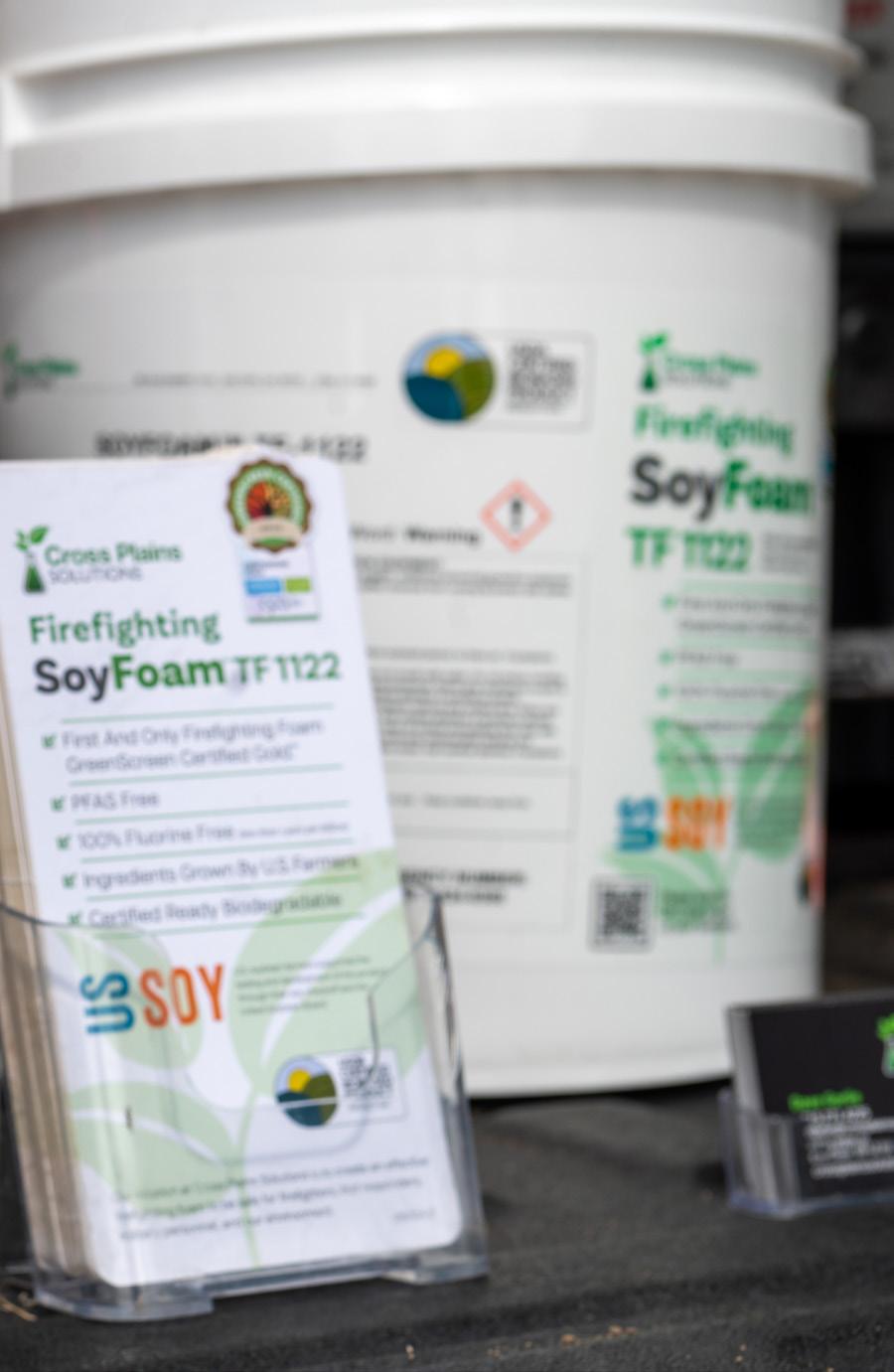
Number of earned media placements from the Planting to Protect campaign.
84.2 MILLION
Media impressions connected to SoyFoam press releases, radio interviews, digital engagements, etc., in 2025.

The soy checkoff ’s local and global impacts landed on the green again in 2025. During Farmfest, Minnesota’s largest farm-focused gathering, hundreds of attendees played another round on the MiniSoyta Golf Course. Kids to grandparents visited with farmer leaders and learned how checkoff projects across the state are bringing value back to Minnesota’s soybean farming operations.
The booth’s course featured soy-backed artificial turf, SYNLawn. The intent of the golf course was to incorporate key priorities at each hole through visuals, including hole markers and obstacles. When attendees arrived at the booth, they were given a scorecard with instructions on how to keep score throughout the course. Two trivia tables were also intertwined to allow attendees the opportunity to learn more about checkoff goals.
“We had fantastic engagement at Farmfest,” Council Chair Gail Donkers said. “Our booth traffic was as high as it’s ever been, and we really had a chance to tell the story of soy in a fun way and hopefully left our visitors with some important takeaways on how the checkoff is delivering for our farm economy.”
The MiniSoyta course created a space for attendees (and families) to learn more about MSGA and MSR&PC while having fun together. The average time spent golfing was around 11 minutes.
Each course hole featured a different region of Minnesota to represent how the Council works across Minnesota toward improving farmer profitability through creating new, value-added uses, sponsoring innovative research projects and pushing new markets to the forefront.
Those cities included:
• Waseca: Where cutting-edge research happens at the Southern Research and Outreach Center (SROC), Plasma Blue testing unit and Agricultural Utilization Research Institute
• Hutchinson: A McLeod County city using soy-based road sealant and fertilizer made with soymeal
• Ada: Site of the first county-level SoyFoam demonstration in April 2025
• Duluth: Through checkoff investments, the Council continues to push the Port of Duluth-Superior as an opportunity to diversify markets through shipping soybeans to emerging markets in Europe, North Africa and Uzbekistan
To draw media coverage to MSR&PC’s booth, a media event was planned and executed to promote checkoff awareness. Media partners were invited to the booth for an exclusive look at the booth and to speak with farmer leaders on MSR&PC’s priorities.
“It was all hands on deck at Farmfest, and our board and staff rose to the occasion, as always,” Council CEO Tom Slunecka said. “I couldn’t be prouder to represent our soybean industry and show how we’re working every angle across our priority areas to build a better tomorrow for our farmers.”
Following Farmfest, the Council donated the SYNLawn turf to Farmamerica for use at the Waseca interpretative center.
• SYNLawn can replace up to 60% of traditional polyurethane with polyols from U.S.-grown soybeans.
• This checkoff-supported product underlines a shared responsibility toward eco-friendly practices that support Minnesota’s farming community and leads to added value for soybean farmers.
• Biobased products such as SYNLawn contribute over $400 billion to the U.S. economy. SYNLawn is also PFAS-free and can reduce water bills by up to 70%.
• SYNLawn’s Minnesota distribution facility is located in Cannon Falls. Visit synlawnmn.com for more details on residential, business/commercial, pet and sports turf services.
At the grassroots level, MSR&PC’s one-of-a-kind county soybean organizations are developing leaders who are working hard to promote agriculture and soybeans throughout all of the state’s unique regions. From Lake of the Woods to Le Sueur, from Mower to Mahnomen and from Dakota to Douglas, the county soybean organizations supported soy though 4-H and FFA, scholarships, parades, food shelf donations, event sponsorship, fuel events, annual meetings and other soybean promotions.
“Minnesota farmers are intertwined in our communities,” said Corey Hanson, Norman County board president and MSR&PC director. “Beyond the farm, we’re involved in our churches, our schools; we’re first responders, parents and local volunteers, and our county program is a reflection of who we are as farmers, business leaders and neighbors.”
Minnesota proudly boasts the only county soybean program in the country. With 44 organized, independent county programs across the state, Minnesota Soybean can tap into the power of more than 500 county leaders to amplify checkoff messaging at a local level. Along with selfgenerated funds, counties are allotted checkoff dollars from the state each year to utilize throughout their counties for the promotion and education of soybeans and soybean products.
Counties such as Lac Qui Parle and Todd hosted fuel events to promote biodiesel where they provided a discount at the pumps and handed out biodiesel fact sheets to educate users on the advantages of using soy-based biodiesel.
To promote how soy is feeding the livestock that feeds us, counties such as Murray and Norman handed out free pork burgers during their county fairs. In addition to promoting soy, counties such as Nicollet-Sibley and Swift supported their local food shelves with products that are made of soy.
To showcase the many uses of soy, Pope County attended a local home and garden show with a 3-D printed soy house on display, which demonstrated the many household products and components containing soy. In Lincoln County, directors helped raise over $20,000 in scholarships for local students.
These are just a few examples of the many unique and creative ways that our soybean county organizations are making it count in 2025! The county program is nearing its 50th anniversary, and in 2026, MSR&PC county program managers will continue to build relationships and collaborate with farmers to promote soybeans within their communities.
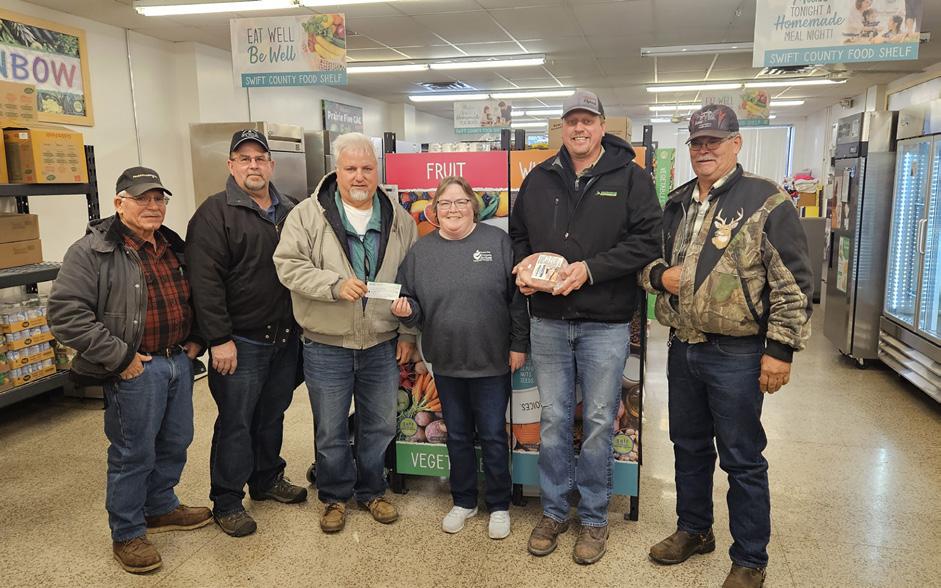
“Our county soybean organizations play a vital role in helping deliver our checkoff messaging to those at the local level, which could mean providing high-oleic soybean oil for a local fish fry, purchasing the biodiesel for the FFA bus trip or donating soy-based tires to law enforcement,” - Tom Frisch, MSR&PC District 4 director
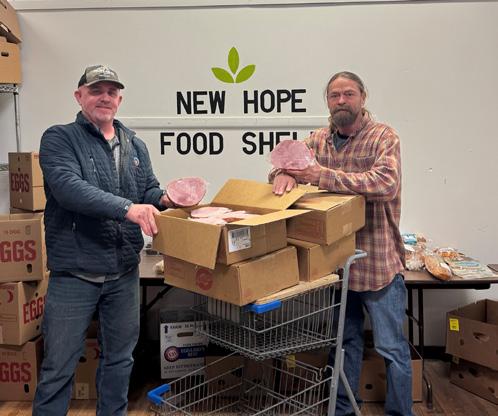
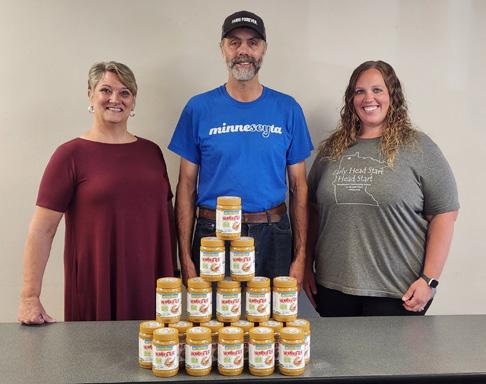
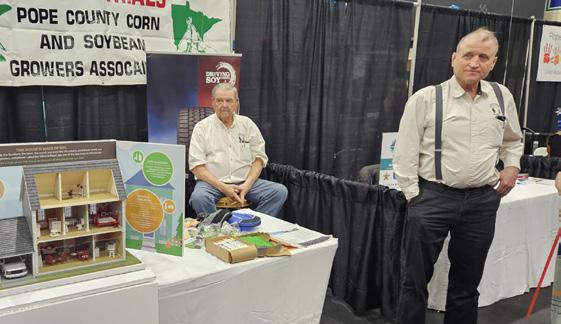
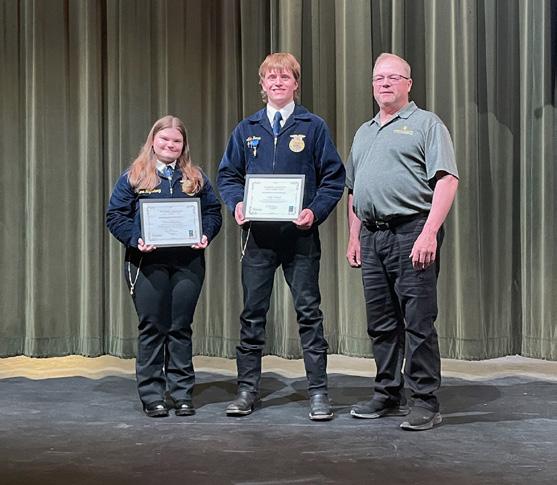
For decades, Minnesota soybean farmers have relied on unbiased, checkoff-funded production and agronomic research to improve yields, manage pests, weeds and diseases; and develop new varieties to increase acreage across the state.
“Without support from the soybean checkoff, there’s simply no way my area in northwest Minnesota would have the presence it has today,” said Corey Hanson, a Norman County director who joined the Minnesota Soybean Research & Promotion Council in July 2025. “The private and public research we’re funding isn’t focused on one region of Minnesota. When we’re reviewing projects, we’re thinking about the entire state.”
Fiscal year 2025 was a period of transition for MSR&PC’s research team. Longtime Research Director David Kee retired after nearly a decade overseeing the program. In Kee’s place stepped soil scientist Sergio Cabello Leiva, whose expertise in seed production and applied fieldwork made him a seamless fit for the Council. In his first growing season as research director, Cabello Leiva traveled across the state, building on-farm relationships with farmers and research colleagues from across the Upper Midwest. He also helped developed a new online crop update series, which via YouTube, highlighted various checkoff research and production tips from researchers, including addressing soybean cyst nematode, sudden death syndrome, soybean nutrition, soybean gall midge, weed management and more.
“Sergio took what David Kee helped build and brought in some new ideas and perspectives into our program,” Council Secretary Pat Sullivan said. “We need to continue to find new ways to share our research, and the video series helped highlight those projects with short, visual bursts of information.”
In total, the Council funded 20 projects in 2025 in three topic areas: pest/weed management, genetics and other agronomy. Checkoff research projects are generally funded in three buckets: those designed to address today’s challenges, issues that could arise in the next five years and projects that are meant to achieve long-term success.
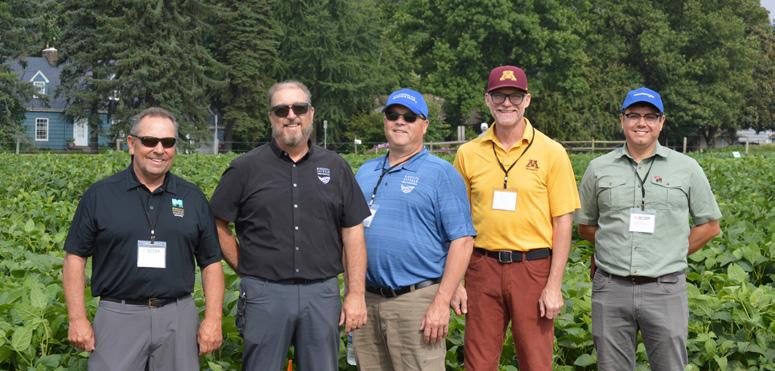

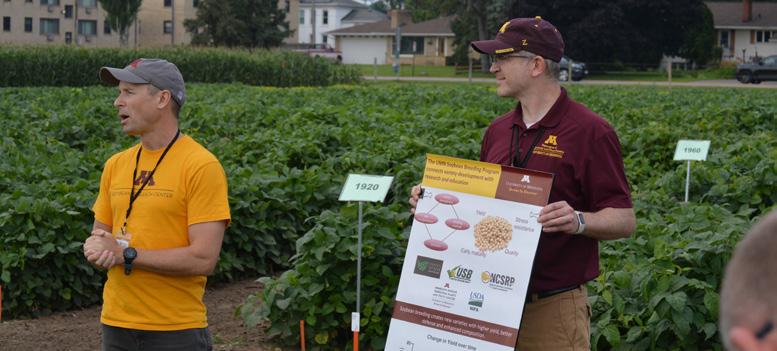
In FY25, the Council sponsored the U.S. Soybean Genetics Collaborative Seed Guide to showcase public breeding programs. Seven varieties from the University of Minnesota were included in the report.
The Council also leverages checkoff dollars through its involvement in the North Central Soybean Research Program (NCSRP), a multi-state collaborative soybean research effort that invests in university and Extension research. In August 2025, the Council partnered with the University of Minnesota to host NCSRP’s summer meeting. Council directors and university researchers gave the NCSRP team a tour of the UMN Soybean Research Center and Ag Experiment Station, which has been in operation since 1885.
“The work the UMN research team is doing is nothing short of world class,” CEO Tom Slunecka said, “and the soy checkoff plays a huge part in the amazing work they’re doing.”
Council Director Rochelle Krusemark said NCSRP directors were impressed by the breadth of checkoff-supported research at the UMN, from soybean breeding and genetics to biotechnology.
“It was a proud moment,” she said.
In late August 2025, Council Chair Gail Donkers and colleagues participated in the second UMN Soybean Research Center field day. The agenda also featured a mini version of MSR&PC’s Future of Soy Summit to discuss big concepts within soybean research.
The Council also published its first Research Report, which highlighted key takeaways from 2024-funded projects. Highlights from 2025 projects are expected to be available later in 2026.
“The research we’re working on is part of our mission to help bring those dollars back to our farms,” Donkers said.
Scan the QR code to view episodes from the 2025 crop updates.
Over seven million acres of soybean are grown in Minnesota each year, and while domestic markets are increasingly critical to farmer profitability, building and sustaining exports across the globe for the long term has been a top priority for MSR&PC checkoff investments for decades.
Trade and tariffs were buzzwords throughout fiscal year 2025, and Minnesota soybean farmers felt the economic impact more than any other commodity. In a typical year, about one in four rows of Minnesota soybeans is exported to China. In FY25, with trade tensions mounting, the Council looked beyond China to diversify demand across the globe for our state’s top ag export.
Council leaders don’t just think about the year ahead when approving checkoff funds toward programs that develop international markets. The checkoff plants seeds for growth for years, and decades, to come.
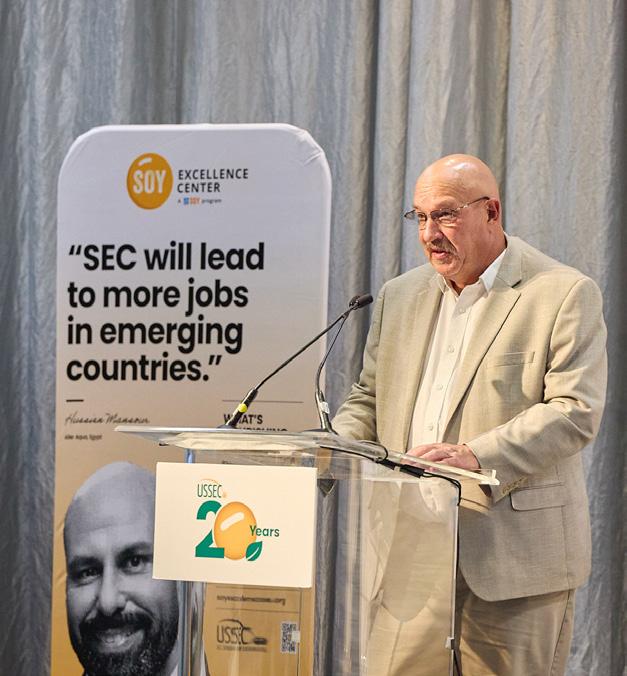
• Minnesota Pork Congress
• Northern Crops Institute (NCI)
• Northern Soy Marketing (NSM)
• Soy Transportation Coalition (STC)
• Specialty Soya and Grains Alliance (SSGA)
• Upper Mississippi Waterway Association (UMWA)
• U.S. Meat Export Federation (USMEF)
• U.S. Soybean Export Council (USSEC)
• USSEC’s Soy Excellence Center (SEC)
• World Initiative for Soy in Human Health (WISHH)
Council directors also have a voting member on many of these national boards. Chair Gail Donkers sits on SSGA (now known as the U.S. Identity Preserved Alliance) and the SEC; Joel Schreurs is a USSEC director; Joe Serbus is a STC director; Paul Freeman sits on UMWA and NCI; and Council Treasurer Glen Groth and Director Patrick O’Leary both represent Minnesota on NSM. Minnesota’s United Soybean Board Directors Tom Frisch, O’Leary, Gene Stoel and Lawrence Sukalski also promote international trade in their roles directing national checkoff funds. The Council continues supporting state partners Minnesota Milk and Minnesota Turkey, along with events including NCI programs and shortcourses, Pacific Northwest trade missions and more. The Council also established connections through partnering with USSEC for a series of trade team visits. In August 2025, Minnesota farmers Ryan Mackenthun and Matt Purfeerst hosted South Korean buyers for a closer look at high-quality Minnesota soybeans.
Council Vice Chair Ben Storm chairs MSR&PC’s promotion action team, which reviews and approves projects that look toward the future of international trade. The Council also continued its efforts in growing the Uzbekistan market in 2025. MSR&PC’s foresight led to a purchase of 150 metric tons of U.S. soy, a direct result of relationships started and nurtured by Council directors and staff leaders. In 2025, following a third trade mission to Central Asia, MSR&PC’s checkoff investments led to a Memorandum of Understanding to expand collaboration on developing U.S. soy value chains to advance trade between the United States and Uzbekistan. Outreach efforts in Uzbekistan will continue in 2026.
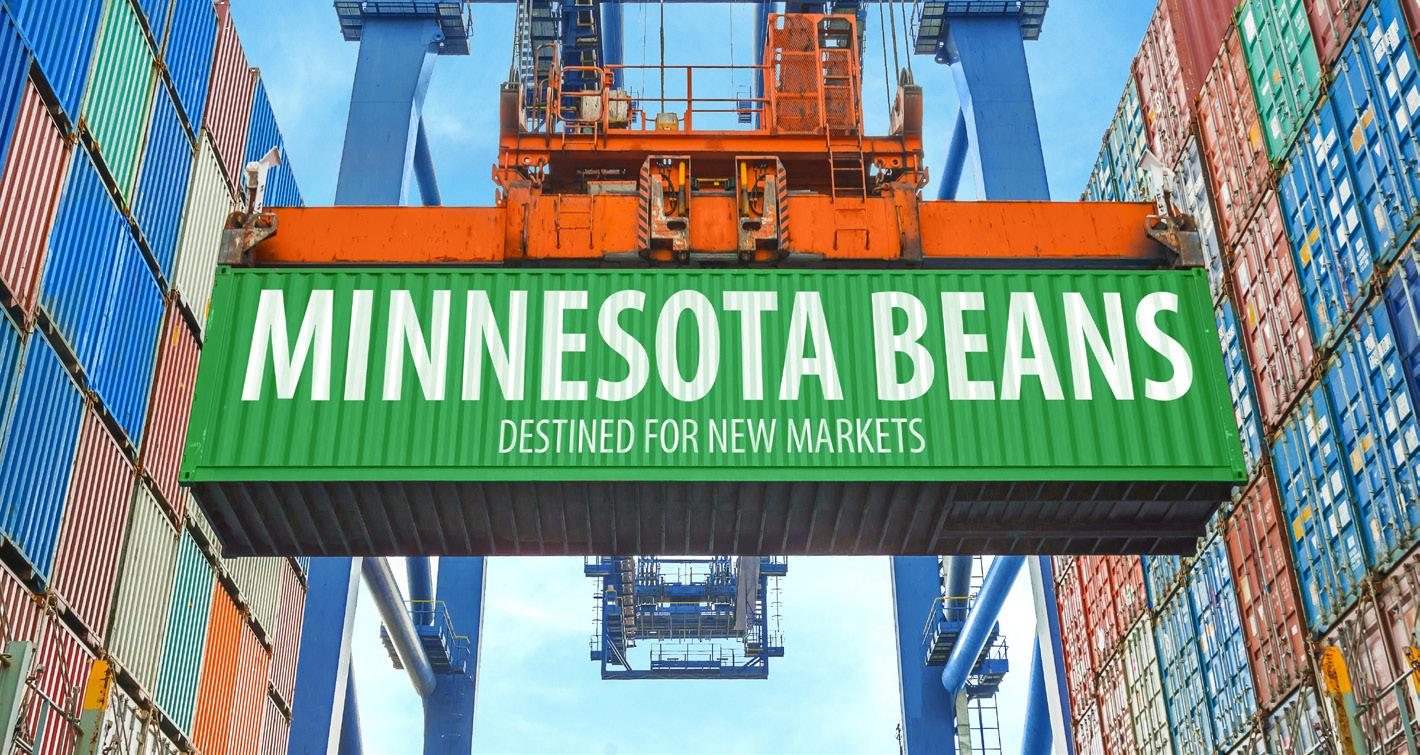
Soybeans are Minnesota’s top ag export product, with Minnesota’s international sales typically exceeding $2 billion. Each year, about 60 percent of Minnesota’s soybean crop is exported to international markets. About 70 percent is shipped by rail to the Pacific Northwest and ports in California, while the remaining 30% is typically sent down the Mississippi River to the Gulf of Mexico and east to the Port of Norfolk. About 2% of all U.S. soy exports are shipped via the Great Lakes-St. Lawrence Seaway.
“Thanks to checkoff investments, emerging markets across the world are seeing why Minnesota and U.S. soybeans are the highest quality in the world.” - MSR&PC Vice Chair Ben Storm

Throughout the 21st century, Minnesota has been looked upon as a national leader when it comes to proactive promotion and securing a spot for biodiesel as a widely accepted part of the fuel supply. Across the nation, biodiesel has become a timely drop-in option with immediate results for both public and private organizations looking to reduce their carbon footprint.
In 2025, MSR&PC continued its longstanding partnership with MEG Corp to support and expand current markets for soybean oil by providing education, promotion and technical support of biodiesel. MEG Corp also coordinated the 17th annual See for Yourself tour to the Clean Fuels Conference in San Diego, inviting MSR&PC Directors Joe Serbus and Bill Zurn; fuel distributors; service technicians; and other influencers to learn more about advancements in the biodiesel industry and how they can benefit by using blends beyond Minnesota’s statewide B20 (20% biodiesel) blending requirement. Minnesota farmer Chris Hill also represents MSR&PC on the Clean Fuels Governing Board.
In a prime example of the impact of See for Yourself, in 2025 the city of Edina converted 10 of its heavy-duty trucks to run on B100 through the Optimus Technologies Vector System after learning about technology while participating in the program. It resulted in an instant reduction in greenhouse gasses and better fuel mileage with no fuel issues, even in Minnesota’s harsh winters.
Showing off biodiesel’s high-performance capabilities, MSR&PC also partnered with the United Pullers of Minnesota to promote and educate competitors and spectators about the benefits of using biodiesel. Biodiesel gives pullers an edge by increasing horsepower and added lubricity, extending engine life even in high performance environments.

• 1 bushel of soybeans = 1.5 gallons of B100
• Biodiesel increases the value of soybeans by over $1 per bushel and boosts demand by 13%.
• Mike Youngerberg, one of the nation’s leading biodiesel experts, will mark 40 years with Minnesota Soybean in 2026.

The Council partnered with Farmamerica in June 2025 for the inaugural Soy & Tech Day in Waseca to showcase how soybeans work miracles to add value in sustainable ways.
Arranged with checkoff support from the Council, the Soy & Tech Day gathered vendors from different aspects of the soy industry to teach attendees about the various uses that soybeans bring to everyday life. Farmer directors, media members and industry leaders all attended the Soy & Tech Day.
The event highlighted typical farm usage, shown by Environmental Tillage Systems, to various other checkoff investments, including biodiesel, Plasma Blue, Roof Maxx and SoyFoam. The goal of the event was to promote the many different ways soybeans can be used, beyond typical animal feed and fuel. More than 1,000 commercially available products contain soy.
While biodiesel is already a common use of soybeans in Minnesota, MnDOT brought one

of its B100 trucks to the event to showcase the future of biodiesel. This truck, powered by Optimus Technology, runs on B100 (100% biodiesel).
The Council continued its statewide promotion of SoyFoam, a checkoff-supported fire depressant that boasts a combination of health and environmental benefits, along with adding demand for Minnesota soybean farmers. Soyfoam is 84% biobased and made of soy flour, grown by U.S. soybean farmers. Dave Garlie of SoyFoam developer Cross Plains Solutions attended the Soy & Tech Day to explain the technology, while firefighters from nearby Waseca and Morristown also provided a demonstration.
The demonstration consisted of three different simulations mimicking a wood fire, grass fire and fuel fire. SoyFoam was able to extinguish every type. Waseca Fire Chief Jason Forshee also tried a water vs. foam experiment, where one pallet on fire was extinguished with water and one with SoyFoam. When he attempted to re-ignite the pallets, the SoyFoam showed no re-ignition.
“Events like this are really important to demonstrate to the community what we’re trying to do as a science community,” Garlie said. “Chief Forshee and staff did an excellent job demonstrating.”
Another demonstration was provided by Roof Maxx, which presented a live rejuvenation of Farmamerica’s schoolhouse roof. Roof Maxx is a checkoffsupported, soybean oil-based solution that replaces the oils lost over time in asphalt shingles and helps to prolong the life of a roof for up to 15 years. Since it uses soy oil instead of petroleum, it is safer for the environment, humans, pets and plants.
“I will attest, we didn’t have to cover any of the plants and no shrubs or flowers died,” said Rochelle Krusemark, MSR&PC District 8 director, a Martin County farmer who had her roof rejuvenated with Roof Maxx. “Not only does Roof Maxx use soybeans, but it’s good for the environment and it can reduce some of the asphalt in landfills.”
Plasma Blue was also showcased at the event and ran demonstrations on-site.
“Plasma Blue is a revolutionary new technology that can make biodiesel 7-17 cents a gallon cheaper than any other process,” Council CEO Tom Slunecka said.

Farmamerica is Minnesota’s Agricultural Interpretive Center. It was established by the state in 1978 and, with checkoff support, tells the story of Minnesota agriculture – past, present and future. Erin Rossow, sales manager for Ag Management Solutions, which oversees the Council, serves as Farmamerica’s vice chair.
While the ag economy might have been largely stuck in neutral in 2025, the Council stayed on track by diversifying its revenue sources through hosting at event space within its home office.
Offsite Meetings and Events, which opened its doors in 2024, is a versatile space capable of hosting casual gatherings among smaller groups or pivoting toward formal business meetings for larger organizations. The Mankato-based venue features three customizable and accommodating rental spaces that simplify stressful planning. The building features an expansive auditorium, executive boardroom and a large conference room. Offsite offers additional features for renters to use. There’s plenty of parking, full-service staff support, atrium and a cater-friendly kitchen and dining area to allow guests to cook to their needs.
While the Council and its staff use the space primarily for daily operations, Offsite offers a convenient and accommodating spot for nonprofits, businesses and organizations throughout southern Minnesota.
In FY25, Offsite hosted 55 events, bringing in nearly 1,500 professionals from across several industries, including agriculture, banking and nonprofit groups. Offsite also held its first small trade show.
In August 2025, Offsite hosted the Northern Crops Institute’s INTSOY Intro to Soybeans Short Course. Council CEO Tom Slunecka welcomed a delegation of buyers from Latin America, Africa and Asia, highlighting soy’s many sustainable uses.
“The facility is beautiful, and what an incredible space to host groups for meetings, trainings, conferences and more! We will definitely be recommending your space and service,” said Amanda Sommers, program director for Minnesota FFA.
To reserve your event at Offsite for 2026, visit offsite-mn.com or contact Amanda Beavens at 507-810-0334
Offsite Auditorium:
• 90-person capacity
• 278” presentation screen
• Commercial overhead door
• Video and voice tracking capabilities with microphones
• Storage area
Executive Boardroom:
• 24-person capacity around board room table
• 37’ x 23’ room
• Video and voice tracking capabilities
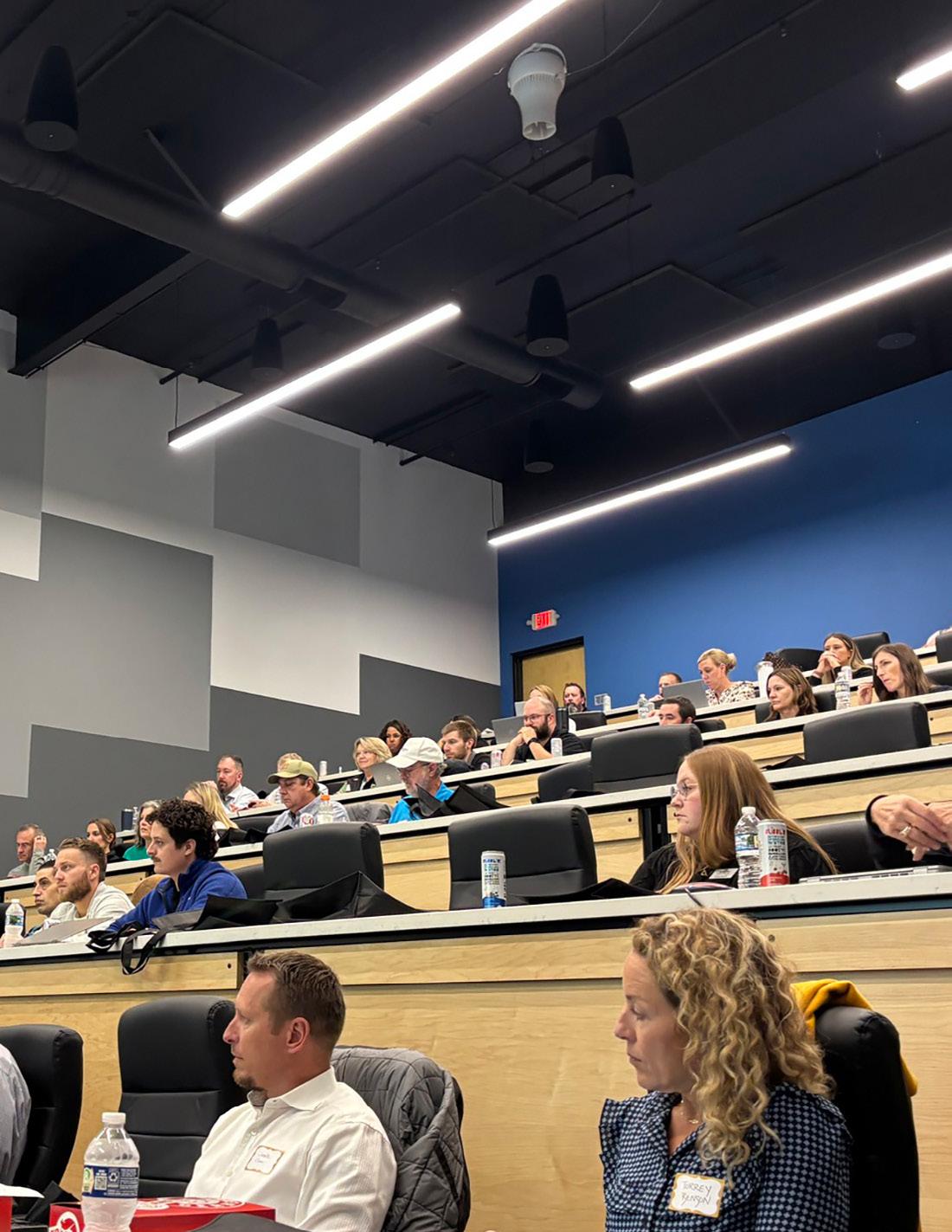
Large Conference Room
• 36-person capacity
• 27’ x 23.5’ room
• Flexible seating arrangements
• Video and voice tracking capabilities
Reception Hall
• Holds up to 50 people
• 41’ x 21’ room
• Two large-screen TVs
• Adjacent catering kitchen
Leadership program seeks applicants for Class 14, continuing quarter-century legacy
By Allison Wright
With a proven, 25-year track record of growing pivotal leaders in Minnesota, the Minnesota Agricultural Rural Leadership (MARL) program is seeking applications for Class 14. As a multi-year program designed for individuals who want to grow personally and professionally, MARL offers leadership experiences that take participants outside of their comfort zones – in the best way.
Selected from diverse backgrounds and industries, each class comprises around 30 professionals across agriculture who will engage in a two-year leadership experience focused on growing self-discovery, collaboration, advocacy and service. Applications for Class 14 are now open through March 31.
“MARL consists of a dynamic group of individuals who are really committed to bringing in some leadership experience and willingness to really engage and to make it a rich growth opportunity,” said MARL Executive Director Brad Schloesser, a Class 12 member, during an interview at the 2026 MN Ag Expo. “Traditional leadership programs don’t ask you to be vulnerable; this one does and that’s what makes this a very unique experience.”
A strength of MARL is a robust agenda that, like agriculture itself, isn’t one size fits all.
“Diversity is very important,” Schloesser said. “When you’ve got those that are in the first half of their life and you have some in the latter half, if you will, there’s so much wisdom, experience and openness to being vulnerable and that is what really makes it a powerful experience for folks.”
With more than 300 alumni, MARL’s impact expands throughout Minnesota. Graduates can be found serving their communities, leading organizations and taking on key roles in agriculture, including within Minnesota Soybean. Longtime Minnesota Soybean staff director Mike Youngerberg was a member of the inaugural MARL class in 2000, and numerous farmer leaders across the soy checkoff and advocacy fields jumpstarted their leadership endeavors via MARL.
“It was fun to see agriculture and a lot of different businesses that come together throughout Minnesota and the different variety of people we had in our class,” said MSR&PC Secretary Pat Sullivan, who represents District 5 & 6 and was a MARL Class 6 member. “We learned a lot about compromising and debating issues.”
Since MARL started at the turn of the century, three graduates have become state representatives – Reps. Nathan Nelson and Keith Allen and retiring Rep. Paul Torkelson – and 15 have become county commissioners, including past Minnesota Soybean Growers Association President Theresia Gillie. The program has produced Minnesota’s current and past Farm Service Agency executive director (Kurt Blomgren and Whitney Place), along with five governor’s advisory team members and countless other agriculture leaders. U.S. Rep. Brad Finstad is also a former MARL board member.
“When you’re in your career, you get busy doing tasks and gathering knowledge in your field, but MARL gave me the opportunity to reflect and develop myself into the leader I wanted to be,” said Place,
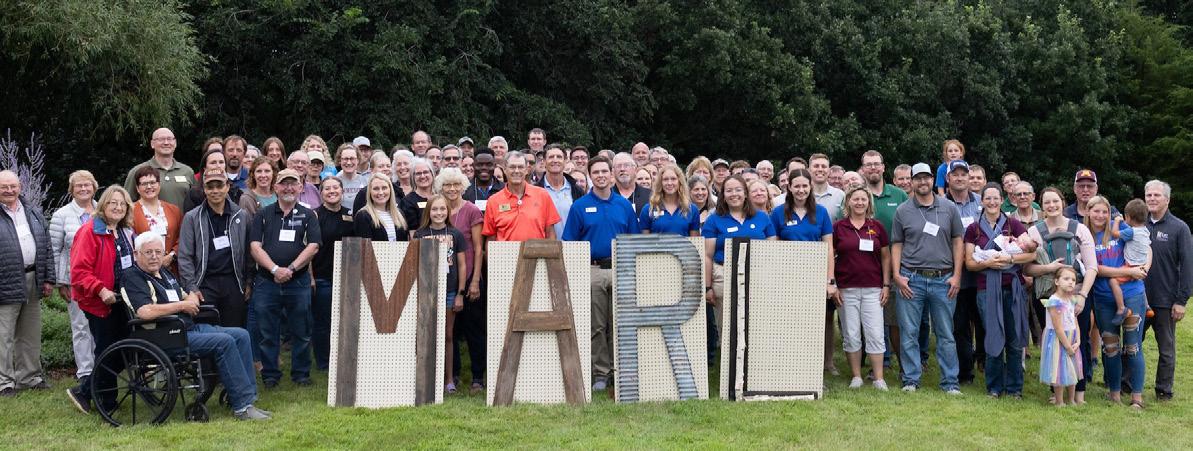
MARL’s 25th anniversary celebration is set for June 25 at Southwest Minnesota State University in Marshall.
Through checkoff sponsorship, MSR&PC is a longtime premier sponsor of MARL and counts many farmer leaders as alums in addition to Donkers and Sullivan, including Directors George Goblish, Glen Groth, Corey Hanson, Rochelle Krusemark (third to left), Ron Obermoller and MSGA Director Chris Hill and past MSGA President Theresia Gillie.
Wheaton farmer Rodd Beyer, who graduated in MARL’s Class 10, represents MSR&PC on MARL’s board. Minnesota Soybean Marketing Manager Sara Hewitt is also a MARL alum and board member.
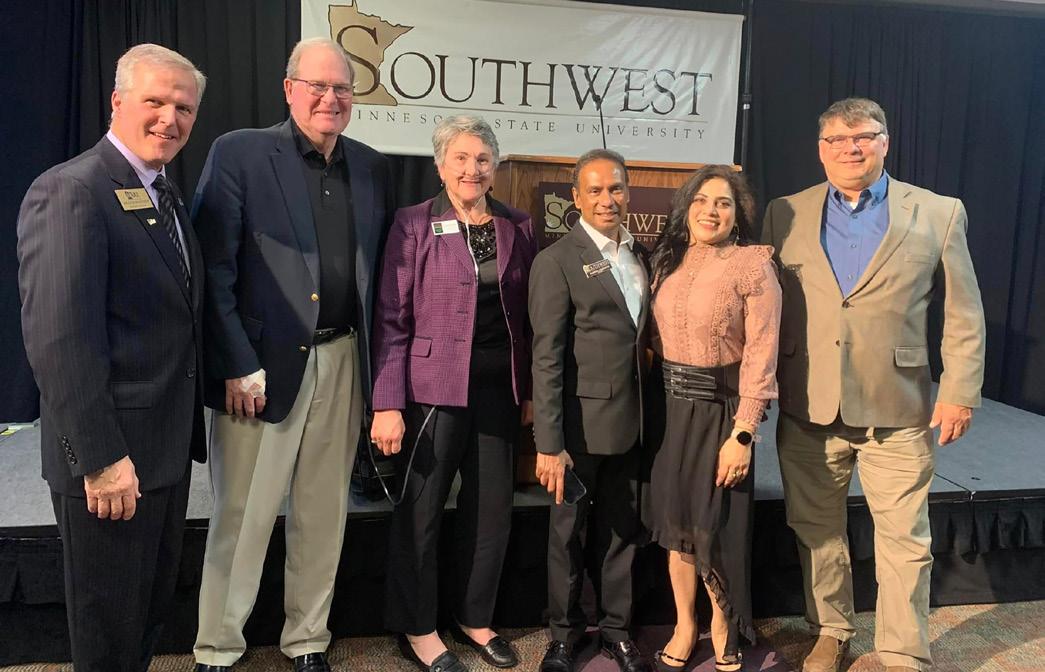
who now serves as director of government relations & agriculture outreach for University of Minnesota Extension. “If you are thinking about a leadership role, even if it’s your local county soybean board, your township board or your church board, there is a lot of value in this program.”
Participants meet in multi-day sessions throughout the program and are broken into smaller working groups to engage in immersive leadership training and discussions that challenge each class member to grow on a team and individual level.
“Each time you meet, our class met for three days, and it was packaged full of leadership ideas and ways for you to learn more about yourself,” said MSR&PC Chair and District 8 Director Gail Donkers, a Class 6 alum. “We learn about others as well and how there are different leadership styles out there. It trained us to work together as people. I think a lot of leadership programs miss that point, but you get to know that everyone has a different style of leadership and a different why for doing things.”
The MARL program represents a significant investment in each participant. While the total program cost is about $22,000 per person, the participants contribute around $8,000. With the impact of the MARL program, participants on local and state levels
have led to sponsors that help raise funds to give the class members a range of experiences, including an international visit at the end of each class. The program also offers a visit to Washington, D.C., to meet Minnesota’s congressional delegation.
For farmer leaders like Donkers, embracing MARL’s mission meant building skills that led to greater opportunities.
“I think I was at a point in my life where I just needed a little bit of a push and a little more leadership experience,” Donkers said. “I was kind of craving like the next thing that I needed in my life and then the MARL program was suggested to me.”
Sullivan encourages Minnesotans of all ages and agricultural backgrounds to consider applying.
“I would push everyone to apply to further their leadership skills. You gain so much more knowledge and perspective of how business and agriculture leaders work throughout Minnesota,” he said. “There are always opportunities that come up even if you are a middle age or older person. There are lots of populations that need to be filled, whether that’s local government, county commissioners, school boards, city council – lots of different opportunities where you meet some great leaders and move forward with success in the community.”
For more information or to apply for MARL Class 14, visit MARL’s website at marlprogram.org.
in their communities through promotions, donations
By Soybean Business Staff
Minnesota Soybean’s more than 40 organized counties keep active throughout the winter by donating to local nonprofits, holding annual meetings and encouraging membership in the Minnesota Soybean Growers Association (MSGA). Local leaders also promote checkoff projects from the Minnesota Soybean Research & Promotion Council (MSR&PC), including soy-based foods and through supporting animal agriculture, while also strengthening local connections ahead of spring planting.
The Lincoln County Soybean & Corn Growers hosted their annual meeting earlier this month, filling the Ivanhoe VFW with community members eager to support the organization and auction program. The event featured a lively auction that raised over $26,000 for youth scholarships, helping invest in the next generation of agricultural leaders. Lincoln County also accepted Minnesota Soybean’s County of the Year award, recognizing their exceptional contributions to both agriculture and community engagement.
For more than a decade, Lyon County has taken part in the 14th Annual Southwest Minnesota State University Ag Bowl Scholarship Invitational. The 2026 event brought over 1,300 students from 58 schools to campus,
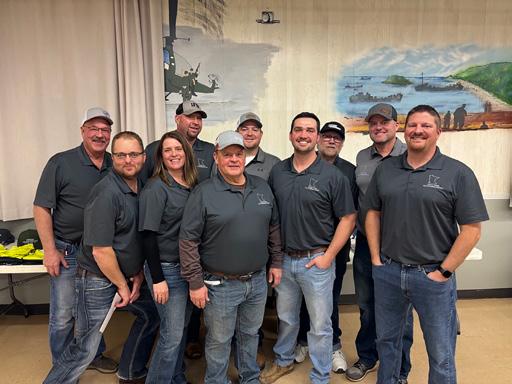
Lincoln County farmers gather during their 2026 annual meeting, which raised over $26,000 in student scholarships.
giving board members an opportunity to engage with students and raise awareness about soy checkoff value and the importance of membership in MSGA.
McLeod County hosted its annual meeting at the end of January, welcoming 125 attendees for an engaging evening. Guest speaker Aaron Putze from the Iowa Soybean Association delivered an inspiring and motivational message that resonated with the audience and highlighted the impact of agricultural advocacy.
In February, Yellow Medicine proudly invested in the future of agriculture by donating student memberships to Yellow Medicine East. A total of 11 youth members became MSGA members, and the organization matched the contributions to further support their activities, including jackets, educational trips and hands-on projects.
Renville County hosted over 45 people for a winter breakfast in December 2025. During this event they welcomed a line-up of speakers, covering topics from new MnDOT regulations to policy efforts. Council Research Director Sergio Cabello Leiva spoke and shared MSR&PC’s Research Report.
Nicollet-Sibley recently donated over 100 soy-based food items to the St. Peter and Gaylord food shelves. Their annual gift supports local families in need while showcasing the nutrition, versatility and high presence of soy-based products.
Blue Earth County is focused on investing in the next generation of agricultural professionals by supporting the St. Clair and Maple River FFA chapters. These contributions helped 98 students attend the National FFA Convention & Expo in Indianapolis, which provided opportunities to develop leadership skills, network with other students and explore future careers in agriculture.
“Seeing this up-and-coming program giving students the opportunity to represent our area on a national level is truly wonderful to support,” said Brandon Wendlandt, Blue Earth County Board chair. “The Blue Earth County Soybean & Corn Growers Association is proud to stand behind our local FFA chapters and looks forward to continuing that support in the future.”
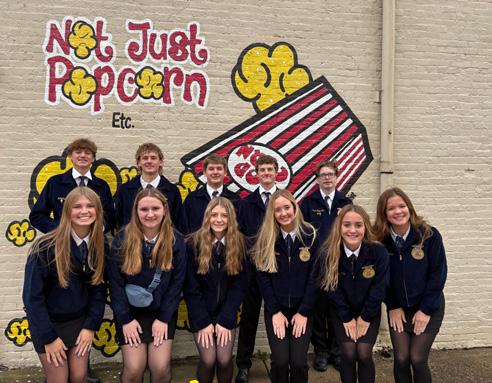
Dakota-Rice County prioritized youth development and community engagement throughout the last few months. The county awarded scholarships to high school seniors pursuing degrees in agriculture and partnered with Northfield FFA to celebrate National Pork Month last fall. Community outreach efforts also included biodiesel fuel promotions. These events provide valuable opportunities to connect agriculture with surrounding communities while also highlighting how locally produced biodiesel fuels local economies.
Waseca County remained involved by supporting the Waseca and New Richland FFA chapters while sponsoring numerous educational opportunities. The county joined with the Waseca County Chamber of Commerce and its ag committee, hosting a Farm City Luncheon, and supporting local food shelves through donations.
Educational outreach branched beyond the field and into the classroom through Ag in Action Day, a checkoff-funded program that gave students an inside look at how soybeans move from the farm into everyday products while bridging the gap between education and agriculture.
“Using checkoff funds for events like Ag in Action helps us show students how soybeans impact their daily lives,” said Waseca County Board Chair Scott Singlestad. “It’s a great opportunity to connect with youth and build stronger ties between our community and agriculture.”
Watonwan County continued their commitment to youth leadership and grower engagement. The board sponsored FFA jackets for the local FFA chapters in the county. This support not only encourages student involvement in agricultural education but also reflects the county’s commitment to cultivating the next generation of agricultural leaders.
In addition to youth programming, the county hosted their annual meeting earlier this year. The meeting gave growers a chance to connect with fellow producers and receive updates on current industry trends.
Wabasha-Olmsted County hosted their annual meeting early in 2026. The meeting provided local growers with an opportunity to receive updates on current checkoff investments, discuss current industry challenges and priorities and connect with other farmers as they prepare for the year ahead.
As the peak of annual meeting season approaches, many county boards across southern Minnesota have meetings scheduled in the coming months. These meetings will offer growers opportunities to hear updates, learn about upcoming projects and events, and stay engaged in preparing county programs for the year ahead.
The Becker-Mahnomen County Soybean & Corn Growers supported the annual Becker County Ag in the Classroom Day by donating “Minnesoyta” pencils and promoted agriculture to all the counties’ fourth-grade students.
The Clay-Wilkin County Soybean & Corn Growers helped support the local FFA alumni foundation this winter by donating a set of soy-based Goodyear tires for a live auction. Growers also hosted their annual meeting during the Small Grains Update meeting. A congratulations is in order as well to board member Andrew Mages, who was selected to participate in the American Soybean Association Corteva Young Leader program. Mages graduates from the program during Commodity Classic.
Douglas County held its annual meeting on Feb. 19 in Evansville, where they welcomed Northern Crops Institute Program Manager Casey Peterson as their keynote speaker. They also hosted their annual tillage day last fall, promoting various tillage options for producers.
Pope County has been busy preparing for their annual meeting in March in Glenwood. Board Vice President Paul Freeman participated in the See For Yourself visit to the Clean Fuels Conference, where he learned about advancements in the biodiesel, renewable diesel and sustainable aviation fuel markets.
Swift County showed their support for the Swift County Food Shelf over the holiday season by donating $500 worth of ham to provide for local families during the holidays. They also made a
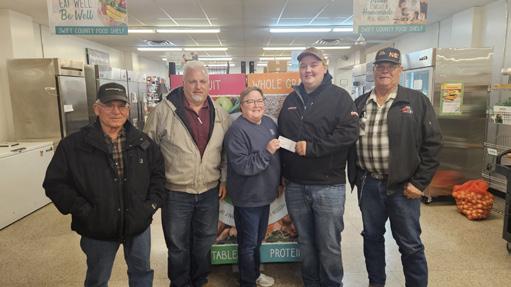
donation to the new Mini Sota Agricultural Children’s Museum in Benson, which allows children to play and learn in an environment that promotes agriculture.
Northwest Minnesota
Kittson County held its update and annual meeting in mid-January in conjunction with the Small Grains Update meeting and with the Kittson County Crop Improvement Association. The board hosted meteorologist Andrew Pritchard as guest speaker. The county board sent three delegates (MSGA Director Jason Cadieux, Chuck Dziengel and Kris Folland) to MN Ag Expo in Mankato. Kittson County is always helping support local events and will continue those efforts throughout 2026.
Marshall County supported local food shelves over the 2025 holiday season through ham donations. The Board hosted their update and annual meeting in late January in Newfolden. Featured speakers included UMN Extension Specialist Dr. Lindsey Pease and agronomist Kate Howell. Updates were also provided on behalf of Minnesota Soybean and Minnesota Corn. Mark Nelson served as the county delegate at MN Ag Expo.
Norman County contributed to the Feed the Farmer Campaign through their local radio station. The county donated hams to local food banks and the REACH program for families in need during the holiday season. They hosted their annual and update meeting and in conjunction with the Small Grains Update and the Norman County Ag Day on January 14 in Halstad. Board President Corey Hanson provided a checkoff update and spoke on research project funding. Hanson and David Swenson served as county delegates at the MN Ag Expo in 2026. Norman County’s board seat on MSGA is currently vacant. If interested in learning more about the position, contact Corey Hanson at chanson@ mnsoybean.com.
Polk County contributed $2,000 to the Valley Corn Maize to help educate the public and provide fun for families. They donated hams to the county food shelves located in Fosston, Fertile, Crookston and East
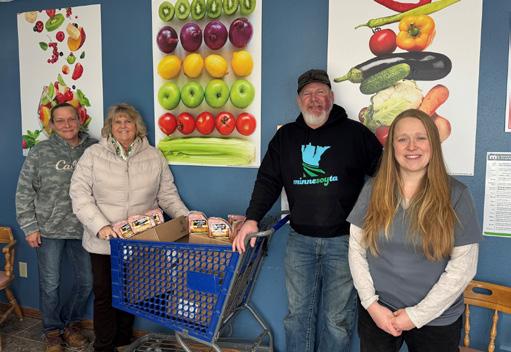
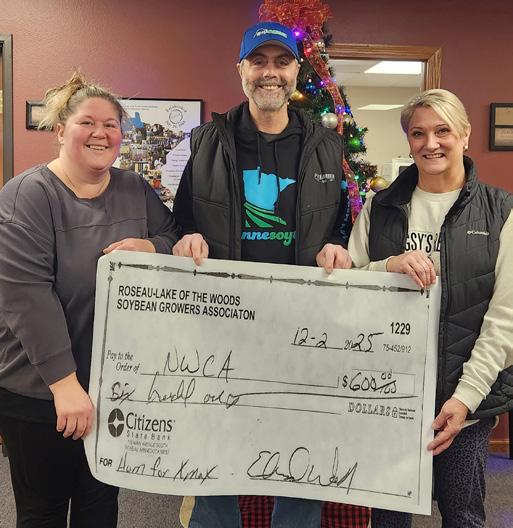
Grand Forks for the Christmas season to feed families in need. They also promoted safety through radio ads with the Fosston and Crookston radio stations. Kevin Krueger, Bennett Osmonson, Mike Skaug and John Swanson were delegates at MN Ag Expo.
Pennington-Red Lake County supported area food shelves and promoted soybeans through signage at hockey rinks in the county. They placed radio ads promoting their annual and update meetings, which were held in February and included legislative updates. MSGA Secretary Kyle Jore, Dave Garry and Gary Purath were county delegates at MN Ag Expo.
Roseau-Lake of the Woods County donated $600 to Northwest Community Action for hams for the Christmas season. They held their update and annual meeting in late January in Roseau. Featured speakers were UMN Extension Educators Angie Peltier and Heather Dufault, while Rep. John Burkel gave a legislative update. American Soybean Association Director Jim Kukowski delivered updates from the soybean organization and UMN Small Grains Specialist Jochum Wiersma and Extension Educator Brad Carlson provided an afternoon program on nitrogen management education. They promoted soybeans with radio and print advertising throughout the year. Jim Kukowski and his wife, Marilyn, MSGA Director Andy Pulk and Ed Walsh were county delegates at MN Ag Expo.
All the northern Minnesota counties were also represented on the bus down to Mankato for MN Ag Expo.
Once planting season begins this spring, county boards will pause most activities until resuming outreach efforts in late spring and early summer. Promotion activities throughout the summer will include community events, biofuels promotions, donations of soy-based products and more.
The more we discover about soybeans, the more valuable they become. One innovative product, SoyFoam™, creates a new, sustainable use for your crop that protects firefighters and the planet.
See how your Soy Checkoff is unlocking new markets for soybeans at unitedsoybean.org

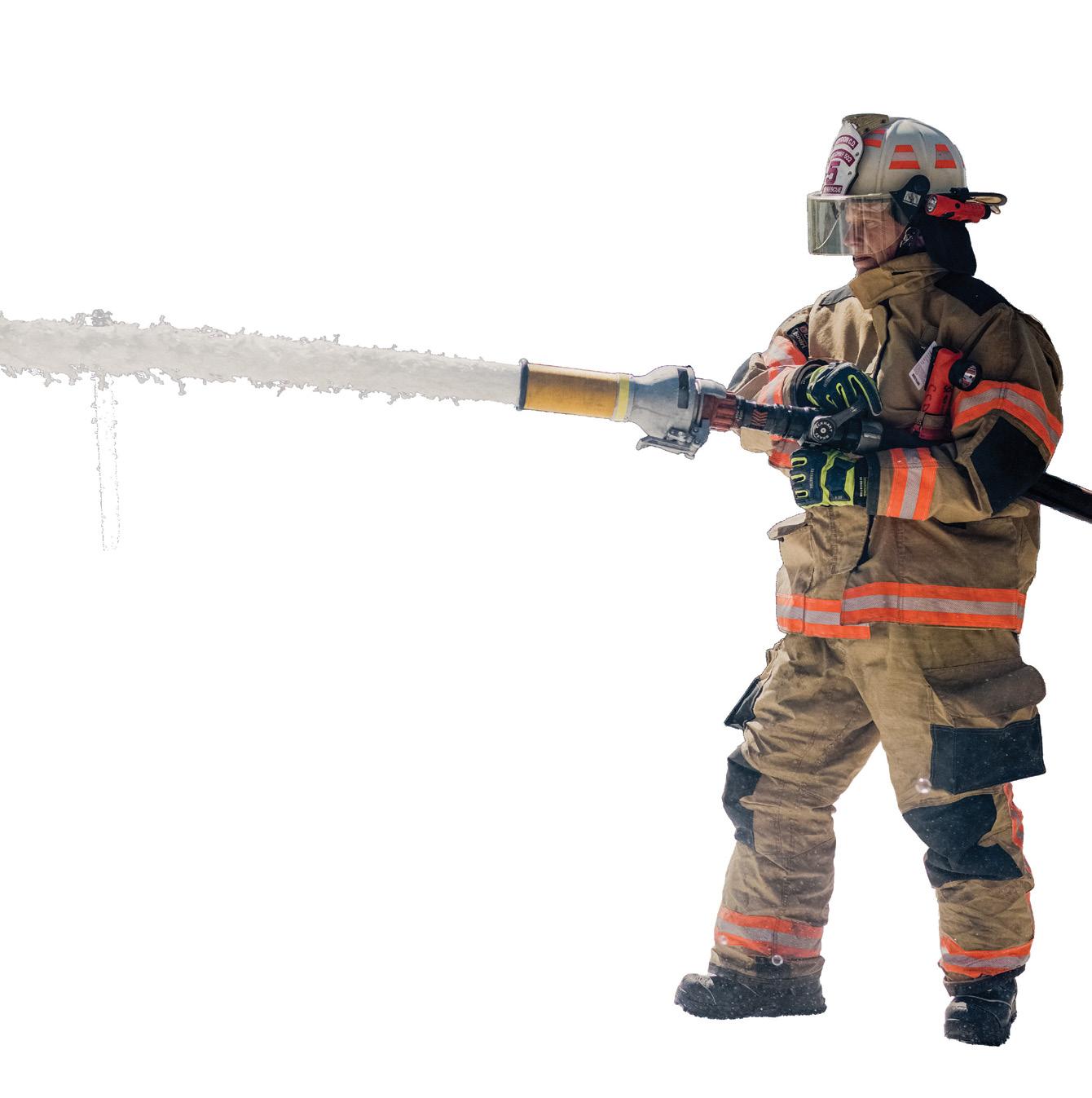







over-the-top use dicamba herbicide products will be available for growers during the 2026
The affected dicamba formulations are Engenia by BASF, Tavium by Syngenta, and XtendiMax by Bayer. These are “restricted use pesticides” approved for use on dicamba-tolerant soybeans only. Dicamba products are limited for sale to and use by certified applicators. Applicators must comply with these, and any other restrictions, listed on the manufacturer’s website. Applicators must check the manufacturer’s website no more than seven days before application.
“Year after year, farmers continue to battle yield-robbing pests and weeds, and dicamba, when applied safely, helps protect our crop against damaging weeds,” MSGA President Darin Johnson said. “We are grateful that the EPA and MDA’s guidelines will help bring farmers some much-needed certainty as we prepare for the upcoming growing season.”
Producers were prohibited from using dicamba herbicides last year because of a 2024 court decision vacating a U.S. EPA registration. In February, the EPA announced it was re-registering the three dicamba products for the next two growing seasons, with MDA following suit and re-registering the products for use in the state with restrictions. Pesticide product registrations are renewed on an annual basis in Minnesota.
These dicamba products have the following restrictions this year in Minnesota:
• Date cutoff: No application shall be made south of Interstate 94 after June 12. North of Interstate 94, use is prohibited after June 30.
• Temperature cutoff (for the entire state): No application shall be made if the air temperature at the field at the time of application is over 85 degrees Fahrenheit or if the National Weather Service’s forecasted high temperature for the nearest available location for the day exceeds 85 degrees Fahrenheit.
Federal restrictions and requirements on the product label include:
• Requiring an approved drift-reducing agent and pH-buffering volatilityreducing agent be tank-mixed with dicamba products before all applications;
• Requiring downwind buffers of 240 feet and 310 feet in areas where listed endangered species are located;
• Mandatory training;

• Additional record keeping
Soybean farmers from across Minnesota depend on post-emergent dicamba to manage yield-robbing weeds, which have the potential to steal more than half of a crop’s yield and inflict more than $15 billion in damages to U.S. soybean crops if not properly managed.
MSR&PC directors to serve on United Soybean Board
Dumont farmer Tom Frisch continues to embrace a greater role as a national farmer leader. In early February 2026, Frisch was reappointed by the USDA to serve a three-year term on the United Soybean Board (USB).
“I’m honored to represent Minnesota on USB. We have a lot of work ahead of us in the years ahead to build markets and improve our farm economy, and I’m eager to contribute in any way I can,” said Frisch, a current director and past chair of the Minnesota Soybean Research & Promotion Council.
In December 2025, Frisch, who will begin his second term on USB, was elected to USB’s Executive Committee as secretary. He also serves as chair of the Communication & Education Committee and USB’s Feed, Fuel and Exports Action Team.
In addition to Frisch, Minnesota farmer Joel Schreurs was also appointed to USB. Schreurs, MSR&PC’s District 7 director, replaces Gene Stoel, who termed off USB after nine years directing national checkoff funds. Schreurs was also recently elected to represent Minnesota on the U.S. Soybean Export Council.
“I’m humbled to step into this position and replace a respected leader like Gene,” Schreurs said. “International trade is a passion of mine, and I hope to add my voice to the USB team while also learning more about the many ways our checkoff can accelerate demand for our soybeans in Minnesota and across the country.”
Frisch and Schreurs are joined on USB by Minnesota farmers Patrick O’Leary and Lawrence Sukalski. In January 2026, Frisch and O’Leary attended a USSEC-led trade mission to Egypt to help strengthen relationships in one of the top international markets for U.S. Soy.
Soybean Business, MSGA’s official publication, earned first-place honors in January at the Region 3 National Agri-Marketing Association awards. Three issues from 2025 were submitted for consideration. Soybean Business is coming off its first-ever Best of NAMA award for Best Association Magazine.
MSGA also earned a Merit award for a 2025 press release criticizing the state of Minnesota’s proposal to increase feedlot permits, which was quickly rescinded by Gov. Tim Walz following MSGA’s statement.
MSR&PC was also recognized for its weekly Minneline newsletter, which is published in conjunction with MSGA. All three Minnesota Soybean submissions will be up for the 2026 Best of NAMA April 15 in St. Louis. Both MSGA and MSR&PC are operated by Ag Management Solutions.
MSGA mourns death of farmer leader
The Minnesota Soybean Growers Association (MSGA) extends our deepest sympathies to the family, friends and colleagues of Luverne farmer Colton Arends, who died Jan. 21. Colton, 29, farmed alongside his dad, Paul. He served on the Rock County Soybean & Corn Growers and was featured in the Faces of MSGA section in the January-February 2026 issue of Soybean Business. He is survived by his two children, Knox and Wrenleigh, and partner, Anna McCarty.
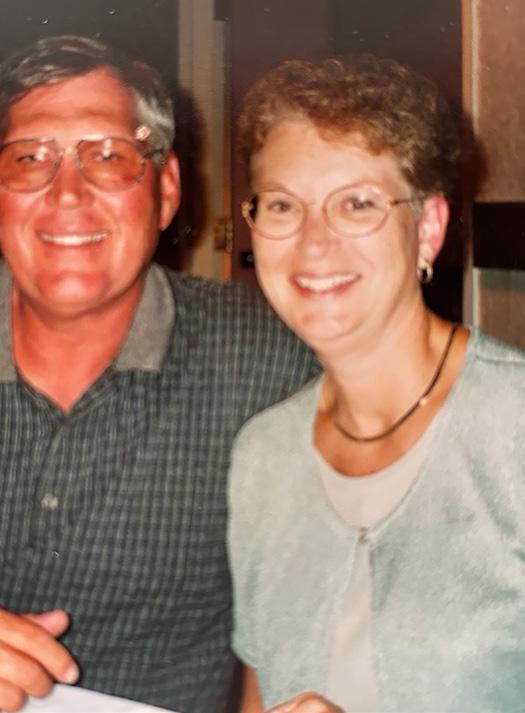
By Allison Wright
As a longtime member of the Renville County Soybean & Corn Growers, Connie Mulder has helped hold the door for women to become active in local leadership and the Minnesota Soybean Growers Association.
Growing up in Granite Falls, Connie watched her grandparents farm and swore she would never choose that way of life. She met her late husband, Jerry, in high school; farming wasn’t part of their plan. That changed in 1970, when Jerry returned home from serving in the Vietnam War and his uncle retired. They took over the family farm, and Connie never looked back.
Jerry hosted a couple of Renville County Corn and Growers Association meetings in their home, and Connie often shared her thoughts with the board on upcoming projects. After those meetings, the board members encouraged her to become involved. Connie and Jerry became a team in building membership and strengthening their local organization. As Jerry served on the Minnesota Corn Board and national committees, the couple built lifelong friendships and connections across the country through events like Commodity Classic and MN Ag Expo. Jerry served on a membership committee, bringing ideas back to the county level. He would travel the county talking with farmers, most of whom were men, and encouraged Connie to visit with their wives. Connie would motivate the wives to find their voice and get involved; she helped shift the perception that only husbands could serve in leadership roles.
For more than 25 years, Connie has served on the growers’ board, helping with events such as their annual golf event. Through her membership in MSGA, she regularly attends MN Ag Expo as a county delegate, providing a strong and steady voice and offering input on MSGA’s policy resolutions.
“Connie likes to get things done — boom, boom, boom,” MSGA Director Doug Toreen said. “I’ve known her for 50 years and she’s always been someone who likes to stay on task and accomplish the to-do list. That’s helped a lot on our county board.”
Though she once resisted the farming lifestyle, Connie now considers life on the farm a blessing. She and Jerry retired in 2015 as the fifth generation on the farm. Jerry died in late 2020 at age 73; just months before his passing, he was recognized by Minnesota Corn for his membership efforts. Today, the sixth and seventh generations continue the farming legacy, along with 15 grandchildren and 13 great-grandchildren.
Connie encourages others to follow her lead and “get things done” to improve farming for today and tomorrow. Becoming a member of MSGA is a good first step.
“If you want to see this way of life continue, you have to get involved and not just sit on the sideline,” Connie said. “One voice by itself doesn’t get heard, but when you band together with other similar minded people, voices make a difference, membership makes a difference.”
The Minnesota Soybean Growers Association extends appreciation over the 20 members who joined MSGA from December 2025-February 2026. In addition, over 200 members renewed this winter. We appreciate your support!
Our policy work continues throughout spring 2026. In March, farmer leaders traveled to Washington, D.C., for Hill Visits with Minnesota’s congressional delegation to address critical policy issues. Back home, your membership resources help us protect our family farmers and industry partners this session at the
Member
Tory Schreurs
Brayden Jaenisen
Corbin Sunderland
Brent Johnson
Leah Carter
Danika Quick
Michael Thompson
Raymond R. Hampel
Jayden Houselog
Bob Taubert
Colton Isdahl
Sydney Giese
John Giese
Eric Fick
Carl Gaukerud
Capitol in St. Paul, where we also held our state Hill Visits this March.
Together, we’re joining forces fighting on your behalf in the legislative and regulatory spaces. With a pivotal election season upcoming in November, we’re all hands on deck at MSGA in 2026.
To join the nation’s premier state soybean advocacy association, visit mnsoybean.org/msga/membership. Membership levels start at just $20 for students, and a 3-year membership costs less than a quarter per day. Become a member today!
Member
Jonas Gust
Tyson Lovejoy
John Schmitz
Mitzi Millan
Jakin Tyrrell
Todd Britton
Carson Reiman
Corey Cervin
Robert Gadola County
Adam Lovehaug
When the Minnesota Agricultural Water Quality Certification Program (MAWQCP) launched as a pilot program in 2014, an intrepid, conservation-minded farming operation had to be the first to enroll.
Jared and Jerry Nordick’s family farm in Wilkin County in the Red River Valley checked every box: passionate about soil health and water quality, flexible in adopting new techniques, including buffer strips, and eager to engage with stakeholders.
“I want to be open and transparent as a farmer to what I’m doing on my farm,” Jared Nordick said. “I would rather try to be proactive than reactive.”
The Nordicks’ passion for conservation led to their operation being the first to enroll in the MAWQCP, a one-of-a-kind program that has grown into the national model for how to run a voluntary, farmer-focused soil health initiative that rewards farmers for implementing conservation practices. The Nordicks’ county Soil & Water Conservation District specifically sought out their family operation to enroll.
“They saw what we were doing, and said, ‘I think you guys would just be slam dunk, be able to take this and run with it right away.’”
Jared recalled. “But it’s not about being the first – it’s about pride in what we do in agriculture.”
Jared, who now sits on the Wilkin County Soil & Conservation District board, credits his father for instilling a commitment to soil health and water quality.
“My dad is a conservationist and was doing buffer strips before they were even talked about,” Jared said. “Not every ditch needs a buffer strip, but they’re a great site-specific, source-specific tool.”
Nordick said he hopes his early promotion of MAWQCP alleviated initial reluctance farmers may have had about participating in a voluntary program that’s protecting Minnesota’s water resources.
“I think so many people thought that you were opening up a can of worms to your farm to show them what you were doing, and if
there was something wrong, you were going to get chastised for it, or you were going to get a penalty,” Nordick said. “But farmers still need to learn, and we need to be open-minded and we’re thinking into the future for my kids or my grandkids. It’s not about today nor tomorrow, it’s the future of the American farm families also.”
Since the program became available statewide in 2015, Minnesota farmers continue to follow in the Nordicks’ footsteps. As of early 2026, 1,739 farms totaling over 1.24 million acres have been certified across Minnesota. Farms have added nearly 7,900 new conservation practices. Those new practices are reducing greenhouse gas emissions by nearly 55,000 metric tons each year and have kept more than 57,000 tons of sediment out of Minnesota rivers while saving 170,000 tons of soil and 73,000 pounds of phosphorous on farms each year. The conservation practices have also reduced nitrogen loss by up to 49%.
Studies also continue to show that MAWQCP-enrolled farmers report higher profitability.
“As a farmer, we need economics and stewardship together,” Nordick said, “and we’re doing stewardship and still learning and still trying and using all the resource tools available to improve the economic side. We’re all trying to stay in business for the next year.”
MAWQCP connects farmers with local conservation district experts to identify and mitigate any risks their farm poses to water quality on a field-by-field basis. Once certified, each farm is considered in compliance with new water quality laws and regulations for 10 years.
In fall 2025, Nordick was among the first group to reapply for certification.
“Being in regulatory compliance is like buying an insurance policy, so if something does change, we can start working with those folks,” Nordick said. “Reenrolling was short and sweet, to the point. … It’s kind of like an ongoing research project.”

Certified farmers also receive a MAWQCP sign, along with other benefits including financial assistance programs.
“The agriculture organizations and MDA have believed in this program by working together to secure the funding that comes out of the Legislature to support agriculture,” said Nordick, who’s testified on behalf of MAWQCP at the Capitol. “Getting involved is the biggest thing.”
Farmers and landowners interested in becoming water quality certified can contact their local Soil & Water Conservation District or visit MyLandMyLegacy.com to enroll.
BroughttoyoubytheMinnesotaDepartmentofAgriculture.



21-23,
Join us for the 2026 Future of Soy Summit on July 21-23, 2026!
• Small group sessions covering current agronomic topics
• Network with directors, emerging leaders and researchers
• Panel discussions to get your questions answered
May 31 to
your leadership
Attendance and lodging for the Future of Soy Summit are provided by MSR&PC