SOYBEAN
JULY - AUGUST 2026 - VOLUME XXIV - ISSUE 4

B U S I N E S S
MSGA earns wins at Capitol, promotes policy priorities ahead of campaign season

JULY - AUGUST 2026 - VOLUME XXIV - ISSUE 4
B U S I N E S S
MSGA earns wins at Capitol, promotes policy priorities ahead of campaign season
A legacy of faith. A tradition of farming. A future rooted in both.












Tell the compelling stories behind Minnesota’s soybean farmers and their industry, from the field to Capitol Hill to international markets – and everywhere in between.
President Ryan Mackenthun | McLeod County
Vice President
Kyle Jore | Pennington-Red Lake Counties
Treasurer
Rose Karau | Watonwan County
Secretary
Bob Lindeman | McLeod County
ASA Directors
Jamie Beyer | Traverse County
Adam Guetter | Redwood County
Darin Johnson | Faribault County
Jim Kukowski | Roseau-LOW Counties
Jeff Sorenson | Redwood County
Bob Worth | Lincoln County
ASA Young Leaders
Andrew Mages | Clay-Wilkin Counties
County/at-large directors
Trevore Brekken | Polk County
Mark Brown | Watonwan County
Steve Brusven | Yellow Medicine County
Jason Cadieux | Kittson County
Nick Daugherty | Renville County
Brian Fruechte | Lincoln County
Tom Grundman | Douglas County
Justin Hendricksen | Martin County
Ray Hewitt | Le Sueur-Scott Counties
Brad Hovel | Goodhue County
Brent Imker | Cottonwood County
Jordan Jacobson | Lyon County
Jim Jirava | Becker-Mahnomen Counties
Mark Knutson | Marshall County
County/at-large directors
Marcus Meiners | Todd County
Paul Mesner | Murray County
Bruce Nelsen | Mower County
Robert Nelsen | Murray County
Dusty Neugebauer | Nobles County
Lucas Peters | Rock County
Vernon Pooch | Pope County
Andy Pulk | Roseau-LOW Counties
Matt Purfeerst | Dakota-Rice Counties
Tim Rasmussen | Otter Tail-Grant Counties
Justin Remus | Brown County
Parker Revier | Renville County
Gary Schoenfeld | Waseca County
Cal Spronk | Pipestone County
Jamie Seitzer | Nicollet-Sibley Counties
Jeremy Tischer | Clay-Wilkin Counties
Doug Toreen | Renville County
Tim Wolf | Dodge-Steele Counties
While the Minnesota Soybean Growers Association (MSGA) didn’t achieve all its policy goals during the 2026 legislative session, grower leaders still checked off some priorities at the Capitol for Minnesota’s farm economy. With the session in the rearview mirror, MSGA is transitioning to campaign season with a new officer team and a slew of events and initiatives to promote priorities for 2027 and beyond.
Read more, starting on page 8
MSGA Executive Director
Joe Smentek | jsmentek@mnsoybean.com
Managing Editor
Drew Lyon | drew@mnsoybean.com
Ag Management Solutions
Art Director
Alex Troska | atroska@agmgmtsolutions.com
Graphic Designer
Ag Management Solutions
Layout Editor
Katelyn Engquist | kengquist@agmgmtsolutions.com
Sales Manager
Erin Rossow | erossow@agmgmtsolutions.com 507-902-9191
Advertising space reservations can be made by the 15th day of the month prior to publication. In consideration of the acceptance of the advertisement, the agency and the advertiser must, in respect of the contents of the advertisement, indemnify and save the publisher harmless against any expense arising from claims or actions against the publisher because of the publication of the content of the advertisement.
Advertisements within this publication contain the opinions and information of the advertisers and do not necessarily reflect the opinions or views of the Minnesota Soybean organizations or affiliated groups.
Soybean Business is published six times a year on behalf of Minnesota Soybean. Comments and suggestions can be submitted to:
Membership Manager
Jodie Arndt | jodie@mnsoybean.com 507-388-1635


Since the May-June issue of Soybean Business, I have fielded a number of calls regarding a perceived lack of support for E15 on the part of soybean growers. Nothing could be further from the truth. The MSGA Board is made up of farmers from across the state — the majority of which farm soybeans in a rotation with corn. They recognize that year-round E15 is a great way to save consumers money and increase farmer profitability. Getting E15 accomplished remains a goal of MSGA’s, and that is why we are in constant communications with the Minnesota Corn Growers Association to work to see E15 to the finish line.
A common refrain with these calls was a perception that MSGA was in some type of competition with MCGA. We do not view our relationship that way. MSGA and MCGA are longstanding partners in more than the rotation on your farm.
MSGA and MCGA work closely together in the regulatory arena. When the Minnesota Pollution Control Agency announced plans to put forward a rule on waste treated seed, we worked closely together to gather the needed signatures to force a contested case hearing. At the hearing, we were represented by board members from both MSGA and MCGA. They testified on their experience using treated seed and how “leftover” treated seed is handled. As a result of the information presented by grower leaders, MPCA was forced to abandon moving forward with the proposed rules.
MSGA and MCGA work closely in the courts. After several years of joining together as intervenors on lawsuits brought by environmental groups, MSGA and MCGA took the initiative to go on the offensive and interrupt their common operating procedure. We teamed up to bring suit on tile drainage in a county that has farms and farmers. We successfully defended a motion to keep the lawsuit in Faribault County. We will work together on this effort to win favorable outcomes for our members and farmers across Minnesota.
MSGA and MCGA also join forces in St. Paul. Many
of our priorities overlap. As our members use a crop rotation involving corn, soy, wheat, sugar beets and other crops, this is not surprising. Recognizing this, we have worked to further your voice in St. Paul by holding a joint legislative reception during our Hill Visits. Bringing the two groups together has led to a mutually successful reception. Instead of dividing attendance between the two groups, we have made an event that is a must-attend for many legislators. It has the added benefit of giving another opportunity for our board members to talk together and strengthen our relationships.
Your membership in MSGA and MCGA benefits from this relationship, and I strongly encourage you to be a member of both organizations. I can safely say that the corn and soy growers’ membership is worth every penny, given the amount of work put in by their directors, staff and lobbyists. I also encourage our readers to view an interview with MCGA President Wes Beck and past MSGA President Darin Johnson on our YouTube page that dives deeper into how our two organizations collaborate to benefit our respective organizations. To quote Wes, “a rising tide lifts all boats.”
While each one is great on its own, MSGA and MCGA are better and stronger together.

JOE SMENTEK Executive Director, MSGA
This column is a series in Soybean Business featuring leaders from the Minnesota Department of Agriculture.
Minnesota is the fourth largest agricultural exporting state in the nation. Agricultural exports bring in roughly $8.34 billion a year, a and about 22% of that market share is soybeans.
A key component of the agricultural export market is providing safe products and meeting the destination countries’ entry requirements. Many destination countries require a phytosanitary certificate as part of the process for goods to enter.
The Minnesota Department of Agriculture (MDA) issues phytosanitary certificates for raw or minimally processed agricultural products. This includes plants and plant products, logs, lumber, peat, seed and grain, including soybeans. Phytosanitary certificates state that a shipment has been inspected, is free from various insects, pathogens, nematodes, soil and weed seeds. All commodities are physically inspected before a certificate is issued
Phytosanitary certificates are an important aspect of the international trade market. They strengthen U.S. agricultural marketability and assist in preserving the health of the global environment.
These certificates are vital in limiting the possibility of spreading pests and disease, safeguarding the global food supply. The Great
Potato Famine is an example of how a newly introduced pathogen can wipe out an entire food source and a historical reminder of why steps such as issuing phytosanitary certificates are so important.
It is important to note that not all countries require phytosanitary certificates and that requirements of entry vary based on commodity and destination country. The MDA export team can assist customers that would like to learn about the requirements if they venture into new markets.
Soybean phytosanitary certificates issued by the MDA make up a large portion of the number of certificates completed each year.
In 2025, the MDA certified over 103.4 million pounds of soybeans.
• Over 102.7 million pounds of grain
• Approximately 604,000 pounds of seed
• Nearly 52,000 pounds of meal
This represents 562, or 35%, of all phytosanitary certificates issued by the MDA in 2025. The top countries receiving Minnesota soybeans last year with certificates were Japan (over 75 million pounds), South Korea (over 13 million pounds), and Thailand (over 4.5 million pounds).
Over the last five years, roughly 90 million pounds of soybeans were
Visit with the MDA team and learn more about the Department’s mental health and financial assistance programs at Farmfest Aug. 4-6 in Booths # U114 and 517S.
COMMISSIONER THOM PETERSEN
certified on average each year. There was a large increase in need for certificates starting in August 2023, when Japan began requiring a phytosanitary certificate upon entry.
The MDA is proud to partner with the Minnesota Soybean Growers Association and Minnesota’s soybean producers to export safe agricultural products around the globe. However, it’s important to note that our work to get soybeans to their destination is one step in a long export marketing process. That process often starts with trade missions and building relationships. MSGA President Darin Johnson has worked hard to build those relationships and strengthen Minnesota’s export markets. As Darin wraps up his term as president, I want to thank him for his commitment
By Drew Lyon
For agriculture groups, the 2026 Legislative Session was a largely mixed bag filled with distinct challenges, difficult circumstances, small wins and larger disappointments amid a divided government heading into a pivotal election season.
Minnesota Soybean Growers Association (MSGA) lobbyist Cory Bennett has worked at the Capitol since the early 1990s. He labeled 2026 another memorable session.
“I certainly think that in my 34 legislative sessions, this was probably in the top 10 to 12, because of the challenges that the Legislature had coming into this session and how unique it was,” he said.
The session started in February with a tied House and a one-seat Democratic majority, a legislature still reeling from the June 2025 assassination of Speaker Emmerita Melissa Hortman and her husband, Mark, and the attempted assassination of Sen. John Hoffman and his wife, Yvette. In addition, Gov. Tim Walz announced prior to the session that he was ending his campaign to run for an unprecedented third term.
“We knew what we were coming into this legislative session, and how we maneuver around that to be as
successful as we can for MSGA,” said Bennett, who works alongside lobbyist A.J. Duerr in collaboration with MSGA’s board to implement policy priorities in St. Paul. “I think that is what we did.”
Through the legislative logjams, MSGA farmer leaders and lobbying team had boots on the ground throughout the session, ensuring the policy priorities of its members and the state’s nearly $10 billion soybean industry were well represented. MSGA successfully pushed back against policies that would’ve damaged agriculture while also securing several wins in an otherwise challenging legislative climate.
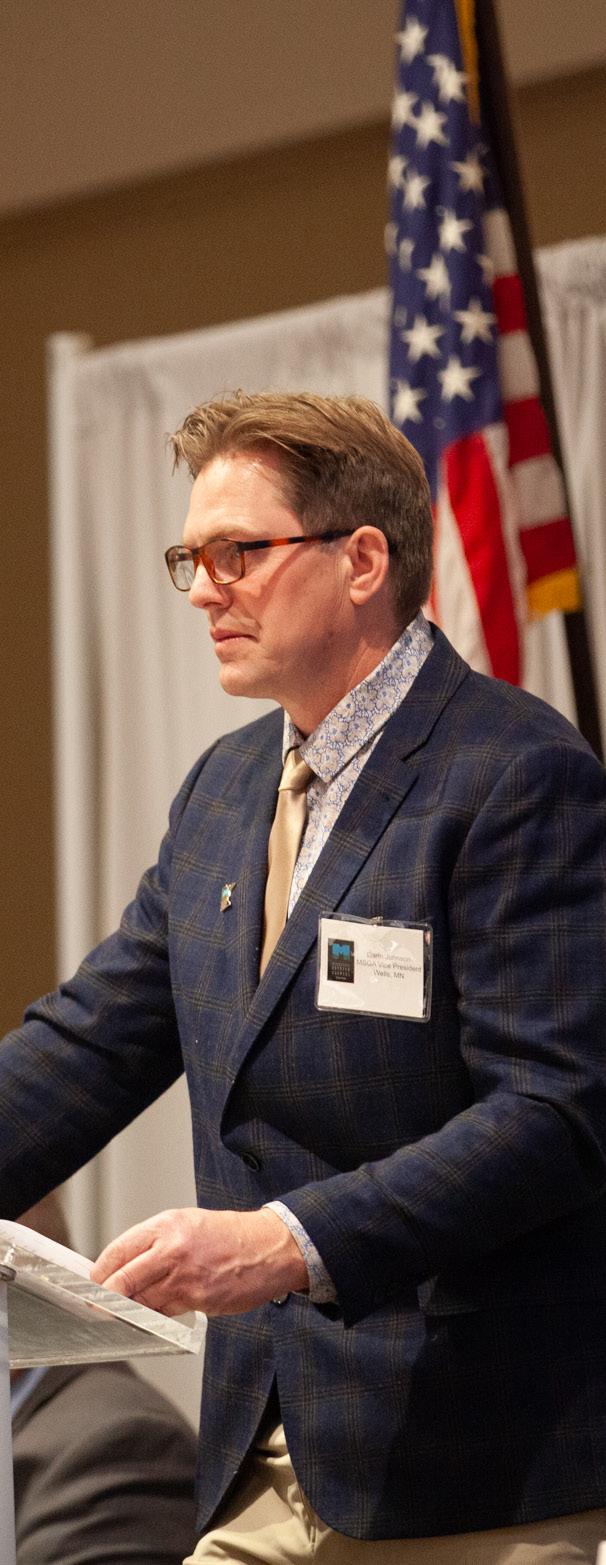
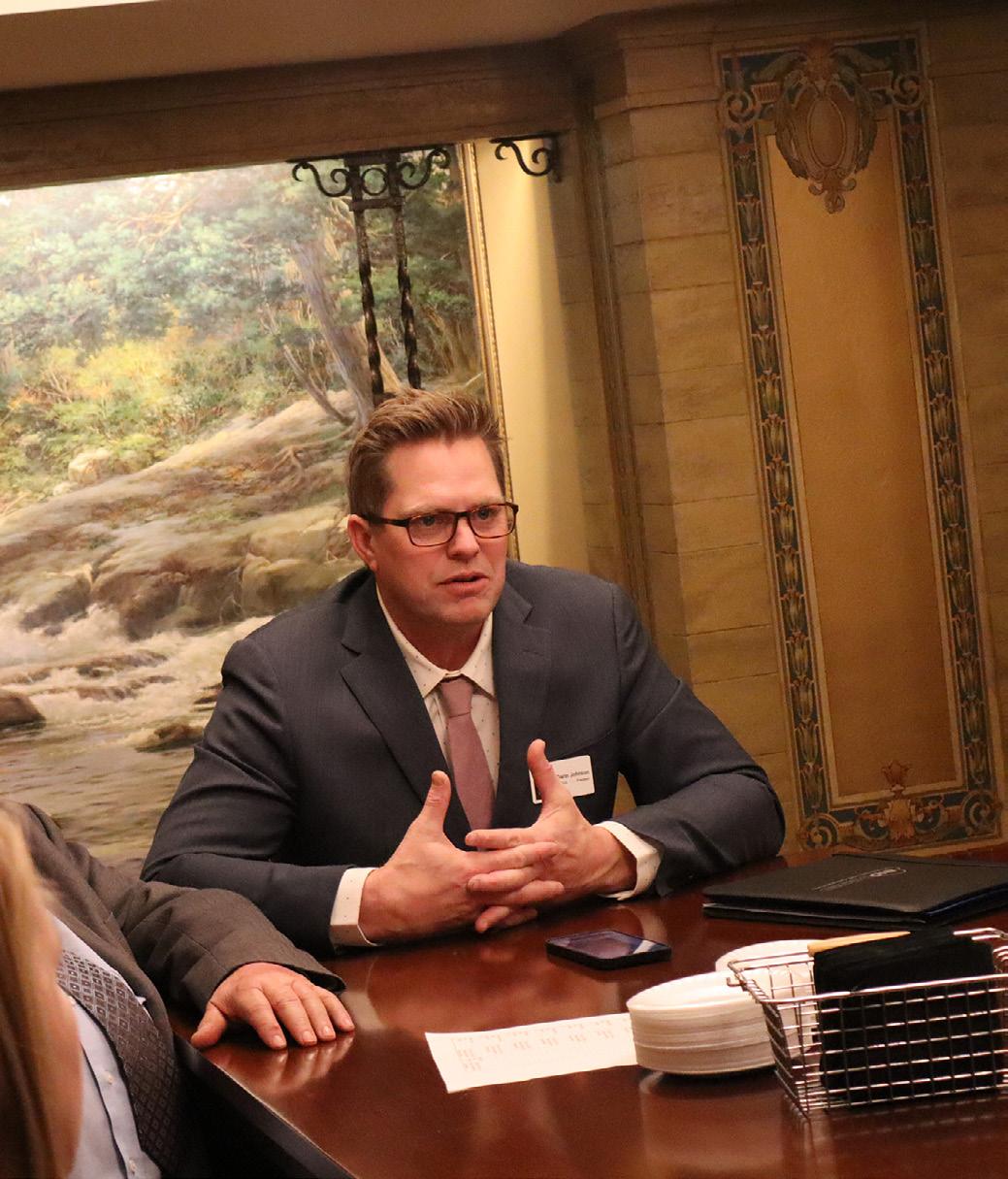
“At the end of the day, we’re at the Capitol to tune out the noise and advocate for what’s best for our soybean farmers and our family farming operations,” said Wells farmer Darin Johnson, who served his second session as MSGA president in 2026. “It was mostly a defensive year in St. Paul, so we made sure we showed up and had representation.”
When the session adjourned on May 18, MSGA and fellow ag groups could look to the tax and bonding bills as wins for agriculture. On the tax side, after
multiple years of MSGA advocacy at the Capitol and across the state, lawmakers approved improvements to Minnesota’s Sustainable Aviation Fuel (SAF) credit.
The bipartisan tax bill includes much-needed updates to the SAF incentive, which aims to better align the state credit with federal guidelines and encourage in-state production. MSGA Executive Director Joe Smentek testified in favor of the SAF incentive, which will:
• Raise the total tax credit limit from $11.6 million to $36.9 million through fiscal year 2035.
• Extend the SAF tax credit program by five years, which now runs through Dec. 31, 2035, instead of ending in 2030.
• Increase the per gallon credit and add a stronger incentive for fuels that achieve deeper carbon intensity reductions — changes long sought by agriculture, biofuel and aviation stakeholders.
“We’re always looking for the next biofuels opportunity, and SAF has so much potential for our industry for years to come,” Johnson said.
In addition, the tax bill removes the $4 million cap on
the Beginning Farmer Tax Credit for one year. This ensures that all eligible applications can be funded, rather than being waitlisted when demand exceeds available dollars, which became an issue after the credit was expanded in 2023. A one-time homestead tax credit increase of nearly 15% was also included.
“Our younger farmers need to be afforded the opportunities to purchase farmland, and the tax bill helps provide incentives to help the next generation,” said Johnson, a fourth-generation farmer.
The tax bill also includes a one-year reduction of vehicle tab fees, effective Jan. 1, 2027. This change provides modest but meaningful relief for farmers and rural Minnesotans who rely on multiple trucks and heavy-use vehicles.
A bonding bill was far from a certainty, but in the session’s final hours, lawmakers delivered on a $1.2 billion bonding bill. The legislation includes capital investments across the state, including critical projects for agriculture and rural communities.
The bonding bill includes roughly $35 million for the University of Minnesota’s St. Paul campus, which will support long-delayed upgrades to agricultural research, veterinary medicine and natural resources facilities. Lawmakers highlighted the investment as essential to maintaining the state’s research capacity and ensuring Minnesota remains competitive in plant science, animal health and food systems innovation.
Rural communities will also see $300 million in infrastructure funding, including local roads and bridges, water and wastewater systems, and small community public works projects that have struggled to secure financing. These investments are expected to ease pressure on rural tax bases while addressing longstanding maintenance and compliance needs across Greater Minnesota.
“When we look at our wins this year, I think you can point to those two bills as being successful pieces of the legislative session,” Smentek said. Gov. Walz signed the agriculture, tax and bonding bills into law in late May.
On the flip side, MSGA was disappointed that lawmakers failed to pass an agriculture omnibus policy and finance bill out of committee. The ag policy bill was stalled due to partisan debates over banning the herbicide paraquat (Democrats favored a ban; GOP members all opposed), which became a surprising sticking point for committee members throughout the session. MSGA largely opposes bans on ag chemicals but held no formal position on paraquat.
“We did not hear a lot of feedback from our farmers that this was a significant chemical that they used frequently,” Smentek said, “but, obviously, we have concerns about restrictions and bans on our crop inputs.”
The ag omnibus bill would’ve included updates to Minnesota Department of Agriculture programs; an extension of the Farmer Lender Mediation Program
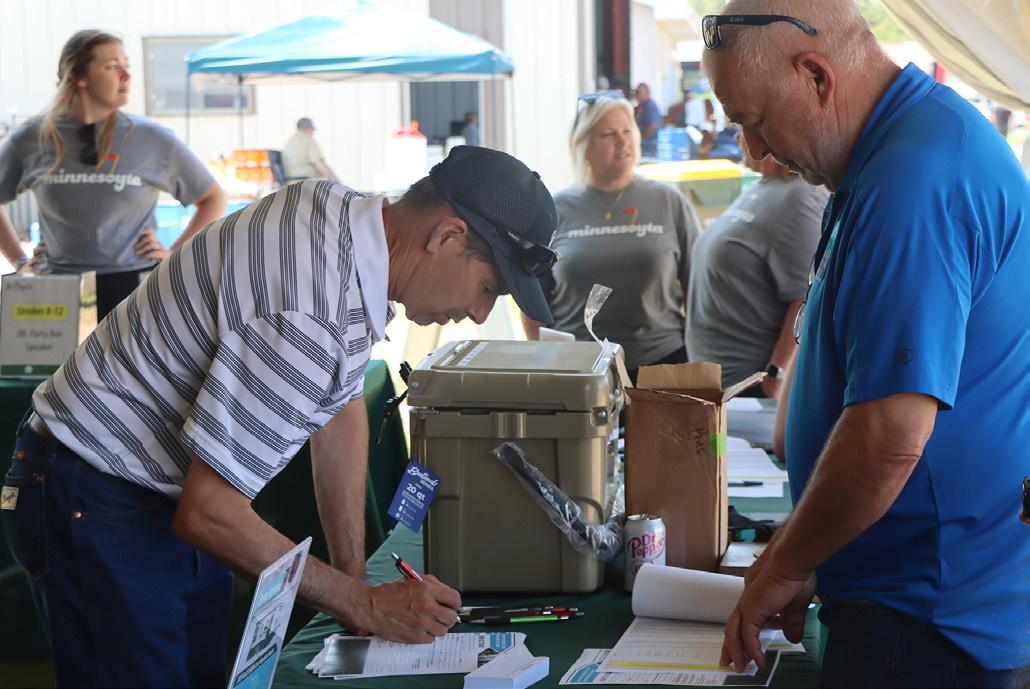

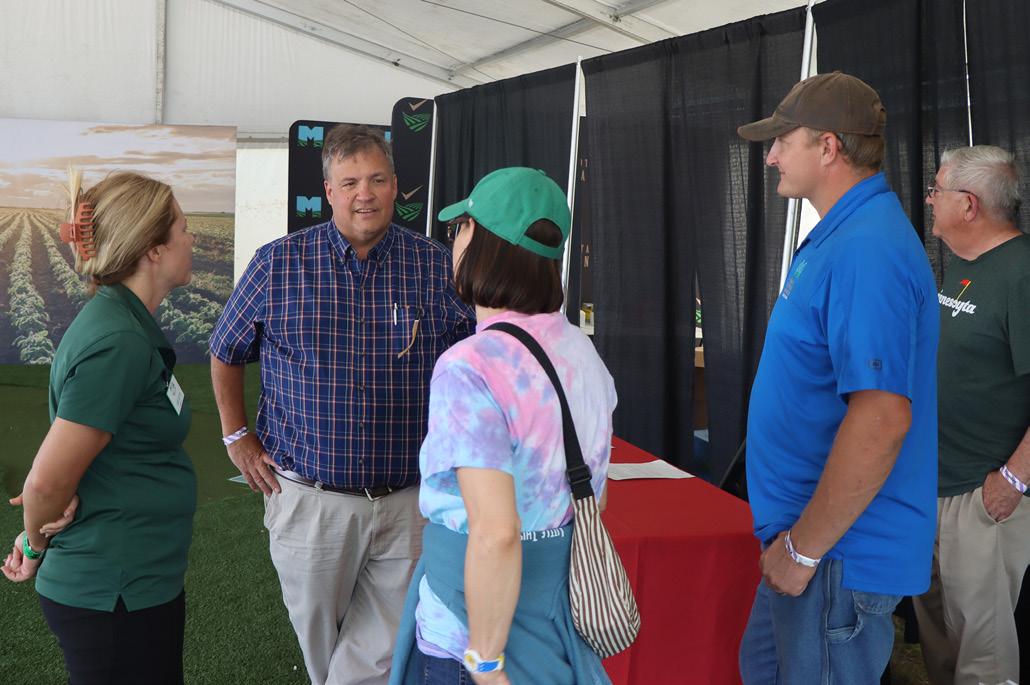
Visit MSGA Aug. 4-6 at Farmfest booth #620 to learn more about our policy priorities, visit with farmer leaders and see why it’s important to become a member. While you’re at Farmfest, be sure to check out the farmers and legislative candidates participating in the policy panels in the Wick Building.
(which expires in 2027), funding increases to food shelves and wolf depredation assistance and resources for the farmer down payment assistance program.
“It’s frustrating to see there was a lack of bipartisanship to get legislation passed that would have meaningful impact to farmers in the face of trade wars and geopolitical tensions,” Smentek said. “While we’re happy to see what was passed, our members wanted to see a longer list of policy accomplishments.”
Bennett said the guidance from MSGA’s officer team, led by Johnson, helped soybean farmers make the most out of an unusual session.
“MSGA, because of Darin and his leadership, has overall been tremendously successful in St. Paul,” he said. “He respected the office, respected the committees and has done a tremendous job advocating on behalf of our farmers.”
With a special session unlikely, the MSGA team will turn its attention to the 2026 campaign season, a frenzy of activity poised to include on-farm visits, meetings and events, highlighted by what promises to be an especially busy Farmfest, which is held Aug. 4-6 in Morton. All 67 members of the Minnesota Senate will be on the ballot this November. In the tied House,
all 134 seats are also up for election. Dozens of state legislators are either retiring or pursuing higher office; the departing legislators on both sides of the aisle, many of whom developed deep ties to MSGA over the years, will leave a big void at the Capitol.
“There will be leaders from both parties that will be sorely missed next session,” Bennett said. “It takes time to replace the institutional knowledge of those individuals, to educate and inform those new legislators once they come in about the farm economy and what farmers are doing.”
The gubernatorial primary to replace Gov. Walz will also be held in August ahead of the Nov. 3 election. On the federal side, candidates are vying this fall to replace Sen. Tina Smith, while all eight of Minnesota congressional districts will also be on the ballot. MSGA will head to Washington, D.C., in mid-July for the American Soybean Association’s summer Hill Visits.
History doesn’t repeat itself, but it does rhyme. Once again, there’s “soy” much at stake this election.
“We’re going to be spending a lot of the summer and fall making sure candidates are aware of the issues facing soybean farmers,” Johnson said. “We’re looking to have good conversations about what we do in farming and how we do it.”
The 2027 legislative session will begin Jan. 12, 2027, in St. Paul.
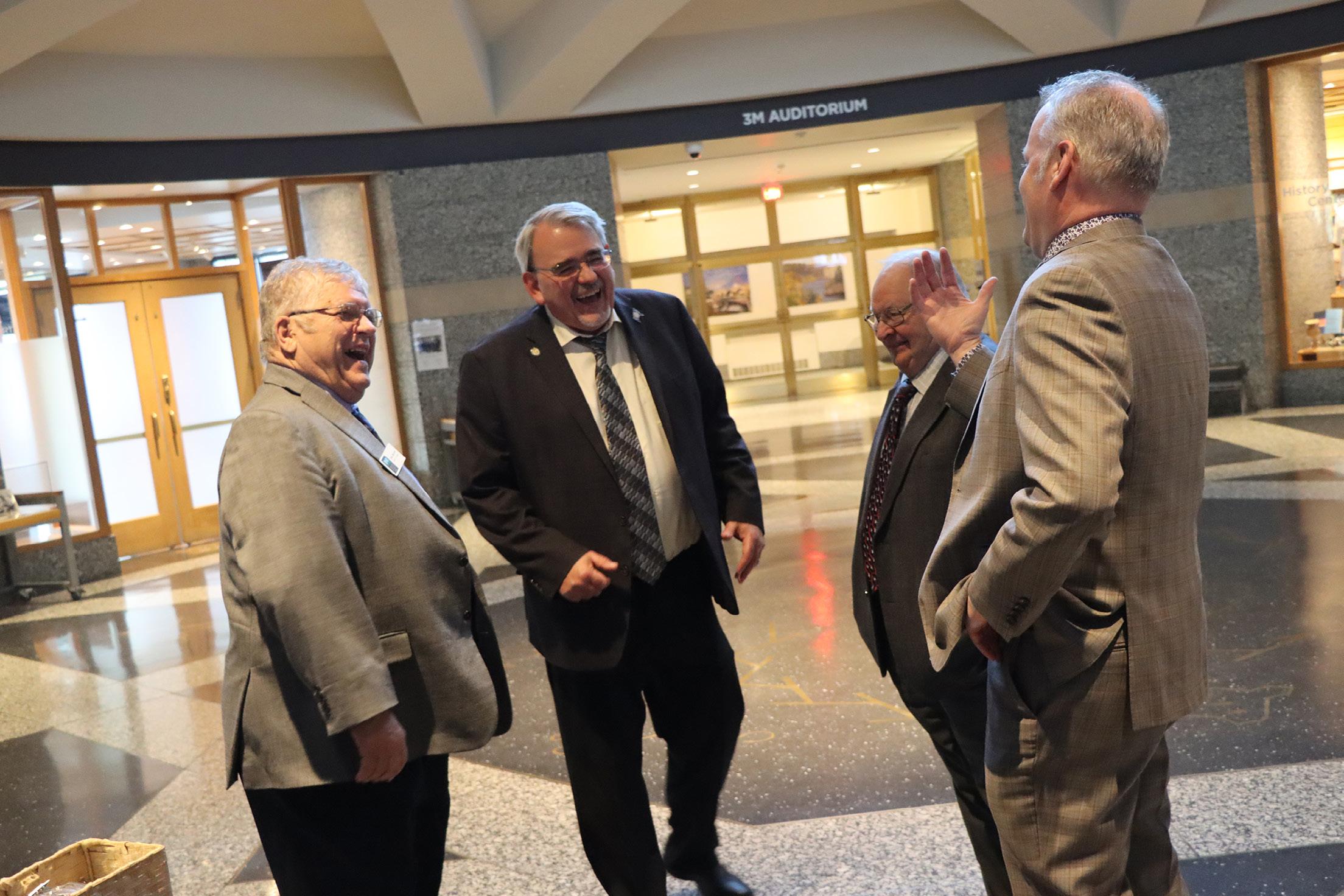
Legislative
are retiring after a combined 30 years of legislative experience. They’re just two of the over three dozen Minnesota legislators who are either retiring or seeking new seats this election season.
By Drew Lyon
The Minnesota Soybean Growers Association is turning to the steady leadership of Brownton’s Ryan Mackenthun to guide the organization as president.
“This group has done so much in the past, and especially recently,” Mackenthun said. “The value that we’ve brought back to our farmers and members through our advocacy efforts is sizable, and I hope to just continue on that path that leads to better profitability and stronger markets for Minnesota soybeans.”
Mackenthun said he’s humbled and energized by his colleagues’ endorsement to lead MSGA into its 65th year of grassroots advocacy in St. Paul and Washington, D.C.
“Serving on the MSGA board has been an invaluable experience. I deeply appreciate the depth, diversity and dedication that exists
on this team, with the directors, the fantastic staff and our lobbying team,” Mackenthun said. “I’m grateful for the opportunity to serve and look forward to what we can accomplish together in the coming year, as well as continue to support and build strong new leaders that can carry MSGA into the future.”
Mackenthun replaces Darin Johnson, who transitions back to director after two years as president, helping to spread MSGA’s message and share its policy priorities to farmers and industry professionals across Minnesota and the globe. Johnson will also continue representing MSGA on the American Soybean Association (ASA) board.
“Darin and I have both grown as leaders together on the officer team, and I know we both enjoy mentoring younger directors just like we were mentored,”
Mackenthun said. “He set a great example for not just MSGA, but our entire industry on how to share our story and build relationships.”
Mackenthun begins his new position equipped with plenty of MSGA institutional knowledge. A member of his McLeod County Corn & Soybean Growers Board, Mackenthun became MSGA’s American Soybean Association Young Leader in 2019-2020. He’s led numerous internal committees dedicated to building markets, research, leadership development, MN Ag Expo and Soybean Business magazine. Mackenthun has served as secretary and treasurer and recently completed two terms as MSGA vice president behind Johnson.
“Darin was a great president, and we appreciate all the work he put in over the past two years,” MSGA Executive Director Joe Smentek
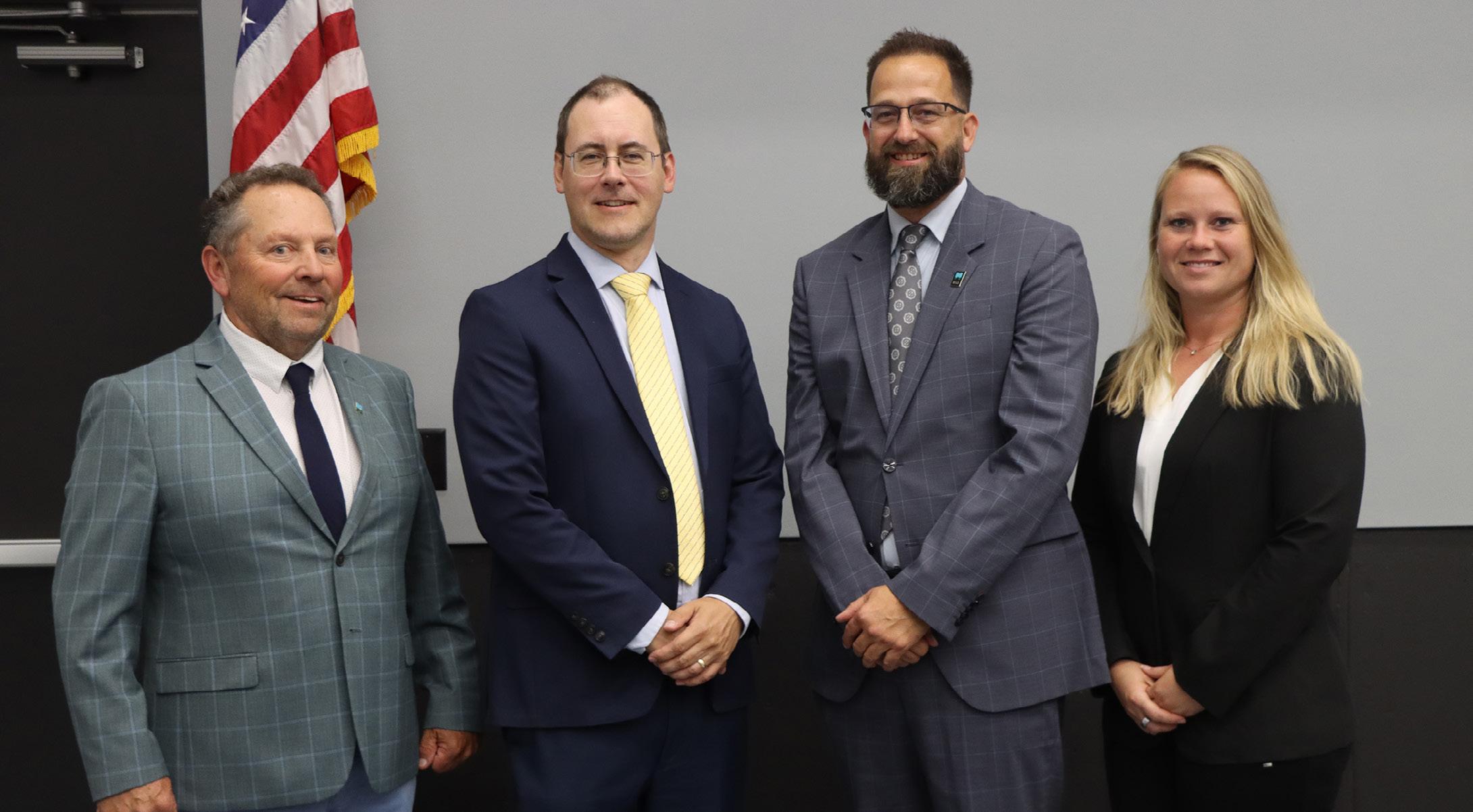
said. “Ryan knows the ins and outs of MSGA and has done his share of interviews and legislative testimony. He’ll do great as president and has a very talented officer team alongside him.”
Mackenthun is a fifth-generation farmer who raises soybeans and corn on 2,200 acres in McLeod County. Ryan and his wife, Tonya, raise three teenaged children and are active in their community.
“It’s an honor to continue building upon the investment MSGA has made in me and to keep representing Minnesota’s soybean farmers at the state, national and international levels,” said Mackenthun, who was also reelected as an MSGA at-large director. “MSGA’s leadership in defending our crop inputs and promoting our practices is impactful and inspiring.”
Mackenthun will be supported in 2026-2027 by a dedicated MSGA officer team, including Vice President Kyle Jore, Treasurer Rose Karau and Secretary Bob Lindeman. Mackenthun will also serve on the board of Ag Management Solutions, which oversees MSGA’s daily operations.
Jore, an ag economist, is primed to grow his visibility within MSGA as vice president.
“I’m expecting we’re going to have a lot of work on our hands,” said Jore, who farms in Thief River Falls and represents MSGA on the Midwest Council on Ag. “The national issues are always going to be there, of course, but we’re going to be laser-focused on the state and making sure we’re protecting the interests of our growers.”
Karau, who farms in St. James and helps oversee MSGA’s Young & Emerging Farmer Workshop, is excited to return as treasurer.
“I value the opportunity to advocate for agriculture, share my experiences as a young female farmer and help encourage and develop the next generation of agricultural leaders,” Karau said. “Serving as treasurer allows me
to continue supporting our industry while representing the voices and perspectives of Minnesota farmers.”
Lindeman, who farms near Mackenthun in Brownton, is beginning his first year on MSGA’s officer team.
“Once I commit to something, I want to do my best,” said Lindeman, who also represents MSGA on the Agricultural Fertilizer Research and Education Council. “And if I have a question, well, I know where Ryan lives.”
Growers and Executive Director
Joe Smentek also met to look ahead to campaign season; discuss MSGA’s continued support for year-round E15; receive federal policy updates; and elect at-large directors and members of MSGA’s Governing Board.
Directors also paid tribute to retiring Directors Keith Nelsen and Joel Schreurs, who retired with nearly 40 combined years of service to MSGA. Lawrence Sukalski also announced his plans to resign from his Martin County director position to focus on his role directing soy checkoff dollars. In his parting remarks, Schreurs encouraged directors who have recently joined the board to pursue further opportunities.
“The younger directors, this is now your time to step up,” Schreurs said. “You get out of it what you put into it.”
Minnesota farmers representing MSGA and ASA return in mid-July to Washington, D.C., to promote pressing federal policies, including preserving the United StatesMexico-Canada Agreement, biofuels and lowering input costs. The MSGA board will gather again in mid-August to discuss the Nov. 3 elections and forecast potential policy challenges and opportunities for 2027.
“We’re anticipating a busy next few months ahead before the elections and next legislative session,” Mackenthun said.

By Drew Lyon
Darin Johnson feared the farm economy might be headed for a rough patch when he was elected president of the Minnesota Soybean Growers Association (MSGA) in summer 2024. Yet his goals were aimed at helping his fellow farmers endure with a positive outlook by the end of his term. And on that front, and many others, Johnson passed the gavel to Ryan Mackenthun knowing he accomplished his main task as MSGA president.
No one who saw Johnson engage with legislators or visit with farmers and media would argue otherwise.
“I don’t have a magic wand. But at the end of the day, we made some good strides forward as an organization,” he said. “We secured some new relationships and also kept old ones moving forward. So, I would call it a huge success, but this success is driven by a team, right? It wouldn’t be attainable without the whole team. I’m
just thankful to have had the opportunity to be able to do something like this.”
In his final weeks as president, Johnson visited MSGA’s headquarters in Mankato to look back on highlights from his two terms and preview his future ambitions.
Editor’s note: This interview has been edited for length and clarity. Johnson built relationships with a bipartisan group of state and federal legislators in both professional and more casual settings, from the Capitol to MSGA’s Farmfest booth. Johnson said he’s come a long way from the nervous advocate who visited one-on-one with the late Congressman Jim Hagedorn a decade ago.
Darin Johnson: One of my really fond memories of this whole thing is interactions with people like Sen. (Aric) Putnam, or Sen. Gary Dahms, and testifying in front of the Ag Committee and giving an update on behalf of all soybean farmers.
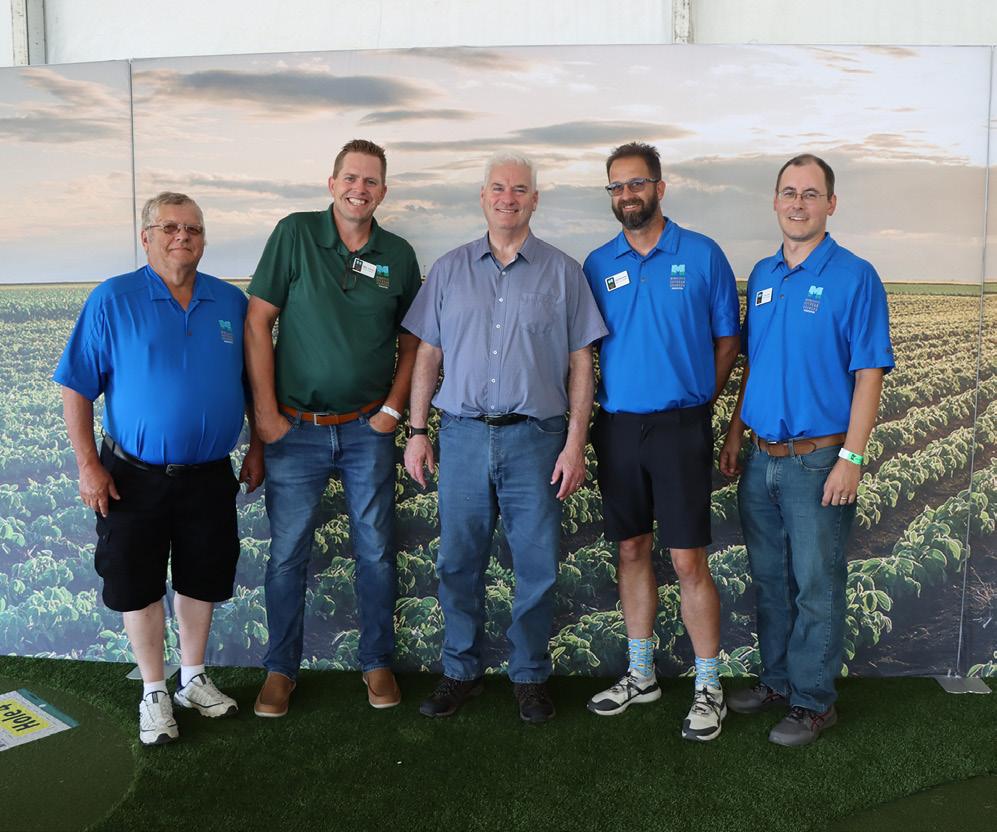
Meeting Rep. Hagedorn all those years ago, I always remember that it kind of made me think like, OK, they’re just normal people, and I’ve never forgotten that. And then you get to know them. And from that point on, he had been out to our farm multiple times then. I think back to that relationship, and how you kind of get to know each other. It’s not necessarily always on a real personal level, but it’s at a level where they actually know who you are and understand a bit more about what farming is all about.
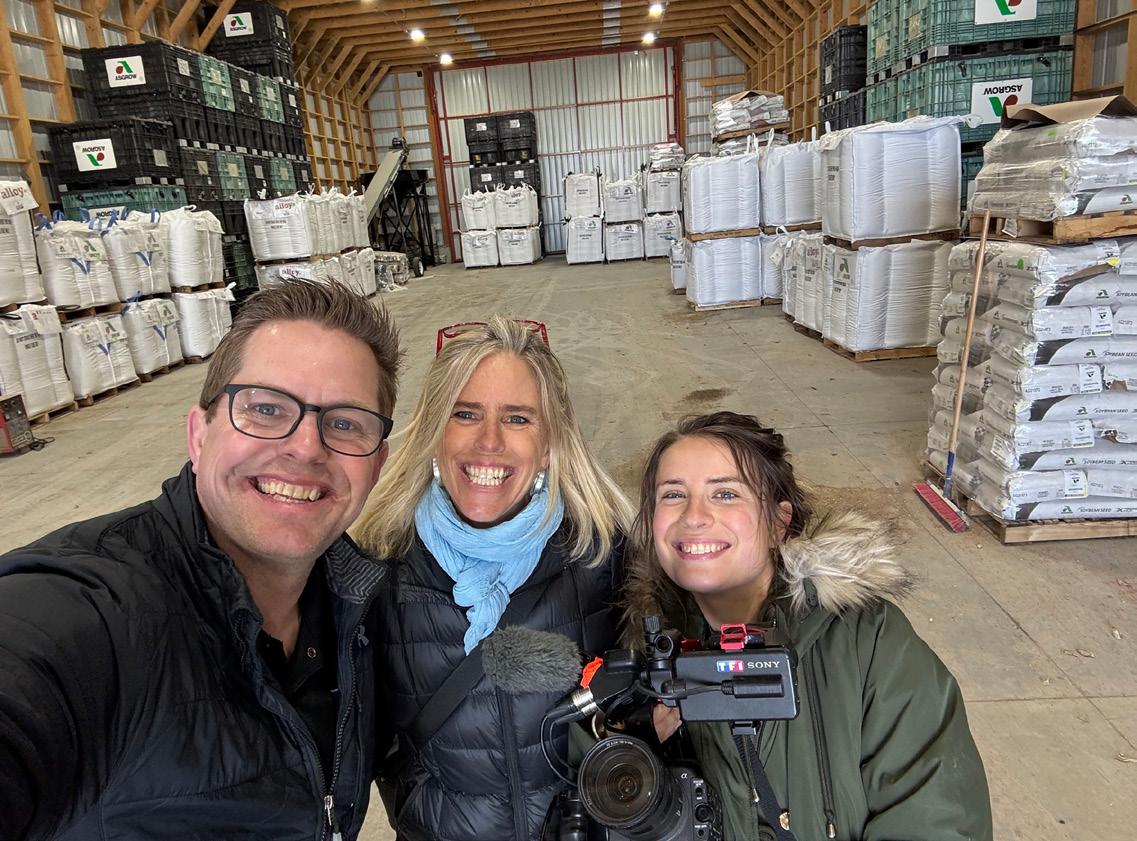
With news of tariffs, trade wars and a down farm economy making headlines around the world, Johnson participated in over 100 interviews with local, state, national and global outlets. Whether live TV or taped interviews, Johnson remained at the ready to deliver MSGA’s messages to both farming and non-farming outlets, including those in France, Germany and China. Tariffs, the importance


of international trade and general uncertainty within the ag economy were the prevailing topics.
DJ: All the interviews I did – that was an incredible experience. I feel very lucky to be able to help tell the story of agriculture. Not necessarily just through my eyes but being the representative for all 26,000 soybean farmers in the state of Minnesota, knowing that there’s people out there who want to learn more about agriculture. So, it was really exciting. There was a lot of middle-of-the-night interviews that I had to prep for. It was really neat to have that opportunity and neat and nerve-wracking all the same. Especially some of the live interviews that I did over the years. I did NewsNation, which was a lot of fun. It’s a lot of fun and it’s good to know that people do want to learn more about agriculture. And we want to make sure that they’re getting the news right, and they’re coming to us as a resource for that, which I think is fantastic. And I think that says something about MSGA as an organization for the amount of media requests that we get as a state. And I think the staff plays a huge role in that as well and the connections that have been made over the years. The media portion of (being president) has been really good.
InNovember2025,Johnsonjoined
MSGAExecutiveDirectorJoeSmentek andagribusinessleadersandGov. TimWalzonatrademissionto visitwithfarmersandbuyersfrom GermanyandSwitzerland.
DJ: What I thought was one of the biggest highlights of that trip is we had the opportunity to meet with the same organizations that they would have representing their farmers. Interestingly enough, a lot of the same topics and issues that we are having are some of the same problems that they are having. It was a lot of great conversations. And it was fun to see how they have their organizations modeled, how it works for them. And just listening to different agricultural practices on the other side of the world.
The EU – these are trade partners of ours, too. I’ve said this a hundred times in a lot of my interviews: Relationships are so important. We’re not always going to align perfectly. Trade deals are not always perfect. But as long as we can always still keep on carrying on the conversation and be able to sit at the same table and have that talk and have that relationship, that’s truly what’s important moving forward.
Over the years, Johnson has seen for himself the seismic growth of MN Ag Expo, a joint venture between MSGA and Minnesota
Corn, both as a fundraising event and meeting space.
MN Ag Expo has been absolutely amazing, how we’ve expanded. It really kept me busy, and I like being busy. It’s so important too, with our resolution process and our annual meeting, being the grassroots organization that we are, it’s a huge part of it, and that’s who we are. This year our resolution meeting was probably one of the best resolution meetings that we have had in a very long time. So that’s exciting to see that. And for me, that’s always good because that’s part of the passion you see from our members.
Johnson cherished not just the policy relationships he built, but the friendships made with his fellow directors and farmers.
DJ: All the farmers that we get to interact with, I feel very lucky to be able to have conversations, but not only conversations but to be able to say that I have some very good friends now, thanks to this position. My first meeting as a director, when I showed up, was pretty green, had been involved with the county level for a very long time. So, I had no idea what I was really getting involved in. And I didn’t know how involved I wanted to be, but that first meeting I had several conversations with a lot of
the directors that were involved in the meeting that day and the amount of information that I pulled from that first meeting, I was like, wow, this is the real deal.
WhileJohnsonmakeswayforRyan MackenthuntoserveasMSGApresident,he’s eagertobeamentorandsoundingboard toemergingdirectors,whilealsoservingon theAmericanSoybeanAssociation,hosting tradeteamsandgettingbacktohislocal rootsthroughtheFaribaultCountyCorn& SoybeanGrowersBoard.
DJ: I truly hope to be able to represent Minnesota well at a national level. I think it’s a good step into that next level. But I still love being involved at a state level too. I don’t see myself ever getting away from that either. One of the great parts of this job is you get to interact with some of the young folks who will be our next upcoming leaders. It’s kind of fun to see them where I was, and I hope that I can inspire them as much as I was inspired by the folks around me.
Intheend,familyalwayscomesfirst.Inhis twoyearsaspresident,Johnsonsawhisson, Aaron,offtocollege;watchedhisdaughter Tyra(whoalsohelpedherdadearnhis pilot’slicense)getmarried;andbecamea grandfatherforthefirsttime.Hecreditshis wife,Rachel,andhisemployeeswithkeeping hisfarmandseedcompanyrollingwhen MSGAactivitieskepthimoccupied.
DJ: My whole family has been so supportive. Rachel works full-time, and, of course, we both work full-time, plus several other duties. She has allowed me to participate in this, and she truly does know how important it is to me and how important agriculture is to me. I’m very blessed and lucky to have that support team. Without them picking up some slack for me, I would have never been able to do this, and we have a great team on our farm, too. I would have never been able to do what I have done in the last couple of years without that team back home. You’re only as good as the people that you surround yourself with, and I’m surrounded by fantastic family, fantastic employees and then the directors and staff are second to none. Everybody has made this job very easy. It’s flowed very nicely, and I’m grateful for the memories.

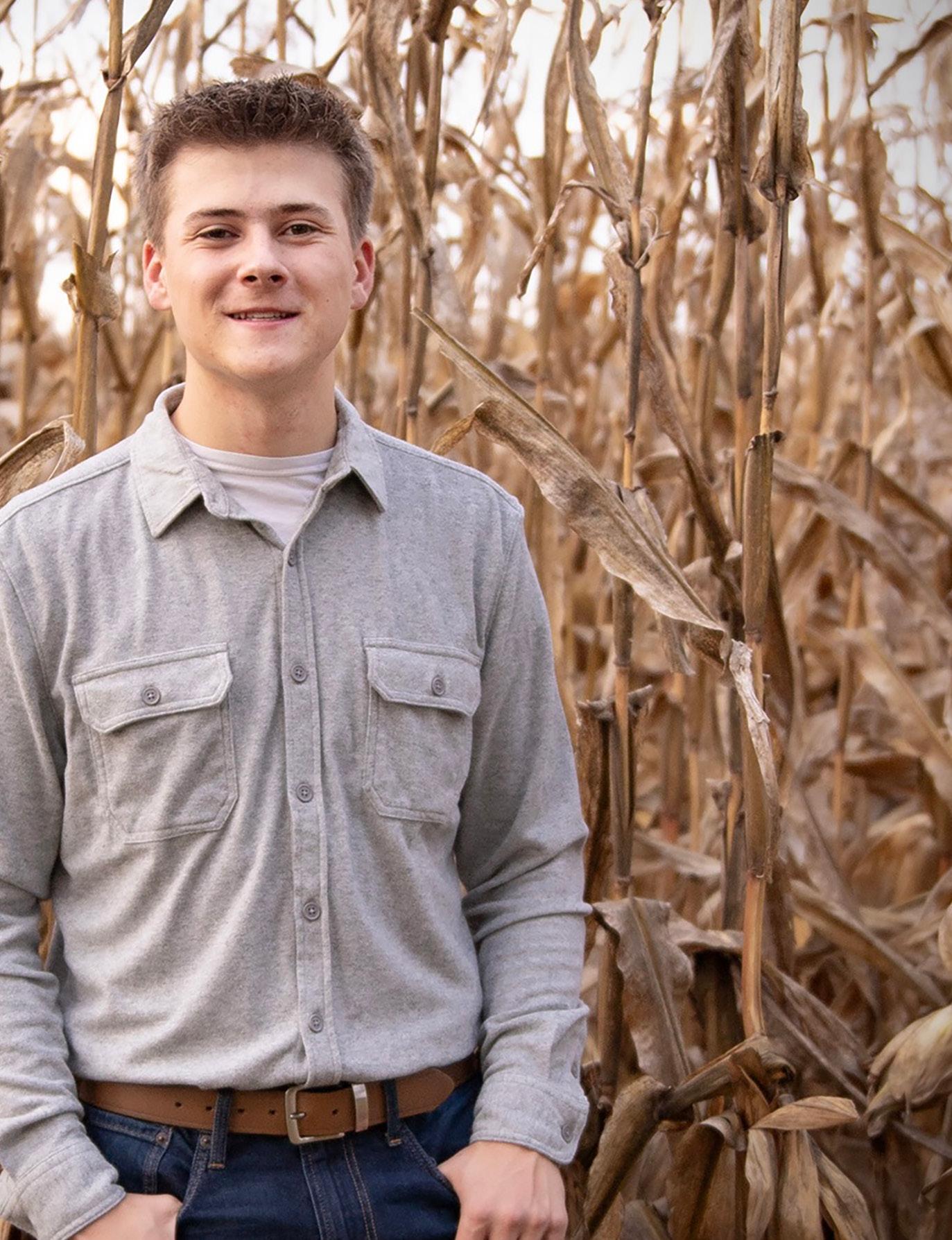


By Drew Lyon





For Luke McCrea, no news probably meant not-so-great news.

Late in 2025, the Faribault high school senior created a spreadsheet outlining potential college scholarships, especially ag-related scholarships. One of McCrea’s first applications was sent to the American Soybean Association, in partnership with BASF, for the Soy Scholarship. The scholarship winner is selected by a committee that provides $7,000 to one high school senior planning to pursue an agriculture degree during the 2026-2027 academic year. The award is eligible for children and grandchildren of active state soybean association/ASA members. McCrea qualified: His grandfather, Richard Holtman, is a member of the Missouri Soybean Association and ASA.
McCrea figured his odds were long but applied anyway. Then the waiting game began.
“I didn’t hear back for a long time, and some other scholarships had come through, and I was just counting on maybe that I didn’t get it,” McCrea said in a phone interview between classes just a few days before graduating from Bethlehem Academy.
A call finally arrived this spring from ASA Industry Relations Manager Farris Haley, informing McCrea that, indeed, he had earned the 2026-27 Soy Scholarship.
“It was kind of a surreal experience,” McCrea later told RFD-TV. “I saw the area code and thought, ‘Is this a spam call?’ … It was a huge deal for me at that moment.”
The average age of a U.S. farmer is nearly 60 years old. The high school students of today are primed to lead tomorrow’s agriculture industry.
Enter Luke McCrea’s generation.
“ASA is proud to partner with BASF in supporting initiatives that equip and inspire the next generation of agricultural leaders,” said ASA President Scott Metzger, a farmer from Williamsport, Ohio. “By investing in promising individuals like Luke, we are helping cultivate a strong, innovative future for agriculture.”
McCrea is heading to Iowa State later this summer and plans to major in agriculture studies, with a communications emphasis. Because Minnesota and Iowa colleges don’t have reciprocity, the Soy Scholarship will go a long way toward helping fund his higher education.
“It’s a very good scholarship and I’m grateful to ASA and BASF and everyone who is able to make it possible,” he said.
McCrea is keen on telling agriculture’s story — as a young farmer, student, writer, advocate and behind the scenes player
in video production. But he also showed poise and articulation far beyond his years in front of the camera during his first national interview on RFD-TV. Not surprisingly, Luke’s dad, Andrew McCrea, is a longtime farm broadcaster and farmer leader.
“I like to be more behind the camera and being able to find other people’s stories and be able to share them,” he said.
McCrea isn’t a native Minnesotan. Yet since moving to Minnesota from his northwest Missouri family farm during the COVID-19 pandemic as a seventh grader, he’s fully immersed himself in the North Star State.
He still visits the family operation in Missouri throughout the year — it’s only a five-hour drive — where Luke and his family rotate soybeans and corn and raise beef cattle. But most of his time is spent in his new home state. When he’s
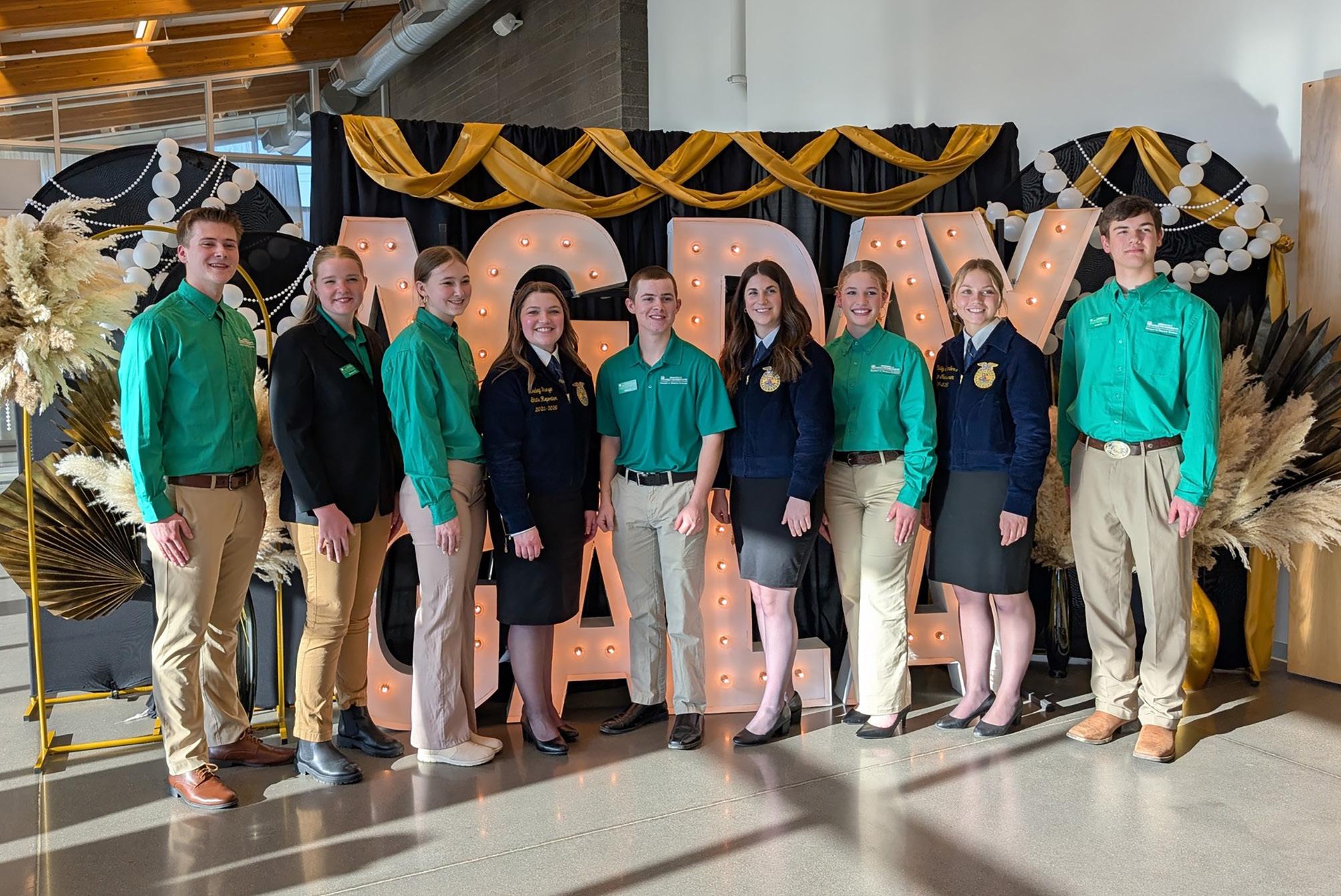
not involved in school activities (including a position on B.A.’s baseball team), McCrea is already making a name for himself in the state’s agriculture industry.
“Being in FFA and 4-H, I’m very familiar with agriculture in Minnesota. I’m definitely an advocate now for Minnesota agriculture,” he said. “So even though I come from Missouri and that’s where the family farm is, I’ve definitely taken hold here and definitely both places have played a major part in my life, and I really consider both kind of my home.”
McCrea has been involved with FFA and 4-H since moving to Minnesota in 2020; he also earned a position in the National FFA Band. He helped grow his FFA chapter from 15 members to over 50 members by his senior year.
After becoming regional president, McCrea was elected Minnesota FFA State president in April 2026.
“It’s a really exciting thing,” he said. “FFA has really shaped me into who I am, from going from a shy seventh grader who moved here during COVID to the person I am now, who’s a lot more comfortable being able to work with others, give speeches, present workshops. FFA has played a major role in that. I have the opportunity to be able to give back and to be able to help others have those experiences.”
McCrea said he’s also looking forward to growing his connection with Minnesota Soybean. On the policy side, he hopes to meet with the Minnesota Soybean Growers Association this summer to receive his award and learn more about MSGA activities. He’s also involved in the
American Legion Minnesota Boys State, which is focused on teaching the intricacies of U.S. government and politics through hands-on learning.
And at this year’s Farmfest, he plans to learn more about leadership opportunities and soy checkoff initiatives through the Minnesota Soybean Research & Promotion Council. Before heading to college, McCrea is also spending his summer attending various camps, including one to Wyoming FFA’s chapter, along with a July visit to Washington, D.C., with FFA officers.
Staying busy as a farmer advocate means nothing but good news for Luke McCrea.
“Being FFA president is a dream come true, for sure the biggest thing I have and probably will have done for a long time in my life,” he said. “I’m super excited.”
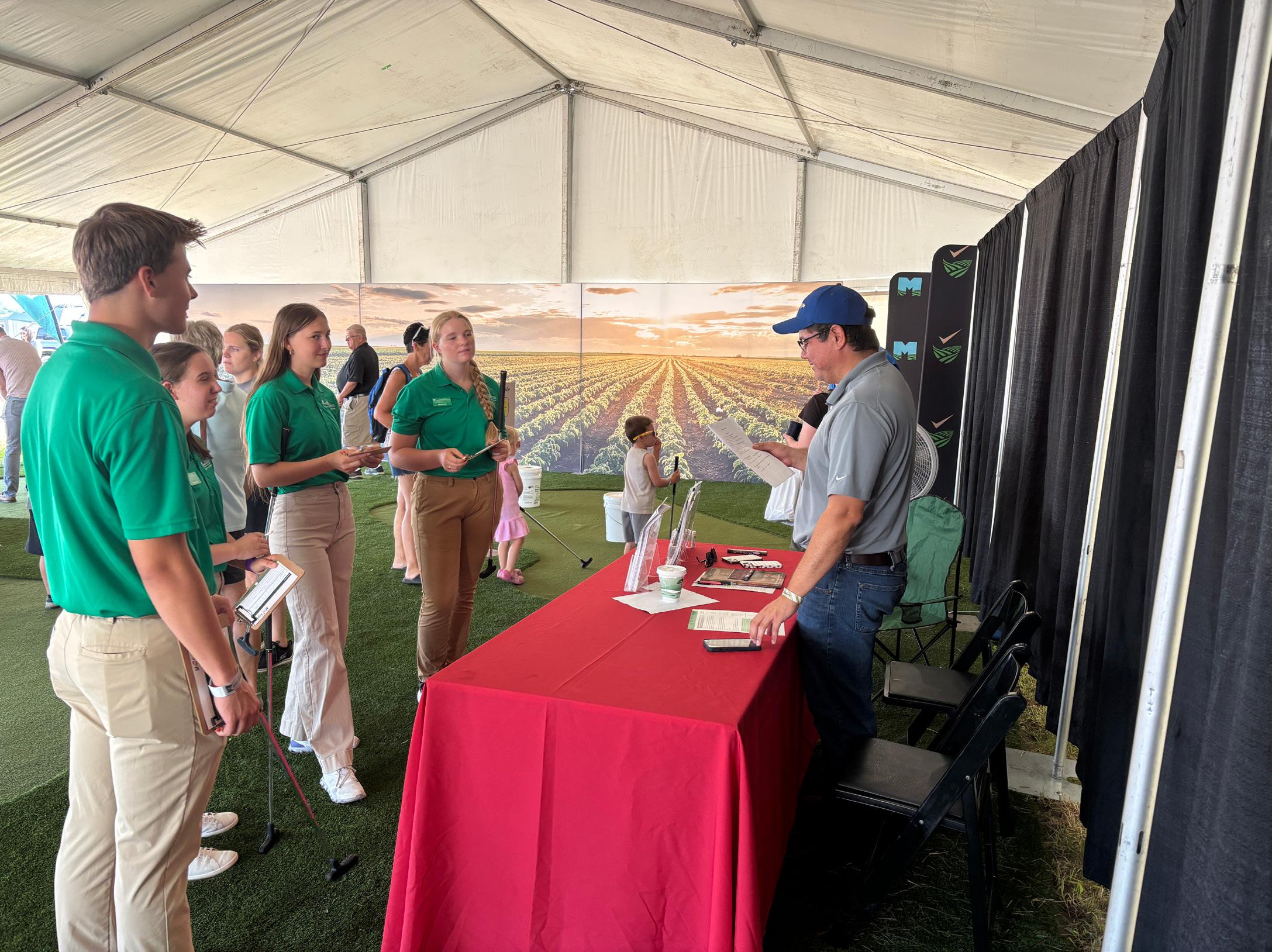








By Drew Lyon

will win free lemonade and pretzel vouchers for A Good Lemon (see page 23); soy-themed stickers and buttons will also be issued to those perusing State of Soy. The Council is also a proud sponsor of Farmfest’s Woman of the Year Award. The winner will be announced on Thursday, Aug. 6.
Minnesota Soybean is returning to the Farmfest grounds Aug. 4-6 at the Gilfillan Estate in Morton to raise the banner and stake its claim as the State of Soy.
“Minnesota, of course, has a deep connection to farming, and soybeans play a huge part in our agriculture industry, from providing jobs to driving on-farm revenue and improving our environment,” said Gail Donkers, chair of the Minnesota Soybean Research & Promotion Council. “For our industry, Farmfest is the place to be every summer.”
The Minnesota Soybean Research & Promotion Council will continue its hockey theme from MN Ag Expo, this time bringing it outdoors to Farmfest in booth #620. Farmfest attendees can shoot their way toward learning about soy checkoff investments in research, value-added uses and building markets. Attendees who hit their mark
“We’re excited to return to Farmfest and support the farming community and continue to promote the ways that the soy checkoff is driving demand for Minnesota’s economy,” said Council Secretary Pat Sullivan, who farms down the road from Morton in Franklin, Minnesota.
“It’s always fun to see new and familiar faces in our booth and talk about all the ways we’re working for our farmers.”
With the entire Minnesota Legislature on the ballot, along with federal midterm elections, the Minnesota Soybean Growers Association expects a heavy policy presence in its booth. Numerous MSGA directors will be stationed in the booth throughout Farmfest to meet with legislative candidates and regulatory agencies to promote MSGA’s state and national priorities and underscore the issues affecting Minnesota soybean farmers. Farmers are also encouraged to visit MSGA’s membership table to learn how and why it pays to join the nation’s longest-running state soybean group. In addition, three-year members who join at Farmfest will receive a free MSGA-branded windbreaker. MSGA is also offering a $5 discount to renewing one-year members.
“Farmfest is a special venue to engage with legislative candidates in a more informal setting. We have many races on the ballot at the state and federal levels this fall, so we’re prepping for an extremely busy Farmfest,” said Ryan Mackenthun, who will be attending his first Farmfest since becoming MSGA president. “And there will be no shortage of issues for us to discuss: protecting crop inputs, biofuels and ensuring the next generation of producers has the tools to succeed.”




By Drew Lyon

The year 2026 is set up to be one to remember for Alex Lessman. After being involved in livestock for much of his life, Lessman is in his first growing season taking over his grandfather’s row-crop farm in south Minneota, rotating corn and soybeans while also raising meat goats and helping a friend farrow pigs.
“I’ve been patiently waiting for the opportunity, and now it’s here,” Lessman said just a few days before Memorial Day. “I’m excited to take it over. The crop is coming up, and the family and I have been picking rocks. We’re looking forward to a great summer.”
Of course, like any farmer knows, making memories in the summer in Minnesota agriculture means an annual pilgrimage to Farmfest, held Aug. 4-6 in Morton. Lessman is attending as a farmer and, for the second year in a row, as owner/operator of A Good Lemon, a mom-and-pop lemonade and pretzel food trailer run by Alex and his wife, Deanna.
A Good Lemon is collaborating with the Minnesota Soybean Research & Promotion Council at Farmfest. Every attendee who wins one of the MSR&PC’s “State of Soy” games in booth #620 will receive a free voucher for lemonade and pretzels at A Good Lemon’s trailer (located at C428) during Farmfest.
“I’ve enjoyed learning about turf and all the soy-

based products and the cool things that are being made out of soybeans,” Lessman said. “We appreciate their support, and I’m looking forward to partnering with Minnesota Soybean.”
A Good Lemon was founded by the Lessmans in part to pay tribute to their three-year old son Lincoln, who died in 2023 from a skid loader accident. The Lessmans created a scholarship in Lincoln’s name to support the Minneota FFA. All proceeds from their pretzel sales help fund the Lincoln Lessman Ag Scholarship, which benefits local high school students pursuing professions in agriculture. To date, A Good Lemon pretzels have helped raise more than $6,000 in scholarships over the past several years.
“Lincoln always loved being outside with animals. We knew he would be in agriculture, 100%,” Alex said. “Our kids (Lincoln’s twin brother Logan and older sister Lucy) are just getting into agriculture, and we knew he’d be right there with him. We thought it’d be great to honor his legacy with the scholarship.”
Alex said A Good Lemon’s pretzels are modeled after his mom’s recipe. Lincoln loved his grandmother’s pretzels, Alex said. When others grabbed them by the handful, Lincoln would take the whole container of pretzels for himself.
“I thought, gosh, that would be a good fit for our lemonade stand — these Lincoln pretzels,” he said.
A Good Lemon’s entire operation is DIY. Alex remodeled the stock trailer, installing stainless tables, wash sinks, plumbing and wiring. He and Deanna work the trailer together at events across southern Minnesota, including farmers markets, graduation parties, county fairs and more.
“It’s our designated time to spend together,” Alex said. “We make a pretty good team. It’s enjoyable, and we hope to bring the freshest and best products to every customer.”
By providing customers with refreshing lemonade, Alex also feels tied to his grandfather, who tended bar.
“I feel the connection that he had when he served,” he said. “It’s really neat to see the people you come across.”
To learn more about A Good Lemon, visit their Facebook page or call 507-829-2432.
Japanese Emperor Shōwa
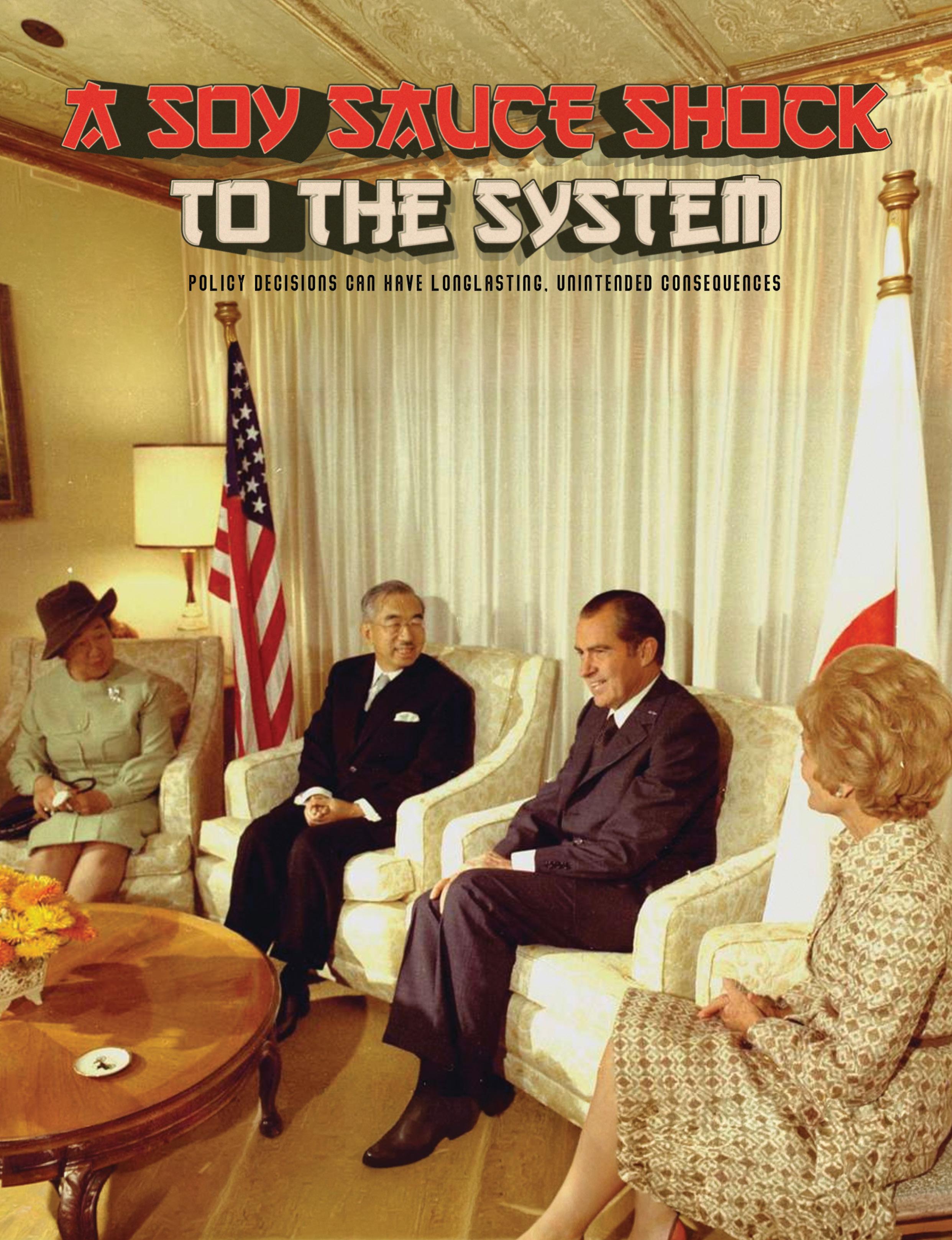
and Empress Kōjun
meet President Richard Nixon and Mrs. Nixon at Anchorage International Airport on their way to Europe on Sept. 26, 1971. It marked the first ever face-to-face meeting of the two countries’ heads of state.
By Joe Smentek
During a meeting with Minnesota Soybean Growers Association grower leaders and industry colleagues this spring at the American Soybean Association’s board meetings and Hill Visits in Washington, D.C., a speaker made an offhand comment: “… and, of course, we all know the role President Nixon had in growing soybeans in Brazil.”
Well, in a room of folks who were not President Nixon scholars, that was an assumption the speaker was not safe in making. The comment sent me on a research trail that seemed to raise more questions than it answered. As a student of history, I knew a visit to the Library of Congress in
downtown D.C. would serve as a good first step.
I quickly found articles about “Shoyo Shokku,” (aka “soy sauce shock”) embargoes, Nixon, USDA Secretary Earl Butz and the consequential 1970s. I had heard repeatedly from former Secretary of Agriculture Tom Vilsack of the consequences of the “get big or get out” mindset of Secretary Butz. Born and raised on an Indiana dairy farm, Secretary Butz attended Purdue University and worked his way up to the Secretary position. He served as an assistant secretary under President Eisenhower.
A decade later, in 1971, he was appointed USDA secretary under President Richard Nixon.
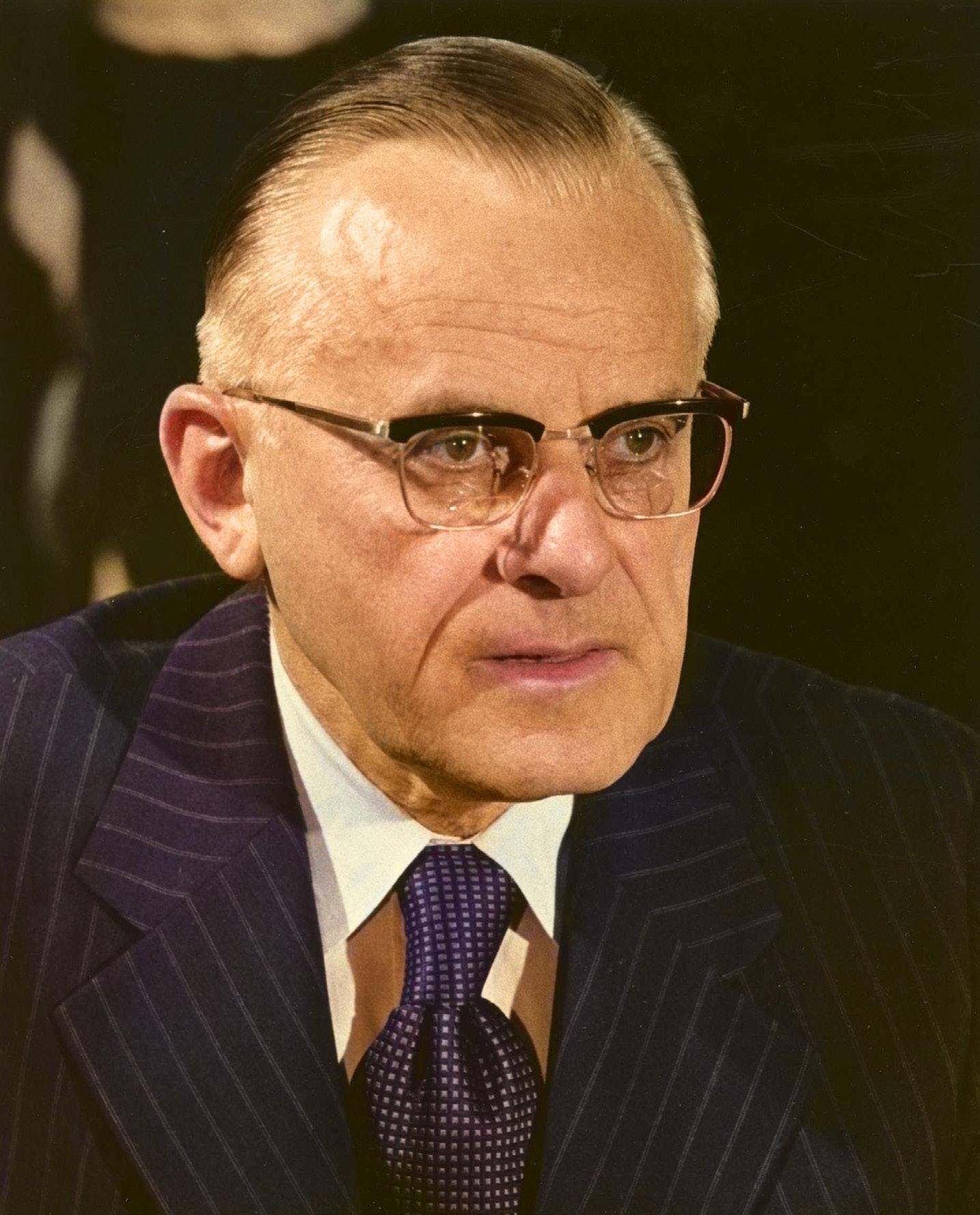
In the early 1970s, food prices were high enough to actually put political heat on officials. Set aside programs, disastrous harvests in the Soviet Union and an El Niño event all play a part in this story. The Soviet Union harvest led to a U.S. grains deal that was a fiasco in and of itself that probably deserves its own investigation and article in a future issue of Soybean Business. The Soviets were able to negotiate a deal in 1972 where they agreed to a three-year grain purchase in which they bought the entire threeyear amount at a low 1972 price.
The El Niño devastated the anchovy population off the coast of Peru. This event drastically lowered the anchovy harvest and greatly reduced the fish meal available to animal agriculture. Fish meal being the largest competitor of soymeal in animal rations, this sent soy prices rising: By May 1973, July soybean contract prices skyrocketed from $3.27 to nearly $9. This allowed the Soviets who purchased at the 1972 price to make huge profits reselling that grain at 1973 prices. It also placed severe pressures on animal agriculture in the U.S. and the meat supply as meal costs jumped to highs never seen before.
In June 1973, USDA Secretary Butz sent a letter that would change worldwide soybean production. In the letter to Secretary of Commerce Frederick Dent, Butz wrote, “I have determined that the supply of such commodities is not adequate to meet the requirements of the domestic economy until new crop soybeans become available.”
The response from Secretary Dent came quickly. That same day he imposed an embargo on the export of soybeans and cotton seeds. The action was done pursuant to the Export Administration Act of 1969 and approved by Secretary Butz.
The move, designed to prevent food shortages and hold down prices, was driven by the low
supply of soybeans and cottonseed meal. Products not actively being loaded aboard a ship were blocked from export. The New York Times reported that “…farmers are destroying chickens and selling breeding sows because their cost of feed has risen to a point where they will lose money on the sale of the fed animals.” The controls were set to last until the new soybean crop became available in the fall.
Just a few days later, on July 7, 1973, the New York Times reported again on the move. This time from the perspective of an ally and major U.S. soybean importer, Japan. “We are really angry at Nixon-San.” This quote from Hiroshi Higashimori, secretary general for the Japan Oilseed Processors Association, conveyed the emotions that were shared from top Japanese government officials down to the country’s consumers. This latest embargo of soybeans was another blow against U.S.Japan relations.
Ripple effects
Nixon’s decoupling of the dollar from gold upsetting the exchange
rate regime at the time was known in Japan as “Nixon Shokku.” Nixon’s shock of Japan was compounded by his beginning of relations with Japan’s longtime rival, China. Nixon’s visit to China had upset many Japanese officials. These two events were then followed by this “Shoyu Shokku.” The Soy Shock had huge ramifications to Japan. During multiple visits to the region, I’ve seen, and appreciated, how soy foods are a huge part of the Japanese diet and culture. At the time of the embargo, over 90% of the 3 million tons of soybeans consumed by the Japanese were imported from the U.S. Japan, who had already questioned the reliance on one soy supplier, had had enough. This “Shokku” led them on a 21year aid program in Brazil. With limited agricultural land at home, Japan looked to the Cerrados area of Brazil to make strategic investments to improve farming operations in Brazil, to finance new varieties and to help develop pest management systems for the country. Brazil, in turn, invested in roads and other export
infrastructure in the area.
In 1970, the U.S. was responsible for 75% of the world’s soybean production. Today, some 50 years later, although U.S. production has grown to over 4 billion bushels yearly, it has been eclipsed by production in South America. This may have happened without Secretary Butz, an El Nino and the “Shoyu Shokku.” China’s development, worldwide meat consumption and other factors have all played their part. However, it is pretty clear that this shock to Japan’s system started a two-decade investment in our current biggest competitor in the world soy market.
This history is important to know and consider as we look at present-day discussions on supply and demand. It also highlights the complexity and interconnectedness of the global food system where a harvest halfway around the world, and a tiny fish impacted by the weather can send ripples that are still felt today.
Joe Smentek has served as executive director of the Minnesota Soybean Growers Association since 2018. He can be reached at jsmentek@mnsoybean.com.

Joe Smentek (back middle) visits Japan in 2023 with a Minnesota agricultural business development delegation. Japan continues to be a top market for U.S. soybeans, purchasing over $1 billion in whole soybeans in 2024/2025.
By Sydney Harris Soo-eee! Soo-eee! Soo-eee!
The dinner bell has sounded, and Minnesota-grown soy is on the menu.
In April 2026, the U.S. Meat Export Federation (USMEF) released export numbers emphasizing pork’s prominent role in Minnesota soybean demand, noting that pork exports accounted for 8.6 million bushels of Minnesota soybean usage in 2025.
“To get to market weight, every pig consumes about 675 pounds of feed and, of that, about 150 pounds is soybean meal,” said Rochelle Krusemark, who farms near Sherburn and represents the Minnesota Soybean Research & Promotion Council (MSR&PC) on USMEF. “Minnesota produces nearly 17 million pigs a year, so if you do the math, that’s a lot of soybean meal.”
A nonprofit trade association that works to create new opportunities and develop existing international markets for U.S. beef, pork and lamb, USMEF is a collaboration of nine distinct segments of American agriculture, joining together to implement successful marketing programs for U.S. meat around the world. In 2025, the market value of U.S. pork exports to soybeans was 98.76 million bushels for $1 billion market value, making MSR&PC’s longstanding checkoff support of USMEF a no-brainer.
“The soybean industry provides critical support for USMEF’s efforts to expand global demand for U.S. pork,” said USMEF Senior Vice President of Industry Relations John Hinners. “This study helps quantify the return on that investment.”
Pork exports bring home the bacon for Minnesota soybean growers. Last year, pork exports contributed 10.3 percent of bushel value, equating to $1.05, based on the $10.17 average per bushel price. 29.6 percent of U.S. pork and pork variety meat production was exported in 2025, highlighting the critical role USMEF plays in the pork industry.
“It’s important for the soybean checkoff to continue funding feed and meat quality trials because soybean meal is the primary source of essential amino acids,” Krusemark said. “In order to keep a healthy pig and maintain a good growth rate, pigs, just like people, need a balanced diet.”
Minnesota has more than 3,000 pig farms, ranking the state as second in the number of pigs raised in the U.S. Many soybean farmers are also pig farmers, making the partnership between USMEF and MSR&PC a key ingredient in the state’s ag economy.
Krusemark, who farms in Martin County, one of the nation’s top pork-producing counties, says growing demand for Minnesota soybeans continues to be top of mind for both USMEF and MSR&PC.
“We’re (USMEF) doing a better job of collaborating and securing more exports,” Krusemark said. “That’s great news for soybean farmers and livestock producers.”

USMEF is celebrating its 50th anniversary in 2026. Learn more about USMEF projects and priorities at usmef.org.

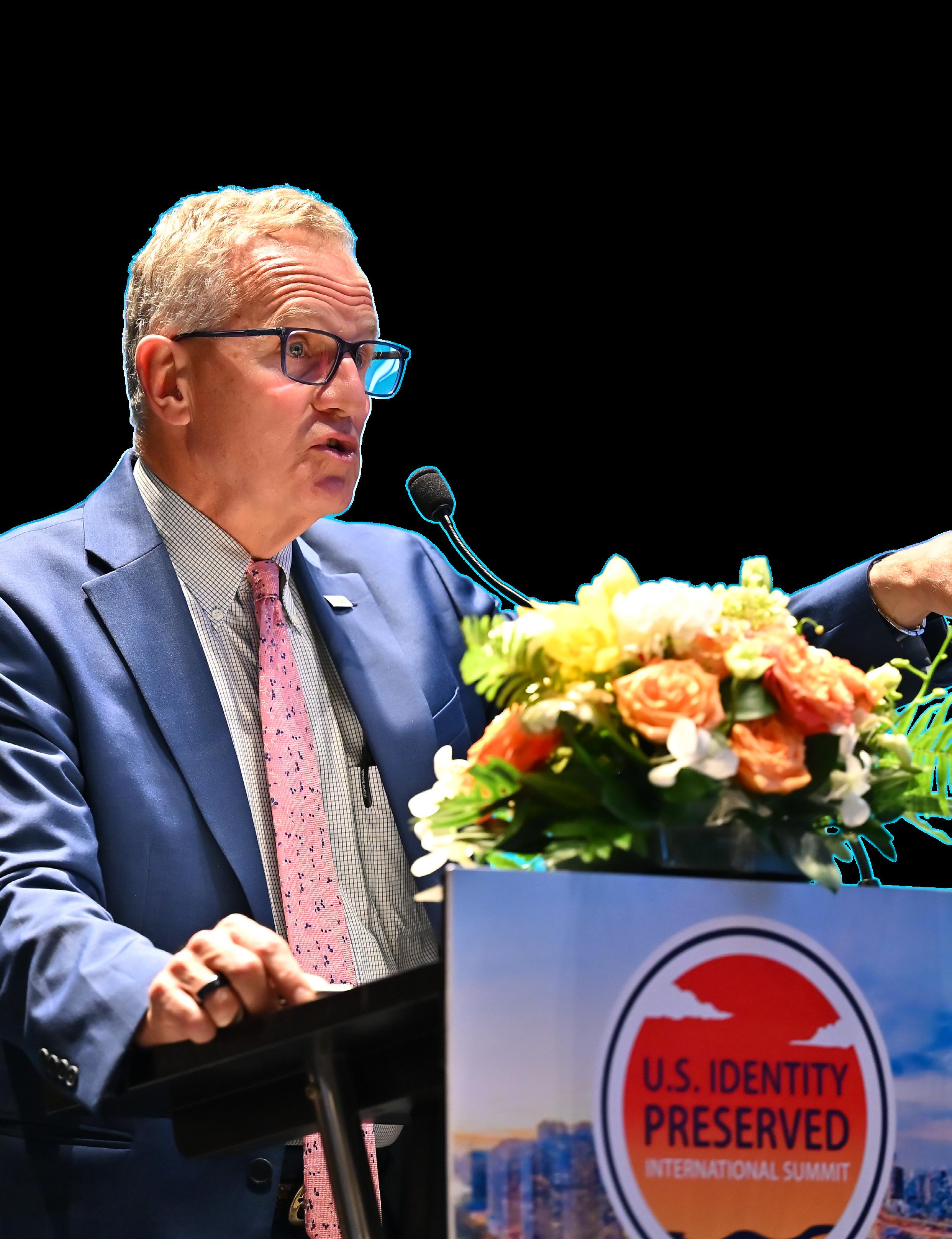

Rampant negativity might generate news headlines, clicks and spark debate, but Jim Sutter, longtime CEO of the U.S. Soybean Export Council (USSEC), prefers to channel his energy toward optimism.
As a self-described global citizen, Sutter works both behind the scenes and out front to elevate the U.S. Soy brand around the world. He speaks with authority, conviction and — above all else — positivity when discussing the short and long-term outlooks for U.S. soybean exports.
“In 2026, I think it’s a shame that there are so many people that are so pessimistic,” Sutter said. “As I look around the world — I have the opportunity to go to quite a few different places throughout the year — I don’t find anywhere where there isn’t demand growth, whether I am in Pakistan, Saudi Arabia, Vietnam.”
Sutter, who was raised on a Colorado crop and cattle farm, sees opportunities for U.S. soy farmers wherever his travels take him. Egypt, Indonesia and Bangladesh are just a few of the global markets that bode well for U.S. soy exports.
“Every one of those countries is talking about growth, growth, growth,” he said. “Buyers around the world appreciate the quality of U.S. Soy, so I think our farmers should be optimistic because they do a great job of producing a quality crop. We see it in a country like Egypt, where they
really prefer U.S. Soy and put their money where their mouth is and buy U.S. Soy, even if other origins are cheaper.”
USSEC celebrated its 20th anniversary in 2025 and continues to collaborate with the American Soybean Association, United Soybean Board and qualified state soybean boards, including the Minnesota Soybean Research & Promotion Council (MSR&PC), and over 100 members to establish, strengthen and sustain connection that link the U.S. Soy supply chain to global markets.
USSEC has boots on the ground in four distinct regions across the globe, spanning the Americas and Europe; Sub-Saharan Africa; the Middle East, North Africa and South Asia; and East Asia.
“Our three strategic goals are to make sure we have market access, attain market access, differentiate U.S. Soy, so people understand the difference and then to build a preference for U.S. Soy,” Sutter said. “Our team around the world does a pretty good job doing that, and I think that’s what farmers want us to be doing. And that adds value back to their farms, because if somehow we can figure out what makes a difference in those importing countries and then work with them on that and demonstrate to them that our great farmers here in the U.S. are producing the right quality or the right sustainability or whatever it is they want, then it adds value for our farmers.”
China’s imports of U.S. Soy dipped about 25% in marketing year 2024/2025 from over $13 billion in purchases in 2023/2024 to $9.89 billion. While Sutter is encouraged by China’s pledge to resume purchasing 25 mmt in each of the next two years, he also understands that market diversification is critical to growing demand for U.S. Soy in the years ahead. In 2024/2025, U.S. Soy global exports totaled 51 million metric tons, a 9% increase from 2023/2024.
“I’m glad that we’re getting back on track with China,” he said. “I want us to have some (market) share with China, because they’re the biggest market in the world, but not too much, because it is so subject to political issues. … We want our exports going to a whole bunch of destinations — beans and meal.”
Minnesota soybean farmers rely on exports to drive profitability. Over 50% of the state’s soybean crop is sent to markets across the world, including neighbors in Canada and Mexico, all the way to the largest purchaser of Minnesota
soybeans, China. Soybeans are Minnesota’s top agricultural export, accounting for over $2 billion in value each year. Sutter understands Minnesota’s contributions to global agriculture: Earlier in his career, he lived in Maple Grove and worked in Cargill’s grains and oilseeds division.
“Minnesota Soy has always been a really big supporter of international markets, and I think they recognize that you need diversified markets,” Sutter said. “The farmers we work with are great and I have known (MSR&PC CEO) Tom (Slunecka) and (Minnesota Soybean Growers Association Executive Director) Joe Smentek for a long time and appreciate their partnership.”
The Minnesota Department of Agriculture, which recently opened its first trade office in Taiwan, thanks to checkoff support from MSR&PC, is also a USSEC member. The Council also continues to invest checkoff resources in USSEC’s efforts to promote U.S. soybeans across the world.
“To me, that signifies how important the state of Minnesota
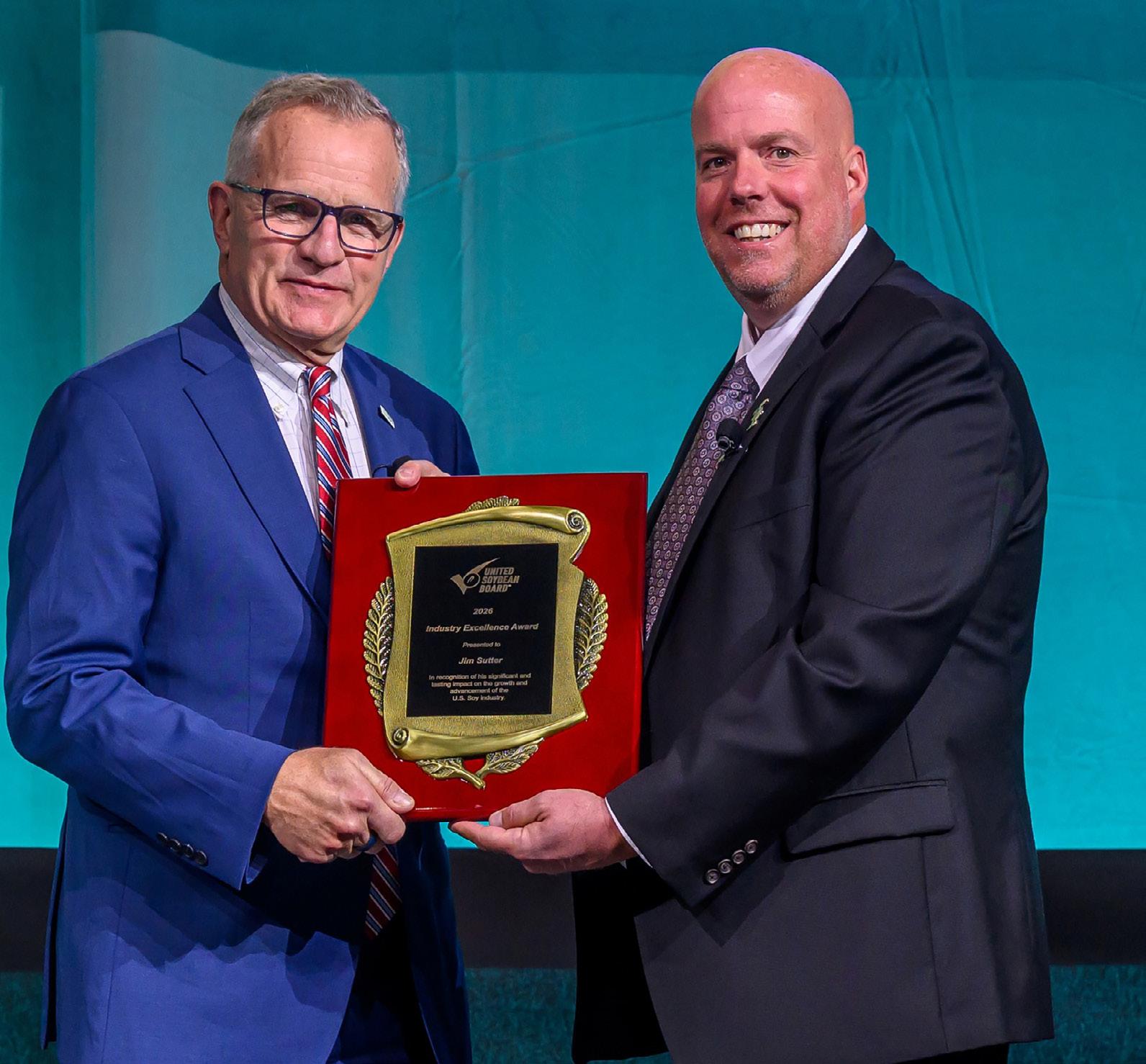
views exports and wants to lend their support,” Sutter said.
Sutter sees firsthand how critical exports are to U.S. soybean farmers. He’s on the road for months out of the year; his travels include attending USSEC’s Soy Connext (Aug. 5-7 in Chicago), meeting with policy leaders in Washington, D.C., and leading international trade missions and conferences. His 2026 itinerary features meetings in Argentina, Thailand, Vietnam, the Philippines, Egypt and China. In June, Sutter visited with MSR&PC leaders at the Midwest Agriculture Summit in Fargo, N.D.
“He practically lives out of a suitcase,” said Council Director Joel Schreurs, who represents Minnesota on USSEC. “Jim’s very respected around the world in the soybean industry.”
He’s also a people person. Council Chair Gail Donkers met Sutter at an ag leadership event years ago and reconnected with him in 2025 during an event in Singapore with the Soy Excellence Center (SEC).
“He remembered me, our conversation and my name,” said Donkers, who serves as vice chair of the SEC Global Advisory Panel. “Jim is so passionate about what he does. I appreciate that he doesn’t let any dust settle under his shoes and represents U.S. to the hilt.”
And when the dust does settle, Sutter is confident U.S. soybeans will continue to stand alone as the world’s quality champions. Later this summer, USSEC plans to work with MSR&PC for annual trade team visits to Minnesota farms, giving customers an up-close look at how the highest quality beans in the world are produced.
“Our buyers hold American farmers in high esteem,” he said. “The trade teams that we hope to bring to Minnesota are a great opportunity to help market U.S. Soy, but we couldn’t give them near the same experience if we didn’t have the help from the state groups like Minnesota Soybean and the farmers themselves.”
“U.S. SOYBEAN MEAL IS MORE CONSISTENT WITH QUALITY. YOU CAN SEE THE DIFFERENCE.”
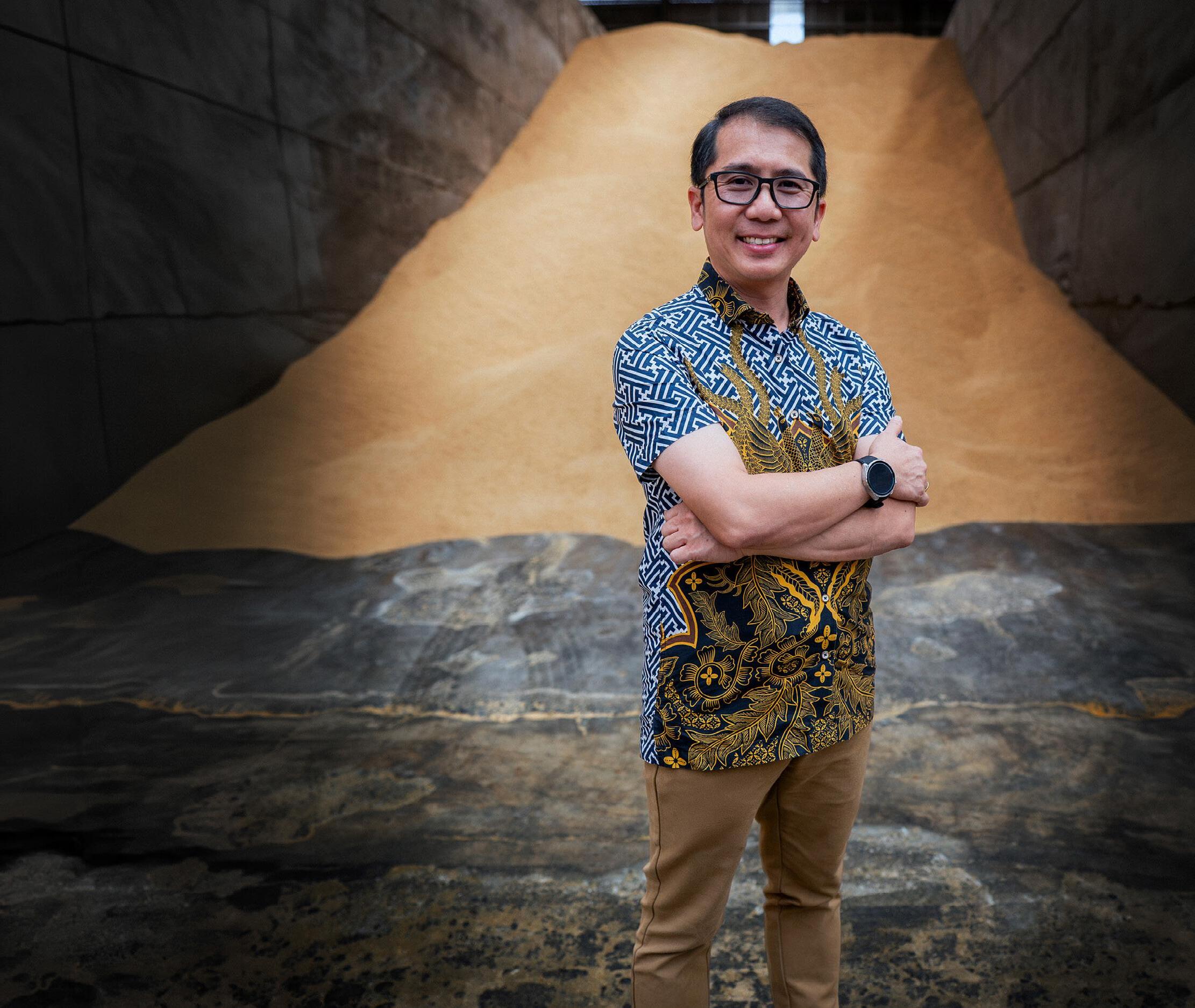
YOU GROW THE WORLD’S MOST SUSTAINABLE SOY. WE GROW DEMAND FOR IT.
USSEC elevates a preference for U.S. Soy by working directly with buyers in over 90 countries to demonstrate its proven quality and sustainability.

When it comes to protecting soil health and promoting water quality, Beach Family Farms is leading from the front.
Speaking from his Isanti County farm just prior to planting his spring crop, Beach recalled his family’s strip tilling practices being met with initial skepticism from nearby farms. Little by little, Beach Family Farms is winning ‘em over.
Seeing is believing.
“(One farmer) came up to us last fall and said, ‘Those crops looked the best in the area all summer long and through the fall,’” said Chris Beach, who farms with his family in Stanchfield. “He could see the change in what we were trying to do. Folks are starting to come around, that maybe there is a different way we can look at this.”
Beach was aware of the Minnesota Agricultural Water Quality Certification Program (MAWQCP) and started pursuing enrollment last fall through the farm’s close affiliation with Centra Sota Cooperative, a key MAWQCP stakeholder.
“We’re a true family operation and have worked with Centra Sota getting involved with carbon programs and expanding strip till and cover crops,” Beach said. “They said, ‘Hey, we think you guys are doing a lot of the things to get certified.’ We thought it would help further the cause within the state.”
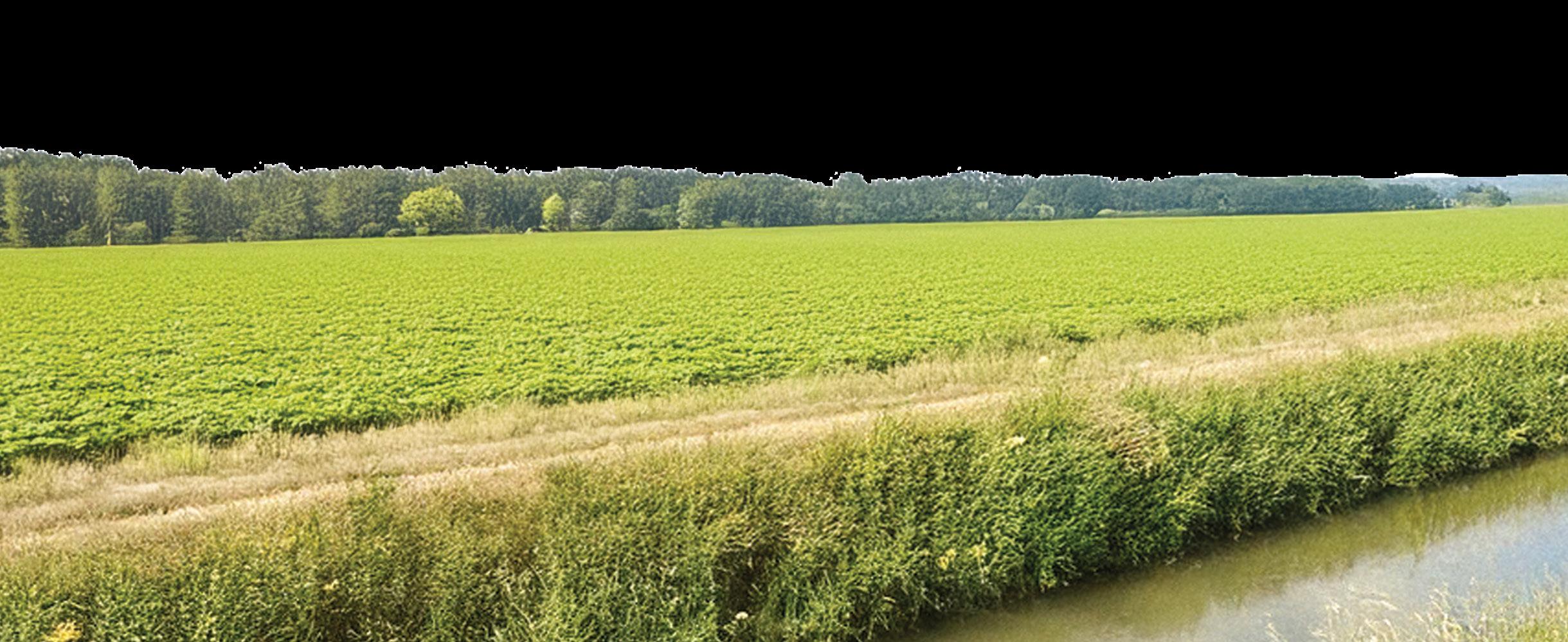
Beach Family Farms rotate soybeans and corn; in addition, they plant rye as a cover crop and are involved in a camelina project with Cargill. They’ve experimented with strip till practices, variable rating and split applications to reduce nitrogen runoff over the last 20 years and have since incorporated into their entire farming operation.
“This last year was the first year we covered every acre that we could with cover crops,” Beach said. “That felt really good, to be able to prove that concept, and then we strip tilled every acre we could this fall, and that was a big milestone to pass.”
The Beach family worked with Centra Sota over the course of several months to become certified. The farm became one of the
largest operations to enroll in MAWQCP.
“We haven’t had to make a huge shift in what we’re doing,” Beach said, “but it feels good to get that acknowledgement and help tell that story, that even with a larger number of acres, you can do these things. It doesn’t require you to have to sacrifice your organization.”
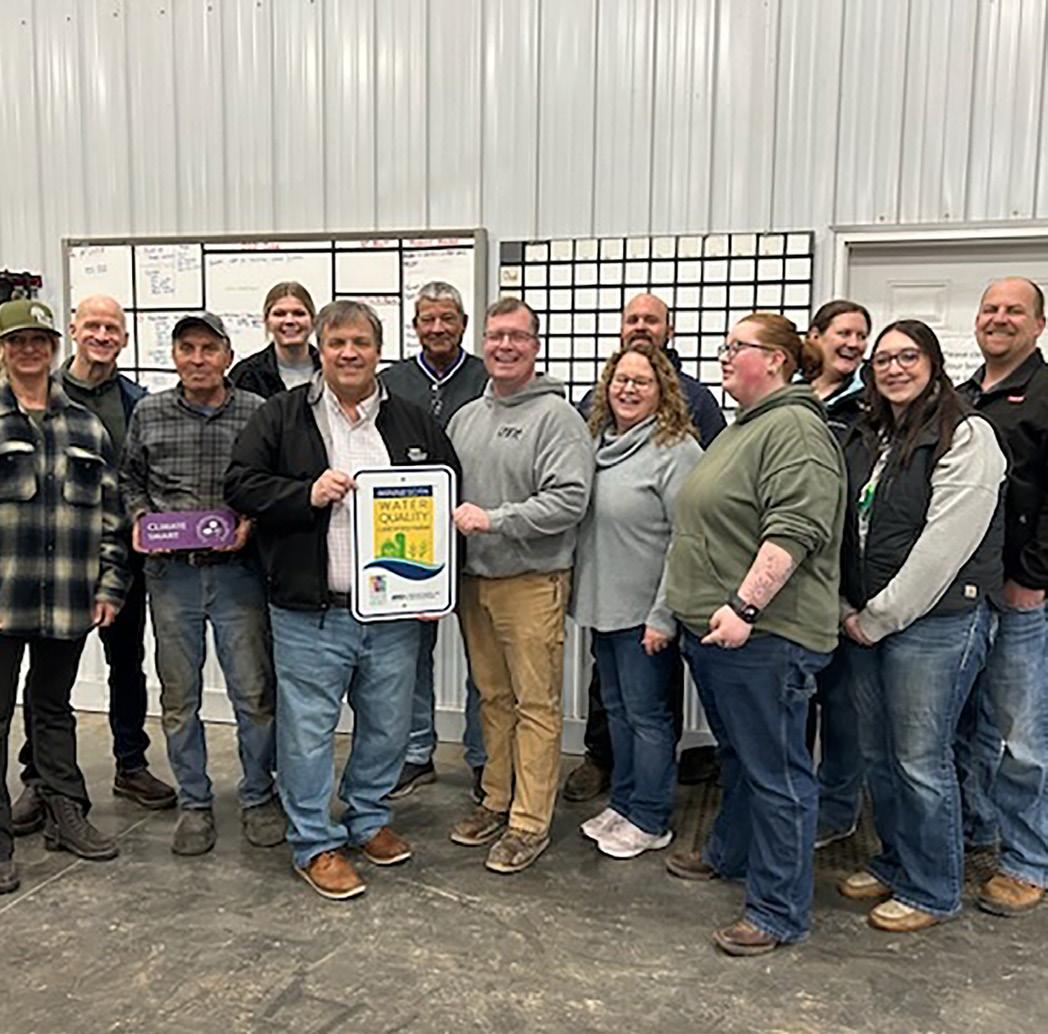
The voluntary enrollment process was capped by a visit from MAWQCP Program Manager Brad Jordahl Redlin and Ag Commissioner Thom Petersen, who presented the Beach family with the coveted MAWQCP plaque, which all enrollees receive, along with other benefits, including financial assistance programs.
“It was such a treat to meet the Commissioner, and he actually lives not too far from us and knows our area,” Beach said. “It was nice to visit with him and give a little perspective of what we’re seeing and provide him some feedback and be able to toot our horn a little bit.”
Since the program became available statewide in 2015, over 1,800 farms totaling over 1.72 million acres have been certified across Minnesota. Farms have added over nearly 8,200 new conservation practices. Those new practices have kept nearly 60,000 tons of sediment out of Minnesota rivers while saving 167,000 tons of soil and 77,000 pounds of phosphorous on farms each year. The conservation practices have also reduced nitrogen loss by nearly 50%.
MAWQCP connects farmers with local conservation district experts to identify and mitigate any risks their farm poses to water quality on a field-by-field basis. Once certified, each farm is considered in compliance with new water quality laws and regulations for 10 years.
“This is a way to be a good ambassador for agriculture,” said Beach, whose family began farming in northwest Hennepin County. “There are a lot of people who don’t understand what we do as farmers, and I see this certification as a way to demonstrate that we are doing the right things and trying to be proactive. The voluntary part of it gives us the opportunity to provide input and help develop recommendations.”
Farmers and landowners interested in joining Beach Family Farms in becoming water quality certified are encouraged to contact their local Soil & Water Conservation District or visit MyLandMyLegacy.com to enroll.
“It’s definitely something we’re proud of to put out there so people know what we’re doing and we can tell our story,” Chris Beach
Learn more about MAWQCP enrollment at Farmfest by visiting booth #517S and the Minnesota Soil Health Coalition in booth #SR14.


By Deanna Kanne
When you think about the University of Minnesota Extension, 4-H is often top of mind. 4-H is Minnesota’s largest youth development program, reaching every county in the state and over 58,000 youth every year.
“Our whole focus in our program is about helping young people develop that passion for learning,” said Jennifer Skuza, University of Minnesota Extension associate dean and state 4-H director. “We want the young people who are in the 4-H program to be innovative leaders who are also thinking about the positive impact that their leadership can have on the communities they live in, but also the environments that they live with and on as well.”
The first statewide 4-H club projects were growing seed corn and baking bread in 1904, started by a school superintendent in Douglas County.
The Smith-Lever Act of 1914 established the Cooperative Extension Service, and, through this, provided additional funding and federal recognition for the 4-H program. 4-H clubs became more common across the country, and the national 4-H organization
was created to provide a general structure for clubs.
“Since its very beginning, it’s always been about taking the research from the land grant institutions, like the University of Minnesota, and bringing it out to communities with youth, but also bringing knowledge back to the university,” Skuza said. “It’s always been that symbiotic reciprocal relationship, and 4-H has been at the forefront of it.”
4-H is more than just clubs; it extends beyond that and continues to evolve. There are many different ways to get involved beyond a local chapter. For supporters like Faribault farmer Gail Donkers, connections to 4-H run deep.
“Junior Leadership Conference was a weeklong event that brought kids in from across the state,” said Donkers, chair of the Minnesota Soybean Research & Promotion Council. “Some of my very best friends to this day are people I met at JLC.”
In 1934, a conservation leadership camp was started in Itasca. While the camp no longer exists, 4-H environmental work continues today. Urban Youth Lead, an after-school leadership group in the Minneapolis-St. Paul area, began in 2006, and the 4-H Science of Agriculture Challenge began in 2015.
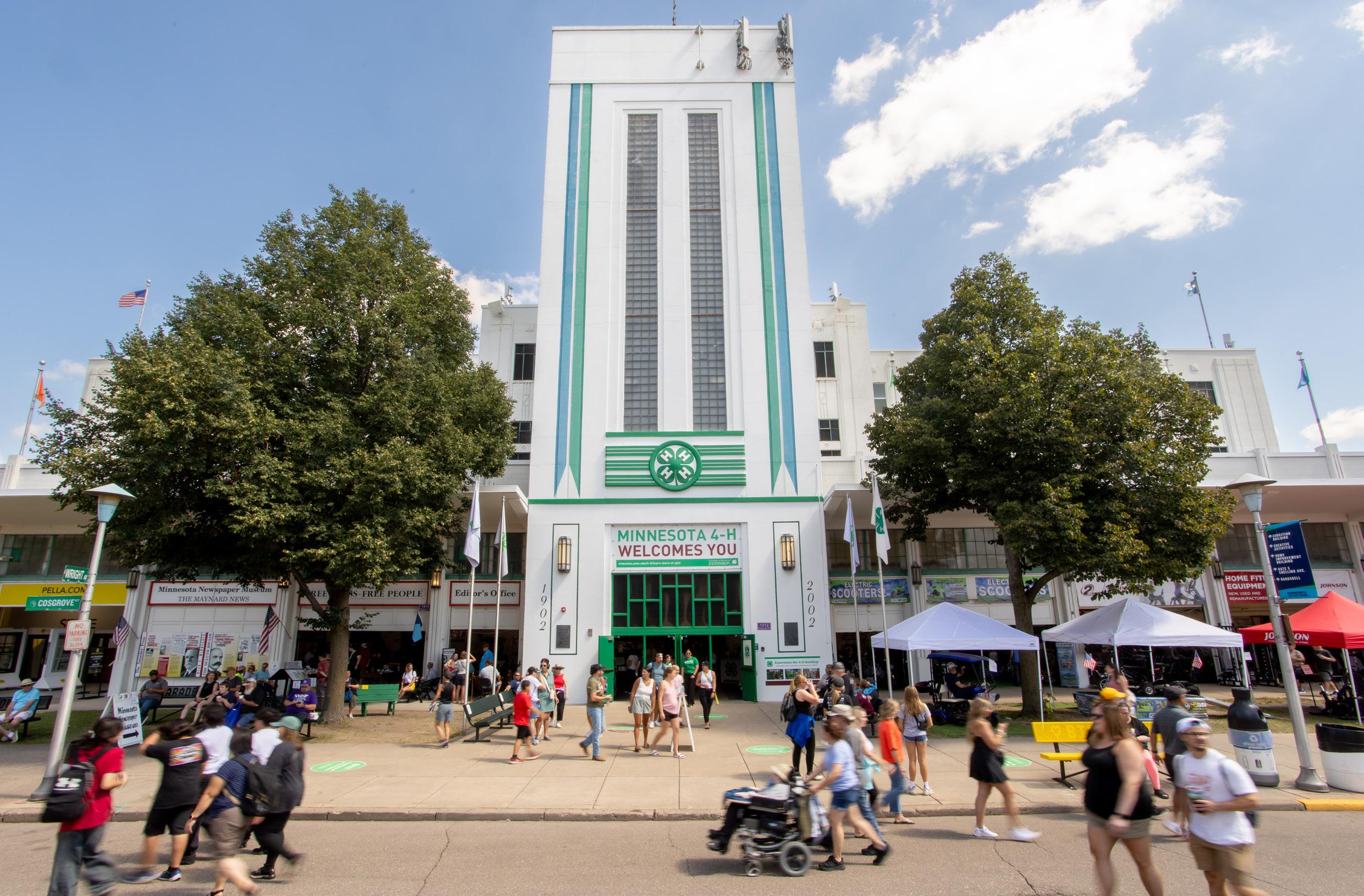
The “4-H Hilton,” as it is affectionately known, was built in 1939 by the Works Progress Administration on the State Fairgrounds. Since its construction nearly 90 years ago, thousands of Minnesota 4-Hers have cycled through the building.
In 2026, it was announced that the building would be updated as part of a $35 million campaign between Minnesota 4-H and the Minnesota State Fair. Construction is already underway on the exterior of the building, with completion planned by fair time in August 2027. This is the first major update to the building since 1939.
“[The exterior] is in progress where windows are being repaired or replaced — the roof was already replaced last year,” said Skuza. “If we meet all of our timelines, and it’s running on time right now, by the time the state fair gets here we’ll have most of the exterior, if not all of it done.”
Beyond the standard updates, such as accessibility improvements, system upgrades, expanded restrooms and better ventilation, the entire first floor will be remodeled. This remodel will include a new performing arts stage, STEM spaces, a teaching kitchen and flexible workshop areas. Once completed, the new 4-H building hopes to reach one in 10 Minnesota youth.
“We’re looking at having programming that’s going to be running full tilt from June until August,” said Skuza. “That’s in addition to our State Fair experience where we have over 5,000 current 4-Hers who participate.”
At the Council’s December 2026 meeting, UMN Extension leaders, including Dean Bev Durgan, visited with farmer leaders to outline the project’s goals and timelines. At the March 2026 board meeting, MSR&PC voted to support the campaign with checkoff support through a $250,000 donation. With this donation, MSR&PC will have a soybean display in one of the programming rooms.
“4-H is important to the Council because we’re building tomorrow’s leaders by supporting 4-H,” Donkers said. “That was my launching pad— becoming a leader within my club, then at the regional and state level.”
MSR&PC has shown its support through past 4-H sponsorships, including being on the ground level when plant science programming began and helping expand 4-H’s state agricultural ambassadors program.
“(MSR&PC) has been with us every step of the way,” Skuza said. “We’re just really excited about the continued relationship.”

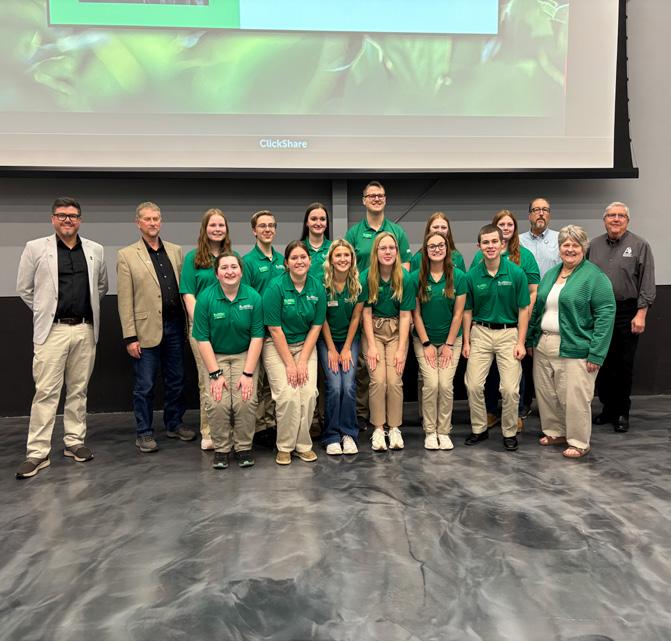
In April 2026, the Minnesota 4-H Agriculture Ambassadors visited Minnesota Soybean’s office in Mankato to participate in a “Soybean Experience Day.” The event included presentations from MSR&PC Chair Gail Donkers and Director Joe Serbus, along with MSR&PC CEO Tom Slunecka and Research Director Sergio Cabello Leiva, and featured an activity where the ambassadors designed ideas for MSR&PC’s contribution to the 4-H building.
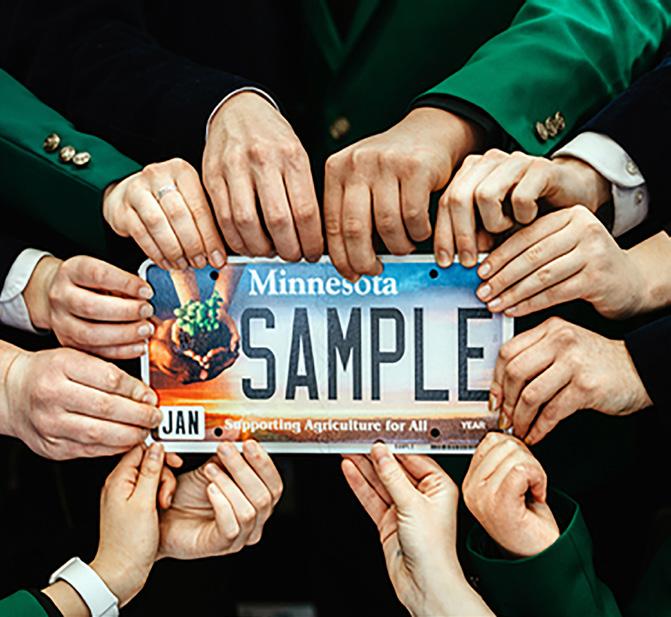
The Minnesota Soybean Growers Association also supported 4-H’s legislative efforts in teaming up with Minnesota FFA in 2022 to approve specialized Minnesota license plates celebrating agriculture. The Council has the license plates on all its company vehicles.
MSR&PC officer team returns with renewed confidence
By Drew Lyon
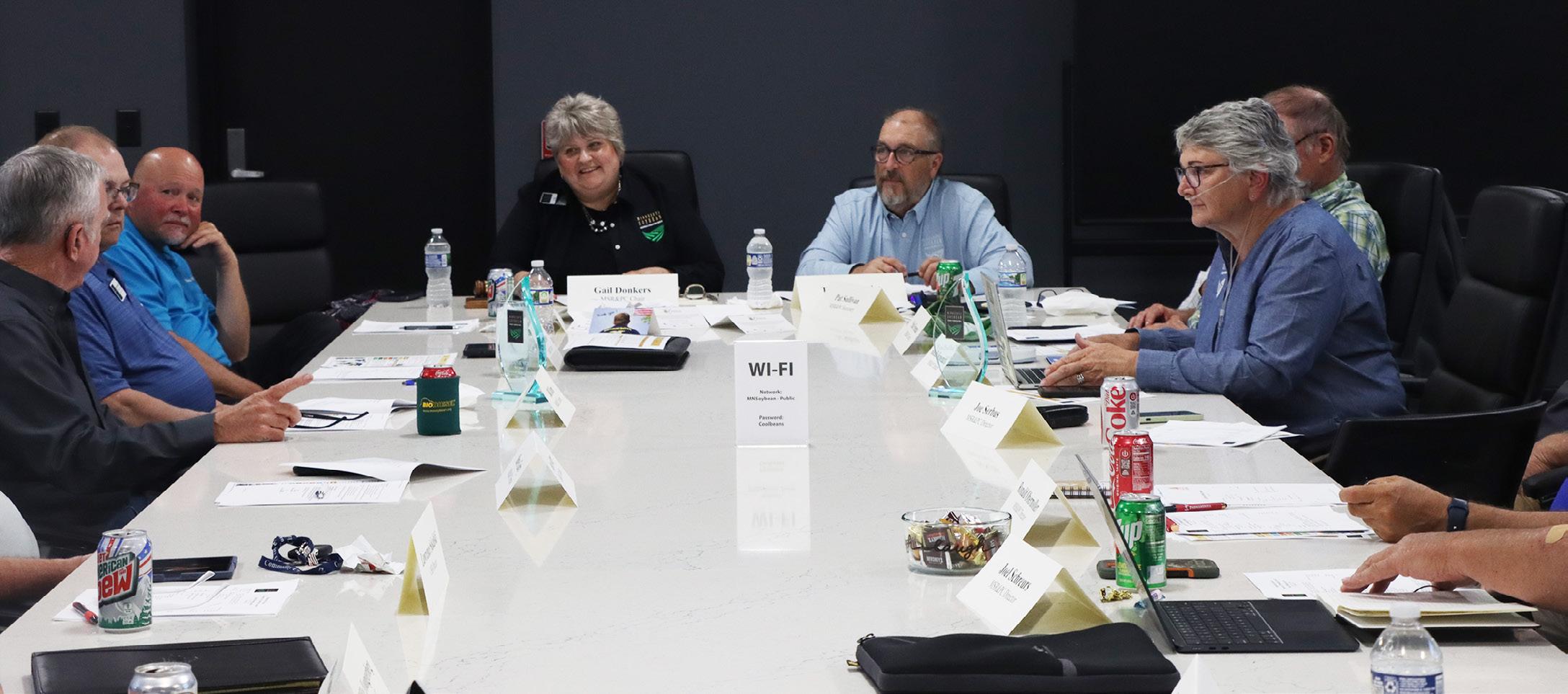
Faribault farmer Gail Donkers has earned a second term as chair of the Minnesota Soybean Research & Promotion Council, after her colleagues reelected the farmer leader during the Council’s June 16 meeting in Mankato.
In her role on the Council, Donkers also serves as vice chair of the Soy Excellence Center’s Global Advisory Panel, sits on the U.S. Identity Preserved Alliance board and is active in Minnesota FFA. After learning the ropes during her first year as chair, Donkers said she’s excited to take further steps as she leads MSR&PC for a second term.
“The first year, you have a higher learning curve,” said Donkers, who has represented District 8 on MSR&PC since 2019. “In my second year, I’ll be much more understanding of the inner workings of the organization and how we’re continuing in our dedication to moving the pile and improving farmer profitability.”
Guided by an elected, farmer-volunteer board of directors, the Council ensures that soybean checkoff investments are overseen with the best interests of Minnesota soybean growers, and the state’s nearly $10 billion soybean industry, top of mind. Having an experienced officer team leading the way is crucial to MSR&PC’s continuing success in directing soy checkoff funds.
The rest of the Council’s 2025-2026 officer team was also reelected alongside Donkers, including Dover farmer Ben Storm as vice chair, Ridgeway farmer Glen Groth as treasurer and returning Secretary Pat Sullivan.
“We have a great officer team — we’re all on the same page in being fiscally responsible as well as being aware that every dollar we take in comes from Minnesota farmers and we want to utilize those dollars
to the best of our ability to improve their profitability,” Donkers said.
Storm, who has served nearly a decade on MSR&PC, is feeling optimistic about the outlook for soy checkoff initiatives.
“I’m energized by the opportunity to serve a second year as vice chair,” he said. “We have a lot of new projects coming down the pike, from the research we’re sponsoring to building markets domestically and globally. I’m excited to collaborate, roll up my sleeves and keep our checkoff working for our farmers.”
Sullivan, who’s served as secretary for several years, said he’s excited to continue directing checkoff resources that help advance research, build markets and create value-added uses for Minnesota’s soybean industry.
“There are a lot of exciting new technologies in research development phases that are going to help keep us profitable,” said Sullivan, who farms in Franklin. “The whole industry is ever-changing, and I’m proud to be part of a team that’s always thinking ahead and working together toward a common goal.”
During the meeting, grower leaders paid tribute to outgoing directors Rochelle Krusemark and Bill Zurn, whose terms ended July 1. Martin County farmer Lawrence Sukalski and Dave Garry of Thief River Falls are stepping into District 8 and District 1, 2 & 3 positions.
“It’s great to be part of a team that’s willing to discuss and debate and keep the best interest of our soybean farmers at heart,” MSR&PC CEO Tom Slunecka said. “We’re keeping great leaders at the helm of MSR&PC to continue to drive our mission.”
The Council will gather Aug. 17-18 in Mankato to approve its FY2027 budget.

By Allison Wright
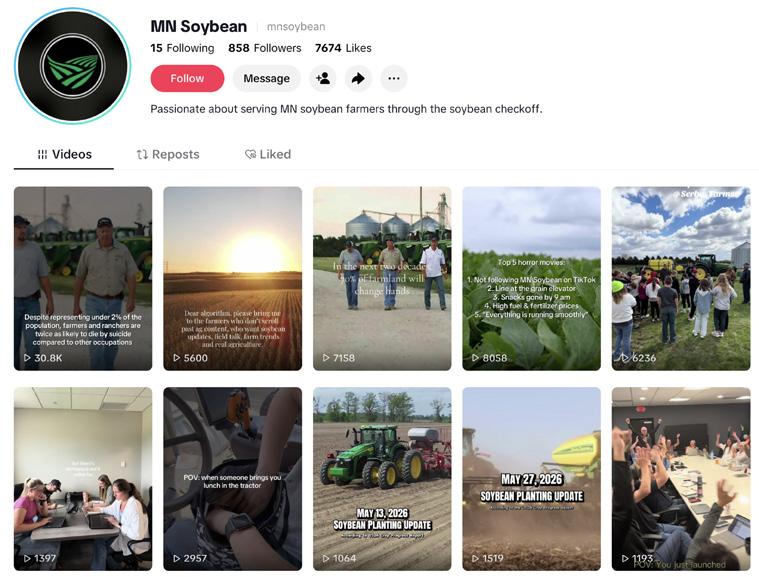
Telling agriculture’s story is a core industry mission, but the ways and places people connect and communicate in agriculture continue to evolve. Recognizing that change, the Minnesota Soybean Research & Promotion Council (MSR&PC) has expanded their communication lineup by launching a TikTok page.
According to Sprout Social, Tiktok has over 1.99 billion users, 40.3% of those users being between the ages of 25-34. With an average daily watch time of 97 minutes, TikTok has shown to be a cornerstone platform to reach the next generation.
“Our new TikTok page is one more way to learn and communicate about the changes in agriculture that we are facing today and will be facing tomorrow,” MSR&PC CEO Tom Slunecka said.
The addition of TikTok complements the already existing communication platforms used by MSR&PC which include an e-newsletter, magazine, Facebook, Instagram and X. Together through these platforms, MSR&PC has the same goal of communicating efforts on behalf of Minnesota but its reaching a different target audience.
“The only thing we can count on is change, but change is more often good than bad,” Slunecka said. “Tomorrow’s farmers will see more change than any generation before them. The best way to deal with any type of change is to communicate and learn.”
The TikTok page was launched in early May 2026 and has seen a trend of growth as more content has been shared. Topics ranging from celebrating national holidays, new uses of soybeans, offering mental health services and behind-the-scenes looks at the ways MSR&PC is growing demand on behalf of Minnesota soybean farmers.
One feature that stands out is the “Around the Counties” videos. Produced by county program representatives, these videos showcase county board activities, events and initiatives taking place across Minnesota. The series helps engage county members, create inspiration for other county organizations and highlights the positive impact soybean programs are making within their communities.
As communication transforms, MSR&PC is following the trends to meet its audience where they are, make information accessible for all and reach the screens of consumers and farmers alike.
“We’re excited to share our message with the next generation,” Council Chair Gail Donkers said. “TikTok has been a great way to promote soybeans and have some fun while sharing how the checkoff is working for our farmers.”
Explore the MN Soybean TikTok page at tiktok.com/@mnsoybean.com.
Welcome to the Minnesota Soybean Tiktok page! #newpagealert #soybeans #msr&pc MSR&PC APPEALING TO THE NEXT GENERATION













to their family, friends, colleagues and communities — and help is just a phone call away.
The Council, in partnership with the Minnesota Department of Agriculture, is teaming up with a broad coalition of farm, food, and commodity organizations across Minnesota to support a statewide Farm Suicide Prevention Campaign.
The campaign, which kicked off during May’s Mental Health Awareness Month, looks to highlight the realities farmers experience and provide resources to those in need.
“I am thrilled that MSRPC is helping MDA with their program with their Farm Suicide Prevention Campaign because we need all the help we can get in rural America to save every farmer possible,” Council Chair Gail Donkers said.
Farmers continue to endure extreme economic challenges. These pressures, coupled with farmer suicide rates estimated to be 3.5 times higher than the general population, underscore the need to talk more openly about stress and mental health in agriculture.
“We’re all hearing increasing reports of farmers in stress who have taken, or may be thinking of taking their own lives, and we’re all concerned about them,” said Agriculture Commissioner Thom Petersen. “We are humbled by the immediate and generous response from our partners who have contributed $47,500 so far to this suicide prevention campaign.”
The campaign uses 30-second radio spots to broadcast on more than 150 AM/FM radio stations throughout Minnesota, as well as social media. Upcoming workshops in agricultural communities will also teach farmers, farm family members and agricultural advisers critical skills they need to help keep a suicidal person safe.

Council Chair Gail Donkers is urging farmers to be mindful of not just their mental health, but the wellbeing of their fellow farmers.

Messages talk about the higher-than-average risk of suicide that farmers and ranchers face and ways farmers who are struggling can seek effective, nonjudgemental help — such as calling or texting 988 or reaching out to the Minnesota Farm and Rural Helpline at 833-600-2670. The campaign also offers tips to family members and others who are concerned, but don’t quite know how to help.
“Getting help if you have anxiety, depression, or suicidal thoughts is really no different than going to the doctor about heart trouble or high blood sugar,” said Minnesota Soybean Growers Association Director Bob Worth, who serves on MDA’s mental health advisory group. “We’ve got to let people know that getting help helps.”
Additional agricultural mental health, stress, financial resources, and other information are available at www.mnfarmstress.com.
The Minnesota Department of Agriculture is seeking public comments to assist the agency in determining whether Minnesota’s rules are adequate to protect natural resources.
MDA is seeking public comments on the following:
With express consideration of how Minnesota Rules Chapter 1505 fits within the broader context of all applicable environmental protection in state and federal law regulating pesticides and neonicotinoid-treated seeds, is Minnesota Rules Chapter 1505 adequate to protect Minnesota’s natural resources from pollution, impairment or destruction allegedly resulting from the use of neonicotinoidtreated crop seeds?
Commenters are asked to provide applicable information and supporting evidence. Comments that express only support or opposition to neonicotinoid-treated seed, without providing further information for the MDA to consider, will not assist the MDA in its decision-making.
Comments must be received by July 31, 2026. Submit comments through an online form on the MDA’s Neonicotinoid-Treated Seed Public Comment website, by email (Subject: Treated Seed Public Comment) to: TreatedSeed. MDA@state.mn.us.
Farmer leaders of the United Soybean Board built something their fellow farmers have long sought: one place for near-term solutions that matter.
The Soy Farmer Support Hub, found at unitedsoybean.org/soy-farmersupport-hub, combines resources that the checkoff curated into an easy-tofollow location focused on fields, operations and the farmers themselves.
The site is part of a bigger initiative by the soy checkoff to help U.S. soybean farmers access timely research-backed tools to overcome the challenges they face day-to-day. While the checkoff typically focuses on long-term market building and on-farm production improvements three to five years out, these immediate resources are applicable to helping farmers’ bottom line.
The Soy Farmer Support Hub is categorized into three sections: For Your Fields, For Your Operation and For You.
“Soybeans are grown in more than 30 states and navigating all the resources out there can be a full-time job,” said USB Secretary and Council Director Tom Frisch. “We’re covering standard topics like planting, seeding rates, pests and diseases. But we’re also covering newer topics like making decisions around biologicals.”
For the first time ever, the checkoff has a suggestion box for resources farmers would like to see added to the Support Hub or additional input on investment priorities. The form is a direct line to the farmers making funding decisions.
The checkoff’s plan for the Soy Farmer Support Hub includes ongoing development of materials. More resources will become available in the weeks and months ahead.
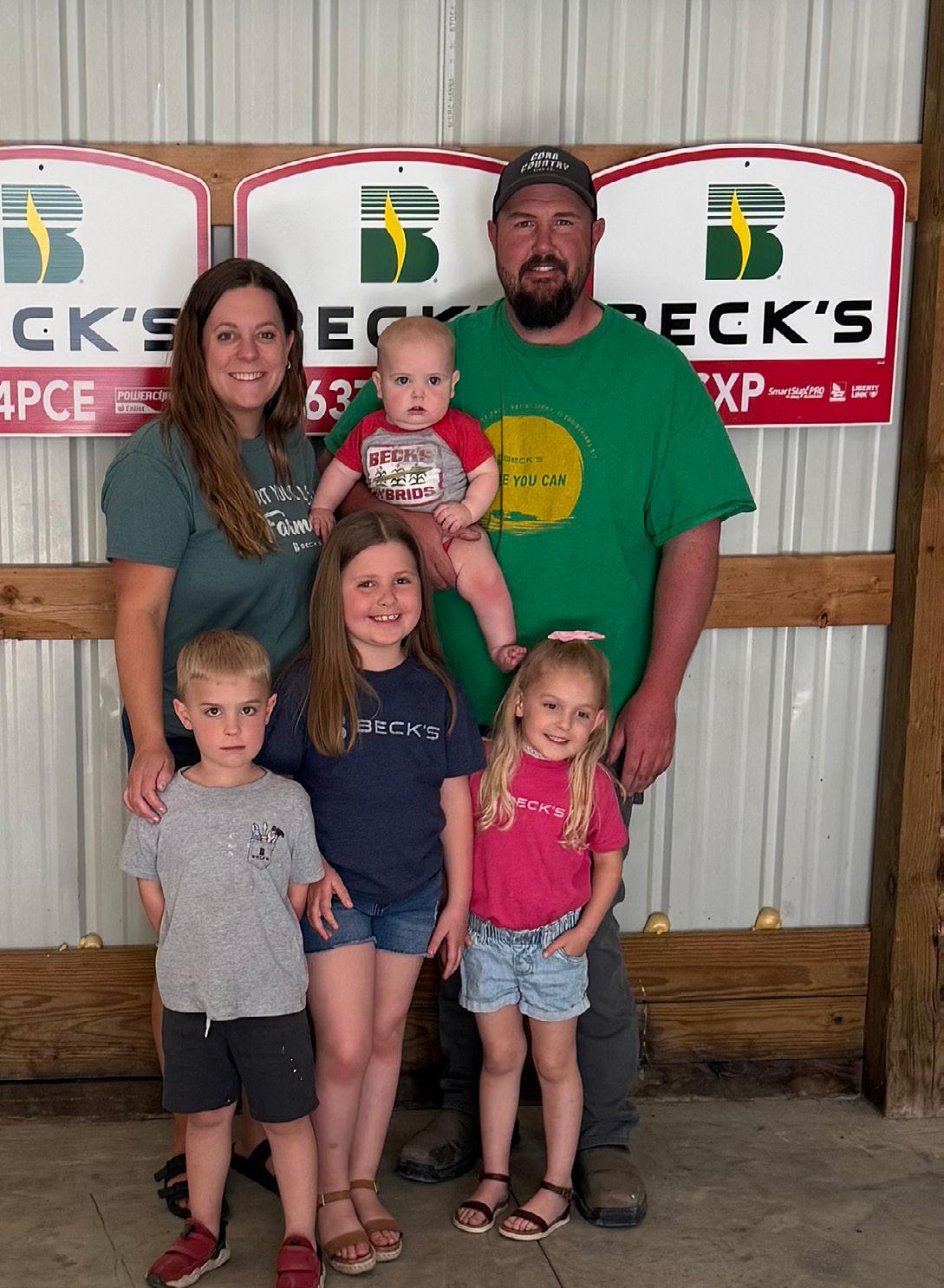
By Grace Britton
For fourth-generation farmer Tyler Huber, agriculture is more than a career; it’s a family legacy, a commitment to community and an opportunity to shape the future of farming. As a new member of the Minnesota Soybean Growers Association, Huber hopes to bring a young, fresh perspective while continuing his passion for helping fellow farmers succeed.
Huber farms near Waseca, where his family operation will celebrate 100 years in 2028. After purchasing the farm from his parents in 2020, he officially became the next steward of the family’s legacy with his wife and four kids.
Today, Huber farms both soybeans and corn while raising a small herd of beef feeders. In addition, Huber has built a successful seed business, Corn Country Seed Co. LLC, representing Beck’s Hybrids, since 2019. The business allows him to generate off-farm income while still remaining on the farm full time and continuing to grow his operation.
While the seed business began as a practical opportunity, it quickly became a passion. He says Beck’s family-owned and faith-oriented values aligned closely with his own, making it a perfect fit.
“I like helping farmers become more successful,” Huber said. “If I can help somebody make a better decision on their acres or improve their operation, then I feel like I am doing something right.”
Huber’s commitment to agriculture extends well beyond his own farm. He has served on the Waseca County Fair Board for 13 years, previously served on the Waseca County Farm Bureau Board and regularly supports local FFA and 4-H programs through sponsorships, donations and educational events.
His dedication recently earned recognition when Huber and his family were named Waseca County Farm Family of the Year through the University of Minnesota Extension. The Hubers will receive the honor Aug. 7 at Farmfest, and Huber says the award was a reminder that the work he and his family are doing is making a positive impact on their community.
As he furthers his involvement with MSGA, Huber hopes to continue learning more about agricultural policy and advocacy while helping bring younger voices into these leadership roles.
“I like networking and being involved, as there is always something new to learn,” Huber said. “If younger farmers don’t step up and get involved, those opportunities and perspectives won’t be there for the future.”
Joining MSGA has never been easier – or more important. Sign up today by scanning the QR code!
The Minnesota Soybean Growers Association is humbled by the two dozen members who joined MSGA since April 2026. In addition, over 60 members renewed this spring. We are grateful for your support!
Our policy work is shifting into the next gear this summer. In July, farmer leaders are traveling Washington, D.C., alongside the American Soybean Association for Hill Visits with Minnesota’s congressional delegation to promote our federal policy priorities. On the home front, your membership resources helped us protect our family farmers and industry partners this session at the
Tyler Miller
John Vaubel
Chad Ostermann
Tom Hughes
Brian Olek
Warren Formo
Kendall Boyum
Jill Johnson
Richard Staples
Nathan Johnson
Chad Lawrence
Marie Carr
Carrol Olsen
Troy Enderson
Leslie C. Schliep
Scott Biss
Amanda Jandera
Brad Freking
Gary Carnes
Capitol in St. Paul. Of course, we’ll also have a strong presence at this year’s Farmfest Aug. 4-6 in booth #620 and look forward to visiting with legislative candidates throughout the summer and fall ahead of the Nov. 3 elections.
Together, we’re joining forces fighting on your behalf in the legislative and regulatory spaces. To join the nation’s premier state soybean advocacy association, visit mnsoybean.org/msga/membership, or stop by our Farmfest booth #620. Membership levels start at just $20 for students, and a 3-year membership costs less than a quarter per day. Join us today!
Brian Mahn
Michael Bonnema
Shelly Westerberg
Todd
Ed
Stan
Scot


















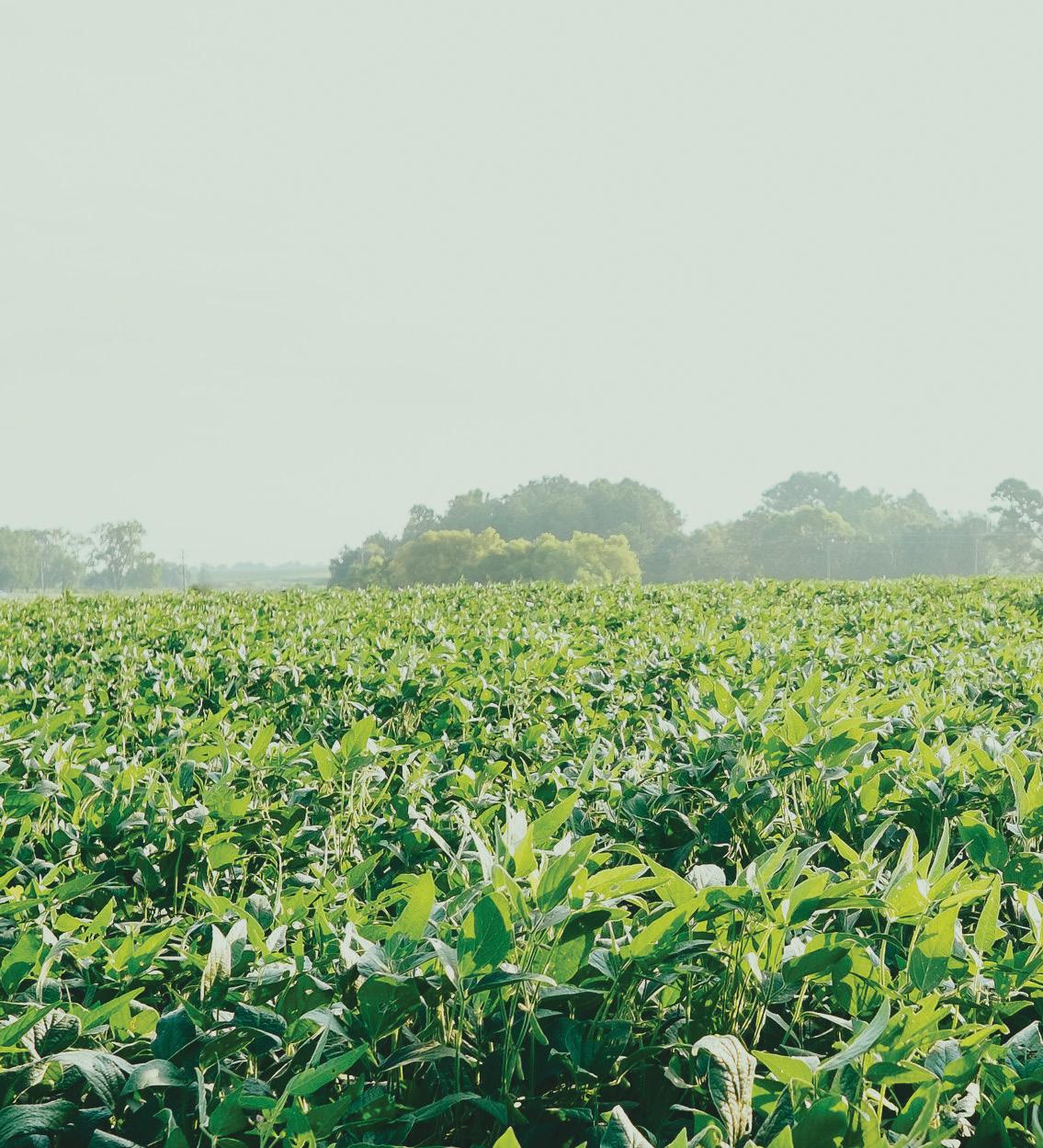


















AUGUST 24, 2026
Boosting biodiesel, raising farmers’ bottom lines
Biodiesel is fueling Minnesota’s economy. Thanks to MSGA’s proactive leadership across 25 years of advocacy, biodiesel is increasing demand for soybeans by 13%, raising the value of soybeans by over $1 per bushel, while contributing nearly $1.7 billion toward our state’s economy. Our farmer-led group continues protecting and promoting biofuels to support Minnesota’s nearly 26,000 soybean farmers. Participating in the Biodiesel Open is just one way you can support our advocacy efforts in St. Paul and Washington, D.C
10 AM REGISTRATION NOON SHOTGUN START 5 PM DINNER
$150/GOLFER $580/TEAM REGISTRATION DEADLINE IS JULY 24 LOCATION COST DETAILS
CROW RIVER GOLF COURSE
915 COLORADO STREET NW
HUTCHINSON, MN 55350

Contact Erin Rossow at erossow@agmgmtsolutions.com for sponsorship questions. Contact Emily Rutkowski at erutkowski@agmgmtsolutions.com for event questions.
SCAN THE QR CODE TO REGISTER!
Proceeds from the Biodiesel Open help support the Minnesota Soybean Growers Association’s advocacy efforts. MSGA is a farmer-led advocacy organization that works on behalf of the interests of Minnesota’s nearly 26,000 soybean farmers in St. Paul and D.C. In short, MSGA keeps soybean farmers farming – now and for generations to come.
• Receive $35 per acre, per year
• Renewable one -year contrac ts
• One - on- one suppor t from local Technical Advisors
Eligible corn and soybean farmers in 20 states: Delaware, Illinois, Indiana, Iowa, K ansas, Kentuck y, Mar yland, Michigan, Minnesota, Missouri, Nebrask a, New York , Nor th Carolina, Nor th Dakota, Ohio, Pennsylvania, South Dakota, Tennessee, Virginia and Wisconsin.