
MSR&PC’s 2025 Annual Report
MSR&PC’s 2025 Annual Report
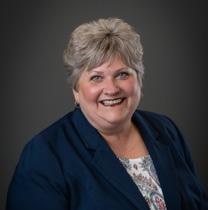
Gail Donkers Chair
District 8
Faribault, MN
507-202-2042
gdonkers@mnsoybean.com
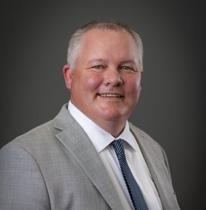
Tom Frisch
District 4
USB Director Dumont, MN
320-808-1002
tfrisch@mnsoybean.com
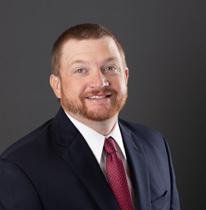
Ben Storm Vice Chair District 9 Dover, MN
507-993-4623
bstorm@mnsoybean.com
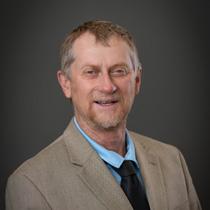
Joe Serbus
District 5 & 6
Bird Island, MN
507-828-7869
jserbus@mnsoybean.com
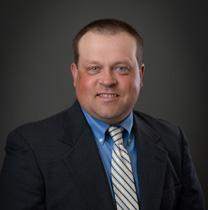
Glen Groth Treasurer
District 9 Ridgeway, MN
507-459-1956
ggroth@mnsoybean.com
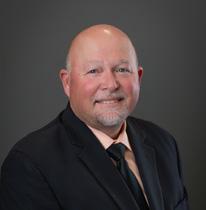
George Goblish
District 7
Vesta, MN
218-230-3768
ggoblish@mnsoybean.com
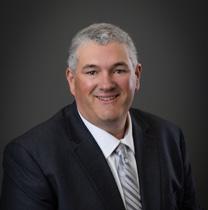
Pat Sullivan Secretary
District 5 & 6
Franklin, MN
320-894-5917
psullivan@mnsoybean.com
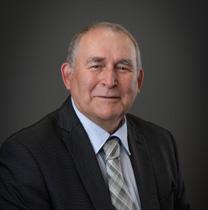
Ron Obermoller
District 7
Brewster, MN
507-360-4863
robermoller@mnsoybean.com
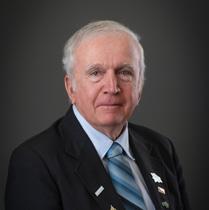
Bill Zurn
District 1, 2 & 3
Callaway, MN
218-849-5289
bzurn@mnsoybean.com
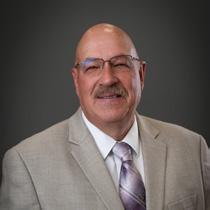
Joel Schreurs District 7 Tyler, MN
507-829-8854
jschreurs@mnsoybean.com
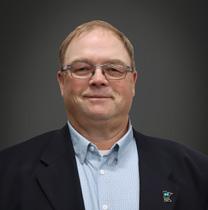
Corey Hanson
District 1, 2 & 3 Gary, MN
218-230-3768
chanson@mnsoybean.com
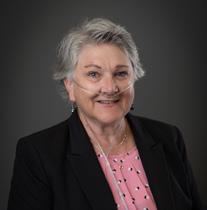
Rochelle Krusemark
District 8 Sherburn, MN
507-236-3625
rkrusemark@mnsoybean.com
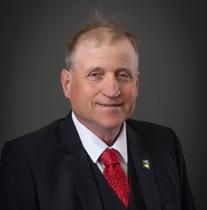
Paul Freeman District 4 Starbuck, MN 320-290-9225
pfreeman@mnsoybean.com
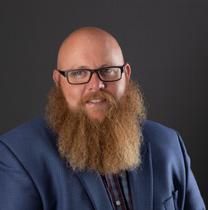
Cole Trebesch District 8 Springfield, MN 507-227-3263
ctrebesch@mnsoybean.com

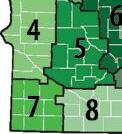

poleary@mnsoybean.com
Lawrence Sukalski USB Director
507-236-4880
sukallnd@hotmail.com

While “uncertainty” was certainly a prevailing word in 2025 in agriculture, the Minnesota Soybean Research & Promotion Council (MSR&PC) continued to step up and play our part in delivering demand for our state’s nearly 26,000 soybean producers.
Since the 1970s, our state’s soy checkoff has continued to move in only one direction: forward, straight into the future, while also maximizing past investments that continue to pay dividends.
As you’ll learn in this year’s Annual Report, just like the crop we raise, MSR&PC was everywhere in 2025, from our home turf (literally) on our soy-based lawn at Farmfest to building markets in Central Asia, Southeast Asia and the Americas. During my first year as chair, I’ve seen how the Council continues finding creative ways to bring certainty to our farms through relationship-building, promoting value-added uses like biodiesel, and funding dynamic research that helps us improve yields, increase acreage and manage pests and weeds. On top of that, we host programs like the Future of Soy and sponsor FFA and Minnesota Agriculture in the Classroom to uplift the leaders of tomorrow. As a family farmer who’s passionate about youth education, these efforts are near and dear to my heart.
Just like the “miracle bean” itself, there are so many components and properties to the soy checkoff, and we are proud to cover the gamut.
Minnesota’s soy checkoff was established over 50 years ago, well before the national checkoff was enacted in the early 1990s, because our farmers saw a need to pool our resources together to promote our soybeans, build markets and increase profitability. We’ve taken the checkoff to new heights in those decades. In Minnesota, we have the distinction of being the only state to support a county-level promotion program through over 40 organized boards. Those county leaders invest checkoff funds toward local efforts, like Breakfast on the Farm and county fairs. This year, the Council also activated our Planting to Protect program to promote SoyFoam by donating hundreds of sample pails of this soy-based firefighting foam to local fire departments. Promoting soy here at home while also helping our communities? That’s our soy checkoff putting in work!
Of course, I’d be remiss if I didn’t address the elephant in the room: tariffs. MSR&PC, along with our national partners, appreciate that we must continue leveraging relationships and growing international trade beyond our largest trading partner, China. I was honored to represent the Council in a new role in 2026 by joining the Soy Excellence Center’s Global Advisory Panel. In my position, I attended the SEC’s Asia Food Intermediate Course 2 in Singapore in June 2025 to participate in hands-on training exercises to turn budding markets into soy success stories. I’m also grateful for the many efforts of my Council colleagues and CEO Tom Slunecka for the time and resources they invest in promoting soybeans at the local, state, national and global levels. It truly takes a team.
The Council is also fortunate to diversify our income stream in ways that go beyond the farm gate: Our headquarters in Mankato hosts a meeting and events space, Offsite, which kept our building buzzing with activity throughout 2025. Book your 2026 event today at offsite-mn.com.
While the markets and weather can fluctuate, rest assured that MSR&PC remains a steady hand at the wheel, helping to keep our soy checkoff on course.
Gail Donkers Chair, Minnesota Soybean Research & Promotion Council
Total Expenses: $9,576,117




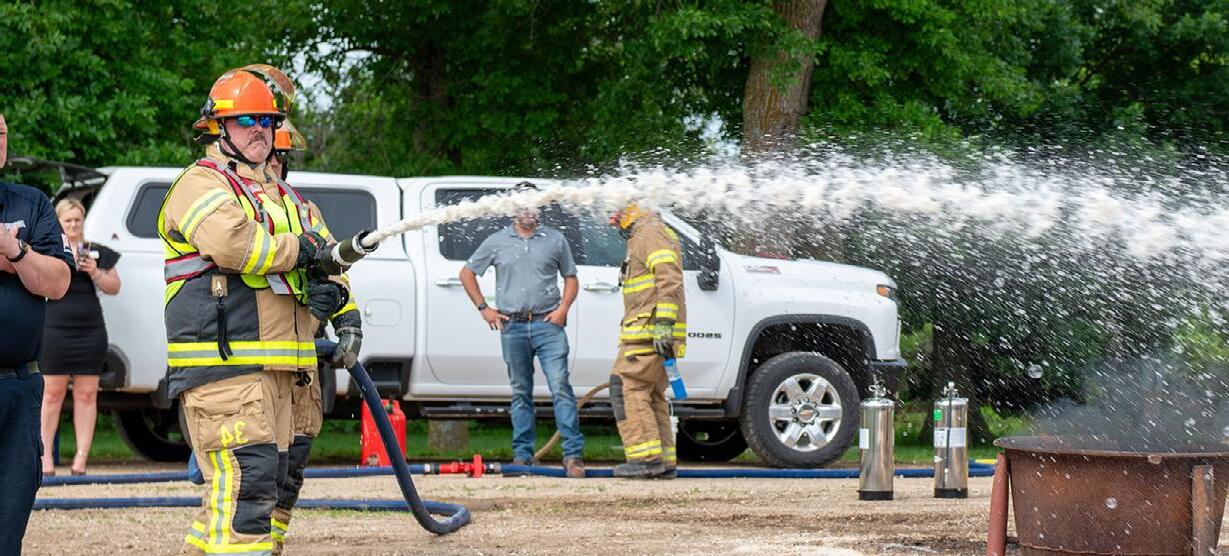
Throughout 2025, the Council realized a market gap existed for PFAS (aka “forever chemicals”) –free firefighting foam and seized the opportunity to build demand, generate goodwill and address the environmental challenges with supporting a soy-based solution, SoyFoam.
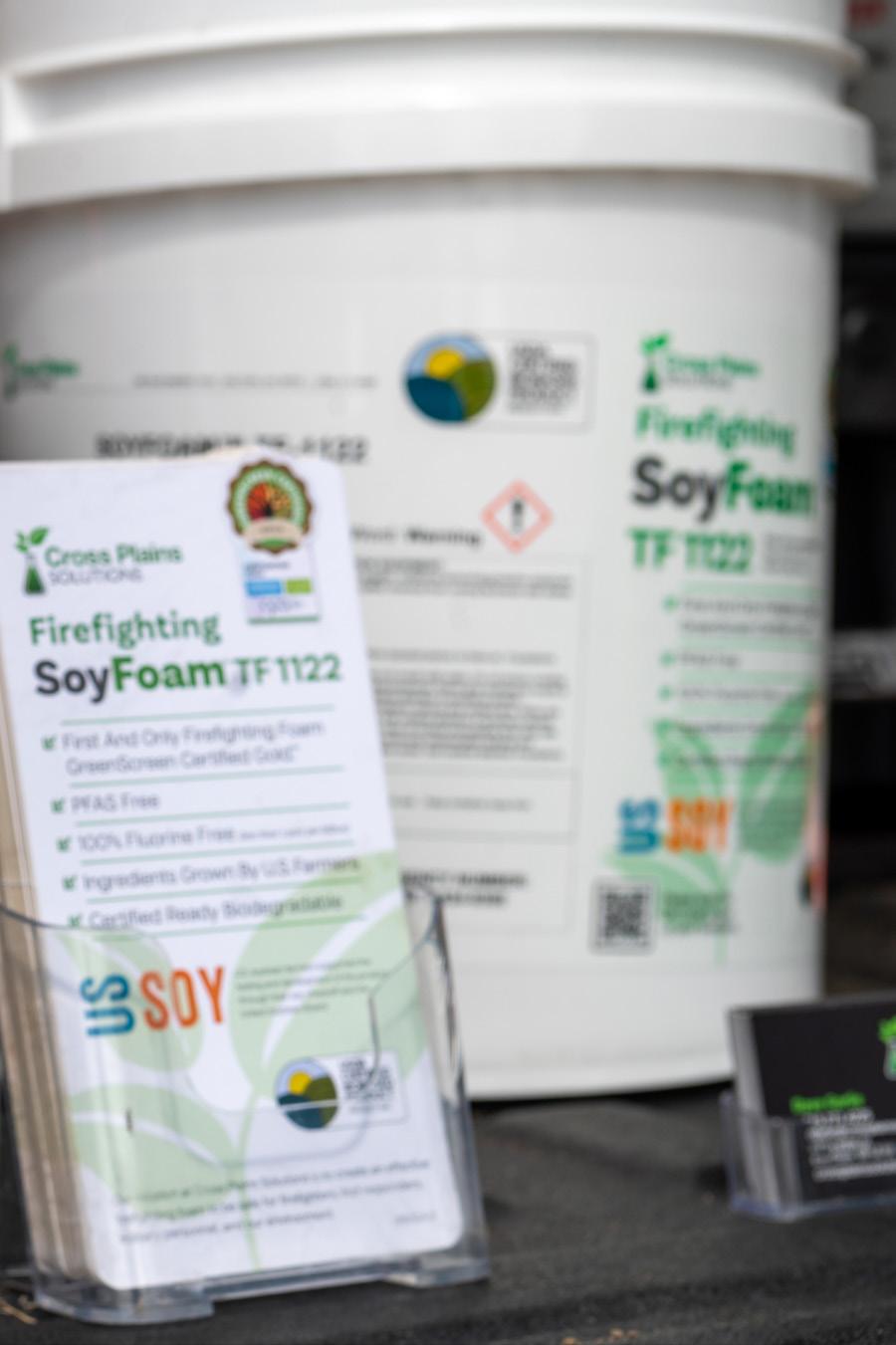
As of Oct. 1, 2024, firefighting foam containing PFAS was no longer permitted for Class A and Class B fire suppression. Developed by Cross Plains Solutions, SoyFoam is a smothering agent, made from soy flour, capable of extinguishing Class A and Class B fires while eliminating intentionally added PFAS chemicals.
“Soybean checkoff dollars went into the development and testing of this product, so it’s funded by the American farmer and uses soybeans grown by the American farmer,” said MSR&PC Treasurer Glen Groth, who farms near Winona. “It’s a win-win for rural America.”
The United Soybean Board (USB) began investing checkoff dollars in SoyFoam in 2022. A year later, the U.S. Forest Service and Department of Defense (DOD) began testing the product. MSR&PC became one of the first qualified state soybean boards to promote the product via a 2024 demonstration and Soybean Business cover feature.
That was just the beginning. In 2025, the Council launched the “Planting to Protect: From Farm to Flame” campaign to promote the product and support local fire departments while providing education about SoyFoam benefits and its value-added impact to farmers. The Council tapped into 44 organized soybean counties to promote the campaign and increase awareness of SoyFoam through checkoff investments. The campaign launched in March 2025, with a press release and announcements on social media and in MSR&PC’s e-newsletter, Minneline.
“Both farmers and firefighters are excited about SoyFoam,” said Council Director and past Chair Tom Frisch, who’s a longtime volunteer firefighter in Dumont. “It’s a great alternative to PFAS and we hope its use extends across the U.S.”
Once the campaign was activated, the county boards assisted in organizing demonstrations with their local fire departments, sharing digital resources and making the donations.
County directors embraced the checkoff-supported donations with gusto, and for good reason: SoyFoam is projected to increase demand by using protein from 12 million bushels of U.S. soy.
“We are proud to be able to donate the SoyFoam product to the fire departments in our community. The departments were happy to receive the donation and excited to give it a try since it would work with their equipment,” Martin County Soybean & Corn Growers Board
Treasurer Jacob Sukalski said. “These donations help support our local firefighters with safer, more effective tools and promote a new use for soybeans.”
From farm to flame

2,000+
Gallons of SoyFoam donated in 2025.
400+
SoyFoam pails donated to Minnesota fire departments.
250+
Number of fire departments across Minnesota that received buckets.
100+
Number of earned media placements from the Planting to Protect campaign.
84.2 MILLION
Media impressions connected to SoyFoam press releases, radio interviews, digital engagements, etc., in 2025.

The soy checkoff’s local and global impacts landed on the green again in 2025. During Farmfest, Minnesota’s largest farm-focused gathering, hundreds of attendees played another round on the MiniSoyta Golf Course. Kids to grandparents visited with farmer leaders and learned how checkoff projects across the state are bringing value back to Minnesota’s soybean farming operations.
The booth’s course featured soy-backed artificial turf, SYNLawn. The intent of the golf course was to incorporate key priorities at each hole through visuals, including hole markers and obstacles. When attendees arrived at the booth, they were given a scorecard with instructions on how to keep score throughout the course. Two trivia tables were also intertwined to allow attendees the opportunity to learn more about checkoff goals.
“We had fantastic engagement at Farmfest,” Council Chair Gail Donkers said. “Our booth traffic was as high as it’s ever been, and we really had a chance to tell the story of soy in a fun way and hopefully left our visitors with some important takeaways on how the checkoff is delivering for our farm economy.”
The MiniSoyta course created a space for attendees (and families) to learn more about MSGA and MSR&PC while having fun together. The average time spent golfing was around 11 minutes.
Each course hole featured a different region of Minnesota to represent how the Council works across Minnesota toward improving farmer profitability through creating new, value-added uses, sponsoring innovative research projects and pushing new markets to the forefront.
Those cities included:
• Waseca: Where cutting-edge research happens at the Southern Research and Outreach Center (SROC), Plasma Blue testing unit and Agricultural Utilization Research Institute
• Hutchinson: A McLeod County city using soy-based road sealant and fertilizer made with soymeal
• Ada: Site of the first county-level SoyFoam demonstration in April 2025
• Duluth: Through checkoff investments, the Council continues to push the Port of Duluth-Superior as an opportunity to diversify markets through shipping soybeans to emerging markets in Europe, North Africa and Uzbekistan
To draw media coverage to MSR&PC’s booth, a media event was planned and executed to promote checkoff awareness. Media partners were invited to the booth for an exclusive look at the booth and to speak with farmer leaders on MSR&PC’s priorities.
“It was all hands on deck at Farmfest, and our board and staff rose to the occasion, as always,” Council CEO Tom Slunecka said. “I couldn’t be prouder to represent our soybean industry and show how we’re working every angle across our priority areas to build a better tomorrow for our farmers.”
Following Farmfest, the Council donated the SYNLawn turf to Farmamerica for use at the Waseca interpretative center.

• SYNLawn can replace up to 60% of traditional polyurethane with polyols from U.S.-grown soybeans.
• This checkoff-supported product underlines a shared responsibility toward eco-friendly practices that support Minnesota’s farming community and leads to added value for soybean farmers.
• Biobased products such as SYNLawn contribute over $400 billion to the U.S. economy. SYNLawn is also PFAS-free and can reduce water bills by up to 70%.
• SYNLawn’s Minnesota distribution facility is located in Cannon Falls. Visit synlawnmn.com for more details on residential, business/commercial, pet and sports turf services.
At the grassroots level, MSR&PC’s one-of-a-kind county soybean organizations are developing leaders who are working hard to promote agriculture and soybeans throughout all of the state’s unique regions. From Lake of the Woods to Le Sueur, from Mower to Mahnomen and from Dakota to Douglas, the county soybean organizations supported soy though 4-H and FFA, scholarships, parades, food shelf donations, event sponsorship, fuel events, annual meetings and other soybean promotions.
“Minnesota farmers are intertwined in our communities,” said Corey Hanson, Norman County board president and MSR&PC director. “Beyond the farm, we’re involved in our churches, our schools; we’re first responders, parents and local volunteers, and our county program is a reflection of who we are as farmers, business leaders and neighbors.”
Minnesota proudly boasts the only county soybean program in the country. With 44 organized, independent county programs across the state, Minnesota Soybean can tap into the power of more than 500 county leaders to amplify checkoff messaging at a local level. Along with selfgenerated funds, counties are allotted checkoff dollars from the state each year to utilize throughout their counties for the promotion and education of soybeans and soybean products.
Counties such as Lac Qui Parle and Todd hosted fuel events to promote biodiesel where they provided a discount at the pumps and handed out biodiesel fact sheets to educate users on the advantages of using soy-based biodiesel.
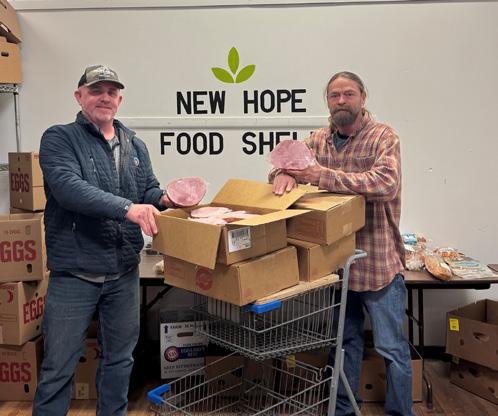
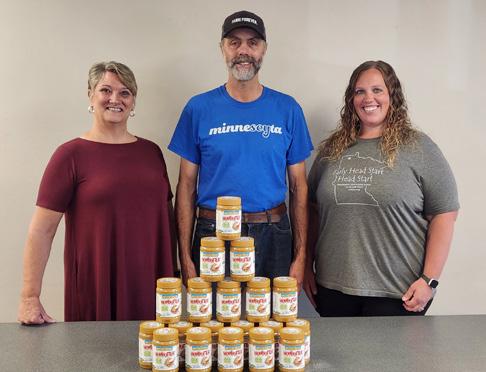
To promote how soy is feeding the livestock that feeds us, counties such as Murray and Norman handed out free pork burgers during their county fairs. In addition to promoting soy, counties such as Nicollet-Sibley and Swift supported their local food shelves with products that are made of soy.
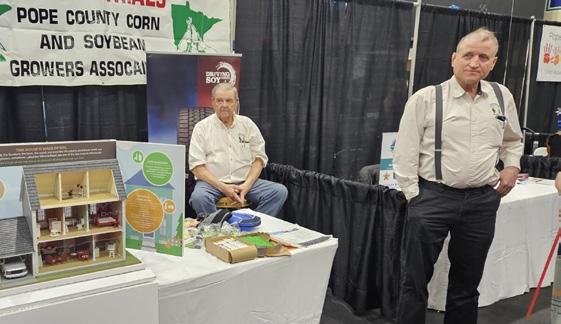
To showcase the many uses of soy, Pope County attended a local home and garden show with a 3-D printed soy house on display, which demonstrated the many household products and components containing soy. In Lincoln County, directors helped raise over $20,000 in scholarships for local students.
These are just a few examples of the many unique and creative ways that our soybean county organizations are making it count in 2025! The county program is nearing its 50th anniversary, and in 2026, MSR&PC county program managers will continue to build relationships and collaborate with farmers to promote soybeans within their communities.
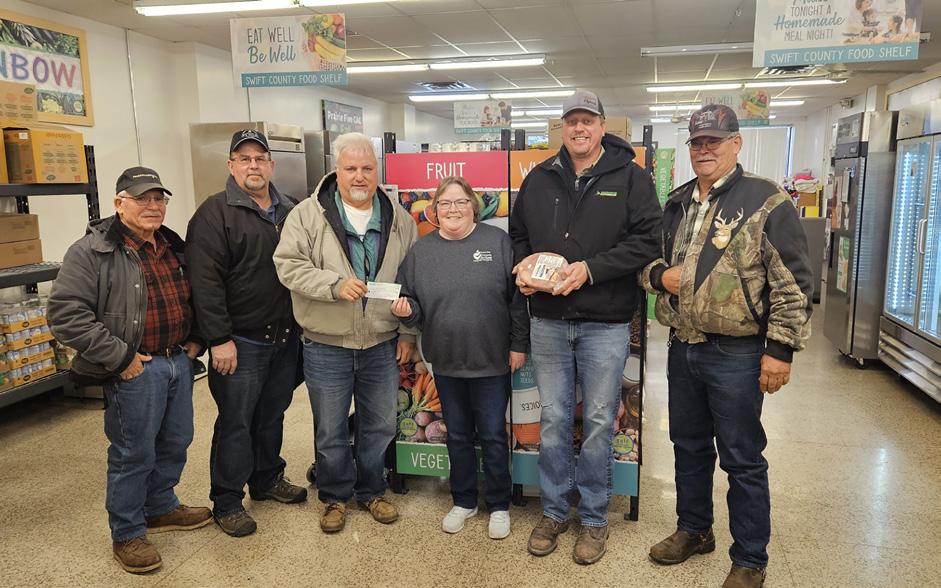
“Our county soybean organizations play a vital role in helping deliver our checkoff messaging to those at the local level, which could mean providing high-oleic soybean oil for a local fish fry, purchasing the biodiesel for the FFA bus trip or donating soy-based tires to law enforcement,”
- Tom Frisch, MSR&PC District 4 director
For decades, Minnesota soybean farmers have relied on unbiased, checkoff-funded production and agronomic research to improve yields, manage pests, weeds and diseases; and develop new varieties to increase acreage across the state.
“Without support from the soybean checkoff, there’s simply no way my area in northwest Minnesota would have the presence it has today,” said Corey Hanson, a Norman County director who joined the Minnesota Soybean Research & Promotion Council in July 2025. “The private and public research we’re funding isn’t focused on one region of Minnesota. When we’re reviewing projects, we’re thinking about the entire state.”
Fiscal year 2025 was a period of transition for MSR&PC’s research team. Longtime Research Director David Kee retired after nearly a decade overseeing the program. In Kee’s place stepped soil scientist Sergio Cabello Leiva, whose expertise in seed production and applied fieldwork made him a seamless fit for the Council. In his first growing season as research director, Cabello Leiva traveled across the state, building on-farm relationships with farmers and research colleagues from across the Upper Midwest. He also helped developed a new online crop update series, which via YouTube, highlighted various checkoff research and production tips from researchers, including addressing soybean cyst nematode, sudden death syndrome, soybean nutrition, soybean gall midge, weed management and more.
“Sergio took what David Kee helped build and brought in some new ideas and perspectives into our program,” Council Secretary Pat Sullivan said. “We need to continue to find new ways to share our research, and the video series helped highlight those projects with short, visual bursts of information.”
In total, the Council funded 20 projects in 2025 in three topic areas: pest/weed management, genetics and other agronomy. Checkoff research projects are generally funded in three buckets: those designed to address today’s challenges, issues that could arise in the next five years and projects that are meant to achieve long-term success.


In FY25, the Council sponsored the U.S. Soybean Genetics Collaborative Seed Guide to showcase public breeding programs. Seven varieties from the University of Minnesota were included in the report.
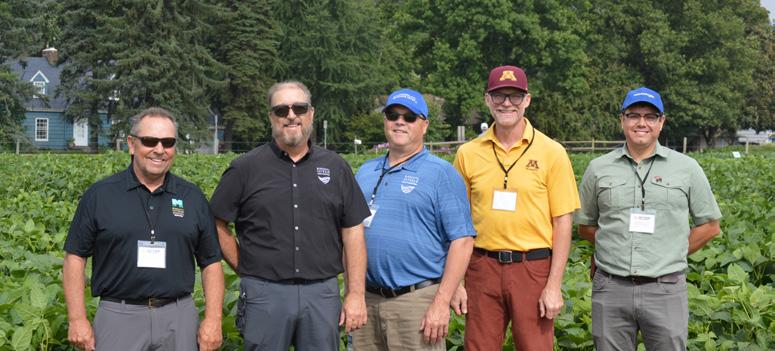
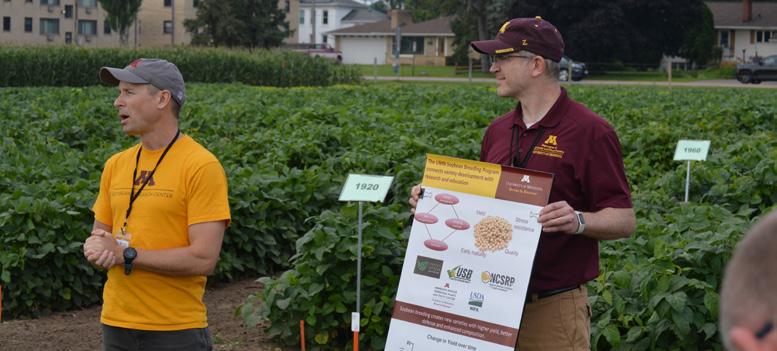
The Council also leverages checkoff dollars through its involvement in the North Central Soybean Research Program (NCSRP), a multi-state collaborative soybean research effort that invests in university and Extension research. In August 2025, the Council partnered with the University of Minnesota to host NCSRP’s summer meeting. Council directors and university researchers gave the NCSRP team a tour of the UMN Soybean Research Center and Ag Experiment Station, which has been in operation since 1885.
“The work the UMN research team is doing is nothing short of world class,” CEO Tom Slunecka said, “and the soy checkoff plays a huge part in the amazing work they’re doing.”
Council Director Rochelle Krusemark said NCSRP directors were impressed by the breadth of checkoff-supported research at the UMN, from soybean breeding and genetics to biotechnology.
“It was a proud moment,” she said.
In late August 2025, Council Chair Gail Donkers and colleagues participated in the second UMN Soybean Research Center field day. The agenda also featured a mini version of MSR&PC’s Future of Soy Summit to discuss big concepts within soybean research.
The Council also published its first Research Report, which highlighted key takeaways from 2024-funded projects. Highlights from 2025 projects are expected to be available later in 2026.
“The research we’re working on is part of our mission to help bring those dollars back to our farms,” Donkers said.
Scan the QR code to view episodes from the 2025 crop updates.
Over seven million acres of soybean are grown in Minnesota each year, and while domestic markets are increasingly critical to farmer profitability, building and sustaining exports across the globe for the long term has been a top priority for MSR&PC checkoff investments for decades.
Trade and tariffs were buzzwords throughout fiscal year 2025, and Minnesota soybean farmers felt the economic impact more than any other commodity. In a typical year, about one in four rows of Minnesota soybeans is exported to China. In FY25, with trade tensions mounting, the Council looked beyond China to diversify demand across the globe for our state’s top ag export.
Council leaders don’t just think about the year ahead when approving checkoff funds toward programs that develop international markets. The checkoff plants seeds for growth for years, and decades, to come.
IN FY25, THE COUNCIL ALSO LEVERAGED CHECKOFF FUNDS BY SUPPORTING REGIONAL AND NATIONAL PARTNERS, INCLUDING:
• Minnesota Pork Congress
• Northern Crops Institute (NCI)
• Northern Soy Marketing (NSM)
• Soy Transportation Coalition (STC)
• Specialty Soya and Grains Alliance (SSGA)
• Upper Mississippi Waterway Association (UMWA)
• U.S. Meat Export Federation (USMEF)
• U.S. Soybean Export Council (USSEC)
• USSEC’s Soy Excellence Center (SEC)
• World Initiative for Soy in Human Health (WISHH)
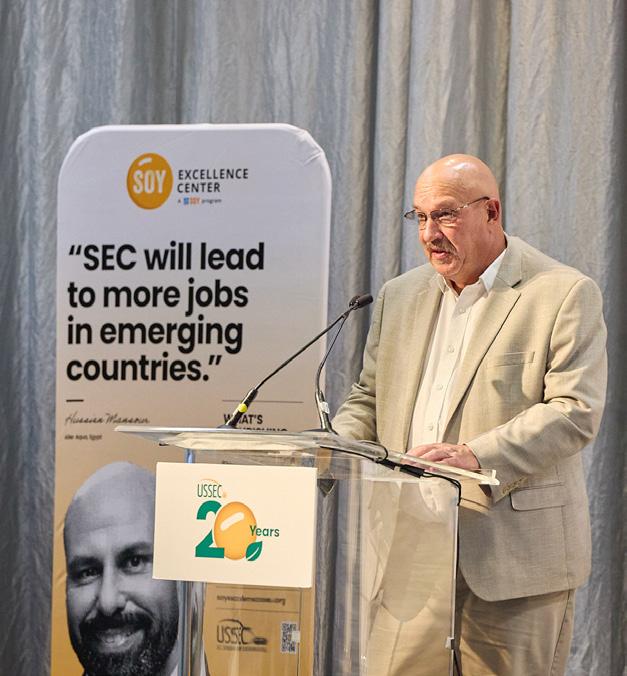
Council directors also have a voting member on many of these national boards. Chair Gail Donkers sits on SSGA (now known as the U.S. Identity Preserved Alliance) and the SEC; Joel Schreurs is a USSEC director; Joe Serbus is a STC director; Paul Freeman sits on UMWA and NCI; and Council Treasurer Glen Groth and Director Patrick O’Leary both represent Minnesota on NSM. Minnesota’s United Soybean Board Directors Tom Frisch, O’Leary, Gene Stoel and Lawrence Sukalski also promote international trade in their roles directing national checkoff funds. The Council continues supporting state partners Minnesota Milk and Minnesota Turkey, along with events including NCI programs and shortcourses, Pacific Northwest trade missions and more. The Council also established connections through partnering with USSEC for a series of trade team visits. In August 2025, Minnesota farmers Ryan Mackenthun and Matt Purfeerst hosted South Korean buyers for a closer look at high-quality Minnesota soybeans.
Council Vice Chair Ben Storm chairs MSR&PC’s promotion action team, which reviews and approves projects that look toward the future of international trade. The Council also continued its efforts in growing the Uzbekistan market in 2025. MSR&PC’s foresight led to a purchase of 150 metric tons of U.S. soy, a direct result of relationships started and nurtured by Council directors and staff leaders. In 2025, following a third trade mission to Central Asia, MSR&PC’s checkoff investments led to a Memorandum of Understanding to expand collaboration on developing U.S. soy value chains to advance trade between the United States and Uzbekistan. Outreach efforts in Uzbekistan will continue in 2026.
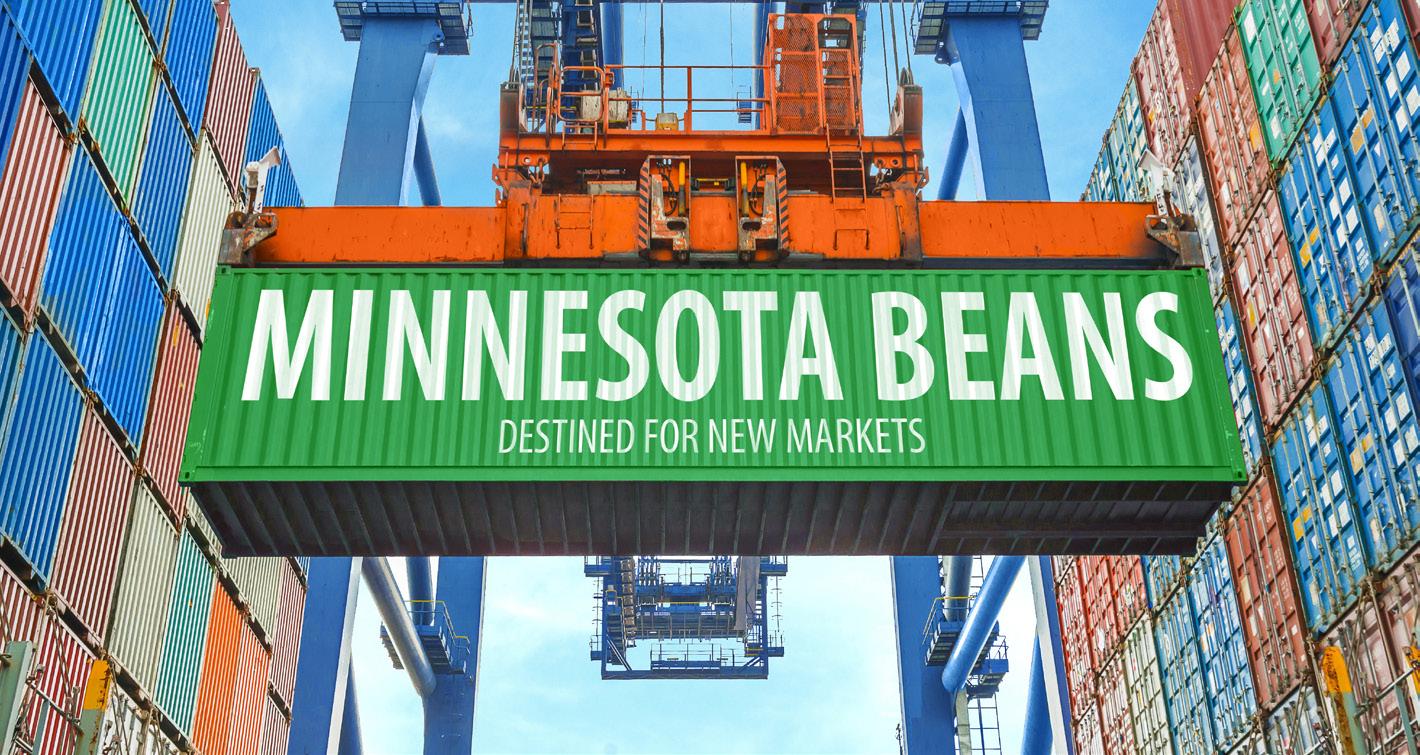
Soybeans are Minnesota’s top ag export product, with Minnesota’s international sales typically exceeding $2 billion. Each year, about 60 percent of Minnesota’s soybean crop is exported to international markets. About 70 percent is shipped by rail to the Pacific Northwest and ports in California, while the remaining 30% is typically sent down the Mississippi River to the Gulf of Mexico and east to the Port of Norfolk. About 2% of all U.S. soy exports are shipped via the Great Lakes-St. Lawrence Seaway.
“Thanks to checkoff investments, emerging markets across the world are seeing why Minnesota and U.S. soybeans are the highest quality in the world.” - MSR&PC Vice Chair Ben Storm

Throughout the 21st century, Minnesota has been looked upon as a national leader when it comes to proactive promotion and securing a spot for biodiesel as a widely accepted part of the fuel supply. Across the nation, biodiesel has become a timely drop-in option with immediate results for both public and private organizations looking to reduce their carbon footprint.
In 2025, MSR&PC continued its longstanding partnership with MEG Corp to support and expand current markets for soybean oil by providing education, promotion and technical support of biodiesel. MEG Corp also coordinated the 17th annual See for Yourself tour to the Clean Fuels Conference in San Diego, inviting MSR&PC Directors Joe Serbus and Bill Zurn; fuel distributors; service technicians; and other influencers to learn more about advancements in the biodiesel industry and how they can benefit by using blends beyond Minnesota’s statewide B20 (20% biodiesel) blending requirement. Minnesota farmer Chris Hill also represents MSR&PC on the Clean Fuels Governing Board.
In a prime example of the impact of See for Yourself, in 2025 the city of Edina converted 10 of its heavy-duty trucks to run on B100 through the Optimus Technologies Vector System after learning about technology while participating in the program. It resulted in an instant reduction in greenhouse gasses and better fuel mileage with no fuel issues, even in Minnesota’s harsh winters.
Showing off biodiesel’s high-performance capabilities, MSR&PC also partnered with the United Pullers of Minnesota to promote and educate competitors and spectators about the benefits of using biodiesel. Biodiesel gives pullers an edge by increasing horsepower and added lubricity, extending engine life even in high performance environments.

• 1 bushel of soybeans = 1.5 gallons of B100
• Biodiesel increases the value of soybeans by over $1 per bushel and boosts demand by 13%.
• Mike Youngerberg, one of the nation’s leading biodiesel experts, will mark 40 years with Minnesota Soybean in 2026.

The Council partnered with Farmamerica in June 2025 for the inaugural Soy & Tech Day in Waseca to showcase how soybeans work miracles to add value in sustainable ways.
Arranged with checkoff support from the Council, the Soy & Tech Day gathered vendors from different aspects of the soy industry to teach attendees about the various uses that soybeans bring to everyday life. Farmer directors, media members and industry leaders all attended the Soy & Tech Day.
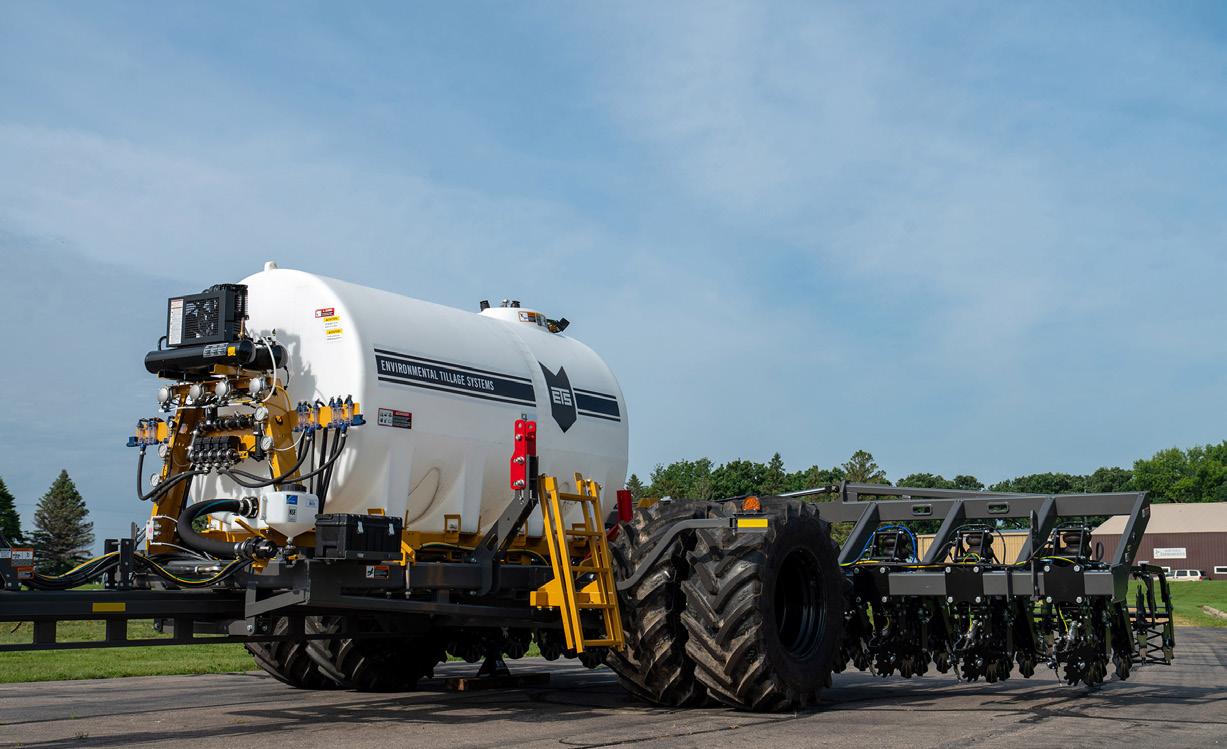
The event highlighted typical farm usage, shown by Environmental Tillage Systems, to various other checkoff investments, including biodiesel, Plasma Blue, Roof Maxx and SoyFoam. The goal of the event was to promote the many different ways soybeans can be used, beyond typical animal feed and fuel. More than 1,000 commercially available products contain soy.
While biodiesel is already a common use of soybeans in Minnesota, MnDOT brought one

of its B100 trucks to the event to showcase the future of biodiesel. This truck, powered by Optimus Technology, runs on B100 (100% biodiesel).
The Council continued its statewide promotion of SoyFoam, a checkoff-supported fire depressant that boasts a combination of health and environmental benefits, along with adding demand for Minnesota soybean farmers. Soyfoam is 84% biobased and made of soy flour, grown by U.S. soybean farmers. Dave Garlie of SoyFoam developer Cross Plains Solutions attended the Soy & Tech Day to explain the technology, while firefighters from nearby Waseca and Morristown also provided a demonstration.
The demonstration consisted of three different simulations mimicking a wood fire, grass fire and fuel fire. SoyFoam was able to extinguish every type. Waseca Fire Chief Jason Forshee also tried a water vs. foam experiment, where one pallet on fire was extinguished with water and one with SoyFoam. When he attempted to re-ignite the pallets, the SoyFoam showed no re-ignition.
“Events like this are really important to demonstrate to the community what we’re trying to do as a science community,” Garlie said. “Chief Forshee and staff did an excellent job demonstrating.”
Another demonstration was provided by Roof Maxx, which presented a live rejuvenation of Farmamerica’s schoolhouse roof. Roof Maxx is a checkoffsupported, soybean oil-based solution that replaces the oils lost over time in asphalt shingles and helps to prolong the life of a roof for up to 15 years. Since it uses soy oil instead of petroleum, it is safer for the environment, humans, pets and plants.
“I will attest, we didn’t have to cover any of the plants and no shrubs or flowers died,” said Rochelle Krusemark, MSR&PC District 8 director, a Martin County farmer who had her roof rejuvenated with Roof Maxx. “Not only does Roof Maxx use soybeans, but it’s good for the environment and it can reduce some of the asphalt in landfills.”
Plasma Blue was also showcased at the event and ran demonstrations on-site.
“Plasma Blue is a revolutionary new technology that can make biodiesel 7-17 cents a gallon cheaper than any other process,” Council CEO Tom Slunecka said.
Farmamerica is Minnesota’s Agricultural Interpretive Center. It was established by the state in 1978 and, with checkoff support, tells the story of Minnesota agriculture – past, present and future. Erin Rossow, sales manager for Ag Management Solutions, which oversees the Council, serves as Farmamerica’s vice chair.
While the ag economy might have been largely stuck in neutral in 2025, the Council stayed on track by diversifying its revenue sources through hosting at event space within its home office.
Offsite Meetings and Events, which opened its doors in 2024, is a versatile space capable of hosting casual gatherings among smaller groups or pivoting toward formal business meetings for larger organizations. The Mankato-based venue features three customizable and accommodating rental spaces that simplify stressful planning. The building features an expansive auditorium, executive boardroom and a large conference room. Offsite offers additional features for renters to use. There’s plenty of parking, full-service staff support, atrium and a cater-friendly kitchen and dining area to allow guests to cook to their needs.
While the Council and its staff use the space primarily for daily operations, Offsite offers a convenient and accommodating spot for nonprofits, businesses and organizations throughout southern Minnesota.
In FY25, Offsite hosted 55 events, bringing in nearly 1,500 professionals from across several industries, including agriculture, banking and nonprofit groups. Offsite also held its first small trade show.
In August 2025, Offsite hosted the Northern Crops Institute’s INTSOY Intro to Soybeans Short Course. Council CEO Tom Slunecka welcomed a delegation of buyers from Latin America, Africa and Asia, highlighting soy’s many sustainable uses.
“The facility is beautiful, and what an incredible space to host groups for meetings, trainings, conferences and more! We will definitely be recommending your space and service,” said Amanda Sommers, program director for Minnesota FFA.
To reserve your event at Offsite for 2026, visit offsite-mn.com or contact Amanda Beavens at 507-810-0334
Offsite Auditorium:
• 90-person capacity
• 278” presentation screen
• Commercial overhead door
• Video and voice tracking capabilities with microphones
• Storage area
Executive Boardroom:
• 24-person capacity around board room table
• 37’ x 23’ room
• Video and voice tracking capabilities
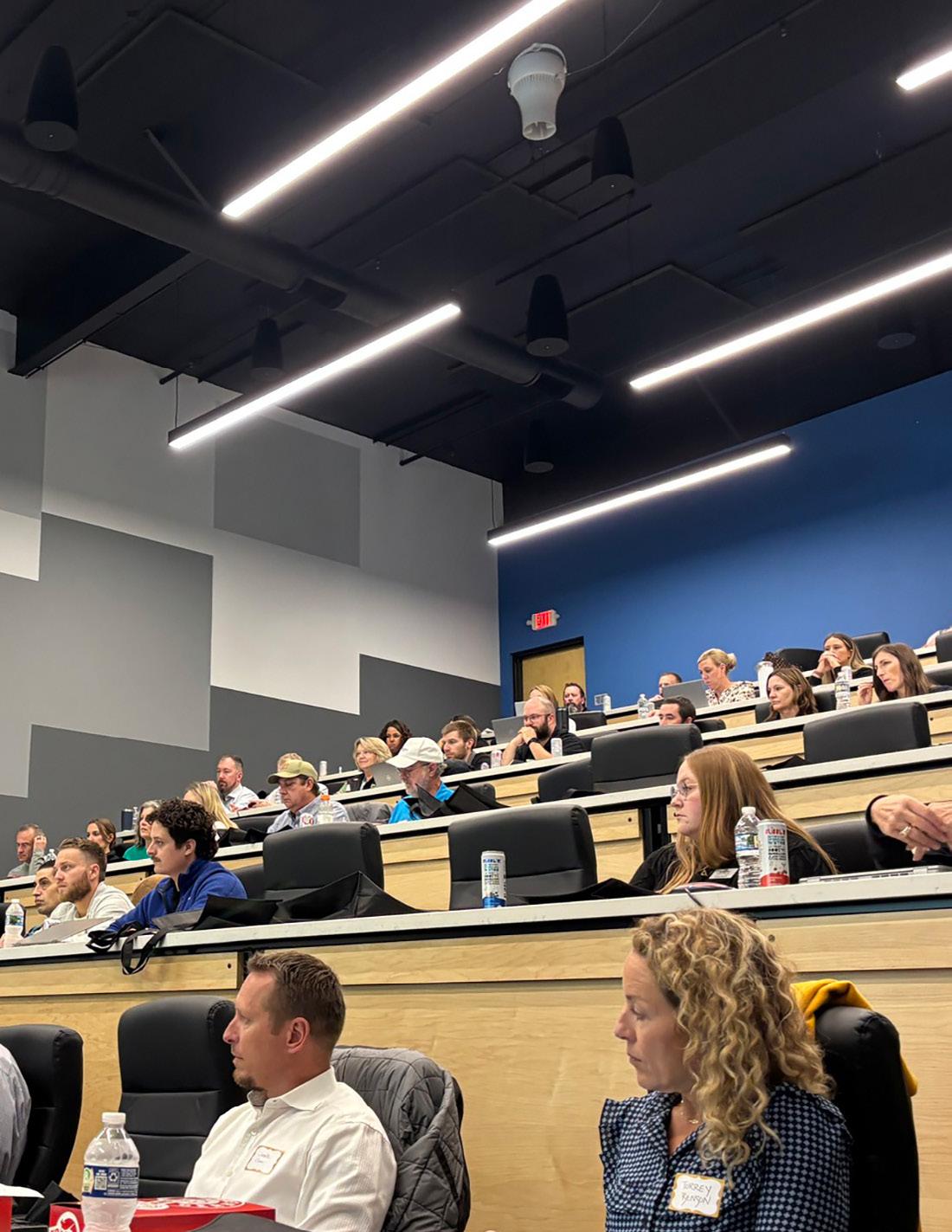
Large Conference Room
• 36-person capacity
• 27’ x 23.5’ room
• Flexible seating arrangements
• Video and voice tracking capabilities
Reception Hall
• Holds up to 50 people
• 41’ x 21’ room
• Two large-screen TVs
• Adjacent catering kitchen
As a Midwest farm kid who’s worked in agriculture for virtually my entire adult life, I’m constantly amazed at the advancements our industry has witnessed across the decades. And the transformation from the 2010s to the 2020s has been a seismic shift.
Friends, the future is here.
The year 2025 marked my 13th year as CEO of the Minnesota Soybean Research & Promotion Council. As I reflect not only on the past year, but my baker’s dozen at MSR&PC, I am humbled — and, quite honestly, a bit overwhelmed — at how far we’ve come and how much we’ve grown as an organization.
When I started as CEO in August 2012, our weekly electronic Minneline e-newsletter was printed and mailed (sometimes even faxed) to directors. Today, Minneline is read in a variety of ways, mostly on our smartphones. Imagining that our marketing and communications work would be recognized by a group like the National Agri-Marketing Association was a mere pipe dream in 2012. By 2025, earning national recognition has become our team’s standard. And Artificial Intelligence? Well, that was a faraway science fiction concept back in the early 2010s. In our modern world, if you’re not using AI in all facets of your organization, you’re falling behind quickly. We’re determined to keep up with the times by using AI in an ethical manner.
In 2012, Minnesota used B5 (5% biodiesel) during the summer months. Today, we’ve moved to B20, and cities across the country, including Edina, are adopting B100 for their municipal fleets, helping to increase demand for our soybeans by 13%. During the latest marketing year, Minnesota soybean farmers harvested nearly 330 million bushels totaling $4.23 billion in value; the checkoff’s promotion of biodiesel helped boost our farmers’ bottom lines by an estimated $429 million. Let’s go back even further: Since 2012, our finance team estimates biodiesel has added over $5 billion to Minnesota farm economy!
Our checkoff-supported research program, which partners with public universities and private companies, continues to earn its place among the industry’s finest. The Council’s one-of-a-kind organized county program covers the state to not just share updates; our team is empowering our local leaders to promote soy checkoff programs like soy-based shoes, tires and firefighting foam while also strengthening their community bonds.
Building new domestic and international markets continues to be a top checkoff priority. From Bangladesh to Benson, Minn., we’re building demand for our soybeans. The world is changing before our eyes, and I saw this for myself when I returned to Asia in 2025. Since my first visit to the region in 2013, I’ve seen tremendous positive impacts, both for their consumers and the environment. All of this is driving increased demand for U.S. soy. Since 2012, our farmer leaders have met with tens of thousands of global buyers; these buyers know our beans are the best of the best. They prefer Minnesota soybeans because of their quality and the relationship we’ve built. That’s why the Council continues to invest in international marketing to develop new markets beyond China. Those efforts are paying dividends: The Council is building demand for our soybeans in Central Asia, Northern Africa and Northern Europe while promoting the Great Lakes St. Lawrence Seaway System and encouraging the expansion of soy crush plants across our region. In 2012, our crush capacity reached around 1.5 billion bushels. This year, despite no shortage of economic uncertainty, a dozen new plants opened across the country, bringing our expected crush capacity to over 2.55 billion bushels.
Our staff continues to grow across our priority areas. Change is never easy, and positive change is hard fought. Short-term mistakes are inevitable, but with focus, dedication and determination, we can achieve longterm wins. No one understands this better than our board and staff who work every day to drive profitability. While we’ve come a long way since the 2010s, as we enter the back half of the 2020s, we still have much further to go, and I’m energized and proud to work alongside our team in leading us into agriculture’s next era..
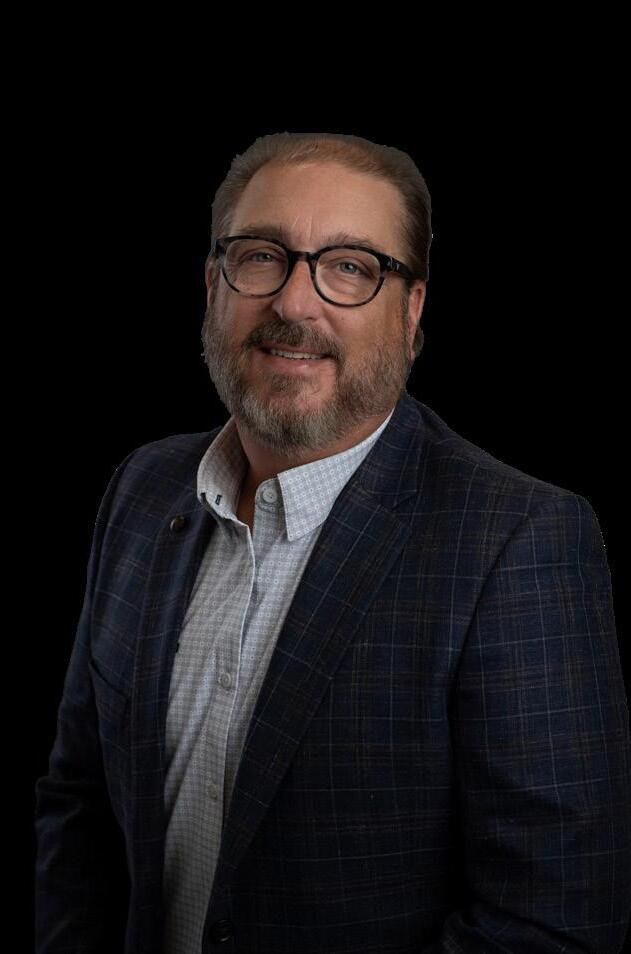
TOM SLUNECKA, MSR&PC CEO