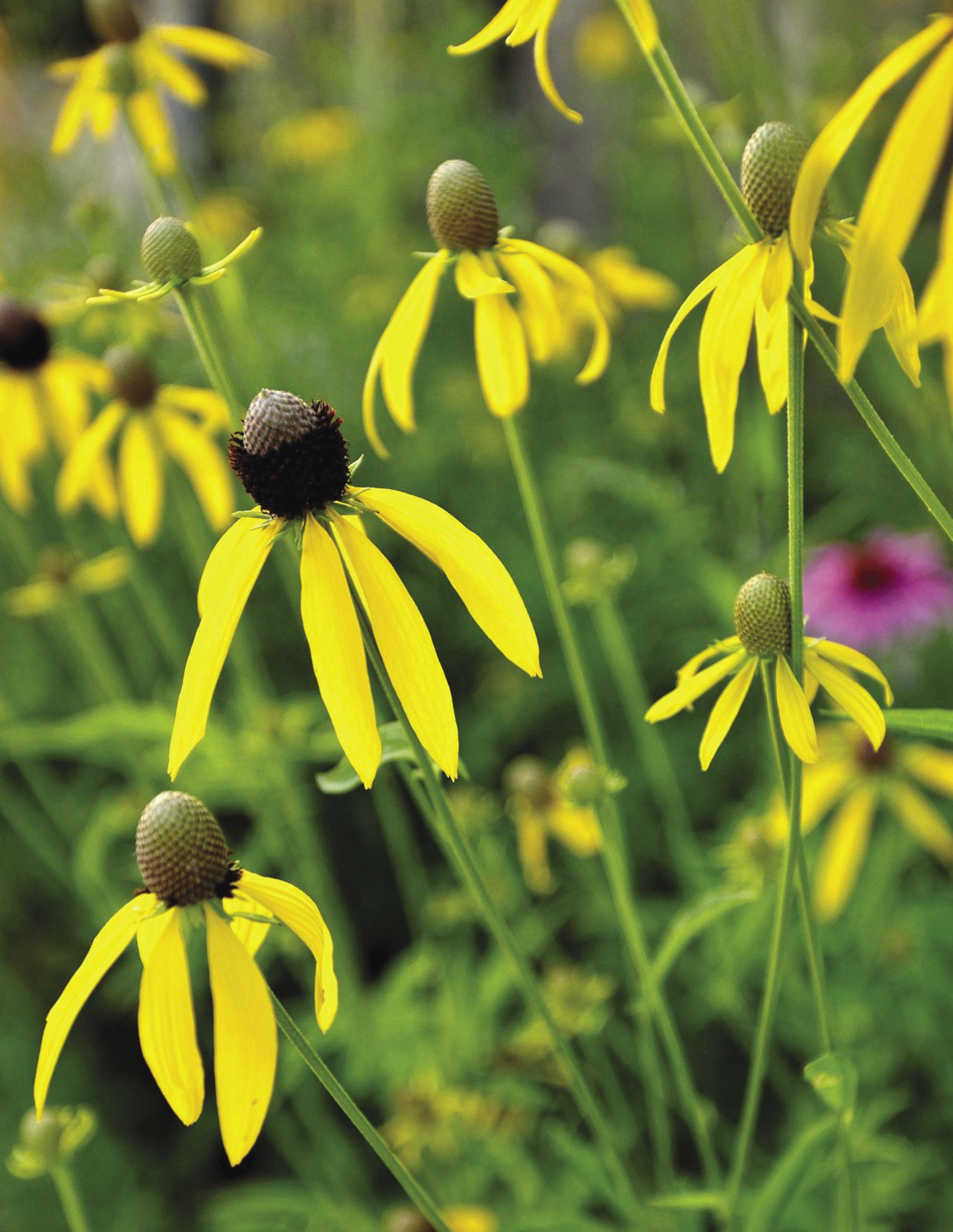
Native grey-headed coneflower (Ratibida pinnata) in the gardens outside the Tashjian Bee and Pollinator Discovery Center. Photo by
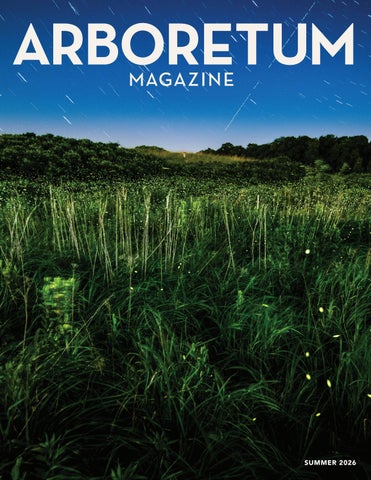
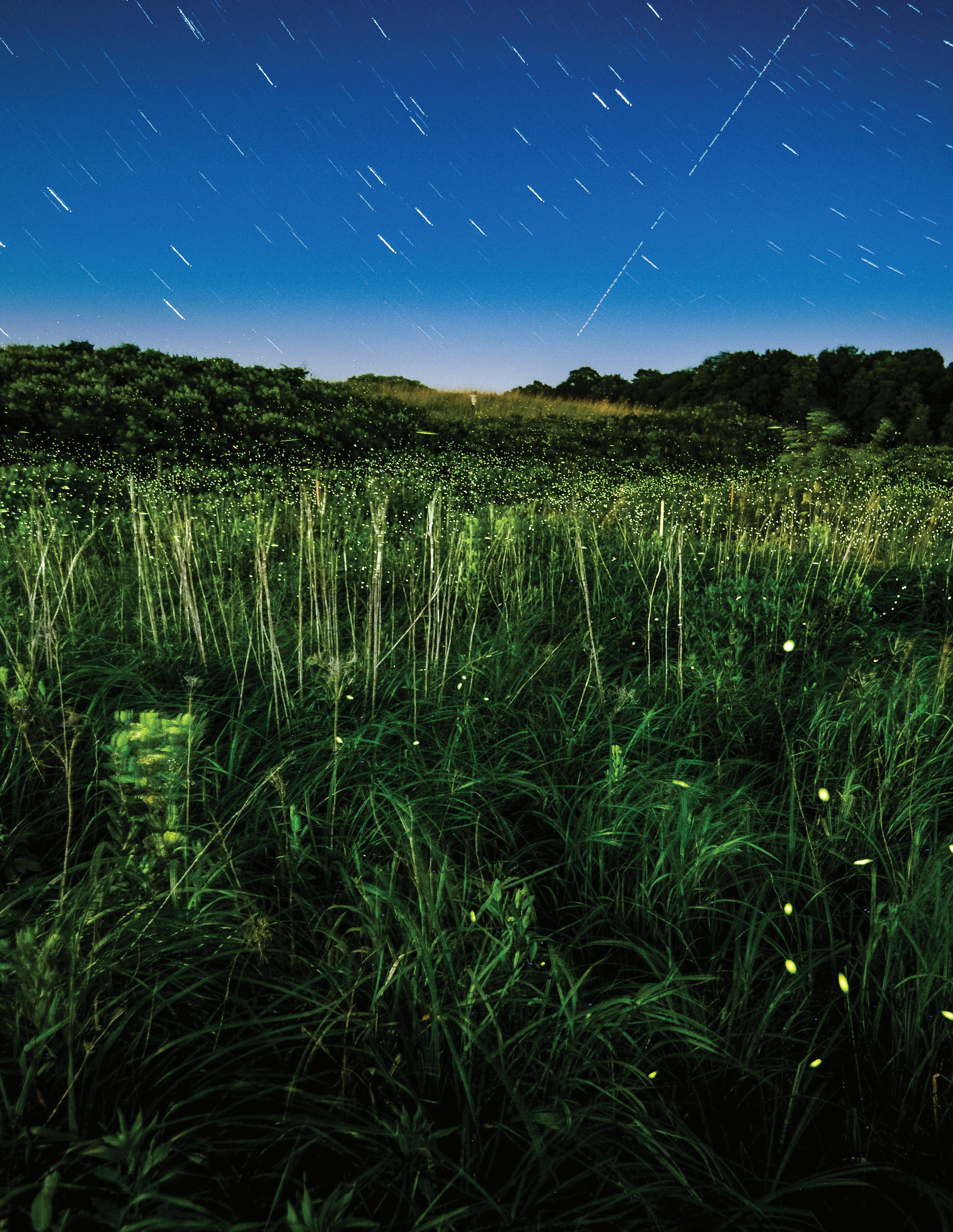
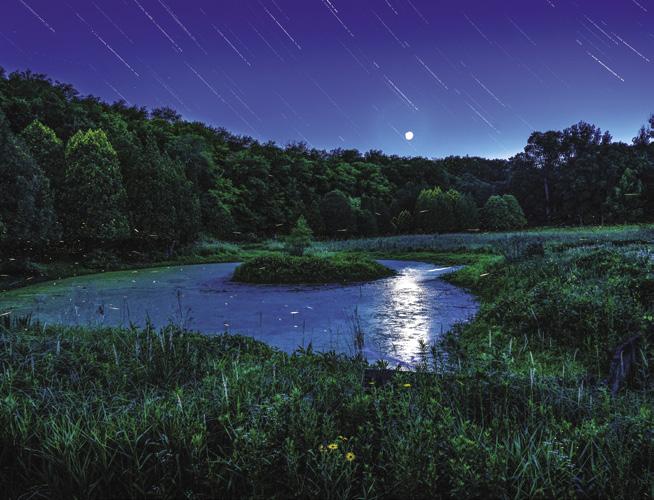
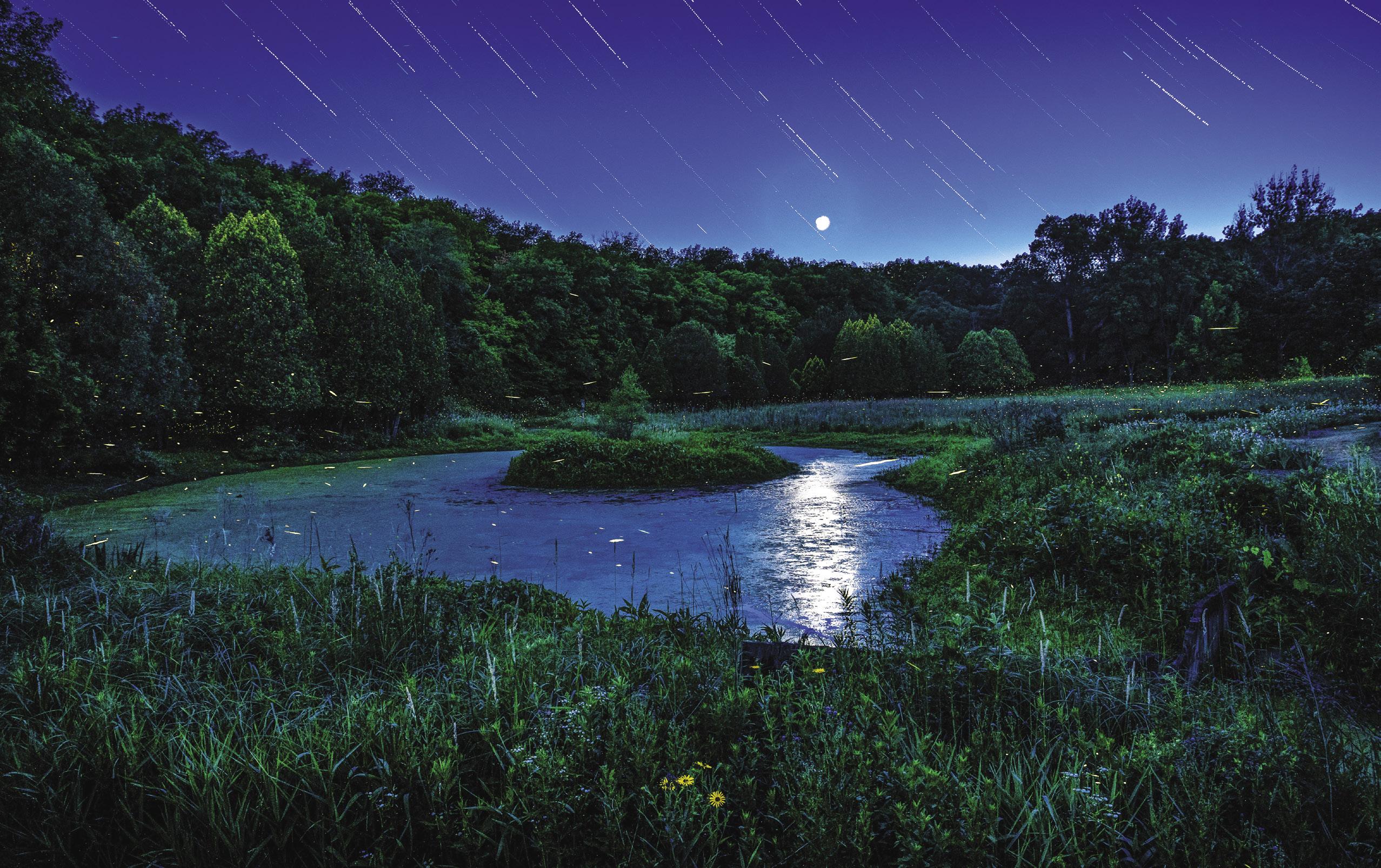
ON THE COVER Photographer Jason Boudreau-Landis uses a type of long exposure to capture the movements of fireflies in the restored Spring Peeper Meadow.
Phil Zumsteg
MAGAZINE
SUMMER 2026, VOL. 45, NO.2
Elise Bremer Editor
Brenda Drake Lesch
Art Director
Andrew Gapinski Executive Director
Matthew Clark, Ph.D. Director of Research
Rachelle Crosby Director of Facilities & Project Management
Timothy S. Kenny Director of Education
Jared Rubinstein Director of Horticulture & Collections
David Senior Director of Business & Finance
Susan Taylor, Ph.D. Director of Advancement
Tom Lany
Senior Marketing & Communications Manager
Kathy Persian President, Arboretum Foundation
Arboretum Magazine is published by the University of Minnesota Landscape Arboretum. The Arboretum is part of the College of Food, Agricultural and Natural Resource Sciences (CFANS) at the University of Minnesota. The magazine is a benefit of Arboretum membership. To request a copy of this publication in an alternate or digital format, please call 612-301-1257.
Arboretum Magazine is printed on paper containing 100% sustainable recycled fiber.
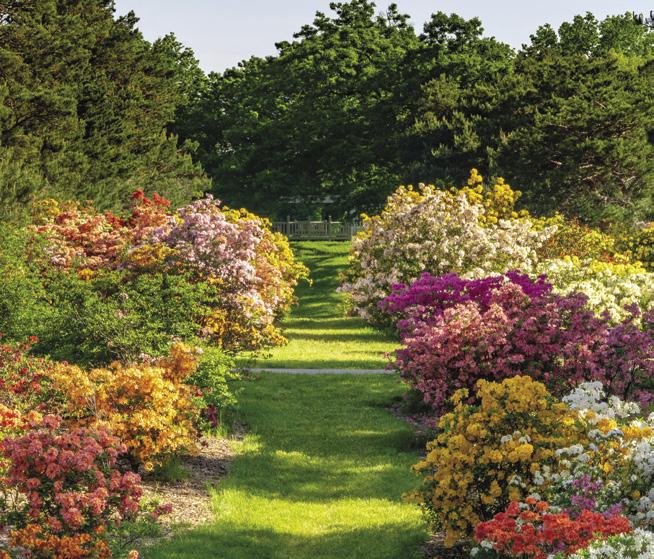
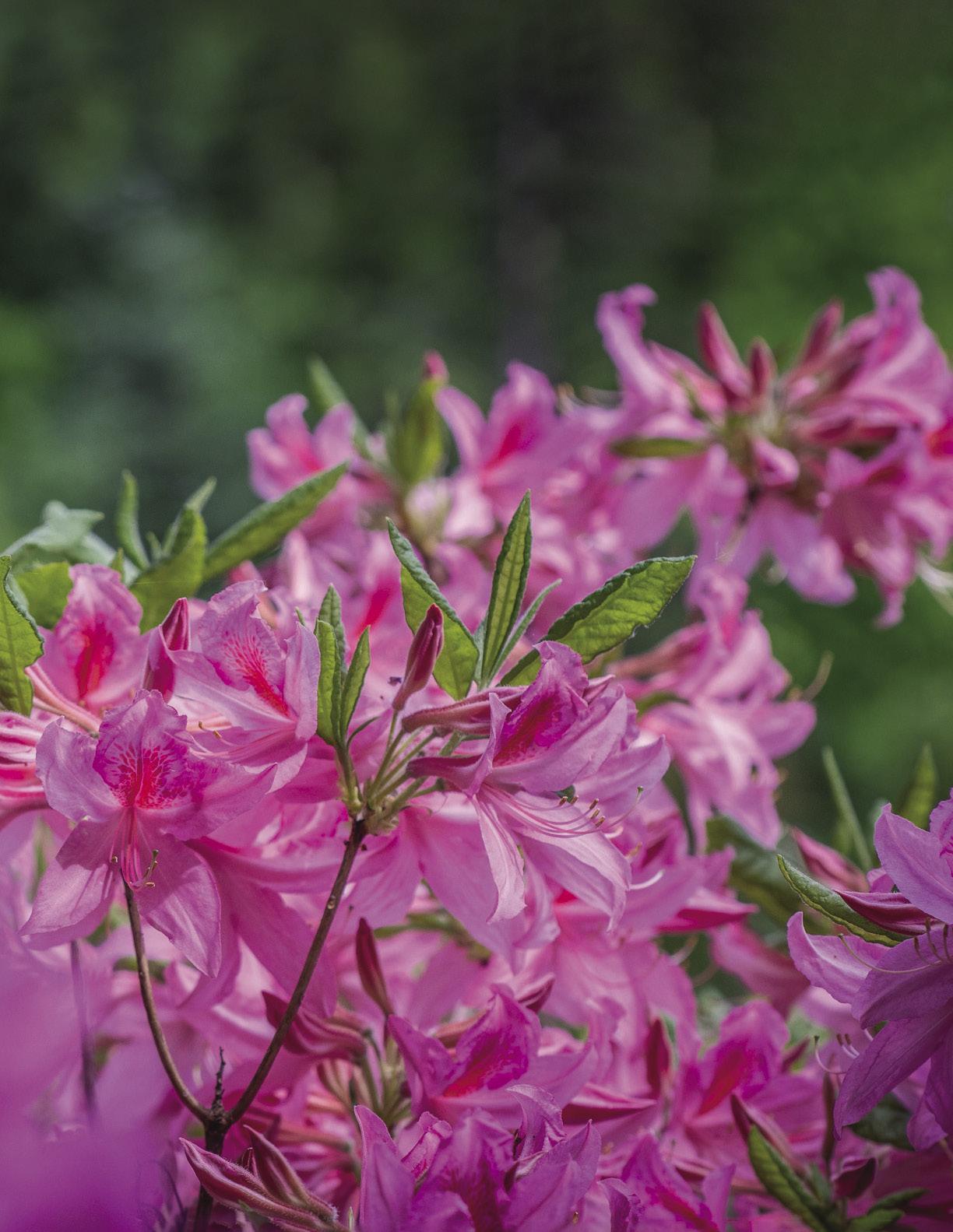
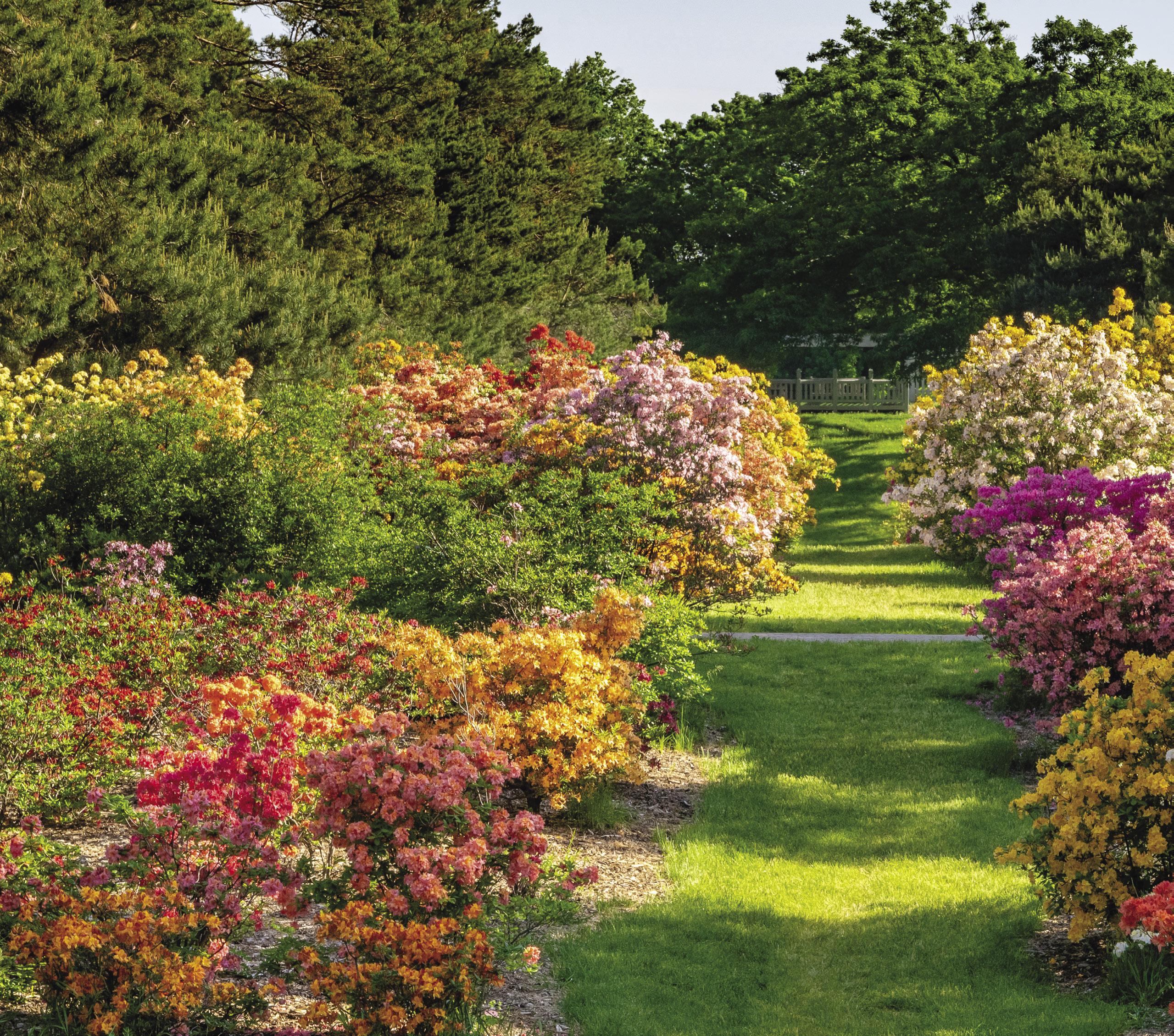
Vibrant azaleas in shades of red, pink, orange and yellow mark the transition from spring to summer at the Arboretum. But before the introduction of cold-hardy azaleas by the University of Minnesota, these ornamental shrubs didn’t grow in the upper Midwest.
The Lights series of hardy azaleas — which began with the introduction of the pink Northern Lights™ azalea in 1978 — was developed at the Horticultural Research Center at the Arboretum. Some of the earliest plants used by the breeding program can still be found growing along Three-Mile Drive near the Oak and Nut Collection.
On page 3, Jared Rubinstein, Director of Horticulture and Collections, writes about the partnership between the Arboretum and the Department of Horticultural Science that led to the introduction of these amazing shrubs and highlights where visitors can see them in bloom this season.
This summer, we’re also celebrating native plants at our signature annual fundraising event, Gala in the Gardens, with a theme of Conserving Minnesota Plants. The proceeds and Fund-a-Need from the Gala, on June 10, support the Arboretum’s conservation efforts, and specifically the Plant Conservation Program.
David Remucal, the Delores E. Isaacson Curator of Endangered Plants and head of the Plant Conservation Program, highlights the team’s recent efforts to rescue and relocate endangered native plants that are at risk due to habitat loss on page 10.
Conservation has always been foundational to the work of the Arboretum. This year, we formalized that effort in our new 2025-2030 strategic plan under the goal of environmental leadership — one of seven key organizational goals that unify our organization and drive our mission forward. You can read about the development of the strategic plan on page 6 and find the full plan online at arb.umn.edu/strategicplan.
I hope to see you at the Arboretum this summer.
Andrew Gapinski
WHERE NORTHERN LIGHTS BLOOM
At home with the Lights series of azaleas
Jared Rubinstein l Director of Horticulture
Photo by Jason Boudreau-Landis
Most visitors are familiar with the incredible annual tulip display at the University of Minnesota Landscape Arboretum around Mother’s Day, but fewer perhaps are familiar with the equally spectacular floral display that comes right after. As the tulips begin to wane, visitors who venture deeper into the Arboretum’s grounds are rewarded with one of the most awe-inspiring displays of deciduous azaleas in the region. These azaleas not only showcase the beauty of the natural world, but they also represent a decades-long collaboration, hosted at the Arboretum’s Horticultural Research Center (HRC), between Arboretum horticulturists, faculty from the Department of Horticultural Science and plant scientists from across the University.
Staff at the HRC collaboratively study and release to the public new varieties of apples (think Honeycrisp), grapes (think Itasca), ornamental woody plants (our azaleas!) and many other plants. This collaboration is responsible for the 1.5 acres of azaleas found between the Pine Collection and the Maze Garden, now known as the Azalea Trial Garden.
RHODODENDRON OR AZALEA?
To dive deeper into azaleas, let’s start with some plant taxonomy. Horticulturists tend to differentiate azaleas from rhododendrons, but they are actually both part of the same genus: Rhododendron. What we call rhododendrons tend to be large, evergreen, showy shrubs with thick leaves, while azaleas
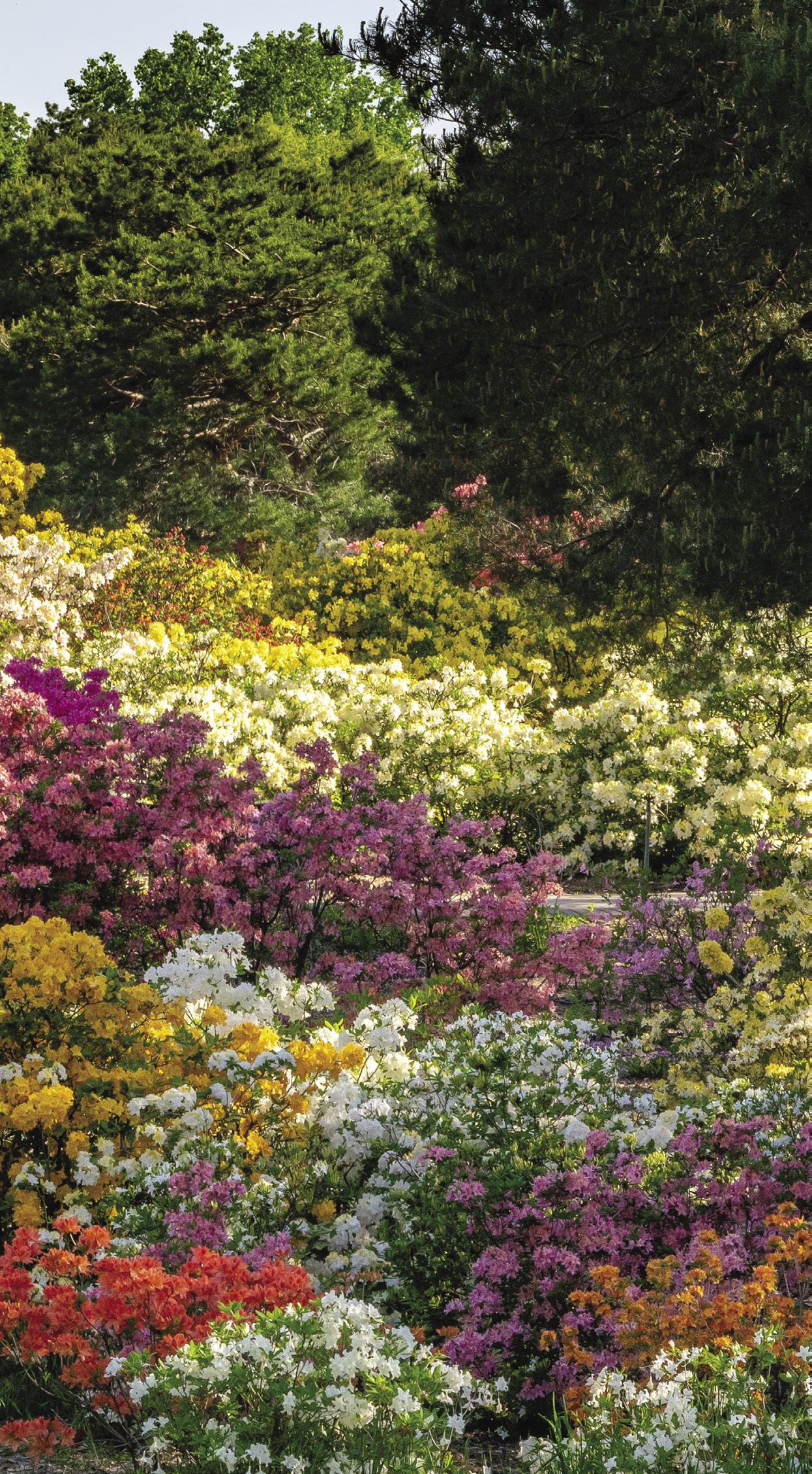
At the Arboretum, azaleas tend to bloom between late May and early June; the diversity of varieties provides a longer-lasting show.
are usually smaller, often deciduous and more delicate shrubs. Another distinction worth noting — azaleas can be either evergreen or deciduous. Most of the North American species of azaleas are deciduous, while evergreen azaleas are more commonly native to eastern Asia. All of the azaleas growing at the Arboretum are in the deciduous category.
BRINGING TROPICAL COLOR TO MINNESOTA
Azaleas have been a focus of research at the HRC at the Arboretum since the 1950s. In 1957, researcher Albert G. Johnson developed the first azalea bred specifically to tolerate Midwestern winters. By crossing Rhododendron prinophyllum (the roseshell, or early azalea, native to North America) with the
Asian hybrid Rhododendron × kosteranum, Johnson developed a new variety of azalea that could tolerate temperatures as low as minus 30 degrees Fahrenheit. This new azalea hybrid was first released to the public in 1978 as the cultivar Northern Lights™, establishing the University of Minnesota as a leader in deciduous azalea breeding. Today, the Lights series from the HRC includes 15 cultivars.
WHERE TO FIND AZALEAS AT THE ARBORETUM
In the Azalea Trial Garden, visitors can explore rows of azalea varieties that are part of the Woody Landscape Plant Breeding program.Photo by Jason BoudreauLandis
The first research plot for azaleas and other rhododendrons within the grounds of the Arboretum was planted just past the Oak and Nut Collection along Three-Mile Drive soon after the Arboretum opened to the public in 1958. The research area stretched from the woods all the way down to Green Heron Pond, and makes up the core of what we today call the Rhododendron Collection. The azaleas growing on the left side of Three-Mile Drive as you round the corner after the Oak and Nut Collection are the oldest ones planted at the Arboretum.
Beginning in the early 1980s, Harold Pellett, Ph.D., began planting azaleas under the allée of Scots pine (Pinus sylvestris) adjacent to the Maze Garden. Azaleas thrive in acidic soil and part shade — the fallen pine needles helped acidify the soil, and the wall of trees provided just enough shade. Soon after, several additional rows of research plots were installed adjacent to the allée to form the Azalea Trial Garden. Over the years, Pellett and his successors, Stan Hokanson, Ph.D., and Steve McNamara, removed experimental varieties that performed poorly and replaced them with new varieties to test, leading to the broad diversity of bloom times, flower colors and forms that visitors can see today.
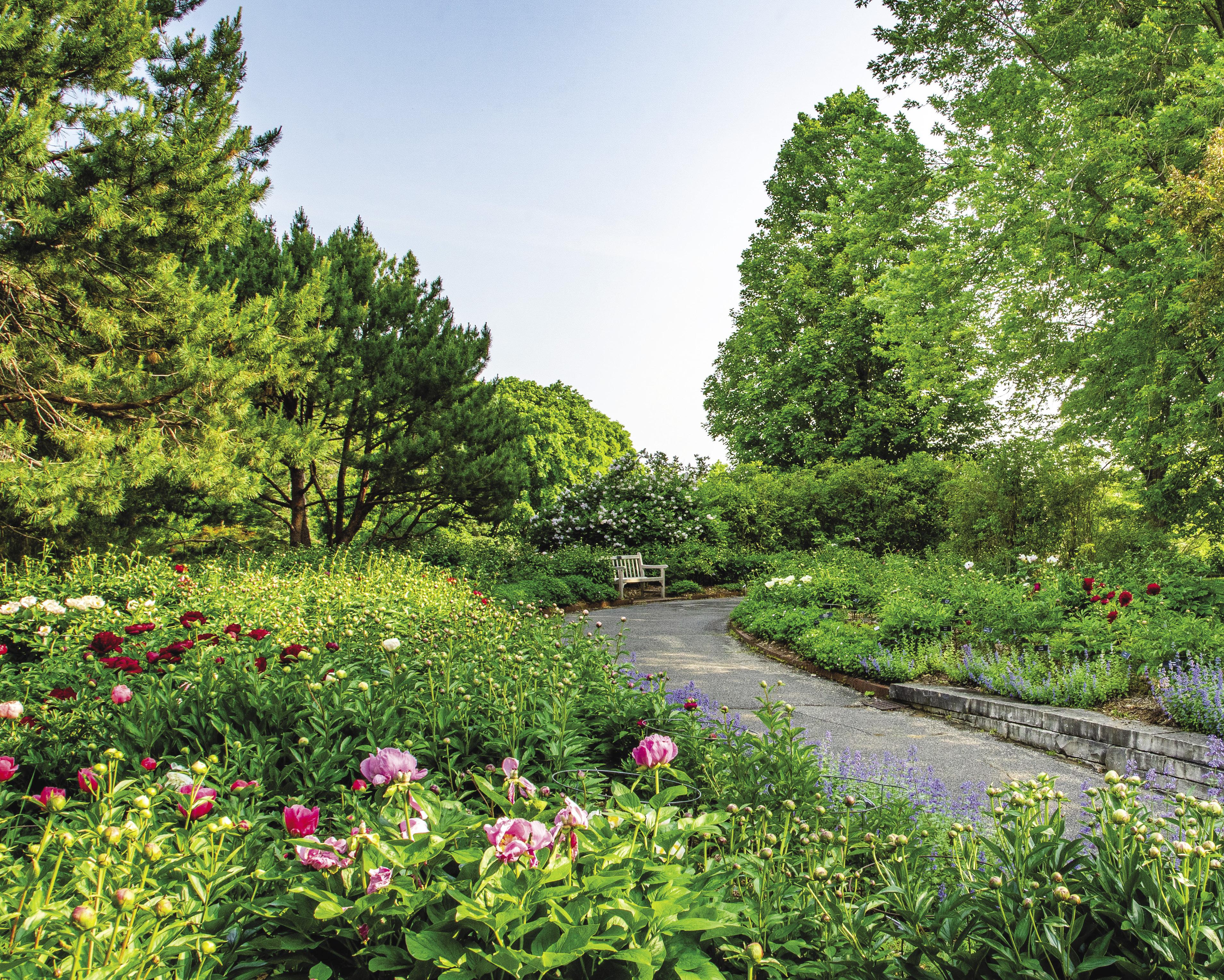
Elsewhere at the Arboretum, azaleas bloom in the Woodland Azalea Garden, which features azaleas in a naturalistic setting with a koi pond complemented by shrubs and perennials well-suited to a woodland garden. Further along Three-Mile Drive, the Bailey Shrub Walk showcases dozens of azaleas that are currently available in the nursery industry. At the Arboretum, azaleas tend to bloom between late May and early June; the diversity of varieties provides a longer-lasting show.
Today, the Azalea Trial Garden is in a moment of transition. The Woody and Ornamental Plant Breeding program is now run by Seth Wannemuehler, Ph.D., who took over the program following the retirement of Hokanson in 2025.
For most of the last 40 years, Pellett’s son Darwin Pellett, a Senior Gardener at the Arboretum until his retirement in January 2026, has maintained the trial plots. Horticulturists Audrey Busch, Aimee Thuen and Shealyn Elstein have picked up where Darwin left off — continuing the collaboration between horticulturists and researchers to develop, test and release new azalea varieties.
Charting a Course
In 1957, a year before the Arboretum opened to the public, Leon Snyder planted the first tree on the Arboretum grounds. It was a shellbark hickory, rescued from tree-clearing work at the nearby Fruit Breeding Farm. Snyder, who was head of the University of Minnesota’s Department of Horticulture and the Fruit Breeding Farm (which would later become the Horticultural Research Center), became the Arboretum’s first director when it officially opened the following year. Though Snyder didn’t have much hope for that little tree, it went on to flourish and is still growing today near the Oak and Nut Collection.
Like that first tree, the Arboretum has grown dramatically over the last 68 years. In its first year, an estimated 5,000 visitors toured the newly opened Arboretum. By 2015, that number had soared to 400,000 annual
visitors. Last year, in 2025, the Arboretum welcomed nearly 700,000 visitors to explore the gardens and trails, discover plants that thrive in Minnesota’s climate and connect with the natural world.
To sustain that growth, continue to meet the needs of members and visitors, and ensure the Arboretum is a resource for the community for another 70 years, the Arboretum’s Leadership team set out to develop a comprehensive roadmap for the future.
Building on the strong foundations and historic partnerships that define the Arboretum, the new 2025-2030 strategic plan unifies the organization under a shared purpose to advance its missioncritical work and amplify its impact for years to come.
ARCHITECTING A STRATEGIC VISION FOR THE ARBORETUM
In consultation with Minneapolis-based strategy and design firm Imagine Deliver,
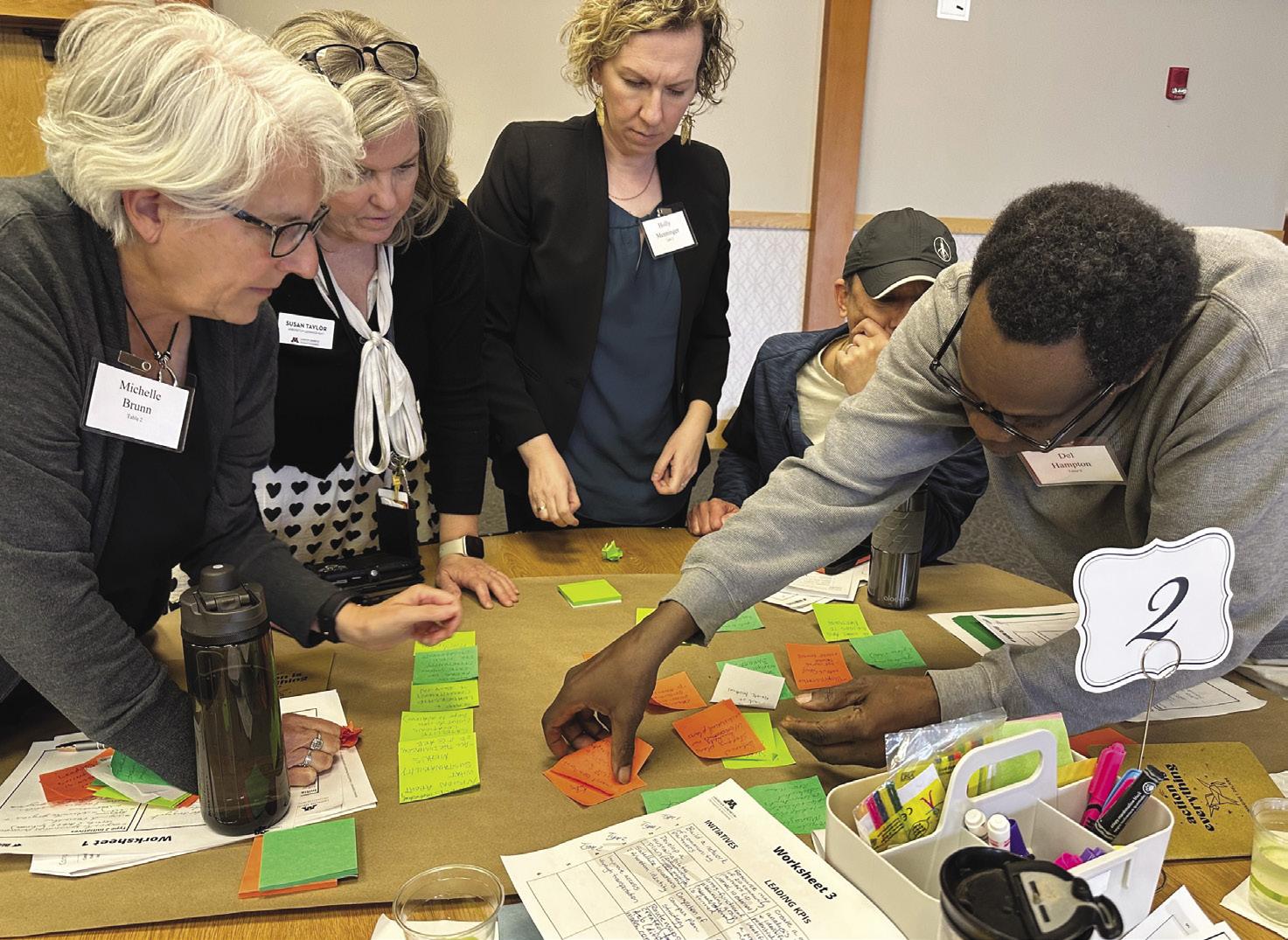
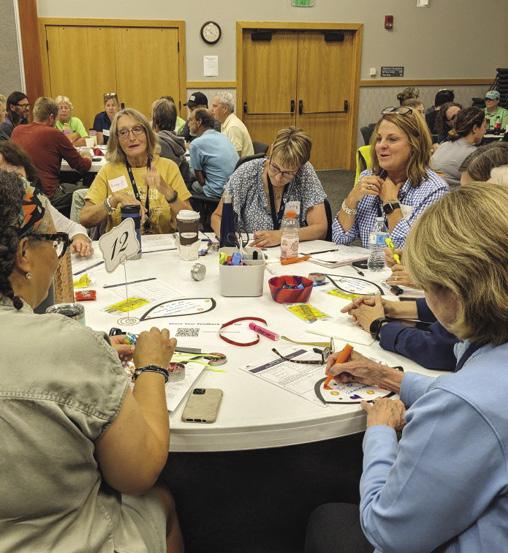
the strategic plan was drafted by a core team, which included leaders from the Arboretum; the University of Minnesota; the College of Food, Agricultural and Natural Resource Sciences; and the Arboretum Board of Trustees.Together, the team used an inclusive, community-driven approach to develop the plan, with input gathered from key stakeholders including staff, volunteers, members, donors and the broader community. This collaborative approach wasn’t just part of the development process, but is foundational to the strategic plan itself.
“Every element of our new strategic plan focuses on partnership and collaboration,” said Andrew Gapinski, Executive Director of the Arboretum and Horticultural Research Center. “It’s represented in our history by the groups that came together to purchase the Arboretum’s initial acreage, in the generous support of the community today and in our partnerships across the University.”
Elise Bremer l Editor
for the Future
VISION
A world-class arboretum connecting people and plants for the planet.
MISSION
Rooted in plant science and community, we grow knowledge and inspire action to support thriving ecosystems and our vital relationship with nature.
While this ethos of partnership has been part of the Arboretum since the beginning, the strategic planning process honed in on this and other key values, goals and objectives — including an emphasis on environmental leadership, access and engagement, and horticultural and research excellence — that will create organizational alignment and serve as a living roadmap toward the Arboretum’s collective vision for the future.
ROOTED IN PLANT SCIENCE AND COMMUNITY
The new strategic plan is made up of a framework of core components, including a guiding mission and vision, five core values and seven organizational goals supported by more
than 50 cross-functional initiatives. These initiatives are a key part of the new strategic plan, which shifts work from departmental silos to a collaborative, organizationwide approach to achieving the Arboretum’s goals.
“Cross-functional initiatives are really about bringing diverse perspectives together to tackle some of our most important priorities,” said Gapinski. “Our biggest achievements as an organization have been through deeply meaningful and mutually beneficial collaborations. Our work and impact are amplified when we partner.”
While each component of the strategic plan has a unique role, they support one another to create
direction and form a unified strategy that will inform the Arboretum’s decisions, align efforts and inspire meaningful action among visitors, members and the communities the Arboretum serves.
FORWARD, TOGETHER
Today, the entire Arboretum is working together to implement the new strategic plan to ensure that vision becomes reality. Over the next five years, the Arboretum will measure progress against its goals, celebrating wins or pivoting resources as needed, while working together to shape a resilient and inclusive future.
Find the Arboretum’s 2025-2030 strategic plan — including breakdowns of the mission, vision, values and organizational goals — at arb.umn.edu/strategicplan.
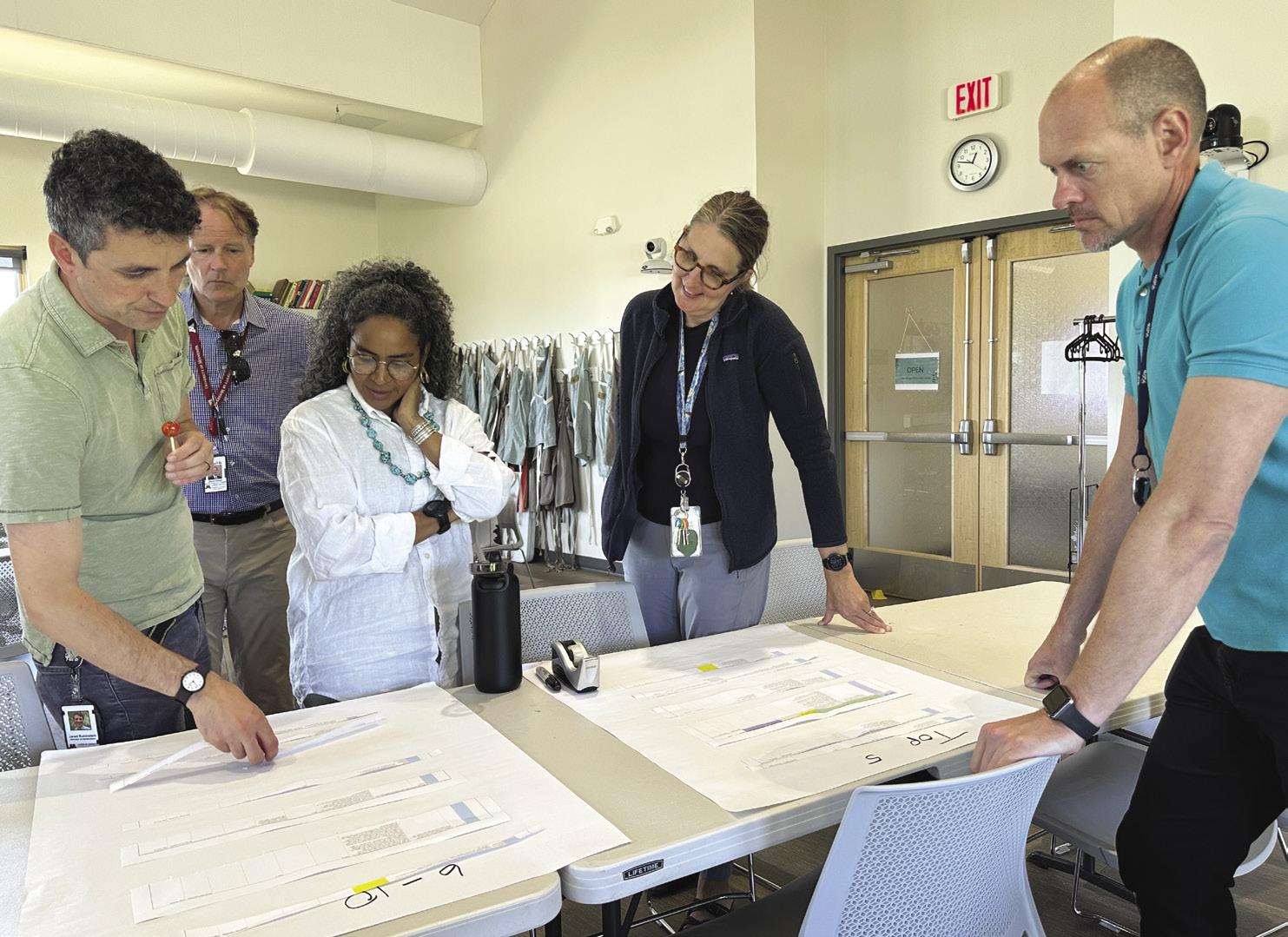
Top opposite: Strategy development workshop; Bottom opposite: Arboretum staff values workshop; Above: Arboretum Leadership team initiative prioritization
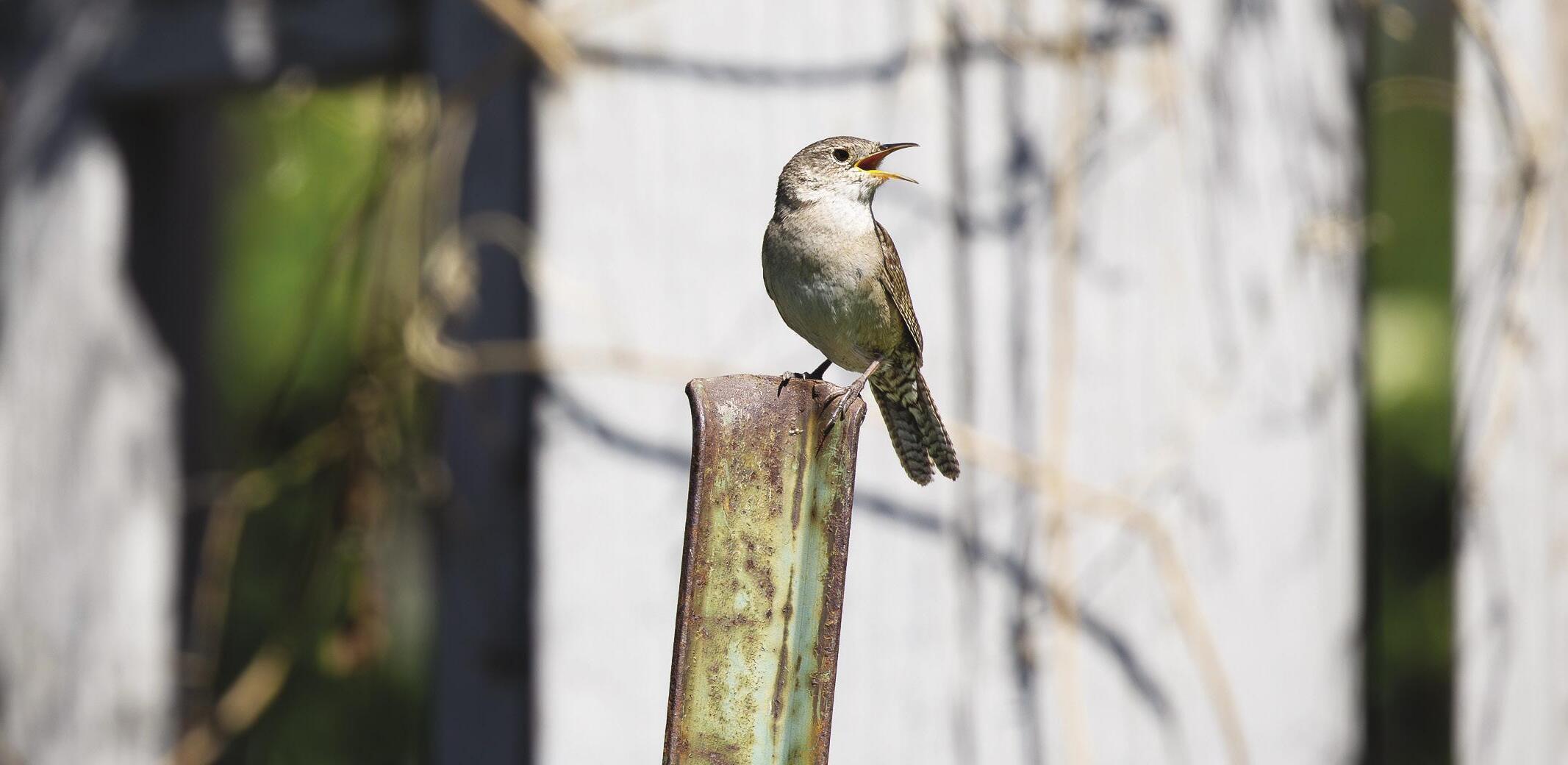
The Chippewa name for the pugnacious wren means “making a big noise for its size.”
Little Bird, BIG NOISE
Matt Schuth l Naturalist
Matt Schuth is a naturalist and author of “Nature at Our Doorstep.” He has contributed a nature column to Arboretum Magazine for more than 30 years and hosts seasonal guided “Walks With Matt” exploring the natural world at the Arboretum.
“He who shall hurt the little wren, shall never be beloved by men,” wrote William Blake in his poem “Auguries of Innocence,” around 1803. Before 1900 in parts of the British Isles, a traditional Christmas “Hunting of the Wren” ensured good luck for the coming year. Wrens were not to be harmed the rest of the year. Fortunately, the annual Audubon Christmas Bird Count was started in the 20th century to replace the annual Christmas bird shoots.
Ironically, the sympathy for the innocence of the little wren is somewhat misplaced. In nature, the house wren is a bully, defying its small size by displaying pugnacious and aggressive behavior. If other species attempt to build nests in a house wren’s territory, the wren will fill the nest of the invader with little twigs, making it unusable. Should a nest contain eggs, the wren will puncture the eggs, and if nestlings have hatched, it will destroy them.
Poet Aileen Fisher’s lyrical verse captures the return of the wren in spring:
“The wrens who rent our birdhouse / come back before it’s May. They start each morning loud and clear, / to sing the rent away.”
The enthusiastic, bubbling, incessant song of the house wren signals its arrival to all of its neighbors, including humans.
When males arrive in spring to their half-acre territory, they fill up to seven cavities with small twigs. These extra dummy nests are believed to be a way of confusing predators. Wrens will make a chattering, staccato call if a predator gets near a dummy nest, fooling the enemy into thinking something may be inside. When a predator nears an active nest, the parents remain quiet, letting it think nothing is worth investigating.
After selecting a nest site, the female wren will complete the nest by filling it with feathers, hair, spider cocoons, moss and paper trash. She will lay two to eight red-blotched, cream-white eggs. It is common for her to have two broods. The male does his part by helping feed the young.
The Chippewa name for wren translates as “making a big noise for its size.” Though they may be naughty, they can be nice. Let’s appreciate them.
Photo by Deanne Probst
Finding Comfort in Community
Julie Peters l Communications Strategist
Long-time member Sharon Charles has always treasured the Arboretum, but it became a true refuge for her after the death of Gary, her husband of 50 years.
She’d always visited the Arboretum with Gary, starting in 1982 when they moved to Minnesota from Wisconsin for his new job at General Mills. It wasn’t a far drive from their home in the west metro, and they liked to stroll the trails, admiring everything from rhododendrons and wildflowers to tree collections and tulips.
The Arboretum was also a favorite place to bring their two young children — a son and a daughter — who loved to explore. “We came out when the kids were little to walk around and look at things,” she said. “We visited many times a year. It’s so beautiful out there.”
After the couple retired in 2012, they had even more time to enjoy the Arboretum. They learned about new varieties of plants on the grounds via the plant labels and admired the Nakashima furniture and other unique finds in the Andersen Horticultural Library (Sharon worked as a librarian throughout her career).
They’d bring out-of-town visitors to show off the Arboretum as a community jewel. “Gary and I visited the Arboretum year-round — several times a month during the spring, summer and fall. In the winter, we cross-country skied at the Arboretum. Whenever family and friends visit us, the first place we take them is to the Arboretum.”
After Gary died of brain cancer in 2024, Sharon found it difficult to return to the tranquil trails and beautiful blooms they’d always enjoyed together.
She has found comfort in a support group through the West Suburban Grief Coalition. “Meetings on Thursday afternoons have been very helpful for me,” she said. “I am in a group of 12 people who have all lost their spouses.”
Sharon admits she had a hard time wanting to go to the Arboretum after Gary died. How could she go back to the place she’d found so special with Gary?
But her grief group members said, “Let’s all go together.” And they did. “It is wonderful to be there with my group,” Sharon said. “It calms me down and gives me hope and serenity.”
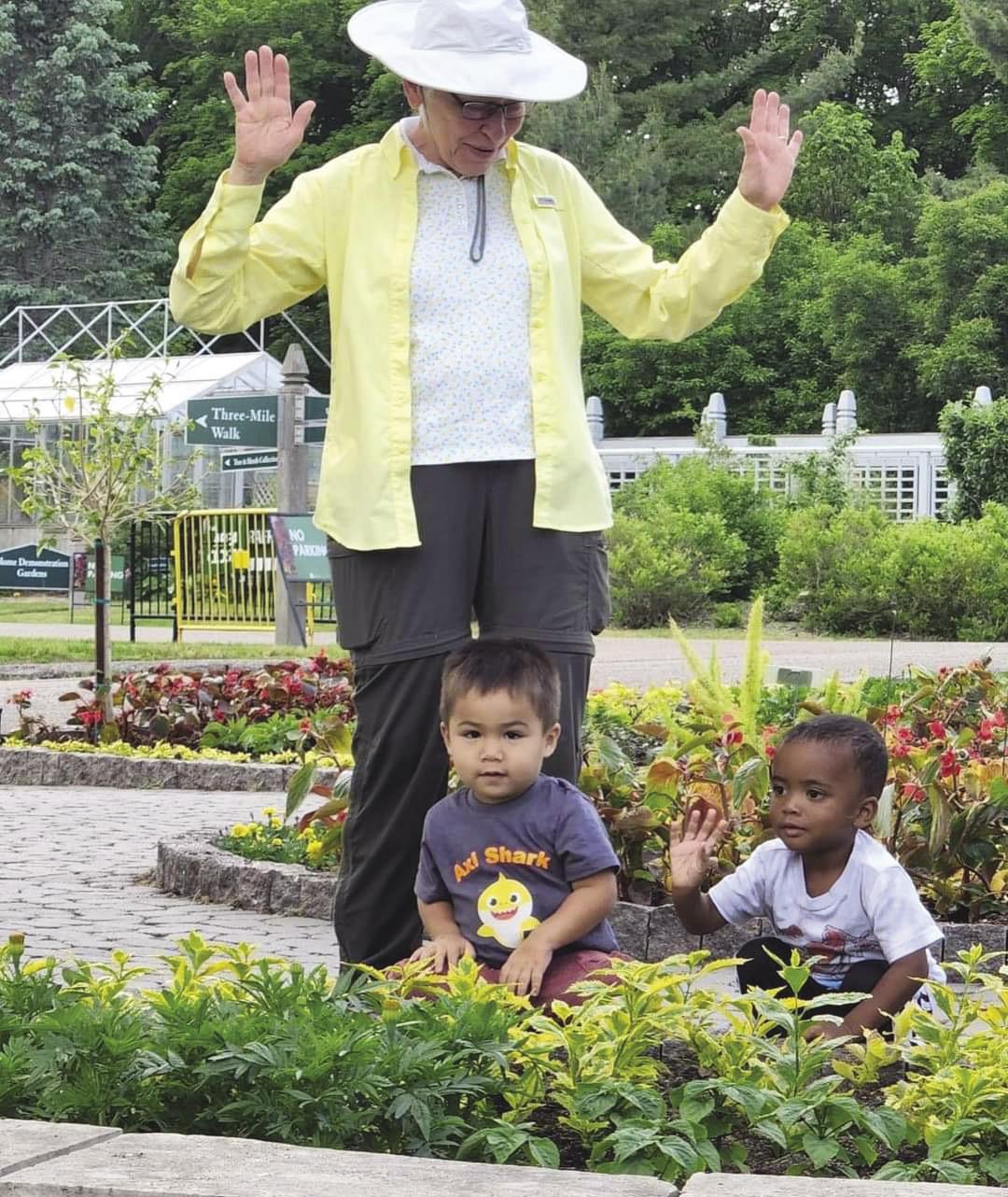
Left: Arboretum Member Sharon Charles with her husband, Gary, at the Arboretum in 2015. Right: Charles with her grandson and his friend in the Annual Garden in 2022.
Saving Imperiled Rare Plant Populations
David Remucal
Delores E. Isaacson Curator of Endangered Plants
Minnesota has more than 300 plants on the state’s endangered, threatened and special concern species list. With continued population growth, land development and climate change, there is increasing pressure on native plants, pushing once common plants to become rare and rare plants to the brink of, or past, extinction. Ideally, the number of species that are endangered or threatened in our state would be much, much lower. The Arboretum’s Plant Conservation Program is working toward that goal by utilizing new plant rescue practices.
Several organizations, including the Minnesota Department of Natural Resources (DNR), The Nature Conservancy and the Minnesota Land Trust, preserve native species through land preservation models. These nature reserves are an important means of protecting native and rare species. Still, if the land changes enough through nearby development, changes to hydrology or climate change, those reserves can become uninhabitable to rare species.
When land preservation falls short of conserving rare plant populations, ex situ, or “off-site,” conservation efforts help bridge the gap. The Plant Conservation Program uses two primary methods to conserve native plants outside of their original habitat. Seed banking is the most common form of ex situ conservation, and the Arboretum’s Long-Term Rare Plant Seed Bank is an increasingly vital tool for the entire state and beyond to preserve the genetic diversity of species from across Minnesota. Another important tool is plant rescue, a practice that, until recently, had not been utilized with rare plants.
At its most basic, a plant rescue involves removing plant genetics from a site and transferring them to a new,
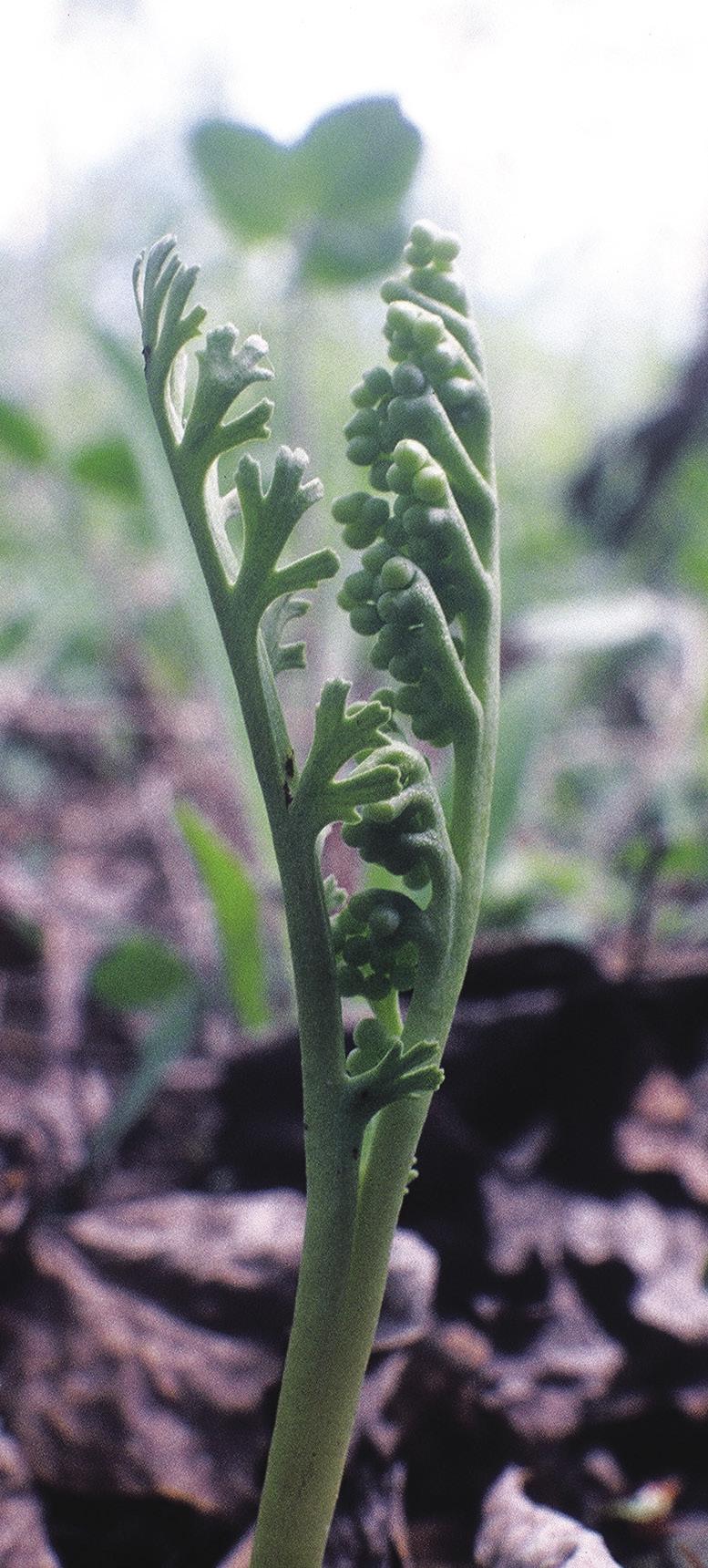
Some endangered plant species, including native orchids and grape and goblin ferns such as Botrychium campestre var. lineare, shown here, are not easily relocated.
Photo by Malcolm MacFarlane
appropriate and protected site. Sometimes this is done through seeds. Some rare species can be propagated relatively easily through seed — an ideal way to move genetics. But the other, more complex option, involves moving whole plants.
The Plant Conservation Program has slowly been advocating for and becoming involved in plant rescue, or salvage, operations, working on rescues across much of the state. We have worked as a stand-alone entity on some of these rescues, but when possible, we work with partners to extend our reach. In one such partnership, we focus on rare species in one of the state’s biodiversity hotspots, the Anoka Sand Plain.
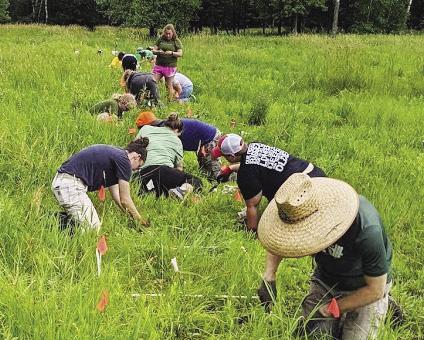
We have partnered with the Anoka County Soil and Water Conservation District and Critical Connections Ecological Resources, Inc. since 2019 in this area as a kind of conservation strike team. Our teams go out to construction sites before work begins to remove as many rare native plants as we can before placing them in protected locations within the Anoka Sand Plain.
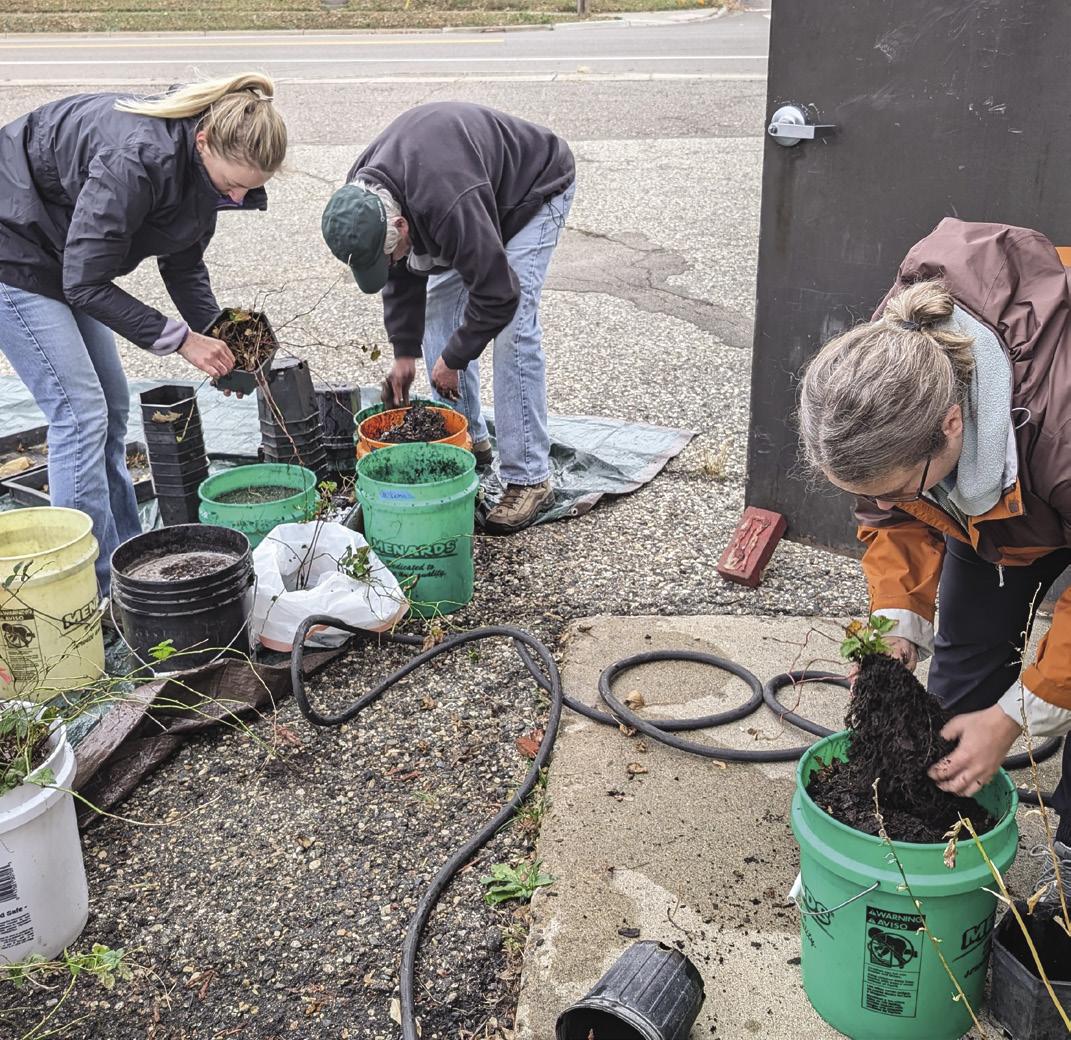
Between 2019 and 2025, we saved thousands of plants through this program, including populations of 13 different species at 15 donor sites. Most of these plants have gone back out to a total of 14 protected recipient sites, although usually not directly. As the gardeners reading this will know, most plants go into some amount of shock from being dug up, so plants typically recover at the Arboretum until they are ready to plant out.
The reality of rare plant rescues is that many of them fail. After all, rare plants are sometimes rare for non-humanrelated reasons, and they may have aspects of their ecology that make them fragile or difficult to move even under the best conditions. And some species are notoriously hard
to rescue, such as native orchids and grape and goblin ferns (Sceptridium and Botrychium species).
Many of these species are not only hard to transplant, but even propagation from seed or spore is too difficult to allow its use as a conservation technique. Fortunately, the Plant Conservation Program has been researching native orchid conservation for several years in order to increase the rescue success of some of these challenging species.
Even failure is an opportunity. As important as it is to improve the success of rescues, it is also important to know when a species can’t be moved. Data-driven ex situ conservation work can help inform policy and regulatory decisions about individual rare species. By sharing our data and experience, groups such as the DNR can make better-informed decisions about which species are amenable to ex situ conservation techniques and which ones can only be protected in place.
The Plant Conservation Program continues to aid in rescue attempts and produce data and knowledge to improve plant conservation outcomes. 2026 brings more challenges and different species to preserve and, with the support of the University and the Arboretum’s members and supporters, additional opportunities to make a real difference across the state.
Learn more about the Plant Conservation Program at arb.umn.edu/plant-conservation-program
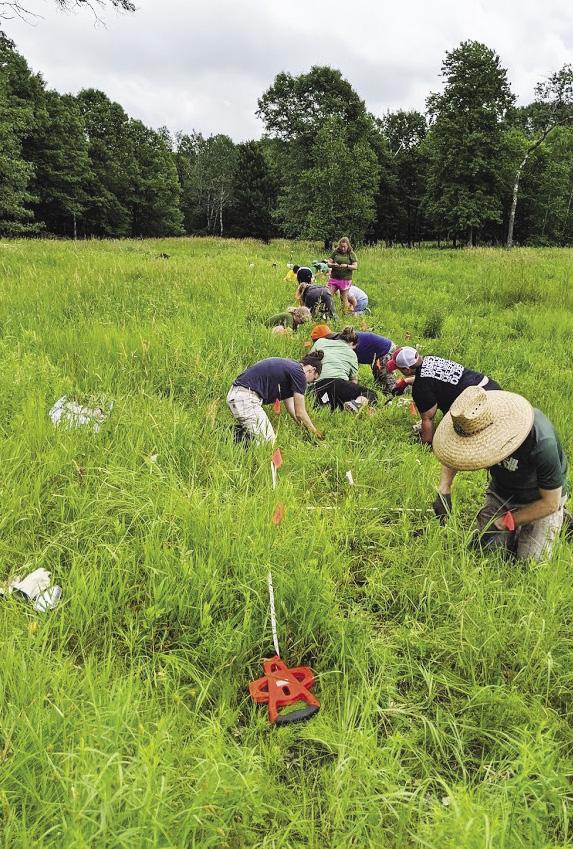
Volunteers plant out rescued plants at a recipient site in Anoka County.
Photo by David Remucal
Volunteers clean rescued Rubus specimens to prepare them for relocation.
Photo by David Remucal
SO SEAMLESS, SO STRONG
Jeff Iseminger l Contributing Writer
The equipment you see all over the Arboretum sporting a Pantone color called “New Toro Red” manifests a partnership that goes much, much deeper than a color.
The Arboretum and The Toro Company — a $4.6 billion business with 11,000 employees and retailers in 125 countries — have created and nurtured a collaboration spanning decades.
“The hallmarks of any good partnership are trust and integrity,” said
Rick Olson, Chairman of the Board and Chief Executive Officer of The Toro Company, “and we certainly have that with the Arboretum.”
Seconding that motion is Heather Hille, who is positioned to look at both sides: She serves as Managing Director of Corporate Affairs for The Toro Company and also as a trustee for the Arboretum.
“The partnership is seamless,” she said, “because our missions align.”
The Toro mission is “to help our customers enrich the beauty, productivity
and sustainability of the land.” The Arboretum’s: “Rooted in plant science and community, we grow knowledge and inspire action to support thriving ecosystems and our vital relationship with nature.”
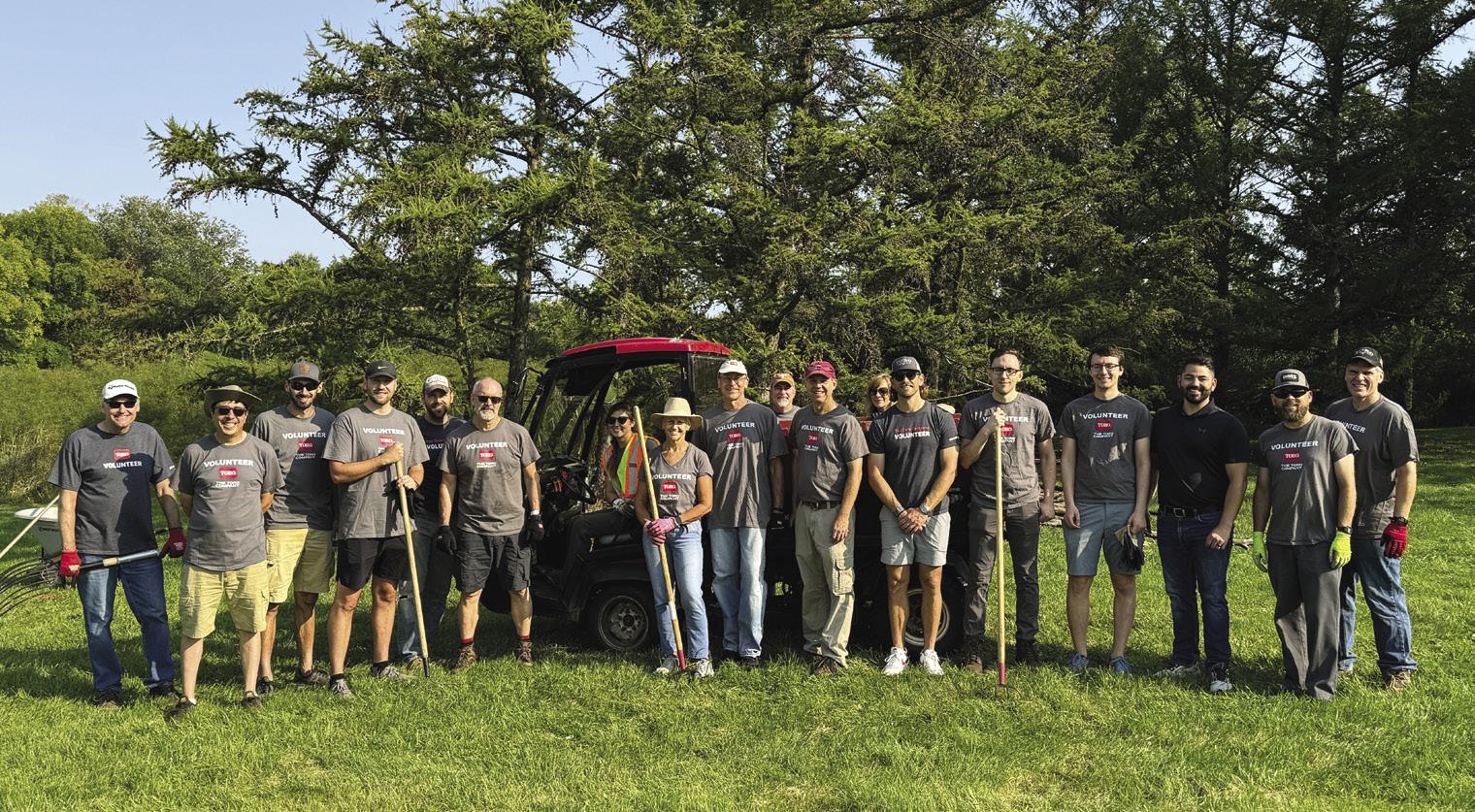
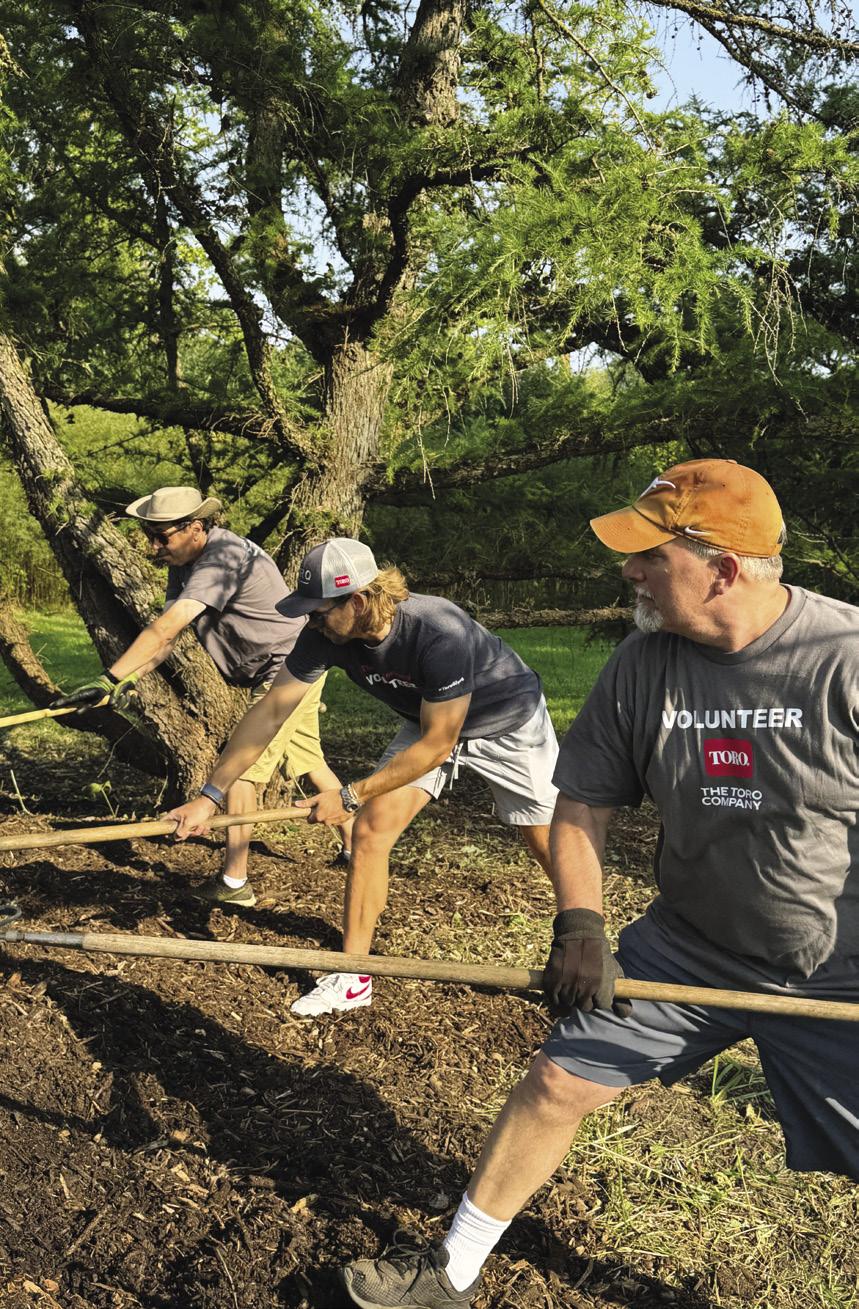
Toro donates all manner of new machines every year to the Arboretum to, among other things, cut grass, plow snow, water plants, haul stuff and move people. And Toro employees volunteer their energy every year to literally do dirty work in support of Arboretum
landscape projects. Just two examples: Mulching the Larch Collection and building a retaining wall near the Bennett-Johnson Prairie.
Those red machines you see at the Arboretum include some driven by electric or hybrid engines, capturing the sustainability theme of Toro’s mission. One of its major goals is to “pursue innovation and investment to reduce emissions and expand battery and hybrid product offerings.”
An engineering watchword in achieving more sustainable Toro equipment is precision, delivered through high-tech controls. That means less fuel burned, less water sprayed and fewer chemicals applied, all of which buttress the Arboretum’s vision of “connecting people and plants for the planet.”
“It’s hard to find another organization that has better alignment with us than the Arboretum,” said Edric Funk, President and Chief Operating Officer of The Toro Company. “We recognize the role the Arboretum plays in
horticulture and research and also as an incredible place to bring family and enjoy nature.”
In other words, this relationship is not merely transactional, not merely “here’s our equipment now go use it.” Instead, it’s a horticultural blend of two organizations — one private, one public — heading in dovetailing directions. Not only that, Toro leaders
and employees know the Arboretum and how much it means to the people coming there across the seasons.
“The Arboretum is a gem, a huge community asset,” said Hille. And when Olson says, as he did, “It’s an honor to be a partner with the Arboretum,” he’s speaking about a place where his family has been coming for years. He and his Toro colleagues know what it feels like to walk one of its trails.
“Partnership is what founded the Arboretum,” said Executive Director Andrew Gapinski. “We are so fortunate to have one of the world’s leaders in equipment innovation for the green industry right here in Minnesota and along our side from the Arboretum’s early beginnings.
The Toro Company, its people and its commitment to our arboretum and the contribution we make to the community and world is priceless. I can’t tell you how much it means to have Toro moving into the future with us.”
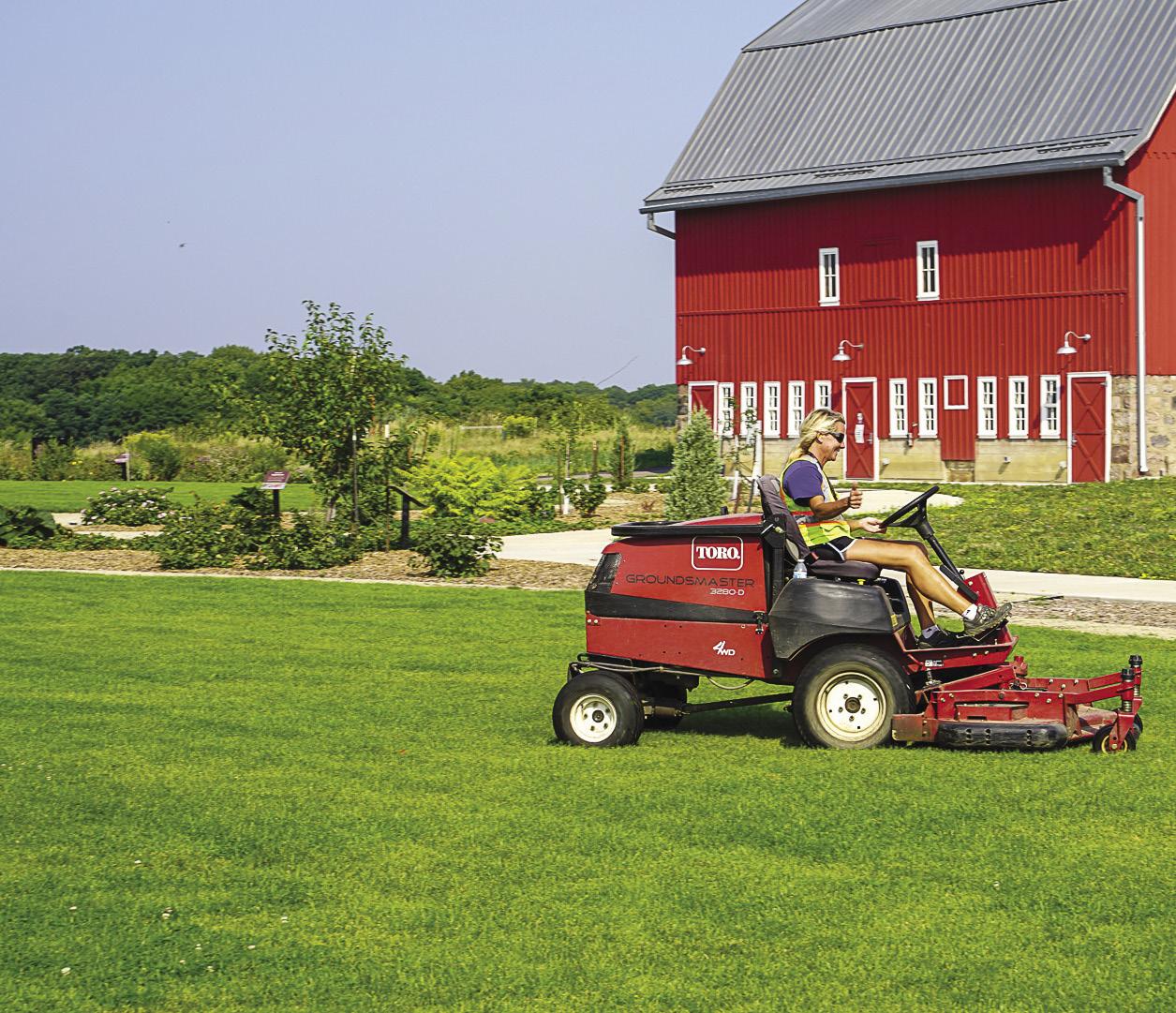
Top opposite: Assistant Gardener Jill Paehlke mows the Gathering Lawn at the Farm at the Arb on a Groundsmaster from The Toro Company. Photo by Norbert Lucas
This page: Volunteers from The Toro Company mulching the trees in the Larch Collection in 2024. Photos by Arboretum staff
Inherited Ground
Gereon Fuller l Assistant Art Curator
2026
is the first year of the Arboretum’s Native American Artist in Residence program, and the Arboretum is excited to announce that Maggie Thompson is the program’s first artist in residence.
The textile artist and designer’s work can be found on display throughout Minnesota, at MIA and the Minnesota Historical Society, as well as nationally. She has shown work at the National Museum of American Art, the Renwick Gallery of the Smithsonian American Art Museum, the Minnesota Museum of American Art and the Institute of American Indian Art.
Although Maggie won’t live onsite at the Arboretum during the residency, she and her mother, Peggy, will spend plenty of time on the grounds together. They will collaborate on an intergenerational project, titled “Inherited Ground,” that will feature Peggy’s acrylic-painted landscapes as a base, adorned with Maggie’s woven ribbon Ojibwe florals. Maggie said, “Honestly, I’m looking forward to having time to sit down with a sketchbook…this project feels like an
outward sigh. I get to spend time with my mom and be outdoors.”
Much of Maggie’s work is “conceptually heavy,” dealing with emotions surrounding grief and relationships. In a departure from this work, Maggie and her mother will “bring together weaving, painting and shared observation of the land.” Peggy will paint detailed visuals of the ground at the Arboretum, the earth and sediment, and Maggie will weave traditional Ojibwe florals inspired by the flowers blooming at the Arboretum in tandem with what her mother creates. She and her mother have been wanting to collaborate for a long time, and the residency “felt like the perfect way to do that.”
The Native American Artist in Residence program is made possible by funds raised at the 2024 Gala in the Gardens, which celebrated the intersection of art and nature at the Arboretum and raised funds for co-curated art programming.
In addition to the mother and daughter collaboration at the heart of this project, at the time of writing, Maggie is pregnant, and the project will grow to span three generations by its end. The final pieces created in collaboration by Peggy and Maggie will hang in the Reedy Gallery from Sept. 1-30. Visitors can also join Maggie’s community engagement workshop on Aug. 1.
Learn more about the Native American Artist in Residence program and the exhibition at arb.umn.edu/inheritedground.
“In Gratitude,” 2023, photo on archival paper with woven ribbon Ojibwe florals by artist Maggie Thompson.
Artist Maggie Thompson
Firefly Viewing Nights offer visitors a unique, afterhours opportunity to explore the Arboretum and learn about fireflies and other nighttime creatures.
Light up the Arboretum after dark FIREFLIES
Lily Smith l Social Media Specialist
When the sun sets, the bugs come out. No, not mosquitoes, fireflies! And the best place to see them in all their glory is at the Arboretum’s Firefly Viewing Nights on summer evenings in June and July.
But before those magical summer nights lit up by our shining friends can happen, conditions throughout the year must be just right.
Most firefly species lay their eggs in mid-to-late summer in moist, cool soil. At the Arboretum, fireflies prefer the damp, shaded areas along the Bog Boardwalk on Green Heron Pond and in the Dayton Wildflower Garden. They will also lay eggs in garden beds that have a layer of undisturbed leaf litter.
After a few weeks, the larvae hatch and spend up to two years in this stage feeding on slugs, snails and other small insects. Finally, they burrow into the soil to pupate in winter, preparing for their spring debut as an adult.
If winter conditions are too dry, the larvae can shrivel and die in the soil. If conditions are too wet, they can drown. Light pollution, habitat loss and pesticide use also cause populations to decline.
Fireflies have long called the Arboretum home, but when former Signature Events Manager Wendy Composto noticed fireflies in her yard during the pandemic, she knew something special could be created to connect Arboretum visitors to the magic of fireflies.
“I saw fireflies in my yard. I was like, ‘I bet they’re better at the Arboretum,’ so I came out here, and they were phenomenal!”
Firefly Viewing Nights began the following summer in 2021 and have since become a staple of summer evenings at the Arboretum.
It’s the perfect opportunity to step away from the hustle and bustle of the city and relive childhood summer nights surrounded by glowing fireflies.
“It’s a very family-friendly event and becomes a core memory for kids. Their faces just light up when they start spotting the fireflies,” added Hailey Fenton, the Arboretum’s Private and Corporate Events Manager.
Firefly Viewing Nights take place on June 25-27 and July 2, 3, 5, 9, 11 and 12 from 8:30-10:30 p.m. Reserve tickets online at arb.umn.edu/fireflynights
Photo by Jason BoudreauLandis
Wings, wonders & wellbeing
Sarah Palm l Nature-Based Therapeutic Services Program Specialist and On-Site Project Lead
The Arboretum has always been a sanctuary — a place dedicated not just to cultivating plants, but to cultivating human experience. For our nearly 700,000 annual visitors, the Arboretum serves as a vital resource for public health and wellbeing.
As digital demands and accelerating stress dominate our daily lives, the simple act of stepping into a garden has taken on profound importance. The constant pressure of modern life often leads to mental fatigue and a disconnect from the foundational rhythms of the natural world. This challenge highlights a core part of the Arboretum’s mission: demonstrating that the health of the landscape is inextricably linked to
the health of people, our communities and our planet.
The Arboretum is more than just a beautiful backdrop for a stroll; it is a powerful therapeutic setting. Since 1992, in collaboration with the Earl E. Bakken Center for Spirituality and Healing, our Nature-Based Therapeutic Services have advanced this field through four pillars: Direct Service, Education, Research and Outreach. By teaching the specific skills of nature connection, we transform the Arboretum into a dedicated space for evidence-informed healing and personal restoration.
Our on-site classes are signature examples of this belief in practice. Designed to be accessible and intentional, these sessions utilize the
Five Pathways to Nature Connection, a framework developed by Miles Richardson at the University of Derby in the United Kingdom. This approach moves beyond simply identifying nature to actively relating to it — the key to achieving lasting mental and physical wellbeing.
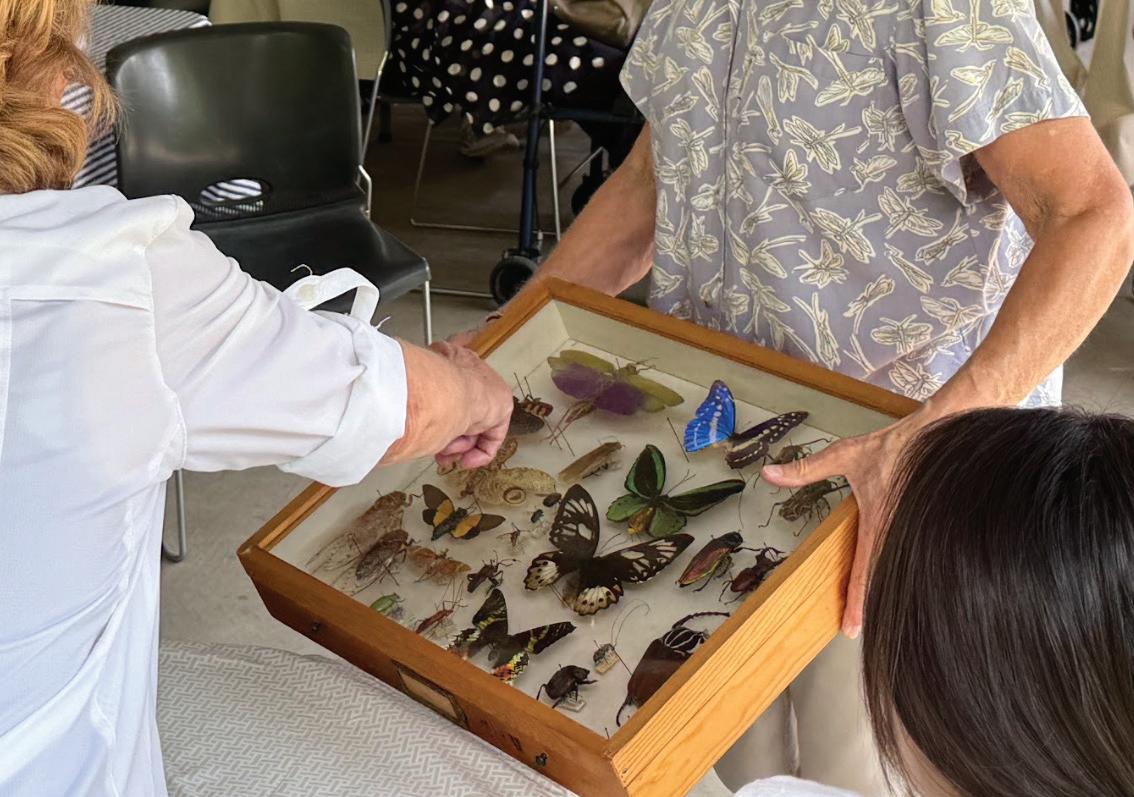
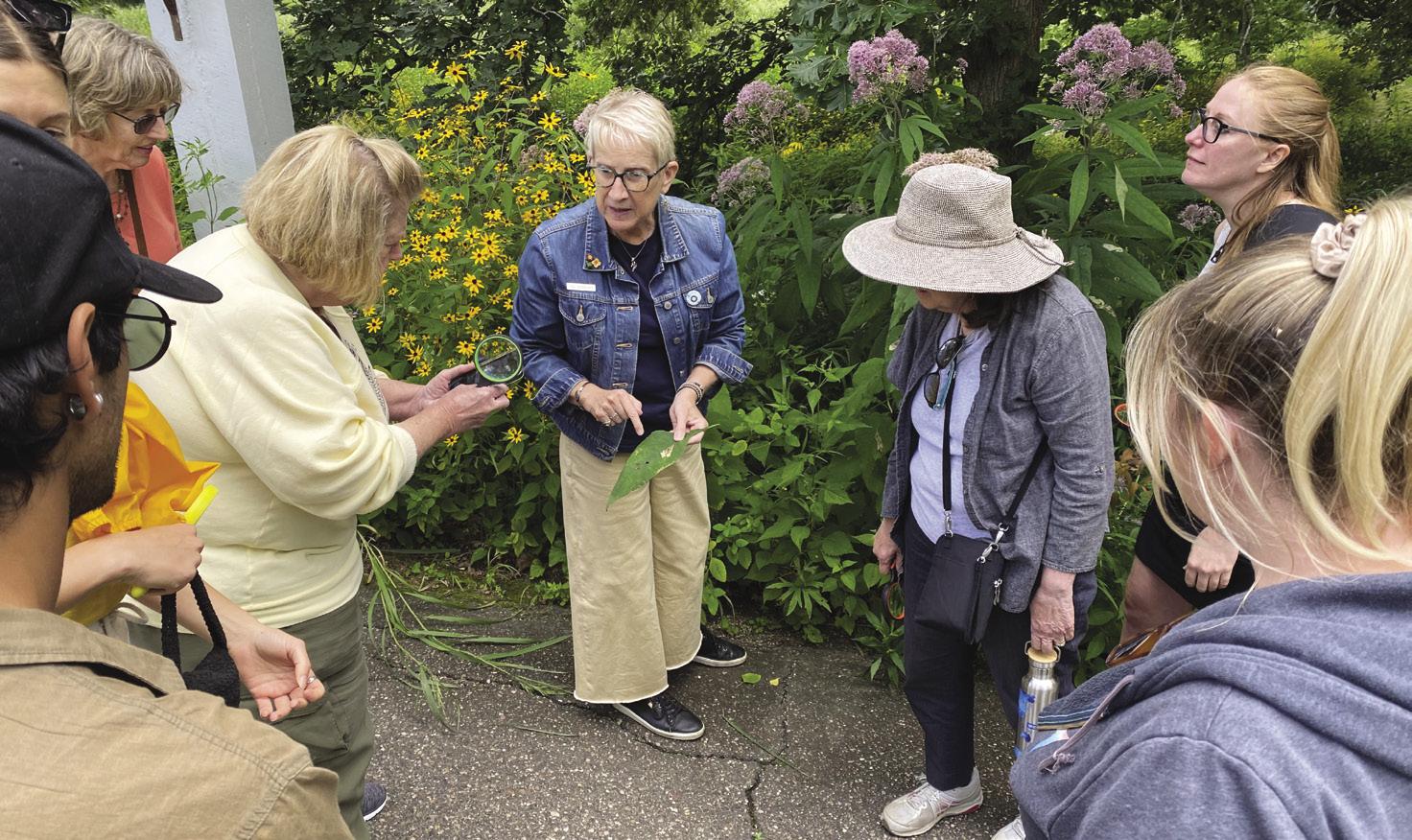
One new, standout offering of the Nature-Based Therapeutics program is Insect Appreciation: Enhance Your Connection With the Natural World. The class includes a “backstage tour” of insect collections and guided explorations of the Arboretum’s Clotilde Irvine Sensory Garden and Grace B. Dayton Wildflower Garden, so participants can learn to see insects as essential partners rather than pests, creating pathways to healing in nature.
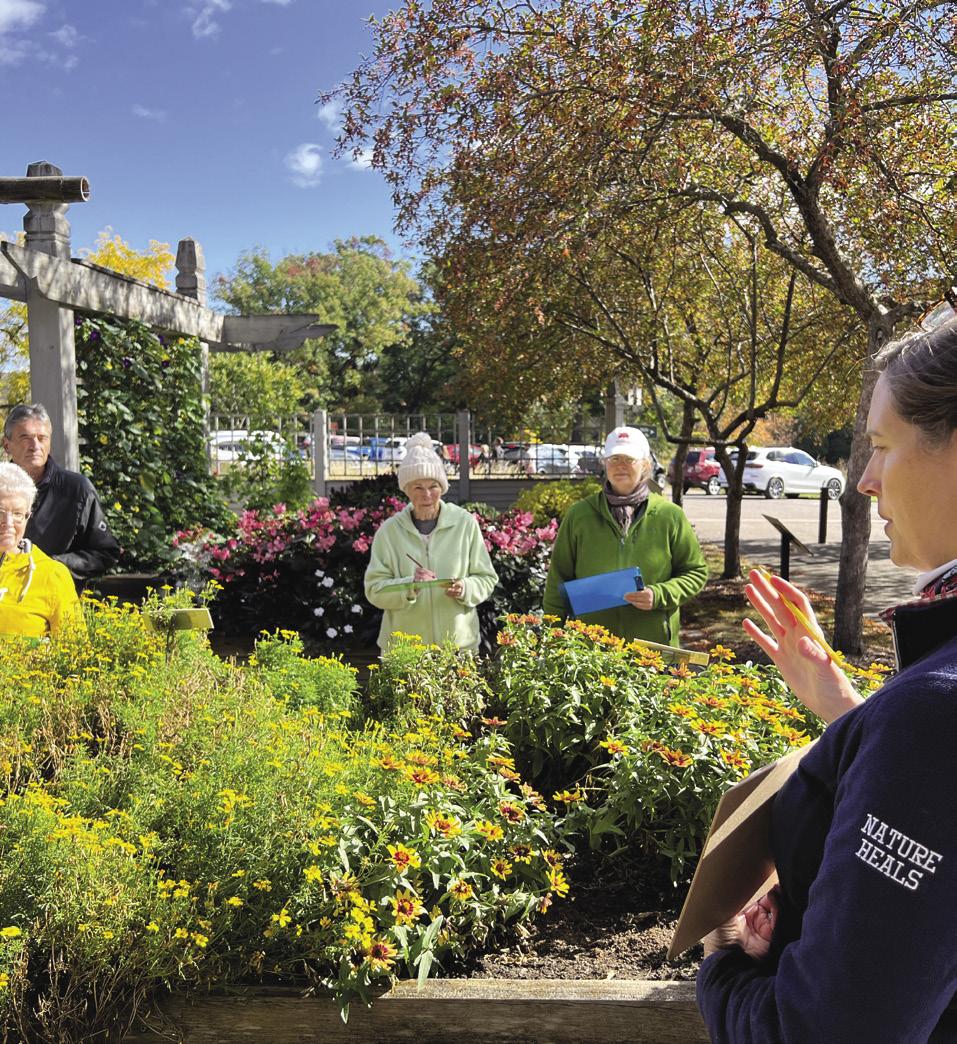
Entomologist and instructor Val Cervenka holds out a tray of insect specimens to curious participants of an Insect Appreciation class. Photo by Sarah Palm
Photo by Mark MacLennan
“Learning more about insects and how they fit into the natural world helps increase our appreciation for them,” said instructor Val Cervenka, Board-Certified Forensic Entomologist and retired Minnesota Department of Natural Resources Forest Entomologist.
“Our curiosity grows, and we begin to see insects not just as pests that bite, sting or infest our food, but as incredible animals that have evolved to be successful in nearly every kind of habitat. Looking at
an insect under a microscope, we see an amazing diversity of structure and color we didn’t realize existed.”
Participants in Nature-Based Therapeutics on-site classes build a nature connection practice, similar to learning to play an instrument or cultivating a new skill. Here are some examples of how you can apply the Five Pathways framework — and insect appreciation — to your own backyard to boost your wellbeing:
1. Sensory Engagement: Spend time observing the intricate patterns on a butterfly’s wing or listening to the rhythmic hum of grasshoppers to ground the mind.
2. Emotional Attachment: Cultivate empathy for the life cycles of local insects. Use the iNaturalist app to learn the unique “stories” of the creatures in your yard.
3. Meaning and Symbolism: Recognize the ecological importance of insects. Seeing a bee as a crucial pollinator rather than a threat adds a layer of significance to your environment.
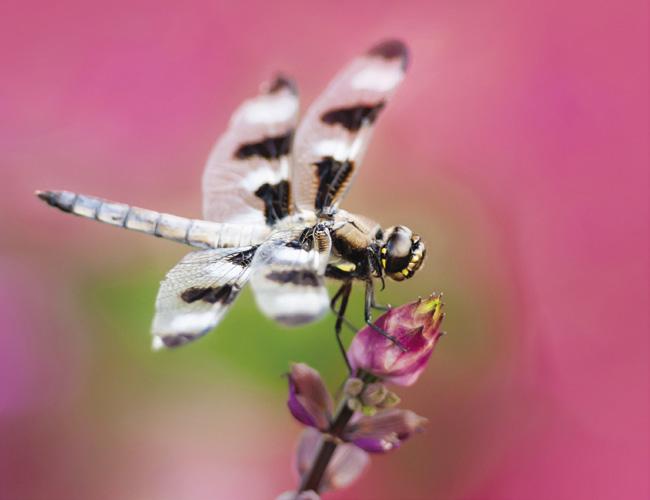
4. Appreciation of Beauty: Look closely at the iridescent shells of beetles or the delicate flight of dragonflies — nature’s own masterclass in aesthetics.
5. Compassionate Action: Support your local ecosystem by planting native plants or building a “bug hotel” using guides from the Xerces Society. By actively cultivating these connections, we ensure that the Arboretum and our own backyards remain cherished resources for humans and our greater-than-human kin.
Nature-Based Wellbeing Programs
Nature-Based Therapeutics classes are structured, evidence-based experiences that help participants rekindle their innate connection with the environment. This summer, you can explore several nature-based wellbeing programs at the Arboretum: Shinrin-yoku “Forest Bathing”: Experience the Tranquility of Nature Select Thursdays and Fridays through September
Nature Journaling: A Mindful Writing Workshop to Explore Outer and Inner Nature May 28, 9-11 a.m.
A Wonder Filled Experience (AWE): An Immersive Nature-Based Experience Select Thursdays July through September
An Immersive Mindfulness Experience: Awaken to Nature June 18, 6-7:30 p.m.
Mindful Birding: Enhance Your Connection With the Natural World July 17, 8:30-10:30 a.m.
Insect Appreciation: Enhance Your Connection With the Natural World Aug. 6, 2-3:30 p.m.
Visit arb.umn.edu/wellbeing-classes to learn more and register.
Insect Appreciation class participants view evidence of insect activity with instructor Val Cervenka in the Wildflower Garden. Photo by Sarah Palm
Photo by Brad Palm
CONSERVING MINNESOTA’S NATIVE PLANTS
Elise Bremer l Editor
The annual Gala in the Gardens will take place this year on Wednesday, June 10, amidst the summer splendor of the Arboretum. Last year, the Gala fittingly celebrated the Arboretum’s trees. This year, the Arboretum’s signature fundraising event unites the Arboretum community around a vital cause: conserving Minnesota’s native plants and advancing the work of the Plant Conservation Program.
Conserving native plants and natural lands is at the forefront of the Arboretum’s work and its new strategic plan. Across the Arboretum’s natural areas, the Natural Resources team works continuously to restore and maintain prairies, wetlands
and woodlands, providing a range of habitats for native species.
After acquiring the land for Spring Peeper Meadow in 1995, the Arboretum partnered with Sue Galatowitsch, Ph.D., in the University’s Department of Fisheries, Wildlife and Conservation Biology, to restore the former corn field to a natural sedge meadow. Today, the Arboretum continues to prioritize land acquisition along the Arboretum’s perimeter to preserve and restore additional natural lands and habitat.
While all of this furthers the Arboretum’s conservation efforts, the Arboretum’s Plant Conservation Program is specifically dedicated to the preservation of rare species of the upper
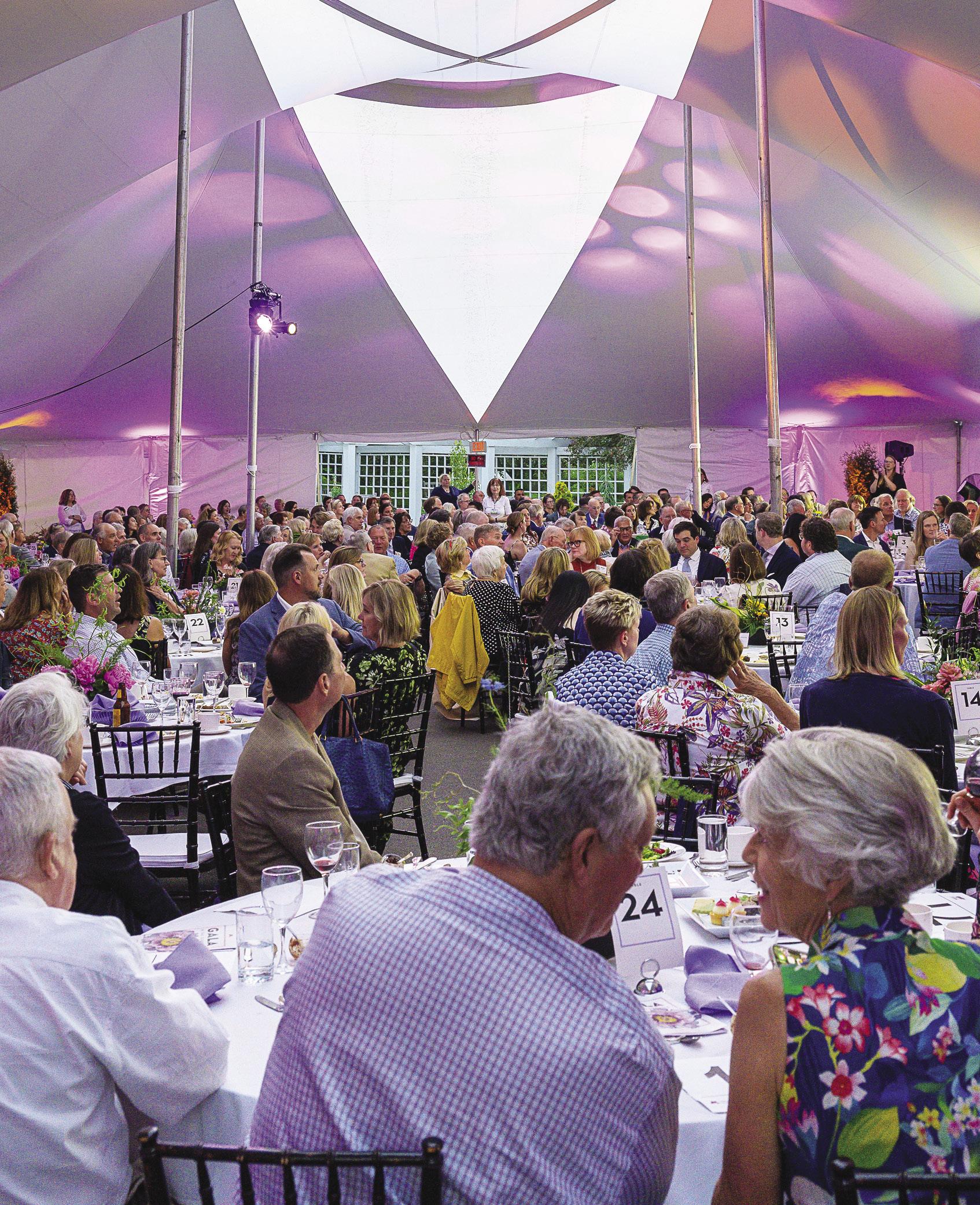
The 2026 Gala in the Gardens features a cocktail reception, dinner al fresco, live and silent auctions, and an inspiring program all in support of conserving Minnesota’s native plants. Photo by Todd Mulvihill
Midwest and native orchids of Minnesota. Through native plant rescue, propagation, seed banking, statewide education, and important partnerships and collaborative initiatives, the Plant Conservation Program safeguards Minnesota’s rare species and the ecosystems that sustain clean water, healthy soil, pollinators and wildlife. This year, the Gala’s Fund-a-Need will support the staff and programming of the Plant Conservation Program, whose work protects the health, resilience and identity of our shared environment.
The Gala features a cocktail reception, dinner al fresco, live and silent auctions, and an inspiring program led by emcee Belinda Jensen of KARE 11 that celebrates the beauty and power of plants to connect, inspire and sustain life. Thank you for helping the Arboretum protect native plants, preserve biodiversity and plant the seeds of tomorrow.
Support the Arboretum’s plant conservation efforts by purchasing a ticket to the Gala. Not able to attend the Gala in person? Get involved and support the Arboretum’s conservation efforts by checking out the silent auction or contributing to the Gala Fund-a-Need. Learn more at arb.umn.edu/gala
Presenting Sponsor
Anonymous
Platinum Sponsors
Nancy Jones
Jeannine Rivet and Warren Herreid II
Georgia and Jim Thompson
Gold Sponsors
Carmen and Jim Campbell
Lorin DeBonte
What’s in Season
EVENTS, CLASSES AND MORE
Taste & Toast
July 22, 6-9 p.m.
Discover something new at the Arboretum this season. In addition to 1,200 acres of gardens, collections and natural areas, the Arboretum offers a wide range of events, art exhibitions and classes so visitors can learn something new on each visit and deepen their connection with nature.
Music in the Garden
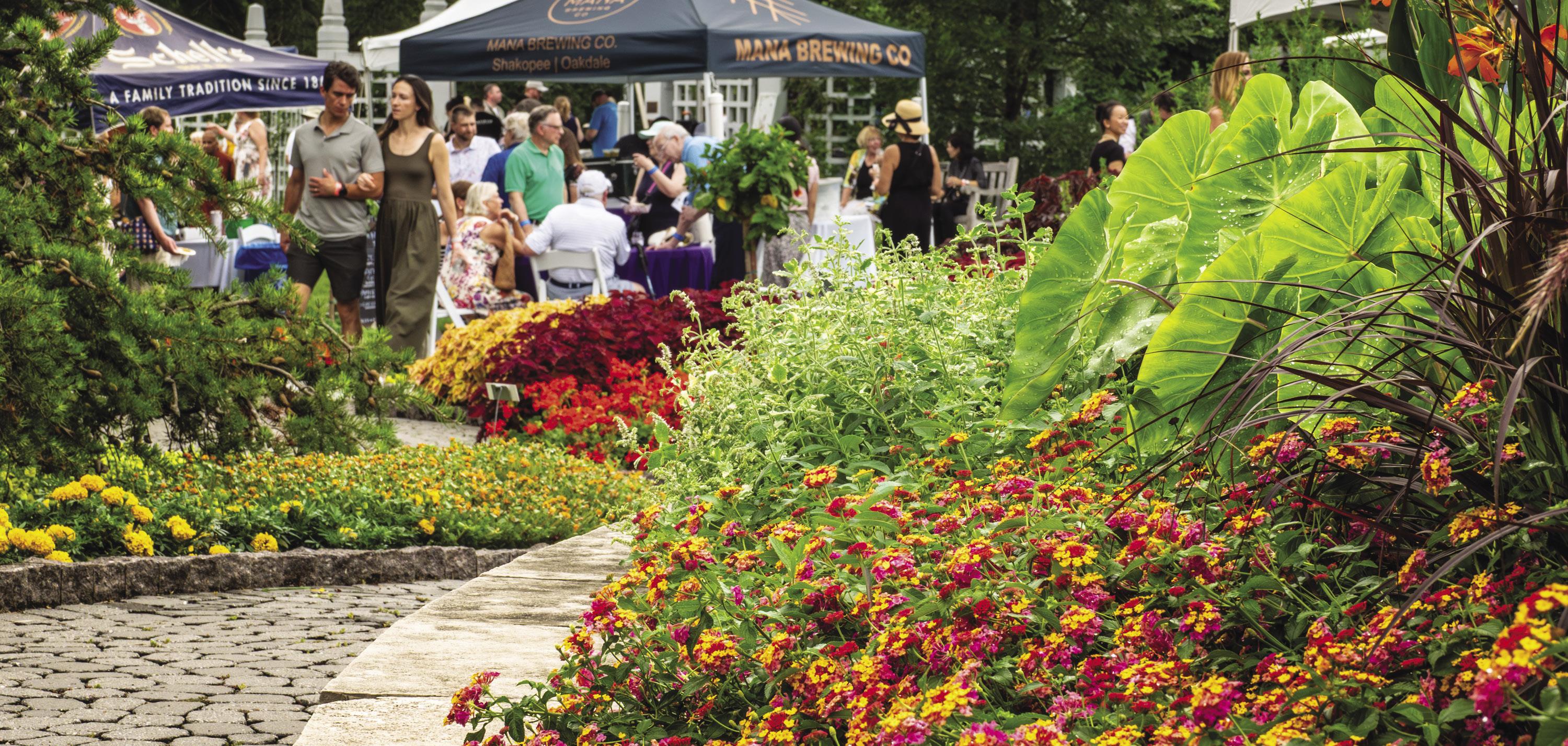
Sip and stroll the gardens after hours at Taste & Toast, an annual summer celebration of regional flavors. This event features fresh, local cuisine paired with wines and beers from across the state. Live music sets the tone for tastings from local restaurants and food trucks alongside samplings from Minnesota wineries, breweries and more. Attendees can even sample wines from the Arboretum’s own Horticultural Research Center, the developer of famous cold-hardy grapes such as Marquette and Itasca. Every ticket supports the Arboretum’s vital horticultural research, educational programming and the natural beauty enjoyed by nearly 700,000 visitors annually.
SCAN HERE to reserve tickets or visit arb.umn.edu/taste-and-toast
SCAN HERE to view all upcoming events and browse by topic at arb.umn. edu/events.
Included with daily admission!
Sundays, 1:30-3 p.m., June 7-Oct. 25
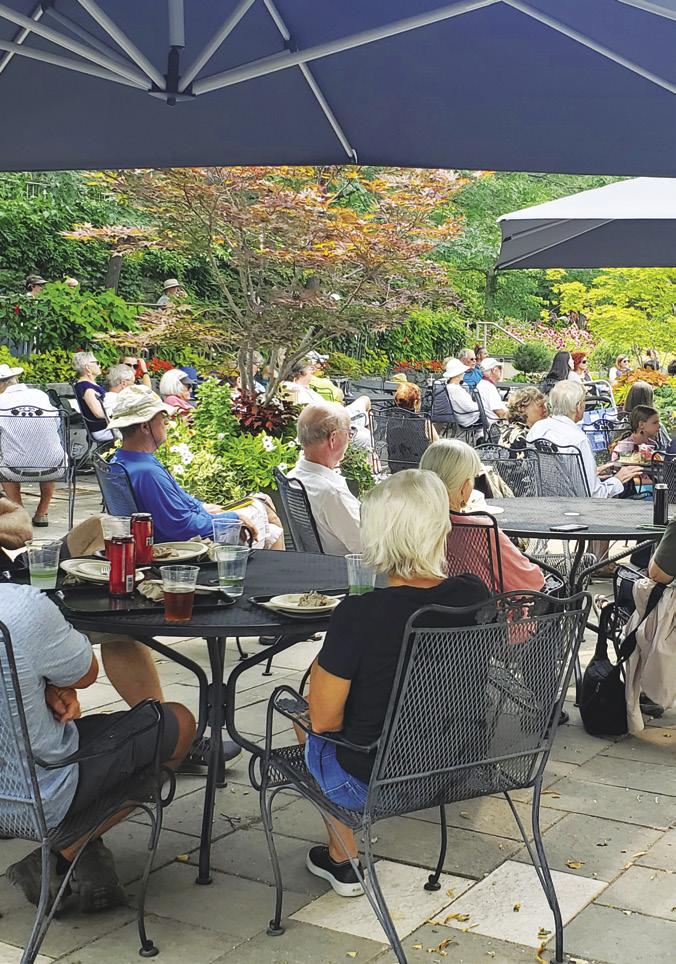
Enjoy a variety of live music all summer long on the Arboretum’s Newton Terrace! Located just outside Rootstock, visitors can stop inside for food, beer and wine to enjoy while listening to the blues, folk or even a brass quintet in the beauty of the Arboretum’s gardens.
SCAN HERE to view the lineup or visit arb.umn.edu/musicinthegarden
Photo by Sara Pace
Toast Sponsor
Pizza Nights
Tuesdays, 5-8 p.m., June 23-Sept. 1
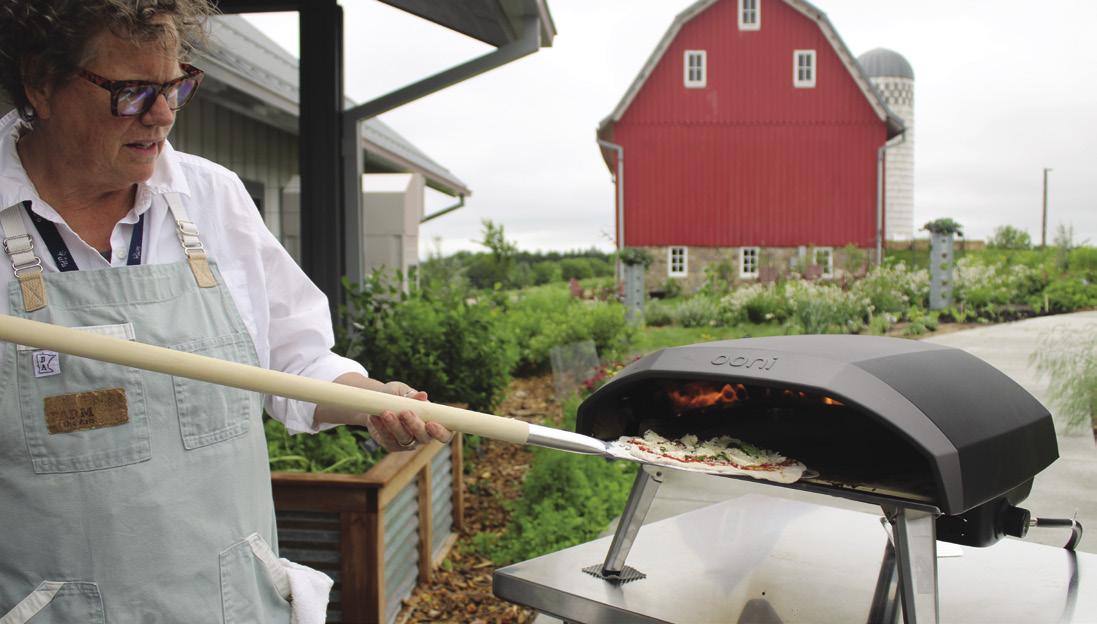
Enjoy the best of summer on Tuesday nights at the Farm at the Arb with live music and chef-crafted pizza fired in outdoor pizza ovens! The Arboretum’s Chef Beth Fisher will create pre-ordered pizzas with farm-fresh vegetables, greens and herbs while visitors relax under the summer skies, play yard games and listen to the music. Don’t forget a blanket or chairs for relaxing on the Farm lawn! Soda, drinks and other beverages will be available for purchase at a pop-up bar.
SCAN HERE to register or visit arb.umn.edu/events/pizza-nights-farm
Summer Harvest Days
Included with daily admission!
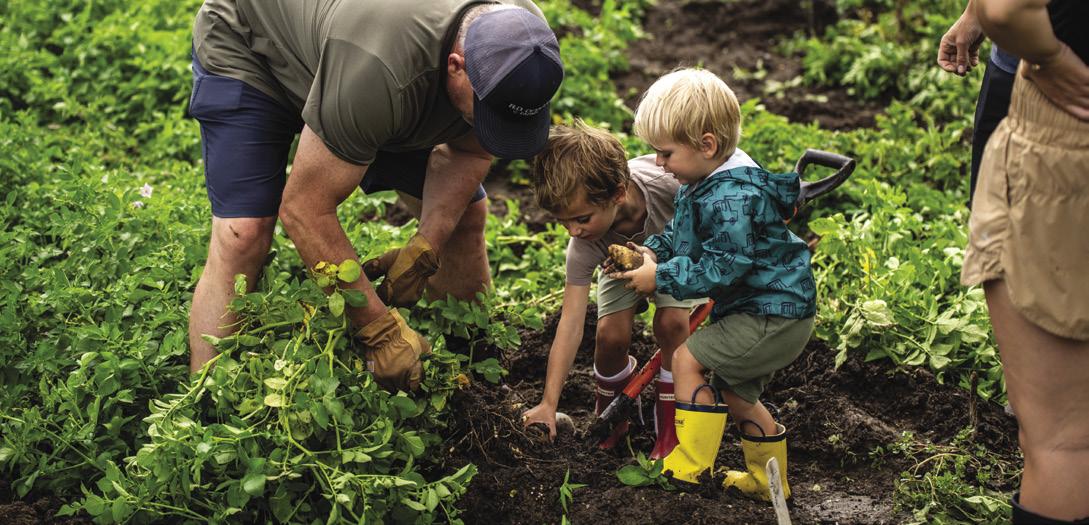
Celebrate the growing season and Minnesota-grown crops on summer Saturdays at the Farm at the Arb. With a new theme each week, visitors will learn about — and even harvest! — crops through drop-in activities.
July 25 — Veggie Harvest
Aug. 1 — Honey Harvest and Flowers for Pollinators
Aug. 8 — Kernza® Day in collaboration with Forever Green
Aug. 15 — Potato Harvest
Aug. 22 — Corn Harvest
SCAN HERE to learn more or visit arb.umn.edu/harvest-days
Art in the Garden
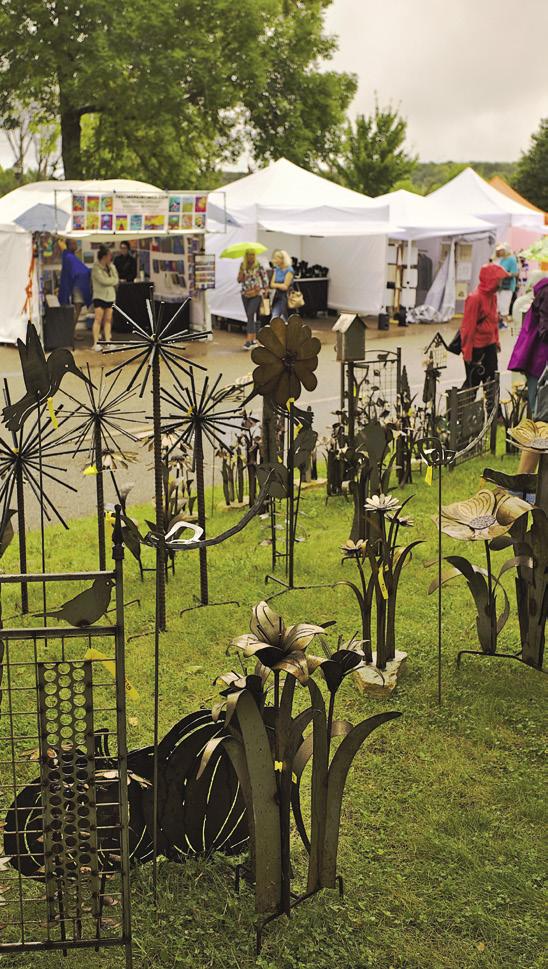
Aug. 14, 4-8 p.m. and Aug 15-16, 10 a.m.-4 p.m. Discover a unique fusion of art and nature at the Arboretum’s annual outdoor art and craft showcase. This event features more than 70 local vendors offering a variety of handcrafted art pieces, fine arts, crafts and culinary delights. Visitors can shop, eat, meet the artists and enjoy live music before or after a walk through the Arboretum’s gardens.
Included with daily admission!
SCAN HERE to learn more or visit arb.umn.edu/events/artinthegarden
ROOTED IN DISCOVERY
Adult Education at the Arboretum is an invitation to see the world through a different lens. This season, the Arboretum’s Education team has curated a new collection of classes led by expert instructors — designed to spark creativity and connect students with a community of fellow nature lovers.
The Arboretum’s Youth and Family programs turn the great outdoors into a living classroom. Through hands-on science and creative play, the Arboretum provides the perfect setting for young explorers and their families to garden, learn and grow together.
SCAN HERE to browse the Arboretum’s full catalog of class offerings or visit arb.umn.edu/learn.
Need help with registration? Want to gift a class?
The Arboretum Education team is happy to assist participants with selecting, gifting or registering for classes by phone. They can be reached at 612-301-1210 on weekdays 9 a.m.-4 p.m. or via email at arbedu@umn.edu.
Photo by Lily Smith
Photo by Phil Zumsteg
Photo by Katie Knapp
Culinary Classes in the Myers Kitchen
New classes!
Seasonal cooking, guest chefs and harvest ingredients —there are so many ways to get into the kitchen this summer. Expand your skills and discover the joy of food and wine with Chefs Beth Fisher and Cheo Smith. We are excited to introduce private classes in the Myers Kitchen for groups, with menus and options designed to suit your occasion.
Private Culinary Classes: Pizza, Pasta or Paella 12-36 participants
Select weekdays; inquire at arbedu@umn.edu
Grilling With Dad
June 13, 11 a.m.-1 p.m.
SCAN HERE to view upcoming classes or visit arb.umn.edu/food-wine
Fine Art Classes
Our art classes welcome all levels, allowing you to learn and grow at your own pace. All programs offer a unique space to connect with nature through your own creative work. Explore a few of our upcoming class highlights below, and view the full selection online.
Botanical Drawing:
Fundamentals in Graphite
Wednesdays, June 3-July 8 (no class June 17)
Part one: 9:30 a.m.-noon
Part two: 1-3:30 p.m.
Abstract Florals in Watercolor June 4, 9:30 a.m.-4 p.m.
SCAN HERE to view upcoming classes or visit arb.umn.edu/art-classes.
Gardening and Horticulture Classes
Enhance your gardening expertise with insights from Arboretum experts. Join us for in-depth studies of our worldclass collections and gain the practical skills to help your own landscape thrive. Check out a few upcoming gardening classes below and view the full selection online.
Woody Landscape Plant Identification With Executive Director
Andrew Gapinski
Three-session course: Saturdays, July 11, 18 and 25, 8-10 a.m.
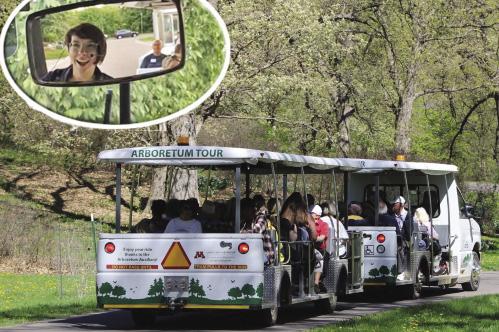
Classes On-the-Go: Horticulture by Tram July 16, Aug. 20, 6-7:30 p.m.
SCAN HERE to view upcoming programs or visit arb.umn.edu/gardening-classes.
Illustration by Sonja Hutchinson
Photo by Cathy Bjeldanes
Photo by Lily Smith
3675 Arboretum Drive
Chaska, Minnesota 55318-9613
Give today! Your gift supports the Arboretum’s gardens, educational programs and horticultural research. Scan the QR code or visit arb.umn.edu/supportus to donate today.